window.__IS_SSR__=true
window.__INITIAL_STATE__={
"attachmentsReducer": {
"audio_0": {
"type": "attachments",
"id": "audio_0",
"imgSizes": {
"kqedFullSize": {
"file": "https://ww2.kqed.org/news/wp-content/themes/KQED-unified/img/audio_bgs/background0.jpg"
}
}
},
"audio_1": {
"type": "attachments",
"id": "audio_1",
"imgSizes": {
"kqedFullSize": {
"file": "https://ww2.kqed.org/news/wp-content/themes/KQED-unified/img/audio_bgs/background1.jpg"
}
}
},
"audio_2": {
"type": "attachments",
"id": "audio_2",
"imgSizes": {
"kqedFullSize": {
"file": "https://ww2.kqed.org/news/wp-content/themes/KQED-unified/img/audio_bgs/background2.jpg"
}
}
},
"audio_3": {
"type": "attachments",
"id": "audio_3",
"imgSizes": {
"kqedFullSize": {
"file": "https://ww2.kqed.org/news/wp-content/themes/KQED-unified/img/audio_bgs/background3.jpg"
}
}
},
"audio_4": {
"type": "attachments",
"id": "audio_4",
"imgSizes": {
"kqedFullSize": {
"file": "https://ww2.kqed.org/news/wp-content/themes/KQED-unified/img/audio_bgs/background4.jpg"
}
}
},
"placeholder": {
"type": "attachments",
"id": "placeholder",
"imgSizes": {
"thumbnail": {
"file": "https://cdn.kqed.org/wp-content/uploads/2024/12/KQED-Default-Image-816638274-2000x1333-1-160x107.jpg",
"width": 160,
"height": 107,
"mimeType": "image/jpeg"
},
"medium": {
"file": "https://cdn.kqed.org/wp-content/uploads/2024/12/KQED-Default-Image-816638274-2000x1333-1-800x533.jpg",
"width": 800,
"height": 533,
"mimeType": "image/jpeg"
},
"medium_large": {
"file": "https://cdn.kqed.org/wp-content/uploads/2024/12/KQED-Default-Image-816638274-2000x1333-1-768x512.jpg",
"width": 768,
"height": 512,
"mimeType": "image/jpeg"
},
"large": {
"file": "https://cdn.kqed.org/wp-content/uploads/2024/12/KQED-Default-Image-816638274-2000x1333-1-1020x680.jpg",
"width": 1020,
"height": 680,
"mimeType": "image/jpeg"
},
"1536x1536": {
"file": "https://cdn.kqed.org/wp-content/uploads/2024/12/KQED-Default-Image-816638274-2000x1333-1-1536x1024.jpg",
"width": 1536,
"height": 1024,
"mimeType": "image/jpeg"
},
"fd-lrg": {
"file": "https://cdn.kqed.org/wp-content/uploads/2024/12/KQED-Default-Image-816638274-2000x1333-1-1536x1024.jpg",
"width": 1536,
"height": 1024,
"mimeType": "image/jpeg"
},
"fd-med": {
"file": "https://cdn.kqed.org/wp-content/uploads/2024/12/KQED-Default-Image-816638274-2000x1333-1-1020x680.jpg",
"width": 1020,
"height": 680,
"mimeType": "image/jpeg"
},
"fd-sm": {
"file": "https://cdn.kqed.org/wp-content/uploads/2024/12/KQED-Default-Image-816638274-2000x1333-1-800x533.jpg",
"width": 800,
"height": 533,
"mimeType": "image/jpeg"
},
"post-thumbnail": {
"file": "https://cdn.kqed.org/wp-content/uploads/2024/12/KQED-Default-Image-816638274-2000x1333-1-672x372.jpg",
"width": 672,
"height": 372,
"mimeType": "image/jpeg"
},
"twentyfourteen-full-width": {
"file": "https://cdn.kqed.org/wp-content/uploads/2024/12/KQED-Default-Image-816638274-2000x1333-1-1038x576.jpg",
"width": 1038,
"height": 576,
"mimeType": "image/jpeg"
},
"xxsmall": {
"file": "https://cdn.kqed.org/wp-content/uploads/2024/12/KQED-Default-Image-816638274-2000x1333-1-160x107.jpg",
"width": 160,
"height": 107,
"mimeType": "image/jpeg"
},
"xsmall": {
"file": "https://cdn.kqed.org/wp-content/uploads/2024/12/KQED-Default-Image-816638274-2000x1333-1-672x372.jpg",
"width": 672,
"height": 372,
"mimeType": "image/jpeg"
},
"small": {
"file": "https://cdn.kqed.org/wp-content/uploads/2024/12/KQED-Default-Image-816638274-2000x1333-1-672x372.jpg",
"width": 672,
"height": 372,
"mimeType": "image/jpeg"
},
"xlarge": {
"file": "https://cdn.kqed.org/wp-content/uploads/2024/12/KQED-Default-Image-816638274-2000x1333-1-1020x680.jpg",
"width": 1020,
"height": 680,
"mimeType": "image/jpeg"
},
"full-width": {
"file": "https://cdn.kqed.org/wp-content/uploads/2024/12/KQED-Default-Image-816638274-2000x1333-1-1920x1280.jpg",
"width": 1920,
"height": 1280,
"mimeType": "image/jpeg"
},
"guest-author-32": {
"file": "https://cdn.kqed.org/wp-content/uploads/2025/01/KQED-Default-Image-816638274-1333x1333-1-160x160.jpg",
"width": 32,
"height": 32,
"mimeType": "image/jpeg"
},
"guest-author-50": {
"file": "https://cdn.kqed.org/wp-content/uploads/2025/01/KQED-Default-Image-816638274-1333x1333-1-160x160.jpg",
"width": 50,
"height": 50,
"mimeType": "image/jpeg"
},
"guest-author-64": {
"file": "https://cdn.kqed.org/wp-content/uploads/2025/01/KQED-Default-Image-816638274-1333x1333-1-160x160.jpg",
"width": 64,
"height": 64,
"mimeType": "image/jpeg"
},
"guest-author-96": {
"file": "https://cdn.kqed.org/wp-content/uploads/2025/01/KQED-Default-Image-816638274-1333x1333-1-160x160.jpg",
"width": 96,
"height": 96,
"mimeType": "image/jpeg"
},
"guest-author-128": {
"file": "https://cdn.kqed.org/wp-content/uploads/2025/01/KQED-Default-Image-816638274-1333x1333-1-160x160.jpg",
"width": 128,
"height": 128,
"mimeType": "image/jpeg"
},
"detail": {
"file": "https://cdn.kqed.org/wp-content/uploads/2025/01/KQED-Default-Image-816638274-1333x1333-1-160x160.jpg",
"width": 160,
"height": 160,
"mimeType": "image/jpeg"
},
"kqedFullSize": {
"file": "https://cdn.kqed.org/wp-content/uploads/2024/12/KQED-Default-Image-816638274-2000x1333-1.jpg",
"width": 2000,
"height": 1333
}
}
},
"news_11983347": {
"type": "attachments",
"id": "news_11983347",
"meta": {
"index": "attachments_1716263798",
"site": "news",
"id": "11983347",
"found": true
},
"parent": 0,
"imgSizes": {
"twentyfourteen-full-width": {
"file": "https://cdn.kqed.org/wp-content/uploads/sites/10/2024/04/GETTYIMAGES-2104164214-KQED-1038x576.jpg",
"width": 1038,
"mimeType": "image/jpeg",
"height": 576
},
"thumbnail": {
"file": "https://cdn.kqed.org/wp-content/uploads/sites/10/2024/04/GETTYIMAGES-2104164214-KQED-160x107.jpg",
"width": 160,
"mimeType": "image/jpeg",
"height": 107
},
"post-thumbnail": {
"file": "https://cdn.kqed.org/wp-content/uploads/sites/10/2024/04/GETTYIMAGES-2104164214-KQED-672x372.jpg",
"width": 672,
"mimeType": "image/jpeg",
"height": 372
},
"kqedFullSize": {
"file": "https://cdn.kqed.org/wp-content/uploads/sites/10/2024/04/GETTYIMAGES-2104164214-KQED.jpg",
"width": 2000,
"height": 1333
},
"large": {
"file": "https://cdn.kqed.org/wp-content/uploads/sites/10/2024/04/GETTYIMAGES-2104164214-KQED-1020x680.jpg",
"width": 1020,
"mimeType": "image/jpeg",
"height": 680
},
"1536x1536": {
"file": "https://cdn.kqed.org/wp-content/uploads/sites/10/2024/04/GETTYIMAGES-2104164214-KQED-1536x1024.jpg",
"width": 1536,
"mimeType": "image/jpeg",
"height": 1024
},
"full-width": {
"file": "https://cdn.kqed.org/wp-content/uploads/sites/10/2024/04/GETTYIMAGES-2104164214-KQED-1920x1280.jpg",
"width": 1920,
"mimeType": "image/jpeg",
"height": 1280
},
"medium": {
"file": "https://cdn.kqed.org/wp-content/uploads/sites/10/2024/04/GETTYIMAGES-2104164214-KQED-800x533.jpg",
"width": 800,
"mimeType": "image/jpeg",
"height": 533
}
},
"publishDate": 1713464943,
"modified": 1713465186,
"caption": "A view of Google Headquarters in Mountain View on March 23, 2024.",
"description": null,
"title": "Google Headquarters in California's Mountain View",
"credit": "Tayfun Coskun/Anadolu via Getty Images",
"status": "inherit",
"altTag": "A building with glass windows and a huge multicolored logo reads, \"Google.\"",
"isLoading": false,
"fetchFailed": false
},
"news_11982872": {
"type": "attachments",
"id": "news_11982872",
"meta": {
"index": "attachments_1716263798",
"site": "news",
"id": "11982872",
"found": true
},
"parent": 11982871,
"imgSizes": {
"twentyfourteen-full-width": {
"file": "https://cdn.kqed.org/wp-content/uploads/sites/10/2024/04/022_KQED_RegistrarofVoters_SantaClara_02192020_9021_qut-1038x576.jpg",
"width": 1038,
"mimeType": "image/jpeg",
"height": 576
},
"thumbnail": {
"file": "https://cdn.kqed.org/wp-content/uploads/sites/10/2024/04/022_KQED_RegistrarofVoters_SantaClara_02192020_9021_qut-160x107.jpg",
"width": 160,
"mimeType": "image/jpeg",
"height": 107
},
"post-thumbnail": {
"file": "https://cdn.kqed.org/wp-content/uploads/sites/10/2024/04/022_KQED_RegistrarofVoters_SantaClara_02192020_9021_qut-672x372.jpg",
"width": 672,
"mimeType": "image/jpeg",
"height": 372
},
"kqedFullSize": {
"file": "https://cdn.kqed.org/wp-content/uploads/sites/10/2024/04/022_KQED_RegistrarofVoters_SantaClara_02192020_9021_qut.jpg",
"width": 1920,
"height": 1278
},
"large": {
"file": "https://cdn.kqed.org/wp-content/uploads/sites/10/2024/04/022_KQED_RegistrarofVoters_SantaClara_02192020_9021_qut-1020x679.jpg",
"width": 1020,
"mimeType": "image/jpeg",
"height": 679
},
"1536x1536": {
"file": "https://cdn.kqed.org/wp-content/uploads/sites/10/2024/04/022_KQED_RegistrarofVoters_SantaClara_02192020_9021_qut-1536x1022.jpg",
"width": 1536,
"mimeType": "image/jpeg",
"height": 1022
},
"medium": {
"file": "https://cdn.kqed.org/wp-content/uploads/sites/10/2024/04/022_KQED_RegistrarofVoters_SantaClara_02192020_9021_qut-800x533.jpg",
"width": 800,
"mimeType": "image/jpeg",
"height": 533
}
},
"publishDate": 1712965459,
"modified": 1713194609,
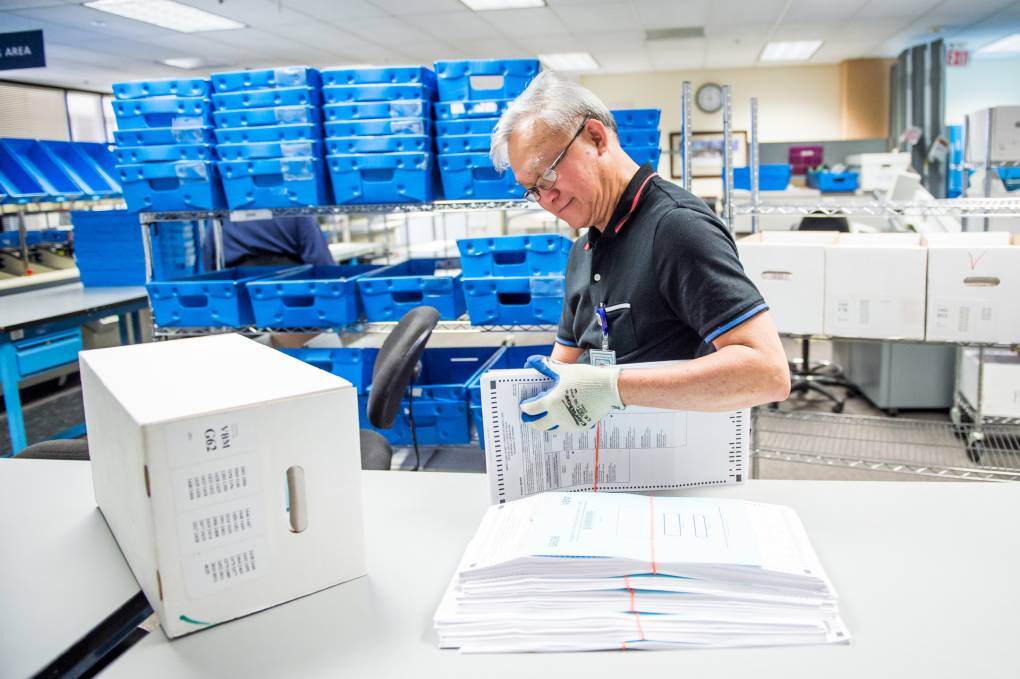
"caption": "TK Nguyen does quality control for flattened mail-in ballots at the Santa Clara Registrar of Voters on Feb. 19, 2020.",
"description": null,
"title": "evan-low-joe-simitian-recount",
"credit": "Beth LaBerge/KQED",
"status": "inherit",
"altTag": null,
"isLoading": false,
"fetchFailed": false
},
"news_11887623": {
"type": "attachments",
"id": "news_11887623",
"meta": {
"index": "attachments_1716263798",
"site": "news",
"id": "11887623",
"found": true
},
"parent": 11887506,
"imgSizes": {
"twentyfourteen-full-width": {
"file": "https://cdn.kqed.org/wp-content/uploads/sites/10/2021/09/RS50120_010_Oakland_MiaBonta_06232021-qut-1038x576.jpeg",
"width": 1038,
"mimeType": "image/jpeg",
"height": 576
},
"thumbnail": {
"file": "https://cdn.kqed.org/wp-content/uploads/sites/10/2021/09/RS50120_010_Oakland_MiaBonta_06232021-qut-160x107.jpeg",
"width": 160,
"mimeType": "image/jpeg",
"height": 107
},
"post-thumbnail": {
"file": "https://cdn.kqed.org/wp-content/uploads/sites/10/2021/09/RS50120_010_Oakland_MiaBonta_06232021-qut-672x372.jpeg",
"width": 672,
"mimeType": "image/jpeg",
"height": 372
},
"kqedFullSize": {
"file": "https://cdn.kqed.org/wp-content/uploads/sites/10/2021/09/RS50120_010_Oakland_MiaBonta_06232021-qut.jpeg",
"width": 1920,
"height": 1280
},
"large": {
"file": "https://cdn.kqed.org/wp-content/uploads/sites/10/2021/09/RS50120_010_Oakland_MiaBonta_06232021-qut-1020x680.jpeg",
"width": 1020,
"mimeType": "image/jpeg",
"height": 680
},
"1536x1536": {
"file": "https://cdn.kqed.org/wp-content/uploads/sites/10/2021/09/RS50120_010_Oakland_MiaBonta_06232021-qut-1536x1024.jpeg",
"width": 1536,
"mimeType": "image/jpeg",
"height": 1024
},
"medium": {
"file": "https://cdn.kqed.org/wp-content/uploads/sites/10/2021/09/RS50120_010_Oakland_MiaBonta_06232021-qut-800x533.jpeg",
"width": 800,
"mimeType": "image/jpeg",
"height": 533
}
},
"publishDate": 1630767621,
"modified": 1712851242,
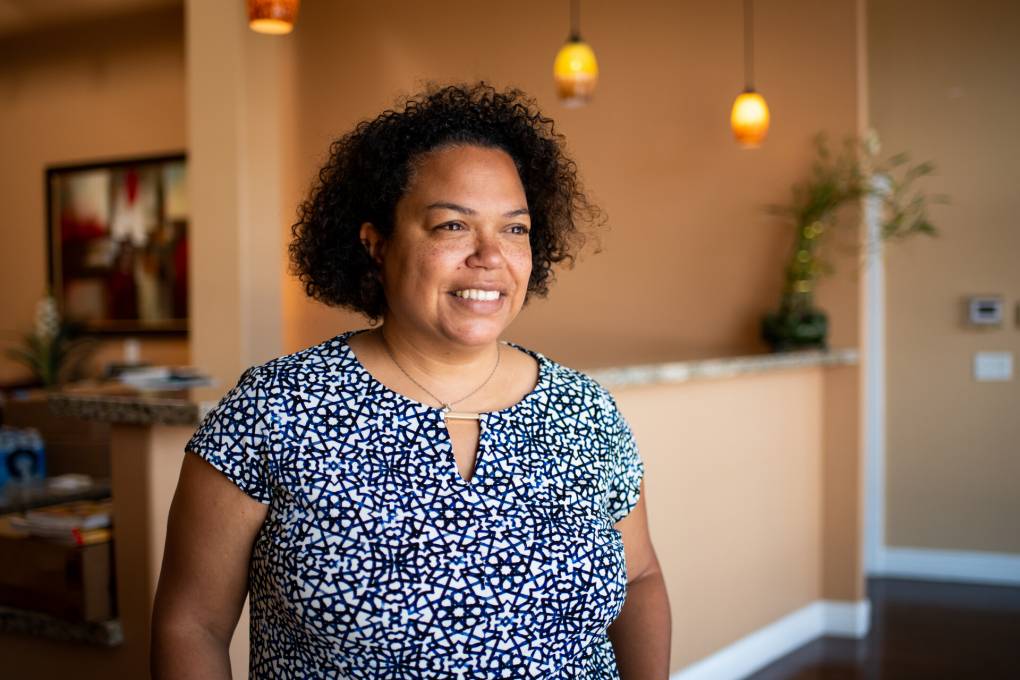
"caption": "Assemblymember Mia Bonta, who authored Assembly Bill 2239, said it would make California the first state in the nation to codify the Federal Communication Commission’s newly adopted definition of digital discrimination into state law.",
"description": null,
"title": "RS50120_010_Oakland_MiaBonta_06232021-qut",
"credit": "Beth LaBerge/KQED",
"status": "inherit",
"altTag": "A woman in a blue and white short-sleeved shirt is smiling and looking to the camera's left.",
"isLoading": false,
"fetchFailed": false
},
"news_11982448": {
"type": "attachments",
"id": "news_11982448",
"meta": {
"index": "attachments_1716263798",
"site": "news",
"id": "11982448",
"found": true
},
"parent": 11982379,
"imgSizes": {
"twentyfourteen-full-width": {
"file": "https://cdn.kqed.org/wp-content/uploads/sites/10/2024/04/240409-SJEncampmentBan-020-BL_qut-1038x576.jpg",
"width": 1038,
"mimeType": "image/jpeg",
"height": 576
},
"thumbnail": {
"file": "https://cdn.kqed.org/wp-content/uploads/sites/10/2024/04/240409-SJEncampmentBan-020-BL_qut-160x107.jpg",
"width": 160,
"mimeType": "image/jpeg",
"height": 107
},
"post-thumbnail": {
"file": "https://cdn.kqed.org/wp-content/uploads/sites/10/2024/04/240409-SJEncampmentBan-020-BL_qut-672x372.jpg",
"width": 672,
"mimeType": "image/jpeg",
"height": 372
},
"kqedFullSize": {
"file": "https://cdn.kqed.org/wp-content/uploads/sites/10/2024/04/240409-SJEncampmentBan-020-BL_qut.jpg",
"width": 1920,
"height": 1280
},
"large": {
"file": "https://cdn.kqed.org/wp-content/uploads/sites/10/2024/04/240409-SJEncampmentBan-020-BL_qut-1020x680.jpg",
"width": 1020,
"mimeType": "image/jpeg",
"height": 680
},
"1536x1536": {
"file": "https://cdn.kqed.org/wp-content/uploads/sites/10/2024/04/240409-SJEncampmentBan-020-BL_qut-1536x1024.jpg",
"width": 1536,
"mimeType": "image/jpeg",
"height": 1024
},
"medium": {
"file": "https://cdn.kqed.org/wp-content/uploads/sites/10/2024/04/240409-SJEncampmentBan-020-BL_qut-800x533.jpg",
"width": 800,
"mimeType": "image/jpeg",
"height": 533
}
},
"publishDate": 1712704788,
"modified": 1712770902,
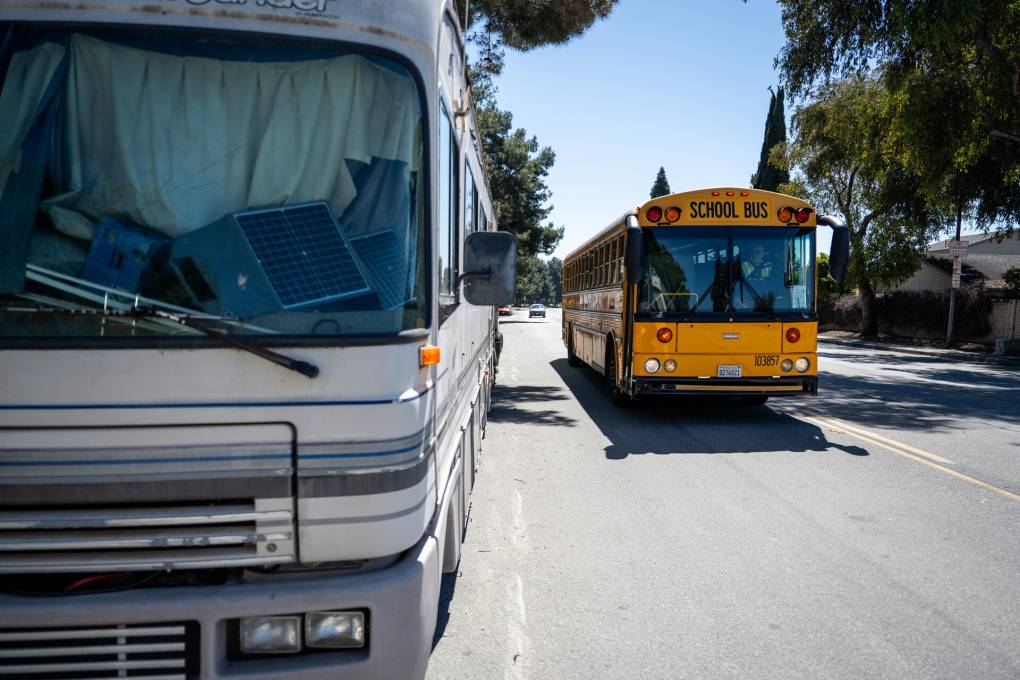
"caption": "A school bus passes an RV on Educational Park Drive near Independence High School in San José on April 9, 2024.",
"description": null,
"title": "240409-SJEncampmentBan-020-BL_qut",
"credit": "Beth LaBerge/KQED",
"status": "inherit",
"altTag": "A yellow school bus on the road near an RV.",
"isLoading": false,
"fetchFailed": false
},
"news_11982461": {
"type": "attachments",
"id": "news_11982461",
"meta": {
"index": "attachments_1716263798",
"site": "news",
"id": "11982461",
"found": true
},
"parent": 11982374,
"imgSizes": {
"twentyfourteen-full-width": {
"file": "https://cdn.kqed.org/wp-content/uploads/sites/10/2024/04/Headshot-974x576.png",
"width": 974,
"mimeType": "image/png",
"height": 576
},
"thumbnail": {
"file": "https://cdn.kqed.org/wp-content/uploads/sites/10/2024/04/Headshot-160x144.png",
"width": 160,
"mimeType": "image/png",
"height": 144
},
"post-thumbnail": {
"file": "https://cdn.kqed.org/wp-content/uploads/sites/10/2024/04/Headshot-672x372.png",
"width": 672,
"mimeType": "image/png",
"height": 372
},
"kqedFullSize": {
"file": "https://cdn.kqed.org/wp-content/uploads/sites/10/2024/04/Headshot.png",
"width": 974,
"height": 876
},
"medium": {
"file": "https://cdn.kqed.org/wp-content/uploads/sites/10/2024/04/Headshot-800x720.png",
"width": 800,
"mimeType": "image/png",
"height": 720
}
},
"publishDate": 1712705931,
"modified": 1712706083,
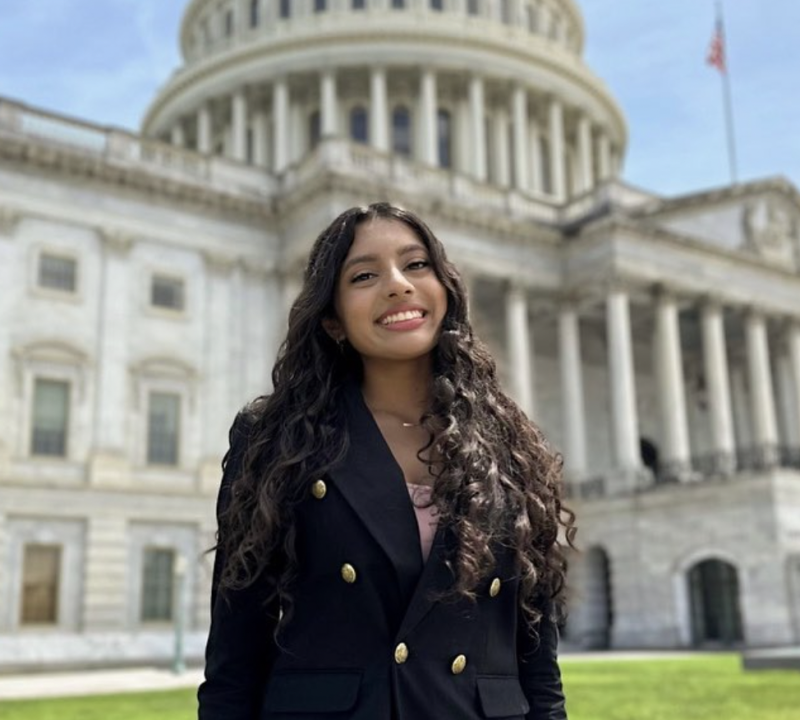
"caption": "Sneha Revanur, founder of Encode Justice, outside the U.S. Capitol. Photo courtesy of Sneha Revanur. ",
"description": null,
"title": "Headshot",
"credit": null,
"status": "inherit",
"altTag": null,
"isLoading": false,
"fetchFailed": false
},
"news_11970111": {
"type": "attachments",
"id": "news_11970111",
"meta": {
"index": "attachments_1716263798",
"site": "news",
"id": "11970111",
"found": true
},
"parent": 0,
"imgSizes": {
"twentyfourteen-full-width": {
"file": "https://cdn.kqed.org/wp-content/uploads/sites/10/2023/12/231215-Liccardo-Low-Simitian-KQED-1038x576.jpg",
"width": 1038,
"mimeType": "image/jpeg",
"height": 576
},
"thumbnail": {
"file": "https://cdn.kqed.org/wp-content/uploads/sites/10/2023/12/231215-Liccardo-Low-Simitian-KQED-160x107.jpg",
"width": 160,
"mimeType": "image/jpeg",
"height": 107
},
"post-thumbnail": {
"file": "https://cdn.kqed.org/wp-content/uploads/sites/10/2023/12/231215-Liccardo-Low-Simitian-KQED-672x372.jpg",
"width": 672,
"mimeType": "image/jpeg",
"height": 372
},
"kqedFullSize": {
"file": "https://cdn.kqed.org/wp-content/uploads/sites/10/2023/12/231215-Liccardo-Low-Simitian-KQED.jpg",
"width": 2000,
"height": 1333
},
"large": {
"file": "https://cdn.kqed.org/wp-content/uploads/sites/10/2023/12/231215-Liccardo-Low-Simitian-KQED-1020x680.jpg",
"width": 1020,
"mimeType": "image/jpeg",
"height": 680
},
"1536x1536": {
"file": "https://cdn.kqed.org/wp-content/uploads/sites/10/2023/12/231215-Liccardo-Low-Simitian-KQED-1536x1024.jpg",
"width": 1536,
"mimeType": "image/jpeg",
"height": 1024
},
"full-width": {
"file": "https://cdn.kqed.org/wp-content/uploads/sites/10/2023/12/231215-Liccardo-Low-Simitian-KQED-1920x1280.jpg",
"width": 1920,
"mimeType": "image/jpeg",
"height": 1280
},
"medium": {
"file": "https://cdn.kqed.org/wp-content/uploads/sites/10/2023/12/231215-Liccardo-Low-Simitian-KQED-800x533.jpg",
"width": 800,
"mimeType": "image/jpeg",
"height": 533
}
},
"publishDate": 1702673081,
"modified": 1712366091,
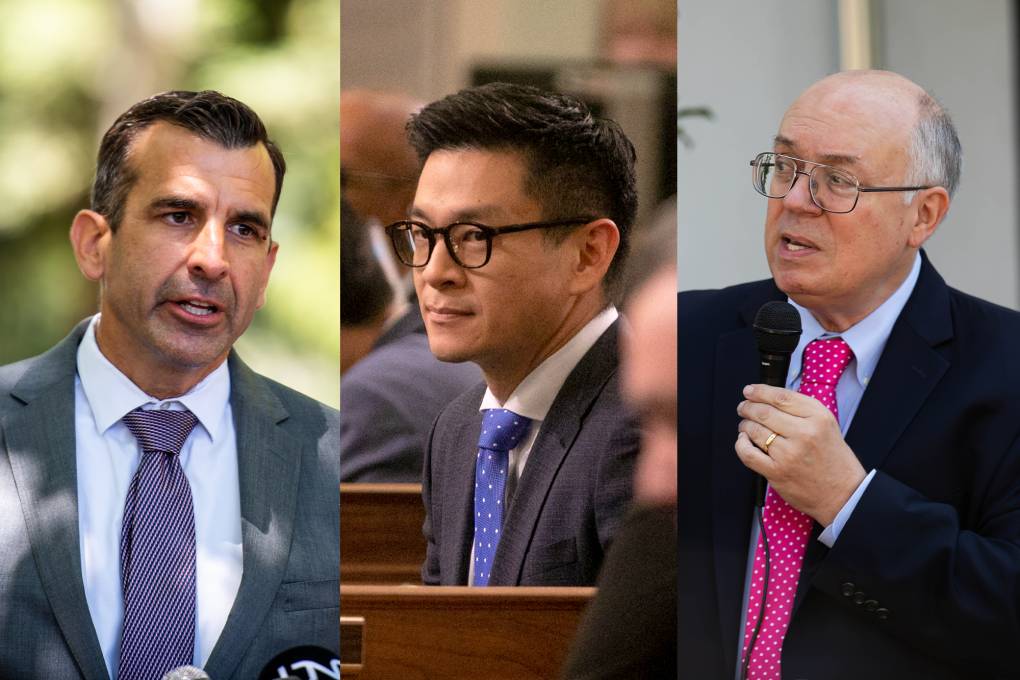
"caption": "San José Mayor Sam Liccardo, California Assemblymember Evan Low, and Santa Clara Board of Supervisors President Joe Simitian.",
"description": null,
"title": "231215-Liccardo Low Simitian-KQED",
"credit": "Beth LaBerge/KQED; Jason Armond/Los Angeles Times via Getty Images; Randy Vazquez/Bay Area News Group",
"status": "inherit",
"altTag": "Three photos of people wearing suits.",
"isLoading": false,
"fetchFailed": false
},
"news_11980905": {
"type": "attachments",
"id": "news_11980905",
"meta": {
"index": "attachments_1716263798",
"site": "news",
"id": "11980905",
"found": true
},
"parent": 0,
"imgSizes": {
"twentyfourteen-full-width": {
"file": "https://cdn.kqed.org/wp-content/uploads/sites/10/2024/03/240323-RFKRALLY-JY-053-KQED-1038x576.jpg",
"width": 1038,
"mimeType": "image/jpeg",
"height": 576
},
"thumbnail": {
"file": "https://cdn.kqed.org/wp-content/uploads/sites/10/2024/03/240323-RFKRALLY-JY-053-KQED-160x107.jpg",
"width": 160,
"mimeType": "image/jpeg",
"height": 107
},
"post-thumbnail": {
"file": "https://cdn.kqed.org/wp-content/uploads/sites/10/2024/03/240323-RFKRALLY-JY-053-KQED-672x372.jpg",
"width": 672,
"mimeType": "image/jpeg",
"height": 372
},
"kqedFullSize": {
"file": "https://cdn.kqed.org/wp-content/uploads/sites/10/2024/03/240323-RFKRALLY-JY-053-KQED.jpg",
"width": 2000,
"height": 1333
},
"large": {
"file": "https://cdn.kqed.org/wp-content/uploads/sites/10/2024/03/240323-RFKRALLY-JY-053-KQED-1020x680.jpg",
"width": 1020,
"mimeType": "image/jpeg",
"height": 680
},
"1536x1536": {
"file": "https://cdn.kqed.org/wp-content/uploads/sites/10/2024/03/240323-RFKRALLY-JY-053-KQED-1536x1024.jpg",
"width": 1536,
"mimeType": "image/jpeg",
"height": 1024
},
"full-width": {
"file": "https://cdn.kqed.org/wp-content/uploads/sites/10/2024/03/240323-RFKRALLY-JY-053-KQED-1920x1280.jpg",
"width": 1920,
"mimeType": "image/jpeg",
"height": 1280
},
"medium": {
"file": "https://cdn.kqed.org/wp-content/uploads/sites/10/2024/03/240323-RFKRALLY-JY-053-KQED-800x533.jpg",
"width": 800,
"mimeType": "image/jpeg",
"height": 533
}
},
"publishDate": 1711494138,
"modified": 1711494156,
"caption": "Wealthy tech lawyer and investor Nicole Shanahan walks on stage as she is introduced as Independent presidential candidate Robert F. Kennedy Jr.’s pick for vice president at Henry J. Kaiser Center for the Arts in Oakland, Calif., on Tuesday, March 26, 2024.",
"description": null,
"title": "240323-RFKRALLY-JY-053-KQED",
"credit": "Juliana Yamada/KQED",
"status": "inherit",
"altTag": null,
"isLoading": false,
"fetchFailed": false
},
"news_11980096": {
"type": "attachments",
"id": "news_11980096",
"meta": {
"index": "attachments_1716263798",
"site": "news",
"id": "11980096",
"found": true
},
"parent": 11980088,
"imgSizes": {
"twentyfourteen-full-width": {
"file": "https://cdn.kqed.org/wp-content/uploads/sites/10/2024/03/GettyImages-2087330277-1024x576.jpg",
"width": 1024,
"mimeType": "image/jpeg",
"height": 576
},
"thumbnail": {
"file": "https://cdn.kqed.org/wp-content/uploads/sites/10/2024/03/GettyImages-2087330277-160x107.jpg",
"width": 160,
"mimeType": "image/jpeg",
"height": 107
},
"post-thumbnail": {
"file": "https://cdn.kqed.org/wp-content/uploads/sites/10/2024/03/GettyImages-2087330277-672x372.jpg",
"width": 672,
"mimeType": "image/jpeg",
"height": 372
},
"kqedFullSize": {
"file": "https://cdn.kqed.org/wp-content/uploads/sites/10/2024/03/GettyImages-2087330277.jpg",
"width": 1024,
"height": 683
},
"large": {
"file": "https://cdn.kqed.org/wp-content/uploads/sites/10/2024/03/GettyImages-2087330277-1020x680.jpg",
"width": 1020,
"mimeType": "image/jpeg",
"height": 680
},
"medium": {
"file": "https://cdn.kqed.org/wp-content/uploads/sites/10/2024/03/GettyImages-2087330277-800x534.jpg",
"width": 800,
"mimeType": "image/jpeg",
"height": 534
}
},
"publishDate": 1710957494,
"modified": 1710957558,
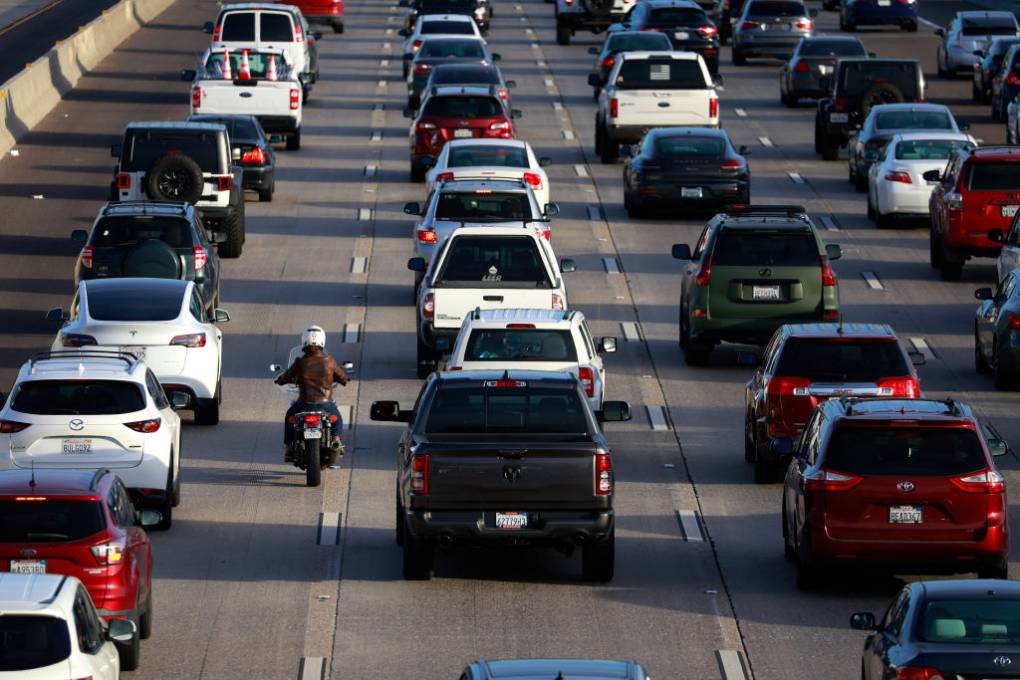
"caption": "Afternoon commute traffic heading into downtown San Diego on March 12, 2024 in San Diego.",
"description": null,
"title": "San Diego Traffic",
"credit": "Kevin Carter/Getty Images",
"status": "inherit",
"altTag": null,
"isLoading": false,
"fetchFailed": false
},
"news_11978069": {
"type": "attachments",
"id": "news_11978069",
"meta": {
"index": "attachments_1716263798",
"site": "news",
"id": "11978069",
"found": true
},
"parent": 11978051,
"imgSizes": {
"twentyfourteen-full-width": {
"file": "https://cdn.kqed.org/wp-content/uploads/sites/10/2024/03/51689355703_65cc8c69df_o-1038x576.jpg",
"width": 1038,
"mimeType": "image/jpeg",
"height": 576
},
"thumbnail": {
"file": "https://cdn.kqed.org/wp-content/uploads/sites/10/2024/03/51689355703_65cc8c69df_o-160x107.jpg",
"width": 160,
"mimeType": "image/jpeg",
"height": 107
},
"post-thumbnail": {
"file": "https://cdn.kqed.org/wp-content/uploads/sites/10/2024/03/51689355703_65cc8c69df_o-672x372.jpg",
"width": 672,
"mimeType": "image/jpeg",
"height": 372
},
"kqedFullSize": {
"file": "https://cdn.kqed.org/wp-content/uploads/sites/10/2024/03/51689355703_65cc8c69df_o.jpg",
"width": 2000,
"height": 1332
},
"large": {
"file": "https://cdn.kqed.org/wp-content/uploads/sites/10/2024/03/51689355703_65cc8c69df_o-1020x679.jpg",
"width": 1020,
"mimeType": "image/jpeg",
"height": 679
},
"1536x1536": {
"file": "https://cdn.kqed.org/wp-content/uploads/sites/10/2024/03/51689355703_65cc8c69df_o-1536x1023.jpg",
"width": 1536,
"mimeType": "image/jpeg",
"height": 1023
},
"full-width": {
"file": "https://cdn.kqed.org/wp-content/uploads/sites/10/2024/03/51689355703_65cc8c69df_o-1920x1279.jpg",
"width": 1920,
"mimeType": "image/jpeg",
"height": 1279
},
"medium": {
"file": "https://cdn.kqed.org/wp-content/uploads/sites/10/2024/03/51689355703_65cc8c69df_o-800x533.jpg",
"width": 800,
"mimeType": "image/jpeg",
"height": 533
}
},
"publishDate": 1709598461,
"modified": 1709757761,
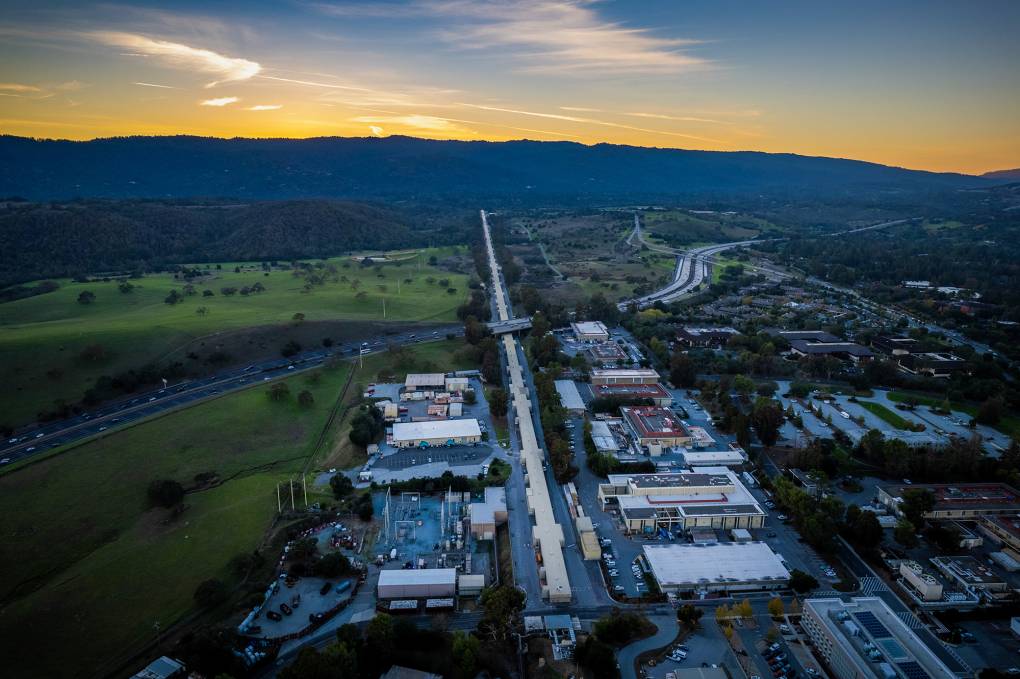
"caption": "SLAC is home to one of the longest buildings in the world, at nearly two miles in length. ",
"description": null,
"title": "51689355703_65cc8c69df_o",
"credit": "Olivier Bonin/SLAC National Accelerator Laboratory",
"status": "inherit",
"altTag": "An aerial view of a very long, skinny and beige building that extends toward the horizon line. It is sunset, and in the background are the Santa Cruz mountains.",
"isLoading": false,
"fetchFailed": false
},
"news_11976118": {
"type": "attachments",
"id": "news_11976118",
"meta": {
"index": "attachments_1716263798",
"site": "news",
"id": "11976118",
"found": true
},
"title": "OpenAI CEO Samuel Altman Testifies To Senate Committee On Rules For Artificial Intelligence",
"publishDate": 1708040236,
"status": "inherit",
"parent": 11976097,
"modified": 1761950561,
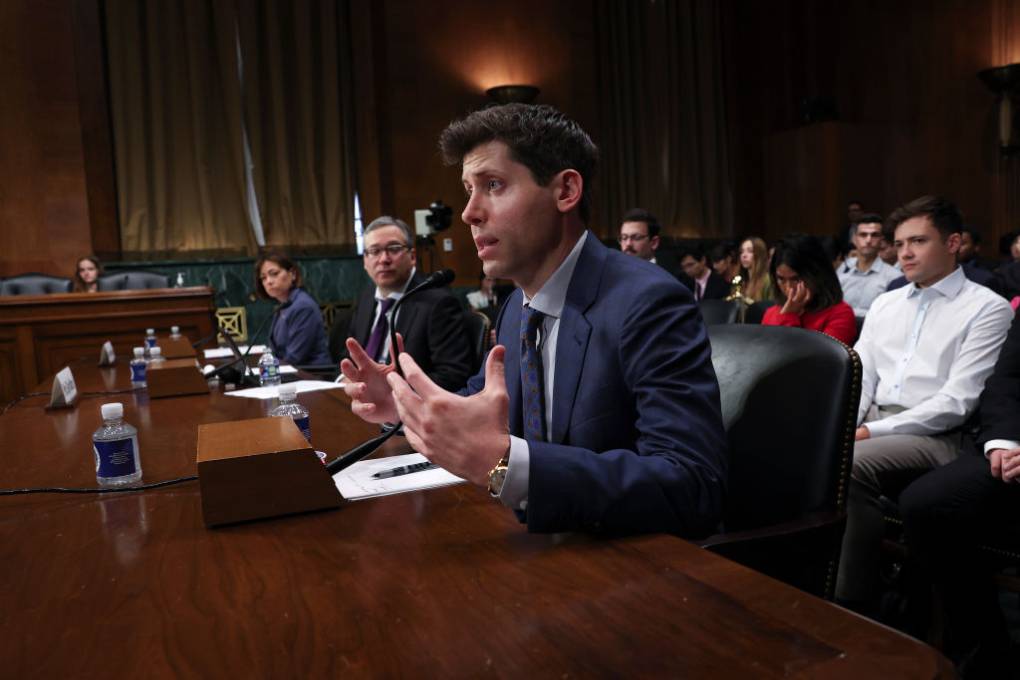
"caption": "Sam Altman, CEO of OpenAI, testifies before the Senate Judiciary Subcommittee on Privacy, Technology, and the Law on May 16, 2023, in Washington, D.C. The committee held an oversight hearing to examine AI, focusing on rules for artificial intelligence. ",
"credit": "Win McNamee/Getty Images",
"altTag": "A white man in a blue suit and tie gestures as he speaks in a congressional room surrounded by people.",
"description": "A white man in a blue suit and tie gestures as he speaks in a congressional room surrounded by people.",
"imgSizes": {
"medium": {
"file": "https://cdn.kqed.org/wp-content/uploads/sites/10/2024/02/GettyImages-1490690177-800x534.jpg",
"width": 800,
"height": 534,
"mimeType": "image/jpeg"
},
"large": {
"file": "https://cdn.kqed.org/wp-content/uploads/sites/10/2024/02/GettyImages-1490690177-1020x680.jpg",
"width": 1020,
"height": 680,
"mimeType": "image/jpeg"
},
"thumbnail": {
"file": "https://cdn.kqed.org/wp-content/uploads/sites/10/2024/02/GettyImages-1490690177-160x107.jpg",
"width": 160,
"height": 107,
"mimeType": "image/jpeg"
},
"post-thumbnail": {
"file": "https://cdn.kqed.org/wp-content/uploads/sites/10/2024/02/GettyImages-1490690177-672x372.jpg",
"width": 672,
"height": 372,
"mimeType": "image/jpeg"
},
"twentyfourteen-full-width": {
"file": "https://cdn.kqed.org/wp-content/uploads/sites/10/2024/02/GettyImages-1490690177-1024x576.jpg",
"width": 1024,
"height": 576,
"mimeType": "image/jpeg"
},
"kqedFullSize": {
"file": "https://cdn.kqed.org/wp-content/uploads/sites/10/2024/02/GettyImages-1490690177.jpg",
"width": 1024,
"height": 683
}
},
"isLoading": false,
"fetchFailed": false
},
"news_11976086": {
"type": "attachments",
"id": "news_11976086",
"meta": {
"index": "attachments_1716263798",
"site": "news",
"id": "11976086",
"found": true
},
"title": "03_Downtown plaza with transit_IMAGE CREDIT_Designed by SITELAB urban studio_CMG",
"publishDate": 1708037373,
"status": "inherit",
"parent": 12037142,
"modified": 1745426106,
"caption": "A rendering of the downtown center in the new city California Forever is proposing to build in Solano County. ",
"credit": "Courtesy California Forever",
"altTag": "An illustration of a downtown center with people sitting and walking around with various buildings, a food truck and structures on display.",
"description": null,
"imgSizes": {
"medium": {
"file": "https://cdn.kqed.org/wp-content/uploads/sites/10/2024/02/03_Downtown-plaza-with-transit_IMAGE-CREDIT_Designed-by-SITELAB-urban-studio_CMG-800x450.jpg",
"width": 800,
"height": 450,
"mimeType": "image/jpeg"
},
"large": {
"file": "https://cdn.kqed.org/wp-content/uploads/sites/10/2024/02/03_Downtown-plaza-with-transit_IMAGE-CREDIT_Designed-by-SITELAB-urban-studio_CMG-1020x574.jpg",
"width": 1020,
"height": 574,
"mimeType": "image/jpeg"
},
"thumbnail": {
"file": "https://cdn.kqed.org/wp-content/uploads/sites/10/2024/02/03_Downtown-plaza-with-transit_IMAGE-CREDIT_Designed-by-SITELAB-urban-studio_CMG-160x90.jpg",
"width": 160,
"height": 90,
"mimeType": "image/jpeg"
},
"1536x1536": {
"file": "https://cdn.kqed.org/wp-content/uploads/sites/10/2024/02/03_Downtown-plaza-with-transit_IMAGE-CREDIT_Designed-by-SITELAB-urban-studio_CMG-1536x864.jpg",
"width": 1536,
"height": 864,
"mimeType": "image/jpeg"
},
"2048x2048": {
"file": "https://cdn.kqed.org/wp-content/uploads/sites/10/2024/02/03_Downtown-plaza-with-transit_IMAGE-CREDIT_Designed-by-SITELAB-urban-studio_CMG-2048x1152.jpg",
"width": 2048,
"height": 1152,
"mimeType": "image/jpeg"
},
"post-thumbnail": {
"file": "https://cdn.kqed.org/wp-content/uploads/sites/10/2024/02/03_Downtown-plaza-with-transit_IMAGE-CREDIT_Designed-by-SITELAB-urban-studio_CMG-672x372.jpg",
"width": 672,
"height": 372,
"mimeType": "image/jpeg"
},
"twentyfourteen-full-width": {
"file": "https://cdn.kqed.org/wp-content/uploads/sites/10/2024/02/03_Downtown-plaza-with-transit_IMAGE-CREDIT_Designed-by-SITELAB-urban-studio_CMG-1038x576.jpg",
"width": 1038,
"height": 576,
"mimeType": "image/jpeg"
},
"full-width": {
"file": "https://cdn.kqed.org/wp-content/uploads/sites/10/2024/02/03_Downtown-plaza-with-transit_IMAGE-CREDIT_Designed-by-SITELAB-urban-studio_CMG-1920x1080.jpg",
"width": 1920,
"height": 1080,
"mimeType": "image/jpeg"
},
"kqedFullSize": {
"file": "https://cdn.kqed.org/wp-content/uploads/sites/10/2024/02/03_Downtown-plaza-with-transit_IMAGE-CREDIT_Designed-by-SITELAB-urban-studio_CMG.jpg",
"width": 2520,
"height": 1418
}
},
"isLoading": false,
"fetchFailed": false
},
"news_11973970": {
"type": "attachments",
"id": "news_11973970",
"meta": {
"index": "attachments_1716263798",
"site": "news",
"id": "11973970",
"found": true
},
"parent": 11973969,
"imgSizes": {
"twentyfourteen-full-width": {
"file": "https://cdn.kqed.org/wp-content/uploads/sites/10/2024/01/gettyimages-1948397327-7d48b5a4f4fb502524725b8fb8b887c5a611adfa-s1600-c85-copy-1038x576.jpg",
"width": 1038,
"mimeType": "image/jpeg",
"height": 576
},
"thumbnail": {
"file": "https://cdn.kqed.org/wp-content/uploads/sites/10/2024/01/gettyimages-1948397327-7d48b5a4f4fb502524725b8fb8b887c5a611adfa-s1600-c85-copy-160x120.jpg",
"width": 160,
"mimeType": "image/jpeg",
"height": 120
},
"post-thumbnail": {
"file": "https://cdn.kqed.org/wp-content/uploads/sites/10/2024/01/gettyimages-1948397327-7d48b5a4f4fb502524725b8fb8b887c5a611adfa-s1600-c85-copy-672x372.jpg",
"width": 672,
"mimeType": "image/jpeg",
"height": 372
},
"kqedFullSize": {
"file": "https://cdn.kqed.org/wp-content/uploads/sites/10/2024/01/gettyimages-1948397327-7d48b5a4f4fb502524725b8fb8b887c5a611adfa-s1600-c85-copy.jpg",
"width": 1600,
"height": 1200
},
"large": {
"file": "https://cdn.kqed.org/wp-content/uploads/sites/10/2024/01/gettyimages-1948397327-7d48b5a4f4fb502524725b8fb8b887c5a611adfa-s1600-c85-copy-1020x765.jpg",
"width": 1020,
"mimeType": "image/jpeg",
"height": 765
},
"1536x1536": {
"file": "https://cdn.kqed.org/wp-content/uploads/sites/10/2024/01/gettyimages-1948397327-7d48b5a4f4fb502524725b8fb8b887c5a611adfa-s1600-c85-copy-1536x1152.jpg",
"width": 1536,
"mimeType": "image/jpeg",
"height": 1152
},
"medium": {
"file": "https://cdn.kqed.org/wp-content/uploads/sites/10/2024/01/gettyimages-1948397327-7d48b5a4f4fb502524725b8fb8b887c5a611adfa-s1600-c85-copy-800x600.jpg",
"width": 800,
"mimeType": "image/jpeg",
"height": 600
}
},
"publishDate": 1706372072,
"modified": 1706372173,
"caption": "Alaska Airlines N704AL, a 737 Max 9, which made an emergency landing at Portland International Airport on Jan. 5 is parked at a maintenance hanger in Portland, Oregon on Jan. 23, 2024. The missing emergency door is covered and taped. One of 2 door plugs on the emergency exit door blew out shortly after the plane took off from Portland. No fatalities or injuries were reported. The US Federal Aviation Administration announced Jan. 11 it was launching a safety probe into Boeing's quality control.",
"description": null,
"title": "gettyimages-1948397327-7d48b5a4f4fb502524725b8fb8b887c5a611adfa-s1600-c85 copy",
"credit": "Patrick T. Fallon/AFP",
"status": "inherit",
"altTag": "A plane on a tarmac with scaffolding around it as crews work on maintenance, repairs.",
"isLoading": false,
"fetchFailed": false
}
},
"audioPlayerReducer": {
"postId": "stream_live",
"isPaused": true,
"isPlaying": false,
"pfsActive": false,
"pledgeModalIsOpen": true,
"playerDrawerIsOpen": false,
"liveAudioPlayStartedAt": 0,
"liveAudioPlayContext": ""
},
"authorsReducer": {
"byline_news_11980088": {
"type": "authors",
"id": "byline_news_11980088",
"meta": {
"override": true
},
"slug": "byline_news_11980088",
"name": "\u003ca href=\"https://www.npr.org/people/348744968/camila-domonoske\">Camila Domonoske\u003c/a>, \u003ca href=\"https://www.npr.org/people/1134404086/michael-copley\">Michael Copley\u003c/a>",
"isLoading": false
},
"byline_news_11973969": {
"type": "authors",
"id": "byline_news_11973969",
"meta": {
"override": true
},
"slug": "byline_news_11973969",
"name": "\u003ca href=\"https://www.npr.org/people/997906236/diba-mohtasham\">Diba Mohtasham\u003c/a>",
"isLoading": false
},
"gmarzorati": {
"type": "authors",
"id": "227",
"meta": {
"index": "authors_1716337520",
"id": "227",
"found": true
},
"name": "Guy Marzorati",
"firstName": "Guy",
"lastName": "Marzorati",
"slug": "gmarzorati",
"email": "gmarzorati@KQED.org",
"display_author_email": true,
"staff_mastheads": [
"news"
],
"title": "Correspondent",
"bio": "Guy Marzorati is a correspondent on KQED's California Politics and Government Desk, based in San Jose. A graduate of Santa Clara University, Guy joined KQED in 2013. He reports on state and local politics and produces KQED's digital voter guide.",
"avatar": "https://secure.gravatar.com/avatar/e7038b8dbfd55b104369b76b1cd0b9de?s=600&d=blank&r=g",
"twitter": "guymarzorati",
"facebook": null,
"instagram": null,
"linkedin": null,
"sites": [
{
"site": "",
"roles": [
"editor"
]
},
{
"site": "news",
"roles": [
"editor"
]
},
{
"site": "science",
"roles": [
"editor"
]
},
{
"site": "forum",
"roles": [
"editor"
]
},
{
"site": "elections",
"roles": [
"editor"
]
},
{
"site": "liveblog",
"roles": [
"editor"
]
}
],
"headData": {
"title": "Guy Marzorati | KQED",
"description": "Correspondent",
"ogImgSrc": "https://secure.gravatar.com/avatar/e7038b8dbfd55b104369b76b1cd0b9de?s=600&d=blank&r=g",
"twImgSrc": "https://secure.gravatar.com/avatar/e7038b8dbfd55b104369b76b1cd0b9de?s=600&d=blank&r=g"
},
"isLoading": false,
"link": "/author/gmarzorati"
},
"rachael-myrow": {
"type": "authors",
"id": "251",
"meta": {
"index": "authors_1716337520",
"id": "251",
"found": true
},
"name": "Rachael Myrow",
"firstName": "Rachael",
"lastName": "Myrow",
"slug": "rachael-myrow",
"email": "rmyrow@kqed.org",
"display_author_email": true,
"staff_mastheads": [
"news"
],
"title": "Senior Editor of KQED's Silicon Valley News Desk",
"bio": "• I write and edit stories about how Silicon Valley power and policies shape everyday life in California. I’m also passionate about making Bay Area history and culture more accessible to a broad public. • I’ve been a journalist for most of my life, starting in high school with The Franklin Press in Los Angeles, where I grew up. While earning my first degree in English at UC Berkeley, I got my start in public radio at KALX-FM. After completing a second degree in journalism at Cal, I landed my first professional job at Marketplace, then moved on to KPCC (now LAist), and then KQED, where I hosted The California Report for more than seven years. • My reporting has appeared on NPR, The World, WBUR’s \u003ci>Here & Now\u003c/i>, and the BBC. I also guest host for KQED’s \u003ci>Forum\u003c/i>, as well as the Commonwealth Club in San Francisco. • I speak periodically on media, democracy and technology issues, and do voiceover work for documentaries and educational video projects. • Outside of the studio, you'll find me hiking Bay Area trails and whipping up Insta-ready meals in my kitchen. • I do not accept gifts, money, or favors from anyone connected to my reporting, I don't pay people for information, and I do not support or donate to political causes. • I strive to treat the people I report on with fairness, honesty, and respect. I also recognize there are often multiple sides to a story and work to verify information through multiple sources and documentation. If I get something wrong, I correct it.",
"avatar": "https://secure.gravatar.com/avatar/3ed8a3c5f26025e4a805ba634cda8cd764906b97438a6d9ce216b044e340da4e?s=600&d=blank&r=g",
"twitter": "rachaelmyrow",
"bluesky": null,
"facebook": null,
"instagram": null,
"linkedin": "https://www.linkedin.com/in/rachaelmyrow/",
"sites": [
{
"site": "arts",
"roles": [
"administrator"
]
},
{
"site": "news",
"roles": [
"edit_others_posts",
"editor"
]
},
{
"site": "futureofyou",
"roles": [
"editor"
]
},
{
"site": "bayareabites",
"roles": [
"editor"
]
},
{
"site": "stateofhealth",
"roles": [
"editor"
]
},
{
"site": "science",
"roles": [
"editor"
]
},
{
"site": "food",
"roles": [
"editor"
]
},
{
"site": "forum",
"roles": [
"editor"
]
},
{
"site": "liveblog",
"roles": [
"author"
]
}
],
"headData": {
"title": "Rachael Myrow | KQED",
"description": "Senior Editor of KQED's Silicon Valley News Desk",
"ogImgSrc": "https://secure.gravatar.com/avatar/3ed8a3c5f26025e4a805ba634cda8cd764906b97438a6d9ce216b044e340da4e?s=600&d=blank&r=g",
"twImgSrc": "https://secure.gravatar.com/avatar/3ed8a3c5f26025e4a805ba634cda8cd764906b97438a6d9ce216b044e340da4e?s=600&d=blank&r=g"
},
"isLoading": false,
"link": "/author/rachael-myrow"
},
"scottshafer": {
"type": "authors",
"id": "255",
"meta": {
"index": "authors_1716337520",
"id": "255",
"found": true
},
"name": "Scott Shafer",
"firstName": "Scott",
"lastName": "Shafer",
"slug": "scottshafer",
"email": "sshafer@kqed.org",
"display_author_email": false,
"staff_mastheads": [
"news"
],
"title": "KQED Contributor",
"bio": "Scott Shafer is a senior editor with the KQED Politics and Government desk. He is co-host of Political Breakdown, the award-winning radio show and podcast with a personal take on the world of politics. Scott came to KQED in 1998 to host the statewide\u003cem> California Report\u003c/em>. Prior to that he had extended stints in politics and government\u003cem>.\u003c/em> He uses that inside experience at KQED in his, reporting, hosting and analysis for the politics desk. Scott collaborated \u003cem>Political Breakdown a\u003c/em>nd on \u003cem>The Political Mind of Jerry Brown, \u003c/em>an eight-part series about the life and extraordinary political career of the former governor. For fun, he plays water polo with the San Francisco Tsunami.",
"avatar": "https://secure.gravatar.com/avatar/a62ebae45b79d7aed1a39a0e3bf68104?s=600&d=blank&r=g",
"twitter": "scottshafer",
"bluesky": null,
"facebook": null,
"instagram": null,
"linkedin": null,
"sites": [
{
"site": "news",
"roles": [
"editor"
]
},
{
"site": "stateofhealth",
"roles": [
"author"
]
},
{
"site": "science",
"roles": [
"author"
]
},
{
"site": "forum",
"roles": [
"subscriber"
]
},
{
"site": "liveblog",
"roles": [
"author"
]
}
],
"headData": {
"title": "Scott Shafer | KQED",
"description": "KQED Contributor",
"ogImgSrc": "https://secure.gravatar.com/avatar/a62ebae45b79d7aed1a39a0e3bf68104?s=600&d=blank&r=g",
"twImgSrc": "https://secure.gravatar.com/avatar/a62ebae45b79d7aed1a39a0e3bf68104?s=600&d=blank&r=g"
},
"isLoading": false,
"link": "/author/scottshafer"
},
"abandlamudi": {
"type": "authors",
"id": "11672",
"meta": {
"index": "authors_1716337520",
"id": "11672",
"found": true
},
"name": "Adhiti Bandlamudi",
"firstName": "Adhiti",
"lastName": "Bandlamudi",
"slug": "abandlamudi",
"email": "abandlamudi@kqed.org",
"display_author_email": false,
"staff_mastheads": [
"news"
],
"title": "KQED Housing Reporter",
"bio": "Adhiti Bandlamudi reports for KQED's Housing desk. She focuses on how housing gets built across the Bay Area. Before joining KQED in 2020, she reported for WUNC in Durham, North Carolina, WABE in Atlanta, Georgia and Capital Public Radio in Sacramento. In 2017, she was awarded a Kroc Fellowship at NPR where she reported on everything from sprinkles to the Golden State Killer's arrest. When she's not reporting, she's baking new recipes in her kitchen or watching movies with friends and family. She's originally from Georgia and has strong opinions about Great British Bake Off.",
"avatar": "https://secure.gravatar.com/avatar/868129c8b257bb99a3500e2c86a65400?s=600&d=mm&r=g",
"twitter": "oddity_adhiti",
"facebook": null,
"instagram": null,
"linkedin": null,
"sites": [
{
"site": "arts",
"roles": [
"author"
]
},
{
"site": "news",
"roles": [
"editor"
]
},
{
"site": "liveblog",
"roles": [
"author"
]
}
],
"headData": {
"title": "Adhiti Bandlamudi | KQED",
"description": "KQED Housing Reporter",
"ogImgSrc": "https://secure.gravatar.com/avatar/868129c8b257bb99a3500e2c86a65400?s=600&d=mm&r=g",
"twImgSrc": "https://secure.gravatar.com/avatar/868129c8b257bb99a3500e2c86a65400?s=600&d=mm&r=g"
},
"isLoading": false,
"link": "/author/abandlamudi"
},
"nkhan": {
"type": "authors",
"id": "11867",
"meta": {
"index": "authors_1716337520",
"id": "11867",
"found": true
},
"name": "Nisa Khan",
"firstName": "Nisa",
"lastName": "Khan",
"slug": "nkhan",
"email": "nkhan@kqed.org",
"display_author_email": false,
"staff_mastheads": [],
"title": "KQED Contributor",
"bio": "Nisa Khan is a reporter for KQED's Audience News Desk. She was formerly a data reporter at Michigan Radio. She earned a Bachelor of Science in Information from the University of Michigan and a Master of Arts in Communication from Stanford University.",
"avatar": "https://secure.gravatar.com/avatar/8720459eef081ff64582b3506b124d58523e80e120704a0cbd9892533c914991?s=600&d=blank&r=g",
"twitter": "mnisakhan",
"bluesky": null,
"facebook": null,
"instagram": null,
"linkedin": null,
"sites": [
{
"site": "arts",
"roles": [
"editor"
]
},
{
"site": "news",
"roles": [
"editor"
]
},
{
"site": "science",
"roles": [
"editor",
"author"
]
},
{
"site": "forum",
"roles": [
"editor"
]
},
{
"site": "liveblog",
"roles": [
"contributor"
]
}
],
"headData": {
"title": "Nisa Khan | KQED",
"description": "KQED Contributor",
"ogImgSrc": "https://secure.gravatar.com/avatar/8720459eef081ff64582b3506b124d58523e80e120704a0cbd9892533c914991?s=600&d=blank&r=g",
"twImgSrc": "https://secure.gravatar.com/avatar/8720459eef081ff64582b3506b124d58523e80e120704a0cbd9892533c914991?s=600&d=blank&r=g"
},
"isLoading": false,
"link": "/author/nkhan"
},
"jgeha": {
"type": "authors",
"id": "11906",
"meta": {
"index": "authors_1716337520",
"id": "11906",
"found": true
},
"name": "Joseph Geha",
"firstName": "Joseph",
"lastName": "Geha",
"slug": "jgeha",
"email": "jgeha@kqed.org",
"display_author_email": false,
"staff_mastheads": [
"news",
"science"
],
"title": "KQED Contributor",
"bio": null,
"avatar": "https://secure.gravatar.com/avatar/ea84d2b6dd93d6369d453edf19dd583f117cd1759d2d9c9c92f9de77017354fe?s=600&d=blank&r=g",
"twitter": null,
"bluesky": null,
"facebook": null,
"instagram": null,
"linkedin": null,
"sites": [
{
"site": "news",
"roles": [
"editor"
]
},
{
"site": "liveblog",
"roles": [
"author"
]
}
],
"headData": {
"title": "Joseph Geha | KQED",
"description": "KQED Contributor",
"ogImgSrc": "https://secure.gravatar.com/avatar/ea84d2b6dd93d6369d453edf19dd583f117cd1759d2d9c9c92f9de77017354fe?s=600&d=blank&r=g",
"twImgSrc": "https://secure.gravatar.com/avatar/ea84d2b6dd93d6369d453edf19dd583f117cd1759d2d9c9c92f9de77017354fe?s=600&d=blank&r=g"
},
"isLoading": false,
"link": "/author/jgeha"
}
},
"pagesReducer": {
"news_category_technology": {
"type": "terms",
"id": "news_248",
"meta": {
"index": "terms_1716263798",
"site": "news",
"id": "248",
"score": 10.93111
},
"featImg": null,
"name": "Technology",
"description": null,
"taxonomy": "category",
"headData": {
"twImgId": null,
"twTitle": null,
"ogTitle": null,
"ogImgId": null,
"twDescription": null,
"description": null,
"title": "Technology Archives | KQED News",
"ogDescription": null
},
"ttid": 256,
"slug": "technology",
"isLoading": false,
"title": "Technology",
"pageMeta": {
"site": "news",
"WpPageTemplate": "page-topic-editorial",
"currentPage": 29
},
"blocks": [
{
"blockName": "kqed/post-list",
"attrs": {
"layout": "cardArticle2",
"query": "posts/news?category=technology",
"seeMore": false,
"paginated": true,
"page": 29
}
},
{
"blockName": "kqed/ad"
}
]
}
},
"pfsSessionReducer": {},
"postsReducer": {
"stream_live": {
"type": "live",
"id": "stream_live",
"audioUrl": "https://streams.kqed.org/kqedradio",
"title": "Live Stream",
"excerpt": "Live Stream information currently unavailable.",
"link": "/radio",
"featImg": "",
"label": {
"name": "KQED Live",
"link": "/"
}
},
"stream_kqedNewscast": {
"type": "posts",
"id": "stream_kqedNewscast",
"audioUrl": "https://www.kqed.org/.stream/anon/radio/RDnews/newscast.mp3?_=1",
"title": "KQED Newscast",
"featImg": "",
"label": {
"name": "88.5 FM",
"link": "/"
}
},
"news_11983333": {
"type": "posts",
"id": "news_11983333",
"meta": {
"index": "posts_1716263798",
"site": "news",
"id": "11983333",
"score": null,
"sort": [
1713466825000
]
},
"parent": 0,
"labelTerm": {
"site": "news"
},
"blocks": [],
"publishDate": 1713466825,
"format": "standard",
"title": "Why Is Google Removing News Links for Some Californians?",
"headTitle": "Why Is Google Removing News Links for Some Californians? | KQED",
"content": "\u003cp>\u003cem>Updated 1:15 p.m. Thursday \u003c/em>\u003c/p>\n\u003cp>How do you find your news: Through social media? Email? Google?\u003c/p>\n\u003cp>If you answered the latter and you live in California, you might find that getting your news through Google just got harder.\u003c/p>\n\u003cp>[pullquote size=\"medium\" align=\"right\" citation=\"Steve Waldman, CEO, Rebuild Local News\"]‘This is Google sending a message that if the legislature passes the bill that they don’t like, that the newsrooms and residents of California will be punished for that.’[/pullquote]Google said it’s currently testing a process in which the tech conglomerate is \u003ca href=\"https://blog.google/products/news/california-journalism-preservation-act-puts-news-ecosystem-at-risk/\">“removing links to California news websites”\u003c/a> among its search results. In a blog post announcing the move, Google’s VP of Global News Partnerships, Jaffer Zaidi, stated that Google was taking this action “to prepare” for the “possible implications” of a bill making its way through the California state legislature. The bill, called the California Journalism Preservation Act (CJPA), would call upon \u003ca href=\"https://apnews.com/article/google-meta-big-tech-journalism-fee-california-lawmakers-ec3a926252f59e589e5d48b067c7904e\">tech companies to pay media outlets for posting and using their content\u003c/a>.\u003c/p>\n\u003cp>In response, the News/Media Alliance — a journalism advocacy organization — has called upon the Federal Trade Commission and the Department of Justice to \u003ca href=\"https://www.latimes.com/entertainment-arts/business/story/2024-04-16/news-media-alliance-google-ftc-investigation\">“investigate whether Google is violating federal law\u003c/a> in blocking or impeding their ability to find news that they rely upon for their business, their prosperity, their pleasure, their democracy and, sometimes, their lives.”\u003c/p>\n\u003cp>[ad fullwidth]\u003c/p>\n\u003cp>On Thursday, \u003ca href=\"https://static1.squarespace.com/static/64dff94f756e010aef6c3999/t/66215bd53cc9b82db2c4f98e/1713462229252/Publisher+letter+AB+886+4.18.24.pdf\">nearly 350 local California publishers signed a letter\u003c/a> to show their support for \u003ca href=\"https://static1.squarespace.com/static/64dff94f756e010aef6c3999/t/66215bd53cc9b82db2c4f98e/1713462229252/Publisher+letter+AB+886+4.18.24.pdf\">the California Journalism Preservation Act\u003c/a>. The publishers include a variety of outlets — from large newspapers like the LA Times to ethnic media newsrooms including El Sol — who said they “stand united in our efforts to preserve journalism in California.”\u003c/p>\n\u003cp>“Around 40 percent of Google Search results contain news articles,” the letter read. “Even when readers do click through and can see the ads on our sites, Google takes another 70% of each advertising dollar, as it controls digital advertising technology, the topic of an anti-trust suit that California has joined.”\u003c/p>\n\u003cp>https://twitter.com/sbaxter_sc/status/1778916761829789780\u003c/p>\n\u003cp>So, how could this change from Google affect how \u003ci>you \u003c/i>find California news?\u003c/p>\n\u003cp>If you’ve noticed some gaps in your recent Google searches or are worried, you might read below to learn more about what this means for you and your local journalism ecosystem.\u003c/p>\n\u003ch2>How many people in California will be affected by Google removing news links?\u003c/h2>\n\u003cp>In \u003ca href=\"https://blog.google/products/news/california-journalism-preservation-act-puts-news-ecosystem-at-risk/\">the April 12 statement\u003c/a>, Google’s Zaidi wrote that the blockage would be a “short-term” test for “a small percentage of California users.”\u003c/p>\n\u003cp>[aside postID=\"news_11981551,news_11979306,news_11960799\" label=\"Related Stories\"]So theoretically, if you are part of the “small percentage of California users,” when you search for a news topic in California, you will \u003ci>not\u003c/i> see articles from local publications within the state like KQED, the \u003ci>San Francisco Chronicle \u003c/i>or the \u003ci>LA Times. \u003c/i>\u003c/p>\n\u003cp>But it’s \u003ca href=\"https://www.theguardian.com/technology/2024/apr/12/google-search-blocking-california-news\">unclear how many people\u003c/a> are actually affected by this change — or \u003ca href=\"https://blog.google/products/news/california-journalism-preservation-act-puts-news-ecosystem-at-risk/\">how long the “test” will continue\u003c/a>.\u003c/p>\n\u003cp>It’s also unclear if users can turn this test off in their settings. A Google spokesperson declined KQED’s request to provide any further information about the test — or who is affected — outside of \u003ca href=\"https://blog.google/products/news/california-journalism-preservation-act-puts-news-ecosystem-at-risk/\">the April 12 blog post\u003c/a>.\u003c/p>\n\u003ch2>Why is this happening now?\u003c/h2>\n\u003cp>“We’re mostly viewing this as a political attack as much as it is a technical test,” said Steve Waldman, the CEO of the nonprofit \u003ca href=\"https://www.rebuildlocalnews.org/\">Rebuild Local News\u003c/a>. “This is Google sending a message that if the legislature passes the bill that they don’t like, the newsrooms and residents of California will be punished for that.”\u003c/p>\n\u003cp>Waldman referenced \u003ca href=\"https://policydialogue.org/files/publications/papers/LatestVersion.pdf\">similar legislation passed in Australia and Canada\u003c/a>, which large tech companies also pushed back against.“I think, for Google, they’re looking at all these efforts to push them into providing money to publishers, and they’re thinking this is spreading around the world, and it’s creating an enormous potential liability for them,” Waldman said.\u003c/p>\n\u003cp>“They’re very focused on California because they’re worried that whatever comes out of California could set the template for the rest of the United States and also for other countries,” he said.\u003c/p>\n\u003cp>In June 2023, Instagram and Facebook’s parent company, Meta, began blocking news content from appearing in Canadian users’ feeds since \u003ca href=\"https://www.abc.net.au/news/2024-03-13/could-meta-block-news-in-australia-after-canada-ban/103576038\">Canada required the company to pay local news publications for linking to or featuring their work\u003c/a>.\u003c/p>\n\u003cp>Canadian Prime Minister Justin Trudeau accused the company of “putting corporate profits ahead of people’s safety” for its decision to keep blocking news content in the country even \u003ca href=\"https://apnews.com/article/canada-wildfires-facebook-news-blocking-734a5bc05796e38a011c6c9a473efea8\">as devastating wildfires raged\u003c/a>.\u003c/p>\n\u003cp>This is what Canadian Instagram users see when trying to access news:\u003c/p>\n\u003cp>\u003ca href=\"https://cdn.kqed.org/wp-content/uploads/sites/10/2024/04/image-2.png\">\u003cimg loading=\"lazy\" decoding=\"async\" class=\"aligncenter size-full wp-image-11983350\" src=\"https://cdn.kqed.org/wp-content/uploads/sites/10/2024/04/image-2.png\" alt=\"A screenshot of an Instagram profile that was blocked with a message that reads "People in Canada can't see this content" with a message logo with a strike through it.\" width=\"720\" height=\"651\" srcset=\"https://cdn.kqed.org/wp-content/uploads/sites/10/2024/04/image-2.png 720w, https://cdn.kqed.org/wp-content/uploads/sites/10/2024/04/image-2-160x145.png 160w\" sizes=\"(max-width: 720px) 100vw, 720px\">\u003c/a>\u003c/p>\n\u003cp>Meta has also \u003ca href=\"https://twitter.com/andymstone/status/1663951770052067338\">threatened\u003c/a> to do this again in California if the California Journalism Preservation Act were to pass. In May 2023, a Meta spokesperson stated that the company would “be forced to remove news from Facebook and Instagram rather than pay into a slush fund that primarily benefits big, out-of-state media companies under the guise of aiding California publishers.”\u003c/p>\n\u003cp>In late March, Instagram\u003ca href=\"https://www.kqed.org/news/11980748/how-to-opt-out-of-metas-political-content-limit-on-instagram-and-threads\"> rolled out a new default setting\u003c/a> that limited posts “likely to mention governments, elections or social topics that affect a group of people and/or society at large” appearing in user’s feeds. For many, this setting was automatically set and came with little or no warning.\u003c/p>\n\u003ch2>So, how can I make sure \u003cem>I\u003c/em> continue to see local news online?\u003c/h2>\n\u003cp>Regardless of whether Google’s test targets an individual in California to remove news links, Waldman said that in a landscape where news is being throttled on search or social media, audiences may need to start actively looking for it instead — since news “may not just arrive in your lap or on your screen quite the same way.”\u003c/p>\n\u003cp>“You may have to be a little more proactive in both getting it and also supporting the local media,” Waldman said. “Advertising business for local publications has kind of plummeted, and local news is not really going to survive without the support from the community.”\u003c/p>\n\u003cp>If you noticed something different with your Google searches or otherwise suspect you might be part of Google’s test to limit news content in California for some users, there are other ways to find local coverage:\u003c/p>\n\u003cul>\n\u003cli style=\"font-weight: 400\">Visiting a news outlet’s website directly\u003c/li>\n\u003cli style=\"font-weight: 400\">Following your preferred news outlet on social media\u003c/li>\n\u003cli style=\"font-weight: 400\">Signing up for push notifications and breaking news alerts from your preferred news outlet\u003c/li>\n\u003cli style=\"font-weight: 400\">If your news outlet has an app, downloading and viewing articles on that platform\u003c/li>\n\u003cli style=\"font-weight: 400\">If your outlet has a podcast, listen to their feed on your preferred platforms like Apple Podcasts or Stitcher\u003c/li>\n\u003cli style=\"font-weight: 400\">If your outlet is a television or radio station, tune into that station.\u003c/li>\n\u003c/ul>\n\u003cp>Waldman said that “going into an election year that’s going to be full of misinformation,” he found it “incredibly disheartening that at the moment when we should be providing more information and more news that’s reliable … Google is temporarily choking back the availability of reliable local news.”\u003c/p>\n\u003ch2>What’s the backstory of the bill Google is resisting?\u003c/h2>\n\u003cp>The bill Google is responding to is AB 886 — \u003ca href=\"https://leginfo.legislature.ca.gov/faces/billTextClient.xhtml?bill_id=202320240AB886\">the California Journalism Preservation Act\u003c/a> — which, if passed, would require platforms to send “a journalism usage fee payment to each eligible digital journalism provider.” This means that Google, Facebook and other tech companies would need to pay a bargained percentage of the tech company’s ad revenue to news outlets for using media outlets’ work.\u003c/p>\n\u003cp>In return, the newsroom must use 70% of these funds to hire new reporters or support existing staff. The bill would also prohibit tech companies from retaliating against local outlets by placing their stories lower on a search result page.\u003c/p>\n\u003cp>AB 886 \u003ca href=\"https://www.theguardian.com/technology/2024/apr/12/google-search-blocking-california-news\">passed the California assembly in 2023\u003c/a>. It would need to pass the California Senate before being signed by Gov. Gavin Newsom.\u003c/p>\n\u003cp>\u003cb>Related: \u003c/b>\u003ca href=\"https://www.kqed.org/news/11967439/how-can-i-call-my-representative-a-step-by-step-guide-to-the-process\">How Can I Call My Representative? A Step-by-Step Guide to the Process\u003c/a>\u003c/p>\n\u003cp>The bill — introduced by Buffy Wicks (CA-14) — noted that over the past 10 years, newspaper advertising has decreased by 66% and staff by 44%. Critics say that \u003ca href=\"https://www.npr.org/2020/09/03/909086008/study-how-the-power-of-facebook-and-google-affects-local-communities\">Facebook and Google have played a large role in this\u003c/a> breakdown by monopolizing the digital advertising market, leaving little revenue for local news outlets.\u003c/p>\n\u003cp>Northwestern University’s \u003ca href=\"https://localnewsinitiative.northwestern.edu/projects/state-of-local-news/2023/report/\">“The State of Local News”\u003c/a> report hypothesized that by the end of 2024, “the country will have lost a third of its newspapers since 2005.” Over 500 journalists — \u003ca href=\"https://www.politico.com/news/2024/02/01/journalism-layoffs-00138517\">national and local publications\u003c/a> — lost their jobs in 2024 so far, barely over four months. In California, \u003ca href=\"https://www.latimes.com/entertainment-arts/business/story/2024-01-23/latimes-layoffs-115-newsroom-soon-shiong\">the \u003ci>LA Times \u003c/i>laid off over a hundred people in January\u003c/a>.\u003c/p>\n\u003cp>“In California, there’s been a 68% drop in the number of reporters since 2005,” Waldman said. “It’s a catastrophe, and it’s totally appropriate to ask the tech companies to help pay for fixing that.”\u003c/p>\n\u003cp>In the journalism and First Amendment world, \u003ca href=\"https://calmatters.org/commentary/2024/01/journalism-preservation-california-media-leverage/\">advocates of the bill\u003c/a> say it finally allows news outlets leverage over Big Tech, which they argue has gone seemingly\u003ca href=\"https://www.rollingstone.com/culture-council/articles/its-time-for-big-tech-to-stand-up-journalism-1234860906/\"> unchecked for years\u003c/a>. \u003ca href=\"https://calmatters.org/commentary/2024/01/preserving-california-journalism-bill-clickbait/\">Opponents\u003c/a> say the measure would incentivize clickbait and favor larger newsrooms.\u003c/p>\n\u003cp>Waldman said that given the bill’s current language —which is still open to potential revision — he agrees that larger out-of-state newsrooms would benefit more from the legislation than mid- to small-sized newsrooms in California.\u003c/p>\n\u003cp>“We have to come up with some public policies that are really helping the medium and small-sized papers and family newspapers, websites, nonprofits, Black and Hispanic newspapers, public radio,” he said.\u003c/p>\n\u003ch2>What does Google say?\u003c/h2>\n\u003cp>In Google’s April 12 blog post announcing the test to limit news links, the company highlights the \u003ca href=\"https://news.google.com/news-showcase/\">Google News Showcase\u003c/a>, a feed of news articles curated for users. The Google News Showcase partners with 200 new organizations in California alone, according to Google.\u003c/p>\n\u003cp>But Google would now be “pausing further investments in the California news ecosystem” — including establishing new Google News Showcase partnerships, any planned expansions of Google News and the company’s product and licensing program for news organizations — “until there’s clarity on California’s regulatory environment,” Google VP Zaidi said in the blog post.\u003c/p>\n\u003cp>Zaidi also claimed that “just 2% of queries on Google Search are news-related,” which he framed as part of a general shift in “the rapidly changing way people are looking for and consuming information.”\u003c/p>\n\u003cp>However, \u003ca href=\"https://www.techpolicy.press/the-value-of-news-content-to-google-is-way-more-than-you-think/\">a 2023 research study commissioned by Swiss media publishers\u003c/a> found that “information searches” account for \u003ca href=\"https://www.techpolicy.press/the-value-of-news-content-to-google-is-way-more-than-you-think/\">55% of all internet searches\u003c/a>, which would potentially draw from journalistic content. The research also found that the market share of Google searches that use media content results in an estimated revenue of \u003ca href=\"https://www.techpolicy.press/the-value-of-news-content-to-google-is-way-more-than-you-think/\">$440 million per year\u003c/a>.\u003c/p>\n\u003cp>Waldman also noted that with a company as big as Google, “just 2%” can mean a lot. “Google does place snippets of the content on their search engines,” he said. “A lot of people just look at the snippets and never click through.”.\u003c/p>\n\u003cp>“Google is actually getting a lot of value out of the work and money that’s been invested by the news organizations in creating content.”\u003c/p>\n\u003ch2>Are there other legal proposals that are aiming to support journalism?\u003c/h2>\n\u003cp>\u003cb>The Journalism Competition & Preservation Act\u003c/b>\u003c/p>\n\u003cp>The \u003ca href=\"https://www.congress.gov/bill/117th-congress/senate-bill/673\">Journalism Competition & Preservation Act,\u003c/a> introduced by Minnesota Sen. Amy Klobuchar in 2023, allows media companies to negotiate prices directly with social media companies about the use of their work. One of the co-sponsors includes the late California Sen. Dianne Feinstein.\u003c/p>\n\u003cp>If it were enacted, \u003ca href=\"https://www.latimes.com/california/story/2024-02-08/chabria-column-tech-firms-news-outlets\">research from the University of Houston\u003c/a> estimates \u003ca href=\"https://policydialogue.org/files/publications/papers/LatestVersion.pdf\">Google would owe California newsrooms $1.4 billion annually\u003c/a>, which outpaces \u003ca href=\"https://newsinitiative.withgoogle.com/about/\">the $300 million Google provides globally\u003c/a> in grants and newsroom investments.\u003c/p>\n\u003cp>https://twitter.com/senamyklobuchar/status/1779195270925787556?s=46&t=7BBzFwo6eYLzJIVfAlumEQ\u003c/p>\n\u003cp>\u003cb>California Senate Bill 1327\u003c/b>\u003c/p>\n\u003cp>California Sen. Steven Glazer introduced \u003ca href=\"https://legiscan.com/CA/text/SB1327/id/2964627\">SB 1327\u003c/a>, which proposes \u003ca href=\"https://www.ojaivalleynews.com/opinion/guest_essays/opinion-in-support-of-a-journalism-tax-credit-sb-1327-glazer/article_be128aa0-fb72-11ee-a2ba-4fea6e148bf0.html\">an employment credit\u003c/a> for California newsrooms. In the bill, local media organizations that employ local, California-based staff can get a subsidy from state taxes.\u003c/p>\n\u003cp>“Whatever policy that they come up with, our main point is that there’s a catastrophe unfolding in California right now,” Waldman said of the various legal proposals to support local journalism in the state. Legislators “need to do something,” he said.\u003c/p>\n\u003cp>[ad floatright]\u003c/p>\n\u003cp>At the same time, “They have to be careful that they don’t accidentally make the problem worse,” Waldman said. “They need to really be attending to the needs of medium and small sized players, including ethnic media — and not just the bigger players.”\u003c/p>\n\n",
"stats": {
"hasVideo": false,
"hasChartOrMap": false,
"hasAudio": false,
"hasPolis": false,
"wordCount": 2204,
"hasGoogleForm": false,
"hasGallery": false,
"hasHearkenModule": false,
"iframeSrcs": [],
"paragraphCount": 51
},
"modified": 1713471351,
"excerpt": "Google is testing a process that removes links to California news websites from its search results to prepare for a state bill that would require the tech giant to pay media outlets for posting and using their content.",
"headData": {
"twImgId": "",
"twTitle": "",
"ogTitle": "",
"ogImgId": "",
"twDescription": "",
"description": "Google is testing a process that removes links to California news websites from its search results to prepare for a state bill that would require the tech giant to pay media outlets for posting and using their content.",
"title": "Why Is Google Removing News Links for Some Californians? | KQED",
"ogDescription": "",
"schema": {
"@context": "https://schema.org",
"@type": "NewsArticle",
"headline": "Why Is Google Removing News Links for Some Californians?",
"datePublished": "2024-04-18T12:00:25-07:00",
"dateModified": "2024-04-18T13:15:51-07:00",
"image": "https://cdn.kqed.org/wp-content/uploads/2020/02/KQED-OG-Image@1x.png",
"isAccessibleForFree": "True",
"publisher": {
"@type": "NewsMediaOrganization",
"@id": "https://www.kqed.org/#organization",
"name": "KQED",
"logo": "https://cdn.kqed.org/wp-content/uploads/2020/02/KQED-OG-Image@1x.png",
"url": "https://www.kqed.org",
"sameAs": [
"https://www.facebook.com/KQED",
"https://twitter.com/KQED",
"https://www.instagram.com/kqed/",
"https://www.tiktok.com/@kqedofficial",
"https://www.linkedin.com/company/kqed",
"https://www.youtube.com/channel/UCeC0IOo7i1P_61zVUWbJ4nw"
]
}
}
},
"guestAuthors": [],
"slug": "why-is-google-removing-news-links-for-some-californians",
"status": "publish",
"excludeFromSiteSearch": "Include",
"sticky": false,
"articleAge": "0",
"path": "/news/11983333/why-is-google-removing-news-links-for-some-californians",
"audioTrackLength": null,
"parsedContent": [
{
"type": "contentString",
"content": "\u003cdiv class=\"post-body\">\u003cp>\u003cp>\u003cem>Updated 1:15 p.m. Thursday \u003c/em>\u003c/p>\n\u003cp>How do you find your news: Through social media? Email? Google?\u003c/p>\n\u003cp>If you answered the latter and you live in California, you might find that getting your news through Google just got harder.\u003c/p>\n\u003cp>\u003c/p>\u003c/div>",
"attributes": {
"named": {},
"numeric": []
}
},
{
"type": "component",
"content": "‘This is Google sending a message that if the legislature passes the bill that they don’t like, that the newsrooms and residents of California will be punished for that.’",
"name": "pullquote",
"attributes": {
"named": {
"size": "medium",
"align": "right",
"citation": "Steve Waldman, CEO, Rebuild Local News",
"label": ""
},
"numeric": []
}
},
{
"type": "contentString",
"content": "\u003cdiv class=\"post-body\">\u003cp>Google said it’s currently testing a process in which the tech conglomerate is \u003ca href=\"https://blog.google/products/news/california-journalism-preservation-act-puts-news-ecosystem-at-risk/\">“removing links to California news websites”\u003c/a> among its search results. In a blog post announcing the move, Google’s VP of Global News Partnerships, Jaffer Zaidi, stated that Google was taking this action “to prepare” for the “possible implications” of a bill making its way through the California state legislature. The bill, called the California Journalism Preservation Act (CJPA), would call upon \u003ca href=\"https://apnews.com/article/google-meta-big-tech-journalism-fee-california-lawmakers-ec3a926252f59e589e5d48b067c7904e\">tech companies to pay media outlets for posting and using their content\u003c/a>.\u003c/p>\n\u003cp>In response, the News/Media Alliance — a journalism advocacy organization — has called upon the Federal Trade Commission and the Department of Justice to \u003ca href=\"https://www.latimes.com/entertainment-arts/business/story/2024-04-16/news-media-alliance-google-ftc-investigation\">“investigate whether Google is violating federal law\u003c/a> in blocking or impeding their ability to find news that they rely upon for their business, their prosperity, their pleasure, their democracy and, sometimes, their lives.”\u003c/p>\n\u003cp>\u003c/p>\u003c/div>",
"attributes": {
"named": {},
"numeric": []
}
},
{
"type": "component",
"content": "",
"name": "ad",
"attributes": {
"named": {
"label": "fullwidth"
},
"numeric": [
"fullwidth"
]
}
},
{
"type": "contentString",
"content": "\u003cdiv class=\"post-body\">\u003cp>\u003c/p>\n\u003cp>On Thursday, \u003ca href=\"https://static1.squarespace.com/static/64dff94f756e010aef6c3999/t/66215bd53cc9b82db2c4f98e/1713462229252/Publisher+letter+AB+886+4.18.24.pdf\">nearly 350 local California publishers signed a letter\u003c/a> to show their support for \u003ca href=\"https://static1.squarespace.com/static/64dff94f756e010aef6c3999/t/66215bd53cc9b82db2c4f98e/1713462229252/Publisher+letter+AB+886+4.18.24.pdf\">the California Journalism Preservation Act\u003c/a>. The publishers include a variety of outlets — from large newspapers like the LA Times to ethnic media newsrooms including El Sol — who said they “stand united in our efforts to preserve journalism in California.”\u003c/p>\n\u003cp>“Around 40 percent of Google Search results contain news articles,” the letter read. “Even when readers do click through and can see the ads on our sites, Google takes another 70% of each advertising dollar, as it controls digital advertising technology, the topic of an anti-trust suit that California has joined.”\u003c/p>\u003c/p>\u003c/div>",
"attributes": {
"named": {},
"numeric": []
}
},
{
"type": "component",
"content": "",
"name": "singleTwitterStatus",
"attributes": {
"named": {
"id": "1778916761829789780"
},
"numeric": []
}
},
{
"type": "contentString",
"content": "\u003cdiv class=\"post-body\">\u003cp>\n\u003cp>So, how could this change from Google affect how \u003ci>you \u003c/i>find California news?\u003c/p>\n\u003cp>If you’ve noticed some gaps in your recent Google searches or are worried, you might read below to learn more about what this means for you and your local journalism ecosystem.\u003c/p>\n\u003ch2>How many people in California will be affected by Google removing news links?\u003c/h2>\n\u003cp>In \u003ca href=\"https://blog.google/products/news/california-journalism-preservation-act-puts-news-ecosystem-at-risk/\">the April 12 statement\u003c/a>, Google’s Zaidi wrote that the blockage would be a “short-term” test for “a small percentage of California users.”\u003c/p>\n\u003cp>\u003c/p>\u003c/div>",
"attributes": {
"named": {},
"numeric": []
}
},
{
"type": "component",
"content": "",
"name": "aside",
"attributes": {
"named": {
"postid": "news_11981551,news_11979306,news_11960799",
"label": "Related Stories "
},
"numeric": []
}
},
{
"type": "contentString",
"content": "\u003cdiv class=\"post-body\">\u003cp>So theoretically, if you are part of the “small percentage of California users,” when you search for a news topic in California, you will \u003ci>not\u003c/i> see articles from local publications within the state like KQED, the \u003ci>San Francisco Chronicle \u003c/i>or the \u003ci>LA Times. \u003c/i>\u003c/p>\n\u003cp>But it’s \u003ca href=\"https://www.theguardian.com/technology/2024/apr/12/google-search-blocking-california-news\">unclear how many people\u003c/a> are actually affected by this change — or \u003ca href=\"https://blog.google/products/news/california-journalism-preservation-act-puts-news-ecosystem-at-risk/\">how long the “test” will continue\u003c/a>.\u003c/p>\n\u003cp>It’s also unclear if users can turn this test off in their settings. A Google spokesperson declined KQED’s request to provide any further information about the test — or who is affected — outside of \u003ca href=\"https://blog.google/products/news/california-journalism-preservation-act-puts-news-ecosystem-at-risk/\">the April 12 blog post\u003c/a>.\u003c/p>\n\u003ch2>Why is this happening now?\u003c/h2>\n\u003cp>“We’re mostly viewing this as a political attack as much as it is a technical test,” said Steve Waldman, the CEO of the nonprofit \u003ca href=\"https://www.rebuildlocalnews.org/\">Rebuild Local News\u003c/a>. “This is Google sending a message that if the legislature passes the bill that they don’t like, the newsrooms and residents of California will be punished for that.”\u003c/p>\n\u003cp>Waldman referenced \u003ca href=\"https://policydialogue.org/files/publications/papers/LatestVersion.pdf\">similar legislation passed in Australia and Canada\u003c/a>, which large tech companies also pushed back against.“I think, for Google, they’re looking at all these efforts to push them into providing money to publishers, and they’re thinking this is spreading around the world, and it’s creating an enormous potential liability for them,” Waldman said.\u003c/p>\n\u003cp>“They’re very focused on California because they’re worried that whatever comes out of California could set the template for the rest of the United States and also for other countries,” he said.\u003c/p>\n\u003cp>In June 2023, Instagram and Facebook’s parent company, Meta, began blocking news content from appearing in Canadian users’ feeds since \u003ca href=\"https://www.abc.net.au/news/2024-03-13/could-meta-block-news-in-australia-after-canada-ban/103576038\">Canada required the company to pay local news publications for linking to or featuring their work\u003c/a>.\u003c/p>\n\u003cp>Canadian Prime Minister Justin Trudeau accused the company of “putting corporate profits ahead of people’s safety” for its decision to keep blocking news content in the country even \u003ca href=\"https://apnews.com/article/canada-wildfires-facebook-news-blocking-734a5bc05796e38a011c6c9a473efea8\">as devastating wildfires raged\u003c/a>.\u003c/p>\n\u003cp>This is what Canadian Instagram users see when trying to access news:\u003c/p>\n\u003cp>\u003ca href=\"https://cdn.kqed.org/wp-content/uploads/sites/10/2024/04/image-2.png\">\u003cimg loading=\"lazy\" decoding=\"async\" class=\"aligncenter size-full wp-image-11983350\" src=\"https://cdn.kqed.org/wp-content/uploads/sites/10/2024/04/image-2.png\" alt=\"A screenshot of an Instagram profile that was blocked with a message that reads "People in Canada can't see this content" with a message logo with a strike through it.\" width=\"720\" height=\"651\" srcset=\"https://cdn.kqed.org/wp-content/uploads/sites/10/2024/04/image-2.png 720w, https://cdn.kqed.org/wp-content/uploads/sites/10/2024/04/image-2-160x145.png 160w\" sizes=\"(max-width: 720px) 100vw, 720px\">\u003c/a>\u003c/p>\n\u003cp>Meta has also \u003ca href=\"https://twitter.com/andymstone/status/1663951770052067338\">threatened\u003c/a> to do this again in California if the California Journalism Preservation Act were to pass. In May 2023, a Meta spokesperson stated that the company would “be forced to remove news from Facebook and Instagram rather than pay into a slush fund that primarily benefits big, out-of-state media companies under the guise of aiding California publishers.”\u003c/p>\n\u003cp>In late March, Instagram\u003ca href=\"https://www.kqed.org/news/11980748/how-to-opt-out-of-metas-political-content-limit-on-instagram-and-threads\"> rolled out a new default setting\u003c/a> that limited posts “likely to mention governments, elections or social topics that affect a group of people and/or society at large” appearing in user’s feeds. For many, this setting was automatically set and came with little or no warning.\u003c/p>\n\u003ch2>So, how can I make sure \u003cem>I\u003c/em> continue to see local news online?\u003c/h2>\n\u003cp>Regardless of whether Google’s test targets an individual in California to remove news links, Waldman said that in a landscape where news is being throttled on search or social media, audiences may need to start actively looking for it instead — since news “may not just arrive in your lap or on your screen quite the same way.”\u003c/p>\n\u003cp>“You may have to be a little more proactive in both getting it and also supporting the local media,” Waldman said. “Advertising business for local publications has kind of plummeted, and local news is not really going to survive without the support from the community.”\u003c/p>\n\u003cp>If you noticed something different with your Google searches or otherwise suspect you might be part of Google’s test to limit news content in California for some users, there are other ways to find local coverage:\u003c/p>\n\u003cul>\n\u003cli style=\"font-weight: 400\">Visiting a news outlet’s website directly\u003c/li>\n\u003cli style=\"font-weight: 400\">Following your preferred news outlet on social media\u003c/li>\n\u003cli style=\"font-weight: 400\">Signing up for push notifications and breaking news alerts from your preferred news outlet\u003c/li>\n\u003cli style=\"font-weight: 400\">If your news outlet has an app, downloading and viewing articles on that platform\u003c/li>\n\u003cli style=\"font-weight: 400\">If your outlet has a podcast, listen to their feed on your preferred platforms like Apple Podcasts or Stitcher\u003c/li>\n\u003cli style=\"font-weight: 400\">If your outlet is a television or radio station, tune into that station.\u003c/li>\n\u003c/ul>\n\u003cp>Waldman said that “going into an election year that’s going to be full of misinformation,” he found it “incredibly disheartening that at the moment when we should be providing more information and more news that’s reliable … Google is temporarily choking back the availability of reliable local news.”\u003c/p>\n\u003ch2>What’s the backstory of the bill Google is resisting?\u003c/h2>\n\u003cp>The bill Google is responding to is AB 886 — \u003ca href=\"https://leginfo.legislature.ca.gov/faces/billTextClient.xhtml?bill_id=202320240AB886\">the California Journalism Preservation Act\u003c/a> — which, if passed, would require platforms to send “a journalism usage fee payment to each eligible digital journalism provider.” This means that Google, Facebook and other tech companies would need to pay a bargained percentage of the tech company’s ad revenue to news outlets for using media outlets’ work.\u003c/p>\n\u003cp>In return, the newsroom must use 70% of these funds to hire new reporters or support existing staff. The bill would also prohibit tech companies from retaliating against local outlets by placing their stories lower on a search result page.\u003c/p>\n\u003cp>AB 886 \u003ca href=\"https://www.theguardian.com/technology/2024/apr/12/google-search-blocking-california-news\">passed the California assembly in 2023\u003c/a>. It would need to pass the California Senate before being signed by Gov. Gavin Newsom.\u003c/p>\n\u003cp>\u003cb>Related: \u003c/b>\u003ca href=\"https://www.kqed.org/news/11967439/how-can-i-call-my-representative-a-step-by-step-guide-to-the-process\">How Can I Call My Representative? A Step-by-Step Guide to the Process\u003c/a>\u003c/p>\n\u003cp>The bill — introduced by Buffy Wicks (CA-14) — noted that over the past 10 years, newspaper advertising has decreased by 66% and staff by 44%. Critics say that \u003ca href=\"https://www.npr.org/2020/09/03/909086008/study-how-the-power-of-facebook-and-google-affects-local-communities\">Facebook and Google have played a large role in this\u003c/a> breakdown by monopolizing the digital advertising market, leaving little revenue for local news outlets.\u003c/p>\n\u003cp>Northwestern University’s \u003ca href=\"https://localnewsinitiative.northwestern.edu/projects/state-of-local-news/2023/report/\">“The State of Local News”\u003c/a> report hypothesized that by the end of 2024, “the country will have lost a third of its newspapers since 2005.” Over 500 journalists — \u003ca href=\"https://www.politico.com/news/2024/02/01/journalism-layoffs-00138517\">national and local publications\u003c/a> — lost their jobs in 2024 so far, barely over four months. In California, \u003ca href=\"https://www.latimes.com/entertainment-arts/business/story/2024-01-23/latimes-layoffs-115-newsroom-soon-shiong\">the \u003ci>LA Times \u003c/i>laid off over a hundred people in January\u003c/a>.\u003c/p>\n\u003cp>“In California, there’s been a 68% drop in the number of reporters since 2005,” Waldman said. “It’s a catastrophe, and it’s totally appropriate to ask the tech companies to help pay for fixing that.”\u003c/p>\n\u003cp>In the journalism and First Amendment world, \u003ca href=\"https://calmatters.org/commentary/2024/01/journalism-preservation-california-media-leverage/\">advocates of the bill\u003c/a> say it finally allows news outlets leverage over Big Tech, which they argue has gone seemingly\u003ca href=\"https://www.rollingstone.com/culture-council/articles/its-time-for-big-tech-to-stand-up-journalism-1234860906/\"> unchecked for years\u003c/a>. \u003ca href=\"https://calmatters.org/commentary/2024/01/preserving-california-journalism-bill-clickbait/\">Opponents\u003c/a> say the measure would incentivize clickbait and favor larger newsrooms.\u003c/p>\n\u003cp>Waldman said that given the bill’s current language —which is still open to potential revision — he agrees that larger out-of-state newsrooms would benefit more from the legislation than mid- to small-sized newsrooms in California.\u003c/p>\n\u003cp>“We have to come up with some public policies that are really helping the medium and small-sized papers and family newspapers, websites, nonprofits, Black and Hispanic newspapers, public radio,” he said.\u003c/p>\n\u003ch2>What does Google say?\u003c/h2>\n\u003cp>In Google’s April 12 blog post announcing the test to limit news links, the company highlights the \u003ca href=\"https://news.google.com/news-showcase/\">Google News Showcase\u003c/a>, a feed of news articles curated for users. The Google News Showcase partners with 200 new organizations in California alone, according to Google.\u003c/p>\n\u003cp>But Google would now be “pausing further investments in the California news ecosystem” — including establishing new Google News Showcase partnerships, any planned expansions of Google News and the company’s product and licensing program for news organizations — “until there’s clarity on California’s regulatory environment,” Google VP Zaidi said in the blog post.\u003c/p>\n\u003cp>Zaidi also claimed that “just 2% of queries on Google Search are news-related,” which he framed as part of a general shift in “the rapidly changing way people are looking for and consuming information.”\u003c/p>\n\u003cp>However, \u003ca href=\"https://www.techpolicy.press/the-value-of-news-content-to-google-is-way-more-than-you-think/\">a 2023 research study commissioned by Swiss media publishers\u003c/a> found that “information searches” account for \u003ca href=\"https://www.techpolicy.press/the-value-of-news-content-to-google-is-way-more-than-you-think/\">55% of all internet searches\u003c/a>, which would potentially draw from journalistic content. The research also found that the market share of Google searches that use media content results in an estimated revenue of \u003ca href=\"https://www.techpolicy.press/the-value-of-news-content-to-google-is-way-more-than-you-think/\">$440 million per year\u003c/a>.\u003c/p>\n\u003cp>Waldman also noted that with a company as big as Google, “just 2%” can mean a lot. “Google does place snippets of the content on their search engines,” he said. “A lot of people just look at the snippets and never click through.”.\u003c/p>\n\u003cp>“Google is actually getting a lot of value out of the work and money that’s been invested by the news organizations in creating content.”\u003c/p>\n\u003ch2>Are there other legal proposals that are aiming to support journalism?\u003c/h2>\n\u003cp>\u003cb>The Journalism Competition & Preservation Act\u003c/b>\u003c/p>\n\u003cp>The \u003ca href=\"https://www.congress.gov/bill/117th-congress/senate-bill/673\">Journalism Competition & Preservation Act,\u003c/a> introduced by Minnesota Sen. Amy Klobuchar in 2023, allows media companies to negotiate prices directly with social media companies about the use of their work. One of the co-sponsors includes the late California Sen. Dianne Feinstein.\u003c/p>\n\u003cp>If it were enacted, \u003ca href=\"https://www.latimes.com/california/story/2024-02-08/chabria-column-tech-firms-news-outlets\">research from the University of Houston\u003c/a> estimates \u003ca href=\"https://policydialogue.org/files/publications/papers/LatestVersion.pdf\">Google would owe California newsrooms $1.4 billion annually\u003c/a>, which outpaces \u003ca href=\"https://newsinitiative.withgoogle.com/about/\">the $300 million Google provides globally\u003c/a> in grants and newsroom investments.\u003c/p>\u003c/p>\u003c/div>",
"attributes": {
"named": {},
"numeric": []
}
},
{
"type": "component",
"content": "",
"name": "singleTwitterStatus",
"attributes": {
"named": {
"id": "1779195270925787556"
},
"numeric": []
}
},
{
"type": "contentString",
"content": "\u003cdiv class=\"post-body\">\u003cp>\n\u003cp>\u003cb>California Senate Bill 1327\u003c/b>\u003c/p>\n\u003cp>California Sen. Steven Glazer introduced \u003ca href=\"https://legiscan.com/CA/text/SB1327/id/2964627\">SB 1327\u003c/a>, which proposes \u003ca href=\"https://www.ojaivalleynews.com/opinion/guest_essays/opinion-in-support-of-a-journalism-tax-credit-sb-1327-glazer/article_be128aa0-fb72-11ee-a2ba-4fea6e148bf0.html\">an employment credit\u003c/a> for California newsrooms. In the bill, local media organizations that employ local, California-based staff can get a subsidy from state taxes.\u003c/p>\n\u003cp>“Whatever policy that they come up with, our main point is that there’s a catastrophe unfolding in California right now,” Waldman said of the various legal proposals to support local journalism in the state. Legislators “need to do something,” he said.\u003c/p>\n\u003cp>\u003c/p>\u003c/div>",
"attributes": {
"named": {},
"numeric": []
}
},
{
"type": "component",
"content": "",
"name": "ad",
"attributes": {
"named": {
"label": "floatright"
},
"numeric": [
"floatright"
]
}
},
{
"type": "contentString",
"content": "\u003cdiv class=\"post-body\">\u003cp>\u003c/p>\n\u003cp>At the same time, “They have to be careful that they don’t accidentally make the problem worse,” Waldman said. “They need to really be attending to the needs of medium and small sized players, including ethnic media — and not just the bigger players.”\u003c/p>\n\n\u003c/div>\u003c/p>",
"attributes": {
"named": {},
"numeric": []
}
}
],
"link": "/news/11983333/why-is-google-removing-news-links-for-some-californians",
"authors": [
"11867"
],
"categories": [
"news_8",
"news_248"
],
"tags": [
"news_32707",
"news_2704",
"news_27626",
"news_93",
"news_2670",
"news_17996",
"news_33171"
],
"featImg": "news_11983347",
"label": "news"
},
"news_11982871": {
"type": "posts",
"id": "news_11982871",
"meta": {
"index": "posts_1716263798",
"site": "news",
"id": "11982871",
"score": null,
"sort": [
1713207717000
]
},
"guestAuthors": [],
"slug": "evan-low-joe-simitian-recount-16th-congressional-district",
"title": "Silicon Valley Readies for Low-Simitian House Race Recount — but How Does It Work?",
"publishDate": 1713207717,
"format": "standard",
"headTitle": "Silicon Valley Readies for Low-Simitian House Race Recount — but How Does It Work? | KQED",
"labelTerm": {
"site": "news"
},
"content": "\u003cp>A closely watched congressional race in Santa Clara and San Mateo counties has already seen weeks of deadlocked ballot counting.\u003c/p>\n\u003cp>Then, \u003ca href=\"https://www.kqed.org/news/11981809/in-extraordinary-tie-evan-low-and-joe-simitian-both-advance-in-race-for-silicon-valley-house-seat\">there was a historically tied finish\u003c/a>.\u003c/p>\n\u003cp>And now, this race is taking yet another wild twist: On Monday, election officials started the process of recounting ballots.\u003c/p>\n\u003cp>The new count could break the precarious tie for second place between Assemblymember Evan Low and Santa Clara County Supervisor Joe Simitian, who finished behind fellow Democrat Sam Liccardo, the former mayor of San José, in the March primary. If \u003ca href=\"https://www.kqed.org/news/11982090/unpredictable-race-for-silicon-valley-congressional-seat-after-unprecedented-tie\">the results stand, all three candidates will advance\u003c/a> to the general election in November.\u003c/p>\n\u003cp>[aside postID=news_11981809 hero='https://cdn.kqed.org/wp-content/uploads/sites/10/2024/04/240403-Low-Simitian-MD-02-1020x680.jpg']The recount has been accompanied by \u003ca href=\"https://www.kqed.org/news/11982501/requests-for-recount-could-upend-silicon-valley-race-for-congress\">political mystery, clashes between the campaigns and their allies\u003c/a> and a whole host of procedural questions. Here’s what we know about how the recount in the 16th Congressional District will work.\u003c/p>\n\u003cp>\u003cstrong>Jump straight to:\u003c/strong>\u003c/p>\n\u003cul>\n\u003cli>\u003cstrong>\u003ca href=\"#lowsimitianrecountrequest\">Who can request an electoral recount?\u003c/a>\u003c/strong>\u003c/li>\n\u003cli>\u003cstrong>\u003ca href=\"#lowsimitianrecountcost\">How much will this recount cost and where is the money coming from?\u003c/a>\u003c/strong>\u003c/li>\n\u003c/ul>\n\u003ch2>\u003cstrong>Why is this recount happening?\u003c/strong>\u003c/h2>\n\u003cp>Unlike \u003ca href=\"https://www.ncsl.org/elections-and-campaigns/election-recounts\">roughly two dozen states\u003c/a>, California does not have a law triggering recounts in close races for federal or state offices. Santa Clara has an automatic recount law on the books, but it only applies to local races, not a federal contest like this.\u003c/p>\n\u003cp>Instead, recounts are triggered by a request from a voter in the district. Two voters, Dan Stegink and Jonathan Padilla, asked for this recount — but Stegink ultimately withdrew his request, and only Padilla put down the necessary deposit to fund the process (more on that later).\u003c/p>\n\u003cp>Padilla previously worked for Liccardo and has supported his campaign, leading to criticisms that his pursuit of a new count was motivated by a desire to narrow the field of candidates to advantage Liccardo.\u003c/p>\n\u003cp>All three campaigns said they have no involvement in the recount requests. \u003ca href=\"https://www.kqed.org/news/11982501/requests-for-recount-could-upend-silicon-valley-race-for-congress\">Read more about the backstory of this recount.\u003c/a>\u003c/p>\n\u003ch2>\u003ca id=\"lowsimitianrecountrequest\">\u003c/a>Under what circumstances is a recount allowed?\u003c/h2>\n\u003cp>Any voter can request a recount — for any office in California.\u003c/p>\n\u003cp>For statewide offices (such as attorney general or insurance commissioner) or statewide ballot measures where the margin between candidates is within 1,000 votes or 0.00015%, the governor can order a state-funded, manual recount of every vote cast.\u003c/p>\n\u003ch2>\u003cstrong>How long will the recount take? \u003c/strong>\u003c/h2>\n\u003cp>The recount will only cover votes in the 16th Congressional District, which includes Palo Alto, Mountain View, and parts of San José.\u003c/p>\n\u003cp>The recount could be completed within five days, according to Michael Borja, associate communications officer at the Santa Clara County Registrar of Voters.\u003c/p>\n\u003cp>“The very first action item would be to retrieve the ballots from storage and retrieve the complete precincts that are requested,” Borja said.\u003c/p>\n\u003cp>[aside postID=news_11982501 hero='https://cdn.kqed.org/wp-content/uploads/sites/10/2024/04/240303-Liccardo-HQ-KSM-1_qut-1020x680.jpg']On Monday, Santa Clara County election workers began retrieving the ballots for precincts within the 16th Congressional District. That initial processing will take at least a day, with the counting likely beginning in earnest on Tuesday.\u003c/p>\n\u003cp>The recount process was set to begin parallel in San Mateo County, but as of Monday morning, election officials said no payment had been received.\u003c/p>\n\u003ch2>\u003ca id=\"lowsimitianrecountcost\">\u003c/a>How much will the recount cost?\u003c/h2>\n\u003cp>Santa Clara County officials estimate a daily cost of $16,800 for this machine recount, leading to an estimated total cost of $84,200 to count every relevant ballot in the county. In San Mateo, officials pegged the cost of a machine review at $4,550 per day.\u003c/p>\n\u003cp>In his request, Padilla also requested a review of disqualified ballots, envelopes and other materials and system logs.\u003c/p>\n\u003cp>“Those will incur additional cost on top of the costs for the [new] tally,” Borja said.\u003c/p>\n\u003cp>\u003cstrong>Who is paying for the recount? \u003c/strong>\u003c/p>\n\u003cp>Padilla will have to place a daily deposit to cover the costs of that day’s recount work. If he fails to make the daily payment, Padilla’s recount request will end — although he has suggested that he is, in fact, ready to make the daily payments necessary to carry out a recount.\u003c/p>\n\u003cp>[ad fullwidth]\u003c/p>\n\u003cp>\u003cstrong>Can the recount requesters get their money back? \u003c/strong>\u003c/p>\n\u003cp>Maybe. A recount requester must specify which candidate they are requesting the recount on behalf of. If the results change in that candidate’s favor, the county assumes the cost of the recount and refunds the requester. That means local taxpayers \u003cem>could \u003c/em>be on the hook, depending on the recount’s result.\u003c/p>\n\u003cp>Padilla listed Evan Low as the candidate he is requesting a recount on behalf of, although Low’s campaign was not involved and opposed the request. If Low moves ahead of Simitian after a recount, Padilla could get his money back, according to election officials in both counties.\u003c/p>\n\u003cp>Lawyers for Low dispute that reading of the state’s law on recount refunds, however. In a Friday letter to the county registrars, they argued that Low is already in the general election as a result of the tied vote. Therefore, Padilla should not be refunded if Low moves ahead of Simitian.\u003c/p>\n\u003cp>\u003cstrong>Do the requesters have to make any disclosures about the source of their funds? \u003c/strong>\u003c/p>\n\u003cp>[aside postID=news_11977769 hero='https://cdn.kqed.org/wp-content/uploads/sites/10/2024/03/036_KQED_SanMateo_ElectionsOffice_10212020_qut-1020x680.jpg']Not during the daily recount deposit process. Any involvement from outside political groups, such as super PACs operating separately from the campaigns, could be revealed in campaign finance disclosures filed in the coming weeks and months.\u003c/p>\n\u003cp>\u003cstrong>Once the recount begins, are requesters required to pay for the entire count? \u003c/strong>\u003c/p>\n\u003cp>No. Requesters can choose to stop paying at any point, which could end the count. However, this would void any change in results revealed during the recount up to that point. For a change in the final result to be certified, every precinct in the district needs to be counted.\u003c/p>\n\u003cp>“You can stop, but the process stops at that time, and there are no changes,” said Jim Irizarry, assistant chief elections officer in San Mateo County.\u003c/p>\n\u003ch2>\u003cstrong>What is the process for actually counting the ballots? \u003c/strong>\u003c/h2>\n\u003cp>The machine recount process is very similar to \u003ca href=\"https://www.kqed.org/news/11841201/you-mailed-your-ballot-where-does-it-go-and-when-is-it-counted\">how ballots are initially counted after polls close.\u003c/a>\u003c/p>\n\u003cp>“We have these tabulation machines in a secure facility,” Borja said. “After retrieving the ballots, the ballots will be put into the machines for counting … and the machines are pretty much scanning the ballots.”\u003c/p>\n\u003cp>Ballots that the machine has trouble counting will get moved to an adjudication process. These can include ballots in which the voter used red ink or marked their choice in a way the machine could not decipher.\u003c/p>\n\u003cp>“With the adjudication process, there are two people looking at the same ballot on two screens,” Borja said. “They have to both agree on what the voter’s intent was.”\u003c/p>\n\u003cp>The election workers reviewing the ballots can ask for help from a supervisor, and observers can also challenge an initial determination and ask for an appeal to a more senior elections official.\u003c/p>\n\u003cp>The requester, in this case Padilla, determines the order of the ballots counted on each day — meaning that they can ask election officials to start with a precinct in Campbell, followed by one in Los Gatos, for example.\u003c/p>\n\u003ch2>\u003cstrong>What happens to ballots that were not counted in the initial tally, such as those with signature issues? \u003c/strong>\u003c/h2>\n\u003cp>This is perhaps the biggest outstanding question heading into the recount.\u003c/p>\n\u003cp>In every election, vote counters flag ballots that have issues preventing them from being processed. Typically, those are ballots in which the \u003ca href=\"https://www.kqed.org/news/11974391/i-made-a-mistake-on-my-ballot-how-to-fix-presidential-primary-california-election-2024#mistake\">voter forgot to sign their envelope or wrote a signature that doesn’t match the signature\u003c/a> on the voter’s file.\u003c/p>\n\u003cp>Election officials contacted voters with these issues in hopes of “curing” their ballots, but the deadline for voters to respond and remedy the issues was back on April 2. In Santa Clara County, 115 ballots were left uncured by the deadline.\u003c/p>\n\u003cp>On paper, those ballots are ineligible to be tallied in the recount. But Padilla is asking for a review of “unvoted ballots” and “all materials used to verify voter signatures.”\u003c/p>\n\u003cp>It’s possible that Padilla or his attorneys could challenge the decision to place a ballot in the “cure” pile — a move that could lead to additional review by the top elections officer or even legal action.\u003c/p>\n\u003cp>And as we’ve seen in the past, it’s not unheard of for \u003ca href=\"https://www.kqed.org/news/11977769/feel-like-your-vote-doesnt-matter-check-out-these-close-election-results\">local or state elections to ultimately be decided by a relatively small number of votes.\u003c/a>\u003c/p>\n\u003ch2>\u003cstrong>How can the public follow along with the outcome of this recount? \u003c/strong>\u003c/h2>\n\u003cp>Irizarry said San Mateo officials will publicize the vote tally at the end of every day of recounting ballots. In Santa Clara, however, Borja said the recount results would only be made public at the end of the entire process.\u003c/p>\n\u003cp>So, true clarity on one of the wildest primary elections in California history may not happen until later in April.\u003c/p>\n\u003cp>[ad floatright]\u003c/p>\n",
"blocks": [],
"excerpt": "Election officials in Santa Clara and San Mateo counties are recounting ballots in the 16th Congressional District race, which could break a tie between Evan Low and Joe Simitian.",
"status": "publish",
"parent": 0,
"modified": 1729801575,
"stats": {
"hasAudio": false,
"hasVideo": false,
"hasChartOrMap": false,
"iframeSrcs": [],
"hasGoogleForm": false,
"hasGallery": false,
"hasHearkenModule": false,
"hasPolis": false,
"paragraphCount": 47,
"wordCount": 1542
},
"headData": {
"title": "Silicon Valley Readies for Low-Simitian House Race Recount — but How Does It Work? | KQED",
"description": "Election officials in Santa Clara and San Mateo counties are recounting ballots in the 16th Congressional District race, which could break a tie between Evan Low and Joe Simitian.",
"ogTitle": "",
"ogDescription": "",
"ogImgId": "",
"twTitle": "",
"twDescription": "",
"twImgId": "",
"schema": {
"@context": "https://schema.org",
"@type": "NewsArticle",
"headline": "Silicon Valley Readies for Low-Simitian House Race Recount — but How Does It Work?",
"datePublished": "2024-04-15T12:01:57-07:00",
"dateModified": "2024-10-24T13:26:15-07:00",
"image": "https://cdn.kqed.org/wp-content/uploads/2020/02/KQED-OG-Image@1x.png",
"isAccessibleForFree": "True",
"publisher": {
"@type": "NewsMediaOrganization",
"@id": "https://www.kqed.org/#organization",
"name": "KQED",
"logo": "https://cdn.kqed.org/wp-content/uploads/2020/02/KQED-OG-Image@1x.png",
"url": "https://www.kqed.org",
"sameAs": [
"https://www.facebook.com/KQED",
"https://twitter.com/KQED",
"https://www.instagram.com/kqed/",
"https://www.tiktok.com/@kqedofficial",
"https://www.linkedin.com/company/kqed",
"https://www.youtube.com/channel/UCeC0IOo7i1P_61zVUWbJ4nw"
]
}
}
},
"sticky": false,
"excludeFromSiteSearch": "Include",
"articleAge": "0",
"path": "/news/11982871/evan-low-joe-simitian-recount-16th-congressional-district",
"audioTrackLength": null,
"parsedContent": [
{
"type": "contentString",
"content": "\u003cdiv class=\"post-body\">\u003cp>\u003cp>A closely watched congressional race in Santa Clara and San Mateo counties has already seen weeks of deadlocked ballot counting.\u003c/p>\n\u003cp>Then, \u003ca href=\"https://www.kqed.org/news/11981809/in-extraordinary-tie-evan-low-and-joe-simitian-both-advance-in-race-for-silicon-valley-house-seat\">there was a historically tied finish\u003c/a>.\u003c/p>\n\u003cp>And now, this race is taking yet another wild twist: On Monday, election officials started the process of recounting ballots.\u003c/p>\n\u003cp>The new count could break the precarious tie for second place between Assemblymember Evan Low and Santa Clara County Supervisor Joe Simitian, who finished behind fellow Democrat Sam Liccardo, the former mayor of San José, in the March primary. If \u003ca href=\"https://www.kqed.org/news/11982090/unpredictable-race-for-silicon-valley-congressional-seat-after-unprecedented-tie\">the results stand, all three candidates will advance\u003c/a> to the general election in November.\u003c/p>\n\u003cp>\u003c/p>\u003c/div>",
"attributes": {
"named": {},
"numeric": []
}
},
{
"type": "component",
"content": "",
"name": "aside",
"attributes": {
"named": {
"postid": "news_11981809",
"hero": "https://cdn.kqed.org/wp-content/uploads/sites/10/2024/04/240403-Low-Simitian-MD-02-1020x680.jpg",
"label": ""
},
"numeric": []
}
},
{
"type": "contentString",
"content": "\u003cdiv class=\"post-body\">\u003cp>The recount has been accompanied by \u003ca href=\"https://www.kqed.org/news/11982501/requests-for-recount-could-upend-silicon-valley-race-for-congress\">political mystery, clashes between the campaigns and their allies\u003c/a> and a whole host of procedural questions. Here’s what we know about how the recount in the 16th Congressional District will work.\u003c/p>\n\u003cp>\u003cstrong>Jump straight to:\u003c/strong>\u003c/p>\n\u003cul>\n\u003cli>\u003cstrong>\u003ca href=\"#lowsimitianrecountrequest\">Who can request an electoral recount?\u003c/a>\u003c/strong>\u003c/li>\n\u003cli>\u003cstrong>\u003ca href=\"#lowsimitianrecountcost\">How much will this recount cost and where is the money coming from?\u003c/a>\u003c/strong>\u003c/li>\n\u003c/ul>\n\u003ch2>\u003cstrong>Why is this recount happening?\u003c/strong>\u003c/h2>\n\u003cp>Unlike \u003ca href=\"https://www.ncsl.org/elections-and-campaigns/election-recounts\">roughly two dozen states\u003c/a>, California does not have a law triggering recounts in close races for federal or state offices. Santa Clara has an automatic recount law on the books, but it only applies to local races, not a federal contest like this.\u003c/p>\n\u003cp>Instead, recounts are triggered by a request from a voter in the district. Two voters, Dan Stegink and Jonathan Padilla, asked for this recount — but Stegink ultimately withdrew his request, and only Padilla put down the necessary deposit to fund the process (more on that later).\u003c/p>\n\u003cp>Padilla previously worked for Liccardo and has supported his campaign, leading to criticisms that his pursuit of a new count was motivated by a desire to narrow the field of candidates to advantage Liccardo.\u003c/p>\n\u003cp>All three campaigns said they have no involvement in the recount requests. \u003ca href=\"https://www.kqed.org/news/11982501/requests-for-recount-could-upend-silicon-valley-race-for-congress\">Read more about the backstory of this recount.\u003c/a>\u003c/p>\n\u003ch2>\u003ca id=\"lowsimitianrecountrequest\">\u003c/a>Under what circumstances is a recount allowed?\u003c/h2>\n\u003cp>Any voter can request a recount — for any office in California.\u003c/p>\n\u003cp>For statewide offices (such as attorney general or insurance commissioner) or statewide ballot measures where the margin between candidates is within 1,000 votes or 0.00015%, the governor can order a state-funded, manual recount of every vote cast.\u003c/p>\n\u003ch2>\u003cstrong>How long will the recount take? \u003c/strong>\u003c/h2>\n\u003cp>The recount will only cover votes in the 16th Congressional District, which includes Palo Alto, Mountain View, and parts of San José.\u003c/p>\n\u003cp>The recount could be completed within five days, according to Michael Borja, associate communications officer at the Santa Clara County Registrar of Voters.\u003c/p>\n\u003cp>“The very first action item would be to retrieve the ballots from storage and retrieve the complete precincts that are requested,” Borja said.\u003c/p>\n\u003cp>\u003c/p>\u003c/div>",
"attributes": {
"named": {},
"numeric": []
}
},
{
"type": "component",
"content": "",
"name": "aside",
"attributes": {
"named": {
"postid": "news_11982501",
"hero": "https://cdn.kqed.org/wp-content/uploads/sites/10/2024/04/240303-Liccardo-HQ-KSM-1_qut-1020x680.jpg",
"label": ""
},
"numeric": []
}
},
{
"type": "contentString",
"content": "\u003cdiv class=\"post-body\">\u003cp>On Monday, Santa Clara County election workers began retrieving the ballots for precincts within the 16th Congressional District. That initial processing will take at least a day, with the counting likely beginning in earnest on Tuesday.\u003c/p>\n\u003cp>The recount process was set to begin parallel in San Mateo County, but as of Monday morning, election officials said no payment had been received.\u003c/p>\n\u003ch2>\u003ca id=\"lowsimitianrecountcost\">\u003c/a>How much will the recount cost?\u003c/h2>\n\u003cp>Santa Clara County officials estimate a daily cost of $16,800 for this machine recount, leading to an estimated total cost of $84,200 to count every relevant ballot in the county. In San Mateo, officials pegged the cost of a machine review at $4,550 per day.\u003c/p>\n\u003cp>In his request, Padilla also requested a review of disqualified ballots, envelopes and other materials and system logs.\u003c/p>\n\u003cp>“Those will incur additional cost on top of the costs for the [new] tally,” Borja said.\u003c/p>\n\u003cp>\u003cstrong>Who is paying for the recount? \u003c/strong>\u003c/p>\n\u003cp>Padilla will have to place a daily deposit to cover the costs of that day’s recount work. If he fails to make the daily payment, Padilla’s recount request will end — although he has suggested that he is, in fact, ready to make the daily payments necessary to carry out a recount.\u003c/p>\n\u003cp>\u003c/p>\u003c/div>",
"attributes": {
"named": {},
"numeric": []
}
},
{
"type": "component",
"content": "",
"name": "ad",
"attributes": {
"named": {
"label": "fullwidth"
},
"numeric": [
"fullwidth"
]
}
},
{
"type": "contentString",
"content": "\u003cdiv class=\"post-body\">\u003cp>\u003c/p>\n\u003cp>\u003cstrong>Can the recount requesters get their money back? \u003c/strong>\u003c/p>\n\u003cp>Maybe. A recount requester must specify which candidate they are requesting the recount on behalf of. If the results change in that candidate’s favor, the county assumes the cost of the recount and refunds the requester. That means local taxpayers \u003cem>could \u003c/em>be on the hook, depending on the recount’s result.\u003c/p>\n\u003cp>Padilla listed Evan Low as the candidate he is requesting a recount on behalf of, although Low’s campaign was not involved and opposed the request. If Low moves ahead of Simitian after a recount, Padilla could get his money back, according to election officials in both counties.\u003c/p>\n\u003cp>Lawyers for Low dispute that reading of the state’s law on recount refunds, however. In a Friday letter to the county registrars, they argued that Low is already in the general election as a result of the tied vote. Therefore, Padilla should not be refunded if Low moves ahead of Simitian.\u003c/p>\n\u003cp>\u003cstrong>Do the requesters have to make any disclosures about the source of their funds? \u003c/strong>\u003c/p>\n\u003cp>\u003c/p>\u003c/div>",
"attributes": {
"named": {},
"numeric": []
}
},
{
"type": "component",
"content": "",
"name": "aside",
"attributes": {
"named": {
"postid": "news_11977769",
"hero": "https://cdn.kqed.org/wp-content/uploads/sites/10/2024/03/036_KQED_SanMateo_ElectionsOffice_10212020_qut-1020x680.jpg",
"label": ""
},
"numeric": []
}
},
{
"type": "contentString",
"content": "\u003cdiv class=\"post-body\">\u003cp>Not during the daily recount deposit process. Any involvement from outside political groups, such as super PACs operating separately from the campaigns, could be revealed in campaign finance disclosures filed in the coming weeks and months.\u003c/p>\n\u003cp>\u003cstrong>Once the recount begins, are requesters required to pay for the entire count? \u003c/strong>\u003c/p>\n\u003cp>No. Requesters can choose to stop paying at any point, which could end the count. However, this would void any change in results revealed during the recount up to that point. For a change in the final result to be certified, every precinct in the district needs to be counted.\u003c/p>\n\u003cp>“You can stop, but the process stops at that time, and there are no changes,” said Jim Irizarry, assistant chief elections officer in San Mateo County.\u003c/p>\n\u003ch2>\u003cstrong>What is the process for actually counting the ballots? \u003c/strong>\u003c/h2>\n\u003cp>The machine recount process is very similar to \u003ca href=\"https://www.kqed.org/news/11841201/you-mailed-your-ballot-where-does-it-go-and-when-is-it-counted\">how ballots are initially counted after polls close.\u003c/a>\u003c/p>\n\u003cp>“We have these tabulation machines in a secure facility,” Borja said. “After retrieving the ballots, the ballots will be put into the machines for counting … and the machines are pretty much scanning the ballots.”\u003c/p>\n\u003cp>Ballots that the machine has trouble counting will get moved to an adjudication process. These can include ballots in which the voter used red ink or marked their choice in a way the machine could not decipher.\u003c/p>\n\u003cp>“With the adjudication process, there are two people looking at the same ballot on two screens,” Borja said. “They have to both agree on what the voter’s intent was.”\u003c/p>\n\u003cp>The election workers reviewing the ballots can ask for help from a supervisor, and observers can also challenge an initial determination and ask for an appeal to a more senior elections official.\u003c/p>\n\u003cp>The requester, in this case Padilla, determines the order of the ballots counted on each day — meaning that they can ask election officials to start with a precinct in Campbell, followed by one in Los Gatos, for example.\u003c/p>\n\u003ch2>\u003cstrong>What happens to ballots that were not counted in the initial tally, such as those with signature issues? \u003c/strong>\u003c/h2>\n\u003cp>This is perhaps the biggest outstanding question heading into the recount.\u003c/p>\n\u003cp>In every election, vote counters flag ballots that have issues preventing them from being processed. Typically, those are ballots in which the \u003ca href=\"https://www.kqed.org/news/11974391/i-made-a-mistake-on-my-ballot-how-to-fix-presidential-primary-california-election-2024#mistake\">voter forgot to sign their envelope or wrote a signature that doesn’t match the signature\u003c/a> on the voter’s file.\u003c/p>\n\u003cp>Election officials contacted voters with these issues in hopes of “curing” their ballots, but the deadline for voters to respond and remedy the issues was back on April 2. In Santa Clara County, 115 ballots were left uncured by the deadline.\u003c/p>\n\u003cp>On paper, those ballots are ineligible to be tallied in the recount. But Padilla is asking for a review of “unvoted ballots” and “all materials used to verify voter signatures.”\u003c/p>\n\u003cp>It’s possible that Padilla or his attorneys could challenge the decision to place a ballot in the “cure” pile — a move that could lead to additional review by the top elections officer or even legal action.\u003c/p>\n\u003cp>And as we’ve seen in the past, it’s not unheard of for \u003ca href=\"https://www.kqed.org/news/11977769/feel-like-your-vote-doesnt-matter-check-out-these-close-election-results\">local or state elections to ultimately be decided by a relatively small number of votes.\u003c/a>\u003c/p>\n\u003ch2>\u003cstrong>How can the public follow along with the outcome of this recount? \u003c/strong>\u003c/h2>\n\u003cp>Irizarry said San Mateo officials will publicize the vote tally at the end of every day of recounting ballots. In Santa Clara, however, Borja said the recount results would only be made public at the end of the entire process.\u003c/p>\n\u003cp>So, true clarity on one of the wildest primary elections in California history may not happen until later in April.\u003c/p>\n\u003cp>\u003c/p>\u003c/div>",
"attributes": {
"named": {},
"numeric": []
}
},
{
"type": "component",
"content": "",
"name": "ad",
"attributes": {
"named": {
"label": "floatright"
},
"numeric": [
"floatright"
]
}
},
{
"type": "contentString",
"content": "\u003cdiv class=\"post-body\">\u003cp>\u003c/p>\n\u003c/div>\u003c/p>",
"attributes": {
"named": {},
"numeric": []
}
}
],
"link": "/news/11982871/evan-low-joe-simitian-recount-16th-congressional-district",
"authors": [
"227"
],
"categories": [
"news_8",
"news_13",
"news_248"
],
"tags": [
"news_32707",
"news_20149",
"news_32839",
"news_29808",
"news_17968",
"news_6413",
"news_1631",
"news_387"
],
"featImg": "news_11982872",
"label": "news"
},
"news_11982394": {
"type": "posts",
"id": "news_11982394",
"meta": {
"index": "posts_1716263798",
"site": "news",
"id": "11982394",
"score": null,
"sort": [
1712759456000
]
},
"guestAuthors": [],
"slug": "new-bill-pushes-california-to-confront-digital-discrimination",
"title": "New Bill Pushes California to Confront Digital Discrimination",
"publishDate": 1712759456,
"format": "standard",
"headTitle": "New Bill Pushes California to Confront Digital Discrimination | KQED",
"labelTerm": {
"site": "news"
},
"content": "\u003cp>Even now, in an age when most of us use the Internet,\u003ca href=\"https://www.gov.ca.gov/2023/06/26/california-gets-nearly-2-billion-in-federal-funding-to-boost-high-speed-internet-access/\"> one in five Californians\u003c/a> lack reliable and affordable service. Most are lower-income people of color and rural residents.\u003c/p>\n\u003cp>This afternoon in Sacramento, the Assembly Communications & Conveyance Committee\u003ca href=\"https://acom.assembly.ca.gov/system/files/2024-04/agenda-4.10.24.pdf\"> takes up the latest salvo in this struggle, a bill\u003c/a> designed to chip away at this form of digital discrimination.\u003c/p>\n\u003cp>“We are living in an unjust and inequitable moment of technology, where some have and some don’t,” said Assemblymember Mia Bonta (D-Oakland).[pullquote size=\"medium\" align=\"right\" citation=\"Assemblymember Mia Bonta, D-Oakland, who authored AB 2239\"]‘We are living in an unjust and inequitable moment of technology, where some have and some don’t.’[/pullquote]The author of\u003ca href=\"https://leginfo.legislature.ca.gov/faces/billTextClient.xhtml?bill_id=202320240AB2239\"> AB 2239\u003c/a> said it would make California the first state in the nation to codify the Federal Communication Commission’s newly adopted definition of digital discrimination into state law.\u003c/p>\n\u003cp>“We know that equitable access to fast, reliable and affordable Internet is a non-negotiable part of everyday life,” she said.\u003c/p>\n\u003cp>The FCC’s new rules adopt a “disparate impact” standard for identifying digital discrimination, meaning broadband providers could be in violation, even if they are not intentionally withholding adequate Internet from a protected group.\u003c/p>\n\u003cp>“The disparate impact standard has long been applied in education, in housing and health care, and more. And what this bill is doing is essentially saying it also needs to be applied to broadband access,” Bonta said. “Regardless of the inputs that you have around broadband intent and the different programs that we set up if there is a disparate impact — and we know that there is — then that’s considered discrimination.”\u003c/p>\n\u003cp>[ad fullwidth]\u003c/p>\n\u003ch2>Catch up fast:\u003c/h2>\n\u003cp>“It’s not acceptable to have a California where such an essential infrastructure is not equally accessible to all Californians,” said Miguel Santana, president and CEO of the California Community Foundation.\u003c/p>\n\u003cp>“The most common criticism I’ve heard is that [AB 2239] is not necessary because there is no intention to discriminate. And that the industry has implemented a number of programs to help create access to low-income, marginalized communities,” Santana said.\u003c/p>\n\u003cp>“The\u003ca href=\"https://www.kqed.org/news/11969906/digital-advocates-say-californias-broadband-for-all-initiative-fails-to-center-equity\"> outcomes\u003c/a> speak for themselves,” he added, referencing the fact that researchers and activists say low-income Californians pay more for worse service than those in wealthy neighborhoods because there’s often no competition in poor neighborhoods to compel Internet providers to compete on service and price.\u003c/p>\n\u003cfigure id=\"attachment_11982428\" class=\"wp-caption aligncenter\" style=\"max-width: 1920px\">\u003cimg loading=\"lazy\" decoding=\"async\" class=\"size-full wp-image-11982428\" src=\"https://cdn.kqed.org/wp-content/uploads/sites/10/2024/04/OaklandInternetMap.jpg\" alt=\"\" width=\"1920\" height=\"1201\" srcset=\"https://cdn.kqed.org/wp-content/uploads/sites/10/2024/04/OaklandInternetMap.jpg 1920w, https://cdn.kqed.org/wp-content/uploads/sites/10/2024/04/OaklandInternetMap-800x500.jpg 800w, https://cdn.kqed.org/wp-content/uploads/sites/10/2024/04/OaklandInternetMap-1020x638.jpg 1020w, https://cdn.kqed.org/wp-content/uploads/sites/10/2024/04/OaklandInternetMap-160x100.jpg 160w, https://cdn.kqed.org/wp-content/uploads/sites/10/2024/04/OaklandInternetMap-1536x961.jpg 1536w\" sizes=\"(max-width: 1920px) 100vw, 1920px\">\u003cfigcaption class=\"wp-caption-text\">Remote technology performance management company Hubble IQ partnered with Oakland Undivided to run nearly half a million speed tests across Oakland. ‘Over 75% of the Internet connections we tested never reach the speed threshold to be considered served,’ Oakland Undivided director Patrick Messac said. \u003ccite>(Courtesy of Hubble IQ)\u003c/cite>\u003c/figcaption>\u003c/figure>\n\u003ch2>The context:\u003c/h2>\n\u003cp>The advocacy group \u003ca href=\"https://www.oaklandundivided.org/fixthemaps\">Oakland Undivided\u003c/a> recently partnered with remote technology performance management company, \u003ca href=\"https://www.hubbleiq.com/broadbandequity\">Hubble IQ,\u003c/a> to run nearly half a million speed tests across Oakland.[pullquote size=\"medium\" align=\"right\" citation=\"Patrick Messac, director, Oakland Undivided\"]‘The facts of the digital divide in California are stark. Race and income are the best predictors of whether you have access to the Internet in your neighborhood, how reliable it is and what you pay for it.’[/pullquote]“Over 75% of the Internet connections we tested never reach the speed threshold to be considered served,” said Oakland Undivided director Patrick Messac. “The facts of the digital divide in California are stark. Race and income are the best predictors of whether you have access to the Internet in your neighborhood, how reliable it is and what you pay for it.”\u003c/p>\n\u003ch2>The big picture:\u003c/h2>\n\u003cp>“In many cases, I would say that discrimination is often not per se the intent. Maximizing profit and delivering value to shareholders is the intent,” Tracy Rosenberg of \u003ca href=\"https://media-alliance.org/2024/03/protecting-digital-discrimination-rules-in-the-8th-circuit/\">Media Alliance wrote\u003c/a>. The advocacy group is a party to the 8th Circuit proceeding where the FCC’s rules, which AB 2239 aims to align with at the state level, are being challenged.\u003c/p>\n\u003cp>“Because of history, market conditions and existing societal divides, the intent of maximizing shareholder value leads inexorably to actions that exacerbate digital inequity,” Rosenberg added.\u003c/p>\n\u003ch2>The opposing view:\u003c/h2>\n\u003cp>Contacted for comment, a spokeswoman for Charter Communications’ company, \u003ca href=\"https://policy.charter.com/charter-california-fact-sheet.pdf\">Spectrum\u003c/a>, responded that it is still reviewing the legislation but that “Spectrum Internet plans, download speeds and regular prices are not only exactly the same in \u003cem>every\u003c/em> ZIP code we serve in California but also across our entire 41-state service area.”[aside postID=news_11954197 hero='https://ww2.kqed.org/app/uploads/sites/10/2023/06/230629-WiFi-Illo-AV-KQED-1020x765.jpg']AT&T, another major player in the state, referred KQED to Cal Chamber, which lobbies on behalf of the broadband industry. In a \u003ca href=\"https://ct3.blob.core.windows.net/23blobs/a72cc815-68b6-4ff2-9a4c-2922f3666233\">letter\u003c/a> to the Assembly Communications & Conveyance Committee, which is hearing AB 2239 on Tuesday, Cal Chamber argued, “We do not want to repeat the FCC’s mistakes in California, which would risk provoking costly litigation and delaying the deployment,” of ongoing universal connectivity programs.\u003c/p>\n\u003ch2>The bottom line:\u003c/h2>\n\u003cp>This early in the legislative session, it’s hard to anticipate whether the bill will survive or how its language might be changed in the coming months to mollify industry-backed critics or forestall lawsuits.\u003c/p>\n\u003cp>But Bonta said that if her bill becomes law, California will send a clear signal to the rest of the country to consider Internet connectivity as a social justice issue.\u003c/p>\n\u003cp>\u003c/p>\n",
"blocks": [],
"excerpt": "Over decades, the California Legislature has struggled to combat digital discrimination. AB 2239, introduced by Assemblymember Mia Bonta of Oakland, aims to compel state regulators to address Internet connectivity as a matter of social justice.",
"status": "publish",
"parent": 0,
"modified": 1729027255,
"stats": {
"hasAudio": false,
"hasVideo": false,
"hasChartOrMap": false,
"iframeSrcs": [],
"hasGoogleForm": false,
"hasGallery": false,
"hasHearkenModule": false,
"hasPolis": false,
"paragraphCount": 17,
"wordCount": 938
},
"headData": {
"title": "New Bill Pushes California to Confront Digital Discrimination | KQED",
"description": "Over decades, the California Legislature has struggled to combat digital discrimination. AB 2239, introduced by Assemblymember Mia Bonta of Oakland, aims to compel state regulators to address Internet connectivity as a matter of social justice.",
"ogTitle": "",
"ogDescription": "",
"ogImgId": "",
"twTitle": "",
"twDescription": "",
"twImgId": "",
"schema": {
"@context": "https://schema.org",
"@type": "NewsArticle",
"headline": "New Bill Pushes California to Confront Digital Discrimination",
"datePublished": "2024-04-10T07:30:56-07:00",
"dateModified": "2024-10-15T14:20:55-07:00",
"image": "https://cdn.kqed.org/wp-content/uploads/2020/02/KQED-OG-Image@1x.png",
"isAccessibleForFree": "True",
"publisher": {
"@type": "NewsMediaOrganization",
"@id": "https://www.kqed.org/#organization",
"name": "KQED",
"logo": "https://cdn.kqed.org/wp-content/uploads/2020/02/KQED-OG-Image@1x.png",
"url": "https://www.kqed.org",
"sameAs": [
"https://www.facebook.com/KQED",
"https://twitter.com/KQED",
"https://www.instagram.com/kqed/",
"https://www.tiktok.com/@kqedofficial",
"https://www.linkedin.com/company/kqed",
"https://www.youtube.com/channel/UCeC0IOo7i1P_61zVUWbJ4nw"
]
}
}
},
"audioUrl": "https://traffic.omny.fm/d/clips/0af137ef-751e-4b19-a055-aaef00d2d578/ffca7e9f-6831-41c5-bcaf-aaef00f5a073/db16a9ca-e251-4093-8d9c-b14e01006dfc/audio.mp3",
"sticky": false,
"excludeFromSiteSearch": "Include",
"articleAge": "0",
"path": "/news/11982394/new-bill-pushes-california-to-confront-digital-discrimination",
"audioTrackLength": null,
"parsedContent": [
{
"type": "contentString",
"content": "\u003cdiv class=\"post-body\">\u003cp>\u003cp>Even now, in an age when most of us use the Internet,\u003ca href=\"https://www.gov.ca.gov/2023/06/26/california-gets-nearly-2-billion-in-federal-funding-to-boost-high-speed-internet-access/\"> one in five Californians\u003c/a> lack reliable and affordable service. Most are lower-income people of color and rural residents.\u003c/p>\n\u003cp>This afternoon in Sacramento, the Assembly Communications & Conveyance Committee\u003ca href=\"https://acom.assembly.ca.gov/system/files/2024-04/agenda-4.10.24.pdf\"> takes up the latest salvo in this struggle, a bill\u003c/a> designed to chip away at this form of digital discrimination.\u003c/p>\n\u003cp>“We are living in an unjust and inequitable moment of technology, where some have and some don’t,” said Assemblymember Mia Bonta (D-Oakland).\u003c/p>\u003c/div>",
"attributes": {
"named": {},
"numeric": []
}
},
{
"type": "component",
"content": "‘We are living in an unjust and inequitable moment of technology, where some have and some don’t.’",
"name": "pullquote",
"attributes": {
"named": {
"size": "medium",
"align": "right",
"citation": "Assemblymember Mia Bonta, D-Oakland, who authored AB 2239",
"label": ""
},
"numeric": []
}
},
{
"type": "contentString",
"content": "\u003cdiv class=\"post-body\">\u003cp>The author of\u003ca href=\"https://leginfo.legislature.ca.gov/faces/billTextClient.xhtml?bill_id=202320240AB2239\"> AB 2239\u003c/a> said it would make California the first state in the nation to codify the Federal Communication Commission’s newly adopted definition of digital discrimination into state law.\u003c/p>\n\u003cp>“We know that equitable access to fast, reliable and affordable Internet is a non-negotiable part of everyday life,” she said.\u003c/p>\n\u003cp>The FCC’s new rules adopt a “disparate impact” standard for identifying digital discrimination, meaning broadband providers could be in violation, even if they are not intentionally withholding adequate Internet from a protected group.\u003c/p>\n\u003cp>“The disparate impact standard has long been applied in education, in housing and health care, and more. And what this bill is doing is essentially saying it also needs to be applied to broadband access,” Bonta said. “Regardless of the inputs that you have around broadband intent and the different programs that we set up if there is a disparate impact — and we know that there is — then that’s considered discrimination.”\u003c/p>\n\u003cp>\u003c/p>\u003c/div>",
"attributes": {
"named": {},
"numeric": []
}
},
{
"type": "component",
"content": "",
"name": "ad",
"attributes": {
"named": {
"label": "fullwidth"
},
"numeric": [
"fullwidth"
]
}
},
{
"type": "contentString",
"content": "\u003cdiv class=\"post-body\">\u003cp>\u003c/p>\n\u003ch2>Catch up fast:\u003c/h2>\n\u003cp>“It’s not acceptable to have a California where such an essential infrastructure is not equally accessible to all Californians,” said Miguel Santana, president and CEO of the California Community Foundation.\u003c/p>\n\u003cp>“The most common criticism I’ve heard is that [AB 2239] is not necessary because there is no intention to discriminate. And that the industry has implemented a number of programs to help create access to low-income, marginalized communities,” Santana said.\u003c/p>\n\u003cp>“The\u003ca href=\"https://www.kqed.org/news/11969906/digital-advocates-say-californias-broadband-for-all-initiative-fails-to-center-equity\"> outcomes\u003c/a> speak for themselves,” he added, referencing the fact that researchers and activists say low-income Californians pay more for worse service than those in wealthy neighborhoods because there’s often no competition in poor neighborhoods to compel Internet providers to compete on service and price.\u003c/p>\n\u003cfigure id=\"attachment_11982428\" class=\"wp-caption aligncenter\" style=\"max-width: 1920px\">\u003cimg loading=\"lazy\" decoding=\"async\" class=\"size-full wp-image-11982428\" src=\"https://cdn.kqed.org/wp-content/uploads/sites/10/2024/04/OaklandInternetMap.jpg\" alt=\"\" width=\"1920\" height=\"1201\" srcset=\"https://cdn.kqed.org/wp-content/uploads/sites/10/2024/04/OaklandInternetMap.jpg 1920w, https://cdn.kqed.org/wp-content/uploads/sites/10/2024/04/OaklandInternetMap-800x500.jpg 800w, https://cdn.kqed.org/wp-content/uploads/sites/10/2024/04/OaklandInternetMap-1020x638.jpg 1020w, https://cdn.kqed.org/wp-content/uploads/sites/10/2024/04/OaklandInternetMap-160x100.jpg 160w, https://cdn.kqed.org/wp-content/uploads/sites/10/2024/04/OaklandInternetMap-1536x961.jpg 1536w\" sizes=\"(max-width: 1920px) 100vw, 1920px\">\u003cfigcaption class=\"wp-caption-text\">Remote technology performance management company Hubble IQ partnered with Oakland Undivided to run nearly half a million speed tests across Oakland. ‘Over 75% of the Internet connections we tested never reach the speed threshold to be considered served,’ Oakland Undivided director Patrick Messac said. \u003ccite>(Courtesy of Hubble IQ)\u003c/cite>\u003c/figcaption>\u003c/figure>\n\u003ch2>The context:\u003c/h2>\n\u003cp>The advocacy group \u003ca href=\"https://www.oaklandundivided.org/fixthemaps\">Oakland Undivided\u003c/a> recently partnered with remote technology performance management company, \u003ca href=\"https://www.hubbleiq.com/broadbandequity\">Hubble IQ,\u003c/a> to run nearly half a million speed tests across Oakland.\u003c/p>\u003c/div>",
"attributes": {
"named": {},
"numeric": []
}
},
{
"type": "component",
"content": "‘The facts of the digital divide in California are stark. Race and income are the best predictors of whether you have access to the Internet in your neighborhood, how reliable it is and what you pay for it.’",
"name": "pullquote",
"attributes": {
"named": {
"size": "medium",
"align": "right",
"citation": "Patrick Messac, director, Oakland Undivided",
"label": ""
},
"numeric": []
}
},
{
"type": "contentString",
"content": "\u003cdiv class=\"post-body\">\u003cp>“Over 75% of the Internet connections we tested never reach the speed threshold to be considered served,” said Oakland Undivided director Patrick Messac. “The facts of the digital divide in California are stark. Race and income are the best predictors of whether you have access to the Internet in your neighborhood, how reliable it is and what you pay for it.”\u003c/p>\n\u003ch2>The big picture:\u003c/h2>\n\u003cp>“In many cases, I would say that discrimination is often not per se the intent. Maximizing profit and delivering value to shareholders is the intent,” Tracy Rosenberg of \u003ca href=\"https://media-alliance.org/2024/03/protecting-digital-discrimination-rules-in-the-8th-circuit/\">Media Alliance wrote\u003c/a>. The advocacy group is a party to the 8th Circuit proceeding where the FCC’s rules, which AB 2239 aims to align with at the state level, are being challenged.\u003c/p>\n\u003cp>“Because of history, market conditions and existing societal divides, the intent of maximizing shareholder value leads inexorably to actions that exacerbate digital inequity,” Rosenberg added.\u003c/p>\n\u003ch2>The opposing view:\u003c/h2>\n\u003cp>Contacted for comment, a spokeswoman for Charter Communications’ company, \u003ca href=\"https://policy.charter.com/charter-california-fact-sheet.pdf\">Spectrum\u003c/a>, responded that it is still reviewing the legislation but that “Spectrum Internet plans, download speeds and regular prices are not only exactly the same in \u003cem>every\u003c/em> ZIP code we serve in California but also across our entire 41-state service area.”\u003c/p>\u003c/div>",
"attributes": {
"named": {},
"numeric": []
}
},
{
"type": "component",
"content": "",
"name": "aside",
"attributes": {
"named": {
"postid": "news_11954197",
"hero": "https://ww2.kqed.org/app/uploads/sites/10/2023/06/230629-WiFi-Illo-AV-KQED-1020x765.jpg",
"label": ""
},
"numeric": []
}
},
{
"type": "contentString",
"content": "\u003cdiv class=\"post-body\">\u003cp>AT&T, another major player in the state, referred KQED to Cal Chamber, which lobbies on behalf of the broadband industry. In a \u003ca href=\"https://ct3.blob.core.windows.net/23blobs/a72cc815-68b6-4ff2-9a4c-2922f3666233\">letter\u003c/a> to the Assembly Communications & Conveyance Committee, which is hearing AB 2239 on Tuesday, Cal Chamber argued, “We do not want to repeat the FCC’s mistakes in California, which would risk provoking costly litigation and delaying the deployment,” of ongoing universal connectivity programs.\u003c/p>\n\u003ch2>The bottom line:\u003c/h2>\n\u003cp>This early in the legislative session, it’s hard to anticipate whether the bill will survive or how its language might be changed in the coming months to mollify industry-backed critics or forestall lawsuits.\u003c/p>\n\u003cp>But Bonta said that if her bill becomes law, California will send a clear signal to the rest of the country to consider Internet connectivity as a social justice issue.\u003c/p>\n\u003cp>\u003c/p>\n\u003c/div>\u003c/p>",
"attributes": {
"named": {},
"numeric": []
}
}
],
"link": "/news/11982394/new-bill-pushes-california-to-confront-digital-discrimination",
"authors": [
"251"
],
"categories": [
"news_18540",
"news_8",
"news_248"
],
"tags": [
"news_18538",
"news_22447",
"news_33653",
"news_20013",
"news_21405",
"news_27626",
"news_31079",
"news_29347",
"news_1631"
],
"featImg": "news_11887623",
"label": "news"
},
"news_11982379": {
"type": "posts",
"id": "news_11982379",
"meta": {
"index": "posts_1716263798",
"site": "news",
"id": "11982379",
"score": null,
"sort": [
1712709574000
]
},
"guestAuthors": [],
"slug": "san-jose-leaders-ban-homeless-encampments-near-schools",
"title": "San José Leaders Ban Homeless Encampments Near Schools",
"publishDate": 1712709574,
"format": "standard",
"headTitle": "San José Leaders Ban Homeless Encampments Near Schools | KQED",
"labelTerm": {
"site": "news"
},
"content": "\u003cp>San José leaders approved new rules on Tuesday barring people experiencing homelessness from living near schools and greenlit new limits on where people in RVs can park.[pullquote size=\"medium\" align=\"right\" citation=\"Jennifer Loving, CEO of Destination: Home\"]‘We shouldn’t make it harder for those that have been pushed into our streets to survive.’[/pullquote]\u003c/p>\n\u003cp>While city officials say the changes are motivated by an immediate need to address the feeling of safety for students, homeless advocates say the move by the San José City Council lays the groundwork for more widespread restrictions against people living in tents, RVs and cars in the future.\u003c/p>\n\u003cp>“You are criminalizing the unhoused people because they don’t have a home,” Gail Osmer, a homeless advocate in San José, told the council on Tuesday. “Maybe they shouldn’t be near schools, OK? But there is no place for them to go.”\u003c/p>\n\u003cfigure id=\"attachment_11982492\" class=\"wp-caption alignnone\" style=\"max-width: 800px\">\u003cimg loading=\"lazy\" decoding=\"async\" class=\"size-medium wp-image-11982492\" src=\"https://cdn.kqed.org/wp-content/uploads/sites/10/2024/04/240409-SJEncampmentBan-019-BL_qut-800x533.jpg\" alt=\"Pink and blue paint on an RV with a sign that says 'Welcome'\" width=\"800\" height=\"533\" srcset=\"https://cdn.kqed.org/wp-content/uploads/sites/10/2024/04/240409-SJEncampmentBan-019-BL_qut-800x533.jpg 800w, https://cdn.kqed.org/wp-content/uploads/sites/10/2024/04/240409-SJEncampmentBan-019-BL_qut-1020x680.jpg 1020w, https://cdn.kqed.org/wp-content/uploads/sites/10/2024/04/240409-SJEncampmentBan-019-BL_qut-160x107.jpg 160w, https://cdn.kqed.org/wp-content/uploads/sites/10/2024/04/240409-SJEncampmentBan-019-BL_qut-1536x1024.jpg 1536w, https://cdn.kqed.org/wp-content/uploads/sites/10/2024/04/240409-SJEncampmentBan-019-BL_qut.jpg 1920w\" sizes=\"(max-width: 800px) 100vw, 800px\">\u003cfigcaption class=\"wp-caption-text\">An RV is decorated with a ‘Welcome’ sign in East San José on April 9, 2024. \u003ccite>(Beth LaBerge/KQED)\u003c/cite>\u003c/figcaption>\u003c/figure>\n\u003cp>The council voted unanimously in favor of the restrictions, though for them to become official, a second reading of the rules needs to be approved at the April 23 council meeting. Officials said they would take effect 30 days after that.\u003c/p>\n\u003cp>Under the new local laws, the city will ban all homeless encampments within 150 feet of K-12 schools citywide by establishing “School Clearance Zones.” Officials said the rules formalize and slightly expand on a similar policy the city already has in place. City staff reports said anyone violating the rule would not be subject to any “criminal enforcement” but would be given a $0 administrative citation.[aside tag=\"housing\" label=\"More Housing Coverage\"]\u003c/p>\n\u003cp>The council’s action also gives the police and other city workers broad power to tow or remove large vehicles, such as RVs, when they are parked in areas the council designates as prohibited. But first, city officials must complete a traffic study to determine if the vehicles cause safety hazards in a given area and would need to post “no overnight parking” or “no large vehicle parking” signs before any enforcement could take place.\u003c/p>\n\u003cp>Officials said the city would start with a pilot program to enforce RV restrictions around three schools: KIPP San José Collegiate, which is on the campus of Independence High School; Shirakawa Elementary School; and Challenger School in Berryessa.\u003c/p>\n\u003cp>The rules could be expanded and enforced in more areas if the council decides and if the budget for enforcement and planning can be allocated, officials said.\u003c/p>\n\u003cfigure id=\"attachment_11982454\" class=\"wp-caption alignnone\" style=\"max-width: 800px\">\u003cimg loading=\"lazy\" decoding=\"async\" class=\"size-medium wp-image-11982454\" src=\"https://cdn.kqed.org/wp-content/uploads/sites/10/2024/04/240409-SJEncampmentBan-013-BL_qut-800x533.jpg\" alt=\"A woman sweeps the sidewalk near an RV while a dog stands nearby.\" width=\"800\" height=\"533\" srcset=\"https://cdn.kqed.org/wp-content/uploads/sites/10/2024/04/240409-SJEncampmentBan-013-BL_qut-800x533.jpg 800w, https://cdn.kqed.org/wp-content/uploads/sites/10/2024/04/240409-SJEncampmentBan-013-BL_qut-1020x680.jpg 1020w, https://cdn.kqed.org/wp-content/uploads/sites/10/2024/04/240409-SJEncampmentBan-013-BL_qut-160x107.jpg 160w, https://cdn.kqed.org/wp-content/uploads/sites/10/2024/04/240409-SJEncampmentBan-013-BL_qut-1536x1024.jpg 1536w, https://cdn.kqed.org/wp-content/uploads/sites/10/2024/04/240409-SJEncampmentBan-013-BL_qut.jpg 1920w\" sizes=\"(max-width: 800px) 100vw, 800px\">\u003cfigcaption class=\"wp-caption-text\">Ana Lilia Guerrero, 37, takes her dog, Duke, outside the RV where she lives in East San José near Independence High School on April 9, 2024. \u003ccite>(Beth LaBerge/KQED)\u003c/cite>\u003c/figcaption>\u003c/figure>\n\u003cp>Ana Lilia Guerrero, 37, lives in an RV near Independence High School in East San José. She has been living in the RV for a year and a half after she lost a job cleaning homes and her apartment rent increased.\u003c/p>\n\u003cp>Living in an RV makes everyday necessities like cooking, cleaning and bathing harder to manage, Guerrero said in Spanish through an interpreter, and the new rules won’t make anything easier.\u003c/p>\n\u003cp>“We’re gonna have to scatter out, another difficulty for us to find a place to go,” Guerrero told KQED. She’s grown frustrated with city and county officials who have long talked publicly about the need to help people experiencing homelessness.\u003c/p>\n\u003cp>“All they do is promise us things, and they don’t come through with it,” she said.[pullquote size=\"medium\" align=\"right\" citation=\"Ana Lilia Guerrero, lives in an RV after she lost her job and her apartment rent increased\"]‘We’re gonna have to scatter out, another difficulty for us to find a place to go.’[/pullquote]\u003c/p>\n\u003cp>Tuesday’s approval is several months in the making after Mayor Matt Mahan and District 5 City Councilmember Peter Ortiz highlighted concerns in August from students at public charter high school, KIPP San José Collegiate.\u003c/p>\n\u003cp>The students reportedly told officials they sometimes feel unsafe coming to and from school, find needles on campus, and have been verbally harassed by people living on the street near their campus.\u003c/p>\n\u003cp>“While we are working to build basic dignified shelters, safe parking sites and more affordable housing, (students) should not have to deal with those conditions right next to their school every day,” Mahan said to reporters on Tuesday.\u003c/p>\n\u003cp>Mahan said more \u003ca href=\"https://www.kqed.org/news/11979482/san-jose-mayor-matt-mahan-calls-for-urgent-action-on-homelessness-in-city-budget-plan\">statewide and regional coordination is needed\u003c/a> to create enough interim and permanent housing solutions for people in need.\u003c/p>\n\u003cp>Homelessness \u003ca href=\"https://www.kqed.org/news/11982237/california-audit-questions-state-homelessness-spending-san-jose\">increased in San José between 2015 to 2022, from just over 4,000 to 6,650\u003c/a>. The population dipped slightly in 2023 to 6,340 — which Mahan attributes to the city’s investment in interim housing.\u003c/p>\n\u003cp>\u003c!-- iframe plugin v.4.3 wordpress.org/plugins/iframe/ -->\u003cbr>\n\u003ciframe loading=\"lazy\" title=\"Sheltered and Unsheltered Homelessness in San Jose\" aria-label=\"Stacked Bars\" id=\"datawrapper-chart-Dw8zM\" src=\"https://datawrapper.dwcdn.net/Dw8zM/1/\" scrolling=\"no\" frameborder=\"0\" style=\"width: 0; min-width: 100% !important; border: none;\" height=\"385\" width=\"100%\" class=\"iframe-class\">\u003c/iframe>\u003cbr>\n[datawrapper]\u003c/p>\n\u003cp>The city opened one safe parking site last year at the Santa Teresa VTA light rail station with space for about 45 cars and plans to open a larger site at 1300 Berryessa Road later this year, which could accommodate about 85 vehicles.\u003c/p>\n\u003cp>Jennifer Loving, the CEO of Destination: Home, a key public-private partnership working to end homelessness in Santa Clara County, said people experiencing homelessness are still desperately struggling in this region.\u003c/p>\n\u003cp>“Homelessness is a crisis for everybody in a community, but punitive approaches to managing homelessness are not effective if we’re not also making sure that we’re creating more and more places for people to go,” Loving said. “We shouldn’t make it harder for those that have been pushed into our streets to survive.”\u003c/p>\n\u003cfigure id=\"attachment_11982494\" class=\"wp-caption alignnone\" style=\"max-width: 800px\">\u003cimg loading=\"lazy\" decoding=\"async\" class=\"size-medium wp-image-11982494\" src=\"https://cdn.kqed.org/wp-content/uploads/sites/10/2024/04/240409-SJEncampmentBan-032-BL_qut-800x533.jpg\" alt=\"Purple agapantha flowers in the forefront and a row of RVs lined up next to the street in the background.\" width=\"800\" height=\"533\" srcset=\"https://cdn.kqed.org/wp-content/uploads/sites/10/2024/04/240409-SJEncampmentBan-032-BL_qut-800x533.jpg 800w, https://cdn.kqed.org/wp-content/uploads/sites/10/2024/04/240409-SJEncampmentBan-032-BL_qut-1020x680.jpg 1020w, https://cdn.kqed.org/wp-content/uploads/sites/10/2024/04/240409-SJEncampmentBan-032-BL_qut-160x107.jpg 160w, https://cdn.kqed.org/wp-content/uploads/sites/10/2024/04/240409-SJEncampmentBan-032-BL_qut-1536x1024.jpg 1536w, https://cdn.kqed.org/wp-content/uploads/sites/10/2024/04/240409-SJEncampmentBan-032-BL_qut.jpg 1920w\" sizes=\"(max-width: 800px) 100vw, 800px\">\u003cfigcaption class=\"wp-caption-text\">A row of RVs are parked on Educational Park Drive in San José on April 9, 2024. \u003ccite>(Beth LaBerge/KQED)\u003c/cite>\u003c/figcaption>\u003c/figure>\n\u003cp>[ad fullwidth]\u003c/p>\n\u003cp>\u003c/p>\n",
"blocks": [],
"excerpt": "The new rules also restrict where people living in RVs can park and sleep overnight.",
"status": "publish",
"parent": 0,
"modified": 1729027259,
"stats": {
"hasAudio": false,
"hasVideo": false,
"hasChartOrMap": true,
"iframeSrcs": [
"https://datawrapper.dwcdn.net/Dw8zM/1/"
],
"hasGoogleForm": false,
"hasGallery": false,
"hasHearkenModule": false,
"hasPolis": false,
"paragraphCount": 23,
"wordCount": 992
},
"headData": {
"title": "San José Leaders Ban Homeless Encampments Near Schools | KQED",
"description": "The new rules also restrict where people living in RVs can park and sleep overnight.",
"ogTitle": "",
"ogDescription": "",
"ogImgId": "",
"twTitle": "",
"twDescription": "",
"twImgId": "",
"schema": {
"@context": "https://schema.org",
"@type": "NewsArticle",
"headline": "San José Leaders Ban Homeless Encampments Near Schools",
"datePublished": "2024-04-09T17:39:34-07:00",
"dateModified": "2024-10-15T14:20:59-07:00",
"image": "https://cdn.kqed.org/wp-content/uploads/2020/02/KQED-OG-Image@1x.png",
"isAccessibleForFree": "True",
"publisher": {
"@type": "NewsMediaOrganization",
"@id": "https://www.kqed.org/#organization",
"name": "KQED",
"logo": "https://cdn.kqed.org/wp-content/uploads/2020/02/KQED-OG-Image@1x.png",
"url": "https://www.kqed.org",
"sameAs": [
"https://www.facebook.com/KQED",
"https://twitter.com/KQED",
"https://www.instagram.com/kqed/",
"https://www.tiktok.com/@kqedofficial",
"https://www.linkedin.com/company/kqed",
"https://www.youtube.com/channel/UCeC0IOo7i1P_61zVUWbJ4nw"
]
}
}
},
"sticky": false,
"excludeFromSiteSearch": "Include",
"articleAge": "0",
"path": "/news/11982379/san-jose-leaders-ban-homeless-encampments-near-schools",
"audioTrackLength": null,
"parsedContent": [
{
"type": "contentString",
"content": "\u003cdiv class=\"post-body\">\u003cp>\u003cp>San José leaders approved new rules on Tuesday barring people experiencing homelessness from living near schools and greenlit new limits on where people in RVs can park.\u003c/p>\u003c/div>",
"attributes": {
"named": {},
"numeric": []
}
},
{
"type": "component",
"content": "‘We shouldn’t make it harder for those that have been pushed into our streets to survive.’",
"name": "pullquote",
"attributes": {
"named": {
"size": "medium",
"align": "right",
"citation": "Jennifer Loving, CEO of Destination: Home",
"label": ""
},
"numeric": []
}
},
{
"type": "contentString",
"content": "\u003cdiv class=\"post-body\">\u003cp>\u003c/p>\n\u003cp>While city officials say the changes are motivated by an immediate need to address the feeling of safety for students, homeless advocates say the move by the San José City Council lays the groundwork for more widespread restrictions against people living in tents, RVs and cars in the future.\u003c/p>\n\u003cp>“You are criminalizing the unhoused people because they don’t have a home,” Gail Osmer, a homeless advocate in San José, told the council on Tuesday. “Maybe they shouldn’t be near schools, OK? But there is no place for them to go.”\u003c/p>\n\u003cfigure id=\"attachment_11982492\" class=\"wp-caption alignnone\" style=\"max-width: 800px\">\u003cimg loading=\"lazy\" decoding=\"async\" class=\"size-medium wp-image-11982492\" src=\"https://cdn.kqed.org/wp-content/uploads/sites/10/2024/04/240409-SJEncampmentBan-019-BL_qut-800x533.jpg\" alt=\"Pink and blue paint on an RV with a sign that says 'Welcome'\" width=\"800\" height=\"533\" srcset=\"https://cdn.kqed.org/wp-content/uploads/sites/10/2024/04/240409-SJEncampmentBan-019-BL_qut-800x533.jpg 800w, https://cdn.kqed.org/wp-content/uploads/sites/10/2024/04/240409-SJEncampmentBan-019-BL_qut-1020x680.jpg 1020w, https://cdn.kqed.org/wp-content/uploads/sites/10/2024/04/240409-SJEncampmentBan-019-BL_qut-160x107.jpg 160w, https://cdn.kqed.org/wp-content/uploads/sites/10/2024/04/240409-SJEncampmentBan-019-BL_qut-1536x1024.jpg 1536w, https://cdn.kqed.org/wp-content/uploads/sites/10/2024/04/240409-SJEncampmentBan-019-BL_qut.jpg 1920w\" sizes=\"(max-width: 800px) 100vw, 800px\">\u003cfigcaption class=\"wp-caption-text\">An RV is decorated with a ‘Welcome’ sign in East San José on April 9, 2024. \u003ccite>(Beth LaBerge/KQED)\u003c/cite>\u003c/figcaption>\u003c/figure>\n\u003cp>The council voted unanimously in favor of the restrictions, though for them to become official, a second reading of the rules needs to be approved at the April 23 council meeting. Officials said they would take effect 30 days after that.\u003c/p>\n\u003cp>Under the new local laws, the city will ban all homeless encampments within 150 feet of K-12 schools citywide by establishing “School Clearance Zones.” Officials said the rules formalize and slightly expand on a similar policy the city already has in place. City staff reports said anyone violating the rule would not be subject to any “criminal enforcement” but would be given a $0 administrative citation.\u003c/p>\u003c/div>",
"attributes": {
"named": {},
"numeric": []
}
},
{
"type": "component",
"content": "",
"name": "aside",
"attributes": {
"named": {
"tag": "housing",
"label": "More Housing Coverage "
},
"numeric": []
}
},
{
"type": "contentString",
"content": "\u003cdiv class=\"post-body\">\u003cp>\u003c/p>\n\u003cp>The council’s action also gives the police and other city workers broad power to tow or remove large vehicles, such as RVs, when they are parked in areas the council designates as prohibited. But first, city officials must complete a traffic study to determine if the vehicles cause safety hazards in a given area and would need to post “no overnight parking” or “no large vehicle parking” signs before any enforcement could take place.\u003c/p>\n\u003cp>Officials said the city would start with a pilot program to enforce RV restrictions around three schools: KIPP San José Collegiate, which is on the campus of Independence High School; Shirakawa Elementary School; and Challenger School in Berryessa.\u003c/p>\n\u003cp>The rules could be expanded and enforced in more areas if the council decides and if the budget for enforcement and planning can be allocated, officials said.\u003c/p>\n\u003cfigure id=\"attachment_11982454\" class=\"wp-caption alignnone\" style=\"max-width: 800px\">\u003cimg loading=\"lazy\" decoding=\"async\" class=\"size-medium wp-image-11982454\" src=\"https://cdn.kqed.org/wp-content/uploads/sites/10/2024/04/240409-SJEncampmentBan-013-BL_qut-800x533.jpg\" alt=\"A woman sweeps the sidewalk near an RV while a dog stands nearby.\" width=\"800\" height=\"533\" srcset=\"https://cdn.kqed.org/wp-content/uploads/sites/10/2024/04/240409-SJEncampmentBan-013-BL_qut-800x533.jpg 800w, https://cdn.kqed.org/wp-content/uploads/sites/10/2024/04/240409-SJEncampmentBan-013-BL_qut-1020x680.jpg 1020w, https://cdn.kqed.org/wp-content/uploads/sites/10/2024/04/240409-SJEncampmentBan-013-BL_qut-160x107.jpg 160w, https://cdn.kqed.org/wp-content/uploads/sites/10/2024/04/240409-SJEncampmentBan-013-BL_qut-1536x1024.jpg 1536w, https://cdn.kqed.org/wp-content/uploads/sites/10/2024/04/240409-SJEncampmentBan-013-BL_qut.jpg 1920w\" sizes=\"(max-width: 800px) 100vw, 800px\">\u003cfigcaption class=\"wp-caption-text\">Ana Lilia Guerrero, 37, takes her dog, Duke, outside the RV where she lives in East San José near Independence High School on April 9, 2024. \u003ccite>(Beth LaBerge/KQED)\u003c/cite>\u003c/figcaption>\u003c/figure>\n\u003cp>Ana Lilia Guerrero, 37, lives in an RV near Independence High School in East San José. She has been living in the RV for a year and a half after she lost a job cleaning homes and her apartment rent increased.\u003c/p>\n\u003cp>Living in an RV makes everyday necessities like cooking, cleaning and bathing harder to manage, Guerrero said in Spanish through an interpreter, and the new rules won’t make anything easier.\u003c/p>\n\u003cp>“We’re gonna have to scatter out, another difficulty for us to find a place to go,” Guerrero told KQED. She’s grown frustrated with city and county officials who have long talked publicly about the need to help people experiencing homelessness.\u003c/p>\n\u003cp>“All they do is promise us things, and they don’t come through with it,” she said.\u003c/p>\u003c/div>",
"attributes": {
"named": {},
"numeric": []
}
},
{
"type": "component",
"content": "‘We’re gonna have to scatter out, another difficulty for us to find a place to go.’",
"name": "pullquote",
"attributes": {
"named": {
"size": "medium",
"align": "right",
"citation": "Ana Lilia Guerrero, lives in an RV after she lost her job and her apartment rent increased",
"label": ""
},
"numeric": []
}
},
{
"type": "contentString",
"content": "\u003cdiv class=\"post-body\">\u003cp>\u003c/p>\n\u003cp>Tuesday’s approval is several months in the making after Mayor Matt Mahan and District 5 City Councilmember Peter Ortiz highlighted concerns in August from students at public charter high school, KIPP San José Collegiate.\u003c/p>\n\u003cp>The students reportedly told officials they sometimes feel unsafe coming to and from school, find needles on campus, and have been verbally harassed by people living on the street near their campus.\u003c/p>\n\u003cp>“While we are working to build basic dignified shelters, safe parking sites and more affordable housing, (students) should not have to deal with those conditions right next to their school every day,” Mahan said to reporters on Tuesday.\u003c/p>\n\u003cp>Mahan said more \u003ca href=\"https://www.kqed.org/news/11979482/san-jose-mayor-matt-mahan-calls-for-urgent-action-on-homelessness-in-city-budget-plan\">statewide and regional coordination is needed\u003c/a> to create enough interim and permanent housing solutions for people in need.\u003c/p>\n\u003cp>Homelessness \u003ca href=\"https://www.kqed.org/news/11982237/california-audit-questions-state-homelessness-spending-san-jose\">increased in San José between 2015 to 2022, from just over 4,000 to 6,650\u003c/a>. The population dipped slightly in 2023 to 6,340 — which Mahan attributes to the city’s investment in interim housing.\u003c/p>\n\u003cp>\u003c!-- iframe plugin v.4.3 wordpress.org/plugins/iframe/ -->\u003cbr>\n\u003ciframe loading=\"lazy\" title=\"Sheltered and Unsheltered Homelessness in San Jose\" aria-label=\"Stacked Bars\" id=\"datawrapper-chart-Dw8zM\" src=\"https://datawrapper.dwcdn.net/Dw8zM/1/\" scrolling=\"no\" frameborder=\"0\" style=\"width: 0; min-width: 100% !important; border: none;\" height=\"385\" width=\"100%\" class=\"iframe-class\">\u003c/iframe>\u003cbr>\n\u003c/p>\u003c/div>",
"attributes": {
"named": {},
"numeric": []
}
},
{
"type": "component",
"content": "",
"name": "datawrapper",
"attributes": {
"named": {
"label": ""
},
"numeric": []
}
},
{
"type": "contentString",
"content": "\u003cdiv class=\"post-body\">\u003cp>\u003c/p>\n\u003cp>The city opened one safe parking site last year at the Santa Teresa VTA light rail station with space for about 45 cars and plans to open a larger site at 1300 Berryessa Road later this year, which could accommodate about 85 vehicles.\u003c/p>\n\u003cp>Jennifer Loving, the CEO of Destination: Home, a key public-private partnership working to end homelessness in Santa Clara County, said people experiencing homelessness are still desperately struggling in this region.\u003c/p>\n\u003cp>“Homelessness is a crisis for everybody in a community, but punitive approaches to managing homelessness are not effective if we’re not also making sure that we’re creating more and more places for people to go,” Loving said. “We shouldn’t make it harder for those that have been pushed into our streets to survive.”\u003c/p>\n\u003cfigure id=\"attachment_11982494\" class=\"wp-caption alignnone\" style=\"max-width: 800px\">\u003cimg loading=\"lazy\" decoding=\"async\" class=\"size-medium wp-image-11982494\" src=\"https://cdn.kqed.org/wp-content/uploads/sites/10/2024/04/240409-SJEncampmentBan-032-BL_qut-800x533.jpg\" alt=\"Purple agapantha flowers in the forefront and a row of RVs lined up next to the street in the background.\" width=\"800\" height=\"533\" srcset=\"https://cdn.kqed.org/wp-content/uploads/sites/10/2024/04/240409-SJEncampmentBan-032-BL_qut-800x533.jpg 800w, https://cdn.kqed.org/wp-content/uploads/sites/10/2024/04/240409-SJEncampmentBan-032-BL_qut-1020x680.jpg 1020w, https://cdn.kqed.org/wp-content/uploads/sites/10/2024/04/240409-SJEncampmentBan-032-BL_qut-160x107.jpg 160w, https://cdn.kqed.org/wp-content/uploads/sites/10/2024/04/240409-SJEncampmentBan-032-BL_qut-1536x1024.jpg 1536w, https://cdn.kqed.org/wp-content/uploads/sites/10/2024/04/240409-SJEncampmentBan-032-BL_qut.jpg 1920w\" sizes=\"(max-width: 800px) 100vw, 800px\">\u003cfigcaption class=\"wp-caption-text\">A row of RVs are parked on Educational Park Drive in San José on April 9, 2024. \u003ccite>(Beth LaBerge/KQED)\u003c/cite>\u003c/figcaption>\u003c/figure>\n\u003cp>\u003c/p>\u003c/div>",
"attributes": {
"named": {},
"numeric": []
}
},
{
"type": "component",
"content": "",
"name": "ad",
"attributes": {
"named": {
"label": "fullwidth"
},
"numeric": [
"fullwidth"
]
}
},
{
"type": "contentString",
"content": "\u003cdiv class=\"post-body\">\u003cp>\u003c/p>\n\u003cp>\u003c/p>\n\u003c/div>\u003c/p>",
"attributes": {
"named": {},
"numeric": []
}
}
],
"link": "/news/11982379/san-jose-leaders-ban-homeless-encampments-near-schools",
"authors": [
"11906"
],
"categories": [
"news_31795",
"news_6266",
"news_6188",
"news_28250",
"news_8",
"news_248"
],
"tags": [
"news_27626",
"news_4020",
"news_1775",
"news_21358",
"news_24635",
"news_18541",
"news_21285",
"news_1631",
"news_29607"
],
"featImg": "news_11982448",
"label": "news"
},
"news_11982374": {
"type": "posts",
"id": "news_11982374",
"meta": {
"index": "posts_1716263798",
"site": "news",
"id": "11982374",
"score": null,
"sort": [
1712709036000
]
},
"guestAuthors": [],
"slug": "meet-the-19-year-old-from-silicon-valley-leading-the-youth-led-charge-on-ai",
"title": "Meet the 19-year-old From Silicon Valley Leading the Youth-Led Charge on AI",
"publishDate": 1712709036,
"format": "audio",
"headTitle": "Meet the 19-year-old From Silicon Valley Leading the Youth-Led Charge on AI | KQED",
"labelTerm": {},
"content": "\u003cp>Sneha Revanur is quickly establishing herself as the leading Gen Z voice on generative AI. In 2020, at the age of 15, the San Jos\u003cspan style=\"font-weight: 400\">é\u003c/span> native founded Encode Justice, a youth-led group pushing policymakers and AI companies to put people at the center of the AI revolution.\u003c/p>\n\u003cp>Plus, a package of bills introduced Tuesday in Sacramento aims to target large scale retail theft operations. KQED’s Guy Marzorati joins to explain the bills, how they would change theft prosecutions and how they fit within the context of California’s Proposition 47.\u003c/p>\n\u003cp>[ad fullwidth]\u003c/p>\u003cp>\u003c/p>\n",
"blocks": [],
"excerpt": null,
"status": "publish",
"parent": 0,
"modified": 1729027262,
"stats": {
"hasAudio": false,
"hasVideo": false,
"hasChartOrMap": false,
"iframeSrcs": [],
"hasGoogleForm": false,
"hasGallery": false,
"hasHearkenModule": false,
"hasPolis": false,
"paragraphCount": 4,
"wordCount": 98
},
"headData": {
"title": "Meet the 19-year-old From Silicon Valley Leading the Youth-Led Charge on AI | KQED",
"description": "Sneha Revanur is quickly establishing herself as the leading Gen Z voice on generative AI. In 2020, at the age of 15, the San José native founded Encode Justice, a youth-led group pushing policymakers and AI companies to put people at the center of the AI revolution. Plus, a package of bills introduced Tuesday in Sacramento aims to target large scale retail theft operations. KQED's Guy Marzorati joins to explain the bills, how they would change theft prosecutions and how they fit within the context of California's Proposition 47.",
"ogTitle": "",
"ogDescription": "",
"ogImgId": "",
"twTitle": "",
"twDescription": "",
"twImgId": "",
"schema": {
"@context": "https://schema.org",
"@type": "NewsArticle",
"headline": "Meet the 19-year-old From Silicon Valley Leading the Youth-Led Charge on AI",
"datePublished": "2024-04-09T17:30:36-07:00",
"dateModified": "2024-10-15T14:21:02-07:00",
"image": "https://cdn.kqed.org/wp-content/uploads/2020/02/KQED-OG-Image@1x.png",
"isAccessibleForFree": "True",
"publisher": {
"@type": "NewsMediaOrganization",
"@id": "https://www.kqed.org/#organization",
"name": "KQED",
"logo": "https://cdn.kqed.org/wp-content/uploads/2020/02/KQED-OG-Image@1x.png",
"url": "https://www.kqed.org",
"sameAs": [
"https://www.facebook.com/KQED",
"https://twitter.com/KQED",
"https://www.instagram.com/kqed/",
"https://www.tiktok.com/@kqedofficial",
"https://www.linkedin.com/company/kqed",
"https://www.youtube.com/channel/UCeC0IOo7i1P_61zVUWbJ4nw"
]
}
}
},
"source": "Political Breakdown",
"audioUrl": "https://www.podtrac.com/pts/redirect.mp3/chrt.fm/track/G6C7C3/traffic.megaphone.fm/KQINC7225972200.mp3?updated=1712708040",
"sticky": false,
"excludeFromSiteSearch": "Include",
"articleAge": "0",
"path": "/news/11982374/meet-the-19-year-old-from-silicon-valley-leading-the-youth-led-charge-on-ai",
"audioTrackLength": null,
"parsedContent": [
{
"type": "contentString",
"content": "\u003cdiv class=\"post-body\">\u003cp>\u003cp>Sneha Revanur is quickly establishing herself as the leading Gen Z voice on generative AI. In 2020, at the age of 15, the San Jos\u003cspan style=\"font-weight: 400\">é\u003c/span> native founded Encode Justice, a youth-led group pushing policymakers and AI companies to put people at the center of the AI revolution.\u003c/p>\n\u003cp>Plus, a package of bills introduced Tuesday in Sacramento aims to target large scale retail theft operations. KQED’s Guy Marzorati joins to explain the bills, how they would change theft prosecutions and how they fit within the context of California’s Proposition 47.\u003c/p>\n\u003cp>\u003c/p>\u003c/div>",
"attributes": {
"named": {},
"numeric": []
}
},
{
"type": "component",
"content": "",
"name": "ad",
"attributes": {
"named": {
"label": "fullwidth"
},
"numeric": [
"fullwidth"
]
}
},
{
"type": "contentString",
"content": "\u003cdiv class=\"post-body\">\u003cp>\u003c/p>\u003cp>\u003c/p>\n\u003c/div>\u003c/p>",
"attributes": {
"named": {},
"numeric": []
}
}
],
"link": "/news/11982374/meet-the-19-year-old-from-silicon-valley-leading-the-youth-led-charge-on-ai",
"authors": [
"255"
],
"programs": [
"news_33544"
],
"categories": [
"news_8",
"news_33520",
"news_248"
],
"tags": [
"news_25184",
"news_22235",
"news_17968",
"news_1631"
],
"featImg": "news_11982461",
"label": "source_news_11982374"
},
"news_11982090": {
"type": "posts",
"id": "news_11982090",
"meta": {
"index": "posts_1716263798",
"site": "news",
"id": "11982090",
"score": null,
"sort": [
1712586657000
]
},
"guestAuthors": [],
"slug": "unpredictable-race-for-silicon-valley-congressional-seat-after-unprecedented-tie",
"title": "Unpredictable Race for Silicon Valley Congressional Seat After Unprecedented Tie",
"publishDate": 1712586657,
"format": "standard",
"headTitle": "Unpredictable Race for Silicon Valley Congressional Seat After Unprecedented Tie | KQED",
"labelTerm": {
"site": "news"
},
"content": "\u003cp>An \u003ca href=\"https://www.kqed.org/news/11981809/in-extraordinary-tie-evan-low-and-joe-simitian-both-advance-in-race-for-silicon-valley-house-seat\">unlikely tie for second place in a closely watched U.S. House election in Silicon Valley\u003c/a> has led to an unprecedented result: Three Democrats will compete in a general election for Congress, a first since California launched its top-two primary system in 2012.\u003c/p>\n\u003cp>After deadlocking at 30,249 votes each in the primary, Assemblymember Evan Low and Santa Clara County Supervisor Joe Simitian will both advance to the general election with 16.6% of the vote. They’ll also face former San José Mayor Sam Liccardo, who finished with 21.1% of the vote atop an 11-candidate field in the 16th congressional district.\u003c/p>\n\u003cp>[aside postID=news_11981809 hero='https://cdn.kqed.org/wp-content/uploads/sites/10/2024/04/240403-Low-Simitian-MD-02-1020x680.jpg']“This is so Silicon Valley,” Low told KQED. “We don’t want to just have two choices, we want three choices.”\u003c/p>\n\u003cp>The result has scrambled the candidates’ general election plans and created an unpredictable path toward November.\u003c/p>\n\u003cp>“I think it’s a whole new race,” said Simitian, in an interview. “The three of us in the runoff got slightly more than half the votes that were cast in the [primary] election. That means that almost half the votes that were cast were cast for somebody else and those are all up for grabs.”\u003c/p>\n\u003cp>Liccardo, Simitian and Low are vying for the seat held for the last three decades by Democrat Anna Eshoo, who announced late last year that she would not be seeking reelection.\u003c/p>\n\u003cp>In a two-candidate general election, campaigns typically seek out contrasts and issues to attack their lone opponent, said political strategist Katie Merrill. But this three-candidate race could more closely resemble a primary, she said, in which campaigns are often leery of having a negative spat blow back on them or unexpectedly boost another candidate.\u003c/p>\n\u003cp>“If two candidates start a war with each other here, the third can sneak into first place,” Merrill said.\u003c/p>\n\u003cp>[ad fullwidth]\u003c/p>\n\u003cp>With results certified last week, any voter has until Tuesday to request a recount. But the costs could be prohibitive: A full manual recount in Santa Clara County could cost more than $300,000, while a new count in San Mateo County could easily top $100,000. And for Simitian and Low, there is little incentive to roll the dice on a count that could go in the other candidate’s favor.\u003c/p>\n\u003cp>“I would say obviously don’t ask for a recount, just accept that you’re on the ballot,” said Merrill. “You want to be on and you’re on.”\u003c/p>\n\u003cp>Instead, the campaigns are likely to turn their attention to raising money ahead of a key July 15 mid-year filing deadline. In the primary, the 11 candidates combined to spend $5.6 million through Feb. 14 — flooding mailboxes from Pacifica to Los Gatos and placing pricey television ads in prime broadcast slots.\u003c/p>\n\u003cp>Liccardo begins the general election campaign with a hefty war chest. His campaign \u003ca href=\"https://www.fec.gov/data/elections/house/CA/16/2024/\">reported $1.2 million on hand in mid-February\u003c/a>, and former New York Mayor Michael Bloomberg \u003ca href=\"https://www.fec.gov/data/receipts/?committee_id=C00865725&two_year_transaction_period=2024&data_type=processed\">threw $500,000 into a super PAC in support of his candidacy\u003c/a>. Liccardo, the business-friendly former leader of the district’s largest city, bested Low and Simitian by nearly five percentage points in the primary and could be the most palatable general election option for voters who cast a ballot for a Republican in the primary.\u003c/p>\n\u003cp>“Clearly Liccardo is the front-runner,” said Merrill. “Do Low and Simitian tag team against Liccardo, to knock him down? And then, hope to knock him down enough that they can vie for the number one spot?”\u003c/p>\n\u003cp>In the primary, Low won the backing of organized labor and benefited from outside spending on his behalf from a political group largely funded by PG&E. He has targeted a younger and more progressive slice of the electorate and could be bolstered by an increased turnout among those voters in the fall.\u003c/p>\n\u003cp>Political strategist Brian Parvizshahi said he expects more than 300,000 voters could turn out in the general election, compared to the 182,135 who cast ballots in the primary.\u003c/p>\n\u003cp>“Seeing how you’re able to get your message out and mobilize those additional 130,000 new voters will be critical,” Parvizshahi said. “Especially some of these younger and lower-to-moderate propensity voters.”\u003c/p>\n\u003cp>[pullquote size=\"medium\" align=\"right\" citation=\"Joe Simitian\"]‘The three of us in the runoff got slightly more than half the votes that were cast in the [primary] election. That means that almost half the votes that were cast were cast for somebody else and those are all up for grabs.’[/pullquote]The shrinking candidate field could also shift the dynamics of the race. Four candidates on the primary ballot — including two sitting city council members — hailed from Palo Alto, the city Simitian has represented through stints on the city council, county board of supervisors and state Legislature — and where he outpaced Low and Liccardo in the primary.\u003c/p>\n\u003cp>“Simitian basically dominated in the areas in the north of the district,” said former Saratoga City Councilmember Rishi Kumar, who finished sixth in the primary. “With two candidates running in the southern part [of the district], I think it favors Simitian to a certain extent.”\u003c/p>\n\u003cp>Kumar said the biggest winner moving forward will be the voters, who had to make their pick in an abbreviated primary campaign that only began when Eshoo announced her decision not to seek a 17th term in late November.\u003c/p>\n\u003cp>“When you look at the short runway that we had with the primary election, with eleven in the race, the voters really didn’t have a chance to dissect the resume of the candidates or even understand the issues that they were standing behind,” Kumar said.\u003c/p>\n\u003cp>Now, candidates will have seven months to re-introduce themselves to voters, and lay out their vision for what Kumar calls “the future sustainability of Silicon Valley.”\u003c/p>\n\u003cp>“How do you create a future sustainability that includes solutions to housing, traffic, water, homelessness?” he added. “I think that is going to be critical.”\u003c/p>\n\u003cp>\u003c/p>\n",
"blocks": [],
"excerpt": "After a tie for second between Evan Low and Joe Simitian, 3 Democrats will compete in the general election in the 16th district. ",
"status": "publish",
"parent": 0,
"modified": 1729027265,
"stats": {
"hasAudio": false,
"hasVideo": false,
"hasChartOrMap": false,
"iframeSrcs": [],
"hasGoogleForm": false,
"hasGallery": false,
"hasHearkenModule": false,
"hasPolis": false,
"paragraphCount": 24,
"wordCount": 1066
},
"headData": {
"title": "Unpredictable Race for Silicon Valley Congressional Seat After Unprecedented Tie | KQED",
"description": "After a tie for second between Evan Low and Joe Simitian, 3 Democrats will compete in the general election in the 16th district. ",
"ogTitle": "",
"ogDescription": "",
"ogImgId": "",
"twTitle": "",
"twDescription": "",
"twImgId": "",
"schema": {
"@context": "https://schema.org",
"@type": "NewsArticle",
"headline": "Unpredictable Race for Silicon Valley Congressional Seat After Unprecedented Tie",
"datePublished": "2024-04-08T07:30:57-07:00",
"dateModified": "2024-10-15T14:21:05-07:00",
"image": "https://cdn.kqed.org/wp-content/uploads/2020/02/KQED-OG-Image@1x.png",
"isAccessibleForFree": "True",
"publisher": {
"@type": "NewsMediaOrganization",
"@id": "https://www.kqed.org/#organization",
"name": "KQED",
"logo": "https://cdn.kqed.org/wp-content/uploads/2020/02/KQED-OG-Image@1x.png",
"url": "https://www.kqed.org",
"sameAs": [
"https://www.facebook.com/KQED",
"https://twitter.com/KQED",
"https://www.instagram.com/kqed/",
"https://www.tiktok.com/@kqedofficial",
"https://www.linkedin.com/company/kqed",
"https://www.youtube.com/channel/UCeC0IOo7i1P_61zVUWbJ4nw"
]
}
}
},
"audioUrl": "https://traffic.omny.fm/d/clips/0af137ef-751e-4b19-a055-aaef00d2d578/ffca7e9f-6831-41c5-bcaf-aaef00f5a073/b617aad6-0baf-4cf6-8d94-b14c0114f6d1/audio.mp3",
"sticky": false,
"excludeFromSiteSearch": "Include",
"articleAge": "0",
"path": "/news/11982090/unpredictable-race-for-silicon-valley-congressional-seat-after-unprecedented-tie",
"audioTrackLength": null,
"parsedContent": [
{
"type": "contentString",
"content": "\u003cdiv class=\"post-body\">\u003cp>\u003cp>An \u003ca href=\"https://www.kqed.org/news/11981809/in-extraordinary-tie-evan-low-and-joe-simitian-both-advance-in-race-for-silicon-valley-house-seat\">unlikely tie for second place in a closely watched U.S. House election in Silicon Valley\u003c/a> has led to an unprecedented result: Three Democrats will compete in a general election for Congress, a first since California launched its top-two primary system in 2012.\u003c/p>\n\u003cp>After deadlocking at 30,249 votes each in the primary, Assemblymember Evan Low and Santa Clara County Supervisor Joe Simitian will both advance to the general election with 16.6% of the vote. They’ll also face former San José Mayor Sam Liccardo, who finished with 21.1% of the vote atop an 11-candidate field in the 16th congressional district.\u003c/p>\n\u003cp>\u003c/p>\u003c/div>",
"attributes": {
"named": {},
"numeric": []
}
},
{
"type": "component",
"content": "",
"name": "aside",
"attributes": {
"named": {
"postid": "news_11981809",
"hero": "https://cdn.kqed.org/wp-content/uploads/sites/10/2024/04/240403-Low-Simitian-MD-02-1020x680.jpg",
"label": ""
},
"numeric": []
}
},
{
"type": "contentString",
"content": "\u003cdiv class=\"post-body\">\u003cp>“This is so Silicon Valley,” Low told KQED. “We don’t want to just have two choices, we want three choices.”\u003c/p>\n\u003cp>The result has scrambled the candidates’ general election plans and created an unpredictable path toward November.\u003c/p>\n\u003cp>“I think it’s a whole new race,” said Simitian, in an interview. “The three of us in the runoff got slightly more than half the votes that were cast in the [primary] election. That means that almost half the votes that were cast were cast for somebody else and those are all up for grabs.”\u003c/p>\n\u003cp>Liccardo, Simitian and Low are vying for the seat held for the last three decades by Democrat Anna Eshoo, who announced late last year that she would not be seeking reelection.\u003c/p>\n\u003cp>In a two-candidate general election, campaigns typically seek out contrasts and issues to attack their lone opponent, said political strategist Katie Merrill. But this three-candidate race could more closely resemble a primary, she said, in which campaigns are often leery of having a negative spat blow back on them or unexpectedly boost another candidate.\u003c/p>\n\u003cp>“If two candidates start a war with each other here, the third can sneak into first place,” Merrill said.\u003c/p>\n\u003cp>\u003c/p>\u003c/div>",
"attributes": {
"named": {},
"numeric": []
}
},
{
"type": "component",
"content": "",
"name": "ad",
"attributes": {
"named": {
"label": "fullwidth"
},
"numeric": [
"fullwidth"
]
}
},
{
"type": "contentString",
"content": "\u003cdiv class=\"post-body\">\u003cp>\u003c/p>\n\u003cp>With results certified last week, any voter has until Tuesday to request a recount. But the costs could be prohibitive: A full manual recount in Santa Clara County could cost more than $300,000, while a new count in San Mateo County could easily top $100,000. And for Simitian and Low, there is little incentive to roll the dice on a count that could go in the other candidate’s favor.\u003c/p>\n\u003cp>“I would say obviously don’t ask for a recount, just accept that you’re on the ballot,” said Merrill. “You want to be on and you’re on.”\u003c/p>\n\u003cp>Instead, the campaigns are likely to turn their attention to raising money ahead of a key July 15 mid-year filing deadline. In the primary, the 11 candidates combined to spend $5.6 million through Feb. 14 — flooding mailboxes from Pacifica to Los Gatos and placing pricey television ads in prime broadcast slots.\u003c/p>\n\u003cp>Liccardo begins the general election campaign with a hefty war chest. His campaign \u003ca href=\"https://www.fec.gov/data/elections/house/CA/16/2024/\">reported $1.2 million on hand in mid-February\u003c/a>, and former New York Mayor Michael Bloomberg \u003ca href=\"https://www.fec.gov/data/receipts/?committee_id=C00865725&two_year_transaction_period=2024&data_type=processed\">threw $500,000 into a super PAC in support of his candidacy\u003c/a>. Liccardo, the business-friendly former leader of the district’s largest city, bested Low and Simitian by nearly five percentage points in the primary and could be the most palatable general election option for voters who cast a ballot for a Republican in the primary.\u003c/p>\n\u003cp>“Clearly Liccardo is the front-runner,” said Merrill. “Do Low and Simitian tag team against Liccardo, to knock him down? And then, hope to knock him down enough that they can vie for the number one spot?”\u003c/p>\n\u003cp>In the primary, Low won the backing of organized labor and benefited from outside spending on his behalf from a political group largely funded by PG&E. He has targeted a younger and more progressive slice of the electorate and could be bolstered by an increased turnout among those voters in the fall.\u003c/p>\n\u003cp>Political strategist Brian Parvizshahi said he expects more than 300,000 voters could turn out in the general election, compared to the 182,135 who cast ballots in the primary.\u003c/p>\n\u003cp>“Seeing how you’re able to get your message out and mobilize those additional 130,000 new voters will be critical,” Parvizshahi said. “Especially some of these younger and lower-to-moderate propensity voters.”\u003c/p>\n\u003cp>\u003c/p>\u003c/div>",
"attributes": {
"named": {},
"numeric": []
}
},
{
"type": "component",
"content": "‘The three of us in the runoff got slightly more than half the votes that were cast in the [primary] election. That means that almost half the votes that were cast were cast for somebody else and those are all up for grabs.’",
"name": "pullquote",
"attributes": {
"named": {
"size": "medium",
"align": "right",
"citation": "Joe Simitian",
"label": ""
},
"numeric": []
}
},
{
"type": "contentString",
"content": "\u003cdiv class=\"post-body\">\u003cp>The shrinking candidate field could also shift the dynamics of the race. Four candidates on the primary ballot — including two sitting city council members — hailed from Palo Alto, the city Simitian has represented through stints on the city council, county board of supervisors and state Legislature — and where he outpaced Low and Liccardo in the primary.\u003c/p>\n\u003cp>“Simitian basically dominated in the areas in the north of the district,” said former Saratoga City Councilmember Rishi Kumar, who finished sixth in the primary. “With two candidates running in the southern part [of the district], I think it favors Simitian to a certain extent.”\u003c/p>\n\u003cp>Kumar said the biggest winner moving forward will be the voters, who had to make their pick in an abbreviated primary campaign that only began when Eshoo announced her decision not to seek a 17th term in late November.\u003c/p>\n\u003cp>“When you look at the short runway that we had with the primary election, with eleven in the race, the voters really didn’t have a chance to dissect the resume of the candidates or even understand the issues that they were standing behind,” Kumar said.\u003c/p>\n\u003cp>Now, candidates will have seven months to re-introduce themselves to voters, and lay out their vision for what Kumar calls “the future sustainability of Silicon Valley.”\u003c/p>\n\u003cp>“How do you create a future sustainability that includes solutions to housing, traffic, water, homelessness?” he added. “I think that is going to be critical.”\u003c/p>\n\u003cp>\u003c/p>\n\u003c/div>\u003c/p>",
"attributes": {
"named": {},
"numeric": []
}
}
],
"link": "/news/11982090/unpredictable-race-for-silicon-valley-congressional-seat-after-unprecedented-tie",
"authors": [
"227"
],
"categories": [
"news_8",
"news_13",
"news_248"
],
"tags": [
"news_32839",
"news_29808",
"news_17968",
"news_6413",
"news_1631",
"news_31977"
],
"featImg": "news_11970111",
"label": "news"
},
"news_11980753": {
"type": "posts",
"id": "news_11980753",
"meta": {
"index": "posts_1716263798",
"site": "news",
"id": "11980753",
"score": null,
"sort": [
1711499411000
]
},
"guestAuthors": [],
"slug": "silicon-valley-lawyer-wins-rfk-jr-veepstakes-plus-will-california-face-utility-rate-revolt",
"title": "Silicon Valley Lawyer Wins RFK Jr. Veepstakes. Plus, Will California Face Utility ‘Rate Revolt?",
"publishDate": 1711499411,
"format": "audio",
"headTitle": "Silicon Valley Lawyer Wins RFK Jr. Veepstakes. Plus, Will California Face Utility ‘Rate Revolt? | KQED",
"labelTerm": {},
"content": "\u003cp>Independent presidential candidate Robert F. Kennedy Jr. announced his running mate in Oakland today: Silicon Valley lawyer Nicole Shanahan. Guy and Marisa talk about what the Oakland native brings to a presidential ticket that’s adding a wild card to the 2024 race for the White House.\u003c/p>\n\u003cp>Plus, can California Democrats find a way to transition to clean energy while promoting equity and affordability? Guy talks with New York Times reporter Ivan Penn about the political question lurking beneath the skyrocketing energy bills facing Californians.\u003c/p>\n\u003cp>[ad fullwidth]\u003c/p>\u003cp>\u003c/p>\n",
"blocks": [],
"excerpt": null,
"status": "publish",
"parent": 0,
"modified": 1729027268,
"stats": {
"hasAudio": false,
"hasVideo": false,
"hasChartOrMap": false,
"iframeSrcs": [],
"hasGoogleForm": false,
"hasGallery": false,
"hasHearkenModule": false,
"hasPolis": false,
"paragraphCount": 4,
"wordCount": 88
},
"headData": {
"title": "Silicon Valley Lawyer Wins RFK Jr. Veepstakes. Plus, Will California Face Utility ‘Rate Revolt? | KQED",
"description": "Independent presidential candidate Robert F. Kennedy Jr. announced his running mate in Oakland today: Silicon Valley lawyer Nicole Shanahan. Guy and Marisa talk about what the Oakland native brings to a presidential ticket that's adding a wild card to the 2024 race for the White House. Plus, can California Democrats find a way to transition to clean energy while promoting equity and affordability? Guy talks with New York Times reporter Ivan Penn about the political question lurking beneath the skyrocketing energy bills facing Californians.",
"ogTitle": "",
"ogDescription": "",
"ogImgId": "",
"twTitle": "",
"twDescription": "",
"twImgId": "",
"schema": {
"@context": "https://schema.org",
"@type": "NewsArticle",
"headline": "Silicon Valley Lawyer Wins RFK Jr. Veepstakes. Plus, Will California Face Utility ‘Rate Revolt?",
"datePublished": "2024-03-26T17:30:11-07:00",
"dateModified": "2024-10-15T14:21:08-07:00",
"image": "https://cdn.kqed.org/wp-content/uploads/2020/02/KQED-OG-Image@1x.png",
"isAccessibleForFree": "True",
"publisher": {
"@type": "NewsMediaOrganization",
"@id": "https://www.kqed.org/#organization",
"name": "KQED",
"logo": "https://cdn.kqed.org/wp-content/uploads/2020/02/KQED-OG-Image@1x.png",
"url": "https://www.kqed.org",
"sameAs": [
"https://www.facebook.com/KQED",
"https://twitter.com/KQED",
"https://www.instagram.com/kqed/",
"https://www.tiktok.com/@kqedofficial",
"https://www.linkedin.com/company/kqed",
"https://www.youtube.com/channel/UCeC0IOo7i1P_61zVUWbJ4nw"
]
}
}
},
"source": "Political Breakdown",
"audioUrl": "https://www.podtrac.com/pts/redirect.mp3/chrt.fm/track/G6C7C3/traffic.megaphone.fm/KQINC9875433645.mp3?updated=1711495203",
"sticky": false,
"excludeFromSiteSearch": "Include",
"articleAge": "0",
"path": "/news/11980753/silicon-valley-lawyer-wins-rfk-jr-veepstakes-plus-will-california-face-utility-rate-revolt",
"audioTrackLength": null,
"parsedContent": [
{
"type": "contentString",
"content": "\u003cdiv class=\"post-body\">\u003cp>\u003cp>Independent presidential candidate Robert F. Kennedy Jr. announced his running mate in Oakland today: Silicon Valley lawyer Nicole Shanahan. Guy and Marisa talk about what the Oakland native brings to a presidential ticket that’s adding a wild card to the 2024 race for the White House.\u003c/p>\n\u003cp>Plus, can California Democrats find a way to transition to clean energy while promoting equity and affordability? Guy talks with New York Times reporter Ivan Penn about the political question lurking beneath the skyrocketing energy bills facing Californians.\u003c/p>\n\u003cp>\u003c/p>\u003c/div>",
"attributes": {
"named": {},
"numeric": []
}
},
{
"type": "component",
"content": "",
"name": "ad",
"attributes": {
"named": {
"label": "fullwidth"
},
"numeric": [
"fullwidth"
]
}
},
{
"type": "contentString",
"content": "\u003cdiv class=\"post-body\">\u003cp>\u003c/p>\u003cp>\u003c/p>\n\u003c/div>\u003c/p>",
"attributes": {
"named": {},
"numeric": []
}
}
],
"link": "/news/11980753/silicon-valley-lawyer-wins-rfk-jr-veepstakes-plus-will-california-face-utility-rate-revolt",
"authors": [
"227"
],
"programs": [
"news_33544"
],
"categories": [
"news_8",
"news_33520",
"news_248"
],
"tags": [
"news_32839",
"news_21973",
"news_22235",
"news_17968",
"news_33927",
"news_33926",
"news_31972",
"news_1631"
],
"featImg": "news_11980905",
"label": "source_news_11980753"
},
"news_11980088": {
"type": "posts",
"id": "news_11980088",
"meta": {
"index": "posts_1716263798",
"site": "news",
"id": "11980088",
"score": null,
"sort": [
1710963036000
]
},
"guestAuthors": [],
"slug": "in-boost-for-electric-vehicles-epa-sets-strict-limits-on-tailpipe-emissions",
"title": "EPA Finalizes Strict New Rules Limiting Tailpipe Emissions in Boost for Electric Vehicles",
"publishDate": 1710963036,
"format": "standard",
"headTitle": "EPA Finalizes Strict New Rules Limiting Tailpipe Emissions in Boost for Electric Vehicles | KQED",
"labelTerm": {
"term": 253,
"site": "news"
},
"content": "\u003cp>After nearly a year of frantic lobbying and debate, the EPA has finalized strict new rules on vehicle emissions that will push the auto industry to accelerate its transition to electric vehicles.\u003c/p>\n\u003cp>The EPA expects that under the new rules, EVs could account for up to 56% of new passenger vehicles sold for model years 2030 through 2032, meeting a goal that \u003ca href=\"https://www.whitehouse.gov/briefing-room/statements-releases/2021/08/05/fact-sheet-president-biden-announces-steps-to-drive-american-leadership-forward-on-clean-cars-and-trucks/\">President Biden set in 2021\u003c/a>.\u003c/p>\n\u003cp>The regulations are a cornerstone of the Biden administration’s efforts to fight climate change.\u003c/p>\n\u003cp>Combined with investments the U.S. is making in battery and electric vehicle manufacturing, the auto regulations will help shift the U.S. away from relying on fossil fuels for transportation, a senior administration official said during a call with reporters.\u003c/p>\n\u003cp>[ad fullwidth]\u003c/p>\n\u003cdiv>\n\u003cp>“Three years ago, I set an ambitious target: that half of all new cars and trucks sold in 2030 would be zero-emission,” Biden said in a statement, adding that the country will meet that goal “and race forward in the years ahead.”\u003c/p>\n\u003cp>Biden added that U.S. workers “will lead the world on autos making clean cars and trucks, each stamped ‘Made in America.'”\u003c/p>\n\u003cp>The new rules require auto manufacturers to slash emissions of greenhouse gases like carbon dioxide that are heating the planet, as well as air pollutants that contribute to soot and smog. The administration said the new standards will avoid more than 7 billion tons of carbon dioxide emissions and deliver almost $100 billion in annual benefits, including $13 billion in health benefits as a result of less pollution.\u003c/p>\n\u003cp>“That’s going to have immediate benefits in improving air quality, but also improving people’s health,” Cara Cook, director of programs at the Alliance of Nurses for Healthy Environments, told reporters ahead of the EPA’s announcement. “So they’re not breathing in dirty air, especially for those who are living near major roadways and highways, heavy traffic [areas]. Those are the ones that are going to really experience a significant amount of benefits from these rules.”\u003c/p>\n\u003ch2>Entire fleets, not individual cars, must meet strict rules\u003c/h2>\n\u003cp>The rules cover light- and medium-duty vehicles — cars, SUVs, vans and pickup trucks, but not 18-wheelers — from model years 2027 to 2032.\u003c/p>\n\u003cp>For light-duty vehicles, the EPA expects the rules will result in an industry-wide average emissions target of 85 grams of carbon dioxide per mile, representing an almost 50% reduction compared to existing standards for model year 2026 vehicles. The agency expects the average CO2 emissions target for medium-duty vehicles to fall by 44%.\u003c/p>\n\u003cp>[pullquote align=\"right\" size=\"medium\" citation=\"Cara Cook, director of programs, Alliance of Nurses for Healthy Environments\"]‘That’s going to have immediate benefits in improving air quality, but also improving people’s health. … especially for those who are living near major roadways and highways.’[/pullquote]The EPA rules are not written as an EV mandate or a ban on the sale of gas cars, like some states and other countries have adopted. Instead, the EPA sets standards that apply across an entire fleet — meaning an automaker still can make vehicles with higher emissions, as long as they also make enough very low or zero-emission vehicles that it averages out.\u003c/p>\n\u003cp>That means over the next decade, automakers can continue offering a range of vehicle types, but the “menu” available to consumers will shift to be cleaner overall.\u003c/p>\n\u003cp>The rules will likely drive a shift not just among automakers but among their suppliers and in infrastructure, said Thomas Boylan, regulatory director at the Zero Emission Transportation Association, which advocates for electric vehicles.\u003c/p>\n\u003cp>“I think it creates a substantial tailwind in the EV market itself, but I think it’s even more pronounced throughout the supply chain” for things like parts manufacturing and charging infrastructure, Boylan said.\u003c/p>\n\u003cp>“It’s really that full supply chain that has an additional level of certainty with these types of rules.”\u003c/p>\n\u003cp>The EPA said consumers can also opt for gas-powered vehicles with particulate filters and gas-electric hybrids.\u003c/p>\n\u003cp>Electric vehicles have higher price tags, on average, than gas-powered vehicles, although the gap has been narrowing and federal tax credits sometimes exceed the difference. Consumer groups have expressed\u003ca href=\"https://advocacy.consumerreports.org/research/clean-vehicle-standards-deliver-benefits-for-consumers/\"> support\u003c/a> for the EPA’s rules, noting that EVs save drivers money over the life of the vehicle because it’s almost always cheaper to charge than to fuel up. Researchers last year found the proposed rule would\u003ca href=\"https://www.resources.org/common-resources/new-proposed-emissions-standards-for-passenger-vehicles-who-benefits-the-most/\"> save all drivers money\u003c/a>, with the biggest savings for lower-income Americans.\u003c/p>\n\u003cp>[pullquote align=\"right\" size=\"medium\" citation=\"Chris Harto, senior policy analyst for transportation and energy, Consumer Reports\"]‘This is one of the biggest pieces of climate regulation in history.’[/pullquote]The EPA said it expects the new rules will deliver fuel savings to consumers of up to $46 billion annually, plus savings on maintenance and repairs that the agency values at $16 billion annually.\u003c/p>\n\u003cp>“This is one of the biggest pieces of climate regulation in history,” Chris Harto, senior policy analyst for transportation and energy at Consumer Reports, said on a call with reporters.\u003c/p>\n\u003cp>“It’s going to have opponents,” Harto added because the money consumers will save is “coming out of the pockets of the oil industry.”\u003c/p>\n\u003cp>In addition to reducing greenhouse gas emissions, the rules also call for reducing other types of tailpipe pollution. A senior Biden administration official said those pollution regulations will reduce hospitalizations and prevent 2,500 premature deaths in 2055.\u003c/p>\n\u003ch2>Auto industry asked for a slower start\u003c/h2>\n\u003cp>The auto industry is in the midst of a dramatic transformation, with virtually all major companies pivoting toward making electric vehicles — albeit at different speeds.\u003c/p>\n\u003cp>In the U.S., EV sales increased by 50% last year to just under 10% of new car sales. Automakers are also looking to Europe and China, which have embraced the idea of an electric future and are shifting their global plans accordingly.\u003c/p>\n\u003cp>[aside label=\"Related Stories\" postID=\"news_11980045,news_11974466,science_1991185\"]But U.S. charging infrastructure is not increasing fast enough to keep pace with EV growth. Most EVs for sale right now are luxury vehicles, with relatively fewer options on the cheaper end of the scale. And, significantly, legacy automakers are making far more money on their gas-powered vehicles than their EVs, some of which are not yet profitable at all.\u003c/p>\n\u003cp>The Alliance for Automotive Innovation, a trade group representing auto manufacturers, asked the EPA to adjust the timeline for the new rules, dialing down the ambition for the next few years and then cranking up the pace toward the end of the time frame. The United Auto Workers union made a similar appeal.\u003c/p>\n\u003cp>The approach reflected what the Alliance calls a “Goldilocks problem”: Automakers see huge risks if they move too slowly \u003cem>or \u003c/em>too quickly toward EVs.\u003c/p>\n\u003cp>Of course, the auto industry is not a monolith. All-electric automakers like Tesla and Rivian encouraged the EPA to set even more stringent rules. Dealers, who have generally been more skeptical of EVs than manufacturers, sharply criticized the EPA’s original proposed rules.\u003c/p>\n\u003cp>The final rules the EPA settled on reflect the input from automakers, labor unions and car dealers, a senior administration official said. Manufacturers will be able to make more gradual cuts to emissions in the early years, the official said, but the rules will ultimately deliver the same reductions as the agency’s initial proposal.\u003c/p>\n\u003ch2>The oil industry is fundamentally opposed\u003c/h2>\n\u003cp>The oil industry, meanwhile, has been an even more vocal critic of these rules and other policies promoting EVs. Rising adoption of electric vehicles is expected to reduce oil demand over time, although it will take decades for the global fleet of vehicles to turn over.\u003c/p>\n\u003cp>Oil trade groups call the new EPA rule a ban on gas-powered cars, although the regulations allow the continued sale of gas vehicles. The American Petroleum Institute has\u003ca href=\"https://www.api.org/news-policy-and-issues/blog/2023/07/11/epas-tailpipe-emissions-rule-threatens-freedom-reliability-security\"> said\u003c/a> the rule “threatens consumer freedom, energy reliability and national security.”\u003c/p>\n\u003cp>The American Fuel and Petrochemical Manufacturers, which has spent millions on ads against the EPA rules and other policies, also criticized the EPA for not considering the environmental impact of manufacturing a giant battery or charging an EV. A\u003ca href=\"https://theicct.org/publication/a-global-comparison-of-the-life-cycle-greenhouse-gas-emissions-of-combustion-engine-and-electric-passenger-cars/\"> large body of research\u003c/a> has found that even\u003ca href=\"https://www.osti.gov/biblio/1875764/\"> with those impacts factored in\u003c/a>, EVs are still\u003ca href=\"https://www.ucsusa.org/resources/driving-cleaner\"> vastly better for the planet\u003c/a> than comparable fossil fuel vehicles. It’s true, however, that larger, less efficient EVs have a bigger environmental footprint than smaller ones.\u003c/p>\n\u003cp>But the oil industry’s opposition goes even further. The attorney general of Texas has previously\u003ca href=\"https://climatecasechart.com/case/texas-v-epa-2/\"> filed a lawsuit\u003c/a> challenging the EPA’s authority to set rules designed to promote electric vehicles. Multiple oil trade groups backed Texas in the case. The auto industry sided with the EPA, noting that carmakers are investing billions in going electric and that reducing greenhouse gas emissions is a “national priority.”\u003c/p>\n\u003cp>In fact, cutting greenhouse gas emissions is a global priority. The world \u003ca href=\"https://www.npr.org/2023/12/13/1218125835/climate-talks-end-on-a-first-ever-call-for-the-world-to-move-away-from-fossil-fu\">has now agreed\u003c/a> that transitioning away from fossil fuels is key to reducing the devastating impacts of climate change that, even in the best-case scenario, will disrupt ecosystems and human lives around the world.\u003c/p>\n\u003cp>And as the EPA sets rules designed to accelerate the shift away from fossil fuels, carmakers and oil producers are responding very differently.\u003c/p>\n\u003cp>The auto industry sees a profitable zero-emissions future — if it can figure out how (and when) to get there. The oil industry is fighting to defend its core product.\u003c/p>\n\u003cp>On a call with reporters earlier this month, Chet Thompson, the CEO of the AFPM, lambasted media reports that the EPA was considering a “compromise” that would give the auto industry a few more years of more lenient standards, buying companies time to prepare for the EV transition.\u003c/p>\n\u003cp>Thompson emphasized that the EPA rules would still fundamentally aim to make most cars sold in the U.S. run on batteries.\u003c/p>\n\u003cp>“At 2032, it’s the same outcome,” Thompson said, frustrated. “This administration should not be calling that a compromise when, in fact, they want to take us to the same place.”\u003c/p>\n\u003c/div>\n\u003cp>[ad floatright]\u003c/p>\n",
"blocks": [],
"excerpt": "The EPA expects that under the new rules, EVs could account for up to 56% of new passenger vehicles sold for model years 2030 through 2032, meeting a goal that President Biden set in 2021.",
"status": "publish",
"parent": 0,
"modified": 1727905225,
"stats": {
"hasAudio": false,
"hasVideo": false,
"hasChartOrMap": false,
"iframeSrcs": [],
"hasGoogleForm": false,
"hasGallery": false,
"hasHearkenModule": false,
"hasPolis": false,
"paragraphCount": 40,
"wordCount": 1748
},
"headData": {
"title": "EPA Finalizes Strict New Rules Limiting Tailpipe Emissions in Boost for Electric Vehicles | KQED",
"description": "The EPA expects that under the new rules, EVs could account for up to 56% of new passenger vehicles sold for model years 2030 through 2032, meeting a goal that President Biden set in 2021.",
"ogTitle": "",
"ogDescription": "",
"ogImgId": "",
"twTitle": "",
"twDescription": "",
"twImgId": "",
"schema": {
"@context": "https://schema.org",
"@type": "NewsArticle",
"headline": "EPA Finalizes Strict New Rules Limiting Tailpipe Emissions in Boost for Electric Vehicles",
"datePublished": "2024-03-20T12:30:36-07:00",
"dateModified": "2024-10-02T14:40:25-07:00",
"image": "https://cdn.kqed.org/wp-content/uploads/2020/02/KQED-OG-Image@1x.png",
"isAccessibleForFree": "True",
"publisher": {
"@type": "NewsMediaOrganization",
"@id": "https://www.kqed.org/#organization",
"name": "KQED",
"logo": "https://cdn.kqed.org/wp-content/uploads/2020/02/KQED-OG-Image@1x.png",
"url": "https://www.kqed.org",
"sameAs": [
"https://www.facebook.com/KQED",
"https://twitter.com/KQED",
"https://www.instagram.com/kqed/",
"https://www.tiktok.com/@kqedofficial",
"https://www.linkedin.com/company/kqed",
"https://www.youtube.com/channel/UCeC0IOo7i1P_61zVUWbJ4nw"
]
}
}
},
"sticky": false,
"nprByline": "\u003ca href=\"https://www.npr.org/people/348744968/camila-domonoske\">Camila Domonoske\u003c/a>, \u003ca href=\"https://www.npr.org/people/1134404086/michael-copley\">Michael Copley\u003c/a>",
"excludeFromSiteSearch": "Include",
"showOnAuthorArchivePages": "No",
"articleAge": "0",
"path": "/news/11980088/in-boost-for-electric-vehicles-epa-sets-strict-limits-on-tailpipe-emissions",
"audioTrackLength": null,
"parsedContent": [
{
"type": "contentString",
"content": "\u003cdiv class=\"post-body\">\u003cp>\u003cp>After nearly a year of frantic lobbying and debate, the EPA has finalized strict new rules on vehicle emissions that will push the auto industry to accelerate its transition to electric vehicles.\u003c/p>\n\u003cp>The EPA expects that under the new rules, EVs could account for up to 56% of new passenger vehicles sold for model years 2030 through 2032, meeting a goal that \u003ca href=\"https://www.whitehouse.gov/briefing-room/statements-releases/2021/08/05/fact-sheet-president-biden-announces-steps-to-drive-american-leadership-forward-on-clean-cars-and-trucks/\">President Biden set in 2021\u003c/a>.\u003c/p>\n\u003cp>The regulations are a cornerstone of the Biden administration’s efforts to fight climate change.\u003c/p>\n\u003cp>Combined with investments the U.S. is making in battery and electric vehicle manufacturing, the auto regulations will help shift the U.S. away from relying on fossil fuels for transportation, a senior administration official said during a call with reporters.\u003c/p>\n\u003cp>\u003c/p>\u003c/div>",
"attributes": {
"named": {},
"numeric": []
}
},
{
"type": "component",
"content": "",
"name": "ad",
"attributes": {
"named": {
"label": "fullwidth"
},
"numeric": [
"fullwidth"
]
}
},
{
"type": "contentString",
"content": "\u003cdiv class=\"post-body\">\u003cp>\u003c/p>\n\u003cdiv>\n\u003cp>“Three years ago, I set an ambitious target: that half of all new cars and trucks sold in 2030 would be zero-emission,” Biden said in a statement, adding that the country will meet that goal “and race forward in the years ahead.”\u003c/p>\n\u003cp>Biden added that U.S. workers “will lead the world on autos making clean cars and trucks, each stamped ‘Made in America.'”\u003c/p>\n\u003cp>The new rules require auto manufacturers to slash emissions of greenhouse gases like carbon dioxide that are heating the planet, as well as air pollutants that contribute to soot and smog. The administration said the new standards will avoid more than 7 billion tons of carbon dioxide emissions and deliver almost $100 billion in annual benefits, including $13 billion in health benefits as a result of less pollution.\u003c/p>\n\u003cp>“That’s going to have immediate benefits in improving air quality, but also improving people’s health,” Cara Cook, director of programs at the Alliance of Nurses for Healthy Environments, told reporters ahead of the EPA’s announcement. “So they’re not breathing in dirty air, especially for those who are living near major roadways and highways, heavy traffic [areas]. Those are the ones that are going to really experience a significant amount of benefits from these rules.”\u003c/p>\n\u003ch2>Entire fleets, not individual cars, must meet strict rules\u003c/h2>\n\u003cp>The rules cover light- and medium-duty vehicles — cars, SUVs, vans and pickup trucks, but not 18-wheelers — from model years 2027 to 2032.\u003c/p>\n\u003cp>For light-duty vehicles, the EPA expects the rules will result in an industry-wide average emissions target of 85 grams of carbon dioxide per mile, representing an almost 50% reduction compared to existing standards for model year 2026 vehicles. The agency expects the average CO2 emissions target for medium-duty vehicles to fall by 44%.\u003c/p>\n\u003cp>\u003c/p>\u003c/div>",
"attributes": {
"named": {},
"numeric": []
}
},
{
"type": "component",
"content": "‘That’s going to have immediate benefits in improving air quality, but also improving people’s health. … especially for those who are living near major roadways and highways.’",
"name": "pullquote",
"attributes": {
"named": {
"align": "right",
"size": "medium",
"citation": "Cara Cook, director of programs, Alliance of Nurses for Healthy Environments",
"label": ""
},
"numeric": []
}
},
{
"type": "contentString",
"content": "\u003cdiv class=\"post-body\">\u003cp>The EPA rules are not written as an EV mandate or a ban on the sale of gas cars, like some states and other countries have adopted. Instead, the EPA sets standards that apply across an entire fleet — meaning an automaker still can make vehicles with higher emissions, as long as they also make enough very low or zero-emission vehicles that it averages out.\u003c/p>\n\u003cp>That means over the next decade, automakers can continue offering a range of vehicle types, but the “menu” available to consumers will shift to be cleaner overall.\u003c/p>\n\u003cp>The rules will likely drive a shift not just among automakers but among their suppliers and in infrastructure, said Thomas Boylan, regulatory director at the Zero Emission Transportation Association, which advocates for electric vehicles.\u003c/p>\n\u003cp>“I think it creates a substantial tailwind in the EV market itself, but I think it’s even more pronounced throughout the supply chain” for things like parts manufacturing and charging infrastructure, Boylan said.\u003c/p>\n\u003cp>“It’s really that full supply chain that has an additional level of certainty with these types of rules.”\u003c/p>\n\u003cp>The EPA said consumers can also opt for gas-powered vehicles with particulate filters and gas-electric hybrids.\u003c/p>\n\u003cp>Electric vehicles have higher price tags, on average, than gas-powered vehicles, although the gap has been narrowing and federal tax credits sometimes exceed the difference. Consumer groups have expressed\u003ca href=\"https://advocacy.consumerreports.org/research/clean-vehicle-standards-deliver-benefits-for-consumers/\"> support\u003c/a> for the EPA’s rules, noting that EVs save drivers money over the life of the vehicle because it’s almost always cheaper to charge than to fuel up. Researchers last year found the proposed rule would\u003ca href=\"https://www.resources.org/common-resources/new-proposed-emissions-standards-for-passenger-vehicles-who-benefits-the-most/\"> save all drivers money\u003c/a>, with the biggest savings for lower-income Americans.\u003c/p>\n\u003cp>\u003c/p>\u003c/div>",
"attributes": {
"named": {},
"numeric": []
}
},
{
"type": "component",
"content": "‘This is one of the biggest pieces of climate regulation in history.’",
"name": "pullquote",
"attributes": {
"named": {
"align": "right",
"size": "medium",
"citation": "Chris Harto, senior policy analyst for transportation and energy, Consumer Reports",
"label": ""
},
"numeric": []
}
},
{
"type": "contentString",
"content": "\u003cdiv class=\"post-body\">\u003cp>The EPA said it expects the new rules will deliver fuel savings to consumers of up to $46 billion annually, plus savings on maintenance and repairs that the agency values at $16 billion annually.\u003c/p>\n\u003cp>“This is one of the biggest pieces of climate regulation in history,” Chris Harto, senior policy analyst for transportation and energy at Consumer Reports, said on a call with reporters.\u003c/p>\n\u003cp>“It’s going to have opponents,” Harto added because the money consumers will save is “coming out of the pockets of the oil industry.”\u003c/p>\n\u003cp>In addition to reducing greenhouse gas emissions, the rules also call for reducing other types of tailpipe pollution. A senior Biden administration official said those pollution regulations will reduce hospitalizations and prevent 2,500 premature deaths in 2055.\u003c/p>\n\u003ch2>Auto industry asked for a slower start\u003c/h2>\n\u003cp>The auto industry is in the midst of a dramatic transformation, with virtually all major companies pivoting toward making electric vehicles — albeit at different speeds.\u003c/p>\n\u003cp>In the U.S., EV sales increased by 50% last year to just under 10% of new car sales. Automakers are also looking to Europe and China, which have embraced the idea of an electric future and are shifting their global plans accordingly.\u003c/p>\n\u003cp>\u003c/p>\u003c/div>",
"attributes": {
"named": {},
"numeric": []
}
},
{
"type": "component",
"content": "",
"name": "aside",
"attributes": {
"named": {
"label": "Related Stories ",
"postid": "news_11980045,news_11974466,science_1991185"
},
"numeric": []
}
},
{
"type": "contentString",
"content": "\u003cdiv class=\"post-body\">\u003cp>But U.S. charging infrastructure is not increasing fast enough to keep pace with EV growth. Most EVs for sale right now are luxury vehicles, with relatively fewer options on the cheaper end of the scale. And, significantly, legacy automakers are making far more money on their gas-powered vehicles than their EVs, some of which are not yet profitable at all.\u003c/p>\n\u003cp>The Alliance for Automotive Innovation, a trade group representing auto manufacturers, asked the EPA to adjust the timeline for the new rules, dialing down the ambition for the next few years and then cranking up the pace toward the end of the time frame. The United Auto Workers union made a similar appeal.\u003c/p>\n\u003cp>The approach reflected what the Alliance calls a “Goldilocks problem”: Automakers see huge risks if they move too slowly \u003cem>or \u003c/em>too quickly toward EVs.\u003c/p>\n\u003cp>Of course, the auto industry is not a monolith. All-electric automakers like Tesla and Rivian encouraged the EPA to set even more stringent rules. Dealers, who have generally been more skeptical of EVs than manufacturers, sharply criticized the EPA’s original proposed rules.\u003c/p>\n\u003cp>The final rules the EPA settled on reflect the input from automakers, labor unions and car dealers, a senior administration official said. Manufacturers will be able to make more gradual cuts to emissions in the early years, the official said, but the rules will ultimately deliver the same reductions as the agency’s initial proposal.\u003c/p>\n\u003ch2>The oil industry is fundamentally opposed\u003c/h2>\n\u003cp>The oil industry, meanwhile, has been an even more vocal critic of these rules and other policies promoting EVs. Rising adoption of electric vehicles is expected to reduce oil demand over time, although it will take decades for the global fleet of vehicles to turn over.\u003c/p>\n\u003cp>Oil trade groups call the new EPA rule a ban on gas-powered cars, although the regulations allow the continued sale of gas vehicles. The American Petroleum Institute has\u003ca href=\"https://www.api.org/news-policy-and-issues/blog/2023/07/11/epas-tailpipe-emissions-rule-threatens-freedom-reliability-security\"> said\u003c/a> the rule “threatens consumer freedom, energy reliability and national security.”\u003c/p>\n\u003cp>The American Fuel and Petrochemical Manufacturers, which has spent millions on ads against the EPA rules and other policies, also criticized the EPA for not considering the environmental impact of manufacturing a giant battery or charging an EV. A\u003ca href=\"https://theicct.org/publication/a-global-comparison-of-the-life-cycle-greenhouse-gas-emissions-of-combustion-engine-and-electric-passenger-cars/\"> large body of research\u003c/a> has found that even\u003ca href=\"https://www.osti.gov/biblio/1875764/\"> with those impacts factored in\u003c/a>, EVs are still\u003ca href=\"https://www.ucsusa.org/resources/driving-cleaner\"> vastly better for the planet\u003c/a> than comparable fossil fuel vehicles. It’s true, however, that larger, less efficient EVs have a bigger environmental footprint than smaller ones.\u003c/p>\n\u003cp>But the oil industry’s opposition goes even further. The attorney general of Texas has previously\u003ca href=\"https://climatecasechart.com/case/texas-v-epa-2/\"> filed a lawsuit\u003c/a> challenging the EPA’s authority to set rules designed to promote electric vehicles. Multiple oil trade groups backed Texas in the case. The auto industry sided with the EPA, noting that carmakers are investing billions in going electric and that reducing greenhouse gas emissions is a “national priority.”\u003c/p>\n\u003cp>In fact, cutting greenhouse gas emissions is a global priority. The world \u003ca href=\"https://www.npr.org/2023/12/13/1218125835/climate-talks-end-on-a-first-ever-call-for-the-world-to-move-away-from-fossil-fu\">has now agreed\u003c/a> that transitioning away from fossil fuels is key to reducing the devastating impacts of climate change that, even in the best-case scenario, will disrupt ecosystems and human lives around the world.\u003c/p>\n\u003cp>And as the EPA sets rules designed to accelerate the shift away from fossil fuels, carmakers and oil producers are responding very differently.\u003c/p>\n\u003cp>The auto industry sees a profitable zero-emissions future — if it can figure out how (and when) to get there. The oil industry is fighting to defend its core product.\u003c/p>\n\u003cp>On a call with reporters earlier this month, Chet Thompson, the CEO of the AFPM, lambasted media reports that the EPA was considering a “compromise” that would give the auto industry a few more years of more lenient standards, buying companies time to prepare for the EV transition.\u003c/p>\n\u003cp>Thompson emphasized that the EPA rules would still fundamentally aim to make most cars sold in the U.S. run on batteries.\u003c/p>\n\u003cp>“At 2032, it’s the same outcome,” Thompson said, frustrated. “This administration should not be calling that a compromise when, in fact, they want to take us to the same place.”\u003c/p>\n\u003c/div>\n\u003cp>\u003c/p>\u003c/div>",
"attributes": {
"named": {},
"numeric": []
}
},
{
"type": "component",
"content": "",
"name": "ad",
"attributes": {
"named": {
"label": "floatright"
},
"numeric": [
"floatright"
]
}
},
{
"type": "contentString",
"content": "\u003cdiv class=\"post-body\">\u003cp>\u003c/p>\n\u003c/div>\u003c/p>",
"attributes": {
"named": {},
"numeric": []
}
}
],
"link": "/news/11980088/in-boost-for-electric-vehicles-epa-sets-strict-limits-on-tailpipe-emissions",
"authors": [
"byline_news_11980088"
],
"categories": [
"news_34165",
"news_8",
"news_356",
"news_248",
"news_1397"
],
"tags": [
"news_23716",
"news_19204",
"news_22457",
"news_21506",
"news_3187",
"news_20517"
],
"affiliates": [
"news_253"
],
"featImg": "news_11980096",
"label": "news_253"
},
"news_11978051": {
"type": "posts",
"id": "news_11978051",
"meta": {
"index": "posts_1716263798",
"site": "news",
"id": "11978051",
"score": null,
"sort": [
1710410432000
]
},
"guestAuthors": [],
"slug": "unraveling-the-mysteries-of-the-universe-inside-slac",
"title": "Unraveling the Mysteries of the Universe Inside SLAC",
"publishDate": 1710410432,
"format": "standard",
"headTitle": "Unraveling the Mysteries of the Universe Inside SLAC | KQED",
"labelTerm": {},
"content": "\u003cp>\u003ca href=\"#episode-transcript\">View the full episode transcript.\u003c/a>\u003c/p>\n\u003cp>Did you know one of the longest buildings \u003cem>on the planet\u003c/em> is in Menlo Park? And drivers speeding along Interstate 280, near Sand Hill Road, pass mere meters above it?\u003c/p>\n\u003cp>Bay Curious listener Eric Nelson of Petaluma wanted to know more about the nearly 2-mile-long structure. He asked, “What’s that huge, long building on the side of 280 that I drive by all the time but really have no idea what it is?”\u003c/p>\n\u003cp>[baycuriouspodcastinfo]\u003c/p>\n\u003cp>Turns out the \u003ca href=\"https://www6.slac.stanford.edu/sites/default/files/2022-10/slac_factsheet_btn_08_2022_final.pdf\">SLAC National Accelerator Laboratory\u003c/a> is home to a scientific marvel that pushes particles to travel close to the speed of light. We called up Stanford, which is home to SLAC — SLAC used to stand for the Stanford Linear Accelerator Center, but now it’s just SLAC. Not an acronym — and they said the equivalent of, “Come on over! We give tours!”\u003c/p>\n\u003cfigure id=\"attachment_11978061\" class=\"wp-caption aligncenter\" style=\"max-width: 1920px\">\u003cimg loading=\"lazy\" decoding=\"async\" class=\"size-full wp-image-11978061\" src=\"https://cdn.kqed.org/wp-content/uploads/sites/10/2024/03/240129-SLAC-21-BL_qut.jpg\" alt=\"A woman faces a monitor that is displaying information about the linear accelerator. She is pointing at a part of the screen with her finger. You cannot see her face, only the back of her head. \" width=\"1920\" height=\"1280\" srcset=\"https://cdn.kqed.org/wp-content/uploads/sites/10/2024/03/240129-SLAC-21-BL_qut.jpg 1920w, https://cdn.kqed.org/wp-content/uploads/sites/10/2024/03/240129-SLAC-21-BL_qut-800x533.jpg 800w, https://cdn.kqed.org/wp-content/uploads/sites/10/2024/03/240129-SLAC-21-BL_qut-1020x680.jpg 1020w, https://cdn.kqed.org/wp-content/uploads/sites/10/2024/03/240129-SLAC-21-BL_qut-160x107.jpg 160w, https://cdn.kqed.org/wp-content/uploads/sites/10/2024/03/240129-SLAC-21-BL_qut-1536x1024.jpg 1536w\" sizes=\"(max-width: 1920px) 100vw, 1920px\">\u003cfigcaption class=\"wp-caption-text\">Student researcher Rachel Spurlock explains the Linear Accelerator at the SLAC National Accelerator Laboratory, operated by Stanford University for the US Department of Energy, in Menlo Park on Jan. 29, 2024. \u003ccite>(Beth LaBerge/KQED)\u003c/cite>\u003c/figcaption>\u003c/figure>\n\u003ch2>Not one lab but many\u003c/h2>\n\u003cp>Let’s start with the fact that SLAC is big. It’s a \u003ca href=\"https://www6.slac.stanford.edu/about/lab-overview\">426-acre campus\u003c/a> near Stanford University is made up of several facilities where scientists are conducting all sorts of cutting-edge research. That long, skinny building Eric noticed is just one of the facilities — the linear accelerator. It’s not the only particle accelerator in the world, but it was \u003ca href=\"https://www.kqed.org/quest/17535/homegrown-particle-accelerators\">one of the first.\u003c/a>\u003c/p>\n\u003cp>[ad fullwidth]\u003c/p>\n\u003cp>The building that houses this thing is almost two miles long. Cameras inside record the ultra-bright X-ray light that particles throw off to create freeze-frame movies of molecules, allowing the scientists to see what’s going on in the universe at the subatomic level. This is research that has implications for particle physics, yes, but also \u003ca href=\"https://www.kqed.org/futureofyou/443483/physicists-go-small-lets-put-a-particle-accelerator-on-a-chip\">computer chips\u003c/a>, \u003ca href=\"https://www.kqed.org/science/916677/stanford-develops-chiclet-sized-device-that-purifies-water-using-sunlight\">clean energy\u003c/a>, \u003ca href=\"https://www.kqed.org/science/28510/researchers-at-slac-study-promising-alternative-to-morphine\">medicine\u003c/a>, \u003ca href=\"https://www.kqed.org/science/99894/what-happens-when-you-zap-coral-with-the-worlds-most-powerful-x-ray-laser\">ancient weather\u003c/a>, and much, much more.\u003c/p>\n\u003cp>When electrons move fast, they buzz. A LOT.\u003c/p>\n\u003cp>“A lot of people who come visit think that the noise is actually the fluorescents, but it’s the accelerator,” our tour guide, Rachel Spurlock, told us in the visitor alcove of SLAC’s Linear Accelerator. She’s working on her Ph.D. in Chemical Engineering at Stanford. “That is actually the sound of our accelerator operating. Our accelerator moves 120 bunches of electrons per second.”\u003c/p>\n\u003cp>How do they pick up that much speed?\u003c/p>\n\u003cfigure id=\"attachment_11975061\" class=\"wp-caption aligncenter\" style=\"max-width: 2000px\">\u003cimg loading=\"lazy\" decoding=\"async\" class=\"size-full wp-image-11975061\" src=\"https://cdn.kqed.org/wp-content/uploads/sites/10/2024/02/240129-SLAC-20-BL-KQED.jpg\" alt=\"A long room that you cannot see the end of. It is about 20 feet wide. On the left is a walkway for people and small vehicles. On the right side of the image, is the linear accelerator equipment, which looks like a lot of tubes and wires.\" width=\"2000\" height=\"1333\" srcset=\"https://cdn.kqed.org/wp-content/uploads/sites/10/2024/02/240129-SLAC-20-BL-KQED.jpg 2000w, https://cdn.kqed.org/wp-content/uploads/sites/10/2024/02/240129-SLAC-20-BL-KQED-800x533.jpg 800w, https://cdn.kqed.org/wp-content/uploads/sites/10/2024/02/240129-SLAC-20-BL-KQED-1020x680.jpg 1020w, https://cdn.kqed.org/wp-content/uploads/sites/10/2024/02/240129-SLAC-20-BL-KQED-160x107.jpg 160w, https://cdn.kqed.org/wp-content/uploads/sites/10/2024/02/240129-SLAC-20-BL-KQED-1536x1024.jpg 1536w, https://cdn.kqed.org/wp-content/uploads/sites/10/2024/02/240129-SLAC-20-BL-KQED-1920x1280.jpg 1920w\" sizes=\"(max-width: 2000px) 100vw, 2000px\">\u003cfigcaption class=\"wp-caption-text\">The building that houses the Linear Accelerator at the SLAC National Accelerator Laboratory, operated by Stanford University for the US Department of Energy, in Menlo Park on Jan. 29, 2024. \u003ccite>(Beth LaBerge/KQED)\u003c/cite>\u003c/figcaption>\u003c/figure>\n\u003cp>Particle accelerators \u003ca href=\"https://www.energy.gov/articles/how-particle-accelerators-work\">use electric fields\u003c/a> to speed up and energize a beam of particles, which are steered and focused by magnetic fields while the beam travels. Electric fields spaced around the accelerator switch from positive to negative at a given frequency, creating radio waves that accelerate particles in bunches.\u003c/p>\n\u003cp>Two long tubes stretch to what seems like infinity to the human eye at SLAC: one large aluminum tube on the bottom and a smaller copper tube on top, where the electrons are. More than 150 microwave generators called \u003ca href=\"https://www6.slac.stanford.edu/media/2015-1216-0484-klystrongallery-tripodjpg\">klystrons\u003c/a> move the electrons along.\u003c/p>\n\u003cp>“The exact same thing that you have in your kitchen at home in your microwave, except about 60 times stronger,” explains Spurlock, adding that you could bake a potato in one of these klystrons in a millisecond.\u003c/p>\n\u003cp>During WWII, physicists working in Los Alamos, New Mexico, developed the atom bomb. After WWII, Stanford physicists wanted to get a better look inside the atom. So they pitched the idea of a linear accelerator to the Atomic Energy Commission, explained here in a 1964 documentary called “The Worlds Within.”\u003c/p>\n\u003cp>https://www.youtube.com/watch?v=9I4GxICAcBs\u003c/p>\n\u003cp>Over the following years, SLAC won three Nobel prizes for its early research, including the discovery of two fundamental particles, proving protons are made of quarks, and showing how DNA directs protein manufacturing in cells.\u003c/p>\n\u003cp>But of course, science has moved on from these first, basic lines of inquiry, and so has SLAC. The facilities on this campus are constantly being modernized to allow scientists to stay on the cutting edge of research.\u003c/p>\n\u003cp>Today, SLAC functions like a high-tech hacker space. Anybody can propose a project, and if receiving the thumbs up from a research committee, do their experiment at one of the facilities.\u003c/p>\n\u003cp>“If your proposal is accepted, you can come and use our facilities absolutely for free, as long as you publish your results,” Spurlock said. “If you don’t want to publish your results, it can get very expensive.”\u003c/p>\n\u003cp>That said, private corporations hoping to profit from the results of their research sometimes pitch experiments to SLAC.\u003c/p>\n\u003cfigure id=\"attachment_11975065\" class=\"wp-caption aligncenter\" style=\"max-width: 2000px\">\u003cimg loading=\"lazy\" decoding=\"async\" class=\"size-full wp-image-11975065\" src=\"https://cdn.kqed.org/wp-content/uploads/sites/10/2024/02/240129-SLAC-46-BL-KQED.jpg\" alt=\"A very complicated looking instrument about the size of a car with colorful wires and tubes.\" width=\"2000\" height=\"1333\" srcset=\"https://cdn.kqed.org/wp-content/uploads/sites/10/2024/02/240129-SLAC-46-BL-KQED.jpg 2000w, https://cdn.kqed.org/wp-content/uploads/sites/10/2024/02/240129-SLAC-46-BL-KQED-800x533.jpg 800w, https://cdn.kqed.org/wp-content/uploads/sites/10/2024/02/240129-SLAC-46-BL-KQED-1020x680.jpg 1020w, https://cdn.kqed.org/wp-content/uploads/sites/10/2024/02/240129-SLAC-46-BL-KQED-160x107.jpg 160w, https://cdn.kqed.org/wp-content/uploads/sites/10/2024/02/240129-SLAC-46-BL-KQED-1536x1024.jpg 1536w, https://cdn.kqed.org/wp-content/uploads/sites/10/2024/02/240129-SLAC-46-BL-KQED-1920x1280.jpg 1920w\" sizes=\"(max-width: 2000px) 100vw, 2000px\">\u003cfigcaption class=\"wp-caption-text\">The complexity of the research happening at SLAC can be overwhelming to many visitors, as one glance at this Linac Coherent Light Source instrument demonstrates. \u003ccite>(Beth LaBerge/KQED)\u003c/cite>\u003c/figcaption>\u003c/figure>\n\u003ch2>The world’s first hard X-ray free-electron laser\u003c/h2>\n\u003cp>Beyond the accelerators, SLAC’s campus is full of different lab spaces doing different things.\u003c/p>\n\u003cp>“With X-ray light, we’re able to look at atoms. So we’re looking at microscopic details of what matter is doing,” said Matthias Kling, Director of Science, Research and Development at the Linac Coherent Light Source (\u003ca href=\"https://lcls.slac.stanford.edu/\">LCLS\u003c/a>) lab at SLAC. (There’s a second X-ray laser, too, at SLAC, called the \u003ca href=\"https://www.almanacnews.com/news/2023/09/18/menlo-parks-slac-turns-on-x-ray-that-can-take-images-at-the-attosecond/\">LCLS-II\u003c/a>.)\u003c/p>\n\u003cp>https://www.youtube.com/watch?v=kUeraeIkTmo&t=2s\u003c/p>\n\u003cp>You know the MRI machine doctors use to get a 3D picture of your organs and tissues? Now imagine using that X-ray light that particles speeding through a linear accelerator throw off to look at your insides at the molecular level.\u003c/p>\n\u003cp>Scientists are also trying to find ways to make the equipment smaller, cheaper, and capable of operating at room temperature so that one day, the equivalent of an MRI machine could be available to many more people.\u003c/p>\n\u003cp>“We’re striving to stay at that frontier. So that’s why we’re constantly thinking about, OK, ‘What is it that would enable us to answer the next big question?’” Kling said.\u003c/p>\n\u003cp>When Kling was done leading his part of the tour, I turned to Nelson, whose eyes were spinning as fast as mine. “I’m just blown away with the people who founded this originally. [I wonder] if they had a vision of where they would be now. If you could put them in a time machine and [ask], ‘Here you are. Did you have any concept of this little tube you built, what impact it would be having on the world?’” Nelson said.\u003c/p>\n\u003cp>But wait, there’s more.\u003c/p>\n\u003ch2>SLAC is home to the world’s largest digital camera\u003c/h2>\n\u003cfigure id=\"attachment_11975069\" class=\"wp-caption aligncenter\" style=\"max-width: 2000px\">\u003cimg loading=\"lazy\" decoding=\"async\" class=\"size-full wp-image-11975069\" src=\"https://cdn.kqed.org/wp-content/uploads/sites/10/2024/02/240129-SLAC-56-BL-KQED.jpg\" alt=\"A large white room with a black cylindrical drum-shaped instrument in the middle that is about the size of a car. \" width=\"2000\" height=\"1333\" srcset=\"https://cdn.kqed.org/wp-content/uploads/sites/10/2024/02/240129-SLAC-56-BL-KQED.jpg 2000w, https://cdn.kqed.org/wp-content/uploads/sites/10/2024/02/240129-SLAC-56-BL-KQED-800x533.jpg 800w, https://cdn.kqed.org/wp-content/uploads/sites/10/2024/02/240129-SLAC-56-BL-KQED-1020x680.jpg 1020w, https://cdn.kqed.org/wp-content/uploads/sites/10/2024/02/240129-SLAC-56-BL-KQED-160x107.jpg 160w, https://cdn.kqed.org/wp-content/uploads/sites/10/2024/02/240129-SLAC-56-BL-KQED-1536x1024.jpg 1536w, https://cdn.kqed.org/wp-content/uploads/sites/10/2024/02/240129-SLAC-56-BL-KQED-1920x1280.jpg 1920w\" sizes=\"(max-width: 2000px) 100vw, 2000px\">\u003cfigcaption class=\"wp-caption-text\">The Legacy Survey of Space and Time, or LSST, camera at the SLAC National Accelerator Laboratory. The camera is the world’s largest digital camera and will be trasnported to the Vera C. Rubin Observatory in the mountains of Chile, where it will be mapping the southern sky. \u003ccite>(Beth LaBerge/KQED)\u003c/cite>\u003c/figcaption>\u003c/figure>\n\u003cp>The world’s largest digital camera has 3.2 gigapixels. That’s considerably larger than your smartphone camera. This thing is massive, the size of a 3-ton car, with a lens bigger than 5 feet in diameter. Also, it can capture a huge swath of sky with every photograph.\u003c/p>\n\u003cp>“It will take images, and within 60 seconds of a shutter closing, it will do a bunch of analysis. It will do comparisons to previous images that it has, and it will detect that there’s things that are different,” SLAC LSST Camera Deputy Project Manager Travis Lange said.\u003c/p>\n\u003cp>“In a very large image, there’s going to be thousands and thousands of things,” Lange said. “So every single image, you’re going to get a lot of things that are different from the previous time. There are some things in cosmology that happen very slowly. Most things, actually, right? The universe is a very slow-moving thing, but there are some things that occur very fast. Things like supernovas or asteroids that are coming through our solar system. Those kinds of things, those very transient events, are very hard to detect.”\u003c/p>\n\u003cfigure id=\"attachment_11978064\" class=\"wp-caption aligncenter\" style=\"max-width: 1920px\">\u003cimg loading=\"lazy\" decoding=\"async\" class=\"size-full wp-image-11978064\" src=\"https://cdn.kqed.org/wp-content/uploads/sites/10/2024/03/240129-SLAC-61-BL_qut.jpg\" alt=\"Two men having a conversation. One is facing the camera and wearing a blue shirt and glasses. The other is wearing a green shirt and facing away from the camera.\" width=\"1920\" height=\"1280\" srcset=\"https://cdn.kqed.org/wp-content/uploads/sites/10/2024/03/240129-SLAC-61-BL_qut.jpg 1920w, https://cdn.kqed.org/wp-content/uploads/sites/10/2024/03/240129-SLAC-61-BL_qut-800x533.jpg 800w, https://cdn.kqed.org/wp-content/uploads/sites/10/2024/03/240129-SLAC-61-BL_qut-1020x680.jpg 1020w, https://cdn.kqed.org/wp-content/uploads/sites/10/2024/03/240129-SLAC-61-BL_qut-160x107.jpg 160w, https://cdn.kqed.org/wp-content/uploads/sites/10/2024/03/240129-SLAC-61-BL_qut-1536x1024.jpg 1536w\" sizes=\"(max-width: 1920px) 100vw, 1920px\">\u003cfigcaption class=\"wp-caption-text\">Travis Lange speaks with tour guest Eric Nelson about the Legacy Survey of Space and Time, or LSST, camera at the SLAC National Accelerator Laboratory. \u003ccite>(Beth LaBerge/KQED)\u003c/cite>\u003c/figcaption>\u003c/figure>\n\u003cp>This camera, which cost $200 million to construct and will be mounted on a mountaintop in \u003ca href=\"https://phys.org/news/2024-01-astronomers-chile-scour-universe-car.html\">northern Chile\u003c/a>, can detect those transient events. Then, scientists can direct astronomers working with bigger, more powerful telescopes to point them at the thing that is happening, “and get a really in-depth image in real time,” Lange said.\u003c/p>\n\u003cp>Mind-blowing. But wait, there’s more.\u003c/p>\n\u003ch2>A race for a cleaner, greener, long-lasting battery\u003c/h2>\n\u003cfigure id=\"attachment_11975074\" class=\"wp-caption aligncenter\" style=\"max-width: 2000px\">\u003cimg loading=\"lazy\" decoding=\"async\" class=\"size-full wp-image-11975074\" src=\"https://cdn.kqed.org/wp-content/uploads/sites/10/2024/02/240129-SLAC-86-BL-KQED.jpg\" alt=\"A woman stands in a laboratory touching small objects the size of playing cards. She is wearing purple gloves. \" width=\"2000\" height=\"1333\" srcset=\"https://cdn.kqed.org/wp-content/uploads/sites/10/2024/02/240129-SLAC-86-BL-KQED.jpg 2000w, https://cdn.kqed.org/wp-content/uploads/sites/10/2024/02/240129-SLAC-86-BL-KQED-800x533.jpg 800w, https://cdn.kqed.org/wp-content/uploads/sites/10/2024/02/240129-SLAC-86-BL-KQED-1020x680.jpg 1020w, https://cdn.kqed.org/wp-content/uploads/sites/10/2024/02/240129-SLAC-86-BL-KQED-160x107.jpg 160w, https://cdn.kqed.org/wp-content/uploads/sites/10/2024/02/240129-SLAC-86-BL-KQED-1536x1024.jpg 1536w, https://cdn.kqed.org/wp-content/uploads/sites/10/2024/02/240129-SLAC-86-BL-KQED-1920x1280.jpg 1920w\" sizes=\"(max-width: 2000px) 100vw, 2000px\">\u003cfigcaption class=\"wp-caption-text\">Scientist Johanna Nelson Weker displays pouch cells in a battery lab. \u003ccite>(Beth LaBerge/KQED)\u003c/cite>\u003c/figcaption>\u003c/figure>\n\u003cp>“Can we make a battery out of rust? Iron oxygen battery? Things that are ridiculously cheap that could bring the cost of storing energy down,” asked SLAC-Stanford Battery Center lead scientist Johanna Nelson Weker. She might not have the answers to those questions now, but she hopes to soon.\u003c/p>\n\u003cp>Scientists in Weker’s lab are also trying to make things inexpensive, sustainable and free of elements that lead to \u003ca href=\"https://www.washingtonpost.com/world/interactive/2023/ev-cobalt-mines-congo/\">child labor and strip mining\u003c/a>. This effort requires intimate and coordinated collaboration, which is \u003ca href=\"https://www6.slac.stanford.edu/news/2023-04-13-new-slac-stanford-battery-center-targets-roadblocks-sustainable-energy-transition\">a strength for SLAC and Stanford,\u003c/a> between experts in chemistry, materials science, engineering and a host of other fields.\u003c/p>\n\u003cp>So, did our question-asker, Eric Nelson, understand it all?\u003c/p>\n\u003cp>“Absolutely. In fact, if you need a recap later, I’m sure I’ll be able to help. No problem at all,” he laughed.\u003c/p>\n\u003cp>If you’re interested in taking a public tour of SLAC, there are two to four\u003ca href=\"https://www6.slac.stanford.edu/public-tours\"> of them available each month\u003c/a>. But they’re capped at 30 people at a time, and I’m told they fill up quickly. I can’t recommend it highly enough!\u003c/p>\n\u003cp>[baycuriousquestion]\u003c/p>\n\u003ch2 id=\"episode-transcript\">Episode Transcript\u003c/h2>\n\u003cp>\u003cb>Olivia Allen-Price:\u003c/b> Hey everyone! I’m Olivia Allen-Price. And this is Bay Curious.\u003c/p>\n\u003cp>Should you find yourself driving on Interstate 280, just south of the Sand Hill Road exit, near Stanford, there is this overpass that crosses over a long, skinny building.\u003c/p>\n\u003cp>And when I say long, I do mean looooong. At nearly 2 miles, it’s one of the longest buildings on the planet.\u003c/p>\n\u003cp>Eric Nelson of Petaluma has wondered about it for years.\u003c/p>\n\u003cp>\u003cb>Eric Nelson: \u003c/b>What’s that huge, long building on the side of 280 that I drive by all the time but really have no idea what it is?\u003c/p>\n\u003cp>\u003cb>Olivia Allen-Price:\u003c/b> Turns out, drivers crossing over that long, skinny building are mere meters away from one of the most advanced technology labs in the world. A place where scientists are exploring how the universe works at the biggest and smallest levels. Inside the lab, particles travel at speeds that would put any hot rod to shame. I’m talking 669 million miles per hour, that’s just shy of the speed of light!\u003c/p>\n\u003cp>We called up Stanford to ask what’s up with this thing? And they said “Come on over! We give tours!” So today on the show we’re heading inside the \u003ca href=\"https://www6.slac.stanford.edu/sites/default/files/2022-10/slac_factsheet_btn_08_2022_final.pdf\">SLAC National Accelerator Laboratory\u003c/a> in Menlo Park. SLAC used to stand for the Stanford Linear Accelerator Center, but now it’s just SLAC. Not an acronym.\u003c/p>\n\u003cp>Get ready to have your mind a little bit blown. Or a lotta bit blown, if you zoned out during high school physics class like I did. That’s all just ahead on Bay Curious! I’m Olivia Allen-Price.\u003c/p>\n\u003cp>\u003ci>Sponsor message\u003c/i>\u003c/p>\n\u003cp>\u003cb>Olivia Allen-Price:\u003c/b> Today we’re exploring a massive, 426-acre campus near Stanford where scientists are conducting all sorts of cutting edge research that has implications for astronomy, clean energy, medicine and more.\u003c/p>\n\u003cp>Our question asker, Eric Nelson, is along for the ride with KQED’s Rachael Myrow. She was an English major in college, so hopefully, she can explain some of this to us in plain English.\u003c/p>\n\u003cp>\u003cb>Rachael Myrow:\u003c/b> Look, if you’re like me, metaphors help to get a grip on complex scientific concepts. So before we get out of the tour van to visit SLAC — that’s SLAC with a C, not with a CK like the office app — I want to make a quick stop in the 19th century.\u003c/p>\n\u003cp>\u003ci>Crackle of phonograph \u003c/i>\u003c/p>\n\u003cp>\u003cb>Rachael Myrow: \u003c/b>Just to help illustrate the basic concept behind a linear accelerator, let’s review a scientific first that happened in Palo Alto before Stanford was Stanford.\u003c/p>\n\u003cp>\u003ci>Sound of a horse running\u003c/i>\u003c/p>\n\u003cp>\u003cb>Rachael Myrow: \u003c/b>Leland Stanford, the super rich railroad baron, bred and raced horses on the land he later built the university on. In the 1870s, Stanford hired a guy named Eadweard Muybridge to photograph those horses\u003c/p>\n\u003cp>\u003ci>Sound of a camera clicking twice \u003c/i>\u003c/p>\n\u003cp>\u003cb>Rachael Myrow: \u003c/b>To get a closer look at their strides. Closer than strides had ever been observed before. Now, Muybridge had a scientific bent to his thinking. So after some annoyingly blurry snaps he had an electric-powered battery of 12 cameras installed at Stanford’s race track, to catch a horse running past in a series of freeze frames.\u003c/p>\n\u003cp>\u003ci>Sound of an old-timey projector rolling\u003c/i>\u003c/p>\n\u003cp>\u003cb>Olivia Allen-Price:\u003c/b> Hey, I know this story! When Muybridge ran all those photographs together at high speed, he got what, today, we call a movie. The father of “motion pictures.”\u003c/p>\n\u003cp>\u003cb>Rachael Myrow: \u003c/b>Exactly. Now imagine a much longer racetrack. And imagine, not horses running past, but tiny, tiny subatomic particles.\u003c/p>\n\u003cp>\u003ci>Buzzing sound\u003c/i>\u003c/p>\n\u003cp>\u003cb>Rachael Myrow: \u003c/b>The building that houses this thing is almost two miles long and the cameras, instead of recording sunlight bouncing off horses, use ultra bright x-ray light those particles throw off to create freeze frame movies of molecules. Also, when they move fast, they buzz. A lot.\u003c/p>\n\u003cp>\u003cb>Rachel Spurlock: \u003c/b>That is actually the sound of our accelerator operating.\u003c/p>\n\u003cp>\u003cb>Rachael Myrow:\u003c/b>That’s Rachel Spurlock, working on her PhD in Chemical Engineering at Stanford, and our tour guide in the visitor alcove of SLAC’s Linear Accelerator.\u003c/p>\n\u003cp>\u003ci>Spooky sound effect\u003c/i>\u003c/p>\n\u003cp>\u003cb>Rachael Myrow: \u003c/b>This is what drivers on 280 pass over regularly — absolutely clueless — because from the outside, the linear accelerator building looks like a long, skinny, beige warehouse.\u003c/p>\n\u003cp>\u003cb>Rachael Myrow (in scene): \u003c/b>What are the pros and cons of having a linear accelerator, versus a circular one?\u003c/p>\n\u003cp>\u003cb>Rachel Spurlock: \u003c/b>Yeah, Nowadays, I think it would be very rare to find a linear accelerator the way we have here at SLAC. Most are built circular. But we also have some accelerator research going on here at SLAC. One portion of our original 1960s accelerator is dedicated to research to shorten the length of accelerators.\u003c/p>\n\u003cp>\u003cb>Rachael Myrow: \u003c/b>When this was built in the 1960s, they needed a two-mile long building so there’s time and space enough to “accelerate” electrons to close to the speed of light. The building is so long, you can’t see to the end of it inside.\u003c/p>\n\u003cp>\u003cb>Rachel Spurlock: \u003c/b>Our accelerator moves 120 bunches of electrons per second.\u003c/p>\n\u003cp>\u003cb>Rachael Myrow (In scene): \u003c/b>They make a big noise for such small particles.\u003c/p>\n\u003cp>\u003cb>Rachel Spurlock: \u003c/b>They do. They do. A lot of people who come visit think that the noise is actually the fluorescents, but it’s the accelerator. \u003cb> \u003c/b>\u003c/p>\n\u003cp>\u003cb>Rachael Myrow: \u003c/b>Inside the building that houses them, two long tubes stretch to what seems like infinity to the human eye — one large aluminum tube on the bottom, and a smaller copper tube on top, where the electrons are. What’s moving the electrons along? More than 150 microwave generators called “klystrons.”\u003c/p>\n\u003cp>\u003cb>Rachel Spurlock:\u003c/b> The exact same thing that you have in your kitchen at home in your microwave, except about 60 times stronger.\u003c/p>\n\u003cp>\u003cb>Rachael Myrow: \u003c/b>You could bake a potato in one of these klystrons in a millisecond. Which impressed our question asker, Eric.\u003c/p>\n\u003cp>\u003cb>Eric Nelson: \u003c/b>I want to come here to fix my TV dinner tonight!\u003c/p>\n\u003cp>\u003cb>Rachael Myrow: \u003c/b>The whole shebang is surrounded by a lot of yellow “caution” tape and bright, plastic, orange delineators, to keep people from touching things they’re not supposed to touch. How did this thing get here? Let’s go back to the end of World War II.\u003c/p>\n\u003cp>During WWII, physicists working in Los Alamos, New Mexico developed the atom bomb. A\u003ci>fter\u003c/i> that war, Stanford physicists wanted to get a better look \u003ci>inside\u003c/i> the atom. But just like Muybridge, they needed a specialized, cutting edge contraption to do it. So they pitched the idea of a linear accelerator to the Atomic Energy Commission, to explore the basic building blocks of the universe, as explained here in a 1964 documentary called “The Worlds Within.”\u003c/p>\n\u003cp>\u003cb>Archival Video: \u003c/b>The largest and most expensive tool in the world, in a pastoral setting. Music. What the nation is investing in this accelerator, and the contribution which Stanford is making in terms of its land, are used to buy knowledge and fundamental understanding of nature.\u003c/p>\n\u003cp>\u003cb>Rachael Myrow: \u003c/b>Over the following years, SLAC won 3 Nobel prizes for its early research, including: the discovery of two fundamental particles, proving protons are made of quarks, and showing how DNA directs protein manufacturing in cells.\u003c/p>\n\u003cp>\u003cb>Olivia Allen-Price:\u003c/b> Not too shabby. But of course, science has moved on from these first, basic lines of inquiry.\u003c/p>\n\u003cp>\u003cb>Rachael Myrow:\u003c/b> Yes! Now, as then, SLAC functions like a cutting edge research \u003ci>hacker space\u003c/i>. Anybody can propose a project, and if receiving the thumbs up from a research committee, do their experiment at one of the facilities. Which are constantly being upgraded and modernized to allow for scientists to \u003ci>stay\u003c/i> on the cutting edge of research.\u003c/p>\n\u003cp>\u003cb>Rachel Spurlock: \u003c/b>We no longer use our linear accelerator for those particle physics experiments that I mentioned were kind of the foundation of SLAC when it was first conceived and developed.\u003c/p>\n\u003cp>\u003cb>Rachael Myrow: \u003c/b>In fact, if you were flying over the campus, you’d see what looks like a clutch of big warehouses. Nondescript on the outside, chock full of scientific labs on the inside: wires, tubes, cylinders and tanks and such.\u003c/p>\n\u003cp>\u003cb>Rachel Spurlock: \u003c/b>If your proposal is accepted, you can come and use our facilities absolutely for free, as long as you publish your results. If you don’t want to publish your results, it can get very expensive.\u003c/p>\n\u003cp>\u003cb>Rachael Myrow (in scene): \u003c/b>And would those mostly be, I guess, private corporations that are hoping to profit from the results of their research?\u003c/p>\n\u003cp>\u003cb>Rachel Spurlock: \u003c/b>Exactly.\u003c/p>\n\u003cp>\u003cb>Olivia Allen-Price:\u003c/b> What kind of research happens at SLAC today?\u003c/p>\n\u003cp>\u003cb>Rachael Myrow\u003c/b> Soooo many kinds.\u003c/p>\n\u003cp>\u003ci>Music starts\u003c/i>\u003c/p>\n\u003cp>\u003cb>Rachael Myrow: \u003c/b>And not just using the linear accelerators. \u003ci>Yes, plural. \u003c/i>SLAC is home to a campus full of different lab spaces doing different things, using X-rays, lasers and electron beams for groundbreaking experiments.\u003c/p>\n\u003cp>\u003cb>Olivia Allen-Price:\u003c/b> Like what? Anything concrete a regular person would understand?\u003c/p>\n\u003cp>\u003cb>Rachael Myrow:\u003c/b> Here’s another metaphor. You know the MRI machine doctors use to get a 3-D picture of your organs and tissues?\u003c/p>\n\u003cp>\u003cb>Olivia Allen-Price:\u003c/b> Yup.\u003c/p>\n\u003cp>\u003cb>Rachael Myrow:\u003c/b> Now imagine using that x-ray light I mentioned earlier — the x-ray light that particles speeding through a linear accelerator throw off — to look at your insides! at the molecular level!\u003c/p>\n\u003cp>\u003cb>Matthias Kling: \u003c/b>With X-ray light, we’re able to look at atoms. So we’re looking at microscopic details of what matter is doing.\u003c/p>\n\u003cp>\u003cb>Rachael Myrow: \u003c/b>Matthias Kling is Director of Science, Research and Development at the Linac Coherent Light Source at SLAC. I know, Olivia, that’s a mouthful.\u003c/p>\n\u003cp>Scientists are trying to find ways to make the equipment smaller, cheaper, and capable of operating at room temperature, so one day the equivalent of an MRI machine could be available to many more people. At their doctor’s offices, among other places.\u003c/p>\n\u003cp>\u003cb>Matthias Kling: \u003c/b>We’re striving to stay at that frontier. So that’s why we’re constantly thinking about, OK, ‘What is it that would enable us to answer the next big question?’\u003c/p>\n\u003cp>\u003cb>Rachael Myrow: \u003c/b>Watching chemical reactions as they happen, at the molecular level, could lead to groundbreaking insights in a variety of fields, from computing to pharmaceuticals to aerospace to clean energy.\u003c/p>\n\u003cp>When Matthias was done with his part of the tour, I turned to our question asker Eric, whose eyes were spinning as fast as mine.\u003c/p>\n\u003cp>\u003cb>Rachael Myrow (in scene): \u003c/b>Any questions?\u003cbr>\n\u003cb>Eric Nelson: \u003c/b>No, I’m just blown away with the people who founded this originally. If they had a vision of where they would be now. If you could, Like, put them in a time machine. And like, ‘Here you are. Did you have any concept of this little tube you built, what impact it would be having on the world?’ That just blows me away.\u003c/p>\n\u003cp>\u003cb>Rachael Myrow: \u003c/b>And now to a camera big enough to capture the night sky.\u003c/p>\n\u003cp>\u003ci>Music starts\u003c/i>\u003c/p>\n\u003cp>\u003cb>Rachael Myrow: \u003c/b>We took a van over to a hangar where SLAC LSST Camera Deputy Project Manager Travis Lange stood with us in front of a brightly lit clean room, home to…\u003c/p>\n\u003cp>\u003cb>Travis Lange: \u003c/b>The world’s \u003ca href=\"https://phys.org/news/2024-01-astronomers-chile-scour-universe-car.html\">largest digital camera\u003c/a>. 3.2 giga pixels. Considerably larger than, you know, your iPhone camera. It is going to be mounted on a mountaintop in northern Chile. And we are using it to do a survey of the sky.\u003c/p>\n\u003cp>\u003cb>Rachael Myrow: \u003c/b>It’s not just that this thing is massive, the size of a 3 ton car, with a lens bigger than 5 feet in diameter. Or that it can capture a huge swath of sky with every photograph.\u003c/p>\n\u003cp>\u003cb>Travis Lange: \u003c/b>It will take images, and within 60 seconds of a shutter closing, it will do a bunch of analysis. It will do comparisons to previous images that it has, and it will detect that there’s things that are different.\u003c/p>\n\u003cp>\u003cb>Rachael Myrow: \u003c/b>What’s the point of a camera this big? One that costs $200 million dollars to construct?\u003c/p>\n\u003cp>\u003cb>Travis Lange: \u003c/b>In a very large image, there’s going to be thousands and thousands of things. So every single image, you’re going to get a lot of things that are different from the previous time. So there are some things in cosmology that happen very slowly. Most things, actually, right? The universe is a very slow moving thing. But there are some things that occur very fast. So things like super novaes. Or asteroids that are coming through our solar system. So those kind of things, those very transient events, are very hard to detect.\u003c/p>\n\u003cp>\u003cb>Rachael Myrow: \u003c/b>This camera can detect them, and then scientists can direct astronomers working with bigger, more powerful telescopes to point them at the thing that is happening.\u003c/p>\n\u003cp>\u003cb>Travis Lange: \u003c/b>And get a really in depth image in real time.\u003c/p>\n\u003cp>\u003cb>Olivia Allen-Price:\u003c/b> Rachael, that’s mind blowing.\u003c/p>\n\u003cp>\u003cb>Rachael Myrow:\u003c/b> But wait, there’s more! You might be wondering at this point whether anything SLAC researchers are working on could be ready for the rest of us to use in \u003ci>the near future\u003c/i>.\u003c/p>\n\u003cp>\u003cb>Olivia Allen-Price:\u003c/b> Yes, yes I am.\u003c/p>\n\u003cp>\u003cb>Rachael Myrow:\u003c/b> That’s where Johanna Nelson Weker comes in. She’s a lead scientist at the SLAC-Stanford Battery Center. She and her colleagues are researching cleaner, greener forms of energy storage.\u003c/p>\n\u003cp>\u003cb>Johanna Nelson Weker: \u003c/b>One of the goals for making a battery for, not a vehicle, but putting it onto the grid, is for it to be longer duration than a standard lithium ion battery. If you want to store energy for more than 8 hours, lithium ion battery technology’s not good. It’s way too expensive and it doesn’t last.\u003c/p>\n\u003cp>\u003cb>Rachael Myrow:\u003c/b> Scientists in Weker’s lab are also trying to make things inexpensive, sustainable and free of elements that lead to child labor and strip mining.\u003c/p>\n\u003cp>\u003cb>Johanna Nelson Weker: \u003c/b>So we’re looking at things that are much cheaper. Can we make a battery out of rust, for example? Iron oxygen battery? Things that are, you know, ridiculously cheap, that you could bring the cost of storing energy down.\u003c/p>\n\u003cp>\u003cb>Rachael Myrow (in scene): \u003c/b>Does that make the batteries more sustainable, more easily disposed of, et cetera, et cetera?\u003c/p>\n\u003cp>\u003cb>Johanna Nelson Weker: \u003c/b>Not necessarily, but that’s also a goal we have.\u003c/p>\n\u003cp>\u003cb>Olivia Allen-Price:\u003c/b> Rachael, this all sounds super cool. But I’m overwhelmed! Did our question asker Eric understand it all?\u003c/p>\n\u003cp>\u003cb>Eric Nelson: \u003c/b>Absolutely. In fact, if you need a recap later, I’m sure I’ll be able to help, provide a recap. No problem at all. \u003ci>(Laughing)\u003c/i>\u003c/p>\n\u003cp>\u003cb>Rachael Myrow:\u003c/b> I hope I haven’t scared y’all off — because this is an awesome tour — and there are two to four of them a month available to the public. But they’re capped at 30 people at a time and I’m told they fill up pretty quick. Can’t recommend it highly enough.\u003c/p>\n\u003cp>\u003cb>Olivia Allen-Price:\u003c/b> KQED’s Rachael Myrow, thank you so much.\u003c/p>\n\u003cp>\u003cb>Rachael Myrow: \u003c/b>You’re welcome.\u003c/p>\n\u003cp>\u003ci>Music starts\u003c/i>\u003c/p>\n\u003cp>\u003cb>Olivia Allen-Price:\u003c/b> Big thanks to Eric Nelson for asking this week’s question.\u003c/p>\n\u003cp>Bay Curious is made in San Francisco at member-supported KQED.\u003c/p>\n\u003cp>If you are enjoying Bay Curious, would you do me a favor? Head to Bay Curious in the listening app of your choice, make sure you subscribe and make sure you turn on your auto downloads. That way you’re automatically getting every episode as soon as it comes out. And! It would be so nice if you could leave a rating and review for the show. You can do that on Apple Podcasts and Spotify. Five stars. A written review. Let us know what you’re enjoying about the show so we can bring you even more of it. Those are much appreciated. Thanks to everyone who has done so already. I know it only takes a minute, but wow does that minute mean a lot to us.\u003c/p>\n\u003cp>Our show is produced by Katrina Schwartz, Christopher Beale, and me, Olivia-Allen Price. Additional support from Jen Chien, Katie Sprenger, Cesar Saldana, Maha Sanad, Carly Severn, Bianca Taylor, Holly Kernan and the whole KQED Family.\u003c/p>\n\u003cp>[ad floatright]\u003c/p>\n\u003cp>Have a great week!\u003c/p>\n\n",
"blocks": [],
"excerpt": "Inside one of the most advanced technology labs on the planet — one most Bay Area drivers fly over on I-280 without a clue.",
"status": "publish",
"parent": 0,
"modified": 1729027271,
"stats": {
"hasAudio": false,
"hasVideo": true,
"hasChartOrMap": false,
"iframeSrcs": [],
"hasGoogleForm": false,
"hasGallery": false,
"hasHearkenModule": true,
"hasPolis": false,
"paragraphCount": 132,
"wordCount": 4535
},
"headData": {
"title": "Unraveling the Mysteries of the Universe Inside SLAC | KQED",
"description": "Inside one of the most advanced technology labs on the planet — one most Bay Area drivers fly over on I-280 without a clue.",
"ogTitle": "",
"ogDescription": "",
"ogImgId": "",
"twTitle": "",
"twDescription": "",
"twImgId": "",
"schema": {
"@context": "https://schema.org",
"@type": "NewsArticle",
"headline": "Unraveling the Mysteries of the Universe Inside SLAC",
"datePublished": "2024-03-14T03:00:32-07:00",
"dateModified": "2024-10-15T14:21:11-07:00",
"image": "https://cdn.kqed.org/wp-content/uploads/2020/02/KQED-OG-Image@1x.png",
"isAccessibleForFree": "True",
"publisher": {
"@type": "NewsMediaOrganization",
"@id": "https://www.kqed.org/#organization",
"name": "KQED",
"logo": "https://cdn.kqed.org/wp-content/uploads/2020/02/KQED-OG-Image@1x.png",
"url": "https://www.kqed.org",
"sameAs": [
"https://www.facebook.com/KQED",
"https://twitter.com/KQED",
"https://www.instagram.com/kqed/",
"https://www.tiktok.com/@kqedofficial",
"https://www.linkedin.com/company/kqed",
"https://www.youtube.com/channel/UCeC0IOo7i1P_61zVUWbJ4nw"
]
}
}
},
"source": "Bay Curious",
"sourceUrl": "https://www.kqed.org/podcasts/baycurious/",
"audioUrl": "https://dcs.megaphone.fm/KQINC1707097560.mp3?key=ab5c2d7787d71199c36e3f67d296059b&request_event_id=73f1422a-8f95-4df3-85f6-664397d44096",
"sticky": false,
"excludeFromSiteSearch": "Include",
"articleAge": "0",
"path": "/news/11978051/unraveling-the-mysteries-of-the-universe-inside-slac",
"audioTrackLength": null,
"parsedContent": [
{
"type": "contentString",
"content": "\u003cdiv class=\"post-body\">\u003cp>\u003cp>\u003ca href=\"#episode-transcript\">View the full episode transcript.\u003c/a>\u003c/p>\n\u003cp>Did you know one of the longest buildings \u003cem>on the planet\u003c/em> is in Menlo Park? And drivers speeding along Interstate 280, near Sand Hill Road, pass mere meters above it?\u003c/p>\n\u003cp>Bay Curious listener Eric Nelson of Petaluma wanted to know more about the nearly 2-mile-long structure. He asked, “What’s that huge, long building on the side of 280 that I drive by all the time but really have no idea what it is?”\u003c/p>\n\u003cp>\u003c/p>\u003cp>\u003caside class=\"alignleft utils-parseShortcode-shortcodes-__bayCuriousPodcastShortcode__bayCurious\">\u003cimg src=https://cdn.kqed.org/wp-content/uploads/2023/02/bayCuriousLogo.png alt=\"Bay Curious Podcast\" loading=\"lazy\" />\n \u003ca href=\"/news/series/baycurious\">Bay Curious\u003c/a> is a podcast that answers your questions about the Bay Area.\n Subscribe on \u003ca href=\"https://itunes.apple.com/us/podcast/bay-curious/id1172473406\" target=\"_blank\" rel=\"noopener noreferrer\">Apple Podcasts\u003c/a>,\n \u003ca href=\"http://www.npr.org/podcasts/500557090/bay-curious\" target=\"_blank\" rel=\"noopener noreferrer\">NPR One\u003c/a> or your favorite podcast platform.\u003c/aside>\u003c/p>\u003cp>\u003c/p>\n\u003cp>Turns out the \u003ca href=\"https://www6.slac.stanford.edu/sites/default/files/2022-10/slac_factsheet_btn_08_2022_final.pdf\">SLAC National Accelerator Laboratory\u003c/a> is home to a scientific marvel that pushes particles to travel close to the speed of light. We called up Stanford, which is home to SLAC — SLAC used to stand for the Stanford Linear Accelerator Center, but now it’s just SLAC. Not an acronym — and they said the equivalent of, “Come on over! We give tours!”\u003c/p>\n\u003cfigure id=\"attachment_11978061\" class=\"wp-caption aligncenter\" style=\"max-width: 1920px\">\u003cimg loading=\"lazy\" decoding=\"async\" class=\"size-full wp-image-11978061\" src=\"https://cdn.kqed.org/wp-content/uploads/sites/10/2024/03/240129-SLAC-21-BL_qut.jpg\" alt=\"A woman faces a monitor that is displaying information about the linear accelerator. She is pointing at a part of the screen with her finger. You cannot see her face, only the back of her head. \" width=\"1920\" height=\"1280\" srcset=\"https://cdn.kqed.org/wp-content/uploads/sites/10/2024/03/240129-SLAC-21-BL_qut.jpg 1920w, https://cdn.kqed.org/wp-content/uploads/sites/10/2024/03/240129-SLAC-21-BL_qut-800x533.jpg 800w, https://cdn.kqed.org/wp-content/uploads/sites/10/2024/03/240129-SLAC-21-BL_qut-1020x680.jpg 1020w, https://cdn.kqed.org/wp-content/uploads/sites/10/2024/03/240129-SLAC-21-BL_qut-160x107.jpg 160w, https://cdn.kqed.org/wp-content/uploads/sites/10/2024/03/240129-SLAC-21-BL_qut-1536x1024.jpg 1536w\" sizes=\"(max-width: 1920px) 100vw, 1920px\">\u003cfigcaption class=\"wp-caption-text\">Student researcher Rachel Spurlock explains the Linear Accelerator at the SLAC National Accelerator Laboratory, operated by Stanford University for the US Department of Energy, in Menlo Park on Jan. 29, 2024. \u003ccite>(Beth LaBerge/KQED)\u003c/cite>\u003c/figcaption>\u003c/figure>\n\u003ch2>Not one lab but many\u003c/h2>\n\u003cp>Let’s start with the fact that SLAC is big. It’s a \u003ca href=\"https://www6.slac.stanford.edu/about/lab-overview\">426-acre campus\u003c/a> near Stanford University is made up of several facilities where scientists are conducting all sorts of cutting-edge research. That long, skinny building Eric noticed is just one of the facilities — the linear accelerator. It’s not the only particle accelerator in the world, but it was \u003ca href=\"https://www.kqed.org/quest/17535/homegrown-particle-accelerators\">one of the first.\u003c/a>\u003c/p>\n\u003cp>\u003c/p>\u003c/div>",
"attributes": {
"named": {},
"numeric": []
}
},
{
"type": "component",
"content": "",
"name": "ad",
"attributes": {
"named": {
"label": "fullwidth"
},
"numeric": [
"fullwidth"
]
}
},
{
"type": "contentString",
"content": "\u003cdiv class=\"post-body\">\u003cp>\u003c/p>\n\u003cp>The building that houses this thing is almost two miles long. Cameras inside record the ultra-bright X-ray light that particles throw off to create freeze-frame movies of molecules, allowing the scientists to see what’s going on in the universe at the subatomic level. This is research that has implications for particle physics, yes, but also \u003ca href=\"https://www.kqed.org/futureofyou/443483/physicists-go-small-lets-put-a-particle-accelerator-on-a-chip\">computer chips\u003c/a>, \u003ca href=\"https://www.kqed.org/science/916677/stanford-develops-chiclet-sized-device-that-purifies-water-using-sunlight\">clean energy\u003c/a>, \u003ca href=\"https://www.kqed.org/science/28510/researchers-at-slac-study-promising-alternative-to-morphine\">medicine\u003c/a>, \u003ca href=\"https://www.kqed.org/science/99894/what-happens-when-you-zap-coral-with-the-worlds-most-powerful-x-ray-laser\">ancient weather\u003c/a>, and much, much more.\u003c/p>\n\u003cp>When electrons move fast, they buzz. A LOT.\u003c/p>\n\u003cp>“A lot of people who come visit think that the noise is actually the fluorescents, but it’s the accelerator,” our tour guide, Rachel Spurlock, told us in the visitor alcove of SLAC’s Linear Accelerator. She’s working on her Ph.D. in Chemical Engineering at Stanford. “That is actually the sound of our accelerator operating. Our accelerator moves 120 bunches of electrons per second.”\u003c/p>\n\u003cp>How do they pick up that much speed?\u003c/p>\n\u003cfigure id=\"attachment_11975061\" class=\"wp-caption aligncenter\" style=\"max-width: 2000px\">\u003cimg loading=\"lazy\" decoding=\"async\" class=\"size-full wp-image-11975061\" src=\"https://cdn.kqed.org/wp-content/uploads/sites/10/2024/02/240129-SLAC-20-BL-KQED.jpg\" alt=\"A long room that you cannot see the end of. It is about 20 feet wide. On the left is a walkway for people and small vehicles. On the right side of the image, is the linear accelerator equipment, which looks like a lot of tubes and wires.\" width=\"2000\" height=\"1333\" srcset=\"https://cdn.kqed.org/wp-content/uploads/sites/10/2024/02/240129-SLAC-20-BL-KQED.jpg 2000w, https://cdn.kqed.org/wp-content/uploads/sites/10/2024/02/240129-SLAC-20-BL-KQED-800x533.jpg 800w, https://cdn.kqed.org/wp-content/uploads/sites/10/2024/02/240129-SLAC-20-BL-KQED-1020x680.jpg 1020w, https://cdn.kqed.org/wp-content/uploads/sites/10/2024/02/240129-SLAC-20-BL-KQED-160x107.jpg 160w, https://cdn.kqed.org/wp-content/uploads/sites/10/2024/02/240129-SLAC-20-BL-KQED-1536x1024.jpg 1536w, https://cdn.kqed.org/wp-content/uploads/sites/10/2024/02/240129-SLAC-20-BL-KQED-1920x1280.jpg 1920w\" sizes=\"(max-width: 2000px) 100vw, 2000px\">\u003cfigcaption class=\"wp-caption-text\">The building that houses the Linear Accelerator at the SLAC National Accelerator Laboratory, operated by Stanford University for the US Department of Energy, in Menlo Park on Jan. 29, 2024. \u003ccite>(Beth LaBerge/KQED)\u003c/cite>\u003c/figcaption>\u003c/figure>\n\u003cp>Particle accelerators \u003ca href=\"https://www.energy.gov/articles/how-particle-accelerators-work\">use electric fields\u003c/a> to speed up and energize a beam of particles, which are steered and focused by magnetic fields while the beam travels. Electric fields spaced around the accelerator switch from positive to negative at a given frequency, creating radio waves that accelerate particles in bunches.\u003c/p>\n\u003cp>Two long tubes stretch to what seems like infinity to the human eye at SLAC: one large aluminum tube on the bottom and a smaller copper tube on top, where the electrons are. More than 150 microwave generators called \u003ca href=\"https://www6.slac.stanford.edu/media/2015-1216-0484-klystrongallery-tripodjpg\">klystrons\u003c/a> move the electrons along.\u003c/p>\n\u003cp>“The exact same thing that you have in your kitchen at home in your microwave, except about 60 times stronger,” explains Spurlock, adding that you could bake a potato in one of these klystrons in a millisecond.\u003c/p>\n\u003cp>During WWII, physicists working in Los Alamos, New Mexico, developed the atom bomb. After WWII, Stanford physicists wanted to get a better look inside the atom. So they pitched the idea of a linear accelerator to the Atomic Energy Commission, explained here in a 1964 documentary called “The Worlds Within.”\u003c/p>\u003c/p>\u003cp>\u003cspan class='utils-parseShortcode-shortcodes-__youtubeShortcode__embedYoutube'>\n \u003cspan class='utils-parseShortcode-shortcodes-__youtubeShortcode__embedYoutubeInside'>\n \u003ciframe\n loading='lazy'\n class='utils-parseShortcode-shortcodes-__youtubeShortcode__youtubePlayer'\n type='text/html'\n src='//www.youtube.com/embed/9I4GxICAcBs'\n title='//www.youtube.com/embed/9I4GxICAcBs'\n allowfullscreen='true'\n style='border:0;'>\u003c/iframe>\n \u003c/span>\n \u003c/span>\u003c/p>\u003cp>\u003cp>Over the following years, SLAC won three Nobel prizes for its early research, including the discovery of two fundamental particles, proving protons are made of quarks, and showing how DNA directs protein manufacturing in cells.\u003c/p>\n\u003cp>But of course, science has moved on from these first, basic lines of inquiry, and so has SLAC. The facilities on this campus are constantly being modernized to allow scientists to stay on the cutting edge of research.\u003c/p>\n\u003cp>Today, SLAC functions like a high-tech hacker space. Anybody can propose a project, and if receiving the thumbs up from a research committee, do their experiment at one of the facilities.\u003c/p>\n\u003cp>“If your proposal is accepted, you can come and use our facilities absolutely for free, as long as you publish your results,” Spurlock said. “If you don’t want to publish your results, it can get very expensive.”\u003c/p>\n\u003cp>That said, private corporations hoping to profit from the results of their research sometimes pitch experiments to SLAC.\u003c/p>\n\u003cfigure id=\"attachment_11975065\" class=\"wp-caption aligncenter\" style=\"max-width: 2000px\">\u003cimg loading=\"lazy\" decoding=\"async\" class=\"size-full wp-image-11975065\" src=\"https://cdn.kqed.org/wp-content/uploads/sites/10/2024/02/240129-SLAC-46-BL-KQED.jpg\" alt=\"A very complicated looking instrument about the size of a car with colorful wires and tubes.\" width=\"2000\" height=\"1333\" srcset=\"https://cdn.kqed.org/wp-content/uploads/sites/10/2024/02/240129-SLAC-46-BL-KQED.jpg 2000w, https://cdn.kqed.org/wp-content/uploads/sites/10/2024/02/240129-SLAC-46-BL-KQED-800x533.jpg 800w, https://cdn.kqed.org/wp-content/uploads/sites/10/2024/02/240129-SLAC-46-BL-KQED-1020x680.jpg 1020w, https://cdn.kqed.org/wp-content/uploads/sites/10/2024/02/240129-SLAC-46-BL-KQED-160x107.jpg 160w, https://cdn.kqed.org/wp-content/uploads/sites/10/2024/02/240129-SLAC-46-BL-KQED-1536x1024.jpg 1536w, https://cdn.kqed.org/wp-content/uploads/sites/10/2024/02/240129-SLAC-46-BL-KQED-1920x1280.jpg 1920w\" sizes=\"(max-width: 2000px) 100vw, 2000px\">\u003cfigcaption class=\"wp-caption-text\">The complexity of the research happening at SLAC can be overwhelming to many visitors, as one glance at this Linac Coherent Light Source instrument demonstrates. \u003ccite>(Beth LaBerge/KQED)\u003c/cite>\u003c/figcaption>\u003c/figure>\n\u003ch2>The world’s first hard X-ray free-electron laser\u003c/h2>\n\u003cp>Beyond the accelerators, SLAC’s campus is full of different lab spaces doing different things.\u003c/p>\n\u003cp>“With X-ray light, we’re able to look at atoms. So we’re looking at microscopic details of what matter is doing,” said Matthias Kling, Director of Science, Research and Development at the Linac Coherent Light Source (\u003ca href=\"https://lcls.slac.stanford.edu/\">LCLS\u003c/a>) lab at SLAC. (There’s a second X-ray laser, too, at SLAC, called the \u003ca href=\"https://www.almanacnews.com/news/2023/09/18/menlo-parks-slac-turns-on-x-ray-that-can-take-images-at-the-attosecond/\">LCLS-II\u003c/a>.)\u003c/p>\u003c/p>\u003cp>\u003cspan class='utils-parseShortcode-shortcodes-__youtubeShortcode__embedYoutube'>\n \u003cspan class='utils-parseShortcode-shortcodes-__youtubeShortcode__embedYoutubeInside'>\n \u003ciframe\n loading='lazy'\n class='utils-parseShortcode-shortcodes-__youtubeShortcode__youtubePlayer'\n type='text/html'\n src='//www.youtube.com/embed/kUeraeIkTmo'\n title='//www.youtube.com/embed/kUeraeIkTmo'\n allowfullscreen='true'\n style='border:0;'>\u003c/iframe>\n \u003c/span>\n \u003c/span>\u003c/p>\u003cp>\u003cp>You know the MRI machine doctors use to get a 3D picture of your organs and tissues? Now imagine using that X-ray light that particles speeding through a linear accelerator throw off to look at your insides at the molecular level.\u003c/p>\n\u003cp>Scientists are also trying to find ways to make the equipment smaller, cheaper, and capable of operating at room temperature so that one day, the equivalent of an MRI machine could be available to many more people.\u003c/p>\n\u003cp>“We’re striving to stay at that frontier. So that’s why we’re constantly thinking about, OK, ‘What is it that would enable us to answer the next big question?’” Kling said.\u003c/p>\n\u003cp>When Kling was done leading his part of the tour, I turned to Nelson, whose eyes were spinning as fast as mine. “I’m just blown away with the people who founded this originally. [I wonder] if they had a vision of where they would be now. If you could put them in a time machine and [ask], ‘Here you are. Did you have any concept of this little tube you built, what impact it would be having on the world?’” Nelson said.\u003c/p>\n\u003cp>But wait, there’s more.\u003c/p>\n\u003ch2>SLAC is home to the world’s largest digital camera\u003c/h2>\n\u003cfigure id=\"attachment_11975069\" class=\"wp-caption aligncenter\" style=\"max-width: 2000px\">\u003cimg loading=\"lazy\" decoding=\"async\" class=\"size-full wp-image-11975069\" src=\"https://cdn.kqed.org/wp-content/uploads/sites/10/2024/02/240129-SLAC-56-BL-KQED.jpg\" alt=\"A large white room with a black cylindrical drum-shaped instrument in the middle that is about the size of a car. \" width=\"2000\" height=\"1333\" srcset=\"https://cdn.kqed.org/wp-content/uploads/sites/10/2024/02/240129-SLAC-56-BL-KQED.jpg 2000w, https://cdn.kqed.org/wp-content/uploads/sites/10/2024/02/240129-SLAC-56-BL-KQED-800x533.jpg 800w, https://cdn.kqed.org/wp-content/uploads/sites/10/2024/02/240129-SLAC-56-BL-KQED-1020x680.jpg 1020w, https://cdn.kqed.org/wp-content/uploads/sites/10/2024/02/240129-SLAC-56-BL-KQED-160x107.jpg 160w, https://cdn.kqed.org/wp-content/uploads/sites/10/2024/02/240129-SLAC-56-BL-KQED-1536x1024.jpg 1536w, https://cdn.kqed.org/wp-content/uploads/sites/10/2024/02/240129-SLAC-56-BL-KQED-1920x1280.jpg 1920w\" sizes=\"(max-width: 2000px) 100vw, 2000px\">\u003cfigcaption class=\"wp-caption-text\">The Legacy Survey of Space and Time, or LSST, camera at the SLAC National Accelerator Laboratory. The camera is the world’s largest digital camera and will be trasnported to the Vera C. Rubin Observatory in the mountains of Chile, where it will be mapping the southern sky. \u003ccite>(Beth LaBerge/KQED)\u003c/cite>\u003c/figcaption>\u003c/figure>\n\u003cp>The world’s largest digital camera has 3.2 gigapixels. That’s considerably larger than your smartphone camera. This thing is massive, the size of a 3-ton car, with a lens bigger than 5 feet in diameter. Also, it can capture a huge swath of sky with every photograph.\u003c/p>\n\u003cp>“It will take images, and within 60 seconds of a shutter closing, it will do a bunch of analysis. It will do comparisons to previous images that it has, and it will detect that there’s things that are different,” SLAC LSST Camera Deputy Project Manager Travis Lange said.\u003c/p>\n\u003cp>“In a very large image, there’s going to be thousands and thousands of things,” Lange said. “So every single image, you’re going to get a lot of things that are different from the previous time. There are some things in cosmology that happen very slowly. Most things, actually, right? The universe is a very slow-moving thing, but there are some things that occur very fast. Things like supernovas or asteroids that are coming through our solar system. Those kinds of things, those very transient events, are very hard to detect.”\u003c/p>\n\u003cfigure id=\"attachment_11978064\" class=\"wp-caption aligncenter\" style=\"max-width: 1920px\">\u003cimg loading=\"lazy\" decoding=\"async\" class=\"size-full wp-image-11978064\" src=\"https://cdn.kqed.org/wp-content/uploads/sites/10/2024/03/240129-SLAC-61-BL_qut.jpg\" alt=\"Two men having a conversation. One is facing the camera and wearing a blue shirt and glasses. The other is wearing a green shirt and facing away from the camera.\" width=\"1920\" height=\"1280\" srcset=\"https://cdn.kqed.org/wp-content/uploads/sites/10/2024/03/240129-SLAC-61-BL_qut.jpg 1920w, https://cdn.kqed.org/wp-content/uploads/sites/10/2024/03/240129-SLAC-61-BL_qut-800x533.jpg 800w, https://cdn.kqed.org/wp-content/uploads/sites/10/2024/03/240129-SLAC-61-BL_qut-1020x680.jpg 1020w, https://cdn.kqed.org/wp-content/uploads/sites/10/2024/03/240129-SLAC-61-BL_qut-160x107.jpg 160w, https://cdn.kqed.org/wp-content/uploads/sites/10/2024/03/240129-SLAC-61-BL_qut-1536x1024.jpg 1536w\" sizes=\"(max-width: 1920px) 100vw, 1920px\">\u003cfigcaption class=\"wp-caption-text\">Travis Lange speaks with tour guest Eric Nelson about the Legacy Survey of Space and Time, or LSST, camera at the SLAC National Accelerator Laboratory. \u003ccite>(Beth LaBerge/KQED)\u003c/cite>\u003c/figcaption>\u003c/figure>\n\u003cp>This camera, which cost $200 million to construct and will be mounted on a mountaintop in \u003ca href=\"https://phys.org/news/2024-01-astronomers-chile-scour-universe-car.html\">northern Chile\u003c/a>, can detect those transient events. Then, scientists can direct astronomers working with bigger, more powerful telescopes to point them at the thing that is happening, “and get a really in-depth image in real time,” Lange said.\u003c/p>\n\u003cp>Mind-blowing. But wait, there’s more.\u003c/p>\n\u003ch2>A race for a cleaner, greener, long-lasting battery\u003c/h2>\n\u003cfigure id=\"attachment_11975074\" class=\"wp-caption aligncenter\" style=\"max-width: 2000px\">\u003cimg loading=\"lazy\" decoding=\"async\" class=\"size-full wp-image-11975074\" src=\"https://cdn.kqed.org/wp-content/uploads/sites/10/2024/02/240129-SLAC-86-BL-KQED.jpg\" alt=\"A woman stands in a laboratory touching small objects the size of playing cards. She is wearing purple gloves. \" width=\"2000\" height=\"1333\" srcset=\"https://cdn.kqed.org/wp-content/uploads/sites/10/2024/02/240129-SLAC-86-BL-KQED.jpg 2000w, https://cdn.kqed.org/wp-content/uploads/sites/10/2024/02/240129-SLAC-86-BL-KQED-800x533.jpg 800w, https://cdn.kqed.org/wp-content/uploads/sites/10/2024/02/240129-SLAC-86-BL-KQED-1020x680.jpg 1020w, https://cdn.kqed.org/wp-content/uploads/sites/10/2024/02/240129-SLAC-86-BL-KQED-160x107.jpg 160w, https://cdn.kqed.org/wp-content/uploads/sites/10/2024/02/240129-SLAC-86-BL-KQED-1536x1024.jpg 1536w, https://cdn.kqed.org/wp-content/uploads/sites/10/2024/02/240129-SLAC-86-BL-KQED-1920x1280.jpg 1920w\" sizes=\"(max-width: 2000px) 100vw, 2000px\">\u003cfigcaption class=\"wp-caption-text\">Scientist Johanna Nelson Weker displays pouch cells in a battery lab. \u003ccite>(Beth LaBerge/KQED)\u003c/cite>\u003c/figcaption>\u003c/figure>\n\u003cp>“Can we make a battery out of rust? Iron oxygen battery? Things that are ridiculously cheap that could bring the cost of storing energy down,” asked SLAC-Stanford Battery Center lead scientist Johanna Nelson Weker. She might not have the answers to those questions now, but she hopes to soon.\u003c/p>\n\u003cp>Scientists in Weker’s lab are also trying to make things inexpensive, sustainable and free of elements that lead to \u003ca href=\"https://www.washingtonpost.com/world/interactive/2023/ev-cobalt-mines-congo/\">child labor and strip mining\u003c/a>. This effort requires intimate and coordinated collaboration, which is \u003ca href=\"https://www6.slac.stanford.edu/news/2023-04-13-new-slac-stanford-battery-center-targets-roadblocks-sustainable-energy-transition\">a strength for SLAC and Stanford,\u003c/a> between experts in chemistry, materials science, engineering and a host of other fields.\u003c/p>\n\u003cp>So, did our question-asker, Eric Nelson, understand it all?\u003c/p>\n\u003cp>“Absolutely. In fact, if you need a recap later, I’m sure I’ll be able to help. No problem at all,” he laughed.\u003c/p>\n\u003cp>If you’re interested in taking a public tour of SLAC, there are two to four\u003ca href=\"https://www6.slac.stanford.edu/public-tours\"> of them available each month\u003c/a>. But they’re capped at 30 people at a time, and I’m told they fill up quickly. I can’t recommend it highly enough!\u003c/p>\n\u003cp>\u003c/p>\u003c/div>",
"attributes": {
"named": {},
"numeric": []
}
},
{
"type": "component",
"content": "",
"name": "baycuriousquestion",
"attributes": {
"named": {
"label": ""
},
"numeric": []
}
},
{
"type": "contentString",
"content": "\u003cdiv class=\"post-body\">\u003c/div>",
"attributes": {
"named": {},
"numeric": []
}
},
{
"type": "contentString",
"content": "\u003cdiv class=\"post-content post-body\">\u003ch2 id=\"episode-transcript\">Episode Transcript\u003c/h2>\n\u003cp>\u003cb>Olivia Allen-Price:\u003c/b> Hey everyone! I’m Olivia Allen-Price. And this is Bay Curious.\u003c/p>\n\u003cp>Should you find yourself driving on Interstate 280, just south of the Sand Hill Road exit, near Stanford, there is this overpass that crosses over a long, skinny building.\u003c/p>\n\u003cp>And when I say long, I do mean looooong. At nearly 2 miles, it’s one of the longest buildings on the planet.\u003c/p>\n\u003cp>Eric Nelson of Petaluma has wondered about it for years.\u003c/p>\n\u003cp>\u003cb>Eric Nelson: \u003c/b>What’s that huge, long building on the side of 280 that I drive by all the time but really have no idea what it is?\u003c/p>\n\u003cp>\u003cb>Olivia Allen-Price:\u003c/b> Turns out, drivers crossing over that long, skinny building are mere meters away from one of the most advanced technology labs in the world. A place where scientists are exploring how the universe works at the biggest and smallest levels. Inside the lab, particles travel at speeds that would put any hot rod to shame. I’m talking 669 million miles per hour, that’s just shy of the speed of light!\u003c/p>\n\u003cp>We called up Stanford to ask what’s up with this thing? And they said “Come on over! We give tours!” So today on the show we’re heading inside the \u003ca href=\"https://www6.slac.stanford.edu/sites/default/files/2022-10/slac_factsheet_btn_08_2022_final.pdf\">SLAC National Accelerator Laboratory\u003c/a> in Menlo Park. SLAC used to stand for the Stanford Linear Accelerator Center, but now it’s just SLAC. Not an acronym.\u003c/p>\n\u003cp>Get ready to have your mind a little bit blown. Or a lotta bit blown, if you zoned out during high school physics class like I did. That’s all just ahead on Bay Curious! I’m Olivia Allen-Price.\u003c/p>\n\u003cp>\u003ci>Sponsor message\u003c/i>\u003c/p>\n\u003cp>\u003cb>Olivia Allen-Price:\u003c/b> Today we’re exploring a massive, 426-acre campus near Stanford where scientists are conducting all sorts of cutting edge research that has implications for astronomy, clean energy, medicine and more.\u003c/p>\n\u003cp>Our question asker, Eric Nelson, is along for the ride with KQED’s Rachael Myrow. She was an English major in college, so hopefully, she can explain some of this to us in plain English.\u003c/p>\n\u003cp>\u003cb>Rachael Myrow:\u003c/b> Look, if you’re like me, metaphors help to get a grip on complex scientific concepts. So before we get out of the tour van to visit SLAC — that’s SLAC with a C, not with a CK like the office app — I want to make a quick stop in the 19th century.\u003c/p>\n\u003cp>\u003ci>Crackle of phonograph \u003c/i>\u003c/p>\n\u003cp>\u003cb>Rachael Myrow: \u003c/b>Just to help illustrate the basic concept behind a linear accelerator, let’s review a scientific first that happened in Palo Alto before Stanford was Stanford.\u003c/p>\n\u003cp>\u003ci>Sound of a horse running\u003c/i>\u003c/p>\n\u003cp>\u003cb>Rachael Myrow: \u003c/b>Leland Stanford, the super rich railroad baron, bred and raced horses on the land he later built the university on. In the 1870s, Stanford hired a guy named Eadweard Muybridge to photograph those horses\u003c/p>\n\u003cp>\u003ci>Sound of a camera clicking twice \u003c/i>\u003c/p>\n\u003cp>\u003cb>Rachael Myrow: \u003c/b>To get a closer look at their strides. Closer than strides had ever been observed before. Now, Muybridge had a scientific bent to his thinking. So after some annoyingly blurry snaps he had an electric-powered battery of 12 cameras installed at Stanford’s race track, to catch a horse running past in a series of freeze frames.\u003c/p>\n\u003cp>\u003ci>Sound of an old-timey projector rolling\u003c/i>\u003c/p>\n\u003cp>\u003cb>Olivia Allen-Price:\u003c/b> Hey, I know this story! When Muybridge ran all those photographs together at high speed, he got what, today, we call a movie. The father of “motion pictures.”\u003c/p>\n\u003cp>\u003cb>Rachael Myrow: \u003c/b>Exactly. Now imagine a much longer racetrack. And imagine, not horses running past, but tiny, tiny subatomic particles.\u003c/p>\n\u003cp>\u003ci>Buzzing sound\u003c/i>\u003c/p>\n\u003cp>\u003cb>Rachael Myrow: \u003c/b>The building that houses this thing is almost two miles long and the cameras, instead of recording sunlight bouncing off horses, use ultra bright x-ray light those particles throw off to create freeze frame movies of molecules. Also, when they move fast, they buzz. A lot.\u003c/p>\n\u003cp>\u003cb>Rachel Spurlock: \u003c/b>That is actually the sound of our accelerator operating.\u003c/p>\n\u003cp>\u003cb>Rachael Myrow:\u003c/b>That’s Rachel Spurlock, working on her PhD in Chemical Engineering at Stanford, and our tour guide in the visitor alcove of SLAC’s Linear Accelerator.\u003c/p>\n\u003cp>\u003ci>Spooky sound effect\u003c/i>\u003c/p>\n\u003cp>\u003cb>Rachael Myrow: \u003c/b>This is what drivers on 280 pass over regularly — absolutely clueless — because from the outside, the linear accelerator building looks like a long, skinny, beige warehouse.\u003c/p>\n\u003cp>\u003cb>Rachael Myrow (in scene): \u003c/b>What are the pros and cons of having a linear accelerator, versus a circular one?\u003c/p>\n\u003cp>\u003cb>Rachel Spurlock: \u003c/b>Yeah, Nowadays, I think it would be very rare to find a linear accelerator the way we have here at SLAC. Most are built circular. But we also have some accelerator research going on here at SLAC. One portion of our original 1960s accelerator is dedicated to research to shorten the length of accelerators.\u003c/p>\n\u003cp>\u003cb>Rachael Myrow: \u003c/b>When this was built in the 1960s, they needed a two-mile long building so there’s time and space enough to “accelerate” electrons to close to the speed of light. The building is so long, you can’t see to the end of it inside.\u003c/p>\n\u003cp>\u003cb>Rachel Spurlock: \u003c/b>Our accelerator moves 120 bunches of electrons per second.\u003c/p>\n\u003cp>\u003cb>Rachael Myrow (In scene): \u003c/b>They make a big noise for such small particles.\u003c/p>\n\u003cp>\u003cb>Rachel Spurlock: \u003c/b>They do. They do. A lot of people who come visit think that the noise is actually the fluorescents, but it’s the accelerator. \u003cb> \u003c/b>\u003c/p>\n\u003cp>\u003cb>Rachael Myrow: \u003c/b>Inside the building that houses them, two long tubes stretch to what seems like infinity to the human eye — one large aluminum tube on the bottom, and a smaller copper tube on top, where the electrons are. What’s moving the electrons along? More than 150 microwave generators called “klystrons.”\u003c/p>\n\u003cp>\u003cb>Rachel Spurlock:\u003c/b> The exact same thing that you have in your kitchen at home in your microwave, except about 60 times stronger.\u003c/p>\n\u003cp>\u003cb>Rachael Myrow: \u003c/b>You could bake a potato in one of these klystrons in a millisecond. Which impressed our question asker, Eric.\u003c/p>\n\u003cp>\u003cb>Eric Nelson: \u003c/b>I want to come here to fix my TV dinner tonight!\u003c/p>\n\u003cp>\u003cb>Rachael Myrow: \u003c/b>The whole shebang is surrounded by a lot of yellow “caution” tape and bright, plastic, orange delineators, to keep people from touching things they’re not supposed to touch. How did this thing get here? Let’s go back to the end of World War II.\u003c/p>\n\u003cp>During WWII, physicists working in Los Alamos, New Mexico developed the atom bomb. A\u003ci>fter\u003c/i> that war, Stanford physicists wanted to get a better look \u003ci>inside\u003c/i> the atom. But just like Muybridge, they needed a specialized, cutting edge contraption to do it. So they pitched the idea of a linear accelerator to the Atomic Energy Commission, to explore the basic building blocks of the universe, as explained here in a 1964 documentary called “The Worlds Within.”\u003c/p>\n\u003cp>\u003cb>Archival Video: \u003c/b>The largest and most expensive tool in the world, in a pastoral setting. Music. What the nation is investing in this accelerator, and the contribution which Stanford is making in terms of its land, are used to buy knowledge and fundamental understanding of nature.\u003c/p>\n\u003cp>\u003cb>Rachael Myrow: \u003c/b>Over the following years, SLAC won 3 Nobel prizes for its early research, including: the discovery of two fundamental particles, proving protons are made of quarks, and showing how DNA directs protein manufacturing in cells.\u003c/p>\n\u003cp>\u003cb>Olivia Allen-Price:\u003c/b> Not too shabby. But of course, science has moved on from these first, basic lines of inquiry.\u003c/p>\n\u003cp>\u003cb>Rachael Myrow:\u003c/b> Yes! Now, as then, SLAC functions like a cutting edge research \u003ci>hacker space\u003c/i>. Anybody can propose a project, and if receiving the thumbs up from a research committee, do their experiment at one of the facilities. Which are constantly being upgraded and modernized to allow for scientists to \u003ci>stay\u003c/i> on the cutting edge of research.\u003c/p>\n\u003cp>\u003cb>Rachel Spurlock: \u003c/b>We no longer use our linear accelerator for those particle physics experiments that I mentioned were kind of the foundation of SLAC when it was first conceived and developed.\u003c/p>\n\u003cp>\u003cb>Rachael Myrow: \u003c/b>In fact, if you were flying over the campus, you’d see what looks like a clutch of big warehouses. Nondescript on the outside, chock full of scientific labs on the inside: wires, tubes, cylinders and tanks and such.\u003c/p>\n\u003cp>\u003cb>Rachel Spurlock: \u003c/b>If your proposal is accepted, you can come and use our facilities absolutely for free, as long as you publish your results. If you don’t want to publish your results, it can get very expensive.\u003c/p>\n\u003cp>\u003cb>Rachael Myrow (in scene): \u003c/b>And would those mostly be, I guess, private corporations that are hoping to profit from the results of their research?\u003c/p>\n\u003cp>\u003cb>Rachel Spurlock: \u003c/b>Exactly.\u003c/p>\n\u003cp>\u003cb>Olivia Allen-Price:\u003c/b> What kind of research happens at SLAC today?\u003c/p>\n\u003cp>\u003cb>Rachael Myrow\u003c/b> Soooo many kinds.\u003c/p>\n\u003cp>\u003ci>Music starts\u003c/i>\u003c/p>\n\u003cp>\u003cb>Rachael Myrow: \u003c/b>And not just using the linear accelerators. \u003ci>Yes, plural. \u003c/i>SLAC is home to a campus full of different lab spaces doing different things, using X-rays, lasers and electron beams for groundbreaking experiments.\u003c/p>\n\u003cp>\u003cb>Olivia Allen-Price:\u003c/b> Like what? Anything concrete a regular person would understand?\u003c/p>\n\u003cp>\u003cb>Rachael Myrow:\u003c/b> Here’s another metaphor. You know the MRI machine doctors use to get a 3-D picture of your organs and tissues?\u003c/p>\n\u003cp>\u003cb>Olivia Allen-Price:\u003c/b> Yup.\u003c/p>\n\u003cp>\u003cb>Rachael Myrow:\u003c/b> Now imagine using that x-ray light I mentioned earlier — the x-ray light that particles speeding through a linear accelerator throw off — to look at your insides! at the molecular level!\u003c/p>\n\u003cp>\u003cb>Matthias Kling: \u003c/b>With X-ray light, we’re able to look at atoms. So we’re looking at microscopic details of what matter is doing.\u003c/p>\n\u003cp>\u003cb>Rachael Myrow: \u003c/b>Matthias Kling is Director of Science, Research and Development at the Linac Coherent Light Source at SLAC. I know, Olivia, that’s a mouthful.\u003c/p>\n\u003cp>Scientists are trying to find ways to make the equipment smaller, cheaper, and capable of operating at room temperature, so one day the equivalent of an MRI machine could be available to many more people. At their doctor’s offices, among other places.\u003c/p>\n\u003cp>\u003cb>Matthias Kling: \u003c/b>We’re striving to stay at that frontier. So that’s why we’re constantly thinking about, OK, ‘What is it that would enable us to answer the next big question?’\u003c/p>\n\u003cp>\u003cb>Rachael Myrow: \u003c/b>Watching chemical reactions as they happen, at the molecular level, could lead to groundbreaking insights in a variety of fields, from computing to pharmaceuticals to aerospace to clean energy.\u003c/p>\n\u003cp>When Matthias was done with his part of the tour, I turned to our question asker Eric, whose eyes were spinning as fast as mine.\u003c/p>\n\u003cp>\u003cb>Rachael Myrow (in scene): \u003c/b>Any questions?\u003cbr>\n\u003cb>Eric Nelson: \u003c/b>No, I’m just blown away with the people who founded this originally. If they had a vision of where they would be now. If you could, Like, put them in a time machine. And like, ‘Here you are. Did you have any concept of this little tube you built, what impact it would be having on the world?’ That just blows me away.\u003c/p>\n\u003cp>\u003cb>Rachael Myrow: \u003c/b>And now to a camera big enough to capture the night sky.\u003c/p>\n\u003cp>\u003ci>Music starts\u003c/i>\u003c/p>\n\u003cp>\u003cb>Rachael Myrow: \u003c/b>We took a van over to a hangar where SLAC LSST Camera Deputy Project Manager Travis Lange stood with us in front of a brightly lit clean room, home to…\u003c/p>\n\u003cp>\u003cb>Travis Lange: \u003c/b>The world’s \u003ca href=\"https://phys.org/news/2024-01-astronomers-chile-scour-universe-car.html\">largest digital camera\u003c/a>. 3.2 giga pixels. Considerably larger than, you know, your iPhone camera. It is going to be mounted on a mountaintop in northern Chile. And we are using it to do a survey of the sky.\u003c/p>\n\u003cp>\u003cb>Rachael Myrow: \u003c/b>It’s not just that this thing is massive, the size of a 3 ton car, with a lens bigger than 5 feet in diameter. Or that it can capture a huge swath of sky with every photograph.\u003c/p>\n\u003cp>\u003cb>Travis Lange: \u003c/b>It will take images, and within 60 seconds of a shutter closing, it will do a bunch of analysis. It will do comparisons to previous images that it has, and it will detect that there’s things that are different.\u003c/p>\n\u003cp>\u003cb>Rachael Myrow: \u003c/b>What’s the point of a camera this big? One that costs $200 million dollars to construct?\u003c/p>\n\u003cp>\u003cb>Travis Lange: \u003c/b>In a very large image, there’s going to be thousands and thousands of things. So every single image, you’re going to get a lot of things that are different from the previous time. So there are some things in cosmology that happen very slowly. Most things, actually, right? The universe is a very slow moving thing. But there are some things that occur very fast. So things like super novaes. Or asteroids that are coming through our solar system. So those kind of things, those very transient events, are very hard to detect.\u003c/p>\n\u003cp>\u003cb>Rachael Myrow: \u003c/b>This camera can detect them, and then scientists can direct astronomers working with bigger, more powerful telescopes to point them at the thing that is happening.\u003c/p>\n\u003cp>\u003cb>Travis Lange: \u003c/b>And get a really in depth image in real time.\u003c/p>\n\u003cp>\u003cb>Olivia Allen-Price:\u003c/b> Rachael, that’s mind blowing.\u003c/p>\n\u003cp>\u003cb>Rachael Myrow:\u003c/b> But wait, there’s more! You might be wondering at this point whether anything SLAC researchers are working on could be ready for the rest of us to use in \u003ci>the near future\u003c/i>.\u003c/p>\n\u003cp>\u003cb>Olivia Allen-Price:\u003c/b> Yes, yes I am.\u003c/p>\n\u003cp>\u003cb>Rachael Myrow:\u003c/b> That’s where Johanna Nelson Weker comes in. She’s a lead scientist at the SLAC-Stanford Battery Center. She and her colleagues are researching cleaner, greener forms of energy storage.\u003c/p>\n\u003cp>\u003cb>Johanna Nelson Weker: \u003c/b>One of the goals for making a battery for, not a vehicle, but putting it onto the grid, is for it to be longer duration than a standard lithium ion battery. If you want to store energy for more than 8 hours, lithium ion battery technology’s not good. It’s way too expensive and it doesn’t last.\u003c/p>\n\u003cp>\u003cb>Rachael Myrow:\u003c/b> Scientists in Weker’s lab are also trying to make things inexpensive, sustainable and free of elements that lead to child labor and strip mining.\u003c/p>\n\u003cp>\u003cb>Johanna Nelson Weker: \u003c/b>So we’re looking at things that are much cheaper. Can we make a battery out of rust, for example? Iron oxygen battery? Things that are, you know, ridiculously cheap, that you could bring the cost of storing energy down.\u003c/p>\n\u003cp>\u003cb>Rachael Myrow (in scene): \u003c/b>Does that make the batteries more sustainable, more easily disposed of, et cetera, et cetera?\u003c/p>\n\u003cp>\u003cb>Johanna Nelson Weker: \u003c/b>Not necessarily, but that’s also a goal we have.\u003c/p>\n\u003cp>\u003cb>Olivia Allen-Price:\u003c/b> Rachael, this all sounds super cool. But I’m overwhelmed! Did our question asker Eric understand it all?\u003c/p>\n\u003cp>\u003cb>Eric Nelson: \u003c/b>Absolutely. In fact, if you need a recap later, I’m sure I’ll be able to help, provide a recap. No problem at all. \u003ci>(Laughing)\u003c/i>\u003c/p>\n\u003cp>\u003cb>Rachael Myrow:\u003c/b> I hope I haven’t scared y’all off — because this is an awesome tour — and there are two to four of them a month available to the public. But they’re capped at 30 people at a time and I’m told they fill up pretty quick. Can’t recommend it highly enough.\u003c/p>\n\u003cp>\u003cb>Olivia Allen-Price:\u003c/b> KQED’s Rachael Myrow, thank you so much.\u003c/p>\n\u003cp>\u003cb>Rachael Myrow: \u003c/b>You’re welcome.\u003c/p>\n\u003cp>\u003ci>Music starts\u003c/i>\u003c/p>\n\u003cp>\u003cb>Olivia Allen-Price:\u003c/b> Big thanks to Eric Nelson for asking this week’s question.\u003c/p>\n\u003cp>Bay Curious is made in San Francisco at member-supported KQED.\u003c/p>\n\u003cp>If you are enjoying Bay Curious, would you do me a favor? Head to Bay Curious in the listening app of your choice, make sure you subscribe and make sure you turn on your auto downloads. That way you’re automatically getting every episode as soon as it comes out. And! It would be so nice if you could leave a rating and review for the show. You can do that on Apple Podcasts and Spotify. Five stars. A written review. Let us know what you’re enjoying about the show so we can bring you even more of it. Those are much appreciated. Thanks to everyone who has done so already. I know it only takes a minute, but wow does that minute mean a lot to us.\u003c/p>\n\u003cp>Our show is produced by Katrina Schwartz, Christopher Beale, and me, Olivia-Allen Price. Additional support from Jen Chien, Katie Sprenger, Cesar Saldana, Maha Sanad, Carly Severn, Bianca Taylor, Holly Kernan and the whole KQED Family.\u003c/p>\n\u003cp>\u003c/p>\n\u003cp>Have a great week!\u003c/p>\n\n\u003c/div>"
}
],
"link": "/news/11978051/unraveling-the-mysteries-of-the-universe-inside-slac",
"authors": [
"251"
],
"programs": [
"news_28779",
"news_34552",
"news_33523"
],
"series": [
"news_17986"
],
"categories": [
"news_8",
"news_33520",
"news_356",
"news_248"
],
"tags": [
"news_1631"
],
"featImg": "news_11978069",
"label": "source_news_11978051"
},
"news_11976097": {
"type": "posts",
"id": "news_11976097",
"meta": {
"index": "posts_1716263798",
"site": "news",
"id": "11976097",
"score": null,
"sort": [
1708097417000
]
},
"guestAuthors": [],
"slug": "california-lawmakers-take-on-ai-regulation-with-a-host-of-bills",
"title": "California Lawmakers Take On AI Regulation With a Host of Bills",
"publishDate": 1708097417,
"format": "standard",
"headTitle": "California Lawmakers Take On AI Regulation With a Host of Bills | KQED",
"labelTerm": {
"site": "news"
},
"content": "\u003cp>It’s been eight months since Sam Altman, CEO of OpenAI, the outfit that gave us ChatGPT, urged U.S. senators to \u003cem>please\u003c/em>\u003ca href=\"https://www.youtube.com/watch?v=TO0J2Yw7usM\"> pass new laws\u003c/a> to force accountability from the big players, like OpenAI investor Microsoft, as well as Amazon, Google and Meta. “The number of companies is going to be small, just because of the resources required, and so I think there needs to be incredible scrutiny on us and our competitors,” Altman said in May of 2023.\u003c/p>\n\u003cp>Yeah, no. That’s not what has happened.\u003c/p>\n\u003cp>[pullquote align=\"right\" size=\"medium\" citation=\"State Sen. Scott Wiener (D-San Francisco)\"]‘I would love to have one unified, federal law that effectively addresses AI safety. Congress has not passed such a law. Congress has not even come close to passing such a law.’[/pullquote]“I would love to have one unified, federal law that effectively addresses AI safety. Congress has \u003ca href=\"https://techpost.bsa.org/2024/02/06/bsa-member-roundtable-what-do-we-expect-from-congress-on-tech-policy-in-2024/\">not passed such a law\u003c/a>. Congress has not even come close to passing such a law,” said Democratic State Senator Scott Wiener of San Francisco, one of a growing number of California lawmakers rolling out legislation that could provide a model for other states to follow, if not the federal government. Wiener argues his \u003ca href=\"https://leginfo.legislature.ca.gov/faces/billTextClient.xhtml?bill_id=202320240SB1047\">Senate Bill 1047\u003c/a> is the most ambitious proposal so far in the country, and given that he was just named Senate Budget chair, he is arguably the best positioned at the state capitol to pass aggressive legislation that is also well-funded.\u003c/p>\n\u003cp>SB 1047 would require companies building the largest and most powerful AI models — not the wee startups — to test for safety before releasing those models to the public. What does that mean? Here’s some language from the legislation as currently written:\u003c/p>\n\u003cblockquote>\u003cp>“If not properly subject to human controls, future development in artificial intelligence may also have the potential to be used to create novel threats to public safety and security, including by enabling the creation and the proliferation of weapons of mass destruction, such as biological, chemical, and nuclear weapons, as well as weapons with cyber-offensive capabilities.”\u003c/p>\u003c/blockquote>\n\u003cp>AI companies would have to tell the state about testing protocols and guardrails, and if the tech causes “critical harm,” California’s attorney general can sue. Wiener says his legislation draws heavily on the Biden administration’s 2023 \u003ca href=\"https://www.whitehouse.gov/briefing-room/presidential-actions/2023/10/30/executive-order-on-the-safe-secure-and-trustworthy-development-and-use-of-artificial-intelligence/\">executive order on AI\u003c/a>.\u003c/p>\n\u003cp>\u003cstrong>Catch up fast: \u003c/strong>By software industry alliance BSA’s count, there are more than 400 AI-related bills pending across 44 states, but California’s size and sophistication make the roughly 30 bills pending in Sacramento most likely to be seen as legal landmarks, should they pass. Also, many of the largest companies working on generative AI models are based in the San Francisco Bay Area. OpenAI is based in San Francisco; so are Anthropic, Databricks and Scale AI. Meta is based in Menlo Park. Google is based in Mountain View. Seattle-based Microsoft and Amazon have offices in the San Francisco Bay Area. According to the think tank Brookings, more than 60% of generative AI jobs posted in the year ending in July 2023 were clustered in just 10 metro areas in the U.S.,\u003ca href=\"https://www.brookings.edu/articles/new-data-shows-that-without-intervention-generative-ai-jobs-will-continue-to-cluster-in-the-same-big-tech-hubs/\"> led far and away by the Bay Area\u003c/a>.\u003c/p>\n\u003cp>\u003cstrong>The context: \u003c/strong>The FTC and other regulators are exploring how to use \u003ca href=\"https://www.ftc.gov/news-events/news/press-releases/2024/02/ftc-proposes-new-protections-combat-ai-impersonation-individuals?utm_source=govdelivery\">existing laws\u003c/a> to rein in AI developers and nefarious individuals and organizations using AI to break the law, but many experts say that’s not going to be enough. Lina Khan, who heads the Federal Trade Commission, raised this question during an FTC\u003ca href=\"https://www.ftc.gov/news-events/events/2024/01/ftc-tech-summit\"> summit on AI\u003c/a> last month: “Will a handful of dominant firms concentrate control over these key tools, locking us into a future of their choosing?”\u003c/p>\n\u003cp>[ad fullwidth]\u003c/p>\n\u003cp>\u003cstrong>The big picture: \u003c/strong>By now, you’ve probably gotten the memo: Large AI models are everywhere and doing everything — developing \u003ca href=\"https://news.mit.edu/2020/artificial-intelligence-identifies-new-antibiotic-0220\">new antibiotics\u003c/a> and helping humans \u003ca href=\"https://www.wired.com/story/use-ai-talk-to-whales-save-life-on-earth/\">communicate with whales\u003c/a>, but also turbocharging \u003ca href=\"https://www.npr.org/2024/02/08/1229641751/ai-deepfakes-election-risks-lawmakers-tech-companies-artificial-intelligence\">election-season fraud\u003c/a> and \u003ca href=\"https://www.npr.org/2023/01/31/1152652093/ai-artificial-intelligence-bot-hiring-eeoc-discrimination\">automating hiring discrimination\u003c/a>. In 2023, many world-leading experts signed a \u003ca href=\"https://www.safe.ai/statement-on-ai-risk\">statement on AI Risks\u003c/a> — “Mitigating the risk of extinction from AI should be a global priority alongside other societal-scale risks such as pandemics and nuclear war,” it reads.\u003c/p>\n\u003cp>\u003cstrong>What we are watching: \u003c/strong>There are at least 29 bills pending in Sacramento alone in the 2023–2024 legislative year focused on some aspect of artificial intelligence, according to \u003ca href=\"https://www.axios.com/2024/02/14/ai-bills-state-legislatures-deepfakes-bias-discrimination\">Axios\u003c/a>. More are expected to roll out in the near future, which is why the following list is a partial one.\u003c/p>\n\u003cp>\u003cimg loading=\"lazy\" decoding=\"async\" class=\"alignnone size-full wp-image-11976121\" src=\"https://cdn.kqed.org/wp-content/uploads/sites/10/2024/02/Screenshot-2024-02-15-at-3.40.49%E2%80%AFPM-e1708041434811.png\" alt=\"\" width=\"2398\" height=\"863\" srcset=\"https://cdn.kqed.org/wp-content/uploads/sites/10/2024/02/Screenshot-2024-02-15-at-3.40.49 PM-e1708041434811.png 2398w, https://cdn.kqed.org/wp-content/uploads/sites/10/2024/02/Screenshot-2024-02-15-at-3.40.49 PM-e1708041434811-800x288.png 800w, https://cdn.kqed.org/wp-content/uploads/sites/10/2024/02/Screenshot-2024-02-15-at-3.40.49 PM-e1708041434811-1020x367.png 1020w, https://cdn.kqed.org/wp-content/uploads/sites/10/2024/02/Screenshot-2024-02-15-at-3.40.49 PM-e1708041434811-160x58.png 160w, https://cdn.kqed.org/wp-content/uploads/sites/10/2024/02/Screenshot-2024-02-15-at-3.40.49 PM-e1708041434811-1536x553.png 1536w, https://cdn.kqed.org/wp-content/uploads/sites/10/2024/02/Screenshot-2024-02-15-at-3.40.49 PM-e1708041434811-2048x737.png 2048w, https://cdn.kqed.org/wp-content/uploads/sites/10/2024/02/Screenshot-2024-02-15-at-3.40.49 PM-e1708041434811-1920x691.png 1920w\" sizes=\"(max-width: 2398px) 100vw, 2398px\">\u003c/p>\n\u003cp>\u003cstrong>The opposing view: \u003c/strong>“While I think that these types of regulatory guidelines are good, I’m not sure how effective they will be,” said Hany Farid, a UC Berkeley School of Information professor specializing in digital forensics, misinformation, and human perception.\u003c/p>\n\u003cp>\u003cstrong>The bottom line:\u003c/strong> Farid added, “I don’t think it makes sense for individual states to try to regulate in this space, but if any state is going to do it, it should be California. The upside of state regulation is that it puts more pressure on the federal government to act so that we don’t end up with a chaotic state-by-state regulation of tech.”\u003c/p>\n\u003cp>“We can’t have a patchwork of state laws,” agrees Grace Gedye, an AI Policy Analyst at Consumer Reports. But, she added, “We definitely can’t hold our breath [for Congress to act] because we could be waiting 10 or 20 years.”\u003c/p>\n\u003cp>\u003c/p>\n",
"blocks": [],
"excerpt": "In the absence of Congressional action, California often takes the lead with new legislation to reign in tech. This was true for privacy and social media, and now it looks to be playing out the same way for generative AI.",
"status": "publish",
"parent": 0,
"modified": 1729027274,
"stats": {
"hasAudio": false,
"hasVideo": false,
"hasChartOrMap": false,
"iframeSrcs": [],
"hasGoogleForm": false,
"hasGallery": false,
"hasHearkenModule": false,
"hasPolis": false,
"paragraphCount": 16,
"wordCount": 931
},
"headData": {
"title": "California Lawmakers Take On AI Regulation With a Host of Bills | KQED",
"description": "In the absence of Congressional action, California often takes the lead with new legislation to reign in tech. This was true for privacy and social media, and now it looks to be playing out the same way for generative AI.",
"ogTitle": "",
"ogDescription": "",
"ogImgId": "",
"twTitle": "",
"twDescription": "",
"twImgId": "",
"schema": {
"@context": "https://schema.org",
"@type": "NewsArticle",
"headline": "California Lawmakers Take On AI Regulation With a Host of Bills",
"datePublished": "2024-02-16T07:30:17-08:00",
"dateModified": "2024-10-15T14:21:14-07:00",
"image": "https://cdn.kqed.org/wp-content/uploads/2020/02/KQED-OG-Image@1x.png",
"isAccessibleForFree": "True",
"publisher": {
"@type": "NewsMediaOrganization",
"@id": "https://www.kqed.org/#organization",
"name": "KQED",
"logo": "https://cdn.kqed.org/wp-content/uploads/2020/02/KQED-OG-Image@1x.png",
"url": "https://www.kqed.org",
"sameAs": [
"https://www.facebook.com/KQED",
"https://twitter.com/KQED",
"https://www.instagram.com/kqed/",
"https://www.tiktok.com/@kqedofficial",
"https://www.linkedin.com/company/kqed",
"https://www.youtube.com/channel/UCeC0IOo7i1P_61zVUWbJ4nw"
]
}
}
},
"audioUrl": "https://traffic.omny.fm/d/clips/0af137ef-751e-4b19-a055-aaef00d2d578/ffca7e9f-6831-4[…]f-aaef00f5a073/01e312da-4048-4d9b-beff-b1170111f3b4/audio.mp3",
"sticky": false,
"excludeFromSiteSearch": "Include",
"articleAge": "0",
"path": "/news/11976097/california-lawmakers-take-on-ai-regulation-with-a-host-of-bills",
"audioTrackLength": null,
"parsedContent": [
{
"type": "contentString",
"content": "\u003cdiv class=\"post-body\">\u003cp>\u003cp>It’s been eight months since Sam Altman, CEO of OpenAI, the outfit that gave us ChatGPT, urged U.S. senators to \u003cem>please\u003c/em>\u003ca href=\"https://www.youtube.com/watch?v=TO0J2Yw7usM\"> pass new laws\u003c/a> to force accountability from the big players, like OpenAI investor Microsoft, as well as Amazon, Google and Meta. “The number of companies is going to be small, just because of the resources required, and so I think there needs to be incredible scrutiny on us and our competitors,” Altman said in May of 2023.\u003c/p>\n\u003cp>Yeah, no. That’s not what has happened.\u003c/p>\n\u003cp>\u003c/p>\u003c/div>",
"attributes": {
"named": {},
"numeric": []
}
},
{
"type": "component",
"content": "‘I would love to have one unified, federal law that effectively addresses AI safety. Congress has not passed such a law. Congress has not even come close to passing such a law.’",
"name": "pullquote",
"attributes": {
"named": {
"align": "right",
"size": "medium",
"citation": "State Sen. Scott Wiener (D-San Francisco)",
"label": ""
},
"numeric": []
}
},
{
"type": "contentString",
"content": "\u003cdiv class=\"post-body\">\u003cp>“I would love to have one unified, federal law that effectively addresses AI safety. Congress has \u003ca href=\"https://techpost.bsa.org/2024/02/06/bsa-member-roundtable-what-do-we-expect-from-congress-on-tech-policy-in-2024/\">not passed such a law\u003c/a>. Congress has not even come close to passing such a law,” said Democratic State Senator Scott Wiener of San Francisco, one of a growing number of California lawmakers rolling out legislation that could provide a model for other states to follow, if not the federal government. Wiener argues his \u003ca href=\"https://leginfo.legislature.ca.gov/faces/billTextClient.xhtml?bill_id=202320240SB1047\">Senate Bill 1047\u003c/a> is the most ambitious proposal so far in the country, and given that he was just named Senate Budget chair, he is arguably the best positioned at the state capitol to pass aggressive legislation that is also well-funded.\u003c/p>\n\u003cp>SB 1047 would require companies building the largest and most powerful AI models — not the wee startups — to test for safety before releasing those models to the public. What does that mean? Here’s some language from the legislation as currently written:\u003c/p>\n\u003cblockquote>\u003cp>“If not properly subject to human controls, future development in artificial intelligence may also have the potential to be used to create novel threats to public safety and security, including by enabling the creation and the proliferation of weapons of mass destruction, such as biological, chemical, and nuclear weapons, as well as weapons with cyber-offensive capabilities.”\u003c/p>\u003c/blockquote>\n\u003cp>AI companies would have to tell the state about testing protocols and guardrails, and if the tech causes “critical harm,” California’s attorney general can sue. Wiener says his legislation draws heavily on the Biden administration’s 2023 \u003ca href=\"https://www.whitehouse.gov/briefing-room/presidential-actions/2023/10/30/executive-order-on-the-safe-secure-and-trustworthy-development-and-use-of-artificial-intelligence/\">executive order on AI\u003c/a>.\u003c/p>\n\u003cp>\u003cstrong>Catch up fast: \u003c/strong>By software industry alliance BSA’s count, there are more than 400 AI-related bills pending across 44 states, but California’s size and sophistication make the roughly 30 bills pending in Sacramento most likely to be seen as legal landmarks, should they pass. Also, many of the largest companies working on generative AI models are based in the San Francisco Bay Area. OpenAI is based in San Francisco; so are Anthropic, Databricks and Scale AI. Meta is based in Menlo Park. Google is based in Mountain View. Seattle-based Microsoft and Amazon have offices in the San Francisco Bay Area. According to the think tank Brookings, more than 60% of generative AI jobs posted in the year ending in July 2023 were clustered in just 10 metro areas in the U.S.,\u003ca href=\"https://www.brookings.edu/articles/new-data-shows-that-without-intervention-generative-ai-jobs-will-continue-to-cluster-in-the-same-big-tech-hubs/\"> led far and away by the Bay Area\u003c/a>.\u003c/p>\n\u003cp>\u003cstrong>The context: \u003c/strong>The FTC and other regulators are exploring how to use \u003ca href=\"https://www.ftc.gov/news-events/news/press-releases/2024/02/ftc-proposes-new-protections-combat-ai-impersonation-individuals?utm_source=govdelivery\">existing laws\u003c/a> to rein in AI developers and nefarious individuals and organizations using AI to break the law, but many experts say that’s not going to be enough. Lina Khan, who heads the Federal Trade Commission, raised this question during an FTC\u003ca href=\"https://www.ftc.gov/news-events/events/2024/01/ftc-tech-summit\"> summit on AI\u003c/a> last month: “Will a handful of dominant firms concentrate control over these key tools, locking us into a future of their choosing?”\u003c/p>\n\u003cp>\u003c/p>\u003c/div>",
"attributes": {
"named": {},
"numeric": []
}
},
{
"type": "component",
"content": "",
"name": "ad",
"attributes": {
"named": {
"label": "fullwidth"
},
"numeric": [
"fullwidth"
]
}
},
{
"type": "contentString",
"content": "\u003cdiv class=\"post-body\">\u003cp>\u003c/p>\n\u003cp>\u003cstrong>The big picture: \u003c/strong>By now, you’ve probably gotten the memo: Large AI models are everywhere and doing everything — developing \u003ca href=\"https://news.mit.edu/2020/artificial-intelligence-identifies-new-antibiotic-0220\">new antibiotics\u003c/a> and helping humans \u003ca href=\"https://www.wired.com/story/use-ai-talk-to-whales-save-life-on-earth/\">communicate with whales\u003c/a>, but also turbocharging \u003ca href=\"https://www.npr.org/2024/02/08/1229641751/ai-deepfakes-election-risks-lawmakers-tech-companies-artificial-intelligence\">election-season fraud\u003c/a> and \u003ca href=\"https://www.npr.org/2023/01/31/1152652093/ai-artificial-intelligence-bot-hiring-eeoc-discrimination\">automating hiring discrimination\u003c/a>. In 2023, many world-leading experts signed a \u003ca href=\"https://www.safe.ai/statement-on-ai-risk\">statement on AI Risks\u003c/a> — “Mitigating the risk of extinction from AI should be a global priority alongside other societal-scale risks such as pandemics and nuclear war,” it reads.\u003c/p>\n\u003cp>\u003cstrong>What we are watching: \u003c/strong>There are at least 29 bills pending in Sacramento alone in the 2023–2024 legislative year focused on some aspect of artificial intelligence, according to \u003ca href=\"https://www.axios.com/2024/02/14/ai-bills-state-legislatures-deepfakes-bias-discrimination\">Axios\u003c/a>. More are expected to roll out in the near future, which is why the following list is a partial one.\u003c/p>\n\u003cp>\u003cimg loading=\"lazy\" decoding=\"async\" class=\"alignnone size-full wp-image-11976121\" src=\"https://cdn.kqed.org/wp-content/uploads/sites/10/2024/02/Screenshot-2024-02-15-at-3.40.49%E2%80%AFPM-e1708041434811.png\" alt=\"\" width=\"2398\" height=\"863\" srcset=\"https://cdn.kqed.org/wp-content/uploads/sites/10/2024/02/Screenshot-2024-02-15-at-3.40.49 PM-e1708041434811.png 2398w, https://cdn.kqed.org/wp-content/uploads/sites/10/2024/02/Screenshot-2024-02-15-at-3.40.49 PM-e1708041434811-800x288.png 800w, https://cdn.kqed.org/wp-content/uploads/sites/10/2024/02/Screenshot-2024-02-15-at-3.40.49 PM-e1708041434811-1020x367.png 1020w, https://cdn.kqed.org/wp-content/uploads/sites/10/2024/02/Screenshot-2024-02-15-at-3.40.49 PM-e1708041434811-160x58.png 160w, https://cdn.kqed.org/wp-content/uploads/sites/10/2024/02/Screenshot-2024-02-15-at-3.40.49 PM-e1708041434811-1536x553.png 1536w, https://cdn.kqed.org/wp-content/uploads/sites/10/2024/02/Screenshot-2024-02-15-at-3.40.49 PM-e1708041434811-2048x737.png 2048w, https://cdn.kqed.org/wp-content/uploads/sites/10/2024/02/Screenshot-2024-02-15-at-3.40.49 PM-e1708041434811-1920x691.png 1920w\" sizes=\"(max-width: 2398px) 100vw, 2398px\">\u003c/p>\n\u003cp>\u003cstrong>The opposing view: \u003c/strong>“While I think that these types of regulatory guidelines are good, I’m not sure how effective they will be,” said Hany Farid, a UC Berkeley School of Information professor specializing in digital forensics, misinformation, and human perception.\u003c/p>\n\u003cp>\u003cstrong>The bottom line:\u003c/strong> Farid added, “I don’t think it makes sense for individual states to try to regulate in this space, but if any state is going to do it, it should be California. The upside of state regulation is that it puts more pressure on the federal government to act so that we don’t end up with a chaotic state-by-state regulation of tech.”\u003c/p>\n\u003cp>“We can’t have a patchwork of state laws,” agrees Grace Gedye, an AI Policy Analyst at Consumer Reports. But, she added, “We definitely can’t hold our breath [for Congress to act] because we could be waiting 10 or 20 years.”\u003c/p>\n\u003cp>\u003c/p>\n\u003c/div>\u003c/p>",
"attributes": {
"named": {},
"numeric": []
}
}
],
"link": "/news/11976097/california-lawmakers-take-on-ai-regulation-with-a-host-of-bills",
"authors": [
"251"
],
"categories": [
"news_8",
"news_248"
],
"tags": [
"news_25184",
"news_32668",
"news_27626",
"news_33542",
"news_33543",
"news_32029",
"news_1631"
],
"featImg": "news_11976118",
"label": "news"
},
"news_11976108": {
"type": "posts",
"id": "news_11976108",
"meta": {
"index": "posts_1716263798",
"site": "news",
"id": "11976108",
"score": null,
"sort": [
1708088409000
]
},
"guestAuthors": [],
"slug": "california-forever-faces-resistance-from-federal-lawmakers-and-local-leaders-in-solano-county",
"title": "California Forever Faces Resistance From Federal Lawmakers and Local Leaders in Solano County",
"publishDate": 1708088409,
"format": "standard",
"headTitle": "California Forever Faces Resistance From Federal Lawmakers and Local Leaders in Solano County | KQED",
"labelTerm": {
"site": "news"
},
"content": "\u003cp>Two federal lawmakers on Thursday joined a growing chorus of local elected officials raising concerns about California Forever’s \u003ca href=\"https://www.kqed.org/news/11972769/not-just-a-crazy-idea-california-forever-releases-ballot-details-for-new-bay-area-city\">proposal to build a new city\u003c/a> in Solano County.\u003c/p>\n\u003cp>And it comes as California Forever, a company with funding from noted tech billionaires, is seeking approval from voters for its plan to add shops, office and industrial space and enough homes for up to 400,000 new residents on what is now around 17,500 acres of farmland.\u003c/p>\n\u003cp>Democratic California Reps. John Garamendi and Mike Thompson said the development could impede training exercises for Travis Air Force personnel, strain the local water supply, and raise public transit infrastructure costs.\u003c/p>\n\u003cp>[pullquote size=\"medium\" align=\"right\" citation=\"Rep. John Garamendi (D-Calif.)\"]‘Bottom line is this is no place for a 400,000 person city.’[/pullquote]“My concern has always been our national security and our food security and the fact that the people of Solano County have a role in what happens in their county,” Thompson said. “I think this company has put all those issues at risk and violated the trust of the public.”\u003c/p>\n\u003cp>The comments made to reporters came after several local elected officials have been critical of the project, including Suisun Mayor Pro Tem Princess Washington, Solano County Supervisor Mitch Mashburn, Will Brazelton of the Solano County Farm Bureau and Vallejo Councilmember Charles Palmares.\u003c/p>\n\u003cfigure id=\"attachment_11976084\" class=\"wp-caption aligncenter\" style=\"max-width: 2160px\">\u003ca href=\"https://cdn.kqed.org/wp-content/uploads/sites/10/2024/02/01_Building-complete-neighborhoods_IMAGE-CREDIT_-Designed-by-SITELAB-urban-studio_CMG.jpg\">\u003cimg loading=\"lazy\" decoding=\"async\" class=\"size-full wp-image-11976084\" src=\"https://cdn.kqed.org/wp-content/uploads/sites/10/2024/02/01_Building-complete-neighborhoods_IMAGE-CREDIT_-Designed-by-SITELAB-urban-studio_CMG.jpg\" alt=\"An illustration of an aerial view of a large residential area and city.\" width=\"2160\" height=\"1215\" srcset=\"https://cdn.kqed.org/wp-content/uploads/sites/10/2024/02/01_Building-complete-neighborhoods_IMAGE-CREDIT_-Designed-by-SITELAB-urban-studio_CMG.jpg 2160w, https://cdn.kqed.org/wp-content/uploads/sites/10/2024/02/01_Building-complete-neighborhoods_IMAGE-CREDIT_-Designed-by-SITELAB-urban-studio_CMG-800x450.jpg 800w, https://cdn.kqed.org/wp-content/uploads/sites/10/2024/02/01_Building-complete-neighborhoods_IMAGE-CREDIT_-Designed-by-SITELAB-urban-studio_CMG-1020x574.jpg 1020w, https://cdn.kqed.org/wp-content/uploads/sites/10/2024/02/01_Building-complete-neighborhoods_IMAGE-CREDIT_-Designed-by-SITELAB-urban-studio_CMG-160x90.jpg 160w, https://cdn.kqed.org/wp-content/uploads/sites/10/2024/02/01_Building-complete-neighborhoods_IMAGE-CREDIT_-Designed-by-SITELAB-urban-studio_CMG-1536x864.jpg 1536w, https://cdn.kqed.org/wp-content/uploads/sites/10/2024/02/01_Building-complete-neighborhoods_IMAGE-CREDIT_-Designed-by-SITELAB-urban-studio_CMG-2048x1152.jpg 2048w, https://cdn.kqed.org/wp-content/uploads/sites/10/2024/02/01_Building-complete-neighborhoods_IMAGE-CREDIT_-Designed-by-SITELAB-urban-studio_CMG-1920x1080.jpg 1920w\" sizes=\"(max-width: 2160px) 100vw, 2160px\">\u003c/a>\u003cfigcaption class=\"wp-caption-text\">A rendering of California Forever’s proposed new city in Solano County. The company said it would include a mix of apartments and townhomes, along with shops, offices and industrial uses. \u003ccite>(Courtesy California Forever)\u003c/cite>\u003c/figcaption>\u003c/figure>\n\u003cp>In a statement following the formation of a new group opposed to the project called Solano Together, Mashburn decried California Forever’s ballot initiative as “shockingly light on real details.\u003c/p>\n\u003cp>[ad fullwidth]\u003c/p>\n\u003cp>[aside postID=\"news_11972769,news_11970694\" label=\"Related Stories\"]“Should the initiative qualify for a November ballot, our community will be asked to provide an up or down on the project,” he said. “We’d be asked to make this decision without basic facts needed to make an informed decision. That should make everyone concerned.”\u003c/p>\n\u003cp>But the company remains steadfast in its race to November’s ballot. Brian Brokaw, a spokesperson for the company, has great respect for elected officials but said, “They don’t get to make up their own ‘facts.’”\u003c/p>\n\u003cp>“The initiative spells out very clearly what the proposal is — and what it is not — and includes ten voter guarantees to ensure accountability,” he told KQED. “We are delighted with the feedback we are receiving from Solano voters since publishing the full plan this January and we know that the voters will make their own decisions based on the facts this November.”\u003c/p>\n\u003cp>But many local elected leaders remain skeptical as to why California Forever’s subsidiary company, Flannery Associates, began in 2017 buying tens of thousands of acres in the Montezuma Hills without revealing their identity or intentions until just last year.\u003c/p>\n\u003cp>Thompson and Garamendi have been vocal opponents of the project even before details emerged. Last July, before California Forever officially announced its plans, Garamendi, who serves on the House Armed Services Committee’s readiness panel, asked the Treasury Department’s Committee on Foreign Investment to investigate the land purchase. That inquiry prompted California Forever to go public with their plans in August.\u003c/p>\n\u003cfigure id=\"attachment_11976085\" class=\"wp-caption aligncenter\" style=\"max-width: 2160px\">\u003ca href=\"https://cdn.kqed.org/wp-content/uploads/sites/10/2024/02/02_Safe-and-slow-streets_IMAGE-CREDIT_-Designed-by-SITELAB-urban-studio_CMG.jpg\">\u003cimg loading=\"lazy\" decoding=\"async\" class=\"size-full wp-image-11976085\" src=\"https://cdn.kqed.org/wp-content/uploads/sites/10/2024/02/02_Safe-and-slow-streets_IMAGE-CREDIT_-Designed-by-SITELAB-urban-studio_CMG.jpg\" alt=\"An illustration of a neighborhood with trees and people sitting on benches and stairs of buildings.\" width=\"2160\" height=\"1215\" srcset=\"https://cdn.kqed.org/wp-content/uploads/sites/10/2024/02/02_Safe-and-slow-streets_IMAGE-CREDIT_-Designed-by-SITELAB-urban-studio_CMG.jpg 2160w, https://cdn.kqed.org/wp-content/uploads/sites/10/2024/02/02_Safe-and-slow-streets_IMAGE-CREDIT_-Designed-by-SITELAB-urban-studio_CMG-800x450.jpg 800w, https://cdn.kqed.org/wp-content/uploads/sites/10/2024/02/02_Safe-and-slow-streets_IMAGE-CREDIT_-Designed-by-SITELAB-urban-studio_CMG-1020x574.jpg 1020w, https://cdn.kqed.org/wp-content/uploads/sites/10/2024/02/02_Safe-and-slow-streets_IMAGE-CREDIT_-Designed-by-SITELAB-urban-studio_CMG-160x90.jpg 160w, https://cdn.kqed.org/wp-content/uploads/sites/10/2024/02/02_Safe-and-slow-streets_IMAGE-CREDIT_-Designed-by-SITELAB-urban-studio_CMG-1536x864.jpg 1536w, https://cdn.kqed.org/wp-content/uploads/sites/10/2024/02/02_Safe-and-slow-streets_IMAGE-CREDIT_-Designed-by-SITELAB-urban-studio_CMG-2048x1152.jpg 2048w, https://cdn.kqed.org/wp-content/uploads/sites/10/2024/02/02_Safe-and-slow-streets_IMAGE-CREDIT_-Designed-by-SITELAB-urban-studio_CMG-1920x1080.jpg 1920w\" sizes=\"(max-width: 2160px) 100vw, 2160px\">\u003c/a>\u003cfigcaption class=\"wp-caption-text\">A rendering of a residential street in the city California Forever is proposing to build in Solano County. \u003ccite>(Courtesy California Forever)\u003c/cite>\u003c/figcaption>\u003c/figure>\n\u003cp>Garamendi is particularly concerned about the Travis Air Force Base and how the development could interfere with operations there. In January, California Forever amended its ballot measure text to locate the town back farther away from the Air Force base, but Garamendi said light pollution from the proposed city could impact training for nighttime raids and sorties. The base also generates loud noises that Garamendi said could impact residents in the new city.\u003c/p>\n\u003cp>“Bottom line is this is no place for a 400,000 person city,” Garamendi said. “There is no way that Travis Air Force Base will be positively affected [by this development]. It’s all negative.”\u003c/p>\n\u003cp>On Wednesday, just a day before Garamendi and Thompson officially conveyed their concerns about the plan, California Forever announced in a \u003ca href=\"https://californiaforever.com/news/we-revised-our-initiative-to-provide-additional-protections-for-travis-afb\">blog post\u003c/a> that it would move the town even farther away from the base than initially proposed and create a “Travis Security Zone” which would double the size of the current area around the base from 7,971 acres to 14,900 acres.\u003c/p>\n\u003cfigure id=\"attachment_11976131\" class=\"wp-caption aligncenter\" style=\"max-width: 1476px\">\u003ca href=\"https://cdn.kqed.org/wp-content/uploads/sites/10/2024/02/Screenshot-2024-02-15-at-3.58.52-PM.png\">\u003cimg loading=\"lazy\" decoding=\"async\" class=\"size-full wp-image-11976131\" src=\"https://cdn.kqed.org/wp-content/uploads/sites/10/2024/02/Screenshot-2024-02-15-at-3.58.52-PM.png\" alt=\"\" width=\"1476\" height=\"1680\" srcset=\"https://cdn.kqed.org/wp-content/uploads/sites/10/2024/02/Screenshot-2024-02-15-at-3.58.52-PM.png 1476w, https://cdn.kqed.org/wp-content/uploads/sites/10/2024/02/Screenshot-2024-02-15-at-3.58.52-PM-800x911.png 800w, https://cdn.kqed.org/wp-content/uploads/sites/10/2024/02/Screenshot-2024-02-15-at-3.58.52-PM-1020x1161.png 1020w, https://cdn.kqed.org/wp-content/uploads/sites/10/2024/02/Screenshot-2024-02-15-at-3.58.52-PM-160x182.png 160w, https://cdn.kqed.org/wp-content/uploads/sites/10/2024/02/Screenshot-2024-02-15-at-3.58.52-PM-1349x1536.png 1349w\" sizes=\"(max-width: 1476px) 100vw, 1476px\">\u003c/a>\u003cfigcaption class=\"wp-caption-text\">A map showing the proposed area for the new city within Solano County. \u003ccite>(Courtesy California Forever)\u003c/cite>\u003c/figcaption>\u003c/figure>\n\u003cp>The base abuts the northwestern part of the new development. California Forever’s amended ballot initiative, which was filed on Wednesday, includes an additional 4,200 acres zoned as “Travis Compatible Infrastructure,” where the only permitted uses are “infrastructure, agriculture, and habitat preservation.” The residential areas of the new city will also be moved farther away from the base, and the downtown area will be relocated one mile south to address light pollution.\u003c/p>\n\u003cp>“We’re committed to being a strong and productive partner to the base and its families for decades to come and to supporting the critical role it plays for both our national security and for Solano County,” the blog post reads. “Our swift action to modify our plans and the initiative is proof of that unwavering commitment.”\u003c/p>\n\u003cp>But the amended ballot initiative only spurred more questions from officials who worry California Forever’s vision isn’t as clear as it appears. Garamendi raised questions about what kind of infrastructure would be included in the 4,200-acre zone and said his concerns about who will pay for that infrastructure remain unaddressed.\u003c/p>\n\u003cp>\u003c/p>\n\u003cp>“There are enormous issues of who is going to pay the cost of infrastructure,” Garamendi said. “Flannery [Associates] says they’ll pay their fair share. Guaranteed, the rest of Solano County will be picking up a huge tax bill here. My opposition to this [development] is even stronger today.”\u003c/p>\n\n",
"blocks": [],
"excerpt": "Opposition is mounting against a controversial plan from Silicon Valley tech billionaires to build a city from scratch in eastern Solano County. On Thursday, Reps. John Garamendi and Mike Thompson joined the fray.",
"status": "publish",
"parent": 0,
"modified": 1729027278,
"stats": {
"hasAudio": false,
"hasVideo": false,
"hasChartOrMap": false,
"iframeSrcs": [],
"hasGoogleForm": false,
"hasGallery": false,
"hasHearkenModule": false,
"hasPolis": false,
"paragraphCount": 20,
"wordCount": 1042
},
"headData": {
"title": "California Forever Faces Resistance From Federal Lawmakers and Local Leaders in Solano County | KQED",
"description": "Opposition is mounting against a controversial plan from Silicon Valley tech billionaires to build a city from scratch in eastern Solano County. On Thursday, Reps. John Garamendi and Mike Thompson joined the fray.",
"ogTitle": "",
"ogDescription": "",
"ogImgId": "",
"twTitle": "",
"twDescription": "",
"twImgId": "",
"schema": {
"@context": "https://schema.org",
"@type": "NewsArticle",
"headline": "California Forever Faces Resistance From Federal Lawmakers and Local Leaders in Solano County",
"datePublished": "2024-02-16T05:00:09-08:00",
"dateModified": "2024-10-15T14:21:18-07:00",
"image": "https://cdn.kqed.org/wp-content/uploads/2020/02/KQED-OG-Image@1x.png",
"isAccessibleForFree": "True",
"publisher": {
"@type": "NewsMediaOrganization",
"@id": "https://www.kqed.org/#organization",
"name": "KQED",
"logo": "https://cdn.kqed.org/wp-content/uploads/2020/02/KQED-OG-Image@1x.png",
"url": "https://www.kqed.org",
"sameAs": [
"https://www.facebook.com/KQED",
"https://twitter.com/KQED",
"https://www.instagram.com/kqed/",
"https://www.tiktok.com/@kqedofficial",
"https://www.linkedin.com/company/kqed",
"https://www.youtube.com/channel/UCeC0IOo7i1P_61zVUWbJ4nw"
]
}
}
},
"sticky": false,
"excludeFromSiteSearch": "Include",
"articleAge": "0",
"path": "/news/11976108/california-forever-faces-resistance-from-federal-lawmakers-and-local-leaders-in-solano-county",
"audioTrackLength": null,
"parsedContent": [
{
"type": "contentString",
"content": "\u003cdiv class=\"post-body\">\u003cp>\u003cp>Two federal lawmakers on Thursday joined a growing chorus of local elected officials raising concerns about California Forever’s \u003ca href=\"https://www.kqed.org/news/11972769/not-just-a-crazy-idea-california-forever-releases-ballot-details-for-new-bay-area-city\">proposal to build a new city\u003c/a> in Solano County.\u003c/p>\n\u003cp>And it comes as California Forever, a company with funding from noted tech billionaires, is seeking approval from voters for its plan to add shops, office and industrial space and enough homes for up to 400,000 new residents on what is now around 17,500 acres of farmland.\u003c/p>\n\u003cp>Democratic California Reps. John Garamendi and Mike Thompson said the development could impede training exercises for Travis Air Force personnel, strain the local water supply, and raise public transit infrastructure costs.\u003c/p>\n\u003cp>\u003c/p>\u003c/div>",
"attributes": {
"named": {},
"numeric": []
}
},
{
"type": "component",
"content": "‘Bottom line is this is no place for a 400,000 person city.’",
"name": "pullquote",
"attributes": {
"named": {
"size": "medium",
"align": "right",
"citation": "Rep. John Garamendi (D-Calif.)",
"label": ""
},
"numeric": []
}
},
{
"type": "contentString",
"content": "\u003cdiv class=\"post-body\">\u003cp>“My concern has always been our national security and our food security and the fact that the people of Solano County have a role in what happens in their county,” Thompson said. “I think this company has put all those issues at risk and violated the trust of the public.”\u003c/p>\n\u003cp>The comments made to reporters came after several local elected officials have been critical of the project, including Suisun Mayor Pro Tem Princess Washington, Solano County Supervisor Mitch Mashburn, Will Brazelton of the Solano County Farm Bureau and Vallejo Councilmember Charles Palmares.\u003c/p>\n\u003cfigure id=\"attachment_11976084\" class=\"wp-caption aligncenter\" style=\"max-width: 2160px\">\u003ca href=\"https://cdn.kqed.org/wp-content/uploads/sites/10/2024/02/01_Building-complete-neighborhoods_IMAGE-CREDIT_-Designed-by-SITELAB-urban-studio_CMG.jpg\">\u003cimg loading=\"lazy\" decoding=\"async\" class=\"size-full wp-image-11976084\" src=\"https://cdn.kqed.org/wp-content/uploads/sites/10/2024/02/01_Building-complete-neighborhoods_IMAGE-CREDIT_-Designed-by-SITELAB-urban-studio_CMG.jpg\" alt=\"An illustration of an aerial view of a large residential area and city.\" width=\"2160\" height=\"1215\" srcset=\"https://cdn.kqed.org/wp-content/uploads/sites/10/2024/02/01_Building-complete-neighborhoods_IMAGE-CREDIT_-Designed-by-SITELAB-urban-studio_CMG.jpg 2160w, https://cdn.kqed.org/wp-content/uploads/sites/10/2024/02/01_Building-complete-neighborhoods_IMAGE-CREDIT_-Designed-by-SITELAB-urban-studio_CMG-800x450.jpg 800w, https://cdn.kqed.org/wp-content/uploads/sites/10/2024/02/01_Building-complete-neighborhoods_IMAGE-CREDIT_-Designed-by-SITELAB-urban-studio_CMG-1020x574.jpg 1020w, https://cdn.kqed.org/wp-content/uploads/sites/10/2024/02/01_Building-complete-neighborhoods_IMAGE-CREDIT_-Designed-by-SITELAB-urban-studio_CMG-160x90.jpg 160w, https://cdn.kqed.org/wp-content/uploads/sites/10/2024/02/01_Building-complete-neighborhoods_IMAGE-CREDIT_-Designed-by-SITELAB-urban-studio_CMG-1536x864.jpg 1536w, https://cdn.kqed.org/wp-content/uploads/sites/10/2024/02/01_Building-complete-neighborhoods_IMAGE-CREDIT_-Designed-by-SITELAB-urban-studio_CMG-2048x1152.jpg 2048w, https://cdn.kqed.org/wp-content/uploads/sites/10/2024/02/01_Building-complete-neighborhoods_IMAGE-CREDIT_-Designed-by-SITELAB-urban-studio_CMG-1920x1080.jpg 1920w\" sizes=\"(max-width: 2160px) 100vw, 2160px\">\u003c/a>\u003cfigcaption class=\"wp-caption-text\">A rendering of California Forever’s proposed new city in Solano County. The company said it would include a mix of apartments and townhomes, along with shops, offices and industrial uses. \u003ccite>(Courtesy California Forever)\u003c/cite>\u003c/figcaption>\u003c/figure>\n\u003cp>In a statement following the formation of a new group opposed to the project called Solano Together, Mashburn decried California Forever’s ballot initiative as “shockingly light on real details.\u003c/p>\n\u003cp>\u003c/p>\u003c/div>",
"attributes": {
"named": {},
"numeric": []
}
},
{
"type": "component",
"content": "",
"name": "ad",
"attributes": {
"named": {
"label": "fullwidth"
},
"numeric": [
"fullwidth"
]
}
},
{
"type": "contentString",
"content": "\u003cdiv class=\"post-body\">\u003cp>\u003c/p>\n\u003cp>\u003c/p>\u003c/div>",
"attributes": {
"named": {},
"numeric": []
}
},
{
"type": "component",
"content": "",
"name": "aside",
"attributes": {
"named": {
"postid": "news_11972769,news_11970694",
"label": "Related Stories "
},
"numeric": []
}
},
{
"type": "contentString",
"content": "\u003cdiv class=\"post-body\">\u003cp>“Should the initiative qualify for a November ballot, our community will be asked to provide an up or down on the project,” he said. “We’d be asked to make this decision without basic facts needed to make an informed decision. That should make everyone concerned.”\u003c/p>\n\u003cp>But the company remains steadfast in its race to November’s ballot. Brian Brokaw, a spokesperson for the company, has great respect for elected officials but said, “They don’t get to make up their own ‘facts.’”\u003c/p>\n\u003cp>“The initiative spells out very clearly what the proposal is — and what it is not — and includes ten voter guarantees to ensure accountability,” he told KQED. “We are delighted with the feedback we are receiving from Solano voters since publishing the full plan this January and we know that the voters will make their own decisions based on the facts this November.”\u003c/p>\n\u003cp>But many local elected leaders remain skeptical as to why California Forever’s subsidiary company, Flannery Associates, began in 2017 buying tens of thousands of acres in the Montezuma Hills without revealing their identity or intentions until just last year.\u003c/p>\n\u003cp>Thompson and Garamendi have been vocal opponents of the project even before details emerged. Last July, before California Forever officially announced its plans, Garamendi, who serves on the House Armed Services Committee’s readiness panel, asked the Treasury Department’s Committee on Foreign Investment to investigate the land purchase. That inquiry prompted California Forever to go public with their plans in August.\u003c/p>\n\u003cfigure id=\"attachment_11976085\" class=\"wp-caption aligncenter\" style=\"max-width: 2160px\">\u003ca href=\"https://cdn.kqed.org/wp-content/uploads/sites/10/2024/02/02_Safe-and-slow-streets_IMAGE-CREDIT_-Designed-by-SITELAB-urban-studio_CMG.jpg\">\u003cimg loading=\"lazy\" decoding=\"async\" class=\"size-full wp-image-11976085\" src=\"https://cdn.kqed.org/wp-content/uploads/sites/10/2024/02/02_Safe-and-slow-streets_IMAGE-CREDIT_-Designed-by-SITELAB-urban-studio_CMG.jpg\" alt=\"An illustration of a neighborhood with trees and people sitting on benches and stairs of buildings.\" width=\"2160\" height=\"1215\" srcset=\"https://cdn.kqed.org/wp-content/uploads/sites/10/2024/02/02_Safe-and-slow-streets_IMAGE-CREDIT_-Designed-by-SITELAB-urban-studio_CMG.jpg 2160w, https://cdn.kqed.org/wp-content/uploads/sites/10/2024/02/02_Safe-and-slow-streets_IMAGE-CREDIT_-Designed-by-SITELAB-urban-studio_CMG-800x450.jpg 800w, https://cdn.kqed.org/wp-content/uploads/sites/10/2024/02/02_Safe-and-slow-streets_IMAGE-CREDIT_-Designed-by-SITELAB-urban-studio_CMG-1020x574.jpg 1020w, https://cdn.kqed.org/wp-content/uploads/sites/10/2024/02/02_Safe-and-slow-streets_IMAGE-CREDIT_-Designed-by-SITELAB-urban-studio_CMG-160x90.jpg 160w, https://cdn.kqed.org/wp-content/uploads/sites/10/2024/02/02_Safe-and-slow-streets_IMAGE-CREDIT_-Designed-by-SITELAB-urban-studio_CMG-1536x864.jpg 1536w, https://cdn.kqed.org/wp-content/uploads/sites/10/2024/02/02_Safe-and-slow-streets_IMAGE-CREDIT_-Designed-by-SITELAB-urban-studio_CMG-2048x1152.jpg 2048w, https://cdn.kqed.org/wp-content/uploads/sites/10/2024/02/02_Safe-and-slow-streets_IMAGE-CREDIT_-Designed-by-SITELAB-urban-studio_CMG-1920x1080.jpg 1920w\" sizes=\"(max-width: 2160px) 100vw, 2160px\">\u003c/a>\u003cfigcaption class=\"wp-caption-text\">A rendering of a residential street in the city California Forever is proposing to build in Solano County. \u003ccite>(Courtesy California Forever)\u003c/cite>\u003c/figcaption>\u003c/figure>\n\u003cp>Garamendi is particularly concerned about the Travis Air Force Base and how the development could interfere with operations there. In January, California Forever amended its ballot measure text to locate the town back farther away from the Air Force base, but Garamendi said light pollution from the proposed city could impact training for nighttime raids and sorties. The base also generates loud noises that Garamendi said could impact residents in the new city.\u003c/p>\n\u003cp>“Bottom line is this is no place for a 400,000 person city,” Garamendi said. “There is no way that Travis Air Force Base will be positively affected [by this development]. It’s all negative.”\u003c/p>\n\u003cp>On Wednesday, just a day before Garamendi and Thompson officially conveyed their concerns about the plan, California Forever announced in a \u003ca href=\"https://californiaforever.com/news/we-revised-our-initiative-to-provide-additional-protections-for-travis-afb\">blog post\u003c/a> that it would move the town even farther away from the base than initially proposed and create a “Travis Security Zone” which would double the size of the current area around the base from 7,971 acres to 14,900 acres.\u003c/p>\n\u003cfigure id=\"attachment_11976131\" class=\"wp-caption aligncenter\" style=\"max-width: 1476px\">\u003ca href=\"https://cdn.kqed.org/wp-content/uploads/sites/10/2024/02/Screenshot-2024-02-15-at-3.58.52-PM.png\">\u003cimg loading=\"lazy\" decoding=\"async\" class=\"size-full wp-image-11976131\" src=\"https://cdn.kqed.org/wp-content/uploads/sites/10/2024/02/Screenshot-2024-02-15-at-3.58.52-PM.png\" alt=\"\" width=\"1476\" height=\"1680\" srcset=\"https://cdn.kqed.org/wp-content/uploads/sites/10/2024/02/Screenshot-2024-02-15-at-3.58.52-PM.png 1476w, https://cdn.kqed.org/wp-content/uploads/sites/10/2024/02/Screenshot-2024-02-15-at-3.58.52-PM-800x911.png 800w, https://cdn.kqed.org/wp-content/uploads/sites/10/2024/02/Screenshot-2024-02-15-at-3.58.52-PM-1020x1161.png 1020w, https://cdn.kqed.org/wp-content/uploads/sites/10/2024/02/Screenshot-2024-02-15-at-3.58.52-PM-160x182.png 160w, https://cdn.kqed.org/wp-content/uploads/sites/10/2024/02/Screenshot-2024-02-15-at-3.58.52-PM-1349x1536.png 1349w\" sizes=\"(max-width: 1476px) 100vw, 1476px\">\u003c/a>\u003cfigcaption class=\"wp-caption-text\">A map showing the proposed area for the new city within Solano County. \u003ccite>(Courtesy California Forever)\u003c/cite>\u003c/figcaption>\u003c/figure>\n\u003cp>The base abuts the northwestern part of the new development. California Forever’s amended ballot initiative, which was filed on Wednesday, includes an additional 4,200 acres zoned as “Travis Compatible Infrastructure,” where the only permitted uses are “infrastructure, agriculture, and habitat preservation.” The residential areas of the new city will also be moved farther away from the base, and the downtown area will be relocated one mile south to address light pollution.\u003c/p>\n\u003cp>“We’re committed to being a strong and productive partner to the base and its families for decades to come and to supporting the critical role it plays for both our national security and for Solano County,” the blog post reads. “Our swift action to modify our plans and the initiative is proof of that unwavering commitment.”\u003c/p>\n\u003cp>But the amended ballot initiative only spurred more questions from officials who worry California Forever’s vision isn’t as clear as it appears. Garamendi raised questions about what kind of infrastructure would be included in the 4,200-acre zone and said his concerns about who will pay for that infrastructure remain unaddressed.\u003c/p>\n\u003cp>\u003c/p>\n\u003cp>“There are enormous issues of who is going to pay the cost of infrastructure,” Garamendi said. “Flannery [Associates] says they’ll pay their fair share. Guaranteed, the rest of Solano County will be picking up a huge tax bill here. My opposition to this [development] is even stronger today.”\u003c/p>\n\n\u003c/div>\u003c/p>",
"attributes": {
"named": {},
"numeric": []
}
}
],
"link": "/news/11976108/california-forever-faces-resistance-from-federal-lawmakers-and-local-leaders-in-solano-county",
"authors": [
"11672"
],
"categories": [
"news_6266",
"news_8",
"news_248"
],
"tags": [
"news_33689",
"news_27626",
"news_1775",
"news_23938",
"news_1631"
],
"featImg": "news_11976086",
"label": "news"
},
"news_11973969": {
"type": "posts",
"id": "news_11973969",
"meta": {
"index": "posts_1716263798",
"site": "news",
"id": "11973969",
"score": null,
"sort": [
1706385654000
]
},
"guestAuthors": [],
"slug": "heres-how-to-know-if-your-next-flight-is-on-a-boeing-737-max-9",
"title": "Here's How to Know If Your Next Flight Is on a Boeing 737 Max 9",
"publishDate": 1706385654,
"format": "standard",
"headTitle": "Here’s How to Know If Your Next Flight Is on a Boeing 737 Max 9 | KQED",
"labelTerm": {
"term": 253,
"site": "news"
},
"content": "\u003cp>The Federal Aviation Administration \u003ca href=\"https://www.npr.org/2024/01/24/1226762641/faa-boeing-737-max-9-grounded-inspections-resume\">gave approval\u003c/a> this week for the Boeing 737 Max 9 to begin flying again, clearing the way for the planes to return to the skies as early as Friday.\u003c/p>\n\u003cp>The agency’s decision on Wednesday came a little less than three weeks after part of the fuselage \u003ca href=\"https://www.npr.org/2024/01/06/1223280562/alaska-airlines-flight-emergency-landing-oregon\">blew out of an Alaska Airlines plane\u003c/a> at 16,000 feet shortly after departing from Portland International Airport. While the plane returned safely back and no one was seriously hurt, the incident rattled fliers and prompted the FAA to order an \u003ca href=\"https://www.npr.org/2024/01/06/1223296736/boeing-737-max-9-planes-grounded\">immediate grounding and inspection \u003c/a>of 171 Boeing aircraft operated by U.S. airlines or in U.S. territory.\u003c/p>\n\u003cp>[pullquote align=\"right\" size=\"medium\" citation=\"Robert Ditchey, aviation consultant\"]‘There’s always a subset of the flying public that is particularly concerned about incidents like this, and it affects their individual choices. People have lost confidence in Boeing in general.’[/pullquote]In its decision this week, the FAA said airlines can start bringing the 737 Max 9 back into service, but only after completing a “thorough inspection and maintenance process” outlined by the regulators.\u003c/p>\n\u003cp>Even with the agency’s green light, there are still many passengers who might have reservations about boarding a 737 Max 9. As the planes started coming back into service, here’s what you need to know.\u003c/p>\n\u003ch2 class=\"edTag\">Which carriers fly the Max 9?\u003c/h2>\n\u003cp>United and Alaska are the two U.S. carriers of the 737 Max 9, and account for about two-thirds of 215 models in service worldwide, according to \u003ca href=\"https://www.cirium.com/solutions/fleets-analyzer/\">Cirium\u003c/a>, an airline analytics company. United has 79 of them in its fleet, and Alaska operates 65.\u003c/p>\n\u003cp>The other airlines that fly the plane are Panama’s Copa Airlines, Aeromexico, Turkish Airlines, Icelandair, Flydubai and SCAT Airlines in Kazakhstan.\u003c/p>\n\u003ch2 class=\"edTag\">How soon will they be back in the air?\u003c/h2>\n\u003cp>Alaska Airlines said in a statement on Wednesday that it expects the first of its Max 9 aircrafts \u003ca href=\"https://twitter.com/AlaskaAir/status/1750326027270889756\">to return to passenger service\u003c/a> on Friday. And in a letter to United employees this week, the company’s chief operating officer, Toby Enqvist, said the carrier was preparing “to return to scheduled service beginning on Sunday.”\u003c/p>\n\u003ch2 class=\"edTag\">\u003cstrong>Checking your flight status\u003c/strong>\u003c/h2>\n\u003cp>“There’s always a subset of the flying public that is particularly concerned about incidents like this, and it affects their individual choices,” says aviation consultant Robert Ditchey. “People have lost confidence in Boeing in general.”\u003c/p>\n\u003cp>[aside postID=news_11973255 hero='https://cdn.kqed.org/wp-content/uploads/sites/10/2024/01/gettyimages-1153938828-2d45abca8f8698086de90a4445ac220ef8f1b9e8.jpg']If you want to find out if your next flight is on a Max 9, Ditchey says the booking site \u003ca href=\"https://www.kayak.com/\">Kayak\u003c/a> just introduced a way in which ticket buyers can eliminate and exclude the Max 9 from their search. After searching for their desired flight, users can uncheck the Max 9 model from their search results.\u003c/p>\n\u003cp>Websites such as \u003ca href=\"https://www.flightaware.com/\">FlightAware\u003c/a> also include plane information for specific flights. But it’s important to remember that\u003cstrong> \u003c/strong>the plane you are scheduled to fly on is always subject to change, says FlightAware spokesperson and former airline pilot Kathleen Bangs.\u003c/p>\n\u003cp>“Airlines can last minute substitute aircraft at any time for a wide variety of reasons from maintenance to weight limitations,” says Bangs.\u003c/p>\n\u003ch2 class=\"edTag\">Can I change my flight to avoid a Max 9?\u003c/h2>\n\u003cp>Passengers can also find out what particular model of airplane they’ll be flying when they book their ticket directly on the Alaska or United sites.\u003c/p>\n\u003cp>According to the Alaska airlines website, passengers can check the aircraft type by looking at the “Details” tab when booking a flight on alaskaair.com. Once the flight is booked, the model is listed on the customer reservation under “Flight Details.”\u003c/p>\n\u003cp>[pullquote align=\"right\" size=\"medium\" citation=\"United spokesperson\"]‘We’ll work with customers directly to ensure they feel comfortable flying. If they wish to change their flight, we’ll move them onto the next available flight.’[/pullquote]If a passenger prefers not to fly on a 737 9 Max, the airline currently points to a \u003ca href=\"https://www.alaskaair.com/content/advisories/travel-advisories#system\">Flexible Travel Policy\u003c/a> that is in place through Jan. 31 for passengers to make other travel arrangements.\u003c/p>\n\u003cp>“For guests who are not comfortable flying on a 737-9 MAX right now, we’ll work with them,” reads the \u003ca href=\"https://news.alaskaair.com/alaska-airlines/operations/as-1282/\">website\u003c/a>. “If they request it, we can move them to a different flight on another aircraft. We take great pride in our customer service and want everyone to have a great flight.”\u003c/p>\n\u003cp>The airline says it will be extending its travel waiver through Feb. 2 shortly.\u003c/p>\n\u003cp>“After that, guests can call our Reservations team and we’ll put them on a different flight without an additional charge, which includes our Saver fares,” an Alaska spokesperson told NPR.\u003c/p>\n\u003ch2 class=\"edTag\">United\u003c/h2>\n\u003cp>For United, passengers can typically find out the model plane that they’ll be traveling on when they go through the flight booking process — either online or through the United mobile app.\u003c/p>\n\u003cp>“We’ll work with customers directly to ensure they feel comfortable flying. If they wish to change their flight, we’ll move them onto the next available flight,” said a United spokesperson.\u003c/p>\n\u003cp>The policy will be at no cost to passengers, but it’s unclear how long it will be in place.\u003c/p>\n\u003cp>“I think we’ll wait to see how often it is used,” said a United spokesperson.\u003c/p>\n\u003cp>[ad fullwidth]\u003c/p>\n\u003cp>\u003c/p>\n",
"blocks": [],
"excerpt": "Less than 3 weeks after part of the fuselage blew out of an Alaska Airlines Boeing 737 Max 9 plane at 16,000 feet, the FAA has cleared the way for the planes to operate again.",
"status": "publish",
"parent": 0,
"modified": 1721120128,
"stats": {
"hasAudio": false,
"hasVideo": false,
"hasChartOrMap": false,
"iframeSrcs": [],
"hasGoogleForm": false,
"hasGallery": false,
"hasHearkenModule": false,
"hasPolis": false,
"paragraphCount": 23,
"wordCount": 950
},
"headData": {
"title": "Here's How to Know If Your Next Flight Is on a Boeing 737 Max 9 | KQED",
"description": "Less than 3 weeks after part of the fuselage blew out of an Alaska Airlines Boeing 737 Max 9 plane at 16,000 feet, the FAA has cleared the way for the planes to operate again.",
"ogTitle": "",
"ogDescription": "",
"ogImgId": "",
"twTitle": "",
"twDescription": "",
"twImgId": "",
"schema": {
"@context": "https://schema.org",
"@type": "NewsArticle",
"headline": "Here's How to Know If Your Next Flight Is on a Boeing 737 Max 9",
"datePublished": "2024-01-27T12:00:54-08:00",
"dateModified": "2024-07-16T01:55:28-07:00",
"image": "https://cdn.kqed.org/wp-content/uploads/2020/02/KQED-OG-Image@1x.png",
"isAccessibleForFree": "True",
"publisher": {
"@type": "NewsMediaOrganization",
"@id": "https://www.kqed.org/#organization",
"name": "KQED",
"logo": "https://cdn.kqed.org/wp-content/uploads/2020/02/KQED-OG-Image@1x.png",
"url": "https://www.kqed.org",
"sameAs": [
"https://www.facebook.com/KQED",
"https://twitter.com/KQED",
"https://www.instagram.com/kqed/",
"https://www.tiktok.com/@kqedofficial",
"https://www.linkedin.com/company/kqed",
"https://www.youtube.com/channel/UCeC0IOo7i1P_61zVUWbJ4nw"
]
}
}
},
"sticky": false,
"nprByline": "\u003ca href=\"https://www.npr.org/people/997906236/diba-mohtasham\">Diba Mohtasham\u003c/a>",
"excludeFromSiteSearch": "Include",
"showOnAuthorArchivePages": "No",
"articleAge": "0",
"path": "/news/11973969/heres-how-to-know-if-your-next-flight-is-on-a-boeing-737-max-9",
"audioTrackLength": null,
"parsedContent": [
{
"type": "contentString",
"content": "\u003cdiv class=\"post-body\">\u003cp>\u003cp>The Federal Aviation Administration \u003ca href=\"https://www.npr.org/2024/01/24/1226762641/faa-boeing-737-max-9-grounded-inspections-resume\">gave approval\u003c/a> this week for the Boeing 737 Max 9 to begin flying again, clearing the way for the planes to return to the skies as early as Friday.\u003c/p>\n\u003cp>The agency’s decision on Wednesday came a little less than three weeks after part of the fuselage \u003ca href=\"https://www.npr.org/2024/01/06/1223280562/alaska-airlines-flight-emergency-landing-oregon\">blew out of an Alaska Airlines plane\u003c/a> at 16,000 feet shortly after departing from Portland International Airport. While the plane returned safely back and no one was seriously hurt, the incident rattled fliers and prompted the FAA to order an \u003ca href=\"https://www.npr.org/2024/01/06/1223296736/boeing-737-max-9-planes-grounded\">immediate grounding and inspection \u003c/a>of 171 Boeing aircraft operated by U.S. airlines or in U.S. territory.\u003c/p>\n\u003cp>\u003c/p>\u003c/div>",
"attributes": {
"named": {},
"numeric": []
}
},
{
"type": "component",
"content": "‘There’s always a subset of the flying public that is particularly concerned about incidents like this, and it affects their individual choices. People have lost confidence in Boeing in general.’",
"name": "pullquote",
"attributes": {
"named": {
"align": "right",
"size": "medium",
"citation": "Robert Ditchey, aviation consultant",
"label": ""
},
"numeric": []
}
},
{
"type": "contentString",
"content": "\u003cdiv class=\"post-body\">\u003cp>In its decision this week, the FAA said airlines can start bringing the 737 Max 9 back into service, but only after completing a “thorough inspection and maintenance process” outlined by the regulators.\u003c/p>\n\u003cp>Even with the agency’s green light, there are still many passengers who might have reservations about boarding a 737 Max 9. As the planes started coming back into service, here’s what you need to know.\u003c/p>\n\u003ch2 class=\"edTag\">Which carriers fly the Max 9?\u003c/h2>\n\u003cp>United and Alaska are the two U.S. carriers of the 737 Max 9, and account for about two-thirds of 215 models in service worldwide, according to \u003ca href=\"https://www.cirium.com/solutions/fleets-analyzer/\">Cirium\u003c/a>, an airline analytics company. United has 79 of them in its fleet, and Alaska operates 65.\u003c/p>\n\u003cp>The other airlines that fly the plane are Panama’s Copa Airlines, Aeromexico, Turkish Airlines, Icelandair, Flydubai and SCAT Airlines in Kazakhstan.\u003c/p>\n\u003ch2 class=\"edTag\">How soon will they be back in the air?\u003c/h2>\n\u003cp>Alaska Airlines said in a statement on Wednesday that it expects the first of its Max 9 aircrafts \u003ca href=\"https://twitter.com/AlaskaAir/status/1750326027270889756\">to return to passenger service\u003c/a> on Friday. And in a letter to United employees this week, the company’s chief operating officer, Toby Enqvist, said the carrier was preparing “to return to scheduled service beginning on Sunday.”\u003c/p>\n\u003ch2 class=\"edTag\">\u003cstrong>Checking your flight status\u003c/strong>\u003c/h2>\n\u003cp>“There’s always a subset of the flying public that is particularly concerned about incidents like this, and it affects their individual choices,” says aviation consultant Robert Ditchey. “People have lost confidence in Boeing in general.”\u003c/p>\n\u003cp>\u003c/p>\u003c/div>",
"attributes": {
"named": {},
"numeric": []
}
},
{
"type": "component",
"content": "",
"name": "aside",
"attributes": {
"named": {
"postid": "news_11973255",
"hero": "https://cdn.kqed.org/wp-content/uploads/sites/10/2024/01/gettyimages-1153938828-2d45abca8f8698086de90a4445ac220ef8f1b9e8.jpg",
"label": ""
},
"numeric": []
}
},
{
"type": "contentString",
"content": "\u003cdiv class=\"post-body\">\u003cp>If you want to find out if your next flight is on a Max 9, Ditchey says the booking site \u003ca href=\"https://www.kayak.com/\">Kayak\u003c/a> just introduced a way in which ticket buyers can eliminate and exclude the Max 9 from their search. After searching for their desired flight, users can uncheck the Max 9 model from their search results.\u003c/p>\n\u003cp>Websites such as \u003ca href=\"https://www.flightaware.com/\">FlightAware\u003c/a> also include plane information for specific flights. But it’s important to remember that\u003cstrong> \u003c/strong>the plane you are scheduled to fly on is always subject to change, says FlightAware spokesperson and former airline pilot Kathleen Bangs.\u003c/p>\n\u003cp>“Airlines can last minute substitute aircraft at any time for a wide variety of reasons from maintenance to weight limitations,” says Bangs.\u003c/p>\n\u003ch2 class=\"edTag\">Can I change my flight to avoid a Max 9?\u003c/h2>\n\u003cp>Passengers can also find out what particular model of airplane they’ll be flying when they book their ticket directly on the Alaska or United sites.\u003c/p>\n\u003cp>According to the Alaska airlines website, passengers can check the aircraft type by looking at the “Details” tab when booking a flight on alaskaair.com. Once the flight is booked, the model is listed on the customer reservation under “Flight Details.”\u003c/p>\n\u003cp>\u003c/p>\u003c/div>",
"attributes": {
"named": {},
"numeric": []
}
},
{
"type": "component",
"content": "‘We’ll work with customers directly to ensure they feel comfortable flying. If they wish to change their flight, we’ll move them onto the next available flight.’",
"name": "pullquote",
"attributes": {
"named": {
"align": "right",
"size": "medium",
"citation": "United spokesperson",
"label": ""
},
"numeric": []
}
},
{
"type": "contentString",
"content": "\u003cdiv class=\"post-body\">\u003cp>If a passenger prefers not to fly on a 737 9 Max, the airline currently points to a \u003ca href=\"https://www.alaskaair.com/content/advisories/travel-advisories#system\">Flexible Travel Policy\u003c/a> that is in place through Jan. 31 for passengers to make other travel arrangements.\u003c/p>\n\u003cp>“For guests who are not comfortable flying on a 737-9 MAX right now, we’ll work with them,” reads the \u003ca href=\"https://news.alaskaair.com/alaska-airlines/operations/as-1282/\">website\u003c/a>. “If they request it, we can move them to a different flight on another aircraft. We take great pride in our customer service and want everyone to have a great flight.”\u003c/p>\n\u003cp>The airline says it will be extending its travel waiver through Feb. 2 shortly.\u003c/p>\n\u003cp>“After that, guests can call our Reservations team and we’ll put them on a different flight without an additional charge, which includes our Saver fares,” an Alaska spokesperson told NPR.\u003c/p>\n\u003ch2 class=\"edTag\">United\u003c/h2>\n\u003cp>For United, passengers can typically find out the model plane that they’ll be traveling on when they go through the flight booking process — either online or through the United mobile app.\u003c/p>\n\u003cp>“We’ll work with customers directly to ensure they feel comfortable flying. If they wish to change their flight, we’ll move them onto the next available flight,” said a United spokesperson.\u003c/p>\n\u003cp>The policy will be at no cost to passengers, but it’s unclear how long it will be in place.\u003c/p>\n\u003cp>“I think we’ll wait to see how often it is used,” said a United spokesperson.\u003c/p>\n\u003cp>\u003c/p>\u003c/div>",
"attributes": {
"named": {},
"numeric": []
}
},
{
"type": "component",
"content": "",
"name": "ad",
"attributes": {
"named": {
"label": "fullwidth"
},
"numeric": [
"fullwidth"
]
}
},
{
"type": "contentString",
"content": "\u003cdiv class=\"post-body\">\u003cp>\u003c/p>\n\u003cp>\u003c/p>\n\u003c/div>\u003c/p>",
"attributes": {
"named": {},
"numeric": []
}
}
],
"link": "/news/11973969/heres-how-to-know-if-your-next-flight-is-on-a-boeing-737-max-9",
"authors": [
"byline_news_11973969"
],
"categories": [
"news_8",
"news_248",
"news_1397"
],
"tags": [
"news_20281",
"news_21043",
"news_20517"
],
"affiliates": [
"news_253"
],
"featImg": "news_11973970",
"label": "news_253"
}
},
"podcastsReducer": {
"isFetching": false,
"fetchFailed": false,
"hasFetched": false,
"podcasts": {}
},
"radioProgramsReducer": {
"isFetching": false,
"fetchFailed": false,
"hasFetched": false,
"radioPrograms": {}
},
"radioSearchSegmentsReducer": {},
"programsReducer": {
"all-things-considered": {
"id": "all-things-considered",
"title": "All Things Considered",
"info": "Every weekday, \u003cem>All Things Considered\u003c/em> hosts Robert Siegel, Audie Cornish, Ari Shapiro, and Kelly McEvers present the program's trademark mix of news, interviews, commentaries, reviews, and offbeat features. Michel Martin hosts on the weekends.",
"airtime": "MON-FRI 1pm-2pm, 4:30pm-6:30pm\u003cbr />SAT-SUN 5pm-6pm",
"imageSrc": "https://cdn.kqed.org/wp-content/uploads/2024/04/All-Things-Considered-Podcast-Tile-360x360-1.jpg",
"officialWebsiteLink": "https://www.npr.org/programs/all-things-considered/",
"meta": {
"site": "news",
"source": "npr"
},
"link": "/radio/program/all-things-considered"
},
"american-suburb-podcast": {
"id": "american-suburb-podcast",
"title": "American Suburb: The Podcast",
"tagline": "The flip side of gentrification, told through one town",
"info": "Gentrification is changing cities across America, forcing people from neighborhoods they have long called home. Call them the displaced. Now those priced out of the Bay Area are looking for a better life in an unlikely place. American Suburb follows this migration to one California town along the Delta, 45 miles from San Francisco. But is this once sleepy suburb ready for them?",
"imageSrc": "https://cdn.kqed.org/wp-content/uploads/2024/04/American-Suburb-Podcast-Tile-703x703-1.jpg",
"officialWebsiteLink": "/news/series/american-suburb-podcast",
"meta": {
"site": "news",
"source": "kqed",
"order": 19
},
"link": "/news/series/american-suburb-podcast/",
"subscribe": {
"npr": "https://rpb3r.app.goo.gl/RBrW",
"apple": "https://itunes.apple.com/WebObjects/MZStore.woa/wa/viewPodcast?mt=2&id=1287748328",
"tuneIn": "https://tunein.com/radio/American-Suburb-p1086805/",
"rss": "https://ww2.kqed.org/news/series/american-suburb-podcast/feed/podcast",
"google": "https://podcasts.google.com/feed/aHR0cHM6Ly9mZWVkcy5tZWdhcGhvbmUuZm0vS1FJTkMzMDExODgxNjA5"
}
},
"baycurious": {
"id": "baycurious",
"title": "Bay Curious",
"tagline": "Exploring the Bay Area, one question at a time",
"info": "KQED’s new podcast, Bay Curious, gets to the bottom of the mysteries — both profound and peculiar — that give the Bay Area its unique identity. And we’ll do it with your help! You ask the questions. You decide what Bay Curious investigates. And you join us on the journey to find the answers.",
"imageSrc": "https://cdn.kqed.org/wp-content/uploads/2024/04/Bay-Curious-Podcast-Tile-703x703-1.jpg",
"imageAlt": "KQED Bay Curious",
"officialWebsiteLink": "/news/series/baycurious",
"meta": {
"site": "news",
"source": "kqed",
"order": 3
},
"link": "/podcasts/baycurious",
"subscribe": {
"apple": "https://podcasts.apple.com/us/podcast/bay-curious/id1172473406",
"npr": "https://www.npr.org/podcasts/500557090/bay-curious",
"rss": "https://ww2.kqed.org/news/category/bay-curious-podcast/feed/podcast",
"amazon": "https://music.amazon.com/podcasts/9a90d476-aa04-455d-9a4c-0871ed6216d4/bay-curious",
"stitcher": "https://www.stitcher.com/podcast/kqed/bay-curious",
"spotify": "https://open.spotify.com/show/6O76IdmhixfijmhTZLIJ8k"
}
},
"bbc-world-service": {
"id": "bbc-world-service",
"title": "BBC World Service",
"info": "The day's top stories from BBC News compiled twice daily in the week, once at weekends.",
"airtime": "MON-FRI 9pm-10pm, TUE-FRI 1am-2am",
"imageSrc": "https://cdn.kqed.org/wp-content/uploads/2024/04/BBC-World-Service-Podcast-Tile-360x360-1.jpg",
"officialWebsiteLink": "https://www.bbc.co.uk/sounds/play/live:bbc_world_service",
"meta": {
"site": "news",
"source": "BBC World Service"
},
"link": "/radio/program/bbc-world-service",
"subscribe": {
"apple": "https://itunes.apple.com/us/podcast/global-news-podcast/id135067274?mt=2",
"tuneIn": "https://tunein.com/radio/BBC-World-Service-p455581/",
"rss": "https://podcasts.files.bbci.co.uk/p02nq0gn.rss"
}
},
"californiareport": {
"id": "californiareport",
"title": "The California Report",
"tagline": "California, day by day",
"info": "KQED’s statewide radio news program providing daily coverage of issues, trends and public policy decisions.",
"imageSrc": "https://cdn.kqed.org/wp-content/uploads/2024/04/The-California-Report-Podcast-Tile-703x703-1.jpg",
"imageAlt": "KQED The California Report",
"officialWebsiteLink": "/californiareport",
"meta": {
"site": "news",
"source": "kqed",
"order": 8
},
"link": "/californiareport",
"subscribe": {
"apple": "https://podcasts.apple.com/us/podcast/kqeds-the-california-report/id79681292",
"amazon": "https://music.amazon.com/podcasts/26099305-72af-4542-9dde-ac1807fe36d5/kqed-s-the-california-report",
"npr": "https://www.npr.org/podcasts/432285393/the-california-report",
"stitcher": "https://www.stitcher.com/podcast/kqedfm-kqeds-the-california-report-podcast-8838",
"rss": "https://ww2.kqed.org/news/tag/tcram/feed/podcast"
}
},
"californiareportmagazine": {
"id": "californiareportmagazine",
"title": "The California Report Magazine",
"tagline": "Your state, your stories",
"info": "Every week, The California Report Magazine takes you on a road trip for the ears: to visit the places and meet the people who make California unique. The in-depth storytelling podcast from the California Report.",
"airtime": "FRI 4:30pm-5pm, 6:30pm-7pm, 11pm-11:30pm",
"imageSrc": "https://cdn.kqed.org/wp-content/uploads/2024/04/The-California-Report-Magazine-Podcast-Tile-703x703-1.jpg",
"imageAlt": "KQED The California Report Magazine",
"officialWebsiteLink": "/californiareportmagazine",
"meta": {
"site": "news",
"source": "kqed",
"order": 10
},
"link": "/californiareportmagazine",
"subscribe": {
"apple": "https://podcasts.apple.com/us/podcast/the-california-report-magazine/id1314750545",
"google": "https://podcasts.google.com/feed/aHR0cHM6Ly9mZWVkcy5tZWdhcGhvbmUuZm0vS1FJTkM3NjkwNjk1OTAz",
"npr": "https://www.npr.org/podcasts/564733126/the-california-report-magazine",
"stitcher": "https://www.stitcher.com/podcast/kqed/the-california-report-magazine",
"rss": "https://ww2.kqed.org/news/tag/tcrmag/feed/podcast"
}
},
"city-arts": {
"id": "city-arts",
"title": "City Arts & Lectures",
"info": "A one-hour radio program to hear celebrated writers, artists and thinkers address contemporary ideas and values, often discussing the creative process. Please note: tapes or transcripts are not available",
"imageSrc": "https://ww2.kqed.org/radio/wp-content/uploads/sites/50/2018/05/cityartsandlecture-300x300.jpg",
"officialWebsiteLink": "https://www.cityarts.net/",
"airtime": "SUN 1pm-2pm, TUE 10pm, WED 1am",
"meta": {
"site": "news",
"source": "City Arts & Lectures"
},
"link": "https://www.cityarts.net",
"subscribe": {
"tuneIn": "https://tunein.com/radio/City-Arts-and-Lectures-p692/",
"rss": "https://www.cityarts.net/feed/"
}
},
"closealltabs": {
"id": "closealltabs",
"title": "Close All Tabs",
"tagline": "Your irreverent guide to the trends redefining our world",
"info": "Close All Tabs breaks down how digital culture shapes our world through thoughtful insights and irreverent humor.",
"imageSrc": "https://cdn.kqed.org/wp-content/uploads/2025/02/CAT_2_Tile-scaled.jpg",
"imageAlt": "KQED Close All Tabs",
"officialWebsiteLink": "/podcasts/closealltabs",
"meta": {
"site": "news",
"source": "kqed",
"order": 1
},
"link": "/podcasts/closealltabs",
"subscribe": {
"apple": "https://podcasts.apple.com/us/podcast/close-all-tabs/id214663465",
"rss": "https://feeds.megaphone.fm/KQINC6993880386",
"amazon": "https://music.amazon.com/podcasts/92d9d4ac-67a3-4eed-b10a-fb45d45b1ef2/close-all-tabs",
"spotify": "https://open.spotify.com/show/6LAJFHnGK1pYXYzv6SIol6?si=deb0cae19813417c"
}
},
"code-switch-life-kit": {
"id": "code-switch-life-kit",
"title": "Code Switch / Life Kit",
"info": "\u003cem>Code Switch\u003c/em>, which listeners will hear in the first part of the hour, has fearless and much-needed conversations about race. Hosted by journalists of color, the show tackles the subject of race head-on, exploring how it impacts every part of society — from politics and pop culture to history, sports and more.\u003cbr />\u003cbr />\u003cem>Life Kit\u003c/em>, which will be in the second part of the hour, guides you through spaces and feelings no one prepares you for — from finances to mental health, from workplace microaggressions to imposter syndrome, from relationships to parenting. The show features experts with real world experience and shares their knowledge. Because everyone needs a little help being human.\u003cbr />\u003cbr />\u003ca href=\"https://www.npr.org/podcasts/510312/codeswitch\">\u003cem>Code Switch\u003c/em> offical site and podcast\u003c/a>\u003cbr />\u003ca href=\"https://www.npr.org/lifekit\">\u003cem>Life Kit\u003c/em> offical site and podcast\u003c/a>\u003cbr />",
"airtime": "SUN 9pm-10pm",
"imageSrc": "https://cdn.kqed.org/wp-content/uploads/2024/04/Code-Switch-Life-Kit-Podcast-Tile-360x360-1.jpg",
"meta": {
"site": "radio",
"source": "npr"
},
"link": "/radio/program/code-switch-life-kit",
"subscribe": {
"apple": "https://podcasts.apple.com/podcast/1112190608?mt=2&at=11l79Y&ct=nprdirectory",
"google": "https://podcasts.google.com/feed/aHR0cHM6Ly93d3cubnByLm9yZy9yc3MvcG9kY2FzdC5waHA_aWQ9NTEwMzEy",
"spotify": "https://open.spotify.com/show/3bExJ9JQpkwNhoHvaIIuyV",
"rss": "https://feeds.npr.org/510312/podcast.xml"
}
},
"commonwealth-club": {
"id": "commonwealth-club",
"title": "Commonwealth Club of California Podcast",
"info": "The Commonwealth Club of California is the nation's oldest and largest public affairs forum. As a non-partisan forum, The Club brings to the public airwaves diverse viewpoints on important topics. The Club's weekly radio broadcast - the oldest in the U.S., dating back to 1924 - is carried across the nation on public radio stations and is now podcasting. Our website archive features audio of our recent programs, as well as selected speeches from our long and distinguished history. This podcast feed is usually updated twice a week and is always un-edited.",
"airtime": "THU 10pm, FRI 1am",
"imageSrc": "https://cdn.kqed.org/wp-content/uploads/2024/04/Commonwealth-Club-Podcast-Tile-360x360-1.jpg",
"officialWebsiteLink": "https://www.commonwealthclub.org/podcasts",
"meta": {
"site": "news",
"source": "Commonwealth Club of California"
},
"link": "/radio/program/commonwealth-club",
"subscribe": {
"apple": "https://itunes.apple.com/us/podcast/commonwealth-club-of-california-podcast/id976334034?mt=2",
"google": "https://podcasts.google.com/feed/aHR0cDovL3d3dy5jb21tb253ZWFsdGhjbHViLm9yZy9hdWRpby9wb2RjYXN0L3dlZWtseS54bWw",
"tuneIn": "https://tunein.com/radio/Commonwealth-Club-of-California-p1060/"
}
},
"forum": {
"id": "forum",
"title": "Forum",
"tagline": "The conversation starts here",
"info": "KQED’s live call-in program discussing local, state, national and international issues, as well as in-depth interviews.",
"airtime": "MON-FRI 9am-11am, 10pm-11pm",
"imageSrc": "https://cdn.kqed.org/wp-content/uploads/2024/04/Forum-Podcast-Tile-703x703-1.jpg",
"imageAlt": "KQED Forum with Mina Kim and Alexis Madrigal",
"officialWebsiteLink": "/forum",
"meta": {
"site": "news",
"source": "kqed",
"order": 9
},
"link": "/forum",
"subscribe": {
"apple": "https://podcasts.apple.com/us/podcast/kqeds-forum/id73329719",
"google": "https://podcasts.google.com/feed/aHR0cHM6Ly9mZWVkcy5tZWdhcGhvbmUuZm0vS1FJTkM5NTU3MzgxNjMz",
"npr": "https://www.npr.org/podcasts/432307980/forum",
"stitcher": "https://www.stitcher.com/podcast/kqedfm-kqeds-forum-podcast",
"rss": "https://feeds.megaphone.fm/KQINC9557381633"
}
},
"freakonomics-radio": {
"id": "freakonomics-radio",
"title": "Freakonomics Radio",
"info": "Freakonomics Radio is a one-hour award-winning podcast and public-radio project hosted by Stephen Dubner, with co-author Steve Levitt as a regular guest. It is produced in partnership with WNYC.",
"imageSrc": "https://ww2.kqed.org/news/wp-content/uploads/sites/10/2018/05/freakonomicsRadio.png",
"officialWebsiteLink": "http://freakonomics.com/",
"airtime": "SUN 1am-2am, SAT 3pm-4pm",
"meta": {
"site": "radio",
"source": "WNYC"
},
"link": "/radio/program/freakonomics-radio",
"subscribe": {
"npr": "https://rpb3r.app.goo.gl/4s8b",
"apple": "https://itunes.apple.com/us/podcast/freakonomics-radio/id354668519",
"tuneIn": "https://tunein.com/podcasts/WNYC-Podcasts/Freakonomics-Radio-p272293/",
"rss": "https://feeds.feedburner.com/freakonomicsradio"
}
},
"fresh-air": {
"id": "fresh-air",
"title": "Fresh Air",
"info": "Hosted by Terry Gross, \u003cem>Fresh Air from WHYY\u003c/em> is the Peabody Award-winning weekday magazine of contemporary arts and issues. One of public radio's most popular programs, Fresh Air features intimate conversations with today's biggest luminaries.",
"airtime": "MON-FRI 7pm-8pm",
"imageSrc": "https://cdn.kqed.org/wp-content/uploads/2024/04/Fresh-Air-Podcast-Tile-360x360-1.jpg",
"officialWebsiteLink": "https://www.npr.org/programs/fresh-air/",
"meta": {
"site": "radio",
"source": "npr"
},
"link": "/radio/program/fresh-air",
"subscribe": {
"npr": "https://rpb3r.app.goo.gl/4s8b",
"apple": "https://itunes.apple.com/WebObjects/MZStore.woa/wa/viewPodcast?s=143441&mt=2&id=214089682&at=11l79Y&ct=nprdirectory",
"tuneIn": "https://tunein.com/radio/Fresh-Air-p17/",
"rss": "https://feeds.npr.org/381444908/podcast.xml"
}
},
"here-and-now": {
"id": "here-and-now",
"title": "Here & Now",
"info": "A live production of NPR and WBUR Boston, in collaboration with stations across the country, Here & Now reflects the fluid world of news as it's happening in the middle of the day, with timely, in-depth news, interviews and conversation. Hosted by Robin Young, Jeremy Hobson and Tonya Mosley.",
"airtime": "MON-THU 11am-12pm",
"imageSrc": "https://cdn.kqed.org/wp-content/uploads/2024/04/Here-And-Now-Podcast-Tile-360x360-1.jpg",
"officialWebsiteLink": "http://www.wbur.org/hereandnow",
"meta": {
"site": "news",
"source": "npr"
},
"link": "/radio/program/here-and-now",
"subsdcribe": {
"apple": "https://itunes.apple.com/WebObjects/MZStore.woa/wa/viewPodcast?mt=2&id=426698661",
"tuneIn": "https://tunein.com/radio/Here--Now-p211/",
"rss": "https://feeds.npr.org/510051/podcast.xml"
}
},
"hidden-brain": {
"id": "hidden-brain",
"title": "Hidden Brain",
"info": "Shankar Vedantam uses science and storytelling to reveal the unconscious patterns that drive human behavior, shape our choices and direct our relationships.",
"imageSrc": "https://ww2.kqed.org/radio/wp-content/uploads/sites/50/2018/05/hiddenbrain.jpg",
"officialWebsiteLink": "https://www.npr.org/series/423302056/hidden-brain",
"airtime": "SUN 7pm-8pm",
"meta": {
"site": "news",
"source": "NPR"
},
"link": "/radio/program/hidden-brain",
"subscribe": {
"apple": "https://itunes.apple.com/us/podcast/hidden-brain/id1028908750?mt=2",
"tuneIn": "https://tunein.com/podcasts/Science-Podcasts/Hidden-Brain-p787503/",
"rss": "https://feeds.npr.org/510308/podcast.xml"
}
},
"how-i-built-this": {
"id": "how-i-built-this",
"title": "How I Built This with Guy Raz",
"info": "Guy Raz dives into the stories behind some of the world's best known companies. How I Built This weaves a narrative journey about innovators, entrepreneurs and idealists—and the movements they built.",
"imageSrc": "https://ww2.kqed.org/news/wp-content/uploads/sites/10/2018/05/howIBuiltThis.png",
"officialWebsiteLink": "https://www.npr.org/podcasts/510313/how-i-built-this",
"airtime": "SUN 7:30pm-8pm",
"meta": {
"site": "news",
"source": "npr"
},
"link": "/radio/program/how-i-built-this",
"subscribe": {
"npr": "https://rpb3r.app.goo.gl/3zxy",
"apple": "https://itunes.apple.com/us/podcast/how-i-built-this-with-guy-raz/id1150510297?mt=2",
"tuneIn": "https://tunein.com/podcasts/Arts--Culture-Podcasts/How-I-Built-This-p910896/",
"rss": "https://feeds.npr.org/510313/podcast.xml"
}
},
"hyphenacion": {
"id": "hyphenacion",
"title": "Hyphenación",
"tagline": "Where conversation and cultura meet",
"info": "What kind of no sabo word is Hyphenación? For us, it’s about living within a hyphenation. Like being a third-gen Mexican-American from the Texas border now living that Bay Area Chicano life. Like Xorje! Each week we bring together a couple of hyphenated Latinos to talk all about personal life choices: family, careers, relationships, belonging … everything is on the table. ",
"imageSrc": "https://cdn.kqed.org/wp-content/uploads/2025/03/Hyphenacion_FinalAssets_PodcastTile.png",
"imageAlt": "KQED Hyphenación",
"officialWebsiteLink": "/podcasts/hyphenacion",
"meta": {
"site": "news",
"source": "kqed",
"order": 15
},
"link": "/podcasts/hyphenacion",
"subscribe": {
"apple": "https://podcasts.apple.com/us/podcast/hyphenaci%C3%B3n/id1191591838",
"spotify": "https://open.spotify.com/show/2p3Fifq96nw9BPcmFdIq0o?si=39209f7b25774f38",
"youtube": "https://www.youtube.com/c/kqedarts",
"amazon": "https://music.amazon.com/podcasts/6c3dd23c-93fb-4aab-97ba-1725fa6315f1/hyphenaci%C3%B3n",
"rss": "https://feeds.megaphone.fm/KQINC2275451163"
}
},
"jerrybrown": {
"id": "jerrybrown",
"title": "The Political Mind of Jerry Brown",
"tagline": "Lessons from a lifetime in politics",
"info": "The Political Mind of Jerry Brown brings listeners the wisdom of the former Governor, Mayor, and presidential candidate. Scott Shafer interviewed Brown for more than 40 hours, covering the former governor's life and half-century in the political game – and Brown has some lessons he'd like to share. ",
"imageSrc": "https://cdn.kqed.org/wp-content/uploads/2024/04/The-Political-Mind-of-Jerry-Brown-Podcast-Tile-703x703-1.jpg",
"imageAlt": "KQED The Political Mind of Jerry Brown",
"officialWebsiteLink": "/podcasts/jerrybrown",
"meta": {
"site": "news",
"source": "kqed",
"order": 18
},
"link": "/podcasts/jerrybrown",
"subscribe": {
"npr": "https://www.npr.org/podcasts/790253322/the-political-mind-of-jerry-brown",
"apple": "https://itunes.apple.com/us/podcast/id1492194549",
"rss": "https://ww2.kqed.org/news/series/jerrybrown/feed/podcast/",
"tuneIn": "http://tun.in/pjGcK",
"stitcher": "https://www.stitcher.com/podcast/kqed/the-political-mind-of-jerry-brown",
"spotify": "https://open.spotify.com/show/54C1dmuyFyKMFttY6X2j6r?si=K8SgRCoISNK6ZbjpXrX5-w",
"amazon": "https://music.amazon.com/podcasts/44420f75-3b0e-4301-ab3b-16da6b09e543/the-political-mind-of-jerry-brown"
}
},
"latino-usa": {
"id": "latino-usa",
"title": "Latino USA",
"airtime": "MON 1am-2am, SUN 6pm-7pm",
"info": "Latino USA, the radio journal of news and culture, is the only national, English-language radio program produced from a Latino perspective.",
"imageSrc": "https://ww2.kqed.org/radio/wp-content/uploads/sites/50/2018/04/latinoUsa.jpg",
"officialWebsiteLink": "http://latinousa.org/",
"meta": {
"site": "news",
"source": "npr"
},
"link": "/radio/program/latino-usa",
"subscribe": {
"npr": "https://rpb3r.app.goo.gl/xtTd",
"apple": "https://itunes.apple.com/WebObjects/MZStore.woa/wa/viewPodcast?s=143441&mt=2&id=79681317&at=11l79Y&ct=nprdirectory",
"tuneIn": "https://tunein.com/radio/Latino-USA-p621/",
"rss": "https://feeds.npr.org/510016/podcast.xml"
}
},
"marketplace": {
"id": "marketplace",
"title": "Marketplace",
"info": "Our flagship program, helmed by Kai Ryssdal, examines what the day in money delivered, through stories, conversations, newsworthy numbers and more. Updated Monday through Friday at about 3:30 p.m. PT.",
"airtime": "MON-FRI 4pm-4:30pm, MON-WED 6:30pm-7pm",
"imageSrc": "https://cdn.kqed.org/wp-content/uploads/2024/04/Marketplace-Podcast-Tile-360x360-1.jpg",
"officialWebsiteLink": "https://www.marketplace.org/",
"meta": {
"site": "news",
"source": "American Public Media"
},
"link": "/radio/program/marketplace",
"subscribe": {
"apple": "https://itunes.apple.com/WebObjects/MZStore.woa/wa/viewPodcast?s=143441&mt=2&id=201853034&at=11l79Y&ct=nprdirectory",
"tuneIn": "https://tunein.com/radio/APM-Marketplace-p88/",
"rss": "https://feeds.publicradio.org/public_feeds/marketplace-pm/rss/rss"
}
},
"masters-of-scale": {
"id": "masters-of-scale",
"title": "Masters of Scale",
"info": "Masters of Scale is an original podcast in which LinkedIn co-founder and Greylock Partner Reid Hoffman sets out to describe and prove theories that explain how great entrepreneurs take their companies from zero to a gazillion in ingenious fashion.",
"airtime": "Every other Wednesday June 12 through October 16 at 8pm (repeats Thursdays at 2am)",
"imageSrc": "https://cdn.kqed.org/wp-content/uploads/2024/04/Masters-of-Scale-Podcast-Tile-360x360-1.jpg",
"officialWebsiteLink": "https://mastersofscale.com/",
"meta": {
"site": "radio",
"source": "WaitWhat"
},
"link": "/radio/program/masters-of-scale",
"subscribe": {
"apple": "http://mastersofscale.app.link/",
"rss": "https://rss.art19.com/masters-of-scale"
}
},
"mindshift": {
"id": "mindshift",
"title": "MindShift",
"tagline": "A podcast about the future of learning and how we raise our kids",
"info": "The MindShift podcast explores the innovations in education that are shaping how kids learn. Hosts Ki Sung and Katrina Schwartz introduce listeners to educators, researchers, parents and students who are developing effective ways to improve how kids learn. We cover topics like how fed-up administrators are developing surprising tactics to deal with classroom disruptions; how listening to podcasts are helping kids develop reading skills; the consequences of overparenting; and why interdisciplinary learning can engage students on all ends of the traditional achievement spectrum. This podcast is part of the MindShift education site, a division of KQED News. KQED is an NPR/PBS member station based in San Francisco. You can also visit the MindShift website for episodes and supplemental blog posts or tweet us \u003ca href=\"https://twitter.com/MindShiftKQED\">@MindShiftKQED\u003c/a> or visit us at \u003ca href=\"/mindshift\">MindShift.KQED.org\u003c/a>",
"imageSrc": "https://cdn.kqed.org/wp-content/uploads/2024/04/Mindshift-Podcast-Tile-703x703-1.jpg",
"imageAlt": "KQED MindShift: How We Will Learn",
"officialWebsiteLink": "/mindshift/",
"meta": {
"site": "news",
"source": "kqed",
"order": 12
},
"link": "/podcasts/mindshift",
"subscribe": {
"apple": "https://podcasts.apple.com/us/podcast/mindshift-podcast/id1078765985",
"google": "https://podcasts.google.com/feed/aHR0cHM6Ly9mZWVkcy5tZWdhcGhvbmUuZm0vS1FJTkM1NzY0NjAwNDI5",
"npr": "https://www.npr.org/podcasts/464615685/mind-shift-podcast",
"stitcher": "https://www.stitcher.com/podcast/kqed/stories-teachers-share",
"spotify": "https://open.spotify.com/show/0MxSpNYZKNprFLCl7eEtyx"
}
},
"morning-edition": {
"id": "morning-edition",
"title": "Morning Edition",
"info": "\u003cem>Morning Edition\u003c/em> takes listeners around the country and the world with multi-faceted stories and commentaries every weekday. Hosts Steve Inskeep, David Greene and Rachel Martin bring you the latest breaking news and features to prepare you for the day.",
"airtime": "MON-FRI 3am-9am",
"imageSrc": "https://cdn.kqed.org/wp-content/uploads/2024/04/Morning-Edition-Podcast-Tile-360x360-1.jpg",
"officialWebsiteLink": "https://www.npr.org/programs/morning-edition/",
"meta": {
"site": "news",
"source": "npr"
},
"link": "/radio/program/morning-edition"
},
"onourwatch": {
"id": "onourwatch",
"title": "On Our Watch",
"tagline": "Deeply-reported investigative journalism",
"info": "For decades, the process for how police police themselves has been inconsistent – if not opaque. In some states, like California, these proceedings were completely hidden. After a new police transparency law unsealed scores of internal affairs files, our reporters set out to examine these cases and the shadow world of police discipline. On Our Watch brings listeners into the rooms where officers are questioned and witnesses are interrogated to find out who this system is really protecting. Is it the officers, or the public they've sworn to serve?",
"imageSrc": "https://cdn.kqed.org/wp-content/uploads/2024/04/On-Our-Watch-Podcast-Tile-703x703-1.jpg",
"imageAlt": "On Our Watch from NPR and KQED",
"officialWebsiteLink": "/podcasts/onourwatch",
"meta": {
"site": "news",
"source": "kqed",
"order": 11
},
"link": "/podcasts/onourwatch",
"subscribe": {
"apple": "https://podcasts.apple.com/podcast/id1567098962",
"google": "https://podcasts.google.com/feed/aHR0cHM6Ly9mZWVkcy5ucHIub3JnLzUxMDM2MC9wb2RjYXN0LnhtbD9zYz1nb29nbGVwb2RjYXN0cw",
"npr": "https://rpb3r.app.goo.gl/onourwatch",
"spotify": "https://open.spotify.com/show/0OLWoyizopu6tY1XiuX70x",
"tuneIn": "https://tunein.com/radio/On-Our-Watch-p1436229/",
"stitcher": "https://www.stitcher.com/show/on-our-watch",
"rss": "https://feeds.npr.org/510360/podcast.xml"
}
},
"on-the-media": {
"id": "on-the-media",
"title": "On The Media",
"info": "Our weekly podcast explores how the media 'sausage' is made, casts an incisive eye on fluctuations in the marketplace of ideas, and examines threats to the freedom of information and expression in America and abroad. For one hour a week, the show tries to lift the veil from the process of \"making media,\" especially news media, because it's through that lens that we see the world and the world sees us",
"airtime": "SUN 2pm-3pm, MON 12am-1am",
"imageSrc": "https://ww2.kqed.org/radio/wp-content/uploads/sites/50/2018/04/onTheMedia.png",
"officialWebsiteLink": "https://www.wnycstudios.org/shows/otm",
"meta": {
"site": "news",
"source": "wnyc"
},
"link": "/radio/program/on-the-media",
"subscribe": {
"apple": "https://itunes.apple.com/us/podcast/on-the-media/id73330715?mt=2",
"tuneIn": "https://tunein.com/radio/On-the-Media-p69/",
"rss": "http://feeds.wnyc.org/onthemedia"
}
},
"pbs-newshour": {
"id": "pbs-newshour",
"title": "PBS NewsHour",
"info": "Analysis, background reports and updates from the PBS NewsHour putting today's news in context.",
"airtime": "MON-FRI 3pm-4pm",
"imageSrc": "https://cdn.kqed.org/wp-content/uploads/2024/04/PBS-News-Hour-Podcast-Tile-360x360-1.jpg",
"officialWebsiteLink": "https://www.pbs.org/newshour/",
"meta": {
"site": "news",
"source": "pbs"
},
"link": "/radio/program/pbs-newshour",
"subscribe": {
"apple": "https://itunes.apple.com/us/podcast/pbs-newshour-full-show/id394432287?mt=2",
"tuneIn": "https://tunein.com/radio/PBS-NewsHour---Full-Show-p425698/",
"rss": "https://www.pbs.org/newshour/feeds/rss/podcasts/show"
}
},
"perspectives": {
"id": "perspectives",
"title": "Perspectives",
"tagline": "KQED's series of daily listener commentaries since 1991",
"info": "KQED's series of daily listener commentaries since 1991.",
"imageSrc": "https://cdn.kqed.org/wp-content/uploads/2025/01/Perspectives_Tile_Final.jpg",
"imageAlt": "KQED Perspectives",
"officialWebsiteLink": "/perspectives/",
"meta": {
"site": "radio",
"source": "kqed",
"order": 14
},
"link": "/perspectives",
"subscribe": {
"apple": "https://podcasts.apple.com/us/podcast/id73801135",
"npr": "https://www.npr.org/podcasts/432309616/perspectives",
"rss": "https://ww2.kqed.org/perspectives/category/perspectives/feed/",
"google": "https://podcasts.google.com/feed/aHR0cHM6Ly93dzIua3FlZC5vcmcvcGVyc3BlY3RpdmVzL2NhdGVnb3J5L3BlcnNwZWN0aXZlcy9mZWVkLw"
}
},
"planet-money": {
"id": "planet-money",
"title": "Planet Money",
"info": "The economy explained. Imagine you could call up a friend and say, Meet me at the bar and tell me what's going on with the economy. Now imagine that's actually a fun evening.",
"airtime": "SUN 3pm-4pm",
"imageSrc": "https://ww2.kqed.org/radio/wp-content/uploads/sites/50/2018/04/planetmoney.jpg",
"officialWebsiteLink": "https://www.npr.org/sections/money/",
"meta": {
"site": "news",
"source": "npr"
},
"link": "/radio/program/planet-money",
"subscribe": {
"npr": "https://rpb3r.app.goo.gl/M4f5",
"apple": "https://itunes.apple.com/us/podcast/planet-money/id290783428?mt=2",
"tuneIn": "https://tunein.com/podcasts/Business--Economics-Podcasts/Planet-Money-p164680/",
"rss": "https://feeds.npr.org/510289/podcast.xml"
}
},
"politicalbreakdown": {
"id": "politicalbreakdown",
"title": "Political Breakdown",
"tagline": "Politics from a personal perspective",
"info": "Political Breakdown is a new series that explores the political intersection of California and the nation. Each week hosts Scott Shafer and Marisa Lagos are joined with a new special guest to unpack politics -- with personality — and offer an insider’s glimpse at how politics happens.",
"airtime": "THU 6:30pm-7pm",
"imageSrc": "https://cdn.kqed.org/wp-content/uploads/2024/04/Political-Breakdown-2024-Podcast-Tile-703x703-1.jpg",
"imageAlt": "KQED Political Breakdown",
"officialWebsiteLink": "/podcasts/politicalbreakdown",
"meta": {
"site": "radio",
"source": "kqed",
"order": 5
},
"link": "/podcasts/politicalbreakdown",
"subscribe": {
"apple": "https://podcasts.apple.com/us/podcast/political-breakdown/id1327641087",
"amazon": "https://music.amazon.com/podcasts/e0c2d153-ad36-4c8d-901d-f1da6a724824/political-breakdown",
"npr": "https://www.npr.org/podcasts/572155894/political-breakdown",
"stitcher": "https://www.stitcher.com/podcast/kqed/political-breakdown",
"spotify": "https://open.spotify.com/show/07RVyIjIdk2WDuVehvBMoN",
"rss": "https://ww2.kqed.org/news/tag/political-breakdown/feed/podcast"
}
},
"possible": {
"id": "possible",
"title": "Possible",
"info": "Possible is hosted by entrepreneur Reid Hoffman and writer Aria Finger. Together in Possible, Hoffman and Finger lead enlightening discussions about building a brighter collective future. The show features interviews with visionary guests like Trevor Noah, Sam Altman and Janette Sadik-Khan. Possible paints an optimistic portrait of the world we can create through science, policy, business, art and our shared humanity. It asks: What if everything goes right for once? How can we get there? Each episode also includes a short fiction story generated by advanced AI GPT-4, serving as a thought-provoking springboard to speculate how humanity could leverage technology for good.",
"airtime": "SUN 2pm",
"imageSrc": "https://cdn.kqed.org/wp-content/uploads/2024/04/Possible-Podcast-Tile-360x360-1.jpg",
"officialWebsiteLink": "https://www.possible.fm/",
"meta": {
"site": "news",
"source": "Possible"
},
"link": "/radio/program/possible",
"subscribe": {
"apple": "https://podcasts.apple.com/us/podcast/possible/id1677184070",
"spotify": "https://open.spotify.com/show/730YpdUSNlMyPQwNnyjp4k"
}
},
"pri-the-world": {
"id": "pri-the-world",
"title": "PRI's The World: Latest Edition",
"info": "Each weekday, host Marco Werman and his team of producers bring you the world's most interesting stories in an hour of radio that reminds us just how small our planet really is.",
"airtime": "MON-FRI 2pm-3pm",
"imageSrc": "https://cdn.kqed.org/wp-content/uploads/2024/04/The-World-Podcast-Tile-360x360-1.jpg",
"officialWebsiteLink": "https://www.pri.org/programs/the-world",
"meta": {
"site": "news",
"source": "PRI"
},
"link": "/radio/program/pri-the-world",
"subscribe": {
"apple": "https://itunes.apple.com/us/podcast/pris-the-world-latest-edition/id278196007?mt=2",
"tuneIn": "https://tunein.com/podcasts/News--Politics-Podcasts/PRIs-The-World-p24/",
"rss": "http://feeds.feedburner.com/pri/theworld"
}
},
"radiolab": {
"id": "radiolab",
"title": "Radiolab",
"info": "A two-time Peabody Award-winner, Radiolab is an investigation told through sounds and stories, and centered around one big idea. In the Radiolab world, information sounds like music and science and culture collide. Hosted by Jad Abumrad and Robert Krulwich, the show is designed for listeners who demand skepticism, but appreciate wonder. WNYC Studios is the producer of other leading podcasts including Freakonomics Radio, Death, Sex & Money, On the Media and many more.",
"airtime": "SUN 12am-1am, SAT 2pm-3pm",
"imageSrc": "https://ww2.kqed.org/radio/wp-content/uploads/sites/50/2018/04/radiolab1400.png",
"officialWebsiteLink": "https://www.wnycstudios.org/shows/radiolab/",
"meta": {
"site": "science",
"source": "WNYC"
},
"link": "/radio/program/radiolab",
"subscribe": {
"apple": "https://itunes.apple.com/us/podcast/radiolab/id152249110?mt=2",
"tuneIn": "https://tunein.com/radio/RadioLab-p68032/",
"rss": "https://feeds.wnyc.org/radiolab"
}
},
"reveal": {
"id": "reveal",
"title": "Reveal",
"info": "Created by The Center for Investigative Reporting and PRX, Reveal is public radios first one-hour weekly radio show and podcast dedicated to investigative reporting. Credible, fact based and without a partisan agenda, Reveal combines the power and artistry of driveway moment storytelling with data-rich reporting on critically important issues. The result is stories that inform and inspire, arming our listeners with information to right injustices, hold the powerful accountable and improve lives.Reveal is hosted by Al Letson and showcases the award-winning work of CIR and newsrooms large and small across the nation. In a radio and podcast market crowded with choices, Reveal focuses on important and often surprising stories that illuminate the world for our listeners.",
"airtime": "SAT 4pm-5pm",
"imageSrc": "https://ww2.kqed.org/radio/wp-content/uploads/sites/50/2018/04/reveal300px.png",
"officialWebsiteLink": "https://www.revealnews.org/episodes/",
"meta": {
"site": "news",
"source": "npr"
},
"link": "/radio/program/reveal",
"subscribe": {
"apple": "https://itunes.apple.com/us/podcast/reveal/id886009669",
"tuneIn": "https://tunein.com/radio/Reveal-p679597/",
"rss": "http://feeds.revealradio.org/revealpodcast"
}
},
"rightnowish": {
"id": "rightnowish",
"title": "Rightnowish",
"tagline": "Art is where you find it",
"info": "Rightnowish digs into life in the Bay Area right now… ish. Journalist Pendarvis Harshaw takes us to galleries painted on the sides of liquor stores in West Oakland. We'll dance in warehouses in the Bayview, make smoothies with kids in South Berkeley, and listen to classical music in a 1984 Cutlass Supreme in Richmond. Every week, Pen talks to movers and shakers about how the Bay Area shapes what they create, and how they shape the place we call home.",
"imageSrc": "https://cdn.kqed.org/wp-content/uploads/2024/04/Rightnowish-Podcast-Tile-500x500-1.jpg",
"imageAlt": "KQED Rightnowish with Pendarvis Harshaw",
"officialWebsiteLink": "/podcasts/rightnowish",
"meta": {
"site": "arts",
"source": "kqed",
"order": 16
},
"link": "/podcasts/rightnowish",
"subscribe": {
"npr": "https://www.npr.org/podcasts/721590300/rightnowish",
"rss": "https://ww2.kqed.org/arts/programs/rightnowish/feed/podcast",
"apple": "https://podcasts.apple.com/us/podcast/rightnowish/id1482187648",
"stitcher": "https://www.stitcher.com/podcast/kqed/rightnowish",
"google": "https://podcasts.google.com/feed/aHR0cHM6Ly9mZWVkcy5tZWdhcGhvbmUuZm0vS1FJTkMxMjU5MTY3NDc4",
"spotify": "https://open.spotify.com/show/7kEJuafTzTVan7B78ttz1I"
}
},
"science-friday": {
"id": "science-friday",
"title": "Science Friday",
"info": "Science Friday is a weekly science talk show, broadcast live over public radio stations nationwide. Each week, the show focuses on science topics that are in the news and tries to bring an educated, balanced discussion to bear on the scientific issues at hand. Panels of expert guests join host Ira Flatow, a veteran science journalist, to discuss science and to take questions from listeners during the call-in portion of the program.",
"airtime": "FRI 11am-1pm",
"imageSrc": "https://cdn.kqed.org/wp-content/uploads/2024/04/Science-Friday-Podcast-Tile-360x360-1.jpg",
"officialWebsiteLink": "https://www.wnycstudios.org/shows/science-friday",
"meta": {
"site": "news",
"source": "npr"
},
"link": "/radio/program/science-friday",
"subscribe": {
"apple": "https://itunes.apple.com/WebObjects/MZStore.woa/wa/viewPodcast?s=143441&mt=2&id=73329284&at=11l79Y&ct=nprdirectory",
"tuneIn": "https://tunein.com/radio/Science-Friday-p394/",
"rss": "http://feeds.wnyc.org/science-friday"
}
},
"snap-judgment": {
"id": "snap-judgment",
"title": "Snap Judgment",
"tagline": "Real stories with killer beats",
"info": "The Snap Judgment radio show and podcast mixes real stories with killer beats to produce cinematic, dramatic radio. Snap's musical brand of storytelling dares listeners to see the world through the eyes of another. This is storytelling... with a BEAT!! Snap first aired on public radio stations nationwide in July 2010. Today, Snap Judgment airs on over 450 public radio stations and is brought to the airwaves by KQED & PRX.",
"airtime": "SAT 1pm-2pm, 9pm-10pm",
"imageSrc": "https://cdn.kqed.org/wp-content/uploads/2024/05/Snap-Judgment-Podcast-Tile-703x703-1.jpg",
"imageAlt": "KQED Snap Judgment",
"officialWebsiteLink": "https://snapjudgment.org",
"meta": {
"site": "arts",
"source": "kqed",
"order": 4
},
"link": "https://snapjudgment.org",
"subscribe": {
"apple": "https://podcasts.apple.com/us/podcast/snap-judgment/id283657561",
"npr": "https://www.npr.org/podcasts/449018144/snap-judgment",
"stitcher": "https://www.pandora.com/podcast/snap-judgment/PC:241?source=stitcher-sunset",
"spotify": "https://open.spotify.com/show/3Cct7ZWmxHNAtLgBTqjC5v",
"rss": "https://snap.feed.snapjudgment.org/"
}
},
"soldout": {
"id": "soldout",
"title": "SOLD OUT: Rethinking Housing in America",
"tagline": "A new future for housing",
"info": "Sold Out: Rethinking Housing in America",
"imageSrc": "https://cdn.kqed.org/wp-content/uploads/2024/04/Sold-Out-Podcast-Tile-703x703-1.jpg",
"imageAlt": "KQED Sold Out: Rethinking Housing in America",
"officialWebsiteLink": "/podcasts/soldout",
"meta": {
"site": "news",
"source": "kqed",
"order": 13
},
"link": "/podcasts/soldout",
"subscribe": {
"npr": "https://www.npr.org/podcasts/911586047/s-o-l-d-o-u-t-a-new-future-for-housing",
"apple": "https://podcasts.apple.com/us/podcast/introducing-sold-out-rethinking-housing-in-america/id1531354937",
"rss": "https://feeds.megaphone.fm/soldout",
"spotify": "https://open.spotify.com/show/38dTBSk2ISFoPiyYNoKn1X",
"stitcher": "https://www.stitcher.com/podcast/kqed/sold-out-rethinking-housing-in-america",
"tunein": "https://tunein.com/radio/SOLD-OUT-Rethinking-Housing-in-America-p1365871/"
}
},
"spooked": {
"id": "spooked",
"title": "Spooked",
"tagline": "True-life supernatural stories",
"info": "",
"imageSrc": "https://cdn.kqed.org/wp-content/uploads/2024/10/Spooked-Podcast-Tile-703x703-1.jpg",
"imageAlt": "KQED Spooked",
"officialWebsiteLink": "https://spookedpodcast.org/",
"meta": {
"site": "news",
"source": "kqed",
"order": 7
},
"link": "https://spookedpodcast.org/",
"subscribe": {
"apple": "https://podcasts.apple.com/us/podcast/spooked/id1279361017",
"npr": "https://www.npr.org/podcasts/549547848/snap-judgment-presents-spooked",
"spotify": "https://open.spotify.com/show/76571Rfl3m7PLJQZKQIGCT",
"rss": "https://feeds.simplecast.com/TBotaapn"
}
},
"tech-nation": {
"id": "tech-nation",
"title": "Tech Nation Radio Podcast",
"info": "Tech Nation is a weekly public radio program, hosted by Dr. Moira Gunn. Founded in 1993, it has grown from a simple interview show to a multi-faceted production, featuring conversations with noted technology and science leaders, and a weekly science and technology-related commentary.",
"airtime": "FRI 10pm",
"imageSrc": "https://cdn.kqed.org/wp-content/uploads/2024/04/Tech-Nation-Radio-Podcast-Tile-360x360-1.jpg",
"officialWebsiteLink": "http://technation.podomatic.com/",
"meta": {
"site": "science",
"source": "Tech Nation Media"
},
"link": "/radio/program/tech-nation",
"subscribe": {
"rss": "https://technation.podomatic.com/rss2.xml"
}
},
"ted-radio-hour": {
"id": "ted-radio-hour",
"title": "TED Radio Hour",
"info": "The TED Radio Hour is a journey through fascinating ideas, astonishing inventions, fresh approaches to old problems, and new ways to think and create.",
"airtime": "SUN 3pm-4pm, SAT 10pm-11pm",
"imageSrc": "https://ww2.kqed.org/radio/wp-content/uploads/sites/50/2018/04/tedRadioHour.jpg",
"officialWebsiteLink": "https://www.npr.org/programs/ted-radio-hour/?showDate=2018-06-22",
"meta": {
"site": "news",
"source": "npr"
},
"link": "/radio/program/ted-radio-hour",
"subscribe": {
"npr": "https://rpb3r.app.goo.gl/8vsS",
"apple": "https://itunes.apple.com/WebObjects/MZStore.woa/wa/viewPodcast?s=143441&mt=2&id=523121474&at=11l79Y&ct=nprdirectory",
"tuneIn": "https://tunein.com/radio/TED-Radio-Hour-p418021/",
"rss": "https://feeds.npr.org/510298/podcast.xml"
}
},
"thebay": {
"id": "thebay",
"title": "The Bay",
"tagline": "Local news to keep you rooted",
"info": "Host Devin Katayama walks you through the biggest story of the day with reporters and newsmakers.",
"imageSrc": "https://cdn.kqed.org/wp-content/uploads/2024/04/The-Bay-Podcast-Tile-703x703-1.jpg",
"imageAlt": "KQED The Bay",
"officialWebsiteLink": "/podcasts/thebay",
"meta": {
"site": "radio",
"source": "kqed",
"order": 2
},
"link": "/podcasts/thebay",
"subscribe": {
"apple": "https://podcasts.apple.com/us/podcast/the-bay/id1350043452",
"amazon": "https://music.amazon.com/podcasts/d800ea4c-7a2c-42f2-b861-edaf78a5db0b/the-bay",
"npr": "https://www.npr.org/podcasts/586725995/the-bay",
"stitcher": "https://www.stitcher.com/podcast/kqed/the-bay",
"spotify": "https://open.spotify.com/show/4BIKBKIujizLHlIlBNaAqQ",
"rss": "https://feeds.megaphone.fm/KQINC8259786327"
}
},
"thelatest": {
"id": "thelatest",
"title": "The Latest",
"tagline": "Trusted local news in real time",
"info": "",
"imageSrc": "https://cdn.kqed.org/wp-content/uploads/2025/05/The-Latest-2025-Podcast-Tile-703x703-1.jpg",
"imageAlt": "KQED The Latest",
"officialWebsiteLink": "/thelatest",
"meta": {
"site": "news",
"source": "kqed",
"order": 6
},
"link": "/thelatest",
"subscribe": {
"apple": "https://podcasts.apple.com/us/podcast/the-latest-from-kqed/id1197721799",
"npr": "https://www.npr.org/podcasts/1257949365/the-latest-from-k-q-e-d",
"spotify": "https://open.spotify.com/show/5KIIXMgM9GTi5AepwOYvIZ?si=bd3053fec7244dba",
"rss": "https://feeds.megaphone.fm/KQINC9137121918"
}
},
"theleap": {
"id": "theleap",
"title": "The Leap",
"tagline": "What if you closed your eyes, and jumped?",
"info": "Stories about people making dramatic, risky changes, told by award-winning public radio reporter Judy Campbell.",
"imageSrc": "https://cdn.kqed.org/wp-content/uploads/2024/04/The-Leap-Podcast-Tile-703x703-1.jpg",
"imageAlt": "KQED The Leap",
"officialWebsiteLink": "/podcasts/theleap",
"meta": {
"site": "news",
"source": "kqed",
"order": 17
},
"link": "/podcasts/theleap",
"subscribe": {
"apple": "https://podcasts.apple.com/us/podcast/the-leap/id1046668171",
"npr": "https://www.npr.org/podcasts/447248267/the-leap",
"stitcher": "https://www.stitcher.com/podcast/kqed/the-leap",
"spotify": "https://open.spotify.com/show/3sSlVHHzU0ytLwuGs1SD1U",
"rss": "https://ww2.kqed.org/news/programs/the-leap/feed/podcast"
}
},
"the-moth-radio-hour": {
"id": "the-moth-radio-hour",
"title": "The Moth Radio Hour",
"info": "Since its launch in 1997, The Moth has presented thousands of true stories, told live and without notes, to standing-room-only crowds worldwide. Moth storytellers stand alone, under a spotlight, with only a microphone and a roomful of strangers. The storyteller and the audience embark on a high-wire act of shared experience which is both terrifying and exhilarating. Since 2008, The Moth podcast has featured many of our favorite stories told live on Moth stages around the country. For information on all of our programs and live events, visit themoth.org.",
"airtime": "SAT 8pm-9pm and SUN 11am-12pm",
"imageSrc": "https://ww2.kqed.org/radio/wp-content/uploads/sites/50/2018/04/theMoth.jpg",
"officialWebsiteLink": "https://themoth.org/",
"meta": {
"site": "arts",
"source": "prx"
},
"link": "/radio/program/the-moth-radio-hour",
"subscribe": {
"apple": "https://itunes.apple.com/us/podcast/the-moth-podcast/id275699983?mt=2",
"tuneIn": "https://tunein.com/radio/The-Moth-p273888/",
"rss": "http://feeds.themoth.org/themothpodcast"
}
},
"the-new-yorker-radio-hour": {
"id": "the-new-yorker-radio-hour",
"title": "The New Yorker Radio Hour",
"info": "The New Yorker Radio Hour is a weekly program presented by the magazine's editor, David Remnick, and produced by WNYC Studios and The New Yorker. Each episode features a diverse mix of interviews, profiles, storytelling, and an occasional burst of humor inspired by the magazine, and shaped by its writers, artists, and editors. This isn't a radio version of a magazine, but something all its own, reflecting the rich possibilities of audio storytelling and conversation. Theme music for the show was composed and performed by Merrill Garbus of tUnE-YArDs.",
"airtime": "SAT 10am-11am",
"imageSrc": "https://cdn.kqed.org/wp-content/uploads/2024/04/The-New-Yorker-Podcast-Tile-360x360-1.jpg",
"officialWebsiteLink": "https://www.wnycstudios.org/shows/tnyradiohour",
"meta": {
"site": "arts",
"source": "WNYC"
},
"link": "/radio/program/the-new-yorker-radio-hour",
"subscribe": {
"apple": "https://itunes.apple.com/us/podcast/id1050430296",
"tuneIn": "https://tunein.com/podcasts/WNYC-Podcasts/New-Yorker-Radio-Hour-p803804/",
"rss": "https://feeds.feedburner.com/newyorkerradiohour"
}
},
"the-sam-sanders-show": {
"id": "the-sam-sanders-show",
"title": "The Sam Sanders Show",
"info": "One of public radio's most dynamic voices, Sam Sanders helped launch The NPR Politics Podcast and hosted NPR's hit show It's Been A Minute. Now, the award-winning host returns with something brand new, The Sam Sanders Show. Every week, Sam Sanders and friends dig into the culture that shapes our lives: what's driving the biggest trends, how artists really think, and even the memes you can't stop scrolling past. Sam is beloved for his way of unpacking the world and bringing you up close to fresh currents and engaging conversations. The Sam Sanders Show is smart, funny and always a good time.",
"airtime": "FRI 12-1pm AND SAT 11am-12pm",
"imageSrc": "https://cdn.kqed.org/wp-content/uploads/2025/11/The-Sam-Sanders-Show-Podcast-Tile-400x400-1.jpg",
"officialWebsiteLink": "https://www.kcrw.com/shows/the-sam-sanders-show/latest",
"meta": {
"site": "arts",
"source": "KCRW"
},
"link": "https://www.kcrw.com/shows/the-sam-sanders-show/latest",
"subscribe": {
"rss": "https://feed.cdnstream1.com/zjb/feed/download/ac/28/59/ac28594c-e1d0-4231-8728-61865cdc80e8.xml"
}
},
"the-splendid-table": {
"id": "the-splendid-table",
"title": "The Splendid Table",
"info": "\u003cem>The Splendid Table\u003c/em> hosts our nation's conversations about cooking, sustainability and food culture.",
"imageSrc": "https://cdn.kqed.org/wp-content/uploads/2024/04/The-Splendid-Table-Podcast-Tile-360x360-1.jpg",
"officialWebsiteLink": "https://www.splendidtable.org/",
"airtime": "SUN 10-11 pm",
"meta": {
"site": "radio",
"source": "npr"
},
"link": "/radio/program/the-splendid-table"
},
"this-american-life": {
"id": "this-american-life",
"title": "This American Life",
"info": "This American Life is a weekly public radio show, heard by 2.2 million people on more than 500 stations. Another 2.5 million people download the weekly podcast. It is hosted by Ira Glass, produced in collaboration with Chicago Public Media, delivered to stations by PRX The Public Radio Exchange, and has won all of the major broadcasting awards.",
"airtime": "SAT 12pm-1pm, 7pm-8pm",
"imageSrc": "https://ww2.kqed.org/radio/wp-content/uploads/sites/50/2018/04/thisAmericanLife.png",
"officialWebsiteLink": "https://www.thisamericanlife.org/",
"meta": {
"site": "news",
"source": "wbez"
},
"link": "/radio/program/this-american-life",
"subscribe": {
"apple": "https://itunes.apple.com/WebObjects/MZStore.woa/wa/viewPodcast?s=143441&mt=2&id=201671138&at=11l79Y&ct=nprdirectory",
"rss": "https://www.thisamericanlife.org/podcast/rss.xml"
}
},
"tinydeskradio": {
"id": "tinydeskradio",
"title": "Tiny Desk Radio",
"info": "We're bringing the best of Tiny Desk to the airwaves, only on public radio.",
"airtime": "SUN 8pm and SAT 9pm",
"imageSrc": "https://cdn.kqed.org/wp-content/uploads/2025/04/300x300-For-Member-Station-Logo-Tiny-Desk-Radio-@2x.png",
"officialWebsiteLink": "https://www.npr.org/series/g-s1-52030/tiny-desk-radio",
"meta": {
"site": "news",
"source": "npr"
},
"link": "/radio/program/tinydeskradio",
"subscribe": {
"rss": "https://feeds.npr.org/g-s1-52030/rss.xml"
}
},
"wait-wait-dont-tell-me": {
"id": "wait-wait-dont-tell-me",
"title": "Wait Wait... Don't Tell Me!",
"info": "Peter Sagal and Bill Kurtis host the weekly NPR News quiz show alongside some of the best and brightest news and entertainment personalities.",
"airtime": "SUN 10am-11am, SAT 11am-12pm, SAT 6pm-7pm",
"imageSrc": "https://cdn.kqed.org/wp-content/uploads/2024/04/Wait-Wait-Podcast-Tile-300x300-1.jpg",
"officialWebsiteLink": "https://www.npr.org/programs/wait-wait-dont-tell-me/",
"meta": {
"site": "news",
"source": "npr"
},
"link": "/radio/program/wait-wait-dont-tell-me",
"subscribe": {
"npr": "https://rpb3r.app.goo.gl/Xogv",
"apple": "https://itunes.apple.com/WebObjects/MZStore.woa/wa/viewPodcast?s=143441&mt=2&id=121493804&at=11l79Y&ct=nprdirectory",
"tuneIn": "https://tunein.com/radio/Wait-Wait-Dont-Tell-Me-p46/",
"rss": "https://feeds.npr.org/344098539/podcast.xml"
}
},
"weekend-edition-saturday": {
"id": "weekend-edition-saturday",
"title": "Weekend Edition Saturday",
"info": "Weekend Edition Saturday wraps up the week's news and offers a mix of analysis and features on a wide range of topics, including arts, sports, entertainment, and human interest stories. The two-hour program is hosted by NPR's Peabody Award-winning Scott Simon.",
"airtime": "SAT 5am-10am",
"imageSrc": "https://cdn.kqed.org/wp-content/uploads/2024/04/Weekend-Edition-Podcast-Tile-360x360-1.jpg",
"officialWebsiteLink": "https://www.npr.org/programs/weekend-edition-saturday/",
"meta": {
"site": "news",
"source": "npr"
},
"link": "/radio/program/weekend-edition-saturday"
},
"weekend-edition-sunday": {
"id": "weekend-edition-sunday",
"title": "Weekend Edition Sunday",
"info": "Weekend Edition Sunday features interviews with newsmakers, artists, scientists, politicians, musicians, writers, theologians and historians. The program has covered news events from Nelson Mandela's 1990 release from a South African prison to the capture of Saddam Hussein.",
"airtime": "SUN 5am-10am",
"imageSrc": "https://cdn.kqed.org/wp-content/uploads/2024/04/Weekend-Edition-Podcast-Tile-360x360-1.jpg",
"officialWebsiteLink": "https://www.npr.org/programs/weekend-edition-sunday/",
"meta": {
"site": "news",
"source": "npr"
},
"link": "/radio/program/weekend-edition-sunday"
}
},
"racesReducer": {},
"racesGenElectionReducer": {},
"racesGenElection2026Reducer": {},
"racesGenElection2026PresidentialReducer": {},
"radioSchedulesReducer": {},
"listsReducer": {
"posts/news?category=technology": {
"isFetching": false,
"latestQuery": {
"from": 336,
"size": 12
},
"vitalsOnly": false,
"totalRequested": 12,
"isLoading": false,
"isLoadingMore": true,
"total": {
"value": 2460,
"relation": "eq"
},
"items": [
"news_11983333",
"news_11982871",
"news_11982394",
"news_11982379",
"news_11982374",
"news_11982090",
"news_11980753",
"news_11980088",
"news_11978051",
"news_11976097",
"news_11976108",
"news_11973969"
],
"complete": true
}
},
"recallGuideReducer": {
"intros": {},
"policy": {},
"candidates": {}
},
"savedArticleReducer": {
"articles": [],
"status": {}
},
"newslettersReducer": {
"isFetching": false,
"fetchFailed": false,
"hasFetched": false,
"newsletters": {},
"isSubscribing": false,
"isUnsubscribing": false,
"subscribedNewsletters": {}
},
"termsReducer": {
"about": {
"name": "About",
"type": "terms",
"id": "about",
"slug": "about",
"link": "/about",
"taxonomy": "site"
},
"arts": {
"name": "Arts & Culture",
"grouping": [
"arts",
"pop",
"trulyca"
],
"description": "KQED Arts provides daily in-depth coverage of the Bay Area's music, art, film, performing arts, literature and arts news, as well as cultural commentary and criticism.",
"type": "terms",
"id": "arts",
"slug": "arts",
"link": "/arts",
"taxonomy": "site"
},
"artschool": {
"name": "Art School",
"parent": "arts",
"type": "terms",
"id": "artschool",
"slug": "artschool",
"link": "/artschool",
"taxonomy": "site"
},
"bayareabites": {
"name": "KQED food",
"grouping": [
"food",
"bayareabites",
"checkplease"
],
"parent": "food",
"type": "terms",
"id": "bayareabites",
"slug": "bayareabites",
"link": "/food",
"taxonomy": "site"
},
"bayareahiphop": {
"name": "Bay Area Hiphop",
"type": "terms",
"id": "bayareahiphop",
"slug": "bayareahiphop",
"link": "/bayareahiphop",
"taxonomy": "site"
},
"campaign21": {
"name": "Campaign 21",
"type": "terms",
"id": "campaign21",
"slug": "campaign21",
"link": "/campaign21",
"taxonomy": "site"
},
"careers": {
"name": "Careers",
"type": "terms",
"id": "careers",
"slug": "careers",
"link": "/careers",
"taxonomy": "site"
},
"checkplease": {
"name": "KQED food",
"grouping": [
"food",
"bayareabites",
"checkplease"
],
"parent": "food",
"type": "terms",
"id": "checkplease",
"slug": "checkplease",
"link": "/food",
"taxonomy": "site"
},
"education": {
"name": "Education",
"grouping": [
"education"
],
"type": "terms",
"id": "education",
"slug": "education",
"link": "/education",
"taxonomy": "site"
},
"elections": {
"name": "Elections",
"type": "terms",
"id": "elections",
"slug": "elections",
"link": "/elections",
"taxonomy": "site"
},
"events": {
"name": "Events",
"type": "terms",
"id": "events",
"slug": "events",
"link": "/events",
"taxonomy": "site"
},
"event": {
"name": "Event",
"alias": "events",
"type": "terms",
"id": "event",
"slug": "event",
"link": "/event",
"taxonomy": "site"
},
"filmschoolshorts": {
"name": "Film School Shorts",
"type": "terms",
"id": "filmschoolshorts",
"slug": "filmschoolshorts",
"link": "/filmschoolshorts",
"taxonomy": "site"
},
"food": {
"name": "KQED food",
"grouping": [
"food",
"bayareabites",
"checkplease"
],
"type": "terms",
"id": "food",
"slug": "food",
"link": "/food",
"taxonomy": "site"
},
"forum": {
"name": "Forum",
"relatedContentQuery": "posts/forum?",
"parent": "news",
"type": "terms",
"id": "forum",
"slug": "forum",
"link": "/forum",
"taxonomy": "site"
},
"futureofyou": {
"name": "Future of You",
"grouping": [
"science",
"futureofyou"
],
"parent": "science",
"type": "terms",
"id": "futureofyou",
"slug": "futureofyou",
"link": "/futureofyou",
"taxonomy": "site"
},
"jpepinheart": {
"name": "KQED food",
"relatedContentQuery": "posts/food,bayareabites,checkplease",
"parent": "food",
"type": "terms",
"id": "jpepinheart",
"slug": "jpepinheart",
"link": "/food",
"taxonomy": "site"
},
"liveblog": {
"name": "Live Blog",
"type": "terms",
"id": "liveblog",
"slug": "liveblog",
"link": "/liveblog",
"taxonomy": "site"
},
"livetv": {
"name": "Live TV",
"parent": "tv",
"type": "terms",
"id": "livetv",
"slug": "livetv",
"link": "/livetv",
"taxonomy": "site"
},
"lowdown": {
"name": "The Lowdown",
"relatedContentQuery": "posts/lowdown?",
"parent": "news",
"type": "terms",
"id": "lowdown",
"slug": "lowdown",
"link": "/lowdown",
"taxonomy": "site"
},
"mindshift": {
"name": "Mindshift",
"parent": "news",
"description": "MindShift explores the future of education by highlighting the innovative – and sometimes counterintuitive – ways educators and parents are helping all children succeed.",
"type": "terms",
"id": "mindshift",
"slug": "mindshift",
"link": "/mindshift",
"taxonomy": "site"
},
"news": {
"name": "News",
"grouping": [
"news",
"forum"
],
"type": "terms",
"id": "news",
"slug": "news",
"link": "/news",
"taxonomy": "site"
},
"newsletters": {
"name": "newsletters",
"type": "terms",
"id": "newsletters",
"slug": "newsletters",
"link": "/newsletters",
"taxonomy": "site"
},
"perspectives": {
"name": "Perspectives",
"parent": "radio",
"type": "terms",
"id": "perspectives",
"slug": "perspectives",
"link": "/perspectives",
"taxonomy": "site"
},
"podcasts": {
"name": "Podcasts",
"type": "terms",
"id": "podcasts",
"slug": "podcasts",
"link": "/podcasts",
"taxonomy": "site"
},
"pop": {
"name": "Pop",
"parent": "arts",
"type": "terms",
"id": "pop",
"slug": "pop",
"link": "/pop",
"taxonomy": "site"
},
"pressroom": {
"name": "Pressroom",
"type": "terms",
"id": "pressroom",
"slug": "pressroom",
"link": "/pressroom",
"taxonomy": "site"
},
"quest": {
"name": "Quest",
"parent": "science",
"type": "terms",
"id": "quest",
"slug": "quest",
"link": "/quest",
"taxonomy": "site"
},
"radio": {
"name": "Radio",
"grouping": [
"forum",
"perspectives"
],
"description": "Listen to KQED Public Radio – home of Forum and The California Report – on 88.5 FM in San Francisco, 89.3 FM in Sacramento, 88.3 FM in Santa Rosa and 88.1 FM in Martinez.",
"type": "terms",
"id": "radio",
"slug": "radio",
"link": "/radio",
"taxonomy": "site"
},
"root": {
"name": "KQED",
"image": "https://ww2.kqed.org/app/uploads/2020/02/KQED-OG-Image@1x.png",
"imageWidth": 1200,
"imageHeight": 630,
"headData": {
"title": "KQED | News, Radio, Podcasts, TV | Public Media for Northern California",
"description": "KQED provides public radio, television, and independent reporting on issues that matter to the Bay Area. We’re the NPR and PBS member station for Northern California."
},
"type": "terms",
"id": "root",
"slug": "root",
"link": "/root",
"taxonomy": "site"
},
"science": {
"name": "Science",
"grouping": [
"science",
"futureofyou"
],
"description": "KQED Science brings you award-winning science and environment coverage from the Bay Area and beyond.",
"type": "terms",
"id": "science",
"slug": "science",
"link": "/science",
"taxonomy": "site"
},
"stateofhealth": {
"name": "State of Health",
"parent": "science",
"type": "terms",
"id": "stateofhealth",
"slug": "stateofhealth",
"link": "/stateofhealth",
"taxonomy": "site"
},
"support": {
"name": "Support",
"type": "terms",
"id": "support",
"slug": "support",
"link": "/support",
"taxonomy": "site"
},
"thedolist": {
"name": "The Do List",
"parent": "arts",
"type": "terms",
"id": "thedolist",
"slug": "thedolist",
"link": "/thedolist",
"taxonomy": "site"
},
"trulyca": {
"name": "Truly CA",
"grouping": [
"arts",
"pop",
"trulyca"
],
"parent": "arts",
"type": "terms",
"id": "trulyca",
"slug": "trulyca",
"link": "/trulyca",
"taxonomy": "site"
},
"tv": {
"name": "TV",
"type": "terms",
"id": "tv",
"slug": "tv",
"link": "/tv",
"taxonomy": "site"
},
"voterguide": {
"name": "Voter Guide",
"parent": "elections",
"alias": "elections",
"type": "terms",
"id": "voterguide",
"slug": "voterguide",
"link": "/voterguide",
"taxonomy": "site"
},
"guiaelectoral": {
"name": "Guia Electoral",
"parent": "elections",
"alias": "elections",
"type": "terms",
"id": "guiaelectoral",
"slug": "guiaelectoral",
"link": "/guiaelectoral",
"taxonomy": "site"
},
"news_category_technology": {
"isLoading": true
},
"news_248": {
"type": "terms",
"id": "news_248",
"meta": {
"index": "terms_1716263798",
"site": "news",
"id": "248",
"found": true
},
"relationships": {},
"featImg": null,
"name": "Technology",
"description": null,
"taxonomy": "category",
"headData": {
"twImgId": null,
"twTitle": null,
"ogTitle": null,
"ogImgId": null,
"twDescription": null,
"description": null,
"title": "Technology Archives | KQED News",
"ogDescription": null
},
"ttid": 256,
"slug": "technology",
"isLoading": false,
"link": "/news/category/technology"
},
"source_news_11982374": {
"type": "terms",
"id": "source_news_11982374",
"meta": {
"override": true
},
"name": "Political Breakdown",
"isLoading": false
},
"source_news_11980753": {
"type": "terms",
"id": "source_news_11980753",
"meta": {
"override": true
},
"name": "Political Breakdown",
"isLoading": false
},
"source_news_11978051": {
"type": "terms",
"id": "source_news_11978051",
"meta": {
"override": true
},
"name": "Bay Curious",
"link": "https://www.kqed.org/podcasts/baycurious/",
"isLoading": false
},
"news_8": {
"type": "terms",
"id": "news_8",
"meta": {
"index": "terms_1716263798",
"site": "news",
"id": "8",
"found": true
},
"relationships": {},
"featImg": null,
"name": "News",
"description": null,
"taxonomy": "category",
"headData": {
"twImgId": null,
"twTitle": null,
"ogTitle": null,
"ogImgId": null,
"twDescription": null,
"description": null,
"title": "News Archives | KQED News",
"ogDescription": null
},
"ttid": 8,
"slug": "news",
"isLoading": false,
"link": "/news/category/news"
},
"news_32707": {
"type": "terms",
"id": "news_32707",
"meta": {
"index": "terms_1716263798",
"site": "news",
"id": "32707",
"found": true
},
"relationships": {},
"featImg": null,
"name": "audience-news",
"description": null,
"taxonomy": "tag",
"headData": {
"twImgId": null,
"twTitle": null,
"ogTitle": null,
"ogImgId": null,
"twDescription": null,
"description": null,
"title": "audience-news Archives | KQED News",
"ogDescription": null
},
"ttid": 32724,
"slug": "audience-news",
"isLoading": false,
"link": "/news/tag/audience-news"
},
"news_2704": {
"type": "terms",
"id": "news_2704",
"meta": {
"index": "terms_1716263798",
"site": "news",
"id": "2704",
"found": true
},
"relationships": {},
"featImg": null,
"name": "California Legislature",
"description": null,
"taxonomy": "tag",
"headData": {
"twImgId": null,
"twTitle": null,
"ogTitle": null,
"ogImgId": null,
"twDescription": null,
"description": null,
"title": "California Legislature Archives | KQED News",
"ogDescription": null
},
"ttid": 2722,
"slug": "california-legislature",
"isLoading": false,
"link": "/news/tag/california-legislature"
},
"news_27626": {
"type": "terms",
"id": "news_27626",
"meta": {
"index": "terms_1716263798",
"site": "news",
"id": "27626",
"found": true
},
"relationships": {},
"featImg": null,
"name": "featured-news",
"description": null,
"taxonomy": "tag",
"headData": {
"twImgId": null,
"twTitle": null,
"ogTitle": null,
"ogImgId": null,
"twDescription": null,
"description": null,
"title": "featured-news Archives | KQED News",
"ogDescription": null
},
"ttid": 27643,
"slug": "featured-news",
"isLoading": false,
"link": "/news/tag/featured-news"
},
"news_93": {
"type": "terms",
"id": "news_93",
"meta": {
"index": "terms_1716263798",
"site": "news",
"id": "93",
"found": true
},
"relationships": {},
"featImg": null,
"name": "Google",
"description": null,
"taxonomy": "tag",
"headData": {
"twImgId": null,
"twTitle": null,
"ogTitle": null,
"ogImgId": null,
"twDescription": null,
"description": null,
"title": "Google Archives | KQED News",
"ogDescription": null
},
"ttid": 96,
"slug": "google",
"isLoading": false,
"link": "/news/tag/google"
},
"news_2670": {
"type": "terms",
"id": "news_2670",
"meta": {
"index": "terms_1716263798",
"site": "news",
"id": "2670",
"found": true
},
"relationships": {},
"featImg": null,
"name": "journalism",
"description": null,
"taxonomy": "tag",
"headData": {
"twImgId": null,
"twTitle": null,
"ogTitle": null,
"ogImgId": null,
"twDescription": null,
"description": null,
"title": "journalism Archives | KQED News",
"ogDescription": null
},
"ttid": 2687,
"slug": "journalism",
"isLoading": false,
"link": "/news/tag/journalism"
},
"news_17996": {
"type": "terms",
"id": "news_17996",
"meta": {
"index": "terms_1716263798",
"site": "news",
"id": "17996",
"found": true
},
"relationships": {},
"featImg": null,
"name": "News",
"description": null,
"taxonomy": "tag",
"headData": {
"twImgId": null,
"twTitle": null,
"ogTitle": null,
"ogImgId": null,
"twDescription": null,
"description": null,
"title": "News Archives | KQED News",
"ogDescription": null
},
"ttid": 18030,
"slug": "news",
"isLoading": false,
"link": "/news/tag/news"
},
"news_33171": {
"type": "terms",
"id": "news_33171",
"meta": {
"index": "terms_1716263798",
"site": "news",
"id": "33171",
"found": true
},
"relationships": {},
"featImg": null,
"name": "search engine business",
"description": null,
"taxonomy": "tag",
"headData": {
"twImgId": null,
"twTitle": null,
"ogTitle": null,
"ogImgId": null,
"twDescription": null,
"description": null,
"title": "search engine business Archives | KQED News",
"ogDescription": null
},
"ttid": 33188,
"slug": "search-engine-business",
"isLoading": false,
"link": "/news/tag/search-engine-business"
},
"news_33733": {
"type": "terms",
"id": "news_33733",
"meta": {
"index": "terms_1716263798",
"site": "news",
"id": "33733",
"found": true
},
"relationships": {},
"featImg": null,
"name": "News",
"description": null,
"taxonomy": "interest",
"headData": {
"twImgId": null,
"twTitle": null,
"ogTitle": null,
"ogImgId": null,
"twDescription": null,
"description": null,
"title": "News Archives | KQED News",
"ogDescription": null
},
"ttid": 33750,
"slug": "news",
"isLoading": false,
"link": "/news/interest/news"
},
"news_33732": {
"type": "terms",
"id": "news_33732",
"meta": {
"index": "terms_1716263798",
"site": "news",
"id": "33732",
"found": true
},
"relationships": {},
"featImg": null,
"name": "Technology",
"description": null,
"taxonomy": "interest",
"headData": {
"twImgId": null,
"twTitle": null,
"ogTitle": null,
"ogImgId": null,
"twDescription": null,
"description": null,
"title": "Technology Archives | KQED News",
"ogDescription": null
},
"ttid": 33749,
"slug": "technology",
"isLoading": false,
"link": "/news/interest/technology"
},
"news_13": {
"type": "terms",
"id": "news_13",
"meta": {
"index": "terms_1716263798",
"site": "news",
"id": "13",
"found": true
},
"relationships": {},
"name": "Politics",
"slug": "politics",
"taxonomy": "category",
"description": null,
"featImg": null,
"headData": {
"title": "Politics | KQED News",
"description": null,
"ogTitle": null,
"ogDescription": null,
"ogImgId": null,
"twTitle": null,
"twDescription": null,
"twImgId": null
},
"ttid": 13,
"isLoading": false,
"link": "/news/category/politics"
},
"news_20149": {
"type": "terms",
"id": "news_20149",
"meta": {
"index": "terms_1716263798",
"site": "news",
"id": "20149",
"found": true
},
"relationships": {},
"featImg": null,
"name": "Congress",
"description": null,
"taxonomy": "tag",
"headData": {
"twImgId": null,
"twTitle": null,
"ogTitle": null,
"ogImgId": null,
"twDescription": null,
"description": null,
"title": "Congress Archives | KQED News",
"ogDescription": null
},
"ttid": 20166,
"slug": "congress",
"isLoading": false,
"link": "/news/tag/congress"
},
"news_32839": {
"type": "terms",
"id": "news_32839",
"meta": {
"index": "terms_1716263798",
"site": "news",
"id": "32839",
"found": true
},
"relationships": {},
"featImg": null,
"name": "Election 2024",
"description": null,
"taxonomy": "tag",
"headData": {
"twImgId": null,
"twTitle": null,
"ogTitle": null,
"ogImgId": null,
"twDescription": null,
"description": null,
"title": "Election 2024 Archives | KQED News",
"ogDescription": null
},
"ttid": 32856,
"slug": "election-2024",
"isLoading": false,
"link": "/news/tag/election-2024"
},
"news_29808": {
"type": "terms",
"id": "news_29808",
"meta": {
"index": "terms_1716263798",
"site": "news",
"id": "29808",
"found": true
},
"relationships": {},
"featImg": null,
"name": "Joe Simitian",
"description": null,
"taxonomy": "tag",
"headData": {
"twImgId": null,
"twTitle": null,
"ogTitle": null,
"ogImgId": null,
"twDescription": null,
"description": null,
"title": "Joe Simitian Archives | KQED News",
"ogDescription": null
},
"ttid": 29825,
"slug": "joe-simitian",
"isLoading": false,
"link": "/news/tag/joe-simitian"
},
"news_17968": {
"type": "terms",
"id": "news_17968",
"meta": {
"index": "terms_1716263798",
"site": "news",
"id": "17968",
"found": true
},
"relationships": {},
"name": "Politics",
"slug": "politics",
"taxonomy": "tag",
"description": null,
"featImg": null,
"headData": {
"title": "Politics | KQED News",
"description": null,
"ogTitle": null,
"ogDescription": null,
"ogImgId": null,
"twTitle": null,
"twDescription": null,
"twImgId": null
},
"ttid": 18002,
"isLoading": false,
"link": "/news/tag/politics"
},
"news_6413": {
"type": "terms",
"id": "news_6413",
"meta": {
"index": "terms_1716263798",
"site": "news",
"id": "6413",
"found": true
},
"relationships": {},
"featImg": null,
"name": "Sam Liccardo",
"description": null,
"taxonomy": "tag",
"headData": {
"twImgId": null,
"twTitle": null,
"ogTitle": null,
"ogImgId": null,
"twDescription": null,
"description": null,
"title": "Sam Liccardo Archives | KQED News",
"ogDescription": null
},
"ttid": 6437,
"slug": "sam-liccardo",
"isLoading": false,
"link": "/news/tag/sam-liccardo"
},
"news_1631": {
"type": "terms",
"id": "news_1631",
"meta": {
"index": "terms_1716263798",
"site": "news",
"id": "1631",
"found": true
},
"relationships": {},
"name": "Technology",
"slug": "technology",
"taxonomy": "tag",
"description": null,
"featImg": null,
"headData": {
"title": "Technology | KQED News",
"description": null,
"ogTitle": null,
"ogDescription": null,
"ogImgId": null,
"twTitle": null,
"twDescription": null,
"twImgId": null
},
"ttid": 1643,
"isLoading": false,
"link": "/news/tag/technology"
},
"news_387": {
"type": "terms",
"id": "news_387",
"meta": {
"index": "terms_1716263798",
"site": "news",
"id": "387",
"found": true
},
"relationships": {},
"featImg": null,
"name": "U.S. House of Representatives",
"description": null,
"taxonomy": "tag",
"headData": {
"twImgId": null,
"twTitle": null,
"ogTitle": null,
"ogImgId": null,
"twDescription": null,
"description": null,
"title": "U.S. House of Representatives Archives | KQED News",
"ogDescription": null
},
"ttid": 395,
"slug": "u-s-house-of-representatives",
"isLoading": false,
"link": "/news/tag/u-s-house-of-representatives"
},
"news_33734": {
"type": "terms",
"id": "news_33734",
"meta": {
"index": "terms_1716263798",
"site": "news",
"id": "33734",
"found": true
},
"relationships": {},
"featImg": null,
"name": "Local Politics",
"description": null,
"taxonomy": "interest",
"headData": {
"twImgId": null,
"twTitle": null,
"ogTitle": null,
"ogImgId": null,
"twDescription": null,
"description": null,
"title": "Local Politics Archives | KQED News",
"ogDescription": null
},
"ttid": 33751,
"slug": "local-politics",
"isLoading": false,
"link": "/news/interest/local-politics"
},
"news_33744": {
"type": "terms",
"id": "news_33744",
"meta": {
"index": "terms_1716263798",
"site": "news",
"id": "33744",
"found": true
},
"relationships": {},
"featImg": null,
"name": "Peninsula",
"description": null,
"taxonomy": "interest",
"headData": {
"twImgId": null,
"twTitle": null,
"ogTitle": null,
"ogImgId": null,
"twDescription": null,
"description": null,
"title": "Peninsula Archives | KQED News",
"ogDescription": null
},
"ttid": 33761,
"slug": "peninsula",
"isLoading": false,
"link": "/news/interest/peninsula"
},
"news_33731": {
"type": "terms",
"id": "news_33731",
"meta": {
"index": "terms_1716263798",
"site": "news",
"id": "33731",
"found": true
},
"relationships": {},
"featImg": null,
"name": "South Bay",
"description": null,
"taxonomy": "interest",
"headData": {
"twImgId": null,
"twTitle": null,
"ogTitle": null,
"ogImgId": null,
"twDescription": null,
"description": null,
"title": "South Bay Archives | KQED News",
"ogDescription": null
},
"ttid": 33748,
"slug": "south-bay",
"isLoading": false,
"link": "/news/interest/south-bay"
},
"news_18540": {
"type": "terms",
"id": "news_18540",
"meta": {
"index": "terms_1716263798",
"site": "news",
"id": "18540",
"found": true
},
"relationships": {},
"featImg": null,
"name": "Education",
"description": null,
"taxonomy": "category",
"headData": {
"twImgId": null,
"twTitle": null,
"ogTitle": null,
"ogImgId": null,
"twDescription": null,
"description": null,
"title": "Education Archives | KQED News",
"ogDescription": null
},
"ttid": 2595,
"slug": "education",
"isLoading": false,
"link": "/news/category/education"
},
"news_18538": {
"type": "terms",
"id": "news_18538",
"meta": {
"index": "terms_1716263798",
"site": "news",
"id": "18538",
"found": true
},
"relationships": {},
"featImg": null,
"name": "California",
"description": null,
"taxonomy": "tag",
"headData": {
"twImgId": null,
"twTitle": null,
"ogTitle": null,
"ogImgId": null,
"twDescription": null,
"description": null,
"title": "California Archives | KQED News",
"ogDescription": null
},
"ttid": 31,
"slug": "california",
"isLoading": false,
"link": "/news/tag/california"
},
"news_22447": {
"type": "terms",
"id": "news_22447",
"meta": {
"index": "terms_1716263798",
"site": "news",
"id": "22447",
"found": true
},
"relationships": {},
"featImg": null,
"name": "digital divide",
"description": null,
"taxonomy": "tag",
"headData": {
"twImgId": null,
"twTitle": null,
"ogTitle": null,
"ogImgId": null,
"twDescription": null,
"description": null,
"title": "digital divide Archives | KQED News",
"ogDescription": null
},
"ttid": 22464,
"slug": "digital-divide",
"isLoading": false,
"link": "/news/tag/digital-divide"
},
"news_33653": {
"type": "terms",
"id": "news_33653",
"meta": {
"index": "terms_1716263798",
"site": "news",
"id": "33653",
"found": true
},
"relationships": {},
"featImg": null,
"name": "digital equity plan",
"description": null,
"taxonomy": "tag",
"headData": {
"twImgId": null,
"twTitle": null,
"ogTitle": null,
"ogImgId": null,
"twDescription": null,
"description": null,
"title": "digital equity plan Archives | KQED News",
"ogDescription": null
},
"ttid": 33670,
"slug": "digital-equity-plan",
"isLoading": false,
"link": "/news/tag/digital-equity-plan"
},
"news_20013": {
"type": "terms",
"id": "news_20013",
"meta": {
"index": "terms_1716263798",
"site": "news",
"id": "20013",
"found": true
},
"relationships": {},
"featImg": null,
"name": "education",
"description": null,
"taxonomy": "tag",
"headData": {
"twImgId": null,
"twTitle": null,
"ogTitle": null,
"ogImgId": null,
"twDescription": null,
"description": null,
"title": "education Archives | KQED News",
"ogDescription": null
},
"ttid": 20030,
"slug": "education",
"isLoading": false,
"link": "/news/tag/education"
},
"news_21405": {
"type": "terms",
"id": "news_21405",
"meta": {
"index": "terms_1716263798",
"site": "news",
"id": "21405",
"found": true
},
"relationships": {},
"featImg": null,
"name": "equity",
"description": null,
"taxonomy": "tag",
"headData": {
"twImgId": null,
"twTitle": null,
"ogTitle": null,
"ogImgId": null,
"twDescription": null,
"description": null,
"title": "equity Archives | KQED News",
"ogDescription": null
},
"ttid": 21422,
"slug": "equity",
"isLoading": false,
"link": "/news/tag/equity"
},
"news_31079": {
"type": "terms",
"id": "news_31079",
"meta": {
"index": "terms_1716263798",
"site": "news",
"id": "31079",
"found": true
},
"relationships": {},
"featImg": null,
"name": "internet access",
"description": null,
"taxonomy": "tag",
"headData": {
"twImgId": null,
"twTitle": null,
"ogTitle": null,
"ogImgId": null,
"twDescription": null,
"description": null,
"title": "internet access Archives | KQED News",
"ogDescription": null
},
"ttid": 31096,
"slug": "internet-access",
"isLoading": false,
"link": "/news/tag/internet-access"
},
"news_29347": {
"type": "terms",
"id": "news_29347",
"meta": {
"index": "terms_1716263798",
"site": "news",
"id": "29347",
"found": true
},
"relationships": {},
"featImg": null,
"name": "Mia Bonta",
"description": null,
"taxonomy": "tag",
"headData": {
"twImgId": null,
"twTitle": null,
"ogTitle": null,
"ogImgId": null,
"twDescription": null,
"description": null,
"title": "Mia Bonta Archives | KQED News",
"ogDescription": null
},
"ttid": 29364,
"slug": "mia-bonta",
"isLoading": false,
"link": "/news/tag/mia-bonta"
},
"news_31795": {
"type": "terms",
"id": "news_31795",
"meta": {
"index": "terms_1716263798",
"site": "news",
"id": "31795",
"found": true
},
"relationships": {},
"featImg": null,
"name": "California",
"description": null,
"taxonomy": "category",
"headData": {
"twImgId": null,
"twTitle": null,
"ogTitle": null,
"ogImgId": null,
"twDescription": null,
"description": null,
"title": "California Archives | KQED News",
"ogDescription": null
},
"ttid": 31812,
"slug": "california",
"isLoading": false,
"link": "/news/category/california"
},
"news_6266": {
"type": "terms",
"id": "news_6266",
"meta": {
"index": "terms_1716263798",
"site": "news",
"id": "6266",
"found": true
},
"relationships": {},
"featImg": null,
"name": "Housing",
"description": null,
"taxonomy": "category",
"headData": {
"twImgId": null,
"twTitle": null,
"ogTitle": null,
"ogImgId": null,
"twDescription": null,
"description": null,
"title": "Housing Archives | KQED News",
"ogDescription": null
},
"ttid": 6290,
"slug": "housing",
"isLoading": false,
"link": "/news/category/housing"
},
"news_6188": {
"type": "terms",
"id": "news_6188",
"meta": {
"index": "terms_1716263798",
"site": "news",
"id": "6188",
"found": true
},
"relationships": {},
"featImg": null,
"name": "Law and Justice",
"description": null,
"taxonomy": "category",
"headData": {
"twImgId": null,
"twTitle": null,
"ogTitle": null,
"ogImgId": null,
"twDescription": null,
"description": null,
"title": "Law and Justice Archives | KQED News",
"ogDescription": null
},
"ttid": 6212,
"slug": "law-and-justice",
"isLoading": false,
"link": "/news/category/law-and-justice"
},
"news_28250": {
"type": "terms",
"id": "news_28250",
"meta": {
"index": "terms_1716263798",
"site": "news",
"id": "28250",
"found": true
},
"relationships": {},
"featImg": null,
"name": "Local",
"description": null,
"taxonomy": "category",
"headData": {
"twImgId": null,
"twTitle": null,
"ogTitle": null,
"ogImgId": null,
"twDescription": null,
"description": null,
"title": "Local Archives | KQED News",
"ogDescription": null
},
"ttid": 28267,
"slug": "local",
"isLoading": false,
"link": "/news/category/local"
},
"news_4020": {
"type": "terms",
"id": "news_4020",
"meta": {
"index": "terms_1716263798",
"site": "news",
"id": "4020",
"found": true
},
"relationships": {},
"name": "Homelessness",
"slug": "homelessness",
"taxonomy": "tag",
"description": null,
"featImg": null,
"headData": {
"title": "Homelessness | KQED News",
"description": null,
"ogTitle": null,
"ogDescription": null,
"ogImgId": null,
"twTitle": null,
"twDescription": null,
"twImgId": null,
"metaRobotsNoIndex": "index"
},
"ttid": 4039,
"isLoading": false,
"link": "/news/tag/homelessness"
},
"news_1775": {
"type": "terms",
"id": "news_1775",
"meta": {
"index": "terms_1716263798",
"site": "news",
"id": "1775",
"found": true
},
"relationships": {},
"featImg": null,
"name": "housing",
"description": null,
"taxonomy": "tag",
"headData": {
"twImgId": null,
"twTitle": null,
"ogTitle": null,
"ogImgId": null,
"twDescription": null,
"description": null,
"title": "housing Archives | KQED News",
"ogDescription": null
},
"ttid": 1790,
"slug": "housing",
"isLoading": false,
"link": "/news/tag/housing"
},
"news_21358": {
"type": "terms",
"id": "news_21358",
"meta": {
"index": "terms_1716263798",
"site": "news",
"id": "21358",
"found": true
},
"relationships": {},
"featImg": null,
"name": "housing crisis",
"description": null,
"taxonomy": "tag",
"headData": {
"twImgId": null,
"twTitle": null,
"ogTitle": null,
"ogImgId": null,
"twDescription": null,
"description": null,
"title": "housing crisis Archives | KQED News",
"ogDescription": null
},
"ttid": 21375,
"slug": "housing-crisis",
"isLoading": false,
"link": "/news/tag/housing-crisis"
},
"news_24635": {
"type": "terms",
"id": "news_24635",
"meta": {
"index": "terms_1716263798",
"site": "news",
"id": "24635",
"found": true
},
"relationships": {},
"featImg": null,
"name": "RVs",
"description": null,
"taxonomy": "tag",
"headData": {
"twImgId": null,
"twTitle": null,
"ogTitle": null,
"ogImgId": null,
"twDescription": null,
"description": null,
"title": "RVs Archives | KQED News",
"ogDescription": null
},
"ttid": 24652,
"slug": "rvs",
"isLoading": false,
"link": "/news/tag/rvs"
},
"news_18541": {
"type": "terms",
"id": "news_18541",
"meta": {
"index": "terms_1716263798",
"site": "news",
"id": "18541",
"found": true
},
"relationships": {},
"featImg": null,
"name": "San Jose",
"description": null,
"taxonomy": "tag",
"headData": {
"twImgId": null,
"twTitle": null,
"ogTitle": null,
"ogImgId": null,
"twDescription": null,
"description": null,
"title": "San Jose Archives | KQED News",
"ogDescription": null
},
"ttid": 91,
"slug": "san-jose",
"isLoading": false,
"link": "/news/tag/san-jose"
},
"news_21285": {
"type": "terms",
"id": "news_21285",
"meta": {
"index": "terms_1716263798",
"site": "news",
"id": "21285",
"found": true
},
"relationships": {},
"featImg": null,
"name": "South Bay",
"description": null,
"taxonomy": "tag",
"headData": {
"twImgId": null,
"twTitle": null,
"ogTitle": null,
"ogImgId": null,
"twDescription": null,
"description": null,
"title": "South Bay Archives | KQED News",
"ogDescription": null
},
"ttid": 21302,
"slug": "south-bay",
"isLoading": false,
"link": "/news/tag/south-bay"
},
"news_29607": {
"type": "terms",
"id": "news_29607",
"meta": {
"index": "terms_1716263798",
"site": "news",
"id": "29607",
"found": true
},
"relationships": {},
"featImg": null,
"name": "unhoused",
"description": null,
"taxonomy": "tag",
"headData": {
"twImgId": null,
"twTitle": null,
"ogTitle": null,
"ogImgId": null,
"twDescription": null,
"description": null,
"title": "unhoused Archives | KQED News",
"ogDescription": null
},
"ttid": 29624,
"slug": "unhoused",
"isLoading": false,
"link": "/news/tag/unhoused"
},
"news_33738": {
"type": "terms",
"id": "news_33738",
"meta": {
"index": "terms_1716263798",
"site": "news",
"id": "33738",
"found": true
},
"relationships": {},
"featImg": null,
"name": "California",
"description": null,
"taxonomy": "interest",
"headData": {
"twImgId": null,
"twTitle": null,
"ogTitle": null,
"ogImgId": null,
"twDescription": null,
"description": null,
"title": "California Archives | KQED News",
"ogDescription": null
},
"ttid": 33755,
"slug": "california",
"isLoading": false,
"link": "/news/interest/california"
},
"news_33739": {
"type": "terms",
"id": "news_33739",
"meta": {
"index": "terms_1716263798",
"site": "news",
"id": "33739",
"found": true
},
"relationships": {},
"featImg": null,
"name": "Housing",
"description": null,
"taxonomy": "interest",
"headData": {
"twImgId": null,
"twTitle": null,
"ogTitle": null,
"ogImgId": null,
"twDescription": null,
"description": null,
"title": "Housing Archives | KQED News",
"ogDescription": null
},
"ttid": 33756,
"slug": "housing",
"isLoading": false,
"link": "/news/interest/housing"
},
"news_33544": {
"type": "terms",
"id": "news_33544",
"meta": {
"index": "terms_1716263798",
"site": "news",
"id": "33544",
"found": true
},
"relationships": {},
"featImg": null,
"name": "Political Breakdown",
"description": null,
"taxonomy": "program",
"headData": {
"twImgId": null,
"twTitle": null,
"ogTitle": null,
"ogImgId": null,
"twDescription": null,
"description": null,
"title": "Political Breakdown Archives | KQED News",
"ogDescription": null
},
"ttid": 33561,
"slug": "political-breakdown",
"isLoading": false,
"link": "/news/program/political-breakdown"
},
"news_33520": {
"type": "terms",
"id": "news_33520",
"meta": {
"index": "terms_1716263798",
"site": "news",
"id": "33520",
"found": true
},
"relationships": {},
"featImg": null,
"name": "Podcast",
"description": null,
"taxonomy": "category",
"headData": {
"twImgId": null,
"twTitle": null,
"ogTitle": null,
"ogImgId": null,
"twDescription": null,
"description": null,
"title": "Podcast Archives | KQED News",
"ogDescription": null
},
"ttid": 33537,
"slug": "podcast",
"isLoading": false,
"link": "/news/category/podcast"
},
"news_25184": {
"type": "terms",
"id": "news_25184",
"meta": {
"index": "terms_1716263798",
"site": "news",
"id": "25184",
"found": true
},
"relationships": {},
"featImg": null,
"name": "AI",
"description": null,
"taxonomy": "tag",
"headData": {
"twImgId": null,
"twTitle": null,
"ogTitle": null,
"ogImgId": null,
"twDescription": null,
"description": null,
"title": "AI Archives | KQED News",
"ogDescription": null
},
"ttid": 25201,
"slug": "ai",
"isLoading": false,
"link": "/news/tag/ai"
},
"news_22235": {
"type": "terms",
"id": "news_22235",
"meta": {
"index": "terms_1716263798",
"site": "news",
"id": "22235",
"found": true
},
"relationships": {},
"featImg": null,
"name": "Political Breakdown",
"description": "\u003cimg class=\"alignnone size-medium wp-image-11638190\" src=\"https://ww2.kqed.org/news/wp-content/uploads/sites/10/2018/01/PB-for-FB-links.png\" alt=\"\" />\r\n\r\nJoin hosts\u003cstrong> Scott Shafer\u003c/strong> and \u003cstrong>Marisa Lagos\u003c/strong> as they unpack the week in politics with a California perspective. Featuring interviews with reporters and other insiders involved in the craft of politics—including elected officials, candidates, pollsters, campaign managers, fundraisers, and other political players—\u003ci>Political Breakdown \u003c/i>pulls back the curtain to offer an insider’s glimpse at how politics works today.\r\n\r\n\u003ca href=\"https://itunes.apple.com/us/podcast/political-breakdown/id1327641087?mt=2\">\u003cimg src=\"https://ww2.kqed.org/news/wp-content/uploads/sites/10/2018/01/Listen_on_Apple_Podcasts_sRGB_US-e1515635079510.png\" />\u003c/a>",
"taxonomy": "tag",
"headData": {
"twImgId": null,
"twTitle": null,
"ogTitle": null,
"ogImgId": null,
"twDescription": null,
"description": "Join hosts Scott Shafer and Marisa Lagos as they unpack the week in politics with a California perspective. Featuring interviews with reporters and other insiders involved in the craft of politics—including elected officials, candidates, pollsters, campaign managers, fundraisers, and other political players—Political Breakdown pulls back the curtain to offer an insider’s glimpse at how politics works today.",
"title": "Political Breakdown Archives | KQED News",
"ogDescription": null
},
"ttid": 22252,
"slug": "political-breakdown",
"isLoading": false,
"link": "/news/tag/political-breakdown"
},
"news_31977": {
"type": "terms",
"id": "news_31977",
"meta": {
"index": "terms_1716263798",
"site": "news",
"id": "31977",
"found": true
},
"relationships": {},
"featImg": null,
"name": "US House of Representatives",
"description": null,
"taxonomy": "tag",
"headData": {
"twImgId": null,
"twTitle": null,
"ogTitle": null,
"ogImgId": null,
"twDescription": null,
"description": null,
"title": "US House of Representatives Archives | KQED News",
"ogDescription": null
},
"ttid": 31994,
"slug": "us-house-of-representatives",
"isLoading": false,
"link": "/news/tag/us-house-of-representatives"
},
"news_21973": {
"type": "terms",
"id": "news_21973",
"meta": {
"index": "terms_1716263798",
"site": "news",
"id": "21973",
"found": true
},
"relationships": {},
"featImg": null,
"name": "energy",
"description": null,
"taxonomy": "tag",
"headData": {
"twImgId": null,
"twTitle": null,
"ogTitle": null,
"ogImgId": null,
"twDescription": null,
"description": null,
"title": "energy Archives | KQED News",
"ogDescription": null
},
"ttid": 21990,
"slug": "energy",
"isLoading": false,
"link": "/news/tag/energy"
},
"news_33927": {
"type": "terms",
"id": "news_33927",
"meta": {
"index": "terms_1716263798",
"site": "news",
"id": "33927",
"found": true
},
"relationships": {},
"featImg": null,
"name": "RFK Jr.",
"description": null,
"taxonomy": "tag",
"headData": {
"twImgId": null,
"twTitle": null,
"ogTitle": null,
"ogImgId": null,
"twDescription": null,
"description": null,
"title": "RFK Jr. Archives | KQED News",
"ogDescription": null
},
"ttid": 33944,
"slug": "rfk-jr",
"isLoading": false,
"link": "/news/tag/rfk-jr"
},
"news_33926": {
"type": "terms",
"id": "news_33926",
"meta": {
"index": "terms_1716263798",
"site": "news",
"id": "33926",
"found": true
},
"relationships": {},
"featImg": null,
"name": "robert f kennedy jr",
"description": null,
"taxonomy": "tag",
"headData": {
"twImgId": null,
"twTitle": null,
"ogTitle": null,
"ogImgId": null,
"twDescription": null,
"description": null,
"title": "robert f kennedy jr Archives | KQED News",
"ogDescription": null
},
"ttid": 33943,
"slug": "robert-f-kennedy-jr",
"isLoading": false,
"link": "/news/tag/robert-f-kennedy-jr"
},
"news_31972": {
"type": "terms",
"id": "news_31972",
"meta": {
"index": "terms_1716263798",
"site": "news",
"id": "31972",
"found": true
},
"relationships": {},
"name": "rooftop solar",
"slug": "rooftop-solar",
"taxonomy": "tag",
"description": null,
"featImg": null,
"headData": {
"title": "rooftop solar | KQED News",
"description": null,
"ogTitle": null,
"ogDescription": null,
"ogImgId": null,
"twTitle": null,
"twDescription": null,
"twImgId": null,
"metaRobotsNoIndex": "noindex"
},
"ttid": 31989,
"isLoading": false,
"link": "/news/tag/rooftop-solar"
},
"news_34165": {
"type": "terms",
"id": "news_34165",
"meta": {
"index": "terms_1716263798",
"site": "news",
"id": "34165",
"found": true
},
"relationships": {},
"name": "Climate",
"slug": "climate",
"taxonomy": "category",
"description": null,
"featImg": null,
"headData": {
"title": "Climate Archives | KQED News",
"description": null,
"ogTitle": null,
"ogDescription": null,
"ogImgId": null,
"twTitle": null,
"twDescription": null,
"twImgId": null
},
"ttid": 34182,
"isLoading": false,
"link": "/news/category/climate"
},
"news_356": {
"type": "terms",
"id": "news_356",
"meta": {
"index": "terms_1716263798",
"site": "news",
"id": "356",
"found": true
},
"relationships": {},
"featImg": null,
"name": "Science",
"description": null,
"taxonomy": "category",
"headData": {
"twImgId": null,
"twTitle": null,
"ogTitle": null,
"ogImgId": null,
"twDescription": null,
"description": null,
"title": "Science Archives | KQED News",
"ogDescription": null
},
"ttid": 364,
"slug": "science",
"isLoading": false,
"link": "/news/category/science"
},
"news_1397": {
"type": "terms",
"id": "news_1397",
"meta": {
"index": "terms_1716263798",
"site": "news",
"id": "1397",
"found": true
},
"relationships": {},
"featImg": null,
"name": "Transportation",
"description": null,
"taxonomy": "category",
"headData": {
"twImgId": null,
"twTitle": null,
"ogTitle": null,
"ogImgId": null,
"twDescription": null,
"description": null,
"title": "Transportation Archives | KQED News",
"ogDescription": null
},
"ttid": 1409,
"slug": "transportation",
"isLoading": false,
"link": "/news/category/transportation"
},
"news_23716": {
"type": "terms",
"id": "news_23716",
"meta": {
"index": "terms_1716263798",
"site": "news",
"id": "23716",
"found": true
},
"relationships": {},
"featImg": null,
"name": "carbon emissions",
"description": null,
"taxonomy": "tag",
"headData": {
"twImgId": null,
"twTitle": null,
"ogTitle": null,
"ogImgId": null,
"twDescription": null,
"description": null,
"title": "carbon emissions Archives | KQED News",
"ogDescription": null
},
"ttid": 23733,
"slug": "carbon-emissions",
"isLoading": false,
"link": "/news/tag/carbon-emissions"
},
"news_19204": {
"type": "terms",
"id": "news_19204",
"meta": {
"index": "terms_1716263798",
"site": "news",
"id": "19204",
"found": true
},
"relationships": {},
"featImg": null,
"name": "climate",
"description": null,
"taxonomy": "tag",
"headData": {
"twImgId": null,
"twTitle": null,
"ogTitle": null,
"ogImgId": null,
"twDescription": null,
"description": null,
"title": "climate Archives | KQED News",
"ogDescription": null
},
"ttid": 19221,
"slug": "climate",
"isLoading": false,
"link": "/news/tag/climate"
},
"news_22457": {
"type": "terms",
"id": "news_22457",
"meta": {
"index": "terms_1716263798",
"site": "news",
"id": "22457",
"found": true
},
"relationships": {},
"featImg": null,
"name": "electric cars",
"description": null,
"taxonomy": "tag",
"headData": {
"twImgId": null,
"twTitle": null,
"ogTitle": null,
"ogImgId": null,
"twDescription": null,
"description": null,
"title": "electric cars Archives | KQED News",
"ogDescription": null
},
"ttid": 22474,
"slug": "electric-cars",
"isLoading": false,
"link": "/news/tag/electric-cars"
},
"news_21506": {
"type": "terms",
"id": "news_21506",
"meta": {
"index": "terms_1716263798",
"site": "news",
"id": "21506",
"found": true
},
"relationships": {},
"featImg": null,
"name": "Environmental Protection Agency",
"description": null,
"taxonomy": "tag",
"headData": {
"twImgId": null,
"twTitle": null,
"ogTitle": null,
"ogImgId": null,
"twDescription": null,
"description": null,
"title": "Environmental Protection Agency Archives | KQED News",
"ogDescription": null
},
"ttid": 21523,
"slug": "environmental-protection-agency",
"isLoading": false,
"link": "/news/tag/environmental-protection-agency"
},
"news_3187": {
"type": "terms",
"id": "news_3187",
"meta": {
"index": "terms_1716263798",
"site": "news",
"id": "3187",
"found": true
},
"relationships": {},
"featImg": null,
"name": "science",
"description": null,
"taxonomy": "tag",
"headData": {
"twImgId": null,
"twTitle": null,
"ogTitle": null,
"ogImgId": null,
"twDescription": null,
"description": null,
"title": "science Archives | KQED News",
"ogDescription": null
},
"ttid": 3205,
"slug": "science-2",
"isLoading": false,
"link": "/news/tag/science-2"
},
"news_20517": {
"type": "terms",
"id": "news_20517",
"meta": {
"index": "terms_1716263798",
"site": "news",
"id": "20517",
"found": true
},
"relationships": {},
"featImg": null,
"name": "transportation",
"description": null,
"taxonomy": "tag",
"headData": {
"twImgId": null,
"twTitle": null,
"ogTitle": null,
"ogImgId": null,
"twDescription": null,
"description": null,
"title": "transportation Archives | KQED News",
"ogDescription": null
},
"ttid": 20534,
"slug": "transportation",
"isLoading": false,
"link": "/news/tag/transportation"
},
"news_253": {
"type": "terms",
"id": "news_253",
"meta": {
"index": "terms_1716263798",
"site": "news",
"id": "253",
"found": true
},
"relationships": {},
"featImg": null,
"name": "NPR",
"description": null,
"taxonomy": "affiliate",
"headData": {
"twImgId": null,
"twTitle": null,
"ogTitle": null,
"ogImgId": null,
"twDescription": null,
"description": "KQED is the NPR station for the Bay Area, providing award-winning news, programming, and community engagement.",
"title": "NPR Archives - Get the Latest News and Reports from California | KQED",
"ogDescription": null
},
"ttid": 7083,
"slug": "npr",
"isLoading": false,
"link": "/news/affiliate/npr"
},
"news_33750": {
"type": "terms",
"id": "news_33750",
"meta": {
"index": "terms_1716263798",
"site": "news",
"id": "33750",
"found": true
},
"relationships": {},
"featImg": null,
"name": "Climate",
"description": null,
"taxonomy": "interest",
"headData": {
"twImgId": null,
"twTitle": null,
"ogTitle": null,
"ogImgId": null,
"twDescription": null,
"description": null,
"title": "Climate Archives | KQED News",
"ogDescription": null
},
"ttid": 33767,
"slug": "climate",
"isLoading": false,
"link": "/news/interest/climate"
},
"news_33737": {
"type": "terms",
"id": "news_33737",
"meta": {
"index": "terms_1716263798",
"site": "news",
"id": "33737",
"found": true
},
"relationships": {},
"featImg": null,
"name": "Science",
"description": null,
"taxonomy": "interest",
"headData": {
"twImgId": null,
"twTitle": null,
"ogTitle": null,
"ogImgId": null,
"twDescription": null,
"description": null,
"title": "Science Archives | KQED News",
"ogDescription": null
},
"ttid": 33754,
"slug": "science",
"isLoading": false,
"link": "/news/interest/science"
},
"news_28779": {
"type": "terms",
"id": "news_28779",
"meta": {
"index": "terms_1716263798",
"site": "news",
"id": "28779",
"found": true
},
"relationships": {},
"featImg": null,
"name": "The Bay",
"description": null,
"taxonomy": "program",
"headData": {
"twImgId": null,
"twTitle": null,
"ogTitle": null,
"ogImgId": null,
"twDescription": null,
"description": "The Bay is a daily news and culture program from KQED that covers the latest headlines, trends, and stories that matter to the Bay Area.",
"title": "The Bay Area Archives | KQED",
"ogDescription": null
},
"ttid": 28796,
"slug": "the-bay",
"isLoading": false,
"link": "/news/program/the-bay"
},
"news_34552": {
"type": "terms",
"id": "news_34552",
"meta": {
"index": "terms_1716263798",
"site": "news",
"id": "34552",
"found": true
},
"relationships": {},
"name": "baycurious",
"slug": "baycurious",
"taxonomy": "program",
"description": null,
"featImg": null,
"headData": {
"title": "baycurious | KQED News",
"description": null,
"ogTitle": null,
"ogDescription": null,
"ogImgId": null,
"twTitle": null,
"twDescription": null,
"twImgId": null
},
"ttid": 34569,
"isLoading": false,
"link": "/news/program/baycurious"
},
"news_33523": {
"type": "terms",
"id": "news_33523",
"meta": {
"index": "terms_1716263798",
"site": "news",
"id": "33523",
"found": true
},
"relationships": {},
"featImg": null,
"name": "Bay Curious",
"description": null,
"taxonomy": "program",
"headData": {
"twImgId": null,
"twTitle": null,
"ogTitle": null,
"ogImgId": null,
"twDescription": null,
"description": null,
"title": "Bay Curious Archives | KQED News",
"ogDescription": null
},
"ttid": 33540,
"slug": "bay-curious",
"isLoading": false,
"link": "/news/program/bay-curious"
},
"news_17986": {
"type": "terms",
"id": "news_17986",
"meta": {
"index": "terms_1716263798",
"site": "news",
"id": "17986",
"found": true
},
"relationships": {},
"featImg": "https://ww2.kqed.org/app/uploads/sites/10/2016/11/BayCuriousLogoFinal01-e1493662037229.png",
"name": "Bay Curious",
"description": "\u003ch2>A podcast exploring the Bay Area one question at a time\u003c/h2>\r\n\r\n\u003caside>\r\n\u003cdiv style=\"width: 100%; padding-right: 20px;\">\r\n\r\nKQED’s \u003cstrong>Bay Curious\u003c/strong> gets to the bottom of the mysteries — both profound and peculiar — that give the Bay Area its unique identity. And we’ll do it with your help! You ask the questions. You decide what Bay Curious investigates. And you join us on the journey to find the answers.\r\n\u003cbr />\r\n\u003cspan class=\"alignleft\">\u003ca href=\"https://itunes.apple.com/us/podcast/id1172473406\">\u003cimg width=\"75px\" src=\"https://ww2.kqed.org/news/wp-content/uploads/sites/10/2016/11/DownloadOniTunes_100x100.png\">\u003c/a> \u003ca href=\"https://goo.gl/app/playmusic?ibi=com.google.PlayMusic&isi=691797987&ius=googleplaymusic&link=https://play.google.com/music/m/Ipi2mc5aqfen4nr2daayiziiyuy?t%3DBay_Curious\">\u003cimg width=\"75px\" src=\"https://ww2.kqed.org/news/wp-content/uploads/sites/10/2016/11/Google_Play_100x100.png\">\u003c/a>\u003c/span>\u003c/div>\r\n\u003c/aside> \r\n\u003ch2>What's your question?\u003c/h2>\r\n\u003cdiv id=\"huxq6\" class=\"curiosity-module\" data-pym-src=\"//modules.wearehearken.com/kqed/curiosity_modules/133\">\u003c/div>\r\n\u003cscript src=\"//assets.wearehearken.com/production/thirdparty/p.m.js\">\u003c/script>\r\n\u003ch2>Bay Curious monthly newsletter\u003c/h2>\r\nWe're launching it soon! \u003ca href=\"https://docs.google.com/forms/d/e/1FAIpQLSdEtzbyNbSQkRHCCAkKhoGiAl3Bd0zWxhk0ZseJ1KH_o_ZDjQ/viewform\" target=\"_blank\">Sign up\u003c/a> so you don't miss it when it drops.\r\n",
"taxonomy": "series",
"headData": {
"twImgId": null,
"twTitle": null,
"ogTitle": null,
"ogImgId": null,
"twDescription": null,
"description": "A podcast exploring the Bay Area one question at a time KQED’s Bay Curious gets to the bottom of the mysteries — both profound and peculiar — that give the Bay Area its unique identity. And we’ll do it with your help! You ask the questions. You decide what Bay Curious investigates. And you join us on the journey to find the answers. What's your question? Bay Curious monthly newsletter We're launching it soon! Sign up so you don't miss it when it drops.",
"title": "Bay Curious Archives | KQED News",
"ogDescription": null
},
"ttid": 18020,
"slug": "baycurious",
"isLoading": false,
"link": "/news/series/baycurious"
},
"news_32668": {
"type": "terms",
"id": "news_32668",
"meta": {
"index": "terms_1716263798",
"site": "news",
"id": "32668",
"found": true
},
"relationships": {},
"featImg": null,
"name": "ChatGPT",
"description": null,
"taxonomy": "tag",
"headData": {
"twImgId": null,
"twTitle": null,
"ogTitle": null,
"ogImgId": null,
"twDescription": null,
"description": null,
"title": "ChatGPT Archives | KQED News",
"ogDescription": null
},
"ttid": 32685,
"slug": "chatgpt",
"isLoading": false,
"link": "/news/tag/chatgpt"
},
"news_33542": {
"type": "terms",
"id": "news_33542",
"meta": {
"index": "terms_1716263798",
"site": "news",
"id": "33542",
"found": true
},
"relationships": {},
"featImg": null,
"name": "OpenAI",
"description": null,
"taxonomy": "tag",
"headData": {
"twImgId": null,
"twTitle": null,
"ogTitle": null,
"ogImgId": null,
"twDescription": null,
"description": null,
"title": "OpenAI Archives | KQED News",
"ogDescription": null
},
"ttid": 33559,
"slug": "openai",
"isLoading": false,
"link": "/news/tag/openai"
},
"news_33543": {
"type": "terms",
"id": "news_33543",
"meta": {
"index": "terms_1716263798",
"site": "news",
"id": "33543",
"found": true
},
"relationships": {},
"name": "Sam Altman",
"slug": "sam-altman",
"taxonomy": "tag",
"description": null,
"featImg": null,
"headData": {
"title": "Sam Altman | KQED News",
"description": null,
"ogTitle": null,
"ogDescription": null,
"ogImgId": null,
"twTitle": null,
"twDescription": null,
"twImgId": null,
"metaRobotsNoIndex": "noindex"
},
"ttid": 33560,
"isLoading": false,
"link": "/news/tag/sam-altman"
},
"news_32029": {
"type": "terms",
"id": "news_32029",
"meta": {
"index": "terms_1716263798",
"site": "news",
"id": "32029",
"found": true
},
"relationships": {},
"name": "state Sen. Scott Wiener",
"slug": "state-sen-scott-wiener",
"taxonomy": "tag",
"description": null,
"featImg": null,
"headData": {
"title": "state Sen. Scott Wiener | KQED News",
"description": null,
"ogTitle": null,
"ogDescription": null,
"ogImgId": null,
"twTitle": null,
"twDescription": null,
"twImgId": null,
"metaRobotsNoIndex": "noindex"
},
"ttid": 32046,
"isLoading": false,
"link": "/news/tag/state-sen-scott-wiener"
},
"news_33689": {
"type": "terms",
"id": "news_33689",
"meta": {
"index": "terms_1716263798",
"site": "news",
"id": "33689",
"found": true
},
"relationships": {},
"featImg": null,
"name": "california forever",
"description": null,
"taxonomy": "tag",
"headData": {
"twImgId": null,
"twTitle": null,
"ogTitle": null,
"ogImgId": null,
"twDescription": null,
"description": null,
"title": "california forever Archives | KQED News",
"ogDescription": null
},
"ttid": 33706,
"slug": "california-forever",
"isLoading": false,
"link": "/news/tag/california-forever"
},
"news_23938": {
"type": "terms",
"id": "news_23938",
"meta": {
"index": "terms_1716263798",
"site": "news",
"id": "23938",
"found": true
},
"relationships": {},
"featImg": null,
"name": "Solano County",
"description": null,
"taxonomy": "tag",
"headData": {
"twImgId": null,
"twTitle": null,
"ogTitle": null,
"ogImgId": null,
"twDescription": null,
"description": null,
"title": "Solano County Archives | KQED News",
"ogDescription": null
},
"ttid": 23955,
"slug": "solano-county",
"isLoading": false,
"link": "/news/tag/solano-county"
},
"news_20281": {
"type": "terms",
"id": "news_20281",
"meta": {
"index": "terms_1716263798",
"site": "news",
"id": "20281",
"found": true
},
"relationships": {},
"featImg": null,
"name": "air travel",
"description": null,
"taxonomy": "tag",
"headData": {
"twImgId": null,
"twTitle": null,
"ogTitle": null,
"ogImgId": null,
"twDescription": null,
"description": null,
"title": "air travel Archives | KQED News",
"ogDescription": null
},
"ttid": 20298,
"slug": "air-travel",
"isLoading": false,
"link": "/news/tag/air-travel"
},
"news_21043": {
"type": "terms",
"id": "news_21043",
"meta": {
"index": "terms_1716263798",
"site": "news",
"id": "21043",
"found": true
},
"relationships": {},
"featImg": null,
"name": "aviation",
"description": null,
"taxonomy": "tag",
"headData": {
"twImgId": null,
"twTitle": null,
"ogTitle": null,
"ogImgId": null,
"twDescription": null,
"description": null,
"title": "aviation Archives | KQED News",
"ogDescription": null
},
"ttid": 21060,
"slug": "aviation",
"isLoading": false,
"link": "/news/tag/aviation"
}
},
"userPermissionsReducer": {
"wpLoggedIn": false
},
"eventsReducer": {},
"fssReducer": {},
"tvDailyScheduleReducer": {},
"tvWeeklyScheduleReducer": {},
"tvPrimetimeScheduleReducer": {},
"tvMonthlyScheduleReducer": {},
"userAccountReducer": {
"user": {
"email": null,
"emailStatus": "EMAIL_UNVALIDATED",
"loggedStatus": "LOGGED_OUT",
"loggingChecked": false,
"articles": [],
"firstName": null,
"lastName": null,
"phoneNumber": null,
"fetchingMembership": false,
"membershipError": false,
"memberships": [
{
"id": null,
"startDate": null,
"firstName": null,
"lastName": null,
"familyNumber": null,
"memberNumber": null,
"memberSince": null,
"expirationDate": null,
"pfsEligible": false,
"isSustaining": false,
"membershipLevel": "Prospect",
"membershipStatus": "Non Member",
"lastGiftDate": null,
"renewalDate": null,
"lastDonationAmount": null
}
]
},
"authModal": {
"isOpen": false,
"view": "LANDING_VIEW"
},
"error": null
},
"youthMediaReducer": {},
"checkPleaseReducer": {
"filterData": {
"region": {
"key": "Restaurant Region",
"filters": [
"Any Region"
]
},
"cuisine": {
"key": "Restaurant Cuisine",
"filters": [
"Any Cuisine"
]
}
},
"restaurantDataById": {},
"restaurantIdsSorted": [],
"error": null
},
"userAgentReducer": {
"userAgent": "Mozilla/5.0 AppleWebKit/537.36 (KHTML, like Gecko; compatible; ClaudeBot/1.0; +claudebot@anthropic.com)",
"isBot": true
},
"requestOutcomesReducer": {
"notFound": []
}
}