window.__IS_SSR__=true
window.__INITIAL_STATE__={
"attachmentsReducer": {
"audio_0": {
"type": "attachments",
"id": "audio_0",
"imgSizes": {
"kqedFullSize": {
"file": "https://ww2.kqed.org/news/wp-content/themes/KQED-unified/img/audio_bgs/background0.jpg"
}
}
},
"audio_1": {
"type": "attachments",
"id": "audio_1",
"imgSizes": {
"kqedFullSize": {
"file": "https://ww2.kqed.org/news/wp-content/themes/KQED-unified/img/audio_bgs/background1.jpg"
}
}
},
"audio_2": {
"type": "attachments",
"id": "audio_2",
"imgSizes": {
"kqedFullSize": {
"file": "https://ww2.kqed.org/news/wp-content/themes/KQED-unified/img/audio_bgs/background2.jpg"
}
}
},
"audio_3": {
"type": "attachments",
"id": "audio_3",
"imgSizes": {
"kqedFullSize": {
"file": "https://ww2.kqed.org/news/wp-content/themes/KQED-unified/img/audio_bgs/background3.jpg"
}
}
},
"audio_4": {
"type": "attachments",
"id": "audio_4",
"imgSizes": {
"kqedFullSize": {
"file": "https://ww2.kqed.org/news/wp-content/themes/KQED-unified/img/audio_bgs/background4.jpg"
}
}
},
"placeholder": {
"type": "attachments",
"id": "placeholder",
"imgSizes": {
"thumbnail": {
"file": "https://cdn.kqed.org/wp-content/uploads/2024/12/KQED-Default-Image-816638274-2000x1333-1-160x107.jpg",
"width": 160,
"height": 107,
"mimeType": "image/jpeg"
},
"medium": {
"file": "https://cdn.kqed.org/wp-content/uploads/2024/12/KQED-Default-Image-816638274-2000x1333-1-800x533.jpg",
"width": 800,
"height": 533,
"mimeType": "image/jpeg"
},
"medium_large": {
"file": "https://cdn.kqed.org/wp-content/uploads/2024/12/KQED-Default-Image-816638274-2000x1333-1-768x512.jpg",
"width": 768,
"height": 512,
"mimeType": "image/jpeg"
},
"large": {
"file": "https://cdn.kqed.org/wp-content/uploads/2024/12/KQED-Default-Image-816638274-2000x1333-1-1020x680.jpg",
"width": 1020,
"height": 680,
"mimeType": "image/jpeg"
},
"1536x1536": {
"file": "https://cdn.kqed.org/wp-content/uploads/2024/12/KQED-Default-Image-816638274-2000x1333-1-1536x1024.jpg",
"width": 1536,
"height": 1024,
"mimeType": "image/jpeg"
},
"fd-lrg": {
"file": "https://cdn.kqed.org/wp-content/uploads/2024/12/KQED-Default-Image-816638274-2000x1333-1-1536x1024.jpg",
"width": 1536,
"height": 1024,
"mimeType": "image/jpeg"
},
"fd-med": {
"file": "https://cdn.kqed.org/wp-content/uploads/2024/12/KQED-Default-Image-816638274-2000x1333-1-1020x680.jpg",
"width": 1020,
"height": 680,
"mimeType": "image/jpeg"
},
"fd-sm": {
"file": "https://cdn.kqed.org/wp-content/uploads/2024/12/KQED-Default-Image-816638274-2000x1333-1-800x533.jpg",
"width": 800,
"height": 533,
"mimeType": "image/jpeg"
},
"post-thumbnail": {
"file": "https://cdn.kqed.org/wp-content/uploads/2024/12/KQED-Default-Image-816638274-2000x1333-1-672x372.jpg",
"width": 672,
"height": 372,
"mimeType": "image/jpeg"
},
"twentyfourteen-full-width": {
"file": "https://cdn.kqed.org/wp-content/uploads/2024/12/KQED-Default-Image-816638274-2000x1333-1-1038x576.jpg",
"width": 1038,
"height": 576,
"mimeType": "image/jpeg"
},
"xxsmall": {
"file": "https://cdn.kqed.org/wp-content/uploads/2024/12/KQED-Default-Image-816638274-2000x1333-1-160x107.jpg",
"width": 160,
"height": 107,
"mimeType": "image/jpeg"
},
"xsmall": {
"file": "https://cdn.kqed.org/wp-content/uploads/2024/12/KQED-Default-Image-816638274-2000x1333-1-672x372.jpg",
"width": 672,
"height": 372,
"mimeType": "image/jpeg"
},
"small": {
"file": "https://cdn.kqed.org/wp-content/uploads/2024/12/KQED-Default-Image-816638274-2000x1333-1-672x372.jpg",
"width": 672,
"height": 372,
"mimeType": "image/jpeg"
},
"xlarge": {
"file": "https://cdn.kqed.org/wp-content/uploads/2024/12/KQED-Default-Image-816638274-2000x1333-1-1020x680.jpg",
"width": 1020,
"height": 680,
"mimeType": "image/jpeg"
},
"full-width": {
"file": "https://cdn.kqed.org/wp-content/uploads/2024/12/KQED-Default-Image-816638274-2000x1333-1-1920x1280.jpg",
"width": 1920,
"height": 1280,
"mimeType": "image/jpeg"
},
"guest-author-32": {
"file": "https://cdn.kqed.org/wp-content/uploads/2025/01/KQED-Default-Image-816638274-1333x1333-1-160x160.jpg",
"width": 32,
"height": 32,
"mimeType": "image/jpeg"
},
"guest-author-50": {
"file": "https://cdn.kqed.org/wp-content/uploads/2025/01/KQED-Default-Image-816638274-1333x1333-1-160x160.jpg",
"width": 50,
"height": 50,
"mimeType": "image/jpeg"
},
"guest-author-64": {
"file": "https://cdn.kqed.org/wp-content/uploads/2025/01/KQED-Default-Image-816638274-1333x1333-1-160x160.jpg",
"width": 64,
"height": 64,
"mimeType": "image/jpeg"
},
"guest-author-96": {
"file": "https://cdn.kqed.org/wp-content/uploads/2025/01/KQED-Default-Image-816638274-1333x1333-1-160x160.jpg",
"width": 96,
"height": 96,
"mimeType": "image/jpeg"
},
"guest-author-128": {
"file": "https://cdn.kqed.org/wp-content/uploads/2025/01/KQED-Default-Image-816638274-1333x1333-1-160x160.jpg",
"width": 128,
"height": 128,
"mimeType": "image/jpeg"
},
"detail": {
"file": "https://cdn.kqed.org/wp-content/uploads/2025/01/KQED-Default-Image-816638274-1333x1333-1-160x160.jpg",
"width": 160,
"height": 160,
"mimeType": "image/jpeg"
},
"kqedFullSize": {
"file": "https://cdn.kqed.org/wp-content/uploads/2024/12/KQED-Default-Image-816638274-2000x1333-1.jpg",
"width": 2000,
"height": 1333
}
}
},
"news_129713": {
"type": "attachments",
"id": "news_129713",
"meta": {
"index": "attachments_1716263798",
"site": "news",
"id": "129713",
"found": true
},
"parent": 129712,
"imgSizes": {
"kqedFullSize": {
"file": "https://ww2.kqed.org/app/uploads/sites/10/2014/03/cirpumpandtreat.jpg",
"width": 1400,
"height": 500
}
},
"publishDate": 1395116556,
"modified": 1395116556,
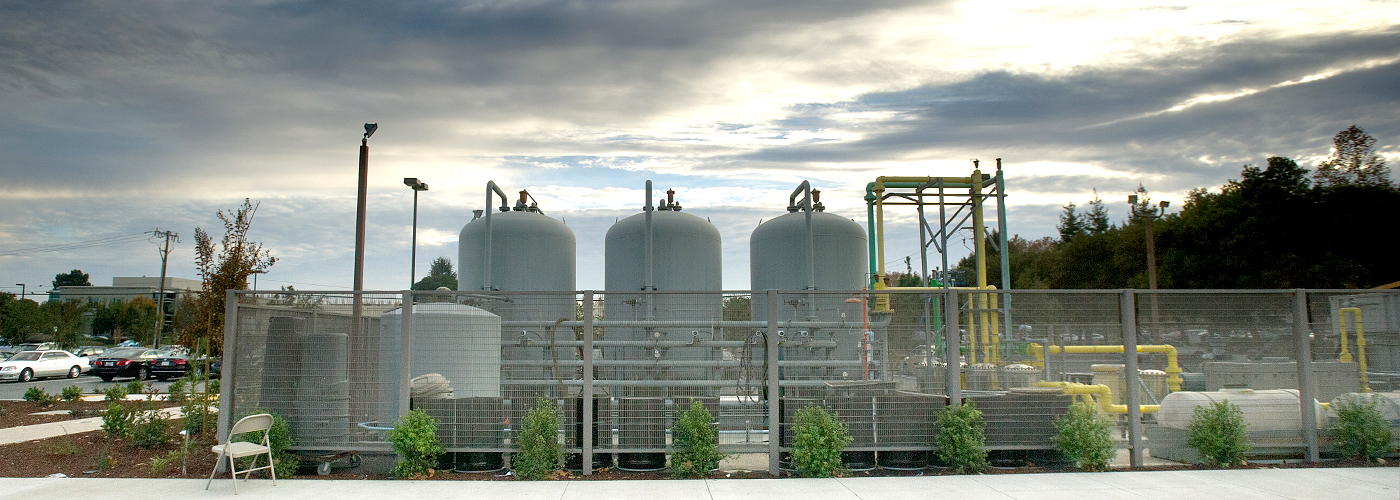
"caption": "Pump-and-treat systems, which suck polluted groundwater out of the earth, have been a pillar of Superfund cleanup efforts.(Noah Berger/The Center for Investigative Reporting)",
"description": "Pump-and-treat systems, which suck polluted groundwater out of the earth, have been a pillar of Superfund cleanup efforts.(Noah Berger/The Center for Investigative Reporting)",
"title": "CIR-Toxic Trail",
"credit": null,
"status": "inherit",
"isLoading": false,
"fetchFailed": false
},
"news_129124": {
"type": "attachments",
"id": "news_129124",
"meta": {
"index": "attachments_1716263798",
"site": "news",
"id": "129124",
"found": true
},
"parent": 129097,
"imgSizes": {
"kqedFullSize": {
"file": "https://ww2.kqed.org/app/uploads/sites/10/2014/03/Jaron-Lanier-head-on-hand-J-D-Lasica-Flickr.jpg",
"width": 640,
"height": 480
}
},
"publishDate": 1394665492,
"modified": 1394665492,
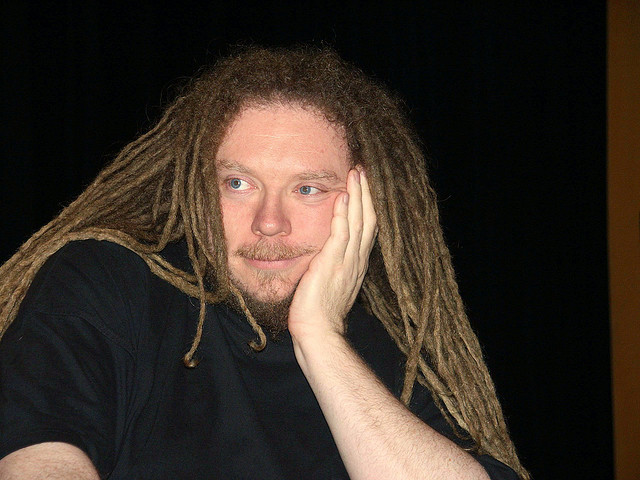
"caption": "Jaron Lanier, author of \"Who Owns the Future,\" says that despite his reservations about how the World Wide Web is playing out, he's still an optimist. (JD Lasica/Flickr)",
"description": "Jaron Lanier, author of \"Who Owns the Future,\" says that despite his reservations about how the World Wide Web is playing out, he's still an optimist. (JD Lasica/Flickr)",
"title": "Jaron Lanier",
"credit": null,
"status": "inherit",
"isLoading": false,
"fetchFailed": false
},
"news_129178": {
"type": "attachments",
"id": "news_129178",
"meta": {
"index": "attachments_1716263798",
"site": "news",
"id": "129178",
"found": true
},
"parent": 129159,
"imgSizes": {
"kqedFullSize": {
"file": "https://ww2.kqed.org/app/uploads/sites/10/2014/03/RS6114_56667803-lpr.jpg",
"width": 1510,
"height": 1041
}
},
"publishDate": 1394676027,
"modified": 1394676027,
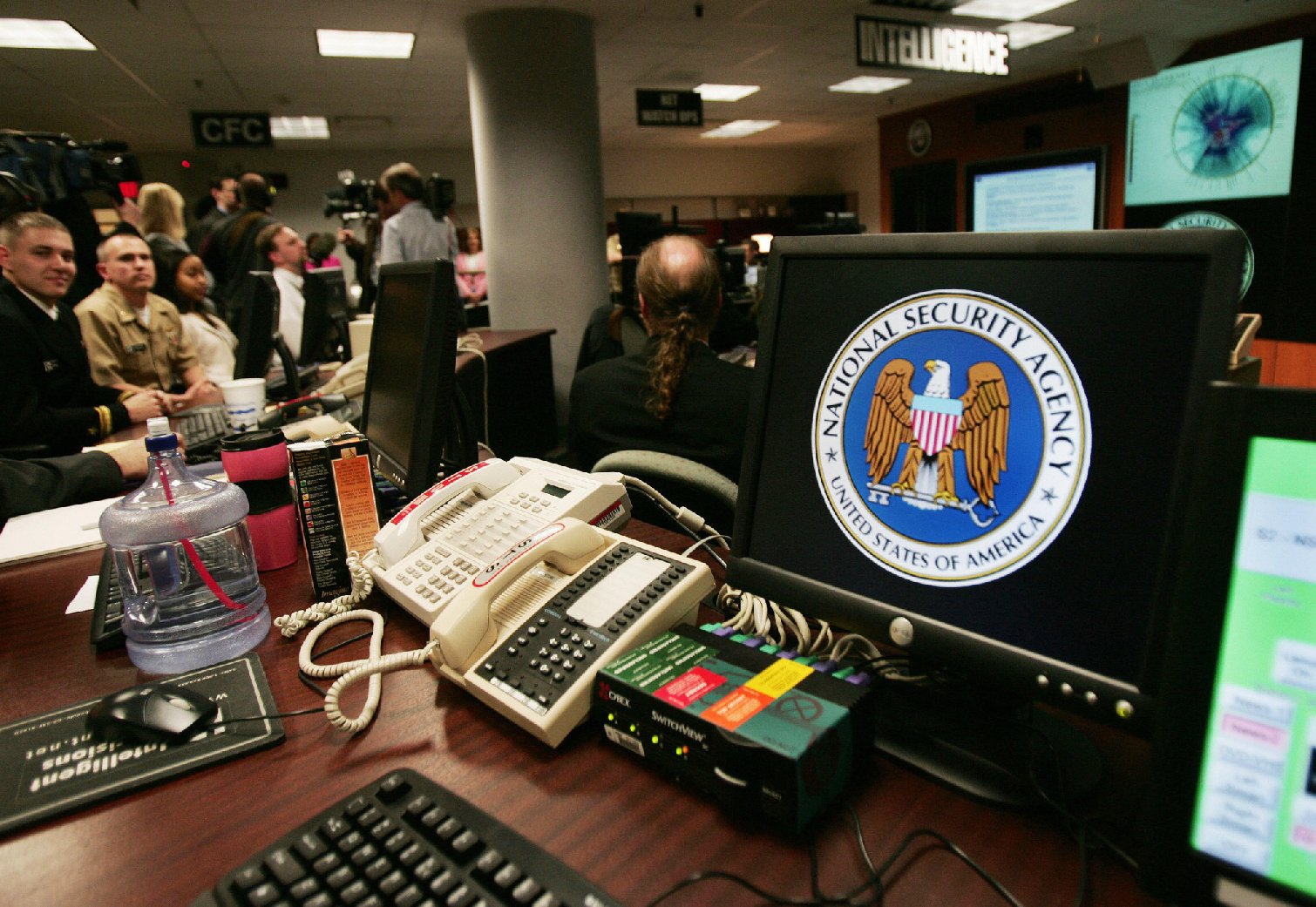
"caption": "A computer workstation bears the NSA logo inside the Threat Operations Center in Fort Meade, Md. in this 2006 photo. (Paul J. Richards/AFP/Getty Images)",
"description": null,
"title": "RS6114_56667803-lpr",
"credit": null,
"status": "inherit",
"isLoading": false,
"fetchFailed": false
},
"news_128914": {
"type": "attachments",
"id": "news_128914",
"meta": {
"index": "attachments_1716263798",
"site": "news",
"id": "128914",
"found": true
},
"parent": 128896,
"imgSizes": {
"kqedFullSize": {
"file": "https://ww2.kqed.org/app/uploads/sites/10/2014/03/RS9187_photo8-hpf.jpg",
"width": 640,
"height": 480
}
},
"publishDate": 1394558925,
"modified": 1394558925,
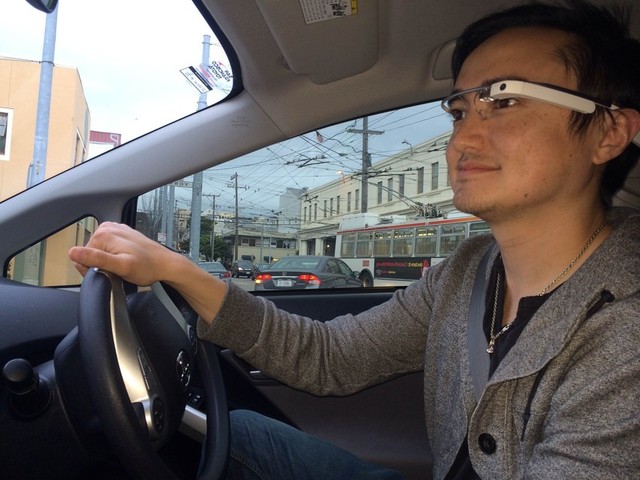
"caption": "Bay Area bar owners and lawmakers in several states want to ban Glass. Developer Shane Walker has been wearing Glass since last September. (Aarti Shahani/KQED)",
"description": "Google Glass Hits Road Block",
"title": "Google Glass",
"credit": null,
"status": "inherit",
"isLoading": false,
"fetchFailed": false
},
"stateofhealth_18051": {
"type": "attachments",
"id": "stateofhealth_18051",
"meta": {
"index": "attachments_1716263798",
"site": "stateofhealth",
"id": "18051",
"found": true
},
"parent": 18048,
"imgSizes": {
"thumbnail": {
"file": "https://ww2.kqed.org/app/uploads/sites/27/2014/03/186132947-e1394477207222-400x266.jpg",
"width": 400,
"mimeType": "image/jpeg",
"height": 266
},
"fd-sm": {
"file": "https://ww2.kqed.org/app/uploads/sites/27/2014/03/186132947-e1394477207222-320x213.jpg",
"width": 320,
"mimeType": "image/jpeg",
"height": 213
},
"post-thumbnail": {
"file": "https://ww2.kqed.org/app/uploads/sites/27/2014/03/186132947-e1394477207222-641x372.jpg",
"width": 641,
"mimeType": "image/jpeg",
"height": 372
},
"kqedFullSize": {
"file": "https://ww2.kqed.org/app/uploads/sites/27/2014/03/186132947-e1394477207222.jpg",
"width": 641,
"height": 427
},
"guest-author-96": {
"file": "https://ww2.kqed.org/app/uploads/sites/27/2014/03/186132947-e1394477207222-96x96.jpg",
"width": 96,
"mimeType": "image/jpeg",
"height": 96
},
"guest-author-64": {
"file": "https://ww2.kqed.org/app/uploads/sites/27/2014/03/186132947-e1394477207222-64x64.jpg",
"width": 64,
"mimeType": "image/jpeg",
"height": 64
},
"detail": {
"file": "https://ww2.kqed.org/app/uploads/sites/27/2014/03/186132947-e1394477207222-75x75.jpg",
"width": 75,
"mimeType": "image/jpeg",
"height": 75
},
"guest-author-32": {
"file": "https://ww2.kqed.org/app/uploads/sites/27/2014/03/186132947-e1394477207222-32x32.jpg",
"width": 32,
"mimeType": "image/jpeg",
"height": 32
},
"guest-author-128": {
"file": "https://ww2.kqed.org/app/uploads/sites/27/2014/03/186132947-e1394477207222-128x128.jpg",
"width": 128,
"mimeType": "image/jpeg",
"height": 128
}
},
"publishDate": 1394477194,
"modified": 1394477194,
"caption": "Study shows that plenty of parents can't put the phone down even when eating with their kids. (Getty Images) ",
"description": "smart phone",
"title": "186132947",
"credit": null,
"status": "inherit",
"isLoading": false,
"fetchFailed": false
},
"news_128713": {
"type": "attachments",
"id": "news_128713",
"meta": {
"index": "attachments_1716263798",
"site": "news",
"id": "128713",
"found": true
},
"parent": 128666,
"imgSizes": {
"kqedFullSize": {
"file": "https://ww2.kqed.org/app/uploads/sites/10/2014/03/RS5619_IMG_2267.jpg",
"width": 1448,
"height": 1086
}
},
"publishDate": 1394208878,
"modified": 1394208878,
"caption": null,
"description": null,
"title": "RS5619_IMG_2267",
"credit": null,
"status": "inherit",
"isLoading": false,
"fetchFailed": false
},
"news_128737": {
"type": "attachments",
"id": "news_128737",
"meta": {
"index": "attachments_1716263798",
"site": "news",
"id": "128737",
"found": true
},
"parent": 128732,
"imgSizes": {
"kqedFullSize": {
"file": "https://ww2.kqed.org/app/uploads/sites/10/2014/03/shuttlevideo.png",
"width": 954,
"height": 529
}
},
"publishDate": 1394224643,
"modified": 1394224643,
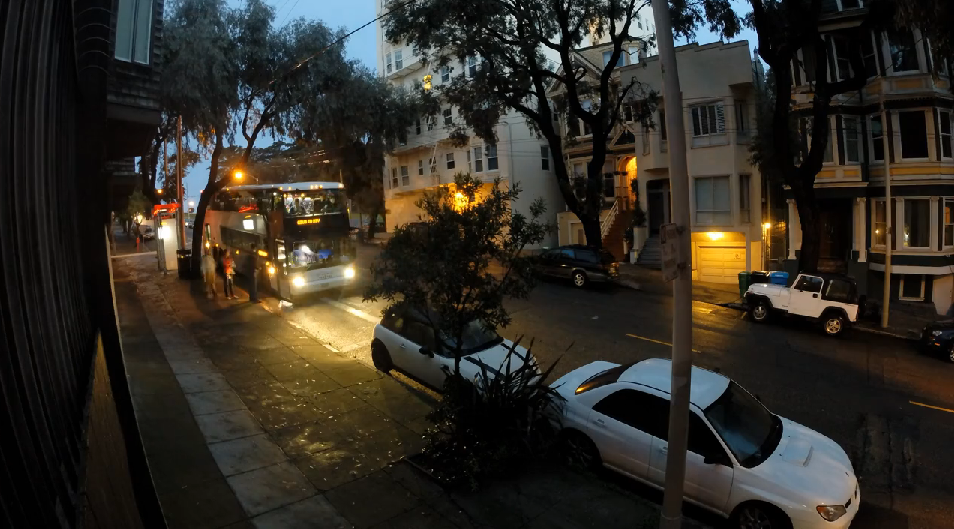
"caption": "Click image for video of one morning of tech shuttle activity on Hayes Street in San Francisco.",
"description": "Click image for video of one morning of tech shuttle activity on Hayes Street in San Francisco.",
"title": "Google Bus-Shuttle Video",
"credit": null,
"status": "inherit",
"isLoading": false,
"fetchFailed": false
},
"news_127039": {
"type": "attachments",
"id": "news_127039",
"meta": {
"index": "attachments_1716263798",
"site": "news",
"id": "127039",
"found": true
},
"parent": 127028,
"imgSizes": {
"kqedFullSize": {
"file": "https://ww2.kqed.org/app/uploads/sites/10/2014/02/facebook-whatsapp-2000.jpg",
"width": 1544,
"height": 1019
}
},
"publishDate": 1392934454,
"modified": 1392934454,
"caption": "The Facebook and WhatsApp applications' icons are displayed on a smartphone on February 20, 2014. (Gabriel Bouys/AFP/Getty Images)",
"description": "The Facebook and WhatsApp applications' icons are displayed on a smartphone on February 20, 2014. (Gabriel Bouys/AFP/Getty Images)",
"title": "facebook-whatsapp-2000",
"credit": null,
"status": "inherit",
"isLoading": false,
"fetchFailed": false
},
"news_116766": {
"type": "attachments",
"id": "news_116766",
"meta": {
"index": "attachments_1716263798",
"site": "news",
"id": "116766",
"found": true
},
"parent": 116664,
"imgSizes": {
"kqedFullSize": {
"file": "https://ww2.kqed.org/app/uploads/sites/10/2013/10/RS7294_Google_Barge_web_3-scr-e1383263627908.jpg",
"width": 640,
"height": 427
}
},
"publishDate": 1383263122,
"modified": 1383263122,
"caption": "The Google barge, photographed at Treasure Island in October 2013. (Sara Bloomberg/KQED)",
"description": "The Google barge, photographed at Treasure Island in October 2013. (Sara Bloomberg/KQED)",
"title": "Google Barge",
"credit": null,
"status": "inherit",
"isLoading": false,
"fetchFailed": false
},
"news_128386": {
"type": "attachments",
"id": "news_128386",
"meta": {
"index": "attachments_1716263798",
"site": "news",
"id": "128386",
"found": true
},
"parent": 128362,
"imgSizes": {
"kqedFullSize": {
"file": "https://ww2.kqed.org/app/uploads/sites/10/2014/03/RS8548_IMG_20140204_182442558-lpr.jpg",
"width": 1671,
"height": 941
}
},
"publishDate": 1393980397,
"modified": 1453338892,
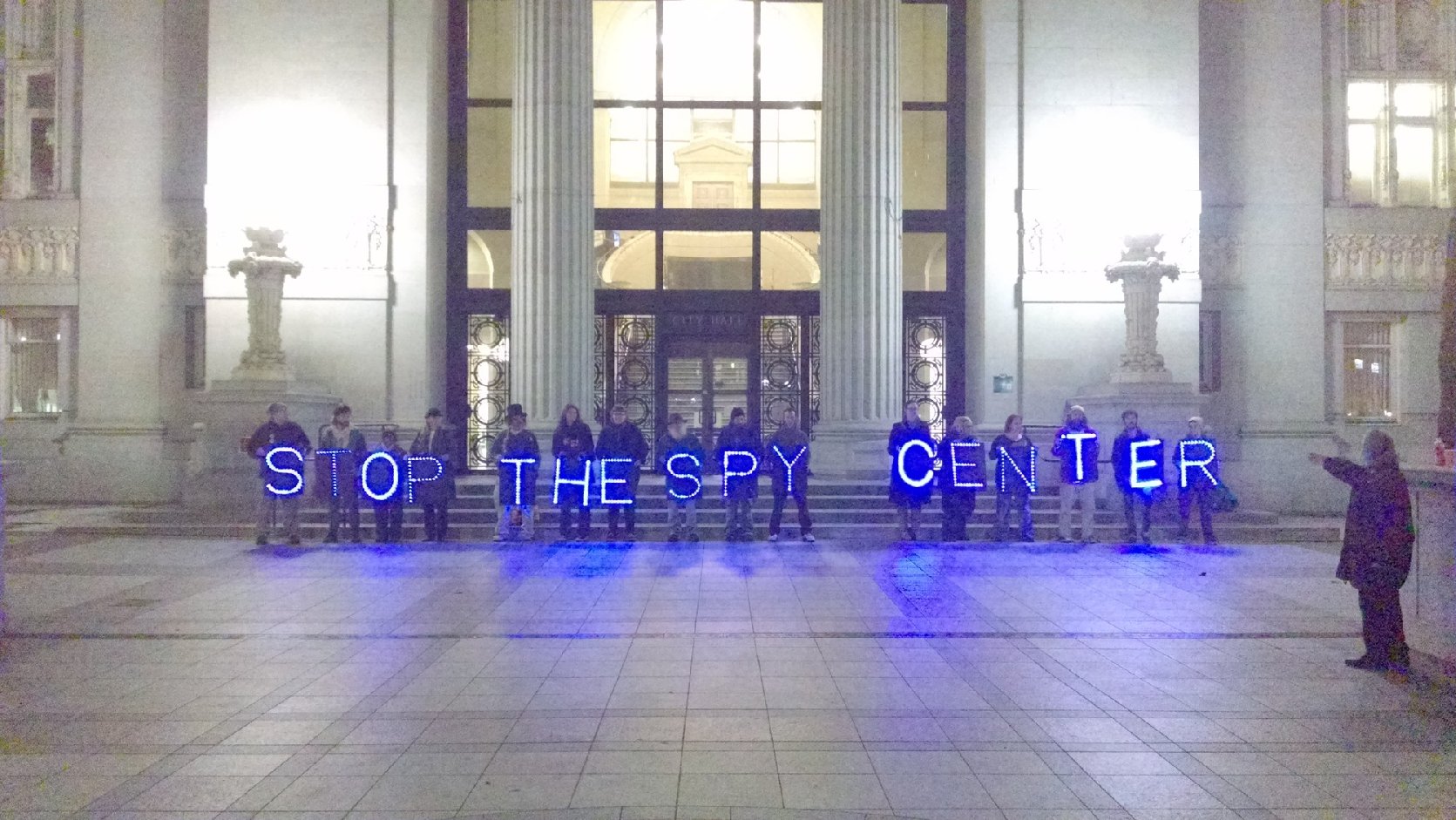
"caption": "Demonstrators protest in February 2015 against Oakland's plans for a citywide surveillance center.",
"description": "Demonstrators protest in February against Oakland's plans for a citywide surveillance center. ",
"title": "Oakland-Domain Awareness Center",
"credit": "Andrew Stelzer/KQED",
"status": "inherit",
"isLoading": false,
"fetchFailed": false
}
},
"audioPlayerReducer": {
"postId": "stream_live",
"isPaused": true,
"isPlaying": false,
"pfsActive": false,
"pledgeModalIsOpen": true,
"playerDrawerIsOpen": false,
"liveAudioPlayStartedAt": 0,
"liveAudioPlayContext": ""
},
"authorsReducer": {
"98603": {
"type": "authors",
"id": "98603",
"meta": {
"override": true
},
"slug": "98603",
"name": "Aarti Shahani",
"firstName": "Aarti",
"lastName": "Shahani",
"bio": "",
"email": "ashahani@kqed.org",
"isLoading": false
},
"astupi": {
"type": "authors",
"id": "70",
"meta": {
"index": "authors_1716337520",
"id": "70",
"found": true
},
"name": "Amanda Stupi",
"firstName": "Amanda",
"lastName": "Stupi",
"slug": "astupi",
"email": "astupi@kqed.org",
"display_author_email": false,
"staff_mastheads": [],
"title": "Senior Engagement Producer",
"bio": "Amanda joined KQED Science’s engagement team as a Senior Audience Engagement Strategist in the spring of 2019. She has helped craft messaging around wildfires, the coronavirus pandemic, climate change and many other stories. She has also brought KQED Science to new platforms such as Reddit’s Ask Me Anything series. Prior to joining KQED Science, Amanda spent seven years as an engagement producer with Forum, KQED’s daily live call-in show. She got her start in radio at KALW's weekly call in show, City Visions, before going on to an internship and stint at NPR's Talk of the Nation.\r\n\r\nPrior to journalism, Amanda taught English at Lowell High School. She's a native of Petaluma and currently lives under the \"South San Francisco the Industrial City\" sign in South City. She believes that engagement is vital to news’s future and that good journalism listens as much as it asks questions.",
"avatar": "https://secure.gravatar.com/avatar/e981c503e5c162da701dcaccfbf87e35?s=600&d=blank&r=g",
"twitter": null,
"facebook": null,
"instagram": null,
"linkedin": null,
"sites": [
{
"site": "arts",
"roles": [
"Contributor"
]
},
{
"site": "news",
"roles": [
"editor"
]
},
{
"site": "pop",
"roles": [
"contributor"
]
},
{
"site": "stateofhealth",
"roles": [
"editor"
]
},
{
"site": "science",
"roles": []
},
{
"site": "perspectives",
"roles": [
"editor"
]
}
],
"headData": {
"title": "Amanda Stupi | KQED",
"description": "Senior Engagement Producer",
"ogImgSrc": "https://secure.gravatar.com/avatar/e981c503e5c162da701dcaccfbf87e35?s=600&d=blank&r=g",
"twImgSrc": "https://secure.gravatar.com/avatar/e981c503e5c162da701dcaccfbf87e35?s=600&d=blank&r=g"
},
"isLoading": false,
"link": "/author/astupi"
},
"jbrooks": {
"type": "authors",
"id": "80",
"meta": {
"index": "authors_1716337520",
"id": "80",
"found": true
},
"name": "Jon Brooks",
"firstName": "Jon",
"lastName": "Brooks",
"slug": "jbrooks",
"email": "jbrooks@kqed.org",
"display_author_email": true,
"staff_mastheads": [
"science"
],
"title": "Digital Editor",
"bio": "Jon Brooks is a former Digital Editor for KQED Science. He is the former editor of KQED’s daily news blog, News Fix. In 2014, he won a California Journalism Award for his coverage of ride services like Uber and Lyft and the taxi industry. A veteran blogger, he previously worked for Yahoo! in various news writing and editing roles. Jon is also a playwright whose work has been produced in San Francisco, New York, Italy, and around the U.S. He has written about film for his own blog and studied film at Boston University.",
"avatar": "https://secure.gravatar.com/avatar/98887f7ed1c876ed414d4c915e969584?s=600&d=blank&r=g",
"twitter": "jbrooksfoy",
"facebook": null,
"instagram": null,
"linkedin": null,
"sites": [
{
"site": "arts",
"roles": [
"Contributor",
"editor"
]
},
{
"site": "news",
"roles": [
"author"
]
},
{
"site": "futureofyou",
"roles": [
"administrator"
]
},
{
"site": "mindshift",
"roles": [
"editor"
]
},
{
"site": "stateofhealth",
"roles": [
"editor"
]
},
{
"site": "science",
"roles": [
"administrator"
]
},
{
"site": "quest",
"roles": [
"editor"
]
}
],
"headData": {
"title": "Jon Brooks | KQED",
"description": "Digital Editor",
"ogImgSrc": "https://secure.gravatar.com/avatar/98887f7ed1c876ed414d4c915e969584?s=600&d=blank&r=g",
"twImgSrc": "https://secure.gravatar.com/avatar/98887f7ed1c876ed414d4c915e969584?s=600&d=blank&r=g"
},
"isLoading": false,
"link": "/author/jbrooks"
},
"danbrekke": {
"type": "authors",
"id": "222",
"meta": {
"index": "authors_1716337520",
"id": "222",
"found": true
},
"name": "Dan Brekke",
"firstName": "Dan",
"lastName": "Brekke",
"slug": "danbrekke",
"email": "dbrekke@kqed.org",
"display_author_email": true,
"staff_mastheads": [
"news",
"science"
],
"title": "KQED Editor and Reporter",
"bio": "Dan Brekke is a reporter and editor for KQED News, responsible for coverage of topics ranging from California water issues to the Bay Area's transportation challenges. In a newsroom career that began in Chicago in 1972, Dan has worked for \u003cem>The San Francisco Examiner,\u003c/em> Wired and TechTV and has been published in The New York Times, The New York Times Magazine, Business 2.0, Salon and elsewhere.\r\n\r\nSince joining KQED in 2007, Dan has reported, edited and produced both radio and online features and breaking news pieces. He has shared as both editor and reporter in four Society of Professional Journalists Norcal Excellence in Journalism awards and one Edward R. Murrow regional award. He was chosen for a spring 2017 residency at the Mesa Refuge to advance his research on California salmon.\r\n\r\nEmail Dan at: \u003ca href=\"mailto:dbrekke@kqed.org\">dbrekke@kqed.org\u003c/a>\r\n\r\n\u003cstrong>Twitter:\u003c/strong> \u003ca href=\"https://twitter.com/danbrekke\" rel=\"noopener noreferrer\">twitter.com/danbrekke\u003c/a>\r\n\u003cstrong>Facebook:\u003c/strong> \u003ca href=\"https://www.facebook.com/danbrekke\" rel=\"noopener noreferrer\">www.facebook.com/danbrekke\u003c/a>\r\n\u003cstrong>LinkedIn:\u003c/strong> \u003ca href=\"https://www.linkedin.com/in/danbrekke\" rel=\"noopener noreferrer\">www.linkedin.com/in/danbrekke\u003c/a>",
"avatar": "https://secure.gravatar.com/avatar/8f1f0d2a978fb3b23426c922c7e2af558fa36905b49c4ce76a97dc3c72d27226?s=600&d=mm&r=g",
"twitter": "danbrekke",
"bluesky": null,
"facebook": null,
"instagram": "https://www.instagram.com/dan.brekke/",
"linkedin": "https://www.linkedin.com/in/danbrekke/",
"sites": [
{
"site": "news",
"roles": [
"administrator",
"create_posts"
]
},
{
"site": "stateofhealth",
"roles": [
"editor"
]
},
{
"site": "science",
"roles": [
"editor"
]
},
{
"site": "quest",
"roles": [
"contributor"
]
},
{
"site": "food",
"roles": [
"contributor"
]
},
{
"site": "forum",
"roles": [
"contributor"
]
},
{
"site": "elections",
"roles": [
"editor"
]
},
{
"site": "liveblog",
"roles": [
"editor"
]
}
],
"headData": {
"title": "Dan Brekke | KQED",
"description": "KQED Editor and Reporter",
"ogImgSrc": "https://secure.gravatar.com/avatar/8f1f0d2a978fb3b23426c922c7e2af558fa36905b49c4ce76a97dc3c72d27226?s=600&d=mm&r=g",
"twImgSrc": "https://secure.gravatar.com/avatar/8f1f0d2a978fb3b23426c922c7e2af558fa36905b49c4ce76a97dc3c72d27226?s=600&d=mm&r=g"
},
"isLoading": false,
"link": "/author/danbrekke"
},
"kqed": {
"type": "authors",
"id": "236",
"meta": {
"index": "authors_1716337520",
"id": "236",
"found": true
},
"name": "KQED News Staff",
"firstName": "KQED News Staff",
"lastName": null,
"slug": "kqed",
"email": "faq@kqed.org",
"display_author_email": false,
"staff_mastheads": [],
"title": null,
"bio": null,
"avatar": "https://secure.gravatar.com/avatar/ef0e801a68c4c54afa9180db14084167?s=600&d=blank&r=g",
"twitter": null,
"facebook": null,
"instagram": null,
"linkedin": null,
"sites": [
{
"site": "arts",
"roles": [
"contributor"
]
},
{
"site": "news",
"roles": [
"editor"
]
},
{
"site": "futureofyou",
"roles": [
"author"
]
}
],
"headData": {
"title": "KQED News Staff | KQED",
"description": null,
"ogImgSrc": "https://secure.gravatar.com/avatar/ef0e801a68c4c54afa9180db14084167?s=600&d=blank&r=g",
"twImgSrc": "https://secure.gravatar.com/avatar/ef0e801a68c4c54afa9180db14084167?s=600&d=blank&r=g"
},
"isLoading": false,
"link": "/author/kqed"
},
"patyollin": {
"type": "authors",
"id": "247",
"meta": {
"index": "authors_1716337520",
"id": "247",
"found": true
},
"name": "Patricia Yollin",
"firstName": "Patricia",
"lastName": "Yollin",
"slug": "patyollin",
"email": "pyollin@kqed.org",
"display_author_email": false,
"staff_mastheads": [],
"title": "KQED Contributor",
"bio": "Pat Yollin has written about lots of stuff, including organ transplants, wayward penguins at the San Francisco Zoo, the comeback of the cream puff, New York on the fifth anniversary of 9/11, a Slow Food gathering in Italy, and the microcredit movement in Northern California. Among her favorite stories: an interview with George Lucas at Skywalker Ranch that broke the story about his plan to build a cultural museum, and a pirate Trader Joe's operation in Vancouver that prompted the grocery chain to sue -- and lose. She joined KQED in 2013 and was previously a reporter and editor at the San Francisco Chronicle, the Hearst-owned San Francisco Examiner and the Hayward Daily Review.",
"avatar": "https://secure.gravatar.com/avatar/0a18ac41a263665c04b25b2c7d6b817c?s=600&d=blank&r=g",
"twitter": null,
"facebook": null,
"instagram": null,
"linkedin": null,
"sites": [
{
"site": "arts",
"roles": [
"subscriber"
]
},
{
"site": "news",
"roles": [
"subscriber"
]
},
{
"site": "futureofyou",
"roles": [
"editor"
]
},
{
"site": "lowdown",
"roles": [
"editor"
]
},
{
"site": "stateofhealth",
"roles": [
"editor"
]
}
],
"headData": {
"title": "Patricia Yollin | KQED",
"description": "KQED Contributor",
"ogImgSrc": "https://secure.gravatar.com/avatar/0a18ac41a263665c04b25b2c7d6b817c?s=600&d=blank&r=g",
"twImgSrc": "https://secure.gravatar.com/avatar/0a18ac41a263665c04b25b2c7d6b817c?s=600&d=blank&r=g"
},
"isLoading": false,
"link": "/author/patyollin"
},
"state-of-health": {
"type": "authors",
"id": "8344",
"meta": {
"index": "authors_1716337520",
"id": "8344",
"found": true
},
"name": "State of Health",
"firstName": "State of Health",
"lastName": null,
"slug": "state-of-health",
"email": "stateofhealth@kqed.org",
"display_author_email": false,
"staff_mastheads": [],
"title": null,
"bio": null,
"avatar": "https://secure.gravatar.com/avatar/66de4bf6d331fa7402bba1ffe8135e17?s=600&d=blank&r=g",
"twitter": null,
"facebook": null,
"instagram": null,
"linkedin": null,
"sites": [
{
"site": "arts",
"roles": [
"author"
]
},
{
"site": "stateofhealth",
"roles": [
"editor"
]
}
],
"headData": {
"title": "State of Health | KQED",
"description": null,
"ogImgSrc": "https://secure.gravatar.com/avatar/66de4bf6d331fa7402bba1ffe8135e17?s=600&d=blank&r=g",
"twImgSrc": "https://secure.gravatar.com/avatar/66de4bf6d331fa7402bba1ffe8135e17?s=600&d=blank&r=g"
},
"isLoading": false,
"link": "/author/state-of-health"
}
},
"pagesReducer": {
"news_category_technology": {
"type": "terms",
"id": "news_248",
"meta": {
"index": "terms_1716263798",
"site": "news",
"id": "248",
"score": 10.931152
},
"featImg": null,
"name": "Technology",
"description": null,
"taxonomy": "category",
"headData": {
"twImgId": null,
"twTitle": null,
"ogTitle": null,
"ogImgId": null,
"twDescription": null,
"description": null,
"title": "Technology Archives | KQED News",
"ogDescription": null
},
"ttid": 256,
"slug": "technology",
"isLoading": false,
"title": "Technology",
"pageMeta": {
"site": "news",
"WpPageTemplate": "page-topic-editorial",
"currentPage": 157
},
"blocks": [
{
"blockName": "kqed/post-list",
"attrs": {
"layout": "cardArticle2",
"query": "posts/news?category=technology",
"seeMore": false,
"paginated": true,
"page": 157
}
},
{
"blockName": "kqed/ad"
}
]
}
},
"pfsSessionReducer": {},
"postsReducer": {
"stream_live": {
"type": "live",
"id": "stream_live",
"audioUrl": "https://streams.kqed.org/kqedradio",
"title": "Live Stream",
"excerpt": "Live Stream information currently unavailable.",
"link": "/radio",
"featImg": "",
"label": {
"name": "KQED Live",
"link": "/"
}
},
"stream_kqedNewscast": {
"type": "posts",
"id": "stream_kqedNewscast",
"audioUrl": "https://www.kqed.org/.stream/anon/radio/RDnews/newscast.mp3?_=1",
"title": "KQED Newscast",
"featImg": "",
"label": {
"name": "88.5 FM",
"link": "/"
}
},
"news_129712": {
"type": "posts",
"id": "news_129712",
"meta": {
"index": "posts_1716263798",
"site": "news",
"id": "129712",
"score": null,
"sort": [
1395147630000
]
},
"guestAuthors": [],
"slug": "good-read-and-video-following-a-toxic-trail-from-silicon-valley",
"title": "Following a Toxic Trail from Silicon Valley to Points Known and Unknown",
"publishDate": 1395147630,
"format": "aside",
"headTitle": "Following a Toxic Trail from Silicon Valley to Points Known and Unknown | KQED",
"labelTerm": {
"term": 6944,
"site": "news"
},
"content": "\u003cdiv class=\"single-video\">\u003ciframe loading=\"lazy\" width=\"640\" height=\"360\" src=\"//www.youtube.com/embed/LvhAxU1c8Zw\" frameborder=\"0\" allowfullscreen>\u003c/iframe>\u003c/div>\n\u003cp>The Center for Investigative Reporting has published \u003ca href=\"http://cironline.org/reports/cleanup-silicon-valley-superfund-site-takes-environmental-toll-6149\" target=\"_blank\" rel=\"noopener\">a scarifying and exhaustive story\u003c/a> on a fundamental problem besetting the cleanup of Silicon Valley groundwater polluted decades ago by the semiconductor industry. The CIR report documents the long and virtually endless journey toxins make from a single Environmental Protection Agency Superfund cleanup site in Mountain View to facilities across the country where poisons are supposed to be treated and, in theory, rendered less harmful. \u003c/p>\n\u003cp>Here’s how CIR reporters Susanne Rust and Matt Drange summarize the process: \u003c/p>\n\u003cblockquote>\u003cp>Once it leaves Mountain View, the toxic waste gets shipped, treated and burned in places like Oklahoma and Arizona, discharging waste in small towns and on a Native American reservation, and in some cases creating even more harmful chemicals, The Center for Investigative Reporting has found.\u003c/p>\n\u003cp>Along the way, waste treatment plants rack up environmental violations, records show. Byproducts created during treatment are shuttled from one plant to another. And then another. After crisscrossing the country, the waste even can end up right back where it started – at a treatment plant just a few miles away in Silicon Valley.\u003c/p>\n\u003cp>It’s a shell game in which one environmental danger appears to be addressed, yet is moved somewhere else in the form of a new problem.\u003c/p>\n\u003cp>“There’s really no such thing as throwing something away,” said Environmental Protection Agency spokesman Rusty Harris-Bishop. “You’re always throwing it somewhere.”\u003c/p>\u003c/blockquote>\n\u003cp>The report, produced in conjunction with \u003ca href=\"http://www.theguardian.com/info/about-guardian-us\" target=\"_blank\" rel=\"noopener\">The Guardian US\u003c/a>, is chock-full of interactive explainers of the steps involved in the marathon journey of toxins once they’ve been “cleaned up.” For a taste of what’s in the report, check out “The Adventures of Toxic Jo,” above. \u003c/p>\n\u003cp>\u003ciframe loading=\"lazy\" width=\"100%\" height=\"166\" scrolling=\"no\" frameborder=\"no\" src=\"https://w.soundcloud.com/player/?url=https%3A//api.soundcloud.com/tracks/140278321&color=ff5500&auto_play=false&hide_related=false&show_artwork=true\">\u003c/iframe>\u003c/p>\n\u003cp>[ad fullwidth]\u003c/p>\u003cp>\u003c/p>\n",
"blocks": [],
"excerpt": "Clean-up of Mountain View site sends poisons on a costly cross-country journey that poses new hazards.",
"status": "publish",
"parent": 0,
"modified": 1729029893,
"stats": {
"hasAudio": true,
"hasVideo": true,
"hasChartOrMap": false,
"iframeSrcs": [],
"hasGoogleForm": false,
"hasGallery": false,
"hasHearkenModule": false,
"hasPolis": false,
"paragraphCount": 10,
"wordCount": 299
},
"headData": {
"title": "Following a Toxic Trail from Silicon Valley to Points Known and Unknown | KQED",
"description": "Clean-up of Mountain View site sends poisons on a costly cross-country journey that poses new hazards.",
"ogTitle": "",
"ogDescription": "",
"ogImgId": "",
"twTitle": "",
"twDescription": "",
"twImgId": "",
"schema": {
"@context": "https://schema.org",
"@type": "NewsArticle",
"headline": "Following a Toxic Trail from Silicon Valley to Points Known and Unknown",
"datePublished": "2014-03-18T06:00:30-07:00",
"dateModified": "2024-10-15T15:04:53-07:00",
"image": "https://cdn.kqed.org/wp-content/uploads/2020/02/KQED-OG-Image@1x.png",
"isAccessibleForFree": "True",
"publisher": {
"@type": "NewsMediaOrganization",
"@id": "https://www.kqed.org/#organization",
"name": "KQED",
"logo": "https://cdn.kqed.org/wp-content/uploads/2020/02/KQED-OG-Image@1x.png",
"url": "https://www.kqed.org",
"sameAs": [
"https://www.facebook.com/KQED",
"https://twitter.com/KQED",
"https://www.instagram.com/kqed/",
"https://www.tiktok.com/@kqedofficial",
"https://www.linkedin.com/company/kqed",
"https://www.youtube.com/channel/UCeC0IOo7i1P_61zVUWbJ4nw"
]
}
}
},
"sticky": false,
"customPermalink": "2014/03/18/good-read-and-video-following-a-toxic-trail-from-silicon-valley/",
"path": "/news/129712/good-read-and-video-following-a-toxic-trail-from-silicon-valley",
"audioTrackLength": null,
"parsedContent": [
{
"type": "contentString",
"content": "\u003cdiv class=\"post-body\">\u003cp>\u003cdiv class=\"single-video\">\u003ciframe loading=\"lazy\" width=\"640\" height=\"360\" src=\"//www.youtube.com/embed/LvhAxU1c8Zw\" frameborder=\"0\" allowfullscreen>\u003c/iframe>\u003c/div>\n\u003cp>The Center for Investigative Reporting has published \u003ca href=\"http://cironline.org/reports/cleanup-silicon-valley-superfund-site-takes-environmental-toll-6149\" target=\"_blank\" rel=\"noopener\">a scarifying and exhaustive story\u003c/a> on a fundamental problem besetting the cleanup of Silicon Valley groundwater polluted decades ago by the semiconductor industry. The CIR report documents the long and virtually endless journey toxins make from a single Environmental Protection Agency Superfund cleanup site in Mountain View to facilities across the country where poisons are supposed to be treated and, in theory, rendered less harmful. \u003c/p>\n\u003cp>Here’s how CIR reporters Susanne Rust and Matt Drange summarize the process: \u003c/p>\n\u003cblockquote>\u003cp>Once it leaves Mountain View, the toxic waste gets shipped, treated and burned in places like Oklahoma and Arizona, discharging waste in small towns and on a Native American reservation, and in some cases creating even more harmful chemicals, The Center for Investigative Reporting has found.\u003c/p>\n\u003cp>Along the way, waste treatment plants rack up environmental violations, records show. Byproducts created during treatment are shuttled from one plant to another. And then another. After crisscrossing the country, the waste even can end up right back where it started – at a treatment plant just a few miles away in Silicon Valley.\u003c/p>\n\u003cp>It’s a shell game in which one environmental danger appears to be addressed, yet is moved somewhere else in the form of a new problem.\u003c/p>\n\u003cp>“There’s really no such thing as throwing something away,” said Environmental Protection Agency spokesman Rusty Harris-Bishop. “You’re always throwing it somewhere.”\u003c/p>\u003c/blockquote>\n\u003cp>The report, produced in conjunction with \u003ca href=\"http://www.theguardian.com/info/about-guardian-us\" target=\"_blank\" rel=\"noopener\">The Guardian US\u003c/a>, is chock-full of interactive explainers of the steps involved in the marathon journey of toxins once they’ve been “cleaned up.” For a taste of what’s in the report, check out “The Adventures of Toxic Jo,” above. \u003c/p>\n\u003cp>\u003ciframe loading=\"lazy\" width=\"100%\" height=\"166\" scrolling=\"no\" frameborder=\"no\" src=\"https://w.soundcloud.com/player/?url=https%3A//api.soundcloud.com/tracks/140278321&color=ff5500&auto_play=false&hide_related=false&show_artwork=true\">\u003c/iframe>\u003c/p>\n\u003cp>\u003c/p>\u003c/div>",
"attributes": {
"named": {},
"numeric": []
}
},
{
"type": "component",
"content": "",
"name": "ad",
"attributes": {
"named": {
"label": "fullwidth"
},
"numeric": [
"fullwidth"
]
}
},
{
"type": "contentString",
"content": "\u003cdiv class=\"post-body\">\u003cp>\u003c/p>\u003cp>\u003c/p>\n\u003c/div>\u003c/p>",
"attributes": {
"named": {},
"numeric": []
}
}
],
"link": "/news/129712/good-read-and-video-following-a-toxic-trail-from-silicon-valley",
"authors": [
"222"
],
"programs": [
"news_6944"
],
"categories": [
"news_19906",
"news_248"
],
"tags": [
"news_31711",
"news_1116",
"news_5983",
"news_638",
"news_34037",
"news_1631",
"news_5982",
"news_5984"
],
"featImg": "news_129713",
"label": "news_6944"
},
"news_129397": {
"type": "posts",
"id": "news_129397",
"meta": {
"index": "posts_1716263798",
"site": "news",
"id": "129397",
"score": null,
"sort": [
1394812312000
]
},
"parent": 0,
"labelTerm": {
"site": "news",
"term": 6944
},
"blocks": [],
"publishDate": 1394812312,
"format": "aside",
"disqusTitle": "UberX, Lyft Expand Driver Insurance",
"title": "UberX, Lyft Expand Driver Insurance",
"headTitle": "News Fix | KQED News",
"content": "\u003cfigure id=\"attachment_126917\" class=\"wp-caption aligncenter\" style=\"max-width: 640px\">\u003cimg class=\"size-medium wp-image-126917\" src=\"http://ww2.kqed.org/news/wp-content/uploads/sites/10/2015/01/RS8866_UberX_3-lpr-640x426.jpg\" alt=\"The California Public Utilities Commission requires Transportation Network Companies like UberX to display signage. (Jeremy Raff/KQED)\" width=\"640\" height=\"426\">\u003cfigcaption class=\"wp-caption-text\">(Photo: Jeremy Raff/KQED) \u003ccite>(Jeremy Raff/KQED)\u003c/cite>\u003c/figcaption>\u003c/figure>\n\u003cp>Ride-service companies UberX and Lyft have announced they are expanding their insurance to cover drivers who are between passengers but logged onto their apps awaiting a call.\u003c/p>\n\u003cp>In a \u003ca href=\"http://blog.uber.com/uberXridesharinginsurance\" target=\"_blank\">blog post\u003c/a> this morning Uber said its new policy ...\u003c/p>\n\u003cblockquote>\u003cp>\"... expands the insurance of ridesharing drivers to cover any potential “insurance gap” for accidents that occur while drivers are not providing transportation service for hire but are logged onto the Uber network and available to accept a ride.\u003c/p>\n\u003cp>Starting today, if a driver’s personal insurance policy is found not to cover an accident during this period, this new policy will provide contingent coverage for a driver’s liability at the highest requirement of any state in the U.S: $50,000/individual/incident for bodily injury, $100,000 total/incident for bodily injury and $25,000/incident for property damage.\u003c/p>\u003c/blockquote>\n\u003cp>Those coverage amounts are much less than the $1 million in liability insurance the company offers -- and is required to by California -- for drivers who are actually on a call.\u003c/p>\n\u003cp>Lyft also announced a similar expansion of its liability policy to drivers who are between calls. In a statement, the company said:\u003c/p>\n\u003cblockquote>\u003cp>While we do expect personal carriers to cover the time period prior to carrying a passenger, in order to erase any uncertainty, Lyft will now provide additional protection. This new protection will provide backstop coverage to drivers when they are in match mode and are not providing rides. We will be rolling this out state-by-state in the days to come.\u003c/p>\u003c/blockquote>\n\u003cp>The limitations of UberX and Lyft insurance policies became widely known after a fatal accident involving an UberX driver in San Francisco on New Year's Eve. The driver was between passengers -- logged onto the UberX platform but yet to accept a call. UberX said its $1 million insurance policy did not apply because it only covered drivers who were actually carrying passengers or were on their way to pick them up.\u003c/p>\n\u003cp>[ad fullwidth]\u003c/p>\n\u003cp>UberX also said the insurance company of that driver, Syed Muzaffar, has \"offered up the limits\" of his personal policy in connection with the incident. California requires all drivers to carry liability insurance of $15,000 for the injury or death of one person per accident, $30,000 for the injury or death of two or more persons, and $5,000 for any property damage. The liability costs of the accident Muzaffar was involved in could very well be in the millions.\u003c/p>\n\u003cp>In addition to the expansion of its liability coverage, Uber said it would offer new comprehensive and collision coverage when UberX drivers were on a call. Collision insurance covers damage to a driver's vehicle when the driver is at fault. This new coverage is contingent on drivers having purchased similar coverage on their personal policies, Uber said. The deductible is $1,000 and the maximum payment is $50,000 per vehicle.\u003c/p>\n\u003cp>\u003cstrong>Update:\u003c/strong>\u003c/p>\n\u003cp>Chris Dolan, the lawyer for the family of Sofia Liu, killed by an UberX driver in San Francisco on New Year’s Eve, is not impressed with Uber's announcement, calling it a \"sham PR stunt\" in a press release. The Liu family is suing Uber, claiming, among other things, that the app its drivers use to accept calls contributes to distracted driving.\u003c/p>\n\u003cp>In a press call today, Uber CEO Travis Kalanick said Muzaffar's personal insurance company is paying the claim. But Dolan said Muzaffar's insurance has a $30,000 cap on it, and \"the bills are in the hundreds of thousands of dollars.\" He said the amounts offered by UberX's new insurance, up to $100,000 in bodily injury and $25,000 in property damage, \"degrades the value of every human life.\"\u003c/p>\n\u003cp>\u003c/p>\n\u003cp>The San Francisco Municipal Transportation Agency requires taxis to carry $1 million in liability insurance. The taxi industry has argued that ride-service vehicles are taxis by any other name, and therefore should have to offer similar insurance.\u003c/p>\n\n",
"disqusIdentifier": "129397 http://ww2.kqed.org/news/?p=129397",
"disqusUrl": "https://ww2.kqed.org/news/2014/03/14/uberx-lyft-to-provide-insurance-to-drivers-who-are-between-calls/",
"stats": {
"hasVideo": false,
"hasChartOrMap": false,
"hasAudio": false,
"hasPolis": false,
"wordCount": 670,
"hasGoogleForm": false,
"hasGallery": false,
"hasHearkenModule": false,
"iframeSrcs": [],
"paragraphCount": 16
},
"modified": 1399488729,
"excerpt": "The ride-service companies attempt to close a well-publicized \"insurance gap.\"",
"headData": {
"twImgId": "",
"twTitle": "",
"ogTitle": "",
"ogImgId": "",
"twDescription": "",
"description": "The ride-service companies attempt to close a well-publicized "insurance gap."",
"title": "UberX, Lyft Expand Driver Insurance | KQED",
"ogDescription": "",
"schema": {
"@context": "https://schema.org",
"@type": "NewsArticle",
"headline": "UberX, Lyft Expand Driver Insurance",
"datePublished": "2014-03-14T08:51:52-07:00",
"dateModified": "2014-05-07T11:52:09-07:00",
"image": "https://cdn.kqed.org/wp-content/uploads/2020/02/KQED-OG-Image@1x.png",
"isAccessibleForFree": "True",
"publisher": {
"@type": "NewsMediaOrganization",
"@id": "https://www.kqed.org/#organization",
"name": "KQED",
"logo": "https://cdn.kqed.org/wp-content/uploads/2020/02/KQED-OG-Image@1x.png",
"url": "https://www.kqed.org",
"sameAs": [
"https://www.facebook.com/KQED",
"https://twitter.com/KQED",
"https://www.instagram.com/kqed/",
"https://www.tiktok.com/@kqedofficial",
"https://www.linkedin.com/company/kqed",
"https://www.youtube.com/channel/UCeC0IOo7i1P_61zVUWbJ4nw"
]
}
}
},
"guestAuthors": [],
"slug": "uberx-lyft-to-provide-insurance-to-drivers-who-are-between-calls",
"status": "publish",
"customPermalink": "2014/03/14/uber-lyft-insurance/",
"path": "/news/129397/uberx-lyft-to-provide-insurance-to-drivers-who-are-between-calls",
"audioTrackLength": null,
"parsedContent": [
{
"type": "contentString",
"content": "\u003cdiv class=\"post-body\">\u003cp>\u003cfigure id=\"attachment_126917\" class=\"wp-caption aligncenter\" style=\"max-width: 640px\">\u003cimg class=\"size-medium wp-image-126917\" src=\"http://ww2.kqed.org/news/wp-content/uploads/sites/10/2015/01/RS8866_UberX_3-lpr-640x426.jpg\" alt=\"The California Public Utilities Commission requires Transportation Network Companies like UberX to display signage. (Jeremy Raff/KQED)\" width=\"640\" height=\"426\">\u003cfigcaption class=\"wp-caption-text\">(Photo: Jeremy Raff/KQED) \u003ccite>(Jeremy Raff/KQED)\u003c/cite>\u003c/figcaption>\u003c/figure>\n\u003cp>Ride-service companies UberX and Lyft have announced they are expanding their insurance to cover drivers who are between passengers but logged onto their apps awaiting a call.\u003c/p>\n\u003cp>In a \u003ca href=\"http://blog.uber.com/uberXridesharinginsurance\" target=\"_blank\">blog post\u003c/a> this morning Uber said its new policy ...\u003c/p>\n\u003cblockquote>\u003cp>\"... expands the insurance of ridesharing drivers to cover any potential “insurance gap” for accidents that occur while drivers are not providing transportation service for hire but are logged onto the Uber network and available to accept a ride.\u003c/p>\n\u003cp>Starting today, if a driver’s personal insurance policy is found not to cover an accident during this period, this new policy will provide contingent coverage for a driver’s liability at the highest requirement of any state in the U.S: $50,000/individual/incident for bodily injury, $100,000 total/incident for bodily injury and $25,000/incident for property damage.\u003c/p>\u003c/blockquote>\n\u003cp>Those coverage amounts are much less than the $1 million in liability insurance the company offers -- and is required to by California -- for drivers who are actually on a call.\u003c/p>\n\u003cp>Lyft also announced a similar expansion of its liability policy to drivers who are between calls. In a statement, the company said:\u003c/p>\n\u003cblockquote>\u003cp>While we do expect personal carriers to cover the time period prior to carrying a passenger, in order to erase any uncertainty, Lyft will now provide additional protection. This new protection will provide backstop coverage to drivers when they are in match mode and are not providing rides. We will be rolling this out state-by-state in the days to come.\u003c/p>\u003c/blockquote>\n\u003cp>The limitations of UberX and Lyft insurance policies became widely known after a fatal accident involving an UberX driver in San Francisco on New Year's Eve. The driver was between passengers -- logged onto the UberX platform but yet to accept a call. UberX said its $1 million insurance policy did not apply because it only covered drivers who were actually carrying passengers or were on their way to pick them up.\u003c/p>\n\u003cp>\u003c/p>\u003c/div>",
"attributes": {
"named": {},
"numeric": []
}
},
{
"type": "component",
"content": "",
"name": "ad",
"attributes": {
"named": {
"label": "fullwidth"
},
"numeric": [
"fullwidth"
]
}
},
{
"type": "contentString",
"content": "\u003cdiv class=\"post-body\">\u003cp>\u003c/p>\n\u003cp>UberX also said the insurance company of that driver, Syed Muzaffar, has \"offered up the limits\" of his personal policy in connection with the incident. California requires all drivers to carry liability insurance of $15,000 for the injury or death of one person per accident, $30,000 for the injury or death of two or more persons, and $5,000 for any property damage. The liability costs of the accident Muzaffar was involved in could very well be in the millions.\u003c/p>\n\u003cp>In addition to the expansion of its liability coverage, Uber said it would offer new comprehensive and collision coverage when UberX drivers were on a call. Collision insurance covers damage to a driver's vehicle when the driver is at fault. This new coverage is contingent on drivers having purchased similar coverage on their personal policies, Uber said. The deductible is $1,000 and the maximum payment is $50,000 per vehicle.\u003c/p>\n\u003cp>\u003cstrong>Update:\u003c/strong>\u003c/p>\n\u003cp>Chris Dolan, the lawyer for the family of Sofia Liu, killed by an UberX driver in San Francisco on New Year’s Eve, is not impressed with Uber's announcement, calling it a \"sham PR stunt\" in a press release. The Liu family is suing Uber, claiming, among other things, that the app its drivers use to accept calls contributes to distracted driving.\u003c/p>\n\u003cp>In a press call today, Uber CEO Travis Kalanick said Muzaffar's personal insurance company is paying the claim. But Dolan said Muzaffar's insurance has a $30,000 cap on it, and \"the bills are in the hundreds of thousands of dollars.\" He said the amounts offered by UberX's new insurance, up to $100,000 in bodily injury and $25,000 in property damage, \"degrades the value of every human life.\"\u003c/p>\n\u003cp>\u003c/p>\n\u003cp>The San Francisco Municipal Transportation Agency requires taxis to carry $1 million in liability insurance. The taxi industry has argued that ride-service vehicles are taxis by any other name, and therefore should have to offer similar insurance.\u003c/p>\n\n\u003c/div>\u003c/p>",
"attributes": {
"named": {},
"numeric": []
}
}
],
"link": "/news/129397/uberx-lyft-to-provide-insurance-to-drivers-who-are-between-calls",
"authors": [
"80"
],
"programs": [
"news_6944"
],
"categories": [
"news_1758",
"news_248"
],
"tags": [
"news_4524",
"news_4756",
"news_4952",
"news_4953"
],
"label": "news_6944"
},
"news_129097": {
"type": "posts",
"id": "news_129097",
"meta": {
"index": "posts_1716263798",
"site": "news",
"id": "129097",
"score": null,
"sort": [
1394722810000
]
},
"guestAuthors": [],
"slug": "happy-birthday-world-wide-web-now-pay-up",
"title": "Jaron Lanier Says 'Happy Birthday' to Web -- and Talks About Making It Better",
"publishDate": 1394722810,
"format": "aside",
"headTitle": "Jaron Lanier Says ‘Happy Birthday’ to Web — and Talks About Making It Better | KQED",
"labelTerm": {
"term": 6944,
"site": "news"
},
"content": "\u003cfigure id=\"attachment_129124\" class=\"wp-caption alignright\" style=\"max-width: 640px\">\u003ca href=\"http://ww2.kqed.org/news/wp-content/uploads/sites/10/2014/03/Jaron-Lanier-head-on-hand-J-D-Lasica-Flickr.jpg\">\u003cimg loading=\"lazy\" decoding=\"async\" class=\"size-full wp-image-129124\" src=\"http://ww2.kqed.org/news/wp-content/uploads/sites/10/2014/03/Jaron-Lanier-head-on-hand-J-D-Lasica-Flickr.jpg\" alt=\"Jaron Lanier, author of "Who Owns the Future," says that despite his reservations about how the World Wide Web is playing out, he's still an optimist. (JD Lasica/Flickr)\" width=\"640\" height=\"480\">\u003c/a>\u003cfigcaption class=\"wp-caption-text\">Jaron Lanier, author of “Who Owns the Future,” says that despite his reservations about how the World Wide Web is playing out, he’s still an optimist. (JD Lasica/Flickr)\u003c/figcaption>\u003c/figure>\n\u003cp>The \u003ca href=\"http://www.w3.org/\" target=\"_blank\" rel=\"noopener\">World Wide Web\u003c/a>‘s 25th birthday has prompted a lot of reflecting on what it has helped achieve and where it has missed its mark.\u003c/p>\n\u003cp>Sir Tim Berners-Lee, the Web’s inventor, shared this reflection on \u003ca href=\"http://googleblog.blogspot.com/\" target=\"_blank\" rel=\"noopener\">Google’s blog\u003c/a>:\u003c/p>\n\u003cp>“By design, the underlying Internet and the WWW are non-hierarchical, decentralized and radically open. The web can be made to work with any type of information, on any device, with any software, in any language. You can link to any piece of information. You don’t need to ask for permission. What you create is limited only by your imagination.”\u003c/p>\n\u003cp>That idealism, laced with a little disappointment and some strong warnings, was shared by Internet pioneer and \u003ca href=\"http://www.amazon.com/Who-Owns-Future-Jaron-Lanier/dp/1451654960\" target=\"_blank\" rel=\"noopener\">author\u003c/a> Jaron Lanier during his appearance on \u003ca href=\"http://www.kqed.org/a/forum/R201403121000\" target=\"_blank\" rel=\"noopener\">KQED’s “Forum\u003c/a>” on Wednesday.\u003c/p>\n\u003cp>As proud as Lanier is of networking technology’s many achievements (he cites its key role in battling global climate change as an example), he argues that the focus of the Web and emerging technologies needs to change — or the free market, the middle class and even democracy are at risk.\u003c/p>\n\u003cp>[ad fullwidth]\u003c/p>\n\u003cp>One of the most regrettable developments of digital networks, according to Lanier: the collection of user data as a major industry.\u003c/p>\n\u003cp>The problem with exchanging free Internet services for users’ data is that “it makes every different kind of company, no matter what they do, compete for the same batch of customers who are the so-called advertisers,” said Lanier. “We end up forcing ourselves into this zero-sum game in this narrow world that’s of our own invention and serves no purpose.”\u003c/p>\n\u003caside class=\"pullquote alignleft\">One solution that Lanier proposes: Companies paying individuals for the content they share. \u003c/aside>\n\u003cp>One solution that Lanier proposes: companies paying individuals for the content they share. Lanier says that would spread wealth beyond a few “elites” and help bolster the middle class.\u003c/p>\n\u003cp>“It undoes the financial incentive of just controlling the data because the people who made it would get a piece of the pie,” said Lanier.\u003c/p>\n\u003cp>Plus, money could be invested into a greater variety of technology, and companies “would actually have to provide value to earn money,” said Lanier.\u003c/p>\n\u003cp>Despite his misgivings, Lanier said, “The good stuff we claim for networking and for cloud computing is very real. It’s very necessary stuff. There was no way we were going to this perfect the first time.”\u003c/p>\n\u003cp>You can listen to Lanier’s full comments on everything from self-driving cars to why he’s an optimist — and his infectious giggle — here:\u003c/p>\n\u003cp>\u003c/p>\n\u003cp>\u003ciframe loading=\"lazy\" src=\"https://w.soundcloud.com/player/?url=https%3A//api.soundcloud.com/tracks/139262551&color=ff5500&auto_play=false&hide_related=false&show_artwork=true\" frameborder=\"no\" scrolling=\"no\" width=\"100%\" height=\"166\">\u003c/iframe>\u003c/p>\n\n",
"blocks": [],
"excerpt": "On the Web's 25th birthday, Net pioneer says fortunes made online need to be more widely shared. ",
"status": "publish",
"parent": 0,
"modified": 1721149882,
"stats": {
"hasAudio": true,
"hasVideo": false,
"hasChartOrMap": false,
"iframeSrcs": [],
"hasGoogleForm": false,
"hasGallery": false,
"hasHearkenModule": false,
"hasPolis": false,
"paragraphCount": 15,
"wordCount": 484
},
"headData": {
"title": "Jaron Lanier Says 'Happy Birthday' to Web -- and Talks About Making It Better | KQED",
"description": "On the Web's 25th birthday, Net pioneer says fortunes made online need to be more widely shared. ",
"ogTitle": "",
"ogDescription": "",
"ogImgId": "",
"twTitle": "",
"twDescription": "",
"twImgId": "",
"schema": {
"@context": "https://schema.org",
"@type": "NewsArticle",
"headline": "Jaron Lanier Says 'Happy Birthday' to Web -- and Talks About Making It Better",
"datePublished": "2014-03-13T08:00:10-07:00",
"dateModified": "2024-07-16T10:11:22-07:00",
"image": "https://cdn.kqed.org/wp-content/uploads/2020/02/KQED-OG-Image@1x.png",
"isAccessibleForFree": "True",
"publisher": {
"@type": "NewsMediaOrganization",
"@id": "https://www.kqed.org/#organization",
"name": "KQED",
"logo": "https://cdn.kqed.org/wp-content/uploads/2020/02/KQED-OG-Image@1x.png",
"url": "https://www.kqed.org",
"sameAs": [
"https://www.facebook.com/KQED",
"https://twitter.com/KQED",
"https://www.instagram.com/kqed/",
"https://www.tiktok.com/@kqedofficial",
"https://www.linkedin.com/company/kqed",
"https://www.youtube.com/channel/UCeC0IOo7i1P_61zVUWbJ4nw"
]
}
}
},
"sticky": false,
"customPermalink": "2014/03/12/happy-birthday-worldwide-web-now-pay-up/",
"path": "/news/129097/happy-birthday-world-wide-web-now-pay-up",
"audioTrackLength": null,
"parsedContent": [
{
"type": "contentString",
"content": "\u003cdiv class=\"post-body\">\u003cp>\u003cfigure id=\"attachment_129124\" class=\"wp-caption alignright\" style=\"max-width: 640px\">\u003ca href=\"http://ww2.kqed.org/news/wp-content/uploads/sites/10/2014/03/Jaron-Lanier-head-on-hand-J-D-Lasica-Flickr.jpg\">\u003cimg loading=\"lazy\" decoding=\"async\" class=\"size-full wp-image-129124\" src=\"http://ww2.kqed.org/news/wp-content/uploads/sites/10/2014/03/Jaron-Lanier-head-on-hand-J-D-Lasica-Flickr.jpg\" alt=\"Jaron Lanier, author of "Who Owns the Future," says that despite his reservations about how the World Wide Web is playing out, he's still an optimist. (JD Lasica/Flickr)\" width=\"640\" height=\"480\">\u003c/a>\u003cfigcaption class=\"wp-caption-text\">Jaron Lanier, author of “Who Owns the Future,” says that despite his reservations about how the World Wide Web is playing out, he’s still an optimist. (JD Lasica/Flickr)\u003c/figcaption>\u003c/figure>\n\u003cp>The \u003ca href=\"http://www.w3.org/\" target=\"_blank\" rel=\"noopener\">World Wide Web\u003c/a>‘s 25th birthday has prompted a lot of reflecting on what it has helped achieve and where it has missed its mark.\u003c/p>\n\u003cp>Sir Tim Berners-Lee, the Web’s inventor, shared this reflection on \u003ca href=\"http://googleblog.blogspot.com/\" target=\"_blank\" rel=\"noopener\">Google’s blog\u003c/a>:\u003c/p>\n\u003cp>“By design, the underlying Internet and the WWW are non-hierarchical, decentralized and radically open. The web can be made to work with any type of information, on any device, with any software, in any language. You can link to any piece of information. You don’t need to ask for permission. What you create is limited only by your imagination.”\u003c/p>\n\u003cp>That idealism, laced with a little disappointment and some strong warnings, was shared by Internet pioneer and \u003ca href=\"http://www.amazon.com/Who-Owns-Future-Jaron-Lanier/dp/1451654960\" target=\"_blank\" rel=\"noopener\">author\u003c/a> Jaron Lanier during his appearance on \u003ca href=\"http://www.kqed.org/a/forum/R201403121000\" target=\"_blank\" rel=\"noopener\">KQED’s “Forum\u003c/a>” on Wednesday.\u003c/p>\n\u003cp>As proud as Lanier is of networking technology’s many achievements (he cites its key role in battling global climate change as an example), he argues that the focus of the Web and emerging technologies needs to change — or the free market, the middle class and even democracy are at risk.\u003c/p>\n\u003cp>\u003c/p>\u003c/div>",
"attributes": {
"named": {},
"numeric": []
}
},
{
"type": "component",
"content": "",
"name": "ad",
"attributes": {
"named": {
"label": "fullwidth"
},
"numeric": [
"fullwidth"
]
}
},
{
"type": "contentString",
"content": "\u003cdiv class=\"post-body\">\u003cp>\u003c/p>\n\u003cp>One of the most regrettable developments of digital networks, according to Lanier: the collection of user data as a major industry.\u003c/p>\n\u003cp>The problem with exchanging free Internet services for users’ data is that “it makes every different kind of company, no matter what they do, compete for the same batch of customers who are the so-called advertisers,” said Lanier. “We end up forcing ourselves into this zero-sum game in this narrow world that’s of our own invention and serves no purpose.”\u003c/p>\n\u003caside class=\"pullquote alignleft\">One solution that Lanier proposes: Companies paying individuals for the content they share. \u003c/aside>\n\u003cp>One solution that Lanier proposes: companies paying individuals for the content they share. Lanier says that would spread wealth beyond a few “elites” and help bolster the middle class.\u003c/p>\n\u003cp>“It undoes the financial incentive of just controlling the data because the people who made it would get a piece of the pie,” said Lanier.\u003c/p>\n\u003cp>Plus, money could be invested into a greater variety of technology, and companies “would actually have to provide value to earn money,” said Lanier.\u003c/p>\n\u003cp>Despite his misgivings, Lanier said, “The good stuff we claim for networking and for cloud computing is very real. It’s very necessary stuff. There was no way we were going to this perfect the first time.”\u003c/p>\n\u003cp>You can listen to Lanier’s full comments on everything from self-driving cars to why he’s an optimist — and his infectious giggle — here:\u003c/p>\n\u003cp>\u003c/p>\n\u003cp>\u003ciframe loading=\"lazy\" src=\"https://w.soundcloud.com/player/?url=https%3A//api.soundcloud.com/tracks/139262551&color=ff5500&auto_play=false&hide_related=false&show_artwork=true\" frameborder=\"no\" scrolling=\"no\" width=\"100%\" height=\"166\">\u003c/iframe>\u003c/p>\n\n\u003c/div>\u003c/p>",
"attributes": {
"named": {},
"numeric": []
}
}
],
"link": "/news/129097/happy-birthday-world-wide-web-now-pay-up",
"authors": [
"70"
],
"programs": [
"news_6944"
],
"categories": [
"news_248"
],
"tags": [
"news_3137",
"news_5943"
],
"featImg": "news_129124",
"label": "news_6944"
},
"news_129159": {
"type": "posts",
"id": "news_129159",
"meta": {
"index": "posts_1716263798",
"site": "news",
"id": "129159",
"score": null,
"sort": [
1394715623000
]
},
"parent": 0,
"labelTerm": {
"site": "news",
"term": 6944
},
"blocks": [],
"publishDate": 1394715623,
"format": "aside",
"disqusTitle": "Stanford Researchers: Phone Records Reveal More About You Than You Think ",
"title": "Stanford Researchers: Phone Records Reveal More About You Than You Think ",
"headTitle": "News Fix | KQED News",
"content": "\u003cfigure id=\"attachment_129178\" class=\"wp-caption aligncenter\" style=\"max-width: 640px\">\u003ca href=\"http://ww2.kqed.org/news/wp-content/uploads/sites/10/2014/03/RS6114_56667803-lpr.jpg\">\u003cimg class=\"size-medium wp-image-129178\" src=\"http://ww2.kqed.org/news/wp-content/uploads/sites/10/2014/03/RS6114_56667803-lpr-640x441.jpg\" alt=\"A computer workstation bears the NSA logo inside the Threat Operations Center in Fort Meade, Md. in this 2006 photo. (Paul J. Richards/AFP/Getty Images)\" width=\"640\" height=\"441\">\u003c/a>\u003cfigcaption class=\"wp-caption-text\">A computer workstation bears the NSA logo inside the Threat Operations Center at Fort Meade, Md., in this 2006 photo. (Paul J. Richards/AFP/Getty Images)\u003c/figcaption>\u003c/figure>\n\u003cp>In November, two computer science graduate students at Stanford University began a study of phone metadata privacy. They figured that this kind of information could be extremely sensitive, but they didn’t expect to find much evidence one way or the other.\u003c/p>\n\u003cp>They were wrong.\u003c/p>\n\u003cp>“The degree of sensitivity among contacts took us aback,” study co-author Jonathan Mayer wrote on his blog, “Web Policy,” where the \u003ca href=\"http://webpolicy.org/2014/03/12/metaphone-the-sensitivity-of-telephone-metadata/\">research findings\u003c/a> were published Wednesday.\u003c/p>\n\u003cp>“Participants had calls with Alcoholics Anonymous, gun stores, NARAL Pro-Choice, labor unions, divorce lawyers, sexually transmitted disease clinics, a Canadian import pharmacy, strip clubs, and much more,” Mayer reported. “This was not a hypothetical parade of horribles. These were simple inferences, about real phone users, that could trivially be made on a large scale.”\u003c/p>\n\u003cp>In a phone interview, Mayer said: “One of the arguments that has cropped up again and again in the phone metadata privacy debate is, ‘What’s the big deal? It’s just phone numbers.’ And we thought, ‘OK, let’s take a look at how hard it is to take a phone number and map to it to an individual or business or professional service.' We found it was very, very easy.”\u003c/p>\n\u003cp>[ad fullwidth]\u003c/p>\n\u003cp>In only three months, Mayer and co-author Patrick Mutchler ferreted out an amazing amount of information about the 546 participants in their study — all volunteers who ran the MetaPhone app on their Android smartphones.\u003c/p>\n\u003cp>The two grad students identified the participants’ contacts by matching phone numbers against Yelp and Google Place directories to see who was receiving calls. The participants contacted 33,688 unique numbers. Of those, 18 percent -- or 6,107 -- were identified.\u003c/p>\n\u003cp>\u003cstrong>'You Don't Need a Ph.D. to Figure This Out'\u003c/strong>\u003c/p>\n\u003cp>The computer scientists analyzed individual calls to numbers that could be deemed sensitive — anything a person might not want to be public, such as political or religious affiliation, health status, gun ownership or finances. They created 11 sensitive categories in the study, and then they analyzed patterns of calls.\u003c/p>\n\u003cp>One participant, for example, communicated with multiple local neurology groups, a specialty pharmacy, a rare-condition management service and a hotline for a pharmaceutical used only to treat relapsing multiple sclerosis.\u003c/p>\n\u003cp>“You don’t need a Ph.D. in computer science to figure out what’s going on there,” said Mayer, 27, who got a law degree from Stanford last year and now lives in San Francisco. He has been working on his doctorate for more than four years.\u003c/p>\n\u003cp>Mayer and Mutchler used the crowdsourced data to answer some questions that have acquired fresh urgency since \u003ca href=\"http://america.aljazeera.com/articles/multimedia/timeline-edward-snowden-revelations.html\">revelations of National Security Agency surveillance\u003c/a>, especially collection of phone records, began surfacing last June. They wanted to know two main things, Mayer wrote: Is it easy to draw sensitive inferences from phone metadata? How often do people conduct sensitive matters by phone?\u003c/p>\n\u003caside class=\"pullquote alignleft\">The researchers were surprised by their ability to draw inferences about such a large number of people and over such a short window of phone records.\u003c/aside>\n\u003cp>“We were motivated by the ongoing debate about this metadata held by the NSA and telecommunications companies and questions about under what conditions should this data be able to be looked at, analyzed, sold, aggregated and so on,” Mayer said. “Much of that debate depends on factual underpinnings, about what the privacy properties of this data look like. Patrick and I have been attempting to understand those privacy properties.”\u003c/p>\n\u003cp>Mayer said he and Mutchler succeeded beyond their wildest dreams in terms of the number and diversity of participants, who lived all over the country and came from various walks of life, with a mix of jobs and political perspectives. But he said the group was not statistically representative because volunteers had to have an Android phone and a Facebook account.\u003c/p>\n\u003cp>He was surprised, he said, by his ability to draw inferences about such a large number of people and over such a short window of phone records. By comparison, he said, the NSA appears to retain such records for about five years.\u003c/p>\n\u003cp>“If we’re able to draw these sorts of inferences, it’s strongly indicative of the government’s ability to draw sensitive inferences about large numbers of Americans,” Mayer said. “One of the great sources of concern here is that what used to take some significant shoe leather to infer now can be done in a very automated fashion.”\u003c/p>\n\u003cp>The study starts out by mentioning that President Obama has stressed that the NSA is \"not looking at content,\" that Sen. Dianne Feinstein has said \"this is just metadata\" and that a judge dismissed potentially sensitive inferences as a \"parade of horribles.\" But then it cites opposing views by those worried about the privacy risks posed by metadata.\u003c/p>\n\u003cp>As far as what effect the study might have, Mayer said, \"It's hard to predict. I'd imagine it might play some role in upcoming court battles. ... This sort of analysis might inform what the judiciary does.\"\u003c/p>\n\u003cp>Have the study's findings made him paranoid at all? \"If there were fixes, I'd certainly consider them,\" Mayer said. \"But this is the way phones work.\"\u003c/p>\n\u003cp>But he doesn't believe that the desire for privacy is a hopeless quest.\u003c/p>\n\u003cp>\u003c/p>\n\u003cp>\"For a long time, the debate's been in the abstract,\" Mayer said. \"(For example), there's something that makes individuals feel uneasy. Or there's some data that's held by some entity that's untrustworthy. These views lack a certain rigor that is (essential) to gain substantial traction in policy circles. By changing the way we argue about privacy and making it a more rigorous debate about specific privacy risks — and quantifying those risks — I think there's lots of room for gain.\"\u003c/p>\n\n",
"disqusIdentifier": "129159 http://ww2.kqed.org/news/?p=129159",
"disqusUrl": "https://ww2.kqed.org/news/2014/03/13/stanford-researchers-unearth-vast-amounts-of-private-data-from-phone-records/",
"stats": {
"hasVideo": false,
"hasChartOrMap": false,
"hasAudio": false,
"hasPolis": false,
"wordCount": 1018,
"hasGoogleForm": false,
"hasGallery": false,
"hasHearkenModule": false,
"iframeSrcs": [],
"paragraphCount": 23
},
"modified": 1394687515,
"excerpt": "Study of volunteers' data contradicts government claims about how much NSA surveillance can uncover.",
"headData": {
"twImgId": "",
"twTitle": "",
"ogTitle": "",
"ogImgId": "",
"twDescription": "",
"description": "Study of volunteers' data contradicts government claims about how much NSA surveillance can uncover.",
"title": "Stanford Researchers: Phone Records Reveal More About You Than You Think | KQED",
"ogDescription": "",
"schema": {
"@context": "https://schema.org",
"@type": "NewsArticle",
"headline": "Stanford Researchers: Phone Records Reveal More About You Than You Think ",
"datePublished": "2014-03-13T06:00:23-07:00",
"dateModified": "2014-03-12T22:11:55-07:00",
"image": "https://cdn.kqed.org/wp-content/uploads/2020/02/KQED-OG-Image@1x.png",
"isAccessibleForFree": "True",
"publisher": {
"@type": "NewsMediaOrganization",
"@id": "https://www.kqed.org/#organization",
"name": "KQED",
"logo": "https://cdn.kqed.org/wp-content/uploads/2020/02/KQED-OG-Image@1x.png",
"url": "https://www.kqed.org",
"sameAs": [
"https://www.facebook.com/KQED",
"https://twitter.com/KQED",
"https://www.instagram.com/kqed/",
"https://www.tiktok.com/@kqedofficial",
"https://www.linkedin.com/company/kqed",
"https://www.youtube.com/channel/UCeC0IOo7i1P_61zVUWbJ4nw"
]
}
}
},
"guestAuthors": [],
"slug": "stanford-researchers-unearth-vast-amounts-of-private-data-from-phone-records",
"status": "publish",
"customPermalink": "2014/03/12/nsa-spying-stanford-study-metadata-phone-records/",
"path": "/news/129159/stanford-researchers-unearth-vast-amounts-of-private-data-from-phone-records",
"audioTrackLength": null,
"parsedContent": [
{
"type": "contentString",
"content": "\u003cdiv class=\"post-body\">\u003cp>\u003cfigure id=\"attachment_129178\" class=\"wp-caption aligncenter\" style=\"max-width: 640px\">\u003ca href=\"http://ww2.kqed.org/news/wp-content/uploads/sites/10/2014/03/RS6114_56667803-lpr.jpg\">\u003cimg class=\"size-medium wp-image-129178\" src=\"http://ww2.kqed.org/news/wp-content/uploads/sites/10/2014/03/RS6114_56667803-lpr-640x441.jpg\" alt=\"A computer workstation bears the NSA logo inside the Threat Operations Center in Fort Meade, Md. in this 2006 photo. (Paul J. Richards/AFP/Getty Images)\" width=\"640\" height=\"441\">\u003c/a>\u003cfigcaption class=\"wp-caption-text\">A computer workstation bears the NSA logo inside the Threat Operations Center at Fort Meade, Md., in this 2006 photo. (Paul J. Richards/AFP/Getty Images)\u003c/figcaption>\u003c/figure>\n\u003cp>In November, two computer science graduate students at Stanford University began a study of phone metadata privacy. They figured that this kind of information could be extremely sensitive, but they didn’t expect to find much evidence one way or the other.\u003c/p>\n\u003cp>They were wrong.\u003c/p>\n\u003cp>“The degree of sensitivity among contacts took us aback,” study co-author Jonathan Mayer wrote on his blog, “Web Policy,” where the \u003ca href=\"http://webpolicy.org/2014/03/12/metaphone-the-sensitivity-of-telephone-metadata/\">research findings\u003c/a> were published Wednesday.\u003c/p>\n\u003cp>“Participants had calls with Alcoholics Anonymous, gun stores, NARAL Pro-Choice, labor unions, divorce lawyers, sexually transmitted disease clinics, a Canadian import pharmacy, strip clubs, and much more,” Mayer reported. “This was not a hypothetical parade of horribles. These were simple inferences, about real phone users, that could trivially be made on a large scale.”\u003c/p>\n\u003cp>In a phone interview, Mayer said: “One of the arguments that has cropped up again and again in the phone metadata privacy debate is, ‘What’s the big deal? It’s just phone numbers.’ And we thought, ‘OK, let’s take a look at how hard it is to take a phone number and map to it to an individual or business or professional service.' We found it was very, very easy.”\u003c/p>\n\u003cp>\u003c/p>\u003c/div>",
"attributes": {
"named": {},
"numeric": []
}
},
{
"type": "component",
"content": "",
"name": "ad",
"attributes": {
"named": {
"label": "fullwidth"
},
"numeric": [
"fullwidth"
]
}
},
{
"type": "contentString",
"content": "\u003cdiv class=\"post-body\">\u003cp>\u003c/p>\n\u003cp>In only three months, Mayer and co-author Patrick Mutchler ferreted out an amazing amount of information about the 546 participants in their study — all volunteers who ran the MetaPhone app on their Android smartphones.\u003c/p>\n\u003cp>The two grad students identified the participants’ contacts by matching phone numbers against Yelp and Google Place directories to see who was receiving calls. The participants contacted 33,688 unique numbers. Of those, 18 percent -- or 6,107 -- were identified.\u003c/p>\n\u003cp>\u003cstrong>'You Don't Need a Ph.D. to Figure This Out'\u003c/strong>\u003c/p>\n\u003cp>The computer scientists analyzed individual calls to numbers that could be deemed sensitive — anything a person might not want to be public, such as political or religious affiliation, health status, gun ownership or finances. They created 11 sensitive categories in the study, and then they analyzed patterns of calls.\u003c/p>\n\u003cp>One participant, for example, communicated with multiple local neurology groups, a specialty pharmacy, a rare-condition management service and a hotline for a pharmaceutical used only to treat relapsing multiple sclerosis.\u003c/p>\n\u003cp>“You don’t need a Ph.D. in computer science to figure out what’s going on there,” said Mayer, 27, who got a law degree from Stanford last year and now lives in San Francisco. He has been working on his doctorate for more than four years.\u003c/p>\n\u003cp>Mayer and Mutchler used the crowdsourced data to answer some questions that have acquired fresh urgency since \u003ca href=\"http://america.aljazeera.com/articles/multimedia/timeline-edward-snowden-revelations.html\">revelations of National Security Agency surveillance\u003c/a>, especially collection of phone records, began surfacing last June. They wanted to know two main things, Mayer wrote: Is it easy to draw sensitive inferences from phone metadata? How often do people conduct sensitive matters by phone?\u003c/p>\n\u003caside class=\"pullquote alignleft\">The researchers were surprised by their ability to draw inferences about such a large number of people and over such a short window of phone records.\u003c/aside>\n\u003cp>“We were motivated by the ongoing debate about this metadata held by the NSA and telecommunications companies and questions about under what conditions should this data be able to be looked at, analyzed, sold, aggregated and so on,” Mayer said. “Much of that debate depends on factual underpinnings, about what the privacy properties of this data look like. Patrick and I have been attempting to understand those privacy properties.”\u003c/p>\n\u003cp>Mayer said he and Mutchler succeeded beyond their wildest dreams in terms of the number and diversity of participants, who lived all over the country and came from various walks of life, with a mix of jobs and political perspectives. But he said the group was not statistically representative because volunteers had to have an Android phone and a Facebook account.\u003c/p>\n\u003cp>He was surprised, he said, by his ability to draw inferences about such a large number of people and over such a short window of phone records. By comparison, he said, the NSA appears to retain such records for about five years.\u003c/p>\n\u003cp>“If we’re able to draw these sorts of inferences, it’s strongly indicative of the government’s ability to draw sensitive inferences about large numbers of Americans,” Mayer said. “One of the great sources of concern here is that what used to take some significant shoe leather to infer now can be done in a very automated fashion.”\u003c/p>\n\u003cp>The study starts out by mentioning that President Obama has stressed that the NSA is \"not looking at content,\" that Sen. Dianne Feinstein has said \"this is just metadata\" and that a judge dismissed potentially sensitive inferences as a \"parade of horribles.\" But then it cites opposing views by those worried about the privacy risks posed by metadata.\u003c/p>\n\u003cp>As far as what effect the study might have, Mayer said, \"It's hard to predict. I'd imagine it might play some role in upcoming court battles. ... This sort of analysis might inform what the judiciary does.\"\u003c/p>\n\u003cp>Have the study's findings made him paranoid at all? \"If there were fixes, I'd certainly consider them,\" Mayer said. \"But this is the way phones work.\"\u003c/p>\n\u003cp>But he doesn't believe that the desire for privacy is a hopeless quest.\u003c/p>\n\u003cp>\u003c/p>\n\u003cp>\"For a long time, the debate's been in the abstract,\" Mayer said. \"(For example), there's something that makes individuals feel uneasy. Or there's some data that's held by some entity that's untrustworthy. These views lack a certain rigor that is (essential) to gain substantial traction in policy circles. By changing the way we argue about privacy and making it a more rigorous debate about specific privacy risks — and quantifying those risks — I think there's lots of room for gain.\"\u003c/p>\n\n\u003c/div>\u003c/p>",
"attributes": {
"named": {},
"numeric": []
}
}
],
"link": "/news/129159/stanford-researchers-unearth-vast-amounts-of-private-data-from-phone-records",
"authors": [
"247"
],
"programs": [
"news_6944"
],
"categories": [
"news_6188",
"news_248"
],
"tags": [
"news_4481",
"news_5945",
"news_1859",
"news_178",
"news_4289"
],
"featImg": "news_129178",
"label": "news_6944"
},
"news_128896": {
"type": "posts",
"id": "news_128896",
"meta": {
"index": "posts_1716263798",
"site": "news",
"id": "128896",
"score": null,
"sort": [
1394565938000
]
},
"parent": 0,
"labelTerm": {
"site": "news",
"term": 6944
},
"blocks": [],
"publishDate": 1394565938,
"format": "aside",
"disqusTitle": "Google Glass Hits Speed Bump Over Privacy, Distracted Driving Concerns",
"title": "Google Glass Hits Speed Bump Over Privacy, Distracted Driving Concerns",
"headTitle": "News Fix | KQED News",
"content": "\u003cfigure id=\"attachment_128914\" class=\"wp-caption alignnone\" style=\"max-width: 640px\">\u003ca href=\"http://ww2.kqed.org/news/2014/03/11/google-glass-hits-a-speed-bump/g/\" rel=\"attachment wp-att-128914\">\u003cimg class=\"size-full wp-image-128914\" src=\"http://ww2.kqed.org/news/wp-content/uploads/sites/10/2014/03/RS9187_photo8-hpf.jpg\" alt=\"Bay Area bar owners and lawmakers in several states want to ban Glass. Developer Shane Walker has been wearing Glass since last September. (Aarti Shahani/KQED)\" width=\"640\" height=\"480\">\u003c/a>\u003cfigcaption class=\"wp-caption-text\">Bay Area bar owners and lawmakers in several states want to ban Glass. Developer Shane Walker has been wearing Glass since last September. (Aarti Shahani/KQED)\u003c/figcaption>\u003c/figure>\n\u003cp>Google wants to be even bigger than the world's biggest search engine. The company headquartered in Mountain View is at the forefront of a movement in wearable technology -- gadgets we put on our bodies to connect us to the Internet, like Google Glass.\u003c/p>\n\u003cp>The eyewear with a built-in camera is the flashpoint of a new controversy in San Francisco and around the country. Bar owners in the Bay Area and lawmakers in several states want to ban Glass.\u003c/p>\n\u003caside class=\"right noborder\">\n\u003ch3>Reporter Aarti Shahani speaks about Google Glass on 'KQED Newsroom':\u003c/h3>\n\u003cp>[youtube http://www.youtube.com/watch?v=pJVvwTdQROg?rel=0&start=791&end=868&autoplay=0&w=300&h=170]\u003cbr>\n\u003c/p>\u003c/aside>\n\u003cp>\u003cstrong>Barroom brawl triggers privacy concerns\u003c/strong>\u003c/p>\n\u003cp>At least eight bars in the Bay Area have banned the use of Google Glass on their premises. This comes after a recent barroom brawl.\u003c/p>\n\u003cp>A tech enthusiast named Sarah Slocum says she was assaulted for wearing Glass. She recorded \u003ca href=\"http://www.youtube.com/watch?v=BvTrx-i_nB4\">a short video\u003c/a> by tapping the right side of her Glass as the alleged attacker approached her.\u003c/p>\n\u003cp>[ad fullwidth]\u003c/p>\n\u003cp>\"OK, it's on video now,” she shouted at the beginning of her recording.\u003c/p>\n\u003cp>But witnesses disagree about who started the fight. And a growing number of bar owners agree that Glass is an invasion of privacy.\u003c/p>\n\u003cp>Managers at \u003ca href=\"http://www.yelp.com/biz/molotovs-san-francisco\">Molotov's\u003c/a>, the dive bar where the brawl broke out declined an interview. But regular Ron Adams -- who was just trying to shoot some pool \u003cstrong>-- \u003c/strong>says Glass wearers are even more offensive than the people clicking away on smartphones.\u003c/p>\n\u003cp>\"I mean they can spy on people that people don't know,” Adams said. “I'm cool right here under the radar and I don't need nobody putting me out in space nowhere.\"\u003c/p>\n\u003cp>\u003cstrong>Legislative battle over public safety\u003cbr>\n\u003c/strong>\u003c/p>\n\u003cp>As Bay Area bar owners rally around privacy, lawmakers in other states are protesting for another reason: safety on the roads. California has not introduced a bill to ban Glass. But \u003ca href=\"https://legisweb.state.wy.us/LSOResearch/2014/14FS004.pdf\">at least eight states\u003c/a> and the United Kingdom have.\u003c/p>\n\u003caside class=\"left\">\n\u003ch3>At least eight bars in the Bay Area have banned Google Glass:\u003c/h3>\n\u003cp>\u003ca href=\"https://plus.google.com/106972516779245766618/about?gl=us&hl=en\" target=\"_blank\">Molotov's\u003c/a>, San Francisco\u003cbr>\n\u003ca href=\"http://www.thewillowssf.com/\" target=\"_blank\">The Willows\u003c/a>, San Francisco\u003cbr>\n\u003ca href=\"http://thesycamoresf.com/\" target=\"_blank\">The Sycamore\u003c/a>, San Francisco\u003cbr>\n\u003ca href=\"http://www.zeitgeistsf.com/\" target=\"_blank\">Zeitgeist\u003c/a>, San Francisco\u003cbr>\n\u003ca href=\"https://plus.google.com/106175881410476946532/about?gl=us&hl=en\" target=\"_blank\">Uptown\u003c/a>, San Francisco\u003cbr>\n\u003ca href=\"http://500clubsf.com/\" target=\"_blank\">The 500 Club\u003c/a>, San Francisco\u003cbr>\n\u003ca href=\"http://www.bendersbar.com/\" target=\"_blank\">Bender's Bar\u003c/a>, San Francisco\u003cbr>\n\u003ca href=\"http://www.heartanddaggersaloon.com/\" target=\"_blank\">Heart and Dagger Saloon\u003c/a>, Oakland\u003cbr>\n\u003c/p>\u003c/aside>\n\u003cp>Ira Silverstein, a Chicago Democrat who's a member of the Illinois Senate, says Glass leads to distracted driving: \"Yeah, it's hands-free, but it's even more dangerous than a cellphone or texting. Your sight might be impaired.\"\u003c/p>\n\u003cp>Gary Howell, a Republican in the West Virginia House of Delegates, agrees: \"You could be wearing it, not looking at your driving, but watching cat videos.\"\u003c/p>\n\u003cp>Leading car insurance companies have not yet taken a position on Glass because, they say, it's still in test mode. But lawmakers like Silverstein say the time to ban it is now, before it hits stores and things get out of hand.\u003c/p>\n\u003cp>His bill would prohibit the use of Google Glass. The first offense would be a misdemeanor. “The second offense if, God forbid, causes death, would be a felony.\"\u003c/p>\n\u003cp>Google spokesman Chris Dale says Glass is not a threat, but rather a breathtaking innovation -- a tiny computer at the upper right-hand corner of the eye, delivering alerts to and from the Internet, hearing the human voice and scanning the eye's retina for commands. Just wink to snap a photo, for example.\u003c/p>\n\u003cp>\"It's actually not distracting, and it allows you -- rather than looking down at your phone, you're looking up and you're engaging with the world around you,” Dale said. “And it was specifically designed to do that. To get you the technology you need, just when you need it, but then to get out of your way.\"\u003c/p>\n\u003cp>But West Virginia Delegate Howell says the high-tech masterminds lack common sense.\u003c/p>\n\u003cp>\"Have they driven on mountain roads in West Virginia where you've got one 15-mph turn after another one, where you really need to be concentrating on what you're doing? I wonder if they understand the difference between rural driving and wearing a product in the city where you're riding on a bus or in the subway.\"\u003c/p>\n\u003cp>\u003cstrong>Test drive\u003c/strong>\u003c/p>\n\u003cp>Howell and other lawmakers protesting Glass say they have never tried it. I decided to go for a test drive with a regular user.\u003c/p>\n\u003cp>Shane Walker starting wearing Glass last September. He's among the hundreds of independent developers who got the device so they could start writing apps for it. \u003c/p>\n\u003caside class=\"pullquote alignleft\"> 'Then something happens that I've never seen before. Suddenly Glass starts streaming long sentences in front of Walker's iris.' \u003c/aside>\n\u003cp>\"Google did a good job of making it non-intrusive, so it's not directly in your line of sight,\" he said.\u003c/p>\n\u003cp>Walker takes his Prius Hybrid meandering through the streets of San Francisco. At a stop sign, he strokes the frame of his Glass with his right index finger. He's flipping through photos the same way one might on a smartphone. \"People want to try it on, and I have them take pictures of me.\"\u003c/p>\n\u003cp>But then something happens that I've never seen with a smartphone. We turn a corner past a golden fire hydrant. Suddenly Glass starts streaming long sentences in front of Walker's iris.\u003c/p>\n\u003cp>He reads aloud: “When San Francisco burst into flames in the days following the disastrous 1906 earthquake, much of the city's network of fire hydrants failed. Miraculously this fire hydrant, nicknamed 'The Little Giant,' is said to have been the only functional hydrant and is credited with saving the historic ...”\u003c/p>\n\u003cp>Walker goes on reading for about half a minute, and has a theory about why this text is not distracting him.\u003c/p>\n\u003cp>\"I think a large portion of that has to do with the fact the layer is transparent. So your eye does a good job of seeing through it while also staring at it.\"\u003c/p>\n\u003cp>\u003ca href=\"http://bcs.mit.edu/people/miller.html\">Earl Miller, professor of neuroscience at MIT\u003c/a>, says that sounds like a lot of wishful thinking. A driver cannot monitor the road at the same time he’s reading. The brain fills in the gaps in what you see ... with memories of what you saw a half-second ago. “You're relying on your brain's prediction that nothing was there before (to tell you) nothing is there now. But that's an illusion. It can lead to disastrous results.\"\u003c/p>\n\u003cp>Among scientists, that statement is not controversial. The politics of who wears Google Glass -- and where they wear it -- clearly is.\u003c/p>\n\u003cp>[ad floatright]\u003c/p>\n\u003cp>\u003ciframe src=\"https://w.soundcloud.com/player/?url=https%3A//api.soundcloud.com/tracks/139080944&color=ff5500&auto_play=false&hide_related=false&show_artwork=true\" frameborder=\"no\" scrolling=\"no\" width=\"100%\" height=\"166\">\u003c/iframe>\u003c/p>\n\n",
"disqusIdentifier": "128896 http://ww2.kqed.org/news/?p=128896",
"disqusUrl": "https://ww2.kqed.org/news/2014/03/11/google-glass-hits-speed-bump-over-privacy-distracted-driving-concerns/",
"stats": {
"hasVideo": true,
"hasChartOrMap": false,
"hasAudio": true,
"hasPolis": false,
"wordCount": 1130,
"hasGoogleForm": false,
"hasGallery": false,
"hasHearkenModule": false,
"iframeSrcs": [],
"paragraphCount": 35
},
"modified": 1394579537,
"excerpt": "At least eight Bay Area bars have banned the wearable computers that enable video recording.",
"headData": {
"twImgId": "",
"twTitle": "",
"ogTitle": "",
"ogImgId": "",
"twDescription": "",
"description": "At least eight Bay Area bars have banned the wearable computers that enable video recording.",
"title": "Google Glass Hits Speed Bump Over Privacy, Distracted Driving Concerns | KQED",
"ogDescription": "",
"schema": {
"@context": "https://schema.org",
"@type": "NewsArticle",
"headline": "Google Glass Hits Speed Bump Over Privacy, Distracted Driving Concerns",
"datePublished": "2014-03-11T12:25:38-07:00",
"dateModified": "2014-03-11T16:12:17-07:00",
"image": "https://cdn.kqed.org/wp-content/uploads/2020/02/KQED-OG-Image@1x.png",
"isAccessibleForFree": "True",
"publisher": {
"@type": "NewsMediaOrganization",
"@id": "https://www.kqed.org/#organization",
"name": "KQED",
"logo": "https://cdn.kqed.org/wp-content/uploads/2020/02/KQED-OG-Image@1x.png",
"url": "https://www.kqed.org",
"sameAs": [
"https://www.facebook.com/KQED",
"https://twitter.com/KQED",
"https://www.instagram.com/kqed/",
"https://www.tiktok.com/@kqedofficial",
"https://www.linkedin.com/company/kqed",
"https://www.youtube.com/channel/UCeC0IOo7i1P_61zVUWbJ4nw"
]
}
}
},
"guestAuthors": [
{
"lastName": "Shahani",
"yahooim": "",
"website": "",
"jabber": "",
"aim": "",
"displayName": "Aarti Shahani",
"linkedAccount": "aartishahani",
"description": "",
"type": "guest-author",
"userNicename": "aarti-shahani",
"userLogin": "aarti-shahani",
"firstName": "Aarti",
"userEmail": "ashahani@kqed.org",
"ID": "98603"
}
],
"slug": "google-glass-hits-speed-bump-over-privacy-distracted-driving-concerns",
"status": "publish",
"customPermalink": "2014/03/11/google-glass-hits-a-speed-bump/",
"path": "/news/128896/google-glass-hits-speed-bump-over-privacy-distracted-driving-concerns",
"audioTrackLength": null,
"parsedContent": [
{
"type": "contentString",
"content": "\u003cdiv class=\"post-body\">\u003cp>\u003cfigure id=\"attachment_128914\" class=\"wp-caption alignnone\" style=\"max-width: 640px\">\u003ca href=\"http://ww2.kqed.org/news/2014/03/11/google-glass-hits-a-speed-bump/g/\" rel=\"attachment wp-att-128914\">\u003cimg class=\"size-full wp-image-128914\" src=\"http://ww2.kqed.org/news/wp-content/uploads/sites/10/2014/03/RS9187_photo8-hpf.jpg\" alt=\"Bay Area bar owners and lawmakers in several states want to ban Glass. Developer Shane Walker has been wearing Glass since last September. (Aarti Shahani/KQED)\" width=\"640\" height=\"480\">\u003c/a>\u003cfigcaption class=\"wp-caption-text\">Bay Area bar owners and lawmakers in several states want to ban Glass. Developer Shane Walker has been wearing Glass since last September. (Aarti Shahani/KQED)\u003c/figcaption>\u003c/figure>\n\u003cp>Google wants to be even bigger than the world's biggest search engine. The company headquartered in Mountain View is at the forefront of a movement in wearable technology -- gadgets we put on our bodies to connect us to the Internet, like Google Glass.\u003c/p>\n\u003cp>The eyewear with a built-in camera is the flashpoint of a new controversy in San Francisco and around the country. Bar owners in the Bay Area and lawmakers in several states want to ban Glass.\u003c/p>\n\u003caside class=\"right noborder\">\n\u003ch3>Reporter Aarti Shahani speaks about Google Glass on 'KQED Newsroom':\u003c/h3>\n\u003cp>\u003c/p>\u003cp>\u003cspan class='utils-parseShortcode-shortcodes-__youtubeShortcode__embedYoutube'>\n \u003cspan class='utils-parseShortcode-shortcodes-__youtubeShortcode__embedYoutubeInside'>\n \u003ciframe\n loading='lazy'\n class='utils-parseShortcode-shortcodes-__youtubeShortcode__youtubePlayer'\n type='text/html'\n src='//www.youtube.com/embed/pJVvwTdQROg?rel=0'\n title='//www.youtube.com/embed/pJVvwTdQROg?rel=0'\n allowfullscreen='true'\n style='border:0;'>\u003c/iframe>\n \u003c/span>\n \u003c/span>\u003c/p>\u003cp>\u003cbr>\n\u003c/p>\u003c/aside>\n\u003cp>\u003cstrong>Barroom brawl triggers privacy concerns\u003c/strong>\u003c/p>\n\u003cp>At least eight bars in the Bay Area have banned the use of Google Glass on their premises. This comes after a recent barroom brawl.\u003c/p>\n\u003cp>A tech enthusiast named Sarah Slocum says she was assaulted for wearing Glass. She recorded \u003ca href=\"http://www.youtube.com/watch?v=BvTrx-i_nB4\">a short video\u003c/a> by tapping the right side of her Glass as the alleged attacker approached her.\u003c/p>\n\u003cp>\u003c/p>\u003c/div>",
"attributes": {
"named": {},
"numeric": []
}
},
{
"type": "component",
"content": "",
"name": "ad",
"attributes": {
"named": {
"label": "fullwidth"
},
"numeric": [
"fullwidth"
]
}
},
{
"type": "contentString",
"content": "\u003cdiv class=\"post-body\">\u003cp>\u003c/p>\n\u003cp>\"OK, it's on video now,” she shouted at the beginning of her recording.\u003c/p>\n\u003cp>But witnesses disagree about who started the fight. And a growing number of bar owners agree that Glass is an invasion of privacy.\u003c/p>\n\u003cp>Managers at \u003ca href=\"http://www.yelp.com/biz/molotovs-san-francisco\">Molotov's\u003c/a>, the dive bar where the brawl broke out declined an interview. But regular Ron Adams -- who was just trying to shoot some pool \u003cstrong>-- \u003c/strong>says Glass wearers are even more offensive than the people clicking away on smartphones.\u003c/p>\n\u003cp>\"I mean they can spy on people that people don't know,” Adams said. “I'm cool right here under the radar and I don't need nobody putting me out in space nowhere.\"\u003c/p>\n\u003cp>\u003cstrong>Legislative battle over public safety\u003cbr>\n\u003c/strong>\u003c/p>\n\u003cp>As Bay Area bar owners rally around privacy, lawmakers in other states are protesting for another reason: safety on the roads. California has not introduced a bill to ban Glass. But \u003ca href=\"https://legisweb.state.wy.us/LSOResearch/2014/14FS004.pdf\">at least eight states\u003c/a> and the United Kingdom have.\u003c/p>\n\u003caside class=\"left\">\n\u003ch3>At least eight bars in the Bay Area have banned Google Glass:\u003c/h3>\n\u003cp>\u003ca href=\"https://plus.google.com/106972516779245766618/about?gl=us&hl=en\" target=\"_blank\">Molotov's\u003c/a>, San Francisco\u003cbr>\n\u003ca href=\"http://www.thewillowssf.com/\" target=\"_blank\">The Willows\u003c/a>, San Francisco\u003cbr>\n\u003ca href=\"http://thesycamoresf.com/\" target=\"_blank\">The Sycamore\u003c/a>, San Francisco\u003cbr>\n\u003ca href=\"http://www.zeitgeistsf.com/\" target=\"_blank\">Zeitgeist\u003c/a>, San Francisco\u003cbr>\n\u003ca href=\"https://plus.google.com/106175881410476946532/about?gl=us&hl=en\" target=\"_blank\">Uptown\u003c/a>, San Francisco\u003cbr>\n\u003ca href=\"http://500clubsf.com/\" target=\"_blank\">The 500 Club\u003c/a>, San Francisco\u003cbr>\n\u003ca href=\"http://www.bendersbar.com/\" target=\"_blank\">Bender's Bar\u003c/a>, San Francisco\u003cbr>\n\u003ca href=\"http://www.heartanddaggersaloon.com/\" target=\"_blank\">Heart and Dagger Saloon\u003c/a>, Oakland\u003cbr>\n\u003c/p>\u003c/aside>\n\u003cp>Ira Silverstein, a Chicago Democrat who's a member of the Illinois Senate, says Glass leads to distracted driving: \"Yeah, it's hands-free, but it's even more dangerous than a cellphone or texting. Your sight might be impaired.\"\u003c/p>\n\u003cp>Gary Howell, a Republican in the West Virginia House of Delegates, agrees: \"You could be wearing it, not looking at your driving, but watching cat videos.\"\u003c/p>\n\u003cp>Leading car insurance companies have not yet taken a position on Glass because, they say, it's still in test mode. But lawmakers like Silverstein say the time to ban it is now, before it hits stores and things get out of hand.\u003c/p>\n\u003cp>His bill would prohibit the use of Google Glass. The first offense would be a misdemeanor. “The second offense if, God forbid, causes death, would be a felony.\"\u003c/p>\n\u003cp>Google spokesman Chris Dale says Glass is not a threat, but rather a breathtaking innovation -- a tiny computer at the upper right-hand corner of the eye, delivering alerts to and from the Internet, hearing the human voice and scanning the eye's retina for commands. Just wink to snap a photo, for example.\u003c/p>\n\u003cp>\"It's actually not distracting, and it allows you -- rather than looking down at your phone, you're looking up and you're engaging with the world around you,” Dale said. “And it was specifically designed to do that. To get you the technology you need, just when you need it, but then to get out of your way.\"\u003c/p>\n\u003cp>But West Virginia Delegate Howell says the high-tech masterminds lack common sense.\u003c/p>\n\u003cp>\"Have they driven on mountain roads in West Virginia where you've got one 15-mph turn after another one, where you really need to be concentrating on what you're doing? I wonder if they understand the difference between rural driving and wearing a product in the city where you're riding on a bus or in the subway.\"\u003c/p>\n\u003cp>\u003cstrong>Test drive\u003c/strong>\u003c/p>\n\u003cp>Howell and other lawmakers protesting Glass say they have never tried it. I decided to go for a test drive with a regular user.\u003c/p>\n\u003cp>Shane Walker starting wearing Glass last September. He's among the hundreds of independent developers who got the device so they could start writing apps for it. \u003c/p>\n\u003caside class=\"pullquote alignleft\"> 'Then something happens that I've never seen before. Suddenly Glass starts streaming long sentences in front of Walker's iris.' \u003c/aside>\n\u003cp>\"Google did a good job of making it non-intrusive, so it's not directly in your line of sight,\" he said.\u003c/p>\n\u003cp>Walker takes his Prius Hybrid meandering through the streets of San Francisco. At a stop sign, he strokes the frame of his Glass with his right index finger. He's flipping through photos the same way one might on a smartphone. \"People want to try it on, and I have them take pictures of me.\"\u003c/p>\n\u003cp>But then something happens that I've never seen with a smartphone. We turn a corner past a golden fire hydrant. Suddenly Glass starts streaming long sentences in front of Walker's iris.\u003c/p>\n\u003cp>He reads aloud: “When San Francisco burst into flames in the days following the disastrous 1906 earthquake, much of the city's network of fire hydrants failed. Miraculously this fire hydrant, nicknamed 'The Little Giant,' is said to have been the only functional hydrant and is credited with saving the historic ...”\u003c/p>\n\u003cp>Walker goes on reading for about half a minute, and has a theory about why this text is not distracting him.\u003c/p>\n\u003cp>\"I think a large portion of that has to do with the fact the layer is transparent. So your eye does a good job of seeing through it while also staring at it.\"\u003c/p>\n\u003cp>\u003ca href=\"http://bcs.mit.edu/people/miller.html\">Earl Miller, professor of neuroscience at MIT\u003c/a>, says that sounds like a lot of wishful thinking. A driver cannot monitor the road at the same time he’s reading. The brain fills in the gaps in what you see ... with memories of what you saw a half-second ago. “You're relying on your brain's prediction that nothing was there before (to tell you) nothing is there now. But that's an illusion. It can lead to disastrous results.\"\u003c/p>\n\u003cp>Among scientists, that statement is not controversial. The politics of who wears Google Glass -- and where they wear it -- clearly is.\u003c/p>\n\u003cp>\u003c/p>\u003c/div>",
"attributes": {
"named": {},
"numeric": []
}
},
{
"type": "component",
"content": "",
"name": "ad",
"attributes": {
"named": {
"label": "floatright"
},
"numeric": [
"floatright"
]
}
},
{
"type": "contentString",
"content": "\u003cdiv class=\"post-body\">\u003cp>\u003c/p>\n\u003cp>\u003ciframe src=\"https://w.soundcloud.com/player/?url=https%3A//api.soundcloud.com/tracks/139080944&color=ff5500&auto_play=false&hide_related=false&show_artwork=true\" frameborder=\"no\" scrolling=\"no\" width=\"100%\" height=\"166\">\u003c/iframe>\u003c/p>\n\n\u003c/div>\u003c/p>",
"attributes": {
"named": {},
"numeric": []
}
}
],
"link": "/news/128896/google-glass-hits-speed-bump-over-privacy-distracted-driving-concerns",
"authors": [
"98603"
],
"programs": [
"news_6944"
],
"categories": [
"news_248"
],
"tags": [
"news_4402",
"news_1859"
],
"featImg": "news_128914",
"label": "news_6944"
},
"stateofhealth_18048": {
"type": "posts",
"id": "stateofhealth_18048",
"meta": {
"index": "posts_1716263798",
"site": "stateofhealth",
"id": "18048",
"score": null,
"sort": [
1394477410000
]
},
"parent": 0,
"labelTerm": {
"site": "stateofhealth"
},
"blocks": [],
"publishDate": 1394477410,
"format": "aside",
"disqusTitle": "Parents Love Their Phones, Tablets Even During Meals With Kids",
"title": "Parents Love Their Phones, Tablets Even During Meals With Kids",
"headTitle": "State of Health | KQED News",
"content": "\u003cfigure id=\"attachment_18051\" class=\"wp-caption aligncenter\" style=\"max-width: 640px\">\u003ca href=\"http://ww2.kqed.org/stateofhealth/wp-content/uploads/sites/27/2014/03/186132947-e1394477207222.jpg\">\u003cimg class=\"size-large wp-image-18051\" title=\"\" src=\"http://ww2.kqed.org/stateofhealth/wp-content/uploads/sites/27/2014/03/186132947-640x426.jpg\" alt=\"Study shows that plenty of parents can't put the phone down even when eating with their kids. (Getty Images) \" width=\"640\" height=\"426\">\u003c/a>\u003cfigcaption class=\"wp-caption-text\">Study shows that plenty of parents can't put the phone down even when eating with their kids. (Getty Images)\u003c/figcaption>\u003c/figure>\n\u003cp>\u003cstrong>By Brittany Patterson\u003c/strong>\u003c/p>\n\u003cp>We know Americans' use of mobile gadgets has reached near ubiquitous status in our daily lives. Research shows our continued use has \u003ca href=\"http://www.sciencedaily.com/releases/2013/09/130905160452.htm\">health effects\u003c/a> on our skeletons, is changing they way we communicate, and even making \u003ca href=\"http://www.ncbi.nlm.nih.gov/pubmed/22226937\">walking less safe\u003c/a>.\u003c/p>\n\u003caside class=\"pullquote alignleft\">“My concern is that it’s becoming such an obsessive habit that we’re missing interaction with our kids.” \u003c/aside>\n\u003cp>But a \u003ca href=\"http://pediatrics.aappublications.org/content/early/2014/03/05/peds.2013-3703.abstract\" target=\"_blank\">new study\u003c/a> published Monday in \u003cem>Pediatrics\u003c/em> quantifies for the first time yet another side effect of our technological obsession: Many of us are engrossed with our devices even when eating with our children.\u003c/p>\n\u003cp>Researchers anonymously watched 55 caregivers eating with one or more young children in fast food restaurants across different Boston neighborhoods and took copious notes. (They couldn't call the caregivers \"parents\" because they were watching surreptitiously.) Researchers watched how often and for how long caregivers used devices during the meal -- and if the children tried to get the caregiver’s attention. Their notes were independently analyzed and coded to identify common themes.\u003c/p>\n\u003cp>Dr. Jenny Radesky led the team of researchers, from Boston Medical Center.\u003c!--more-->\u003c/p>\n\u003cp>[ad fullwidth]\u003c/p>\n\u003cp>“Like a lot of people I know, I was observing a lot of interesting behavior in public, parents using devices a lot and kids trying to get their attention,” Radesky said. “Their interactions were very fascinating to me.”\u003c/p>\n\u003cp>The team found that 40 of the 55 interactions involved use of a mobile device and the interactions varied. Some caregivers kept the device out, but on the table. Others spent the meal almost entirely engrossed in the screen. And there was everything in between. But overall the more engrossed the caregiver was with a device, the more likely he or she was to ignore the children. In some cases, researchers even observed parents getting physical with their little ones who vied for their attention. One adult woman kicked a child’s foot under the table and a second female caregiver pushed a young boy’s hands away when he repeatedly tried to lift her face up from her tablet.\u003c/p>\n\u003cp>The more absorbed a caregiver was, the more likely they were not to react to their children’s questions, speak to their children, or make eye contact.\u003c/p>\n\u003cp>Face-to-face interaction is often cited as an important component to child development because it is a foundation for learning language, learning how to regulate strong emotions, and developing empathy and social skills.\u003c/p>\n\u003cp>Radesky, who is also a pediatrician and worked for a time in Seattle, one of the technology hubs of the United States, said she became increasingly concerned with the effects of technology on the development of these skills in children.\u003c/p>\n\u003cp>“My concern is that it’s becoming such an obsessive habit that every time we have some downtime or a routine interaction we reach for our phones and we’re missing some fascinating interaction with our kids or maybe not even a fascinating one, but an interaction that their brains are wired to want from us,” she said.\u003c/p>\n\u003cp>The children, researchers observed, reacted to their unresponsive parents in different ways, in some cases accepting the lack of engagement and entertaining themselves -- or in other cases becoming more and more disruptive hoping to recapture their caregiver’s attention.\u003c/p>\n\u003cp>As a parent herself with two young kids and a hyperactive email, Radesy said she is acutely aware that devices are woven into our daily lives. According to \u003ca href=\"http://www.pewinternet.org/2013/09/16/cell-internet-use-2013/\">The Pew Research Internet Project\u003c/a>, 91 percent of the American population owns a cell phone and nearly two-thirds of them use their device to go online.\u003c/p>\n\u003cp>“It’s not the purpose of this study to say not to use devices around our kids, because there is some good to their use,” she said citing evidence that technology can be an effective tool for education. “But what is now perhaps becoming a cultural or family norm doesn’t necessarily mean that it’s a good thing.\u003c/p>\n\u003cp>Radesky said she hopes this study opens the door for continued research into the potential effects of device use and child development such as if device use relates to obesity.\u003c/p>\n\u003cp>\u003c/p>\n\u003cp>[contextly_auto_sidebar id=\"LuSH9NHUw6o92jM975e7ybpXwl5HHnjj\"]\u003c/p>\n\n",
"disqusIdentifier": "18048 http://blogs.kqed.org/stateofhealth/?p=18048",
"disqusUrl": "https://ww2.kqed.org/stateofhealth/2014/03/10/parents-love-their-phones-tablets-even-during-meals-with-kids/",
"stats": {
"hasVideo": false,
"hasChartOrMap": false,
"hasAudio": false,
"hasPolis": false,
"wordCount": 730,
"hasGoogleForm": false,
"hasGallery": false,
"hasHearkenModule": false,
"iframeSrcs": [],
"paragraphCount": 18
},
"modified": 1394557886,
"excerpt": "The more absorbed a caregiver was, the more likely they were not to react to their children’s questions, speak to their children, or make eye contact.",
"headData": {
"twImgId": "",
"twTitle": "",
"ogTitle": "",
"ogImgId": "",
"twDescription": "",
"description": "The more absorbed a caregiver was, the more likely they were not to react to their children’s questions, speak to their children, or make eye contact.",
"title": "Parents Love Their Phones, Tablets Even During Meals With Kids | KQED",
"ogDescription": "",
"schema": {
"@context": "https://schema.org",
"@type": "Article",
"headline": "Parents Love Their Phones, Tablets Even During Meals With Kids",
"datePublished": "2014-03-10T11:50:10-07:00",
"dateModified": "2014-03-11T10:11:26-07:00",
"image": "https://cdn.kqed.org/wp-content/uploads/2020/02/KQED-OG-Image@1x.png"
}
},
"guestAuthors": [],
"slug": "parents-love-their-phones-tablets-even-during-meals-with-kids",
"status": "publish",
"path": "/stateofhealth/18048/parents-love-their-phones-tablets-even-during-meals-with-kids",
"audioTrackLength": null,
"parsedContent": [
{
"type": "contentString",
"content": "\u003cdiv class=\"post-body\">\u003cp>\u003cfigure id=\"attachment_18051\" class=\"wp-caption aligncenter\" style=\"max-width: 640px\">\u003ca href=\"http://ww2.kqed.org/stateofhealth/wp-content/uploads/sites/27/2014/03/186132947-e1394477207222.jpg\">\u003cimg class=\"size-large wp-image-18051\" title=\"\" src=\"http://ww2.kqed.org/stateofhealth/wp-content/uploads/sites/27/2014/03/186132947-640x426.jpg\" alt=\"Study shows that plenty of parents can't put the phone down even when eating with their kids. (Getty Images) \" width=\"640\" height=\"426\">\u003c/a>\u003cfigcaption class=\"wp-caption-text\">Study shows that plenty of parents can't put the phone down even when eating with their kids. (Getty Images)\u003c/figcaption>\u003c/figure>\n\u003cp>\u003cstrong>By Brittany Patterson\u003c/strong>\u003c/p>\n\u003cp>We know Americans' use of mobile gadgets has reached near ubiquitous status in our daily lives. Research shows our continued use has \u003ca href=\"http://www.sciencedaily.com/releases/2013/09/130905160452.htm\">health effects\u003c/a> on our skeletons, is changing they way we communicate, and even making \u003ca href=\"http://www.ncbi.nlm.nih.gov/pubmed/22226937\">walking less safe\u003c/a>.\u003c/p>\n\u003caside class=\"pullquote alignleft\">“My concern is that it’s becoming such an obsessive habit that we’re missing interaction with our kids.” \u003c/aside>\n\u003cp>But a \u003ca href=\"http://pediatrics.aappublications.org/content/early/2014/03/05/peds.2013-3703.abstract\" target=\"_blank\">new study\u003c/a> published Monday in \u003cem>Pediatrics\u003c/em> quantifies for the first time yet another side effect of our technological obsession: Many of us are engrossed with our devices even when eating with our children.\u003c/p>\n\u003cp>Researchers anonymously watched 55 caregivers eating with one or more young children in fast food restaurants across different Boston neighborhoods and took copious notes. (They couldn't call the caregivers \"parents\" because they were watching surreptitiously.) Researchers watched how often and for how long caregivers used devices during the meal -- and if the children tried to get the caregiver’s attention. Their notes were independently analyzed and coded to identify common themes.\u003c/p>\n\u003cp>Dr. Jenny Radesky led the team of researchers, from Boston Medical Center.\u003c!--more-->\u003c/p>\n\u003cp>\u003c/p>\u003c/div>",
"attributes": {
"named": {},
"numeric": []
}
},
{
"type": "component",
"content": "",
"name": "ad",
"attributes": {
"named": {
"label": "fullwidth"
},
"numeric": [
"fullwidth"
]
}
},
{
"type": "contentString",
"content": "\u003cdiv class=\"post-body\">\u003cp>\u003c/p>\n\u003cp>“Like a lot of people I know, I was observing a lot of interesting behavior in public, parents using devices a lot and kids trying to get their attention,” Radesky said. “Their interactions were very fascinating to me.”\u003c/p>\n\u003cp>The team found that 40 of the 55 interactions involved use of a mobile device and the interactions varied. Some caregivers kept the device out, but on the table. Others spent the meal almost entirely engrossed in the screen. And there was everything in between. But overall the more engrossed the caregiver was with a device, the more likely he or she was to ignore the children. In some cases, researchers even observed parents getting physical with their little ones who vied for their attention. One adult woman kicked a child’s foot under the table and a second female caregiver pushed a young boy’s hands away when he repeatedly tried to lift her face up from her tablet.\u003c/p>\n\u003cp>The more absorbed a caregiver was, the more likely they were not to react to their children’s questions, speak to their children, or make eye contact.\u003c/p>\n\u003cp>Face-to-face interaction is often cited as an important component to child development because it is a foundation for learning language, learning how to regulate strong emotions, and developing empathy and social skills.\u003c/p>\n\u003cp>Radesky, who is also a pediatrician and worked for a time in Seattle, one of the technology hubs of the United States, said she became increasingly concerned with the effects of technology on the development of these skills in children.\u003c/p>\n\u003cp>“My concern is that it’s becoming such an obsessive habit that every time we have some downtime or a routine interaction we reach for our phones and we’re missing some fascinating interaction with our kids or maybe not even a fascinating one, but an interaction that their brains are wired to want from us,” she said.\u003c/p>\n\u003cp>The children, researchers observed, reacted to their unresponsive parents in different ways, in some cases accepting the lack of engagement and entertaining themselves -- or in other cases becoming more and more disruptive hoping to recapture their caregiver’s attention.\u003c/p>\n\u003cp>As a parent herself with two young kids and a hyperactive email, Radesy said she is acutely aware that devices are woven into our daily lives. According to \u003ca href=\"http://www.pewinternet.org/2013/09/16/cell-internet-use-2013/\">The Pew Research Internet Project\u003c/a>, 91 percent of the American population owns a cell phone and nearly two-thirds of them use their device to go online.\u003c/p>\n\u003cp>“It’s not the purpose of this study to say not to use devices around our kids, because there is some good to their use,” she said citing evidence that technology can be an effective tool for education. “But what is now perhaps becoming a cultural or family norm doesn’t necessarily mean that it’s a good thing.\u003c/p>\n\u003cp>Radesky said she hopes this study opens the door for continued research into the potential effects of device use and child development such as if device use relates to obesity.\u003c/p>\n\u003cp>\u003c/p>\n\u003cp>[contextly_auto_sidebar id=\"LuSH9NHUw6o92jM975e7ybpXwl5HHnjj\"]\u003c/p>\n\n\u003c/div>\u003c/p>",
"attributes": {
"named": {},
"numeric": []
}
}
],
"link": "/stateofhealth/18048/parents-love-their-phones-tablets-even-during-meals-with-kids",
"authors": [
"8344"
],
"categories": [
"stateofhealth_12"
],
"tags": [
"stateofhealth_96"
],
"featImg": "stateofhealth_18051",
"label": "stateofhealth"
},
"news_128666": {
"type": "posts",
"id": "news_128666",
"meta": {
"index": "posts_1716263798",
"site": "news",
"id": "128666",
"score": null,
"sort": [
1394240233000
]
},
"parent": 0,
"labelTerm": {
"site": "news",
"term": 6944
},
"blocks": [],
"publishDate": 1394240233,
"format": "aside",
"disqusTitle": "San Jose's New Plant Transforms Sewage Into 'Really Clean' Water",
"title": "San Jose's New Plant Transforms Sewage Into 'Really Clean' Water",
"headTitle": "News Fix | KQED News",
"content": "\u003cp>\u003ciframe src=\"//www.youtube.com/embed/aBthmWEXO9g\" frameborder=\"0\" width=\"640\" height=\"360\">\u003c/iframe>\u003c/p>\n\u003cp>\u003cstrong>By Sheraz Sadiq and Olivia Hubert-Allen \u003c/strong>\u003c/p>\n\u003cp>As California’s drought continues, cities across the state are bracing for what could be a very challenging year for the water supply.\u003c/p>\n\u003cp>Even before Gov. Jerry Brown \u003ca href=\"http://gov.ca.gov/news.php?id=18368\">officially declared\u003c/a> the drought a state of emergency in January, current systems were maxed out, leaving little flexibility to handle the needs of farmers, ranchers or other big water consumers.\u003c/p>\n\u003cp>[contextly_sidebar id=\"fe6d9209aa88bf060fc5ef4cd416ff51\"]\u003c/p>\n\u003cp>Meanwhile, some parts of the state, including Santa Clara County – the state's fastest-growing county – have been investing in water-recycling technology. The Santa Clara Valley Water District wants to double the amount of recycled water it uses to 10 percent by 2025. So the water district and San Jose are finishing work on a $68 million \u003ca href=\"http://www.valleywater.org/SVAWPC.aspx\">Silicon Valley Advanced Water Purification Center\u003c/a>. When it opens in May or June, it will be the largest water-recycling facility in Northern California, capable of purifying up to 8 million gallons of sewage water a day.\u003c/p>\n\u003cp>[ad fullwidth]\u003c/p>\n\u003cp>What makes this plant special is the water it produces is really, \u003cem>really\u003c/em> clean. Engineers say it is even cleaner than what Santa Clara County residents drink today.\u003c/p>\n\u003cp>\"We hear communities throughout California, throughout the United States and throughout the world talking about becoming energy independent,\" says Kerrie Romanow, San Jose's environmental services director. \"Here in Silicon Valley, we’re not only talking about being energy independent but we are also talking about being water independent. And really squeezing the last drop out of every opportunity that we have in our water world.\"\u003c/p>\n\u003cp>The plant turns treated sewage water into purified water through a \u003ca href=\"http://science.kqed.org/quest/audio/toilet-to-tap/\" target=\"_blank\">three-step process\u003c/a>: microfiltration, reverse osmosis and ultraviolet disinfection. This technology has been used successfully in places like Singapore and also in Orange County, which has the largest water-recycling plant in the nation.\u003c/p>\n\u003cp>For now, this ultra-clean recycled water will be blended with the existing recycled water supply that is already being used for things like irrigating lawns and cooling power plants in San Jose and neighboring communities. But one day, it may flow from taps as a sustainable source of water safely recycled for drinking.\u003c/p>\n\u003cp>For more on how the water is cleaned, read our earlier report \u003ca href=\"http://science.kqed.org/quest/audio/toilet-to-tap/\" target=\"_blank\">\"Water Recycling Comes Of Age In Silicon Valley.\"\u003c/a>\u003c/p>\n\u003cp>\u003c/p>\n\u003cp>\u003cem>KQED NEWSROOM is a weekly news magazine program on television, radio and online. Watch Fridays at 8 p.m. on KQED Public Television 9, listen on Sundays at 6 p.m. on KQED Public Radio 88.5 FM and watch on demand here.\u003c/em>\u003c/p>\n\n",
"disqusIdentifier": "128666 http://ww2.kqed.org/news/?p=128666",
"disqusUrl": "https://ww2.kqed.org/news/2014/03/07/san-joses-new-plant-transforms-sewage-into-really-clean-water/",
"stats": {
"hasVideo": true,
"hasChartOrMap": false,
"hasAudio": false,
"hasPolis": false,
"wordCount": 426,
"hasGoogleForm": false,
"hasGallery": false,
"hasHearkenModule": false,
"iframeSrcs": [],
"paragraphCount": 14
},
"modified": 1394495072,
"excerpt": "Recycled water plant relies on technology used successfully from Singapore to Orange County.",
"headData": {
"twImgId": "",
"twTitle": "",
"ogTitle": "",
"ogImgId": "",
"twDescription": "",
"description": "Recycled water plant relies on technology used successfully from Singapore to Orange County.",
"title": "San Jose's New Plant Transforms Sewage Into 'Really Clean' Water | KQED",
"ogDescription": "",
"schema": {
"@context": "https://schema.org",
"@type": "NewsArticle",
"headline": "San Jose's New Plant Transforms Sewage Into 'Really Clean' Water",
"datePublished": "2014-03-07T16:57:13-08:00",
"dateModified": "2014-03-10T16:44:32-07:00",
"image": "https://cdn.kqed.org/wp-content/uploads/2020/02/KQED-OG-Image@1x.png",
"isAccessibleForFree": "True",
"publisher": {
"@type": "NewsMediaOrganization",
"@id": "https://www.kqed.org/#organization",
"name": "KQED",
"logo": "https://cdn.kqed.org/wp-content/uploads/2020/02/KQED-OG-Image@1x.png",
"url": "https://www.kqed.org",
"sameAs": [
"https://www.facebook.com/KQED",
"https://twitter.com/KQED",
"https://www.instagram.com/kqed/",
"https://www.tiktok.com/@kqedofficial",
"https://www.linkedin.com/company/kqed",
"https://www.youtube.com/channel/UCeC0IOo7i1P_61zVUWbJ4nw"
]
}
}
},
"guestAuthors": [],
"slug": "san-joses-new-plant-transforms-sewage-into-really-clean-water",
"status": "publish",
"customPermalink": "2014/03/06/san-joses-recycled-water-plant-will-provide-pristine-water/",
"path": "/news/128666/san-joses-new-plant-transforms-sewage-into-really-clean-water",
"audioTrackLength": null,
"parsedContent": [
{
"type": "contentString",
"content": "\u003cdiv class=\"post-body\">\u003cp>\u003cp>\u003ciframe src=\"//www.youtube.com/embed/aBthmWEXO9g\" frameborder=\"0\" width=\"640\" height=\"360\">\u003c/iframe>\u003c/p>\n\u003cp>\u003cstrong>By Sheraz Sadiq and Olivia Hubert-Allen \u003c/strong>\u003c/p>\n\u003cp>As California’s drought continues, cities across the state are bracing for what could be a very challenging year for the water supply.\u003c/p>\n\u003cp>Even before Gov. Jerry Brown \u003ca href=\"http://gov.ca.gov/news.php?id=18368\">officially declared\u003c/a> the drought a state of emergency in January, current systems were maxed out, leaving little flexibility to handle the needs of farmers, ranchers or other big water consumers.\u003c/p>\n\u003cp>\u003c/p>\u003cp>\u003c/p>\u003cp>\u003c/p>\n\u003cp>Meanwhile, some parts of the state, including Santa Clara County – the state's fastest-growing county – have been investing in water-recycling technology. The Santa Clara Valley Water District wants to double the amount of recycled water it uses to 10 percent by 2025. So the water district and San Jose are finishing work on a $68 million \u003ca href=\"http://www.valleywater.org/SVAWPC.aspx\">Silicon Valley Advanced Water Purification Center\u003c/a>. When it opens in May or June, it will be the largest water-recycling facility in Northern California, capable of purifying up to 8 million gallons of sewage water a day.\u003c/p>\n\u003cp>\u003c/p>\u003c/div>",
"attributes": {
"named": {},
"numeric": []
}
},
{
"type": "component",
"content": "",
"name": "ad",
"attributes": {
"named": {
"label": "fullwidth"
},
"numeric": [
"fullwidth"
]
}
},
{
"type": "contentString",
"content": "\u003cdiv class=\"post-body\">\u003cp>\u003c/p>\n\u003cp>What makes this plant special is the water it produces is really, \u003cem>really\u003c/em> clean. Engineers say it is even cleaner than what Santa Clara County residents drink today.\u003c/p>\n\u003cp>\"We hear communities throughout California, throughout the United States and throughout the world talking about becoming energy independent,\" says Kerrie Romanow, San Jose's environmental services director. \"Here in Silicon Valley, we’re not only talking about being energy independent but we are also talking about being water independent. And really squeezing the last drop out of every opportunity that we have in our water world.\"\u003c/p>\n\u003cp>The plant turns treated sewage water into purified water through a \u003ca href=\"http://science.kqed.org/quest/audio/toilet-to-tap/\" target=\"_blank\">three-step process\u003c/a>: microfiltration, reverse osmosis and ultraviolet disinfection. This technology has been used successfully in places like Singapore and also in Orange County, which has the largest water-recycling plant in the nation.\u003c/p>\n\u003cp>For now, this ultra-clean recycled water will be blended with the existing recycled water supply that is already being used for things like irrigating lawns and cooling power plants in San Jose and neighboring communities. But one day, it may flow from taps as a sustainable source of water safely recycled for drinking.\u003c/p>\n\u003cp>For more on how the water is cleaned, read our earlier report \u003ca href=\"http://science.kqed.org/quest/audio/toilet-to-tap/\" target=\"_blank\">\"Water Recycling Comes Of Age In Silicon Valley.\"\u003c/a>\u003c/p>\n\u003cp>\u003c/p>\n\u003cp>\u003cem>KQED NEWSROOM is a weekly news magazine program on television, radio and online. Watch Fridays at 8 p.m. on KQED Public Television 9, listen on Sundays at 6 p.m. on KQED Public Radio 88.5 FM and watch on demand here.\u003c/em>\u003c/p>\n\n\u003c/div>\u003c/p>",
"attributes": {
"named": {},
"numeric": []
}
}
],
"link": "/news/128666/san-joses-new-plant-transforms-sewage-into-really-clean-water",
"authors": [
"236"
],
"programs": [
"news_6944"
],
"categories": [
"news_19906",
"news_248"
],
"tags": [
"news_17601",
"news_382",
"news_18541",
"news_5909"
],
"featImg": "news_128713",
"label": "news_6944"
},
"news_128732": {
"type": "posts",
"id": "news_128732",
"meta": {
"index": "posts_1716263798",
"site": "news",
"id": "128732",
"score": null,
"sort": [
1394226704000
]
},
"guestAuthors": [],
"slug": "san-francisco-video-one-morning-in-the-life-of-a-google-bus-stop",
"title": "San Francisco Video: One Morning in the Life of a 'Google Bus' Stop",
"publishDate": 1394226704,
"format": "aside",
"headTitle": "San Francisco Video: One Morning in the Life of a ‘Google Bus’ Stop | KQED",
"labelTerm": {
"term": 6944,
"site": "news"
},
"content": "\u003cp>\u003ca href=\"http://vimeo.com/88424080\">\u003cimg loading=\"lazy\" decoding=\"async\" src=\"http://ww2.kqed.org/news/wp-content/uploads/sites/10/2014/03/shuttlevideo-640x354.png\" width=\"640\" height=\"354\" class=\"size-medium wp-image-128737\"> \u003c/a>\u003c/p>\n\u003cp>\u003cstrong>Note:\u003c/strong> \u003cem>Click on image above to play video on Vimeo. \u003c/em>\u003c/p>\n\u003cp>Offered without a lot of comment: A video posted this morning showing tech shuttle activity at the Municipal Railway’s eastbound 21-Hayes bus stop at the corner of Hayes and Steiner streets (the perspective is looking west on Hayes toward Steiner and Alamo Square, which is visible in the background).\u003c/p>\n\u003cp>Draw your own conclusions, but I think the 15 or so shuttles we see flit in and out of the frame dramatize how central a role the “Google buses” are playing in carrying people from the city to jobs in Silicon Valley. The guy who posted this on Vimeo, Paul Supawanich, indicated this was shot Thursday between 6:15 a.m. and 9:15 a.m. He says that only one private company operates shuttles from this stop.\u003c/p>\n\u003cp>[ad fullwidth]\u003c/p>\u003cp>\u003c/p>\n",
"blocks": [],
"excerpt": "A three-minute time lapse dramatizes the role of tech shuttles in moving the Silicon Valley workforce. ",
"status": "publish",
"parent": 0,
"modified": 1740180747,
"stats": {
"hasAudio": false,
"hasVideo": false,
"hasChartOrMap": false,
"iframeSrcs": [],
"hasGoogleForm": false,
"hasGallery": false,
"hasHearkenModule": false,
"hasPolis": false,
"paragraphCount": 6,
"wordCount": 144
},
"headData": {
"title": "San Francisco Video: One Morning in the Life of a 'Google Bus' Stop | KQED",
"description": "A three-minute time lapse dramatizes the role of tech shuttles in moving the Silicon Valley workforce. ",
"ogTitle": "",
"ogDescription": "",
"ogImgId": "",
"twTitle": "",
"twDescription": "",
"twImgId": "",
"schema": {
"@context": "https://schema.org",
"@type": "NewsArticle",
"headline": "San Francisco Video: One Morning in the Life of a 'Google Bus' Stop",
"datePublished": "2014-03-07T13:11:44-08:00",
"dateModified": "2025-02-21T15:32:27-08:00",
"image": "https://cdn.kqed.org/wp-content/uploads/2020/02/KQED-OG-Image@1x.png",
"isAccessibleForFree": "True",
"publisher": {
"@type": "NewsMediaOrganization",
"@id": "https://www.kqed.org/#organization",
"name": "KQED",
"logo": "https://cdn.kqed.org/wp-content/uploads/2020/02/KQED-OG-Image@1x.png",
"url": "https://www.kqed.org",
"sameAs": [
"https://www.facebook.com/KQED",
"https://twitter.com/KQED",
"https://www.instagram.com/kqed/",
"https://www.tiktok.com/@kqedofficial",
"https://www.linkedin.com/company/kqed",
"https://www.youtube.com/channel/UCeC0IOo7i1P_61zVUWbJ4nw"
]
}
}
},
"sticky": false,
"customPermalink": "2014/03/07/san-francisco-muni-google-bus-video/",
"path": "/news/128732/san-francisco-video-one-morning-in-the-life-of-a-google-bus-stop",
"audioTrackLength": null,
"parsedContent": [
{
"type": "contentString",
"content": "\u003cdiv class=\"post-body\">\u003cp>\u003cp>\u003ca href=\"http://vimeo.com/88424080\">\u003cimg loading=\"lazy\" decoding=\"async\" src=\"http://ww2.kqed.org/news/wp-content/uploads/sites/10/2014/03/shuttlevideo-640x354.png\" width=\"640\" height=\"354\" class=\"size-medium wp-image-128737\"> \u003c/a>\u003c/p>\n\u003cp>\u003cstrong>Note:\u003c/strong> \u003cem>Click on image above to play video on Vimeo. \u003c/em>\u003c/p>\n\u003cp>Offered without a lot of comment: A video posted this morning showing tech shuttle activity at the Municipal Railway’s eastbound 21-Hayes bus stop at the corner of Hayes and Steiner streets (the perspective is looking west on Hayes toward Steiner and Alamo Square, which is visible in the background).\u003c/p>\n\u003cp>Draw your own conclusions, but I think the 15 or so shuttles we see flit in and out of the frame dramatize how central a role the “Google buses” are playing in carrying people from the city to jobs in Silicon Valley. The guy who posted this on Vimeo, Paul Supawanich, indicated this was shot Thursday between 6:15 a.m. and 9:15 a.m. He says that only one private company operates shuttles from this stop.\u003c/p>\n\u003cp>\u003c/p>\u003c/div>",
"attributes": {
"named": {},
"numeric": []
}
},
{
"type": "component",
"content": "",
"name": "ad",
"attributes": {
"named": {
"label": "fullwidth"
},
"numeric": [
"fullwidth"
]
}
},
{
"type": "contentString",
"content": "\u003cdiv class=\"post-body\">\u003cp>\u003c/p>\u003cp>\u003c/p>\n\u003c/div>\u003c/p>",
"attributes": {
"named": {},
"numeric": []
}
}
],
"link": "/news/128732/san-francisco-video-one-morning-in-the-life-of-a-google-bus-stop",
"authors": [
"222"
],
"programs": [
"news_6944"
],
"categories": [
"news_248",
"news_1397"
],
"tags": [
"news_5269",
"news_320",
"news_1631",
"news_20517"
],
"featImg": "news_128737",
"label": "news_6944"
},
"news_128660": {
"type": "posts",
"id": "news_128660",
"meta": {
"index": "posts_1716263798",
"site": "news",
"id": "128660",
"score": null,
"sort": [
1394157634000
]
},
"parent": 0,
"labelTerm": {
"site": "news",
"term": 6944
},
"blocks": [],
"publishDate": 1394157634,
"format": "aside",
"disqusTitle": "Privacy Groups Seek FTC Probe of WhatsApp Acquisition by Facebook",
"title": "Privacy Groups Seek FTC Probe of WhatsApp Acquisition by Facebook",
"headTitle": "News Fix | KQED News",
"content": "\u003cfigure id=\"attachment_127039\" class=\"wp-caption aligncenter\" style=\"max-width: 640px\">\u003ca href=\"http://ww2.kqed.org/news/wp-content/uploads/sites/10/2014/02/facebook-whatsapp-2000.jpg\">\u003cimg class=\"size-medium wp-image-127039\" src=\"http://ww2.kqed.org/news/wp-content/uploads/sites/10/2014/02/facebook-whatsapp-2000-640x422.jpg\" alt=\"The Facebook and WhatsApp applications' icons are displayed on a smartphone on February 20, 2014. (Gabriel Bouys/AFP/Getty Images)\" width=\"640\" height=\"422\">\u003c/a>\u003cfigcaption class=\"wp-caption-text\">The Facebook and WhatsApp applications' icons are displayed on a smartphone on Feb. 20, 2014. (Gabriel Bouys/AFP/Getty Images)\u003c/figcaption>\u003c/figure>\n\u003cp>Two privacy groups have filed a formal complaint with the Federal Trade Commission over Facebook's proposed $19 billion acquisition of WhatsApp, a popular mobile messaging service.\u003c/p>\n\u003cp>The Electronic Privacy Information Center and the Center for Digital Democracy, both based in Washington, D.C., want regulators to block the purchase of the Mountain View company until privacy concerns are worked out.\u003c/p>\n\u003cp>According to a story by Jessica Guynn in the \u003ca href=\"http://www.latimes.com/business/technology/la-fi-tn-privacy-groups-urge-ftc-to-probe-facebooks-whatsapp-deal-20140306,0,5616080.story#axzz2vESiebI0\">Los Angeles Times\u003c/a>, at issue is whether \"Facebook will exploit reams of personal information of WhatsApp’s more than 450 million users to target advertising.\" The piece notes that WhatsApp, which currently employs 55 people, had vowed to never run advertising on its site.\u003c/p>\n\u003cp>The \u003ca href=\"http://epic.org/ftc/WhatsApp-Complaint.pdf\">complaint,\u003c/a> filed Thursday, spells it out: \"WhatsApp built a user base based on its commitment not to collect user data for advertising revenue. Acting in reliance on WhatsApp representations, Internet users provided detailed personal information to the company including private text to close friends. Facebook routinely makes use of user information for advertising purposes and has made clear that it intends to incorporate the data of Whats App users into the user profiling business model. The proposed acquisition will therefore violate WhatsApp users’ understanding of their exposure to online advertising and constitutes an unfair and deceptive trade practice, subject to investigation by the Federal Trade Commission.\"\u003c/p>\n\u003cp>When WhatsApp announced its partnership with Facebook on Feb. 19, the almost 5-year-old company tried to reassure its fans in a \u003ca href=\"http://blog.whatsapp.com/index.php/2014/02/facebook/\">blog post\u003c/a>, saying: \"Here’s what will change for you, our users: nothing.\"\u003c/p>\n\u003cp>[ad fullwidth]\u003c/p>\n\u003cp>But it didn't take long before people started worrying. On Feb. 25, the European Union's top privacy regulator said the acquisition could unleash privacy probes all over the EU, driven by the determination to find out how massive amounts of client data could and would be used.\u003c/p>\n\u003cp>According to a recent \u003ca href=\"<a%20href=\">Bloomberg story\u003c/a>: \"The biggest Internet acquisition in more than a decade may spur interest from authorities who so far ignored the emergence of WhatsApp, said Jacob Kohnstamm, who leads a group of EU privacy officials known as the Article 29 Data Protection Working Party as well as the Dutch agency already investigating the 450-million client company.\"\u003c/p>\n\u003cp>Also, according to Bloomberg: Kohnstamm said in an interview that colleagues in other EU countries “could, having heard about the merger, decide to do research into the product as well” and as such “28 data protection regulators could open an investigation.”\u003c/p>\n\u003cp>CNET''s \u003ca href=\"http://news.cnet.com/8301-1009_3-57620026-83/privacy-groups-ask-ftc-to-block-facebook-whatsapp-deal/\">article\u003c/a> about the FTC complaint included a response from Facebook and a bit of context on the commission:\u003c/p>\n\u003cblockquote>\u003cp>Facebook responded with an e-mailed statement to CNET that said, \"As we have said repeatedly, Whatsapp will operate as a separate company and will honor its commitments to privacy and security.\"\u003c/p>\n\u003cp>The FTC did not respond to a request for comment. ... It's worth noting that until the FTC decides to respond, the complaint carries little legal weight. There has been no indication of how the FTC intends to respond at this point.\u003c/p>\n\u003cp>Historically, EPIC complaints to the FTC have not gone unheard, although there is much debate about the FTC's effectiveness in regulating privacy. In addition to the aforementioned consent decree that Facebook must operate under, the FTC has taken action against Google Buzz, Facebook's privacy settings changes, and Microsoft Passport. The FTC approved Google's purchase of DoubleClick despite an EPIC complaint, however.\u003c/p>\u003c/blockquote>\n\u003cp>\u003ca href=\"http://www.slate.com/blogs/future_tense/2014/03/06/epic_ftc_privacy_complaint_calls_for_investigation_of_facebook_s_whatsapp.html\">Slate\u003c/a> reported that EPIC had noted favorable FTC responses to several of its past complaints. \"And generally speaking, mergers and acquisitions are reviewed for their effects on competition, not consumer privacy,\" the Slate article said. \"It would therefore be unusual for deal like this to be a blocked on privacy grounds.\"\u003c/p>\n\u003cp>\u003c/p>\n\u003cp>\u003ca href=\"http://www.pcworld.com/article/2105620/groups-ask-us-ftc-to-investigate-facebooks-purchase-of-whatsapp.html\">PCWorld's story\u003c/a> included comments from an EPIC lawyer: \"WhatsApp users rely on WhatsApp to maintain the privacy of their communications,” Julia Horwitz, EPIC’s consumer protection counsel, said by email. “Our complaint urges the FTC to investigate whether there are sufficient privacy protections in place to continue to shield the data of WhatsApp users from access by Facebook—which (for many users) was the very feature that made WhatsApp so appealing in the first place.”\u003c/p>\n\n",
"disqusIdentifier": "128660 http://ww2.kqed.org/news/?p=128660",
"disqusUrl": "https://ww2.kqed.org/news/2014/03/06/privacy-groups-seek-ftc-probe-of-whatsapp-acquisition-by-facebook/",
"stats": {
"hasVideo": false,
"hasChartOrMap": false,
"hasAudio": false,
"hasPolis": false,
"wordCount": 733,
"hasGoogleForm": false,
"hasGallery": false,
"hasHearkenModule": false,
"iframeSrcs": [],
"paragraphCount": 16
},
"modified": 1394159413,
"excerpt": "Proposed $19 billion purchase stirs fears that social media giant will collect users' data.",
"headData": {
"twImgId": "",
"twTitle": "",
"ogTitle": "",
"ogImgId": "",
"twDescription": "",
"description": "Proposed $19 billion purchase stirs fears that social media giant will collect users' data.",
"title": "Privacy Groups Seek FTC Probe of WhatsApp Acquisition by Facebook | KQED",
"ogDescription": "",
"schema": {
"@context": "https://schema.org",
"@type": "NewsArticle",
"headline": "Privacy Groups Seek FTC Probe of WhatsApp Acquisition by Facebook",
"datePublished": "2014-03-06T18:00:34-08:00",
"dateModified": "2014-03-06T18:30:13-08:00",
"image": "https://cdn.kqed.org/wp-content/uploads/2020/02/KQED-OG-Image@1x.png",
"isAccessibleForFree": "True",
"publisher": {
"@type": "NewsMediaOrganization",
"@id": "https://www.kqed.org/#organization",
"name": "KQED",
"logo": "https://cdn.kqed.org/wp-content/uploads/2020/02/KQED-OG-Image@1x.png",
"url": "https://www.kqed.org",
"sameAs": [
"https://www.facebook.com/KQED",
"https://twitter.com/KQED",
"https://www.instagram.com/kqed/",
"https://www.tiktok.com/@kqedofficial",
"https://www.linkedin.com/company/kqed",
"https://www.youtube.com/channel/UCeC0IOo7i1P_61zVUWbJ4nw"
]
}
}
},
"guestAuthors": [],
"slug": "privacy-groups-seek-ftc-probe-of-whatsapp-acquisition-by-facebook",
"status": "publish",
"customPermalink": "2014/03/06/whatsapp/",
"path": "/news/128660/privacy-groups-seek-ftc-probe-of-whatsapp-acquisition-by-facebook",
"audioTrackLength": null,
"parsedContent": [
{
"type": "contentString",
"content": "\u003cdiv class=\"post-body\">\u003cp>\u003cfigure id=\"attachment_127039\" class=\"wp-caption aligncenter\" style=\"max-width: 640px\">\u003ca href=\"http://ww2.kqed.org/news/wp-content/uploads/sites/10/2014/02/facebook-whatsapp-2000.jpg\">\u003cimg class=\"size-medium wp-image-127039\" src=\"http://ww2.kqed.org/news/wp-content/uploads/sites/10/2014/02/facebook-whatsapp-2000-640x422.jpg\" alt=\"The Facebook and WhatsApp applications' icons are displayed on a smartphone on February 20, 2014. (Gabriel Bouys/AFP/Getty Images)\" width=\"640\" height=\"422\">\u003c/a>\u003cfigcaption class=\"wp-caption-text\">The Facebook and WhatsApp applications' icons are displayed on a smartphone on Feb. 20, 2014. (Gabriel Bouys/AFP/Getty Images)\u003c/figcaption>\u003c/figure>\n\u003cp>Two privacy groups have filed a formal complaint with the Federal Trade Commission over Facebook's proposed $19 billion acquisition of WhatsApp, a popular mobile messaging service.\u003c/p>\n\u003cp>The Electronic Privacy Information Center and the Center for Digital Democracy, both based in Washington, D.C., want regulators to block the purchase of the Mountain View company until privacy concerns are worked out.\u003c/p>\n\u003cp>According to a story by Jessica Guynn in the \u003ca href=\"http://www.latimes.com/business/technology/la-fi-tn-privacy-groups-urge-ftc-to-probe-facebooks-whatsapp-deal-20140306,0,5616080.story#axzz2vESiebI0\">Los Angeles Times\u003c/a>, at issue is whether \"Facebook will exploit reams of personal information of WhatsApp’s more than 450 million users to target advertising.\" The piece notes that WhatsApp, which currently employs 55 people, had vowed to never run advertising on its site.\u003c/p>\n\u003cp>The \u003ca href=\"http://epic.org/ftc/WhatsApp-Complaint.pdf\">complaint,\u003c/a> filed Thursday, spells it out: \"WhatsApp built a user base based on its commitment not to collect user data for advertising revenue. Acting in reliance on WhatsApp representations, Internet users provided detailed personal information to the company including private text to close friends. Facebook routinely makes use of user information for advertising purposes and has made clear that it intends to incorporate the data of Whats App users into the user profiling business model. The proposed acquisition will therefore violate WhatsApp users’ understanding of their exposure to online advertising and constitutes an unfair and deceptive trade practice, subject to investigation by the Federal Trade Commission.\"\u003c/p>\n\u003cp>When WhatsApp announced its partnership with Facebook on Feb. 19, the almost 5-year-old company tried to reassure its fans in a \u003ca href=\"http://blog.whatsapp.com/index.php/2014/02/facebook/\">blog post\u003c/a>, saying: \"Here’s what will change for you, our users: nothing.\"\u003c/p>\n\u003cp>\u003c/p>\u003c/div>",
"attributes": {
"named": {},
"numeric": []
}
},
{
"type": "component",
"content": "",
"name": "ad",
"attributes": {
"named": {
"label": "fullwidth"
},
"numeric": [
"fullwidth"
]
}
},
{
"type": "contentString",
"content": "\u003cdiv class=\"post-body\">\u003cp>\u003c/p>\n\u003cp>But it didn't take long before people started worrying. On Feb. 25, the European Union's top privacy regulator said the acquisition could unleash privacy probes all over the EU, driven by the determination to find out how massive amounts of client data could and would be used.\u003c/p>\n\u003cp>According to a recent \u003ca href=\"<a%20href=\">Bloomberg story\u003c/a>: \"The biggest Internet acquisition in more than a decade may spur interest from authorities who so far ignored the emergence of WhatsApp, said Jacob Kohnstamm, who leads a group of EU privacy officials known as the Article 29 Data Protection Working Party as well as the Dutch agency already investigating the 450-million client company.\"\u003c/p>\n\u003cp>Also, according to Bloomberg: Kohnstamm said in an interview that colleagues in other EU countries “could, having heard about the merger, decide to do research into the product as well” and as such “28 data protection regulators could open an investigation.”\u003c/p>\n\u003cp>CNET''s \u003ca href=\"http://news.cnet.com/8301-1009_3-57620026-83/privacy-groups-ask-ftc-to-block-facebook-whatsapp-deal/\">article\u003c/a> about the FTC complaint included a response from Facebook and a bit of context on the commission:\u003c/p>\n\u003cblockquote>\u003cp>Facebook responded with an e-mailed statement to CNET that said, \"As we have said repeatedly, Whatsapp will operate as a separate company and will honor its commitments to privacy and security.\"\u003c/p>\n\u003cp>The FTC did not respond to a request for comment. ... It's worth noting that until the FTC decides to respond, the complaint carries little legal weight. There has been no indication of how the FTC intends to respond at this point.\u003c/p>\n\u003cp>Historically, EPIC complaints to the FTC have not gone unheard, although there is much debate about the FTC's effectiveness in regulating privacy. In addition to the aforementioned consent decree that Facebook must operate under, the FTC has taken action against Google Buzz, Facebook's privacy settings changes, and Microsoft Passport. The FTC approved Google's purchase of DoubleClick despite an EPIC complaint, however.\u003c/p>\u003c/blockquote>\n\u003cp>\u003ca href=\"http://www.slate.com/blogs/future_tense/2014/03/06/epic_ftc_privacy_complaint_calls_for_investigation_of_facebook_s_whatsapp.html\">Slate\u003c/a> reported that EPIC had noted favorable FTC responses to several of its past complaints. \"And generally speaking, mergers and acquisitions are reviewed for their effects on competition, not consumer privacy,\" the Slate article said. \"It would therefore be unusual for deal like this to be a blocked on privacy grounds.\"\u003c/p>\n\u003cp>\u003c/p>\n\u003cp>\u003ca href=\"http://www.pcworld.com/article/2105620/groups-ask-us-ftc-to-investigate-facebooks-purchase-of-whatsapp.html\">PCWorld's story\u003c/a> included comments from an EPIC lawyer: \"WhatsApp users rely on WhatsApp to maintain the privacy of their communications,” Julia Horwitz, EPIC’s consumer protection counsel, said by email. “Our complaint urges the FTC to investigate whether there are sufficient privacy protections in place to continue to shield the data of WhatsApp users from access by Facebook—which (for many users) was the very feature that made WhatsApp so appealing in the first place.”\u003c/p>\n\n\u003c/div>\u003c/p>",
"attributes": {
"named": {},
"numeric": []
}
}
],
"link": "/news/128660/privacy-groups-seek-ftc-probe-of-whatsapp-acquisition-by-facebook",
"authors": [
"247"
],
"programs": [
"news_6944"
],
"categories": [
"news_248"
],
"tags": [
"news_249",
"news_1859",
"news_5800"
],
"featImg": "news_127039",
"label": "news_6944"
},
"news_128571": {
"type": "posts",
"id": "news_128571",
"meta": {
"index": "posts_1716263798",
"site": "news",
"id": "128571",
"score": null,
"sort": [
1394148307000
]
},
"parent": 0,
"labelTerm": {
"site": "news",
"term": 6944
},
"blocks": [],
"publishDate": 1394148307,
"format": "aside",
"disqusTitle": "'Stockton Era' Begins for Google Barge ",
"title": "'Stockton Era' Begins for Google Barge ",
"headTitle": "News Fix | KQED News",
"content": "\u003cfigure id=\"attachment_116766\" class=\"wp-caption aligncenter\" style=\"max-width: 640px\">\u003ca href=\"http://ww2.kqed.org/news/wp-content/uploads/sites/10/2013/10/RS7294_Google_Barge_web_3-scr-e1383263627908.jpg\">\u003cimg class=\"size-full wp-image-116766\" src=\"http://ww2.kqed.org/news/wp-content/uploads/sites/10/2013/10/RS7294_Google_Barge_web_3-scr-e1383263627908.jpg\" alt=\"The Google barge, photographed at Treasure Island in October 2013. (Sara Bloomberg/KQED)\" width=\"640\" height=\"427\">\u003c/a>\u003cfigcaption class=\"wp-caption-text\">The Google barge, photographed at Treasure Island in October 2013. (Sara Bloomberg/KQED)\u003c/figcaption>\u003c/figure>\n\u003cp>\u003cstrong>Update, 3:25 p.m.:\u003c/strong> The Google barge has arrived in Stockton, greeted by \u003ca href=\"http://www.recordnet.com/apps/pbcs.dll/article?AID=/20140306/A_NEWS/140309912\" target=\"_blank\">enthusiastic local media coverage\u003c/a> and binocular-wielding locals hankering for a look at one of the most ungainly looking mystery ships to have plied local waters \u003cdel datetime=\"2014-03-07T00:26:07+00:00\">in recent memory\u003c/del> since the days of the \u003ca href=\"http://www.fas.org/irp/program/collect/jennifer.htm\" target=\"_blank\">Glomar Explorer\u003c/a>.\u003c/p>\n\u003cp>Seriously — the barge has completed its tug-assisted odyssey from the briny depths of San Francisco Bay to the less salty if not quite pristine waters of our celebrated sister port to the east. Google even issued its own tongue-in-cheek statement about the voyage, which began at San Francisco's Treasure Island about 2 a.m. Thursday:\u003c/p>\n\u003cblockquote>\u003cp>\"It’s been a busy six months for our barge and it’s grown tired of all the attention, so we are moving it to Stockton where it can have a break, enjoy the city’s delicious asparagus and warmer climate, and get a bit of rest before its next chapter.\"\u003c/p>\u003c/blockquote>\n\u003cp>To hear Stocktonians tell it, they're expecting the barge to do more than snack on local produce. Here's the city's mayor, quoted by Sacramento's KCRA TV: \u003c/p>\n\u003cblockquote>\u003cp>In a statement, Stockton Mayor Anthony Silva said the move is a sign of \"profound economic recovery\" for Stockton.\u003c/p>\n\u003cp>\"Now with things getting better every day in Stockton, and a big name like Google coming here, (other businesses) will consider coming here, too,\" Silva said.\n\u003c/p>\u003c/blockquote>\n\u003cp>\u003cstrong>Original post:\u003c/strong> The Google barge, long the subject of rumors and minor controversy, has left San Francisco Bay. Its new home, at least for now: Stockton.\u003c/p>\n\u003cp>The Stockton Record \u003ca href=\"http://www.recordnet.com/apps/pbcs.dll/article?AID=/20140306/A_NEWS/403060327\" target=\"_blank\">has the story\u003c/a>:\u003c/p>\n\u003cblockquote>\u003cp>Google Inc.'s mysterious floating technology showroom is due to take up residence at the Port of Stockton, the port director confirmed today.\u003c/p>\n\u003cp>Richard Aschieris said the port has made arrangements, through agents working on behalf of Google, to house the tech company's barge that had been under construction at its previous mooring at Treasure Island in the San Francisco Bay.\u003c/p>\n\u003cp>\"We've reached an agreement for them to dock at the Port of Stockton,\" he said. \"I'm absolutely delighted to have this agreement.\"\u003c/p>\n\u003cp>Under the pact, the port would house the Google barge for six months, with Google paying the standard dockage fee. Given the watercraft's roughly 200-foot length, that would be about $10,000 a month, Aschieris said.\u003c/p>\n\u003cp>\"I don't know when the arrival time is, but it could be anytime in the next six months, but it's also likely sooner than later,\" he said.\u003c/p>\u003c/blockquote>\n\u003cp>We'll go with sooner. Helicopters from Bay Area news outlets have tracked the barge, propelled by two tugboats, as it moves east from Antioch. Twitter has been relayed the occasional semi-goggle-eyed report from along the route of the 80-mile voyage:\u003c/p>\n\u003cblockquote class=\"twitter-tweet\" lang=\"en\">\u003cp>\u003ca href=\"https://twitter.com/GoogleBarge\">@GoogleBarge\u003c/a> Hey! I just spotted you passing my house on the San Joaquin! How do you like the \u003ca href=\"https://twitter.com/search?q=%23CADelta&src=hash\">#CADelta\u003c/a> so far? Will u help us stop the \u003ca href=\"https://twitter.com/search?q=%23BDCP&src=hash\">#BDCP\u003c/a>\u003c/p>\n\u003cp>— Dawn Gulick (@DawnGulick) \u003ca href=\"https://twitter.com/DawnGulick/statuses/441594897649258496\">March 6, 2014\u003c/a>\u003c/p>\u003c/blockquote>\n\u003cp>The barge is expected to arrive in Stockton, also known as Mudville, Fat City and (as of this writing) The Jewel of the San Joaquin, late Thursday morning.\u003c/p>\n\u003cp>[ad fullwidth]\u003c/p>\n\u003cp>Ever since \u003ca href=\"http://news.cnet.com/8301-1023_3-57608585-93/is-google-building-a-hulking-floating-data-center-in-sf-bay/\" target=\"_blank\">its existence was reported last year\u003c/a>, onlookers have been speculating about exactly what the megacraft is and what the megacompany intends to do with it. Would it be a floating data center? A floating store? The consensus, \u003ca href=\"http://www.washingtonpost.com/blogs/innovations/wp/2013/10/30/googles-crazy-barge-scheme-your-complete-guide/?tid=pm_national_pop\" target=\"_blank\">semi-confirmed\u003c/a> by Google itself, is that the barge is being turned into a floating showroom for Google technologies. (CNET's Daniel Terdiman broke the Google barge story last fall and wrote \u003ca href=\"http://news.cnet.com/8301-1023_3-57619673-93/google-barge-%2435-million-and-counting/\" target=\"_blank\">the definitive \"life and times of the Google barge\" story\u003c/a> for the tech news site last week. He says the company has sunk $35 million into the project so far.)\u003c/p>\n\u003cp>The minor controversy around the barge has centered on where the thing will be docked long term. The \u003ca href=\"http://www.mercurynews.com/business/ci_25275690/google-held-extensive-barge-talks-national-park-service\" target=\"_blank\">San Jose Mercury News reported earlier this week\u003c/a> that a year ago, long before the barge came to public attention, Google approached the National Park Service about tying up at Fort Mason, on San Francisco's northern waterfront. The company suggested in presentations to NPS officials that it intended to move the barge to different locations around the bay.\u003c/p>\n\u003cp>\u003c/p>\n\u003cp>Today's move was prompted by the Bay Conservation and Development Commission, an agency that oversees development on the bay, which ruled the company needed construction permits to complete the project at Treasure Island. Without the papers, it would have to move the craft or face fines.\u003c/p>\n\n",
"disqusIdentifier": "128571 http://ww2.kqed.org/news/?p=128571",
"disqusUrl": "https://ww2.kqed.org/news/2014/03/06/google-barge-leaves-bay-bound-for-stockton/",
"stats": {
"hasVideo": false,
"hasChartOrMap": false,
"hasAudio": false,
"hasPolis": false,
"wordCount": 771,
"hasGoogleForm": false,
"hasGallery": false,
"hasHearkenModule": false,
"iframeSrcs": [],
"paragraphCount": 22
},
"modified": 1394152366,
"excerpt": "Craft weighs anchor under cover of darkness and is towed east to new home on San Joaquin River. ",
"headData": {
"twImgId": "",
"twTitle": "",
"ogTitle": "",
"ogImgId": "",
"twDescription": "",
"description": "Craft weighs anchor under cover of darkness and is towed east to new home on San Joaquin River. ",
"title": "'Stockton Era' Begins for Google Barge | KQED",
"ogDescription": "",
"schema": {
"@context": "https://schema.org",
"@type": "NewsArticle",
"headline": "'Stockton Era' Begins for Google Barge ",
"datePublished": "2014-03-06T15:25:07-08:00",
"dateModified": "2014-03-06T16:32:46-08:00",
"image": "https://cdn.kqed.org/wp-content/uploads/2020/02/KQED-OG-Image@1x.png",
"isAccessibleForFree": "True",
"publisher": {
"@type": "NewsMediaOrganization",
"@id": "https://www.kqed.org/#organization",
"name": "KQED",
"logo": "https://cdn.kqed.org/wp-content/uploads/2020/02/KQED-OG-Image@1x.png",
"url": "https://www.kqed.org",
"sameAs": [
"https://www.facebook.com/KQED",
"https://twitter.com/KQED",
"https://www.instagram.com/kqed/",
"https://www.tiktok.com/@kqedofficial",
"https://www.linkedin.com/company/kqed",
"https://www.youtube.com/channel/UCeC0IOo7i1P_61zVUWbJ4nw"
]
}
}
},
"guestAuthors": [],
"slug": "google-barge-leaves-bay-bound-for-stockton",
"status": "publish",
"path": "/news/128571/google-barge-leaves-bay-bound-for-stockton",
"audioTrackLength": null,
"parsedContent": [
{
"type": "contentString",
"content": "\u003cdiv class=\"post-body\">\u003cp>\u003cfigure id=\"attachment_116766\" class=\"wp-caption aligncenter\" style=\"max-width: 640px\">\u003ca href=\"http://ww2.kqed.org/news/wp-content/uploads/sites/10/2013/10/RS7294_Google_Barge_web_3-scr-e1383263627908.jpg\">\u003cimg class=\"size-full wp-image-116766\" src=\"http://ww2.kqed.org/news/wp-content/uploads/sites/10/2013/10/RS7294_Google_Barge_web_3-scr-e1383263627908.jpg\" alt=\"The Google barge, photographed at Treasure Island in October 2013. (Sara Bloomberg/KQED)\" width=\"640\" height=\"427\">\u003c/a>\u003cfigcaption class=\"wp-caption-text\">The Google barge, photographed at Treasure Island in October 2013. (Sara Bloomberg/KQED)\u003c/figcaption>\u003c/figure>\n\u003cp>\u003cstrong>Update, 3:25 p.m.:\u003c/strong> The Google barge has arrived in Stockton, greeted by \u003ca href=\"http://www.recordnet.com/apps/pbcs.dll/article?AID=/20140306/A_NEWS/140309912\" target=\"_blank\">enthusiastic local media coverage\u003c/a> and binocular-wielding locals hankering for a look at one of the most ungainly looking mystery ships to have plied local waters \u003cdel datetime=\"2014-03-07T00:26:07+00:00\">in recent memory\u003c/del> since the days of the \u003ca href=\"http://www.fas.org/irp/program/collect/jennifer.htm\" target=\"_blank\">Glomar Explorer\u003c/a>.\u003c/p>\n\u003cp>Seriously — the barge has completed its tug-assisted odyssey from the briny depths of San Francisco Bay to the less salty if not quite pristine waters of our celebrated sister port to the east. Google even issued its own tongue-in-cheek statement about the voyage, which began at San Francisco's Treasure Island about 2 a.m. Thursday:\u003c/p>\n\u003cblockquote>\u003cp>\"It’s been a busy six months for our barge and it’s grown tired of all the attention, so we are moving it to Stockton where it can have a break, enjoy the city’s delicious asparagus and warmer climate, and get a bit of rest before its next chapter.\"\u003c/p>\u003c/blockquote>\n\u003cp>To hear Stocktonians tell it, they're expecting the barge to do more than snack on local produce. Here's the city's mayor, quoted by Sacramento's KCRA TV: \u003c/p>\n\u003cblockquote>\u003cp>In a statement, Stockton Mayor Anthony Silva said the move is a sign of \"profound economic recovery\" for Stockton.\u003c/p>\n\u003cp>\"Now with things getting better every day in Stockton, and a big name like Google coming here, (other businesses) will consider coming here, too,\" Silva said.\n\u003c/p>\u003c/blockquote>\n\u003cp>\u003cstrong>Original post:\u003c/strong> The Google barge, long the subject of rumors and minor controversy, has left San Francisco Bay. Its new home, at least for now: Stockton.\u003c/p>\n\u003cp>The Stockton Record \u003ca href=\"http://www.recordnet.com/apps/pbcs.dll/article?AID=/20140306/A_NEWS/403060327\" target=\"_blank\">has the story\u003c/a>:\u003c/p>\n\u003cblockquote>\u003cp>Google Inc.'s mysterious floating technology showroom is due to take up residence at the Port of Stockton, the port director confirmed today.\u003c/p>\n\u003cp>Richard Aschieris said the port has made arrangements, through agents working on behalf of Google, to house the tech company's barge that had been under construction at its previous mooring at Treasure Island in the San Francisco Bay.\u003c/p>\n\u003cp>\"We've reached an agreement for them to dock at the Port of Stockton,\" he said. \"I'm absolutely delighted to have this agreement.\"\u003c/p>\n\u003cp>Under the pact, the port would house the Google barge for six months, with Google paying the standard dockage fee. Given the watercraft's roughly 200-foot length, that would be about $10,000 a month, Aschieris said.\u003c/p>\n\u003cp>\"I don't know when the arrival time is, but it could be anytime in the next six months, but it's also likely sooner than later,\" he said.\u003c/p>\u003c/blockquote>\n\u003cp>We'll go with sooner. Helicopters from Bay Area news outlets have tracked the barge, propelled by two tugboats, as it moves east from Antioch. Twitter has been relayed the occasional semi-goggle-eyed report from along the route of the 80-mile voyage:\u003c/p>\n\u003cblockquote class=\"twitter-tweet\" lang=\"en\">\u003cp>\u003ca href=\"https://twitter.com/GoogleBarge\">@GoogleBarge\u003c/a> Hey! I just spotted you passing my house on the San Joaquin! How do you like the \u003ca href=\"https://twitter.com/search?q=%23CADelta&src=hash\">#CADelta\u003c/a> so far? Will u help us stop the \u003ca href=\"https://twitter.com/search?q=%23BDCP&src=hash\">#BDCP\u003c/a>\u003c/p>\n\u003cp>— Dawn Gulick (@DawnGulick) \u003ca href=\"https://twitter.com/DawnGulick/statuses/441594897649258496\">March 6, 2014\u003c/a>\u003c/p>\u003c/blockquote>\n\u003cp>The barge is expected to arrive in Stockton, also known as Mudville, Fat City and (as of this writing) The Jewel of the San Joaquin, late Thursday morning.\u003c/p>\n\u003cp>\u003c/p>\u003c/div>",
"attributes": {
"named": {},
"numeric": []
}
},
{
"type": "component",
"content": "",
"name": "ad",
"attributes": {
"named": {
"label": "fullwidth"
},
"numeric": [
"fullwidth"
]
}
},
{
"type": "contentString",
"content": "\u003cdiv class=\"post-body\">\u003cp>\u003c/p>\n\u003cp>Ever since \u003ca href=\"http://news.cnet.com/8301-1023_3-57608585-93/is-google-building-a-hulking-floating-data-center-in-sf-bay/\" target=\"_blank\">its existence was reported last year\u003c/a>, onlookers have been speculating about exactly what the megacraft is and what the megacompany intends to do with it. Would it be a floating data center? A floating store? The consensus, \u003ca href=\"http://www.washingtonpost.com/blogs/innovations/wp/2013/10/30/googles-crazy-barge-scheme-your-complete-guide/?tid=pm_national_pop\" target=\"_blank\">semi-confirmed\u003c/a> by Google itself, is that the barge is being turned into a floating showroom for Google technologies. (CNET's Daniel Terdiman broke the Google barge story last fall and wrote \u003ca href=\"http://news.cnet.com/8301-1023_3-57619673-93/google-barge-%2435-million-and-counting/\" target=\"_blank\">the definitive \"life and times of the Google barge\" story\u003c/a> for the tech news site last week. He says the company has sunk $35 million into the project so far.)\u003c/p>\n\u003cp>The minor controversy around the barge has centered on where the thing will be docked long term. The \u003ca href=\"http://www.mercurynews.com/business/ci_25275690/google-held-extensive-barge-talks-national-park-service\" target=\"_blank\">San Jose Mercury News reported earlier this week\u003c/a> that a year ago, long before the barge came to public attention, Google approached the National Park Service about tying up at Fort Mason, on San Francisco's northern waterfront. The company suggested in presentations to NPS officials that it intended to move the barge to different locations around the bay.\u003c/p>\n\u003cp>\u003c/p>\n\u003cp>Today's move was prompted by the Bay Conservation and Development Commission, an agency that oversees development on the bay, which ruled the company needed construction permits to complete the project at Treasure Island. Without the papers, it would have to move the craft or face fines.\u003c/p>\n\n\u003c/div>\u003c/p>",
"attributes": {
"named": {},
"numeric": []
}
}
],
"link": "/news/128571/google-barge-leaves-bay-bound-for-stockton",
"authors": [
"222"
],
"programs": [
"news_6944"
],
"categories": [
"news_248",
"news_1397"
],
"tags": [
"news_93",
"news_5014",
"news_3125",
"news_784"
],
"featImg": "news_116766",
"label": "news_6944"
},
"news_128362": {
"type": "posts",
"id": "news_128362",
"meta": {
"index": "posts_1716263798",
"site": "news",
"id": "128362",
"score": null,
"sort": [
1394037033000
]
},
"guestAuthors": [],
"slug": "oakland-mayor-suggests-scaling-back-disputed-surveillance-center",
"title": "Oakland Approves Scaled-Back Version of Disputed Surveillance Center",
"publishDate": 1394037033,
"format": "aside",
"headTitle": "Oakland Approves Scaled-Back Version of Disputed Surveillance Center | KQED",
"labelTerm": {
"term": 6944,
"site": "news"
},
"content": "\u003cfigure id=\"attachment_128386\" class=\"wp-caption aligncenter\" style=\"max-width: 640px\">\u003ca href=\"http://ww2.kqed.org/news/wp-content/uploads/sites/10/2014/03/RS8548_IMG_20140204_182442558-lpr.jpg\">\u003cimg loading=\"lazy\" decoding=\"async\" class=\"size-medium wp-image-128386\" src=\"http://ww2.kqed.org/news/wp-content/uploads/sites/10/2014/03/RS8548_IMG_20140204_182442558-lpr-640x360.jpg\" alt=\"Demonstrators protest in February against Oakland's plans for a citywide surveillance center. (Andrew Stelzer/KQED)\" width=\"640\" height=\"360\">\u003c/a>\u003cfigcaption class=\"wp-caption-text\">Demonstrators protest in February against Oakland’s plans for a citywide surveillance center. (Andrew Stelzer/KQED) \u003ccite>(Andrew Stelzer/KQED)\u003c/cite>\u003c/figcaption>\u003c/figure>\n\u003cp>\u003cstrong>8 a.m. Wednesday Update: \u003c/strong>The Oakland City Council voted to go ahead with a significantly scaled-back deployment of a surveillance system that opponents say threatens privacy and could be misused by law enforcement.\u003c/p>\n\u003cp>The Council heard from scores of public speakers Tuesday night before voting just after 1 a.m. to proceed with plans for the Domain Awareness Center — but only on Port of Oakland property and at Oakland International Airport. The system envisioned by city staff and consultants would have blended a wide array of data from traffic cameras, the city’s ShotSpotter audio monitoring system, and police and fire dispatching information. The proposal to reduce the scale of the system was put forward by Councilwoman Desley Brooks and seconded by Mayor Jean Quan.\u003c/p>\n\u003cp>The vote was 5-4, with Quan casting the tie-breaking vote. She was joined by Brooks and Council members Patricia Kernighan, Larry Reid and Dan Kalb. Council members Rebecca Kaplan, Lynette Gibson McElhaney, Libby Schaaf and Noel Gallo voted against. Most of the opponents on the Council said they wanted to see privacy and data-retention rules finalized before the center is allowed to go ahead.\u003c/p>\n\u003cp>Linda Lye, a staff attorney with the American Civil Liberties Union of Northern California, told the Oakland Tribune the vote was a major victory for the plan’s opponents:\u003c/p>\n\u003cblockquote>\u003cp>“This is a very significant win for privacy and civil liberties and for participatory democracy. It shows a City Council being responsive to the concerns of the public and not being bribed by federal grant money.”\u003c/p>\u003c/blockquote>\n\u003cp>The system will be built with funds provided by the Department of Homeland Security.\u003c/p>\n\u003cp>[ad fullwidth]\u003c/p>\n\u003cp>\u003cstrong>Original post (Tuesday):\u003c/strong> Oakland Mayor Jean Quan said she’d like to see the city scale back its planned creation of a surveillance system that civil liberties advocates and many community groups oppose.\u003c/p>\n\u003cp>The controversial Domain Awareness Center would use Department of Homeland Security funds to set up a citywide surveillance network, combining live video and data feeds from the Port of Oakland and other sources that could eventually include license-plate readers, traffic cameras and public schools.\u003c/p>\n\u003cp>The city has touted the center as a way of preparing for emergencies and fighting crime. \u003ca href=\"http://ww2.kqed.org/news/2013/12/17/oakland-domain-awareness-center-surveillance-plans/\" target=\"_blank\" rel=\"noopener\">Some reports\u003c/a> have questioned whether the system could actually be used to combat crime and whether the city is simply using that rationale to win support for the project. Domain Awareness Center opponents have pointed to the danger the system could be used to track residents’ daily activities and that it could have a disproportionate impact on people of color living in East and West Oakland.\u003c/p>\n\u003cp>The City Council is scheduled to consider the center Tuesday night. In \u003ca href=\"http://www.scribd.com/doc/210654130/Open-Letter-From-Mayor-Quan-Regarding-Domain-Awareness-Center\" target=\"_blank\" rel=\"noopener\">an open letter \u003c/a>released Tuesday afternoon, Quan argues the city does indeed need a centralized information system to help respond to emergencies like the 1989 Loma Prieta earthquake and the 1991 East Bay Hills firestorm. She cites the example of \u003ca href=\"http://www2.oaklandnet.com/oakca1/groups/police/documents/webcontent/dowd004006.pdf\" target=\"_blank\" rel=\"noopener\">Oakland police Officer John Grubensky\u003c/a>, who died while trying to lead residents to safety during the fire:\u003c/p>\n\u003cblockquote>\u003cp>… As they fled downhill on Charing Cross Road, the officer and ten residents became stuck where the road had narrowed and become impassable with abandoned cars. All eleven people perished. However, they might have survived if the officer had better, quicker, broader access to information about the safest routes out. This tragic toll is just one example that underscores the urgency of our work to prepare and organize our resources to more effectively respond when another disaster strikes.\u003c/p>\u003c/blockquote>\n\u003cp>But Quan also notes the high level of discontent expressed at a series of public meetings on the Domain Awareness Center and suggests a change in approach: first, a new effort to draft policies that would address concerns about privacy and who has access to the system’s data; and second, scaling back the launch of the center so that it operates at first only on Port of Oakland property:\u003c/p>\n\u003cblockquote>\u003cp>… We will hold off on the aspects of the project that would include cameras on city streets. We will return to those elements separately, and only when the advisory committee is satisfied that the safeguards we’ve built together with the community are sturdy and enforceable. Any new camera systems, or any other additions to the Center, would have to be proposed separately and go to our City Council in a public process.\u003c/p>\u003c/blockquote>\n\u003cp>For now, Quan’s proposal is just that — an idea that the City Council will need to go along with.\u003c/p>\n\u003cp>Linda Lye, a lawyer with the American Civil Liberties Union of Northern California, told the San Francisco Chronicle’s Will Kane she thinks Quan’s move is a step in the right direction but the city needs to go further to alleviate concern over the center:\u003c/p>\n\u003cp>While she was pleased to hear Quan was asking the City Council to slow down the process and limit the surveillance to just the port, Lye worried the city would still reach the same result.\u003c/p>\n\u003cblockquote>\u003cp>“We endorse the approach of dialing it back, but we want to make sure that the system truly reflects that principle,” Lye said. “One of the main concerns with surveillance systems is mission creep: when it is advertised for one purpose and then used for something else.”\u003c/p>\u003c/blockquote>\n\u003cp>\u003cem>Here’s Quan’s “open letter”:\u003c/em>\u003c/p>\n\u003cp>\u003c/p>\n\u003cp>\u003ciframe loading=\"lazy\" id=\"doc_71230\" src=\"//www.scribd.com/embeds/210654130/content?start_page=1&view_mode=scroll&show_recommendations=true\" frameborder=\"0\" scrolling=\"no\" width=\"100%\" height=\"600\">\u003c/iframe>\u003c/p>\n\n",
"blocks": [],
"excerpt": "After rising chorus of privacy concerns, system will cover only airport and Port of Oakland property.",
"status": "publish",
"parent": 0,
"modified": 1721149495,
"stats": {
"hasAudio": false,
"hasVideo": false,
"hasChartOrMap": true,
"iframeSrcs": [
"//www.scribd.com/embeds/210654130/content"
],
"hasGoogleForm": false,
"hasGallery": false,
"hasHearkenModule": false,
"hasPolis": false,
"paragraphCount": 21,
"wordCount": 922
},
"headData": {
"title": "Oakland Approves Scaled-Back Version of Disputed Surveillance Center | KQED",
"description": "After rising chorus of privacy concerns, system will cover only airport and Port of Oakland property.",
"ogTitle": "",
"ogDescription": "",
"ogImgId": "",
"twTitle": "",
"twDescription": "",
"twImgId": "",
"schema": {
"@context": "https://schema.org",
"@type": "NewsArticle",
"headline": "Oakland Approves Scaled-Back Version of Disputed Surveillance Center",
"datePublished": "2014-03-05T08:30:33-08:00",
"dateModified": "2024-07-16T10:04:55-07:00",
"image": "https://cdn.kqed.org/wp-content/uploads/2020/02/KQED-OG-Image@1x.png",
"isAccessibleForFree": "True",
"publisher": {
"@type": "NewsMediaOrganization",
"@id": "https://www.kqed.org/#organization",
"name": "KQED",
"logo": "https://cdn.kqed.org/wp-content/uploads/2020/02/KQED-OG-Image@1x.png",
"url": "https://www.kqed.org",
"sameAs": [
"https://www.facebook.com/KQED",
"https://twitter.com/KQED",
"https://www.instagram.com/kqed/",
"https://www.tiktok.com/@kqedofficial",
"https://www.linkedin.com/company/kqed",
"https://www.youtube.com/channel/UCeC0IOo7i1P_61zVUWbJ4nw"
]
}
}
},
"sticky": false,
"customPermalink": "2014/03/04/oakland-mayor-jean-quan-suggests-scaling-back-domain-awareness-center/",
"path": "/news/128362/oakland-mayor-suggests-scaling-back-disputed-surveillance-center",
"audioTrackLength": null,
"parsedContent": [
{
"type": "contentString",
"content": "\u003cdiv class=\"post-body\">\u003cp>\u003cfigure id=\"attachment_128386\" class=\"wp-caption aligncenter\" style=\"max-width: 640px\">\u003ca href=\"http://ww2.kqed.org/news/wp-content/uploads/sites/10/2014/03/RS8548_IMG_20140204_182442558-lpr.jpg\">\u003cimg loading=\"lazy\" decoding=\"async\" class=\"size-medium wp-image-128386\" src=\"http://ww2.kqed.org/news/wp-content/uploads/sites/10/2014/03/RS8548_IMG_20140204_182442558-lpr-640x360.jpg\" alt=\"Demonstrators protest in February against Oakland's plans for a citywide surveillance center. (Andrew Stelzer/KQED)\" width=\"640\" height=\"360\">\u003c/a>\u003cfigcaption class=\"wp-caption-text\">Demonstrators protest in February against Oakland’s plans for a citywide surveillance center. (Andrew Stelzer/KQED) \u003ccite>(Andrew Stelzer/KQED)\u003c/cite>\u003c/figcaption>\u003c/figure>\n\u003cp>\u003cstrong>8 a.m. Wednesday Update: \u003c/strong>The Oakland City Council voted to go ahead with a significantly scaled-back deployment of a surveillance system that opponents say threatens privacy and could be misused by law enforcement.\u003c/p>\n\u003cp>The Council heard from scores of public speakers Tuesday night before voting just after 1 a.m. to proceed with plans for the Domain Awareness Center — but only on Port of Oakland property and at Oakland International Airport. The system envisioned by city staff and consultants would have blended a wide array of data from traffic cameras, the city’s ShotSpotter audio monitoring system, and police and fire dispatching information. The proposal to reduce the scale of the system was put forward by Councilwoman Desley Brooks and seconded by Mayor Jean Quan.\u003c/p>\n\u003cp>The vote was 5-4, with Quan casting the tie-breaking vote. She was joined by Brooks and Council members Patricia Kernighan, Larry Reid and Dan Kalb. Council members Rebecca Kaplan, Lynette Gibson McElhaney, Libby Schaaf and Noel Gallo voted against. Most of the opponents on the Council said they wanted to see privacy and data-retention rules finalized before the center is allowed to go ahead.\u003c/p>\n\u003cp>Linda Lye, a staff attorney with the American Civil Liberties Union of Northern California, told the Oakland Tribune the vote was a major victory for the plan’s opponents:\u003c/p>\n\u003cblockquote>\u003cp>“This is a very significant win for privacy and civil liberties and for participatory democracy. It shows a City Council being responsive to the concerns of the public and not being bribed by federal grant money.”\u003c/p>\u003c/blockquote>\n\u003cp>The system will be built with funds provided by the Department of Homeland Security.\u003c/p>\n\u003cp>\u003c/p>\u003c/div>",
"attributes": {
"named": {},
"numeric": []
}
},
{
"type": "component",
"content": "",
"name": "ad",
"attributes": {
"named": {
"label": "fullwidth"
},
"numeric": [
"fullwidth"
]
}
},
{
"type": "contentString",
"content": "\u003cdiv class=\"post-body\">\u003cp>\u003c/p>\n\u003cp>\u003cstrong>Original post (Tuesday):\u003c/strong> Oakland Mayor Jean Quan said she’d like to see the city scale back its planned creation of a surveillance system that civil liberties advocates and many community groups oppose.\u003c/p>\n\u003cp>The controversial Domain Awareness Center would use Department of Homeland Security funds to set up a citywide surveillance network, combining live video and data feeds from the Port of Oakland and other sources that could eventually include license-plate readers, traffic cameras and public schools.\u003c/p>\n\u003cp>The city has touted the center as a way of preparing for emergencies and fighting crime. \u003ca href=\"http://ww2.kqed.org/news/2013/12/17/oakland-domain-awareness-center-surveillance-plans/\" target=\"_blank\" rel=\"noopener\">Some reports\u003c/a> have questioned whether the system could actually be used to combat crime and whether the city is simply using that rationale to win support for the project. Domain Awareness Center opponents have pointed to the danger the system could be used to track residents’ daily activities and that it could have a disproportionate impact on people of color living in East and West Oakland.\u003c/p>\n\u003cp>The City Council is scheduled to consider the center Tuesday night. In \u003ca href=\"http://www.scribd.com/doc/210654130/Open-Letter-From-Mayor-Quan-Regarding-Domain-Awareness-Center\" target=\"_blank\" rel=\"noopener\">an open letter \u003c/a>released Tuesday afternoon, Quan argues the city does indeed need a centralized information system to help respond to emergencies like the 1989 Loma Prieta earthquake and the 1991 East Bay Hills firestorm. She cites the example of \u003ca href=\"http://www2.oaklandnet.com/oakca1/groups/police/documents/webcontent/dowd004006.pdf\" target=\"_blank\" rel=\"noopener\">Oakland police Officer John Grubensky\u003c/a>, who died while trying to lead residents to safety during the fire:\u003c/p>\n\u003cblockquote>\u003cp>… As they fled downhill on Charing Cross Road, the officer and ten residents became stuck where the road had narrowed and become impassable with abandoned cars. All eleven people perished. However, they might have survived if the officer had better, quicker, broader access to information about the safest routes out. This tragic toll is just one example that underscores the urgency of our work to prepare and organize our resources to more effectively respond when another disaster strikes.\u003c/p>\u003c/blockquote>\n\u003cp>But Quan also notes the high level of discontent expressed at a series of public meetings on the Domain Awareness Center and suggests a change in approach: first, a new effort to draft policies that would address concerns about privacy and who has access to the system’s data; and second, scaling back the launch of the center so that it operates at first only on Port of Oakland property:\u003c/p>\n\u003cblockquote>\u003cp>… We will hold off on the aspects of the project that would include cameras on city streets. We will return to those elements separately, and only when the advisory committee is satisfied that the safeguards we’ve built together with the community are sturdy and enforceable. Any new camera systems, or any other additions to the Center, would have to be proposed separately and go to our City Council in a public process.\u003c/p>\u003c/blockquote>\n\u003cp>For now, Quan’s proposal is just that — an idea that the City Council will need to go along with.\u003c/p>\n\u003cp>Linda Lye, a lawyer with the American Civil Liberties Union of Northern California, told the San Francisco Chronicle’s Will Kane she thinks Quan’s move is a step in the right direction but the city needs to go further to alleviate concern over the center:\u003c/p>\n\u003cp>While she was pleased to hear Quan was asking the City Council to slow down the process and limit the surveillance to just the port, Lye worried the city would still reach the same result.\u003c/p>\n\u003cblockquote>\u003cp>“We endorse the approach of dialing it back, but we want to make sure that the system truly reflects that principle,” Lye said. “One of the main concerns with surveillance systems is mission creep: when it is advertised for one purpose and then used for something else.”\u003c/p>\u003c/blockquote>\n\u003cp>\u003cem>Here’s Quan’s “open letter”:\u003c/em>\u003c/p>\n\u003cp>\u003c/p>\n\u003cp>\u003ciframe loading=\"lazy\" id=\"doc_71230\" src=\"//www.scribd.com/embeds/210654130/content?start_page=1&view_mode=scroll&show_recommendations=true\" frameborder=\"0\" scrolling=\"no\" width=\"100%\" height=\"600\">\u003c/iframe>\u003c/p>\n\n\u003c/div>\u003c/p>",
"attributes": {
"named": {},
"numeric": []
}
}
],
"link": "/news/128362/oakland-mayor-suggests-scaling-back-disputed-surveillance-center",
"authors": [
"222"
],
"programs": [
"news_6944"
],
"series": [
"news_6064"
],
"categories": [
"news_6188",
"news_248"
],
"tags": [
"news_350",
"news_4750",
"news_20013",
"news_204",
"news_1859",
"news_4289"
],
"featImg": "news_128386",
"label": "news_6944"
},
"news_128116": {
"type": "posts",
"id": "news_128116",
"meta": {
"index": "posts_1716263798",
"site": "news",
"id": "128116",
"score": null,
"sort": [
1393858844000
]
},
"parent": 0,
"labelTerm": {
"site": "news",
"term": 6944
},
"blocks": [],
"publishDate": 1393858844,
"format": "aside",
"disqusTitle": "Finding My Lost iPhone: A Story of Apps, Obsession and a Good Samaritan",
"title": "Finding My Lost iPhone: A Story of Apps, Obsession and a Good Samaritan",
"headTitle": "News Fix | KQED News",
"content": "\u003cfigure id=\"attachment_128118\" class=\"wp-caption aligncenter\" style=\"max-width: 640px\">\u003ca href=\"http://ww2.kqed.org/news/wp-content/uploads/sites/10/2014/02/Screenshot-2014-02-27-17.42.18.png\">\u003cimg class=\"size-medium wp-image-128118\" src=\"http://ww2.kqed.org/news/wp-content/uploads/sites/10/2014/02/Screenshot-2014-02-27-17.42.18-640x360.png\" alt=\"A 'Find My iPhone' map of the travels of Dan's Brekke's cellphone after he lost it. \" width=\"640\" height=\"360\">\u003c/a>\u003cfigcaption class=\"wp-caption-text\">A 'Find My iPhone' map of the travels of Dan's Brekke's cellphone after he lost it.\u003c/figcaption>\u003c/figure>\n\u003cp>\u003cspan style=\"font-size: 4.6875em;float: left;line-height: 0.733em;padding: 0.05em 0.1em 0 0;font-family: times, serif, georgia\">S\u003c/span>o here's a still-troubling childhood memory: As a kid in grade school, my brothers and I would go home for lunch every day. Sometimes my mom would send me out to buy bread and Oscar Mayer luncheon meat and maybe some dessert. She'd give me a five-dollar bill, and I'd jump on my bike and ride five or six blocks to the nearest store.\u003c/p>\n\u003cp>Every once in a while, I wouldn't have the money when I arrived at the market. Somehow, I'd have managed to drop the cash along the street, and it would just be gone. My reaction had several layers: I'd be sorry that I was going home empty-handed -- hey, no bologna sandwiches today, guys. I'd be upset with myself for doing something so careless. I'd dread having to go back home to tell Mom I'd lost the money (again).\u003c/p>\n\u003cp>But there was something else, too; there was a sense of loss that went beyond the importance of a dropped five-dollar bill which, believe me, was important enough. My connection to something I wanted and needed had been severed; that thing was out in the world somewhere, maybe blowing along the street, or in the hands of some kid from school, or floating down the local creek. I could imagine anything and search all I wanted, but once that precious cash was out of my hands, my connection to it was broken and, yes, I felt bereft.\u003c/p>\n\u003cp>Since then, I've lost lots and lots of stuff — it's part of the lifestyle if you accumulate things and take them outside the house. Among the pile of never-to-be-recovered items that have fled my possession: a baseball glove I liked; a brand-new and fully loaded daypack I somehow left on a Muni bus; more pairs of brand-name sunglasses than it's decent to admit having owned; umbrellas, both inexpensive and pricey; a Kindle that apparently fell out of my pocket during a stroll through the city.\u003c/p>\n\u003cp>\u003cspan style=\"font-size: 4.6875em;float: left;line-height: 0.733em;padding: 0.05em 0.1em 0 0;font-family: times, serif, georgia\">A\u003c/span> few days ago, on the way to work, it was my iPhone's turn to go missing. I realized after getting off BART and walking a few blocks that I didn't have it. I did two or three of those self-pat-downs that are universal sign language for, \"I've lost something important,\" retraced my steps and checked with the BART station agent. No, no phones had been turned in anywhere along the line I'd been riding.\u003c/p>\n\u003cp>[ad fullwidth]\u003c/p>\n\u003cp>I headed to the office, pondering the potential damage. The phone has a pass code to prevent just anyone from picking it up and using it, but I assumed a skilled thief could defeat that. What sort of personal information was on the device? Lots. What else was important about the 2-year-old phone? Well, maybe not much. But I use its camera a lot and reflected sadly on the very last shot I had taken, just before I'd gotten on the train to the city.\u003c/p>\n\u003cp>At work, I went online to see if the iPhone finder app would actually tell me anything about the phone's whereabouts. I was pleasantly surprised to see the phone's location popped up immediately: It had traveled down the BART line a few stops, then accompanied some stranger to a residence in Daly City.\u003c/p>\n\u003caside class=\"pullquote alignleft\"> Whoa. The phone was moving again. Up to San Francisco General Hospital, just a half-mile from my office. \u003c/aside>\n\u003cp>Now, the app lets you send a contact number and text message to whomever might have the phone, whether well-meaning stranger or light-fingered ne'er-do-well. I sent my office phone number and a message first thing. The app also allows you to turn on a loud, ringing pulse from the lost device. I activated that. The app offers a third option: Erase iPhone. If you \u003cem>know\u003c/em> the phone has been stolen, hit that and, in theory, you can wipe your personal information from the device.\u003c/p>\n\u003cp>Nothing happened when I sent the phone number and message. The app had pinpointed the phone at a specific address. I street-viewed the location on Google Maps, then tried a reverse directory search to see if there was a phone number associated with the address. No — no phones or residents listed at the house.\u003c/p>\n\u003cp>And right around here, after the phone had been out of my possession for an hour or so and I could see where it was supposed to be and no one was responding to my message or repeated pings, I started to get a little obsessive. I sent a second message mentioning I knew what block the phone was on. I sent more pings. I sent a message offering a reward. I sent more pings. I looked at Street View again. Then more pings and more Street View. Damn! The phone wasn't moving. Why didn't whoever had it call?\u003c/p>\n\u003cp>\u003cspan style=\"font-size: 4.6875em;float: left;line-height: 0.733em;padding: 0.05em 0.1em 0 0;font-family: times, serif, georgia\">I\u003c/span> thought about calling the police, remembering \u003ca href=\"http://www.berkeleyside.com/2012/05/21/berkeley-police-chief-sent-10-officers-on-hunt-for-sons-iphone/\" target=\"_blank\">an incident in Berkeley\u003c/a> in which the chief had sent 10 officers looking for his son's lost iPhone. I also recalled an episode in which a neighbor had used Find My iPhone to track and retrieve a stolen iPad. But I didn't call the police because I wasn't really sure my phone was stolen and it felt a little weird to enlist the cops for my own personal lost-and-found detail.\u003c/p>\n\u003cp>I thought about erasing the iPhone. When I opened the window to do that, though, the app warned I would no longer be able to track the device if I proceeded. That felt too final, and part of me still held out hope that a kindhearted, soon-to-be-revealed good Samaritan would deliver the phone into my hands.\u003c/p>\n\u003caside class=\"pullquote alignleft\"> The phone headed in the opposite direction, up over Potrero Hill. It made a feint toward my office, then traveled north...\u003c/aside>\n\u003cp>I was thinking about borrowing a car and driving down to Daly City when suddenly the map showed the phone moving. First, it got on Interstate 280 and headed north. When it got to U.S. 101, it headed north again. The phone stopped just off the freeway in the Bayview District for 10 or 15 minutes. Google showed the location to be a storage warehouse, so I wondered whether my phone was about to be added to a bin of hundreds of lost or stolen mobile devices. I filed an online lost property report with the San Francisco police and waited further developments.\u003c/p>\n\u003cp>Whoa. The phone was moving again. Up to San Francisco General Hospital, just a half-mile from my office. Maybe some tech-savvy, kindhearted good Samaritan had figured out where I worked and was bringing it to me! I sent a message saying I was in the neighborhood if the Samaritan wanted to drop by.\u003c/p>\n\u003cp>But no. The phone headed in the opposite direction, up over Potrero Hill. It made a feint toward my office — \u003cem>Is the kindhearted Samaritan lost?\u003c/em> — then traveled at public-transit speed north to the Caltrain Station at Fourth and Townsend, through SoMa, across the Financial District to North Beach and the edge of Chinatown. And there it came to an extended stop again.\u003c/p>\n\u003cp>I sent a couple more pings and another text during this odyssey and after I saw it had stopped. Still no answer.\u003c/p>\n\u003cp>I had insisted on updating coworkers on this drama's minute-by-minute progress all afternoon. By this time, after 5 o'clock, most had voiced the reasonable opinion that the lack of response over several hours meant that whoever had happened upon the phone had no intention of returning it. I suspected they were right, but I also could picture the finder throwing it into a purse or backpack and forgetting about it. When I said that out loud, one office-mate shook her head and commented on my surprising faith in humanity.\u003c/p>\n\u003cp>It's true I wasn't necessarily thinking the worst about whoever was carrying the phone, but this wasn't really faith. I was able to see where the phone was. But as long as the unseen finder remained silent, the phone was just as gone as those five-dollar bills I was in the habit of losing as a kid. So my messages started reasonably enough as a simple return request, then progressed from implied threat to promise to cajolery to resignation.\u003c/p>\n\u003cp>\u003cspan style=\"font-size: 4.6875em;float: left;line-height: 0.733em;padding: 0.05em 0.1em 0 0;font-family: times, serif, georgia\">F\u003c/span>inally, I had drawn out the workday about as far as it would go. I was noodling around with a couple of things and getting ready to leave work, and abandon my poor lonely iPhone in the city, when my desk line rang. I answered. \"My boyfriend found your phone and would like to return it,\" a woman said. \"Well, I'd love to have it back,\" I answered. The woman, who said her name was Andrea, gave me an address — it matched the location the phone-finder app gave — and told me her boyfriend, Danny, would be there when I arrived.\u003c/p>\n\u003cp>A coworker dropped me off in North Beach, I stopped at an ATM to get some cash, and then I went to the address on Pacific Avenue, a run-down city-owned apartment block. It was dark by this time.\u003c/p>\n\u003cp>I made my way up to the open-air second-floor corridor and found the apartment number I was looking for. The passageway was lined with containers full of empty bottles and cans to be recycled. The venetian blinds on the windows were broken and askew. I knocked on the door. No one came. I left to check whether I was at the right address. Yeah, I was. I went back upstairs and knocked again. Again no answer. I knocked louder. After 15 or 20 seconds, a lock turned and the door opened.\u003c/p>\n\u003cp>\"You're Danny?\" I asked. \"Yeah, that's right.\" he said. \"I guess you don't have to go and buy a new phone.\" He said it twice and handed me the phone.\u003c/p>\n\u003cp>I shook his hand and took out my wallet, removed a twenty and gave it to him. \"I wanted to give you something,\" I said. \"Wish it was more.\" I looked past him into the apartment, where there seemed to be a floor-to-ceiling pile of, well, stuff.\u003c/p>\n\u003cp>He closed the door behind him. \"That's OK,\" he said. \"That's OK.\"\u003c/p>\n\u003cp>[ad floatright]\u003c/p>\n\u003cp>He told me he had seen the phone lying on a seat when he got off the train in Colma and picked it up. I wanted to ask him about the messages I'd sent, whether he had heard the phone going off and what he had made of all of that. But I didn't. He was my good Samaritan, it turned out, and kindhearted enough to call me. I didn't want to question any of that.\u003c/p>\n\n",
"disqusIdentifier": "128116 http://ww2.kqed.org/news/?p=128116",
"disqusUrl": "https://ww2.kqed.org/news/2014/03/03/finding-my-lost-iphone-a-story-of-apps-obession-and-a-good-samaritan/",
"stats": {
"hasVideo": false,
"hasChartOrMap": false,
"hasAudio": false,
"hasPolis": false,
"wordCount": 1854,
"hasGoogleForm": false,
"hasGallery": false,
"hasHearkenModule": false,
"iframeSrcs": [],
"paragraphCount": 27
},
"modified": 1393898289,
"excerpt": "Watching a phone travel all over the city and wondering why losing a simple possession tends to haunt us.",
"headData": {
"twImgId": "",
"twTitle": "",
"ogTitle": "",
"ogImgId": "",
"twDescription": "",
"description": "Watching a phone travel all over the city and wondering why losing a simple possession tends to haunt us.",
"title": "Finding My Lost iPhone: A Story of Apps, Obsession and a Good Samaritan | KQED",
"ogDescription": "",
"schema": {
"@context": "https://schema.org",
"@type": "NewsArticle",
"headline": "Finding My Lost iPhone: A Story of Apps, Obsession and a Good Samaritan",
"datePublished": "2014-03-03T07:00:44-08:00",
"dateModified": "2014-03-03T17:58:09-08:00",
"image": "https://cdn.kqed.org/wp-content/uploads/2020/02/KQED-OG-Image@1x.png",
"isAccessibleForFree": "True",
"publisher": {
"@type": "NewsMediaOrganization",
"@id": "https://www.kqed.org/#organization",
"name": "KQED",
"logo": "https://cdn.kqed.org/wp-content/uploads/2020/02/KQED-OG-Image@1x.png",
"url": "https://www.kqed.org",
"sameAs": [
"https://www.facebook.com/KQED",
"https://twitter.com/KQED",
"https://www.instagram.com/kqed/",
"https://www.tiktok.com/@kqedofficial",
"https://www.linkedin.com/company/kqed",
"https://www.youtube.com/channel/UCeC0IOo7i1P_61zVUWbJ4nw"
]
}
}
},
"guestAuthors": [],
"slug": "finding-my-lost-iphone-a-story-of-apps-obession-and-a-good-samaritan",
"status": "publish",
"customPermalink": "2014/03/03/finding-my-lost-iphone-obession-apps-good-samaritan/",
"path": "/news/128116/finding-my-lost-iphone-a-story-of-apps-obession-and-a-good-samaritan",
"audioTrackLength": null,
"parsedContent": [
{
"type": "contentString",
"content": "\u003cdiv class=\"post-body\">\u003cp>\u003cfigure id=\"attachment_128118\" class=\"wp-caption aligncenter\" style=\"max-width: 640px\">\u003ca href=\"http://ww2.kqed.org/news/wp-content/uploads/sites/10/2014/02/Screenshot-2014-02-27-17.42.18.png\">\u003cimg class=\"size-medium wp-image-128118\" src=\"http://ww2.kqed.org/news/wp-content/uploads/sites/10/2014/02/Screenshot-2014-02-27-17.42.18-640x360.png\" alt=\"A 'Find My iPhone' map of the travels of Dan's Brekke's cellphone after he lost it. \" width=\"640\" height=\"360\">\u003c/a>\u003cfigcaption class=\"wp-caption-text\">A 'Find My iPhone' map of the travels of Dan's Brekke's cellphone after he lost it.\u003c/figcaption>\u003c/figure>\n\u003cp>\u003cspan style=\"font-size: 4.6875em;float: left;line-height: 0.733em;padding: 0.05em 0.1em 0 0;font-family: times, serif, georgia\">S\u003c/span>o here's a still-troubling childhood memory: As a kid in grade school, my brothers and I would go home for lunch every day. Sometimes my mom would send me out to buy bread and Oscar Mayer luncheon meat and maybe some dessert. She'd give me a five-dollar bill, and I'd jump on my bike and ride five or six blocks to the nearest store.\u003c/p>\n\u003cp>Every once in a while, I wouldn't have the money when I arrived at the market. Somehow, I'd have managed to drop the cash along the street, and it would just be gone. My reaction had several layers: I'd be sorry that I was going home empty-handed -- hey, no bologna sandwiches today, guys. I'd be upset with myself for doing something so careless. I'd dread having to go back home to tell Mom I'd lost the money (again).\u003c/p>\n\u003cp>But there was something else, too; there was a sense of loss that went beyond the importance of a dropped five-dollar bill which, believe me, was important enough. My connection to something I wanted and needed had been severed; that thing was out in the world somewhere, maybe blowing along the street, or in the hands of some kid from school, or floating down the local creek. I could imagine anything and search all I wanted, but once that precious cash was out of my hands, my connection to it was broken and, yes, I felt bereft.\u003c/p>\n\u003cp>Since then, I've lost lots and lots of stuff — it's part of the lifestyle if you accumulate things and take them outside the house. Among the pile of never-to-be-recovered items that have fled my possession: a baseball glove I liked; a brand-new and fully loaded daypack I somehow left on a Muni bus; more pairs of brand-name sunglasses than it's decent to admit having owned; umbrellas, both inexpensive and pricey; a Kindle that apparently fell out of my pocket during a stroll through the city.\u003c/p>\n\u003cp>\u003cspan style=\"font-size: 4.6875em;float: left;line-height: 0.733em;padding: 0.05em 0.1em 0 0;font-family: times, serif, georgia\">A\u003c/span> few days ago, on the way to work, it was my iPhone's turn to go missing. I realized after getting off BART and walking a few blocks that I didn't have it. I did two or three of those self-pat-downs that are universal sign language for, \"I've lost something important,\" retraced my steps and checked with the BART station agent. No, no phones had been turned in anywhere along the line I'd been riding.\u003c/p>\n\u003cp>\u003c/p>\u003c/div>",
"attributes": {
"named": {},
"numeric": []
}
},
{
"type": "component",
"content": "",
"name": "ad",
"attributes": {
"named": {
"label": "fullwidth"
},
"numeric": [
"fullwidth"
]
}
},
{
"type": "contentString",
"content": "\u003cdiv class=\"post-body\">\u003cp>\u003c/p>\n\u003cp>I headed to the office, pondering the potential damage. The phone has a pass code to prevent just anyone from picking it up and using it, but I assumed a skilled thief could defeat that. What sort of personal information was on the device? Lots. What else was important about the 2-year-old phone? Well, maybe not much. But I use its camera a lot and reflected sadly on the very last shot I had taken, just before I'd gotten on the train to the city.\u003c/p>\n\u003cp>At work, I went online to see if the iPhone finder app would actually tell me anything about the phone's whereabouts. I was pleasantly surprised to see the phone's location popped up immediately: It had traveled down the BART line a few stops, then accompanied some stranger to a residence in Daly City.\u003c/p>\n\u003caside class=\"pullquote alignleft\"> Whoa. The phone was moving again. Up to San Francisco General Hospital, just a half-mile from my office. \u003c/aside>\n\u003cp>Now, the app lets you send a contact number and text message to whomever might have the phone, whether well-meaning stranger or light-fingered ne'er-do-well. I sent my office phone number and a message first thing. The app also allows you to turn on a loud, ringing pulse from the lost device. I activated that. The app offers a third option: Erase iPhone. If you \u003cem>know\u003c/em> the phone has been stolen, hit that and, in theory, you can wipe your personal information from the device.\u003c/p>\n\u003cp>Nothing happened when I sent the phone number and message. The app had pinpointed the phone at a specific address. I street-viewed the location on Google Maps, then tried a reverse directory search to see if there was a phone number associated with the address. No — no phones or residents listed at the house.\u003c/p>\n\u003cp>And right around here, after the phone had been out of my possession for an hour or so and I could see where it was supposed to be and no one was responding to my message or repeated pings, I started to get a little obsessive. I sent a second message mentioning I knew what block the phone was on. I sent more pings. I sent a message offering a reward. I sent more pings. I looked at Street View again. Then more pings and more Street View. Damn! The phone wasn't moving. Why didn't whoever had it call?\u003c/p>\n\u003cp>\u003cspan style=\"font-size: 4.6875em;float: left;line-height: 0.733em;padding: 0.05em 0.1em 0 0;font-family: times, serif, georgia\">I\u003c/span> thought about calling the police, remembering \u003ca href=\"http://www.berkeleyside.com/2012/05/21/berkeley-police-chief-sent-10-officers-on-hunt-for-sons-iphone/\" target=\"_blank\">an incident in Berkeley\u003c/a> in which the chief had sent 10 officers looking for his son's lost iPhone. I also recalled an episode in which a neighbor had used Find My iPhone to track and retrieve a stolen iPad. But I didn't call the police because I wasn't really sure my phone was stolen and it felt a little weird to enlist the cops for my own personal lost-and-found detail.\u003c/p>\n\u003cp>I thought about erasing the iPhone. When I opened the window to do that, though, the app warned I would no longer be able to track the device if I proceeded. That felt too final, and part of me still held out hope that a kindhearted, soon-to-be-revealed good Samaritan would deliver the phone into my hands.\u003c/p>\n\u003caside class=\"pullquote alignleft\"> The phone headed in the opposite direction, up over Potrero Hill. It made a feint toward my office, then traveled north...\u003c/aside>\n\u003cp>I was thinking about borrowing a car and driving down to Daly City when suddenly the map showed the phone moving. First, it got on Interstate 280 and headed north. When it got to U.S. 101, it headed north again. The phone stopped just off the freeway in the Bayview District for 10 or 15 minutes. Google showed the location to be a storage warehouse, so I wondered whether my phone was about to be added to a bin of hundreds of lost or stolen mobile devices. I filed an online lost property report with the San Francisco police and waited further developments.\u003c/p>\n\u003cp>Whoa. The phone was moving again. Up to San Francisco General Hospital, just a half-mile from my office. Maybe some tech-savvy, kindhearted good Samaritan had figured out where I worked and was bringing it to me! I sent a message saying I was in the neighborhood if the Samaritan wanted to drop by.\u003c/p>\n\u003cp>But no. The phone headed in the opposite direction, up over Potrero Hill. It made a feint toward my office — \u003cem>Is the kindhearted Samaritan lost?\u003c/em> — then traveled at public-transit speed north to the Caltrain Station at Fourth and Townsend, through SoMa, across the Financial District to North Beach and the edge of Chinatown. And there it came to an extended stop again.\u003c/p>\n\u003cp>I sent a couple more pings and another text during this odyssey and after I saw it had stopped. Still no answer.\u003c/p>\n\u003cp>I had insisted on updating coworkers on this drama's minute-by-minute progress all afternoon. By this time, after 5 o'clock, most had voiced the reasonable opinion that the lack of response over several hours meant that whoever had happened upon the phone had no intention of returning it. I suspected they were right, but I also could picture the finder throwing it into a purse or backpack and forgetting about it. When I said that out loud, one office-mate shook her head and commented on my surprising faith in humanity.\u003c/p>\n\u003cp>It's true I wasn't necessarily thinking the worst about whoever was carrying the phone, but this wasn't really faith. I was able to see where the phone was. But as long as the unseen finder remained silent, the phone was just as gone as those five-dollar bills I was in the habit of losing as a kid. So my messages started reasonably enough as a simple return request, then progressed from implied threat to promise to cajolery to resignation.\u003c/p>\n\u003cp>\u003cspan style=\"font-size: 4.6875em;float: left;line-height: 0.733em;padding: 0.05em 0.1em 0 0;font-family: times, serif, georgia\">F\u003c/span>inally, I had drawn out the workday about as far as it would go. I was noodling around with a couple of things and getting ready to leave work, and abandon my poor lonely iPhone in the city, when my desk line rang. I answered. \"My boyfriend found your phone and would like to return it,\" a woman said. \"Well, I'd love to have it back,\" I answered. The woman, who said her name was Andrea, gave me an address — it matched the location the phone-finder app gave — and told me her boyfriend, Danny, would be there when I arrived.\u003c/p>\n\u003cp>A coworker dropped me off in North Beach, I stopped at an ATM to get some cash, and then I went to the address on Pacific Avenue, a run-down city-owned apartment block. It was dark by this time.\u003c/p>\n\u003cp>I made my way up to the open-air second-floor corridor and found the apartment number I was looking for. The passageway was lined with containers full of empty bottles and cans to be recycled. The venetian blinds on the windows were broken and askew. I knocked on the door. No one came. I left to check whether I was at the right address. Yeah, I was. I went back upstairs and knocked again. Again no answer. I knocked louder. After 15 or 20 seconds, a lock turned and the door opened.\u003c/p>\n\u003cp>\"You're Danny?\" I asked. \"Yeah, that's right.\" he said. \"I guess you don't have to go and buy a new phone.\" He said it twice and handed me the phone.\u003c/p>\n\u003cp>I shook his hand and took out my wallet, removed a twenty and gave it to him. \"I wanted to give you something,\" I said. \"Wish it was more.\" I looked past him into the apartment, where there seemed to be a floor-to-ceiling pile of, well, stuff.\u003c/p>\n\u003cp>He closed the door behind him. \"That's OK,\" he said. \"That's OK.\"\u003c/p>\n\u003cp>\u003c/p>\u003c/div>",
"attributes": {
"named": {},
"numeric": []
}
},
{
"type": "component",
"content": "",
"name": "ad",
"attributes": {
"named": {
"label": "floatright"
},
"numeric": [
"floatright"
]
}
},
{
"type": "contentString",
"content": "\u003cdiv class=\"post-body\">\u003cp>\u003c/p>\n\u003cp>He told me he had seen the phone lying on a seat when he got off the train in Colma and picked it up. I wanted to ask him about the messages I'd sent, whether he had heard the phone going off and what he had made of all of that. But I didn't. He was my good Samaritan, it turned out, and kindhearted enough to call me. I didn't want to question any of that.\u003c/p>\n\n\u003c/div>\u003c/p>",
"attributes": {
"named": {},
"numeric": []
}
}
],
"link": "/news/128116/finding-my-lost-iphone-a-story-of-apps-obession-and-a-good-samaritan",
"authors": [
"222"
],
"programs": [
"news_6944"
],
"categories": [
"news_248"
],
"tags": [
"news_5868",
"news_610",
"news_38",
"news_5870"
],
"label": "news_6944"
}
},
"podcastsReducer": {
"isFetching": false,
"fetchFailed": false,
"hasFetched": false,
"podcasts": {}
},
"radioProgramsReducer": {
"isFetching": false,
"fetchFailed": false,
"hasFetched": false,
"radioPrograms": {}
},
"radioSearchSegmentsReducer": {},
"programsReducer": {
"all-things-considered": {
"id": "all-things-considered",
"title": "All Things Considered",
"info": "Every weekday, \u003cem>All Things Considered\u003c/em> hosts Robert Siegel, Audie Cornish, Ari Shapiro, and Kelly McEvers present the program's trademark mix of news, interviews, commentaries, reviews, and offbeat features. Michel Martin hosts on the weekends.",
"airtime": "MON-FRI 1pm-2pm, 4:30pm-6:30pm\u003cbr />SAT-SUN 5pm-6pm",
"imageSrc": "https://cdn.kqed.org/wp-content/uploads/2024/04/All-Things-Considered-Podcast-Tile-360x360-1.jpg",
"officialWebsiteLink": "https://www.npr.org/programs/all-things-considered/",
"meta": {
"site": "news",
"source": "npr"
},
"link": "/radio/program/all-things-considered"
},
"american-suburb-podcast": {
"id": "american-suburb-podcast",
"title": "American Suburb: The Podcast",
"tagline": "The flip side of gentrification, told through one town",
"info": "Gentrification is changing cities across America, forcing people from neighborhoods they have long called home. Call them the displaced. Now those priced out of the Bay Area are looking for a better life in an unlikely place. American Suburb follows this migration to one California town along the Delta, 45 miles from San Francisco. But is this once sleepy suburb ready for them?",
"imageSrc": "https://cdn.kqed.org/wp-content/uploads/2024/04/American-Suburb-Podcast-Tile-703x703-1.jpg",
"officialWebsiteLink": "/news/series/american-suburb-podcast",
"meta": {
"site": "news",
"source": "kqed",
"order": 19
},
"link": "/news/series/american-suburb-podcast/",
"subscribe": {
"npr": "https://rpb3r.app.goo.gl/RBrW",
"apple": "https://itunes.apple.com/WebObjects/MZStore.woa/wa/viewPodcast?mt=2&id=1287748328",
"tuneIn": "https://tunein.com/radio/American-Suburb-p1086805/",
"rss": "https://ww2.kqed.org/news/series/american-suburb-podcast/feed/podcast",
"google": "https://podcasts.google.com/feed/aHR0cHM6Ly9mZWVkcy5tZWdhcGhvbmUuZm0vS1FJTkMzMDExODgxNjA5"
}
},
"baycurious": {
"id": "baycurious",
"title": "Bay Curious",
"tagline": "Exploring the Bay Area, one question at a time",
"info": "KQED’s new podcast, Bay Curious, gets to the bottom of the mysteries — both profound and peculiar — that give the Bay Area its unique identity. And we’ll do it with your help! You ask the questions. You decide what Bay Curious investigates. And you join us on the journey to find the answers.",
"imageSrc": "https://cdn.kqed.org/wp-content/uploads/2024/04/Bay-Curious-Podcast-Tile-703x703-1.jpg",
"imageAlt": "KQED Bay Curious",
"officialWebsiteLink": "/news/series/baycurious",
"meta": {
"site": "news",
"source": "kqed",
"order": 3
},
"link": "/podcasts/baycurious",
"subscribe": {
"apple": "https://podcasts.apple.com/us/podcast/bay-curious/id1172473406",
"npr": "https://www.npr.org/podcasts/500557090/bay-curious",
"rss": "https://ww2.kqed.org/news/category/bay-curious-podcast/feed/podcast",
"amazon": "https://music.amazon.com/podcasts/9a90d476-aa04-455d-9a4c-0871ed6216d4/bay-curious",
"stitcher": "https://www.stitcher.com/podcast/kqed/bay-curious",
"spotify": "https://open.spotify.com/show/6O76IdmhixfijmhTZLIJ8k"
}
},
"bbc-world-service": {
"id": "bbc-world-service",
"title": "BBC World Service",
"info": "The day's top stories from BBC News compiled twice daily in the week, once at weekends.",
"airtime": "MON-FRI 9pm-10pm, TUE-FRI 1am-2am",
"imageSrc": "https://cdn.kqed.org/wp-content/uploads/2024/04/BBC-World-Service-Podcast-Tile-360x360-1.jpg",
"officialWebsiteLink": "https://www.bbc.co.uk/sounds/play/live:bbc_world_service",
"meta": {
"site": "news",
"source": "BBC World Service"
},
"link": "/radio/program/bbc-world-service",
"subscribe": {
"apple": "https://itunes.apple.com/us/podcast/global-news-podcast/id135067274?mt=2",
"tuneIn": "https://tunein.com/radio/BBC-World-Service-p455581/",
"rss": "https://podcasts.files.bbci.co.uk/p02nq0gn.rss"
}
},
"californiareport": {
"id": "californiareport",
"title": "The California Report",
"tagline": "California, day by day",
"info": "KQED’s statewide radio news program providing daily coverage of issues, trends and public policy decisions.",
"imageSrc": "https://cdn.kqed.org/wp-content/uploads/2024/04/The-California-Report-Podcast-Tile-703x703-1.jpg",
"imageAlt": "KQED The California Report",
"officialWebsiteLink": "/californiareport",
"meta": {
"site": "news",
"source": "kqed",
"order": 8
},
"link": "/californiareport",
"subscribe": {
"apple": "https://podcasts.apple.com/us/podcast/kqeds-the-california-report/id79681292",
"amazon": "https://music.amazon.com/podcasts/26099305-72af-4542-9dde-ac1807fe36d5/kqed-s-the-california-report",
"npr": "https://www.npr.org/podcasts/432285393/the-california-report",
"stitcher": "https://www.stitcher.com/podcast/kqedfm-kqeds-the-california-report-podcast-8838",
"rss": "https://ww2.kqed.org/news/tag/tcram/feed/podcast"
}
},
"californiareportmagazine": {
"id": "californiareportmagazine",
"title": "The California Report Magazine",
"tagline": "Your state, your stories",
"info": "Every week, The California Report Magazine takes you on a road trip for the ears: to visit the places and meet the people who make California unique. The in-depth storytelling podcast from the California Report.",
"airtime": "FRI 4:30pm-5pm, 6:30pm-7pm, 11pm-11:30pm",
"imageSrc": "https://cdn.kqed.org/wp-content/uploads/2024/04/The-California-Report-Magazine-Podcast-Tile-703x703-1.jpg",
"imageAlt": "KQED The California Report Magazine",
"officialWebsiteLink": "/californiareportmagazine",
"meta": {
"site": "news",
"source": "kqed",
"order": 10
},
"link": "/californiareportmagazine",
"subscribe": {
"apple": "https://podcasts.apple.com/us/podcast/the-california-report-magazine/id1314750545",
"google": "https://podcasts.google.com/feed/aHR0cHM6Ly9mZWVkcy5tZWdhcGhvbmUuZm0vS1FJTkM3NjkwNjk1OTAz",
"npr": "https://www.npr.org/podcasts/564733126/the-california-report-magazine",
"stitcher": "https://www.stitcher.com/podcast/kqed/the-california-report-magazine",
"rss": "https://ww2.kqed.org/news/tag/tcrmag/feed/podcast"
}
},
"city-arts": {
"id": "city-arts",
"title": "City Arts & Lectures",
"info": "A one-hour radio program to hear celebrated writers, artists and thinkers address contemporary ideas and values, often discussing the creative process. Please note: tapes or transcripts are not available",
"imageSrc": "https://ww2.kqed.org/radio/wp-content/uploads/sites/50/2018/05/cityartsandlecture-300x300.jpg",
"officialWebsiteLink": "https://www.cityarts.net/",
"airtime": "SUN 1pm-2pm, TUE 10pm, WED 1am",
"meta": {
"site": "news",
"source": "City Arts & Lectures"
},
"link": "https://www.cityarts.net",
"subscribe": {
"tuneIn": "https://tunein.com/radio/City-Arts-and-Lectures-p692/",
"rss": "https://www.cityarts.net/feed/"
}
},
"closealltabs": {
"id": "closealltabs",
"title": "Close All Tabs",
"tagline": "Your irreverent guide to the trends redefining our world",
"info": "Close All Tabs breaks down how digital culture shapes our world through thoughtful insights and irreverent humor.",
"imageSrc": "https://cdn.kqed.org/wp-content/uploads/2025/02/CAT_2_Tile-scaled.jpg",
"imageAlt": "KQED Close All Tabs",
"officialWebsiteLink": "/podcasts/closealltabs",
"meta": {
"site": "news",
"source": "kqed",
"order": 1
},
"link": "/podcasts/closealltabs",
"subscribe": {
"apple": "https://podcasts.apple.com/us/podcast/close-all-tabs/id214663465",
"rss": "https://feeds.megaphone.fm/KQINC6993880386",
"amazon": "https://music.amazon.com/podcasts/92d9d4ac-67a3-4eed-b10a-fb45d45b1ef2/close-all-tabs",
"spotify": "https://open.spotify.com/show/6LAJFHnGK1pYXYzv6SIol6?si=deb0cae19813417c"
}
},
"code-switch-life-kit": {
"id": "code-switch-life-kit",
"title": "Code Switch / Life Kit",
"info": "\u003cem>Code Switch\u003c/em>, which listeners will hear in the first part of the hour, has fearless and much-needed conversations about race. Hosted by journalists of color, the show tackles the subject of race head-on, exploring how it impacts every part of society — from politics and pop culture to history, sports and more.\u003cbr />\u003cbr />\u003cem>Life Kit\u003c/em>, which will be in the second part of the hour, guides you through spaces and feelings no one prepares you for — from finances to mental health, from workplace microaggressions to imposter syndrome, from relationships to parenting. The show features experts with real world experience and shares their knowledge. Because everyone needs a little help being human.\u003cbr />\u003cbr />\u003ca href=\"https://www.npr.org/podcasts/510312/codeswitch\">\u003cem>Code Switch\u003c/em> offical site and podcast\u003c/a>\u003cbr />\u003ca href=\"https://www.npr.org/lifekit\">\u003cem>Life Kit\u003c/em> offical site and podcast\u003c/a>\u003cbr />",
"airtime": "SUN 9pm-10pm",
"imageSrc": "https://cdn.kqed.org/wp-content/uploads/2024/04/Code-Switch-Life-Kit-Podcast-Tile-360x360-1.jpg",
"meta": {
"site": "radio",
"source": "npr"
},
"link": "/radio/program/code-switch-life-kit",
"subscribe": {
"apple": "https://podcasts.apple.com/podcast/1112190608?mt=2&at=11l79Y&ct=nprdirectory",
"google": "https://podcasts.google.com/feed/aHR0cHM6Ly93d3cubnByLm9yZy9yc3MvcG9kY2FzdC5waHA_aWQ9NTEwMzEy",
"spotify": "https://open.spotify.com/show/3bExJ9JQpkwNhoHvaIIuyV",
"rss": "https://feeds.npr.org/510312/podcast.xml"
}
},
"commonwealth-club": {
"id": "commonwealth-club",
"title": "Commonwealth Club of California Podcast",
"info": "The Commonwealth Club of California is the nation's oldest and largest public affairs forum. As a non-partisan forum, The Club brings to the public airwaves diverse viewpoints on important topics. The Club's weekly radio broadcast - the oldest in the U.S., dating back to 1924 - is carried across the nation on public radio stations and is now podcasting. Our website archive features audio of our recent programs, as well as selected speeches from our long and distinguished history. This podcast feed is usually updated twice a week and is always un-edited.",
"airtime": "THU 10pm, FRI 1am",
"imageSrc": "https://cdn.kqed.org/wp-content/uploads/2024/04/Commonwealth-Club-Podcast-Tile-360x360-1.jpg",
"officialWebsiteLink": "https://www.commonwealthclub.org/podcasts",
"meta": {
"site": "news",
"source": "Commonwealth Club of California"
},
"link": "/radio/program/commonwealth-club",
"subscribe": {
"apple": "https://itunes.apple.com/us/podcast/commonwealth-club-of-california-podcast/id976334034?mt=2",
"google": "https://podcasts.google.com/feed/aHR0cDovL3d3dy5jb21tb253ZWFsdGhjbHViLm9yZy9hdWRpby9wb2RjYXN0L3dlZWtseS54bWw",
"tuneIn": "https://tunein.com/radio/Commonwealth-Club-of-California-p1060/"
}
},
"forum": {
"id": "forum",
"title": "Forum",
"tagline": "The conversation starts here",
"info": "KQED’s live call-in program discussing local, state, national and international issues, as well as in-depth interviews.",
"airtime": "MON-FRI 9am-11am, 10pm-11pm",
"imageSrc": "https://cdn.kqed.org/wp-content/uploads/2024/04/Forum-Podcast-Tile-703x703-1.jpg",
"imageAlt": "KQED Forum with Mina Kim and Alexis Madrigal",
"officialWebsiteLink": "/forum",
"meta": {
"site": "news",
"source": "kqed",
"order": 9
},
"link": "/forum",
"subscribe": {
"apple": "https://podcasts.apple.com/us/podcast/kqeds-forum/id73329719",
"google": "https://podcasts.google.com/feed/aHR0cHM6Ly9mZWVkcy5tZWdhcGhvbmUuZm0vS1FJTkM5NTU3MzgxNjMz",
"npr": "https://www.npr.org/podcasts/432307980/forum",
"stitcher": "https://www.stitcher.com/podcast/kqedfm-kqeds-forum-podcast",
"rss": "https://feeds.megaphone.fm/KQINC9557381633"
}
},
"freakonomics-radio": {
"id": "freakonomics-radio",
"title": "Freakonomics Radio",
"info": "Freakonomics Radio is a one-hour award-winning podcast and public-radio project hosted by Stephen Dubner, with co-author Steve Levitt as a regular guest. It is produced in partnership with WNYC.",
"imageSrc": "https://ww2.kqed.org/news/wp-content/uploads/sites/10/2018/05/freakonomicsRadio.png",
"officialWebsiteLink": "http://freakonomics.com/",
"airtime": "SUN 1am-2am, SAT 3pm-4pm",
"meta": {
"site": "radio",
"source": "WNYC"
},
"link": "/radio/program/freakonomics-radio",
"subscribe": {
"npr": "https://rpb3r.app.goo.gl/4s8b",
"apple": "https://itunes.apple.com/us/podcast/freakonomics-radio/id354668519",
"tuneIn": "https://tunein.com/podcasts/WNYC-Podcasts/Freakonomics-Radio-p272293/",
"rss": "https://feeds.feedburner.com/freakonomicsradio"
}
},
"fresh-air": {
"id": "fresh-air",
"title": "Fresh Air",
"info": "Hosted by Terry Gross, \u003cem>Fresh Air from WHYY\u003c/em> is the Peabody Award-winning weekday magazine of contemporary arts and issues. One of public radio's most popular programs, Fresh Air features intimate conversations with today's biggest luminaries.",
"airtime": "MON-FRI 7pm-8pm",
"imageSrc": "https://cdn.kqed.org/wp-content/uploads/2024/04/Fresh-Air-Podcast-Tile-360x360-1.jpg",
"officialWebsiteLink": "https://www.npr.org/programs/fresh-air/",
"meta": {
"site": "radio",
"source": "npr"
},
"link": "/radio/program/fresh-air",
"subscribe": {
"npr": "https://rpb3r.app.goo.gl/4s8b",
"apple": "https://itunes.apple.com/WebObjects/MZStore.woa/wa/viewPodcast?s=143441&mt=2&id=214089682&at=11l79Y&ct=nprdirectory",
"tuneIn": "https://tunein.com/radio/Fresh-Air-p17/",
"rss": "https://feeds.npr.org/381444908/podcast.xml"
}
},
"here-and-now": {
"id": "here-and-now",
"title": "Here & Now",
"info": "A live production of NPR and WBUR Boston, in collaboration with stations across the country, Here & Now reflects the fluid world of news as it's happening in the middle of the day, with timely, in-depth news, interviews and conversation. Hosted by Robin Young, Jeremy Hobson and Tonya Mosley.",
"airtime": "MON-THU 11am-12pm",
"imageSrc": "https://cdn.kqed.org/wp-content/uploads/2024/04/Here-And-Now-Podcast-Tile-360x360-1.jpg",
"officialWebsiteLink": "http://www.wbur.org/hereandnow",
"meta": {
"site": "news",
"source": "npr"
},
"link": "/radio/program/here-and-now",
"subsdcribe": {
"apple": "https://itunes.apple.com/WebObjects/MZStore.woa/wa/viewPodcast?mt=2&id=426698661",
"tuneIn": "https://tunein.com/radio/Here--Now-p211/",
"rss": "https://feeds.npr.org/510051/podcast.xml"
}
},
"hidden-brain": {
"id": "hidden-brain",
"title": "Hidden Brain",
"info": "Shankar Vedantam uses science and storytelling to reveal the unconscious patterns that drive human behavior, shape our choices and direct our relationships.",
"imageSrc": "https://ww2.kqed.org/radio/wp-content/uploads/sites/50/2018/05/hiddenbrain.jpg",
"officialWebsiteLink": "https://www.npr.org/series/423302056/hidden-brain",
"airtime": "SUN 7pm-8pm",
"meta": {
"site": "news",
"source": "NPR"
},
"link": "/radio/program/hidden-brain",
"subscribe": {
"apple": "https://itunes.apple.com/us/podcast/hidden-brain/id1028908750?mt=2",
"tuneIn": "https://tunein.com/podcasts/Science-Podcasts/Hidden-Brain-p787503/",
"rss": "https://feeds.npr.org/510308/podcast.xml"
}
},
"how-i-built-this": {
"id": "how-i-built-this",
"title": "How I Built This with Guy Raz",
"info": "Guy Raz dives into the stories behind some of the world's best known companies. How I Built This weaves a narrative journey about innovators, entrepreneurs and idealists—and the movements they built.",
"imageSrc": "https://ww2.kqed.org/news/wp-content/uploads/sites/10/2018/05/howIBuiltThis.png",
"officialWebsiteLink": "https://www.npr.org/podcasts/510313/how-i-built-this",
"airtime": "SUN 7:30pm-8pm",
"meta": {
"site": "news",
"source": "npr"
},
"link": "/radio/program/how-i-built-this",
"subscribe": {
"npr": "https://rpb3r.app.goo.gl/3zxy",
"apple": "https://itunes.apple.com/us/podcast/how-i-built-this-with-guy-raz/id1150510297?mt=2",
"tuneIn": "https://tunein.com/podcasts/Arts--Culture-Podcasts/How-I-Built-This-p910896/",
"rss": "https://feeds.npr.org/510313/podcast.xml"
}
},
"hyphenacion": {
"id": "hyphenacion",
"title": "Hyphenación",
"tagline": "Where conversation and cultura meet",
"info": "What kind of no sabo word is Hyphenación? For us, it’s about living within a hyphenation. Like being a third-gen Mexican-American from the Texas border now living that Bay Area Chicano life. Like Xorje! Each week we bring together a couple of hyphenated Latinos to talk all about personal life choices: family, careers, relationships, belonging … everything is on the table. ",
"imageSrc": "https://cdn.kqed.org/wp-content/uploads/2025/03/Hyphenacion_FinalAssets_PodcastTile.png",
"imageAlt": "KQED Hyphenación",
"officialWebsiteLink": "/podcasts/hyphenacion",
"meta": {
"site": "news",
"source": "kqed",
"order": 15
},
"link": "/podcasts/hyphenacion",
"subscribe": {
"apple": "https://podcasts.apple.com/us/podcast/hyphenaci%C3%B3n/id1191591838",
"spotify": "https://open.spotify.com/show/2p3Fifq96nw9BPcmFdIq0o?si=39209f7b25774f38",
"youtube": "https://www.youtube.com/c/kqedarts",
"amazon": "https://music.amazon.com/podcasts/6c3dd23c-93fb-4aab-97ba-1725fa6315f1/hyphenaci%C3%B3n",
"rss": "https://feeds.megaphone.fm/KQINC2275451163"
}
},
"jerrybrown": {
"id": "jerrybrown",
"title": "The Political Mind of Jerry Brown",
"tagline": "Lessons from a lifetime in politics",
"info": "The Political Mind of Jerry Brown brings listeners the wisdom of the former Governor, Mayor, and presidential candidate. Scott Shafer interviewed Brown for more than 40 hours, covering the former governor's life and half-century in the political game – and Brown has some lessons he'd like to share. ",
"imageSrc": "https://cdn.kqed.org/wp-content/uploads/2024/04/The-Political-Mind-of-Jerry-Brown-Podcast-Tile-703x703-1.jpg",
"imageAlt": "KQED The Political Mind of Jerry Brown",
"officialWebsiteLink": "/podcasts/jerrybrown",
"meta": {
"site": "news",
"source": "kqed",
"order": 18
},
"link": "/podcasts/jerrybrown",
"subscribe": {
"npr": "https://www.npr.org/podcasts/790253322/the-political-mind-of-jerry-brown",
"apple": "https://itunes.apple.com/us/podcast/id1492194549",
"rss": "https://ww2.kqed.org/news/series/jerrybrown/feed/podcast/",
"tuneIn": "http://tun.in/pjGcK",
"stitcher": "https://www.stitcher.com/podcast/kqed/the-political-mind-of-jerry-brown",
"spotify": "https://open.spotify.com/show/54C1dmuyFyKMFttY6X2j6r?si=K8SgRCoISNK6ZbjpXrX5-w",
"amazon": "https://music.amazon.com/podcasts/44420f75-3b0e-4301-ab3b-16da6b09e543/the-political-mind-of-jerry-brown"
}
},
"latino-usa": {
"id": "latino-usa",
"title": "Latino USA",
"airtime": "MON 1am-2am, SUN 6pm-7pm",
"info": "Latino USA, the radio journal of news and culture, is the only national, English-language radio program produced from a Latino perspective.",
"imageSrc": "https://ww2.kqed.org/radio/wp-content/uploads/sites/50/2018/04/latinoUsa.jpg",
"officialWebsiteLink": "http://latinousa.org/",
"meta": {
"site": "news",
"source": "npr"
},
"link": "/radio/program/latino-usa",
"subscribe": {
"npr": "https://rpb3r.app.goo.gl/xtTd",
"apple": "https://itunes.apple.com/WebObjects/MZStore.woa/wa/viewPodcast?s=143441&mt=2&id=79681317&at=11l79Y&ct=nprdirectory",
"tuneIn": "https://tunein.com/radio/Latino-USA-p621/",
"rss": "https://feeds.npr.org/510016/podcast.xml"
}
},
"marketplace": {
"id": "marketplace",
"title": "Marketplace",
"info": "Our flagship program, helmed by Kai Ryssdal, examines what the day in money delivered, through stories, conversations, newsworthy numbers and more. Updated Monday through Friday at about 3:30 p.m. PT.",
"airtime": "MON-FRI 4pm-4:30pm, MON-WED 6:30pm-7pm",
"imageSrc": "https://cdn.kqed.org/wp-content/uploads/2024/04/Marketplace-Podcast-Tile-360x360-1.jpg",
"officialWebsiteLink": "https://www.marketplace.org/",
"meta": {
"site": "news",
"source": "American Public Media"
},
"link": "/radio/program/marketplace",
"subscribe": {
"apple": "https://itunes.apple.com/WebObjects/MZStore.woa/wa/viewPodcast?s=143441&mt=2&id=201853034&at=11l79Y&ct=nprdirectory",
"tuneIn": "https://tunein.com/radio/APM-Marketplace-p88/",
"rss": "https://feeds.publicradio.org/public_feeds/marketplace-pm/rss/rss"
}
},
"masters-of-scale": {
"id": "masters-of-scale",
"title": "Masters of Scale",
"info": "Masters of Scale is an original podcast in which LinkedIn co-founder and Greylock Partner Reid Hoffman sets out to describe and prove theories that explain how great entrepreneurs take their companies from zero to a gazillion in ingenious fashion.",
"airtime": "Every other Wednesday June 12 through October 16 at 8pm (repeats Thursdays at 2am)",
"imageSrc": "https://cdn.kqed.org/wp-content/uploads/2024/04/Masters-of-Scale-Podcast-Tile-360x360-1.jpg",
"officialWebsiteLink": "https://mastersofscale.com/",
"meta": {
"site": "radio",
"source": "WaitWhat"
},
"link": "/radio/program/masters-of-scale",
"subscribe": {
"apple": "http://mastersofscale.app.link/",
"rss": "https://rss.art19.com/masters-of-scale"
}
},
"mindshift": {
"id": "mindshift",
"title": "MindShift",
"tagline": "A podcast about the future of learning and how we raise our kids",
"info": "The MindShift podcast explores the innovations in education that are shaping how kids learn. Hosts Ki Sung and Katrina Schwartz introduce listeners to educators, researchers, parents and students who are developing effective ways to improve how kids learn. We cover topics like how fed-up administrators are developing surprising tactics to deal with classroom disruptions; how listening to podcasts are helping kids develop reading skills; the consequences of overparenting; and why interdisciplinary learning can engage students on all ends of the traditional achievement spectrum. This podcast is part of the MindShift education site, a division of KQED News. KQED is an NPR/PBS member station based in San Francisco. You can also visit the MindShift website for episodes and supplemental blog posts or tweet us \u003ca href=\"https://twitter.com/MindShiftKQED\">@MindShiftKQED\u003c/a> or visit us at \u003ca href=\"/mindshift\">MindShift.KQED.org\u003c/a>",
"imageSrc": "https://cdn.kqed.org/wp-content/uploads/2024/04/Mindshift-Podcast-Tile-703x703-1.jpg",
"imageAlt": "KQED MindShift: How We Will Learn",
"officialWebsiteLink": "/mindshift/",
"meta": {
"site": "news",
"source": "kqed",
"order": 12
},
"link": "/podcasts/mindshift",
"subscribe": {
"apple": "https://podcasts.apple.com/us/podcast/mindshift-podcast/id1078765985",
"google": "https://podcasts.google.com/feed/aHR0cHM6Ly9mZWVkcy5tZWdhcGhvbmUuZm0vS1FJTkM1NzY0NjAwNDI5",
"npr": "https://www.npr.org/podcasts/464615685/mind-shift-podcast",
"stitcher": "https://www.stitcher.com/podcast/kqed/stories-teachers-share",
"spotify": "https://open.spotify.com/show/0MxSpNYZKNprFLCl7eEtyx"
}
},
"morning-edition": {
"id": "morning-edition",
"title": "Morning Edition",
"info": "\u003cem>Morning Edition\u003c/em> takes listeners around the country and the world with multi-faceted stories and commentaries every weekday. Hosts Steve Inskeep, David Greene and Rachel Martin bring you the latest breaking news and features to prepare you for the day.",
"airtime": "MON-FRI 3am-9am",
"imageSrc": "https://cdn.kqed.org/wp-content/uploads/2024/04/Morning-Edition-Podcast-Tile-360x360-1.jpg",
"officialWebsiteLink": "https://www.npr.org/programs/morning-edition/",
"meta": {
"site": "news",
"source": "npr"
},
"link": "/radio/program/morning-edition"
},
"onourwatch": {
"id": "onourwatch",
"title": "On Our Watch",
"tagline": "Deeply-reported investigative journalism",
"info": "For decades, the process for how police police themselves has been inconsistent – if not opaque. In some states, like California, these proceedings were completely hidden. After a new police transparency law unsealed scores of internal affairs files, our reporters set out to examine these cases and the shadow world of police discipline. On Our Watch brings listeners into the rooms where officers are questioned and witnesses are interrogated to find out who this system is really protecting. Is it the officers, or the public they've sworn to serve?",
"imageSrc": "https://cdn.kqed.org/wp-content/uploads/2024/04/On-Our-Watch-Podcast-Tile-703x703-1.jpg",
"imageAlt": "On Our Watch from NPR and KQED",
"officialWebsiteLink": "/podcasts/onourwatch",
"meta": {
"site": "news",
"source": "kqed",
"order": 11
},
"link": "/podcasts/onourwatch",
"subscribe": {
"apple": "https://podcasts.apple.com/podcast/id1567098962",
"google": "https://podcasts.google.com/feed/aHR0cHM6Ly9mZWVkcy5ucHIub3JnLzUxMDM2MC9wb2RjYXN0LnhtbD9zYz1nb29nbGVwb2RjYXN0cw",
"npr": "https://rpb3r.app.goo.gl/onourwatch",
"spotify": "https://open.spotify.com/show/0OLWoyizopu6tY1XiuX70x",
"tuneIn": "https://tunein.com/radio/On-Our-Watch-p1436229/",
"stitcher": "https://www.stitcher.com/show/on-our-watch",
"rss": "https://feeds.npr.org/510360/podcast.xml"
}
},
"on-the-media": {
"id": "on-the-media",
"title": "On The Media",
"info": "Our weekly podcast explores how the media 'sausage' is made, casts an incisive eye on fluctuations in the marketplace of ideas, and examines threats to the freedom of information and expression in America and abroad. For one hour a week, the show tries to lift the veil from the process of \"making media,\" especially news media, because it's through that lens that we see the world and the world sees us",
"airtime": "SUN 2pm-3pm, MON 12am-1am",
"imageSrc": "https://ww2.kqed.org/radio/wp-content/uploads/sites/50/2018/04/onTheMedia.png",
"officialWebsiteLink": "https://www.wnycstudios.org/shows/otm",
"meta": {
"site": "news",
"source": "wnyc"
},
"link": "/radio/program/on-the-media",
"subscribe": {
"apple": "https://itunes.apple.com/us/podcast/on-the-media/id73330715?mt=2",
"tuneIn": "https://tunein.com/radio/On-the-Media-p69/",
"rss": "http://feeds.wnyc.org/onthemedia"
}
},
"pbs-newshour": {
"id": "pbs-newshour",
"title": "PBS NewsHour",
"info": "Analysis, background reports and updates from the PBS NewsHour putting today's news in context.",
"airtime": "MON-FRI 3pm-4pm",
"imageSrc": "https://cdn.kqed.org/wp-content/uploads/2024/04/PBS-News-Hour-Podcast-Tile-360x360-1.jpg",
"officialWebsiteLink": "https://www.pbs.org/newshour/",
"meta": {
"site": "news",
"source": "pbs"
},
"link": "/radio/program/pbs-newshour",
"subscribe": {
"apple": "https://itunes.apple.com/us/podcast/pbs-newshour-full-show/id394432287?mt=2",
"tuneIn": "https://tunein.com/radio/PBS-NewsHour---Full-Show-p425698/",
"rss": "https://www.pbs.org/newshour/feeds/rss/podcasts/show"
}
},
"perspectives": {
"id": "perspectives",
"title": "Perspectives",
"tagline": "KQED's series of daily listener commentaries since 1991",
"info": "KQED's series of daily listener commentaries since 1991.",
"imageSrc": "https://cdn.kqed.org/wp-content/uploads/2025/01/Perspectives_Tile_Final.jpg",
"imageAlt": "KQED Perspectives",
"officialWebsiteLink": "/perspectives/",
"meta": {
"site": "radio",
"source": "kqed",
"order": 14
},
"link": "/perspectives",
"subscribe": {
"apple": "https://podcasts.apple.com/us/podcast/id73801135",
"npr": "https://www.npr.org/podcasts/432309616/perspectives",
"rss": "https://ww2.kqed.org/perspectives/category/perspectives/feed/",
"google": "https://podcasts.google.com/feed/aHR0cHM6Ly93dzIua3FlZC5vcmcvcGVyc3BlY3RpdmVzL2NhdGVnb3J5L3BlcnNwZWN0aXZlcy9mZWVkLw"
}
},
"planet-money": {
"id": "planet-money",
"title": "Planet Money",
"info": "The economy explained. Imagine you could call up a friend and say, Meet me at the bar and tell me what's going on with the economy. Now imagine that's actually a fun evening.",
"airtime": "SUN 3pm-4pm",
"imageSrc": "https://ww2.kqed.org/radio/wp-content/uploads/sites/50/2018/04/planetmoney.jpg",
"officialWebsiteLink": "https://www.npr.org/sections/money/",
"meta": {
"site": "news",
"source": "npr"
},
"link": "/radio/program/planet-money",
"subscribe": {
"npr": "https://rpb3r.app.goo.gl/M4f5",
"apple": "https://itunes.apple.com/us/podcast/planet-money/id290783428?mt=2",
"tuneIn": "https://tunein.com/podcasts/Business--Economics-Podcasts/Planet-Money-p164680/",
"rss": "https://feeds.npr.org/510289/podcast.xml"
}
},
"politicalbreakdown": {
"id": "politicalbreakdown",
"title": "Political Breakdown",
"tagline": "Politics from a personal perspective",
"info": "Political Breakdown is a new series that explores the political intersection of California and the nation. Each week hosts Scott Shafer and Marisa Lagos are joined with a new special guest to unpack politics -- with personality — and offer an insider’s glimpse at how politics happens.",
"airtime": "THU 6:30pm-7pm",
"imageSrc": "https://cdn.kqed.org/wp-content/uploads/2024/04/Political-Breakdown-2024-Podcast-Tile-703x703-1.jpg",
"imageAlt": "KQED Political Breakdown",
"officialWebsiteLink": "/podcasts/politicalbreakdown",
"meta": {
"site": "radio",
"source": "kqed",
"order": 5
},
"link": "/podcasts/politicalbreakdown",
"subscribe": {
"apple": "https://podcasts.apple.com/us/podcast/political-breakdown/id1327641087",
"amazon": "https://music.amazon.com/podcasts/e0c2d153-ad36-4c8d-901d-f1da6a724824/political-breakdown",
"npr": "https://www.npr.org/podcasts/572155894/political-breakdown",
"stitcher": "https://www.stitcher.com/podcast/kqed/political-breakdown",
"spotify": "https://open.spotify.com/show/07RVyIjIdk2WDuVehvBMoN",
"rss": "https://ww2.kqed.org/news/tag/political-breakdown/feed/podcast"
}
},
"possible": {
"id": "possible",
"title": "Possible",
"info": "Possible is hosted by entrepreneur Reid Hoffman and writer Aria Finger. Together in Possible, Hoffman and Finger lead enlightening discussions about building a brighter collective future. The show features interviews with visionary guests like Trevor Noah, Sam Altman and Janette Sadik-Khan. Possible paints an optimistic portrait of the world we can create through science, policy, business, art and our shared humanity. It asks: What if everything goes right for once? How can we get there? Each episode also includes a short fiction story generated by advanced AI GPT-4, serving as a thought-provoking springboard to speculate how humanity could leverage technology for good.",
"airtime": "SUN 2pm",
"imageSrc": "https://cdn.kqed.org/wp-content/uploads/2024/04/Possible-Podcast-Tile-360x360-1.jpg",
"officialWebsiteLink": "https://www.possible.fm/",
"meta": {
"site": "news",
"source": "Possible"
},
"link": "/radio/program/possible",
"subscribe": {
"apple": "https://podcasts.apple.com/us/podcast/possible/id1677184070",
"spotify": "https://open.spotify.com/show/730YpdUSNlMyPQwNnyjp4k"
}
},
"pri-the-world": {
"id": "pri-the-world",
"title": "PRI's The World: Latest Edition",
"info": "Each weekday, host Marco Werman and his team of producers bring you the world's most interesting stories in an hour of radio that reminds us just how small our planet really is.",
"airtime": "MON-FRI 2pm-3pm",
"imageSrc": "https://cdn.kqed.org/wp-content/uploads/2024/04/The-World-Podcast-Tile-360x360-1.jpg",
"officialWebsiteLink": "https://www.pri.org/programs/the-world",
"meta": {
"site": "news",
"source": "PRI"
},
"link": "/radio/program/pri-the-world",
"subscribe": {
"apple": "https://itunes.apple.com/us/podcast/pris-the-world-latest-edition/id278196007?mt=2",
"tuneIn": "https://tunein.com/podcasts/News--Politics-Podcasts/PRIs-The-World-p24/",
"rss": "http://feeds.feedburner.com/pri/theworld"
}
},
"radiolab": {
"id": "radiolab",
"title": "Radiolab",
"info": "A two-time Peabody Award-winner, Radiolab is an investigation told through sounds and stories, and centered around one big idea. In the Radiolab world, information sounds like music and science and culture collide. Hosted by Jad Abumrad and Robert Krulwich, the show is designed for listeners who demand skepticism, but appreciate wonder. WNYC Studios is the producer of other leading podcasts including Freakonomics Radio, Death, Sex & Money, On the Media and many more.",
"airtime": "SUN 12am-1am, SAT 2pm-3pm",
"imageSrc": "https://ww2.kqed.org/radio/wp-content/uploads/sites/50/2018/04/radiolab1400.png",
"officialWebsiteLink": "https://www.wnycstudios.org/shows/radiolab/",
"meta": {
"site": "science",
"source": "WNYC"
},
"link": "/radio/program/radiolab",
"subscribe": {
"apple": "https://itunes.apple.com/us/podcast/radiolab/id152249110?mt=2",
"tuneIn": "https://tunein.com/radio/RadioLab-p68032/",
"rss": "https://feeds.wnyc.org/radiolab"
}
},
"reveal": {
"id": "reveal",
"title": "Reveal",
"info": "Created by The Center for Investigative Reporting and PRX, Reveal is public radios first one-hour weekly radio show and podcast dedicated to investigative reporting. Credible, fact based and without a partisan agenda, Reveal combines the power and artistry of driveway moment storytelling with data-rich reporting on critically important issues. The result is stories that inform and inspire, arming our listeners with information to right injustices, hold the powerful accountable and improve lives.Reveal is hosted by Al Letson and showcases the award-winning work of CIR and newsrooms large and small across the nation. In a radio and podcast market crowded with choices, Reveal focuses on important and often surprising stories that illuminate the world for our listeners.",
"airtime": "SAT 4pm-5pm",
"imageSrc": "https://ww2.kqed.org/radio/wp-content/uploads/sites/50/2018/04/reveal300px.png",
"officialWebsiteLink": "https://www.revealnews.org/episodes/",
"meta": {
"site": "news",
"source": "npr"
},
"link": "/radio/program/reveal",
"subscribe": {
"apple": "https://itunes.apple.com/us/podcast/reveal/id886009669",
"tuneIn": "https://tunein.com/radio/Reveal-p679597/",
"rss": "http://feeds.revealradio.org/revealpodcast"
}
},
"rightnowish": {
"id": "rightnowish",
"title": "Rightnowish",
"tagline": "Art is where you find it",
"info": "Rightnowish digs into life in the Bay Area right now… ish. Journalist Pendarvis Harshaw takes us to galleries painted on the sides of liquor stores in West Oakland. We'll dance in warehouses in the Bayview, make smoothies with kids in South Berkeley, and listen to classical music in a 1984 Cutlass Supreme in Richmond. Every week, Pen talks to movers and shakers about how the Bay Area shapes what they create, and how they shape the place we call home.",
"imageSrc": "https://cdn.kqed.org/wp-content/uploads/2024/04/Rightnowish-Podcast-Tile-500x500-1.jpg",
"imageAlt": "KQED Rightnowish with Pendarvis Harshaw",
"officialWebsiteLink": "/podcasts/rightnowish",
"meta": {
"site": "arts",
"source": "kqed",
"order": 16
},
"link": "/podcasts/rightnowish",
"subscribe": {
"npr": "https://www.npr.org/podcasts/721590300/rightnowish",
"rss": "https://ww2.kqed.org/arts/programs/rightnowish/feed/podcast",
"apple": "https://podcasts.apple.com/us/podcast/rightnowish/id1482187648",
"stitcher": "https://www.stitcher.com/podcast/kqed/rightnowish",
"google": "https://podcasts.google.com/feed/aHR0cHM6Ly9mZWVkcy5tZWdhcGhvbmUuZm0vS1FJTkMxMjU5MTY3NDc4",
"spotify": "https://open.spotify.com/show/7kEJuafTzTVan7B78ttz1I"
}
},
"science-friday": {
"id": "science-friday",
"title": "Science Friday",
"info": "Science Friday is a weekly science talk show, broadcast live over public radio stations nationwide. Each week, the show focuses on science topics that are in the news and tries to bring an educated, balanced discussion to bear on the scientific issues at hand. Panels of expert guests join host Ira Flatow, a veteran science journalist, to discuss science and to take questions from listeners during the call-in portion of the program.",
"airtime": "FRI 11am-1pm",
"imageSrc": "https://cdn.kqed.org/wp-content/uploads/2024/04/Science-Friday-Podcast-Tile-360x360-1.jpg",
"officialWebsiteLink": "https://www.wnycstudios.org/shows/science-friday",
"meta": {
"site": "news",
"source": "npr"
},
"link": "/radio/program/science-friday",
"subscribe": {
"apple": "https://itunes.apple.com/WebObjects/MZStore.woa/wa/viewPodcast?s=143441&mt=2&id=73329284&at=11l79Y&ct=nprdirectory",
"tuneIn": "https://tunein.com/radio/Science-Friday-p394/",
"rss": "http://feeds.wnyc.org/science-friday"
}
},
"snap-judgment": {
"id": "snap-judgment",
"title": "Snap Judgment",
"tagline": "Real stories with killer beats",
"info": "The Snap Judgment radio show and podcast mixes real stories with killer beats to produce cinematic, dramatic radio. Snap's musical brand of storytelling dares listeners to see the world through the eyes of another. This is storytelling... with a BEAT!! Snap first aired on public radio stations nationwide in July 2010. Today, Snap Judgment airs on over 450 public radio stations and is brought to the airwaves by KQED & PRX.",
"airtime": "SAT 1pm-2pm, 9pm-10pm",
"imageSrc": "https://cdn.kqed.org/wp-content/uploads/2024/05/Snap-Judgment-Podcast-Tile-703x703-1.jpg",
"imageAlt": "KQED Snap Judgment",
"officialWebsiteLink": "https://snapjudgment.org",
"meta": {
"site": "arts",
"source": "kqed",
"order": 4
},
"link": "https://snapjudgment.org",
"subscribe": {
"apple": "https://podcasts.apple.com/us/podcast/snap-judgment/id283657561",
"npr": "https://www.npr.org/podcasts/449018144/snap-judgment",
"stitcher": "https://www.pandora.com/podcast/snap-judgment/PC:241?source=stitcher-sunset",
"spotify": "https://open.spotify.com/show/3Cct7ZWmxHNAtLgBTqjC5v",
"rss": "https://snap.feed.snapjudgment.org/"
}
},
"soldout": {
"id": "soldout",
"title": "SOLD OUT: Rethinking Housing in America",
"tagline": "A new future for housing",
"info": "Sold Out: Rethinking Housing in America",
"imageSrc": "https://cdn.kqed.org/wp-content/uploads/2024/04/Sold-Out-Podcast-Tile-703x703-1.jpg",
"imageAlt": "KQED Sold Out: Rethinking Housing in America",
"officialWebsiteLink": "/podcasts/soldout",
"meta": {
"site": "news",
"source": "kqed",
"order": 13
},
"link": "/podcasts/soldout",
"subscribe": {
"npr": "https://www.npr.org/podcasts/911586047/s-o-l-d-o-u-t-a-new-future-for-housing",
"apple": "https://podcasts.apple.com/us/podcast/introducing-sold-out-rethinking-housing-in-america/id1531354937",
"rss": "https://feeds.megaphone.fm/soldout",
"spotify": "https://open.spotify.com/show/38dTBSk2ISFoPiyYNoKn1X",
"stitcher": "https://www.stitcher.com/podcast/kqed/sold-out-rethinking-housing-in-america",
"tunein": "https://tunein.com/radio/SOLD-OUT-Rethinking-Housing-in-America-p1365871/"
}
},
"spooked": {
"id": "spooked",
"title": "Spooked",
"tagline": "True-life supernatural stories",
"info": "",
"imageSrc": "https://cdn.kqed.org/wp-content/uploads/2024/10/Spooked-Podcast-Tile-703x703-1.jpg",
"imageAlt": "KQED Spooked",
"officialWebsiteLink": "https://spookedpodcast.org/",
"meta": {
"site": "news",
"source": "kqed",
"order": 7
},
"link": "https://spookedpodcast.org/",
"subscribe": {
"apple": "https://podcasts.apple.com/us/podcast/spooked/id1279361017",
"npr": "https://www.npr.org/podcasts/549547848/snap-judgment-presents-spooked",
"spotify": "https://open.spotify.com/show/76571Rfl3m7PLJQZKQIGCT",
"rss": "https://feeds.simplecast.com/TBotaapn"
}
},
"tech-nation": {
"id": "tech-nation",
"title": "Tech Nation Radio Podcast",
"info": "Tech Nation is a weekly public radio program, hosted by Dr. Moira Gunn. Founded in 1993, it has grown from a simple interview show to a multi-faceted production, featuring conversations with noted technology and science leaders, and a weekly science and technology-related commentary.",
"airtime": "FRI 10pm",
"imageSrc": "https://cdn.kqed.org/wp-content/uploads/2024/04/Tech-Nation-Radio-Podcast-Tile-360x360-1.jpg",
"officialWebsiteLink": "http://technation.podomatic.com/",
"meta": {
"site": "science",
"source": "Tech Nation Media"
},
"link": "/radio/program/tech-nation",
"subscribe": {
"rss": "https://technation.podomatic.com/rss2.xml"
}
},
"ted-radio-hour": {
"id": "ted-radio-hour",
"title": "TED Radio Hour",
"info": "The TED Radio Hour is a journey through fascinating ideas, astonishing inventions, fresh approaches to old problems, and new ways to think and create.",
"airtime": "SUN 3pm-4pm, SAT 10pm-11pm",
"imageSrc": "https://ww2.kqed.org/radio/wp-content/uploads/sites/50/2018/04/tedRadioHour.jpg",
"officialWebsiteLink": "https://www.npr.org/programs/ted-radio-hour/?showDate=2018-06-22",
"meta": {
"site": "news",
"source": "npr"
},
"link": "/radio/program/ted-radio-hour",
"subscribe": {
"npr": "https://rpb3r.app.goo.gl/8vsS",
"apple": "https://itunes.apple.com/WebObjects/MZStore.woa/wa/viewPodcast?s=143441&mt=2&id=523121474&at=11l79Y&ct=nprdirectory",
"tuneIn": "https://tunein.com/radio/TED-Radio-Hour-p418021/",
"rss": "https://feeds.npr.org/510298/podcast.xml"
}
},
"thebay": {
"id": "thebay",
"title": "The Bay",
"tagline": "Local news to keep you rooted",
"info": "Host Devin Katayama walks you through the biggest story of the day with reporters and newsmakers.",
"imageSrc": "https://cdn.kqed.org/wp-content/uploads/2024/04/The-Bay-Podcast-Tile-703x703-1.jpg",
"imageAlt": "KQED The Bay",
"officialWebsiteLink": "/podcasts/thebay",
"meta": {
"site": "radio",
"source": "kqed",
"order": 2
},
"link": "/podcasts/thebay",
"subscribe": {
"apple": "https://podcasts.apple.com/us/podcast/the-bay/id1350043452",
"amazon": "https://music.amazon.com/podcasts/d800ea4c-7a2c-42f2-b861-edaf78a5db0b/the-bay",
"npr": "https://www.npr.org/podcasts/586725995/the-bay",
"stitcher": "https://www.stitcher.com/podcast/kqed/the-bay",
"spotify": "https://open.spotify.com/show/4BIKBKIujizLHlIlBNaAqQ",
"rss": "https://feeds.megaphone.fm/KQINC8259786327"
}
},
"thelatest": {
"id": "thelatest",
"title": "The Latest",
"tagline": "Trusted local news in real time",
"info": "",
"imageSrc": "https://cdn.kqed.org/wp-content/uploads/2025/05/The-Latest-2025-Podcast-Tile-703x703-1.jpg",
"imageAlt": "KQED The Latest",
"officialWebsiteLink": "/thelatest",
"meta": {
"site": "news",
"source": "kqed",
"order": 6
},
"link": "/thelatest",
"subscribe": {
"apple": "https://podcasts.apple.com/us/podcast/the-latest-from-kqed/id1197721799",
"npr": "https://www.npr.org/podcasts/1257949365/the-latest-from-k-q-e-d",
"spotify": "https://open.spotify.com/show/5KIIXMgM9GTi5AepwOYvIZ?si=bd3053fec7244dba",
"rss": "https://feeds.megaphone.fm/KQINC9137121918"
}
},
"theleap": {
"id": "theleap",
"title": "The Leap",
"tagline": "What if you closed your eyes, and jumped?",
"info": "Stories about people making dramatic, risky changes, told by award-winning public radio reporter Judy Campbell.",
"imageSrc": "https://cdn.kqed.org/wp-content/uploads/2024/04/The-Leap-Podcast-Tile-703x703-1.jpg",
"imageAlt": "KQED The Leap",
"officialWebsiteLink": "/podcasts/theleap",
"meta": {
"site": "news",
"source": "kqed",
"order": 17
},
"link": "/podcasts/theleap",
"subscribe": {
"apple": "https://podcasts.apple.com/us/podcast/the-leap/id1046668171",
"npr": "https://www.npr.org/podcasts/447248267/the-leap",
"stitcher": "https://www.stitcher.com/podcast/kqed/the-leap",
"spotify": "https://open.spotify.com/show/3sSlVHHzU0ytLwuGs1SD1U",
"rss": "https://ww2.kqed.org/news/programs/the-leap/feed/podcast"
}
},
"the-moth-radio-hour": {
"id": "the-moth-radio-hour",
"title": "The Moth Radio Hour",
"info": "Since its launch in 1997, The Moth has presented thousands of true stories, told live and without notes, to standing-room-only crowds worldwide. Moth storytellers stand alone, under a spotlight, with only a microphone and a roomful of strangers. The storyteller and the audience embark on a high-wire act of shared experience which is both terrifying and exhilarating. Since 2008, The Moth podcast has featured many of our favorite stories told live on Moth stages around the country. For information on all of our programs and live events, visit themoth.org.",
"airtime": "SAT 8pm-9pm and SUN 11am-12pm",
"imageSrc": "https://ww2.kqed.org/radio/wp-content/uploads/sites/50/2018/04/theMoth.jpg",
"officialWebsiteLink": "https://themoth.org/",
"meta": {
"site": "arts",
"source": "prx"
},
"link": "/radio/program/the-moth-radio-hour",
"subscribe": {
"apple": "https://itunes.apple.com/us/podcast/the-moth-podcast/id275699983?mt=2",
"tuneIn": "https://tunein.com/radio/The-Moth-p273888/",
"rss": "http://feeds.themoth.org/themothpodcast"
}
},
"the-new-yorker-radio-hour": {
"id": "the-new-yorker-radio-hour",
"title": "The New Yorker Radio Hour",
"info": "The New Yorker Radio Hour is a weekly program presented by the magazine's editor, David Remnick, and produced by WNYC Studios and The New Yorker. Each episode features a diverse mix of interviews, profiles, storytelling, and an occasional burst of humor inspired by the magazine, and shaped by its writers, artists, and editors. This isn't a radio version of a magazine, but something all its own, reflecting the rich possibilities of audio storytelling and conversation. Theme music for the show was composed and performed by Merrill Garbus of tUnE-YArDs.",
"airtime": "SAT 10am-11am",
"imageSrc": "https://cdn.kqed.org/wp-content/uploads/2024/04/The-New-Yorker-Podcast-Tile-360x360-1.jpg",
"officialWebsiteLink": "https://www.wnycstudios.org/shows/tnyradiohour",
"meta": {
"site": "arts",
"source": "WNYC"
},
"link": "/radio/program/the-new-yorker-radio-hour",
"subscribe": {
"apple": "https://itunes.apple.com/us/podcast/id1050430296",
"tuneIn": "https://tunein.com/podcasts/WNYC-Podcasts/New-Yorker-Radio-Hour-p803804/",
"rss": "https://feeds.feedburner.com/newyorkerradiohour"
}
},
"the-sam-sanders-show": {
"id": "the-sam-sanders-show",
"title": "The Sam Sanders Show",
"info": "One of public radio's most dynamic voices, Sam Sanders helped launch The NPR Politics Podcast and hosted NPR's hit show It's Been A Minute. Now, the award-winning host returns with something brand new, The Sam Sanders Show. Every week, Sam Sanders and friends dig into the culture that shapes our lives: what's driving the biggest trends, how artists really think, and even the memes you can't stop scrolling past. Sam is beloved for his way of unpacking the world and bringing you up close to fresh currents and engaging conversations. The Sam Sanders Show is smart, funny and always a good time.",
"airtime": "FRI 12-1pm AND SAT 11am-12pm",
"imageSrc": "https://cdn.kqed.org/wp-content/uploads/2025/11/The-Sam-Sanders-Show-Podcast-Tile-400x400-1.jpg",
"officialWebsiteLink": "https://www.kcrw.com/shows/the-sam-sanders-show/latest",
"meta": {
"site": "arts",
"source": "KCRW"
},
"link": "https://www.kcrw.com/shows/the-sam-sanders-show/latest",
"subscribe": {
"rss": "https://feed.cdnstream1.com/zjb/feed/download/ac/28/59/ac28594c-e1d0-4231-8728-61865cdc80e8.xml"
}
},
"the-splendid-table": {
"id": "the-splendid-table",
"title": "The Splendid Table",
"info": "\u003cem>The Splendid Table\u003c/em> hosts our nation's conversations about cooking, sustainability and food culture.",
"imageSrc": "https://cdn.kqed.org/wp-content/uploads/2024/04/The-Splendid-Table-Podcast-Tile-360x360-1.jpg",
"officialWebsiteLink": "https://www.splendidtable.org/",
"airtime": "SUN 10-11 pm",
"meta": {
"site": "radio",
"source": "npr"
},
"link": "/radio/program/the-splendid-table"
},
"this-american-life": {
"id": "this-american-life",
"title": "This American Life",
"info": "This American Life is a weekly public radio show, heard by 2.2 million people on more than 500 stations. Another 2.5 million people download the weekly podcast. It is hosted by Ira Glass, produced in collaboration with Chicago Public Media, delivered to stations by PRX The Public Radio Exchange, and has won all of the major broadcasting awards.",
"airtime": "SAT 12pm-1pm, 7pm-8pm",
"imageSrc": "https://ww2.kqed.org/radio/wp-content/uploads/sites/50/2018/04/thisAmericanLife.png",
"officialWebsiteLink": "https://www.thisamericanlife.org/",
"meta": {
"site": "news",
"source": "wbez"
},
"link": "/radio/program/this-american-life",
"subscribe": {
"apple": "https://itunes.apple.com/WebObjects/MZStore.woa/wa/viewPodcast?s=143441&mt=2&id=201671138&at=11l79Y&ct=nprdirectory",
"rss": "https://www.thisamericanlife.org/podcast/rss.xml"
}
},
"tinydeskradio": {
"id": "tinydeskradio",
"title": "Tiny Desk Radio",
"info": "We're bringing the best of Tiny Desk to the airwaves, only on public radio.",
"airtime": "SUN 8pm and SAT 9pm",
"imageSrc": "https://cdn.kqed.org/wp-content/uploads/2025/04/300x300-For-Member-Station-Logo-Tiny-Desk-Radio-@2x.png",
"officialWebsiteLink": "https://www.npr.org/series/g-s1-52030/tiny-desk-radio",
"meta": {
"site": "news",
"source": "npr"
},
"link": "/radio/program/tinydeskradio",
"subscribe": {
"rss": "https://feeds.npr.org/g-s1-52030/rss.xml"
}
},
"wait-wait-dont-tell-me": {
"id": "wait-wait-dont-tell-me",
"title": "Wait Wait... Don't Tell Me!",
"info": "Peter Sagal and Bill Kurtis host the weekly NPR News quiz show alongside some of the best and brightest news and entertainment personalities.",
"airtime": "SUN 10am-11am, SAT 11am-12pm, SAT 6pm-7pm",
"imageSrc": "https://cdn.kqed.org/wp-content/uploads/2024/04/Wait-Wait-Podcast-Tile-300x300-1.jpg",
"officialWebsiteLink": "https://www.npr.org/programs/wait-wait-dont-tell-me/",
"meta": {
"site": "news",
"source": "npr"
},
"link": "/radio/program/wait-wait-dont-tell-me",
"subscribe": {
"npr": "https://rpb3r.app.goo.gl/Xogv",
"apple": "https://itunes.apple.com/WebObjects/MZStore.woa/wa/viewPodcast?s=143441&mt=2&id=121493804&at=11l79Y&ct=nprdirectory",
"tuneIn": "https://tunein.com/radio/Wait-Wait-Dont-Tell-Me-p46/",
"rss": "https://feeds.npr.org/344098539/podcast.xml"
}
},
"weekend-edition-saturday": {
"id": "weekend-edition-saturday",
"title": "Weekend Edition Saturday",
"info": "Weekend Edition Saturday wraps up the week's news and offers a mix of analysis and features on a wide range of topics, including arts, sports, entertainment, and human interest stories. The two-hour program is hosted by NPR's Peabody Award-winning Scott Simon.",
"airtime": "SAT 5am-10am",
"imageSrc": "https://cdn.kqed.org/wp-content/uploads/2024/04/Weekend-Edition-Podcast-Tile-360x360-1.jpg",
"officialWebsiteLink": "https://www.npr.org/programs/weekend-edition-saturday/",
"meta": {
"site": "news",
"source": "npr"
},
"link": "/radio/program/weekend-edition-saturday"
},
"weekend-edition-sunday": {
"id": "weekend-edition-sunday",
"title": "Weekend Edition Sunday",
"info": "Weekend Edition Sunday features interviews with newsmakers, artists, scientists, politicians, musicians, writers, theologians and historians. The program has covered news events from Nelson Mandela's 1990 release from a South African prison to the capture of Saddam Hussein.",
"airtime": "SUN 5am-10am",
"imageSrc": "https://cdn.kqed.org/wp-content/uploads/2024/04/Weekend-Edition-Podcast-Tile-360x360-1.jpg",
"officialWebsiteLink": "https://www.npr.org/programs/weekend-edition-sunday/",
"meta": {
"site": "news",
"source": "npr"
},
"link": "/radio/program/weekend-edition-sunday"
}
},
"racesReducer": {},
"racesGenElectionReducer": {},
"racesGenElection2026Reducer": {},
"racesGenElection2026PresidentialReducer": {},
"radioSchedulesReducer": {},
"listsReducer": {
"posts/news?category=technology": {
"isFetching": false,
"latestQuery": {
"from": 1872,
"size": 12
},
"vitalsOnly": false,
"totalRequested": 12,
"isLoading": false,
"isLoadingMore": true,
"total": {
"value": 2461,
"relation": "eq"
},
"items": [
"news_129712",
"news_129397",
"news_129097",
"news_129159",
"news_128896",
"stateofhealth_18048",
"news_128666",
"news_128732",
"news_128660",
"news_128571",
"news_128362",
"news_128116"
],
"complete": true
}
},
"recallGuideReducer": {
"intros": {},
"policy": {},
"candidates": {}
},
"savedArticleReducer": {
"articles": [],
"status": {}
},
"newslettersReducer": {
"isFetching": false,
"fetchFailed": false,
"hasFetched": false,
"newsletters": {},
"isSubscribing": false,
"isUnsubscribing": false,
"subscribedNewsletters": {}
},
"termsReducer": {
"about": {
"name": "About",
"type": "terms",
"id": "about",
"slug": "about",
"link": "/about",
"taxonomy": "site"
},
"arts": {
"name": "Arts & Culture",
"grouping": [
"arts",
"pop",
"trulyca"
],
"description": "KQED Arts provides daily in-depth coverage of the Bay Area's music, art, film, performing arts, literature and arts news, as well as cultural commentary and criticism.",
"type": "terms",
"id": "arts",
"slug": "arts",
"link": "/arts",
"taxonomy": "site"
},
"artschool": {
"name": "Art School",
"parent": "arts",
"type": "terms",
"id": "artschool",
"slug": "artschool",
"link": "/artschool",
"taxonomy": "site"
},
"bayareabites": {
"name": "KQED food",
"grouping": [
"food",
"bayareabites",
"checkplease"
],
"parent": "food",
"type": "terms",
"id": "bayareabites",
"slug": "bayareabites",
"link": "/food",
"taxonomy": "site"
},
"bayareahiphop": {
"name": "Bay Area Hiphop",
"type": "terms",
"id": "bayareahiphop",
"slug": "bayareahiphop",
"link": "/bayareahiphop",
"taxonomy": "site"
},
"campaign21": {
"name": "Campaign 21",
"type": "terms",
"id": "campaign21",
"slug": "campaign21",
"link": "/campaign21",
"taxonomy": "site"
},
"careers": {
"name": "Careers",
"type": "terms",
"id": "careers",
"slug": "careers",
"link": "/careers",
"taxonomy": "site"
},
"checkplease": {
"name": "KQED food",
"grouping": [
"food",
"bayareabites",
"checkplease"
],
"parent": "food",
"type": "terms",
"id": "checkplease",
"slug": "checkplease",
"link": "/food",
"taxonomy": "site"
},
"education": {
"name": "Education",
"grouping": [
"education"
],
"type": "terms",
"id": "education",
"slug": "education",
"link": "/education",
"taxonomy": "site"
},
"elections": {
"name": "Elections",
"type": "terms",
"id": "elections",
"slug": "elections",
"link": "/elections",
"taxonomy": "site"
},
"events": {
"name": "Events",
"type": "terms",
"id": "events",
"slug": "events",
"link": "/events",
"taxonomy": "site"
},
"event": {
"name": "Event",
"alias": "events",
"type": "terms",
"id": "event",
"slug": "event",
"link": "/event",
"taxonomy": "site"
},
"filmschoolshorts": {
"name": "Film School Shorts",
"type": "terms",
"id": "filmschoolshorts",
"slug": "filmschoolshorts",
"link": "/filmschoolshorts",
"taxonomy": "site"
},
"food": {
"name": "KQED food",
"grouping": [
"food",
"bayareabites",
"checkplease"
],
"type": "terms",
"id": "food",
"slug": "food",
"link": "/food",
"taxonomy": "site"
},
"forum": {
"name": "Forum",
"relatedContentQuery": "posts/forum?",
"parent": "news",
"type": "terms",
"id": "forum",
"slug": "forum",
"link": "/forum",
"taxonomy": "site"
},
"futureofyou": {
"name": "Future of You",
"grouping": [
"science",
"futureofyou"
],
"parent": "science",
"type": "terms",
"id": "futureofyou",
"slug": "futureofyou",
"link": "/futureofyou",
"taxonomy": "site"
},
"jpepinheart": {
"name": "KQED food",
"relatedContentQuery": "posts/food,bayareabites,checkplease",
"parent": "food",
"type": "terms",
"id": "jpepinheart",
"slug": "jpepinheart",
"link": "/food",
"taxonomy": "site"
},
"liveblog": {
"name": "Live Blog",
"type": "terms",
"id": "liveblog",
"slug": "liveblog",
"link": "/liveblog",
"taxonomy": "site"
},
"livetv": {
"name": "Live TV",
"parent": "tv",
"type": "terms",
"id": "livetv",
"slug": "livetv",
"link": "/livetv",
"taxonomy": "site"
},
"lowdown": {
"name": "The Lowdown",
"relatedContentQuery": "posts/lowdown?",
"parent": "news",
"type": "terms",
"id": "lowdown",
"slug": "lowdown",
"link": "/lowdown",
"taxonomy": "site"
},
"mindshift": {
"name": "Mindshift",
"parent": "news",
"description": "MindShift explores the future of education by highlighting the innovative – and sometimes counterintuitive – ways educators and parents are helping all children succeed.",
"type": "terms",
"id": "mindshift",
"slug": "mindshift",
"link": "/mindshift",
"taxonomy": "site"
},
"news": {
"name": "News",
"grouping": [
"news",
"forum"
],
"type": "terms",
"id": "news",
"slug": "news",
"link": "/news",
"taxonomy": "site"
},
"newsletters": {
"name": "newsletters",
"type": "terms",
"id": "newsletters",
"slug": "newsletters",
"link": "/newsletters",
"taxonomy": "site"
},
"perspectives": {
"name": "Perspectives",
"parent": "radio",
"type": "terms",
"id": "perspectives",
"slug": "perspectives",
"link": "/perspectives",
"taxonomy": "site"
},
"podcasts": {
"name": "Podcasts",
"type": "terms",
"id": "podcasts",
"slug": "podcasts",
"link": "/podcasts",
"taxonomy": "site"
},
"pop": {
"name": "Pop",
"parent": "arts",
"type": "terms",
"id": "pop",
"slug": "pop",
"link": "/pop",
"taxonomy": "site"
},
"pressroom": {
"name": "Pressroom",
"type": "terms",
"id": "pressroom",
"slug": "pressroom",
"link": "/pressroom",
"taxonomy": "site"
},
"quest": {
"name": "Quest",
"parent": "science",
"type": "terms",
"id": "quest",
"slug": "quest",
"link": "/quest",
"taxonomy": "site"
},
"radio": {
"name": "Radio",
"grouping": [
"forum",
"perspectives"
],
"description": "Listen to KQED Public Radio – home of Forum and The California Report – on 88.5 FM in San Francisco, 89.3 FM in Sacramento, 88.3 FM in Santa Rosa and 88.1 FM in Martinez.",
"type": "terms",
"id": "radio",
"slug": "radio",
"link": "/radio",
"taxonomy": "site"
},
"root": {
"name": "KQED",
"image": "https://ww2.kqed.org/app/uploads/2020/02/KQED-OG-Image@1x.png",
"imageWidth": 1200,
"imageHeight": 630,
"headData": {
"title": "KQED | News, Radio, Podcasts, TV | Public Media for Northern California",
"description": "KQED provides public radio, television, and independent reporting on issues that matter to the Bay Area. We’re the NPR and PBS member station for Northern California."
},
"type": "terms",
"id": "root",
"slug": "root",
"link": "/root",
"taxonomy": "site"
},
"science": {
"name": "Science",
"grouping": [
"science",
"futureofyou"
],
"description": "KQED Science brings you award-winning science and environment coverage from the Bay Area and beyond.",
"type": "terms",
"id": "science",
"slug": "science",
"link": "/science",
"taxonomy": "site"
},
"stateofhealth": {
"name": "State of Health",
"parent": "science",
"type": "terms",
"id": "stateofhealth",
"slug": "stateofhealth",
"link": "/stateofhealth",
"taxonomy": "site"
},
"support": {
"name": "Support",
"type": "terms",
"id": "support",
"slug": "support",
"link": "/support",
"taxonomy": "site"
},
"thedolist": {
"name": "The Do List",
"parent": "arts",
"type": "terms",
"id": "thedolist",
"slug": "thedolist",
"link": "/thedolist",
"taxonomy": "site"
},
"trulyca": {
"name": "Truly CA",
"grouping": [
"arts",
"pop",
"trulyca"
],
"parent": "arts",
"type": "terms",
"id": "trulyca",
"slug": "trulyca",
"link": "/trulyca",
"taxonomy": "site"
},
"tv": {
"name": "TV",
"type": "terms",
"id": "tv",
"slug": "tv",
"link": "/tv",
"taxonomy": "site"
},
"voterguide": {
"name": "Voter Guide",
"parent": "elections",
"alias": "elections",
"type": "terms",
"id": "voterguide",
"slug": "voterguide",
"link": "/voterguide",
"taxonomy": "site"
},
"guiaelectoral": {
"name": "Guia Electoral",
"parent": "elections",
"alias": "elections",
"type": "terms",
"id": "guiaelectoral",
"slug": "guiaelectoral",
"link": "/guiaelectoral",
"taxonomy": "site"
},
"news_category_technology": {
"isLoading": true
},
"news_248": {
"type": "terms",
"id": "news_248",
"meta": {
"index": "terms_1716263798",
"site": "news",
"id": "248",
"found": true
},
"relationships": {},
"featImg": null,
"name": "Technology",
"description": null,
"taxonomy": "category",
"headData": {
"twImgId": null,
"twTitle": null,
"ogTitle": null,
"ogImgId": null,
"twDescription": null,
"description": null,
"title": "Technology Archives | KQED News",
"ogDescription": null
},
"ttid": 256,
"slug": "technology",
"isLoading": false,
"link": "/news/category/technology"
},
"news_6944": {
"type": "terms",
"id": "news_6944",
"meta": {
"index": "terms_1716263798",
"site": "news",
"id": "6944",
"found": true
},
"relationships": {},
"featImg": "https://ww2.kqed.org/app/uploads/sites/10/2014/10/News-Fix-Logo-Web-Banners-04.png",
"name": "News Fix",
"description": null,
"taxonomy": "program",
"headData": {
"twImgId": null,
"twTitle": null,
"ogTitle": null,
"ogImgId": null,
"twDescription": null,
"description": "The News Fix is a daily news podcast from KQED that breaks down the latest headlines and provides in-depth analysis of the stories that matter to the Bay Area.",
"title": "News Fix - Daily Dose of Bay Area News | KQED",
"ogDescription": null
},
"ttid": 6968,
"slug": "news-fix",
"isLoading": false,
"link": "/news/program/news-fix"
},
"news_19906": {
"type": "terms",
"id": "news_19906",
"meta": {
"index": "terms_1716263798",
"site": "news",
"id": "19906",
"found": true
},
"relationships": {},
"featImg": null,
"name": "Environment",
"description": null,
"taxonomy": "category",
"headData": {
"twImgId": null,
"twTitle": null,
"ogTitle": null,
"ogImgId": null,
"twDescription": null,
"description": null,
"title": "Environment Archives | KQED News",
"ogDescription": null
},
"ttid": 19923,
"slug": "environment",
"isLoading": false,
"link": "/news/category/environment"
},
"news_31711": {
"type": "terms",
"id": "news_31711",
"meta": {
"index": "terms_1716263798",
"site": "news",
"id": "31711",
"found": true
},
"relationships": {},
"name": "#water",
"slug": "water",
"taxonomy": "tag",
"description": null,
"featImg": null,
"headData": {
"title": "#water | KQED News",
"description": null,
"ogTitle": null,
"ogDescription": null,
"ogImgId": null,
"twTitle": null,
"twDescription": null,
"twImgId": null
},
"ttid": 31728,
"isLoading": false,
"link": "/news/tag/water"
},
"news_1116": {
"type": "terms",
"id": "news_1116",
"meta": {
"index": "terms_1716263798",
"site": "news",
"id": "1116",
"found": true
},
"relationships": {},
"featImg": null,
"name": "EPA",
"description": null,
"taxonomy": "tag",
"headData": {
"twImgId": null,
"twTitle": null,
"ogTitle": null,
"ogImgId": null,
"twDescription": null,
"description": null,
"title": "EPA Archives | KQED News",
"ogDescription": null
},
"ttid": 1127,
"slug": "epa",
"isLoading": false,
"link": "/news/tag/epa"
},
"news_5983": {
"type": "terms",
"id": "news_5983",
"meta": {
"index": "terms_1716263798",
"site": "news",
"id": "5983",
"found": true
},
"relationships": {},
"name": "Guardian US",
"slug": "guardian-us",
"taxonomy": "tag",
"description": null,
"featImg": null,
"headData": {
"title": "Guardian US | KQED News",
"description": null,
"ogTitle": null,
"ogDescription": null,
"ogImgId": null,
"twTitle": null,
"twDescription": null,
"twImgId": null,
"metaRobotsNoIndex": "noindex"
},
"ttid": 6007,
"isLoading": false,
"link": "/news/tag/guardian-us"
},
"news_638": {
"type": "terms",
"id": "news_638",
"meta": {
"index": "terms_1716263798",
"site": "news",
"id": "638",
"found": true
},
"relationships": {},
"featImg": null,
"name": "Mountain View",
"description": null,
"taxonomy": "tag",
"headData": {
"twImgId": null,
"twTitle": null,
"ogTitle": null,
"ogImgId": null,
"twDescription": null,
"description": null,
"title": "Mountain View Archives | KQED News",
"ogDescription": null
},
"ttid": 647,
"slug": "mountain-view",
"isLoading": false,
"link": "/news/tag/mountain-view"
},
"news_34037": {
"type": "terms",
"id": "news_34037",
"meta": {
"index": "terms_1716263798",
"site": "news",
"id": "34037",
"found": true
},
"relationships": {},
"name": "superfund sites",
"slug": "superfund-sites",
"taxonomy": "tag",
"description": null,
"featImg": null,
"headData": {
"title": "superfund sites | KQED News",
"description": null,
"ogTitle": null,
"ogDescription": null,
"ogImgId": null,
"twTitle": null,
"twDescription": null,
"twImgId": null,
"metaRobotsNoIndex": "noindex"
},
"ttid": 34054,
"isLoading": false,
"link": "/news/tag/superfund-sites"
},
"news_1631": {
"type": "terms",
"id": "news_1631",
"meta": {
"index": "terms_1716263798",
"site": "news",
"id": "1631",
"found": true
},
"relationships": {},
"name": "Technology",
"slug": "technology",
"taxonomy": "tag",
"description": null,
"featImg": null,
"headData": {
"title": "Technology | KQED News",
"description": null,
"ogTitle": null,
"ogDescription": null,
"ogImgId": null,
"twTitle": null,
"twDescription": null,
"twImgId": null
},
"ttid": 1643,
"isLoading": false,
"link": "/news/tag/technology"
},
"news_5982": {
"type": "terms",
"id": "news_5982",
"meta": {
"index": "terms_1716263798",
"site": "news",
"id": "5982",
"found": true
},
"relationships": {},
"name": "The Center for Investigative Reporting",
"slug": "the-center-for-investigative-reporting",
"taxonomy": "tag",
"description": null,
"featImg": null,
"headData": {
"title": "The Center for Investigative Reporting | KQED News",
"description": null,
"ogTitle": null,
"ogDescription": null,
"ogImgId": null,
"twTitle": null,
"twDescription": null,
"twImgId": null,
"metaRobotsNoIndex": "noindex"
},
"ttid": 6006,
"isLoading": false,
"link": "/news/tag/the-center-for-investigative-reporting"
},
"news_5984": {
"type": "terms",
"id": "news_5984",
"meta": {
"index": "terms_1716263798",
"site": "news",
"id": "5984",
"found": true
},
"relationships": {},
"name": "toxic trail",
"slug": "toxic-trail",
"taxonomy": "tag",
"description": null,
"featImg": null,
"headData": {
"title": "toxic trail | KQED News",
"description": null,
"ogTitle": null,
"ogDescription": null,
"ogImgId": null,
"twTitle": null,
"twDescription": null,
"twImgId": null,
"metaRobotsNoIndex": "noindex"
},
"ttid": 6008,
"isLoading": false,
"link": "/news/tag/toxic-trail"
},
"news_1758": {
"type": "terms",
"id": "news_1758",
"meta": {
"index": "terms_1716263798",
"site": "news",
"id": "1758",
"found": true
},
"relationships": {},
"featImg": null,
"name": "Economy",
"description": null,
"taxonomy": "category",
"headData": {
"twImgId": null,
"twTitle": null,
"ogTitle": null,
"ogImgId": null,
"twDescription": null,
"description": "Full coverage of the economy",
"title": "Economy Archives | KQED News",
"ogDescription": null
},
"ttid": 2648,
"slug": "economy",
"isLoading": false,
"link": "/news/category/economy"
},
"news_4524": {
"type": "terms",
"id": "news_4524",
"meta": {
"index": "terms_1716263798",
"site": "news",
"id": "4524",
"found": true
},
"relationships": {},
"featImg": null,
"name": "Lyft",
"description": null,
"taxonomy": "tag",
"headData": {
"twImgId": null,
"twTitle": null,
"ogTitle": null,
"ogImgId": null,
"twDescription": null,
"description": null,
"title": "Lyft Archives | KQED News",
"ogDescription": null
},
"ttid": 4543,
"slug": "lyft",
"isLoading": false,
"link": "/news/tag/lyft"
},
"news_4756": {
"type": "terms",
"id": "news_4756",
"meta": {
"index": "terms_1716263798",
"site": "news",
"id": "4756",
"found": true
},
"relationships": {},
"featImg": null,
"name": "ride-sharing",
"description": null,
"taxonomy": "tag",
"headData": {
"twImgId": null,
"twTitle": null,
"ogTitle": null,
"ogImgId": null,
"twDescription": null,
"description": null,
"title": "ride-sharing Archives | KQED News",
"ogDescription": null
},
"ttid": 4775,
"slug": "ride-sharing",
"isLoading": false,
"link": "/news/tag/ride-sharing"
},
"news_4952": {
"type": "terms",
"id": "news_4952",
"meta": {
"index": "terms_1716263798",
"site": "news",
"id": "4952",
"found": true
},
"relationships": {},
"featImg": null,
"name": "TNCs",
"description": null,
"taxonomy": "tag",
"headData": {
"twImgId": null,
"twTitle": null,
"ogTitle": null,
"ogImgId": null,
"twDescription": null,
"description": null,
"title": "TNCs Archives | KQED News",
"ogDescription": null
},
"ttid": 4971,
"slug": "tncs",
"isLoading": false,
"link": "/news/tag/tncs"
},
"news_4953": {
"type": "terms",
"id": "news_4953",
"meta": {
"index": "terms_1716263798",
"site": "news",
"id": "4953",
"found": true
},
"relationships": {},
"featImg": null,
"name": "UberX",
"description": null,
"taxonomy": "tag",
"headData": {
"twImgId": null,
"twTitle": null,
"ogTitle": null,
"ogImgId": null,
"twDescription": null,
"description": null,
"title": "UberX Archives | KQED News",
"ogDescription": null
},
"ttid": 4972,
"slug": "uberx",
"isLoading": false,
"link": "/news/tag/uberx"
},
"news_3137": {
"type": "terms",
"id": "news_3137",
"meta": {
"index": "terms_1716263798",
"site": "news",
"id": "3137",
"found": true
},
"relationships": {},
"featImg": null,
"name": "internet",
"description": null,
"taxonomy": "tag",
"headData": {
"twImgId": null,
"twTitle": null,
"ogTitle": null,
"ogImgId": null,
"twDescription": null,
"description": null,
"title": "internet Archives | KQED News",
"ogDescription": null
},
"ttid": 3155,
"slug": "internet",
"isLoading": false,
"link": "/news/tag/internet"
},
"news_5943": {
"type": "terms",
"id": "news_5943",
"meta": {
"index": "terms_1716263798",
"site": "news",
"id": "5943",
"found": true
},
"relationships": {},
"name": "Tim Berners-Lee",
"slug": "tim-berners-lee",
"taxonomy": "tag",
"description": null,
"featImg": null,
"headData": {
"title": "Tim Berners-Lee | KQED News",
"description": null,
"ogTitle": null,
"ogDescription": null,
"ogImgId": null,
"twTitle": null,
"twDescription": null,
"twImgId": null,
"metaRobotsNoIndex": "noindex"
},
"ttid": 5967,
"isLoading": false,
"link": "/news/tag/tim-berners-lee"
},
"news_6188": {
"type": "terms",
"id": "news_6188",
"meta": {
"index": "terms_1716263798",
"site": "news",
"id": "6188",
"found": true
},
"relationships": {},
"featImg": null,
"name": "Law and Justice",
"description": null,
"taxonomy": "category",
"headData": {
"twImgId": null,
"twTitle": null,
"ogTitle": null,
"ogImgId": null,
"twDescription": null,
"description": null,
"title": "Law and Justice Archives | KQED News",
"ogDescription": null
},
"ttid": 6212,
"slug": "law-and-justice",
"isLoading": false,
"link": "/news/category/law-and-justice"
},
"news_4481": {
"type": "terms",
"id": "news_4481",
"meta": {
"index": "terms_1716263798",
"site": "news",
"id": "4481",
"found": true
},
"relationships": {},
"featImg": null,
"name": "NSA",
"description": null,
"taxonomy": "tag",
"headData": {
"twImgId": null,
"twTitle": null,
"ogTitle": null,
"ogImgId": null,
"twDescription": null,
"description": null,
"title": "NSA Archives | KQED News",
"ogDescription": null
},
"ttid": 4500,
"slug": "nsa",
"isLoading": false,
"link": "/news/tag/nsa"
},
"news_5945": {
"type": "terms",
"id": "news_5945",
"meta": {
"index": "terms_1716263798",
"site": "news",
"id": "5945",
"found": true
},
"relationships": {},
"featImg": null,
"name": "Phone metadata",
"description": null,
"taxonomy": "tag",
"headData": {
"twImgId": null,
"twTitle": null,
"ogTitle": null,
"ogImgId": null,
"twDescription": null,
"description": null,
"title": "Phone metadata Archives | KQED News",
"ogDescription": null
},
"ttid": 5969,
"slug": "phone-metadata",
"isLoading": false,
"link": "/news/tag/phone-metadata"
},
"news_1859": {
"type": "terms",
"id": "news_1859",
"meta": {
"index": "terms_1716263798",
"site": "news",
"id": "1859",
"found": true
},
"relationships": {},
"featImg": null,
"name": "privacy",
"description": null,
"taxonomy": "tag",
"headData": {
"twImgId": null,
"twTitle": null,
"ogTitle": null,
"ogImgId": null,
"twDescription": null,
"description": null,
"title": "privacy Archives | KQED News",
"ogDescription": null
},
"ttid": 1874,
"slug": "privacy",
"isLoading": false,
"link": "/news/tag/privacy"
},
"news_178": {
"type": "terms",
"id": "news_178",
"meta": {
"index": "terms_1716263798",
"site": "news",
"id": "178",
"found": true
},
"relationships": {},
"featImg": null,
"name": "Stanford",
"description": null,
"taxonomy": "tag",
"headData": {
"twImgId": null,
"twTitle": null,
"ogTitle": null,
"ogImgId": null,
"twDescription": null,
"description": null,
"title": "Stanford Archives | KQED News",
"ogDescription": null
},
"ttid": 185,
"slug": "stanford",
"isLoading": false,
"link": "/news/tag/stanford"
},
"news_4289": {
"type": "terms",
"id": "news_4289",
"meta": {
"index": "terms_1716263798",
"site": "news",
"id": "4289",
"found": true
},
"relationships": {},
"featImg": null,
"name": "surveillance",
"description": null,
"taxonomy": "tag",
"headData": {
"twImgId": null,
"twTitle": null,
"ogTitle": null,
"ogImgId": null,
"twDescription": null,
"description": null,
"title": "surveillance Archives | KQED News",
"ogDescription": null
},
"ttid": 4308,
"slug": "surveillance",
"isLoading": false,
"link": "/news/tag/surveillance"
},
"news_4402": {
"type": "terms",
"id": "news_4402",
"meta": {
"index": "terms_1716263798",
"site": "news",
"id": "4402",
"found": true
},
"relationships": {},
"featImg": null,
"name": "Google Glass",
"description": null,
"taxonomy": "tag",
"headData": {
"twImgId": null,
"twTitle": null,
"ogTitle": null,
"ogImgId": null,
"twDescription": null,
"description": null,
"title": "Google Glass Archives | KQED News",
"ogDescription": null
},
"ttid": 4421,
"slug": "google-glass",
"isLoading": false,
"link": "/news/tag/google-glass"
},
"stateofhealth_12": {
"type": "terms",
"id": "stateofhealth_12",
"meta": {
"index": "terms_1716263798",
"site": "stateofhealth",
"id": "12",
"found": true
},
"relationships": {},
"featImg": null,
"name": "Living Healthy",
"description": "Health is about much more than medicine. We show you what's new to help you attain and maintain a healthy life",
"taxonomy": "category",
"headData": {
"twImgId": null,
"twTitle": null,
"ogTitle": null,
"ogImgId": null,
"twDescription": null,
"description": "Health is about much more than medicine. We show you what's new to help you attain and maintain a healthy life",
"title": "Living Healthy Archives | KQED Arts",
"ogDescription": null
},
"ttid": 12,
"slug": "living-healthy",
"isLoading": false,
"link": "/stateofhealth/category/living-healthy"
},
"stateofhealth_96": {
"type": "terms",
"id": "stateofhealth_96",
"meta": {
"index": "terms_1716263798",
"site": "stateofhealth",
"id": "96",
"found": true
},
"relationships": {},
"featImg": null,
"name": "Children's Health",
"description": null,
"taxonomy": "tag",
"headData": {
"twImgId": null,
"twTitle": null,
"ogTitle": null,
"ogImgId": null,
"twDescription": null,
"description": null,
"title": "Children's Health Archives | KQED Arts",
"ogDescription": null
},
"ttid": 96,
"slug": "childrens-health",
"isLoading": false,
"link": "/stateofhealth/tag/childrens-health"
},
"news_17601": {
"type": "terms",
"id": "news_17601",
"meta": {
"index": "terms_1716263798",
"site": "news",
"id": "17601",
"found": true
},
"relationships": {},
"featImg": null,
"name": "Drought",
"description": null,
"taxonomy": "tag",
"headData": {
"twImgId": null,
"twTitle": null,
"ogTitle": null,
"ogImgId": null,
"twDescription": null,
"description": null,
"title": "Drought Archives | KQED News",
"ogDescription": null
},
"ttid": 17635,
"slug": "drought",
"isLoading": false,
"link": "/news/tag/drought"
},
"news_382": {
"type": "terms",
"id": "news_382",
"meta": {
"index": "terms_1716263798",
"site": "news",
"id": "382",
"found": true
},
"relationships": {},
"featImg": null,
"name": "recycling",
"description": null,
"taxonomy": "tag",
"headData": {
"twImgId": null,
"twTitle": null,
"ogTitle": null,
"ogImgId": null,
"twDescription": null,
"description": null,
"title": "recycling Archives | KQED News",
"ogDescription": null
},
"ttid": 390,
"slug": "recycling",
"isLoading": false,
"link": "/news/tag/recycling"
},
"news_18541": {
"type": "terms",
"id": "news_18541",
"meta": {
"index": "terms_1716263798",
"site": "news",
"id": "18541",
"found": true
},
"relationships": {},
"featImg": null,
"name": "San Jose",
"description": null,
"taxonomy": "tag",
"headData": {
"twImgId": null,
"twTitle": null,
"ogTitle": null,
"ogImgId": null,
"twDescription": null,
"description": null,
"title": "San Jose Archives | KQED News",
"ogDescription": null
},
"ttid": 91,
"slug": "san-jose",
"isLoading": false,
"link": "/news/tag/san-jose"
},
"news_5909": {
"type": "terms",
"id": "news_5909",
"meta": {
"index": "terms_1716263798",
"site": "news",
"id": "5909",
"found": true
},
"relationships": {},
"featImg": null,
"name": "sewage",
"description": null,
"taxonomy": "tag",
"headData": {
"twImgId": null,
"twTitle": null,
"ogTitle": null,
"ogImgId": null,
"twDescription": null,
"description": null,
"title": "sewage Archives | KQED News",
"ogDescription": null
},
"ttid": 5933,
"slug": "sewage",
"isLoading": false,
"link": "/news/tag/sewage"
},
"news_1397": {
"type": "terms",
"id": "news_1397",
"meta": {
"index": "terms_1716263798",
"site": "news",
"id": "1397",
"found": true
},
"relationships": {},
"featImg": null,
"name": "Transportation",
"description": null,
"taxonomy": "category",
"headData": {
"twImgId": null,
"twTitle": null,
"ogTitle": null,
"ogImgId": null,
"twDescription": null,
"description": null,
"title": "Transportation Archives | KQED News",
"ogDescription": null
},
"ttid": 1409,
"slug": "transportation",
"isLoading": false,
"link": "/news/category/transportation"
},
"news_5269": {
"type": "terms",
"id": "news_5269",
"meta": {
"index": "terms_1716263798",
"site": "news",
"id": "5269",
"found": true
},
"relationships": {},
"featImg": null,
"name": "Google buses",
"description": null,
"taxonomy": "tag",
"headData": {
"twImgId": null,
"twTitle": null,
"ogTitle": null,
"ogImgId": null,
"twDescription": null,
"description": null,
"title": "Google buses Archives | KQED News",
"ogDescription": null
},
"ttid": 5291,
"slug": "google-buses",
"isLoading": false,
"link": "/news/tag/google-buses"
},
"news_320": {
"type": "terms",
"id": "news_320",
"meta": {
"index": "terms_1716263798",
"site": "news",
"id": "320",
"found": true
},
"relationships": {},
"featImg": null,
"name": "Muni",
"description": null,
"taxonomy": "tag",
"headData": {
"twImgId": null,
"twTitle": null,
"ogTitle": null,
"ogImgId": null,
"twDescription": null,
"description": null,
"title": "Muni Archives | KQED News",
"ogDescription": null
},
"ttid": 328,
"slug": "muni",
"isLoading": false,
"link": "/news/tag/muni"
},
"news_20517": {
"type": "terms",
"id": "news_20517",
"meta": {
"index": "terms_1716263798",
"site": "news",
"id": "20517",
"found": true
},
"relationships": {},
"featImg": null,
"name": "transportation",
"description": null,
"taxonomy": "tag",
"headData": {
"twImgId": null,
"twTitle": null,
"ogTitle": null,
"ogImgId": null,
"twDescription": null,
"description": null,
"title": "transportation Archives | KQED News",
"ogDescription": null
},
"ttid": 20534,
"slug": "transportation",
"isLoading": false,
"link": "/news/tag/transportation"
},
"news_249": {
"type": "terms",
"id": "news_249",
"meta": {
"index": "terms_1716263798",
"site": "news",
"id": "249",
"found": true
},
"relationships": {},
"featImg": null,
"name": "Facebook",
"description": null,
"taxonomy": "tag",
"headData": {
"twImgId": null,
"twTitle": null,
"ogTitle": null,
"ogImgId": null,
"twDescription": null,
"description": null,
"title": "Facebook Archives | KQED News",
"ogDescription": null
},
"ttid": 257,
"slug": "facebook",
"isLoading": false,
"link": "/news/tag/facebook"
},
"news_5800": {
"type": "terms",
"id": "news_5800",
"meta": {
"index": "terms_1716263798",
"site": "news",
"id": "5800",
"found": true
},
"relationships": {},
"featImg": null,
"name": "Whatsapp",
"description": null,
"taxonomy": "tag",
"headData": {
"twImgId": null,
"twTitle": null,
"ogTitle": null,
"ogImgId": null,
"twDescription": null,
"description": null,
"title": "Whatsapp Archives | KQED News",
"ogDescription": null
},
"ttid": 5824,
"slug": "whatsapp",
"isLoading": false,
"link": "/news/tag/whatsapp"
},
"news_93": {
"type": "terms",
"id": "news_93",
"meta": {
"index": "terms_1716263798",
"site": "news",
"id": "93",
"found": true
},
"relationships": {},
"featImg": null,
"name": "Google",
"description": null,
"taxonomy": "tag",
"headData": {
"twImgId": null,
"twTitle": null,
"ogTitle": null,
"ogImgId": null,
"twDescription": null,
"description": null,
"title": "Google Archives | KQED News",
"ogDescription": null
},
"ttid": 96,
"slug": "google",
"isLoading": false,
"link": "/news/tag/google"
},
"news_5014": {
"type": "terms",
"id": "news_5014",
"meta": {
"index": "terms_1716263798",
"site": "news",
"id": "5014",
"found": true
},
"relationships": {},
"featImg": null,
"name": "Google barge",
"description": null,
"taxonomy": "tag",
"headData": {
"twImgId": null,
"twTitle": null,
"ogTitle": null,
"ogImgId": null,
"twDescription": null,
"description": null,
"title": "Google barge Archives | KQED News",
"ogDescription": null
},
"ttid": 5033,
"slug": "google-barge",
"isLoading": false,
"link": "/news/tag/google-barge"
},
"news_3125": {
"type": "terms",
"id": "news_3125",
"meta": {
"index": "terms_1716263798",
"site": "news",
"id": "3125",
"found": true
},
"relationships": {},
"name": "San Joaquin",
"slug": "san-joaquin",
"taxonomy": "tag",
"description": null,
"featImg": null,
"headData": {
"title": "San Joaquin | KQED News",
"description": null,
"ogTitle": null,
"ogDescription": null,
"ogImgId": null,
"twTitle": null,
"twDescription": null,
"twImgId": null,
"metaRobotsNoIndex": "noindex"
},
"ttid": 3143,
"isLoading": false,
"link": "/news/tag/san-joaquin"
},
"news_784": {
"type": "terms",
"id": "news_784",
"meta": {
"index": "terms_1716263798",
"site": "news",
"id": "784",
"found": true
},
"relationships": {},
"featImg": null,
"name": "Stockton",
"description": null,
"taxonomy": "tag",
"headData": {
"twImgId": null,
"twTitle": null,
"ogTitle": null,
"ogImgId": null,
"twDescription": null,
"description": null,
"title": "Stockton Archives | KQED News",
"ogDescription": null
},
"ttid": 794,
"slug": "stockton",
"isLoading": false,
"link": "/news/tag/stockton"
},
"news_6064": {
"type": "terms",
"id": "news_6064",
"meta": {
"index": "terms_1716263798",
"site": "news",
"id": "6064",
"found": true
},
"relationships": {},
"featImg": null,
"name": "State of Surveillance",
"description": null,
"taxonomy": "series",
"headData": {
"twImgId": null,
"twTitle": null,
"ogTitle": null,
"ogImgId": null,
"twDescription": null,
"description": null,
"title": "State of Surveillance Archives | KQED News",
"ogDescription": null
},
"ttid": 6088,
"slug": "surveillance-2",
"isLoading": false,
"link": "/news/series/surveillance-2"
},
"news_350": {
"type": "terms",
"id": "news_350",
"meta": {
"index": "terms_1716263798",
"site": "news",
"id": "350",
"found": true
},
"relationships": {},
"featImg": null,
"name": "ACLU",
"description": null,
"taxonomy": "tag",
"headData": {
"twImgId": null,
"twTitle": null,
"ogTitle": null,
"ogImgId": null,
"twDescription": null,
"description": null,
"title": "ACLU Archives | KQED News",
"ogDescription": null
},
"ttid": 358,
"slug": "aclu",
"isLoading": false,
"link": "/news/tag/aclu"
},
"news_4750": {
"type": "terms",
"id": "news_4750",
"meta": {
"index": "terms_1716263798",
"site": "news",
"id": "4750",
"found": true
},
"relationships": {},
"featImg": null,
"name": "civil rights",
"description": null,
"taxonomy": "tag",
"headData": {
"twImgId": null,
"twTitle": null,
"ogTitle": null,
"ogImgId": null,
"twDescription": null,
"description": null,
"title": "civil rights Archives | KQED News",
"ogDescription": null
},
"ttid": 4769,
"slug": "civil-rights",
"isLoading": false,
"link": "/news/tag/civil-rights"
},
"news_20013": {
"type": "terms",
"id": "news_20013",
"meta": {
"index": "terms_1716263798",
"site": "news",
"id": "20013",
"found": true
},
"relationships": {},
"featImg": null,
"name": "education",
"description": null,
"taxonomy": "tag",
"headData": {
"twImgId": null,
"twTitle": null,
"ogTitle": null,
"ogImgId": null,
"twDescription": null,
"description": null,
"title": "education Archives | KQED News",
"ogDescription": null
},
"ttid": 20030,
"slug": "education",
"isLoading": false,
"link": "/news/tag/education"
},
"news_204": {
"type": "terms",
"id": "news_204",
"meta": {
"index": "terms_1716263798",
"site": "news",
"id": "204",
"found": true
},
"relationships": {},
"featImg": null,
"name": "Jean Quan",
"description": null,
"taxonomy": "tag",
"headData": {
"twImgId": null,
"twTitle": null,
"ogTitle": null,
"ogImgId": null,
"twDescription": null,
"description": null,
"title": "Jean Quan Archives | KQED News",
"ogDescription": null
},
"ttid": 212,
"slug": "jean-quan",
"isLoading": false,
"link": "/news/tag/jean-quan"
},
"news_5868": {
"type": "terms",
"id": "news_5868",
"meta": {
"index": "terms_1716263798",
"site": "news",
"id": "5868",
"found": true
},
"relationships": {},
"featImg": null,
"name": "Find My iPhone",
"description": null,
"taxonomy": "tag",
"headData": {
"twImgId": null,
"twTitle": null,
"ogTitle": null,
"ogImgId": null,
"twDescription": null,
"description": null,
"title": "Find My iPhone Archives | KQED News",
"ogDescription": null
},
"ttid": 5892,
"slug": "find-my-iphone",
"isLoading": false,
"link": "/news/tag/find-my-iphone"
},
"news_610": {
"type": "terms",
"id": "news_610",
"meta": {
"index": "terms_1716263798",
"site": "news",
"id": "610",
"found": true
},
"relationships": {},
"featImg": null,
"name": "iPhone",
"description": null,
"taxonomy": "tag",
"headData": {
"twImgId": null,
"twTitle": null,
"ogTitle": null,
"ogImgId": null,
"twDescription": null,
"description": null,
"title": "iPhone Archives | KQED News",
"ogDescription": null
},
"ttid": 619,
"slug": "iphone",
"isLoading": false,
"link": "/news/tag/iphone"
},
"news_38": {
"type": "terms",
"id": "news_38",
"meta": {
"index": "terms_1716263798",
"site": "news",
"id": "38",
"found": true
},
"relationships": {},
"featImg": null,
"name": "San Francisco",
"description": null,
"taxonomy": "tag",
"headData": {
"twImgId": null,
"twTitle": null,
"ogTitle": null,
"ogImgId": null,
"twDescription": null,
"description": null,
"title": "San Francisco Archives | KQED News",
"ogDescription": null
},
"ttid": 58,
"slug": "san-francisco",
"isLoading": false,
"link": "/news/tag/san-francisco"
},
"news_5870": {
"type": "terms",
"id": "news_5870",
"meta": {
"index": "terms_1716263798",
"site": "news",
"id": "5870",
"found": true
},
"relationships": {},
"featImg": null,
"name": "StreetView",
"description": null,
"taxonomy": "tag",
"headData": {
"twImgId": null,
"twTitle": null,
"ogTitle": null,
"ogImgId": null,
"twDescription": null,
"description": null,
"title": "StreetView Archives | KQED News",
"ogDescription": null
},
"ttid": 5894,
"slug": "streetview",
"isLoading": false,
"link": "/news/tag/streetview"
}
},
"userPermissionsReducer": {
"wpLoggedIn": false
},
"eventsReducer": {},
"fssReducer": {},
"tvDailyScheduleReducer": {},
"tvWeeklyScheduleReducer": {},
"tvPrimetimeScheduleReducer": {},
"tvMonthlyScheduleReducer": {},
"userAccountReducer": {
"user": {
"email": null,
"emailStatus": "EMAIL_UNVALIDATED",
"loggedStatus": "LOGGED_OUT",
"loggingChecked": false,
"articles": [],
"firstName": null,
"lastName": null,
"phoneNumber": null,
"fetchingMembership": false,
"membershipError": false,
"memberships": [
{
"id": null,
"startDate": null,
"firstName": null,
"lastName": null,
"familyNumber": null,
"memberNumber": null,
"memberSince": null,
"expirationDate": null,
"pfsEligible": false,
"isSustaining": false,
"membershipLevel": "Prospect",
"membershipStatus": "Non Member",
"lastGiftDate": null,
"renewalDate": null,
"lastDonationAmount": null
}
]
},
"authModal": {
"isOpen": false,
"view": "LANDING_VIEW"
},
"error": null
},
"youthMediaReducer": {},
"checkPleaseReducer": {
"filterData": {
"region": {
"key": "Restaurant Region",
"filters": [
"Any Region"
]
},
"cuisine": {
"key": "Restaurant Cuisine",
"filters": [
"Any Cuisine"
]
}
},
"restaurantDataById": {},
"restaurantIdsSorted": [],
"error": null
},
"userAgentReducer": {
"userAgent": "Mozilla/5.0 AppleWebKit/537.36 (KHTML, like Gecko; compatible; ClaudeBot/1.0; +claudebot@anthropic.com)",
"isBot": true
},
"requestOutcomesReducer": {
"notFound": []
}
}