window.__IS_SSR__=true
window.__INITIAL_STATE__={
"attachmentsReducer": {
"audio_0": {
"type": "attachments",
"id": "audio_0",
"imgSizes": {
"kqedFullSize": {
"file": "https://ww2.kqed.org/news/wp-content/themes/KQED-unified/img/audio_bgs/background0.jpg"
}
}
},
"audio_1": {
"type": "attachments",
"id": "audio_1",
"imgSizes": {
"kqedFullSize": {
"file": "https://ww2.kqed.org/news/wp-content/themes/KQED-unified/img/audio_bgs/background1.jpg"
}
}
},
"audio_2": {
"type": "attachments",
"id": "audio_2",
"imgSizes": {
"kqedFullSize": {
"file": "https://ww2.kqed.org/news/wp-content/themes/KQED-unified/img/audio_bgs/background2.jpg"
}
}
},
"audio_3": {
"type": "attachments",
"id": "audio_3",
"imgSizes": {
"kqedFullSize": {
"file": "https://ww2.kqed.org/news/wp-content/themes/KQED-unified/img/audio_bgs/background3.jpg"
}
}
},
"audio_4": {
"type": "attachments",
"id": "audio_4",
"imgSizes": {
"kqedFullSize": {
"file": "https://ww2.kqed.org/news/wp-content/themes/KQED-unified/img/audio_bgs/background4.jpg"
}
}
},
"placeholder": {
"type": "attachments",
"id": "placeholder",
"imgSizes": {
"thumbnail": {
"file": "https://cdn.kqed.org/wp-content/uploads/2024/12/KQED-Default-Image-816638274-2000x1333-1-160x107.jpg",
"width": 160,
"height": 107,
"mimeType": "image/jpeg"
},
"medium": {
"file": "https://cdn.kqed.org/wp-content/uploads/2024/12/KQED-Default-Image-816638274-2000x1333-1-800x533.jpg",
"width": 800,
"height": 533,
"mimeType": "image/jpeg"
},
"medium_large": {
"file": "https://cdn.kqed.org/wp-content/uploads/2024/12/KQED-Default-Image-816638274-2000x1333-1-768x512.jpg",
"width": 768,
"height": 512,
"mimeType": "image/jpeg"
},
"large": {
"file": "https://cdn.kqed.org/wp-content/uploads/2024/12/KQED-Default-Image-816638274-2000x1333-1-1020x680.jpg",
"width": 1020,
"height": 680,
"mimeType": "image/jpeg"
},
"1536x1536": {
"file": "https://cdn.kqed.org/wp-content/uploads/2024/12/KQED-Default-Image-816638274-2000x1333-1-1536x1024.jpg",
"width": 1536,
"height": 1024,
"mimeType": "image/jpeg"
},
"fd-lrg": {
"file": "https://cdn.kqed.org/wp-content/uploads/2024/12/KQED-Default-Image-816638274-2000x1333-1-1536x1024.jpg",
"width": 1536,
"height": 1024,
"mimeType": "image/jpeg"
},
"fd-med": {
"file": "https://cdn.kqed.org/wp-content/uploads/2024/12/KQED-Default-Image-816638274-2000x1333-1-1020x680.jpg",
"width": 1020,
"height": 680,
"mimeType": "image/jpeg"
},
"fd-sm": {
"file": "https://cdn.kqed.org/wp-content/uploads/2024/12/KQED-Default-Image-816638274-2000x1333-1-800x533.jpg",
"width": 800,
"height": 533,
"mimeType": "image/jpeg"
},
"post-thumbnail": {
"file": "https://cdn.kqed.org/wp-content/uploads/2024/12/KQED-Default-Image-816638274-2000x1333-1-672x372.jpg",
"width": 672,
"height": 372,
"mimeType": "image/jpeg"
},
"twentyfourteen-full-width": {
"file": "https://cdn.kqed.org/wp-content/uploads/2024/12/KQED-Default-Image-816638274-2000x1333-1-1038x576.jpg",
"width": 1038,
"height": 576,
"mimeType": "image/jpeg"
},
"xxsmall": {
"file": "https://cdn.kqed.org/wp-content/uploads/2024/12/KQED-Default-Image-816638274-2000x1333-1-160x107.jpg",
"width": 160,
"height": 107,
"mimeType": "image/jpeg"
},
"xsmall": {
"file": "https://cdn.kqed.org/wp-content/uploads/2024/12/KQED-Default-Image-816638274-2000x1333-1-672x372.jpg",
"width": 672,
"height": 372,
"mimeType": "image/jpeg"
},
"small": {
"file": "https://cdn.kqed.org/wp-content/uploads/2024/12/KQED-Default-Image-816638274-2000x1333-1-672x372.jpg",
"width": 672,
"height": 372,
"mimeType": "image/jpeg"
},
"xlarge": {
"file": "https://cdn.kqed.org/wp-content/uploads/2024/12/KQED-Default-Image-816638274-2000x1333-1-1020x680.jpg",
"width": 1020,
"height": 680,
"mimeType": "image/jpeg"
},
"full-width": {
"file": "https://cdn.kqed.org/wp-content/uploads/2024/12/KQED-Default-Image-816638274-2000x1333-1-1920x1280.jpg",
"width": 1920,
"height": 1280,
"mimeType": "image/jpeg"
},
"guest-author-32": {
"file": "https://cdn.kqed.org/wp-content/uploads/2025/01/KQED-Default-Image-816638274-1333x1333-1-160x160.jpg",
"width": 32,
"height": 32,
"mimeType": "image/jpeg"
},
"guest-author-50": {
"file": "https://cdn.kqed.org/wp-content/uploads/2025/01/KQED-Default-Image-816638274-1333x1333-1-160x160.jpg",
"width": 50,
"height": 50,
"mimeType": "image/jpeg"
},
"guest-author-64": {
"file": "https://cdn.kqed.org/wp-content/uploads/2025/01/KQED-Default-Image-816638274-1333x1333-1-160x160.jpg",
"width": 64,
"height": 64,
"mimeType": "image/jpeg"
},
"guest-author-96": {
"file": "https://cdn.kqed.org/wp-content/uploads/2025/01/KQED-Default-Image-816638274-1333x1333-1-160x160.jpg",
"width": 96,
"height": 96,
"mimeType": "image/jpeg"
},
"guest-author-128": {
"file": "https://cdn.kqed.org/wp-content/uploads/2025/01/KQED-Default-Image-816638274-1333x1333-1-160x160.jpg",
"width": 128,
"height": 128,
"mimeType": "image/jpeg"
},
"detail": {
"file": "https://cdn.kqed.org/wp-content/uploads/2025/01/KQED-Default-Image-816638274-1333x1333-1-160x160.jpg",
"width": 160,
"height": 160,
"mimeType": "image/jpeg"
},
"kqedFullSize": {
"file": "https://cdn.kqed.org/wp-content/uploads/2024/12/KQED-Default-Image-816638274-2000x1333-1.jpg",
"width": 2000,
"height": 1333
}
}
},
"news_10621578": {
"type": "attachments",
"id": "news_10621578",
"meta": {
"index": "attachments_1716263798",
"site": "news",
"id": "10621578",
"found": true
},
"parent": 10621574,
"imgSizes": {
"twentyfourteen-full-width": {
"file": "https://ww2.kqed.org/app/uploads/sites/10/2015/07/LASheriffVehicle-1038x576.jpg",
"width": 1038,
"mimeType": "image/jpeg",
"height": 576
},
"thumbnail": {
"file": "https://ww2.kqed.org/app/uploads/sites/10/2015/07/LASheriffVehicle-400x225.jpg",
"width": 400,
"mimeType": "image/jpeg",
"height": 225
},
"fd-sm": {
"file": "https://ww2.kqed.org/app/uploads/sites/10/2015/07/LASheriffVehicle-960x540.jpg",
"width": 960,
"mimeType": "image/jpeg",
"height": 540
},
"post-thumbnail": {
"file": "https://ww2.kqed.org/app/uploads/sites/10/2015/07/LASheriffVehicle-672x372.jpg",
"width": 672,
"mimeType": "image/jpeg",
"height": 372
},
"kqedFullSize": {
"file": "https://ww2.kqed.org/app/uploads/sites/10/2015/07/LASheriffVehicle.jpg",
"width": 1920,
"height": 1080
},
"large": {
"file": "https://ww2.kqed.org/app/uploads/sites/10/2015/07/LASheriffVehicle-1440x810.jpg",
"width": 1440,
"mimeType": "image/jpeg",
"height": 810
},
"guest-author-96": {
"file": "https://ww2.kqed.org/app/uploads/sites/10/2015/07/LASheriffVehicle-96x96.jpg",
"width": 96,
"mimeType": "image/jpeg",
"height": 96
},
"medium": {
"file": "https://ww2.kqed.org/app/uploads/sites/10/2015/07/LASheriffVehicle-800x450.jpg",
"width": 800,
"mimeType": "image/jpeg",
"height": 450
},
"guest-author-64": {
"file": "https://ww2.kqed.org/app/uploads/sites/10/2015/07/LASheriffVehicle-64x64.jpg",
"width": 64,
"mimeType": "image/jpeg",
"height": 64
},
"guest-author-32": {
"file": "https://ww2.kqed.org/app/uploads/sites/10/2015/07/LASheriffVehicle-32x32.jpg",
"width": 32,
"mimeType": "image/jpeg",
"height": 32
},
"jmtc-small-thumb": {
"file": "https://ww2.kqed.org/app/uploads/sites/10/2015/07/LASheriffVehicle-280x150.jpg",
"width": 280,
"mimeType": "image/jpeg",
"height": 150
},
"fd-lrg": {
"file": "https://ww2.kqed.org/app/uploads/sites/10/2015/07/LASheriffVehicle-1920x1080.jpg",
"width": 1920,
"mimeType": "image/jpeg",
"height": 1080
},
"fd-med": {
"file": "https://ww2.kqed.org/app/uploads/sites/10/2015/07/LASheriffVehicle-1180x664.jpg",
"width": 1180,
"mimeType": "image/jpeg",
"height": 664
},
"detail": {
"file": "https://ww2.kqed.org/app/uploads/sites/10/2015/07/LASheriffVehicle-75x75.jpg",
"width": 75,
"mimeType": "image/jpeg",
"height": 75
},
"guest-author-128": {
"file": "https://ww2.kqed.org/app/uploads/sites/10/2015/07/LASheriffVehicle-128x128.jpg",
"width": 128,
"mimeType": "image/jpeg",
"height": 128
}
},
"publishDate": 1438217999,
"modified": 1438218091,
"caption": "Los Angeles County Sheriff's Dept. personnel stand near a patrol vehicle.",
"description": "Los Angeles County Sheriff's Dept. personnel stand near a patrol vehicle.",
"title": "LASheriffVehicle",
"credit": "ATOMIC Hot Links/Flickr",
"status": "inherit",
"isLoading": false,
"fetchFailed": false
},
"news_10621282": {
"type": "attachments",
"id": "news_10621282",
"meta": {
"index": "attachments_1716263798",
"site": "news",
"id": "10621282",
"found": true
},
"parent": 10621226,
"imgSizes": {
"jmtc-small-thumb": {
"file": "https://ww2.kqed.org/app/uploads/sites/10/2015/07/IMG_5326-640x427-280x150.jpg",
"width": 280,
"mimeType": "image/jpeg",
"height": 150
},
"thumbnail": {
"file": "https://ww2.kqed.org/app/uploads/sites/10/2015/07/IMG_5326-640x427-400x267.jpg",
"width": 400,
"mimeType": "image/jpeg",
"height": 267
},
"post-thumbnail": {
"file": "https://ww2.kqed.org/app/uploads/sites/10/2015/07/IMG_5326-640x427-640x372.jpg",
"width": 640,
"mimeType": "image/jpeg",
"height": 372
},
"kqedFullSize": {
"file": "https://ww2.kqed.org/app/uploads/sites/10/2015/07/IMG_5326-640x427.jpg",
"width": 640,
"height": 427
},
"guest-author-96": {
"file": "https://ww2.kqed.org/app/uploads/sites/10/2015/07/IMG_5326-640x427-96x96.jpg",
"width": 96,
"mimeType": "image/jpeg",
"height": 96
},
"guest-author-64": {
"file": "https://ww2.kqed.org/app/uploads/sites/10/2015/07/IMG_5326-640x427-64x64.jpg",
"width": 64,
"mimeType": "image/jpeg",
"height": 64
},
"detail": {
"file": "https://ww2.kqed.org/app/uploads/sites/10/2015/07/IMG_5326-640x427-75x75.jpg",
"width": 75,
"mimeType": "image/jpeg",
"height": 75
},
"guest-author-32": {
"file": "https://ww2.kqed.org/app/uploads/sites/10/2015/07/IMG_5326-640x427-32x32.jpg",
"width": 32,
"mimeType": "image/jpeg",
"height": 32
},
"guest-author-128": {
"file": "https://ww2.kqed.org/app/uploads/sites/10/2015/07/IMG_5326-640x427-128x128.jpg",
"width": 128,
"mimeType": "image/jpeg",
"height": 128
}
},
"publishDate": 1438201651,
"modified": 1438204276,
"caption": "Eric Byrnes watches the pitch monitor on a screen from behind home plate.",
"description": null,
"title": "IMG_5326-640x427",
"credit": "Cyrus Farivar/Ars Technica",
"status": "inherit",
"isLoading": false,
"fetchFailed": false
},
"news_10619596": {
"type": "attachments",
"id": "news_10619596",
"meta": {
"index": "attachments_1716263798",
"site": "news",
"id": "10619596",
"found": true
},
"parent": 10619595,
"imgSizes": {
"twentyfourteen-full-width": {
"file": "https://ww2.kqed.org/app/uploads/sites/10/2015/07/AgTechSummit-1038x576.jpg",
"width": 1038,
"mimeType": "image/jpeg",
"height": 576
},
"thumbnail": {
"file": "https://ww2.kqed.org/app/uploads/sites/10/2015/07/AgTechSummit-400x300.jpg",
"width": 400,
"mimeType": "image/jpeg",
"height": 300
},
"fd-sm": {
"file": "https://ww2.kqed.org/app/uploads/sites/10/2015/07/AgTechSummit-960x720.jpg",
"width": 960,
"mimeType": "image/jpeg",
"height": 720
},
"post-thumbnail": {
"file": "https://ww2.kqed.org/app/uploads/sites/10/2015/07/AgTechSummit-672x372.jpg",
"width": 672,
"mimeType": "image/jpeg",
"height": 372
},
"kqedFullSize": {
"file": "https://ww2.kqed.org/app/uploads/sites/10/2015/07/AgTechSummit.jpg",
"width": 2400,
"height": 1800
},
"large": {
"file": "https://ww2.kqed.org/app/uploads/sites/10/2015/07/AgTechSummit-1440x1080.jpg",
"width": 1440,
"mimeType": "image/jpeg",
"height": 1080
},
"guest-author-96": {
"file": "https://ww2.kqed.org/app/uploads/sites/10/2015/07/AgTechSummit-96x96.jpg",
"width": 96,
"mimeType": "image/jpeg",
"height": 96
},
"medium": {
"file": "https://ww2.kqed.org/app/uploads/sites/10/2015/07/AgTechSummit-800x600.jpg",
"width": 800,
"mimeType": "image/jpeg",
"height": 600
},
"guest-author-64": {
"file": "https://ww2.kqed.org/app/uploads/sites/10/2015/07/AgTechSummit-64x64.jpg",
"width": 64,
"mimeType": "image/jpeg",
"height": 64
},
"guest-author-32": {
"file": "https://ww2.kqed.org/app/uploads/sites/10/2015/07/AgTechSummit-32x32.jpg",
"width": 32,
"mimeType": "image/jpeg",
"height": 32
},
"jmtc-small-thumb": {
"file": "https://ww2.kqed.org/app/uploads/sites/10/2015/07/AgTechSummit-280x150.jpg",
"width": 280,
"mimeType": "image/jpeg",
"height": 150
},
"fd-lrg": {
"file": "https://ww2.kqed.org/app/uploads/sites/10/2015/07/AgTechSummit-1400x1050.jpg",
"width": 1400,
"mimeType": "image/jpeg",
"height": 1050
},
"fd-med": {
"file": "https://ww2.kqed.org/app/uploads/sites/10/2015/07/AgTechSummit-1180x885.jpg",
"width": 1180,
"mimeType": "image/jpeg",
"height": 885
},
"detail": {
"file": "https://ww2.kqed.org/app/uploads/sites/10/2015/07/AgTechSummit-75x75.jpg",
"width": 75,
"mimeType": "image/jpeg",
"height": 75
},
"guest-author-128": {
"file": "https://ww2.kqed.org/app/uploads/sites/10/2015/07/AgTechSummit-128x128.jpg",
"width": 128,
"mimeType": "image/jpeg",
"height": 128
}
},
"publishDate": 1438103604,
"modified": 1438120524,
"caption": "Salinas produce on display during the Forbes Reinventing America AgTech Summit.",
"description": null,
"title": "AgTechSummit",
"credit": "Krista Almanzan/KAZU",
"status": "inherit",
"isLoading": false,
"fetchFailed": false
},
"news_10346482": {
"type": "attachments",
"id": "news_10346482",
"meta": {
"index": "attachments_1716263798",
"site": "news",
"id": "10346482",
"found": true
},
"parent": 10346480,
"imgSizes": {
"twentyfourteen-full-width": {
"file": "https://ww2.kqed.org/app/uploads/sites/10/2014/11/458290662-1038x576.jpg",
"width": 1038,
"mimeType": "image/jpeg",
"height": 576
},
"thumbnail": {
"file": "https://ww2.kqed.org/app/uploads/sites/10/2014/11/458290662-400x266.jpg",
"width": 400,
"mimeType": "image/jpeg",
"height": 266
},
"post-thumbnail": {
"file": "https://ww2.kqed.org/app/uploads/sites/10/2014/11/458290662-672x372.jpg",
"width": 672,
"mimeType": "image/jpeg",
"height": 372
},
"kqedFullSize": {
"file": "https://ww2.kqed.org/app/uploads/sites/10/2014/11/458290662-e1415032232114.jpg",
"width": 1440,
"height": 960
},
"large": {
"file": "https://ww2.kqed.org/app/uploads/sites/10/2014/11/458290662-1440x960.jpg",
"width": 1440,
"mimeType": "image/jpeg",
"height": 960
},
"guest-author-96": {
"file": "https://ww2.kqed.org/app/uploads/sites/10/2014/11/458290662-96x96.jpg",
"width": 96,
"mimeType": "image/jpeg",
"height": 96
},
"medium": {
"file": "https://ww2.kqed.org/app/uploads/sites/10/2014/11/458290662-800x533.jpg",
"width": 800,
"mimeType": "image/jpeg",
"height": 533
},
"guest-author-64": {
"file": "https://ww2.kqed.org/app/uploads/sites/10/2014/11/458290662-64x64.jpg",
"width": 64,
"mimeType": "image/jpeg",
"height": 64
},
"detail": {
"file": "https://ww2.kqed.org/app/uploads/sites/10/2014/11/458290662-75x75.jpg",
"width": 75,
"mimeType": "image/jpeg",
"height": 75
},
"guest-author-32": {
"file": "https://ww2.kqed.org/app/uploads/sites/10/2014/11/458290662-32x32.jpg",
"width": 32,
"mimeType": "image/jpeg",
"height": 32
},
"guest-author-128": {
"file": "https://ww2.kqed.org/app/uploads/sites/10/2014/11/458290662-128x128.jpg",
"width": 128,
"mimeType": "image/jpeg",
"height": 128
}
},
"publishDate": 1415032126,
"modified": 1438100611,
"caption": "Kern County sheriff's deputies inspect part of the wreckage of Virgin Galactic's SpaceShipTwo, which crashed on a test flight over the Mojave Desert. ",
"description": "MOJAVE, CA - NOVEMBER 2 : Sheriff's deputies inspect the wreckage of the Virgin Galactic SpaceShip 2 in a desert field November 2, 2014 north of Mojave, California on The Virgin Galactic SpaceShip 2 crashed on October 31, 2014 during a test flight, killing one pilot and seriously injuring another. (Photo by Sandy Huffaker/Getty Images)",
"title": "SpaceShipTwo Crash",
"credit": "Sandy Huffaker/Getty Images",
"status": "inherit",
"isLoading": false,
"fetchFailed": false
},
"news_10618204": {
"type": "attachments",
"id": "news_10618204",
"meta": {
"index": "attachments_1716263798",
"site": "news",
"id": "10618204",
"found": true
},
"parent": 10618148,
"imgSizes": {
"twentyfourteen-full-width": {
"file": "https://ww2.kqed.org/app/uploads/sites/10/2015/07/GettyImages-150582090-1038x576.jpg",
"width": 1038,
"mimeType": "image/jpeg",
"height": 576
},
"thumbnail": {
"file": "https://ww2.kqed.org/app/uploads/sites/10/2015/07/GettyImages-150582090-400x265.jpg",
"width": 400,
"mimeType": "image/jpeg",
"height": 265
},
"fd-sm": {
"file": "https://ww2.kqed.org/app/uploads/sites/10/2015/07/GettyImages-150582090-960x636.jpg",
"width": 960,
"mimeType": "image/jpeg",
"height": 636
},
"post-thumbnail": {
"file": "https://ww2.kqed.org/app/uploads/sites/10/2015/07/GettyImages-150582090-672x372.jpg",
"width": 672,
"mimeType": "image/jpeg",
"height": 372
},
"kqedFullSize": {
"file": "https://ww2.kqed.org/app/uploads/sites/10/2015/07/GettyImages-150582090-e1438016704285.jpg",
"width": 1920,
"height": 1272
},
"large": {
"file": "https://ww2.kqed.org/app/uploads/sites/10/2015/07/GettyImages-150582090-1440x954.jpg",
"width": 1440,
"mimeType": "image/jpeg",
"height": 954
},
"guest-author-96": {
"file": "https://ww2.kqed.org/app/uploads/sites/10/2015/07/GettyImages-150582090-96x96.jpg",
"width": 96,
"mimeType": "image/jpeg",
"height": 96
},
"medium": {
"file": "https://ww2.kqed.org/app/uploads/sites/10/2015/07/GettyImages-150582090-800x530.jpg",
"width": 800,
"mimeType": "image/jpeg",
"height": 530
},
"guest-author-64": {
"file": "https://ww2.kqed.org/app/uploads/sites/10/2015/07/GettyImages-150582090-64x64.jpg",
"width": 64,
"mimeType": "image/jpeg",
"height": 64
},
"guest-author-32": {
"file": "https://ww2.kqed.org/app/uploads/sites/10/2015/07/GettyImages-150582090-32x32.jpg",
"width": 32,
"mimeType": "image/jpeg",
"height": 32
},
"jmtc-small-thumb": {
"file": "https://ww2.kqed.org/app/uploads/sites/10/2015/07/GettyImages-150582090-280x150.jpg",
"width": 280,
"mimeType": "image/jpeg",
"height": 150
},
"fd-lrg": {
"file": "https://ww2.kqed.org/app/uploads/sites/10/2015/07/GettyImages-150582090-1400x927.jpg",
"width": 1400,
"mimeType": "image/jpeg",
"height": 927
},
"fd-med": {
"file": "https://ww2.kqed.org/app/uploads/sites/10/2015/07/GettyImages-150582090-1180x782.jpg",
"width": 1180,
"mimeType": "image/jpeg",
"height": 782
},
"detail": {
"file": "https://ww2.kqed.org/app/uploads/sites/10/2015/07/GettyImages-150582090-75x75.jpg",
"width": 75,
"mimeType": "image/jpeg",
"height": 75
},
"guest-author-128": {
"file": "https://ww2.kqed.org/app/uploads/sites/10/2015/07/GettyImages-150582090-128x128.jpg",
"width": 128,
"mimeType": "image/jpeg",
"height": 128
}
},
"publishDate": 1438016634,
"modified": 1438016755,
"caption": " A sale pending sign stands in front of a home for sale in San Francisco.",
"description": null,
"title": "Sales Of Existing Homes Rise In Month Of July",
"credit": "Justin Sullivan/Getty Images",
"status": "inherit",
"isLoading": false,
"fetchFailed": false
},
"news_10612980": {
"type": "attachments",
"id": "news_10612980",
"meta": {
"index": "attachments_1716263798",
"site": "news",
"id": "10612980",
"found": true
},
"parent": 10612979,
"imgSizes": {
"jmtc-small-thumb": {
"file": "https://ww2.kqed.org/app/uploads/sites/10/2015/07/beutler_google_security-practices-v6-419e5f51961f8ffc34cdb6745bef8b900e7869d6-280x150.png",
"width": 280,
"mimeType": "image/png",
"height": 150
},
"thumbnail": {
"file": "https://ww2.kqed.org/app/uploads/sites/10/2015/07/beutler_google_security-practices-v6-419e5f51961f8ffc34cdb6745bef8b900e7869d6-400x300.png",
"width": 400,
"mimeType": "image/png",
"height": 300
},
"post-thumbnail": {
"file": "https://ww2.kqed.org/app/uploads/sites/10/2015/07/beutler_google_security-practices-v6-419e5f51961f8ffc34cdb6745bef8b900e7869d6-647x372.png",
"width": 647,
"mimeType": "image/png",
"height": 372
},
"kqedFullSize": {
"file": "https://ww2.kqed.org/app/uploads/sites/10/2015/07/beutler_google_security-practices-v6-419e5f51961f8ffc34cdb6745bef8b900e7869d6.png",
"width": 647,
"height": 485
},
"guest-author-96": {
"file": "https://ww2.kqed.org/app/uploads/sites/10/2015/07/beutler_google_security-practices-v6-419e5f51961f8ffc34cdb6745bef8b900e7869d6-96x96.png",
"width": 96,
"mimeType": "image/png",
"height": 96
},
"guest-author-64": {
"file": "https://ww2.kqed.org/app/uploads/sites/10/2015/07/beutler_google_security-practices-v6-419e5f51961f8ffc34cdb6745bef8b900e7869d6-64x64.png",
"width": 64,
"mimeType": "image/png",
"height": 64
},
"detail": {
"file": "https://ww2.kqed.org/app/uploads/sites/10/2015/07/beutler_google_security-practices-v6-419e5f51961f8ffc34cdb6745bef8b900e7869d6-75x75.png",
"width": 75,
"mimeType": "image/png",
"height": 75
},
"guest-author-32": {
"file": "https://ww2.kqed.org/app/uploads/sites/10/2015/07/beutler_google_security-practices-v6-419e5f51961f8ffc34cdb6745bef8b900e7869d6-32x32.png",
"width": 32,
"mimeType": "image/png",
"height": 32
},
"guest-author-128": {
"file": "https://ww2.kqed.org/app/uploads/sites/10/2015/07/beutler_google_security-practices-v6-419e5f51961f8ffc34cdb6745bef8b900e7869d6-128x128.png",
"width": 128,
"mimeType": "image/png",
"height": 128
}
},
"publishDate": 1437686049,
"modified": 1437686049,
"caption": null,
"description": null,
"title": "Security experts' and non-experts' top security practices, according to Google's survey.",
"credit": null,
"status": "inherit",
"isLoading": false,
"fetchFailed": false
},
"news_10609866": {
"type": "attachments",
"id": "news_10609866",
"meta": {
"index": "attachments_1716263798",
"site": "news",
"id": "10609866",
"found": true
},
"parent": 10609863,
"imgSizes": {
"twentyfourteen-full-width": {
"file": "https://ww2.kqed.org/app/uploads/sites/10/2015/07/Solorio1-1038x576.jpg",
"width": 1038,
"mimeType": "image/jpeg",
"height": 576
},
"thumbnail": {
"file": "https://ww2.kqed.org/app/uploads/sites/10/2015/07/Solorio1-400x265.jpg",
"width": 400,
"mimeType": "image/jpeg",
"height": 265
},
"fd-sm": {
"file": "https://ww2.kqed.org/app/uploads/sites/10/2015/07/Solorio1-960x637.jpg",
"width": 960,
"mimeType": "image/jpeg",
"height": 637
},
"post-thumbnail": {
"file": "https://ww2.kqed.org/app/uploads/sites/10/2015/07/Solorio1-672x372.jpg",
"width": 672,
"mimeType": "image/jpeg",
"height": 372
},
"kqedFullSize": {
"file": "https://ww2.kqed.org/app/uploads/sites/10/2015/07/Solorio1.jpg",
"width": 1920,
"height": 1274
},
"large": {
"file": "https://ww2.kqed.org/app/uploads/sites/10/2015/07/Solorio1-1440x956.jpg",
"width": 1440,
"mimeType": "image/jpeg",
"height": 956
},
"guest-author-96": {
"file": "https://ww2.kqed.org/app/uploads/sites/10/2015/07/Solorio1-96x96.jpg",
"width": 96,
"mimeType": "image/jpeg",
"height": 96
},
"medium": {
"file": "https://ww2.kqed.org/app/uploads/sites/10/2015/07/Solorio1-800x531.jpg",
"width": 800,
"mimeType": "image/jpeg",
"height": 531
},
"guest-author-64": {
"file": "https://ww2.kqed.org/app/uploads/sites/10/2015/07/Solorio1-64x64.jpg",
"width": 64,
"mimeType": "image/jpeg",
"height": 64
},
"guest-author-32": {
"file": "https://ww2.kqed.org/app/uploads/sites/10/2015/07/Solorio1-32x32.jpg",
"width": 32,
"mimeType": "image/jpeg",
"height": 32
},
"jmtc-small-thumb": {
"file": "https://ww2.kqed.org/app/uploads/sites/10/2015/07/Solorio1-280x150.jpg",
"width": 280,
"mimeType": "image/jpeg",
"height": 150
},
"fd-lrg": {
"file": "https://ww2.kqed.org/app/uploads/sites/10/2015/07/Solorio1-1400x929.jpg",
"width": 1400,
"mimeType": "image/jpeg",
"height": 929
},
"fd-med": {
"file": "https://ww2.kqed.org/app/uploads/sites/10/2015/07/Solorio1-1180x783.jpg",
"width": 1180,
"mimeType": "image/jpeg",
"height": 783
},
"detail": {
"file": "https://ww2.kqed.org/app/uploads/sites/10/2015/07/Solorio1-75x75.jpg",
"width": 75,
"mimeType": "image/jpeg",
"height": 75
},
"guest-author-128": {
"file": "https://ww2.kqed.org/app/uploads/sites/10/2015/07/Solorio1-128x128.jpg",
"width": 128,
"mimeType": "image/jpeg",
"height": 128
}
},
"publishDate": 1437501952,
"modified": 1437501990,
"caption": "Con renovado sentido de determinación, conserje Jesús Solorio se dirige a los trabajadores del sector de servicios en la Iglesia de Nuestra Señora de Guadalupe.",
"description": "Con renovado sentido de determinación, conserje Jesús Solorio se dirige a los trabajadores del sector de servicios en la Iglesia de Nuestra Señora de Guadalupe.",
"title": "Solorio",
"credit": "Beth Willon/KQED",
"status": "inherit",
"isLoading": false,
"fetchFailed": false
},
"news_10609864": {
"type": "attachments",
"id": "news_10609864",
"meta": {
"index": "attachments_1716263798",
"site": "news",
"id": "10609864",
"found": true
},
"parent": 10602154,
"imgSizes": {
"twentyfourteen-full-width": {
"file": "https://ww2.kqed.org/app/uploads/sites/10/2015/07/Solorio-1038x576.jpg",
"width": 1038,
"mimeType": "image/jpeg",
"height": 576
},
"thumbnail": {
"file": "https://ww2.kqed.org/app/uploads/sites/10/2015/07/Solorio-400x265.jpg",
"width": 400,
"mimeType": "image/jpeg",
"height": 265
},
"fd-sm": {
"file": "https://ww2.kqed.org/app/uploads/sites/10/2015/07/Solorio-960x637.jpg",
"width": 960,
"mimeType": "image/jpeg",
"height": 637
},
"post-thumbnail": {
"file": "https://ww2.kqed.org/app/uploads/sites/10/2015/07/Solorio-672x372.jpg",
"width": 672,
"mimeType": "image/jpeg",
"height": 372
},
"kqedFullSize": {
"file": "https://ww2.kqed.org/app/uploads/sites/10/2015/07/Solorio.jpg",
"width": 1920,
"height": 1274
},
"large": {
"file": "https://ww2.kqed.org/app/uploads/sites/10/2015/07/Solorio-1440x956.jpg",
"width": 1440,
"mimeType": "image/jpeg",
"height": 956
},
"guest-author-96": {
"file": "https://ww2.kqed.org/app/uploads/sites/10/2015/07/Solorio-96x96.jpg",
"width": 96,
"mimeType": "image/jpeg",
"height": 96
},
"medium": {
"file": "https://ww2.kqed.org/app/uploads/sites/10/2015/07/Solorio-800x531.jpg",
"width": 800,
"mimeType": "image/jpeg",
"height": 531
},
"guest-author-64": {
"file": "https://ww2.kqed.org/app/uploads/sites/10/2015/07/Solorio-64x64.jpg",
"width": 64,
"mimeType": "image/jpeg",
"height": 64
},
"guest-author-32": {
"file": "https://ww2.kqed.org/app/uploads/sites/10/2015/07/Solorio-32x32.jpg",
"width": 32,
"mimeType": "image/jpeg",
"height": 32
},
"jmtc-small-thumb": {
"file": "https://ww2.kqed.org/app/uploads/sites/10/2015/07/Solorio-280x150.jpg",
"width": 280,
"mimeType": "image/jpeg",
"height": 150
},
"fd-lrg": {
"file": "https://ww2.kqed.org/app/uploads/sites/10/2015/07/Solorio-1400x929.jpg",
"width": 1400,
"mimeType": "image/jpeg",
"height": 929
},
"fd-med": {
"file": "https://ww2.kqed.org/app/uploads/sites/10/2015/07/Solorio-1180x783.jpg",
"width": 1180,
"mimeType": "image/jpeg",
"height": 783
},
"detail": {
"file": "https://ww2.kqed.org/app/uploads/sites/10/2015/07/Solorio-75x75.jpg",
"width": 75,
"mimeType": "image/jpeg",
"height": 75
},
"guest-author-128": {
"file": "https://ww2.kqed.org/app/uploads/sites/10/2015/07/Solorio-128x128.jpg",
"width": 128,
"mimeType": "image/jpeg",
"height": 128
}
},
"publishDate": 1437501852,
"modified": 1437501874,
"caption": "With a new sense of purpose, janitor Jesus Solorio addresses service workers at Our Lady of Guadalupe Church.",
"description": "With a new sense of purpose, janitor Jesus Solorio addresses service workers at Our Lady of Guadalupe Church.",
"title": "Solorio",
"credit": "Beth Willon/KQED",
"status": "inherit",
"isLoading": false,
"fetchFailed": false
},
"news_10605051": {
"type": "attachments",
"id": "news_10605051",
"meta": {
"index": "attachments_1716263798",
"site": "news",
"id": "10605051",
"found": true
},
"parent": 10604683,
"imgSizes": {
"twentyfourteen-full-width": {
"file": "https://ww2.kqed.org/app/uploads/sites/10/2015/07/RS16046_Bochstudio1cropped2-qut-1038x576.jpg",
"width": 1038,
"mimeType": "image/jpeg",
"height": 576
},
"thumbnail": {
"file": "https://ww2.kqed.org/app/uploads/sites/10/2015/07/RS16046_Bochstudio1cropped2-qut-400x313.jpg",
"width": 400,
"mimeType": "image/jpeg",
"height": 313
},
"fd-sm": {
"file": "https://ww2.kqed.org/app/uploads/sites/10/2015/07/RS16046_Bochstudio1cropped2-qut-960x750.jpg",
"width": 960,
"mimeType": "image/jpeg",
"height": 750
},
"post-thumbnail": {
"file": "https://ww2.kqed.org/app/uploads/sites/10/2015/07/RS16046_Bochstudio1cropped2-qut-672x372.jpg",
"width": 672,
"mimeType": "image/jpeg",
"height": 372
},
"kqedFullSize": {
"file": "https://ww2.kqed.org/app/uploads/sites/10/2015/07/RS16046_Bochstudio1cropped2-qut.jpg",
"width": 1920,
"height": 1500
},
"large": {
"file": "https://ww2.kqed.org/app/uploads/sites/10/2015/07/RS16046_Bochstudio1cropped2-qut-1440x1125.jpg",
"width": 1440,
"mimeType": "image/jpeg",
"height": 1125
},
"guest-author-96": {
"file": "https://ww2.kqed.org/app/uploads/sites/10/2015/07/RS16046_Bochstudio1cropped2-qut-96x96.jpg",
"width": 96,
"mimeType": "image/jpeg",
"height": 96
},
"medium": {
"file": "https://ww2.kqed.org/app/uploads/sites/10/2015/07/RS16046_Bochstudio1cropped2-qut-800x625.jpg",
"width": 800,
"mimeType": "image/jpeg",
"height": 625
},
"guest-author-64": {
"file": "https://ww2.kqed.org/app/uploads/sites/10/2015/07/RS16046_Bochstudio1cropped2-qut-64x64.jpg",
"width": 64,
"mimeType": "image/jpeg",
"height": 64
},
"guest-author-32": {
"file": "https://ww2.kqed.org/app/uploads/sites/10/2015/07/RS16046_Bochstudio1cropped2-qut-32x32.jpg",
"width": 32,
"mimeType": "image/jpeg",
"height": 32
},
"jmtc-small-thumb": {
"file": "https://ww2.kqed.org/app/uploads/sites/10/2015/07/RS16046_Bochstudio1cropped2-qut-280x150.jpg",
"width": 280,
"mimeType": "image/jpeg",
"height": 150
},
"fd-lrg": {
"file": "https://ww2.kqed.org/app/uploads/sites/10/2015/07/RS16046_Bochstudio1cropped2-qut-1400x1094.jpg",
"width": 1400,
"mimeType": "image/jpeg",
"height": 1094
},
"fd-med": {
"file": "https://ww2.kqed.org/app/uploads/sites/10/2015/07/RS16046_Bochstudio1cropped2-qut-1180x922.jpg",
"width": 1180,
"mimeType": "image/jpeg",
"height": 922
},
"detail": {
"file": "https://ww2.kqed.org/app/uploads/sites/10/2015/07/RS16046_Bochstudio1cropped2-qut-75x75.jpg",
"width": 75,
"mimeType": "image/jpeg",
"height": 75
},
"guest-author-128": {
"file": "https://ww2.kqed.org/app/uploads/sites/10/2015/07/RS16046_Bochstudio1cropped2-qut-128x128.jpg",
"width": 128,
"mimeType": "image/jpeg",
"height": 128
}
},
"publishDate": 1437179519,
"modified": 1437180517,
"caption": "Laszlo Bock, Google's head of 'people operations,' answered questions about the company's hiring practices during a July 17 appearance on Forum. ",
"description": "Laszlo Bock, Google's head of 'people operations,' answered questions about the company's hiring practices during a July 17 appearance on Forum. ",
"title": "RS16046_Bochstudio1cropped2-qut",
"credit": "Amanda Stupi/KQED",
"status": "inherit",
"isLoading": false,
"fetchFailed": false
},
"news_10603547": {
"type": "attachments",
"id": "news_10603547",
"meta": {
"index": "attachments_1716263798",
"site": "news",
"id": "10603547",
"found": true
},
"parent": 10603529,
"imgSizes": {
"twentyfourteen-full-width": {
"file": "https://ww2.kqed.org/app/uploads/sites/10/2015/07/8268018568_0dd94c4703_o-1038x576.jpg",
"width": 1038,
"mimeType": "image/jpeg",
"height": 576
},
"thumbnail": {
"file": "https://ww2.kqed.org/app/uploads/sites/10/2015/07/8268018568_0dd94c4703_o-400x565.jpg",
"width": 400,
"mimeType": "image/jpeg",
"height": 565
},
"fd-sm": {
"file": "https://ww2.kqed.org/app/uploads/sites/10/2015/07/8268018568_0dd94c4703_o-960x1355.jpg",
"width": 960,
"mimeType": "image/jpeg",
"height": 1355
},
"post-thumbnail": {
"file": "https://ww2.kqed.org/app/uploads/sites/10/2015/07/8268018568_0dd94c4703_o-672x372.jpg",
"width": 672,
"mimeType": "image/jpeg",
"height": 372
},
"kqedFullSize": {
"file": "https://ww2.kqed.org/app/uploads/sites/10/2015/07/8268018568_0dd94c4703_o-e1437088206491.jpg",
"width": 1360,
"height": 1920
},
"large": {
"file": "https://ww2.kqed.org/app/uploads/sites/10/2015/07/8268018568_0dd94c4703_o-1440x2032.jpg",
"width": 1440,
"mimeType": "image/jpeg",
"height": 2032
},
"guest-author-96": {
"file": "https://ww2.kqed.org/app/uploads/sites/10/2015/07/8268018568_0dd94c4703_o-96x96.jpg",
"width": 96,
"mimeType": "image/jpeg",
"height": 96
},
"medium": {
"file": "https://ww2.kqed.org/app/uploads/sites/10/2015/07/8268018568_0dd94c4703_o-800x1129.jpg",
"width": 800,
"mimeType": "image/jpeg",
"height": 1129
},
"guest-author-64": {
"file": "https://ww2.kqed.org/app/uploads/sites/10/2015/07/8268018568_0dd94c4703_o-64x64.jpg",
"width": 64,
"mimeType": "image/jpeg",
"height": 64
},
"guest-author-32": {
"file": "https://ww2.kqed.org/app/uploads/sites/10/2015/07/8268018568_0dd94c4703_o-32x32.jpg",
"width": 32,
"mimeType": "image/jpeg",
"height": 32
},
"jmtc-small-thumb": {
"file": "https://ww2.kqed.org/app/uploads/sites/10/2015/07/8268018568_0dd94c4703_o-280x150.jpg",
"width": 280,
"mimeType": "image/jpeg",
"height": 150
},
"fd-lrg": {
"file": "https://ww2.kqed.org/app/uploads/sites/10/2015/07/8268018568_0dd94c4703_o-1400x1976.jpg",
"width": 1400,
"mimeType": "image/jpeg",
"height": 1976
},
"fd-med": {
"file": "https://ww2.kqed.org/app/uploads/sites/10/2015/07/8268018568_0dd94c4703_o-1180x1665.jpg",
"width": 1180,
"mimeType": "image/jpeg",
"height": 1665
},
"detail": {
"file": "https://ww2.kqed.org/app/uploads/sites/10/2015/07/8268018568_0dd94c4703_o-75x75.jpg",
"width": 75,
"mimeType": "image/jpeg",
"height": 75
},
"guest-author-128": {
"file": "https://ww2.kqed.org/app/uploads/sites/10/2015/07/8268018568_0dd94c4703_o-128x128.jpg",
"width": 128,
"mimeType": "image/jpeg",
"height": 128
}
},
"publishDate": 1437088194,
"modified": 1437091735,
"caption": "Doors to Reddit.",
"description": "Doors to reddit.",
"title": "8268018568_0dd94c4703_o",
"credit": "Scott Beale/\u003ca href=\"http://laughingsquid.com/\">Laughing Squid\u003c/a>",
"status": "inherit",
"isLoading": false,
"fetchFailed": false
},
"news_10599045": {
"type": "attachments",
"id": "news_10599045",
"meta": {
"index": "attachments_1716263798",
"site": "news",
"id": "10599045",
"found": true
},
"parent": 10599043,
"imgSizes": {
"twentyfourteen-full-width": {
"file": "https://ww2.kqed.org/app/uploads/sites/10/2015/07/RS16003_IMG_1441-qut-1038x576.jpg",
"width": 1038,
"mimeType": "image/jpeg",
"height": 576
},
"thumbnail": {
"file": "https://ww2.kqed.org/app/uploads/sites/10/2015/07/RS16003_IMG_1441-qut-400x300.jpg",
"width": 400,
"mimeType": "image/jpeg",
"height": 300
},
"fd-sm": {
"file": "https://ww2.kqed.org/app/uploads/sites/10/2015/07/RS16003_IMG_1441-qut-960x720.jpg",
"width": 960,
"mimeType": "image/jpeg",
"height": 720
},
"post-thumbnail": {
"file": "https://ww2.kqed.org/app/uploads/sites/10/2015/07/RS16003_IMG_1441-qut-672x372.jpg",
"width": 672,
"mimeType": "image/jpeg",
"height": 372
},
"kqedFullSize": {
"file": "https://ww2.kqed.org/app/uploads/sites/10/2015/07/RS16003_IMG_1441-qut.jpg",
"width": 1920,
"height": 1440
},
"large": {
"file": "https://ww2.kqed.org/app/uploads/sites/10/2015/07/RS16003_IMG_1441-qut-1440x1080.jpg",
"width": 1440,
"mimeType": "image/jpeg",
"height": 1080
},
"guest-author-96": {
"file": "https://ww2.kqed.org/app/uploads/sites/10/2015/07/RS16003_IMG_1441-qut-96x96.jpg",
"width": 96,
"mimeType": "image/jpeg",
"height": 96
},
"medium": {
"file": "https://ww2.kqed.org/app/uploads/sites/10/2015/07/RS16003_IMG_1441-qut-800x600.jpg",
"width": 800,
"mimeType": "image/jpeg",
"height": 600
},
"guest-author-64": {
"file": "https://ww2.kqed.org/app/uploads/sites/10/2015/07/RS16003_IMG_1441-qut-64x64.jpg",
"width": 64,
"mimeType": "image/jpeg",
"height": 64
},
"guest-author-32": {
"file": "https://ww2.kqed.org/app/uploads/sites/10/2015/07/RS16003_IMG_1441-qut-32x32.jpg",
"width": 32,
"mimeType": "image/jpeg",
"height": 32
},
"jmtc-small-thumb": {
"file": "https://ww2.kqed.org/app/uploads/sites/10/2015/07/RS16003_IMG_1441-qut-280x150.jpg",
"width": 280,
"mimeType": "image/jpeg",
"height": 150
},
"fd-med": {
"file": "https://ww2.kqed.org/app/uploads/sites/10/2015/07/RS16003_IMG_1441-qut-1180x885.jpg",
"width": 1180,
"mimeType": "image/jpeg",
"height": 885
},
"detail": {
"file": "https://ww2.kqed.org/app/uploads/sites/10/2015/07/RS16003_IMG_1441-qut-75x75.jpg",
"width": 75,
"mimeType": "image/jpeg",
"height": 75
},
"guest-author-128": {
"file": "https://ww2.kqed.org/app/uploads/sites/10/2015/07/RS16003_IMG_1441-qut-128x128.jpg",
"width": 128,
"mimeType": "image/jpeg",
"height": 128
}
},
"publishDate": 1436792227,
"modified": 1436994876,
"caption": "In June, labor activists demonstrated in front of a vendor’s office in San Jose. They’re part of a campaign called Silicon Valley Rising which is pushing for better wages and benefits for service workers in high-tech companies.",
"description": "In June, Silicon Valley Rising activists demonstrating in front of a contractor's office in San Jose. ",
"title": "Silicon Valley-Unions",
"credit": "Beth Willon/KQED",
"status": "inherit",
"isLoading": false,
"fetchFailed": false
},
"news_10549612": {
"type": "attachments",
"id": "news_10549612",
"meta": {
"index": "attachments_1716263798",
"site": "news",
"id": "10549612",
"found": true
},
"parent": 10549556,
"imgSizes": {
"twentyfourteen-full-width": {
"file": "https://ww2.kqed.org/app/uploads/sites/10/2015/06/UberVehicle-1038x576.jpg",
"width": 1038,
"mimeType": "image/jpeg",
"height": 576
},
"thumbnail": {
"file": "https://ww2.kqed.org/app/uploads/sites/10/2015/06/UberVehicle-400x223.jpg",
"width": 400,
"mimeType": "image/jpeg",
"height": 223
},
"fd-sm": {
"file": "https://ww2.kqed.org/app/uploads/sites/10/2015/06/UberVehicle-960x536.jpg",
"width": 960,
"mimeType": "image/jpeg",
"height": 536
},
"post-thumbnail": {
"file": "https://ww2.kqed.org/app/uploads/sites/10/2015/06/UberVehicle-672x372.jpg",
"width": 672,
"mimeType": "image/jpeg",
"height": 372
},
"kqedFullSize": {
"file": "https://ww2.kqed.org/app/uploads/sites/10/2015/06/UberVehicle.jpg",
"width": 1920,
"height": 1071
},
"large": {
"file": "https://ww2.kqed.org/app/uploads/sites/10/2015/06/UberVehicle-1440x803.jpg",
"width": 1440,
"mimeType": "image/jpeg",
"height": 803
},
"guest-author-96": {
"file": "https://ww2.kqed.org/app/uploads/sites/10/2015/06/UberVehicle-96x96.jpg",
"width": 96,
"mimeType": "image/jpeg",
"height": 96
},
"medium": {
"file": "https://ww2.kqed.org/app/uploads/sites/10/2015/06/UberVehicle-800x446.jpg",
"width": 800,
"mimeType": "image/jpeg",
"height": 446
},
"guest-author-64": {
"file": "https://ww2.kqed.org/app/uploads/sites/10/2015/06/UberVehicle-64x64.jpg",
"width": 64,
"mimeType": "image/jpeg",
"height": 64
},
"guest-author-32": {
"file": "https://ww2.kqed.org/app/uploads/sites/10/2015/06/UberVehicle-32x32.jpg",
"width": 32,
"mimeType": "image/jpeg",
"height": 32
},
"fd-med": {
"file": "https://ww2.kqed.org/app/uploads/sites/10/2015/06/UberVehicle-1180x658.jpg",
"width": 1180,
"mimeType": "image/jpeg",
"height": 658
},
"detail": {
"file": "https://ww2.kqed.org/app/uploads/sites/10/2015/06/UberVehicle-75x75.jpg",
"width": 75,
"mimeType": "image/jpeg",
"height": 75
},
"guest-author-128": {
"file": "https://ww2.kqed.org/app/uploads/sites/10/2015/06/UberVehicle-128x128.jpg",
"width": 128,
"mimeType": "image/jpeg",
"height": 128
}
},
"publishDate": 1433353936,
"modified": 1437003594,
"caption": "A car in San Francisco displays the Uber logo.",
"description": "A sticker with the Uber logo is displayed in the window of a car in San Francisco.",
"title": "Uber",
"credit": "Justin Sullivan/Getty Images",
"status": "inherit",
"isLoading": false,
"fetchFailed": false
}
},
"audioPlayerReducer": {
"postId": "stream_live",
"isPaused": true,
"isPlaying": false,
"pfsActive": false,
"pledgeModalIsOpen": true,
"playerDrawerIsOpen": false,
"liveAudioPlayStartedAt": 0,
"liveAudioPlayContext": ""
},
"authorsReducer": {
"byline_news_10621574": {
"type": "authors",
"id": "byline_news_10621574",
"meta": {
"override": true
},
"slug": "byline_news_10621574",
"name": "\u003ca href=\"https://www.revealnews.org/author/aliwinston\">Ali Winston\u003c/a>",
"isLoading": false
},
"byline_news_10619595": {
"type": "authors",
"id": "byline_news_10619595",
"meta": {
"override": true
},
"slug": "byline_news_10619595",
"name": "\u003cstrong>\u003ca href=\"http://kazu.org/people/krista-almanzan\" target=\"_blank\">Krista Almanzan\u003c/a>\u003cbr />KAZU\u003c/strong>",
"isLoading": false
},
"byline_news_10619585": {
"type": "authors",
"id": "byline_news_10619585",
"meta": {
"override": true
},
"slug": "byline_news_10619585",
"name": "\u003cstrong>\u003ca href=\"https://twitter.com/APkfreking\" target=\"_blank\">Kevin Freking\u003c/a>\u003cbr />Associated Press\u003c/strong>",
"isLoading": false
},
"byline_news_10612979": {
"type": "authors",
"id": "byline_news_10612979",
"meta": {
"override": true
},
"slug": "byline_news_10612979",
"name": "\u003cstrong>Aarti Shahani\u003cbr />NPR\u003c/strong>",
"isLoading": false
},
"byline_news_10602280": {
"type": "authors",
"id": "byline_news_10602280",
"meta": {
"override": true
},
"slug": "byline_news_10602280",
"name": "\u003cstrong>Associated Press\u003c/strong>",
"isLoading": false
},
"astupi": {
"type": "authors",
"id": "70",
"meta": {
"index": "authors_1716337520",
"id": "70",
"found": true
},
"name": "Amanda Stupi",
"firstName": "Amanda",
"lastName": "Stupi",
"slug": "astupi",
"email": "astupi@kqed.org",
"display_author_email": false,
"staff_mastheads": [],
"title": "Senior Engagement Producer",
"bio": "Amanda joined KQED Science’s engagement team as a Senior Audience Engagement Strategist in the spring of 2019. She has helped craft messaging around wildfires, the coronavirus pandemic, climate change and many other stories. She has also brought KQED Science to new platforms such as Reddit’s Ask Me Anything series. Prior to joining KQED Science, Amanda spent seven years as an engagement producer with Forum, KQED’s daily live call-in show. She got her start in radio at KALW's weekly call in show, City Visions, before going on to an internship and stint at NPR's Talk of the Nation.\r\n\r\nPrior to journalism, Amanda taught English at Lowell High School. She's a native of Petaluma and currently lives under the \"South San Francisco the Industrial City\" sign in South City. She believes that engagement is vital to news’s future and that good journalism listens as much as it asks questions.",
"avatar": "https://secure.gravatar.com/avatar/e981c503e5c162da701dcaccfbf87e35?s=600&d=blank&r=g",
"twitter": null,
"facebook": null,
"instagram": null,
"linkedin": null,
"sites": [
{
"site": "arts",
"roles": [
"Contributor"
]
},
{
"site": "news",
"roles": [
"editor"
]
},
{
"site": "pop",
"roles": [
"contributor"
]
},
{
"site": "stateofhealth",
"roles": [
"editor"
]
},
{
"site": "science",
"roles": []
},
{
"site": "perspectives",
"roles": [
"editor"
]
}
],
"headData": {
"title": "Amanda Stupi | KQED",
"description": "Senior Engagement Producer",
"ogImgSrc": "https://secure.gravatar.com/avatar/e981c503e5c162da701dcaccfbf87e35?s=600&d=blank&r=g",
"twImgSrc": "https://secure.gravatar.com/avatar/e981c503e5c162da701dcaccfbf87e35?s=600&d=blank&r=g"
},
"isLoading": false,
"link": "/author/astupi"
},
"agrossberg": {
"type": "authors",
"id": "188",
"meta": {
"index": "authors_1716337520",
"id": "188",
"found": true
},
"name": "Adam Grossberg",
"firstName": "Adam",
"lastName": "Grossberg",
"slug": "agrossberg",
"email": "agrossberg@KQED.org",
"display_author_email": false,
"staff_mastheads": [],
"title": "KQED Contributor",
"bio": "Adam Grossberg is a former video producer at KQED News. Prior to coming to KQED, he produced videos for PBS, The New York Times, Current TV and The Center for Investigative Reporting. His work has received an Excellence in Journalism award from the Society of Professional Journalists, a regional Murrow award and two Northern California Emmy awards. He is a graduate of the UC Berkeley Graduate School of Journalism.",
"avatar": "https://secure.gravatar.com/avatar/8e96dbdaaf98f5959a2c778289e0f9b5?s=600&d=blank&r=g",
"twitter": null,
"facebook": null,
"instagram": null,
"linkedin": null,
"sites": [
{
"site": "arts",
"roles": [
"contributor"
]
},
{
"site": "news",
"roles": [
"subscriber"
]
},
{
"site": "stateofhealth",
"roles": [
"editor"
]
},
{
"site": "science",
"roles": [
"editor"
]
}
],
"headData": {
"title": "Adam Grossberg | KQED",
"description": "KQED Contributor",
"ogImgSrc": "https://secure.gravatar.com/avatar/8e96dbdaaf98f5959a2c778289e0f9b5?s=600&d=blank&r=g",
"twImgSrc": "https://secure.gravatar.com/avatar/8e96dbdaaf98f5959a2c778289e0f9b5?s=600&d=blank&r=g"
},
"isLoading": false,
"link": "/author/agrossberg"
},
"danbrekke": {
"type": "authors",
"id": "222",
"meta": {
"index": "authors_1716337520",
"id": "222",
"found": true
},
"name": "Dan Brekke",
"firstName": "Dan",
"lastName": "Brekke",
"slug": "danbrekke",
"email": "dbrekke@kqed.org",
"display_author_email": true,
"staff_mastheads": [
"news",
"science"
],
"title": "KQED Editor and Reporter",
"bio": "Dan Brekke is a reporter and editor for KQED News, responsible for coverage of topics ranging from California water issues to the Bay Area's transportation challenges. In a newsroom career that began in Chicago in 1972, Dan has worked for \u003cem>The San Francisco Examiner,\u003c/em> Wired and TechTV and has been published in The New York Times, The New York Times Magazine, Business 2.0, Salon and elsewhere.\r\n\r\nSince joining KQED in 2007, Dan has reported, edited and produced both radio and online features and breaking news pieces. He has shared as both editor and reporter in four Society of Professional Journalists Norcal Excellence in Journalism awards and one Edward R. Murrow regional award. He was chosen for a spring 2017 residency at the Mesa Refuge to advance his research on California salmon.\r\n\r\nEmail Dan at: \u003ca href=\"mailto:dbrekke@kqed.org\">dbrekke@kqed.org\u003c/a>\r\n\r\n\u003cstrong>Twitter:\u003c/strong> \u003ca href=\"https://twitter.com/danbrekke\" rel=\"noopener noreferrer\">twitter.com/danbrekke\u003c/a>\r\n\u003cstrong>Facebook:\u003c/strong> \u003ca href=\"https://www.facebook.com/danbrekke\" rel=\"noopener noreferrer\">www.facebook.com/danbrekke\u003c/a>\r\n\u003cstrong>LinkedIn:\u003c/strong> \u003ca href=\"https://www.linkedin.com/in/danbrekke\" rel=\"noopener noreferrer\">www.linkedin.com/in/danbrekke\u003c/a>",
"avatar": "https://secure.gravatar.com/avatar/8f1f0d2a978fb3b23426c922c7e2af558fa36905b49c4ce76a97dc3c72d27226?s=600&d=mm&r=g",
"twitter": "danbrekke",
"bluesky": null,
"facebook": null,
"instagram": "https://www.instagram.com/dan.brekke/",
"linkedin": "https://www.linkedin.com/in/danbrekke/",
"sites": [
{
"site": "news",
"roles": [
"administrator",
"create_posts"
]
},
{
"site": "stateofhealth",
"roles": [
"editor"
]
},
{
"site": "science",
"roles": [
"editor"
]
},
{
"site": "quest",
"roles": [
"contributor"
]
},
{
"site": "food",
"roles": [
"contributor"
]
},
{
"site": "forum",
"roles": [
"contributor"
]
},
{
"site": "elections",
"roles": [
"editor"
]
},
{
"site": "liveblog",
"roles": [
"editor"
]
}
],
"headData": {
"title": "Dan Brekke | KQED",
"description": "KQED Editor and Reporter",
"ogImgSrc": "https://secure.gravatar.com/avatar/8f1f0d2a978fb3b23426c922c7e2af558fa36905b49c4ce76a97dc3c72d27226?s=600&d=mm&r=g",
"twImgSrc": "https://secure.gravatar.com/avatar/8f1f0d2a978fb3b23426c922c7e2af558fa36905b49c4ce76a97dc3c72d27226?s=600&d=mm&r=g"
},
"isLoading": false,
"link": "/author/danbrekke"
},
"bwillon": {
"type": "authors",
"id": "3207",
"meta": {
"index": "authors_1716337520",
"id": "3207",
"found": true
},
"name": "Beth Willon",
"firstName": "Beth",
"lastName": "Willon",
"slug": "bwillon",
"email": "bwillon@kqed.org",
"display_author_email": false,
"staff_mastheads": [],
"title": "KQED Contributor",
"bio": "Beth Willon is a former senior reporter for KQED's Silicon Valley News Desk in San Jose. (@KQEDNews )\r\n\r\n@BethWillon",
"avatar": "https://secure.gravatar.com/avatar/3533b741c785d6a97e8b283e7f65606d?s=600&d=blank&r=g",
"twitter": null,
"facebook": null,
"instagram": null,
"linkedin": null,
"sites": [
{
"site": "news",
"roles": [
"subscriber"
]
}
],
"headData": {
"title": "Beth Willon | KQED",
"description": "KQED Contributor",
"ogImgSrc": "https://secure.gravatar.com/avatar/3533b741c785d6a97e8b283e7f65606d?s=600&d=blank&r=g",
"twImgSrc": "https://secure.gravatar.com/avatar/3533b741c785d6a97e8b283e7f65606d?s=600&d=blank&r=g"
},
"isLoading": false,
"link": "/author/bwillon"
},
"rbowe": {
"type": "authors",
"id": "3231",
"meta": {
"index": "authors_1716337520",
"id": "3231",
"found": true
},
"name": "Rebecca Bowe",
"firstName": "Rebecca",
"lastName": "Bowe",
"slug": "rbowe",
"email": "rbowe@kqed.org",
"display_author_email": false,
"staff_mastheads": [],
"title": null,
"bio": "Rebecca Bowe is a journalist based in San Francisco. She's covered Bay Area news since 2009, and previously served as News Editor of the San Francisco Bay Guardian. Follow her on Twitter @ByRebeccaBowe.",
"avatar": "https://secure.gravatar.com/avatar/50e1da0639521639108e89c123a76c9c?s=600&d=blank&r=g",
"twitter": null,
"facebook": null,
"instagram": null,
"linkedin": null,
"sites": [
{
"site": "news",
"roles": [
"subscriber"
]
},
{
"site": "science",
"roles": [
"editor"
]
}
],
"headData": {
"title": "Rebecca Bowe | KQED",
"description": null,
"ogImgSrc": "https://secure.gravatar.com/avatar/50e1da0639521639108e89c123a76c9c?s=600&d=blank&r=g",
"twImgSrc": "https://secure.gravatar.com/avatar/50e1da0639521639108e89c123a76c9c?s=600&d=blank&r=g"
},
"isLoading": false,
"link": "/author/rbowe"
}
},
"pagesReducer": {
"news_category_technology": {
"type": "terms",
"id": "news_248",
"meta": {
"index": "terms_1716263798",
"site": "news",
"id": "248",
"score": 10.931532
},
"featImg": null,
"name": "Technology",
"description": null,
"taxonomy": "category",
"headData": {
"twImgId": null,
"twTitle": null,
"ogTitle": null,
"ogImgId": null,
"twDescription": null,
"description": null,
"title": "Technology Archives | KQED News",
"ogDescription": null
},
"ttid": 256,
"slug": "technology",
"isLoading": false,
"title": "Technology",
"pageMeta": {
"site": "news",
"WpPageTemplate": "page-topic-editorial",
"currentPage": 143
},
"blocks": [
{
"blockName": "kqed/post-list",
"attrs": {
"layout": "cardArticle2",
"query": "posts/news?category=technology",
"seeMore": false,
"paginated": true,
"page": 143
}
},
{
"blockName": "kqed/ad"
}
]
}
},
"pfsSessionReducer": {},
"postsReducer": {
"stream_live": {
"type": "live",
"id": "stream_live",
"audioUrl": "https://streams.kqed.org/kqedradio",
"title": "Live Stream",
"excerpt": "Live Stream information currently unavailable.",
"link": "/radio",
"featImg": "",
"label": {
"name": "KQED Live",
"link": "/"
}
},
"stream_kqedNewscast": {
"type": "posts",
"id": "stream_kqedNewscast",
"audioUrl": "https://www.kqed.org/.stream/anon/radio/RDnews/newscast.mp3?_=1",
"title": "KQED Newscast",
"featImg": "",
"label": {
"name": "88.5 FM",
"link": "/"
}
},
"news_10621574": {
"type": "posts",
"id": "news_10621574",
"meta": {
"index": "posts_1716263798",
"site": "news",
"id": "10621574",
"score": null,
"sort": [
1438218843000
]
},
"guestAuthors": [],
"slug": "los-angeles-sheriff-invests-in-new-tech-to-expand-biometric-database",
"title": "Los Angeles Sheriff Invests in New Tech to Expand Biometric Database",
"publishDate": 1438218843,
"format": "standard",
"headTitle": "Los Angeles Sheriff Invests in New Tech to Expand Biometric Database | KQED",
"labelTerm": {},
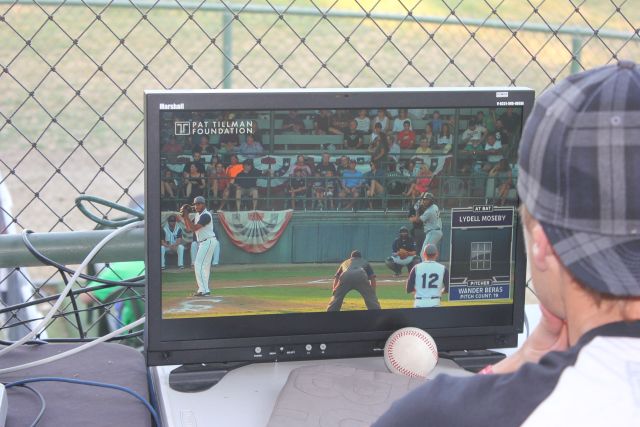
"content": "\u003cp>If you’re stopped by a sheriff’s deputy in Los Angeles County, get ready to have your photo taken. The sheriff’s department will equip deputies with mobile facial recognition technology to expand the largest biometric database outside of the FBI, according to procurement documents.\u003c/p>\n\u003cp>A \u003ca href=\"https://www.documentcloud.org/documents/1957502-la-facial-recognition-dataworks-01-2015-1.html\">$3.5 million contract\u003c/a> with DataWorks Plus LLC that was \u003ca href=\"http://file.lacounty.gov/bos/sop/cms1_223631.pdf\">unanimously approved\u003c/a> by the Los Angeles County Board of Supervisors provides a seven-year extension to the sheriff’s existing lease for Cognitec Systems’ facial recognition software and hardware – including servers and hundreds of smartphones and tablets – that deputies will use to identify people whom they encounter in the field.\u003c/p>\n\u003cp>The documents also indicate that the technology will have the ability to compile \u003ca href=\"http://www.laweekly.com/news/forget-the-nsa-the-lapd-spies-on-millions-of-innocent-folks-4473467\">watch lists\u003c/a>, which Los Angeles-area law enforcement officers \u003ca href=\"http://latimesblogs.latimes.com/lanow/2013/01/lapd-surveillance-cameras-san-fernando-valley.html\">have used\u003c/a> to identify people who have open warrants or were documented as active gang members.\u003c/p>\n\u003cp>[soundcloud url=”https://api.soundcloud.com/tracks/216909332″ params=”color=ff5500&auto_play=false&hide_related=false&show_comments=true&show_user=true&show_reposts=false” width=”100%” height=”166″ iframe=”true” /]\u003c/p>\n\u003cp>Last fall, \u003ca href=\"http://www.revealnews.org/article-legacy/la-county-to-collect-more-personal-data-without-public-notice/\">Reveal uncovered\u003c/a> the Los Angeles sheriff’s department initiative to build a massive database of biometric information — fingerprints, iris scans, palm prints and, potentially, voice recordings — taken from arrestees and other people who are stopped by deputies in public. Sheriff’s deputies have been collecting fingerprints with mobile devices for years. However, the new contract significantly increases the number of devices used by deputies to run images of people through the software to identify wanted individuals.\u003c/p>\n\u003cp>[ad fullwidth]\u003c/p>\n\u003cp>\u003c/p>\n\u003cp>\u003cstrong>\u003cem>\u003ca href=\"https://www.revealnews.org/article/los-angeles-sheriff-invests-in-new-tech-to-expand-biometric-database/\">Read the full story via Reveal from The Center for Investigative Reporting\u003c/a>\u003c/em>\u003c/strong>\u003c/p>\n\n",
"blocks": [],
"excerpt": "If you’re stopped by a sheriff's deputy in Los Angeles County, get ready to have your photo taken.",
"status": "publish",
"parent": 0,
"modified": 1721150701,
"stats": {
"hasAudio": false,
"hasVideo": false,
"hasChartOrMap": false,
"iframeSrcs": [],
"hasGoogleForm": false,
"hasGallery": false,
"hasHearkenModule": false,
"hasPolis": false,
"paragraphCount": 8,
"wordCount": 290
},
"headData": {
"title": "Los Angeles Sheriff Invests in New Tech to Expand Biometric Database | KQED",
"description": "If you’re stopped by a sheriff's deputy in Los Angeles County, get ready to have your photo taken.",
"ogTitle": "",
"ogDescription": "",
"ogImgId": "",
"twTitle": "",
"twDescription": "",
"twImgId": "",
"schema": {
"@context": "https://schema.org",
"@type": "NewsArticle",
"headline": "Los Angeles Sheriff Invests in New Tech to Expand Biometric Database",
"datePublished": "2015-07-29T18:14:03-07:00",
"dateModified": "2024-07-16T10:25:01-07:00",
"image": "https://cdn.kqed.org/wp-content/uploads/2020/02/KQED-OG-Image@1x.png",
"isAccessibleForFree": "True",
"publisher": {
"@type": "NewsMediaOrganization",
"@id": "https://www.kqed.org/#organization",
"name": "KQED",
"logo": "https://cdn.kqed.org/wp-content/uploads/2020/02/KQED-OG-Image@1x.png",
"url": "https://www.kqed.org",
"sameAs": [
"https://www.facebook.com/KQED",
"https://twitter.com/KQED",
"https://www.instagram.com/kqed/",
"https://www.tiktok.com/@kqedofficial",
"https://www.linkedin.com/company/kqed",
"https://www.youtube.com/channel/UCeC0IOo7i1P_61zVUWbJ4nw"
]
}
}
},
"source": "Center for Investigative Reporting",
"sourceUrl": "https://www.revealnews.org/article/los-angeles-sheriff-invests-in-new-tech-to-expand-biometric-database/",
"sticky": false,
"nprByline": "\u003ca href=\"https://www.revealnews.org/author/aliwinston\">Ali Winston\u003c/a>",
"path": "/news/10621574/los-angeles-sheriff-invests-in-new-tech-to-expand-biometric-database",
"audioTrackLength": null,
"parsedContent": [
{
"type": "contentString",
"content": "\u003cdiv class=\"post-body\">\u003cp>\u003cp>If you’re stopped by a sheriff’s deputy in Los Angeles County, get ready to have your photo taken. The sheriff’s department will equip deputies with mobile facial recognition technology to expand the largest biometric database outside of the FBI, according to procurement documents.\u003c/p>\n\u003cp>A \u003ca href=\"https://www.documentcloud.org/documents/1957502-la-facial-recognition-dataworks-01-2015-1.html\">$3.5 million contract\u003c/a> with DataWorks Plus LLC that was \u003ca href=\"http://file.lacounty.gov/bos/sop/cms1_223631.pdf\">unanimously approved\u003c/a> by the Los Angeles County Board of Supervisors provides a seven-year extension to the sheriff’s existing lease for Cognitec Systems’ facial recognition software and hardware – including servers and hundreds of smartphones and tablets – that deputies will use to identify people whom they encounter in the field.\u003c/p>\n\u003cp>The documents also indicate that the technology will have the ability to compile \u003ca href=\"http://www.laweekly.com/news/forget-the-nsa-the-lapd-spies-on-millions-of-innocent-folks-4473467\">watch lists\u003c/a>, which Los Angeles-area law enforcement officers \u003ca href=\"http://latimesblogs.latimes.com/lanow/2013/01/lapd-surveillance-cameras-san-fernando-valley.html\">have used\u003c/a> to identify people who have open warrants or were documented as active gang members.\u003c/p>\n\u003cp>\u003c/p>\u003cp>\u003cdiv class='utils-parseShortcode-shortcodes-__shortcodes__shortcodeWrapper'>\n \u003ciframe width='”100%”' height='”166″'\n scrolling='no' frameborder='no'\n src='https://w.soundcloud.com/player/?url=”https://api.soundcloud.com/tracks/216909332″&visual=true&”color=ff5500&auto_play=false&hide_related=false&show_comments=true&show_user=true&show_reposts=false”'\n title='”https://api.soundcloud.com/tracks/216909332″'>\n \u003c/iframe>\n \u003c/div>\u003c/p>\u003cp>\u003c/p>\n\u003cp>Last fall, \u003ca href=\"http://www.revealnews.org/article-legacy/la-county-to-collect-more-personal-data-without-public-notice/\">Reveal uncovered\u003c/a> the Los Angeles sheriff’s department initiative to build a massive database of biometric information — fingerprints, iris scans, palm prints and, potentially, voice recordings — taken from arrestees and other people who are stopped by deputies in public. Sheriff’s deputies have been collecting fingerprints with mobile devices for years. However, the new contract significantly increases the number of devices used by deputies to run images of people through the software to identify wanted individuals.\u003c/p>\n\u003cp>\u003c/p>\u003c/div>",
"attributes": {
"named": {},
"numeric": []
}
},
{
"type": "component",
"content": "",
"name": "ad",
"attributes": {
"named": {
"label": "fullwidth"
},
"numeric": [
"fullwidth"
]
}
},
{
"type": "contentString",
"content": "\u003cdiv class=\"post-body\">\u003cp>\u003c/p>\n\u003cp>\u003c/p>\n\u003cp>\u003cstrong>\u003cem>\u003ca href=\"https://www.revealnews.org/article/los-angeles-sheriff-invests-in-new-tech-to-expand-biometric-database/\">Read the full story via Reveal from The Center for Investigative Reporting\u003c/a>\u003c/em>\u003c/strong>\u003c/p>\n\n\u003c/div>\u003c/p>",
"attributes": {
"named": {},
"numeric": []
}
}
],
"link": "/news/10621574/los-angeles-sheriff-invests-in-new-tech-to-expand-biometric-database",
"authors": [
"byline_news_10621574"
],
"programs": [
"news_72"
],
"series": [
"news_6064"
],
"categories": [
"news_6188",
"news_8",
"news_248"
],
"tags": [
"news_4",
"news_17286"
],
"affiliates": [
"news_1667"
],
"featImg": "news_10621578",
"label": "source_news_10621574"
},
"news_10621226": {
"type": "posts",
"id": "news_10621226",
"meta": {
"index": "posts_1716263798",
"site": "news",
"id": "10621226",
"score": null,
"sort": [
1438204447000
]
},
"parent": 0,
"labelTerm": {
"site": "news",
"term": 6944
},
"blocks": [],
"publishDate": 1438204447,
"format": "standard",
"disqusTitle": "'RoboUmp' Gives Baseball Fans a Glimpse of the Future",
"title": "'RoboUmp' Gives Baseball Fans a Glimpse of the Future",
"headTitle": "News Fix | KQED News",
"content": "\u003cp>Welcome to the future, baseball fans.\u003c/p>\n\u003cp>History was made at an independent league baseball game in San Rafael on Tuesday night. Reporter Cyrus Farivar checks in for \u003ca href=\"http://arstechnica.com/business/2015/07/for-the-first-time-sensors-and-a-computer-play-umpire-in-a-pro-baseball-game/\" target=\"_blank\">Ars Technica\u003c/a>:\u003c/p>\n\u003cblockquote>\u003cp>On a picturesque evening in Marin County just north of San Francisco, the \u003ca href=\"http://www.pacificsbaseball.com/\">San Rafael Pacifics\u003c/a> faced off against the \u003ca href=\"http://vallejoadmirals.com/roster/\">Vallejo Admirals\u003c/a> in what was billed as the first professional baseball game to be called by a piece of technology rather than a person. In this minor league showdown, the role of the balls-and-strikes umpire was played by a mounted three-camera tracking setup synced with a computer. (Two of the cameras are mounted at each end of the upper corner of the grandstands behind the plate; the third sits in center field.) Together, the devices comprise a system better known by its commercial moniker: \u003ca href=\"https://en.wikipedia.org/wiki/PITCHf/x\">Pitchf/x\u003c/a>. It was soon dubbed \u003ca href=\"https://twitter.com/search?q=%23roboump&src=typd\">#RoboUmp\u003c/a> on Twitter.\u003c/p>\u003c/blockquote>\n\u003cp>But is \u003ca href=\"http://www.pacificsbaseball.com/index.php/press-submenu-box-submenu/press-releases2015/678-the-debut-of-the-automatic-umpire-july-28-30-promotions\" target=\"_blank\">\"The Debut of the Automatic Umpire,\"\u003c/a> as the event is being called, more minor league gimmick or technological breakthrough for the great American pastime?\u003c/p>\n\u003cp>For starters, RoboUmp isn’t going to replace #HumanUmps anytime soon. A league-standard two (human) umpires still worked the game — a home plate umpire was still needed to call fair and foul balls and plays at the plate.\u003c/p>\n\u003cp>In fact, the robotic system still relies on a living, breathing human to actually verbalize balls and \"striiiiikes.\" Last night, that voice was provided by former A’s (and Rockies, Diamondbacks, Orioles and Mariners) outfielder \u003ca href=\"http://www.baseball-reference.com/players/b/byrneer01.shtml\" target=\"_blank\">Eric Byrnes\u003c/a>, who has taken on RoboUmp as “essentially a passion project,” according to Ars.\u003c/p>\n\u003cp>[ad fullwidth]\u003c/p>\n\u003cp>Byrnes helped organize the two-game debut of RoboUmp as a benefit for the \u003ca href=\"http://pattillmanfoundation.org/\" target=\"_blank\">Pat Tillman Foundation\u003c/a>, promising to donate $10,000 if anyone is ejected for arguing balls and strikes.\u003c/p>\n\u003cp>\"You face [Hall of Fame pitcher] Greg Maddux and he’d get a foot off the plate,\" Byrnes told Ars. \"So if we have a chance to get it right, if we have a chance to get a pitch every time, why would we not?\"\u003c/p>\n\u003cp>For a sport that is traditionally reluctant to change, more and more people might be inclined to agree with Byrnes’ sentiment.\u003c/p>\n\u003cp>\"I feel like it speeds the game up more, it gets the hitters to swing at more pitches,\" Joshua Wong, Vallejo Admirals third baseman, told Ars after seeing RoboUmp tests before the game. \"It’s good for the game. Just being more accurate and having better calls is going to help us more.\"\u003c/p>\n\u003cp>While not quite at RoboUmp levels of technology, Major League Baseball implemented a replay system for the first time last year. So far, replays have largely been viewed as a success -- even when they result in awkward delayed reactions.\u003c/p>\n\u003cp>Last week, the A’s waited two minutes and 45 seconds to celebrate a (challenged) walk-off victory. Wait for it:\u003c/p>\n\u003cp>\u003c!-- iframe plugin v.4.3 wordpress.org/plugins/iframe/ -->\u003cbr>\n\u003ciframe src=\"http://m.mlb.com/shared/video/embed/embed.html?content_id=285289383&topic_id=8878760&width=800&height=448&property=mlb\" width=\"800\" height=\"448\" frameborder=\"0\" scrolling=\"yes\" class=\"iframe-class\">\u003c/iframe>\u003c/p>\n\u003cp>As Ars points out, the technology behind Pitchf/x has been\u003ca href=\"http://m.mlb.com/news/article/2245402/\" target=\"_blank\"> in use for 10 years,\u003c/a> mainly for analytics and broadcast purposes.\u003c/p>\n\u003cp>But for something as crucial to the game as balls and strikes, relying solely on technology might be a bridge too far.\u003c/p>\n\u003cp>Jacob Pomrenke, a producer at the \u003ca href=\"http://sabr.org/\">Society for American Baseball Research\u003c/a>, emailed Ars Technica his take on RoboUmp:\u003c/p>\n\u003cblockquote>\u003cp>\"I'm sure many people around baseball will be watching the debut of this new system to see how it goes. There will always be some kinks to work out and it will be intriguing to see how the players respond (especially to calls they don't like!). The idea of using an automated system to call balls and strikes has been talked about for years. It'll be nice to finally have a real-life example to see how it works at the professional level, but there are still a lot of factors that would have to go into the decision to implement this type of system at the major-league or the affiliated minor-league level. This is a system that is very dependent on precise technology, and even the Pitchf/x system that MLB has used for nearly a decade now continues to have hiccups and glitches that require human intervention.\"\u003c/p>\u003c/blockquote>\n\u003cp>As for the debut, there were no obvious hiccups or glitches. And no one was ejected.\u003c/p>\n\u003cp>According to Ars' reporter Farivar, the game moved along briskly without controversy, and largely without action. “Chatter in the stands instead focused on the ump, most of it supportive. No one showered the tech with familiar boos or ‘You suck, ump!’ refrains.”\u003c/p>\n\u003cp>\u003c/p>\n\u003cp>\u003cem>RoboUmp will be back in action Wednesday night as the \u003ca href=\"http://www.pacificsbaseball.com/index.php/press-submenu-box-submenu/press-releases2015/678-the-debut-of-the-automatic-umpire-july-28-30-promotions\" target=\"_blank\">two-day event\u003c/a> continues at 7:05 p.m. at \u003ca href=\"http://www.pacificsbaseball.com/index.php/albert-submenu-park-submenu/2013-11-15-02-14-13\" target=\"_blank\">Albert Park in San Rafael\u003c/a>. \u003c/em>\u003c/p>\n\n",
"disqusIdentifier": "10621226 http://ww2.kqed.org/news/?p=10621226",
"disqusUrl": "https://ww2.kqed.org/news/2015/07/29/roboump-gives-baseball-fans-a-glimpse-of-the-future/",
"stats": {
"hasVideo": false,
"hasChartOrMap": false,
"hasAudio": false,
"hasPolis": false,
"wordCount": 810,
"hasGoogleForm": false,
"hasGallery": false,
"hasHearkenModule": false,
"iframeSrcs": [],
"paragraphCount": 22
},
"modified": 1438208866,
"excerpt": "Pitchf/x, a mounted camera tracking system, made its official in-game debut in San Rafael. ",
"headData": {
"twImgId": "",
"twTitle": "",
"ogTitle": "",
"ogImgId": "",
"twDescription": "",
"description": "Pitchf/x, a mounted camera tracking system, made its official in-game debut in San Rafael. ",
"title": "'RoboUmp' Gives Baseball Fans a Glimpse of the Future | KQED",
"ogDescription": "",
"schema": {
"@context": "https://schema.org",
"@type": "NewsArticle",
"headline": "'RoboUmp' Gives Baseball Fans a Glimpse of the Future",
"datePublished": "2015-07-29T14:14:07-07:00",
"dateModified": "2015-07-29T15:27:46-07:00",
"image": "https://cdn.kqed.org/wp-content/uploads/2020/02/KQED-OG-Image@1x.png",
"isAccessibleForFree": "True",
"publisher": {
"@type": "NewsMediaOrganization",
"@id": "https://www.kqed.org/#organization",
"name": "KQED",
"logo": "https://cdn.kqed.org/wp-content/uploads/2020/02/KQED-OG-Image@1x.png",
"url": "https://www.kqed.org",
"sameAs": [
"https://www.facebook.com/KQED",
"https://twitter.com/KQED",
"https://www.instagram.com/kqed/",
"https://www.tiktok.com/@kqedofficial",
"https://www.linkedin.com/company/kqed",
"https://www.youtube.com/channel/UCeC0IOo7i1P_61zVUWbJ4nw"
]
}
}
},
"guestAuthors": [],
"slug": "roboump-gives-baseball-fans-a-glimpse-of-the-future",
"status": "publish",
"path": "/news/10621226/roboump-gives-baseball-fans-a-glimpse-of-the-future",
"audioTrackLength": null,
"parsedContent": [
{
"type": "contentString",
"content": "\u003cdiv class=\"post-body\">\u003cp>\u003cp>Welcome to the future, baseball fans.\u003c/p>\n\u003cp>History was made at an independent league baseball game in San Rafael on Tuesday night. Reporter Cyrus Farivar checks in for \u003ca href=\"http://arstechnica.com/business/2015/07/for-the-first-time-sensors-and-a-computer-play-umpire-in-a-pro-baseball-game/\" target=\"_blank\">Ars Technica\u003c/a>:\u003c/p>\n\u003cblockquote>\u003cp>On a picturesque evening in Marin County just north of San Francisco, the \u003ca href=\"http://www.pacificsbaseball.com/\">San Rafael Pacifics\u003c/a> faced off against the \u003ca href=\"http://vallejoadmirals.com/roster/\">Vallejo Admirals\u003c/a> in what was billed as the first professional baseball game to be called by a piece of technology rather than a person. In this minor league showdown, the role of the balls-and-strikes umpire was played by a mounted three-camera tracking setup synced with a computer. (Two of the cameras are mounted at each end of the upper corner of the grandstands behind the plate; the third sits in center field.) Together, the devices comprise a system better known by its commercial moniker: \u003ca href=\"https://en.wikipedia.org/wiki/PITCHf/x\">Pitchf/x\u003c/a>. It was soon dubbed \u003ca href=\"https://twitter.com/search?q=%23roboump&src=typd\">#RoboUmp\u003c/a> on Twitter.\u003c/p>\u003c/blockquote>\n\u003cp>But is \u003ca href=\"http://www.pacificsbaseball.com/index.php/press-submenu-box-submenu/press-releases2015/678-the-debut-of-the-automatic-umpire-july-28-30-promotions\" target=\"_blank\">\"The Debut of the Automatic Umpire,\"\u003c/a> as the event is being called, more minor league gimmick or technological breakthrough for the great American pastime?\u003c/p>\n\u003cp>For starters, RoboUmp isn’t going to replace #HumanUmps anytime soon. A league-standard two (human) umpires still worked the game — a home plate umpire was still needed to call fair and foul balls and plays at the plate.\u003c/p>\n\u003cp>In fact, the robotic system still relies on a living, breathing human to actually verbalize balls and \"striiiiikes.\" Last night, that voice was provided by former A’s (and Rockies, Diamondbacks, Orioles and Mariners) outfielder \u003ca href=\"http://www.baseball-reference.com/players/b/byrneer01.shtml\" target=\"_blank\">Eric Byrnes\u003c/a>, who has taken on RoboUmp as “essentially a passion project,” according to Ars.\u003c/p>\n\u003cp>\u003c/p>\u003c/div>",
"attributes": {
"named": {},
"numeric": []
}
},
{
"type": "component",
"content": "",
"name": "ad",
"attributes": {
"named": {
"label": "fullwidth"
},
"numeric": [
"fullwidth"
]
}
},
{
"type": "contentString",
"content": "\u003cdiv class=\"post-body\">\u003cp>\u003c/p>\n\u003cp>Byrnes helped organize the two-game debut of RoboUmp as a benefit for the \u003ca href=\"http://pattillmanfoundation.org/\" target=\"_blank\">Pat Tillman Foundation\u003c/a>, promising to donate $10,000 if anyone is ejected for arguing balls and strikes.\u003c/p>\n\u003cp>\"You face [Hall of Fame pitcher] Greg Maddux and he’d get a foot off the plate,\" Byrnes told Ars. \"So if we have a chance to get it right, if we have a chance to get a pitch every time, why would we not?\"\u003c/p>\n\u003cp>For a sport that is traditionally reluctant to change, more and more people might be inclined to agree with Byrnes’ sentiment.\u003c/p>\n\u003cp>\"I feel like it speeds the game up more, it gets the hitters to swing at more pitches,\" Joshua Wong, Vallejo Admirals third baseman, told Ars after seeing RoboUmp tests before the game. \"It’s good for the game. Just being more accurate and having better calls is going to help us more.\"\u003c/p>\n\u003cp>While not quite at RoboUmp levels of technology, Major League Baseball implemented a replay system for the first time last year. So far, replays have largely been viewed as a success -- even when they result in awkward delayed reactions.\u003c/p>\n\u003cp>Last week, the A’s waited two minutes and 45 seconds to celebrate a (challenged) walk-off victory. Wait for it:\u003c/p>\n\u003cp>\u003c!-- iframe plugin v.4.3 wordpress.org/plugins/iframe/ -->\u003cbr>\n\u003ciframe src=\"http://m.mlb.com/shared/video/embed/embed.html?content_id=285289383&topic_id=8878760&width=800&height=448&property=mlb\" width=\"800\" height=\"448\" frameborder=\"0\" scrolling=\"yes\" class=\"iframe-class\">\u003c/iframe>\u003c/p>\n\u003cp>As Ars points out, the technology behind Pitchf/x has been\u003ca href=\"http://m.mlb.com/news/article/2245402/\" target=\"_blank\"> in use for 10 years,\u003c/a> mainly for analytics and broadcast purposes.\u003c/p>\n\u003cp>But for something as crucial to the game as balls and strikes, relying solely on technology might be a bridge too far.\u003c/p>\n\u003cp>Jacob Pomrenke, a producer at the \u003ca href=\"http://sabr.org/\">Society for American Baseball Research\u003c/a>, emailed Ars Technica his take on RoboUmp:\u003c/p>\n\u003cblockquote>\u003cp>\"I'm sure many people around baseball will be watching the debut of this new system to see how it goes. There will always be some kinks to work out and it will be intriguing to see how the players respond (especially to calls they don't like!). The idea of using an automated system to call balls and strikes has been talked about for years. It'll be nice to finally have a real-life example to see how it works at the professional level, but there are still a lot of factors that would have to go into the decision to implement this type of system at the major-league or the affiliated minor-league level. This is a system that is very dependent on precise technology, and even the Pitchf/x system that MLB has used for nearly a decade now continues to have hiccups and glitches that require human intervention.\"\u003c/p>\u003c/blockquote>\n\u003cp>As for the debut, there were no obvious hiccups or glitches. And no one was ejected.\u003c/p>\n\u003cp>According to Ars' reporter Farivar, the game moved along briskly without controversy, and largely without action. “Chatter in the stands instead focused on the ump, most of it supportive. No one showered the tech with familiar boos or ‘You suck, ump!’ refrains.”\u003c/p>\n\u003cp>\u003c/p>\n\u003cp>\u003cem>RoboUmp will be back in action Wednesday night as the \u003ca href=\"http://www.pacificsbaseball.com/index.php/press-submenu-box-submenu/press-releases2015/678-the-debut-of-the-automatic-umpire-july-28-30-promotions\" target=\"_blank\">two-day event\u003c/a> continues at 7:05 p.m. at \u003ca href=\"http://www.pacificsbaseball.com/index.php/albert-submenu-park-submenu/2013-11-15-02-14-13\" target=\"_blank\">Albert Park in San Rafael\u003c/a>. \u003c/em>\u003c/p>\n\n\u003c/div>\u003c/p>",
"attributes": {
"named": {},
"numeric": []
}
}
],
"link": "/news/10621226/roboump-gives-baseball-fans-a-glimpse-of-the-future",
"authors": [
"188"
],
"programs": [
"news_6944"
],
"categories": [
"news_248"
],
"tags": [
"news_18203"
],
"featImg": "news_10621282",
"label": "news_6944"
},
"news_10619595": {
"type": "posts",
"id": "news_10619595",
"meta": {
"index": "posts_1716263798",
"site": "news",
"id": "10619595",
"score": null,
"sort": [
1438114233000
]
},
"guestAuthors": [],
"slug": "salinas-valley-tries-to-position-itself-as-hub-of-ag-tech-boom",
"title": "Salinas Valley Tries to Position Itself as Hub of Ag Tech Boom",
"publishDate": 1438114233,
"format": "standard",
"headTitle": "Salinas Valley Tries to Position Itself as Hub of Ag Tech Boom | KQED",
"labelTerm": {
"term": 72,
"site": "news"
},
"content": "\u003cp>The new Taylor Farms building anchors downtown Salinas. It’s a company built on three generations of farming, a fixture in the Salinas Valley, but perhaps just as important to the future of this region is what happened recently in the temporary tent set up just out front. It’s enormous — the type of tent you’d find at an outdoor wedding.\u003c/p>\n\u003cp>“The wedding analogy is appropriate because what we have today is a coming together,” says \u003ca href=\"http://www.forbes.com/sites/paulnoglows/\" target=\"_blank\" rel=\"noopener\">Paul Noglows\u003c/a> of Forbes. He’s the executive producer of Forbes’ “\u003ca href=\"http://www.forbesconferences.com/event/2015-forbes-reinventing-america-the-agtech-summit/\" target=\"_blank\" rel=\"noopener\">Reinventing America: The AgTech Summit\u003c/a>,” a gathering of farmers, entrepreneurs and investors.\u003c/p>\n\u003cp>“We have a coming together of two valleys — the Salinas Valley and Silicon Valley,” Noglows says.\u003c/p>\n\u003cp>[soundcloud url=”https://api.soundcloud.com/tracks/216715046″ params=”color=ff5500&auto_play=false&hide_related=false&show_comments=true&show_user=true&show_reposts=false” width=”100%” height=”166″ iframe=”true” /]\u003c/p>\n\u003cp>This union comes after several years of courtship. Agriculture in the Salinas Valley is typically a family enterprise, and business is often done with people you know. Silicon Valley entrepreneurs have traditionally been treated with a dose of skepticism.\u003c/p>\n\u003cp>[ad fullwidth]\u003c/p>\n\u003cp>No one knows that better than John Hartnett of SVG Partners, an investment firm that the city of Salinas hired a few years ago to help connect the two regions around the growing industry of agricultural technology.\u003c/p>\n\u003cp>“The tech industry has to earn the respect of the ag industry,” Hartnett says, “and also listen to the challenges of the industry.”\u003c/p>\n\u003cp>Hartnett offers a quick tour of some numbers to explain why Silicon Valley is interested in the farm sector. He says investment in ag tech rose from $900 million in 2013 to $2.25 billion in 2014 and is expected to hit $4.2 billion this year.\u003c/p>\n\u003cp>But to get in on that, Hartnett says entrepreneurs need to be where the farmers are.\u003c/p>\n\u003cp>“The next big thing isn’t going to happen in Palo Alto in ag tech if you are not talking to the main experts … the agriculture leaders, growers and farmers,” he says.\u003c/p>\n\u003cp>That means understanding the needs of people like Bruce Taylor, CEO of Taylor Farms –- the company with the new building downtown. It produces bagged salads and fresh-cut vegetables. He says the industry is looking for all sorts of solutions, from ways to reduce pesticides to dealing with the labor shortage.\u003c/p>\n\u003cp>“It goes from planting to processing to distribution, and so there can be thousands of new products, new ideas that will help us propel the industry forward,” says Taylor.\u003c/p>\n\u003cfigure id=\"attachment_10619656\" class=\"wp-caption alignright\" style=\"max-width: 400px\">\u003ca href=\"http://ww2.kqed.org/news/wp-content/uploads/sites/10/2015/07/AgTechTaylor.jpg\">\u003cimg loading=\"lazy\" decoding=\"async\" class=\"wp-image-10619656 size-medium\" src=\"http://ww2.kqed.org/news/wp-content/uploads/sites/10/2015/07/AgTechTaylor-800x600.jpg\" alt=\"The new Taylor Farms headquarters in downtown Salinas. Next to it, a festival tent hosted the Forbes AgTech Summit.\" width=\"400\" height=\"300\" srcset=\"https://cdn.kqed.org/wp-content/uploads/sites/10/2015/07/AgTechTaylor-800x600.jpg 800w, https://cdn.kqed.org/wp-content/uploads/sites/10/2015/07/AgTechTaylor-400x300.jpg 400w, https://cdn.kqed.org/wp-content/uploads/sites/10/2015/07/AgTechTaylor-1440x1080.jpg 1440w, https://cdn.kqed.org/wp-content/uploads/sites/10/2015/07/AgTechTaylor-1400x1050.jpg 1400w, https://cdn.kqed.org/wp-content/uploads/sites/10/2015/07/AgTechTaylor-1180x885.jpg 1180w, https://cdn.kqed.org/wp-content/uploads/sites/10/2015/07/AgTechTaylor-960x720.jpg 960w\" sizes=\"(max-width: 400px) 100vw, 400px\">\u003c/a>\u003cfigcaption class=\"wp-caption-text\">The new Taylor Farms headquarters in downtown Salinas. Next to it, a festival tent hosted the Forbes AgTech Summit. \u003ccite>(Krista Almanzan/KAZU)\u003c/cite>\u003c/figcaption>\u003c/figure>\n\u003cp>So in the new Taylor Farms building, there will also be a new Center for Innovation and Technology, to be run by the Western Growers Association. It will be a place where ag tech entrepreneurs can find mentorship from the farm industry and make contact with potential investors.\u003c/p>\n\u003cp>“I don’t think Silicon Valley has any sort of monopoly on innovation,” says tech entrepreneur and angel investor Ali Partovi. He was on the ground floor of Facebook and Dropbox, and more recently has been interested in ag tech.\u003c/p>\n\u003cp>“To me, the word Silicon Valley is more of a philosophy, and so as far as I’m concerned this building — whether it’s here or anywhere else — you can think of it as representation of that philosophy of innovation and disruption,” said Partovi.\u003c/p>\n\u003cp>\u003c/p>\n\u003cp>And that’s a philosophy from Silicon Valley that will have a permanent home in the Salinas Valley when the innovation center opens in September.\u003c/p>\n\n",
"blocks": [],
"excerpt": "Partnerships with Silicon Valley firms could lead to billions of dollars in new investments. ",
"status": "publish",
"parent": 0,
"modified": 1729029704,
"stats": {
"hasAudio": false,
"hasVideo": false,
"hasChartOrMap": false,
"iframeSrcs": [],
"hasGoogleForm": false,
"hasGallery": false,
"hasHearkenModule": false,
"hasPolis": false,
"paragraphCount": 18,
"wordCount": 658
},
"headData": {
"title": "Salinas Valley Tries to Position Itself as Hub of Ag Tech Boom | KQED",
"description": "Partnerships with Silicon Valley firms could lead to billions of dollars in new investments. ",
"ogTitle": "",
"ogDescription": "",
"ogImgId": "",
"twTitle": "",
"twDescription": "",
"twImgId": "",
"schema": {
"@context": "https://schema.org",
"@type": "NewsArticle",
"headline": "Salinas Valley Tries to Position Itself as Hub of Ag Tech Boom",
"datePublished": "2015-07-28T13:10:33-07:00",
"dateModified": "2024-10-15T15:01:44-07:00",
"image": "https://cdn.kqed.org/wp-content/uploads/2020/02/KQED-OG-Image@1x.png",
"isAccessibleForFree": "True",
"publisher": {
"@type": "NewsMediaOrganization",
"@id": "https://www.kqed.org/#organization",
"name": "KQED",
"logo": "https://cdn.kqed.org/wp-content/uploads/2020/02/KQED-OG-Image@1x.png",
"url": "https://www.kqed.org",
"sameAs": [
"https://www.facebook.com/KQED",
"https://twitter.com/KQED",
"https://www.instagram.com/kqed/",
"https://www.tiktok.com/@kqedofficial",
"https://www.linkedin.com/company/kqed",
"https://www.youtube.com/channel/UCeC0IOo7i1P_61zVUWbJ4nw"
]
}
}
},
"sticky": false,
"customPermalink": "2015/07/28/Salinas-Valley-Positioning-Itself-Hub-Ag-Tech-Boom/",
"nprByline": "\u003cstrong>\u003ca href=\"http://kazu.org/people/krista-almanzan\" target=\"_blank\">Krista Almanzan\u003c/a>\u003cbr />KAZU\u003c/strong>",
"path": "/news/10619595/salinas-valley-tries-to-position-itself-as-hub-of-ag-tech-boom",
"audioTrackLength": null,
"parsedContent": [
{
"type": "contentString",
"content": "\u003cdiv class=\"post-body\">\u003cp>\u003cp>The new Taylor Farms building anchors downtown Salinas. It’s a company built on three generations of farming, a fixture in the Salinas Valley, but perhaps just as important to the future of this region is what happened recently in the temporary tent set up just out front. It’s enormous — the type of tent you’d find at an outdoor wedding.\u003c/p>\n\u003cp>“The wedding analogy is appropriate because what we have today is a coming together,” says \u003ca href=\"http://www.forbes.com/sites/paulnoglows/\" target=\"_blank\" rel=\"noopener\">Paul Noglows\u003c/a> of Forbes. He’s the executive producer of Forbes’ “\u003ca href=\"http://www.forbesconferences.com/event/2015-forbes-reinventing-america-the-agtech-summit/\" target=\"_blank\" rel=\"noopener\">Reinventing America: The AgTech Summit\u003c/a>,” a gathering of farmers, entrepreneurs and investors.\u003c/p>\n\u003cp>“We have a coming together of two valleys — the Salinas Valley and Silicon Valley,” Noglows says.\u003c/p>\n\u003cp>\u003c/p>\u003cp>\u003cdiv class='utils-parseShortcode-shortcodes-__shortcodes__shortcodeWrapper'>\n \u003ciframe width='”100%”' height='”166″'\n scrolling='no' frameborder='no'\n src='https://w.soundcloud.com/player/?url=”https://api.soundcloud.com/tracks/216715046″&visual=true&”color=ff5500&auto_play=false&hide_related=false&show_comments=true&show_user=true&show_reposts=false”'\n title='”https://api.soundcloud.com/tracks/216715046″'>\n \u003c/iframe>\n \u003c/div>\u003c/p>\u003cp>\u003c/p>\n\u003cp>This union comes after several years of courtship. Agriculture in the Salinas Valley is typically a family enterprise, and business is often done with people you know. Silicon Valley entrepreneurs have traditionally been treated with a dose of skepticism.\u003c/p>\n\u003cp>\u003c/p>\u003c/div>",
"attributes": {
"named": {},
"numeric": []
}
},
{
"type": "component",
"content": "",
"name": "ad",
"attributes": {
"named": {
"label": "fullwidth"
},
"numeric": [
"fullwidth"
]
}
},
{
"type": "contentString",
"content": "\u003cdiv class=\"post-body\">\u003cp>\u003c/p>\n\u003cp>No one knows that better than John Hartnett of SVG Partners, an investment firm that the city of Salinas hired a few years ago to help connect the two regions around the growing industry of agricultural technology.\u003c/p>\n\u003cp>“The tech industry has to earn the respect of the ag industry,” Hartnett says, “and also listen to the challenges of the industry.”\u003c/p>\n\u003cp>Hartnett offers a quick tour of some numbers to explain why Silicon Valley is interested in the farm sector. He says investment in ag tech rose from $900 million in 2013 to $2.25 billion in 2014 and is expected to hit $4.2 billion this year.\u003c/p>\n\u003cp>But to get in on that, Hartnett says entrepreneurs need to be where the farmers are.\u003c/p>\n\u003cp>“The next big thing isn’t going to happen in Palo Alto in ag tech if you are not talking to the main experts … the agriculture leaders, growers and farmers,” he says.\u003c/p>\n\u003cp>That means understanding the needs of people like Bruce Taylor, CEO of Taylor Farms –- the company with the new building downtown. It produces bagged salads and fresh-cut vegetables. He says the industry is looking for all sorts of solutions, from ways to reduce pesticides to dealing with the labor shortage.\u003c/p>\n\u003cp>“It goes from planting to processing to distribution, and so there can be thousands of new products, new ideas that will help us propel the industry forward,” says Taylor.\u003c/p>\n\u003cfigure id=\"attachment_10619656\" class=\"wp-caption alignright\" style=\"max-width: 400px\">\u003ca href=\"http://ww2.kqed.org/news/wp-content/uploads/sites/10/2015/07/AgTechTaylor.jpg\">\u003cimg loading=\"lazy\" decoding=\"async\" class=\"wp-image-10619656 size-medium\" src=\"http://ww2.kqed.org/news/wp-content/uploads/sites/10/2015/07/AgTechTaylor-800x600.jpg\" alt=\"The new Taylor Farms headquarters in downtown Salinas. Next to it, a festival tent hosted the Forbes AgTech Summit.\" width=\"400\" height=\"300\" srcset=\"https://cdn.kqed.org/wp-content/uploads/sites/10/2015/07/AgTechTaylor-800x600.jpg 800w, https://cdn.kqed.org/wp-content/uploads/sites/10/2015/07/AgTechTaylor-400x300.jpg 400w, https://cdn.kqed.org/wp-content/uploads/sites/10/2015/07/AgTechTaylor-1440x1080.jpg 1440w, https://cdn.kqed.org/wp-content/uploads/sites/10/2015/07/AgTechTaylor-1400x1050.jpg 1400w, https://cdn.kqed.org/wp-content/uploads/sites/10/2015/07/AgTechTaylor-1180x885.jpg 1180w, https://cdn.kqed.org/wp-content/uploads/sites/10/2015/07/AgTechTaylor-960x720.jpg 960w\" sizes=\"(max-width: 400px) 100vw, 400px\">\u003c/a>\u003cfigcaption class=\"wp-caption-text\">The new Taylor Farms headquarters in downtown Salinas. Next to it, a festival tent hosted the Forbes AgTech Summit. \u003ccite>(Krista Almanzan/KAZU)\u003c/cite>\u003c/figcaption>\u003c/figure>\n\u003cp>So in the new Taylor Farms building, there will also be a new Center for Innovation and Technology, to be run by the Western Growers Association. It will be a place where ag tech entrepreneurs can find mentorship from the farm industry and make contact with potential investors.\u003c/p>\n\u003cp>“I don’t think Silicon Valley has any sort of monopoly on innovation,” says tech entrepreneur and angel investor Ali Partovi. He was on the ground floor of Facebook and Dropbox, and more recently has been interested in ag tech.\u003c/p>\n\u003cp>“To me, the word Silicon Valley is more of a philosophy, and so as far as I’m concerned this building — whether it’s here or anywhere else — you can think of it as representation of that philosophy of innovation and disruption,” said Partovi.\u003c/p>\n\u003cp>\u003c/p>\n\u003cp>And that’s a philosophy from Silicon Valley that will have a permanent home in the Salinas Valley when the innovation center opens in September.\u003c/p>\n\n\u003c/div>\u003c/p>",
"attributes": {
"named": {},
"numeric": []
}
}
],
"link": "/news/10619595/salinas-valley-tries-to-position-itself-as-hub-of-ag-tech-boom",
"authors": [
"byline_news_10619595"
],
"programs": [
"news_72"
],
"categories": [
"news_33520",
"news_356",
"news_248"
],
"tags": [
"news_4092",
"news_4889",
"news_17286",
"news_1631"
],
"featImg": "news_10619596",
"label": "news_72"
},
"news_10619585": {
"type": "posts",
"id": "news_10619585",
"meta": {
"index": "posts_1716263798",
"site": "news",
"id": "10619585",
"score": null,
"sort": [
1438101280000
]
},
"guestAuthors": [],
"slug": "ntsb-lack-of-backup-safety-system-doomed-virgin-galactic-spaceship",
"title": "NTSB: Lack of Backup Safety System Doomed Virgin Galactic Spaceship",
"publishDate": 1438101280,
"format": "standard",
"headTitle": "NTSB: Lack of Backup Safety System Doomed Virgin Galactic Spaceship | KQED",
"labelTerm": {
"term": 72,
"site": "news"
},
"content": "\u003cp>WASHINGTON — Federal safety investigators said Tuesday the crash of a Virgin Galactic spaceship last October was caused by a catastrophic structural failure triggered when the co-pilot unlocked the craft’s braking system early.\u003c/p>\n\u003cp>National Transportation Safety Board investigators said the resulting aerodynamic forces caused the brakes to actually be applied without any further action by the crew. Investigators said no safeguards were built into the system to overcome the error of the co-pilot.\u003c/p>\n\u003cp>The spaceship \u003ca href=\"http://ww2.kqed.org/news/2014/10/31/virgin-galactics-spaceshiptwo-destroyed-in-test-flight\" target=\"_blank\" rel=\"noopener\">broke apart over the Mojave Desert\u003c/a> during a test flight on Oct. 31, 2014. The accident killed the co-pilot and seriously injured the pilot.\u003c/p>\n\u003cp>NTSB officials said early in the investigation that the co-pilot prematurely unlocked equipment designed to slow the descent of the spacecraft during initial re-entry. Simply unlocking the spacecraft’s brakes shouldn’t have applied them, but that happened anyway.\u003c/p>\n\u003cp>In determining the probable cause of the accident, board members were focused on prioritizing the lack of systems put in place to mitigate or overcome human error. Scaled Composites developed the craft for Virgin Galactic, and NTSB member Robert Sumwalt said the company “put all its eggs in the basket” of the crew doing everything correctly.\u003c/p>\n\u003cp>[ad fullwidth]\u003c/p>\n\u003cp>“My point is that a single-point human failure has to be anticipated,” Sumwalt said. “The system has to be designed to compensate for the error.”\u003c/p>\n\u003cp>NTSB chairman Christopher Hart said he hoped the investigation will prevent such an accident from happening again. He said the NTSB learned “with a high degree of certainty the events that resulted in the breakup.”\u003c/p>\n\u003cp>“Many of the safety issues that we will hear about today arose not from the novelty of a space launch test flight, but from human factors that were already known elsewhere in transportation,” Hart said.\u003c/p>\n\u003cp>\u003c/p>\n\u003cp>Virgin Galactic has been proceeding with its plans for space flight and is now building another craft. Company officials have said in recent months that their commitment to commercial spacecraft has not waivered despite the crash and they expect the company to resume test flights later this year. Eventually, the company envisions flights with six passengers climbing more than 62 miles above Earth.\u003c/p>\n\n",
"blocks": [],
"excerpt": "After co-pilot's error, descent brakes deployed automatically, destroying craft. ",
"status": "publish",
"parent": 0,
"modified": 1721108276,
"stats": {
"hasAudio": false,
"hasVideo": false,
"hasChartOrMap": false,
"iframeSrcs": [],
"hasGoogleForm": false,
"hasGallery": false,
"hasHearkenModule": false,
"hasPolis": false,
"paragraphCount": 11,
"wordCount": 374
},
"headData": {
"title": "NTSB: Lack of Backup Safety System Doomed Virgin Galactic Spaceship | KQED",
"description": "After co-pilot's error, descent brakes deployed automatically, destroying craft. ",
"ogTitle": "",
"ogDescription": "",
"ogImgId": "",
"twTitle": "",
"twDescription": "",
"twImgId": "",
"schema": {
"@context": "https://schema.org",
"@type": "NewsArticle",
"headline": "NTSB: Lack of Backup Safety System Doomed Virgin Galactic Spaceship",
"datePublished": "2015-07-28T09:34:40-07:00",
"dateModified": "2024-07-15T22:37:56-07:00",
"image": "https://cdn.kqed.org/wp-content/uploads/2020/02/KQED-OG-Image@1x.png",
"isAccessibleForFree": "True",
"publisher": {
"@type": "NewsMediaOrganization",
"@id": "https://www.kqed.org/#organization",
"name": "KQED",
"logo": "https://cdn.kqed.org/wp-content/uploads/2020/02/KQED-OG-Image@1x.png",
"url": "https://www.kqed.org",
"sameAs": [
"https://www.facebook.com/KQED",
"https://twitter.com/KQED",
"https://www.instagram.com/kqed/",
"https://www.tiktok.com/@kqedofficial",
"https://www.linkedin.com/company/kqed",
"https://www.youtube.com/channel/UCeC0IOo7i1P_61zVUWbJ4nw"
]
}
}
},
"sticky": false,
"nprByline": "\u003cstrong>\u003ca href=\"https://twitter.com/APkfreking\" target=\"_blank\">Kevin Freking\u003c/a>\u003cbr />Associated Press\u003c/strong>",
"path": "/news/10619585/ntsb-lack-of-backup-safety-system-doomed-virgin-galactic-spaceship",
"audioTrackLength": null,
"parsedContent": [
{
"type": "contentString",
"content": "\u003cdiv class=\"post-body\">\u003cp>\u003cp>WASHINGTON — Federal safety investigators said Tuesday the crash of a Virgin Galactic spaceship last October was caused by a catastrophic structural failure triggered when the co-pilot unlocked the craft’s braking system early.\u003c/p>\n\u003cp>National Transportation Safety Board investigators said the resulting aerodynamic forces caused the brakes to actually be applied without any further action by the crew. Investigators said no safeguards were built into the system to overcome the error of the co-pilot.\u003c/p>\n\u003cp>The spaceship \u003ca href=\"http://ww2.kqed.org/news/2014/10/31/virgin-galactics-spaceshiptwo-destroyed-in-test-flight\" target=\"_blank\" rel=\"noopener\">broke apart over the Mojave Desert\u003c/a> during a test flight on Oct. 31, 2014. The accident killed the co-pilot and seriously injured the pilot.\u003c/p>\n\u003cp>NTSB officials said early in the investigation that the co-pilot prematurely unlocked equipment designed to slow the descent of the spacecraft during initial re-entry. Simply unlocking the spacecraft’s brakes shouldn’t have applied them, but that happened anyway.\u003c/p>\n\u003cp>In determining the probable cause of the accident, board members were focused on prioritizing the lack of systems put in place to mitigate or overcome human error. Scaled Composites developed the craft for Virgin Galactic, and NTSB member Robert Sumwalt said the company “put all its eggs in the basket” of the crew doing everything correctly.\u003c/p>\n\u003cp>\u003c/p>\u003c/div>",
"attributes": {
"named": {},
"numeric": []
}
},
{
"type": "component",
"content": "",
"name": "ad",
"attributes": {
"named": {
"label": "fullwidth"
},
"numeric": [
"fullwidth"
]
}
},
{
"type": "contentString",
"content": "\u003cdiv class=\"post-body\">\u003cp>\u003c/p>\n\u003cp>“My point is that a single-point human failure has to be anticipated,” Sumwalt said. “The system has to be designed to compensate for the error.”\u003c/p>\n\u003cp>NTSB chairman Christopher Hart said he hoped the investigation will prevent such an accident from happening again. He said the NTSB learned “with a high degree of certainty the events that resulted in the breakup.”\u003c/p>\n\u003cp>“Many of the safety issues that we will hear about today arose not from the novelty of a space launch test flight, but from human factors that were already known elsewhere in transportation,” Hart said.\u003c/p>\n\u003cp>\u003c/p>\n\u003cp>Virgin Galactic has been proceeding with its plans for space flight and is now building another craft. Company officials have said in recent months that their commitment to commercial spacecraft has not waivered despite the crash and they expect the company to resume test flights later this year. Eventually, the company envisions flights with six passengers climbing more than 62 miles above Earth.\u003c/p>\n\n\u003c/div>\u003c/p>",
"attributes": {
"named": {},
"numeric": []
}
}
],
"link": "/news/10619585/ntsb-lack-of-backup-safety-system-doomed-virgin-galactic-spaceship",
"authors": [
"byline_news_10619585"
],
"programs": [
"news_6944",
"news_72"
],
"categories": [
"news_356",
"news_248",
"news_1397"
],
"tags": [
"news_18386",
"news_1770",
"news_17286"
],
"featImg": "news_10346482",
"label": "news_72"
},
"news_10618148": {
"type": "posts",
"id": "news_10618148",
"meta": {
"index": "posts_1716263798",
"site": "news",
"id": "10618148",
"score": null,
"sort": [
1438017344000
]
},
"guestAuthors": [],
"slug": "a-look-at-the-bay-areas-teacher-housing-problem",
"title": "Is There a Solution to Silicon Valley's Teacher Housing Problem?",
"publishDate": 1438017344,
"format": "standard",
"headTitle": "Is There a Solution to Silicon Valley’s Teacher Housing Problem? | KQED",
"labelTerm": {
"term": 6944,
"site": "news"
},
"content": "\u003cp>To lay one important card on the table, I’m married to a teacher in a public school district known far and wide for desperate need among many of its students and low pay for its employees.\u003c/p>\n\u003cp>That’s relevant here only because the reality of relatively meager compensation for teachers — a key component in California’s perennial ranking near the bottom nationally for classroom spending — is one of those issues that feels like it has become part of the fabric of our society. Something intractable and incurable, like our inability to house thousands of our fellow citizens or rein in the cost of health care or amend Proposition 13.\u003c/p>\n\u003cp>One of the rich ironies facing teachers in Bay Area school districts is their growing inability to afford homes in the communities in which they teach. That’s not a brand-new phenomenon. I’ve been hearing for years, through my wife, of colleagues unable to pay rent here unless they find a roommate or two or three. Home ownership? In this market? Ha!\u003c/p>\n\u003cp>The impression that teachers have joined low-wage service workers, students and starving artists among the legions priced out during the current boom is backed up by cold, hard facts. The realty firm \u003ca href=\"https://www.redfin.com/research/reports/special-reports/2014/california-home-affordability-for-teachers.html#.VbZcS0JVikp\" target=\"_blank\" rel=\"noopener\">Redfin published a report\u003c/a> earlier this year that found that 83 percent of the homes for sale in California were beyond the means of a teacher earning the statewide annual average salary of $69,300.\u003c/p>\n\u003cp>The picture was considerably worse in the Bay Area.\u003c/p>\n\u003cp>[ad fullwidth]\u003c/p>\n\u003cp>Redfin reported that there wasn’t a single home for sale in San Francisco that a teacher making that average salary could afford. In San Mateo County, 1.2 percent of homes — one in 80 — were affordable for teachers; in Santa Clara County, the number was 1.3 percent. The more affordable counties for teachers: Solano (22 percent), Marin (12 percent), Alameda (9.7 percent) and Contra Costa (8.6 percent).\u003c/p>\n\u003cp>Lillian Mongeau, who has reported on education for KQED News and now writes for \u003ca href=\"http://hechingerreport.org/\" target=\"_blank\" rel=\"noopener\">The Hechinger Report\u003c/a> — published by Columbia University’s Hechinger Institute on Education and the Media — has just taken a closer look at how the teacher housing issue is playing out in Silicon Valley.\u003c/p>\n\u003cp>In \u003ca href=\"http://www.theatlantic.com/education/archive/2015/07/silicon-valley-housing-tough-on-teachers/399071/\" target=\"_blank\" rel=\"noopener\">a piece published last week\u003c/a> by The Atlantic, she looks at the roots of the problem — the high-tech industry salaries chasing a limited supply of housing, for instance — and some suggested remedies. Among the latter, she mentions a San Francisco program that provides down-payment loans to teachers and one district’s more direct intervention in the housing market:\u003c/p>\n\u003cblockquote>\u003cp>Perhaps one of the most straightforward solutions to the lack of affordable housing for teachers in the Valley is the “Casa del Maestro,” or “House of the Teacher” apartment complex in the city of Santa Clara. Over the past 15 years, 70 one- and two-bedroom units have been built on district-owned land and rented only to new Santa Clara public-school teachers at reduced prices ranging from $1,110 to $1,805 a month for a maximum period of seven years.\u003c/p>\u003c/blockquote>\n\u003cp>But Mongeau’s conclusion is, well, less than hopeful:\u003c/p>\n\u003cblockquote>\u003cp>If a Bay Area tech company needs to set up a server farm, they could, say, open it in a less expensive mid-sized city, like Bend, Oregon. But a Bay Area school has no such luxury. Advances in computer-based learning aside, Stolan’s eighth-graders are unlikely to teach themselves algebra while he monitors their work from Oregon via video conference call.\u003c/p>\n\u003cp>“You can’t really have teachers just living in the Pacific Ocean,” Brennan said. “We need to make sure these workers can afford to be in our communities.”\u003c/p>\n\u003cp>But unless something changes drastically (or an as-yet-unknown app is invented to solve the problem), Silicon Valley risks losing the very people it’s counting on to educate its future stars.\u003c/p>\u003c/blockquote>\n\u003cp>KQED News morning anchor Joshua Johnson talked to Mongeau about the situation Monday morning:\u003c/p>\n\u003cp>\u003c/p>\n\u003cp>\u003c!-- iframe plugin v.4.3 wordpress.org/plugins/iframe/ -->\u003cbr>\n\u003ciframe loading=\"lazy\" width=\"100%\" height=\"166\" scrolling=\"no\" frameborder=\"no\" src=\"https://w.soundcloud.com/player/?url=https%3A//api.soundcloud.com/tracks/216581151&color=ff5500&auto_play=false&hide_related=false&show_comments=true&show_user=true&show_reposts=false\" class=\"iframe-class\">\u003c/iframe>\u003c/p>\n\n",
"blocks": [],
"excerpt": "As housing prices climb, fewer and fewer of those who educate region's children can afford to live there.",
"status": "publish",
"parent": 0,
"modified": 1729029707,
"stats": {
"hasAudio": true,
"hasVideo": false,
"hasChartOrMap": false,
"iframeSrcs": [],
"hasGoogleForm": false,
"hasGallery": false,
"hasHearkenModule": false,
"hasPolis": false,
"paragraphCount": 17,
"wordCount": 691
},
"headData": {
"title": "Is There a Solution to Silicon Valley's Teacher Housing Problem? | KQED",
"description": "As housing prices climb, fewer and fewer of those who educate region's children can afford to live there.",
"ogTitle": "",
"ogDescription": "",
"ogImgId": "",
"twTitle": "",
"twDescription": "",
"twImgId": "",
"schema": {
"@context": "https://schema.org",
"@type": "NewsArticle",
"headline": "Is There a Solution to Silicon Valley's Teacher Housing Problem?",
"datePublished": "2015-07-27T10:15:44-07:00",
"dateModified": "2024-10-15T15:01:47-07:00",
"image": "https://cdn.kqed.org/wp-content/uploads/2020/02/KQED-OG-Image@1x.png",
"isAccessibleForFree": "True",
"publisher": {
"@type": "NewsMediaOrganization",
"@id": "https://www.kqed.org/#organization",
"name": "KQED",
"logo": "https://cdn.kqed.org/wp-content/uploads/2020/02/KQED-OG-Image@1x.png",
"url": "https://www.kqed.org",
"sameAs": [
"https://www.facebook.com/KQED",
"https://twitter.com/KQED",
"https://www.instagram.com/kqed/",
"https://www.tiktok.com/@kqedofficial",
"https://www.linkedin.com/company/kqed",
"https://www.youtube.com/channel/UCeC0IOo7i1P_61zVUWbJ4nw"
]
}
}
},
"sticky": false,
"path": "/news/10618148/a-look-at-the-bay-areas-teacher-housing-problem",
"audioTrackLength": null,
"parsedContent": [
{
"type": "contentString",
"content": "\u003cdiv class=\"post-body\">\u003cp>\u003cp>To lay one important card on the table, I’m married to a teacher in a public school district known far and wide for desperate need among many of its students and low pay for its employees.\u003c/p>\n\u003cp>That’s relevant here only because the reality of relatively meager compensation for teachers — a key component in California’s perennial ranking near the bottom nationally for classroom spending — is one of those issues that feels like it has become part of the fabric of our society. Something intractable and incurable, like our inability to house thousands of our fellow citizens or rein in the cost of health care or amend Proposition 13.\u003c/p>\n\u003cp>One of the rich ironies facing teachers in Bay Area school districts is their growing inability to afford homes in the communities in which they teach. That’s not a brand-new phenomenon. I’ve been hearing for years, through my wife, of colleagues unable to pay rent here unless they find a roommate or two or three. Home ownership? In this market? Ha!\u003c/p>\n\u003cp>The impression that teachers have joined low-wage service workers, students and starving artists among the legions priced out during the current boom is backed up by cold, hard facts. The realty firm \u003ca href=\"https://www.redfin.com/research/reports/special-reports/2014/california-home-affordability-for-teachers.html#.VbZcS0JVikp\" target=\"_blank\" rel=\"noopener\">Redfin published a report\u003c/a> earlier this year that found that 83 percent of the homes for sale in California were beyond the means of a teacher earning the statewide annual average salary of $69,300.\u003c/p>\n\u003cp>The picture was considerably worse in the Bay Area.\u003c/p>\n\u003cp>\u003c/p>\u003c/div>",
"attributes": {
"named": {},
"numeric": []
}
},
{
"type": "component",
"content": "",
"name": "ad",
"attributes": {
"named": {
"label": "fullwidth"
},
"numeric": [
"fullwidth"
]
}
},
{
"type": "contentString",
"content": "\u003cdiv class=\"post-body\">\u003cp>\u003c/p>\n\u003cp>Redfin reported that there wasn’t a single home for sale in San Francisco that a teacher making that average salary could afford. In San Mateo County, 1.2 percent of homes — one in 80 — were affordable for teachers; in Santa Clara County, the number was 1.3 percent. The more affordable counties for teachers: Solano (22 percent), Marin (12 percent), Alameda (9.7 percent) and Contra Costa (8.6 percent).\u003c/p>\n\u003cp>Lillian Mongeau, who has reported on education for KQED News and now writes for \u003ca href=\"http://hechingerreport.org/\" target=\"_blank\" rel=\"noopener\">The Hechinger Report\u003c/a> — published by Columbia University’s Hechinger Institute on Education and the Media — has just taken a closer look at how the teacher housing issue is playing out in Silicon Valley.\u003c/p>\n\u003cp>In \u003ca href=\"http://www.theatlantic.com/education/archive/2015/07/silicon-valley-housing-tough-on-teachers/399071/\" target=\"_blank\" rel=\"noopener\">a piece published last week\u003c/a> by The Atlantic, she looks at the roots of the problem — the high-tech industry salaries chasing a limited supply of housing, for instance — and some suggested remedies. Among the latter, she mentions a San Francisco program that provides down-payment loans to teachers and one district’s more direct intervention in the housing market:\u003c/p>\n\u003cblockquote>\u003cp>Perhaps one of the most straightforward solutions to the lack of affordable housing for teachers in the Valley is the “Casa del Maestro,” or “House of the Teacher” apartment complex in the city of Santa Clara. Over the past 15 years, 70 one- and two-bedroom units have been built on district-owned land and rented only to new Santa Clara public-school teachers at reduced prices ranging from $1,110 to $1,805 a month for a maximum period of seven years.\u003c/p>\u003c/blockquote>\n\u003cp>But Mongeau’s conclusion is, well, less than hopeful:\u003c/p>\n\u003cblockquote>\u003cp>If a Bay Area tech company needs to set up a server farm, they could, say, open it in a less expensive mid-sized city, like Bend, Oregon. But a Bay Area school has no such luxury. Advances in computer-based learning aside, Stolan’s eighth-graders are unlikely to teach themselves algebra while he monitors their work from Oregon via video conference call.\u003c/p>\n\u003cp>“You can’t really have teachers just living in the Pacific Ocean,” Brennan said. “We need to make sure these workers can afford to be in our communities.”\u003c/p>\n\u003cp>But unless something changes drastically (or an as-yet-unknown app is invented to solve the problem), Silicon Valley risks losing the very people it’s counting on to educate its future stars.\u003c/p>\u003c/blockquote>\n\u003cp>KQED News morning anchor Joshua Johnson talked to Mongeau about the situation Monday morning:\u003c/p>\n\u003cp>\u003c/p>\n\u003cp>\u003c!-- iframe plugin v.4.3 wordpress.org/plugins/iframe/ -->\u003cbr>\n\u003ciframe loading=\"lazy\" width=\"100%\" height=\"166\" scrolling=\"no\" frameborder=\"no\" src=\"https://w.soundcloud.com/player/?url=https%3A//api.soundcloud.com/tracks/216581151&color=ff5500&auto_play=false&hide_related=false&show_comments=true&show_user=true&show_reposts=false\" class=\"iframe-class\">\u003c/iframe>\u003c/p>\n\n\u003c/div>\u003c/p>",
"attributes": {
"named": {},
"numeric": []
}
}
],
"link": "/news/10618148/a-look-at-the-bay-areas-teacher-housing-problem",
"authors": [
"222"
],
"programs": [
"news_6944"
],
"series": [
"news_17411"
],
"categories": [
"news_18540",
"news_6266",
"news_248"
],
"tags": [
"news_2044",
"news_1631"
],
"featImg": "news_10618204",
"label": "news_6944"
},
"news_10612979": {
"type": "posts",
"id": "news_10612979",
"meta": {
"index": "posts_1716263798",
"site": "news",
"id": "10612979",
"score": null,
"sort": [
1437686250000
]
},
"parent": 0,
"labelTerm": {
"site": "news",
"term": 6944
},
"blocks": [],
"publishDate": 1437686250,
"format": "standard",
"disqusTitle": "Trying to Keep Your Data Safe? You're Probably Doing It Wrong",
"title": "Trying to Keep Your Data Safe? You're Probably Doing It Wrong",
"headTitle": "News Fix | KQED News",
"content": "\u003cp>Long gone are the days when you could pass off all your computer issues to an expert -- IT support or the broadband 1-800 number. Today, in this always-connected, mobile world, regular people find themselves in a challenging situation.\u003c/p>\n\u003cp>On our own, we have to manage security on our devices, patch software and update passwords. And according to \u003ca href=\"http://googleonlinesecurity.blogspot.com/2015/07/new-research-comparing-how-security.html\">a new survey by Google\u003c/a>, we're not prioritizing well.\u003c/p>\n\u003cp>Take a look at your smartphone or laptop. Are you one of those people who keeps hitting \"ignore\" or \"remind me later\" when you get that annoying prompt to update software?\u003c/p>\n\u003cp>I asked some people in Oakland, who own and rely on smartphones and other devices how they react to those prompts.\u003c/p>\n\u003cp>\" 'Ignore.' Never, 'tell me later,' \" says Nolan Darby. When he's trying to read something, those reminders \"just pop up. And it interrupts what I'm actually doing. I don't need all those reminders.\"\u003c/p>\n\u003cp>[ad fullwidth]\u003c/p>\n\u003cp>Amelia Kirby doesn't care much for the alerts to patch software either. \"My old phone, when I updated it before, I used to lose contacts,\" she says. \"So then I think I got kind of paranoid about doing the updates.\"\u003c/p>\n\u003cp>Lisa Handley says she's not the help desk, and patching takes too long. \"You don't want to waste the time you have on your computer doing a download,\" she says.\u003c/p>\n\u003cp>Donald Mabrey worries sometimes that these notices to update could actually be hackers in disguise.\u003c/p>\n\u003cp>\"I always think about that with anything on these phones these days,\" he says. \"I'm hearing they can turn your phone on, and turn it off. They're looking at you right now, even from your smart TVs.\"\u003c/p>\n\u003cp>\u003cstrong>What the Study Shows\u003c/strong>\u003c/p>\n\u003cp>Google is releasing a new study Thursday, looking at how regular, nontechnical people prioritize online security, as compared with the experts. It turns out that a deep rift has formed. Yes, both the experts and the lay people believe in a strong password. But after that, things fall apart.\u003c/p>\n\u003cp>Thirty-five percent of experts said that \"installing software updates was one of their top security practices,\" while 2 percent of non-experts see this as a priority, according to the study.\u003c/p>\n\u003cp>\"That's a pretty stark gap,\" says Gerhard Eschelbeck, chief of cybersecurity for Google.\u003c/p>\n\u003cp>There's a similarly stark gap when it comes to antivirus — the software that has long been hailed as the all-purpose cleaner, the rubbing alcohol of the Internet. Forty-two percent of the non-experts surveyed say products like McAfee and Norton are key. But among the experts like Eschelbeck, just 7 percent agree.\u003c/p>\n\u003cp>\"Antivirus has absolutely its place. But it's not like the only one solution that people can and should rely upon,\" Eschelbeck says.\u003c/p>\n\u003cp>That's especially true because antivirus doesn't block the new generation of hacks and targeted attacks. Some security experts even say \"\u003ca href=\"http://www.pcworld.com/article/2150743/antivirus-is-dead-says-maker-of-norton-antivirus.html\">antivirus is dead\u003c/a>\" — though Eschelbeck thinks that's an overstatement.\u003c/p>\n\u003cp>\u003cstrong>Fighting the Password Battle\u003c/strong>\u003c/p>\n\u003cp>And when it comes to passwords — making strong ones and remembering them — he says there's another gap.\u003c/p>\n\u003cp>\"Well, the sticky note certainly hasn't worked in the past,\" he says. \"And usually you never find the sheet of paper when you need it.\"\u003c/p>\n\u003cp>About three-quarters of experts surveyed use \u003ca href=\"http://www.npr.org/sections/alltechconsidered/2014/11/03/361137779/lazy-about-your-online-passwords-take-control-with-these-new-tips\">a password manager\u003c/a>. It's a tool that makes up crazy-complicated, 36-digit passwords for any site you want, and then stores each unique one in a central vault.\u003c/p>\n\u003cp>This might sound like a bad idea. And, irony of ironies, the popular service LastPass announced in June that it \u003ca href=\"https://blog.lastpass.com/2015/06/lastpass-security-notice.html/\">got hacked\u003c/a>. (I use it and had to spend an entire evening changing all my passwords.)\u003c/p>\n\u003cp>Still, Eschelbeck insists, \"the password manager clearly is the least amount of risk compared to the alternatives that you have available.\"\u003c/p>\n\u003cp>Online security is not intuitive. It can even be counterintuitive. (Why would you put all your passwords in one place? \"Target\" is written all over it.)\u003c/p>\n\u003cp>Eschelbeck says experts have to get better at communicating basic defense to the non-experts, who need it.\u003c/p>\n\u003cdiv class=\"fullattribution\">Copyright 2015 NPR. To see more, visit http://www.npr.org/.\u003cimg src=\"http://www.google-analytics.com/__utm.gif?utmac=UA-5828686-4&utmdt=Trying+To+Keep+Your+Data+Safe%3F+You%27re+Probably+Doing+It+Wrong&utme=8(APIKey)9(MDAxOTAwOTE4MDEyMTkxMDAzNjczZDljZA004)\" alt=\"\">\u003c/div>\n\u003cp>\u003cstrong>Transcript :\u003c/strong>\u003c/p>\n\u003cp>DAVID GREENE, HOST:\u003c/p>\n\u003cp>Your software needs to be updated. Remember the days when if that were true, you might call IT support, maybe go to a computer store, maybe seek some kind of expert? Well, now we're so connected through Wi-Fi and networks, we are expected ourselves to download software and manage security and update passwords. And according to a new survey by Google, we are really bad at this stuff. Here's NPR's Aarti Shahani.\u003c/p>\n\u003cp>AARTI SHAHANI, BYLINE: Take a look at your smartphone or laptop. Are you one of those people who keeps hitting ignore or remind me later when you get that annoying prompt to update software?\u003c/p>\n\u003cp>NOLAN DARBY: Ignore, never tell me later.\u003c/p>\n\u003cp>SHAHANI: This is Nolan Darby.\u003c/p>\n\u003cp>DARBY: I'm trying to read something, and then they'll just pop up, you know? And it interrupts what I'm actually doing. I don't need all those reminders.\u003c/p>\n\u003cp>SHAHANI: Amelia Kirby and Lisa Handley don't care much for those reminders either.\u003c/p>\n\u003cp>AMELIA KIRBY: My old phone, when I updated it before, I used to lose contacts. So then I think I got kind of paranoid about doing the updates.\u003c/p>\n\u003cp>LISA HANDLEY: You don't want to waste the time that you have on your computer to doing a download.\u003c/p>\n\u003cp>SHAHANI: Like, you're not the helpdesk.\u003c/p>\n\u003cp>HANDLEY: Exactly, exactly. Thank you (laughter) yeah.\u003c/p>\n\u003cp>SHAHANI: Donald Mabrey worries that sometimes these notices to update could actually be hackers in disguise.\u003c/p>\n\u003cp>DONALD MABREY: I mean, I always think about that with anything on these phones these days. Yeah, 'cause I'm hearing that they can turn your phone on and turn it off or they're looking at you right now -- even from your smart TVs, I'm hearing things.\u003c/p>\n\u003cp>SHAHANI: Google is releasing a new study today looking at how regular, non-technical people prioritize online security as compared to the experts. It turns out a deep rift has formed. Yes, expert and lay person believe in a strong password. But after that, things fall apart.\u003c/p>\n\u003cp>GERHARD ESCHELBECK: Experts prioritize installation of software updates and patches at a level of 35 percent.\u003c/p>\n\u003cp>SHAHANI: Gerhard Eschelbeck is chief of security for Google.\u003c/p>\n\u003cp>ESCHELBECK: While non-experts, only 2 percent of them see this as a priority to protect their systems. And that's a pretty stark gap.\u003c/p>\n\u003cp>SHAHANI: There's a similarly stark gap when it comes to antivirus, the software that's long been hailed as the all-purpose cleaner, the rubbing alcohol of the Internet. Nearly half of the non-experts surveyed say products like McAfee and Norton are key. But among experts like Eschelbeck, just 7 percent agree.\u003c/p>\n\u003cp>ESCHELBECK: Antivirus has absolutely its place. But it's not, like, the only one solution that people can and should rely upon.\u003c/p>\n\u003cp>SHAHANI: Especially because antivirus doesn't block the new generation of hacks and targeted attacks that we're seeing. Some security experts even say antivirus is dead, though Eschelbeck thinks that's an overstatement. And when it comes to passwords, making strong ones and storing them, he says there is another gap.\u003c/p>\n\u003cp>ESCHELBECK: Well, the sticky note certainly hasn't worked in the past. And usually you never find the sheet of paper when you need it.\u003c/p>\n\u003cp>SHAHANI: About three-quarters of experts surveyed use something you've probably never heard of, a password manager. It's a tool that makes up crazy-complicated, 36-digit passwords for any site you want and then stores each unique one in a central vault. This might sound like a bad idea. And irony of ironies...\u003c/p>\n\u003cp>(SOUNDBITE OF ARCHIVED RECORDING)\u003c/p>\n\u003cp>UNIDENTIFIED REPORTER: LastPass, which is a password protection service that exists to prevent hacking, got hacked.\u003c/p>\n\u003cp>SHAHANI: News broke in June. I know because I use it and had to spend an entire evening changing all my passwords. Still, expert Eschelbeck insists...\u003c/p>\n\u003cp>ESCHELBECK: The password manager clearly is the least amount of risk compared to the alternatives that you have available.\u003c/p>\n\u003cp>[ad floatright]\u003c/p>\n\u003cp>SHAHANI: Online security is not intuitive. It can even be counterintuitive. Eschelbeck says his camp, the experts, have to get better at communicating basic defense. Aarti Shahani, NPR News, San Francisco. Transcript provided by NPR, Copyright NPR.\u003c/p>\n\n",
"disqusIdentifier": "10612979 http://ww2.kqed.org/news/?p=10612979",
"disqusUrl": "https://ww2.kqed.org/news/2015/07/23/trying-to-keep-your-data-safe-youre-probably-doing-it-wrong/",
"stats": {
"hasVideo": false,
"hasChartOrMap": false,
"hasAudio": false,
"hasPolis": false,
"wordCount": 1404,
"hasGoogleForm": false,
"hasGallery": false,
"hasHearkenModule": false,
"iframeSrcs": [],
"paragraphCount": 54
},
"modified": 1437689016,
"excerpt": "A new study by Google indicates that experts and non-experts have very different approaches to securing their online data.",
"headData": {
"twImgId": "",
"twTitle": "",
"ogTitle": "",
"ogImgId": "",
"twDescription": "",
"description": "A new study by Google indicates that experts and non-experts have very different approaches to securing their online data.",
"title": "Trying to Keep Your Data Safe? You're Probably Doing It Wrong | KQED",
"ogDescription": "",
"schema": {
"@context": "https://schema.org",
"@type": "NewsArticle",
"headline": "Trying to Keep Your Data Safe? You're Probably Doing It Wrong",
"datePublished": "2015-07-23T14:17:30-07:00",
"dateModified": "2015-07-23T15:03:36-07:00",
"image": "https://cdn.kqed.org/wp-content/uploads/2020/02/KQED-OG-Image@1x.png",
"isAccessibleForFree": "True",
"publisher": {
"@type": "NewsMediaOrganization",
"@id": "https://www.kqed.org/#organization",
"name": "KQED",
"logo": "https://cdn.kqed.org/wp-content/uploads/2020/02/KQED-OG-Image@1x.png",
"url": "https://www.kqed.org",
"sameAs": [
"https://www.facebook.com/KQED",
"https://twitter.com/KQED",
"https://www.instagram.com/kqed/",
"https://www.tiktok.com/@kqedofficial",
"https://www.linkedin.com/company/kqed",
"https://www.youtube.com/channel/UCeC0IOo7i1P_61zVUWbJ4nw"
]
}
}
},
"guestAuthors": [
{
"lastName": "Shahani",
"yahooim": "",
"website": "",
"jabber": "",
"aim": "",
"displayName": "Aarti Shahani",
"linkedAccount": "aartishahani",
"description": "",
"type": "guest-author",
"userNicename": "aarti-shahani",
"userLogin": "aarti-shahani",
"firstName": "Aarti",
"userEmail": "ashahani@kqed.org",
"ID": "98603"
}
],
"slug": "trying-to-keep-your-data-safe-youre-probably-doing-it-wrong",
"status": "publish",
"nprApiLink": "http://api.npr.org/query?id=425502893&apiKey=MDAxOTAwOTE4MDEyMTkxMDAzNjczZDljZA004",
"nprByline": "\u003cstrong>Aarti Shahani\u003cbr />NPR\u003c/strong>",
"nprStoryDate": "Thu, 23 Jul 2015 02:41:00 -0400",
"nprLastModifiedDate": "Thu, 23 Jul 2015 11:03:33 -0400",
"nprHtmlLink": "http://www.npr.org/sections/alltechconsidered/2015/07/23/425502893/trying-to-keep-your-data-safe-youre-probably-doing-it-wrong?ft=nprml&f=425502893",
"nprAudio": "http://pd.npr.org/anon.npr-mp3/npr/me/2015/07/20150723_me_trying_to_keep_your_data_safe_youre_probably_doing_it_wrong.mp3?orgId=1&topicId=1019&d=233&p=3&story=425502893&t=progseg&e=425507632&seg=9&ft=nprml&f=425502893",
"nprAudioM3u": "http://api.npr.org/m3u/1425512008-0230df.m3u?orgId=1&topicId=1019&d=233&p=3&story=425502893&t=progseg&e=425507632&seg=9&ft=nprml&f=425502893",
"nprStoryId": "425502893",
"nprRetrievedStory": "1",
"nprPubDate": "Thu, 23 Jul 2015 11:03:00 -0400",
"path": "/news/10612979/trying-to-keep-your-data-safe-youre-probably-doing-it-wrong",
"audioUrl": "http://pd.npr.org/anon.npr-mp3/npr/me/2015/07/20150723_me_trying_to_keep_your_data_safe_youre_probably_doing_it_wrong.mp3?orgId=1&topicId=1019&d=233&p=3&story=425502893&t=progseg&e=425507632&seg=9&ft=nprml&f=425502893",
"audioTrackLength": null,
"parsedContent": [
{
"type": "contentString",
"content": "\u003cdiv class=\"post-body\">\u003cp>\u003cp>Long gone are the days when you could pass off all your computer issues to an expert -- IT support or the broadband 1-800 number. Today, in this always-connected, mobile world, regular people find themselves in a challenging situation.\u003c/p>\n\u003cp>On our own, we have to manage security on our devices, patch software and update passwords. And according to \u003ca href=\"http://googleonlinesecurity.blogspot.com/2015/07/new-research-comparing-how-security.html\">a new survey by Google\u003c/a>, we're not prioritizing well.\u003c/p>\n\u003cp>Take a look at your smartphone or laptop. Are you one of those people who keeps hitting \"ignore\" or \"remind me later\" when you get that annoying prompt to update software?\u003c/p>\n\u003cp>I asked some people in Oakland, who own and rely on smartphones and other devices how they react to those prompts.\u003c/p>\n\u003cp>\" 'Ignore.' Never, 'tell me later,' \" says Nolan Darby. When he's trying to read something, those reminders \"just pop up. And it interrupts what I'm actually doing. I don't need all those reminders.\"\u003c/p>\n\u003cp>\u003c/p>\u003c/div>",
"attributes": {
"named": {},
"numeric": []
}
},
{
"type": "component",
"content": "",
"name": "ad",
"attributes": {
"named": {
"label": "fullwidth"
},
"numeric": [
"fullwidth"
]
}
},
{
"type": "contentString",
"content": "\u003cdiv class=\"post-body\">\u003cp>\u003c/p>\n\u003cp>Amelia Kirby doesn't care much for the alerts to patch software either. \"My old phone, when I updated it before, I used to lose contacts,\" she says. \"So then I think I got kind of paranoid about doing the updates.\"\u003c/p>\n\u003cp>Lisa Handley says she's not the help desk, and patching takes too long. \"You don't want to waste the time you have on your computer doing a download,\" she says.\u003c/p>\n\u003cp>Donald Mabrey worries sometimes that these notices to update could actually be hackers in disguise.\u003c/p>\n\u003cp>\"I always think about that with anything on these phones these days,\" he says. \"I'm hearing they can turn your phone on, and turn it off. They're looking at you right now, even from your smart TVs.\"\u003c/p>\n\u003cp>\u003cstrong>What the Study Shows\u003c/strong>\u003c/p>\n\u003cp>Google is releasing a new study Thursday, looking at how regular, nontechnical people prioritize online security, as compared with the experts. It turns out that a deep rift has formed. Yes, both the experts and the lay people believe in a strong password. But after that, things fall apart.\u003c/p>\n\u003cp>Thirty-five percent of experts said that \"installing software updates was one of their top security practices,\" while 2 percent of non-experts see this as a priority, according to the study.\u003c/p>\n\u003cp>\"That's a pretty stark gap,\" says Gerhard Eschelbeck, chief of cybersecurity for Google.\u003c/p>\n\u003cp>There's a similarly stark gap when it comes to antivirus — the software that has long been hailed as the all-purpose cleaner, the rubbing alcohol of the Internet. Forty-two percent of the non-experts surveyed say products like McAfee and Norton are key. But among the experts like Eschelbeck, just 7 percent agree.\u003c/p>\n\u003cp>\"Antivirus has absolutely its place. But it's not like the only one solution that people can and should rely upon,\" Eschelbeck says.\u003c/p>\n\u003cp>That's especially true because antivirus doesn't block the new generation of hacks and targeted attacks. Some security experts even say \"\u003ca href=\"http://www.pcworld.com/article/2150743/antivirus-is-dead-says-maker-of-norton-antivirus.html\">antivirus is dead\u003c/a>\" — though Eschelbeck thinks that's an overstatement.\u003c/p>\n\u003cp>\u003cstrong>Fighting the Password Battle\u003c/strong>\u003c/p>\n\u003cp>And when it comes to passwords — making strong ones and remembering them — he says there's another gap.\u003c/p>\n\u003cp>\"Well, the sticky note certainly hasn't worked in the past,\" he says. \"And usually you never find the sheet of paper when you need it.\"\u003c/p>\n\u003cp>About three-quarters of experts surveyed use \u003ca href=\"http://www.npr.org/sections/alltechconsidered/2014/11/03/361137779/lazy-about-your-online-passwords-take-control-with-these-new-tips\">a password manager\u003c/a>. It's a tool that makes up crazy-complicated, 36-digit passwords for any site you want, and then stores each unique one in a central vault.\u003c/p>\n\u003cp>This might sound like a bad idea. And, irony of ironies, the popular service LastPass announced in June that it \u003ca href=\"https://blog.lastpass.com/2015/06/lastpass-security-notice.html/\">got hacked\u003c/a>. (I use it and had to spend an entire evening changing all my passwords.)\u003c/p>\n\u003cp>Still, Eschelbeck insists, \"the password manager clearly is the least amount of risk compared to the alternatives that you have available.\"\u003c/p>\n\u003cp>Online security is not intuitive. It can even be counterintuitive. (Why would you put all your passwords in one place? \"Target\" is written all over it.)\u003c/p>\n\u003cp>Eschelbeck says experts have to get better at communicating basic defense to the non-experts, who need it.\u003c/p>\n\u003cdiv class=\"fullattribution\">Copyright 2015 NPR. To see more, visit http://www.npr.org/.\u003cimg src=\"http://www.google-analytics.com/__utm.gif?utmac=UA-5828686-4&utmdt=Trying+To+Keep+Your+Data+Safe%3F+You%27re+Probably+Doing+It+Wrong&utme=8(APIKey)9(MDAxOTAwOTE4MDEyMTkxMDAzNjczZDljZA004)\" alt=\"\">\u003c/div>\n\u003cp>\u003cstrong>Transcript :\u003c/strong>\u003c/p>\n\u003cp>DAVID GREENE, HOST:\u003c/p>\n\u003cp>Your software needs to be updated. Remember the days when if that were true, you might call IT support, maybe go to a computer store, maybe seek some kind of expert? Well, now we're so connected through Wi-Fi and networks, we are expected ourselves to download software and manage security and update passwords. And according to a new survey by Google, we are really bad at this stuff. Here's NPR's Aarti Shahani.\u003c/p>\n\u003cp>AARTI SHAHANI, BYLINE: Take a look at your smartphone or laptop. Are you one of those people who keeps hitting ignore or remind me later when you get that annoying prompt to update software?\u003c/p>\n\u003cp>NOLAN DARBY: Ignore, never tell me later.\u003c/p>\n\u003cp>SHAHANI: This is Nolan Darby.\u003c/p>\n\u003cp>DARBY: I'm trying to read something, and then they'll just pop up, you know? And it interrupts what I'm actually doing. I don't need all those reminders.\u003c/p>\n\u003cp>SHAHANI: Amelia Kirby and Lisa Handley don't care much for those reminders either.\u003c/p>\n\u003cp>AMELIA KIRBY: My old phone, when I updated it before, I used to lose contacts. So then I think I got kind of paranoid about doing the updates.\u003c/p>\n\u003cp>LISA HANDLEY: You don't want to waste the time that you have on your computer to doing a download.\u003c/p>\n\u003cp>SHAHANI: Like, you're not the helpdesk.\u003c/p>\n\u003cp>HANDLEY: Exactly, exactly. Thank you (laughter) yeah.\u003c/p>\n\u003cp>SHAHANI: Donald Mabrey worries that sometimes these notices to update could actually be hackers in disguise.\u003c/p>\n\u003cp>DONALD MABREY: I mean, I always think about that with anything on these phones these days. Yeah, 'cause I'm hearing that they can turn your phone on and turn it off or they're looking at you right now -- even from your smart TVs, I'm hearing things.\u003c/p>\n\u003cp>SHAHANI: Google is releasing a new study today looking at how regular, non-technical people prioritize online security as compared to the experts. It turns out a deep rift has formed. Yes, expert and lay person believe in a strong password. But after that, things fall apart.\u003c/p>\n\u003cp>GERHARD ESCHELBECK: Experts prioritize installation of software updates and patches at a level of 35 percent.\u003c/p>\n\u003cp>SHAHANI: Gerhard Eschelbeck is chief of security for Google.\u003c/p>\n\u003cp>ESCHELBECK: While non-experts, only 2 percent of them see this as a priority to protect their systems. And that's a pretty stark gap.\u003c/p>\n\u003cp>SHAHANI: There's a similarly stark gap when it comes to antivirus, the software that's long been hailed as the all-purpose cleaner, the rubbing alcohol of the Internet. Nearly half of the non-experts surveyed say products like McAfee and Norton are key. But among experts like Eschelbeck, just 7 percent agree.\u003c/p>\n\u003cp>ESCHELBECK: Antivirus has absolutely its place. But it's not, like, the only one solution that people can and should rely upon.\u003c/p>\n\u003cp>SHAHANI: Especially because antivirus doesn't block the new generation of hacks and targeted attacks that we're seeing. Some security experts even say antivirus is dead, though Eschelbeck thinks that's an overstatement. And when it comes to passwords, making strong ones and storing them, he says there is another gap.\u003c/p>\n\u003cp>ESCHELBECK: Well, the sticky note certainly hasn't worked in the past. And usually you never find the sheet of paper when you need it.\u003c/p>\n\u003cp>SHAHANI: About three-quarters of experts surveyed use something you've probably never heard of, a password manager. It's a tool that makes up crazy-complicated, 36-digit passwords for any site you want and then stores each unique one in a central vault. This might sound like a bad idea. And irony of ironies...\u003c/p>\n\u003cp>(SOUNDBITE OF ARCHIVED RECORDING)\u003c/p>\n\u003cp>UNIDENTIFIED REPORTER: LastPass, which is a password protection service that exists to prevent hacking, got hacked.\u003c/p>\n\u003cp>SHAHANI: News broke in June. I know because I use it and had to spend an entire evening changing all my passwords. Still, expert Eschelbeck insists...\u003c/p>\n\u003cp>ESCHELBECK: The password manager clearly is the least amount of risk compared to the alternatives that you have available.\u003c/p>\n\u003cp>\u003c/p>\u003c/div>",
"attributes": {
"named": {},
"numeric": []
}
},
{
"type": "component",
"content": "",
"name": "ad",
"attributes": {
"named": {
"label": "floatright"
},
"numeric": [
"floatright"
]
}
},
{
"type": "contentString",
"content": "\u003cdiv class=\"post-body\">\u003cp>\u003c/p>\n\u003cp>SHAHANI: Online security is not intuitive. It can even be counterintuitive. Eschelbeck says his camp, the experts, have to get better at communicating basic defense. Aarti Shahani, NPR News, San Francisco. Transcript provided by NPR, Copyright NPR.\u003c/p>\n\n\u003c/div>\u003c/p>",
"attributes": {
"named": {},
"numeric": []
}
}
],
"link": "/news/10612979/trying-to-keep-your-data-safe-youre-probably-doing-it-wrong",
"authors": [
"byline_news_10612979"
],
"programs": [
"news_6944"
],
"categories": [
"news_8",
"news_248"
],
"featImg": "news_10612980",
"label": "news_6944"
},
"news_10609863": {
"type": "posts",
"id": "news_10609863",
"meta": {
"index": "posts_1716263798",
"site": "news",
"id": "10609863",
"score": null,
"sort": [
1437513137000
]
},
"guestAuthors": [],
"slug": "contribucion-inmigrante-al-movimiento-laboral-en-silicon-valley",
"title": "Contribución Inmigrante al Movimiento Laboral en Silicon Valley",
"publishDate": 1437513137,
"format": "standard",
"headTitle": "Contribución Inmigrante al Movimiento Laboral en Silicon Valley | KQED",
"labelTerm": {
"term": 72,
"site": "news"
},
"content": "\u003cp>\u003cem>\u003ca href=\"http://ww2.kqed.org/news/2015/07/21/immigrants-help-lead-a-new-silicon-valley-labor-movement\">Leer en Inglés\u003c/a>\u003c/em>\u003c/p>\n\u003cp>Jesús Solorio es obstinado, y esta característica le sirve muy bien. En vez de sentirse víctima de la \u003ca href=\"http://siliconvalleyindicators.org/special-reports/\">creciente desigualdad de ingresos\u003c/a> en el Silicon Valley – se ha convertido en un activista laboral incansable, negándose a abandonar el Sueño Americano.\u003c/p>\n\u003cp>“Me gusta ser campeón a favor del aumento del salario mínimo”, dijo Solorio. “Me gusta estar con otras personas, ayudándolas para que tengan mejores salarios y una mejor vida.”\u003c/p>\n\u003cp>[soundcloud url=”https://api.soundcloud.com/tracks/215705645″ params=”color=ff5500&auto_play=false&hide_related=false&show_comments=true&show_user=true&show_reposts=false” width=”100%” height=”166″ iframe=”true” /]\u003c/p>\n\u003cp>Solorio, de 30 años, era empleado de limpieza en la empresa eBay Technology, con sede en San José. Salió de México de adolescente, y ahora es padre soltero, criando a su hija, de 7 años, en un barrio aguerrido a 13 millas del brillante recinto de eBay.\u003c/p>\n\u003cp>[ad fullwidth]\u003c/p>\n\u003cp>En febrero, Solorio entró alma y cuerpo al nuevo movimiento laboral, llamado en inglés, Silicon Valley Rising, uniéndose a cientos de otros empleados de limpieza, de cocina, de mantenimiento, recepcionistas y guardias de seguridad. Estos empleados de servicios se están enfrentando con las empresas de alta tecnología por las que trabajan, exigiendo que paguen un salario digno.\u003c/p>\n\u003cp>[contextly_sidebar id=”M0R4P25njzBVRk9Havju55461jUUG4ij”]\u003c/p>\n\u003cp>Están poniendo de manifiesto la desigualdad de ingresos. En la región conocida como Bay Area, la brecha entre el 20 por ciento de hogares de mayores ingresos y el 20 por ciento de menores ingresos, ha alcanzado los $263.000 – un nuevo récord.\u003c/p>\n\u003cp>La nueva campaña la impulsa en su mayoría personas inmigrantes, quienes comprenden el 46 por ciento de la fuerza laboral de Silicon Valley y un número importante – incluyendo a Solorio – está entre los que menos ingresos perciben.\u003c/p>\n\u003cp>“Un alto porcentaje de los trabajadores de bajos ingresos del sector de servicios – en particular en la industria de la tecnología – es inmigrante”, dijo Ben Field, ejecutivo del South Bay Labor Council. “Por esta razón, representan un componente muy importante del movimiento Silicon Valley Rising”.\u003c/p>\n\u003cp>Una mañana reciente, Solorio lleva a pie a su hija Evelyn a la cercana escuela primaria de San José – donde tiene derecho a recibir refrigerios a precio reducido. Por el camino, habló de lo difícil que le resulta llegar al mes con su modesta paga mensual. Solorio siente que tiene suerte por ser miembro de un sindicato, SEIU USWW. Bajo los términos de su contrato, él gana $15.50 la hora, más beneficios. Esta paga es mejor que la de muchos empleados de servicios en el Silicon Valley que no pertenecen a ningún sindicato y que ganan $12 la hora, como promedio. Pero aún así, el dinero no alcanza.\u003c/p>\n\u003cp>“Con una persona sola, no está tan mal, pero cuando tienes familia y otras personas por quienes velar, se vuelve muy difícil”, dijo Solorio.\u003c/p>\n\u003cfigure id=\"attachment_10610039\" class=\"wp-caption alignright\" style=\"max-width: 800px\">\u003cimg loading=\"lazy\" decoding=\"async\" class=\"wp-image-10610039 size-medium\" src=\"http://ww2.kqed.org/news/wp-content/uploads/sites/10/2015/07/SolorioMarch-800x512.jpg\" alt=\"Conserje para la empresa eBay, Jesús Solorio, es una presencia constante en las manifestaciones y marchas. \" width=\"800\" height=\"512\" srcset=\"https://cdn.kqed.org/wp-content/uploads/sites/10/2015/07/SolorioMarch-800x512.jpg 800w, https://cdn.kqed.org/wp-content/uploads/sites/10/2015/07/SolorioMarch-400x256.jpg 400w, https://cdn.kqed.org/wp-content/uploads/sites/10/2015/07/SolorioMarch-1440x922.jpg 1440w, https://cdn.kqed.org/wp-content/uploads/sites/10/2015/07/SolorioMarch-1400x896.jpg 1400w, https://cdn.kqed.org/wp-content/uploads/sites/10/2015/07/SolorioMarch-1180x755.jpg 1180w, https://cdn.kqed.org/wp-content/uploads/sites/10/2015/07/SolorioMarch-960x615.jpg 960w, https://cdn.kqed.org/wp-content/uploads/sites/10/2015/07/SolorioMarch.jpg 1920w\" sizes=\"(max-width: 800px) 100vw, 800px\">\u003cfigcaption class=\"wp-caption-text\">Conserje para la empresa eBay, Jesús Solorio, es una presencia constante en las manifestaciones y marchas. \u003ccite>(Beth Willon/KQED)\u003c/cite>\u003c/figcaption>\u003c/figure>\n\u003cp>\u003ca href=\"https://www.siliconvalleycf.org/sites/default/files/publications/2014-silicon-valley-index.pdf\">Los costos de la vivienda en el Silicon Valley\u003c/a> están entre los más altos en el país, lo cual agudiza aún más la brecha entre los ingresos. Solorio y su hija comparten un apartamento de dos recámaras muy pequeño con su hermano y su familia de cuatro. Es \u003ca href=\"http://www.mercurynews.com/breaking-news/ci_28437124/silicon-valley-housing-high-powered-new-advocacy-group\">la única manera que pueden pagar el alquiler mensual de mil quinientos dólares\u003c/a>.\u003c/p>\n\u003cp>Las mañanas son un reto para Solorio después de trabajar el turno de noche, pero se sacude el sueño cada día para llevar a Evelyn, de pie o en auto, a su escuela.\u003c/p>\n\u003cp>Es claro que éste es su momento para conversar a solas. De la mano de su papá durante el trecho de 20 minutos, Evelyn trota en sus zapatillas de luces parpadeantes estilo Princesa Anna de la película “Frozen”. Hoy le cuenta a su papá lo que ella quiere de regalo por su cumpleaños.\u003c/p>\n\u003cp>“Vamos a hacer un paseo a Chucky Cheese”, dice Evelyn.\u003c/p>\n\u003cp>Papá e hija se detienen en una tienda de donuts por el camino para darse el gusto de un desayuno a un dólar. Solorio dice que es su hija la que le da ánimos, que por darle una vida mejor, él hará cualquier cosa.\u003c/p>\n\u003cp>Al igual que Solorio, aproximadamente la mitad de la fuerza laboral de Silicon Valley proviene de otro país – el 46 por ciento, según el consorcio Joint Venture Silicon Valley, compuesto de dirigentes empresariales y cívicos. Algunos inmigrantes han establecido exitosas empresas de tecnología y se encuentran entre los que más ingresos perciben. Pero un gran porcentaje está del lado opuesto de esa escala salarial.\u003c/p>\n\u003cp>https://www.youtube.com/watch?v=_F5X64bXde0\u003c/p>\n\u003cp>“Son el motor de esta economía pero se han estancado sus ingresos”, dijo Russell Hancock, presidente de Joint Venture Silicon Valley. “No ha habido crecimiento en sus salarios durante décadas”.\u003c/p>\n\u003cp>¿Cómo es que siguen estancados sus ingresos, con lo próspera que es la economía de Silicon Valley? Solorio – como muchos empleados del sector servicio en las empresas de tecnología – en realidad es empleado de una de las compañías contratadas por las grandes empresas tecnológicas. Estas compañías contratistas compiten entre sí. Field, el que dirige el South Bay Labor Council, indica que es una receta apta para la explotación.\u003c/p>\n\u003cp>“Las empresas de alta tecnología están utilizado a contratistas quienes con frecuencia son operadores de pocos escrúpulos”, dijo Field. “No pagan bien a sus empleados y no les ofrecen beneficios”.\u003c/p>\n\u003cfigure id=\"attachment_10610044\" class=\"wp-caption alignleft\" style=\"max-width: 440px\">\u003cimg loading=\"lazy\" decoding=\"async\" class=\" wp-image-10610044\" src=\"http://ww2.kqed.org/news/wp-content/uploads/sites/10/2015/07/JesusAndDaugher-800x745.jpg\" alt=\"Conserje Jesús Solorio dice que hará cualquier cosa por darle una mejor vida a su hija.\" width=\"440\" height=\"409\" srcset=\"https://cdn.kqed.org/wp-content/uploads/sites/10/2015/07/JesusAndDaugher-800x745.jpg 800w, https://cdn.kqed.org/wp-content/uploads/sites/10/2015/07/JesusAndDaugher-400x372.jpg 400w, https://cdn.kqed.org/wp-content/uploads/sites/10/2015/07/JesusAndDaugher-1440x1340.jpg 1440w, https://cdn.kqed.org/wp-content/uploads/sites/10/2015/07/JesusAndDaugher-1400x1303.jpg 1400w, https://cdn.kqed.org/wp-content/uploads/sites/10/2015/07/JesusAndDaugher-1180x1098.jpg 1180w, https://cdn.kqed.org/wp-content/uploads/sites/10/2015/07/JesusAndDaugher-960x894.jpg 960w, https://cdn.kqed.org/wp-content/uploads/sites/10/2015/07/JesusAndDaugher.jpg 1920w\" sizes=\"(max-width: 440px) 100vw, 440px\">\u003cfigcaption class=\"wp-caption-text\">Conserje Jesús Solorio dice que hará cualquier cosa por darle una mejor vida a su hija. \u003ccite>(Beth Willon/KQED)\u003c/cite>\u003c/figcaption>\u003c/figure>\n\u003cp>El empleador de Solorio, contratista de servicios de limpieza GCA Services Group, no devolvió llamadas hechas a sus oficinas en Ohio y en Alviso. Un vocero de eBay dijo que su empresa no quiere comentar sobre las crecientes disparidades en los ingresos.\u003c/p>\n\u003cp>Activistas del movimiento Silicon Valley Rising han estado manifestándose frente a las oficinas de los contratistas así como de las grandes empresas tecnológicas. Están obrando por lograr que se únan los empleados del sector de servicios a los sindicatos. Y el movimiento – una coalición de sindicatos laborales, grupos de fe religiosa, defensores de inmigrantes y organizaciones de base – también aboga por viviendas más económicas en la región.\u003c/p>\n\u003cp>Se lanzó el movimiento de Silicon Valley Rising en la Iglesia de Nuestra Señora de Guadalupe en el vecindario de Mayfair, al este de la ciudad de San José. En los años 50, gran parte de la zona se conocía como Sal Si Puedes. Es la misma iglesia en la que César Chávez lanzó su movimiento como activista y dirigente laboral agrícola, inspirado y animado por el párroco. Hoy la iglesia sirve a una comunidad predominantemente latina, con la misa y servicios comunitarios en español.\u003c/p>\n\u003cp>Salvador Bustamante, otrora trabajador agrícola también, es director ejecutivo de Latinos Unidos por una Nueva América y uno de los dirigentes del movimiento laboral. El cree que el grupo Silicon Valley Rising debe ir más allá de la antigua manera de organizar a trabajadores.\u003c/p>\n\u003cp>“La gente necesita avanzar otro nivel más”, dijo Bustamante. “No es suficiente ser miembro de un sindicato. También hay que participar en el proceso político”.\u003c/p>\n\u003cp>Solorio se ha tomado a pecho esta sugerencia. Intenta ayudar a otros trabajadores del sector de servicios con unirse a un sindicato. También hace acto de presencia en casi toda manifestación. Ha viajado varias veces a Sacramento para protestar frente al Capitolio a favor de un proyecto de ley que haría responsables a las empresas que no compensan a los trabajadores por ingresos atrasados. Quiere mejorar su propia situación y se siente obligado a hablar por otros trabajadores del sector de servicios quienes no tienen la protección de un sindicato.\u003c/p>\n\u003cp>“Hay muchas personas con miedo a participar porque siempre ocurre donde les dan de alta”, dijo.\u003c/p>\n\u003cp>Solorio indica que la única manera que los trabajadores inmigrantes van a ganar esta batalla por salarios más altos y mejores beneficios es con arriesgarse. En este momento, dijo, no hay donde ir sino arriba.\u003c/p>\n\u003cp>[ad floatright]\u003c/p>\n\u003cp>\u003cem>California tiene la séptima economía más grande del mundo, y a lo largo de la historia del estado, los inmigrantes han contribuido mucho al desarrollo de esta prosperidad. Hoy, una de cada tres personas trabajadoras en California es inmigrante – proporción que ha crecido en las últimas décadas. Nuestro estado está conformado por estos trabajadores y emprendedores – 6 millones de personas que han encontrado empleo en el Estado Dorado. En nuestra serie “\u003ca href=\"http://ww2.kqed.org/news/series/california-immigrants-at-work\">Transformación migrante\u003c/a>”, KQED y The California Report exploran el impacto que surten los inmigrantes, los retos que enfrentan y las políticas que les afectan.\u003c/em>\u003c/p>\n\n",
"blocks": [],
"excerpt": "En busca de una mejor vida, los trabajadores del sector de servicios se enfrentan con las empresas de alta tecnología por las trabajan.",
"status": "publish",
"parent": 0,
"modified": 1729029710,
"stats": {
"hasAudio": false,
"hasVideo": true,
"hasChartOrMap": false,
"iframeSrcs": [],
"hasGoogleForm": false,
"hasGallery": false,
"hasHearkenModule": false,
"hasPolis": false,
"paragraphCount": 32,
"wordCount": 1703
},
"headData": {
"title": "Contribución Inmigrante al Movimiento Laboral en Silicon Valley | KQED",
"description": "En busca de una mejor vida, los trabajadores del sector de servicios se enfrentan con las empresas de alta tecnología por las trabajan.",
"ogTitle": "",
"ogDescription": "",
"ogImgId": "",
"twTitle": "",
"twDescription": "",
"twImgId": "",
"schema": {
"@context": "https://schema.org",
"@type": "NewsArticle",
"headline": "Contribución Inmigrante al Movimiento Laboral en Silicon Valley",
"datePublished": "2015-07-21T14:12:17-07:00",
"dateModified": "2024-10-15T15:01:50-07:00",
"image": "https://cdn.kqed.org/wp-content/uploads/2020/02/KQED-OG-Image@1x.png",
"isAccessibleForFree": "True",
"publisher": {
"@type": "NewsMediaOrganization",
"@id": "https://www.kqed.org/#organization",
"name": "KQED",
"logo": "https://cdn.kqed.org/wp-content/uploads/2020/02/KQED-OG-Image@1x.png",
"url": "https://www.kqed.org",
"sameAs": [
"https://www.facebook.com/KQED",
"https://twitter.com/KQED",
"https://www.instagram.com/kqed/",
"https://www.tiktok.com/@kqedofficial",
"https://www.linkedin.com/company/kqed",
"https://www.youtube.com/channel/UCeC0IOo7i1P_61zVUWbJ4nw"
]
}
}
},
"sticky": false,
"path": "/news/10609863/contribucion-inmigrante-al-movimiento-laboral-en-silicon-valley",
"audioTrackLength": null,
"parsedContent": [
{
"type": "contentString",
"content": "\u003cdiv class=\"post-body\">\u003cp>\u003cp>\u003cem>\u003ca href=\"http://ww2.kqed.org/news/2015/07/21/immigrants-help-lead-a-new-silicon-valley-labor-movement\">Leer en Inglés\u003c/a>\u003c/em>\u003c/p>\n\u003cp>Jesús Solorio es obstinado, y esta característica le sirve muy bien. En vez de sentirse víctima de la \u003ca href=\"http://siliconvalleyindicators.org/special-reports/\">creciente desigualdad de ingresos\u003c/a> en el Silicon Valley – se ha convertido en un activista laboral incansable, negándose a abandonar el Sueño Americano.\u003c/p>\n\u003cp>“Me gusta ser campeón a favor del aumento del salario mínimo”, dijo Solorio. “Me gusta estar con otras personas, ayudándolas para que tengan mejores salarios y una mejor vida.”\u003c/p>\n\u003cp>\u003c/p>\u003cp>\u003cdiv class='utils-parseShortcode-shortcodes-__shortcodes__shortcodeWrapper'>\n \u003ciframe width='”100%”' height='”166″'\n scrolling='no' frameborder='no'\n src='https://w.soundcloud.com/player/?url=”https://api.soundcloud.com/tracks/215705645″&visual=true&”color=ff5500&auto_play=false&hide_related=false&show_comments=true&show_user=true&show_reposts=false”'\n title='”https://api.soundcloud.com/tracks/215705645″'>\n \u003c/iframe>\n \u003c/div>\u003c/p>\u003cp>\u003c/p>\n\u003cp>Solorio, de 30 años, era empleado de limpieza en la empresa eBay Technology, con sede en San José. Salió de México de adolescente, y ahora es padre soltero, criando a su hija, de 7 años, en un barrio aguerrido a 13 millas del brillante recinto de eBay.\u003c/p>\n\u003cp>\u003c/p>\u003c/div>",
"attributes": {
"named": {},
"numeric": []
}
},
{
"type": "component",
"content": "",
"name": "ad",
"attributes": {
"named": {
"label": "fullwidth"
},
"numeric": [
"fullwidth"
]
}
},
{
"type": "contentString",
"content": "\u003cdiv class=\"post-body\">\u003cp>\u003c/p>\n\u003cp>En febrero, Solorio entró alma y cuerpo al nuevo movimiento laboral, llamado en inglés, Silicon Valley Rising, uniéndose a cientos de otros empleados de limpieza, de cocina, de mantenimiento, recepcionistas y guardias de seguridad. Estos empleados de servicios se están enfrentando con las empresas de alta tecnología por las que trabajan, exigiendo que paguen un salario digno.\u003c/p>\n\u003cp>\u003c/p>\u003cp>\u003c/p>\u003cp>\u003c/p>\n\u003cp>Están poniendo de manifiesto la desigualdad de ingresos. En la región conocida como Bay Area, la brecha entre el 20 por ciento de hogares de mayores ingresos y el 20 por ciento de menores ingresos, ha alcanzado los $263.000 – un nuevo récord.\u003c/p>\n\u003cp>La nueva campaña la impulsa en su mayoría personas inmigrantes, quienes comprenden el 46 por ciento de la fuerza laboral de Silicon Valley y un número importante – incluyendo a Solorio – está entre los que menos ingresos perciben.\u003c/p>\n\u003cp>“Un alto porcentaje de los trabajadores de bajos ingresos del sector de servicios – en particular en la industria de la tecnología – es inmigrante”, dijo Ben Field, ejecutivo del South Bay Labor Council. “Por esta razón, representan un componente muy importante del movimiento Silicon Valley Rising”.\u003c/p>\n\u003cp>Una mañana reciente, Solorio lleva a pie a su hija Evelyn a la cercana escuela primaria de San José – donde tiene derecho a recibir refrigerios a precio reducido. Por el camino, habló de lo difícil que le resulta llegar al mes con su modesta paga mensual. Solorio siente que tiene suerte por ser miembro de un sindicato, SEIU USWW. Bajo los términos de su contrato, él gana $15.50 la hora, más beneficios. Esta paga es mejor que la de muchos empleados de servicios en el Silicon Valley que no pertenecen a ningún sindicato y que ganan $12 la hora, como promedio. Pero aún así, el dinero no alcanza.\u003c/p>\n\u003cp>“Con una persona sola, no está tan mal, pero cuando tienes familia y otras personas por quienes velar, se vuelve muy difícil”, dijo Solorio.\u003c/p>\n\u003cfigure id=\"attachment_10610039\" class=\"wp-caption alignright\" style=\"max-width: 800px\">\u003cimg loading=\"lazy\" decoding=\"async\" class=\"wp-image-10610039 size-medium\" src=\"http://ww2.kqed.org/news/wp-content/uploads/sites/10/2015/07/SolorioMarch-800x512.jpg\" alt=\"Conserje para la empresa eBay, Jesús Solorio, es una presencia constante en las manifestaciones y marchas. \" width=\"800\" height=\"512\" srcset=\"https://cdn.kqed.org/wp-content/uploads/sites/10/2015/07/SolorioMarch-800x512.jpg 800w, https://cdn.kqed.org/wp-content/uploads/sites/10/2015/07/SolorioMarch-400x256.jpg 400w, https://cdn.kqed.org/wp-content/uploads/sites/10/2015/07/SolorioMarch-1440x922.jpg 1440w, https://cdn.kqed.org/wp-content/uploads/sites/10/2015/07/SolorioMarch-1400x896.jpg 1400w, https://cdn.kqed.org/wp-content/uploads/sites/10/2015/07/SolorioMarch-1180x755.jpg 1180w, https://cdn.kqed.org/wp-content/uploads/sites/10/2015/07/SolorioMarch-960x615.jpg 960w, https://cdn.kqed.org/wp-content/uploads/sites/10/2015/07/SolorioMarch.jpg 1920w\" sizes=\"(max-width: 800px) 100vw, 800px\">\u003cfigcaption class=\"wp-caption-text\">Conserje para la empresa eBay, Jesús Solorio, es una presencia constante en las manifestaciones y marchas. \u003ccite>(Beth Willon/KQED)\u003c/cite>\u003c/figcaption>\u003c/figure>\n\u003cp>\u003ca href=\"https://www.siliconvalleycf.org/sites/default/files/publications/2014-silicon-valley-index.pdf\">Los costos de la vivienda en el Silicon Valley\u003c/a> están entre los más altos en el país, lo cual agudiza aún más la brecha entre los ingresos. Solorio y su hija comparten un apartamento de dos recámaras muy pequeño con su hermano y su familia de cuatro. Es \u003ca href=\"http://www.mercurynews.com/breaking-news/ci_28437124/silicon-valley-housing-high-powered-new-advocacy-group\">la única manera que pueden pagar el alquiler mensual de mil quinientos dólares\u003c/a>.\u003c/p>\n\u003cp>Las mañanas son un reto para Solorio después de trabajar el turno de noche, pero se sacude el sueño cada día para llevar a Evelyn, de pie o en auto, a su escuela.\u003c/p>\n\u003cp>Es claro que éste es su momento para conversar a solas. De la mano de su papá durante el trecho de 20 minutos, Evelyn trota en sus zapatillas de luces parpadeantes estilo Princesa Anna de la película “Frozen”. Hoy le cuenta a su papá lo que ella quiere de regalo por su cumpleaños.\u003c/p>\n\u003cp>“Vamos a hacer un paseo a Chucky Cheese”, dice Evelyn.\u003c/p>\n\u003cp>Papá e hija se detienen en una tienda de donuts por el camino para darse el gusto de un desayuno a un dólar. Solorio dice que es su hija la que le da ánimos, que por darle una vida mejor, él hará cualquier cosa.\u003c/p>\n\u003cp>Al igual que Solorio, aproximadamente la mitad de la fuerza laboral de Silicon Valley proviene de otro país – el 46 por ciento, según el consorcio Joint Venture Silicon Valley, compuesto de dirigentes empresariales y cívicos. Algunos inmigrantes han establecido exitosas empresas de tecnología y se encuentran entre los que más ingresos perciben. Pero un gran porcentaje está del lado opuesto de esa escala salarial.\u003c/p>\u003c/p>\u003cp>\u003cspan class='utils-parseShortcode-shortcodes-__youtubeShortcode__embedYoutube'>\n \u003cspan class='utils-parseShortcode-shortcodes-__youtubeShortcode__embedYoutubeInside'>\n \u003ciframe\n loading='lazy'\n class='utils-parseShortcode-shortcodes-__youtubeShortcode__youtubePlayer'\n type='text/html'\n src='//www.youtube.com/embed/_F5X64bXde0'\n title='//www.youtube.com/embed/_F5X64bXde0'\n allowfullscreen='true'\n style='border:0;'>\u003c/iframe>\n \u003c/span>\n \u003c/span>\u003c/p>\u003cp>\u003cp>“Son el motor de esta economía pero se han estancado sus ingresos”, dijo Russell Hancock, presidente de Joint Venture Silicon Valley. “No ha habido crecimiento en sus salarios durante décadas”.\u003c/p>\n\u003cp>¿Cómo es que siguen estancados sus ingresos, con lo próspera que es la economía de Silicon Valley? Solorio – como muchos empleados del sector servicio en las empresas de tecnología – en realidad es empleado de una de las compañías contratadas por las grandes empresas tecnológicas. Estas compañías contratistas compiten entre sí. Field, el que dirige el South Bay Labor Council, indica que es una receta apta para la explotación.\u003c/p>\n\u003cp>“Las empresas de alta tecnología están utilizado a contratistas quienes con frecuencia son operadores de pocos escrúpulos”, dijo Field. “No pagan bien a sus empleados y no les ofrecen beneficios”.\u003c/p>\n\u003cfigure id=\"attachment_10610044\" class=\"wp-caption alignleft\" style=\"max-width: 440px\">\u003cimg loading=\"lazy\" decoding=\"async\" class=\" wp-image-10610044\" src=\"http://ww2.kqed.org/news/wp-content/uploads/sites/10/2015/07/JesusAndDaugher-800x745.jpg\" alt=\"Conserje Jesús Solorio dice que hará cualquier cosa por darle una mejor vida a su hija.\" width=\"440\" height=\"409\" srcset=\"https://cdn.kqed.org/wp-content/uploads/sites/10/2015/07/JesusAndDaugher-800x745.jpg 800w, https://cdn.kqed.org/wp-content/uploads/sites/10/2015/07/JesusAndDaugher-400x372.jpg 400w, https://cdn.kqed.org/wp-content/uploads/sites/10/2015/07/JesusAndDaugher-1440x1340.jpg 1440w, https://cdn.kqed.org/wp-content/uploads/sites/10/2015/07/JesusAndDaugher-1400x1303.jpg 1400w, https://cdn.kqed.org/wp-content/uploads/sites/10/2015/07/JesusAndDaugher-1180x1098.jpg 1180w, https://cdn.kqed.org/wp-content/uploads/sites/10/2015/07/JesusAndDaugher-960x894.jpg 960w, https://cdn.kqed.org/wp-content/uploads/sites/10/2015/07/JesusAndDaugher.jpg 1920w\" sizes=\"(max-width: 440px) 100vw, 440px\">\u003cfigcaption class=\"wp-caption-text\">Conserje Jesús Solorio dice que hará cualquier cosa por darle una mejor vida a su hija. \u003ccite>(Beth Willon/KQED)\u003c/cite>\u003c/figcaption>\u003c/figure>\n\u003cp>El empleador de Solorio, contratista de servicios de limpieza GCA Services Group, no devolvió llamadas hechas a sus oficinas en Ohio y en Alviso. Un vocero de eBay dijo que su empresa no quiere comentar sobre las crecientes disparidades en los ingresos.\u003c/p>\n\u003cp>Activistas del movimiento Silicon Valley Rising han estado manifestándose frente a las oficinas de los contratistas así como de las grandes empresas tecnológicas. Están obrando por lograr que se únan los empleados del sector de servicios a los sindicatos. Y el movimiento – una coalición de sindicatos laborales, grupos de fe religiosa, defensores de inmigrantes y organizaciones de base – también aboga por viviendas más económicas en la región.\u003c/p>\n\u003cp>Se lanzó el movimiento de Silicon Valley Rising en la Iglesia de Nuestra Señora de Guadalupe en el vecindario de Mayfair, al este de la ciudad de San José. En los años 50, gran parte de la zona se conocía como Sal Si Puedes. Es la misma iglesia en la que César Chávez lanzó su movimiento como activista y dirigente laboral agrícola, inspirado y animado por el párroco. Hoy la iglesia sirve a una comunidad predominantemente latina, con la misa y servicios comunitarios en español.\u003c/p>\n\u003cp>Salvador Bustamante, otrora trabajador agrícola también, es director ejecutivo de Latinos Unidos por una Nueva América y uno de los dirigentes del movimiento laboral. El cree que el grupo Silicon Valley Rising debe ir más allá de la antigua manera de organizar a trabajadores.\u003c/p>\n\u003cp>“La gente necesita avanzar otro nivel más”, dijo Bustamante. “No es suficiente ser miembro de un sindicato. También hay que participar en el proceso político”.\u003c/p>\n\u003cp>Solorio se ha tomado a pecho esta sugerencia. Intenta ayudar a otros trabajadores del sector de servicios con unirse a un sindicato. También hace acto de presencia en casi toda manifestación. Ha viajado varias veces a Sacramento para protestar frente al Capitolio a favor de un proyecto de ley que haría responsables a las empresas que no compensan a los trabajadores por ingresos atrasados. Quiere mejorar su propia situación y se siente obligado a hablar por otros trabajadores del sector de servicios quienes no tienen la protección de un sindicato.\u003c/p>\n\u003cp>“Hay muchas personas con miedo a participar porque siempre ocurre donde les dan de alta”, dijo.\u003c/p>\n\u003cp>Solorio indica que la única manera que los trabajadores inmigrantes van a ganar esta batalla por salarios más altos y mejores beneficios es con arriesgarse. En este momento, dijo, no hay donde ir sino arriba.\u003c/p>\n\u003cp>\u003c/p>\u003c/div>",
"attributes": {
"named": {},
"numeric": []
}
},
{
"type": "component",
"content": "",
"name": "ad",
"attributes": {
"named": {
"label": "floatright"
},
"numeric": [
"floatright"
]
}
},
{
"type": "contentString",
"content": "\u003cdiv class=\"post-body\">\u003cp>\u003c/p>\n\u003cp>\u003cem>California tiene la séptima economía más grande del mundo, y a lo largo de la historia del estado, los inmigrantes han contribuido mucho al desarrollo de esta prosperidad. Hoy, una de cada tres personas trabajadoras en California es inmigrante – proporción que ha crecido en las últimas décadas. Nuestro estado está conformado por estos trabajadores y emprendedores – 6 millones de personas que han encontrado empleo en el Estado Dorado. En nuestra serie “\u003ca href=\"http://ww2.kqed.org/news/series/california-immigrants-at-work\">Transformación migrante\u003c/a>”, KQED y The California Report exploran el impacto que surten los inmigrantes, los retos que enfrentan y las políticas que les afectan.\u003c/em>\u003c/p>\n\n\u003c/div>\u003c/p>",
"attributes": {
"named": {},
"numeric": []
}
}
],
"link": "/news/10609863/contribucion-inmigrante-al-movimiento-laboral-en-silicon-valley",
"authors": [
"3207"
],
"programs": [
"news_72"
],
"series": [
"news_18211"
],
"categories": [
"news_1758",
"news_1169",
"news_34551",
"news_8",
"news_33520",
"news_248"
],
"tags": [
"news_19904",
"news_18142",
"news_17286",
"news_1631"
],
"featImg": "news_10609866",
"label": "news_72"
},
"news_10602154": {
"type": "posts",
"id": "news_10602154",
"meta": {
"index": "posts_1716263798",
"site": "news",
"id": "10602154",
"score": null,
"sort": [
1437462077000
]
},
"guestAuthors": [],
"slug": "immigrants-help-lead-a-new-silicon-valley-labor-movement",
"title": "Immigrants Help Lead a New Silicon Valley Labor Movement",
"publishDate": 1437462077,
"format": "standard",
"headTitle": "Immigrants Help Lead a New Silicon Valley Labor Movement | KQED",
"labelTerm": {
"term": 72,
"site": "news"
},
"content": "\u003cp>\u003cem>\u003ca href=\"http://ww2.kqed.org/news/2015/07/21/contribucion-inmigrante-al-movimiento-laboral-en-silicon-valley\">Read this piece in Spanish\u003c/a>\u003c/em>\u003c/p>\n\u003cp>Jesus Solorio’s stubbornness serves him well. Instead of winding up a victim of the \u003ca href=\"http://siliconvalleyindicators.org/special-reports/\">surging income \u003c/a>inequality in Silicon Valley, he has become a tireless labor activist, refusing to let go of the American Dream.\u003c/p>\n\u003cp>“I like being a champion of raising the minimum wage,” said Solorio in Spanish. “I like being around other people, helping them so they can have better salaries and live a better life.”\u003c/p>\n\u003cp>[soundcloud url=”https://api.soundcloud.com/tracks/215705645″ params=”color=ff5500&auto_play=false&hide_related=false&show_comments=true&show_user=true&show_reposts=false” width=”100%” height=”166″ iframe=”true” /]\u003c/p>\n\u003cp>Solorio, 30, is a janitor at San Jose-based eBay. He left Mexico when he was a teenager and he’s now a single father, raising his 7-year-old daughter in a hard-scrabble neighborhood 13 miles from the sparkling eBay campus.\u003c/p>\n\u003cp>[ad fullwidth]\u003c/p>\n\u003cp>In February, Solorio threw himself into a new labor movement called Silicon Valley Rising, joining hundreds of other janitors, cooks, maintenance workers, receptionists and security guards. These service workers are taking on the high-tech companies they work for, challenging them to pay a living wage.\u003c/p>\n\u003cp>[contextly_sidebar id=”D8f7nm6X5oSSPg0YgkFPiTHvfRFz3Ir8″]\u003c/p>\n\u003cp>The income gap between the highest-earning 20 percent of households in the Bay Area and the lowest-paid 20 percent has reached $263,000 — a new record.\u003c/p>\n\u003cp>The new labor campaign is largely powered by immigrants, and a substantial number of those, including Solorio, are at the bottom of the wage scale.\u003c/p>\n\u003cp>“A large percentage of the low-wage service sector workers — particularly in tech — are immigrants,” said Ben Field, executive officer of the South Bay Labor Council. “So they are a very important component of Silicon Valley Rising.”\u003c/p>\n\u003cp>On a recent morning, Solorio walked his daughter, Evelyn, to her San Jose elementary school, where she qualifies for reduced priced lunches. Along the way, he talked about how difficult it is to make ends meet on his modest paycheck. Solorio feels lucky to belong to a union, SEIU USWW. Under the terms of his contract, he makes $15.50 an hour plus benefits. That’s better than most Silicon Valley service workers who are not unionized and make $12 an hour, on average. But money is still terribly tight.\u003c/p>\n\u003cfigure id=\"attachment_10610111\" class=\"wp-caption alignright\" style=\"max-width: 800px\">\u003cimg loading=\"lazy\" decoding=\"async\" src=\"http://ww2.kqed.org/news/wp-content/uploads/sites/10/2015/07/SolorioMarch1-800x512.jpg\" alt=\"eBay janitor Jesus Solorio is a constant presence at demonstrations and rallies.\" width=\"800\" height=\"512\" class=\"size-medium wp-image-10610111\" srcset=\"https://cdn.kqed.org/wp-content/uploads/sites/10/2015/07/SolorioMarch1-800x512.jpg 800w, https://cdn.kqed.org/wp-content/uploads/sites/10/2015/07/SolorioMarch1-400x256.jpg 400w, https://cdn.kqed.org/wp-content/uploads/sites/10/2015/07/SolorioMarch1-1440x922.jpg 1440w, https://cdn.kqed.org/wp-content/uploads/sites/10/2015/07/SolorioMarch1-1400x896.jpg 1400w, https://cdn.kqed.org/wp-content/uploads/sites/10/2015/07/SolorioMarch1-1180x755.jpg 1180w, https://cdn.kqed.org/wp-content/uploads/sites/10/2015/07/SolorioMarch1-960x615.jpg 960w, https://cdn.kqed.org/wp-content/uploads/sites/10/2015/07/SolorioMarch1.jpg 1920w\" sizes=\"auto, (max-width: 800px) 100vw, 800px\">\u003cfigcaption class=\"wp-caption-text\">eBay janitor Jesus Solorio is a constant presence at demonstrations and rallies. \u003ccite>(Beth Willon/KQED)\u003c/cite>\u003c/figcaption>\u003c/figure>\n\u003cp>“If it’s just one person, it isn’t so bad,” Solorio said. “But when you have family and other people to care for, it becomes really difficult.”\u003c/p>\n\u003cp>\u003ca href=\"https://www.siliconvalleycf.org/sites/default/files/publications/2014-silicon-valley-index.pdf\">The cost of housing in Silicon Valley\u003c/a> is among the highest in the country, according to the U.S. Census Bureau. The 2015 Silicon Valley Index shows rental rates rose 11 percent (to $2,333 per month). The median home price is $360,000 higher than the rest of the state. And that makes \u003ca href=\"http://www.cnn.com/interactive/2015/03/opinion/ctl-child-poverty/#0\">the wage gap even tougher\u003c/a>. Solorio and his daughter share a tiny two-bedroom apartment with his brother’s family of four. It’s \u003ca href=\"http://www.mercurynews.com/breaking-news/ci_28437124/silicon-valley-housing-high-powered-new-advocacy-group\">the only way they can afford the $1,500-a-month rent.\u003c/a>\u003c/p>\n\u003cp>Early mornings are tough after working the swing shift, but Solorio shakes off sleep each day to walk or drive Evelyn to school.\u003c/p>\n\u003cp>This is clearly their time to connect. Holding her dad’s hand on the 20-minute trek, Evelyn trots along in her blinking sneakers depicting Princess Ana from the movie “Frozen.” This day she tells her dad what she wants for her seventh birthday party.\u003c/p>\n\u003cp>“We’re going to take a trip to Chuck E. Cheese,” said Evelyn in Spanish.\u003c/p>\n\u003cp>The pair stops at a doughnut shop along the way for a $1 breakfast treat. Solorio says his daughter keeps him going. He will do anything to make her life better.\u003c/p>\n\u003cp>https://www.youtube.com/watch?v=_F5X64bXde0\u003c/p>\n\u003cp>Like Solorio, almost half of Silicon Valley’s workforce comes from another country – 46 percent, according to Joint Venture Silicon Valley, a consortium of business and civic leaders. Some immigrants have started successful tech companies and are in the highest income bracket. But a large percentage is at the bottom of the wage scale.\u003c/p>\n\u003cp>“They make this economy hum and their wages have been stagnant,” said Russell Hancock, president of Joint Venture Silicon Valley. “There’s been no growth in their wages over a period of decades.”\u003c/p>\n\u003cp>Why are their wages stuck, given Silicon Valley’s prosperous economy? Solorio — like many service workers at tech campuses — is actually employed by companies contracted by the big-name tech firms. Those contractors are competing with each other. Field, the head of the South Bay Labor Council, said that’s a recipe for exploitation.\u003c/p>\n\u003cp>“High-tech companies are using contractors who are often low-road operators,” said Field. “They don’t pay their employees well and they don’t provide benefits.”\u003c/p>\n\u003cfigure id=\"attachment_10610108\" class=\"wp-caption alignleft\" style=\"max-width: 800px\">\u003cimg loading=\"lazy\" decoding=\"async\" src=\"http://ww2.kqed.org/news/wp-content/uploads/sites/10/2015/07/JesusAndDaugher1-800x745.jpg\" alt=\"Janitor Jesus Solorio says he will do anything to make a better life for his daughter.\" width=\"800\" height=\"745\" class=\"size-medium wp-image-10610108\" srcset=\"https://cdn.kqed.org/wp-content/uploads/sites/10/2015/07/JesusAndDaugher1-800x745.jpg 800w, https://cdn.kqed.org/wp-content/uploads/sites/10/2015/07/JesusAndDaugher1-400x372.jpg 400w, https://cdn.kqed.org/wp-content/uploads/sites/10/2015/07/JesusAndDaugher1-1440x1340.jpg 1440w, https://cdn.kqed.org/wp-content/uploads/sites/10/2015/07/JesusAndDaugher1-1400x1303.jpg 1400w, https://cdn.kqed.org/wp-content/uploads/sites/10/2015/07/JesusAndDaugher1-1180x1098.jpg 1180w, https://cdn.kqed.org/wp-content/uploads/sites/10/2015/07/JesusAndDaugher1-960x894.jpg 960w, https://cdn.kqed.org/wp-content/uploads/sites/10/2015/07/JesusAndDaugher1.jpg 1920w\" sizes=\"auto, (max-width: 800px) 100vw, 800px\">\u003cfigcaption class=\"wp-caption-text\">Janitor Jesus Solorio says he will do anything to make a better life for his daughter. \u003ccite>(Beth Willon/KQED)\u003c/cite>\u003c/figcaption>\u003c/figure>\n\u003cp>Solorio’s employer, the janitorial contractor GCA Services Group, did not return phone calls to its offices in Ohio and Alviso. A spokesman for eBay said his company did not want to comment on the growing wage disparities.\u003c/p>\n\u003cp>Activists with Silicon Valley Rising have been demonstrating outside the offices of contractors as well as at the big tech companies. They are working to unionize service workers. And the movement — a coalition of labor unions, faith groups, immigrant advocates and community-based organizations — is also pushing for more affordable housing in the region.\u003c/p>\n\u003cp>Silicon Valley Rising was launched at Our Lady of Guadalupe Church in East San Jose’s Mayfair neighborhood. Back in the 1950s, much of the area was known as Sal Si Puedes, or “Get out if you can.” It’s the same church where Cesar Chavez began his crusade as an activist and farm labor organizer, inspired and encouraged by the parish priest. Today the church still serves a primarily Latino immigrant community, with Mass and community services in Spanish.\u003c/p>\n\u003cp>Salvador Bustamante — once a farmworker himself — is executive director of Latinos United for a New America and one of the leaders of the new labor movement. He believes Silicon Valley Rising must go beyond old-fashioned labor organizing.\u003c/p>\n\u003cp>“People need to go to the next level,” said Bustamante. “Being a union member is not enough. We also need to participate in the political process.”\u003c/p>\n\u003cp>Solorio has taken that on. He is trying to help other service workers unionize. But he is also a stalwart presence at nearly every rally. He has made several trips to Sacramento to protest outside the Capitol for a bill to hold companies accountable if they don’t pay back wages. He wants to improve his own situation and he’s compelled to speak up for other service workers not protected by unions.\u003c/p>\n\u003cp>“There are a lot of people who are scared to get involved because it always happens where they are let go,” he said.\u003c/p>\n\u003cp>Solorio says the only way for immigrant workers to win this fight for higher wages and better benefits is to take chances. Right now, he said, there is nowhere to go but up.\u003c/p>\n\u003cp>[ad floatright]\u003c/p>\n\u003cp>\u003ci>California has the seventh-largest economy in the world, and immigrants have a long history in building that prosperity. Today one out of every three working people in California is an immigrant — a share that has grown in recent decades. Our state is shaped by these workers and entrepreneurs — 6 million people who’ve found a job in the Golden State. In our series “\u003ca href=\"http://ww2.kqed.org/news/series/california-immigrants-at-work\">Immigrant Shift\u003c/a>,” KQED and The California Report explore the impact they have, the challenges they face and the policies that affect them.\u003c/i>\u003c/p>\n\n",
"blocks": [],
"excerpt": "Service workers are taking on the high-tech companies they work for in quest for a better life.",
"status": "publish",
"parent": 0,
"modified": 1740179182,
"stats": {
"hasAudio": false,
"hasVideo": true,
"hasChartOrMap": false,
"iframeSrcs": [],
"hasGoogleForm": false,
"hasGallery": false,
"hasHearkenModule": false,
"hasPolis": false,
"paragraphCount": 32,
"wordCount": 1364
},
"headData": {
"title": "Immigrants Help Lead a New Silicon Valley Labor Movement | KQED",
"description": "Service workers are taking on the high-tech companies they work for in quest for a better life.",
"ogTitle": "",
"ogDescription": "",
"ogImgId": "",
"twTitle": "",
"twDescription": "",
"twImgId": "",
"schema": {
"@context": "https://schema.org",
"@type": "NewsArticle",
"headline": "Immigrants Help Lead a New Silicon Valley Labor Movement",
"datePublished": "2015-07-21T00:01:17-07:00",
"dateModified": "2025-02-21T15:06:22-08:00",
"image": "https://cdn.kqed.org/wp-content/uploads/2020/02/KQED-OG-Image@1x.png",
"isAccessibleForFree": "True",
"publisher": {
"@type": "NewsMediaOrganization",
"@id": "https://www.kqed.org/#organization",
"name": "KQED",
"logo": "https://cdn.kqed.org/wp-content/uploads/2020/02/KQED-OG-Image@1x.png",
"url": "https://www.kqed.org",
"sameAs": [
"https://www.facebook.com/KQED",
"https://twitter.com/KQED",
"https://www.instagram.com/kqed/",
"https://www.tiktok.com/@kqedofficial",
"https://www.linkedin.com/company/kqed",
"https://www.youtube.com/channel/UCeC0IOo7i1P_61zVUWbJ4nw"
]
}
}
},
"sticky": false,
"path": "/news/10602154/immigrants-help-lead-a-new-silicon-valley-labor-movement",
"audioTrackLength": null,
"parsedContent": [
{
"type": "contentString",
"content": "\u003cdiv class=\"post-body\">\u003cp>\u003cp>\u003cem>\u003ca href=\"http://ww2.kqed.org/news/2015/07/21/contribucion-inmigrante-al-movimiento-laboral-en-silicon-valley\">Read this piece in Spanish\u003c/a>\u003c/em>\u003c/p>\n\u003cp>Jesus Solorio’s stubbornness serves him well. Instead of winding up a victim of the \u003ca href=\"http://siliconvalleyindicators.org/special-reports/\">surging income \u003c/a>inequality in Silicon Valley, he has become a tireless labor activist, refusing to let go of the American Dream.\u003c/p>\n\u003cp>“I like being a champion of raising the minimum wage,” said Solorio in Spanish. “I like being around other people, helping them so they can have better salaries and live a better life.”\u003c/p>\n\u003cp>\u003c/p>\u003cp>\u003cdiv class='utils-parseShortcode-shortcodes-__shortcodes__shortcodeWrapper'>\n \u003ciframe width='”100%”' height='”166″'\n scrolling='no' frameborder='no'\n src='https://w.soundcloud.com/player/?url=”https://api.soundcloud.com/tracks/215705645″&visual=true&”color=ff5500&auto_play=false&hide_related=false&show_comments=true&show_user=true&show_reposts=false”'\n title='”https://api.soundcloud.com/tracks/215705645″'>\n \u003c/iframe>\n \u003c/div>\u003c/p>\u003cp>\u003c/p>\n\u003cp>Solorio, 30, is a janitor at San Jose-based eBay. He left Mexico when he was a teenager and he’s now a single father, raising his 7-year-old daughter in a hard-scrabble neighborhood 13 miles from the sparkling eBay campus.\u003c/p>\n\u003cp>\u003c/p>\u003c/div>",
"attributes": {
"named": {},
"numeric": []
}
},
{
"type": "component",
"content": "",
"name": "ad",
"attributes": {
"named": {
"label": "fullwidth"
},
"numeric": [
"fullwidth"
]
}
},
{
"type": "contentString",
"content": "\u003cdiv class=\"post-body\">\u003cp>\u003c/p>\n\u003cp>In February, Solorio threw himself into a new labor movement called Silicon Valley Rising, joining hundreds of other janitors, cooks, maintenance workers, receptionists and security guards. These service workers are taking on the high-tech companies they work for, challenging them to pay a living wage.\u003c/p>\n\u003cp>\u003c/p>\u003cp>\u003c/p>\u003cp>\u003c/p>\n\u003cp>The income gap between the highest-earning 20 percent of households in the Bay Area and the lowest-paid 20 percent has reached $263,000 — a new record.\u003c/p>\n\u003cp>The new labor campaign is largely powered by immigrants, and a substantial number of those, including Solorio, are at the bottom of the wage scale.\u003c/p>\n\u003cp>“A large percentage of the low-wage service sector workers — particularly in tech — are immigrants,” said Ben Field, executive officer of the South Bay Labor Council. “So they are a very important component of Silicon Valley Rising.”\u003c/p>\n\u003cp>On a recent morning, Solorio walked his daughter, Evelyn, to her San Jose elementary school, where she qualifies for reduced priced lunches. Along the way, he talked about how difficult it is to make ends meet on his modest paycheck. Solorio feels lucky to belong to a union, SEIU USWW. Under the terms of his contract, he makes $15.50 an hour plus benefits. That’s better than most Silicon Valley service workers who are not unionized and make $12 an hour, on average. But money is still terribly tight.\u003c/p>\n\u003cfigure id=\"attachment_10610111\" class=\"wp-caption alignright\" style=\"max-width: 800px\">\u003cimg loading=\"lazy\" decoding=\"async\" src=\"http://ww2.kqed.org/news/wp-content/uploads/sites/10/2015/07/SolorioMarch1-800x512.jpg\" alt=\"eBay janitor Jesus Solorio is a constant presence at demonstrations and rallies.\" width=\"800\" height=\"512\" class=\"size-medium wp-image-10610111\" srcset=\"https://cdn.kqed.org/wp-content/uploads/sites/10/2015/07/SolorioMarch1-800x512.jpg 800w, https://cdn.kqed.org/wp-content/uploads/sites/10/2015/07/SolorioMarch1-400x256.jpg 400w, https://cdn.kqed.org/wp-content/uploads/sites/10/2015/07/SolorioMarch1-1440x922.jpg 1440w, https://cdn.kqed.org/wp-content/uploads/sites/10/2015/07/SolorioMarch1-1400x896.jpg 1400w, https://cdn.kqed.org/wp-content/uploads/sites/10/2015/07/SolorioMarch1-1180x755.jpg 1180w, https://cdn.kqed.org/wp-content/uploads/sites/10/2015/07/SolorioMarch1-960x615.jpg 960w, https://cdn.kqed.org/wp-content/uploads/sites/10/2015/07/SolorioMarch1.jpg 1920w\" sizes=\"auto, (max-width: 800px) 100vw, 800px\">\u003cfigcaption class=\"wp-caption-text\">eBay janitor Jesus Solorio is a constant presence at demonstrations and rallies. \u003ccite>(Beth Willon/KQED)\u003c/cite>\u003c/figcaption>\u003c/figure>\n\u003cp>“If it’s just one person, it isn’t so bad,” Solorio said. “But when you have family and other people to care for, it becomes really difficult.”\u003c/p>\n\u003cp>\u003ca href=\"https://www.siliconvalleycf.org/sites/default/files/publications/2014-silicon-valley-index.pdf\">The cost of housing in Silicon Valley\u003c/a> is among the highest in the country, according to the U.S. Census Bureau. The 2015 Silicon Valley Index shows rental rates rose 11 percent (to $2,333 per month). The median home price is $360,000 higher than the rest of the state. And that makes \u003ca href=\"http://www.cnn.com/interactive/2015/03/opinion/ctl-child-poverty/#0\">the wage gap even tougher\u003c/a>. Solorio and his daughter share a tiny two-bedroom apartment with his brother’s family of four. It’s \u003ca href=\"http://www.mercurynews.com/breaking-news/ci_28437124/silicon-valley-housing-high-powered-new-advocacy-group\">the only way they can afford the $1,500-a-month rent.\u003c/a>\u003c/p>\n\u003cp>Early mornings are tough after working the swing shift, but Solorio shakes off sleep each day to walk or drive Evelyn to school.\u003c/p>\n\u003cp>This is clearly their time to connect. Holding her dad’s hand on the 20-minute trek, Evelyn trots along in her blinking sneakers depicting Princess Ana from the movie “Frozen.” This day she tells her dad what she wants for her seventh birthday party.\u003c/p>\n\u003cp>“We’re going to take a trip to Chuck E. Cheese,” said Evelyn in Spanish.\u003c/p>\n\u003cp>The pair stops at a doughnut shop along the way for a $1 breakfast treat. Solorio says his daughter keeps him going. He will do anything to make her life better.\u003c/p>\u003c/p>\u003cp>\u003cspan class='utils-parseShortcode-shortcodes-__youtubeShortcode__embedYoutube'>\n \u003cspan class='utils-parseShortcode-shortcodes-__youtubeShortcode__embedYoutubeInside'>\n \u003ciframe\n loading='lazy'\n class='utils-parseShortcode-shortcodes-__youtubeShortcode__youtubePlayer'\n type='text/html'\n src='//www.youtube.com/embed/_F5X64bXde0'\n title='//www.youtube.com/embed/_F5X64bXde0'\n allowfullscreen='true'\n style='border:0;'>\u003c/iframe>\n \u003c/span>\n \u003c/span>\u003c/p>\u003cp>\u003cp>Like Solorio, almost half of Silicon Valley’s workforce comes from another country – 46 percent, according to Joint Venture Silicon Valley, a consortium of business and civic leaders. Some immigrants have started successful tech companies and are in the highest income bracket. But a large percentage is at the bottom of the wage scale.\u003c/p>\n\u003cp>“They make this economy hum and their wages have been stagnant,” said Russell Hancock, president of Joint Venture Silicon Valley. “There’s been no growth in their wages over a period of decades.”\u003c/p>\n\u003cp>Why are their wages stuck, given Silicon Valley’s prosperous economy? Solorio — like many service workers at tech campuses — is actually employed by companies contracted by the big-name tech firms. Those contractors are competing with each other. Field, the head of the South Bay Labor Council, said that’s a recipe for exploitation.\u003c/p>\n\u003cp>“High-tech companies are using contractors who are often low-road operators,” said Field. “They don’t pay their employees well and they don’t provide benefits.”\u003c/p>\n\u003cfigure id=\"attachment_10610108\" class=\"wp-caption alignleft\" style=\"max-width: 800px\">\u003cimg loading=\"lazy\" decoding=\"async\" src=\"http://ww2.kqed.org/news/wp-content/uploads/sites/10/2015/07/JesusAndDaugher1-800x745.jpg\" alt=\"Janitor Jesus Solorio says he will do anything to make a better life for his daughter.\" width=\"800\" height=\"745\" class=\"size-medium wp-image-10610108\" srcset=\"https://cdn.kqed.org/wp-content/uploads/sites/10/2015/07/JesusAndDaugher1-800x745.jpg 800w, https://cdn.kqed.org/wp-content/uploads/sites/10/2015/07/JesusAndDaugher1-400x372.jpg 400w, https://cdn.kqed.org/wp-content/uploads/sites/10/2015/07/JesusAndDaugher1-1440x1340.jpg 1440w, https://cdn.kqed.org/wp-content/uploads/sites/10/2015/07/JesusAndDaugher1-1400x1303.jpg 1400w, https://cdn.kqed.org/wp-content/uploads/sites/10/2015/07/JesusAndDaugher1-1180x1098.jpg 1180w, https://cdn.kqed.org/wp-content/uploads/sites/10/2015/07/JesusAndDaugher1-960x894.jpg 960w, https://cdn.kqed.org/wp-content/uploads/sites/10/2015/07/JesusAndDaugher1.jpg 1920w\" sizes=\"auto, (max-width: 800px) 100vw, 800px\">\u003cfigcaption class=\"wp-caption-text\">Janitor Jesus Solorio says he will do anything to make a better life for his daughter. \u003ccite>(Beth Willon/KQED)\u003c/cite>\u003c/figcaption>\u003c/figure>\n\u003cp>Solorio’s employer, the janitorial contractor GCA Services Group, did not return phone calls to its offices in Ohio and Alviso. A spokesman for eBay said his company did not want to comment on the growing wage disparities.\u003c/p>\n\u003cp>Activists with Silicon Valley Rising have been demonstrating outside the offices of contractors as well as at the big tech companies. They are working to unionize service workers. And the movement — a coalition of labor unions, faith groups, immigrant advocates and community-based organizations — is also pushing for more affordable housing in the region.\u003c/p>\n\u003cp>Silicon Valley Rising was launched at Our Lady of Guadalupe Church in East San Jose’s Mayfair neighborhood. Back in the 1950s, much of the area was known as Sal Si Puedes, or “Get out if you can.” It’s the same church where Cesar Chavez began his crusade as an activist and farm labor organizer, inspired and encouraged by the parish priest. Today the church still serves a primarily Latino immigrant community, with Mass and community services in Spanish.\u003c/p>\n\u003cp>Salvador Bustamante — once a farmworker himself — is executive director of Latinos United for a New America and one of the leaders of the new labor movement. He believes Silicon Valley Rising must go beyond old-fashioned labor organizing.\u003c/p>\n\u003cp>“People need to go to the next level,” said Bustamante. “Being a union member is not enough. We also need to participate in the political process.”\u003c/p>\n\u003cp>Solorio has taken that on. He is trying to help other service workers unionize. But he is also a stalwart presence at nearly every rally. He has made several trips to Sacramento to protest outside the Capitol for a bill to hold companies accountable if they don’t pay back wages. He wants to improve his own situation and he’s compelled to speak up for other service workers not protected by unions.\u003c/p>\n\u003cp>“There are a lot of people who are scared to get involved because it always happens where they are let go,” he said.\u003c/p>\n\u003cp>Solorio says the only way for immigrant workers to win this fight for higher wages and better benefits is to take chances. Right now, he said, there is nowhere to go but up.\u003c/p>\n\u003cp>\u003c/p>\u003c/div>",
"attributes": {
"named": {},
"numeric": []
}
},
{
"type": "component",
"content": "",
"name": "ad",
"attributes": {
"named": {
"label": "floatright"
},
"numeric": [
"floatright"
]
}
},
{
"type": "contentString",
"content": "\u003cdiv class=\"post-body\">\u003cp>\u003c/p>\n\u003cp>\u003ci>California has the seventh-largest economy in the world, and immigrants have a long history in building that prosperity. Today one out of every three working people in California is an immigrant — a share that has grown in recent decades. Our state is shaped by these workers and entrepreneurs — 6 million people who’ve found a job in the Golden State. In our series “\u003ca href=\"http://ww2.kqed.org/news/series/california-immigrants-at-work\">Immigrant Shift\u003c/a>,” KQED and The California Report explore the impact they have, the challenges they face and the policies that affect them.\u003c/i>\u003c/p>\n\n\u003c/div>\u003c/p>",
"attributes": {
"named": {},
"numeric": []
}
}
],
"link": "/news/10602154/immigrants-help-lead-a-new-silicon-valley-labor-movement",
"authors": [
"3207"
],
"programs": [
"news_6944",
"news_72"
],
"series": [
"news_18211"
],
"categories": [
"news_1758",
"news_1169",
"news_34551",
"news_8",
"news_33520",
"news_248"
],
"tags": [
"news_19904",
"news_18142",
"news_17286",
"news_1631",
"news_17041"
],
"featImg": "news_10609864",
"label": "news_72"
},
"news_10604683": {
"type": "posts",
"id": "news_10604683",
"meta": {
"index": "posts_1716263798",
"site": "news",
"id": "10604683",
"score": null,
"sort": [
1437180546000
]
},
"guestAuthors": [],
"slug": "google-exec-addresses-diversity-unions-and-benefits-for-service-workers",
"title": "Google Exec Addresses Diversity, Unions and Benefits for Service Workers",
"publishDate": 1437180546,
"format": "standard",
"headTitle": "Google Exec Addresses Diversity, Unions and Benefits for Service Workers | KQED",
"labelTerm": {
"term": 6944,
"site": "news"
},
"content": "\u003cp>“Yeah, the numbers are bad,” said Laszlo Bock. “The company is roughly 2 percent African-American, and that’s way lower than you see both in the labor force we draw from and the population generally.”\u003c/p>\n\u003cp>That was how a key Google executive began his response to a question about whether the company recruits at historically black colleges.\u003c/p>\n\u003cp>Bock is head of what’s called “people operations” at Google, or what the rest of us refer to as human resources. He appeared on \u003ca href=\"http://www.kqed.org/a/forum/R201507171000\">KQED’s \u003cem>Forum\u003c/em>\u003c/a> to discuss his book, “Work Rules! Insights from Inside Google That Will Transform How You Live and Lead.”\u003c/p>\n\u003cp>While Google is known for its employee perks and Bock’s book contains a lot about what the company has learned about retaining and managing employees, \u003cem>Forum\u003c/em> listeners wanted to talk about something else that Silicon Valley is known for: a lack of diversity.\u003c/p>\n\u003cp>Google made \u003ca href=\"http://www.pbs.org/newshour/updates/google-discloses-workforce-diversity-data-good/\" target=\"_blank\">headlines\u003c/a> in May 2014 when it published its \u003ca href=\"http://www.google.com/diversity/index.html\" target=\"_blank\">demographic information\u003c/a>. In short, the company is 70 percent male and 60 percent white, \u003ca href=\"http://www.google.com/diversity/index.html\" target=\"_blank\">according to the company’s website\u003c/a>.\u003c/p>\n\u003cp>[ad fullwidth]\u003c/p>\n\u003cp>Bock said part of the reason that Google decided to release the information was “to put pressure on ourselves. Now we are publicly accountable.\u003c/p>\n\u003cp>“We grew our African-American and Hispanic populations by about 40 percent. But the base we’re growing from is so much smaller, that’s just not enough.”\u003c/p>\n\u003cp>One of the things that Google is doing to address its low number of African-Americans is not merely recruit at historically black colleges, Bock said, but also to have employees work with computer science departments at the schools \u003ca href=\"http://bigstory.ap.org/article/4312d33e1cb8454a9885f230d35f0eb1/google-embeds-engineers-professors\" target=\"_blank\">to refine the curriculum, teach courses and mentor students\u003c/a>.\u003c/p>\n\u003cp>“We went from zero interns ever hired from Howard [University] for computer science to 11 the next year,” said Bock. “We’ve since expanded to five other schools … and hired over 30 people from those colleges.”\u003c/p>\n\u003cp>\u003cstrong>Benefits for Contract Workers\u003c/strong>\u003c/p>\n\u003cp>Tech companies have also been \u003ca href=\"http://ww2.kqed.org/news/2015/07/14/growing-labor-movement-shakes-up-silicon-valley\">criticized\u003c/a> for what many say is a chasm between how the companies’ actual employees are treated — high salaries, catered lunches and private shuttles — and how the workers who provide services to those employees are treated. They’re the people who cook those lunches and drive those shuttles.\u003c/p>\n\u003cp>Bock said that Google requires its vendors on Bay Area campuses to pay $15 an hour and has asked them to “provide benefits similar to what we’re doing on the Google side.”\u003c/p>\n\u003cp>Specifically, Google asked that health insurance shouldn’t require a waiting period of a year, that employees not pay more than 20 percent of the cost, and that family members and dependents receive benefit coverage right away.\u003c/p>\n\u003cp>“This will kick in with the open enrollment that starts in the fall,” said Bock. “It’s going to be active starting next year, but we agreed on this a long time ago.”\u003c/p>\n\u003cp>\u003cstrong>Unions at Google?\u003c/strong>\u003c/p>\n\u003cp>In February, shuttle drivers for Yahoo, Apple, Genentech, eBay and Zynga voted to join the Teamsters union. The drivers at Google did not and received a pay raise the next month. Some have interpreted this as incentive for the drivers not to unionize. \u003ca href=\"http://www.kqed.org/a/forum/R201507171000\" target=\"_blank\">During the \u003cem>Forum\u003c/em> show\u003c/a>, a caller named Doug, who identified himself as being with the Teamsters union, asked:\u003c/p>\n\u003cp>“Right now we have some shuttle bus drivers who drive for Google who want to organize with our union and are afraid of retaliation. So what is your position on these employees organizing unions without, you know, interference from their employers who do business with you?”\u003c/p>\n\u003cp>Bock’s response:\u003c/p>\n\u003cp>“Well, what I’ll say is that you know we have folks who are unionized, we have folks who are non-union, across the company. Folks have a legal right to organize without fear of retaliation. And that’s a critical and important thing and we respect that. I mean, there would not and will not be retaliation.”\u003c/p>\n\u003cp>During the hour, Bock also spoke about Google’s efforts to hire more veterans and to include more colleges, including community colleges, in its hiring efforts.\u003c/p>\n\u003cp>You can listen to the complete interview here:\u003c/p>\n\u003cp>\u003c/p>\n\u003cp>[soundcloud url=”https://api.soundcloud.com/tracks/215177159″ params=”color=ff5500&auto_play=false&hide_related=false&show_comments=true&show_user=true&show_reposts=false” width=”100%” height=”166″ iframe=”true” /].\u003c/p>\n\n",
"blocks": [],
"excerpt": "'Folks have a legal right to organize without fear of retaliation,' says tech company's PR head.",
"status": "publish",
"parent": 0,
"modified": 1740180820,
"stats": {
"hasAudio": false,
"hasVideo": false,
"hasChartOrMap": false,
"iframeSrcs": [],
"hasGoogleForm": false,
"hasGallery": false,
"hasHearkenModule": false,
"hasPolis": false,
"paragraphCount": 24,
"wordCount": 769
},
"headData": {
"title": "Google Exec Addresses Diversity, Unions and Benefits for Service Workers | KQED",
"description": "'Folks have a legal right to organize without fear of retaliation,' says tech company's PR head.",
"ogTitle": "",
"ogDescription": "",
"ogImgId": "",
"twTitle": "",
"twDescription": "",
"twImgId": "",
"schema": {
"@context": "https://schema.org",
"@type": "NewsArticle",
"headline": "Google Exec Addresses Diversity, Unions and Benefits for Service Workers",
"datePublished": "2015-07-17T17:49:06-07:00",
"dateModified": "2025-02-21T15:33:40-08:00",
"image": "https://cdn.kqed.org/wp-content/uploads/2020/02/KQED-OG-Image@1x.png",
"isAccessibleForFree": "True",
"publisher": {
"@type": "NewsMediaOrganization",
"@id": "https://www.kqed.org/#organization",
"name": "KQED",
"logo": "https://cdn.kqed.org/wp-content/uploads/2020/02/KQED-OG-Image@1x.png",
"url": "https://www.kqed.org",
"sameAs": [
"https://www.facebook.com/KQED",
"https://twitter.com/KQED",
"https://www.instagram.com/kqed/",
"https://www.tiktok.com/@kqedofficial",
"https://www.linkedin.com/company/kqed",
"https://www.youtube.com/channel/UCeC0IOo7i1P_61zVUWbJ4nw"
]
}
}
},
"sticky": false,
"path": "/news/10604683/google-exec-addresses-diversity-unions-and-benefits-for-service-workers",
"audioTrackLength": null,
"parsedContent": [
{
"type": "contentString",
"content": "\u003cdiv class=\"post-body\">\u003cp>\u003cp>“Yeah, the numbers are bad,” said Laszlo Bock. “The company is roughly 2 percent African-American, and that’s way lower than you see both in the labor force we draw from and the population generally.”\u003c/p>\n\u003cp>That was how a key Google executive began his response to a question about whether the company recruits at historically black colleges.\u003c/p>\n\u003cp>Bock is head of what’s called “people operations” at Google, or what the rest of us refer to as human resources. He appeared on \u003ca href=\"http://www.kqed.org/a/forum/R201507171000\">KQED’s \u003cem>Forum\u003c/em>\u003c/a> to discuss his book, “Work Rules! Insights from Inside Google That Will Transform How You Live and Lead.”\u003c/p>\n\u003cp>While Google is known for its employee perks and Bock’s book contains a lot about what the company has learned about retaining and managing employees, \u003cem>Forum\u003c/em> listeners wanted to talk about something else that Silicon Valley is known for: a lack of diversity.\u003c/p>\n\u003cp>Google made \u003ca href=\"http://www.pbs.org/newshour/updates/google-discloses-workforce-diversity-data-good/\" target=\"_blank\">headlines\u003c/a> in May 2014 when it published its \u003ca href=\"http://www.google.com/diversity/index.html\" target=\"_blank\">demographic information\u003c/a>. In short, the company is 70 percent male and 60 percent white, \u003ca href=\"http://www.google.com/diversity/index.html\" target=\"_blank\">according to the company’s website\u003c/a>.\u003c/p>\n\u003cp>\u003c/p>\u003c/div>",
"attributes": {
"named": {},
"numeric": []
}
},
{
"type": "component",
"content": "",
"name": "ad",
"attributes": {
"named": {
"label": "fullwidth"
},
"numeric": [
"fullwidth"
]
}
},
{
"type": "contentString",
"content": "\u003cdiv class=\"post-body\">\u003cp>\u003c/p>\n\u003cp>Bock said part of the reason that Google decided to release the information was “to put pressure on ourselves. Now we are publicly accountable.\u003c/p>\n\u003cp>“We grew our African-American and Hispanic populations by about 40 percent. But the base we’re growing from is so much smaller, that’s just not enough.”\u003c/p>\n\u003cp>One of the things that Google is doing to address its low number of African-Americans is not merely recruit at historically black colleges, Bock said, but also to have employees work with computer science departments at the schools \u003ca href=\"http://bigstory.ap.org/article/4312d33e1cb8454a9885f230d35f0eb1/google-embeds-engineers-professors\" target=\"_blank\">to refine the curriculum, teach courses and mentor students\u003c/a>.\u003c/p>\n\u003cp>“We went from zero interns ever hired from Howard [University] for computer science to 11 the next year,” said Bock. “We’ve since expanded to five other schools … and hired over 30 people from those colleges.”\u003c/p>\n\u003cp>\u003cstrong>Benefits for Contract Workers\u003c/strong>\u003c/p>\n\u003cp>Tech companies have also been \u003ca href=\"http://ww2.kqed.org/news/2015/07/14/growing-labor-movement-shakes-up-silicon-valley\">criticized\u003c/a> for what many say is a chasm between how the companies’ actual employees are treated — high salaries, catered lunches and private shuttles — and how the workers who provide services to those employees are treated. They’re the people who cook those lunches and drive those shuttles.\u003c/p>\n\u003cp>Bock said that Google requires its vendors on Bay Area campuses to pay $15 an hour and has asked them to “provide benefits similar to what we’re doing on the Google side.”\u003c/p>\n\u003cp>Specifically, Google asked that health insurance shouldn’t require a waiting period of a year, that employees not pay more than 20 percent of the cost, and that family members and dependents receive benefit coverage right away.\u003c/p>\n\u003cp>“This will kick in with the open enrollment that starts in the fall,” said Bock. “It’s going to be active starting next year, but we agreed on this a long time ago.”\u003c/p>\n\u003cp>\u003cstrong>Unions at Google?\u003c/strong>\u003c/p>\n\u003cp>In February, shuttle drivers for Yahoo, Apple, Genentech, eBay and Zynga voted to join the Teamsters union. The drivers at Google did not and received a pay raise the next month. Some have interpreted this as incentive for the drivers not to unionize. \u003ca href=\"http://www.kqed.org/a/forum/R201507171000\" target=\"_blank\">During the \u003cem>Forum\u003c/em> show\u003c/a>, a caller named Doug, who identified himself as being with the Teamsters union, asked:\u003c/p>\n\u003cp>“Right now we have some shuttle bus drivers who drive for Google who want to organize with our union and are afraid of retaliation. So what is your position on these employees organizing unions without, you know, interference from their employers who do business with you?”\u003c/p>\n\u003cp>Bock’s response:\u003c/p>\n\u003cp>“Well, what I’ll say is that you know we have folks who are unionized, we have folks who are non-union, across the company. Folks have a legal right to organize without fear of retaliation. And that’s a critical and important thing and we respect that. I mean, there would not and will not be retaliation.”\u003c/p>\n\u003cp>During the hour, Bock also spoke about Google’s efforts to hire more veterans and to include more colleges, including community colleges, in its hiring efforts.\u003c/p>\n\u003cp>You can listen to the complete interview here:\u003c/p>\n\u003cp>\u003c/p>\n\u003cp>\u003c/p>\u003cp>\u003cdiv class='utils-parseShortcode-shortcodes-__shortcodes__shortcodeWrapper'>\n \u003ciframe width='”100%”' height='”166″'\n scrolling='no' frameborder='no'\n src='https://w.soundcloud.com/player/?url=”https://api.soundcloud.com/tracks/215177159″&visual=true&”color=ff5500&auto_play=false&hide_related=false&show_comments=true&show_user=true&show_reposts=false”'\n title='”https://api.soundcloud.com/tracks/215177159″'>\n \u003c/iframe>\n \u003c/div>\u003c/p>\u003cp>.\u003c/p>\n\n\u003c/div>\u003c/p>",
"attributes": {
"named": {},
"numeric": []
}
}
],
"link": "/news/10604683/google-exec-addresses-diversity-unions-and-benefits-for-service-workers",
"authors": [
"70"
],
"programs": [
"news_18537",
"news_6944"
],
"categories": [
"news_8",
"news_248"
],
"tags": [
"news_93",
"news_19904",
"news_1631",
"news_794"
],
"featImg": "news_10605051",
"label": "news_6944"
},
"news_10603529": {
"type": "posts",
"id": "news_10603529",
"meta": {
"index": "posts_1716263798",
"site": "news",
"id": "10603529",
"score": null,
"sort": [
1437093262000
]
},
"parent": 0,
"labelTerm": {
"site": "news",
"term": 6944
},
"blocks": [],
"publishDate": 1437093262,
"format": "aside",
"disqusTitle": "Reddit CEO Faces Thousands in 'Ask Me Anything' Forum",
"title": "Reddit CEO Faces Thousands in 'Ask Me Anything' Forum",
"headTitle": "News Fix | KQED News",
"content": "\u003cp>Reddit’s new CEO, Steve Huffman, tackled the issue of free speech on the “front page of the Internet” in an \"\u003ca href=\"http://www.reddit.com/r/announcements/comments/3djjxw/lets_talk_content_ama/\">Ask Me Anything\" forum July 16\u003c/a>, announcing the website was considering implementing new content restrictions and fielding questions from a live online audience that peaked at around 45,000.\u003c/p>\n\u003cp>Huffman, a co-founder of Reddit, replaced interim CEO Ellen Pao after she resigned in the wake of a user revolt triggered by the firing of an \"Ask Me Anything\" coordinator.\u003c/p>\n\u003cp>Pao, meanwhile, published \u003ca href=\"http://www.washingtonpost.com/opinions/we-cannot-let-the-internet-trolls-win/2015/07/16/91b1a2d2-2b17-11e5-bd33-395c05608059_story.html?wpisrc=nl_evening&wpmm=1\">an op-ed in the Washington Post\u003c/a> July 16 in which she cautioned that \"the trolls are winning the battle for the Internet,\" but \"I'm rooting for the humans.\"\u003c/p>\n\u003cp>“Today we're announcing that we're considering a set of additional restrictions on what people can say on Reddit -- or at least say on our public pages,” Huffman stated in a post opening the online dialogue.\u003c/p>\n\u003cp>“As Reddit has grown, we've seen additional examples of how unfettered free speech can make Reddit a less enjoyable place to visit, and can even cause people harm outside of Reddit.”\u003c/p>\n\u003cfigure id=\"attachment_10603547\" class=\"wp-caption alignright\" style=\"max-width: 800px\">\u003ca href=\"http://ww2.kqed.org/news/wp-content/uploads/sites/10/2015/07/8268018568_0dd94c4703_o-e1437088206491.jpg\">\u003cimg class=\"wp-image-10603547 size-medium\" src=\"http://ww2.kqed.org/news/wp-content/uploads/sites/10/2015/07/8268018568_0dd94c4703_o-800x1129.jpg\" alt=\"Doors to reddit.\" width=\"800\" height=\"1129\">\u003c/a>\u003cfigcaption class=\"wp-caption-text\">Doors to Reddit. \u003ccite>(Scott Beale/\u003ca href=\"http://laughingsquid.com/\">Laughing Squid\u003c/a>)\u003c/cite>\u003c/figcaption>\u003c/figure>\n\u003cp>He listed the type of content that would be prohibited:\u003cbr>\n• Spam\u003cbr>\n• Anything illegal (i.e., things that are actually illegal, such as copyrighted material. Discussing illegal activities, such as drug use, is not illegal)\u003cbr>\n• Publication of someone’s private and confidential information\u003cbr>\n• Anything that incites harm or violence against an individual or group of people\u003cbr>\n• Anything that harasses, bullies or abuses an individual or group of people (these behaviors intimidate others into silence)\u003cbr>\n• Sexually suggestive content featuring minors\u003c/p>\n\u003cp>[ad fullwidth]\u003c/p>\n\u003cp>For those not familiar, Reddit is a social news media site created 10 years ago that has grown to become one of the world's most popular websites, featuring thousands of volunteer-run subreddits where online communities form, based on specific areas of interest.\u003c/p>\n\u003cp>It's a celebrated hub where science geeks swap ideas and Photoshop wizards share clever images that take wing as Internet memes. But Reddit has also come under fire for allowing deplorable content to proliferate unchecked.\u003c/p>\n\u003cp>Its recent \u003ca href=\"https://www.reddit.com/r/announcements/comments/39bpam/removing_harassing_subreddits/\">decision\u003c/a> to shut down a handful of hateful subreddits ignited a fiery debate.\u003c/p>\n\u003cp>https://twitter.com/StephenGHubbard/status/621725485286842369\u003c/p>\n\u003cp>As the\u003ca href=\"http://www.nytimes.com/2015/07/17/technology/reddit-steve-huffman.html?_r=0\"> New York Times observed\u003c/a> about the most recently proposed policy changes: \"The moves risk alienating the new chief executive from the community he helped create a decade ago out of a two-bedroom apartment in a Boston suburb, potentially driving users to find another site to post any and every type of content they want.\"\u003c/p>\n\u003cp>Huffman provided deeper explanations for the thinking around the proposed new content policy in response to user questions. In response to the question: \"What actually is the harassment policy?\" Huffman said: \"This is the area that needs the most explanation. Filling someone’s inbox with [messages] saying, 'Kill yourself' is harassment. Calling someone stupid on a public forum is not.\"\u003c/p>\n\u003cp>Meanwhile, some observers have pointed out that Reddit's attempts to address what Huffman has characterized as the site’s “dark side” coincides with a move toward commercialization.\u003c/p>\n\u003cp>“If we go back to a year ago, Alexis Ohanian returned -- he had left in 2009 after they sold Reddit to a division of Conde Nast. He returned, took a $50 million investment from prominent venture capitalists, and now he’s on a path to make Reddit the next big business,” Connie Guglielmo, editor-in-chief for CNET News, said in \u003ca href=\"http://www.kqed.org/a/forum/R201507160900\">a discussion July 16 on KQED \u003cem>Forum.\u003c/em>\u003c/a> The site is valued at $500 million, Guglielmo said.\u003c/p>\n\u003cp>Gawker’s Sam Biddle also joined the conversation on \u003cem>Forum.\u003c/em> “If Reddit wants to be a viable editorial business of any kind, no one’s going to do business with a company that condones white supremacists and general bigotry and borderline child pornography, which has been a landmark on the Internet, on Reddit, for years now,” Biddle said. “Reddit has to decide whether it wants to be this sort of juvenile free-for-all, or a Conde Nast-affliated, venture-backed corporation. It can’t have it both ways.”\u003c/p>\n\u003cp>https://twitter.com/Hagit/status/621724018631020544\u003c/p>\n\u003cp>During the \"Ask Me Anything\" forum, users pressed Huffman on what subreddits specifically could be banned outright under the policy that's under consideration. In response, he singled out one that encourages people to rape. “Banning is like capital punishment, and we don't want to do it except in the clearest of cases,” he wrote.\u003c/p>\n\u003cp>Other kinds of controversial content would be subjected to “separation and opt-in techniques,” he explained.\u003c/p>\n\u003cp>But not everyone was impressed. According to \u003ca href=\"http://gawker.com/reddit-makes-big-show-of-new-hatassment-policy-in-ama-1718341562\">Gawker’s take\u003c/a>: “It looks like you will now be able to ‘opt-in’ to white supremacist invective in Reddit.”\u003c/p>\n\u003cp>In an announcement about the forum posted two days prior, Huffman stated, “Neither Alexis [Ohanian, a co-founder] nor I created reddit to be a bastion of free speech, but rather as a place where open and honest discussion can happen.” He billed the July 16 \"Ask Me Anything\" as a forum to “present our current thinking to you, the community, and solicit your feedback.”\u003c/p>\n\u003cp>This prompted \u003ca href=\"https://www.reddit.com/r/announcements/comments/3dautm/content_policy_update_ama_thursday_july_16th_1pm/ct3n7hc\">a detailed response from former CEO Yishan Wong\u003c/a>, who said Pao was in fact more inclined to uphold free speech policies than Huffman is.\u003c/p>\n\u003cp>https://twitter.com/Jawaani/status/621722312983777281\u003c/p>\n\u003cp>Speaking on \u003cem>Forum\u003c/em> July 16, David Weinberger, senior researcher at Harvard University's Berkman Center for the Internet & Society, pointed out that there technically is no First Amendment issue at stake, because Reddit is a privately owned company.\u003c/p>\n\u003cp>“If Reddit wants to make a business decision that it is going to forbid certain types of subreddits or certain types of talk, that’s up to it,” Weinberger said. “There is no First Amendment issue here. It’s not a government site. They can do whatever they want, and they’ll do whatever they want.”\u003c/p>\n\u003cp>\u003c/p>\n\u003cp>As a self-described “conflicted liberal,” Weinberger added: “I’m conflicted about what they should do.”\u003c/p>\n\n",
"disqusIdentifier": "10603529 http://ww2.kqed.org/news/?p=10603529",
"disqusUrl": "https://ww2.kqed.org/news/2015/07/16/reddit-ceo-faces-thousands-in-ask-me-anything-forum/",
"stats": {
"hasVideo": false,
"hasChartOrMap": false,
"hasAudio": false,
"hasPolis": false,
"wordCount": 1051,
"hasGoogleForm": false,
"hasGallery": false,
"hasHearkenModule": false,
"iframeSrcs": [],
"paragraphCount": 24
},
"modified": 1437149087,
"excerpt": "One of website's co-founders defends the new content policy that's under consideration.",
"headData": {
"twImgId": "",
"twTitle": "",
"ogTitle": "",
"ogImgId": "",
"twDescription": "",
"description": "One of website's co-founders defends the new content policy that's under consideration.",
"title": "Reddit CEO Faces Thousands in 'Ask Me Anything' Forum | KQED",
"ogDescription": "",
"schema": {
"@context": "https://schema.org",
"@type": "NewsArticle",
"headline": "Reddit CEO Faces Thousands in 'Ask Me Anything' Forum",
"datePublished": "2015-07-16T17:34:22-07:00",
"dateModified": "2015-07-17T09:04:47-07:00",
"image": "https://cdn.kqed.org/wp-content/uploads/2020/02/KQED-OG-Image@1x.png",
"isAccessibleForFree": "True",
"publisher": {
"@type": "NewsMediaOrganization",
"@id": "https://www.kqed.org/#organization",
"name": "KQED",
"logo": "https://cdn.kqed.org/wp-content/uploads/2020/02/KQED-OG-Image@1x.png",
"url": "https://www.kqed.org",
"sameAs": [
"https://www.facebook.com/KQED",
"https://twitter.com/KQED",
"https://www.instagram.com/kqed/",
"https://www.tiktok.com/@kqedofficial",
"https://www.linkedin.com/company/kqed",
"https://www.youtube.com/channel/UCeC0IOo7i1P_61zVUWbJ4nw"
]
}
}
},
"guestAuthors": [],
"slug": "reddit-ceo-faces-thousands-in-ask-me-anything-forum",
"status": "publish",
"path": "/news/10603529/reddit-ceo-faces-thousands-in-ask-me-anything-forum",
"audioTrackLength": null,
"parsedContent": [
{
"type": "contentString",
"content": "\u003cdiv class=\"post-body\">\u003cp>\u003cp>Reddit’s new CEO, Steve Huffman, tackled the issue of free speech on the “front page of the Internet” in an \"\u003ca href=\"http://www.reddit.com/r/announcements/comments/3djjxw/lets_talk_content_ama/\">Ask Me Anything\" forum July 16\u003c/a>, announcing the website was considering implementing new content restrictions and fielding questions from a live online audience that peaked at around 45,000.\u003c/p>\n\u003cp>Huffman, a co-founder of Reddit, replaced interim CEO Ellen Pao after she resigned in the wake of a user revolt triggered by the firing of an \"Ask Me Anything\" coordinator.\u003c/p>\n\u003cp>Pao, meanwhile, published \u003ca href=\"http://www.washingtonpost.com/opinions/we-cannot-let-the-internet-trolls-win/2015/07/16/91b1a2d2-2b17-11e5-bd33-395c05608059_story.html?wpisrc=nl_evening&wpmm=1\">an op-ed in the Washington Post\u003c/a> July 16 in which she cautioned that \"the trolls are winning the battle for the Internet,\" but \"I'm rooting for the humans.\"\u003c/p>\n\u003cp>“Today we're announcing that we're considering a set of additional restrictions on what people can say on Reddit -- or at least say on our public pages,” Huffman stated in a post opening the online dialogue.\u003c/p>\n\u003cp>“As Reddit has grown, we've seen additional examples of how unfettered free speech can make Reddit a less enjoyable place to visit, and can even cause people harm outside of Reddit.”\u003c/p>\n\u003cfigure id=\"attachment_10603547\" class=\"wp-caption alignright\" style=\"max-width: 800px\">\u003ca href=\"http://ww2.kqed.org/news/wp-content/uploads/sites/10/2015/07/8268018568_0dd94c4703_o-e1437088206491.jpg\">\u003cimg class=\"wp-image-10603547 size-medium\" src=\"http://ww2.kqed.org/news/wp-content/uploads/sites/10/2015/07/8268018568_0dd94c4703_o-800x1129.jpg\" alt=\"Doors to reddit.\" width=\"800\" height=\"1129\">\u003c/a>\u003cfigcaption class=\"wp-caption-text\">Doors to Reddit. \u003ccite>(Scott Beale/\u003ca href=\"http://laughingsquid.com/\">Laughing Squid\u003c/a>)\u003c/cite>\u003c/figcaption>\u003c/figure>\n\u003cp>He listed the type of content that would be prohibited:\u003cbr>\n• Spam\u003cbr>\n• Anything illegal (i.e., things that are actually illegal, such as copyrighted material. Discussing illegal activities, such as drug use, is not illegal)\u003cbr>\n• Publication of someone’s private and confidential information\u003cbr>\n• Anything that incites harm or violence against an individual or group of people\u003cbr>\n• Anything that harasses, bullies or abuses an individual or group of people (these behaviors intimidate others into silence)\u003cbr>\n• Sexually suggestive content featuring minors\u003c/p>\n\u003cp>\u003c/p>\u003c/div>",
"attributes": {
"named": {},
"numeric": []
}
},
{
"type": "component",
"content": "",
"name": "ad",
"attributes": {
"named": {
"label": "fullwidth"
},
"numeric": [
"fullwidth"
]
}
},
{
"type": "contentString",
"content": "\u003cdiv class=\"post-body\">\u003cp>\u003c/p>\n\u003cp>For those not familiar, Reddit is a social news media site created 10 years ago that has grown to become one of the world's most popular websites, featuring thousands of volunteer-run subreddits where online communities form, based on specific areas of interest.\u003c/p>\n\u003cp>It's a celebrated hub where science geeks swap ideas and Photoshop wizards share clever images that take wing as Internet memes. But Reddit has also come under fire for allowing deplorable content to proliferate unchecked.\u003c/p>\n\u003cp>Its recent \u003ca href=\"https://www.reddit.com/r/announcements/comments/39bpam/removing_harassing_subreddits/\">decision\u003c/a> to shut down a handful of hateful subreddits ignited a fiery debate.\u003c/p>\u003c/p>\u003c/div>",
"attributes": {
"named": {},
"numeric": []
}
},
{
"type": "component",
"content": "",
"name": "singleTwitterStatus",
"attributes": {
"named": {
"id": "621725485286842369"
},
"numeric": []
}
},
{
"type": "contentString",
"content": "\u003cdiv class=\"post-body\">\u003cp>\n\u003cp>As the\u003ca href=\"http://www.nytimes.com/2015/07/17/technology/reddit-steve-huffman.html?_r=0\"> New York Times observed\u003c/a> about the most recently proposed policy changes: \"The moves risk alienating the new chief executive from the community he helped create a decade ago out of a two-bedroom apartment in a Boston suburb, potentially driving users to find another site to post any and every type of content they want.\"\u003c/p>\n\u003cp>Huffman provided deeper explanations for the thinking around the proposed new content policy in response to user questions. In response to the question: \"What actually is the harassment policy?\" Huffman said: \"This is the area that needs the most explanation. Filling someone’s inbox with [messages] saying, 'Kill yourself' is harassment. Calling someone stupid on a public forum is not.\"\u003c/p>\n\u003cp>Meanwhile, some observers have pointed out that Reddit's attempts to address what Huffman has characterized as the site’s “dark side” coincides with a move toward commercialization.\u003c/p>\n\u003cp>“If we go back to a year ago, Alexis Ohanian returned -- he had left in 2009 after they sold Reddit to a division of Conde Nast. He returned, took a $50 million investment from prominent venture capitalists, and now he’s on a path to make Reddit the next big business,” Connie Guglielmo, editor-in-chief for CNET News, said in \u003ca href=\"http://www.kqed.org/a/forum/R201507160900\">a discussion July 16 on KQED \u003cem>Forum.\u003c/em>\u003c/a> The site is valued at $500 million, Guglielmo said.\u003c/p>\n\u003cp>Gawker’s Sam Biddle also joined the conversation on \u003cem>Forum.\u003c/em> “If Reddit wants to be a viable editorial business of any kind, no one’s going to do business with a company that condones white supremacists and general bigotry and borderline child pornography, which has been a landmark on the Internet, on Reddit, for years now,” Biddle said. “Reddit has to decide whether it wants to be this sort of juvenile free-for-all, or a Conde Nast-affliated, venture-backed corporation. It can’t have it both ways.”\u003c/p>\u003c/p>\u003c/div>",
"attributes": {
"named": {},
"numeric": []
}
},
{
"type": "component",
"content": "",
"name": "singleTwitterStatus",
"attributes": {
"named": {
"id": "621724018631020544"
},
"numeric": []
}
},
{
"type": "contentString",
"content": "\u003cdiv class=\"post-body\">\u003cp>\n\u003cp>During the \"Ask Me Anything\" forum, users pressed Huffman on what subreddits specifically could be banned outright under the policy that's under consideration. In response, he singled out one that encourages people to rape. “Banning is like capital punishment, and we don't want to do it except in the clearest of cases,” he wrote.\u003c/p>\n\u003cp>Other kinds of controversial content would be subjected to “separation and opt-in techniques,” he explained.\u003c/p>\n\u003cp>But not everyone was impressed. According to \u003ca href=\"http://gawker.com/reddit-makes-big-show-of-new-hatassment-policy-in-ama-1718341562\">Gawker’s take\u003c/a>: “It looks like you will now be able to ‘opt-in’ to white supremacist invective in Reddit.”\u003c/p>\n\u003cp>In an announcement about the forum posted two days prior, Huffman stated, “Neither Alexis [Ohanian, a co-founder] nor I created reddit to be a bastion of free speech, but rather as a place where open and honest discussion can happen.” He billed the July 16 \"Ask Me Anything\" as a forum to “present our current thinking to you, the community, and solicit your feedback.”\u003c/p>\n\u003cp>This prompted \u003ca href=\"https://www.reddit.com/r/announcements/comments/3dautm/content_policy_update_ama_thursday_july_16th_1pm/ct3n7hc\">a detailed response from former CEO Yishan Wong\u003c/a>, who said Pao was in fact more inclined to uphold free speech policies than Huffman is.\u003c/p>\u003c/p>\u003c/div>",
"attributes": {
"named": {},
"numeric": []
}
},
{
"type": "component",
"content": "",
"name": "singleTwitterStatus",
"attributes": {
"named": {
"id": "621722312983777281"
},
"numeric": []
}
},
{
"type": "contentString",
"content": "\u003cdiv class=\"post-body\">\u003cp>\n\u003cp>Speaking on \u003cem>Forum\u003c/em> July 16, David Weinberger, senior researcher at Harvard University's Berkman Center for the Internet & Society, pointed out that there technically is no First Amendment issue at stake, because Reddit is a privately owned company.\u003c/p>\n\u003cp>“If Reddit wants to make a business decision that it is going to forbid certain types of subreddits or certain types of talk, that’s up to it,” Weinberger said. “There is no First Amendment issue here. It’s not a government site. They can do whatever they want, and they’ll do whatever they want.”\u003c/p>\n\u003cp>\u003c/p>\n\u003cp>As a self-described “conflicted liberal,” Weinberger added: “I’m conflicted about what they should do.”\u003c/p>\n\n\u003c/div>\u003c/p>",
"attributes": {
"named": {},
"numeric": []
}
}
],
"link": "/news/10603529/reddit-ceo-faces-thousands-in-ask-me-anything-forum",
"authors": [
"3231"
],
"programs": [
"news_6944"
],
"categories": [
"news_8",
"news_248"
],
"tags": [
"news_3137",
"news_3301"
],
"featImg": "news_10603547",
"label": "news_6944"
},
"news_10599043": {
"type": "posts",
"id": "news_10599043",
"meta": {
"index": "posts_1716263798",
"site": "news",
"id": "10599043",
"score": null,
"sort": [
1437030060000
]
},
"guestAuthors": [],
"slug": "silicon-valley-firms-beginning-to-make-labor-concessions",
"title": "Silicon Valley Firms Beginning to Make Labor Concessions",
"publishDate": 1437030060,
"format": "standard",
"headTitle": "Silicon Valley Firms Beginning to Make Labor Concessions | KQED",
"labelTerm": {
"term": 6944,
"site": "news"
},
"content": "\u003cp>\u003cstrong>Update, Monday July 21\u003c/strong>: Laszlo Bock, head of Google’s “people operations” (aka human resources), appeared on KQED’s \u003cem>Forum\u003c/em> on Friday to discuss his book, “Work Rules! Insights from Inside Google That Will Transform How You Live and Lead.” Some listeners called in or emailed questions regarding unions and benefits for social workers. You can \u003ca href=\"http://ww2.kqed.org/news/2015/07/17/google-exec-addresses-diversity-unions-and-benefits-for-service-workers\" target=\"_blank\" rel=\"noopener\">read excerpts\u003c/a> on his answers here or \u003ca href=\"http://www.kqed.org/a/forum/R201507171000\" target=\"_blank\" rel=\"noopener\">listen to the program\u003c/a> here.\u003c/p>\n\u003cp>\u003cem>This is Part 2 of a two-part series on the growing labor movement in Silicon Valley over wages for service workers. \u003ca href=\"http://ww2.kqed.org/news/2015/07/14/growing-labor-movement-shakes-up-silicon-valley\" target=\"_blank\" rel=\"noopener\">Read Part 1 here\u003c/a>.\u003c/em>\u003c/p>\n\u003cp>Silicon Valley’s tech giants are used to bottom-line pressures from their shareholders. Now they’re facing new pressures from the other side of the economic divide: low-wage service workers.\u003c/p>\n\u003cp>Since February, \u003ca href=\"http://www.thenation.com/article/new-silicon-valley-movement-taking-tech-giants/\">a new labor campaign\u003c/a> called Silicon Valley Rising has been choreographing a movement to raise families out of poverty by pushing for livable wages, affordable housing and corporate responsibility.\u003c/p>\n\u003cp>Hundreds of mostly immigrant shuttle drivers, janitors, cooks and maintenance workers have been regularly demonstrating for higher wages and benefits in front of tech companies and contractors’ offices.\u003c/p>\n\u003cp>[ad fullwidth]\u003c/p>\n\u003cp>At the same time, some big-name companies are beginning to improve the wages and benefits of service workers who keep their sprawling campuses running.\u003c/p>\n\u003cp>Two months ago, for example, Menlo Park-based Facebook announced that service contractors with more than 25 employees must provide them with improved wages and benefits if they work a substantial number of hours.\u003c/p>\n\u003cp>“The minimum wage is $15 an hour, 15 days of paid time off a year and a new $4,000 new-child benefit for both men and women,” said Lori Goler, a Facebook spokeswoman.\u003c/p>\n\u003cp>\u003c!-- iframe plugin v.4.3 wordpress.org/plugins/iframe/ -->\u003cbr>\n\u003ciframe loading=\"lazy\" width=\"100%\" height=\"166\" scrolling=\"no\" frameborder=\"no\" src=\"https://w.soundcloud.com/player/?url=https%3A//api.soundcloud.com/tracks/214840429&color=ff5500&auto_play=false&hide_related=false&show_comments=true&show_user=true&show_reposts=false\" class=\"iframe-class\">\u003c/iframe>\u003c/p>\n\u003cp>On Facebook’s website, Chief Operating Officer \u003ca href=\"http://www.forbes.com/sites/susanadams/2013/03/04/10-things-sheryl-sandberg-gets-exactly-right-in-lean-in/\" target=\"_blank\" rel=\"noopener\">Sheryl Sandberg \u003c/a>posted, “This will give both women and men the flexibility to take paid parental leave, an important step for stronger families and healthier children.”\u003c/p>\n\u003cp>Was Facebook’s pay increase prompted by labor activism?\u003c/p>\n\u003cp>“We’ve really been working on it awhile, and it sort of came from us and within,” said Goler.\u003c/p>\n\u003cp>Last fall, Google let go of its security guard contractor and hired the contractor’s employees directly. In March, Cupertino-based Apple made the same move. Bringing workers in-house generally means better wages and benefits.\u003c/p>\n\u003cp>Also in March, Google, which is based in Mountain View, gave its shuttle drivers wage increases.\u003c/p>\n\u003cfigure id=\"attachment_10600953\" class=\"wp-caption alignleft\" style=\"max-width: 400px\">\u003ca href=\"http://ww2.kqed.org/news/wp-content/uploads/sites/10/2015/07/RS16019_IMG_1565-qut.jpg\">\u003cimg loading=\"lazy\" decoding=\"async\" class=\"size-thumbnail wp-image-10600953\" src=\"http://ww2.kqed.org/news/wp-content/uploads/sites/10/2015/07/RS16019_IMG_1565-qut-400x400.jpg\" alt=\"A Google shuttle bus at the company's Menlo Park campus.\" width=\"400\" height=\"400\" srcset=\"https://cdn.kqed.org/wp-content/uploads/sites/10/2015/07/RS16019_IMG_1565-qut-400x400.jpg 400w, https://cdn.kqed.org/wp-content/uploads/sites/10/2015/07/RS16019_IMG_1565-qut-800x800.jpg 800w, https://cdn.kqed.org/wp-content/uploads/sites/10/2015/07/RS16019_IMG_1565-qut-1440x1440.jpg 1440w, https://cdn.kqed.org/wp-content/uploads/sites/10/2015/07/RS16019_IMG_1565-qut-1180x1180.jpg 1180w, https://cdn.kqed.org/wp-content/uploads/sites/10/2015/07/RS16019_IMG_1565-qut-960x960.jpg 960w, https://cdn.kqed.org/wp-content/uploads/sites/10/2015/07/RS16019_IMG_1565-qut-32x32.jpg 32w, https://cdn.kqed.org/wp-content/uploads/sites/10/2015/07/RS16019_IMG_1565-qut-64x64.jpg 64w, https://cdn.kqed.org/wp-content/uploads/sites/10/2015/07/RS16019_IMG_1565-qut-96x96.jpg 96w, https://cdn.kqed.org/wp-content/uploads/sites/10/2015/07/RS16019_IMG_1565-qut-128x128.jpg 128w, https://cdn.kqed.org/wp-content/uploads/sites/10/2015/07/RS16019_IMG_1565-qut-75x75.jpg 75w, https://cdn.kqed.org/wp-content/uploads/sites/10/2015/07/RS16019_IMG_1565-qut.jpg 1920w\" sizes=\"(max-width: 400px) 100vw, 400px\">\u003c/a>\u003cfigcaption class=\"wp-caption-text\">A Google shuttle bus at the company’s Menlo Park campus. \u003ccite>(Beth Willon/KQED)\u003c/cite>\u003c/figcaption>\u003c/figure>\n\u003cp>Corporations won’t talk about their wage policies and the current labor campaign in Silicon Valley. But observers say that Silicon Valley companies know they can’t ignore the organizing activity and public opinion.\u003c/p>\n\u003cp>“They are being bludgeoned on these issues, and I don’t think anyone enjoys that,” said Russell Hancock, president of \u003ca href=\"http://www.jointventure.org/\" target=\"_blank\" rel=\"noopener\">Joint Venture Silicon Valley,\u003c/a> a consortium of business and civic leaders. “I think they generally want to be a positive force, a societal force. We’re seeing the leading-edge companies looking creatively at these questions.”\u003c/p>\n\u003cp>San Jose City Councilman \u003ca href=\"http://www.sjdistrict2.com/index.php?option=com_content&view=article&id=171&Itemid=214\" target=\"_blank\" rel=\"noopener\">Ash Kalra\u003c/a> said he sees a trend in tech companies directly hiring service workers or being more conscious of which contractors they hire, opting for more “responsible” ones.\u003c/p>\n\u003cp>“There’s no excuse in this valley to contract with companies that aren’t treating their employees well. No excuse,” said Kalra.\u003c/p>\n\u003cp>Sara McDermott of Unite Here Local 19, which represents cafeteria workers, said unions want companies to work in unison with their contractors.\u003c/p>\n\u003cp>“I don’t think we’re trying to get rid of the contracted companies,” said McDermott. “It’s more we need to show the companies that are paying for their services that they have to have a joint responsibility in making sure those employees of the contractors are treated fairly.”\u003c/p>\n\u003cp>But many companies are still under fire for the treatment of the service workers on their campuses.\u003c/p>\n\u003cp>Case in point: \u003ca href=\"http://blogs.wsj.com/digits/2014/11/25/food-service-switch-at-intel-exposes-divisions-in-silicon-valley/\">Intel changed cafeteria vendors\u003c/a> last November. The new contractor didn’t retain the 70 employees who worked under the old manager. McDermott said Intel is responsible because it could legally have protected those workers.\u003c/p>\n\u003cp>“When you have a company changing contractors, Intel has the power to say, ‘Yes, we will give you the contract but we want you to hire the current workforce,’ ” said McDermott. “It was very disheartening to see a company that is in the midst of trying to talk about diversity at their own company have a group of primarily Spanish-speaking people of color who have good jobs just be fired.”\u003c/p>\n\u003cp>An Intel spokesman declined comment, citing the company’s policy not to discuss issues related to its suppliers.\u003c/p>\n\u003cp>South Bay Labor Council Executive Director Ben Field said competition among vendors bidding for jobs is the culprit for these kinds of worker dismissals.\u003c/p>\n\u003cp>“Part of the problem is there’s a race to the bottom among contractors for service-sector work in high tech,” said Field. “And high-tech companies can stop that from happening.”\u003c/p>\n\u003cp>Not surprisingly, labor groups are pushing unionization.\u003c/p>\n\u003cp>In February, shuttle bus drivers for Yahoo, Apple, Genentech, eBay and Zynga voted to join the Teamsters union. Drivers for Google did not, but the very next month the company gave drivers pay raises and better benefits.\u003c/p>\n\u003cp>Was that a tactic to keep the drivers from unionizing? Google spokeswoman Wendy Pauli said no, because workers have a right to organize.\u003c/p>\n\u003cp>\u003c/p>\n\u003cp>“In this case we were being competitive with the other wages and benefits being offered at other companies in the Bay Area,” said Pauli.\u003c/p>\n\n",
"blocks": [],
"excerpt": "As unions try to organize, companies grant better pay and benefits for some lower-wage workers.",
"status": "publish",
"parent": 0,
"modified": 1729029717,
"stats": {
"hasAudio": true,
"hasVideo": false,
"hasChartOrMap": false,
"iframeSrcs": [],
"hasGoogleForm": false,
"hasGallery": false,
"hasHearkenModule": false,
"hasPolis": false,
"paragraphCount": 32,
"wordCount": 978
},
"headData": {
"title": "Silicon Valley Firms Beginning to Make Labor Concessions | KQED",
"description": "As unions try to organize, companies grant better pay and benefits for some lower-wage workers.",
"ogTitle": "",
"ogDescription": "",
"ogImgId": "",
"twTitle": "",
"twDescription": "",
"twImgId": "",
"schema": {
"@context": "https://schema.org",
"@type": "NewsArticle",
"headline": "Silicon Valley Firms Beginning to Make Labor Concessions",
"datePublished": "2015-07-16T00:01:00-07:00",
"dateModified": "2024-10-15T15:01:57-07:00",
"image": "https://cdn.kqed.org/wp-content/uploads/2020/02/KQED-OG-Image@1x.png",
"isAccessibleForFree": "True",
"publisher": {
"@type": "NewsMediaOrganization",
"@id": "https://www.kqed.org/#organization",
"name": "KQED",
"logo": "https://cdn.kqed.org/wp-content/uploads/2020/02/KQED-OG-Image@1x.png",
"url": "https://www.kqed.org",
"sameAs": [
"https://www.facebook.com/KQED",
"https://twitter.com/KQED",
"https://www.instagram.com/kqed/",
"https://www.tiktok.com/@kqedofficial",
"https://www.linkedin.com/company/kqed",
"https://www.youtube.com/channel/UCeC0IOo7i1P_61zVUWbJ4nw"
]
}
}
},
"sticky": false,
"path": "/news/10599043/silicon-valley-firms-beginning-to-make-labor-concessions",
"audioTrackLength": null,
"parsedContent": [
{
"type": "contentString",
"content": "\u003cdiv class=\"post-body\">\u003cp>\u003cp>\u003cstrong>Update, Monday July 21\u003c/strong>: Laszlo Bock, head of Google’s “people operations” (aka human resources), appeared on KQED’s \u003cem>Forum\u003c/em> on Friday to discuss his book, “Work Rules! Insights from Inside Google That Will Transform How You Live and Lead.” Some listeners called in or emailed questions regarding unions and benefits for social workers. You can \u003ca href=\"http://ww2.kqed.org/news/2015/07/17/google-exec-addresses-diversity-unions-and-benefits-for-service-workers\" target=\"_blank\" rel=\"noopener\">read excerpts\u003c/a> on his answers here or \u003ca href=\"http://www.kqed.org/a/forum/R201507171000\" target=\"_blank\" rel=\"noopener\">listen to the program\u003c/a> here.\u003c/p>\n\u003cp>\u003cem>This is Part 2 of a two-part series on the growing labor movement in Silicon Valley over wages for service workers. \u003ca href=\"http://ww2.kqed.org/news/2015/07/14/growing-labor-movement-shakes-up-silicon-valley\" target=\"_blank\" rel=\"noopener\">Read Part 1 here\u003c/a>.\u003c/em>\u003c/p>\n\u003cp>Silicon Valley’s tech giants are used to bottom-line pressures from their shareholders. Now they’re facing new pressures from the other side of the economic divide: low-wage service workers.\u003c/p>\n\u003cp>Since February, \u003ca href=\"http://www.thenation.com/article/new-silicon-valley-movement-taking-tech-giants/\">a new labor campaign\u003c/a> called Silicon Valley Rising has been choreographing a movement to raise families out of poverty by pushing for livable wages, affordable housing and corporate responsibility.\u003c/p>\n\u003cp>Hundreds of mostly immigrant shuttle drivers, janitors, cooks and maintenance workers have been regularly demonstrating for higher wages and benefits in front of tech companies and contractors’ offices.\u003c/p>\n\u003cp>\u003c/p>\u003c/div>",
"attributes": {
"named": {},
"numeric": []
}
},
{
"type": "component",
"content": "",
"name": "ad",
"attributes": {
"named": {
"label": "fullwidth"
},
"numeric": [
"fullwidth"
]
}
},
{
"type": "contentString",
"content": "\u003cdiv class=\"post-body\">\u003cp>\u003c/p>\n\u003cp>At the same time, some big-name companies are beginning to improve the wages and benefits of service workers who keep their sprawling campuses running.\u003c/p>\n\u003cp>Two months ago, for example, Menlo Park-based Facebook announced that service contractors with more than 25 employees must provide them with improved wages and benefits if they work a substantial number of hours.\u003c/p>\n\u003cp>“The minimum wage is $15 an hour, 15 days of paid time off a year and a new $4,000 new-child benefit for both men and women,” said Lori Goler, a Facebook spokeswoman.\u003c/p>\n\u003cp>\u003c!-- iframe plugin v.4.3 wordpress.org/plugins/iframe/ -->\u003cbr>\n\u003ciframe loading=\"lazy\" width=\"100%\" height=\"166\" scrolling=\"no\" frameborder=\"no\" src=\"https://w.soundcloud.com/player/?url=https%3A//api.soundcloud.com/tracks/214840429&color=ff5500&auto_play=false&hide_related=false&show_comments=true&show_user=true&show_reposts=false\" class=\"iframe-class\">\u003c/iframe>\u003c/p>\n\u003cp>On Facebook’s website, Chief Operating Officer \u003ca href=\"http://www.forbes.com/sites/susanadams/2013/03/04/10-things-sheryl-sandberg-gets-exactly-right-in-lean-in/\" target=\"_blank\" rel=\"noopener\">Sheryl Sandberg \u003c/a>posted, “This will give both women and men the flexibility to take paid parental leave, an important step for stronger families and healthier children.”\u003c/p>\n\u003cp>Was Facebook’s pay increase prompted by labor activism?\u003c/p>\n\u003cp>“We’ve really been working on it awhile, and it sort of came from us and within,” said Goler.\u003c/p>\n\u003cp>Last fall, Google let go of its security guard contractor and hired the contractor’s employees directly. In March, Cupertino-based Apple made the same move. Bringing workers in-house generally means better wages and benefits.\u003c/p>\n\u003cp>Also in March, Google, which is based in Mountain View, gave its shuttle drivers wage increases.\u003c/p>\n\u003cfigure id=\"attachment_10600953\" class=\"wp-caption alignleft\" style=\"max-width: 400px\">\u003ca href=\"http://ww2.kqed.org/news/wp-content/uploads/sites/10/2015/07/RS16019_IMG_1565-qut.jpg\">\u003cimg loading=\"lazy\" decoding=\"async\" class=\"size-thumbnail wp-image-10600953\" src=\"http://ww2.kqed.org/news/wp-content/uploads/sites/10/2015/07/RS16019_IMG_1565-qut-400x400.jpg\" alt=\"A Google shuttle bus at the company's Menlo Park campus.\" width=\"400\" height=\"400\" srcset=\"https://cdn.kqed.org/wp-content/uploads/sites/10/2015/07/RS16019_IMG_1565-qut-400x400.jpg 400w, https://cdn.kqed.org/wp-content/uploads/sites/10/2015/07/RS16019_IMG_1565-qut-800x800.jpg 800w, https://cdn.kqed.org/wp-content/uploads/sites/10/2015/07/RS16019_IMG_1565-qut-1440x1440.jpg 1440w, https://cdn.kqed.org/wp-content/uploads/sites/10/2015/07/RS16019_IMG_1565-qut-1180x1180.jpg 1180w, https://cdn.kqed.org/wp-content/uploads/sites/10/2015/07/RS16019_IMG_1565-qut-960x960.jpg 960w, https://cdn.kqed.org/wp-content/uploads/sites/10/2015/07/RS16019_IMG_1565-qut-32x32.jpg 32w, https://cdn.kqed.org/wp-content/uploads/sites/10/2015/07/RS16019_IMG_1565-qut-64x64.jpg 64w, https://cdn.kqed.org/wp-content/uploads/sites/10/2015/07/RS16019_IMG_1565-qut-96x96.jpg 96w, https://cdn.kqed.org/wp-content/uploads/sites/10/2015/07/RS16019_IMG_1565-qut-128x128.jpg 128w, https://cdn.kqed.org/wp-content/uploads/sites/10/2015/07/RS16019_IMG_1565-qut-75x75.jpg 75w, https://cdn.kqed.org/wp-content/uploads/sites/10/2015/07/RS16019_IMG_1565-qut.jpg 1920w\" sizes=\"(max-width: 400px) 100vw, 400px\">\u003c/a>\u003cfigcaption class=\"wp-caption-text\">A Google shuttle bus at the company’s Menlo Park campus. \u003ccite>(Beth Willon/KQED)\u003c/cite>\u003c/figcaption>\u003c/figure>\n\u003cp>Corporations won’t talk about their wage policies and the current labor campaign in Silicon Valley. But observers say that Silicon Valley companies know they can’t ignore the organizing activity and public opinion.\u003c/p>\n\u003cp>“They are being bludgeoned on these issues, and I don’t think anyone enjoys that,” said Russell Hancock, president of \u003ca href=\"http://www.jointventure.org/\" target=\"_blank\" rel=\"noopener\">Joint Venture Silicon Valley,\u003c/a> a consortium of business and civic leaders. “I think they generally want to be a positive force, a societal force. We’re seeing the leading-edge companies looking creatively at these questions.”\u003c/p>\n\u003cp>San Jose City Councilman \u003ca href=\"http://www.sjdistrict2.com/index.php?option=com_content&view=article&id=171&Itemid=214\" target=\"_blank\" rel=\"noopener\">Ash Kalra\u003c/a> said he sees a trend in tech companies directly hiring service workers or being more conscious of which contractors they hire, opting for more “responsible” ones.\u003c/p>\n\u003cp>“There’s no excuse in this valley to contract with companies that aren’t treating their employees well. No excuse,” said Kalra.\u003c/p>\n\u003cp>Sara McDermott of Unite Here Local 19, which represents cafeteria workers, said unions want companies to work in unison with their contractors.\u003c/p>\n\u003cp>“I don’t think we’re trying to get rid of the contracted companies,” said McDermott. “It’s more we need to show the companies that are paying for their services that they have to have a joint responsibility in making sure those employees of the contractors are treated fairly.”\u003c/p>\n\u003cp>But many companies are still under fire for the treatment of the service workers on their campuses.\u003c/p>\n\u003cp>Case in point: \u003ca href=\"http://blogs.wsj.com/digits/2014/11/25/food-service-switch-at-intel-exposes-divisions-in-silicon-valley/\">Intel changed cafeteria vendors\u003c/a> last November. The new contractor didn’t retain the 70 employees who worked under the old manager. McDermott said Intel is responsible because it could legally have protected those workers.\u003c/p>\n\u003cp>“When you have a company changing contractors, Intel has the power to say, ‘Yes, we will give you the contract but we want you to hire the current workforce,’ ” said McDermott. “It was very disheartening to see a company that is in the midst of trying to talk about diversity at their own company have a group of primarily Spanish-speaking people of color who have good jobs just be fired.”\u003c/p>\n\u003cp>An Intel spokesman declined comment, citing the company’s policy not to discuss issues related to its suppliers.\u003c/p>\n\u003cp>South Bay Labor Council Executive Director Ben Field said competition among vendors bidding for jobs is the culprit for these kinds of worker dismissals.\u003c/p>\n\u003cp>“Part of the problem is there’s a race to the bottom among contractors for service-sector work in high tech,” said Field. “And high-tech companies can stop that from happening.”\u003c/p>\n\u003cp>Not surprisingly, labor groups are pushing unionization.\u003c/p>\n\u003cp>In February, shuttle bus drivers for Yahoo, Apple, Genentech, eBay and Zynga voted to join the Teamsters union. Drivers for Google did not, but the very next month the company gave drivers pay raises and better benefits.\u003c/p>\n\u003cp>Was that a tactic to keep the drivers from unionizing? Google spokeswoman Wendy Pauli said no, because workers have a right to organize.\u003c/p>\n\u003cp>\u003c/p>\n\u003cp>“In this case we were being competitive with the other wages and benefits being offered at other companies in the Bay Area,” said Pauli.\u003c/p>\n\n\u003c/div>\u003c/p>",
"attributes": {
"named": {},
"numeric": []
}
}
],
"link": "/news/10599043/silicon-valley-firms-beginning-to-make-labor-concessions",
"authors": [
"3207"
],
"programs": [
"news_6944"
],
"series": [
"news_17411",
"news_18211"
],
"categories": [
"news_1758",
"news_1169",
"news_248"
],
"tags": [
"news_1631",
"news_794"
],
"featImg": "news_10599045",
"label": "news_6944"
},
"news_10602280": {
"type": "posts",
"id": "news_10602280",
"meta": {
"index": "posts_1716263798",
"site": "news",
"id": "10602280",
"score": null,
"sort": [
1437004172000
]
},
"parent": 0,
"labelTerm": {
"site": "news",
"term": 72
},
"blocks": [],
"publishDate": 1437004172,
"format": "standard",
"disqusTitle": "California Regulators Hit Uber With $7.3 Million Fine -- and a Threat",
"title": "California Regulators Hit Uber With $7.3 Million Fine -- and a Threat",
"headTitle": "The California Report | KQED News",
"content": "\u003cp>Ride-service juggernaut Uber is facing a $7.3 million fine for refusing to give California regulators information about its business practices, including accident details and how accessible vehicles are to disabled riders.\u003c/p>\n\u003cp>The fine, levied against Rasier-CA, a subsidiary of Uber Technologies that operates the UberX ride service, was part of a ruling by an administrative law judge at the California Public Utilities Commission. The agency granted Uber and competitors like Lyft formal permission to operate in 2013, but required them to report certain data on their operations.\u003c/p>\n\u003cp>In Wednesday's ruling, Administrative Law Judge Karen V. Clopton found Rasier-CA in contempt of the the agency's reporting requirement. Her decision gives Rasier 30 days to pay the penalty and comply with reporting requirements or see its operating license in California suspended.\u003c/p>\n\u003cp>Clopton agreed with utility commission staff who said Uber has not filed all required reports, specifically about how often it provided disabled-accessible vehicles when requested, places where drivers tend to turn down ride requests, and the causes of accidents.\u003c/p>\n\u003cp>Uber had argued that it provided sufficient information to the commission. The judge acknowledged that Uber provided some information but said it was not enough.\u003c/p>\n\u003cp>[ad fullwidth]\u003c/p>\n\u003cp>In a written statement, Uber spokeswoman Eva Behrend called the ruling and fine \"deeply disappointing\" and said the company would appeal.\u003c/p>\n\u003cp>\"Uber has already provided substantial amounts of data to the California Public Utilities Commission, information we have provided elsewhere with no complaints,\" Behrend wrote, adding that submitting more detailed information could affect the privacy of passengers and drivers.\u003c/p>\n\u003cp>\u003c/p>\n\u003cp>Uber has previously tussled with public officials. In Portland, Oregon, for example it had an extended disagreement with the city that led it to suspend operations. In France, Uber suspended its low-cost service following an escalating legal dispute and sometimes-violent tensions with traditional French taxi drivers. French authorities had ordered the service — called UberPop — shut down, but Uber refused, pending a legal decision at a top French court.\u003c/p>\n\n",
"disqusIdentifier": "10602280 http://ww2.kqed.org/news/?p=10602280",
"disqusUrl": "https://ww2.kqed.org/news/2015/07/15/california-regulators-hit-uber-with-7-3-million-fine-and-a-threat/",
"stats": {
"hasVideo": false,
"hasChartOrMap": false,
"hasAudio": false,
"hasPolis": false,
"wordCount": 333,
"hasGoogleForm": false,
"hasGallery": false,
"hasHearkenModule": false,
"iframeSrcs": [],
"paragraphCount": 10
},
"modified": 1437084628,
"excerpt": "CPUC judge fines company for failing to disclose accident, accessibility data. Firm could be suspended.",
"headData": {
"twImgId": "",
"twTitle": "",
"ogTitle": "",
"ogImgId": "",
"twDescription": "",
"description": "CPUC judge fines company for failing to disclose accident, accessibility data. Firm could be suspended.",
"title": "California Regulators Hit Uber With $7.3 Million Fine -- and a Threat | KQED",
"ogDescription": "",
"schema": {
"@context": "https://schema.org",
"@type": "NewsArticle",
"headline": "California Regulators Hit Uber With $7.3 Million Fine -- and a Threat",
"datePublished": "2015-07-15T16:49:32-07:00",
"dateModified": "2015-07-16T15:10:28-07:00",
"image": "https://cdn.kqed.org/wp-content/uploads/2020/02/KQED-OG-Image@1x.png",
"isAccessibleForFree": "True",
"publisher": {
"@type": "NewsMediaOrganization",
"@id": "https://www.kqed.org/#organization",
"name": "KQED",
"logo": "https://cdn.kqed.org/wp-content/uploads/2020/02/KQED-OG-Image@1x.png",
"url": "https://www.kqed.org",
"sameAs": [
"https://www.facebook.com/KQED",
"https://twitter.com/KQED",
"https://www.instagram.com/kqed/",
"https://www.tiktok.com/@kqedofficial",
"https://www.linkedin.com/company/kqed",
"https://www.youtube.com/channel/UCeC0IOo7i1P_61zVUWbJ4nw"
]
}
}
},
"guestAuthors": [],
"slug": "california-regulators-hit-uber-with-7-3-million-fine-and-a-threat",
"status": "publish",
"nprByline": "\u003cstrong>Associated Press\u003c/strong>",
"path": "/news/10602280/california-regulators-hit-uber-with-7-3-million-fine-and-a-threat",
"audioTrackLength": null,
"parsedContent": [
{
"type": "contentString",
"content": "\u003cdiv class=\"post-body\">\u003cp>\u003cp>Ride-service juggernaut Uber is facing a $7.3 million fine for refusing to give California regulators information about its business practices, including accident details and how accessible vehicles are to disabled riders.\u003c/p>\n\u003cp>The fine, levied against Rasier-CA, a subsidiary of Uber Technologies that operates the UberX ride service, was part of a ruling by an administrative law judge at the California Public Utilities Commission. The agency granted Uber and competitors like Lyft formal permission to operate in 2013, but required them to report certain data on their operations.\u003c/p>\n\u003cp>In Wednesday's ruling, Administrative Law Judge Karen V. Clopton found Rasier-CA in contempt of the the agency's reporting requirement. Her decision gives Rasier 30 days to pay the penalty and comply with reporting requirements or see its operating license in California suspended.\u003c/p>\n\u003cp>Clopton agreed with utility commission staff who said Uber has not filed all required reports, specifically about how often it provided disabled-accessible vehicles when requested, places where drivers tend to turn down ride requests, and the causes of accidents.\u003c/p>\n\u003cp>Uber had argued that it provided sufficient information to the commission. The judge acknowledged that Uber provided some information but said it was not enough.\u003c/p>\n\u003cp>\u003c/p>\u003c/div>",
"attributes": {
"named": {},
"numeric": []
}
},
{
"type": "component",
"content": "",
"name": "ad",
"attributes": {
"named": {
"label": "fullwidth"
},
"numeric": [
"fullwidth"
]
}
},
{
"type": "contentString",
"content": "\u003cdiv class=\"post-body\">\u003cp>\u003c/p>\n\u003cp>In a written statement, Uber spokeswoman Eva Behrend called the ruling and fine \"deeply disappointing\" and said the company would appeal.\u003c/p>\n\u003cp>\"Uber has already provided substantial amounts of data to the California Public Utilities Commission, information we have provided elsewhere with no complaints,\" Behrend wrote, adding that submitting more detailed information could affect the privacy of passengers and drivers.\u003c/p>\n\u003cp>\u003c/p>\n\u003cp>Uber has previously tussled with public officials. In Portland, Oregon, for example it had an extended disagreement with the city that led it to suspend operations. In France, Uber suspended its low-cost service following an escalating legal dispute and sometimes-violent tensions with traditional French taxi drivers. French authorities had ordered the service — called UberPop — shut down, but Uber refused, pending a legal decision at a top French court.\u003c/p>\n\n\u003c/div>\u003c/p>",
"attributes": {
"named": {},
"numeric": []
}
}
],
"link": "/news/10602280/california-regulators-hit-uber-with-7-3-million-fine-and-a-threat",
"authors": [
"byline_news_10602280"
],
"programs": [
"news_6944",
"news_72"
],
"categories": [
"news_248",
"news_1397"
],
"tags": [
"news_1066",
"news_17286",
"news_17041",
"news_4952",
"news_4523"
],
"featImg": "news_10549612",
"label": "news_72"
}
},
"podcastsReducer": {
"isFetching": false,
"fetchFailed": false,
"hasFetched": false,
"podcasts": {}
},
"radioProgramsReducer": {
"isFetching": false,
"fetchFailed": false,
"hasFetched": false,
"radioPrograms": {}
},
"radioSearchSegmentsReducer": {},
"programsReducer": {
"all-things-considered": {
"id": "all-things-considered",
"title": "All Things Considered",
"info": "Every weekday, \u003cem>All Things Considered\u003c/em> hosts Robert Siegel, Audie Cornish, Ari Shapiro, and Kelly McEvers present the program's trademark mix of news, interviews, commentaries, reviews, and offbeat features. Michel Martin hosts on the weekends.",
"airtime": "MON-FRI 1pm-2pm, 4:30pm-6:30pm\u003cbr />SAT-SUN 5pm-6pm",
"imageSrc": "https://cdn.kqed.org/wp-content/uploads/2024/04/All-Things-Considered-Podcast-Tile-360x360-1.jpg",
"officialWebsiteLink": "https://www.npr.org/programs/all-things-considered/",
"meta": {
"site": "news",
"source": "npr"
},
"link": "/radio/program/all-things-considered"
},
"american-suburb-podcast": {
"id": "american-suburb-podcast",
"title": "American Suburb: The Podcast",
"tagline": "The flip side of gentrification, told through one town",
"info": "Gentrification is changing cities across America, forcing people from neighborhoods they have long called home. Call them the displaced. Now those priced out of the Bay Area are looking for a better life in an unlikely place. American Suburb follows this migration to one California town along the Delta, 45 miles from San Francisco. But is this once sleepy suburb ready for them?",
"imageSrc": "https://cdn.kqed.org/wp-content/uploads/2024/04/American-Suburb-Podcast-Tile-703x703-1.jpg",
"officialWebsiteLink": "/news/series/american-suburb-podcast",
"meta": {
"site": "news",
"source": "kqed",
"order": 19
},
"link": "/news/series/american-suburb-podcast/",
"subscribe": {
"npr": "https://rpb3r.app.goo.gl/RBrW",
"apple": "https://itunes.apple.com/WebObjects/MZStore.woa/wa/viewPodcast?mt=2&id=1287748328",
"tuneIn": "https://tunein.com/radio/American-Suburb-p1086805/",
"rss": "https://ww2.kqed.org/news/series/american-suburb-podcast/feed/podcast",
"google": "https://podcasts.google.com/feed/aHR0cHM6Ly9mZWVkcy5tZWdhcGhvbmUuZm0vS1FJTkMzMDExODgxNjA5"
}
},
"baycurious": {
"id": "baycurious",
"title": "Bay Curious",
"tagline": "Exploring the Bay Area, one question at a time",
"info": "KQED’s new podcast, Bay Curious, gets to the bottom of the mysteries — both profound and peculiar — that give the Bay Area its unique identity. And we’ll do it with your help! You ask the questions. You decide what Bay Curious investigates. And you join us on the journey to find the answers.",
"imageSrc": "https://cdn.kqed.org/wp-content/uploads/2024/04/Bay-Curious-Podcast-Tile-703x703-1.jpg",
"imageAlt": "KQED Bay Curious",
"officialWebsiteLink": "/news/series/baycurious",
"meta": {
"site": "news",
"source": "kqed",
"order": 3
},
"link": "/podcasts/baycurious",
"subscribe": {
"apple": "https://podcasts.apple.com/us/podcast/bay-curious/id1172473406",
"npr": "https://www.npr.org/podcasts/500557090/bay-curious",
"rss": "https://ww2.kqed.org/news/category/bay-curious-podcast/feed/podcast",
"amazon": "https://music.amazon.com/podcasts/9a90d476-aa04-455d-9a4c-0871ed6216d4/bay-curious",
"stitcher": "https://www.stitcher.com/podcast/kqed/bay-curious",
"spotify": "https://open.spotify.com/show/6O76IdmhixfijmhTZLIJ8k"
}
},
"bbc-world-service": {
"id": "bbc-world-service",
"title": "BBC World Service",
"info": "The day's top stories from BBC News compiled twice daily in the week, once at weekends.",
"airtime": "MON-FRI 9pm-10pm, TUE-FRI 1am-2am",
"imageSrc": "https://cdn.kqed.org/wp-content/uploads/2024/04/BBC-World-Service-Podcast-Tile-360x360-1.jpg",
"officialWebsiteLink": "https://www.bbc.co.uk/sounds/play/live:bbc_world_service",
"meta": {
"site": "news",
"source": "BBC World Service"
},
"link": "/radio/program/bbc-world-service",
"subscribe": {
"apple": "https://itunes.apple.com/us/podcast/global-news-podcast/id135067274?mt=2",
"tuneIn": "https://tunein.com/radio/BBC-World-Service-p455581/",
"rss": "https://podcasts.files.bbci.co.uk/p02nq0gn.rss"
}
},
"californiareport": {
"id": "californiareport",
"title": "The California Report",
"tagline": "California, day by day",
"info": "KQED’s statewide radio news program providing daily coverage of issues, trends and public policy decisions.",
"imageSrc": "https://cdn.kqed.org/wp-content/uploads/2024/04/The-California-Report-Podcast-Tile-703x703-1.jpg",
"imageAlt": "KQED The California Report",
"officialWebsiteLink": "/californiareport",
"meta": {
"site": "news",
"source": "kqed",
"order": 8
},
"link": "/californiareport",
"subscribe": {
"apple": "https://podcasts.apple.com/us/podcast/kqeds-the-california-report/id79681292",
"amazon": "https://music.amazon.com/podcasts/26099305-72af-4542-9dde-ac1807fe36d5/kqed-s-the-california-report",
"npr": "https://www.npr.org/podcasts/432285393/the-california-report",
"stitcher": "https://www.stitcher.com/podcast/kqedfm-kqeds-the-california-report-podcast-8838",
"rss": "https://ww2.kqed.org/news/tag/tcram/feed/podcast"
}
},
"californiareportmagazine": {
"id": "californiareportmagazine",
"title": "The California Report Magazine",
"tagline": "Your state, your stories",
"info": "Every week, The California Report Magazine takes you on a road trip for the ears: to visit the places and meet the people who make California unique. The in-depth storytelling podcast from the California Report.",
"airtime": "FRI 4:30pm-5pm, 6:30pm-7pm, 11pm-11:30pm",
"imageSrc": "https://cdn.kqed.org/wp-content/uploads/2024/04/The-California-Report-Magazine-Podcast-Tile-703x703-1.jpg",
"imageAlt": "KQED The California Report Magazine",
"officialWebsiteLink": "/californiareportmagazine",
"meta": {
"site": "news",
"source": "kqed",
"order": 10
},
"link": "/californiareportmagazine",
"subscribe": {
"apple": "https://podcasts.apple.com/us/podcast/the-california-report-magazine/id1314750545",
"google": "https://podcasts.google.com/feed/aHR0cHM6Ly9mZWVkcy5tZWdhcGhvbmUuZm0vS1FJTkM3NjkwNjk1OTAz",
"npr": "https://www.npr.org/podcasts/564733126/the-california-report-magazine",
"stitcher": "https://www.stitcher.com/podcast/kqed/the-california-report-magazine",
"rss": "https://ww2.kqed.org/news/tag/tcrmag/feed/podcast"
}
},
"city-arts": {
"id": "city-arts",
"title": "City Arts & Lectures",
"info": "A one-hour radio program to hear celebrated writers, artists and thinkers address contemporary ideas and values, often discussing the creative process. Please note: tapes or transcripts are not available",
"imageSrc": "https://ww2.kqed.org/radio/wp-content/uploads/sites/50/2018/05/cityartsandlecture-300x300.jpg",
"officialWebsiteLink": "https://www.cityarts.net/",
"airtime": "SUN 1pm-2pm, TUE 10pm, WED 1am",
"meta": {
"site": "news",
"source": "City Arts & Lectures"
},
"link": "https://www.cityarts.net",
"subscribe": {
"tuneIn": "https://tunein.com/radio/City-Arts-and-Lectures-p692/",
"rss": "https://www.cityarts.net/feed/"
}
},
"closealltabs": {
"id": "closealltabs",
"title": "Close All Tabs",
"tagline": "Your irreverent guide to the trends redefining our world",
"info": "Close All Tabs breaks down how digital culture shapes our world through thoughtful insights and irreverent humor.",
"imageSrc": "https://cdn.kqed.org/wp-content/uploads/2025/02/CAT_2_Tile-scaled.jpg",
"imageAlt": "KQED Close All Tabs",
"officialWebsiteLink": "/podcasts/closealltabs",
"meta": {
"site": "news",
"source": "kqed",
"order": 1
},
"link": "/podcasts/closealltabs",
"subscribe": {
"apple": "https://podcasts.apple.com/us/podcast/close-all-tabs/id214663465",
"rss": "https://feeds.megaphone.fm/KQINC6993880386",
"amazon": "https://music.amazon.com/podcasts/92d9d4ac-67a3-4eed-b10a-fb45d45b1ef2/close-all-tabs",
"spotify": "https://open.spotify.com/show/6LAJFHnGK1pYXYzv6SIol6?si=deb0cae19813417c"
}
},
"code-switch-life-kit": {
"id": "code-switch-life-kit",
"title": "Code Switch / Life Kit",
"info": "\u003cem>Code Switch\u003c/em>, which listeners will hear in the first part of the hour, has fearless and much-needed conversations about race. Hosted by journalists of color, the show tackles the subject of race head-on, exploring how it impacts every part of society — from politics and pop culture to history, sports and more.\u003cbr />\u003cbr />\u003cem>Life Kit\u003c/em>, which will be in the second part of the hour, guides you through spaces and feelings no one prepares you for — from finances to mental health, from workplace microaggressions to imposter syndrome, from relationships to parenting. The show features experts with real world experience and shares their knowledge. Because everyone needs a little help being human.\u003cbr />\u003cbr />\u003ca href=\"https://www.npr.org/podcasts/510312/codeswitch\">\u003cem>Code Switch\u003c/em> offical site and podcast\u003c/a>\u003cbr />\u003ca href=\"https://www.npr.org/lifekit\">\u003cem>Life Kit\u003c/em> offical site and podcast\u003c/a>\u003cbr />",
"airtime": "SUN 9pm-10pm",
"imageSrc": "https://cdn.kqed.org/wp-content/uploads/2024/04/Code-Switch-Life-Kit-Podcast-Tile-360x360-1.jpg",
"meta": {
"site": "radio",
"source": "npr"
},
"link": "/radio/program/code-switch-life-kit",
"subscribe": {
"apple": "https://podcasts.apple.com/podcast/1112190608?mt=2&at=11l79Y&ct=nprdirectory",
"google": "https://podcasts.google.com/feed/aHR0cHM6Ly93d3cubnByLm9yZy9yc3MvcG9kY2FzdC5waHA_aWQ9NTEwMzEy",
"spotify": "https://open.spotify.com/show/3bExJ9JQpkwNhoHvaIIuyV",
"rss": "https://feeds.npr.org/510312/podcast.xml"
}
},
"commonwealth-club": {
"id": "commonwealth-club",
"title": "Commonwealth Club of California Podcast",
"info": "The Commonwealth Club of California is the nation's oldest and largest public affairs forum. As a non-partisan forum, The Club brings to the public airwaves diverse viewpoints on important topics. The Club's weekly radio broadcast - the oldest in the U.S., dating back to 1924 - is carried across the nation on public radio stations and is now podcasting. Our website archive features audio of our recent programs, as well as selected speeches from our long and distinguished history. This podcast feed is usually updated twice a week and is always un-edited.",
"airtime": "THU 10pm, FRI 1am",
"imageSrc": "https://cdn.kqed.org/wp-content/uploads/2024/04/Commonwealth-Club-Podcast-Tile-360x360-1.jpg",
"officialWebsiteLink": "https://www.commonwealthclub.org/podcasts",
"meta": {
"site": "news",
"source": "Commonwealth Club of California"
},
"link": "/radio/program/commonwealth-club",
"subscribe": {
"apple": "https://itunes.apple.com/us/podcast/commonwealth-club-of-california-podcast/id976334034?mt=2",
"google": "https://podcasts.google.com/feed/aHR0cDovL3d3dy5jb21tb253ZWFsdGhjbHViLm9yZy9hdWRpby9wb2RjYXN0L3dlZWtseS54bWw",
"tuneIn": "https://tunein.com/radio/Commonwealth-Club-of-California-p1060/"
}
},
"forum": {
"id": "forum",
"title": "Forum",
"tagline": "The conversation starts here",
"info": "KQED’s live call-in program discussing local, state, national and international issues, as well as in-depth interviews.",
"airtime": "MON-FRI 9am-11am, 10pm-11pm",
"imageSrc": "https://cdn.kqed.org/wp-content/uploads/2024/04/Forum-Podcast-Tile-703x703-1.jpg",
"imageAlt": "KQED Forum with Mina Kim and Alexis Madrigal",
"officialWebsiteLink": "/forum",
"meta": {
"site": "news",
"source": "kqed",
"order": 9
},
"link": "/forum",
"subscribe": {
"apple": "https://podcasts.apple.com/us/podcast/kqeds-forum/id73329719",
"google": "https://podcasts.google.com/feed/aHR0cHM6Ly9mZWVkcy5tZWdhcGhvbmUuZm0vS1FJTkM5NTU3MzgxNjMz",
"npr": "https://www.npr.org/podcasts/432307980/forum",
"stitcher": "https://www.stitcher.com/podcast/kqedfm-kqeds-forum-podcast",
"rss": "https://feeds.megaphone.fm/KQINC9557381633"
}
},
"freakonomics-radio": {
"id": "freakonomics-radio",
"title": "Freakonomics Radio",
"info": "Freakonomics Radio is a one-hour award-winning podcast and public-radio project hosted by Stephen Dubner, with co-author Steve Levitt as a regular guest. It is produced in partnership with WNYC.",
"imageSrc": "https://ww2.kqed.org/news/wp-content/uploads/sites/10/2018/05/freakonomicsRadio.png",
"officialWebsiteLink": "http://freakonomics.com/",
"airtime": "SUN 1am-2am, SAT 3pm-4pm",
"meta": {
"site": "radio",
"source": "WNYC"
},
"link": "/radio/program/freakonomics-radio",
"subscribe": {
"npr": "https://rpb3r.app.goo.gl/4s8b",
"apple": "https://itunes.apple.com/us/podcast/freakonomics-radio/id354668519",
"tuneIn": "https://tunein.com/podcasts/WNYC-Podcasts/Freakonomics-Radio-p272293/",
"rss": "https://feeds.feedburner.com/freakonomicsradio"
}
},
"fresh-air": {
"id": "fresh-air",
"title": "Fresh Air",
"info": "Hosted by Terry Gross, \u003cem>Fresh Air from WHYY\u003c/em> is the Peabody Award-winning weekday magazine of contemporary arts and issues. One of public radio's most popular programs, Fresh Air features intimate conversations with today's biggest luminaries.",
"airtime": "MON-FRI 7pm-8pm",
"imageSrc": "https://cdn.kqed.org/wp-content/uploads/2024/04/Fresh-Air-Podcast-Tile-360x360-1.jpg",
"officialWebsiteLink": "https://www.npr.org/programs/fresh-air/",
"meta": {
"site": "radio",
"source": "npr"
},
"link": "/radio/program/fresh-air",
"subscribe": {
"npr": "https://rpb3r.app.goo.gl/4s8b",
"apple": "https://itunes.apple.com/WebObjects/MZStore.woa/wa/viewPodcast?s=143441&mt=2&id=214089682&at=11l79Y&ct=nprdirectory",
"tuneIn": "https://tunein.com/radio/Fresh-Air-p17/",
"rss": "https://feeds.npr.org/381444908/podcast.xml"
}
},
"here-and-now": {
"id": "here-and-now",
"title": "Here & Now",
"info": "A live production of NPR and WBUR Boston, in collaboration with stations across the country, Here & Now reflects the fluid world of news as it's happening in the middle of the day, with timely, in-depth news, interviews and conversation. Hosted by Robin Young, Jeremy Hobson and Tonya Mosley.",
"airtime": "MON-THU 11am-12pm",
"imageSrc": "https://cdn.kqed.org/wp-content/uploads/2024/04/Here-And-Now-Podcast-Tile-360x360-1.jpg",
"officialWebsiteLink": "http://www.wbur.org/hereandnow",
"meta": {
"site": "news",
"source": "npr"
},
"link": "/radio/program/here-and-now",
"subsdcribe": {
"apple": "https://itunes.apple.com/WebObjects/MZStore.woa/wa/viewPodcast?mt=2&id=426698661",
"tuneIn": "https://tunein.com/radio/Here--Now-p211/",
"rss": "https://feeds.npr.org/510051/podcast.xml"
}
},
"hidden-brain": {
"id": "hidden-brain",
"title": "Hidden Brain",
"info": "Shankar Vedantam uses science and storytelling to reveal the unconscious patterns that drive human behavior, shape our choices and direct our relationships.",
"imageSrc": "https://ww2.kqed.org/radio/wp-content/uploads/sites/50/2018/05/hiddenbrain.jpg",
"officialWebsiteLink": "https://www.npr.org/series/423302056/hidden-brain",
"airtime": "SUN 7pm-8pm",
"meta": {
"site": "news",
"source": "NPR"
},
"link": "/radio/program/hidden-brain",
"subscribe": {
"apple": "https://itunes.apple.com/us/podcast/hidden-brain/id1028908750?mt=2",
"tuneIn": "https://tunein.com/podcasts/Science-Podcasts/Hidden-Brain-p787503/",
"rss": "https://feeds.npr.org/510308/podcast.xml"
}
},
"how-i-built-this": {
"id": "how-i-built-this",
"title": "How I Built This with Guy Raz",
"info": "Guy Raz dives into the stories behind some of the world's best known companies. How I Built This weaves a narrative journey about innovators, entrepreneurs and idealists—and the movements they built.",
"imageSrc": "https://ww2.kqed.org/news/wp-content/uploads/sites/10/2018/05/howIBuiltThis.png",
"officialWebsiteLink": "https://www.npr.org/podcasts/510313/how-i-built-this",
"airtime": "SUN 7:30pm-8pm",
"meta": {
"site": "news",
"source": "npr"
},
"link": "/radio/program/how-i-built-this",
"subscribe": {
"npr": "https://rpb3r.app.goo.gl/3zxy",
"apple": "https://itunes.apple.com/us/podcast/how-i-built-this-with-guy-raz/id1150510297?mt=2",
"tuneIn": "https://tunein.com/podcasts/Arts--Culture-Podcasts/How-I-Built-This-p910896/",
"rss": "https://feeds.npr.org/510313/podcast.xml"
}
},
"hyphenacion": {
"id": "hyphenacion",
"title": "Hyphenación",
"tagline": "Where conversation and cultura meet",
"info": "What kind of no sabo word is Hyphenación? For us, it’s about living within a hyphenation. Like being a third-gen Mexican-American from the Texas border now living that Bay Area Chicano life. Like Xorje! Each week we bring together a couple of hyphenated Latinos to talk all about personal life choices: family, careers, relationships, belonging … everything is on the table. ",
"imageSrc": "https://cdn.kqed.org/wp-content/uploads/2025/03/Hyphenacion_FinalAssets_PodcastTile.png",
"imageAlt": "KQED Hyphenación",
"officialWebsiteLink": "/podcasts/hyphenacion",
"meta": {
"site": "news",
"source": "kqed",
"order": 15
},
"link": "/podcasts/hyphenacion",
"subscribe": {
"apple": "https://podcasts.apple.com/us/podcast/hyphenaci%C3%B3n/id1191591838",
"spotify": "https://open.spotify.com/show/2p3Fifq96nw9BPcmFdIq0o?si=39209f7b25774f38",
"youtube": "https://www.youtube.com/c/kqedarts",
"amazon": "https://music.amazon.com/podcasts/6c3dd23c-93fb-4aab-97ba-1725fa6315f1/hyphenaci%C3%B3n",
"rss": "https://feeds.megaphone.fm/KQINC2275451163"
}
},
"jerrybrown": {
"id": "jerrybrown",
"title": "The Political Mind of Jerry Brown",
"tagline": "Lessons from a lifetime in politics",
"info": "The Political Mind of Jerry Brown brings listeners the wisdom of the former Governor, Mayor, and presidential candidate. Scott Shafer interviewed Brown for more than 40 hours, covering the former governor's life and half-century in the political game – and Brown has some lessons he'd like to share. ",
"imageSrc": "https://cdn.kqed.org/wp-content/uploads/2024/04/The-Political-Mind-of-Jerry-Brown-Podcast-Tile-703x703-1.jpg",
"imageAlt": "KQED The Political Mind of Jerry Brown",
"officialWebsiteLink": "/podcasts/jerrybrown",
"meta": {
"site": "news",
"source": "kqed",
"order": 18
},
"link": "/podcasts/jerrybrown",
"subscribe": {
"npr": "https://www.npr.org/podcasts/790253322/the-political-mind-of-jerry-brown",
"apple": "https://itunes.apple.com/us/podcast/id1492194549",
"rss": "https://ww2.kqed.org/news/series/jerrybrown/feed/podcast/",
"tuneIn": "http://tun.in/pjGcK",
"stitcher": "https://www.stitcher.com/podcast/kqed/the-political-mind-of-jerry-brown",
"spotify": "https://open.spotify.com/show/54C1dmuyFyKMFttY6X2j6r?si=K8SgRCoISNK6ZbjpXrX5-w",
"amazon": "https://music.amazon.com/podcasts/44420f75-3b0e-4301-ab3b-16da6b09e543/the-political-mind-of-jerry-brown"
}
},
"latino-usa": {
"id": "latino-usa",
"title": "Latino USA",
"airtime": "MON 1am-2am, SUN 6pm-7pm",
"info": "Latino USA, the radio journal of news and culture, is the only national, English-language radio program produced from a Latino perspective.",
"imageSrc": "https://ww2.kqed.org/radio/wp-content/uploads/sites/50/2018/04/latinoUsa.jpg",
"officialWebsiteLink": "http://latinousa.org/",
"meta": {
"site": "news",
"source": "npr"
},
"link": "/radio/program/latino-usa",
"subscribe": {
"npr": "https://rpb3r.app.goo.gl/xtTd",
"apple": "https://itunes.apple.com/WebObjects/MZStore.woa/wa/viewPodcast?s=143441&mt=2&id=79681317&at=11l79Y&ct=nprdirectory",
"tuneIn": "https://tunein.com/radio/Latino-USA-p621/",
"rss": "https://feeds.npr.org/510016/podcast.xml"
}
},
"marketplace": {
"id": "marketplace",
"title": "Marketplace",
"info": "Our flagship program, helmed by Kai Ryssdal, examines what the day in money delivered, through stories, conversations, newsworthy numbers and more. Updated Monday through Friday at about 3:30 p.m. PT.",
"airtime": "MON-FRI 4pm-4:30pm, MON-WED 6:30pm-7pm",
"imageSrc": "https://cdn.kqed.org/wp-content/uploads/2024/04/Marketplace-Podcast-Tile-360x360-1.jpg",
"officialWebsiteLink": "https://www.marketplace.org/",
"meta": {
"site": "news",
"source": "American Public Media"
},
"link": "/radio/program/marketplace",
"subscribe": {
"apple": "https://itunes.apple.com/WebObjects/MZStore.woa/wa/viewPodcast?s=143441&mt=2&id=201853034&at=11l79Y&ct=nprdirectory",
"tuneIn": "https://tunein.com/radio/APM-Marketplace-p88/",
"rss": "https://feeds.publicradio.org/public_feeds/marketplace-pm/rss/rss"
}
},
"masters-of-scale": {
"id": "masters-of-scale",
"title": "Masters of Scale",
"info": "Masters of Scale is an original podcast in which LinkedIn co-founder and Greylock Partner Reid Hoffman sets out to describe and prove theories that explain how great entrepreneurs take their companies from zero to a gazillion in ingenious fashion.",
"airtime": "Every other Wednesday June 12 through October 16 at 8pm (repeats Thursdays at 2am)",
"imageSrc": "https://cdn.kqed.org/wp-content/uploads/2024/04/Masters-of-Scale-Podcast-Tile-360x360-1.jpg",
"officialWebsiteLink": "https://mastersofscale.com/",
"meta": {
"site": "radio",
"source": "WaitWhat"
},
"link": "/radio/program/masters-of-scale",
"subscribe": {
"apple": "http://mastersofscale.app.link/",
"rss": "https://rss.art19.com/masters-of-scale"
}
},
"mindshift": {
"id": "mindshift",
"title": "MindShift",
"tagline": "A podcast about the future of learning and how we raise our kids",
"info": "The MindShift podcast explores the innovations in education that are shaping how kids learn. Hosts Ki Sung and Katrina Schwartz introduce listeners to educators, researchers, parents and students who are developing effective ways to improve how kids learn. We cover topics like how fed-up administrators are developing surprising tactics to deal with classroom disruptions; how listening to podcasts are helping kids develop reading skills; the consequences of overparenting; and why interdisciplinary learning can engage students on all ends of the traditional achievement spectrum. This podcast is part of the MindShift education site, a division of KQED News. KQED is an NPR/PBS member station based in San Francisco. You can also visit the MindShift website for episodes and supplemental blog posts or tweet us \u003ca href=\"https://twitter.com/MindShiftKQED\">@MindShiftKQED\u003c/a> or visit us at \u003ca href=\"/mindshift\">MindShift.KQED.org\u003c/a>",
"imageSrc": "https://cdn.kqed.org/wp-content/uploads/2024/04/Mindshift-Podcast-Tile-703x703-1.jpg",
"imageAlt": "KQED MindShift: How We Will Learn",
"officialWebsiteLink": "/mindshift/",
"meta": {
"site": "news",
"source": "kqed",
"order": 12
},
"link": "/podcasts/mindshift",
"subscribe": {
"apple": "https://podcasts.apple.com/us/podcast/mindshift-podcast/id1078765985",
"google": "https://podcasts.google.com/feed/aHR0cHM6Ly9mZWVkcy5tZWdhcGhvbmUuZm0vS1FJTkM1NzY0NjAwNDI5",
"npr": "https://www.npr.org/podcasts/464615685/mind-shift-podcast",
"stitcher": "https://www.stitcher.com/podcast/kqed/stories-teachers-share",
"spotify": "https://open.spotify.com/show/0MxSpNYZKNprFLCl7eEtyx"
}
},
"morning-edition": {
"id": "morning-edition",
"title": "Morning Edition",
"info": "\u003cem>Morning Edition\u003c/em> takes listeners around the country and the world with multi-faceted stories and commentaries every weekday. Hosts Steve Inskeep, David Greene and Rachel Martin bring you the latest breaking news and features to prepare you for the day.",
"airtime": "MON-FRI 3am-9am",
"imageSrc": "https://cdn.kqed.org/wp-content/uploads/2024/04/Morning-Edition-Podcast-Tile-360x360-1.jpg",
"officialWebsiteLink": "https://www.npr.org/programs/morning-edition/",
"meta": {
"site": "news",
"source": "npr"
},
"link": "/radio/program/morning-edition"
},
"onourwatch": {
"id": "onourwatch",
"title": "On Our Watch",
"tagline": "Deeply-reported investigative journalism",
"info": "For decades, the process for how police police themselves has been inconsistent – if not opaque. In some states, like California, these proceedings were completely hidden. After a new police transparency law unsealed scores of internal affairs files, our reporters set out to examine these cases and the shadow world of police discipline. On Our Watch brings listeners into the rooms where officers are questioned and witnesses are interrogated to find out who this system is really protecting. Is it the officers, or the public they've sworn to serve?",
"imageSrc": "https://cdn.kqed.org/wp-content/uploads/2024/04/On-Our-Watch-Podcast-Tile-703x703-1.jpg",
"imageAlt": "On Our Watch from NPR and KQED",
"officialWebsiteLink": "/podcasts/onourwatch",
"meta": {
"site": "news",
"source": "kqed",
"order": 11
},
"link": "/podcasts/onourwatch",
"subscribe": {
"apple": "https://podcasts.apple.com/podcast/id1567098962",
"google": "https://podcasts.google.com/feed/aHR0cHM6Ly9mZWVkcy5ucHIub3JnLzUxMDM2MC9wb2RjYXN0LnhtbD9zYz1nb29nbGVwb2RjYXN0cw",
"npr": "https://rpb3r.app.goo.gl/onourwatch",
"spotify": "https://open.spotify.com/show/0OLWoyizopu6tY1XiuX70x",
"tuneIn": "https://tunein.com/radio/On-Our-Watch-p1436229/",
"stitcher": "https://www.stitcher.com/show/on-our-watch",
"rss": "https://feeds.npr.org/510360/podcast.xml"
}
},
"on-the-media": {
"id": "on-the-media",
"title": "On The Media",
"info": "Our weekly podcast explores how the media 'sausage' is made, casts an incisive eye on fluctuations in the marketplace of ideas, and examines threats to the freedom of information and expression in America and abroad. For one hour a week, the show tries to lift the veil from the process of \"making media,\" especially news media, because it's through that lens that we see the world and the world sees us",
"airtime": "SUN 2pm-3pm, MON 12am-1am",
"imageSrc": "https://ww2.kqed.org/radio/wp-content/uploads/sites/50/2018/04/onTheMedia.png",
"officialWebsiteLink": "https://www.wnycstudios.org/shows/otm",
"meta": {
"site": "news",
"source": "wnyc"
},
"link": "/radio/program/on-the-media",
"subscribe": {
"apple": "https://itunes.apple.com/us/podcast/on-the-media/id73330715?mt=2",
"tuneIn": "https://tunein.com/radio/On-the-Media-p69/",
"rss": "http://feeds.wnyc.org/onthemedia"
}
},
"pbs-newshour": {
"id": "pbs-newshour",
"title": "PBS NewsHour",
"info": "Analysis, background reports and updates from the PBS NewsHour putting today's news in context.",
"airtime": "MON-FRI 3pm-4pm",
"imageSrc": "https://cdn.kqed.org/wp-content/uploads/2024/04/PBS-News-Hour-Podcast-Tile-360x360-1.jpg",
"officialWebsiteLink": "https://www.pbs.org/newshour/",
"meta": {
"site": "news",
"source": "pbs"
},
"link": "/radio/program/pbs-newshour",
"subscribe": {
"apple": "https://itunes.apple.com/us/podcast/pbs-newshour-full-show/id394432287?mt=2",
"tuneIn": "https://tunein.com/radio/PBS-NewsHour---Full-Show-p425698/",
"rss": "https://www.pbs.org/newshour/feeds/rss/podcasts/show"
}
},
"perspectives": {
"id": "perspectives",
"title": "Perspectives",
"tagline": "KQED's series of daily listener commentaries since 1991",
"info": "KQED's series of daily listener commentaries since 1991.",
"imageSrc": "https://cdn.kqed.org/wp-content/uploads/2025/01/Perspectives_Tile_Final.jpg",
"imageAlt": "KQED Perspectives",
"officialWebsiteLink": "/perspectives/",
"meta": {
"site": "radio",
"source": "kqed",
"order": 14
},
"link": "/perspectives",
"subscribe": {
"apple": "https://podcasts.apple.com/us/podcast/id73801135",
"npr": "https://www.npr.org/podcasts/432309616/perspectives",
"rss": "https://ww2.kqed.org/perspectives/category/perspectives/feed/",
"google": "https://podcasts.google.com/feed/aHR0cHM6Ly93dzIua3FlZC5vcmcvcGVyc3BlY3RpdmVzL2NhdGVnb3J5L3BlcnNwZWN0aXZlcy9mZWVkLw"
}
},
"planet-money": {
"id": "planet-money",
"title": "Planet Money",
"info": "The economy explained. Imagine you could call up a friend and say, Meet me at the bar and tell me what's going on with the economy. Now imagine that's actually a fun evening.",
"airtime": "SUN 3pm-4pm",
"imageSrc": "https://ww2.kqed.org/radio/wp-content/uploads/sites/50/2018/04/planetmoney.jpg",
"officialWebsiteLink": "https://www.npr.org/sections/money/",
"meta": {
"site": "news",
"source": "npr"
},
"link": "/radio/program/planet-money",
"subscribe": {
"npr": "https://rpb3r.app.goo.gl/M4f5",
"apple": "https://itunes.apple.com/us/podcast/planet-money/id290783428?mt=2",
"tuneIn": "https://tunein.com/podcasts/Business--Economics-Podcasts/Planet-Money-p164680/",
"rss": "https://feeds.npr.org/510289/podcast.xml"
}
},
"politicalbreakdown": {
"id": "politicalbreakdown",
"title": "Political Breakdown",
"tagline": "Politics from a personal perspective",
"info": "Political Breakdown is a new series that explores the political intersection of California and the nation. Each week hosts Scott Shafer and Marisa Lagos are joined with a new special guest to unpack politics -- with personality — and offer an insider’s glimpse at how politics happens.",
"airtime": "THU 6:30pm-7pm",
"imageSrc": "https://cdn.kqed.org/wp-content/uploads/2024/04/Political-Breakdown-2024-Podcast-Tile-703x703-1.jpg",
"imageAlt": "KQED Political Breakdown",
"officialWebsiteLink": "/podcasts/politicalbreakdown",
"meta": {
"site": "radio",
"source": "kqed",
"order": 5
},
"link": "/podcasts/politicalbreakdown",
"subscribe": {
"apple": "https://podcasts.apple.com/us/podcast/political-breakdown/id1327641087",
"amazon": "https://music.amazon.com/podcasts/e0c2d153-ad36-4c8d-901d-f1da6a724824/political-breakdown",
"npr": "https://www.npr.org/podcasts/572155894/political-breakdown",
"stitcher": "https://www.stitcher.com/podcast/kqed/political-breakdown",
"spotify": "https://open.spotify.com/show/07RVyIjIdk2WDuVehvBMoN",
"rss": "https://ww2.kqed.org/news/tag/political-breakdown/feed/podcast"
}
},
"possible": {
"id": "possible",
"title": "Possible",
"info": "Possible is hosted by entrepreneur Reid Hoffman and writer Aria Finger. Together in Possible, Hoffman and Finger lead enlightening discussions about building a brighter collective future. The show features interviews with visionary guests like Trevor Noah, Sam Altman and Janette Sadik-Khan. Possible paints an optimistic portrait of the world we can create through science, policy, business, art and our shared humanity. It asks: What if everything goes right for once? How can we get there? Each episode also includes a short fiction story generated by advanced AI GPT-4, serving as a thought-provoking springboard to speculate how humanity could leverage technology for good.",
"airtime": "SUN 2pm",
"imageSrc": "https://cdn.kqed.org/wp-content/uploads/2024/04/Possible-Podcast-Tile-360x360-1.jpg",
"officialWebsiteLink": "https://www.possible.fm/",
"meta": {
"site": "news",
"source": "Possible"
},
"link": "/radio/program/possible",
"subscribe": {
"apple": "https://podcasts.apple.com/us/podcast/possible/id1677184070",
"spotify": "https://open.spotify.com/show/730YpdUSNlMyPQwNnyjp4k"
}
},
"pri-the-world": {
"id": "pri-the-world",
"title": "PRI's The World: Latest Edition",
"info": "Each weekday, host Marco Werman and his team of producers bring you the world's most interesting stories in an hour of radio that reminds us just how small our planet really is.",
"airtime": "MON-FRI 2pm-3pm",
"imageSrc": "https://cdn.kqed.org/wp-content/uploads/2024/04/The-World-Podcast-Tile-360x360-1.jpg",
"officialWebsiteLink": "https://www.pri.org/programs/the-world",
"meta": {
"site": "news",
"source": "PRI"
},
"link": "/radio/program/pri-the-world",
"subscribe": {
"apple": "https://itunes.apple.com/us/podcast/pris-the-world-latest-edition/id278196007?mt=2",
"tuneIn": "https://tunein.com/podcasts/News--Politics-Podcasts/PRIs-The-World-p24/",
"rss": "http://feeds.feedburner.com/pri/theworld"
}
},
"radiolab": {
"id": "radiolab",
"title": "Radiolab",
"info": "A two-time Peabody Award-winner, Radiolab is an investigation told through sounds and stories, and centered around one big idea. In the Radiolab world, information sounds like music and science and culture collide. Hosted by Jad Abumrad and Robert Krulwich, the show is designed for listeners who demand skepticism, but appreciate wonder. WNYC Studios is the producer of other leading podcasts including Freakonomics Radio, Death, Sex & Money, On the Media and many more.",
"airtime": "SUN 12am-1am, SAT 2pm-3pm",
"imageSrc": "https://ww2.kqed.org/radio/wp-content/uploads/sites/50/2018/04/radiolab1400.png",
"officialWebsiteLink": "https://www.wnycstudios.org/shows/radiolab/",
"meta": {
"site": "science",
"source": "WNYC"
},
"link": "/radio/program/radiolab",
"subscribe": {
"apple": "https://itunes.apple.com/us/podcast/radiolab/id152249110?mt=2",
"tuneIn": "https://tunein.com/radio/RadioLab-p68032/",
"rss": "https://feeds.wnyc.org/radiolab"
}
},
"reveal": {
"id": "reveal",
"title": "Reveal",
"info": "Created by The Center for Investigative Reporting and PRX, Reveal is public radios first one-hour weekly radio show and podcast dedicated to investigative reporting. Credible, fact based and without a partisan agenda, Reveal combines the power and artistry of driveway moment storytelling with data-rich reporting on critically important issues. The result is stories that inform and inspire, arming our listeners with information to right injustices, hold the powerful accountable and improve lives.Reveal is hosted by Al Letson and showcases the award-winning work of CIR and newsrooms large and small across the nation. In a radio and podcast market crowded with choices, Reveal focuses on important and often surprising stories that illuminate the world for our listeners.",
"airtime": "SAT 4pm-5pm",
"imageSrc": "https://ww2.kqed.org/radio/wp-content/uploads/sites/50/2018/04/reveal300px.png",
"officialWebsiteLink": "https://www.revealnews.org/episodes/",
"meta": {
"site": "news",
"source": "npr"
},
"link": "/radio/program/reveal",
"subscribe": {
"apple": "https://itunes.apple.com/us/podcast/reveal/id886009669",
"tuneIn": "https://tunein.com/radio/Reveal-p679597/",
"rss": "http://feeds.revealradio.org/revealpodcast"
}
},
"rightnowish": {
"id": "rightnowish",
"title": "Rightnowish",
"tagline": "Art is where you find it",
"info": "Rightnowish digs into life in the Bay Area right now… ish. Journalist Pendarvis Harshaw takes us to galleries painted on the sides of liquor stores in West Oakland. We'll dance in warehouses in the Bayview, make smoothies with kids in South Berkeley, and listen to classical music in a 1984 Cutlass Supreme in Richmond. Every week, Pen talks to movers and shakers about how the Bay Area shapes what they create, and how they shape the place we call home.",
"imageSrc": "https://cdn.kqed.org/wp-content/uploads/2024/04/Rightnowish-Podcast-Tile-500x500-1.jpg",
"imageAlt": "KQED Rightnowish with Pendarvis Harshaw",
"officialWebsiteLink": "/podcasts/rightnowish",
"meta": {
"site": "arts",
"source": "kqed",
"order": 16
},
"link": "/podcasts/rightnowish",
"subscribe": {
"npr": "https://www.npr.org/podcasts/721590300/rightnowish",
"rss": "https://ww2.kqed.org/arts/programs/rightnowish/feed/podcast",
"apple": "https://podcasts.apple.com/us/podcast/rightnowish/id1482187648",
"stitcher": "https://www.stitcher.com/podcast/kqed/rightnowish",
"google": "https://podcasts.google.com/feed/aHR0cHM6Ly9mZWVkcy5tZWdhcGhvbmUuZm0vS1FJTkMxMjU5MTY3NDc4",
"spotify": "https://open.spotify.com/show/7kEJuafTzTVan7B78ttz1I"
}
},
"science-friday": {
"id": "science-friday",
"title": "Science Friday",
"info": "Science Friday is a weekly science talk show, broadcast live over public radio stations nationwide. Each week, the show focuses on science topics that are in the news and tries to bring an educated, balanced discussion to bear on the scientific issues at hand. Panels of expert guests join host Ira Flatow, a veteran science journalist, to discuss science and to take questions from listeners during the call-in portion of the program.",
"airtime": "FRI 11am-1pm",
"imageSrc": "https://cdn.kqed.org/wp-content/uploads/2024/04/Science-Friday-Podcast-Tile-360x360-1.jpg",
"officialWebsiteLink": "https://www.wnycstudios.org/shows/science-friday",
"meta": {
"site": "news",
"source": "npr"
},
"link": "/radio/program/science-friday",
"subscribe": {
"apple": "https://itunes.apple.com/WebObjects/MZStore.woa/wa/viewPodcast?s=143441&mt=2&id=73329284&at=11l79Y&ct=nprdirectory",
"tuneIn": "https://tunein.com/radio/Science-Friday-p394/",
"rss": "http://feeds.wnyc.org/science-friday"
}
},
"snap-judgment": {
"id": "snap-judgment",
"title": "Snap Judgment",
"tagline": "Real stories with killer beats",
"info": "The Snap Judgment radio show and podcast mixes real stories with killer beats to produce cinematic, dramatic radio. Snap's musical brand of storytelling dares listeners to see the world through the eyes of another. This is storytelling... with a BEAT!! Snap first aired on public radio stations nationwide in July 2010. Today, Snap Judgment airs on over 450 public radio stations and is brought to the airwaves by KQED & PRX.",
"airtime": "SAT 1pm-2pm, 9pm-10pm",
"imageSrc": "https://cdn.kqed.org/wp-content/uploads/2024/05/Snap-Judgment-Podcast-Tile-703x703-1.jpg",
"imageAlt": "KQED Snap Judgment",
"officialWebsiteLink": "https://snapjudgment.org",
"meta": {
"site": "arts",
"source": "kqed",
"order": 4
},
"link": "https://snapjudgment.org",
"subscribe": {
"apple": "https://podcasts.apple.com/us/podcast/snap-judgment/id283657561",
"npr": "https://www.npr.org/podcasts/449018144/snap-judgment",
"stitcher": "https://www.pandora.com/podcast/snap-judgment/PC:241?source=stitcher-sunset",
"spotify": "https://open.spotify.com/show/3Cct7ZWmxHNAtLgBTqjC5v",
"rss": "https://snap.feed.snapjudgment.org/"
}
},
"soldout": {
"id": "soldout",
"title": "SOLD OUT: Rethinking Housing in America",
"tagline": "A new future for housing",
"info": "Sold Out: Rethinking Housing in America",
"imageSrc": "https://cdn.kqed.org/wp-content/uploads/2024/04/Sold-Out-Podcast-Tile-703x703-1.jpg",
"imageAlt": "KQED Sold Out: Rethinking Housing in America",
"officialWebsiteLink": "/podcasts/soldout",
"meta": {
"site": "news",
"source": "kqed",
"order": 13
},
"link": "/podcasts/soldout",
"subscribe": {
"npr": "https://www.npr.org/podcasts/911586047/s-o-l-d-o-u-t-a-new-future-for-housing",
"apple": "https://podcasts.apple.com/us/podcast/introducing-sold-out-rethinking-housing-in-america/id1531354937",
"rss": "https://feeds.megaphone.fm/soldout",
"spotify": "https://open.spotify.com/show/38dTBSk2ISFoPiyYNoKn1X",
"stitcher": "https://www.stitcher.com/podcast/kqed/sold-out-rethinking-housing-in-america",
"tunein": "https://tunein.com/radio/SOLD-OUT-Rethinking-Housing-in-America-p1365871/"
}
},
"spooked": {
"id": "spooked",
"title": "Spooked",
"tagline": "True-life supernatural stories",
"info": "",
"imageSrc": "https://cdn.kqed.org/wp-content/uploads/2024/10/Spooked-Podcast-Tile-703x703-1.jpg",
"imageAlt": "KQED Spooked",
"officialWebsiteLink": "https://spookedpodcast.org/",
"meta": {
"site": "news",
"source": "kqed",
"order": 7
},
"link": "https://spookedpodcast.org/",
"subscribe": {
"apple": "https://podcasts.apple.com/us/podcast/spooked/id1279361017",
"npr": "https://www.npr.org/podcasts/549547848/snap-judgment-presents-spooked",
"spotify": "https://open.spotify.com/show/76571Rfl3m7PLJQZKQIGCT",
"rss": "https://feeds.simplecast.com/TBotaapn"
}
},
"tech-nation": {
"id": "tech-nation",
"title": "Tech Nation Radio Podcast",
"info": "Tech Nation is a weekly public radio program, hosted by Dr. Moira Gunn. Founded in 1993, it has grown from a simple interview show to a multi-faceted production, featuring conversations with noted technology and science leaders, and a weekly science and technology-related commentary.",
"airtime": "FRI 10pm",
"imageSrc": "https://cdn.kqed.org/wp-content/uploads/2024/04/Tech-Nation-Radio-Podcast-Tile-360x360-1.jpg",
"officialWebsiteLink": "http://technation.podomatic.com/",
"meta": {
"site": "science",
"source": "Tech Nation Media"
},
"link": "/radio/program/tech-nation",
"subscribe": {
"rss": "https://technation.podomatic.com/rss2.xml"
}
},
"ted-radio-hour": {
"id": "ted-radio-hour",
"title": "TED Radio Hour",
"info": "The TED Radio Hour is a journey through fascinating ideas, astonishing inventions, fresh approaches to old problems, and new ways to think and create.",
"airtime": "SUN 3pm-4pm, SAT 10pm-11pm",
"imageSrc": "https://ww2.kqed.org/radio/wp-content/uploads/sites/50/2018/04/tedRadioHour.jpg",
"officialWebsiteLink": "https://www.npr.org/programs/ted-radio-hour/?showDate=2018-06-22",
"meta": {
"site": "news",
"source": "npr"
},
"link": "/radio/program/ted-radio-hour",
"subscribe": {
"npr": "https://rpb3r.app.goo.gl/8vsS",
"apple": "https://itunes.apple.com/WebObjects/MZStore.woa/wa/viewPodcast?s=143441&mt=2&id=523121474&at=11l79Y&ct=nprdirectory",
"tuneIn": "https://tunein.com/radio/TED-Radio-Hour-p418021/",
"rss": "https://feeds.npr.org/510298/podcast.xml"
}
},
"thebay": {
"id": "thebay",
"title": "The Bay",
"tagline": "Local news to keep you rooted",
"info": "Host Devin Katayama walks you through the biggest story of the day with reporters and newsmakers.",
"imageSrc": "https://cdn.kqed.org/wp-content/uploads/2024/04/The-Bay-Podcast-Tile-703x703-1.jpg",
"imageAlt": "KQED The Bay",
"officialWebsiteLink": "/podcasts/thebay",
"meta": {
"site": "radio",
"source": "kqed",
"order": 2
},
"link": "/podcasts/thebay",
"subscribe": {
"apple": "https://podcasts.apple.com/us/podcast/the-bay/id1350043452",
"amazon": "https://music.amazon.com/podcasts/d800ea4c-7a2c-42f2-b861-edaf78a5db0b/the-bay",
"npr": "https://www.npr.org/podcasts/586725995/the-bay",
"stitcher": "https://www.stitcher.com/podcast/kqed/the-bay",
"spotify": "https://open.spotify.com/show/4BIKBKIujizLHlIlBNaAqQ",
"rss": "https://feeds.megaphone.fm/KQINC8259786327"
}
},
"thelatest": {
"id": "thelatest",
"title": "The Latest",
"tagline": "Trusted local news in real time",
"info": "",
"imageSrc": "https://cdn.kqed.org/wp-content/uploads/2025/05/The-Latest-2025-Podcast-Tile-703x703-1.jpg",
"imageAlt": "KQED The Latest",
"officialWebsiteLink": "/thelatest",
"meta": {
"site": "news",
"source": "kqed",
"order": 6
},
"link": "/thelatest",
"subscribe": {
"apple": "https://podcasts.apple.com/us/podcast/the-latest-from-kqed/id1197721799",
"npr": "https://www.npr.org/podcasts/1257949365/the-latest-from-k-q-e-d",
"spotify": "https://open.spotify.com/show/5KIIXMgM9GTi5AepwOYvIZ?si=bd3053fec7244dba",
"rss": "https://feeds.megaphone.fm/KQINC9137121918"
}
},
"theleap": {
"id": "theleap",
"title": "The Leap",
"tagline": "What if you closed your eyes, and jumped?",
"info": "Stories about people making dramatic, risky changes, told by award-winning public radio reporter Judy Campbell.",
"imageSrc": "https://cdn.kqed.org/wp-content/uploads/2024/04/The-Leap-Podcast-Tile-703x703-1.jpg",
"imageAlt": "KQED The Leap",
"officialWebsiteLink": "/podcasts/theleap",
"meta": {
"site": "news",
"source": "kqed",
"order": 17
},
"link": "/podcasts/theleap",
"subscribe": {
"apple": "https://podcasts.apple.com/us/podcast/the-leap/id1046668171",
"npr": "https://www.npr.org/podcasts/447248267/the-leap",
"stitcher": "https://www.stitcher.com/podcast/kqed/the-leap",
"spotify": "https://open.spotify.com/show/3sSlVHHzU0ytLwuGs1SD1U",
"rss": "https://ww2.kqed.org/news/programs/the-leap/feed/podcast"
}
},
"the-moth-radio-hour": {
"id": "the-moth-radio-hour",
"title": "The Moth Radio Hour",
"info": "Since its launch in 1997, The Moth has presented thousands of true stories, told live and without notes, to standing-room-only crowds worldwide. Moth storytellers stand alone, under a spotlight, with only a microphone and a roomful of strangers. The storyteller and the audience embark on a high-wire act of shared experience which is both terrifying and exhilarating. Since 2008, The Moth podcast has featured many of our favorite stories told live on Moth stages around the country. For information on all of our programs and live events, visit themoth.org.",
"airtime": "SAT 8pm-9pm and SUN 11am-12pm",
"imageSrc": "https://ww2.kqed.org/radio/wp-content/uploads/sites/50/2018/04/theMoth.jpg",
"officialWebsiteLink": "https://themoth.org/",
"meta": {
"site": "arts",
"source": "prx"
},
"link": "/radio/program/the-moth-radio-hour",
"subscribe": {
"apple": "https://itunes.apple.com/us/podcast/the-moth-podcast/id275699983?mt=2",
"tuneIn": "https://tunein.com/radio/The-Moth-p273888/",
"rss": "http://feeds.themoth.org/themothpodcast"
}
},
"the-new-yorker-radio-hour": {
"id": "the-new-yorker-radio-hour",
"title": "The New Yorker Radio Hour",
"info": "The New Yorker Radio Hour is a weekly program presented by the magazine's editor, David Remnick, and produced by WNYC Studios and The New Yorker. Each episode features a diverse mix of interviews, profiles, storytelling, and an occasional burst of humor inspired by the magazine, and shaped by its writers, artists, and editors. This isn't a radio version of a magazine, but something all its own, reflecting the rich possibilities of audio storytelling and conversation. Theme music for the show was composed and performed by Merrill Garbus of tUnE-YArDs.",
"airtime": "SAT 10am-11am",
"imageSrc": "https://cdn.kqed.org/wp-content/uploads/2024/04/The-New-Yorker-Podcast-Tile-360x360-1.jpg",
"officialWebsiteLink": "https://www.wnycstudios.org/shows/tnyradiohour",
"meta": {
"site": "arts",
"source": "WNYC"
},
"link": "/radio/program/the-new-yorker-radio-hour",
"subscribe": {
"apple": "https://itunes.apple.com/us/podcast/id1050430296",
"tuneIn": "https://tunein.com/podcasts/WNYC-Podcasts/New-Yorker-Radio-Hour-p803804/",
"rss": "https://feeds.feedburner.com/newyorkerradiohour"
}
},
"the-sam-sanders-show": {
"id": "the-sam-sanders-show",
"title": "The Sam Sanders Show",
"info": "One of public radio's most dynamic voices, Sam Sanders helped launch The NPR Politics Podcast and hosted NPR's hit show It's Been A Minute. Now, the award-winning host returns with something brand new, The Sam Sanders Show. Every week, Sam Sanders and friends dig into the culture that shapes our lives: what's driving the biggest trends, how artists really think, and even the memes you can't stop scrolling past. Sam is beloved for his way of unpacking the world and bringing you up close to fresh currents and engaging conversations. The Sam Sanders Show is smart, funny and always a good time.",
"airtime": "FRI 12-1pm AND SAT 11am-12pm",
"imageSrc": "https://cdn.kqed.org/wp-content/uploads/2025/11/The-Sam-Sanders-Show-Podcast-Tile-400x400-1.jpg",
"officialWebsiteLink": "https://www.kcrw.com/shows/the-sam-sanders-show/latest",
"meta": {
"site": "arts",
"source": "KCRW"
},
"link": "https://www.kcrw.com/shows/the-sam-sanders-show/latest",
"subscribe": {
"rss": "https://feed.cdnstream1.com/zjb/feed/download/ac/28/59/ac28594c-e1d0-4231-8728-61865cdc80e8.xml"
}
},
"the-splendid-table": {
"id": "the-splendid-table",
"title": "The Splendid Table",
"info": "\u003cem>The Splendid Table\u003c/em> hosts our nation's conversations about cooking, sustainability and food culture.",
"imageSrc": "https://cdn.kqed.org/wp-content/uploads/2024/04/The-Splendid-Table-Podcast-Tile-360x360-1.jpg",
"officialWebsiteLink": "https://www.splendidtable.org/",
"airtime": "SUN 10-11 pm",
"meta": {
"site": "radio",
"source": "npr"
},
"link": "/radio/program/the-splendid-table"
},
"this-american-life": {
"id": "this-american-life",
"title": "This American Life",
"info": "This American Life is a weekly public radio show, heard by 2.2 million people on more than 500 stations. Another 2.5 million people download the weekly podcast. It is hosted by Ira Glass, produced in collaboration with Chicago Public Media, delivered to stations by PRX The Public Radio Exchange, and has won all of the major broadcasting awards.",
"airtime": "SAT 12pm-1pm, 7pm-8pm",
"imageSrc": "https://ww2.kqed.org/radio/wp-content/uploads/sites/50/2018/04/thisAmericanLife.png",
"officialWebsiteLink": "https://www.thisamericanlife.org/",
"meta": {
"site": "news",
"source": "wbez"
},
"link": "/radio/program/this-american-life",
"subscribe": {
"apple": "https://itunes.apple.com/WebObjects/MZStore.woa/wa/viewPodcast?s=143441&mt=2&id=201671138&at=11l79Y&ct=nprdirectory",
"rss": "https://www.thisamericanlife.org/podcast/rss.xml"
}
},
"tinydeskradio": {
"id": "tinydeskradio",
"title": "Tiny Desk Radio",
"info": "We're bringing the best of Tiny Desk to the airwaves, only on public radio.",
"airtime": "SUN 8pm and SAT 9pm",
"imageSrc": "https://cdn.kqed.org/wp-content/uploads/2025/04/300x300-For-Member-Station-Logo-Tiny-Desk-Radio-@2x.png",
"officialWebsiteLink": "https://www.npr.org/series/g-s1-52030/tiny-desk-radio",
"meta": {
"site": "news",
"source": "npr"
},
"link": "/radio/program/tinydeskradio",
"subscribe": {
"rss": "https://feeds.npr.org/g-s1-52030/rss.xml"
}
},
"wait-wait-dont-tell-me": {
"id": "wait-wait-dont-tell-me",
"title": "Wait Wait... Don't Tell Me!",
"info": "Peter Sagal and Bill Kurtis host the weekly NPR News quiz show alongside some of the best and brightest news and entertainment personalities.",
"airtime": "SUN 10am-11am, SAT 11am-12pm, SAT 6pm-7pm",
"imageSrc": "https://cdn.kqed.org/wp-content/uploads/2024/04/Wait-Wait-Podcast-Tile-300x300-1.jpg",
"officialWebsiteLink": "https://www.npr.org/programs/wait-wait-dont-tell-me/",
"meta": {
"site": "news",
"source": "npr"
},
"link": "/radio/program/wait-wait-dont-tell-me",
"subscribe": {
"npr": "https://rpb3r.app.goo.gl/Xogv",
"apple": "https://itunes.apple.com/WebObjects/MZStore.woa/wa/viewPodcast?s=143441&mt=2&id=121493804&at=11l79Y&ct=nprdirectory",
"tuneIn": "https://tunein.com/radio/Wait-Wait-Dont-Tell-Me-p46/",
"rss": "https://feeds.npr.org/344098539/podcast.xml"
}
},
"weekend-edition-saturday": {
"id": "weekend-edition-saturday",
"title": "Weekend Edition Saturday",
"info": "Weekend Edition Saturday wraps up the week's news and offers a mix of analysis and features on a wide range of topics, including arts, sports, entertainment, and human interest stories. The two-hour program is hosted by NPR's Peabody Award-winning Scott Simon.",
"airtime": "SAT 5am-10am",
"imageSrc": "https://cdn.kqed.org/wp-content/uploads/2024/04/Weekend-Edition-Podcast-Tile-360x360-1.jpg",
"officialWebsiteLink": "https://www.npr.org/programs/weekend-edition-saturday/",
"meta": {
"site": "news",
"source": "npr"
},
"link": "/radio/program/weekend-edition-saturday"
},
"weekend-edition-sunday": {
"id": "weekend-edition-sunday",
"title": "Weekend Edition Sunday",
"info": "Weekend Edition Sunday features interviews with newsmakers, artists, scientists, politicians, musicians, writers, theologians and historians. The program has covered news events from Nelson Mandela's 1990 release from a South African prison to the capture of Saddam Hussein.",
"airtime": "SUN 5am-10am",
"imageSrc": "https://cdn.kqed.org/wp-content/uploads/2024/04/Weekend-Edition-Podcast-Tile-360x360-1.jpg",
"officialWebsiteLink": "https://www.npr.org/programs/weekend-edition-sunday/",
"meta": {
"site": "news",
"source": "npr"
},
"link": "/radio/program/weekend-edition-sunday"
}
},
"racesReducer": {},
"racesGenElectionReducer": {},
"racesGenElection2026Reducer": {},
"racesGenElection2026PresidentialReducer": {},
"radioSchedulesReducer": {},
"listsReducer": {
"posts/news?category=technology": {
"isFetching": false,
"latestQuery": {
"from": 1704,
"size": 12
},
"vitalsOnly": false,
"totalRequested": 12,
"isLoading": false,
"isLoadingMore": true,
"total": {
"value": 2461,
"relation": "eq"
},
"items": [
"news_10621574",
"news_10621226",
"news_10619595",
"news_10619585",
"news_10618148",
"news_10612979",
"news_10609863",
"news_10602154",
"news_10604683",
"news_10603529",
"news_10599043",
"news_10602280"
],
"complete": true
}
},
"recallGuideReducer": {
"intros": {},
"policy": {},
"candidates": {}
},
"savedArticleReducer": {
"articles": [],
"status": {}
},
"newslettersReducer": {
"isFetching": false,
"fetchFailed": false,
"hasFetched": false,
"newsletters": {},
"isSubscribing": false,
"isUnsubscribing": false,
"subscribedNewsletters": {}
},
"termsReducer": {
"about": {
"name": "About",
"type": "terms",
"id": "about",
"slug": "about",
"link": "/about",
"taxonomy": "site"
},
"arts": {
"name": "Arts & Culture",
"grouping": [
"arts",
"pop",
"trulyca"
],
"description": "KQED Arts provides daily in-depth coverage of the Bay Area's music, art, film, performing arts, literature and arts news, as well as cultural commentary and criticism.",
"type": "terms",
"id": "arts",
"slug": "arts",
"link": "/arts",
"taxonomy": "site"
},
"artschool": {
"name": "Art School",
"parent": "arts",
"type": "terms",
"id": "artschool",
"slug": "artschool",
"link": "/artschool",
"taxonomy": "site"
},
"bayareabites": {
"name": "KQED food",
"grouping": [
"food",
"bayareabites",
"checkplease"
],
"parent": "food",
"type": "terms",
"id": "bayareabites",
"slug": "bayareabites",
"link": "/food",
"taxonomy": "site"
},
"bayareahiphop": {
"name": "Bay Area Hiphop",
"type": "terms",
"id": "bayareahiphop",
"slug": "bayareahiphop",
"link": "/bayareahiphop",
"taxonomy": "site"
},
"campaign21": {
"name": "Campaign 21",
"type": "terms",
"id": "campaign21",
"slug": "campaign21",
"link": "/campaign21",
"taxonomy": "site"
},
"careers": {
"name": "Careers",
"type": "terms",
"id": "careers",
"slug": "careers",
"link": "/careers",
"taxonomy": "site"
},
"checkplease": {
"name": "KQED food",
"grouping": [
"food",
"bayareabites",
"checkplease"
],
"parent": "food",
"type": "terms",
"id": "checkplease",
"slug": "checkplease",
"link": "/food",
"taxonomy": "site"
},
"education": {
"name": "Education",
"grouping": [
"education"
],
"type": "terms",
"id": "education",
"slug": "education",
"link": "/education",
"taxonomy": "site"
},
"elections": {
"name": "Elections",
"type": "terms",
"id": "elections",
"slug": "elections",
"link": "/elections",
"taxonomy": "site"
},
"events": {
"name": "Events",
"type": "terms",
"id": "events",
"slug": "events",
"link": "/events",
"taxonomy": "site"
},
"event": {
"name": "Event",
"alias": "events",
"type": "terms",
"id": "event",
"slug": "event",
"link": "/event",
"taxonomy": "site"
},
"filmschoolshorts": {
"name": "Film School Shorts",
"type": "terms",
"id": "filmschoolshorts",
"slug": "filmschoolshorts",
"link": "/filmschoolshorts",
"taxonomy": "site"
},
"food": {
"name": "KQED food",
"grouping": [
"food",
"bayareabites",
"checkplease"
],
"type": "terms",
"id": "food",
"slug": "food",
"link": "/food",
"taxonomy": "site"
},
"forum": {
"name": "Forum",
"relatedContentQuery": "posts/forum?",
"parent": "news",
"type": "terms",
"id": "forum",
"slug": "forum",
"link": "/forum",
"taxonomy": "site"
},
"futureofyou": {
"name": "Future of You",
"grouping": [
"science",
"futureofyou"
],
"parent": "science",
"type": "terms",
"id": "futureofyou",
"slug": "futureofyou",
"link": "/futureofyou",
"taxonomy": "site"
},
"jpepinheart": {
"name": "KQED food",
"relatedContentQuery": "posts/food,bayareabites,checkplease",
"parent": "food",
"type": "terms",
"id": "jpepinheart",
"slug": "jpepinheart",
"link": "/food",
"taxonomy": "site"
},
"liveblog": {
"name": "Live Blog",
"type": "terms",
"id": "liveblog",
"slug": "liveblog",
"link": "/liveblog",
"taxonomy": "site"
},
"livetv": {
"name": "Live TV",
"parent": "tv",
"type": "terms",
"id": "livetv",
"slug": "livetv",
"link": "/livetv",
"taxonomy": "site"
},
"lowdown": {
"name": "The Lowdown",
"relatedContentQuery": "posts/lowdown?",
"parent": "news",
"type": "terms",
"id": "lowdown",
"slug": "lowdown",
"link": "/lowdown",
"taxonomy": "site"
},
"mindshift": {
"name": "Mindshift",
"parent": "news",
"description": "MindShift explores the future of education by highlighting the innovative – and sometimes counterintuitive – ways educators and parents are helping all children succeed.",
"type": "terms",
"id": "mindshift",
"slug": "mindshift",
"link": "/mindshift",
"taxonomy": "site"
},
"news": {
"name": "News",
"grouping": [
"news",
"forum"
],
"type": "terms",
"id": "news",
"slug": "news",
"link": "/news",
"taxonomy": "site"
},
"newsletters": {
"name": "newsletters",
"type": "terms",
"id": "newsletters",
"slug": "newsletters",
"link": "/newsletters",
"taxonomy": "site"
},
"perspectives": {
"name": "Perspectives",
"parent": "radio",
"type": "terms",
"id": "perspectives",
"slug": "perspectives",
"link": "/perspectives",
"taxonomy": "site"
},
"podcasts": {
"name": "Podcasts",
"type": "terms",
"id": "podcasts",
"slug": "podcasts",
"link": "/podcasts",
"taxonomy": "site"
},
"pop": {
"name": "Pop",
"parent": "arts",
"type": "terms",
"id": "pop",
"slug": "pop",
"link": "/pop",
"taxonomy": "site"
},
"pressroom": {
"name": "Pressroom",
"type": "terms",
"id": "pressroom",
"slug": "pressroom",
"link": "/pressroom",
"taxonomy": "site"
},
"quest": {
"name": "Quest",
"parent": "science",
"type": "terms",
"id": "quest",
"slug": "quest",
"link": "/quest",
"taxonomy": "site"
},
"radio": {
"name": "Radio",
"grouping": [
"forum",
"perspectives"
],
"description": "Listen to KQED Public Radio – home of Forum and The California Report – on 88.5 FM in San Francisco, 89.3 FM in Sacramento, 88.3 FM in Santa Rosa and 88.1 FM in Martinez.",
"type": "terms",
"id": "radio",
"slug": "radio",
"link": "/radio",
"taxonomy": "site"
},
"root": {
"name": "KQED",
"image": "https://ww2.kqed.org/app/uploads/2020/02/KQED-OG-Image@1x.png",
"imageWidth": 1200,
"imageHeight": 630,
"headData": {
"title": "KQED | News, Radio, Podcasts, TV | Public Media for Northern California",
"description": "KQED provides public radio, television, and independent reporting on issues that matter to the Bay Area. We’re the NPR and PBS member station for Northern California."
},
"type": "terms",
"id": "root",
"slug": "root",
"link": "/root",
"taxonomy": "site"
},
"science": {
"name": "Science",
"grouping": [
"science",
"futureofyou"
],
"description": "KQED Science brings you award-winning science and environment coverage from the Bay Area and beyond.",
"type": "terms",
"id": "science",
"slug": "science",
"link": "/science",
"taxonomy": "site"
},
"stateofhealth": {
"name": "State of Health",
"parent": "science",
"type": "terms",
"id": "stateofhealth",
"slug": "stateofhealth",
"link": "/stateofhealth",
"taxonomy": "site"
},
"support": {
"name": "Support",
"type": "terms",
"id": "support",
"slug": "support",
"link": "/support",
"taxonomy": "site"
},
"thedolist": {
"name": "The Do List",
"parent": "arts",
"type": "terms",
"id": "thedolist",
"slug": "thedolist",
"link": "/thedolist",
"taxonomy": "site"
},
"trulyca": {
"name": "Truly CA",
"grouping": [
"arts",
"pop",
"trulyca"
],
"parent": "arts",
"type": "terms",
"id": "trulyca",
"slug": "trulyca",
"link": "/trulyca",
"taxonomy": "site"
},
"tv": {
"name": "TV",
"type": "terms",
"id": "tv",
"slug": "tv",
"link": "/tv",
"taxonomy": "site"
},
"voterguide": {
"name": "Voter Guide",
"parent": "elections",
"alias": "elections",
"type": "terms",
"id": "voterguide",
"slug": "voterguide",
"link": "/voterguide",
"taxonomy": "site"
},
"guiaelectoral": {
"name": "Guia Electoral",
"parent": "elections",
"alias": "elections",
"type": "terms",
"id": "guiaelectoral",
"slug": "guiaelectoral",
"link": "/guiaelectoral",
"taxonomy": "site"
},
"news_category_technology": {
"isLoading": true
},
"news_248": {
"type": "terms",
"id": "news_248",
"meta": {
"index": "terms_1716263798",
"site": "news",
"id": "248",
"found": true
},
"relationships": {},
"featImg": null,
"name": "Technology",
"description": null,
"taxonomy": "category",
"headData": {
"twImgId": null,
"twTitle": null,
"ogTitle": null,
"ogImgId": null,
"twDescription": null,
"description": null,
"title": "Technology Archives | KQED News",
"ogDescription": null
},
"ttid": 256,
"slug": "technology",
"isLoading": false,
"link": "/news/category/technology"
},
"source_news_10621574": {
"type": "terms",
"id": "source_news_10621574",
"meta": {
"override": true
},
"name": "Center for Investigative Reporting",
"link": "https://www.revealnews.org/article/los-angeles-sheriff-invests-in-new-tech-to-expand-biometric-database/",
"isLoading": false
},
"news_72": {
"type": "terms",
"id": "news_72",
"meta": {
"index": "terms_1716263798",
"site": "news",
"id": "72",
"found": true
},
"relationships": {},
"featImg": "https://ww2.kqed.org/app/uploads/sites/10/2014/10/TCR-2-Logo-Web-Banners-03.png",
"name": "The California Report",
"description": null,
"taxonomy": "program",
"headData": {
"twImgId": null,
"twTitle": null,
"ogTitle": null,
"ogImgId": null,
"twDescription": null,
"description": null,
"title": "The California Report Archives | KQED News",
"ogDescription": null
},
"ttid": 6969,
"slug": "the-california-report",
"isLoading": false,
"link": "/news/program/the-california-report"
},
"news_6064": {
"type": "terms",
"id": "news_6064",
"meta": {
"index": "terms_1716263798",
"site": "news",
"id": "6064",
"found": true
},
"relationships": {},
"featImg": null,
"name": "State of Surveillance",
"description": null,
"taxonomy": "series",
"headData": {
"twImgId": null,
"twTitle": null,
"ogTitle": null,
"ogImgId": null,
"twDescription": null,
"description": null,
"title": "State of Surveillance Archives | KQED News",
"ogDescription": null
},
"ttid": 6088,
"slug": "surveillance-2",
"isLoading": false,
"link": "/news/series/surveillance-2"
},
"news_6188": {
"type": "terms",
"id": "news_6188",
"meta": {
"index": "terms_1716263798",
"site": "news",
"id": "6188",
"found": true
},
"relationships": {},
"featImg": null,
"name": "Law and Justice",
"description": null,
"taxonomy": "category",
"headData": {
"twImgId": null,
"twTitle": null,
"ogTitle": null,
"ogImgId": null,
"twDescription": null,
"description": null,
"title": "Law and Justice Archives | KQED News",
"ogDescription": null
},
"ttid": 6212,
"slug": "law-and-justice",
"isLoading": false,
"link": "/news/category/law-and-justice"
},
"news_8": {
"type": "terms",
"id": "news_8",
"meta": {
"index": "terms_1716263798",
"site": "news",
"id": "8",
"found": true
},
"relationships": {},
"featImg": null,
"name": "News",
"description": null,
"taxonomy": "category",
"headData": {
"twImgId": null,
"twTitle": null,
"ogTitle": null,
"ogImgId": null,
"twDescription": null,
"description": null,
"title": "News Archives | KQED News",
"ogDescription": null
},
"ttid": 8,
"slug": "news",
"isLoading": false,
"link": "/news/category/news"
},
"news_4": {
"type": "terms",
"id": "news_4",
"meta": {
"index": "terms_1716263798",
"site": "news",
"id": "4",
"found": true
},
"relationships": {},
"featImg": null,
"name": "los angeles",
"description": null,
"taxonomy": "tag",
"headData": {
"twImgId": null,
"twTitle": null,
"ogTitle": null,
"ogImgId": null,
"twDescription": null,
"description": null,
"title": "los angeles Archives | KQED News",
"ogDescription": null
},
"ttid": 4,
"slug": "los-angeles",
"isLoading": false,
"link": "/news/tag/los-angeles"
},
"news_17286": {
"type": "terms",
"id": "news_17286",
"meta": {
"index": "terms_1716263798",
"site": "news",
"id": "17286",
"found": true
},
"relationships": {},
"featImg": null,
"name": "tcr",
"description": null,
"taxonomy": "tag",
"headData": {
"twImgId": null,
"twTitle": null,
"ogTitle": null,
"ogImgId": null,
"twDescription": null,
"description": null,
"title": "tcr Archives | KQED News",
"ogDescription": null
},
"ttid": 17318,
"slug": "tcr",
"isLoading": false,
"link": "/news/tag/tcr"
},
"news_1667": {
"type": "terms",
"id": "news_1667",
"meta": {
"index": "terms_1716263798",
"site": "news",
"id": "1667",
"found": true
},
"relationships": {},
"featImg": "https://ww2.kqed.org/app/uploads/sites/10/2014/09/cir_large.png",
"name": "Center for Investigative Reporting",
"description": null,
"taxonomy": "affiliate",
"headData": {
"twImgId": null,
"twTitle": null,
"ogTitle": null,
"ogImgId": null,
"twDescription": null,
"description": null,
"title": "Center for Investigative Reporting Archives | KQED Arts",
"ogDescription": null
},
"ttid": 7080,
"slug": "center-for-investigative-reporting",
"isLoading": false,
"link": "/news/affiliate/center-for-investigative-reporting"
},
"news_6944": {
"type": "terms",
"id": "news_6944",
"meta": {
"index": "terms_1716263798",
"site": "news",
"id": "6944",
"found": true
},
"relationships": {},
"featImg": "https://ww2.kqed.org/app/uploads/sites/10/2014/10/News-Fix-Logo-Web-Banners-04.png",
"name": "News Fix",
"description": null,
"taxonomy": "program",
"headData": {
"twImgId": null,
"twTitle": null,
"ogTitle": null,
"ogImgId": null,
"twDescription": null,
"description": "The News Fix is a daily news podcast from KQED that breaks down the latest headlines and provides in-depth analysis of the stories that matter to the Bay Area.",
"title": "News Fix - Daily Dose of Bay Area News | KQED",
"ogDescription": null
},
"ttid": 6968,
"slug": "news-fix",
"isLoading": false,
"link": "/news/program/news-fix"
},
"news_18203": {
"type": "terms",
"id": "news_18203",
"meta": {
"index": "terms_1716263798",
"site": "news",
"id": "18203",
"found": true
},
"relationships": {},
"featImg": null,
"name": "baseball",
"description": null,
"taxonomy": "tag",
"headData": {
"twImgId": null,
"twTitle": null,
"ogTitle": null,
"ogImgId": null,
"twDescription": null,
"description": null,
"title": "baseball Archives | KQED News",
"ogDescription": null
},
"ttid": 18237,
"slug": "baseball",
"isLoading": false,
"link": "/news/tag/baseball"
},
"news_33520": {
"type": "terms",
"id": "news_33520",
"meta": {
"index": "terms_1716263798",
"site": "news",
"id": "33520",
"found": true
},
"relationships": {},
"featImg": null,
"name": "Podcast",
"description": null,
"taxonomy": "category",
"headData": {
"twImgId": null,
"twTitle": null,
"ogTitle": null,
"ogImgId": null,
"twDescription": null,
"description": null,
"title": "Podcast Archives | KQED News",
"ogDescription": null
},
"ttid": 33537,
"slug": "podcast",
"isLoading": false,
"link": "/news/category/podcast"
},
"news_356": {
"type": "terms",
"id": "news_356",
"meta": {
"index": "terms_1716263798",
"site": "news",
"id": "356",
"found": true
},
"relationships": {},
"featImg": null,
"name": "Science",
"description": null,
"taxonomy": "category",
"headData": {
"twImgId": null,
"twTitle": null,
"ogTitle": null,
"ogImgId": null,
"twDescription": null,
"description": null,
"title": "Science Archives | KQED News",
"ogDescription": null
},
"ttid": 364,
"slug": "science",
"isLoading": false,
"link": "/news/category/science"
},
"news_4092": {
"type": "terms",
"id": "news_4092",
"meta": {
"index": "terms_1716263798",
"site": "news",
"id": "4092",
"found": true
},
"relationships": {},
"featImg": null,
"name": "agriculture",
"description": null,
"taxonomy": "tag",
"headData": {
"twImgId": null,
"twTitle": null,
"ogTitle": null,
"ogImgId": null,
"twDescription": null,
"description": null,
"title": "agriculture Archives | KQED News",
"ogDescription": null
},
"ttid": 4111,
"slug": "agriculture-2",
"isLoading": false,
"link": "/news/tag/agriculture-2"
},
"news_4889": {
"type": "terms",
"id": "news_4889",
"meta": {
"index": "terms_1716263798",
"site": "news",
"id": "4889",
"found": true
},
"relationships": {},
"featImg": null,
"name": "Salinas",
"description": null,
"taxonomy": "tag",
"headData": {
"twImgId": null,
"twTitle": null,
"ogTitle": null,
"ogImgId": null,
"twDescription": null,
"description": null,
"title": "Salinas Archives | KQED News",
"ogDescription": null
},
"ttid": 4908,
"slug": "salinas",
"isLoading": false,
"link": "/news/tag/salinas"
},
"news_1631": {
"type": "terms",
"id": "news_1631",
"meta": {
"index": "terms_1716263798",
"site": "news",
"id": "1631",
"found": true
},
"relationships": {},
"name": "Technology",
"slug": "technology",
"taxonomy": "tag",
"description": null,
"featImg": null,
"headData": {
"title": "Technology | KQED News",
"description": null,
"ogTitle": null,
"ogDescription": null,
"ogImgId": null,
"twTitle": null,
"twDescription": null,
"twImgId": null
},
"ttid": 1643,
"isLoading": false,
"link": "/news/tag/technology"
},
"news_1397": {
"type": "terms",
"id": "news_1397",
"meta": {
"index": "terms_1716263798",
"site": "news",
"id": "1397",
"found": true
},
"relationships": {},
"featImg": null,
"name": "Transportation",
"description": null,
"taxonomy": "category",
"headData": {
"twImgId": null,
"twTitle": null,
"ogTitle": null,
"ogImgId": null,
"twDescription": null,
"description": null,
"title": "Transportation Archives | KQED News",
"ogDescription": null
},
"ttid": 1409,
"slug": "transportation",
"isLoading": false,
"link": "/news/category/transportation"
},
"news_18386": {
"type": "terms",
"id": "news_18386",
"meta": {
"index": "terms_1716263798",
"site": "news",
"id": "18386",
"found": true
},
"relationships": {},
"name": "Richard Branson",
"slug": "richard-branson",
"taxonomy": "tag",
"description": null,
"featImg": null,
"headData": {
"title": "Richard Branson | KQED News",
"description": null,
"ogTitle": null,
"ogDescription": null,
"ogImgId": null,
"twTitle": null,
"twDescription": null,
"twImgId": null,
"metaRobotsNoIndex": "noindex"
},
"ttid": 18420,
"isLoading": false,
"link": "/news/tag/richard-branson"
},
"news_1770": {
"type": "terms",
"id": "news_1770",
"meta": {
"index": "terms_1716263798",
"site": "news",
"id": "1770",
"found": true
},
"relationships": {},
"featImg": null,
"name": "space",
"description": null,
"taxonomy": "tag",
"headData": {
"twImgId": null,
"twTitle": null,
"ogTitle": null,
"ogImgId": null,
"twDescription": null,
"description": null,
"title": "space Archives | KQED News",
"ogDescription": null
},
"ttid": 1785,
"slug": "space",
"isLoading": false,
"link": "/news/tag/space"
},
"news_17411": {
"type": "terms",
"id": "news_17411",
"meta": {
"index": "terms_1716263798",
"site": "news",
"id": "17411",
"found": true
},
"relationships": {},
"featImg": "https://ww2.kqed.org/app/uploads/sites/10/2014/12/boomtown-logo-series.jpg",
"name": "Boomtown",
"description": "Boom-bust. Starting with the Gold Rush in 1849, the Bay Area has experienced dramatic up-and-down cycles that generate tremendous new wealth for some and trouble for others. Exhibit A is the current tech boom.\r\n\r\nKQED’s “Boomtown” series seeks to identify not only what is happening in real time in this boom but drawing out the causes and possible solutions to the conflicts and pressures between the old and the new.",
"taxonomy": "series",
"headData": {
"twImgId": null,
"twTitle": null,
"ogTitle": null,
"ogImgId": null,
"twDescription": null,
"description": "Boom-bust. Starting with the Gold Rush in 1849, the Bay Area has experienced dramatic up-and-down cycles that generate tremendous new wealth for some and trouble for others. Exhibit A is the current tech boom. KQED’s “Boomtown” series seeks to identify not only what is happening in real time in this boom but drawing out the causes and possible solutions to the conflicts and pressures between the old and the new.",
"title": "Boomtown Archives | KQED News",
"ogDescription": null
},
"ttid": 17444,
"slug": "boomtown",
"isLoading": false,
"link": "/news/series/boomtown"
},
"news_18540": {
"type": "terms",
"id": "news_18540",
"meta": {
"index": "terms_1716263798",
"site": "news",
"id": "18540",
"found": true
},
"relationships": {},
"featImg": null,
"name": "Education",
"description": null,
"taxonomy": "category",
"headData": {
"twImgId": null,
"twTitle": null,
"ogTitle": null,
"ogImgId": null,
"twDescription": null,
"description": null,
"title": "Education Archives | KQED News",
"ogDescription": null
},
"ttid": 2595,
"slug": "education",
"isLoading": false,
"link": "/news/category/education"
},
"news_6266": {
"type": "terms",
"id": "news_6266",
"meta": {
"index": "terms_1716263798",
"site": "news",
"id": "6266",
"found": true
},
"relationships": {},
"featImg": null,
"name": "Housing",
"description": null,
"taxonomy": "category",
"headData": {
"twImgId": null,
"twTitle": null,
"ogTitle": null,
"ogImgId": null,
"twDescription": null,
"description": null,
"title": "Housing Archives | KQED News",
"ogDescription": null
},
"ttid": 6290,
"slug": "housing",
"isLoading": false,
"link": "/news/category/housing"
},
"news_2044": {
"type": "terms",
"id": "news_2044",
"meta": {
"index": "terms_1716263798",
"site": "news",
"id": "2044",
"found": true
},
"relationships": {},
"featImg": null,
"name": "teachers",
"description": null,
"taxonomy": "tag",
"headData": {
"twImgId": null,
"twTitle": null,
"ogTitle": null,
"ogImgId": null,
"twDescription": null,
"description": null,
"title": "teachers Archives | KQED News",
"ogDescription": null
},
"ttid": 2059,
"slug": "teachers",
"isLoading": false,
"link": "/news/tag/teachers"
},
"news_18211": {
"type": "terms",
"id": "news_18211",
"meta": {
"index": "terms_1716263798",
"site": "news",
"id": "18211",
"found": true
},
"relationships": {},
"featImg": "https://ww2.kqed.org/app/uploads/sites/10/2015/07/ImmShiftFeat1.jpg",
"name": "Immigrant Shift: The Changing California Workforce",
"description": "\u003ch1>\u003cstrong>Immigrant Shift\u003c/strong>\u003c/h1>\r\n\u003ch2>The Changing California Workforce\u003c/h2>\r\n\r\nCalifornia has the seventh-largest economy in the world, and immigrants have a long history in building that prosperity. Today, one out of every three working people in California is an immigrant – and their share has grown in recent decades. Our economy is shaped by these workers and entrepreneurs – 6 million people who’ve found a job in the Golden State.\r\n\r\nIn our series “Immigrant Shift,” KQED and The California Report will explore the work they do, the challenges they face and the policies that affect them. How California's immigrant workers actually fare will mean a lot for the state's future.",
"taxonomy": "series",
"headData": {
"twImgId": null,
"twTitle": null,
"ogTitle": null,
"ogImgId": null,
"twDescription": null,
"description": "Immigrant Shift The Changing California Workforce California has the seventh-largest economy in the world, and immigrants have a long history in building that prosperity. Today, one out of every three working people in California is an immigrant – and their share has grown in recent decades. Our economy is shaped by these workers and entrepreneurs – 6 million people who’ve found a job in the Golden State. In our series “Immigrant Shift,” KQED and The California Report will explore the work they do, the challenges they face and the policies that affect them. How California's immigrant workers actually fare will mean a lot for the state's future.",
"title": "Immigrant Shift: The Changing California Workforce Archives | KQED News",
"ogDescription": null
},
"ttid": 18245,
"slug": "california-immigrants-at-work",
"isLoading": false,
"link": "/news/series/california-immigrants-at-work"
},
"news_1758": {
"type": "terms",
"id": "news_1758",
"meta": {
"index": "terms_1716263798",
"site": "news",
"id": "1758",
"found": true
},
"relationships": {},
"featImg": null,
"name": "Economy",
"description": null,
"taxonomy": "category",
"headData": {
"twImgId": null,
"twTitle": null,
"ogTitle": null,
"ogImgId": null,
"twDescription": null,
"description": "Full coverage of the economy",
"title": "Economy Archives | KQED News",
"ogDescription": null
},
"ttid": 2648,
"slug": "economy",
"isLoading": false,
"link": "/news/category/economy"
},
"news_1169": {
"type": "terms",
"id": "news_1169",
"meta": {
"index": "terms_1716263798",
"site": "news",
"id": "1169",
"found": true
},
"relationships": {},
"featImg": null,
"name": "Immigration",
"description": null,
"taxonomy": "category",
"headData": {
"twImgId": null,
"twTitle": null,
"ogTitle": null,
"ogImgId": null,
"twDescription": null,
"description": null,
"title": "Immigration Archives | KQED News",
"ogDescription": null
},
"ttid": 1180,
"slug": "immigration",
"isLoading": false,
"link": "/news/category/immigration"
},
"news_34551": {
"type": "terms",
"id": "news_34551",
"meta": {
"index": "terms_1716263798",
"site": "news",
"id": "34551",
"found": true
},
"relationships": {},
"name": "Labor",
"slug": "labor",
"taxonomy": "category",
"description": "We examine worker safety, workplace regulation, employment trends and union organizing.",
"featImg": null,
"headData": {
"title": "Labor | KQED News",
"description": "We examine worker safety, workplace regulation, employment trends and union organizing.",
"ogTitle": null,
"ogDescription": null,
"ogImgId": null,
"twTitle": null,
"twDescription": null,
"twImgId": null
},
"ttid": 34568,
"isLoading": false,
"link": "/news/category/labor"
},
"news_19904": {
"type": "terms",
"id": "news_19904",
"meta": {
"index": "terms_1716263798",
"site": "news",
"id": "19904",
"found": true
},
"relationships": {},
"name": "Labor",
"slug": "labor",
"taxonomy": "tag",
"description": null,
"featImg": null,
"headData": {
"title": "Labor | KQED News",
"description": null,
"ogTitle": null,
"ogDescription": null,
"ogImgId": null,
"twTitle": null,
"twDescription": null,
"twImgId": null
},
"ttid": 19921,
"isLoading": false,
"link": "/news/tag/labor"
},
"news_18142": {
"type": "terms",
"id": "news_18142",
"meta": {
"index": "terms_1716263798",
"site": "news",
"id": "18142",
"found": true
},
"relationships": {},
"featImg": null,
"name": "Latinos",
"description": null,
"taxonomy": "tag",
"headData": {
"twImgId": null,
"twTitle": null,
"ogTitle": null,
"ogImgId": null,
"twDescription": null,
"description": null,
"title": "Latinos Archives | KQED News",
"ogDescription": null
},
"ttid": 18176,
"slug": "latinos",
"isLoading": false,
"link": "/news/tag/latinos"
},
"news_17041": {
"type": "terms",
"id": "news_17041",
"meta": {
"index": "terms_1716263798",
"site": "news",
"id": "17041",
"found": true
},
"relationships": {},
"featImg": null,
"name": "the-california-report-featured",
"description": null,
"taxonomy": "tag",
"headData": {
"twImgId": null,
"twTitle": null,
"ogTitle": null,
"ogImgId": null,
"twDescription": null,
"description": null,
"title": "the-california-report-featured Archives | KQED News",
"ogDescription": null
},
"ttid": 17067,
"slug": "the-california-report-featured",
"isLoading": false,
"link": "/news/tag/the-california-report-featured"
},
"news_18537": {
"type": "terms",
"id": "news_18537",
"meta": {
"index": "terms_1716263798",
"site": "news",
"id": "18537",
"found": true
},
"relationships": {},
"featImg": "https://ww2.kqed.org/app/uploads/sites/10/2014/10/Forum-Logo-Web-Banners-06.png",
"name": "Forum",
"description": null,
"taxonomy": "program",
"headData": {
"twImgId": null,
"twTitle": null,
"ogTitle": null,
"ogImgId": null,
"twDescription": null,
"description": null,
"title": "Forum Archives | KQED News",
"ogDescription": null
},
"ttid": 7076,
"slug": "forum",
"isLoading": false,
"link": "/news/program/forum"
},
"news_93": {
"type": "terms",
"id": "news_93",
"meta": {
"index": "terms_1716263798",
"site": "news",
"id": "93",
"found": true
},
"relationships": {},
"featImg": null,
"name": "Google",
"description": null,
"taxonomy": "tag",
"headData": {
"twImgId": null,
"twTitle": null,
"ogTitle": null,
"ogImgId": null,
"twDescription": null,
"description": null,
"title": "Google Archives | KQED News",
"ogDescription": null
},
"ttid": 96,
"slug": "google",
"isLoading": false,
"link": "/news/tag/google"
},
"news_794": {
"type": "terms",
"id": "news_794",
"meta": {
"index": "terms_1716263798",
"site": "news",
"id": "794",
"found": true
},
"relationships": {},
"name": "Unions",
"slug": "unions",
"taxonomy": "tag",
"description": null,
"featImg": null,
"headData": {
"title": "Unions | KQED News",
"description": null,
"ogTitle": null,
"ogDescription": null,
"ogImgId": null,
"twTitle": null,
"twDescription": null,
"twImgId": null
},
"ttid": 804,
"isLoading": false,
"link": "/news/tag/unions"
},
"news_3137": {
"type": "terms",
"id": "news_3137",
"meta": {
"index": "terms_1716263798",
"site": "news",
"id": "3137",
"found": true
},
"relationships": {},
"featImg": null,
"name": "internet",
"description": null,
"taxonomy": "tag",
"headData": {
"twImgId": null,
"twTitle": null,
"ogTitle": null,
"ogImgId": null,
"twDescription": null,
"description": null,
"title": "internet Archives | KQED News",
"ogDescription": null
},
"ttid": 3155,
"slug": "internet",
"isLoading": false,
"link": "/news/tag/internet"
},
"news_3301": {
"type": "terms",
"id": "news_3301",
"meta": {
"index": "terms_1716263798",
"site": "news",
"id": "3301",
"found": true
},
"relationships": {},
"featImg": null,
"name": "Reddit",
"description": null,
"taxonomy": "tag",
"headData": {
"twImgId": null,
"twTitle": null,
"ogTitle": null,
"ogImgId": null,
"twDescription": null,
"description": null,
"title": "Reddit Archives | KQED News",
"ogDescription": null
},
"ttid": 3319,
"slug": "reddit",
"isLoading": false,
"link": "/news/tag/reddit"
},
"news_1066": {
"type": "terms",
"id": "news_1066",
"meta": {
"index": "terms_1716263798",
"site": "news",
"id": "1066",
"found": true
},
"relationships": {},
"featImg": null,
"name": "California Public Utilities Commission",
"description": null,
"taxonomy": "tag",
"headData": {
"twImgId": null,
"twTitle": null,
"ogTitle": null,
"ogImgId": null,
"twDescription": null,
"description": null,
"title": "California Public Utilities Commission Archives | KQED News",
"ogDescription": null
},
"ttid": 1077,
"slug": "california-public-utilities-commission",
"isLoading": false,
"link": "/news/tag/california-public-utilities-commission"
},
"news_4952": {
"type": "terms",
"id": "news_4952",
"meta": {
"index": "terms_1716263798",
"site": "news",
"id": "4952",
"found": true
},
"relationships": {},
"featImg": null,
"name": "TNCs",
"description": null,
"taxonomy": "tag",
"headData": {
"twImgId": null,
"twTitle": null,
"ogTitle": null,
"ogImgId": null,
"twDescription": null,
"description": null,
"title": "TNCs Archives | KQED News",
"ogDescription": null
},
"ttid": 4971,
"slug": "tncs",
"isLoading": false,
"link": "/news/tag/tncs"
},
"news_4523": {
"type": "terms",
"id": "news_4523",
"meta": {
"index": "terms_1716263798",
"site": "news",
"id": "4523",
"found": true
},
"relationships": {},
"featImg": null,
"name": "Uber",
"description": null,
"taxonomy": "tag",
"headData": {
"twImgId": null,
"twTitle": null,
"ogTitle": null,
"ogImgId": null,
"twDescription": null,
"description": null,
"title": "Uber Archives | KQED News",
"ogDescription": null
},
"ttid": 4542,
"slug": "uber",
"isLoading": false,
"link": "/news/tag/uber"
}
},
"userPermissionsReducer": {
"wpLoggedIn": false
},
"eventsReducer": {},
"fssReducer": {},
"tvDailyScheduleReducer": {},
"tvWeeklyScheduleReducer": {},
"tvPrimetimeScheduleReducer": {},
"tvMonthlyScheduleReducer": {},
"userAccountReducer": {
"user": {
"email": null,
"emailStatus": "EMAIL_UNVALIDATED",
"loggedStatus": "LOGGED_OUT",
"loggingChecked": false,
"articles": [],
"firstName": null,
"lastName": null,
"phoneNumber": null,
"fetchingMembership": false,
"membershipError": false,
"memberships": [
{
"id": null,
"startDate": null,
"firstName": null,
"lastName": null,
"familyNumber": null,
"memberNumber": null,
"memberSince": null,
"expirationDate": null,
"pfsEligible": false,
"isSustaining": false,
"membershipLevel": "Prospect",
"membershipStatus": "Non Member",
"lastGiftDate": null,
"renewalDate": null,
"lastDonationAmount": null
}
]
},
"authModal": {
"isOpen": false,
"view": "LANDING_VIEW"
},
"error": null
},
"youthMediaReducer": {},
"checkPleaseReducer": {
"filterData": {
"region": {
"key": "Restaurant Region",
"filters": [
"Any Region"
]
},
"cuisine": {
"key": "Restaurant Cuisine",
"filters": [
"Any Cuisine"
]
}
},
"restaurantDataById": {},
"restaurantIdsSorted": [],
"error": null
},
"userAgentReducer": {
"userAgent": "Mozilla/5.0 AppleWebKit/537.36 (KHTML, like Gecko; compatible; ClaudeBot/1.0; +claudebot@anthropic.com)",
"isBot": true
},
"requestOutcomesReducer": {
"notFound": []
}
}