window.__IS_SSR__=true
window.__INITIAL_STATE__={
"attachmentsReducer": {
"audio_0": {
"type": "attachments",
"id": "audio_0",
"imgSizes": {
"kqedFullSize": {
"file": "https://ww2.kqed.org/news/wp-content/themes/KQED-unified/img/audio_bgs/background0.jpg"
}
}
},
"audio_1": {
"type": "attachments",
"id": "audio_1",
"imgSizes": {
"kqedFullSize": {
"file": "https://ww2.kqed.org/news/wp-content/themes/KQED-unified/img/audio_bgs/background1.jpg"
}
}
},
"audio_2": {
"type": "attachments",
"id": "audio_2",
"imgSizes": {
"kqedFullSize": {
"file": "https://ww2.kqed.org/news/wp-content/themes/KQED-unified/img/audio_bgs/background2.jpg"
}
}
},
"audio_3": {
"type": "attachments",
"id": "audio_3",
"imgSizes": {
"kqedFullSize": {
"file": "https://ww2.kqed.org/news/wp-content/themes/KQED-unified/img/audio_bgs/background3.jpg"
}
}
},
"audio_4": {
"type": "attachments",
"id": "audio_4",
"imgSizes": {
"kqedFullSize": {
"file": "https://ww2.kqed.org/news/wp-content/themes/KQED-unified/img/audio_bgs/background4.jpg"
}
}
},
"placeholder": {
"type": "attachments",
"id": "placeholder",
"imgSizes": {
"thumbnail": {
"file": "https://cdn.kqed.org/wp-content/uploads/2024/12/KQED-Default-Image-816638274-2000x1333-1-160x107.jpg",
"width": 160,
"height": 107,
"mimeType": "image/jpeg"
},
"medium": {
"file": "https://cdn.kqed.org/wp-content/uploads/2024/12/KQED-Default-Image-816638274-2000x1333-1-800x533.jpg",
"width": 800,
"height": 533,
"mimeType": "image/jpeg"
},
"medium_large": {
"file": "https://cdn.kqed.org/wp-content/uploads/2024/12/KQED-Default-Image-816638274-2000x1333-1-768x512.jpg",
"width": 768,
"height": 512,
"mimeType": "image/jpeg"
},
"large": {
"file": "https://cdn.kqed.org/wp-content/uploads/2024/12/KQED-Default-Image-816638274-2000x1333-1-1020x680.jpg",
"width": 1020,
"height": 680,
"mimeType": "image/jpeg"
},
"1536x1536": {
"file": "https://cdn.kqed.org/wp-content/uploads/2024/12/KQED-Default-Image-816638274-2000x1333-1-1536x1024.jpg",
"width": 1536,
"height": 1024,
"mimeType": "image/jpeg"
},
"fd-lrg": {
"file": "https://cdn.kqed.org/wp-content/uploads/2024/12/KQED-Default-Image-816638274-2000x1333-1-1536x1024.jpg",
"width": 1536,
"height": 1024,
"mimeType": "image/jpeg"
},
"fd-med": {
"file": "https://cdn.kqed.org/wp-content/uploads/2024/12/KQED-Default-Image-816638274-2000x1333-1-1020x680.jpg",
"width": 1020,
"height": 680,
"mimeType": "image/jpeg"
},
"fd-sm": {
"file": "https://cdn.kqed.org/wp-content/uploads/2024/12/KQED-Default-Image-816638274-2000x1333-1-800x533.jpg",
"width": 800,
"height": 533,
"mimeType": "image/jpeg"
},
"post-thumbnail": {
"file": "https://cdn.kqed.org/wp-content/uploads/2024/12/KQED-Default-Image-816638274-2000x1333-1-672x372.jpg",
"width": 672,
"height": 372,
"mimeType": "image/jpeg"
},
"twentyfourteen-full-width": {
"file": "https://cdn.kqed.org/wp-content/uploads/2024/12/KQED-Default-Image-816638274-2000x1333-1-1038x576.jpg",
"width": 1038,
"height": 576,
"mimeType": "image/jpeg"
},
"xxsmall": {
"file": "https://cdn.kqed.org/wp-content/uploads/2024/12/KQED-Default-Image-816638274-2000x1333-1-160x107.jpg",
"width": 160,
"height": 107,
"mimeType": "image/jpeg"
},
"xsmall": {
"file": "https://cdn.kqed.org/wp-content/uploads/2024/12/KQED-Default-Image-816638274-2000x1333-1-672x372.jpg",
"width": 672,
"height": 372,
"mimeType": "image/jpeg"
},
"small": {
"file": "https://cdn.kqed.org/wp-content/uploads/2024/12/KQED-Default-Image-816638274-2000x1333-1-672x372.jpg",
"width": 672,
"height": 372,
"mimeType": "image/jpeg"
},
"xlarge": {
"file": "https://cdn.kqed.org/wp-content/uploads/2024/12/KQED-Default-Image-816638274-2000x1333-1-1020x680.jpg",
"width": 1020,
"height": 680,
"mimeType": "image/jpeg"
},
"full-width": {
"file": "https://cdn.kqed.org/wp-content/uploads/2024/12/KQED-Default-Image-816638274-2000x1333-1-1920x1280.jpg",
"width": 1920,
"height": 1280,
"mimeType": "image/jpeg"
},
"guest-author-32": {
"file": "https://cdn.kqed.org/wp-content/uploads/2025/01/KQED-Default-Image-816638274-1333x1333-1-160x160.jpg",
"width": 32,
"height": 32,
"mimeType": "image/jpeg"
},
"guest-author-50": {
"file": "https://cdn.kqed.org/wp-content/uploads/2025/01/KQED-Default-Image-816638274-1333x1333-1-160x160.jpg",
"width": 50,
"height": 50,
"mimeType": "image/jpeg"
},
"guest-author-64": {
"file": "https://cdn.kqed.org/wp-content/uploads/2025/01/KQED-Default-Image-816638274-1333x1333-1-160x160.jpg",
"width": 64,
"height": 64,
"mimeType": "image/jpeg"
},
"guest-author-96": {
"file": "https://cdn.kqed.org/wp-content/uploads/2025/01/KQED-Default-Image-816638274-1333x1333-1-160x160.jpg",
"width": 96,
"height": 96,
"mimeType": "image/jpeg"
},
"guest-author-128": {
"file": "https://cdn.kqed.org/wp-content/uploads/2025/01/KQED-Default-Image-816638274-1333x1333-1-160x160.jpg",
"width": 128,
"height": 128,
"mimeType": "image/jpeg"
},
"detail": {
"file": "https://cdn.kqed.org/wp-content/uploads/2025/01/KQED-Default-Image-816638274-1333x1333-1-160x160.jpg",
"width": 160,
"height": 160,
"mimeType": "image/jpeg"
},
"kqedFullSize": {
"file": "https://cdn.kqed.org/wp-content/uploads/2024/12/KQED-Default-Image-816638274-2000x1333-1.jpg",
"width": 2000,
"height": 1333
}
}
},
"news_10832445": {
"type": "attachments",
"id": "news_10832445",
"meta": {
"index": "attachments_1716263798",
"site": "news",
"id": "10832445",
"found": true
},
"parent": 10832337,
"imgSizes": {
"twentyfourteen-full-width": {
"file": "https://ww2.kqed.org/app/uploads/sites/10/2016/01/UberSign-1038x576.jpg",
"width": 1038,
"mimeType": "image/jpeg",
"height": 576
},
"thumbnail": {
"file": "https://ww2.kqed.org/app/uploads/sites/10/2016/01/UberSign-400x241.jpg",
"width": 400,
"mimeType": "image/jpeg",
"height": 241
},
"fd-sm": {
"file": "https://ww2.kqed.org/app/uploads/sites/10/2016/01/UberSign-960x579.jpg",
"width": 960,
"mimeType": "image/jpeg",
"height": 579
},
"post-thumbnail": {
"file": "https://ww2.kqed.org/app/uploads/sites/10/2016/01/UberSign-672x372.jpg",
"width": 672,
"mimeType": "image/jpeg",
"height": 372
},
"kqedFullSize": {
"file": "https://ww2.kqed.org/app/uploads/sites/10/2016/01/UberSign.jpg",
"width": 1920,
"height": 1158
},
"large": {
"file": "https://ww2.kqed.org/app/uploads/sites/10/2016/01/UberSign-1440x869.jpg",
"width": 1440,
"mimeType": "image/jpeg",
"height": 869
},
"guest-author-96": {
"file": "https://ww2.kqed.org/app/uploads/sites/10/2016/01/UberSign-96x96.jpg",
"width": 96,
"mimeType": "image/jpeg",
"height": 96
},
"medium": {
"file": "https://ww2.kqed.org/app/uploads/sites/10/2016/01/UberSign-800x483.jpg",
"width": 800,
"mimeType": "image/jpeg",
"height": 483
},
"guest-author-64": {
"file": "https://ww2.kqed.org/app/uploads/sites/10/2016/01/UberSign-64x64.jpg",
"width": 64,
"mimeType": "image/jpeg",
"height": 64
},
"guest-author-32": {
"file": "https://ww2.kqed.org/app/uploads/sites/10/2016/01/UberSign-32x32.jpg",
"width": 32,
"mimeType": "image/jpeg",
"height": 32
},
"jmtc-small-thumb": {
"file": "https://ww2.kqed.org/app/uploads/sites/10/2016/01/UberSign-280x150.jpg",
"width": 280,
"mimeType": "image/jpeg",
"height": 150
},
"fd-lrg": {
"file": "https://ww2.kqed.org/app/uploads/sites/10/2016/01/UberSign-1920x1158.jpg",
"width": 1920,
"mimeType": "image/jpeg",
"height": 1158
},
"fd-med": {
"file": "https://ww2.kqed.org/app/uploads/sites/10/2016/01/UberSign-1180x712.jpg",
"width": 1180,
"mimeType": "image/jpeg",
"height": 712
},
"detail": {
"file": "https://ww2.kqed.org/app/uploads/sites/10/2016/01/UberSign-75x75.jpg",
"width": 75,
"mimeType": "image/jpeg",
"height": 75
},
"medium_large": {
"file": "https://ww2.kqed.org/app/uploads/sites/10/2016/01/UberSign-768x463.jpg",
"width": 768,
"mimeType": "image/jpeg",
"height": 463
},
"guest-author-128": {
"file": "https://ww2.kqed.org/app/uploads/sites/10/2016/01/UberSign-128x128.jpg",
"width": 128,
"mimeType": "image/jpeg",
"height": 128
}
},
"publishDate": 1452797945,
"modified": 1496778505,
"caption": "An Uber sign.",
"description": null,
"title": "UberSign",
"credit": "Miguel Medina/AFP/Getty Images",
"status": "inherit",
"isLoading": false,
"fetchFailed": false
},
"news_10922768": {
"type": "attachments",
"id": "news_10922768",
"meta": {
"index": "attachments_1716263798",
"site": "news",
"id": "10922768",
"found": true
},
"parent": 10922660,
"imgSizes": {
"twentyfourteen-full-width": {
"file": "https://ww2.kqed.org/app/uploads/sites/10/2016/04/RS1928_sanjose080811-1038x576.jpg",
"width": 1038,
"mimeType": "image/jpeg",
"height": 576
},
"thumbnail": {
"file": "https://ww2.kqed.org/app/uploads/sites/10/2016/04/RS1928_sanjose080811-400x300.jpg",
"width": 400,
"mimeType": "image/jpeg",
"height": 300
},
"fd-sm": {
"file": "https://ww2.kqed.org/app/uploads/sites/10/2016/04/RS1928_sanjose080811-960x720.jpg",
"width": 960,
"mimeType": "image/jpeg",
"height": 720
},
"post-thumbnail": {
"file": "https://ww2.kqed.org/app/uploads/sites/10/2016/04/RS1928_sanjose080811-672x372.jpg",
"width": 672,
"mimeType": "image/jpeg",
"height": 372
},
"kqedFullSize": {
"file": "https://ww2.kqed.org/app/uploads/sites/10/2016/04/RS1928_sanjose080811.jpg",
"width": 2048,
"height": 1536
},
"large": {
"file": "https://ww2.kqed.org/app/uploads/sites/10/2016/04/RS1928_sanjose080811-1920x1440.jpg",
"width": 1920,
"mimeType": "image/jpeg",
"height": 1440
},
"guest-author-96": {
"file": "https://ww2.kqed.org/app/uploads/sites/10/2016/04/RS1928_sanjose080811-96x96.jpg",
"width": 96,
"mimeType": "image/jpeg",
"height": 96
},
"medium": {
"file": "https://ww2.kqed.org/app/uploads/sites/10/2016/04/RS1928_sanjose080811-800x600.jpg",
"width": 800,
"mimeType": "image/jpeg",
"height": 600
},
"guest-author-64": {
"file": "https://ww2.kqed.org/app/uploads/sites/10/2016/04/RS1928_sanjose080811-64x64.jpg",
"width": 64,
"mimeType": "image/jpeg",
"height": 64
},
"guest-author-32": {
"file": "https://ww2.kqed.org/app/uploads/sites/10/2016/04/RS1928_sanjose080811-32x32.jpg",
"width": 32,
"mimeType": "image/jpeg",
"height": 32
},
"jmtc-small-thumb": {
"file": "https://ww2.kqed.org/app/uploads/sites/10/2016/04/RS1928_sanjose080811-280x150.jpg",
"width": 280,
"mimeType": "image/jpeg",
"height": 150
},
"fd-lrg": {
"file": "https://ww2.kqed.org/app/uploads/sites/10/2016/04/RS1928_sanjose080811-1920x1440.jpg",
"width": 1920,
"mimeType": "image/jpeg",
"height": 1440
},
"fd-med": {
"file": "https://ww2.kqed.org/app/uploads/sites/10/2016/04/RS1928_sanjose080811-1180x885.jpg",
"width": 1180,
"mimeType": "image/jpeg",
"height": 885
},
"detail": {
"file": "https://ww2.kqed.org/app/uploads/sites/10/2016/04/RS1928_sanjose080811-75x75.jpg",
"width": 75,
"mimeType": "image/jpeg",
"height": 75
},
"guest-author-128": {
"file": "https://ww2.kqed.org/app/uploads/sites/10/2016/04/RS1928_sanjose080811-128x128.jpg",
"width": 128,
"mimeType": "image/jpeg",
"height": 128
}
},
"publishDate": 1460054420,
"modified": 1460066103,
"caption": "San Jose is undergoing extensive construction to meet demand.",
"description": null,
"title": "TO GO WITH AFP STORY-TECHNOLOGY-US-IT BY",
"credit": "Helene Labriet-Gross/AFP/Getty Images",
"status": "inherit",
"isLoading": false,
"fetchFailed": false
},
"news_10905287": {
"type": "attachments",
"id": "news_10905287",
"meta": {
"index": "attachments_1716263798",
"site": "news",
"id": "10905287",
"found": true
},
"parent": 10905285,
"imgSizes": {
"twentyfourteen-full-width": {
"file": "https://ww2.kqed.org/app/uploads/sites/10/2016/03/RS16547_IMG_0580-qut-1038x576.jpg",
"width": 1038,
"mimeType": "image/jpeg",
"height": 576
},
"thumbnail": {
"file": "https://ww2.kqed.org/app/uploads/sites/10/2016/03/RS16547_IMG_0580-qut-400x267.jpg",
"width": 400,
"mimeType": "image/jpeg",
"height": 267
},
"fd-sm": {
"file": "https://ww2.kqed.org/app/uploads/sites/10/2016/03/RS16547_IMG_0580-qut-960x640.jpg",
"width": 960,
"mimeType": "image/jpeg",
"height": 640
},
"post-thumbnail": {
"file": "https://ww2.kqed.org/app/uploads/sites/10/2016/03/RS16547_IMG_0580-qut-672x372.jpg",
"width": 672,
"mimeType": "image/jpeg",
"height": 372
},
"kqedFullSize": {
"file": "https://ww2.kqed.org/app/uploads/sites/10/2016/03/RS16547_IMG_0580-qut.jpg",
"width": 1920,
"height": 1280
},
"large": {
"file": "https://ww2.kqed.org/app/uploads/sites/10/2016/03/RS16547_IMG_0580-qut-1920x1280.jpg",
"width": 1920,
"mimeType": "image/jpeg",
"height": 1280
},
"guest-author-96": {
"file": "https://ww2.kqed.org/app/uploads/sites/10/2016/03/RS16547_IMG_0580-qut-96x96.jpg",
"width": 96,
"mimeType": "image/jpeg",
"height": 96
},
"medium": {
"file": "https://ww2.kqed.org/app/uploads/sites/10/2016/03/RS16547_IMG_0580-qut-800x533.jpg",
"width": 800,
"mimeType": "image/jpeg",
"height": 533
},
"guest-author-64": {
"file": "https://ww2.kqed.org/app/uploads/sites/10/2016/03/RS16547_IMG_0580-qut-64x64.jpg",
"width": 64,
"mimeType": "image/jpeg",
"height": 64
},
"guest-author-32": {
"file": "https://ww2.kqed.org/app/uploads/sites/10/2016/03/RS16547_IMG_0580-qut-32x32.jpg",
"width": 32,
"mimeType": "image/jpeg",
"height": 32
},
"jmtc-small-thumb": {
"file": "https://ww2.kqed.org/app/uploads/sites/10/2016/03/RS16547_IMG_0580-qut-280x150.jpg",
"width": 280,
"mimeType": "image/jpeg",
"height": 150
},
"fd-lrg": {
"file": "https://ww2.kqed.org/app/uploads/sites/10/2016/03/RS16547_IMG_0580-qut-1920x1280.jpg",
"width": 1920,
"mimeType": "image/jpeg",
"height": 1280
},
"fd-med": {
"file": "https://ww2.kqed.org/app/uploads/sites/10/2016/03/RS16547_IMG_0580-qut-1180x787.jpg",
"width": 1180,
"mimeType": "image/jpeg",
"height": 787
},
"detail": {
"file": "https://ww2.kqed.org/app/uploads/sites/10/2016/03/RS16547_IMG_0580-qut-75x75.jpg",
"width": 75,
"mimeType": "image/jpeg",
"height": 75
},
"guest-author-128": {
"file": "https://ww2.kqed.org/app/uploads/sites/10/2016/03/RS16547_IMG_0580-qut-128x128.jpg",
"width": 128,
"mimeType": "image/jpeg",
"height": 128
}
},
"publishDate": 1458672382,
"modified": 1458672467,
"caption": "San Francisco transportation officials are pushing to enforce rules on Uber and Lyft. ",
"description": null,
"title": "RS16547_IMG_0580-qut",
"credit": "Ericka Cruz Guevarra/KQED",
"status": "inherit",
"isLoading": false,
"fetchFailed": false
},
"news_10921779": {
"type": "attachments",
"id": "news_10921779",
"meta": {
"index": "attachments_1716263798",
"site": "news",
"id": "10921779",
"found": true
},
"parent": 10921777,
"imgSizes": {
"twentyfourteen-full-width": {
"file": "https://ww2.kqed.org/app/uploads/sites/10/2016/04/RS16538_IMG_0464-qut-1038x576.jpg",
"width": 1038,
"mimeType": "image/jpeg",
"height": 576
},
"thumbnail": {
"file": "https://ww2.kqed.org/app/uploads/sites/10/2016/04/RS16538_IMG_0464-qut-400x267.jpg",
"width": 400,
"mimeType": "image/jpeg",
"height": 267
},
"fd-sm": {
"file": "https://ww2.kqed.org/app/uploads/sites/10/2016/04/RS16538_IMG_0464-qut-960x640.jpg",
"width": 960,
"mimeType": "image/jpeg",
"height": 640
},
"post-thumbnail": {
"file": "https://ww2.kqed.org/app/uploads/sites/10/2016/04/RS16538_IMG_0464-qut-672x372.jpg",
"width": 672,
"mimeType": "image/jpeg",
"height": 372
},
"kqedFullSize": {
"file": "https://ww2.kqed.org/app/uploads/sites/10/2016/04/RS16538_IMG_0464-qut.jpg",
"width": 1920,
"height": 1280
},
"large": {
"file": "https://ww2.kqed.org/app/uploads/sites/10/2016/04/RS16538_IMG_0464-qut-1920x1280.jpg",
"width": 1920,
"mimeType": "image/jpeg",
"height": 1280
},
"guest-author-96": {
"file": "https://ww2.kqed.org/app/uploads/sites/10/2016/04/RS16538_IMG_0464-qut-96x96.jpg",
"width": 96,
"mimeType": "image/jpeg",
"height": 96
},
"medium": {
"file": "https://ww2.kqed.org/app/uploads/sites/10/2016/04/RS16538_IMG_0464-qut-800x533.jpg",
"width": 800,
"mimeType": "image/jpeg",
"height": 533
},
"guest-author-64": {
"file": "https://ww2.kqed.org/app/uploads/sites/10/2016/04/RS16538_IMG_0464-qut-64x64.jpg",
"width": 64,
"mimeType": "image/jpeg",
"height": 64
},
"guest-author-32": {
"file": "https://ww2.kqed.org/app/uploads/sites/10/2016/04/RS16538_IMG_0464-qut-32x32.jpg",
"width": 32,
"mimeType": "image/jpeg",
"height": 32
},
"jmtc-small-thumb": {
"file": "https://ww2.kqed.org/app/uploads/sites/10/2016/04/RS16538_IMG_0464-qut-280x150.jpg",
"width": 280,
"mimeType": "image/jpeg",
"height": 150
},
"fd-lrg": {
"file": "https://ww2.kqed.org/app/uploads/sites/10/2016/04/RS16538_IMG_0464-qut-1920x1280.jpg",
"width": 1920,
"mimeType": "image/jpeg",
"height": 1280
},
"fd-med": {
"file": "https://ww2.kqed.org/app/uploads/sites/10/2016/04/RS16538_IMG_0464-qut-1180x787.jpg",
"width": 1180,
"mimeType": "image/jpeg",
"height": 787
},
"detail": {
"file": "https://ww2.kqed.org/app/uploads/sites/10/2016/04/RS16538_IMG_0464-qut-75x75.jpg",
"width": 75,
"mimeType": "image/jpeg",
"height": 75
},
"guest-author-128": {
"file": "https://ww2.kqed.org/app/uploads/sites/10/2016/04/RS16538_IMG_0464-qut-128x128.jpg",
"width": 128,
"mimeType": "image/jpeg",
"height": 128
}
},
"publishDate": 1459974693,
"modified": 1459982164,
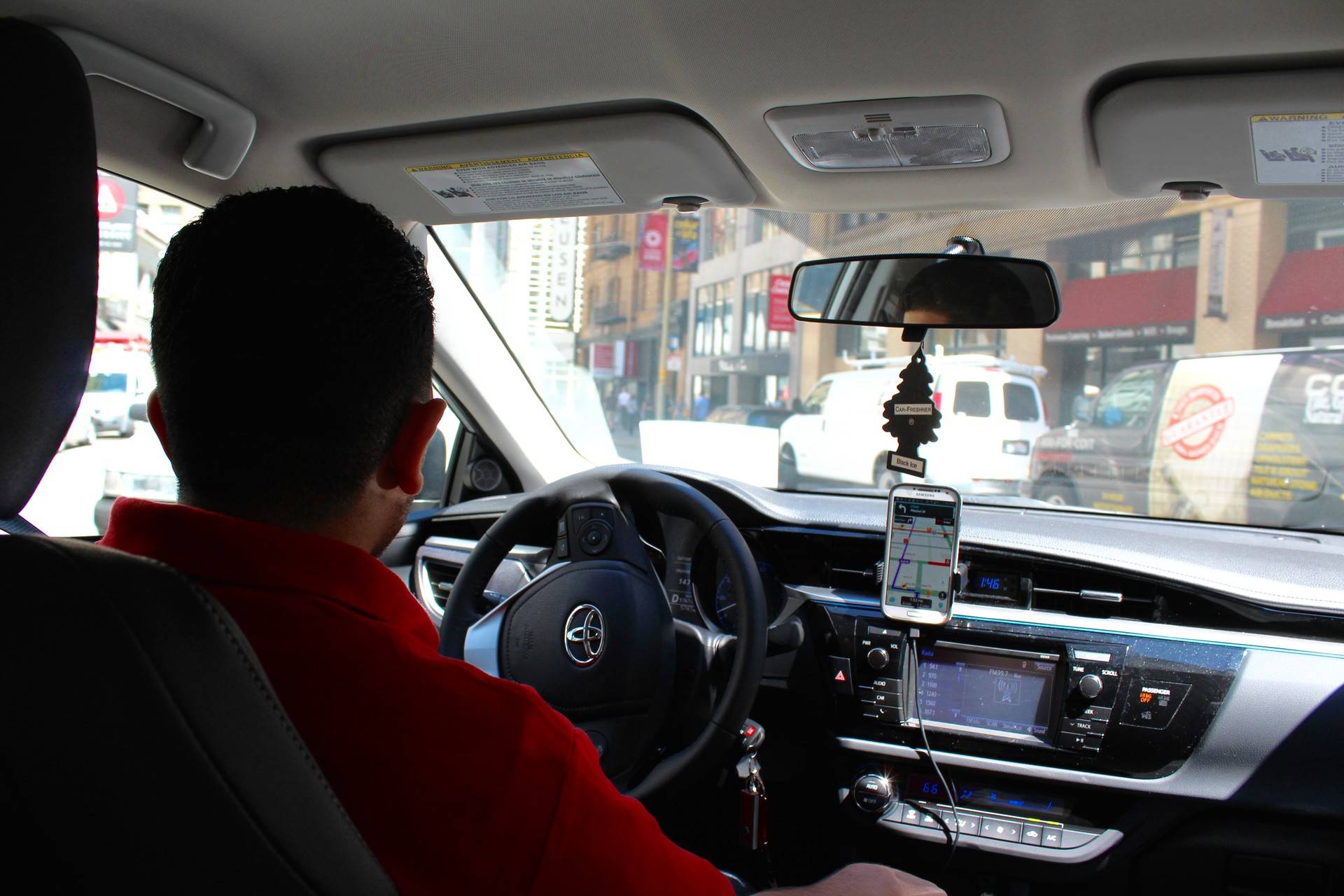
"caption": "Adnan Aloudi, a full-time Uber and Lyft driver, navigates downtown San Francisco on Aug. 31, 2015.",
"description": null,
"title": "RS16538_IMG_0464-qut",
"credit": "Ericka Cruz Guevarra/KQED",
"status": "inherit",
"isLoading": false,
"fetchFailed": false
},
"news_10920469": {
"type": "attachments",
"id": "news_10920469",
"meta": {
"index": "attachments_1716263798",
"site": "news",
"id": "10920469",
"found": true
},
"parent": 10920468,
"imgSizes": {
"twentyfourteen-full-width": {
"file": "https://ww2.kqed.org/app/uploads/sites/10/2016/04/gettyimages-494206544-f0c958bfec4805d60e3780e2d3bd46e47ac9ebf3-1038x576.jpg",
"width": 1038,
"mimeType": "image/jpeg",
"height": 576
},
"thumbnail": {
"file": "https://ww2.kqed.org/app/uploads/sites/10/2016/04/gettyimages-494206544-f0c958bfec4805d60e3780e2d3bd46e47ac9ebf3-400x300.jpg",
"width": 400,
"mimeType": "image/jpeg",
"height": 300
},
"fd-sm": {
"file": "https://ww2.kqed.org/app/uploads/sites/10/2016/04/gettyimages-494206544-f0c958bfec4805d60e3780e2d3bd46e47ac9ebf3-960x719.jpg",
"width": 960,
"mimeType": "image/jpeg",
"height": 719
},
"post-thumbnail": {
"file": "https://ww2.kqed.org/app/uploads/sites/10/2016/04/gettyimages-494206544-f0c958bfec4805d60e3780e2d3bd46e47ac9ebf3-672x372.jpg",
"width": 672,
"mimeType": "image/jpeg",
"height": 372
},
"kqedFullSize": {
"file": "https://ww2.kqed.org/app/uploads/sites/10/2016/04/gettyimages-494206544-f0c958bfec4805d60e3780e2d3bd46e47ac9ebf3.jpg",
"width": 2657,
"height": 1991
},
"large": {
"file": "https://ww2.kqed.org/app/uploads/sites/10/2016/04/gettyimages-494206544-f0c958bfec4805d60e3780e2d3bd46e47ac9ebf3-1920x1439.jpg",
"width": 1920,
"mimeType": "image/jpeg",
"height": 1439
},
"guest-author-96": {
"file": "https://ww2.kqed.org/app/uploads/sites/10/2016/04/gettyimages-494206544-f0c958bfec4805d60e3780e2d3bd46e47ac9ebf3-96x96.jpg",
"width": 96,
"mimeType": "image/jpeg",
"height": 96
},
"medium": {
"file": "https://ww2.kqed.org/app/uploads/sites/10/2016/04/gettyimages-494206544-f0c958bfec4805d60e3780e2d3bd46e47ac9ebf3-800x599.jpg",
"width": 800,
"mimeType": "image/jpeg",
"height": 599
},
"guest-author-64": {
"file": "https://ww2.kqed.org/app/uploads/sites/10/2016/04/gettyimages-494206544-f0c958bfec4805d60e3780e2d3bd46e47ac9ebf3-64x64.jpg",
"width": 64,
"mimeType": "image/jpeg",
"height": 64
},
"guest-author-32": {
"file": "https://ww2.kqed.org/app/uploads/sites/10/2016/04/gettyimages-494206544-f0c958bfec4805d60e3780e2d3bd46e47ac9ebf3-32x32.jpg",
"width": 32,
"mimeType": "image/jpeg",
"height": 32
},
"jmtc-small-thumb": {
"file": "https://ww2.kqed.org/app/uploads/sites/10/2016/04/gettyimages-494206544-f0c958bfec4805d60e3780e2d3bd46e47ac9ebf3-280x150.jpg",
"width": 280,
"mimeType": "image/jpeg",
"height": 150
},
"fd-lrg": {
"file": "https://ww2.kqed.org/app/uploads/sites/10/2016/04/gettyimages-494206544-f0c958bfec4805d60e3780e2d3bd46e47ac9ebf3-1920x1439.jpg",
"width": 1920,
"mimeType": "image/jpeg",
"height": 1439
},
"fd-med": {
"file": "https://ww2.kqed.org/app/uploads/sites/10/2016/04/gettyimages-494206544-f0c958bfec4805d60e3780e2d3bd46e47ac9ebf3-1180x884.jpg",
"width": 1180,
"mimeType": "image/jpeg",
"height": 884
},
"detail": {
"file": "https://ww2.kqed.org/app/uploads/sites/10/2016/04/gettyimages-494206544-f0c958bfec4805d60e3780e2d3bd46e47ac9ebf3-75x75.jpg",
"width": 75,
"mimeType": "image/jpeg",
"height": 75
},
"guest-author-128": {
"file": "https://ww2.kqed.org/app/uploads/sites/10/2016/04/gettyimages-494206544-f0c958bfec4805d60e3780e2d3bd46e47ac9ebf3-128x128.jpg",
"width": 128,
"mimeType": "image/jpeg",
"height": 128
}
},
"publishDate": 1459875118,
"modified": 1459891121,
"caption": "Nigel Bradham of the Buffalo Bills celebrates a touchdown in the October game against Jacksonville Jaguars in London. Yahoo's online stream of the event was one of the NFL's digital tests.",
"description": "Nigel Bradham of the Buffalo Bills celebrates a touchdown in the October game against Jacksonville Jaguars in London. Yahoo's online stream of the event was one of the NFL's digital tests.",
"title": "Nigel Bradham of the Buffalo Bills celebrates a touchdown in the October game against Jacksonville Jaguars in London. Yahoo's online stream of the event was one of the NFL's digital tests.",
"credit": "Alan Crowhurst/Getty Images",
"status": "inherit",
"isLoading": false,
"fetchFailed": false
},
"news_10916465": {
"type": "attachments",
"id": "news_10916465",
"meta": {
"index": "attachments_1716263798",
"site": "news",
"id": "10916465",
"found": true
},
"parent": 10914421,
"imgSizes": {
"twentyfourteen-full-width": {
"file": "https://ww2.kqed.org/app/uploads/sites/10/2016/04/SarahiEspinoza-1038x576.png",
"width": 1038,
"mimeType": "image/png",
"height": 576
},
"thumbnail": {
"file": "https://ww2.kqed.org/app/uploads/sites/10/2016/04/SarahiEspinoza-400x225.png",
"width": 400,
"mimeType": "image/png",
"height": 225
},
"fd-sm": {
"file": "https://ww2.kqed.org/app/uploads/sites/10/2016/04/SarahiEspinoza-960x540.png",
"width": 960,
"mimeType": "image/png",
"height": 540
},
"post-thumbnail": {
"file": "https://ww2.kqed.org/app/uploads/sites/10/2016/04/SarahiEspinoza-672x372.png",
"width": 672,
"mimeType": "image/png",
"height": 372
},
"kqedFullSize": {
"file": "https://ww2.kqed.org/app/uploads/sites/10/2016/04/SarahiEspinoza-e1459527014731.png",
"width": 1920,
"height": 1079
},
"large": {
"file": "https://ww2.kqed.org/app/uploads/sites/10/2016/04/SarahiEspinoza-1920x1079.png",
"width": 1920,
"mimeType": "image/png",
"height": 1079
},
"guest-author-96": {
"file": "https://ww2.kqed.org/app/uploads/sites/10/2016/04/SarahiEspinoza-96x96.png",
"width": 96,
"mimeType": "image/png",
"height": 96
},
"medium": {
"file": "https://ww2.kqed.org/app/uploads/sites/10/2016/04/SarahiEspinoza-800x450.png",
"width": 800,
"mimeType": "image/png",
"height": 450
},
"guest-author-64": {
"file": "https://ww2.kqed.org/app/uploads/sites/10/2016/04/SarahiEspinoza-64x64.png",
"width": 64,
"mimeType": "image/png",
"height": 64
},
"guest-author-32": {
"file": "https://ww2.kqed.org/app/uploads/sites/10/2016/04/SarahiEspinoza-32x32.png",
"width": 32,
"mimeType": "image/png",
"height": 32
},
"jmtc-small-thumb": {
"file": "https://ww2.kqed.org/app/uploads/sites/10/2016/04/SarahiEspinoza-280x150.png",
"width": 280,
"mimeType": "image/png",
"height": 150
},
"fd-lrg": {
"file": "https://ww2.kqed.org/app/uploads/sites/10/2016/04/SarahiEspinoza-1920x1079.png",
"width": 1920,
"mimeType": "image/png",
"height": 1079
},
"fd-med": {
"file": "https://ww2.kqed.org/app/uploads/sites/10/2016/04/SarahiEspinoza-1180x663.png",
"width": 1180,
"mimeType": "image/png",
"height": 663
},
"detail": {
"file": "https://ww2.kqed.org/app/uploads/sites/10/2016/04/SarahiEspinoza-75x75.png",
"width": 75,
"mimeType": "image/png",
"height": 75
},
"guest-author-128": {
"file": "https://ww2.kqed.org/app/uploads/sites/10/2016/04/SarahiEspinoza-128x128.png",
"width": 128,
"mimeType": "image/png",
"height": 128
}
},
"publishDate": 1459526356,
"modified": 1459538859,
"caption": "Sarahi Espinoza Salamanca created a scholarship network in the form of an app to help undocumented students find college scholarships.",
"description": "Sarahi Espinoza created a scholarship network in the form of an app to help undocumented students find college scholarships.",
"title": "SarahiEspinoza",
"credit": "Courtesy of Sarahi Espinoza",
"status": "inherit",
"isLoading": false,
"fetchFailed": false
},
"news_10916692": {
"type": "attachments",
"id": "news_10916692",
"meta": {
"index": "attachments_1716263798",
"site": "news",
"id": "10916692",
"found": true
},
"parent": 10916680,
"imgSizes": {
"twentyfourteen-full-width": {
"file": "https://ww2.kqed.org/app/uploads/sites/10/2016/04/LionessCatToy-1000x576.png",
"width": 1000,
"mimeType": "image/png",
"height": 576
},
"jmtc-small-thumb": {
"file": "https://ww2.kqed.org/app/uploads/sites/10/2016/04/LionessCatToy-280x150.png",
"width": 280,
"mimeType": "image/png",
"height": 150
},
"thumbnail": {
"file": "https://ww2.kqed.org/app/uploads/sites/10/2016/04/LionessCatToy-400x266.png",
"width": 400,
"mimeType": "image/png",
"height": 266
},
"fd-sm": {
"file": "https://ww2.kqed.org/app/uploads/sites/10/2016/04/LionessCatToy-960x637.png",
"width": 960,
"mimeType": "image/png",
"height": 637
},
"post-thumbnail": {
"file": "https://ww2.kqed.org/app/uploads/sites/10/2016/04/LionessCatToy-672x372.png",
"width": 672,
"mimeType": "image/png",
"height": 372
},
"kqedFullSize": {
"file": "https://ww2.kqed.org/app/uploads/sites/10/2016/04/LionessCatToy.png",
"width": 1000,
"height": 664
},
"guest-author-96": {
"file": "https://ww2.kqed.org/app/uploads/sites/10/2016/04/LionessCatToy-96x96.png",
"width": 96,
"mimeType": "image/png",
"height": 96
},
"medium": {
"file": "https://ww2.kqed.org/app/uploads/sites/10/2016/04/LionessCatToy-800x531.png",
"width": 800,
"mimeType": "image/png",
"height": 531
},
"guest-author-64": {
"file": "https://ww2.kqed.org/app/uploads/sites/10/2016/04/LionessCatToy-64x64.png",
"width": 64,
"mimeType": "image/png",
"height": 64
},
"detail": {
"file": "https://ww2.kqed.org/app/uploads/sites/10/2016/04/LionessCatToy-75x75.png",
"width": 75,
"mimeType": "image/png",
"height": 75
},
"guest-author-32": {
"file": "https://ww2.kqed.org/app/uploads/sites/10/2016/04/LionessCatToy-32x32.png",
"width": 32,
"mimeType": "image/png",
"height": 32
},
"guest-author-128": {
"file": "https://ww2.kqed.org/app/uploads/sites/10/2016/04/LionessCatToy-128x128.png",
"width": 128,
"mimeType": "image/png",
"height": 128
}
},
"publishDate": 1459540538,
"modified": 1459540647,
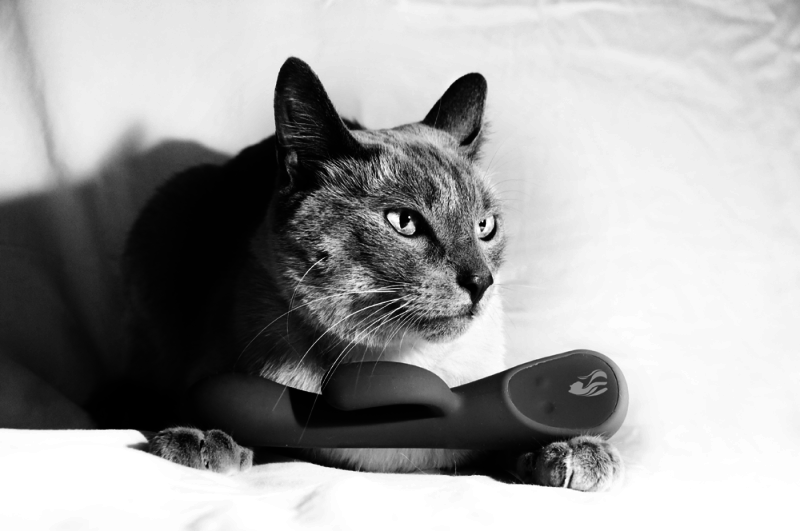
"caption": "This feline is trying to decide whether Lioness, a smart vibrator for women, might make a good cat toy instead.",
"description": "This feline is trying to decide whether Lioness, a smart vibrator for women, might make a good cat toy instead.",
"title": "LionessCatToy",
"credit": "Courtesy of Lioness",
"status": "inherit",
"isLoading": false,
"fetchFailed": false
},
"news_10915950": {
"type": "attachments",
"id": "news_10915950",
"meta": {
"index": "attachments_1716263798",
"site": "news",
"id": "10915950",
"found": true
},
"parent": 10915905,
"imgSizes": {
"twentyfourteen-full-width": {
"file": "https://ww2.kqed.org/app/uploads/sites/10/2016/03/RS18922_IMG_0985-qut-1038x576.jpg",
"width": 1038,
"mimeType": "image/jpeg",
"height": 576
},
"thumbnail": {
"file": "https://ww2.kqed.org/app/uploads/sites/10/2016/03/RS18922_IMG_0985-qut-400x300.jpg",
"width": 400,
"mimeType": "image/jpeg",
"height": 300
},
"fd-sm": {
"file": "https://ww2.kqed.org/app/uploads/sites/10/2016/03/RS18922_IMG_0985-qut-960x720.jpg",
"width": 960,
"mimeType": "image/jpeg",
"height": 720
},
"post-thumbnail": {
"file": "https://ww2.kqed.org/app/uploads/sites/10/2016/03/RS18922_IMG_0985-qut-672x372.jpg",
"width": 672,
"mimeType": "image/jpeg",
"height": 372
},
"kqedFullSize": {
"file": "https://ww2.kqed.org/app/uploads/sites/10/2016/03/RS18922_IMG_0985-qut.jpg",
"width": 1920,
"height": 1440
},
"large": {
"file": "https://ww2.kqed.org/app/uploads/sites/10/2016/03/RS18922_IMG_0985-qut-1920x1440.jpg",
"width": 1920,
"mimeType": "image/jpeg",
"height": 1440
},
"guest-author-96": {
"file": "https://ww2.kqed.org/app/uploads/sites/10/2016/03/RS18922_IMG_0985-qut-96x96.jpg",
"width": 96,
"mimeType": "image/jpeg",
"height": 96
},
"medium": {
"file": "https://ww2.kqed.org/app/uploads/sites/10/2016/03/RS18922_IMG_0985-qut-800x600.jpg",
"width": 800,
"mimeType": "image/jpeg",
"height": 600
},
"guest-author-64": {
"file": "https://ww2.kqed.org/app/uploads/sites/10/2016/03/RS18922_IMG_0985-qut-64x64.jpg",
"width": 64,
"mimeType": "image/jpeg",
"height": 64
},
"guest-author-32": {
"file": "https://ww2.kqed.org/app/uploads/sites/10/2016/03/RS18922_IMG_0985-qut-32x32.jpg",
"width": 32,
"mimeType": "image/jpeg",
"height": 32
},
"jmtc-small-thumb": {
"file": "https://ww2.kqed.org/app/uploads/sites/10/2016/03/RS18922_IMG_0985-qut-280x150.jpg",
"width": 280,
"mimeType": "image/jpeg",
"height": 150
},
"fd-lrg": {
"file": "https://ww2.kqed.org/app/uploads/sites/10/2016/03/RS18922_IMG_0985-qut-1920x1440.jpg",
"width": 1920,
"mimeType": "image/jpeg",
"height": 1440
},
"fd-med": {
"file": "https://ww2.kqed.org/app/uploads/sites/10/2016/03/RS18922_IMG_0985-qut-1180x885.jpg",
"width": 1180,
"mimeType": "image/jpeg",
"height": 885
},
"detail": {
"file": "https://ww2.kqed.org/app/uploads/sites/10/2016/03/RS18922_IMG_0985-qut-75x75.jpg",
"width": 75,
"mimeType": "image/jpeg",
"height": 75
},
"guest-author-128": {
"file": "https://ww2.kqed.org/app/uploads/sites/10/2016/03/RS18922_IMG_0985-qut-128x128.jpg",
"width": 128,
"mimeType": "image/jpeg",
"height": 128
}
},
"publishDate": 1459481488,
"modified": 1459539670,
"caption": "When Steve Julian of KPCC in Los Angeles was diagnosed with a terminal brain cancer, his wife Felicia Friesema turned to social media for solace, support, and the space to process this heart-breaking journey.",
"description": "When Steve Julian of KPCC in Los Angeles was diagnosed with terminal brain cancer, his wife Felicia Friesema turned to social media for solace, support, and the space to process this heart-breaking journey.",
"title": "RS18922_IMG_0985-qut",
"credit": "Rachael Myrow/KQED",
"status": "inherit",
"isLoading": false,
"fetchFailed": false
},
"news_10912307": {
"type": "attachments",
"id": "news_10912307",
"meta": {
"index": "attachments_1716263798",
"site": "news",
"id": "10912307",
"found": true
},
"parent": 10912300,
"imgSizes": {
"twentyfourteen-full-width": {
"file": "https://ww2.kqed.org/app/uploads/sites/10/2016/03/GettyImages-455691914-1038x576.jpg",
"width": 1038,
"mimeType": "image/jpeg",
"height": 576
},
"thumbnail": {
"file": "https://ww2.kqed.org/app/uploads/sites/10/2016/03/GettyImages-455691914-400x269.jpg",
"width": 400,
"mimeType": "image/jpeg",
"height": 269
},
"fd-sm": {
"file": "https://ww2.kqed.org/app/uploads/sites/10/2016/03/GettyImages-455691914-960x645.jpg",
"width": 960,
"mimeType": "image/jpeg",
"height": 645
},
"post-thumbnail": {
"file": "https://ww2.kqed.org/app/uploads/sites/10/2016/03/GettyImages-455691914-672x372.jpg",
"width": 672,
"mimeType": "image/jpeg",
"height": 372
},
"kqedFullSize": {
"file": "https://ww2.kqed.org/app/uploads/sites/10/2016/03/GettyImages-455691914-e1459203037826.jpg",
"width": 1440,
"height": 967
},
"large": {
"file": "https://ww2.kqed.org/app/uploads/sites/10/2016/03/GettyImages-455691914-1920x1290.jpg",
"width": 1920,
"mimeType": "image/jpeg",
"height": 1290
},
"guest-author-96": {
"file": "https://ww2.kqed.org/app/uploads/sites/10/2016/03/GettyImages-455691914-96x96.jpg",
"width": 96,
"mimeType": "image/jpeg",
"height": 96
},
"medium": {
"file": "https://ww2.kqed.org/app/uploads/sites/10/2016/03/GettyImages-455691914-800x537.jpg",
"width": 800,
"mimeType": "image/jpeg",
"height": 537
},
"guest-author-64": {
"file": "https://ww2.kqed.org/app/uploads/sites/10/2016/03/GettyImages-455691914-64x64.jpg",
"width": 64,
"mimeType": "image/jpeg",
"height": 64
},
"guest-author-32": {
"file": "https://ww2.kqed.org/app/uploads/sites/10/2016/03/GettyImages-455691914-32x32.jpg",
"width": 32,
"mimeType": "image/jpeg",
"height": 32
},
"jmtc-small-thumb": {
"file": "https://ww2.kqed.org/app/uploads/sites/10/2016/03/GettyImages-455691914-280x150.jpg",
"width": 280,
"mimeType": "image/jpeg",
"height": 150
},
"fd-lrg": {
"file": "https://ww2.kqed.org/app/uploads/sites/10/2016/03/GettyImages-455691914-1920x1290.jpg",
"width": 1920,
"mimeType": "image/jpeg",
"height": 1290
},
"fd-med": {
"file": "https://ww2.kqed.org/app/uploads/sites/10/2016/03/GettyImages-455691914-1180x793.jpg",
"width": 1180,
"mimeType": "image/jpeg",
"height": 793
},
"detail": {
"file": "https://ww2.kqed.org/app/uploads/sites/10/2016/03/GettyImages-455691914-75x75.jpg",
"width": 75,
"mimeType": "image/jpeg",
"height": 75
},
"guest-author-128": {
"file": "https://ww2.kqed.org/app/uploads/sites/10/2016/03/GettyImages-455691914-128x128.jpg",
"width": 128,
"mimeType": "image/jpeg",
"height": 128
}
},
"publishDate": 1459202936,
"modified": 1459203066,
"caption": "A shopper tries out the new Apple iPhone 6 at the Apple Store on the first day of sales of the new phone in Germany on Sept. 19, 2014. ",
"description": null,
"title": "Apple Starts iPhone 6 Sales In Germany",
"credit": "Sean Gallup/Getty Images",
"status": "inherit",
"isLoading": false,
"fetchFailed": false
},
"news_10908960": {
"type": "attachments",
"id": "news_10908960",
"meta": {
"index": "attachments_1716263798",
"site": "news",
"id": "10908960",
"found": true
},
"title": "RS18844_shoppers in the bins",
"publishDate": 1458940789,
"status": "inherit",
"parent": 10905354,
"modified": 1744320464,
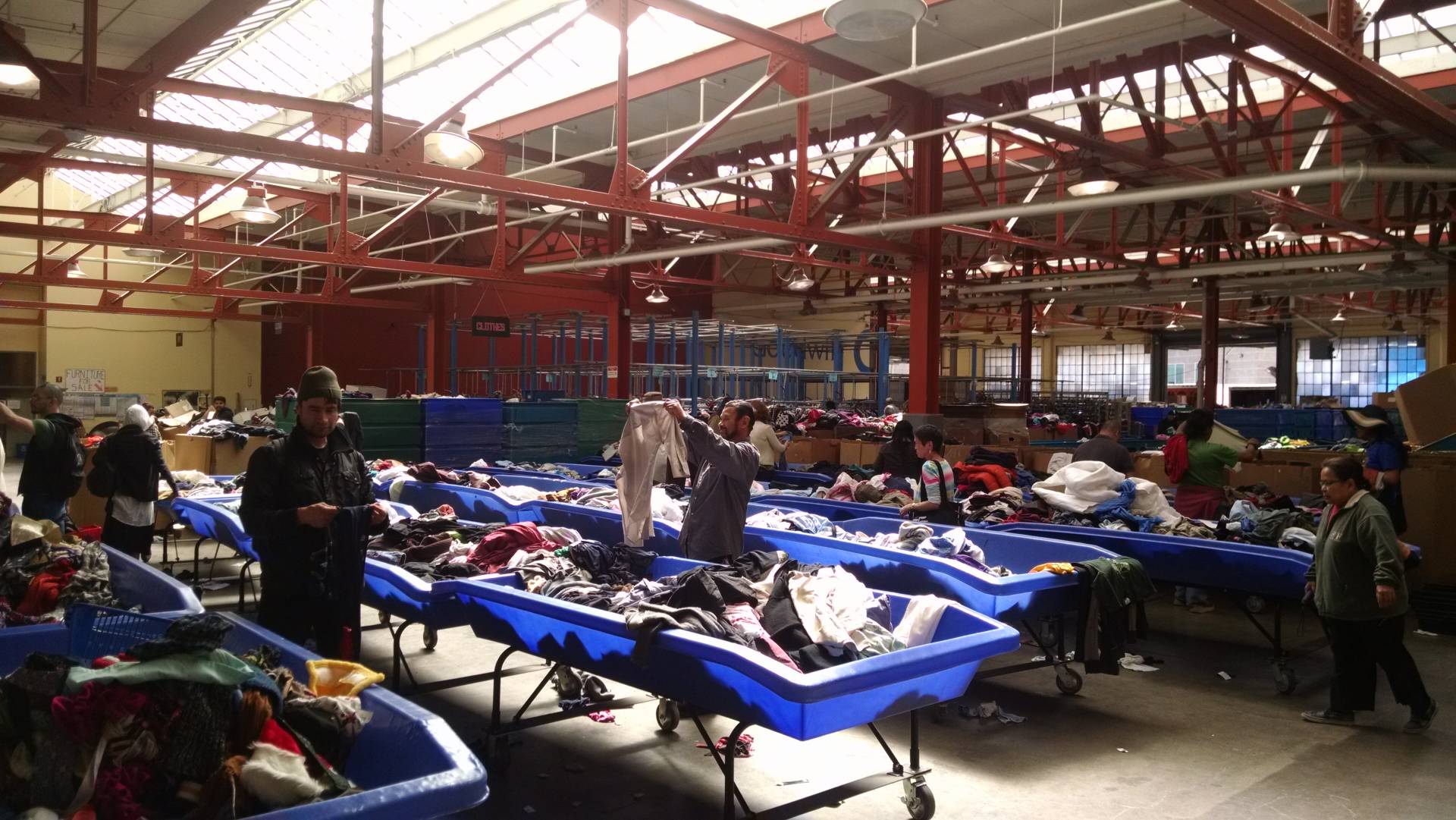
"caption": "Goodwill employees sort through donations on March 25, 2016.",
"credit": "Andrew Stelzer/KQED",
"altTag": null,
"description": "oodwill is sorting through its donations in order to maximize revenue. Increasingly wealthy bay area donors mean lots of treasure.",
"imgSizes": {
"thumbnail": {
"file": "https://cdn.kqed.org/wp-content/uploads/sites/10/2016/03/RS18844_shoppers-in-the-bins-400x225.jpg",
"width": 400,
"height": 225,
"mimeType": "image/jpeg"
},
"medium": {
"file": "https://cdn.kqed.org/wp-content/uploads/sites/10/2016/03/RS18844_shoppers-in-the-bins-800x450.jpg",
"width": 800,
"height": 450,
"mimeType": "image/jpeg"
},
"large": {
"file": "https://cdn.kqed.org/wp-content/uploads/sites/10/2016/03/RS18844_shoppers-in-the-bins-1920x1081.jpg",
"width": 1920,
"height": 1081,
"mimeType": "image/jpeg"
},
"fd-lrg": {
"file": "https://cdn.kqed.org/wp-content/uploads/sites/10/2016/03/RS18844_shoppers-in-the-bins-1920x1081.jpg",
"width": 1920,
"height": 1081,
"mimeType": "image/jpeg"
},
"fd-med": {
"file": "https://cdn.kqed.org/wp-content/uploads/sites/10/2016/03/RS18844_shoppers-in-the-bins-1180x664.jpg",
"width": 1180,
"height": 664,
"mimeType": "image/jpeg"
},
"fd-sm": {
"file": "https://cdn.kqed.org/wp-content/uploads/sites/10/2016/03/RS18844_shoppers-in-the-bins-960x540.jpg",
"width": 960,
"height": 540,
"mimeType": "image/jpeg"
},
"post-thumbnail": {
"file": "https://cdn.kqed.org/wp-content/uploads/sites/10/2016/03/RS18844_shoppers-in-the-bins-672x372.jpg",
"width": 672,
"height": 372,
"mimeType": "image/jpeg"
},
"twentyfourteen-full-width": {
"file": "https://cdn.kqed.org/wp-content/uploads/sites/10/2016/03/RS18844_shoppers-in-the-bins-1038x576.jpg",
"width": 1038,
"height": 576,
"mimeType": "image/jpeg"
},
"guest-author-32": {
"file": "https://cdn.kqed.org/wp-content/uploads/sites/10/2016/03/RS18844_shoppers-in-the-bins-32x32.jpg",
"width": 32,
"height": 32,
"mimeType": "image/jpeg"
},
"guest-author-64": {
"file": "https://cdn.kqed.org/wp-content/uploads/sites/10/2016/03/RS18844_shoppers-in-the-bins-64x64.jpg",
"width": 64,
"height": 64,
"mimeType": "image/jpeg"
},
"guest-author-96": {
"file": "https://cdn.kqed.org/wp-content/uploads/sites/10/2016/03/RS18844_shoppers-in-the-bins-96x96.jpg",
"width": 96,
"height": 96,
"mimeType": "image/jpeg"
},
"guest-author-128": {
"file": "https://cdn.kqed.org/wp-content/uploads/sites/10/2016/03/RS18844_shoppers-in-the-bins-128x128.jpg",
"width": 128,
"height": 128,
"mimeType": "image/jpeg"
},
"detail": {
"file": "https://cdn.kqed.org/wp-content/uploads/sites/10/2016/03/RS18844_shoppers-in-the-bins-75x75.jpg",
"width": 75,
"height": 75,
"mimeType": "image/jpeg"
},
"jmtc-small-thumb": {
"file": "https://cdn.kqed.org/wp-content/uploads/sites/10/2016/03/RS18844_shoppers-in-the-bins-280x150.jpg",
"width": 280,
"height": 150,
"mimeType": "image/jpeg"
},
"kqedFullSize": {
"file": "https://cdn.kqed.org/wp-content/uploads/sites/10/2016/03/RS18844_shoppers-in-the-bins-e1744320417150.jpg",
"width": 2000,
"height": 1126
}
},
"isLoading": false,
"fetchFailed": false
},
"news_10908901": {
"type": "attachments",
"id": "news_10908901",
"meta": {
"index": "attachments_1716263798",
"site": "news",
"id": "10908901",
"found": true
},
"parent": 10908900,
"imgSizes": {
"twentyfourteen-full-width": {
"file": "https://ww2.kqed.org/app/uploads/sites/10/2016/03/GenZApp-1038x576.jpg",
"width": 1038,
"mimeType": "image/jpeg",
"height": 576
},
"thumbnail": {
"file": "https://ww2.kqed.org/app/uploads/sites/10/2016/03/GenZApp-400x268.jpg",
"width": 400,
"mimeType": "image/jpeg",
"height": 268
},
"fd-sm": {
"file": "https://ww2.kqed.org/app/uploads/sites/10/2016/03/GenZApp-960x644.jpg",
"width": 960,
"mimeType": "image/jpeg",
"height": 644
},
"post-thumbnail": {
"file": "https://ww2.kqed.org/app/uploads/sites/10/2016/03/GenZApp-672x372.jpg",
"width": 672,
"mimeType": "image/jpeg",
"height": 372
},
"kqedFullSize": {
"file": "https://ww2.kqed.org/app/uploads/sites/10/2016/03/GenZApp.jpg",
"width": 1920,
"height": 1288
},
"large": {
"file": "https://ww2.kqed.org/app/uploads/sites/10/2016/03/GenZApp-1920x1288.jpg",
"width": 1920,
"mimeType": "image/jpeg",
"height": 1288
},
"guest-author-96": {
"file": "https://ww2.kqed.org/app/uploads/sites/10/2016/03/GenZApp-96x96.jpg",
"width": 96,
"mimeType": "image/jpeg",
"height": 96
},
"medium": {
"file": "https://ww2.kqed.org/app/uploads/sites/10/2016/03/GenZApp-800x537.jpg",
"width": 800,
"mimeType": "image/jpeg",
"height": 537
},
"guest-author-64": {
"file": "https://ww2.kqed.org/app/uploads/sites/10/2016/03/GenZApp-64x64.jpg",
"width": 64,
"mimeType": "image/jpeg",
"height": 64
},
"guest-author-32": {
"file": "https://ww2.kqed.org/app/uploads/sites/10/2016/03/GenZApp-32x32.jpg",
"width": 32,
"mimeType": "image/jpeg",
"height": 32
},
"jmtc-small-thumb": {
"file": "https://ww2.kqed.org/app/uploads/sites/10/2016/03/GenZApp-280x150.jpg",
"width": 280,
"mimeType": "image/jpeg",
"height": 150
},
"fd-lrg": {
"file": "https://ww2.kqed.org/app/uploads/sites/10/2016/03/GenZApp-1920x1288.jpg",
"width": 1920,
"mimeType": "image/jpeg",
"height": 1288
},
"fd-med": {
"file": "https://ww2.kqed.org/app/uploads/sites/10/2016/03/GenZApp-1180x792.jpg",
"width": 1180,
"mimeType": "image/jpeg",
"height": 792
},
"detail": {
"file": "https://ww2.kqed.org/app/uploads/sites/10/2016/03/GenZApp-75x75.jpg",
"width": 75,
"mimeType": "image/jpeg",
"height": 75
},
"guest-author-128": {
"file": "https://ww2.kqed.org/app/uploads/sites/10/2016/03/GenZApp-128x128.jpg",
"width": 128,
"mimeType": "image/jpeg",
"height": 128
}
},
"publishDate": 1458938312,
"modified": 1458939165,
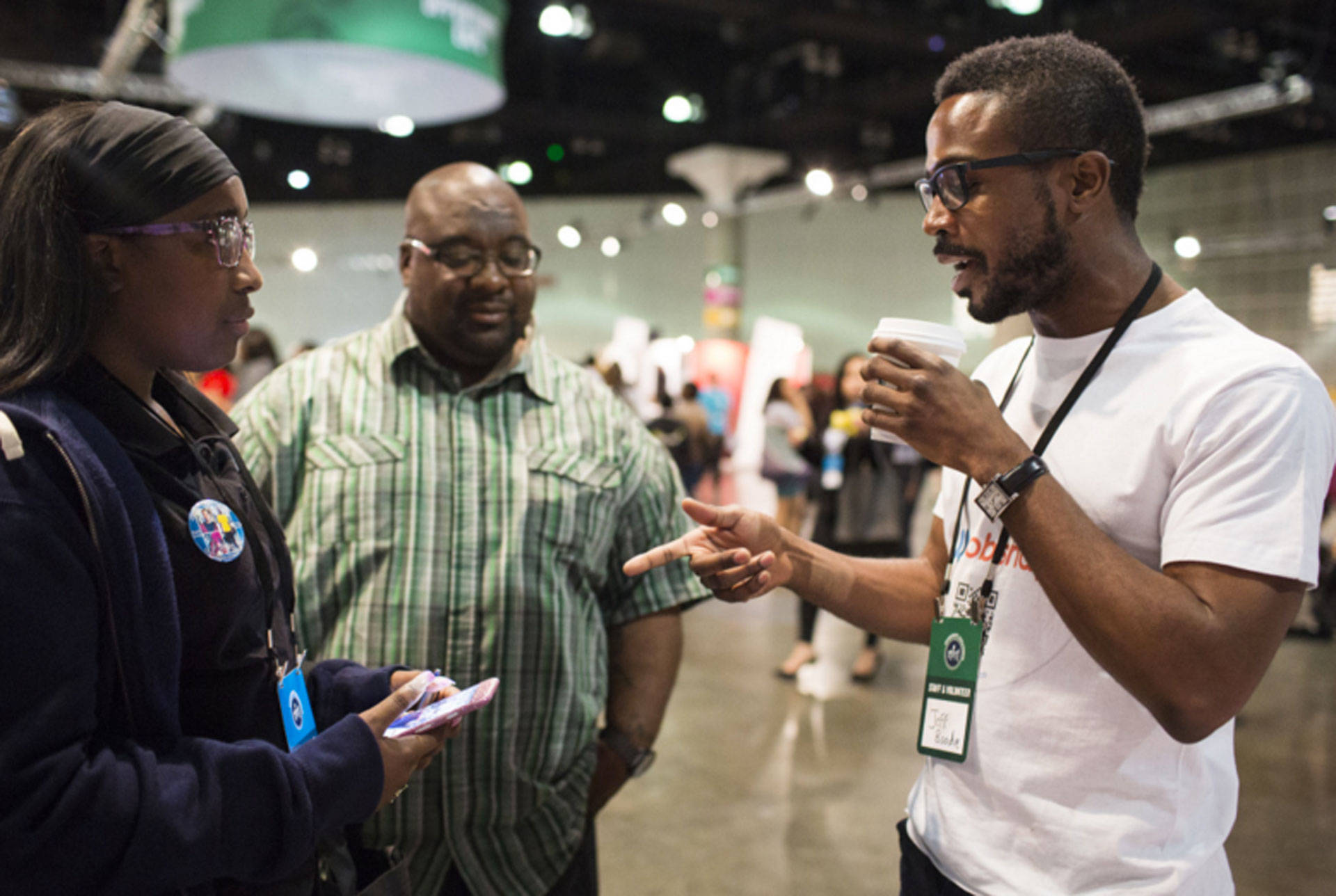
"caption": "Jeff Boodie (R), founder and CEO of JobSnap, explains his app to 16-year-old Kamiya Williams during the Los Angeles Opportunity Hiring Fair at the L.A. Convention Center on Feb. 11, 2016.",
"description": "Jeff Boodie (R), founder and CEO of JobSnap, explains his app to 16-year-old Kamiya Williams during the Los Angeles Opportunity Hiring Fair at the L.A. Convention Center on Feb. 11, 2016.",
"title": "GenZApp",
"credit": "Maya Sugarman/KPCC",
"status": "inherit",
"isLoading": false,
"fetchFailed": false
},
"news_10907984": {
"type": "attachments",
"id": "news_10907984",
"meta": {
"index": "attachments_1716263798",
"site": "news",
"id": "10907984",
"found": true
},
"parent": 10907981,
"imgSizes": {
"twentyfourteen-full-width": {
"file": "https://ww2.kqed.org/app/uploads/sites/10/2016/03/UberMirror-1038x576.jpg",
"width": 1038,
"mimeType": "image/jpeg",
"height": 576
},
"thumbnail": {
"file": "https://ww2.kqed.org/app/uploads/sites/10/2016/03/UberMirror-400x277.jpg",
"width": 400,
"mimeType": "image/jpeg",
"height": 277
},
"fd-sm": {
"file": "https://ww2.kqed.org/app/uploads/sites/10/2016/03/UberMirror-960x665.jpg",
"width": 960,
"mimeType": "image/jpeg",
"height": 665
},
"post-thumbnail": {
"file": "https://ww2.kqed.org/app/uploads/sites/10/2016/03/UberMirror-672x372.jpg",
"width": 672,
"mimeType": "image/jpeg",
"height": 372
},
"kqedFullSize": {
"file": "https://ww2.kqed.org/app/uploads/sites/10/2016/03/UberMirror.jpg",
"width": 1920,
"height": 1330
},
"large": {
"file": "https://ww2.kqed.org/app/uploads/sites/10/2016/03/UberMirror-1920x1330.jpg",
"width": 1920,
"mimeType": "image/jpeg",
"height": 1330
},
"guest-author-96": {
"file": "https://ww2.kqed.org/app/uploads/sites/10/2016/03/UberMirror-96x96.jpg",
"width": 96,
"mimeType": "image/jpeg",
"height": 96
},
"medium": {
"file": "https://ww2.kqed.org/app/uploads/sites/10/2016/03/UberMirror-800x554.jpg",
"width": 800,
"mimeType": "image/jpeg",
"height": 554
},
"guest-author-64": {
"file": "https://ww2.kqed.org/app/uploads/sites/10/2016/03/UberMirror-64x64.jpg",
"width": 64,
"mimeType": "image/jpeg",
"height": 64
},
"guest-author-32": {
"file": "https://ww2.kqed.org/app/uploads/sites/10/2016/03/UberMirror-32x32.jpg",
"width": 32,
"mimeType": "image/jpeg",
"height": 32
},
"jmtc-small-thumb": {
"file": "https://ww2.kqed.org/app/uploads/sites/10/2016/03/UberMirror-280x150.jpg",
"width": 280,
"mimeType": "image/jpeg",
"height": 150
},
"fd-lrg": {
"file": "https://ww2.kqed.org/app/uploads/sites/10/2016/03/UberMirror-1920x1330.jpg",
"width": 1920,
"mimeType": "image/jpeg",
"height": 1330
},
"fd-med": {
"file": "https://ww2.kqed.org/app/uploads/sites/10/2016/03/UberMirror-1180x817.jpg",
"width": 1180,
"mimeType": "image/jpeg",
"height": 817
},
"detail": {
"file": "https://ww2.kqed.org/app/uploads/sites/10/2016/03/UberMirror-75x75.jpg",
"width": 75,
"mimeType": "image/jpeg",
"height": 75
},
"guest-author-128": {
"file": "https://ww2.kqed.org/app/uploads/sites/10/2016/03/UberMirror-128x128.jpg",
"width": 128,
"mimeType": "image/jpeg",
"height": 128
}
},
"publishDate": 1458867940,
"modified": 1458940390,
"caption": "A man checks out a vehicle while attending an Uber recruitment event in Los Angeles on March 10, 2016.",
"description": "A man checks out a vehicle while attending an Uber recruitment event in Los Angeles on March 10, 2016.",
"title": "UberMirror",
"credit": "Mark Ralston/AFP/Getty Images",
"status": "inherit",
"isLoading": false,
"fetchFailed": false
}
},
"audioPlayerReducer": {
"postId": "stream_live",
"isPaused": true,
"isPlaying": false,
"pfsActive": false,
"pledgeModalIsOpen": true,
"playerDrawerIsOpen": false,
"liveAudioPlayStartedAt": 0,
"liveAudioPlayContext": ""
},
"authorsReducer": {
"byline_news_10922660": {
"type": "authors",
"id": "byline_news_10922660",
"meta": {
"override": true
},
"slug": "byline_news_10922660",
"name": "Jeff Barrera, \u003ca href=\"http://peninsulapress.com/2016/04/06/silicon-valley-long-commutes-cost-of-living/\">Peninsula Press\u003c/a>",
"isLoading": false
},
"byline_news_10920468": {
"type": "authors",
"id": "byline_news_10920468",
"meta": {
"override": true
},
"slug": "byline_news_10920468",
"name": "\u003cstrong>Alina Selyukh\u003c/strong>\u003cbr />NPR News",
"isLoading": false
},
"byline_news_10914421": {
"type": "authors",
"id": "byline_news_10914421",
"meta": {
"override": true
},
"slug": "byline_news_10914421",
"name": "\u003cstrong>Mariela Patron\u003c/strong>",
"isLoading": false
},
"byline_news_10912300": {
"type": "authors",
"id": "byline_news_10912300",
"meta": {
"override": true
},
"slug": "byline_news_10912300",
"name": "\u003cstrong>The Associated Press\u003c/strong>",
"isLoading": false
},
"byline_news_10908900": {
"type": "authors",
"id": "byline_news_10908900",
"meta": {
"override": true
},
"slug": "byline_news_10908900",
"name": "\u003cstrong>\u003ca href=\"http://www.scpr.org/about/people/staff/brian-watt\">Brian Watt\u003c/a>\u003cbr>KPCC\u003c/strong>",
"isLoading": false
},
"andrewstelzer": {
"type": "authors",
"id": "213",
"meta": {
"index": "authors_1716337520",
"id": "213",
"found": true
},
"name": "Andrew Stelzer",
"firstName": "Andrew",
"lastName": "Stelzer",
"slug": "andrewstelzer",
"email": "andrewstelzer@gmail.com",
"display_author_email": false,
"staff_mastheads": [],
"title": null,
"bio": "Andrew Stelzer has been reporting for KQED since 2010, and is a producer at \u003ca href=\"http://www.radioproject.org\" target=\"_blank\">Making Contact\u003c/a> in Oakland.. His work has been featured on programs including \u003ca href=\"http://www.npr.org/templates/story/story.php?storyId=5010\" target=\"_blank\">NPR’s Weekend Edition\u003c/a>, \u003ca href=\"http://www.theworld.org/\" target=\"_blank\">PRI’s The World\u003c/a>, \u003ca href=\"http://www.studio360.org/\" target=\"_blank\">Studio 360\u003c/a>, \u003ca href=\"http://marketplace.publicradio.org/\" target=\"_blank\">Marketplace\u003c/a>,\u003ca href=\"http://www.loe.org/\" target=\"_blank\">Living on Earth\u003c/a>, \u003ca href=\"http://www.onthemedia.org/\" target=\"_blank\">On the Media\u003c/a>, \u003ca href=\"http://www.latinousa.org/index.html\" target=\"_blank\">Latino USA,\u003c/a> \u003ca href=\"http://www.onlyagame.org/\" rel=\"tag\">Only a Game,\u003c/a> \u003ca href=\"http://www.tswi.org/\" target=\"_blank\">Radio Netherlands,\u003c/a> \u003ca href=\"http://worldradio.ch/index.shtml\" target=\"_blank\">World Radio Switzerland,\u003c/a> and \u003ca href=\"http://www.rfi.fr/langues/statiques/rfi_anglais.asp\" target=\"_blank\">Radio France International\u003c/a>. Andrew has written for publications including \u003ca href=\"http://www.inthesetimes.com/site/about/author/2369\" target=\"_blank\">In These Times\u003c/a>, \u003ca href=\"http://www.progressive.org/\" target=\"_blank\">The Progressive\u003c/a>, \u003ca href=\"http://ipsnews.net/\" target=\"_blank\">Interpress Service\u003c/a>, \u003ca href=\"http://www.tampabay.com/\" target=\"_blank\">The St. Petersburg Times\u003c/a>, and \u003ca href=\"http://www.eastbayexpress.com/ebx/Home\" target=\"_blank\">The East Bay Express\u003c/a>.\r\n\r\nAndrew’s work has received numerous awards from the Society of Professional Journalists, the National Lesbian and Gay Journalists Association, and the National Council on Crime and Delinquency.\r\n\r\nHe previously was a reporter at \u003ca href=\"http://www.wmnf.org/\" target=\"_blank\">WMNF\u003c/a> radio in Tampa, FL, and reporter and youth advocate st \u003ca href=\"http://www.kboo.org/\" target=\"_blank\">KBOO \u003c/a> in Portland, Oregon. Andrew has conducted radio production trainings around the world, from Algeria, to New Orleans, to the desert of Southern Jordan.",
"avatar": "https://secure.gravatar.com/avatar/14c7e75469395cb2468d45c9f6896ca9?s=600&d=blank&r=g",
"twitter": null,
"facebook": null,
"instagram": null,
"linkedin": null,
"sites": [
{
"site": "arts",
"roles": [
"contributor"
]
},
{
"site": "news",
"roles": [
"author"
]
},
{
"site": "stateofhealth",
"roles": [
"author"
]
}
],
"headData": {
"title": "Andrew Stelzer | KQED",
"description": null,
"ogImgSrc": "https://secure.gravatar.com/avatar/14c7e75469395cb2468d45c9f6896ca9?s=600&d=blank&r=g",
"twImgSrc": "https://secure.gravatar.com/avatar/14c7e75469395cb2468d45c9f6896ca9?s=600&d=blank&r=g"
},
"isLoading": false,
"link": "/author/andrewstelzer"
},
"bgoebel": {
"type": "authors",
"id": "214",
"meta": {
"index": "authors_1716337520",
"id": "214",
"found": true
},
"name": "Bryan Goebel",
"firstName": "Bryan",
"lastName": "Goebel",
"slug": "bgoebel",
"email": "bgoebel@kqed.org",
"display_author_email": false,
"staff_mastheads": [],
"title": null,
"bio": "Bryan Goebel is a reporter focused on transportation and housing issues. He was previously the editor of Streetsblog San Francisco, and an anchor/editor at KCBS Radio. He's a lifelong Californian and has also worked at radio stations in Barstow, Redding and Sacramento.",
"avatar": "https://secure.gravatar.com/avatar/7fdd6b065bfe9a23a71bcfa80848df88?s=600&d=blank&r=g",
"twitter": "velobry",
"facebook": null,
"instagram": null,
"linkedin": null,
"sites": [
{
"site": "news",
"roles": [
"subscriber"
]
},
{
"site": "stateofhealth",
"roles": [
"subscriber"
]
}
],
"headData": {
"title": "Bryan Goebel | KQED",
"description": null,
"ogImgSrc": "https://secure.gravatar.com/avatar/7fdd6b065bfe9a23a71bcfa80848df88?s=600&d=blank&r=g",
"twImgSrc": "https://secure.gravatar.com/avatar/7fdd6b065bfe9a23a71bcfa80848df88?s=600&d=blank&r=g"
},
"isLoading": false,
"link": "/author/bgoebel"
},
"patyollin": {
"type": "authors",
"id": "247",
"meta": {
"index": "authors_1716337520",
"id": "247",
"found": true
},
"name": "Patricia Yollin",
"firstName": "Patricia",
"lastName": "Yollin",
"slug": "patyollin",
"email": "pyollin@kqed.org",
"display_author_email": false,
"staff_mastheads": [],
"title": "KQED Contributor",
"bio": "Pat Yollin has written about lots of stuff, including organ transplants, wayward penguins at the San Francisco Zoo, the comeback of the cream puff, New York on the fifth anniversary of 9/11, a Slow Food gathering in Italy, and the microcredit movement in Northern California. Among her favorite stories: an interview with George Lucas at Skywalker Ranch that broke the story about his plan to build a cultural museum, and a pirate Trader Joe's operation in Vancouver that prompted the grocery chain to sue -- and lose. She joined KQED in 2013 and was previously a reporter and editor at the San Francisco Chronicle, the Hearst-owned San Francisco Examiner and the Hayward Daily Review.",
"avatar": "https://secure.gravatar.com/avatar/0a18ac41a263665c04b25b2c7d6b817c?s=600&d=blank&r=g",
"twitter": null,
"facebook": null,
"instagram": null,
"linkedin": null,
"sites": [
{
"site": "arts",
"roles": [
"subscriber"
]
},
{
"site": "news",
"roles": [
"subscriber"
]
},
{
"site": "futureofyou",
"roles": [
"editor"
]
},
{
"site": "lowdown",
"roles": [
"editor"
]
},
{
"site": "stateofhealth",
"roles": [
"editor"
]
}
],
"headData": {
"title": "Patricia Yollin | KQED",
"description": "KQED Contributor",
"ogImgSrc": "https://secure.gravatar.com/avatar/0a18ac41a263665c04b25b2c7d6b817c?s=600&d=blank&r=g",
"twImgSrc": "https://secure.gravatar.com/avatar/0a18ac41a263665c04b25b2c7d6b817c?s=600&d=blank&r=g"
},
"isLoading": false,
"link": "/author/patyollin"
},
"rachael-myrow": {
"type": "authors",
"id": "251",
"meta": {
"index": "authors_1716337520",
"id": "251",
"found": true
},
"name": "Rachael Myrow",
"firstName": "Rachael",
"lastName": "Myrow",
"slug": "rachael-myrow",
"email": "rmyrow@kqed.org",
"display_author_email": true,
"staff_mastheads": [
"news"
],
"title": "Senior Editor of KQED's Silicon Valley News Desk",
"bio": "• I write and edit stories about how Silicon Valley power and policies shape everyday life in California. I’m also passionate about making Bay Area history and culture more accessible to a broad public. • I’ve been a journalist for most of my life, starting in high school with The Franklin Press in Los Angeles, where I grew up. While earning my first degree in English at UC Berkeley, I got my start in public radio at KALX-FM. After completing a second degree in journalism at Cal, I landed my first professional job at Marketplace, then moved on to KPCC (now LAist), and then KQED, where I hosted The California Report for more than seven years. • My reporting has appeared on NPR, The World, WBUR’s \u003ci>Here & Now\u003c/i>, and the BBC. I also guest host for KQED’s \u003ci>Forum\u003c/i>, as well as the Commonwealth Club in San Francisco. • I speak periodically on media, democracy and technology issues, and do voiceover work for documentaries and educational video projects. • Outside of the studio, you'll find me hiking Bay Area trails and whipping up Insta-ready meals in my kitchen. • I do not accept gifts, money, or favors from anyone connected to my reporting, I don't pay people for information, and I do not support or donate to political causes. • I strive to treat the people I report on with fairness, honesty, and respect. I also recognize there are often multiple sides to a story and work to verify information through multiple sources and documentation. If I get something wrong, I correct it.",
"avatar": "https://secure.gravatar.com/avatar/3ed8a3c5f26025e4a805ba634cda8cd764906b97438a6d9ce216b044e340da4e?s=600&d=blank&r=g",
"twitter": "rachaelmyrow",
"bluesky": null,
"facebook": null,
"instagram": null,
"linkedin": "https://www.linkedin.com/in/rachaelmyrow/",
"sites": [
{
"site": "arts",
"roles": [
"administrator"
]
},
{
"site": "news",
"roles": [
"edit_others_posts",
"editor"
]
},
{
"site": "futureofyou",
"roles": [
"editor"
]
},
{
"site": "bayareabites",
"roles": [
"editor"
]
},
{
"site": "stateofhealth",
"roles": [
"editor"
]
},
{
"site": "science",
"roles": [
"editor"
]
},
{
"site": "food",
"roles": [
"editor"
]
},
{
"site": "forum",
"roles": [
"editor"
]
},
{
"site": "liveblog",
"roles": [
"author"
]
}
],
"headData": {
"title": "Rachael Myrow | KQED",
"description": "Senior Editor of KQED's Silicon Valley News Desk",
"ogImgSrc": "https://secure.gravatar.com/avatar/3ed8a3c5f26025e4a805ba634cda8cd764906b97438a6d9ce216b044e340da4e?s=600&d=blank&r=g",
"twImgSrc": "https://secure.gravatar.com/avatar/3ed8a3c5f26025e4a805ba634cda8cd764906b97438a6d9ce216b044e340da4e?s=600&d=blank&r=g"
},
"isLoading": false,
"link": "/author/rachael-myrow"
}
},
"pagesReducer": {
"news_category_technology": {
"type": "terms",
"id": "news_248",
"meta": {
"index": "terms_1716263798",
"site": "news",
"id": "248",
"score": 10.931574
},
"featImg": null,
"name": "Technology",
"description": null,
"taxonomy": "category",
"headData": {
"twImgId": null,
"twTitle": null,
"ogTitle": null,
"ogImgId": null,
"twDescription": null,
"description": null,
"title": "Technology Archives | KQED News",
"ogDescription": null
},
"ttid": 256,
"slug": "technology",
"isLoading": false,
"title": "Technology",
"pageMeta": {
"site": "news",
"WpPageTemplate": "page-topic-editorial",
"currentPage": 135
},
"blocks": [
{
"blockName": "kqed/post-list",
"attrs": {
"layout": "cardArticle2",
"query": "posts/news?category=technology",
"seeMore": false,
"paginated": true,
"page": 135
}
},
{
"blockName": "kqed/ad"
}
]
}
},
"pfsSessionReducer": {},
"postsReducer": {
"stream_live": {
"type": "live",
"id": "stream_live",
"audioUrl": "https://streams.kqed.org/kqedradio",
"title": "Live Stream",
"excerpt": "Live Stream information currently unavailable.",
"link": "/radio",
"featImg": "",
"label": {
"name": "KQED Live",
"link": "/"
}
},
"stream_kqedNewscast": {
"type": "posts",
"id": "stream_kqedNewscast",
"audioUrl": "https://www.kqed.org/.stream/anon/radio/RDnews/newscast.mp3?_=1",
"title": "KQED Newscast",
"featImg": "",
"label": {
"name": "88.5 FM",
"link": "/"
}
},
"news_10923008": {
"type": "posts",
"id": "news_10923008",
"meta": {
"index": "posts_1716263798",
"site": "news",
"id": "10923008",
"score": null,
"sort": [
1460074825000
]
},
"parent": 0,
"labelTerm": {
"site": "news",
"term": 72
},
"blocks": [],
"publishDate": 1460074825,
"format": "standard",
"disqusTitle": "Uber Settles Lawsuit with S.F. and L.A. District Attorneys",
"title": "Uber Settles Lawsuit with S.F. and L.A. District Attorneys",
"headTitle": "The California Report | KQED News",
"content": "\u003cp>\u003c!--more-->The district attorneys of San Francisco and Los Angeles have settled an unlawful business practice lawsuit against Uber over claims the company \u003ca href=\"http://ww2.kqed.org/news/2014/09/25/george-gascon-threatens-action-against-uber-lyft-sidecar\" target=\"_blank\">made misleading statements\u003c/a> about its background checks for drivers.\u003c/p>\n\u003cp>The suit, filed in late 2014, alleged that Uber made untrue claims when it said it offered \"the safest ride on the road\" and that its drivers undergo rigorous background checks that are \"industry-leading.\"\u003c/p>\n\u003cp>According to a press release from San Francisco District Attorney George Gascón and Los Angeles District Attorney Jackie Lacey, Uber and its subsidiary, Raiser, agreed to pay as much as a $25 million civil penalty.\u003c/p>\n\u003cp>\"It sends a clear message to all businesses, and to startups in particular, that in the quest to quickly obtain market share, laws designed to protect consumers cannot be ignored,\" Gascón said in a statement.\u003c/p>\n\u003cp>Uber's background checks have been criticized as not being as thorough as fingerprint background checks, which taxicab drivers in most large American cities are required to pass.\u003c/p>\n\u003cp>[ad fullwidth]\u003c/p>\n\u003cp>Both Uber and Lyft -- which settled a similar suit with the L.A. and S.F. district attorneys -- have claimed that no background check is perfect, and that theirs are just as good as the taxi industry's. Uber has also claimed fingerprint background checks are discriminatory.\u003c/p>\n\u003cp>\"No means of transportation can ever be 100 percent safe. Accidents and incidents do happen. That's why we need to ensure that the language used to describe safety at Uber is clear and precise. So we've agreed to not use terms like 'safest ride on the road' or describe our background checks as 'the gold standard,' \" an Uber spokeswoman said in a statement.\u003c/p>\n\u003cp>In August, when prosecutors filed an amended complaint against Uber, they reported uncovering at least 25 cases in Los Angeles where Uber's background checks failed to stop registered sex offenders, burglars and a convicted murderer from becoming drivers.\u003c/p>\n\u003cp>The prosecutors argue that Uber's background checks do not have access to state and federal databases, and say fingerprint background checks are \"the gold standard.\" Uber recently agreed to settle \u003ca href=\"https://www.washingtonpost.com/news/the-switch/wp/2016/02/11/uber-is-about-to-pay-its-u-s-riders-28-5-million-heres-why/\" target=\"_blank\">two federal class-action lawsuits\u003c/a> in California over similar allegations.\u003c/p>\n\u003cp>The two district attorneys say their suit against Uber \"led to an overhaul of Uber's safety advertising in which Uber no longer makes a wide variety of representations calculated to convince the public that its background checks are the 'best' in the industry.\"\u003c/p>\n\u003cp>As part of the settlement, the company also agreed not to operate at California airports unless it has permission to do so. \u003c/p>\n\u003cp>Uber agreed to pay $10 million within 60 days, with the amount being evenly split between San Francisco and Los Angeles. Officials said the remaining $15 million would be waived in two years, if the company has complied with the terms of the settlement. An Uber spokeswoman said the company has complied with \"most\" of the terms.\u003c/p>\n\u003cp>\u003c/p>\n\u003cp>The California Public Utilities Commission is currently considering \u003ca href=\"http://ww2.kqed.org/news/2016/02/26/california-to-reconsider-fingerprint-checks-for-uber-lyft-drivers\" target=\"_blank\">whether to require fingerprint background checks\u003c/a> for all ride-service drivers in California.\u003c/p>\n\n",
"disqusIdentifier": "10923008 http://ww2.kqed.org/news/?p=10923008",
"disqusUrl": "https://ww2.kqed.org/news/2016/04/07/uber-settles-lawsuit-with-s-f-and-l-a-district-attorneys/",
"stats": {
"hasVideo": false,
"hasChartOrMap": false,
"hasAudio": false,
"hasPolis": false,
"wordCount": 510,
"hasGoogleForm": false,
"hasGallery": false,
"hasHearkenModule": false,
"iframeSrcs": [],
"paragraphCount": 15
},
"modified": 1460079392,
"excerpt": "Company agrees to pay $25 million for making misleading claims about its background checks for drivers.",
"headData": {
"twImgId": "",
"twTitle": "",
"ogTitle": "",
"ogImgId": "",
"twDescription": "",
"description": "Company agrees to pay $25 million for making misleading claims about its background checks for drivers.",
"title": "Uber Settles Lawsuit with S.F. and L.A. District Attorneys | KQED",
"ogDescription": "",
"schema": {
"@context": "https://schema.org",
"@type": "NewsArticle",
"headline": "Uber Settles Lawsuit with S.F. and L.A. District Attorneys",
"datePublished": "2016-04-07T17:20:25-07:00",
"dateModified": "2016-04-07T18:36:32-07:00",
"image": "https://cdn.kqed.org/wp-content/uploads/2020/02/KQED-OG-Image@1x.png",
"isAccessibleForFree": "True",
"publisher": {
"@type": "NewsMediaOrganization",
"@id": "https://www.kqed.org/#organization",
"name": "KQED",
"logo": "https://cdn.kqed.org/wp-content/uploads/2020/02/KQED-OG-Image@1x.png",
"url": "https://www.kqed.org",
"sameAs": [
"https://www.facebook.com/KQED",
"https://twitter.com/KQED",
"https://www.instagram.com/kqed/",
"https://www.tiktok.com/@kqedofficial",
"https://www.linkedin.com/company/kqed",
"https://www.youtube.com/channel/UCeC0IOo7i1P_61zVUWbJ4nw"
]
}
}
},
"guestAuthors": [],
"slug": "uber-settles-lawsuit-with-s-f-and-l-a-district-attorneys",
"status": "publish",
"path": "/news/10923008/uber-settles-lawsuit-with-s-f-and-l-a-district-attorneys",
"audioTrackLength": null,
"parsedContent": [
{
"type": "contentString",
"content": "\u003cdiv class=\"post-body\">\u003cp>\u003cp>\u003c!--more-->The district attorneys of San Francisco and Los Angeles have settled an unlawful business practice lawsuit against Uber over claims the company \u003ca href=\"http://ww2.kqed.org/news/2014/09/25/george-gascon-threatens-action-against-uber-lyft-sidecar\" target=\"_blank\">made misleading statements\u003c/a> about its background checks for drivers.\u003c/p>\n\u003cp>The suit, filed in late 2014, alleged that Uber made untrue claims when it said it offered \"the safest ride on the road\" and that its drivers undergo rigorous background checks that are \"industry-leading.\"\u003c/p>\n\u003cp>According to a press release from San Francisco District Attorney George Gascón and Los Angeles District Attorney Jackie Lacey, Uber and its subsidiary, Raiser, agreed to pay as much as a $25 million civil penalty.\u003c/p>\n\u003cp>\"It sends a clear message to all businesses, and to startups in particular, that in the quest to quickly obtain market share, laws designed to protect consumers cannot be ignored,\" Gascón said in a statement.\u003c/p>\n\u003cp>Uber's background checks have been criticized as not being as thorough as fingerprint background checks, which taxicab drivers in most large American cities are required to pass.\u003c/p>\n\u003cp>\u003c/p>\u003c/div>",
"attributes": {
"named": {},
"numeric": []
}
},
{
"type": "component",
"content": "",
"name": "ad",
"attributes": {
"named": {
"label": "fullwidth"
},
"numeric": [
"fullwidth"
]
}
},
{
"type": "contentString",
"content": "\u003cdiv class=\"post-body\">\u003cp>\u003c/p>\n\u003cp>Both Uber and Lyft -- which settled a similar suit with the L.A. and S.F. district attorneys -- have claimed that no background check is perfect, and that theirs are just as good as the taxi industry's. Uber has also claimed fingerprint background checks are discriminatory.\u003c/p>\n\u003cp>\"No means of transportation can ever be 100 percent safe. Accidents and incidents do happen. That's why we need to ensure that the language used to describe safety at Uber is clear and precise. So we've agreed to not use terms like 'safest ride on the road' or describe our background checks as 'the gold standard,' \" an Uber spokeswoman said in a statement.\u003c/p>\n\u003cp>In August, when prosecutors filed an amended complaint against Uber, they reported uncovering at least 25 cases in Los Angeles where Uber's background checks failed to stop registered sex offenders, burglars and a convicted murderer from becoming drivers.\u003c/p>\n\u003cp>The prosecutors argue that Uber's background checks do not have access to state and federal databases, and say fingerprint background checks are \"the gold standard.\" Uber recently agreed to settle \u003ca href=\"https://www.washingtonpost.com/news/the-switch/wp/2016/02/11/uber-is-about-to-pay-its-u-s-riders-28-5-million-heres-why/\" target=\"_blank\">two federal class-action lawsuits\u003c/a> in California over similar allegations.\u003c/p>\n\u003cp>The two district attorneys say their suit against Uber \"led to an overhaul of Uber's safety advertising in which Uber no longer makes a wide variety of representations calculated to convince the public that its background checks are the 'best' in the industry.\"\u003c/p>\n\u003cp>As part of the settlement, the company also agreed not to operate at California airports unless it has permission to do so. \u003c/p>\n\u003cp>Uber agreed to pay $10 million within 60 days, with the amount being evenly split between San Francisco and Los Angeles. Officials said the remaining $15 million would be waived in two years, if the company has complied with the terms of the settlement. An Uber spokeswoman said the company has complied with \"most\" of the terms.\u003c/p>\n\u003cp>\u003c/p>\n\u003cp>The California Public Utilities Commission is currently considering \u003ca href=\"http://ww2.kqed.org/news/2016/02/26/california-to-reconsider-fingerprint-checks-for-uber-lyft-drivers\" target=\"_blank\">whether to require fingerprint background checks\u003c/a> for all ride-service drivers in California.\u003c/p>\n\n\u003c/div>\u003c/p>",
"attributes": {
"named": {},
"numeric": []
}
}
],
"link": "/news/10923008/uber-settles-lawsuit-with-s-f-and-l-a-district-attorneys",
"authors": [
"214"
],
"programs": [
"news_6944",
"news_72"
],
"categories": [
"news_8",
"news_248",
"news_1397"
],
"tags": [
"news_4524",
"news_4523"
],
"featImg": "news_10832445",
"label": "news_72"
},
"news_10922660": {
"type": "posts",
"id": "news_10922660",
"meta": {
"index": "posts_1716263798",
"site": "news",
"id": "10922660",
"score": null,
"sort": [
1460054719000
]
},
"guestAuthors": [],
"slug": "in-search-of-cheaper-housing-silicon-valley-workers-face-long-commutes",
"title": "In Search of Cheaper Housing, Silicon Valley Workers Face Long Commutes",
"publishDate": 1460054719,
"format": "standard",
"headTitle": "In Search of Cheaper Housing, Silicon Valley Workers Face Long Commutes | KQED",
"labelTerm": {
"term": 6944,
"site": "news"
},
"content": "\u003cp>Sean MacDonald’s shift as a Palo Alto fire captain starts at 8 a.m. By 4 a.m. he’s out the door and on the road. It’s 147 miles from his home in Roseville — northeast of Sacramento — to the fire station. Leave any later, and he risks getting stuck in traffic.\u003c/p>\n\u003cp>“The drive stinks, no easy way about it,” he said, but “that’s the price you pay to have a job in the Bay Area and raise a family.”\u003c/p>\n\u003cp>Facing sky-high housing costs in the cities they serve, long commutes have become the norm among MacDonald’s fellow firefighters. “We’ve got guys living in Shingle Springs, Rocklin, Citrus Heights, Grass Valley,” he said, ticking off a dozen places over 100 miles from Palo Alto.\u003c/p>\n\u003cp>Some of the younger firefighters live closer to Palo Alto, but they share apartments to save on rent. And even then, MacDonald said, “what they’re paying in rent is more than what I’m paying on a mortgage.”\u003c/p>\n\u003cp>“Housing prices here are so, so expensive,” agreed firefighter Matt Goglio, who makes a 105-mile journey from Oakdale, past Modesto. “We’re basically being driven out of the area just due to the wages and the housing costs.”\u003c/p>\n\u003cp>[ad fullwidth]\u003c/p>\n\u003cp>It’s not just firefighters who are being priced out by Silicon Valley’s cost of living. As the Peninsula struggles to house a rapidly growing population, many people — especially the middle-class public servants and low-wage workers who keep the region running smoothly — have been moving away to more affordable places.\u003c/p>\n\u003cp>Yet since their jobs are still back on the Peninsula, these workers are spending more time behind the wheel — at least an hour each way for over 200,000 people.\u003c/p>\n\u003ch2>Rising Rents\u003c/h2>\n\u003cp>The booming tech economy has drawn more workers to Silicon Valley, but housing construction hasn’t kept pace. Between 2010 and 2014, Santa Clara and San Mateo counties gained around 167,000 new jobs, but added only 22,000 additional housing units.\u003c/p>\n\u003cp>\u003cimg loading=\"lazy\" decoding=\"async\" class=\"size-full wp-image-10922735 aligncenter\" src=\"http://ww2.kqed.org/news/wp-content/uploads/sites/10/2016/04/1.png\" alt=\"1\" width=\"1040\" height=\"515\" srcset=\"https://cdn.kqed.org/wp-content/uploads/sites/10/2016/04/1.png 1040w, https://cdn.kqed.org/wp-content/uploads/sites/10/2016/04/1-400x198.png 400w, https://cdn.kqed.org/wp-content/uploads/sites/10/2016/04/1-800x396.png 800w, https://cdn.kqed.org/wp-content/uploads/sites/10/2016/04/1-960x475.png 960w, https://cdn.kqed.org/wp-content/uploads/sites/10/2016/04/1-1038x515.png 1038w\" sizes=\"(max-width: 1040px) 100vw, 1040px\">\u003c/p>\n\u003cp>This imbalance between jobs and housing is even worse at the local level. The region’s jobs tend to be clustered in affluent cities such as Palo Alto, Mountain View and Santa Clara, which don’t have nearly enough homes for their workforces.\u003c/p>\n\u003cp>\u003cimg loading=\"lazy\" decoding=\"async\" class=\"aligncenter size-full wp-image-10922753\" src=\"http://ww2.kqed.org/news/wp-content/uploads/sites/10/2016/04/2.png\" alt=\"2\" width=\"1174\" height=\"980\" srcset=\"https://cdn.kqed.org/wp-content/uploads/sites/10/2016/04/2.png 1174w, https://cdn.kqed.org/wp-content/uploads/sites/10/2016/04/2-400x334.png 400w, https://cdn.kqed.org/wp-content/uploads/sites/10/2016/04/2-800x668.png 800w, https://cdn.kqed.org/wp-content/uploads/sites/10/2016/04/2-960x801.png 960w\" sizes=\"(max-width: 1174px) 100vw, 1174px\">\u003c/p>\n\u003cp>“The amount of housing being built is so small, compared to the growth in demand that it is causing the region to become much more unaffordable,” said Dave Vautin, a planner for the regional \u003ca href=\"http://mtc.ca.gov/\" target=\"_blank\" rel=\"noopener\">Metropolitan Transportation Commission\u003c/a>.\u003c/p>\n\u003cp>With more people jockeying for a home near work, rents have climbed across the Peninsula — especially in the cities with the worst worker-to-housing imbalances:\u003c/p>\n\u003cp>\u003cimg loading=\"lazy\" decoding=\"async\" class=\"aligncenter size-full wp-image-10922754\" src=\"http://ww2.kqed.org/news/wp-content/uploads/sites/10/2016/04/3.png\" alt=\"3\" width=\"1396\" height=\"805\" srcset=\"https://cdn.kqed.org/wp-content/uploads/sites/10/2016/04/3.png 1396w, https://cdn.kqed.org/wp-content/uploads/sites/10/2016/04/3-400x231.png 400w, https://cdn.kqed.org/wp-content/uploads/sites/10/2016/04/3-800x461.png 800w, https://cdn.kqed.org/wp-content/uploads/sites/10/2016/04/3-1180x680.png 1180w, https://cdn.kqed.org/wp-content/uploads/sites/10/2016/04/3-960x554.png 960w\" sizes=\"(max-width: 1396px) 100vw, 1396px\">\u003c/p>\n\u003ch2>Moving Away\u003c/h2>\n\u003cp>Priced out of these expensive mid-Peninsula cities, Silicon Valley workers have been moving to places with more affordable living costs. Within Santa Clara and San Mateo counties, the population grew faster between 2010 and 2014 in areas with lower median rents and household incomes:\u003c/p>\n\u003cp>\u003cimg loading=\"lazy\" decoding=\"async\" class=\"aligncenter size-full wp-image-10922755\" src=\"http://ww2.kqed.org/news/wp-content/uploads/sites/10/2016/04/4.png\" alt=\"4\" width=\"1271\" height=\"896\" srcset=\"https://cdn.kqed.org/wp-content/uploads/sites/10/2016/04/4.png 1271w, https://cdn.kqed.org/wp-content/uploads/sites/10/2016/04/4-400x282.png 400w, https://cdn.kqed.org/wp-content/uploads/sites/10/2016/04/4-800x564.png 800w, https://cdn.kqed.org/wp-content/uploads/sites/10/2016/04/4-1180x832.png 1180w, https://cdn.kqed.org/wp-content/uploads/sites/10/2016/04/4-960x677.png 960w\" sizes=\"(max-width: 1271px) 100vw, 1271px\">\u003c/p>\n\u003cp>\u003cimg loading=\"lazy\" decoding=\"async\" class=\"aligncenter size-full wp-image-10922756\" src=\"http://ww2.kqed.org/news/wp-content/uploads/sites/10/2016/04/Screen-Shot-2016-04-07-at-11.21.32-AM.png\" alt=\"Screen Shot 2016-04-07 at 11.21.32 AM\" width=\"1021\" height=\"635\" srcset=\"https://cdn.kqed.org/wp-content/uploads/sites/10/2016/04/Screen-Shot-2016-04-07-at-11.21.32-AM.png 1021w, https://cdn.kqed.org/wp-content/uploads/sites/10/2016/04/Screen-Shot-2016-04-07-at-11.21.32-AM-400x249.png 400w, https://cdn.kqed.org/wp-content/uploads/sites/10/2016/04/Screen-Shot-2016-04-07-at-11.21.32-AM-800x498.png 800w, https://cdn.kqed.org/wp-content/uploads/sites/10/2016/04/Screen-Shot-2016-04-07-at-11.21.32-AM-960x597.png 960w\" sizes=\"(max-width: 1021px) 100vw, 1021px\">\u003c/p>\n\u003cp>Down at the south end of Santa Clara County, for example, Gilroy — where the median household income was $81,056 — grew 10 percent over that time period. In Menlo Park, where the average household made $115,650, the population dropped by about 100 people.\u003c/p>\n\u003cp>Many workers are moving even further out, to the East Bay or beyond, noted Matt Regan, a regional planning expert at the business-backed \u003ca href=\"http://www.bayareacouncil.org/\" target=\"_blank\" rel=\"noopener\">Bay Area Council\u003c/a>.\u003c/p>\n\u003cp>“You only have to drive on (Interstate) 580 at 4:30 in the morning and just look at the headlights coming over the Altamont Pass,” he said, “to know that that’s where we’re building our affordable housing, on the other side of the hill.”\u003c/p>\n\u003ch2>Disparate Commutes\u003c/h2>\n\u003cp>This growth in places far from core Peninsula cities has driven up commute times, since more workers are traveling longer distances on increasingly congested roads. Between 2010 and 2014, the proportion of workers who spent an hour or more getting to their jobs jumped from 10 to nearly 15 percent.\u003c/p>\n\u003cp>Vautin noted that there’s an important income disparity in those commute times. The highly paid technical and business services workers who live in Silicon Valley have relatively short commute times, since they typically work nearby. It’s middle- and lower-income workers — teachers and firefighters, security guards at tech campuses, waiters at restaurants — who have been priced out of the Peninsula and are spending much more time in traffic:\u003c/p>\n\u003cp>\u003cimg loading=\"lazy\" decoding=\"async\" class=\"aligncenter size-full wp-image-10922757\" src=\"http://ww2.kqed.org/news/wp-content/uploads/sites/10/2016/04/5.png\" alt=\"5\" width=\"1430\" height=\"470\" srcset=\"https://cdn.kqed.org/wp-content/uploads/sites/10/2016/04/5.png 1430w, https://cdn.kqed.org/wp-content/uploads/sites/10/2016/04/5-400x131.png 400w, https://cdn.kqed.org/wp-content/uploads/sites/10/2016/04/5-800x263.png 800w, https://cdn.kqed.org/wp-content/uploads/sites/10/2016/04/5-1180x388.png 1180w, https://cdn.kqed.org/wp-content/uploads/sites/10/2016/04/5-960x316.png 960w\" sizes=\"(max-width: 1430px) 100vw, 1430px\">\u003c/p>\n\u003cp>At the local level, the disparity is even more apparent. Expensive job centers such as Mountain View and Menlo Park have the highest proportion of workers who travel for an hour or more, yet have some of the lowest shares of residents with long commutes:\u003c/p>\n\u003cp>\u003cimg loading=\"lazy\" decoding=\"async\" class=\"aligncenter size-full wp-image-10922758\" src=\"http://ww2.kqed.org/news/wp-content/uploads/sites/10/2016/04/6.png\" alt=\"6\" width=\"1320\" height=\"885\" srcset=\"https://cdn.kqed.org/wp-content/uploads/sites/10/2016/04/6.png 1320w, https://cdn.kqed.org/wp-content/uploads/sites/10/2016/04/6-400x268.png 400w, https://cdn.kqed.org/wp-content/uploads/sites/10/2016/04/6-800x536.png 800w, https://cdn.kqed.org/wp-content/uploads/sites/10/2016/04/6-1180x791.png 1180w, https://cdn.kqed.org/wp-content/uploads/sites/10/2016/04/6-960x644.png 960w\" sizes=\"(max-width: 1320px) 100vw, 1320px\">\u003c/p>\n\u003cp>\u003cimg loading=\"lazy\" decoding=\"async\" class=\"aligncenter size-full wp-image-10922759\" src=\"http://ww2.kqed.org/news/wp-content/uploads/sites/10/2016/04/Screen-Shot-2016-04-07-at-11.23.24-AM.png\" alt=\"Screen Shot 2016-04-07 at 11.23.24 AM\" width=\"1026\" height=\"635\" srcset=\"https://cdn.kqed.org/wp-content/uploads/sites/10/2016/04/Screen-Shot-2016-04-07-at-11.23.24-AM.png 1026w, https://cdn.kqed.org/wp-content/uploads/sites/10/2016/04/Screen-Shot-2016-04-07-at-11.23.24-AM-400x248.png 400w, https://cdn.kqed.org/wp-content/uploads/sites/10/2016/04/Screen-Shot-2016-04-07-at-11.23.24-AM-800x495.png 800w, https://cdn.kqed.org/wp-content/uploads/sites/10/2016/04/Screen-Shot-2016-04-07-at-11.23.24-AM-960x594.png 960w\" sizes=\"(max-width: 1026px) 100vw, 1026px\">\u003c/p>\n\u003cp>“If you can afford to live in Silicon Valley, you’re actually in pretty good shape when it comes to commuting,” said Vautin. “It’s the folks who can’t afford it and thus have to live really far away that are suffering.”\u003c/p>\n\u003ch2>Stemming the Sprawl\u003c/h2>\n\u003cp>Policy experts argue that the key to bringing commute times under control is to address the underlying housing shortage. By building higher-density apartment buildings and townhouses near worksites and along public transit corridors, planners hope to house more workers on the Peninsula and reduce the need to commute from outlying areas.\u003c/p>\n\u003cp>That kind of dense housing can be a hard sell in suburban Silicon Valley, where residents often fight new construction they fear will worsen traffic and change the character of their communities.\u003c/p>\n\u003cp>“As soon as a project proponent arrives at City Hall with a multifamily development idea, the pitchforks are sharpened and the flaming torches are lit,” said Regan. Because of such opposition, many attempts to build new housing have been scaled down or abandoned altogether.\u003c/p>\n\u003cp>Still, there are signs the worsening housing crunch is making residents more amenable to growth. Voters in Mountain View elected a pro-housing majority to the City Council in 2014, community groups in several Peninsula cities are organizing to support new development, and Redwood City is building a cluster of tall new office and apartment buildings near its downtown Caltrain station.\u003c/p>\n\u003cp>Ultimately, how much Silicon Valley cities are willing to grow will affect everything from the region’s carbon footprint, to whether it can retain teachers, to whether firefighters like Goglio will be around in a disaster.\u003c/p>\n\u003cp>“The Bay Area traditionally has not been the fastest-growing region in the state,” said Vautin, and so it has been ill-prepared for the influx of new arrivals. “This is the critical issue of the decade here.”\u003c/p>\n\u003cp>Updated to correctly identify firefighters Sean MacDonald and Matt Goglio.\u003c/p>\n\u003cp>\u003cem>\u003cstrong>Data Sources\u003c/strong>\u003c/em>\u003c/p>\n\u003cp>\u003cem>Data on household incomes, population growth, housing units and commute times come from the U.S. Census Bureau’s American Community Survey. To ensure sufficiently large sample sizes in small places like East Palo Alto, most numbers are five-year rolling averages — an estimate for 2013, for example, will be the average of responses from 2009 through 2013. This means that changes over time are likely under-estimated, and may in fact be higher than the numbers shown here.\u003c/em>\u003c/p>\n\u003cp>[ad floatright]\u003c/p>\n\u003cp>\u003cem>Rent data are from the Zillow Rent Index, a measure of the median asking rent for multifamily apartments.\u003c/em>\u003c/p>\n\n",
"blocks": [],
"excerpt": "As the number of jobs has surpassed the number of houses, middle-class workers in Silicon Valley are being pushed farther out.",
"status": "publish",
"parent": 0,
"modified": 1729029652,
"stats": {
"hasAudio": false,
"hasVideo": false,
"hasChartOrMap": false,
"iframeSrcs": [],
"hasGoogleForm": false,
"hasGallery": false,
"hasHearkenModule": false,
"hasPolis": false,
"paragraphCount": 39,
"wordCount": 1256
},
"headData": {
"title": "In Search of Cheaper Housing, Silicon Valley Workers Face Long Commutes | KQED",
"description": "As the number of jobs has surpassed the number of houses, middle-class workers in Silicon Valley are being pushed farther out.",
"ogTitle": "",
"ogDescription": "",
"ogImgId": "",
"twTitle": "",
"twDescription": "",
"twImgId": "",
"schema": {
"@context": "https://schema.org",
"@type": "NewsArticle",
"headline": "In Search of Cheaper Housing, Silicon Valley Workers Face Long Commutes",
"datePublished": "2016-04-07T11:45:19-07:00",
"dateModified": "2024-10-15T15:00:52-07:00",
"image": "https://cdn.kqed.org/wp-content/uploads/2020/02/KQED-OG-Image@1x.png",
"isAccessibleForFree": "True",
"publisher": {
"@type": "NewsMediaOrganization",
"@id": "https://www.kqed.org/#organization",
"name": "KQED",
"logo": "https://cdn.kqed.org/wp-content/uploads/2020/02/KQED-OG-Image@1x.png",
"url": "https://www.kqed.org",
"sameAs": [
"https://www.facebook.com/KQED",
"https://twitter.com/KQED",
"https://www.instagram.com/kqed/",
"https://www.tiktok.com/@kqedofficial",
"https://www.linkedin.com/company/kqed",
"https://www.youtube.com/channel/UCeC0IOo7i1P_61zVUWbJ4nw"
]
}
}
},
"sticky": false,
"nprByline": "Jeff Barrera, \u003ca href=\"http://peninsulapress.com/2016/04/06/silicon-valley-long-commutes-cost-of-living/\">Peninsula Press\u003c/a>",
"path": "/news/10922660/in-search-of-cheaper-housing-silicon-valley-workers-face-long-commutes",
"audioTrackLength": null,
"parsedContent": [
{
"type": "contentString",
"content": "\u003cdiv class=\"post-body\">\u003cp>\u003cp>Sean MacDonald’s shift as a Palo Alto fire captain starts at 8 a.m. By 4 a.m. he’s out the door and on the road. It’s 147 miles from his home in Roseville — northeast of Sacramento — to the fire station. Leave any later, and he risks getting stuck in traffic.\u003c/p>\n\u003cp>“The drive stinks, no easy way about it,” he said, but “that’s the price you pay to have a job in the Bay Area and raise a family.”\u003c/p>\n\u003cp>Facing sky-high housing costs in the cities they serve, long commutes have become the norm among MacDonald’s fellow firefighters. “We’ve got guys living in Shingle Springs, Rocklin, Citrus Heights, Grass Valley,” he said, ticking off a dozen places over 100 miles from Palo Alto.\u003c/p>\n\u003cp>Some of the younger firefighters live closer to Palo Alto, but they share apartments to save on rent. And even then, MacDonald said, “what they’re paying in rent is more than what I’m paying on a mortgage.”\u003c/p>\n\u003cp>“Housing prices here are so, so expensive,” agreed firefighter Matt Goglio, who makes a 105-mile journey from Oakdale, past Modesto. “We’re basically being driven out of the area just due to the wages and the housing costs.”\u003c/p>\n\u003cp>\u003c/p>\u003c/div>",
"attributes": {
"named": {},
"numeric": []
}
},
{
"type": "component",
"content": "",
"name": "ad",
"attributes": {
"named": {
"label": "fullwidth"
},
"numeric": [
"fullwidth"
]
}
},
{
"type": "contentString",
"content": "\u003cdiv class=\"post-body\">\u003cp>\u003c/p>\n\u003cp>It’s not just firefighters who are being priced out by Silicon Valley’s cost of living. As the Peninsula struggles to house a rapidly growing population, many people — especially the middle-class public servants and low-wage workers who keep the region running smoothly — have been moving away to more affordable places.\u003c/p>\n\u003cp>Yet since their jobs are still back on the Peninsula, these workers are spending more time behind the wheel — at least an hour each way for over 200,000 people.\u003c/p>\n\u003ch2>Rising Rents\u003c/h2>\n\u003cp>The booming tech economy has drawn more workers to Silicon Valley, but housing construction hasn’t kept pace. Between 2010 and 2014, Santa Clara and San Mateo counties gained around 167,000 new jobs, but added only 22,000 additional housing units.\u003c/p>\n\u003cp>\u003cimg loading=\"lazy\" decoding=\"async\" class=\"size-full wp-image-10922735 aligncenter\" src=\"http://ww2.kqed.org/news/wp-content/uploads/sites/10/2016/04/1.png\" alt=\"1\" width=\"1040\" height=\"515\" srcset=\"https://cdn.kqed.org/wp-content/uploads/sites/10/2016/04/1.png 1040w, https://cdn.kqed.org/wp-content/uploads/sites/10/2016/04/1-400x198.png 400w, https://cdn.kqed.org/wp-content/uploads/sites/10/2016/04/1-800x396.png 800w, https://cdn.kqed.org/wp-content/uploads/sites/10/2016/04/1-960x475.png 960w, https://cdn.kqed.org/wp-content/uploads/sites/10/2016/04/1-1038x515.png 1038w\" sizes=\"(max-width: 1040px) 100vw, 1040px\">\u003c/p>\n\u003cp>This imbalance between jobs and housing is even worse at the local level. The region’s jobs tend to be clustered in affluent cities such as Palo Alto, Mountain View and Santa Clara, which don’t have nearly enough homes for their workforces.\u003c/p>\n\u003cp>\u003cimg loading=\"lazy\" decoding=\"async\" class=\"aligncenter size-full wp-image-10922753\" src=\"http://ww2.kqed.org/news/wp-content/uploads/sites/10/2016/04/2.png\" alt=\"2\" width=\"1174\" height=\"980\" srcset=\"https://cdn.kqed.org/wp-content/uploads/sites/10/2016/04/2.png 1174w, https://cdn.kqed.org/wp-content/uploads/sites/10/2016/04/2-400x334.png 400w, https://cdn.kqed.org/wp-content/uploads/sites/10/2016/04/2-800x668.png 800w, https://cdn.kqed.org/wp-content/uploads/sites/10/2016/04/2-960x801.png 960w\" sizes=\"(max-width: 1174px) 100vw, 1174px\">\u003c/p>\n\u003cp>“The amount of housing being built is so small, compared to the growth in demand that it is causing the region to become much more unaffordable,” said Dave Vautin, a planner for the regional \u003ca href=\"http://mtc.ca.gov/\" target=\"_blank\" rel=\"noopener\">Metropolitan Transportation Commission\u003c/a>.\u003c/p>\n\u003cp>With more people jockeying for a home near work, rents have climbed across the Peninsula — especially in the cities with the worst worker-to-housing imbalances:\u003c/p>\n\u003cp>\u003cimg loading=\"lazy\" decoding=\"async\" class=\"aligncenter size-full wp-image-10922754\" src=\"http://ww2.kqed.org/news/wp-content/uploads/sites/10/2016/04/3.png\" alt=\"3\" width=\"1396\" height=\"805\" srcset=\"https://cdn.kqed.org/wp-content/uploads/sites/10/2016/04/3.png 1396w, https://cdn.kqed.org/wp-content/uploads/sites/10/2016/04/3-400x231.png 400w, https://cdn.kqed.org/wp-content/uploads/sites/10/2016/04/3-800x461.png 800w, https://cdn.kqed.org/wp-content/uploads/sites/10/2016/04/3-1180x680.png 1180w, https://cdn.kqed.org/wp-content/uploads/sites/10/2016/04/3-960x554.png 960w\" sizes=\"(max-width: 1396px) 100vw, 1396px\">\u003c/p>\n\u003ch2>Moving Away\u003c/h2>\n\u003cp>Priced out of these expensive mid-Peninsula cities, Silicon Valley workers have been moving to places with more affordable living costs. Within Santa Clara and San Mateo counties, the population grew faster between 2010 and 2014 in areas with lower median rents and household incomes:\u003c/p>\n\u003cp>\u003cimg loading=\"lazy\" decoding=\"async\" class=\"aligncenter size-full wp-image-10922755\" src=\"http://ww2.kqed.org/news/wp-content/uploads/sites/10/2016/04/4.png\" alt=\"4\" width=\"1271\" height=\"896\" srcset=\"https://cdn.kqed.org/wp-content/uploads/sites/10/2016/04/4.png 1271w, https://cdn.kqed.org/wp-content/uploads/sites/10/2016/04/4-400x282.png 400w, https://cdn.kqed.org/wp-content/uploads/sites/10/2016/04/4-800x564.png 800w, https://cdn.kqed.org/wp-content/uploads/sites/10/2016/04/4-1180x832.png 1180w, https://cdn.kqed.org/wp-content/uploads/sites/10/2016/04/4-960x677.png 960w\" sizes=\"(max-width: 1271px) 100vw, 1271px\">\u003c/p>\n\u003cp>\u003cimg loading=\"lazy\" decoding=\"async\" class=\"aligncenter size-full wp-image-10922756\" src=\"http://ww2.kqed.org/news/wp-content/uploads/sites/10/2016/04/Screen-Shot-2016-04-07-at-11.21.32-AM.png\" alt=\"Screen Shot 2016-04-07 at 11.21.32 AM\" width=\"1021\" height=\"635\" srcset=\"https://cdn.kqed.org/wp-content/uploads/sites/10/2016/04/Screen-Shot-2016-04-07-at-11.21.32-AM.png 1021w, https://cdn.kqed.org/wp-content/uploads/sites/10/2016/04/Screen-Shot-2016-04-07-at-11.21.32-AM-400x249.png 400w, https://cdn.kqed.org/wp-content/uploads/sites/10/2016/04/Screen-Shot-2016-04-07-at-11.21.32-AM-800x498.png 800w, https://cdn.kqed.org/wp-content/uploads/sites/10/2016/04/Screen-Shot-2016-04-07-at-11.21.32-AM-960x597.png 960w\" sizes=\"(max-width: 1021px) 100vw, 1021px\">\u003c/p>\n\u003cp>Down at the south end of Santa Clara County, for example, Gilroy — where the median household income was $81,056 — grew 10 percent over that time period. In Menlo Park, where the average household made $115,650, the population dropped by about 100 people.\u003c/p>\n\u003cp>Many workers are moving even further out, to the East Bay or beyond, noted Matt Regan, a regional planning expert at the business-backed \u003ca href=\"http://www.bayareacouncil.org/\" target=\"_blank\" rel=\"noopener\">Bay Area Council\u003c/a>.\u003c/p>\n\u003cp>“You only have to drive on (Interstate) 580 at 4:30 in the morning and just look at the headlights coming over the Altamont Pass,” he said, “to know that that’s where we’re building our affordable housing, on the other side of the hill.”\u003c/p>\n\u003ch2>Disparate Commutes\u003c/h2>\n\u003cp>This growth in places far from core Peninsula cities has driven up commute times, since more workers are traveling longer distances on increasingly congested roads. Between 2010 and 2014, the proportion of workers who spent an hour or more getting to their jobs jumped from 10 to nearly 15 percent.\u003c/p>\n\u003cp>Vautin noted that there’s an important income disparity in those commute times. The highly paid technical and business services workers who live in Silicon Valley have relatively short commute times, since they typically work nearby. It’s middle- and lower-income workers — teachers and firefighters, security guards at tech campuses, waiters at restaurants — who have been priced out of the Peninsula and are spending much more time in traffic:\u003c/p>\n\u003cp>\u003cimg loading=\"lazy\" decoding=\"async\" class=\"aligncenter size-full wp-image-10922757\" src=\"http://ww2.kqed.org/news/wp-content/uploads/sites/10/2016/04/5.png\" alt=\"5\" width=\"1430\" height=\"470\" srcset=\"https://cdn.kqed.org/wp-content/uploads/sites/10/2016/04/5.png 1430w, https://cdn.kqed.org/wp-content/uploads/sites/10/2016/04/5-400x131.png 400w, https://cdn.kqed.org/wp-content/uploads/sites/10/2016/04/5-800x263.png 800w, https://cdn.kqed.org/wp-content/uploads/sites/10/2016/04/5-1180x388.png 1180w, https://cdn.kqed.org/wp-content/uploads/sites/10/2016/04/5-960x316.png 960w\" sizes=\"(max-width: 1430px) 100vw, 1430px\">\u003c/p>\n\u003cp>At the local level, the disparity is even more apparent. Expensive job centers such as Mountain View and Menlo Park have the highest proportion of workers who travel for an hour or more, yet have some of the lowest shares of residents with long commutes:\u003c/p>\n\u003cp>\u003cimg loading=\"lazy\" decoding=\"async\" class=\"aligncenter size-full wp-image-10922758\" src=\"http://ww2.kqed.org/news/wp-content/uploads/sites/10/2016/04/6.png\" alt=\"6\" width=\"1320\" height=\"885\" srcset=\"https://cdn.kqed.org/wp-content/uploads/sites/10/2016/04/6.png 1320w, https://cdn.kqed.org/wp-content/uploads/sites/10/2016/04/6-400x268.png 400w, https://cdn.kqed.org/wp-content/uploads/sites/10/2016/04/6-800x536.png 800w, https://cdn.kqed.org/wp-content/uploads/sites/10/2016/04/6-1180x791.png 1180w, https://cdn.kqed.org/wp-content/uploads/sites/10/2016/04/6-960x644.png 960w\" sizes=\"(max-width: 1320px) 100vw, 1320px\">\u003c/p>\n\u003cp>\u003cimg loading=\"lazy\" decoding=\"async\" class=\"aligncenter size-full wp-image-10922759\" src=\"http://ww2.kqed.org/news/wp-content/uploads/sites/10/2016/04/Screen-Shot-2016-04-07-at-11.23.24-AM.png\" alt=\"Screen Shot 2016-04-07 at 11.23.24 AM\" width=\"1026\" height=\"635\" srcset=\"https://cdn.kqed.org/wp-content/uploads/sites/10/2016/04/Screen-Shot-2016-04-07-at-11.23.24-AM.png 1026w, https://cdn.kqed.org/wp-content/uploads/sites/10/2016/04/Screen-Shot-2016-04-07-at-11.23.24-AM-400x248.png 400w, https://cdn.kqed.org/wp-content/uploads/sites/10/2016/04/Screen-Shot-2016-04-07-at-11.23.24-AM-800x495.png 800w, https://cdn.kqed.org/wp-content/uploads/sites/10/2016/04/Screen-Shot-2016-04-07-at-11.23.24-AM-960x594.png 960w\" sizes=\"(max-width: 1026px) 100vw, 1026px\">\u003c/p>\n\u003cp>“If you can afford to live in Silicon Valley, you’re actually in pretty good shape when it comes to commuting,” said Vautin. “It’s the folks who can’t afford it and thus have to live really far away that are suffering.”\u003c/p>\n\u003ch2>Stemming the Sprawl\u003c/h2>\n\u003cp>Policy experts argue that the key to bringing commute times under control is to address the underlying housing shortage. By building higher-density apartment buildings and townhouses near worksites and along public transit corridors, planners hope to house more workers on the Peninsula and reduce the need to commute from outlying areas.\u003c/p>\n\u003cp>That kind of dense housing can be a hard sell in suburban Silicon Valley, where residents often fight new construction they fear will worsen traffic and change the character of their communities.\u003c/p>\n\u003cp>“As soon as a project proponent arrives at City Hall with a multifamily development idea, the pitchforks are sharpened and the flaming torches are lit,” said Regan. Because of such opposition, many attempts to build new housing have been scaled down or abandoned altogether.\u003c/p>\n\u003cp>Still, there are signs the worsening housing crunch is making residents more amenable to growth. Voters in Mountain View elected a pro-housing majority to the City Council in 2014, community groups in several Peninsula cities are organizing to support new development, and Redwood City is building a cluster of tall new office and apartment buildings near its downtown Caltrain station.\u003c/p>\n\u003cp>Ultimately, how much Silicon Valley cities are willing to grow will affect everything from the region’s carbon footprint, to whether it can retain teachers, to whether firefighters like Goglio will be around in a disaster.\u003c/p>\n\u003cp>“The Bay Area traditionally has not been the fastest-growing region in the state,” said Vautin, and so it has been ill-prepared for the influx of new arrivals. “This is the critical issue of the decade here.”\u003c/p>\n\u003cp>Updated to correctly identify firefighters Sean MacDonald and Matt Goglio.\u003c/p>\n\u003cp>\u003cem>\u003cstrong>Data Sources\u003c/strong>\u003c/em>\u003c/p>\n\u003cp>\u003cem>Data on household incomes, population growth, housing units and commute times come from the U.S. Census Bureau’s American Community Survey. To ensure sufficiently large sample sizes in small places like East Palo Alto, most numbers are five-year rolling averages — an estimate for 2013, for example, will be the average of responses from 2009 through 2013. This means that changes over time are likely under-estimated, and may in fact be higher than the numbers shown here.\u003c/em>\u003c/p>\n\u003cp>\u003c/p>\u003c/div>",
"attributes": {
"named": {},
"numeric": []
}
},
{
"type": "component",
"content": "",
"name": "ad",
"attributes": {
"named": {
"label": "floatright"
},
"numeric": [
"floatright"
]
}
},
{
"type": "contentString",
"content": "\u003cdiv class=\"post-body\">\u003cp>\u003c/p>\n\u003cp>\u003cem>Rent data are from the Zillow Rent Index, a measure of the median asking rent for multifamily apartments.\u003c/em>\u003c/p>\n\n\u003c/div>\u003c/p>",
"attributes": {
"named": {},
"numeric": []
}
}
],
"link": "/news/10922660/in-search-of-cheaper-housing-silicon-valley-workers-face-long-commutes",
"authors": [
"byline_news_10922660"
],
"programs": [
"news_6944"
],
"categories": [
"news_6266",
"news_248"
],
"tags": [
"news_1775",
"news_1631"
],
"affiliates": [
"news_5933"
],
"featImg": "news_10922768",
"label": "news_6944"
},
"news_10905285": {
"type": "posts",
"id": "news_10905285",
"meta": {
"index": "posts_1716263798",
"site": "news",
"id": "10905285",
"score": null,
"sort": [
1460012703000
]
},
"parent": 0,
"labelTerm": {
"site": "news",
"term": 72
},
"blocks": [],
"publishDate": 1460012703,
"format": "standard",
"disqusTitle": "L.A. and S.F. Want to Regulate Ride Services if State Won't",
"title": "L.A. and S.F. Want to Regulate Ride Services if State Won't",
"headTitle": "The California Report | KQED News",
"content": "\u003cp>California was the first state in the country to regulate ride services, but 2½ years later, the head of the California Public Utilities Commission is questioning whether his agency is the right one for the job.\u003c/p>\n\u003cp>\"The real question is: Should we be doing this?\" CPUC President Michael Picker said in a recent interview with KQED, echoing comments he made at two legislative hearings in Sacramento last month.\u003c/p>\n\u003cp>\"It's a very, very, very frustrating job, and I expect it will only slowly get better,\" he said.\u003c/p>\n\u003cp>When \u003ca href=\"http://www.latimes.com/politics/essential/la-pol-sac-essential-politics-20160301-htmlstory.html#4580\" target=\"_blank\">he told a state Senate committee\u003c/a> that no other state agency wanted to regulate ride services, he said he was pointing out \"that this didn't seem to be something that was well-suited to the modern role of the CPUC.\"\u003c/p>\n\u003cp>Picker's remarks come at a time when the CPUC is \u003ca href=\"http://www.kqed.org/a/forum/R201602090900\" target=\"_blank\">under scrutiny\u003c/a> on several fronts. The commission was scheduled to \u003ca href=\"http://ww2.kqed.org/news/2016/03/17/cpuc-regulators-still-hashing-out-more-rules-for-uber-and-lyft\" target=\"_blank\">vote on a new round of ride-service rules Thursday\u003c/a>, but delayed the vote until April 21. It is also currently considering whether to require fingerprint background checks for Uber and Lyft drivers.\u003c/p>\n\u003cp>[ad fullwidth]\u003c/p>\n\u003cp>\u003cstrong>Safety Concerns\u003c/strong>\u003c/p>\n\u003cp>In cities across the country, Uber and Lyft have been fighting efforts to require more stringent background checks, insisting that their current methods are sufficient.\u003c/p>\n\u003cp>Most major American cities have been regulating taxicabs for decades. But as reports surface in cities about passenger safety problems with the ride services, some are making a move to craft their own regulations, such as fingerprinting Uber and Lyft drivers, said Dave Sutton, the head of \u003ca href=\"http://www.whosdrivingyou.org/\" target=\"_blank\">Who's Driving You\u003c/a>, an organization representing the taxi, limousine and paratransit industries.\u003c/p>\n\u003cp>\"Uber is pushing at the state level to basically preempt that local control, and avoid things like fingerprint background checks, which they believe slows their business development down,\" Sutton said.\u003c/p>\n\u003cp>In Los Angeles, Mayor Eric Garcetti and two city councilmen, Paul Krekorian and Herb Wesson, recently sent a letter to the CPUC asking the agency to allow the city to do a fingerprint background check pilot program. Current CPUC regulations do not require fingerprint background checks, which are required for taxicab drivers in many large cities.\u003c/p>\n\u003cp>\u003ca href=\"http://ww2.kqed.org/news/2016/03/25/state-regulators-deny-l-a-s-request-to-fingerprint-uber-lyft-drivers\" target=\"_blank\">Their request was denied\u003c/a> by CPUC Commissioner Liane Randolph, who said she wanted to first consider whether fingerprint background checks should be required by the CPUC. She wrote that she hoped to provide some direction on the issue by this fall.\u003c/p>\n\u003cp>\u003cstrong>San Francisco Enforcement\u003c/strong>\u003c/p>\n\u003cp>In the hometown of Uber and Lyft, the San Francisco Municipal Transportation Agency would like to enforce state ride-service regulations, since the CPUC doesn't seem to have the ability to do so.\u003c/p>\n\u003cp>“I can’t imagine that would be too controversial, given that the rules are already in place,\" said Kate Toran, head of the SFMTA's taxi division. “We’re not talking about establishing new rules, although I’d be happy to do that as well.”\u003c/p>\n\u003cp>The SFMTA currently has seven taxi investigators, and the agency would theoretically hire more to enforce state rules on ride services. The penalties and other details about how the program would work haven't been discussed.\u003c/p>\n\u003cp>Some estimates have put the number of ride-service vehicles in San Francisco at 20,000, although it's hard to peg an exact number. Both Uber and Lyft are protective of their trip data, which might indicate how all those ride-service cars are impacting transit, congestion and the environment.\u003c/p>\n\u003cp>\u003cstrong>Cities vs. States\u003c/strong>\u003c/p>\n\u003cp>Since California first adopted its ride-service rules in 2013, 29 states and 40 cities have enacted regulations, according to an Uber spokeswoman.\u003c/p>\n\u003cp>Uber officials have argued that rather than deal with a patchwork of local regulations, they prefer a uniform statewide policy. Some trips, they say, may also cross over several jurisdictions.\u003c/p>\n\u003cp>In California, whether the CPUC even has the authority to regulate Uber and Lyft at the state level is a question currently being argued in federal court, where San Francisco-based\u003ca href=\"http://www.sfexaminer.com/flywheel-taxi-sues-state-says-cities-should-regulate-uber-lyft/\" target=\"_blank\"> Flywheel Taxi has sued the agency\u003c/a>, contending ride services should be regulated by cities.\u003c/p>\n\u003cp>The crux of Flywheel's argument that cities have regulatory authority is its contention that ride services are not \"prearranged\" but are rather \"on-demand,\" like taxicabs, which can be hailed on the streets, and are overseen by local agencies.\u003c/p>\n\u003cp>\"This lawsuit is intended to make sure everyone gets to compete, while playing by the same rules,\" said Flywheel's president, Hansu Kim.\u003c/p>\n\u003cp>The CPUC's lawyers recently moved to dismiss the suit, arguing that the agency does have authority under the Public Utilities Code. They say that was blessed by the Legislature when it \u003ca href=\"http://asmdc.org/members/a14/news-room/press-releases/bonilla-s-groundbreaking-bill-defining-insurance-coverage-for-uber-and-lyft-signed-by-governor\" target=\"_blank\">passed a bill by Assemblywoman Susan Bonilla\u003c/a> clarifying insurance coverage and \"ensuring oversight\" of ride services by the CPUC.\u003c/p>\n\u003cp>\u003cstrong>CPUC Reform\u003c/strong>\u003c/p>\n\u003cp>State lawmakers, meanwhile, are considering another round of legislation to reform the CPUC, and to enact tougher rules on ride services. One bill, by Assemblyman Ben Hueso, \u003ca href=\"http://www.sacbee.com/news/politics-government/capitol-alert/article70089442.html\" target=\"_blank\">passed its first committee test\u003c/a> Tuesday. It calls on the CPUC to oversee prices, do more stringent background checks and look into how ride services can better serve people with disabilities.\u003c/p>\n\u003cp>A reform measure, proposed as a constitutional amendment, would give the Legislature the authority to break up the CPUC. Some lawmakers say the agency is stretched too thin.\u003c/p>\n\u003cp>According to a 2014 report by the state auditor, the CPUC's Transportation Enforcement Branch has 45 staffers overseeing ride services, limousines, charter buses, airport shuttles, moving companies, light-rail public transit, railroads and ferries.\u003c/p>\n\u003cp>Some consumer advocates, though, aren't so sure the regulation of ride services should be taken away from the CPUC.\u003c/p>\n\u003cp>\"I think it's never good when a regulator doesn't want to regulate an industry that they regulate,\" said Jamie Court, head of Consumer Watchdog. He said he thinks the CPUC is the \"appropriate umpire\" to oversee ride services.\u003c/p>\n\u003cp>\u003c/p>\n\u003cp>\"While they can defer to localities' restrictions, which they should, there also needs to be a baseline for rural areas and other cities that haven't gotten into the fray, or where the political will isn't there to regulate the companies,\" he said.\u003c/p>\n\n",
"disqusIdentifier": "10905285 http://ww2.kqed.org/news/?p=10905285",
"disqusUrl": "https://ww2.kqed.org/news/2016/04/07/l-a-and-s-f-want-to-regulate-ride-services-if-state-wont/",
"stats": {
"hasVideo": false,
"hasChartOrMap": false,
"hasAudio": false,
"hasPolis": false,
"wordCount": 1019,
"hasGoogleForm": false,
"hasGallery": false,
"hasHearkenModule": false,
"iframeSrcs": [],
"paragraphCount": 32
},
"modified": 1460049099,
"excerpt": "The cities want to step in and enforce rules on Uber and Lyft that CPUC regulators don't want to deal with.",
"headData": {
"twImgId": "",
"twTitle": "",
"ogTitle": "",
"ogImgId": "",
"twDescription": "",
"description": "The cities want to step in and enforce rules on Uber and Lyft that CPUC regulators don't want to deal with.",
"title": "L.A. and S.F. Want to Regulate Ride Services if State Won't | KQED",
"ogDescription": "",
"schema": {
"@context": "https://schema.org",
"@type": "NewsArticle",
"headline": "L.A. and S.F. Want to Regulate Ride Services if State Won't",
"datePublished": "2016-04-07T00:05:03-07:00",
"dateModified": "2016-04-07T10:11:39-07:00",
"image": "https://cdn.kqed.org/wp-content/uploads/2020/02/KQED-OG-Image@1x.png",
"isAccessibleForFree": "True",
"publisher": {
"@type": "NewsMediaOrganization",
"@id": "https://www.kqed.org/#organization",
"name": "KQED",
"logo": "https://cdn.kqed.org/wp-content/uploads/2020/02/KQED-OG-Image@1x.png",
"url": "https://www.kqed.org",
"sameAs": [
"https://www.facebook.com/KQED",
"https://twitter.com/KQED",
"https://www.instagram.com/kqed/",
"https://www.tiktok.com/@kqedofficial",
"https://www.linkedin.com/company/kqed",
"https://www.youtube.com/channel/UCeC0IOo7i1P_61zVUWbJ4nw"
]
}
}
},
"guestAuthors": [],
"slug": "l-a-and-s-f-want-to-regulate-ride-services-if-state-wont",
"status": "publish",
"path": "/news/10905285/l-a-and-s-f-want-to-regulate-ride-services-if-state-wont",
"audioTrackLength": null,
"parsedContent": [
{
"type": "contentString",
"content": "\u003cdiv class=\"post-body\">\u003cp>\u003cp>California was the first state in the country to regulate ride services, but 2½ years later, the head of the California Public Utilities Commission is questioning whether his agency is the right one for the job.\u003c/p>\n\u003cp>\"The real question is: Should we be doing this?\" CPUC President Michael Picker said in a recent interview with KQED, echoing comments he made at two legislative hearings in Sacramento last month.\u003c/p>\n\u003cp>\"It's a very, very, very frustrating job, and I expect it will only slowly get better,\" he said.\u003c/p>\n\u003cp>When \u003ca href=\"http://www.latimes.com/politics/essential/la-pol-sac-essential-politics-20160301-htmlstory.html#4580\" target=\"_blank\">he told a state Senate committee\u003c/a> that no other state agency wanted to regulate ride services, he said he was pointing out \"that this didn't seem to be something that was well-suited to the modern role of the CPUC.\"\u003c/p>\n\u003cp>Picker's remarks come at a time when the CPUC is \u003ca href=\"http://www.kqed.org/a/forum/R201602090900\" target=\"_blank\">under scrutiny\u003c/a> on several fronts. The commission was scheduled to \u003ca href=\"http://ww2.kqed.org/news/2016/03/17/cpuc-regulators-still-hashing-out-more-rules-for-uber-and-lyft\" target=\"_blank\">vote on a new round of ride-service rules Thursday\u003c/a>, but delayed the vote until April 21. It is also currently considering whether to require fingerprint background checks for Uber and Lyft drivers.\u003c/p>\n\u003cp>\u003c/p>\u003c/div>",
"attributes": {
"named": {},
"numeric": []
}
},
{
"type": "component",
"content": "",
"name": "ad",
"attributes": {
"named": {
"label": "fullwidth"
},
"numeric": [
"fullwidth"
]
}
},
{
"type": "contentString",
"content": "\u003cdiv class=\"post-body\">\u003cp>\u003c/p>\n\u003cp>\u003cstrong>Safety Concerns\u003c/strong>\u003c/p>\n\u003cp>In cities across the country, Uber and Lyft have been fighting efforts to require more stringent background checks, insisting that their current methods are sufficient.\u003c/p>\n\u003cp>Most major American cities have been regulating taxicabs for decades. But as reports surface in cities about passenger safety problems with the ride services, some are making a move to craft their own regulations, such as fingerprinting Uber and Lyft drivers, said Dave Sutton, the head of \u003ca href=\"http://www.whosdrivingyou.org/\" target=\"_blank\">Who's Driving You\u003c/a>, an organization representing the taxi, limousine and paratransit industries.\u003c/p>\n\u003cp>\"Uber is pushing at the state level to basically preempt that local control, and avoid things like fingerprint background checks, which they believe slows their business development down,\" Sutton said.\u003c/p>\n\u003cp>In Los Angeles, Mayor Eric Garcetti and two city councilmen, Paul Krekorian and Herb Wesson, recently sent a letter to the CPUC asking the agency to allow the city to do a fingerprint background check pilot program. Current CPUC regulations do not require fingerprint background checks, which are required for taxicab drivers in many large cities.\u003c/p>\n\u003cp>\u003ca href=\"http://ww2.kqed.org/news/2016/03/25/state-regulators-deny-l-a-s-request-to-fingerprint-uber-lyft-drivers\" target=\"_blank\">Their request was denied\u003c/a> by CPUC Commissioner Liane Randolph, who said she wanted to first consider whether fingerprint background checks should be required by the CPUC. She wrote that she hoped to provide some direction on the issue by this fall.\u003c/p>\n\u003cp>\u003cstrong>San Francisco Enforcement\u003c/strong>\u003c/p>\n\u003cp>In the hometown of Uber and Lyft, the San Francisco Municipal Transportation Agency would like to enforce state ride-service regulations, since the CPUC doesn't seem to have the ability to do so.\u003c/p>\n\u003cp>“I can’t imagine that would be too controversial, given that the rules are already in place,\" said Kate Toran, head of the SFMTA's taxi division. “We’re not talking about establishing new rules, although I’d be happy to do that as well.”\u003c/p>\n\u003cp>The SFMTA currently has seven taxi investigators, and the agency would theoretically hire more to enforce state rules on ride services. The penalties and other details about how the program would work haven't been discussed.\u003c/p>\n\u003cp>Some estimates have put the number of ride-service vehicles in San Francisco at 20,000, although it's hard to peg an exact number. Both Uber and Lyft are protective of their trip data, which might indicate how all those ride-service cars are impacting transit, congestion and the environment.\u003c/p>\n\u003cp>\u003cstrong>Cities vs. States\u003c/strong>\u003c/p>\n\u003cp>Since California first adopted its ride-service rules in 2013, 29 states and 40 cities have enacted regulations, according to an Uber spokeswoman.\u003c/p>\n\u003cp>Uber officials have argued that rather than deal with a patchwork of local regulations, they prefer a uniform statewide policy. Some trips, they say, may also cross over several jurisdictions.\u003c/p>\n\u003cp>In California, whether the CPUC even has the authority to regulate Uber and Lyft at the state level is a question currently being argued in federal court, where San Francisco-based\u003ca href=\"http://www.sfexaminer.com/flywheel-taxi-sues-state-says-cities-should-regulate-uber-lyft/\" target=\"_blank\"> Flywheel Taxi has sued the agency\u003c/a>, contending ride services should be regulated by cities.\u003c/p>\n\u003cp>The crux of Flywheel's argument that cities have regulatory authority is its contention that ride services are not \"prearranged\" but are rather \"on-demand,\" like taxicabs, which can be hailed on the streets, and are overseen by local agencies.\u003c/p>\n\u003cp>\"This lawsuit is intended to make sure everyone gets to compete, while playing by the same rules,\" said Flywheel's president, Hansu Kim.\u003c/p>\n\u003cp>The CPUC's lawyers recently moved to dismiss the suit, arguing that the agency does have authority under the Public Utilities Code. They say that was blessed by the Legislature when it \u003ca href=\"http://asmdc.org/members/a14/news-room/press-releases/bonilla-s-groundbreaking-bill-defining-insurance-coverage-for-uber-and-lyft-signed-by-governor\" target=\"_blank\">passed a bill by Assemblywoman Susan Bonilla\u003c/a> clarifying insurance coverage and \"ensuring oversight\" of ride services by the CPUC.\u003c/p>\n\u003cp>\u003cstrong>CPUC Reform\u003c/strong>\u003c/p>\n\u003cp>State lawmakers, meanwhile, are considering another round of legislation to reform the CPUC, and to enact tougher rules on ride services. One bill, by Assemblyman Ben Hueso, \u003ca href=\"http://www.sacbee.com/news/politics-government/capitol-alert/article70089442.html\" target=\"_blank\">passed its first committee test\u003c/a> Tuesday. It calls on the CPUC to oversee prices, do more stringent background checks and look into how ride services can better serve people with disabilities.\u003c/p>\n\u003cp>A reform measure, proposed as a constitutional amendment, would give the Legislature the authority to break up the CPUC. Some lawmakers say the agency is stretched too thin.\u003c/p>\n\u003cp>According to a 2014 report by the state auditor, the CPUC's Transportation Enforcement Branch has 45 staffers overseeing ride services, limousines, charter buses, airport shuttles, moving companies, light-rail public transit, railroads and ferries.\u003c/p>\n\u003cp>Some consumer advocates, though, aren't so sure the regulation of ride services should be taken away from the CPUC.\u003c/p>\n\u003cp>\"I think it's never good when a regulator doesn't want to regulate an industry that they regulate,\" said Jamie Court, head of Consumer Watchdog. He said he thinks the CPUC is the \"appropriate umpire\" to oversee ride services.\u003c/p>\n\u003cp>\u003c/p>\n\u003cp>\"While they can defer to localities' restrictions, which they should, there also needs to be a baseline for rural areas and other cities that haven't gotten into the fray, or where the political will isn't there to regulate the companies,\" he said.\u003c/p>\n\n\u003c/div>\u003c/p>",
"attributes": {
"named": {},
"numeric": []
}
}
],
"link": "/news/10905285/l-a-and-s-f-want-to-regulate-ride-services-if-state-wont",
"authors": [
"214"
],
"programs": [
"news_6944",
"news_72"
],
"categories": [
"news_8",
"news_248",
"news_1397"
],
"tags": [
"news_19179",
"news_4524",
"news_1334",
"news_17286",
"news_4523"
],
"featImg": "news_10905287",
"label": "news_72"
},
"news_10921777": {
"type": "posts",
"id": "news_10921777",
"meta": {
"index": "posts_1716263798",
"site": "news",
"id": "10921777",
"score": null,
"sort": [
1459982285000
]
},
"parent": 0,
"labelTerm": {
"site": "news",
"term": 72
},
"blocks": [],
"publishDate": 1459982285,
"format": "standard",
"disqusTitle": "Federal Court Says Uber Can Appeal Class-Action Suit Filed by California Drivers",
"title": "Federal Court Says Uber Can Appeal Class-Action Suit Filed by California Drivers",
"headTitle": "The California Report | KQED News",
"content": "\u003cp>A San Francisco federal appeals court says Uber can appeal the class-action status of a lawsuit filed by drivers that challenges their status as independent contractors and argues they should be employees instead.\u003c/p>\n\u003cp>The Ninth U.S. Circuit Court of Appeals on Tuesday agreed to hear the appeal in June, around the same time the federal suit by Uber drivers is slated to go to trial. However, Uber's lawyers are now seeking to delay it. \u003c/p>\n\u003cp>In their appeal, the company's lawyers argue that a ruling by U.S. District Court Judge Edward Chen granting class-action status to more than 150,000 Uber drivers in California violated federal arbitration rules.\u003c/p>\n\u003cp>They say nearly all of those drivers agreed not to participate in the class action and to instead arbitrate disputes on an individual basis, but Chen ruled the arbitration clauses were unenforceable, and eventually agreed to expand the class from 8,000 to 150,000 drivers.\u003c/p>\n\u003cp>\"The district court ran roughshod over Uber's arbitration agreements and set this case for an improper class trial,\" Uber's lawyers argued in their brief, calling the ruling \"deeply flawed.\"\u003c/p>\n\u003cp>[ad fullwidth]\u003c/p>\n\u003cp>In a statement, an Uber spokesman said: \"We are pleased that the Ninth Circuit has granted this petition to review the lower court's order.\"\u003c/p>\n\u003cp>Uber lawyers have appealed six of Chen's decisions, and say that if any of them succeed, the class-action certification rulings would \"crumble.\"\u003c/p>\n\u003cp>In her response, Shannon Liss-Riordan, the labor attorney representing the drivers, said the appeal was unnecessary, considering Uber has already appealed similar rulings.\u003c/p>\n\u003cp>\"The Court should object to Uber's backdoor attempt to stay proceedings in this case,\" she wrote, and \"allow Uber's existing appeals to sort out the ultimate scope of class while the case proceeds to trial.\"\u003c/p>\n\u003cp>On Wednesday, Uber filed a motion asking Chen to put the trial on hold until the appeal is decided, and confidently claimed \"it is likely to succeed.\" \u003c/p>\n\u003cp>In December, Chen \u003ca href=\"http://ww2.kqed.org/news/2015/12/18/judge-orders-uber-to-limit-communication-with-drivers-in-lawsuit\" target=\"_blank\">ordered Uber to limit communication with drivers\u003c/a> who are part of the lawsuit, saying revised arbitration agreements that the company sent out were likely to \"engender confusion.\"\u003c/p>\n\u003cp>The company issued the agreements two days after \u003ca href=\"http://ww2.kqed.org/news/2015/12/10/uber-drivers-class-action-lawsuit-expanded\" target=\"_blank\">Chen agreed to expand the class of drivers\u003c/a>.\u003c/p>\n\u003cp>The lawsuit by California Uber drivers, filed in August 2013, argues that they are employees, entitled to business expenses that include gas and vehicle maintenance costs.\u003c/p>\n\u003cp>\u003c/p>\n\u003cp>If the suit is successful, it could put a damper on Uber's business model of relying on drivers as independent contractors who pay their own expenses.\u003c/p>\n\n",
"disqusIdentifier": "10921777 http://ww2.kqed.org/news/?p=10921777",
"disqusUrl": "https://ww2.kqed.org/news/2016/04/06/federal-court-says-uber-can-appeal-class-action-suit-filed-by-california-drivers/",
"stats": {
"hasVideo": false,
"hasChartOrMap": false,
"hasAudio": false,
"hasPolis": false,
"wordCount": 428,
"hasGoogleForm": false,
"hasGallery": false,
"hasHearkenModule": false,
"iframeSrcs": [],
"paragraphCount": 16
},
"modified": 1460044927,
"excerpt": "If the suit is successful, it could put a damper on Uber's business model of relying on drivers as independent contractors who pay their own expenses.",
"headData": {
"twImgId": "",
"twTitle": "",
"ogTitle": "",
"ogImgId": "",
"twDescription": "",
"description": "If the suit is successful, it could put a damper on Uber's business model of relying on drivers as independent contractors who pay their own expenses.",
"title": "Federal Court Says Uber Can Appeal Class-Action Suit Filed by California Drivers | KQED",
"ogDescription": "",
"schema": {
"@context": "https://schema.org",
"@type": "NewsArticle",
"headline": "Federal Court Says Uber Can Appeal Class-Action Suit Filed by California Drivers",
"datePublished": "2016-04-06T15:38:05-07:00",
"dateModified": "2016-04-07T09:02:07-07:00",
"image": "https://cdn.kqed.org/wp-content/uploads/2020/02/KQED-OG-Image@1x.png",
"isAccessibleForFree": "True",
"publisher": {
"@type": "NewsMediaOrganization",
"@id": "https://www.kqed.org/#organization",
"name": "KQED",
"logo": "https://cdn.kqed.org/wp-content/uploads/2020/02/KQED-OG-Image@1x.png",
"url": "https://www.kqed.org",
"sameAs": [
"https://www.facebook.com/KQED",
"https://twitter.com/KQED",
"https://www.instagram.com/kqed/",
"https://www.tiktok.com/@kqedofficial",
"https://www.linkedin.com/company/kqed",
"https://www.youtube.com/channel/UCeC0IOo7i1P_61zVUWbJ4nw"
]
}
}
},
"guestAuthors": [],
"slug": "federal-court-says-uber-can-appeal-class-action-suit-filed-by-california-drivers",
"status": "publish",
"path": "/news/10921777/federal-court-says-uber-can-appeal-class-action-suit-filed-by-california-drivers",
"audioTrackLength": null,
"parsedContent": [
{
"type": "contentString",
"content": "\u003cdiv class=\"post-body\">\u003cp>\u003cp>A San Francisco federal appeals court says Uber can appeal the class-action status of a lawsuit filed by drivers that challenges their status as independent contractors and argues they should be employees instead.\u003c/p>\n\u003cp>The Ninth U.S. Circuit Court of Appeals on Tuesday agreed to hear the appeal in June, around the same time the federal suit by Uber drivers is slated to go to trial. However, Uber's lawyers are now seeking to delay it. \u003c/p>\n\u003cp>In their appeal, the company's lawyers argue that a ruling by U.S. District Court Judge Edward Chen granting class-action status to more than 150,000 Uber drivers in California violated federal arbitration rules.\u003c/p>\n\u003cp>They say nearly all of those drivers agreed not to participate in the class action and to instead arbitrate disputes on an individual basis, but Chen ruled the arbitration clauses were unenforceable, and eventually agreed to expand the class from 8,000 to 150,000 drivers.\u003c/p>\n\u003cp>\"The district court ran roughshod over Uber's arbitration agreements and set this case for an improper class trial,\" Uber's lawyers argued in their brief, calling the ruling \"deeply flawed.\"\u003c/p>\n\u003cp>\u003c/p>\u003c/div>",
"attributes": {
"named": {},
"numeric": []
}
},
{
"type": "component",
"content": "",
"name": "ad",
"attributes": {
"named": {
"label": "fullwidth"
},
"numeric": [
"fullwidth"
]
}
},
{
"type": "contentString",
"content": "\u003cdiv class=\"post-body\">\u003cp>\u003c/p>\n\u003cp>In a statement, an Uber spokesman said: \"We are pleased that the Ninth Circuit has granted this petition to review the lower court's order.\"\u003c/p>\n\u003cp>Uber lawyers have appealed six of Chen's decisions, and say that if any of them succeed, the class-action certification rulings would \"crumble.\"\u003c/p>\n\u003cp>In her response, Shannon Liss-Riordan, the labor attorney representing the drivers, said the appeal was unnecessary, considering Uber has already appealed similar rulings.\u003c/p>\n\u003cp>\"The Court should object to Uber's backdoor attempt to stay proceedings in this case,\" she wrote, and \"allow Uber's existing appeals to sort out the ultimate scope of class while the case proceeds to trial.\"\u003c/p>\n\u003cp>On Wednesday, Uber filed a motion asking Chen to put the trial on hold until the appeal is decided, and confidently claimed \"it is likely to succeed.\" \u003c/p>\n\u003cp>In December, Chen \u003ca href=\"http://ww2.kqed.org/news/2015/12/18/judge-orders-uber-to-limit-communication-with-drivers-in-lawsuit\" target=\"_blank\">ordered Uber to limit communication with drivers\u003c/a> who are part of the lawsuit, saying revised arbitration agreements that the company sent out were likely to \"engender confusion.\"\u003c/p>\n\u003cp>The company issued the agreements two days after \u003ca href=\"http://ww2.kqed.org/news/2015/12/10/uber-drivers-class-action-lawsuit-expanded\" target=\"_blank\">Chen agreed to expand the class of drivers\u003c/a>.\u003c/p>\n\u003cp>The lawsuit by California Uber drivers, filed in August 2013, argues that they are employees, entitled to business expenses that include gas and vehicle maintenance costs.\u003c/p>\n\u003cp>\u003c/p>\n\u003cp>If the suit is successful, it could put a damper on Uber's business model of relying on drivers as independent contractors who pay their own expenses.\u003c/p>\n\n\u003c/div>\u003c/p>",
"attributes": {
"named": {},
"numeric": []
}
}
],
"link": "/news/10921777/federal-court-says-uber-can-appeal-class-action-suit-filed-by-california-drivers",
"authors": [
"214"
],
"programs": [
"news_6944",
"news_72"
],
"categories": [
"news_8",
"news_248",
"news_1397"
],
"tags": [
"news_4952",
"news_4523"
],
"featImg": "news_10921779",
"label": "news_72"
},
"news_10920468": {
"type": "posts",
"id": "news_10920468",
"meta": {
"index": "posts_1716263798",
"site": "news",
"id": "10920468",
"score": null,
"sort": [
1459875339000
]
},
"parent": 0,
"labelTerm": {
"site": "news",
"term": 6944
},
"blocks": [],
"publishDate": 1459875339,
"format": "standard",
"disqusTitle": "Twitter Wins NFL Deal To Stream 2016 Thursday Night Football",
"title": "Twitter Wins NFL Deal To Stream 2016 Thursday Night Football",
"headTitle": "News Fix | KQED News",
"content": "\u003cp>The NFL has struck a deal with Twitter to stream, for free, the 2016 season of Thursday Night Football online through the social media site.\u003c/p>\n\u003cp>For the NFL, this is a push to reach the growing cohort of people who might not have a cable subscription. For Twitter, it might prove to be a major win in its ongoing challenge to attract and keep new users.\u003c/p>\n\u003cp>It's unclear what exactly the game stream will look like — we know the games will be presented on twitter.com and the Twitter mobile app, but Twitter isn't sharing any further specifics for now. Other companies that were considered in competition for the streaming rights included Facebook, Yahoo, Amazon and Verizon.\u003c/p>\n\u003cp>The NFL and its commissioner, Roger Goodell, \u003ca href=\"https://twitter.com/nflcommish/status/717328210879336450\" target=\"_blank\">confirmed the news\u003c/a> Tuesday on Twitter, though they didn't disclose the price tag or other terms of the deal.\u003c/p>\n\u003cp>https://twitter.com/NFL345/status/717335281003696128\u003c/p>\n\u003cp>[ad fullwidth]\u003c/p>\n\u003cp>As \u003ca href=\"http://www.bloomberg.com/news/articles/2016-04-05/twitter-said-to-win-nfl-deal-for-thursday-night-streaming-rights\" target=\"_blank\">Bloomberg reports\u003c/a>, the NFL has streamed some games in the past, but this marks a first season-long streaming deal in addition to its regular TV and cable broadcasts:\u003c/p>\n\u003cblockquote>\u003cp>\"The league is using Thursday night games, which draw smaller audiences than the contests on Sundays and Mondays, to experiment with different kinds of media, distribution models and technologies. By the time the NFL's biggest broadcast contracts expire in 2021, it will be prepared to sell a broad array of digital rights — and make more money.\"\u003c/p>\u003c/blockquote>\n\u003cp>\u003ca href=\"https://nflcommunications.com/Pages/National-Football-League-and-Twitter-Announce-Streaming-Partnership-for-Thursday-Night-Football.aspx\" target=\"_blank\">In a statement\u003c/a>, Goodell also pointed out that the agreement provides \"additional reach for those brands advertising with our broadcast partners.\"\u003c/p>\n\u003cp>Twitter also has a former NFL executive in its ranks: The company's chief financial officer previously held the same position at the league.\u003c/p>\n\u003cp>Re/Code \u003ca href=\"http://recode.net/2016/04/05/twitter-beats-amazon-verizon-for-global-nfl-streaming-deal/?utm_source=twitter&utm_medium=social\" target=\"_blank\">cited people familiar with the bidding\u003c/a> as saying that Twitter paid less than $10 million for the entire 10-game package, while rival bids topped $15 million. This is in addition to the NFL's existing deals with broadcasters — CBS and NBC collectively paid $450 million for the broadcast rights — and with mobile provider Verizon, Re/Code reports, meaning \"the NFL has constructed a deal where it gets more money for the same games it has already sold a couple of times.\" It adds:\u003c/p>\n\u003cblockquote>\u003cp>\"One big reason for the disparity is that CBS and NBC have their own digital rights, and they will own most of the digital ad inventory in their games, people familiar with the deal say. So Twitter will be rebroadcasting the CBS and NBC feeds of the games, and will have the rights to sell a small portion of the ads associated with each game.\"\u003c/p>\u003c/blockquote>\n\u003cp>\u003c/p>\n\u003cp>Yahoo paid about $20 million for the rights to show an NFL game played in London in October, \u003ca href=\"http://www.nytimes.com/2016/04/06/sports/football/nfl-will-stream-thursday-games-on-twitter.html?hp&action=click&pgtype=Homepage&clickSource=story-heading&module=first-column-region®ion=top-news&WT.nav=top-news\">according to the New York Times\u003c/a>:\u003c/p>\n\u003cblockquote>\u003cp>\"Yahoo and the league said the game attracted more than 15.2 million unique users, nearly five times more than the previous record for a streaming audience, the 2014 World Cup match between Belgium and the American national team.\u003c/p>\n\u003cp>\"By comparison, 1.4 million viewers watched the streamed version of this year's Super Bowl by CBS and the N.F.L.\u003c/p>\n\u003cp>\"But after a mathematical conversion that Yahoo disputes, the 15.2 million unique users for the Bills-Jaguars game turns into the television equivalent of 2.36 million average viewers, about 1.6 million in the United States.\"\u003c/p>\u003c/blockquote>\n\u003cdiv class=\"fullattribution\">Copyright 2016 NPR. To see more, visit http://www.npr.org/.\u003cimg src=\"http://www.google-analytics.com/__utm.gif?utmac=UA-5828686-4&utmdt=Twitter+Wins+NFL+Deal+To+Stream+2016+Thursday+Night+Football&utme=8(APIKey)9(MDAxOTAwOTE4MDEyMTkxMDAzNjczZDljZA004)\" alt=\"\">\u003c/div>\n\n",
"disqusIdentifier": "10920468 http://ww2.kqed.org/news/?p=10920468",
"disqusUrl": "https://ww2.kqed.org/news/2016/04/05/twitter-wins-nfl-deal-to-stream-2016-thursday-night-football/",
"stats": {
"hasVideo": false,
"hasChartOrMap": false,
"hasAudio": false,
"hasPolis": false,
"wordCount": 576,
"hasGoogleForm": false,
"hasGallery": false,
"hasHearkenModule": false,
"iframeSrcs": [],
"paragraphCount": 16
},
"modified": 1459891137,
"excerpt": "The NFL hopes to reach a broader audience, including those who don't have cable, while Twitter is looking to attract and keep new users.",
"headData": {
"twImgId": "",
"twTitle": "",
"ogTitle": "",
"ogImgId": "",
"twDescription": "",
"description": "The NFL hopes to reach a broader audience, including those who don't have cable, while Twitter is looking to attract and keep new users.",
"title": "Twitter Wins NFL Deal To Stream 2016 Thursday Night Football | KQED",
"ogDescription": "",
"schema": {
"@context": "https://schema.org",
"@type": "NewsArticle",
"headline": "Twitter Wins NFL Deal To Stream 2016 Thursday Night Football",
"datePublished": "2016-04-05T09:55:39-07:00",
"dateModified": "2016-04-05T14:18:57-07:00",
"image": "https://cdn.kqed.org/wp-content/uploads/2020/02/KQED-OG-Image@1x.png",
"isAccessibleForFree": "True",
"publisher": {
"@type": "NewsMediaOrganization",
"@id": "https://www.kqed.org/#organization",
"name": "KQED",
"logo": "https://cdn.kqed.org/wp-content/uploads/2020/02/KQED-OG-Image@1x.png",
"url": "https://www.kqed.org",
"sameAs": [
"https://www.facebook.com/KQED",
"https://twitter.com/KQED",
"https://www.instagram.com/kqed/",
"https://www.tiktok.com/@kqedofficial",
"https://www.linkedin.com/company/kqed",
"https://www.youtube.com/channel/UCeC0IOo7i1P_61zVUWbJ4nw"
]
}
}
},
"guestAuthors": [],
"slug": "twitter-wins-nfl-deal-to-stream-2016-thursday-night-football",
"status": "publish",
"nprApiLink": "http://api.npr.org/query?id=473099436&apiKey=MDAxOTAwOTE4MDEyMTkxMDAzNjczZDljZA004",
"nprByline": "\u003cstrong>Alina Selyukh\u003c/strong>\u003cbr />NPR News",
"nprStoryDate": "Tue, 05 Apr 2016 12:39:00 -0400",
"nprLastModifiedDate": "Tue, 05 Apr 2016 12:39:36 -0400",
"nprHtmlLink": "http://www.npr.org/sections/thetwo-way/2016/04/05/473099436/twitter-wins-nfl-deal-to-stream-2016-thursday-night-football?ft=nprml&f=473099436",
"nprImageAgency": "Getty Images",
"nprImageCredit": "Alan Crowhurst",
"nprStoryId": "473099436",
"nprRetrievedStory": "1",
"nprPubDate": "Tue, 05 Apr 2016 12:39:00 -0400",
"path": "/news/10920468/twitter-wins-nfl-deal-to-stream-2016-thursday-night-football",
"audioTrackLength": null,
"parsedContent": [
{
"type": "contentString",
"content": "\u003cdiv class=\"post-body\">\u003cp>\u003cp>The NFL has struck a deal with Twitter to stream, for free, the 2016 season of Thursday Night Football online through the social media site.\u003c/p>\n\u003cp>For the NFL, this is a push to reach the growing cohort of people who might not have a cable subscription. For Twitter, it might prove to be a major win in its ongoing challenge to attract and keep new users.\u003c/p>\n\u003cp>It's unclear what exactly the game stream will look like — we know the games will be presented on twitter.com and the Twitter mobile app, but Twitter isn't sharing any further specifics for now. Other companies that were considered in competition for the streaming rights included Facebook, Yahoo, Amazon and Verizon.\u003c/p>\n\u003cp>The NFL and its commissioner, Roger Goodell, \u003ca href=\"https://twitter.com/nflcommish/status/717328210879336450\" target=\"_blank\">confirmed the news\u003c/a> Tuesday on Twitter, though they didn't disclose the price tag or other terms of the deal.\u003c/p>\u003c/p>\u003c/div>",
"attributes": {
"named": {},
"numeric": []
}
},
{
"type": "component",
"content": "",
"name": "singleTwitterStatus",
"attributes": {
"named": {
"id": "717335281003696128"
},
"numeric": []
}
},
{
"type": "contentString",
"content": "\u003cdiv class=\"post-body\">\u003cp>\n\u003cp>\u003c/p>\u003c/div>",
"attributes": {
"named": {},
"numeric": []
}
},
{
"type": "component",
"content": "",
"name": "ad",
"attributes": {
"named": {
"label": "fullwidth"
},
"numeric": [
"fullwidth"
]
}
},
{
"type": "contentString",
"content": "\u003cdiv class=\"post-body\">\u003cp>\u003c/p>\n\u003cp>As \u003ca href=\"http://www.bloomberg.com/news/articles/2016-04-05/twitter-said-to-win-nfl-deal-for-thursday-night-streaming-rights\" target=\"_blank\">Bloomberg reports\u003c/a>, the NFL has streamed some games in the past, but this marks a first season-long streaming deal in addition to its regular TV and cable broadcasts:\u003c/p>\n\u003cblockquote>\u003cp>\"The league is using Thursday night games, which draw smaller audiences than the contests on Sundays and Mondays, to experiment with different kinds of media, distribution models and technologies. By the time the NFL's biggest broadcast contracts expire in 2021, it will be prepared to sell a broad array of digital rights — and make more money.\"\u003c/p>\u003c/blockquote>\n\u003cp>\u003ca href=\"https://nflcommunications.com/Pages/National-Football-League-and-Twitter-Announce-Streaming-Partnership-for-Thursday-Night-Football.aspx\" target=\"_blank\">In a statement\u003c/a>, Goodell also pointed out that the agreement provides \"additional reach for those brands advertising with our broadcast partners.\"\u003c/p>\n\u003cp>Twitter also has a former NFL executive in its ranks: The company's chief financial officer previously held the same position at the league.\u003c/p>\n\u003cp>Re/Code \u003ca href=\"http://recode.net/2016/04/05/twitter-beats-amazon-verizon-for-global-nfl-streaming-deal/?utm_source=twitter&utm_medium=social\" target=\"_blank\">cited people familiar with the bidding\u003c/a> as saying that Twitter paid less than $10 million for the entire 10-game package, while rival bids topped $15 million. This is in addition to the NFL's existing deals with broadcasters — CBS and NBC collectively paid $450 million for the broadcast rights — and with mobile provider Verizon, Re/Code reports, meaning \"the NFL has constructed a deal where it gets more money for the same games it has already sold a couple of times.\" It adds:\u003c/p>\n\u003cblockquote>\u003cp>\"One big reason for the disparity is that CBS and NBC have their own digital rights, and they will own most of the digital ad inventory in their games, people familiar with the deal say. So Twitter will be rebroadcasting the CBS and NBC feeds of the games, and will have the rights to sell a small portion of the ads associated with each game.\"\u003c/p>\u003c/blockquote>\n\u003cp>\u003c/p>\n\u003cp>Yahoo paid about $20 million for the rights to show an NFL game played in London in October, \u003ca href=\"http://www.nytimes.com/2016/04/06/sports/football/nfl-will-stream-thursday-games-on-twitter.html?hp&action=click&pgtype=Homepage&clickSource=story-heading&module=first-column-region®ion=top-news&WT.nav=top-news\">according to the New York Times\u003c/a>:\u003c/p>\n\u003cblockquote>\u003cp>\"Yahoo and the league said the game attracted more than 15.2 million unique users, nearly five times more than the previous record for a streaming audience, the 2014 World Cup match between Belgium and the American national team.\u003c/p>\n\u003cp>\"By comparison, 1.4 million viewers watched the streamed version of this year's Super Bowl by CBS and the N.F.L.\u003c/p>\n\u003cp>\"But after a mathematical conversion that Yahoo disputes, the 15.2 million unique users for the Bills-Jaguars game turns into the television equivalent of 2.36 million average viewers, about 1.6 million in the United States.\"\u003c/p>\u003c/blockquote>\n\u003cdiv class=\"fullattribution\">Copyright 2016 NPR. To see more, visit http://www.npr.org/.\u003cimg src=\"http://www.google-analytics.com/__utm.gif?utmac=UA-5828686-4&utmdt=Twitter+Wins+NFL+Deal+To+Stream+2016+Thursday+Night+Football&utme=8(APIKey)9(MDAxOTAwOTE4MDEyMTkxMDAzNjczZDljZA004)\" alt=\"\">\u003c/div>\n\n\u003c/div>\u003c/p>",
"attributes": {
"named": {},
"numeric": []
}
}
],
"link": "/news/10920468/twitter-wins-nfl-deal-to-stream-2016-thursday-night-football",
"authors": [
"byline_news_10920468"
],
"programs": [
"news_6944"
],
"categories": [
"news_8",
"news_10",
"news_248"
],
"tags": [
"news_2231",
"news_499",
"news_346"
],
"featImg": "news_10920469",
"label": "news_6944"
},
"news_10914421": {
"type": "posts",
"id": "news_10914421",
"meta": {
"index": "posts_1716263798",
"site": "news",
"id": "10914421",
"score": null,
"sort": [
1459692030000
]
},
"parent": 0,
"labelTerm": {
"site": "news",
"term": 6944
},
"blocks": [],
"publishDate": 1459692030,
"format": "standard",
"disqusTitle": "New App Helps Undocumented Immigrants Find College Scholarships",
"title": "New App Helps Undocumented Immigrants Find College Scholarships",
"headTitle": "News Fix | KQED News",
"content": "\u003cp>As a senior at North Hollywood High, Sarahi Espinoza Salamanca did not know if she could afford college. She was an undocumented student with limited options to make money. So she turned to her counselor and teachers for help -- but they did not know where to refer her for scholarships.\u003c/p>\n\u003cp>As a result, Salamanca, who moved to the United States in 1994 from Mexico at the age of 4, started digging on her own all over the Internet. At that time in California, in 2008, Salamanca qualified for funds under AB540, which allows certain undocumented students in-state tuition. However, they could not work to help pay for college since \u003ca href=\"https://www.uscis.gov/humanitarian/consideration-deferred-action-childhood-arrivals-daca\">Deferred Action for Childhood Arrivals\u003c/a> (DACA), an immigration policy that provides qualified undocumented immigrants with a renewable work permit, did not yet exist. DACA started in 2012, and its expansion is currently under review.\u003c/p>\n\u003cp>Salamanca’s struggle to find money for college inspired her to create a scholarship network that undocumented students can tap into just by reaching into their pockets. The network comes in the form of an app called the \u003ca href=\"http://www.dreamersroadmap.com/\">DREAMer’s Roadmap\u003c/a>, and it will launch this month for iOS and Android.\u003c/p>\n\u003cp>The app collects scholarships from different organizations. After the app launches, users will be able to find and share scholarship information via text, email or social media. DREAMer’s Roadmap currently has 500 scholarships on its database.\u003c/p>\n\u003cp>“It is going to be the roadmap to the road of the journey that we lead every day of uncertainty,” said Salamanca, who is now 26 and lives in East Palo Alto. “This would be their guide to college. It will give them hope.”\u003c/p>\n\u003cp>[ad fullwidth]\u003c/p>\n\u003cp>The home screen of the app gives users the option to explore the database or create an account to keep track of scholarships on the platform. Salamanca said she wanted to let users search for scholarships without having to create an account in case some undocumented students didn’t feel comfortable giving their information.\u003c/p>\n\u003cp>To make the search easier, users of DREAMer’s Roadmap can filter the database. For example, they can select settings that reflect whether they have DACA or not to narrow down the scholarships for which they qualify. When they find a scholarship they like, users can share, comment or save the listing. If users know of a scholarship that is not listed, they can submit it, and DREAMer’s Roadmap will verify that it is legitimate before it goes live on the app.\u003c/p>\n\u003cp>Salamanca plans to keep the DREAMer’s Roadmap free. “We didn’t want to risk charging for the app and depriving people from obtaining a tool that can potentially help them get money and go to college,” she said.\u003c/p>\n\u003cp>She jump-started the app with $100,000 she won from the 2015 \u003ca href=\"http://votolatino.org/video/what-is-the-vl-innovators-challenge/\">Voto Latino Innovators Challenge\u003c/a>. For the national challenge, Voto Latino gives awards to five people with the best ideas in science, technology, engineering and math aimed at Latinos in the United States. Other innovations included an online course for Latino business owners and an app that connects students with Latino mentors in the health field.\u003c/p>\n\u003cp>Salamanca started working full time for DREAMer’s Roadmap after obtaining her associate’s degree from Cañada College in Redwood City and winning the competition. The $100,000 helped her with the bare minimum to start the project. From the award, she used $50,000 to develop the Android version of the app, and the other half was spent on her salary, marketing and building the website. She was able to develop the iOS version with a $25,000 donation from an anonymous donor.\u003c/p>\n\u003cp>“The toughest part has been finding additional funding,” Salamanca said. “A lot of foundations have trouble seeing the impact that we’re going to have in the community.”\u003c/p>\n\u003cp>Additional funding is needed to keep the app updated, to fix bugs and to adapt to the number of users. When asking for donations, Salamanca said it is hard to pitch DREAMer's Roadmap as a startup that is also a nonprofit organization because most apps are for-profit. “Foundations are like, ‘Well we can’t fund startups,’ ” she said. “Yeah, but we’re a nonprofit startup.”\u003c/p>\n\u003cp>To promote DREAMer’s Roadmap, Salamanca and her team have started developing partnerships with schools. Her current partners are the Sequoia High School Dreamer’s Club in Redwood City and UC Berkeley’s Undocumented Student Program.\u003c/p>\n\u003cp>Jane Slater, the adviser for the Sequoia High School Dream Club, said that the app will serve as an organizational tool for students. “It’s much more in tune with what teenagers are doing right now, and that’s doing everything on their phone, including writing essays.”\u003c/p>\n\u003cp>\u003cstrong> \u003c/strong>Alicia Carmen Aguirre, former mayor of Redwood City, is on the board of directors of DREAMer’s Roadmap. As a professor at Cañada College, Aguirre said she finds that undocumented students are often scared to speak up about their status and ask for help navigating college.\u003c/p>\n\u003cp>“If students get to this app and find opportunities to go to college, it will make a difference in their lives and it will open up opportunities,” she said.\u003c/p>\n\u003cp>Salamanca now has her green card and plans to attend a four-year university this year. As an advocate for undocumented students’ rights, she was one of Forbes 30 Under 30: Education in 2016, was named a Champions of Change recipient by President Obama’s administration in 2014 and participated in the DREAMer Hackathon hosted by Mark Zuckerberg in 2013.\u003c/p>\n\u003cp>Recently, she received an email from a woman asking her if she could go to a four-year university, even though she was not able to afford it.\u003c/p>\n\u003cp>\u003c/p>\n\u003cp>“I love receiving those emails because it is the reason why I’m doing this,” Salamanca said.\u003c/p>\n\n",
"disqusIdentifier": "10914421 http://ww2.kqed.org/news/?p=10914421",
"disqusUrl": "https://ww2.kqed.org/news/2016/04/03/new-app-helps-undocumented-immigrants-find-college-scholarships/",
"stats": {
"hasVideo": false,
"hasChartOrMap": false,
"hasAudio": false,
"hasPolis": false,
"wordCount": 1015,
"hasGoogleForm": false,
"hasGallery": false,
"hasHearkenModule": false,
"iframeSrcs": [],
"paragraphCount": 20
},
"modified": 1510170559,
"excerpt": "DREAMer's Roadmap was founded by young woman who was 4 when she moved to U.S. from Mexico without papers. ",
"headData": {
"twImgId": "",
"twTitle": "",
"ogTitle": "",
"ogImgId": "",
"twDescription": "",
"description": "DREAMer's Roadmap was founded by young woman who was 4 when she moved to U.S. from Mexico without papers. ",
"title": "New App Helps Undocumented Immigrants Find College Scholarships | KQED",
"ogDescription": "",
"schema": {
"@context": "https://schema.org",
"@type": "NewsArticle",
"headline": "New App Helps Undocumented Immigrants Find College Scholarships",
"datePublished": "2016-04-03T07:00:30-07:00",
"dateModified": "2017-11-08T11:49:19-08:00",
"image": "https://cdn.kqed.org/wp-content/uploads/2020/02/KQED-OG-Image@1x.png",
"isAccessibleForFree": "True",
"publisher": {
"@type": "NewsMediaOrganization",
"@id": "https://www.kqed.org/#organization",
"name": "KQED",
"logo": "https://cdn.kqed.org/wp-content/uploads/2020/02/KQED-OG-Image@1x.png",
"url": "https://www.kqed.org",
"sameAs": [
"https://www.facebook.com/KQED",
"https://twitter.com/KQED",
"https://www.instagram.com/kqed/",
"https://www.tiktok.com/@kqedofficial",
"https://www.linkedin.com/company/kqed",
"https://www.youtube.com/channel/UCeC0IOo7i1P_61zVUWbJ4nw"
]
}
}
},
"guestAuthors": [],
"slug": "new-app-helps-undocumented-immigrants-find-college-scholarships",
"status": "publish",
"nprByline": "\u003cstrong>Mariela Patron\u003c/strong>",
"path": "/news/10914421/new-app-helps-undocumented-immigrants-find-college-scholarships",
"audioTrackLength": null,
"parsedContent": [
{
"type": "contentString",
"content": "\u003cdiv class=\"post-body\">\u003cp>\u003cp>As a senior at North Hollywood High, Sarahi Espinoza Salamanca did not know if she could afford college. She was an undocumented student with limited options to make money. So she turned to her counselor and teachers for help -- but they did not know where to refer her for scholarships.\u003c/p>\n\u003cp>As a result, Salamanca, who moved to the United States in 1994 from Mexico at the age of 4, started digging on her own all over the Internet. At that time in California, in 2008, Salamanca qualified for funds under AB540, which allows certain undocumented students in-state tuition. However, they could not work to help pay for college since \u003ca href=\"https://www.uscis.gov/humanitarian/consideration-deferred-action-childhood-arrivals-daca\">Deferred Action for Childhood Arrivals\u003c/a> (DACA), an immigration policy that provides qualified undocumented immigrants with a renewable work permit, did not yet exist. DACA started in 2012, and its expansion is currently under review.\u003c/p>\n\u003cp>Salamanca’s struggle to find money for college inspired her to create a scholarship network that undocumented students can tap into just by reaching into their pockets. The network comes in the form of an app called the \u003ca href=\"http://www.dreamersroadmap.com/\">DREAMer’s Roadmap\u003c/a>, and it will launch this month for iOS and Android.\u003c/p>\n\u003cp>The app collects scholarships from different organizations. After the app launches, users will be able to find and share scholarship information via text, email or social media. DREAMer’s Roadmap currently has 500 scholarships on its database.\u003c/p>\n\u003cp>“It is going to be the roadmap to the road of the journey that we lead every day of uncertainty,” said Salamanca, who is now 26 and lives in East Palo Alto. “This would be their guide to college. It will give them hope.”\u003c/p>\n\u003cp>\u003c/p>\u003c/div>",
"attributes": {
"named": {},
"numeric": []
}
},
{
"type": "component",
"content": "",
"name": "ad",
"attributes": {
"named": {
"label": "fullwidth"
},
"numeric": [
"fullwidth"
]
}
},
{
"type": "contentString",
"content": "\u003cdiv class=\"post-body\">\u003cp>\u003c/p>\n\u003cp>The home screen of the app gives users the option to explore the database or create an account to keep track of scholarships on the platform. Salamanca said she wanted to let users search for scholarships without having to create an account in case some undocumented students didn’t feel comfortable giving their information.\u003c/p>\n\u003cp>To make the search easier, users of DREAMer’s Roadmap can filter the database. For example, they can select settings that reflect whether they have DACA or not to narrow down the scholarships for which they qualify. When they find a scholarship they like, users can share, comment or save the listing. If users know of a scholarship that is not listed, they can submit it, and DREAMer’s Roadmap will verify that it is legitimate before it goes live on the app.\u003c/p>\n\u003cp>Salamanca plans to keep the DREAMer’s Roadmap free. “We didn’t want to risk charging for the app and depriving people from obtaining a tool that can potentially help them get money and go to college,” she said.\u003c/p>\n\u003cp>She jump-started the app with $100,000 she won from the 2015 \u003ca href=\"http://votolatino.org/video/what-is-the-vl-innovators-challenge/\">Voto Latino Innovators Challenge\u003c/a>. For the national challenge, Voto Latino gives awards to five people with the best ideas in science, technology, engineering and math aimed at Latinos in the United States. Other innovations included an online course for Latino business owners and an app that connects students with Latino mentors in the health field.\u003c/p>\n\u003cp>Salamanca started working full time for DREAMer’s Roadmap after obtaining her associate’s degree from Cañada College in Redwood City and winning the competition. The $100,000 helped her with the bare minimum to start the project. From the award, she used $50,000 to develop the Android version of the app, and the other half was spent on her salary, marketing and building the website. She was able to develop the iOS version with a $25,000 donation from an anonymous donor.\u003c/p>\n\u003cp>“The toughest part has been finding additional funding,” Salamanca said. “A lot of foundations have trouble seeing the impact that we’re going to have in the community.”\u003c/p>\n\u003cp>Additional funding is needed to keep the app updated, to fix bugs and to adapt to the number of users. When asking for donations, Salamanca said it is hard to pitch DREAMer's Roadmap as a startup that is also a nonprofit organization because most apps are for-profit. “Foundations are like, ‘Well we can’t fund startups,’ ” she said. “Yeah, but we’re a nonprofit startup.”\u003c/p>\n\u003cp>To promote DREAMer’s Roadmap, Salamanca and her team have started developing partnerships with schools. Her current partners are the Sequoia High School Dreamer’s Club in Redwood City and UC Berkeley’s Undocumented Student Program.\u003c/p>\n\u003cp>Jane Slater, the adviser for the Sequoia High School Dream Club, said that the app will serve as an organizational tool for students. “It’s much more in tune with what teenagers are doing right now, and that’s doing everything on their phone, including writing essays.”\u003c/p>\n\u003cp>\u003cstrong> \u003c/strong>Alicia Carmen Aguirre, former mayor of Redwood City, is on the board of directors of DREAMer’s Roadmap. As a professor at Cañada College, Aguirre said she finds that undocumented students are often scared to speak up about their status and ask for help navigating college.\u003c/p>\n\u003cp>“If students get to this app and find opportunities to go to college, it will make a difference in their lives and it will open up opportunities,” she said.\u003c/p>\n\u003cp>Salamanca now has her green card and plans to attend a four-year university this year. As an advocate for undocumented students’ rights, she was one of Forbes 30 Under 30: Education in 2016, was named a Champions of Change recipient by President Obama’s administration in 2014 and participated in the DREAMer Hackathon hosted by Mark Zuckerberg in 2013.\u003c/p>\n\u003cp>Recently, she received an email from a woman asking her if she could go to a four-year university, even though she was not able to afford it.\u003c/p>\n\u003cp>\u003c/p>\n\u003cp>“I love receiving those emails because it is the reason why I’m doing this,” Salamanca said.\u003c/p>\n\n\u003c/div>\u003c/p>",
"attributes": {
"named": {},
"numeric": []
}
}
],
"link": "/news/10914421/new-app-helps-undocumented-immigrants-find-college-scholarships",
"authors": [
"byline_news_10914421"
],
"programs": [
"news_6944"
],
"categories": [
"news_18540",
"news_8",
"news_248"
],
"featImg": "news_10916465",
"label": "news_6944"
},
"news_10916680": {
"type": "posts",
"id": "news_10916680",
"meta": {
"index": "posts_1716263798",
"site": "news",
"id": "10916680",
"score": null,
"sort": [
1459550538000
]
},
"parent": 0,
"labelTerm": {
"site": "news",
"term": 6944
},
"blocks": [],
"publishDate": 1459550538,
"format": "standard",
"disqusTitle": "April Fools: They're All Over the Place",
"title": "April Fools: They're All Over the Place",
"headTitle": "News Fix | KQED News",
"content": "\u003cp>Has this been an epic April Fools' Day or what?\u003c/p>\n\u003cp>In Berkeley there's Lioness, which is based at Cal's tech incubator and has launched a \u003ca href=\"http://alumni.berkeley.edu/california-magazine/just-in/2015-03-18/orgasm-app-uc-berkeley-nurtured-tech-team-launches-its-smart\" target=\"_blank\">smart vibrator\u003c/a> for women. On Friday, the startup disclosed that it was changing the audience for its product.\u003c/p>\n\u003cp>\"In response to obvious market demand and the advice of their investors,\" its website said, \"Lioness has announced that they will be pivoting their core product and introducing the world's first smart cat toy with the same name as before ... \"\u003c/p>\n\u003cp>The company says the device vibrates at multiple speeds, which creates the illusion of moving, and tracks physiological patterns to learn more about a user's likes, dislikes and \"things it doesn't know how to tell you.\"\u003c/p>\n\u003cp>“I’ve heard one too many stories about kitties becoming easily bored with cat toys,” CEO Liz Klinger said on the \u003ca href=\"https://lioness.io/exciting-news\" target=\"_blank\">Lioness \u003c/a>website. “We created this toy to make sure that cats will always be mentally and emotionally stimulated.”\u003c/p>\n\u003cp>[ad fullwidth]\u003c/p>\n\u003cp>When I asked Klinger what kind of feedback the company has received about the announcement, she said, \"We've gotten largely positive reactions so far. \u003ca href=\"http://www.theverge.com/2016/4/1/11340654/april-fools-day-jokes-pranks-online-2016-good-bad#comments\" target=\"_blank\">The Verge\u003c/a> ranked us third-best April Fools' joke and said we 'fall on the right side of cheeky word play.'\"\u003c/p>\n\u003cp>In Oakland on the eve of April Fools' Day, Andre Iguodala and some of his \u003ca href=\"http://ww2.kqed.org/news/2016/03/31/warriors-quest-for-73-within-reach-after-another-amazing-win\" target=\"_blank\">Golden State Warriors\u003c/a> teammates pulled a joke on Festus Ezeli that was every bit as intricate as any of their game moves. They made it appear that he'd suddenly been cut from the team.\u003c/p>\n\u003cp>Check it out on YouTube: [youtube https://www.youtube.com/watch?v=zHMh0H546lY]\u003c/p>\n\u003cp>Here's ESPN'S take: \"Of course, this stunt by Andre Iguodala -- with the apparent help of Golden State Warriors teammates, a driver and radio hosts Brian Murphy and Paul McCaffrey of the \"Murph & Mac\" show -- brings up an important question: Could the 1995-96 Chicago Bulls have pulled this prank off?\"\u003c/p>\n\u003cp>Later, Ezeli told a gaggle of reporters, \"It was a very well put together prank. I thought it was good. Everybody everywhere saw it.\"\u003c/p>\n\u003cp>But another April Fools' joke, vastly more sweeping in scale, was not received quite as well. In fact, most people were furious. On Thursday, Google introduced a supposed new feature this way: \"Today, Gmail is making it easier to have the last word on any email with Mic Drop. Simply reply to any email using the new 'Send + Mic Drop' button. Everyone will get your message, but that's the last you'll ever hear about it. Yes, even if folks try to respond, you won't see it.\"\u003c/p>\n\u003cp>On Friday, after the joke was widely acknowledged as a disaster, Google issued an apology: \"Well, it looks like we pranked ourselves this year. ? Due to a bug, the Mic Drop feature inadvertently caused more headaches than laughs. We’re truly sorry. The feature has been turned off. If you are still seeing it, please reload your Gmail page.\"\u003c/p>\n\u003cp>Meanwhile, one of Yahoo's content partners \u003ca href=\"http://www.wsj.com/articles/google-yahoo-prank-themselves-on-april-fools-day-1459540071\" target=\"_blank\">published a story \u003c/a>saying that all of Trader Joe’s grocery stores -- more than 450 -- were closing in 2017. But fans of the ubiquitous chain weren't laughing.\u003c/p>\n\u003cp>The Washington Post described April Fools' Day as \"the worst day of the entire year for anyone trying to cover news on the Internet.\" The website has been running an \u003ca href=\"https://www.washingtonpost.com/news/the-intersect/wp/2016/04/01/a-comprehensive-updating-and-upsetting-list-of-2016s-april-fools-day-hoaxes/\" target=\"_blank\">exhaustive list\u003c/a>, updated throughout the day, of brand pranks, fake dating-site launches and fake news, such as reports that New Jersey Gov. Chris Christie is resigning to become commissioner of the National Football League and Hillary Clinton will find her running mate through a job app called WayUp.\u003c/p>\n\u003cp>April Fools' Day, of course, is nothing new. \"Its true origins are unknown and effectively unknowable,\" according to the Encyclopaedia Britannica, which said the day has been observed for centuries and that it bears a resemblance to such festivals as the \u003ca class=\"md-crosslink\" href=\"http://www.britannica.com/topic/Hilaria-Greco-Roman-festival\">Hilaria\u003c/a> of ancient Rome and the \u003ca class=\"md-crosslink\" href=\"http://www.britannica.com/topic/Holi\">Holi\u003c/a> celebration in India.\u003c/p>\n\u003cp>\u003c/p>\n\u003cp>Despite being marked in various parts of the world, it's not universally popular. In China, for example, April Fools' Day has been banned as un-Chinese. The country's official news agency, according to an \u003ca href=\"http://www.afp.com/en/news/april-fools-no-joke-chinas-official-news-agency-xinhua\" target=\"_blank\">Agence France-Presse\u003c/a> story, said the occasion \"does not conform with our nation's cultural traditions, nor does it conform with the core values of socialism.\"\u003c/p>\n\n",
"disqusIdentifier": "10916680 http://ww2.kqed.org/news/?p=10916680",
"disqusUrl": "https://ww2.kqed.org/news/2016/04/01/april-fools-theyre-all-over-the-place/",
"stats": {
"hasVideo": true,
"hasChartOrMap": false,
"hasAudio": false,
"hasPolis": false,
"wordCount": 754,
"hasGoogleForm": false,
"hasGallery": false,
"hasHearkenModule": false,
"iframeSrcs": [],
"paragraphCount": 18
},
"modified": 1459614932,
"excerpt": "The jokes and pranks of 2016 have involved everyone from Festus Ezeli and Hillary Clinton to a feline that might turn a smart vibrator into a cat toy.",
"headData": {
"twImgId": "",
"twTitle": "",
"ogTitle": "",
"ogImgId": "",
"twDescription": "",
"description": "The jokes and pranks of 2016 have involved everyone from Festus Ezeli and Hillary Clinton to a feline that might turn a smart vibrator into a cat toy.",
"title": "April Fools: They're All Over the Place | KQED",
"ogDescription": "",
"schema": {
"@context": "https://schema.org",
"@type": "NewsArticle",
"headline": "April Fools: They're All Over the Place",
"datePublished": "2016-04-01T15:42:18-07:00",
"dateModified": "2016-04-02T09:35:32-07:00",
"image": "https://cdn.kqed.org/wp-content/uploads/2020/02/KQED-OG-Image@1x.png",
"isAccessibleForFree": "True",
"publisher": {
"@type": "NewsMediaOrganization",
"@id": "https://www.kqed.org/#organization",
"name": "KQED",
"logo": "https://cdn.kqed.org/wp-content/uploads/2020/02/KQED-OG-Image@1x.png",
"url": "https://www.kqed.org",
"sameAs": [
"https://www.facebook.com/KQED",
"https://twitter.com/KQED",
"https://www.instagram.com/kqed/",
"https://www.tiktok.com/@kqedofficial",
"https://www.linkedin.com/company/kqed",
"https://www.youtube.com/channel/UCeC0IOo7i1P_61zVUWbJ4nw"
]
}
}
},
"guestAuthors": [],
"slug": "april-fools-theyre-all-over-the-place",
"status": "publish",
"path": "/news/10916680/april-fools-theyre-all-over-the-place",
"audioTrackLength": null,
"parsedContent": [
{
"type": "contentString",
"content": "\u003cdiv class=\"post-body\">\u003cp>\u003cp>Has this been an epic April Fools' Day or what?\u003c/p>\n\u003cp>In Berkeley there's Lioness, which is based at Cal's tech incubator and has launched a \u003ca href=\"http://alumni.berkeley.edu/california-magazine/just-in/2015-03-18/orgasm-app-uc-berkeley-nurtured-tech-team-launches-its-smart\" target=\"_blank\">smart vibrator\u003c/a> for women. On Friday, the startup disclosed that it was changing the audience for its product.\u003c/p>\n\u003cp>\"In response to obvious market demand and the advice of their investors,\" its website said, \"Lioness has announced that they will be pivoting their core product and introducing the world's first smart cat toy with the same name as before ... \"\u003c/p>\n\u003cp>The company says the device vibrates at multiple speeds, which creates the illusion of moving, and tracks physiological patterns to learn more about a user's likes, dislikes and \"things it doesn't know how to tell you.\"\u003c/p>\n\u003cp>“I’ve heard one too many stories about kitties becoming easily bored with cat toys,” CEO Liz Klinger said on the \u003ca href=\"https://lioness.io/exciting-news\" target=\"_blank\">Lioness \u003c/a>website. “We created this toy to make sure that cats will always be mentally and emotionally stimulated.”\u003c/p>\n\u003cp>\u003c/p>\u003c/div>",
"attributes": {
"named": {},
"numeric": []
}
},
{
"type": "component",
"content": "",
"name": "ad",
"attributes": {
"named": {
"label": "fullwidth"
},
"numeric": [
"fullwidth"
]
}
},
{
"type": "contentString",
"content": "\u003cdiv class=\"post-body\">\u003cp>\u003c/p>\n\u003cp>When I asked Klinger what kind of feedback the company has received about the announcement, she said, \"We've gotten largely positive reactions so far. \u003ca href=\"http://www.theverge.com/2016/4/1/11340654/april-fools-day-jokes-pranks-online-2016-good-bad#comments\" target=\"_blank\">The Verge\u003c/a> ranked us third-best April Fools' joke and said we 'fall on the right side of cheeky word play.'\"\u003c/p>\n\u003cp>In Oakland on the eve of April Fools' Day, Andre Iguodala and some of his \u003ca href=\"http://ww2.kqed.org/news/2016/03/31/warriors-quest-for-73-within-reach-after-another-amazing-win\" target=\"_blank\">Golden State Warriors\u003c/a> teammates pulled a joke on Festus Ezeli that was every bit as intricate as any of their game moves. They made it appear that he'd suddenly been cut from the team.\u003c/p>\n\u003cp>Check it out on YouTube: \u003c/p>\u003cp>\u003cspan class='utils-parseShortcode-shortcodes-__youtubeShortcode__embedYoutube'>\n \u003cspan class='utils-parseShortcode-shortcodes-__youtubeShortcode__embedYoutubeInside'>\n \u003ciframe\n loading='lazy'\n class='utils-parseShortcode-shortcodes-__youtubeShortcode__youtubePlayer'\n type='text/html'\n src='//www.youtube.com/embed/zHMh0H546lY'\n title='//www.youtube.com/embed/zHMh0H546lY'\n allowfullscreen='true'\n style='border:0;'>\u003c/iframe>\n \u003c/span>\n \u003c/span>\u003c/p>\u003cp>\u003c/p>\n\u003cp>Here's ESPN'S take: \"Of course, this stunt by Andre Iguodala -- with the apparent help of Golden State Warriors teammates, a driver and radio hosts Brian Murphy and Paul McCaffrey of the \"Murph & Mac\" show -- brings up an important question: Could the 1995-96 Chicago Bulls have pulled this prank off?\"\u003c/p>\n\u003cp>Later, Ezeli told a gaggle of reporters, \"It was a very well put together prank. I thought it was good. Everybody everywhere saw it.\"\u003c/p>\n\u003cp>But another April Fools' joke, vastly more sweeping in scale, was not received quite as well. In fact, most people were furious. On Thursday, Google introduced a supposed new feature this way: \"Today, Gmail is making it easier to have the last word on any email with Mic Drop. Simply reply to any email using the new 'Send + Mic Drop' button. Everyone will get your message, but that's the last you'll ever hear about it. Yes, even if folks try to respond, you won't see it.\"\u003c/p>\n\u003cp>On Friday, after the joke was widely acknowledged as a disaster, Google issued an apology: \"Well, it looks like we pranked ourselves this year. ? Due to a bug, the Mic Drop feature inadvertently caused more headaches than laughs. We’re truly sorry. The feature has been turned off. If you are still seeing it, please reload your Gmail page.\"\u003c/p>\n\u003cp>Meanwhile, one of Yahoo's content partners \u003ca href=\"http://www.wsj.com/articles/google-yahoo-prank-themselves-on-april-fools-day-1459540071\" target=\"_blank\">published a story \u003c/a>saying that all of Trader Joe’s grocery stores -- more than 450 -- were closing in 2017. But fans of the ubiquitous chain weren't laughing.\u003c/p>\n\u003cp>The Washington Post described April Fools' Day as \"the worst day of the entire year for anyone trying to cover news on the Internet.\" The website has been running an \u003ca href=\"https://www.washingtonpost.com/news/the-intersect/wp/2016/04/01/a-comprehensive-updating-and-upsetting-list-of-2016s-april-fools-day-hoaxes/\" target=\"_blank\">exhaustive list\u003c/a>, updated throughout the day, of brand pranks, fake dating-site launches and fake news, such as reports that New Jersey Gov. Chris Christie is resigning to become commissioner of the National Football League and Hillary Clinton will find her running mate through a job app called WayUp.\u003c/p>\n\u003cp>April Fools' Day, of course, is nothing new. \"Its true origins are unknown and effectively unknowable,\" according to the Encyclopaedia Britannica, which said the day has been observed for centuries and that it bears a resemblance to such festivals as the \u003ca class=\"md-crosslink\" href=\"http://www.britannica.com/topic/Hilaria-Greco-Roman-festival\">Hilaria\u003c/a> of ancient Rome and the \u003ca class=\"md-crosslink\" href=\"http://www.britannica.com/topic/Holi\">Holi\u003c/a> celebration in India.\u003c/p>\n\u003cp>\u003c/p>\n\u003cp>Despite being marked in various parts of the world, it's not universally popular. In China, for example, April Fools' Day has been banned as un-Chinese. The country's official news agency, according to an \u003ca href=\"http://www.afp.com/en/news/april-fools-no-joke-chinas-official-news-agency-xinhua\" target=\"_blank\">Agence France-Presse\u003c/a> story, said the occasion \"does not conform with our nation's cultural traditions, nor does it conform with the core values of socialism.\"\u003c/p>\n\n\u003c/div>\u003c/p>",
"attributes": {
"named": {},
"numeric": []
}
}
],
"link": "/news/10916680/april-fools-theyre-all-over-the-place",
"authors": [
"247"
],
"programs": [
"news_6944"
],
"categories": [
"news_8",
"news_10",
"news_248"
],
"featImg": "news_10916692",
"label": "news_6944"
},
"news_10915905": {
"type": "posts",
"id": "news_10915905",
"meta": {
"index": "posts_1716263798",
"site": "news",
"id": "10915905",
"score": null,
"sort": [
1459532838000
]
},
"parent": 0,
"labelTerm": {
"site": "news",
"term": 72
},
"blocks": [],
"publishDate": 1459532838,
"format": "audio",
"disqusTitle": "Lasagna & Kleenex: Reaching Out Online in the Face of Death",
"title": "Lasagna & Kleenex: Reaching Out Online in the Face of Death",
"headTitle": "The California Report | KQED News",
"content": "\u003cp>UPDATE: Steve Julian died on April 24, 2016. KPCC published a lovely tribute \u003ca href=\"http://www.scpr.org/news/2016/04/24/58999/steve-julian-longtime-voice-of-kpcc-s-morning-edit/\">here\u003c/a>. His wife, Felicia Friesema, wrote on the blog she's been maintaining during his last months, \"He left this world surrounded by love, in the comfort of the home we made together, in his own bed.\" Our hearts go out to Felicia in this time of grief. We trust this story provided some measure of comfort for her when it first went up on April 1, 2016. We hope that others who encounter this story now, after Steve's death, share our profound love and compassion for those who suffer from devastating diseases, as well as those who care for them, all the way through to the end.\u003c/p>\n\u003cp>\u003cem>\"My experience on social media is that it has always been a connecting fiber. I think that, like anything, you get out of it what you put into it.\" -- Felicia Friesema\u003c/em>\u003c/p>\n\u003cp>Felicia had seen the signs of brain cancer before. Her husband Steve Julian wasn't just forgetting his keys on the kitchen counter or having another of the myriad brain farts we often associate with middle age. He'd stop in the middle of a sentence, like he'd just hit a brick wall, and that was that.\u003c/p>\n\u003cp>\"It wasn’t that kind of gradual onset that Alzheimer’s is. It didn’t sound or feel like dementia. This was so sudden -- and it was very eerily similar to what happened to my aunt, my tia Gloria,\" Felicia says.\u003c/p>\n\u003cp>This time, it was her husband.\u003c/p>\n\u003cp>[ad fullwidth]\u003c/p>\n\u003cp>Over the years, they've built a cozy life together in a sweet, spacious home overlooking the 110 freeway in Highland Park. She's head of marketing for \u003ca href=\"http://foothilltransit.org/\" target=\"_blank\" rel=\"noopener noreferrer\">Foothill Transit\u003c/a>. Steve Julian is one of a handful of trusted voices helping Angelenos navigate the freeways every day, as morning anchor for KPCC-FM. In his off hours, he writes \u003ca href=\"https://stevejulian.wordpress.com/resume/\" target=\"_blank\" rel=\"noopener noreferrer\">plays\u003c/a>.\u003c/p>\n\u003cp>Now, he was having trouble navigating his way through a sentence.\u003c/p>\n\u003cp>\"Technically, all tumors are operable,\" Felicia explains. \"The question that comes into play is: What are you willing to sacrifice in order to get it out? The position and location of his tumor is such that you would have to completely destroy a lot of healthy brain tissue in order to remove it. You would be creating a situation of paralysis, major cognitive dysfunction, irreversible brain damage, and ultimately for possibly very little reward. There’s no way of skirting around it: I was looking at his death.\"\u003c/p>\n\u003cfigure id=\"attachment_10916469\" class=\"wp-caption aligncenter\" style=\"max-width: 526px\">\u003cimg class=\"size-full wp-image-10916469\" src=\"http://ww2.kqed.org/news/wp-content/uploads/sites/10/2016/04/RS18926_28415_1471890202083_544618_n-qut.jpg\" alt=\"Steve Julian and Felicia Friesema in happier times.\" width=\"526\" height=\"394\" srcset=\"https://ww2.kqed.org/app/uploads/sites/10/2016/04/RS18926_28415_1471890202083_544618_n-qut.jpg 526w, https://ww2.kqed.org/app/uploads/sites/10/2016/04/RS18926_28415_1471890202083_544618_n-qut-400x300.jpg 400w\" sizes=\"(max-width: 526px) 100vw, 526px\">\u003cfigcaption class=\"wp-caption-text\">Steve Julian and Felicia Friesema in happier times. \u003ccite>(Courtesy of Felicia Friesema)\u003c/cite>\u003c/figcaption>\u003c/figure>\n\u003cp>Around Thanksgiving last year, Steve was diagnosed with terminal brain cancer at the age of 57. They decided not to try to stretch his last months with chemo and radiation therapy. Steve has less time than he might have, but he can eat what he wants, sleep with their dogs, and squeeze the last juice out of the days that remain with Felicia.\u003c/p>\n\u003cp>She's taking time off from work, thanks to a compassionate boss. In the 20 or more hours a day that Steve now sleeps, Felicia takes care of everything else: the meals, the housekeeping, the medicine, insurance and the emotional management.\u003c/p>\n\u003cp>Of course, friends and family are helping. Larry Mantle, Steve's dearest pal, comes over for company and a wee dram of whiskey. Friends have delivered dozens of lasagnas to the doorstep and whipped out their credit cards to cover what insurance doesn't. But at the end of the day, Felicia is alone. And every morning, there's a little bit less of Steve.\u003c/p>\n\u003cdiv class=\"callout alignright\">\n\u003cp>\u003cimg class=\"alignleft\" src=\"http://u.s.kqed.net/2015/09/14/LITDApodcastlogo.jpg\" alt=\"\">\u003c/p>\n\u003ch3>\u003ca href=\"https://itunes.apple.com/us/podcast/love-in-the-digital-age/id1037051180?mt=2\">Subscribe in iTunes\u003c/a>\u003c/h3>\n\u003cp>Don't miss an episode of 'Love in the Digital Age'\u003c/p>\n\u003c/div>\n\u003ch3>Reaching Out Online\u003c/h3>\n\u003cp>It was a few months in when I noticed Felicia's journal on \u003ca href=\"http://www.caringbridge.org/visit/stevejulian/journal/view/id/56f6a61ba689b47372c967f7\" target=\"_blank\" rel=\"noopener noreferrer\">Caring Bridge\u003c/a>. She had me at \"\u003ca href=\"http://www.caringbridge.org/visit/stevejulian/journal/view/id/565ec52eab28b93a26d70415\" target=\"_blank\" rel=\"noopener noreferrer\">hello\u003c/a>.\" The same was true for my \"Love in the Digital Age\" co-producer Polly Stryker.\u003c/p>\n\u003cp>We recognized a kindred spirit: someone else in the special club of those who have lost or who are losing a close loved one. We had to fly down to Los Angeles and meet this woman who wrote so deeply, thoughtfully, and with such compassion, about a journey no one chooses.\u003c/p>\n\u003cblockquote>\u003cp>I know that this is treacherous ground we walk on and that time is of the essence. We wake up to the juxtaposition of joy in another day together and terror at what may come.\u003c/p>\n\u003cp>There is no detailed prognosis yet. But we do know that there is no outcome we like. And I have never been so scared. But I have also never been so completely full of love for him.\u003c/p>\u003c/blockquote>\n\u003cp>That was Dec. 2, 2015. At that point, Steve could still help Felicia craft a communique to friends.\u003c/p>\n\u003cblockquote>\u003cp>I miss being at work and in the studio. I miss being with all the people I love at KPCC. I’m still good at traffic. We chose UCLA for the surgery and treatment and navigating to the westside can be tricky. The tumor can take away what I had for dinner, but not my memory of the traffic jams I've sat in.\u003c/p>\n\u003cp>I am sad. I feel the unfairness of all of this. But I also feel the love for my wife, which grows every day as she balances the technical work of our affairs with the emotional work of our daily life. Like making sure I eat three solid meals. And I mean really solid. Four, sometimes. She tells me I'm loved about a hundred times a day -- I remember a few of them. Larry [Mantle, host of \u003ca href=\"http://www.scpr.org/programs/airtalk/\" target=\"_blank\" rel=\"noopener noreferrer\">Air Talk\u003c/a>], my brother in all but blood, is a rock for both of us and has been by our side from diagnosis until now.\u003c/p>\u003c/blockquote>\n\u003cp>Many people facing down the gun barrel of something this awful retreat into family. But Felicia reached out from the beginning to friends online.\u003c/p>\n\u003cp>\"We kind of had to,\" she explains. \"We’ve kind of got a unique and peculiar situation. I mean, Steve’s a very popular radio host in a very large market. He’s also incredibly involved in the theater community here. He also used to be a cop. So, you have these seemingly disparate communities that he’s connected to. That’s thousands of people: his most intimate friends all the way down to the casual listener.\"\u003c/p>\n\u003cp>From the peace and quiet of their home on the hill, when Steve is sleeping, Felicia can write about all the medical details it would be exhausting to repeat to people in one individual conversation after another.\u003c/p>\n\u003cp>Felicia is also using the blog to process what's happening in her world, \"to take this jumbled puzzle piece of post-it notes and ideas and thoughts and put them together into something that is like 'Oh! Okay.' Usually, I don’t know when I’m going to conclude until I start writing, and by the end of it, I’m like, 'Oh, that’s my “aha” moment. Okay. Alright.'\"\u003c/p>\n\u003cp>On Facebook, for a smaller, closer audience, Felicia shares bite-sized missives from her daily journey: proof the bees in the backyard are making \"So. Much. Honey.\"; the desperate wish MRI machines played Brian Eno instead of frightening clicks and buzzing; rage against the insurance company; pride in yet another crazy beautiful meal made for Steve.\u003c/p>\n\u003cfigure id=\"attachment_10916471\" class=\"wp-caption aligncenter\" style=\"max-width: 800px\">\u003cimg class=\"size-medium wp-image-10916471\" src=\"http://ww2.kqed.org/news/wp-content/uploads/sites/10/2016/04/RS18924_12915065_10209620722699730_2121111238_o-qut-800x1067.jpg\" alt=\"Felicia's not your regular home cook. She studied at the Ecole de Cuisine in Pasadena. A friend did a story on Munchies about the food she makes for Steve.\" width=\"800\" height=\"1067\" srcset=\"https://ww2.kqed.org/app/uploads/sites/10/2016/04/RS18924_12915065_10209620722699730_2121111238_o-qut-800x1067.jpg 800w, https://ww2.kqed.org/app/uploads/sites/10/2016/04/RS18924_12915065_10209620722699730_2121111238_o-qut-400x533.jpg 400w, https://ww2.kqed.org/app/uploads/sites/10/2016/04/RS18924_12915065_10209620722699730_2121111238_o-qut.jpg 852w\" sizes=\"(max-width: 800px) 100vw, 800px\">\u003cfigcaption class=\"wp-caption-text\">Felicia's not your regular home cook. She studied at the Ecole de Cuisine in Pasadena. A friend did a story on \u003ca href=\"https://munchies.vice.com/en/articles/how-to-enjoy-every-bite-with-stage-four-brain-cancer\" target=\"_blank\" rel=\"noopener noreferrer\">Munchies \u003c/a>about the food she makes for Steve. \u003ccite>(Courtesy of Felicia Friesema)\u003c/cite>\u003c/figcaption>\u003c/figure>\n\u003cp>And then there are the jokes. If anything, staring down death has heightened their sense of humor.\u003c/p>\n\u003cblockquote>\u003cp>Fun with brain cancer:\u003c/p>\n\u003cp>Steve: Jen!\u003cbr>\nMe: Yeah babe (knowing full well he was calling for me)\u003cbr>\nSteve: Oh I'm sorry. I just called you Jen.\u003cspan class=\"text_exposed_show\">\u003cbr>\nMe: Yeah I know babe. It's ok. What's up?\u003cbr>\nSteve: (tells me some stuff he needs)\u003cbr>\nMe: No problem. By the way, (smiling) I'd like to know who the hell Jen is.\u003cbr>\nSteve: (chuckles) So would I!\u003c/span>\u003c/p>\u003c/blockquote>\n\u003cp>The love has come pouring in from a wide variety of corners. By Jan. 4, Felicia reported that more than 100 people had made deliveries, run errands or have completed tasks around the house.\u003c/p>\n\u003cp>Steve’s had a\u003ca href=\"http://www.scpr.org/programs/offramp/2015/12/17/45619/help-kpcc-s-steve-julian-by-eating-a-sandwich/\" target=\"_blank\" rel=\"noopener noreferrer\"> sandwich named after him\u003c/a> at \u003ca href=\"https://www.facebook.com/waxpaperco/\" target=\"_blank\" rel=\"noopener noreferrer\">Wax Paper\u003c/a>, a local sandwich shop with a thing for public radio. Friends have \u003ca href=\"http://theworthyadversary.com/3933-dying-and-living\" target=\"_blank\" rel=\"noopener noreferrer\">blogged about Steve\u003c/a>. Local Morning Edition hosts across the country recorded their \u003ca href=\"https://www.youtube.com/watch?v=Q2_kbXF8hqc\" target=\"_blank\" rel=\"noopener noreferrer\">well wishes\u003c/a> on YouTube.\u003c/p>\n\u003cp>People, Felicia says, \"are grateful for being included, or grateful just to know that Steve’s okay for now. Or they’re grateful for an opportunity to help. I’d been crying so hard just a few days ago. I just couldn’t stop. I was so sad and so dejected. And at the end of the day, my status update on Facebook was, 'There just aren’t enough tissues in the box.' So, the next day, what arrives on my doorstep, but a case of Kleenex? And the message was, 'We know that this isn’t enough, but hopefully it helps.'\"\u003c/p>\n\u003cfigure id=\"attachment_10916518\" class=\"wp-caption aligncenter\" style=\"max-width: 800px\">\u003cimg class=\"size-medium wp-image-10916518\" src=\"http://ww2.kqed.org/news/wp-content/uploads/sites/10/2016/04/RS18951_12509907_10209043469708766_6711914423749049661_n-qut-800x800.jpg\" alt=\"Steve Julian of KPCC in Los Angeles gets a studio named after him, and a great, big hug from President and CEO Bill Davis.\" width=\"800\" height=\"800\" srcset=\"https://ww2.kqed.org/app/uploads/sites/10/2016/04/RS18951_12509907_10209043469708766_6711914423749049661_n-qut-800x800.jpg 800w, https://ww2.kqed.org/app/uploads/sites/10/2016/04/RS18951_12509907_10209043469708766_6711914423749049661_n-qut-400x400.jpg 400w, https://ww2.kqed.org/app/uploads/sites/10/2016/04/RS18951_12509907_10209043469708766_6711914423749049661_n-qut.jpg 960w, https://ww2.kqed.org/app/uploads/sites/10/2016/04/RS18951_12509907_10209043469708766_6711914423749049661_n-qut-32x32.jpg 32w, https://ww2.kqed.org/app/uploads/sites/10/2016/04/RS18951_12509907_10209043469708766_6711914423749049661_n-qut-64x64.jpg 64w, https://ww2.kqed.org/app/uploads/sites/10/2016/04/RS18951_12509907_10209043469708766_6711914423749049661_n-qut-96x96.jpg 96w, https://ww2.kqed.org/app/uploads/sites/10/2016/04/RS18951_12509907_10209043469708766_6711914423749049661_n-qut-128x128.jpg 128w, https://ww2.kqed.org/app/uploads/sites/10/2016/04/RS18951_12509907_10209043469708766_6711914423749049661_n-qut-75x75.jpg 75w\" sizes=\"(max-width: 800px) 100vw, 800px\">\u003cfigcaption class=\"wp-caption-text\">Steve Julian of KPCC in Los Angeles gets a studio named after him, and a great, big hug from President and CEO Bill Davis. \u003ccite>(Courtesy of Felicia Friesema)\u003c/cite>\u003c/figcaption>\u003c/figure>\n\u003cp>\"One of the things we’ve been focusing on,\" Felicia says, \"is making sure that every day is about some kind of pleasure; some kind of happy moment, some laugh, something in there that actually makes the day not a routine of care-giving.\"\u003c/p>\n\u003cp>Felicia sighs. \"You know, something that reminds us that there are all these wonderful pieces to life and that living it doesn’t stop with a cancer diagnosis.\"\u003c/p>\n\u003cp>What remains online from this journey is a whole lot more than the testament to the love people have for Steve and Felicia. It's a social network, in the best sense, that will be there for Felicia, waiting to engage and respond any time she wants.\u003c/p>\n\u003cfigure id=\"attachment_10916470\" class=\"wp-caption aligncenter\" style=\"max-width: 800px\">\u003cimg class=\"wp-image-10916470 size-medium\" src=\"http://ww2.kqed.org/news/wp-content/uploads/sites/10/2016/04/RS18925_IMG_6925-qut-800x600.jpg\" alt=\"\" width=\"800\" height=\"600\" srcset=\"https://ww2.kqed.org/app/uploads/sites/10/2016/04/RS18925_IMG_6925-qut-800x600.jpg 800w, https://ww2.kqed.org/app/uploads/sites/10/2016/04/RS18925_IMG_6925-qut-400x300.jpg 400w, https://ww2.kqed.org/app/uploads/sites/10/2016/04/RS18925_IMG_6925-qut.jpg 1920w, https://ww2.kqed.org/app/uploads/sites/10/2016/04/RS18925_IMG_6925-qut-1180x885.jpg 1180w, https://ww2.kqed.org/app/uploads/sites/10/2016/04/RS18925_IMG_6925-qut-960x720.jpg 960w\" sizes=\"(max-width: 800px) 100vw, 800px\">\u003cfigcaption class=\"wp-caption-text\">\"I’m very, very happy with the way that life has turned out. Where it would have gone, who knows?\" says Steve. \"I don’t care what we would have done together ...\" \"As long as we were together,\" says Felicia, finishing his sentence. \u003ccite>(Rachael Myrow/KQED)\u003c/cite>\u003c/figcaption>\u003c/figure>\n\u003cp>[ad floatright]\u003c/p>\n\u003cp>\u003cem>This podcast features music by Glenn Gould (Toccata in D Major), Windy & Carl (Balance (Trembling)), Labradford (Wien), Aix Em Klemm (3x2 (Exit)) and Yo La Tengo (Green Arrow). Special thanks to the California Report's LA Bureau Chief Steven Cuevas for his production support.\u003c/em>\u003c/p>\n\n",
"disqusIdentifier": "10915905 http://ww2.kqed.org/news/?p=10915905",
"disqusUrl": "https://ww2.kqed.org/news/2016/04/01/reaching-out-for-solace-online-when-facing-death/",
"stats": {
"hasVideo": false,
"hasChartOrMap": false,
"hasAudio": false,
"hasPolis": false,
"wordCount": 1832,
"hasGoogleForm": false,
"hasGallery": false,
"hasHearkenModule": false,
"iframeSrcs": [],
"paragraphCount": 37
},
"modified": 1616446391,
"excerpt": "When Steve Julian of KPCC was diagnosed with cancer, his wife Felicia turned to social media for support.",
"headData": {
"twImgId": "",
"twTitle": "",
"ogTitle": "",
"ogImgId": "",
"twDescription": "",
"description": "When Steve Julian of KPCC was diagnosed with cancer, his wife Felicia turned to social media for support.",
"title": "Lasagna & Kleenex: Reaching Out Online in the Face of Death | KQED",
"ogDescription": "",
"schema": {
"@context": "https://schema.org",
"@type": "NewsArticle",
"headline": "Lasagna & Kleenex: Reaching Out Online in the Face of Death",
"datePublished": "2016-04-01T10:47:18-07:00",
"dateModified": "2021-03-22T13:53:11-07:00",
"image": "https://cdn.kqed.org/wp-content/uploads/2020/02/KQED-OG-Image@1x.png",
"isAccessibleForFree": "True",
"publisher": {
"@type": "NewsMediaOrganization",
"@id": "https://www.kqed.org/#organization",
"name": "KQED",
"logo": "https://cdn.kqed.org/wp-content/uploads/2020/02/KQED-OG-Image@1x.png",
"url": "https://www.kqed.org",
"sameAs": [
"https://www.facebook.com/KQED",
"https://twitter.com/KQED",
"https://www.instagram.com/kqed/",
"https://www.tiktok.com/@kqedofficial",
"https://www.linkedin.com/company/kqed",
"https://www.youtube.com/channel/UCeC0IOo7i1P_61zVUWbJ4nw"
]
}
}
},
"guestAuthors": [],
"slug": "reaching-out-for-solace-online-when-facing-death",
"status": "publish",
"audioUrl": "https://www.kqed.org/.stream/mp3splice/radio/tcrmag/2016/06/LDAFeliciaFINAL.mp3",
"guestFields": "0",
"path": "/news/10915905/reaching-out-for-solace-online-when-facing-death",
"audioDuration": 1651000,
"audioTrackLength": null,
"parsedContent": [
{
"type": "contentString",
"content": "\u003cdiv class=\"post-body\">\u003cp>\u003cp>UPDATE: Steve Julian died on April 24, 2016. KPCC published a lovely tribute \u003ca href=\"http://www.scpr.org/news/2016/04/24/58999/steve-julian-longtime-voice-of-kpcc-s-morning-edit/\">here\u003c/a>. His wife, Felicia Friesema, wrote on the blog she's been maintaining during his last months, \"He left this world surrounded by love, in the comfort of the home we made together, in his own bed.\" Our hearts go out to Felicia in this time of grief. We trust this story provided some measure of comfort for her when it first went up on April 1, 2016. We hope that others who encounter this story now, after Steve's death, share our profound love and compassion for those who suffer from devastating diseases, as well as those who care for them, all the way through to the end.\u003c/p>\n\u003cp>\u003cem>\"My experience on social media is that it has always been a connecting fiber. I think that, like anything, you get out of it what you put into it.\" -- Felicia Friesema\u003c/em>\u003c/p>\n\u003cp>Felicia had seen the signs of brain cancer before. Her husband Steve Julian wasn't just forgetting his keys on the kitchen counter or having another of the myriad brain farts we often associate with middle age. He'd stop in the middle of a sentence, like he'd just hit a brick wall, and that was that.\u003c/p>\n\u003cp>\"It wasn’t that kind of gradual onset that Alzheimer’s is. It didn’t sound or feel like dementia. This was so sudden -- and it was very eerily similar to what happened to my aunt, my tia Gloria,\" Felicia says.\u003c/p>\n\u003cp>This time, it was her husband.\u003c/p>\n\u003cp>\u003c/p>\u003c/div>",
"attributes": {
"named": {},
"numeric": []
}
},
{
"type": "component",
"content": "",
"name": "ad",
"attributes": {
"named": {
"label": "fullwidth"
},
"numeric": [
"fullwidth"
]
}
},
{
"type": "contentString",
"content": "\u003cdiv class=\"post-body\">\u003cp>\u003c/p>\n\u003cp>Over the years, they've built a cozy life together in a sweet, spacious home overlooking the 110 freeway in Highland Park. She's head of marketing for \u003ca href=\"http://foothilltransit.org/\" target=\"_blank\" rel=\"noopener noreferrer\">Foothill Transit\u003c/a>. Steve Julian is one of a handful of trusted voices helping Angelenos navigate the freeways every day, as morning anchor for KPCC-FM. In his off hours, he writes \u003ca href=\"https://stevejulian.wordpress.com/resume/\" target=\"_blank\" rel=\"noopener noreferrer\">plays\u003c/a>.\u003c/p>\n\u003cp>Now, he was having trouble navigating his way through a sentence.\u003c/p>\n\u003cp>\"Technically, all tumors are operable,\" Felicia explains. \"The question that comes into play is: What are you willing to sacrifice in order to get it out? The position and location of his tumor is such that you would have to completely destroy a lot of healthy brain tissue in order to remove it. You would be creating a situation of paralysis, major cognitive dysfunction, irreversible brain damage, and ultimately for possibly very little reward. There’s no way of skirting around it: I was looking at his death.\"\u003c/p>\n\u003cfigure id=\"attachment_10916469\" class=\"wp-caption aligncenter\" style=\"max-width: 526px\">\u003cimg class=\"size-full wp-image-10916469\" src=\"http://ww2.kqed.org/news/wp-content/uploads/sites/10/2016/04/RS18926_28415_1471890202083_544618_n-qut.jpg\" alt=\"Steve Julian and Felicia Friesema in happier times.\" width=\"526\" height=\"394\" srcset=\"https://ww2.kqed.org/app/uploads/sites/10/2016/04/RS18926_28415_1471890202083_544618_n-qut.jpg 526w, https://ww2.kqed.org/app/uploads/sites/10/2016/04/RS18926_28415_1471890202083_544618_n-qut-400x300.jpg 400w\" sizes=\"(max-width: 526px) 100vw, 526px\">\u003cfigcaption class=\"wp-caption-text\">Steve Julian and Felicia Friesema in happier times. \u003ccite>(Courtesy of Felicia Friesema)\u003c/cite>\u003c/figcaption>\u003c/figure>\n\u003cp>Around Thanksgiving last year, Steve was diagnosed with terminal brain cancer at the age of 57. They decided not to try to stretch his last months with chemo and radiation therapy. Steve has less time than he might have, but he can eat what he wants, sleep with their dogs, and squeeze the last juice out of the days that remain with Felicia.\u003c/p>\n\u003cp>She's taking time off from work, thanks to a compassionate boss. In the 20 or more hours a day that Steve now sleeps, Felicia takes care of everything else: the meals, the housekeeping, the medicine, insurance and the emotional management.\u003c/p>\n\u003cp>Of course, friends and family are helping. Larry Mantle, Steve's dearest pal, comes over for company and a wee dram of whiskey. Friends have delivered dozens of lasagnas to the doorstep and whipped out their credit cards to cover what insurance doesn't. But at the end of the day, Felicia is alone. And every morning, there's a little bit less of Steve.\u003c/p>\n\u003cdiv class=\"callout alignright\">\n\u003cp>\u003cimg class=\"alignleft\" src=\"http://u.s.kqed.net/2015/09/14/LITDApodcastlogo.jpg\" alt=\"\">\u003c/p>\n\u003ch3>\u003ca href=\"https://itunes.apple.com/us/podcast/love-in-the-digital-age/id1037051180?mt=2\">Subscribe in iTunes\u003c/a>\u003c/h3>\n\u003cp>Don't miss an episode of 'Love in the Digital Age'\u003c/p>\n\u003c/div>\n\u003ch3>Reaching Out Online\u003c/h3>\n\u003cp>It was a few months in when I noticed Felicia's journal on \u003ca href=\"http://www.caringbridge.org/visit/stevejulian/journal/view/id/56f6a61ba689b47372c967f7\" target=\"_blank\" rel=\"noopener noreferrer\">Caring Bridge\u003c/a>. She had me at \"\u003ca href=\"http://www.caringbridge.org/visit/stevejulian/journal/view/id/565ec52eab28b93a26d70415\" target=\"_blank\" rel=\"noopener noreferrer\">hello\u003c/a>.\" The same was true for my \"Love in the Digital Age\" co-producer Polly Stryker.\u003c/p>\n\u003cp>We recognized a kindred spirit: someone else in the special club of those who have lost or who are losing a close loved one. We had to fly down to Los Angeles and meet this woman who wrote so deeply, thoughtfully, and with such compassion, about a journey no one chooses.\u003c/p>\n\u003cblockquote>\u003cp>I know that this is treacherous ground we walk on and that time is of the essence. We wake up to the juxtaposition of joy in another day together and terror at what may come.\u003c/p>\n\u003cp>There is no detailed prognosis yet. But we do know that there is no outcome we like. And I have never been so scared. But I have also never been so completely full of love for him.\u003c/p>\u003c/blockquote>\n\u003cp>That was Dec. 2, 2015. At that point, Steve could still help Felicia craft a communique to friends.\u003c/p>\n\u003cblockquote>\u003cp>I miss being at work and in the studio. I miss being with all the people I love at KPCC. I’m still good at traffic. We chose UCLA for the surgery and treatment and navigating to the westside can be tricky. The tumor can take away what I had for dinner, but not my memory of the traffic jams I've sat in.\u003c/p>\n\u003cp>I am sad. I feel the unfairness of all of this. But I also feel the love for my wife, which grows every day as she balances the technical work of our affairs with the emotional work of our daily life. Like making sure I eat three solid meals. And I mean really solid. Four, sometimes. She tells me I'm loved about a hundred times a day -- I remember a few of them. Larry [Mantle, host of \u003ca href=\"http://www.scpr.org/programs/airtalk/\" target=\"_blank\" rel=\"noopener noreferrer\">Air Talk\u003c/a>], my brother in all but blood, is a rock for both of us and has been by our side from diagnosis until now.\u003c/p>\u003c/blockquote>\n\u003cp>Many people facing down the gun barrel of something this awful retreat into family. But Felicia reached out from the beginning to friends online.\u003c/p>\n\u003cp>\"We kind of had to,\" she explains. \"We’ve kind of got a unique and peculiar situation. I mean, Steve’s a very popular radio host in a very large market. He’s also incredibly involved in the theater community here. He also used to be a cop. So, you have these seemingly disparate communities that he’s connected to. That’s thousands of people: his most intimate friends all the way down to the casual listener.\"\u003c/p>\n\u003cp>From the peace and quiet of their home on the hill, when Steve is sleeping, Felicia can write about all the medical details it would be exhausting to repeat to people in one individual conversation after another.\u003c/p>\n\u003cp>Felicia is also using the blog to process what's happening in her world, \"to take this jumbled puzzle piece of post-it notes and ideas and thoughts and put them together into something that is like 'Oh! Okay.' Usually, I don’t know when I’m going to conclude until I start writing, and by the end of it, I’m like, 'Oh, that’s my “aha” moment. Okay. Alright.'\"\u003c/p>\n\u003cp>On Facebook, for a smaller, closer audience, Felicia shares bite-sized missives from her daily journey: proof the bees in the backyard are making \"So. Much. Honey.\"; the desperate wish MRI machines played Brian Eno instead of frightening clicks and buzzing; rage against the insurance company; pride in yet another crazy beautiful meal made for Steve.\u003c/p>\n\u003cfigure id=\"attachment_10916471\" class=\"wp-caption aligncenter\" style=\"max-width: 800px\">\u003cimg class=\"size-medium wp-image-10916471\" src=\"http://ww2.kqed.org/news/wp-content/uploads/sites/10/2016/04/RS18924_12915065_10209620722699730_2121111238_o-qut-800x1067.jpg\" alt=\"Felicia's not your regular home cook. She studied at the Ecole de Cuisine in Pasadena. A friend did a story on Munchies about the food she makes for Steve.\" width=\"800\" height=\"1067\" srcset=\"https://ww2.kqed.org/app/uploads/sites/10/2016/04/RS18924_12915065_10209620722699730_2121111238_o-qut-800x1067.jpg 800w, https://ww2.kqed.org/app/uploads/sites/10/2016/04/RS18924_12915065_10209620722699730_2121111238_o-qut-400x533.jpg 400w, https://ww2.kqed.org/app/uploads/sites/10/2016/04/RS18924_12915065_10209620722699730_2121111238_o-qut.jpg 852w\" sizes=\"(max-width: 800px) 100vw, 800px\">\u003cfigcaption class=\"wp-caption-text\">Felicia's not your regular home cook. She studied at the Ecole de Cuisine in Pasadena. A friend did a story on \u003ca href=\"https://munchies.vice.com/en/articles/how-to-enjoy-every-bite-with-stage-four-brain-cancer\" target=\"_blank\" rel=\"noopener noreferrer\">Munchies \u003c/a>about the food she makes for Steve. \u003ccite>(Courtesy of Felicia Friesema)\u003c/cite>\u003c/figcaption>\u003c/figure>\n\u003cp>And then there are the jokes. If anything, staring down death has heightened their sense of humor.\u003c/p>\n\u003cblockquote>\u003cp>Fun with brain cancer:\u003c/p>\n\u003cp>Steve: Jen!\u003cbr>\nMe: Yeah babe (knowing full well he was calling for me)\u003cbr>\nSteve: Oh I'm sorry. I just called you Jen.\u003cspan class=\"text_exposed_show\">\u003cbr>\nMe: Yeah I know babe. It's ok. What's up?\u003cbr>\nSteve: (tells me some stuff he needs)\u003cbr>\nMe: No problem. By the way, (smiling) I'd like to know who the hell Jen is.\u003cbr>\nSteve: (chuckles) So would I!\u003c/span>\u003c/p>\u003c/blockquote>\n\u003cp>The love has come pouring in from a wide variety of corners. By Jan. 4, Felicia reported that more than 100 people had made deliveries, run errands or have completed tasks around the house.\u003c/p>\n\u003cp>Steve’s had a\u003ca href=\"http://www.scpr.org/programs/offramp/2015/12/17/45619/help-kpcc-s-steve-julian-by-eating-a-sandwich/\" target=\"_blank\" rel=\"noopener noreferrer\"> sandwich named after him\u003c/a> at \u003ca href=\"https://www.facebook.com/waxpaperco/\" target=\"_blank\" rel=\"noopener noreferrer\">Wax Paper\u003c/a>, a local sandwich shop with a thing for public radio. Friends have \u003ca href=\"http://theworthyadversary.com/3933-dying-and-living\" target=\"_blank\" rel=\"noopener noreferrer\">blogged about Steve\u003c/a>. Local Morning Edition hosts across the country recorded their \u003ca href=\"https://www.youtube.com/watch?v=Q2_kbXF8hqc\" target=\"_blank\" rel=\"noopener noreferrer\">well wishes\u003c/a> on YouTube.\u003c/p>\n\u003cp>People, Felicia says, \"are grateful for being included, or grateful just to know that Steve’s okay for now. Or they’re grateful for an opportunity to help. I’d been crying so hard just a few days ago. I just couldn’t stop. I was so sad and so dejected. And at the end of the day, my status update on Facebook was, 'There just aren’t enough tissues in the box.' So, the next day, what arrives on my doorstep, but a case of Kleenex? And the message was, 'We know that this isn’t enough, but hopefully it helps.'\"\u003c/p>\n\u003cfigure id=\"attachment_10916518\" class=\"wp-caption aligncenter\" style=\"max-width: 800px\">\u003cimg class=\"size-medium wp-image-10916518\" src=\"http://ww2.kqed.org/news/wp-content/uploads/sites/10/2016/04/RS18951_12509907_10209043469708766_6711914423749049661_n-qut-800x800.jpg\" alt=\"Steve Julian of KPCC in Los Angeles gets a studio named after him, and a great, big hug from President and CEO Bill Davis.\" width=\"800\" height=\"800\" srcset=\"https://ww2.kqed.org/app/uploads/sites/10/2016/04/RS18951_12509907_10209043469708766_6711914423749049661_n-qut-800x800.jpg 800w, https://ww2.kqed.org/app/uploads/sites/10/2016/04/RS18951_12509907_10209043469708766_6711914423749049661_n-qut-400x400.jpg 400w, https://ww2.kqed.org/app/uploads/sites/10/2016/04/RS18951_12509907_10209043469708766_6711914423749049661_n-qut.jpg 960w, https://ww2.kqed.org/app/uploads/sites/10/2016/04/RS18951_12509907_10209043469708766_6711914423749049661_n-qut-32x32.jpg 32w, https://ww2.kqed.org/app/uploads/sites/10/2016/04/RS18951_12509907_10209043469708766_6711914423749049661_n-qut-64x64.jpg 64w, https://ww2.kqed.org/app/uploads/sites/10/2016/04/RS18951_12509907_10209043469708766_6711914423749049661_n-qut-96x96.jpg 96w, https://ww2.kqed.org/app/uploads/sites/10/2016/04/RS18951_12509907_10209043469708766_6711914423749049661_n-qut-128x128.jpg 128w, https://ww2.kqed.org/app/uploads/sites/10/2016/04/RS18951_12509907_10209043469708766_6711914423749049661_n-qut-75x75.jpg 75w\" sizes=\"(max-width: 800px) 100vw, 800px\">\u003cfigcaption class=\"wp-caption-text\">Steve Julian of KPCC in Los Angeles gets a studio named after him, and a great, big hug from President and CEO Bill Davis. \u003ccite>(Courtesy of Felicia Friesema)\u003c/cite>\u003c/figcaption>\u003c/figure>\n\u003cp>\"One of the things we’ve been focusing on,\" Felicia says, \"is making sure that every day is about some kind of pleasure; some kind of happy moment, some laugh, something in there that actually makes the day not a routine of care-giving.\"\u003c/p>\n\u003cp>Felicia sighs. \"You know, something that reminds us that there are all these wonderful pieces to life and that living it doesn’t stop with a cancer diagnosis.\"\u003c/p>\n\u003cp>What remains online from this journey is a whole lot more than the testament to the love people have for Steve and Felicia. It's a social network, in the best sense, that will be there for Felicia, waiting to engage and respond any time she wants.\u003c/p>\n\u003cfigure id=\"attachment_10916470\" class=\"wp-caption aligncenter\" style=\"max-width: 800px\">\u003cimg class=\"wp-image-10916470 size-medium\" src=\"http://ww2.kqed.org/news/wp-content/uploads/sites/10/2016/04/RS18925_IMG_6925-qut-800x600.jpg\" alt=\"\" width=\"800\" height=\"600\" srcset=\"https://ww2.kqed.org/app/uploads/sites/10/2016/04/RS18925_IMG_6925-qut-800x600.jpg 800w, https://ww2.kqed.org/app/uploads/sites/10/2016/04/RS18925_IMG_6925-qut-400x300.jpg 400w, https://ww2.kqed.org/app/uploads/sites/10/2016/04/RS18925_IMG_6925-qut.jpg 1920w, https://ww2.kqed.org/app/uploads/sites/10/2016/04/RS18925_IMG_6925-qut-1180x885.jpg 1180w, https://ww2.kqed.org/app/uploads/sites/10/2016/04/RS18925_IMG_6925-qut-960x720.jpg 960w\" sizes=\"(max-width: 800px) 100vw, 800px\">\u003cfigcaption class=\"wp-caption-text\">\"I’m very, very happy with the way that life has turned out. Where it would have gone, who knows?\" says Steve. \"I don’t care what we would have done together ...\" \"As long as we were together,\" says Felicia, finishing his sentence. \u003ccite>(Rachael Myrow/KQED)\u003c/cite>\u003c/figcaption>\u003c/figure>\n\u003cp>\u003c/p>\u003c/div>",
"attributes": {
"named": {},
"numeric": []
}
},
{
"type": "component",
"content": "",
"name": "ad",
"attributes": {
"named": {
"label": "floatright"
},
"numeric": [
"floatright"
]
}
},
{
"type": "contentString",
"content": "\u003cdiv class=\"post-body\">\u003cp>\u003c/p>\n\u003cp>\u003cem>This podcast features music by Glenn Gould (Toccata in D Major), Windy & Carl (Balance (Trembling)), Labradford (Wien), Aix Em Klemm (3x2 (Exit)) and Yo La Tengo (Green Arrow). Special thanks to the California Report's LA Bureau Chief Steven Cuevas for his production support.\u003c/em>\u003c/p>\n\n\u003c/div>\u003c/p>",
"attributes": {
"named": {},
"numeric": []
}
}
],
"link": "/news/10915905/reaching-out-for-solace-online-when-facing-death",
"authors": [
"251"
],
"programs": [
"news_72"
],
"categories": [
"news_223",
"news_457",
"news_8",
"news_248"
],
"tags": [
"news_17617",
"news_249",
"news_29274",
"news_17041"
],
"featImg": "news_10915950",
"label": "news_72"
},
"news_10912300": {
"type": "posts",
"id": "news_10912300",
"meta": {
"index": "posts_1716263798",
"site": "news",
"id": "10912300",
"score": null,
"sort": [
1459203396000
]
},
"parent": 0,
"labelTerm": {
"site": "news",
"term": 72
},
"blocks": [],
"publishDate": 1459203396,
"format": "standard",
"disqusTitle": "FBI Cracks San Bernardino Gunman's iPhone Without Apple's Help",
"title": "FBI Cracks San Bernardino Gunman's iPhone Without Apple's Help",
"headTitle": "The California Report | KQED News",
"content": "\u003cp>\u003cem>This story has been updated:\u003c/em>\u003c/p>\n\u003cp>\u003cspan style=\"color: #000000\">WASHINGTON — The FBI said Monday it successfully used a mysterious technique without Apple Inc.'s help to hack into the iPhone used by a gunman in the Dec. 2 mass shooting in San Bernardino, effectively ending a pitched court battle between the Obama administration and one of the world's leading technology companies.\u003c/span>\u003c/p>\n\u003cp>\u003cspan style=\"color: #000000\">The government asked a federal judge to vacate a disputed order forcing Apple to help the FBI break into the iPhone, saying it was no longer necessary. The court filing in U.S. District Court for the Central District of California provided no details about how the FBI did it or who showed it how. Apple did not immediately comment on the development.\u003c/span>\u003c/p>\n\u003cp>\u003cspan style=\"color: #000000\">The brief court notice left important questions unanswered: Who showed the FBI how to break into iPhones? How did the government bypass the security features that Apple has invested millions of dollars to build into its flagship product? Are newer iPhones vulnerable to the same hacking technique? Will the FBI share its information with scores of state and local police agencies that said they also need to break into the iPhones of criminal suspects? Will the FBI reveal to Apple how it broke its security? Did the FBI find anything useful on the iPhone?\u003c/span>\u003c/p>\n\u003cp>[contextly_sidebar id=\"g9rvOrOIqS9P9xNxl9kFeDzm8UGuqBUN\"]\u003c/p>\n\u003cp>\u003cspan style=\"color: #000000\">The surprise development also punctured the temporary perception that Apple's security might have been good enough to keep consumers' personal information safe even from the U.S. government — with the tremendous resources it can expend when it wants to uncover something.\u003c/span>\u003c/p>\n\u003cp>[ad fullwidth]\u003c/p>\n\u003cp>\u003cspan style=\"color: #000000\">The FBI used the technique to access data on an iPhone used by gunman Syed Farook, who died with his wife in a gun battle with police after they \u003ca href=\"http://ww2.kqed.org/news/2015/12/02/many-casualties-in-mass-shooting-in-san-bernardino\" target=\"_blank\" rel=\"noopener\">killed 14 people\u003c/a> in San Bernardino.\u003c/span>\u003c/p>\n\u003cp>\u003cspan style=\"color: #000000\">U.S. magistrate Sheri Pym of California last month ordered Apple to provide the FBI with software to help it hack into Farook's work-issued iPhone. The order touched off a debate pitting digital privacy rights against national security concerns.\u003c/span>\u003c/p>\n\u003cp>\u003cspan style=\"color: #000000\">Apple was headed for a courtroom showdown with the government last week, until federal prosecutors abruptly asked for a postponement so they could test a potential solution that was brought to them by an unidentified party the previous weekend. Technical experts had said there might be a few ways an outsider could gain access to the phone, although the FBI had insisted repeatedly until then that only Apple had the ability to override the iPhone's security.\u003c/span>\u003c/p>\n\u003cp>\u003cspan style=\"color: #000000\">The case drew international attention and highlighted a growing friction between governments and the tech industry. Apple and other tech companies have said they feel increasing need to protect their customers' data from hackers and unfriendly intruders, while police and other government authorities have warned that encryption and other data-protection measures are making it more difficult for investigators to track criminals and dangerous extremists.\u003c/span>\u003c/p>\n\u003cp>\u003cspan style=\"color: #000000\">The withdrawal of court process also takes away Apple's ability to legally request details on the method the FBI used. Apple attorneys said last week that they hoped the government would share that information with them if it proved successful.\u003c/span>\u003c/p>\n\u003cp>\u003c/p>\n\u003cp>\u003cspan style=\"color: #000000\">The encrypted phone was protected by a passcode that included security protocols: a time delay and self-destruct feature that erased the phone's data after 10 tries. The two features made it impossible for the government to repeatedly and continuously test passcodes in what's known as a brute-force attack.\u003c/span>\u003c/p>\n\n",
"disqusIdentifier": "10912300 http://ww2.kqed.org/news/?p=10912300",
"disqusUrl": "https://ww2.kqed.org/news/2016/03/28/fbi-cracks-san-bernardino-gunmans-iphone-without-apples-help/",
"stats": {
"hasVideo": false,
"hasChartOrMap": false,
"hasAudio": false,
"hasPolis": false,
"wordCount": 619,
"hasGoogleForm": false,
"hasGallery": false,
"hasHearkenModule": false,
"iframeSrcs": [],
"paragraphCount": 14
},
"modified": 1510170866,
"excerpt": "Controversial court case against tech company ends as mystery method is employed to break into device.",
"headData": {
"twImgId": "",
"twTitle": "",
"ogTitle": "",
"ogImgId": "",
"twDescription": "",
"description": "Controversial court case against tech company ends as mystery method is employed to break into device.",
"title": "FBI Cracks San Bernardino Gunman's iPhone Without Apple's Help | KQED",
"ogDescription": "",
"schema": {
"@context": "https://schema.org",
"@type": "NewsArticle",
"headline": "FBI Cracks San Bernardino Gunman's iPhone Without Apple's Help",
"datePublished": "2016-03-28T15:16:36-07:00",
"dateModified": "2017-11-08T11:54:26-08:00",
"image": "https://cdn.kqed.org/wp-content/uploads/2020/02/KQED-OG-Image@1x.png",
"isAccessibleForFree": "True",
"publisher": {
"@type": "NewsMediaOrganization",
"@id": "https://www.kqed.org/#organization",
"name": "KQED",
"logo": "https://cdn.kqed.org/wp-content/uploads/2020/02/KQED-OG-Image@1x.png",
"url": "https://www.kqed.org",
"sameAs": [
"https://www.facebook.com/KQED",
"https://twitter.com/KQED",
"https://www.instagram.com/kqed/",
"https://www.tiktok.com/@kqedofficial",
"https://www.linkedin.com/company/kqed",
"https://www.youtube.com/channel/UCeC0IOo7i1P_61zVUWbJ4nw"
]
}
}
},
"guestAuthors": [],
"slug": "fbi-cracks-san-bernardino-gunmans-iphone-without-apples-help",
"status": "publish",
"nprByline": "\u003cstrong>The Associated Press\u003c/strong>",
"path": "/news/10912300/fbi-cracks-san-bernardino-gunmans-iphone-without-apples-help",
"audioTrackLength": null,
"parsedContent": [
{
"type": "contentString",
"content": "\u003cdiv class=\"post-body\">\u003cp>\u003cp>\u003cem>This story has been updated:\u003c/em>\u003c/p>\n\u003cp>\u003cspan style=\"color: #000000\">WASHINGTON — The FBI said Monday it successfully used a mysterious technique without Apple Inc.'s help to hack into the iPhone used by a gunman in the Dec. 2 mass shooting in San Bernardino, effectively ending a pitched court battle between the Obama administration and one of the world's leading technology companies.\u003c/span>\u003c/p>\n\u003cp>\u003cspan style=\"color: #000000\">The government asked a federal judge to vacate a disputed order forcing Apple to help the FBI break into the iPhone, saying it was no longer necessary. The court filing in U.S. District Court for the Central District of California provided no details about how the FBI did it or who showed it how. Apple did not immediately comment on the development.\u003c/span>\u003c/p>\n\u003cp>\u003cspan style=\"color: #000000\">The brief court notice left important questions unanswered: Who showed the FBI how to break into iPhones? How did the government bypass the security features that Apple has invested millions of dollars to build into its flagship product? Are newer iPhones vulnerable to the same hacking technique? Will the FBI share its information with scores of state and local police agencies that said they also need to break into the iPhones of criminal suspects? Will the FBI reveal to Apple how it broke its security? Did the FBI find anything useful on the iPhone?\u003c/span>\u003c/p>\n\u003cp>\u003c/p>\u003cp>\u003c/p>\u003cp>\u003c/p>\n\u003cp>\u003cspan style=\"color: #000000\">The surprise development also punctured the temporary perception that Apple's security might have been good enough to keep consumers' personal information safe even from the U.S. government — with the tremendous resources it can expend when it wants to uncover something.\u003c/span>\u003c/p>\n\u003cp>\u003c/p>\u003c/div>",
"attributes": {
"named": {},
"numeric": []
}
},
{
"type": "component",
"content": "",
"name": "ad",
"attributes": {
"named": {
"label": "fullwidth"
},
"numeric": [
"fullwidth"
]
}
},
{
"type": "contentString",
"content": "\u003cdiv class=\"post-body\">\u003cp>\u003c/p>\n\u003cp>\u003cspan style=\"color: #000000\">The FBI used the technique to access data on an iPhone used by gunman Syed Farook, who died with his wife in a gun battle with police after they \u003ca href=\"http://ww2.kqed.org/news/2015/12/02/many-casualties-in-mass-shooting-in-san-bernardino\" target=\"_blank\" rel=\"noopener\">killed 14 people\u003c/a> in San Bernardino.\u003c/span>\u003c/p>\n\u003cp>\u003cspan style=\"color: #000000\">U.S. magistrate Sheri Pym of California last month ordered Apple to provide the FBI with software to help it hack into Farook's work-issued iPhone. The order touched off a debate pitting digital privacy rights against national security concerns.\u003c/span>\u003c/p>\n\u003cp>\u003cspan style=\"color: #000000\">Apple was headed for a courtroom showdown with the government last week, until federal prosecutors abruptly asked for a postponement so they could test a potential solution that was brought to them by an unidentified party the previous weekend. Technical experts had said there might be a few ways an outsider could gain access to the phone, although the FBI had insisted repeatedly until then that only Apple had the ability to override the iPhone's security.\u003c/span>\u003c/p>\n\u003cp>\u003cspan style=\"color: #000000\">The case drew international attention and highlighted a growing friction between governments and the tech industry. Apple and other tech companies have said they feel increasing need to protect their customers' data from hackers and unfriendly intruders, while police and other government authorities have warned that encryption and other data-protection measures are making it more difficult for investigators to track criminals and dangerous extremists.\u003c/span>\u003c/p>\n\u003cp>\u003cspan style=\"color: #000000\">The withdrawal of court process also takes away Apple's ability to legally request details on the method the FBI used. Apple attorneys said last week that they hoped the government would share that information with them if it proved successful.\u003c/span>\u003c/p>\n\u003cp>\u003c/p>\n\u003cp>\u003cspan style=\"color: #000000\">The encrypted phone was protected by a passcode that included security protocols: a time delay and self-destruct feature that erased the phone's data after 10 tries. The two features made it impossible for the government to repeatedly and continuously test passcodes in what's known as a brute-force attack.\u003c/span>\u003c/p>\n\n\u003c/div>\u003c/p>",
"attributes": {
"named": {},
"numeric": []
}
}
],
"link": "/news/10912300/fbi-cracks-san-bernardino-gunmans-iphone-without-apples-help",
"authors": [
"byline_news_10912300"
],
"programs": [
"news_6944",
"news_72"
],
"categories": [
"news_6188",
"news_8",
"news_248"
],
"tags": [
"news_19182"
],
"featImg": "news_10912307",
"label": "news_72"
},
"news_10905354": {
"type": "posts",
"id": "news_10905354",
"meta": {
"index": "posts_1716263798",
"site": "news",
"id": "10905354",
"score": null,
"sort": [
1459062351000
]
},
"guestAuthors": [],
"slug": "can-goodwill-capture-thrift-shopping-magic-online",
"title": "Can Goodwill Capture Thrift Shopping Magic Online?",
"publishDate": 1459062351,
"format": "standard",
"headTitle": "Can Goodwill Capture Thrift Shopping Magic Online? | KQED",
"labelTerm": {
"term": 72,
"site": "news"
},
"content": "\u003cp>Jane Modine leaves Goodwill’s flagship San Francisco store at 12\u003csup>th \u003c/sup>and Mission streets with her arms full of clothing. Today’s shopping trip was a success.\u003c/p>\n\u003cp>“I found these fabulous black Hunter rainboots,” she says. “I’m going to Texas next Monday and look what I found: an American flag shirt! I love this place.”\u003c/p>\n\u003cp>[soundcloud url=”https://api.soundcloud.com/tracks/255092671″ params=”color=ff5500&auto_play=false&hide_related=false&show_comments=true&show_user=true&show_reposts=false” width=”100%” height=”166″ iframe=”true” /]\u003c/p>\n\u003cp>Modine is one of legions of Goodwill fans who dig through dusty shelves and bins for a bargain. They have helped turn Goodwill into a \u003ca href=\"http://www.forbes.com/top-charities/list/#tab:rank\">$5 billion global powerhouse\u003c/a>. But as the store is looking to compete in the online world, it’s selling way more than kitschy collectibles.\u003c/p>\n\u003cp>Down in the basement of the San Francisco warehouse, Jalisa James is listing a classy-looking pair of sunglasses for auction on shopgoodwill.com. The large and wealthy donor population in the San Francisco Bay Area has led to some amazing finds.\u003c/p>\n\u003cfigure id=\"attachment_10905409\" class=\"wp-caption alignright\" style=\"max-width: 400px\">\u003cimg loading=\"lazy\" decoding=\"async\" class=\"size-thumbnail wp-image-10905409\" src=\"http://ww2.kqed.org/news/wp-content/uploads/sites/10/2016/03/Janique-Lee-with-necklace-400x225.jpg\" alt=\"Goodwill employee Janique Lee holds up a Tiffany necklace she just listed online for sale.\" width=\"400\" height=\"225\" srcset=\"https://cdn.kqed.org/wp-content/uploads/sites/10/2016/03/Janique-Lee-with-necklace-400x225.jpg 400w, https://cdn.kqed.org/wp-content/uploads/sites/10/2016/03/Janique-Lee-with-necklace-800x450.jpg 800w, https://cdn.kqed.org/wp-content/uploads/sites/10/2016/03/Janique-Lee-with-necklace.jpg 1920w, https://cdn.kqed.org/wp-content/uploads/sites/10/2016/03/Janique-Lee-with-necklace-1180x664.jpg 1180w, https://cdn.kqed.org/wp-content/uploads/sites/10/2016/03/Janique-Lee-with-necklace-960x541.jpg 960w\" sizes=\"(max-width: 400px) 100vw, 400px\">\u003cfigcaption class=\"wp-caption-text\">Goodwill employee Janique Lee holds up a Tiffany necklace she just listed online for sale. \u003ccite>(Andrew Stelzer/KQED)\u003c/cite>\u003c/figcaption>\u003c/figure>\n\u003cp>“I got some pretty good Gucci and Prada purses, shoes … people would be like, ‘This is coming to Goodwill?’ ” said James.\u003c/p>\n\u003cp>[ad fullwidth]\u003c/p>\n\u003cp>A German tea set recently brought in $1,000. A Ming dynasty urn sold for over $3,000. \u003ca href=\"http://sfgoodwill.org/\">Goodwill of San Francisco, San Mateo and Marin counties\u003c/a> makes more than 10 percent of its sales through online auctions — that’s more than $400,000 a month.\u003c/p>\n\u003ch3>Identifying Treasure\u003c/h3>\n\u003cp>Up on the main warehouse floor, Dario Saurez, senior director of e-commerce, is examining a donation. It looks sort of like a wicker sculpture in the shape of a tree, but he’s not so sure.\u003c/p>\n\u003cp>“Just by looking at it, we know this is interesting, this is cool, this is rare, this is unique. And yet I don’t know what it is,” says Suarez.\u003c/p>\n\u003cfigure id=\"attachment_10905414\" class=\"wp-caption aligncenter\" style=\"max-width: 640px\">\u003cimg loading=\"lazy\" decoding=\"async\" class=\"wp-image-10905414 size-large\" src=\"http://ww2.kqed.org/news/wp-content/uploads/sites/10/2016/03/collectibles-and-laptop-1920x1081.jpg\" alt=\"Goodwill is sorting through its donations in order to maximize revenue. Increasingly wealthy bay area donors mean lots of treasure.\" width=\"640\" height=\"360\" srcset=\"https://cdn.kqed.org/wp-content/uploads/sites/10/2016/03/collectibles-and-laptop-1920x1081.jpg 1920w, https://cdn.kqed.org/wp-content/uploads/sites/10/2016/03/collectibles-and-laptop-400x225.jpg 400w, https://cdn.kqed.org/wp-content/uploads/sites/10/2016/03/collectibles-and-laptop-800x450.jpg 800w, https://cdn.kqed.org/wp-content/uploads/sites/10/2016/03/collectibles-and-laptop-1180x664.jpg 1180w, https://cdn.kqed.org/wp-content/uploads/sites/10/2016/03/collectibles-and-laptop-960x540.jpg 960w\" sizes=\"(max-width: 640px) 100vw, 640px\">\u003cfigcaption class=\"wp-caption-text\">Goodwill is sorting through its donations in order to maximize revenue. Increasingly, wealthy Bay Area donors mean lots of treasure. \u003ccite>(Andrew Stelzer/KQED)\u003c/cite>\u003c/figcaption>\u003c/figure>\n\u003cp>He says some of the top sellers are predictable, like jewelry and rare coins. Then you have the not so obvious items, like Legos, which they sell in 10-pound bags.\u003c/p>\n\u003cp>“We strive to have a 90 percent sell-through, but Legos have 100 percent sell-through. Doesn’t matter what it is, if it has the word ‘Lego’ on it, it’s going to sell,” Suarez explained.\u003c/p>\n\u003cfigure id=\"attachment_10905404\" class=\"wp-caption alignleft\" style=\"max-width: 400px\">\u003cimg loading=\"lazy\" decoding=\"async\" class=\"wp-image-10905404 size-thumbnail\" src=\"http://ww2.kqed.org/news/wp-content/uploads/sites/10/2016/03/Donnie-Cowden-with-cookie-jar-400x225.jpg\" alt=\"Donnie Cowden with a cookie jar he just bought at Goodwill in San Francisico.\" width=\"400\" height=\"225\" srcset=\"https://cdn.kqed.org/wp-content/uploads/sites/10/2016/03/Donnie-Cowden-with-cookie-jar-400x225.jpg 400w, https://cdn.kqed.org/wp-content/uploads/sites/10/2016/03/Donnie-Cowden-with-cookie-jar-800x450.jpg 800w, https://cdn.kqed.org/wp-content/uploads/sites/10/2016/03/Donnie-Cowden-with-cookie-jar.jpg 1920w, https://cdn.kqed.org/wp-content/uploads/sites/10/2016/03/Donnie-Cowden-with-cookie-jar-1180x664.jpg 1180w, https://cdn.kqed.org/wp-content/uploads/sites/10/2016/03/Donnie-Cowden-with-cookie-jar-960x541.jpg 960w\" sizes=\"(max-width: 400px) 100vw, 400px\">\u003cfigcaption class=\"wp-caption-text\">Donnie Cowden holds a cookie jar he just bought at Goodwill in San Francisco. \u003ccite>(Andrew Stelzer/KQED)\u003c/cite>\u003c/figcaption>\u003c/figure>\n\u003cp>\u003ca href=\"http://shopgoodwill.com/\">ShopGoodwill.com\u003c/a> was created in Southern California by Orange County Goodwill in 1999. Ryan Smith, technology services director for the site, says more than 100 Goodwill regions around the globe post items there. About 125,000 items are listed at any given time.\u003c/p>\n\u003cp>Most of the items are sold in an auction format, where buyers place bids during a period of time, and the highest bidder wins the item.\u003c/p>\n\u003cp>“The more people you can get to look at an interesting item online, the more people want to buy that item, and so the price of that item would go up as the market would demand it,” explained Smith.\u003c/p>\n\u003cp>“Goodwills look at their donations very preciously. They’re charged with getting the most revenue out of those items as they can to help fund their missions and forward their objectives,” he added, referring to the organization’s job training and placement services.\u003c/p>\n\u003caside class=\"pullquote alignright\">‘[Goodwills are] charged with getting the most revenue out of those items as they can to help fund their missions and forward their objectives.’ \u003ccite>Ryan Smith, technology services director for Orange County Goodwill\u003c/cite>\u003c/aside>\n\u003cp>But for shoppers like Jane Modine — who travels from Oakland twice a month to visit the Goodwill at 12\u003csup>th\u003c/sup> and Mission streets — there’s something about being in the actual store. She had no idea Goodwill sold online.\u003c/p>\n\u003cp>“I’m a feel shopper. I really like to see what they got there,” said Modine.\u003c/p>\n\u003cp>\u003c/p>\n\u003cp>So while \u003ca href=\"http://shopgoodwill.com/\" target=\"_blank\" rel=\"noopener\">ShopGoodwill\u003c/a> is set for a redesign, and there’s even an app expected for release next year, many will still search for buried treasure in the bins for a while to come.\u003c/p>\n\n",
"blocks": [],
"excerpt": "Goodwill wants to get the most it can out of its most valuable donated items, so it's launching a redesigned bidding website, and even an app.",
"status": "publish",
"parent": 0,
"modified": 1721149225,
"stats": {
"hasAudio": false,
"hasVideo": false,
"hasChartOrMap": false,
"iframeSrcs": [],
"hasGoogleForm": false,
"hasGallery": false,
"hasHearkenModule": false,
"hasPolis": false,
"paragraphCount": 20,
"wordCount": 770
},
"headData": {
"title": "Can Goodwill Capture Thrift Shopping Magic Online? | KQED",
"description": "Goodwill wants to get the most it can out of its most valuable donated items, so it's launching a redesigned bidding website, and even an app.",
"ogTitle": "",
"ogDescription": "",
"ogImgId": "",
"twTitle": "",
"twDescription": "",
"twImgId": "",
"schema": {
"@context": "https://schema.org",
"@type": "NewsArticle",
"headline": "Can Goodwill Capture Thrift Shopping Magic Online?",
"datePublished": "2016-03-27T00:05:51-07:00",
"dateModified": "2024-07-16T10:00:25-07:00",
"image": "https://cdn.kqed.org/wp-content/uploads/2020/02/KQED-OG-Image@1x.png",
"isAccessibleForFree": "True",
"publisher": {
"@type": "NewsMediaOrganization",
"@id": "https://www.kqed.org/#organization",
"name": "KQED",
"logo": "https://cdn.kqed.org/wp-content/uploads/2020/02/KQED-OG-Image@1x.png",
"url": "https://www.kqed.org",
"sameAs": [
"https://www.facebook.com/KQED",
"https://twitter.com/KQED",
"https://www.instagram.com/kqed/",
"https://www.tiktok.com/@kqedofficial",
"https://www.linkedin.com/company/kqed",
"https://www.youtube.com/channel/UCeC0IOo7i1P_61zVUWbJ4nw"
]
}
}
},
"sticky": false,
"path": "/news/10905354/can-goodwill-capture-thrift-shopping-magic-online",
"audioTrackLength": null,
"parsedContent": [
{
"type": "contentString",
"content": "\u003cdiv class=\"post-body\">\u003cp>\u003cp>Jane Modine leaves Goodwill’s flagship San Francisco store at 12\u003csup>th \u003c/sup>and Mission streets with her arms full of clothing. Today’s shopping trip was a success.\u003c/p>\n\u003cp>“I found these fabulous black Hunter rainboots,” she says. “I’m going to Texas next Monday and look what I found: an American flag shirt! I love this place.”\u003c/p>\n\u003cp>\u003c/p>\u003cp>\u003cdiv class='utils-parseShortcode-shortcodes-__shortcodes__shortcodeWrapper'>\n \u003ciframe width='”100%”' height='”166″'\n scrolling='no' frameborder='no'\n src='https://w.soundcloud.com/player/?url=”https://api.soundcloud.com/tracks/255092671″&visual=true&”color=ff5500&auto_play=false&hide_related=false&show_comments=true&show_user=true&show_reposts=false”'\n title='”https://api.soundcloud.com/tracks/255092671″'>\n \u003c/iframe>\n \u003c/div>\u003c/p>\u003cp>\u003c/p>\n\u003cp>Modine is one of legions of Goodwill fans who dig through dusty shelves and bins for a bargain. They have helped turn Goodwill into a \u003ca href=\"http://www.forbes.com/top-charities/list/#tab:rank\">$5 billion global powerhouse\u003c/a>. But as the store is looking to compete in the online world, it’s selling way more than kitschy collectibles.\u003c/p>\n\u003cp>Down in the basement of the San Francisco warehouse, Jalisa James is listing a classy-looking pair of sunglasses for auction on shopgoodwill.com. The large and wealthy donor population in the San Francisco Bay Area has led to some amazing finds.\u003c/p>\n\u003cfigure id=\"attachment_10905409\" class=\"wp-caption alignright\" style=\"max-width: 400px\">\u003cimg loading=\"lazy\" decoding=\"async\" class=\"size-thumbnail wp-image-10905409\" src=\"http://ww2.kqed.org/news/wp-content/uploads/sites/10/2016/03/Janique-Lee-with-necklace-400x225.jpg\" alt=\"Goodwill employee Janique Lee holds up a Tiffany necklace she just listed online for sale.\" width=\"400\" height=\"225\" srcset=\"https://cdn.kqed.org/wp-content/uploads/sites/10/2016/03/Janique-Lee-with-necklace-400x225.jpg 400w, https://cdn.kqed.org/wp-content/uploads/sites/10/2016/03/Janique-Lee-with-necklace-800x450.jpg 800w, https://cdn.kqed.org/wp-content/uploads/sites/10/2016/03/Janique-Lee-with-necklace.jpg 1920w, https://cdn.kqed.org/wp-content/uploads/sites/10/2016/03/Janique-Lee-with-necklace-1180x664.jpg 1180w, https://cdn.kqed.org/wp-content/uploads/sites/10/2016/03/Janique-Lee-with-necklace-960x541.jpg 960w\" sizes=\"(max-width: 400px) 100vw, 400px\">\u003cfigcaption class=\"wp-caption-text\">Goodwill employee Janique Lee holds up a Tiffany necklace she just listed online for sale. \u003ccite>(Andrew Stelzer/KQED)\u003c/cite>\u003c/figcaption>\u003c/figure>\n\u003cp>“I got some pretty good Gucci and Prada purses, shoes … people would be like, ‘This is coming to Goodwill?’ ” said James.\u003c/p>\n\u003cp>\u003c/p>\u003c/div>",
"attributes": {
"named": {},
"numeric": []
}
},
{
"type": "component",
"content": "",
"name": "ad",
"attributes": {
"named": {
"label": "fullwidth"
},
"numeric": [
"fullwidth"
]
}
},
{
"type": "contentString",
"content": "\u003cdiv class=\"post-body\">\u003cp>\u003c/p>\n\u003cp>A German tea set recently brought in $1,000. A Ming dynasty urn sold for over $3,000. \u003ca href=\"http://sfgoodwill.org/\">Goodwill of San Francisco, San Mateo and Marin counties\u003c/a> makes more than 10 percent of its sales through online auctions — that’s more than $400,000 a month.\u003c/p>\n\u003ch3>Identifying Treasure\u003c/h3>\n\u003cp>Up on the main warehouse floor, Dario Saurez, senior director of e-commerce, is examining a donation. It looks sort of like a wicker sculpture in the shape of a tree, but he’s not so sure.\u003c/p>\n\u003cp>“Just by looking at it, we know this is interesting, this is cool, this is rare, this is unique. And yet I don’t know what it is,” says Suarez.\u003c/p>\n\u003cfigure id=\"attachment_10905414\" class=\"wp-caption aligncenter\" style=\"max-width: 640px\">\u003cimg loading=\"lazy\" decoding=\"async\" class=\"wp-image-10905414 size-large\" src=\"http://ww2.kqed.org/news/wp-content/uploads/sites/10/2016/03/collectibles-and-laptop-1920x1081.jpg\" alt=\"Goodwill is sorting through its donations in order to maximize revenue. Increasingly wealthy bay area donors mean lots of treasure.\" width=\"640\" height=\"360\" srcset=\"https://cdn.kqed.org/wp-content/uploads/sites/10/2016/03/collectibles-and-laptop-1920x1081.jpg 1920w, https://cdn.kqed.org/wp-content/uploads/sites/10/2016/03/collectibles-and-laptop-400x225.jpg 400w, https://cdn.kqed.org/wp-content/uploads/sites/10/2016/03/collectibles-and-laptop-800x450.jpg 800w, https://cdn.kqed.org/wp-content/uploads/sites/10/2016/03/collectibles-and-laptop-1180x664.jpg 1180w, https://cdn.kqed.org/wp-content/uploads/sites/10/2016/03/collectibles-and-laptop-960x540.jpg 960w\" sizes=\"(max-width: 640px) 100vw, 640px\">\u003cfigcaption class=\"wp-caption-text\">Goodwill is sorting through its donations in order to maximize revenue. Increasingly, wealthy Bay Area donors mean lots of treasure. \u003ccite>(Andrew Stelzer/KQED)\u003c/cite>\u003c/figcaption>\u003c/figure>\n\u003cp>He says some of the top sellers are predictable, like jewelry and rare coins. Then you have the not so obvious items, like Legos, which they sell in 10-pound bags.\u003c/p>\n\u003cp>“We strive to have a 90 percent sell-through, but Legos have 100 percent sell-through. Doesn’t matter what it is, if it has the word ‘Lego’ on it, it’s going to sell,” Suarez explained.\u003c/p>\n\u003cfigure id=\"attachment_10905404\" class=\"wp-caption alignleft\" style=\"max-width: 400px\">\u003cimg loading=\"lazy\" decoding=\"async\" class=\"wp-image-10905404 size-thumbnail\" src=\"http://ww2.kqed.org/news/wp-content/uploads/sites/10/2016/03/Donnie-Cowden-with-cookie-jar-400x225.jpg\" alt=\"Donnie Cowden with a cookie jar he just bought at Goodwill in San Francisico.\" width=\"400\" height=\"225\" srcset=\"https://cdn.kqed.org/wp-content/uploads/sites/10/2016/03/Donnie-Cowden-with-cookie-jar-400x225.jpg 400w, https://cdn.kqed.org/wp-content/uploads/sites/10/2016/03/Donnie-Cowden-with-cookie-jar-800x450.jpg 800w, https://cdn.kqed.org/wp-content/uploads/sites/10/2016/03/Donnie-Cowden-with-cookie-jar.jpg 1920w, https://cdn.kqed.org/wp-content/uploads/sites/10/2016/03/Donnie-Cowden-with-cookie-jar-1180x664.jpg 1180w, https://cdn.kqed.org/wp-content/uploads/sites/10/2016/03/Donnie-Cowden-with-cookie-jar-960x541.jpg 960w\" sizes=\"(max-width: 400px) 100vw, 400px\">\u003cfigcaption class=\"wp-caption-text\">Donnie Cowden holds a cookie jar he just bought at Goodwill in San Francisco. \u003ccite>(Andrew Stelzer/KQED)\u003c/cite>\u003c/figcaption>\u003c/figure>\n\u003cp>\u003ca href=\"http://shopgoodwill.com/\">ShopGoodwill.com\u003c/a> was created in Southern California by Orange County Goodwill in 1999. Ryan Smith, technology services director for the site, says more than 100 Goodwill regions around the globe post items there. About 125,000 items are listed at any given time.\u003c/p>\n\u003cp>Most of the items are sold in an auction format, where buyers place bids during a period of time, and the highest bidder wins the item.\u003c/p>\n\u003cp>“The more people you can get to look at an interesting item online, the more people want to buy that item, and so the price of that item would go up as the market would demand it,” explained Smith.\u003c/p>\n\u003cp>“Goodwills look at their donations very preciously. They’re charged with getting the most revenue out of those items as they can to help fund their missions and forward their objectives,” he added, referring to the organization’s job training and placement services.\u003c/p>\n\u003caside class=\"pullquote alignright\">‘[Goodwills are] charged with getting the most revenue out of those items as they can to help fund their missions and forward their objectives.’ \u003ccite>Ryan Smith, technology services director for Orange County Goodwill\u003c/cite>\u003c/aside>\n\u003cp>But for shoppers like Jane Modine — who travels from Oakland twice a month to visit the Goodwill at 12\u003csup>th\u003c/sup> and Mission streets — there’s something about being in the actual store. She had no idea Goodwill sold online.\u003c/p>\n\u003cp>“I’m a feel shopper. I really like to see what they got there,” said Modine.\u003c/p>\n\u003cp>\u003c/p>\n\u003cp>So while \u003ca href=\"http://shopgoodwill.com/\" target=\"_blank\" rel=\"noopener\">ShopGoodwill\u003c/a> is set for a redesign, and there’s even an app expected for release next year, many will still search for buried treasure in the bins for a while to come.\u003c/p>\n\n\u003c/div>\u003c/p>",
"attributes": {
"named": {},
"numeric": []
}
}
],
"link": "/news/10905354/can-goodwill-capture-thrift-shopping-magic-online",
"authors": [
"213"
],
"programs": [
"news_6944",
"news_72"
],
"categories": [
"news_1758",
"news_8",
"news_248"
],
"tags": [
"news_38",
"news_17286",
"news_17041"
],
"featImg": "news_10908960",
"label": "news_72"
},
"news_10908900": {
"type": "posts",
"id": "news_10908900",
"meta": {
"index": "posts_1716263798",
"site": "news",
"id": "10908900",
"score": null,
"sort": [
1459062334000
]
},
"parent": 0,
"labelTerm": {},
"blocks": [],
"publishDate": 1459062334,
"format": "standard",
"disqusTitle": "Generation Z Job Seekers Turn to Smartphones for Help",
"title": "Generation Z Job Seekers Turn to Smartphones for Help",
"headTitle": "The California Report | KQED News",
"content": "\u003cp>If you're a teenager looking for a job, get in line. Or go online, and you're bound to discover -- as older generations have -- that the process of finding work is more tedious than it once was.\u003c/p>\n\u003cp>Those teens, who are part of what demographers call \"Generation Z,\" are starting to nudge their way into the workforce. They're known for being extremely tech-savvy because they haven't known a world without smartphones. But as a result, they're more impatient with the grind of the employment process. And many are looking to their smartphones to cut through that grind.\u003c/p>\n\u003cp>[soundcloud url=\"https://api.soundcloud.com/tracks/255091723\" params=\"color=ff5500&auto_play=false&hide_related=false&show_comments=true&show_user=true&show_reposts=false\" width=\"100%\" height=\"166\" iframe=\"true\" /]\u003c/p>\n\u003cp>\"Teenagers nowadays, I guess they’re not patient enough,\" said 17-year-old Jennifer Cano of Inglewood. \"There's so many stores, and there’s so many people out there saying they need people to come into the job. I guess the process is still not efficient enough to the new generations that are coming through.\"\u003c/p>\n\u003cp>A few months ago, Cano applied for seasonal jobs at Target and Subway. She didn't get in at either place, and said it took a month to hear anything back.\u003c/p>\n\u003cp>[ad fullwidth]\u003c/p>\n\u003cp>Since then, she's downloaded an app called JobSnap, which hit Apple's App Store three months ago. There, she can scan a list of jobs, and swipe right or left to accept or reject each one. Employers scan a list of applicants and swipe right and left as well. It's like Tinder for job seekers -- the app matches young people looking for work with the people looking to hire them.\u003c/p>\n\u003cp>\u003c/p>\n\u003cp>\u003cem>\u003cstrong>\u003ca href=\"http://www.scpr.org/news/2016/03/07/58237/generation-z-job-seekers-turn-to-smartphones-for-h/\" target=\"_blank\">Read the full story via KPCC\u003c/a>\u003c/strong>\u003c/em>\u003c/p>\n\n",
"disqusIdentifier": "10908900 http://ww2.kqed.org/news/?p=10908900",
"disqusUrl": "https://ww2.kqed.org/news/2016/03/27/generation-z-job-seekers-turn-to-smartphones-for-help/",
"stats": {
"hasVideo": false,
"hasChartOrMap": false,
"hasAudio": false,
"hasPolis": false,
"wordCount": 303,
"hasGoogleForm": false,
"hasGallery": false,
"hasHearkenModule": false,
"iframeSrcs": [],
"paragraphCount": 9
},
"modified": 1458953478,
"excerpt": "An app called JobSnap is like Tinder for job seekers -- it matches young people looking for work with the people looking to hire them.",
"headData": {
"twImgId": "",
"twTitle": "",
"ogTitle": "",
"ogImgId": "",
"twDescription": "",
"description": "An app called JobSnap is like Tinder for job seekers -- it matches young people looking for work with the people looking to hire them.",
"title": "Generation Z Job Seekers Turn to Smartphones for Help | KQED",
"ogDescription": "",
"schema": {
"@context": "https://schema.org",
"@type": "NewsArticle",
"headline": "Generation Z Job Seekers Turn to Smartphones for Help",
"datePublished": "2016-03-27T00:05:34-07:00",
"dateModified": "2016-03-25T17:51:18-07:00",
"image": "https://cdn.kqed.org/wp-content/uploads/2020/02/KQED-OG-Image@1x.png",
"isAccessibleForFree": "True",
"publisher": {
"@type": "NewsMediaOrganization",
"@id": "https://www.kqed.org/#organization",
"name": "KQED",
"logo": "https://cdn.kqed.org/wp-content/uploads/2020/02/KQED-OG-Image@1x.png",
"url": "https://www.kqed.org",
"sameAs": [
"https://www.facebook.com/KQED",
"https://twitter.com/KQED",
"https://www.instagram.com/kqed/",
"https://www.tiktok.com/@kqedofficial",
"https://www.linkedin.com/company/kqed",
"https://www.youtube.com/channel/UCeC0IOo7i1P_61zVUWbJ4nw"
]
}
}
},
"guestAuthors": [],
"slug": "generation-z-job-seekers-turn-to-smartphones-for-help",
"status": "publish",
"sourceUrl": "http://www.scpr.org/news/2016/03/07/58237/generation-z-job-seekers-turn-to-smartphones-for-h/",
"nprByline": "\u003cstrong>\u003ca href=\"http://www.scpr.org/about/people/staff/brian-watt\">Brian Watt\u003c/a>\u003cbr>KPCC\u003c/strong>",
"source": "KPCC",
"path": "/news/10908900/generation-z-job-seekers-turn-to-smartphones-for-help",
"audioTrackLength": null,
"parsedContent": [
{
"type": "contentString",
"content": "\u003cdiv class=\"post-body\">\u003cp>\u003cp>If you're a teenager looking for a job, get in line. Or go online, and you're bound to discover -- as older generations have -- that the process of finding work is more tedious than it once was.\u003c/p>\n\u003cp>Those teens, who are part of what demographers call \"Generation Z,\" are starting to nudge their way into the workforce. They're known for being extremely tech-savvy because they haven't known a world without smartphones. But as a result, they're more impatient with the grind of the employment process. And many are looking to their smartphones to cut through that grind.\u003c/p>\n\u003cp>\u003c/p>\u003cp>\u003cdiv class='utils-parseShortcode-shortcodes-__shortcodes__shortcodeWrapper'>\n \u003ciframe width='100%' height='166'\n scrolling='no' frameborder='no'\n src='https://w.soundcloud.com/player/?url=https://api.soundcloud.com/tracks/255091723&visual=true&color=ff5500&auto_play=false&hide_related=false&show_comments=true&show_user=true&show_reposts=false'\n title='https://api.soundcloud.com/tracks/255091723'>\n \u003c/iframe>\n \u003c/div>\u003c/p>\u003cp>\u003c/p>\n\u003cp>\"Teenagers nowadays, I guess they’re not patient enough,\" said 17-year-old Jennifer Cano of Inglewood. \"There's so many stores, and there’s so many people out there saying they need people to come into the job. I guess the process is still not efficient enough to the new generations that are coming through.\"\u003c/p>\n\u003cp>A few months ago, Cano applied for seasonal jobs at Target and Subway. She didn't get in at either place, and said it took a month to hear anything back.\u003c/p>\n\u003cp>\u003c/p>\u003c/div>",
"attributes": {
"named": {},
"numeric": []
}
},
{
"type": "component",
"content": "",
"name": "ad",
"attributes": {
"named": {
"label": "fullwidth"
},
"numeric": [
"fullwidth"
]
}
},
{
"type": "contentString",
"content": "\u003cdiv class=\"post-body\">\u003cp>\u003c/p>\n\u003cp>Since then, she's downloaded an app called JobSnap, which hit Apple's App Store three months ago. There, she can scan a list of jobs, and swipe right or left to accept or reject each one. Employers scan a list of applicants and swipe right and left as well. It's like Tinder for job seekers -- the app matches young people looking for work with the people looking to hire them.\u003c/p>\n\u003cp>\u003c/p>\n\u003cp>\u003cem>\u003cstrong>\u003ca href=\"http://www.scpr.org/news/2016/03/07/58237/generation-z-job-seekers-turn-to-smartphones-for-h/\" target=\"_blank\">Read the full story via KPCC\u003c/a>\u003c/strong>\u003c/em>\u003c/p>\n\n\u003c/div>\u003c/p>",
"attributes": {
"named": {},
"numeric": []
}
}
],
"link": "/news/10908900/generation-z-job-seekers-turn-to-smartphones-for-help",
"authors": [
"byline_news_10908900"
],
"programs": [
"news_72"
],
"categories": [
"news_8",
"news_248"
],
"tags": [
"news_1760",
"news_19904",
"news_4950",
"news_17286"
],
"affiliates": [
"news_7055"
],
"featImg": "news_10908901",
"label": "source_news_10908900"
},
"news_10907981": {
"type": "posts",
"id": "news_10907981",
"meta": {
"index": "posts_1716263798",
"site": "news",
"id": "10907981",
"score": null,
"sort": [
1458937599000
]
},
"parent": 0,
"labelTerm": {
"site": "news",
"term": 72
},
"blocks": [],
"publishDate": 1458937599,
"format": "standard",
"disqusTitle": "State Regulators Deny L.A.'s Request to Fingerprint Uber, Lyft Drivers",
"title": "State Regulators Deny L.A.'s Request to Fingerprint Uber, Lyft Drivers",
"headTitle": "The California Report | KQED News",
"content": "\u003cp>The California Public Utilities Commission has denied a request by Los Angeles Mayor Eric Garcetti and two City Council members to launch a pilot fingerprint background check for Uber and Lyft drivers.\u003c/p>\n\u003cp>In a letter dated March 22, addressed to Garcetti and City Council members Paul Krekorian and Herb Wesson, CPUC Commissioner Liane Randolph said she \u003ca href=\"http://ww2.kqed.org/news/2016/02/26/california-to-reconsider-fingerprint-checks-for-uber-lyft-drivers\" target=\"_blank\">was planning to issue a ruling\u003c/a> asking a series of questions about the use of fingerprint background checks for ride-service drivers.\u003c/p>\n\u003cp>\"While I appreciate the City of Los Angeles's innovation in setting out the framework for a pilot, I would prefer to consider statewide options before launching a city-specific program,\" she wrote.\u003c/p>\n\u003cp>The CPUC is currently considering whether to require fingerprint background checks, as part of its ongoing proceedings to regulate ride services.\u003c/p>\n\u003cp>Randolph said she hoped the CPUC would be able to provide direction on the issue \"by fall of this year.\"\u003c/p>\n\u003cp>[ad fullwidth]\u003c/p>\n\u003cp>In their \u003ca href=\"http://www.scribd.com/doc/305119721/City-of-LA-to-CPUC-on-Fingerprinting-Pilot-Program\" target=\"_blank\">letter to Randolph\u003c/a>, the L.A. officials said that the current \"protocols and practices\" on background checks are \"a cause for concern to the riding public.\"\u003c/p>\n\u003cp>[contextly_sidebar id=\"Q90b1gSGwYwonDSbeCDiqfDy81SUsZxb\"]\u003c/p>\n\u003cp>Even if \"TNC (transportation network company) claims of safety and security are to be believed, their best practices are subject to change at any time without the backstop of law or regulation,\" the letter said.\u003c/p>\n\u003cp>The pilot program would have also applied to limo, van and shuttle service drivers. It would have required the services “to reveal how and why they deny drivers employment, what the appeals processes are and how fingerprinting requirements impact the number of drivers they accept or reject.”\u003c/p>\n\u003cp>Los Angeles taxicab drivers have been required to submit fingerprints for decades. They are also required to do it in most other major cities.\u003c/p>\n\u003cp>Current CPUC regulations do not require fingerprint background checks. Law enforcement officials have said they are the \"gold standard.\" Ride services counter that no background check is perfect, and argue their checks are just as good.\u003c/p>\n\u003cp>Uber uses Checkr, which tracks criminal history for the past seven years. The company says hundreds of drivers who passed fingerprint background checks have not cleared their checks. They've also argued that fingerprint checks are discriminatory.\u003c/p>\n\u003cp>But the L.A. city officials point to \u003ca href=\"http://www.latimes.com/local/lanow/la-me-ln-uber-criminal-records-20150804-story.html\" target=\"_blank\">an L.A. Times investigation\u003c/a> that found some Uber drivers at LAX had lengthy criminal records, despite being vetted by the company.\u003c/p>\n\u003cp>A Lyft spokeswoman said drivers \"undergo a comprehensive screening process, which includes an independent, professionally administered background check mandated by the State of California, as well as an in-person session where their credentials are confirmed.\"\u003c/p>\n\u003cp>\u003c/p>\n\u003cp>[scribd id=305951839 key=key-6XZsXdpuzb5tFdLDurMz mode=scroll]\u003c/p>\n\n",
"disqusIdentifier": "10907981 http://ww2.kqed.org/news/?p=10907981",
"disqusUrl": "https://ww2.kqed.org/news/2016/03/25/state-regulators-deny-l-a-s-request-to-fingerprint-uber-lyft-drivers/",
"stats": {
"hasVideo": false,
"hasChartOrMap": false,
"hasAudio": false,
"hasPolis": false,
"wordCount": 442,
"hasGoogleForm": false,
"hasGallery": false,
"hasHearkenModule": false,
"iframeSrcs": [],
"paragraphCount": 17
},
"modified": 1458941297,
"excerpt": "L.A. mayor, City Council members argued current background checks are 'a concern to the riding public.' ",
"headData": {
"twImgId": "",
"twTitle": "",
"ogTitle": "",
"ogImgId": "",
"twDescription": "",
"description": "L.A. mayor, City Council members argued current background checks are 'a concern to the riding public.' ",
"title": "State Regulators Deny L.A.'s Request to Fingerprint Uber, Lyft Drivers | KQED",
"ogDescription": "",
"schema": {
"@context": "https://schema.org",
"@type": "NewsArticle",
"headline": "State Regulators Deny L.A.'s Request to Fingerprint Uber, Lyft Drivers",
"datePublished": "2016-03-25T13:26:39-07:00",
"dateModified": "2016-03-25T14:28:17-07:00",
"image": "https://cdn.kqed.org/wp-content/uploads/2020/02/KQED-OG-Image@1x.png",
"isAccessibleForFree": "True",
"publisher": {
"@type": "NewsMediaOrganization",
"@id": "https://www.kqed.org/#organization",
"name": "KQED",
"logo": "https://cdn.kqed.org/wp-content/uploads/2020/02/KQED-OG-Image@1x.png",
"url": "https://www.kqed.org",
"sameAs": [
"https://www.facebook.com/KQED",
"https://twitter.com/KQED",
"https://www.instagram.com/kqed/",
"https://www.tiktok.com/@kqedofficial",
"https://www.linkedin.com/company/kqed",
"https://www.youtube.com/channel/UCeC0IOo7i1P_61zVUWbJ4nw"
]
}
}
},
"guestAuthors": [],
"slug": "state-regulators-deny-l-a-s-request-to-fingerprint-uber-lyft-drivers",
"status": "publish",
"path": "/news/10907981/state-regulators-deny-l-a-s-request-to-fingerprint-uber-lyft-drivers",
"audioTrackLength": null,
"parsedContent": [
{
"type": "contentString",
"content": "\u003cdiv class=\"post-body\">\u003cp>\u003cp>The California Public Utilities Commission has denied a request by Los Angeles Mayor Eric Garcetti and two City Council members to launch a pilot fingerprint background check for Uber and Lyft drivers.\u003c/p>\n\u003cp>In a letter dated March 22, addressed to Garcetti and City Council members Paul Krekorian and Herb Wesson, CPUC Commissioner Liane Randolph said she \u003ca href=\"http://ww2.kqed.org/news/2016/02/26/california-to-reconsider-fingerprint-checks-for-uber-lyft-drivers\" target=\"_blank\">was planning to issue a ruling\u003c/a> asking a series of questions about the use of fingerprint background checks for ride-service drivers.\u003c/p>\n\u003cp>\"While I appreciate the City of Los Angeles's innovation in setting out the framework for a pilot, I would prefer to consider statewide options before launching a city-specific program,\" she wrote.\u003c/p>\n\u003cp>The CPUC is currently considering whether to require fingerprint background checks, as part of its ongoing proceedings to regulate ride services.\u003c/p>\n\u003cp>Randolph said she hoped the CPUC would be able to provide direction on the issue \"by fall of this year.\"\u003c/p>\n\u003cp>\u003c/p>\u003c/div>",
"attributes": {
"named": {},
"numeric": []
}
},
{
"type": "component",
"content": "",
"name": "ad",
"attributes": {
"named": {
"label": "fullwidth"
},
"numeric": [
"fullwidth"
]
}
},
{
"type": "contentString",
"content": "\u003cdiv class=\"post-body\">\u003cp>\u003c/p>\n\u003cp>In their \u003ca href=\"http://www.scribd.com/doc/305119721/City-of-LA-to-CPUC-on-Fingerprinting-Pilot-Program\" target=\"_blank\">letter to Randolph\u003c/a>, the L.A. officials said that the current \"protocols and practices\" on background checks are \"a cause for concern to the riding public.\"\u003c/p>\n\u003cp>\u003c/p>\u003cp>\u003c/p>\u003cp>\u003c/p>\n\u003cp>Even if \"TNC (transportation network company) claims of safety and security are to be believed, their best practices are subject to change at any time without the backstop of law or regulation,\" the letter said.\u003c/p>\n\u003cp>The pilot program would have also applied to limo, van and shuttle service drivers. It would have required the services “to reveal how and why they deny drivers employment, what the appeals processes are and how fingerprinting requirements impact the number of drivers they accept or reject.”\u003c/p>\n\u003cp>Los Angeles taxicab drivers have been required to submit fingerprints for decades. They are also required to do it in most other major cities.\u003c/p>\n\u003cp>Current CPUC regulations do not require fingerprint background checks. Law enforcement officials have said they are the \"gold standard.\" Ride services counter that no background check is perfect, and argue their checks are just as good.\u003c/p>\n\u003cp>Uber uses Checkr, which tracks criminal history for the past seven years. The company says hundreds of drivers who passed fingerprint background checks have not cleared their checks. They've also argued that fingerprint checks are discriminatory.\u003c/p>\n\u003cp>But the L.A. city officials point to \u003ca href=\"http://www.latimes.com/local/lanow/la-me-ln-uber-criminal-records-20150804-story.html\" target=\"_blank\">an L.A. Times investigation\u003c/a> that found some Uber drivers at LAX had lengthy criminal records, despite being vetted by the company.\u003c/p>\n\u003cp>A Lyft spokeswoman said drivers \"undergo a comprehensive screening process, which includes an independent, professionally administered background check mandated by the State of California, as well as an in-person session where their credentials are confirmed.\"\u003c/p>\n\u003cp>\u003c/p>\n\u003cp>\u003c/p>\u003cp>\u003ciframe\n class=\"scribd_iframe_embed\"\n src=\"//www.scribd.com/embeds/305951839/content?start_page=1&view_mode=&access_key=key-6XZsXdpuzb5tFdLDurMz\"\n title=\"http://www.scribd.com/doc/305951839\"\n data-auto-height=\"true\" scrolling=\"no\" id=\"scribd_305951839\"\n width=\"100%\" height=\"500\" frameborder=\"0\">\u003c/iframe>\n \u003ca class=\"utils-parseShortcode-shortcodes-__scribdShortcode__scribd_footer\"\n href=\"http://www.scribd.com/doc/305951839\"\n target=\"_blank\" rel=\"noopener noreferrer\">View this document on Scribd\u003c/a>\u003c/p>\u003cp>\u003c/p>\n\n\u003c/div>\u003c/p>",
"attributes": {
"named": {},
"numeric": []
}
}
],
"link": "/news/10907981/state-regulators-deny-l-a-s-request-to-fingerprint-uber-lyft-drivers",
"authors": [
"214"
],
"programs": [
"news_6944",
"news_72"
],
"categories": [
"news_8",
"news_248",
"news_1397"
],
"tags": [
"news_19179",
"news_4524",
"news_17286",
"news_17041",
"news_4523"
],
"featImg": "news_10907984",
"label": "news_72"
}
},
"podcastsReducer": {
"isFetching": false,
"fetchFailed": false,
"hasFetched": false,
"podcasts": {}
},
"radioProgramsReducer": {
"isFetching": false,
"fetchFailed": false,
"hasFetched": false,
"radioPrograms": {}
},
"radioSearchSegmentsReducer": {},
"programsReducer": {
"all-things-considered": {
"id": "all-things-considered",
"title": "All Things Considered",
"info": "Every weekday, \u003cem>All Things Considered\u003c/em> hosts Robert Siegel, Audie Cornish, Ari Shapiro, and Kelly McEvers present the program's trademark mix of news, interviews, commentaries, reviews, and offbeat features. Michel Martin hosts on the weekends.",
"airtime": "MON-FRI 1pm-2pm, 4:30pm-6:30pm\u003cbr />SAT-SUN 5pm-6pm",
"imageSrc": "https://cdn.kqed.org/wp-content/uploads/2024/04/All-Things-Considered-Podcast-Tile-360x360-1.jpg",
"officialWebsiteLink": "https://www.npr.org/programs/all-things-considered/",
"meta": {
"site": "news",
"source": "npr"
},
"link": "/radio/program/all-things-considered"
},
"american-suburb-podcast": {
"id": "american-suburb-podcast",
"title": "American Suburb: The Podcast",
"tagline": "The flip side of gentrification, told through one town",
"info": "Gentrification is changing cities across America, forcing people from neighborhoods they have long called home. Call them the displaced. Now those priced out of the Bay Area are looking for a better life in an unlikely place. American Suburb follows this migration to one California town along the Delta, 45 miles from San Francisco. But is this once sleepy suburb ready for them?",
"imageSrc": "https://cdn.kqed.org/wp-content/uploads/2024/04/American-Suburb-Podcast-Tile-703x703-1.jpg",
"officialWebsiteLink": "/news/series/american-suburb-podcast",
"meta": {
"site": "news",
"source": "kqed",
"order": 19
},
"link": "/news/series/american-suburb-podcast/",
"subscribe": {
"npr": "https://rpb3r.app.goo.gl/RBrW",
"apple": "https://itunes.apple.com/WebObjects/MZStore.woa/wa/viewPodcast?mt=2&id=1287748328",
"tuneIn": "https://tunein.com/radio/American-Suburb-p1086805/",
"rss": "https://ww2.kqed.org/news/series/american-suburb-podcast/feed/podcast",
"google": "https://podcasts.google.com/feed/aHR0cHM6Ly9mZWVkcy5tZWdhcGhvbmUuZm0vS1FJTkMzMDExODgxNjA5"
}
},
"baycurious": {
"id": "baycurious",
"title": "Bay Curious",
"tagline": "Exploring the Bay Area, one question at a time",
"info": "KQED’s new podcast, Bay Curious, gets to the bottom of the mysteries — both profound and peculiar — that give the Bay Area its unique identity. And we’ll do it with your help! You ask the questions. You decide what Bay Curious investigates. And you join us on the journey to find the answers.",
"imageSrc": "https://cdn.kqed.org/wp-content/uploads/2024/04/Bay-Curious-Podcast-Tile-703x703-1.jpg",
"imageAlt": "KQED Bay Curious",
"officialWebsiteLink": "/news/series/baycurious",
"meta": {
"site": "news",
"source": "kqed",
"order": 3
},
"link": "/podcasts/baycurious",
"subscribe": {
"apple": "https://podcasts.apple.com/us/podcast/bay-curious/id1172473406",
"npr": "https://www.npr.org/podcasts/500557090/bay-curious",
"rss": "https://ww2.kqed.org/news/category/bay-curious-podcast/feed/podcast",
"amazon": "https://music.amazon.com/podcasts/9a90d476-aa04-455d-9a4c-0871ed6216d4/bay-curious",
"stitcher": "https://www.stitcher.com/podcast/kqed/bay-curious",
"spotify": "https://open.spotify.com/show/6O76IdmhixfijmhTZLIJ8k"
}
},
"bbc-world-service": {
"id": "bbc-world-service",
"title": "BBC World Service",
"info": "The day's top stories from BBC News compiled twice daily in the week, once at weekends.",
"airtime": "MON-FRI 9pm-10pm, TUE-FRI 1am-2am",
"imageSrc": "https://cdn.kqed.org/wp-content/uploads/2024/04/BBC-World-Service-Podcast-Tile-360x360-1.jpg",
"officialWebsiteLink": "https://www.bbc.co.uk/sounds/play/live:bbc_world_service",
"meta": {
"site": "news",
"source": "BBC World Service"
},
"link": "/radio/program/bbc-world-service",
"subscribe": {
"apple": "https://itunes.apple.com/us/podcast/global-news-podcast/id135067274?mt=2",
"tuneIn": "https://tunein.com/radio/BBC-World-Service-p455581/",
"rss": "https://podcasts.files.bbci.co.uk/p02nq0gn.rss"
}
},
"californiareport": {
"id": "californiareport",
"title": "The California Report",
"tagline": "California, day by day",
"info": "KQED’s statewide radio news program providing daily coverage of issues, trends and public policy decisions.",
"imageSrc": "https://cdn.kqed.org/wp-content/uploads/2024/04/The-California-Report-Podcast-Tile-703x703-1.jpg",
"imageAlt": "KQED The California Report",
"officialWebsiteLink": "/californiareport",
"meta": {
"site": "news",
"source": "kqed",
"order": 8
},
"link": "/californiareport",
"subscribe": {
"apple": "https://podcasts.apple.com/us/podcast/kqeds-the-california-report/id79681292",
"amazon": "https://music.amazon.com/podcasts/26099305-72af-4542-9dde-ac1807fe36d5/kqed-s-the-california-report",
"npr": "https://www.npr.org/podcasts/432285393/the-california-report",
"stitcher": "https://www.stitcher.com/podcast/kqedfm-kqeds-the-california-report-podcast-8838",
"rss": "https://ww2.kqed.org/news/tag/tcram/feed/podcast"
}
},
"californiareportmagazine": {
"id": "californiareportmagazine",
"title": "The California Report Magazine",
"tagline": "Your state, your stories",
"info": "Every week, The California Report Magazine takes you on a road trip for the ears: to visit the places and meet the people who make California unique. The in-depth storytelling podcast from the California Report.",
"airtime": "FRI 4:30pm-5pm, 6:30pm-7pm, 11pm-11:30pm",
"imageSrc": "https://cdn.kqed.org/wp-content/uploads/2024/04/The-California-Report-Magazine-Podcast-Tile-703x703-1.jpg",
"imageAlt": "KQED The California Report Magazine",
"officialWebsiteLink": "/californiareportmagazine",
"meta": {
"site": "news",
"source": "kqed",
"order": 10
},
"link": "/californiareportmagazine",
"subscribe": {
"apple": "https://podcasts.apple.com/us/podcast/the-california-report-magazine/id1314750545",
"google": "https://podcasts.google.com/feed/aHR0cHM6Ly9mZWVkcy5tZWdhcGhvbmUuZm0vS1FJTkM3NjkwNjk1OTAz",
"npr": "https://www.npr.org/podcasts/564733126/the-california-report-magazine",
"stitcher": "https://www.stitcher.com/podcast/kqed/the-california-report-magazine",
"rss": "https://ww2.kqed.org/news/tag/tcrmag/feed/podcast"
}
},
"city-arts": {
"id": "city-arts",
"title": "City Arts & Lectures",
"info": "A one-hour radio program to hear celebrated writers, artists and thinkers address contemporary ideas and values, often discussing the creative process. Please note: tapes or transcripts are not available",
"imageSrc": "https://ww2.kqed.org/radio/wp-content/uploads/sites/50/2018/05/cityartsandlecture-300x300.jpg",
"officialWebsiteLink": "https://www.cityarts.net/",
"airtime": "SUN 1pm-2pm, TUE 10pm, WED 1am",
"meta": {
"site": "news",
"source": "City Arts & Lectures"
},
"link": "https://www.cityarts.net",
"subscribe": {
"tuneIn": "https://tunein.com/radio/City-Arts-and-Lectures-p692/",
"rss": "https://www.cityarts.net/feed/"
}
},
"closealltabs": {
"id": "closealltabs",
"title": "Close All Tabs",
"tagline": "Your irreverent guide to the trends redefining our world",
"info": "Close All Tabs breaks down how digital culture shapes our world through thoughtful insights and irreverent humor.",
"imageSrc": "https://cdn.kqed.org/wp-content/uploads/2025/02/CAT_2_Tile-scaled.jpg",
"imageAlt": "KQED Close All Tabs",
"officialWebsiteLink": "/podcasts/closealltabs",
"meta": {
"site": "news",
"source": "kqed",
"order": 1
},
"link": "/podcasts/closealltabs",
"subscribe": {
"apple": "https://podcasts.apple.com/us/podcast/close-all-tabs/id214663465",
"rss": "https://feeds.megaphone.fm/KQINC6993880386",
"amazon": "https://music.amazon.com/podcasts/92d9d4ac-67a3-4eed-b10a-fb45d45b1ef2/close-all-tabs",
"spotify": "https://open.spotify.com/show/6LAJFHnGK1pYXYzv6SIol6?si=deb0cae19813417c"
}
},
"code-switch-life-kit": {
"id": "code-switch-life-kit",
"title": "Code Switch / Life Kit",
"info": "\u003cem>Code Switch\u003c/em>, which listeners will hear in the first part of the hour, has fearless and much-needed conversations about race. Hosted by journalists of color, the show tackles the subject of race head-on, exploring how it impacts every part of society — from politics and pop culture to history, sports and more.\u003cbr />\u003cbr />\u003cem>Life Kit\u003c/em>, which will be in the second part of the hour, guides you through spaces and feelings no one prepares you for — from finances to mental health, from workplace microaggressions to imposter syndrome, from relationships to parenting. The show features experts with real world experience and shares their knowledge. Because everyone needs a little help being human.\u003cbr />\u003cbr />\u003ca href=\"https://www.npr.org/podcasts/510312/codeswitch\">\u003cem>Code Switch\u003c/em> offical site and podcast\u003c/a>\u003cbr />\u003ca href=\"https://www.npr.org/lifekit\">\u003cem>Life Kit\u003c/em> offical site and podcast\u003c/a>\u003cbr />",
"airtime": "SUN 9pm-10pm",
"imageSrc": "https://cdn.kqed.org/wp-content/uploads/2024/04/Code-Switch-Life-Kit-Podcast-Tile-360x360-1.jpg",
"meta": {
"site": "radio",
"source": "npr"
},
"link": "/radio/program/code-switch-life-kit",
"subscribe": {
"apple": "https://podcasts.apple.com/podcast/1112190608?mt=2&at=11l79Y&ct=nprdirectory",
"google": "https://podcasts.google.com/feed/aHR0cHM6Ly93d3cubnByLm9yZy9yc3MvcG9kY2FzdC5waHA_aWQ9NTEwMzEy",
"spotify": "https://open.spotify.com/show/3bExJ9JQpkwNhoHvaIIuyV",
"rss": "https://feeds.npr.org/510312/podcast.xml"
}
},
"commonwealth-club": {
"id": "commonwealth-club",
"title": "Commonwealth Club of California Podcast",
"info": "The Commonwealth Club of California is the nation's oldest and largest public affairs forum. As a non-partisan forum, The Club brings to the public airwaves diverse viewpoints on important topics. The Club's weekly radio broadcast - the oldest in the U.S., dating back to 1924 - is carried across the nation on public radio stations and is now podcasting. Our website archive features audio of our recent programs, as well as selected speeches from our long and distinguished history. This podcast feed is usually updated twice a week and is always un-edited.",
"airtime": "THU 10pm, FRI 1am",
"imageSrc": "https://cdn.kqed.org/wp-content/uploads/2024/04/Commonwealth-Club-Podcast-Tile-360x360-1.jpg",
"officialWebsiteLink": "https://www.commonwealthclub.org/podcasts",
"meta": {
"site": "news",
"source": "Commonwealth Club of California"
},
"link": "/radio/program/commonwealth-club",
"subscribe": {
"apple": "https://itunes.apple.com/us/podcast/commonwealth-club-of-california-podcast/id976334034?mt=2",
"google": "https://podcasts.google.com/feed/aHR0cDovL3d3dy5jb21tb253ZWFsdGhjbHViLm9yZy9hdWRpby9wb2RjYXN0L3dlZWtseS54bWw",
"tuneIn": "https://tunein.com/radio/Commonwealth-Club-of-California-p1060/"
}
},
"forum": {
"id": "forum",
"title": "Forum",
"tagline": "The conversation starts here",
"info": "KQED’s live call-in program discussing local, state, national and international issues, as well as in-depth interviews.",
"airtime": "MON-FRI 9am-11am, 10pm-11pm",
"imageSrc": "https://cdn.kqed.org/wp-content/uploads/2024/04/Forum-Podcast-Tile-703x703-1.jpg",
"imageAlt": "KQED Forum with Mina Kim and Alexis Madrigal",
"officialWebsiteLink": "/forum",
"meta": {
"site": "news",
"source": "kqed",
"order": 9
},
"link": "/forum",
"subscribe": {
"apple": "https://podcasts.apple.com/us/podcast/kqeds-forum/id73329719",
"google": "https://podcasts.google.com/feed/aHR0cHM6Ly9mZWVkcy5tZWdhcGhvbmUuZm0vS1FJTkM5NTU3MzgxNjMz",
"npr": "https://www.npr.org/podcasts/432307980/forum",
"stitcher": "https://www.stitcher.com/podcast/kqedfm-kqeds-forum-podcast",
"rss": "https://feeds.megaphone.fm/KQINC9557381633"
}
},
"freakonomics-radio": {
"id": "freakonomics-radio",
"title": "Freakonomics Radio",
"info": "Freakonomics Radio is a one-hour award-winning podcast and public-radio project hosted by Stephen Dubner, with co-author Steve Levitt as a regular guest. It is produced in partnership with WNYC.",
"imageSrc": "https://ww2.kqed.org/news/wp-content/uploads/sites/10/2018/05/freakonomicsRadio.png",
"officialWebsiteLink": "http://freakonomics.com/",
"airtime": "SUN 1am-2am, SAT 3pm-4pm",
"meta": {
"site": "radio",
"source": "WNYC"
},
"link": "/radio/program/freakonomics-radio",
"subscribe": {
"npr": "https://rpb3r.app.goo.gl/4s8b",
"apple": "https://itunes.apple.com/us/podcast/freakonomics-radio/id354668519",
"tuneIn": "https://tunein.com/podcasts/WNYC-Podcasts/Freakonomics-Radio-p272293/",
"rss": "https://feeds.feedburner.com/freakonomicsradio"
}
},
"fresh-air": {
"id": "fresh-air",
"title": "Fresh Air",
"info": "Hosted by Terry Gross, \u003cem>Fresh Air from WHYY\u003c/em> is the Peabody Award-winning weekday magazine of contemporary arts and issues. One of public radio's most popular programs, Fresh Air features intimate conversations with today's biggest luminaries.",
"airtime": "MON-FRI 7pm-8pm",
"imageSrc": "https://cdn.kqed.org/wp-content/uploads/2024/04/Fresh-Air-Podcast-Tile-360x360-1.jpg",
"officialWebsiteLink": "https://www.npr.org/programs/fresh-air/",
"meta": {
"site": "radio",
"source": "npr"
},
"link": "/radio/program/fresh-air",
"subscribe": {
"npr": "https://rpb3r.app.goo.gl/4s8b",
"apple": "https://itunes.apple.com/WebObjects/MZStore.woa/wa/viewPodcast?s=143441&mt=2&id=214089682&at=11l79Y&ct=nprdirectory",
"tuneIn": "https://tunein.com/radio/Fresh-Air-p17/",
"rss": "https://feeds.npr.org/381444908/podcast.xml"
}
},
"here-and-now": {
"id": "here-and-now",
"title": "Here & Now",
"info": "A live production of NPR and WBUR Boston, in collaboration with stations across the country, Here & Now reflects the fluid world of news as it's happening in the middle of the day, with timely, in-depth news, interviews and conversation. Hosted by Robin Young, Jeremy Hobson and Tonya Mosley.",
"airtime": "MON-THU 11am-12pm",
"imageSrc": "https://cdn.kqed.org/wp-content/uploads/2024/04/Here-And-Now-Podcast-Tile-360x360-1.jpg",
"officialWebsiteLink": "http://www.wbur.org/hereandnow",
"meta": {
"site": "news",
"source": "npr"
},
"link": "/radio/program/here-and-now",
"subsdcribe": {
"apple": "https://itunes.apple.com/WebObjects/MZStore.woa/wa/viewPodcast?mt=2&id=426698661",
"tuneIn": "https://tunein.com/radio/Here--Now-p211/",
"rss": "https://feeds.npr.org/510051/podcast.xml"
}
},
"hidden-brain": {
"id": "hidden-brain",
"title": "Hidden Brain",
"info": "Shankar Vedantam uses science and storytelling to reveal the unconscious patterns that drive human behavior, shape our choices and direct our relationships.",
"imageSrc": "https://ww2.kqed.org/radio/wp-content/uploads/sites/50/2018/05/hiddenbrain.jpg",
"officialWebsiteLink": "https://www.npr.org/series/423302056/hidden-brain",
"airtime": "SUN 7pm-8pm",
"meta": {
"site": "news",
"source": "NPR"
},
"link": "/radio/program/hidden-brain",
"subscribe": {
"apple": "https://itunes.apple.com/us/podcast/hidden-brain/id1028908750?mt=2",
"tuneIn": "https://tunein.com/podcasts/Science-Podcasts/Hidden-Brain-p787503/",
"rss": "https://feeds.npr.org/510308/podcast.xml"
}
},
"how-i-built-this": {
"id": "how-i-built-this",
"title": "How I Built This with Guy Raz",
"info": "Guy Raz dives into the stories behind some of the world's best known companies. How I Built This weaves a narrative journey about innovators, entrepreneurs and idealists—and the movements they built.",
"imageSrc": "https://ww2.kqed.org/news/wp-content/uploads/sites/10/2018/05/howIBuiltThis.png",
"officialWebsiteLink": "https://www.npr.org/podcasts/510313/how-i-built-this",
"airtime": "SUN 7:30pm-8pm",
"meta": {
"site": "news",
"source": "npr"
},
"link": "/radio/program/how-i-built-this",
"subscribe": {
"npr": "https://rpb3r.app.goo.gl/3zxy",
"apple": "https://itunes.apple.com/us/podcast/how-i-built-this-with-guy-raz/id1150510297?mt=2",
"tuneIn": "https://tunein.com/podcasts/Arts--Culture-Podcasts/How-I-Built-This-p910896/",
"rss": "https://feeds.npr.org/510313/podcast.xml"
}
},
"hyphenacion": {
"id": "hyphenacion",
"title": "Hyphenación",
"tagline": "Where conversation and cultura meet",
"info": "What kind of no sabo word is Hyphenación? For us, it’s about living within a hyphenation. Like being a third-gen Mexican-American from the Texas border now living that Bay Area Chicano life. Like Xorje! Each week we bring together a couple of hyphenated Latinos to talk all about personal life choices: family, careers, relationships, belonging … everything is on the table. ",
"imageSrc": "https://cdn.kqed.org/wp-content/uploads/2025/03/Hyphenacion_FinalAssets_PodcastTile.png",
"imageAlt": "KQED Hyphenación",
"officialWebsiteLink": "/podcasts/hyphenacion",
"meta": {
"site": "news",
"source": "kqed",
"order": 15
},
"link": "/podcasts/hyphenacion",
"subscribe": {
"apple": "https://podcasts.apple.com/us/podcast/hyphenaci%C3%B3n/id1191591838",
"spotify": "https://open.spotify.com/show/2p3Fifq96nw9BPcmFdIq0o?si=39209f7b25774f38",
"youtube": "https://www.youtube.com/c/kqedarts",
"amazon": "https://music.amazon.com/podcasts/6c3dd23c-93fb-4aab-97ba-1725fa6315f1/hyphenaci%C3%B3n",
"rss": "https://feeds.megaphone.fm/KQINC2275451163"
}
},
"jerrybrown": {
"id": "jerrybrown",
"title": "The Political Mind of Jerry Brown",
"tagline": "Lessons from a lifetime in politics",
"info": "The Political Mind of Jerry Brown brings listeners the wisdom of the former Governor, Mayor, and presidential candidate. Scott Shafer interviewed Brown for more than 40 hours, covering the former governor's life and half-century in the political game – and Brown has some lessons he'd like to share. ",
"imageSrc": "https://cdn.kqed.org/wp-content/uploads/2024/04/The-Political-Mind-of-Jerry-Brown-Podcast-Tile-703x703-1.jpg",
"imageAlt": "KQED The Political Mind of Jerry Brown",
"officialWebsiteLink": "/podcasts/jerrybrown",
"meta": {
"site": "news",
"source": "kqed",
"order": 18
},
"link": "/podcasts/jerrybrown",
"subscribe": {
"npr": "https://www.npr.org/podcasts/790253322/the-political-mind-of-jerry-brown",
"apple": "https://itunes.apple.com/us/podcast/id1492194549",
"rss": "https://ww2.kqed.org/news/series/jerrybrown/feed/podcast/",
"tuneIn": "http://tun.in/pjGcK",
"stitcher": "https://www.stitcher.com/podcast/kqed/the-political-mind-of-jerry-brown",
"spotify": "https://open.spotify.com/show/54C1dmuyFyKMFttY6X2j6r?si=K8SgRCoISNK6ZbjpXrX5-w",
"amazon": "https://music.amazon.com/podcasts/44420f75-3b0e-4301-ab3b-16da6b09e543/the-political-mind-of-jerry-brown"
}
},
"latino-usa": {
"id": "latino-usa",
"title": "Latino USA",
"airtime": "MON 1am-2am, SUN 6pm-7pm",
"info": "Latino USA, the radio journal of news and culture, is the only national, English-language radio program produced from a Latino perspective.",
"imageSrc": "https://ww2.kqed.org/radio/wp-content/uploads/sites/50/2018/04/latinoUsa.jpg",
"officialWebsiteLink": "http://latinousa.org/",
"meta": {
"site": "news",
"source": "npr"
},
"link": "/radio/program/latino-usa",
"subscribe": {
"npr": "https://rpb3r.app.goo.gl/xtTd",
"apple": "https://itunes.apple.com/WebObjects/MZStore.woa/wa/viewPodcast?s=143441&mt=2&id=79681317&at=11l79Y&ct=nprdirectory",
"tuneIn": "https://tunein.com/radio/Latino-USA-p621/",
"rss": "https://feeds.npr.org/510016/podcast.xml"
}
},
"marketplace": {
"id": "marketplace",
"title": "Marketplace",
"info": "Our flagship program, helmed by Kai Ryssdal, examines what the day in money delivered, through stories, conversations, newsworthy numbers and more. Updated Monday through Friday at about 3:30 p.m. PT.",
"airtime": "MON-FRI 4pm-4:30pm, MON-WED 6:30pm-7pm",
"imageSrc": "https://cdn.kqed.org/wp-content/uploads/2024/04/Marketplace-Podcast-Tile-360x360-1.jpg",
"officialWebsiteLink": "https://www.marketplace.org/",
"meta": {
"site": "news",
"source": "American Public Media"
},
"link": "/radio/program/marketplace",
"subscribe": {
"apple": "https://itunes.apple.com/WebObjects/MZStore.woa/wa/viewPodcast?s=143441&mt=2&id=201853034&at=11l79Y&ct=nprdirectory",
"tuneIn": "https://tunein.com/radio/APM-Marketplace-p88/",
"rss": "https://feeds.publicradio.org/public_feeds/marketplace-pm/rss/rss"
}
},
"masters-of-scale": {
"id": "masters-of-scale",
"title": "Masters of Scale",
"info": "Masters of Scale is an original podcast in which LinkedIn co-founder and Greylock Partner Reid Hoffman sets out to describe and prove theories that explain how great entrepreneurs take their companies from zero to a gazillion in ingenious fashion.",
"airtime": "Every other Wednesday June 12 through October 16 at 8pm (repeats Thursdays at 2am)",
"imageSrc": "https://cdn.kqed.org/wp-content/uploads/2024/04/Masters-of-Scale-Podcast-Tile-360x360-1.jpg",
"officialWebsiteLink": "https://mastersofscale.com/",
"meta": {
"site": "radio",
"source": "WaitWhat"
},
"link": "/radio/program/masters-of-scale",
"subscribe": {
"apple": "http://mastersofscale.app.link/",
"rss": "https://rss.art19.com/masters-of-scale"
}
},
"mindshift": {
"id": "mindshift",
"title": "MindShift",
"tagline": "A podcast about the future of learning and how we raise our kids",
"info": "The MindShift podcast explores the innovations in education that are shaping how kids learn. Hosts Ki Sung and Katrina Schwartz introduce listeners to educators, researchers, parents and students who are developing effective ways to improve how kids learn. We cover topics like how fed-up administrators are developing surprising tactics to deal with classroom disruptions; how listening to podcasts are helping kids develop reading skills; the consequences of overparenting; and why interdisciplinary learning can engage students on all ends of the traditional achievement spectrum. This podcast is part of the MindShift education site, a division of KQED News. KQED is an NPR/PBS member station based in San Francisco. You can also visit the MindShift website for episodes and supplemental blog posts or tweet us \u003ca href=\"https://twitter.com/MindShiftKQED\">@MindShiftKQED\u003c/a> or visit us at \u003ca href=\"/mindshift\">MindShift.KQED.org\u003c/a>",
"imageSrc": "https://cdn.kqed.org/wp-content/uploads/2024/04/Mindshift-Podcast-Tile-703x703-1.jpg",
"imageAlt": "KQED MindShift: How We Will Learn",
"officialWebsiteLink": "/mindshift/",
"meta": {
"site": "news",
"source": "kqed",
"order": 12
},
"link": "/podcasts/mindshift",
"subscribe": {
"apple": "https://podcasts.apple.com/us/podcast/mindshift-podcast/id1078765985",
"google": "https://podcasts.google.com/feed/aHR0cHM6Ly9mZWVkcy5tZWdhcGhvbmUuZm0vS1FJTkM1NzY0NjAwNDI5",
"npr": "https://www.npr.org/podcasts/464615685/mind-shift-podcast",
"stitcher": "https://www.stitcher.com/podcast/kqed/stories-teachers-share",
"spotify": "https://open.spotify.com/show/0MxSpNYZKNprFLCl7eEtyx"
}
},
"morning-edition": {
"id": "morning-edition",
"title": "Morning Edition",
"info": "\u003cem>Morning Edition\u003c/em> takes listeners around the country and the world with multi-faceted stories and commentaries every weekday. Hosts Steve Inskeep, David Greene and Rachel Martin bring you the latest breaking news and features to prepare you for the day.",
"airtime": "MON-FRI 3am-9am",
"imageSrc": "https://cdn.kqed.org/wp-content/uploads/2024/04/Morning-Edition-Podcast-Tile-360x360-1.jpg",
"officialWebsiteLink": "https://www.npr.org/programs/morning-edition/",
"meta": {
"site": "news",
"source": "npr"
},
"link": "/radio/program/morning-edition"
},
"onourwatch": {
"id": "onourwatch",
"title": "On Our Watch",
"tagline": "Deeply-reported investigative journalism",
"info": "For decades, the process for how police police themselves has been inconsistent – if not opaque. In some states, like California, these proceedings were completely hidden. After a new police transparency law unsealed scores of internal affairs files, our reporters set out to examine these cases and the shadow world of police discipline. On Our Watch brings listeners into the rooms where officers are questioned and witnesses are interrogated to find out who this system is really protecting. Is it the officers, or the public they've sworn to serve?",
"imageSrc": "https://cdn.kqed.org/wp-content/uploads/2024/04/On-Our-Watch-Podcast-Tile-703x703-1.jpg",
"imageAlt": "On Our Watch from NPR and KQED",
"officialWebsiteLink": "/podcasts/onourwatch",
"meta": {
"site": "news",
"source": "kqed",
"order": 11
},
"link": "/podcasts/onourwatch",
"subscribe": {
"apple": "https://podcasts.apple.com/podcast/id1567098962",
"google": "https://podcasts.google.com/feed/aHR0cHM6Ly9mZWVkcy5ucHIub3JnLzUxMDM2MC9wb2RjYXN0LnhtbD9zYz1nb29nbGVwb2RjYXN0cw",
"npr": "https://rpb3r.app.goo.gl/onourwatch",
"spotify": "https://open.spotify.com/show/0OLWoyizopu6tY1XiuX70x",
"tuneIn": "https://tunein.com/radio/On-Our-Watch-p1436229/",
"stitcher": "https://www.stitcher.com/show/on-our-watch",
"rss": "https://feeds.npr.org/510360/podcast.xml"
}
},
"on-the-media": {
"id": "on-the-media",
"title": "On The Media",
"info": "Our weekly podcast explores how the media 'sausage' is made, casts an incisive eye on fluctuations in the marketplace of ideas, and examines threats to the freedom of information and expression in America and abroad. For one hour a week, the show tries to lift the veil from the process of \"making media,\" especially news media, because it's through that lens that we see the world and the world sees us",
"airtime": "SUN 2pm-3pm, MON 12am-1am",
"imageSrc": "https://ww2.kqed.org/radio/wp-content/uploads/sites/50/2018/04/onTheMedia.png",
"officialWebsiteLink": "https://www.wnycstudios.org/shows/otm",
"meta": {
"site": "news",
"source": "wnyc"
},
"link": "/radio/program/on-the-media",
"subscribe": {
"apple": "https://itunes.apple.com/us/podcast/on-the-media/id73330715?mt=2",
"tuneIn": "https://tunein.com/radio/On-the-Media-p69/",
"rss": "http://feeds.wnyc.org/onthemedia"
}
},
"pbs-newshour": {
"id": "pbs-newshour",
"title": "PBS NewsHour",
"info": "Analysis, background reports and updates from the PBS NewsHour putting today's news in context.",
"airtime": "MON-FRI 3pm-4pm",
"imageSrc": "https://cdn.kqed.org/wp-content/uploads/2024/04/PBS-News-Hour-Podcast-Tile-360x360-1.jpg",
"officialWebsiteLink": "https://www.pbs.org/newshour/",
"meta": {
"site": "news",
"source": "pbs"
},
"link": "/radio/program/pbs-newshour",
"subscribe": {
"apple": "https://itunes.apple.com/us/podcast/pbs-newshour-full-show/id394432287?mt=2",
"tuneIn": "https://tunein.com/radio/PBS-NewsHour---Full-Show-p425698/",
"rss": "https://www.pbs.org/newshour/feeds/rss/podcasts/show"
}
},
"perspectives": {
"id": "perspectives",
"title": "Perspectives",
"tagline": "KQED's series of daily listener commentaries since 1991",
"info": "KQED's series of daily listener commentaries since 1991.",
"imageSrc": "https://cdn.kqed.org/wp-content/uploads/2025/01/Perspectives_Tile_Final.jpg",
"imageAlt": "KQED Perspectives",
"officialWebsiteLink": "/perspectives/",
"meta": {
"site": "radio",
"source": "kqed",
"order": 14
},
"link": "/perspectives",
"subscribe": {
"apple": "https://podcasts.apple.com/us/podcast/id73801135",
"npr": "https://www.npr.org/podcasts/432309616/perspectives",
"rss": "https://ww2.kqed.org/perspectives/category/perspectives/feed/",
"google": "https://podcasts.google.com/feed/aHR0cHM6Ly93dzIua3FlZC5vcmcvcGVyc3BlY3RpdmVzL2NhdGVnb3J5L3BlcnNwZWN0aXZlcy9mZWVkLw"
}
},
"planet-money": {
"id": "planet-money",
"title": "Planet Money",
"info": "The economy explained. Imagine you could call up a friend and say, Meet me at the bar and tell me what's going on with the economy. Now imagine that's actually a fun evening.",
"airtime": "SUN 3pm-4pm",
"imageSrc": "https://ww2.kqed.org/radio/wp-content/uploads/sites/50/2018/04/planetmoney.jpg",
"officialWebsiteLink": "https://www.npr.org/sections/money/",
"meta": {
"site": "news",
"source": "npr"
},
"link": "/radio/program/planet-money",
"subscribe": {
"npr": "https://rpb3r.app.goo.gl/M4f5",
"apple": "https://itunes.apple.com/us/podcast/planet-money/id290783428?mt=2",
"tuneIn": "https://tunein.com/podcasts/Business--Economics-Podcasts/Planet-Money-p164680/",
"rss": "https://feeds.npr.org/510289/podcast.xml"
}
},
"politicalbreakdown": {
"id": "politicalbreakdown",
"title": "Political Breakdown",
"tagline": "Politics from a personal perspective",
"info": "Political Breakdown is a new series that explores the political intersection of California and the nation. Each week hosts Scott Shafer and Marisa Lagos are joined with a new special guest to unpack politics -- with personality — and offer an insider’s glimpse at how politics happens.",
"airtime": "THU 6:30pm-7pm",
"imageSrc": "https://cdn.kqed.org/wp-content/uploads/2024/04/Political-Breakdown-2024-Podcast-Tile-703x703-1.jpg",
"imageAlt": "KQED Political Breakdown",
"officialWebsiteLink": "/podcasts/politicalbreakdown",
"meta": {
"site": "radio",
"source": "kqed",
"order": 5
},
"link": "/podcasts/politicalbreakdown",
"subscribe": {
"apple": "https://podcasts.apple.com/us/podcast/political-breakdown/id1327641087",
"amazon": "https://music.amazon.com/podcasts/e0c2d153-ad36-4c8d-901d-f1da6a724824/political-breakdown",
"npr": "https://www.npr.org/podcasts/572155894/political-breakdown",
"stitcher": "https://www.stitcher.com/podcast/kqed/political-breakdown",
"spotify": "https://open.spotify.com/show/07RVyIjIdk2WDuVehvBMoN",
"rss": "https://ww2.kqed.org/news/tag/political-breakdown/feed/podcast"
}
},
"possible": {
"id": "possible",
"title": "Possible",
"info": "Possible is hosted by entrepreneur Reid Hoffman and writer Aria Finger. Together in Possible, Hoffman and Finger lead enlightening discussions about building a brighter collective future. The show features interviews with visionary guests like Trevor Noah, Sam Altman and Janette Sadik-Khan. Possible paints an optimistic portrait of the world we can create through science, policy, business, art and our shared humanity. It asks: What if everything goes right for once? How can we get there? Each episode also includes a short fiction story generated by advanced AI GPT-4, serving as a thought-provoking springboard to speculate how humanity could leverage technology for good.",
"airtime": "SUN 2pm",
"imageSrc": "https://cdn.kqed.org/wp-content/uploads/2024/04/Possible-Podcast-Tile-360x360-1.jpg",
"officialWebsiteLink": "https://www.possible.fm/",
"meta": {
"site": "news",
"source": "Possible"
},
"link": "/radio/program/possible",
"subscribe": {
"apple": "https://podcasts.apple.com/us/podcast/possible/id1677184070",
"spotify": "https://open.spotify.com/show/730YpdUSNlMyPQwNnyjp4k"
}
},
"pri-the-world": {
"id": "pri-the-world",
"title": "PRI's The World: Latest Edition",
"info": "Each weekday, host Marco Werman and his team of producers bring you the world's most interesting stories in an hour of radio that reminds us just how small our planet really is.",
"airtime": "MON-FRI 2pm-3pm",
"imageSrc": "https://cdn.kqed.org/wp-content/uploads/2024/04/The-World-Podcast-Tile-360x360-1.jpg",
"officialWebsiteLink": "https://www.pri.org/programs/the-world",
"meta": {
"site": "news",
"source": "PRI"
},
"link": "/radio/program/pri-the-world",
"subscribe": {
"apple": "https://itunes.apple.com/us/podcast/pris-the-world-latest-edition/id278196007?mt=2",
"tuneIn": "https://tunein.com/podcasts/News--Politics-Podcasts/PRIs-The-World-p24/",
"rss": "http://feeds.feedburner.com/pri/theworld"
}
},
"radiolab": {
"id": "radiolab",
"title": "Radiolab",
"info": "A two-time Peabody Award-winner, Radiolab is an investigation told through sounds and stories, and centered around one big idea. In the Radiolab world, information sounds like music and science and culture collide. Hosted by Jad Abumrad and Robert Krulwich, the show is designed for listeners who demand skepticism, but appreciate wonder. WNYC Studios is the producer of other leading podcasts including Freakonomics Radio, Death, Sex & Money, On the Media and many more.",
"airtime": "SUN 12am-1am, SAT 2pm-3pm",
"imageSrc": "https://ww2.kqed.org/radio/wp-content/uploads/sites/50/2018/04/radiolab1400.png",
"officialWebsiteLink": "https://www.wnycstudios.org/shows/radiolab/",
"meta": {
"site": "science",
"source": "WNYC"
},
"link": "/radio/program/radiolab",
"subscribe": {
"apple": "https://itunes.apple.com/us/podcast/radiolab/id152249110?mt=2",
"tuneIn": "https://tunein.com/radio/RadioLab-p68032/",
"rss": "https://feeds.wnyc.org/radiolab"
}
},
"reveal": {
"id": "reveal",
"title": "Reveal",
"info": "Created by The Center for Investigative Reporting and PRX, Reveal is public radios first one-hour weekly radio show and podcast dedicated to investigative reporting. Credible, fact based and without a partisan agenda, Reveal combines the power and artistry of driveway moment storytelling with data-rich reporting on critically important issues. The result is stories that inform and inspire, arming our listeners with information to right injustices, hold the powerful accountable and improve lives.Reveal is hosted by Al Letson and showcases the award-winning work of CIR and newsrooms large and small across the nation. In a radio and podcast market crowded with choices, Reveal focuses on important and often surprising stories that illuminate the world for our listeners.",
"airtime": "SAT 4pm-5pm",
"imageSrc": "https://ww2.kqed.org/radio/wp-content/uploads/sites/50/2018/04/reveal300px.png",
"officialWebsiteLink": "https://www.revealnews.org/episodes/",
"meta": {
"site": "news",
"source": "npr"
},
"link": "/radio/program/reveal",
"subscribe": {
"apple": "https://itunes.apple.com/us/podcast/reveal/id886009669",
"tuneIn": "https://tunein.com/radio/Reveal-p679597/",
"rss": "http://feeds.revealradio.org/revealpodcast"
}
},
"rightnowish": {
"id": "rightnowish",
"title": "Rightnowish",
"tagline": "Art is where you find it",
"info": "Rightnowish digs into life in the Bay Area right now… ish. Journalist Pendarvis Harshaw takes us to galleries painted on the sides of liquor stores in West Oakland. We'll dance in warehouses in the Bayview, make smoothies with kids in South Berkeley, and listen to classical music in a 1984 Cutlass Supreme in Richmond. Every week, Pen talks to movers and shakers about how the Bay Area shapes what they create, and how they shape the place we call home.",
"imageSrc": "https://cdn.kqed.org/wp-content/uploads/2024/04/Rightnowish-Podcast-Tile-500x500-1.jpg",
"imageAlt": "KQED Rightnowish with Pendarvis Harshaw",
"officialWebsiteLink": "/podcasts/rightnowish",
"meta": {
"site": "arts",
"source": "kqed",
"order": 16
},
"link": "/podcasts/rightnowish",
"subscribe": {
"npr": "https://www.npr.org/podcasts/721590300/rightnowish",
"rss": "https://ww2.kqed.org/arts/programs/rightnowish/feed/podcast",
"apple": "https://podcasts.apple.com/us/podcast/rightnowish/id1482187648",
"stitcher": "https://www.stitcher.com/podcast/kqed/rightnowish",
"google": "https://podcasts.google.com/feed/aHR0cHM6Ly9mZWVkcy5tZWdhcGhvbmUuZm0vS1FJTkMxMjU5MTY3NDc4",
"spotify": "https://open.spotify.com/show/7kEJuafTzTVan7B78ttz1I"
}
},
"science-friday": {
"id": "science-friday",
"title": "Science Friday",
"info": "Science Friday is a weekly science talk show, broadcast live over public radio stations nationwide. Each week, the show focuses on science topics that are in the news and tries to bring an educated, balanced discussion to bear on the scientific issues at hand. Panels of expert guests join host Ira Flatow, a veteran science journalist, to discuss science and to take questions from listeners during the call-in portion of the program.",
"airtime": "FRI 11am-1pm",
"imageSrc": "https://cdn.kqed.org/wp-content/uploads/2024/04/Science-Friday-Podcast-Tile-360x360-1.jpg",
"officialWebsiteLink": "https://www.wnycstudios.org/shows/science-friday",
"meta": {
"site": "news",
"source": "npr"
},
"link": "/radio/program/science-friday",
"subscribe": {
"apple": "https://itunes.apple.com/WebObjects/MZStore.woa/wa/viewPodcast?s=143441&mt=2&id=73329284&at=11l79Y&ct=nprdirectory",
"tuneIn": "https://tunein.com/radio/Science-Friday-p394/",
"rss": "http://feeds.wnyc.org/science-friday"
}
},
"snap-judgment": {
"id": "snap-judgment",
"title": "Snap Judgment",
"tagline": "Real stories with killer beats",
"info": "The Snap Judgment radio show and podcast mixes real stories with killer beats to produce cinematic, dramatic radio. Snap's musical brand of storytelling dares listeners to see the world through the eyes of another. This is storytelling... with a BEAT!! Snap first aired on public radio stations nationwide in July 2010. Today, Snap Judgment airs on over 450 public radio stations and is brought to the airwaves by KQED & PRX.",
"airtime": "SAT 1pm-2pm, 9pm-10pm",
"imageSrc": "https://cdn.kqed.org/wp-content/uploads/2024/05/Snap-Judgment-Podcast-Tile-703x703-1.jpg",
"imageAlt": "KQED Snap Judgment",
"officialWebsiteLink": "https://snapjudgment.org",
"meta": {
"site": "arts",
"source": "kqed",
"order": 4
},
"link": "https://snapjudgment.org",
"subscribe": {
"apple": "https://podcasts.apple.com/us/podcast/snap-judgment/id283657561",
"npr": "https://www.npr.org/podcasts/449018144/snap-judgment",
"stitcher": "https://www.pandora.com/podcast/snap-judgment/PC:241?source=stitcher-sunset",
"spotify": "https://open.spotify.com/show/3Cct7ZWmxHNAtLgBTqjC5v",
"rss": "https://snap.feed.snapjudgment.org/"
}
},
"soldout": {
"id": "soldout",
"title": "SOLD OUT: Rethinking Housing in America",
"tagline": "A new future for housing",
"info": "Sold Out: Rethinking Housing in America",
"imageSrc": "https://cdn.kqed.org/wp-content/uploads/2024/04/Sold-Out-Podcast-Tile-703x703-1.jpg",
"imageAlt": "KQED Sold Out: Rethinking Housing in America",
"officialWebsiteLink": "/podcasts/soldout",
"meta": {
"site": "news",
"source": "kqed",
"order": 13
},
"link": "/podcasts/soldout",
"subscribe": {
"npr": "https://www.npr.org/podcasts/911586047/s-o-l-d-o-u-t-a-new-future-for-housing",
"apple": "https://podcasts.apple.com/us/podcast/introducing-sold-out-rethinking-housing-in-america/id1531354937",
"rss": "https://feeds.megaphone.fm/soldout",
"spotify": "https://open.spotify.com/show/38dTBSk2ISFoPiyYNoKn1X",
"stitcher": "https://www.stitcher.com/podcast/kqed/sold-out-rethinking-housing-in-america",
"tunein": "https://tunein.com/radio/SOLD-OUT-Rethinking-Housing-in-America-p1365871/"
}
},
"spooked": {
"id": "spooked",
"title": "Spooked",
"tagline": "True-life supernatural stories",
"info": "",
"imageSrc": "https://cdn.kqed.org/wp-content/uploads/2024/10/Spooked-Podcast-Tile-703x703-1.jpg",
"imageAlt": "KQED Spooked",
"officialWebsiteLink": "https://spookedpodcast.org/",
"meta": {
"site": "news",
"source": "kqed",
"order": 7
},
"link": "https://spookedpodcast.org/",
"subscribe": {
"apple": "https://podcasts.apple.com/us/podcast/spooked/id1279361017",
"npr": "https://www.npr.org/podcasts/549547848/snap-judgment-presents-spooked",
"spotify": "https://open.spotify.com/show/76571Rfl3m7PLJQZKQIGCT",
"rss": "https://feeds.simplecast.com/TBotaapn"
}
},
"tech-nation": {
"id": "tech-nation",
"title": "Tech Nation Radio Podcast",
"info": "Tech Nation is a weekly public radio program, hosted by Dr. Moira Gunn. Founded in 1993, it has grown from a simple interview show to a multi-faceted production, featuring conversations with noted technology and science leaders, and a weekly science and technology-related commentary.",
"airtime": "FRI 10pm",
"imageSrc": "https://cdn.kqed.org/wp-content/uploads/2024/04/Tech-Nation-Radio-Podcast-Tile-360x360-1.jpg",
"officialWebsiteLink": "http://technation.podomatic.com/",
"meta": {
"site": "science",
"source": "Tech Nation Media"
},
"link": "/radio/program/tech-nation",
"subscribe": {
"rss": "https://technation.podomatic.com/rss2.xml"
}
},
"ted-radio-hour": {
"id": "ted-radio-hour",
"title": "TED Radio Hour",
"info": "The TED Radio Hour is a journey through fascinating ideas, astonishing inventions, fresh approaches to old problems, and new ways to think and create.",
"airtime": "SUN 3pm-4pm, SAT 10pm-11pm",
"imageSrc": "https://ww2.kqed.org/radio/wp-content/uploads/sites/50/2018/04/tedRadioHour.jpg",
"officialWebsiteLink": "https://www.npr.org/programs/ted-radio-hour/?showDate=2018-06-22",
"meta": {
"site": "news",
"source": "npr"
},
"link": "/radio/program/ted-radio-hour",
"subscribe": {
"npr": "https://rpb3r.app.goo.gl/8vsS",
"apple": "https://itunes.apple.com/WebObjects/MZStore.woa/wa/viewPodcast?s=143441&mt=2&id=523121474&at=11l79Y&ct=nprdirectory",
"tuneIn": "https://tunein.com/radio/TED-Radio-Hour-p418021/",
"rss": "https://feeds.npr.org/510298/podcast.xml"
}
},
"thebay": {
"id": "thebay",
"title": "The Bay",
"tagline": "Local news to keep you rooted",
"info": "Host Devin Katayama walks you through the biggest story of the day with reporters and newsmakers.",
"imageSrc": "https://cdn.kqed.org/wp-content/uploads/2024/04/The-Bay-Podcast-Tile-703x703-1.jpg",
"imageAlt": "KQED The Bay",
"officialWebsiteLink": "/podcasts/thebay",
"meta": {
"site": "radio",
"source": "kqed",
"order": 2
},
"link": "/podcasts/thebay",
"subscribe": {
"apple": "https://podcasts.apple.com/us/podcast/the-bay/id1350043452",
"amazon": "https://music.amazon.com/podcasts/d800ea4c-7a2c-42f2-b861-edaf78a5db0b/the-bay",
"npr": "https://www.npr.org/podcasts/586725995/the-bay",
"stitcher": "https://www.stitcher.com/podcast/kqed/the-bay",
"spotify": "https://open.spotify.com/show/4BIKBKIujizLHlIlBNaAqQ",
"rss": "https://feeds.megaphone.fm/KQINC8259786327"
}
},
"thelatest": {
"id": "thelatest",
"title": "The Latest",
"tagline": "Trusted local news in real time",
"info": "",
"imageSrc": "https://cdn.kqed.org/wp-content/uploads/2025/05/The-Latest-2025-Podcast-Tile-703x703-1.jpg",
"imageAlt": "KQED The Latest",
"officialWebsiteLink": "/thelatest",
"meta": {
"site": "news",
"source": "kqed",
"order": 6
},
"link": "/thelatest",
"subscribe": {
"apple": "https://podcasts.apple.com/us/podcast/the-latest-from-kqed/id1197721799",
"npr": "https://www.npr.org/podcasts/1257949365/the-latest-from-k-q-e-d",
"spotify": "https://open.spotify.com/show/5KIIXMgM9GTi5AepwOYvIZ?si=bd3053fec7244dba",
"rss": "https://feeds.megaphone.fm/KQINC9137121918"
}
},
"theleap": {
"id": "theleap",
"title": "The Leap",
"tagline": "What if you closed your eyes, and jumped?",
"info": "Stories about people making dramatic, risky changes, told by award-winning public radio reporter Judy Campbell.",
"imageSrc": "https://cdn.kqed.org/wp-content/uploads/2024/04/The-Leap-Podcast-Tile-703x703-1.jpg",
"imageAlt": "KQED The Leap",
"officialWebsiteLink": "/podcasts/theleap",
"meta": {
"site": "news",
"source": "kqed",
"order": 17
},
"link": "/podcasts/theleap",
"subscribe": {
"apple": "https://podcasts.apple.com/us/podcast/the-leap/id1046668171",
"npr": "https://www.npr.org/podcasts/447248267/the-leap",
"stitcher": "https://www.stitcher.com/podcast/kqed/the-leap",
"spotify": "https://open.spotify.com/show/3sSlVHHzU0ytLwuGs1SD1U",
"rss": "https://ww2.kqed.org/news/programs/the-leap/feed/podcast"
}
},
"the-moth-radio-hour": {
"id": "the-moth-radio-hour",
"title": "The Moth Radio Hour",
"info": "Since its launch in 1997, The Moth has presented thousands of true stories, told live and without notes, to standing-room-only crowds worldwide. Moth storytellers stand alone, under a spotlight, with only a microphone and a roomful of strangers. The storyteller and the audience embark on a high-wire act of shared experience which is both terrifying and exhilarating. Since 2008, The Moth podcast has featured many of our favorite stories told live on Moth stages around the country. For information on all of our programs and live events, visit themoth.org.",
"airtime": "SAT 8pm-9pm and SUN 11am-12pm",
"imageSrc": "https://ww2.kqed.org/radio/wp-content/uploads/sites/50/2018/04/theMoth.jpg",
"officialWebsiteLink": "https://themoth.org/",
"meta": {
"site": "arts",
"source": "prx"
},
"link": "/radio/program/the-moth-radio-hour",
"subscribe": {
"apple": "https://itunes.apple.com/us/podcast/the-moth-podcast/id275699983?mt=2",
"tuneIn": "https://tunein.com/radio/The-Moth-p273888/",
"rss": "http://feeds.themoth.org/themothpodcast"
}
},
"the-new-yorker-radio-hour": {
"id": "the-new-yorker-radio-hour",
"title": "The New Yorker Radio Hour",
"info": "The New Yorker Radio Hour is a weekly program presented by the magazine's editor, David Remnick, and produced by WNYC Studios and The New Yorker. Each episode features a diverse mix of interviews, profiles, storytelling, and an occasional burst of humor inspired by the magazine, and shaped by its writers, artists, and editors. This isn't a radio version of a magazine, but something all its own, reflecting the rich possibilities of audio storytelling and conversation. Theme music for the show was composed and performed by Merrill Garbus of tUnE-YArDs.",
"airtime": "SAT 10am-11am",
"imageSrc": "https://cdn.kqed.org/wp-content/uploads/2024/04/The-New-Yorker-Podcast-Tile-360x360-1.jpg",
"officialWebsiteLink": "https://www.wnycstudios.org/shows/tnyradiohour",
"meta": {
"site": "arts",
"source": "WNYC"
},
"link": "/radio/program/the-new-yorker-radio-hour",
"subscribe": {
"apple": "https://itunes.apple.com/us/podcast/id1050430296",
"tuneIn": "https://tunein.com/podcasts/WNYC-Podcasts/New-Yorker-Radio-Hour-p803804/",
"rss": "https://feeds.feedburner.com/newyorkerradiohour"
}
},
"the-sam-sanders-show": {
"id": "the-sam-sanders-show",
"title": "The Sam Sanders Show",
"info": "One of public radio's most dynamic voices, Sam Sanders helped launch The NPR Politics Podcast and hosted NPR's hit show It's Been A Minute. Now, the award-winning host returns with something brand new, The Sam Sanders Show. Every week, Sam Sanders and friends dig into the culture that shapes our lives: what's driving the biggest trends, how artists really think, and even the memes you can't stop scrolling past. Sam is beloved for his way of unpacking the world and bringing you up close to fresh currents and engaging conversations. The Sam Sanders Show is smart, funny and always a good time.",
"airtime": "FRI 12-1pm AND SAT 11am-12pm",
"imageSrc": "https://cdn.kqed.org/wp-content/uploads/2025/11/The-Sam-Sanders-Show-Podcast-Tile-400x400-1.jpg",
"officialWebsiteLink": "https://www.kcrw.com/shows/the-sam-sanders-show/latest",
"meta": {
"site": "arts",
"source": "KCRW"
},
"link": "https://www.kcrw.com/shows/the-sam-sanders-show/latest",
"subscribe": {
"rss": "https://feed.cdnstream1.com/zjb/feed/download/ac/28/59/ac28594c-e1d0-4231-8728-61865cdc80e8.xml"
}
},
"the-splendid-table": {
"id": "the-splendid-table",
"title": "The Splendid Table",
"info": "\u003cem>The Splendid Table\u003c/em> hosts our nation's conversations about cooking, sustainability and food culture.",
"imageSrc": "https://cdn.kqed.org/wp-content/uploads/2024/04/The-Splendid-Table-Podcast-Tile-360x360-1.jpg",
"officialWebsiteLink": "https://www.splendidtable.org/",
"airtime": "SUN 10-11 pm",
"meta": {
"site": "radio",
"source": "npr"
},
"link": "/radio/program/the-splendid-table"
},
"this-american-life": {
"id": "this-american-life",
"title": "This American Life",
"info": "This American Life is a weekly public radio show, heard by 2.2 million people on more than 500 stations. Another 2.5 million people download the weekly podcast. It is hosted by Ira Glass, produced in collaboration with Chicago Public Media, delivered to stations by PRX The Public Radio Exchange, and has won all of the major broadcasting awards.",
"airtime": "SAT 12pm-1pm, 7pm-8pm",
"imageSrc": "https://ww2.kqed.org/radio/wp-content/uploads/sites/50/2018/04/thisAmericanLife.png",
"officialWebsiteLink": "https://www.thisamericanlife.org/",
"meta": {
"site": "news",
"source": "wbez"
},
"link": "/radio/program/this-american-life",
"subscribe": {
"apple": "https://itunes.apple.com/WebObjects/MZStore.woa/wa/viewPodcast?s=143441&mt=2&id=201671138&at=11l79Y&ct=nprdirectory",
"rss": "https://www.thisamericanlife.org/podcast/rss.xml"
}
},
"tinydeskradio": {
"id": "tinydeskradio",
"title": "Tiny Desk Radio",
"info": "We're bringing the best of Tiny Desk to the airwaves, only on public radio.",
"airtime": "SUN 8pm and SAT 9pm",
"imageSrc": "https://cdn.kqed.org/wp-content/uploads/2025/04/300x300-For-Member-Station-Logo-Tiny-Desk-Radio-@2x.png",
"officialWebsiteLink": "https://www.npr.org/series/g-s1-52030/tiny-desk-radio",
"meta": {
"site": "news",
"source": "npr"
},
"link": "/radio/program/tinydeskradio",
"subscribe": {
"rss": "https://feeds.npr.org/g-s1-52030/rss.xml"
}
},
"wait-wait-dont-tell-me": {
"id": "wait-wait-dont-tell-me",
"title": "Wait Wait... Don't Tell Me!",
"info": "Peter Sagal and Bill Kurtis host the weekly NPR News quiz show alongside some of the best and brightest news and entertainment personalities.",
"airtime": "SUN 10am-11am, SAT 11am-12pm, SAT 6pm-7pm",
"imageSrc": "https://cdn.kqed.org/wp-content/uploads/2024/04/Wait-Wait-Podcast-Tile-300x300-1.jpg",
"officialWebsiteLink": "https://www.npr.org/programs/wait-wait-dont-tell-me/",
"meta": {
"site": "news",
"source": "npr"
},
"link": "/radio/program/wait-wait-dont-tell-me",
"subscribe": {
"npr": "https://rpb3r.app.goo.gl/Xogv",
"apple": "https://itunes.apple.com/WebObjects/MZStore.woa/wa/viewPodcast?s=143441&mt=2&id=121493804&at=11l79Y&ct=nprdirectory",
"tuneIn": "https://tunein.com/radio/Wait-Wait-Dont-Tell-Me-p46/",
"rss": "https://feeds.npr.org/344098539/podcast.xml"
}
},
"weekend-edition-saturday": {
"id": "weekend-edition-saturday",
"title": "Weekend Edition Saturday",
"info": "Weekend Edition Saturday wraps up the week's news and offers a mix of analysis and features on a wide range of topics, including arts, sports, entertainment, and human interest stories. The two-hour program is hosted by NPR's Peabody Award-winning Scott Simon.",
"airtime": "SAT 5am-10am",
"imageSrc": "https://cdn.kqed.org/wp-content/uploads/2024/04/Weekend-Edition-Podcast-Tile-360x360-1.jpg",
"officialWebsiteLink": "https://www.npr.org/programs/weekend-edition-saturday/",
"meta": {
"site": "news",
"source": "npr"
},
"link": "/radio/program/weekend-edition-saturday"
},
"weekend-edition-sunday": {
"id": "weekend-edition-sunday",
"title": "Weekend Edition Sunday",
"info": "Weekend Edition Sunday features interviews with newsmakers, artists, scientists, politicians, musicians, writers, theologians and historians. The program has covered news events from Nelson Mandela's 1990 release from a South African prison to the capture of Saddam Hussein.",
"airtime": "SUN 5am-10am",
"imageSrc": "https://cdn.kqed.org/wp-content/uploads/2024/04/Weekend-Edition-Podcast-Tile-360x360-1.jpg",
"officialWebsiteLink": "https://www.npr.org/programs/weekend-edition-sunday/",
"meta": {
"site": "news",
"source": "npr"
},
"link": "/radio/program/weekend-edition-sunday"
}
},
"racesReducer": {},
"racesGenElectionReducer": {},
"racesGenElection2026Reducer": {},
"racesGenElection2026PresidentialReducer": {},
"radioSchedulesReducer": {},
"listsReducer": {
"posts/news?category=technology": {
"isFetching": false,
"latestQuery": {
"from": 1608,
"size": 12
},
"vitalsOnly": false,
"totalRequested": 12,
"isLoading": false,
"isLoadingMore": true,
"total": {
"value": 2461,
"relation": "eq"
},
"items": [
"news_10923008",
"news_10922660",
"news_10905285",
"news_10921777",
"news_10920468",
"news_10914421",
"news_10916680",
"news_10915905",
"news_10912300",
"news_10905354",
"news_10908900",
"news_10907981"
],
"complete": true
}
},
"recallGuideReducer": {
"intros": {},
"policy": {},
"candidates": {}
},
"savedArticleReducer": {
"articles": [],
"status": {}
},
"newslettersReducer": {
"isFetching": false,
"fetchFailed": false,
"hasFetched": false,
"newsletters": {},
"isSubscribing": false,
"isUnsubscribing": false,
"subscribedNewsletters": {}
},
"termsReducer": {
"about": {
"name": "About",
"type": "terms",
"id": "about",
"slug": "about",
"link": "/about",
"taxonomy": "site"
},
"arts": {
"name": "Arts & Culture",
"grouping": [
"arts",
"pop",
"trulyca"
],
"description": "KQED Arts provides daily in-depth coverage of the Bay Area's music, art, film, performing arts, literature and arts news, as well as cultural commentary and criticism.",
"type": "terms",
"id": "arts",
"slug": "arts",
"link": "/arts",
"taxonomy": "site"
},
"artschool": {
"name": "Art School",
"parent": "arts",
"type": "terms",
"id": "artschool",
"slug": "artschool",
"link": "/artschool",
"taxonomy": "site"
},
"bayareabites": {
"name": "KQED food",
"grouping": [
"food",
"bayareabites",
"checkplease"
],
"parent": "food",
"type": "terms",
"id": "bayareabites",
"slug": "bayareabites",
"link": "/food",
"taxonomy": "site"
},
"bayareahiphop": {
"name": "Bay Area Hiphop",
"type": "terms",
"id": "bayareahiphop",
"slug": "bayareahiphop",
"link": "/bayareahiphop",
"taxonomy": "site"
},
"campaign21": {
"name": "Campaign 21",
"type": "terms",
"id": "campaign21",
"slug": "campaign21",
"link": "/campaign21",
"taxonomy": "site"
},
"careers": {
"name": "Careers",
"type": "terms",
"id": "careers",
"slug": "careers",
"link": "/careers",
"taxonomy": "site"
},
"checkplease": {
"name": "KQED food",
"grouping": [
"food",
"bayareabites",
"checkplease"
],
"parent": "food",
"type": "terms",
"id": "checkplease",
"slug": "checkplease",
"link": "/food",
"taxonomy": "site"
},
"education": {
"name": "Education",
"grouping": [
"education"
],
"type": "terms",
"id": "education",
"slug": "education",
"link": "/education",
"taxonomy": "site"
},
"elections": {
"name": "Elections",
"type": "terms",
"id": "elections",
"slug": "elections",
"link": "/elections",
"taxonomy": "site"
},
"events": {
"name": "Events",
"type": "terms",
"id": "events",
"slug": "events",
"link": "/events",
"taxonomy": "site"
},
"event": {
"name": "Event",
"alias": "events",
"type": "terms",
"id": "event",
"slug": "event",
"link": "/event",
"taxonomy": "site"
},
"filmschoolshorts": {
"name": "Film School Shorts",
"type": "terms",
"id": "filmschoolshorts",
"slug": "filmschoolshorts",
"link": "/filmschoolshorts",
"taxonomy": "site"
},
"food": {
"name": "KQED food",
"grouping": [
"food",
"bayareabites",
"checkplease"
],
"type": "terms",
"id": "food",
"slug": "food",
"link": "/food",
"taxonomy": "site"
},
"forum": {
"name": "Forum",
"relatedContentQuery": "posts/forum?",
"parent": "news",
"type": "terms",
"id": "forum",
"slug": "forum",
"link": "/forum",
"taxonomy": "site"
},
"futureofyou": {
"name": "Future of You",
"grouping": [
"science",
"futureofyou"
],
"parent": "science",
"type": "terms",
"id": "futureofyou",
"slug": "futureofyou",
"link": "/futureofyou",
"taxonomy": "site"
},
"jpepinheart": {
"name": "KQED food",
"relatedContentQuery": "posts/food,bayareabites,checkplease",
"parent": "food",
"type": "terms",
"id": "jpepinheart",
"slug": "jpepinheart",
"link": "/food",
"taxonomy": "site"
},
"liveblog": {
"name": "Live Blog",
"type": "terms",
"id": "liveblog",
"slug": "liveblog",
"link": "/liveblog",
"taxonomy": "site"
},
"livetv": {
"name": "Live TV",
"parent": "tv",
"type": "terms",
"id": "livetv",
"slug": "livetv",
"link": "/livetv",
"taxonomy": "site"
},
"lowdown": {
"name": "The Lowdown",
"relatedContentQuery": "posts/lowdown?",
"parent": "news",
"type": "terms",
"id": "lowdown",
"slug": "lowdown",
"link": "/lowdown",
"taxonomy": "site"
},
"mindshift": {
"name": "Mindshift",
"parent": "news",
"description": "MindShift explores the future of education by highlighting the innovative – and sometimes counterintuitive – ways educators and parents are helping all children succeed.",
"type": "terms",
"id": "mindshift",
"slug": "mindshift",
"link": "/mindshift",
"taxonomy": "site"
},
"news": {
"name": "News",
"grouping": [
"news",
"forum"
],
"type": "terms",
"id": "news",
"slug": "news",
"link": "/news",
"taxonomy": "site"
},
"newsletters": {
"name": "newsletters",
"type": "terms",
"id": "newsletters",
"slug": "newsletters",
"link": "/newsletters",
"taxonomy": "site"
},
"perspectives": {
"name": "Perspectives",
"parent": "radio",
"type": "terms",
"id": "perspectives",
"slug": "perspectives",
"link": "/perspectives",
"taxonomy": "site"
},
"podcasts": {
"name": "Podcasts",
"type": "terms",
"id": "podcasts",
"slug": "podcasts",
"link": "/podcasts",
"taxonomy": "site"
},
"pop": {
"name": "Pop",
"parent": "arts",
"type": "terms",
"id": "pop",
"slug": "pop",
"link": "/pop",
"taxonomy": "site"
},
"pressroom": {
"name": "Pressroom",
"type": "terms",
"id": "pressroom",
"slug": "pressroom",
"link": "/pressroom",
"taxonomy": "site"
},
"quest": {
"name": "Quest",
"parent": "science",
"type": "terms",
"id": "quest",
"slug": "quest",
"link": "/quest",
"taxonomy": "site"
},
"radio": {
"name": "Radio",
"grouping": [
"forum",
"perspectives"
],
"description": "Listen to KQED Public Radio – home of Forum and The California Report – on 88.5 FM in San Francisco, 89.3 FM in Sacramento, 88.3 FM in Santa Rosa and 88.1 FM in Martinez.",
"type": "terms",
"id": "radio",
"slug": "radio",
"link": "/radio",
"taxonomy": "site"
},
"root": {
"name": "KQED",
"image": "https://ww2.kqed.org/app/uploads/2020/02/KQED-OG-Image@1x.png",
"imageWidth": 1200,
"imageHeight": 630,
"headData": {
"title": "KQED | News, Radio, Podcasts, TV | Public Media for Northern California",
"description": "KQED provides public radio, television, and independent reporting on issues that matter to the Bay Area. We’re the NPR and PBS member station for Northern California."
},
"type": "terms",
"id": "root",
"slug": "root",
"link": "/root",
"taxonomy": "site"
},
"science": {
"name": "Science",
"grouping": [
"science",
"futureofyou"
],
"description": "KQED Science brings you award-winning science and environment coverage from the Bay Area and beyond.",
"type": "terms",
"id": "science",
"slug": "science",
"link": "/science",
"taxonomy": "site"
},
"stateofhealth": {
"name": "State of Health",
"parent": "science",
"type": "terms",
"id": "stateofhealth",
"slug": "stateofhealth",
"link": "/stateofhealth",
"taxonomy": "site"
},
"support": {
"name": "Support",
"type": "terms",
"id": "support",
"slug": "support",
"link": "/support",
"taxonomy": "site"
},
"thedolist": {
"name": "The Do List",
"parent": "arts",
"type": "terms",
"id": "thedolist",
"slug": "thedolist",
"link": "/thedolist",
"taxonomy": "site"
},
"trulyca": {
"name": "Truly CA",
"grouping": [
"arts",
"pop",
"trulyca"
],
"parent": "arts",
"type": "terms",
"id": "trulyca",
"slug": "trulyca",
"link": "/trulyca",
"taxonomy": "site"
},
"tv": {
"name": "TV",
"type": "terms",
"id": "tv",
"slug": "tv",
"link": "/tv",
"taxonomy": "site"
},
"voterguide": {
"name": "Voter Guide",
"parent": "elections",
"alias": "elections",
"type": "terms",
"id": "voterguide",
"slug": "voterguide",
"link": "/voterguide",
"taxonomy": "site"
},
"guiaelectoral": {
"name": "Guia Electoral",
"parent": "elections",
"alias": "elections",
"type": "terms",
"id": "guiaelectoral",
"slug": "guiaelectoral",
"link": "/guiaelectoral",
"taxonomy": "site"
},
"news_category_technology": {
"isLoading": true
},
"news_248": {
"type": "terms",
"id": "news_248",
"meta": {
"index": "terms_1716263798",
"site": "news",
"id": "248",
"found": true
},
"relationships": {},
"featImg": null,
"name": "Technology",
"description": null,
"taxonomy": "category",
"headData": {
"twImgId": null,
"twTitle": null,
"ogTitle": null,
"ogImgId": null,
"twDescription": null,
"description": null,
"title": "Technology Archives | KQED News",
"ogDescription": null
},
"ttid": 256,
"slug": "technology",
"isLoading": false,
"link": "/news/category/technology"
},
"source_news_10908900": {
"type": "terms",
"id": "source_news_10908900",
"meta": {
"override": true
},
"name": "KPCC",
"link": "http://www.scpr.org/news/2016/03/07/58237/generation-z-job-seekers-turn-to-smartphones-for-h/",
"isLoading": false
},
"news_6944": {
"type": "terms",
"id": "news_6944",
"meta": {
"index": "terms_1716263798",
"site": "news",
"id": "6944",
"found": true
},
"relationships": {},
"featImg": "https://ww2.kqed.org/app/uploads/sites/10/2014/10/News-Fix-Logo-Web-Banners-04.png",
"name": "News Fix",
"description": null,
"taxonomy": "program",
"headData": {
"twImgId": null,
"twTitle": null,
"ogTitle": null,
"ogImgId": null,
"twDescription": null,
"description": "The News Fix is a daily news podcast from KQED that breaks down the latest headlines and provides in-depth analysis of the stories that matter to the Bay Area.",
"title": "News Fix - Daily Dose of Bay Area News | KQED",
"ogDescription": null
},
"ttid": 6968,
"slug": "news-fix",
"isLoading": false,
"link": "/news/program/news-fix"
},
"news_72": {
"type": "terms",
"id": "news_72",
"meta": {
"index": "terms_1716263798",
"site": "news",
"id": "72",
"found": true
},
"relationships": {},
"featImg": "https://ww2.kqed.org/app/uploads/sites/10/2014/10/TCR-2-Logo-Web-Banners-03.png",
"name": "The California Report",
"description": null,
"taxonomy": "program",
"headData": {
"twImgId": null,
"twTitle": null,
"ogTitle": null,
"ogImgId": null,
"twDescription": null,
"description": null,
"title": "The California Report Archives | KQED News",
"ogDescription": null
},
"ttid": 6969,
"slug": "the-california-report",
"isLoading": false,
"link": "/news/program/the-california-report"
},
"news_8": {
"type": "terms",
"id": "news_8",
"meta": {
"index": "terms_1716263798",
"site": "news",
"id": "8",
"found": true
},
"relationships": {},
"featImg": null,
"name": "News",
"description": null,
"taxonomy": "category",
"headData": {
"twImgId": null,
"twTitle": null,
"ogTitle": null,
"ogImgId": null,
"twDescription": null,
"description": null,
"title": "News Archives | KQED News",
"ogDescription": null
},
"ttid": 8,
"slug": "news",
"isLoading": false,
"link": "/news/category/news"
},
"news_1397": {
"type": "terms",
"id": "news_1397",
"meta": {
"index": "terms_1716263798",
"site": "news",
"id": "1397",
"found": true
},
"relationships": {},
"featImg": null,
"name": "Transportation",
"description": null,
"taxonomy": "category",
"headData": {
"twImgId": null,
"twTitle": null,
"ogTitle": null,
"ogImgId": null,
"twDescription": null,
"description": null,
"title": "Transportation Archives | KQED News",
"ogDescription": null
},
"ttid": 1409,
"slug": "transportation",
"isLoading": false,
"link": "/news/category/transportation"
},
"news_4524": {
"type": "terms",
"id": "news_4524",
"meta": {
"index": "terms_1716263798",
"site": "news",
"id": "4524",
"found": true
},
"relationships": {},
"featImg": null,
"name": "Lyft",
"description": null,
"taxonomy": "tag",
"headData": {
"twImgId": null,
"twTitle": null,
"ogTitle": null,
"ogImgId": null,
"twDescription": null,
"description": null,
"title": "Lyft Archives | KQED News",
"ogDescription": null
},
"ttid": 4543,
"slug": "lyft",
"isLoading": false,
"link": "/news/tag/lyft"
},
"news_4523": {
"type": "terms",
"id": "news_4523",
"meta": {
"index": "terms_1716263798",
"site": "news",
"id": "4523",
"found": true
},
"relationships": {},
"featImg": null,
"name": "Uber",
"description": null,
"taxonomy": "tag",
"headData": {
"twImgId": null,
"twTitle": null,
"ogTitle": null,
"ogImgId": null,
"twDescription": null,
"description": null,
"title": "Uber Archives | KQED News",
"ogDescription": null
},
"ttid": 4542,
"slug": "uber",
"isLoading": false,
"link": "/news/tag/uber"
},
"news_6266": {
"type": "terms",
"id": "news_6266",
"meta": {
"index": "terms_1716263798",
"site": "news",
"id": "6266",
"found": true
},
"relationships": {},
"featImg": null,
"name": "Housing",
"description": null,
"taxonomy": "category",
"headData": {
"twImgId": null,
"twTitle": null,
"ogTitle": null,
"ogImgId": null,
"twDescription": null,
"description": null,
"title": "Housing Archives | KQED News",
"ogDescription": null
},
"ttid": 6290,
"slug": "housing",
"isLoading": false,
"link": "/news/category/housing"
},
"news_1775": {
"type": "terms",
"id": "news_1775",
"meta": {
"index": "terms_1716263798",
"site": "news",
"id": "1775",
"found": true
},
"relationships": {},
"featImg": null,
"name": "housing",
"description": null,
"taxonomy": "tag",
"headData": {
"twImgId": null,
"twTitle": null,
"ogTitle": null,
"ogImgId": null,
"twDescription": null,
"description": null,
"title": "housing Archives | KQED News",
"ogDescription": null
},
"ttid": 1790,
"slug": "housing",
"isLoading": false,
"link": "/news/tag/housing"
},
"news_1631": {
"type": "terms",
"id": "news_1631",
"meta": {
"index": "terms_1716263798",
"site": "news",
"id": "1631",
"found": true
},
"relationships": {},
"name": "Technology",
"slug": "technology",
"taxonomy": "tag",
"description": null,
"featImg": null,
"headData": {
"title": "Technology | KQED News",
"description": null,
"ogTitle": null,
"ogDescription": null,
"ogImgId": null,
"twTitle": null,
"twDescription": null,
"twImgId": null
},
"ttid": 1643,
"isLoading": false,
"link": "/news/tag/technology"
},
"news_5933": {
"type": "terms",
"id": "news_5933",
"meta": {
"index": "terms_1716263798",
"site": "news",
"id": "5933",
"found": true
},
"relationships": {},
"featImg": null,
"name": "Peninsula Press",
"description": null,
"taxonomy": "affiliate",
"headData": {
"twImgId": null,
"twTitle": null,
"ogTitle": null,
"ogImgId": null,
"twDescription": null,
"description": null,
"title": "Peninsula Press Archives | KQED Arts",
"ogDescription": null
},
"ttid": 7088,
"slug": "peninsula-press",
"isLoading": false,
"link": "/news/affiliate/peninsula-press"
},
"news_19179": {
"type": "terms",
"id": "news_19179",
"meta": {
"index": "terms_1716263798",
"site": "news",
"id": "19179",
"found": true
},
"relationships": {},
"featImg": null,
"name": "CPUC",
"description": null,
"taxonomy": "tag",
"headData": {
"twImgId": null,
"twTitle": null,
"ogTitle": null,
"ogImgId": null,
"twDescription": null,
"description": null,
"title": "CPUC Archives | KQED News",
"ogDescription": null
},
"ttid": 19196,
"slug": "cpuc",
"isLoading": false,
"link": "/news/tag/cpuc"
},
"news_1334": {
"type": "terms",
"id": "news_1334",
"meta": {
"index": "terms_1716263798",
"site": "news",
"id": "1334",
"found": true
},
"relationships": {},
"featImg": null,
"name": "SFMTA",
"description": null,
"taxonomy": "tag",
"headData": {
"twImgId": null,
"twTitle": null,
"ogTitle": null,
"ogImgId": null,
"twDescription": null,
"description": null,
"title": "SFMTA Archives | KQED News",
"ogDescription": null
},
"ttid": 1346,
"slug": "sfmta",
"isLoading": false,
"link": "/news/tag/sfmta"
},
"news_17286": {
"type": "terms",
"id": "news_17286",
"meta": {
"index": "terms_1716263798",
"site": "news",
"id": "17286",
"found": true
},
"relationships": {},
"featImg": null,
"name": "tcr",
"description": null,
"taxonomy": "tag",
"headData": {
"twImgId": null,
"twTitle": null,
"ogTitle": null,
"ogImgId": null,
"twDescription": null,
"description": null,
"title": "tcr Archives | KQED News",
"ogDescription": null
},
"ttid": 17318,
"slug": "tcr",
"isLoading": false,
"link": "/news/tag/tcr"
},
"news_4952": {
"type": "terms",
"id": "news_4952",
"meta": {
"index": "terms_1716263798",
"site": "news",
"id": "4952",
"found": true
},
"relationships": {},
"featImg": null,
"name": "TNCs",
"description": null,
"taxonomy": "tag",
"headData": {
"twImgId": null,
"twTitle": null,
"ogTitle": null,
"ogImgId": null,
"twDescription": null,
"description": null,
"title": "TNCs Archives | KQED News",
"ogDescription": null
},
"ttid": 4971,
"slug": "tncs",
"isLoading": false,
"link": "/news/tag/tncs"
},
"news_10": {
"type": "terms",
"id": "news_10",
"meta": {
"index": "terms_1716263798",
"site": "news",
"id": "10",
"found": true
},
"relationships": {},
"featImg": null,
"name": "Sports",
"description": null,
"taxonomy": "category",
"headData": {
"twImgId": null,
"twTitle": null,
"ogTitle": null,
"ogImgId": null,
"twDescription": null,
"description": null,
"title": "Sports Archives | KQED News",
"ogDescription": null
},
"ttid": 10,
"slug": "sports",
"isLoading": false,
"link": "/news/category/sports"
},
"news_2231": {
"type": "terms",
"id": "news_2231",
"meta": {
"index": "terms_1716263798",
"site": "news",
"id": "2231",
"found": true
},
"relationships": {},
"featImg": null,
"name": "Football",
"description": null,
"taxonomy": "tag",
"headData": {
"twImgId": null,
"twTitle": null,
"ogTitle": null,
"ogImgId": null,
"twDescription": null,
"description": null,
"title": "Football Archives | KQED News",
"ogDescription": null
},
"ttid": 2246,
"slug": "football",
"isLoading": false,
"link": "/news/tag/football"
},
"news_499": {
"type": "terms",
"id": "news_499",
"meta": {
"index": "terms_1716263798",
"site": "news",
"id": "499",
"found": true
},
"relationships": {},
"featImg": null,
"name": "NFL",
"description": null,
"taxonomy": "tag",
"headData": {
"twImgId": null,
"twTitle": null,
"ogTitle": null,
"ogImgId": null,
"twDescription": null,
"description": null,
"title": "NFL Archives | KQED News",
"ogDescription": null
},
"ttid": 508,
"slug": "nfl",
"isLoading": false,
"link": "/news/tag/nfl"
},
"news_346": {
"type": "terms",
"id": "news_346",
"meta": {
"index": "terms_1716263798",
"site": "news",
"id": "346",
"found": true
},
"relationships": {},
"featImg": null,
"name": "Twitter",
"description": null,
"taxonomy": "tag",
"headData": {
"twImgId": null,
"twTitle": null,
"ogTitle": null,
"ogImgId": null,
"twDescription": null,
"description": null,
"title": "Twitter Archives | KQED News",
"ogDescription": null
},
"ttid": 354,
"slug": "twitter",
"isLoading": false,
"link": "/news/tag/twitter"
},
"news_18540": {
"type": "terms",
"id": "news_18540",
"meta": {
"index": "terms_1716263798",
"site": "news",
"id": "18540",
"found": true
},
"relationships": {},
"featImg": null,
"name": "Education",
"description": null,
"taxonomy": "category",
"headData": {
"twImgId": null,
"twTitle": null,
"ogTitle": null,
"ogImgId": null,
"twDescription": null,
"description": null,
"title": "Education Archives | KQED News",
"ogDescription": null
},
"ttid": 2595,
"slug": "education",
"isLoading": false,
"link": "/news/category/education"
},
"news_223": {
"type": "terms",
"id": "news_223",
"meta": {
"index": "terms_1716263798",
"site": "news",
"id": "223",
"found": true
},
"relationships": {},
"featImg": null,
"name": "Arts and Culture",
"description": null,
"taxonomy": "category",
"headData": {
"twImgId": null,
"twTitle": null,
"ogTitle": null,
"ogImgId": null,
"twDescription": null,
"description": null,
"title": "Arts and Culture Archives | KQED News",
"ogDescription": null
},
"ttid": 231,
"slug": "arts-and-culture",
"isLoading": false,
"link": "/news/category/arts-and-culture"
},
"news_457": {
"type": "terms",
"id": "news_457",
"meta": {
"index": "terms_1716263798",
"site": "news",
"id": "457",
"found": true
},
"relationships": {},
"featImg": null,
"name": "Health",
"description": null,
"taxonomy": "category",
"headData": {
"twImgId": null,
"twTitle": null,
"ogTitle": null,
"ogImgId": null,
"twDescription": null,
"description": null,
"title": "Health Archives | KQED News",
"ogDescription": null
},
"ttid": 16998,
"slug": "health",
"isLoading": false,
"link": "/news/category/health"
},
"news_17617": {
"type": "terms",
"id": "news_17617",
"meta": {
"index": "terms_1716263798",
"site": "news",
"id": "17617",
"found": true
},
"relationships": {},
"featImg": null,
"name": "cancer",
"description": null,
"taxonomy": "tag",
"headData": {
"twImgId": null,
"twTitle": null,
"ogTitle": null,
"ogImgId": null,
"twDescription": null,
"description": null,
"title": "cancer Archives | KQED News",
"ogDescription": null
},
"ttid": 17651,
"slug": "cancer",
"isLoading": false,
"link": "/news/tag/cancer"
},
"news_249": {
"type": "terms",
"id": "news_249",
"meta": {
"index": "terms_1716263798",
"site": "news",
"id": "249",
"found": true
},
"relationships": {},
"featImg": null,
"name": "Facebook",
"description": null,
"taxonomy": "tag",
"headData": {
"twImgId": null,
"twTitle": null,
"ogTitle": null,
"ogImgId": null,
"twDescription": null,
"description": null,
"title": "Facebook Archives | KQED News",
"ogDescription": null
},
"ttid": 257,
"slug": "facebook",
"isLoading": false,
"link": "/news/tag/facebook"
},
"news_29274": {
"type": "terms",
"id": "news_29274",
"meta": {
"index": "terms_1716263798",
"site": "news",
"id": "29274",
"found": true
},
"relationships": {},
"featImg": null,
"name": "LITDA",
"description": null,
"taxonomy": "tag",
"headData": {
"twImgId": null,
"twTitle": null,
"ogTitle": null,
"ogImgId": null,
"twDescription": null,
"description": null,
"title": "LITDA Archives | KQED News",
"ogDescription": null
},
"ttid": 29291,
"slug": "litda",
"isLoading": false,
"link": "/news/tag/litda"
},
"news_17041": {
"type": "terms",
"id": "news_17041",
"meta": {
"index": "terms_1716263798",
"site": "news",
"id": "17041",
"found": true
},
"relationships": {},
"featImg": null,
"name": "the-california-report-featured",
"description": null,
"taxonomy": "tag",
"headData": {
"twImgId": null,
"twTitle": null,
"ogTitle": null,
"ogImgId": null,
"twDescription": null,
"description": null,
"title": "the-california-report-featured Archives | KQED News",
"ogDescription": null
},
"ttid": 17067,
"slug": "the-california-report-featured",
"isLoading": false,
"link": "/news/tag/the-california-report-featured"
},
"news_6188": {
"type": "terms",
"id": "news_6188",
"meta": {
"index": "terms_1716263798",
"site": "news",
"id": "6188",
"found": true
},
"relationships": {},
"featImg": null,
"name": "Law and Justice",
"description": null,
"taxonomy": "category",
"headData": {
"twImgId": null,
"twTitle": null,
"ogTitle": null,
"ogImgId": null,
"twDescription": null,
"description": null,
"title": "Law and Justice Archives | KQED News",
"ogDescription": null
},
"ttid": 6212,
"slug": "law-and-justice",
"isLoading": false,
"link": "/news/category/law-and-justice"
},
"news_19182": {
"type": "terms",
"id": "news_19182",
"meta": {
"index": "terms_1716263798",
"site": "news",
"id": "19182",
"found": true
},
"relationships": {},
"featImg": null,
"name": "Apple",
"description": null,
"taxonomy": "tag",
"headData": {
"twImgId": null,
"twTitle": null,
"ogTitle": null,
"ogImgId": null,
"twDescription": null,
"description": null,
"title": "Apple Archives | KQED News",
"ogDescription": null
},
"ttid": 19199,
"slug": "apple",
"isLoading": false,
"link": "/news/tag/apple"
},
"news_1758": {
"type": "terms",
"id": "news_1758",
"meta": {
"index": "terms_1716263798",
"site": "news",
"id": "1758",
"found": true
},
"relationships": {},
"featImg": null,
"name": "Economy",
"description": null,
"taxonomy": "category",
"headData": {
"twImgId": null,
"twTitle": null,
"ogTitle": null,
"ogImgId": null,
"twDescription": null,
"description": "Full coverage of the economy",
"title": "Economy Archives | KQED News",
"ogDescription": null
},
"ttid": 2648,
"slug": "economy",
"isLoading": false,
"link": "/news/category/economy"
},
"news_38": {
"type": "terms",
"id": "news_38",
"meta": {
"index": "terms_1716263798",
"site": "news",
"id": "38",
"found": true
},
"relationships": {},
"featImg": null,
"name": "San Francisco",
"description": null,
"taxonomy": "tag",
"headData": {
"twImgId": null,
"twTitle": null,
"ogTitle": null,
"ogImgId": null,
"twDescription": null,
"description": null,
"title": "San Francisco Archives | KQED News",
"ogDescription": null
},
"ttid": 58,
"slug": "san-francisco",
"isLoading": false,
"link": "/news/tag/san-francisco"
},
"news_1760": {
"type": "terms",
"id": "news_1760",
"meta": {
"index": "terms_1716263798",
"site": "news",
"id": "1760",
"found": true
},
"relationships": {},
"featImg": null,
"name": "Jobs",
"description": null,
"taxonomy": "tag",
"headData": {
"twImgId": null,
"twTitle": null,
"ogTitle": null,
"ogImgId": null,
"twDescription": null,
"description": null,
"title": "Jobs Archives | KQED News",
"ogDescription": null
},
"ttid": 1773,
"slug": "jobs",
"isLoading": false,
"link": "/news/tag/jobs"
},
"news_19904": {
"type": "terms",
"id": "news_19904",
"meta": {
"index": "terms_1716263798",
"site": "news",
"id": "19904",
"found": true
},
"relationships": {},
"name": "Labor",
"slug": "labor",
"taxonomy": "tag",
"description": null,
"featImg": null,
"headData": {
"title": "Labor | KQED News",
"description": null,
"ogTitle": null,
"ogDescription": null,
"ogImgId": null,
"twTitle": null,
"twDescription": null,
"twImgId": null
},
"ttid": 19921,
"isLoading": false,
"link": "/news/tag/labor"
},
"news_4950": {
"type": "terms",
"id": "news_4950",
"meta": {
"index": "terms_1716263798",
"site": "news",
"id": "4950",
"found": true
},
"relationships": {},
"featImg": null,
"name": "smartphones",
"description": null,
"taxonomy": "tag",
"headData": {
"twImgId": null,
"twTitle": null,
"ogTitle": null,
"ogImgId": null,
"twDescription": null,
"description": null,
"title": "smartphones Archives | KQED News",
"ogDescription": null
},
"ttid": 4969,
"slug": "smartphones",
"isLoading": false,
"link": "/news/tag/smartphones"
},
"news_7055": {
"type": "terms",
"id": "news_7055",
"meta": {
"index": "terms_1716263798",
"site": "news",
"id": "7055",
"found": true
},
"relationships": {},
"featImg": null,
"name": "KPCC",
"description": null,
"taxonomy": "affiliate",
"headData": {
"twImgId": null,
"twTitle": null,
"ogTitle": null,
"ogImgId": null,
"twDescription": null,
"description": null,
"title": "KPCC Archives | KQED Arts",
"ogDescription": null
},
"ttid": 7082,
"slug": "kpcc",
"isLoading": false,
"link": "/news/affiliate/kpcc"
}
},
"userPermissionsReducer": {
"wpLoggedIn": false
},
"eventsReducer": {},
"fssReducer": {},
"tvDailyScheduleReducer": {},
"tvWeeklyScheduleReducer": {},
"tvPrimetimeScheduleReducer": {},
"tvMonthlyScheduleReducer": {},
"userAccountReducer": {
"user": {
"email": null,
"emailStatus": "EMAIL_UNVALIDATED",
"loggedStatus": "LOGGED_OUT",
"loggingChecked": false,
"articles": [],
"firstName": null,
"lastName": null,
"phoneNumber": null,
"fetchingMembership": false,
"membershipError": false,
"memberships": [
{
"id": null,
"startDate": null,
"firstName": null,
"lastName": null,
"familyNumber": null,
"memberNumber": null,
"memberSince": null,
"expirationDate": null,
"pfsEligible": false,
"isSustaining": false,
"membershipLevel": "Prospect",
"membershipStatus": "Non Member",
"lastGiftDate": null,
"renewalDate": null,
"lastDonationAmount": null
}
]
},
"authModal": {
"isOpen": false,
"view": "LANDING_VIEW"
},
"error": null
},
"youthMediaReducer": {},
"checkPleaseReducer": {
"filterData": {
"region": {
"key": "Restaurant Region",
"filters": [
"Any Region"
]
},
"cuisine": {
"key": "Restaurant Cuisine",
"filters": [
"Any Cuisine"
]
}
},
"restaurantDataById": {},
"restaurantIdsSorted": [],
"error": null
},
"userAgentReducer": {
"userAgent": "Mozilla/5.0 AppleWebKit/537.36 (KHTML, like Gecko; compatible; ClaudeBot/1.0; +claudebot@anthropic.com)",
"isBot": true
},
"requestOutcomesReducer": {
"notFound": []
}
}