window.__IS_SSR__=true
window.__INITIAL_STATE__={
"attachmentsReducer": {
"audio_0": {
"type": "attachments",
"id": "audio_0",
"imgSizes": {
"kqedFullSize": {
"file": "https://ww2.kqed.org/news/wp-content/themes/KQED-unified/img/audio_bgs/background0.jpg"
}
}
},
"audio_1": {
"type": "attachments",
"id": "audio_1",
"imgSizes": {
"kqedFullSize": {
"file": "https://ww2.kqed.org/news/wp-content/themes/KQED-unified/img/audio_bgs/background1.jpg"
}
}
},
"audio_2": {
"type": "attachments",
"id": "audio_2",
"imgSizes": {
"kqedFullSize": {
"file": "https://ww2.kqed.org/news/wp-content/themes/KQED-unified/img/audio_bgs/background2.jpg"
}
}
},
"audio_3": {
"type": "attachments",
"id": "audio_3",
"imgSizes": {
"kqedFullSize": {
"file": "https://ww2.kqed.org/news/wp-content/themes/KQED-unified/img/audio_bgs/background3.jpg"
}
}
},
"audio_4": {
"type": "attachments",
"id": "audio_4",
"imgSizes": {
"kqedFullSize": {
"file": "https://ww2.kqed.org/news/wp-content/themes/KQED-unified/img/audio_bgs/background4.jpg"
}
}
},
"placeholder": {
"type": "attachments",
"id": "placeholder",
"imgSizes": {
"thumbnail": {
"file": "https://cdn.kqed.org/wp-content/uploads/2024/12/KQED-Default-Image-816638274-2000x1333-1-160x107.jpg",
"width": 160,
"height": 107,
"mimeType": "image/jpeg"
},
"medium": {
"file": "https://cdn.kqed.org/wp-content/uploads/2024/12/KQED-Default-Image-816638274-2000x1333-1-800x533.jpg",
"width": 800,
"height": 533,
"mimeType": "image/jpeg"
},
"medium_large": {
"file": "https://cdn.kqed.org/wp-content/uploads/2024/12/KQED-Default-Image-816638274-2000x1333-1-768x512.jpg",
"width": 768,
"height": 512,
"mimeType": "image/jpeg"
},
"large": {
"file": "https://cdn.kqed.org/wp-content/uploads/2024/12/KQED-Default-Image-816638274-2000x1333-1-1020x680.jpg",
"width": 1020,
"height": 680,
"mimeType": "image/jpeg"
},
"1536x1536": {
"file": "https://cdn.kqed.org/wp-content/uploads/2024/12/KQED-Default-Image-816638274-2000x1333-1-1536x1024.jpg",
"width": 1536,
"height": 1024,
"mimeType": "image/jpeg"
},
"fd-lrg": {
"file": "https://cdn.kqed.org/wp-content/uploads/2024/12/KQED-Default-Image-816638274-2000x1333-1-1536x1024.jpg",
"width": 1536,
"height": 1024,
"mimeType": "image/jpeg"
},
"fd-med": {
"file": "https://cdn.kqed.org/wp-content/uploads/2024/12/KQED-Default-Image-816638274-2000x1333-1-1020x680.jpg",
"width": 1020,
"height": 680,
"mimeType": "image/jpeg"
},
"fd-sm": {
"file": "https://cdn.kqed.org/wp-content/uploads/2024/12/KQED-Default-Image-816638274-2000x1333-1-800x533.jpg",
"width": 800,
"height": 533,
"mimeType": "image/jpeg"
},
"post-thumbnail": {
"file": "https://cdn.kqed.org/wp-content/uploads/2024/12/KQED-Default-Image-816638274-2000x1333-1-672x372.jpg",
"width": 672,
"height": 372,
"mimeType": "image/jpeg"
},
"twentyfourteen-full-width": {
"file": "https://cdn.kqed.org/wp-content/uploads/2024/12/KQED-Default-Image-816638274-2000x1333-1-1038x576.jpg",
"width": 1038,
"height": 576,
"mimeType": "image/jpeg"
},
"xxsmall": {
"file": "https://cdn.kqed.org/wp-content/uploads/2024/12/KQED-Default-Image-816638274-2000x1333-1-160x107.jpg",
"width": 160,
"height": 107,
"mimeType": "image/jpeg"
},
"xsmall": {
"file": "https://cdn.kqed.org/wp-content/uploads/2024/12/KQED-Default-Image-816638274-2000x1333-1-672x372.jpg",
"width": 672,
"height": 372,
"mimeType": "image/jpeg"
},
"small": {
"file": "https://cdn.kqed.org/wp-content/uploads/2024/12/KQED-Default-Image-816638274-2000x1333-1-672x372.jpg",
"width": 672,
"height": 372,
"mimeType": "image/jpeg"
},
"xlarge": {
"file": "https://cdn.kqed.org/wp-content/uploads/2024/12/KQED-Default-Image-816638274-2000x1333-1-1020x680.jpg",
"width": 1020,
"height": 680,
"mimeType": "image/jpeg"
},
"full-width": {
"file": "https://cdn.kqed.org/wp-content/uploads/2024/12/KQED-Default-Image-816638274-2000x1333-1-1920x1280.jpg",
"width": 1920,
"height": 1280,
"mimeType": "image/jpeg"
},
"guest-author-32": {
"file": "https://cdn.kqed.org/wp-content/uploads/2025/01/KQED-Default-Image-816638274-1333x1333-1-160x160.jpg",
"width": 32,
"height": 32,
"mimeType": "image/jpeg"
},
"guest-author-50": {
"file": "https://cdn.kqed.org/wp-content/uploads/2025/01/KQED-Default-Image-816638274-1333x1333-1-160x160.jpg",
"width": 50,
"height": 50,
"mimeType": "image/jpeg"
},
"guest-author-64": {
"file": "https://cdn.kqed.org/wp-content/uploads/2025/01/KQED-Default-Image-816638274-1333x1333-1-160x160.jpg",
"width": 64,
"height": 64,
"mimeType": "image/jpeg"
},
"guest-author-96": {
"file": "https://cdn.kqed.org/wp-content/uploads/2025/01/KQED-Default-Image-816638274-1333x1333-1-160x160.jpg",
"width": 96,
"height": 96,
"mimeType": "image/jpeg"
},
"guest-author-128": {
"file": "https://cdn.kqed.org/wp-content/uploads/2025/01/KQED-Default-Image-816638274-1333x1333-1-160x160.jpg",
"width": 128,
"height": 128,
"mimeType": "image/jpeg"
},
"detail": {
"file": "https://cdn.kqed.org/wp-content/uploads/2025/01/KQED-Default-Image-816638274-1333x1333-1-160x160.jpg",
"width": 160,
"height": 160,
"mimeType": "image/jpeg"
},
"kqedFullSize": {
"file": "https://cdn.kqed.org/wp-content/uploads/2024/12/KQED-Default-Image-816638274-2000x1333-1.jpg",
"width": 2000,
"height": 1333
}
}
},
"news_115315": {
"type": "attachments",
"id": "news_115315",
"meta": {
"index": "attachments_1716263798",
"site": "news",
"id": "115315",
"found": true
},
"parent": 0,
"imgSizes": {
"kqedFullSize": {
"file": "https://ww2.kqed.org/app/uploads/sites/10/2013/10/Caltrain-Photo-1.jpg",
"width": 1673,
"height": 940
}
},
"publishDate": 1382055547,
"modified": 1382055547,
"caption": "Caltrain arriving in Mountain View on October 12, 2013.",
"description": "Christine Hsu/KQED",
"title": "Caltrain Photo 1",
"credit": null,
"status": "inherit",
"isLoading": false,
"fetchFailed": false
},
"arts_11525584": {
"type": "attachments",
"id": "arts_11525584",
"meta": {
"index": "attachments_1716263798",
"site": "arts",
"id": "11525584",
"found": true
},
"parent": 11525582,
"imgSizes": {
"twentyfourteen-full-width": {
"file": "https://ww2.kqed.org/app/uploads/sites/2/2016/04/Mason-Bates-1038x576.jpg",
"width": 1038,
"mimeType": "image/jpeg",
"height": 576
},
"thumbnail": {
"file": "https://ww2.kqed.org/app/uploads/sites/2/2016/04/Mason-Bates-400x247.jpg",
"width": 400,
"mimeType": "image/jpeg",
"height": 247
},
"fd-sm": {
"file": "https://ww2.kqed.org/app/uploads/sites/2/2016/04/Mason-Bates-960x594.jpg",
"width": 960,
"mimeType": "image/jpeg",
"height": 594
},
"post-thumbnail": {
"file": "https://ww2.kqed.org/app/uploads/sites/2/2016/04/Mason-Bates-672x372.jpg",
"width": 672,
"mimeType": "image/jpeg",
"height": 372
},
"kqedFullSize": {
"file": "https://ww2.kqed.org/app/uploads/sites/2/2016/04/Mason-Bates.jpg",
"width": 3225,
"height": 1995
},
"large": {
"file": "https://ww2.kqed.org/app/uploads/sites/2/2016/04/Mason-Bates-1180x730.jpg",
"width": 1180,
"mimeType": "image/jpeg",
"height": 730
},
"guest-author-96": {
"file": "https://ww2.kqed.org/app/uploads/sites/2/2016/04/Mason-Bates-96x96.jpg",
"width": 96,
"mimeType": "image/jpeg",
"height": 96
},
"medium": {
"file": "https://ww2.kqed.org/app/uploads/sites/2/2016/04/Mason-Bates-800x495.jpg",
"width": 800,
"mimeType": "image/jpeg",
"height": 495
},
"guest-author-64": {
"file": "https://ww2.kqed.org/app/uploads/sites/2/2016/04/Mason-Bates-64x64.jpg",
"width": 64,
"mimeType": "image/jpeg",
"height": 64
},
"guest-author-32": {
"file": "https://ww2.kqed.org/app/uploads/sites/2/2016/04/Mason-Bates-32x32.jpg",
"width": 32,
"mimeType": "image/jpeg",
"height": 32
},
"fd-lrg": {
"file": "https://ww2.kqed.org/app/uploads/sites/2/2016/04/Mason-Bates-1920x1188.jpg",
"width": 1920,
"mimeType": "image/jpeg",
"height": 1188
},
"fd-med": {
"file": "https://ww2.kqed.org/app/uploads/sites/2/2016/04/Mason-Bates-1180x730.jpg",
"width": 1180,
"mimeType": "image/jpeg",
"height": 730
},
"detail": {
"file": "https://ww2.kqed.org/app/uploads/sites/2/2016/04/Mason-Bates-75x75.jpg",
"width": 75,
"mimeType": "image/jpeg",
"height": 75
},
"medium_large": {
"file": "https://ww2.kqed.org/app/uploads/sites/2/2016/04/Mason-Bates-768x475.jpg",
"width": 768,
"mimeType": "image/jpeg",
"height": 475
},
"guest-author-128": {
"file": "https://ww2.kqed.org/app/uploads/sites/2/2016/04/Mason-Bates-128x128.jpg",
"width": 128,
"mimeType": "image/jpeg",
"height": 128
}
},
"publishDate": 1461624066,
"modified": 1461624094,
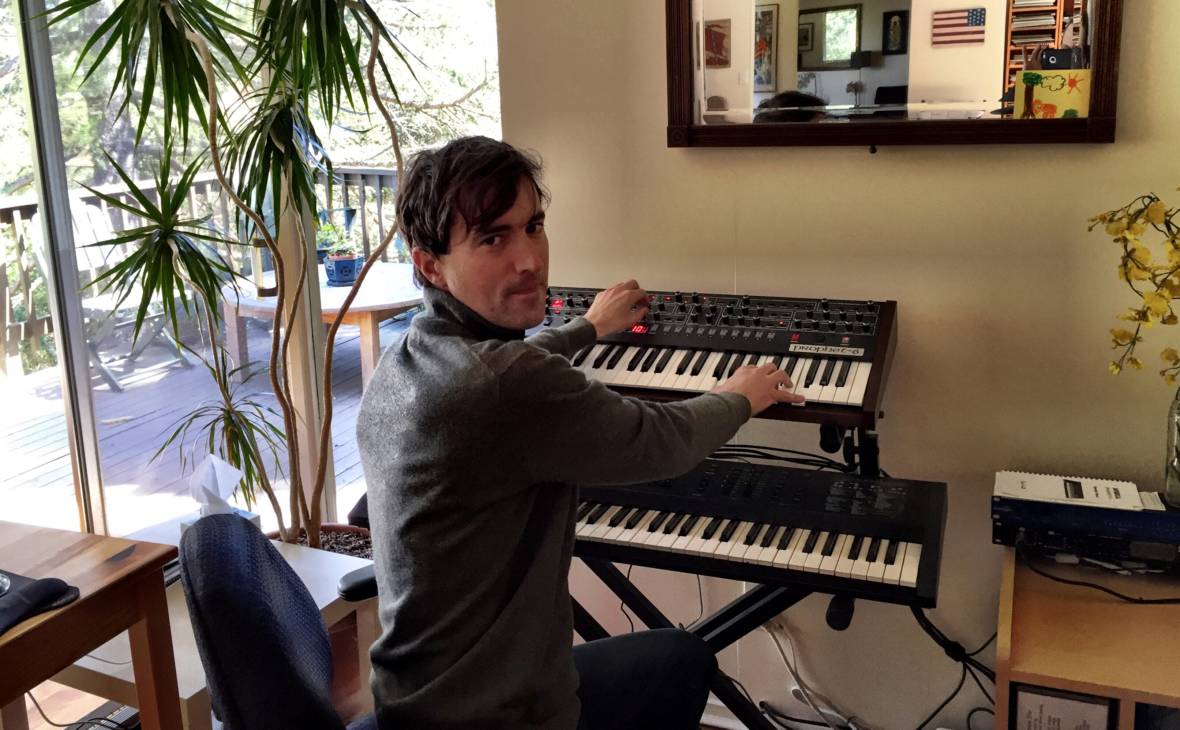
"caption": "Mason Bates working in his home studio",
"description": "Mason Bates working in his home studio",
"title": "Mason Bates working in his home studio",
"credit": "Photo: Cy Musiker/KQED",
"status": "inherit",
"isLoading": false,
"fetchFailed": false
},
"news_10939951": {
"type": "attachments",
"id": "news_10939951",
"meta": {
"index": "attachments_1716263798",
"site": "news",
"id": "10939951",
"found": true
},
"parent": 10939950,
"imgSizes": {
"twentyfourteen-full-width": {
"file": "https://ww2.kqed.org/app/uploads/sites/10/2016/04/gettyimages-456779986-edit_custom-ce8c5a655b61a87970e5a6911b9a9973e5836b75-1038x576.jpg",
"width": 1038,
"mimeType": "image/jpeg",
"height": 576
},
"thumbnail": {
"file": "https://ww2.kqed.org/app/uploads/sites/10/2016/04/gettyimages-456779986-edit_custom-ce8c5a655b61a87970e5a6911b9a9973e5836b75-400x250.jpg",
"width": 400,
"mimeType": "image/jpeg",
"height": 250
},
"fd-sm": {
"file": "https://ww2.kqed.org/app/uploads/sites/10/2016/04/gettyimages-456779986-edit_custom-ce8c5a655b61a87970e5a6911b9a9973e5836b75-960x601.jpg",
"width": 960,
"mimeType": "image/jpeg",
"height": 601
},
"post-thumbnail": {
"file": "https://ww2.kqed.org/app/uploads/sites/10/2016/04/gettyimages-456779986-edit_custom-ce8c5a655b61a87970e5a6911b9a9973e5836b75-672x372.jpg",
"width": 672,
"mimeType": "image/jpeg",
"height": 372
},
"kqedFullSize": {
"file": "https://ww2.kqed.org/app/uploads/sites/10/2016/04/gettyimages-456779986-edit_custom-ce8c5a655b61a87970e5a6911b9a9973e5836b75.jpg",
"width": 3000,
"height": 1877
},
"large": {
"file": "https://ww2.kqed.org/app/uploads/sites/10/2016/04/gettyimages-456779986-edit_custom-ce8c5a655b61a87970e5a6911b9a9973e5836b75-1920x1201.jpg",
"width": 1920,
"mimeType": "image/jpeg",
"height": 1201
},
"guest-author-96": {
"file": "https://ww2.kqed.org/app/uploads/sites/10/2016/04/gettyimages-456779986-edit_custom-ce8c5a655b61a87970e5a6911b9a9973e5836b75-96x96.jpg",
"width": 96,
"mimeType": "image/jpeg",
"height": 96
},
"medium": {
"file": "https://ww2.kqed.org/app/uploads/sites/10/2016/04/gettyimages-456779986-edit_custom-ce8c5a655b61a87970e5a6911b9a9973e5836b75-800x501.jpg",
"width": 800,
"mimeType": "image/jpeg",
"height": 501
},
"guest-author-64": {
"file": "https://ww2.kqed.org/app/uploads/sites/10/2016/04/gettyimages-456779986-edit_custom-ce8c5a655b61a87970e5a6911b9a9973e5836b75-64x64.jpg",
"width": 64,
"mimeType": "image/jpeg",
"height": 64
},
"guest-author-32": {
"file": "https://ww2.kqed.org/app/uploads/sites/10/2016/04/gettyimages-456779986-edit_custom-ce8c5a655b61a87970e5a6911b9a9973e5836b75-32x32.jpg",
"width": 32,
"mimeType": "image/jpeg",
"height": 32
},
"jmtc-small-thumb": {
"file": "https://ww2.kqed.org/app/uploads/sites/10/2016/04/gettyimages-456779986-edit_custom-ce8c5a655b61a87970e5a6911b9a9973e5836b75-280x150.jpg",
"width": 280,
"mimeType": "image/jpeg",
"height": 150
},
"fd-lrg": {
"file": "https://ww2.kqed.org/app/uploads/sites/10/2016/04/gettyimages-456779986-edit_custom-ce8c5a655b61a87970e5a6911b9a9973e5836b75-1920x1201.jpg",
"width": 1920,
"mimeType": "image/jpeg",
"height": 1201
},
"fd-med": {
"file": "https://ww2.kqed.org/app/uploads/sites/10/2016/04/gettyimages-456779986-edit_custom-ce8c5a655b61a87970e5a6911b9a9973e5836b75-1180x738.jpg",
"width": 1180,
"mimeType": "image/jpeg",
"height": 738
},
"detail": {
"file": "https://ww2.kqed.org/app/uploads/sites/10/2016/04/gettyimages-456779986-edit_custom-ce8c5a655b61a87970e5a6911b9a9973e5836b75-75x75.jpg",
"width": 75,
"mimeType": "image/jpeg",
"height": 75
},
"guest-author-128": {
"file": "https://ww2.kqed.org/app/uploads/sites/10/2016/04/gettyimages-456779986-edit_custom-ce8c5a655b61a87970e5a6911b9a9973e5836b75-128x128.jpg",
"width": 128,
"mimeType": "image/jpeg",
"height": 128
}
},
"publishDate": 1461685206,
"modified": 1461685206,
"caption": null,
"description": "A fare summary on the Uber app in the car of an UberX driver in Washington, D.C.",
"title": "A fare summary on the Uber app in the car of an UberX driver in Washington, D.C.",
"credit": null,
"status": "inherit",
"isLoading": false,
"fetchFailed": false
},
"news_10936475": {
"type": "attachments",
"id": "news_10936475",
"meta": {
"index": "attachments_1716263798",
"site": "news",
"id": "10936475",
"found": true
},
"parent": 10936129,
"imgSizes": {
"twentyfourteen-full-width": {
"file": "https://ww2.kqed.org/app/uploads/sites/10/2016/04/TechOffice-1038x576.jpg",
"width": 1038,
"mimeType": "image/jpeg",
"height": 576
},
"thumbnail": {
"file": "https://ww2.kqed.org/app/uploads/sites/10/2016/04/TechOffice-400x262.jpg",
"width": 400,
"mimeType": "image/jpeg",
"height": 262
},
"fd-sm": {
"file": "https://ww2.kqed.org/app/uploads/sites/10/2016/04/TechOffice-960x628.jpg",
"width": 960,
"mimeType": "image/jpeg",
"height": 628
},
"post-thumbnail": {
"file": "https://ww2.kqed.org/app/uploads/sites/10/2016/04/TechOffice-672x372.jpg",
"width": 672,
"mimeType": "image/jpeg",
"height": 372
},
"kqedFullSize": {
"file": "https://ww2.kqed.org/app/uploads/sites/10/2016/04/TechOffice.jpg",
"width": 1920,
"height": 1256
},
"large": {
"file": "https://ww2.kqed.org/app/uploads/sites/10/2016/04/TechOffice-1920x1256.jpg",
"width": 1920,
"mimeType": "image/jpeg",
"height": 1256
},
"guest-author-96": {
"file": "https://ww2.kqed.org/app/uploads/sites/10/2016/04/TechOffice-96x96.jpg",
"width": 96,
"mimeType": "image/jpeg",
"height": 96
},
"medium": {
"file": "https://ww2.kqed.org/app/uploads/sites/10/2016/04/TechOffice-800x523.jpg",
"width": 800,
"mimeType": "image/jpeg",
"height": 523
},
"guest-author-64": {
"file": "https://ww2.kqed.org/app/uploads/sites/10/2016/04/TechOffice-64x64.jpg",
"width": 64,
"mimeType": "image/jpeg",
"height": 64
},
"guest-author-32": {
"file": "https://ww2.kqed.org/app/uploads/sites/10/2016/04/TechOffice-32x32.jpg",
"width": 32,
"mimeType": "image/jpeg",
"height": 32
},
"jmtc-small-thumb": {
"file": "https://ww2.kqed.org/app/uploads/sites/10/2016/04/TechOffice-280x150.jpg",
"width": 280,
"mimeType": "image/jpeg",
"height": 150
},
"fd-lrg": {
"file": "https://ww2.kqed.org/app/uploads/sites/10/2016/04/TechOffice-1920x1256.jpg",
"width": 1920,
"mimeType": "image/jpeg",
"height": 1256
},
"fd-med": {
"file": "https://ww2.kqed.org/app/uploads/sites/10/2016/04/TechOffice-1180x772.jpg",
"width": 1180,
"mimeType": "image/jpeg",
"height": 772
},
"detail": {
"file": "https://ww2.kqed.org/app/uploads/sites/10/2016/04/TechOffice-75x75.jpg",
"width": 75,
"mimeType": "image/jpeg",
"height": 75
},
"guest-author-128": {
"file": "https://ww2.kqed.org/app/uploads/sites/10/2016/04/TechOffice-128x128.jpg",
"width": 128,
"mimeType": "image/jpeg",
"height": 128
}
},
"publishDate": 1461290054,
"modified": 1461290207,
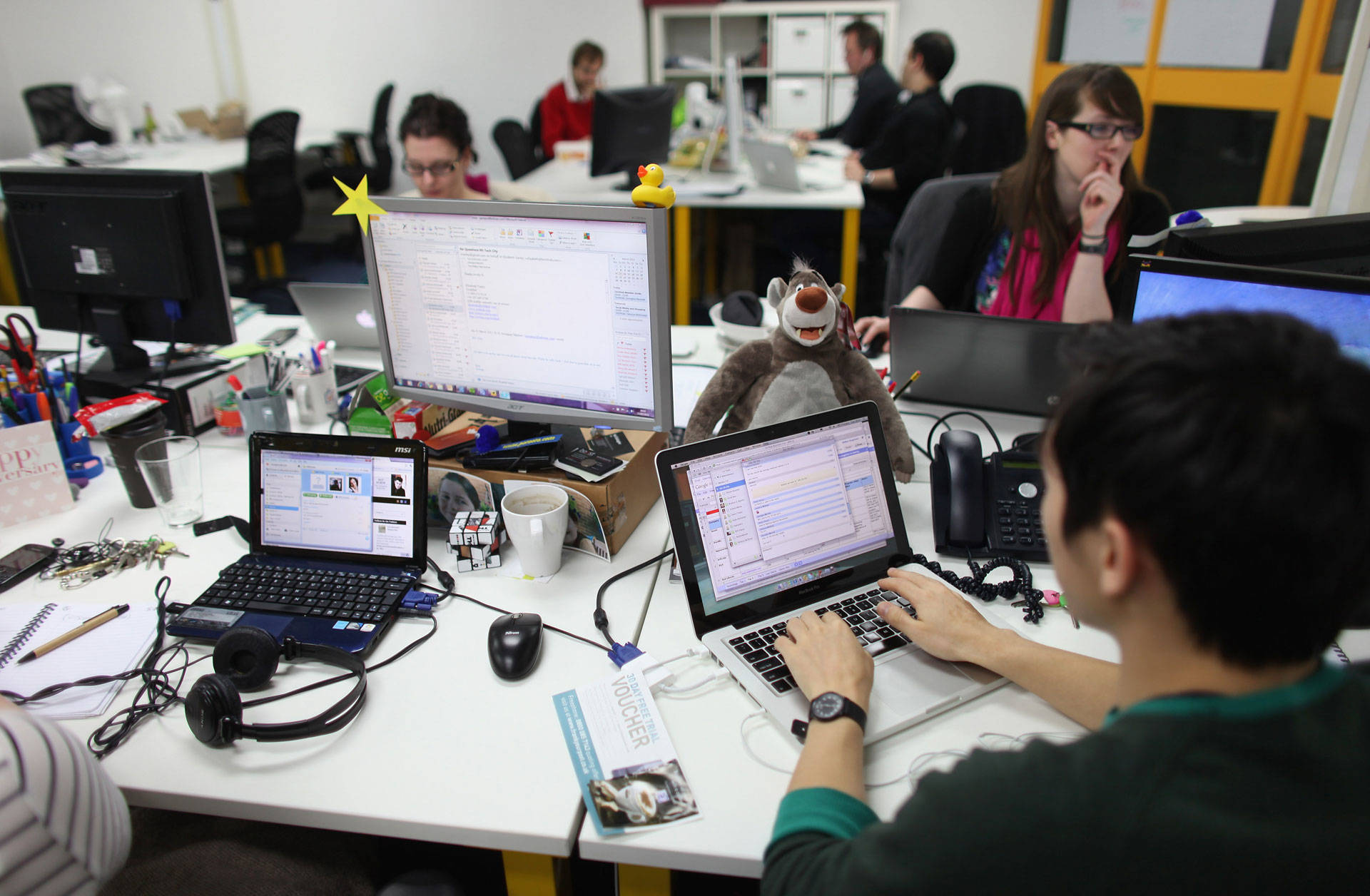
"caption": "People work at an office space for startup entrepreneurs.",
"description": "People work at an office space for startup entrepreneurs.",
"title": "TechOffice",
"credit": "Oli Scarff/Getty Images",
"status": "inherit",
"isLoading": false,
"fetchFailed": false
},
"news_10878394": {
"type": "attachments",
"id": "news_10878394",
"meta": {
"index": "attachments_1716263798",
"site": "news",
"id": "10878394",
"found": true
},
"parent": 10876772,
"imgSizes": {
"twentyfourteen-full-width": {
"file": "https://ww2.kqed.org/app/uploads/sites/10/2016/02/UberLyft-1038x576.jpg",
"width": 1038,
"mimeType": "image/jpeg",
"height": 576
},
"thumbnail": {
"file": "https://ww2.kqed.org/app/uploads/sites/10/2016/02/UberLyft-400x267.jpg",
"width": 400,
"mimeType": "image/jpeg",
"height": 267
},
"fd-sm": {
"file": "https://ww2.kqed.org/app/uploads/sites/10/2016/02/UberLyft-960x640.jpg",
"width": 960,
"mimeType": "image/jpeg",
"height": 640
},
"post-thumbnail": {
"file": "https://ww2.kqed.org/app/uploads/sites/10/2016/02/UberLyft-672x372.jpg",
"width": 672,
"mimeType": "image/jpeg",
"height": 372
},
"kqedFullSize": {
"file": "https://ww2.kqed.org/app/uploads/sites/10/2016/02/UberLyft.jpg",
"width": 1920,
"height": 1280
},
"large": {
"file": "https://ww2.kqed.org/app/uploads/sites/10/2016/02/UberLyft-1920x1280.jpg",
"width": 1920,
"mimeType": "image/jpeg",
"height": 1280
},
"guest-author-96": {
"file": "https://ww2.kqed.org/app/uploads/sites/10/2016/02/UberLyft-96x96.jpg",
"width": 96,
"mimeType": "image/jpeg",
"height": 96
},
"medium": {
"file": "https://ww2.kqed.org/app/uploads/sites/10/2016/02/UberLyft-800x533.jpg",
"width": 800,
"mimeType": "image/jpeg",
"height": 533
},
"guest-author-64": {
"file": "https://ww2.kqed.org/app/uploads/sites/10/2016/02/UberLyft-64x64.jpg",
"width": 64,
"mimeType": "image/jpeg",
"height": 64
},
"guest-author-32": {
"file": "https://ww2.kqed.org/app/uploads/sites/10/2016/02/UberLyft-32x32.jpg",
"width": 32,
"mimeType": "image/jpeg",
"height": 32
},
"jmtc-small-thumb": {
"file": "https://ww2.kqed.org/app/uploads/sites/10/2016/02/UberLyft-280x150.jpg",
"width": 280,
"mimeType": "image/jpeg",
"height": 150
},
"fd-lrg": {
"file": "https://ww2.kqed.org/app/uploads/sites/10/2016/02/UberLyft-1920x1280.jpg",
"width": 1920,
"mimeType": "image/jpeg",
"height": 1280
},
"fd-med": {
"file": "https://ww2.kqed.org/app/uploads/sites/10/2016/02/UberLyft-1180x787.jpg",
"width": 1180,
"mimeType": "image/jpeg",
"height": 787
},
"detail": {
"file": "https://ww2.kqed.org/app/uploads/sites/10/2016/02/UberLyft-75x75.jpg",
"width": 75,
"mimeType": "image/jpeg",
"height": 75
},
"guest-author-128": {
"file": "https://ww2.kqed.org/app/uploads/sites/10/2016/02/UberLyft-128x128.jpg",
"width": 128,
"mimeType": "image/jpeg",
"height": 128
}
},
"publishDate": 1456452077,
"modified": 1456452110,
"caption": "Adnan Aloudi, a full-time Uber and Lyft driver, drives through downtown San Francisco.",
"description": "Adnan Aloudi, a full-time Uber and Lyft driver, drives through downtown San Francisco.",
"title": "UberLyft",
"credit": "Ericka Cruz Guevarra/KQED",
"status": "inherit",
"isLoading": false,
"fetchFailed": false
},
"news_10936186": {
"type": "attachments",
"id": "news_10936186",
"meta": {
"index": "attachments_1716263798",
"site": "news",
"id": "10936186",
"found": true
},
"parent": 10936145,
"imgSizes": {
"twentyfourteen-full-width": {
"file": "https://ww2.kqed.org/app/uploads/sites/10/2016/04/RS16549_IMG_0588-qut-1038x576.jpg",
"width": 1038,
"mimeType": "image/jpeg",
"height": 576
},
"thumbnail": {
"file": "https://ww2.kqed.org/app/uploads/sites/10/2016/04/RS16549_IMG_0588-qut-400x267.jpg",
"width": 400,
"mimeType": "image/jpeg",
"height": 267
},
"fd-sm": {
"file": "https://ww2.kqed.org/app/uploads/sites/10/2016/04/RS16549_IMG_0588-qut-960x640.jpg",
"width": 960,
"mimeType": "image/jpeg",
"height": 640
},
"post-thumbnail": {
"file": "https://ww2.kqed.org/app/uploads/sites/10/2016/04/RS16549_IMG_0588-qut-672x372.jpg",
"width": 672,
"mimeType": "image/jpeg",
"height": 372
},
"kqedFullSize": {
"file": "https://ww2.kqed.org/app/uploads/sites/10/2016/04/RS16549_IMG_0588-qut.jpg",
"width": 1920,
"height": 1280
},
"large": {
"file": "https://ww2.kqed.org/app/uploads/sites/10/2016/04/RS16549_IMG_0588-qut-1920x1280.jpg",
"width": 1920,
"mimeType": "image/jpeg",
"height": 1280
},
"guest-author-96": {
"file": "https://ww2.kqed.org/app/uploads/sites/10/2016/04/RS16549_IMG_0588-qut-96x96.jpg",
"width": 96,
"mimeType": "image/jpeg",
"height": 96
},
"medium": {
"file": "https://ww2.kqed.org/app/uploads/sites/10/2016/04/RS16549_IMG_0588-qut-800x533.jpg",
"width": 800,
"mimeType": "image/jpeg",
"height": 533
},
"guest-author-64": {
"file": "https://ww2.kqed.org/app/uploads/sites/10/2016/04/RS16549_IMG_0588-qut-64x64.jpg",
"width": 64,
"mimeType": "image/jpeg",
"height": 64
},
"guest-author-32": {
"file": "https://ww2.kqed.org/app/uploads/sites/10/2016/04/RS16549_IMG_0588-qut-32x32.jpg",
"width": 32,
"mimeType": "image/jpeg",
"height": 32
},
"jmtc-small-thumb": {
"file": "https://ww2.kqed.org/app/uploads/sites/10/2016/04/RS16549_IMG_0588-qut-280x150.jpg",
"width": 280,
"mimeType": "image/jpeg",
"height": 150
},
"fd-lrg": {
"file": "https://ww2.kqed.org/app/uploads/sites/10/2016/04/RS16549_IMG_0588-qut-1920x1280.jpg",
"width": 1920,
"mimeType": "image/jpeg",
"height": 1280
},
"fd-med": {
"file": "https://ww2.kqed.org/app/uploads/sites/10/2016/04/RS16549_IMG_0588-qut-1180x787.jpg",
"width": 1180,
"mimeType": "image/jpeg",
"height": 787
},
"detail": {
"file": "https://ww2.kqed.org/app/uploads/sites/10/2016/04/RS16549_IMG_0588-qut-75x75.jpg",
"width": 75,
"mimeType": "image/jpeg",
"height": 75
},
"guest-author-128": {
"file": "https://ww2.kqed.org/app/uploads/sites/10/2016/04/RS16549_IMG_0588-qut-128x128.jpg",
"width": 128,
"mimeType": "image/jpeg",
"height": 128
}
},
"publishDate": 1461269931,
"modified": 1461359048,
"caption": "An Uber and Lyft driver in downtown San Francisco on Aug. 31, 2015",
"description": null,
"title": "RS16549_IMG_0588-qut",
"credit": "Ericka Cruz Guevarra/KQED",
"status": "inherit",
"isLoading": false,
"fetchFailed": false
},
"news_10837827": {
"type": "attachments",
"id": "news_10837827",
"meta": {
"index": "attachments_1716263798",
"site": "news",
"id": "10837827",
"found": true
},
"parent": 10837826,
"imgSizes": {
"twentyfourteen-full-width": {
"file": "https://ww2.kqed.org/app/uploads/sites/10/2016/01/gettyimages-485214396-a144d23b33860d51856ada896df191f9e3b8c77b-1038x576.jpg",
"width": 1038,
"mimeType": "image/jpeg",
"height": 576
},
"thumbnail": {
"file": "https://ww2.kqed.org/app/uploads/sites/10/2016/01/gettyimages-485214396-a144d23b33860d51856ada896df191f9e3b8c77b-400x300.jpg",
"width": 400,
"mimeType": "image/jpeg",
"height": 300
},
"fd-sm": {
"file": "https://ww2.kqed.org/app/uploads/sites/10/2016/01/gettyimages-485214396-a144d23b33860d51856ada896df191f9e3b8c77b-960x720.jpg",
"width": 960,
"mimeType": "image/jpeg",
"height": 720
},
"post-thumbnail": {
"file": "https://ww2.kqed.org/app/uploads/sites/10/2016/01/gettyimages-485214396-a144d23b33860d51856ada896df191f9e3b8c77b-672x372.jpg",
"width": 672,
"mimeType": "image/jpeg",
"height": 372
},
"kqedFullSize": {
"file": "https://ww2.kqed.org/app/uploads/sites/10/2016/01/gettyimages-485214396-a144d23b33860d51856ada896df191f9e3b8c77b.jpg",
"width": 1705,
"height": 1278
},
"large": {
"file": "https://ww2.kqed.org/app/uploads/sites/10/2016/01/gettyimages-485214396-a144d23b33860d51856ada896df191f9e3b8c77b-1440x1079.jpg",
"width": 1440,
"mimeType": "image/jpeg",
"height": 1079
},
"guest-author-96": {
"file": "https://ww2.kqed.org/app/uploads/sites/10/2016/01/gettyimages-485214396-a144d23b33860d51856ada896df191f9e3b8c77b-96x96.jpg",
"width": 96,
"mimeType": "image/jpeg",
"height": 96
},
"medium": {
"file": "https://ww2.kqed.org/app/uploads/sites/10/2016/01/gettyimages-485214396-a144d23b33860d51856ada896df191f9e3b8c77b-800x600.jpg",
"width": 800,
"mimeType": "image/jpeg",
"height": 600
},
"guest-author-64": {
"file": "https://ww2.kqed.org/app/uploads/sites/10/2016/01/gettyimages-485214396-a144d23b33860d51856ada896df191f9e3b8c77b-64x64.jpg",
"width": 64,
"mimeType": "image/jpeg",
"height": 64
},
"guest-author-32": {
"file": "https://ww2.kqed.org/app/uploads/sites/10/2016/01/gettyimages-485214396-a144d23b33860d51856ada896df191f9e3b8c77b-32x32.jpg",
"width": 32,
"mimeType": "image/jpeg",
"height": 32
},
"jmtc-small-thumb": {
"file": "https://ww2.kqed.org/app/uploads/sites/10/2016/01/gettyimages-485214396-a144d23b33860d51856ada896df191f9e3b8c77b-280x150.jpg",
"width": 280,
"mimeType": "image/jpeg",
"height": 150
},
"fd-med": {
"file": "https://ww2.kqed.org/app/uploads/sites/10/2016/01/gettyimages-485214396-a144d23b33860d51856ada896df191f9e3b8c77b-1180x884.jpg",
"width": 1180,
"mimeType": "image/jpeg",
"height": 884
},
"detail": {
"file": "https://ww2.kqed.org/app/uploads/sites/10/2016/01/gettyimages-485214396-a144d23b33860d51856ada896df191f9e3b8c77b-75x75.jpg",
"width": 75,
"mimeType": "image/jpeg",
"height": 75
},
"medium_large": {
"file": "https://ww2.kqed.org/app/uploads/sites/10/2016/01/gettyimages-485214396-a144d23b33860d51856ada896df191f9e3b8c77b-768x576.jpg",
"width": 768,
"mimeType": "image/jpeg",
"height": 576
},
"guest-author-128": {
"file": "https://ww2.kqed.org/app/uploads/sites/10/2016/01/gettyimages-485214396-a144d23b33860d51856ada896df191f9e3b8c77b-128x128.jpg",
"width": 128,
"mimeType": "image/jpeg",
"height": 128
}
},
"publishDate": 1453229952,
"modified": 1453244066,
"caption": "A car with Uber and Lyft stickers at Los Angeles International Airport. Uber dominates the fast-growing ride-hailing business. But Lyft is waging a spirited battle to keep up.",
"description": "A car with Uber and Lyft stickers at Los Angeles International Airport. Uber dominates the fast-growing ride-hailing business. But Lyft is waging a spirited battle to keep up.\u003cstrong>\u003c/strong>",
"title": "A car with Uber and Lyft stickers at Los Angeles International Airport. Uber dominates the fast-growing ride-hailing business. But Lyft is waging a spirited battle to keep up.",
"credit": "Al Seib/L.A. Times via Getty Images",
"status": "inherit",
"isLoading": false,
"fetchFailed": false
},
"news_10933716": {
"type": "attachments",
"id": "news_10933716",
"meta": {
"index": "attachments_1716263798",
"site": "news",
"id": "10933716",
"found": true
},
"parent": 10933715,
"imgSizes": {
"twentyfourteen-full-width": {
"file": "https://ww2.kqed.org/app/uploads/sites/10/2016/04/gettyimages-511896820-ac16d2b86495774e709e9ff8c250a7eda9536cf7-1038x576.jpg",
"width": 1038,
"mimeType": "image/jpeg",
"height": 576
},
"thumbnail": {
"file": "https://ww2.kqed.org/app/uploads/sites/10/2016/04/gettyimages-511896820-ac16d2b86495774e709e9ff8c250a7eda9536cf7-400x300.jpg",
"width": 400,
"mimeType": "image/jpeg",
"height": 300
},
"fd-sm": {
"file": "https://ww2.kqed.org/app/uploads/sites/10/2016/04/gettyimages-511896820-ac16d2b86495774e709e9ff8c250a7eda9536cf7-960x720.jpg",
"width": 960,
"mimeType": "image/jpeg",
"height": 720
},
"post-thumbnail": {
"file": "https://ww2.kqed.org/app/uploads/sites/10/2016/04/gettyimages-511896820-ac16d2b86495774e709e9ff8c250a7eda9536cf7-672x372.jpg",
"width": 672,
"mimeType": "image/jpeg",
"height": 372
},
"kqedFullSize": {
"file": "https://ww2.kqed.org/app/uploads/sites/10/2016/04/gettyimages-511896820-ac16d2b86495774e709e9ff8c250a7eda9536cf7.jpg",
"width": 2664,
"height": 1998
},
"large": {
"file": "https://ww2.kqed.org/app/uploads/sites/10/2016/04/gettyimages-511896820-ac16d2b86495774e709e9ff8c250a7eda9536cf7-1920x1440.jpg",
"width": 1920,
"mimeType": "image/jpeg",
"height": 1440
},
"guest-author-96": {
"file": "https://ww2.kqed.org/app/uploads/sites/10/2016/04/gettyimages-511896820-ac16d2b86495774e709e9ff8c250a7eda9536cf7-96x96.jpg",
"width": 96,
"mimeType": "image/jpeg",
"height": 96
},
"medium": {
"file": "https://ww2.kqed.org/app/uploads/sites/10/2016/04/gettyimages-511896820-ac16d2b86495774e709e9ff8c250a7eda9536cf7-800x600.jpg",
"width": 800,
"mimeType": "image/jpeg",
"height": 600
},
"guest-author-64": {
"file": "https://ww2.kqed.org/app/uploads/sites/10/2016/04/gettyimages-511896820-ac16d2b86495774e709e9ff8c250a7eda9536cf7-64x64.jpg",
"width": 64,
"mimeType": "image/jpeg",
"height": 64
},
"guest-author-32": {
"file": "https://ww2.kqed.org/app/uploads/sites/10/2016/04/gettyimages-511896820-ac16d2b86495774e709e9ff8c250a7eda9536cf7-32x32.jpg",
"width": 32,
"mimeType": "image/jpeg",
"height": 32
},
"jmtc-small-thumb": {
"file": "https://ww2.kqed.org/app/uploads/sites/10/2016/04/gettyimages-511896820-ac16d2b86495774e709e9ff8c250a7eda9536cf7-280x150.jpg",
"width": 280,
"mimeType": "image/jpeg",
"height": 150
},
"fd-lrg": {
"file": "https://ww2.kqed.org/app/uploads/sites/10/2016/04/gettyimages-511896820-ac16d2b86495774e709e9ff8c250a7eda9536cf7-1920x1440.jpg",
"width": 1920,
"mimeType": "image/jpeg",
"height": 1440
},
"fd-med": {
"file": "https://ww2.kqed.org/app/uploads/sites/10/2016/04/gettyimages-511896820-ac16d2b86495774e709e9ff8c250a7eda9536cf7-1180x885.jpg",
"width": 1180,
"mimeType": "image/jpeg",
"height": 885
},
"detail": {
"file": "https://ww2.kqed.org/app/uploads/sites/10/2016/04/gettyimages-511896820-ac16d2b86495774e709e9ff8c250a7eda9536cf7-75x75.jpg",
"width": 75,
"mimeType": "image/jpeg",
"height": 75
},
"guest-author-128": {
"file": "https://ww2.kqed.org/app/uploads/sites/10/2016/04/gettyimages-511896820-ac16d2b86495774e709e9ff8c250a7eda9536cf7-128x128.jpg",
"width": 128,
"mimeType": "image/jpeg",
"height": 128
}
},
"publishDate": 1461085853,
"modified": 1461085853,
"caption": null,
"description": "The official FBI seal is seen on an iPhone camera screen outside the agency's headquarters. With help from a third party, the FBI managed to unlock the iPhone used by one of San Bernardino shoote",
"title": "The official FBI seal is seen on an iPhone camera screen outside the agency's headquarters. With help from a third party, the FBI managed to unlock the iPhone used by one of San Bernardino shooters.",
"credit": null,
"status": "inherit",
"isLoading": false,
"fetchFailed": false
},
"news_10933762": {
"type": "attachments",
"id": "news_10933762",
"meta": {
"index": "attachments_1716263798",
"site": "news",
"id": "10933762",
"found": true
},
"parent": 10920890,
"imgSizes": {
"twentyfourteen-full-width": {
"file": "https://ww2.kqed.org/app/uploads/sites/10/2016/04/GettyImages-507915110-e1459904624529-1038x576.jpg",
"width": 1038,
"mimeType": "image/jpeg",
"height": 576
},
"thumbnail": {
"file": "https://ww2.kqed.org/app/uploads/sites/10/2016/04/GettyImages-507915110-e1459904624529-400x267.jpg",
"width": 400,
"mimeType": "image/jpeg",
"height": 267
},
"fd-sm": {
"file": "https://ww2.kqed.org/app/uploads/sites/10/2016/04/GettyImages-507915110-e1459904624529-960x640.jpg",
"width": 960,
"mimeType": "image/jpeg",
"height": 640
},
"post-thumbnail": {
"file": "https://ww2.kqed.org/app/uploads/sites/10/2016/04/GettyImages-507915110-e1459904624529-672x372.jpg",
"width": 672,
"mimeType": "image/jpeg",
"height": 372
},
"kqedFullSize": {
"file": "https://ww2.kqed.org/app/uploads/sites/10/2016/04/GettyImages-507915110-e1459904624529.jpg",
"width": 1920,
"height": 1280
},
"large": {
"file": "https://ww2.kqed.org/app/uploads/sites/10/2016/04/GettyImages-507915110-e1459904624529-1920x1280.jpg",
"width": 1920,
"mimeType": "image/jpeg",
"height": 1280
},
"guest-author-96": {
"file": "https://ww2.kqed.org/app/uploads/sites/10/2016/04/GettyImages-507915110-e1459904624529-96x96.jpg",
"width": 96,
"mimeType": "image/jpeg",
"height": 96
},
"medium": {
"file": "https://ww2.kqed.org/app/uploads/sites/10/2016/04/GettyImages-507915110-e1459904624529-800x533.jpg",
"width": 800,
"mimeType": "image/jpeg",
"height": 533
},
"guest-author-64": {
"file": "https://ww2.kqed.org/app/uploads/sites/10/2016/04/GettyImages-507915110-e1459904624529-64x64.jpg",
"width": 64,
"mimeType": "image/jpeg",
"height": 64
},
"guest-author-32": {
"file": "https://ww2.kqed.org/app/uploads/sites/10/2016/04/GettyImages-507915110-e1459904624529-32x32.jpg",
"width": 32,
"mimeType": "image/jpeg",
"height": 32
},
"jmtc-small-thumb": {
"file": "https://ww2.kqed.org/app/uploads/sites/10/2016/04/GettyImages-507915110-e1459904624529-280x150.jpg",
"width": 280,
"mimeType": "image/jpeg",
"height": 150
},
"fd-lrg": {
"file": "https://ww2.kqed.org/app/uploads/sites/10/2016/04/GettyImages-507915110-e1459904624529-1920x1280.jpg",
"width": 1920,
"mimeType": "image/jpeg",
"height": 1280
},
"fd-med": {
"file": "https://ww2.kqed.org/app/uploads/sites/10/2016/04/GettyImages-507915110-e1459904624529-1180x787.jpg",
"width": 1180,
"mimeType": "image/jpeg",
"height": 787
},
"detail": {
"file": "https://ww2.kqed.org/app/uploads/sites/10/2016/04/GettyImages-507915110-e1459904624529-75x75.jpg",
"width": 75,
"mimeType": "image/jpeg",
"height": 75
},
"guest-author-128": {
"file": "https://ww2.kqed.org/app/uploads/sites/10/2016/04/GettyImages-507915110-e1459904624529-128x128.jpg",
"width": 128,
"mimeType": "image/jpeg",
"height": 128
}
},
"publishDate": 1461088004,
"modified": 1548195689,
"caption": "Uber drivers protest the company's fare cuts and go on strike in front of the car service's New York offices on Feb. 1, 2016.",
"description": "Uber drivers protest the company's recent fare cuts and go on strike in front of the car service's New York offices on February 1, 2016 in New York City. ",
"title": "New York Uber Drivers Protest Rate Cuts",
"credit": "Spencer Platt/Getty Images",
"status": "inherit",
"isLoading": false,
"fetchFailed": false
},
"science_637197": {
"type": "attachments",
"id": "science_637197",
"meta": {
"index": "attachments_1716263798",
"site": "science",
"id": "637197",
"found": true
},
"parent": 637185,
"imgSizes": {
"thumbnail": {
"file": "https://ww2.kqed.org/app/uploads/sites/35/2016/04/keplertelescope-400x225.jpg",
"width": 400,
"mimeType": "image/jpeg",
"height": 225
},
"post-thumbnail": {
"file": "https://ww2.kqed.org/app/uploads/sites/35/2016/04/keplertelescope-672x372.jpg",
"width": 672,
"mimeType": "image/jpeg",
"height": 372
},
"kqedFullSize": {
"file": "https://ww2.kqed.org/app/uploads/sites/35/2016/04/keplertelescope.jpg",
"width": 800,
"height": 450
},
"guest-author-96": {
"file": "https://ww2.kqed.org/app/uploads/sites/35/2016/04/keplertelescope-96x96.jpg",
"width": 96,
"mimeType": "image/jpeg",
"height": 96
},
"medium": {
"file": "https://ww2.kqed.org/app/uploads/sites/35/2016/04/keplertelescope-800x450.jpg",
"width": 800,
"mimeType": "image/jpeg",
"height": 450
},
"guest-author-64": {
"file": "https://ww2.kqed.org/app/uploads/sites/35/2016/04/keplertelescope-64x64.jpg",
"width": 64,
"mimeType": "image/jpeg",
"height": 64
},
"detail": {
"file": "https://ww2.kqed.org/app/uploads/sites/35/2016/04/keplertelescope-75x75.jpg",
"width": 75,
"mimeType": "image/jpeg",
"height": 75
},
"guest-author-32": {
"file": "https://ww2.kqed.org/app/uploads/sites/35/2016/04/keplertelescope-32x32.jpg",
"width": 32,
"mimeType": "image/jpeg",
"height": 32
},
"medium_large": {
"file": "https://ww2.kqed.org/app/uploads/sites/35/2016/04/keplertelescope-768x432.jpg",
"width": 768,
"mimeType": "image/jpeg",
"height": 432
},
"guest-author-128": {
"file": "https://ww2.kqed.org/app/uploads/sites/35/2016/04/keplertelescope-128x128.jpg",
"width": 128,
"mimeType": "image/jpeg",
"height": 128
}
},
"publishDate": 1460565433,
"modified": 1460565545,
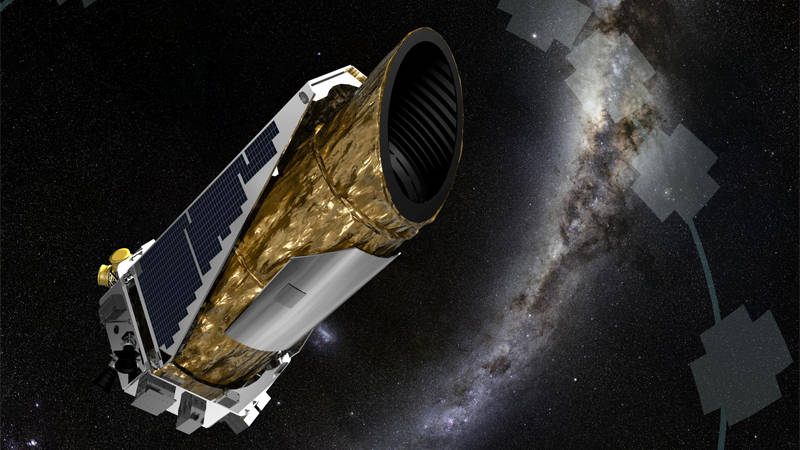
"caption": "Artist concept of the exoplanet-hunting Kepler space telescope sweeping its focus across the sky in search of exoplanets using the gravitational microlensing technique. ",
"description": "Artist concept of the exoplanet-hunting Kepler space telescope sweeping its focus across the sky in search of exoplanets using the gravitational microlensing technique. ",
"title": "keplertelescope",
"credit": "NASA/Ames/JPL-Caltech",
"status": "inherit",
"isLoading": false,
"fetchFailed": false
},
"news_10927000": {
"type": "attachments",
"id": "news_10927000",
"meta": {
"index": "attachments_1716263798",
"site": "news",
"id": "10927000",
"found": true
},
"parent": 10926999,
"imgSizes": {
"twentyfourteen-full-width": {
"file": "https://ww2.kqed.org/app/uploads/sites/10/2016/04/gettyimages-511823939_custom-596d511e21c839cccf20c53e523d2de43b4373e3-1038x576.jpg",
"width": 1038,
"mimeType": "image/jpeg",
"height": 576
},
"thumbnail": {
"file": "https://ww2.kqed.org/app/uploads/sites/10/2016/04/gettyimages-511823939_custom-596d511e21c839cccf20c53e523d2de43b4373e3-400x278.jpg",
"width": 400,
"mimeType": "image/jpeg",
"height": 278
},
"fd-sm": {
"file": "https://ww2.kqed.org/app/uploads/sites/10/2016/04/gettyimages-511823939_custom-596d511e21c839cccf20c53e523d2de43b4373e3-960x668.jpg",
"width": 960,
"mimeType": "image/jpeg",
"height": 668
},
"post-thumbnail": {
"file": "https://ww2.kqed.org/app/uploads/sites/10/2016/04/gettyimages-511823939_custom-596d511e21c839cccf20c53e523d2de43b4373e3-672x372.jpg",
"width": 672,
"mimeType": "image/jpeg",
"height": 372
},
"kqedFullSize": {
"file": "https://ww2.kqed.org/app/uploads/sites/10/2016/04/gettyimages-511823939_custom-596d511e21c839cccf20c53e523d2de43b4373e3.jpg",
"width": 3000,
"height": 2086
},
"large": {
"file": "https://ww2.kqed.org/app/uploads/sites/10/2016/04/gettyimages-511823939_custom-596d511e21c839cccf20c53e523d2de43b4373e3-1920x1335.jpg",
"width": 1920,
"mimeType": "image/jpeg",
"height": 1335
},
"guest-author-96": {
"file": "https://ww2.kqed.org/app/uploads/sites/10/2016/04/gettyimages-511823939_custom-596d511e21c839cccf20c53e523d2de43b4373e3-96x96.jpg",
"width": 96,
"mimeType": "image/jpeg",
"height": 96
},
"medium": {
"file": "https://ww2.kqed.org/app/uploads/sites/10/2016/04/gettyimages-511823939_custom-596d511e21c839cccf20c53e523d2de43b4373e3-800x556.jpg",
"width": 800,
"mimeType": "image/jpeg",
"height": 556
},
"guest-author-64": {
"file": "https://ww2.kqed.org/app/uploads/sites/10/2016/04/gettyimages-511823939_custom-596d511e21c839cccf20c53e523d2de43b4373e3-64x64.jpg",
"width": 64,
"mimeType": "image/jpeg",
"height": 64
},
"guest-author-32": {
"file": "https://ww2.kqed.org/app/uploads/sites/10/2016/04/gettyimages-511823939_custom-596d511e21c839cccf20c53e523d2de43b4373e3-32x32.jpg",
"width": 32,
"mimeType": "image/jpeg",
"height": 32
},
"jmtc-small-thumb": {
"file": "https://ww2.kqed.org/app/uploads/sites/10/2016/04/gettyimages-511823939_custom-596d511e21c839cccf20c53e523d2de43b4373e3-280x150.jpg",
"width": 280,
"mimeType": "image/jpeg",
"height": 150
},
"fd-lrg": {
"file": "https://ww2.kqed.org/app/uploads/sites/10/2016/04/gettyimages-511823939_custom-596d511e21c839cccf20c53e523d2de43b4373e3-1920x1335.jpg",
"width": 1920,
"mimeType": "image/jpeg",
"height": 1335
},
"fd-med": {
"file": "https://ww2.kqed.org/app/uploads/sites/10/2016/04/gettyimages-511823939_custom-596d511e21c839cccf20c53e523d2de43b4373e3-1180x820.jpg",
"width": 1180,
"mimeType": "image/jpeg",
"height": 820
},
"detail": {
"file": "https://ww2.kqed.org/app/uploads/sites/10/2016/04/gettyimages-511823939_custom-596d511e21c839cccf20c53e523d2de43b4373e3-75x75.jpg",
"width": 75,
"mimeType": "image/jpeg",
"height": 75
},
"guest-author-128": {
"file": "https://ww2.kqed.org/app/uploads/sites/10/2016/04/gettyimages-511823939_custom-596d511e21c839cccf20c53e523d2de43b4373e3-128x128.jpg",
"width": 128,
"mimeType": "image/jpeg",
"height": 128
}
},
"publishDate": 1460439926,
"modified": 1610403130,
"caption": "Feel like you're being inundated with scammy requests for personal financial details in exchange for a package or even COVID-19 vaccine? That's because you are, and it's happening to just about everyone with a phone or computer.",
"description": "Feel like you're being inundated with scammy requests for personal financial details in exchange for a package or even covid-19 vaccine? That's because you are, and it's happening to just about everyone with a phone or computer.",
"title": "A real-life tax scam: This is what IRS phone fraud sounds like.",
"credit": "Getty Images",
"status": "inherit",
"altTag": "Feel like you're being inundated with scammy requests for personal financial details in exchange for a package or even covid-19 vaccine? That's because you are, and it's happening to just about everyone with a phone or computer.",
"isLoading": false,
"fetchFailed": false
},
"stateofhealth_171558": {
"type": "attachments",
"id": "stateofhealth_171558",
"meta": {
"index": "attachments_1716263798",
"site": "stateofhealth",
"id": "171558",
"found": true
},
"parent": 171532,
"imgSizes": {
"twentyfourteen-full-width": {
"file": "https://ww2.kqed.org/app/uploads/sites/27/2016/04/iStock_000071683027_Large-1038x576.jpg",
"width": 1038,
"mimeType": "image/jpeg",
"height": 576
},
"thumbnail": {
"file": "https://ww2.kqed.org/app/uploads/sites/27/2016/04/iStock_000071683027_Large-400x184.jpg",
"width": 400,
"mimeType": "image/jpeg",
"height": 184
},
"fd-sm": {
"file": "https://ww2.kqed.org/app/uploads/sites/27/2016/04/iStock_000071683027_Large-960x442.jpg",
"width": 960,
"mimeType": "image/jpeg",
"height": 442
},
"post-thumbnail": {
"file": "https://ww2.kqed.org/app/uploads/sites/27/2016/04/iStock_000071683027_Large-672x372.jpg",
"width": 672,
"mimeType": "image/jpeg",
"height": 372
},
"kqedFullSize": {
"file": "https://ww2.kqed.org/app/uploads/sites/27/2016/04/iStock_000071683027_Large-e1460427279115.jpg",
"width": 1921,
"height": 884
},
"large": {
"file": "https://ww2.kqed.org/app/uploads/sites/27/2016/04/iStock_000071683027_Large-1440x663.jpg",
"width": 1440,
"mimeType": "image/jpeg",
"height": 663
},
"guest-author-96": {
"file": "https://ww2.kqed.org/app/uploads/sites/27/2016/04/iStock_000071683027_Large-96x96.jpg",
"width": 96,
"mimeType": "image/jpeg",
"height": 96
},
"medium": {
"file": "https://ww2.kqed.org/app/uploads/sites/27/2016/04/iStock_000071683027_Large-800x368.jpg",
"width": 800,
"mimeType": "image/jpeg",
"height": 368
},
"guest-author-64": {
"file": "https://ww2.kqed.org/app/uploads/sites/27/2016/04/iStock_000071683027_Large-64x64.jpg",
"width": 64,
"mimeType": "image/jpeg",
"height": 64
},
"guest-author-32": {
"file": "https://ww2.kqed.org/app/uploads/sites/27/2016/04/iStock_000071683027_Large-32x32.jpg",
"width": 32,
"mimeType": "image/jpeg",
"height": 32
},
"jmtc-small-thumb": {
"file": "https://ww2.kqed.org/app/uploads/sites/27/2016/04/iStock_000071683027_Large-280x150.jpg",
"width": 280,
"mimeType": "image/jpeg",
"height": 150
},
"fd-lrg": {
"file": "https://ww2.kqed.org/app/uploads/sites/27/2016/04/iStock_000071683027_Large-1920x884.jpg",
"width": 1920,
"mimeType": "image/jpeg",
"height": 884
},
"fd-med": {
"file": "https://ww2.kqed.org/app/uploads/sites/27/2016/04/iStock_000071683027_Large-1180x543.jpg",
"width": 1180,
"mimeType": "image/jpeg",
"height": 543
},
"detail": {
"file": "https://ww2.kqed.org/app/uploads/sites/27/2016/04/iStock_000071683027_Large-75x75.jpg",
"width": 75,
"mimeType": "image/jpeg",
"height": 75
},
"medium_large": {
"file": "https://ww2.kqed.org/app/uploads/sites/27/2016/04/iStock_000071683027_Large-768x353.jpg",
"width": 768,
"mimeType": "image/jpeg",
"height": 353
},
"guest-author-128": {
"file": "https://ww2.kqed.org/app/uploads/sites/27/2016/04/iStock_000071683027_Large-128x128.jpg",
"width": 128,
"mimeType": "image/jpeg",
"height": 128
}
},
"publishDate": 1460427268,
"modified": 1460427300,
"caption": null,
"description": "source code, computer code, IT system",
"title": "iStock_000071683027_Large",
"credit": "iStockphoto",
"status": "inherit",
"isLoading": false,
"fetchFailed": false
}
},
"audioPlayerReducer": {
"postId": "stream_live",
"isPaused": true,
"isPlaying": false,
"pfsActive": false,
"pledgeModalIsOpen": true,
"playerDrawerIsOpen": false,
"liveAudioPlayStartedAt": 0,
"liveAudioPlayContext": ""
},
"authorsReducer": {
"byline_news_10939950": {
"type": "authors",
"id": "byline_news_10939950",
"meta": {
"override": true
},
"slug": "byline_news_10939950",
"name": "\u003cstrong>Aarti Shahani\u003c/strong> and \u003cstrong>Alina Selyukh\u003cbr />NPR\u003c/strong>",
"isLoading": false
},
"byline_news_10933715": {
"type": "authors",
"id": "byline_news_10933715",
"meta": {
"override": true
},
"slug": "byline_news_10933715",
"name": "NPR Staff",
"isLoading": false
},
"byline_news_10926999": {
"type": "authors",
"id": "byline_news_10926999",
"meta": {
"override": true
},
"slug": "byline_news_10926999",
"name": "\u003cstrong>\u003ca href=\"http://www.npr.org/people/348730771/aarti-shahani\" target=\"_blank\">Aarti Shahani\u003cbr />NPR\u003c/strong>",
"isLoading": false
},
"byline_stateofhealth_171532": {
"type": "authors",
"id": "byline_stateofhealth_171532",
"meta": {
"override": true
},
"slug": "byline_stateofhealth_171532",
"name": "Russ Mitchell\u003cbr />\u003ca href=\"http://californiahealthline.org/\">California Healthline\u003c/a>",
"isLoading": false
},
"cmusiker": {
"type": "authors",
"id": "32",
"meta": {
"index": "authors_1716337520",
"id": "32",
"found": true
},
"name": "Cy Musiker",
"firstName": "Cy",
"lastName": "Musiker",
"slug": "cmusiker",
"email": "cmusiker@kqed.org",
"display_author_email": false,
"staff_mastheads": [],
"title": "KQED Contributor",
"bio": "Cy Musiker is a former co-host of The Do List and a former reporter covering the arts for KQED News and The California Report. He loves live performance, especially great theater, jazz, roots music, anything by Mahler. Cy has an MJ from UC Berkeley's School of Journalism, and got his BA from Hampshire College. His work has been recognized by the Society for Professional Journalists with their Sigma Delta Chi Award for Public Service in Journalism. When he can, Cy likes to swim in Tomales Bay, run with his dog in the East Bay Hills, and hike the Sierra.",
"avatar": "https://secure.gravatar.com/avatar/05eaba5c5696ce8f062e4ea2df428a43?s=600&d=blank&r=g",
"twitter": null,
"facebook": null,
"instagram": null,
"linkedin": null,
"sites": [
{
"site": "arts",
"roles": [
"Contributor",
"subscriber"
]
},
{
"site": "news",
"roles": [
"author"
]
},
{
"site": "bayareabites",
"roles": [
"contributor"
]
}
],
"headData": {
"title": "Cy Musiker | KQED",
"description": "KQED Contributor",
"ogImgSrc": "https://secure.gravatar.com/avatar/05eaba5c5696ce8f062e4ea2df428a43?s=600&d=blank&r=g",
"twImgSrc": "https://secure.gravatar.com/avatar/05eaba5c5696ce8f062e4ea2df428a43?s=600&d=blank&r=g"
},
"isLoading": false,
"link": "/author/cmusiker"
},
"lisapickoffwhite-2": {
"type": "authors",
"id": "199",
"meta": {
"index": "authors_1716337520",
"id": "199",
"found": true
},
"name": "Lisa Pickoff-White",
"firstName": "Lisa",
"lastName": "Pickoff-White",
"slug": "lisapickoffwhite-2",
"email": "lpickoffwhite@kqed.org",
"display_author_email": false,
"staff_mastheads": [
"news"
],
"title": "Data Journalist, Senior Producer",
"bio": "Lisa Pickoff-White is KQED's data reporter. Lisa specializes in simplifying complex topics and bringing them to life through compelling visuals, including photography and data visualizations. She previously has worked at the Center for Investigative Reporting and other national outlets. Her work has been honored with awards from the Online News Association, Investigative Reporters and Editors, the Society of Professional Journalists and SXSW Interactive. \u003cstrong> \u003c/strong>",
"avatar": "https://secure.gravatar.com/avatar/5513c5f3967df792aa65bee2501e84d6?s=600&d=blank&r=g",
"twitter": "pickoffwhite",
"facebook": null,
"instagram": null,
"linkedin": null,
"sites": [
{
"site": "",
"roles": [
"editor"
]
},
{
"site": "arts",
"roles": []
},
{
"site": "news",
"roles": [
"administrator"
]
},
{
"site": "about",
"roles": [
"editor"
]
},
{
"site": "stateofhealth",
"roles": [
"administrator"
]
},
{
"site": "science",
"roles": [
"editor"
]
},
{
"site": "quest",
"roles": [
"editor"
]
},
{
"site": "forum",
"roles": [
"editor"
]
}
],
"headData": {
"title": "Lisa Pickoff-White | KQED",
"description": "Data Journalist, Senior Producer",
"ogImgSrc": "https://secure.gravatar.com/avatar/5513c5f3967df792aa65bee2501e84d6?s=600&d=blank&r=g",
"twImgSrc": "https://secure.gravatar.com/avatar/5513c5f3967df792aa65bee2501e84d6?s=600&d=blank&r=g"
},
"isLoading": false,
"link": "/author/lisapickoffwhite-2"
},
"bgoebel": {
"type": "authors",
"id": "214",
"meta": {
"index": "authors_1716337520",
"id": "214",
"found": true
},
"name": "Bryan Goebel",
"firstName": "Bryan",
"lastName": "Goebel",
"slug": "bgoebel",
"email": "bgoebel@kqed.org",
"display_author_email": false,
"staff_mastheads": [],
"title": null,
"bio": "Bryan Goebel is a reporter focused on transportation and housing issues. He was previously the editor of Streetsblog San Francisco, and an anchor/editor at KCBS Radio. He's a lifelong Californian and has also worked at radio stations in Barstow, Redding and Sacramento.",
"avatar": "https://secure.gravatar.com/avatar/7fdd6b065bfe9a23a71bcfa80848df88?s=600&d=blank&r=g",
"twitter": "velobry",
"facebook": null,
"instagram": null,
"linkedin": null,
"sites": [
{
"site": "news",
"roles": [
"subscriber"
]
},
{
"site": "stateofhealth",
"roles": [
"subscriber"
]
}
],
"headData": {
"title": "Bryan Goebel | KQED",
"description": null,
"ogImgSrc": "https://secure.gravatar.com/avatar/7fdd6b065bfe9a23a71bcfa80848df88?s=600&d=blank&r=g",
"twImgSrc": "https://secure.gravatar.com/avatar/7fdd6b065bfe9a23a71bcfa80848df88?s=600&d=blank&r=g"
},
"isLoading": false,
"link": "/author/bgoebel"
},
"danbrekke": {
"type": "authors",
"id": "222",
"meta": {
"index": "authors_1716337520",
"id": "222",
"found": true
},
"name": "Dan Brekke",
"firstName": "Dan",
"lastName": "Brekke",
"slug": "danbrekke",
"email": "dbrekke@kqed.org",
"display_author_email": true,
"staff_mastheads": [
"news",
"science"
],
"title": "KQED Editor and Reporter",
"bio": "Dan Brekke is a reporter and editor for KQED News, responsible for coverage of topics ranging from California water issues to the Bay Area's transportation challenges. In a newsroom career that began in Chicago in 1972, Dan has worked for \u003cem>The San Francisco Examiner,\u003c/em> Wired and TechTV and has been published in The New York Times, The New York Times Magazine, Business 2.0, Salon and elsewhere.\r\n\r\nSince joining KQED in 2007, Dan has reported, edited and produced both radio and online features and breaking news pieces. He has shared as both editor and reporter in four Society of Professional Journalists Norcal Excellence in Journalism awards and one Edward R. Murrow regional award. He was chosen for a spring 2017 residency at the Mesa Refuge to advance his research on California salmon.\r\n\r\nEmail Dan at: \u003ca href=\"mailto:dbrekke@kqed.org\">dbrekke@kqed.org\u003c/a>\r\n\r\n\u003cstrong>Twitter:\u003c/strong> \u003ca href=\"https://twitter.com/danbrekke\" rel=\"noopener noreferrer\">twitter.com/danbrekke\u003c/a>\r\n\u003cstrong>Facebook:\u003c/strong> \u003ca href=\"https://www.facebook.com/danbrekke\" rel=\"noopener noreferrer\">www.facebook.com/danbrekke\u003c/a>\r\n\u003cstrong>LinkedIn:\u003c/strong> \u003ca href=\"https://www.linkedin.com/in/danbrekke\" rel=\"noopener noreferrer\">www.linkedin.com/in/danbrekke\u003c/a>",
"avatar": "https://secure.gravatar.com/avatar/8f1f0d2a978fb3b23426c922c7e2af558fa36905b49c4ce76a97dc3c72d27226?s=600&d=mm&r=g",
"twitter": "danbrekke",
"bluesky": null,
"facebook": null,
"instagram": "https://www.instagram.com/dan.brekke/",
"linkedin": "https://www.linkedin.com/in/danbrekke/",
"sites": [
{
"site": "news",
"roles": [
"administrator",
"create_posts"
]
},
{
"site": "stateofhealth",
"roles": [
"editor"
]
},
{
"site": "science",
"roles": [
"editor"
]
},
{
"site": "quest",
"roles": [
"contributor"
]
},
{
"site": "food",
"roles": [
"contributor"
]
},
{
"site": "forum",
"roles": [
"contributor"
]
},
{
"site": "elections",
"roles": [
"editor"
]
},
{
"site": "liveblog",
"roles": [
"editor"
]
}
],
"headData": {
"title": "Dan Brekke | KQED",
"description": "KQED Editor and Reporter",
"ogImgSrc": "https://secure.gravatar.com/avatar/8f1f0d2a978fb3b23426c922c7e2af558fa36905b49c4ce76a97dc3c72d27226?s=600&d=mm&r=g",
"twImgSrc": "https://secure.gravatar.com/avatar/8f1f0d2a978fb3b23426c922c7e2af558fa36905b49c4ce76a97dc3c72d27226?s=600&d=mm&r=g"
},
"isLoading": false,
"link": "/author/danbrekke"
},
"gmarzorati": {
"type": "authors",
"id": "227",
"meta": {
"index": "authors_1716337520",
"id": "227",
"found": true
},
"name": "Guy Marzorati",
"firstName": "Guy",
"lastName": "Marzorati",
"slug": "gmarzorati",
"email": "gmarzorati@KQED.org",
"display_author_email": true,
"staff_mastheads": [
"news"
],
"title": "Correspondent",
"bio": "Guy Marzorati is a correspondent on KQED's California Politics and Government Desk, based in San Jose. A graduate of Santa Clara University, Guy joined KQED in 2013. He reports on state and local politics and produces KQED's digital voter guide.",
"avatar": "https://secure.gravatar.com/avatar/e7038b8dbfd55b104369b76b1cd0b9de?s=600&d=blank&r=g",
"twitter": "guymarzorati",
"facebook": null,
"instagram": null,
"linkedin": null,
"sites": [
{
"site": "",
"roles": [
"editor"
]
},
{
"site": "news",
"roles": [
"editor"
]
},
{
"site": "science",
"roles": [
"editor"
]
},
{
"site": "forum",
"roles": [
"editor"
]
},
{
"site": "elections",
"roles": [
"editor"
]
},
{
"site": "liveblog",
"roles": [
"editor"
]
}
],
"headData": {
"title": "Guy Marzorati | KQED",
"description": "Correspondent",
"ogImgSrc": "https://secure.gravatar.com/avatar/e7038b8dbfd55b104369b76b1cd0b9de?s=600&d=blank&r=g",
"twImgSrc": "https://secure.gravatar.com/avatar/e7038b8dbfd55b104369b76b1cd0b9de?s=600&d=blank&r=g"
},
"isLoading": false,
"link": "/author/gmarzorati"
},
"scottshafer": {
"type": "authors",
"id": "255",
"meta": {
"index": "authors_1716337520",
"id": "255",
"found": true
},
"name": "Scott Shafer",
"firstName": "Scott",
"lastName": "Shafer",
"slug": "scottshafer",
"email": "sshafer@kqed.org",
"display_author_email": false,
"staff_mastheads": [
"news"
],
"title": "KQED Contributor",
"bio": "Scott Shafer is a senior editor with the KQED Politics and Government desk. He is co-host of Political Breakdown, the award-winning radio show and podcast with a personal take on the world of politics. Scott came to KQED in 1998 to host the statewide\u003cem> California Report\u003c/em>. Prior to that he had extended stints in politics and government\u003cem>.\u003c/em> He uses that inside experience at KQED in his, reporting, hosting and analysis for the politics desk. Scott collaborated \u003cem>Political Breakdown a\u003c/em>nd on \u003cem>The Political Mind of Jerry Brown, \u003c/em>an eight-part series about the life and extraordinary political career of the former governor. For fun, he plays water polo with the San Francisco Tsunami.",
"avatar": "https://secure.gravatar.com/avatar/a62ebae45b79d7aed1a39a0e3bf68104?s=600&d=blank&r=g",
"twitter": "scottshafer",
"bluesky": null,
"facebook": null,
"instagram": null,
"linkedin": null,
"sites": [
{
"site": "news",
"roles": [
"editor"
]
},
{
"site": "stateofhealth",
"roles": [
"author"
]
},
{
"site": "science",
"roles": [
"author"
]
},
{
"site": "forum",
"roles": [
"subscriber"
]
},
{
"site": "liveblog",
"roles": [
"author"
]
}
],
"headData": {
"title": "Scott Shafer | KQED",
"description": "KQED Contributor",
"ogImgSrc": "https://secure.gravatar.com/avatar/a62ebae45b79d7aed1a39a0e3bf68104?s=600&d=blank&r=g",
"twImgSrc": "https://secure.gravatar.com/avatar/a62ebae45b79d7aed1a39a0e3bf68104?s=600&d=blank&r=g"
},
"isLoading": false,
"link": "/author/scottshafer"
},
"ben-burress": {
"type": "authors",
"id": "6180",
"meta": {
"index": "authors_1716337520",
"id": "6180",
"found": true
},
"name": "Ben Burress",
"firstName": "Ben",
"lastName": "Burress",
"slug": "ben-burress",
"email": "bburress@chabotspace.org",
"display_author_email": false,
"staff_mastheads": [],
"title": null,
"bio": "\u003cstrong>Benjamin Burress\u003c/strong> has been a staff astronomer at Chabot Space & Science Center since July 1999. He graduated from Sonoma State University in 1985 with a bachelor’s degree in physics (and minor in astronomy), after which he signed on for a two-year stint in the Peace Corps, where he taught physics and mathematics in the African nation of Cameroon. From 1989-96 he served on the crew of NASA’s Kuiper Airborne Observatory at Ames Research Center in Mountain View, CA. From 1996-99, he was Head Observer at the Naval Prototype Optical Interferometer program at Lowell Observatory in Flagstaff, AZ.\r\n\r\nRead his \u003ca href=\"http://science.kqed.org/quest/author/ben-burress/\">previous contributions\u003c/a> to \u003ca href=\"http://science.kqed.org/quest/\">QUEST\u003c/a>, a project dedicated to exploring the Science of Sustainability.",
"avatar": "https://secure.gravatar.com/avatar/8263bffa345b7e4923a0b8b9f0f6a161?s=600&d=blank&r=g",
"twitter": null,
"facebook": null,
"instagram": null,
"linkedin": null,
"sites": [
{
"site": "science",
"roles": [
"editor"
]
},
{
"site": "quest",
"roles": [
"subscriber"
]
}
],
"headData": {
"title": "Ben Burress | KQED",
"description": null,
"ogImgSrc": "https://secure.gravatar.com/avatar/8263bffa345b7e4923a0b8b9f0f6a161?s=600&d=blank&r=g",
"twImgSrc": "https://secure.gravatar.com/avatar/8263bffa345b7e4923a0b8b9f0f6a161?s=600&d=blank&r=g"
},
"isLoading": false,
"link": "/author/ben-burress"
},
"jplaczek": {
"type": "authors",
"id": "8606",
"meta": {
"index": "authors_1716337520",
"id": "8606",
"found": true
},
"name": "Jessica Placzek",
"firstName": "Jessica",
"lastName": "Placzek",
"slug": "jplaczek",
"email": "jessicalplaczek@gmail.com",
"display_author_email": false,
"staff_mastheads": [
"news"
],
"title": "KQED Contributor",
"bio": "Jessica Placzek is a former senior editor of podcasts at KQED where she served as the editorial lead of the podcast department. She worked with shows like MindShift, Rightnowish, Consider This, SOLD OUT, Bay Curious and The Bay. She’s also been a reporter and audio producer at KQED, KPFA, and KALW. She taught audio production to men incarcerated at California State Prison Solano and edited pieces they produced for the Uncuffed podcast through KALW. In 2018 she co-hosted and produced the third season of Raw Material for SFMOMA. In New Orleans she wrote for the Nola Defender. Her work has also appeared on Marketplace, All Things Considered, The California Report, and Vice. You can find more at jessicaplaczek.com",
"avatar": "https://secure.gravatar.com/avatar/5ead103b5880f672eceb84ce75eecd1b4b6f74a47edc457684a73ad5b8b158e9?s=600&d=blank&r=g",
"twitter": null,
"bluesky": null,
"facebook": null,
"instagram": null,
"linkedin": null,
"sites": [
{
"site": "arts",
"roles": [
"subscriber"
]
},
{
"site": "news",
"roles": [
"subscriber"
]
},
{
"site": "stateofhealth",
"roles": [
"editor"
]
},
{
"site": "forum",
"roles": [
"editor"
]
}
],
"headData": {
"title": "Jessica Placzek | KQED",
"description": "KQED Contributor",
"ogImgSrc": "https://secure.gravatar.com/avatar/5ead103b5880f672eceb84ce75eecd1b4b6f74a47edc457684a73ad5b8b158e9?s=600&d=blank&r=g",
"twImgSrc": "https://secure.gravatar.com/avatar/5ead103b5880f672eceb84ce75eecd1b4b6f74a47edc457684a73ad5b8b158e9?s=600&d=blank&r=g"
},
"isLoading": false,
"link": "/author/jplaczek"
}
},
"pagesReducer": {
"news_category_technology": {
"type": "terms",
"id": "news_248",
"meta": {
"index": "terms_1716263798",
"site": "news",
"id": "248",
"score": 10.9318695
},
"featImg": null,
"name": "Technology",
"description": null,
"taxonomy": "category",
"headData": {
"twImgId": null,
"twTitle": null,
"ogTitle": null,
"ogImgId": null,
"twDescription": null,
"description": null,
"title": "Technology Archives | KQED News",
"ogDescription": null
},
"ttid": 256,
"slug": "technology",
"isLoading": false,
"title": "Technology",
"pageMeta": {
"site": "news",
"WpPageTemplate": "page-topic-editorial",
"currentPage": 134
},
"blocks": [
{
"blockName": "kqed/post-list",
"attrs": {
"layout": "cardArticle2",
"query": "posts/news?category=technology",
"seeMore": false,
"paginated": true,
"page": 134
}
},
{
"blockName": "kqed/ad"
}
]
}
},
"pfsSessionReducer": {},
"postsReducer": {
"stream_live": {
"type": "live",
"id": "stream_live",
"audioUrl": "https://streams.kqed.org/kqedradio",
"title": "Live Stream",
"excerpt": "Live Stream information currently unavailable.",
"link": "/radio",
"featImg": "",
"label": {
"name": "KQED Live",
"link": "/"
}
},
"stream_kqedNewscast": {
"type": "posts",
"id": "stream_kqedNewscast",
"audioUrl": "https://www.kqed.org/.stream/anon/radio/RDnews/newscast.mp3?_=1",
"title": "KQED Newscast",
"featImg": "",
"label": {
"name": "88.5 FM",
"link": "/"
}
},
"news_10941045": {
"type": "posts",
"id": "news_10941045",
"meta": {
"index": "posts_1716263798",
"site": "news",
"id": "10941045",
"score": null,
"sort": [
1461954062000
]
},
"parent": 0,
"labelTerm": {
"site": "news",
"term": 6944
},
"blocks": [],
"publishDate": 1461954062,
"format": "standard",
"disqusTitle": "'@Caltrain Sucks': New Frontiers in Transit Agency Social Media",
"title": "'@Caltrain Sucks': New Frontiers in Transit Agency Social Media",
"headTitle": "News Fix | KQED News",
"content": "\u003cp>Just last month, BART -- or should we say \u003ca href=\"https://twitter.com/SFBART\" target=\"_blank\">@SFBART\u003c/a> -- sent out a tweet that rocked the world for social media pundits and at least some customers.\u003c/p>\n\u003cp>Amid a service meltdown in the East Bay, the BART Twitter account let it be known that yes, the system's infrastructure was old, frayed and kind of screwed up.\u003c/p>\n\u003cp>https://twitter.com/SFBART/status/710274963987570689\u003c/p>\n\u003cp>\"This is our reality\" became a mini-meme and hashtag, touched off a mostly thoughtful conversation with the system's riders and made \u003ca href=\"https://twitter.com/iwriterealgood\" target=\"_blank\">Taylor Huckaby\u003c/a>, the BART employee who works the @SFBART account, a bit of a celebrity.\u003c/p>\n\u003cp>The general tenor of \u003ca href=\"http://www.popularmechanics.com/technology/infrastructure/a20019/taylor-huckaby-bart/\" target=\"_blank\">the ensuing coverage\u003c/a> was laudatory: Just imagine a public agency being so real with the public! (Not everyone was buying BART's \"truth bombs,\" though. Daniel Borenstein, a columnist for the \u003ca href=\"http://www.eastbaytimes.com/\" target=\"_blank\">East Bay WhateverYouCallIt\u003c/a> who has long been a bruising critic of BART management, called the tweets \"\u003ca href=\"http://www.mercurynews.com/ci_29704142/borenstein-bart-ratchets-up-diversionary-propaganda-tax-vote\" target=\"_blank\">diversionary propaganda\u003c/a>.\")\u003c/p>\n\u003cp>[ad fullwidth]\u003c/p>\n\u003cp>Anyway. That was last month. BART has run for several weeks with its usual crowding, normal delays and \u003ca href=\"http://www.eastbaytimes.com/\" target=\"_blank\">a mishap involving a brand-new train car\u003c/a>. #ThisIsOurReality is all but forgotten.\u003c/p>\n\u003cp>Now another Bay Area transit agency is upping the ante for social media attention.\u003c/p>\n\u003cp>On Thursday, the guy running the official account for Caltrain noticed a tweet from someone who was debating whether to drive up the Peninsula to San Mateo, a trip that would take 48 minutes, or take the train, which would take 18 minutes. Here's how \u003ca href=\"https://twitter.com/Caltrain\" target=\"_blank\">@Caltrain\u003c/a> responded:\u003c/p>\n\u003cp>https://twitter.com/Caltrain/status/725836973923913728\u003c/p>\n\u003cp>The message there, of course, is that \"Caltrain doesn't suck, and you'd be crazy to drive.\"\u003c/p>\n\u003cp>Caltrain's gambit, as explained in a series of exchanges with Twitter followers who expressed amazement that the account had not been hacked, aimed to promote a conversation about its service. And the conversation included some @SFBART-like straight talk about the agency's shortcomings, along with customer surprise and gratitude:\u003c/p>\n\u003cfigure id=\"attachment_10941087\" class=\"wp-caption aligncenter\" style=\"max-width: 633px\">\u003ca href=\"http://ww2.kqed.org/news/wp-content/uploads/sites/10/2016/04/Screenshot-2016-04-29-10.33.45.png\">\u003cimg class=\"size-full wp-image-10941087\" src=\"http://ww2.kqed.org/news/wp-content/uploads/sites/10/2016/04/Screenshot-2016-04-29-10.33.45.png\" alt=\"Screenshot of Twitter conversation between @Caltrain and some of its followers. \" width=\"633\" height=\"399\" srcset=\"https://ww2.kqed.org/app/uploads/sites/10/2016/04/Screenshot-2016-04-29-10.33.45.png 633w, https://ww2.kqed.org/app/uploads/sites/10/2016/04/Screenshot-2016-04-29-10.33.45-400x252.png 400w\" sizes=\"(max-width: 633px) 100vw, 633px\">\u003c/a>\u003cfigcaption class=\"wp-caption-text\">Screenshot of Twitter conversation between @Caltrain and some of its followers. \u003ccite>(Twitter screenshot)\u003c/cite>\u003c/figcaption>\u003c/figure>\n\u003cp>Caltrain spokesman Will Reisman confirmed Friday that the @Caltrain tweets were real and originated with the agency's social media officer, \u003ca href=\"https://twitter.com/Calif0rnio\" target=\"_blank\">Jeremy Lipps\u003c/a>.\u003c/p>\n\u003cp>\u003c/p>\n\u003cp>\"The point is that Caltrain is a very reliable transportation source,\" Reisman said. \"He was using wry humor and a little sarcasm to make that point.\"\u003c/p>\n\n",
"disqusIdentifier": "10941045 http://ww2.kqed.org/news/?p=10941045",
"disqusUrl": "https://ww2.kqed.org/news/2016/04/29/caltrain-sucks-new-frontiers-in-transit-agency-social-media/",
"stats": {
"hasVideo": false,
"hasChartOrMap": false,
"hasAudio": false,
"hasPolis": false,
"wordCount": 385,
"hasGoogleForm": false,
"hasGallery": false,
"hasHearkenModule": false,
"iframeSrcs": [],
"paragraphCount": 13
},
"modified": 1461964961,
"excerpt": "BART got widespread attention for some straight tweets about its shortcomings. Caltrain takes the tactic in a new direction. ",
"headData": {
"twImgId": "",
"twTitle": "",
"ogTitle": "",
"ogImgId": "",
"twDescription": "",
"description": "BART got widespread attention for some straight tweets about its shortcomings. Caltrain takes the tactic in a new direction. ",
"title": "'@Caltrain Sucks': New Frontiers in Transit Agency Social Media | KQED",
"ogDescription": "",
"schema": {
"@context": "https://schema.org",
"@type": "NewsArticle",
"headline": "'@Caltrain Sucks': New Frontiers in Transit Agency Social Media",
"datePublished": "2016-04-29T11:21:02-07:00",
"dateModified": "2016-04-29T14:22:41-07:00",
"image": "https://cdn.kqed.org/wp-content/uploads/2020/02/KQED-OG-Image@1x.png",
"isAccessibleForFree": "True",
"publisher": {
"@type": "NewsMediaOrganization",
"@id": "https://www.kqed.org/#organization",
"name": "KQED",
"logo": "https://cdn.kqed.org/wp-content/uploads/2020/02/KQED-OG-Image@1x.png",
"url": "https://www.kqed.org",
"sameAs": [
"https://www.facebook.com/KQED",
"https://twitter.com/KQED",
"https://www.instagram.com/kqed/",
"https://www.tiktok.com/@kqedofficial",
"https://www.linkedin.com/company/kqed",
"https://www.youtube.com/channel/UCeC0IOo7i1P_61zVUWbJ4nw"
]
}
}
},
"guestAuthors": [],
"slug": "caltrain-sucks-new-frontiers-in-transit-agency-social-media",
"status": "publish",
"path": "/news/10941045/caltrain-sucks-new-frontiers-in-transit-agency-social-media",
"audioTrackLength": null,
"parsedContent": [
{
"type": "contentString",
"content": "\u003cdiv class=\"post-body\">\u003cp>\u003cp>Just last month, BART -- or should we say \u003ca href=\"https://twitter.com/SFBART\" target=\"_blank\">@SFBART\u003c/a> -- sent out a tweet that rocked the world for social media pundits and at least some customers.\u003c/p>\n\u003cp>Amid a service meltdown in the East Bay, the BART Twitter account let it be known that yes, the system's infrastructure was old, frayed and kind of screwed up.\u003c/p>\u003c/p>\u003c/div>",
"attributes": {
"named": {},
"numeric": []
}
},
{
"type": "component",
"content": "",
"name": "singleTwitterStatus",
"attributes": {
"named": {
"id": "710274963987570689"
},
"numeric": []
}
},
{
"type": "contentString",
"content": "\u003cdiv class=\"post-body\">\u003cp>\n\u003cp>\"This is our reality\" became a mini-meme and hashtag, touched off a mostly thoughtful conversation with the system's riders and made \u003ca href=\"https://twitter.com/iwriterealgood\" target=\"_blank\">Taylor Huckaby\u003c/a>, the BART employee who works the @SFBART account, a bit of a celebrity.\u003c/p>\n\u003cp>The general tenor of \u003ca href=\"http://www.popularmechanics.com/technology/infrastructure/a20019/taylor-huckaby-bart/\" target=\"_blank\">the ensuing coverage\u003c/a> was laudatory: Just imagine a public agency being so real with the public! (Not everyone was buying BART's \"truth bombs,\" though. Daniel Borenstein, a columnist for the \u003ca href=\"http://www.eastbaytimes.com/\" target=\"_blank\">East Bay WhateverYouCallIt\u003c/a> who has long been a bruising critic of BART management, called the tweets \"\u003ca href=\"http://www.mercurynews.com/ci_29704142/borenstein-bart-ratchets-up-diversionary-propaganda-tax-vote\" target=\"_blank\">diversionary propaganda\u003c/a>.\")\u003c/p>\n\u003cp>\u003c/p>\u003c/div>",
"attributes": {
"named": {},
"numeric": []
}
},
{
"type": "component",
"content": "",
"name": "ad",
"attributes": {
"named": {
"label": "fullwidth"
},
"numeric": [
"fullwidth"
]
}
},
{
"type": "contentString",
"content": "\u003cdiv class=\"post-body\">\u003cp>\u003c/p>\n\u003cp>Anyway. That was last month. BART has run for several weeks with its usual crowding, normal delays and \u003ca href=\"http://www.eastbaytimes.com/\" target=\"_blank\">a mishap involving a brand-new train car\u003c/a>. #ThisIsOurReality is all but forgotten.\u003c/p>\n\u003cp>Now another Bay Area transit agency is upping the ante for social media attention.\u003c/p>\n\u003cp>On Thursday, the guy running the official account for Caltrain noticed a tweet from someone who was debating whether to drive up the Peninsula to San Mateo, a trip that would take 48 minutes, or take the train, which would take 18 minutes. Here's how \u003ca href=\"https://twitter.com/Caltrain\" target=\"_blank\">@Caltrain\u003c/a> responded:\u003c/p>\u003c/p>\u003c/div>",
"attributes": {
"named": {},
"numeric": []
}
},
{
"type": "component",
"content": "",
"name": "singleTwitterStatus",
"attributes": {
"named": {
"id": "725836973923913728"
},
"numeric": []
}
},
{
"type": "contentString",
"content": "\u003cdiv class=\"post-body\">\u003cp>\n\u003cp>The message there, of course, is that \"Caltrain doesn't suck, and you'd be crazy to drive.\"\u003c/p>\n\u003cp>Caltrain's gambit, as explained in a series of exchanges with Twitter followers who expressed amazement that the account had not been hacked, aimed to promote a conversation about its service. And the conversation included some @SFBART-like straight talk about the agency's shortcomings, along with customer surprise and gratitude:\u003c/p>\n\u003cfigure id=\"attachment_10941087\" class=\"wp-caption aligncenter\" style=\"max-width: 633px\">\u003ca href=\"http://ww2.kqed.org/news/wp-content/uploads/sites/10/2016/04/Screenshot-2016-04-29-10.33.45.png\">\u003cimg class=\"size-full wp-image-10941087\" src=\"http://ww2.kqed.org/news/wp-content/uploads/sites/10/2016/04/Screenshot-2016-04-29-10.33.45.png\" alt=\"Screenshot of Twitter conversation between @Caltrain and some of its followers. \" width=\"633\" height=\"399\" srcset=\"https://ww2.kqed.org/app/uploads/sites/10/2016/04/Screenshot-2016-04-29-10.33.45.png 633w, https://ww2.kqed.org/app/uploads/sites/10/2016/04/Screenshot-2016-04-29-10.33.45-400x252.png 400w\" sizes=\"(max-width: 633px) 100vw, 633px\">\u003c/a>\u003cfigcaption class=\"wp-caption-text\">Screenshot of Twitter conversation between @Caltrain and some of its followers. \u003ccite>(Twitter screenshot)\u003c/cite>\u003c/figcaption>\u003c/figure>\n\u003cp>Caltrain spokesman Will Reisman confirmed Friday that the @Caltrain tweets were real and originated with the agency's social media officer, \u003ca href=\"https://twitter.com/Calif0rnio\" target=\"_blank\">Jeremy Lipps\u003c/a>.\u003c/p>\n\u003cp>\u003c/p>\n\u003cp>\"The point is that Caltrain is a very reliable transportation source,\" Reisman said. \"He was using wry humor and a little sarcasm to make that point.\"\u003c/p>\n\n\u003c/div>\u003c/p>",
"attributes": {
"named": {},
"numeric": []
}
}
],
"link": "/news/10941045/caltrain-sucks-new-frontiers-in-transit-agency-social-media",
"authors": [
"222"
],
"programs": [
"news_6944"
],
"categories": [
"news_248",
"news_1397"
],
"tags": [
"news_269",
"news_510",
"news_2684"
],
"featImg": "news_115315",
"label": "news_6944"
},
"arts_11525582": {
"type": "posts",
"id": "arts_11525582",
"meta": {
"index": "posts_1716263798",
"site": "arts",
"id": "11525582",
"score": null,
"sort": [
1461697257000
]
},
"parent": 0,
"labelTerm": {
"site": "arts"
},
"blocks": [],
"publishDate": 1461697257,
"format": "standard",
"title": "Meet Mason Bates — The Man Behind Steve Jobs the Opera",
"headTitle": "Meet Mason Bates — The Man Behind Steve Jobs the Opera | KQED",
"content": "\u003cp>[soundcloud url=”https://api.soundcloud.com/tracks/261228276″ params=”color=ff5500&auto_play=false&hide_related=false&show_comments=true&show_user=true&show_reposts=false” width=”100%” height=”166″ iframe=”true” /]\u003c/p>\n\u003cp>\u003ca href=\"http://www.masonbates.com/\" target=\"_blank\" rel=\"noopener\">Mason Bates\u003c/a> writes most of his music in a light, airy home studio on the Peninsula with lots of glass and a view of San Francisco Bay through the trees.\u003c/p>\n\u003cp>But when I visited Bates a few weeks ago, he was working on a piece with a gloomy theme. “\u003cem>Auditorium\u003c/em> starts with the conceit that an orchestra, like a person, can be haunted,” the composer says. “It’s a piece for two orchestras. One that’s living and one that’s dead.”\u003c/p>\n\u003cp>Bates often works to expand the orchestra’s sound universe with electronic dance beats and audio samples. In\u003cem> Auditorium\u003c/em>, which will receive\u003ca href=\"http://www.sfsymphony.org/Buy-Tickets/2015-2016/Shostakovich-Symphony-No-9.aspx\" target=\"_blank\" rel=\"noopener\"> its world premiere performances from Wednesday, Apr. 27 – Friday, Apr. 29 in concerts with the San Francisco Symphony\u003c/a> at Davies Symphony Hall, Bates will play the laptop in the orchestra, triggering recordings he’s made of a baroque ensemble. “So when the orchestra — the living one — goes to tune, we hear this ghost kind of blow in, building almost a kind of Ouija board type of relationship,” Bates says.\u003c/p>\n\u003cp>\u003cstrong>High profile fans\u003c/strong>\u003c/p>\n\u003cp>[ad fullwidth]\u003c/p>\n\u003cp>“His sense of mystery is tremendous,” says the San Francisco Symphony’s music director Michael Tilson Thomas. “There’s a sparkle of joy of life in Mason’s Bate’s music, along with his wonderful ear for harmony and musical gesture. He makes everything, sound lustrous.”\u003c/p>\n\u003cfigure id=\"attachment_11525587\" class=\"wp-caption aligncenter\" style=\"max-width: 600px\">\u003cimg loading=\"lazy\" decoding=\"async\" class=\"size-medium wp-image-11525587\" src=\"http://ww2.kqed.org/arts/wp-content/uploads/sites/2/2016/04/Mason-Bates-Works-for-Orchestra-600x600.jpg\" alt=\"Mason Bates: Works for Orchestra from the San Francisco Symphony\" width=\"600\" height=\"600\" srcset=\"https://cdn.kqed.org/wp-content/uploads/sites/2/2016/04/Mason-Bates-Works-for-Orchestra-600x600.jpg 600w, https://cdn.kqed.org/wp-content/uploads/sites/2/2016/04/Mason-Bates-Works-for-Orchestra-400x400.jpg 400w, https://cdn.kqed.org/wp-content/uploads/sites/2/2016/04/Mason-Bates-Works-for-Orchestra-768x768.jpg 768w, https://cdn.kqed.org/wp-content/uploads/sites/2/2016/04/Mason-Bates-Works-for-Orchestra-32x32.jpg 32w, https://cdn.kqed.org/wp-content/uploads/sites/2/2016/04/Mason-Bates-Works-for-Orchestra-64x64.jpg 64w, https://cdn.kqed.org/wp-content/uploads/sites/2/2016/04/Mason-Bates-Works-for-Orchestra-96x96.jpg 96w, https://cdn.kqed.org/wp-content/uploads/sites/2/2016/04/Mason-Bates-Works-for-Orchestra-128x128.jpg 128w, https://cdn.kqed.org/wp-content/uploads/sites/2/2016/04/Mason-Bates-Works-for-Orchestra-75x75.jpg 75w, https://cdn.kqed.org/wp-content/uploads/sites/2/2016/04/Mason-Bates-Works-for-Orchestra.jpg 920w\" sizes=\"(max-width: 600px) 100vw, 600px\">\u003cfigcaption class=\"wp-caption-text\">Mason Bates: Works for Orchestra from the San Francisco Symphony \u003ccite>(Photo: Courtesy SFS Media)\u003c/cite>\u003c/figcaption>\u003c/figure>\n\u003cp>Bates says he works best at home in this studio. He uses both the old fashioned way of writing notes on a page with pencil and paper, as well as more modern tools that fill the room. “There’s the piano, and I’m often banging on that,” Bates says. “And over here among the synths and computer, that’s where I’ m creating the electronic sounds and integrating them into the pieces I’m writing.”\u003c/p>\n\u003cp>Bates says he likes composing especially because it means he can spend time with his wife, a molecular biologist, and their two young children. “I mean not at the same time, that would not work,” he says. “But you know I’m at home, I’m not traveling.”\u003c/p>\n\u003cp>https://www.youtube.com/watch?v=XrvyBCZ4cxc\u003c/p>\n\u003cp>Time at home for any purpose has been precious lately. Bates just started a gig as \u003ca href=\"https://www.kennedy-center.org/calendar/series/MBC\" target=\"_blank\" rel=\"noopener\">composer-in-residence at the Kennedy Center\u003c/a> in Washington D.C. There’s the San Francisco Symphony premiere, and he’s just finished two recording projects, one with the The San Francisco Symphony, and the other with The Boston Modern Orchestra Project. He’ll also be a composer-in residence at the \u003ca href=\"http://cabrillomusic.org/\" target=\"_blank\" rel=\"noopener\">Cabrillo Festival of Contemporary Music \u003c/a>this summer in Santa Cruz, where he’ll work for the sixth time with Festival Director \u003ca href=\"http://www.marinalsop.com/\" target=\"_blank\" rel=\"noopener\">Marin Alsop\u003c/a>, a champion of Bates’ music.\u003c/p>\n\u003cp>“I think Mason is extraordinarily talented,” Alsop says. “I enjoy so much having him involved in the performances as well. Often he’s in the orchestra with his laptop, and his music resonates with audiences of today with younger audiences.”\u003c/p>\n\u003cp>\u003cstrong>A draw for younger audiences\u003c/strong>\u003c/p>\n\u003cp>That’s one reason Bates is in demand. Symphony orchestras around the world are worried about aging audiences and a shrinking music business. Composers like Bates up the cool factor. He sometimes DJ’s after-concert parties, and his compositions aren’t thickets of atonality, as with some modern composers: the electronica and dance beats he favors ride on familiar harmonies.\u003c/p>\n\u003cp>https://www.youtube.com/watch?v=zhhbJ-9lpW0\u003c/p>\n\u003cp>“It’s a sound world that’s very very appealing,” Alsop says. “Some of it is pop oriented, some not. But it’s something everybody can relate to.”\u003c/p>\n\u003cp>\u003cstrong>Accessibility is important\u003c/strong>\u003c/p>\n\u003cp>A few critics and the occasional older audience member have knocked the pop harmonies and beats in some of Bates’ work. But the composer says he wants to be both accessible and something more. “If you want to go to a deep space, a deep listening experience, then you have to find a way to take the listener along with you,” Bates says.\u003c/p>\n\u003cp>Bates’ newest project is a \u003ca href=\"https://www.santafeopera.org/uploadedFiles/The_Company/News/News_Items/2015-08-05%20Santa%20Fe%20Opera%20Announces%20World%20Premiere.pdf\" target=\"_blank\" rel=\"noopener\">Santa Fe Opera commission for 2017\u003c/a>, written with librettist Mark Campbell, about Apple co-founder Steve Jobs. “What if in an opera about a guy who changed communication, everybody communicates through a sound world,” Bates says. “Maybe Steve Jobs has acoustic guitar and electronica, his wife has these oceanic strings, Woz [Apple co-founder Steve Wozniak] has saxophones. And when they’re all on stage together, worlds are colliding.”\u003c/p>\n\u003cp>\u003c/p>\n\u003cp>Bates’ music for the opera includes a theme for Jobs’ spiritual adviser which is full of pulsing synthesizers and vibrating prayer bowls. “Storytelling is the idea that possesses me,” the composer says.\u003c/p>\n\n",
"stats": {
"hasVideo": true,
"hasChartOrMap": false,
"hasAudio": false,
"hasPolis": false,
"wordCount": 919,
"hasGoogleForm": false,
"hasGallery": false,
"hasHearkenModule": false,
"iframeSrcs": [],
"paragraphCount": 19
},
"modified": 1705044466,
"excerpt": "With world premieres, recordings and other high-profile projects ahead, the Bay Area-based composer sees storytelling as the way forward for his art form\r\n",
"headData": {
"twImgId": "",
"twTitle": "",
"ogTitle": "",
"ogImgId": "",
"twDescription": "",
"description": "With world premieres, recordings and other high-profile projects ahead, the Bay Area-based composer sees storytelling as the way forward for his art form\r\n",
"title": "Meet Mason Bates — The Man Behind Steve Jobs the Opera | KQED",
"ogDescription": "",
"schema": {
"@context": "https://schema.org",
"@type": "Article",
"headline": "Meet Mason Bates — The Man Behind Steve Jobs the Opera",
"datePublished": "2016-04-26T12:00:57-07:00",
"dateModified": "2024-01-11T23:27:46-08:00",
"image": "https://cdn.kqed.org/wp-content/uploads/2020/02/KQED-OG-Image@1x.png"
}
},
"guestAuthors": [],
"slug": "meet-mason-bates-the-man-behind-steve-jobs-the-opera",
"status": "publish",
"templateType": "standard",
"excludeFromSiteSearch": "Include",
"featuredImageType": "standard",
"sticky": false,
"articleAge": "0",
"path": "/arts/11525582/meet-mason-bates-the-man-behind-steve-jobs-the-opera",
"audioTrackLength": null,
"parsedContent": [
{
"type": "contentString",
"content": "\u003cdiv class=\"post-body\">\u003cp>\u003cp>\u003c/p>\u003cp>\u003cdiv class='utils-parseShortcode-shortcodes-__shortcodes__shortcodeWrapper'>\n \u003ciframe width='”100%”' height='”166″'\n scrolling='no' frameborder='no'\n src='https://w.soundcloud.com/player/?url=”https://api.soundcloud.com/tracks/261228276″&visual=true&”color=ff5500&auto_play=false&hide_related=false&show_comments=true&show_user=true&show_reposts=false”'\n title='”https://api.soundcloud.com/tracks/261228276″'>\n \u003c/iframe>\n \u003c/div>\u003c/p>\u003cp>\u003c/p>\n\u003cp>\u003ca href=\"http://www.masonbates.com/\" target=\"_blank\" rel=\"noopener\">Mason Bates\u003c/a> writes most of his music in a light, airy home studio on the Peninsula with lots of glass and a view of San Francisco Bay through the trees.\u003c/p>\n\u003cp>But when I visited Bates a few weeks ago, he was working on a piece with a gloomy theme. “\u003cem>Auditorium\u003c/em> starts with the conceit that an orchestra, like a person, can be haunted,” the composer says. “It’s a piece for two orchestras. One that’s living and one that’s dead.”\u003c/p>\n\u003cp>Bates often works to expand the orchestra’s sound universe with electronic dance beats and audio samples. In\u003cem> Auditorium\u003c/em>, which will receive\u003ca href=\"http://www.sfsymphony.org/Buy-Tickets/2015-2016/Shostakovich-Symphony-No-9.aspx\" target=\"_blank\" rel=\"noopener\"> its world premiere performances from Wednesday, Apr. 27 – Friday, Apr. 29 in concerts with the San Francisco Symphony\u003c/a> at Davies Symphony Hall, Bates will play the laptop in the orchestra, triggering recordings he’s made of a baroque ensemble. “So when the orchestra — the living one — goes to tune, we hear this ghost kind of blow in, building almost a kind of Ouija board type of relationship,” Bates says.\u003c/p>\n\u003cp>\u003cstrong>High profile fans\u003c/strong>\u003c/p>\n\u003cp>\u003c/p>\u003c/div>",
"attributes": {
"named": {},
"numeric": []
}
},
{
"type": "component",
"content": "",
"name": "ad",
"attributes": {
"named": {
"label": "fullwidth"
},
"numeric": [
"fullwidth"
]
}
},
{
"type": "contentString",
"content": "\u003cdiv class=\"post-body\">\u003cp>\u003c/p>\n\u003cp>“His sense of mystery is tremendous,” says the San Francisco Symphony’s music director Michael Tilson Thomas. “There’s a sparkle of joy of life in Mason’s Bate’s music, along with his wonderful ear for harmony and musical gesture. He makes everything, sound lustrous.”\u003c/p>\n\u003cfigure id=\"attachment_11525587\" class=\"wp-caption aligncenter\" style=\"max-width: 600px\">\u003cimg loading=\"lazy\" decoding=\"async\" class=\"size-medium wp-image-11525587\" src=\"http://ww2.kqed.org/arts/wp-content/uploads/sites/2/2016/04/Mason-Bates-Works-for-Orchestra-600x600.jpg\" alt=\"Mason Bates: Works for Orchestra from the San Francisco Symphony\" width=\"600\" height=\"600\" srcset=\"https://cdn.kqed.org/wp-content/uploads/sites/2/2016/04/Mason-Bates-Works-for-Orchestra-600x600.jpg 600w, https://cdn.kqed.org/wp-content/uploads/sites/2/2016/04/Mason-Bates-Works-for-Orchestra-400x400.jpg 400w, https://cdn.kqed.org/wp-content/uploads/sites/2/2016/04/Mason-Bates-Works-for-Orchestra-768x768.jpg 768w, https://cdn.kqed.org/wp-content/uploads/sites/2/2016/04/Mason-Bates-Works-for-Orchestra-32x32.jpg 32w, https://cdn.kqed.org/wp-content/uploads/sites/2/2016/04/Mason-Bates-Works-for-Orchestra-64x64.jpg 64w, https://cdn.kqed.org/wp-content/uploads/sites/2/2016/04/Mason-Bates-Works-for-Orchestra-96x96.jpg 96w, https://cdn.kqed.org/wp-content/uploads/sites/2/2016/04/Mason-Bates-Works-for-Orchestra-128x128.jpg 128w, https://cdn.kqed.org/wp-content/uploads/sites/2/2016/04/Mason-Bates-Works-for-Orchestra-75x75.jpg 75w, https://cdn.kqed.org/wp-content/uploads/sites/2/2016/04/Mason-Bates-Works-for-Orchestra.jpg 920w\" sizes=\"(max-width: 600px) 100vw, 600px\">\u003cfigcaption class=\"wp-caption-text\">Mason Bates: Works for Orchestra from the San Francisco Symphony \u003ccite>(Photo: Courtesy SFS Media)\u003c/cite>\u003c/figcaption>\u003c/figure>\n\u003cp>Bates says he works best at home in this studio. He uses both the old fashioned way of writing notes on a page with pencil and paper, as well as more modern tools that fill the room. “There’s the piano, and I’m often banging on that,” Bates says. “And over here among the synths and computer, that’s where I’ m creating the electronic sounds and integrating them into the pieces I’m writing.”\u003c/p>\n\u003cp>Bates says he likes composing especially because it means he can spend time with his wife, a molecular biologist, and their two young children. “I mean not at the same time, that would not work,” he says. “But you know I’m at home, I’m not traveling.”\u003c/p>\u003c/p>\u003cp>\u003cspan class='utils-parseShortcode-shortcodes-__youtubeShortcode__embedYoutube'>\n \u003cspan class='utils-parseShortcode-shortcodes-__youtubeShortcode__embedYoutubeInside'>\n \u003ciframe\n loading='lazy'\n class='utils-parseShortcode-shortcodes-__youtubeShortcode__youtubePlayer'\n type='text/html'\n src='//www.youtube.com/embed/XrvyBCZ4cxc'\n title='//www.youtube.com/embed/XrvyBCZ4cxc'\n allowfullscreen='true'\n style='border:0;'>\u003c/iframe>\n \u003c/span>\n \u003c/span>\u003c/p>\u003cp>\u003cp>Time at home for any purpose has been precious lately. Bates just started a gig as \u003ca href=\"https://www.kennedy-center.org/calendar/series/MBC\" target=\"_blank\" rel=\"noopener\">composer-in-residence at the Kennedy Center\u003c/a> in Washington D.C. There’s the San Francisco Symphony premiere, and he’s just finished two recording projects, one with the The San Francisco Symphony, and the other with The Boston Modern Orchestra Project. He’ll also be a composer-in residence at the \u003ca href=\"http://cabrillomusic.org/\" target=\"_blank\" rel=\"noopener\">Cabrillo Festival of Contemporary Music \u003c/a>this summer in Santa Cruz, where he’ll work for the sixth time with Festival Director \u003ca href=\"http://www.marinalsop.com/\" target=\"_blank\" rel=\"noopener\">Marin Alsop\u003c/a>, a champion of Bates’ music.\u003c/p>\n\u003cp>“I think Mason is extraordinarily talented,” Alsop says. “I enjoy so much having him involved in the performances as well. Often he’s in the orchestra with his laptop, and his music resonates with audiences of today with younger audiences.”\u003c/p>\n\u003cp>\u003cstrong>A draw for younger audiences\u003c/strong>\u003c/p>\n\u003cp>That’s one reason Bates is in demand. Symphony orchestras around the world are worried about aging audiences and a shrinking music business. Composers like Bates up the cool factor. He sometimes DJ’s after-concert parties, and his compositions aren’t thickets of atonality, as with some modern composers: the electronica and dance beats he favors ride on familiar harmonies.\u003c/p>\u003c/p>\u003cp>\u003cspan class='utils-parseShortcode-shortcodes-__youtubeShortcode__embedYoutube'>\n \u003cspan class='utils-parseShortcode-shortcodes-__youtubeShortcode__embedYoutubeInside'>\n \u003ciframe\n loading='lazy'\n class='utils-parseShortcode-shortcodes-__youtubeShortcode__youtubePlayer'\n type='text/html'\n src='//www.youtube.com/embed/zhhbJ-9lpW0'\n title='//www.youtube.com/embed/zhhbJ-9lpW0'\n allowfullscreen='true'\n style='border:0;'>\u003c/iframe>\n \u003c/span>\n \u003c/span>\u003c/p>\u003cp>\u003cp>“It’s a sound world that’s very very appealing,” Alsop says. “Some of it is pop oriented, some not. But it’s something everybody can relate to.”\u003c/p>\n\u003cp>\u003cstrong>Accessibility is important\u003c/strong>\u003c/p>\n\u003cp>A few critics and the occasional older audience member have knocked the pop harmonies and beats in some of Bates’ work. But the composer says he wants to be both accessible and something more. “If you want to go to a deep space, a deep listening experience, then you have to find a way to take the listener along with you,” Bates says.\u003c/p>\n\u003cp>Bates’ newest project is a \u003ca href=\"https://www.santafeopera.org/uploadedFiles/The_Company/News/News_Items/2015-08-05%20Santa%20Fe%20Opera%20Announces%20World%20Premiere.pdf\" target=\"_blank\" rel=\"noopener\">Santa Fe Opera commission for 2017\u003c/a>, written with librettist Mark Campbell, about Apple co-founder Steve Jobs. “What if in an opera about a guy who changed communication, everybody communicates through a sound world,” Bates says. “Maybe Steve Jobs has acoustic guitar and electronica, his wife has these oceanic strings, Woz [Apple co-founder Steve Wozniak] has saxophones. And when they’re all on stage together, worlds are colliding.”\u003c/p>\n\u003cp>\u003c/p>\n\u003cp>Bates’ music for the opera includes a theme for Jobs’ spiritual adviser which is full of pulsing synthesizers and vibrating prayer bowls. “Storytelling is the idea that possesses me,” the composer says.\u003c/p>\n\n\u003c/div>\u003c/p>",
"attributes": {
"named": {},
"numeric": []
}
}
],
"link": "/arts/11525582/meet-mason-bates-the-man-behind-steve-jobs-the-opera",
"authors": [
"32"
],
"categories": [
"arts_69",
"arts_235"
],
"tags": [
"arts_1119",
"arts_1118",
"arts_596",
"arts_763"
],
"featImg": "arts_11525584",
"label": "arts"
},
"news_10939950": {
"type": "posts",
"id": "news_10939950",
"meta": {
"index": "posts_1716263798",
"site": "news",
"id": "10939950",
"score": null,
"sort": [
1461685728000
]
},
"parent": 0,
"labelTerm": {
"site": "news",
"term": 6944
},
"blocks": [],
"publishDate": 1461685728,
"format": "standard",
"disqusTitle": "How Much Money Do Uber Drivers Really Make? Send Us Your Screen Shots",
"title": "How Much Money Do Uber Drivers Really Make? Send Us Your Screen Shots",
"headTitle": "News Fix | KQED News",
"content": "\u003cp>\u003cem>We want to hear from Uber drivers how much they made in a recent week. Drivers, it's information you can see on the app, when you review your weekly ride summary. Send us a screen shot — email \u003ca href=\"mailto:tech@npr.org\">tech@npr.org\u003c/a> — and tell us how we can reach you.\u003c/em>\u003c/p>\n\u003cp>Uber is waiting for a federal judge to approve a \u003ca href=\"http://www.npr.org/sections/thetwo-way/2016/04/22/475210901/uber-settles-two-lawsuits-wont-have-to-treat-drivers-as-employees\" target=\"_blank\">major legal settlemen\u003c/a>t, reached on two cases brought in California and Massachusetts. It would require the ride-hailing company to pay up to $100 million to drivers and, in exchange, continue to treat the drivers as independent contractors, not employees.\u003c/p>\n\u003cp>As contractors, drivers will keep getting paid for hours worked with no benefits. We've heard \u003ca href=\"http://www.npr.org/2016/04/22/475311890/uber-reaches-tentative-settlement-with-drivers-in-class-action-suits\" target=\"_blank\">mixed reviews\u003c/a> from drivers in California.\u003c/p>\n\u003cp>\u003cstrong>But here's what we want to know: How much do Uber drivers make, \u003cem>really\u003c/em>?\u003c/strong>\u003c/p>\n\u003cp>When Uber wants to fill a city with drivers — say for the Super Bowl or New Year's Eve — the company advertises $35 (!) an hour. And in some very limited circumstances, the company even guarantees that rate.\u003c/p>\n\u003cp>[ad fullwidth]\u003c/p>\n\u003cp>For the most part, drivers are not making $35 an hour. Are they making minimum wage? There aren't reliable numbers or surveys that can help us analyze driver wages. Uber has released data on driver sentiment — for instance, how many people like being their own boss — but not on income and expenses.\u003c/p>\n\u003cp>Where the information does exist is right on the drivers' app. Uber drivers get a really easy-to-read weekly breakdown: how many hours they worked, how much they took home for it.\u003c/p>\n\u003cp>\u003cstrong>Send us a screen shot of a recent week.\u003c/strong>\u003c/p>\n\u003cp>\u003c/p>\n\u003cp>If you're an Uber driver (Uber passengers, you can share this with the driver) — email the screen shot to us at \u003ca href=\"mailto:tech@npr.org\">tech@npr.org\u003c/a> and let us know how we can reach you.\u003c/p>\n\u003cdiv class=\"fullattribution\">Copyright 2016 NPR. To see more, visit http://www.npr.org/.\u003cimg src=\"http://www.google-analytics.com/__utm.gif?utmac=UA-5828686-4&utmdt=How+Much+Money+Do+Uber+Drivers+Really+Make%3F+Send+Us+Your+Screenshots&utme=8(APIKey)9(MDAxOTAwOTE4MDEyMTkxMDAzNjczZDljZA004)\">\u003c/div>\n\n",
"disqusIdentifier": "10939950 http://ww2.kqed.org/news/?p=10939950",
"disqusUrl": "https://ww2.kqed.org/news/2016/04/26/how-much-money-do-uber-drivers-really-make-send-us-your-screenshots/",
"stats": {
"hasVideo": false,
"hasChartOrMap": false,
"hasAudio": false,
"hasPolis": false,
"wordCount": 322,
"hasGoogleForm": false,
"hasGallery": false,
"hasHearkenModule": false,
"iframeSrcs": [],
"paragraphCount": 11
},
"modified": 1461705562,
"excerpt": "The company sometimes promotes up to $35 an hour to draw in new drivers. But drivers, how much are you really making? ",
"headData": {
"twImgId": "",
"twTitle": "",
"ogTitle": "",
"ogImgId": "",
"twDescription": "",
"description": "The company sometimes promotes up to $35 an hour to draw in new drivers. But drivers, how much are you really making? ",
"title": "How Much Money Do Uber Drivers Really Make? Send Us Your Screen Shots | KQED",
"ogDescription": "",
"schema": {
"@context": "https://schema.org",
"@type": "NewsArticle",
"headline": "How Much Money Do Uber Drivers Really Make? Send Us Your Screen Shots",
"datePublished": "2016-04-26T08:48:48-07:00",
"dateModified": "2016-04-26T14:19:22-07:00",
"image": "https://cdn.kqed.org/wp-content/uploads/2020/02/KQED-OG-Image@1x.png",
"isAccessibleForFree": "True",
"publisher": {
"@type": "NewsMediaOrganization",
"@id": "https://www.kqed.org/#organization",
"name": "KQED",
"logo": "https://cdn.kqed.org/wp-content/uploads/2020/02/KQED-OG-Image@1x.png",
"url": "https://www.kqed.org",
"sameAs": [
"https://www.facebook.com/KQED",
"https://twitter.com/KQED",
"https://www.instagram.com/kqed/",
"https://www.tiktok.com/@kqedofficial",
"https://www.linkedin.com/company/kqed",
"https://www.youtube.com/channel/UCeC0IOo7i1P_61zVUWbJ4nw"
]
}
}
},
"guestAuthors": [],
"slug": "how-much-money-do-uber-drivers-really-make-send-us-your-screenshots",
"status": "publish",
"nprApiLink": "http://api.npr.org/query?id=475592357&apiKey=MDAxOTAwOTE4MDEyMTkxMDAzNjczZDljZA004",
"nprByline": "\u003cstrong>Aarti Shahani\u003c/strong> and \u003cstrong>Alina Selyukh\u003cbr />NPR\u003c/strong>",
"nprStoryDate": "Mon, 25 Apr 2016 14:36:00 -0400",
"nprLastModifiedDate": "Mon, 25 Apr 2016 17:56:19 -0400",
"nprHtmlLink": "http://www.npr.org/sections/alltechconsidered/2016/04/25/475592357/how-much-money-do-uber-drivers-really-make-send-us-your-screen-shots?ft=nprml&f=475592357",
"nprAudio": "http://pd.npr.org/anon.npr-mp3/npr/atc/2016/04/20160425_atc_how_much_money_do_uber_drivers_really_make_send_us_your_screenshots.mp3?orgId=1&topicId=1006&d=271&p=2&story=475592357&t=progseg&e=475555785&seg=6&ft=nprml&f=475592357",
"nprImageAgency": "The Washington Post/Getty Images ",
"nprImageCredit": "Evelyn Hockstein",
"nprAudioM3u": "http://api.npr.org/m3u/1475631351-634679.m3u?orgId=1&topicId=1006&d=271&p=2&story=475592357&t=progseg&e=475555785&seg=6&ft=nprml&f=475592357",
"nprStoryId": "475592357",
"nprRetrievedStory": "1",
"nprPubDate": "Mon, 25 Apr 2016 18:34:00 -0400",
"path": "/news/10939950/how-much-money-do-uber-drivers-really-make-send-us-your-screenshots",
"audioUrl": "http://pd.npr.org/anon.npr-mp3/npr/atc/2016/04/20160425_atc_how_much_money_do_uber_drivers_really_make_send_us_your_screenshots.mp3?orgId=1&topicId=1006&d=271&p=2&story=475592357&t=progseg&e=475555785&seg=6&ft=nprml&f=475592357",
"audioTrackLength": null,
"parsedContent": [
{
"type": "contentString",
"content": "\u003cdiv class=\"post-body\">\u003cp>\u003cp>\u003cem>We want to hear from Uber drivers how much they made in a recent week. Drivers, it's information you can see on the app, when you review your weekly ride summary. Send us a screen shot — email \u003ca href=\"mailto:tech@npr.org\">tech@npr.org\u003c/a> — and tell us how we can reach you.\u003c/em>\u003c/p>\n\u003cp>Uber is waiting for a federal judge to approve a \u003ca href=\"http://www.npr.org/sections/thetwo-way/2016/04/22/475210901/uber-settles-two-lawsuits-wont-have-to-treat-drivers-as-employees\" target=\"_blank\">major legal settlemen\u003c/a>t, reached on two cases brought in California and Massachusetts. It would require the ride-hailing company to pay up to $100 million to drivers and, in exchange, continue to treat the drivers as independent contractors, not employees.\u003c/p>\n\u003cp>As contractors, drivers will keep getting paid for hours worked with no benefits. We've heard \u003ca href=\"http://www.npr.org/2016/04/22/475311890/uber-reaches-tentative-settlement-with-drivers-in-class-action-suits\" target=\"_blank\">mixed reviews\u003c/a> from drivers in California.\u003c/p>\n\u003cp>\u003cstrong>But here's what we want to know: How much do Uber drivers make, \u003cem>really\u003c/em>?\u003c/strong>\u003c/p>\n\u003cp>When Uber wants to fill a city with drivers — say for the Super Bowl or New Year's Eve — the company advertises $35 (!) an hour. And in some very limited circumstances, the company even guarantees that rate.\u003c/p>\n\u003cp>\u003c/p>\u003c/div>",
"attributes": {
"named": {},
"numeric": []
}
},
{
"type": "component",
"content": "",
"name": "ad",
"attributes": {
"named": {
"label": "fullwidth"
},
"numeric": [
"fullwidth"
]
}
},
{
"type": "contentString",
"content": "\u003cdiv class=\"post-body\">\u003cp>\u003c/p>\n\u003cp>For the most part, drivers are not making $35 an hour. Are they making minimum wage? There aren't reliable numbers or surveys that can help us analyze driver wages. Uber has released data on driver sentiment — for instance, how many people like being their own boss — but not on income and expenses.\u003c/p>\n\u003cp>Where the information does exist is right on the drivers' app. Uber drivers get a really easy-to-read weekly breakdown: how many hours they worked, how much they took home for it.\u003c/p>\n\u003cp>\u003cstrong>Send us a screen shot of a recent week.\u003c/strong>\u003c/p>\n\u003cp>\u003c/p>\n\u003cp>If you're an Uber driver (Uber passengers, you can share this with the driver) — email the screen shot to us at \u003ca href=\"mailto:tech@npr.org\">tech@npr.org\u003c/a> and let us know how we can reach you.\u003c/p>\n\u003cdiv class=\"fullattribution\">Copyright 2016 NPR. To see more, visit http://www.npr.org/.\u003cimg src=\"http://www.google-analytics.com/__utm.gif?utmac=UA-5828686-4&utmdt=How+Much+Money+Do+Uber+Drivers+Really+Make%3F+Send+Us+Your+Screenshots&utme=8(APIKey)9(MDAxOTAwOTE4MDEyMTkxMDAzNjczZDljZA004)\">\u003c/div>\n\n\u003c/div>\u003c/p>",
"attributes": {
"named": {},
"numeric": []
}
}
],
"link": "/news/10939950/how-much-money-do-uber-drivers-really-make-send-us-your-screenshots",
"authors": [
"byline_news_10939950"
],
"programs": [
"news_6944"
],
"categories": [
"news_248",
"news_1397"
],
"tags": [
"news_4523"
],
"featImg": "news_10939951",
"label": "news_6944"
},
"news_10936129": {
"type": "posts",
"id": "news_10936129",
"meta": {
"index": "posts_1716263798",
"site": "news",
"id": "10936129",
"score": null,
"sort": [
1461308745000
]
},
"guestAuthors": [],
"slug": "the-end-of-frothiness-in-silicon-valley",
"title": "Why This Silicon Valley Slowdown Isn’t Like a Bursting Bubble",
"publishDate": 1461308745,
"format": "standard",
"headTitle": "Why This Silicon Valley Slowdown Isn’t Like a Bursting Bubble | KQED",
"labelTerm": {
"term": 72,
"site": "news"
},
"content": "\u003cp>We’ve heard a lot about the tech boom in recent years, but now there are signs around Silicon Valley that it’s cooling off.\u003c/p>\n\u003cp>“The hiring itself has slowed down,” says Kris Stadelman, director of NOVA Workforce Services in Sunnyvale. But she adds that we ought to put that slowdown in perspective. \u003c/p>\n\u003cp>“This slowdown is compared to last year, which was not a normal year for us. Last year the job market was roaring with job growth. Yes, we are seeing big layoffs, but we are still seeing hiring, too,” she says.\u003c/p>\n\u003cp>Fueling that growth were venture capitalists (VCs) and other investors plowing money into startups, on the hunt for the next Facebook or Airbnb. But that frenzy was fueling an environment where it seemed like investors were throwing money at any young guy with an idea and a hoodie.\u003c/p>\n\u003cp>[soundcloud url=”https://api.soundcloud.com/tracks/260357724″ params=”color=ff5500&auto_play=false&hide_related=false&show_comments=true&show_user=true&show_reposts=false” width=”100%” height=”166″ iframe=”true” /]\u003c/p>\n\u003cp>San Francisco alone has seen more than 20 startups dedicated to parking your car in the last five years, and countless more food delivery startups zigzagging across the city. Despite the fact that some of these businesses were not generating profits, nobody seemed to care.\u003c/p>\n\u003cp>[ad fullwidth]\u003c/p>\n\u003cp>Scott Brosnan, a high-tech recruiter at Workbridge Associates describes the startup mentality by saying, “A million people walk into a bar and don’t spend one dime and the owner considers it success.”\u003c/p>\n\u003caside class=\"pullquote alignright\">‘We don’t need 30 food delivery services in Silicon Valley. Many developers have been attracted to companies with big valuations. They are not working on the most important problems.’\u003c/aside>\n\u003cp>But that attitude is changing as investors have become more cautious about where they put their money. Since some disappointing initial public offerings (IPOs) last year — \u003ca href=\"http://www.economist.com/news/finance-economics/21678792-profitless-payment-firm-goes-public-swiped\" target=\"_blank\" rel=\"noopener\">like Square\u003c/a> — investors have realized that the public market is unwilling to match their sky-high private valuations. According to a recent survey by analytics firm PitchBook, \u003ca href=\"http://www.bizjournals.com/sanjose/blog/techflash/2016/01/startup-funding-slowdown-hits-harder-in-silicon.html\" target=\"_blank\" rel=\"noopener\">funding dropped by 13 percent last quarter\u003c/a> in Silicon Valley.\u003c/p>\n\u003cp>Brosnan says investors aren’t the only ones getting pickier. Unlike in the past couple years, startup employees care less about perks like free massages and stock options and are more concerned with paychecks and salaries.\u003c/p>\n\u003cp>“Candidates like to go work for companies that are making money because they are not dependent on the next round of funding to come in and to stay in business,” he says.\u003c/p>\n\u003cp>Mark Cannice, professor of entrepreneurship and innovation at the University of San Francisco, says the biggest over-valuations have been concentrated among Silicon Valley’s “unicorns,” companies valued at over $1 billion. Cannice attributes over-valuations to non-traditional investors based outside Silicon Valley. That includes international firms and hedge funds from New York. \u003c/p>\n\u003cp>“Outside investors have helped create hyper-growth in these companies, but have also driven up valuations,” Cannice says.\u003c/p>\n\u003cfigure id=\"attachment_10936473\" class=\"wp-caption aligncenter\" style=\"max-width: 800px\">\u003cimg loading=\"lazy\" decoding=\"async\" class=\"size-medium wp-image-10936473\" src=\"http://ww2.kqed.org/news/wp-content/uploads/sites/10/2016/04/UnicornDive-800x520.jpg\" alt=\"The hyper-valuations of “unicorns” -- companies valued at over $1 billion -- have been helped along by international firms and New York hedge funds.\" width=\"800\" height=\"520\" srcset=\"https://cdn.kqed.org/wp-content/uploads/sites/10/2016/04/UnicornDive-800x520.jpg 800w, https://cdn.kqed.org/wp-content/uploads/sites/10/2016/04/UnicornDive-400x260.jpg 400w, https://cdn.kqed.org/wp-content/uploads/sites/10/2016/04/UnicornDive.jpg 1920w, https://cdn.kqed.org/wp-content/uploads/sites/10/2016/04/UnicornDive-1180x766.jpg 1180w, https://cdn.kqed.org/wp-content/uploads/sites/10/2016/04/UnicornDive-960x624.jpg 960w\" sizes=\"(max-width: 800px) 100vw, 800px\">\u003cfigcaption class=\"wp-caption-text\">The hyper-valuations of “unicorns” — companies valued at over $1 billion — have been helped along by international firms and New York hedge funds. \u003ccite>(KARL-JOSEF HILDENBRAND/AFP/Getty Images)\u003c/cite>\u003c/figcaption>\u003c/figure>\n\u003cp>“Valuations of the most highly valued firms have started to come down. While it’s difficult for some of those companies right now, many VCs see this as a long-term opportunity,” Cannice says.\u003c/p>\n\u003cp>Eric Buatois is a VC at Benhamou Global Ventures in Palo Alto. Like most people in Silicon Valley, Buatois doesn’t use the words “tech bubble” or “bust” when describing the recent tech economy. Instead, he describes it as “frothy.”\u003c/p>\n\u003cp>“Froth” is the Silicon Valley term for when startups are valued at much more than they’re worth.\u003c/p>\n\u003cp>[contextly_sidebar id=”UtWVhZIGZ03JeDPiXJHZgsdr6xp0EOpH”]\u003c/p>\n\u003cp>Unlike a bubble, froth doesn’t pop — it subsides. Buatois thinks that could be a good thing for Silicon Valley.\u003c/p>\n\u003cp>“We don’t need 30 food delivery services in Silicon Valley. Many developers have been attracted to companies with big valuations. They are not working on the most important problems,” he says.\u003c/p>\n\u003cp>Buatois says companies with bad business models might fall to the wayside and viable startups can sweep up talented workers to get stronger. Buatois is optimistic that, unlike the dot-com bust of 2000, he foresees a smoother landing. \u003c/p>\n\u003cp>\u003c/p>\n\u003cp>“In Silicon Valley, there is always this up and down,” Buatois says. “It’s why this place is so creative and energetic.”\u003c/p>\n\n",
"blocks": [],
"excerpt": "When startups are valued at much more than they’re worth, it’s called \"froth.\" Froth doesn’t pop, it subsides -- and some say that’s a good thing for Silicon Valley.",
"status": "publish",
"parent": 0,
"modified": 1729029649,
"stats": {
"hasAudio": false,
"hasVideo": false,
"hasChartOrMap": false,
"iframeSrcs": [],
"hasGoogleForm": false,
"hasGallery": false,
"hasHearkenModule": false,
"hasPolis": false,
"paragraphCount": 22,
"wordCount": 788
},
"headData": {
"title": "Why This Silicon Valley Slowdown Isn’t Like a Bursting Bubble | KQED",
"description": "When startups are valued at much more than they’re worth, it’s called "froth." Froth doesn’t pop, it subsides -- and some say that’s a good thing for Silicon Valley.",
"ogTitle": "",
"ogDescription": "",
"ogImgId": "",
"twTitle": "",
"twDescription": "",
"twImgId": "",
"schema": {
"@context": "https://schema.org",
"@type": "NewsArticle",
"headline": "Why This Silicon Valley Slowdown Isn’t Like a Bursting Bubble",
"datePublished": "2016-04-22T00:05:45-07:00",
"dateModified": "2024-10-15T15:00:49-07:00",
"image": "https://cdn.kqed.org/wp-content/uploads/2020/02/KQED-OG-Image@1x.png",
"isAccessibleForFree": "True",
"publisher": {
"@type": "NewsMediaOrganization",
"@id": "https://www.kqed.org/#organization",
"name": "KQED",
"logo": "https://cdn.kqed.org/wp-content/uploads/2020/02/KQED-OG-Image@1x.png",
"url": "https://www.kqed.org",
"sameAs": [
"https://www.facebook.com/KQED",
"https://twitter.com/KQED",
"https://www.instagram.com/kqed/",
"https://www.tiktok.com/@kqedofficial",
"https://www.linkedin.com/company/kqed",
"https://www.youtube.com/channel/UCeC0IOo7i1P_61zVUWbJ4nw"
]
}
}
},
"sticky": false,
"path": "/news/10936129/the-end-of-frothiness-in-silicon-valley",
"audioTrackLength": null,
"parsedContent": [
{
"type": "contentString",
"content": "\u003cdiv class=\"post-body\">\u003cp>\u003cp>We’ve heard a lot about the tech boom in recent years, but now there are signs around Silicon Valley that it’s cooling off.\u003c/p>\n\u003cp>“The hiring itself has slowed down,” says Kris Stadelman, director of NOVA Workforce Services in Sunnyvale. But she adds that we ought to put that slowdown in perspective. \u003c/p>\n\u003cp>“This slowdown is compared to last year, which was not a normal year for us. Last year the job market was roaring with job growth. Yes, we are seeing big layoffs, but we are still seeing hiring, too,” she says.\u003c/p>\n\u003cp>Fueling that growth were venture capitalists (VCs) and other investors plowing money into startups, on the hunt for the next Facebook or Airbnb. But that frenzy was fueling an environment where it seemed like investors were throwing money at any young guy with an idea and a hoodie.\u003c/p>\n\u003cp>\u003c/p>\u003cp>\u003cdiv class='utils-parseShortcode-shortcodes-__shortcodes__shortcodeWrapper'>\n \u003ciframe width='”100%”' height='”166″'\n scrolling='no' frameborder='no'\n src='https://w.soundcloud.com/player/?url=”https://api.soundcloud.com/tracks/260357724″&visual=true&”color=ff5500&auto_play=false&hide_related=false&show_comments=true&show_user=true&show_reposts=false”'\n title='”https://api.soundcloud.com/tracks/260357724″'>\n \u003c/iframe>\n \u003c/div>\u003c/p>\u003cp>\u003c/p>\n\u003cp>San Francisco alone has seen more than 20 startups dedicated to parking your car in the last five years, and countless more food delivery startups zigzagging across the city. Despite the fact that some of these businesses were not generating profits, nobody seemed to care.\u003c/p>\n\u003cp>\u003c/p>\u003c/div>",
"attributes": {
"named": {},
"numeric": []
}
},
{
"type": "component",
"content": "",
"name": "ad",
"attributes": {
"named": {
"label": "fullwidth"
},
"numeric": [
"fullwidth"
]
}
},
{
"type": "contentString",
"content": "\u003cdiv class=\"post-body\">\u003cp>\u003c/p>\n\u003cp>Scott Brosnan, a high-tech recruiter at Workbridge Associates describes the startup mentality by saying, “A million people walk into a bar and don’t spend one dime and the owner considers it success.”\u003c/p>\n\u003caside class=\"pullquote alignright\">‘We don’t need 30 food delivery services in Silicon Valley. Many developers have been attracted to companies with big valuations. They are not working on the most important problems.’\u003c/aside>\n\u003cp>But that attitude is changing as investors have become more cautious about where they put their money. Since some disappointing initial public offerings (IPOs) last year — \u003ca href=\"http://www.economist.com/news/finance-economics/21678792-profitless-payment-firm-goes-public-swiped\" target=\"_blank\" rel=\"noopener\">like Square\u003c/a> — investors have realized that the public market is unwilling to match their sky-high private valuations. According to a recent survey by analytics firm PitchBook, \u003ca href=\"http://www.bizjournals.com/sanjose/blog/techflash/2016/01/startup-funding-slowdown-hits-harder-in-silicon.html\" target=\"_blank\" rel=\"noopener\">funding dropped by 13 percent last quarter\u003c/a> in Silicon Valley.\u003c/p>\n\u003cp>Brosnan says investors aren’t the only ones getting pickier. Unlike in the past couple years, startup employees care less about perks like free massages and stock options and are more concerned with paychecks and salaries.\u003c/p>\n\u003cp>“Candidates like to go work for companies that are making money because they are not dependent on the next round of funding to come in and to stay in business,” he says.\u003c/p>\n\u003cp>Mark Cannice, professor of entrepreneurship and innovation at the University of San Francisco, says the biggest over-valuations have been concentrated among Silicon Valley’s “unicorns,” companies valued at over $1 billion. Cannice attributes over-valuations to non-traditional investors based outside Silicon Valley. That includes international firms and hedge funds from New York. \u003c/p>\n\u003cp>“Outside investors have helped create hyper-growth in these companies, but have also driven up valuations,” Cannice says.\u003c/p>\n\u003cfigure id=\"attachment_10936473\" class=\"wp-caption aligncenter\" style=\"max-width: 800px\">\u003cimg loading=\"lazy\" decoding=\"async\" class=\"size-medium wp-image-10936473\" src=\"http://ww2.kqed.org/news/wp-content/uploads/sites/10/2016/04/UnicornDive-800x520.jpg\" alt=\"The hyper-valuations of “unicorns” -- companies valued at over $1 billion -- have been helped along by international firms and New York hedge funds.\" width=\"800\" height=\"520\" srcset=\"https://cdn.kqed.org/wp-content/uploads/sites/10/2016/04/UnicornDive-800x520.jpg 800w, https://cdn.kqed.org/wp-content/uploads/sites/10/2016/04/UnicornDive-400x260.jpg 400w, https://cdn.kqed.org/wp-content/uploads/sites/10/2016/04/UnicornDive.jpg 1920w, https://cdn.kqed.org/wp-content/uploads/sites/10/2016/04/UnicornDive-1180x766.jpg 1180w, https://cdn.kqed.org/wp-content/uploads/sites/10/2016/04/UnicornDive-960x624.jpg 960w\" sizes=\"(max-width: 800px) 100vw, 800px\">\u003cfigcaption class=\"wp-caption-text\">The hyper-valuations of “unicorns” — companies valued at over $1 billion — have been helped along by international firms and New York hedge funds. \u003ccite>(KARL-JOSEF HILDENBRAND/AFP/Getty Images)\u003c/cite>\u003c/figcaption>\u003c/figure>\n\u003cp>“Valuations of the most highly valued firms have started to come down. While it’s difficult for some of those companies right now, many VCs see this as a long-term opportunity,” Cannice says.\u003c/p>\n\u003cp>Eric Buatois is a VC at Benhamou Global Ventures in Palo Alto. Like most people in Silicon Valley, Buatois doesn’t use the words “tech bubble” or “bust” when describing the recent tech economy. Instead, he describes it as “frothy.”\u003c/p>\n\u003cp>“Froth” is the Silicon Valley term for when startups are valued at much more than they’re worth.\u003c/p>\n\u003cp>\u003c/p>\u003cp>\u003c/p>\u003cp>\u003c/p>\n\u003cp>Unlike a bubble, froth doesn’t pop — it subsides. Buatois thinks that could be a good thing for Silicon Valley.\u003c/p>\n\u003cp>“We don’t need 30 food delivery services in Silicon Valley. Many developers have been attracted to companies with big valuations. They are not working on the most important problems,” he says.\u003c/p>\n\u003cp>Buatois says companies with bad business models might fall to the wayside and viable startups can sweep up talented workers to get stronger. Buatois is optimistic that, unlike the dot-com bust of 2000, he foresees a smoother landing. \u003c/p>\n\u003cp>\u003c/p>\n\u003cp>“In Silicon Valley, there is always this up and down,” Buatois says. “It’s why this place is so creative and energetic.”\u003c/p>\n\n\u003c/div>\u003c/p>",
"attributes": {
"named": {},
"numeric": []
}
}
],
"link": "/news/10936129/the-end-of-frothiness-in-silicon-valley",
"authors": [
"8606"
],
"programs": [
"news_6944",
"news_72"
],
"categories": [
"news_1758",
"news_8",
"news_33520",
"news_248"
],
"tags": [
"news_4849",
"news_17286",
"news_1631",
"news_17041"
],
"featImg": "news_10936475",
"label": "news_72"
},
"news_10936519": {
"type": "posts",
"id": "news_10936519",
"meta": {
"index": "posts_1716263798",
"site": "news",
"id": "10936519",
"score": null,
"sort": [
1461300176000
]
},
"parent": 0,
"labelTerm": {
"site": "news",
"term": 72
},
"blocks": [],
"publishDate": 1461300176,
"format": "standard",
"disqusTitle": "Uber Settles Class-Action Suits with California, Massachusetts Drivers",
"title": "Uber Settles Class-Action Suits with California, Massachusetts Drivers",
"headTitle": "The California Report | KQED News",
"content": "\u003cp>Uber has reached a tentative settlement in two sprawling class-action federal lawsuits brought by drivers in California and Massachusetts for as much as $100 million, agreeing to make \"significant changes\" that the drivers' attorney says will result in improved work lives.\u003c/p>\n\u003cp>Boston-based labor attorney Shannon Liss-Riordan, who represents the drivers, called the settlement historic. The lawsuits hinged on whether drivers were misclassified as independent contractors, instead of employees.\u003c/p>\n\u003cp>In \u003ca href=\"https://newsroom.uber.com/growing-and-growing-up/\" target=\"_blank\">a blog post\u003c/a> titled \"Growing and growing up,\" Uber CEO Travis Kalanick announced the settlement and admitted the company hasn't \"always done a good job working with drivers.\"\u003c/p>\n\u003cp>[soundcloud url=\"https://api.soundcloud.com/tracks/260446315\" params=\"color=ff5500&auto_play=false&hide_related=false&show_comments=true&show_user=true&show_reposts=false\" width=\"100%\" height=\"166\" iframe=\"true\" /]\u003c/p>\n\u003cp>Under the terms, drivers will remain independent contractors -- a big win for Uber, if the settlement stands -- but can no longer be dismissed at will. As the motion for settlement filed Thursday (and \u003ca href=\"#ubersettlement\">embedded below\u003c/a>) explains:\u003c/p>\n\u003cblockquote>\u003cp>\"Uber will only be able to deactivate drivers from the Uber platform for sufficient cause, and drivers will be provided with at least two warnings prior to many types of deactivations, a written explanation of the reasons for any deactivation, and an appeals process overseen by fellow drivers for certain types of deactivations. Should a driver not be satisfied with the result of the appeals process, the driver may arbitrate her claim at Uber’s expense.\"\u003c/p>\u003c/blockquote>\n\u003cp>\"We have heard many complaints from drivers about being deactivated without good cause and frustrations about pay issues that they have not been able to get addressed by Uber management,\" Liss-Riordan said in a written statement.\u003c/p>\n\u003cp>[ad fullwidth]\u003c/p>\n\u003cp>Kalanick announced that Uber was publishing a new deactivation policy in multiple languages.\u003c/p>\n\u003cp>\"As we’ve grown we’ve gotten a lot right, but certainly not everything,\" Kalanick wrote. \"This new deactivation policy is an important step forward when it comes to working with drivers.\"\u003c/p>\n\u003cp>Uber has also agreed to fund and oversee the formation of a driver association which will have leaders elected by Uber drivers \"who will engage in good faith discussions about issues of concerns to drivers,\" according to Liss-Riordan.\u003c/p>\n\u003cp>Uber will also make it clear to riders, Liss-Riordan wrote, that tips aren't part of the fares but \"would be appreciated.\"\u003c/p>\n\u003cp>The San Francisco case had been set to go to trial in June, but plaintiffs faced a number of risks, according to Liss-Riordan, including that a jury in the city \"where Uber is everywhere and quite popular\" may not side with drivers.\u003c/p>\n\u003cp>\"If we had not settled, there were some serious risks that all we have fought for -- and have achieved -- could be taken away,\" she wrote.\u003c/p>\n\u003cp>Uber agreed to pay $84 million, and another $16 million if Uber goes public and its December 2015 valuation increases by one-and-a-half times within a year of the IPO.\u003c/p>\n\u003cp>The settlement covers approximately 385,000 drivers in California and Massachusetts. Drivers who have the most miles driven with passengers would receive the largest settlement amounts, Liss-Riordan wrote. Depending on how many drivers participate in the settlement, court documents say, some California drivers could get as much as $8,000.\u003c/p>\n\u003cp>The agreement, reached with an arbitrator over three days in March and April, must still be approved by U.S. District Court Judge Edward Chen. A hearing is set for June 2 in San Francisco federal court.\u003c/p>\n\u003cp>Both suits had the potential to shatter Uber's business model because recognizing drivers as employees would have substantially increased the company's costs.\u003c/p>\n\u003cp>A San Francisco-based federal judge \u003ca href=\"http://www.reuters.com/article/us-classaction-lyft-idUSKCN0X42MN\" target=\"_blank\">rejected a similar settlement\u003c/a> involving Uber competitor Lyft earlier this month, ruling that the settlement \"short-changed\" drivers.\u003c/p>\n\u003cp>\u003c/p>\n\u003cp>\u003ca id=\"ubersettlement\">\u003c/a>\u003cbr>\n[scribd id=310035754 key=key-q3kuCSQpRHUonB8NeeJy mode=scroll]\u003c/p>\n\n",
"disqusIdentifier": "10936519 http://ww2.kqed.org/news/?p=10936519",
"disqusUrl": "https://ww2.kqed.org/news/2016/04/21/uber-growing-up-agrees-to-settle-class-action-lawsuit-with-california-massachusetts-drivers/",
"stats": {
"hasVideo": false,
"hasChartOrMap": false,
"hasAudio": false,
"hasPolis": false,
"wordCount": 638,
"hasGoogleForm": false,
"hasGallery": false,
"hasHearkenModule": false,
"iframeSrcs": [],
"paragraphCount": 21
},
"modified": 1461380706,
"excerpt": "Lawyer calls settlement historic and says it will improve the work lives of drivers.",
"headData": {
"twImgId": "",
"twTitle": "",
"ogTitle": "",
"ogImgId": "",
"twDescription": "",
"description": "Lawyer calls settlement historic and says it will improve the work lives of drivers.",
"title": "Uber Settles Class-Action Suits with California, Massachusetts Drivers | KQED",
"ogDescription": "",
"schema": {
"@context": "https://schema.org",
"@type": "NewsArticle",
"headline": "Uber Settles Class-Action Suits with California, Massachusetts Drivers",
"datePublished": "2016-04-21T21:42:56-07:00",
"dateModified": "2016-04-22T20:05:06-07:00",
"image": "https://cdn.kqed.org/wp-content/uploads/2020/02/KQED-OG-Image@1x.png",
"isAccessibleForFree": "True",
"publisher": {
"@type": "NewsMediaOrganization",
"@id": "https://www.kqed.org/#organization",
"name": "KQED",
"logo": "https://cdn.kqed.org/wp-content/uploads/2020/02/KQED-OG-Image@1x.png",
"url": "https://www.kqed.org",
"sameAs": [
"https://www.facebook.com/KQED",
"https://twitter.com/KQED",
"https://www.instagram.com/kqed/",
"https://www.tiktok.com/@kqedofficial",
"https://www.linkedin.com/company/kqed",
"https://www.youtube.com/channel/UCeC0IOo7i1P_61zVUWbJ4nw"
]
}
}
},
"guestAuthors": [],
"slug": "uber-growing-up-agrees-to-settle-class-action-lawsuit-with-california-massachusetts-drivers",
"status": "publish",
"path": "/news/10936519/uber-growing-up-agrees-to-settle-class-action-lawsuit-with-california-massachusetts-drivers",
"audioTrackLength": null,
"parsedContent": [
{
"type": "contentString",
"content": "\u003cdiv class=\"post-body\">\u003cp>\u003cp>Uber has reached a tentative settlement in two sprawling class-action federal lawsuits brought by drivers in California and Massachusetts for as much as $100 million, agreeing to make \"significant changes\" that the drivers' attorney says will result in improved work lives.\u003c/p>\n\u003cp>Boston-based labor attorney Shannon Liss-Riordan, who represents the drivers, called the settlement historic. The lawsuits hinged on whether drivers were misclassified as independent contractors, instead of employees.\u003c/p>\n\u003cp>In \u003ca href=\"https://newsroom.uber.com/growing-and-growing-up/\" target=\"_blank\">a blog post\u003c/a> titled \"Growing and growing up,\" Uber CEO Travis Kalanick announced the settlement and admitted the company hasn't \"always done a good job working with drivers.\"\u003c/p>\n\u003cp>\u003c/p>\u003cp>\u003cdiv class='utils-parseShortcode-shortcodes-__shortcodes__shortcodeWrapper'>\n \u003ciframe width='100%' height='166'\n scrolling='no' frameborder='no'\n src='https://w.soundcloud.com/player/?url=https://api.soundcloud.com/tracks/260446315&visual=true&color=ff5500&auto_play=false&hide_related=false&show_comments=true&show_user=true&show_reposts=false'\n title='https://api.soundcloud.com/tracks/260446315'>\n \u003c/iframe>\n \u003c/div>\u003c/p>\u003cp>\u003c/p>\n\u003cp>Under the terms, drivers will remain independent contractors -- a big win for Uber, if the settlement stands -- but can no longer be dismissed at will. As the motion for settlement filed Thursday (and \u003ca href=\"#ubersettlement\">embedded below\u003c/a>) explains:\u003c/p>\n\u003cblockquote>\u003cp>\"Uber will only be able to deactivate drivers from the Uber platform for sufficient cause, and drivers will be provided with at least two warnings prior to many types of deactivations, a written explanation of the reasons for any deactivation, and an appeals process overseen by fellow drivers for certain types of deactivations. Should a driver not be satisfied with the result of the appeals process, the driver may arbitrate her claim at Uber’s expense.\"\u003c/p>\u003c/blockquote>\n\u003cp>\"We have heard many complaints from drivers about being deactivated without good cause and frustrations about pay issues that they have not been able to get addressed by Uber management,\" Liss-Riordan said in a written statement.\u003c/p>\n\u003cp>\u003c/p>\u003c/div>",
"attributes": {
"named": {},
"numeric": []
}
},
{
"type": "component",
"content": "",
"name": "ad",
"attributes": {
"named": {
"label": "fullwidth"
},
"numeric": [
"fullwidth"
]
}
},
{
"type": "contentString",
"content": "\u003cdiv class=\"post-body\">\u003cp>\u003c/p>\n\u003cp>Kalanick announced that Uber was publishing a new deactivation policy in multiple languages.\u003c/p>\n\u003cp>\"As we’ve grown we’ve gotten a lot right, but certainly not everything,\" Kalanick wrote. \"This new deactivation policy is an important step forward when it comes to working with drivers.\"\u003c/p>\n\u003cp>Uber has also agreed to fund and oversee the formation of a driver association which will have leaders elected by Uber drivers \"who will engage in good faith discussions about issues of concerns to drivers,\" according to Liss-Riordan.\u003c/p>\n\u003cp>Uber will also make it clear to riders, Liss-Riordan wrote, that tips aren't part of the fares but \"would be appreciated.\"\u003c/p>\n\u003cp>The San Francisco case had been set to go to trial in June, but plaintiffs faced a number of risks, according to Liss-Riordan, including that a jury in the city \"where Uber is everywhere and quite popular\" may not side with drivers.\u003c/p>\n\u003cp>\"If we had not settled, there were some serious risks that all we have fought for -- and have achieved -- could be taken away,\" she wrote.\u003c/p>\n\u003cp>Uber agreed to pay $84 million, and another $16 million if Uber goes public and its December 2015 valuation increases by one-and-a-half times within a year of the IPO.\u003c/p>\n\u003cp>The settlement covers approximately 385,000 drivers in California and Massachusetts. Drivers who have the most miles driven with passengers would receive the largest settlement amounts, Liss-Riordan wrote. Depending on how many drivers participate in the settlement, court documents say, some California drivers could get as much as $8,000.\u003c/p>\n\u003cp>The agreement, reached with an arbitrator over three days in March and April, must still be approved by U.S. District Court Judge Edward Chen. A hearing is set for June 2 in San Francisco federal court.\u003c/p>\n\u003cp>Both suits had the potential to shatter Uber's business model because recognizing drivers as employees would have substantially increased the company's costs.\u003c/p>\n\u003cp>A San Francisco-based federal judge \u003ca href=\"http://www.reuters.com/article/us-classaction-lyft-idUSKCN0X42MN\" target=\"_blank\">rejected a similar settlement\u003c/a> involving Uber competitor Lyft earlier this month, ruling that the settlement \"short-changed\" drivers.\u003c/p>\n\u003cp>\u003c/p>\n\u003cp>\u003ca id=\"ubersettlement\">\u003c/a>\u003cbr>\n\u003c/p>\u003cp>\u003ciframe\n class=\"scribd_iframe_embed\"\n src=\"//www.scribd.com/embeds/310035754/content?start_page=1&view_mode=&access_key=key-q3kuCSQpRHUonB8NeeJy\"\n title=\"http://www.scribd.com/doc/310035754\"\n data-auto-height=\"true\" scrolling=\"no\" id=\"scribd_310035754\"\n width=\"100%\" height=\"500\" frameborder=\"0\">\u003c/iframe>\n \u003ca class=\"utils-parseShortcode-shortcodes-__scribdShortcode__scribd_footer\"\n href=\"http://www.scribd.com/doc/310035754\"\n target=\"_blank\" rel=\"noopener noreferrer\">View this document on Scribd\u003c/a>\u003c/p>\u003cp>\u003c/p>\n\n\u003c/div>\u003c/p>",
"attributes": {
"named": {},
"numeric": []
}
}
],
"link": "/news/10936519/uber-growing-up-agrees-to-settle-class-action-lawsuit-with-california-massachusetts-drivers",
"authors": [
"214"
],
"programs": [
"news_6944",
"news_72"
],
"categories": [
"news_8",
"news_248",
"news_1397"
],
"tags": [
"news_4523"
],
"featImg": "news_10878394",
"label": "news_72"
},
"news_10936145": {
"type": "posts",
"id": "news_10936145",
"meta": {
"index": "posts_1716263798",
"site": "news",
"id": "10936145",
"score": null,
"sort": [
1461286419000
]
},
"parent": 0,
"labelTerm": {
"site": "news",
"term": 72
},
"blocks": [],
"publishDate": 1461286419,
"format": "standard",
"disqusTitle": "California Regulators Adopt Updated Rules for Ride Services",
"title": "California Regulators Adopt Updated Rules for Ride Services",
"headTitle": "The California Report | KQED News",
"content": "\u003cp>The California Public Utilities Commission adopted \u003ca href=\"http://ww2.kqed.org/news/2016/03/17/cpuc-regulators-still-hashing-out-more-rules-for-uber-and-lyft\" target=\"_blank\">an updated set of rules\u003c/a> for ride services Thursday but put off a decision on regulations that would have dealt a blow to some vehicle rental programs currently offered to Uber and Lyft drivers. \u003c/p>\n\u003cp>The updated rules strengthen some of the original regulations adopted by the commission in 2013, when California became the first state to regulate transportation network companies. They would tighten vehicle inspection requirements and mandate proof of commercial liability insurance. \u003c/p>\n\u003cp>The rules, approved on a 4-1 vote, give the CPUC's blessing to fare-splitting, allowing passengers who take ride services like UberPool and Lyft Line to share the cost of a trip to a common destination. \u003c/p>\n\u003cp>But it was this regulation, in particular, that sparked the only no vote on the new rules, with Commissioner Mike Florio questioning whether it's legal.\u003c/p>\n\u003cp>\"I think we'll have a lot of trouble justifying it in court,\" Florio told commissioners, calling the proposal \"a creative interpretation.\" \u003c/p>\n\u003cp>[ad fullwidth]\u003c/p>\n\u003cp>He said the Legislature has determined \"that an individual fare is an individual fare and we cannot go with this approach.\" \u003c/p>\n\u003cp>But CPUC President Michael Picker said while the regulation may need further legal analysis, the commission needed to adopt a policy even though \"we're left not completely sure.\" \u003c/p>\n\u003cp>Uber and Lyft report that more than half of their rides in San Francisco are for their carpooling services. Regulators are requiring ride service companies to report within 60 days on how the services are affecting traffic injuries and impacting the environment. \u003c/p>\n\u003cp>At Commissioner Carla Peterman's request, the CPUC voted to continue studying the issue of whether Uber and Lyft drivers should be allowed to lease vehicles, and for how long. At question is the definition of a personal vehicle. \u003c/p>\n\u003cp>Under the proposal, drivers would have been able to lease vehicles, but only for periods longer than four months. Commissioner Liane Randolph explained that the proposal was meant, in part, to ensure proper vehicle inspections and that drivers' vehicles met all regulations.\u003c/p>\n\u003cp>Though Uber officials said the regulation wouldn't affect its long-term leasing program, XChange, it would have barred the company's short-term rentals through Enterprise Rent-A-Car. The rule would also have blocked Lyft's two short-term leasing programs, with General Motors and Evercar.\u003c/p>\n\u003cp>Some drivers testified at the meeting Thursday that the short-term rentals have been crucial at times when they weren't able to use their own vehicles or couldn't afford one. \u003c/p>\n\u003cp>Peterman said the CPUC received \"thousands of emails\" about the regulation -- many of them \"robo emails,\" she said -- but also hundreds of personal emails that were \"almost evenly split\" on whether to change the definition of personal vehicles to allow leased vehicles. Uber sent an email to drivers encouraging them to send messages opposing the regulation. \u003c/p>\n\u003cp>Even though the companies have tried to assure regulators that leased vehicles would be properly inspected and meet regulations, Peterman said: \"I don't feel that we have the assurances that that is true for everyone, nor necessarily the guidance to be clear about what the best practice is.\" \u003c/p>\n\u003cp>The commission plans to study the issue some more and make a decision in its next round of regulations. Both Uber and Lyft officials were pleased with the postponement. \u003c/p>\n\u003cp>\"These programs help people quickly and easily become a rideshare driver as a flexible way to make ends meet, and also help the state meet its environmental goals,\" said Lyft spokeswoman Chelsea Wilson. \"We look forward to continuing to work with the commission to ensure that modern transportation options like ridesharing can grow across the state.\" \u003c/p>\n\u003cp>CPUC officials also plan to consider in the next phase of regulations \u003ca href=\"http://ww2.kqed.org/news/2016/02/26/california-to-reconsider-fingerprint-checks-for-uber-lyft-drivers\" target=\"_blank\">whether to require fingerprint background checks\u003c/a> for drivers. Commissioner Liane Randolph \u003ca href=\"http://ww2.kqed.org/news/2016/03/25/state-regulators-deny-l-a-s-request-to-fingerprint-uber-lyft-drivers\" target=\"_blank\">recently declined a request\u003c/a> from Los Angeles officials to do a pilot fingerprint background check for ride service drivers operating in the city. \u003c/p>\n\u003cp>On Thursday, L.A. City Councilman Paul Krekorian sent a letter to the commission urging it to act quickly on the issue and reconsider the city's proposal.\u003c/p>\n\u003cp>\"No doubt, the commission will face tremendous pressure to omit fingerprint-based background checks again, or to further delay action on this important passenger and public safety concern,\" he wrote. \"Any such delay will only serve to increase the known risk to the public.\" \u003c/p>\n\u003cp>\u003c/p>\n\u003cp>Both Uber and Lyft oppose fingerprint background checks and say their own checks are sufficient to screen drivers. \u003c/p>\n\n",
"disqusIdentifier": "10936145 http://ww2.kqed.org/news/?p=10936145",
"disqusUrl": "https://ww2.kqed.org/news/2016/04/21/california-regulators-adopt-updated-guidelines-for-ride-services/",
"stats": {
"hasVideo": false,
"hasChartOrMap": false,
"hasAudio": false,
"hasPolis": false,
"wordCount": 746,
"hasGoogleForm": false,
"hasGallery": false,
"hasHearkenModule": false,
"iframeSrcs": [],
"paragraphCount": 22
},
"modified": 1461359740,
"excerpt": "Commission updates rules of the road for services like Uber and Lyft but defers action on drivers' use of leased vehicles. ",
"headData": {
"twImgId": "",
"twTitle": "",
"ogTitle": "",
"ogImgId": "",
"twDescription": "",
"description": "Commission updates rules of the road for services like Uber and Lyft but defers action on drivers' use of leased vehicles. ",
"title": "California Regulators Adopt Updated Rules for Ride Services | KQED",
"ogDescription": "",
"schema": {
"@context": "https://schema.org",
"@type": "NewsArticle",
"headline": "California Regulators Adopt Updated Rules for Ride Services",
"datePublished": "2016-04-21T17:53:39-07:00",
"dateModified": "2016-04-22T14:15:40-07:00",
"image": "https://cdn.kqed.org/wp-content/uploads/2020/02/KQED-OG-Image@1x.png",
"isAccessibleForFree": "True",
"publisher": {
"@type": "NewsMediaOrganization",
"@id": "https://www.kqed.org/#organization",
"name": "KQED",
"logo": "https://cdn.kqed.org/wp-content/uploads/2020/02/KQED-OG-Image@1x.png",
"url": "https://www.kqed.org",
"sameAs": [
"https://www.facebook.com/KQED",
"https://twitter.com/KQED",
"https://www.instagram.com/kqed/",
"https://www.tiktok.com/@kqedofficial",
"https://www.linkedin.com/company/kqed",
"https://www.youtube.com/channel/UCeC0IOo7i1P_61zVUWbJ4nw"
]
}
}
},
"guestAuthors": [],
"slug": "california-regulators-adopt-updated-guidelines-for-ride-services",
"status": "publish",
"path": "/news/10936145/california-regulators-adopt-updated-guidelines-for-ride-services",
"audioTrackLength": null,
"parsedContent": [
{
"type": "contentString",
"content": "\u003cdiv class=\"post-body\">\u003cp>\u003cp>The California Public Utilities Commission adopted \u003ca href=\"http://ww2.kqed.org/news/2016/03/17/cpuc-regulators-still-hashing-out-more-rules-for-uber-and-lyft\" target=\"_blank\">an updated set of rules\u003c/a> for ride services Thursday but put off a decision on regulations that would have dealt a blow to some vehicle rental programs currently offered to Uber and Lyft drivers. \u003c/p>\n\u003cp>The updated rules strengthen some of the original regulations adopted by the commission in 2013, when California became the first state to regulate transportation network companies. They would tighten vehicle inspection requirements and mandate proof of commercial liability insurance. \u003c/p>\n\u003cp>The rules, approved on a 4-1 vote, give the CPUC's blessing to fare-splitting, allowing passengers who take ride services like UberPool and Lyft Line to share the cost of a trip to a common destination. \u003c/p>\n\u003cp>But it was this regulation, in particular, that sparked the only no vote on the new rules, with Commissioner Mike Florio questioning whether it's legal.\u003c/p>\n\u003cp>\"I think we'll have a lot of trouble justifying it in court,\" Florio told commissioners, calling the proposal \"a creative interpretation.\" \u003c/p>\n\u003cp>\u003c/p>\u003c/div>",
"attributes": {
"named": {},
"numeric": []
}
},
{
"type": "component",
"content": "",
"name": "ad",
"attributes": {
"named": {
"label": "fullwidth"
},
"numeric": [
"fullwidth"
]
}
},
{
"type": "contentString",
"content": "\u003cdiv class=\"post-body\">\u003cp>\u003c/p>\n\u003cp>He said the Legislature has determined \"that an individual fare is an individual fare and we cannot go with this approach.\" \u003c/p>\n\u003cp>But CPUC President Michael Picker said while the regulation may need further legal analysis, the commission needed to adopt a policy even though \"we're left not completely sure.\" \u003c/p>\n\u003cp>Uber and Lyft report that more than half of their rides in San Francisco are for their carpooling services. Regulators are requiring ride service companies to report within 60 days on how the services are affecting traffic injuries and impacting the environment. \u003c/p>\n\u003cp>At Commissioner Carla Peterman's request, the CPUC voted to continue studying the issue of whether Uber and Lyft drivers should be allowed to lease vehicles, and for how long. At question is the definition of a personal vehicle. \u003c/p>\n\u003cp>Under the proposal, drivers would have been able to lease vehicles, but only for periods longer than four months. Commissioner Liane Randolph explained that the proposal was meant, in part, to ensure proper vehicle inspections and that drivers' vehicles met all regulations.\u003c/p>\n\u003cp>Though Uber officials said the regulation wouldn't affect its long-term leasing program, XChange, it would have barred the company's short-term rentals through Enterprise Rent-A-Car. The rule would also have blocked Lyft's two short-term leasing programs, with General Motors and Evercar.\u003c/p>\n\u003cp>Some drivers testified at the meeting Thursday that the short-term rentals have been crucial at times when they weren't able to use their own vehicles or couldn't afford one. \u003c/p>\n\u003cp>Peterman said the CPUC received \"thousands of emails\" about the regulation -- many of them \"robo emails,\" she said -- but also hundreds of personal emails that were \"almost evenly split\" on whether to change the definition of personal vehicles to allow leased vehicles. Uber sent an email to drivers encouraging them to send messages opposing the regulation. \u003c/p>\n\u003cp>Even though the companies have tried to assure regulators that leased vehicles would be properly inspected and meet regulations, Peterman said: \"I don't feel that we have the assurances that that is true for everyone, nor necessarily the guidance to be clear about what the best practice is.\" \u003c/p>\n\u003cp>The commission plans to study the issue some more and make a decision in its next round of regulations. Both Uber and Lyft officials were pleased with the postponement. \u003c/p>\n\u003cp>\"These programs help people quickly and easily become a rideshare driver as a flexible way to make ends meet, and also help the state meet its environmental goals,\" said Lyft spokeswoman Chelsea Wilson. \"We look forward to continuing to work with the commission to ensure that modern transportation options like ridesharing can grow across the state.\" \u003c/p>\n\u003cp>CPUC officials also plan to consider in the next phase of regulations \u003ca href=\"http://ww2.kqed.org/news/2016/02/26/california-to-reconsider-fingerprint-checks-for-uber-lyft-drivers\" target=\"_blank\">whether to require fingerprint background checks\u003c/a> for drivers. Commissioner Liane Randolph \u003ca href=\"http://ww2.kqed.org/news/2016/03/25/state-regulators-deny-l-a-s-request-to-fingerprint-uber-lyft-drivers\" target=\"_blank\">recently declined a request\u003c/a> from Los Angeles officials to do a pilot fingerprint background check for ride service drivers operating in the city. \u003c/p>\n\u003cp>On Thursday, L.A. City Councilman Paul Krekorian sent a letter to the commission urging it to act quickly on the issue and reconsider the city's proposal.\u003c/p>\n\u003cp>\"No doubt, the commission will face tremendous pressure to omit fingerprint-based background checks again, or to further delay action on this important passenger and public safety concern,\" he wrote. \"Any such delay will only serve to increase the known risk to the public.\" \u003c/p>\n\u003cp>\u003c/p>\n\u003cp>Both Uber and Lyft oppose fingerprint background checks and say their own checks are sufficient to screen drivers. \u003c/p>\n\n\u003c/div>\u003c/p>",
"attributes": {
"named": {},
"numeric": []
}
}
],
"link": "/news/10936145/california-regulators-adopt-updated-guidelines-for-ride-services",
"authors": [
"214"
],
"programs": [
"news_6944",
"news_72"
],
"categories": [
"news_248",
"news_1397"
],
"tags": [
"news_19179",
"news_4524",
"news_17286",
"news_17041",
"news_4523"
],
"featImg": "news_10936186",
"label": "news_72"
},
"news_10935812": {
"type": "posts",
"id": "news_10935812",
"meta": {
"index": "posts_1716263798",
"site": "news",
"id": "10935812",
"score": null,
"sort": [
1461262418000
]
},
"parent": 0,
"labelTerm": {
"site": "news",
"term": 72
},
"blocks": [],
"publishDate": 1461262418,
"format": "standard",
"disqusTitle": "Lawmaker Withdraws Bill That Would Allow Gig Workers to Organize",
"title": "Lawmaker Withdraws Bill That Would Allow Gig Workers to Organize",
"headTitle": "The California Report | KQED News",
"content": "\u003cp>A bill to allow workers in the gig economy to organize and collectively bargain for benefits and workplace protections died in the California Legislature Thursday, a day after a diverse group of businesses voiced their opposition.\u003c/p>\n\u003cp>\u003ca href=\"http://leginfo.legislature.ca.gov/faces/billNavClient.xhtml?bill_id=201520160AB1727\" target=\"_blank\">AB 1727\u003c/a>, by San Diego Assemblywoman Lorena Gonzalez, would give groups of independent contractors legal standing to negotiate agreements with \"hosting platforms\" -- ride-hailing companies or gig labor services like Thumbtack. \u003c/p>\n\u003cp>“I have no expectation that I’m getting this all the way through this year,\" Gonzalez said Wednesday. \"But we wanted to start a conversation.”\u003c/p>\n\u003cp>On Thursday morning, Gonzalez announced she's pulling the bill from its scheduled hearing before the Assembly Judiciary Committee.\u003c/p>\n\u003cp>\"Now that first impressions are out of the way and we have the attention of the labor and business communities, it's time for us to take the time this issue deserves to get this right,\" Gonzalez said in a statement.\u003c/p>\n\u003cp>[ad fullwidth]\u003c/p>\n\u003cp>\u003cb>Diverse Business Opposition\u003c/b>\u003c/p>\n\u003cp>The bill’s first hearing, in the Assembly Committee on Labor and Employment on Wednesday, gave opponents a chance to voice their opposition.\u003c/p>\n\u003cp>Groups ranging from the Internet Association, which represents Uber, Lyft and Airbnb, to the Wine Institute, advocating for wineries and growers, spoke out against the bill and its definition of a hosting platform as “a facility for connecting people or entities seeking to hire people for work with people seeking to perform that work.”\u003c/p>\n\u003cp>“This isn’t just limited to the tech industry,” said Jennifer Barrera, with the California Chamber of Commerce. “This could impact a host of industries including health care, construction, agriculture -- across the board. So we are concerned with the scope of this bill and how many industries it would actually impact.”\u003c/p>\n\u003cp>[contextly_sidebar id=\"ZtwaEqjovYQW84Tv6o0fnhZnDz0deweo\"]\u003c/p>\n\u003cp>The chamber included the measure on its \u003ca href=\"http://advocacy.calchamber.com/policy/bill-tracking/job-killers/2016-job-killers/\" target=\"_blank\">yearly list\u003c/a> of “job-killer bills.”\u003c/p>\n\u003cp>Gonzalez responded that without the ability to negotiate for themselves, contract workers are forced to rely on the existing publicly funded social safety net.\u003c/p>\n\u003cp>“We have a growing work force with no protections,” she said. “If you have no rights, the safety net of taxes paid for by taxpayers of the state of California will have to come in and provide for that.”\u003c/p>\n\u003cp>The Assembly Labor committee agreed, approving the bill on a 5-1 vote.\u003c/p>\n\u003cp>\u003cb>Contract Status Still Undecided \u003c/b>\u003c/p>\n\u003cp>The bill did not attempt to define whether workers in the California's \"gig economy\" (a group which Gonzalez said includes between 1.5 and 2 million workers) are independent contractors or employees. That's the subject of an \u003ca href=\"http://ww2.kqed.org/news/2015/12/18/judge-orders-uber-to-limit-communication-with-drivers-in-lawsuit\" target=\"_blank\">ongoing class-action lawsuit\u003c/a> against Uber.\u003c/p>\n\u003cp>Drivers have brought a case in U.S District Court, arguing that the transportation network company wrongly classified them as independent contractors, instead of employees.\u003c/p>\n\u003cp>Earlier this year, Lyft paid $12.25 million to \u003ca href=\"http://www.mercurynews.com/crime-courts/ci_29440428/lyft-reaches-12-25-million-deal-drivers-employment\" target=\"_blank\">settle a similar case\u003c/a> that kept its drivers as independent contractors.\u003c/p>\n\u003cp>The industry group representing Uber and Lyft says AB 1727 still goes too far.\u003c/p>\n\u003cp>\u003c/p>\n\u003cp>“Our number one, number two, and number three priority has to be ensuring that this economy stays robust and flourishing because it is providing so many benefits,” said Robert Callahan, a legislative advocate with the Internet Association. “Not only to the workers, but to consumers who are getting great quality and affordability and convenience. We just think this bill represents too big of a leap.”\u003c/p>\n\n",
"disqusIdentifier": "10935812 http://ww2.kqed.org/news/?p=10935812",
"disqusUrl": "https://ww2.kqed.org/news/2016/04/21/lawmaker-withdraws-bill-that-would-allow-gig-workers-to-organize/",
"stats": {
"hasVideo": false,
"hasChartOrMap": false,
"hasAudio": false,
"hasPolis": false,
"wordCount": 578,
"hasGoogleForm": false,
"hasGallery": false,
"hasHearkenModule": false,
"iframeSrcs": [],
"paragraphCount": 22
},
"modified": 1461270161,
"excerpt": "After hearing protests from business community, sponsor says measure needs to be refined. ",
"headData": {
"twImgId": "",
"twTitle": "",
"ogTitle": "",
"ogImgId": "",
"twDescription": "",
"description": "After hearing protests from business community, sponsor says measure needs to be refined. ",
"title": "Lawmaker Withdraws Bill That Would Allow Gig Workers to Organize | KQED",
"ogDescription": "",
"schema": {
"@context": "https://schema.org",
"@type": "NewsArticle",
"headline": "Lawmaker Withdraws Bill That Would Allow Gig Workers to Organize",
"datePublished": "2016-04-21T11:13:38-07:00",
"dateModified": "2016-04-21T13:22:41-07:00",
"image": "https://cdn.kqed.org/wp-content/uploads/2020/02/KQED-OG-Image@1x.png",
"isAccessibleForFree": "True",
"publisher": {
"@type": "NewsMediaOrganization",
"@id": "https://www.kqed.org/#organization",
"name": "KQED",
"logo": "https://cdn.kqed.org/wp-content/uploads/2020/02/KQED-OG-Image@1x.png",
"url": "https://www.kqed.org",
"sameAs": [
"https://www.facebook.com/KQED",
"https://twitter.com/KQED",
"https://www.instagram.com/kqed/",
"https://www.tiktok.com/@kqedofficial",
"https://www.linkedin.com/company/kqed",
"https://www.youtube.com/channel/UCeC0IOo7i1P_61zVUWbJ4nw"
]
}
}
},
"guestAuthors": [],
"slug": "lawmaker-withdraws-bill-that-would-allow-gig-workers-to-organize",
"status": "publish",
"customPermalink": "2016/04/21/bill-allow-gig-workers-organize-state-legislature/",
"path": "/news/10935812/lawmaker-withdraws-bill-that-would-allow-gig-workers-to-organize",
"audioTrackLength": null,
"parsedContent": [
{
"type": "contentString",
"content": "\u003cdiv class=\"post-body\">\u003cp>\u003cp>A bill to allow workers in the gig economy to organize and collectively bargain for benefits and workplace protections died in the California Legislature Thursday, a day after a diverse group of businesses voiced their opposition.\u003c/p>\n\u003cp>\u003ca href=\"http://leginfo.legislature.ca.gov/faces/billNavClient.xhtml?bill_id=201520160AB1727\" target=\"_blank\">AB 1727\u003c/a>, by San Diego Assemblywoman Lorena Gonzalez, would give groups of independent contractors legal standing to negotiate agreements with \"hosting platforms\" -- ride-hailing companies or gig labor services like Thumbtack. \u003c/p>\n\u003cp>“I have no expectation that I’m getting this all the way through this year,\" Gonzalez said Wednesday. \"But we wanted to start a conversation.”\u003c/p>\n\u003cp>On Thursday morning, Gonzalez announced she's pulling the bill from its scheduled hearing before the Assembly Judiciary Committee.\u003c/p>\n\u003cp>\"Now that first impressions are out of the way and we have the attention of the labor and business communities, it's time for us to take the time this issue deserves to get this right,\" Gonzalez said in a statement.\u003c/p>\n\u003cp>\u003c/p>\u003c/div>",
"attributes": {
"named": {},
"numeric": []
}
},
{
"type": "component",
"content": "",
"name": "ad",
"attributes": {
"named": {
"label": "fullwidth"
},
"numeric": [
"fullwidth"
]
}
},
{
"type": "contentString",
"content": "\u003cdiv class=\"post-body\">\u003cp>\u003c/p>\n\u003cp>\u003cb>Diverse Business Opposition\u003c/b>\u003c/p>\n\u003cp>The bill’s first hearing, in the Assembly Committee on Labor and Employment on Wednesday, gave opponents a chance to voice their opposition.\u003c/p>\n\u003cp>Groups ranging from the Internet Association, which represents Uber, Lyft and Airbnb, to the Wine Institute, advocating for wineries and growers, spoke out against the bill and its definition of a hosting platform as “a facility for connecting people or entities seeking to hire people for work with people seeking to perform that work.”\u003c/p>\n\u003cp>“This isn’t just limited to the tech industry,” said Jennifer Barrera, with the California Chamber of Commerce. “This could impact a host of industries including health care, construction, agriculture -- across the board. So we are concerned with the scope of this bill and how many industries it would actually impact.”\u003c/p>\n\u003cp>\u003c/p>\u003cp>\u003c/p>\u003cp>\u003c/p>\n\u003cp>The chamber included the measure on its \u003ca href=\"http://advocacy.calchamber.com/policy/bill-tracking/job-killers/2016-job-killers/\" target=\"_blank\">yearly list\u003c/a> of “job-killer bills.”\u003c/p>\n\u003cp>Gonzalez responded that without the ability to negotiate for themselves, contract workers are forced to rely on the existing publicly funded social safety net.\u003c/p>\n\u003cp>“We have a growing work force with no protections,” she said. “If you have no rights, the safety net of taxes paid for by taxpayers of the state of California will have to come in and provide for that.”\u003c/p>\n\u003cp>The Assembly Labor committee agreed, approving the bill on a 5-1 vote.\u003c/p>\n\u003cp>\u003cb>Contract Status Still Undecided \u003c/b>\u003c/p>\n\u003cp>The bill did not attempt to define whether workers in the California's \"gig economy\" (a group which Gonzalez said includes between 1.5 and 2 million workers) are independent contractors or employees. That's the subject of an \u003ca href=\"http://ww2.kqed.org/news/2015/12/18/judge-orders-uber-to-limit-communication-with-drivers-in-lawsuit\" target=\"_blank\">ongoing class-action lawsuit\u003c/a> against Uber.\u003c/p>\n\u003cp>Drivers have brought a case in U.S District Court, arguing that the transportation network company wrongly classified them as independent contractors, instead of employees.\u003c/p>\n\u003cp>Earlier this year, Lyft paid $12.25 million to \u003ca href=\"http://www.mercurynews.com/crime-courts/ci_29440428/lyft-reaches-12-25-million-deal-drivers-employment\" target=\"_blank\">settle a similar case\u003c/a> that kept its drivers as independent contractors.\u003c/p>\n\u003cp>The industry group representing Uber and Lyft says AB 1727 still goes too far.\u003c/p>\n\u003cp>\u003c/p>\n\u003cp>“Our number one, number two, and number three priority has to be ensuring that this economy stays robust and flourishing because it is providing so many benefits,” said Robert Callahan, a legislative advocate with the Internet Association. “Not only to the workers, but to consumers who are getting great quality and affordability and convenience. We just think this bill represents too big of a leap.”\u003c/p>\n\n\u003c/div>\u003c/p>",
"attributes": {
"named": {},
"numeric": []
}
}
],
"link": "/news/10935812/lawmaker-withdraws-bill-that-would-allow-gig-workers-to-organize",
"authors": [
"227"
],
"programs": [
"news_6944",
"news_72"
],
"categories": [
"news_13",
"news_248",
"news_1397"
],
"tags": [
"news_17994",
"news_4524",
"news_17286",
"news_17041",
"news_4523"
],
"featImg": "news_10837827",
"label": "news_72"
},
"news_10933715": {
"type": "posts",
"id": "news_10933715",
"meta": {
"index": "posts_1716263798",
"site": "news",
"id": "10933715",
"score": null,
"sort": [
1461085994000
]
},
"parent": 0,
"labelTerm": {
"site": "news",
"term": 6944
},
"blocks": [],
"publishDate": 1461085994,
"format": "standard",
"disqusTitle": "The Next Apple-FBI Question: Who Can Know How The iPhone Was Hacked?",
"title": "The Next Apple-FBI Question: Who Can Know How The iPhone Was Hacked?",
"headTitle": "News Fix | KQED News",
"content": "\u003cp>We know that a \u003ca href=\"http://www.npr.org/sections/alltechconsidered/2016/04/16/474374513/apple-fbi-the-theories-and-mysteries-of-the-san-bernardino-iphone\" target=\"_blank\">third party helped FBI crack\u003c/a> the iPhone used by one of the San Bernardino shooters. But many questions remain. Should the FBI reveal the software loopholes, or vulnerabilities, of the iPhone to Apple? If yes, then what's the process? Can the hackers hold onto the technique and re-sell it in the future? And who can \u003cem>own\u003c/em> a software vulnerability to begin with?\u003c/p>\n\u003cp>NPR's Renee Montagne talked to \u003ca href=\"http://www.cfr.org/experts/cybersecurity-homeland-security-digital-infrastructure/robert-k-knake/b15502\" target=\"_blank\">Robert Knake\u003c/a>, former director of cybersecurity policy for the National Security Council in the Obama administration, about the complex relationships between technology companies, professional hackers and the government.\u003c/p>\n\u003cp>\u003c!-- iframe plugin v.4.3 wordpress.org/plugins/iframe/ -->\u003cbr>\n\u003ciframe src=\"http://www.npr.org/player/embed/474701925/474788365\" width=\"100%\" height=\"290\" frameborder=\"0\" scrolling=\"no\" title=\"NPR embedded audio player\" class=\"iframe-class\">\u003c/iframe>\u003c/p>\n\u003cp>\"We may be in a situation where, if the government does decide it wants to disclose this vulnerability, it may have to figure out how it can legally do that,\" Knake says. \"Does it have the right to disclose that or are those rights held by the company that discovered the vulnerability in the first place?\"\u003c/p>\n\u003cp>Below are some highlights of the conversation between Knake and Montagne.\u003c/p>\n\u003chr>\n\u003ch3>\u003cstrong>Interview Highlights\u003c/strong>\u003c/h3>\n\u003cp>\u003cstrong>On how the government deals with technical obstacles to investigations\u003c/strong>\u003c/p>\n\u003cp>[ad fullwidth]\u003c/p>\n\u003cp>What we're seeing is sort of a trend away from sort of an old model, in which either government agencies had laboratories and they discovered these vulnerabilities or they would contract with a defense contractor like Lockheed Martin or Boeing to find the vulnerability.\u003c/p>\n\u003cp>Now what we're seeing are these third-party groups whose full-time job is to discover vulnerabilities that they can exploit and sell — sometimes back to the government, sometimes back to the companies that make the software, and then oftentimes on the black market or on the grey market to criminals or other intelligence agencies.\u003c/p>\n\u003cp>\u003cstrong>On whether hackers own the vulnerabilities they discover\u003c/strong>\u003c/p>\n\u003cp>It's something that we're going to see intellectual lawyers fight out over the next couple of years, because I think Apple certainly would say, \"How can you own a vulnerability in \u003cem>our\u003c/em> source code, and in \u003cem>our\u003c/em> software, and in \u003cem>our\u003c/em> devices?\" ... It's certainly an area where we don't have a very clear playbook on how to handle these kinds of situations.\u003c/p>\n\u003cp>\u003cstrong>On the going rate for buying a vulnerability\u003c/strong>\u003c/p>\n\u003cp>The reports coming out are that for past vulnerabilities in iOS they fetch upwards of a million dollars. There was a contest that was held by a third-party company to find a vulnerability and they offered that amount of money. ... It's hard to get data on what is going on in the black market, what is going on in the grey market and the amount law enforcement agencies pay for this kind of vulnerabilities is very hard to come by.\u003c/p>\n\u003cp>\u003cstrong>On how federal officials decide whether to reveal to the company the vulnerabilities in its software \u003c/strong>\u003cstrong>that are \u003c/strong>\u003cstrong>known to the government\u003c/strong>\u003c/p>\n\u003cp>At the top of the Vulnerabilities Equities Process, you've got an equities review board, which is made up of senior members of every agency that might have an equity in this kind of case.\u003c/p>\n\u003cp>So you would, for instance, have the FBI counterterrorism team advocating probably on behalf of retaining this vulnerability. On the other side of the FBI you'd have their counterintelligence team probably saying, \"Hey, we've got to protect all those (iPhones) that have government information on them, we need to disclose this vulnerability to Apple (so they can patch it).\"\u003c/p>\n\u003cp>You see the same thing play out within the NSA. Their signals intelligence team would be saying, \"Maybe this is a vulnerability we want to exploit.\" They might say it's not, and then the information assurance team in NSA might probably be saying, \"We back disclosing this vulnerability and patching it.\"\u003c/p>\n\u003cp>You would have other law enforcement agencies like the Secret Service at the table, you would have the Department of Homeland Security broadly advocating for cybersecurity and supporting strong encryption. That's been their position all along. You might have the Commerce Department, if they thought they had an equity in it.\u003c/p>\n\u003cp>So this team of people would come together and they'd look at a variety of questions and factors to determine whether they think, on balance, the vulnerability should be disclosed or should be retained.\u003c/p>\n\u003cp>\u003cstrong>On whether the public will ever know how the San Bernardino phone got unlocked\u003c/strong>\u003c/p>\n\u003cp>This is an unusual case. Normally, I would say that there would be very little chance that — if the government decides to disclose (the vulnerability) — it will disclose anything more than what it knows to Apple, and that we would never know that happened. In this case, because it has become so public, I think it's possible that the FBI might share details more broadly, if Apple is comfortable with that, in the event that it decides to disclose it.\u003c/p>\n\u003cp>\u003c/p>\n\u003cp>So yes, I think it is, in fact, possible that we may get to the bottom of what the vulnerability was and get solid assurance from Apple that they fixed it. \u003c/p>\n\u003cdiv class=\"fullattribution\">Copyright 2016 NPR. To see more, visit http://www.npr.org/.\u003cimg src=\"http://www.google-analytics.com/__utm.gif?utmac=UA-5828686-4&utmdt=The+Next+Apple-FBI+Question%3A+Who+Can+Know+How+The+iPhone+Was+Hacked%3F&utme=8(APIKey)9(MDAxOTAwOTE4MDEyMTkxMDAzNjczZDljZA004)\">\u003c/div>\n\n",
"disqusIdentifier": "10933715 http://ww2.kqed.org/news/?p=10933715",
"disqusUrl": "https://ww2.kqed.org/news/2016/04/19/the-next-apple-fbi-question-who-can-know-how-the-iphone-was-hacked/",
"stats": {
"hasVideo": false,
"hasChartOrMap": false,
"hasAudio": false,
"hasPolis": false,
"wordCount": 845,
"hasGoogleForm": false,
"hasGallery": false,
"hasHearkenModule": false,
"iframeSrcs": [],
"paragraphCount": 23
},
"modified": 1461085994,
"excerpt": "A third party helped the FBI unlock a phone linked to one of the San Bernardino shooters. Should Apple know how they managed to hack the phone or can the third party sell that information?",
"headData": {
"twImgId": "",
"twTitle": "",
"ogTitle": "",
"ogImgId": "",
"twDescription": "",
"description": "A third party helped the FBI unlock a phone linked to one of the San Bernardino shooters. Should Apple know how they managed to hack the phone or can the third party sell that information?",
"title": "The Next Apple-FBI Question: Who Can Know How The iPhone Was Hacked? | KQED",
"ogDescription": "",
"schema": {
"@context": "https://schema.org",
"@type": "NewsArticle",
"headline": "The Next Apple-FBI Question: Who Can Know How The iPhone Was Hacked?",
"datePublished": "2016-04-19T10:13:14-07:00",
"dateModified": "2016-04-19T10:13:14-07:00",
"image": "https://cdn.kqed.org/wp-content/uploads/2020/02/KQED-OG-Image@1x.png",
"isAccessibleForFree": "True",
"publisher": {
"@type": "NewsMediaOrganization",
"@id": "https://www.kqed.org/#organization",
"name": "KQED",
"logo": "https://cdn.kqed.org/wp-content/uploads/2020/02/KQED-OG-Image@1x.png",
"url": "https://www.kqed.org",
"sameAs": [
"https://www.facebook.com/KQED",
"https://twitter.com/KQED",
"https://www.instagram.com/kqed/",
"https://www.tiktok.com/@kqedofficial",
"https://www.linkedin.com/company/kqed",
"https://www.youtube.com/channel/UCeC0IOo7i1P_61zVUWbJ4nw"
]
}
}
},
"guestAuthors": [],
"slug": "the-next-apple-fbi-question-who-can-know-how-the-iphone-was-hacked",
"status": "publish",
"nprApiLink": "http://api.npr.org/query?id=474701925&apiKey=MDAxOTAwOTE4MDEyMTkxMDAzNjczZDljZA004",
"nprByline": "NPR Staff",
"nprStoryDate": "Tue, 19 Apr 2016 04:38:00 -0400",
"nprLastModifiedDate": "Tue, 19 Apr 2016 12:33:23 -0400",
"nprHtmlLink": "http://www.npr.org/sections/alltechconsidered/2016/04/19/474701925/the-next-apple-fbi-question-who-can-know-how-the-iphone-was-hacked?ft=nprml&f=474701925",
"nprAudio": "http://pd.npr.org/anon.npr-mp3/npr/me/2016/04/20160419_me_the_next_apple-fbi_question_who_can_know_how_the_iphone_was_hacked.mp3?orgId=1&topicId=1019&aggIds=469827708&d=262&p=3&story=474701925&t=progseg&e=474783682&seg=6&ft=nprml&f=474701925",
"nprImageAgency": "Getty Images",
"nprImageCredit": "Chip Somodevilla",
"nprAudioM3u": "http://api.npr.org/m3u/1474788365-fcead5.m3u?orgId=1&topicId=1019&aggIds=469827708&d=262&p=3&story=474701925&t=progseg&e=474783682&seg=6&ft=nprml&f=474701925",
"nprStoryId": "474701925",
"nprRetrievedStory": "1",
"nprPubDate": "Tue, 19 Apr 2016 12:33:00 -0400",
"path": "/news/10933715/the-next-apple-fbi-question-who-can-know-how-the-iphone-was-hacked",
"audioUrl": "http://pd.npr.org/anon.npr-mp3/npr/me/2016/04/20160419_me_the_next_apple-fbi_question_who_can_know_how_the_iphone_was_hacked.mp3?orgId=1&topicId=1019&aggIds=469827708&d=262&p=3&story=474701925&t=progseg&e=474783682&seg=6&ft=nprml&f=474701925",
"audioTrackLength": null,
"parsedContent": [
{
"type": "contentString",
"content": "\u003cdiv class=\"post-body\">\u003cp>\u003cp>We know that a \u003ca href=\"http://www.npr.org/sections/alltechconsidered/2016/04/16/474374513/apple-fbi-the-theories-and-mysteries-of-the-san-bernardino-iphone\" target=\"_blank\">third party helped FBI crack\u003c/a> the iPhone used by one of the San Bernardino shooters. But many questions remain. Should the FBI reveal the software loopholes, or vulnerabilities, of the iPhone to Apple? If yes, then what's the process? Can the hackers hold onto the technique and re-sell it in the future? And who can \u003cem>own\u003c/em> a software vulnerability to begin with?\u003c/p>\n\u003cp>NPR's Renee Montagne talked to \u003ca href=\"http://www.cfr.org/experts/cybersecurity-homeland-security-digital-infrastructure/robert-k-knake/b15502\" target=\"_blank\">Robert Knake\u003c/a>, former director of cybersecurity policy for the National Security Council in the Obama administration, about the complex relationships between technology companies, professional hackers and the government.\u003c/p>\n\u003cp>\u003c!-- iframe plugin v.4.3 wordpress.org/plugins/iframe/ -->\u003cbr>\n\u003ciframe src=\"http://www.npr.org/player/embed/474701925/474788365\" width=\"100%\" height=\"290\" frameborder=\"0\" scrolling=\"no\" title=\"NPR embedded audio player\" class=\"iframe-class\">\u003c/iframe>\u003c/p>\n\u003cp>\"We may be in a situation where, if the government does decide it wants to disclose this vulnerability, it may have to figure out how it can legally do that,\" Knake says. \"Does it have the right to disclose that or are those rights held by the company that discovered the vulnerability in the first place?\"\u003c/p>\n\u003cp>Below are some highlights of the conversation between Knake and Montagne.\u003c/p>\n\u003chr>\n\u003ch3>\u003cstrong>Interview Highlights\u003c/strong>\u003c/h3>\n\u003cp>\u003cstrong>On how the government deals with technical obstacles to investigations\u003c/strong>\u003c/p>\n\u003cp>\u003c/p>\u003c/div>",
"attributes": {
"named": {},
"numeric": []
}
},
{
"type": "component",
"content": "",
"name": "ad",
"attributes": {
"named": {
"label": "fullwidth"
},
"numeric": [
"fullwidth"
]
}
},
{
"type": "contentString",
"content": "\u003cdiv class=\"post-body\">\u003cp>\u003c/p>\n\u003cp>What we're seeing is sort of a trend away from sort of an old model, in which either government agencies had laboratories and they discovered these vulnerabilities or they would contract with a defense contractor like Lockheed Martin or Boeing to find the vulnerability.\u003c/p>\n\u003cp>Now what we're seeing are these third-party groups whose full-time job is to discover vulnerabilities that they can exploit and sell — sometimes back to the government, sometimes back to the companies that make the software, and then oftentimes on the black market or on the grey market to criminals or other intelligence agencies.\u003c/p>\n\u003cp>\u003cstrong>On whether hackers own the vulnerabilities they discover\u003c/strong>\u003c/p>\n\u003cp>It's something that we're going to see intellectual lawyers fight out over the next couple of years, because I think Apple certainly would say, \"How can you own a vulnerability in \u003cem>our\u003c/em> source code, and in \u003cem>our\u003c/em> software, and in \u003cem>our\u003c/em> devices?\" ... It's certainly an area where we don't have a very clear playbook on how to handle these kinds of situations.\u003c/p>\n\u003cp>\u003cstrong>On the going rate for buying a vulnerability\u003c/strong>\u003c/p>\n\u003cp>The reports coming out are that for past vulnerabilities in iOS they fetch upwards of a million dollars. There was a contest that was held by a third-party company to find a vulnerability and they offered that amount of money. ... It's hard to get data on what is going on in the black market, what is going on in the grey market and the amount law enforcement agencies pay for this kind of vulnerabilities is very hard to come by.\u003c/p>\n\u003cp>\u003cstrong>On how federal officials decide whether to reveal to the company the vulnerabilities in its software \u003c/strong>\u003cstrong>that are \u003c/strong>\u003cstrong>known to the government\u003c/strong>\u003c/p>\n\u003cp>At the top of the Vulnerabilities Equities Process, you've got an equities review board, which is made up of senior members of every agency that might have an equity in this kind of case.\u003c/p>\n\u003cp>So you would, for instance, have the FBI counterterrorism team advocating probably on behalf of retaining this vulnerability. On the other side of the FBI you'd have their counterintelligence team probably saying, \"Hey, we've got to protect all those (iPhones) that have government information on them, we need to disclose this vulnerability to Apple (so they can patch it).\"\u003c/p>\n\u003cp>You see the same thing play out within the NSA. Their signals intelligence team would be saying, \"Maybe this is a vulnerability we want to exploit.\" They might say it's not, and then the information assurance team in NSA might probably be saying, \"We back disclosing this vulnerability and patching it.\"\u003c/p>\n\u003cp>You would have other law enforcement agencies like the Secret Service at the table, you would have the Department of Homeland Security broadly advocating for cybersecurity and supporting strong encryption. That's been their position all along. You might have the Commerce Department, if they thought they had an equity in it.\u003c/p>\n\u003cp>So this team of people would come together and they'd look at a variety of questions and factors to determine whether they think, on balance, the vulnerability should be disclosed or should be retained.\u003c/p>\n\u003cp>\u003cstrong>On whether the public will ever know how the San Bernardino phone got unlocked\u003c/strong>\u003c/p>\n\u003cp>This is an unusual case. Normally, I would say that there would be very little chance that — if the government decides to disclose (the vulnerability) — it will disclose anything more than what it knows to Apple, and that we would never know that happened. In this case, because it has become so public, I think it's possible that the FBI might share details more broadly, if Apple is comfortable with that, in the event that it decides to disclose it.\u003c/p>\n\u003cp>\u003c/p>\n\u003cp>So yes, I think it is, in fact, possible that we may get to the bottom of what the vulnerability was and get solid assurance from Apple that they fixed it. \u003c/p>\n\u003cdiv class=\"fullattribution\">Copyright 2016 NPR. To see more, visit http://www.npr.org/.\u003cimg src=\"http://www.google-analytics.com/__utm.gif?utmac=UA-5828686-4&utmdt=The+Next+Apple-FBI+Question%3A+Who+Can+Know+How+The+iPhone+Was+Hacked%3F&utme=8(APIKey)9(MDAxOTAwOTE4MDEyMTkxMDAzNjczZDljZA004)\">\u003c/div>\n\n\u003c/div>\u003c/p>",
"attributes": {
"named": {},
"numeric": []
}
}
],
"link": "/news/10933715/the-next-apple-fbi-question-who-can-know-how-the-iphone-was-hacked",
"authors": [
"byline_news_10933715"
],
"programs": [
"news_6944"
],
"categories": [
"news_8",
"news_248"
],
"tags": [
"news_19182",
"news_2717"
],
"featImg": "news_10933716",
"label": "news_6944"
},
"news_10920890": {
"type": "posts",
"id": "news_10920890",
"meta": {
"index": "posts_1716263798",
"site": "news",
"id": "10920890",
"score": null,
"sort": [
1461070826000
]
},
"parent": 0,
"labelTerm": {
"site": "news",
"term": 72
},
"blocks": [],
"publishDate": 1461070826,
"format": "standard",
"disqusTitle": "Uber Forcing Democrats to Rethink Labor Rules",
"title": "Uber Forcing Democrats to Rethink Labor Rules",
"headTitle": "The California Report | KQED News",
"content": "\u003cp>Organized labor has always counted on Democrats' support for issues like raising the minimum wage and paid sick leave. But in the new gig economy, run on apps for companies like \u003ca href=\"https://www.uber.com/?nav=c\" target=\"_blank\">Uber\u003c/a> and \u003ca href=\"https://www.taskrabbit.com/\" target=\"_blank\">TaskRabbit\u003c/a>, the very nature of work is changing. And the new tech-driven workplace could put some Democrats at odds with their friends in the labor movement.\u003c/p>\n\u003cp>Food service workers, janitors and other low-wage employees staged a protest recently across the street from the headquarters of the tech company Intel in Santa Clara.\u003c/p>\n\u003cp>It was a classic labor action over traditional issues, like wages, benefits and working conditions. The demonstration was organized by \u003ca href=\"http://siliconvalleyrising.org/\" target=\"_blank\">Silicon Valley Rising\u003c/a>. The group is trying to give low-wage workers here more clout and a bigger share of profits in the super successful innovation economy.\u003c/p>\n\u003cp>[soundcloud url=\"https://api.soundcloud.com/tracks/259868419\" params=\"color=ff5500&auto_play=false&hide_related=false&show_comments=true&show_user=true&show_reposts=false\" width=\"100%\" height=\"166\" iframe=\"true\" /]\u003c/p>\n\u003cp>Even though many of the demonstrators worked for a \u003cem>contractor\u003c/em> that runs Intel’s cafeteria, organizer Derecka Meherns is pushing Intel to allow these workers to organize a union. Meherns says tech companies like Intel have tremendous resources to influence this -- and a wide range of public policy issues affecting workers.\u003c/p>\n\u003cp>[ad fullwidth]\u003c/p>\n\u003cp>\"They can put those resources into campaigns and an army of lobbyists that can walk the halls of every city hall, county, state governments -- it’s a resource working people don’t have,\" Meherns says.\u003c/p>\n\u003cp>But organized labor is hardly an underdog. Analysis by \u003ca href=\"http://maplight.org/\" target=\"_blank\">Maplight\u003c/a> shows that in the past two election cycles, unions gave state legislators nearly $6 million in political contributions -- that’s \u003cem>10 times\u003c/em> more than the largest tech firms here. But Doug Bloch, political director for the Teamsters union, sees the tech sector gaining influence in Sacramento.\u003c/p>\n\u003cp>\u003ca href=\"http://ww2.kqed.org/news/wp-content/uploads/sites/10/2016/04/Union_and_Tech_Donations_to_State_Legislators_From_2013_to_2016_Democrat_Republican_chartbuilder-1.png\" rel=\"attachment wp-att-10920898\">\u003cimg class=\"aligncenter size-medium wp-image-10920898\" src=\"http://ww2.kqed.org/news/wp-content/uploads/sites/10/2016/04/Union_and_Tech_Donations_to_State_Legislators_From_2013_to_2016_Democrat_Republican_chartbuilder-1-800x369.png\" alt=\"Union_and_Tech_Donations_to_State_Legislators_From_2013_to_2016_Democrat_Republican_chartbuilder (1)\" width=\"800\" height=\"369\" srcset=\"https://ww2.kqed.org/app/uploads/sites/10/2016/04/Union_and_Tech_Donations_to_State_Legislators_From_2013_to_2016_Democrat_Republican_chartbuilder-1-800x369.png 800w, https://ww2.kqed.org/app/uploads/sites/10/2016/04/Union_and_Tech_Donations_to_State_Legislators_From_2013_to_2016_Democrat_Republican_chartbuilder-1-400x184.png 400w, https://ww2.kqed.org/app/uploads/sites/10/2016/04/Union_and_Tech_Donations_to_State_Legislators_From_2013_to_2016_Democrat_Republican_chartbuilder-1-1180x544.png 1180w, https://ww2.kqed.org/app/uploads/sites/10/2016/04/Union_and_Tech_Donations_to_State_Legislators_From_2013_to_2016_Democrat_Republican_chartbuilder-1-960x443.png 960w, https://ww2.kqed.org/app/uploads/sites/10/2016/04/Union_and_Tech_Donations_to_State_Legislators_From_2013_to_2016_Democrat_Republican_chartbuilder-1.png 1280w\" sizes=\"(max-width: 800px) 100vw, 800px\">\u003c/a>\u003c/p>\n\u003cp>After an outcry over low wages and split shifts for drivers of shuttle buses for companies like Google and Apple, the Teamsters worked with those companies to join the union and raise their wages. But given the complexity of the new “gig economy” and the changing nature of work, Bloch wonders if Democrats will start wobbling on some issues labor cares about.\u003c/p>\n\u003cp>\"I think we have Democrats who are with us when it comes to bus drivers, food service workers and security officers,\" Bloch said. \"And when we go talk to them about supposed independent contractors driving for Uber, it’s a different story.\"\u003c/p>\n\u003cp>To some labor unions, Uber -- the transportation upstart that’s crushing the taxi industry -- is corporate enemy number one. They, and other app-based services like TaskRabbit, say they don’t have employees -- just contractors who set their own hours and get \"gigs\" via customers using apps.\u003c/p>\n\u003cp>But Teamsters lobbyist Barry Broad doesn’t buy the notion that these aren't employees. He goes so far as to compare them to African-American sharecroppers after the Civil War.\u003c/p>\n\u003cp>\"They’re working in a field,\" says Broad, sitting in his modest office near the state Capitol. \"The field is an urban area where people need rides. And Uber allows as many people into the field to pick crops, and Uber says this is how much you're getting per pound. They may not even be getting the minimum wage.\u003c/p>\n\u003cp>\"Frankly, their system is from our perspective perfectly designed for exploitation of low-wage workers.\"\u003c/p>\n\u003cp>This friction between labor and tech could create conflict for legislators, especially Democrats. Lt. Gov. Gavin Newsom says organized labor needs to be nimble. Sitting in his office in a SoMa San Francisco startup incubator, Newsom says \"the tech genie is out of the bottle and you can't stuff it back in.\"\u003c/p>\n\u003cp>\"Something big is happening and we’re going through this radical shift in real time, yet we have work rules and labor rules that have been inflexible that were designed for a world that no longer exists,\" Newsom said. The former San Francisco mayor has close ties to the tech industry, but is also considered a strong ally of labor. And he thinks unions will be making a mistake if they resist adapting to the changing workplace.\u003c/p>\n\u003cp>\"If the attitude is, 'No, we’re just going to deny it and everything is going to be fine,' labor and the middle class are in trouble. I'm rooting for labor.\"\u003c/p>\n\u003cp>Democratic Assemblywoman \u003ca href=\"http://asmdc.org/members/a80/\" target=\"_blank\">Lorena Gonzalez \u003c/a>from San Diego understands that the old workplace rules don’t always apply anymore. She’s sponsoring legislation that would extend rights and a safety net to workers in the gig economy -- without involvement from unions.\u003c/p>\n\u003cp>Her bill -- \u003ca href=\"http://leginfo.legislature.ca.gov/faces/billNavClient.xhtml?bill_id=201520160AB1727\" target=\"_blank\">AB1727 \u003c/a>known as the \"California 1099 Self-Organizing Act\" -- will be heard in the Assembly Labor Committee later this month.\u003c/p>\n\u003cp>Carl Guardino of the \u003ca href=\"http://svlg.org/\" target=\"_blank\">Silicon Valley Leadership Group \u003c/a>says the time is right for this conversation about the gig economy, but he worries about stifling the innovation economy, or what he calls \"the goose that lays the golden egg in California.\"\u003c/p>\n\u003cp>\"Rather than imposing laws on people and companies, let’s sit down and try to figure out what’s best for all concerned,\" Guardino says.\u003c/p>\n\u003cp>As of now anyway, there’s not an app for finding common ground.\u003c/p>\n\u003cp>Search below to see how much companies and their employees donated to state legislators during the last two election cycles.\u003c/p>\n\u003cp>[techUnionDonations]\u003c/p>\n\u003cp>\u003c/p>\n\u003cp>Methodology: MapLight analysis of campaign contributions to the candidate-controlled committees associated with current members of the California Legislature during the 2013-2014 and 2015-2016 election cycles. Contributor figures are based on itemized records, aggregated by affiliate organization for political action committees. Totals include donations both from organizations and employees of those organizations. All numbers are based on latest data made available by the California secretary of state as of April 4, 2016.\u003c/p>\n\n",
"disqusIdentifier": "10920890 http://ww2.kqed.org/news/?p=10920890",
"disqusUrl": "https://ww2.kqed.org/news/2016/04/19/uber-forcing-democrats-to-rethink-labor-rules/",
"stats": {
"hasVideo": false,
"hasChartOrMap": false,
"hasAudio": false,
"hasPolis": false,
"wordCount": 987,
"hasGoogleForm": false,
"hasGallery": false,
"hasHearkenModule": false,
"iframeSrcs": [],
"paragraphCount": 27
},
"modified": 1461102240,
"excerpt": "The new tech-driven workplace could put some Democrats at odds with their friends in the labor movement.",
"headData": {
"twImgId": "",
"twTitle": "",
"ogTitle": "",
"ogImgId": "",
"twDescription": "",
"description": "The new tech-driven workplace could put some Democrats at odds with their friends in the labor movement.",
"title": "Uber Forcing Democrats to Rethink Labor Rules | KQED",
"ogDescription": "",
"schema": {
"@context": "https://schema.org",
"@type": "NewsArticle",
"headline": "Uber Forcing Democrats to Rethink Labor Rules",
"datePublished": "2016-04-19T06:00:26-07:00",
"dateModified": "2016-04-19T14:44:00-07:00",
"image": "https://cdn.kqed.org/wp-content/uploads/2020/02/KQED-OG-Image@1x.png",
"isAccessibleForFree": "True",
"publisher": {
"@type": "NewsMediaOrganization",
"@id": "https://www.kqed.org/#organization",
"name": "KQED",
"logo": "https://cdn.kqed.org/wp-content/uploads/2020/02/KQED-OG-Image@1x.png",
"url": "https://www.kqed.org",
"sameAs": [
"https://www.facebook.com/KQED",
"https://twitter.com/KQED",
"https://www.instagram.com/kqed/",
"https://www.tiktok.com/@kqedofficial",
"https://www.linkedin.com/company/kqed",
"https://www.youtube.com/channel/UCeC0IOo7i1P_61zVUWbJ4nw"
]
}
}
},
"guestAuthors": [],
"slug": "uber-forcing-democrats-to-rethink-labor-rules",
"status": "publish",
"customPermalink": "2016/04/07/uber-forcing-democrats-to-rethink-labor-rules/",
"path": "/news/10920890/uber-forcing-democrats-to-rethink-labor-rules",
"audioTrackLength": null,
"parsedContent": [
{
"type": "contentString",
"content": "\u003cdiv class=\"post-body\">\u003cp>\u003cp>Organized labor has always counted on Democrats' support for issues like raising the minimum wage and paid sick leave. But in the new gig economy, run on apps for companies like \u003ca href=\"https://www.uber.com/?nav=c\" target=\"_blank\">Uber\u003c/a> and \u003ca href=\"https://www.taskrabbit.com/\" target=\"_blank\">TaskRabbit\u003c/a>, the very nature of work is changing. And the new tech-driven workplace could put some Democrats at odds with their friends in the labor movement.\u003c/p>\n\u003cp>Food service workers, janitors and other low-wage employees staged a protest recently across the street from the headquarters of the tech company Intel in Santa Clara.\u003c/p>\n\u003cp>It was a classic labor action over traditional issues, like wages, benefits and working conditions. The demonstration was organized by \u003ca href=\"http://siliconvalleyrising.org/\" target=\"_blank\">Silicon Valley Rising\u003c/a>. The group is trying to give low-wage workers here more clout and a bigger share of profits in the super successful innovation economy.\u003c/p>\n\u003cp>\u003c/p>\u003cp>\u003cdiv class='utils-parseShortcode-shortcodes-__shortcodes__shortcodeWrapper'>\n \u003ciframe width='100%' height='166'\n scrolling='no' frameborder='no'\n src='https://w.soundcloud.com/player/?url=https://api.soundcloud.com/tracks/259868419&visual=true&color=ff5500&auto_play=false&hide_related=false&show_comments=true&show_user=true&show_reposts=false'\n title='https://api.soundcloud.com/tracks/259868419'>\n \u003c/iframe>\n \u003c/div>\u003c/p>\u003cp>\u003c/p>\n\u003cp>Even though many of the demonstrators worked for a \u003cem>contractor\u003c/em> that runs Intel’s cafeteria, organizer Derecka Meherns is pushing Intel to allow these workers to organize a union. Meherns says tech companies like Intel have tremendous resources to influence this -- and a wide range of public policy issues affecting workers.\u003c/p>\n\u003cp>\u003c/p>\u003c/div>",
"attributes": {
"named": {},
"numeric": []
}
},
{
"type": "component",
"content": "",
"name": "ad",
"attributes": {
"named": {
"label": "fullwidth"
},
"numeric": [
"fullwidth"
]
}
},
{
"type": "contentString",
"content": "\u003cdiv class=\"post-body\">\u003cp>\u003c/p>\n\u003cp>\"They can put those resources into campaigns and an army of lobbyists that can walk the halls of every city hall, county, state governments -- it’s a resource working people don’t have,\" Meherns says.\u003c/p>\n\u003cp>But organized labor is hardly an underdog. Analysis by \u003ca href=\"http://maplight.org/\" target=\"_blank\">Maplight\u003c/a> shows that in the past two election cycles, unions gave state legislators nearly $6 million in political contributions -- that’s \u003cem>10 times\u003c/em> more than the largest tech firms here. But Doug Bloch, political director for the Teamsters union, sees the tech sector gaining influence in Sacramento.\u003c/p>\n\u003cp>\u003ca href=\"http://ww2.kqed.org/news/wp-content/uploads/sites/10/2016/04/Union_and_Tech_Donations_to_State_Legislators_From_2013_to_2016_Democrat_Republican_chartbuilder-1.png\" rel=\"attachment wp-att-10920898\">\u003cimg class=\"aligncenter size-medium wp-image-10920898\" src=\"http://ww2.kqed.org/news/wp-content/uploads/sites/10/2016/04/Union_and_Tech_Donations_to_State_Legislators_From_2013_to_2016_Democrat_Republican_chartbuilder-1-800x369.png\" alt=\"Union_and_Tech_Donations_to_State_Legislators_From_2013_to_2016_Democrat_Republican_chartbuilder (1)\" width=\"800\" height=\"369\" srcset=\"https://ww2.kqed.org/app/uploads/sites/10/2016/04/Union_and_Tech_Donations_to_State_Legislators_From_2013_to_2016_Democrat_Republican_chartbuilder-1-800x369.png 800w, https://ww2.kqed.org/app/uploads/sites/10/2016/04/Union_and_Tech_Donations_to_State_Legislators_From_2013_to_2016_Democrat_Republican_chartbuilder-1-400x184.png 400w, https://ww2.kqed.org/app/uploads/sites/10/2016/04/Union_and_Tech_Donations_to_State_Legislators_From_2013_to_2016_Democrat_Republican_chartbuilder-1-1180x544.png 1180w, https://ww2.kqed.org/app/uploads/sites/10/2016/04/Union_and_Tech_Donations_to_State_Legislators_From_2013_to_2016_Democrat_Republican_chartbuilder-1-960x443.png 960w, https://ww2.kqed.org/app/uploads/sites/10/2016/04/Union_and_Tech_Donations_to_State_Legislators_From_2013_to_2016_Democrat_Republican_chartbuilder-1.png 1280w\" sizes=\"(max-width: 800px) 100vw, 800px\">\u003c/a>\u003c/p>\n\u003cp>After an outcry over low wages and split shifts for drivers of shuttle buses for companies like Google and Apple, the Teamsters worked with those companies to join the union and raise their wages. But given the complexity of the new “gig economy” and the changing nature of work, Bloch wonders if Democrats will start wobbling on some issues labor cares about.\u003c/p>\n\u003cp>\"I think we have Democrats who are with us when it comes to bus drivers, food service workers and security officers,\" Bloch said. \"And when we go talk to them about supposed independent contractors driving for Uber, it’s a different story.\"\u003c/p>\n\u003cp>To some labor unions, Uber -- the transportation upstart that’s crushing the taxi industry -- is corporate enemy number one. They, and other app-based services like TaskRabbit, say they don’t have employees -- just contractors who set their own hours and get \"gigs\" via customers using apps.\u003c/p>\n\u003cp>But Teamsters lobbyist Barry Broad doesn’t buy the notion that these aren't employees. He goes so far as to compare them to African-American sharecroppers after the Civil War.\u003c/p>\n\u003cp>\"They’re working in a field,\" says Broad, sitting in his modest office near the state Capitol. \"The field is an urban area where people need rides. And Uber allows as many people into the field to pick crops, and Uber says this is how much you're getting per pound. They may not even be getting the minimum wage.\u003c/p>\n\u003cp>\"Frankly, their system is from our perspective perfectly designed for exploitation of low-wage workers.\"\u003c/p>\n\u003cp>This friction between labor and tech could create conflict for legislators, especially Democrats. Lt. Gov. Gavin Newsom says organized labor needs to be nimble. Sitting in his office in a SoMa San Francisco startup incubator, Newsom says \"the tech genie is out of the bottle and you can't stuff it back in.\"\u003c/p>\n\u003cp>\"Something big is happening and we’re going through this radical shift in real time, yet we have work rules and labor rules that have been inflexible that were designed for a world that no longer exists,\" Newsom said. The former San Francisco mayor has close ties to the tech industry, but is also considered a strong ally of labor. And he thinks unions will be making a mistake if they resist adapting to the changing workplace.\u003c/p>\n\u003cp>\"If the attitude is, 'No, we’re just going to deny it and everything is going to be fine,' labor and the middle class are in trouble. I'm rooting for labor.\"\u003c/p>\n\u003cp>Democratic Assemblywoman \u003ca href=\"http://asmdc.org/members/a80/\" target=\"_blank\">Lorena Gonzalez \u003c/a>from San Diego understands that the old workplace rules don’t always apply anymore. She’s sponsoring legislation that would extend rights and a safety net to workers in the gig economy -- without involvement from unions.\u003c/p>\n\u003cp>Her bill -- \u003ca href=\"http://leginfo.legislature.ca.gov/faces/billNavClient.xhtml?bill_id=201520160AB1727\" target=\"_blank\">AB1727 \u003c/a>known as the \"California 1099 Self-Organizing Act\" -- will be heard in the Assembly Labor Committee later this month.\u003c/p>\n\u003cp>Carl Guardino of the \u003ca href=\"http://svlg.org/\" target=\"_blank\">Silicon Valley Leadership Group \u003c/a>says the time is right for this conversation about the gig economy, but he worries about stifling the innovation economy, or what he calls \"the goose that lays the golden egg in California.\"\u003c/p>\n\u003cp>\"Rather than imposing laws on people and companies, let’s sit down and try to figure out what’s best for all concerned,\" Guardino says.\u003c/p>\n\u003cp>As of now anyway, there’s not an app for finding common ground.\u003c/p>\n\u003cp>Search below to see how much companies and their employees donated to state legislators during the last two election cycles.\u003c/p>\n\u003cp>[techUnionDonations]\u003c/p>\n\u003cp>\u003c/p>\n\u003cp>Methodology: MapLight analysis of campaign contributions to the candidate-controlled committees associated with current members of the California Legislature during the 2013-2014 and 2015-2016 election cycles. Contributor figures are based on itemized records, aggregated by affiliate organization for political action committees. Totals include donations both from organizations and employees of those organizations. All numbers are based on latest data made available by the California secretary of state as of April 4, 2016.\u003c/p>\n\n\u003c/div>\u003c/p>",
"attributes": {
"named": {},
"numeric": []
}
}
],
"link": "/news/10920890/uber-forcing-democrats-to-rethink-labor-rules",
"authors": [
"255",
"199"
],
"programs": [
"news_72"
],
"categories": [
"news_1758",
"news_8",
"news_13",
"news_248",
"news_1397"
],
"tags": [
"news_19217",
"news_19904",
"news_17286",
"news_17041",
"news_4523"
],
"featImg": "news_10933762",
"label": "news_72"
},
"science_637185": {
"type": "posts",
"id": "science_637185",
"meta": {
"index": "posts_1716263798",
"site": "science",
"id": "637185",
"score": null,
"sort": [
1460725201000
]
},
"parent": 0,
"labelTerm": {
"site": "science"
},
"blocks": [],
"publishDate": 1460725201,
"format": "standard",
"title": "Despite Hiccup, Kepler Discoveries Continue to Dazzle",
"headTitle": "Despite Hiccup, Kepler Discoveries Continue to Dazzle | KQED",
"content": "\u003cp>Seventy-five million miles out in space is not where you want to be when an emergency crops up, but that’s exactly where \u003ca href=\"http://kepler.nasa.gov/\" target=\"_blank\" rel=\"noopener\">NASA’s Kepler spacecraft\u003c/a> was earlier this week when the red lights and sirens went off back at mission control.\u003c/p>\n\u003cp>Kepler suddenly placed itself in “emergency mode,” for reasons under investigation. Mission operators at Ames Research Center in Mountain View, California were given immediate priority to use NASA’s Deep Space Network of radio dishes to communicate with Kepler and download data to help them diagnose the problem.\u003c/p>\n\u003cp>Despite a 13-minute round-trip communication delay, project engineers managed to get Kepler out of emergency mode and placed the spacecraft into a \u003ca href=\"http://www.nasa.gov/feature/mission-manager-update-kepler-recovered-from-emergency-and-stable\" target=\"_blank\" rel=\"noopener\">stable waiting state\u003c/a>, as they analyze the diagnostic data and figure out what happened.\u003c/p>\n\u003cp>Mission managers hope to return Kepler to science operations soon, once the spacecraft is given a clean bill of health.\u003c/p>\n\u003cp>\u003cstrong>A Seven-Year Hunting Trip\u003c/strong>\u003c/p>\n\u003cp>[ad fullwidth]\u003c/p>\n\u003cp>Kepler is a sun-orbiting space telescope designed to discover small, Earth-sized planets orbiting their stars at the right distance so that liquid water could exist on their surfaces—planets within their stars’ so-called “Goldilocks Zone,” or \u003ca href=\"http://quest.nasa.gov/projects/astrobiology/astroventure/challenge/Articles/habitablezone.pdf\" target=\"_blank\" rel=\"noopener\">Habitable Zone\u003c/a>.\u003c/p>\n\u003cfigure id=\"attachment_637201\" class=\"wp-caption alignright\" style=\"max-width: 400px\">\u003cimg loading=\"lazy\" decoding=\"async\" class=\"size-full wp-image-637201\" src=\"http://ww2.kqed.org/science/wp-content/uploads/sites/35/2016/04/NewKeplerPlanetCandidates-20150723.jpg\" alt=\"Graph showing new Kepler exoplanet candidates as of January 2015 (blue) and July 2015 (yellow). \" width=\"400\" height=\"300\">\u003cfigcaption class=\"wp-caption-text\">Graph showing new Kepler exoplanet candidates as of January 2015 (blue) and July 2015 (yellow). \u003ccite>(NASA Ames/W. Stenzel)\u003c/cite>\u003c/figcaption>\u003c/figure>\n\u003cp>Since its launch in 2009, the \u003ca href=\"http://kepler.nasa.gov/multimedia/animations/orrery3/\" target=\"_blank\" rel=\"noopener\">Kepler spacecraft has detected\u003c/a> and confirmed about 1,080 extrasolar planets, and 4,966 candidate exoplanets awaiting confirmation, adding greatly to the \u003ca href=\"http://www.exoplanets.org/\" target=\"_blank\" rel=\"noopener\">totals of all exoplanet discoveries\u003c/a>. Of these detections, about a dozen are smaller than twice Earth’s size, and orbit within their stars’ Habitable Zones, making them \u003ca href=\"http://phl.upr.edu/projects/habitable-exoplanets-catalog\" target=\"_blank\" rel=\"noopener\">prime prospects for possessing life-friendly environments\u003c/a>.\u003c/p>\n\u003cp>\u003cstrong>Gravitational Microlensing\u003c/strong>\u003c/p>\n\u003cp>Kepler was preparing to begin a search for distant exoplanets through measurements of their effect on the light of more distant stars, a science campaign that was to begin on April 10th. As an exoplanet passes between Earth and the more distant star, its gravity can bend the star’s light and focus it toward Earth, causing a distortion in the starlight that Kepler can detect.\u003c/p>\n\u003cfigure id=\"attachment_637199\" class=\"wp-caption alignleft\" style=\"max-width: 640px\">\u003cimg loading=\"lazy\" decoding=\"async\" class=\"size-full wp-image-637199\" src=\"http://ww2.kqed.org/science/wp-content/uploads/sites/35/2016/04/gif_diagram.gif\" alt=\"Diagram showing how the Kepler spacecraft detects the presence of distant exoplanets by measuring its gravitational effect on the light of a more distant star. \" width=\"640\" height=\"360\">\u003cfigcaption class=\"wp-caption-text\">Diagram showing how the Kepler spacecraft detects the presence of distant exoplanets by measuring its gravitational effect on the light of a more distant star. \u003ccite>(NASA Ames/JPL-Caltech/T. Pyle)\u003c/cite>\u003c/figcaption>\u003c/figure>\n\u003cp>This effect is called “\u003ca href=\"https://www.youtube.com/watch?v=FHh0Qx7LPJY\" target=\"_blank\" rel=\"noopener\">gravitational microlensing\u003c/a>,” and is similar in concept to how a glass lens bends and focuses light, but on a much larger scale.\u003c/p>\n\u003cp>Gravitational microlensing, then, lets us detect the presence–as well as estimate the masses–of planets so far away that they are normally undetectable. The most distant exoplanets yet discovered were detected by this method, some as far as the central core of the Milky Way Galaxy, tens of thousands of light years away.\u003c/p>\n\u003cp>\u003cstrong>A Change in Kepler’s Game Plan\u003c/strong>\u003c/p>\n\u003cp>The detection of exoplanets by gravitational microlensing was not Kepler’s original method of discovery.\u003c/p>\n\u003cp>Kepler’s initial exoplanet-finding tactic was to measure the dimming of a star’s light as one of its own planets crossed in front of it, an event called a \u003ca href=\"http://kepler.nasa.gov/multimedia/Interactives/keplerFlashAdvDiscovery/#\" target=\"_blank\" rel=\"noopener\">transit\u003c/a>.\u003c/p>\n\u003cp>Kepler spent three years staring at about 145,000 stars near the constellation Cygnus, waiting for any of them to “blink” as a planet transited. By “staring” at the same patch of stars for multiple years, Kepler was also able to confirm planets at Earth-like distances from their stars—planets that we can only observe to transit once in many months, or years.\u003c/p>\n\u003cp>But in 2012, one of Kepler’s four stabilizing gyroscopes stopped working, followed in 2013 by a second gyroscope failure. The loss of these gyroscopes meant that Kepler could no longer remain pointing steadily at its target patch of space, and continued observations of planetary transits could no longer take place.\u003c/p>\n\u003cp>Then in May of 2013, a new operating mode was approved that would allow Kepler to continue conducting scientific investigations using only its two remaining gyroscopes.\u003c/p>\n\u003cp>“\u003ca href=\"http://keplerscience.arc.nasa.gov/\" target=\"_blank\" rel=\"noopener\">K2\u003c/a>” was born.\u003c/p>\n\u003cp>In its K2 incarnation, Kepler can conduct a number of observations, including detecting exoplanets through gravitational microlensing, searching for supernovas in distant galaxies, and studying young stars in clusters to expand our understanding of how planetary systems form.\u003c/p>\n\u003cp>\u003c/p>\n\u003cp>With any luck, K2 will resume science operations in a week or so, bringing to knowledge yet more \u003ca href=\"http://www.nasa.gov/mission_pages/kepler/news/kepler20130717.html\" target=\"_blank\" rel=\"noopener\">strange and distant worlds\u003c/a>.\u003c/p>\n\n",
"stats": {
"hasVideo": false,
"hasChartOrMap": false,
"hasAudio": false,
"hasPolis": false,
"wordCount": 750,
"hasGoogleForm": false,
"hasGallery": false,
"hasHearkenModule": false,
"iframeSrcs": [],
"paragraphCount": 22
},
"modified": 1704930329,
"excerpt": "Despite this week's mishap, the spacecraft has detected and confirmed an impressive 1,080 extrasolar planets since its launch in 2009.",
"headData": {
"twImgId": "",
"twTitle": "",
"ogTitle": "",
"ogImgId": "",
"twDescription": "",
"description": "Despite this week's mishap, the spacecraft has detected and confirmed an impressive 1,080 extrasolar planets since its launch in 2009.",
"title": "Despite Hiccup, Kepler Discoveries Continue to Dazzle | KQED",
"ogDescription": "",
"schema": {
"@context": "https://schema.org",
"@type": "Article",
"headline": "Despite Hiccup, Kepler Discoveries Continue to Dazzle",
"datePublished": "2016-04-15T06:00:01-07:00",
"dateModified": "2024-01-10T15:45:29-08:00",
"image": "https://cdn.kqed.org/wp-content/uploads/2020/02/KQED-OG-Image@1x.png"
}
},
"guestAuthors": [],
"slug": "despite-hiccup-kepler-discoveries-continue-to-dazzle",
"status": "publish",
"sticky": false,
"path": "/science/637185/despite-hiccup-kepler-discoveries-continue-to-dazzle",
"audioTrackLength": null,
"parsedContent": [
{
"type": "contentString",
"content": "\u003cdiv class=\"post-body\">\u003cp>\u003cp>Seventy-five million miles out in space is not where you want to be when an emergency crops up, but that’s exactly where \u003ca href=\"http://kepler.nasa.gov/\" target=\"_blank\" rel=\"noopener\">NASA’s Kepler spacecraft\u003c/a> was earlier this week when the red lights and sirens went off back at mission control.\u003c/p>\n\u003cp>Kepler suddenly placed itself in “emergency mode,” for reasons under investigation. Mission operators at Ames Research Center in Mountain View, California were given immediate priority to use NASA’s Deep Space Network of radio dishes to communicate with Kepler and download data to help them diagnose the problem.\u003c/p>\n\u003cp>Despite a 13-minute round-trip communication delay, project engineers managed to get Kepler out of emergency mode and placed the spacecraft into a \u003ca href=\"http://www.nasa.gov/feature/mission-manager-update-kepler-recovered-from-emergency-and-stable\" target=\"_blank\" rel=\"noopener\">stable waiting state\u003c/a>, as they analyze the diagnostic data and figure out what happened.\u003c/p>\n\u003cp>Mission managers hope to return Kepler to science operations soon, once the spacecraft is given a clean bill of health.\u003c/p>\n\u003cp>\u003cstrong>A Seven-Year Hunting Trip\u003c/strong>\u003c/p>\n\u003cp>\u003c/p>\u003c/div>",
"attributes": {
"named": {},
"numeric": []
}
},
{
"type": "component",
"content": "",
"name": "ad",
"attributes": {
"named": {
"label": "fullwidth"
},
"numeric": [
"fullwidth"
]
}
},
{
"type": "contentString",
"content": "\u003cdiv class=\"post-body\">\u003cp>\u003c/p>\n\u003cp>Kepler is a sun-orbiting space telescope designed to discover small, Earth-sized planets orbiting their stars at the right distance so that liquid water could exist on their surfaces—planets within their stars’ so-called “Goldilocks Zone,” or \u003ca href=\"http://quest.nasa.gov/projects/astrobiology/astroventure/challenge/Articles/habitablezone.pdf\" target=\"_blank\" rel=\"noopener\">Habitable Zone\u003c/a>.\u003c/p>\n\u003cfigure id=\"attachment_637201\" class=\"wp-caption alignright\" style=\"max-width: 400px\">\u003cimg loading=\"lazy\" decoding=\"async\" class=\"size-full wp-image-637201\" src=\"http://ww2.kqed.org/science/wp-content/uploads/sites/35/2016/04/NewKeplerPlanetCandidates-20150723.jpg\" alt=\"Graph showing new Kepler exoplanet candidates as of January 2015 (blue) and July 2015 (yellow). \" width=\"400\" height=\"300\">\u003cfigcaption class=\"wp-caption-text\">Graph showing new Kepler exoplanet candidates as of January 2015 (blue) and July 2015 (yellow). \u003ccite>(NASA Ames/W. Stenzel)\u003c/cite>\u003c/figcaption>\u003c/figure>\n\u003cp>Since its launch in 2009, the \u003ca href=\"http://kepler.nasa.gov/multimedia/animations/orrery3/\" target=\"_blank\" rel=\"noopener\">Kepler spacecraft has detected\u003c/a> and confirmed about 1,080 extrasolar planets, and 4,966 candidate exoplanets awaiting confirmation, adding greatly to the \u003ca href=\"http://www.exoplanets.org/\" target=\"_blank\" rel=\"noopener\">totals of all exoplanet discoveries\u003c/a>. Of these detections, about a dozen are smaller than twice Earth’s size, and orbit within their stars’ Habitable Zones, making them \u003ca href=\"http://phl.upr.edu/projects/habitable-exoplanets-catalog\" target=\"_blank\" rel=\"noopener\">prime prospects for possessing life-friendly environments\u003c/a>.\u003c/p>\n\u003cp>\u003cstrong>Gravitational Microlensing\u003c/strong>\u003c/p>\n\u003cp>Kepler was preparing to begin a search for distant exoplanets through measurements of their effect on the light of more distant stars, a science campaign that was to begin on April 10th. As an exoplanet passes between Earth and the more distant star, its gravity can bend the star’s light and focus it toward Earth, causing a distortion in the starlight that Kepler can detect.\u003c/p>\n\u003cfigure id=\"attachment_637199\" class=\"wp-caption alignleft\" style=\"max-width: 640px\">\u003cimg loading=\"lazy\" decoding=\"async\" class=\"size-full wp-image-637199\" src=\"http://ww2.kqed.org/science/wp-content/uploads/sites/35/2016/04/gif_diagram.gif\" alt=\"Diagram showing how the Kepler spacecraft detects the presence of distant exoplanets by measuring its gravitational effect on the light of a more distant star. \" width=\"640\" height=\"360\">\u003cfigcaption class=\"wp-caption-text\">Diagram showing how the Kepler spacecraft detects the presence of distant exoplanets by measuring its gravitational effect on the light of a more distant star. \u003ccite>(NASA Ames/JPL-Caltech/T. Pyle)\u003c/cite>\u003c/figcaption>\u003c/figure>\n\u003cp>This effect is called “\u003ca href=\"https://www.youtube.com/watch?v=FHh0Qx7LPJY\" target=\"_blank\" rel=\"noopener\">gravitational microlensing\u003c/a>,” and is similar in concept to how a glass lens bends and focuses light, but on a much larger scale.\u003c/p>\n\u003cp>Gravitational microlensing, then, lets us detect the presence–as well as estimate the masses–of planets so far away that they are normally undetectable. The most distant exoplanets yet discovered were detected by this method, some as far as the central core of the Milky Way Galaxy, tens of thousands of light years away.\u003c/p>\n\u003cp>\u003cstrong>A Change in Kepler’s Game Plan\u003c/strong>\u003c/p>\n\u003cp>The detection of exoplanets by gravitational microlensing was not Kepler’s original method of discovery.\u003c/p>\n\u003cp>Kepler’s initial exoplanet-finding tactic was to measure the dimming of a star’s light as one of its own planets crossed in front of it, an event called a \u003ca href=\"http://kepler.nasa.gov/multimedia/Interactives/keplerFlashAdvDiscovery/#\" target=\"_blank\" rel=\"noopener\">transit\u003c/a>.\u003c/p>\n\u003cp>Kepler spent three years staring at about 145,000 stars near the constellation Cygnus, waiting for any of them to “blink” as a planet transited. By “staring” at the same patch of stars for multiple years, Kepler was also able to confirm planets at Earth-like distances from their stars—planets that we can only observe to transit once in many months, or years.\u003c/p>\n\u003cp>But in 2012, one of Kepler’s four stabilizing gyroscopes stopped working, followed in 2013 by a second gyroscope failure. The loss of these gyroscopes meant that Kepler could no longer remain pointing steadily at its target patch of space, and continued observations of planetary transits could no longer take place.\u003c/p>\n\u003cp>Then in May of 2013, a new operating mode was approved that would allow Kepler to continue conducting scientific investigations using only its two remaining gyroscopes.\u003c/p>\n\u003cp>“\u003ca href=\"http://keplerscience.arc.nasa.gov/\" target=\"_blank\" rel=\"noopener\">K2\u003c/a>” was born.\u003c/p>\n\u003cp>In its K2 incarnation, Kepler can conduct a number of observations, including detecting exoplanets through gravitational microlensing, searching for supernovas in distant galaxies, and studying young stars in clusters to expand our understanding of how planetary systems form.\u003c/p>\n\u003cp>\u003c/p>\n\u003cp>With any luck, K2 will resume science operations in a week or so, bringing to knowledge yet more \u003ca href=\"http://www.nasa.gov/mission_pages/kepler/news/kepler20130717.html\" target=\"_blank\" rel=\"noopener\">strange and distant worlds\u003c/a>.\u003c/p>\n\n\u003c/div>\u003c/p>",
"attributes": {
"named": {},
"numeric": []
}
}
],
"link": "/science/637185/despite-hiccup-kepler-discoveries-continue-to-dazzle",
"authors": [
"6180"
],
"categories": [
"science_28",
"science_40"
],
"tags": [
"science_19",
"science_20",
"science_23",
"science_5175",
"science_25"
],
"featImg": "science_637197",
"label": "science"
},
"news_10926999": {
"type": "posts",
"id": "news_10926999",
"meta": {
"index": "posts_1716263798",
"site": "news",
"id": "10926999",
"score": null,
"sort": [
1460466015000
]
},
"guestAuthors": [
{
"ID": "98603",
"displayName": "Aarti Shahani",
"firstName": "Aarti",
"lastName": "Shahani",
"userLogin": "aarti-shahani",
"userEmail": "ashahani@kqed.org",
"linkedAccount": "aartishahani",
"website": "",
"description": "",
"userNicename": "aarti-shahani",
"type": "guest-author",
"nickname": ""
}
],
"slug": "a-real-life-tax-scam-this-is-what-irs-phone-fraud-sounds-like",
"title": "A Real-Life Tax Hoax: This Is What IRS Phone Scam Sounds Like",
"publishDate": 1460466015,
"format": "standard",
"headTitle": "A Real-Life Tax Hoax: This Is What IRS Phone Scam Sounds Like | KQED",
"labelTerm": {
"term": 6944,
"site": "news"
},
"content": "\u003cp>The Internal Revenue Service says it’s seeing a \u003ca href=\"https://www.irs.gov/uac/Newsroom/Phone-Scams-Continue-to-be-a-Serious-Threat,-Remain-on-IRS-Dirty-Dozen-List-of-Tax-Scams-for-the-2016-Filing-Season\">surge\u003c/a> in phone scams. More than 5,000 victims have been duped out of $26.5 million since late 2013. It’s hard to know what exactly con artists are thinking when they target their victims. But now, we know what they are saying.\u003c/p>\n\u003cp>Before we get started, keep this in mind: The IRS says it doesn’t call about outstanding taxes without first mailing you a bill.\u003c/p>\n\u003cp>Pindrop Security, an Atlanta-based company that investigates phone fraud, recently gave NPR a recording. It’s a grueling conversation, more than an hour long, between an active fraud ring and a presumed victim, who is in reality a Pindrop researcher.\u003c/p>\n\u003cp>Pindrop set up honeypots — dummy phone numbers, some of which are entered into online raffles (win a free iPhone, anyone?) that are run by criminal rings. Pindrop has traced at least 28 fraud incidents to this specific ring.\u003c/p>\n\u003cp>According to phone metadata, the fake IRS call center is based in a Seattle suburb. But that could just be a proxy. Pindrop researchers say the ring is hard to pinpoint because it has tools to hide the physical location and the money trail.\u003c/p>\n\u003cp>[ad fullwidth]\u003c/p>\n\u003cp>While the recording is a little hard to understand at times, it clearly illustrates how these scams, on a hunt for quick cash, exploit everyday resources like MoneyGram or Wal-Mart — and people’s deepest fears.\u003c/p>\n\u003cp>Below are five key parts of the recorded conversation between the fraudsters, posing as IRS agents, and the target, who is secretly a Pindrop researcher.\u003c/p>\n\u003ch3>\u003cstrong>1. IRS Call Center\u003c/strong>\u003c/h3>\n\u003cp>An unidentified “IRS” man speaks with “Emma Lauder” — a covert Pindrop researcher whose real name we cannot disclose because that would blow her cover.\u003c/p>\n\u003cp>The agent tells Emma Lauder that his office has audited her taxes — from 2009 to 2014 — and there’s been a miscalculation. She owes money. The local authorities with an arrest warrant will come to her home any minute now. Her property will be seized, and she faces federal imprisonment of up to five years.\u003c/p>\n\u003cp>\u003c!-- iframe plugin v.4.3 wordpress.org/plugins/iframe/ -->\u003cbr>\n\u003ciframe loading=\"lazy\" src=\"http://www.npr.org/player/embed/473847620/473860787\" width=\"100%\" height=\"290\" frameborder=\"0\" scrolling=\"no\" title=\"NPR embedded audio player\" class=\"iframe-class\">\u003c/iframe>\u003c/p>\n\u003cp>This is not a fun call to get. But the punch line is how much she owes: $1,986.73. All of these threats are for an amount less than $2,000.\u003c/p>\n\u003ch3>\u003cstrong>2. Pay In Cash\u003c/strong>\u003c/h3>\n\u003cp>The call center operator wants cash. And he guides his target through what is clearly a routine drill, playing on fear and secrecy. He warns her to not disclose to anyone at work — not her boss, not anyone — that she is in trouble.\u003c/p>\n\u003cp>\u003c!-- iframe plugin v.4.3 wordpress.org/plugins/iframe/ -->\u003cbr>\n\u003ciframe loading=\"lazy\" src=\"http://www.npr.org/player/embed/473847620/473861503\" width=\"100%\" height=\"290\" frameborder=\"0\" scrolling=\"no\" title=\"NPR embedded audio player\" class=\"iframe-class\">\u003c/iframe>\u003c/p>\n\u003ch3>\u003cstrong>3. At The ATM\u003c/strong>\u003c/h3>\n\u003cp>The fraudster tells the target that the federal government accepts only Western Union or MoneyGram and that she must pay at Wal-Mart.\u003c/p>\n\u003cp>Lauder asks a clever question about how much cash, exactly, she should withdraw from the ATM, given that the machine gives only $20 bills and the amount she owes is specific to a cent.\u003c/p>\n\u003cp>The agent’s response is, “Whatever, miss. It’s OK. Just take $1,980 or something like that.”\u003c/p>\n\u003cp>\u003c!-- iframe plugin v.4.3 wordpress.org/plugins/iframe/ -->\u003cbr>\n\u003ciframe loading=\"lazy\" src=\"http://www.npr.org/player/embed/473847620/473861044\" width=\"100%\" height=\"290\" frameborder=\"0\" scrolling=\"no\" title=\"NPR embedded audio player\" class=\"iframe-class\">\u003c/iframe>\u003c/p>\n\u003ch3>\u003cstrong>4. Confirmation\u003c/strong>\u003c/h3>\n\u003cp>She is told to make the payment to a man named Gabriel Porter in Boston.\u003c/p>\n\u003cp>\u003c!-- iframe plugin v.4.3 wordpress.org/plugins/iframe/ -->\u003cbr>\n\u003ciframe loading=\"lazy\" src=\"http://www.npr.org/player/embed/473847620/473860259\" width=\"100%\" height=\"290\" frameborder=\"0\" scrolling=\"no\" title=\"NPR embedded audio player\" class=\"iframe-class\">\u003c/iframe>\u003c/p>\n\u003ch3>\u003cstrong>5. Getting Ugly\u003c/strong>\u003c/h3>\n\u003cp>The tone of the call really changes — from helpful to cruel — when the target confirms payment. She asks for a receipt and a few of the so-called IRS agents begin to taunt her.\u003c/p>\n\u003cp>This section gets creepy. One man tells her “You can, you know, take a bath. Relax. Relax. Cold water. Cold water.” They refer to her private parts and tell her to go look in the toilet, find the receipt there.\u003c/p>\n\u003cp>\u003cstrong>WARNING\u003c/strong>: The following audio contains offensive language\u003cem>.\u003c/em>\u003c/p>\n\u003cp>\u003c!-- iframe plugin v.4.3 wordpress.org/plugins/iframe/ -->\u003cbr>\n\u003ciframe loading=\"lazy\" src=\"http://www.npr.org/player/embed/473847620/473861326\" width=\"100%\" height=\"290\" frameborder=\"0\" scrolling=\"no\" title=\"NPR embedded audio player\" class=\"iframe-class\">\u003c/iframe>\u003c/p>\n\u003ch3>\u003cstrong>A Takeaway\u003c/strong>\u003c/h3>\n\u003cp>\u003c/p>\n\u003cp>If you get a strange message, one way to handle it is to not hand over information right away. Hang up and call the IRS directly at 800-829-1040.\u003c/p>\n\u003cdiv class=\"fullattribution\">Copyright 2016 NPR. To see more, visit http://www.npr.org/.\u003cimg decoding=\"async\" src=\"http://www.google-analytics.com/__utm.gif?utmac=UA-5828686-4&utmdt=A+Real-Life+Tax+Scam%3A+This+Is+What+IRS+Phone+Fraud+Sounds+Like&utme=8(APIKey)9(MDAxOTAwOTE4MDEyMTkxMDAzNjczZDljZA004)\" alt=\"\">\u003c/div>\n\n",
"blocks": [],
"excerpt": "People around the country are getting phone calls from criminals pretending to be tax collectors. Here is one of them.",
"status": "publish",
"parent": 0,
"modified": 1721108609,
"stats": {
"hasAudio": false,
"hasVideo": false,
"hasChartOrMap": false,
"iframeSrcs": [],
"hasGoogleForm": false,
"hasGallery": false,
"hasHearkenModule": false,
"hasPolis": false,
"paragraphCount": 26,
"wordCount": 673
},
"headData": {
"title": "A Real-Life Tax Hoax: This Is What IRS Phone Scam Sounds Like | KQED",
"description": "People around the country are getting phone calls from criminals pretending to be tax collectors. Here is one of them.",
"ogTitle": "",
"ogDescription": "",
"ogImgId": "",
"twTitle": "",
"twDescription": "",
"twImgId": "",
"schema": {
"@context": "https://schema.org",
"@type": "NewsArticle",
"headline": "A Real-Life Tax Hoax: This Is What IRS Phone Scam Sounds Like",
"datePublished": "2016-04-12T06:00:15-07:00",
"dateModified": "2024-07-15T22:43:29-07:00",
"image": "https://cdn.kqed.org/wp-content/uploads/2020/02/KQED-OG-Image@1x.png",
"isAccessibleForFree": "True",
"publisher": {
"@type": "NewsMediaOrganization",
"@id": "https://www.kqed.org/#organization",
"name": "KQED",
"logo": "https://cdn.kqed.org/wp-content/uploads/2020/02/KQED-OG-Image@1x.png",
"url": "https://www.kqed.org",
"sameAs": [
"https://www.facebook.com/KQED",
"https://twitter.com/KQED",
"https://www.instagram.com/kqed/",
"https://www.tiktok.com/@kqedofficial",
"https://www.linkedin.com/company/kqed",
"https://www.youtube.com/channel/UCeC0IOo7i1P_61zVUWbJ4nw"
]
}
}
},
"sticky": false,
"nprImageCredit": "Gary Waters",
"nprByline": "\u003cstrong>\u003ca href=\"http://www.npr.org/people/348730771/aarti-shahani\" target=\"_blank\">Aarti Shahani\u003cbr />NPR\u003c/strong>",
"nprImageAgency": "Getty Images/Ikon Images",
"nprStoryId": "473847620",
"nprApiLink": "http://api.npr.org/query?id=473847620&apiKey=MDAxOTAwOTE4MDEyMTkxMDAzNjczZDljZA004",
"nprHtmlLink": "http://www.npr.org/sections/alltechconsidered/2016/04/11/473847620/a-real-life-tax-scam-this-is-what-irs-phone-fraud-sounds-like?ft=nprml&f=473847620",
"nprRetrievedStory": "1",
"nprPubDate": "Mon, 11 Apr 2016 20:17:00 -0400",
"nprStoryDate": "Mon, 11 Apr 2016 17:37:00 -0400",
"nprLastModifiedDate": "Mon, 11 Apr 2016 20:17:47 -0400",
"nprAudio": "http://pd.npr.org/anon.npr-mp3/npr/atc/2016/04/20160411_atc_irs_phone_fraud.mp3?orgId=1&topicId=1019&d=199&p=2&story=473847620&t=progseg&e=473803315&seg=8&ft=nprml&f=473847620",
"nprAudioM3u": "http://api.npr.org/m3u/1473850600-50149e.m3u?orgId=1&topicId=1019&d=199&p=2&story=473847620&t=progseg&e=473803315&seg=8&ft=nprml&f=473847620",
"path": "/news/10926999/a-real-life-tax-scam-this-is-what-irs-phone-fraud-sounds-like",
"audioUrl": "http://pd.npr.org/anon.npr-mp3/npr/atc/2016/04/20160411_atc_irs_phone_fraud.mp3?orgId=1&topicId=1019&d=199&p=2&story=473847620&t=progseg&e=473803315&seg=8&ft=nprml&f=473847620",
"audioTrackLength": null,
"parsedContent": [
{
"type": "contentString",
"content": "\u003cdiv class=\"post-body\">\u003cp>\u003cp>The Internal Revenue Service says it’s seeing a \u003ca href=\"https://www.irs.gov/uac/Newsroom/Phone-Scams-Continue-to-be-a-Serious-Threat,-Remain-on-IRS-Dirty-Dozen-List-of-Tax-Scams-for-the-2016-Filing-Season\">surge\u003c/a> in phone scams. More than 5,000 victims have been duped out of $26.5 million since late 2013. It’s hard to know what exactly con artists are thinking when they target their victims. But now, we know what they are saying.\u003c/p>\n\u003cp>Before we get started, keep this in mind: The IRS says it doesn’t call about outstanding taxes without first mailing you a bill.\u003c/p>\n\u003cp>Pindrop Security, an Atlanta-based company that investigates phone fraud, recently gave NPR a recording. It’s a grueling conversation, more than an hour long, between an active fraud ring and a presumed victim, who is in reality a Pindrop researcher.\u003c/p>\n\u003cp>Pindrop set up honeypots — dummy phone numbers, some of which are entered into online raffles (win a free iPhone, anyone?) that are run by criminal rings. Pindrop has traced at least 28 fraud incidents to this specific ring.\u003c/p>\n\u003cp>According to phone metadata, the fake IRS call center is based in a Seattle suburb. But that could just be a proxy. Pindrop researchers say the ring is hard to pinpoint because it has tools to hide the physical location and the money trail.\u003c/p>\n\u003cp>\u003c/p>\u003c/div>",
"attributes": {
"named": {},
"numeric": []
}
},
{
"type": "component",
"content": "",
"name": "ad",
"attributes": {
"named": {
"label": "fullwidth"
},
"numeric": [
"fullwidth"
]
}
},
{
"type": "contentString",
"content": "\u003cdiv class=\"post-body\">\u003cp>\u003c/p>\n\u003cp>While the recording is a little hard to understand at times, it clearly illustrates how these scams, on a hunt for quick cash, exploit everyday resources like MoneyGram or Wal-Mart — and people’s deepest fears.\u003c/p>\n\u003cp>Below are five key parts of the recorded conversation between the fraudsters, posing as IRS agents, and the target, who is secretly a Pindrop researcher.\u003c/p>\n\u003ch3>\u003cstrong>1. IRS Call Center\u003c/strong>\u003c/h3>\n\u003cp>An unidentified “IRS” man speaks with “Emma Lauder” — a covert Pindrop researcher whose real name we cannot disclose because that would blow her cover.\u003c/p>\n\u003cp>The agent tells Emma Lauder that his office has audited her taxes — from 2009 to 2014 — and there’s been a miscalculation. She owes money. The local authorities with an arrest warrant will come to her home any minute now. Her property will be seized, and she faces federal imprisonment of up to five years.\u003c/p>\n\u003cp>\u003c!-- iframe plugin v.4.3 wordpress.org/plugins/iframe/ -->\u003cbr>\n\u003ciframe loading=\"lazy\" src=\"http://www.npr.org/player/embed/473847620/473860787\" width=\"100%\" height=\"290\" frameborder=\"0\" scrolling=\"no\" title=\"NPR embedded audio player\" class=\"iframe-class\">\u003c/iframe>\u003c/p>\n\u003cp>This is not a fun call to get. But the punch line is how much she owes: $1,986.73. All of these threats are for an amount less than $2,000.\u003c/p>\n\u003ch3>\u003cstrong>2. Pay In Cash\u003c/strong>\u003c/h3>\n\u003cp>The call center operator wants cash. And he guides his target through what is clearly a routine drill, playing on fear and secrecy. He warns her to not disclose to anyone at work — not her boss, not anyone — that she is in trouble.\u003c/p>\n\u003cp>\u003c!-- iframe plugin v.4.3 wordpress.org/plugins/iframe/ -->\u003cbr>\n\u003ciframe loading=\"lazy\" src=\"http://www.npr.org/player/embed/473847620/473861503\" width=\"100%\" height=\"290\" frameborder=\"0\" scrolling=\"no\" title=\"NPR embedded audio player\" class=\"iframe-class\">\u003c/iframe>\u003c/p>\n\u003ch3>\u003cstrong>3. At The ATM\u003c/strong>\u003c/h3>\n\u003cp>The fraudster tells the target that the federal government accepts only Western Union or MoneyGram and that she must pay at Wal-Mart.\u003c/p>\n\u003cp>Lauder asks a clever question about how much cash, exactly, she should withdraw from the ATM, given that the machine gives only $20 bills and the amount she owes is specific to a cent.\u003c/p>\n\u003cp>The agent’s response is, “Whatever, miss. It’s OK. Just take $1,980 or something like that.”\u003c/p>\n\u003cp>\u003c!-- iframe plugin v.4.3 wordpress.org/plugins/iframe/ -->\u003cbr>\n\u003ciframe loading=\"lazy\" src=\"http://www.npr.org/player/embed/473847620/473861044\" width=\"100%\" height=\"290\" frameborder=\"0\" scrolling=\"no\" title=\"NPR embedded audio player\" class=\"iframe-class\">\u003c/iframe>\u003c/p>\n\u003ch3>\u003cstrong>4. Confirmation\u003c/strong>\u003c/h3>\n\u003cp>She is told to make the payment to a man named Gabriel Porter in Boston.\u003c/p>\n\u003cp>\u003c!-- iframe plugin v.4.3 wordpress.org/plugins/iframe/ -->\u003cbr>\n\u003ciframe loading=\"lazy\" src=\"http://www.npr.org/player/embed/473847620/473860259\" width=\"100%\" height=\"290\" frameborder=\"0\" scrolling=\"no\" title=\"NPR embedded audio player\" class=\"iframe-class\">\u003c/iframe>\u003c/p>\n\u003ch3>\u003cstrong>5. Getting Ugly\u003c/strong>\u003c/h3>\n\u003cp>The tone of the call really changes — from helpful to cruel — when the target confirms payment. She asks for a receipt and a few of the so-called IRS agents begin to taunt her.\u003c/p>\n\u003cp>This section gets creepy. One man tells her “You can, you know, take a bath. Relax. Relax. Cold water. Cold water.” They refer to her private parts and tell her to go look in the toilet, find the receipt there.\u003c/p>\n\u003cp>\u003cstrong>WARNING\u003c/strong>: The following audio contains offensive language\u003cem>.\u003c/em>\u003c/p>\n\u003cp>\u003c!-- iframe plugin v.4.3 wordpress.org/plugins/iframe/ -->\u003cbr>\n\u003ciframe loading=\"lazy\" src=\"http://www.npr.org/player/embed/473847620/473861326\" width=\"100%\" height=\"290\" frameborder=\"0\" scrolling=\"no\" title=\"NPR embedded audio player\" class=\"iframe-class\">\u003c/iframe>\u003c/p>\n\u003ch3>\u003cstrong>A Takeaway\u003c/strong>\u003c/h3>\n\u003cp>\u003c/p>\n\u003cp>If you get a strange message, one way to handle it is to not hand over information right away. Hang up and call the IRS directly at 800-829-1040.\u003c/p>\n\u003cdiv class=\"fullattribution\">Copyright 2016 NPR. To see more, visit http://www.npr.org/.\u003cimg decoding=\"async\" src=\"http://www.google-analytics.com/__utm.gif?utmac=UA-5828686-4&utmdt=A+Real-Life+Tax+Scam%3A+This+Is+What+IRS+Phone+Fraud+Sounds+Like&utme=8(APIKey)9(MDAxOTAwOTE4MDEyMTkxMDAzNjczZDljZA004)\" alt=\"\">\u003c/div>\n\n\u003c/div>\u003c/p>",
"attributes": {
"named": {},
"numeric": []
}
}
],
"link": "/news/10926999/a-real-life-tax-scam-this-is-what-irs-phone-fraud-sounds-like",
"authors": [
"byline_news_10926999"
],
"programs": [
"news_6944"
],
"categories": [
"news_6188",
"news_248"
],
"tags": [
"news_25464"
],
"featImg": "news_10927000",
"label": "news_6944"
},
"stateofhealth_171532": {
"type": "posts",
"id": "stateofhealth_171532",
"meta": {
"index": "posts_1716263798",
"site": "stateofhealth",
"id": "171532",
"score": null,
"sort": [
1460427388000
]
},
"parent": 0,
"labelTerm": {
"site": "stateofhealth"
},
"blocks": [],
"publishDate": 1460427388,
"format": "standard",
"disqusTitle": "State Junks $179 Million Medi-Cal IT System, Will Start from Scratch",
"title": "State Junks $179 Million Medi-Cal IT System, Will Start from Scratch",
"headTitle": "State of Health | KQED News",
"content": "\u003cp>Combine years of delay, ever-changing rules and requirements, state and federal red tape, and a once mighty company now in deep financial trouble, and what do you get?\u003c/p>\n\u003cp>In California’s case, the junking of a $179 million computer modernization project to process claims for Medi-Cal, the state’s health-payment program for low-income residents.\u003c/p>\n\u003cp>The project, put out to bid in 2007 and still far from completion, was finally put to rest on Monday when the state Department of Health Care Services announced a \u003ca href=\"http://www.dhcs.ca.gov/provgovpart/Documents/Settlement%20Agreement%2003212016%201930%20FINAL%20web.pdf\" target=\"_blank\">legal settlement\u003c/a> with Xerox Corp., the project contractor, under which Xerox will pay the state approximately $120 million.\u003c/p>\n\u003cp>That means Medi-Cal’s existing computer system – creaky, patched-together, and decades old - will continue to operate for however long it takes the state to contract out and build a replacement.\u003c/p>\n\u003cp>According to the settlement, Xerox will continue to run the existing system until 2019.\u003c/p>\n\u003cp>[ad fullwidth]\u003c/p>\n\u003cp>The DHCS is putting a bright face on the project’s demise, calling it, in a \u003ca href=\"http://www.dhcs.ca.gov/provgovpart/Pages/Xerox_Settlement.aspx\" target=\"_blank\">press release\u003c/a> issued Monday, an “opportunity” to reevaluate current needs. A fresh start, it went on, will ensure “modern, robust and sustainable system.”\u003c/p>\n\u003cp>DHCS noted it's not the only state with such problems: “Many other states … have adjusted their strategies” toward their Medicaid computer systems, the release said. (Medi-Cal is California’s version of Medicaid.)\u003c/p>\n\u003cp>Indeed, several parties in Texas and Alaska, both public and private, have sued the Xerox subsidiary Xerox State Healthcare over contract problems.\u003c/p>\n\u003cp>The department declined to comment beyond the press release. The settlement requires that DHCS and Xerox both approve in advance any public statement for the next 30 days.\u003c/p>\n\u003cp>In a statement, Xerox said the settlement agreement finalizes the announcement it made last fall \"that it did not expect to complete implementation of the Health Enterprise Platform in California.\" Xerox added that it is \"pleased to work with DHCS to continue processing Medi-Cal claims through September 2019.\"\u003c/p>\n\u003cp>California’s drawn-out competition for the project began in 2007. Xerox won the contract in 2010. By 2012, the project was already in trouble. Delays caused the state to impose on Xerox a “\u003ca href=\"http://www.dhcs.ca.gov/formsandpubs/Documents/Legislative%20Reports/CAMMIS_Quarterly_July-2012.pdf\" target=\"_blank\">corrective action plan\u003c/a>.”\u003c/p>\n\u003cp>Originally scheduled for completion by the end of this year, the project isn’t close to done, the settlement indicates.\u003c/p>\n\u003cp>Whenever government computer systems fall behind schedule, which is common, critics blame red tape. In this case, the massive Medi-Cal replacement contract with Xerox was inked just five days before President Obama signed the Affordable Care Act into law. As new regulations under the law worked their way through the health care system, requirements for the Medi-Cal project continued to change.\u003c/p>\n\u003cp>Compounding matters, Xerox fell into deep trouble. Its stock has lagged far behind the market in general. The company is under pressure from investor activist Carl Icahn. Late last year, Xerox said it would wind down its Medicaid computer systems business in California and Montana, take a $385 million charge against earnings, and “focus on profitable market segments.” That meant the end of the California project.\u003c/p>\n\u003cp>\u003ca href=\"https://www.medicaid.gov/medicaid-chip-program-information/by-topics/data-and-systems/downloads/mmisfacsr.pdf\" target=\"_blank\">Several companies \u003c/a>compete in the Medicaid system market. As of February, Xerox was the number-two provider, covering 11 states. The leader, HP Enterprise Systems, covers 18.\u003c/p>\n\u003cp>Xerox will pay about $103 million in cash, provide computer hardware and software worth $15 million, and abandon payment claims worth roughly $5 million more.\u003c/p>\n\u003cp>DHCS has reported it had paid Xerox $9 million for the replacement system, $8.1 million of that with federal funds.\u003c/p>\n\u003cp>\u003c/p>\n\u003cp>\u003cem>This story was produced by \u003ca href=\"http://khn.org/\" target=\"_blank\">Kaiser Health News\u003c/a>, which publishes California Healthline, a service of the California Health Care Foundation.\u003c/em>\u003c/p>\n\n",
"disqusIdentifier": "171532 http://ww2.kqed.org/stateofhealth/?p=171532",
"disqusUrl": "https://ww2.kqed.org/stateofhealth/2016/04/11/state-junks-179-million-medi-cal-it-system-will-start-from-scratch/",
"stats": {
"hasVideo": false,
"hasChartOrMap": false,
"hasAudio": false,
"hasPolis": false,
"wordCount": 624,
"hasGoogleForm": false,
"hasGallery": false,
"hasHearkenModule": false,
"iframeSrcs": [],
"paragraphCount": 20
},
"modified": 1460660061,
"excerpt": "Legal settlement is reached with system contractor Xerox after attempt at modernization falls years behind schedule.",
"headData": {
"twImgId": "",
"twTitle": "",
"ogTitle": "",
"ogImgId": "",
"twDescription": "",
"description": "Legal settlement is reached with system contractor Xerox after attempt at modernization falls years behind schedule.",
"title": "State Junks $179 Million Medi-Cal IT System, Will Start from Scratch | KQED",
"ogDescription": "",
"schema": {
"@context": "https://schema.org",
"@type": "Article",
"headline": "State Junks $179 Million Medi-Cal IT System, Will Start from Scratch",
"datePublished": "2016-04-11T19:16:28-07:00",
"dateModified": "2016-04-14T11:54:21-07:00",
"image": "https://cdn.kqed.org/wp-content/uploads/2020/02/KQED-OG-Image@1x.png"
}
},
"guestAuthors": [],
"slug": "state-junks-179-million-medi-cal-it-system-will-start-from-scratch",
"status": "publish",
"nprByline": "Russ Mitchell\u003cbr />\u003ca href=\"http://californiahealthline.org/\">California Healthline\u003c/a>",
"path": "/stateofhealth/171532/state-junks-179-million-medi-cal-it-system-will-start-from-scratch",
"audioTrackLength": null,
"parsedContent": [
{
"type": "contentString",
"content": "\u003cdiv class=\"post-body\">\u003cp>\u003cp>Combine years of delay, ever-changing rules and requirements, state and federal red tape, and a once mighty company now in deep financial trouble, and what do you get?\u003c/p>\n\u003cp>In California’s case, the junking of a $179 million computer modernization project to process claims for Medi-Cal, the state’s health-payment program for low-income residents.\u003c/p>\n\u003cp>The project, put out to bid in 2007 and still far from completion, was finally put to rest on Monday when the state Department of Health Care Services announced a \u003ca href=\"http://www.dhcs.ca.gov/provgovpart/Documents/Settlement%20Agreement%2003212016%201930%20FINAL%20web.pdf\" target=\"_blank\">legal settlement\u003c/a> with Xerox Corp., the project contractor, under which Xerox will pay the state approximately $120 million.\u003c/p>\n\u003cp>That means Medi-Cal’s existing computer system – creaky, patched-together, and decades old - will continue to operate for however long it takes the state to contract out and build a replacement.\u003c/p>\n\u003cp>According to the settlement, Xerox will continue to run the existing system until 2019.\u003c/p>\n\u003cp>\u003c/p>\u003c/div>",
"attributes": {
"named": {},
"numeric": []
}
},
{
"type": "component",
"content": "",
"name": "ad",
"attributes": {
"named": {
"label": "fullwidth"
},
"numeric": [
"fullwidth"
]
}
},
{
"type": "contentString",
"content": "\u003cdiv class=\"post-body\">\u003cp>\u003c/p>\n\u003cp>The DHCS is putting a bright face on the project’s demise, calling it, in a \u003ca href=\"http://www.dhcs.ca.gov/provgovpart/Pages/Xerox_Settlement.aspx\" target=\"_blank\">press release\u003c/a> issued Monday, an “opportunity” to reevaluate current needs. A fresh start, it went on, will ensure “modern, robust and sustainable system.”\u003c/p>\n\u003cp>DHCS noted it's not the only state with such problems: “Many other states … have adjusted their strategies” toward their Medicaid computer systems, the release said. (Medi-Cal is California’s version of Medicaid.)\u003c/p>\n\u003cp>Indeed, several parties in Texas and Alaska, both public and private, have sued the Xerox subsidiary Xerox State Healthcare over contract problems.\u003c/p>\n\u003cp>The department declined to comment beyond the press release. The settlement requires that DHCS and Xerox both approve in advance any public statement for the next 30 days.\u003c/p>\n\u003cp>In a statement, Xerox said the settlement agreement finalizes the announcement it made last fall \"that it did not expect to complete implementation of the Health Enterprise Platform in California.\" Xerox added that it is \"pleased to work with DHCS to continue processing Medi-Cal claims through September 2019.\"\u003c/p>\n\u003cp>California’s drawn-out competition for the project began in 2007. Xerox won the contract in 2010. By 2012, the project was already in trouble. Delays caused the state to impose on Xerox a “\u003ca href=\"http://www.dhcs.ca.gov/formsandpubs/Documents/Legislative%20Reports/CAMMIS_Quarterly_July-2012.pdf\" target=\"_blank\">corrective action plan\u003c/a>.”\u003c/p>\n\u003cp>Originally scheduled for completion by the end of this year, the project isn’t close to done, the settlement indicates.\u003c/p>\n\u003cp>Whenever government computer systems fall behind schedule, which is common, critics blame red tape. In this case, the massive Medi-Cal replacement contract with Xerox was inked just five days before President Obama signed the Affordable Care Act into law. As new regulations under the law worked their way through the health care system, requirements for the Medi-Cal project continued to change.\u003c/p>\n\u003cp>Compounding matters, Xerox fell into deep trouble. Its stock has lagged far behind the market in general. The company is under pressure from investor activist Carl Icahn. Late last year, Xerox said it would wind down its Medicaid computer systems business in California and Montana, take a $385 million charge against earnings, and “focus on profitable market segments.” That meant the end of the California project.\u003c/p>\n\u003cp>\u003ca href=\"https://www.medicaid.gov/medicaid-chip-program-information/by-topics/data-and-systems/downloads/mmisfacsr.pdf\" target=\"_blank\">Several companies \u003c/a>compete in the Medicaid system market. As of February, Xerox was the number-two provider, covering 11 states. The leader, HP Enterprise Systems, covers 18.\u003c/p>\n\u003cp>Xerox will pay about $103 million in cash, provide computer hardware and software worth $15 million, and abandon payment claims worth roughly $5 million more.\u003c/p>\n\u003cp>DHCS has reported it had paid Xerox $9 million for the replacement system, $8.1 million of that with federal funds.\u003c/p>\n\u003cp>\u003c/p>\n\u003cp>\u003cem>This story was produced by \u003ca href=\"http://khn.org/\" target=\"_blank\">Kaiser Health News\u003c/a>, which publishes California Healthline, a service of the California Health Care Foundation.\u003c/em>\u003c/p>\n\n\u003c/div>\u003c/p>",
"attributes": {
"named": {},
"numeric": []
}
}
],
"link": "/stateofhealth/171532/state-junks-179-million-medi-cal-it-system-will-start-from-scratch",
"authors": [
"byline_stateofhealth_171532"
],
"categories": [
"stateofhealth_2442"
],
"tags": [
"stateofhealth_99",
"stateofhealth_2519"
],
"featImg": "stateofhealth_171558",
"label": "stateofhealth"
}
},
"podcastsReducer": {
"isFetching": false,
"fetchFailed": false,
"hasFetched": false,
"podcasts": {}
},
"radioProgramsReducer": {
"isFetching": false,
"fetchFailed": false,
"hasFetched": false,
"radioPrograms": {}
},
"radioSearchSegmentsReducer": {},
"programsReducer": {
"all-things-considered": {
"id": "all-things-considered",
"title": "All Things Considered",
"info": "Every weekday, \u003cem>All Things Considered\u003c/em> hosts Robert Siegel, Audie Cornish, Ari Shapiro, and Kelly McEvers present the program's trademark mix of news, interviews, commentaries, reviews, and offbeat features. Michel Martin hosts on the weekends.",
"airtime": "MON-FRI 1pm-2pm, 4:30pm-6:30pm\u003cbr />SAT-SUN 5pm-6pm",
"imageSrc": "https://cdn.kqed.org/wp-content/uploads/2024/04/All-Things-Considered-Podcast-Tile-360x360-1.jpg",
"officialWebsiteLink": "https://www.npr.org/programs/all-things-considered/",
"meta": {
"site": "news",
"source": "npr"
},
"link": "/radio/program/all-things-considered"
},
"american-suburb-podcast": {
"id": "american-suburb-podcast",
"title": "American Suburb: The Podcast",
"tagline": "The flip side of gentrification, told through one town",
"info": "Gentrification is changing cities across America, forcing people from neighborhoods they have long called home. Call them the displaced. Now those priced out of the Bay Area are looking for a better life in an unlikely place. American Suburb follows this migration to one California town along the Delta, 45 miles from San Francisco. But is this once sleepy suburb ready for them?",
"imageSrc": "https://cdn.kqed.org/wp-content/uploads/2024/04/American-Suburb-Podcast-Tile-703x703-1.jpg",
"officialWebsiteLink": "/news/series/american-suburb-podcast",
"meta": {
"site": "news",
"source": "kqed",
"order": 19
},
"link": "/news/series/american-suburb-podcast/",
"subscribe": {
"npr": "https://rpb3r.app.goo.gl/RBrW",
"apple": "https://itunes.apple.com/WebObjects/MZStore.woa/wa/viewPodcast?mt=2&id=1287748328",
"tuneIn": "https://tunein.com/radio/American-Suburb-p1086805/",
"rss": "https://ww2.kqed.org/news/series/american-suburb-podcast/feed/podcast",
"google": "https://podcasts.google.com/feed/aHR0cHM6Ly9mZWVkcy5tZWdhcGhvbmUuZm0vS1FJTkMzMDExODgxNjA5"
}
},
"baycurious": {
"id": "baycurious",
"title": "Bay Curious",
"tagline": "Exploring the Bay Area, one question at a time",
"info": "KQED’s new podcast, Bay Curious, gets to the bottom of the mysteries — both profound and peculiar — that give the Bay Area its unique identity. And we’ll do it with your help! You ask the questions. You decide what Bay Curious investigates. And you join us on the journey to find the answers.",
"imageSrc": "https://cdn.kqed.org/wp-content/uploads/2024/04/Bay-Curious-Podcast-Tile-703x703-1.jpg",
"imageAlt": "KQED Bay Curious",
"officialWebsiteLink": "/news/series/baycurious",
"meta": {
"site": "news",
"source": "kqed",
"order": 3
},
"link": "/podcasts/baycurious",
"subscribe": {
"apple": "https://podcasts.apple.com/us/podcast/bay-curious/id1172473406",
"npr": "https://www.npr.org/podcasts/500557090/bay-curious",
"rss": "https://ww2.kqed.org/news/category/bay-curious-podcast/feed/podcast",
"amazon": "https://music.amazon.com/podcasts/9a90d476-aa04-455d-9a4c-0871ed6216d4/bay-curious",
"stitcher": "https://www.stitcher.com/podcast/kqed/bay-curious",
"spotify": "https://open.spotify.com/show/6O76IdmhixfijmhTZLIJ8k"
}
},
"bbc-world-service": {
"id": "bbc-world-service",
"title": "BBC World Service",
"info": "The day's top stories from BBC News compiled twice daily in the week, once at weekends.",
"airtime": "MON-FRI 9pm-10pm, TUE-FRI 1am-2am",
"imageSrc": "https://cdn.kqed.org/wp-content/uploads/2024/04/BBC-World-Service-Podcast-Tile-360x360-1.jpg",
"officialWebsiteLink": "https://www.bbc.co.uk/sounds/play/live:bbc_world_service",
"meta": {
"site": "news",
"source": "BBC World Service"
},
"link": "/radio/program/bbc-world-service",
"subscribe": {
"apple": "https://itunes.apple.com/us/podcast/global-news-podcast/id135067274?mt=2",
"tuneIn": "https://tunein.com/radio/BBC-World-Service-p455581/",
"rss": "https://podcasts.files.bbci.co.uk/p02nq0gn.rss"
}
},
"californiareport": {
"id": "californiareport",
"title": "The California Report",
"tagline": "California, day by day",
"info": "KQED’s statewide radio news program providing daily coverage of issues, trends and public policy decisions.",
"imageSrc": "https://cdn.kqed.org/wp-content/uploads/2024/04/The-California-Report-Podcast-Tile-703x703-1.jpg",
"imageAlt": "KQED The California Report",
"officialWebsiteLink": "/californiareport",
"meta": {
"site": "news",
"source": "kqed",
"order": 8
},
"link": "/californiareport",
"subscribe": {
"apple": "https://podcasts.apple.com/us/podcast/kqeds-the-california-report/id79681292",
"amazon": "https://music.amazon.com/podcasts/26099305-72af-4542-9dde-ac1807fe36d5/kqed-s-the-california-report",
"npr": "https://www.npr.org/podcasts/432285393/the-california-report",
"stitcher": "https://www.stitcher.com/podcast/kqedfm-kqeds-the-california-report-podcast-8838",
"rss": "https://ww2.kqed.org/news/tag/tcram/feed/podcast"
}
},
"californiareportmagazine": {
"id": "californiareportmagazine",
"title": "The California Report Magazine",
"tagline": "Your state, your stories",
"info": "Every week, The California Report Magazine takes you on a road trip for the ears: to visit the places and meet the people who make California unique. The in-depth storytelling podcast from the California Report.",
"airtime": "FRI 4:30pm-5pm, 6:30pm-7pm, 11pm-11:30pm",
"imageSrc": "https://cdn.kqed.org/wp-content/uploads/2024/04/The-California-Report-Magazine-Podcast-Tile-703x703-1.jpg",
"imageAlt": "KQED The California Report Magazine",
"officialWebsiteLink": "/californiareportmagazine",
"meta": {
"site": "news",
"source": "kqed",
"order": 10
},
"link": "/californiareportmagazine",
"subscribe": {
"apple": "https://podcasts.apple.com/us/podcast/the-california-report-magazine/id1314750545",
"google": "https://podcasts.google.com/feed/aHR0cHM6Ly9mZWVkcy5tZWdhcGhvbmUuZm0vS1FJTkM3NjkwNjk1OTAz",
"npr": "https://www.npr.org/podcasts/564733126/the-california-report-magazine",
"stitcher": "https://www.stitcher.com/podcast/kqed/the-california-report-magazine",
"rss": "https://ww2.kqed.org/news/tag/tcrmag/feed/podcast"
}
},
"city-arts": {
"id": "city-arts",
"title": "City Arts & Lectures",
"info": "A one-hour radio program to hear celebrated writers, artists and thinkers address contemporary ideas and values, often discussing the creative process. Please note: tapes or transcripts are not available",
"imageSrc": "https://ww2.kqed.org/radio/wp-content/uploads/sites/50/2018/05/cityartsandlecture-300x300.jpg",
"officialWebsiteLink": "https://www.cityarts.net/",
"airtime": "SUN 1pm-2pm, TUE 10pm, WED 1am",
"meta": {
"site": "news",
"source": "City Arts & Lectures"
},
"link": "https://www.cityarts.net",
"subscribe": {
"tuneIn": "https://tunein.com/radio/City-Arts-and-Lectures-p692/",
"rss": "https://www.cityarts.net/feed/"
}
},
"closealltabs": {
"id": "closealltabs",
"title": "Close All Tabs",
"tagline": "Your irreverent guide to the trends redefining our world",
"info": "Close All Tabs breaks down how digital culture shapes our world through thoughtful insights and irreverent humor.",
"imageSrc": "https://cdn.kqed.org/wp-content/uploads/2025/02/CAT_2_Tile-scaled.jpg",
"imageAlt": "KQED Close All Tabs",
"officialWebsiteLink": "/podcasts/closealltabs",
"meta": {
"site": "news",
"source": "kqed",
"order": 1
},
"link": "/podcasts/closealltabs",
"subscribe": {
"apple": "https://podcasts.apple.com/us/podcast/close-all-tabs/id214663465",
"rss": "https://feeds.megaphone.fm/KQINC6993880386",
"amazon": "https://music.amazon.com/podcasts/92d9d4ac-67a3-4eed-b10a-fb45d45b1ef2/close-all-tabs",
"spotify": "https://open.spotify.com/show/6LAJFHnGK1pYXYzv6SIol6?si=deb0cae19813417c"
}
},
"code-switch-life-kit": {
"id": "code-switch-life-kit",
"title": "Code Switch / Life Kit",
"info": "\u003cem>Code Switch\u003c/em>, which listeners will hear in the first part of the hour, has fearless and much-needed conversations about race. Hosted by journalists of color, the show tackles the subject of race head-on, exploring how it impacts every part of society — from politics and pop culture to history, sports and more.\u003cbr />\u003cbr />\u003cem>Life Kit\u003c/em>, which will be in the second part of the hour, guides you through spaces and feelings no one prepares you for — from finances to mental health, from workplace microaggressions to imposter syndrome, from relationships to parenting. The show features experts with real world experience and shares their knowledge. Because everyone needs a little help being human.\u003cbr />\u003cbr />\u003ca href=\"https://www.npr.org/podcasts/510312/codeswitch\">\u003cem>Code Switch\u003c/em> offical site and podcast\u003c/a>\u003cbr />\u003ca href=\"https://www.npr.org/lifekit\">\u003cem>Life Kit\u003c/em> offical site and podcast\u003c/a>\u003cbr />",
"airtime": "SUN 9pm-10pm",
"imageSrc": "https://cdn.kqed.org/wp-content/uploads/2024/04/Code-Switch-Life-Kit-Podcast-Tile-360x360-1.jpg",
"meta": {
"site": "radio",
"source": "npr"
},
"link": "/radio/program/code-switch-life-kit",
"subscribe": {
"apple": "https://podcasts.apple.com/podcast/1112190608?mt=2&at=11l79Y&ct=nprdirectory",
"google": "https://podcasts.google.com/feed/aHR0cHM6Ly93d3cubnByLm9yZy9yc3MvcG9kY2FzdC5waHA_aWQ9NTEwMzEy",
"spotify": "https://open.spotify.com/show/3bExJ9JQpkwNhoHvaIIuyV",
"rss": "https://feeds.npr.org/510312/podcast.xml"
}
},
"commonwealth-club": {
"id": "commonwealth-club",
"title": "Commonwealth Club of California Podcast",
"info": "The Commonwealth Club of California is the nation's oldest and largest public affairs forum. As a non-partisan forum, The Club brings to the public airwaves diverse viewpoints on important topics. The Club's weekly radio broadcast - the oldest in the U.S., dating back to 1924 - is carried across the nation on public radio stations and is now podcasting. Our website archive features audio of our recent programs, as well as selected speeches from our long and distinguished history. This podcast feed is usually updated twice a week and is always un-edited.",
"airtime": "THU 10pm, FRI 1am",
"imageSrc": "https://cdn.kqed.org/wp-content/uploads/2024/04/Commonwealth-Club-Podcast-Tile-360x360-1.jpg",
"officialWebsiteLink": "https://www.commonwealthclub.org/podcasts",
"meta": {
"site": "news",
"source": "Commonwealth Club of California"
},
"link": "/radio/program/commonwealth-club",
"subscribe": {
"apple": "https://itunes.apple.com/us/podcast/commonwealth-club-of-california-podcast/id976334034?mt=2",
"google": "https://podcasts.google.com/feed/aHR0cDovL3d3dy5jb21tb253ZWFsdGhjbHViLm9yZy9hdWRpby9wb2RjYXN0L3dlZWtseS54bWw",
"tuneIn": "https://tunein.com/radio/Commonwealth-Club-of-California-p1060/"
}
},
"forum": {
"id": "forum",
"title": "Forum",
"tagline": "The conversation starts here",
"info": "KQED’s live call-in program discussing local, state, national and international issues, as well as in-depth interviews.",
"airtime": "MON-FRI 9am-11am, 10pm-11pm",
"imageSrc": "https://cdn.kqed.org/wp-content/uploads/2024/04/Forum-Podcast-Tile-703x703-1.jpg",
"imageAlt": "KQED Forum with Mina Kim and Alexis Madrigal",
"officialWebsiteLink": "/forum",
"meta": {
"site": "news",
"source": "kqed",
"order": 9
},
"link": "/forum",
"subscribe": {
"apple": "https://podcasts.apple.com/us/podcast/kqeds-forum/id73329719",
"google": "https://podcasts.google.com/feed/aHR0cHM6Ly9mZWVkcy5tZWdhcGhvbmUuZm0vS1FJTkM5NTU3MzgxNjMz",
"npr": "https://www.npr.org/podcasts/432307980/forum",
"stitcher": "https://www.stitcher.com/podcast/kqedfm-kqeds-forum-podcast",
"rss": "https://feeds.megaphone.fm/KQINC9557381633"
}
},
"freakonomics-radio": {
"id": "freakonomics-radio",
"title": "Freakonomics Radio",
"info": "Freakonomics Radio is a one-hour award-winning podcast and public-radio project hosted by Stephen Dubner, with co-author Steve Levitt as a regular guest. It is produced in partnership with WNYC.",
"imageSrc": "https://ww2.kqed.org/news/wp-content/uploads/sites/10/2018/05/freakonomicsRadio.png",
"officialWebsiteLink": "http://freakonomics.com/",
"airtime": "SUN 1am-2am, SAT 3pm-4pm",
"meta": {
"site": "radio",
"source": "WNYC"
},
"link": "/radio/program/freakonomics-radio",
"subscribe": {
"npr": "https://rpb3r.app.goo.gl/4s8b",
"apple": "https://itunes.apple.com/us/podcast/freakonomics-radio/id354668519",
"tuneIn": "https://tunein.com/podcasts/WNYC-Podcasts/Freakonomics-Radio-p272293/",
"rss": "https://feeds.feedburner.com/freakonomicsradio"
}
},
"fresh-air": {
"id": "fresh-air",
"title": "Fresh Air",
"info": "Hosted by Terry Gross, \u003cem>Fresh Air from WHYY\u003c/em> is the Peabody Award-winning weekday magazine of contemporary arts and issues. One of public radio's most popular programs, Fresh Air features intimate conversations with today's biggest luminaries.",
"airtime": "MON-FRI 7pm-8pm",
"imageSrc": "https://cdn.kqed.org/wp-content/uploads/2024/04/Fresh-Air-Podcast-Tile-360x360-1.jpg",
"officialWebsiteLink": "https://www.npr.org/programs/fresh-air/",
"meta": {
"site": "radio",
"source": "npr"
},
"link": "/radio/program/fresh-air",
"subscribe": {
"npr": "https://rpb3r.app.goo.gl/4s8b",
"apple": "https://itunes.apple.com/WebObjects/MZStore.woa/wa/viewPodcast?s=143441&mt=2&id=214089682&at=11l79Y&ct=nprdirectory",
"tuneIn": "https://tunein.com/radio/Fresh-Air-p17/",
"rss": "https://feeds.npr.org/381444908/podcast.xml"
}
},
"here-and-now": {
"id": "here-and-now",
"title": "Here & Now",
"info": "A live production of NPR and WBUR Boston, in collaboration with stations across the country, Here & Now reflects the fluid world of news as it's happening in the middle of the day, with timely, in-depth news, interviews and conversation. Hosted by Robin Young, Jeremy Hobson and Tonya Mosley.",
"airtime": "MON-THU 11am-12pm",
"imageSrc": "https://cdn.kqed.org/wp-content/uploads/2024/04/Here-And-Now-Podcast-Tile-360x360-1.jpg",
"officialWebsiteLink": "http://www.wbur.org/hereandnow",
"meta": {
"site": "news",
"source": "npr"
},
"link": "/radio/program/here-and-now",
"subsdcribe": {
"apple": "https://itunes.apple.com/WebObjects/MZStore.woa/wa/viewPodcast?mt=2&id=426698661",
"tuneIn": "https://tunein.com/radio/Here--Now-p211/",
"rss": "https://feeds.npr.org/510051/podcast.xml"
}
},
"hidden-brain": {
"id": "hidden-brain",
"title": "Hidden Brain",
"info": "Shankar Vedantam uses science and storytelling to reveal the unconscious patterns that drive human behavior, shape our choices and direct our relationships.",
"imageSrc": "https://ww2.kqed.org/radio/wp-content/uploads/sites/50/2018/05/hiddenbrain.jpg",
"officialWebsiteLink": "https://www.npr.org/series/423302056/hidden-brain",
"airtime": "SUN 7pm-8pm",
"meta": {
"site": "news",
"source": "NPR"
},
"link": "/radio/program/hidden-brain",
"subscribe": {
"apple": "https://itunes.apple.com/us/podcast/hidden-brain/id1028908750?mt=2",
"tuneIn": "https://tunein.com/podcasts/Science-Podcasts/Hidden-Brain-p787503/",
"rss": "https://feeds.npr.org/510308/podcast.xml"
}
},
"how-i-built-this": {
"id": "how-i-built-this",
"title": "How I Built This with Guy Raz",
"info": "Guy Raz dives into the stories behind some of the world's best known companies. How I Built This weaves a narrative journey about innovators, entrepreneurs and idealists—and the movements they built.",
"imageSrc": "https://ww2.kqed.org/news/wp-content/uploads/sites/10/2018/05/howIBuiltThis.png",
"officialWebsiteLink": "https://www.npr.org/podcasts/510313/how-i-built-this",
"airtime": "SUN 7:30pm-8pm",
"meta": {
"site": "news",
"source": "npr"
},
"link": "/radio/program/how-i-built-this",
"subscribe": {
"npr": "https://rpb3r.app.goo.gl/3zxy",
"apple": "https://itunes.apple.com/us/podcast/how-i-built-this-with-guy-raz/id1150510297?mt=2",
"tuneIn": "https://tunein.com/podcasts/Arts--Culture-Podcasts/How-I-Built-This-p910896/",
"rss": "https://feeds.npr.org/510313/podcast.xml"
}
},
"hyphenacion": {
"id": "hyphenacion",
"title": "Hyphenación",
"tagline": "Where conversation and cultura meet",
"info": "What kind of no sabo word is Hyphenación? For us, it’s about living within a hyphenation. Like being a third-gen Mexican-American from the Texas border now living that Bay Area Chicano life. Like Xorje! Each week we bring together a couple of hyphenated Latinos to talk all about personal life choices: family, careers, relationships, belonging … everything is on the table. ",
"imageSrc": "https://cdn.kqed.org/wp-content/uploads/2025/03/Hyphenacion_FinalAssets_PodcastTile.png",
"imageAlt": "KQED Hyphenación",
"officialWebsiteLink": "/podcasts/hyphenacion",
"meta": {
"site": "news",
"source": "kqed",
"order": 15
},
"link": "/podcasts/hyphenacion",
"subscribe": {
"apple": "https://podcasts.apple.com/us/podcast/hyphenaci%C3%B3n/id1191591838",
"spotify": "https://open.spotify.com/show/2p3Fifq96nw9BPcmFdIq0o?si=39209f7b25774f38",
"youtube": "https://www.youtube.com/c/kqedarts",
"amazon": "https://music.amazon.com/podcasts/6c3dd23c-93fb-4aab-97ba-1725fa6315f1/hyphenaci%C3%B3n",
"rss": "https://feeds.megaphone.fm/KQINC2275451163"
}
},
"jerrybrown": {
"id": "jerrybrown",
"title": "The Political Mind of Jerry Brown",
"tagline": "Lessons from a lifetime in politics",
"info": "The Political Mind of Jerry Brown brings listeners the wisdom of the former Governor, Mayor, and presidential candidate. Scott Shafer interviewed Brown for more than 40 hours, covering the former governor's life and half-century in the political game – and Brown has some lessons he'd like to share. ",
"imageSrc": "https://cdn.kqed.org/wp-content/uploads/2024/04/The-Political-Mind-of-Jerry-Brown-Podcast-Tile-703x703-1.jpg",
"imageAlt": "KQED The Political Mind of Jerry Brown",
"officialWebsiteLink": "/podcasts/jerrybrown",
"meta": {
"site": "news",
"source": "kqed",
"order": 18
},
"link": "/podcasts/jerrybrown",
"subscribe": {
"npr": "https://www.npr.org/podcasts/790253322/the-political-mind-of-jerry-brown",
"apple": "https://itunes.apple.com/us/podcast/id1492194549",
"rss": "https://ww2.kqed.org/news/series/jerrybrown/feed/podcast/",
"tuneIn": "http://tun.in/pjGcK",
"stitcher": "https://www.stitcher.com/podcast/kqed/the-political-mind-of-jerry-brown",
"spotify": "https://open.spotify.com/show/54C1dmuyFyKMFttY6X2j6r?si=K8SgRCoISNK6ZbjpXrX5-w",
"amazon": "https://music.amazon.com/podcasts/44420f75-3b0e-4301-ab3b-16da6b09e543/the-political-mind-of-jerry-brown"
}
},
"latino-usa": {
"id": "latino-usa",
"title": "Latino USA",
"airtime": "MON 1am-2am, SUN 6pm-7pm",
"info": "Latino USA, the radio journal of news and culture, is the only national, English-language radio program produced from a Latino perspective.",
"imageSrc": "https://ww2.kqed.org/radio/wp-content/uploads/sites/50/2018/04/latinoUsa.jpg",
"officialWebsiteLink": "http://latinousa.org/",
"meta": {
"site": "news",
"source": "npr"
},
"link": "/radio/program/latino-usa",
"subscribe": {
"npr": "https://rpb3r.app.goo.gl/xtTd",
"apple": "https://itunes.apple.com/WebObjects/MZStore.woa/wa/viewPodcast?s=143441&mt=2&id=79681317&at=11l79Y&ct=nprdirectory",
"tuneIn": "https://tunein.com/radio/Latino-USA-p621/",
"rss": "https://feeds.npr.org/510016/podcast.xml"
}
},
"marketplace": {
"id": "marketplace",
"title": "Marketplace",
"info": "Our flagship program, helmed by Kai Ryssdal, examines what the day in money delivered, through stories, conversations, newsworthy numbers and more. Updated Monday through Friday at about 3:30 p.m. PT.",
"airtime": "MON-FRI 4pm-4:30pm, MON-WED 6:30pm-7pm",
"imageSrc": "https://cdn.kqed.org/wp-content/uploads/2024/04/Marketplace-Podcast-Tile-360x360-1.jpg",
"officialWebsiteLink": "https://www.marketplace.org/",
"meta": {
"site": "news",
"source": "American Public Media"
},
"link": "/radio/program/marketplace",
"subscribe": {
"apple": "https://itunes.apple.com/WebObjects/MZStore.woa/wa/viewPodcast?s=143441&mt=2&id=201853034&at=11l79Y&ct=nprdirectory",
"tuneIn": "https://tunein.com/radio/APM-Marketplace-p88/",
"rss": "https://feeds.publicradio.org/public_feeds/marketplace-pm/rss/rss"
}
},
"masters-of-scale": {
"id": "masters-of-scale",
"title": "Masters of Scale",
"info": "Masters of Scale is an original podcast in which LinkedIn co-founder and Greylock Partner Reid Hoffman sets out to describe and prove theories that explain how great entrepreneurs take their companies from zero to a gazillion in ingenious fashion.",
"airtime": "Every other Wednesday June 12 through October 16 at 8pm (repeats Thursdays at 2am)",
"imageSrc": "https://cdn.kqed.org/wp-content/uploads/2024/04/Masters-of-Scale-Podcast-Tile-360x360-1.jpg",
"officialWebsiteLink": "https://mastersofscale.com/",
"meta": {
"site": "radio",
"source": "WaitWhat"
},
"link": "/radio/program/masters-of-scale",
"subscribe": {
"apple": "http://mastersofscale.app.link/",
"rss": "https://rss.art19.com/masters-of-scale"
}
},
"mindshift": {
"id": "mindshift",
"title": "MindShift",
"tagline": "A podcast about the future of learning and how we raise our kids",
"info": "The MindShift podcast explores the innovations in education that are shaping how kids learn. Hosts Ki Sung and Katrina Schwartz introduce listeners to educators, researchers, parents and students who are developing effective ways to improve how kids learn. We cover topics like how fed-up administrators are developing surprising tactics to deal with classroom disruptions; how listening to podcasts are helping kids develop reading skills; the consequences of overparenting; and why interdisciplinary learning can engage students on all ends of the traditional achievement spectrum. This podcast is part of the MindShift education site, a division of KQED News. KQED is an NPR/PBS member station based in San Francisco. You can also visit the MindShift website for episodes and supplemental blog posts or tweet us \u003ca href=\"https://twitter.com/MindShiftKQED\">@MindShiftKQED\u003c/a> or visit us at \u003ca href=\"/mindshift\">MindShift.KQED.org\u003c/a>",
"imageSrc": "https://cdn.kqed.org/wp-content/uploads/2024/04/Mindshift-Podcast-Tile-703x703-1.jpg",
"imageAlt": "KQED MindShift: How We Will Learn",
"officialWebsiteLink": "/mindshift/",
"meta": {
"site": "news",
"source": "kqed",
"order": 12
},
"link": "/podcasts/mindshift",
"subscribe": {
"apple": "https://podcasts.apple.com/us/podcast/mindshift-podcast/id1078765985",
"google": "https://podcasts.google.com/feed/aHR0cHM6Ly9mZWVkcy5tZWdhcGhvbmUuZm0vS1FJTkM1NzY0NjAwNDI5",
"npr": "https://www.npr.org/podcasts/464615685/mind-shift-podcast",
"stitcher": "https://www.stitcher.com/podcast/kqed/stories-teachers-share",
"spotify": "https://open.spotify.com/show/0MxSpNYZKNprFLCl7eEtyx"
}
},
"morning-edition": {
"id": "morning-edition",
"title": "Morning Edition",
"info": "\u003cem>Morning Edition\u003c/em> takes listeners around the country and the world with multi-faceted stories and commentaries every weekday. Hosts Steve Inskeep, David Greene and Rachel Martin bring you the latest breaking news and features to prepare you for the day.",
"airtime": "MON-FRI 3am-9am",
"imageSrc": "https://cdn.kqed.org/wp-content/uploads/2024/04/Morning-Edition-Podcast-Tile-360x360-1.jpg",
"officialWebsiteLink": "https://www.npr.org/programs/morning-edition/",
"meta": {
"site": "news",
"source": "npr"
},
"link": "/radio/program/morning-edition"
},
"onourwatch": {
"id": "onourwatch",
"title": "On Our Watch",
"tagline": "Deeply-reported investigative journalism",
"info": "For decades, the process for how police police themselves has been inconsistent – if not opaque. In some states, like California, these proceedings were completely hidden. After a new police transparency law unsealed scores of internal affairs files, our reporters set out to examine these cases and the shadow world of police discipline. On Our Watch brings listeners into the rooms where officers are questioned and witnesses are interrogated to find out who this system is really protecting. Is it the officers, or the public they've sworn to serve?",
"imageSrc": "https://cdn.kqed.org/wp-content/uploads/2024/04/On-Our-Watch-Podcast-Tile-703x703-1.jpg",
"imageAlt": "On Our Watch from NPR and KQED",
"officialWebsiteLink": "/podcasts/onourwatch",
"meta": {
"site": "news",
"source": "kqed",
"order": 11
},
"link": "/podcasts/onourwatch",
"subscribe": {
"apple": "https://podcasts.apple.com/podcast/id1567098962",
"google": "https://podcasts.google.com/feed/aHR0cHM6Ly9mZWVkcy5ucHIub3JnLzUxMDM2MC9wb2RjYXN0LnhtbD9zYz1nb29nbGVwb2RjYXN0cw",
"npr": "https://rpb3r.app.goo.gl/onourwatch",
"spotify": "https://open.spotify.com/show/0OLWoyizopu6tY1XiuX70x",
"tuneIn": "https://tunein.com/radio/On-Our-Watch-p1436229/",
"stitcher": "https://www.stitcher.com/show/on-our-watch",
"rss": "https://feeds.npr.org/510360/podcast.xml"
}
},
"on-the-media": {
"id": "on-the-media",
"title": "On The Media",
"info": "Our weekly podcast explores how the media 'sausage' is made, casts an incisive eye on fluctuations in the marketplace of ideas, and examines threats to the freedom of information and expression in America and abroad. For one hour a week, the show tries to lift the veil from the process of \"making media,\" especially news media, because it's through that lens that we see the world and the world sees us",
"airtime": "SUN 2pm-3pm, MON 12am-1am",
"imageSrc": "https://ww2.kqed.org/radio/wp-content/uploads/sites/50/2018/04/onTheMedia.png",
"officialWebsiteLink": "https://www.wnycstudios.org/shows/otm",
"meta": {
"site": "news",
"source": "wnyc"
},
"link": "/radio/program/on-the-media",
"subscribe": {
"apple": "https://itunes.apple.com/us/podcast/on-the-media/id73330715?mt=2",
"tuneIn": "https://tunein.com/radio/On-the-Media-p69/",
"rss": "http://feeds.wnyc.org/onthemedia"
}
},
"pbs-newshour": {
"id": "pbs-newshour",
"title": "PBS NewsHour",
"info": "Analysis, background reports and updates from the PBS NewsHour putting today's news in context.",
"airtime": "MON-FRI 3pm-4pm",
"imageSrc": "https://cdn.kqed.org/wp-content/uploads/2024/04/PBS-News-Hour-Podcast-Tile-360x360-1.jpg",
"officialWebsiteLink": "https://www.pbs.org/newshour/",
"meta": {
"site": "news",
"source": "pbs"
},
"link": "/radio/program/pbs-newshour",
"subscribe": {
"apple": "https://itunes.apple.com/us/podcast/pbs-newshour-full-show/id394432287?mt=2",
"tuneIn": "https://tunein.com/radio/PBS-NewsHour---Full-Show-p425698/",
"rss": "https://www.pbs.org/newshour/feeds/rss/podcasts/show"
}
},
"perspectives": {
"id": "perspectives",
"title": "Perspectives",
"tagline": "KQED's series of daily listener commentaries since 1991",
"info": "KQED's series of daily listener commentaries since 1991.",
"imageSrc": "https://cdn.kqed.org/wp-content/uploads/2025/01/Perspectives_Tile_Final.jpg",
"imageAlt": "KQED Perspectives",
"officialWebsiteLink": "/perspectives/",
"meta": {
"site": "radio",
"source": "kqed",
"order": 14
},
"link": "/perspectives",
"subscribe": {
"apple": "https://podcasts.apple.com/us/podcast/id73801135",
"npr": "https://www.npr.org/podcasts/432309616/perspectives",
"rss": "https://ww2.kqed.org/perspectives/category/perspectives/feed/",
"google": "https://podcasts.google.com/feed/aHR0cHM6Ly93dzIua3FlZC5vcmcvcGVyc3BlY3RpdmVzL2NhdGVnb3J5L3BlcnNwZWN0aXZlcy9mZWVkLw"
}
},
"planet-money": {
"id": "planet-money",
"title": "Planet Money",
"info": "The economy explained. Imagine you could call up a friend and say, Meet me at the bar and tell me what's going on with the economy. Now imagine that's actually a fun evening.",
"airtime": "SUN 3pm-4pm",
"imageSrc": "https://ww2.kqed.org/radio/wp-content/uploads/sites/50/2018/04/planetmoney.jpg",
"officialWebsiteLink": "https://www.npr.org/sections/money/",
"meta": {
"site": "news",
"source": "npr"
},
"link": "/radio/program/planet-money",
"subscribe": {
"npr": "https://rpb3r.app.goo.gl/M4f5",
"apple": "https://itunes.apple.com/us/podcast/planet-money/id290783428?mt=2",
"tuneIn": "https://tunein.com/podcasts/Business--Economics-Podcasts/Planet-Money-p164680/",
"rss": "https://feeds.npr.org/510289/podcast.xml"
}
},
"politicalbreakdown": {
"id": "politicalbreakdown",
"title": "Political Breakdown",
"tagline": "Politics from a personal perspective",
"info": "Political Breakdown is a new series that explores the political intersection of California and the nation. Each week hosts Scott Shafer and Marisa Lagos are joined with a new special guest to unpack politics -- with personality — and offer an insider’s glimpse at how politics happens.",
"airtime": "THU 6:30pm-7pm",
"imageSrc": "https://cdn.kqed.org/wp-content/uploads/2024/04/Political-Breakdown-2024-Podcast-Tile-703x703-1.jpg",
"imageAlt": "KQED Political Breakdown",
"officialWebsiteLink": "/podcasts/politicalbreakdown",
"meta": {
"site": "radio",
"source": "kqed",
"order": 5
},
"link": "/podcasts/politicalbreakdown",
"subscribe": {
"apple": "https://podcasts.apple.com/us/podcast/political-breakdown/id1327641087",
"amazon": "https://music.amazon.com/podcasts/e0c2d153-ad36-4c8d-901d-f1da6a724824/political-breakdown",
"npr": "https://www.npr.org/podcasts/572155894/political-breakdown",
"stitcher": "https://www.stitcher.com/podcast/kqed/political-breakdown",
"spotify": "https://open.spotify.com/show/07RVyIjIdk2WDuVehvBMoN",
"rss": "https://ww2.kqed.org/news/tag/political-breakdown/feed/podcast"
}
},
"possible": {
"id": "possible",
"title": "Possible",
"info": "Possible is hosted by entrepreneur Reid Hoffman and writer Aria Finger. Together in Possible, Hoffman and Finger lead enlightening discussions about building a brighter collective future. The show features interviews with visionary guests like Trevor Noah, Sam Altman and Janette Sadik-Khan. Possible paints an optimistic portrait of the world we can create through science, policy, business, art and our shared humanity. It asks: What if everything goes right for once? How can we get there? Each episode also includes a short fiction story generated by advanced AI GPT-4, serving as a thought-provoking springboard to speculate how humanity could leverage technology for good.",
"airtime": "SUN 2pm",
"imageSrc": "https://cdn.kqed.org/wp-content/uploads/2024/04/Possible-Podcast-Tile-360x360-1.jpg",
"officialWebsiteLink": "https://www.possible.fm/",
"meta": {
"site": "news",
"source": "Possible"
},
"link": "/radio/program/possible",
"subscribe": {
"apple": "https://podcasts.apple.com/us/podcast/possible/id1677184070",
"spotify": "https://open.spotify.com/show/730YpdUSNlMyPQwNnyjp4k"
}
},
"pri-the-world": {
"id": "pri-the-world",
"title": "PRI's The World: Latest Edition",
"info": "Each weekday, host Marco Werman and his team of producers bring you the world's most interesting stories in an hour of radio that reminds us just how small our planet really is.",
"airtime": "MON-FRI 2pm-3pm",
"imageSrc": "https://cdn.kqed.org/wp-content/uploads/2024/04/The-World-Podcast-Tile-360x360-1.jpg",
"officialWebsiteLink": "https://www.pri.org/programs/the-world",
"meta": {
"site": "news",
"source": "PRI"
},
"link": "/radio/program/pri-the-world",
"subscribe": {
"apple": "https://itunes.apple.com/us/podcast/pris-the-world-latest-edition/id278196007?mt=2",
"tuneIn": "https://tunein.com/podcasts/News--Politics-Podcasts/PRIs-The-World-p24/",
"rss": "http://feeds.feedburner.com/pri/theworld"
}
},
"radiolab": {
"id": "radiolab",
"title": "Radiolab",
"info": "A two-time Peabody Award-winner, Radiolab is an investigation told through sounds and stories, and centered around one big idea. In the Radiolab world, information sounds like music and science and culture collide. Hosted by Jad Abumrad and Robert Krulwich, the show is designed for listeners who demand skepticism, but appreciate wonder. WNYC Studios is the producer of other leading podcasts including Freakonomics Radio, Death, Sex & Money, On the Media and many more.",
"airtime": "SUN 12am-1am, SAT 2pm-3pm",
"imageSrc": "https://ww2.kqed.org/radio/wp-content/uploads/sites/50/2018/04/radiolab1400.png",
"officialWebsiteLink": "https://www.wnycstudios.org/shows/radiolab/",
"meta": {
"site": "science",
"source": "WNYC"
},
"link": "/radio/program/radiolab",
"subscribe": {
"apple": "https://itunes.apple.com/us/podcast/radiolab/id152249110?mt=2",
"tuneIn": "https://tunein.com/radio/RadioLab-p68032/",
"rss": "https://feeds.wnyc.org/radiolab"
}
},
"reveal": {
"id": "reveal",
"title": "Reveal",
"info": "Created by The Center for Investigative Reporting and PRX, Reveal is public radios first one-hour weekly radio show and podcast dedicated to investigative reporting. Credible, fact based and without a partisan agenda, Reveal combines the power and artistry of driveway moment storytelling with data-rich reporting on critically important issues. The result is stories that inform and inspire, arming our listeners with information to right injustices, hold the powerful accountable and improve lives.Reveal is hosted by Al Letson and showcases the award-winning work of CIR and newsrooms large and small across the nation. In a radio and podcast market crowded with choices, Reveal focuses on important and often surprising stories that illuminate the world for our listeners.",
"airtime": "SAT 4pm-5pm",
"imageSrc": "https://ww2.kqed.org/radio/wp-content/uploads/sites/50/2018/04/reveal300px.png",
"officialWebsiteLink": "https://www.revealnews.org/episodes/",
"meta": {
"site": "news",
"source": "npr"
},
"link": "/radio/program/reveal",
"subscribe": {
"apple": "https://itunes.apple.com/us/podcast/reveal/id886009669",
"tuneIn": "https://tunein.com/radio/Reveal-p679597/",
"rss": "http://feeds.revealradio.org/revealpodcast"
}
},
"rightnowish": {
"id": "rightnowish",
"title": "Rightnowish",
"tagline": "Art is where you find it",
"info": "Rightnowish digs into life in the Bay Area right now… ish. Journalist Pendarvis Harshaw takes us to galleries painted on the sides of liquor stores in West Oakland. We'll dance in warehouses in the Bayview, make smoothies with kids in South Berkeley, and listen to classical music in a 1984 Cutlass Supreme in Richmond. Every week, Pen talks to movers and shakers about how the Bay Area shapes what they create, and how they shape the place we call home.",
"imageSrc": "https://cdn.kqed.org/wp-content/uploads/2024/04/Rightnowish-Podcast-Tile-500x500-1.jpg",
"imageAlt": "KQED Rightnowish with Pendarvis Harshaw",
"officialWebsiteLink": "/podcasts/rightnowish",
"meta": {
"site": "arts",
"source": "kqed",
"order": 16
},
"link": "/podcasts/rightnowish",
"subscribe": {
"npr": "https://www.npr.org/podcasts/721590300/rightnowish",
"rss": "https://ww2.kqed.org/arts/programs/rightnowish/feed/podcast",
"apple": "https://podcasts.apple.com/us/podcast/rightnowish/id1482187648",
"stitcher": "https://www.stitcher.com/podcast/kqed/rightnowish",
"google": "https://podcasts.google.com/feed/aHR0cHM6Ly9mZWVkcy5tZWdhcGhvbmUuZm0vS1FJTkMxMjU5MTY3NDc4",
"spotify": "https://open.spotify.com/show/7kEJuafTzTVan7B78ttz1I"
}
},
"science-friday": {
"id": "science-friday",
"title": "Science Friday",
"info": "Science Friday is a weekly science talk show, broadcast live over public radio stations nationwide. Each week, the show focuses on science topics that are in the news and tries to bring an educated, balanced discussion to bear on the scientific issues at hand. Panels of expert guests join host Ira Flatow, a veteran science journalist, to discuss science and to take questions from listeners during the call-in portion of the program.",
"airtime": "FRI 11am-1pm",
"imageSrc": "https://cdn.kqed.org/wp-content/uploads/2024/04/Science-Friday-Podcast-Tile-360x360-1.jpg",
"officialWebsiteLink": "https://www.wnycstudios.org/shows/science-friday",
"meta": {
"site": "news",
"source": "npr"
},
"link": "/radio/program/science-friday",
"subscribe": {
"apple": "https://itunes.apple.com/WebObjects/MZStore.woa/wa/viewPodcast?s=143441&mt=2&id=73329284&at=11l79Y&ct=nprdirectory",
"tuneIn": "https://tunein.com/radio/Science-Friday-p394/",
"rss": "http://feeds.wnyc.org/science-friday"
}
},
"snap-judgment": {
"id": "snap-judgment",
"title": "Snap Judgment",
"tagline": "Real stories with killer beats",
"info": "The Snap Judgment radio show and podcast mixes real stories with killer beats to produce cinematic, dramatic radio. Snap's musical brand of storytelling dares listeners to see the world through the eyes of another. This is storytelling... with a BEAT!! Snap first aired on public radio stations nationwide in July 2010. Today, Snap Judgment airs on over 450 public radio stations and is brought to the airwaves by KQED & PRX.",
"airtime": "SAT 1pm-2pm, 9pm-10pm",
"imageSrc": "https://cdn.kqed.org/wp-content/uploads/2024/05/Snap-Judgment-Podcast-Tile-703x703-1.jpg",
"imageAlt": "KQED Snap Judgment",
"officialWebsiteLink": "https://snapjudgment.org",
"meta": {
"site": "arts",
"source": "kqed",
"order": 4
},
"link": "https://snapjudgment.org",
"subscribe": {
"apple": "https://podcasts.apple.com/us/podcast/snap-judgment/id283657561",
"npr": "https://www.npr.org/podcasts/449018144/snap-judgment",
"stitcher": "https://www.pandora.com/podcast/snap-judgment/PC:241?source=stitcher-sunset",
"spotify": "https://open.spotify.com/show/3Cct7ZWmxHNAtLgBTqjC5v",
"rss": "https://snap.feed.snapjudgment.org/"
}
},
"soldout": {
"id": "soldout",
"title": "SOLD OUT: Rethinking Housing in America",
"tagline": "A new future for housing",
"info": "Sold Out: Rethinking Housing in America",
"imageSrc": "https://cdn.kqed.org/wp-content/uploads/2024/04/Sold-Out-Podcast-Tile-703x703-1.jpg",
"imageAlt": "KQED Sold Out: Rethinking Housing in America",
"officialWebsiteLink": "/podcasts/soldout",
"meta": {
"site": "news",
"source": "kqed",
"order": 13
},
"link": "/podcasts/soldout",
"subscribe": {
"npr": "https://www.npr.org/podcasts/911586047/s-o-l-d-o-u-t-a-new-future-for-housing",
"apple": "https://podcasts.apple.com/us/podcast/introducing-sold-out-rethinking-housing-in-america/id1531354937",
"rss": "https://feeds.megaphone.fm/soldout",
"spotify": "https://open.spotify.com/show/38dTBSk2ISFoPiyYNoKn1X",
"stitcher": "https://www.stitcher.com/podcast/kqed/sold-out-rethinking-housing-in-america",
"tunein": "https://tunein.com/radio/SOLD-OUT-Rethinking-Housing-in-America-p1365871/"
}
},
"spooked": {
"id": "spooked",
"title": "Spooked",
"tagline": "True-life supernatural stories",
"info": "",
"imageSrc": "https://cdn.kqed.org/wp-content/uploads/2024/10/Spooked-Podcast-Tile-703x703-1.jpg",
"imageAlt": "KQED Spooked",
"officialWebsiteLink": "https://spookedpodcast.org/",
"meta": {
"site": "news",
"source": "kqed",
"order": 7
},
"link": "https://spookedpodcast.org/",
"subscribe": {
"apple": "https://podcasts.apple.com/us/podcast/spooked/id1279361017",
"npr": "https://www.npr.org/podcasts/549547848/snap-judgment-presents-spooked",
"spotify": "https://open.spotify.com/show/76571Rfl3m7PLJQZKQIGCT",
"rss": "https://feeds.simplecast.com/TBotaapn"
}
},
"tech-nation": {
"id": "tech-nation",
"title": "Tech Nation Radio Podcast",
"info": "Tech Nation is a weekly public radio program, hosted by Dr. Moira Gunn. Founded in 1993, it has grown from a simple interview show to a multi-faceted production, featuring conversations with noted technology and science leaders, and a weekly science and technology-related commentary.",
"airtime": "FRI 10pm",
"imageSrc": "https://cdn.kqed.org/wp-content/uploads/2024/04/Tech-Nation-Radio-Podcast-Tile-360x360-1.jpg",
"officialWebsiteLink": "http://technation.podomatic.com/",
"meta": {
"site": "science",
"source": "Tech Nation Media"
},
"link": "/radio/program/tech-nation",
"subscribe": {
"rss": "https://technation.podomatic.com/rss2.xml"
}
},
"ted-radio-hour": {
"id": "ted-radio-hour",
"title": "TED Radio Hour",
"info": "The TED Radio Hour is a journey through fascinating ideas, astonishing inventions, fresh approaches to old problems, and new ways to think and create.",
"airtime": "SUN 3pm-4pm, SAT 10pm-11pm",
"imageSrc": "https://ww2.kqed.org/radio/wp-content/uploads/sites/50/2018/04/tedRadioHour.jpg",
"officialWebsiteLink": "https://www.npr.org/programs/ted-radio-hour/?showDate=2018-06-22",
"meta": {
"site": "news",
"source": "npr"
},
"link": "/radio/program/ted-radio-hour",
"subscribe": {
"npr": "https://rpb3r.app.goo.gl/8vsS",
"apple": "https://itunes.apple.com/WebObjects/MZStore.woa/wa/viewPodcast?s=143441&mt=2&id=523121474&at=11l79Y&ct=nprdirectory",
"tuneIn": "https://tunein.com/radio/TED-Radio-Hour-p418021/",
"rss": "https://feeds.npr.org/510298/podcast.xml"
}
},
"thebay": {
"id": "thebay",
"title": "The Bay",
"tagline": "Local news to keep you rooted",
"info": "Host Devin Katayama walks you through the biggest story of the day with reporters and newsmakers.",
"imageSrc": "https://cdn.kqed.org/wp-content/uploads/2024/04/The-Bay-Podcast-Tile-703x703-1.jpg",
"imageAlt": "KQED The Bay",
"officialWebsiteLink": "/podcasts/thebay",
"meta": {
"site": "radio",
"source": "kqed",
"order": 2
},
"link": "/podcasts/thebay",
"subscribe": {
"apple": "https://podcasts.apple.com/us/podcast/the-bay/id1350043452",
"amazon": "https://music.amazon.com/podcasts/d800ea4c-7a2c-42f2-b861-edaf78a5db0b/the-bay",
"npr": "https://www.npr.org/podcasts/586725995/the-bay",
"stitcher": "https://www.stitcher.com/podcast/kqed/the-bay",
"spotify": "https://open.spotify.com/show/4BIKBKIujizLHlIlBNaAqQ",
"rss": "https://feeds.megaphone.fm/KQINC8259786327"
}
},
"thelatest": {
"id": "thelatest",
"title": "The Latest",
"tagline": "Trusted local news in real time",
"info": "",
"imageSrc": "https://cdn.kqed.org/wp-content/uploads/2025/05/The-Latest-2025-Podcast-Tile-703x703-1.jpg",
"imageAlt": "KQED The Latest",
"officialWebsiteLink": "/thelatest",
"meta": {
"site": "news",
"source": "kqed",
"order": 6
},
"link": "/thelatest",
"subscribe": {
"apple": "https://podcasts.apple.com/us/podcast/the-latest-from-kqed/id1197721799",
"npr": "https://www.npr.org/podcasts/1257949365/the-latest-from-k-q-e-d",
"spotify": "https://open.spotify.com/show/5KIIXMgM9GTi5AepwOYvIZ?si=bd3053fec7244dba",
"rss": "https://feeds.megaphone.fm/KQINC9137121918"
}
},
"theleap": {
"id": "theleap",
"title": "The Leap",
"tagline": "What if you closed your eyes, and jumped?",
"info": "Stories about people making dramatic, risky changes, told by award-winning public radio reporter Judy Campbell.",
"imageSrc": "https://cdn.kqed.org/wp-content/uploads/2024/04/The-Leap-Podcast-Tile-703x703-1.jpg",
"imageAlt": "KQED The Leap",
"officialWebsiteLink": "/podcasts/theleap",
"meta": {
"site": "news",
"source": "kqed",
"order": 17
},
"link": "/podcasts/theleap",
"subscribe": {
"apple": "https://podcasts.apple.com/us/podcast/the-leap/id1046668171",
"npr": "https://www.npr.org/podcasts/447248267/the-leap",
"stitcher": "https://www.stitcher.com/podcast/kqed/the-leap",
"spotify": "https://open.spotify.com/show/3sSlVHHzU0ytLwuGs1SD1U",
"rss": "https://ww2.kqed.org/news/programs/the-leap/feed/podcast"
}
},
"the-moth-radio-hour": {
"id": "the-moth-radio-hour",
"title": "The Moth Radio Hour",
"info": "Since its launch in 1997, The Moth has presented thousands of true stories, told live and without notes, to standing-room-only crowds worldwide. Moth storytellers stand alone, under a spotlight, with only a microphone and a roomful of strangers. The storyteller and the audience embark on a high-wire act of shared experience which is both terrifying and exhilarating. Since 2008, The Moth podcast has featured many of our favorite stories told live on Moth stages around the country. For information on all of our programs and live events, visit themoth.org.",
"airtime": "SAT 8pm-9pm and SUN 11am-12pm",
"imageSrc": "https://ww2.kqed.org/radio/wp-content/uploads/sites/50/2018/04/theMoth.jpg",
"officialWebsiteLink": "https://themoth.org/",
"meta": {
"site": "arts",
"source": "prx"
},
"link": "/radio/program/the-moth-radio-hour",
"subscribe": {
"apple": "https://itunes.apple.com/us/podcast/the-moth-podcast/id275699983?mt=2",
"tuneIn": "https://tunein.com/radio/The-Moth-p273888/",
"rss": "http://feeds.themoth.org/themothpodcast"
}
},
"the-new-yorker-radio-hour": {
"id": "the-new-yorker-radio-hour",
"title": "The New Yorker Radio Hour",
"info": "The New Yorker Radio Hour is a weekly program presented by the magazine's editor, David Remnick, and produced by WNYC Studios and The New Yorker. Each episode features a diverse mix of interviews, profiles, storytelling, and an occasional burst of humor inspired by the magazine, and shaped by its writers, artists, and editors. This isn't a radio version of a magazine, but something all its own, reflecting the rich possibilities of audio storytelling and conversation. Theme music for the show was composed and performed by Merrill Garbus of tUnE-YArDs.",
"airtime": "SAT 10am-11am",
"imageSrc": "https://cdn.kqed.org/wp-content/uploads/2024/04/The-New-Yorker-Podcast-Tile-360x360-1.jpg",
"officialWebsiteLink": "https://www.wnycstudios.org/shows/tnyradiohour",
"meta": {
"site": "arts",
"source": "WNYC"
},
"link": "/radio/program/the-new-yorker-radio-hour",
"subscribe": {
"apple": "https://itunes.apple.com/us/podcast/id1050430296",
"tuneIn": "https://tunein.com/podcasts/WNYC-Podcasts/New-Yorker-Radio-Hour-p803804/",
"rss": "https://feeds.feedburner.com/newyorkerradiohour"
}
},
"the-sam-sanders-show": {
"id": "the-sam-sanders-show",
"title": "The Sam Sanders Show",
"info": "One of public radio's most dynamic voices, Sam Sanders helped launch The NPR Politics Podcast and hosted NPR's hit show It's Been A Minute. Now, the award-winning host returns with something brand new, The Sam Sanders Show. Every week, Sam Sanders and friends dig into the culture that shapes our lives: what's driving the biggest trends, how artists really think, and even the memes you can't stop scrolling past. Sam is beloved for his way of unpacking the world and bringing you up close to fresh currents and engaging conversations. The Sam Sanders Show is smart, funny and always a good time.",
"airtime": "FRI 12-1pm AND SAT 11am-12pm",
"imageSrc": "https://cdn.kqed.org/wp-content/uploads/2025/11/The-Sam-Sanders-Show-Podcast-Tile-400x400-1.jpg",
"officialWebsiteLink": "https://www.kcrw.com/shows/the-sam-sanders-show/latest",
"meta": {
"site": "arts",
"source": "KCRW"
},
"link": "https://www.kcrw.com/shows/the-sam-sanders-show/latest",
"subscribe": {
"rss": "https://feed.cdnstream1.com/zjb/feed/download/ac/28/59/ac28594c-e1d0-4231-8728-61865cdc80e8.xml"
}
},
"the-splendid-table": {
"id": "the-splendid-table",
"title": "The Splendid Table",
"info": "\u003cem>The Splendid Table\u003c/em> hosts our nation's conversations about cooking, sustainability and food culture.",
"imageSrc": "https://cdn.kqed.org/wp-content/uploads/2024/04/The-Splendid-Table-Podcast-Tile-360x360-1.jpg",
"officialWebsiteLink": "https://www.splendidtable.org/",
"airtime": "SUN 10-11 pm",
"meta": {
"site": "radio",
"source": "npr"
},
"link": "/radio/program/the-splendid-table"
},
"this-american-life": {
"id": "this-american-life",
"title": "This American Life",
"info": "This American Life is a weekly public radio show, heard by 2.2 million people on more than 500 stations. Another 2.5 million people download the weekly podcast. It is hosted by Ira Glass, produced in collaboration with Chicago Public Media, delivered to stations by PRX The Public Radio Exchange, and has won all of the major broadcasting awards.",
"airtime": "SAT 12pm-1pm, 7pm-8pm",
"imageSrc": "https://ww2.kqed.org/radio/wp-content/uploads/sites/50/2018/04/thisAmericanLife.png",
"officialWebsiteLink": "https://www.thisamericanlife.org/",
"meta": {
"site": "news",
"source": "wbez"
},
"link": "/radio/program/this-american-life",
"subscribe": {
"apple": "https://itunes.apple.com/WebObjects/MZStore.woa/wa/viewPodcast?s=143441&mt=2&id=201671138&at=11l79Y&ct=nprdirectory",
"rss": "https://www.thisamericanlife.org/podcast/rss.xml"
}
},
"tinydeskradio": {
"id": "tinydeskradio",
"title": "Tiny Desk Radio",
"info": "We're bringing the best of Tiny Desk to the airwaves, only on public radio.",
"airtime": "SUN 8pm and SAT 9pm",
"imageSrc": "https://cdn.kqed.org/wp-content/uploads/2025/04/300x300-For-Member-Station-Logo-Tiny-Desk-Radio-@2x.png",
"officialWebsiteLink": "https://www.npr.org/series/g-s1-52030/tiny-desk-radio",
"meta": {
"site": "news",
"source": "npr"
},
"link": "/radio/program/tinydeskradio",
"subscribe": {
"rss": "https://feeds.npr.org/g-s1-52030/rss.xml"
}
},
"wait-wait-dont-tell-me": {
"id": "wait-wait-dont-tell-me",
"title": "Wait Wait... Don't Tell Me!",
"info": "Peter Sagal and Bill Kurtis host the weekly NPR News quiz show alongside some of the best and brightest news and entertainment personalities.",
"airtime": "SUN 10am-11am, SAT 11am-12pm, SAT 6pm-7pm",
"imageSrc": "https://cdn.kqed.org/wp-content/uploads/2024/04/Wait-Wait-Podcast-Tile-300x300-1.jpg",
"officialWebsiteLink": "https://www.npr.org/programs/wait-wait-dont-tell-me/",
"meta": {
"site": "news",
"source": "npr"
},
"link": "/radio/program/wait-wait-dont-tell-me",
"subscribe": {
"npr": "https://rpb3r.app.goo.gl/Xogv",
"apple": "https://itunes.apple.com/WebObjects/MZStore.woa/wa/viewPodcast?s=143441&mt=2&id=121493804&at=11l79Y&ct=nprdirectory",
"tuneIn": "https://tunein.com/radio/Wait-Wait-Dont-Tell-Me-p46/",
"rss": "https://feeds.npr.org/344098539/podcast.xml"
}
},
"weekend-edition-saturday": {
"id": "weekend-edition-saturday",
"title": "Weekend Edition Saturday",
"info": "Weekend Edition Saturday wraps up the week's news and offers a mix of analysis and features on a wide range of topics, including arts, sports, entertainment, and human interest stories. The two-hour program is hosted by NPR's Peabody Award-winning Scott Simon.",
"airtime": "SAT 5am-10am",
"imageSrc": "https://cdn.kqed.org/wp-content/uploads/2024/04/Weekend-Edition-Podcast-Tile-360x360-1.jpg",
"officialWebsiteLink": "https://www.npr.org/programs/weekend-edition-saturday/",
"meta": {
"site": "news",
"source": "npr"
},
"link": "/radio/program/weekend-edition-saturday"
},
"weekend-edition-sunday": {
"id": "weekend-edition-sunday",
"title": "Weekend Edition Sunday",
"info": "Weekend Edition Sunday features interviews with newsmakers, artists, scientists, politicians, musicians, writers, theologians and historians. The program has covered news events from Nelson Mandela's 1990 release from a South African prison to the capture of Saddam Hussein.",
"airtime": "SUN 5am-10am",
"imageSrc": "https://cdn.kqed.org/wp-content/uploads/2024/04/Weekend-Edition-Podcast-Tile-360x360-1.jpg",
"officialWebsiteLink": "https://www.npr.org/programs/weekend-edition-sunday/",
"meta": {
"site": "news",
"source": "npr"
},
"link": "/radio/program/weekend-edition-sunday"
}
},
"racesReducer": {},
"racesGenElectionReducer": {},
"racesGenElection2026Reducer": {},
"racesGenElection2026PresidentialReducer": {},
"radioSchedulesReducer": {},
"listsReducer": {
"posts/news?category=technology": {
"isFetching": false,
"latestQuery": {
"from": 1596,
"size": 12
},
"vitalsOnly": false,
"totalRequested": 12,
"isLoading": false,
"isLoadingMore": true,
"total": {
"value": 2461,
"relation": "eq"
},
"items": [
"news_10941045",
"arts_11525582",
"news_10939950",
"news_10936129",
"news_10936519",
"news_10936145",
"news_10935812",
"news_10933715",
"news_10920890",
"science_637185",
"news_10926999",
"stateofhealth_171532"
],
"complete": true
}
},
"recallGuideReducer": {
"intros": {},
"policy": {},
"candidates": {}
},
"savedArticleReducer": {
"articles": [],
"status": {}
},
"newslettersReducer": {
"isFetching": false,
"fetchFailed": false,
"hasFetched": false,
"newsletters": {},
"isSubscribing": false,
"isUnsubscribing": false,
"subscribedNewsletters": {}
},
"termsReducer": {
"about": {
"name": "About",
"type": "terms",
"id": "about",
"slug": "about",
"link": "/about",
"taxonomy": "site"
},
"arts": {
"name": "Arts & Culture",
"grouping": [
"arts",
"pop",
"trulyca"
],
"description": "KQED Arts provides daily in-depth coverage of the Bay Area's music, art, film, performing arts, literature and arts news, as well as cultural commentary and criticism.",
"type": "terms",
"id": "arts",
"slug": "arts",
"link": "/arts",
"taxonomy": "site"
},
"artschool": {
"name": "Art School",
"parent": "arts",
"type": "terms",
"id": "artschool",
"slug": "artschool",
"link": "/artschool",
"taxonomy": "site"
},
"bayareabites": {
"name": "KQED food",
"grouping": [
"food",
"bayareabites",
"checkplease"
],
"parent": "food",
"type": "terms",
"id": "bayareabites",
"slug": "bayareabites",
"link": "/food",
"taxonomy": "site"
},
"bayareahiphop": {
"name": "Bay Area Hiphop",
"type": "terms",
"id": "bayareahiphop",
"slug": "bayareahiphop",
"link": "/bayareahiphop",
"taxonomy": "site"
},
"campaign21": {
"name": "Campaign 21",
"type": "terms",
"id": "campaign21",
"slug": "campaign21",
"link": "/campaign21",
"taxonomy": "site"
},
"careers": {
"name": "Careers",
"type": "terms",
"id": "careers",
"slug": "careers",
"link": "/careers",
"taxonomy": "site"
},
"checkplease": {
"name": "KQED food",
"grouping": [
"food",
"bayareabites",
"checkplease"
],
"parent": "food",
"type": "terms",
"id": "checkplease",
"slug": "checkplease",
"link": "/food",
"taxonomy": "site"
},
"education": {
"name": "Education",
"grouping": [
"education"
],
"type": "terms",
"id": "education",
"slug": "education",
"link": "/education",
"taxonomy": "site"
},
"elections": {
"name": "Elections",
"type": "terms",
"id": "elections",
"slug": "elections",
"link": "/elections",
"taxonomy": "site"
},
"events": {
"name": "Events",
"type": "terms",
"id": "events",
"slug": "events",
"link": "/events",
"taxonomy": "site"
},
"event": {
"name": "Event",
"alias": "events",
"type": "terms",
"id": "event",
"slug": "event",
"link": "/event",
"taxonomy": "site"
},
"filmschoolshorts": {
"name": "Film School Shorts",
"type": "terms",
"id": "filmschoolshorts",
"slug": "filmschoolshorts",
"link": "/filmschoolshorts",
"taxonomy": "site"
},
"food": {
"name": "KQED food",
"grouping": [
"food",
"bayareabites",
"checkplease"
],
"type": "terms",
"id": "food",
"slug": "food",
"link": "/food",
"taxonomy": "site"
},
"forum": {
"name": "Forum",
"relatedContentQuery": "posts/forum?",
"parent": "news",
"type": "terms",
"id": "forum",
"slug": "forum",
"link": "/forum",
"taxonomy": "site"
},
"futureofyou": {
"name": "Future of You",
"grouping": [
"science",
"futureofyou"
],
"parent": "science",
"type": "terms",
"id": "futureofyou",
"slug": "futureofyou",
"link": "/futureofyou",
"taxonomy": "site"
},
"jpepinheart": {
"name": "KQED food",
"relatedContentQuery": "posts/food,bayareabites,checkplease",
"parent": "food",
"type": "terms",
"id": "jpepinheart",
"slug": "jpepinheart",
"link": "/food",
"taxonomy": "site"
},
"liveblog": {
"name": "Live Blog",
"type": "terms",
"id": "liveblog",
"slug": "liveblog",
"link": "/liveblog",
"taxonomy": "site"
},
"livetv": {
"name": "Live TV",
"parent": "tv",
"type": "terms",
"id": "livetv",
"slug": "livetv",
"link": "/livetv",
"taxonomy": "site"
},
"lowdown": {
"name": "The Lowdown",
"relatedContentQuery": "posts/lowdown?",
"parent": "news",
"type": "terms",
"id": "lowdown",
"slug": "lowdown",
"link": "/lowdown",
"taxonomy": "site"
},
"mindshift": {
"name": "Mindshift",
"parent": "news",
"description": "MindShift explores the future of education by highlighting the innovative – and sometimes counterintuitive – ways educators and parents are helping all children succeed.",
"type": "terms",
"id": "mindshift",
"slug": "mindshift",
"link": "/mindshift",
"taxonomy": "site"
},
"news": {
"name": "News",
"grouping": [
"news",
"forum"
],
"type": "terms",
"id": "news",
"slug": "news",
"link": "/news",
"taxonomy": "site"
},
"newsletters": {
"name": "newsletters",
"type": "terms",
"id": "newsletters",
"slug": "newsletters",
"link": "/newsletters",
"taxonomy": "site"
},
"perspectives": {
"name": "Perspectives",
"parent": "radio",
"type": "terms",
"id": "perspectives",
"slug": "perspectives",
"link": "/perspectives",
"taxonomy": "site"
},
"podcasts": {
"name": "Podcasts",
"type": "terms",
"id": "podcasts",
"slug": "podcasts",
"link": "/podcasts",
"taxonomy": "site"
},
"pop": {
"name": "Pop",
"parent": "arts",
"type": "terms",
"id": "pop",
"slug": "pop",
"link": "/pop",
"taxonomy": "site"
},
"pressroom": {
"name": "Pressroom",
"type": "terms",
"id": "pressroom",
"slug": "pressroom",
"link": "/pressroom",
"taxonomy": "site"
},
"quest": {
"name": "Quest",
"parent": "science",
"type": "terms",
"id": "quest",
"slug": "quest",
"link": "/quest",
"taxonomy": "site"
},
"radio": {
"name": "Radio",
"grouping": [
"forum",
"perspectives"
],
"description": "Listen to KQED Public Radio – home of Forum and The California Report – on 88.5 FM in San Francisco, 89.3 FM in Sacramento, 88.3 FM in Santa Rosa and 88.1 FM in Martinez.",
"type": "terms",
"id": "radio",
"slug": "radio",
"link": "/radio",
"taxonomy": "site"
},
"root": {
"name": "KQED",
"image": "https://ww2.kqed.org/app/uploads/2020/02/KQED-OG-Image@1x.png",
"imageWidth": 1200,
"imageHeight": 630,
"headData": {
"title": "KQED | News, Radio, Podcasts, TV | Public Media for Northern California",
"description": "KQED provides public radio, television, and independent reporting on issues that matter to the Bay Area. We’re the NPR and PBS member station for Northern California."
},
"type": "terms",
"id": "root",
"slug": "root",
"link": "/root",
"taxonomy": "site"
},
"science": {
"name": "Science",
"grouping": [
"science",
"futureofyou"
],
"description": "KQED Science brings you award-winning science and environment coverage from the Bay Area and beyond.",
"type": "terms",
"id": "science",
"slug": "science",
"link": "/science",
"taxonomy": "site"
},
"stateofhealth": {
"name": "State of Health",
"parent": "science",
"type": "terms",
"id": "stateofhealth",
"slug": "stateofhealth",
"link": "/stateofhealth",
"taxonomy": "site"
},
"support": {
"name": "Support",
"type": "terms",
"id": "support",
"slug": "support",
"link": "/support",
"taxonomy": "site"
},
"thedolist": {
"name": "The Do List",
"parent": "arts",
"type": "terms",
"id": "thedolist",
"slug": "thedolist",
"link": "/thedolist",
"taxonomy": "site"
},
"trulyca": {
"name": "Truly CA",
"grouping": [
"arts",
"pop",
"trulyca"
],
"parent": "arts",
"type": "terms",
"id": "trulyca",
"slug": "trulyca",
"link": "/trulyca",
"taxonomy": "site"
},
"tv": {
"name": "TV",
"type": "terms",
"id": "tv",
"slug": "tv",
"link": "/tv",
"taxonomy": "site"
},
"voterguide": {
"name": "Voter Guide",
"parent": "elections",
"alias": "elections",
"type": "terms",
"id": "voterguide",
"slug": "voterguide",
"link": "/voterguide",
"taxonomy": "site"
},
"guiaelectoral": {
"name": "Guia Electoral",
"parent": "elections",
"alias": "elections",
"type": "terms",
"id": "guiaelectoral",
"slug": "guiaelectoral",
"link": "/guiaelectoral",
"taxonomy": "site"
},
"news_category_technology": {
"isLoading": true
},
"news_248": {
"type": "terms",
"id": "news_248",
"meta": {
"index": "terms_1716263798",
"site": "news",
"id": "248",
"found": true
},
"relationships": {},
"featImg": null,
"name": "Technology",
"description": null,
"taxonomy": "category",
"headData": {
"twImgId": null,
"twTitle": null,
"ogTitle": null,
"ogImgId": null,
"twDescription": null,
"description": null,
"title": "Technology Archives | KQED News",
"ogDescription": null
},
"ttid": 256,
"slug": "technology",
"isLoading": false,
"link": "/news/category/technology"
},
"news_6944": {
"type": "terms",
"id": "news_6944",
"meta": {
"index": "terms_1716263798",
"site": "news",
"id": "6944",
"found": true
},
"relationships": {},
"featImg": "https://ww2.kqed.org/app/uploads/sites/10/2014/10/News-Fix-Logo-Web-Banners-04.png",
"name": "News Fix",
"description": null,
"taxonomy": "program",
"headData": {
"twImgId": null,
"twTitle": null,
"ogTitle": null,
"ogImgId": null,
"twDescription": null,
"description": "The News Fix is a daily news podcast from KQED that breaks down the latest headlines and provides in-depth analysis of the stories that matter to the Bay Area.",
"title": "News Fix - Daily Dose of Bay Area News | KQED",
"ogDescription": null
},
"ttid": 6968,
"slug": "news-fix",
"isLoading": false,
"link": "/news/program/news-fix"
},
"news_1397": {
"type": "terms",
"id": "news_1397",
"meta": {
"index": "terms_1716263798",
"site": "news",
"id": "1397",
"found": true
},
"relationships": {},
"featImg": null,
"name": "Transportation",
"description": null,
"taxonomy": "category",
"headData": {
"twImgId": null,
"twTitle": null,
"ogTitle": null,
"ogImgId": null,
"twDescription": null,
"description": null,
"title": "Transportation Archives | KQED News",
"ogDescription": null
},
"ttid": 1409,
"slug": "transportation",
"isLoading": false,
"link": "/news/category/transportation"
},
"news_269": {
"type": "terms",
"id": "news_269",
"meta": {
"index": "terms_1716263798",
"site": "news",
"id": "269",
"found": true
},
"relationships": {},
"featImg": null,
"name": "BART",
"description": null,
"taxonomy": "tag",
"headData": {
"twImgId": null,
"twTitle": null,
"ogTitle": null,
"ogImgId": null,
"twDescription": null,
"description": null,
"title": "BART Archives | KQED News",
"ogDescription": null
},
"ttid": 277,
"slug": "bart",
"isLoading": false,
"link": "/news/tag/bart"
},
"news_510": {
"type": "terms",
"id": "news_510",
"meta": {
"index": "terms_1716263798",
"site": "news",
"id": "510",
"found": true
},
"relationships": {},
"featImg": null,
"name": "Caltrain",
"description": null,
"taxonomy": "tag",
"headData": {
"twImgId": null,
"twTitle": null,
"ogTitle": null,
"ogImgId": null,
"twDescription": null,
"description": null,
"title": "Caltrain Archives | KQED News",
"ogDescription": null
},
"ttid": 519,
"slug": "caltrain",
"isLoading": false,
"link": "/news/tag/caltrain"
},
"news_2684": {
"type": "terms",
"id": "news_2684",
"meta": {
"index": "terms_1716263798",
"site": "news",
"id": "2684",
"found": true
},
"relationships": {},
"featImg": null,
"name": "transit",
"description": null,
"taxonomy": "tag",
"headData": {
"twImgId": null,
"twTitle": null,
"ogTitle": null,
"ogImgId": null,
"twDescription": null,
"description": null,
"title": "transit Archives | KQED News",
"ogDescription": null
},
"ttid": 2701,
"slug": "transit",
"isLoading": false,
"link": "/news/tag/transit"
},
"arts_69": {
"type": "terms",
"id": "arts_69",
"meta": {
"index": "terms_1716263798",
"site": "arts",
"id": "69",
"found": true
},
"relationships": {},
"featImg": null,
"name": "Music",
"description": null,
"taxonomy": "category",
"headData": {
"twImgId": null,
"twTitle": null,
"ogTitle": null,
"ogImgId": null,
"twDescription": null,
"description": null,
"title": "Music Archives | KQED Arts",
"ogDescription": null
},
"ttid": 70,
"slug": "music",
"isLoading": false,
"link": "/arts/category/music"
},
"arts_235": {
"type": "terms",
"id": "arts_235",
"meta": {
"index": "terms_1716263798",
"site": "arts",
"id": "235",
"found": true
},
"relationships": {},
"featImg": null,
"name": "News",
"description": null,
"taxonomy": "category",
"headData": {
"twImgId": null,
"twTitle": null,
"ogTitle": null,
"ogImgId": null,
"twDescription": null,
"description": null,
"title": "News Archives | KQED Arts",
"ogDescription": null
},
"ttid": 236,
"slug": "news",
"isLoading": false,
"link": "/arts/category/news"
},
"arts_1119": {
"type": "terms",
"id": "arts_1119",
"meta": {
"index": "terms_1716263798",
"site": "arts",
"id": "1119",
"found": true
},
"relationships": {},
"featImg": null,
"name": "feature",
"description": null,
"taxonomy": "tag",
"headData": {
"twImgId": null,
"twTitle": null,
"ogTitle": null,
"ogImgId": null,
"twDescription": null,
"description": null,
"title": "feature Archives | KQED Arts",
"ogDescription": null
},
"ttid": 1136,
"slug": "feature",
"isLoading": false,
"link": "/arts/tag/feature"
},
"arts_1118": {
"type": "terms",
"id": "arts_1118",
"meta": {
"index": "terms_1716263798",
"site": "arts",
"id": "1118",
"found": true
},
"relationships": {},
"featImg": null,
"name": "featured",
"description": null,
"taxonomy": "tag",
"headData": {
"twImgId": null,
"twTitle": null,
"ogTitle": null,
"ogImgId": null,
"twDescription": null,
"description": null,
"title": "featured Archives | KQED Arts",
"ogDescription": null
},
"ttid": 1135,
"slug": "featured",
"isLoading": false,
"link": "/arts/tag/featured"
},
"arts_596": {
"type": "terms",
"id": "arts_596",
"meta": {
"index": "terms_1716263798",
"site": "arts",
"id": "596",
"found": true
},
"relationships": {},
"featImg": null,
"name": "ntv",
"description": null,
"taxonomy": "tag",
"headData": {
"twImgId": null,
"twTitle": null,
"ogTitle": null,
"ogImgId": null,
"twDescription": null,
"description": null,
"title": "ntv Archives | KQED Arts",
"ogDescription": null
},
"ttid": 602,
"slug": "ntv",
"isLoading": false,
"link": "/arts/tag/ntv"
},
"arts_763": {
"type": "terms",
"id": "arts_763",
"meta": {
"index": "terms_1716263798",
"site": "arts",
"id": "763",
"found": true
},
"relationships": {},
"featImg": null,
"name": "Opera",
"description": null,
"taxonomy": "tag",
"headData": {
"twImgId": null,
"twTitle": null,
"ogTitle": null,
"ogImgId": null,
"twDescription": null,
"description": null,
"title": "Opera Archives | KQED Arts",
"ogDescription": null
},
"ttid": 781,
"slug": "opera",
"isLoading": false,
"link": "/arts/tag/opera"
},
"news_4523": {
"type": "terms",
"id": "news_4523",
"meta": {
"index": "terms_1716263798",
"site": "news",
"id": "4523",
"found": true
},
"relationships": {},
"featImg": null,
"name": "Uber",
"description": null,
"taxonomy": "tag",
"headData": {
"twImgId": null,
"twTitle": null,
"ogTitle": null,
"ogImgId": null,
"twDescription": null,
"description": null,
"title": "Uber Archives | KQED News",
"ogDescription": null
},
"ttid": 4542,
"slug": "uber",
"isLoading": false,
"link": "/news/tag/uber"
},
"news_72": {
"type": "terms",
"id": "news_72",
"meta": {
"index": "terms_1716263798",
"site": "news",
"id": "72",
"found": true
},
"relationships": {},
"featImg": "https://ww2.kqed.org/app/uploads/sites/10/2014/10/TCR-2-Logo-Web-Banners-03.png",
"name": "The California Report",
"description": null,
"taxonomy": "program",
"headData": {
"twImgId": null,
"twTitle": null,
"ogTitle": null,
"ogImgId": null,
"twDescription": null,
"description": null,
"title": "The California Report Archives | KQED News",
"ogDescription": null
},
"ttid": 6969,
"slug": "the-california-report",
"isLoading": false,
"link": "/news/program/the-california-report"
},
"news_1758": {
"type": "terms",
"id": "news_1758",
"meta": {
"index": "terms_1716263798",
"site": "news",
"id": "1758",
"found": true
},
"relationships": {},
"featImg": null,
"name": "Economy",
"description": null,
"taxonomy": "category",
"headData": {
"twImgId": null,
"twTitle": null,
"ogTitle": null,
"ogImgId": null,
"twDescription": null,
"description": "Full coverage of the economy",
"title": "Economy Archives | KQED News",
"ogDescription": null
},
"ttid": 2648,
"slug": "economy",
"isLoading": false,
"link": "/news/category/economy"
},
"news_8": {
"type": "terms",
"id": "news_8",
"meta": {
"index": "terms_1716263798",
"site": "news",
"id": "8",
"found": true
},
"relationships": {},
"featImg": null,
"name": "News",
"description": null,
"taxonomy": "category",
"headData": {
"twImgId": null,
"twTitle": null,
"ogTitle": null,
"ogImgId": null,
"twDescription": null,
"description": null,
"title": "News Archives | KQED News",
"ogDescription": null
},
"ttid": 8,
"slug": "news",
"isLoading": false,
"link": "/news/category/news"
},
"news_33520": {
"type": "terms",
"id": "news_33520",
"meta": {
"index": "terms_1716263798",
"site": "news",
"id": "33520",
"found": true
},
"relationships": {},
"featImg": null,
"name": "Podcast",
"description": null,
"taxonomy": "category",
"headData": {
"twImgId": null,
"twTitle": null,
"ogTitle": null,
"ogImgId": null,
"twDescription": null,
"description": null,
"title": "Podcast Archives | KQED News",
"ogDescription": null
},
"ttid": 33537,
"slug": "podcast",
"isLoading": false,
"link": "/news/category/podcast"
},
"news_4849": {
"type": "terms",
"id": "news_4849",
"meta": {
"index": "terms_1716263798",
"site": "news",
"id": "4849",
"found": true
},
"relationships": {},
"featImg": null,
"name": "startups",
"description": null,
"taxonomy": "tag",
"headData": {
"twImgId": null,
"twTitle": null,
"ogTitle": null,
"ogImgId": null,
"twDescription": null,
"description": null,
"title": "startups Archives | KQED News",
"ogDescription": null
},
"ttid": 4868,
"slug": "startups",
"isLoading": false,
"link": "/news/tag/startups"
},
"news_17286": {
"type": "terms",
"id": "news_17286",
"meta": {
"index": "terms_1716263798",
"site": "news",
"id": "17286",
"found": true
},
"relationships": {},
"featImg": null,
"name": "tcr",
"description": null,
"taxonomy": "tag",
"headData": {
"twImgId": null,
"twTitle": null,
"ogTitle": null,
"ogImgId": null,
"twDescription": null,
"description": null,
"title": "tcr Archives | KQED News",
"ogDescription": null
},
"ttid": 17318,
"slug": "tcr",
"isLoading": false,
"link": "/news/tag/tcr"
},
"news_1631": {
"type": "terms",
"id": "news_1631",
"meta": {
"index": "terms_1716263798",
"site": "news",
"id": "1631",
"found": true
},
"relationships": {},
"name": "Technology",
"slug": "technology",
"taxonomy": "tag",
"description": null,
"featImg": null,
"headData": {
"title": "Technology | KQED News",
"description": null,
"ogTitle": null,
"ogDescription": null,
"ogImgId": null,
"twTitle": null,
"twDescription": null,
"twImgId": null
},
"ttid": 1643,
"isLoading": false,
"link": "/news/tag/technology"
},
"news_17041": {
"type": "terms",
"id": "news_17041",
"meta": {
"index": "terms_1716263798",
"site": "news",
"id": "17041",
"found": true
},
"relationships": {},
"featImg": null,
"name": "the-california-report-featured",
"description": null,
"taxonomy": "tag",
"headData": {
"twImgId": null,
"twTitle": null,
"ogTitle": null,
"ogImgId": null,
"twDescription": null,
"description": null,
"title": "the-california-report-featured Archives | KQED News",
"ogDescription": null
},
"ttid": 17067,
"slug": "the-california-report-featured",
"isLoading": false,
"link": "/news/tag/the-california-report-featured"
},
"news_19179": {
"type": "terms",
"id": "news_19179",
"meta": {
"index": "terms_1716263798",
"site": "news",
"id": "19179",
"found": true
},
"relationships": {},
"featImg": null,
"name": "CPUC",
"description": null,
"taxonomy": "tag",
"headData": {
"twImgId": null,
"twTitle": null,
"ogTitle": null,
"ogImgId": null,
"twDescription": null,
"description": null,
"title": "CPUC Archives | KQED News",
"ogDescription": null
},
"ttid": 19196,
"slug": "cpuc",
"isLoading": false,
"link": "/news/tag/cpuc"
},
"news_4524": {
"type": "terms",
"id": "news_4524",
"meta": {
"index": "terms_1716263798",
"site": "news",
"id": "4524",
"found": true
},
"relationships": {},
"featImg": null,
"name": "Lyft",
"description": null,
"taxonomy": "tag",
"headData": {
"twImgId": null,
"twTitle": null,
"ogTitle": null,
"ogImgId": null,
"twDescription": null,
"description": null,
"title": "Lyft Archives | KQED News",
"ogDescription": null
},
"ttid": 4543,
"slug": "lyft",
"isLoading": false,
"link": "/news/tag/lyft"
},
"news_13": {
"type": "terms",
"id": "news_13",
"meta": {
"index": "terms_1716263798",
"site": "news",
"id": "13",
"found": true
},
"relationships": {},
"name": "Politics",
"slug": "politics",
"taxonomy": "category",
"description": null,
"featImg": null,
"headData": {
"title": "Politics | KQED News",
"description": null,
"ogTitle": null,
"ogDescription": null,
"ogImgId": null,
"twTitle": null,
"twDescription": null,
"twImgId": null
},
"ttid": 13,
"isLoading": false,
"link": "/news/category/politics"
},
"news_17994": {
"type": "terms",
"id": "news_17994",
"meta": {
"index": "terms_1716263798",
"site": "news",
"id": "17994",
"found": true
},
"relationships": {},
"featImg": null,
"name": "gig economy",
"description": null,
"taxonomy": "tag",
"headData": {
"twImgId": null,
"twTitle": null,
"ogTitle": null,
"ogImgId": null,
"twDescription": null,
"description": null,
"title": "gig economy Archives | KQED News",
"ogDescription": null
},
"ttid": 18028,
"slug": "gig-economy",
"isLoading": false,
"link": "/news/tag/gig-economy"
},
"news_19182": {
"type": "terms",
"id": "news_19182",
"meta": {
"index": "terms_1716263798",
"site": "news",
"id": "19182",
"found": true
},
"relationships": {},
"featImg": null,
"name": "Apple",
"description": null,
"taxonomy": "tag",
"headData": {
"twImgId": null,
"twTitle": null,
"ogTitle": null,
"ogImgId": null,
"twDescription": null,
"description": null,
"title": "Apple Archives | KQED News",
"ogDescription": null
},
"ttid": 19199,
"slug": "apple",
"isLoading": false,
"link": "/news/tag/apple"
},
"news_2717": {
"type": "terms",
"id": "news_2717",
"meta": {
"index": "terms_1716263798",
"site": "news",
"id": "2717",
"found": true
},
"relationships": {},
"featImg": null,
"name": "San Bernardino",
"description": null,
"taxonomy": "tag",
"headData": {
"twImgId": null,
"twTitle": null,
"ogTitle": null,
"ogImgId": null,
"twDescription": null,
"description": null,
"title": "San Bernardino Archives | KQED News",
"ogDescription": null
},
"ttid": 2735,
"slug": "san-bernardino",
"isLoading": false,
"link": "/news/tag/san-bernardino"
},
"news_19217": {
"type": "terms",
"id": "news_19217",
"meta": {
"index": "terms_1716263798",
"site": "news",
"id": "19217",
"found": true
},
"relationships": {},
"featImg": null,
"name": "CACounts",
"description": null,
"taxonomy": "tag",
"headData": {
"twImgId": null,
"twTitle": null,
"ogTitle": null,
"ogImgId": null,
"twDescription": null,
"description": null,
"title": "CACounts Archives | KQED News",
"ogDescription": null
},
"ttid": 19234,
"slug": "cacounts",
"isLoading": false,
"link": "/news/tag/cacounts"
},
"news_19904": {
"type": "terms",
"id": "news_19904",
"meta": {
"index": "terms_1716263798",
"site": "news",
"id": "19904",
"found": true
},
"relationships": {},
"name": "Labor",
"slug": "labor",
"taxonomy": "tag",
"description": null,
"featImg": null,
"headData": {
"title": "Labor | KQED News",
"description": null,
"ogTitle": null,
"ogDescription": null,
"ogImgId": null,
"twTitle": null,
"twDescription": null,
"twImgId": null
},
"ttid": 19921,
"isLoading": false,
"link": "/news/tag/labor"
},
"science_28": {
"type": "terms",
"id": "science_28",
"meta": {
"index": "terms_1716263798",
"site": "science",
"id": "28",
"found": true
},
"relationships": {},
"featImg": null,
"name": "Astronomy",
"description": "Explore the universe with KQED Science! Dive into the latest astronomy news, discover celestial events, and unravel the mysteries of outer space.",
"taxonomy": "category",
"headData": {
"twImgId": null,
"twTitle": null,
"ogTitle": null,
"ogImgId": null,
"twDescription": null,
"description": "Explore the universe with KQED Science! Dive into the latest astronomy news, discover celestial events, and unravel the mysteries of outer space.",
"title": "Astronomy Articles | KQED Science",
"ogDescription": null
},
"ttid": 30,
"slug": "astronomy",
"isLoading": false,
"link": "/science/category/astronomy"
},
"science_40": {
"type": "terms",
"id": "science_40",
"meta": {
"index": "terms_1716263798",
"site": "science",
"id": "40",
"found": true
},
"relationships": {},
"featImg": null,
"name": "News",
"description": null,
"taxonomy": "category",
"headData": {
"twImgId": null,
"twTitle": null,
"ogTitle": null,
"ogImgId": null,
"twDescription": null,
"description": null,
"title": "News Archives | KQED Science",
"ogDescription": null
},
"ttid": 42,
"slug": "news",
"isLoading": false,
"link": "/science/category/news"
},
"science_19": {
"type": "terms",
"id": "science_19",
"meta": {
"index": "terms_1716263798",
"site": "science",
"id": "19",
"found": true
},
"relationships": {},
"featImg": null,
"name": "exoplanet",
"description": null,
"taxonomy": "tag",
"headData": {
"twImgId": null,
"twTitle": null,
"ogTitle": null,
"ogImgId": null,
"twDescription": null,
"description": null,
"title": "exoplanet Archives | KQED Science",
"ogDescription": null
},
"ttid": 20,
"slug": "exoplanet",
"isLoading": false,
"link": "/science/tag/exoplanet"
},
"science_20": {
"type": "terms",
"id": "science_20",
"meta": {
"index": "terms_1716263798",
"site": "science",
"id": "20",
"found": true
},
"relationships": {},
"featImg": null,
"name": "extrasolar",
"description": null,
"taxonomy": "tag",
"headData": {
"twImgId": null,
"twTitle": null,
"ogTitle": null,
"ogImgId": null,
"twDescription": null,
"description": null,
"title": "extrasolar Archives | KQED Science",
"ogDescription": null
},
"ttid": 21,
"slug": "extrasolar",
"isLoading": false,
"link": "/science/tag/extrasolar"
},
"science_23": {
"type": "terms",
"id": "science_23",
"meta": {
"index": "terms_1716263798",
"site": "science",
"id": "23",
"found": true
},
"relationships": {},
"featImg": null,
"name": "kepler",
"description": null,
"taxonomy": "tag",
"headData": {
"twImgId": null,
"twTitle": null,
"ogTitle": null,
"ogImgId": null,
"twDescription": null,
"description": null,
"title": "kepler Archives | KQED Science",
"ogDescription": null
},
"ttid": 24,
"slug": "kepler",
"isLoading": false,
"link": "/science/tag/kepler"
},
"science_5175": {
"type": "terms",
"id": "science_5175",
"meta": {
"index": "terms_1716263798",
"site": "science",
"id": "5175",
"found": true
},
"relationships": {},
"featImg": null,
"name": "NASA",
"description": null,
"taxonomy": "tag",
"headData": {
"twImgId": null,
"twTitle": null,
"ogTitle": null,
"ogImgId": null,
"twDescription": null,
"description": null,
"title": "NASA Archives | KQED Science",
"ogDescription": null
},
"ttid": 5175,
"slug": "nasa",
"isLoading": false,
"link": "/science/tag/nasa"
},
"science_25": {
"type": "terms",
"id": "science_25",
"meta": {
"index": "terms_1716263798",
"site": "science",
"id": "25",
"found": true
},
"relationships": {},
"featImg": null,
"name": "planet",
"description": null,
"taxonomy": "tag",
"headData": {
"twImgId": null,
"twTitle": null,
"ogTitle": null,
"ogImgId": null,
"twDescription": null,
"description": null,
"title": "planet Archives | KQED Science",
"ogDescription": null
},
"ttid": 26,
"slug": "planet",
"isLoading": false,
"link": "/science/tag/planet"
},
"news_6188": {
"type": "terms",
"id": "news_6188",
"meta": {
"index": "terms_1716263798",
"site": "news",
"id": "6188",
"found": true
},
"relationships": {},
"featImg": null,
"name": "Law and Justice",
"description": null,
"taxonomy": "category",
"headData": {
"twImgId": null,
"twTitle": null,
"ogTitle": null,
"ogImgId": null,
"twDescription": null,
"description": null,
"title": "Law and Justice Archives | KQED News",
"ogDescription": null
},
"ttid": 6212,
"slug": "law-and-justice",
"isLoading": false,
"link": "/news/category/law-and-justice"
},
"news_25464": {
"type": "terms",
"id": "news_25464",
"meta": {
"index": "terms_1716263798",
"site": "news",
"id": "25464",
"found": true
},
"relationships": {},
"featImg": null,
"name": "IRS",
"description": null,
"taxonomy": "tag",
"headData": {
"twImgId": null,
"twTitle": null,
"ogTitle": null,
"ogImgId": null,
"twDescription": null,
"description": null,
"title": "IRS Archives | KQED News",
"ogDescription": null
},
"ttid": 25481,
"slug": "irs",
"isLoading": false,
"link": "/news/tag/irs"
},
"stateofhealth_2442": {
"type": "terms",
"id": "stateofhealth_2442",
"meta": {
"index": "terms_1716263798",
"site": "stateofhealth",
"id": "2442",
"found": true
},
"relationships": {},
"featImg": null,
"name": "Health Insurance",
"description": null,
"taxonomy": "category",
"headData": {
"twImgId": null,
"twTitle": null,
"ogTitle": null,
"ogImgId": null,
"twDescription": null,
"description": null,
"title": "Health Insurance Archives | KQED Arts",
"ogDescription": null
},
"ttid": 2453,
"slug": "health-insurance",
"isLoading": false,
"link": "/stateofhealth/category/health-insurance"
},
"stateofhealth_99": {
"type": "terms",
"id": "stateofhealth_99",
"meta": {
"index": "terms_1716263798",
"site": "stateofhealth",
"id": "99",
"found": true
},
"relationships": {},
"featImg": null,
"name": "Medi-Cal",
"description": null,
"taxonomy": "tag",
"headData": {
"twImgId": null,
"twTitle": null,
"ogTitle": null,
"ogImgId": null,
"twDescription": null,
"description": null,
"title": "Medi-Cal Archives | KQED Arts",
"ogDescription": null
},
"ttid": 99,
"slug": "medi-cal",
"isLoading": false,
"link": "/stateofhealth/tag/medi-cal"
},
"stateofhealth_2519": {
"type": "terms",
"id": "stateofhealth_2519",
"meta": {
"index": "terms_1716263798",
"site": "stateofhealth",
"id": "2519",
"found": true
},
"relationships": {},
"featImg": null,
"name": "News",
"description": null,
"taxonomy": "tag",
"headData": {
"twImgId": null,
"twTitle": null,
"ogTitle": null,
"ogImgId": null,
"twDescription": null,
"description": null,
"title": "News Archives | KQED Arts",
"ogDescription": null
},
"ttid": 2528,
"slug": "news",
"isLoading": false,
"link": "/stateofhealth/tag/news"
}
},
"userPermissionsReducer": {
"wpLoggedIn": false
},
"eventsReducer": {},
"fssReducer": {},
"tvDailyScheduleReducer": {},
"tvWeeklyScheduleReducer": {},
"tvPrimetimeScheduleReducer": {},
"tvMonthlyScheduleReducer": {},
"userAccountReducer": {
"user": {
"email": null,
"emailStatus": "EMAIL_UNVALIDATED",
"loggedStatus": "LOGGED_OUT",
"loggingChecked": false,
"articles": [],
"firstName": null,
"lastName": null,
"phoneNumber": null,
"fetchingMembership": false,
"membershipError": false,
"memberships": [
{
"id": null,
"startDate": null,
"firstName": null,
"lastName": null,
"familyNumber": null,
"memberNumber": null,
"memberSince": null,
"expirationDate": null,
"pfsEligible": false,
"isSustaining": false,
"membershipLevel": "Prospect",
"membershipStatus": "Non Member",
"lastGiftDate": null,
"renewalDate": null,
"lastDonationAmount": null
}
]
},
"authModal": {
"isOpen": false,
"view": "LANDING_VIEW"
},
"error": null
},
"youthMediaReducer": {},
"checkPleaseReducer": {
"filterData": {
"region": {
"key": "Restaurant Region",
"filters": [
"Any Region"
]
},
"cuisine": {
"key": "Restaurant Cuisine",
"filters": [
"Any Cuisine"
]
}
},
"restaurantDataById": {},
"restaurantIdsSorted": [],
"error": null
},
"userAgentReducer": {
"userAgent": "Mozilla/5.0 AppleWebKit/537.36 (KHTML, like Gecko; compatible; ClaudeBot/1.0; +claudebot@anthropic.com)",
"isBot": true
},
"requestOutcomesReducer": {
"notFound": []
}
}