window.__IS_SSR__=true
window.__INITIAL_STATE__={
"attachmentsReducer": {
"audio_0": {
"type": "attachments",
"id": "audio_0",
"imgSizes": {
"kqedFullSize": {
"file": "https://ww2.kqed.org/news/wp-content/themes/KQED-unified/img/audio_bgs/background0.jpg"
}
}
},
"audio_1": {
"type": "attachments",
"id": "audio_1",
"imgSizes": {
"kqedFullSize": {
"file": "https://ww2.kqed.org/news/wp-content/themes/KQED-unified/img/audio_bgs/background1.jpg"
}
}
},
"audio_2": {
"type": "attachments",
"id": "audio_2",
"imgSizes": {
"kqedFullSize": {
"file": "https://ww2.kqed.org/news/wp-content/themes/KQED-unified/img/audio_bgs/background2.jpg"
}
}
},
"audio_3": {
"type": "attachments",
"id": "audio_3",
"imgSizes": {
"kqedFullSize": {
"file": "https://ww2.kqed.org/news/wp-content/themes/KQED-unified/img/audio_bgs/background3.jpg"
}
}
},
"audio_4": {
"type": "attachments",
"id": "audio_4",
"imgSizes": {
"kqedFullSize": {
"file": "https://ww2.kqed.org/news/wp-content/themes/KQED-unified/img/audio_bgs/background4.jpg"
}
}
},
"placeholder": {
"type": "attachments",
"id": "placeholder",
"imgSizes": {
"thumbnail": {
"file": "https://cdn.kqed.org/wp-content/uploads/2024/12/KQED-Default-Image-816638274-2000x1333-1-160x107.jpg",
"width": 160,
"height": 107,
"mimeType": "image/jpeg"
},
"medium": {
"file": "https://cdn.kqed.org/wp-content/uploads/2024/12/KQED-Default-Image-816638274-2000x1333-1-800x533.jpg",
"width": 800,
"height": 533,
"mimeType": "image/jpeg"
},
"medium_large": {
"file": "https://cdn.kqed.org/wp-content/uploads/2024/12/KQED-Default-Image-816638274-2000x1333-1-768x512.jpg",
"width": 768,
"height": 512,
"mimeType": "image/jpeg"
},
"large": {
"file": "https://cdn.kqed.org/wp-content/uploads/2024/12/KQED-Default-Image-816638274-2000x1333-1-1020x680.jpg",
"width": 1020,
"height": 680,
"mimeType": "image/jpeg"
},
"1536x1536": {
"file": "https://cdn.kqed.org/wp-content/uploads/2024/12/KQED-Default-Image-816638274-2000x1333-1-1536x1024.jpg",
"width": 1536,
"height": 1024,
"mimeType": "image/jpeg"
},
"fd-lrg": {
"file": "https://cdn.kqed.org/wp-content/uploads/2024/12/KQED-Default-Image-816638274-2000x1333-1-1536x1024.jpg",
"width": 1536,
"height": 1024,
"mimeType": "image/jpeg"
},
"fd-med": {
"file": "https://cdn.kqed.org/wp-content/uploads/2024/12/KQED-Default-Image-816638274-2000x1333-1-1020x680.jpg",
"width": 1020,
"height": 680,
"mimeType": "image/jpeg"
},
"fd-sm": {
"file": "https://cdn.kqed.org/wp-content/uploads/2024/12/KQED-Default-Image-816638274-2000x1333-1-800x533.jpg",
"width": 800,
"height": 533,
"mimeType": "image/jpeg"
},
"post-thumbnail": {
"file": "https://cdn.kqed.org/wp-content/uploads/2024/12/KQED-Default-Image-816638274-2000x1333-1-672x372.jpg",
"width": 672,
"height": 372,
"mimeType": "image/jpeg"
},
"twentyfourteen-full-width": {
"file": "https://cdn.kqed.org/wp-content/uploads/2024/12/KQED-Default-Image-816638274-2000x1333-1-1038x576.jpg",
"width": 1038,
"height": 576,
"mimeType": "image/jpeg"
},
"xxsmall": {
"file": "https://cdn.kqed.org/wp-content/uploads/2024/12/KQED-Default-Image-816638274-2000x1333-1-160x107.jpg",
"width": 160,
"height": 107,
"mimeType": "image/jpeg"
},
"xsmall": {
"file": "https://cdn.kqed.org/wp-content/uploads/2024/12/KQED-Default-Image-816638274-2000x1333-1-672x372.jpg",
"width": 672,
"height": 372,
"mimeType": "image/jpeg"
},
"small": {
"file": "https://cdn.kqed.org/wp-content/uploads/2024/12/KQED-Default-Image-816638274-2000x1333-1-672x372.jpg",
"width": 672,
"height": 372,
"mimeType": "image/jpeg"
},
"xlarge": {
"file": "https://cdn.kqed.org/wp-content/uploads/2024/12/KQED-Default-Image-816638274-2000x1333-1-1020x680.jpg",
"width": 1020,
"height": 680,
"mimeType": "image/jpeg"
},
"full-width": {
"file": "https://cdn.kqed.org/wp-content/uploads/2024/12/KQED-Default-Image-816638274-2000x1333-1-1920x1280.jpg",
"width": 1920,
"height": 1280,
"mimeType": "image/jpeg"
},
"guest-author-32": {
"file": "https://cdn.kqed.org/wp-content/uploads/2025/01/KQED-Default-Image-816638274-1333x1333-1-160x160.jpg",
"width": 32,
"height": 32,
"mimeType": "image/jpeg"
},
"guest-author-50": {
"file": "https://cdn.kqed.org/wp-content/uploads/2025/01/KQED-Default-Image-816638274-1333x1333-1-160x160.jpg",
"width": 50,
"height": 50,
"mimeType": "image/jpeg"
},
"guest-author-64": {
"file": "https://cdn.kqed.org/wp-content/uploads/2025/01/KQED-Default-Image-816638274-1333x1333-1-160x160.jpg",
"width": 64,
"height": 64,
"mimeType": "image/jpeg"
},
"guest-author-96": {
"file": "https://cdn.kqed.org/wp-content/uploads/2025/01/KQED-Default-Image-816638274-1333x1333-1-160x160.jpg",
"width": 96,
"height": 96,
"mimeType": "image/jpeg"
},
"guest-author-128": {
"file": "https://cdn.kqed.org/wp-content/uploads/2025/01/KQED-Default-Image-816638274-1333x1333-1-160x160.jpg",
"width": 128,
"height": 128,
"mimeType": "image/jpeg"
},
"detail": {
"file": "https://cdn.kqed.org/wp-content/uploads/2025/01/KQED-Default-Image-816638274-1333x1333-1-160x160.jpg",
"width": 160,
"height": 160,
"mimeType": "image/jpeg"
},
"kqedFullSize": {
"file": "https://cdn.kqed.org/wp-content/uploads/2024/12/KQED-Default-Image-816638274-2000x1333-1.jpg",
"width": 2000,
"height": 1333
}
}
},
"news_11931936": {
"type": "attachments",
"id": "news_11931936",
"meta": {
"index": "attachments_1716263798",
"site": "news",
"id": "11931936",
"found": true
},
"title": "Shot from above of a team of professional workers installing solar panels system on a roof.",
"publishDate": 1668118033,
"status": "inherit",
"parent": 11931931,
"modified": 1744392016,
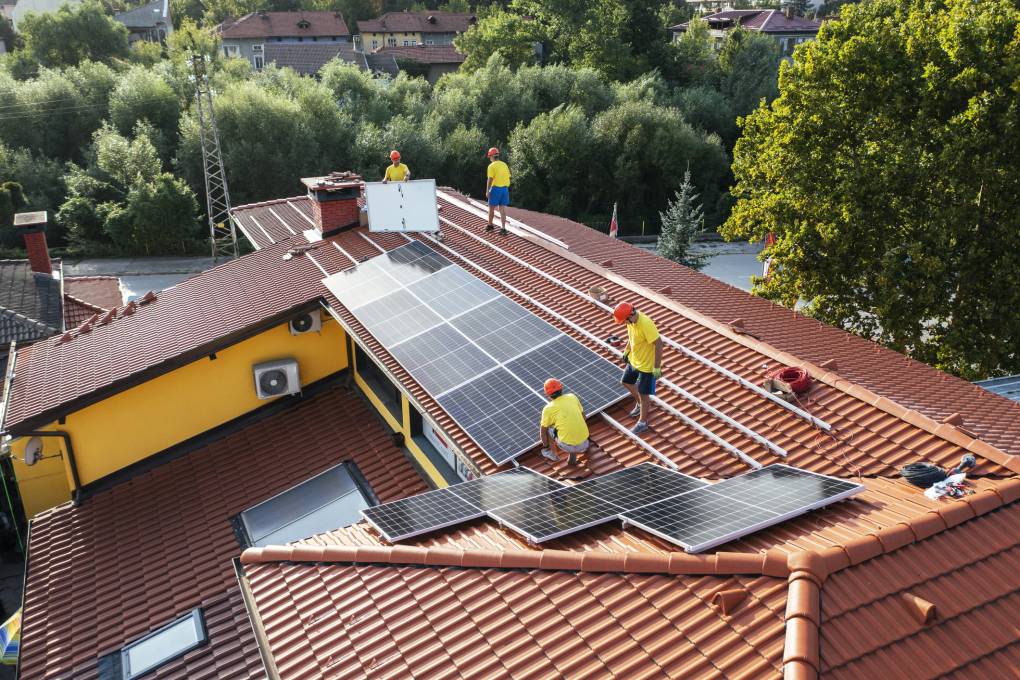
"caption": "California has the nation's largest rooftop solar market, with panels on about 1.5 million homes, according to the California Public Utilities Commission.",
"credit": "ArtistGNDphotography/Getty Images",
"altTag": "Workers install solar panels on a red rooftop.",
"description": null,
"imgSizes": {
"medium": {
"file": "https://cdn.kqed.org/wp-content/uploads/sites/10/2022/11/GettyImages-1419732479-800x533.jpg",
"width": 800,
"height": 533,
"mimeType": "image/jpeg"
},
"large": {
"file": "https://cdn.kqed.org/wp-content/uploads/sites/10/2022/11/GettyImages-1419732479-1020x680.jpg",
"width": 1020,
"height": 680,
"mimeType": "image/jpeg"
},
"thumbnail": {
"file": "https://cdn.kqed.org/wp-content/uploads/sites/10/2022/11/GettyImages-1419732479-160x107.jpg",
"width": 160,
"height": 107,
"mimeType": "image/jpeg"
},
"1536x1536": {
"file": "https://cdn.kqed.org/wp-content/uploads/sites/10/2022/11/GettyImages-1419732479-1536x1023.jpg",
"width": 1536,
"height": 1023,
"mimeType": "image/jpeg"
},
"2048x2048": {
"file": "https://cdn.kqed.org/wp-content/uploads/sites/10/2022/11/GettyImages-1419732479-2048x1364.jpg",
"width": 2048,
"height": 1364,
"mimeType": "image/jpeg"
},
"post-thumbnail": {
"file": "https://cdn.kqed.org/wp-content/uploads/sites/10/2022/11/GettyImages-1419732479-672x372.jpg",
"width": 672,
"height": 372,
"mimeType": "image/jpeg"
},
"twentyfourteen-full-width": {
"file": "https://cdn.kqed.org/wp-content/uploads/sites/10/2022/11/GettyImages-1419732479-1038x576.jpg",
"width": 1038,
"height": 576,
"mimeType": "image/jpeg"
},
"full-width": {
"file": "https://cdn.kqed.org/wp-content/uploads/sites/10/2022/11/GettyImages-1419732479-1920x1279.jpg",
"width": 1920,
"height": 1279,
"mimeType": "image/jpeg"
},
"kqedFullSize": {
"file": "https://cdn.kqed.org/wp-content/uploads/sites/10/2022/11/GettyImages-1419732479.jpg",
"width": 2121,
"height": 1413
}
},
"isLoading": false,
"fetchFailed": false
},
"news_12042478": {
"type": "attachments",
"id": "news_12042478",
"meta": {
"index": "attachments_1716263798",
"site": "news",
"id": "12042478",
"found": true
},
"title": "GettyImages-861092546-1020x680",
"publishDate": 1748958165,
"status": "inherit",
"parent": 12042477,
"modified": 1748958202,
"caption": null,
"credit": "Metamorworks via iStock/Getty Images Plus",
"altTag": null,
"description": null,
"imgSizes": {
"medium": {
"file": "https://cdn.kqed.org/wp-content/uploads/sites/10/2025/06/GettyImages-861092546-1020x680-1-800x533.jpg",
"width": 800,
"height": 533,
"mimeType": "image/jpeg"
},
"thumbnail": {
"file": "https://cdn.kqed.org/wp-content/uploads/sites/10/2025/06/GettyImages-861092546-1020x680-1-160x107.jpg",
"width": 160,
"height": 107,
"mimeType": "image/jpeg"
},
"post-thumbnail": {
"file": "https://cdn.kqed.org/wp-content/uploads/sites/10/2025/06/GettyImages-861092546-1020x680-1-672x372.jpg",
"width": 672,
"height": 372,
"mimeType": "image/jpeg"
},
"twentyfourteen-full-width": {
"file": "https://cdn.kqed.org/wp-content/uploads/sites/10/2025/06/GettyImages-861092546-1020x680-1-1020x576.jpg",
"width": 1020,
"height": 576,
"mimeType": "image/jpeg"
},
"kqedFullSize": {
"file": "https://cdn.kqed.org/wp-content/uploads/sites/10/2025/06/GettyImages-861092546-1020x680-1.jpg",
"width": 1020,
"height": 680
}
},
"isLoading": false,
"fetchFailed": false
},
"news_12042365": {
"type": "attachments",
"id": "news_12042365",
"meta": {
"index": "attachments_1716263798",
"site": "news",
"id": "12042365",
"found": true
},
"title": "Coliseum",
"publishDate": 1748870694,
"status": "inherit",
"parent": 12042364,
"modified": 1748870930,
"caption": "The exterior of the Los Angeles Memorial Coliseum, which is expected to host the opening ceremony for the 2028 Summer Olympics.",
"credit": "Saul Gonzalez/The California Report",
"altTag": null,
"description": null,
"imgSizes": {
"medium": {
"file": "https://cdn.kqed.org/wp-content/uploads/sites/10/2025/06/Colsieum-800x600.jpeg",
"width": 800,
"height": 600,
"mimeType": "image/jpeg"
},
"large": {
"file": "https://cdn.kqed.org/wp-content/uploads/sites/10/2025/06/Colsieum-1020x765.jpeg",
"width": 1020,
"height": 765,
"mimeType": "image/jpeg"
},
"thumbnail": {
"file": "https://cdn.kqed.org/wp-content/uploads/sites/10/2025/06/Colsieum-160x120.jpeg",
"width": 160,
"height": 120,
"mimeType": "image/jpeg"
},
"1536x1536": {
"file": "https://cdn.kqed.org/wp-content/uploads/sites/10/2025/06/Colsieum-1536x1152.jpeg",
"width": 1536,
"height": 1152,
"mimeType": "image/jpeg"
},
"2048x2048": {
"file": "https://cdn.kqed.org/wp-content/uploads/sites/10/2025/06/Colsieum-2048x1536.jpeg",
"width": 2048,
"height": 1536,
"mimeType": "image/jpeg"
},
"post-thumbnail": {
"file": "https://cdn.kqed.org/wp-content/uploads/sites/10/2025/06/Colsieum-672x372.jpeg",
"width": 672,
"height": 372,
"mimeType": "image/jpeg"
},
"twentyfourteen-full-width": {
"file": "https://cdn.kqed.org/wp-content/uploads/sites/10/2025/06/Colsieum-1038x576.jpeg",
"width": 1038,
"height": 576,
"mimeType": "image/jpeg"
},
"full-width": {
"file": "https://cdn.kqed.org/wp-content/uploads/sites/10/2025/06/Colsieum-1920x1440.jpeg",
"width": 1920,
"height": 1440,
"mimeType": "image/jpeg"
},
"kqedFullSize": {
"file": "https://cdn.kqed.org/wp-content/uploads/sites/10/2025/06/Colsieum-scaled-e1772041159569.jpeg",
"width": 2000,
"height": 1500
}
},
"isLoading": false,
"fetchFailed": false
},
"news_12042266": {
"type": "attachments",
"id": "news_12042266",
"meta": {
"index": "attachments_1716263798",
"site": "news",
"id": "12042266",
"found": true
},
"title": "250530-ASTRALOGIK-13-BL-KQED",
"publishDate": 1748643689,
"status": "inherit",
"parent": 0,
"modified": 1748643764,
"caption": "Charito Soriano (left) and Chen Conlu practice for an upcoming show for their band AstraLogik at their home in Hayward on May 30, 2025.",
"credit": "Beth LaBerge/KQED",
"altTag": null,
"description": null,
"imgSizes": {
"medium": {
"file": "https://cdn.kqed.org/wp-content/uploads/sites/10/2025/05/250530-ASTRALOGIK-13-BL-KQED-800x533.jpg",
"width": 800,
"height": 533,
"mimeType": "image/jpeg"
},
"large": {
"file": "https://cdn.kqed.org/wp-content/uploads/sites/10/2025/05/250530-ASTRALOGIK-13-BL-KQED-1020x680.jpg",
"width": 1020,
"height": 680,
"mimeType": "image/jpeg"
},
"thumbnail": {
"file": "https://cdn.kqed.org/wp-content/uploads/sites/10/2025/05/250530-ASTRALOGIK-13-BL-KQED-160x107.jpg",
"width": 160,
"height": 107,
"mimeType": "image/jpeg"
},
"1536x1536": {
"file": "https://cdn.kqed.org/wp-content/uploads/sites/10/2025/05/250530-ASTRALOGIK-13-BL-KQED-1536x1024.jpg",
"width": 1536,
"height": 1024,
"mimeType": "image/jpeg"
},
"post-thumbnail": {
"file": "https://cdn.kqed.org/wp-content/uploads/sites/10/2025/05/250530-ASTRALOGIK-13-BL-KQED-672x372.jpg",
"width": 672,
"height": 372,
"mimeType": "image/jpeg"
},
"twentyfourteen-full-width": {
"file": "https://cdn.kqed.org/wp-content/uploads/sites/10/2025/05/250530-ASTRALOGIK-13-BL-KQED-1038x576.jpg",
"width": 1038,
"height": 576,
"mimeType": "image/jpeg"
},
"full-width": {
"file": "https://cdn.kqed.org/wp-content/uploads/sites/10/2025/05/250530-ASTRALOGIK-13-BL-KQED-1920x1280.jpg",
"width": 1920,
"height": 1280,
"mimeType": "image/jpeg"
},
"kqedFullSize": {
"file": "https://cdn.kqed.org/wp-content/uploads/sites/10/2025/05/250530-ASTRALOGIK-13-BL-KQED.jpg",
"width": 2000,
"height": 1333
}
},
"isLoading": false,
"fetchFailed": false
},
"news_12042129": {
"type": "attachments",
"id": "news_12042129",
"meta": {
"index": "attachments_1716263798",
"site": "news",
"id": "12042129",
"found": true
},
"title": "20250519_SICKPELICANS_GC-38-KQED-1020x680",
"publishDate": 1748622701,
"status": "inherit",
"parent": 12042123,
"modified": 1748622701,
"caption": null,
"credit": null,
"altTag": null,
"description": null,
"imgSizes": {
"medium": {
"file": "https://cdn.kqed.org/wp-content/uploads/sites/10/2025/05/20250519_SICKPELICANS_GC-38-KQED-1020x680-1-800x533.jpg",
"width": 800,
"height": 533,
"mimeType": "image/jpeg"
},
"thumbnail": {
"file": "https://cdn.kqed.org/wp-content/uploads/sites/10/2025/05/20250519_SICKPELICANS_GC-38-KQED-1020x680-1-160x107.jpg",
"width": 160,
"height": 107,
"mimeType": "image/jpeg"
},
"post-thumbnail": {
"file": "https://cdn.kqed.org/wp-content/uploads/sites/10/2025/05/20250519_SICKPELICANS_GC-38-KQED-1020x680-1-672x372.jpg",
"width": 672,
"height": 372,
"mimeType": "image/jpeg"
},
"twentyfourteen-full-width": {
"file": "https://cdn.kqed.org/wp-content/uploads/sites/10/2025/05/20250519_SICKPELICANS_GC-38-KQED-1020x680-1-1020x576.jpg",
"width": 1020,
"height": 576,
"mimeType": "image/jpeg"
},
"kqedFullSize": {
"file": "https://cdn.kqed.org/wp-content/uploads/sites/10/2025/05/20250519_SICKPELICANS_GC-38-KQED-1020x680-1.jpg",
"width": 1020,
"height": 680
}
},
"isLoading": false,
"fetchFailed": false
},
"news_12003055": {
"type": "attachments",
"id": "news_12003055",
"meta": {
"index": "attachments_1716263798",
"site": "news",
"id": "12003055",
"found": true
},
"title": "011_KQED_Berkeley_Homelessness_03192020_9408_qed",
"publishDate": 1725479997,
"status": "inherit",
"parent": 12003051,
"modified": 1725480040,
"caption": "A tent encampment under a freeway overpass in Berkeley on March 19, 2020.",
"credit": "Beth LaBerge/KQED",
"altTag": null,
"description": null,
"imgSizes": {
"medium": {
"file": "https://cdn.kqed.org/wp-content/uploads/sites/10/2024/09/011_KQED_Berkeley_Homelessness_03192020_9408_qed-800x533.jpg",
"width": 800,
"height": 533,
"mimeType": "image/jpeg"
},
"large": {
"file": "https://cdn.kqed.org/wp-content/uploads/sites/10/2024/09/011_KQED_Berkeley_Homelessness_03192020_9408_qed-1020x680.jpg",
"width": 1020,
"height": 680,
"mimeType": "image/jpeg"
},
"thumbnail": {
"file": "https://cdn.kqed.org/wp-content/uploads/sites/10/2024/09/011_KQED_Berkeley_Homelessness_03192020_9408_qed-160x107.jpg",
"width": 160,
"height": 107,
"mimeType": "image/jpeg"
},
"1536x1536": {
"file": "https://cdn.kqed.org/wp-content/uploads/sites/10/2024/09/011_KQED_Berkeley_Homelessness_03192020_9408_qed-1536x1024.jpg",
"width": 1536,
"height": 1024,
"mimeType": "image/jpeg"
},
"post-thumbnail": {
"file": "https://cdn.kqed.org/wp-content/uploads/sites/10/2024/09/011_KQED_Berkeley_Homelessness_03192020_9408_qed-672x372.jpg",
"width": 672,
"height": 372,
"mimeType": "image/jpeg"
},
"twentyfourteen-full-width": {
"file": "https://cdn.kqed.org/wp-content/uploads/sites/10/2024/09/011_KQED_Berkeley_Homelessness_03192020_9408_qed-1038x576.jpg",
"width": 1038,
"height": 576,
"mimeType": "image/jpeg"
},
"full-width": {
"file": "https://cdn.kqed.org/wp-content/uploads/sites/10/2024/09/011_KQED_Berkeley_Homelessness_03192020_9408_qed-1920x1280.jpg",
"width": 1920,
"height": 1280,
"mimeType": "image/jpeg"
},
"kqedFullSize": {
"file": "https://cdn.kqed.org/wp-content/uploads/sites/10/2024/09/011_KQED_Berkeley_Homelessness_03192020_9408_qed.jpg",
"width": 2000,
"height": 1333
}
},
"isLoading": false,
"fetchFailed": false
},
"news_12041516": {
"type": "attachments",
"id": "news_12041516",
"meta": {
"index": "attachments_1716263798",
"site": "news",
"id": "12041516",
"found": true
},
"title": "CoreCivic Otay Mesa Detention Center",
"publishDate": 1748032296,
"status": "inherit",
"parent": 12041326,
"modified": 1748032401,
"caption": "A view of the CoreCivic Otay Mesa Detention Center in San Diego, California, on Feb. 7, 2025. The private institution has been plagued by allegations of medical negligence, abusive and retaliatory behavior against immigrants, sexual harassment, poor food and water quality and other dangerous conditions. ",
"credit": "Carlos Moreno/Anadolu via Getty Images",
"altTag": null,
"description": null,
"imgSizes": {
"medium": {
"file": "https://cdn.kqed.org/wp-content/uploads/sites/10/2025/05/CANewsroom1-800x532.jpg",
"width": 800,
"height": 532,
"mimeType": "image/jpeg"
},
"large": {
"file": "https://cdn.kqed.org/wp-content/uploads/sites/10/2025/05/CANewsroom1-1020x678.jpg",
"width": 1020,
"height": 678,
"mimeType": "image/jpeg"
},
"thumbnail": {
"file": "https://cdn.kqed.org/wp-content/uploads/sites/10/2025/05/CANewsroom1-160x106.jpg",
"width": 160,
"height": 106,
"mimeType": "image/jpeg"
},
"1536x1536": {
"file": "https://cdn.kqed.org/wp-content/uploads/sites/10/2025/05/CANewsroom1-1536x1021.jpg",
"width": 1536,
"height": 1021,
"mimeType": "image/jpeg"
},
"post-thumbnail": {
"file": "https://cdn.kqed.org/wp-content/uploads/sites/10/2025/05/CANewsroom1-672x372.jpg",
"width": 672,
"height": 372,
"mimeType": "image/jpeg"
},
"twentyfourteen-full-width": {
"file": "https://cdn.kqed.org/wp-content/uploads/sites/10/2025/05/CANewsroom1-1038x576.jpg",
"width": 1038,
"height": 576,
"mimeType": "image/jpeg"
},
"full-width": {
"file": "https://cdn.kqed.org/wp-content/uploads/sites/10/2025/05/CANewsroom1-1920x1277.jpg",
"width": 1920,
"height": 1277,
"mimeType": "image/jpeg"
},
"kqedFullSize": {
"file": "https://cdn.kqed.org/wp-content/uploads/sites/10/2025/05/CANewsroom1.jpg",
"width": 2000,
"height": 1330
}
},
"isLoading": false,
"fetchFailed": false
},
"news_12041652": {
"type": "attachments",
"id": "news_12041652",
"meta": {
"index": "attachments_1716263798",
"site": "news",
"id": "12041652",
"found": true
},
"title": "food-insecurity-6835bb7b409cf",
"publishDate": 1748351903,
"status": "inherit",
"parent": 12041651,
"modified": 1748352145,
"caption": "A Second Harvest volunteer loads oranges onto a cardboard tray for one of the nearly 90 farmworkers that came to a monthly food distribution event organized by the Center for Farmworker Families in May of 2025.",
"credit": "Eduardo Gonzales-Torres/KAZU News",
"altTag": null,
"description": null,
"imgSizes": {
"medium": {
"file": "https://cdn.kqed.org/wp-content/uploads/sites/10/2025/05/food-insecurity-6835bb7b409cf-800x461.jpg",
"width": 800,
"height": 461,
"mimeType": "image/jpeg"
},
"large": {
"file": "https://cdn.kqed.org/wp-content/uploads/sites/10/2025/05/food-insecurity-6835bb7b409cf-1020x588.jpg",
"width": 1020,
"height": 588,
"mimeType": "image/jpeg"
},
"thumbnail": {
"file": "https://cdn.kqed.org/wp-content/uploads/sites/10/2025/05/food-insecurity-6835bb7b409cf-160x92.jpg",
"width": 160,
"height": 92,
"mimeType": "image/jpeg"
},
"1536x1536": {
"file": "https://cdn.kqed.org/wp-content/uploads/sites/10/2025/05/food-insecurity-6835bb7b409cf-1536x885.jpg",
"width": 1536,
"height": 885,
"mimeType": "image/jpeg"
},
"post-thumbnail": {
"file": "https://cdn.kqed.org/wp-content/uploads/sites/10/2025/05/food-insecurity-6835bb7b409cf-672x372.jpg",
"width": 672,
"height": 372,
"mimeType": "image/jpeg"
},
"twentyfourteen-full-width": {
"file": "https://cdn.kqed.org/wp-content/uploads/sites/10/2025/05/food-insecurity-6835bb7b409cf-1038x576.jpg",
"width": 1038,
"height": 576,
"mimeType": "image/jpeg"
},
"kqedFullSize": {
"file": "https://cdn.kqed.org/wp-content/uploads/sites/10/2025/05/food-insecurity-6835bb7b409cf.jpg",
"width": 1760,
"height": 1014
}
},
"isLoading": false,
"fetchFailed": false
},
"news_12041635": {
"type": "attachments",
"id": "news_12041635",
"meta": {
"index": "attachments_1716263798",
"site": "news",
"id": "12041635",
"found": true
},
"title": "2025 Coachella Valley Music And Arts Festival - Weekend 2 - Day 1",
"publishDate": 1748268211,
"status": "inherit",
"parent": 12041634,
"modified": 1748268242,
"caption": "INDIO, CALIFORNIA - APRIL 18: (FOR EDITORIAL USE ONLY) A view of the shoppers attending the Record Safari record store during Day 1 of Coachella Valley Music and Arts Festival on April 18, 2025 in Indio, California.",
"credit": "Photo by Scott Dudelson/Getty Images",
"altTag": null,
"description": null,
"imgSizes": {
"medium": {
"file": "https://cdn.kqed.org/wp-content/uploads/sites/10/2025/05/GettyImages-2210989110-800x533.jpg",
"width": 800,
"height": 533,
"mimeType": "image/jpeg"
},
"large": {
"file": "https://cdn.kqed.org/wp-content/uploads/sites/10/2025/05/GettyImages-2210989110-1020x680.jpg",
"width": 1020,
"height": 680,
"mimeType": "image/jpeg"
},
"thumbnail": {
"file": "https://cdn.kqed.org/wp-content/uploads/sites/10/2025/05/GettyImages-2210989110-160x107.jpg",
"width": 160,
"height": 107,
"mimeType": "image/jpeg"
},
"1536x1536": {
"file": "https://cdn.kqed.org/wp-content/uploads/sites/10/2025/05/GettyImages-2210989110-1536x1024.jpg",
"width": 1536,
"height": 1024,
"mimeType": "image/jpeg"
},
"2048x2048": {
"file": "https://cdn.kqed.org/wp-content/uploads/sites/10/2025/05/GettyImages-2210989110-2048x1365.jpg",
"width": 2048,
"height": 1365,
"mimeType": "image/jpeg"
},
"post-thumbnail": {
"file": "https://cdn.kqed.org/wp-content/uploads/sites/10/2025/05/GettyImages-2210989110-672x372.jpg",
"width": 672,
"height": 372,
"mimeType": "image/jpeg"
},
"twentyfourteen-full-width": {
"file": "https://cdn.kqed.org/wp-content/uploads/sites/10/2025/05/GettyImages-2210989110-1038x576.jpg",
"width": 1038,
"height": 576,
"mimeType": "image/jpeg"
},
"full-width": {
"file": "https://cdn.kqed.org/wp-content/uploads/sites/10/2025/05/GettyImages-2210989110-1920x1280.jpg",
"width": 1920,
"height": 1280,
"mimeType": "image/jpeg"
},
"kqedFullSize": {
"file": "https://cdn.kqed.org/wp-content/uploads/sites/10/2025/05/GettyImages-2210989110-scaled.jpg",
"width": 2560,
"height": 1707
}
},
"isLoading": false,
"fetchFailed": false
},
"news_12041604": {
"type": "attachments",
"id": "news_12041604",
"meta": {
"index": "attachments_1716263798",
"site": "news",
"id": "12041604",
"found": true
},
"title": "jon powell in Berkeley on May 9, 2025.",
"publishDate": 1748090827,
"status": "inherit",
"parent": 12040453,
"modified": 1748090841,
"caption": "jon powell in Berkeley on May 9, 2025.",
"credit": "Martin do Nascimento/KQED",
"altTag": null,
"description": null,
"imgSizes": {
"medium": {
"file": "https://cdn.kqed.org/wp-content/uploads/sites/10/2025/05/250509-JOHN-POWELL-MD-02-KQED-3-800x534.jpg",
"width": 800,
"height": 534,
"mimeType": "image/jpeg"
},
"large": {
"file": "https://cdn.kqed.org/wp-content/uploads/sites/10/2025/05/250509-JOHN-POWELL-MD-02-KQED-3-1020x680.jpg",
"width": 1020,
"height": 680,
"mimeType": "image/jpeg"
},
"thumbnail": {
"file": "https://cdn.kqed.org/wp-content/uploads/sites/10/2025/05/250509-JOHN-POWELL-MD-02-KQED-3-160x107.jpg",
"width": 160,
"height": 107,
"mimeType": "image/jpeg"
},
"1536x1536": {
"file": "https://cdn.kqed.org/wp-content/uploads/sites/10/2025/05/250509-JOHN-POWELL-MD-02-KQED-3-1536x1025.jpg",
"width": 1536,
"height": 1025,
"mimeType": "image/jpeg"
},
"post-thumbnail": {
"file": "https://cdn.kqed.org/wp-content/uploads/sites/10/2025/05/250509-JOHN-POWELL-MD-02-KQED-3-672x372.jpg",
"width": 672,
"height": 372,
"mimeType": "image/jpeg"
},
"twentyfourteen-full-width": {
"file": "https://cdn.kqed.org/wp-content/uploads/sites/10/2025/05/250509-JOHN-POWELL-MD-02-KQED-3-1038x576.jpg",
"width": 1038,
"height": 576,
"mimeType": "image/jpeg"
},
"full-width": {
"file": "https://cdn.kqed.org/wp-content/uploads/sites/10/2025/05/250509-JOHN-POWELL-MD-02-KQED-3-1920x1281.jpg",
"width": 1920,
"height": 1281,
"mimeType": "image/jpeg"
},
"kqedFullSize": {
"file": "https://cdn.kqed.org/wp-content/uploads/sites/10/2025/05/250509-JOHN-POWELL-MD-02-KQED-3.jpg",
"width": 2000,
"height": 1334
}
},
"isLoading": false,
"fetchFailed": false
},
"news_12041274": {
"type": "attachments",
"id": "news_12041274",
"meta": {
"index": "attachments_1716263798",
"site": "news",
"id": "12041274",
"found": true
},
"title": "APTOPIX Plane-Crash-San-Diego",
"publishDate": 1747935471,
"status": "inherit",
"parent": 12041261,
"modified": 1747935582,
"caption": "Authorities work the scene where a small plane crashed into a San Diego neighborhood, setting several homes on fire and forcing evacuations on May 22, 2025. ",
"credit": "Gregory Bull/AP Photo",
"altTag": null,
"description": null,
"imgSizes": {
"medium": {
"file": "https://cdn.kqed.org/wp-content/uploads/sites/10/2025/05/SanDiegoCrashAP2-800x533.jpg",
"width": 800,
"height": 533,
"mimeType": "image/jpeg"
},
"large": {
"file": "https://cdn.kqed.org/wp-content/uploads/sites/10/2025/05/SanDiegoCrashAP2-1020x680.jpg",
"width": 1020,
"height": 680,
"mimeType": "image/jpeg"
},
"thumbnail": {
"file": "https://cdn.kqed.org/wp-content/uploads/sites/10/2025/05/SanDiegoCrashAP2-160x107.jpg",
"width": 160,
"height": 107,
"mimeType": "image/jpeg"
},
"1536x1536": {
"file": "https://cdn.kqed.org/wp-content/uploads/sites/10/2025/05/SanDiegoCrashAP2-1536x1024.jpg",
"width": 1536,
"height": 1024,
"mimeType": "image/jpeg"
},
"post-thumbnail": {
"file": "https://cdn.kqed.org/wp-content/uploads/sites/10/2025/05/SanDiegoCrashAP2-672x372.jpg",
"width": 672,
"height": 372,
"mimeType": "image/jpeg"
},
"twentyfourteen-full-width": {
"file": "https://cdn.kqed.org/wp-content/uploads/sites/10/2025/05/SanDiegoCrashAP2-1038x576.jpg",
"width": 1038,
"height": 576,
"mimeType": "image/jpeg"
},
"full-width": {
"file": "https://cdn.kqed.org/wp-content/uploads/sites/10/2025/05/SanDiegoCrashAP2-1920x1280.jpg",
"width": 1920,
"height": 1280,
"mimeType": "image/jpeg"
},
"kqedFullSize": {
"file": "https://cdn.kqed.org/wp-content/uploads/sites/10/2025/05/SanDiegoCrashAP2.jpg",
"width": 2000,
"height": 1333
}
},
"isLoading": false,
"fetchFailed": false
},
"news_12039908": {
"type": "attachments",
"id": "news_12039908",
"meta": {
"index": "attachments_1716263798",
"site": "news",
"id": "12039908",
"found": true
},
"title": "250513-REENA ESMAIL-1-KQED",
"publishDate": 1747156305,
"status": "inherit",
"parent": 0,
"modified": 1747867909,
"caption": "Composer Reena Esmail speaks at the premiere of her work \"When the Violin\" in September 2018.",
"credit": "Courtesy of Reena Esmail",
"altTag": null,
"description": null,
"imgSizes": {
"medium": {
"file": "https://cdn.kqed.org/wp-content/uploads/sites/10/2025/05/250513-REENA-ESMAIL-1-KQED-800x533.jpg",
"width": 800,
"height": 533,
"mimeType": "image/jpeg"
},
"large": {
"file": "https://cdn.kqed.org/wp-content/uploads/sites/10/2025/05/250513-REENA-ESMAIL-1-KQED-1020x680.jpg",
"width": 1020,
"height": 680,
"mimeType": "image/jpeg"
},
"thumbnail": {
"file": "https://cdn.kqed.org/wp-content/uploads/sites/10/2025/05/250513-REENA-ESMAIL-1-KQED-160x107.jpg",
"width": 160,
"height": 107,
"mimeType": "image/jpeg"
},
"1536x1536": {
"file": "https://cdn.kqed.org/wp-content/uploads/sites/10/2025/05/250513-REENA-ESMAIL-1-KQED-1536x1024.jpg",
"width": 1536,
"height": 1024,
"mimeType": "image/jpeg"
},
"post-thumbnail": {
"file": "https://cdn.kqed.org/wp-content/uploads/sites/10/2025/05/250513-REENA-ESMAIL-1-KQED-672x372.jpg",
"width": 672,
"height": 372,
"mimeType": "image/jpeg"
},
"twentyfourteen-full-width": {
"file": "https://cdn.kqed.org/wp-content/uploads/sites/10/2025/05/250513-REENA-ESMAIL-1-KQED-1038x576.jpg",
"width": 1038,
"height": 576,
"mimeType": "image/jpeg"
},
"full-width": {
"file": "https://cdn.kqed.org/wp-content/uploads/sites/10/2025/05/250513-REENA-ESMAIL-1-KQED-1920x1280.jpg",
"width": 1920,
"height": 1280,
"mimeType": "image/jpeg"
},
"kqedFullSize": {
"file": "https://cdn.kqed.org/wp-content/uploads/sites/10/2025/05/250513-REENA-ESMAIL-1-KQED.jpg",
"width": 2000,
"height": 1333
}
},
"isLoading": false,
"fetchFailed": false
}
},
"audioPlayerReducer": {
"postId": "stream_live",
"isPaused": true,
"isPlaying": false,
"pfsActive": false,
"pledgeModalIsOpen": true,
"playerDrawerIsOpen": false,
"liveAudioPlayStartedAt": 0,
"liveAudioPlayContext": ""
},
"authorsReducer": {
"byline_news_12041727": {
"type": "authors",
"id": "byline_news_12041727",
"meta": {
"override": true
},
"slug": "byline_news_12041727",
"name": "I-Yun Chan",
"isLoading": false
},
"sracho": {
"type": "authors",
"id": "107",
"meta": {
"index": "authors_1716337520",
"id": "107",
"found": true
},
"name": "Suzie Racho",
"firstName": "Suzie",
"lastName": "Racho",
"slug": "sracho",
"email": "SRacho@KQED.org",
"display_author_email": false,
"staff_mastheads": [
"news"
],
"title": "KQED Contributor",
"bio": "Suzie Racho is a correspondent-producer with \u003cem>The California Report Magazine\u003c/em>\u003cem>. S\u003c/em>he has also worked with several other KQED productions, including Bay Curious, Truth Be Told, The Do List and KQED News.\r\n\r\nSuzie came to KQED in 1996 after receiving a BA in journalism from San Francisco State University and spending several years working in the music industry. As part of \u003cem>The California Report\u003c/em> team, her work has been recognized by the Society for Professional Journalists, National Federation of Community Broadcasters and Public Radio News Directors Incorporated, among others. She was recognized with a national Gracie Award in 2019. She spends her free time baking, listening to K-pop and rooting for the Giants and Valkyries.",
"avatar": "https://secure.gravatar.com/avatar/842e457a9830b0f3c1ce3ab70ed3518d616d1e25e315c6292eab8cd611d98601?s=600&d=blank&r=g",
"twitter": null,
"bluesky": null,
"facebook": null,
"instagram": null,
"linkedin": null,
"sites": [
{
"site": "arts",
"roles": [
"editor"
]
},
{
"site": "news",
"roles": [
"editor"
]
}
],
"headData": {
"title": "Suzie Racho | KQED",
"description": "KQED Contributor",
"ogImgSrc": "https://secure.gravatar.com/avatar/842e457a9830b0f3c1ce3ab70ed3518d616d1e25e315c6292eab8cd611d98601?s=600&d=blank&r=g",
"twImgSrc": "https://secure.gravatar.com/avatar/842e457a9830b0f3c1ce3ab70ed3518d616d1e25e315c6292eab8cd611d98601?s=600&d=blank&r=g"
},
"isLoading": false,
"link": "/author/sracho"
},
"sasha-khokha": {
"type": "authors",
"id": "254",
"meta": {
"index": "authors_1716337520",
"id": "254",
"found": true
},
"name": "Sasha Khokha",
"firstName": "Sasha",
"lastName": "Khokha",
"slug": "sasha-khokha",
"email": "skhokha@kqed.org",
"display_author_email": true,
"staff_mastheads": [
"news"
],
"title": "Host, The California Report Magazine",
"bio": "Sasha Khokha is the host of \u003cem>The California Report's \u003c/em> weekly magazine program, which takes listeners on sound-rich excursions to meet the people that make the Golden State unique -- through audio documentaries and long-form stories. As \u003cem>The California Report's\u003c/em> Central Valley Bureau Chief based in Fresno for nearly a dozen years, Sasha brought the lives and concerns of rural Californians to listeners around the state. Her reporting helped expose the hidden price immigrant women janitors and farmworkers may pay to keep their jobs: sexual assault at work. It inspired two new California laws to protect them from sexual harassment. She was a key member of the reporting team for the Frontline film \u003cem>Rape on the Night Shift, \u003c/em>which was nominated for two national Emmys. Sasha has also won a national Edward R. Murrow and a national PRNDI award for investigative reporting, as well as multiple prizes from the Society for Professional Journalists. Sasha is a proud alum of the UC Berkeley Graduate School of Journalism and Brown University and a member of the South Asian Journalists Association.",
"avatar": "https://secure.gravatar.com/avatar/e4b5e1541aaeea2aa356aa1fb2a68950?s=600&d=blank&r=g",
"twitter": "KQEDSashaKhokha",
"facebook": null,
"instagram": null,
"linkedin": null,
"sites": [
{
"site": "news",
"roles": [
"editor"
]
},
{
"site": "stateofhealth",
"roles": [
"author"
]
},
{
"site": "science",
"roles": [
"author"
]
},
{
"site": "quest",
"roles": [
"subscriber"
]
}
],
"headData": {
"title": "Sasha Khokha | KQED",
"description": "Host, The California Report Magazine",
"ogImgSrc": "https://secure.gravatar.com/avatar/e4b5e1541aaeea2aa356aa1fb2a68950?s=600&d=blank&r=g",
"twImgSrc": "https://secure.gravatar.com/avatar/e4b5e1541aaeea2aa356aa1fb2a68950?s=600&d=blank&r=g"
},
"isLoading": false,
"link": "/author/sasha-khokha"
},
"kmizuguchi": {
"type": "authors",
"id": "11739",
"meta": {
"index": "authors_1716337520",
"id": "11739",
"found": true
},
"name": "Keith Mizuguchi",
"firstName": "Keith",
"lastName": "Mizuguchi",
"slug": "kmizuguchi",
"email": "kmizuguchi@kqed.org",
"display_author_email": false,
"staff_mastheads": [],
"title": "KQED Contributor",
"bio": null,
"avatar": "https://secure.gravatar.com/avatar/64d8a7de0723d4099b9fe4e915136103febcc20809abce228ee4415bcb237023?s=600&d=blank&r=g",
"twitter": null,
"bluesky": null,
"facebook": null,
"instagram": null,
"linkedin": null,
"sites": [
{
"site": "news",
"roles": [
"editor"
]
},
{
"site": "science",
"roles": [
"editor"
]
}
],
"headData": {
"title": "Keith Mizuguchi | KQED",
"description": "KQED Contributor",
"ogImgSrc": "https://secure.gravatar.com/avatar/64d8a7de0723d4099b9fe4e915136103febcc20809abce228ee4415bcb237023?s=600&d=blank&r=g",
"twImgSrc": "https://secure.gravatar.com/avatar/64d8a7de0723d4099b9fe4e915136103febcc20809abce228ee4415bcb237023?s=600&d=blank&r=g"
},
"isLoading": false,
"link": "/author/kmizuguchi"
},
"amberly": {
"type": "authors",
"id": "11955",
"meta": {
"index": "authors_1716337520",
"id": "11955",
"found": true
},
"name": "amberly",
"firstName": "Amber",
"lastName": "Ly",
"slug": "amberly",
"email": "aly@kqed.org",
"display_author_email": false,
"staff_mastheads": [],
"title": "KQED Contributor",
"bio": null,
"avatar": "https://secure.gravatar.com/avatar/9523bb1187d1e053c203029166d5a87f92c8d6ade2a458c139a24e6d1a5e8b9e?s=600&d=blank&r=g",
"twitter": null,
"bluesky": null,
"facebook": null,
"instagram": null,
"linkedin": null,
"sites": [
{
"site": "news",
"roles": [
"editor"
]
}
],
"headData": {
"title": "amberly | KQED",
"description": "KQED Contributor",
"ogImgSrc": "https://secure.gravatar.com/avatar/9523bb1187d1e053c203029166d5a87f92c8d6ade2a458c139a24e6d1a5e8b9e?s=600&d=blank&r=g",
"twImgSrc": "https://secure.gravatar.com/avatar/9523bb1187d1e053c203029166d5a87f92c8d6ade2a458c139a24e6d1a5e8b9e?s=600&d=blank&r=g"
},
"isLoading": false,
"link": "/author/amberly"
}
},
"pagesReducer": {
"news_category_tcr": {
"type": "terms",
"id": "news_34018",
"meta": {
"index": "terms_1716263798",
"site": "news",
"id": "34018",
"score": 13.305222
},
"featImg": null,
"name": "tcr",
"description": null,
"taxonomy": "category",
"headData": {
"twImgId": null,
"twTitle": null,
"ogTitle": null,
"ogImgId": null,
"twDescription": null,
"description": null,
"title": "tcr Archives | KQED News",
"ogDescription": null
},
"ttid": 34035,
"slug": "tcr",
"isLoading": false,
"title": "tcr",
"pageMeta": {
"site": "news",
"WpPageTemplate": "page-topic-editorial",
"currentPage": 29
},
"blocks": [
{
"blockName": "kqed/post-list",
"attrs": {
"layout": "cardArticle2",
"query": "posts/news?category=tcr",
"seeMore": false,
"paginated": true,
"page": 29
}
},
{
"blockName": "kqed/ad"
}
]
}
},
"pfsSessionReducer": {},
"postsReducer": {
"stream_live": {
"type": "live",
"id": "stream_live",
"audioUrl": "https://hls.kqed.org/hls/kqed_app/playlist.m3u8",
"title": "Live Stream",
"excerpt": "Live Stream information currently unavailable.",
"link": "/radio",
"featImg": "",
"label": {
"name": "KQED Live",
"link": "/"
}
},
"stream_kqedNewscast": {
"type": "posts",
"id": "stream_kqedNewscast",
"audioUrl": "https://www.kqed.org/.stream/anon/radio/RDnews/newscast.mp3?_=1",
"title": "KQED Newscast",
"featImg": "",
"label": {
"name": "88.5 FM",
"link": "/"
}
},
"news_12042667": {
"type": "posts",
"id": "news_12042667",
"meta": {
"index": "posts_1716263798",
"site": "news",
"id": "12042667",
"score": null,
"sort": [
1749064897000
]
},
"guestAuthors": [],
"slug": "california-supreme-court-to-hear-case-on-states-rooftop-solar-policy",
"title": "California Supreme Court to Hear Case on State's Rooftop Solar Policy",
"publishDate": 1749064897,
"format": "audio",
"headTitle": "California Supreme Court to Hear Case on State’s Rooftop Solar Policy | KQED",
"labelTerm": {},
"content": "\u003cp>\u003cb>Here are the morning’s top stories on Wednesday, June 4, 2025…\u003c/b>\u003c/p>\n\u003cul>\n\u003cli style=\"font-weight: 400;\">\u003cspan style=\"font-weight: 400;\">Wednesday is an important day for the future of solar energy in California. Three environmental groups are set to go before the state Supreme Court to challenge \u003c/span>\u003ca href=\"https://www.kqed.org/news/12035455/california-bill-to-cut-solar-incentives-prompts-fierce-debate\">\u003cspan style=\"font-weight: 400;\">a state policy on solar panels.\u003c/span>\u003c/a>\u003cspan style=\"font-weight: 400;\"> \u003c/span>\u003c/li>\n\u003cli style=\"font-weight: 400;\">\u003cspan style=\"font-weight: 400;\">The California Air Resources Board \u003c/span>\u003ca href=\"https://ww2.arb.ca.gov/news/carb-launches-mobile-air-monitoring-underserved-communities-part-first-its-kind-initiative\">\u003cspan style=\"font-weight: 400;\">has launched a mobile monitoring program\u003c/span>\u003c/a>\u003cspan style=\"font-weight: 400;\"> to collect pollution data from neighborhoods suffering from poor air quality. \u003c/span>\u003c/li>\n\u003cli>San Mateo County’s District Attorney is seeking the death penalty for the shooting suspect \u003ca href=\"https://www.kqed.org/news/11938972/7-killed-in-monday-shooting-massacre-in-half-moon-bay\">accused of killing seven farmworkers\u003c/a> at two locations in Half Moon Bay in 2023.\u003c/li>\n\u003c/ul>\n\u003ch2>\u003cstrong>California Supreme Court To Hear Arguments In Solar Panel Dispute\u003c/strong>\u003c/h2>\n\u003cp>A \u003ca href=\"https://calmatters.org/environment/2022/12/california-solar-rules-overhauled/\">controversial solar rooftop policy\u003c/a> that would reduce payments to homeowners for excess power they produce and export to the grid is the topic of a hearing before the California Supreme Court on Wednesday.\u003c/p>\n\u003cp>In December of 2022, the California Public Utilities Commission adopted \u003ca href=\"https://docs.cpuc.ca.gov/PublishedDocs/Published/G000/M499/K921/499921246.PDF\">the new rules. \u003c/a>For new solar customers, it reduces the amount utilities pay them for excess power by at least 75% compared to current rates. The change does not apply to residents with existing solar systems. It would also fund $900 million in new incentive payments to residents to help them purchase rooftop solar systems. Two thirds of the funds, $630 million, are set aside for low-income households. The remainder provides funding for paired solar-battery storage systems. It also sets rates that would shift all consumers’ use of power to the times of day that improve grid reliability.\u003c/p>\n\u003cp>The Center for Biological Diversity, the Environmental Working Group and San Diego-based Protect Our Communities Foundation are trying to overturn the CPUC’s decision. They’ve argued the new rules don’t take into account the benefits of rooftop solar and that the lower compensation rates would affect incentives for potential new customers.\u003c/p>\n\u003ch2>\u003cstrong>California Regulators Launch New Air Monitoring System \u003c/strong>\u003c/h2>\n\u003cp>The California Air Resources Board has \u003ca href=\"https://ww2.arb.ca.gov/news/carb-launches-mobile-air-monitoring-underserved-communities-part-first-its-kind-initiative\">started a new phase\u003c/a> of statewide air monitoring.\u003c/p>\n\u003cp>[ad fullwidth]\u003c/p>\n\u003cp>The agency has launched a mobile monitoring program. Specially equipped cars and mobile labs will collect air pollution data from 64 communities throughout California as part of CARB’s Statewide Mobile Monitoring Initiative.\u003c/p>\n\u003cp>Edie Chang is CARB’s deputy executive director of planning, freight and toxics. She said this approach is more detailed than California’s existing, stationary air monitors that capture regional air pollution. “It’s not necessarily good at seeing like, there’s a lot of traffic on this street. And so there’s what people might call it like a hotspot in a certain area. And so this will give us the opportunity to really have that sort of street level block-by-block data for communities,” Chang said.\u003c/p>\n\u003cp>The deployed vehicles will be collecting data over the course of nine months. Chang said the agency expects to release the data publicly by June of next year.\u003c/p>\n\u003ch2>\u003cstrong>Mass Shooting Suspect Faces Death Penalty\u003c/strong>\u003c/h2>\n\u003cp>The San Mateo County District Attorney’s office \u003ca href=\"https://www.mercurynews.com/2025/06/03/da-to-seek-death-penalty-against-half-moon-bay-mass-shooting-suspect/\">is seeking the death penalty\u003c/a> against the man accused in a 2023 mass shooting at two Half Moon Bay mushroom farms.\u003c/p>\n\u003cp>Chunli Zhao is accused of \u003ca href=\"https://www.kqed.org/news/11939361/im-afraid-half-moon-bay-shootings-may-have-been-extreme-case-of-workplace-violence\">killing seven farmworkers\u003c/a> in San Mateo County’s deadliest mass shooting. He faces seven counts of first-degree murder and one count of attempted murder.\u003c/p>\n\u003cp>District Attorney Steve Wagstaffe announced the decision to pursue the death penalty at a court hearing Tuesday. Because of a gag order in the case, Wagstaffe said he can’t provide details on why he’s seeking the death penalty. It’s the first time he’s done so since he became district attorney in 2011. Capital punishment has becoming increasingly rare since Governor Gavin Newsom issued a moratorium on executions in 2019.\u003c/p>\n\u003cp>\u003c/p>\n\u003cp> \u003c/p>\n\n",
"blocks": [],
"excerpt": "At issue is a controversial solar rooftop policy that would reduce payments to homeowners for excess power they produce.",
"status": "publish",
"parent": 0,
"modified": 1776790904,
"stats": {
"hasAudio": false,
"hasVideo": false,
"hasChartOrMap": false,
"iframeSrcs": [],
"hasGoogleForm": false,
"hasGallery": false,
"hasHearkenModule": false,
"hasPolis": false,
"paragraphCount": 13,
"wordCount": 643
},
"headData": {
"title": "California Supreme Court to Hear Case on State's Rooftop Solar Policy | KQED",
"description": "At issue is a controversial solar rooftop policy that would reduce payments to homeowners for excess power they produce.",
"ogTitle": "",
"ogDescription": "",
"ogImgId": "",
"twTitle": "",
"twDescription": "",
"twImgId": "",
"schema": {
"@context": "https://schema.org",
"@type": "NewsArticle",
"headline": "California Supreme Court to Hear Case on State's Rooftop Solar Policy",
"datePublished": "2025-06-04T12:21:37-07:00",
"dateModified": "2026-04-21T10:01:44-07:00",
"image": "https://cdn.kqed.org/wp-content/uploads/2020/02/KQED-OG-Image@1x.png",
"isAccessibleForFree": "True",
"publisher": {
"@type": "NewsMediaOrganization",
"@id": "https://www.kqed.org/#organization",
"name": "KQED",
"logo": "https://cdn.kqed.org/wp-content/uploads/2020/02/KQED-OG-Image@1x.png",
"url": "https://www.kqed.org",
"sameAs": [
"https://www.facebook.com/KQED",
"https://twitter.com/KQED",
"https://www.instagram.com/kqed/",
"https://www.tiktok.com/@kqedofficial",
"https://www.linkedin.com/company/kqed",
"https://www.youtube.com/channel/UCeC0IOo7i1P_61zVUWbJ4nw"
]
}
}
},
"primaryCategory": {
"termId": 33520,
"slug": "podcast",
"name": "Podcast"
},
"source": "The California Report",
"sourceUrl": "https://www.kqed.org/news/tag/tcrarchive/",
"audioUrl": "https://www.podtrac.com/pts/redirect.mp3/chrt.fm/track/G6C7C3/traffic.megaphone.fm/KQINC9894165023.mp3?updated=1749045856",
"sticky": false,
"nprStoryId": "kqed-12042667",
"templateType": "standard",
"featuredImageType": "standard",
"excludeFromSiteSearch": "Include",
"articleAge": "0",
"path": "/news/12042667/california-supreme-court-to-hear-case-on-states-rooftop-solar-policy",
"audioTrackLength": null,
"parsedContent": [
{
"type": "contentString",
"content": "\u003cdiv class=\"post-body\">\u003cp>\u003cp>\u003cb>Here are the morning’s top stories on Wednesday, June 4, 2025…\u003c/b>\u003c/p>\n\u003cul>\n\u003cli style=\"font-weight: 400;\">\u003cspan style=\"font-weight: 400;\">Wednesday is an important day for the future of solar energy in California. Three environmental groups are set to go before the state Supreme Court to challenge \u003c/span>\u003ca href=\"https://www.kqed.org/news/12035455/california-bill-to-cut-solar-incentives-prompts-fierce-debate\">\u003cspan style=\"font-weight: 400;\">a state policy on solar panels.\u003c/span>\u003c/a>\u003cspan style=\"font-weight: 400;\"> \u003c/span>\u003c/li>\n\u003cli style=\"font-weight: 400;\">\u003cspan style=\"font-weight: 400;\">The California Air Resources Board \u003c/span>\u003ca href=\"https://ww2.arb.ca.gov/news/carb-launches-mobile-air-monitoring-underserved-communities-part-first-its-kind-initiative\">\u003cspan style=\"font-weight: 400;\">has launched a mobile monitoring program\u003c/span>\u003c/a>\u003cspan style=\"font-weight: 400;\"> to collect pollution data from neighborhoods suffering from poor air quality. \u003c/span>\u003c/li>\n\u003cli>San Mateo County’s District Attorney is seeking the death penalty for the shooting suspect \u003ca href=\"https://www.kqed.org/news/11938972/7-killed-in-monday-shooting-massacre-in-half-moon-bay\">accused of killing seven farmworkers\u003c/a> at two locations in Half Moon Bay in 2023.\u003c/li>\n\u003c/ul>\n\u003ch2>\u003cstrong>California Supreme Court To Hear Arguments In Solar Panel Dispute\u003c/strong>\u003c/h2>\n\u003cp>A \u003ca href=\"https://calmatters.org/environment/2022/12/california-solar-rules-overhauled/\">controversial solar rooftop policy\u003c/a> that would reduce payments to homeowners for excess power they produce and export to the grid is the topic of a hearing before the California Supreme Court on Wednesday.\u003c/p>\n\u003cp>In December of 2022, the California Public Utilities Commission adopted \u003ca href=\"https://docs.cpuc.ca.gov/PublishedDocs/Published/G000/M499/K921/499921246.PDF\">the new rules. \u003c/a>For new solar customers, it reduces the amount utilities pay them for excess power by at least 75% compared to current rates. The change does not apply to residents with existing solar systems. It would also fund $900 million in new incentive payments to residents to help them purchase rooftop solar systems. Two thirds of the funds, $630 million, are set aside for low-income households. The remainder provides funding for paired solar-battery storage systems. It also sets rates that would shift all consumers’ use of power to the times of day that improve grid reliability.\u003c/p>\n\u003cp>The Center for Biological Diversity, the Environmental Working Group and San Diego-based Protect Our Communities Foundation are trying to overturn the CPUC’s decision. They’ve argued the new rules don’t take into account the benefits of rooftop solar and that the lower compensation rates would affect incentives for potential new customers.\u003c/p>\n\u003ch2>\u003cstrong>California Regulators Launch New Air Monitoring System \u003c/strong>\u003c/h2>\n\u003cp>The California Air Resources Board has \u003ca href=\"https://ww2.arb.ca.gov/news/carb-launches-mobile-air-monitoring-underserved-communities-part-first-its-kind-initiative\">started a new phase\u003c/a> of statewide air monitoring.\u003c/p>\n\u003cp>\u003c/p>\u003c/div>",
"attributes": {
"named": {},
"numeric": []
}
},
{
"type": "component",
"content": "",
"name": "ad",
"attributes": {
"named": {
"label": "fullwidth"
},
"numeric": [
"fullwidth"
]
}
},
{
"type": "contentString",
"content": "\u003cdiv class=\"post-body\">\u003cp>\u003c/p>\n\u003cp>The agency has launched a mobile monitoring program. Specially equipped cars and mobile labs will collect air pollution data from 64 communities throughout California as part of CARB’s Statewide Mobile Monitoring Initiative.\u003c/p>\n\u003cp>Edie Chang is CARB’s deputy executive director of planning, freight and toxics. She said this approach is more detailed than California’s existing, stationary air monitors that capture regional air pollution. “It’s not necessarily good at seeing like, there’s a lot of traffic on this street. And so there’s what people might call it like a hotspot in a certain area. And so this will give us the opportunity to really have that sort of street level block-by-block data for communities,” Chang said.\u003c/p>\n\u003cp>The deployed vehicles will be collecting data over the course of nine months. Chang said the agency expects to release the data publicly by June of next year.\u003c/p>\n\u003ch2>\u003cstrong>Mass Shooting Suspect Faces Death Penalty\u003c/strong>\u003c/h2>\n\u003cp>The San Mateo County District Attorney’s office \u003ca href=\"https://www.mercurynews.com/2025/06/03/da-to-seek-death-penalty-against-half-moon-bay-mass-shooting-suspect/\">is seeking the death penalty\u003c/a> against the man accused in a 2023 mass shooting at two Half Moon Bay mushroom farms.\u003c/p>\n\u003cp>Chunli Zhao is accused of \u003ca href=\"https://www.kqed.org/news/11939361/im-afraid-half-moon-bay-shootings-may-have-been-extreme-case-of-workplace-violence\">killing seven farmworkers\u003c/a> in San Mateo County’s deadliest mass shooting. He faces seven counts of first-degree murder and one count of attempted murder.\u003c/p>\n\u003cp>District Attorney Steve Wagstaffe announced the decision to pursue the death penalty at a court hearing Tuesday. Because of a gag order in the case, Wagstaffe said he can’t provide details on why he’s seeking the death penalty. It’s the first time he’s done so since he became district attorney in 2011. Capital punishment has becoming increasingly rare since Governor Gavin Newsom issued a moratorium on executions in 2019.\u003c/p>\n\u003cp>\u003c/p>\n\u003cp> \u003c/p>\n\n\u003c/div>\u003c/p>",
"attributes": {
"named": {},
"numeric": []
}
}
],
"link": "/news/12042667/california-supreme-court-to-hear-case-on-states-rooftop-solar-policy",
"authors": [
"11739"
],
"programs": [
"news_72"
],
"categories": [
"news_33520",
"news_34018"
],
"tags": [
"news_35517",
"news_35516",
"news_18282",
"news_1164",
"news_21721",
"news_35515",
"news_21998",
"news_21268"
],
"featImg": "news_11931936",
"label": "source_news_12042667"
},
"news_12042477": {
"type": "posts",
"id": "news_12042477",
"meta": {
"index": "posts_1716263798",
"site": "news",
"id": "12042477",
"score": null,
"sort": [
1748966957000
]
},
"guestAuthors": [],
"slug": "banks-asking-for-customers-voice-samples",
"title": "Banks Asking For Customer's Voice Samples",
"publishDate": 1748966957,
"format": "audio",
"headTitle": "Banks Asking For Customer’s Voice Samples | KQED",
"labelTerm": {},
"content": "\u003cp>\u003cb>Here are the morning’s top stories on Tuesday, June 3, 2025…\u003c/b>\u003c/p>\n\u003cul>\n\u003cli style=\"font-weight: 400\">\u003cspan style=\"font-weight: 400\">Many of us have become accustomed to giving up some personal data to access financial services accounts, like Social Security numbers and the places we were born. But \u003c/span>\u003ca href=\"https://www.kqed.org/news/11992707/why-does-my-bank-want-my-voice-to-login\">\u003cspan style=\"font-weight: 400\">a growing number of financial institutions\u003c/span>\u003c/a>\u003cspan style=\"font-weight: 400\"> are also asking for customers’ voice samples.\u003c/span>\u003c/li>\n\u003cli style=\"font-weight: 400\">\u003cspan style=\"font-weight: 400\">Bay Area members of Congress \u003c/span>\u003ca href=\"https://www.kqed.org/science/1997135/with-california-weather-service-offices-at-half-strength-lawmakers-want-cuts-reversed\">\u003cspan style=\"font-weight: 400\">are pushing the Trump administration\u003c/span>\u003c/a>\u003cspan style=\"font-weight: 400\"> to rehire National Weather Service workers it cut from its Sacramento and Hanford offices.\u003c/span>\u003c/li>\n\u003cli>Anyone entering a California prison could be subject to a canine search under a new policy that rolls out statewide this week. That’s according to \u003ca href=\"https://calmatters.org/justice/2025/06/california-prisons-canine-search/\">a department of corrections memo\u003c/a> obtained by our partner, CalMatters.\u003c/li>\n\u003c/ul>\n\u003ch2 class=\"routes-Site-routes-Post-Title-__Title__title\">\u003ca href=\"https://www.kqed.org/news/11992707/why-does-my-bank-want-my-voice-to-login\">\u003cstrong>Why Does My Bank Want My Voice to Login?\u003c/strong>\u003c/a>\u003c/h2>\n\u003cp>We’re all used to giving out a bit of personal data to get into our financial accounts: social security numbers, our birthdays and so on. However, a growing number of financial institutions are asking for a sample of our voices. Should we be concerned?\u003c/p>\n\u003cp>Voice authentication systems are a form of biometric authentication, similar to a fingerprint. It relies on voice recognition software, which verifies customer identities by detecting the unique patterns in a small speaking sample.\u003c/p>\n\u003cp>Banks have to try something new because our personal data is no longer so private, according to \u003ca href=\"https://www.idtheftcenter.org/key-staff-and-board-of-directors/\">James Lee\u003c/a>, Chief Operating Officer of the non-profit Identity Theft Resource Center outside of San Diego. “All of that data’s been compromised. Our Social Security numbers, our driver’s license numbers, where we live, our phone numbers, you know. …That’s all readily available,” Lee said. He and other cybersecurity experts \u003ca href=\"https://www.wsj.com/tech/cybersecurity/ai-is-helping-scammers-outsmart-youand-your-bank-23bbbced\">warn\u003c/a> that a readily available pool of personal data contributes to fraudulent logins and financial theft.\u003c/p>\n\u003ch2 class=\"routes-Site-routes-Post-Title-__Title__title\">\u003ca href=\"https://www.kqed.org/science/1997135/with-california-weather-service-offices-at-half-strength-lawmakers-want-cuts-reversed\">\u003cstrong>With California Weather Service Offices At ‘Half Strength,’ Lawmakers Want Cuts Reversed\u003c/strong>\u003c/a>\u003c/h2>\n\u003cp>Several members of the Bay Area’s congressional delegation are pressing the Trump administration to reverse \u003ca href=\"https://www.kqed.org/news/12029178/trumps-mass-layoffs-noaa-cut-into-bay-area-weather-service\">firings\u003c/a> at the \u003ca href=\"https://www.kqed.org/news/tag/national-weather-service\">National Weather Service\u003c/a> offices in Sacramento and Hanford that curtailed their 24-hour operations.\u003c/p>\n\u003cp>[ad fullwidth]\u003c/p>\n\u003cp>Eight Bay Area representatives were among 23 California Democrats who signed a \u003ca href=\"https://lofgren.house.gov/sites/evo-subsites/lofgren.house.gov/files/evo-media-document/california-delegation-letter-on-nws-cuts-5.30.25.pdf\">letter\u003c/a> criticizing the “\u003ca href=\"https://www.kqed.org/forum/2010101909033/trump-purge-hits-bay-area-federal-workers\">terminations, hiring freezes, and vacancies\u003c/a>” that led the weather service to reduce services at these forecast offices.\u003c/p>\n\u003cp>“These service reductions represent the beginning of a public safety crisis with potentially catastrophic consequences if the NWS is unable to retain the staff necessary to maintain around-the-clock weather monitoring in California,” the letter said. “Across the state’s airports, highways, farms, and reservoirs, accurate, reliable, and timely weather forecasting is critical for every Californian.”\u003c/p>\n\u003cp>Lawmakers addressed the letter to Commerce Secretary Howard Lutnick and Laura Grimm, acting administrator for the National Oceanic and Atmospheric Administration, which is housed in the Commerce Department. The letter urged them to halt any service reductions, reinstate terminated workers and lift the federal hiring freeze for NWS.\u003c/p>\n\u003ch2 class=\"entry-title \">\u003ca href=\"https://calmatters.org/justice/2025/06/california-prisons-canine-search/\">\u003cstrong>California Prisons Have A Narcotics Problem. Now, More People Will Face Canine Searches\u003c/strong>\u003c/a>\u003c/h2>\n\u003cp>Anyone entering a \u003ca href=\"https://calmatters.org/tag/prisons/\" target=\"_blank\" rel=\"noreferrer noopener\">California prison\u003c/a> — including visitors, staff and attorneys — will be subject to a canine search under a new policy rolling out today across the state.\u003c/p>\n\u003cp>CalMatters obtained a California Department of Corrections and Rehabilitation memo from March 10, announcing the statewide implementation of the policy. It said the canine searches are meant “to combat the introduction of illegal drugs and contraband into (prisons) and reduce the overall level of narcotics, contraband, and criminal activity within the incarcerated population, thereby enhancing the safety and security of all institutions,” the memo stated.\u003c/p>\n\u003cp>\u003c/p>\n\u003cp>Now, visitors and attorneys will not be permitted to visit an incarcerated person in a way that would allow for close contact if they refuse a search. In some cases, a refusal “may lead to exclusion from all (California Department of Corrections and Rehabilitation) institutions,” according to the memo.\u003c/p>\n\n",
"blocks": [],
"excerpt": "Cybersecurity experts warn that more available personal data can contribute to financial theft.",
"status": "publish",
"parent": 0,
"modified": 1748966957,
"stats": {
"hasAudio": false,
"hasVideo": false,
"hasChartOrMap": false,
"iframeSrcs": [],
"hasGoogleForm": false,
"hasGallery": false,
"hasHearkenModule": false,
"hasPolis": false,
"paragraphCount": 13,
"wordCount": 663
},
"headData": {
"title": "Banks Asking For Customer's Voice Samples | KQED",
"description": "Cybersecurity experts warn that more available personal data can contribute to financial theft.",
"ogTitle": "",
"ogDescription": "",
"ogImgId": "",
"twTitle": "",
"twDescription": "",
"twImgId": "",
"schema": {
"@context": "https://schema.org",
"@type": "NewsArticle",
"headline": "Banks Asking For Customer's Voice Samples",
"datePublished": "2025-06-03T09:09:17-07:00",
"dateModified": "2025-06-03T09:09:17-07:00",
"image": "https://cdn.kqed.org/wp-content/uploads/2020/02/KQED-OG-Image@1x.png",
"isAccessibleForFree": "True",
"publisher": {
"@type": "NewsMediaOrganization",
"@id": "https://www.kqed.org/#organization",
"name": "KQED",
"logo": "https://cdn.kqed.org/wp-content/uploads/2020/02/KQED-OG-Image@1x.png",
"url": "https://www.kqed.org",
"sameAs": [
"https://www.facebook.com/KQED",
"https://twitter.com/KQED",
"https://www.instagram.com/kqed/",
"https://www.tiktok.com/@kqedofficial",
"https://www.linkedin.com/company/kqed",
"https://www.youtube.com/channel/UCeC0IOo7i1P_61zVUWbJ4nw"
]
}
}
},
"source": "The California Report",
"sourceUrl": "https://www.kqed.org/news/tag/tcrarchive/",
"audioUrl": "https://www.podtrac.com/pts/redirect.mp3/chrt.fm/track/G6C7C3/traffic.megaphone.fm/KQINC4089304664.mp3?updated=1748959210",
"sticky": false,
"nprStoryId": "kqed-12042477",
"templateType": "standard",
"featuredImageType": "standard",
"excludeFromSiteSearch": "Include",
"articleAge": "0",
"path": "/news/12042477/banks-asking-for-customers-voice-samples",
"audioTrackLength": null,
"parsedContent": [
{
"type": "contentString",
"content": "\u003cdiv class=\"post-body\">\u003cp>\u003cp>\u003cb>Here are the morning’s top stories on Tuesday, June 3, 2025…\u003c/b>\u003c/p>\n\u003cul>\n\u003cli style=\"font-weight: 400\">\u003cspan style=\"font-weight: 400\">Many of us have become accustomed to giving up some personal data to access financial services accounts, like Social Security numbers and the places we were born. But \u003c/span>\u003ca href=\"https://www.kqed.org/news/11992707/why-does-my-bank-want-my-voice-to-login\">\u003cspan style=\"font-weight: 400\">a growing number of financial institutions\u003c/span>\u003c/a>\u003cspan style=\"font-weight: 400\"> are also asking for customers’ voice samples.\u003c/span>\u003c/li>\n\u003cli style=\"font-weight: 400\">\u003cspan style=\"font-weight: 400\">Bay Area members of Congress \u003c/span>\u003ca href=\"https://www.kqed.org/science/1997135/with-california-weather-service-offices-at-half-strength-lawmakers-want-cuts-reversed\">\u003cspan style=\"font-weight: 400\">are pushing the Trump administration\u003c/span>\u003c/a>\u003cspan style=\"font-weight: 400\"> to rehire National Weather Service workers it cut from its Sacramento and Hanford offices.\u003c/span>\u003c/li>\n\u003cli>Anyone entering a California prison could be subject to a canine search under a new policy that rolls out statewide this week. That’s according to \u003ca href=\"https://calmatters.org/justice/2025/06/california-prisons-canine-search/\">a department of corrections memo\u003c/a> obtained by our partner, CalMatters.\u003c/li>\n\u003c/ul>\n\u003ch2 class=\"routes-Site-routes-Post-Title-__Title__title\">\u003ca href=\"https://www.kqed.org/news/11992707/why-does-my-bank-want-my-voice-to-login\">\u003cstrong>Why Does My Bank Want My Voice to Login?\u003c/strong>\u003c/a>\u003c/h2>\n\u003cp>We’re all used to giving out a bit of personal data to get into our financial accounts: social security numbers, our birthdays and so on. However, a growing number of financial institutions are asking for a sample of our voices. Should we be concerned?\u003c/p>\n\u003cp>Voice authentication systems are a form of biometric authentication, similar to a fingerprint. It relies on voice recognition software, which verifies customer identities by detecting the unique patterns in a small speaking sample.\u003c/p>\n\u003cp>Banks have to try something new because our personal data is no longer so private, according to \u003ca href=\"https://www.idtheftcenter.org/key-staff-and-board-of-directors/\">James Lee\u003c/a>, Chief Operating Officer of the non-profit Identity Theft Resource Center outside of San Diego. “All of that data’s been compromised. Our Social Security numbers, our driver’s license numbers, where we live, our phone numbers, you know. …That’s all readily available,” Lee said. He and other cybersecurity experts \u003ca href=\"https://www.wsj.com/tech/cybersecurity/ai-is-helping-scammers-outsmart-youand-your-bank-23bbbced\">warn\u003c/a> that a readily available pool of personal data contributes to fraudulent logins and financial theft.\u003c/p>\n\u003ch2 class=\"routes-Site-routes-Post-Title-__Title__title\">\u003ca href=\"https://www.kqed.org/science/1997135/with-california-weather-service-offices-at-half-strength-lawmakers-want-cuts-reversed\">\u003cstrong>With California Weather Service Offices At ‘Half Strength,’ Lawmakers Want Cuts Reversed\u003c/strong>\u003c/a>\u003c/h2>\n\u003cp>Several members of the Bay Area’s congressional delegation are pressing the Trump administration to reverse \u003ca href=\"https://www.kqed.org/news/12029178/trumps-mass-layoffs-noaa-cut-into-bay-area-weather-service\">firings\u003c/a> at the \u003ca href=\"https://www.kqed.org/news/tag/national-weather-service\">National Weather Service\u003c/a> offices in Sacramento and Hanford that curtailed their 24-hour operations.\u003c/p>\n\u003cp>\u003c/p>\u003c/div>",
"attributes": {
"named": {},
"numeric": []
}
},
{
"type": "component",
"content": "",
"name": "ad",
"attributes": {
"named": {
"label": "fullwidth"
},
"numeric": [
"fullwidth"
]
}
},
{
"type": "contentString",
"content": "\u003cdiv class=\"post-body\">\u003cp>\u003c/p>\n\u003cp>Eight Bay Area representatives were among 23 California Democrats who signed a \u003ca href=\"https://lofgren.house.gov/sites/evo-subsites/lofgren.house.gov/files/evo-media-document/california-delegation-letter-on-nws-cuts-5.30.25.pdf\">letter\u003c/a> criticizing the “\u003ca href=\"https://www.kqed.org/forum/2010101909033/trump-purge-hits-bay-area-federal-workers\">terminations, hiring freezes, and vacancies\u003c/a>” that led the weather service to reduce services at these forecast offices.\u003c/p>\n\u003cp>“These service reductions represent the beginning of a public safety crisis with potentially catastrophic consequences if the NWS is unable to retain the staff necessary to maintain around-the-clock weather monitoring in California,” the letter said. “Across the state’s airports, highways, farms, and reservoirs, accurate, reliable, and timely weather forecasting is critical for every Californian.”\u003c/p>\n\u003cp>Lawmakers addressed the letter to Commerce Secretary Howard Lutnick and Laura Grimm, acting administrator for the National Oceanic and Atmospheric Administration, which is housed in the Commerce Department. The letter urged them to halt any service reductions, reinstate terminated workers and lift the federal hiring freeze for NWS.\u003c/p>\n\u003ch2 class=\"entry-title \">\u003ca href=\"https://calmatters.org/justice/2025/06/california-prisons-canine-search/\">\u003cstrong>California Prisons Have A Narcotics Problem. Now, More People Will Face Canine Searches\u003c/strong>\u003c/a>\u003c/h2>\n\u003cp>Anyone entering a \u003ca href=\"https://calmatters.org/tag/prisons/\" target=\"_blank\" rel=\"noreferrer noopener\">California prison\u003c/a> — including visitors, staff and attorneys — will be subject to a canine search under a new policy rolling out today across the state.\u003c/p>\n\u003cp>CalMatters obtained a California Department of Corrections and Rehabilitation memo from March 10, announcing the statewide implementation of the policy. It said the canine searches are meant “to combat the introduction of illegal drugs and contraband into (prisons) and reduce the overall level of narcotics, contraband, and criminal activity within the incarcerated population, thereby enhancing the safety and security of all institutions,” the memo stated.\u003c/p>\n\u003cp>\u003c/p>\n\u003cp>Now, visitors and attorneys will not be permitted to visit an incarcerated person in a way that would allow for close contact if they refuse a search. In some cases, a refusal “may lead to exclusion from all (California Department of Corrections and Rehabilitation) institutions,” according to the memo.\u003c/p>\n\n\u003c/div>\u003c/p>",
"attributes": {
"named": {},
"numeric": []
}
}
],
"link": "/news/12042477/banks-asking-for-customers-voice-samples",
"authors": [
"11739"
],
"programs": [
"news_72"
],
"categories": [
"news_33520",
"news_34018"
],
"tags": [
"news_69",
"news_461",
"news_35037",
"news_35510",
"news_21998",
"news_21268",
"news_35509"
],
"featImg": "news_12042478",
"label": "source_news_12042477"
},
"news_12042364": {
"type": "posts",
"id": "news_12042364",
"meta": {
"index": "posts_1716263798",
"site": "news",
"id": "12042364",
"score": null,
"sort": [
1748882815000
]
},
"guestAuthors": [],
"slug": "los-angeles-ramps-up-preparations-for-summer-olympics",
"title": "Los Angeles Ramps Up Preparations For Summer Olympics",
"publishDate": 1748882815,
"format": "audio",
"headTitle": "Los Angeles Ramps Up Preparations For Summer Olympics | KQED",
"labelTerm": {},
"content": "\u003cp>\u003cb>Here are the morning’s top stories on Monday, June 2, 2025…\u003c/b>\u003c/p>\n\u003cul>\n\u003cli style=\"font-weight: 400\">\u003cspan style=\"font-weight: 400\">In Los Angeles, the clock is ticking down, faster and faster it seems, to July 14th, 2028. That’s the opening day of the Summer Olympics Games, followed shortly by the Paralympic Games. And as that date draws closer, the scale of the challenges that face Los Angeles to get ready is starting to sink in.\u003c/span>\u003c/li>\n\u003cli style=\"font-weight: 400\">\u003cspan style=\"font-weight: 400\">A transgender female athlete took home two gold medals and one silver medal at this weekend’s statewide track and field championships held in Clovis. It marked a rare moment for high school sports in California. But not everyone is celebrating.\u003c/span>\u003c/li>\n\u003c/ul>\n\u003ch2>\u003cstrong>How Prepared Is LA For The 2028 Olympics?\u003c/strong>\u003c/h2>\n\u003cp>We’re a little more than three years from the start of the 2028 Summer Olympics in Los Angeles. And organizers are \u003ca href=\"https://laist.com/news/los-angeles-activities/list-venues-los-angeles-2026-olympics-games\">ramping up preparations\u003c/a> for the huge event.\u003c/p>\n\u003cp>“The Olympics in L.A. will be the largest peacetime gathering in the history of the world. It is a level of complexity and scale that is unimaginable. It is the operational equivalent of seven Super Bowls a day for 30 days,” said Casey Wasserman, chairman of LA28, the 2028 Los Angeles Olympics organizing committee.\u003c/p>\n\u003cp>The price tag for the Games tops $7 billion. Organizers are hoping it will be covered by a combination of corporate sponsorships, broadcast deals and ticket sales. In most host cities, the price tag for the Olympics often exceeds estimates. But organizers in Los Angeles believe they have an advantage – the city already has a number of state-of-the-art stadiums and arenas that will be used in competition.\u003c/p>\n\u003ch2 class=\"ArtP-headline\">\u003ca href=\"https://www.kvpr.org/government-politics/2025-05-31/cheers-erupt-at-california-track-and-field-finals-as-a-transgender-competitor-pushes-the-limits\">\u003cstrong>Transgender Track And Field Athlete Makes History At State Championship\u003c/strong>\u003c/a>\u003c/h2>\n\u003cp>A transgender female student athlete competing at California’s high school track and field championship finals took home first place in the \u003ca class=\"Link\" href=\"https://rt.trackscoreboard.com/meets/53025/events/23/Final\" target=\"_blank\" rel=\"noopener\" data-cms-ai=\"0\">\u003cu>high jump\u003c/u>\u003c/a> and \u003ca class=\"Link\" href=\"https://rt.trackscoreboard.com/meets/53025/events/26/Final\" target=\"_blank\" rel=\"noopener\" data-cms-ai=\"0\">\u003cu>triple jump\u003c/u>\u003c/a>, and second place in the \u003ca class=\"Link\" href=\"https://rt.trackscoreboard.com/meets/53025/events/25/Final\" target=\"_blank\" rel=\"noopener\" data-cms-ai=\"0\">\u003cu>long jump\u003c/u>\u003c/a>.\u003c/p>\n\u003cp>[ad fullwidth]\u003c/p>\n\u003cp>It marked a historic moment at the 2025 CIF Track and Field Championships held on Saturday at Buchanan High School in Clovis. There has not been a known transgender student reach the state finals in the competitions until this year. The participation in the track and field championships by Jurupa Valley High School junior AB Hernandez has in some ways pushed the limits on how the broader participation of transgender student athletes in sports can look.\u003c/p>\n\u003cp>It forced the state agency that oversees high school sports to grapple with how to address when a transgender student athlete participates in games, but the agency did so in the face of heavy criticism over the fairness of allowing a transgender female to compete against non transgender females.\u003c/p>\n\u003cp>\u003c/p>\n\u003cp>The championships even drew national attention, including from President Trump – who threatened to withhold federal funding from California over the student’s participation in the games. The federal Department of Justice also announced it would investigate whether California was violating the landmark civil rights laws known as Title IX. The investigation centers on a state law passed in 2013 that allows students who meet certain requirements to compete on sports teams that reflect their gender identity, rather than their biological sex.\u003c/p>\n\n",
"blocks": [],
"excerpt": "We're a little more than three years from the start of the 2028 Summer Olympics in Los Angeles.",
"status": "publish",
"parent": 0,
"modified": 1748882815,
"stats": {
"hasAudio": false,
"hasVideo": false,
"hasChartOrMap": false,
"iframeSrcs": [],
"hasGoogleForm": false,
"hasGallery": false,
"hasHearkenModule": false,
"hasPolis": false,
"paragraphCount": 10,
"wordCount": 540
},
"headData": {
"title": "Los Angeles Ramps Up Preparations For Summer Olympics | KQED",
"description": "We're a little more than three years from the start of the 2028 Summer Olympics in Los Angeles.",
"ogTitle": "",
"ogDescription": "",
"ogImgId": "",
"twTitle": "",
"twDescription": "",
"twImgId": "",
"schema": {
"@context": "https://schema.org",
"@type": "NewsArticle",
"headline": "Los Angeles Ramps Up Preparations For Summer Olympics",
"datePublished": "2025-06-02T09:46:55-07:00",
"dateModified": "2025-06-02T09:46:55-07:00",
"image": "https://cdn.kqed.org/wp-content/uploads/2020/02/KQED-OG-Image@1x.png",
"isAccessibleForFree": "True",
"publisher": {
"@type": "NewsMediaOrganization",
"@id": "https://www.kqed.org/#organization",
"name": "KQED",
"logo": "https://cdn.kqed.org/wp-content/uploads/2020/02/KQED-OG-Image@1x.png",
"url": "https://www.kqed.org",
"sameAs": [
"https://www.facebook.com/KQED",
"https://twitter.com/KQED",
"https://www.instagram.com/kqed/",
"https://www.tiktok.com/@kqedofficial",
"https://www.linkedin.com/company/kqed",
"https://www.youtube.com/channel/UCeC0IOo7i1P_61zVUWbJ4nw"
]
}
}
},
"source": "The California Report",
"sourceUrl": "https://www.kqed.org/news/tag/tcrarchive/",
"audioUrl": "https://www.podtrac.com/pts/redirect.mp3/chrt.fm/track/G6C7C3/traffic.megaphone.fm/KQINC4161528700.mp3?updated=1748873376",
"sticky": false,
"nprStoryId": "kqed-12042364",
"templateType": "standard",
"featuredImageType": "standard",
"excludeFromSiteSearch": "Include",
"articleAge": "0",
"path": "/news/12042364/los-angeles-ramps-up-preparations-for-summer-olympics",
"audioTrackLength": null,
"parsedContent": [
{
"type": "contentString",
"content": "\u003cdiv class=\"post-body\">\u003cp>\u003cp>\u003cb>Here are the morning’s top stories on Monday, June 2, 2025…\u003c/b>\u003c/p>\n\u003cul>\n\u003cli style=\"font-weight: 400\">\u003cspan style=\"font-weight: 400\">In Los Angeles, the clock is ticking down, faster and faster it seems, to July 14th, 2028. That’s the opening day of the Summer Olympics Games, followed shortly by the Paralympic Games. And as that date draws closer, the scale of the challenges that face Los Angeles to get ready is starting to sink in.\u003c/span>\u003c/li>\n\u003cli style=\"font-weight: 400\">\u003cspan style=\"font-weight: 400\">A transgender female athlete took home two gold medals and one silver medal at this weekend’s statewide track and field championships held in Clovis. It marked a rare moment for high school sports in California. But not everyone is celebrating.\u003c/span>\u003c/li>\n\u003c/ul>\n\u003ch2>\u003cstrong>How Prepared Is LA For The 2028 Olympics?\u003c/strong>\u003c/h2>\n\u003cp>We’re a little more than three years from the start of the 2028 Summer Olympics in Los Angeles. And organizers are \u003ca href=\"https://laist.com/news/los-angeles-activities/list-venues-los-angeles-2026-olympics-games\">ramping up preparations\u003c/a> for the huge event.\u003c/p>\n\u003cp>“The Olympics in L.A. will be the largest peacetime gathering in the history of the world. It is a level of complexity and scale that is unimaginable. It is the operational equivalent of seven Super Bowls a day for 30 days,” said Casey Wasserman, chairman of LA28, the 2028 Los Angeles Olympics organizing committee.\u003c/p>\n\u003cp>The price tag for the Games tops $7 billion. Organizers are hoping it will be covered by a combination of corporate sponsorships, broadcast deals and ticket sales. In most host cities, the price tag for the Olympics often exceeds estimates. But organizers in Los Angeles believe they have an advantage – the city already has a number of state-of-the-art stadiums and arenas that will be used in competition.\u003c/p>\n\u003ch2 class=\"ArtP-headline\">\u003ca href=\"https://www.kvpr.org/government-politics/2025-05-31/cheers-erupt-at-california-track-and-field-finals-as-a-transgender-competitor-pushes-the-limits\">\u003cstrong>Transgender Track And Field Athlete Makes History At State Championship\u003c/strong>\u003c/a>\u003c/h2>\n\u003cp>A transgender female student athlete competing at California’s high school track and field championship finals took home first place in the \u003ca class=\"Link\" href=\"https://rt.trackscoreboard.com/meets/53025/events/23/Final\" target=\"_blank\" rel=\"noopener\" data-cms-ai=\"0\">\u003cu>high jump\u003c/u>\u003c/a> and \u003ca class=\"Link\" href=\"https://rt.trackscoreboard.com/meets/53025/events/26/Final\" target=\"_blank\" rel=\"noopener\" data-cms-ai=\"0\">\u003cu>triple jump\u003c/u>\u003c/a>, and second place in the \u003ca class=\"Link\" href=\"https://rt.trackscoreboard.com/meets/53025/events/25/Final\" target=\"_blank\" rel=\"noopener\" data-cms-ai=\"0\">\u003cu>long jump\u003c/u>\u003c/a>.\u003c/p>\n\u003cp>\u003c/p>\u003c/div>",
"attributes": {
"named": {},
"numeric": []
}
},
{
"type": "component",
"content": "",
"name": "ad",
"attributes": {
"named": {
"label": "fullwidth"
},
"numeric": [
"fullwidth"
]
}
},
{
"type": "contentString",
"content": "\u003cdiv class=\"post-body\">\u003cp>\u003c/p>\n\u003cp>It marked a historic moment at the 2025 CIF Track and Field Championships held on Saturday at Buchanan High School in Clovis. There has not been a known transgender student reach the state finals in the competitions until this year. The participation in the track and field championships by Jurupa Valley High School junior AB Hernandez has in some ways pushed the limits on how the broader participation of transgender student athletes in sports can look.\u003c/p>\n\u003cp>It forced the state agency that oversees high school sports to grapple with how to address when a transgender student athlete participates in games, but the agency did so in the face of heavy criticism over the fairness of allowing a transgender female to compete against non transgender females.\u003c/p>\n\u003cp>\u003c/p>\n\u003cp>The championships even drew national attention, including from President Trump – who threatened to withhold federal funding from California over the student’s participation in the games. The federal Department of Justice also announced it would investigate whether California was violating the landmark civil rights laws known as Title IX. The investigation centers on a state law passed in 2013 that allows students who meet certain requirements to compete on sports teams that reflect their gender identity, rather than their biological sex.\u003c/p>\n\n\u003c/div>\u003c/p>",
"attributes": {
"named": {},
"numeric": []
}
}
],
"link": "/news/12042364/los-angeles-ramps-up-preparations-for-summer-olympics",
"authors": [
"11739"
],
"programs": [
"news_72"
],
"categories": [
"news_33520",
"news_34018"
],
"tags": [
"news_4",
"news_2808",
"news_21998",
"news_21268",
"news_2811",
"news_2486"
],
"featImg": "news_12042365",
"label": "source_news_12042364"
},
"news_12041727": {
"type": "posts",
"id": "news_12041727",
"meta": {
"index": "posts_1716263798",
"site": "news",
"id": "12041727",
"score": null,
"sort": [
1748700008000
]
},
"guestAuthors": [],
"slug": "in-song-and-self-how-queer-pinay-duo-astralogik-finds-belonging-through-music",
"title": "In Song and Self: How Queer Pinay Duo AstraLogik Finds Belonging Through Music",
"publishDate": 1748700008,
"format": "standard",
"headTitle": "In Song and Self: How Queer Pinay Duo AstraLogik Finds Belonging Through Music | KQED",
"labelTerm": {
"term": 26731,
"site": "news"
},
"content": "\u003cp>On a warm evening in a backyard tucked into a \u003ca href=\"https://www.kqed.org/arts/tag/oakland\">North Oakland neighborhood\u003c/a>, people sipped drinks, sat on outdoor cushions and blankets, their heads turned toward a small stage strung with lights. At the center were two women, one singing, the other strumming a guitar.\u003c/p>\n\u003cp>“We wrote this song 13 years ago,” said Charito Soriano, before launching into the opening chords of “Be,” the first song she ever wrote with her musical partner, Chen Conlu. “It still applies today. Our music is like a self-help book for me. I hope it self-helps you, too.”\u003c/p>\n\u003cp>As \u003ca href=\"https://astralogik.com/\">AstraLogik, Soriano and Conlu\u003c/a> have been performing together for more than a decade. Their music blends R&B, soul and spoken word with themes of healing, self-acceptance, and identity.\u003c/p>\n\u003cp>[ad fullwidth]\u003c/p>\n\u003cp>They met nearly 15 years ago through a mutual friend who insisted they had to connect. The first time they played together — Soriano singing, Conlu on guitar — something clicked. Soriano later wrote “Be” during a jam session with Conlu, scribbling lyrics on a napkin as Conlu played the guitar.\u003c/p>\n\u003cp>“I’ve never done that before,” Soriano said. “I’ve never been so inspired by hearing someone play that I was just like, ‘Oh, I want to write all this stuff down. I’m going to sing on top of it.’”\u003c/p>\n\u003cfigure id=\"attachment_12042270\" class=\"wp-caption aligncenter\" style=\"max-width: 2000px\">\u003cimg loading=\"lazy\" decoding=\"async\" class=\"size-full wp-image-12042270\" src=\"https://cdn.kqed.org/wp-content/uploads/sites/10/2025/05/250530-ASTRALOGIK-21-BL-KQED.jpg\" alt=\"\" width=\"2000\" height=\"1333\" srcset=\"https://cdn.kqed.org/wp-content/uploads/sites/10/2025/05/250530-ASTRALOGIK-21-BL-KQED.jpg 2000w, https://cdn.kqed.org/wp-content/uploads/sites/10/2025/05/250530-ASTRALOGIK-21-BL-KQED-800x533.jpg 800w, https://cdn.kqed.org/wp-content/uploads/sites/10/2025/05/250530-ASTRALOGIK-21-BL-KQED-1020x680.jpg 1020w, https://cdn.kqed.org/wp-content/uploads/sites/10/2025/05/250530-ASTRALOGIK-21-BL-KQED-160x107.jpg 160w, https://cdn.kqed.org/wp-content/uploads/sites/10/2025/05/250530-ASTRALOGIK-21-BL-KQED-1536x1024.jpg 1536w, https://cdn.kqed.org/wp-content/uploads/sites/10/2025/05/250530-ASTRALOGIK-21-BL-KQED-1920x1280.jpg 1920w\" sizes=\"auto, (max-width: 2000px) 100vw, 2000px\">\u003cfigcaption class=\"wp-caption-text\">Charito Soriano holds family photos at home in Hayward on May 30, 2025. \u003ccite>(Beth LaBerge/KQED)\u003c/cite>\u003c/figcaption>\u003c/figure>\n\u003cp>That chemistry sparked not only a musical partnership but a personal one. The two eventually became romantic partners and creative collaborators. Through music, they found a way to understand themselves more deeply, as individuals and as a couple.\u003c/p>\n\u003cp>Soriano said she often felt the weight of her family’s expectations growing up in an immigrant household, where success often meant chasing a version of the American dream tied to social status and constant productivity. But through her relationship with Conlu, she began to question that pace and the pressure to always do more.\u003c/p>\n\u003cp>“I was always chasing something, trying to be the good daughter, thinking about what I had to do next,” Soriano said. “But Chen was one of the few people that showed me that it’s okay to slow down, to sit still and not think about tomorrow.”[aside postID=news_12040449 hero='https://cdn.kqed.org/wp-content/uploads/sites/10/2025/05/250513-REENA-ESMAIL-1-KQED-1020x680.jpg']Their name, \u003ca href=\"https://astralogik.com/\">AstraLogik\u003c/a>, reflects the roles they play in each other’s lives. Conlu is the “Astra” — the dreamer. Soriano is the “Logik” — the planner. Through their music and partnership, they’ve learned to slow down, listen inward and be present.\u003c/p>\n\u003cp>As children of Filipino immigrants who grew up outside the Philippines, both have wrestled with what it means to be Filipino in diaspora.\u003c/p>\n\u003cp>Conlu, raised in Guam, said she often felt out of place among her Chamorro peers.\u003c/p>\n\u003cp>“I honestly didn’t identify as a Filipino in school,” Conlu said. “I was trying to understand, how come this family speaks different languages from my family? When I was younger, I was always questioning my whereabouts and who I belonged to.”\u003c/p>\n\u003cp>Her relationship with Filipino culture deepened after moving to the United States after high school. She learned Filipino martial arts and was exposed to home-cooked Filipino food through her cousins in Seattle.\u003c/p>\n\u003cp>Soriano, meanwhile, grew up in the Bay Area but still felt disconnected from her heritage as a kid.\u003c/p>\n\u003cfigure id=\"attachment_12042269\" class=\"wp-caption aligncenter\" style=\"max-width: 2000px\">\u003cimg loading=\"lazy\" decoding=\"async\" class=\"size-full wp-image-12042269\" src=\"https://cdn.kqed.org/wp-content/uploads/sites/10/2025/05/250530-ASTRALOGIK-18-BL-KQED.jpg\" alt=\"\" width=\"2000\" height=\"1333\" srcset=\"https://cdn.kqed.org/wp-content/uploads/sites/10/2025/05/250530-ASTRALOGIK-18-BL-KQED.jpg 2000w, https://cdn.kqed.org/wp-content/uploads/sites/10/2025/05/250530-ASTRALOGIK-18-BL-KQED-800x533.jpg 800w, https://cdn.kqed.org/wp-content/uploads/sites/10/2025/05/250530-ASTRALOGIK-18-BL-KQED-1020x680.jpg 1020w, https://cdn.kqed.org/wp-content/uploads/sites/10/2025/05/250530-ASTRALOGIK-18-BL-KQED-160x107.jpg 160w, https://cdn.kqed.org/wp-content/uploads/sites/10/2025/05/250530-ASTRALOGIK-18-BL-KQED-1536x1024.jpg 1536w, https://cdn.kqed.org/wp-content/uploads/sites/10/2025/05/250530-ASTRALOGIK-18-BL-KQED-1920x1280.jpg 1920w\" sizes=\"auto, (max-width: 2000px) 100vw, 2000px\">\u003cfigcaption class=\"wp-caption-text\">Chen Conlu holds a photo of family members at home in Hayward on May 30, 2025. \u003ccite>(Beth LaBerge/KQED)\u003c/cite>\u003c/figcaption>\u003c/figure>\n\u003cp>“I lived in the ‘suburbias’ of California,” she said. “I almost didn’t feel Filipino for a long time. Most of my young life, when I was a child and an adolescent, I was trying to be what I saw on TV, which was pretty white people.”\u003c/p>\n\u003cp>Her experience is far from unique. Anthony Ocampo, a sociologist and author who studies the Filipino American experience, said many Filipinos raised outside ethnic enclaves often grow up ashamed of their heritage.\u003c/p>\n\u003cp>“I’m seeing more and more Filipinos trying to assert their American-ness or their sense of belonging,” Ocampo said. “Part of that is actually othering and marginalizing people in their own community.”\u003c/p>\n\u003cp>Ocampo tied that internalized shame and obsession with whiteness to nearly four centuries of Western colonization in the Philippines — first by Spain, from 1565 to 1898, and then by the United States until 1946. And that colonial legacy still affects many Filipino Americans today.\u003c/p>\n\u003cfigure id=\"attachment_12042264\" class=\"wp-caption aligncenter\" style=\"max-width: 2000px\">\u003cimg loading=\"lazy\" decoding=\"async\" class=\"wp-image-12042264 size-full\" src=\"https://cdn.kqed.org/wp-content/uploads/sites/10/2025/05/250530-ASTRALOGIK-07-BL-KQED.jpg\" alt=\"\" width=\"2000\" height=\"1333\" srcset=\"https://cdn.kqed.org/wp-content/uploads/sites/10/2025/05/250530-ASTRALOGIK-07-BL-KQED.jpg 2000w, https://cdn.kqed.org/wp-content/uploads/sites/10/2025/05/250530-ASTRALOGIK-07-BL-KQED-800x533.jpg 800w, https://cdn.kqed.org/wp-content/uploads/sites/10/2025/05/250530-ASTRALOGIK-07-BL-KQED-1020x680.jpg 1020w, https://cdn.kqed.org/wp-content/uploads/sites/10/2025/05/250530-ASTRALOGIK-07-BL-KQED-160x107.jpg 160w, https://cdn.kqed.org/wp-content/uploads/sites/10/2025/05/250530-ASTRALOGIK-07-BL-KQED-1536x1024.jpg 1536w, https://cdn.kqed.org/wp-content/uploads/sites/10/2025/05/250530-ASTRALOGIK-07-BL-KQED-1920x1280.jpg 1920w\" sizes=\"auto, (max-width: 2000px) 100vw, 2000px\">\u003cfigcaption class=\"wp-caption-text\">Charito Soriano (left) and Chen Conlu practice for an upcoming show for their band AstraLogik at their home in Hayward on May 30, 2025. \u003ccite>(Beth LaBerge/KQED)\u003c/cite>\u003c/figcaption>\u003c/figure>\n\u003cp>But he also sees a growing number of Filipino artists using their work to reverse that trend and embrace their heritage with pride.\u003c/p>\n\u003cp>And that’s exactly what AstraLogik is doing.\u003c/p>\n\u003cp>“I think the awareness of how colonialism has taken hold of our culture, our internal programming since birth,” Conlu said. “I think it’s acknowledging that, being brave to step out of that matrix.”\u003c/p>\n\u003cp>AstraLogik’s music has become a vessel for that reclamation. Through lyrics and community performances, they create spaces that affirm their intersecting identities — queer, Filipina and children of immigrants.\u003c/p>\n\u003cp>Coming out queer wasn’t easy. Soriano struggled with the fear of losing family support and being judged by her community.[aside postID=news_12037162 hero='https://cdn.kqed.org/wp-content/uploads/sites/10/2025/04/250407-EL-COMPA-NEGRO-01-KQED-1020x680.jpg']But performing and making music with Conlu allowed her to show up authentically.\u003c/p>\n\u003cp>“Having music to continuously be together and show ourselves, and to see how the response was that we are embraced,” Soriano said. “It’s the only reason that we’re still getting gigs today. People accept us how we are.”\u003c/p>\n\u003cp>Through music, they’ve found a way not just to express, but to build a community. Their songs have become affirmations of identity, resilience, and love. And in a time of rising anti-LGBTQ+ legislation across the country, \u003ca href=\"https://www.aclu.org/legislative-attacks-on-lgbtq-rights-2025\">including bills targeting gender-affirming care and inclusive curricula\u003c/a>, creating a space for joy and connection feels more urgent than ever.\u003c/p>\n\u003cp>AstraLogik performs mostly at community-based shows across the Bay Area, like the backyard concert in Oakland. Conlu said intimate spaces like these are where true connections happen.\u003c/p>\n\u003cp>“During these crazy times, I just hope we can still gather in community,” she said. “And still find joy in the sadness that we’re all going through.”\u003c/p>\n\u003cp>\u003cem>I-Yun Chan is a recent graduate of UC Berkeley Graduate School of Journalism and an audio producer covering mental health, human rights and the LGBTQ+ community.\u003c/em>\u003c/p>\n\u003cp>[ad floatright]\u003c/p>\n",
"blocks": [],
"excerpt": "The Bay Area duo explores what it means to be Filipinx in the diaspora and how music can bring people together. ",
"status": "publish",
"parent": 0,
"modified": 1748706734,
"stats": {
"hasAudio": false,
"hasVideo": false,
"hasChartOrMap": false,
"iframeSrcs": [],
"hasGoogleForm": false,
"hasGallery": false,
"hasHearkenModule": false,
"hasPolis": false,
"paragraphCount": 29,
"wordCount": 1179
},
"headData": {
"title": "In Song and Self: How Queer Pinay Duo AstraLogik Finds Belonging Through Music | KQED",
"description": "The Bay Area duo explores what it means to be Filipinx in the diaspora and how music can bring people together. ",
"ogTitle": "",
"ogDescription": "",
"ogImgId": "",
"twTitle": "",
"twDescription": "",
"twImgId": "",
"schema": {
"@context": "https://schema.org",
"@type": "NewsArticle",
"headline": "In Song and Self: How Queer Pinay Duo AstraLogik Finds Belonging Through Music",
"datePublished": "2025-05-31T07:00:08-07:00",
"dateModified": "2025-05-31T08:52:14-07:00",
"image": "https://cdn.kqed.org/wp-content/uploads/2020/02/KQED-OG-Image@1x.png",
"isAccessibleForFree": "True",
"publisher": {
"@type": "NewsMediaOrganization",
"@id": "https://www.kqed.org/#organization",
"name": "KQED",
"logo": "https://cdn.kqed.org/wp-content/uploads/2020/02/KQED-OG-Image@1x.png",
"url": "https://www.kqed.org",
"sameAs": [
"https://www.facebook.com/KQED",
"https://twitter.com/KQED",
"https://www.instagram.com/kqed/",
"https://www.tiktok.com/@kqedofficial",
"https://www.linkedin.com/company/kqed",
"https://www.youtube.com/channel/UCeC0IOo7i1P_61zVUWbJ4nw"
]
}
}
},
"audioUrl": "https://traffic.omny.fm/d/clips/0af137ef-751e-4b19-a055-aaef00d2d578/ffca7e9f-6831-41c5-bcaf-aaef00f5a073/71cb30a2-2f07-491a-83e0-b2ea016351a1/audio.mp3",
"sticky": false,
"WpOldSlug": "the-eaton-fire-hit-caltech-scientists-close-to-home-now-theyre-studying-the-toxic-aftermath-2",
"nprByline": "I-Yun Chan",
"nprStoryId": "kqed-12041727",
"templateType": "standard",
"featuredImageType": "standard",
"excludeFromSiteSearch": "Include",
"showOnAuthorArchivePages": "No",
"articleAge": "0",
"path": "/news/12041727/in-song-and-self-how-queer-pinay-duo-astralogik-finds-belonging-through-music",
"audioTrackLength": null,
"parsedContent": [
{
"type": "contentString",
"content": "\u003cdiv class=\"post-body\">\u003cp>\u003cp>On a warm evening in a backyard tucked into a \u003ca href=\"https://www.kqed.org/arts/tag/oakland\">North Oakland neighborhood\u003c/a>, people sipped drinks, sat on outdoor cushions and blankets, their heads turned toward a small stage strung with lights. At the center were two women, one singing, the other strumming a guitar.\u003c/p>\n\u003cp>“We wrote this song 13 years ago,” said Charito Soriano, before launching into the opening chords of “Be,” the first song she ever wrote with her musical partner, Chen Conlu. “It still applies today. Our music is like a self-help book for me. I hope it self-helps you, too.”\u003c/p>\n\u003cp>As \u003ca href=\"https://astralogik.com/\">AstraLogik, Soriano and Conlu\u003c/a> have been performing together for more than a decade. Their music blends R&B, soul and spoken word with themes of healing, self-acceptance, and identity.\u003c/p>\n\u003cp>\u003c/p>\u003c/div>",
"attributes": {
"named": {},
"numeric": []
}
},
{
"type": "component",
"content": "",
"name": "ad",
"attributes": {
"named": {
"label": "fullwidth"
},
"numeric": [
"fullwidth"
]
}
},
{
"type": "contentString",
"content": "\u003cdiv class=\"post-body\">\u003cp>\u003c/p>\n\u003cp>They met nearly 15 years ago through a mutual friend who insisted they had to connect. The first time they played together — Soriano singing, Conlu on guitar — something clicked. Soriano later wrote “Be” during a jam session with Conlu, scribbling lyrics on a napkin as Conlu played the guitar.\u003c/p>\n\u003cp>“I’ve never done that before,” Soriano said. “I’ve never been so inspired by hearing someone play that I was just like, ‘Oh, I want to write all this stuff down. I’m going to sing on top of it.’”\u003c/p>\n\u003cfigure id=\"attachment_12042270\" class=\"wp-caption aligncenter\" style=\"max-width: 2000px\">\u003cimg loading=\"lazy\" decoding=\"async\" class=\"size-full wp-image-12042270\" src=\"https://cdn.kqed.org/wp-content/uploads/sites/10/2025/05/250530-ASTRALOGIK-21-BL-KQED.jpg\" alt=\"\" width=\"2000\" height=\"1333\" srcset=\"https://cdn.kqed.org/wp-content/uploads/sites/10/2025/05/250530-ASTRALOGIK-21-BL-KQED.jpg 2000w, https://cdn.kqed.org/wp-content/uploads/sites/10/2025/05/250530-ASTRALOGIK-21-BL-KQED-800x533.jpg 800w, https://cdn.kqed.org/wp-content/uploads/sites/10/2025/05/250530-ASTRALOGIK-21-BL-KQED-1020x680.jpg 1020w, https://cdn.kqed.org/wp-content/uploads/sites/10/2025/05/250530-ASTRALOGIK-21-BL-KQED-160x107.jpg 160w, https://cdn.kqed.org/wp-content/uploads/sites/10/2025/05/250530-ASTRALOGIK-21-BL-KQED-1536x1024.jpg 1536w, https://cdn.kqed.org/wp-content/uploads/sites/10/2025/05/250530-ASTRALOGIK-21-BL-KQED-1920x1280.jpg 1920w\" sizes=\"auto, (max-width: 2000px) 100vw, 2000px\">\u003cfigcaption class=\"wp-caption-text\">Charito Soriano holds family photos at home in Hayward on May 30, 2025. \u003ccite>(Beth LaBerge/KQED)\u003c/cite>\u003c/figcaption>\u003c/figure>\n\u003cp>That chemistry sparked not only a musical partnership but a personal one. The two eventually became romantic partners and creative collaborators. Through music, they found a way to understand themselves more deeply, as individuals and as a couple.\u003c/p>\n\u003cp>Soriano said she often felt the weight of her family’s expectations growing up in an immigrant household, where success often meant chasing a version of the American dream tied to social status and constant productivity. But through her relationship with Conlu, she began to question that pace and the pressure to always do more.\u003c/p>\n\u003cp>“I was always chasing something, trying to be the good daughter, thinking about what I had to do next,” Soriano said. “But Chen was one of the few people that showed me that it’s okay to slow down, to sit still and not think about tomorrow.”\u003c/p>\u003c/div>",
"attributes": {
"named": {},
"numeric": []
}
},
{
"type": "component",
"content": "",
"name": "aside",
"attributes": {
"named": {
"postid": "news_12040449",
"hero": "https://cdn.kqed.org/wp-content/uploads/sites/10/2025/05/250513-REENA-ESMAIL-1-KQED-1020x680.jpg",
"label": ""
},
"numeric": []
}
},
{
"type": "contentString",
"content": "\u003cdiv class=\"post-body\">\u003cp>Their name, \u003ca href=\"https://astralogik.com/\">AstraLogik\u003c/a>, reflects the roles they play in each other’s lives. Conlu is the “Astra” — the dreamer. Soriano is the “Logik” — the planner. Through their music and partnership, they’ve learned to slow down, listen inward and be present.\u003c/p>\n\u003cp>As children of Filipino immigrants who grew up outside the Philippines, both have wrestled with what it means to be Filipino in diaspora.\u003c/p>\n\u003cp>Conlu, raised in Guam, said she often felt out of place among her Chamorro peers.\u003c/p>\n\u003cp>“I honestly didn’t identify as a Filipino in school,” Conlu said. “I was trying to understand, how come this family speaks different languages from my family? When I was younger, I was always questioning my whereabouts and who I belonged to.”\u003c/p>\n\u003cp>Her relationship with Filipino culture deepened after moving to the United States after high school. She learned Filipino martial arts and was exposed to home-cooked Filipino food through her cousins in Seattle.\u003c/p>\n\u003cp>Soriano, meanwhile, grew up in the Bay Area but still felt disconnected from her heritage as a kid.\u003c/p>\n\u003cfigure id=\"attachment_12042269\" class=\"wp-caption aligncenter\" style=\"max-width: 2000px\">\u003cimg loading=\"lazy\" decoding=\"async\" class=\"size-full wp-image-12042269\" src=\"https://cdn.kqed.org/wp-content/uploads/sites/10/2025/05/250530-ASTRALOGIK-18-BL-KQED.jpg\" alt=\"\" width=\"2000\" height=\"1333\" srcset=\"https://cdn.kqed.org/wp-content/uploads/sites/10/2025/05/250530-ASTRALOGIK-18-BL-KQED.jpg 2000w, https://cdn.kqed.org/wp-content/uploads/sites/10/2025/05/250530-ASTRALOGIK-18-BL-KQED-800x533.jpg 800w, https://cdn.kqed.org/wp-content/uploads/sites/10/2025/05/250530-ASTRALOGIK-18-BL-KQED-1020x680.jpg 1020w, https://cdn.kqed.org/wp-content/uploads/sites/10/2025/05/250530-ASTRALOGIK-18-BL-KQED-160x107.jpg 160w, https://cdn.kqed.org/wp-content/uploads/sites/10/2025/05/250530-ASTRALOGIK-18-BL-KQED-1536x1024.jpg 1536w, https://cdn.kqed.org/wp-content/uploads/sites/10/2025/05/250530-ASTRALOGIK-18-BL-KQED-1920x1280.jpg 1920w\" sizes=\"auto, (max-width: 2000px) 100vw, 2000px\">\u003cfigcaption class=\"wp-caption-text\">Chen Conlu holds a photo of family members at home in Hayward on May 30, 2025. \u003ccite>(Beth LaBerge/KQED)\u003c/cite>\u003c/figcaption>\u003c/figure>\n\u003cp>“I lived in the ‘suburbias’ of California,” she said. “I almost didn’t feel Filipino for a long time. Most of my young life, when I was a child and an adolescent, I was trying to be what I saw on TV, which was pretty white people.”\u003c/p>\n\u003cp>Her experience is far from unique. Anthony Ocampo, a sociologist and author who studies the Filipino American experience, said many Filipinos raised outside ethnic enclaves often grow up ashamed of their heritage.\u003c/p>\n\u003cp>“I’m seeing more and more Filipinos trying to assert their American-ness or their sense of belonging,” Ocampo said. “Part of that is actually othering and marginalizing people in their own community.”\u003c/p>\n\u003cp>Ocampo tied that internalized shame and obsession with whiteness to nearly four centuries of Western colonization in the Philippines — first by Spain, from 1565 to 1898, and then by the United States until 1946. And that colonial legacy still affects many Filipino Americans today.\u003c/p>\n\u003cfigure id=\"attachment_12042264\" class=\"wp-caption aligncenter\" style=\"max-width: 2000px\">\u003cimg loading=\"lazy\" decoding=\"async\" class=\"wp-image-12042264 size-full\" src=\"https://cdn.kqed.org/wp-content/uploads/sites/10/2025/05/250530-ASTRALOGIK-07-BL-KQED.jpg\" alt=\"\" width=\"2000\" height=\"1333\" srcset=\"https://cdn.kqed.org/wp-content/uploads/sites/10/2025/05/250530-ASTRALOGIK-07-BL-KQED.jpg 2000w, https://cdn.kqed.org/wp-content/uploads/sites/10/2025/05/250530-ASTRALOGIK-07-BL-KQED-800x533.jpg 800w, https://cdn.kqed.org/wp-content/uploads/sites/10/2025/05/250530-ASTRALOGIK-07-BL-KQED-1020x680.jpg 1020w, https://cdn.kqed.org/wp-content/uploads/sites/10/2025/05/250530-ASTRALOGIK-07-BL-KQED-160x107.jpg 160w, https://cdn.kqed.org/wp-content/uploads/sites/10/2025/05/250530-ASTRALOGIK-07-BL-KQED-1536x1024.jpg 1536w, https://cdn.kqed.org/wp-content/uploads/sites/10/2025/05/250530-ASTRALOGIK-07-BL-KQED-1920x1280.jpg 1920w\" sizes=\"auto, (max-width: 2000px) 100vw, 2000px\">\u003cfigcaption class=\"wp-caption-text\">Charito Soriano (left) and Chen Conlu practice for an upcoming show for their band AstraLogik at their home in Hayward on May 30, 2025. \u003ccite>(Beth LaBerge/KQED)\u003c/cite>\u003c/figcaption>\u003c/figure>\n\u003cp>But he also sees a growing number of Filipino artists using their work to reverse that trend and embrace their heritage with pride.\u003c/p>\n\u003cp>And that’s exactly what AstraLogik is doing.\u003c/p>\n\u003cp>“I think the awareness of how colonialism has taken hold of our culture, our internal programming since birth,” Conlu said. “I think it’s acknowledging that, being brave to step out of that matrix.”\u003c/p>\n\u003cp>AstraLogik’s music has become a vessel for that reclamation. Through lyrics and community performances, they create spaces that affirm their intersecting identities — queer, Filipina and children of immigrants.\u003c/p>\n\u003cp>Coming out queer wasn’t easy. Soriano struggled with the fear of losing family support and being judged by her community.\u003c/p>\u003c/div>",
"attributes": {
"named": {},
"numeric": []
}
},
{
"type": "component",
"content": "",
"name": "aside",
"attributes": {
"named": {
"postid": "news_12037162",
"hero": "https://cdn.kqed.org/wp-content/uploads/sites/10/2025/04/250407-EL-COMPA-NEGRO-01-KQED-1020x680.jpg",
"label": ""
},
"numeric": []
}
},
{
"type": "contentString",
"content": "\u003cdiv class=\"post-body\">\u003cp>But performing and making music with Conlu allowed her to show up authentically.\u003c/p>\n\u003cp>“Having music to continuously be together and show ourselves, and to see how the response was that we are embraced,” Soriano said. “It’s the only reason that we’re still getting gigs today. People accept us how we are.”\u003c/p>\n\u003cp>Through music, they’ve found a way not just to express, but to build a community. Their songs have become affirmations of identity, resilience, and love. And in a time of rising anti-LGBTQ+ legislation across the country, \u003ca href=\"https://www.aclu.org/legislative-attacks-on-lgbtq-rights-2025\">including bills targeting gender-affirming care and inclusive curricula\u003c/a>, creating a space for joy and connection feels more urgent than ever.\u003c/p>\n\u003cp>AstraLogik performs mostly at community-based shows across the Bay Area, like the backyard concert in Oakland. Conlu said intimate spaces like these are where true connections happen.\u003c/p>\n\u003cp>“During these crazy times, I just hope we can still gather in community,” she said. “And still find joy in the sadness that we’re all going through.”\u003c/p>\n\u003cp>\u003cem>I-Yun Chan is a recent graduate of UC Berkeley Graduate School of Journalism and an audio producer covering mental health, human rights and the LGBTQ+ community.\u003c/em>\u003c/p>\n\u003cp>\u003c/p>\u003c/div>",
"attributes": {
"named": {},
"numeric": []
}
},
{
"type": "component",
"content": "",
"name": "ad",
"attributes": {
"named": {
"label": "floatright"
},
"numeric": [
"floatright"
]
}
},
{
"type": "contentString",
"content": "\u003cdiv class=\"post-body\">\u003cp>\u003c/p>\n\u003c/div>\u003c/p>",
"attributes": {
"named": {},
"numeric": []
}
}
],
"link": "/news/12041727/in-song-and-self-how-queer-pinay-duo-astralogik-finds-belonging-through-music",
"authors": [
"byline_news_12041727"
],
"programs": [
"news_72",
"news_26731"
],
"categories": [
"news_223",
"news_31795",
"news_8",
"news_34018"
],
"tags": [
"news_1386",
"news_18538",
"news_5056",
"news_28094",
"news_20003",
"news_1425",
"news_17996",
"news_34054",
"news_20851",
"news_30162"
],
"featImg": "news_12042266",
"label": "news_26731"
},
"news_12042123": {
"type": "posts",
"id": "news_12042123",
"meta": {
"index": "posts_1716263798",
"site": "news",
"id": "12042123",
"score": null,
"sort": [
1748629161000
]
},
"guestAuthors": [],
"slug": "california-pelicans-experience-third-starvation-event-in-four-years",
"title": "California Pelicans Experience Third Starvation Event In Four Years",
"publishDate": 1748629161,
"format": "audio",
"headTitle": "California Pelicans Experience Third Starvation Event In Four Years | KQED",
"labelTerm": {},
"content": "\u003cp>\u003cb>Here are the morning’s top stories on Friday, May 30, 2025…\u003c/b>\u003c/p>\n\u003cul>\n\u003cli style=\"font-weight: 400\">\u003cspan style=\"font-weight: 400\">California’s brown pelicans are in trouble again — and this time it involves infant birds. \u003c/span>\u003cspan style=\"font-weight: 400\">\u003ca href=\"https://www.kqed.org/science/1996948/californias-pelicans-are-once-again-starving-this-year-its-the-babies\">This spring marks the third starvation event in four years\u003c/a> for the iconic seabirds. And scientists are still looking for answers. \u003c/span>\u003c/li>\n\u003cli style=\"font-weight: 400\">\u003cspan style=\"font-weight: 400\">Overdose deaths are falling nationwide—but in California, they continue to rise.\u003c/span>\u003c/li>\n\u003cli style=\"font-weight: 400\">\u003cspan style=\"font-weight: 400\">\u003ca href=\"https://calmatters.org/education/higher-education/2025/05/community-colleges-california/\">People applying to California’s community colleges will soon be required to verify their identities\u003c/a> when they submit their applications. \u003c/span>\u003cspan style=\"font-weight: 400\">The board that governs community colleges made the decision after multiple reports of scammers applying \u003c/span>\u003cspan style=\"font-weight: 400\">and getting into\u003c/span>\u003cspan style=\"font-weight: 400\"> schools.\u003c/span>\u003c/li>\n\u003c/ul>\n\u003ch2>\u003ca href=\"https://www.kqed.org/science/1996948/californias-pelicans-are-once-again-starving-this-year-its-the-babies\">Brown Pelicans Struggle With Illness And Starvation As Experts Search For Solutions\u003c/a>\u003c/h2>\n\u003cp>It’s the third \u003ca href=\"https://www.kqed.org/science/1992933/california-has-a-theory-on-why-brown-pelicans-are-starving-and-dying\">starvation event\u003c/a> in four years for the iconic California seabirds. Experts can’t fully explain why, though they said climate change is at play.\u003c/p>\n\u003cp>“Everything’s getting weirder,” said Corinne Gibble, a marine bird specialist for the California Department of Fish and Wildlife. “We’re having \u003ca href=\"https://www.kqed.org/science/1993633/algal-blooms-love-heat-waves-when-is-bay-area-swimming-dangerous-for-humans-and-pets\">harmful algal blooms\u003c/a> and more unexpected weather events. What we can do is get more birds into rehab and better the science around helping them.”\u003c/p>\n\u003cp>To explain last year’s \u003ca href=\"https://www.kqed.org/science/1992933/california-has-a-theory-on-why-brown-pelicans-are-starving-and-dying\">starving pelicans\u003c/a>, scientists hypothesized that the birds could not see their prey in choppy, murky water after late-season storms. Another possibility is that anchovies and other fish swam farther below the warm sea surface, too deep for the pelicans to reach. During last year’s event, the state recorded roughly 1,000 pelicans captured for rehabilitation — and in 2022, for similar reasons, 800.\u003c/p>\n\u003cp>This year, there are only 250 ailing pelicans tallied so far, but there are new challenges. The seabirds arrived in two waves, sick and then starving.\u003c/p>\n\u003cp>[ad fullwidth]\u003c/p>\n\u003cp>\u003cspan style=\"font-weight: 400\">Rebecca Duerr, who directs veterinary science at International Bird Rescue, said this spring, a toxic algal bloom first poisoned some adult birds. The blooms, predicted to become \u003ca href=\"https://www.epa.gov/habs/climate-change-and-freshwater-harmful-algal-blooms#:~:text=Scientists%20continue%20to%20document%20many,more%20often%20in%20more%20waterbodies.\">more severe with climate change\u003c/a>, have lasted \u003ca href=\"https://insideclimatenews.org/news/02052025/california-toxic-algae-marine-life-poisoning/#:~:text=This%20is%20the%20fourth%20year,for%20longer%2C%E2%80%9D%20Lefebvre%20said.\">longer\u003c/a> this year.\u003c/span>\u003c/p>\n\u003cp>And then came the starving babies. The majority of the roughly 250 pelicans International Bird Rescue received since March were less than 6 months old. The center gets about two-thirds of the birds statewide and considers 90 birds a month highly unusual.\u003c/p>\n\u003cp>\u003cspan style=\"font-weight: 400\">This second wave of almost 200 rescued starving babies is still a mystery. Maybe the algal blooms also affected them. Maybe their successful breeding season just meant higher numbers didn’t learn to forage. \u003c/span>Another theory about these starving young, \u003cspan style=\"font-weight: 400\">Duerr \u003c/span>said, is that their parents, sickened by the harmful algal blooms, might have abandoned them before they were ready to forage alone.\u003c/p>\n\u003cp>“These young birds didn’t know how to eat yet,” Duerr said. “It’s circumstantial evidence, but it looked like, you know, if mom doesn’t come back, they have to leave the nest or they’ll die.\u003c/p>\n\u003cp>\u003cspan style=\"font-weight: 400\">So far, there are less starving pelicans than last year. And, luckily, the numbers show the starvation event slowing down. \u003c/span>\u003c/p>\n\u003ch2>While Overdose Deaths Drop Nationwide, California’s Numbers Climb\u003c/h2>\n\u003cp>More than 11,000 people died of a drug overdose in California in 2023, which is about 400 more people than the prior year.\u003c/p>\n\u003cp>\u003ca href=\"https://www.tfah.org/people/j-nadine-gracia-md-msce/\">Dr. J. Nadine Gracia\u003c/a> leads \u003ca href=\"https://www.tfah.org/\">Trust for America’s Health\u003c/a>, a nonpartisan group that tracks overdose and suicide trends. She said the western part of the U.S. is seeing some of the sharpest increases — and California’s crisis is being fueled by fentanyl and rising use of stimulants like meth.\u003c/p>\n\u003cp>“What we need to do is bolster our programs that support addressing adverse childhood experiences and trauma,” Gracia said. “And really invest in resilience, mental health, and substance use.”\u003c/p>\n\u003cp>Deaths from alcohol and suicide are falling in California. But Gracia warned that progress is fragile — especially as overdoses continue to rise.\u003c/p>\n\u003ch2>\u003ca href=\"https://calmatters.org/education/higher-education/2025/05/community-colleges-california/\">To Mitigate Financial Aid Fraud, All Prospective Community College Students Will Soon Need To Provide Proof of Identity To Apply\u003c/a>\u003c/h2>\n\u003cp>Under scrutiny from state and federal lawmakers, California’s community colleges are trying to crack down on financial aid fraud. Scammers have increasingly infiltrated the state’s 116 community colleges, posing as students in an effort to steal financial aid from the state and federal government.\u003c/p>\n\u003cp>At a meeting recently, the board that oversees California’s community colleges voted to require all students to verify their identity, which is currently optional for most applicants. The board also considered asking the Legislature for approval to charge students a \u003ca href=\"https://go.boarddocs.com/ca/cccchan/Board.nsf/goto?open&id=DGHPTY663CB2\" target=\"_blank\" rel=\"noreferrer noopener\">nominal application fee\u003c/a> — which many said should be no more than $10. But after more than two hours of debate, the board rejected that proposal and instead asked staff to “explore” a fee policy.\u003c/p>\n\u003cp>Students from across the state told board members that they were against imposing a fee, sharing stories of times when they were so poor that they didn’t have a bank account or $10 to buy lunch. Many had personal experiences with fake students.\u003c/p>\n\u003cp>Flo Cudal, a student at Santiago Canyon College in Orange County, testified about her own experience with scammers.\u003c/p>\n\u003cp>“A bot once took my seat in a class I needed to graduate and transfer,” Cudal said. “That fraud almost cost me my future. I understand the need for strong protections, but they must not come at the expense of excluding a real student.”\u003c/p>\n\u003cp>\u003c/p>\n\u003cp>Even though students have to sign an affidavit swearing that their personal information is valid when they apply, only a few schools require applicants to upload an ID to prove their identity. The board vote means prospective students would be required to submit IDs with their applications.\u003c/p>\n\n",
"blocks": [],
"excerpt": "California’s Pelicans Are Once Again Starving. This Year, It’s the Babies",
"status": "publish",
"parent": 0,
"modified": 1748629161,
"stats": {
"hasAudio": false,
"hasVideo": false,
"hasChartOrMap": false,
"iframeSrcs": [],
"hasGoogleForm": false,
"hasGallery": false,
"hasHearkenModule": false,
"hasPolis": false,
"paragraphCount": 22,
"wordCount": 969
},
"headData": {
"title": "California Pelicans Experience Third Starvation Event In Four Years | KQED",
"description": "California’s Pelicans Are Once Again Starving. This Year, It’s the Babies",
"ogTitle": "",
"ogDescription": "",
"ogImgId": "",
"twTitle": "",
"twDescription": "",
"twImgId": "",
"schema": {
"@context": "https://schema.org",
"@type": "NewsArticle",
"headline": "California Pelicans Experience Third Starvation Event In Four Years",
"datePublished": "2025-05-30T11:19:21-07:00",
"dateModified": "2025-05-30T11:19:21-07:00",
"image": "https://cdn.kqed.org/wp-content/uploads/2020/02/KQED-OG-Image@1x.png",
"isAccessibleForFree": "True",
"publisher": {
"@type": "NewsMediaOrganization",
"@id": "https://www.kqed.org/#organization",
"name": "KQED",
"logo": "https://cdn.kqed.org/wp-content/uploads/2020/02/KQED-OG-Image@1x.png",
"url": "https://www.kqed.org",
"sameAs": [
"https://www.facebook.com/KQED",
"https://twitter.com/KQED",
"https://www.instagram.com/kqed/",
"https://www.tiktok.com/@kqedofficial",
"https://www.linkedin.com/company/kqed",
"https://www.youtube.com/channel/UCeC0IOo7i1P_61zVUWbJ4nw"
]
}
}
},
"source": "The California Report",
"sourceUrl": "https://www.kqed.org/news/tag/tcrarchive/",
"audioUrl": "https://www.podtrac.com/pts/redirect.mp3/chrt.fm/track/G6C7C3/traffic.megaphone.fm/KQINC2348198376.mp3?updated=1748621504",
"sticky": false,
"nprStoryId": "kqed-12042123",
"templateType": "standard",
"featuredImageType": "standard",
"excludeFromSiteSearch": "Include",
"articleAge": "0",
"path": "/news/12042123/california-pelicans-experience-third-starvation-event-in-four-years",
"audioTrackLength": null,
"parsedContent": [
{
"type": "contentString",
"content": "\u003cdiv class=\"post-body\">\u003cp>\u003cp>\u003cb>Here are the morning’s top stories on Friday, May 30, 2025…\u003c/b>\u003c/p>\n\u003cul>\n\u003cli style=\"font-weight: 400\">\u003cspan style=\"font-weight: 400\">California’s brown pelicans are in trouble again — and this time it involves infant birds. \u003c/span>\u003cspan style=\"font-weight: 400\">\u003ca href=\"https://www.kqed.org/science/1996948/californias-pelicans-are-once-again-starving-this-year-its-the-babies\">This spring marks the third starvation event in four years\u003c/a> for the iconic seabirds. And scientists are still looking for answers. \u003c/span>\u003c/li>\n\u003cli style=\"font-weight: 400\">\u003cspan style=\"font-weight: 400\">Overdose deaths are falling nationwide—but in California, they continue to rise.\u003c/span>\u003c/li>\n\u003cli style=\"font-weight: 400\">\u003cspan style=\"font-weight: 400\">\u003ca href=\"https://calmatters.org/education/higher-education/2025/05/community-colleges-california/\">People applying to California’s community colleges will soon be required to verify their identities\u003c/a> when they submit their applications. \u003c/span>\u003cspan style=\"font-weight: 400\">The board that governs community colleges made the decision after multiple reports of scammers applying \u003c/span>\u003cspan style=\"font-weight: 400\">and getting into\u003c/span>\u003cspan style=\"font-weight: 400\"> schools.\u003c/span>\u003c/li>\n\u003c/ul>\n\u003ch2>\u003ca href=\"https://www.kqed.org/science/1996948/californias-pelicans-are-once-again-starving-this-year-its-the-babies\">Brown Pelicans Struggle With Illness And Starvation As Experts Search For Solutions\u003c/a>\u003c/h2>\n\u003cp>It’s the third \u003ca href=\"https://www.kqed.org/science/1992933/california-has-a-theory-on-why-brown-pelicans-are-starving-and-dying\">starvation event\u003c/a> in four years for the iconic California seabirds. Experts can’t fully explain why, though they said climate change is at play.\u003c/p>\n\u003cp>“Everything’s getting weirder,” said Corinne Gibble, a marine bird specialist for the California Department of Fish and Wildlife. “We’re having \u003ca href=\"https://www.kqed.org/science/1993633/algal-blooms-love-heat-waves-when-is-bay-area-swimming-dangerous-for-humans-and-pets\">harmful algal blooms\u003c/a> and more unexpected weather events. What we can do is get more birds into rehab and better the science around helping them.”\u003c/p>\n\u003cp>To explain last year’s \u003ca href=\"https://www.kqed.org/science/1992933/california-has-a-theory-on-why-brown-pelicans-are-starving-and-dying\">starving pelicans\u003c/a>, scientists hypothesized that the birds could not see their prey in choppy, murky water after late-season storms. Another possibility is that anchovies and other fish swam farther below the warm sea surface, too deep for the pelicans to reach. During last year’s event, the state recorded roughly 1,000 pelicans captured for rehabilitation — and in 2022, for similar reasons, 800.\u003c/p>\n\u003cp>This year, there are only 250 ailing pelicans tallied so far, but there are new challenges. The seabirds arrived in two waves, sick and then starving.\u003c/p>\n\u003cp>\u003c/p>\u003c/div>",
"attributes": {
"named": {},
"numeric": []
}
},
{
"type": "component",
"content": "",
"name": "ad",
"attributes": {
"named": {
"label": "fullwidth"
},
"numeric": [
"fullwidth"
]
}
},
{
"type": "contentString",
"content": "\u003cdiv class=\"post-body\">\u003cp>\u003c/p>\n\u003cp>\u003cspan style=\"font-weight: 400\">Rebecca Duerr, who directs veterinary science at International Bird Rescue, said this spring, a toxic algal bloom first poisoned some adult birds. The blooms, predicted to become \u003ca href=\"https://www.epa.gov/habs/climate-change-and-freshwater-harmful-algal-blooms#:~:text=Scientists%20continue%20to%20document%20many,more%20often%20in%20more%20waterbodies.\">more severe with climate change\u003c/a>, have lasted \u003ca href=\"https://insideclimatenews.org/news/02052025/california-toxic-algae-marine-life-poisoning/#:~:text=This%20is%20the%20fourth%20year,for%20longer%2C%E2%80%9D%20Lefebvre%20said.\">longer\u003c/a> this year.\u003c/span>\u003c/p>\n\u003cp>And then came the starving babies. The majority of the roughly 250 pelicans International Bird Rescue received since March were less than 6 months old. The center gets about two-thirds of the birds statewide and considers 90 birds a month highly unusual.\u003c/p>\n\u003cp>\u003cspan style=\"font-weight: 400\">This second wave of almost 200 rescued starving babies is still a mystery. Maybe the algal blooms also affected them. Maybe their successful breeding season just meant higher numbers didn’t learn to forage. \u003c/span>Another theory about these starving young, \u003cspan style=\"font-weight: 400\">Duerr \u003c/span>said, is that their parents, sickened by the harmful algal blooms, might have abandoned them before they were ready to forage alone.\u003c/p>\n\u003cp>“These young birds didn’t know how to eat yet,” Duerr said. “It’s circumstantial evidence, but it looked like, you know, if mom doesn’t come back, they have to leave the nest or they’ll die.\u003c/p>\n\u003cp>\u003cspan style=\"font-weight: 400\">So far, there are less starving pelicans than last year. And, luckily, the numbers show the starvation event slowing down. \u003c/span>\u003c/p>\n\u003ch2>While Overdose Deaths Drop Nationwide, California’s Numbers Climb\u003c/h2>\n\u003cp>More than 11,000 people died of a drug overdose in California in 2023, which is about 400 more people than the prior year.\u003c/p>\n\u003cp>\u003ca href=\"https://www.tfah.org/people/j-nadine-gracia-md-msce/\">Dr. J. Nadine Gracia\u003c/a> leads \u003ca href=\"https://www.tfah.org/\">Trust for America’s Health\u003c/a>, a nonpartisan group that tracks overdose and suicide trends. She said the western part of the U.S. is seeing some of the sharpest increases — and California’s crisis is being fueled by fentanyl and rising use of stimulants like meth.\u003c/p>\n\u003cp>“What we need to do is bolster our programs that support addressing adverse childhood experiences and trauma,” Gracia said. “And really invest in resilience, mental health, and substance use.”\u003c/p>\n\u003cp>Deaths from alcohol and suicide are falling in California. But Gracia warned that progress is fragile — especially as overdoses continue to rise.\u003c/p>\n\u003ch2>\u003ca href=\"https://calmatters.org/education/higher-education/2025/05/community-colleges-california/\">To Mitigate Financial Aid Fraud, All Prospective Community College Students Will Soon Need To Provide Proof of Identity To Apply\u003c/a>\u003c/h2>\n\u003cp>Under scrutiny from state and federal lawmakers, California’s community colleges are trying to crack down on financial aid fraud. Scammers have increasingly infiltrated the state’s 116 community colleges, posing as students in an effort to steal financial aid from the state and federal government.\u003c/p>\n\u003cp>At a meeting recently, the board that oversees California’s community colleges voted to require all students to verify their identity, which is currently optional for most applicants. The board also considered asking the Legislature for approval to charge students a \u003ca href=\"https://go.boarddocs.com/ca/cccchan/Board.nsf/goto?open&id=DGHPTY663CB2\" target=\"_blank\" rel=\"noreferrer noopener\">nominal application fee\u003c/a> — which many said should be no more than $10. But after more than two hours of debate, the board rejected that proposal and instead asked staff to “explore” a fee policy.\u003c/p>\n\u003cp>Students from across the state told board members that they were against imposing a fee, sharing stories of times when they were so poor that they didn’t have a bank account or $10 to buy lunch. Many had personal experiences with fake students.\u003c/p>\n\u003cp>Flo Cudal, a student at Santiago Canyon College in Orange County, testified about her own experience with scammers.\u003c/p>\n\u003cp>“A bot once took my seat in a class I needed to graduate and transfer,” Cudal said. “That fraud almost cost me my future. I understand the need for strong protections, but they must not come at the expense of excluding a real student.”\u003c/p>\n\u003cp>\u003c/p>\n\u003cp>Even though students have to sign an affidavit swearing that their personal information is valid when they apply, only a few schools require applicants to upload an ID to prove their identity. The board vote means prospective students would be required to submit IDs with their applications.\u003c/p>\n\n\u003c/div>\u003c/p>",
"attributes": {
"named": {},
"numeric": []
}
}
],
"link": "/news/12042123/california-pelicans-experience-third-starvation-event-in-four-years",
"authors": [
"11955"
],
"programs": [
"news_72"
],
"categories": [
"news_33520",
"news_34018"
],
"tags": [
"news_34065",
"news_20334",
"news_255",
"news_20652",
"news_26003",
"news_22697",
"news_2062",
"news_33046",
"news_29747",
"news_2705",
"news_21998",
"news_21268"
],
"featImg": "news_12042129",
"label": "source_news_12042123"
},
"news_12041926": {
"type": "posts",
"id": "news_12041926",
"meta": {
"index": "posts_1716263798",
"site": "news",
"id": "12041926",
"score": null,
"sort": [
1748536364000
]
},
"guestAuthors": [],
"slug": "newsom-local-leaders-scuffle-over-homelessness-solutions",
"title": "Newsom, Local Leaders Scuffle Over Homelessness Solutions",
"publishDate": 1748536364,
"format": "audio",
"headTitle": "Newsom, Local Leaders Scuffle Over Homelessness Solutions | KQED",
"labelTerm": {},
"content": "\u003cp>\u003cb>Here are the morning’s top stories on Thursday, May 29, 2025…\u003c/b>\u003c/p>\n\u003cul>\n\u003cli style=\"font-weight: 400\">\u003cspan style=\"font-weight: 400\">California is home to a quarter of the nation’s unhoused population. That’s around 187,000 people. As the \u003c/span>\u003ca href=\"https://calmatters.org/housing/homelessness/2025/05/newsom-encampment-sweep-ordinance/\">\u003cspan style=\"font-weight: 400\">state grapples with homelessness\u003c/span>\u003c/a>\u003cspan style=\"font-weight: 400\">, tensions are hitting a high point between Governor Gavin Newsom and local leaders when it comes to funding solutions.\u003c/span>\u003c/li>\n\u003cli>A family in Bakersfield \u003ca href=\"https://www.kvpr.org/community/2025-05-28/bakersfield-familys-deportation-order-puts-girls-life-saving-medication-at-risk\">is facing deportation\u003c/a>, despite entering the country legally to obtain care for their young daughter. Lawyers for the family say the 4-year-old girl could die if she’s forced to leave the US.\u003c/li>\n\u003c/ul>\n\u003ch2>\u003cstrong>Governor, Local Leaders Squabble Over Homeless Funds\u003c/strong>\u003c/h2>\n\u003cp>Earlier this month, Gov. Gavin Newsom made his most aggressive salvo yet in an increasingly contentious \u003ca href=\"https://www.kqed.org/news/11997352/newsom-orders-state-agencies-to-dismantle-homeless-encampments-across-california\">war on visible homelessness\u003c/a> across the Golden State. In an effort to urge more \u003ca href=\"https://www.gov.ca.gov/2025/05/12/governor-newsom-releases-state-model-for-cities-and-counties-to-immediately-address-encampments-with-urgency-and-dignity/\">California cities and counties\u003c/a> to ban encampments, he released a \u003ca href=\"https://www.gov.ca.gov/wp-content/uploads/2025/05/Encampment-Ordinance-formatted.pdf\">model ordinance\u003c/a> to use as a template for barring camping on public property.\u003c/p>\n\u003cp>Newsom has criticized cities and counties for not doing enough on homelessness, particularly when it comes to encampments. “Time to do your job. People are dying on their watch. How do people get reelected? Look at these encampments, they’re a disgrace. They’ve been there years and years and years and years. I’ve heard that same rhetoric for years,” he said.\u003c/p>\n\u003cp>Since 2019, the state’s provided grants for local governments to combat homelessness. But Newsom didn’t include any new homelessness funding in his latest budget proposal. Local leaders said the governor’s finger pointing and withholding of funds will just make the crisis worse. “One thing’s clear. “If you take that money away, there’ll be more people on our streets,” said Sacramento Mayor Kevin McCarty.\u003c/p>\n\u003cp>This funding fight between Newsom and local representatives comes as California faces a $12 billion budget deficit. The Governor and legislature will have to make tough decisions about the final budget ahead of mid-June.\u003c/p>\n\u003ch2 class=\"ArtP-headline\">\u003ca href=\"https://www.kvpr.org/community/2025-05-28/bakersfield-familys-deportation-order-puts-girls-life-saving-medication-at-risk\">\u003cstrong>Bakersfield Family’s Deportation Order Puts Girl’s Life-Saving Medication At Risk\u003c/strong>\u003c/a>\u003c/h2>\n\u003cp>A family in Bakersfield is facing deportation, despite entering the country legally to obtain care for their young daughter.\u003c/p>\n\u003cp>[ad fullwidth]\u003c/p>\n\u003cp>Lawyers said at a press conference on Wednesday that the 4-year-old girl could die if she left the U.S. because she suffers from short-bowel syndrome. The disease requires her to wear an adult-sized backpack that delivers nutrients intravenously – 14 hours a day. This life-saving treatment is only available in the U.S.\u003c/p>\n\u003cp>The girl’s mother, Deysi Vargas, said deportation would jeopardize her daughter’s life. “If we return back to our county, she would be at the hospital day and night,” Vargas said through an interpreter.\u003c/p>\n\u003cp>\u003c/p>\n\u003cp>Vargas legally entered the U.S. through humanitarian parole. That was under the Biden administration. But as the Trump administration cracks down on migrants, her parole was revoked.\u003c/p>\n\n",
"blocks": [],
"excerpt": "Governor Newsom is pointing the finger at local leaders when it comes to homelessness. ",
"status": "publish",
"parent": 0,
"modified": 1748536364,
"stats": {
"hasAudio": false,
"hasVideo": false,
"hasChartOrMap": false,
"iframeSrcs": [],
"hasGoogleForm": false,
"hasGallery": false,
"hasHearkenModule": false,
"hasPolis": false,
"paragraphCount": 11,
"wordCount": 506
},
"headData": {
"title": "Newsom, Local Leaders Scuffle Over Homelessness Solutions | KQED",
"description": "Governor Newsom is pointing the finger at local leaders when it comes to homelessness. ",
"ogTitle": "",
"ogDescription": "",
"ogImgId": "",
"twTitle": "",
"twDescription": "",
"twImgId": "",
"schema": {
"@context": "https://schema.org",
"@type": "NewsArticle",
"headline": "Newsom, Local Leaders Scuffle Over Homelessness Solutions",
"datePublished": "2025-05-29T09:32:44-07:00",
"dateModified": "2025-05-29T09:32:44-07:00",
"image": "https://cdn.kqed.org/wp-content/uploads/2020/02/KQED-OG-Image@1x.png",
"isAccessibleForFree": "True",
"publisher": {
"@type": "NewsMediaOrganization",
"@id": "https://www.kqed.org/#organization",
"name": "KQED",
"logo": "https://cdn.kqed.org/wp-content/uploads/2020/02/KQED-OG-Image@1x.png",
"url": "https://www.kqed.org",
"sameAs": [
"https://www.facebook.com/KQED",
"https://twitter.com/KQED",
"https://www.instagram.com/kqed/",
"https://www.tiktok.com/@kqedofficial",
"https://www.linkedin.com/company/kqed",
"https://www.youtube.com/channel/UCeC0IOo7i1P_61zVUWbJ4nw"
]
}
}
},
"source": "The California Report",
"sourceUrl": "https://www.kqed.org/news/tag/tcrarchive/",
"audioUrl": "https://www.podtrac.com/pts/redirect.mp3/chrt.fm/track/G6C7C3/traffic.megaphone.fm/KQINC4497725043.mp3?updated=1748527567",
"sticky": false,
"nprStoryId": "kqed-12041926",
"templateType": "standard",
"featuredImageType": "standard",
"excludeFromSiteSearch": "Include",
"articleAge": "0",
"path": "/news/12041926/newsom-local-leaders-scuffle-over-homelessness-solutions",
"audioTrackLength": null,
"parsedContent": [
{
"type": "contentString",
"content": "\u003cdiv class=\"post-body\">\u003cp>\u003cp>\u003cb>Here are the morning’s top stories on Thursday, May 29, 2025…\u003c/b>\u003c/p>\n\u003cul>\n\u003cli style=\"font-weight: 400\">\u003cspan style=\"font-weight: 400\">California is home to a quarter of the nation’s unhoused population. That’s around 187,000 people. As the \u003c/span>\u003ca href=\"https://calmatters.org/housing/homelessness/2025/05/newsom-encampment-sweep-ordinance/\">\u003cspan style=\"font-weight: 400\">state grapples with homelessness\u003c/span>\u003c/a>\u003cspan style=\"font-weight: 400\">, tensions are hitting a high point between Governor Gavin Newsom and local leaders when it comes to funding solutions.\u003c/span>\u003c/li>\n\u003cli>A family in Bakersfield \u003ca href=\"https://www.kvpr.org/community/2025-05-28/bakersfield-familys-deportation-order-puts-girls-life-saving-medication-at-risk\">is facing deportation\u003c/a>, despite entering the country legally to obtain care for their young daughter. Lawyers for the family say the 4-year-old girl could die if she’s forced to leave the US.\u003c/li>\n\u003c/ul>\n\u003ch2>\u003cstrong>Governor, Local Leaders Squabble Over Homeless Funds\u003c/strong>\u003c/h2>\n\u003cp>Earlier this month, Gov. Gavin Newsom made his most aggressive salvo yet in an increasingly contentious \u003ca href=\"https://www.kqed.org/news/11997352/newsom-orders-state-agencies-to-dismantle-homeless-encampments-across-california\">war on visible homelessness\u003c/a> across the Golden State. In an effort to urge more \u003ca href=\"https://www.gov.ca.gov/2025/05/12/governor-newsom-releases-state-model-for-cities-and-counties-to-immediately-address-encampments-with-urgency-and-dignity/\">California cities and counties\u003c/a> to ban encampments, he released a \u003ca href=\"https://www.gov.ca.gov/wp-content/uploads/2025/05/Encampment-Ordinance-formatted.pdf\">model ordinance\u003c/a> to use as a template for barring camping on public property.\u003c/p>\n\u003cp>Newsom has criticized cities and counties for not doing enough on homelessness, particularly when it comes to encampments. “Time to do your job. People are dying on their watch. How do people get reelected? Look at these encampments, they’re a disgrace. They’ve been there years and years and years and years. I’ve heard that same rhetoric for years,” he said.\u003c/p>\n\u003cp>Since 2019, the state’s provided grants for local governments to combat homelessness. But Newsom didn’t include any new homelessness funding in his latest budget proposal. Local leaders said the governor’s finger pointing and withholding of funds will just make the crisis worse. “One thing’s clear. “If you take that money away, there’ll be more people on our streets,” said Sacramento Mayor Kevin McCarty.\u003c/p>\n\u003cp>This funding fight between Newsom and local representatives comes as California faces a $12 billion budget deficit. The Governor and legislature will have to make tough decisions about the final budget ahead of mid-June.\u003c/p>\n\u003ch2 class=\"ArtP-headline\">\u003ca href=\"https://www.kvpr.org/community/2025-05-28/bakersfield-familys-deportation-order-puts-girls-life-saving-medication-at-risk\">\u003cstrong>Bakersfield Family’s Deportation Order Puts Girl’s Life-Saving Medication At Risk\u003c/strong>\u003c/a>\u003c/h2>\n\u003cp>A family in Bakersfield is facing deportation, despite entering the country legally to obtain care for their young daughter.\u003c/p>\n\u003cp>\u003c/p>\u003c/div>",
"attributes": {
"named": {},
"numeric": []
}
},
{
"type": "component",
"content": "",
"name": "ad",
"attributes": {
"named": {
"label": "fullwidth"
},
"numeric": [
"fullwidth"
]
}
},
{
"type": "contentString",
"content": "\u003cdiv class=\"post-body\">\u003cp>\u003c/p>\n\u003cp>Lawyers said at a press conference on Wednesday that the 4-year-old girl could die if she left the U.S. because she suffers from short-bowel syndrome. The disease requires her to wear an adult-sized backpack that delivers nutrients intravenously – 14 hours a day. This life-saving treatment is only available in the U.S.\u003c/p>\n\u003cp>The girl’s mother, Deysi Vargas, said deportation would jeopardize her daughter’s life. “If we return back to our county, she would be at the hospital day and night,” Vargas said through an interpreter.\u003c/p>\n\u003cp>\u003c/p>\n\u003cp>Vargas legally entered the U.S. through humanitarian parole. That was under the Biden administration. But as the Trump administration cracks down on migrants, her parole was revoked.\u003c/p>\n\n\u003c/div>\u003c/p>",
"attributes": {
"named": {},
"numeric": []
}
}
],
"link": "/news/12041926/newsom-local-leaders-scuffle-over-homelessness-solutions",
"authors": [
"11739"
],
"programs": [
"news_72"
],
"categories": [
"news_33520",
"news_34018"
],
"tags": [
"news_18123",
"news_35129",
"news_23978",
"news_21998",
"news_21268"
],
"featImg": "news_12003055",
"label": "source_news_12041926"
},
"news_12041761": {
"type": "posts",
"id": "news_12041761",
"meta": {
"index": "posts_1716263798",
"site": "news",
"id": "12041761",
"score": null,
"sort": [
1748444392000
]
},
"guestAuthors": [],
"slug": "ethiopian-woman-flees-torture-but-still-facing-deportation",
"title": "Ethiopian Woman Flees Torture, But Still Facing Deportation",
"publishDate": 1748444392,
"format": "audio",
"headTitle": "Ethiopian Woman Flees Torture, But Still Facing Deportation | KQED",
"labelTerm": {},
"content": "\u003cp>\u003cb>Here are the morning’s top stories on Wednesday, May 28, 2025…\u003c/b>\u003c/p>\n\u003cul>\n\u003cli style=\"font-weight: 400\">\u003cspan style=\"font-weight: 400\">Though the Trump administration has made it impossible to ask for asylum at the southern border, the U.S. is bound by international law to protect migrants who are likely to be tortured by their own governments if they go home. It’s called the United Nations Convention Against Torture. But it turns out that the administration \u003c/span>\u003ca href=\"https://www.kqed.org/news/12041326/this-ethiopian-woman-was-tortured-by-her-government-the-us-is-sending-her-home-anyway\">\u003cspan style=\"font-weight: 400\">has quietly dismantled\u003c/span>\u003c/a>\u003cspan style=\"font-weight: 400\"> access to it for thousands of people.\u003c/span>\u003c/li>\n\u003cli>Temperatures in the state are expected to \u003ca href=\"https://www.kqed.org/science/1997037/hottest-event-of-the-year-bay-area-braces-for-elevated-heat-and-high-tides-too\">sizzle this week\u003c/a>, reaching a peak on Friday. The hot and dry conditions mean \u003ca href=\"https://laist.com/news/climate-environment/is-it-time-for-wildfires-again-in-california\">increased wildfire danger.\u003c/a>\u003c/li>\n\u003c/ul>\n\u003ch2 class=\"routes-Site-routes-Post-Title-__Title__title\">\u003ca href=\"https://www.kqed.org/news/12041326/this-ethiopian-woman-was-tortured-by-her-government-the-us-is-sending-her-home-anyway\">This Ethiopian Woman Was Tortured by Her Government. The US Is Sending Her Home Anyway\u003c/a>\u003c/h2>\n\u003cp>Abeba’s story is summarized only briefly in the document that seals her impending deportation: After she inadvertently witnessed an extrajudicial killing by members of the Ethiopian military, she was imprisoned and beaten for more than a week.\u003c/p>\n\u003cp>But that was only the beginning. Abeba — who asked to be called by a pseudonym due to safety concerns for herself and her family — fled Ethiopia and made her way to Mexico. She was planning to ask for protection in the United States. But by the time she made it to the banks of the Rio Grande, her options had narrowed.\u003c/p>\n\u003cp>President \u003ca href=\"https://www.kqed.org/news/tag/donald-trump\">Donald Trump\u003c/a>, on the day he was inaugurated for the second time, had declared that anyone trying to cross the southern border without prior authorization was part of an “invasion.” The order suspended their right to apply for asylum at the border. So Abeba swam across the river to Texas, where she sought out Border Patrol agents to ask for help. She didn’t know it, but there was still a way to avoid being sent home — a narrow form of protection, called the United Nations Convention Against Torture, that applies to people whose governments could torture them or allow them to be tortured. CAT is harder to qualify for than asylum and doesn’t come with the same benefits, like a path to citizenship and the possibility of bringing her family to the U.S. as well. It would, however, stop her from being deported to Ethiopia.\u003c/p>\n\u003cp>But under the president’s order, nearly all of Abeba’s rights as a CAT applicant — such as the right to bring a lawyer to interviews with asylum officers and to appeal denials — had been quietly and deliberately erased, and what remains of the process now takes place under a veil of secrecy. That’s according to federal guidance cited in a \u003ca href=\"https://www.npr.org/2025/02/03/nx-s1-5285543/aclu-trump-lawsuit-asylum-ban-southern-border-january\">class-action lawsuit\u003c/a> filed by the American Civil Liberties Union, a new report by two prominent human rights organizations, and independent reporting by the\u003cem> California Newsroom\u003c/em>, including nearly a dozen interviews with immigration attorneys and immigrants’ rights advocates around the country, as well as a former asylum officer.\u003c/p>\n\u003ch2>\u003ca href=\"https://www.kqed.org/science/1997037/hottest-event-of-the-year-bay-area-braces-for-elevated-heat-and-high-tides-too\">\u003cstrong>Hot Weather Means Increased Fire Danger\u003c/strong>\u003c/a>\u003c/h2>\n\u003cp>California is forecast to see the hottest temperatures of the year later this week. With highs pushing triple digits in the warmest parts of the state on Friday, National Weather Service meteorologists are encouraging residents to \u003ca href=\"https://www.kqed.org/science/1996980/californias-snowpack-shrinks-igniting-concerns-of-early-wildfires\">prepare for wildfire risk\u003c/a> and moderate to major heat risks.\u003c/p>\n\u003cp>[ad fullwidth]\u003c/p>\n\u003cp>\u003ca class=\"Link\" href=\"https://www.fire.ca.gov/incidents/2025\" target=\"_blank\" rel=\"noopener\" data-cms-ai=\"0\">\u003cu>Multiple fires\u003c/u>\u003c/a> have broken out in grassy areas in Los Angeles, San Bernardino, Riverside counties over the past few days. Larger fuels are still holding on to a bit of moisture. So although grassy areas may burn hot and fast, the likelihood of a large-scale destructive fire is fairly low for now.\u003c/p>\n\u003cp>\u003c/p>\n\u003cp>The National Interagency Fire Center is projecting an above normal fire risk for swaths of California come June.\u003c/p>\n\n",
"blocks": [],
"excerpt": "The Trump administration has quietly dismantled access to the United Nations Convention Against Torture.",
"status": "publish",
"parent": 0,
"modified": 1748444392,
"stats": {
"hasAudio": false,
"hasVideo": false,
"hasChartOrMap": false,
"iframeSrcs": [],
"hasGoogleForm": false,
"hasGallery": false,
"hasHearkenModule": false,
"hasPolis": false,
"paragraphCount": 10,
"wordCount": 626
},
"headData": {
"title": "Ethiopian Woman Flees Torture, But Still Facing Deportation | KQED",
"description": "The Trump administration has quietly dismantled access to the United Nations Convention Against Torture.",
"ogTitle": "",
"ogDescription": "",
"ogImgId": "",
"twTitle": "",
"twDescription": "",
"twImgId": "",
"schema": {
"@context": "https://schema.org",
"@type": "NewsArticle",
"headline": "Ethiopian Woman Flees Torture, But Still Facing Deportation",
"datePublished": "2025-05-28T07:59:52-07:00",
"dateModified": "2025-05-28T07:59:52-07:00",
"image": "https://cdn.kqed.org/wp-content/uploads/2020/02/KQED-OG-Image@1x.png",
"isAccessibleForFree": "True",
"publisher": {
"@type": "NewsMediaOrganization",
"@id": "https://www.kqed.org/#organization",
"name": "KQED",
"logo": "https://cdn.kqed.org/wp-content/uploads/2020/02/KQED-OG-Image@1x.png",
"url": "https://www.kqed.org",
"sameAs": [
"https://www.facebook.com/KQED",
"https://twitter.com/KQED",
"https://www.instagram.com/kqed/",
"https://www.tiktok.com/@kqedofficial",
"https://www.linkedin.com/company/kqed",
"https://www.youtube.com/channel/UCeC0IOo7i1P_61zVUWbJ4nw"
]
}
}
},
"source": "The California Report",
"sourceUrl": "https://www.kqed.org/news/tag/tcrarchive/",
"audioUrl": "https://www.podtrac.com/pts/redirect.mp3/chrt.fm/track/G6C7C3/traffic.megaphone.fm/KQINC1016936722.mp3?updated=1748440650",
"sticky": false,
"nprStoryId": "kqed-12041761",
"templateType": "standard",
"featuredImageType": "standard",
"excludeFromSiteSearch": "Include",
"articleAge": "0",
"path": "/news/12041761/ethiopian-woman-flees-torture-but-still-facing-deportation",
"audioTrackLength": null,
"parsedContent": [
{
"type": "contentString",
"content": "\u003cdiv class=\"post-body\">\u003cp>\u003cp>\u003cb>Here are the morning’s top stories on Wednesday, May 28, 2025…\u003c/b>\u003c/p>\n\u003cul>\n\u003cli style=\"font-weight: 400\">\u003cspan style=\"font-weight: 400\">Though the Trump administration has made it impossible to ask for asylum at the southern border, the U.S. is bound by international law to protect migrants who are likely to be tortured by their own governments if they go home. It’s called the United Nations Convention Against Torture. But it turns out that the administration \u003c/span>\u003ca href=\"https://www.kqed.org/news/12041326/this-ethiopian-woman-was-tortured-by-her-government-the-us-is-sending-her-home-anyway\">\u003cspan style=\"font-weight: 400\">has quietly dismantled\u003c/span>\u003c/a>\u003cspan style=\"font-weight: 400\"> access to it for thousands of people.\u003c/span>\u003c/li>\n\u003cli>Temperatures in the state are expected to \u003ca href=\"https://www.kqed.org/science/1997037/hottest-event-of-the-year-bay-area-braces-for-elevated-heat-and-high-tides-too\">sizzle this week\u003c/a>, reaching a peak on Friday. The hot and dry conditions mean \u003ca href=\"https://laist.com/news/climate-environment/is-it-time-for-wildfires-again-in-california\">increased wildfire danger.\u003c/a>\u003c/li>\n\u003c/ul>\n\u003ch2 class=\"routes-Site-routes-Post-Title-__Title__title\">\u003ca href=\"https://www.kqed.org/news/12041326/this-ethiopian-woman-was-tortured-by-her-government-the-us-is-sending-her-home-anyway\">This Ethiopian Woman Was Tortured by Her Government. The US Is Sending Her Home Anyway\u003c/a>\u003c/h2>\n\u003cp>Abeba’s story is summarized only briefly in the document that seals her impending deportation: After she inadvertently witnessed an extrajudicial killing by members of the Ethiopian military, she was imprisoned and beaten for more than a week.\u003c/p>\n\u003cp>But that was only the beginning. Abeba — who asked to be called by a pseudonym due to safety concerns for herself and her family — fled Ethiopia and made her way to Mexico. She was planning to ask for protection in the United States. But by the time she made it to the banks of the Rio Grande, her options had narrowed.\u003c/p>\n\u003cp>President \u003ca href=\"https://www.kqed.org/news/tag/donald-trump\">Donald Trump\u003c/a>, on the day he was inaugurated for the second time, had declared that anyone trying to cross the southern border without prior authorization was part of an “invasion.” The order suspended their right to apply for asylum at the border. So Abeba swam across the river to Texas, where she sought out Border Patrol agents to ask for help. She didn’t know it, but there was still a way to avoid being sent home — a narrow form of protection, called the United Nations Convention Against Torture, that applies to people whose governments could torture them or allow them to be tortured. CAT is harder to qualify for than asylum and doesn’t come with the same benefits, like a path to citizenship and the possibility of bringing her family to the U.S. as well. It would, however, stop her from being deported to Ethiopia.\u003c/p>\n\u003cp>But under the president’s order, nearly all of Abeba’s rights as a CAT applicant — such as the right to bring a lawyer to interviews with asylum officers and to appeal denials — had been quietly and deliberately erased, and what remains of the process now takes place under a veil of secrecy. That’s according to federal guidance cited in a \u003ca href=\"https://www.npr.org/2025/02/03/nx-s1-5285543/aclu-trump-lawsuit-asylum-ban-southern-border-january\">class-action lawsuit\u003c/a> filed by the American Civil Liberties Union, a new report by two prominent human rights organizations, and independent reporting by the\u003cem> California Newsroom\u003c/em>, including nearly a dozen interviews with immigration attorneys and immigrants’ rights advocates around the country, as well as a former asylum officer.\u003c/p>\n\u003ch2>\u003ca href=\"https://www.kqed.org/science/1997037/hottest-event-of-the-year-bay-area-braces-for-elevated-heat-and-high-tides-too\">\u003cstrong>Hot Weather Means Increased Fire Danger\u003c/strong>\u003c/a>\u003c/h2>\n\u003cp>California is forecast to see the hottest temperatures of the year later this week. With highs pushing triple digits in the warmest parts of the state on Friday, National Weather Service meteorologists are encouraging residents to \u003ca href=\"https://www.kqed.org/science/1996980/californias-snowpack-shrinks-igniting-concerns-of-early-wildfires\">prepare for wildfire risk\u003c/a> and moderate to major heat risks.\u003c/p>\n\u003cp>\u003c/p>\u003c/div>",
"attributes": {
"named": {},
"numeric": []
}
},
{
"type": "component",
"content": "",
"name": "ad",
"attributes": {
"named": {
"label": "fullwidth"
},
"numeric": [
"fullwidth"
]
}
},
{
"type": "contentString",
"content": "\u003cdiv class=\"post-body\">\u003cp>\u003c/p>\n\u003cp>\u003ca class=\"Link\" href=\"https://www.fire.ca.gov/incidents/2025\" target=\"_blank\" rel=\"noopener\" data-cms-ai=\"0\">\u003cu>Multiple fires\u003c/u>\u003c/a> have broken out in grassy areas in Los Angeles, San Bernardino, Riverside counties over the past few days. Larger fuels are still holding on to a bit of moisture. So although grassy areas may burn hot and fast, the likelihood of a large-scale destructive fire is fairly low for now.\u003c/p>\n\u003cp>\u003c/p>\n\u003cp>The National Interagency Fire Center is projecting an above normal fire risk for swaths of California come June.\u003c/p>\n\n\u003c/div>\u003c/p>",
"attributes": {
"named": {},
"numeric": []
}
}
],
"link": "/news/12041761/ethiopian-woman-flees-torture-but-still-facing-deportation",
"authors": [
"11739"
],
"programs": [
"news_72"
],
"categories": [
"news_33520",
"news_34018"
],
"tags": [
"news_35496",
"news_34507",
"news_23978",
"news_21998",
"news_21268",
"news_3669"
],
"featImg": "news_12041516",
"label": "source_news_12041761"
},
"news_12041651": {
"type": "posts",
"id": "news_12041651",
"meta": {
"index": "posts_1716263798",
"site": "news",
"id": "12041651",
"score": null,
"sort": [
1748355432000
]
},
"guestAuthors": [],
"slug": "food-insecurity-a-major-challenge-for-central-coast-farmworkers",
"title": "Food Insecurity A Major Challenge For Central Coast Farmworkers",
"publishDate": 1748355432,
"format": "audio",
"headTitle": "Food Insecurity A Major Challenge For Central Coast Farmworkers | KQED",
"labelTerm": {},
"content": "\u003cp>\u003cb>Here are the morning’s top stories on Tuesday, May 27, 2025…\u003c/b>\u003c/p>\n\u003cul>\n\u003cli style=\"font-weight: 400\">\u003cspan style=\"font-weight: 400\"> May marks the beginning of harvest season when some 800,000 farmworkers in California get to work picking food that lands on tables around the world. Though agriculture is a nearly $60 billion industry in the state, many farmworkers on the Central Coast \u003c/span>\u003ca href=\"https://www.kazu.org/kazu-news/2025-05-23/as-fields-brim-with-fruit-food-insecurity-persists-for-central-coast-farmworkers\">\u003cspan style=\"font-weight: 400\">don’t have enough to eat. \u003c/span>\u003c/a>\u003c/li>\n\u003cli>A school board in Temecula, that’s been embroiled in controversy for the last two years, \u003ca href=\"https://www.kvcrnews.org/local-news/2025-05-23/temecula-school-board-to-reconsider-transgender-notification-policy\">wants to revive a contentious policy\u003c/a> to require schools to notify parents if their child is transgender. They’re meeting Tuesday to brainstorm ideas to get around a state law that prohibits such policies.\u003c/li>\n\u003c/ul>\n\u003ch2 class=\"ArtP-headline\">\u003ca href=\"https://www.kazu.org/kazu-news/2025-05-23/as-fields-brim-with-fruit-food-insecurity-persists-for-central-coast-farmworkers\">\u003cstrong>As Fields Brim With Fruit, Food Insecurity Persists For Central Coast Farmworkers\u003c/strong>\u003c/a>\u003c/h2>\n\u003cp>May marks the beginning of harvest season—when some 800,000 farmworkers in California get to work picking food that lands on tables around the world. In 2023, California farms made nearly $60 billion but many farmworkers on the Central Coast still don’t have enough to eat.\u003c/p>\n\u003cp>Ann López has been advocating for farmworker rights for nearly two decades. Her organization,\u003ca class=\"Link\" href=\"https://farmworkerfamily.org/projects-us\" target=\"_blank\" rel=\"noopener\" data-cms-ai=\"0\"> \u003cu>Center for Farmworker Families\u003c/u>\u003c/a>, started monthly food distribution events to support hungry farmworkers six years ago. “I found a family hungry in this community. The kids were crying because they were so hungry. And I thought, we’re not gonna do this,” says López. “This is immoral.”\u003c/p>\n\u003cp>López called\u003ca class=\"Link\" href=\"https://www.thefoodbank.org/\" target=\"_blank\" rel=\"noopener\" data-cms-ai=\"0\"> \u003cu>Second Harvest Food Bank Santa Cruz County\u003c/u>\u003c/a> to figure out a solution to feeding the farmworker community. Second Harvest partners with 173 programs across the county to deliver roughly 10 million pounds of food annually. They were among the handful of organizations that provided food for the first event. Now, over 20 organizations pitch in items including clothes, toiletries, toys, and household goods for farmworkers to take home free of charge.\u003c/p>\n\u003cp>A National Agricultural Workers\u003ca class=\"Link\" href=\"https://www.dol.gov/sites/dolgov/files/ETA/naws/pdfs/NAWS%20Research%20Report%2015.pdf\" target=\"_blank\" rel=\"noopener\" data-cms-ai=\"0\"> \u003cu>Survey\u003c/u>\u003c/a> estimated nearly 25 percent of California farmworkers were living below the poverty line before the pandemic. While these events help farmworkers get closer to meeting their basic needs, how many families show up varies. Past events have provided goods for up to 400 families, López says, but this month roughly 90 families turned out. Ernestina is a retired farmworker who has worked with López for 14 years and says the threat of Immigration and Customs Enforcement (ICE) stopped people from coming. “Fear doesn’t let us move forward. Today, many families missed out because there were rumors of ICE,” Ernestina, who asked us not to use her last name, says in Spanish. “While people are scared, they also need to have food at home.”\u003c/p>\n\u003ch2 class=\"ArtP-headline\">\u003ca href=\"https://www.kvcrnews.org/local-news/2025-05-23/temecula-school-board-to-reconsider-transgender-notification-policy\">\u003cstrong>Temecula School Board To Reconsider Transgender Notification Policy\u003c/strong>\u003c/a>\u003c/h2>\n\u003cp>The Temecula school board— that’s been embroiled in controversy for the last two years— wants to revive a contentious policy to require schools to \u003ca href=\"https://www.kvcrnews.org/news/2023-08-23/temecula-school-board-adopts-policy-to-notify-parents-if-student-is-transgender\">notify parents\u003c/a> if their child is transgender. They’re meeting Tuesday to brainstorm ideas to get around \u003ca href=\"https://www.kqed.org/news/12019618/california-bans-schools-from-forcing-teachers-to-out-lgbtq-students\">a state law\u003c/a> that prohibits such policies.\u003c/p>\n\u003cp>[ad fullwidth]\u003c/p>\n\u003cp>This meeting comes months after the board was forced to rescind its original transgender notification policy. That’s because a state agency ruled that the board violated teacher’s contracts in how it created the policy. Subsequently, state lawmakers banned schools from outing transgender students.\u003c/p>\n\u003cp>\u003c/p>\n\u003cp>One idea the board will discuss is sending automatic notifications to parents anytime a student changes their record— like their name or gender. The nearby Chino Valley district adopted a similar policy. Critics say transgender notification makes LGBTQ students unsafe and unnecessarily brings divisive national politics into schools.\u003c/p>\n\n",
"blocks": [],
"excerpt": "Agriculture is a nearly $60 billion industry in the state, but many Central Coast farmworkers don't have enough to eat. ",
"status": "publish",
"parent": 0,
"modified": 1748355432,
"stats": {
"hasAudio": false,
"hasVideo": false,
"hasChartOrMap": false,
"iframeSrcs": [],
"hasGoogleForm": false,
"hasGallery": false,
"hasHearkenModule": false,
"hasPolis": false,
"paragraphCount": 10,
"wordCount": 629
},
"headData": {
"title": "Food Insecurity A Major Challenge For Central Coast Farmworkers | KQED",
"description": "Agriculture is a nearly $60 billion industry in the state, but many Central Coast farmworkers don't have enough to eat. ",
"ogTitle": "",
"ogDescription": "",
"ogImgId": "",
"twTitle": "",
"twDescription": "",
"twImgId": "",
"schema": {
"@context": "https://schema.org",
"@type": "NewsArticle",
"headline": "Food Insecurity A Major Challenge For Central Coast Farmworkers",
"datePublished": "2025-05-27T07:17:12-07:00",
"dateModified": "2025-05-27T07:17:12-07:00",
"image": "https://cdn.kqed.org/wp-content/uploads/2020/02/KQED-OG-Image@1x.png",
"isAccessibleForFree": "True",
"publisher": {
"@type": "NewsMediaOrganization",
"@id": "https://www.kqed.org/#organization",
"name": "KQED",
"logo": "https://cdn.kqed.org/wp-content/uploads/2020/02/KQED-OG-Image@1x.png",
"url": "https://www.kqed.org",
"sameAs": [
"https://www.facebook.com/KQED",
"https://twitter.com/KQED",
"https://www.instagram.com/kqed/",
"https://www.tiktok.com/@kqedofficial",
"https://www.linkedin.com/company/kqed",
"https://www.youtube.com/channel/UCeC0IOo7i1P_61zVUWbJ4nw"
]
}
}
},
"source": "The California Report",
"sourceUrl": "https://www.kqed.org/news/tag/tcrarchive/",
"audioUrl": "https://www.podtrac.com/pts/redirect.mp3/chrt.fm/track/G6C7C3/traffic.megaphone.fm/KQINC4295729292.mp3?updated=1748353133",
"sticky": false,
"nprStoryId": "kqed-12041651",
"templateType": "standard",
"featuredImageType": "standard",
"excludeFromSiteSearch": "Include",
"articleAge": "0",
"path": "/news/12041651/food-insecurity-a-major-challenge-for-central-coast-farmworkers",
"audioTrackLength": null,
"parsedContent": [
{
"type": "contentString",
"content": "\u003cdiv class=\"post-body\">\u003cp>\u003cp>\u003cb>Here are the morning’s top stories on Tuesday, May 27, 2025…\u003c/b>\u003c/p>\n\u003cul>\n\u003cli style=\"font-weight: 400\">\u003cspan style=\"font-weight: 400\"> May marks the beginning of harvest season when some 800,000 farmworkers in California get to work picking food that lands on tables around the world. Though agriculture is a nearly $60 billion industry in the state, many farmworkers on the Central Coast \u003c/span>\u003ca href=\"https://www.kazu.org/kazu-news/2025-05-23/as-fields-brim-with-fruit-food-insecurity-persists-for-central-coast-farmworkers\">\u003cspan style=\"font-weight: 400\">don’t have enough to eat. \u003c/span>\u003c/a>\u003c/li>\n\u003cli>A school board in Temecula, that’s been embroiled in controversy for the last two years, \u003ca href=\"https://www.kvcrnews.org/local-news/2025-05-23/temecula-school-board-to-reconsider-transgender-notification-policy\">wants to revive a contentious policy\u003c/a> to require schools to notify parents if their child is transgender. They’re meeting Tuesday to brainstorm ideas to get around a state law that prohibits such policies.\u003c/li>\n\u003c/ul>\n\u003ch2 class=\"ArtP-headline\">\u003ca href=\"https://www.kazu.org/kazu-news/2025-05-23/as-fields-brim-with-fruit-food-insecurity-persists-for-central-coast-farmworkers\">\u003cstrong>As Fields Brim With Fruit, Food Insecurity Persists For Central Coast Farmworkers\u003c/strong>\u003c/a>\u003c/h2>\n\u003cp>May marks the beginning of harvest season—when some 800,000 farmworkers in California get to work picking food that lands on tables around the world. In 2023, California farms made nearly $60 billion but many farmworkers on the Central Coast still don’t have enough to eat.\u003c/p>\n\u003cp>Ann López has been advocating for farmworker rights for nearly two decades. Her organization,\u003ca class=\"Link\" href=\"https://farmworkerfamily.org/projects-us\" target=\"_blank\" rel=\"noopener\" data-cms-ai=\"0\"> \u003cu>Center for Farmworker Families\u003c/u>\u003c/a>, started monthly food distribution events to support hungry farmworkers six years ago. “I found a family hungry in this community. The kids were crying because they were so hungry. And I thought, we’re not gonna do this,” says López. “This is immoral.”\u003c/p>\n\u003cp>López called\u003ca class=\"Link\" href=\"https://www.thefoodbank.org/\" target=\"_blank\" rel=\"noopener\" data-cms-ai=\"0\"> \u003cu>Second Harvest Food Bank Santa Cruz County\u003c/u>\u003c/a> to figure out a solution to feeding the farmworker community. Second Harvest partners with 173 programs across the county to deliver roughly 10 million pounds of food annually. They were among the handful of organizations that provided food for the first event. Now, over 20 organizations pitch in items including clothes, toiletries, toys, and household goods for farmworkers to take home free of charge.\u003c/p>\n\u003cp>A National Agricultural Workers\u003ca class=\"Link\" href=\"https://www.dol.gov/sites/dolgov/files/ETA/naws/pdfs/NAWS%20Research%20Report%2015.pdf\" target=\"_blank\" rel=\"noopener\" data-cms-ai=\"0\"> \u003cu>Survey\u003c/u>\u003c/a> estimated nearly 25 percent of California farmworkers were living below the poverty line before the pandemic. While these events help farmworkers get closer to meeting their basic needs, how many families show up varies. Past events have provided goods for up to 400 families, López says, but this month roughly 90 families turned out. Ernestina is a retired farmworker who has worked with López for 14 years and says the threat of Immigration and Customs Enforcement (ICE) stopped people from coming. “Fear doesn’t let us move forward. Today, many families missed out because there were rumors of ICE,” Ernestina, who asked us not to use her last name, says in Spanish. “While people are scared, they also need to have food at home.”\u003c/p>\n\u003ch2 class=\"ArtP-headline\">\u003ca href=\"https://www.kvcrnews.org/local-news/2025-05-23/temecula-school-board-to-reconsider-transgender-notification-policy\">\u003cstrong>Temecula School Board To Reconsider Transgender Notification Policy\u003c/strong>\u003c/a>\u003c/h2>\n\u003cp>The Temecula school board— that’s been embroiled in controversy for the last two years— wants to revive a contentious policy to require schools to \u003ca href=\"https://www.kvcrnews.org/news/2023-08-23/temecula-school-board-adopts-policy-to-notify-parents-if-student-is-transgender\">notify parents\u003c/a> if their child is transgender. They’re meeting Tuesday to brainstorm ideas to get around \u003ca href=\"https://www.kqed.org/news/12019618/california-bans-schools-from-forcing-teachers-to-out-lgbtq-students\">a state law\u003c/a> that prohibits such policies.\u003c/p>\n\u003cp>\u003c/p>\u003c/div>",
"attributes": {
"named": {},
"numeric": []
}
},
{
"type": "component",
"content": "",
"name": "ad",
"attributes": {
"named": {
"label": "fullwidth"
},
"numeric": [
"fullwidth"
]
}
},
{
"type": "contentString",
"content": "\u003cdiv class=\"post-body\">\u003cp>\u003c/p>\n\u003cp>This meeting comes months after the board was forced to rescind its original transgender notification policy. That’s because a state agency ruled that the board violated teacher’s contracts in how it created the policy. Subsequently, state lawmakers banned schools from outing transgender students.\u003c/p>\n\u003cp>\u003c/p>\n\u003cp>One idea the board will discuss is sending automatic notifications to parents anytime a student changes their record— like their name or gender. The nearby Chino Valley district adopted a similar policy. Critics say transgender notification makes LGBTQ students unsafe and unnecessarily brings divisive national politics into schools.\u003c/p>\n\n\u003c/div>\u003c/p>",
"attributes": {
"named": {},
"numeric": []
}
}
],
"link": "/news/12041651/food-insecurity-a-major-challenge-for-central-coast-farmworkers",
"authors": [
"11739"
],
"programs": [
"news_72"
],
"categories": [
"news_33520",
"news_34018"
],
"tags": [
"news_18269",
"news_21161",
"news_35491",
"news_21998",
"news_21268",
"news_2486"
],
"featImg": "news_12041652",
"label": "source_news_12041651"
},
"news_12041634": {
"type": "posts",
"id": "news_12041634",
"meta": {
"index": "posts_1716263798",
"site": "news",
"id": "12041634",
"score": null,
"sort": [
1748281276000
]
},
"guestAuthors": [],
"slug": "what-makes-a-song-song-of-the-summer",
"title": "What Makes A Song Song Of The Summer",
"publishDate": 1748281276,
"format": "audio",
"headTitle": "What Makes A Song Song Of The Summer | KQED",
"labelTerm": {},
"content": "\u003cp>\u003cb>Here are the morning’s top stories on Monday, May 26, 2025…\u003c/b>\u003c/p>\n\u003cul>\n\u003cli style=\"font-weight: 400\">\u003cspan style=\"font-weight: 400\">Monday is Memorial Day. For many people, this holiday marks the unofficial start to the summer season. And no summer is truly complete without the perfect summer music playlist. So what will \u003c/span>\u003ca href=\"https://www.npr.org/2024/09/11/nx-s1-5106063/summers-may-come-and-go-but-the-songs-of-the-summer-last-forever\">\u003cspan style=\"font-weight: 400\">the song of summer \u003c/span>\u003c/a>\u003cspan style=\"font-weight: 400\">for 2025 be?\u003c/span>\u003c/li>\n\u003cli>A race known as the\u003ca href=\"https://kineticgrandchampionship.com/\"> “triathlon of the art world”\u003c/a> is concluding this Memorial Day weekend in Humboldt County. Founded in 1969, it’s a local tradition, where teams race homemade human-powered art vehicles over 50 miles of land, sand, water, and mud.\u003c/li>\n\u003c/ul>\n\u003ch2>\u003cstrong>What Will 2025’s Song Of The Summer Be?\u003c/strong>\u003c/h2>\n\u003cp>\u003cspan style=\"font-weight: 400\">Memorial Day often marks the unofficial start to the summer season. And with summer, that brings music – whether it’s festivals or hit songs. \u003c/span>\u003c/p>\n\u003cp>\u003cspan style=\"font-weight: 400\">So what goes into making a hit song that is considered \u003ca href=\"https://www.npr.org/2024/09/11/nx-s1-5106063/summers-may-come-and-go-but-the-songs-of-the-summer-last-forever\">“song of the summer?”\u003c/a> “A song of the summer needs to be very saccharine, very sugar sweet, but not too sweet,” said KQED Senior Editor for Arts and Culture \u003ca href=\"https://www.kqed.org/author/gmeline\">Gabe Meline.\u003c/a> “Needs to be original, but not too weird. It needs to say something honest and relatable without being too broad or generic or empty. It’s a crazy trick you gotta pull.”\u003c/span>\u003c/p>\n\u003cp>\u003cspan style=\"font-weight: 400\">The song of the summer can mean which one had the most streams online. Or which song topped the Billboard charts. But it’s likely the song that you’ll hear when you’re out and when you’re at that summer gathering with friends and family. And it will be the song that you likely won’t be able to get out of your head any time soon. \u003c/span>\u003c/p>\n\u003ch2>\u003cstrong>Triathlon Of The Art World Set To Conclude In Humboldt County\u003c/strong>\u003c/h2>\n\u003cp>Founded in 1969, it’s a local tradition in Humboldt County. At the \u003ca href=\"https://kineticgrandchampionship.com/\">Kinetic Grand Championship\u003c/a>, teams race homemade human-powered art vehicles over 50 miles of land, sand, water, and mud.\u003c/p>\n\u003cp>[ad fullwidth]\u003c/p>\n\u003cp>Contestants are judged on everything from their engineering to how big of a splash they make entering Humboldt Bay, before crossing the finish line in Ferndale on Monday.\u003c/p>\n\u003cp>\u003c/p>\n\u003cp>Kinetic Sculptures are all-terrain human-powered art vehicles, engineered to race over road, water, mud and sand. They are works of sculpture and engineering loaded with “kinetic thrills” like animated faces, fire cannons, and unusual drive mechanisms. Kinetic Racing teams consist of pilots, pit crews and peons.\u003c/p>\n\n",
"blocks": [],
"excerpt": "Memorial Day marks the unofficial start of summer, including the summer music season.",
"status": "publish",
"parent": 0,
"modified": 1748281276,
"stats": {
"hasAudio": false,
"hasVideo": false,
"hasChartOrMap": false,
"iframeSrcs": [],
"hasGoogleForm": false,
"hasGallery": false,
"hasHearkenModule": false,
"hasPolis": false,
"paragraphCount": 9,
"wordCount": 417
},
"headData": {
"title": "What Makes A Song Song Of The Summer | KQED",
"description": "Memorial Day marks the unofficial start of summer, including the summer music season.",
"ogTitle": "",
"ogDescription": "",
"ogImgId": "",
"twTitle": "",
"twDescription": "",
"twImgId": "",
"schema": {
"@context": "https://schema.org",
"@type": "NewsArticle",
"headline": "What Makes A Song Song Of The Summer",
"datePublished": "2025-05-26T10:41:16-07:00",
"dateModified": "2025-05-26T10:41:16-07:00",
"image": "https://cdn.kqed.org/wp-content/uploads/2020/02/KQED-OG-Image@1x.png",
"isAccessibleForFree": "True",
"publisher": {
"@type": "NewsMediaOrganization",
"@id": "https://www.kqed.org/#organization",
"name": "KQED",
"logo": "https://cdn.kqed.org/wp-content/uploads/2020/02/KQED-OG-Image@1x.png",
"url": "https://www.kqed.org",
"sameAs": [
"https://www.facebook.com/KQED",
"https://twitter.com/KQED",
"https://www.instagram.com/kqed/",
"https://www.tiktok.com/@kqedofficial",
"https://www.linkedin.com/company/kqed",
"https://www.youtube.com/channel/UCeC0IOo7i1P_61zVUWbJ4nw"
]
}
}
},
"source": "The California Report",
"sourceUrl": "https://www.kqed.org/news/tag/tcrarchive/",
"audioUrl": "https://www.podtrac.com/pts/redirect.mp3/chrt.fm/track/G6C7C3/traffic.megaphone.fm/KQINC4818496639.mp3?updated=1748268908",
"sticky": false,
"nprStoryId": "kqed-12041634",
"templateType": "standard",
"featuredImageType": "standard",
"excludeFromSiteSearch": "Include",
"articleAge": "0",
"path": "/news/12041634/what-makes-a-song-song-of-the-summer",
"audioTrackLength": null,
"parsedContent": [
{
"type": "contentString",
"content": "\u003cdiv class=\"post-body\">\u003cp>\u003cp>\u003cb>Here are the morning’s top stories on Monday, May 26, 2025…\u003c/b>\u003c/p>\n\u003cul>\n\u003cli style=\"font-weight: 400\">\u003cspan style=\"font-weight: 400\">Monday is Memorial Day. For many people, this holiday marks the unofficial start to the summer season. And no summer is truly complete without the perfect summer music playlist. So what will \u003c/span>\u003ca href=\"https://www.npr.org/2024/09/11/nx-s1-5106063/summers-may-come-and-go-but-the-songs-of-the-summer-last-forever\">\u003cspan style=\"font-weight: 400\">the song of summer \u003c/span>\u003c/a>\u003cspan style=\"font-weight: 400\">for 2025 be?\u003c/span>\u003c/li>\n\u003cli>A race known as the\u003ca href=\"https://kineticgrandchampionship.com/\"> “triathlon of the art world”\u003c/a> is concluding this Memorial Day weekend in Humboldt County. Founded in 1969, it’s a local tradition, where teams race homemade human-powered art vehicles over 50 miles of land, sand, water, and mud.\u003c/li>\n\u003c/ul>\n\u003ch2>\u003cstrong>What Will 2025’s Song Of The Summer Be?\u003c/strong>\u003c/h2>\n\u003cp>\u003cspan style=\"font-weight: 400\">Memorial Day often marks the unofficial start to the summer season. And with summer, that brings music – whether it’s festivals or hit songs. \u003c/span>\u003c/p>\n\u003cp>\u003cspan style=\"font-weight: 400\">So what goes into making a hit song that is considered \u003ca href=\"https://www.npr.org/2024/09/11/nx-s1-5106063/summers-may-come-and-go-but-the-songs-of-the-summer-last-forever\">“song of the summer?”\u003c/a> “A song of the summer needs to be very saccharine, very sugar sweet, but not too sweet,” said KQED Senior Editor for Arts and Culture \u003ca href=\"https://www.kqed.org/author/gmeline\">Gabe Meline.\u003c/a> “Needs to be original, but not too weird. It needs to say something honest and relatable without being too broad or generic or empty. It’s a crazy trick you gotta pull.”\u003c/span>\u003c/p>\n\u003cp>\u003cspan style=\"font-weight: 400\">The song of the summer can mean which one had the most streams online. Or which song topped the Billboard charts. But it’s likely the song that you’ll hear when you’re out and when you’re at that summer gathering with friends and family. And it will be the song that you likely won’t be able to get out of your head any time soon. \u003c/span>\u003c/p>\n\u003ch2>\u003cstrong>Triathlon Of The Art World Set To Conclude In Humboldt County\u003c/strong>\u003c/h2>\n\u003cp>Founded in 1969, it’s a local tradition in Humboldt County. At the \u003ca href=\"https://kineticgrandchampionship.com/\">Kinetic Grand Championship\u003c/a>, teams race homemade human-powered art vehicles over 50 miles of land, sand, water, and mud.\u003c/p>\n\u003cp>\u003c/p>\u003c/div>",
"attributes": {
"named": {},
"numeric": []
}
},
{
"type": "component",
"content": "",
"name": "ad",
"attributes": {
"named": {
"label": "fullwidth"
},
"numeric": [
"fullwidth"
]
}
},
{
"type": "contentString",
"content": "\u003cdiv class=\"post-body\">\u003cp>\u003c/p>\n\u003cp>Contestants are judged on everything from their engineering to how big of a splash they make entering Humboldt Bay, before crossing the finish line in Ferndale on Monday.\u003c/p>\n\u003cp>\u003c/p>\n\u003cp>Kinetic Sculptures are all-terrain human-powered art vehicles, engineered to race over road, water, mud and sand. They are works of sculpture and engineering loaded with “kinetic thrills” like animated faces, fire cannons, and unusual drive mechanisms. Kinetic Racing teams consist of pilots, pit crews and peons.\u003c/p>\n\n\u003c/div>\u003c/p>",
"attributes": {
"named": {},
"numeric": []
}
}
],
"link": "/news/12041634/what-makes-a-song-song-of-the-summer",
"authors": [
"11739"
],
"programs": [
"news_72"
],
"categories": [
"news_33520",
"news_34018"
],
"tags": [
"news_35488",
"news_35489",
"news_21998",
"news_21268"
],
"featImg": "news_12041635",
"label": "source_news_12041634"
},
"news_12040453": {
"type": "posts",
"id": "news_12040453",
"meta": {
"index": "posts_1716263798",
"site": "news",
"id": "12040453",
"score": null,
"sort": [
1748019616000
]
},
"guestAuthors": [],
"slug": "how-a-uc-berkeley-professor-confronts-division-with-a-vision-for-belonging",
"title": "How a UC Berkeley Professor Confronts Division With a Vision for Belonging",
"publishDate": 1748019616,
"format": "standard",
"headTitle": "How a UC Berkeley Professor Confronts Division With a Vision for Belonging | KQED",
"labelTerm": {
"term": 26731,
"site": "news"
},
"content": "\u003cp>\u003cem>This story is part of The California Report Magazine’s \u003ca href=\"https://www.kqed.org/news/tag/resilience\">series about resilient Californians\u003c/a>, and what lessons they may have for the rest of us.\u003c/em>\u003c/p>\n\u003cp>\u003ca href=\"https://www.kqed.org/forum/2010101907966/john-a-powell-on-polarization-and-the-power-of-bridging\">Professor john a. powell\u003c/a> spent much of his early life feeling like he didn’t belong.\u003c/p>\n\u003cp>At just 11 years old, he became estranged from his deeply religious family. After questioning church doctrine and not getting the answers he was looking for, powell — who spells his name in lowercase — left the church, and his father did not speak to him for five years.\u003c/p>\n\u003cp>But that pivotal moment was the beginning of the path that led him to his life’s work. powell is the director of the Othering and Belonging Institute at \u003ca href=\"https://www.kqed.org/news/tag/uc-berkeley\">UC Berkeley\u003c/a>, where he’s also a professor of law, African American studies and ethnic studies. He’s the author of two recent books, \u003cem>\u003ca href=\"https://belonging.berkeley.edu/belonging-without-othering\">Belonging Without Othering\u003c/a>\u003c/em> and \u003cem>\u003ca href=\"https://belonging.berkeley.edu/power-bridging\">The Power of Bridging\u003c/a>.\u003c/em>\u003c/p>\n\u003cp>[ad fullwidth]\u003c/p>\n\u003cp>powell spoke with \u003ca href=\"https://www.kqed.org/californiareportmagazine\">The California Report Magazine\u003c/a> host Sasha Khokha as part of a series on Californians and resilience.\u003c/p>\n\u003cp>Below are excerpts from their conversation, edited for brevity and clarity. For the full interview, listen to the audio linked at the top of this story.\u003c/p>\n\u003ch2>On what ‘bridging’ means:\u003c/h2>\n\u003cp>A simple way of thinking about it is just that it brings people together. We’re willing to be present with someone, we’re willing to listen to someone, not because we think they’re right, not because we’re gonna change our mind or change their mind, but because they’re human.\u003c/p>\n\u003cp>We recognize, even in those apparent differences, we share something. So bridging is willingness to see each other, not to become each other, to see each other. It requires being present and being curious. And it requires listening with the heart, not with the mind.\u003c/p>\n\u003cp>The mind is always listening to be right and prove the other person wrong. Whereas the heart is listening to build relationships. It’s like, “Tell me about your fears. Tell me about your kids. Tell me about what’s important to you.”\u003c/p>\n\u003ch2>On belonging and othering:\u003c/h2>\n\u003cp>We oftentimes create our sense of coolness or belonging by dissing other people. If you want to be in this group, you’ve got to hate that group. And that’s one reason that the title of the first book was called \u003cem>Belonging Without Othering.\u003c/em>\u003c/p>\n\u003cp>Because belonging \u003cem>with\u003c/em> othering is a normal staple practice in many religions, and much of nation-building and race-building. “You are OK if you’re part of us, and those beings over there are not even people, they’re not even human.”\u003c/p>\n\u003cp>If you think about the United States, the Constitution starts off, “We the people.” But then for the next 250 years — and I would say even today — we’ve been fighting about who is that “we”?\u003c/p>\n\u003ch2>On the relationship between bridging and resilience:\u003c/h2>\n\u003cp>Resilience is largely a team sport. So if you’re by yourself, isolated, it’s hard to be resilient. And part of being resilient… is being recognized. Bridging is where we recognize the humanity in each other.\u003c/p>\n\u003cp>[aside postID=news_12039743 hero='https://cdn.kqed.org/wp-content/uploads/sites/10/2025/05/Kid-Poems-Resilience_2--1020x659.jpg']\u003c/p>\n\u003cp>I walked into a coffee shop yesterday in Berkeley. And there was a guy sitting in the coffee shop. He probably was, I’d say, 60 or 70.\u003c/p>\n\u003cp>And I just said, “Excuse me, sir, what is that you’re reading?” And he tells me it’s about the history of ideas and history of religion. But then, he doesn’t want me to go. And basically what he said is that he’s lonely.\u003c/p>\n\u003cp>[Loneliness]creates fragileness. It creates the opposite of resilience. Bridging is the willingness to actually see ourselves and see the other person. And the deeper we bridge, the more resilient we are.\u003c/p>\n\u003cp>It doesn’t mean we won’t have challenges, but we know we’re not in it alone. So bridging invites that human care, human interest and human curiosity.\u003c/p>\n\u003ch2>On whether bridging is always possible:\u003c/h2>\n\u003cp>Each person has to derive the answer to that question themselves. They have to sit with that question.\u003c/p>\n\u003cp>I think initially, because we’re feeling a lot of fear, and that fear is sometimes well-founded, so there are certain conditions.[aside postID=news_12039754 hero='https://cdn.kqed.org/wp-content/uploads/sites/10/2024/11/20241029_CAREGIVINGPOETS_GC-11-KQED-1020x680.jpg']We actually help bring people together sometimes, and when we do, we frequently don’t start with the most difficult issue. We start with human issues. And sometimes what comes out is loneliness.\u003c/p>\n\u003cp>Is that a liberal issue, a conservative issue? It’s a human issue. So, what we say is that if you can’t bridge, and there may be certain conditions you can’t, try not to break. And breaking is where it’s not simply where you don’t interact with someone; it’s where you denigrate them, where you assume that they are a threat, where you call them evil.\u003c/p>\n\u003cp>So, if you’re not gonna bridge, if you’re not gonna reach across and be present with the person, could you at least not denigrate them? Could you at least not dehumanize them? Could you at least still just say, “I’m not comfortable, I’m too raw, I’m traumatized, I don’t feel safe, but I’m not assuming that you’re all things evil.”\u003c/p>\n\u003ch2>On how to begin to bridge with someone you don’t agree with:\u003c/h2>\n\u003cp>Start with something that’s immediate. Start with something this doable.\u003c/p>\n\u003cp>If you can’t bridge with someone who’s on the opposite side of the political spectrum you are, bridge with your cousin. Bridge with someone who you share the same language, the same food, the same religion — maybe the same parents.\u003c/p>\n\u003cp>But it doesn’t mean it will be easy. Sometimes the people who are close to us know how to really hurt us. But as we get better at bridging, we’re not only gaining resilience, but the muscle gets better.\u003c/p>\n\u003cp>And if it gets to be too much, stop. It doesn’t mean you have to win it or you have to get it all done in the first sitting.\u003c/p>\n\u003cp>[ad floatright]\u003c/p>\n",
"blocks": [],
"excerpt": "The director of UC Berkeley’s Othering & Belonging Institute offers wisdom about the many divisions in our society and how to bridge them.",
"status": "publish",
"parent": 0,
"modified": 1758141554,
"stats": {
"hasAudio": false,
"hasVideo": false,
"hasChartOrMap": false,
"iframeSrcs": [],
"hasGoogleForm": false,
"hasGallery": false,
"hasHearkenModule": false,
"hasPolis": false,
"paragraphCount": 28,
"wordCount": 1118
},
"headData": {
"title": "How a UC Berkeley Professor Confronts Division With a Vision for Belonging | KQED",
"description": "The director of UC Berkeley’s Othering & Belonging Institute offers wisdom about the many divisions in our society and how to bridge them.",
"ogTitle": "",
"ogDescription": "",
"ogImgId": "",
"twTitle": "",
"twDescription": "",
"twImgId": "",
"schema": {
"@context": "https://schema.org",
"@type": "NewsArticle",
"headline": "How a UC Berkeley Professor Confronts Division With a Vision for Belonging",
"datePublished": "2025-05-23T10:00:16-07:00",
"dateModified": "2025-09-17T13:39:14-07:00",
"image": "https://cdn.kqed.org/wp-content/uploads/2020/02/KQED-OG-Image@1x.png",
"isAccessibleForFree": "True",
"publisher": {
"@type": "NewsMediaOrganization",
"@id": "https://www.kqed.org/#organization",
"name": "KQED",
"logo": "https://cdn.kqed.org/wp-content/uploads/2020/02/KQED-OG-Image@1x.png",
"url": "https://www.kqed.org",
"sameAs": [
"https://www.facebook.com/KQED",
"https://twitter.com/KQED",
"https://www.instagram.com/kqed/",
"https://www.tiktok.com/@kqedofficial",
"https://www.linkedin.com/company/kqed",
"https://www.youtube.com/channel/UCeC0IOo7i1P_61zVUWbJ4nw"
]
}
}
},
"primaryCategory": {
"termId": 8,
"slug": "news",
"name": "News"
},
"audioUrl": "https://traffic.omny.fm/d/clips/0af137ef-751e-4b19-a055-aaef00d2d578/ffca7e9f-6831-41c5-bcaf-aaef00f5a073/91c45f21-797d-426f-9c0e-b2e4016c698d/audio.mp3",
"sticky": false,
"WpOldSlug": "the-eaton-fire-hit-caltech-scientists-close-to-home-now-theyre-studying-the-toxic-aftermath-2",
"nprStoryId": "kqed-12040453",
"templateType": "standard",
"featuredImageType": "standard",
"excludeFromSiteSearch": "Include",
"showOnAuthorArchivePages": "No",
"articleAge": "0",
"path": "/news/12040453/how-a-uc-berkeley-professor-confronts-division-with-a-vision-for-belonging",
"audioTrackLength": null,
"parsedContent": [
{
"type": "contentString",
"content": "\u003cdiv class=\"post-body\">\u003cp>\u003cp>\u003cem>This story is part of The California Report Magazine’s \u003ca href=\"https://www.kqed.org/news/tag/resilience\">series about resilient Californians\u003c/a>, and what lessons they may have for the rest of us.\u003c/em>\u003c/p>\n\u003cp>\u003ca href=\"https://www.kqed.org/forum/2010101907966/john-a-powell-on-polarization-and-the-power-of-bridging\">Professor john a. powell\u003c/a> spent much of his early life feeling like he didn’t belong.\u003c/p>\n\u003cp>At just 11 years old, he became estranged from his deeply religious family. After questioning church doctrine and not getting the answers he was looking for, powell — who spells his name in lowercase — left the church, and his father did not speak to him for five years.\u003c/p>\n\u003cp>But that pivotal moment was the beginning of the path that led him to his life’s work. powell is the director of the Othering and Belonging Institute at \u003ca href=\"https://www.kqed.org/news/tag/uc-berkeley\">UC Berkeley\u003c/a>, where he’s also a professor of law, African American studies and ethnic studies. He’s the author of two recent books, \u003cem>\u003ca href=\"https://belonging.berkeley.edu/belonging-without-othering\">Belonging Without Othering\u003c/a>\u003c/em> and \u003cem>\u003ca href=\"https://belonging.berkeley.edu/power-bridging\">The Power of Bridging\u003c/a>.\u003c/em>\u003c/p>\n\u003cp>\u003c/p>\u003c/div>",
"attributes": {
"named": {},
"numeric": []
}
},
{
"type": "component",
"content": "",
"name": "ad",
"attributes": {
"named": {
"label": "fullwidth"
},
"numeric": [
"fullwidth"
]
}
},
{
"type": "contentString",
"content": "\u003cdiv class=\"post-body\">\u003cp>\u003c/p>\n\u003cp>powell spoke with \u003ca href=\"https://www.kqed.org/californiareportmagazine\">The California Report Magazine\u003c/a> host Sasha Khokha as part of a series on Californians and resilience.\u003c/p>\n\u003cp>Below are excerpts from their conversation, edited for brevity and clarity. For the full interview, listen to the audio linked at the top of this story.\u003c/p>\n\u003ch2>On what ‘bridging’ means:\u003c/h2>\n\u003cp>A simple way of thinking about it is just that it brings people together. We’re willing to be present with someone, we’re willing to listen to someone, not because we think they’re right, not because we’re gonna change our mind or change their mind, but because they’re human.\u003c/p>\n\u003cp>We recognize, even in those apparent differences, we share something. So bridging is willingness to see each other, not to become each other, to see each other. It requires being present and being curious. And it requires listening with the heart, not with the mind.\u003c/p>\n\u003cp>The mind is always listening to be right and prove the other person wrong. Whereas the heart is listening to build relationships. It’s like, “Tell me about your fears. Tell me about your kids. Tell me about what’s important to you.”\u003c/p>\n\u003ch2>On belonging and othering:\u003c/h2>\n\u003cp>We oftentimes create our sense of coolness or belonging by dissing other people. If you want to be in this group, you’ve got to hate that group. And that’s one reason that the title of the first book was called \u003cem>Belonging Without Othering.\u003c/em>\u003c/p>\n\u003cp>Because belonging \u003cem>with\u003c/em> othering is a normal staple practice in many religions, and much of nation-building and race-building. “You are OK if you’re part of us, and those beings over there are not even people, they’re not even human.”\u003c/p>\n\u003cp>If you think about the United States, the Constitution starts off, “We the people.” But then for the next 250 years — and I would say even today — we’ve been fighting about who is that “we”?\u003c/p>\n\u003ch2>On the relationship between bridging and resilience:\u003c/h2>\n\u003cp>Resilience is largely a team sport. So if you’re by yourself, isolated, it’s hard to be resilient. And part of being resilient… is being recognized. Bridging is where we recognize the humanity in each other.\u003c/p>\n\u003cp>\u003c/p>\u003c/div>",
"attributes": {
"named": {},
"numeric": []
}
},
{
"type": "component",
"content": "",
"name": "aside",
"attributes": {
"named": {
"postid": "news_12039743",
"hero": "https://cdn.kqed.org/wp-content/uploads/sites/10/2025/05/Kid-Poems-Resilience_2--1020x659.jpg",
"label": ""
},
"numeric": []
}
},
{
"type": "contentString",
"content": "\u003cdiv class=\"post-body\">\u003cp>\u003c/p>\n\u003cp>I walked into a coffee shop yesterday in Berkeley. And there was a guy sitting in the coffee shop. He probably was, I’d say, 60 or 70.\u003c/p>\n\u003cp>And I just said, “Excuse me, sir, what is that you’re reading?” And he tells me it’s about the history of ideas and history of religion. But then, he doesn’t want me to go. And basically what he said is that he’s lonely.\u003c/p>\n\u003cp>[Loneliness]creates fragileness. It creates the opposite of resilience. Bridging is the willingness to actually see ourselves and see the other person. And the deeper we bridge, the more resilient we are.\u003c/p>\n\u003cp>It doesn’t mean we won’t have challenges, but we know we’re not in it alone. So bridging invites that human care, human interest and human curiosity.\u003c/p>\n\u003ch2>On whether bridging is always possible:\u003c/h2>\n\u003cp>Each person has to derive the answer to that question themselves. They have to sit with that question.\u003c/p>\n\u003cp>I think initially, because we’re feeling a lot of fear, and that fear is sometimes well-founded, so there are certain conditions.\u003c/p>\u003c/div>",
"attributes": {
"named": {},
"numeric": []
}
},
{
"type": "component",
"content": "",
"name": "aside",
"attributes": {
"named": {
"postid": "news_12039754",
"hero": "https://cdn.kqed.org/wp-content/uploads/sites/10/2024/11/20241029_CAREGIVINGPOETS_GC-11-KQED-1020x680.jpg",
"label": ""
},
"numeric": []
}
},
{
"type": "contentString",
"content": "\u003cdiv class=\"post-body\">\u003cp>We actually help bring people together sometimes, and when we do, we frequently don’t start with the most difficult issue. We start with human issues. And sometimes what comes out is loneliness.\u003c/p>\n\u003cp>Is that a liberal issue, a conservative issue? It’s a human issue. So, what we say is that if you can’t bridge, and there may be certain conditions you can’t, try not to break. And breaking is where it’s not simply where you don’t interact with someone; it’s where you denigrate them, where you assume that they are a threat, where you call them evil.\u003c/p>\n\u003cp>So, if you’re not gonna bridge, if you’re not gonna reach across and be present with the person, could you at least not denigrate them? Could you at least not dehumanize them? Could you at least still just say, “I’m not comfortable, I’m too raw, I’m traumatized, I don’t feel safe, but I’m not assuming that you’re all things evil.”\u003c/p>\n\u003ch2>On how to begin to bridge with someone you don’t agree with:\u003c/h2>\n\u003cp>Start with something that’s immediate. Start with something this doable.\u003c/p>\n\u003cp>If you can’t bridge with someone who’s on the opposite side of the political spectrum you are, bridge with your cousin. Bridge with someone who you share the same language, the same food, the same religion — maybe the same parents.\u003c/p>\n\u003cp>But it doesn’t mean it will be easy. Sometimes the people who are close to us know how to really hurt us. But as we get better at bridging, we’re not only gaining resilience, but the muscle gets better.\u003c/p>\n\u003cp>And if it gets to be too much, stop. It doesn’t mean you have to win it or you have to get it all done in the first sitting.\u003c/p>\n\u003cp>\u003c/p>\u003c/div>",
"attributes": {
"named": {},
"numeric": []
}
},
{
"type": "component",
"content": "",
"name": "ad",
"attributes": {
"named": {
"label": "floatright"
},
"numeric": [
"floatright"
]
}
},
{
"type": "contentString",
"content": "\u003cdiv class=\"post-body\">\u003cp>\u003c/p>\n\u003c/div>\u003c/p>",
"attributes": {
"named": {},
"numeric": []
}
}
],
"link": "/news/12040453/how-a-uc-berkeley-professor-confronts-division-with-a-vision-for-belonging",
"authors": [
"107"
],
"programs": [
"news_72",
"news_26731"
],
"categories": [
"news_31795",
"news_8",
"news_34018"
],
"tags": [
"news_18538",
"news_20013",
"news_17996",
"news_17968",
"news_20219",
"news_35872",
"news_35871",
"news_20851",
"news_30162",
"news_17597"
],
"featImg": "news_12041604",
"label": "news_26731"
},
"news_12041457": {
"type": "posts",
"id": "news_12041457",
"meta": {
"index": "posts_1716263798",
"site": "news",
"id": "12041457",
"score": null,
"sort": [
1748015697000
]
},
"guestAuthors": [],
"slug": "six-people-presumed-dead-after-private-jet-crashes-in-san-diego-neighborhood",
"title": "Six People Presumed Dead After Private Jet Crashes In San Diego Neighborhood",
"publishDate": 1748015697,
"format": "audio",
"headTitle": "Six People Presumed Dead After Private Jet Crashes In San Diego Neighborhood | KQED",
"labelTerm": {},
"content": "\u003cp>\u003cb>Here are the morning’s top stories on Friday, May 23, 2025…\u003c/b>\u003c/p>\n\u003cul>\n\u003cli style=\"font-weight: 400\">\u003cspan style=\"font-weight: 400\">Six people are presumed dead after \u003c/span>\u003ca href=\"https://apnews.com/article/plane-crash-san-diego-5e465454fc0282a81adafc1bfdc142a1\">\u003cspan style=\"font-weight: 400\">a private jet crashed into a San Diego neighborhood\u003c/span>\u003c/a>\u003cspan style=\"font-weight: 400\"> early Thursday morning.\u003c/span>\u003c/li>\n\u003cli style=\"font-weight: 400\">\u003cspan style=\"font-weight: 400\">California is \u003c/span>\u003ca href=\"https://www.kqed.org/science/1996968/senate-votes-block-californias-electric-vehicle-mandate\">\u003cspan style=\"font-weight: 400\">suing the federal government\u003c/span>\u003c/a>\u003cspan style=\"font-weight: 400\"> for blocking the state’s ability to set its own clean air rules.\u003c/span>\u003c/li>\n\u003cli style=\"font-weight: 400\">\u003cspan style=\"font-weight: 400\">The decision to \u003c/span>\u003ca href=\"https://www.kazu.org/kazu-news/2025-05-20/call-to-eliminate-climate-distraction-in-the-military-stymies-research-at-montereys-naval-postgraduate-school-sources-say\">\u003cspan style=\"font-weight: 400\">take down a climate security website\u003c/span>\u003c/a>\u003cspan style=\"font-weight: 400\"> at Monterey’s Naval Postgraduate School, or NPS, signals broader self-censorship there around climate research and scholarship. It comes in the wake of the U.S. Defense Department’s call to eliminate so-called “climate distraction” in the military. \u003c/span>\u003c/li>\n\u003cli style=\"font-weight: 400\">\u003cspan style=\"font-weight: 400\">The legislature is considering two new bills aimed at improving conditions for incarcerated workers.\u003c/span>\u003c/li>\n\u003c/ul>\n\u003ch2>\u003cstrong>Investigation Continues Into Plane Crash In San Diego\u003c/strong>\u003c/h2>\n\u003cp>A private jet carrying a music talent agent and five others hit a power line in foggy weather early Thursday and \u003ca href=\"https://www.kpbs.org/news/public-safety/2025/05/22/small-plane-crashes-into-san-diego-neighborhood-prompting-large-residential-fire\">crashed into a San Diego neighborhood\u003c/a>, slamming into a home and killing multiple people on the flight.\u003c/p>\n\u003cp>With the home engulfed in flames and jet fuel rolling down the streets, half a dozen vehicles ignited while residents in the neighborhood of U.S. Navy-owned housing were shaken awake just before 4 a.m. by the thunderous crash and subsequent explosions. No one in the neighborhood died, but eight people were taken to the hospital for smoke inhalation and injuries that were not life-threatening, including a person who was hurt climbing out a window, police officer Anthony Carrasco said.\u003c/p>\n\u003cp>Dave Shapiro, co-founder of Sound Talent Group, and two employees were among those killed, the music agency said in a statement. Sound Talent Group has represented artists including American pop band Hanson, American singer-songwriter Vanessa Carlton and the Canadian rock group Sum 41. “We are devastated by the loss of our co-founder, colleagues and friends. Our hearts go out to their families and to everyone impacted by today’s tragedy,” the agency said.\u003c/p>\n\u003cp>Six people were on board the plane, according to the Federal Aviation Administration. Authorities were still combing the scene and recovering the bodies before releasing an official number and identifying the dead, though there were not believed to be any survivors aboard the flight.\u003c/p>\n\u003cp>[ad fullwidth]\u003c/p>\n\u003cp>The airport weather instrumentation that pilots rely on to safely land planes has not functioned properly at Montgomery Field Airport, which is where the jet was flying to, since Tuesday, the National Weather Service (NWS) \u003ca href=\"https://www.kpbs.org/news/public-safety/2025/05/22/montgomery-field-airport-weather-instruments-not-functioning-properly-at-time-of-plane-crash\">confirmed with KPBS.\u003c/a>\u003c/p>\n\u003ch2 class=\"routes-Site-routes-Post-Title-__Title__title\">\u003ca href=\"https://www.kqed.org/science/1996968/senate-votes-block-californias-electric-vehicle-mandate\">\u003cstrong>California Sues Feds After Senate Blocks Its Clean Vehicle Rules\u003c/strong>\u003c/a>\u003c/h2>\n\u003cp>Gov. Gavin Newsom and Attorney General Rob Bonta said they will sue the federal government \u003ca href=\"https://www.npr.org/2025/05/22/nx-s1-5387729/senate-california-ev-air-pollution-waiver-revoked\">after Congress moved to revoke its electric vehicle mandate and two other clean air act rules\u003c/a> Thursday.\u003c/p>\n\u003cp>The move, led by Senate Republicans, attempted to block California from regulating the pollution that comes from cars, trucks and buses, and roll back the state’s long-standing authority to set higher air quality standards than the nation.\u003c/p>\n\u003cp>“Our lawsuit will be about ensuring California can enforce its state laws,” said Bonta on Thursday, adding that through the years, the allowances granted by the Environmental Protection Agency, called waivers, have lowered harmful emissions and improved public health.\u003c/p>\n\u003cp>California has regulated its own vehicle pollution since the 1960s, before the Clean Air Act was signed into law in 1970. Due to the state’s historically horrendous air pollution, the federal government granted California the authority to set its own emissions standards, as long as they were stricter than federal rules. Those rules would then require approval from the EPA through waivers for final approval.\u003c/p>\n\u003cp>Republicans sidestepped the filibuster by using a little-known tool called the Congressional Review Act to revoke the waivers. Both the Senate parliamentarian, essentially the chamber’s referee, and the Government Accountability Office, an independent agency overseeing the government, said using this procedure to rule on California’s rules was not allowed.\u003c/p>\n\u003ch2 class=\"ArtP-headline\">\u003ca href=\"https://www.kazu.org/kazu-news/2025-05-20/call-to-eliminate-climate-distraction-in-the-military-stymies-research-at-montereys-naval-postgraduate-school-sources-say\">\u003cstrong>Call To Eliminate ‘Climate Distraction’ In The Military Stymies Research At Monterey School\u003c/strong>\u003c/a>\u003c/h2>\n\u003cp>Several faculty members at the Naval Postgraduate School (NPS) in Monterey, who spoke with KAZU on the condition of anonymity because they fear retribution, said they’ve felt pressured to stop referring to climate change in their research since Defense Secretary Pete Hegseth called for the elimination of “\u003ca class=\"Link\" href=\"https://drive.google.com/file/d/1FzONs9L8leKtcv5TaBrjWz6jjjX0Nnn6/view\" target=\"_blank\" rel=\"noopener\" data-cms-ai=\"0\">‘climate’ distraction\u003c/a>” in the military in March.\u003c/p>\n\u003cp>To avoid drawing scrutiny from Hegseth’s Department of Defense (DOD), members of the school’s Climate Security Network (CSN) reluctantly \u003ca class=\"Link\" href=\"https://nps.edu/csn\" target=\"_blank\" rel=\"noopener\" data-cms-ai=\"0\">\u003cu>took down their website\u003c/u>\u003c/a> and paused their newsletter earlier this year, according to an NPS source. Faculty established the CSN in 2022 to prepare the Navy to adapt its operations to climate change.\u003c/p>\n\u003cp>According to KAZU’s sources at NPS, hiding the CSN’s work undermines the university’s mission to ensure combat readiness—and leaves the military less prepared for changing environments.\u003c/p>\n\u003ch2>\u003cstrong>State Lawmakers Consider Bills Related To Incarcerated Workers\u003c/strong>\u003c/h2>\n\u003cp>On Friday, the Assembly Appropriations Committee will consider two bills aimed at improving conditions for incarcerated workers.\u003c/p>\n\u003cp>\u003ca href=\"https://calmatters.digitaldemocracy.org/bills/ca_202520260ab746\">Assembly Bill 746\u003c/a> would set up a system to allow prison workers to form cooperatives while serving time. Kelton O’Connor, who’s incarcerated at San Quentin, directs LUCI– a coalition supporting antipoverty policy and says he’s motivated by a deep personal heartbreak over the climate crisis. “This was something that I was doing almost for mental health for myself, and I didn’t know how many people would want to be involved in this,” O’Connor said. “But a lot of incarcerated people are really inspired and fueled by the idea that we can be contributors rather than just play this victimhood role.” O’Connor said if the bill passes, 40% of the wages earned by coop members would go towards a grant program for businesses in poor communities that are focused on sustainability, reentry or helping crime victims.\u003c/p>\n\u003cp>\u003c/p>\n\u003cp>The committee is also set to consider \u003ca href=\"https://calmatters.digitaldemocracy.org/bills/ca_202520260ab1424\">AB 1424, \u003c/a>which would require the state to make conditions for prison workers more habitable.\u003c/p>\n\n",
"blocks": [],
"excerpt": "The plane crashed in a neighborhood of U.S. Navy-owned housing.",
"status": "publish",
"parent": 0,
"modified": 1748015697,
"stats": {
"hasAudio": false,
"hasVideo": false,
"hasChartOrMap": false,
"iframeSrcs": [],
"hasGoogleForm": false,
"hasGallery": false,
"hasHearkenModule": false,
"hasPolis": false,
"paragraphCount": 19,
"wordCount": 1024
},
"headData": {
"title": "Six People Presumed Dead After Private Jet Crashes In San Diego Neighborhood | KQED",
"description": "The plane crashed in a neighborhood of U.S. Navy-owned housing.",
"ogTitle": "",
"ogDescription": "",
"ogImgId": "",
"twTitle": "",
"twDescription": "",
"twImgId": "",
"schema": {
"@context": "https://schema.org",
"@type": "NewsArticle",
"headline": "Six People Presumed Dead After Private Jet Crashes In San Diego Neighborhood",
"datePublished": "2025-05-23T08:54:57-07:00",
"dateModified": "2025-05-23T08:54:57-07:00",
"image": "https://cdn.kqed.org/wp-content/uploads/2020/02/KQED-OG-Image@1x.png",
"isAccessibleForFree": "True",
"publisher": {
"@type": "NewsMediaOrganization",
"@id": "https://www.kqed.org/#organization",
"name": "KQED",
"logo": "https://cdn.kqed.org/wp-content/uploads/2020/02/KQED-OG-Image@1x.png",
"url": "https://www.kqed.org",
"sameAs": [
"https://www.facebook.com/KQED",
"https://twitter.com/KQED",
"https://www.instagram.com/kqed/",
"https://www.tiktok.com/@kqedofficial",
"https://www.linkedin.com/company/kqed",
"https://www.youtube.com/channel/UCeC0IOo7i1P_61zVUWbJ4nw"
]
}
}
},
"source": "The California Report",
"sourceUrl": "https://www.kqed.org/news/tag/tcrarchive/",
"audioUrl": "https://www.podtrac.com/pts/redirect.mp3/chrt.fm/track/G6C7C3/traffic.megaphone.fm/KQINC9671073665.mp3?updated=1748008721",
"sticky": false,
"nprStoryId": "kqed-12041457",
"templateType": "standard",
"featuredImageType": "standard",
"excludeFromSiteSearch": "Include",
"articleAge": "0",
"path": "/news/12041457/six-people-presumed-dead-after-private-jet-crashes-in-san-diego-neighborhood",
"audioTrackLength": null,
"parsedContent": [
{
"type": "contentString",
"content": "\u003cdiv class=\"post-body\">\u003cp>\u003cp>\u003cb>Here are the morning’s top stories on Friday, May 23, 2025…\u003c/b>\u003c/p>\n\u003cul>\n\u003cli style=\"font-weight: 400\">\u003cspan style=\"font-weight: 400\">Six people are presumed dead after \u003c/span>\u003ca href=\"https://apnews.com/article/plane-crash-san-diego-5e465454fc0282a81adafc1bfdc142a1\">\u003cspan style=\"font-weight: 400\">a private jet crashed into a San Diego neighborhood\u003c/span>\u003c/a>\u003cspan style=\"font-weight: 400\"> early Thursday morning.\u003c/span>\u003c/li>\n\u003cli style=\"font-weight: 400\">\u003cspan style=\"font-weight: 400\">California is \u003c/span>\u003ca href=\"https://www.kqed.org/science/1996968/senate-votes-block-californias-electric-vehicle-mandate\">\u003cspan style=\"font-weight: 400\">suing the federal government\u003c/span>\u003c/a>\u003cspan style=\"font-weight: 400\"> for blocking the state’s ability to set its own clean air rules.\u003c/span>\u003c/li>\n\u003cli style=\"font-weight: 400\">\u003cspan style=\"font-weight: 400\">The decision to \u003c/span>\u003ca href=\"https://www.kazu.org/kazu-news/2025-05-20/call-to-eliminate-climate-distraction-in-the-military-stymies-research-at-montereys-naval-postgraduate-school-sources-say\">\u003cspan style=\"font-weight: 400\">take down a climate security website\u003c/span>\u003c/a>\u003cspan style=\"font-weight: 400\"> at Monterey’s Naval Postgraduate School, or NPS, signals broader self-censorship there around climate research and scholarship. It comes in the wake of the U.S. Defense Department’s call to eliminate so-called “climate distraction” in the military. \u003c/span>\u003c/li>\n\u003cli style=\"font-weight: 400\">\u003cspan style=\"font-weight: 400\">The legislature is considering two new bills aimed at improving conditions for incarcerated workers.\u003c/span>\u003c/li>\n\u003c/ul>\n\u003ch2>\u003cstrong>Investigation Continues Into Plane Crash In San Diego\u003c/strong>\u003c/h2>\n\u003cp>A private jet carrying a music talent agent and five others hit a power line in foggy weather early Thursday and \u003ca href=\"https://www.kpbs.org/news/public-safety/2025/05/22/small-plane-crashes-into-san-diego-neighborhood-prompting-large-residential-fire\">crashed into a San Diego neighborhood\u003c/a>, slamming into a home and killing multiple people on the flight.\u003c/p>\n\u003cp>With the home engulfed in flames and jet fuel rolling down the streets, half a dozen vehicles ignited while residents in the neighborhood of U.S. Navy-owned housing were shaken awake just before 4 a.m. by the thunderous crash and subsequent explosions. No one in the neighborhood died, but eight people were taken to the hospital for smoke inhalation and injuries that were not life-threatening, including a person who was hurt climbing out a window, police officer Anthony Carrasco said.\u003c/p>\n\u003cp>Dave Shapiro, co-founder of Sound Talent Group, and two employees were among those killed, the music agency said in a statement. Sound Talent Group has represented artists including American pop band Hanson, American singer-songwriter Vanessa Carlton and the Canadian rock group Sum 41. “We are devastated by the loss of our co-founder, colleagues and friends. Our hearts go out to their families and to everyone impacted by today’s tragedy,” the agency said.\u003c/p>\n\u003cp>Six people were on board the plane, according to the Federal Aviation Administration. Authorities were still combing the scene and recovering the bodies before releasing an official number and identifying the dead, though there were not believed to be any survivors aboard the flight.\u003c/p>\n\u003cp>\u003c/p>\u003c/div>",
"attributes": {
"named": {},
"numeric": []
}
},
{
"type": "component",
"content": "",
"name": "ad",
"attributes": {
"named": {
"label": "fullwidth"
},
"numeric": [
"fullwidth"
]
}
},
{
"type": "contentString",
"content": "\u003cdiv class=\"post-body\">\u003cp>\u003c/p>\n\u003cp>The airport weather instrumentation that pilots rely on to safely land planes has not functioned properly at Montgomery Field Airport, which is where the jet was flying to, since Tuesday, the National Weather Service (NWS) \u003ca href=\"https://www.kpbs.org/news/public-safety/2025/05/22/montgomery-field-airport-weather-instruments-not-functioning-properly-at-time-of-plane-crash\">confirmed with KPBS.\u003c/a>\u003c/p>\n\u003ch2 class=\"routes-Site-routes-Post-Title-__Title__title\">\u003ca href=\"https://www.kqed.org/science/1996968/senate-votes-block-californias-electric-vehicle-mandate\">\u003cstrong>California Sues Feds After Senate Blocks Its Clean Vehicle Rules\u003c/strong>\u003c/a>\u003c/h2>\n\u003cp>Gov. Gavin Newsom and Attorney General Rob Bonta said they will sue the federal government \u003ca href=\"https://www.npr.org/2025/05/22/nx-s1-5387729/senate-california-ev-air-pollution-waiver-revoked\">after Congress moved to revoke its electric vehicle mandate and two other clean air act rules\u003c/a> Thursday.\u003c/p>\n\u003cp>The move, led by Senate Republicans, attempted to block California from regulating the pollution that comes from cars, trucks and buses, and roll back the state’s long-standing authority to set higher air quality standards than the nation.\u003c/p>\n\u003cp>“Our lawsuit will be about ensuring California can enforce its state laws,” said Bonta on Thursday, adding that through the years, the allowances granted by the Environmental Protection Agency, called waivers, have lowered harmful emissions and improved public health.\u003c/p>\n\u003cp>California has regulated its own vehicle pollution since the 1960s, before the Clean Air Act was signed into law in 1970. Due to the state’s historically horrendous air pollution, the federal government granted California the authority to set its own emissions standards, as long as they were stricter than federal rules. Those rules would then require approval from the EPA through waivers for final approval.\u003c/p>\n\u003cp>Republicans sidestepped the filibuster by using a little-known tool called the Congressional Review Act to revoke the waivers. Both the Senate parliamentarian, essentially the chamber’s referee, and the Government Accountability Office, an independent agency overseeing the government, said using this procedure to rule on California’s rules was not allowed.\u003c/p>\n\u003ch2 class=\"ArtP-headline\">\u003ca href=\"https://www.kazu.org/kazu-news/2025-05-20/call-to-eliminate-climate-distraction-in-the-military-stymies-research-at-montereys-naval-postgraduate-school-sources-say\">\u003cstrong>Call To Eliminate ‘Climate Distraction’ In The Military Stymies Research At Monterey School\u003c/strong>\u003c/a>\u003c/h2>\n\u003cp>Several faculty members at the Naval Postgraduate School (NPS) in Monterey, who spoke with KAZU on the condition of anonymity because they fear retribution, said they’ve felt pressured to stop referring to climate change in their research since Defense Secretary Pete Hegseth called for the elimination of “\u003ca class=\"Link\" href=\"https://drive.google.com/file/d/1FzONs9L8leKtcv5TaBrjWz6jjjX0Nnn6/view\" target=\"_blank\" rel=\"noopener\" data-cms-ai=\"0\">‘climate’ distraction\u003c/a>” in the military in March.\u003c/p>\n\u003cp>To avoid drawing scrutiny from Hegseth’s Department of Defense (DOD), members of the school’s Climate Security Network (CSN) reluctantly \u003ca class=\"Link\" href=\"https://nps.edu/csn\" target=\"_blank\" rel=\"noopener\" data-cms-ai=\"0\">\u003cu>took down their website\u003c/u>\u003c/a> and paused their newsletter earlier this year, according to an NPS source. Faculty established the CSN in 2022 to prepare the Navy to adapt its operations to climate change.\u003c/p>\n\u003cp>According to KAZU’s sources at NPS, hiding the CSN’s work undermines the university’s mission to ensure combat readiness—and leaves the military less prepared for changing environments.\u003c/p>\n\u003ch2>\u003cstrong>State Lawmakers Consider Bills Related To Incarcerated Workers\u003c/strong>\u003c/h2>\n\u003cp>On Friday, the Assembly Appropriations Committee will consider two bills aimed at improving conditions for incarcerated workers.\u003c/p>\n\u003cp>\u003ca href=\"https://calmatters.digitaldemocracy.org/bills/ca_202520260ab746\">Assembly Bill 746\u003c/a> would set up a system to allow prison workers to form cooperatives while serving time. Kelton O’Connor, who’s incarcerated at San Quentin, directs LUCI– a coalition supporting antipoverty policy and says he’s motivated by a deep personal heartbreak over the climate crisis. “This was something that I was doing almost for mental health for myself, and I didn’t know how many people would want to be involved in this,” O’Connor said. “But a lot of incarcerated people are really inspired and fueled by the idea that we can be contributors rather than just play this victimhood role.” O’Connor said if the bill passes, 40% of the wages earned by coop members would go towards a grant program for businesses in poor communities that are focused on sustainability, reentry or helping crime victims.\u003c/p>\n\u003cp>\u003c/p>\n\u003cp>The committee is also set to consider \u003ca href=\"https://calmatters.digitaldemocracy.org/bills/ca_202520260ab1424\">AB 1424, \u003c/a>which would require the state to make conditions for prison workers more habitable.\u003c/p>\n\n\u003c/div>\u003c/p>",
"attributes": {
"named": {},
"numeric": []
}
}
],
"link": "/news/12041457/six-people-presumed-dead-after-private-jet-crashes-in-san-diego-neighborhood",
"authors": [
"11739"
],
"programs": [
"news_72"
],
"categories": [
"news_33520",
"news_34018"
],
"tags": [
"news_35478",
"news_35486",
"news_35487",
"news_35485",
"news_35484",
"news_4486",
"news_21998",
"news_21268"
],
"featImg": "news_12041274",
"label": "source_news_12041457"
},
"news_12040449": {
"type": "posts",
"id": "news_12040449",
"meta": {
"index": "posts_1716263798",
"site": "news",
"id": "12040449",
"score": null,
"sort": [
1748012422000
]
},
"guestAuthors": [],
"slug": "can-a-raga-bring-rain-to-la-reena-esmail-makes-music-for-drought-wildfire",
"title": "Sitars and Symphonies: LA Composer Reena Esmail Fuses Indian Ragas with Western Rhythms",
"publishDate": 1748012422,
"format": "standard",
"headTitle": "Sitars and Symphonies: LA Composer Reena Esmail Fuses Indian Ragas with Western Rhythms | KQED",
"labelTerm": {
"term": 26731,
"site": "news"
},
"content": "\u003cp>\u003cem>This story is part of The California Report Magazine’s series about \u003c/em>\u003ca href=\"https://www.kqed.org/news/tag/california-composers\">\u003cem>California composers\u003c/em>\u003c/a>\u003cem>. You can hear Esmail’s compositions and learn more about her work by listening to the audio story above, or by \u003c/em>\u003ca href=\"http://itunes.apple.com/us/podcast/the-california-report-magazine/id1314750545?mt=2\">\u003cem>subscribing\u003c/em>\u003c/a>\u003cem> to The California Report Magazine podcast.\u003c/em>\u003c/p>\n\u003cp>Reena Esmail’s childhood in Los Angeles had two soundtracks: the Western classical music her parents loved, and the old, scratchy Bollywood tapes her paternal grandparents would play over and over.\u003c/p>\n\u003cp>Western classical music was Esmail’s first love, inherited from her mom’s side. That branch of the family — Catholics from Goa, a part of India once colonized by Portugal — eventually relocated to Kenya.\u003c/p>\n\u003cp>“It would be some really hot night in Mombasa. And my grandfather would turn off all the lights and put on a record of a Beethoven symphony,” Esmail recalled. “He would just sit in the dark and listen as if it was a religious experience.”\u003c/p>\n\u003cp>[ad fullwidth]\u003c/p>\n\u003cp>Meanwhile, her dad’s parents, who lived with her in L.A., loved Bollywood soundtracks.\u003c/p>\n\u003cp>Those multicultural influences shaped what would become the driving question of her work: how do you invite people from different cultures onto the same stage to build a relationship and create music together?\u003c/p>\n\u003cfigure id=\"attachment_12039910\" class=\"wp-caption aligncenter\" style=\"max-width: 1772px\">\u003ca href=\"https://cdn.kqed.org/wp-content/uploads/sites/10/2025/05/250513-REENA-ESMAIL-3-KQED.jpg\">\u003cimg loading=\"lazy\" decoding=\"async\" class=\"size-full wp-image-12039910\" src=\"https://cdn.kqed.org/wp-content/uploads/sites/10/2025/05/250513-REENA-ESMAIL-3-KQED.jpg\" alt=\"\" width=\"1772\" height=\"1182\" srcset=\"https://cdn.kqed.org/wp-content/uploads/sites/10/2025/05/250513-REENA-ESMAIL-3-KQED.jpg 1772w, https://cdn.kqed.org/wp-content/uploads/sites/10/2025/05/250513-REENA-ESMAIL-3-KQED-800x534.jpg 800w, https://cdn.kqed.org/wp-content/uploads/sites/10/2025/05/250513-REENA-ESMAIL-3-KQED-1020x680.jpg 1020w, https://cdn.kqed.org/wp-content/uploads/sites/10/2025/05/250513-REENA-ESMAIL-3-KQED-160x107.jpg 160w, https://cdn.kqed.org/wp-content/uploads/sites/10/2025/05/250513-REENA-ESMAIL-3-KQED-1536x1025.jpg 1536w\" sizes=\"auto, (max-width: 1772px) 100vw, 1772px\">\u003c/a>\u003cfigcaption class=\"wp-caption-text\">A photograph taken in 1997, after Esmail’s first time playing a piano concerto with an orchestra at age 14, with her grandparents, Zaitoon Esmail and Esmail Abdul Kader. \u003ccite>(Courtesy of Reena Esmail/Ozair Esmail)\u003c/cite>\u003c/figcaption>\u003c/figure>\n\u003cp>“It starts the dialogue because you’ve both already created beauty together,” she said.\u003c/p>\n\u003cp>As an elementary school student, Esmail would beg her parents to tag along to classical music concerts. It was too heavy, they told her. She wouldn’t appreciate it.\u003c/p>\n\u003cp>Esmail’s response? “I will appreciate it. I will figure out how to appreciate it.\u003c/p>\n\u003cp>“I remember thinking, ‘I need to figure out how this music works,” she added.\u003c/p>\n\u003cp>Esmail’s talent soon became clear. She began playing piano at age 11.\u003c/p>\n\u003cp>“I had a practice curfew. My dad would kick me off the piano at 11:00 p.m. every night, [saying] ‘You have to be done. We need to go to sleep.’”\u003c/p>\n\u003cfigure id=\"attachment_12039918\" class=\"wp-caption alignright\" style=\"max-width: 1331px\">\u003ca href=\"https://cdn.kqed.org/wp-content/uploads/sites/10/2025/05/250513-REENA-ESMAIL-5-KQED.jpg\">\u003cimg loading=\"lazy\" decoding=\"async\" class=\"size-full wp-image-12039918\" src=\"https://cdn.kqed.org/wp-content/uploads/sites/10/2025/05/250513-REENA-ESMAIL-5-KQED.jpg\" alt=\"\" width=\"1331\" height=\"2000\" srcset=\"https://cdn.kqed.org/wp-content/uploads/sites/10/2025/05/250513-REENA-ESMAIL-5-KQED.jpg 1331w, https://cdn.kqed.org/wp-content/uploads/sites/10/2025/05/250513-REENA-ESMAIL-5-KQED-800x1202.jpg 800w, https://cdn.kqed.org/wp-content/uploads/sites/10/2025/05/250513-REENA-ESMAIL-5-KQED-1020x1533.jpg 1020w, https://cdn.kqed.org/wp-content/uploads/sites/10/2025/05/250513-REENA-ESMAIL-5-KQED-160x240.jpg 160w, https://cdn.kqed.org/wp-content/uploads/sites/10/2025/05/250513-REENA-ESMAIL-5-KQED-1022x1536.jpg 1022w\" sizes=\"auto, (max-width: 1331px) 100vw, 1331px\">\u003c/a>\u003cfigcaption class=\"wp-caption-text\">Reena Esmail studied Western classical music at Juilliard and Yale, and spent time as a Fulbright scholar studying Hindustani music in India. She’s drawn on both of those influences in her work over the past two decades. \u003ccite>(Hannah Arista)\u003c/cite>\u003c/figcaption>\u003c/figure>\n\u003cp>But performing on stage was a different story.\u003c/p>\n\u003cp>“My arms would shake. My legs would be shaking. Sometimes when you panic, your fingers get sweaty and then your hands are sliding off the keys,” Esmail recalled. “Just an avalanche of disaster.”\u003c/p>\n\u003cp>“You are terrified every time you have to play in front of people,” she recalls her parents telling her. “Are you sure you want to do this for the rest of your life?”\u003c/p>\n\u003cp>Her teachers at the L.A. County High School for the Arts encouraged her to consider a different way of making music without having to perform on stage: composing. Her early compositions got her into Juilliard, earned her a Fulbright in India and launched a career that’s earned her countless accolades, including her current stint as \u003ca href=\"https://lamasterchorale.org/artist-details/117/reena-esmail\">artist-in-residence with the L.A. Master Chorale.\u003c/a>\u003c/p>\n\u003cp>Composing is how Esmail has made her mark — by putting Western classical musicians in conversation with Indian artists, building bridges between violinists and sitar players, tabla drummers and Western singers. Her music has been performed by major orchestras and choirs all over the world.\u003c/p>\n\u003cp>“I just feel like I’m living my dream because as a young child, there were so many times where I couldn’t rectify the cultures that I was living in,” Esmail said. Now, her music is helping others bridge those worlds.\u003c/p>\n\u003cp>“[Indian American] teenagers… now actually say to me, ‘We had that same feeling. We felt like we couldn’t rectify these cultures. And then we heard your music and it was everything that we are in one piece.’”\u003c/p>\n\u003cfigure id=\"attachment_12041201\" class=\"wp-caption aligncenter\" style=\"max-width: 1296px\">\u003ca href=\"https://cdn.kqed.org/wp-content/uploads/sites/10/2025/05/Tarekita.jpg\">\u003cimg loading=\"lazy\" decoding=\"async\" class=\"size-full wp-image-12041201\" src=\"https://cdn.kqed.org/wp-content/uploads/sites/10/2025/05/Tarekita.jpg\" alt=\"\" width=\"1296\" height=\"864\" srcset=\"https://cdn.kqed.org/wp-content/uploads/sites/10/2025/05/Tarekita.jpg 1296w, https://cdn.kqed.org/wp-content/uploads/sites/10/2025/05/Tarekita-800x533.jpg 800w, https://cdn.kqed.org/wp-content/uploads/sites/10/2025/05/Tarekita-1020x680.jpg 1020w, https://cdn.kqed.org/wp-content/uploads/sites/10/2025/05/Tarekita-160x107.jpg 160w\" sizes=\"auto, (max-width: 1296px) 100vw, 1296px\">\u003c/a>\u003cfigcaption class=\"wp-caption-text\">Reena Esmail performs “Tarekita” with the Urban Voices Project in 2016. They are a choir of people who are currently or have recently experienced homelessness on Skid Row in Los Angeles. \u003ccite>(Photo courtesy of Reena Esmail)\u003c/cite>\u003c/figcaption>\u003c/figure>\n\u003cp>One of her most-performed compositions is a piece called \u003ca href=\"https://www.reenaesmail.com/catalog-item/tarekita/\">Ta Re Ki Ta\u003c/a>, originally created with singers from the \u003ca href=\"https://urbanvoicesproject.org/\">Urban Voices Project\u003c/a> who have currently or recently experienced being unhoused on L.A.’s Skid Row.\u003c/p>\n\u003cp>“How [do] these people who have so many major life concerns find the time to sing?” Esmail remembers wondering. “Then when you meet them,” Esmail said, “you realize this is how they’re getting through all those things.”\u003c/p>\n\u003cp>Esmail taught the singers onomatopoeic sounds that imitate the sound of a tabla, kind of like scatting in jazz. Today, choirs around the world can follow Esmail’s instructions to pronounce the syllables using different parts of the mouth and tongue.\u003c/p>\n\u003cp>https://www.youtube.com/watch?v=rKK1YKfcGAw\u003c/p>\n\u003cp>One of Esmail’s most ambitious works for the L.A. Master Chorale, called \u003ca href=\"https://www.reenaesmail.com/catalog-item/malhaar-requiem-for-water/\">Malhaar,\u003c/a> focuses on drought and water in California.\u003c/p>\n\u003cp>The project is inspired by music Esmail heard while attending Catholic church, listening to requiems, or songs of mourning.[aside postID=news_12000787 hero='https://cdn.kqed.org/wp-content/uploads/sites/10/2024/06/240611-DestinyMuhammad-10-BL_qut-1020x680.jpg'] To capture the sense of loss she felt when thinking about drought and climate change, she chose lyrics by \u003ca href=\"https://williamodaly.com/bio/\">William O’Daly\u003c/a> — a poet and translator — who also worked for the state’s Department of Water Resources as lead author of the recent California Water Plan.\u003c/p>\n\u003cp>The piece brings together choral singers with a tabla player and a Hindustani singer performing ragas, a traditional melodic framework for improvisation in Indian music.\u003c/p>\n\u003cp>“Malhaar is a family of ragas that are supposed to beckon rain,” Esmail said. “The lore goes that if it is the driest desert and someone sings the most perfect Malhaar, suddenly water droplets are going to form in the air.”\u003c/p>\n\u003cp>In fact, on the day of Malhaar’s premiere at the Walt Disney Concert Hall in 2023, L.A. was drenched in a record rainstorm, as the choir sang: \u003cem>“Without you, how will we weep when we need to? How will the earth smell after the last drops of rain?”\u003cbr>\n\u003c/em>\u003c/p>\n\u003cp>https://www.youtube.com/watch?v=zNYsF550DUM\u003c/p>\n\u003cp>“It’s this slow march towards grief that will just flatten you and change you,” Esmail said. “Without water, how can we actually cry tears?”\u003c/p>\n\u003cp>Esmail lives in\u003ca href=\"https://www.kqed.org/news/12038756/an-historic-altadena-church-lost-to-the-eaton-fire-begins-the-long-journey-to-resurrection\"> Altadena, a community full of grief\u003c/a> right now. Luckily, the house she shares with her husband, violinist Vijay Gupta, is still standing after the Eaton Fire.\u003c/p>\n\u003cp>Esmail kept returning to that line: how will the earth smell after the last drops of rain? Now, she said, she knows. It’s the smell of ash in the air after a fire has torn through a drought-stricken landscape.\u003c/p>\n\u003cp>These days, Esmail is working on a harp concerto about wildfire. The piece ends with the harpist holding a light in her hand. While fire can easily destroy everything in its path, Esmail said, it can also help find a way forward as it lights the path to whatever comes next.\u003c/p>\n\u003cp>[ad floatright]\u003c/p>\n",
"blocks": [],
"excerpt": "Esmail, a Los Angeles-based composer makes multicultural music inspired by her South Asian heritage, dedicated to the emotions of California's drought and wildfire. ",
"status": "publish",
"parent": 0,
"modified": 1753738994,
"stats": {
"hasAudio": false,
"hasVideo": true,
"hasChartOrMap": false,
"iframeSrcs": [],
"hasGoogleForm": false,
"hasGallery": false,
"hasHearkenModule": false,
"hasPolis": false,
"paragraphCount": 33,
"wordCount": 1273
},
"headData": {
"title": "Sitars and Symphonies: LA Composer Reena Esmail Fuses Indian Ragas with Western Rhythms | KQED",
"description": "Esmail, a Los Angeles-based composer makes multicultural music inspired by her South Asian heritage, dedicated to the emotions of California's drought and wildfire. ",
"ogTitle": "",
"ogDescription": "",
"ogImgId": "",
"twTitle": "",
"twDescription": "",
"twImgId": "",
"schema": {
"@context": "https://schema.org",
"@type": "NewsArticle",
"headline": "Sitars and Symphonies: LA Composer Reena Esmail Fuses Indian Ragas with Western Rhythms",
"datePublished": "2025-05-23T08:00:22-07:00",
"dateModified": "2025-07-28T14:43:14-07:00",
"image": "https://cdn.kqed.org/wp-content/uploads/2020/02/KQED-OG-Image@1x.png",
"isAccessibleForFree": "True",
"publisher": {
"@type": "NewsMediaOrganization",
"@id": "https://www.kqed.org/#organization",
"name": "KQED",
"logo": "https://cdn.kqed.org/wp-content/uploads/2020/02/KQED-OG-Image@1x.png",
"url": "https://www.kqed.org",
"sameAs": [
"https://www.facebook.com/KQED",
"https://twitter.com/KQED",
"https://www.instagram.com/kqed/",
"https://www.tiktok.com/@kqedofficial",
"https://www.linkedin.com/company/kqed",
"https://www.youtube.com/channel/UCeC0IOo7i1P_61zVUWbJ4nw"
]
}
}
},
"primaryCategory": {
"termId": 8,
"slug": "news",
"name": "News"
},
"audioUrl": "https://traffic.omny.fm/d/clips/0af137ef-751e-4b19-a055-aaef00d2d578/ffca7e9f-6831-41c5-bcaf-aaef00f5a073/0c07e839-07be-4eec-b440-b2e4016c6998/audio.mp3",
"sticky": false,
"WpOldSlug": "the-eaton-fire-hit-caltech-scientists-close-to-home-now-theyre-studying-the-toxic-aftermath-2",
"nprStoryId": "kqed-12040449",
"templateType": "standard",
"featuredImageType": "standard",
"excludeFromSiteSearch": "Include",
"showOnAuthorArchivePages": "No",
"articleAge": "0",
"path": "/news/12040449/can-a-raga-bring-rain-to-la-reena-esmail-makes-music-for-drought-wildfire",
"audioTrackLength": null,
"parsedContent": [
{
"type": "contentString",
"content": "\u003cdiv class=\"post-body\">\u003cp>\u003cp>\u003cem>This story is part of The California Report Magazine’s series about \u003c/em>\u003ca href=\"https://www.kqed.org/news/tag/california-composers\">\u003cem>California composers\u003c/em>\u003c/a>\u003cem>. You can hear Esmail’s compositions and learn more about her work by listening to the audio story above, or by \u003c/em>\u003ca href=\"http://itunes.apple.com/us/podcast/the-california-report-magazine/id1314750545?mt=2\">\u003cem>subscribing\u003c/em>\u003c/a>\u003cem> to The California Report Magazine podcast.\u003c/em>\u003c/p>\n\u003cp>Reena Esmail’s childhood in Los Angeles had two soundtracks: the Western classical music her parents loved, and the old, scratchy Bollywood tapes her paternal grandparents would play over and over.\u003c/p>\n\u003cp>Western classical music was Esmail’s first love, inherited from her mom’s side. That branch of the family — Catholics from Goa, a part of India once colonized by Portugal — eventually relocated to Kenya.\u003c/p>\n\u003cp>“It would be some really hot night in Mombasa. And my grandfather would turn off all the lights and put on a record of a Beethoven symphony,” Esmail recalled. “He would just sit in the dark and listen as if it was a religious experience.”\u003c/p>\n\u003cp>\u003c/p>\u003c/div>",
"attributes": {
"named": {},
"numeric": []
}
},
{
"type": "component",
"content": "",
"name": "ad",
"attributes": {
"named": {
"label": "fullwidth"
},
"numeric": [
"fullwidth"
]
}
},
{
"type": "contentString",
"content": "\u003cdiv class=\"post-body\">\u003cp>\u003c/p>\n\u003cp>Meanwhile, her dad’s parents, who lived with her in L.A., loved Bollywood soundtracks.\u003c/p>\n\u003cp>Those multicultural influences shaped what would become the driving question of her work: how do you invite people from different cultures onto the same stage to build a relationship and create music together?\u003c/p>\n\u003cfigure id=\"attachment_12039910\" class=\"wp-caption aligncenter\" style=\"max-width: 1772px\">\u003ca href=\"https://cdn.kqed.org/wp-content/uploads/sites/10/2025/05/250513-REENA-ESMAIL-3-KQED.jpg\">\u003cimg loading=\"lazy\" decoding=\"async\" class=\"size-full wp-image-12039910\" src=\"https://cdn.kqed.org/wp-content/uploads/sites/10/2025/05/250513-REENA-ESMAIL-3-KQED.jpg\" alt=\"\" width=\"1772\" height=\"1182\" srcset=\"https://cdn.kqed.org/wp-content/uploads/sites/10/2025/05/250513-REENA-ESMAIL-3-KQED.jpg 1772w, https://cdn.kqed.org/wp-content/uploads/sites/10/2025/05/250513-REENA-ESMAIL-3-KQED-800x534.jpg 800w, https://cdn.kqed.org/wp-content/uploads/sites/10/2025/05/250513-REENA-ESMAIL-3-KQED-1020x680.jpg 1020w, https://cdn.kqed.org/wp-content/uploads/sites/10/2025/05/250513-REENA-ESMAIL-3-KQED-160x107.jpg 160w, https://cdn.kqed.org/wp-content/uploads/sites/10/2025/05/250513-REENA-ESMAIL-3-KQED-1536x1025.jpg 1536w\" sizes=\"auto, (max-width: 1772px) 100vw, 1772px\">\u003c/a>\u003cfigcaption class=\"wp-caption-text\">A photograph taken in 1997, after Esmail’s first time playing a piano concerto with an orchestra at age 14, with her grandparents, Zaitoon Esmail and Esmail Abdul Kader. \u003ccite>(Courtesy of Reena Esmail/Ozair Esmail)\u003c/cite>\u003c/figcaption>\u003c/figure>\n\u003cp>“It starts the dialogue because you’ve both already created beauty together,” she said.\u003c/p>\n\u003cp>As an elementary school student, Esmail would beg her parents to tag along to classical music concerts. It was too heavy, they told her. She wouldn’t appreciate it.\u003c/p>\n\u003cp>Esmail’s response? “I will appreciate it. I will figure out how to appreciate it.\u003c/p>\n\u003cp>“I remember thinking, ‘I need to figure out how this music works,” she added.\u003c/p>\n\u003cp>Esmail’s talent soon became clear. She began playing piano at age 11.\u003c/p>\n\u003cp>“I had a practice curfew. My dad would kick me off the piano at 11:00 p.m. every night, [saying] ‘You have to be done. We need to go to sleep.’”\u003c/p>\n\u003cfigure id=\"attachment_12039918\" class=\"wp-caption alignright\" style=\"max-width: 1331px\">\u003ca href=\"https://cdn.kqed.org/wp-content/uploads/sites/10/2025/05/250513-REENA-ESMAIL-5-KQED.jpg\">\u003cimg loading=\"lazy\" decoding=\"async\" class=\"size-full wp-image-12039918\" src=\"https://cdn.kqed.org/wp-content/uploads/sites/10/2025/05/250513-REENA-ESMAIL-5-KQED.jpg\" alt=\"\" width=\"1331\" height=\"2000\" srcset=\"https://cdn.kqed.org/wp-content/uploads/sites/10/2025/05/250513-REENA-ESMAIL-5-KQED.jpg 1331w, https://cdn.kqed.org/wp-content/uploads/sites/10/2025/05/250513-REENA-ESMAIL-5-KQED-800x1202.jpg 800w, https://cdn.kqed.org/wp-content/uploads/sites/10/2025/05/250513-REENA-ESMAIL-5-KQED-1020x1533.jpg 1020w, https://cdn.kqed.org/wp-content/uploads/sites/10/2025/05/250513-REENA-ESMAIL-5-KQED-160x240.jpg 160w, https://cdn.kqed.org/wp-content/uploads/sites/10/2025/05/250513-REENA-ESMAIL-5-KQED-1022x1536.jpg 1022w\" sizes=\"auto, (max-width: 1331px) 100vw, 1331px\">\u003c/a>\u003cfigcaption class=\"wp-caption-text\">Reena Esmail studied Western classical music at Juilliard and Yale, and spent time as a Fulbright scholar studying Hindustani music in India. She’s drawn on both of those influences in her work over the past two decades. \u003ccite>(Hannah Arista)\u003c/cite>\u003c/figcaption>\u003c/figure>\n\u003cp>But performing on stage was a different story.\u003c/p>\n\u003cp>“My arms would shake. My legs would be shaking. Sometimes when you panic, your fingers get sweaty and then your hands are sliding off the keys,” Esmail recalled. “Just an avalanche of disaster.”\u003c/p>\n\u003cp>“You are terrified every time you have to play in front of people,” she recalls her parents telling her. “Are you sure you want to do this for the rest of your life?”\u003c/p>\n\u003cp>Her teachers at the L.A. County High School for the Arts encouraged her to consider a different way of making music without having to perform on stage: composing. Her early compositions got her into Juilliard, earned her a Fulbright in India and launched a career that’s earned her countless accolades, including her current stint as \u003ca href=\"https://lamasterchorale.org/artist-details/117/reena-esmail\">artist-in-residence with the L.A. Master Chorale.\u003c/a>\u003c/p>\n\u003cp>Composing is how Esmail has made her mark — by putting Western classical musicians in conversation with Indian artists, building bridges between violinists and sitar players, tabla drummers and Western singers. Her music has been performed by major orchestras and choirs all over the world.\u003c/p>\n\u003cp>“I just feel like I’m living my dream because as a young child, there were so many times where I couldn’t rectify the cultures that I was living in,” Esmail said. Now, her music is helping others bridge those worlds.\u003c/p>\n\u003cp>“[Indian American] teenagers… now actually say to me, ‘We had that same feeling. We felt like we couldn’t rectify these cultures. And then we heard your music and it was everything that we are in one piece.’”\u003c/p>\n\u003cfigure id=\"attachment_12041201\" class=\"wp-caption aligncenter\" style=\"max-width: 1296px\">\u003ca href=\"https://cdn.kqed.org/wp-content/uploads/sites/10/2025/05/Tarekita.jpg\">\u003cimg loading=\"lazy\" decoding=\"async\" class=\"size-full wp-image-12041201\" src=\"https://cdn.kqed.org/wp-content/uploads/sites/10/2025/05/Tarekita.jpg\" alt=\"\" width=\"1296\" height=\"864\" srcset=\"https://cdn.kqed.org/wp-content/uploads/sites/10/2025/05/Tarekita.jpg 1296w, https://cdn.kqed.org/wp-content/uploads/sites/10/2025/05/Tarekita-800x533.jpg 800w, https://cdn.kqed.org/wp-content/uploads/sites/10/2025/05/Tarekita-1020x680.jpg 1020w, https://cdn.kqed.org/wp-content/uploads/sites/10/2025/05/Tarekita-160x107.jpg 160w\" sizes=\"auto, (max-width: 1296px) 100vw, 1296px\">\u003c/a>\u003cfigcaption class=\"wp-caption-text\">Reena Esmail performs “Tarekita” with the Urban Voices Project in 2016. They are a choir of people who are currently or have recently experienced homelessness on Skid Row in Los Angeles. \u003ccite>(Photo courtesy of Reena Esmail)\u003c/cite>\u003c/figcaption>\u003c/figure>\n\u003cp>One of her most-performed compositions is a piece called \u003ca href=\"https://www.reenaesmail.com/catalog-item/tarekita/\">Ta Re Ki Ta\u003c/a>, originally created with singers from the \u003ca href=\"https://urbanvoicesproject.org/\">Urban Voices Project\u003c/a> who have currently or recently experienced being unhoused on L.A.’s Skid Row.\u003c/p>\n\u003cp>“How [do] these people who have so many major life concerns find the time to sing?” Esmail remembers wondering. “Then when you meet them,” Esmail said, “you realize this is how they’re getting through all those things.”\u003c/p>\n\u003cp>Esmail taught the singers onomatopoeic sounds that imitate the sound of a tabla, kind of like scatting in jazz. Today, choirs around the world can follow Esmail’s instructions to pronounce the syllables using different parts of the mouth and tongue.\u003c/p>\u003c/p>\u003cp>\u003cspan class='utils-parseShortcode-shortcodes-__youtubeShortcode__embedYoutube'>\n \u003cspan class='utils-parseShortcode-shortcodes-__youtubeShortcode__embedYoutubeInside'>\n \u003ciframe\n loading='lazy'\n class='utils-parseShortcode-shortcodes-__youtubeShortcode__youtubePlayer'\n type='text/html'\n src='//www.youtube.com/embed/rKK1YKfcGAw'\n title='//www.youtube.com/embed/rKK1YKfcGAw'\n allowfullscreen='true'\n style='border:0;'>\u003c/iframe>\n \u003c/span>\n \u003c/span>\u003c/p>\u003cp>\u003cp>One of Esmail’s most ambitious works for the L.A. Master Chorale, called \u003ca href=\"https://www.reenaesmail.com/catalog-item/malhaar-requiem-for-water/\">Malhaar,\u003c/a> focuses on drought and water in California.\u003c/p>\n\u003cp>The project is inspired by music Esmail heard while attending Catholic church, listening to requiems, or songs of mourning.\u003c/p>\u003c/div>",
"attributes": {
"named": {},
"numeric": []
}
},
{
"type": "component",
"content": "",
"name": "aside",
"attributes": {
"named": {
"postid": "news_12000787",
"hero": "https://cdn.kqed.org/wp-content/uploads/sites/10/2024/06/240611-DestinyMuhammad-10-BL_qut-1020x680.jpg",
"label": ""
},
"numeric": []
}
},
{
"type": "contentString",
"content": "\u003cdiv class=\"post-body\">\u003cp> To capture the sense of loss she felt when thinking about drought and climate change, she chose lyrics by \u003ca href=\"https://williamodaly.com/bio/\">William O’Daly\u003c/a> — a poet and translator — who also worked for the state’s Department of Water Resources as lead author of the recent California Water Plan.\u003c/p>\n\u003cp>The piece brings together choral singers with a tabla player and a Hindustani singer performing ragas, a traditional melodic framework for improvisation in Indian music.\u003c/p>\n\u003cp>“Malhaar is a family of ragas that are supposed to beckon rain,” Esmail said. “The lore goes that if it is the driest desert and someone sings the most perfect Malhaar, suddenly water droplets are going to form in the air.”\u003c/p>\n\u003cp>In fact, on the day of Malhaar’s premiere at the Walt Disney Concert Hall in 2023, L.A. was drenched in a record rainstorm, as the choir sang: \u003cem>“Without you, how will we weep when we need to? How will the earth smell after the last drops of rain?”\u003cbr>\n\u003c/em>\u003c/p>\u003c/p>\u003cp>\u003cspan class='utils-parseShortcode-shortcodes-__youtubeShortcode__embedYoutube'>\n \u003cspan class='utils-parseShortcode-shortcodes-__youtubeShortcode__embedYoutubeInside'>\n \u003ciframe\n loading='lazy'\n class='utils-parseShortcode-shortcodes-__youtubeShortcode__youtubePlayer'\n type='text/html'\n src='//www.youtube.com/embed/zNYsF550DUM'\n title='//www.youtube.com/embed/zNYsF550DUM'\n allowfullscreen='true'\n style='border:0;'>\u003c/iframe>\n \u003c/span>\n \u003c/span>\u003c/p>\u003cp>\u003cp>“It’s this slow march towards grief that will just flatten you and change you,” Esmail said. “Without water, how can we actually cry tears?”\u003c/p>\n\u003cp>Esmail lives in\u003ca href=\"https://www.kqed.org/news/12038756/an-historic-altadena-church-lost-to-the-eaton-fire-begins-the-long-journey-to-resurrection\"> Altadena, a community full of grief\u003c/a> right now. Luckily, the house she shares with her husband, violinist Vijay Gupta, is still standing after the Eaton Fire.\u003c/p>\n\u003cp>Esmail kept returning to that line: how will the earth smell after the last drops of rain? Now, she said, she knows. It’s the smell of ash in the air after a fire has torn through a drought-stricken landscape.\u003c/p>\n\u003cp>These days, Esmail is working on a harp concerto about wildfire. The piece ends with the harpist holding a light in her hand. While fire can easily destroy everything in its path, Esmail said, it can also help find a way forward as it lights the path to whatever comes next.\u003c/p>\n\u003cp>\u003c/p>\u003c/div>",
"attributes": {
"named": {},
"numeric": []
}
},
{
"type": "component",
"content": "",
"name": "ad",
"attributes": {
"named": {
"label": "floatright"
},
"numeric": [
"floatright"
]
}
},
{
"type": "contentString",
"content": "\u003cdiv class=\"post-body\">\u003cp>\u003c/p>\n\u003c/div>\u003c/p>",
"attributes": {
"named": {},
"numeric": []
}
}
],
"link": "/news/12040449/can-a-raga-bring-rain-to-la-reena-esmail-makes-music-for-drought-wildfire",
"authors": [
"254"
],
"programs": [
"news_72",
"news_26731"
],
"categories": [
"news_223",
"news_31795",
"news_8",
"news_34018"
],
"tags": [
"news_18538",
"news_34341",
"news_17996",
"news_20851",
"news_30162"
],
"featImg": "news_12039908",
"label": "news_26731"
}
},
"podcastsReducer": {
"isFetching": false,
"fetchFailed": false,
"hasFetched": false,
"podcasts": {}
},
"radioProgramsReducer": {
"isFetching": false,
"fetchFailed": false,
"hasFetched": false,
"radioPrograms": {}
},
"radioSearchSegmentsReducer": {},
"programsReducer": {
"all-things-considered": {
"id": "all-things-considered",
"title": "All Things Considered",
"info": "Every weekday, \u003cem>All Things Considered\u003c/em> hosts Robert Siegel, Audie Cornish, Ari Shapiro, and Kelly McEvers present the program's trademark mix of news, interviews, commentaries, reviews, and offbeat features. Michel Martin hosts on the weekends.",
"airtime": "MON-FRI 1pm-2pm, 4:30pm-6:30pm\u003cbr />SAT-SUN 5pm-6pm",
"imageSrc": "https://cdn.kqed.org/wp-content/uploads/2024/04/All-Things-Considered-Podcast-Tile-360x360-1.jpg",
"officialWebsiteLink": "https://www.npr.org/programs/all-things-considered/",
"meta": {
"site": "news",
"source": "npr"
},
"link": "/radio/program/all-things-considered"
},
"american-suburb-podcast": {
"id": "american-suburb-podcast",
"title": "American Suburb: The Podcast",
"tagline": "The flip side of gentrification, told through one town",
"info": "Gentrification is changing cities across America, forcing people from neighborhoods they have long called home. Call them the displaced. Now those priced out of the Bay Area are looking for a better life in an unlikely place. American Suburb follows this migration to one California town along the Delta, 45 miles from San Francisco. But is this once sleepy suburb ready for them?",
"imageSrc": "https://cdn.kqed.org/wp-content/uploads/2024/04/American-Suburb-Podcast-Tile-703x703-1.jpg",
"officialWebsiteLink": "/news/series/american-suburb-podcast",
"meta": {
"site": "news",
"source": "kqed",
"order": 19
},
"link": "/news/series/american-suburb-podcast/",
"subscribe": {
"npr": "https://rpb3r.app.goo.gl/RBrW",
"apple": "https://itunes.apple.com/WebObjects/MZStore.woa/wa/viewPodcast?mt=2&id=1287748328",
"tuneIn": "https://tunein.com/radio/American-Suburb-p1086805/",
"rss": "https://ww2.kqed.org/news/series/american-suburb-podcast/feed/podcast",
"google": "https://podcasts.google.com/feed/aHR0cHM6Ly9mZWVkcy5tZWdhcGhvbmUuZm0vS1FJTkMzMDExODgxNjA5"
}
},
"baycurious": {
"id": "baycurious",
"title": "Bay Curious",
"tagline": "Exploring the Bay Area, one question at a time",
"info": "KQED’s new podcast, Bay Curious, gets to the bottom of the mysteries — both profound and peculiar — that give the Bay Area its unique identity. And we’ll do it with your help! You ask the questions. You decide what Bay Curious investigates. And you join us on the journey to find the answers.",
"imageSrc": "https://cdn.kqed.org/wp-content/uploads/2024/04/Bay-Curious-Podcast-Tile-703x703-1.jpg",
"imageAlt": "KQED Bay Curious",
"officialWebsiteLink": "/news/series/baycurious",
"meta": {
"site": "news",
"source": "kqed",
"order": 3
},
"link": "/podcasts/baycurious",
"subscribe": {
"apple": "https://podcasts.apple.com/us/podcast/bay-curious/id1172473406",
"npr": "https://www.npr.org/podcasts/500557090/bay-curious",
"rss": "https://ww2.kqed.org/news/category/bay-curious-podcast/feed/podcast",
"amazon": "https://music.amazon.com/podcasts/9a90d476-aa04-455d-9a4c-0871ed6216d4/bay-curious",
"stitcher": "https://www.stitcher.com/podcast/kqed/bay-curious",
"spotify": "https://open.spotify.com/show/6O76IdmhixfijmhTZLIJ8k"
}
},
"bbc-world-service": {
"id": "bbc-world-service",
"title": "BBC World Service",
"info": "The day's top stories from BBC News compiled twice daily in the week, once at weekends.",
"airtime": "MON-FRI 9pm-10pm, TUE-FRI 1am-2am",
"imageSrc": "https://cdn.kqed.org/wp-content/uploads/2024/04/BBC-World-Service-Podcast-Tile-360x360-1.jpg",
"officialWebsiteLink": "https://www.bbc.co.uk/sounds/play/live:bbc_world_service",
"meta": {
"site": "news",
"source": "BBC World Service"
},
"link": "/radio/program/bbc-world-service",
"subscribe": {
"apple": "https://itunes.apple.com/us/podcast/global-news-podcast/id135067274?mt=2",
"tuneIn": "https://tunein.com/radio/BBC-World-Service-p455581/",
"rss": "https://podcasts.files.bbci.co.uk/p02nq0gn.rss"
}
},
"californiareport": {
"id": "californiareport",
"title": "The California Report",
"tagline": "California, day by day",
"info": "KQED’s statewide radio news program providing daily coverage of issues, trends and public policy decisions.",
"imageSrc": "https://cdn.kqed.org/wp-content/uploads/2024/04/The-California-Report-Podcast-Tile-703x703-1.jpg",
"imageAlt": "KQED The California Report",
"officialWebsiteLink": "/californiareport",
"meta": {
"site": "news",
"source": "kqed",
"order": 8
},
"link": "/californiareport",
"subscribe": {
"apple": "https://podcasts.apple.com/us/podcast/kqeds-the-california-report/id79681292",
"amazon": "https://music.amazon.com/podcasts/26099305-72af-4542-9dde-ac1807fe36d5/kqed-s-the-california-report",
"npr": "https://www.npr.org/podcasts/432285393/the-california-report",
"stitcher": "https://www.stitcher.com/podcast/kqedfm-kqeds-the-california-report-podcast-8838",
"rss": "https://ww2.kqed.org/news/tag/tcram/feed/podcast"
}
},
"californiareportmagazine": {
"id": "californiareportmagazine",
"title": "The California Report Magazine",
"tagline": "Your state, your stories",
"info": "Every week, The California Report Magazine takes you on a road trip for the ears: to visit the places and meet the people who make California unique. The in-depth storytelling podcast from the California Report.",
"airtime": "FRI 4:30pm-5pm, 6:30pm-7pm, 11pm-11:30pm",
"imageSrc": "https://cdn.kqed.org/wp-content/uploads/2024/04/The-California-Report-Magazine-Podcast-Tile-703x703-1.jpg",
"imageAlt": "KQED The California Report Magazine",
"officialWebsiteLink": "/californiareportmagazine",
"meta": {
"site": "news",
"source": "kqed",
"order": 10
},
"link": "/californiareportmagazine",
"subscribe": {
"apple": "https://podcasts.apple.com/us/podcast/the-california-report-magazine/id1314750545",
"google": "https://podcasts.google.com/feed/aHR0cHM6Ly9mZWVkcy5tZWdhcGhvbmUuZm0vS1FJTkM3NjkwNjk1OTAz",
"npr": "https://www.npr.org/podcasts/564733126/the-california-report-magazine",
"stitcher": "https://www.stitcher.com/podcast/kqed/the-california-report-magazine",
"rss": "https://ww2.kqed.org/news/tag/tcrmag/feed/podcast"
}
},
"city-arts": {
"id": "city-arts",
"title": "City Arts & Lectures",
"info": "A one-hour radio program to hear celebrated writers, artists and thinkers address contemporary ideas and values, often discussing the creative process. Please note: tapes or transcripts are not available",
"imageSrc": "https://ww2.kqed.org/radio/wp-content/uploads/sites/50/2018/05/cityartsandlecture-300x300.jpg",
"officialWebsiteLink": "https://www.cityarts.net/",
"airtime": "SUN 1pm-2pm, TUE 10pm, WED 1am",
"meta": {
"site": "news",
"source": "City Arts & Lectures"
},
"link": "https://www.cityarts.net",
"subscribe": {
"tuneIn": "https://tunein.com/radio/City-Arts-and-Lectures-p692/",
"rss": "https://www.cityarts.net/feed/"
}
},
"closealltabs": {
"id": "closealltabs",
"title": "Close All Tabs",
"tagline": "Your irreverent guide to the trends redefining our world",
"info": "Close All Tabs breaks down how digital culture shapes our world through thoughtful insights and irreverent humor.",
"imageSrc": "https://cdn.kqed.org/wp-content/uploads/2025/02/CAT_2_Tile-scaled.jpg",
"imageAlt": "KQED Close All Tabs",
"officialWebsiteLink": "/podcasts/closealltabs",
"meta": {
"site": "news",
"source": "kqed",
"order": 1
},
"link": "/podcasts/closealltabs",
"subscribe": {
"apple": "https://podcasts.apple.com/us/podcast/close-all-tabs/id214663465",
"rss": "https://feeds.megaphone.fm/KQINC6993880386",
"amazon": "https://music.amazon.com/podcasts/92d9d4ac-67a3-4eed-b10a-fb45d45b1ef2/close-all-tabs",
"spotify": "https://open.spotify.com/show/6LAJFHnGK1pYXYzv6SIol6?si=deb0cae19813417c"
}
},
"code-switch-life-kit": {
"id": "code-switch-life-kit",
"title": "Code Switch / Life Kit",
"info": "\u003cem>Code Switch\u003c/em>, which listeners will hear in the first part of the hour, has fearless and much-needed conversations about race. Hosted by journalists of color, the show tackles the subject of race head-on, exploring how it impacts every part of society — from politics and pop culture to history, sports and more.\u003cbr />\u003cbr />\u003cem>Life Kit\u003c/em>, which will be in the second part of the hour, guides you through spaces and feelings no one prepares you for — from finances to mental health, from workplace microaggressions to imposter syndrome, from relationships to parenting. The show features experts with real world experience and shares their knowledge. Because everyone needs a little help being human.\u003cbr />\u003cbr />\u003ca href=\"https://www.npr.org/podcasts/510312/codeswitch\">\u003cem>Code Switch\u003c/em> offical site and podcast\u003c/a>\u003cbr />\u003ca href=\"https://www.npr.org/lifekit\">\u003cem>Life Kit\u003c/em> offical site and podcast\u003c/a>\u003cbr />",
"airtime": "SUN 9pm-10pm",
"imageSrc": "https://cdn.kqed.org/wp-content/uploads/2024/04/Code-Switch-Life-Kit-Podcast-Tile-360x360-1.jpg",
"meta": {
"site": "radio",
"source": "npr"
},
"link": "/radio/program/code-switch-life-kit",
"subscribe": {
"apple": "https://podcasts.apple.com/podcast/1112190608?mt=2&at=11l79Y&ct=nprdirectory",
"google": "https://podcasts.google.com/feed/aHR0cHM6Ly93d3cubnByLm9yZy9yc3MvcG9kY2FzdC5waHA_aWQ9NTEwMzEy",
"spotify": "https://open.spotify.com/show/3bExJ9JQpkwNhoHvaIIuyV",
"rss": "https://feeds.npr.org/510312/podcast.xml"
}
},
"commonwealth-club": {
"id": "commonwealth-club",
"title": "Commonwealth Club of California Podcast",
"info": "The Commonwealth Club of California is the nation's oldest and largest public affairs forum. As a non-partisan forum, The Club brings to the public airwaves diverse viewpoints on important topics. The Club's weekly radio broadcast - the oldest in the U.S., dating back to 1924 - is carried across the nation on public radio stations and is now podcasting. Our website archive features audio of our recent programs, as well as selected speeches from our long and distinguished history. This podcast feed is usually updated twice a week and is always un-edited.",
"airtime": "THU 10pm, FRI 1am",
"imageSrc": "https://cdn.kqed.org/wp-content/uploads/2024/04/Commonwealth-Club-Podcast-Tile-360x360-1.jpg",
"officialWebsiteLink": "https://www.commonwealthclub.org/podcasts",
"meta": {
"site": "news",
"source": "Commonwealth Club of California"
},
"link": "/radio/program/commonwealth-club",
"subscribe": {
"apple": "https://itunes.apple.com/us/podcast/commonwealth-club-of-california-podcast/id976334034?mt=2",
"google": "https://podcasts.google.com/feed/aHR0cDovL3d3dy5jb21tb253ZWFsdGhjbHViLm9yZy9hdWRpby9wb2RjYXN0L3dlZWtseS54bWw",
"tuneIn": "https://tunein.com/radio/Commonwealth-Club-of-California-p1060/"
}
},
"forum": {
"id": "forum",
"title": "Forum",
"tagline": "The conversation starts here",
"info": "KQED’s live call-in program discussing local, state, national and international issues, as well as in-depth interviews.",
"airtime": "MON-FRI 9am-11am, 10pm-11pm",
"imageSrc": "https://cdn.kqed.org/wp-content/uploads/2024/04/Forum-Podcast-Tile-703x703-1.jpg",
"imageAlt": "KQED Forum with Mina Kim and Alexis Madrigal",
"officialWebsiteLink": "/forum",
"meta": {
"site": "news",
"source": "kqed",
"order": 9
},
"link": "/forum",
"subscribe": {
"apple": "https://podcasts.apple.com/us/podcast/kqeds-forum/id73329719",
"google": "https://podcasts.google.com/feed/aHR0cHM6Ly9mZWVkcy5tZWdhcGhvbmUuZm0vS1FJTkM5NTU3MzgxNjMz",
"npr": "https://www.npr.org/podcasts/432307980/forum",
"stitcher": "https://www.stitcher.com/podcast/kqedfm-kqeds-forum-podcast",
"rss": "https://feeds.megaphone.fm/KQINC9557381633"
}
},
"freakonomics-radio": {
"id": "freakonomics-radio",
"title": "Freakonomics Radio",
"info": "Freakonomics Radio is a one-hour award-winning podcast and public-radio project hosted by Stephen Dubner, with co-author Steve Levitt as a regular guest. It is produced in partnership with WNYC.",
"imageSrc": "https://ww2.kqed.org/news/wp-content/uploads/sites/10/2018/05/freakonomicsRadio.png",
"officialWebsiteLink": "http://freakonomics.com/",
"airtime": "SUN 1am-2am, SAT 3pm-4pm",
"meta": {
"site": "radio",
"source": "WNYC"
},
"link": "/radio/program/freakonomics-radio",
"subscribe": {
"npr": "https://rpb3r.app.goo.gl/4s8b",
"apple": "https://itunes.apple.com/us/podcast/freakonomics-radio/id354668519",
"tuneIn": "https://tunein.com/podcasts/WNYC-Podcasts/Freakonomics-Radio-p272293/",
"rss": "https://feeds.feedburner.com/freakonomicsradio"
}
},
"fresh-air": {
"id": "fresh-air",
"title": "Fresh Air",
"info": "Hosted by Terry Gross, \u003cem>Fresh Air from WHYY\u003c/em> is the Peabody Award-winning weekday magazine of contemporary arts and issues. One of public radio's most popular programs, Fresh Air features intimate conversations with today's biggest luminaries.",
"airtime": "MON-FRI 7pm-8pm",
"imageSrc": "https://cdn.kqed.org/wp-content/uploads/2024/04/Fresh-Air-Podcast-Tile-360x360-1.jpg",
"officialWebsiteLink": "https://www.npr.org/programs/fresh-air/",
"meta": {
"site": "radio",
"source": "npr"
},
"link": "/radio/program/fresh-air",
"subscribe": {
"npr": "https://rpb3r.app.goo.gl/4s8b",
"apple": "https://itunes.apple.com/WebObjects/MZStore.woa/wa/viewPodcast?s=143441&mt=2&id=214089682&at=11l79Y&ct=nprdirectory",
"tuneIn": "https://tunein.com/radio/Fresh-Air-p17/",
"rss": "https://feeds.npr.org/381444908/podcast.xml"
}
},
"here-and-now": {
"id": "here-and-now",
"title": "Here & Now",
"info": "A live production of NPR and WBUR Boston, in collaboration with stations across the country, Here & Now reflects the fluid world of news as it's happening in the middle of the day, with timely, in-depth news, interviews and conversation. Hosted by Robin Young, Jeremy Hobson and Tonya Mosley.",
"airtime": "MON-THU 11am-12pm",
"imageSrc": "https://cdn.kqed.org/wp-content/uploads/2024/04/Here-And-Now-Podcast-Tile-360x360-1.jpg",
"officialWebsiteLink": "http://www.wbur.org/hereandnow",
"meta": {
"site": "news",
"source": "npr"
},
"link": "/radio/program/here-and-now",
"subsdcribe": {
"apple": "https://itunes.apple.com/WebObjects/MZStore.woa/wa/viewPodcast?mt=2&id=426698661",
"tuneIn": "https://tunein.com/radio/Here--Now-p211/",
"rss": "https://feeds.npr.org/510051/podcast.xml"
}
},
"hidden-brain": {
"id": "hidden-brain",
"title": "Hidden Brain",
"info": "Shankar Vedantam uses science and storytelling to reveal the unconscious patterns that drive human behavior, shape our choices and direct our relationships.",
"imageSrc": "https://ww2.kqed.org/radio/wp-content/uploads/sites/50/2018/05/hiddenbrain.jpg",
"officialWebsiteLink": "https://www.npr.org/series/423302056/hidden-brain",
"airtime": "SUN 7pm-8pm",
"meta": {
"site": "news",
"source": "NPR"
},
"link": "/radio/program/hidden-brain",
"subscribe": {
"apple": "https://itunes.apple.com/us/podcast/hidden-brain/id1028908750?mt=2",
"tuneIn": "https://tunein.com/podcasts/Science-Podcasts/Hidden-Brain-p787503/",
"rss": "https://feeds.npr.org/510308/podcast.xml"
}
},
"how-i-built-this": {
"id": "how-i-built-this",
"title": "How I Built This with Guy Raz",
"info": "Guy Raz dives into the stories behind some of the world's best known companies. How I Built This weaves a narrative journey about innovators, entrepreneurs and idealists—and the movements they built.",
"imageSrc": "https://ww2.kqed.org/news/wp-content/uploads/sites/10/2018/05/howIBuiltThis.png",
"officialWebsiteLink": "https://www.npr.org/podcasts/510313/how-i-built-this",
"airtime": "SUN 7:30pm-8pm",
"meta": {
"site": "news",
"source": "npr"
},
"link": "/radio/program/how-i-built-this",
"subscribe": {
"npr": "https://rpb3r.app.goo.gl/3zxy",
"apple": "https://itunes.apple.com/us/podcast/how-i-built-this-with-guy-raz/id1150510297?mt=2",
"tuneIn": "https://tunein.com/podcasts/Arts--Culture-Podcasts/How-I-Built-This-p910896/",
"rss": "https://feeds.npr.org/510313/podcast.xml"
}
},
"hyphenacion": {
"id": "hyphenacion",
"title": "Hyphenación",
"tagline": "Where conversation and cultura meet",
"info": "What kind of no sabo word is Hyphenación? For us, it’s about living within a hyphenation. Like being a third-gen Mexican-American from the Texas border now living that Bay Area Chicano life. Like Xorje! Each week we bring together a couple of hyphenated Latinos to talk all about personal life choices: family, careers, relationships, belonging … everything is on the table. ",
"imageSrc": "https://cdn.kqed.org/wp-content/uploads/2025/03/Hyphenacion_FinalAssets_PodcastTile.png",
"imageAlt": "KQED Hyphenación",
"officialWebsiteLink": "/podcasts/hyphenacion",
"meta": {
"site": "news",
"source": "kqed",
"order": 15
},
"link": "/podcasts/hyphenacion",
"subscribe": {
"apple": "https://podcasts.apple.com/us/podcast/hyphenaci%C3%B3n/id1191591838",
"spotify": "https://open.spotify.com/show/2p3Fifq96nw9BPcmFdIq0o?si=39209f7b25774f38",
"youtube": "https://www.youtube.com/c/kqedarts",
"amazon": "https://music.amazon.com/podcasts/6c3dd23c-93fb-4aab-97ba-1725fa6315f1/hyphenaci%C3%B3n",
"rss": "https://feeds.megaphone.fm/KQINC2275451163"
}
},
"jerrybrown": {
"id": "jerrybrown",
"title": "The Political Mind of Jerry Brown",
"tagline": "Lessons from a lifetime in politics",
"info": "The Political Mind of Jerry Brown brings listeners the wisdom of the former Governor, Mayor, and presidential candidate. Scott Shafer interviewed Brown for more than 40 hours, covering the former governor's life and half-century in the political game – and Brown has some lessons he'd like to share. ",
"imageSrc": "https://cdn.kqed.org/wp-content/uploads/2024/04/The-Political-Mind-of-Jerry-Brown-Podcast-Tile-703x703-1.jpg",
"imageAlt": "KQED The Political Mind of Jerry Brown",
"officialWebsiteLink": "/podcasts/jerrybrown",
"meta": {
"site": "news",
"source": "kqed",
"order": 18
},
"link": "/podcasts/jerrybrown",
"subscribe": {
"npr": "https://www.npr.org/podcasts/790253322/the-political-mind-of-jerry-brown",
"apple": "https://itunes.apple.com/us/podcast/id1492194549",
"rss": "https://ww2.kqed.org/news/series/jerrybrown/feed/podcast/",
"tuneIn": "http://tun.in/pjGcK",
"stitcher": "https://www.stitcher.com/podcast/kqed/the-political-mind-of-jerry-brown",
"spotify": "https://open.spotify.com/show/54C1dmuyFyKMFttY6X2j6r?si=K8SgRCoISNK6ZbjpXrX5-w",
"amazon": "https://music.amazon.com/podcasts/44420f75-3b0e-4301-ab3b-16da6b09e543/the-political-mind-of-jerry-brown"
}
},
"latino-usa": {
"id": "latino-usa",
"title": "Latino USA",
"airtime": "MON 1am-2am, SUN 6pm-7pm",
"info": "Latino USA, the radio journal of news and culture, is the only national, English-language radio program produced from a Latino perspective.",
"imageSrc": "https://ww2.kqed.org/radio/wp-content/uploads/sites/50/2018/04/latinoUsa.jpg",
"officialWebsiteLink": "http://latinousa.org/",
"meta": {
"site": "news",
"source": "npr"
},
"link": "/radio/program/latino-usa",
"subscribe": {
"npr": "https://rpb3r.app.goo.gl/xtTd",
"apple": "https://itunes.apple.com/WebObjects/MZStore.woa/wa/viewPodcast?s=143441&mt=2&id=79681317&at=11l79Y&ct=nprdirectory",
"tuneIn": "https://tunein.com/radio/Latino-USA-p621/",
"rss": "https://feeds.npr.org/510016/podcast.xml"
}
},
"marketplace": {
"id": "marketplace",
"title": "Marketplace",
"info": "Our flagship program, helmed by Kai Ryssdal, examines what the day in money delivered, through stories, conversations, newsworthy numbers and more. Updated Monday through Friday at about 3:30 p.m. PT.",
"airtime": "MON-FRI 4pm-4:30pm, MON-WED 6:30pm-7pm",
"imageSrc": "https://cdn.kqed.org/wp-content/uploads/2024/04/Marketplace-Podcast-Tile-360x360-1.jpg",
"officialWebsiteLink": "https://www.marketplace.org/",
"meta": {
"site": "news",
"source": "American Public Media"
},
"link": "/radio/program/marketplace",
"subscribe": {
"apple": "https://itunes.apple.com/WebObjects/MZStore.woa/wa/viewPodcast?s=143441&mt=2&id=201853034&at=11l79Y&ct=nprdirectory",
"tuneIn": "https://tunein.com/radio/APM-Marketplace-p88/",
"rss": "https://feeds.publicradio.org/public_feeds/marketplace-pm/rss/rss"
}
},
"masters-of-scale": {
"id": "masters-of-scale",
"title": "Masters of Scale",
"info": "Masters of Scale is an original podcast in which LinkedIn co-founder and Greylock Partner Reid Hoffman sets out to describe and prove theories that explain how great entrepreneurs take their companies from zero to a gazillion in ingenious fashion.",
"airtime": "Every other Wednesday June 12 through October 16 at 8pm (repeats Thursdays at 2am)",
"imageSrc": "https://cdn.kqed.org/wp-content/uploads/2024/04/Masters-of-Scale-Podcast-Tile-360x360-1.jpg",
"officialWebsiteLink": "https://mastersofscale.com/",
"meta": {
"site": "radio",
"source": "WaitWhat"
},
"link": "/radio/program/masters-of-scale",
"subscribe": {
"apple": "http://mastersofscale.app.link/",
"rss": "https://rss.art19.com/masters-of-scale"
}
},
"mindshift": {
"id": "mindshift",
"title": "MindShift",
"tagline": "A podcast about the future of learning and how we raise our kids",
"info": "The MindShift podcast explores the innovations in education that are shaping how kids learn. Hosts Ki Sung and Katrina Schwartz introduce listeners to educators, researchers, parents and students who are developing effective ways to improve how kids learn. We cover topics like how fed-up administrators are developing surprising tactics to deal with classroom disruptions; how listening to podcasts are helping kids develop reading skills; the consequences of overparenting; and why interdisciplinary learning can engage students on all ends of the traditional achievement spectrum. This podcast is part of the MindShift education site, a division of KQED News. KQED is an NPR/PBS member station based in San Francisco. You can also visit the MindShift website for episodes and supplemental blog posts or tweet us \u003ca href=\"https://twitter.com/MindShiftKQED\">@MindShiftKQED\u003c/a> or visit us at \u003ca href=\"/mindshift\">MindShift.KQED.org\u003c/a>",
"imageSrc": "https://cdn.kqed.org/wp-content/uploads/2024/04/Mindshift-Podcast-Tile-703x703-1.jpg",
"imageAlt": "KQED MindShift: How We Will Learn",
"officialWebsiteLink": "/mindshift/",
"meta": {
"site": "news",
"source": "kqed",
"order": 12
},
"link": "/podcasts/mindshift",
"subscribe": {
"apple": "https://podcasts.apple.com/us/podcast/mindshift-podcast/id1078765985",
"google": "https://podcasts.google.com/feed/aHR0cHM6Ly9mZWVkcy5tZWdhcGhvbmUuZm0vS1FJTkM1NzY0NjAwNDI5",
"npr": "https://www.npr.org/podcasts/464615685/mind-shift-podcast",
"stitcher": "https://www.stitcher.com/podcast/kqed/stories-teachers-share",
"spotify": "https://open.spotify.com/show/0MxSpNYZKNprFLCl7eEtyx"
}
},
"morning-edition": {
"id": "morning-edition",
"title": "Morning Edition",
"info": "\u003cem>Morning Edition\u003c/em> takes listeners around the country and the world with multi-faceted stories and commentaries every weekday. Hosts Steve Inskeep, David Greene and Rachel Martin bring you the latest breaking news and features to prepare you for the day.",
"airtime": "MON-FRI 3am-9am",
"imageSrc": "https://cdn.kqed.org/wp-content/uploads/2024/04/Morning-Edition-Podcast-Tile-360x360-1.jpg",
"officialWebsiteLink": "https://www.npr.org/programs/morning-edition/",
"meta": {
"site": "news",
"source": "npr"
},
"link": "/radio/program/morning-edition"
},
"onourwatch": {
"id": "onourwatch",
"title": "On Our Watch",
"tagline": "Deeply-reported investigative journalism",
"info": "For decades, the process for how police police themselves has been inconsistent – if not opaque. In some states, like California, these proceedings were completely hidden. After a new police transparency law unsealed scores of internal affairs files, our reporters set out to examine these cases and the shadow world of police discipline. On Our Watch brings listeners into the rooms where officers are questioned and witnesses are interrogated to find out who this system is really protecting. Is it the officers, or the public they've sworn to serve?",
"imageSrc": "https://cdn.kqed.org/wp-content/uploads/2024/04/On-Our-Watch-Podcast-Tile-703x703-1.jpg",
"imageAlt": "On Our Watch from NPR and KQED",
"officialWebsiteLink": "/podcasts/onourwatch",
"meta": {
"site": "news",
"source": "kqed",
"order": 11
},
"link": "/podcasts/onourwatch",
"subscribe": {
"apple": "https://podcasts.apple.com/podcast/id1567098962",
"google": "https://podcasts.google.com/feed/aHR0cHM6Ly9mZWVkcy5ucHIub3JnLzUxMDM2MC9wb2RjYXN0LnhtbD9zYz1nb29nbGVwb2RjYXN0cw",
"npr": "https://rpb3r.app.goo.gl/onourwatch",
"spotify": "https://open.spotify.com/show/0OLWoyizopu6tY1XiuX70x",
"tuneIn": "https://tunein.com/radio/On-Our-Watch-p1436229/",
"stitcher": "https://www.stitcher.com/show/on-our-watch",
"rss": "https://feeds.npr.org/510360/podcast.xml"
}
},
"on-the-media": {
"id": "on-the-media",
"title": "On The Media",
"info": "Our weekly podcast explores how the media 'sausage' is made, casts an incisive eye on fluctuations in the marketplace of ideas, and examines threats to the freedom of information and expression in America and abroad. For one hour a week, the show tries to lift the veil from the process of \"making media,\" especially news media, because it's through that lens that we see the world and the world sees us",
"airtime": "SUN 2pm-3pm, MON 12am-1am",
"imageSrc": "https://ww2.kqed.org/radio/wp-content/uploads/sites/50/2018/04/onTheMedia.png",
"officialWebsiteLink": "https://www.wnycstudios.org/shows/otm",
"meta": {
"site": "news",
"source": "wnyc"
},
"link": "/radio/program/on-the-media",
"subscribe": {
"apple": "https://itunes.apple.com/us/podcast/on-the-media/id73330715?mt=2",
"tuneIn": "https://tunein.com/radio/On-the-Media-p69/",
"rss": "http://feeds.wnyc.org/onthemedia"
}
},
"pbs-newshour": {
"id": "pbs-newshour",
"title": "PBS NewsHour",
"info": "Analysis, background reports and updates from the PBS NewsHour putting today's news in context.",
"airtime": "MON-FRI 3pm-4pm",
"imageSrc": "https://cdn.kqed.org/wp-content/uploads/2024/04/PBS-News-Hour-Podcast-Tile-360x360-1.jpg",
"officialWebsiteLink": "https://www.pbs.org/newshour/",
"meta": {
"site": "news",
"source": "pbs"
},
"link": "/radio/program/pbs-newshour",
"subscribe": {
"apple": "https://itunes.apple.com/us/podcast/pbs-newshour-full-show/id394432287?mt=2",
"tuneIn": "https://tunein.com/radio/PBS-NewsHour---Full-Show-p425698/",
"rss": "https://www.pbs.org/newshour/feeds/rss/podcasts/show"
}
},
"perspectives": {
"id": "perspectives",
"title": "Perspectives",
"tagline": "KQED's series of daily listener commentaries since 1991",
"info": "KQED's series of daily listener commentaries since 1991.",
"imageSrc": "https://cdn.kqed.org/wp-content/uploads/2025/01/Perspectives_Tile_Final.jpg",
"imageAlt": "KQED Perspectives",
"officialWebsiteLink": "/perspectives/",
"meta": {
"site": "radio",
"source": "kqed",
"order": 14
},
"link": "/perspectives",
"subscribe": {
"apple": "https://podcasts.apple.com/us/podcast/id73801135",
"npr": "https://www.npr.org/podcasts/432309616/perspectives",
"rss": "https://ww2.kqed.org/perspectives/category/perspectives/feed/",
"google": "https://podcasts.google.com/feed/aHR0cHM6Ly93dzIua3FlZC5vcmcvcGVyc3BlY3RpdmVzL2NhdGVnb3J5L3BlcnNwZWN0aXZlcy9mZWVkLw"
}
},
"planet-money": {
"id": "planet-money",
"title": "Planet Money",
"info": "The economy explained. Imagine you could call up a friend and say, Meet me at the bar and tell me what's going on with the economy. Now imagine that's actually a fun evening.",
"airtime": "SUN 3pm-4pm",
"imageSrc": "https://ww2.kqed.org/radio/wp-content/uploads/sites/50/2018/04/planetmoney.jpg",
"officialWebsiteLink": "https://www.npr.org/sections/money/",
"meta": {
"site": "news",
"source": "npr"
},
"link": "/radio/program/planet-money",
"subscribe": {
"npr": "https://rpb3r.app.goo.gl/M4f5",
"apple": "https://itunes.apple.com/us/podcast/planet-money/id290783428?mt=2",
"tuneIn": "https://tunein.com/podcasts/Business--Economics-Podcasts/Planet-Money-p164680/",
"rss": "https://feeds.npr.org/510289/podcast.xml"
}
},
"politicalbreakdown": {
"id": "politicalbreakdown",
"title": "Political Breakdown",
"tagline": "Politics from a personal perspective",
"info": "Political Breakdown is a new series that explores the political intersection of California and the nation. Each week hosts Scott Shafer and Marisa Lagos are joined with a new special guest to unpack politics -- with personality — and offer an insider’s glimpse at how politics happens.",
"airtime": "THU 6:30pm-7pm",
"imageSrc": "https://cdn.kqed.org/wp-content/uploads/2024/04/Political-Breakdown-2024-Podcast-Tile-703x703-1.jpg",
"imageAlt": "KQED Political Breakdown",
"officialWebsiteLink": "/podcasts/politicalbreakdown",
"meta": {
"site": "radio",
"source": "kqed",
"order": 5
},
"link": "/podcasts/politicalbreakdown",
"subscribe": {
"apple": "https://podcasts.apple.com/us/podcast/political-breakdown/id1327641087",
"amazon": "https://music.amazon.com/podcasts/e0c2d153-ad36-4c8d-901d-f1da6a724824/political-breakdown",
"npr": "https://www.npr.org/podcasts/572155894/political-breakdown",
"stitcher": "https://www.stitcher.com/podcast/kqed/political-breakdown",
"spotify": "https://open.spotify.com/show/07RVyIjIdk2WDuVehvBMoN",
"rss": "https://ww2.kqed.org/news/tag/political-breakdown/feed/podcast"
}
},
"possible": {
"id": "possible",
"title": "Possible",
"info": "Possible is hosted by entrepreneur Reid Hoffman and writer Aria Finger. Together in Possible, Hoffman and Finger lead enlightening discussions about building a brighter collective future. The show features interviews with visionary guests like Trevor Noah, Sam Altman and Janette Sadik-Khan. Possible paints an optimistic portrait of the world we can create through science, policy, business, art and our shared humanity. It asks: What if everything goes right for once? How can we get there? Each episode also includes a short fiction story generated by advanced AI GPT-4, serving as a thought-provoking springboard to speculate how humanity could leverage technology for good.",
"airtime": "SUN 2pm",
"imageSrc": "https://cdn.kqed.org/wp-content/uploads/2024/04/Possible-Podcast-Tile-360x360-1.jpg",
"officialWebsiteLink": "https://www.possible.fm/",
"meta": {
"site": "news",
"source": "Possible"
},
"link": "/radio/program/possible",
"subscribe": {
"apple": "https://podcasts.apple.com/us/podcast/possible/id1677184070",
"spotify": "https://open.spotify.com/show/730YpdUSNlMyPQwNnyjp4k"
}
},
"pri-the-world": {
"id": "pri-the-world",
"title": "PRI's The World: Latest Edition",
"info": "Each weekday, host Marco Werman and his team of producers bring you the world's most interesting stories in an hour of radio that reminds us just how small our planet really is.",
"airtime": "MON-FRI 2pm-3pm",
"imageSrc": "https://cdn.kqed.org/wp-content/uploads/2024/04/The-World-Podcast-Tile-360x360-1.jpg",
"officialWebsiteLink": "https://www.pri.org/programs/the-world",
"meta": {
"site": "news",
"source": "PRI"
},
"link": "/radio/program/pri-the-world",
"subscribe": {
"apple": "https://itunes.apple.com/us/podcast/pris-the-world-latest-edition/id278196007?mt=2",
"tuneIn": "https://tunein.com/podcasts/News--Politics-Podcasts/PRIs-The-World-p24/",
"rss": "http://feeds.feedburner.com/pri/theworld"
}
},
"radiolab": {
"id": "radiolab",
"title": "Radiolab",
"info": "A two-time Peabody Award-winner, Radiolab is an investigation told through sounds and stories, and centered around one big idea. In the Radiolab world, information sounds like music and science and culture collide. Hosted by Jad Abumrad and Robert Krulwich, the show is designed for listeners who demand skepticism, but appreciate wonder. WNYC Studios is the producer of other leading podcasts including Freakonomics Radio, Death, Sex & Money, On the Media and many more.",
"airtime": "SUN 12am-1am, SAT 2pm-3pm",
"imageSrc": "https://ww2.kqed.org/radio/wp-content/uploads/sites/50/2018/04/radiolab1400.png",
"officialWebsiteLink": "https://www.wnycstudios.org/shows/radiolab/",
"meta": {
"site": "science",
"source": "WNYC"
},
"link": "/radio/program/radiolab",
"subscribe": {
"apple": "https://itunes.apple.com/us/podcast/radiolab/id152249110?mt=2",
"tuneIn": "https://tunein.com/radio/RadioLab-p68032/",
"rss": "https://feeds.wnyc.org/radiolab"
}
},
"reveal": {
"id": "reveal",
"title": "Reveal",
"info": "Created by The Center for Investigative Reporting and PRX, Reveal is public radios first one-hour weekly radio show and podcast dedicated to investigative reporting. Credible, fact based and without a partisan agenda, Reveal combines the power and artistry of driveway moment storytelling with data-rich reporting on critically important issues. The result is stories that inform and inspire, arming our listeners with information to right injustices, hold the powerful accountable and improve lives.Reveal is hosted by Al Letson and showcases the award-winning work of CIR and newsrooms large and small across the nation. In a radio and podcast market crowded with choices, Reveal focuses on important and often surprising stories that illuminate the world for our listeners.",
"airtime": "SAT 4pm-5pm",
"imageSrc": "https://ww2.kqed.org/radio/wp-content/uploads/sites/50/2018/04/reveal300px.png",
"officialWebsiteLink": "https://www.revealnews.org/episodes/",
"meta": {
"site": "news",
"source": "npr"
},
"link": "/radio/program/reveal",
"subscribe": {
"apple": "https://itunes.apple.com/us/podcast/reveal/id886009669",
"tuneIn": "https://tunein.com/radio/Reveal-p679597/",
"rss": "http://feeds.revealradio.org/revealpodcast"
}
},
"rightnowish": {
"id": "rightnowish",
"title": "Rightnowish",
"tagline": "Art is where you find it",
"info": "Rightnowish digs into life in the Bay Area right now… ish. Journalist Pendarvis Harshaw takes us to galleries painted on the sides of liquor stores in West Oakland. We'll dance in warehouses in the Bayview, make smoothies with kids in South Berkeley, and listen to classical music in a 1984 Cutlass Supreme in Richmond. Every week, Pen talks to movers and shakers about how the Bay Area shapes what they create, and how they shape the place we call home.",
"imageSrc": "https://cdn.kqed.org/wp-content/uploads/2024/04/Rightnowish-Podcast-Tile-500x500-1.jpg",
"imageAlt": "KQED Rightnowish with Pendarvis Harshaw",
"officialWebsiteLink": "/podcasts/rightnowish",
"meta": {
"site": "arts",
"source": "kqed",
"order": 16
},
"link": "/podcasts/rightnowish",
"subscribe": {
"npr": "https://www.npr.org/podcasts/721590300/rightnowish",
"rss": "https://ww2.kqed.org/arts/programs/rightnowish/feed/podcast",
"apple": "https://podcasts.apple.com/us/podcast/rightnowish/id1482187648",
"stitcher": "https://www.stitcher.com/podcast/kqed/rightnowish",
"google": "https://podcasts.google.com/feed/aHR0cHM6Ly9mZWVkcy5tZWdhcGhvbmUuZm0vS1FJTkMxMjU5MTY3NDc4",
"spotify": "https://open.spotify.com/show/7kEJuafTzTVan7B78ttz1I"
}
},
"science-friday": {
"id": "science-friday",
"title": "Science Friday",
"info": "Science Friday is a weekly science talk show, broadcast live over public radio stations nationwide. Each week, the show focuses on science topics that are in the news and tries to bring an educated, balanced discussion to bear on the scientific issues at hand. Panels of expert guests join host Ira Flatow, a veteran science journalist, to discuss science and to take questions from listeners during the call-in portion of the program.",
"airtime": "FRI 11am-1pm",
"imageSrc": "https://cdn.kqed.org/wp-content/uploads/2024/04/Science-Friday-Podcast-Tile-360x360-1.jpg",
"officialWebsiteLink": "https://www.wnycstudios.org/shows/science-friday",
"meta": {
"site": "news",
"source": "npr"
},
"link": "/radio/program/science-friday",
"subscribe": {
"apple": "https://itunes.apple.com/WebObjects/MZStore.woa/wa/viewPodcast?s=143441&mt=2&id=73329284&at=11l79Y&ct=nprdirectory",
"tuneIn": "https://tunein.com/radio/Science-Friday-p394/",
"rss": "http://feeds.wnyc.org/science-friday"
}
},
"snap-judgment": {
"id": "snap-judgment",
"title": "Snap Judgment",
"tagline": "Real stories with killer beats",
"info": "The Snap Judgment radio show and podcast mixes real stories with killer beats to produce cinematic, dramatic radio. Snap's musical brand of storytelling dares listeners to see the world through the eyes of another. This is storytelling... with a BEAT!! Snap first aired on public radio stations nationwide in July 2010. Today, Snap Judgment airs on over 450 public radio stations and is brought to the airwaves by KQED & PRX.",
"airtime": "SAT 1pm-2pm, 9pm-10pm",
"imageSrc": "https://cdn.kqed.org/wp-content/uploads/2024/05/Snap-Judgment-Podcast-Tile-703x703-1.jpg",
"imageAlt": "KQED Snap Judgment",
"officialWebsiteLink": "https://snapjudgment.org",
"meta": {
"site": "arts",
"source": "kqed",
"order": 4
},
"link": "https://snapjudgment.org",
"subscribe": {
"apple": "https://podcasts.apple.com/us/podcast/snap-judgment/id283657561",
"npr": "https://www.npr.org/podcasts/449018144/snap-judgment",
"stitcher": "https://www.pandora.com/podcast/snap-judgment/PC:241?source=stitcher-sunset",
"spotify": "https://open.spotify.com/show/3Cct7ZWmxHNAtLgBTqjC5v",
"rss": "https://snap.feed.snapjudgment.org/"
}
},
"soldout": {
"id": "soldout",
"title": "SOLD OUT: Rethinking Housing in America",
"tagline": "A new future for housing",
"info": "Sold Out: Rethinking Housing in America",
"imageSrc": "https://cdn.kqed.org/wp-content/uploads/2024/04/Sold-Out-Podcast-Tile-703x703-1.jpg",
"imageAlt": "KQED Sold Out: Rethinking Housing in America",
"officialWebsiteLink": "/podcasts/soldout",
"meta": {
"site": "news",
"source": "kqed",
"order": 13
},
"link": "/podcasts/soldout",
"subscribe": {
"npr": "https://www.npr.org/podcasts/911586047/s-o-l-d-o-u-t-a-new-future-for-housing",
"apple": "https://podcasts.apple.com/us/podcast/introducing-sold-out-rethinking-housing-in-america/id1531354937",
"rss": "https://feeds.megaphone.fm/soldout",
"spotify": "https://open.spotify.com/show/38dTBSk2ISFoPiyYNoKn1X",
"stitcher": "https://www.stitcher.com/podcast/kqed/sold-out-rethinking-housing-in-america",
"tunein": "https://tunein.com/radio/SOLD-OUT-Rethinking-Housing-in-America-p1365871/"
}
},
"spooked": {
"id": "spooked",
"title": "Spooked",
"tagline": "True-life supernatural stories",
"info": "",
"imageSrc": "https://cdn.kqed.org/wp-content/uploads/2024/10/Spooked-Podcast-Tile-703x703-1.jpg",
"imageAlt": "KQED Spooked",
"officialWebsiteLink": "https://spookedpodcast.org/",
"meta": {
"site": "news",
"source": "kqed",
"order": 7
},
"link": "https://spookedpodcast.org/",
"subscribe": {
"apple": "https://podcasts.apple.com/us/podcast/spooked/id1279361017",
"npr": "https://www.npr.org/podcasts/549547848/snap-judgment-presents-spooked",
"spotify": "https://open.spotify.com/show/76571Rfl3m7PLJQZKQIGCT",
"rss": "https://feeds.simplecast.com/TBotaapn"
}
},
"tech-nation": {
"id": "tech-nation",
"title": "Tech Nation Radio Podcast",
"info": "Tech Nation is a weekly public radio program, hosted by Dr. Moira Gunn. Founded in 1993, it has grown from a simple interview show to a multi-faceted production, featuring conversations with noted technology and science leaders, and a weekly science and technology-related commentary.",
"airtime": "FRI 10pm",
"imageSrc": "https://cdn.kqed.org/wp-content/uploads/2024/04/Tech-Nation-Radio-Podcast-Tile-360x360-1.jpg",
"officialWebsiteLink": "http://technation.podomatic.com/",
"meta": {
"site": "science",
"source": "Tech Nation Media"
},
"link": "/radio/program/tech-nation",
"subscribe": {
"rss": "https://technation.podomatic.com/rss2.xml"
}
},
"ted-radio-hour": {
"id": "ted-radio-hour",
"title": "TED Radio Hour",
"info": "The TED Radio Hour is a journey through fascinating ideas, astonishing inventions, fresh approaches to old problems, and new ways to think and create.",
"airtime": "SUN 3pm-4pm, SAT 10pm-11pm",
"imageSrc": "https://ww2.kqed.org/radio/wp-content/uploads/sites/50/2018/04/tedRadioHour.jpg",
"officialWebsiteLink": "https://www.npr.org/programs/ted-radio-hour/?showDate=2018-06-22",
"meta": {
"site": "news",
"source": "npr"
},
"link": "/radio/program/ted-radio-hour",
"subscribe": {
"npr": "https://rpb3r.app.goo.gl/8vsS",
"apple": "https://itunes.apple.com/WebObjects/MZStore.woa/wa/viewPodcast?s=143441&mt=2&id=523121474&at=11l79Y&ct=nprdirectory",
"tuneIn": "https://tunein.com/radio/TED-Radio-Hour-p418021/",
"rss": "https://feeds.npr.org/510298/podcast.xml"
}
},
"thebay": {
"id": "thebay",
"title": "The Bay",
"tagline": "Local news to keep you rooted",
"info": "Host Devin Katayama walks you through the biggest story of the day with reporters and newsmakers.",
"imageSrc": "https://cdn.kqed.org/wp-content/uploads/2024/04/The-Bay-Podcast-Tile-703x703-1.jpg",
"imageAlt": "KQED The Bay",
"officialWebsiteLink": "/podcasts/thebay",
"meta": {
"site": "radio",
"source": "kqed",
"order": 2
},
"link": "/podcasts/thebay",
"subscribe": {
"apple": "https://podcasts.apple.com/us/podcast/the-bay/id1350043452",
"amazon": "https://music.amazon.com/podcasts/d800ea4c-7a2c-42f2-b861-edaf78a5db0b/the-bay",
"npr": "https://www.npr.org/podcasts/586725995/the-bay",
"stitcher": "https://www.stitcher.com/podcast/kqed/the-bay",
"spotify": "https://open.spotify.com/show/4BIKBKIujizLHlIlBNaAqQ",
"rss": "https://feeds.megaphone.fm/KQINC8259786327"
}
},
"thelatest": {
"id": "thelatest",
"title": "The Latest",
"tagline": "Trusted local news in real time",
"info": "",
"imageSrc": "https://cdn.kqed.org/wp-content/uploads/2025/05/The-Latest-2025-Podcast-Tile-703x703-1.jpg",
"imageAlt": "KQED The Latest",
"officialWebsiteLink": "/thelatest",
"meta": {
"site": "news",
"source": "kqed",
"order": 6
},
"link": "/thelatest",
"subscribe": {
"apple": "https://podcasts.apple.com/us/podcast/the-latest-from-kqed/id1197721799",
"npr": "https://www.npr.org/podcasts/1257949365/the-latest-from-k-q-e-d",
"spotify": "https://open.spotify.com/show/5KIIXMgM9GTi5AepwOYvIZ?si=bd3053fec7244dba",
"rss": "https://feeds.megaphone.fm/KQINC9137121918"
}
},
"theleap": {
"id": "theleap",
"title": "The Leap",
"tagline": "What if you closed your eyes, and jumped?",
"info": "Stories about people making dramatic, risky changes, told by award-winning public radio reporter Judy Campbell.",
"imageSrc": "https://cdn.kqed.org/wp-content/uploads/2024/04/The-Leap-Podcast-Tile-703x703-1.jpg",
"imageAlt": "KQED The Leap",
"officialWebsiteLink": "/podcasts/theleap",
"meta": {
"site": "news",
"source": "kqed",
"order": 17
},
"link": "/podcasts/theleap",
"subscribe": {
"apple": "https://podcasts.apple.com/us/podcast/the-leap/id1046668171",
"npr": "https://www.npr.org/podcasts/447248267/the-leap",
"stitcher": "https://www.stitcher.com/podcast/kqed/the-leap",
"spotify": "https://open.spotify.com/show/3sSlVHHzU0ytLwuGs1SD1U",
"rss": "https://ww2.kqed.org/news/programs/the-leap/feed/podcast"
}
},
"the-moth-radio-hour": {
"id": "the-moth-radio-hour",
"title": "The Moth Radio Hour",
"info": "Since its launch in 1997, The Moth has presented thousands of true stories, told live and without notes, to standing-room-only crowds worldwide. Moth storytellers stand alone, under a spotlight, with only a microphone and a roomful of strangers. The storyteller and the audience embark on a high-wire act of shared experience which is both terrifying and exhilarating. Since 2008, The Moth podcast has featured many of our favorite stories told live on Moth stages around the country. For information on all of our programs and live events, visit themoth.org.",
"airtime": "SAT 8pm-9pm and SUN 11am-12pm",
"imageSrc": "https://ww2.kqed.org/radio/wp-content/uploads/sites/50/2018/04/theMoth.jpg",
"officialWebsiteLink": "https://themoth.org/",
"meta": {
"site": "arts",
"source": "prx"
},
"link": "/radio/program/the-moth-radio-hour",
"subscribe": {
"apple": "https://itunes.apple.com/us/podcast/the-moth-podcast/id275699983?mt=2",
"tuneIn": "https://tunein.com/radio/The-Moth-p273888/",
"rss": "http://feeds.themoth.org/themothpodcast"
}
},
"the-new-yorker-radio-hour": {
"id": "the-new-yorker-radio-hour",
"title": "The New Yorker Radio Hour",
"info": "The New Yorker Radio Hour is a weekly program presented by the magazine's editor, David Remnick, and produced by WNYC Studios and The New Yorker. Each episode features a diverse mix of interviews, profiles, storytelling, and an occasional burst of humor inspired by the magazine, and shaped by its writers, artists, and editors. This isn't a radio version of a magazine, but something all its own, reflecting the rich possibilities of audio storytelling and conversation. Theme music for the show was composed and performed by Merrill Garbus of tUnE-YArDs.",
"airtime": "SAT 10am-11am",
"imageSrc": "https://cdn.kqed.org/wp-content/uploads/2024/04/The-New-Yorker-Podcast-Tile-360x360-1.jpg",
"officialWebsiteLink": "https://www.wnycstudios.org/shows/tnyradiohour",
"meta": {
"site": "arts",
"source": "WNYC"
},
"link": "/radio/program/the-new-yorker-radio-hour",
"subscribe": {
"apple": "https://itunes.apple.com/us/podcast/id1050430296",
"tuneIn": "https://tunein.com/podcasts/WNYC-Podcasts/New-Yorker-Radio-Hour-p803804/",
"rss": "https://feeds.feedburner.com/newyorkerradiohour"
}
},
"the-sam-sanders-show": {
"id": "the-sam-sanders-show",
"title": "The Sam Sanders Show",
"info": "One of public radio's most dynamic voices, Sam Sanders helped launch The NPR Politics Podcast and hosted NPR's hit show It's Been A Minute. Now, the award-winning host returns with something brand new, The Sam Sanders Show. Every week, Sam Sanders and friends dig into the culture that shapes our lives: what's driving the biggest trends, how artists really think, and even the memes you can't stop scrolling past. Sam is beloved for his way of unpacking the world and bringing you up close to fresh currents and engaging conversations. The Sam Sanders Show is smart, funny and always a good time.",
"airtime": "FRI 12-1pm AND SAT 11am-12pm",
"imageSrc": "https://cdn.kqed.org/wp-content/uploads/2025/11/The-Sam-Sanders-Show-Podcast-Tile-400x400-1.jpg",
"officialWebsiteLink": "https://www.kcrw.com/shows/the-sam-sanders-show/latest",
"meta": {
"site": "arts",
"source": "KCRW"
},
"link": "https://www.kcrw.com/shows/the-sam-sanders-show/latest",
"subscribe": {
"rss": "https://feed.cdnstream1.com/zjb/feed/download/ac/28/59/ac28594c-e1d0-4231-8728-61865cdc80e8.xml"
}
},
"the-splendid-table": {
"id": "the-splendid-table",
"title": "The Splendid Table",
"info": "\u003cem>The Splendid Table\u003c/em> hosts our nation's conversations about cooking, sustainability and food culture.",
"imageSrc": "https://cdn.kqed.org/wp-content/uploads/2024/04/The-Splendid-Table-Podcast-Tile-360x360-1.jpg",
"officialWebsiteLink": "https://www.splendidtable.org/",
"airtime": "SUN 10-11 pm",
"meta": {
"site": "radio",
"source": "npr"
},
"link": "/radio/program/the-splendid-table"
},
"this-american-life": {
"id": "this-american-life",
"title": "This American Life",
"info": "This American Life is a weekly public radio show, heard by 2.2 million people on more than 500 stations. Another 2.5 million people download the weekly podcast. It is hosted by Ira Glass, produced in collaboration with Chicago Public Media, delivered to stations by PRX The Public Radio Exchange, and has won all of the major broadcasting awards.",
"airtime": "SAT 12pm-1pm, 7pm-8pm",
"imageSrc": "https://ww2.kqed.org/radio/wp-content/uploads/sites/50/2018/04/thisAmericanLife.png",
"officialWebsiteLink": "https://www.thisamericanlife.org/",
"meta": {
"site": "news",
"source": "wbez"
},
"link": "/radio/program/this-american-life",
"subscribe": {
"apple": "https://itunes.apple.com/WebObjects/MZStore.woa/wa/viewPodcast?s=143441&mt=2&id=201671138&at=11l79Y&ct=nprdirectory",
"rss": "https://www.thisamericanlife.org/podcast/rss.xml"
}
},
"tinydeskradio": {
"id": "tinydeskradio",
"title": "Tiny Desk Radio",
"info": "We're bringing the best of Tiny Desk to the airwaves, only on public radio.",
"airtime": "SUN 8pm and SAT 9pm",
"imageSrc": "https://cdn.kqed.org/wp-content/uploads/2025/04/300x300-For-Member-Station-Logo-Tiny-Desk-Radio-@2x.png",
"officialWebsiteLink": "https://www.npr.org/series/g-s1-52030/tiny-desk-radio",
"meta": {
"site": "news",
"source": "npr"
},
"link": "/radio/program/tinydeskradio",
"subscribe": {
"rss": "https://feeds.npr.org/g-s1-52030/rss.xml"
}
},
"wait-wait-dont-tell-me": {
"id": "wait-wait-dont-tell-me",
"title": "Wait Wait... Don't Tell Me!",
"info": "Peter Sagal and Bill Kurtis host the weekly NPR News quiz show alongside some of the best and brightest news and entertainment personalities.",
"airtime": "SUN 10am-11am, SAT 11am-12pm, SAT 6pm-7pm",
"imageSrc": "https://cdn.kqed.org/wp-content/uploads/2024/04/Wait-Wait-Podcast-Tile-300x300-1.jpg",
"officialWebsiteLink": "https://www.npr.org/programs/wait-wait-dont-tell-me/",
"meta": {
"site": "news",
"source": "npr"
},
"link": "/radio/program/wait-wait-dont-tell-me",
"subscribe": {
"npr": "https://rpb3r.app.goo.gl/Xogv",
"apple": "https://itunes.apple.com/WebObjects/MZStore.woa/wa/viewPodcast?s=143441&mt=2&id=121493804&at=11l79Y&ct=nprdirectory",
"tuneIn": "https://tunein.com/radio/Wait-Wait-Dont-Tell-Me-p46/",
"rss": "https://feeds.npr.org/344098539/podcast.xml"
}
},
"weekend-edition-saturday": {
"id": "weekend-edition-saturday",
"title": "Weekend Edition Saturday",
"info": "Weekend Edition Saturday wraps up the week's news and offers a mix of analysis and features on a wide range of topics, including arts, sports, entertainment, and human interest stories. The two-hour program is hosted by NPR's Peabody Award-winning Scott Simon.",
"airtime": "SAT 5am-10am",
"imageSrc": "https://cdn.kqed.org/wp-content/uploads/2024/04/Weekend-Edition-Podcast-Tile-360x360-1.jpg",
"officialWebsiteLink": "https://www.npr.org/programs/weekend-edition-saturday/",
"meta": {
"site": "news",
"source": "npr"
},
"link": "/radio/program/weekend-edition-saturday"
},
"weekend-edition-sunday": {
"id": "weekend-edition-sunday",
"title": "Weekend Edition Sunday",
"info": "Weekend Edition Sunday features interviews with newsmakers, artists, scientists, politicians, musicians, writers, theologians and historians. The program has covered news events from Nelson Mandela's 1990 release from a South African prison to the capture of Saddam Hussein.",
"airtime": "SUN 5am-10am",
"imageSrc": "https://cdn.kqed.org/wp-content/uploads/2024/04/Weekend-Edition-Podcast-Tile-360x360-1.jpg",
"officialWebsiteLink": "https://www.npr.org/programs/weekend-edition-sunday/",
"meta": {
"site": "news",
"source": "npr"
},
"link": "/radio/program/weekend-edition-sunday"
}
},
"racesReducer": {},
"racesGenElectionReducer": {},
"racesGenElection2026Reducer": {},
"racesGeneralEl2026Reducer": {},
"radioSchedulesReducer": {},
"listsReducer": {
"posts/news?category=tcr": {
"isFetching": false,
"latestQuery": {
"from": 336,
"size": 12
},
"vitalsOnly": false,
"totalRequested": 12,
"isLoading": false,
"isLoadingMore": true,
"total": {
"value": 610,
"relation": "eq"
},
"items": [
"news_12042667",
"news_12042477",
"news_12042364",
"news_12041727",
"news_12042123",
"news_12041926",
"news_12041761",
"news_12041651",
"news_12041634",
"news_12040453",
"news_12041457",
"news_12040449"
],
"complete": true
}
},
"recallGuideReducer": {
"intros": {},
"policy": {},
"candidates": {}
},
"savedArticleReducer": {
"articles": [],
"status": {}
},
"newslettersReducer": {
"isFetching": false,
"fetchFailed": false,
"hasFetched": false,
"newsletters": {},
"isSubscribing": false,
"isUnsubscribing": false,
"subscribedNewsletters": {}
},
"termsReducer": {
"about": {
"name": "About",
"type": "terms",
"id": "about",
"slug": "about",
"link": "/about",
"taxonomy": "site"
},
"arts": {
"name": "Arts & Culture",
"grouping": [
"arts",
"pop",
"trulyca"
],
"description": "KQED Arts provides daily in-depth coverage of the Bay Area's music, art, film, performing arts, literature and arts news, as well as cultural commentary and criticism.",
"type": "terms",
"id": "arts",
"slug": "arts",
"link": "/arts",
"taxonomy": "site"
},
"artschool": {
"name": "Art School",
"parent": "arts",
"type": "terms",
"id": "artschool",
"slug": "artschool",
"link": "/artschool",
"taxonomy": "site"
},
"bayareabites": {
"name": "KQED food",
"grouping": [
"food",
"bayareabites",
"checkplease"
],
"parent": "food",
"type": "terms",
"id": "bayareabites",
"slug": "bayareabites",
"link": "/food",
"taxonomy": "site"
},
"bayareahiphop": {
"name": "Bay Area Hiphop",
"type": "terms",
"id": "bayareahiphop",
"slug": "bayareahiphop",
"link": "/bayareahiphop",
"taxonomy": "site"
},
"campaign21": {
"name": "Campaign 21",
"type": "terms",
"id": "campaign21",
"slug": "campaign21",
"link": "/campaign21",
"taxonomy": "site"
},
"careers": {
"name": "Careers",
"type": "terms",
"id": "careers",
"slug": "careers",
"link": "/careers",
"taxonomy": "site"
},
"checkplease": {
"name": "KQED food",
"grouping": [
"food",
"bayareabites",
"checkplease"
],
"parent": "food",
"type": "terms",
"id": "checkplease",
"slug": "checkplease",
"link": "/food",
"taxonomy": "site"
},
"education": {
"name": "Education",
"grouping": [
"education"
],
"type": "terms",
"id": "education",
"slug": "education",
"link": "/education",
"taxonomy": "site"
},
"elections": {
"name": "Elections",
"type": "terms",
"id": "elections",
"slug": "elections",
"link": "/elections",
"taxonomy": "site"
},
"events": {
"name": "Events",
"type": "terms",
"id": "events",
"slug": "events",
"link": "/events",
"taxonomy": "site"
},
"event": {
"name": "Event",
"alias": "events",
"type": "terms",
"id": "event",
"slug": "event",
"link": "/event",
"taxonomy": "site"
},
"filmschoolshorts": {
"name": "Film School Shorts",
"type": "terms",
"id": "filmschoolshorts",
"slug": "filmschoolshorts",
"link": "/filmschoolshorts",
"taxonomy": "site"
},
"food": {
"name": "KQED food",
"grouping": [
"food",
"bayareabites",
"checkplease"
],
"type": "terms",
"id": "food",
"slug": "food",
"link": "/food",
"taxonomy": "site"
},
"forum": {
"name": "Forum",
"relatedContentQuery": "posts/forum?",
"parent": "news",
"type": "terms",
"id": "forum",
"slug": "forum",
"link": "/forum",
"taxonomy": "site"
},
"futureofyou": {
"name": "Future of You",
"grouping": [
"science",
"futureofyou"
],
"parent": "science",
"type": "terms",
"id": "futureofyou",
"slug": "futureofyou",
"link": "/futureofyou",
"taxonomy": "site"
},
"jpepinheart": {
"name": "KQED food",
"relatedContentQuery": "posts/food,bayareabites,checkplease",
"parent": "food",
"type": "terms",
"id": "jpepinheart",
"slug": "jpepinheart",
"link": "/food",
"taxonomy": "site"
},
"liveblog": {
"name": "Live Blog",
"type": "terms",
"id": "liveblog",
"slug": "liveblog",
"link": "/liveblog",
"taxonomy": "site"
},
"livetv": {
"name": "Live TV",
"parent": "tv",
"type": "terms",
"id": "livetv",
"slug": "livetv",
"link": "/livetv",
"taxonomy": "site"
},
"lowdown": {
"name": "The Lowdown",
"relatedContentQuery": "posts/lowdown?",
"parent": "news",
"type": "terms",
"id": "lowdown",
"slug": "lowdown",
"link": "/lowdown",
"taxonomy": "site"
},
"mindshift": {
"name": "Mindshift",
"parent": "news",
"description": "MindShift explores the future of education by highlighting the innovative – and sometimes counterintuitive – ways educators and parents are helping all children succeed.",
"type": "terms",
"id": "mindshift",
"slug": "mindshift",
"link": "/mindshift",
"taxonomy": "site"
},
"news": {
"name": "News",
"grouping": [
"news",
"forum"
],
"type": "terms",
"id": "news",
"slug": "news",
"link": "/news",
"taxonomy": "site"
},
"newsletters": {
"name": "newsletters",
"type": "terms",
"id": "newsletters",
"slug": "newsletters",
"link": "/newsletters",
"taxonomy": "site"
},
"perspectives": {
"name": "Perspectives",
"parent": "radio",
"type": "terms",
"id": "perspectives",
"slug": "perspectives",
"link": "/perspectives",
"taxonomy": "site"
},
"podcasts": {
"name": "Podcasts",
"type": "terms",
"id": "podcasts",
"slug": "podcasts",
"link": "/podcasts",
"taxonomy": "site"
},
"pop": {
"name": "Pop",
"parent": "arts",
"type": "terms",
"id": "pop",
"slug": "pop",
"link": "/pop",
"taxonomy": "site"
},
"pressroom": {
"name": "Pressroom",
"type": "terms",
"id": "pressroom",
"slug": "pressroom",
"link": "/pressroom",
"taxonomy": "site"
},
"quest": {
"name": "Quest",
"parent": "science",
"type": "terms",
"id": "quest",
"slug": "quest",
"link": "/quest",
"taxonomy": "site"
},
"radio": {
"name": "Radio",
"grouping": [
"forum",
"perspectives"
],
"description": "Listen to KQED Public Radio – home of Forum and The California Report – on 88.5 FM in San Francisco, 89.3 FM in Sacramento, 88.3 FM in Santa Rosa and 88.1 FM in Martinez.",
"type": "terms",
"id": "radio",
"slug": "radio",
"link": "/radio",
"taxonomy": "site"
},
"root": {
"name": "KQED",
"image": "https://ww2.kqed.org/app/uploads/2020/02/KQED-OG-Image@1x.png",
"imageWidth": 1200,
"imageHeight": 630,
"headData": {
"title": "KQED | News, Radio, Podcasts, TV | Public Media for Northern California",
"description": "KQED provides public radio, television, and independent reporting on issues that matter to the Bay Area. We’re the NPR and PBS member station for Northern California."
},
"type": "terms",
"id": "root",
"slug": "root",
"link": "/root",
"taxonomy": "site"
},
"science": {
"name": "Science",
"grouping": [
"science",
"futureofyou"
],
"description": "KQED Science brings you award-winning science and environment coverage from the Bay Area and beyond.",
"type": "terms",
"id": "science",
"slug": "science",
"link": "/science",
"taxonomy": "site"
},
"stateofhealth": {
"name": "State of Health",
"parent": "science",
"type": "terms",
"id": "stateofhealth",
"slug": "stateofhealth",
"link": "/stateofhealth",
"taxonomy": "site"
},
"support": {
"name": "Support",
"type": "terms",
"id": "support",
"slug": "support",
"link": "/support",
"taxonomy": "site"
},
"thedolist": {
"name": "The Do List",
"parent": "arts",
"type": "terms",
"id": "thedolist",
"slug": "thedolist",
"link": "/thedolist",
"taxonomy": "site"
},
"trulyca": {
"name": "Truly CA",
"grouping": [
"arts",
"pop",
"trulyca"
],
"parent": "arts",
"type": "terms",
"id": "trulyca",
"slug": "trulyca",
"link": "/trulyca",
"taxonomy": "site"
},
"tv": {
"name": "TV",
"type": "terms",
"id": "tv",
"slug": "tv",
"link": "/tv",
"taxonomy": "site"
},
"voterguide": {
"name": "Voter Guide",
"parent": "elections",
"alias": "elections",
"type": "terms",
"id": "voterguide",
"slug": "voterguide",
"link": "/voterguide",
"taxonomy": "site"
},
"guiaelectoral": {
"name": "Guia Electoral",
"parent": "elections",
"alias": "elections",
"type": "terms",
"id": "guiaelectoral",
"slug": "guiaelectoral",
"link": "/guiaelectoral",
"taxonomy": "site"
},
"news_category_tcr": {
"isLoading": true
},
"news_34018": {
"type": "terms",
"id": "news_34018",
"meta": {
"index": "terms_1716263798",
"site": "news",
"id": "34018",
"found": true
},
"relationships": {},
"featImg": null,
"name": "tcr",
"description": null,
"taxonomy": "category",
"headData": {
"twImgId": null,
"twTitle": null,
"ogTitle": null,
"ogImgId": null,
"twDescription": null,
"description": null,
"title": "tcr Archives | KQED News",
"ogDescription": null
},
"ttid": 34035,
"slug": "tcr",
"isLoading": false,
"link": "/news/category/tcr"
},
"source_news_12042667": {
"type": "terms",
"id": "source_news_12042667",
"meta": {
"override": true
},
"name": "The California Report",
"link": "https://www.kqed.org/news/tag/tcrarchive/",
"isLoading": false
},
"source_news_12042477": {
"type": "terms",
"id": "source_news_12042477",
"meta": {
"override": true
},
"name": "The California Report",
"link": "https://www.kqed.org/news/tag/tcrarchive/",
"isLoading": false
},
"source_news_12042364": {
"type": "terms",
"id": "source_news_12042364",
"meta": {
"override": true
},
"name": "The California Report",
"link": "https://www.kqed.org/news/tag/tcrarchive/",
"isLoading": false
},
"source_news_12042123": {
"type": "terms",
"id": "source_news_12042123",
"meta": {
"override": true
},
"name": "The California Report",
"link": "https://www.kqed.org/news/tag/tcrarchive/",
"isLoading": false
},
"source_news_12041926": {
"type": "terms",
"id": "source_news_12041926",
"meta": {
"override": true
},
"name": "The California Report",
"link": "https://www.kqed.org/news/tag/tcrarchive/",
"isLoading": false
},
"source_news_12041761": {
"type": "terms",
"id": "source_news_12041761",
"meta": {
"override": true
},
"name": "The California Report",
"link": "https://www.kqed.org/news/tag/tcrarchive/",
"isLoading": false
},
"source_news_12041651": {
"type": "terms",
"id": "source_news_12041651",
"meta": {
"override": true
},
"name": "The California Report",
"link": "https://www.kqed.org/news/tag/tcrarchive/",
"isLoading": false
},
"source_news_12041634": {
"type": "terms",
"id": "source_news_12041634",
"meta": {
"override": true
},
"name": "The California Report",
"link": "https://www.kqed.org/news/tag/tcrarchive/",
"isLoading": false
},
"source_news_12041457": {
"type": "terms",
"id": "source_news_12041457",
"meta": {
"override": true
},
"name": "The California Report",
"link": "https://www.kqed.org/news/tag/tcrarchive/",
"isLoading": false
},
"news_72": {
"type": "terms",
"id": "news_72",
"meta": {
"index": "terms_1716263798",
"site": "news",
"id": "72",
"found": true
},
"relationships": {},
"featImg": "https://ww2.kqed.org/app/uploads/sites/10/2014/10/TCR-2-Logo-Web-Banners-03.png",
"name": "The California Report",
"description": null,
"taxonomy": "program",
"headData": {
"twImgId": null,
"twTitle": null,
"ogTitle": null,
"ogImgId": null,
"twDescription": null,
"description": null,
"title": "The California Report Archives | KQED News",
"ogDescription": null
},
"ttid": 6969,
"slug": "the-california-report",
"isLoading": false,
"link": "/news/program/the-california-report"
},
"news_33520": {
"type": "terms",
"id": "news_33520",
"meta": {
"index": "terms_1716263798",
"site": "news",
"id": "33520",
"found": true
},
"relationships": {},
"featImg": null,
"name": "Podcast",
"description": null,
"taxonomy": "category",
"headData": {
"twImgId": null,
"twTitle": null,
"ogTitle": null,
"ogImgId": null,
"twDescription": null,
"description": null,
"title": "Podcast Archives | KQED News",
"ogDescription": null
},
"ttid": 33537,
"slug": "podcast",
"isLoading": false,
"link": "/news/category/podcast"
},
"news_35517": {
"type": "terms",
"id": "news_35517",
"meta": {
"index": "terms_1716263798",
"site": "news",
"id": "35517",
"found": true
},
"relationships": {},
"name": "air monitoring",
"slug": "air-monitoring",
"taxonomy": "tag",
"description": null,
"featImg": null,
"headData": {
"title": "air monitoring | KQED News",
"description": null,
"ogTitle": null,
"ogDescription": null,
"ogImgId": null,
"twTitle": null,
"twDescription": null,
"twImgId": null
},
"ttid": 35534,
"isLoading": false,
"link": "/news/tag/air-monitoring"
},
"news_35516": {
"type": "terms",
"id": "news_35516",
"meta": {
"index": "terms_1716263798",
"site": "news",
"id": "35516",
"found": true
},
"relationships": {},
"name": "Air Resources Board",
"slug": "air-resources-board",
"taxonomy": "tag",
"description": null,
"featImg": null,
"headData": {
"title": "Air Resources Board | KQED News",
"description": null,
"ogTitle": null,
"ogDescription": null,
"ogImgId": null,
"twTitle": null,
"twDescription": null,
"twImgId": null
},
"ttid": 35533,
"isLoading": false,
"link": "/news/tag/air-resources-board"
},
"news_18282": {
"type": "terms",
"id": "news_18282",
"meta": {
"index": "terms_1716263798",
"site": "news",
"id": "18282",
"found": true
},
"relationships": {},
"featImg": null,
"name": "death penalty",
"description": null,
"taxonomy": "tag",
"headData": {
"twImgId": null,
"twTitle": null,
"ogTitle": null,
"ogImgId": null,
"twDescription": null,
"description": null,
"title": "death penalty Archives | KQED News",
"ogDescription": null
},
"ttid": 18316,
"slug": "death-penalty",
"isLoading": false,
"link": "/news/tag/death-penalty"
},
"news_1164": {
"type": "terms",
"id": "news_1164",
"meta": {
"index": "terms_1716263798",
"site": "news",
"id": "1164",
"found": true
},
"relationships": {},
"featImg": null,
"name": "Half Moon Bay",
"description": null,
"taxonomy": "tag",
"headData": {
"twImgId": null,
"twTitle": null,
"ogTitle": null,
"ogImgId": null,
"twDescription": null,
"description": null,
"title": "Half Moon Bay Archives | KQED News",
"ogDescription": null
},
"ttid": 1175,
"slug": "half-moon-bay",
"isLoading": false,
"link": "/news/tag/half-moon-bay"
},
"news_21721": {
"type": "terms",
"id": "news_21721",
"meta": {
"index": "terms_1716263798",
"site": "news",
"id": "21721",
"found": true
},
"relationships": {},
"featImg": null,
"name": "mass shooting",
"description": null,
"taxonomy": "tag",
"headData": {
"twImgId": null,
"twTitle": null,
"ogTitle": null,
"ogImgId": null,
"twDescription": null,
"description": null,
"title": "mass shooting Archives | KQED News",
"ogDescription": null
},
"ttid": 21738,
"slug": "mass-shooting",
"isLoading": false,
"link": "/news/tag/mass-shooting"
},
"news_35515": {
"type": "terms",
"id": "news_35515",
"meta": {
"index": "terms_1716263798",
"site": "news",
"id": "35515",
"found": true
},
"relationships": {},
"name": "solar panels",
"slug": "solar-panels",
"taxonomy": "tag",
"description": null,
"featImg": null,
"headData": {
"title": "solar panels | KQED News",
"description": null,
"ogTitle": null,
"ogDescription": null,
"ogImgId": null,
"twTitle": null,
"twDescription": null,
"twImgId": null
},
"ttid": 35532,
"isLoading": false,
"link": "/news/tag/solar-panels"
},
"news_21998": {
"type": "terms",
"id": "news_21998",
"meta": {
"index": "terms_1716263798",
"site": "news",
"id": "21998",
"found": true
},
"relationships": {},
"featImg": null,
"name": "TCRAM",
"description": null,
"taxonomy": "tag",
"headData": {
"twImgId": null,
"twTitle": null,
"ogTitle": null,
"ogImgId": null,
"twDescription": null,
"description": null,
"title": "TCRAM Archives | KQED News",
"ogDescription": null
},
"ttid": 22015,
"slug": "tcram",
"isLoading": false,
"link": "/news/tag/tcram"
},
"news_21268": {
"type": "terms",
"id": "news_21268",
"meta": {
"index": "terms_1716263798",
"site": "news",
"id": "21268",
"found": true
},
"relationships": {},
"featImg": null,
"name": "tcrarchive",
"description": null,
"taxonomy": "tag",
"headData": {
"twImgId": null,
"twTitle": null,
"ogTitle": null,
"ogImgId": null,
"twDescription": null,
"description": null,
"title": "tcrarchive Archives | KQED News",
"ogDescription": null
},
"ttid": 21285,
"slug": "tcrarchive",
"isLoading": false,
"link": "/news/tag/tcrarchive"
},
"news_69": {
"type": "terms",
"id": "news_69",
"meta": {
"index": "terms_1716263798",
"site": "news",
"id": "69",
"found": true
},
"relationships": {},
"name": "Banks",
"slug": "banks",
"taxonomy": "tag",
"description": null,
"featImg": null,
"headData": {
"title": "Banks | KQED News",
"description": null,
"ogTitle": null,
"ogDescription": null,
"ogImgId": null,
"twTitle": null,
"twDescription": null,
"twImgId": null
},
"ttid": 70,
"isLoading": false,
"link": "/news/tag/banks"
},
"news_461": {
"type": "terms",
"id": "news_461",
"meta": {
"index": "terms_1716263798",
"site": "news",
"id": "461",
"found": true
},
"relationships": {},
"featImg": null,
"name": "National Weather Service",
"description": null,
"taxonomy": "tag",
"headData": {
"twImgId": null,
"twTitle": null,
"ogTitle": null,
"ogImgId": null,
"twDescription": null,
"description": null,
"title": "National Weather Service Archives | KQED News",
"ogDescription": null
},
"ttid": 470,
"slug": "national-weather-service",
"isLoading": false,
"link": "/news/tag/national-weather-service"
},
"news_35037": {
"type": "terms",
"id": "news_35037",
"meta": {
"index": "terms_1716263798",
"site": "news",
"id": "35037",
"found": true
},
"relationships": {},
"name": "prison",
"slug": "prison",
"taxonomy": "tag",
"description": null,
"featImg": null,
"headData": {
"title": "prison | KQED News",
"description": null,
"ogTitle": null,
"ogDescription": null,
"ogImgId": null,
"twTitle": null,
"twDescription": null,
"twImgId": null
},
"ttid": 35054,
"isLoading": false,
"link": "/news/tag/prison"
},
"news_35510": {
"type": "terms",
"id": "news_35510",
"meta": {
"index": "terms_1716263798",
"site": "news",
"id": "35510",
"found": true
},
"relationships": {},
"name": "searches",
"slug": "searches",
"taxonomy": "tag",
"description": null,
"featImg": null,
"headData": {
"title": "searches | KQED News",
"description": null,
"ogTitle": null,
"ogDescription": null,
"ogImgId": null,
"twTitle": null,
"twDescription": null,
"twImgId": null
},
"ttid": 35527,
"isLoading": false,
"link": "/news/tag/searches"
},
"news_35509": {
"type": "terms",
"id": "news_35509",
"meta": {
"index": "terms_1716263798",
"site": "news",
"id": "35509",
"found": true
},
"relationships": {},
"name": "voice samples",
"slug": "voice-samples",
"taxonomy": "tag",
"description": null,
"featImg": null,
"headData": {
"title": "voice samples | KQED News",
"description": null,
"ogTitle": null,
"ogDescription": null,
"ogImgId": null,
"twTitle": null,
"twDescription": null,
"twImgId": null
},
"ttid": 35526,
"isLoading": false,
"link": "/news/tag/voice-samples"
},
"news_4": {
"type": "terms",
"id": "news_4",
"meta": {
"index": "terms_1716263798",
"site": "news",
"id": "4",
"found": true
},
"relationships": {},
"featImg": null,
"name": "los angeles",
"description": null,
"taxonomy": "tag",
"headData": {
"twImgId": null,
"twTitle": null,
"ogTitle": null,
"ogImgId": null,
"twDescription": null,
"description": null,
"title": "los angeles Archives | KQED News",
"ogDescription": null
},
"ttid": 4,
"slug": "los-angeles",
"isLoading": false,
"link": "/news/tag/los-angeles"
},
"news_2808": {
"type": "terms",
"id": "news_2808",
"meta": {
"index": "terms_1716263798",
"site": "news",
"id": "2808",
"found": true
},
"relationships": {},
"featImg": null,
"name": "Olympics",
"description": null,
"taxonomy": "tag",
"headData": {
"twImgId": null,
"twTitle": null,
"ogTitle": null,
"ogImgId": null,
"twDescription": null,
"description": null,
"title": "Olympics Archives | KQED News",
"ogDescription": null
},
"ttid": 2826,
"slug": "olympics",
"isLoading": false,
"link": "/news/tag/olympics"
},
"news_2811": {
"type": "terms",
"id": "news_2811",
"meta": {
"index": "terms_1716263798",
"site": "news",
"id": "2811",
"found": true
},
"relationships": {},
"featImg": null,
"name": "track and field",
"description": null,
"taxonomy": "tag",
"headData": {
"twImgId": null,
"twTitle": null,
"ogTitle": null,
"ogImgId": null,
"twDescription": null,
"description": null,
"title": "track and field Archives | KQED News",
"ogDescription": null
},
"ttid": 2829,
"slug": "track-and-field",
"isLoading": false,
"link": "/news/tag/track-and-field"
},
"news_2486": {
"type": "terms",
"id": "news_2486",
"meta": {
"index": "terms_1716263798",
"site": "news",
"id": "2486",
"found": true
},
"relationships": {},
"featImg": null,
"name": "transgender",
"description": null,
"taxonomy": "tag",
"headData": {
"twImgId": null,
"twTitle": null,
"ogTitle": null,
"ogImgId": null,
"twDescription": null,
"description": null,
"title": "transgender Archives | KQED News",
"ogDescription": null
},
"ttid": 2501,
"slug": "transgender",
"isLoading": false,
"link": "/news/tag/transgender"
},
"news_26731": {
"type": "terms",
"id": "news_26731",
"meta": {
"index": "terms_1716263798",
"site": "news",
"id": "26731",
"found": true
},
"relationships": {},
"featImg": null,
"name": "The California Report Magazine",
"description": null,
"taxonomy": "program",
"headData": {
"twImgId": null,
"twTitle": null,
"ogTitle": null,
"ogImgId": null,
"twDescription": null,
"description": null,
"title": "The California Report Magazine Archives | KQED News",
"ogDescription": null
},
"ttid": 26748,
"slug": "the-california-report-magazine",
"isLoading": false,
"link": "/news/program/the-california-report-magazine"
},
"news_223": {
"type": "terms",
"id": "news_223",
"meta": {
"index": "terms_1716263798",
"site": "news",
"id": "223",
"found": true
},
"relationships": {},
"featImg": null,
"name": "Arts and Culture",
"description": null,
"taxonomy": "category",
"headData": {
"twImgId": null,
"twTitle": null,
"ogTitle": null,
"ogImgId": null,
"twDescription": null,
"description": null,
"title": "Arts and Culture Archives | KQED News",
"ogDescription": null
},
"ttid": 231,
"slug": "arts-and-culture",
"isLoading": false,
"link": "/news/category/arts-and-culture"
},
"news_31795": {
"type": "terms",
"id": "news_31795",
"meta": {
"index": "terms_1716263798",
"site": "news",
"id": "31795",
"found": true
},
"relationships": {},
"featImg": null,
"name": "California",
"description": null,
"taxonomy": "category",
"headData": {
"twImgId": null,
"twTitle": null,
"ogTitle": null,
"ogImgId": null,
"twDescription": null,
"description": null,
"title": "California Archives | KQED News",
"ogDescription": null
},
"ttid": 31812,
"slug": "california",
"isLoading": false,
"link": "/news/category/california"
},
"news_8": {
"type": "terms",
"id": "news_8",
"meta": {
"index": "terms_1716263798",
"site": "news",
"id": "8",
"found": true
},
"relationships": {},
"featImg": null,
"name": "News",
"description": null,
"taxonomy": "category",
"headData": {
"twImgId": null,
"twTitle": null,
"ogTitle": null,
"ogImgId": null,
"twDescription": null,
"description": null,
"title": "News Archives | KQED News",
"ogDescription": null
},
"ttid": 8,
"slug": "news",
"isLoading": false,
"link": "/news/category/news"
},
"news_1386": {
"type": "terms",
"id": "news_1386",
"meta": {
"index": "terms_1716263798",
"site": "news",
"id": "1386",
"found": true
},
"relationships": {},
"featImg": null,
"name": "Bay Area",
"description": null,
"taxonomy": "tag",
"headData": {
"twImgId": null,
"twTitle": null,
"ogTitle": null,
"ogImgId": null,
"twDescription": null,
"description": null,
"title": "Bay Area Archives | KQED News",
"ogDescription": null
},
"ttid": 1398,
"slug": "bay-area",
"isLoading": false,
"link": "/news/tag/bay-area"
},
"news_18538": {
"type": "terms",
"id": "news_18538",
"meta": {
"index": "terms_1716263798",
"site": "news",
"id": "18538",
"found": true
},
"relationships": {},
"featImg": null,
"name": "California",
"description": null,
"taxonomy": "tag",
"headData": {
"twImgId": null,
"twTitle": null,
"ogTitle": null,
"ogImgId": null,
"twDescription": null,
"description": null,
"title": "California Archives | KQED News",
"ogDescription": null
},
"ttid": 31,
"slug": "california",
"isLoading": false,
"link": "/news/tag/california"
},
"news_5056": {
"type": "terms",
"id": "news_5056",
"meta": {
"index": "terms_1716263798",
"site": "news",
"id": "5056",
"found": true
},
"relationships": {},
"featImg": null,
"name": "Filipino Americans",
"description": null,
"taxonomy": "tag",
"headData": {
"twImgId": null,
"twTitle": null,
"ogTitle": null,
"ogImgId": null,
"twDescription": null,
"description": null,
"title": "Filipino Americans Archives | KQED News",
"ogDescription": null
},
"ttid": 5077,
"slug": "filipino-americans",
"isLoading": false,
"link": "/news/tag/filipino-americans"
},
"news_28094": {
"type": "terms",
"id": "news_28094",
"meta": {
"index": "terms_1716263798",
"site": "news",
"id": "28094",
"found": true
},
"relationships": {},
"featImg": null,
"name": "identity",
"description": null,
"taxonomy": "tag",
"headData": {
"twImgId": null,
"twTitle": null,
"ogTitle": null,
"ogImgId": null,
"twDescription": null,
"description": null,
"title": "identity Archives | KQED News",
"ogDescription": null
},
"ttid": 28111,
"slug": "identity",
"isLoading": false,
"link": "/news/tag/identity"
},
"news_20003": {
"type": "terms",
"id": "news_20003",
"meta": {
"index": "terms_1716263798",
"site": "news",
"id": "20003",
"found": true
},
"relationships": {},
"featImg": null,
"name": "LGBTQ community",
"description": null,
"taxonomy": "tag",
"headData": {
"twImgId": null,
"twTitle": null,
"ogTitle": null,
"ogImgId": null,
"twDescription": null,
"description": null,
"title": "LGBTQ community Archives | KQED News",
"ogDescription": null
},
"ttid": 20020,
"slug": "lgbtq-community",
"isLoading": false,
"link": "/news/tag/lgbtq-community"
},
"news_1425": {
"type": "terms",
"id": "news_1425",
"meta": {
"index": "terms_1716263798",
"site": "news",
"id": "1425",
"found": true
},
"relationships": {},
"featImg": null,
"name": "music",
"description": null,
"taxonomy": "tag",
"headData": {
"twImgId": null,
"twTitle": null,
"ogTitle": null,
"ogImgId": null,
"twDescription": null,
"description": null,
"title": "music Archives | KQED News",
"ogDescription": null
},
"ttid": 1437,
"slug": "music",
"isLoading": false,
"link": "/news/tag/music"
},
"news_17996": {
"type": "terms",
"id": "news_17996",
"meta": {
"index": "terms_1716263798",
"site": "news",
"id": "17996",
"found": true
},
"relationships": {},
"featImg": null,
"name": "News",
"description": null,
"taxonomy": "tag",
"headData": {
"twImgId": null,
"twTitle": null,
"ogTitle": null,
"ogImgId": null,
"twDescription": null,
"description": null,
"title": "News Archives | KQED News",
"ogDescription": null
},
"ttid": 18030,
"slug": "news",
"isLoading": false,
"link": "/news/tag/news"
},
"news_34054": {
"type": "terms",
"id": "news_34054",
"meta": {
"index": "terms_1716263798",
"site": "news",
"id": "34054",
"found": true
},
"relationships": {},
"featImg": null,
"name": "oakland",
"description": null,
"taxonomy": "tag",
"headData": {
"twImgId": null,
"twTitle": null,
"ogTitle": null,
"ogImgId": null,
"twDescription": null,
"description": null,
"title": "oakland Archives | KQED News",
"ogDescription": null
},
"ttid": 34071,
"slug": "oakland",
"isLoading": false,
"link": "/news/tag/oakland"
},
"news_20851": {
"type": "terms",
"id": "news_20851",
"meta": {
"index": "terms_1716263798",
"site": "news",
"id": "20851",
"found": true
},
"relationships": {},
"featImg": null,
"name": "The California Report",
"description": null,
"taxonomy": "tag",
"headData": {
"twImgId": null,
"twTitle": null,
"ogTitle": null,
"ogImgId": null,
"twDescription": null,
"description": null,
"title": "The California Report Archives | KQED News",
"ogDescription": null
},
"ttid": 20868,
"slug": "the-california-report",
"isLoading": false,
"link": "/news/tag/the-california-report"
},
"news_30162": {
"type": "terms",
"id": "news_30162",
"meta": {
"index": "terms_1716263798",
"site": "news",
"id": "30162",
"found": true
},
"relationships": {},
"featImg": null,
"name": "The California Report Magazine",
"description": null,
"taxonomy": "tag",
"headData": {
"twImgId": null,
"twTitle": null,
"ogTitle": null,
"ogImgId": null,
"twDescription": null,
"description": null,
"title": "The California Report Magazine Archives | KQED News",
"ogDescription": null
},
"ttid": 30179,
"slug": "the-california-report-magazine",
"isLoading": false,
"link": "/news/tag/the-california-report-magazine"
},
"news_33736": {
"type": "terms",
"id": "news_33736",
"meta": {
"index": "terms_1716263798",
"site": "news",
"id": "33736",
"found": true
},
"relationships": {},
"featImg": null,
"name": "Arts and Culture",
"description": null,
"taxonomy": "interest",
"headData": {
"twImgId": null,
"twTitle": null,
"ogTitle": null,
"ogImgId": null,
"twDescription": null,
"description": null,
"title": "Arts and Culture Archives | KQED News",
"ogDescription": null
},
"ttid": 33753,
"slug": "arts-and-culture",
"isLoading": false,
"link": "/news/interest/arts-and-culture"
},
"news_33738": {
"type": "terms",
"id": "news_33738",
"meta": {
"index": "terms_1716263798",
"site": "news",
"id": "33738",
"found": true
},
"relationships": {},
"featImg": null,
"name": "California",
"description": null,
"taxonomy": "interest",
"headData": {
"twImgId": null,
"twTitle": null,
"ogTitle": null,
"ogImgId": null,
"twDescription": null,
"description": null,
"title": "California Archives | KQED News",
"ogDescription": null
},
"ttid": 33755,
"slug": "california",
"isLoading": false,
"link": "/news/interest/california"
},
"news_33733": {
"type": "terms",
"id": "news_33733",
"meta": {
"index": "terms_1716263798",
"site": "news",
"id": "33733",
"found": true
},
"relationships": {},
"featImg": null,
"name": "News",
"description": null,
"taxonomy": "interest",
"headData": {
"twImgId": null,
"twTitle": null,
"ogTitle": null,
"ogImgId": null,
"twDescription": null,
"description": null,
"title": "News Archives | KQED News",
"ogDescription": null
},
"ttid": 33750,
"slug": "news",
"isLoading": false,
"link": "/news/interest/news"
},
"news_34065": {
"type": "terms",
"id": "news_34065",
"meta": {
"index": "terms_1716263798",
"site": "news",
"id": "34065",
"found": true
},
"relationships": {},
"featImg": null,
"name": "Brown Pelicans",
"description": null,
"taxonomy": "tag",
"headData": {
"twImgId": null,
"twTitle": null,
"ogTitle": null,
"ogImgId": null,
"twDescription": null,
"description": null,
"title": "Brown Pelicans Archives | KQED News",
"ogDescription": null
},
"ttid": 34082,
"slug": "brown-pelicans",
"isLoading": false,
"link": "/news/tag/brown-pelicans"
},
"news_20334": {
"type": "terms",
"id": "news_20334",
"meta": {
"index": "terms_1716263798",
"site": "news",
"id": "20334",
"found": true
},
"relationships": {},
"featImg": null,
"name": "California Community Colleges",
"description": null,
"taxonomy": "tag",
"headData": {
"twImgId": null,
"twTitle": null,
"ogTitle": null,
"ogImgId": null,
"twDescription": null,
"description": null,
"title": "California Community Colleges Archives | KQED News",
"ogDescription": null
},
"ttid": 20351,
"slug": "california-community-colleges",
"isLoading": false,
"link": "/news/tag/california-community-colleges"
},
"news_255": {
"type": "terms",
"id": "news_255",
"meta": {
"index": "terms_1716263798",
"site": "news",
"id": "255",
"found": true
},
"relationships": {},
"featImg": null,
"name": "climate change",
"description": null,
"taxonomy": "tag",
"headData": {
"twImgId": null,
"twTitle": null,
"ogTitle": null,
"ogImgId": null,
"twDescription": null,
"description": null,
"title": "climate change Archives | KQED News",
"ogDescription": null
},
"ttid": 263,
"slug": "climate-change",
"isLoading": false,
"link": "/news/tag/climate-change"
},
"news_20652": {
"type": "terms",
"id": "news_20652",
"meta": {
"index": "terms_1716263798",
"site": "news",
"id": "20652",
"found": true
},
"relationships": {},
"featImg": null,
"name": "community college",
"description": null,
"taxonomy": "tag",
"headData": {
"twImgId": null,
"twTitle": null,
"ogTitle": null,
"ogImgId": null,
"twDescription": null,
"description": null,
"title": "community college Archives | KQED News",
"ogDescription": null
},
"ttid": 20669,
"slug": "community-college",
"isLoading": false,
"link": "/news/tag/community-college"
},
"news_26003": {
"type": "terms",
"id": "news_26003",
"meta": {
"index": "terms_1716263798",
"site": "news",
"id": "26003",
"found": true
},
"relationships": {},
"featImg": null,
"name": "drug overdose",
"description": null,
"taxonomy": "tag",
"headData": {
"twImgId": null,
"twTitle": null,
"ogTitle": null,
"ogImgId": null,
"twDescription": null,
"description": null,
"title": "drug overdose Archives | KQED News",
"ogDescription": null
},
"ttid": 26020,
"slug": "drug-overdose",
"isLoading": false,
"link": "/news/tag/drug-overdose"
},
"news_22697": {
"type": "terms",
"id": "news_22697",
"meta": {
"index": "terms_1716263798",
"site": "news",
"id": "22697",
"found": true
},
"relationships": {},
"featImg": null,
"name": "financial aid",
"description": null,
"taxonomy": "tag",
"headData": {
"twImgId": null,
"twTitle": null,
"ogTitle": null,
"ogImgId": null,
"twDescription": null,
"description": null,
"title": "financial aid Archives | KQED News",
"ogDescription": null
},
"ttid": 22714,
"slug": "financial-aid",
"isLoading": false,
"link": "/news/tag/financial-aid"
},
"news_2062": {
"type": "terms",
"id": "news_2062",
"meta": {
"index": "terms_1716263798",
"site": "news",
"id": "2062",
"found": true
},
"relationships": {},
"featImg": null,
"name": "Mendocino",
"description": null,
"taxonomy": "tag",
"headData": {
"twImgId": null,
"twTitle": null,
"ogTitle": null,
"ogImgId": null,
"twDescription": null,
"description": null,
"title": "Mendocino Archives | KQED News",
"ogDescription": null
},
"ttid": 2077,
"slug": "mendocino",
"isLoading": false,
"link": "/news/tag/mendocino"
},
"news_33046": {
"type": "terms",
"id": "news_33046",
"meta": {
"index": "terms_1716263798",
"site": "news",
"id": "33046",
"found": true
},
"relationships": {},
"featImg": null,
"name": "overdose crisis",
"description": null,
"taxonomy": "tag",
"headData": {
"twImgId": null,
"twTitle": null,
"ogTitle": null,
"ogImgId": null,
"twDescription": null,
"description": null,
"title": "overdose crisis Archives | KQED News",
"ogDescription": null
},
"ttid": 33063,
"slug": "overdose-crisis",
"isLoading": false,
"link": "/news/tag/overdose-crisis"
},
"news_29747": {
"type": "terms",
"id": "news_29747",
"meta": {
"index": "terms_1716263798",
"site": "news",
"id": "29747",
"found": true
},
"relationships": {},
"featImg": null,
"name": "overdose deaths",
"description": null,
"taxonomy": "tag",
"headData": {
"twImgId": null,
"twTitle": null,
"ogTitle": null,
"ogImgId": null,
"twDescription": null,
"description": null,
"title": "overdose deaths Archives | KQED News",
"ogDescription": null
},
"ttid": 29764,
"slug": "overdose-deaths",
"isLoading": false,
"link": "/news/tag/overdose-deaths"
},
"news_2705": {
"type": "terms",
"id": "news_2705",
"meta": {
"index": "terms_1716263798",
"site": "news",
"id": "2705",
"found": true
},
"relationships": {},
"featImg": null,
"name": "pelicans",
"description": null,
"taxonomy": "tag",
"headData": {
"twImgId": null,
"twTitle": null,
"ogTitle": null,
"ogImgId": null,
"twDescription": null,
"description": null,
"title": "pelicans Archives | KQED News",
"ogDescription": null
},
"ttid": 2723,
"slug": "pelicans",
"isLoading": false,
"link": "/news/tag/pelicans"
},
"news_18123": {
"type": "terms",
"id": "news_18123",
"meta": {
"index": "terms_1716263798",
"site": "news",
"id": "18123",
"found": true
},
"relationships": {},
"featImg": null,
"name": "deportation",
"description": null,
"taxonomy": "tag",
"headData": {
"twImgId": null,
"twTitle": null,
"ogTitle": null,
"ogImgId": null,
"twDescription": null,
"description": null,
"title": "deportation Archives | KQED News",
"ogDescription": null
},
"ttid": 18157,
"slug": "deportation",
"isLoading": false,
"link": "/news/tag/deportation"
},
"news_35129": {
"type": "terms",
"id": "news_35129",
"meta": {
"index": "terms_1716263798",
"site": "news",
"id": "35129",
"found": true
},
"relationships": {},
"name": "homeless",
"slug": "homeless",
"taxonomy": "tag",
"description": null,
"featImg": null,
"headData": {
"title": "homeless | KQED News",
"description": null,
"ogTitle": null,
"ogDescription": null,
"ogImgId": null,
"twTitle": null,
"twDescription": null,
"twImgId": null
},
"ttid": 35146,
"isLoading": false,
"link": "/news/tag/homeless"
},
"news_23978": {
"type": "terms",
"id": "news_23978",
"meta": {
"index": "terms_1716263798",
"site": "news",
"id": "23978",
"found": true
},
"relationships": {},
"featImg": null,
"name": "migrants",
"description": null,
"taxonomy": "tag",
"headData": {
"twImgId": null,
"twTitle": null,
"ogTitle": null,
"ogImgId": null,
"twDescription": null,
"description": null,
"title": "migrants Archives | KQED News",
"ogDescription": null
},
"ttid": 23995,
"slug": "migrants",
"isLoading": false,
"link": "/news/tag/migrants"
},
"news_35496": {
"type": "terms",
"id": "news_35496",
"meta": {
"index": "terms_1716263798",
"site": "news",
"id": "35496",
"found": true
},
"relationships": {},
"name": "fire danger",
"slug": "fire-danger",
"taxonomy": "tag",
"description": null,
"featImg": null,
"headData": {
"title": "fire danger | KQED News",
"description": null,
"ogTitle": null,
"ogDescription": null,
"ogImgId": null,
"twTitle": null,
"twDescription": null,
"twImgId": null
},
"ttid": 35513,
"isLoading": false,
"link": "/news/tag/fire-danger"
},
"news_34507": {
"type": "terms",
"id": "news_34507",
"meta": {
"index": "terms_1716263798",
"site": "news",
"id": "34507",
"found": true
},
"relationships": {},
"name": "hot weather",
"slug": "hot-weather",
"taxonomy": "tag",
"description": null,
"featImg": null,
"headData": {
"title": "hot weather | KQED News",
"description": null,
"ogTitle": null,
"ogDescription": null,
"ogImgId": null,
"twTitle": null,
"twDescription": null,
"twImgId": null
},
"ttid": 34524,
"isLoading": false,
"link": "/news/tag/hot-weather"
},
"news_3669": {
"type": "terms",
"id": "news_3669",
"meta": {
"index": "terms_1716263798",
"site": "news",
"id": "3669",
"found": true
},
"relationships": {},
"featImg": null,
"name": "torture",
"description": null,
"taxonomy": "tag",
"headData": {
"twImgId": null,
"twTitle": null,
"ogTitle": null,
"ogImgId": null,
"twDescription": null,
"description": null,
"title": "torture Archives | KQED News",
"ogDescription": null
},
"ttid": 3687,
"slug": "torture",
"isLoading": false,
"link": "/news/tag/torture"
},
"news_18269": {
"type": "terms",
"id": "news_18269",
"meta": {
"index": "terms_1716263798",
"site": "news",
"id": "18269",
"found": true
},
"relationships": {},
"featImg": null,
"name": "farmworkers",
"description": null,
"taxonomy": "tag",
"headData": {
"twImgId": null,
"twTitle": null,
"ogTitle": null,
"ogImgId": null,
"twDescription": null,
"description": null,
"title": "farmworkers Archives | KQED News",
"ogDescription": null
},
"ttid": 18303,
"slug": "farmworkers",
"isLoading": false,
"link": "/news/tag/farmworkers"
},
"news_21161": {
"type": "terms",
"id": "news_21161",
"meta": {
"index": "terms_1716263798",
"site": "news",
"id": "21161",
"found": true
},
"relationships": {},
"featImg": null,
"name": "hunger",
"description": null,
"taxonomy": "tag",
"headData": {
"twImgId": null,
"twTitle": null,
"ogTitle": null,
"ogImgId": null,
"twDescription": null,
"description": null,
"title": "hunger Archives | KQED News",
"ogDescription": null
},
"ttid": 21178,
"slug": "hunger",
"isLoading": false,
"link": "/news/tag/hunger"
},
"news_35491": {
"type": "terms",
"id": "news_35491",
"meta": {
"index": "terms_1716263798",
"site": "news",
"id": "35491",
"found": true
},
"relationships": {},
"name": "notification policy",
"slug": "notification-policy",
"taxonomy": "tag",
"description": null,
"featImg": null,
"headData": {
"title": "notification policy | KQED News",
"description": null,
"ogTitle": null,
"ogDescription": null,
"ogImgId": null,
"twTitle": null,
"twDescription": null,
"twImgId": null
},
"ttid": 35508,
"isLoading": false,
"link": "/news/tag/notification-policy"
},
"news_35488": {
"type": "terms",
"id": "news_35488",
"meta": {
"index": "terms_1716263798",
"site": "news",
"id": "35488",
"found": true
},
"relationships": {},
"name": "Kinetic Grand Championship",
"slug": "kinetic-grand-championship",
"taxonomy": "tag",
"description": null,
"featImg": null,
"headData": {
"title": "Kinetic Grand Championship | KQED News",
"description": null,
"ogTitle": null,
"ogDescription": null,
"ogImgId": null,
"twTitle": null,
"twDescription": null,
"twImgId": null
},
"ttid": 35505,
"isLoading": false,
"link": "/news/tag/kinetic-grand-championship"
},
"news_35489": {
"type": "terms",
"id": "news_35489",
"meta": {
"index": "terms_1716263798",
"site": "news",
"id": "35489",
"found": true
},
"relationships": {},
"name": "song of the summer",
"slug": "song-of-the-summer",
"taxonomy": "tag",
"description": null,
"featImg": null,
"headData": {
"title": "song of the summer | KQED News",
"description": null,
"ogTitle": null,
"ogDescription": null,
"ogImgId": null,
"twTitle": null,
"twDescription": null,
"twImgId": null
},
"ttid": 35506,
"isLoading": false,
"link": "/news/tag/song-of-the-summer"
},
"news_20013": {
"type": "terms",
"id": "news_20013",
"meta": {
"index": "terms_1716263798",
"site": "news",
"id": "20013",
"found": true
},
"relationships": {},
"featImg": null,
"name": "education",
"description": null,
"taxonomy": "tag",
"headData": {
"twImgId": null,
"twTitle": null,
"ogTitle": null,
"ogImgId": null,
"twDescription": null,
"description": null,
"title": "education Archives | KQED News",
"ogDescription": null
},
"ttid": 20030,
"slug": "education",
"isLoading": false,
"link": "/news/tag/education"
},
"news_17968": {
"type": "terms",
"id": "news_17968",
"meta": {
"index": "terms_1716263798",
"site": "news",
"id": "17968",
"found": true
},
"relationships": {},
"name": "Politics",
"slug": "politics",
"taxonomy": "tag",
"description": null,
"featImg": null,
"headData": {
"title": "Politics | KQED News",
"description": null,
"ogTitle": null,
"ogDescription": null,
"ogImgId": null,
"twTitle": null,
"twDescription": null,
"twImgId": null
},
"ttid": 18002,
"isLoading": false,
"link": "/news/tag/politics"
},
"news_20219": {
"type": "terms",
"id": "news_20219",
"meta": {
"index": "terms_1716263798",
"site": "news",
"id": "20219",
"found": true
},
"relationships": {},
"featImg": null,
"name": "race",
"description": null,
"taxonomy": "tag",
"headData": {
"twImgId": null,
"twTitle": null,
"ogTitle": null,
"ogImgId": null,
"twDescription": null,
"description": null,
"title": "race Archives | KQED News",
"ogDescription": null
},
"ttid": 20236,
"slug": "race",
"isLoading": false,
"link": "/news/tag/race"
},
"news_35872": {
"type": "terms",
"id": "news_35872",
"meta": {
"index": "terms_1716263798",
"site": "news",
"id": "35872",
"found": true
},
"relationships": {},
"name": "Resilience",
"slug": "resilience",
"taxonomy": "tag",
"description": "This story is part of The California Report Magazine’s series about resilient Californians, and what lessons they may have for the rest of us.",
"featImg": null,
"headData": {
"title": "Resilience | KQED News",
"description": "This story is part of The California Report Magazine’s series about resilient Californians, and what lessons they may have for the rest of us.",
"ogTitle": null,
"ogDescription": null,
"ogImgId": null,
"twTitle": null,
"twDescription": null,
"twImgId": null
},
"ttid": 35889,
"isLoading": false,
"link": "/news/tag/resilience"
},
"news_35871": {
"type": "terms",
"id": "news_35871",
"meta": {
"index": "terms_1716263798",
"site": "news",
"id": "35871",
"found": true
},
"relationships": {},
"name": "ResilientCA",
"slug": "resilientca",
"taxonomy": "tag",
"description": null,
"featImg": null,
"headData": {
"title": "ResilientCA | KQED News",
"description": null,
"ogTitle": null,
"ogDescription": null,
"ogImgId": null,
"twTitle": null,
"twDescription": null,
"twImgId": null
},
"ttid": 35888,
"isLoading": false,
"link": "/news/tag/resilientca"
},
"news_17597": {
"type": "terms",
"id": "news_17597",
"meta": {
"index": "terms_1716263798",
"site": "news",
"id": "17597",
"found": true
},
"relationships": {},
"featImg": null,
"name": "UC Berkeley",
"description": null,
"taxonomy": "tag",
"headData": {
"twImgId": null,
"twTitle": null,
"ogTitle": null,
"ogImgId": null,
"twDescription": null,
"description": null,
"title": "UC Berkeley Archives | KQED News",
"ogDescription": null
},
"ttid": 17631,
"slug": "uc-berkeley",
"isLoading": false,
"link": "/news/tag/uc-berkeley"
},
"news_33746": {
"type": "terms",
"id": "news_33746",
"meta": {
"index": "terms_1716263798",
"site": "news",
"id": "33746",
"found": true
},
"relationships": {},
"featImg": null,
"name": "Education",
"description": null,
"taxonomy": "interest",
"headData": {
"twImgId": null,
"twTitle": null,
"ogTitle": null,
"ogImgId": null,
"twDescription": null,
"description": null,
"title": "Education Archives | KQED News",
"ogDescription": null
},
"ttid": 33763,
"slug": "education",
"isLoading": false,
"link": "/news/interest/education"
},
"news_35478": {
"type": "terms",
"id": "news_35478",
"meta": {
"index": "terms_1716263798",
"site": "news",
"id": "35478",
"found": true
},
"relationships": {},
"name": "clean air",
"slug": "clean-air",
"taxonomy": "tag",
"description": null,
"featImg": null,
"headData": {
"title": "clean air | KQED News",
"description": null,
"ogTitle": null,
"ogDescription": null,
"ogImgId": null,
"twTitle": null,
"twDescription": null,
"twImgId": null
},
"ttid": 35495,
"isLoading": false,
"link": "/news/tag/clean-air"
},
"news_35486": {
"type": "terms",
"id": "news_35486",
"meta": {
"index": "terms_1716263798",
"site": "news",
"id": "35486",
"found": true
},
"relationships": {},
"name": "climate research",
"slug": "climate-research",
"taxonomy": "tag",
"description": null,
"featImg": null,
"headData": {
"title": "climate research | KQED News",
"description": null,
"ogTitle": null,
"ogDescription": null,
"ogImgId": null,
"twTitle": null,
"twDescription": null,
"twImgId": null
},
"ttid": 35503,
"isLoading": false,
"link": "/news/tag/climate-research"
},
"news_35487": {
"type": "terms",
"id": "news_35487",
"meta": {
"index": "terms_1716263798",
"site": "news",
"id": "35487",
"found": true
},
"relationships": {},
"name": "incarcerated workers",
"slug": "incarcerated-workers",
"taxonomy": "tag",
"description": null,
"featImg": null,
"headData": {
"title": "incarcerated workers | KQED News",
"description": null,
"ogTitle": null,
"ogDescription": null,
"ogImgId": null,
"twTitle": null,
"twDescription": null,
"twImgId": null
},
"ttid": 35504,
"isLoading": false,
"link": "/news/tag/incarcerated-workers"
},
"news_35485": {
"type": "terms",
"id": "news_35485",
"meta": {
"index": "terms_1716263798",
"site": "news",
"id": "35485",
"found": true
},
"relationships": {},
"name": "Monterey Naval Postgraduate School",
"slug": "monterey-naval-postgraduate-school",
"taxonomy": "tag",
"description": null,
"featImg": null,
"headData": {
"title": "Monterey Naval Postgraduate School | KQED News",
"description": null,
"ogTitle": null,
"ogDescription": null,
"ogImgId": null,
"twTitle": null,
"twDescription": null,
"twImgId": null
},
"ttid": 35502,
"isLoading": false,
"link": "/news/tag/monterey-naval-postgraduate-school"
},
"news_35484": {
"type": "terms",
"id": "news_35484",
"meta": {
"index": "terms_1716263798",
"site": "news",
"id": "35484",
"found": true
},
"relationships": {},
"name": "plane crash",
"slug": "plane-crash",
"taxonomy": "tag",
"description": null,
"featImg": null,
"headData": {
"title": "plane crash | KQED News",
"description": null,
"ogTitle": null,
"ogDescription": null,
"ogImgId": null,
"twTitle": null,
"twDescription": null,
"twImgId": null
},
"ttid": 35501,
"isLoading": false,
"link": "/news/tag/plane-crash"
},
"news_4486": {
"type": "terms",
"id": "news_4486",
"meta": {
"index": "terms_1716263798",
"site": "news",
"id": "4486",
"found": true
},
"relationships": {},
"featImg": null,
"name": "San Diego",
"description": null,
"taxonomy": "tag",
"headData": {
"twImgId": null,
"twTitle": null,
"ogTitle": null,
"ogImgId": null,
"twDescription": null,
"description": null,
"title": "San Diego Archives | KQED News",
"ogDescription": null
},
"ttid": 4505,
"slug": "san-diego",
"isLoading": false,
"link": "/news/tag/san-diego"
},
"news_34341": {
"type": "terms",
"id": "news_34341",
"meta": {
"index": "terms_1716263798",
"site": "news",
"id": "34341",
"found": true
},
"relationships": {},
"name": "California composers",
"slug": "california-composers",
"taxonomy": "tag",
"description": null,
"featImg": null,
"headData": {
"title": "California composers Archives | KQED News",
"description": null,
"ogTitle": null,
"ogDescription": null,
"ogImgId": null,
"twTitle": null,
"twDescription": null,
"twImgId": null
},
"ttid": 34358,
"isLoading": false,
"link": "/news/tag/california-composers"
}
},
"userPermissionsReducer": {
"wpLoggedIn": false
},
"eventsReducer": {},
"fssReducer": {},
"tvDailyScheduleReducer": {},
"tvWeeklyScheduleReducer": {},
"tvPrimetimeScheduleReducer": {},
"tvMonthlyScheduleReducer": {},
"userAccountReducer": {
"user": {
"email": null,
"emailStatus": "EMAIL_UNVALIDATED",
"loggedStatus": "LOGGED_OUT",
"loggingChecked": false,
"articles": [],
"firstName": null,
"lastName": null,
"phoneNumber": null,
"fetchingMembership": false,
"membershipError": false,
"memberships": [
{
"id": null,
"startDate": null,
"firstName": null,
"lastName": null,
"familyNumber": null,
"memberNumber": null,
"memberSince": null,
"expirationDate": null,
"pfsEligible": false,
"isSustaining": false,
"membershipLevel": "Prospect",
"membershipStatus": "Non Member",
"lastGiftDate": null,
"renewalDate": null,
"lastDonationAmount": null
}
]
},
"authModal": {
"isOpen": false,
"view": "LANDING_VIEW"
},
"error": null
},
"youthMediaReducer": {},
"checkPleaseReducer": {
"filterData": {
"region": {
"key": "Restaurant Region",
"filters": [
"Any Region"
]
},
"cuisine": {
"key": "Restaurant Cuisine",
"filters": [
"Any Cuisine"
]
}
},
"restaurantDataById": {},
"restaurantIdsSorted": [],
"error": null
},
"userAgentReducer": {
"userAgent": "Mozilla/5.0 AppleWebKit/537.36 (KHTML, like Gecko; compatible; ClaudeBot/1.0; +claudebot@anthropic.com)",
"isBot": true
},
"requestOutcomesReducer": {
"notFound": []
},
"navPromosReducer": {
"isFetching": false,
"fetchFailed": false,
"hasFetched": true,
"promos": {
"news": {},
"podcasts-radio": {},
"video-tv": {},
"events": {},
"support": {
"name": "Shop exclusive Bay Area offers",
"link": "https://shop.kqed.org/",
"imageURL": "https://cdn.kqed.org/wp-content/uploads/2026/11/Nav-Support-KQED-Marketplace@2x-e29b8111.png",
"description": "100% of net proceeds go to support KQED’s mission."
}
}
}
}