window.__IS_SSR__=true
window.__INITIAL_STATE__={
"attachmentsReducer": {
"audio_0": {
"type": "attachments",
"id": "audio_0",
"imgSizes": {
"kqedFullSize": {
"file": "https://ww2.kqed.org/news/wp-content/themes/KQED-unified/img/audio_bgs/background0.jpg"
}
}
},
"audio_1": {
"type": "attachments",
"id": "audio_1",
"imgSizes": {
"kqedFullSize": {
"file": "https://ww2.kqed.org/news/wp-content/themes/KQED-unified/img/audio_bgs/background1.jpg"
}
}
},
"audio_2": {
"type": "attachments",
"id": "audio_2",
"imgSizes": {
"kqedFullSize": {
"file": "https://ww2.kqed.org/news/wp-content/themes/KQED-unified/img/audio_bgs/background2.jpg"
}
}
},
"audio_3": {
"type": "attachments",
"id": "audio_3",
"imgSizes": {
"kqedFullSize": {
"file": "https://ww2.kqed.org/news/wp-content/themes/KQED-unified/img/audio_bgs/background3.jpg"
}
}
},
"audio_4": {
"type": "attachments",
"id": "audio_4",
"imgSizes": {
"kqedFullSize": {
"file": "https://ww2.kqed.org/news/wp-content/themes/KQED-unified/img/audio_bgs/background4.jpg"
}
}
},
"placeholder": {
"type": "attachments",
"id": "placeholder",
"imgSizes": {
"thumbnail": {
"file": "https://cdn.kqed.org/wp-content/uploads/2024/12/KQED-Default-Image-816638274-2000x1333-1-160x107.jpg",
"width": 160,
"height": 107,
"mimeType": "image/jpeg"
},
"medium": {
"file": "https://cdn.kqed.org/wp-content/uploads/2024/12/KQED-Default-Image-816638274-2000x1333-1-800x533.jpg",
"width": 800,
"height": 533,
"mimeType": "image/jpeg"
},
"medium_large": {
"file": "https://cdn.kqed.org/wp-content/uploads/2024/12/KQED-Default-Image-816638274-2000x1333-1-768x512.jpg",
"width": 768,
"height": 512,
"mimeType": "image/jpeg"
},
"large": {
"file": "https://cdn.kqed.org/wp-content/uploads/2024/12/KQED-Default-Image-816638274-2000x1333-1-1020x680.jpg",
"width": 1020,
"height": 680,
"mimeType": "image/jpeg"
},
"1536x1536": {
"file": "https://cdn.kqed.org/wp-content/uploads/2024/12/KQED-Default-Image-816638274-2000x1333-1-1536x1024.jpg",
"width": 1536,
"height": 1024,
"mimeType": "image/jpeg"
},
"fd-lrg": {
"file": "https://cdn.kqed.org/wp-content/uploads/2024/12/KQED-Default-Image-816638274-2000x1333-1-1536x1024.jpg",
"width": 1536,
"height": 1024,
"mimeType": "image/jpeg"
},
"fd-med": {
"file": "https://cdn.kqed.org/wp-content/uploads/2024/12/KQED-Default-Image-816638274-2000x1333-1-1020x680.jpg",
"width": 1020,
"height": 680,
"mimeType": "image/jpeg"
},
"fd-sm": {
"file": "https://cdn.kqed.org/wp-content/uploads/2024/12/KQED-Default-Image-816638274-2000x1333-1-800x533.jpg",
"width": 800,
"height": 533,
"mimeType": "image/jpeg"
},
"post-thumbnail": {
"file": "https://cdn.kqed.org/wp-content/uploads/2024/12/KQED-Default-Image-816638274-2000x1333-1-672x372.jpg",
"width": 672,
"height": 372,
"mimeType": "image/jpeg"
},
"twentyfourteen-full-width": {
"file": "https://cdn.kqed.org/wp-content/uploads/2024/12/KQED-Default-Image-816638274-2000x1333-1-1038x576.jpg",
"width": 1038,
"height": 576,
"mimeType": "image/jpeg"
},
"xxsmall": {
"file": "https://cdn.kqed.org/wp-content/uploads/2024/12/KQED-Default-Image-816638274-2000x1333-1-160x107.jpg",
"width": 160,
"height": 107,
"mimeType": "image/jpeg"
},
"xsmall": {
"file": "https://cdn.kqed.org/wp-content/uploads/2024/12/KQED-Default-Image-816638274-2000x1333-1-672x372.jpg",
"width": 672,
"height": 372,
"mimeType": "image/jpeg"
},
"small": {
"file": "https://cdn.kqed.org/wp-content/uploads/2024/12/KQED-Default-Image-816638274-2000x1333-1-672x372.jpg",
"width": 672,
"height": 372,
"mimeType": "image/jpeg"
},
"xlarge": {
"file": "https://cdn.kqed.org/wp-content/uploads/2024/12/KQED-Default-Image-816638274-2000x1333-1-1020x680.jpg",
"width": 1020,
"height": 680,
"mimeType": "image/jpeg"
},
"full-width": {
"file": "https://cdn.kqed.org/wp-content/uploads/2024/12/KQED-Default-Image-816638274-2000x1333-1-1920x1280.jpg",
"width": 1920,
"height": 1280,
"mimeType": "image/jpeg"
},
"guest-author-32": {
"file": "https://cdn.kqed.org/wp-content/uploads/2025/01/KQED-Default-Image-816638274-1333x1333-1-160x160.jpg",
"width": 32,
"height": 32,
"mimeType": "image/jpeg"
},
"guest-author-50": {
"file": "https://cdn.kqed.org/wp-content/uploads/2025/01/KQED-Default-Image-816638274-1333x1333-1-160x160.jpg",
"width": 50,
"height": 50,
"mimeType": "image/jpeg"
},
"guest-author-64": {
"file": "https://cdn.kqed.org/wp-content/uploads/2025/01/KQED-Default-Image-816638274-1333x1333-1-160x160.jpg",
"width": 64,
"height": 64,
"mimeType": "image/jpeg"
},
"guest-author-96": {
"file": "https://cdn.kqed.org/wp-content/uploads/2025/01/KQED-Default-Image-816638274-1333x1333-1-160x160.jpg",
"width": 96,
"height": 96,
"mimeType": "image/jpeg"
},
"guest-author-128": {
"file": "https://cdn.kqed.org/wp-content/uploads/2025/01/KQED-Default-Image-816638274-1333x1333-1-160x160.jpg",
"width": 128,
"height": 128,
"mimeType": "image/jpeg"
},
"detail": {
"file": "https://cdn.kqed.org/wp-content/uploads/2025/01/KQED-Default-Image-816638274-1333x1333-1-160x160.jpg",
"width": 160,
"height": 160,
"mimeType": "image/jpeg"
},
"kqedFullSize": {
"file": "https://cdn.kqed.org/wp-content/uploads/2024/12/KQED-Default-Image-816638274-2000x1333-1.jpg",
"width": 2000,
"height": 1333
}
}
},
"news_12052409": {
"type": "attachments",
"id": "news_12052409",
"meta": {
"index": "attachments_1716263798",
"site": "news",
"id": "12052409",
"found": true
},
"title": "241023-SFUSDSuperintendent-12-BL_qed (1)",
"publishDate": 1755284348,
"status": "inherit",
"parent": 0,
"modified": 1755301624,
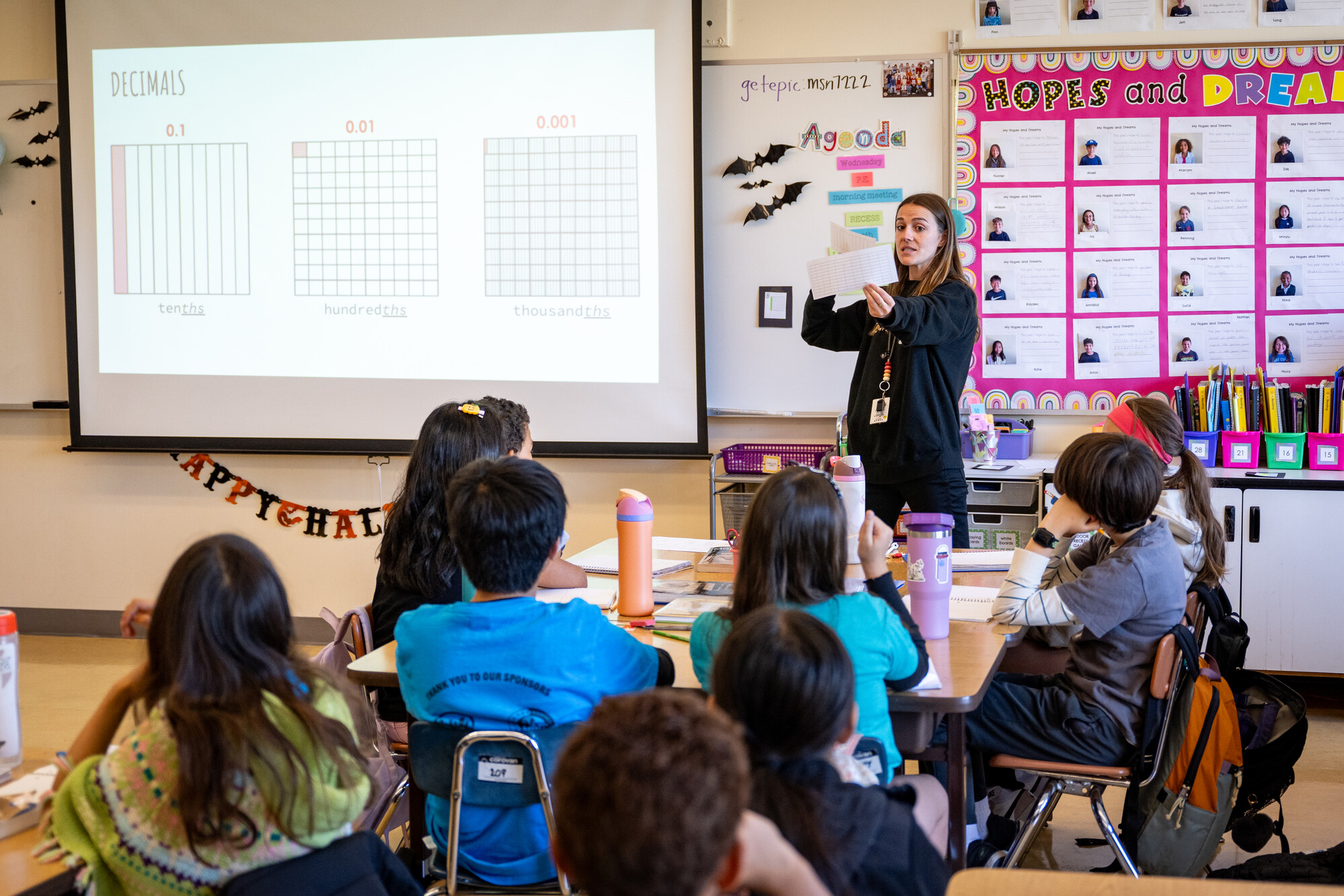
"caption": "A teacher instructs her class at Yick Wo Alternative Elementary School in San Francisco on Oct. 23, 2024. As 50,000 students return to San Francisco Unified School District schools, families can anticipate slimmed-down staffing, a new ethnic studies curriculum and a chance for kindergarteners to learn Mandarin.",
"credit": "Beth LaBerge/KQED",
"altTag": null,
"description": null,
"imgSizes": {
"thumbnail": {
"file": "https://cdn.kqed.org/wp-content/uploads/sites/10/2025/08/241023-SFUSDSuperintendent-12-BL_qed-1-160x107.jpg",
"width": 160,
"height": 107,
"mimeType": "image/jpeg"
},
"1536x1536": {
"file": "https://cdn.kqed.org/wp-content/uploads/sites/10/2025/08/241023-SFUSDSuperintendent-12-BL_qed-1-1536x1024.jpg",
"width": 1536,
"height": 1024,
"mimeType": "image/jpeg"
},
"post-thumbnail": {
"file": "https://cdn.kqed.org/wp-content/uploads/sites/10/2025/08/241023-SFUSDSuperintendent-12-BL_qed-1-672x372.jpg",
"width": 672,
"height": 372,
"mimeType": "image/jpeg"
},
"twentyfourteen-full-width": {
"file": "https://cdn.kqed.org/wp-content/uploads/sites/10/2025/08/241023-SFUSDSuperintendent-12-BL_qed-1-1038x576.jpg",
"width": 1038,
"height": 576,
"mimeType": "image/jpeg"
},
"kqedFullSize": {
"file": "https://cdn.kqed.org/wp-content/uploads/sites/10/2025/08/241023-SFUSDSuperintendent-12-BL_qed-1.jpg",
"width": 1999,
"height": 1333
}
},
"isLoading": false,
"fetchFailed": false
},
"news_12049998": {
"type": "attachments",
"id": "news_12049998",
"meta": {
"index": "attachments_1716263798",
"site": "news",
"id": "12049998",
"found": true
},
"title": "20250725_OAKLANDDAYLABORERS_GC-3-KQED",
"publishDate": 1753721859,
"status": "inherit",
"parent": 0,
"modified": 1755298552,
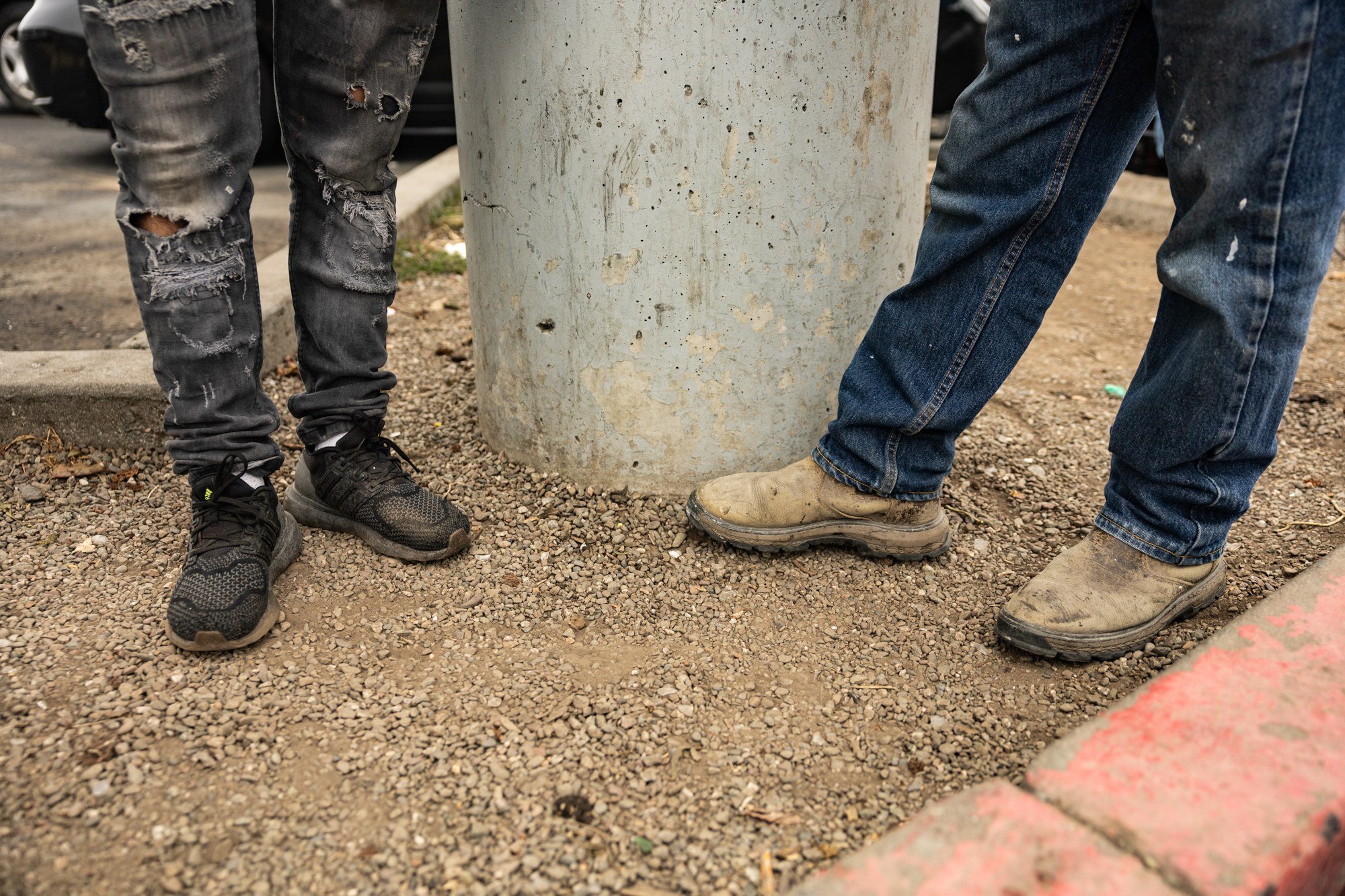
"caption": "Day laborers wait for work at a Walgreens in Oakland on July 25, 2025. Fewer people have come to the stop out of fear of being deported.",
"credit": "Gina Castro for KQED",
"altTag": null,
"description": null,
"imgSizes": {
"thumbnail": {
"file": "https://cdn.kqed.org/wp-content/uploads/sites/10/2025/07/20250725_OAKLANDDAYLABORERS_GC-3-KQED-160x107.jpg",
"width": 160,
"height": 107,
"mimeType": "image/jpeg"
},
"1536x1536": {
"file": "https://cdn.kqed.org/wp-content/uploads/sites/10/2025/07/20250725_OAKLANDDAYLABORERS_GC-3-KQED-1536x1024.jpg",
"width": 1536,
"height": 1024,
"mimeType": "image/jpeg"
},
"post-thumbnail": {
"file": "https://cdn.kqed.org/wp-content/uploads/sites/10/2025/07/20250725_OAKLANDDAYLABORERS_GC-3-KQED-672x372.jpg",
"width": 672,
"height": 372,
"mimeType": "image/jpeg"
},
"twentyfourteen-full-width": {
"file": "https://cdn.kqed.org/wp-content/uploads/sites/10/2025/07/20250725_OAKLANDDAYLABORERS_GC-3-KQED-1038x576.jpg",
"width": 1038,
"height": 576,
"mimeType": "image/jpeg"
},
"kqedFullSize": {
"file": "https://cdn.kqed.org/wp-content/uploads/sites/10/2025/07/20250725_OAKLANDDAYLABORERS_GC-3-KQED.jpg",
"width": 2000,
"height": 1333
}
},
"isLoading": false,
"fetchFailed": false
},
"news_12052488": {
"type": "attachments",
"id": "news_12052488",
"meta": {
"index": "attachments_1716263798",
"site": "news",
"id": "12052488",
"found": true
},
"title": "Valley Fever, or coccidioidomycosis, spreads as the climate warms",
"publishDate": 1755299703,
"status": "inherit",
"parent": 12052476,
"modified": 1755301570,
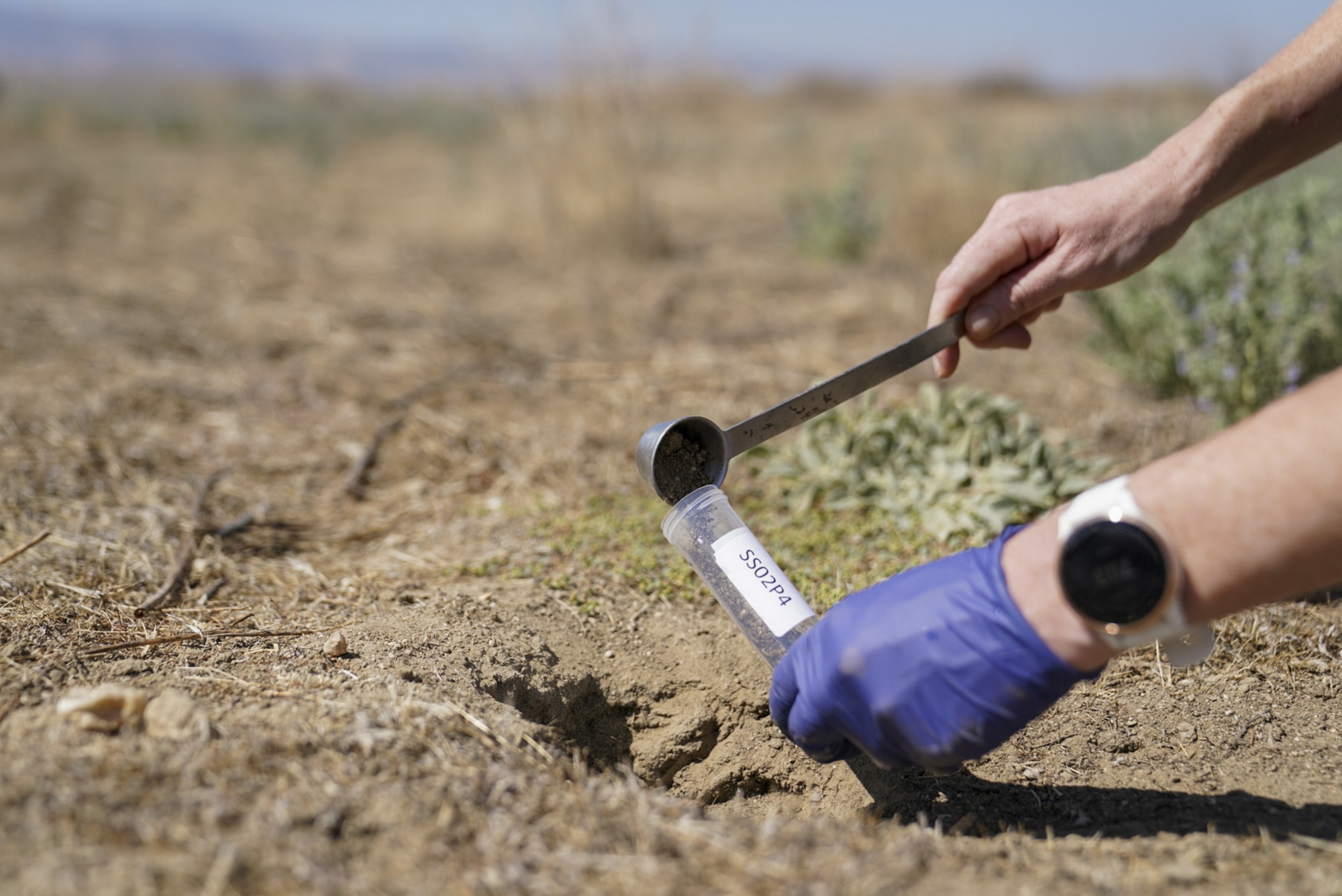
"caption": "A worker with the California Department of Public Health gathers a sample from a rodent hole in the Carrizo Plain National Monument in Santa Margarita, California, on Sept. 22, 2023. Approximately 30% of rodent holes in the area have coccidioidomycosis, or valley fever. It's a fungus that develops below the undisturbed surface of soils in hot, dry areas in the western United States. The fungus, when inhaled in dust, can cause long-term and sometimes severe health issues. If the fungus disseminates beyond the lungs, it can cause cocci meningitis, resulting in paralysis and neurological issues. As the climate warms and becomes drier, the fungus, which can also infect animals, could spread to new areas of the country. ",
"credit": "Carolyn Van Houten/The Washington Post via Getty Images",
"altTag": null,
"description": null,
"imgSizes": {
"thumbnail": {
"file": "https://cdn.kqed.org/wp-content/uploads/sites/10/2025/08/ValleyFeverGetty-160x107.jpg",
"width": 160,
"height": 107,
"mimeType": "image/jpeg"
},
"1536x1536": {
"file": "https://cdn.kqed.org/wp-content/uploads/sites/10/2025/08/ValleyFeverGetty-1536x1026.jpg",
"width": 1536,
"height": 1026,
"mimeType": "image/jpeg"
},
"post-thumbnail": {
"file": "https://cdn.kqed.org/wp-content/uploads/sites/10/2025/08/ValleyFeverGetty-672x372.jpg",
"width": 672,
"height": 372,
"mimeType": "image/jpeg"
},
"twentyfourteen-full-width": {
"file": "https://cdn.kqed.org/wp-content/uploads/sites/10/2025/08/ValleyFeverGetty-1038x576.jpg",
"width": 1038,
"height": 576,
"mimeType": "image/jpeg"
},
"kqedFullSize": {
"file": "https://cdn.kqed.org/wp-content/uploads/sites/10/2025/08/ValleyFeverGetty.jpg",
"width": 2000,
"height": 1336
}
},
"isLoading": false,
"fetchFailed": false
},
"news_11966643": {
"type": "attachments",
"id": "news_11966643",
"meta": {
"index": "attachments_1716263798",
"site": "news",
"id": "11966643",
"found": true
},
"parent": 11966587,
"imgSizes": {
"twentyfourteen-full-width": {
"file": "https://ww2.kqed.org/app/uploads/sites/10/2023/11/GettyImages-1408879341-qut-1038x576.jpg",
"width": 1038,
"mimeType": "image/jpeg",
"height": 576
},
"thumbnail": {
"file": "https://ww2.kqed.org/app/uploads/sites/10/2023/11/GettyImages-1408879341-qut-160x120.jpg",
"width": 160,
"mimeType": "image/jpeg",
"height": 120
},
"post-thumbnail": {
"file": "https://ww2.kqed.org/app/uploads/sites/10/2023/11/GettyImages-1408879341-qut-672x372.jpg",
"width": 672,
"mimeType": "image/jpeg",
"height": 372
},
"kqedFullSize": {
"file": "https://ww2.kqed.org/app/uploads/sites/10/2023/11/GettyImages-1408879341-qut.jpg",
"width": 1920,
"height": 1440
},
"large": {
"file": "https://ww2.kqed.org/app/uploads/sites/10/2023/11/GettyImages-1408879341-qut-1020x765.jpg",
"width": 1020,
"mimeType": "image/jpeg",
"height": 765
},
"1536x1536": {
"file": "https://ww2.kqed.org/app/uploads/sites/10/2023/11/GettyImages-1408879341-qut-1536x1152.jpg",
"width": 1536,
"mimeType": "image/jpeg",
"height": 1152
},
"medium": {
"file": "https://ww2.kqed.org/app/uploads/sites/10/2023/11/GettyImages-1408879341-qut-800x600.jpg",
"width": 800,
"mimeType": "image/jpeg",
"height": 600
}
},
"publishDate": 1699386163,
"modified": 1699386256,
"caption": "A vial of the mpox vaccine is displayed by a medical professional at a vaccination site in July, 2022.",
"description": null,
"title": "A vial of the Monkeypox vaccine",
"credit": "James Carbone/Newsday RM via Getty Images",
"status": "inherit",
"altTag": "close-up photo of fingers holding a tiny vial which reads 'monkeypox vaccine'",
"isLoading": false,
"fetchFailed": false
},
"news_12052401": {
"type": "attachments",
"id": "news_12052401",
"meta": {
"index": "attachments_1716263798",
"site": "news",
"id": "12052401",
"found": true
},
"title": "Bay Area Residents Cool Off At Alameda Beach During Heat Wave",
"publishDate": 1755284030,
"status": "inherit",
"parent": 12052393,
"modified": 1781119267,
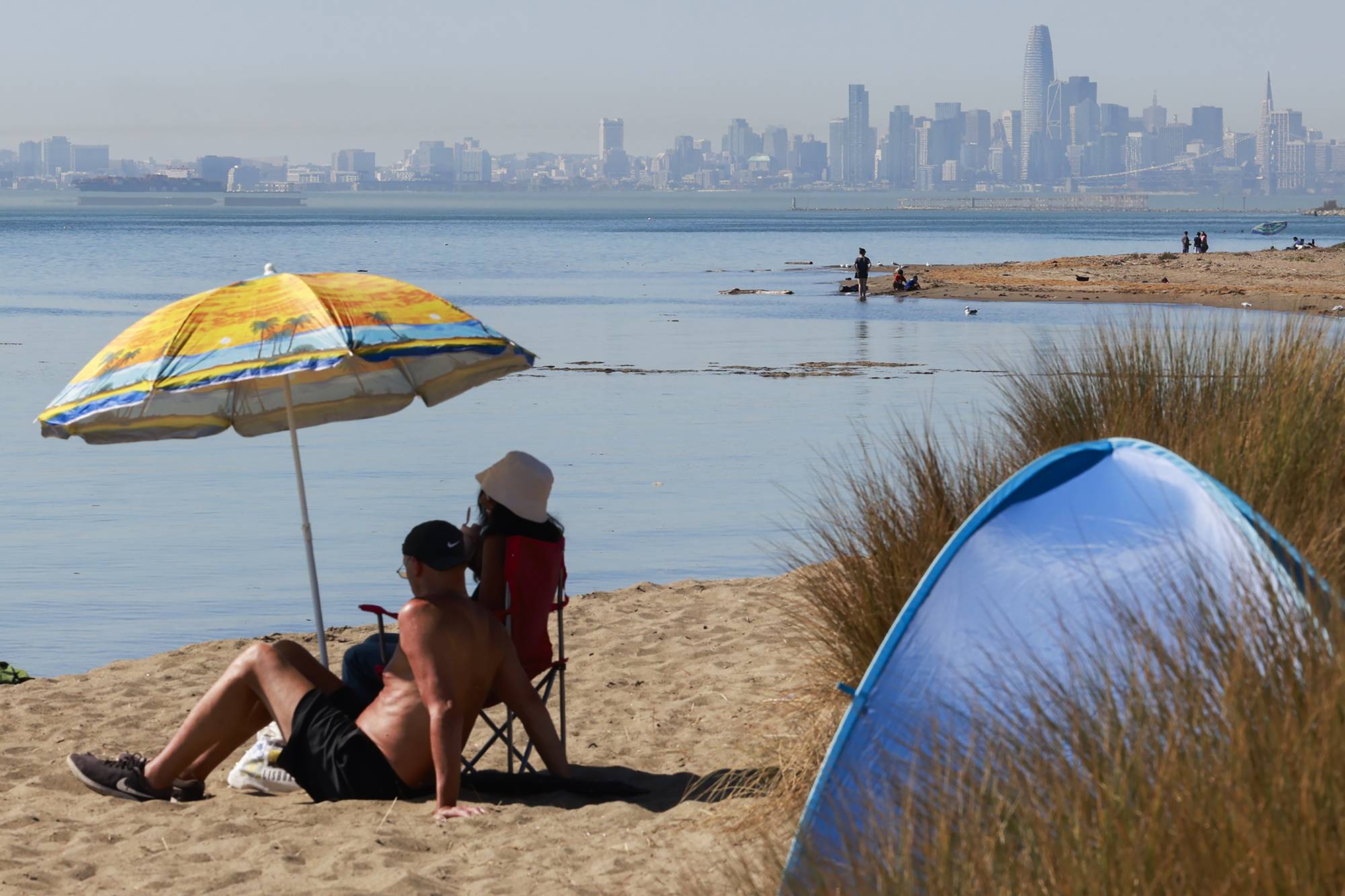
"caption": "Residents lounge near the water on Alameda Beach in Alameda, California, Wednesday, Oct. 2, 2024, during an exceptional heat wave across the Bay Area and inland. ",
"credit": "Jessica Christian/San Francisco Chronicle via Getty Images",
"altTag": null,
"description": null,
"imgSizes": {
"medium": {
"file": "https://cdn.kqed.org/wp-content/uploads/sites/10/2025/08/GettyImages-2175515837-2000x1333.jpg",
"width": 2000,
"height": 1333,
"mimeType": "image/jpeg"
},
"large": {
"file": "https://cdn.kqed.org/wp-content/uploads/sites/10/2025/08/GettyImages-2175515837-2000x1333.jpg",
"width": 2000,
"height": 1333,
"mimeType": "image/jpeg"
},
"thumbnail": {
"file": "https://cdn.kqed.org/wp-content/uploads/sites/10/2025/08/GettyImages-2175515837-160x107.jpg",
"width": 160,
"height": 107,
"mimeType": "image/jpeg"
},
"1536x1536": {
"file": "https://cdn.kqed.org/wp-content/uploads/sites/10/2025/08/GettyImages-2175515837-1536x1024.jpg",
"width": 1536,
"height": 1024,
"mimeType": "image/jpeg"
},
"2048x2048": {
"file": "https://cdn.kqed.org/wp-content/uploads/sites/10/2025/08/GettyImages-2175515837-2048x1365.jpg",
"width": 2048,
"height": 1365,
"mimeType": "image/jpeg"
},
"post-thumbnail": {
"file": "https://cdn.kqed.org/wp-content/uploads/sites/10/2025/08/GettyImages-2175515837-672x372.jpg",
"width": 672,
"height": 372,
"mimeType": "image/jpeg"
},
"twentyfourteen-full-width": {
"file": "https://cdn.kqed.org/wp-content/uploads/sites/10/2025/08/GettyImages-2175515837-1038x576.jpg",
"width": 1038,
"height": 576,
"mimeType": "image/jpeg"
},
"full-width": {
"file": "https://cdn.kqed.org/wp-content/uploads/sites/10/2025/08/GettyImages-2175515837-2000x1333.jpg",
"width": 2000,
"height": 1333,
"mimeType": "image/jpeg"
},
"kqedFullSize": {
"file": "https://cdn.kqed.org/wp-content/uploads/sites/10/2025/08/GettyImages-2175515837-scaled-e1781119253267.jpg",
"width": 2000,
"height": 1333
}
},
"isLoading": false,
"fetchFailed": false
},
"news_12052244": {
"type": "attachments",
"id": "news_12052244",
"meta": {
"index": "attachments_1716263798",
"site": "news",
"id": "12052244",
"found": true
},
"title": "250814-OAKLANDPUSHBACK-08-KQED",
"publishDate": 1755202777,
"status": "inherit",
"parent": 12054322,
"modified": 1763165876,
"caption": "Mayor Barbara Lee speaks during a press conference at Oakland City Hall in Oakland on Aug. 14, 2025.",
"credit": "Beth LaBerge/KQED",
"altTag": null,
"description": null,
"imgSizes": {
"thumbnail": {
"file": "https://cdn.kqed.org/wp-content/uploads/sites/10/2025/08/250814-OAKLANDPUSHBACK-08-KQED-160x107.jpg",
"width": 160,
"height": 107,
"mimeType": "image/jpeg"
},
"1536x1536": {
"file": "https://cdn.kqed.org/wp-content/uploads/sites/10/2025/08/250814-OAKLANDPUSHBACK-08-KQED-1536x1024.jpg",
"width": 1536,
"height": 1024,
"mimeType": "image/jpeg"
},
"post-thumbnail": {
"file": "https://cdn.kqed.org/wp-content/uploads/sites/10/2025/08/250814-OAKLANDPUSHBACK-08-KQED-672x372.jpg",
"width": 672,
"height": 372,
"mimeType": "image/jpeg"
},
"twentyfourteen-full-width": {
"file": "https://cdn.kqed.org/wp-content/uploads/sites/10/2025/08/250814-OAKLANDPUSHBACK-08-KQED-1038x576.jpg",
"width": 1038,
"height": 576,
"mimeType": "image/jpeg"
},
"kqedFullSize": {
"file": "https://cdn.kqed.org/wp-content/uploads/sites/10/2025/08/250814-OAKLANDPUSHBACK-08-KQED.jpg",
"width": 2000,
"height": 1333
}
},
"isLoading": false,
"fetchFailed": false
},
"news_12052290": {
"type": "attachments",
"id": "news_12052290",
"meta": {
"index": "attachments_1716263798",
"site": "news",
"id": "12052290",
"found": true
},
"title": "Zach Bryan Performs At BST Hyde Park 2025",
"publishDate": 1755210451,
"status": "inherit",
"parent": 12052284,
"modified": 1755210506,
"caption": "Zach Bryan headlines the Great Oak Stage during BST Hyde Park at Hyde Park on June 28, 2025, in London, England. ",
"credit": "Gus Stewart/Redferns via Getty Images",
"altTag": null,
"description": null,
"imgSizes": {
"thumbnail": {
"file": "https://cdn.kqed.org/wp-content/uploads/sites/10/2025/08/ZachBryanGetty-160x116.jpg",
"width": 160,
"height": 116,
"mimeType": "image/jpeg"
},
"1536x1536": {
"file": "https://cdn.kqed.org/wp-content/uploads/sites/10/2025/08/ZachBryanGetty-1536x1111.jpg",
"width": 1536,
"height": 1111,
"mimeType": "image/jpeg"
},
"post-thumbnail": {
"file": "https://cdn.kqed.org/wp-content/uploads/sites/10/2025/08/ZachBryanGetty-672x372.jpg",
"width": 672,
"height": 372,
"mimeType": "image/jpeg"
},
"twentyfourteen-full-width": {
"file": "https://cdn.kqed.org/wp-content/uploads/sites/10/2025/08/ZachBryanGetty-1038x576.jpg",
"width": 1038,
"height": 576,
"mimeType": "image/jpeg"
},
"kqedFullSize": {
"file": "https://cdn.kqed.org/wp-content/uploads/sites/10/2025/08/ZachBryanGetty.jpg",
"width": 2000,
"height": 1447
}
},
"isLoading": false,
"fetchFailed": false
},
"news_12052259": {
"type": "attachments",
"id": "news_12052259",
"meta": {
"index": "attachments_1716263798",
"site": "news",
"id": "12052259",
"found": true
},
"title": null,
"publishDate": 1755205539,
"status": "inherit",
"parent": 12052217,
"modified": 1755213544,
"caption": null,
"credit": "SDI Productions/Getty Images",
"altTag": null,
"description": null,
"imgSizes": {
"thumbnail": {
"file": "https://cdn.kqed.org/wp-content/uploads/sites/10/2025/08/ImmigrationLawyerGetty-160x90.jpg",
"width": 160,
"height": 90,
"mimeType": "image/jpeg"
},
"1536x1536": {
"file": "https://cdn.kqed.org/wp-content/uploads/sites/10/2025/08/ImmigrationLawyerGetty-1536x864.jpg",
"width": 1536,
"height": 864,
"mimeType": "image/jpeg"
},
"post-thumbnail": {
"file": "https://cdn.kqed.org/wp-content/uploads/sites/10/2025/08/ImmigrationLawyerGetty-672x372.jpg",
"width": 672,
"height": 372,
"mimeType": "image/jpeg"
},
"twentyfourteen-full-width": {
"file": "https://cdn.kqed.org/wp-content/uploads/sites/10/2025/08/ImmigrationLawyerGetty-1038x576.jpg",
"width": 1038,
"height": 576,
"mimeType": "image/jpeg"
},
"kqedFullSize": {
"file": "https://cdn.kqed.org/wp-content/uploads/sites/10/2025/08/ImmigrationLawyerGetty.jpg",
"width": 2000,
"height": 1125
}
},
"isLoading": false,
"fetchFailed": false
},
"news_12052267": {
"type": "attachments",
"id": "news_12052267",
"meta": {
"index": "attachments_1716263798",
"site": "news",
"id": "12052267",
"found": true
},
"title": "Martinez California Cityscape",
"publishDate": 1755206887,
"status": "inherit",
"parent": 12052204,
"modified": 1755206948,
"caption": "The city of Martinez, California on Jan. 11, 2025.",
"credit": "Michael R. Lopez/Getty Images",
"altTag": null,
"description": null,
"imgSizes": {
"thumbnail": {
"file": "https://cdn.kqed.org/wp-content/uploads/sites/10/2025/08/MartinezGetty-160x128.jpg",
"width": 160,
"height": 128,
"mimeType": "image/jpeg"
},
"1536x1536": {
"file": "https://cdn.kqed.org/wp-content/uploads/sites/10/2025/08/MartinezGetty-1536x1229.jpg",
"width": 1536,
"height": 1229,
"mimeType": "image/jpeg"
},
"post-thumbnail": {
"file": "https://cdn.kqed.org/wp-content/uploads/sites/10/2025/08/MartinezGetty-672x372.jpg",
"width": 672,
"height": 372,
"mimeType": "image/jpeg"
},
"twentyfourteen-full-width": {
"file": "https://cdn.kqed.org/wp-content/uploads/sites/10/2025/08/MartinezGetty-1038x576.jpg",
"width": 1038,
"height": 576,
"mimeType": "image/jpeg"
},
"kqedFullSize": {
"file": "https://cdn.kqed.org/wp-content/uploads/sites/10/2025/08/MartinezGetty.jpg",
"width": 2000,
"height": 1600
}
},
"isLoading": false,
"fetchFailed": false
},
"news_12048135": {
"type": "attachments",
"id": "news_12048135",
"meta": {
"index": "attachments_1716263798",
"site": "news",
"id": "12048135",
"found": true
},
"title": "Protests Erupt In L.A. County Sparked By Federal Immigration Raids",
"publishDate": 1752605450,
"status": "inherit",
"parent": 12048121,
"modified": 1779816898,
"caption": "Federal agents guard outside of a federal building and Immigration and Customs Enforcement (ICE) detention center in downtown Los Angeles as demonstrations continue after a series of immigration raids began June 13, 2025, in Los Angeles. Tensions in the city remain high after the Trump administration called in the National Guard and the Marines against the wishes of city leaders.",
"credit": "Spencer Platt/Getty Images",
"altTag": null,
"description": null,
"imgSizes": {
"medium": {
"file": "https://cdn.kqed.org/wp-content/uploads/sites/10/2025/07/GettyImages-2220045842-2000x1334.jpg",
"width": 2000,
"height": 1334,
"mimeType": "image/jpeg"
},
"large": {
"file": "https://cdn.kqed.org/wp-content/uploads/sites/10/2025/07/GettyImages-2220045842-2000x1334.jpg",
"width": 2000,
"height": 1334,
"mimeType": "image/jpeg"
},
"thumbnail": {
"file": "https://cdn.kqed.org/wp-content/uploads/sites/10/2025/07/GettyImages-2220045842-160x107.jpg",
"width": 160,
"height": 107,
"mimeType": "image/jpeg"
},
"1536x1536": {
"file": "https://cdn.kqed.org/wp-content/uploads/sites/10/2025/07/GettyImages-2220045842-1536x1025.jpg",
"width": 1536,
"height": 1025,
"mimeType": "image/jpeg"
},
"2048x2048": {
"file": "https://cdn.kqed.org/wp-content/uploads/sites/10/2025/07/GettyImages-2220045842-2048x1366.jpg",
"width": 2048,
"height": 1366,
"mimeType": "image/jpeg"
},
"post-thumbnail": {
"file": "https://cdn.kqed.org/wp-content/uploads/sites/10/2025/07/GettyImages-2220045842-672x372.jpg",
"width": 672,
"height": 372,
"mimeType": "image/jpeg"
},
"twentyfourteen-full-width": {
"file": "https://cdn.kqed.org/wp-content/uploads/sites/10/2025/07/GettyImages-2220045842-1038x576.jpg",
"width": 1038,
"height": 576,
"mimeType": "image/jpeg"
},
"full-width": {
"file": "https://cdn.kqed.org/wp-content/uploads/sites/10/2025/07/GettyImages-2220045842-2000x1334.jpg",
"width": 2000,
"height": 1334,
"mimeType": "image/jpeg"
},
"kqedFullSize": {
"file": "https://cdn.kqed.org/wp-content/uploads/sites/10/2025/07/GettyImages-2220045842-scaled-e1752857672682.jpg",
"width": 2000,
"height": 1334
}
},
"isLoading": false,
"fetchFailed": false
},
"news_12052061": {
"type": "attachments",
"id": "news_12052061",
"meta": {
"index": "attachments_1716263798",
"site": "news",
"id": "12052061",
"found": true
},
"title": "San Leandro, California",
"publishDate": 1755119939,
"status": "inherit",
"parent": 12052003,
"modified": 1755119999,
"caption": "Downtown San Leandro on Nov. 17, 2021. ",
"credit": "Matt Gush/Getty Images",
"altTag": null,
"description": null,
"imgSizes": {
"thumbnail": {
"file": "https://cdn.kqed.org/wp-content/uploads/sites/10/2025/08/SanLeandroGetty-160x107.jpg",
"width": 160,
"height": 107,
"mimeType": "image/jpeg"
},
"1536x1536": {
"file": "https://cdn.kqed.org/wp-content/uploads/sites/10/2025/08/SanLeandroGetty-1536x1024.jpg",
"width": 1536,
"height": 1024,
"mimeType": "image/jpeg"
},
"post-thumbnail": {
"file": "https://cdn.kqed.org/wp-content/uploads/sites/10/2025/08/SanLeandroGetty-672x372.jpg",
"width": 672,
"height": 372,
"mimeType": "image/jpeg"
},
"twentyfourteen-full-width": {
"file": "https://cdn.kqed.org/wp-content/uploads/sites/10/2025/08/SanLeandroGetty-1038x576.jpg",
"width": 1038,
"height": 576,
"mimeType": "image/jpeg"
},
"kqedFullSize": {
"file": "https://cdn.kqed.org/wp-content/uploads/sites/10/2025/08/SanLeandroGetty.jpg",
"width": 2000,
"height": 1333
}
},
"isLoading": false,
"fetchFailed": false
},
"news_12040230": {
"type": "attachments",
"id": "news_12040230",
"meta": {
"index": "attachments_1716263798",
"site": "news",
"id": "12040230",
"found": true
},
"title": "250512-SEAGULLCOUNTY-26-BL-KQED",
"publishDate": 1747265874,
"status": "inherit",
"parent": 0,
"modified": 1747265985,
"caption": "A team led by Nathan Van Schmidt (center), science director at the San Francisco Bay Bird Observatory, and Amy Parsons, lead biologist, conducts a California gull nest survey near the Dumbarton Bridge in Fremont on May 12, 2025.",
"credit": "Beth LaBerge/KQED",
"altTag": null,
"description": null,
"imgSizes": {
"medium": {
"file": "https://cdn.kqed.org/wp-content/uploads/sites/10/2025/05/250512-SEAGULLCOUNTY-26-BL-KQED-800x533.jpg",
"width": 800,
"height": 533,
"mimeType": "image/jpeg"
},
"large": {
"file": "https://cdn.kqed.org/wp-content/uploads/sites/10/2025/05/250512-SEAGULLCOUNTY-26-BL-KQED-1020x680.jpg",
"width": 1020,
"height": 680,
"mimeType": "image/jpeg"
},
"thumbnail": {
"file": "https://cdn.kqed.org/wp-content/uploads/sites/10/2025/05/250512-SEAGULLCOUNTY-26-BL-KQED-160x107.jpg",
"width": 160,
"height": 107,
"mimeType": "image/jpeg"
},
"1536x1536": {
"file": "https://cdn.kqed.org/wp-content/uploads/sites/10/2025/05/250512-SEAGULLCOUNTY-26-BL-KQED-1536x1024.jpg",
"width": 1536,
"height": 1024,
"mimeType": "image/jpeg"
},
"post-thumbnail": {
"file": "https://cdn.kqed.org/wp-content/uploads/sites/10/2025/05/250512-SEAGULLCOUNTY-26-BL-KQED-672x372.jpg",
"width": 672,
"height": 372,
"mimeType": "image/jpeg"
},
"twentyfourteen-full-width": {
"file": "https://cdn.kqed.org/wp-content/uploads/sites/10/2025/05/250512-SEAGULLCOUNTY-26-BL-KQED-1038x576.jpg",
"width": 1038,
"height": 576,
"mimeType": "image/jpeg"
},
"full-width": {
"file": "https://cdn.kqed.org/wp-content/uploads/sites/10/2025/05/250512-SEAGULLCOUNTY-26-BL-KQED-1920x1280.jpg",
"width": 1920,
"height": 1280,
"mimeType": "image/jpeg"
},
"kqedFullSize": {
"file": "https://cdn.kqed.org/wp-content/uploads/sites/10/2025/05/250512-SEAGULLCOUNTY-26-BL-KQED.jpg",
"width": 2000,
"height": 1333
}
},
"isLoading": false,
"fetchFailed": false
}
},
"audioPlayerReducer": {
"postId": "stream_live",
"isPaused": true,
"isPlaying": false,
"pfsActive": false,
"pledgeModalIsOpen": true,
"playerDrawerIsOpen": false,
"liveAudioPlayStartedAt": 0,
"liveAudioPlayContext": ""
},
"authorsReducer": {
"carlysevern": {
"type": "authors",
"id": "3243",
"meta": {
"index": "authors_1716337520",
"id": "3243",
"found": true
},
"name": "Carly Severn",
"firstName": "Carly",
"lastName": "Severn",
"slug": "carlysevern",
"email": "csevern@kqed.org",
"display_author_email": false,
"staff_mastheads": [
"news"
],
"title": "Senior Editor, Audience News ",
"bio": "Carly is KQED's Senior Editor of Audience News on the Digital News team, and has reported for the California Report Magazine, Bay Curious and KQED Arts. She's formerly the host of \u003ca href=\"http://ww2.kqed.org/pop/category/the-cooler/\" rel=\"noopener noreferrer\">The Cooler\u003c/a> podcast.",
"avatar": "https://secure.gravatar.com/avatar/54037bf5c128fe678f0ef26cec97a93f2e7f220a22d7285703328f12c42c1b1d?s=600&d=blank&r=g",
"twitter": "teacupinthebay",
"bluesky": null,
"facebook": null,
"instagram": null,
"linkedin": null,
"sites": [
{
"site": "",
"roles": [
"editor"
]
},
{
"site": "arts",
"roles": [
"editor"
]
},
{
"site": "news",
"roles": [
"administrator"
]
},
{
"site": "pop",
"roles": [
"editor"
]
},
{
"site": "futureofyou",
"roles": [
"editor"
]
},
{
"site": "about",
"roles": [
"administrator"
]
},
{
"site": "mindshift",
"roles": [
"editor"
]
},
{
"site": "bayareabites",
"roles": [
"editor"
]
},
{
"site": "stateofhealth",
"roles": [
"editor"
]
},
{
"site": "science",
"roles": [
"editor"
]
},
{
"site": "food",
"roles": [
"contributor"
]
},
{
"site": "forum",
"roles": [
"editor"
]
},
{
"site": "perspectives",
"roles": [
"administrator"
]
},
{
"site": "liveblog",
"roles": [
"editor"
]
}
],
"headData": {
"title": "Carly Severn | KQED",
"description": "Senior Editor, Audience News ",
"ogImgSrc": "https://secure.gravatar.com/avatar/54037bf5c128fe678f0ef26cec97a93f2e7f220a22d7285703328f12c42c1b1d?s=600&d=blank&r=g",
"twImgSrc": "https://secure.gravatar.com/avatar/54037bf5c128fe678f0ef26cec97a93f2e7f220a22d7285703328f12c42c1b1d?s=600&d=blank&r=g"
},
"isLoading": false,
"link": "/author/carlysevern"
},
"ahall": {
"type": "authors",
"id": "11490",
"meta": {
"index": "authors_1716337520",
"id": "11490",
"found": true
},
"name": "Alex Hall",
"firstName": "Alex",
"lastName": "Hall",
"slug": "ahall",
"email": "ahall@kqed.org",
"display_author_email": false,
"staff_mastheads": [
"news"
],
"title": "KQED Enterprise & Accountability Reporter",
"bio": "Alex Hall is KQED's Enterprise and Accountability Reporter. She previously covered the Central Valley for five years from KQED's bureau in Fresno. Before joining KQED, Alex was an investigative reporting fellow at Wisconsin Public Radio and the Wisconsin Center for Investigative Journalism. She has also worked as a bilingual producer for NPR's investigative unit and freelance video producer for Reuters TV on the Latin America desk. She got her start in journalism in South America, where she worked as a radio producer and Spanish-English translator for CNN Chile. Her documentary and investigation into the series of deadly COVID-19 outbreaks at Foster Farms won a national Edward R. Murrow award and was named an Investigative Reporters & Editors award finalist. Alex's reporting for Reveal on the Wisconsin dairy industry's reliance on undocumented immigrant labor was made into a film, Los Lecheros, which won a regional Edward R. Murrow award for best news documentary.",
"avatar": "https://secure.gravatar.com/avatar/04c28ad4a7caa7ac2ef39c655c4030c993a3f331481d1da4799bb76ea85b9afa?s=600&d=blank&r=g",
"twitter": "@chalexhall",
"bluesky": null,
"facebook": null,
"instagram": null,
"linkedin": null,
"sites": [
{
"site": "news",
"roles": [
"editor"
]
},
{
"site": "liveblog",
"roles": [
"author"
]
}
],
"headData": {
"title": "Alex Hall | KQED",
"description": "KQED Enterprise & Accountability Reporter",
"ogImgSrc": "https://secure.gravatar.com/avatar/04c28ad4a7caa7ac2ef39c655c4030c993a3f331481d1da4799bb76ea85b9afa?s=600&d=blank&r=g",
"twImgSrc": "https://secure.gravatar.com/avatar/04c28ad4a7caa7ac2ef39c655c4030c993a3f331481d1da4799bb76ea85b9afa?s=600&d=blank&r=g"
},
"isLoading": false,
"link": "/author/ahall"
},
"hmcdede": {
"type": "authors",
"id": "11635",
"meta": {
"index": "authors_1716337520",
"id": "11635",
"found": true
},
"name": "Holly McDede",
"firstName": "Holly",
"lastName": "McDede",
"slug": "hmcdede",
"email": "hmcdede@KQED.org",
"display_author_email": false,
"staff_mastheads": [],
"title": "KQED Contributor",
"bio": null,
"avatar": "https://secure.gravatar.com/avatar/35d1a1f5422c9d266f7ace9348d170f2136671a65fffc90a592e4d7fbf8dc3f6?s=600&d=blank&r=g",
"twitter": null,
"bluesky": null,
"facebook": null,
"instagram": null,
"linkedin": null,
"sites": [
{
"site": "arts",
"roles": [
"editor"
]
},
{
"site": "news",
"roles": [
"edit_others_posts",
"editor"
]
},
{
"site": "science",
"roles": [
"editor"
]
},
{
"site": "forum",
"roles": [
"editor"
]
},
{
"site": "perspectives",
"roles": [
"administrator"
]
}
],
"headData": {
"title": "Holly McDede | KQED",
"description": "KQED Contributor",
"ogImgSrc": "https://secure.gravatar.com/avatar/35d1a1f5422c9d266f7ace9348d170f2136671a65fffc90a592e4d7fbf8dc3f6?s=600&d=blank&r=g",
"twImgSrc": "https://secure.gravatar.com/avatar/35d1a1f5422c9d266f7ace9348d170f2136671a65fffc90a592e4d7fbf8dc3f6?s=600&d=blank&r=g"
},
"isLoading": false,
"link": "/author/hmcdede"
},
"ccabreralomeli": {
"type": "authors",
"id": "11708",
"meta": {
"index": "authors_1716337520",
"id": "11708",
"found": true
},
"name": "Carlos Cabrera-Lomelí",
"firstName": "Carlos",
"lastName": "Cabrera-Lomelí",
"slug": "ccabreralomeli",
"email": "ccabreralomeli@KQED.org",
"display_author_email": true,
"staff_mastheads": [
"news"
],
"title": "Community Reporter",
"bio": "Carlos Cabrera-Lomelí is a community reporter with KQED's digital engagement team. He also reports and co-produces for KQED's bilingual news hub KQED en Español. He grew up in San Francisco's Mission District and has previously worked with Univision, 48 Hills and REFORMA in Mexico City.",
"avatar": "https://secure.gravatar.com/avatar/c309be9665e484f887b818c89e273ecc673004f426f36b24d00a4d813a2e0518?s=600&d=blank&r=g",
"twitter": "@LomeliCabrera",
"bluesky": null,
"facebook": null,
"instagram": null,
"linkedin": null,
"sites": [
{
"site": "arts",
"roles": [
"editor"
]
},
{
"site": "news",
"roles": [
"editor"
]
},
{
"site": "about",
"roles": [
"editor"
]
},
{
"site": "science",
"roles": [
"editor"
]
},
{
"site": "perspectives",
"roles": [
"editor"
]
},
{
"site": "elections",
"roles": [
"editor"
]
},
{
"site": "liveblog",
"roles": [
"contributor"
]
}
],
"headData": {
"title": "Carlos Cabrera-Lomelí | KQED",
"description": "Community Reporter",
"ogImgSrc": "https://secure.gravatar.com/avatar/c309be9665e484f887b818c89e273ecc673004f426f36b24d00a4d813a2e0518?s=600&d=blank&r=g",
"twImgSrc": "https://secure.gravatar.com/avatar/c309be9665e484f887b818c89e273ecc673004f426f36b24d00a4d813a2e0518?s=600&d=blank&r=g"
},
"isLoading": false,
"link": "/author/ccabreralomeli"
},
"pbartolone": {
"type": "authors",
"id": "11879",
"meta": {
"index": "authors_1716337520",
"id": "11879",
"found": true
},
"name": "Pauline Bartolone",
"firstName": "Pauline",
"lastName": "Bartolone",
"slug": "pbartolone",
"email": "pbartolone@kqed.org",
"display_author_email": false,
"staff_mastheads": [],
"title": "KQED Contributor",
"bio": "Pauline Bartolone has been a journalist for two decades, specializing in longform audio storytelling. Before editing and producing for podcasts like Bay Curious, she was a health care journalist for public radio and print outlets such as CalMatters and Kaiser Health News. Her reporting has won several regional Edward R. Murrow awards, national recognition from the Society of Professional Journalists and a first-place prize from the Association of Health Care Journalists.\r\n\r\nPauline’s work has aired frequently on National Public Radio, and bylines have appeared in The Los Angeles Times, CNN.com, Washingtonpost.com, USA Today and Scientific American.\r\n\r\nPauline has lived in Northern California for 20 years. Her other passions are crafts (now done in collaboration with her daughter) and the Brazilian martial art of capoeira.",
"avatar": "https://secure.gravatar.com/avatar/95001c30374b0d3878007af9cf1e120a?s=600&d=blank&r=g",
"twitter": "pbartolone",
"facebook": null,
"instagram": null,
"linkedin": null,
"sites": [
{
"site": "news",
"roles": [
"editor"
]
},
{
"site": "podcasts",
"roles": [
"subscriber"
]
}
],
"headData": {
"title": "Pauline Bartolone | KQED",
"description": "KQED Contributor",
"ogImgSrc": "https://secure.gravatar.com/avatar/95001c30374b0d3878007af9cf1e120a?s=600&d=blank&r=g",
"twImgSrc": "https://secure.gravatar.com/avatar/95001c30374b0d3878007af9cf1e120a?s=600&d=blank&r=g"
},
"isLoading": false,
"link": "/author/pbartolone"
},
"kdebenedetti": {
"type": "authors",
"id": "11913",
"meta": {
"index": "authors_1716337520",
"id": "11913",
"found": true
},
"name": "Katie DeBenedetti",
"firstName": "Katie",
"lastName": "DeBenedetti",
"slug": "kdebenedetti",
"email": "kdebenedetti@kqed.org",
"display_author_email": false,
"staff_mastheads": [
"news",
"science"
],
"title": "KQED Contributor",
"bio": "Katie DeBenedetti is a digital reporter covering daily news for the Express Desk. Prior to joining KQED as a culture reporting intern in January 2024, she covered education and city government for the Napa Valley Register.",
"avatar": "https://secure.gravatar.com/avatar/6e31073cb8f7e4214ab03f42771d0f45?s=600&d=blank&r=g",
"twitter": null,
"facebook": null,
"instagram": null,
"linkedin": null,
"sites": [
{
"site": "news",
"roles": [
"author"
]
},
{
"site": "science",
"roles": [
"author"
]
},
{
"site": "liveblog",
"roles": [
"author"
]
}
],
"headData": {
"title": "Katie DeBenedetti | KQED",
"description": "KQED Contributor",
"ogImgSrc": "https://secure.gravatar.com/avatar/6e31073cb8f7e4214ab03f42771d0f45?s=600&d=blank&r=g",
"twImgSrc": "https://secure.gravatar.com/avatar/6e31073cb8f7e4214ab03f42771d0f45?s=600&d=blank&r=g"
},
"isLoading": false,
"link": "/author/kdebenedetti"
},
"skennedy": {
"type": "authors",
"id": "11935",
"meta": {
"index": "authors_1716337520",
"id": "11935",
"found": true
},
"name": "Samantha Kennedy",
"firstName": "Samantha",
"lastName": "Kennedy",
"slug": "skennedy",
"email": "SKennedy@kqed.org",
"display_author_email": false,
"staff_mastheads": [],
"title": "KQED Contributor",
"bio": null,
"avatar": "https://secure.gravatar.com/avatar/adc7b14bf1e801793202a156ecc864d4ad505b0fd63162a2f3da0e5ba57222d0?s=600&d=blank&r=g",
"twitter": null,
"bluesky": null,
"facebook": null,
"instagram": null,
"linkedin": null,
"sites": [
{
"site": "arts",
"roles": [
"author"
]
},
{
"site": "news",
"roles": [
"editor"
]
},
{
"site": "science",
"roles": [
"editor"
]
}
],
"headData": {
"title": "Samantha Kennedy | KQED",
"description": "KQED Contributor",
"ogImgSrc": "https://secure.gravatar.com/avatar/adc7b14bf1e801793202a156ecc864d4ad505b0fd63162a2f3da0e5ba57222d0?s=600&d=blank&r=g",
"twImgSrc": "https://secure.gravatar.com/avatar/adc7b14bf1e801793202a156ecc864d4ad505b0fd63162a2f3da0e5ba57222d0?s=600&d=blank&r=g"
},
"isLoading": false,
"link": "/author/skennedy"
}
},
"pagesReducer": {
"news_category_local": {
"type": "terms",
"id": "news_28250",
"meta": {
"index": "terms_1716263798",
"site": "news",
"id": "28250",
"score": 12.940407
},
"featImg": null,
"name": "Local",
"description": null,
"taxonomy": "category",
"headData": {
"twImgId": null,
"twTitle": null,
"ogTitle": null,
"ogImgId": null,
"twDescription": null,
"description": null,
"title": "Local Archives | KQED News",
"ogDescription": null
},
"ttid": 28267,
"slug": "local",
"isLoading": false,
"title": "Local",
"pageMeta": {
"site": "news",
"WpPageTemplate": "page-topic-editorial",
"currentPage": 97
},
"blocks": [
{
"blockName": "kqed/post-list",
"attrs": {
"layout": "cardArticle2",
"query": "posts/news?category=local",
"seeMore": false,
"paginated": true,
"page": 97
}
},
{
"blockName": "kqed/ad"
}
]
}
},
"pfsSessionReducer": {},
"postsReducer": {
"stream_live": {
"type": "live",
"id": "stream_live",
"audioUrl": "https://streams.kqed.org/kqedradio",
"title": "Live Stream",
"excerpt": "Live Stream information currently unavailable.",
"link": "/radio",
"featImg": "",
"label": {
"name": "KQED Live",
"link": "/"
}
},
"stream_kqedNewscast": {
"type": "posts",
"id": "stream_kqedNewscast",
"audioUrl": "https://www.kqed.org/.stream/anon/radio/RDnews/newscast.mp3?_=1",
"title": "KQED Newscast",
"featImg": "",
"label": {
"name": "88.5 FM",
"link": "/"
}
},
"news_12052399": {
"type": "posts",
"id": "news_12052399",
"meta": {
"index": "posts_1716263798",
"site": "news",
"id": "12052399",
"score": null,
"sort": [
1755514841000
]
},
"guestAuthors": [],
"slug": "a-new-school-year-begins-in-san-francisco-with-new-possibilities-and-problems",
"title": "A New School Year Begins in San Francisco, With New Possibilities and Problems",
"publishDate": 1755514841,
"format": "standard",
"headTitle": "A New School Year Begins in San Francisco, With New Possibilities and Problems | KQED",
"labelTerm": {
"site": "news"
},
"content": "\u003cp>Class is back in session for \u003ca href=\"https://www.kqed.org/news/tag/sfusd\">San Francisco Unified School District\u003c/a>, and the new school year promises lots of change for the nearly 50,000 students and thousands more staffers headed back to campuses.\u003c/p>\n\u003cp>While a \u003ca href=\"https://www.kqed.org/news/12008405/these-san-francisco-schools-could-close-list-isnt-final\">list of closing schools\u003c/a> is no longer looming overhead, and \u003ca href=\"https://www.kqed.org/news/12010008/sf-schools-crisis-is-spiraling-with-top-official-to-resign-heres-all-thats-happened\">leadership feels more stable \u003c/a>without the \u003ca href=\"https://www.kqed.org/news/12005932/sf-mayor-sends-team-to-address-crisis-at-school-district-but-dont-call-it-a-takeover\">flurry of major city elections\u003c/a>, SFUSD is teed up for plenty of changes and growing pains.\u003c/p>\n\u003cp>Here’s what we’re watching heading into the fall.\u003c/p>\n\u003cp>[ad fullwidth]\u003c/p>\n\u003ch2>Slimmed down staffing\u003c/h2>\n\u003cp>To close a record-high budget deficit projected for the 2025–26 school year, SFUSD last spring \u003ca href=\"https://www.kqed.org/news/12044768/sf-school-district-unveils-balanced-budget-after-cutting-over-110-million-in-spending\">laid off 109 members of its staff\u003c/a> and offered \u003ca href=\"https://www.kqed.org/news/12017631/embattled-sf-school-district-offer-hundreds-buyouts-potential-layoffs\">early retirement packages\u003c/a> to another 345 who agreed to leave their positions in June.\u003c/p>\n\u003cp>San Francisco’s school board \u003ca href=\"https://www.kqed.org/news/12028317/sf-schools-brace-hundreds-layoffs-including-teachers-librarians-counselors\">approved much higher layoff projections\u003c/a> in March, totalling more than 500 across school sites and the district’s administrative office, but was able to\u003ca href=\"https://www.kqed.org/news/12040756/sfusd-reverses-over-150-layoffs-but-hiring-teachers-may-still-be-an-uphill-battle\"> rescind most preliminary pink slips\u003c/a> thanks to high participation in the voluntary buyout.\u003c/p>\n\u003cfigure id=\"attachment_12046126\" class=\"wp-caption aligncenter\" style=\"max-width: 1999px\">\u003cimg loading=\"lazy\" decoding=\"async\" class=\"size-full wp-image-12046126\" src=\"https://cdn.kqed.org/wp-content/uploads/sites/10/2025/06/250418-SFUSD-01-BL_qed.jpg\" alt=\"\" width=\"1999\" height=\"1333\" srcset=\"https://cdn.kqed.org/wp-content/uploads/sites/10/2025/06/250418-SFUSD-01-BL_qed.jpg 1999w, https://cdn.kqed.org/wp-content/uploads/sites/10/2025/06/250418-SFUSD-01-BL_qed-160x107.jpg 160w, https://cdn.kqed.org/wp-content/uploads/sites/10/2025/06/250418-SFUSD-01-BL_qed-1536x1024.jpg 1536w\" sizes=\"auto, (max-width: 1999px) 100vw, 1999px\">\u003cfigcaption class=\"wp-caption-text\">The San Francisco Unified School District Administrative Offices in San Francisco on April 18, 2025. \u003ccite>(Beth LaBerge/KQED)\u003c/cite>\u003c/figcaption>\u003c/figure>\n\u003cp>Even though the final layoff numbers ended up being relatively low, especially for student-facing positions, campuses are going to have noticeably fewer staff members this fall.\u003c/p>\n\u003cp>The district eliminated 400 positions in schools and across its administration, shifting many educators working in specialized roles, like curriculum development or reading support, into classroom positions vacated by buyout recipients.[aside postID=news_12044768 hero='https://cdn.kqed.org/wp-content/uploads/sites/10/2025/06/250421-SFUSDCentralCuts-07-BL_qed.jpg']Schools will operate this fall according to a new bare-bones staffing model, which guarantees a principal, classroom teachers, a clerk and custodial staff.\u003c/p>\n\u003cp>Other professionals, however, who families have grown accustomed to having around — like additional teachers who help keep class sizes small, or support English language learners — will only work in schools that have discretionary budgets available.\u003c/p>\n\u003cp>SFUSD has publicly shared a supplementary staffing guide explaining how those roles could be filled, but how much funding individual schools have, and what they’re using it for, will start coming into view in the first few weeks of the year.\u003c/p>\n\u003cp>It also remains to be seen how many classes will start the year without a permanent teacher.\u003c/p>\n\u003cp>The district did not provide data on how many teacher vacancies it had on Friday, but in May, principals indicated that they were falling behind in \u003ca href=\"https://www.kqed.org/news/12040756/sfusd-reverses-over-150-layoffs-but-hiring-teachers-may-still-be-an-uphill-battle\">trying to fill the positions\u003c/a> of those retiring or leaving the district.\u003c/p>\n\u003ch2>Curriculum changes\u003c/h2>\n\u003cp>The district is also introducing some pretty significant curriculum changes — both planned and unplanned.\u003c/p>\n\u003cp>This week, kindergarten through eighth-grade math classes will begin using new lesson plans focused on problem-based learning and real-world applications. Both Imagine Learning and Amplify Desmos Math lessons were piloted in some SFUSD elementary and middle schools, respectively, last year.\u003c/p>\n\u003cfigure id=\"attachment_12008414\" class=\"wp-caption aligncenter\" style=\"max-width: 2000px\">\u003cimg loading=\"lazy\" decoding=\"async\" class=\"size-full wp-image-12008414\" src=\"https://cdn.kqed.org/wp-content/uploads/sites/10/2024/10/SFUSDStudentsGetty.jpg\" alt=\"\" width=\"2000\" height=\"1336\" srcset=\"https://cdn.kqed.org/wp-content/uploads/sites/10/2024/10/SFUSDStudentsGetty.jpg 2000w, https://cdn.kqed.org/wp-content/uploads/sites/10/2024/10/SFUSDStudentsGetty-800x534.jpg 800w, https://cdn.kqed.org/wp-content/uploads/sites/10/2024/10/SFUSDStudentsGetty-1020x681.jpg 1020w, https://cdn.kqed.org/wp-content/uploads/sites/10/2024/10/SFUSDStudentsGetty-160x107.jpg 160w, https://cdn.kqed.org/wp-content/uploads/sites/10/2024/10/SFUSDStudentsGetty-1536x1026.jpg 1536w, https://cdn.kqed.org/wp-content/uploads/sites/10/2024/10/SFUSDStudentsGetty-1920x1283.jpg 1920w\" sizes=\"auto, (max-width: 2000px) 100vw, 2000px\">\u003cfigcaption class=\"wp-caption-text\">Students from the San Francisco Unified School District return to their buses after a field trip in San Francisco, California, on Sept. 13, 2012. \u003ccite>(Liz Hafalia/The San Francisco Chronicle via Getty Images)\u003c/cite>\u003c/figcaption>\u003c/figure>\n\u003cp>The new curriculum will cost the district a total of $11.6 million — to fund new textbooks, digital licenses and professional development over the next five years in elementary grades and one year in middle school classes, according to SFUSD’s adoption \u003ca href=\"https://go.boarddocs.com/ca/sfusd/Board.nsf/files/DEYNRV60952B/%24file/K-8%20Math%20Curriculum%20Adoption%20-%20Mar.%202025.pdf\">documents\u003c/a>.\u003c/p>\n\u003cp>While the district has been working toward acquiring new math materials for multiple years, it also decided to make a last-minute change to another course curriculum: ninth-grade ethnic studies.\u003c/p>\n\u003cp>After parents and a \u003ca href=\"https://defendinged.org/map/\">national education organization\u003c/a> with a record of efforts to \u003ca href=\"https://web.archive.org/web/20250521190020/https:/www.bostonglobe.com/2022/11/14/metro/right-leaning-nonprofit-increasingly-targets-massachusetts-teaching-gender-race-sex-education/\">curtail education\u003c/a> about gender, race and sexual orientation in public schools expressed \u003ca href=\"https://www.kqed.org/news/12046122/sfusd-was-a-pioneer-in-ethnic-studies-now-the-program-could-be-put-on-pause\">concerns with SFUSD’s longstanding Ethnic Studies curriculum\u003c/a>, Superintendent Maria Su decided to swap it out for a more regulated curriculum used by other districts across the state.\u003c/p>\n\u003cp>She told school leaders and families in June that SFUSD would\u003ca href=\"https://www.kqed.org/news/12046580/sf-school-district-wont-cancel-ethnic-studies-but-pauses-its-homegrown-curriculum\"> pause instruction of its homegrown curriculum\u003c/a>, developed by educators over more than 15 years, to audit course materials. Throughout the 2025–26 school year, she said the district will work on a more regulated internal curriculum to bring to the school board for approval ahead of fall 2026.\u003c/p>\n\u003ch2>Payroll problems persist\u003c/h2>\n\u003cp>As teachers returned to classrooms last week, some dealt with what has become a fairly typical point of tension in recent years: \u003ca href=\"https://www.kqed.org/news/12051862/sf-teachers-are-yet-again-having-payroll-issues-just-after-launch-of-costly-new-system\">getting paid\u003c/a>.\u003c/p>\n\u003cp>After two years and more than $30 million trying to make a payroll system operated by EMPower work, the district ditched it last year, shelling out even more money to purchase new software from companies Frontline and Red Rover to manage paychecks and employee benefits.[aside postID=news_12051862 hero='https://cdn.kqed.org/wp-content/uploads/sites/10/2025/08/250418-SFUSD-04-BL_qed.jpg']That program launched in July, but in its first few weeks, some educators are already experiencing familiar issues.\u003c/p>\n\u003cp>United Educators of San Francisco said some of its members’ dues haven’t been properly deducted from their summer paychecks, while other employees have reported being paid at the wrong rate or missing money for clocked vacation and sick days.\u003c/p>\n\u003cp>The district said that kinks are expected, and some of the issues are byproducts of the EMPower system, since a lot of data had to be transferred over from that software.\u003c/p>\n\u003cp>Marin Trujillo, SFUSD’s head of staff, assured board members last week that, unlike issues that arose in EMPower, he’s confident the district can identify and fix the root causes quickly.\u003c/p>\n\u003ch2>Declining enrollment and … a new school?\u003c/h2>\n\u003cp>While many of the problems SFUSD has been dealing with for years — long-term enrollment decline, funding shortfalls and teacher retention — persist, Su looks to be betting on new programs to draw in more students and resources.\u003c/p>\n\u003cp>SFUSD saw an uptick in interest for this fall, thanks to \u003ca href=\"https://www.kqed.org/news/12031802/san-francisco-public-schools-see-surge-applications-thanks-transitional-kindergarten-demand\">expanding transitional kindergarten\u003c/a> offerings. Total applications were up 10%, led by families looking to enroll their 4-year-olds in district schools.\u003c/p>\n\u003cfigure id=\"attachment_12046127\" class=\"wp-caption aligncenter\" style=\"max-width: 2000px\">\u003cimg loading=\"lazy\" decoding=\"async\" class=\"size-full wp-image-12046127\" src=\"https://cdn.kqed.org/wp-content/uploads/sites/10/2025/06/250421-SFUSDCentralCuts-09-BL_qed.jpg\" alt=\"\" width=\"2000\" height=\"1333\" srcset=\"https://cdn.kqed.org/wp-content/uploads/sites/10/2025/06/250421-SFUSDCentralCuts-09-BL_qed.jpg 2000w, https://cdn.kqed.org/wp-content/uploads/sites/10/2025/06/250421-SFUSDCentralCuts-09-BL_qed-160x107.jpg 160w, https://cdn.kqed.org/wp-content/uploads/sites/10/2025/06/250421-SFUSDCentralCuts-09-BL_qed-1536x1024.jpg 1536w\" sizes=\"auto, (max-width: 2000px) 100vw, 2000px\">\u003cfigcaption class=\"wp-caption-text\">San Francisco Unified School District Superintendent Dr. Maria Su speaks during a press conference at the school district offices in San Francisco on April 21, 2025. \u003ccite>(Beth LaBerge/KQED)\u003c/cite>\u003c/figcaption>\u003c/figure>\n\u003cp>While Su and San Francisco’s Board of Education President Phil Kim have both left the door open to the possibility of school closures in the coming years, Su said in the spring that she’s most interested in transforming SFUSD sites for more TK classes and \u003ca href=\"https://www.kqed.org/news/12044978/sfusd-pays-millions-for-special-ed-this-change-could-save-money-and-help-families\">expanded special education \u003c/a>offerings.\u003c/p>\n\u003cp>One such site might also become the home of a new kindergarten through eighth-grade \u003ca href=\"https://www.kqed.org/news/12048313/san-francisco-unified-plans-new-mandarin-immersion-school-amid-charter-push\">Mandarin immersion school\u003c/a> announced in July.[aside postID=news_12048313 hero='https://cdn.kqed.org/wp-content/uploads/sites/10/2025/07/SanFranciscoK8SchoolGetty.jpg']Su previously said the move follows years of growing interest in a new dual language program. Currently, SFUSD only has 66 seats across two kindergarten Mandarin immersion programs, more than half of which are reserved for Mandarin speakers.\u003c/p>\n\u003cp>But the announcement this summer also came as support grew for a parent-led effort to launch a charter school offering a similar program.\u003c/p>\n\u003cp>In June, leaders of the proposed Dragon Gate Academy, also a K–8 Mandarin immersion school, submitted a petition to the city’s school board asking for a charter to open next fall.\u003c/p>\n\u003cp>Last week, district staff urged the board to reject the proposal, citing educational and legal issues, and saying SFUSD “is not positioned to absorb the financial impact of the charter school.”\u003c/p>\n\u003cp>School districts have been generally wary of new charters, which can hurt their enrollment and siphon their per-pupil funding. The board will vote on the proposal Aug. 26.\u003c/p>\n\u003cp>[ad floatright]\u003c/p>\n",
"blocks": [],
"excerpt": "As 50,000 students return to San Francisco Unified School District schools, families can anticipate slimmed-down staffing, a new ethnic studies curriculum and a chance for kindergarteners to learn Mandarin.",
"status": "publish",
"parent": 0,
"modified": 1755644665,
"stats": {
"hasAudio": false,
"hasVideo": false,
"hasChartOrMap": false,
"iframeSrcs": [],
"hasGoogleForm": false,
"hasGallery": false,
"hasHearkenModule": false,
"hasPolis": false,
"paragraphCount": 32,
"wordCount": 1286
},
"headData": {
"title": "A New School Year Begins in San Francisco, With New Possibilities and Problems | KQED",
"description": "As 50,000 students return to San Francisco Unified School District schools, families can anticipate slimmed-down staffing, a new ethnic studies curriculum and a chance for kindergarteners to learn Mandarin.",
"ogTitle": "",
"ogDescription": "",
"ogImgId": "",
"twTitle": "",
"twDescription": "",
"twImgId": "",
"schema": {
"@context": "https://schema.org",
"@type": "NewsArticle",
"headline": "A New School Year Begins in San Francisco, With New Possibilities and Problems",
"datePublished": "2025-08-18T04:00:41-07:00",
"dateModified": "2025-08-19T16:04:25-07:00",
"image": "https://cdn.kqed.org/wp-content/uploads/2020/02/KQED-OG-Image@1x.png",
"isAccessibleForFree": "True",
"publisher": {
"@type": "NewsMediaOrganization",
"@id": "https://www.kqed.org/#organization",
"name": "KQED",
"logo": "https://cdn.kqed.org/wp-content/uploads/2020/02/KQED-OG-Image@1x.png",
"url": "https://www.kqed.org",
"sameAs": [
"https://www.facebook.com/KQED",
"https://twitter.com/KQED",
"https://www.instagram.com/kqed/",
"https://www.tiktok.com/@kqedofficial",
"https://www.linkedin.com/company/kqed",
"https://www.youtube.com/channel/UCeC0IOo7i1P_61zVUWbJ4nw"
]
}
}
},
"primaryCategory": {
"termId": 8,
"slug": "news",
"name": "News"
},
"audioUrl": "https://traffic.omny.fm/d/clips/0af137ef-751e-4b19-a055-aaef00d2d578/ffca7e9f-6831-41c5-bcaf-aaef00f5a073/da0ea965-6169-4a27-924c-b33d01147b8e/audio.mp3",
"sticky": false,
"nprStoryId": "kqed-12052399",
"templateType": "standard",
"featuredImageType": "standard",
"excludeFromSiteSearch": "Include",
"articleAge": "0",
"path": "/news/12052399/a-new-school-year-begins-in-san-francisco-with-new-possibilities-and-problems",
"audioTrackLength": null,
"parsedContent": [
{
"type": "contentString",
"content": "\u003cdiv class=\"post-body\">\u003cp>\u003cp>Class is back in session for \u003ca href=\"https://www.kqed.org/news/tag/sfusd\">San Francisco Unified School District\u003c/a>, and the new school year promises lots of change for the nearly 50,000 students and thousands more staffers headed back to campuses.\u003c/p>\n\u003cp>While a \u003ca href=\"https://www.kqed.org/news/12008405/these-san-francisco-schools-could-close-list-isnt-final\">list of closing schools\u003c/a> is no longer looming overhead, and \u003ca href=\"https://www.kqed.org/news/12010008/sf-schools-crisis-is-spiraling-with-top-official-to-resign-heres-all-thats-happened\">leadership feels more stable \u003c/a>without the \u003ca href=\"https://www.kqed.org/news/12005932/sf-mayor-sends-team-to-address-crisis-at-school-district-but-dont-call-it-a-takeover\">flurry of major city elections\u003c/a>, SFUSD is teed up for plenty of changes and growing pains.\u003c/p>\n\u003cp>Here’s what we’re watching heading into the fall.\u003c/p>\n\u003cp>\u003c/p>\u003c/div>",
"attributes": {
"named": {},
"numeric": []
}
},
{
"type": "component",
"content": "",
"name": "ad",
"attributes": {
"named": {
"label": "fullwidth"
},
"numeric": [
"fullwidth"
]
}
},
{
"type": "contentString",
"content": "\u003cdiv class=\"post-body\">\u003cp>\u003c/p>\n\u003ch2>Slimmed down staffing\u003c/h2>\n\u003cp>To close a record-high budget deficit projected for the 2025–26 school year, SFUSD last spring \u003ca href=\"https://www.kqed.org/news/12044768/sf-school-district-unveils-balanced-budget-after-cutting-over-110-million-in-spending\">laid off 109 members of its staff\u003c/a> and offered \u003ca href=\"https://www.kqed.org/news/12017631/embattled-sf-school-district-offer-hundreds-buyouts-potential-layoffs\">early retirement packages\u003c/a> to another 345 who agreed to leave their positions in June.\u003c/p>\n\u003cp>San Francisco’s school board \u003ca href=\"https://www.kqed.org/news/12028317/sf-schools-brace-hundreds-layoffs-including-teachers-librarians-counselors\">approved much higher layoff projections\u003c/a> in March, totalling more than 500 across school sites and the district’s administrative office, but was able to\u003ca href=\"https://www.kqed.org/news/12040756/sfusd-reverses-over-150-layoffs-but-hiring-teachers-may-still-be-an-uphill-battle\"> rescind most preliminary pink slips\u003c/a> thanks to high participation in the voluntary buyout.\u003c/p>\n\u003cfigure id=\"attachment_12046126\" class=\"wp-caption aligncenter\" style=\"max-width: 1999px\">\u003cimg loading=\"lazy\" decoding=\"async\" class=\"size-full wp-image-12046126\" src=\"https://cdn.kqed.org/wp-content/uploads/sites/10/2025/06/250418-SFUSD-01-BL_qed.jpg\" alt=\"\" width=\"1999\" height=\"1333\" srcset=\"https://cdn.kqed.org/wp-content/uploads/sites/10/2025/06/250418-SFUSD-01-BL_qed.jpg 1999w, https://cdn.kqed.org/wp-content/uploads/sites/10/2025/06/250418-SFUSD-01-BL_qed-160x107.jpg 160w, https://cdn.kqed.org/wp-content/uploads/sites/10/2025/06/250418-SFUSD-01-BL_qed-1536x1024.jpg 1536w\" sizes=\"auto, (max-width: 1999px) 100vw, 1999px\">\u003cfigcaption class=\"wp-caption-text\">The San Francisco Unified School District Administrative Offices in San Francisco on April 18, 2025. \u003ccite>(Beth LaBerge/KQED)\u003c/cite>\u003c/figcaption>\u003c/figure>\n\u003cp>Even though the final layoff numbers ended up being relatively low, especially for student-facing positions, campuses are going to have noticeably fewer staff members this fall.\u003c/p>\n\u003cp>The district eliminated 400 positions in schools and across its administration, shifting many educators working in specialized roles, like curriculum development or reading support, into classroom positions vacated by buyout recipients.\u003c/p>\u003c/div>",
"attributes": {
"named": {},
"numeric": []
}
},
{
"type": "component",
"content": "",
"name": "aside",
"attributes": {
"named": {
"postid": "news_12044768",
"hero": "https://cdn.kqed.org/wp-content/uploads/sites/10/2025/06/250421-SFUSDCentralCuts-07-BL_qed.jpg",
"label": ""
},
"numeric": []
}
},
{
"type": "contentString",
"content": "\u003cdiv class=\"post-body\">\u003cp>Schools will operate this fall according to a new bare-bones staffing model, which guarantees a principal, classroom teachers, a clerk and custodial staff.\u003c/p>\n\u003cp>Other professionals, however, who families have grown accustomed to having around — like additional teachers who help keep class sizes small, or support English language learners — will only work in schools that have discretionary budgets available.\u003c/p>\n\u003cp>SFUSD has publicly shared a supplementary staffing guide explaining how those roles could be filled, but how much funding individual schools have, and what they’re using it for, will start coming into view in the first few weeks of the year.\u003c/p>\n\u003cp>It also remains to be seen how many classes will start the year without a permanent teacher.\u003c/p>\n\u003cp>The district did not provide data on how many teacher vacancies it had on Friday, but in May, principals indicated that they were falling behind in \u003ca href=\"https://www.kqed.org/news/12040756/sfusd-reverses-over-150-layoffs-but-hiring-teachers-may-still-be-an-uphill-battle\">trying to fill the positions\u003c/a> of those retiring or leaving the district.\u003c/p>\n\u003ch2>Curriculum changes\u003c/h2>\n\u003cp>The district is also introducing some pretty significant curriculum changes — both planned and unplanned.\u003c/p>\n\u003cp>This week, kindergarten through eighth-grade math classes will begin using new lesson plans focused on problem-based learning and real-world applications. Both Imagine Learning and Amplify Desmos Math lessons were piloted in some SFUSD elementary and middle schools, respectively, last year.\u003c/p>\n\u003cfigure id=\"attachment_12008414\" class=\"wp-caption aligncenter\" style=\"max-width: 2000px\">\u003cimg loading=\"lazy\" decoding=\"async\" class=\"size-full wp-image-12008414\" src=\"https://cdn.kqed.org/wp-content/uploads/sites/10/2024/10/SFUSDStudentsGetty.jpg\" alt=\"\" width=\"2000\" height=\"1336\" srcset=\"https://cdn.kqed.org/wp-content/uploads/sites/10/2024/10/SFUSDStudentsGetty.jpg 2000w, https://cdn.kqed.org/wp-content/uploads/sites/10/2024/10/SFUSDStudentsGetty-800x534.jpg 800w, https://cdn.kqed.org/wp-content/uploads/sites/10/2024/10/SFUSDStudentsGetty-1020x681.jpg 1020w, https://cdn.kqed.org/wp-content/uploads/sites/10/2024/10/SFUSDStudentsGetty-160x107.jpg 160w, https://cdn.kqed.org/wp-content/uploads/sites/10/2024/10/SFUSDStudentsGetty-1536x1026.jpg 1536w, https://cdn.kqed.org/wp-content/uploads/sites/10/2024/10/SFUSDStudentsGetty-1920x1283.jpg 1920w\" sizes=\"auto, (max-width: 2000px) 100vw, 2000px\">\u003cfigcaption class=\"wp-caption-text\">Students from the San Francisco Unified School District return to their buses after a field trip in San Francisco, California, on Sept. 13, 2012. \u003ccite>(Liz Hafalia/The San Francisco Chronicle via Getty Images)\u003c/cite>\u003c/figcaption>\u003c/figure>\n\u003cp>The new curriculum will cost the district a total of $11.6 million — to fund new textbooks, digital licenses and professional development over the next five years in elementary grades and one year in middle school classes, according to SFUSD’s adoption \u003ca href=\"https://go.boarddocs.com/ca/sfusd/Board.nsf/files/DEYNRV60952B/%24file/K-8%20Math%20Curriculum%20Adoption%20-%20Mar.%202025.pdf\">documents\u003c/a>.\u003c/p>\n\u003cp>While the district has been working toward acquiring new math materials for multiple years, it also decided to make a last-minute change to another course curriculum: ninth-grade ethnic studies.\u003c/p>\n\u003cp>After parents and a \u003ca href=\"https://defendinged.org/map/\">national education organization\u003c/a> with a record of efforts to \u003ca href=\"https://web.archive.org/web/20250521190020/https:/www.bostonglobe.com/2022/11/14/metro/right-leaning-nonprofit-increasingly-targets-massachusetts-teaching-gender-race-sex-education/\">curtail education\u003c/a> about gender, race and sexual orientation in public schools expressed \u003ca href=\"https://www.kqed.org/news/12046122/sfusd-was-a-pioneer-in-ethnic-studies-now-the-program-could-be-put-on-pause\">concerns with SFUSD’s longstanding Ethnic Studies curriculum\u003c/a>, Superintendent Maria Su decided to swap it out for a more regulated curriculum used by other districts across the state.\u003c/p>\n\u003cp>She told school leaders and families in June that SFUSD would\u003ca href=\"https://www.kqed.org/news/12046580/sf-school-district-wont-cancel-ethnic-studies-but-pauses-its-homegrown-curriculum\"> pause instruction of its homegrown curriculum\u003c/a>, developed by educators over more than 15 years, to audit course materials. Throughout the 2025–26 school year, she said the district will work on a more regulated internal curriculum to bring to the school board for approval ahead of fall 2026.\u003c/p>\n\u003ch2>Payroll problems persist\u003c/h2>\n\u003cp>As teachers returned to classrooms last week, some dealt with what has become a fairly typical point of tension in recent years: \u003ca href=\"https://www.kqed.org/news/12051862/sf-teachers-are-yet-again-having-payroll-issues-just-after-launch-of-costly-new-system\">getting paid\u003c/a>.\u003c/p>\n\u003cp>After two years and more than $30 million trying to make a payroll system operated by EMPower work, the district ditched it last year, shelling out even more money to purchase new software from companies Frontline and Red Rover to manage paychecks and employee benefits.\u003c/p>\u003c/div>",
"attributes": {
"named": {},
"numeric": []
}
},
{
"type": "component",
"content": "",
"name": "aside",
"attributes": {
"named": {
"postid": "news_12051862",
"hero": "https://cdn.kqed.org/wp-content/uploads/sites/10/2025/08/250418-SFUSD-04-BL_qed.jpg",
"label": ""
},
"numeric": []
}
},
{
"type": "contentString",
"content": "\u003cdiv class=\"post-body\">\u003cp>That program launched in July, but in its first few weeks, some educators are already experiencing familiar issues.\u003c/p>\n\u003cp>United Educators of San Francisco said some of its members’ dues haven’t been properly deducted from their summer paychecks, while other employees have reported being paid at the wrong rate or missing money for clocked vacation and sick days.\u003c/p>\n\u003cp>The district said that kinks are expected, and some of the issues are byproducts of the EMPower system, since a lot of data had to be transferred over from that software.\u003c/p>\n\u003cp>Marin Trujillo, SFUSD’s head of staff, assured board members last week that, unlike issues that arose in EMPower, he’s confident the district can identify and fix the root causes quickly.\u003c/p>\n\u003ch2>Declining enrollment and … a new school?\u003c/h2>\n\u003cp>While many of the problems SFUSD has been dealing with for years — long-term enrollment decline, funding shortfalls and teacher retention — persist, Su looks to be betting on new programs to draw in more students and resources.\u003c/p>\n\u003cp>SFUSD saw an uptick in interest for this fall, thanks to \u003ca href=\"https://www.kqed.org/news/12031802/san-francisco-public-schools-see-surge-applications-thanks-transitional-kindergarten-demand\">expanding transitional kindergarten\u003c/a> offerings. Total applications were up 10%, led by families looking to enroll their 4-year-olds in district schools.\u003c/p>\n\u003cfigure id=\"attachment_12046127\" class=\"wp-caption aligncenter\" style=\"max-width: 2000px\">\u003cimg loading=\"lazy\" decoding=\"async\" class=\"size-full wp-image-12046127\" src=\"https://cdn.kqed.org/wp-content/uploads/sites/10/2025/06/250421-SFUSDCentralCuts-09-BL_qed.jpg\" alt=\"\" width=\"2000\" height=\"1333\" srcset=\"https://cdn.kqed.org/wp-content/uploads/sites/10/2025/06/250421-SFUSDCentralCuts-09-BL_qed.jpg 2000w, https://cdn.kqed.org/wp-content/uploads/sites/10/2025/06/250421-SFUSDCentralCuts-09-BL_qed-160x107.jpg 160w, https://cdn.kqed.org/wp-content/uploads/sites/10/2025/06/250421-SFUSDCentralCuts-09-BL_qed-1536x1024.jpg 1536w\" sizes=\"auto, (max-width: 2000px) 100vw, 2000px\">\u003cfigcaption class=\"wp-caption-text\">San Francisco Unified School District Superintendent Dr. Maria Su speaks during a press conference at the school district offices in San Francisco on April 21, 2025. \u003ccite>(Beth LaBerge/KQED)\u003c/cite>\u003c/figcaption>\u003c/figure>\n\u003cp>While Su and San Francisco’s Board of Education President Phil Kim have both left the door open to the possibility of school closures in the coming years, Su said in the spring that she’s most interested in transforming SFUSD sites for more TK classes and \u003ca href=\"https://www.kqed.org/news/12044978/sfusd-pays-millions-for-special-ed-this-change-could-save-money-and-help-families\">expanded special education \u003c/a>offerings.\u003c/p>\n\u003cp>One such site might also become the home of a new kindergarten through eighth-grade \u003ca href=\"https://www.kqed.org/news/12048313/san-francisco-unified-plans-new-mandarin-immersion-school-amid-charter-push\">Mandarin immersion school\u003c/a> announced in July.\u003c/p>\u003c/div>",
"attributes": {
"named": {},
"numeric": []
}
},
{
"type": "component",
"content": "",
"name": "aside",
"attributes": {
"named": {
"postid": "news_12048313",
"hero": "https://cdn.kqed.org/wp-content/uploads/sites/10/2025/07/SanFranciscoK8SchoolGetty.jpg",
"label": ""
},
"numeric": []
}
},
{
"type": "contentString",
"content": "\u003cdiv class=\"post-body\">\u003cp>Su previously said the move follows years of growing interest in a new dual language program. Currently, SFUSD only has 66 seats across two kindergarten Mandarin immersion programs, more than half of which are reserved for Mandarin speakers.\u003c/p>\n\u003cp>But the announcement this summer also came as support grew for a parent-led effort to launch a charter school offering a similar program.\u003c/p>\n\u003cp>In June, leaders of the proposed Dragon Gate Academy, also a K–8 Mandarin immersion school, submitted a petition to the city’s school board asking for a charter to open next fall.\u003c/p>\n\u003cp>Last week, district staff urged the board to reject the proposal, citing educational and legal issues, and saying SFUSD “is not positioned to absorb the financial impact of the charter school.”\u003c/p>\n\u003cp>School districts have been generally wary of new charters, which can hurt their enrollment and siphon their per-pupil funding. The board will vote on the proposal Aug. 26.\u003c/p>\n\u003cp>\u003c/p>\u003c/div>",
"attributes": {
"named": {},
"numeric": []
}
},
{
"type": "component",
"content": "",
"name": "ad",
"attributes": {
"named": {
"label": "floatright"
},
"numeric": [
"floatright"
]
}
},
{
"type": "contentString",
"content": "\u003cdiv class=\"post-body\">\u003cp>\u003c/p>\n\u003c/div>\u003c/p>",
"attributes": {
"named": {},
"numeric": []
}
}
],
"link": "/news/12052399/a-new-school-year-begins-in-san-francisco-with-new-possibilities-and-problems",
"authors": [
"11913"
],
"categories": [
"news_18540",
"news_34551",
"news_28250",
"news_8"
],
"tags": [
"news_1386",
"news_20013",
"news_27626",
"news_19904",
"news_20516",
"news_38",
"news_30812",
"news_33375",
"news_3946",
"news_1290"
],
"featImg": "news_12052409",
"label": "news"
},
"news_12052452": {
"type": "posts",
"id": "news_12052452",
"meta": {
"index": "posts_1716263798",
"site": "news",
"id": "12052452",
"score": null,
"sort": [
1755352853000
]
},
"guestAuthors": [],
"slug": "you-cant-trust-anyone-in-oakland-fear-of-ice-raids-grips-day-laborers",
"title": "‘You Can’t Trust Anyone’: In Oakland, Fear of ICE Raids Grips Day Laborers",
"publishDate": 1755352853,
"format": "standard",
"headTitle": "‘You Can’t Trust Anyone’: In Oakland, Fear of ICE Raids Grips Day Laborers | KQED",
"labelTerm": {
"site": "news"
},
"content": "\u003cp>Weekdays at the Walgreens parking lot in \u003ca href=\"https://www.kqed.org/news/tag/fruitvale\">Fruitvale\u003c/a> have grown eerily quiet.\u003c/p>\n\u003cp>On a typical morning months ago, upwards of 60 men in work boots and dark hoodies would have been gathered around light poles and pop-up food stands in the large lot, chatting and drinking coffee out of paper cups. But on a recent gloomy Friday, only about a dozen day laborers milled about, hoping to find work.\u003c/p>\n\u003cp>“I think people are starting to feel it. I’m scared,” a man in a black hooded sweatshirt, leaning against the Oakland drugstore building, said in Spanish. “It’s not like last year. Right now, I’m just scared. You can’t trust anyone anymore.”\u003c/p>\n\u003cp>[ad fullwidth]\u003c/p>\n\u003cp>He and other workers who spoke with KQED anonymously, fearing identification by immigration officials, said the number of day laborers gathering there has dwindled in recent months as the immigration raids sweeping through Southern and Central California stoke a foreboding feeling that they’ll hit the Bay Area next.\u003c/p>\n\u003cp>Since President Donald Trump took office with a campaign pledge to carry out mass deportations of undocumented immigrants, Immigration and Customs Enforcement’s daily arrest targets have swelled as its operations pick up significantly across California. And there’s little sign of a slowdown — in July, Congress granted ICE \u003ca href=\"https://www.kqed.org/forum/2010101910650/ices-budget-just-tripled-whats-next\">an additional $75 billion\u003c/a> over the next four years to hire more officers and expand detention capacity, making it the largest law enforcement agency in the country.\u003c/p>\n\u003cfigure id=\"attachment_12049999\" class=\"wp-caption aligncenter\" style=\"max-width: 2000px\">\u003cimg loading=\"lazy\" decoding=\"async\" class=\"size-full wp-image-12049999\" src=\"https://cdn.kqed.org/wp-content/uploads/sites/10/2025/07/20250725_OAKLANDDAYLABORERS_GC-4-KQED.jpg\" alt=\"\" width=\"2000\" height=\"1333\" srcset=\"https://cdn.kqed.org/wp-content/uploads/sites/10/2025/07/20250725_OAKLANDDAYLABORERS_GC-4-KQED.jpg 2000w, https://cdn.kqed.org/wp-content/uploads/sites/10/2025/07/20250725_OAKLANDDAYLABORERS_GC-4-KQED-160x107.jpg 160w, https://cdn.kqed.org/wp-content/uploads/sites/10/2025/07/20250725_OAKLANDDAYLABORERS_GC-4-KQED-1536x1024.jpg 1536w\" sizes=\"auto, (max-width: 2000px) 100vw, 2000px\">\u003cfigcaption class=\"wp-caption-text\">A day laborer waits for work at a Walgreens in Oakland on July 25, 2025. \u003ccite>(Gina Castro for KQED)\u003c/cite>\u003c/figcaption>\u003c/figure>\n\u003cp>Raids have shaken gas stations, farms and hardware stores across the state, and ICE officers have taken to arresting people outside immigration courts and local immigration offices where they’re summoned for check-ins on their asylum cases — a tactic \u003ca href=\"https://www.kqed.org/news/12041473/unprecedented-ice-officers-operating-inside-bay-area-immigration-courts-lawyers-say\">previously unheard of\u003c/a> by immigrant advocates.\u003c/p>\n\u003cp>On Tuesday, officials detained six people, including a teenager and a young adult with Down syndrome, after \u003ca href=\"https://www.kqed.org/news/12052198/teen-arrested-in-ice-raid-at-an-oakland-home-detained-out-of-state-attorney-says\">raiding a house in East Oakland\u003c/a>.[aside postID=news_12052198 hero='https://cdn.kqed.org/wp-content/uploads/sites/10/2025/07/GettyImages-2220045842-2000x1334.jpg']Outside the Walgreens in Oakland, the man in the black hoodie said he’s been watching this unfold on the news. Though he is increasingly wary of the risk it puts him in, he still comes here most days because he needs the work.\u003c/p>\n\u003cp>Now, he said, he stays more alert and regularly checks his phone for any warning of ICE activity.\u003c/p>\n\u003cp>He recounted what he’s been told to do if ICE officers appear: “They say, ‘Don’t talk, don’t say anything. If they stop you, if they detain you, you’re never going to say anything. If they take you to the immigration, never say if you have papers. You will never speak and that’s it.’”\u003c/p>\n\u003cp>The man said he knows his rights and carries a red wallet-sized card that says in both English and Spanish that he does not want to answer questions, speak with immigration officials or hand over any documentation. But he also relies on faith to keep him safe.\u003c/p>\n\u003cp>“I know that I have faith in God and I ask God and I am sure that if God tells me that it is my time, then it is my time, my destiny,” he said.\u003c/p>\n\u003ch2>‘A chilling effect’\u003c/h2>\n\u003cp>That morning, a team of outreach workers with Street Level Health Project, an Oakland nonprofit that serves undocumented immigrants and is part of Alameda County’s Rapid Response Network, also headed out of their Fruitvale office onto deserted roads.\u003c/p>\n\u003cp>The team regularly checks in with day laborers at the Walgreens store on Foothill Boulevard. While walking there, executive director Gabriela Galicia told KQED that Street Level has had fewer clients coming in over the past few weeks, and she’s seeing fewer people on the streets and in stores in the neighborhood.\u003c/p>\n\u003cfigure id=\"attachment_12050003\" class=\"wp-caption aligncenter\" style=\"max-width: 2000px\">\u003cimg loading=\"lazy\" decoding=\"async\" class=\"wp-image-12050003 size-full\" src=\"https://cdn.kqed.org/wp-content/uploads/sites/10/2025/07/20250725_OAKLANDDAYLABORERS_GC-15-KQED.jpg\" alt=\"\" width=\"2000\" height=\"1366\" srcset=\"https://cdn.kqed.org/wp-content/uploads/sites/10/2025/07/20250725_OAKLANDDAYLABORERS_GC-15-KQED.jpg 2000w, https://cdn.kqed.org/wp-content/uploads/sites/10/2025/07/20250725_OAKLANDDAYLABORERS_GC-15-KQED-160x109.jpg 160w, https://cdn.kqed.org/wp-content/uploads/sites/10/2025/07/20250725_OAKLANDDAYLABORERS_GC-15-KQED-1536x1049.jpg 1536w\" sizes=\"auto, (max-width: 2000px) 100vw, 2000px\">\u003cfigcaption class=\"wp-caption-text\">Gabriela Galicia, executive director of Street Level Health Project, poses for a photo in Oakland on July 25, 2025. \u003ccite>(Gina Castro for KQED)\u003c/cite>\u003c/figcaption>\u003c/figure>\n\u003cp>“It’s definitely apparent that there is a chilling effect,” she said.\u003c/p>\n\u003cp>Although Galicia said Street Level saw an increase in weekly clients during the first few months of the Trump administration, she believes some are now worried the office itself could be a target for immigration officers.[aside postID=news_12052249 hero='https://cdn.kqed.org/wp-content/uploads/sites/10/2025/08/250814-OAKLANDPUSHBACK-08-KQED.jpg']“We’ve received community members that have stated very upfront that they are scared to sometimes leave the house, go to work, do their normal activities in the neighborhood or take their kids to summer programming,” she said.\u003c/p>\n\u003cp>One laborer outside Walgreens told KQED he’s drastically reduced how much time he spends out of the house, leaving virtually only to work at this point.\u003c/p>\n\u003cp>“I don’t think there’s a way to protect yourself,” he said. “What you can do is avoid going out a lot, and only go out to the [day laborer] stops out of necessity.”\u003c/p>\n\u003cp>He’s also altered his work routine. On days he might have once stood around on Foothill through the afternoon, he now waits just a few hours in the morning to see if a truck rolls into the lot with a job.\u003c/p>\n\u003cp>“You only come out here for a bit because there’s no other way, and after that, you get exhausted,” he said. “Before, with more confidence, people stayed longer. You felt more free.”\u003c/p>\n\u003ch2>Struggling to find work\u003c/h2>\n\u003cp>Laborers said even as their numbers drop, work is becoming harder to find.\u003c/p>\n\u003cp>Potential employers “don’t come” any longer, one told KQED in Spanish. “Some say they are afraid. They are afraid of coming to hire people.”\u003c/p>\n\u003cp>Workers said there have been weeks when they’ve found work for only a few days. Other weeks, there’s been none at all.\u003c/p>\n\u003cfigure id=\"attachment_12050000\" class=\"wp-caption aligncenter\" style=\"max-width: 2000px\">\u003cimg loading=\"lazy\" decoding=\"async\" class=\"size-full wp-image-12050000\" src=\"https://cdn.kqed.org/wp-content/uploads/sites/10/2025/07/20250725_OAKLANDDAYLABORERS_GC-6-KQED.jpg\" alt=\"\" width=\"2000\" height=\"1333\" srcset=\"https://cdn.kqed.org/wp-content/uploads/sites/10/2025/07/20250725_OAKLANDDAYLABORERS_GC-6-KQED.jpg 2000w, https://cdn.kqed.org/wp-content/uploads/sites/10/2025/07/20250725_OAKLANDDAYLABORERS_GC-6-KQED-160x107.jpg 160w, https://cdn.kqed.org/wp-content/uploads/sites/10/2025/07/20250725_OAKLANDDAYLABORERS_GC-6-KQED-1536x1024.jpg 1536w\" sizes=\"auto, (max-width: 2000px) 100vw, 2000px\">\u003cfigcaption class=\"wp-caption-text\">Steve Robles, left, and Norma Calvo, right, both of Street Level Health Project, speak to and offer services to a day laborer waiting for work at a Walgreens in Oakland on July 25, 2025. \u003ccite>(Gina Castro for KQED)\u003c/cite>\u003c/figcaption>\u003c/figure>\n\u003cp>Multiple day laborers told KQED that they used to work for companies but were recently let go or had their hours cut short. One works for an electrical company where he’s promised 25 hours of work a week.\u003c/p>\n\u003cp>But he said he’s only been getting about five hours consistently, and he has had to supplement his income by picking up more one-off jobs.\u003c/p>\n\u003cp>“The company also went down and has less staff and is letting people go,” he said. “We don’t know the motive.”\u003c/p>\n\u003cfigure id=\"attachment_12050001\" class=\"wp-caption aligncenter\" style=\"max-width: 2000px\">\u003cimg loading=\"lazy\" decoding=\"async\" class=\"size-full wp-image-12050001\" src=\"https://cdn.kqed.org/wp-content/uploads/sites/10/2025/07/20250725_OAKLANDDAYLABORERS_GC-11-KQED.jpg\" alt=\"\" width=\"2000\" height=\"1333\" srcset=\"https://cdn.kqed.org/wp-content/uploads/sites/10/2025/07/20250725_OAKLANDDAYLABORERS_GC-11-KQED.jpg 2000w, https://cdn.kqed.org/wp-content/uploads/sites/10/2025/07/20250725_OAKLANDDAYLABORERS_GC-11-KQED-160x107.jpg 160w, https://cdn.kqed.org/wp-content/uploads/sites/10/2025/07/20250725_OAKLANDDAYLABORERS_GC-11-KQED-1536x1024.jpg 1536w\" sizes=\"auto, (max-width: 2000px) 100vw, 2000px\">\u003cfigcaption class=\"wp-caption-text\">Steve Robles holds a red card, listing people’s rights and protections if they are approached by ICE agents, in Oakland on July 25, 2025. \u003ccite>(Gina Castro for KQED)\u003c/cite>\u003c/figcaption>\u003c/figure>\n\u003cp>\u003ca href=\"https://www.congress.gov/bill/99th-congress/senate-bill/1200\">Federal immigration law\u003c/a> bars employers from hiring people who are not authorized to work in the U.S. Historically, the government has rarely targeted companies or people who do hire these workers, but it’s possible that they could face prosecution, fines and even jail time.\u003c/p>\n\u003cp>Although some employees at Street Level believe the labor downturn could be a regular summer slump, the nonprofit’s employment advocate, Steve Robles Ramirez, doesn’t anticipate work picking back up in the fall. If it does, he said, Street Level will be focused on trying to help protect immigrant laborers from the new reality they face under the Trump administration.\u003c/p>\n\u003cp>“We’ve heard from a lot of day laborers that they fear that a lot of bosses now can freely be comfortable with their bigotry and their racism,” he told KQED. “I think this has become normalized, unfortunately. The people who are employing our day laborers already have that power over them, which could just lead to a lot of exploitation.\u003c/p>\n\u003cp>“While this isn’t new … I think it’s been amplified to another level, to where it’s a real crisis,” he said.\u003c/p>\n\u003cp>\u003cem>KQED’s \u003c/em>\u003ca href=\"https://www.kqed.org/author/gcastro\">\u003cem>Gina Castro\u003c/em>\u003c/a>\u003cem> contributed to this report. \u003c/em>\u003c/p>\n\u003cp>[ad floatright]\u003c/p>\n",
"blocks": [],
"excerpt": "At one popular day laborer spot in Fruitvale, far fewer men are looking for work amid the Trump administration’s immigration crackdown. Those who remain are on edge.",
"status": "publish",
"parent": 0,
"modified": 1755364110,
"stats": {
"hasAudio": false,
"hasVideo": false,
"hasChartOrMap": false,
"iframeSrcs": [],
"hasGoogleForm": false,
"hasGallery": false,
"hasHearkenModule": false,
"hasPolis": false,
"paragraphCount": 32,
"wordCount": 1414
},
"headData": {
"title": "‘You Can’t Trust Anyone’: In Oakland, Fear of ICE Raids Grips Day Laborers | KQED",
"description": "At one popular day laborer spot in Fruitvale, far fewer men are looking for work amid the Trump administration’s immigration crackdown. Those who remain are on edge.",
"ogTitle": "",
"ogDescription": "",
"ogImgId": "",
"twTitle": "",
"twDescription": "",
"twImgId": "",
"schema": {
"@context": "https://schema.org",
"@type": "NewsArticle",
"headline": "‘You Can’t Trust Anyone’: In Oakland, Fear of ICE Raids Grips Day Laborers",
"datePublished": "2025-08-16T07:00:53-07:00",
"dateModified": "2025-08-16T10:08:30-07:00",
"image": "https://cdn.kqed.org/wp-content/uploads/2020/02/KQED-OG-Image@1x.png",
"isAccessibleForFree": "True",
"publisher": {
"@type": "NewsMediaOrganization",
"@id": "https://www.kqed.org/#organization",
"name": "KQED",
"logo": "https://cdn.kqed.org/wp-content/uploads/2020/02/KQED-OG-Image@1x.png",
"url": "https://www.kqed.org",
"sameAs": [
"https://www.facebook.com/KQED",
"https://twitter.com/KQED",
"https://www.instagram.com/kqed/",
"https://www.tiktok.com/@kqedofficial",
"https://www.linkedin.com/company/kqed",
"https://www.youtube.com/channel/UCeC0IOo7i1P_61zVUWbJ4nw"
]
}
}
},
"primaryCategory": {
"termId": 8,
"slug": "news",
"name": "News"
},
"sticky": false,
"nprStoryId": "kqed-12052452",
"templateType": "standard",
"featuredImageType": "standard",
"excludeFromSiteSearch": "Include",
"articleAge": "0",
"path": "/news/12052452/you-cant-trust-anyone-in-oakland-fear-of-ice-raids-grips-day-laborers",
"audioTrackLength": null,
"parsedContent": [
{
"type": "contentString",
"content": "\u003cdiv class=\"post-body\">\u003cp>\u003cp>Weekdays at the Walgreens parking lot in \u003ca href=\"https://www.kqed.org/news/tag/fruitvale\">Fruitvale\u003c/a> have grown eerily quiet.\u003c/p>\n\u003cp>On a typical morning months ago, upwards of 60 men in work boots and dark hoodies would have been gathered around light poles and pop-up food stands in the large lot, chatting and drinking coffee out of paper cups. But on a recent gloomy Friday, only about a dozen day laborers milled about, hoping to find work.\u003c/p>\n\u003cp>“I think people are starting to feel it. I’m scared,” a man in a black hooded sweatshirt, leaning against the Oakland drugstore building, said in Spanish. “It’s not like last year. Right now, I’m just scared. You can’t trust anyone anymore.”\u003c/p>\n\u003cp>\u003c/p>\u003c/div>",
"attributes": {
"named": {},
"numeric": []
}
},
{
"type": "component",
"content": "",
"name": "ad",
"attributes": {
"named": {
"label": "fullwidth"
},
"numeric": [
"fullwidth"
]
}
},
{
"type": "contentString",
"content": "\u003cdiv class=\"post-body\">\u003cp>\u003c/p>\n\u003cp>He and other workers who spoke with KQED anonymously, fearing identification by immigration officials, said the number of day laborers gathering there has dwindled in recent months as the immigration raids sweeping through Southern and Central California stoke a foreboding feeling that they’ll hit the Bay Area next.\u003c/p>\n\u003cp>Since President Donald Trump took office with a campaign pledge to carry out mass deportations of undocumented immigrants, Immigration and Customs Enforcement’s daily arrest targets have swelled as its operations pick up significantly across California. And there’s little sign of a slowdown — in July, Congress granted ICE \u003ca href=\"https://www.kqed.org/forum/2010101910650/ices-budget-just-tripled-whats-next\">an additional $75 billion\u003c/a> over the next four years to hire more officers and expand detention capacity, making it the largest law enforcement agency in the country.\u003c/p>\n\u003cfigure id=\"attachment_12049999\" class=\"wp-caption aligncenter\" style=\"max-width: 2000px\">\u003cimg loading=\"lazy\" decoding=\"async\" class=\"size-full wp-image-12049999\" src=\"https://cdn.kqed.org/wp-content/uploads/sites/10/2025/07/20250725_OAKLANDDAYLABORERS_GC-4-KQED.jpg\" alt=\"\" width=\"2000\" height=\"1333\" srcset=\"https://cdn.kqed.org/wp-content/uploads/sites/10/2025/07/20250725_OAKLANDDAYLABORERS_GC-4-KQED.jpg 2000w, https://cdn.kqed.org/wp-content/uploads/sites/10/2025/07/20250725_OAKLANDDAYLABORERS_GC-4-KQED-160x107.jpg 160w, https://cdn.kqed.org/wp-content/uploads/sites/10/2025/07/20250725_OAKLANDDAYLABORERS_GC-4-KQED-1536x1024.jpg 1536w\" sizes=\"auto, (max-width: 2000px) 100vw, 2000px\">\u003cfigcaption class=\"wp-caption-text\">A day laborer waits for work at a Walgreens in Oakland on July 25, 2025. \u003ccite>(Gina Castro for KQED)\u003c/cite>\u003c/figcaption>\u003c/figure>\n\u003cp>Raids have shaken gas stations, farms and hardware stores across the state, and ICE officers have taken to arresting people outside immigration courts and local immigration offices where they’re summoned for check-ins on their asylum cases — a tactic \u003ca href=\"https://www.kqed.org/news/12041473/unprecedented-ice-officers-operating-inside-bay-area-immigration-courts-lawyers-say\">previously unheard of\u003c/a> by immigrant advocates.\u003c/p>\n\u003cp>On Tuesday, officials detained six people, including a teenager and a young adult with Down syndrome, after \u003ca href=\"https://www.kqed.org/news/12052198/teen-arrested-in-ice-raid-at-an-oakland-home-detained-out-of-state-attorney-says\">raiding a house in East Oakland\u003c/a>.\u003c/p>\u003c/div>",
"attributes": {
"named": {},
"numeric": []
}
},
{
"type": "component",
"content": "",
"name": "aside",
"attributes": {
"named": {
"postid": "news_12052198",
"hero": "https://cdn.kqed.org/wp-content/uploads/sites/10/2025/07/GettyImages-2220045842-2000x1334.jpg",
"label": ""
},
"numeric": []
}
},
{
"type": "contentString",
"content": "\u003cdiv class=\"post-body\">\u003cp>Outside the Walgreens in Oakland, the man in the black hoodie said he’s been watching this unfold on the news. Though he is increasingly wary of the risk it puts him in, he still comes here most days because he needs the work.\u003c/p>\n\u003cp>Now, he said, he stays more alert and regularly checks his phone for any warning of ICE activity.\u003c/p>\n\u003cp>He recounted what he’s been told to do if ICE officers appear: “They say, ‘Don’t talk, don’t say anything. If they stop you, if they detain you, you’re never going to say anything. If they take you to the immigration, never say if you have papers. You will never speak and that’s it.’”\u003c/p>\n\u003cp>The man said he knows his rights and carries a red wallet-sized card that says in both English and Spanish that he does not want to answer questions, speak with immigration officials or hand over any documentation. But he also relies on faith to keep him safe.\u003c/p>\n\u003cp>“I know that I have faith in God and I ask God and I am sure that if God tells me that it is my time, then it is my time, my destiny,” he said.\u003c/p>\n\u003ch2>‘A chilling effect’\u003c/h2>\n\u003cp>That morning, a team of outreach workers with Street Level Health Project, an Oakland nonprofit that serves undocumented immigrants and is part of Alameda County’s Rapid Response Network, also headed out of their Fruitvale office onto deserted roads.\u003c/p>\n\u003cp>The team regularly checks in with day laborers at the Walgreens store on Foothill Boulevard. While walking there, executive director Gabriela Galicia told KQED that Street Level has had fewer clients coming in over the past few weeks, and she’s seeing fewer people on the streets and in stores in the neighborhood.\u003c/p>\n\u003cfigure id=\"attachment_12050003\" class=\"wp-caption aligncenter\" style=\"max-width: 2000px\">\u003cimg loading=\"lazy\" decoding=\"async\" class=\"wp-image-12050003 size-full\" src=\"https://cdn.kqed.org/wp-content/uploads/sites/10/2025/07/20250725_OAKLANDDAYLABORERS_GC-15-KQED.jpg\" alt=\"\" width=\"2000\" height=\"1366\" srcset=\"https://cdn.kqed.org/wp-content/uploads/sites/10/2025/07/20250725_OAKLANDDAYLABORERS_GC-15-KQED.jpg 2000w, https://cdn.kqed.org/wp-content/uploads/sites/10/2025/07/20250725_OAKLANDDAYLABORERS_GC-15-KQED-160x109.jpg 160w, https://cdn.kqed.org/wp-content/uploads/sites/10/2025/07/20250725_OAKLANDDAYLABORERS_GC-15-KQED-1536x1049.jpg 1536w\" sizes=\"auto, (max-width: 2000px) 100vw, 2000px\">\u003cfigcaption class=\"wp-caption-text\">Gabriela Galicia, executive director of Street Level Health Project, poses for a photo in Oakland on July 25, 2025. \u003ccite>(Gina Castro for KQED)\u003c/cite>\u003c/figcaption>\u003c/figure>\n\u003cp>“It’s definitely apparent that there is a chilling effect,” she said.\u003c/p>\n\u003cp>Although Galicia said Street Level saw an increase in weekly clients during the first few months of the Trump administration, she believes some are now worried the office itself could be a target for immigration officers.\u003c/p>\u003c/div>",
"attributes": {
"named": {},
"numeric": []
}
},
{
"type": "component",
"content": "",
"name": "aside",
"attributes": {
"named": {
"postid": "news_12052249",
"hero": "https://cdn.kqed.org/wp-content/uploads/sites/10/2025/08/250814-OAKLANDPUSHBACK-08-KQED.jpg",
"label": ""
},
"numeric": []
}
},
{
"type": "contentString",
"content": "\u003cdiv class=\"post-body\">\u003cp>“We’ve received community members that have stated very upfront that they are scared to sometimes leave the house, go to work, do their normal activities in the neighborhood or take their kids to summer programming,” she said.\u003c/p>\n\u003cp>One laborer outside Walgreens told KQED he’s drastically reduced how much time he spends out of the house, leaving virtually only to work at this point.\u003c/p>\n\u003cp>“I don’t think there’s a way to protect yourself,” he said. “What you can do is avoid going out a lot, and only go out to the [day laborer] stops out of necessity.”\u003c/p>\n\u003cp>He’s also altered his work routine. On days he might have once stood around on Foothill through the afternoon, he now waits just a few hours in the morning to see if a truck rolls into the lot with a job.\u003c/p>\n\u003cp>“You only come out here for a bit because there’s no other way, and after that, you get exhausted,” he said. “Before, with more confidence, people stayed longer. You felt more free.”\u003c/p>\n\u003ch2>Struggling to find work\u003c/h2>\n\u003cp>Laborers said even as their numbers drop, work is becoming harder to find.\u003c/p>\n\u003cp>Potential employers “don’t come” any longer, one told KQED in Spanish. “Some say they are afraid. They are afraid of coming to hire people.”\u003c/p>\n\u003cp>Workers said there have been weeks when they’ve found work for only a few days. Other weeks, there’s been none at all.\u003c/p>\n\u003cfigure id=\"attachment_12050000\" class=\"wp-caption aligncenter\" style=\"max-width: 2000px\">\u003cimg loading=\"lazy\" decoding=\"async\" class=\"size-full wp-image-12050000\" src=\"https://cdn.kqed.org/wp-content/uploads/sites/10/2025/07/20250725_OAKLANDDAYLABORERS_GC-6-KQED.jpg\" alt=\"\" width=\"2000\" height=\"1333\" srcset=\"https://cdn.kqed.org/wp-content/uploads/sites/10/2025/07/20250725_OAKLANDDAYLABORERS_GC-6-KQED.jpg 2000w, https://cdn.kqed.org/wp-content/uploads/sites/10/2025/07/20250725_OAKLANDDAYLABORERS_GC-6-KQED-160x107.jpg 160w, https://cdn.kqed.org/wp-content/uploads/sites/10/2025/07/20250725_OAKLANDDAYLABORERS_GC-6-KQED-1536x1024.jpg 1536w\" sizes=\"auto, (max-width: 2000px) 100vw, 2000px\">\u003cfigcaption class=\"wp-caption-text\">Steve Robles, left, and Norma Calvo, right, both of Street Level Health Project, speak to and offer services to a day laborer waiting for work at a Walgreens in Oakland on July 25, 2025. \u003ccite>(Gina Castro for KQED)\u003c/cite>\u003c/figcaption>\u003c/figure>\n\u003cp>Multiple day laborers told KQED that they used to work for companies but were recently let go or had their hours cut short. One works for an electrical company where he’s promised 25 hours of work a week.\u003c/p>\n\u003cp>But he said he’s only been getting about five hours consistently, and he has had to supplement his income by picking up more one-off jobs.\u003c/p>\n\u003cp>“The company also went down and has less staff and is letting people go,” he said. “We don’t know the motive.”\u003c/p>\n\u003cfigure id=\"attachment_12050001\" class=\"wp-caption aligncenter\" style=\"max-width: 2000px\">\u003cimg loading=\"lazy\" decoding=\"async\" class=\"size-full wp-image-12050001\" src=\"https://cdn.kqed.org/wp-content/uploads/sites/10/2025/07/20250725_OAKLANDDAYLABORERS_GC-11-KQED.jpg\" alt=\"\" width=\"2000\" height=\"1333\" srcset=\"https://cdn.kqed.org/wp-content/uploads/sites/10/2025/07/20250725_OAKLANDDAYLABORERS_GC-11-KQED.jpg 2000w, https://cdn.kqed.org/wp-content/uploads/sites/10/2025/07/20250725_OAKLANDDAYLABORERS_GC-11-KQED-160x107.jpg 160w, https://cdn.kqed.org/wp-content/uploads/sites/10/2025/07/20250725_OAKLANDDAYLABORERS_GC-11-KQED-1536x1024.jpg 1536w\" sizes=\"auto, (max-width: 2000px) 100vw, 2000px\">\u003cfigcaption class=\"wp-caption-text\">Steve Robles holds a red card, listing people’s rights and protections if they are approached by ICE agents, in Oakland on July 25, 2025. \u003ccite>(Gina Castro for KQED)\u003c/cite>\u003c/figcaption>\u003c/figure>\n\u003cp>\u003ca href=\"https://www.congress.gov/bill/99th-congress/senate-bill/1200\">Federal immigration law\u003c/a> bars employers from hiring people who are not authorized to work in the U.S. Historically, the government has rarely targeted companies or people who do hire these workers, but it’s possible that they could face prosecution, fines and even jail time.\u003c/p>\n\u003cp>Although some employees at Street Level believe the labor downturn could be a regular summer slump, the nonprofit’s employment advocate, Steve Robles Ramirez, doesn’t anticipate work picking back up in the fall. If it does, he said, Street Level will be focused on trying to help protect immigrant laborers from the new reality they face under the Trump administration.\u003c/p>\n\u003cp>“We’ve heard from a lot of day laborers that they fear that a lot of bosses now can freely be comfortable with their bigotry and their racism,” he told KQED. “I think this has become normalized, unfortunately. The people who are employing our day laborers already have that power over them, which could just lead to a lot of exploitation.\u003c/p>\n\u003cp>“While this isn’t new … I think it’s been amplified to another level, to where it’s a real crisis,” he said.\u003c/p>\n\u003cp>\u003cem>KQED’s \u003c/em>\u003ca href=\"https://www.kqed.org/author/gcastro\">\u003cem>Gina Castro\u003c/em>\u003c/a>\u003cem> contributed to this report. \u003c/em>\u003c/p>\n\u003cp>\u003c/p>\u003c/div>",
"attributes": {
"named": {},
"numeric": []
}
},
{
"type": "component",
"content": "",
"name": "ad",
"attributes": {
"named": {
"label": "floatright"
},
"numeric": [
"floatright"
]
}
},
{
"type": "contentString",
"content": "\u003cdiv class=\"post-body\">\u003cp>\u003c/p>\n\u003c/div>\u003c/p>",
"attributes": {
"named": {},
"numeric": []
}
}
],
"link": "/news/12052452/you-cant-trust-anyone-in-oakland-fear-of-ice-raids-grips-day-laborers",
"authors": [
"11913"
],
"categories": [
"news_31795",
"news_1169",
"news_34551",
"news_28250",
"news_8",
"news_13"
],
"tags": [
"news_1386",
"news_18538",
"news_35134",
"news_1323",
"news_18352",
"news_27626",
"news_34377",
"news_85",
"news_17708",
"news_20202",
"news_19904",
"news_34054",
"news_17968",
"news_244",
"news_32380",
"news_2211"
],
"featImg": "news_12049998",
"label": "news"
},
"news_12052476": {
"type": "posts",
"id": "news_12052476",
"meta": {
"index": "posts_1716263798",
"site": "news",
"id": "12052476",
"score": null,
"sort": [
1755301129000
]
},
"guestAuthors": [],
"slug": "california-valley-fever-cases-on-track-for-record-high",
"title": "California Valley Fever Cases on Track for Record High",
"publishDate": 1755301129,
"format": "standard",
"headTitle": "California Valley Fever Cases on Track for Record High | KQED",
"labelTerm": {
"site": "news"
},
"content": "\u003cp>California surpassed 5,500 provisional cases of valley fever in the first six months of 2025, putting the state on track to hit record levels, according to a \u003ca href=\"https://www.cdph.ca.gov/Programs/CID/DCDC/Pages/ValleyFeverProvisionalDashboard.aspx\">new snapshot of data\u003c/a> from the state’s Department of Public Health.\u003c/p>\n\u003cp>Last year, California saw 12,500 valley fever cases, the highest year on record in the state, and a major jump from the 7,000–9,000 cases reported annually from 2017 through 2023.\u003c/p>\n\u003cp>Valley fever — a fungal disease spread by airborne spores — is marked by symptoms similar to COVID-19, like coughs and fevers. The disease can also cause serious lung infections, like pneumonia.\u003c/p>\n\u003cp>[ad fullwidth]\u003c/p>\n\u003cp>Most infections are mild. But Dr. Stuart Cohen, an infectious disease specialist at UC Davis, said he’s seeing more severe cases, even in otherwise healthy patients.\u003c/p>\n\u003cp>“We are seeing higher numbers, and it seems like we’re seeing sicker patients too,” Cohen said.\u003c/p>\n\u003cp>\u003ca href=\"https://pubmed.ncbi.nlm.nih.gov/39432997/\">Research\u003c/a> has linked the increase in valley fever to an increase in dust storms and droughts due to climate change.\u003c/p>\n\u003cfigure id=\"attachment_11695474\" class=\"wp-caption aligncenter\" style=\"max-width: 1920px\">\u003cimg loading=\"lazy\" decoding=\"async\" class=\"wp-image-11695474 size-full\" src=\"https://cdn.kqed.org/wp-content/uploads/sites/10/2018/09/RS6665_85475461-e1538246933664.jpg\" alt=\"\" width=\"1920\" height=\"1294\">\u003cfigcaption class=\"wp-caption-text\">Fungal spores that cause valley fever are carried in the dust. Activities, including farming in the Central Valley, contribute to the spread of the spores. \u003ccite>(Robin Beck/Getty Images)\u003c/cite>\u003c/figcaption>\u003c/figure>\n\u003cp>State health officials note that rates of valley fever continue to be highest in the southern San Joaquin Valley, but are also increasing in other areas, including the northern Central Valley and the Central Coast.\u003c/p>\n\u003cp>As of July 31, provisional data from the state’s health department showed Alameda County reported 72 valley fever cases, while Contra Costa County had 105 cases.\u003c/p>\n\u003cp>Cohen said a wet winter two years ago may have played a role in the increase.\u003c/p>\n\u003cp>“It’s a mold. And so wet winters help the mold grow,” Cohen said. “Dry summers, particularly dry summers with wind, allow the organism to be blown around and then inhaled by people, which ultimately causes infections.[aside postID=news_12001920 hero='https://cdn.kqed.org/wp-content/uploads/sites/10/2024/08/GettyImages-1386022781-672x372.jpg']Researchers at UC Berkeley published a \u003ca href=\"https://publichealth.berkeley.edu/articles/spotlight/research/longer-drier-summers-extend-valley-fever-transmission\">study\u003c/a> this year showing that longer, drier summers in California can extend the disease’s transmission. The researchers call for targeted interventions, such as raising awareness among at-risk populations and improving diagnostic testing during peak periods.\u003c/p>\n\u003cp>\u003ca href=\"https://pmc.ncbi.nlm.nih.gov/articles/PMC11491959/\">Research\u003c/a> from the National Institutes of Health found that dust storms, exacerbated by climate change, also contribute to valley fever’s spread, transporting fungal spores over long distances and exposing larger populations to the risk of infection. Construction in high-risk areas may also contribute to an increase in reports of valley fever.\u003c/p>\n\u003cp>According to the Centers for Disease Control and Prevention, valley fever is \u003ca href=\"https://www.cdc.gov/valley-fever/php/statistics/index.html\">underdiagnosed\u003c/a>, and thousands of cases are not reported.\u003c/p>\n\u003cp>“We want to remind Californians, travelers to California, and their healthcare providers to watch for signs and symptoms of valley fever to help detect it early,” CDPH Director and state public health officer Dr. Erica Pan said in a statement.\u003c/p>\n\u003cp>The Department of Public Health is reminding residents — especially those who have been outdoors in dusty air in the Central Valley or Central Coast regions — to inquire with healthcare providers if they experience symptoms like cough, fever or trouble breathing for seven days or more.\u003c/p>\n\u003cp>Residents are also advised to keep windows and doors closed when it is windy outside and the air is dusty, and to keep windows closed when driving through dusty areas.\u003c/p>\n\u003cp>\u003cem>KQED’s \u003c/em>\u003ca href=\"https://www.kqed.org/author/mbolanos\">\u003cem>Madi Bolaños\u003c/em>\u003c/a>\u003cem> contributed to this report. \u003c/em>\u003c/p>\n\u003cp>\u003c/p>\n",
"blocks": [],
"excerpt": "Valley fever, a fungal infection once seen mostly in California’s Central Valley, is now appearing more often in parts of the Bay Area.",
"status": "publish",
"parent": 0,
"modified": 1755391966,
"stats": {
"hasAudio": false,
"hasVideo": false,
"hasChartOrMap": false,
"iframeSrcs": [],
"hasGoogleForm": false,
"hasGallery": false,
"hasHearkenModule": false,
"hasPolis": false,
"paragraphCount": 18,
"wordCount": 596
},
"headData": {
"title": "California Valley Fever Cases on Track for Record High | KQED",
"description": "Valley fever, a fungal infection once seen mostly in California’s Central Valley, is now appearing more often in parts of the Bay Area.",
"ogTitle": "",
"ogDescription": "",
"ogImgId": "",
"twTitle": "",
"twDescription": "",
"twImgId": "",
"schema": {
"@context": "https://schema.org",
"@type": "NewsArticle",
"headline": "California Valley Fever Cases on Track for Record High",
"datePublished": "2025-08-15T16:38:49-07:00",
"dateModified": "2025-08-16T17:52:46-07:00",
"image": "https://cdn.kqed.org/wp-content/uploads/2020/02/KQED-OG-Image@1x.png",
"isAccessibleForFree": "True",
"publisher": {
"@type": "NewsMediaOrganization",
"@id": "https://www.kqed.org/#organization",
"name": "KQED",
"logo": "https://cdn.kqed.org/wp-content/uploads/2020/02/KQED-OG-Image@1x.png",
"url": "https://www.kqed.org",
"sameAs": [
"https://www.facebook.com/KQED",
"https://twitter.com/KQED",
"https://www.instagram.com/kqed/",
"https://www.tiktok.com/@kqedofficial",
"https://www.linkedin.com/company/kqed",
"https://www.youtube.com/channel/UCeC0IOo7i1P_61zVUWbJ4nw"
]
}
}
},
"primaryCategory": {
"termId": 8,
"slug": "news",
"name": "News"
},
"sticky": false,
"nprStoryId": "kqed-12052476",
"templateType": "standard",
"featuredImageType": "standard",
"excludeFromSiteSearch": "Include",
"articleAge": "0",
"path": "/news/12052476/california-valley-fever-cases-on-track-for-record-high",
"audioTrackLength": null,
"parsedContent": [
{
"type": "contentString",
"content": "\u003cdiv class=\"post-body\">\u003cp>\u003cp>California surpassed 5,500 provisional cases of valley fever in the first six months of 2025, putting the state on track to hit record levels, according to a \u003ca href=\"https://www.cdph.ca.gov/Programs/CID/DCDC/Pages/ValleyFeverProvisionalDashboard.aspx\">new snapshot of data\u003c/a> from the state’s Department of Public Health.\u003c/p>\n\u003cp>Last year, California saw 12,500 valley fever cases, the highest year on record in the state, and a major jump from the 7,000–9,000 cases reported annually from 2017 through 2023.\u003c/p>\n\u003cp>Valley fever — a fungal disease spread by airborne spores — is marked by symptoms similar to COVID-19, like coughs and fevers. The disease can also cause serious lung infections, like pneumonia.\u003c/p>\n\u003cp>\u003c/p>\u003c/div>",
"attributes": {
"named": {},
"numeric": []
}
},
{
"type": "component",
"content": "",
"name": "ad",
"attributes": {
"named": {
"label": "fullwidth"
},
"numeric": [
"fullwidth"
]
}
},
{
"type": "contentString",
"content": "\u003cdiv class=\"post-body\">\u003cp>\u003c/p>\n\u003cp>Most infections are mild. But Dr. Stuart Cohen, an infectious disease specialist at UC Davis, said he’s seeing more severe cases, even in otherwise healthy patients.\u003c/p>\n\u003cp>“We are seeing higher numbers, and it seems like we’re seeing sicker patients too,” Cohen said.\u003c/p>\n\u003cp>\u003ca href=\"https://pubmed.ncbi.nlm.nih.gov/39432997/\">Research\u003c/a> has linked the increase in valley fever to an increase in dust storms and droughts due to climate change.\u003c/p>\n\u003cfigure id=\"attachment_11695474\" class=\"wp-caption aligncenter\" style=\"max-width: 1920px\">\u003cimg loading=\"lazy\" decoding=\"async\" class=\"wp-image-11695474 size-full\" src=\"https://cdn.kqed.org/wp-content/uploads/sites/10/2018/09/RS6665_85475461-e1538246933664.jpg\" alt=\"\" width=\"1920\" height=\"1294\">\u003cfigcaption class=\"wp-caption-text\">Fungal spores that cause valley fever are carried in the dust. Activities, including farming in the Central Valley, contribute to the spread of the spores. \u003ccite>(Robin Beck/Getty Images)\u003c/cite>\u003c/figcaption>\u003c/figure>\n\u003cp>State health officials note that rates of valley fever continue to be highest in the southern San Joaquin Valley, but are also increasing in other areas, including the northern Central Valley and the Central Coast.\u003c/p>\n\u003cp>As of July 31, provisional data from the state’s health department showed Alameda County reported 72 valley fever cases, while Contra Costa County had 105 cases.\u003c/p>\n\u003cp>Cohen said a wet winter two years ago may have played a role in the increase.\u003c/p>\n\u003cp>“It’s a mold. And so wet winters help the mold grow,” Cohen said. “Dry summers, particularly dry summers with wind, allow the organism to be blown around and then inhaled by people, which ultimately causes infections.\u003c/p>\u003c/div>",
"attributes": {
"named": {},
"numeric": []
}
},
{
"type": "component",
"content": "",
"name": "aside",
"attributes": {
"named": {
"postid": "news_12001920",
"hero": "https://cdn.kqed.org/wp-content/uploads/sites/10/2024/08/GettyImages-1386022781-672x372.jpg",
"label": ""
},
"numeric": []
}
},
{
"type": "contentString",
"content": "\u003cdiv class=\"post-body\">\u003cp>Researchers at UC Berkeley published a \u003ca href=\"https://publichealth.berkeley.edu/articles/spotlight/research/longer-drier-summers-extend-valley-fever-transmission\">study\u003c/a> this year showing that longer, drier summers in California can extend the disease’s transmission. The researchers call for targeted interventions, such as raising awareness among at-risk populations and improving diagnostic testing during peak periods.\u003c/p>\n\u003cp>\u003ca href=\"https://pmc.ncbi.nlm.nih.gov/articles/PMC11491959/\">Research\u003c/a> from the National Institutes of Health found that dust storms, exacerbated by climate change, also contribute to valley fever’s spread, transporting fungal spores over long distances and exposing larger populations to the risk of infection. Construction in high-risk areas may also contribute to an increase in reports of valley fever.\u003c/p>\n\u003cp>According to the Centers for Disease Control and Prevention, valley fever is \u003ca href=\"https://www.cdc.gov/valley-fever/php/statistics/index.html\">underdiagnosed\u003c/a>, and thousands of cases are not reported.\u003c/p>\n\u003cp>“We want to remind Californians, travelers to California, and their healthcare providers to watch for signs and symptoms of valley fever to help detect it early,” CDPH Director and state public health officer Dr. Erica Pan said in a statement.\u003c/p>\n\u003cp>The Department of Public Health is reminding residents — especially those who have been outdoors in dusty air in the Central Valley or Central Coast regions — to inquire with healthcare providers if they experience symptoms like cough, fever or trouble breathing for seven days or more.\u003c/p>\n\u003cp>Residents are also advised to keep windows and doors closed when it is windy outside and the air is dusty, and to keep windows closed when driving through dusty areas.\u003c/p>\n\u003cp>\u003cem>KQED’s \u003c/em>\u003ca href=\"https://www.kqed.org/author/mbolanos\">\u003cem>Madi Bolaños\u003c/em>\u003c/a>\u003cem> contributed to this report. \u003c/em>\u003c/p>\n\u003cp>\u003c/p>\n\u003c/div>\u003c/p>",
"attributes": {
"named": {},
"numeric": []
}
}
],
"link": "/news/12052476/california-valley-fever-cases-on-track-for-record-high",
"authors": [
"11635"
],
"categories": [
"news_31795",
"news_457",
"news_28250",
"news_8"
],
"tags": [
"news_1386",
"news_18538",
"news_311",
"news_18543",
"news_20320",
"news_19960",
"news_20548"
],
"featImg": "news_12052488",
"label": "news"
},
"news_12052382": {
"type": "posts",
"id": "news_12052382",
"meta": {
"index": "posts_1716263798",
"site": "news",
"id": "12052382",
"score": null,
"sort": [
1755299434000
]
},
"guestAuthors": [],
"slug": "mpox-monkeypox-san-francisco-bay-area-cases-symptoms-where-to-find-vaccine",
"title": "Mpox Cases Are Rising in San Francisco Again. From Symptoms to Vaccines, What to Know for Summer 2025",
"publishDate": 1755299434,
"format": "standard",
"headTitle": "Mpox Cases Are Rising in San Francisco Again. From Symptoms to Vaccines, What to Know for Summer 2025 | KQED",
"labelTerm": {
"site": "news"
},
"content": "\u003cp>San Francisco health officials have confirmed that cases of \u003ca href=\"https://www.kqed.org/monkeypox\">mpox\u003c/a> are once again rising in the city.\u003c/p>\n\u003cp>Since late June, 14 San Francisco residents have been diagnosed with mpox, the disease formerly known as “monkeypox.” So far in 2025, the city’s average was around one case per month.\u003c/p>\n\u003cp>As the name suggests, mpox is related to the smallpox virus but is generally less severe and far less contagious than smallpox, according to \u003ca href=\"https://www.cdph.ca.gov/Programs/CID/DCDC/Pages/mpox.aspx\">the California Department of Public Health\u003c/a>. In addition to fever, chills, headache and muscle pain, mpox can cause a painful rash — also known as lesions — that appear on many parts of the body.\u003c/p>\n\u003cp>Anyone can get mpox, which spreads mainly through close physical contact, including sex, but past outbreaks have particularly affected gay and bisexual men, along with trans and nonbinary people who have sex with men.\u003c/p>\n\u003cp>The cases seen in San Francisco are all of the clade II strain of mpox, the same kind \u003ca href=\"https://www.kqed.org/news/11919070/monkeypox-in-the-bay-area-from-symptoms-to-how-to-find-a-vaccine-heres-what-we-know\"> that caused an outbreak in the Bay Area in 2022\u003c/a> and that’s been circulating at low levels since.\u003c/p>\n\u003cp>Here’s what we know about the current rise in Bay Area mpox cases, how mpox spreads, what symptoms to be aware of and who should get an \u003ca href=\"#find-mpox-vaccine-near-me\">mpox vaccine\u003c/a>.\u003c/p>\n\u003cp>\u003cstrong>Jump straight to: \u003c/strong>\u003c/p>\n\u003cul>\n\u003cli>\u003cstrong>\u003ca href=\"#find-mpox-vaccine-near-me\">Who’s eligible for an mpox vaccine in the Bay Area?\u003c/a>\u003c/strong>\u003c/li>\n\u003cli>\u003cstrong>\u003ca href=\"#who-risk-mpox\">Who is most at risk now from mpox?\u003c/a>\u003c/strong>\u003c/li>\n\u003c/ul>\n\u003cp>\u003ca href=\"#mpox-monkeypox-symptoms\">What are the symptoms of mpox?\u003c/a>\u003c/p>\n\u003cp>[ad fullwidth]\u003c/p>\n\u003ch2>What’s happening with the summer 2025 mpox cases in San Francisco?\u003c/h2>\n\u003cp>Since the 2022 outbreak of clade II mpox, the virus has been circulating at low levels in the Bay Area. From January to May, the average mpox case count in San Francisco has hovered around one per month, according to the city’s Department of Public Health.\u003c/p>\n\u003cp>In late June, one mpox case was reported in San Francisco, rising to 10 in July. Three more cases have been confirmed so far in August.\u003c/p>\n\u003cp>On Thursday, \u003ca href=\"https://media.api.sf.gov/documents/Health-Update-Rise-in-Mpox-Cases-in-San-Francisco-SFDPH-FINAL-8.14.2025.pdf\">SFDPH issued a health update to local providers\u003c/a>, noting that these cases have “typically been mild, with no signs of severe infection or need for hospitalization” — but also that most 2025 cases in San Francisco had been in people who had received both doses of the mpox vaccine, Jynneos.\u003c/p>\n\u003cp>How does this increase compare to previous years? While current mpox cases in the city \u003cem>are\u003c/em> higher than they were at this time last year and in 2023, “this increase is not a cause for alarm, as it’s small,” said Dr. Julia Janssen, deputy director of SFDPH’s HIV/STI Prevention and Control Branch.\u003c/p>\n\u003cp>“We often see an increase in mpox cases in the summer and fall starting since 2022,” she said. And since 2022, SFDPH has conducted increased awareness campaigns around mpox and mpox vaccinations ahead of big annual gatherings such as San Francisco Pride in late June and Folsom Street Fair in September. The agency says this regular summer and fall increase in cases \u003ca href=\"https://media.api.sf.gov/documents/Health-Update-Rise-in-Mpox-Cases-in-San-Francisco-SFDPH-FINAL-8.14.2025.pdf\">“may be associated with larger events and summer and fall gatherings.”\u003c/a>\u003c/p>\n\u003ch2>If these 2025 mpox cases are in people who’ve been vaccinated, should I still even seek out a vaccine?\u003c/h2>\n\u003cp>Yes, says SFDPH.\u003c/p>\n\u003cp>Firstly, while fewer than 1% of people who are fully vaccinated have been diagnosed with the disease, “no vaccine is 100% effective,” said Janssen. “And while mpox infection after vaccination is rare, it does occur.” Like the COVID-19 vaccine, the mpox vaccine can’t prevent all infections.\u003c/p>\n\u003cp>But even if someone who’s fully vaccinated with Jynneos \u003cem>does\u003c/em> get infected with mpox, she said, “those cases are typically mild.”\u003c/p>\n\u003cp>In other words: Like the COVID-19 shot, the mpox vaccine makes it far more likely that any infection you get is far less severe than it would have been if you hadn’t been vaccinated.\u003c/p>\n\u003cp>“I think what’s most important here is that the vaccine reduces the risk of infection and offers really strong protection against severe illness, hospitalization and death,” she said.\u003c/p>\n\u003cp>And the difference between suffering from severe mpox versus a mild case can be considerable, as attested to by the \u003ca href=\"https://www.nytimes.com/2022/07/18/nyregion/new-york-monkeypox-vaccine.html\">“excruciating” symptoms reported during the early days of the 2022 U.S. outbreak\u003c/a>, when most patients hadn’t yet been offered the mpox vaccine. Janssen confirmed that during the Bay Area’s initial surge back then, before the widespread Jynneos vaccination campaign, “the illness severity was different from what we see now.”\u003c/p>\n\u003cp>Jump to \u003ca href=\"#find-mpox-vaccine-near-me\">where to find an mpox vaccine. \u003c/a>\u003c/p>\n\u003cfigure id=\"attachment_11949273\" class=\"wp-caption alignnone\" style=\"max-width: 1920px\">\u003cimg loading=\"lazy\" decoding=\"async\" class=\"size-full wp-image-11949273\" src=\"https://cdn.kqed.org/wp-content/uploads/sites/10/2023/05/RS65506_GettyImages-1428290091-1-qut.jpg\" alt=\"Small circular patterns float in a dense, thick brown substance.\" width=\"1920\" height=\"1523\" srcset=\"https://cdn.kqed.org/wp-content/uploads/sites/10/2023/05/RS65506_GettyImages-1428290091-1-qut.jpg 1920w, https://cdn.kqed.org/wp-content/uploads/sites/10/2023/05/RS65506_GettyImages-1428290091-1-qut-800x635.jpg 800w, https://cdn.kqed.org/wp-content/uploads/sites/10/2023/05/RS65506_GettyImages-1428290091-1-qut-1020x809.jpg 1020w, https://cdn.kqed.org/wp-content/uploads/sites/10/2023/05/RS65506_GettyImages-1428290091-1-qut-160x127.jpg 160w, https://cdn.kqed.org/wp-content/uploads/sites/10/2023/05/RS65506_GettyImages-1428290091-1-qut-1536x1218.jpg 1536w\" sizes=\"auto, (max-width: 1920px) 100vw, 1920px\">\u003cfigcaption class=\"wp-caption-text\">Colorized transmission electron micrograph of mpox virus particles (orange) found within an infected cell (brown) cultured in a laboratory. \u003ccite>(NIH-NIAID/Image Point FR/BSIP/Universal Images Group via Getty Images)\u003c/cite>\u003c/figcaption>\u003c/figure>\n\u003ch2>I’ve already got my mpox vaccine. Should I seek out a booster now?\u003c/h2>\n\u003cp>No, said SFDPH’s Janssen: “Booster doses are not recommended” for the mpox vaccine.\u003c/p>\n\u003ch2>Aren’t there several kinds of mpox?\u003c/h2>\n\u003cp>Yes, there are two types of mpox: clade I, which is more severe, and clade II.\u003c/p>\n\u003cp>The cases currently being seen in San Francisco are all clade II mpox, the less severe strain.\u003c/p>\n\u003cp>\u003ca href=\"https://www.kqed.org/news/11919070/monkeypox-in-the-bay-area-from-symptoms-to-how-to-find-a-vaccine-heres-what-we-know\">The 2022 mpox outbreak in the United States\u003c/a> — which particularly affected gay and bisexual men, as well as trans and nonbinary people who have sex with men — was also caused by clade II mpox. \u003ca href=\"https://www.kqed.org/news/12000319/mpox-is-declared-a-global-emergency-again-heres-what-to-know#mpox-wastewater\">Read more about the 2022 outbreak\u003c/a>.\u003c/p>\n\u003cp>In August 2024, the World Health Organization declared a series of clade I mpox outbreaks in Congo and elsewhere in Africa \u003ca href=\"https://www.kqed.org/news/12000319/mpox-is-declared-a-global-emergency-again-heres-what-to-know\">a global emergency,\u003c/a> with\u003ca href=\"https://www.cdc.gov/mpox/outbreaks/2023/index.html\"> thousands of cases of sickness and even death confirmed\u003c/a> among children and adults in many countries.\u003c/p>\n\u003cp>The clade I strain that spread in eastern and central Africa “primarily affects heterosexual people and children within households,” UCSF infectious disease expert Dr. Peter Chin-Hong told KQED in 2024. However, this exposure within a home has to be “intensive.”\u003c/p>\n\u003cp>\u003ca href=\"https://www.cdc.gov/mpox/outbreaks/2023/index.html\">Only five known clade I cases have been detected in the U.S.\u003c/a>, with \u003ca href=\"https://www.kqed.org/news/12014961/the-first-us-clade-i-mpox-case-has-been-found-in-the-bay-area-heres-what-to-know\">the first case found in San Mateo County in 2024\u003c/a>. The most recent U.S. clade I mpox case was found in Massachusetts in June of this year.\u003c/p>\n\u003cp>\u003ca href=\"https://www.cdc.gov/mpox/outbreaks/2023/index.html\">All of these cases were from people who traveled\u003c/a> to affected countries in Africa, according to the WHO, and no further clade I spread has been detected.\u003c/p>\n\u003cfigure id=\"attachment_11988132\" class=\"wp-caption alignnone\" style=\"max-width: 1920px\">\u003cimg loading=\"lazy\" decoding=\"async\" class=\"size-full wp-image-11988132\" src=\"https://cdn.kqed.org/wp-content/uploads/sites/10/2024/05/GettyImages-1412778743.jpg\" alt=\"\" width=\"1920\" height=\"1315\" srcset=\"https://cdn.kqed.org/wp-content/uploads/sites/10/2024/05/GettyImages-1412778743.jpg 1920w, https://cdn.kqed.org/wp-content/uploads/sites/10/2024/05/GettyImages-1412778743-800x548.jpg 800w, https://cdn.kqed.org/wp-content/uploads/sites/10/2024/05/GettyImages-1412778743-1020x699.jpg 1020w, https://cdn.kqed.org/wp-content/uploads/sites/10/2024/05/GettyImages-1412778743-160x110.jpg 160w, https://cdn.kqed.org/wp-content/uploads/sites/10/2024/05/GettyImages-1412778743-1536x1052.jpg 1536w\" sizes=\"auto, (max-width: 1920px) 100vw, 1920px\">\u003cfigcaption class=\"wp-caption-text\">A pharmacist prepares a dose of the Jynneos mpox vaccine at a pop-up vaccination clinic opened by the Los Angeles County Department of Public Health at the West Hollywood Library on Aug. 3, 2022, in West Hollywood, California. \u003ccite>(Mario Tama/Getty Images)\u003c/cite>\u003c/figcaption>\u003c/figure>\n\u003ch2>\u003ca id=\"mpox-monkeypox-symptoms\">\u003c/a>What should I know about the symptoms of mpox?\u003c/h2>\n\u003cp>\u003cstrong>Mpox spreads through physical contact\u003c/strong>\u003c/p>\n\u003cp>The mpox virus spreads through close — usually skin-to-skin — contact with someone who is infected. This could be direct contact with the infectious rashes or scabs someone with mpox develops, scabs, having intimate physical contact with someone who has mpox, such as kissing, cuddling or sex.\u003c/p>\n\u003cp>Coming into contact with infected bodily fluids or items that have been touched by rashes or fluids from an infected person can also expose you to the virus.\u003c/p>\n\u003cp>In 2024, UCSF’s Chin-Hong issued a reminder that infection still “requires close skin-to-skin contact or intensive household contact — so you can’t get it from Muni or from yoga, or from going to Trader Joe’s.”\u003c/p>\n\u003cp>“It’s still very hard to get mpox, even from somebody with active lesions,” he said.\u003c/p>\n\u003cp>\u003cstrong>Mpox symptoms don’t start straight away after exposure\u003c/strong>\u003c/p>\n\u003cp>\u003ca href=\"https://www.cdc.gov/poxvirus/mpox/symptoms/index.html\">Mpox can have a long incubation period\u003c/a> — that is, the time between when you’re exposed to mpox and when you start to develop symptoms.\u003c/p>\n\u003cp>This period can range be as short as three days and as long as 17 days (almost three weeks), according to the CDC.\u003c/p>\n\u003cp>\u003cstrong>Mpox symptoms and affected areas can be varied\u003c/strong>\u003c/p>\n\u003cp>The symptoms of clade I and clade II mpox are similar, SFDPH’s Janssen said, and they can often start as flu-like conditions — which is worth bearing in mind as \u003ca href=\"https://www.kqed.org/news/12045979\">the Bay Area experiences another COVID-19 wave\u003c/a>.\u003c/p>\n\u003cp>The mpox virus also appears as a rash or sores or spots that can resemble pimples or blisters on the skin anywhere on the body, including the face, inside the mouth, hands, feet, chest, genitals and anus. These spots often start as red, flat spots that then become bumps before the bumps become filled with pus and turn into scabs when they break. These symptoms can be extremely painful.\u003c/p>\n\u003cp>\u003ca href=\"https://www.cdc.gov/poxvirus/mpox/symptoms/index.html\">If you’re unsure about recognizing an mpox rash, the CDC has a photo guide\u003c/a>.\u003c/p>\n\u003cp>If you suspect you might have mpox symptoms — even if they’re subtle — see your health care provider right away or \u003ca href=\"https://www.sf.gov/get-mpox-vaccines-testing-and-medicine\">consult one of SFPDH’s clinics for mpox testing\u003c/a>. See more on \u003ca href=\"https://sf.gov/information/mpox\">what to do if you suspect you have mpox\u003c/a>.\u003c/p>\n\u003cfigure id=\"attachment_12000320\" class=\"wp-caption alignnone\" style=\"max-width: 1024px\">\u003cimg loading=\"lazy\" decoding=\"async\" class=\"size-full wp-image-12000320\" src=\"https://cdn.kqed.org/wp-content/uploads/sites/10/2024/08/GettyImages-1414098149.jpg\" alt=\"A woman wearing glasses, a face mask and a visor with blue surgical gloves holds a syringe and a small bottle.\" width=\"1024\" height=\"646\" srcset=\"https://cdn.kqed.org/wp-content/uploads/sites/10/2024/08/GettyImages-1414098149.jpg 1024w, https://cdn.kqed.org/wp-content/uploads/sites/10/2024/08/GettyImages-1414098149-800x505.jpg 800w, https://cdn.kqed.org/wp-content/uploads/sites/10/2024/08/GettyImages-1414098149-1020x643.jpg 1020w, https://cdn.kqed.org/wp-content/uploads/sites/10/2024/08/GettyImages-1414098149-160x101.jpg 160w\" sizes=\"auto, (max-width: 1024px) 100vw, 1024px\">\u003cfigcaption class=\"wp-caption-text\">Licensed Vocational Nurse (LVN) Gabriela Solis prepares a dose of the Jynneos mpox vaccine at an L.A. County vaccination site in East Los Angeles on Aug. 10, 2022. \u003ccite>(Mario Tama/Getty Images)\u003c/cite>\u003c/figcaption>\u003c/figure>\n\u003ch3>\u003ca id=\"find-mpox-vaccine-near-me\">\u003c/a>Who’s eligible for an mpox vaccine in the Bay Area?\u003c/h3>\n\u003cp>The vaccine currently available in the U.S. (brand name: Jynneos) is a two-dose series, with roughly a month between doses. Maximal immunity will build two weeks after your second dose. If you only got one dose previously, go ahead and seek out your second dose ASAP.[aside tag=\"mpox, health\" label=\"More Related Stories\"]\u003c/p>\n\u003cp>In 2024, the U.S. Department of Health and Human Services said in a statement that people who have received both doses of the mpox vaccine — along with people who have already had clade II mpox — “are \u003ca href=\"https://www.hhs.gov/about/news/2024/08/14/united-states-governments-response-clade-i-mpox-outbreak-democratic-republic-congo-other-countries-region.html\">expected to be protected against severe illness from clade I mpox\u003c/a>” as well.\u003c/p>\n\u003cp>The CDC recommends the two-dose mpox vaccine to gay and bisexual men and other men who have sex with men, as well as transgender, nonbinary or gender-diverse people who in the past 6 months, have had, or anticipates having:\u003c/p>\n\u003cul>\n\u003cli>More than one sexual partner and/or\u003c/li>\n\u003cli>A new diagnosis of one or more sexually transmitted infections.\u003c/li>\n\u003c/ul>\n\u003cp>The CDC’s vaccine recommendations also include anyone who has had sex at a commercial sex venue like a sex club or bathhouse. \u003ca href=\"https://www.cdc.gov/mpox/vaccines/index.html\">See the full mpox vaccine eligibility recommendations from the CDC\u003c/a>.\u003c/p>\n\u003cp>\u003ca href=\"https://www.sf.gov/get-mpox-vaccines-testing-and-treatment\">San Francisco additionally recommends vaccination\u003c/a> for anyone living with HIV, anyone taking PrEP or who’s eligible to take it and sex workers. SFDPH also recommends it for anyone who has sex “at a large event in a geographic area where mpox virus transmission is occurring, or has a sex partner with any of the stated risks,” said Janssen.\u003c/p>\n\u003cp>\u003cstrong>Travel and mpox vaccination\u003c/strong>\u003c/p>\n\u003cp>\u003ca href=\"https://www.cdc.gov/mpox/vaccines/index.html\">The CDC has updated its vaccination recommendations\u003c/a> to extend to people traveling to countries with clade I \u003cem>and\u003c/em> clade II outbreaks. As of Aug. 15 these countries with clade I outbreaks include Burundi, Central African Republic, Democratic Republic of the Congo, Ethiopia, Kenya, Malawi, Mozambique, Republic of the Congo, Rwanda, South Sudan, Tanzania, Uganda, and Zambia. Countries with new clade II outbreaks include Liberia and Sierra Leone.\u003c/p>\n\u003cp>The agency recommends getting both doses of the vaccine “if you anticipate experiencing any of the following” while traveling to these countries:\u003c/p>\n\u003cul>\n\u003cli>Sex with a new partner\u003c/li>\n\u003cli>Sex at a commercial sex venue, such as a sex club or bathhouse\u003c/li>\n\u003cli>Sex in exchange for money, goods, drugs or other trade\u003c/li>\n\u003cli>Sex in association with a large public event, such as a rave, party or festival.\u003c/li>\n\u003c/ul>\n\u003cp>The mpox vaccine was also originally only available for people aged 18 and older, but in 2022 the Food and Drug Administration (FDA) issued an emergency-use authorization that allows providers to also give the vaccine to young people under 18 who are “determined to be at high risk” of infection.\u003c/p>\n\u003ch3>Where can I find an mpox vaccine?\u003c/h3>\n\u003cp>If you have a regular health care provider, SFDPH recommends you ask them first about getting the mpox vaccine. Your vaccine will be free, but you may be charged a regular copay for seeing your provider.\u003c/p>\n\u003cp>If you’re eligible for the vaccine, your health insurance should cover the costs \u003ca href=\"https://www.cdc.gov/mpox/vaccines/index.htmla\">thanks to the CDC’s recommendations\u003c/a>. If you don’t have a regular health care provider or insurance, you can find the mpox vaccine free at clinics around the Bay Area. You can opt to schedule an appointment or choose a walk-in clinic, depending on what works best for you.\u003c/p>\n\u003cp>(As with the COVID-19 vaccine, receiving an mpox vaccine won’t make you \u003ca href=\"https://documentedny.com/2021/04/04/public-charge-rule-explained/\">a public charge\u003c/a> or affect any future immigration processes you may enter into, and you won’t be asked about your immigration status to receive the mpox vaccine.)\u003c/p>\n\u003cp>\u003cstrong>If you live in or near San Francisco:\u003c/strong>\u003c/p>\n\u003cp>See \u003ca href=\"https://www.sf.gov/get-mpox-vaccines-testing-and-treatment\">a full list of mpox vaccine sites near you in San Francisco\u003c/a>. SFDPH confirms that you don’t have to be a city resident in San Francisco to get vaccinated for mpox.\u003c/p>\n\u003cp>\u003cstrong>Mpox vaccination sites elsewhere in the Bay Area and California:\u003c/strong>\u003c/p>\n\u003cp>Find an mpox vaccine clinic near you using \u003ca href=\"https://myturn.ca.gov/\">the state’s myturn.ca.gov site.\u003c/a>\u003c/p>\n\u003cp>\u003cstrong>Getting an mpox vaccine at a pharmacy:\u003c/strong>\u003c/p>\n\u003cp>Some pharmacies offer mpox vaccination appointments online, along with other vaccines like COVID-19 and flu. But if you choose this route, you’ll be asked for insurance details — and it’s important to verify with your insurer \u003cem>ahead\u003c/em> of time that they’ll cover the cost of an mpox vaccine at a pharmacy like CVS or Walgreens, as the out-of-pocket costs you’ll be quoted may be steep. If you find your insurance doesn’t fully cover the cost, \u003ca href=\"https://www.sf.gov/get-mpox-vaccines-testing-and-treatment\">SFDPH said you can seek your vaccine at one of their clinics while supplies last\u003c/a>.\u003c/p>\n\u003cp>If you get your health care through a health system like Kaiser Permanente, it’s unlikely you’ll be able to get your mpox vaccine covered by insurance at a pharmacy like CVS or Walgreens — the way you can’t get your COVID-19 or flu shot covered by Kaiser at a pharmacy either — and may have to seek it directly from a Kaiser provider.\u003c/p>\n\u003cp>If you’re able to make an appointment online at a pharmacy for your mpox vaccine, you should consider calling that location ahead of time to verify that they do indeed have supply in stock.\u003c/p>\n\u003cp>\u003cem>This story includes reporting from KQED’s Billy Cruz, Carlos Cabrera-Lomelí and Nisa Khan.\u003c/em>\u003c/p>\n\u003cp>[ad floatright]\u003c/p>\n",
"blocks": [],
"excerpt": "San Francisco health officials say that cases of mpox (formerly called monkeypox) are on the rise this summer. What to know about symptoms, where to find an mpox vaccine and the difference between the two strains of mpox.",
"status": "publish",
"parent": 0,
"modified": 1755540208,
"stats": {
"hasAudio": false,
"hasVideo": false,
"hasChartOrMap": false,
"iframeSrcs": [],
"hasGoogleForm": false,
"hasGallery": false,
"hasHearkenModule": false,
"hasPolis": false,
"paragraphCount": 64,
"wordCount": 2482
},
"headData": {
"title": "Mpox Cases Are Rising in San Francisco Again. From Symptoms to Vaccines, What to Know for Summer 2025 | KQED",
"description": "San Francisco health officials say that cases of mpox (formerly called monkeypox) are on the rise this summer. What to know about symptoms, where to find an mpox vaccine and the difference between the two strains of mpox.",
"ogTitle": "",
"ogDescription": "",
"ogImgId": "",
"twTitle": "",
"twDescription": "",
"twImgId": "",
"schema": {
"@context": "https://schema.org",
"@type": "NewsArticle",
"headline": "Mpox Cases Are Rising in San Francisco Again. From Symptoms to Vaccines, What to Know for Summer 2025",
"datePublished": "2025-08-15T16:10:34-07:00",
"dateModified": "2025-08-18T11:03:28-07:00",
"image": "https://cdn.kqed.org/wp-content/uploads/2020/02/KQED-OG-Image@1x.png",
"isAccessibleForFree": "True",
"publisher": {
"@type": "NewsMediaOrganization",
"@id": "https://www.kqed.org/#organization",
"name": "KQED",
"logo": "https://cdn.kqed.org/wp-content/uploads/2020/02/KQED-OG-Image@1x.png",
"url": "https://www.kqed.org",
"sameAs": [
"https://www.facebook.com/KQED",
"https://twitter.com/KQED",
"https://www.instagram.com/kqed/",
"https://www.tiktok.com/@kqedofficial",
"https://www.linkedin.com/company/kqed",
"https://www.youtube.com/channel/UCeC0IOo7i1P_61zVUWbJ4nw"
]
}
}
},
"primaryCategory": {
"termId": 31795,
"slug": "california",
"name": "California"
},
"sticky": false,
"nprStoryId": "kqed-12052382",
"templateType": "standard",
"featuredImageType": "standard",
"excludeFromSiteSearch": "Include",
"articleAge": "0",
"path": "/news/12052382/mpox-monkeypox-san-francisco-bay-area-cases-symptoms-where-to-find-vaccine",
"audioTrackLength": null,
"parsedContent": [
{
"type": "contentString",
"content": "\u003cdiv class=\"post-body\">\u003cp>\u003cp>San Francisco health officials have confirmed that cases of \u003ca href=\"https://www.kqed.org/monkeypox\">mpox\u003c/a> are once again rising in the city.\u003c/p>\n\u003cp>Since late June, 14 San Francisco residents have been diagnosed with mpox, the disease formerly known as “monkeypox.” So far in 2025, the city’s average was around one case per month.\u003c/p>\n\u003cp>As the name suggests, mpox is related to the smallpox virus but is generally less severe and far less contagious than smallpox, according to \u003ca href=\"https://www.cdph.ca.gov/Programs/CID/DCDC/Pages/mpox.aspx\">the California Department of Public Health\u003c/a>. In addition to fever, chills, headache and muscle pain, mpox can cause a painful rash — also known as lesions — that appear on many parts of the body.\u003c/p>\n\u003cp>Anyone can get mpox, which spreads mainly through close physical contact, including sex, but past outbreaks have particularly affected gay and bisexual men, along with trans and nonbinary people who have sex with men.\u003c/p>\n\u003cp>The cases seen in San Francisco are all of the clade II strain of mpox, the same kind \u003ca href=\"https://www.kqed.org/news/11919070/monkeypox-in-the-bay-area-from-symptoms-to-how-to-find-a-vaccine-heres-what-we-know\"> that caused an outbreak in the Bay Area in 2022\u003c/a> and that’s been circulating at low levels since.\u003c/p>\n\u003cp>Here’s what we know about the current rise in Bay Area mpox cases, how mpox spreads, what symptoms to be aware of and who should get an \u003ca href=\"#find-mpox-vaccine-near-me\">mpox vaccine\u003c/a>.\u003c/p>\n\u003cp>\u003cstrong>Jump straight to: \u003c/strong>\u003c/p>\n\u003cul>\n\u003cli>\u003cstrong>\u003ca href=\"#find-mpox-vaccine-near-me\">Who’s eligible for an mpox vaccine in the Bay Area?\u003c/a>\u003c/strong>\u003c/li>\n\u003cli>\u003cstrong>\u003ca href=\"#who-risk-mpox\">Who is most at risk now from mpox?\u003c/a>\u003c/strong>\u003c/li>\n\u003c/ul>\n\u003cp>\u003ca href=\"#mpox-monkeypox-symptoms\">What are the symptoms of mpox?\u003c/a>\u003c/p>\n\u003cp>\u003c/p>\u003c/div>",
"attributes": {
"named": {},
"numeric": []
}
},
{
"type": "component",
"content": "",
"name": "ad",
"attributes": {
"named": {
"label": "fullwidth"
},
"numeric": [
"fullwidth"
]
}
},
{
"type": "contentString",
"content": "\u003cdiv class=\"post-body\">\u003cp>\u003c/p>\n\u003ch2>What’s happening with the summer 2025 mpox cases in San Francisco?\u003c/h2>\n\u003cp>Since the 2022 outbreak of clade II mpox, the virus has been circulating at low levels in the Bay Area. From January to May, the average mpox case count in San Francisco has hovered around one per month, according to the city’s Department of Public Health.\u003c/p>\n\u003cp>In late June, one mpox case was reported in San Francisco, rising to 10 in July. Three more cases have been confirmed so far in August.\u003c/p>\n\u003cp>On Thursday, \u003ca href=\"https://media.api.sf.gov/documents/Health-Update-Rise-in-Mpox-Cases-in-San-Francisco-SFDPH-FINAL-8.14.2025.pdf\">SFDPH issued a health update to local providers\u003c/a>, noting that these cases have “typically been mild, with no signs of severe infection or need for hospitalization” — but also that most 2025 cases in San Francisco had been in people who had received both doses of the mpox vaccine, Jynneos.\u003c/p>\n\u003cp>How does this increase compare to previous years? While current mpox cases in the city \u003cem>are\u003c/em> higher than they were at this time last year and in 2023, “this increase is not a cause for alarm, as it’s small,” said Dr. Julia Janssen, deputy director of SFDPH’s HIV/STI Prevention and Control Branch.\u003c/p>\n\u003cp>“We often see an increase in mpox cases in the summer and fall starting since 2022,” she said. And since 2022, SFDPH has conducted increased awareness campaigns around mpox and mpox vaccinations ahead of big annual gatherings such as San Francisco Pride in late June and Folsom Street Fair in September. The agency says this regular summer and fall increase in cases \u003ca href=\"https://media.api.sf.gov/documents/Health-Update-Rise-in-Mpox-Cases-in-San-Francisco-SFDPH-FINAL-8.14.2025.pdf\">“may be associated with larger events and summer and fall gatherings.”\u003c/a>\u003c/p>\n\u003ch2>If these 2025 mpox cases are in people who’ve been vaccinated, should I still even seek out a vaccine?\u003c/h2>\n\u003cp>Yes, says SFDPH.\u003c/p>\n\u003cp>Firstly, while fewer than 1% of people who are fully vaccinated have been diagnosed with the disease, “no vaccine is 100% effective,” said Janssen. “And while mpox infection after vaccination is rare, it does occur.” Like the COVID-19 vaccine, the mpox vaccine can’t prevent all infections.\u003c/p>\n\u003cp>But even if someone who’s fully vaccinated with Jynneos \u003cem>does\u003c/em> get infected with mpox, she said, “those cases are typically mild.”\u003c/p>\n\u003cp>In other words: Like the COVID-19 shot, the mpox vaccine makes it far more likely that any infection you get is far less severe than it would have been if you hadn’t been vaccinated.\u003c/p>\n\u003cp>“I think what’s most important here is that the vaccine reduces the risk of infection and offers really strong protection against severe illness, hospitalization and death,” she said.\u003c/p>\n\u003cp>And the difference between suffering from severe mpox versus a mild case can be considerable, as attested to by the \u003ca href=\"https://www.nytimes.com/2022/07/18/nyregion/new-york-monkeypox-vaccine.html\">“excruciating” symptoms reported during the early days of the 2022 U.S. outbreak\u003c/a>, when most patients hadn’t yet been offered the mpox vaccine. Janssen confirmed that during the Bay Area’s initial surge back then, before the widespread Jynneos vaccination campaign, “the illness severity was different from what we see now.”\u003c/p>\n\u003cp>Jump to \u003ca href=\"#find-mpox-vaccine-near-me\">where to find an mpox vaccine. \u003c/a>\u003c/p>\n\u003cfigure id=\"attachment_11949273\" class=\"wp-caption alignnone\" style=\"max-width: 1920px\">\u003cimg loading=\"lazy\" decoding=\"async\" class=\"size-full wp-image-11949273\" src=\"https://cdn.kqed.org/wp-content/uploads/sites/10/2023/05/RS65506_GettyImages-1428290091-1-qut.jpg\" alt=\"Small circular patterns float in a dense, thick brown substance.\" width=\"1920\" height=\"1523\" srcset=\"https://cdn.kqed.org/wp-content/uploads/sites/10/2023/05/RS65506_GettyImages-1428290091-1-qut.jpg 1920w, https://cdn.kqed.org/wp-content/uploads/sites/10/2023/05/RS65506_GettyImages-1428290091-1-qut-800x635.jpg 800w, https://cdn.kqed.org/wp-content/uploads/sites/10/2023/05/RS65506_GettyImages-1428290091-1-qut-1020x809.jpg 1020w, https://cdn.kqed.org/wp-content/uploads/sites/10/2023/05/RS65506_GettyImages-1428290091-1-qut-160x127.jpg 160w, https://cdn.kqed.org/wp-content/uploads/sites/10/2023/05/RS65506_GettyImages-1428290091-1-qut-1536x1218.jpg 1536w\" sizes=\"auto, (max-width: 1920px) 100vw, 1920px\">\u003cfigcaption class=\"wp-caption-text\">Colorized transmission electron micrograph of mpox virus particles (orange) found within an infected cell (brown) cultured in a laboratory. \u003ccite>(NIH-NIAID/Image Point FR/BSIP/Universal Images Group via Getty Images)\u003c/cite>\u003c/figcaption>\u003c/figure>\n\u003ch2>I’ve already got my mpox vaccine. Should I seek out a booster now?\u003c/h2>\n\u003cp>No, said SFDPH’s Janssen: “Booster doses are not recommended” for the mpox vaccine.\u003c/p>\n\u003ch2>Aren’t there several kinds of mpox?\u003c/h2>\n\u003cp>Yes, there are two types of mpox: clade I, which is more severe, and clade II.\u003c/p>\n\u003cp>The cases currently being seen in San Francisco are all clade II mpox, the less severe strain.\u003c/p>\n\u003cp>\u003ca href=\"https://www.kqed.org/news/11919070/monkeypox-in-the-bay-area-from-symptoms-to-how-to-find-a-vaccine-heres-what-we-know\">The 2022 mpox outbreak in the United States\u003c/a> — which particularly affected gay and bisexual men, as well as trans and nonbinary people who have sex with men — was also caused by clade II mpox. \u003ca href=\"https://www.kqed.org/news/12000319/mpox-is-declared-a-global-emergency-again-heres-what-to-know#mpox-wastewater\">Read more about the 2022 outbreak\u003c/a>.\u003c/p>\n\u003cp>In August 2024, the World Health Organization declared a series of clade I mpox outbreaks in Congo and elsewhere in Africa \u003ca href=\"https://www.kqed.org/news/12000319/mpox-is-declared-a-global-emergency-again-heres-what-to-know\">a global emergency,\u003c/a> with\u003ca href=\"https://www.cdc.gov/mpox/outbreaks/2023/index.html\"> thousands of cases of sickness and even death confirmed\u003c/a> among children and adults in many countries.\u003c/p>\n\u003cp>The clade I strain that spread in eastern and central Africa “primarily affects heterosexual people and children within households,” UCSF infectious disease expert Dr. Peter Chin-Hong told KQED in 2024. However, this exposure within a home has to be “intensive.”\u003c/p>\n\u003cp>\u003ca href=\"https://www.cdc.gov/mpox/outbreaks/2023/index.html\">Only five known clade I cases have been detected in the U.S.\u003c/a>, with \u003ca href=\"https://www.kqed.org/news/12014961/the-first-us-clade-i-mpox-case-has-been-found-in-the-bay-area-heres-what-to-know\">the first case found in San Mateo County in 2024\u003c/a>. The most recent U.S. clade I mpox case was found in Massachusetts in June of this year.\u003c/p>\n\u003cp>\u003ca href=\"https://www.cdc.gov/mpox/outbreaks/2023/index.html\">All of these cases were from people who traveled\u003c/a> to affected countries in Africa, according to the WHO, and no further clade I spread has been detected.\u003c/p>\n\u003cfigure id=\"attachment_11988132\" class=\"wp-caption alignnone\" style=\"max-width: 1920px\">\u003cimg loading=\"lazy\" decoding=\"async\" class=\"size-full wp-image-11988132\" src=\"https://cdn.kqed.org/wp-content/uploads/sites/10/2024/05/GettyImages-1412778743.jpg\" alt=\"\" width=\"1920\" height=\"1315\" srcset=\"https://cdn.kqed.org/wp-content/uploads/sites/10/2024/05/GettyImages-1412778743.jpg 1920w, https://cdn.kqed.org/wp-content/uploads/sites/10/2024/05/GettyImages-1412778743-800x548.jpg 800w, https://cdn.kqed.org/wp-content/uploads/sites/10/2024/05/GettyImages-1412778743-1020x699.jpg 1020w, https://cdn.kqed.org/wp-content/uploads/sites/10/2024/05/GettyImages-1412778743-160x110.jpg 160w, https://cdn.kqed.org/wp-content/uploads/sites/10/2024/05/GettyImages-1412778743-1536x1052.jpg 1536w\" sizes=\"auto, (max-width: 1920px) 100vw, 1920px\">\u003cfigcaption class=\"wp-caption-text\">A pharmacist prepares a dose of the Jynneos mpox vaccine at a pop-up vaccination clinic opened by the Los Angeles County Department of Public Health at the West Hollywood Library on Aug. 3, 2022, in West Hollywood, California. \u003ccite>(Mario Tama/Getty Images)\u003c/cite>\u003c/figcaption>\u003c/figure>\n\u003ch2>\u003ca id=\"mpox-monkeypox-symptoms\">\u003c/a>What should I know about the symptoms of mpox?\u003c/h2>\n\u003cp>\u003cstrong>Mpox spreads through physical contact\u003c/strong>\u003c/p>\n\u003cp>The mpox virus spreads through close — usually skin-to-skin — contact with someone who is infected. This could be direct contact with the infectious rashes or scabs someone with mpox develops, scabs, having intimate physical contact with someone who has mpox, such as kissing, cuddling or sex.\u003c/p>\n\u003cp>Coming into contact with infected bodily fluids or items that have been touched by rashes or fluids from an infected person can also expose you to the virus.\u003c/p>\n\u003cp>In 2024, UCSF’s Chin-Hong issued a reminder that infection still “requires close skin-to-skin contact or intensive household contact — so you can’t get it from Muni or from yoga, or from going to Trader Joe’s.”\u003c/p>\n\u003cp>“It’s still very hard to get mpox, even from somebody with active lesions,” he said.\u003c/p>\n\u003cp>\u003cstrong>Mpox symptoms don’t start straight away after exposure\u003c/strong>\u003c/p>\n\u003cp>\u003ca href=\"https://www.cdc.gov/poxvirus/mpox/symptoms/index.html\">Mpox can have a long incubation period\u003c/a> — that is, the time between when you’re exposed to mpox and when you start to develop symptoms.\u003c/p>\n\u003cp>This period can range be as short as three days and as long as 17 days (almost three weeks), according to the CDC.\u003c/p>\n\u003cp>\u003cstrong>Mpox symptoms and affected areas can be varied\u003c/strong>\u003c/p>\n\u003cp>The symptoms of clade I and clade II mpox are similar, SFDPH’s Janssen said, and they can often start as flu-like conditions — which is worth bearing in mind as \u003ca href=\"https://www.kqed.org/news/12045979\">the Bay Area experiences another COVID-19 wave\u003c/a>.\u003c/p>\n\u003cp>The mpox virus also appears as a rash or sores or spots that can resemble pimples or blisters on the skin anywhere on the body, including the face, inside the mouth, hands, feet, chest, genitals and anus. These spots often start as red, flat spots that then become bumps before the bumps become filled with pus and turn into scabs when they break. These symptoms can be extremely painful.\u003c/p>\n\u003cp>\u003ca href=\"https://www.cdc.gov/poxvirus/mpox/symptoms/index.html\">If you’re unsure about recognizing an mpox rash, the CDC has a photo guide\u003c/a>.\u003c/p>\n\u003cp>If you suspect you might have mpox symptoms — even if they’re subtle — see your health care provider right away or \u003ca href=\"https://www.sf.gov/get-mpox-vaccines-testing-and-medicine\">consult one of SFPDH’s clinics for mpox testing\u003c/a>. See more on \u003ca href=\"https://sf.gov/information/mpox\">what to do if you suspect you have mpox\u003c/a>.\u003c/p>\n\u003cfigure id=\"attachment_12000320\" class=\"wp-caption alignnone\" style=\"max-width: 1024px\">\u003cimg loading=\"lazy\" decoding=\"async\" class=\"size-full wp-image-12000320\" src=\"https://cdn.kqed.org/wp-content/uploads/sites/10/2024/08/GettyImages-1414098149.jpg\" alt=\"A woman wearing glasses, a face mask and a visor with blue surgical gloves holds a syringe and a small bottle.\" width=\"1024\" height=\"646\" srcset=\"https://cdn.kqed.org/wp-content/uploads/sites/10/2024/08/GettyImages-1414098149.jpg 1024w, https://cdn.kqed.org/wp-content/uploads/sites/10/2024/08/GettyImages-1414098149-800x505.jpg 800w, https://cdn.kqed.org/wp-content/uploads/sites/10/2024/08/GettyImages-1414098149-1020x643.jpg 1020w, https://cdn.kqed.org/wp-content/uploads/sites/10/2024/08/GettyImages-1414098149-160x101.jpg 160w\" sizes=\"auto, (max-width: 1024px) 100vw, 1024px\">\u003cfigcaption class=\"wp-caption-text\">Licensed Vocational Nurse (LVN) Gabriela Solis prepares a dose of the Jynneos mpox vaccine at an L.A. County vaccination site in East Los Angeles on Aug. 10, 2022. \u003ccite>(Mario Tama/Getty Images)\u003c/cite>\u003c/figcaption>\u003c/figure>\n\u003ch3>\u003ca id=\"find-mpox-vaccine-near-me\">\u003c/a>Who’s eligible for an mpox vaccine in the Bay Area?\u003c/h3>\n\u003cp>The vaccine currently available in the U.S. (brand name: Jynneos) is a two-dose series, with roughly a month between doses. Maximal immunity will build two weeks after your second dose. If you only got one dose previously, go ahead and seek out your second dose ASAP.\u003c/p>\u003c/div>",
"attributes": {
"named": {},
"numeric": []
}
},
{
"type": "component",
"content": "",
"name": "aside",
"attributes": {
"named": {
"tag": "mpox, health",
"label": "More Related Stories "
},
"numeric": []
}
},
{
"type": "contentString",
"content": "\u003cdiv class=\"post-body\">\u003cp>\u003c/p>\n\u003cp>In 2024, the U.S. Department of Health and Human Services said in a statement that people who have received both doses of the mpox vaccine — along with people who have already had clade II mpox — “are \u003ca href=\"https://www.hhs.gov/about/news/2024/08/14/united-states-governments-response-clade-i-mpox-outbreak-democratic-republic-congo-other-countries-region.html\">expected to be protected against severe illness from clade I mpox\u003c/a>” as well.\u003c/p>\n\u003cp>The CDC recommends the two-dose mpox vaccine to gay and bisexual men and other men who have sex with men, as well as transgender, nonbinary or gender-diverse people who in the past 6 months, have had, or anticipates having:\u003c/p>\n\u003cul>\n\u003cli>More than one sexual partner and/or\u003c/li>\n\u003cli>A new diagnosis of one or more sexually transmitted infections.\u003c/li>\n\u003c/ul>\n\u003cp>The CDC’s vaccine recommendations also include anyone who has had sex at a commercial sex venue like a sex club or bathhouse. \u003ca href=\"https://www.cdc.gov/mpox/vaccines/index.html\">See the full mpox vaccine eligibility recommendations from the CDC\u003c/a>.\u003c/p>\n\u003cp>\u003ca href=\"https://www.sf.gov/get-mpox-vaccines-testing-and-treatment\">San Francisco additionally recommends vaccination\u003c/a> for anyone living with HIV, anyone taking PrEP or who’s eligible to take it and sex workers. SFDPH also recommends it for anyone who has sex “at a large event in a geographic area where mpox virus transmission is occurring, or has a sex partner with any of the stated risks,” said Janssen.\u003c/p>\n\u003cp>\u003cstrong>Travel and mpox vaccination\u003c/strong>\u003c/p>\n\u003cp>\u003ca href=\"https://www.cdc.gov/mpox/vaccines/index.html\">The CDC has updated its vaccination recommendations\u003c/a> to extend to people traveling to countries with clade I \u003cem>and\u003c/em> clade II outbreaks. As of Aug. 15 these countries with clade I outbreaks include Burundi, Central African Republic, Democratic Republic of the Congo, Ethiopia, Kenya, Malawi, Mozambique, Republic of the Congo, Rwanda, South Sudan, Tanzania, Uganda, and Zambia. Countries with new clade II outbreaks include Liberia and Sierra Leone.\u003c/p>\n\u003cp>The agency recommends getting both doses of the vaccine “if you anticipate experiencing any of the following” while traveling to these countries:\u003c/p>\n\u003cul>\n\u003cli>Sex with a new partner\u003c/li>\n\u003cli>Sex at a commercial sex venue, such as a sex club or bathhouse\u003c/li>\n\u003cli>Sex in exchange for money, goods, drugs or other trade\u003c/li>\n\u003cli>Sex in association with a large public event, such as a rave, party or festival.\u003c/li>\n\u003c/ul>\n\u003cp>The mpox vaccine was also originally only available for people aged 18 and older, but in 2022 the Food and Drug Administration (FDA) issued an emergency-use authorization that allows providers to also give the vaccine to young people under 18 who are “determined to be at high risk” of infection.\u003c/p>\n\u003ch3>Where can I find an mpox vaccine?\u003c/h3>\n\u003cp>If you have a regular health care provider, SFDPH recommends you ask them first about getting the mpox vaccine. Your vaccine will be free, but you may be charged a regular copay for seeing your provider.\u003c/p>\n\u003cp>If you’re eligible for the vaccine, your health insurance should cover the costs \u003ca href=\"https://www.cdc.gov/mpox/vaccines/index.htmla\">thanks to the CDC’s recommendations\u003c/a>. If you don’t have a regular health care provider or insurance, you can find the mpox vaccine free at clinics around the Bay Area. You can opt to schedule an appointment or choose a walk-in clinic, depending on what works best for you.\u003c/p>\n\u003cp>(As with the COVID-19 vaccine, receiving an mpox vaccine won’t make you \u003ca href=\"https://documentedny.com/2021/04/04/public-charge-rule-explained/\">a public charge\u003c/a> or affect any future immigration processes you may enter into, and you won’t be asked about your immigration status to receive the mpox vaccine.)\u003c/p>\n\u003cp>\u003cstrong>If you live in or near San Francisco:\u003c/strong>\u003c/p>\n\u003cp>See \u003ca href=\"https://www.sf.gov/get-mpox-vaccines-testing-and-treatment\">a full list of mpox vaccine sites near you in San Francisco\u003c/a>. SFDPH confirms that you don’t have to be a city resident in San Francisco to get vaccinated for mpox.\u003c/p>\n\u003cp>\u003cstrong>Mpox vaccination sites elsewhere in the Bay Area and California:\u003c/strong>\u003c/p>\n\u003cp>Find an mpox vaccine clinic near you using \u003ca href=\"https://myturn.ca.gov/\">the state’s myturn.ca.gov site.\u003c/a>\u003c/p>\n\u003cp>\u003cstrong>Getting an mpox vaccine at a pharmacy:\u003c/strong>\u003c/p>\n\u003cp>Some pharmacies offer mpox vaccination appointments online, along with other vaccines like COVID-19 and flu. But if you choose this route, you’ll be asked for insurance details — and it’s important to verify with your insurer \u003cem>ahead\u003c/em> of time that they’ll cover the cost of an mpox vaccine at a pharmacy like CVS or Walgreens, as the out-of-pocket costs you’ll be quoted may be steep. If you find your insurance doesn’t fully cover the cost, \u003ca href=\"https://www.sf.gov/get-mpox-vaccines-testing-and-treatment\">SFDPH said you can seek your vaccine at one of their clinics while supplies last\u003c/a>.\u003c/p>\n\u003cp>If you get your health care through a health system like Kaiser Permanente, it’s unlikely you’ll be able to get your mpox vaccine covered by insurance at a pharmacy like CVS or Walgreens — the way you can’t get your COVID-19 or flu shot covered by Kaiser at a pharmacy either — and may have to seek it directly from a Kaiser provider.\u003c/p>\n\u003cp>If you’re able to make an appointment online at a pharmacy for your mpox vaccine, you should consider calling that location ahead of time to verify that they do indeed have supply in stock.\u003c/p>\n\u003cp>\u003cem>This story includes reporting from KQED’s Billy Cruz, Carlos Cabrera-Lomelí and Nisa Khan.\u003c/em>\u003c/p>\n\u003cp>\u003c/p>\u003c/div>",
"attributes": {
"named": {},
"numeric": []
}
},
{
"type": "component",
"content": "",
"name": "ad",
"attributes": {
"named": {
"label": "floatright"
},
"numeric": [
"floatright"
]
}
},
{
"type": "contentString",
"content": "\u003cdiv class=\"post-body\">\u003cp>\u003c/p>\n\u003c/div>\u003c/p>",
"attributes": {
"named": {},
"numeric": []
}
}
],
"link": "/news/12052382/mpox-monkeypox-san-francisco-bay-area-cases-symptoms-where-to-find-vaccine",
"authors": [
"3243"
],
"categories": [
"news_31795",
"news_34168",
"news_457",
"news_28250",
"news_8",
"news_356"
],
"tags": [
"news_32707",
"news_18543",
"news_31382",
"news_32353"
],
"featImg": "news_11966643",
"label": "news"
},
"news_12052393": {
"type": "posts",
"id": "news_12052393",
"meta": {
"index": "posts_1716263798",
"site": "news",
"id": "12052393",
"score": null,
"sort": [
1755284335000
]
},
"guestAuthors": [],
"slug": "sun-and-strong-winds-come-to-the-bay-area-before-a-chillier-weekend",
"title": "Sun and Strong Winds Come to the Bay Area Before a Chillier Weekend",
"publishDate": 1755284335,
"format": "standard",
"headTitle": "Sun and Strong Winds Come to the Bay Area Before a Chillier Weekend | KQED",
"labelTerm": {
"site": "news"
},
"content": "\u003cp>The Bay Area is getting a tease of warm \u003ca href=\"https://www.kqed.org/news/tag/bay-area-weather\">weather\u003c/a> on Friday, with temperatures up to 90 degrees inland and in the 70s along the coast.\u003c/p>\n\u003cp>But the summer heat won’t last, according to the National Weather Service. Friday’s sun will fade just as quickly as it came, making room for an unseasonably chilly weekend, believe it or not.\u003c/p>\n\u003cp>“Over the weekend itself, temperatures are going to nosedive,” said Matt Mehle, a lead meteorologist at the weather service’s Bay Area office. “We’re going to see temperatures drop by about 5 to 8 degrees on Saturday, and even more cooling is expected by Sunday.”\u003c/p>\n\u003cp>[ad fullwidth]\u003c/p>\n\u003cp>Thanks to an area of high atmospheric pressure passing over the Bay Area on Friday, those heading outdoors might finally be able to \u003ca href=\"https://www.kqed.org/science/1997911/cool-for-the-summer-bay-area-sweater-weather-could-linger-into-august\">swap out their layers\u003c/a> for sunglasses and SPF. In the East and North Bay regions, temperatures will hit the 80s and peak in the 90s inland, while the coast should reach the high 60s or low 70s.\u003c/p>\n\u003cp>But you might still want to bring a sweatshirt, since strong winds are expected to pick up through the afternoon and evening, hitting speeds up to 40 mph, according to Mehle.\u003c/p>\n\u003cfigure id=\"attachment_12041156\" class=\"wp-caption aligncenter\" style=\"max-width: 2000px\">\u003ca href=\"https://cdn.kqed.org/wp-content/uploads/sites/10/2025/05/250210-SurferSewage-16-BL_qed.jpg\">\u003cimg loading=\"lazy\" decoding=\"async\" class=\"size-full wp-image-12041156\" src=\"https://cdn.kqed.org/wp-content/uploads/sites/10/2025/05/250210-SurferSewage-16-BL_qed.jpg\" alt=\"\" width=\"2000\" height=\"1333\" srcset=\"https://cdn.kqed.org/wp-content/uploads/sites/10/2025/05/250210-SurferSewage-16-BL_qed.jpg 2000w, https://cdn.kqed.org/wp-content/uploads/sites/10/2025/05/250210-SurferSewage-16-BL_qed-800x533.jpg 800w, https://cdn.kqed.org/wp-content/uploads/sites/10/2025/05/250210-SurferSewage-16-BL_qed-1020x680.jpg 1020w, https://cdn.kqed.org/wp-content/uploads/sites/10/2025/05/250210-SurferSewage-16-BL_qed-160x107.jpg 160w, https://cdn.kqed.org/wp-content/uploads/sites/10/2025/05/250210-SurferSewage-16-BL_qed-1536x1024.jpg 1536w, https://cdn.kqed.org/wp-content/uploads/sites/10/2025/05/250210-SurferSewage-16-BL_qed-1920x1280.jpg 1920w\" sizes=\"auto, (max-width: 2000px) 100vw, 2000px\">\u003c/a>\u003cfigcaption class=\"wp-caption-text\">A surfer catches a wave at Ocean Beach in San Francisco on Feb. 10, 2025. \u003ccite>(Beth LaBerge/KQED)\u003c/cite>\u003c/figcaption>\u003c/figure>\n\u003cp>Light to moderate gusts will extend through the morning, gaining speed throughout the afternoon. West and northwest winds will reach their height on Friday evening before tapering off by dawn on Saturday.\u003c/p>\n\u003cp>Mehle said the wind will hit coastal and high elevation areas especially hard.\u003c/p>\n\u003cp>“We would not be surprised if we see some winds up to about 50 mph along portions of our coastline,” he said. “If you are \u003ca href=\"https://www.kqed.org/news/12049568/best-bay-area-hikes-for-cold-gloomy-weather\">recreating outdoors\u003c/a> and you’re moving inland or away from the coast — [to the] East Bay Hills or North Bay Mountains — you’re going to see windy conditions as well.”[aside postID=news_11878134 hero='https://cdn.kqed.org/wp-content/uploads/sites/10/2024/09/GettyImages-2175344883-1020x680.jpg']The afternoon gales mean an increased risk of downed trees, flying debris and power outages, and will likely make for rougher water on the Pacific Ocean. The National Weather Service has issued a small craft advisory along the coast from Point Reyes to Pescadero that lasts until 3 p.m. Friday, and another around the Suisun Bay and the San Francisco Bay north of the Bay Bridge that begins at 3 p.m. and extends through Saturday evening.\u003c/p>\n\u003cp>“We do have some marine-related hazards out,” Mehle said. “This afternoon, if you’re recreating inside San Francisco Bay on a smaller boat or paddleboarding or kayaking, just be mindful that we’ve got small craft advisories up for those winds.”\u003c/p>\n\u003cp>While heightened winds mean the usual increased risks for power outages, downed trees and wildfire, Mehle said fire risk won’t reach red flag warning or fire watch levels, since humidity isn’t expected to dip too low.\u003c/p>\n\u003cp>Looking ahead to next week, another peak in the Bay Area’s temperatures is expected on Wednesday and Thursday, and Mehle said projections through the end of the month are looking similarly sunny.\u003c/p>\n\u003cp>“The current eight-to-14-day outlook has above-normal temperatures for much of the West, including California, and that will take us all the way through the end of August,” he said.\u003c/p>\n\u003cp>\u003c/p>\n",
"blocks": [],
"excerpt": "The Bay Area is expected to see temperatures up to 90 degrees inland and in the 70s along the coast on Friday. Strong winds will pick up through the afternoon and evening.",
"status": "publish",
"parent": 0,
"modified": 1755285564,
"stats": {
"hasAudio": false,
"hasVideo": false,
"hasChartOrMap": false,
"iframeSrcs": [],
"hasGoogleForm": false,
"hasGallery": false,
"hasHearkenModule": false,
"hasPolis": false,
"paragraphCount": 14,
"wordCount": 588
},
"headData": {
"title": "Sun and Strong Winds Come to the Bay Area Before a Chillier Weekend | KQED",
"description": "The Bay Area is expected to see temperatures up to 90 degrees inland and in the 70s along the coast on Friday. Strong winds will pick up through the afternoon and evening.",
"ogTitle": "",
"ogDescription": "",
"ogImgId": "",
"twTitle": "",
"twDescription": "",
"twImgId": "",
"schema": {
"@context": "https://schema.org",
"@type": "NewsArticle",
"headline": "Sun and Strong Winds Come to the Bay Area Before a Chillier Weekend",
"datePublished": "2025-08-15T11:58:55-07:00",
"dateModified": "2025-08-15T12:19:24-07:00",
"image": "https://cdn.kqed.org/wp-content/uploads/2020/02/KQED-OG-Image@1x.png",
"isAccessibleForFree": "True",
"publisher": {
"@type": "NewsMediaOrganization",
"@id": "https://www.kqed.org/#organization",
"name": "KQED",
"logo": "https://cdn.kqed.org/wp-content/uploads/2020/02/KQED-OG-Image@1x.png",
"url": "https://www.kqed.org",
"sameAs": [
"https://www.facebook.com/KQED",
"https://twitter.com/KQED",
"https://www.instagram.com/kqed/",
"https://www.tiktok.com/@kqedofficial",
"https://www.linkedin.com/company/kqed",
"https://www.youtube.com/channel/UCeC0IOo7i1P_61zVUWbJ4nw"
]
}
}
},
"primaryCategory": {
"termId": 8,
"slug": "news",
"name": "News"
},
"sticky": false,
"nprStoryId": "kqed-12052393",
"templateType": "standard",
"featuredImageType": "standard",
"excludeFromSiteSearch": "Include",
"articleAge": "0",
"path": "/news/12052393/sun-and-strong-winds-come-to-the-bay-area-before-a-chillier-weekend",
"audioTrackLength": null,
"parsedContent": [
{
"type": "contentString",
"content": "\u003cdiv class=\"post-body\">\u003cp>\u003cp>The Bay Area is getting a tease of warm \u003ca href=\"https://www.kqed.org/news/tag/bay-area-weather\">weather\u003c/a> on Friday, with temperatures up to 90 degrees inland and in the 70s along the coast.\u003c/p>\n\u003cp>But the summer heat won’t last, according to the National Weather Service. Friday’s sun will fade just as quickly as it came, making room for an unseasonably chilly weekend, believe it or not.\u003c/p>\n\u003cp>“Over the weekend itself, temperatures are going to nosedive,” said Matt Mehle, a lead meteorologist at the weather service’s Bay Area office. “We’re going to see temperatures drop by about 5 to 8 degrees on Saturday, and even more cooling is expected by Sunday.”\u003c/p>\n\u003cp>\u003c/p>\u003c/div>",
"attributes": {
"named": {},
"numeric": []
}
},
{
"type": "component",
"content": "",
"name": "ad",
"attributes": {
"named": {
"label": "fullwidth"
},
"numeric": [
"fullwidth"
]
}
},
{
"type": "contentString",
"content": "\u003cdiv class=\"post-body\">\u003cp>\u003c/p>\n\u003cp>Thanks to an area of high atmospheric pressure passing over the Bay Area on Friday, those heading outdoors might finally be able to \u003ca href=\"https://www.kqed.org/science/1997911/cool-for-the-summer-bay-area-sweater-weather-could-linger-into-august\">swap out their layers\u003c/a> for sunglasses and SPF. In the East and North Bay regions, temperatures will hit the 80s and peak in the 90s inland, while the coast should reach the high 60s or low 70s.\u003c/p>\n\u003cp>But you might still want to bring a sweatshirt, since strong winds are expected to pick up through the afternoon and evening, hitting speeds up to 40 mph, according to Mehle.\u003c/p>\n\u003cfigure id=\"attachment_12041156\" class=\"wp-caption aligncenter\" style=\"max-width: 2000px\">\u003ca href=\"https://cdn.kqed.org/wp-content/uploads/sites/10/2025/05/250210-SurferSewage-16-BL_qed.jpg\">\u003cimg loading=\"lazy\" decoding=\"async\" class=\"size-full wp-image-12041156\" src=\"https://cdn.kqed.org/wp-content/uploads/sites/10/2025/05/250210-SurferSewage-16-BL_qed.jpg\" alt=\"\" width=\"2000\" height=\"1333\" srcset=\"https://cdn.kqed.org/wp-content/uploads/sites/10/2025/05/250210-SurferSewage-16-BL_qed.jpg 2000w, https://cdn.kqed.org/wp-content/uploads/sites/10/2025/05/250210-SurferSewage-16-BL_qed-800x533.jpg 800w, https://cdn.kqed.org/wp-content/uploads/sites/10/2025/05/250210-SurferSewage-16-BL_qed-1020x680.jpg 1020w, https://cdn.kqed.org/wp-content/uploads/sites/10/2025/05/250210-SurferSewage-16-BL_qed-160x107.jpg 160w, https://cdn.kqed.org/wp-content/uploads/sites/10/2025/05/250210-SurferSewage-16-BL_qed-1536x1024.jpg 1536w, https://cdn.kqed.org/wp-content/uploads/sites/10/2025/05/250210-SurferSewage-16-BL_qed-1920x1280.jpg 1920w\" sizes=\"auto, (max-width: 2000px) 100vw, 2000px\">\u003c/a>\u003cfigcaption class=\"wp-caption-text\">A surfer catches a wave at Ocean Beach in San Francisco on Feb. 10, 2025. \u003ccite>(Beth LaBerge/KQED)\u003c/cite>\u003c/figcaption>\u003c/figure>\n\u003cp>Light to moderate gusts will extend through the morning, gaining speed throughout the afternoon. West and northwest winds will reach their height on Friday evening before tapering off by dawn on Saturday.\u003c/p>\n\u003cp>Mehle said the wind will hit coastal and high elevation areas especially hard.\u003c/p>\n\u003cp>“We would not be surprised if we see some winds up to about 50 mph along portions of our coastline,” he said. “If you are \u003ca href=\"https://www.kqed.org/news/12049568/best-bay-area-hikes-for-cold-gloomy-weather\">recreating outdoors\u003c/a> and you’re moving inland or away from the coast — [to the] East Bay Hills or North Bay Mountains — you’re going to see windy conditions as well.”\u003c/p>\u003c/div>",
"attributes": {
"named": {},
"numeric": []
}
},
{
"type": "component",
"content": "",
"name": "aside",
"attributes": {
"named": {
"postid": "news_11878134",
"hero": "https://cdn.kqed.org/wp-content/uploads/sites/10/2024/09/GettyImages-2175344883-1020x680.jpg",
"label": ""
},
"numeric": []
}
},
{
"type": "contentString",
"content": "\u003cdiv class=\"post-body\">\u003cp>The afternoon gales mean an increased risk of downed trees, flying debris and power outages, and will likely make for rougher water on the Pacific Ocean. The National Weather Service has issued a small craft advisory along the coast from Point Reyes to Pescadero that lasts until 3 p.m. Friday, and another around the Suisun Bay and the San Francisco Bay north of the Bay Bridge that begins at 3 p.m. and extends through Saturday evening.\u003c/p>\n\u003cp>“We do have some marine-related hazards out,” Mehle said. “This afternoon, if you’re recreating inside San Francisco Bay on a smaller boat or paddleboarding or kayaking, just be mindful that we’ve got small craft advisories up for those winds.”\u003c/p>\n\u003cp>While heightened winds mean the usual increased risks for power outages, downed trees and wildfire, Mehle said fire risk won’t reach red flag warning or fire watch levels, since humidity isn’t expected to dip too low.\u003c/p>\n\u003cp>Looking ahead to next week, another peak in the Bay Area’s temperatures is expected on Wednesday and Thursday, and Mehle said projections through the end of the month are looking similarly sunny.\u003c/p>\n\u003cp>“The current eight-to-14-day outlook has above-normal temperatures for much of the West, including California, and that will take us all the way through the end of August,” he said.\u003c/p>\n\u003cp>\u003c/p>\n\u003c/div>\u003c/p>",
"attributes": {
"named": {},
"numeric": []
}
}
],
"link": "/news/12052393/sun-and-strong-winds-come-to-the-bay-area-before-a-chillier-weekend",
"authors": [
"11913"
],
"categories": [
"news_34165",
"news_28250",
"news_8"
],
"tags": [
"news_1386",
"news_34945",
"news_18538",
"news_19204",
"news_2929",
"news_18578",
"news_3"
],
"featImg": "news_12052401",
"label": "news"
},
"news_12052249": {
"type": "posts",
"id": "news_12052249",
"meta": {
"index": "posts_1716263798",
"site": "news",
"id": "12052249",
"score": null,
"sort": [
1755262846000
]
},
"guestAuthors": [],
"slug": "amid-trumps-dc-takeover-oakland-and-other-very-bad-cities-push-back-on-threats",
"title": "Amid Trump’s DC Takeover, Oakland and Other ‘Very Bad’ Cities Push Back on Threats",
"publishDate": 1755262846,
"format": "standard",
"headTitle": "Amid Trump’s DC Takeover, Oakland and Other ‘Very Bad’ Cities Push Back on Threats | KQED",
"labelTerm": {
"site": "news"
},
"content": "\u003cp>\u003ca href=\"https://www.kqed.org/news/tag/oakland\">Oakland\u003c/a> is on a “very bad” list. The Bay Area city this week joined New York, Baltimore, Chicago and Los Angeles as one of the Democrat-led jurisdictions President Donald Trump signaled could be next for a federal takeover.\u003c/p>\n\u003cp>Trump’s comments on Monday came as he \u003ca href=\"https://www.kqed.org/news/12051916\">sent National Guard troops\u003c/a> into Washington, D.C., and said the federal government would take control of local police to help make what he has called an “incredibly dangerous” city safe again. Washington, however, saw its lowest incidence of violent crime last year in decades, \u003ca href=\"https://www.justice.gov/usao-dc/pr/violent-crime-dc-hits-30-year-low\">according to\u003c/a> U.S. Department of Justice officials.\u003c/p>\n\u003cp>“We have other cities also that are bad, very bad,” Trump \u003ca href=\"https://www.rev.com/transcripts/trump-details-crime-crackdown-for-d-c\">said Monday\u003c/a>. “You look at Chicago, how bad it is. You look at Los Angeles, how bad it is. We have other cities that are very bad. New York has a problem. And then you have, of course, Baltimore and Oakland.\u003c/p>\n\u003cp>“We don’t even mention that anymore; they’re so far gone,” he said. “We’re not going to let it happen. We’re not going to lose our cities over this, and this will go further.”\u003c/p>\n\u003cp>[ad fullwidth]\u003c/p>\n\u003cp>Oakland Mayor Barbara Lee, who joined other city leaders on Thursday to push back against Trump’s remarks, said the president’s list intentionally targets Black and brown-led communities. And she’s “not going to back down.”\u003c/p>\n\u003cp>“These are cities that happen to be led by Black mayors — what is this about? His motives are fear-mongering and diversionary,” Lee said. “When Donald Trump threatens our communities, we stand up.”\u003c/p>\n\u003cfigure id=\"attachment_12052245\" class=\"wp-caption aligncenter\" style=\"max-width: 2000px\">\u003cimg loading=\"lazy\" decoding=\"async\" class=\"size-full wp-image-12052245\" src=\"https://cdn.kqed.org/wp-content/uploads/sites/10/2025/08/250814-OAKLANDPUSHBACK-17-KQED.jpg\" alt=\"\" width=\"2000\" height=\"1333\" srcset=\"https://cdn.kqed.org/wp-content/uploads/sites/10/2025/08/250814-OAKLANDPUSHBACK-17-KQED.jpg 2000w, https://cdn.kqed.org/wp-content/uploads/sites/10/2025/08/250814-OAKLANDPUSHBACK-17-KQED-160x107.jpg 160w, https://cdn.kqed.org/wp-content/uploads/sites/10/2025/08/250814-OAKLANDPUSHBACK-17-KQED-1536x1024.jpg 1536w\" sizes=\"auto, (max-width: 2000px) 100vw, 2000px\">\u003cfigcaption class=\"wp-caption-text\">Councilmember Carroll Fife speaks during a press conference at Oakland City Hall in Oakland on Aug. 14, 2025, condemning President Trump’s recent remarks about Oakland. \u003ccite>(Beth LaBerge/KQED)\u003c/cite>\u003c/figcaption>\u003c/figure>\n\u003cp>Oakland leaders said they wanted to “set the record straight” on false claims Trump made about their city, citing his comments about large amounts of crime in the Democrat-led cities.\u003c/p>\n\u003cp>Crime in the city has dropped by 29% between Jan. 1 and June 30 compared to that same period last year, according to data from the Oakland Police Department released last week. The data also showed a 21% decrease in homicides and a 24% decrease in rapes.\u003c/p>\n\u003cp>Trump’s warning came as the federal government moved to take more control over D.C., whose local government is Democrat-led but has only a limited form of self-governance granted by Congress. The president controls D.C.’s National Guard and has the power to federalize its police in an emergency — setting it apart from the other cities he called out this week.\u003c/p>\n\u003cp>Still, Trump’s remarks also come months after he deployed more than 4,000 National Guard troops to Los Angeles following protests in response to the administration’s increased immigration enforcement.\u003c/p>\n\u003cfigure id=\"attachment_12052243\" class=\"wp-caption aligncenter\" style=\"max-width: 2000px\">\u003cimg loading=\"lazy\" decoding=\"async\" class=\"size-full wp-image-12052243\" src=\"https://cdn.kqed.org/wp-content/uploads/sites/10/2025/08/250814-OAKLANDPUSHBACK-02-KQED.jpg\" alt=\"\" width=\"2000\" height=\"1333\" srcset=\"https://cdn.kqed.org/wp-content/uploads/sites/10/2025/08/250814-OAKLANDPUSHBACK-02-KQED.jpg 2000w, https://cdn.kqed.org/wp-content/uploads/sites/10/2025/08/250814-OAKLANDPUSHBACK-02-KQED-160x107.jpg 160w, https://cdn.kqed.org/wp-content/uploads/sites/10/2025/08/250814-OAKLANDPUSHBACK-02-KQED-1536x1024.jpg 1536w\" sizes=\"auto, (max-width: 2000px) 100vw, 2000px\">\u003cfigcaption class=\"wp-caption-text\">A crowd fills the room during a press conference at Oakland City Hall in Oakland on Aug. 14, 2025, condemning President Trump’s recent remarks about Oakland. \u003ccite>(Beth LaBerge/KQED)\u003c/cite>\u003c/figcaption>\u003c/figure>\n\u003cp>Civil rights attorney Adanté Pointer echoed Lee’s comments on Trump calling out Oakland and the other Democrat-led cities.\u003c/p>\n\u003cp>“This is a signal that he has been sending out throughout his campaign — and now his administration as the president — which is that Black communities are open season,” Pointer told KQED. “But in the process of doing that, what he’s saying to his base is, ‘Hey, these are problem places, and you know what, I’m going to come in there and clean up shop.’”[aside postID=news_12052198 hero='https://cdn.kqed.org/wp-content/uploads/sites/10/2025/07/GettyImages-2220045842-2000x1334.jpg']Even with Oakland’s decline in crime, Pointer said that Trump “feels comfortable misrepresenting the data” because it’s accepted that “you can humiliate Black people and their community.”\u003c/p>\n\u003cp>Pointer said that while the decline in crime in Oakland is noticeable, that doesn’t mean all crime was stamped out. And the cities that Trump is targeting where crime has decreased have something else in common, he said.\u003c/p>\n\u003cp>“What you see are there are mayors and administrations there — and governors even — who are using a more comprehensive approach to deal with crime,” Pointer said. “So it’s not just lock people up and being completely punitive that’s been driving the crime numbers down. Instead, it’s been trying to raise everyone’s boats.”\u003c/p>\n\u003cp>The Oakland Police Department this month \u003ca href=\"https://www.oaklandca.gov/News-Releases/Police/OPD-Shares-Crime-Statistics-for-First-Half-of-2025\">credited partnerships\u003c/a> with the community — including those with community-based organizations and city departments — for helping to reduce crime.\u003c/p>\n\u003cp>“Let’s be clear: This is not about public safety, this is about power,” City Councilmember Rowena Brown said Thursday. “We’ll continue moving forward with determination, despite those who seek to underestimate the strength and resiliency of our city that we love so much.”\u003c/p>\n\u003cp>\u003c/p>\n",
"blocks": [],
"excerpt": "Oakland Mayor Barbara Lee said the city is “not going to back down” after President Trump called it out among a list of other cities led by Black Democrats.\r\n",
"status": "publish",
"parent": 0,
"modified": 1755281092,
"stats": {
"hasAudio": false,
"hasVideo": false,
"hasChartOrMap": false,
"iframeSrcs": [],
"hasGoogleForm": false,
"hasGallery": false,
"hasHearkenModule": false,
"hasPolis": false,
"paragraphCount": 18,
"wordCount": 866
},
"headData": {
"title": "Amid Trump’s DC Takeover, Oakland and Other ‘Very Bad’ Cities Push Back on Threats | KQED",
"description": "Oakland Mayor Barbara Lee said the city is “not going to back down” after President Trump called it out among a list of other cities led by Black Democrats.\r\n",
"ogTitle": "",
"ogDescription": "",
"ogImgId": "",
"twTitle": "",
"twDescription": "",
"twImgId": "",
"schema": {
"@context": "https://schema.org",
"@type": "NewsArticle",
"headline": "Amid Trump’s DC Takeover, Oakland and Other ‘Very Bad’ Cities Push Back on Threats",
"datePublished": "2025-08-15T06:00:46-07:00",
"dateModified": "2025-08-15T11:04:52-07:00",
"image": "https://cdn.kqed.org/wp-content/uploads/2020/02/KQED-OG-Image@1x.png",
"isAccessibleForFree": "True",
"publisher": {
"@type": "NewsMediaOrganization",
"@id": "https://www.kqed.org/#organization",
"name": "KQED",
"logo": "https://cdn.kqed.org/wp-content/uploads/2020/02/KQED-OG-Image@1x.png",
"url": "https://www.kqed.org",
"sameAs": [
"https://www.facebook.com/KQED",
"https://twitter.com/KQED",
"https://www.instagram.com/kqed/",
"https://www.tiktok.com/@kqedofficial",
"https://www.linkedin.com/company/kqed",
"https://www.youtube.com/channel/UCeC0IOo7i1P_61zVUWbJ4nw"
]
}
}
},
"primaryCategory": {
"termId": 8,
"slug": "news",
"name": "News"
},
"audioUrl": "https://traffic.omny.fm/d/clips/0af137ef-751e-4b19-a055-aaef00d2d578/ffca7e9f-6831-41c5-bcaf-aaef00f5a073/a1caf640-35fe-4f5f-a155-b33a010d8d22/audio.mp3",
"sticky": false,
"nprStoryId": "kqed-12052249",
"templateType": "standard",
"featuredImageType": "standard",
"excludeFromSiteSearch": "Include",
"articleAge": "0",
"path": "/news/12052249/amid-trumps-dc-takeover-oakland-and-other-very-bad-cities-push-back-on-threats",
"audioTrackLength": null,
"parsedContent": [
{
"type": "contentString",
"content": "\u003cdiv class=\"post-body\">\u003cp>\u003cp>\u003ca href=\"https://www.kqed.org/news/tag/oakland\">Oakland\u003c/a> is on a “very bad” list. The Bay Area city this week joined New York, Baltimore, Chicago and Los Angeles as one of the Democrat-led jurisdictions President Donald Trump signaled could be next for a federal takeover.\u003c/p>\n\u003cp>Trump’s comments on Monday came as he \u003ca href=\"https://www.kqed.org/news/12051916\">sent National Guard troops\u003c/a> into Washington, D.C., and said the federal government would take control of local police to help make what he has called an “incredibly dangerous” city safe again. Washington, however, saw its lowest incidence of violent crime last year in decades, \u003ca href=\"https://www.justice.gov/usao-dc/pr/violent-crime-dc-hits-30-year-low\">according to\u003c/a> U.S. Department of Justice officials.\u003c/p>\n\u003cp>“We have other cities also that are bad, very bad,” Trump \u003ca href=\"https://www.rev.com/transcripts/trump-details-crime-crackdown-for-d-c\">said Monday\u003c/a>. “You look at Chicago, how bad it is. You look at Los Angeles, how bad it is. We have other cities that are very bad. New York has a problem. And then you have, of course, Baltimore and Oakland.\u003c/p>\n\u003cp>“We don’t even mention that anymore; they’re so far gone,” he said. “We’re not going to let it happen. We’re not going to lose our cities over this, and this will go further.”\u003c/p>\n\u003cp>\u003c/p>\u003c/div>",
"attributes": {
"named": {},
"numeric": []
}
},
{
"type": "component",
"content": "",
"name": "ad",
"attributes": {
"named": {
"label": "fullwidth"
},
"numeric": [
"fullwidth"
]
}
},
{
"type": "contentString",
"content": "\u003cdiv class=\"post-body\">\u003cp>\u003c/p>\n\u003cp>Oakland Mayor Barbara Lee, who joined other city leaders on Thursday to push back against Trump’s remarks, said the president’s list intentionally targets Black and brown-led communities. And she’s “not going to back down.”\u003c/p>\n\u003cp>“These are cities that happen to be led by Black mayors — what is this about? His motives are fear-mongering and diversionary,” Lee said. “When Donald Trump threatens our communities, we stand up.”\u003c/p>\n\u003cfigure id=\"attachment_12052245\" class=\"wp-caption aligncenter\" style=\"max-width: 2000px\">\u003cimg loading=\"lazy\" decoding=\"async\" class=\"size-full wp-image-12052245\" src=\"https://cdn.kqed.org/wp-content/uploads/sites/10/2025/08/250814-OAKLANDPUSHBACK-17-KQED.jpg\" alt=\"\" width=\"2000\" height=\"1333\" srcset=\"https://cdn.kqed.org/wp-content/uploads/sites/10/2025/08/250814-OAKLANDPUSHBACK-17-KQED.jpg 2000w, https://cdn.kqed.org/wp-content/uploads/sites/10/2025/08/250814-OAKLANDPUSHBACK-17-KQED-160x107.jpg 160w, https://cdn.kqed.org/wp-content/uploads/sites/10/2025/08/250814-OAKLANDPUSHBACK-17-KQED-1536x1024.jpg 1536w\" sizes=\"auto, (max-width: 2000px) 100vw, 2000px\">\u003cfigcaption class=\"wp-caption-text\">Councilmember Carroll Fife speaks during a press conference at Oakland City Hall in Oakland on Aug. 14, 2025, condemning President Trump’s recent remarks about Oakland. \u003ccite>(Beth LaBerge/KQED)\u003c/cite>\u003c/figcaption>\u003c/figure>\n\u003cp>Oakland leaders said they wanted to “set the record straight” on false claims Trump made about their city, citing his comments about large amounts of crime in the Democrat-led cities.\u003c/p>\n\u003cp>Crime in the city has dropped by 29% between Jan. 1 and June 30 compared to that same period last year, according to data from the Oakland Police Department released last week. The data also showed a 21% decrease in homicides and a 24% decrease in rapes.\u003c/p>\n\u003cp>Trump’s warning came as the federal government moved to take more control over D.C., whose local government is Democrat-led but has only a limited form of self-governance granted by Congress. The president controls D.C.’s National Guard and has the power to federalize its police in an emergency — setting it apart from the other cities he called out this week.\u003c/p>\n\u003cp>Still, Trump’s remarks also come months after he deployed more than 4,000 National Guard troops to Los Angeles following protests in response to the administration’s increased immigration enforcement.\u003c/p>\n\u003cfigure id=\"attachment_12052243\" class=\"wp-caption aligncenter\" style=\"max-width: 2000px\">\u003cimg loading=\"lazy\" decoding=\"async\" class=\"size-full wp-image-12052243\" src=\"https://cdn.kqed.org/wp-content/uploads/sites/10/2025/08/250814-OAKLANDPUSHBACK-02-KQED.jpg\" alt=\"\" width=\"2000\" height=\"1333\" srcset=\"https://cdn.kqed.org/wp-content/uploads/sites/10/2025/08/250814-OAKLANDPUSHBACK-02-KQED.jpg 2000w, https://cdn.kqed.org/wp-content/uploads/sites/10/2025/08/250814-OAKLANDPUSHBACK-02-KQED-160x107.jpg 160w, https://cdn.kqed.org/wp-content/uploads/sites/10/2025/08/250814-OAKLANDPUSHBACK-02-KQED-1536x1024.jpg 1536w\" sizes=\"auto, (max-width: 2000px) 100vw, 2000px\">\u003cfigcaption class=\"wp-caption-text\">A crowd fills the room during a press conference at Oakland City Hall in Oakland on Aug. 14, 2025, condemning President Trump’s recent remarks about Oakland. \u003ccite>(Beth LaBerge/KQED)\u003c/cite>\u003c/figcaption>\u003c/figure>\n\u003cp>Civil rights attorney Adanté Pointer echoed Lee’s comments on Trump calling out Oakland and the other Democrat-led cities.\u003c/p>\n\u003cp>“This is a signal that he has been sending out throughout his campaign — and now his administration as the president — which is that Black communities are open season,” Pointer told KQED. “But in the process of doing that, what he’s saying to his base is, ‘Hey, these are problem places, and you know what, I’m going to come in there and clean up shop.’”\u003c/p>\u003c/div>",
"attributes": {
"named": {},
"numeric": []
}
},
{
"type": "component",
"content": "",
"name": "aside",
"attributes": {
"named": {
"postid": "news_12052198",
"hero": "https://cdn.kqed.org/wp-content/uploads/sites/10/2025/07/GettyImages-2220045842-2000x1334.jpg",
"label": ""
},
"numeric": []
}
},
{
"type": "contentString",
"content": "\u003cdiv class=\"post-body\">\u003cp>Even with Oakland’s decline in crime, Pointer said that Trump “feels comfortable misrepresenting the data” because it’s accepted that “you can humiliate Black people and their community.”\u003c/p>\n\u003cp>Pointer said that while the decline in crime in Oakland is noticeable, that doesn’t mean all crime was stamped out. And the cities that Trump is targeting where crime has decreased have something else in common, he said.\u003c/p>\n\u003cp>“What you see are there are mayors and administrations there — and governors even — who are using a more comprehensive approach to deal with crime,” Pointer said. “So it’s not just lock people up and being completely punitive that’s been driving the crime numbers down. Instead, it’s been trying to raise everyone’s boats.”\u003c/p>\n\u003cp>The Oakland Police Department this month \u003ca href=\"https://www.oaklandca.gov/News-Releases/Police/OPD-Shares-Crime-Statistics-for-First-Half-of-2025\">credited partnerships\u003c/a> with the community — including those with community-based organizations and city departments — for helping to reduce crime.\u003c/p>\n\u003cp>“Let’s be clear: This is not about public safety, this is about power,” City Councilmember Rowena Brown said Thursday. “We’ll continue moving forward with determination, despite those who seek to underestimate the strength and resiliency of our city that we love so much.”\u003c/p>\n\u003cp>\u003c/p>\n\u003c/div>\u003c/p>",
"attributes": {
"named": {},
"numeric": []
}
}
],
"link": "/news/12052249/amid-trumps-dc-takeover-oakland-and-other-very-bad-cities-push-back-on-threats",
"authors": [
"11935"
],
"categories": [
"news_31795",
"news_1169",
"news_28250",
"news_8",
"news_13"
],
"tags": [
"news_22185",
"news_20098",
"news_1323",
"news_18352",
"news_34377",
"news_35606",
"news_20202",
"news_79",
"news_34054",
"news_17968"
],
"featImg": "news_12052244",
"label": "news"
},
"news_12052284": {
"type": "posts",
"id": "news_12052284",
"meta": {
"index": "posts_1716263798",
"site": "news",
"id": "12052284",
"score": null,
"sort": [
1755259226000
]
},
"guestAuthors": [],
"slug": "zach-bryan-in-golden-gate-park-heres-what-you-should-know-for-fridays-show",
"title": "Zach Bryan in Golden Gate Park: Here’s What You Should Know for Friday’s Show",
"publishDate": 1755259226,
"format": "standard",
"headTitle": "Zach Bryan in Golden Gate Park: Here’s What You Should Know for Friday’s Show | KQED",
"labelTerm": {
"site": "news"
},
"content": "\u003cp>They say good things come in threes, and for San Francisco’s music lovers, Golden Gate Park’s \u003ca href=\"https://www.kqed.org/news/12050476/the-deadheads-are-coming-and-sf-is-ready-next-up-2-more-weekends-of-live-music\">trifecta of summer concerts\u003c/a> has been solid proof.\u003c/p>\n\u003cp>Friday’s “\u003ca href=\"https://www.youtube.com/watch?v=Iepe5Obqzjo\">revival\u003c/a>” of the past two music-filled weekends is set to be headlined by country star Zach Bryan, who’ll be joined by the Kings of Leon, Turnpike Troubadours and Noeline Hoffman for a one-day show hosted by Another Planet Entertainment, the concert promoter behind \u003ca href=\"https://www.kqed.org/arts/13979898/photos-outside-lands-fan-festival-fashion-and-hot-looks-2025\">Outside Lands\u003c/a>.\u003c/p>\n\u003cp>The group launched its \u003ca href=\"https://www.kqed.org/arts/13955656/deftones-system-of-a-down-tickets-presale-code-san-francisco-golden-gate-outside-lands\">Concerts on the Polo Fields\u003c/a> series last summer with a sold-out show by System of a Down and Deftones and has expanded this year, effectively shutting down Golden Gate Park to host \u003ca href=\"https://www.kqed.org/news/12050567/grateful-dead-fans-descend-on-san-francisco-for-three-days-of-shows\">Dead & Company\u003c/a>, Outside Lands and Bryan on consecutive weekends.\u003c/p>\n\u003cp>[ad fullwidth]\u003c/p>\n\u003cp>Bryan’s appearance in San Francisco is one of few he’s making this year, after wrapping up the main portion of his nearly 40-city “Quittin’ Time” tour in December.\u003c/p>\n\u003cp>Last May, he played his first-ever stadium show in Oakland, gracing the Coliseum with his 2024 album “The Great American Bar Scene.”\u003c/p>\n\u003cfigure id=\"attachment_11663342\" class=\"wp-caption aligncenter\" style=\"max-width: 1920px\">\u003cimg loading=\"lazy\" decoding=\"async\" class=\"size-full wp-image-11663342\" src=\"https://cdn.kqed.org/wp-content/uploads/sites/10/2018/04/RS30490_mayoraldebate-9-qut.jpg\" alt=\"The entrance sign to the Polo Field at Golden Gate Park. Polo was the main attraction of the field through the early 1960s, but has not been played there regularly for decades.\" width=\"1920\" height=\"1280\" srcset=\"https://cdn.kqed.org/wp-content/uploads/sites/10/2018/04/RS30490_mayoraldebate-9-qut.jpg 1920w, https://cdn.kqed.org/wp-content/uploads/sites/10/2018/04/RS30490_mayoraldebate-9-qut-160x107.jpg 160w, https://cdn.kqed.org/wp-content/uploads/sites/10/2018/04/RS30490_mayoraldebate-9-qut-800x533.jpg 800w, https://cdn.kqed.org/wp-content/uploads/sites/10/2018/04/RS30490_mayoraldebate-9-qut-1020x680.jpg 1020w, https://cdn.kqed.org/wp-content/uploads/sites/10/2018/04/RS30490_mayoraldebate-9-qut-1200x800.jpg 1200w, https://cdn.kqed.org/wp-content/uploads/sites/10/2018/04/RS30490_mayoraldebate-9-qut-1180x787.jpg 1180w, https://cdn.kqed.org/wp-content/uploads/sites/10/2018/04/RS30490_mayoraldebate-9-qut-960x640.jpg 960w, https://cdn.kqed.org/wp-content/uploads/sites/10/2018/04/RS30490_mayoraldebate-9-qut-240x160.jpg 240w, https://cdn.kqed.org/wp-content/uploads/sites/10/2018/04/RS30490_mayoraldebate-9-qut-375x250.jpg 375w, https://cdn.kqed.org/wp-content/uploads/sites/10/2018/04/RS30490_mayoraldebate-9-qut-520x347.jpg 520w\" sizes=\"auto, (max-width: 1920px) 100vw, 1920px\">\u003cfigcaption class=\"wp-caption-text\">The entrance sign to the Polo Field at Golden Gate Park. \u003ccite>(Samantha Shanahan/KQED)\u003c/cite>\u003c/figcaption>\u003c/figure>\n\u003cp>This summer, he’s played shows across Europe with stops in London and Dublin, and is expected to hit a small selection of outdoor venues in the U.S. throughout August.\u003c/p>\n\u003cp>While after three nights of 60,000-person Dead & Company shows and last weekend’s blockbuster festival, concertgoers are likely feeling prepared — and maybe even a little tired — ahead of the grand finale, here’s what you should know before the show.\u003c/p>\n\u003ch2>What time does the concert start?\u003c/h2>\n\u003cp>The park’s doors will open at 1:30 p.m., and the first act is scheduled to come on around 3 p.m., though Bryan probably won’t hit the stage until hours later. People can start lining up for entry at 12:30 p.m.\u003c/p>\n\u003cp>The concert is set to end at 10:00 p.m.\u003c/p>\n\u003ch2>Who’s performing, and when?\u003c/h2>\n\u003cp>Another Entertainment hasn’t announced what order the bands opening for Bryan will play in, but Kings of Leon will almost certainly be last.[aside postID=arts_13976542 hero='https://cdn.kqed.org/wp-content/uploads/sites/2/2024/05/240524_BottleRockDay3_EG_16-1020x680.jpg']The rock band boasts a sizable audience of its own, with 22 million monthly listeners on Spotify and Top-100 hits like “Use Somebody” and “Sex on Fire.”\u003c/p>\n\u003cp>They’ve also been teasing two recent projects with Bryan: a feature on the country star’s \u003ca href=\"https://www.youtube.com/watch?v=s_bWfvdeOrA\">newly-released single “Bowery\u003c/a>,” and a snippet of an unreleased song featuring Bryan.\u003c/p>\n\u003cp>On Wednesday, the band \u003ca href=\"https://www.instagram.com/p/DNTv9CHSXcR/?hl=en\">posted an audio clip\u003c/a> of the track on social media with the caption “we’re onto something (??)”\u003c/p>\n\u003cp>Canadian singer-songwriter \u003ca href=\"https://open.spotify.com/artist/2xGbY9iFLZqd9BK0YV1aKW\">Noeline Hoffman\u003c/a>, who is also featured on a Bryan track, and the country rock band \u003ca href=\"https://open.spotify.com/artist/1YSA4byX5AL1zoTsSTlB03\">Turnpike Troubadours\u003c/a> should get the crowd warmed up.\u003c/p>\n\u003ch2>How should I get to the show?\u003c/h2>\n\u003cp>Any way but your car.\u003c/p>\n\u003cp>Parking around the park is already limited, and will be reserved for neighbors during the show. The 5-Fulton and N-Judah Muni lines will offer free rides to ticketholders through their “Your Ticket, Your Fare” program, shuttling concertgoers from Ocean Beach and the Outer Richmond to Mission Bay and the Financial District.\u003c/p>\n\u003cfigure id=\"attachment_12052314\" class=\"wp-caption aligncenter\" style=\"max-width: 1999px\">\u003cimg loading=\"lazy\" decoding=\"async\" class=\"wp-image-12052314 size-full\" src=\"https://cdn.kqed.org/wp-content/uploads/sites/10/2025/08/250325-ApartmentsonWestside-22-BL_qed.jpg\" alt=\"\" width=\"1999\" height=\"1333\" srcset=\"https://cdn.kqed.org/wp-content/uploads/sites/10/2025/08/250325-ApartmentsonWestside-22-BL_qed.jpg 1999w, https://cdn.kqed.org/wp-content/uploads/sites/10/2025/08/250325-ApartmentsonWestside-22-BL_qed-160x107.jpg 160w, https://cdn.kqed.org/wp-content/uploads/sites/10/2025/08/250325-ApartmentsonWestside-22-BL_qed-1536x1024.jpg 1536w\" sizes=\"auto, (max-width: 1999px) 100vw, 1999px\">\u003cfigcaption class=\"wp-caption-text\">Muni Metro cars run along Judah Street in San Francisco’s Sunset District on March 25, 2025. \u003ccite>(Beth LaBerge/KQED)\u003c/cite>\u003c/figcaption>\u003c/figure>\n\u003cp>There’s also drop-off points for rideshare services like Uber and Lyft, and options to purchase \u003ca href=\"https://goldengateparkconcerts.com/event/zach-bryan/\">round-trip shuttle tickets\u003c/a> to and from Bill Graham Civic Auditorium, the Cow Palace Park and Ride and even the State Capitol Park in Sacramento.\u003c/p>\n\u003cp>Bike parking is also available.\u003c/p>\n\u003cp>While there is a limited number of VIP parking passes, they require prior purchase and are sold out on Ticketmaster.\u003c/p>\n\u003ch2>Entrances and Exits\u003c/h2>\n\u003cp>Similar to the last few weekends, there’ll be set pathways in and out of the park.\u003c/p>\n\u003cp>You can access the North Main Gate Entrance on 30th and JFK Drive, though Muni riders will be dropped off on Fulton and walk into the park from there. The box office for tickets is east of the bus stop, just inside the park.\u003c/p>\n\u003cfigure id=\"attachment_12052315\" class=\"wp-caption aligncenter\" style=\"max-width: 2000px\">\u003cimg loading=\"lazy\" decoding=\"async\" class=\"wp-image-12052315 size-full\" src=\"https://cdn.kqed.org/wp-content/uploads/sites/10/2025/08/08082025_Outsidelands_EG_082_qed.jpg\" alt=\"\" width=\"2000\" height=\"1333\" srcset=\"https://cdn.kqed.org/wp-content/uploads/sites/10/2025/08/08082025_Outsidelands_EG_082_qed.jpg 2000w, https://cdn.kqed.org/wp-content/uploads/sites/10/2025/08/08082025_Outsidelands_EG_082_qed-160x107.jpg 160w, https://cdn.kqed.org/wp-content/uploads/sites/10/2025/08/08082025_Outsidelands_EG_082_qed-1536x1024.jpg 1536w\" sizes=\"auto, (max-width: 2000px) 100vw, 2000px\">\u003cfigcaption class=\"wp-caption-text\">A concertgoer wears three pairs of sunglasses as he watches Ca7riel and Paco Amoroso perform at Outside Lands at Golden Gate Park’s Polo Fields last weekend. \u003ccite>(Estefany Gonzalez for KQED)\u003c/cite>\u003c/figcaption>\u003c/figure>\n\u003cp>The South Gate is located at Middle Drive and Metson Road.\u003c/p>\n\u003cp>Anyone taking the shuttles home should exit through the south tunnel or south polo field exits after the show.\u003c/p>\n\u003cp>Those with VIP tickets have their own choice of quieter north and south entrances, on 36th and JFK Drive and MLK Jr. Drive, respectively. There’ll also be ADA access near the north VIP entrance.\u003c/p>\n\u003ch2>What can, and can’t, I bring?\u003c/h2>\n\u003cp>Clear backpacks and bags of any size are permitted, as well as small non-clear bags, like fanny packs and purses smaller than 6” x 8” x 3”. You can also bring in an empty hydration pack as long as its capacity is less than 2.5 liters or 150 inches. Reusable water bottles are recommended.\u003c/p>\n\u003cp>Camping chairs, stools and inflatables are not permitted, but a folding chair that doesn’t have legs or a telescoping stool can be brought in. Blankets are okay, so long as they don’t encroach on others’ space (and are smaller than 2’x3’).\u003c/p>\n\u003cfigure id=\"attachment_12052319\" class=\"wp-caption aligncenter\" style=\"max-width: 2000px\">\u003cimg loading=\"lazy\" decoding=\"async\" class=\"size-full wp-image-12052319\" src=\"https://cdn.kqed.org/wp-content/uploads/sites/10/2025/08/08082025_Outsidelands_EG_043_qed.jpg\" alt=\"\" width=\"2000\" height=\"1333\" srcset=\"https://cdn.kqed.org/wp-content/uploads/sites/10/2025/08/08082025_Outsidelands_EG_043_qed.jpg 2000w, https://cdn.kqed.org/wp-content/uploads/sites/10/2025/08/08082025_Outsidelands_EG_043_qed-160x107.jpg 160w, https://cdn.kqed.org/wp-content/uploads/sites/10/2025/08/08082025_Outsidelands_EG_043_qed-1536x1024.jpg 1536w\" sizes=\"auto, (max-width: 2000px) 100vw, 2000px\">\u003cfigcaption class=\"wp-caption-text\">A concertgoer wears a bandana and large sunglasses to Outside Lands on Saturday, Aug. 9, 2025. \u003ccite>(Estefany Gonzalez for KQED)\u003c/cite>\u003c/figcaption>\u003c/figure>\n\u003cp>You technically can bring cash, but credit and debit cards, or digital payment methods, can be used at all vendors in the park.\u003c/p>\n\u003cp>Glass, weapons, alcohol — and some \u003ca href=\"https://goldengateparkconcerts.com/info/\">fairly obvious items\u003c/a> — are prohibited.\u003c/p>\n\u003cp>Tickets will be available at the box office beginning at 12:30 p.m. on Friday, or can still be purchased online.\u003c/p>\n\u003cp>Some of the park’s roads, including stretches of JFK Drive and Middle Drive, will be closed to all cars and pedestrians throughout the day. The Polo Field will remain shut down until Aug. 20.\u003c/p>\n\u003cp>\u003c/p>\n",
"blocks": [],
"excerpt": "The “Something in the Orange” star’s appearance in San Francisco’s Golden Gate Park this summer is one of his few tour stops this year. ",
"status": "publish",
"parent": 0,
"modified": 1755218105,
"stats": {
"hasAudio": false,
"hasVideo": false,
"hasChartOrMap": false,
"iframeSrcs": [],
"hasGoogleForm": false,
"hasGallery": false,
"hasHearkenModule": false,
"hasPolis": false,
"paragraphCount": 31,
"wordCount": 1064
},
"headData": {
"title": "Zach Bryan in Golden Gate Park: Here’s What You Should Know for Friday’s Show | KQED",
"description": "The “Something in the Orange” star’s appearance in San Francisco’s Golden Gate Park this summer is one of his few tour stops this year. ",
"ogTitle": "",
"ogDescription": "",
"ogImgId": "",
"twTitle": "",
"twDescription": "",
"twImgId": "",
"schema": {
"@context": "https://schema.org",
"@type": "NewsArticle",
"headline": "Zach Bryan in Golden Gate Park: Here’s What You Should Know for Friday’s Show",
"datePublished": "2025-08-15T05:00:26-07:00",
"dateModified": "2025-08-14T17:35:05-07:00",
"image": "https://cdn.kqed.org/wp-content/uploads/2020/02/KQED-OG-Image@1x.png",
"isAccessibleForFree": "True",
"publisher": {
"@type": "NewsMediaOrganization",
"@id": "https://www.kqed.org/#organization",
"name": "KQED",
"logo": "https://cdn.kqed.org/wp-content/uploads/2020/02/KQED-OG-Image@1x.png",
"url": "https://www.kqed.org",
"sameAs": [
"https://www.facebook.com/KQED",
"https://twitter.com/KQED",
"https://www.instagram.com/kqed/",
"https://www.tiktok.com/@kqedofficial",
"https://www.linkedin.com/company/kqed",
"https://www.youtube.com/channel/UCeC0IOo7i1P_61zVUWbJ4nw"
]
}
}
},
"primaryCategory": {
"termId": 8,
"slug": "news",
"name": "News"
},
"sticky": false,
"templateType": "standard",
"featuredImageType": "standard",
"excludeFromSiteSearch": "Include",
"articleAge": "0",
"path": "/news/12052284/zach-bryan-in-golden-gate-park-heres-what-you-should-know-for-fridays-show",
"audioTrackLength": null,
"parsedContent": [
{
"type": "contentString",
"content": "\u003cdiv class=\"post-body\">\u003cp>\u003cp>They say good things come in threes, and for San Francisco’s music lovers, Golden Gate Park’s \u003ca href=\"https://www.kqed.org/news/12050476/the-deadheads-are-coming-and-sf-is-ready-next-up-2-more-weekends-of-live-music\">trifecta of summer concerts\u003c/a> has been solid proof.\u003c/p>\n\u003cp>Friday’s “\u003ca href=\"https://www.youtube.com/watch?v=Iepe5Obqzjo\">revival\u003c/a>” of the past two music-filled weekends is set to be headlined by country star Zach Bryan, who’ll be joined by the Kings of Leon, Turnpike Troubadours and Noeline Hoffman for a one-day show hosted by Another Planet Entertainment, the concert promoter behind \u003ca href=\"https://www.kqed.org/arts/13979898/photos-outside-lands-fan-festival-fashion-and-hot-looks-2025\">Outside Lands\u003c/a>.\u003c/p>\n\u003cp>The group launched its \u003ca href=\"https://www.kqed.org/arts/13955656/deftones-system-of-a-down-tickets-presale-code-san-francisco-golden-gate-outside-lands\">Concerts on the Polo Fields\u003c/a> series last summer with a sold-out show by System of a Down and Deftones and has expanded this year, effectively shutting down Golden Gate Park to host \u003ca href=\"https://www.kqed.org/news/12050567/grateful-dead-fans-descend-on-san-francisco-for-three-days-of-shows\">Dead & Company\u003c/a>, Outside Lands and Bryan on consecutive weekends.\u003c/p>\n\u003cp>\u003c/p>\u003c/div>",
"attributes": {
"named": {},
"numeric": []
}
},
{
"type": "component",
"content": "",
"name": "ad",
"attributes": {
"named": {
"label": "fullwidth"
},
"numeric": [
"fullwidth"
]
}
},
{
"type": "contentString",
"content": "\u003cdiv class=\"post-body\">\u003cp>\u003c/p>\n\u003cp>Bryan’s appearance in San Francisco is one of few he’s making this year, after wrapping up the main portion of his nearly 40-city “Quittin’ Time” tour in December.\u003c/p>\n\u003cp>Last May, he played his first-ever stadium show in Oakland, gracing the Coliseum with his 2024 album “The Great American Bar Scene.”\u003c/p>\n\u003cfigure id=\"attachment_11663342\" class=\"wp-caption aligncenter\" style=\"max-width: 1920px\">\u003cimg loading=\"lazy\" decoding=\"async\" class=\"size-full wp-image-11663342\" src=\"https://cdn.kqed.org/wp-content/uploads/sites/10/2018/04/RS30490_mayoraldebate-9-qut.jpg\" alt=\"The entrance sign to the Polo Field at Golden Gate Park. Polo was the main attraction of the field through the early 1960s, but has not been played there regularly for decades.\" width=\"1920\" height=\"1280\" srcset=\"https://cdn.kqed.org/wp-content/uploads/sites/10/2018/04/RS30490_mayoraldebate-9-qut.jpg 1920w, https://cdn.kqed.org/wp-content/uploads/sites/10/2018/04/RS30490_mayoraldebate-9-qut-160x107.jpg 160w, https://cdn.kqed.org/wp-content/uploads/sites/10/2018/04/RS30490_mayoraldebate-9-qut-800x533.jpg 800w, https://cdn.kqed.org/wp-content/uploads/sites/10/2018/04/RS30490_mayoraldebate-9-qut-1020x680.jpg 1020w, https://cdn.kqed.org/wp-content/uploads/sites/10/2018/04/RS30490_mayoraldebate-9-qut-1200x800.jpg 1200w, https://cdn.kqed.org/wp-content/uploads/sites/10/2018/04/RS30490_mayoraldebate-9-qut-1180x787.jpg 1180w, https://cdn.kqed.org/wp-content/uploads/sites/10/2018/04/RS30490_mayoraldebate-9-qut-960x640.jpg 960w, https://cdn.kqed.org/wp-content/uploads/sites/10/2018/04/RS30490_mayoraldebate-9-qut-240x160.jpg 240w, https://cdn.kqed.org/wp-content/uploads/sites/10/2018/04/RS30490_mayoraldebate-9-qut-375x250.jpg 375w, https://cdn.kqed.org/wp-content/uploads/sites/10/2018/04/RS30490_mayoraldebate-9-qut-520x347.jpg 520w\" sizes=\"auto, (max-width: 1920px) 100vw, 1920px\">\u003cfigcaption class=\"wp-caption-text\">The entrance sign to the Polo Field at Golden Gate Park. \u003ccite>(Samantha Shanahan/KQED)\u003c/cite>\u003c/figcaption>\u003c/figure>\n\u003cp>This summer, he’s played shows across Europe with stops in London and Dublin, and is expected to hit a small selection of outdoor venues in the U.S. throughout August.\u003c/p>\n\u003cp>While after three nights of 60,000-person Dead & Company shows and last weekend’s blockbuster festival, concertgoers are likely feeling prepared — and maybe even a little tired — ahead of the grand finale, here’s what you should know before the show.\u003c/p>\n\u003ch2>What time does the concert start?\u003c/h2>\n\u003cp>The park’s doors will open at 1:30 p.m., and the first act is scheduled to come on around 3 p.m., though Bryan probably won’t hit the stage until hours later. People can start lining up for entry at 12:30 p.m.\u003c/p>\n\u003cp>The concert is set to end at 10:00 p.m.\u003c/p>\n\u003ch2>Who’s performing, and when?\u003c/h2>\n\u003cp>Another Entertainment hasn’t announced what order the bands opening for Bryan will play in, but Kings of Leon will almost certainly be last.\u003c/p>\u003c/div>",
"attributes": {
"named": {},
"numeric": []
}
},
{
"type": "component",
"content": "",
"name": "aside",
"attributes": {
"named": {
"postid": "arts_13976542",
"hero": "https://cdn.kqed.org/wp-content/uploads/sites/2/2024/05/240524_BottleRockDay3_EG_16-1020x680.jpg",
"label": ""
},
"numeric": []
}
},
{
"type": "contentString",
"content": "\u003cdiv class=\"post-body\">\u003cp>The rock band boasts a sizable audience of its own, with 22 million monthly listeners on Spotify and Top-100 hits like “Use Somebody” and “Sex on Fire.”\u003c/p>\n\u003cp>They’ve also been teasing two recent projects with Bryan: a feature on the country star’s \u003ca href=\"https://www.youtube.com/watch?v=s_bWfvdeOrA\">newly-released single “Bowery\u003c/a>,” and a snippet of an unreleased song featuring Bryan.\u003c/p>\n\u003cp>On Wednesday, the band \u003ca href=\"https://www.instagram.com/p/DNTv9CHSXcR/?hl=en\">posted an audio clip\u003c/a> of the track on social media with the caption “we’re onto something (??)”\u003c/p>\n\u003cp>Canadian singer-songwriter \u003ca href=\"https://open.spotify.com/artist/2xGbY9iFLZqd9BK0YV1aKW\">Noeline Hoffman\u003c/a>, who is also featured on a Bryan track, and the country rock band \u003ca href=\"https://open.spotify.com/artist/1YSA4byX5AL1zoTsSTlB03\">Turnpike Troubadours\u003c/a> should get the crowd warmed up.\u003c/p>\n\u003ch2>How should I get to the show?\u003c/h2>\n\u003cp>Any way but your car.\u003c/p>\n\u003cp>Parking around the park is already limited, and will be reserved for neighbors during the show. The 5-Fulton and N-Judah Muni lines will offer free rides to ticketholders through their “Your Ticket, Your Fare” program, shuttling concertgoers from Ocean Beach and the Outer Richmond to Mission Bay and the Financial District.\u003c/p>\n\u003cfigure id=\"attachment_12052314\" class=\"wp-caption aligncenter\" style=\"max-width: 1999px\">\u003cimg loading=\"lazy\" decoding=\"async\" class=\"wp-image-12052314 size-full\" src=\"https://cdn.kqed.org/wp-content/uploads/sites/10/2025/08/250325-ApartmentsonWestside-22-BL_qed.jpg\" alt=\"\" width=\"1999\" height=\"1333\" srcset=\"https://cdn.kqed.org/wp-content/uploads/sites/10/2025/08/250325-ApartmentsonWestside-22-BL_qed.jpg 1999w, https://cdn.kqed.org/wp-content/uploads/sites/10/2025/08/250325-ApartmentsonWestside-22-BL_qed-160x107.jpg 160w, https://cdn.kqed.org/wp-content/uploads/sites/10/2025/08/250325-ApartmentsonWestside-22-BL_qed-1536x1024.jpg 1536w\" sizes=\"auto, (max-width: 1999px) 100vw, 1999px\">\u003cfigcaption class=\"wp-caption-text\">Muni Metro cars run along Judah Street in San Francisco’s Sunset District on March 25, 2025. \u003ccite>(Beth LaBerge/KQED)\u003c/cite>\u003c/figcaption>\u003c/figure>\n\u003cp>There’s also drop-off points for rideshare services like Uber and Lyft, and options to purchase \u003ca href=\"https://goldengateparkconcerts.com/event/zach-bryan/\">round-trip shuttle tickets\u003c/a> to and from Bill Graham Civic Auditorium, the Cow Palace Park and Ride and even the State Capitol Park in Sacramento.\u003c/p>\n\u003cp>Bike parking is also available.\u003c/p>\n\u003cp>While there is a limited number of VIP parking passes, they require prior purchase and are sold out on Ticketmaster.\u003c/p>\n\u003ch2>Entrances and Exits\u003c/h2>\n\u003cp>Similar to the last few weekends, there’ll be set pathways in and out of the park.\u003c/p>\n\u003cp>You can access the North Main Gate Entrance on 30th and JFK Drive, though Muni riders will be dropped off on Fulton and walk into the park from there. The box office for tickets is east of the bus stop, just inside the park.\u003c/p>\n\u003cfigure id=\"attachment_12052315\" class=\"wp-caption aligncenter\" style=\"max-width: 2000px\">\u003cimg loading=\"lazy\" decoding=\"async\" class=\"wp-image-12052315 size-full\" src=\"https://cdn.kqed.org/wp-content/uploads/sites/10/2025/08/08082025_Outsidelands_EG_082_qed.jpg\" alt=\"\" width=\"2000\" height=\"1333\" srcset=\"https://cdn.kqed.org/wp-content/uploads/sites/10/2025/08/08082025_Outsidelands_EG_082_qed.jpg 2000w, https://cdn.kqed.org/wp-content/uploads/sites/10/2025/08/08082025_Outsidelands_EG_082_qed-160x107.jpg 160w, https://cdn.kqed.org/wp-content/uploads/sites/10/2025/08/08082025_Outsidelands_EG_082_qed-1536x1024.jpg 1536w\" sizes=\"auto, (max-width: 2000px) 100vw, 2000px\">\u003cfigcaption class=\"wp-caption-text\">A concertgoer wears three pairs of sunglasses as he watches Ca7riel and Paco Amoroso perform at Outside Lands at Golden Gate Park’s Polo Fields last weekend. \u003ccite>(Estefany Gonzalez for KQED)\u003c/cite>\u003c/figcaption>\u003c/figure>\n\u003cp>The South Gate is located at Middle Drive and Metson Road.\u003c/p>\n\u003cp>Anyone taking the shuttles home should exit through the south tunnel or south polo field exits after the show.\u003c/p>\n\u003cp>Those with VIP tickets have their own choice of quieter north and south entrances, on 36th and JFK Drive and MLK Jr. Drive, respectively. There’ll also be ADA access near the north VIP entrance.\u003c/p>\n\u003ch2>What can, and can’t, I bring?\u003c/h2>\n\u003cp>Clear backpacks and bags of any size are permitted, as well as small non-clear bags, like fanny packs and purses smaller than 6” x 8” x 3”. You can also bring in an empty hydration pack as long as its capacity is less than 2.5 liters or 150 inches. Reusable water bottles are recommended.\u003c/p>\n\u003cp>Camping chairs, stools and inflatables are not permitted, but a folding chair that doesn’t have legs or a telescoping stool can be brought in. Blankets are okay, so long as they don’t encroach on others’ space (and are smaller than 2’x3’).\u003c/p>\n\u003cfigure id=\"attachment_12052319\" class=\"wp-caption aligncenter\" style=\"max-width: 2000px\">\u003cimg loading=\"lazy\" decoding=\"async\" class=\"size-full wp-image-12052319\" src=\"https://cdn.kqed.org/wp-content/uploads/sites/10/2025/08/08082025_Outsidelands_EG_043_qed.jpg\" alt=\"\" width=\"2000\" height=\"1333\" srcset=\"https://cdn.kqed.org/wp-content/uploads/sites/10/2025/08/08082025_Outsidelands_EG_043_qed.jpg 2000w, https://cdn.kqed.org/wp-content/uploads/sites/10/2025/08/08082025_Outsidelands_EG_043_qed-160x107.jpg 160w, https://cdn.kqed.org/wp-content/uploads/sites/10/2025/08/08082025_Outsidelands_EG_043_qed-1536x1024.jpg 1536w\" sizes=\"auto, (max-width: 2000px) 100vw, 2000px\">\u003cfigcaption class=\"wp-caption-text\">A concertgoer wears a bandana and large sunglasses to Outside Lands on Saturday, Aug. 9, 2025. \u003ccite>(Estefany Gonzalez for KQED)\u003c/cite>\u003c/figcaption>\u003c/figure>\n\u003cp>You technically can bring cash, but credit and debit cards, or digital payment methods, can be used at all vendors in the park.\u003c/p>\n\u003cp>Glass, weapons, alcohol — and some \u003ca href=\"https://goldengateparkconcerts.com/info/\">fairly obvious items\u003c/a> — are prohibited.\u003c/p>\n\u003cp>Tickets will be available at the box office beginning at 12:30 p.m. on Friday, or can still be purchased online.\u003c/p>\n\u003cp>Some of the park’s roads, including stretches of JFK Drive and Middle Drive, will be closed to all cars and pedestrians throughout the day. The Polo Field will remain shut down until Aug. 20.\u003c/p>\n\u003cp>\u003c/p>\n\u003c/div>\u003c/p>",
"attributes": {
"named": {},
"numeric": []
}
}
],
"link": "/news/12052284/zach-bryan-in-golden-gate-park-heres-what-you-should-know-for-fridays-show",
"authors": [
"11913"
],
"categories": [
"news_29992",
"news_223",
"news_34168",
"news_28250",
"news_8"
],
"tags": [
"news_19133",
"news_32707",
"news_3772",
"news_823",
"news_1425",
"news_38"
],
"featImg": "news_12052290",
"label": "news"
},
"news_12052217": {
"type": "posts",
"id": "news_12052217",
"meta": {
"index": "posts_1716263798",
"site": "news",
"id": "12052217",
"score": null,
"sort": [
1755255616000
]
},
"guestAuthors": [],
"slug": "immigration-lawyers-bay-area-common-scams-notario-fraud",
"title": "Looking for an Immigration Lawyer? Don’t Fall for These Scams",
"publishDate": 1755255616,
"format": "standard",
"headTitle": "Looking for an Immigration Lawyer? Don’t Fall for These Scams | KQED",
"labelTerm": {
"site": "news"
},
"content": "\u003cp>\u003cem>\u003ca href=\"https://www.kqed.org/news/12052932/busca-abogado-inmigracion-cuidado-estafas\">\u003cstrong>Leer en español\u003c/strong>\u003c/a>\u003c/em>\u003c/p>\n\u003cp>It’s been 24 years since a woman now residing in \u003ca href=\"https://www.kqed.org/news/tag/san-francisco\">San Francisco\u003c/a> last saw her eldest children in Guatemala.\u003c/p>\n\u003cp>“I’ve given everything trying to find a way to visit my children there,” said the woman, who works cleaning houses. She now has a young son here in California, and because she is undocumented, she risks being unable to reenter the U.S. if she ever travels back to Guatemala. (KQED is not using the woman’s name because she fears being detained or deported if publicly identified due to her immigration status.)\u003c/p>\n\u003cp>“All this time here, I’ve never found a way to figure out my situation,” she said. “When you’re trying to see the people you love once more, you’re willing to do anything.”\u003c/p>\n\u003cp>[ad fullwidth]\u003c/p>\n\u003cp>And unfortunately, her desperation made her a target for fraud, she said.\u003c/p>\n\u003ch2>‘Fear and uncertainty’\u003c/h2>\n\u003cp>While scrolling Facebook in 2023, she saw a post from a man claiming to be a successful immigration lawyer — with experience handling complicated cases like hers. After she messaged him, “he promised that he could make me a permanent resident within three months,” she said.\u003c/p>\n\u003cp>In exchange, she sent over her personal documents and $500 via money order. But when she tried contacting the California law firm where the man claimed to work, this office told her he wasn’t employed there.[aside postID=news_12013522 hero='https://cdn.kqed.org/wp-content/uploads/sites/10/2024/11/GettyImages-1171173643-1020x765.jpg']\u003c/p>\n\u003cp>When a family friend suggested that they ask the man for his law license. “That’s when he got very defensive, and just kept asking why I would want that,” she said. “After that call, he blocked me.”\u003c/p>\n\u003cp>That’s when she realized: “He pretended to be a lawyer and he scammed me.”\u003c/p>\n\u003cp>This woman’s experience is not unique. Every year, \u003ca href=\"https://www.kvpr.org/government-politics/2021-05-27/fresno-city-council-approves-measure-targeting-immigration-fraud\">immigrant families across California\u003c/a> fall prey to individuals claiming to be immigration lawyers, and President Donald Trump’s \u003ca href=\"https://www.npr.org/2025/07/03/nx-s1-5454891/sharpest-growth-in-ice-detention-population-people-with-no-criminal-convictions\">aggressive deportation policy\u003c/a> has made many in the undocumented community desperate to find any type of legal help.\u003c/p>\n\u003cp>State officials are now asking people to be on high alert for potential fraud amid this tense environment.\u003c/p>\n\u003cfigure id=\"attachment_11959336\" class=\"wp-caption aligncenter\" style=\"max-width: 2000px\">\u003cimg loading=\"lazy\" decoding=\"async\" class=\"size-full wp-image-11959336\" src=\"https://cdn.kqed.org/wp-content/uploads/sites/10/2023/08/230828-ROB-BONTA-AP-MJS-KQED.jpg\" alt=\"A man wearing a navy blue suit, white shirt and blue foulard tie speaks into a microphone.\" width=\"2000\" height=\"1333\" srcset=\"https://cdn.kqed.org/wp-content/uploads/sites/10/2023/08/230828-ROB-BONTA-AP-MJS-KQED.jpg 2000w, https://cdn.kqed.org/wp-content/uploads/sites/10/2023/08/230828-ROB-BONTA-AP-MJS-KQED-800x533.jpg 800w, https://cdn.kqed.org/wp-content/uploads/sites/10/2023/08/230828-ROB-BONTA-AP-MJS-KQED-1020x680.jpg 1020w, https://cdn.kqed.org/wp-content/uploads/sites/10/2023/08/230828-ROB-BONTA-AP-MJS-KQED-160x107.jpg 160w, https://cdn.kqed.org/wp-content/uploads/sites/10/2023/08/230828-ROB-BONTA-AP-MJS-KQED-1536x1024.jpg 1536w, https://cdn.kqed.org/wp-content/uploads/sites/10/2023/08/230828-ROB-BONTA-AP-MJS-KQED-1920x1280.jpg 1920w\" sizes=\"auto, (max-width: 2000px) 100vw, 2000px\">\u003cfigcaption class=\"wp-caption-text\">California Attorney General Rob Bonta fields questions during a press conference on Monday, Aug. 28, 2023, in Los Angeles. \u003ccite>(Marcio Jose Sanchez/AP Photo)\u003c/cite>\u003c/figcaption>\u003c/figure>\n\u003cp>“Families across the country are experiencing fear and uncertainty as a result of President Trump’s inhumane immigration agenda — and scammers are paying attention,” Attorney General Rob Bonta said in a statement \u003ca href=\"https://oag.ca.gov/news/press-releases/attorney-general-bonta-issues-consumer-alert-notario-fraud-obtaining-immigration\">released on July 27\u003c/a>.\u003c/p>\n\u003cp>Keep reading for what to know about immigration fraud and how to spot a potential scam.\u003c/p>\n\u003ch2>The types of immigration fraud to watch for\u003c/h2>\n\u003cp>When seeking legal help for an immigration case, fraud can happen in different ways and can be perpetrated by different kinds of people:\u003c/p>\n\u003cp>\u003cstrong>Notario fraud\u003c/strong>\u003c/p>\n\u003cp>\u003cem>When a U.S.-based notary public insists to prospective clients that they are qualified to give legal advice, despite this being untrue. \u003c/em>\u003c/p>\n\u003cp>In many Latin American countries — including Mexico, Colombia and Argentina — notaries, or notario públicos, are trained as lawyers. This means that in these countries, they can prepare important legal documents like wills and contracts.\u003c/p>\n\u003cp>Victims incorrectly believe that this is also true in the U.S. legal system, even though notaries and lawyers are two completely different professions in the U.S. \u003ca href=\"#Jumpstraighttomoreinformationaboutnotariofraud\">Jump straight to more information about notario fraud.\u003c/a>\u003c/p>\n\u003cp>\u003cstrong>Invalid legal license\u003c/strong>\u003c/p>\n\u003cp>\u003cem>When someone who previously worked as a lawyer in their country of origin claims they can offer legal services in the United States.\u003c/em>[aside postID=news_12052198 hero='https://cdn.kqed.org/wp-content/uploads/sites/10/2025/07/GettyImages-2220045842-2000x1334.jpg']In most legal proceedings, the lawyer who represents you must be licensed in the state where you are, but for immigration law, your lawyer \u003ca href=\"https://www.uscis.gov/sites/default/files/document/outreach-engagements/USCIS_Institute_of_Museum_and_Library_Services_Webinar-The_Unauthorized_Practice_of_Immigration_Law.pdf\">\u003cem>can \u003c/em>be licensed in any U.S. state or territory\u003c/a>. However, \u003ca href=\"#theymustbecertifiedtopracticelawintheUSnotanothercountry\">they must be certified to practice law in the U.S., not another country.\u003c/a>\u003c/p>\n\u003cp>\u003cstrong>Identity fraud\u003c/strong>\u003c/p>\n\u003cp>\u003cem>When an individual claims to be a licensed attorney when they have no professional legal background whatsoever, or impersonates the identity of a real-life lawyer.\u003c/em>\u003c/p>\n\u003cp>“Immigration services is not something that just anyone can do,” said Hugo Meza, Santa Clara County deputy district attorney. For years, Santa Clara County officials have worked \u003ca href=\"https://sheriff.santaclaracounty.gov/news/press-releases/immigration-fraud-investigation\">to identify and stop individuals\u003c/a> falsely claiming to be immigration attorneys.\u003c/p>\n\u003cp>“These bad actors will sometimes take all the money and never render any services,” he said. But what could be even \u003cem>worse\u003c/em>, said Meza, is when a fraudster actually does provide a legal service, “and then they provide it in a wrong way.”\u003c/p>\n\u003cp>This, Meza said, “can really ruin someone’s chances in a complex legal process.”\u003c/p>\n\u003ch2>Who can actually offer legal services for an immigration case?\u003c/h2>\n\u003cp>In the U.S., only an attorney licensed by a state bar can represent someone in court, that is, someone accredited by the professional association that sets quality standards for legal services in your state.\u003c/p>\n\u003cp>However, immigration law is federal, and any person licensed in any U.S. state or territory can practice it. This means you can be represented by a lawyer licensed in a state different from where you live.\u003c/p>\n\u003cp>“Attorneys can handle all aspects of a case; they can represent someone before an immigration office and even give legal advice,” Meza said. “But in order to have that authority, you must overcome a lot of layers of scrutiny.”\u003c/p>\n\u003cp>For someone to work as an attorney in California, they must:[aside postID=news_12047018 hero='https://cdn.kqed.org/wp-content/uploads/sites/10/2025/07/IMG_1067-2000x1500.jpg']\u003c/p>\n\u003cul>\n\u003cli>Graduate from law school (a law degree is different from an undergraduate degree) or successfully complete an apprenticeship with the \u003ca href=\"http://calbar.ca.gov/Admissions/Requirements/Education/Legal-Education/Law-Office-or-Judges-Chamber\">Law Office Study Program\u003c/a>;\u003c/li>\n\u003cli>Pass the \u003ca href=\"https://www.calbar.ca.gov/Admissions/Examinations/California-Bar-Examination\">state Bar Examination\u003c/a>, the test all attorneys must pass if they want to practice law in California; and\u003c/li>\n\u003cli>Maintain their certification and stay in good standing with the state Bar Association, which investigates cases of attorney misconduct.\u003c/li>\n\u003c/ul>\n\u003cp>When looking for an immigration attorney, you may also see ads for “immigration consultants.” These are professionals who can translate important documents, help you complete certain applications or provide general background information on the American immigration system.\u003c/p>\n\u003cp>“But not anyone can decide to be an immigration consultant,” Meza said, and these people have to conform to certain regulations, too. California requires that \u003ca href=\"https://www.sos.ca.gov/business-programs/special-filings/immigration-consultant-checklist\">every person offering services as an immigration consultant\u003c/a> must:\u003c/p>\n\u003cul>\n\u003cli>Pass a background check with state officials;\u003c/li>\n\u003cli>Be registered with the Secretary of State’s office; and\u003c/li>\n\u003cli>\u003ca href=\"https://www.sos.ca.gov/business-programs/special-filings/immigration-consultant-qualifications\">Secure a $100,000 bond from an insurer or surety company\u003c/a> to establish trust with clients.\u003c/li>\n\u003c/ul>\n\u003cfigure id=\"attachment_11949809\" class=\"wp-caption alignnone\" style=\"max-width: 2560px\">\u003cimg loading=\"lazy\" decoding=\"async\" class=\"wp-image-11949809 size-full\" src=\"https://cdn.kqed.org/wp-content/uploads/sites/10/2023/05/GettyImages-867421140-scaled.jpg\" alt=\"Young businesswoman looks at a computer screen thoughtfully.\" width=\"2560\" height=\"1707\" srcset=\"https://cdn.kqed.org/wp-content/uploads/sites/10/2023/05/GettyImages-867421140-scaled.jpg 2560w, https://cdn.kqed.org/wp-content/uploads/sites/10/2023/05/GettyImages-867421140-800x533.jpg 800w, https://cdn.kqed.org/wp-content/uploads/sites/10/2023/05/GettyImages-867421140-1020x680.jpg 1020w, https://cdn.kqed.org/wp-content/uploads/sites/10/2023/05/GettyImages-867421140-160x107.jpg 160w, https://cdn.kqed.org/wp-content/uploads/sites/10/2023/05/GettyImages-867421140-1536x1024.jpg 1536w, https://cdn.kqed.org/wp-content/uploads/sites/10/2023/05/GettyImages-867421140-2048x1365.jpg 2048w, https://cdn.kqed.org/wp-content/uploads/sites/10/2023/05/GettyImages-867421140-1920x1280.jpg 1920w\" sizes=\"auto, (max-width: 2560px) 100vw, 2560px\">\u003cfigcaption class=\"wp-caption-text\">What should you know about choosing a trustworthy immigration lawyer? \u003ccite>(Luis Alvarez/Getty Images)\u003c/cite>\u003c/figcaption>\u003c/figure>\n\u003ch2>\u003ca id=\"Jumpstraighttomoreinformationaboutnotariofraud\">\u003c/a>Why can’t a notary help me in my immigration case?\u003c/h2>\n\u003cp>“Notaries here typically don’t have any special qualification to do any kind of immigration law,” said Ronald Lee, San Francisco deputy city attorney. But some notary publics incorrectly promote themselves to suggest they offer immigration services, he said. “By saying that they are notarios, they are causing confusion for a lot of people in terms of their actual qualifications.”\u003c/p>\n\u003cp>In the U.S., the role of notaries is to “notarize” important documents, like a contract or copies of personal documents, like a passport.\u003c/p>\n\u003cp>This means they confirm that the person presenting the document is who they say they are, and if the document involved is a contract, that the parties signing it are willingly entering into this agreement.\u003c/p>\n\u003cp>“In no way, shape or form do they have the same responsibilities as a lawyer,” Meza said.\u003c/p>\n\u003ch2>What are some red flags to spot a potential immigration scam?\u003c/h2>\n\u003cp>When someone has worked for years and had to pass through multiple levels of accreditation, they should be willing to talk about this, Meza said. “If you ask people about their background in this field and they don’t want to talk about it?” he said. ”That’s a red flag.”\u003c/p>\n\u003cp>The most important question you can ask to confirm that this person is actually licensed to practice law is: “What is your attorney bar number?”\u003c/p>\n\u003cp>Why: Licensed attorneys must have received a number specific to them from the state bar. \u003ca href=\"https://apps.calbar.ca.gov/attorney/LicenseeSearch/QuickSearch\">You can then look this number up online in the State Bar of California’s attorney search tool\u003c/a> to make sure who you’re speaking to is telling the truth about who they are.[aside postID=news_12050993 hero='https://cdn.kqed.org/wp-content/uploads/sites/10/2025/07/250718-RIDEALONGRAPIDRESPONSE-10-BL-KQED.jpg']If this attorney shares that they are licensed in another state, they can still represent you — but it’s a good idea to nonetheless look them up in their home state’s bar. Most states have \u003ca href=\"https://www.americanbar.org/groups/legal_services/flh-home/flh-bar-directories-and-lawyer-finders/\">an attorney search tool available online\u003c/a>. Experts recommend you confirm an attorney’s bar number \u003cem>before \u003c/em>making any payments — or sharing your personal documents with them.\u003c/p>\n\u003cp>Some questions you can also ask to make sure that this person can provide you with the legal services you are looking for:\u003c/p>\n\u003cul>\n\u003cli>“Have you worked on cases similar to mine?”\u003c/li>\n\u003cli>“Are you a member of any professional groups or organizations related to immigration law?”\u003c/li>\n\u003cli>“Where can I find more information about you online?”\u003c/li>\n\u003c/ul>\n\u003cp>Other red flags to watch for when it comes to verifying your immigration lawyer:\u003c/p>\n\u003cp>\u003cstrong>Blank documents:\u003c/strong> If you are asked to sign a blank form and told that everything else will be taken care of, be wary. A blank document can later be altered, and you may find yourself in a contract you did not actually agree to. “Always ask for copies of everything. Get everything explained to you,” Meza said.\u003c/p>\n\u003cp>\u003cstrong>Cash only:\u003c/strong> Stay alert if you are told that only cash payments are accepted. “Fraudsters want to do stuff under the table. They don’t want a lot of paper trail,” Meza said.\u003c/p>\n\u003cp>\u003cstrong>Costs keep increasing:\u003c/strong> “They’re always saying that a hiccup came up and they’re asking for more and more money,” Meza said. “That’s a big red flag.” Before you sign anything, make sure you and your attorney have clearly established how much you will pay for their services.\u003c/p>\n\u003cp>\u003cstrong>Overly optimistic promises:\u003c/strong> Immigration law is extremely complicated, and many immigration benefits can take many months, if not years. Be wary of people promising you very quick, positive results.\u003c/p>\n\u003cp>“In the legal field, you never know what might come out in a trial or how a judge might decide a case,” Meza said. “If anyone’s promising you a specific permit or immigration status, that’s also someone who I would probably turn away [from] and look for someone else.”\u003c/p>\n\u003cfigure id=\"attachment_11756647\" class=\"wp-caption alignnone\" style=\"max-width: 1920px\">\u003cimg loading=\"lazy\" decoding=\"async\" class=\"wp-image-11756647 size-full\" src=\"https://cdn.kqed.org/wp-content/uploads/sites/10/2019/06/iStock-1155523595-e1561227391685.jpg\" alt=\"Judge Gavel hammer wood\" width=\"1920\" height=\"1280\">\u003cfigcaption class=\"wp-caption-text\">What should you know about choosing a trustworthy immigration lawyer? \u003ccite>(iStock)\u003c/cite>\u003c/figcaption>\u003c/figure>\n\u003ch2>\u003ca id=\"theymustbecertifiedtopracticelawintheUSnotanothercountry\">\u003c/a>Can someone who is only licensed to practice law in another country help me?\u003c/h2>\n\u003cp>San José immigrant organizers recently told KQED they’re aware of individuals offering immigration legal services when they are only certified to practice law in their home country, but not in the U.S.\u003c/p>\n\u003cp>According to \u003ca href=\"https://www.uscis.gov/scams-fraud-and-misconduct/avoid-scams/find-legal-services#:~:text=An%20attorney%20who%20is:,Recognized%20Organizations%20and%20Accredited%20Representatives.\">U.S. Citizenship and Immigration Services\u003c/a>, any attorney who offers legal representation \u003cem>must \u003c/em>be eligible to practice law in a U.S. state or territory or the District of Columbia. They must also be in compliance with the professional standards set by their state’s bar.\u003c/p>\n\u003cp>If someone claims to be an attorney in another country but they are not licensed anywhere within the U.S., they cannot offer you legal services as a lawyer in the U.S.\u003c/p>\n\u003cp>If they are a lawyer but licensed in another state — Texas, for example — they \u003cem>can\u003c/em> offer immigration legal services to someone living in California. This is because \u003ca href=\"https://www.uscis.gov/sites/default/files/document/outreach-engagements/USCIS_Institute_of_Museum_and_Library_Services_Webinar-The_Unauthorized_Practice_of_Immigration_Law.pdf\">immigration law is federal\u003c/a>, and a person licensed in any U.S. state or territory can practice it.\u003c/p>\n\u003cp>If you connect with an immigration attorney in another state, experts still recommend that you verify that they have a valid license.\u003c/p>\n\u003cp>[ad floatright]\u003c/p>\n",
"blocks": [],
"excerpt": "What to know about the different types of immigration fraud — plus how to spot a potential scam.",
"status": "publish",
"parent": 0,
"modified": 1755897132,
"stats": {
"hasAudio": false,
"hasVideo": false,
"hasChartOrMap": false,
"iframeSrcs": [],
"hasGoogleForm": false,
"hasGallery": false,
"hasHearkenModule": false,
"hasPolis": false,
"paragraphCount": 52,
"wordCount": 2091
},
"headData": {
"title": "Looking for an Immigration Lawyer? Don’t Fall for These Scams | KQED",
"description": "What to know about the different types of immigration fraud — plus how to spot a potential scam.",
"ogTitle": "",
"ogDescription": "",
"ogImgId": "",
"twTitle": "",
"twDescription": "",
"twImgId": "",
"translatedArticles": [
{
"path": "/news/12052217/immigration-lawyers-bay-area-common-scams-notario-fraud",
"lang": "en"
},
{
"path": "/news/12052932/busca-abogado-inmigracion-cuidado-estafas",
"lang": "es"
}
],
"schema": {
"@context": "https://schema.org",
"@type": "NewsArticle",
"headline": "Looking for an Immigration Lawyer? Don’t Fall for These Scams",
"datePublished": "2025-08-15T04:00:16-07:00",
"dateModified": "2025-08-22T14:12:12-07:00",
"image": "https://cdn.kqed.org/wp-content/uploads/2020/02/KQED-OG-Image@1x.png",
"isAccessibleForFree": "True",
"publisher": {
"@type": "NewsMediaOrganization",
"@id": "https://www.kqed.org/#organization",
"name": "KQED",
"logo": "https://cdn.kqed.org/wp-content/uploads/2020/02/KQED-OG-Image@1x.png",
"url": "https://www.kqed.org",
"sameAs": [
"https://www.facebook.com/KQED",
"https://twitter.com/KQED",
"https://www.instagram.com/kqed/",
"https://www.tiktok.com/@kqedofficial",
"https://www.linkedin.com/company/kqed",
"https://www.youtube.com/channel/UCeC0IOo7i1P_61zVUWbJ4nw"
]
}
}
},
"primaryCategory": {
"termId": 8,
"slug": "news",
"name": "News"
},
"sticky": false,
"nprStoryId": "kqed-12052217",
"templateType": "standard",
"featuredImageType": "standard",
"excludeFromSiteSearch": "Include",
"articleAge": "0",
"path": "/news/12052217/immigration-lawyers-bay-area-common-scams-notario-fraud",
"audioTrackLength": null,
"parsedContent": [
{
"type": "contentString",
"content": "\u003cdiv class=\"post-body\">\u003cp>\u003cp>\u003cem>\u003ca href=\"https://www.kqed.org/news/12052932/busca-abogado-inmigracion-cuidado-estafas\">\u003cstrong>Leer en español\u003c/strong>\u003c/a>\u003c/em>\u003c/p>\n\u003cp>It’s been 24 years since a woman now residing in \u003ca href=\"https://www.kqed.org/news/tag/san-francisco\">San Francisco\u003c/a> last saw her eldest children in Guatemala.\u003c/p>\n\u003cp>“I’ve given everything trying to find a way to visit my children there,” said the woman, who works cleaning houses. She now has a young son here in California, and because she is undocumented, she risks being unable to reenter the U.S. if she ever travels back to Guatemala. (KQED is not using the woman’s name because she fears being detained or deported if publicly identified due to her immigration status.)\u003c/p>\n\u003cp>“All this time here, I’ve never found a way to figure out my situation,” she said. “When you’re trying to see the people you love once more, you’re willing to do anything.”\u003c/p>\n\u003cp>\u003c/p>\u003c/div>",
"attributes": {
"named": {},
"numeric": []
}
},
{
"type": "component",
"content": "",
"name": "ad",
"attributes": {
"named": {
"label": "fullwidth"
},
"numeric": [
"fullwidth"
]
}
},
{
"type": "contentString",
"content": "\u003cdiv class=\"post-body\">\u003cp>\u003c/p>\n\u003cp>And unfortunately, her desperation made her a target for fraud, she said.\u003c/p>\n\u003ch2>‘Fear and uncertainty’\u003c/h2>\n\u003cp>While scrolling Facebook in 2023, she saw a post from a man claiming to be a successful immigration lawyer — with experience handling complicated cases like hers. After she messaged him, “he promised that he could make me a permanent resident within three months,” she said.\u003c/p>\n\u003cp>In exchange, she sent over her personal documents and $500 via money order. But when she tried contacting the California law firm where the man claimed to work, this office told her he wasn’t employed there.\u003c/p>\u003c/div>",
"attributes": {
"named": {},
"numeric": []
}
},
{
"type": "component",
"content": "",
"name": "aside",
"attributes": {
"named": {
"postid": "news_12013522",
"hero": "https://cdn.kqed.org/wp-content/uploads/sites/10/2024/11/GettyImages-1171173643-1020x765.jpg",
"label": ""
},
"numeric": []
}
},
{
"type": "contentString",
"content": "\u003cdiv class=\"post-body\">\u003cp>\u003c/p>\n\u003cp>When a family friend suggested that they ask the man for his law license. “That’s when he got very defensive, and just kept asking why I would want that,” she said. “After that call, he blocked me.”\u003c/p>\n\u003cp>That’s when she realized: “He pretended to be a lawyer and he scammed me.”\u003c/p>\n\u003cp>This woman’s experience is not unique. Every year, \u003ca href=\"https://www.kvpr.org/government-politics/2021-05-27/fresno-city-council-approves-measure-targeting-immigration-fraud\">immigrant families across California\u003c/a> fall prey to individuals claiming to be immigration lawyers, and President Donald Trump’s \u003ca href=\"https://www.npr.org/2025/07/03/nx-s1-5454891/sharpest-growth-in-ice-detention-population-people-with-no-criminal-convictions\">aggressive deportation policy\u003c/a> has made many in the undocumented community desperate to find any type of legal help.\u003c/p>\n\u003cp>State officials are now asking people to be on high alert for potential fraud amid this tense environment.\u003c/p>\n\u003cfigure id=\"attachment_11959336\" class=\"wp-caption aligncenter\" style=\"max-width: 2000px\">\u003cimg loading=\"lazy\" decoding=\"async\" class=\"size-full wp-image-11959336\" src=\"https://cdn.kqed.org/wp-content/uploads/sites/10/2023/08/230828-ROB-BONTA-AP-MJS-KQED.jpg\" alt=\"A man wearing a navy blue suit, white shirt and blue foulard tie speaks into a microphone.\" width=\"2000\" height=\"1333\" srcset=\"https://cdn.kqed.org/wp-content/uploads/sites/10/2023/08/230828-ROB-BONTA-AP-MJS-KQED.jpg 2000w, https://cdn.kqed.org/wp-content/uploads/sites/10/2023/08/230828-ROB-BONTA-AP-MJS-KQED-800x533.jpg 800w, https://cdn.kqed.org/wp-content/uploads/sites/10/2023/08/230828-ROB-BONTA-AP-MJS-KQED-1020x680.jpg 1020w, https://cdn.kqed.org/wp-content/uploads/sites/10/2023/08/230828-ROB-BONTA-AP-MJS-KQED-160x107.jpg 160w, https://cdn.kqed.org/wp-content/uploads/sites/10/2023/08/230828-ROB-BONTA-AP-MJS-KQED-1536x1024.jpg 1536w, https://cdn.kqed.org/wp-content/uploads/sites/10/2023/08/230828-ROB-BONTA-AP-MJS-KQED-1920x1280.jpg 1920w\" sizes=\"auto, (max-width: 2000px) 100vw, 2000px\">\u003cfigcaption class=\"wp-caption-text\">California Attorney General Rob Bonta fields questions during a press conference on Monday, Aug. 28, 2023, in Los Angeles. \u003ccite>(Marcio Jose Sanchez/AP Photo)\u003c/cite>\u003c/figcaption>\u003c/figure>\n\u003cp>“Families across the country are experiencing fear and uncertainty as a result of President Trump’s inhumane immigration agenda — and scammers are paying attention,” Attorney General Rob Bonta said in a statement \u003ca href=\"https://oag.ca.gov/news/press-releases/attorney-general-bonta-issues-consumer-alert-notario-fraud-obtaining-immigration\">released on July 27\u003c/a>.\u003c/p>\n\u003cp>Keep reading for what to know about immigration fraud and how to spot a potential scam.\u003c/p>\n\u003ch2>The types of immigration fraud to watch for\u003c/h2>\n\u003cp>When seeking legal help for an immigration case, fraud can happen in different ways and can be perpetrated by different kinds of people:\u003c/p>\n\u003cp>\u003cstrong>Notario fraud\u003c/strong>\u003c/p>\n\u003cp>\u003cem>When a U.S.-based notary public insists to prospective clients that they are qualified to give legal advice, despite this being untrue. \u003c/em>\u003c/p>\n\u003cp>In many Latin American countries — including Mexico, Colombia and Argentina — notaries, or notario públicos, are trained as lawyers. This means that in these countries, they can prepare important legal documents like wills and contracts.\u003c/p>\n\u003cp>Victims incorrectly believe that this is also true in the U.S. legal system, even though notaries and lawyers are two completely different professions in the U.S. \u003ca href=\"#Jumpstraighttomoreinformationaboutnotariofraud\">Jump straight to more information about notario fraud.\u003c/a>\u003c/p>\n\u003cp>\u003cstrong>Invalid legal license\u003c/strong>\u003c/p>\n\u003cp>\u003cem>When someone who previously worked as a lawyer in their country of origin claims they can offer legal services in the United States.\u003c/em>\u003c/p>\u003c/div>",
"attributes": {
"named": {},
"numeric": []
}
},
{
"type": "component",
"content": "",
"name": "aside",
"attributes": {
"named": {
"postid": "news_12052198",
"hero": "https://cdn.kqed.org/wp-content/uploads/sites/10/2025/07/GettyImages-2220045842-2000x1334.jpg",
"label": ""
},
"numeric": []
}
},
{
"type": "contentString",
"content": "\u003cdiv class=\"post-body\">\u003cp>In most legal proceedings, the lawyer who represents you must be licensed in the state where you are, but for immigration law, your lawyer \u003ca href=\"https://www.uscis.gov/sites/default/files/document/outreach-engagements/USCIS_Institute_of_Museum_and_Library_Services_Webinar-The_Unauthorized_Practice_of_Immigration_Law.pdf\">\u003cem>can \u003c/em>be licensed in any U.S. state or territory\u003c/a>. However, \u003ca href=\"#theymustbecertifiedtopracticelawintheUSnotanothercountry\">they must be certified to practice law in the U.S., not another country.\u003c/a>\u003c/p>\n\u003cp>\u003cstrong>Identity fraud\u003c/strong>\u003c/p>\n\u003cp>\u003cem>When an individual claims to be a licensed attorney when they have no professional legal background whatsoever, or impersonates the identity of a real-life lawyer.\u003c/em>\u003c/p>\n\u003cp>“Immigration services is not something that just anyone can do,” said Hugo Meza, Santa Clara County deputy district attorney. For years, Santa Clara County officials have worked \u003ca href=\"https://sheriff.santaclaracounty.gov/news/press-releases/immigration-fraud-investigation\">to identify and stop individuals\u003c/a> falsely claiming to be immigration attorneys.\u003c/p>\n\u003cp>“These bad actors will sometimes take all the money and never render any services,” he said. But what could be even \u003cem>worse\u003c/em>, said Meza, is when a fraudster actually does provide a legal service, “and then they provide it in a wrong way.”\u003c/p>\n\u003cp>This, Meza said, “can really ruin someone’s chances in a complex legal process.”\u003c/p>\n\u003ch2>Who can actually offer legal services for an immigration case?\u003c/h2>\n\u003cp>In the U.S., only an attorney licensed by a state bar can represent someone in court, that is, someone accredited by the professional association that sets quality standards for legal services in your state.\u003c/p>\n\u003cp>However, immigration law is federal, and any person licensed in any U.S. state or territory can practice it. This means you can be represented by a lawyer licensed in a state different from where you live.\u003c/p>\n\u003cp>“Attorneys can handle all aspects of a case; they can represent someone before an immigration office and even give legal advice,” Meza said. “But in order to have that authority, you must overcome a lot of layers of scrutiny.”\u003c/p>\n\u003cp>For someone to work as an attorney in California, they must:\u003c/p>\u003c/div>",
"attributes": {
"named": {},
"numeric": []
}
},
{
"type": "component",
"content": "",
"name": "aside",
"attributes": {
"named": {
"postid": "news_12047018",
"hero": "https://cdn.kqed.org/wp-content/uploads/sites/10/2025/07/IMG_1067-2000x1500.jpg",
"label": ""
},
"numeric": []
}
},
{
"type": "contentString",
"content": "\u003cdiv class=\"post-body\">\u003cp>\u003c/p>\n\u003cul>\n\u003cli>Graduate from law school (a law degree is different from an undergraduate degree) or successfully complete an apprenticeship with the \u003ca href=\"http://calbar.ca.gov/Admissions/Requirements/Education/Legal-Education/Law-Office-or-Judges-Chamber\">Law Office Study Program\u003c/a>;\u003c/li>\n\u003cli>Pass the \u003ca href=\"https://www.calbar.ca.gov/Admissions/Examinations/California-Bar-Examination\">state Bar Examination\u003c/a>, the test all attorneys must pass if they want to practice law in California; and\u003c/li>\n\u003cli>Maintain their certification and stay in good standing with the state Bar Association, which investigates cases of attorney misconduct.\u003c/li>\n\u003c/ul>\n\u003cp>When looking for an immigration attorney, you may also see ads for “immigration consultants.” These are professionals who can translate important documents, help you complete certain applications or provide general background information on the American immigration system.\u003c/p>\n\u003cp>“But not anyone can decide to be an immigration consultant,” Meza said, and these people have to conform to certain regulations, too. California requires that \u003ca href=\"https://www.sos.ca.gov/business-programs/special-filings/immigration-consultant-checklist\">every person offering services as an immigration consultant\u003c/a> must:\u003c/p>\n\u003cul>\n\u003cli>Pass a background check with state officials;\u003c/li>\n\u003cli>Be registered with the Secretary of State’s office; and\u003c/li>\n\u003cli>\u003ca href=\"https://www.sos.ca.gov/business-programs/special-filings/immigration-consultant-qualifications\">Secure a $100,000 bond from an insurer or surety company\u003c/a> to establish trust with clients.\u003c/li>\n\u003c/ul>\n\u003cfigure id=\"attachment_11949809\" class=\"wp-caption alignnone\" style=\"max-width: 2560px\">\u003cimg loading=\"lazy\" decoding=\"async\" class=\"wp-image-11949809 size-full\" src=\"https://cdn.kqed.org/wp-content/uploads/sites/10/2023/05/GettyImages-867421140-scaled.jpg\" alt=\"Young businesswoman looks at a computer screen thoughtfully.\" width=\"2560\" height=\"1707\" srcset=\"https://cdn.kqed.org/wp-content/uploads/sites/10/2023/05/GettyImages-867421140-scaled.jpg 2560w, https://cdn.kqed.org/wp-content/uploads/sites/10/2023/05/GettyImages-867421140-800x533.jpg 800w, https://cdn.kqed.org/wp-content/uploads/sites/10/2023/05/GettyImages-867421140-1020x680.jpg 1020w, https://cdn.kqed.org/wp-content/uploads/sites/10/2023/05/GettyImages-867421140-160x107.jpg 160w, https://cdn.kqed.org/wp-content/uploads/sites/10/2023/05/GettyImages-867421140-1536x1024.jpg 1536w, https://cdn.kqed.org/wp-content/uploads/sites/10/2023/05/GettyImages-867421140-2048x1365.jpg 2048w, https://cdn.kqed.org/wp-content/uploads/sites/10/2023/05/GettyImages-867421140-1920x1280.jpg 1920w\" sizes=\"auto, (max-width: 2560px) 100vw, 2560px\">\u003cfigcaption class=\"wp-caption-text\">What should you know about choosing a trustworthy immigration lawyer? \u003ccite>(Luis Alvarez/Getty Images)\u003c/cite>\u003c/figcaption>\u003c/figure>\n\u003ch2>\u003ca id=\"Jumpstraighttomoreinformationaboutnotariofraud\">\u003c/a>Why can’t a notary help me in my immigration case?\u003c/h2>\n\u003cp>“Notaries here typically don’t have any special qualification to do any kind of immigration law,” said Ronald Lee, San Francisco deputy city attorney. But some notary publics incorrectly promote themselves to suggest they offer immigration services, he said. “By saying that they are notarios, they are causing confusion for a lot of people in terms of their actual qualifications.”\u003c/p>\n\u003cp>In the U.S., the role of notaries is to “notarize” important documents, like a contract or copies of personal documents, like a passport.\u003c/p>\n\u003cp>This means they confirm that the person presenting the document is who they say they are, and if the document involved is a contract, that the parties signing it are willingly entering into this agreement.\u003c/p>\n\u003cp>“In no way, shape or form do they have the same responsibilities as a lawyer,” Meza said.\u003c/p>\n\u003ch2>What are some red flags to spot a potential immigration scam?\u003c/h2>\n\u003cp>When someone has worked for years and had to pass through multiple levels of accreditation, they should be willing to talk about this, Meza said. “If you ask people about their background in this field and they don’t want to talk about it?” he said. ”That’s a red flag.”\u003c/p>\n\u003cp>The most important question you can ask to confirm that this person is actually licensed to practice law is: “What is your attorney bar number?”\u003c/p>\n\u003cp>Why: Licensed attorneys must have received a number specific to them from the state bar. \u003ca href=\"https://apps.calbar.ca.gov/attorney/LicenseeSearch/QuickSearch\">You can then look this number up online in the State Bar of California’s attorney search tool\u003c/a> to make sure who you’re speaking to is telling the truth about who they are.\u003c/p>\u003c/div>",
"attributes": {
"named": {},
"numeric": []
}
},
{
"type": "component",
"content": "",
"name": "aside",
"attributes": {
"named": {
"postid": "news_12050993",
"hero": "https://cdn.kqed.org/wp-content/uploads/sites/10/2025/07/250718-RIDEALONGRAPIDRESPONSE-10-BL-KQED.jpg",
"label": ""
},
"numeric": []
}
},
{
"type": "contentString",
"content": "\u003cdiv class=\"post-body\">\u003cp>If this attorney shares that they are licensed in another state, they can still represent you — but it’s a good idea to nonetheless look them up in their home state’s bar. Most states have \u003ca href=\"https://www.americanbar.org/groups/legal_services/flh-home/flh-bar-directories-and-lawyer-finders/\">an attorney search tool available online\u003c/a>. Experts recommend you confirm an attorney’s bar number \u003cem>before \u003c/em>making any payments — or sharing your personal documents with them.\u003c/p>\n\u003cp>Some questions you can also ask to make sure that this person can provide you with the legal services you are looking for:\u003c/p>\n\u003cul>\n\u003cli>“Have you worked on cases similar to mine?”\u003c/li>\n\u003cli>“Are you a member of any professional groups or organizations related to immigration law?”\u003c/li>\n\u003cli>“Where can I find more information about you online?”\u003c/li>\n\u003c/ul>\n\u003cp>Other red flags to watch for when it comes to verifying your immigration lawyer:\u003c/p>\n\u003cp>\u003cstrong>Blank documents:\u003c/strong> If you are asked to sign a blank form and told that everything else will be taken care of, be wary. A blank document can later be altered, and you may find yourself in a contract you did not actually agree to. “Always ask for copies of everything. Get everything explained to you,” Meza said.\u003c/p>\n\u003cp>\u003cstrong>Cash only:\u003c/strong> Stay alert if you are told that only cash payments are accepted. “Fraudsters want to do stuff under the table. They don’t want a lot of paper trail,” Meza said.\u003c/p>\n\u003cp>\u003cstrong>Costs keep increasing:\u003c/strong> “They’re always saying that a hiccup came up and they’re asking for more and more money,” Meza said. “That’s a big red flag.” Before you sign anything, make sure you and your attorney have clearly established how much you will pay for their services.\u003c/p>\n\u003cp>\u003cstrong>Overly optimistic promises:\u003c/strong> Immigration law is extremely complicated, and many immigration benefits can take many months, if not years. Be wary of people promising you very quick, positive results.\u003c/p>\n\u003cp>“In the legal field, you never know what might come out in a trial or how a judge might decide a case,” Meza said. “If anyone’s promising you a specific permit or immigration status, that’s also someone who I would probably turn away [from] and look for someone else.”\u003c/p>\n\u003cfigure id=\"attachment_11756647\" class=\"wp-caption alignnone\" style=\"max-width: 1920px\">\u003cimg loading=\"lazy\" decoding=\"async\" class=\"wp-image-11756647 size-full\" src=\"https://cdn.kqed.org/wp-content/uploads/sites/10/2019/06/iStock-1155523595-e1561227391685.jpg\" alt=\"Judge Gavel hammer wood\" width=\"1920\" height=\"1280\">\u003cfigcaption class=\"wp-caption-text\">What should you know about choosing a trustworthy immigration lawyer? \u003ccite>(iStock)\u003c/cite>\u003c/figcaption>\u003c/figure>\n\u003ch2>\u003ca id=\"theymustbecertifiedtopracticelawintheUSnotanothercountry\">\u003c/a>Can someone who is only licensed to practice law in another country help me?\u003c/h2>\n\u003cp>San José immigrant organizers recently told KQED they’re aware of individuals offering immigration legal services when they are only certified to practice law in their home country, but not in the U.S.\u003c/p>\n\u003cp>According to \u003ca href=\"https://www.uscis.gov/scams-fraud-and-misconduct/avoid-scams/find-legal-services#:~:text=An%20attorney%20who%20is:,Recognized%20Organizations%20and%20Accredited%20Representatives.\">U.S. Citizenship and Immigration Services\u003c/a>, any attorney who offers legal representation \u003cem>must \u003c/em>be eligible to practice law in a U.S. state or territory or the District of Columbia. They must also be in compliance with the professional standards set by their state’s bar.\u003c/p>\n\u003cp>If someone claims to be an attorney in another country but they are not licensed anywhere within the U.S., they cannot offer you legal services as a lawyer in the U.S.\u003c/p>\n\u003cp>If they are a lawyer but licensed in another state — Texas, for example — they \u003cem>can\u003c/em> offer immigration legal services to someone living in California. This is because \u003ca href=\"https://www.uscis.gov/sites/default/files/document/outreach-engagements/USCIS_Institute_of_Museum_and_Library_Services_Webinar-The_Unauthorized_Practice_of_Immigration_Law.pdf\">immigration law is federal\u003c/a>, and a person licensed in any U.S. state or territory can practice it.\u003c/p>\n\u003cp>If you connect with an immigration attorney in another state, experts still recommend that you verify that they have a valid license.\u003c/p>\n\u003cp>\u003c/p>\u003c/div>",
"attributes": {
"named": {},
"numeric": []
}
},
{
"type": "component",
"content": "",
"name": "ad",
"attributes": {
"named": {
"label": "floatright"
},
"numeric": [
"floatright"
]
}
},
{
"type": "contentString",
"content": "\u003cdiv class=\"post-body\">\u003cp>\u003c/p>\n\u003c/div>\u003c/p>",
"attributes": {
"named": {},
"numeric": []
}
}
],
"link": "/news/12052217/immigration-lawyers-bay-area-common-scams-notario-fraud",
"authors": [
"11708"
],
"categories": [
"news_31795",
"news_34168",
"news_1169",
"news_28250",
"news_8",
"news_13"
],
"tags": [
"news_32707",
"news_18538",
"news_4750",
"news_1323",
"news_27626",
"news_35606",
"news_20579",
"news_17708",
"news_20202",
"news_35278",
"news_17968",
"news_4308",
"news_20529",
"news_244"
],
"featImg": "news_12052259",
"label": "news"
},
"news_12052204": {
"type": "posts",
"id": "news_12052204",
"meta": {
"index": "posts_1716263798",
"site": "news",
"id": "12052204",
"score": null,
"sort": [
1755207075000
]
},
"guestAuthors": [],
"slug": "bay-area-air-district-sues-martinez-landfill-owner-over-alleged-methane-leak",
"title": "Bay Area Air District Sues Martinez Landfill Owner Over Alleged Methane Leak",
"publishDate": 1755207075,
"format": "standard",
"headTitle": "Bay Area Air District Sues Martinez Landfill Owner Over Alleged Methane Leak | KQED",
"labelTerm": {
"site": "news"
},
"content": "\u003cp>The \u003ca href=\"https://www.kqed.org/news/tag/bay-area-air-quality-management-district\">Bay Area Air District\u003c/a>\u003ca href=\"https://www.baaqmd.gov/~/media/files/communications-and-outreach/news-and-events/penalties-and-assessments/acme-complaint-081325.pdf\"> filed a lawsuit\u003c/a> this week against the operator of a Martinez landfill for allegedly violating air quality regulations set by local and state agencies.\u003c/p>\n\u003cp>The lawsuit alleges that the Acme Fill Corporation’s landfill, located at 950 Waterbird Way, illegally emitted methane and other toxic contaminants that exceeded the limits set by the Air District and the California Air Resources Board.\u003c/p>\n\u003cp>[ad fullwidth]\u003c/p>\n\u003cp>“We take our enforcement responsibilities seriously, and when facilities fail to comply with air quality regulations, we are prepared to pursue legal action to ensure violators are held accountable,” said Philip Fine, the Air District’s executive officer, in a statement.\u003c/p>\n\u003cp>The district is asking that the company pay up to $87,850 for its violations, with each violation costing $12,550 per day, according to the lawsuit.[aside postID=news_12048605 hero='https://cdn.kqed.org/wp-content/uploads/sites/10/2025/07/025_KQED_SchnitzerSteelPortofOakland_03082022_qed.jpg']Acme did not immediately respond to a request for comment.\u003c/p>\n\u003cp>The lawsuit comes nearly two years after the Air District said it conducted a compliance inspection on Aug. 24, 2023, that found four leaks that exceeded legal limits. The district said the inspection also found that the landfill’s gas collection system was leaking.\u003c/p>\n\u003cp>Two of those leaks exceeded methane and other organic compound limits by more than 30 and 20 times. The landfill exceeded emissions limits for one or two days, depending on the location of the leak, according to the complaint.\u003c/p>\n\u003cp>Methane is a “potent greenhouse gas that contributes significantly to climate change,” Fine said in the statement. The Air District said methane is also linked to respiratory and cardiovascular harm and can contribute to smog formation.\u003c/p>\n\u003cp>The district issued two notices of violations on Jan. 9, 2024, for the leaks, according to the lawsuit. On May 23, the Air District issued another — unrelated to the lawsuit — notice of violation that regulates the gas collection systems at landfills, according to public records. The status of those notices is pending.\u003c/p>\n\u003cp>Since the alleged 2023 violations, \u003ca href=\"https://www.baaqmd.gov/~/media/files/engineering/title-v-permits/a1464/a1464_acme_fill_corporation_072924_a-pdf.pdf?rev=dabb43c1de0e42ec8af02c44ed99d021&sc_lang=en\">an inspection \u003c/a>conducted last year by the Air District found that the landfill had come into compliance with air quality regulations.\u003c/p>\n\u003cp>\u003c/p>\n",
"blocks": [],
"excerpt": "Methane is a potent greenhouse gas and a significant contributor to climate change, said a Bay Area Air District official. ",
"status": "publish",
"parent": 0,
"modified": 1755211035,
"stats": {
"hasAudio": false,
"hasVideo": false,
"hasChartOrMap": false,
"iframeSrcs": [],
"hasGoogleForm": false,
"hasGallery": false,
"hasHearkenModule": false,
"hasPolis": false,
"paragraphCount": 11,
"wordCount": 369
},
"headData": {
"title": "Bay Area Air District Sues Martinez Landfill Owner Over Alleged Methane Leak | KQED",
"description": "Methane is a potent greenhouse gas and a significant contributor to climate change, said a Bay Area Air District official. ",
"ogTitle": "",
"ogDescription": "",
"ogImgId": "",
"twTitle": "",
"twDescription": "",
"twImgId": "",
"schema": {
"@context": "https://schema.org",
"@type": "NewsArticle",
"headline": "Bay Area Air District Sues Martinez Landfill Owner Over Alleged Methane Leak",
"datePublished": "2025-08-14T14:31:15-07:00",
"dateModified": "2025-08-14T15:37:15-07:00",
"image": "https://cdn.kqed.org/wp-content/uploads/2020/02/KQED-OG-Image@1x.png",
"isAccessibleForFree": "True",
"publisher": {
"@type": "NewsMediaOrganization",
"@id": "https://www.kqed.org/#organization",
"name": "KQED",
"logo": "https://cdn.kqed.org/wp-content/uploads/2020/02/KQED-OG-Image@1x.png",
"url": "https://www.kqed.org",
"sameAs": [
"https://www.facebook.com/KQED",
"https://twitter.com/KQED",
"https://www.instagram.com/kqed/",
"https://www.tiktok.com/@kqedofficial",
"https://www.linkedin.com/company/kqed",
"https://www.youtube.com/channel/UCeC0IOo7i1P_61zVUWbJ4nw"
]
}
}
},
"primaryCategory": {
"termId": 8,
"slug": "news",
"name": "News"
},
"sticky": false,
"nprStoryId": "kqed-12052204",
"templateType": "standard",
"featuredImageType": "standard",
"excludeFromSiteSearch": "Include",
"articleAge": "0",
"path": "/news/12052204/bay-area-air-district-sues-martinez-landfill-owner-over-alleged-methane-leak",
"audioTrackLength": null,
"parsedContent": [
{
"type": "contentString",
"content": "\u003cdiv class=\"post-body\">\u003cp>\u003cp>The \u003ca href=\"https://www.kqed.org/news/tag/bay-area-air-quality-management-district\">Bay Area Air District\u003c/a>\u003ca href=\"https://www.baaqmd.gov/~/media/files/communications-and-outreach/news-and-events/penalties-and-assessments/acme-complaint-081325.pdf\"> filed a lawsuit\u003c/a> this week against the operator of a Martinez landfill for allegedly violating air quality regulations set by local and state agencies.\u003c/p>\n\u003cp>The lawsuit alleges that the Acme Fill Corporation’s landfill, located at 950 Waterbird Way, illegally emitted methane and other toxic contaminants that exceeded the limits set by the Air District and the California Air Resources Board.\u003c/p>\n\u003cp>\u003c/p>\u003c/div>",
"attributes": {
"named": {},
"numeric": []
}
},
{
"type": "component",
"content": "",
"name": "ad",
"attributes": {
"named": {
"label": "fullwidth"
},
"numeric": [
"fullwidth"
]
}
},
{
"type": "contentString",
"content": "\u003cdiv class=\"post-body\">\u003cp>\u003c/p>\n\u003cp>“We take our enforcement responsibilities seriously, and when facilities fail to comply with air quality regulations, we are prepared to pursue legal action to ensure violators are held accountable,” said Philip Fine, the Air District’s executive officer, in a statement.\u003c/p>\n\u003cp>The district is asking that the company pay up to $87,850 for its violations, with each violation costing $12,550 per day, according to the lawsuit.\u003c/p>\u003c/div>",
"attributes": {
"named": {},
"numeric": []
}
},
{
"type": "component",
"content": "",
"name": "aside",
"attributes": {
"named": {
"postid": "news_12048605",
"hero": "https://cdn.kqed.org/wp-content/uploads/sites/10/2025/07/025_KQED_SchnitzerSteelPortofOakland_03082022_qed.jpg",
"label": ""
},
"numeric": []
}
},
{
"type": "contentString",
"content": "\u003cdiv class=\"post-body\">\u003cp>Acme did not immediately respond to a request for comment.\u003c/p>\n\u003cp>The lawsuit comes nearly two years after the Air District said it conducted a compliance inspection on Aug. 24, 2023, that found four leaks that exceeded legal limits. The district said the inspection also found that the landfill’s gas collection system was leaking.\u003c/p>\n\u003cp>Two of those leaks exceeded methane and other organic compound limits by more than 30 and 20 times. The landfill exceeded emissions limits for one or two days, depending on the location of the leak, according to the complaint.\u003c/p>\n\u003cp>Methane is a “potent greenhouse gas that contributes significantly to climate change,” Fine said in the statement. The Air District said methane is also linked to respiratory and cardiovascular harm and can contribute to smog formation.\u003c/p>\n\u003cp>The district issued two notices of violations on Jan. 9, 2024, for the leaks, according to the lawsuit. On May 23, the Air District issued another — unrelated to the lawsuit — notice of violation that regulates the gas collection systems at landfills, according to public records. The status of those notices is pending.\u003c/p>\n\u003cp>Since the alleged 2023 violations, \u003ca href=\"https://www.baaqmd.gov/~/media/files/engineering/title-v-permits/a1464/a1464_acme_fill_corporation_072924_a-pdf.pdf?rev=dabb43c1de0e42ec8af02c44ed99d021&sc_lang=en\">an inspection \u003c/a>conducted last year by the Air District found that the landfill had come into compliance with air quality regulations.\u003c/p>\n\u003cp>\u003c/p>\n\u003c/div>\u003c/p>",
"attributes": {
"named": {},
"numeric": []
}
}
],
"link": "/news/12052204/bay-area-air-district-sues-martinez-landfill-owner-over-alleged-methane-leak",
"authors": [
"11935"
],
"categories": [
"news_34165",
"news_19906",
"news_457",
"news_28250",
"news_8"
],
"tags": [
"news_32080",
"news_2036",
"news_2928",
"news_1386",
"news_20628",
"news_255",
"news_18352",
"news_20023",
"news_31830",
"news_35099",
"news_21891",
"news_227",
"news_19960"
],
"featImg": "news_12052267",
"label": "news"
},
"news_12052198": {
"type": "posts",
"id": "news_12052198",
"meta": {
"index": "posts_1716263798",
"site": "news",
"id": "12052198",
"score": null,
"sort": [
1755200388000
]
},
"guestAuthors": [],
"slug": "teen-arrested-in-ice-raid-at-an-oakland-home-detained-out-of-state-attorney-says",
"title": "Teen Arrested in ICE Raid at an Oakland Home Detained Out of State, Attorney Says",
"publishDate": 1755200388,
"format": "standard",
"headTitle": "Teen Arrested in ICE Raid at an Oakland Home Detained Out of State, Attorney Says | KQED",
"labelTerm": {
"site": "news"
},
"content": "\u003cp>\u003cem>Updated 1:40 p.m. Thursday\u003c/em>\u003c/p>\n\u003cp>A teenager and a 21-year-old with a developmental disability arrested by immigration officials in \u003ca href=\"https://www.kqed.org/news/tag/oakland\">Oakland\u003c/a> this week have been sent to detention centers outside of the state, according to an \u003ca href=\"https://www.kqed.org/news/tag/alameda-county\">Alameda County\u003c/a> immigration nonprofit.\u003c/p>\n\u003cp>The two young people, who are now being held in New York and Washington, were among six detained after Immigration and Customs Enforcement agents raided an East Oakland home on Tuesday, according to Abby Sullivan Engen, the immigration director at Centro Legal de La Raza in Oakland.\u003c/p>\n\u003cp>“We understand that an individual or a group of people was being investigated in some way, but … all of these other people got swept up by ICE. They, in their discretion, decided to arrest not only law-abiding adults, [but] a 17-year-old child and an adult with Down syndrome,” she said.\u003c/p>\n\u003cp>[ad fullwidth]\u003c/p>\n\u003cp>On Thursday morning, Centro Legal learned that the minor had been transferred to New York, where he is presumably being held at a youth detention center operated by the Department of Health and Human Services. The 21-year-old with Down syndrome was taken to a detention center in Tacoma, Washington. At least some of the other adults were also transferred to Washington, though Engen said Centro Legal does not know all of their statuses.\u003c/p>\n\u003cp>The six people, some of whom advocates believe are related, were detained at their home near 79th Street and Hillside Road in East Oakland.\u003c/p>\n\u003cp>Shortly after the raid, the county’s rapid response hotline received a call from a detained individual’s family member.\u003c/p>\n\u003cp>While Engen said she hadn’t seen any proof of a warrant to search the house, she said that in most instances where ICE detains people at private residences, it happens when someone inside allows ICE access. Although people have the right not to open their doors, it often feels like they cannot in the moment, she said.\u003c/p>\n\u003cp>After the arrests, all of the individuals were first taken to ICE’s field office in San Francisco.\u003c/p>\n\u003cp>At a press conference Thursday, Nikolas De Bremaeker, one of Centro Legal’s attorneys who has been in communication with the detained individuals, said the minor, a 17-year-old boy, was forced to remain in a cement-floored holding cell for hours with just a piece of plastic to use as a blanket.\u003c/p>\n\u003cp>“He was terrified. He was in tears,” De Bremaeker said. “When I had to explain that his family members had been transferred, he burrowed down in tears, just feeling left behind.”\u003c/p>\n\u003cp>In the evening, he was taken to sleep at a hotel before being returned to custody at the office on Wednesday morning. While it is illegal under federal law for ICE to detain a minor for more than 24 hours in facilities that don’t meet specific standards in most cases, Engen said a hotel stay does not constitute release.\u003c/p>\n\u003cp>“He wasn’t released to a hotel where he had freedom of movement,” she said. “He was brought to a hotel where he was then being guarded by ICE overnight.”[aside postID=news_12051954 hero='https://cdn.kqed.org/wp-content/uploads/sites/10/2025/08/NationalGuardTrumpAP.jpg']Engen added that the others were forced to stay in the immigration office overnight, which isn’t set up to house people. ICE’s policy says detainees should not be kept in holding facilities for more than 12 hours, “absent exceptional circumstances.”\u003c/p>\n\u003cp>“We’ve heard reports of people being held there overnight, sleeping on the floor with no mattress, no blankets, inadequate food, inadequate water,” she said. “We haven’t been able to get detailed reports of the conditions of these specific people, [but] with many others in similar circumstances, we’ve gotten confirmation that they’re held in very inhumane conditions.”\u003c/p>\n\u003cp>One of Centro Legal’s attorneys, Nikolas De Bremaeker, has been advocating for the minor and the young adult with Down syndrome to be released, but was given very little contact with the detainees before their transfers out of state on Thursday, Engen told KQED.\u003c/p>\n\u003cp>“They operate in the shadows. They do everything possible to prevent attorneys from having access to their clients,” she said, adding that the young people have also been prohibited from communicating with their families. “Other than very, very minimal contact last night, [both] have been prohibited from having any contact with family members, which is blatantly illegal given their inability to — the minor being underage and the adult being disabled — to consent to things, sign documents themselves.”\u003c/p>\n\u003cp>ICE did not respond to KQED’s request for comment by the time of publication.\u003c/p>\n\u003cp>Engen said the incident should be a reminder that people have the right to decline ICE officials’ entrance to their homes and can revoke permission at any time.\u003c/p>\n\u003cp>“This wasn’t an instance of ICE roaming the streets or roaming a neighborhood looking for people; it’s just an example to highlight the importance of knowing what your rights are,” she said. “Once they are allowed into your home, [ICE] can pick up anybody they see, and that appears to be exactly what happened here.”\u003c/p>\n\u003cp>KQED’s \u003ca href=\"https://www.kqed.org/author/ahall\">Alex Hall \u003c/a>contributed to this report.\u003c/p>\n\u003cp>\u003c/p>\n",
"blocks": [],
"excerpt": "ICE officers raided an East Oakland home on Tuesday, detaining six people — including a minor and an adult with Down syndrome. ",
"status": "publish",
"parent": 0,
"modified": 1755279552,
"stats": {
"hasAudio": false,
"hasVideo": false,
"hasChartOrMap": false,
"iframeSrcs": [],
"hasGoogleForm": false,
"hasGallery": false,
"hasHearkenModule": false,
"hasPolis": false,
"paragraphCount": 22,
"wordCount": 909
},
"headData": {
"title": "Teen Arrested in ICE Raid at an Oakland Home Detained Out of State, Attorney Says | KQED",
"description": "ICE officers raided an East Oakland home on Tuesday, detaining six people — including a minor and an adult with Down syndrome. ",
"ogTitle": "",
"ogDescription": "",
"ogImgId": "",
"twTitle": "",
"twDescription": "",
"twImgId": "",
"schema": {
"@context": "https://schema.org",
"@type": "NewsArticle",
"headline": "Teen Arrested in ICE Raid at an Oakland Home Detained Out of State, Attorney Says",
"datePublished": "2025-08-14T12:39:48-07:00",
"dateModified": "2025-08-15T10:39:12-07:00",
"image": "https://cdn.kqed.org/wp-content/uploads/2020/02/KQED-OG-Image@1x.png",
"isAccessibleForFree": "True",
"publisher": {
"@type": "NewsMediaOrganization",
"@id": "https://www.kqed.org/#organization",
"name": "KQED",
"logo": "https://cdn.kqed.org/wp-content/uploads/2020/02/KQED-OG-Image@1x.png",
"url": "https://www.kqed.org",
"sameAs": [
"https://www.facebook.com/KQED",
"https://twitter.com/KQED",
"https://www.instagram.com/kqed/",
"https://www.tiktok.com/@kqedofficial",
"https://www.linkedin.com/company/kqed",
"https://www.youtube.com/channel/UCeC0IOo7i1P_61zVUWbJ4nw"
]
}
}
},
"primaryCategory": {
"termId": 8,
"slug": "news",
"name": "News"
},
"sticky": false,
"nprStoryId": "kqed-12052198",
"templateType": "standard",
"featuredImageType": "standard",
"excludeFromSiteSearch": "Include",
"articleAge": "0",
"path": "/news/12052198/teen-arrested-in-ice-raid-at-an-oakland-home-detained-out-of-state-attorney-says",
"audioTrackLength": null,
"parsedContent": [
{
"type": "contentString",
"content": "\u003cdiv class=\"post-body\">\u003cp>\u003cp>\u003cem>Updated 1:40 p.m. Thursday\u003c/em>\u003c/p>\n\u003cp>A teenager and a 21-year-old with a developmental disability arrested by immigration officials in \u003ca href=\"https://www.kqed.org/news/tag/oakland\">Oakland\u003c/a> this week have been sent to detention centers outside of the state, according to an \u003ca href=\"https://www.kqed.org/news/tag/alameda-county\">Alameda County\u003c/a> immigration nonprofit.\u003c/p>\n\u003cp>The two young people, who are now being held in New York and Washington, were among six detained after Immigration and Customs Enforcement agents raided an East Oakland home on Tuesday, according to Abby Sullivan Engen, the immigration director at Centro Legal de La Raza in Oakland.\u003c/p>\n\u003cp>“We understand that an individual or a group of people was being investigated in some way, but … all of these other people got swept up by ICE. They, in their discretion, decided to arrest not only law-abiding adults, [but] a 17-year-old child and an adult with Down syndrome,” she said.\u003c/p>\n\u003cp>\u003c/p>\u003c/div>",
"attributes": {
"named": {},
"numeric": []
}
},
{
"type": "component",
"content": "",
"name": "ad",
"attributes": {
"named": {
"label": "fullwidth"
},
"numeric": [
"fullwidth"
]
}
},
{
"type": "contentString",
"content": "\u003cdiv class=\"post-body\">\u003cp>\u003c/p>\n\u003cp>On Thursday morning, Centro Legal learned that the minor had been transferred to New York, where he is presumably being held at a youth detention center operated by the Department of Health and Human Services. The 21-year-old with Down syndrome was taken to a detention center in Tacoma, Washington. At least some of the other adults were also transferred to Washington, though Engen said Centro Legal does not know all of their statuses.\u003c/p>\n\u003cp>The six people, some of whom advocates believe are related, were detained at their home near 79th Street and Hillside Road in East Oakland.\u003c/p>\n\u003cp>Shortly after the raid, the county’s rapid response hotline received a call from a detained individual’s family member.\u003c/p>\n\u003cp>While Engen said she hadn’t seen any proof of a warrant to search the house, she said that in most instances where ICE detains people at private residences, it happens when someone inside allows ICE access. Although people have the right not to open their doors, it often feels like they cannot in the moment, she said.\u003c/p>\n\u003cp>After the arrests, all of the individuals were first taken to ICE’s field office in San Francisco.\u003c/p>\n\u003cp>At a press conference Thursday, Nikolas De Bremaeker, one of Centro Legal’s attorneys who has been in communication with the detained individuals, said the minor, a 17-year-old boy, was forced to remain in a cement-floored holding cell for hours with just a piece of plastic to use as a blanket.\u003c/p>\n\u003cp>“He was terrified. He was in tears,” De Bremaeker said. “When I had to explain that his family members had been transferred, he burrowed down in tears, just feeling left behind.”\u003c/p>\n\u003cp>In the evening, he was taken to sleep at a hotel before being returned to custody at the office on Wednesday morning. While it is illegal under federal law for ICE to detain a minor for more than 24 hours in facilities that don’t meet specific standards in most cases, Engen said a hotel stay does not constitute release.\u003c/p>\n\u003cp>“He wasn’t released to a hotel where he had freedom of movement,” she said. “He was brought to a hotel where he was then being guarded by ICE overnight.”\u003c/p>\u003c/div>",
"attributes": {
"named": {},
"numeric": []
}
},
{
"type": "component",
"content": "",
"name": "aside",
"attributes": {
"named": {
"postid": "news_12051954",
"hero": "https://cdn.kqed.org/wp-content/uploads/sites/10/2025/08/NationalGuardTrumpAP.jpg",
"label": ""
},
"numeric": []
}
},
{
"type": "contentString",
"content": "\u003cdiv class=\"post-body\">\u003cp>Engen added that the others were forced to stay in the immigration office overnight, which isn’t set up to house people. ICE’s policy says detainees should not be kept in holding facilities for more than 12 hours, “absent exceptional circumstances.”\u003c/p>\n\u003cp>“We’ve heard reports of people being held there overnight, sleeping on the floor with no mattress, no blankets, inadequate food, inadequate water,” she said. “We haven’t been able to get detailed reports of the conditions of these specific people, [but] with many others in similar circumstances, we’ve gotten confirmation that they’re held in very inhumane conditions.”\u003c/p>\n\u003cp>One of Centro Legal’s attorneys, Nikolas De Bremaeker, has been advocating for the minor and the young adult with Down syndrome to be released, but was given very little contact with the detainees before their transfers out of state on Thursday, Engen told KQED.\u003c/p>\n\u003cp>“They operate in the shadows. They do everything possible to prevent attorneys from having access to their clients,” she said, adding that the young people have also been prohibited from communicating with their families. “Other than very, very minimal contact last night, [both] have been prohibited from having any contact with family members, which is blatantly illegal given their inability to — the minor being underage and the adult being disabled — to consent to things, sign documents themselves.”\u003c/p>\n\u003cp>ICE did not respond to KQED’s request for comment by the time of publication.\u003c/p>\n\u003cp>Engen said the incident should be a reminder that people have the right to decline ICE officials’ entrance to their homes and can revoke permission at any time.\u003c/p>\n\u003cp>“This wasn’t an instance of ICE roaming the streets or roaming a neighborhood looking for people; it’s just an example to highlight the importance of knowing what your rights are,” she said. “Once they are allowed into your home, [ICE] can pick up anybody they see, and that appears to be exactly what happened here.”\u003c/p>\n\u003cp>KQED’s \u003ca href=\"https://www.kqed.org/author/ahall\">Alex Hall \u003c/a>contributed to this report.\u003c/p>\n\u003cp>\u003c/p>\n\u003c/div>\u003c/p>",
"attributes": {
"named": {},
"numeric": []
}
}
],
"link": "/news/12052198/teen-arrested-in-ice-raid-at-an-oakland-home-detained-out-of-state-attorney-says",
"authors": [
"11913"
],
"categories": [
"news_31795",
"news_1169",
"news_28250",
"news_8",
"news_13"
],
"tags": [
"news_22185",
"news_18538",
"news_4750",
"news_1323",
"news_18352",
"news_27626",
"news_16",
"news_35606",
"news_17708",
"news_20202",
"news_34054",
"news_22456",
"news_6501",
"news_20529",
"news_244"
],
"featImg": "news_12048135",
"label": "news"
},
"news_12052003": {
"type": "posts",
"id": "news_12052003",
"meta": {
"index": "posts_1716263798",
"site": "news",
"id": "12052003",
"score": null,
"sort": [
1755183653000
]
},
"guestAuthors": [],
"slug": "san-leandro-lawsuit-documents-shed-light-on-company-at-center-of-oakland-fbi-probe",
"title": "San Leandro Lawsuit, Documents Shed Light on Company at Center of Oakland FBI Probe",
"publishDate": 1755183653,
"format": "standard",
"headTitle": "San Leandro Lawsuit, Documents Shed Light on Company at Center of Oakland FBI Probe | KQED",
"labelTerm": {
"site": "news"
},
"content": "\u003cp>It was late 2023 when Frances Robustelli found herself in the \u003ca href=\"https://www.kqed.org/news/tag/oakland\">Oakland\u003c/a> waterfront showroom of Evolutionary Homes. The company was converting shipping containers into housing for homeless people and attempting to sell them to local governments.\u003c/p>\n\u003cp>Robustelli, who was \u003ca href=\"https://www.kqed.org/news/tag/san-leandro\">San Leandro\u003c/a>’s city manager at the time, had been invited by two San Leandro city council members, Victor Aguilar and Bryan Azevedo, according to a lawsuit.\u003c/p>\n\u003cp>The lawsuit alleges the visit was part of an effort by members of the Duong family, who owned Evolutionary Homes, to lobby San Francisco Bay Area politicians to promote the establishment of tiny home developments in Bay Area cities.\u003c/p>\n\u003cp>Robustelli told Aguilar and Azevedo that the city had neither the funding nor the land for a tiny homes project.\u003c/p>\n\u003cp>[ad fullwidth]\u003c/p>\n\u003cp>The company, the lawsuit claims, pitched an ordinance that would allow the city to more quickly purchase homes like the ones the company aimed to sell.\u003c/p>\n\u003cp>Robustelli filed the lawsuit in Alameda County in June, alleging that when she opposed the proposal, Azevedo and Aguilar voiced their unhappiness. Together with another council member, they would harass and intimidate her that year and the following, the lawsuit said.\u003c/p>\n\u003cp>The city has denied the allegations and, on July 28, filed a motion to have the complaint in the case thrown out.\u003c/p>\n\u003cfigure id=\"attachment_12052137\" class=\"wp-caption aligncenter\" style=\"max-width: 2000px\">\u003cimg loading=\"lazy\" decoding=\"async\" class=\"size-full wp-image-12052137\" src=\"https://cdn.kqed.org/wp-content/uploads/sites/10/2025/08/SanLeandroGetty2.jpg\" alt=\"\" width=\"2000\" height=\"1333\" srcset=\"https://cdn.kqed.org/wp-content/uploads/sites/10/2025/08/SanLeandroGetty2.jpg 2000w, https://cdn.kqed.org/wp-content/uploads/sites/10/2025/08/SanLeandroGetty2-160x107.jpg 160w, https://cdn.kqed.org/wp-content/uploads/sites/10/2025/08/SanLeandroGetty2-1536x1024.jpg 1536w\" sizes=\"auto, (max-width: 2000px) 100vw, 2000px\">\u003cfigcaption class=\"wp-caption-text\">Downtown San Leandro on Sept. 13, 2022. \u003ccite>(Matt Gush/Getty Images)\u003c/cite>\u003c/figcaption>\u003c/figure>\n\u003cp>“The City will respond through the appropriate legal channels,” San Leandro Mayor Juan González said in a statement to KQED. “While we cannot comment on the specifics of pending litigation, I want to reaffirm our commitment to transparency, accountability, and the continued service to our community.”\u003c/p>\n\u003cp>Robustelli declined to comment, citing the advice of her attorney. Aguilar also declined to comment.\u003c/p>\n\u003cp>Azevedo was seen at the federal building in Oakland Thursday morning, where he said he was meeting with an attorney. But he declined to comment further.\u003c/p>\n\u003cp>In the months since former \u003ca href=\"https://www.kqed.org/news/11991242/fbi-agents-raid-home-of-oakland-mayor-sheng-thao\">Oakland Mayor Sheng Thao\u003c/a>, her partner, Andre Jones, and David and Andy Duong were indicted on bribery, conspiracy and fraud charges, questions have circulated around whether the FBI’s corruption probe extends to Azevedo, whose home was raided by federal agents in January.[aside postID=news_12022900 hero='https://cdn.kqed.org/wp-content/uploads/sites/10/2025/01/20250117_Thao-Recall_BL_00001-1020x681.jpg']Those questions only intensified after federal prosecutors notified the council member in May that he is the target of a federal investigation.\u003c/p>\n\u003cp>Now, the contents of Robustelli’s lawsuit, together with documents released by San Leandro in response to a federal grand jury subpoena, give clues as to what the FBI may have been looking for when they raided Azevedo’s home and shed light on where the ongoing investigation could be headed.\u003c/p>\n\u003cp>A Jan. 9 indictment charging Thao and the other three defendants describes an alleged pay-to-play scheme involving a housing company that is widely believed to be Evolutionary Homes.\u003c/p>\n\u003cp>The indictment alleges Thao promised Oakland would purchase housing units from the company, along with other favors, in exchange for payments to Jones and negative mailers targeting her opponents in the 2022 mayoral election. All four defendants have pleaded not guilty.\u003c/p>\n\u003cp>A week after FBI agents raided Thao’s home in June 2024, Azevedo defended himself from “rumors” tying him to the scandal in a \u003ca href=\"https://0201.nccdn.net/1_2/000/000/0de/bc3/june-27--2024.pdf\">letter to the editor\u003c/a> of the \u003cem>San Leandro Times\u003c/em>.\u003c/p>\n\u003cfigure id=\"attachment_12022840\" class=\"wp-caption aligncenter\" style=\"max-width: 2000px\">\u003cimg loading=\"lazy\" decoding=\"async\" class=\"size-full wp-image-12022840\" src=\"https://cdn.kqed.org/wp-content/uploads/sites/10/2025/01/20250117_Thao-Recall_BL_00009.jpg\" alt=\"\" width=\"2000\" height=\"1334\" srcset=\"https://cdn.kqed.org/wp-content/uploads/sites/10/2025/01/20250117_Thao-Recall_BL_00009.jpg 2000w, https://cdn.kqed.org/wp-content/uploads/sites/10/2025/01/20250117_Thao-Recall_BL_00009-800x534.jpg 800w, https://cdn.kqed.org/wp-content/uploads/sites/10/2025/01/20250117_Thao-Recall_BL_00009-1020x680.jpg 1020w, https://cdn.kqed.org/wp-content/uploads/sites/10/2025/01/20250117_Thao-Recall_BL_00009-160x107.jpg 160w, https://cdn.kqed.org/wp-content/uploads/sites/10/2025/01/20250117_Thao-Recall_BL_00009-1536x1025.jpg 1536w, https://cdn.kqed.org/wp-content/uploads/sites/10/2025/01/20250117_Thao-Recall_BL_00009-1920x1281.jpg 1920w\" sizes=\"auto, (max-width: 2000px) 100vw, 2000px\">\u003cfigcaption class=\"wp-caption-text\">Andre Jones, longtime partner of former Oakland Mayor Sheng Thao, leaves the Ronald V. Dellums Federal Building and U.S. Courthouse in Oakland, Friday, Jan. 17, 2025. \u003ccite>(Beth LaBerge/KQED)\u003c/cite>\u003c/figcaption>\u003c/figure>\n\u003cp>“I want to set the record straight. I don’t know anything about this alleged corruption nor do I believe that we should assume that corruption has happened until the facts come out,” Azevedo wrote, adding that he had received and reported a $2,000 campaign contribution from Andy Duong in support of his unsuccessful 2022 mayoral run.\u003c/p>\n\u003cp>Federal prosecutors in May notified Azevedo that he was the target of a federal investigation regarding criminal violations of federal laws, including conspiracy to commit bribery, bribery concerning programs receiving federal funds and false statements in a federal investigation.\u003c/p>\n\u003cp>“If you are interested in resolving this matter short of an indictment, please have your attorney contact the undersigned,” U.S. attorneys told Azevedo in a May 12 letter. “If no contact is made with our office prior to May 30, 2025, the matter will proceed in the ordinary course of prosecution.”[aside postID=news_11993390 hero='https://cdn.kqed.org/wp-content/uploads/sites/10/2024/06/GettyImages-2157862759-KQED-1020x680.jpg']To date, Azevedo has not been charged with a crime.\u003c/p>\n\u003cp>According to Robustelli’s lawsuit, in October 2023, while she was out sick with COVID-19, Aguilar moved to place an urgent item on the council’s agenda to discuss the potential of obtaining an emergency homelessness declaration.\u003c/p>\n\u003cp>The draft emergency declaration, the lawsuit alleges, sought to expand the powers of the city manager and staff to bypass the city’s normally required purchasing procedures and more quickly procure tiny homes from the Duongs.\u003c/p>\n\u003cp>The suit alleges Robustelli told Aguilar and other supporters of the declaration that it was neither needed nor financially feasible for the city.\u003c/p>\n\u003cp>“In her role as City Manager, Ms. Robustelli was well informed of the homelessness issues in San Leandro at the time, and there simply was no state of emergency as to homelessness in San Leandro,” the complaint reads.\u003c/p>\n\u003cp>The city had also obtained funding through the state’s Project Homekey program to renovate a motel into permanent low-rent housing and establish a navigation center, according to the lawsuit, which would provide housing to the city’s homeless population. Aguilar and Azevedo were presumably aware of the funding, the lawsuit said.\u003c/p>\n\u003cfigure id=\"attachment_11991432\" class=\"wp-caption aligncenter\" style=\"max-width: 2000px\">\u003cimg loading=\"lazy\" decoding=\"async\" class=\"size-full wp-image-11991432\" src=\"https://cdn.kqed.org/wp-content/uploads/sites/10/2024/06/GETTYIMAGES-2158502017-KQED.jpg\" alt=\"\" width=\"2000\" height=\"1334\" srcset=\"https://cdn.kqed.org/wp-content/uploads/sites/10/2024/06/GETTYIMAGES-2158502017-KQED.jpg 2000w, https://cdn.kqed.org/wp-content/uploads/sites/10/2024/06/GETTYIMAGES-2158502017-KQED-800x534.jpg 800w, https://cdn.kqed.org/wp-content/uploads/sites/10/2024/06/GETTYIMAGES-2158502017-KQED-1020x680.jpg 1020w, https://cdn.kqed.org/wp-content/uploads/sites/10/2024/06/GETTYIMAGES-2158502017-KQED-160x107.jpg 160w, https://cdn.kqed.org/wp-content/uploads/sites/10/2024/06/GETTYIMAGES-2158502017-KQED-1536x1025.jpg 1536w, https://cdn.kqed.org/wp-content/uploads/sites/10/2024/06/GETTYIMAGES-2158502017-KQED-1920x1281.jpg 1920w\" sizes=\"auto, (max-width: 2000px) 100vw, 2000px\">\u003cfigcaption class=\"wp-caption-text\">U.S. postal inspectors check documents at a home tied to David Duong, one of the multiple properties searched by law enforcement that included residences to members of a politically connected family who run the city’s contracted recycling company, California Waste Solutions, in Oakland on June 20, 2024. \u003ccite>(Ray Chavez/MediaNews Group/The Mercury News via Getty Images)\u003c/cite>\u003c/figcaption>\u003c/figure>\n\u003cp>“Ms. Robustelli later learned, in or around 2024, that Councilmembers Azevedo and Aguilar were being pressured by the Evolutionary Homes vendor,” the lawsuit said. “Representatives for Evolutionary Homes not only pitched the proposed ordinance that would accelerate the City’s ability to purchase and install the container homes, but also wrote the proposed ordinance for City officials.”\u003c/p>\n\u003cp>San Leandro city records released in response to a Jan. 14 federal grand jury subpoena included emails from 2023 between an Evolutionary Homes representative and city staff about an ordinance like the one described in Robustelli’s lawsuit.\u003c/p>\n\u003cp>“Thank you so much for chatting with me today,” Julie Wedge, a consultant working with the company, wrote to deputy city manager Eric Engelbart on Sept. 19. “Attached please find the San Leandro presentation, the Evolutionary Homes flyer, and the draft language for the ordinance based on what passed today in Alameda County and what we hope will pass in Oakland later today as well.”[aside postID=news_12022612 hero='https://cdn.kqed.org/wp-content/uploads/sites/10/2025/01/20250117_Thao-Recall_BL_00005-1020x680.jpg']“Please let me know when we can bring you and any other appropriate staff and Councilmembers to our showroom to see the two model units,” Wedge said. “Looking forward to meeting you in person and please reach out with any questions.”\u003c/p>\n\u003cp>Attached to the email was a template for an emergency ordinance with fill-in-the-blank spaces for statistics on homelessness. Slides showing the interiors of shipping containers converted into apartments were also included.\u003c/p>\n\u003cp>In an Aug. 11 phone interview, Wedge said her work with Evolutionary Homes, which is no longer in business, was unpaid. She said the company reached out to multiple California cities and counties, in addition to the California National Guard, to see if they would be interested in the homes.\u003c/p>\n\u003cp>There was nothing illegal or improper about the proposed ordinance, she said.\u003c/p>\n\u003cp>“I don’t know why everybody seems to think that trying to do an emergency shelter ordinance was some shady deal or some problem or issue. It’s actually good public policy,” Wedge said. “Everything around the shelter ordinance was a public process.”\u003c/p>\n\u003cp>Emails show other city employees were hesitant to approve the ordinance.\u003c/p>\n\u003cp>“I’m inclined to hold on passing a local emergency declaration until directed by the County to do so,” Human Services Director Jessica Lobedan responded to Engelbart and San Leandro’s Community Development Director Thomas Liao on Sept. 25. “My understanding of the \u003ca href=\"https://www.kqed.org/news/11961820/alameda-county-declares-state-of-emergency-on-homelessness-what-does-that-mean\">County’s declaration\u003c/a> was that it directs County staff to develop an emergency response plan. Until knowing more, it might be premature to do anything locally,” she wrote. Liao agreed.\u003c/p>\n\u003cfigure id=\"attachment_12052150\" class=\"wp-caption aligncenter\" style=\"max-width: 2000px\">\u003cimg loading=\"lazy\" decoding=\"async\" class=\"size-full wp-image-12052150\" src=\"https://cdn.kqed.org/wp-content/uploads/sites/10/2025/08/DowntownSanLeandroGetty.jpg\" alt=\"\" width=\"2000\" height=\"1333\" srcset=\"https://cdn.kqed.org/wp-content/uploads/sites/10/2025/08/DowntownSanLeandroGetty.jpg 2000w, https://cdn.kqed.org/wp-content/uploads/sites/10/2025/08/DowntownSanLeandroGetty-160x107.jpg 160w, https://cdn.kqed.org/wp-content/uploads/sites/10/2025/08/DowntownSanLeandroGetty-1536x1024.jpg 1536w\" sizes=\"auto, (max-width: 2000px) 100vw, 2000px\">\u003cfigcaption class=\"wp-caption-text\">Downtown San Leandro, on Sept. 16, 2022. \u003ccite>(Matt Gush/Getty Images)\u003c/cite>\u003c/figcaption>\u003c/figure>\n\u003cp>In an interview, Liao said he didn’t think the way the ordinance was brought forward by Evolutionary Homes seemed appropriate.\u003c/p>\n\u003cp>“We don’t farm out the drafting of ordinances, typically. We would want to have some touch on that as staff,” he said. “We don’t take things wholesale.”\u003c/p>\n\u003cp>Staff ultimately recommended that the city not move forward.\u003c/p>\n\u003cp>“I wanted to give you a heads up that some significant changes had to be made to the resolution that you provided to us because the content was not applicable to the City,” Robustelli wrote to Aguilar on Oct. 26. “Staff does not recommend moving forward with this resolution. I did not want you to be surprised about the content of my message for the 11/6 council meeting.”\u003c/p>\n\u003cp>On June 17, 2024, the city council voted to take no action on the declaration.\u003c/p>\n\u003cp>Robustelli eventually left the job, the lawsuit alleges, citing life-threatening health issues.[aside postID=news_12051947 hero='https://cdn.kqed.org/wp-content/uploads/sites/10/2025/03/GettyImages-1246387515-1020x680.jpg']In addition to the allegations surrounding Evolutionary Homes, Robustelli’s lawsuit claims Aguilar and San Leandro city council member Fred Simon repeatedly interfered with her duties as city manager and threatened her when she protested or refused to do their bidding. More often than not, they were assisted by Azevedo, the lawsuit said.\u003c/p>\n\u003cp>Their actions, the lawsuit alleges, were in retaliation for her refusal to condone unethical behavior or support individual demands she viewed as unethical, improper or unlawful.\u003c/p>\n\u003cp>Robustelli alleges Simon submitted for reimbursement for mileage to and from his home and city hall and for non-city travel. Despite having medical benefits from his public employer and one other public agency, Simon also made a claim for medical reimbursement with the city for not electing medical coverage, the lawsuit alleges, enabling him to collect health benefits from three separate public entities.\u003c/p>\n\u003cp>Both Simon and Aguilar made increasingly obscure and demanding requests to Robustelli to force her to resign, the lawsuit said.\u003c/p>\n\u003cp>In November, the city \u003ca href=\"https://www.sanleandro.org/DocumentCenter/View/11474/Former-CM-Complaint-Inv---1172024-Press-Release-?bidId=\">officially censured\u003c/a> council members Simon and Aguilar for interfering with Robustelli’s duties in violation of the city charter.\u003c/p>\n\u003cp>Simon did not respond to KQED’s requests for comment.\u003c/p>\n\u003cp>Pauline Cutter, who was San Leandro’s mayor from 2015 to 2022, recalled Robustelli being frequently upset.\u003c/p>\n\u003cfigure id=\"attachment_11991244\" class=\"wp-caption aligncenter\" style=\"max-width: 1920px\">\u003cimg loading=\"lazy\" decoding=\"async\" class=\"size-full wp-image-11991244\" src=\"https://cdn.kqed.org/wp-content/uploads/sites/10/2024/06/OaklandMayorRaid01.jpg\" alt=\"\" width=\"1920\" height=\"1440\" srcset=\"https://cdn.kqed.org/wp-content/uploads/sites/10/2024/06/OaklandMayorRaid01.jpg 1920w, https://cdn.kqed.org/wp-content/uploads/sites/10/2024/06/OaklandMayorRaid01-800x600.jpg 800w, https://cdn.kqed.org/wp-content/uploads/sites/10/2024/06/OaklandMayorRaid01-1020x765.jpg 1020w, https://cdn.kqed.org/wp-content/uploads/sites/10/2024/06/OaklandMayorRaid01-160x120.jpg 160w, https://cdn.kqed.org/wp-content/uploads/sites/10/2024/06/OaklandMayorRaid01-1536x1152.jpg 1536w\" sizes=\"auto, (max-width: 1920px) 100vw, 1920px\">\u003cfigcaption class=\"wp-caption-text\">FBI agents are seen at 80 Maiden Lane in Oakland on June 20, 2024, carrying multiple boxes from a residence. After loading the boxes into their vehicles, the agents departed without commenting to reporters, only confirming that they had cleared the scene and no agents remained. \u003ccite>(Annelise Finney/KQED)\u003c/cite>\u003c/figcaption>\u003c/figure>\n\u003cp>“There was pressure against Fran to do kind of the bidding of the three council members. And a city manager can’t do that. They can’t take sides,” she said.\u003c/p>\n\u003cp>In June 2024, FBI agents raided Thao’s home and several other properties associated with the Duongs, including the Oakland offices of the recycling company, California Waste Solutions, which is owned by the Duongs and has contracts with the cities of Oakland and San Jose.\u003c/p>\n\u003cp>In his letter to the \u003cem>San Leandro Times\u003c/em> that month, Azevedo denied that he said California Waste Solutions should be awarded a city contract with San Leandro and defended his participation in a 2023 Vietnam trip that Thao and other East Bay officials also attended.\u003c/p>\n\u003cp>Wedge said she didn’t know Evolutionary Homes was falling apart until FBI agents showed up on her doorstep the same day as the raids in Oakland.\u003c/p>\n\u003cp>“They thought that I was going to be a witness,” Wedge said. “They thought I knew. They thought I was in those meetings,” she said, referring to meetings described in the indictment that allegedly took place between Thao, Jones and the Duongs about a pay-to-play scheme.\u003c/p>\n\u003cp>“I was not in those meetings. I didn’t know any of that.”\u003c/p>\n\u003cp>Around seven months later, agents raided Azevedo’s home.\u003c/p>\n\u003cp>Emails from that week, reviewed by KQED, show San Leandro city officials scrambling to nail down whether the city had ever done business with the Duongs.\u003c/p>\n\u003cp>“Can you please research the following business to see if the City has conducted business with them?” a city spokesperson wrote to the acting finance manager, adding: “Evolutionary Homes, LLC.”\u003c/p>\n\u003cp>A review of payments to the city, business licenses and financial records turned up nothing, according to the emails.\u003c/p>\n\u003cp>In an \u003ca href=\"https://abc7news.com/post/bryan-azevedo-department-justice-targets-san-leandro-city-council-member-sheng-thao-corruption-investigation/16649211/\">interview\u003c/a> that was broadcast in June, Azevedo told ABC 7 that he had counted the days between when the FBI raided Thao’s home and when she was indicted. He said he was waiting to see if he would be arrested, too.\u003c/p>\n\u003cp>“They shouldn’t have as much stuff on me,” Azevedo said. “Because I didn’t do nothing.”\u003c/p>\n\u003cp>Asked whether there was an arrangement between him and the Duongs, Azevedo said, “I don’t remember nothing, no.”\u003c/p>\n\u003cp>He later added, “I don’t want to comment on that because no, there was no arrangement on that.”\u003c/p>\n\u003cp>[ad floatright]\u003c/p>\n",
"blocks": [],
"excerpt": "The lawsuit filed by a former San Leandro city manager alleges that the Duongs were lobbying city council members.",
"status": "publish",
"parent": 0,
"modified": 1755193629,
"stats": {
"hasAudio": false,
"hasVideo": false,
"hasChartOrMap": false,
"iframeSrcs": [],
"hasGoogleForm": false,
"hasGallery": false,
"hasHearkenModule": false,
"hasPolis": false,
"paragraphCount": 60,
"wordCount": 2400
},
"headData": {
"title": "San Leandro Lawsuit, Documents Shed Light on Company at Center of Oakland FBI Probe | KQED",
"description": "The lawsuit filed by a former San Leandro city manager alleges that the Duongs were lobbying city council members.",
"ogTitle": "",
"ogDescription": "",
"ogImgId": "",
"twTitle": "",
"twDescription": "",
"twImgId": "",
"schema": {
"@context": "https://schema.org",
"@type": "NewsArticle",
"headline": "San Leandro Lawsuit, Documents Shed Light on Company at Center of Oakland FBI Probe",
"datePublished": "2025-08-14T08:00:53-07:00",
"dateModified": "2025-08-14T10:47:09-07:00",
"image": "https://cdn.kqed.org/wp-content/uploads/2020/02/KQED-OG-Image@1x.png",
"isAccessibleForFree": "True",
"publisher": {
"@type": "NewsMediaOrganization",
"@id": "https://www.kqed.org/#organization",
"name": "KQED",
"logo": "https://cdn.kqed.org/wp-content/uploads/2020/02/KQED-OG-Image@1x.png",
"url": "https://www.kqed.org",
"sameAs": [
"https://www.facebook.com/KQED",
"https://twitter.com/KQED",
"https://www.instagram.com/kqed/",
"https://www.tiktok.com/@kqedofficial",
"https://www.linkedin.com/company/kqed",
"https://www.youtube.com/channel/UCeC0IOo7i1P_61zVUWbJ4nw"
]
}
}
},
"primaryCategory": {
"termId": 8,
"slug": "news",
"name": "News"
},
"sticky": false,
"nprStoryId": "kqed-12052003",
"templateType": "standard",
"featuredImageType": "standard",
"excludeFromSiteSearch": "Include",
"articleAge": "0",
"path": "/news/12052003/san-leandro-lawsuit-documents-shed-light-on-company-at-center-of-oakland-fbi-probe",
"audioTrackLength": null,
"parsedContent": [
{
"type": "contentString",
"content": "\u003cdiv class=\"post-body\">\u003cp>\u003cp>It was late 2023 when Frances Robustelli found herself in the \u003ca href=\"https://www.kqed.org/news/tag/oakland\">Oakland\u003c/a> waterfront showroom of Evolutionary Homes. The company was converting shipping containers into housing for homeless people and attempting to sell them to local governments.\u003c/p>\n\u003cp>Robustelli, who was \u003ca href=\"https://www.kqed.org/news/tag/san-leandro\">San Leandro\u003c/a>’s city manager at the time, had been invited by two San Leandro city council members, Victor Aguilar and Bryan Azevedo, according to a lawsuit.\u003c/p>\n\u003cp>The lawsuit alleges the visit was part of an effort by members of the Duong family, who owned Evolutionary Homes, to lobby San Francisco Bay Area politicians to promote the establishment of tiny home developments in Bay Area cities.\u003c/p>\n\u003cp>Robustelli told Aguilar and Azevedo that the city had neither the funding nor the land for a tiny homes project.\u003c/p>\n\u003cp>\u003c/p>\u003c/div>",
"attributes": {
"named": {},
"numeric": []
}
},
{
"type": "component",
"content": "",
"name": "ad",
"attributes": {
"named": {
"label": "fullwidth"
},
"numeric": [
"fullwidth"
]
}
},
{
"type": "contentString",
"content": "\u003cdiv class=\"post-body\">\u003cp>\u003c/p>\n\u003cp>The company, the lawsuit claims, pitched an ordinance that would allow the city to more quickly purchase homes like the ones the company aimed to sell.\u003c/p>\n\u003cp>Robustelli filed the lawsuit in Alameda County in June, alleging that when she opposed the proposal, Azevedo and Aguilar voiced their unhappiness. Together with another council member, they would harass and intimidate her that year and the following, the lawsuit said.\u003c/p>\n\u003cp>The city has denied the allegations and, on July 28, filed a motion to have the complaint in the case thrown out.\u003c/p>\n\u003cfigure id=\"attachment_12052137\" class=\"wp-caption aligncenter\" style=\"max-width: 2000px\">\u003cimg loading=\"lazy\" decoding=\"async\" class=\"size-full wp-image-12052137\" src=\"https://cdn.kqed.org/wp-content/uploads/sites/10/2025/08/SanLeandroGetty2.jpg\" alt=\"\" width=\"2000\" height=\"1333\" srcset=\"https://cdn.kqed.org/wp-content/uploads/sites/10/2025/08/SanLeandroGetty2.jpg 2000w, https://cdn.kqed.org/wp-content/uploads/sites/10/2025/08/SanLeandroGetty2-160x107.jpg 160w, https://cdn.kqed.org/wp-content/uploads/sites/10/2025/08/SanLeandroGetty2-1536x1024.jpg 1536w\" sizes=\"auto, (max-width: 2000px) 100vw, 2000px\">\u003cfigcaption class=\"wp-caption-text\">Downtown San Leandro on Sept. 13, 2022. \u003ccite>(Matt Gush/Getty Images)\u003c/cite>\u003c/figcaption>\u003c/figure>\n\u003cp>“The City will respond through the appropriate legal channels,” San Leandro Mayor Juan González said in a statement to KQED. “While we cannot comment on the specifics of pending litigation, I want to reaffirm our commitment to transparency, accountability, and the continued service to our community.”\u003c/p>\n\u003cp>Robustelli declined to comment, citing the advice of her attorney. Aguilar also declined to comment.\u003c/p>\n\u003cp>Azevedo was seen at the federal building in Oakland Thursday morning, where he said he was meeting with an attorney. But he declined to comment further.\u003c/p>\n\u003cp>In the months since former \u003ca href=\"https://www.kqed.org/news/11991242/fbi-agents-raid-home-of-oakland-mayor-sheng-thao\">Oakland Mayor Sheng Thao\u003c/a>, her partner, Andre Jones, and David and Andy Duong were indicted on bribery, conspiracy and fraud charges, questions have circulated around whether the FBI’s corruption probe extends to Azevedo, whose home was raided by federal agents in January.\u003c/p>\u003c/div>",
"attributes": {
"named": {},
"numeric": []
}
},
{
"type": "component",
"content": "",
"name": "aside",
"attributes": {
"named": {
"postid": "news_12022900",
"hero": "https://cdn.kqed.org/wp-content/uploads/sites/10/2025/01/20250117_Thao-Recall_BL_00001-1020x681.jpg",
"label": ""
},
"numeric": []
}
},
{
"type": "contentString",
"content": "\u003cdiv class=\"post-body\">\u003cp>Those questions only intensified after federal prosecutors notified the council member in May that he is the target of a federal investigation.\u003c/p>\n\u003cp>Now, the contents of Robustelli’s lawsuit, together with documents released by San Leandro in response to a federal grand jury subpoena, give clues as to what the FBI may have been looking for when they raided Azevedo’s home and shed light on where the ongoing investigation could be headed.\u003c/p>\n\u003cp>A Jan. 9 indictment charging Thao and the other three defendants describes an alleged pay-to-play scheme involving a housing company that is widely believed to be Evolutionary Homes.\u003c/p>\n\u003cp>The indictment alleges Thao promised Oakland would purchase housing units from the company, along with other favors, in exchange for payments to Jones and negative mailers targeting her opponents in the 2022 mayoral election. All four defendants have pleaded not guilty.\u003c/p>\n\u003cp>A week after FBI agents raided Thao’s home in June 2024, Azevedo defended himself from “rumors” tying him to the scandal in a \u003ca href=\"https://0201.nccdn.net/1_2/000/000/0de/bc3/june-27--2024.pdf\">letter to the editor\u003c/a> of the \u003cem>San Leandro Times\u003c/em>.\u003c/p>\n\u003cfigure id=\"attachment_12022840\" class=\"wp-caption aligncenter\" style=\"max-width: 2000px\">\u003cimg loading=\"lazy\" decoding=\"async\" class=\"size-full wp-image-12022840\" src=\"https://cdn.kqed.org/wp-content/uploads/sites/10/2025/01/20250117_Thao-Recall_BL_00009.jpg\" alt=\"\" width=\"2000\" height=\"1334\" srcset=\"https://cdn.kqed.org/wp-content/uploads/sites/10/2025/01/20250117_Thao-Recall_BL_00009.jpg 2000w, https://cdn.kqed.org/wp-content/uploads/sites/10/2025/01/20250117_Thao-Recall_BL_00009-800x534.jpg 800w, https://cdn.kqed.org/wp-content/uploads/sites/10/2025/01/20250117_Thao-Recall_BL_00009-1020x680.jpg 1020w, https://cdn.kqed.org/wp-content/uploads/sites/10/2025/01/20250117_Thao-Recall_BL_00009-160x107.jpg 160w, https://cdn.kqed.org/wp-content/uploads/sites/10/2025/01/20250117_Thao-Recall_BL_00009-1536x1025.jpg 1536w, https://cdn.kqed.org/wp-content/uploads/sites/10/2025/01/20250117_Thao-Recall_BL_00009-1920x1281.jpg 1920w\" sizes=\"auto, (max-width: 2000px) 100vw, 2000px\">\u003cfigcaption class=\"wp-caption-text\">Andre Jones, longtime partner of former Oakland Mayor Sheng Thao, leaves the Ronald V. Dellums Federal Building and U.S. Courthouse in Oakland, Friday, Jan. 17, 2025. \u003ccite>(Beth LaBerge/KQED)\u003c/cite>\u003c/figcaption>\u003c/figure>\n\u003cp>“I want to set the record straight. I don’t know anything about this alleged corruption nor do I believe that we should assume that corruption has happened until the facts come out,” Azevedo wrote, adding that he had received and reported a $2,000 campaign contribution from Andy Duong in support of his unsuccessful 2022 mayoral run.\u003c/p>\n\u003cp>Federal prosecutors in May notified Azevedo that he was the target of a federal investigation regarding criminal violations of federal laws, including conspiracy to commit bribery, bribery concerning programs receiving federal funds and false statements in a federal investigation.\u003c/p>\n\u003cp>“If you are interested in resolving this matter short of an indictment, please have your attorney contact the undersigned,” U.S. attorneys told Azevedo in a May 12 letter. “If no contact is made with our office prior to May 30, 2025, the matter will proceed in the ordinary course of prosecution.”\u003c/p>\u003c/div>",
"attributes": {
"named": {},
"numeric": []
}
},
{
"type": "component",
"content": "",
"name": "aside",
"attributes": {
"named": {
"postid": "news_11993390",
"hero": "https://cdn.kqed.org/wp-content/uploads/sites/10/2024/06/GettyImages-2157862759-KQED-1020x680.jpg",
"label": ""
},
"numeric": []
}
},
{
"type": "contentString",
"content": "\u003cdiv class=\"post-body\">\u003cp>To date, Azevedo has not been charged with a crime.\u003c/p>\n\u003cp>According to Robustelli’s lawsuit, in October 2023, while she was out sick with COVID-19, Aguilar moved to place an urgent item on the council’s agenda to discuss the potential of obtaining an emergency homelessness declaration.\u003c/p>\n\u003cp>The draft emergency declaration, the lawsuit alleges, sought to expand the powers of the city manager and staff to bypass the city’s normally required purchasing procedures and more quickly procure tiny homes from the Duongs.\u003c/p>\n\u003cp>The suit alleges Robustelli told Aguilar and other supporters of the declaration that it was neither needed nor financially feasible for the city.\u003c/p>\n\u003cp>“In her role as City Manager, Ms. Robustelli was well informed of the homelessness issues in San Leandro at the time, and there simply was no state of emergency as to homelessness in San Leandro,” the complaint reads.\u003c/p>\n\u003cp>The city had also obtained funding through the state’s Project Homekey program to renovate a motel into permanent low-rent housing and establish a navigation center, according to the lawsuit, which would provide housing to the city’s homeless population. Aguilar and Azevedo were presumably aware of the funding, the lawsuit said.\u003c/p>\n\u003cfigure id=\"attachment_11991432\" class=\"wp-caption aligncenter\" style=\"max-width: 2000px\">\u003cimg loading=\"lazy\" decoding=\"async\" class=\"size-full wp-image-11991432\" src=\"https://cdn.kqed.org/wp-content/uploads/sites/10/2024/06/GETTYIMAGES-2158502017-KQED.jpg\" alt=\"\" width=\"2000\" height=\"1334\" srcset=\"https://cdn.kqed.org/wp-content/uploads/sites/10/2024/06/GETTYIMAGES-2158502017-KQED.jpg 2000w, https://cdn.kqed.org/wp-content/uploads/sites/10/2024/06/GETTYIMAGES-2158502017-KQED-800x534.jpg 800w, https://cdn.kqed.org/wp-content/uploads/sites/10/2024/06/GETTYIMAGES-2158502017-KQED-1020x680.jpg 1020w, https://cdn.kqed.org/wp-content/uploads/sites/10/2024/06/GETTYIMAGES-2158502017-KQED-160x107.jpg 160w, https://cdn.kqed.org/wp-content/uploads/sites/10/2024/06/GETTYIMAGES-2158502017-KQED-1536x1025.jpg 1536w, https://cdn.kqed.org/wp-content/uploads/sites/10/2024/06/GETTYIMAGES-2158502017-KQED-1920x1281.jpg 1920w\" sizes=\"auto, (max-width: 2000px) 100vw, 2000px\">\u003cfigcaption class=\"wp-caption-text\">U.S. postal inspectors check documents at a home tied to David Duong, one of the multiple properties searched by law enforcement that included residences to members of a politically connected family who run the city’s contracted recycling company, California Waste Solutions, in Oakland on June 20, 2024. \u003ccite>(Ray Chavez/MediaNews Group/The Mercury News via Getty Images)\u003c/cite>\u003c/figcaption>\u003c/figure>\n\u003cp>“Ms. Robustelli later learned, in or around 2024, that Councilmembers Azevedo and Aguilar were being pressured by the Evolutionary Homes vendor,” the lawsuit said. “Representatives for Evolutionary Homes not only pitched the proposed ordinance that would accelerate the City’s ability to purchase and install the container homes, but also wrote the proposed ordinance for City officials.”\u003c/p>\n\u003cp>San Leandro city records released in response to a Jan. 14 federal grand jury subpoena included emails from 2023 between an Evolutionary Homes representative and city staff about an ordinance like the one described in Robustelli’s lawsuit.\u003c/p>\n\u003cp>“Thank you so much for chatting with me today,” Julie Wedge, a consultant working with the company, wrote to deputy city manager Eric Engelbart on Sept. 19. “Attached please find the San Leandro presentation, the Evolutionary Homes flyer, and the draft language for the ordinance based on what passed today in Alameda County and what we hope will pass in Oakland later today as well.”\u003c/p>\u003c/div>",
"attributes": {
"named": {},
"numeric": []
}
},
{
"type": "component",
"content": "",
"name": "aside",
"attributes": {
"named": {
"postid": "news_12022612",
"hero": "https://cdn.kqed.org/wp-content/uploads/sites/10/2025/01/20250117_Thao-Recall_BL_00005-1020x680.jpg",
"label": ""
},
"numeric": []
}
},
{
"type": "contentString",
"content": "\u003cdiv class=\"post-body\">\u003cp>“Please let me know when we can bring you and any other appropriate staff and Councilmembers to our showroom to see the two model units,” Wedge said. “Looking forward to meeting you in person and please reach out with any questions.”\u003c/p>\n\u003cp>Attached to the email was a template for an emergency ordinance with fill-in-the-blank spaces for statistics on homelessness. Slides showing the interiors of shipping containers converted into apartments were also included.\u003c/p>\n\u003cp>In an Aug. 11 phone interview, Wedge said her work with Evolutionary Homes, which is no longer in business, was unpaid. She said the company reached out to multiple California cities and counties, in addition to the California National Guard, to see if they would be interested in the homes.\u003c/p>\n\u003cp>There was nothing illegal or improper about the proposed ordinance, she said.\u003c/p>\n\u003cp>“I don’t know why everybody seems to think that trying to do an emergency shelter ordinance was some shady deal or some problem or issue. It’s actually good public policy,” Wedge said. “Everything around the shelter ordinance was a public process.”\u003c/p>\n\u003cp>Emails show other city employees were hesitant to approve the ordinance.\u003c/p>\n\u003cp>“I’m inclined to hold on passing a local emergency declaration until directed by the County to do so,” Human Services Director Jessica Lobedan responded to Engelbart and San Leandro’s Community Development Director Thomas Liao on Sept. 25. “My understanding of the \u003ca href=\"https://www.kqed.org/news/11961820/alameda-county-declares-state-of-emergency-on-homelessness-what-does-that-mean\">County’s declaration\u003c/a> was that it directs County staff to develop an emergency response plan. Until knowing more, it might be premature to do anything locally,” she wrote. Liao agreed.\u003c/p>\n\u003cfigure id=\"attachment_12052150\" class=\"wp-caption aligncenter\" style=\"max-width: 2000px\">\u003cimg loading=\"lazy\" decoding=\"async\" class=\"size-full wp-image-12052150\" src=\"https://cdn.kqed.org/wp-content/uploads/sites/10/2025/08/DowntownSanLeandroGetty.jpg\" alt=\"\" width=\"2000\" height=\"1333\" srcset=\"https://cdn.kqed.org/wp-content/uploads/sites/10/2025/08/DowntownSanLeandroGetty.jpg 2000w, https://cdn.kqed.org/wp-content/uploads/sites/10/2025/08/DowntownSanLeandroGetty-160x107.jpg 160w, https://cdn.kqed.org/wp-content/uploads/sites/10/2025/08/DowntownSanLeandroGetty-1536x1024.jpg 1536w\" sizes=\"auto, (max-width: 2000px) 100vw, 2000px\">\u003cfigcaption class=\"wp-caption-text\">Downtown San Leandro, on Sept. 16, 2022. \u003ccite>(Matt Gush/Getty Images)\u003c/cite>\u003c/figcaption>\u003c/figure>\n\u003cp>In an interview, Liao said he didn’t think the way the ordinance was brought forward by Evolutionary Homes seemed appropriate.\u003c/p>\n\u003cp>“We don’t farm out the drafting of ordinances, typically. We would want to have some touch on that as staff,” he said. “We don’t take things wholesale.”\u003c/p>\n\u003cp>Staff ultimately recommended that the city not move forward.\u003c/p>\n\u003cp>“I wanted to give you a heads up that some significant changes had to be made to the resolution that you provided to us because the content was not applicable to the City,” Robustelli wrote to Aguilar on Oct. 26. “Staff does not recommend moving forward with this resolution. I did not want you to be surprised about the content of my message for the 11/6 council meeting.”\u003c/p>\n\u003cp>On June 17, 2024, the city council voted to take no action on the declaration.\u003c/p>\n\u003cp>Robustelli eventually left the job, the lawsuit alleges, citing life-threatening health issues.\u003c/p>\u003c/div>",
"attributes": {
"named": {},
"numeric": []
}
},
{
"type": "component",
"content": "",
"name": "aside",
"attributes": {
"named": {
"postid": "news_12051947",
"hero": "https://cdn.kqed.org/wp-content/uploads/sites/10/2025/03/GettyImages-1246387515-1020x680.jpg",
"label": ""
},
"numeric": []
}
},
{
"type": "contentString",
"content": "\u003cdiv class=\"post-body\">\u003cp>In addition to the allegations surrounding Evolutionary Homes, Robustelli’s lawsuit claims Aguilar and San Leandro city council member Fred Simon repeatedly interfered with her duties as city manager and threatened her when she protested or refused to do their bidding. More often than not, they were assisted by Azevedo, the lawsuit said.\u003c/p>\n\u003cp>Their actions, the lawsuit alleges, were in retaliation for her refusal to condone unethical behavior or support individual demands she viewed as unethical, improper or unlawful.\u003c/p>\n\u003cp>Robustelli alleges Simon submitted for reimbursement for mileage to and from his home and city hall and for non-city travel. Despite having medical benefits from his public employer and one other public agency, Simon also made a claim for medical reimbursement with the city for not electing medical coverage, the lawsuit alleges, enabling him to collect health benefits from three separate public entities.\u003c/p>\n\u003cp>Both Simon and Aguilar made increasingly obscure and demanding requests to Robustelli to force her to resign, the lawsuit said.\u003c/p>\n\u003cp>In November, the city \u003ca href=\"https://www.sanleandro.org/DocumentCenter/View/11474/Former-CM-Complaint-Inv---1172024-Press-Release-?bidId=\">officially censured\u003c/a> council members Simon and Aguilar for interfering with Robustelli’s duties in violation of the city charter.\u003c/p>\n\u003cp>Simon did not respond to KQED’s requests for comment.\u003c/p>\n\u003cp>Pauline Cutter, who was San Leandro’s mayor from 2015 to 2022, recalled Robustelli being frequently upset.\u003c/p>\n\u003cfigure id=\"attachment_11991244\" class=\"wp-caption aligncenter\" style=\"max-width: 1920px\">\u003cimg loading=\"lazy\" decoding=\"async\" class=\"size-full wp-image-11991244\" src=\"https://cdn.kqed.org/wp-content/uploads/sites/10/2024/06/OaklandMayorRaid01.jpg\" alt=\"\" width=\"1920\" height=\"1440\" srcset=\"https://cdn.kqed.org/wp-content/uploads/sites/10/2024/06/OaklandMayorRaid01.jpg 1920w, https://cdn.kqed.org/wp-content/uploads/sites/10/2024/06/OaklandMayorRaid01-800x600.jpg 800w, https://cdn.kqed.org/wp-content/uploads/sites/10/2024/06/OaklandMayorRaid01-1020x765.jpg 1020w, https://cdn.kqed.org/wp-content/uploads/sites/10/2024/06/OaklandMayorRaid01-160x120.jpg 160w, https://cdn.kqed.org/wp-content/uploads/sites/10/2024/06/OaklandMayorRaid01-1536x1152.jpg 1536w\" sizes=\"auto, (max-width: 1920px) 100vw, 1920px\">\u003cfigcaption class=\"wp-caption-text\">FBI agents are seen at 80 Maiden Lane in Oakland on June 20, 2024, carrying multiple boxes from a residence. After loading the boxes into their vehicles, the agents departed without commenting to reporters, only confirming that they had cleared the scene and no agents remained. \u003ccite>(Annelise Finney/KQED)\u003c/cite>\u003c/figcaption>\u003c/figure>\n\u003cp>“There was pressure against Fran to do kind of the bidding of the three council members. And a city manager can’t do that. They can’t take sides,” she said.\u003c/p>\n\u003cp>In June 2024, FBI agents raided Thao’s home and several other properties associated with the Duongs, including the Oakland offices of the recycling company, California Waste Solutions, which is owned by the Duongs and has contracts with the cities of Oakland and San Jose.\u003c/p>\n\u003cp>In his letter to the \u003cem>San Leandro Times\u003c/em> that month, Azevedo denied that he said California Waste Solutions should be awarded a city contract with San Leandro and defended his participation in a 2023 Vietnam trip that Thao and other East Bay officials also attended.\u003c/p>\n\u003cp>Wedge said she didn’t know Evolutionary Homes was falling apart until FBI agents showed up on her doorstep the same day as the raids in Oakland.\u003c/p>\n\u003cp>“They thought that I was going to be a witness,” Wedge said. “They thought I knew. They thought I was in those meetings,” she said, referring to meetings described in the indictment that allegedly took place between Thao, Jones and the Duongs about a pay-to-play scheme.\u003c/p>\n\u003cp>“I was not in those meetings. I didn’t know any of that.”\u003c/p>\n\u003cp>Around seven months later, agents raided Azevedo’s home.\u003c/p>\n\u003cp>Emails from that week, reviewed by KQED, show San Leandro city officials scrambling to nail down whether the city had ever done business with the Duongs.\u003c/p>\n\u003cp>“Can you please research the following business to see if the City has conducted business with them?” a city spokesperson wrote to the acting finance manager, adding: “Evolutionary Homes, LLC.”\u003c/p>\n\u003cp>A review of payments to the city, business licenses and financial records turned up nothing, according to the emails.\u003c/p>\n\u003cp>In an \u003ca href=\"https://abc7news.com/post/bryan-azevedo-department-justice-targets-san-leandro-city-council-member-sheng-thao-corruption-investigation/16649211/\">interview\u003c/a> that was broadcast in June, Azevedo told ABC 7 that he had counted the days between when the FBI raided Thao’s home and when she was indicted. He said he was waiting to see if he would be arrested, too.\u003c/p>\n\u003cp>“They shouldn’t have as much stuff on me,” Azevedo said. “Because I didn’t do nothing.”\u003c/p>\n\u003cp>Asked whether there was an arrangement between him and the Duongs, Azevedo said, “I don’t remember nothing, no.”\u003c/p>\n\u003cp>He later added, “I don’t want to comment on that because no, there was no arrangement on that.”\u003c/p>\n\u003cp>\u003c/p>\u003c/div>",
"attributes": {
"named": {},
"numeric": []
}
},
{
"type": "component",
"content": "",
"name": "ad",
"attributes": {
"named": {
"label": "floatright"
},
"numeric": [
"floatright"
]
}
},
{
"type": "contentString",
"content": "\u003cdiv class=\"post-body\">\u003cp>\u003c/p>\n\u003c/div>\u003c/p>",
"attributes": {
"named": {},
"numeric": []
}
}
],
"link": "/news/12052003/san-leandro-lawsuit-documents-shed-light-on-company-at-center-of-oakland-fbi-probe",
"authors": [
"11490"
],
"categories": [
"news_34167",
"news_28250",
"news_8"
],
"tags": [
"news_17626",
"news_17725",
"news_425",
"news_27626",
"news_19954",
"news_21891",
"news_34054",
"news_34661",
"news_35108",
"news_23276",
"news_31962"
],
"featImg": "news_12052061",
"label": "news"
},
"news_12051964": {
"type": "posts",
"id": "news_12051964",
"meta": {
"index": "posts_1716263798",
"site": "news",
"id": "12051964",
"score": null,
"sort": [
1755165620000
]
},
"guestAuthors": [],
"slug": "are-seagulls-native-or-invasive-to-the-bay-area-maybe-both",
"title": "Are California Gulls Native or Invasive to the Bay Area? Maybe Both",
"publishDate": 1755165620,
"format": "standard",
"headTitle": "Are California Gulls Native or Invasive to the Bay Area? Maybe Both | KQED",
"labelTerm": {},
"content": "\u003cp>\u003cem>\u003ca href=\"#A\">View the full episode transcript.\u003c/a>\u003c/em>\u003c/p>\n\u003cp>Seagulls are everywhere we go in the Bay Area; swooping into Giants games, crowding runways at San Jose airport and eyeing tourists’ ice cream cones at the Ferry Building.\u003c/p>\n\u003cp>To many, they’re a nuisance — not worth a second thought.\u003c/p>\n\u003cp>[baycuriouspodcastinfo]\u003c/p>\n\u003cp>But to ecologists, the California gulls represent the textbook problem of managing wildlife in a world increasingly altered by humans.\u003c/p>\n\u003cp>“The California gulls are one of the most interesting stories going on right now,” said Nathan Van Schmidt, a science director at the San Francisco Bay Bird Observatory.\u003cbr>\n[ad fullwidth]\u003cbr>\nThat’s because in the past 45 years, California gull numbers have exploded, leaving local ecologists scratching their heads about how to mitigate their impact on other bird species.\u003c/p>\n\u003ch2>Finding fertile new breeding grounds\u003c/h2>\n\u003cp>To the casual eye, most gulls look alike, but there are actually many types flying around the Bay Area; Bonaparte’s gulls, ring-billed gulls, herring gulls, western gulls and California gulls, to name a few.\u003c/p>\n\u003cp>The most common — and abundant — are the western and California gulls. They’re hard to tell apart, but western gulls are slightly bigger with pink legs instead of yellow. California gulls have always been seasonal foragers on our shores during the winter, but they’ve recently become year-round residents.\u003c/p>\n\u003cfigure id=\"attachment_12040234\" class=\"wp-caption aligncenter\" style=\"max-width: 2000px\">\u003ca href=\"https://cdn.kqed.org/wp-content/uploads/sites/10/2025/05/250512-SEAGULLCOUNTY-37-BL-KQED.jpg\">\u003cimg loading=\"lazy\" decoding=\"async\" class=\"size-full wp-image-12040234\" src=\"https://cdn.kqed.org/wp-content/uploads/sites/10/2025/05/250512-SEAGULLCOUNTY-37-BL-KQED.jpg\" alt=\"\" width=\"2000\" height=\"1333\" srcset=\"https://cdn.kqed.org/wp-content/uploads/sites/10/2025/05/250512-SEAGULLCOUNTY-37-BL-KQED.jpg 2000w, https://cdn.kqed.org/wp-content/uploads/sites/10/2025/05/250512-SEAGULLCOUNTY-37-BL-KQED-800x533.jpg 800w, https://cdn.kqed.org/wp-content/uploads/sites/10/2025/05/250512-SEAGULLCOUNTY-37-BL-KQED-1020x680.jpg 1020w, https://cdn.kqed.org/wp-content/uploads/sites/10/2025/05/250512-SEAGULLCOUNTY-37-BL-KQED-160x107.jpg 160w, https://cdn.kqed.org/wp-content/uploads/sites/10/2025/05/250512-SEAGULLCOUNTY-37-BL-KQED-1536x1024.jpg 1536w, https://cdn.kqed.org/wp-content/uploads/sites/10/2025/05/250512-SEAGULLCOUNTY-37-BL-KQED-1920x1280.jpg 1920w\" sizes=\"auto, (max-width: 2000px) 100vw, 2000px\">\u003c/a>\u003cfigcaption class=\"wp-caption-text\">A nesting California gull protects its nest during a nest survey conducted by the San Francisco Bay Bird Observatory near the Dumbarton Bridge in Fremont on May 12, 2025. \u003ccite>(Beth LaBerge/KQED)\u003c/cite>\u003c/figcaption>\u003c/figure>\n\u003cp>Historically, California gulls bred on inland saline lakes of the Mountain West during the warmer months. The gulls are considered an iconic species at California’s Mono Lake on the eastern side of the Sierra Nevada mountains. There, they found the protection of a landmass within Mono Lake called Negit Island, where they raised their young in ground nests.\u003c/p>\n\u003cp>But \u003ca href=\"https://www.asce.org/publications-and-news/civil-engineering-source/civil-engineering-magazine/article/2023/08/debate-centers-on-diversions-from-californias-mono-lake-basin\">since 1941, the city of Los Angeles has diverted water from the area\u003c/a>, causing lake levels to drop. In 1979, a land bridge appeared from the shore of Mono Lake out to Negit Island.\u003c/p>\n\u003cp>“Coyotes made it out to Negit Island and chased the gulls,” said Bartshe Miller, policy director with the \u003ca href=\"https://www.monolake.org/\">Mono Lake Committee\u003c/a>, which is trying to protect the gigantic saline lake ecosystem. “They predated on their eggs and chicks, and the gulls abandoned the nest.”\u003c/p>\n\u003cp>The next year, scientists discovered the breeding colony in the San Francisco Bay Area.\u003c/p>\n\u003cp>“A lot of gulls probably just decided, well, it’s not safe to nest at Mono Lake. And maybe they figured out there were opportunities in the South Bay,” Miller said.\u003c/p>\n\u003ch2>Gulls are voracious predators\u003c/h2>\n\u003cp>More than 40,000 California gulls now raise their young in the South Bay every year — up from a few dozen when they were discovered in 1980. At their peak in \u003ca href=\"https://www.southbayrestoration.org/sites/default/files/documents/2019_sfbbo_colonial_waterbird_report.pdf\">2013, there were more than 50\u003c/a> thousand gulls.\u003c/p>\n\u003cp>The San Francisco Bay Bird Observatory counts them every year, keeping track of their number and impact on the local ecosystem.[aside postID=news_12050357 hero='https://cdn.kqed.org/wp-content/uploads/sites/10/2025/07/250721-AFGHANSINFREMONT-11-BL-KQED.jpg']Counting them is not easy. Scientists and volunteers must wear waterproof jackets and hard hats to protect themselves from dive bombs and projectile-poop. They walk through swarms of birds, careful not to slip on the muddy levees, counting the eggs in each ground nest. The eggs are seafoam green with little brown speckles, each a little larger than a chicken egg.\u003c/p>\n\u003cp>Now that California gulls have made the Bay Area their year-round home, wildlife managers are concerned about how they’re impacting other native bird species. They feast on the eggs and chicks of birds like the threatened snowy plover, least terns, American avocets and black-necked stilts.\u003c/p>\n\u003cp>“They are pretty voracious,” said Van Schmidt.\u003c/p>\n\u003cp>In just a few decades, the California gulls have become one of the threatened plover’s biggest predators, destroying as much as a third of their young in some years.\u003c/p>\n\u003ch2>A gull management plan\u003c/h2>\n\u003cp>About a decade ago, when the number of gulls was at their highest, wildlife managers decided their threat to local native birds was too great.\u003c/p>\n\u003cp>“We were getting really concerned that this population was just spiraling out of control and wanting to get them away from these really sensitive species,” said Van Schmidt.\u003c/p>\n\u003cfigure id=\"attachment_12040226\" class=\"wp-caption aligncenter\" style=\"max-width: 2000px\">\u003ca href=\"https://cdn.kqed.org/wp-content/uploads/sites/10/2025/05/250512-SEAGULLCOUNTY-05-BL-KQED.jpg\">\u003cimg loading=\"lazy\" decoding=\"async\" class=\"size-full wp-image-12040226\" src=\"https://cdn.kqed.org/wp-content/uploads/sites/10/2025/05/250512-SEAGULLCOUNTY-05-BL-KQED.jpg\" alt=\"\" width=\"2000\" height=\"1333\" srcset=\"https://cdn.kqed.org/wp-content/uploads/sites/10/2025/05/250512-SEAGULLCOUNTY-05-BL-KQED.jpg 2000w, https://cdn.kqed.org/wp-content/uploads/sites/10/2025/05/250512-SEAGULLCOUNTY-05-BL-KQED-800x533.jpg 800w, https://cdn.kqed.org/wp-content/uploads/sites/10/2025/05/250512-SEAGULLCOUNTY-05-BL-KQED-1020x680.jpg 1020w, https://cdn.kqed.org/wp-content/uploads/sites/10/2025/05/250512-SEAGULLCOUNTY-05-BL-KQED-160x107.jpg 160w, https://cdn.kqed.org/wp-content/uploads/sites/10/2025/05/250512-SEAGULLCOUNTY-05-BL-KQED-1536x1024.jpg 1536w, https://cdn.kqed.org/wp-content/uploads/sites/10/2025/05/250512-SEAGULLCOUNTY-05-BL-KQED-1920x1280.jpg 1920w\" sizes=\"auto, (max-width: 2000px) 100vw, 2000px\">\u003c/a>\u003cfigcaption class=\"wp-caption-text\">Nathan Van Schmidt, science director with the San Francisco Bay Bird Observatory, prepares to lead a team on a California gull nest survey near the Dumbarton Bridge in Fremont on May 12, 2025. \u003ccite>(Beth LaBerge/KQED)\u003c/cite>\u003c/figcaption>\u003c/figure>\n\u003cp>They destroyed the gulls’ nests and eggs on the levees and initiated a long-term strategy to keep their population in check — depriving them of food.\u003c/p>\n\u003cp>The Newby Island landfill stretches over hundreds of acres right next to the South Bay salt ponds. Gulls feasted on the trash piles, a major reason their population ballooned.\u003c/p>\n\u003cp>So the dump hired a falconer to chase the birds away for 10 hours a day.[aside postID=news_12046670 hero='https://cdn.kqed.org/wp-content/uploads/sites/10/2025/07/MonoLakeGullsGetty1.jpg']Max Ottersbach, of \u003ca href=\"https://wingmasterfalconry.com/\">Wingmaster Falconry\u003c/a>, has a number of tactics to keep the birds from feeding. He flies three different falcons, employs two bird-chasing dogs and drives around on an ATV with a 16-foot flag waving above him.\u003c/p>\n\u003cp>“When the birds see the ATV and they see the flag and they see the dogs, they know that the danger is in the area,” said Ottersbach. “It’s all a big show to make my presence known.”\u003c/p>\n\u003cp>Early on, wildlife managers tried air cannons and even pyrotechnics to scare the gulls. But Ottersbach said only the threat from living creatures keeps the birds uncomfortable. While they no longer nest or rest at the dump, Ottersbach said, relocating them permanently is a long-term project.\u003c/p>\n\u003cp>“It’s gonna take multiple generations of seagulls learning that this just isn’t a place that they can come for a food source anymore,” said Ottersbach.\u003c/p>\n\u003ch2>What does the future hold for the gulls?\u003c/h2>\n\u003cp>Van Schmidt credits the falconer’s work at the landfill for the modest decrease in the California gull population over the last decade. But scientists don’t know whether the gulls are going somewhere else or just making fewer babies.\u003c/p>\n\u003cp>While Bay Area agencies try to keep California gull numbers down, Mono Lake advocates are tirelessly working to get their numbers up by trying to limit water diversions to Los Angeles.\u003c/p>\n\u003cfigure id=\"attachment_12040231\" class=\"wp-caption aligncenter\" style=\"max-width: 2000px\">\u003ca href=\"https://cdn.kqed.org/wp-content/uploads/sites/10/2025/05/250512-SEAGULLCOUNTY-31-BL-KQED.jpg\">\u003cimg loading=\"lazy\" decoding=\"async\" class=\"size-full wp-image-12040231\" src=\"https://cdn.kqed.org/wp-content/uploads/sites/10/2025/05/250512-SEAGULLCOUNTY-31-BL-KQED.jpg\" alt=\"\" width=\"2000\" height=\"1333\" srcset=\"https://cdn.kqed.org/wp-content/uploads/sites/10/2025/05/250512-SEAGULLCOUNTY-31-BL-KQED.jpg 2000w, https://cdn.kqed.org/wp-content/uploads/sites/10/2025/05/250512-SEAGULLCOUNTY-31-BL-KQED-800x533.jpg 800w, https://cdn.kqed.org/wp-content/uploads/sites/10/2025/05/250512-SEAGULLCOUNTY-31-BL-KQED-1020x680.jpg 1020w, https://cdn.kqed.org/wp-content/uploads/sites/10/2025/05/250512-SEAGULLCOUNTY-31-BL-KQED-160x107.jpg 160w, https://cdn.kqed.org/wp-content/uploads/sites/10/2025/05/250512-SEAGULLCOUNTY-31-BL-KQED-1536x1024.jpg 1536w, https://cdn.kqed.org/wp-content/uploads/sites/10/2025/05/250512-SEAGULLCOUNTY-31-BL-KQED-1920x1280.jpg 1920w\" sizes=\"auto, (max-width: 2000px) 100vw, 2000px\">\u003c/a>\u003cfigcaption class=\"wp-caption-text\">Nests of California gull eggs are tucked in the grass during a survey conducted by the San Francisco Bay Bird Observatory near the Dumbarton Bridge in Fremont on May 12, 2025. \u003ccite>(Beth LaBerge/KQED)\u003c/cite>\u003c/figcaption>\u003c/figure>\n\u003cp>Maintaining a large breeding colony at Mono Lake is not only good for the birds, said Bartshe Miller of the Mono Lake Committee, but it’s also a harbinger of a healthy and diverse local ecosystem.\u003c/p>\n\u003cp>\u003ca href=\"https://www.kqed.org/news/12046670/mono-lake-could-be-losing-its-california-gulls\">But in 2024, only a few hundred chicks were born at the lake\u003c/a>, the worst California gull breeding season on record. Miller said the birds belong there, where they don’t do harm.\u003c/p>\n\u003cp>“The gulls aren’t preying on other birds here,” Miller said. “There aren’t other birds nesting at Mono Lake that gulls prey on. So this is the place for them to be.”[aside postID=news_12048156 hero='https://cdn.kqed.org/wp-content/uploads/sites/10/2025/07/Hearst_Castle_Neptune_Pool_sized.jpg']California gulls present wildlife managers with an interesting quandary; they’re not thriving in their historic native breeding ground, but are flourishing in a human-engineered habitat and harming other species.\u003c/p>\n\u003cp>Ecologists are still debating the best way to manage “native invasive” species like California gulls going forward.\u003c/p>\n\u003cp>“It’s the challenge of trying to conserve multiple species on a shrinking set of habitats, where human transformation of California has been so dramatic,” Van Schmidt said. “We have to figure out how to manage that and how to balance these competing needs of all these different species.”\u003c/p>\n\u003cp>In the meantime, there have been some biodiversity wins with native birds in the Bay Area. The \u003ca href=\"https://www.sfbbo.org/wingbeat/an-update-on-snowy-plovers\">threatened snowy plovers are slowly making a comeback\u003c/a>.\u003c/p>\n\u003cp>[baycuriousquestion]\u003c/p>\n\u003ch2>\u003ca id=\"A\">\u003c/a>Episode Transcript\u003c/h2>\n\u003cp>\u003cem>This is a computer-generated transcript. While our team has reviewed it, there may be errors.\u003c/em>\u003c/p>\n\u003cp>\u003cstrong>Katrina Schwartz:\u003c/strong> Seagulls are everywhere we go in the Bay Area, swooping into Giants games at Oracle Park.\u003c/p>\n\u003cp>\u003cstrong>Clip from Giant’s game:\u003c/strong> Hey, the seagulls are here.\u003c/p>\n\u003cp>\u003cstrong>Katrina Schwartz:\u003c/strong> Making it difficult for planes to take off at the San Jose Airport.\u003c/p>\n\u003cp>\u003cstrong>News clip: \u003c/strong>1118, just hit a bird, emergency returning to San Jose.\u003c/p>\n\u003cp>\u003cstrong>Katrina Schwartz:\u003c/strong> And generally being a nuisance, ask almost anyone who has eaten anything outside, and they’ll have a seagull story.\u003c/p>\n\u003cp>\u003cstrong>Alicia Aschauer: \u003c/strong>One summer day, we were having a picnic, and my dad was grilling, and one seagull just swooped down and took an entire hamburger patty that was cooking on the grill.\u003c/p>\n\u003cp>\u003cstrong>Annie Fruit:\u003c/strong> Classic SF State lunchtime scenario, get an awesome student union burrito. Go outside to eat it. Sit down. Seagull swoops in and takes a huge bite. Absolutely disgusting, burrito ruined.\u003c/p>\n\u003cp>\u003cstrong>William Wallis: \u003c/strong>One afternoon I was sitting in behind the Ferry Building enjoying my lunch. A couple of visitors to our city were walking around enjoying ice cream cones. Out of nowhere, a seagull swooped down and took one of the scoops of ice cream atop one of their cones and flew off with it.\u003c/p>\n\u003cp>\u003cstrong>Katrina Schwartz:\u003c/strong> And of course, there’s the poop.\u003c/p>\n\u003cp>\u003cstrong>Charlotte Cheng: \u003c/strong>I was a first-grade teacher at Audubon Elementary in Foster City. It was right along the bay, so there were tons of seagulls. And for my little kids, they lined up after recess right alongside those handball courts. And when I went to pick up the kids, one of them was just standing in shock, covered in seagull poop.\u003c/p>\n\u003cp>\u003cstrong>Katrina Schwartz:\u003c/strong> Seagulls have been making their presence known in the Bay Area over the last couple decades. And no, it’s not your imagination; there are more of them. That got one Bay Curious listener wondering, are seagulls native to the Bay Area?\u003c/p>\n\u003cp>Some people think they’re dirty and pests, others find them majestic. Today’s episode is all about the California gull. We’ll take you on an expedition to count gulls, explore how these birds can be both native and invasive at the same time, and learn what ecologists are doing to keep their numbers in check. I’m Katrina Schwartz, and this is Bay Curious.\u003c/p>\n\u003cp>\u003cem>Sponsor message\u003c/em>\u003c/p>\n\u003cp>\u003cstrong>Katrina Schwartz: \u003c/strong>There are many different species of gulls flying around the Bay Area. The most common are the Western and California gulls. While both have always foraged on our shores, the California gulls used to only be seasonal visitors, but recently, they’ve become year-round residents. KQED’s Pauline Bartolone tells us why that’s a problem.\u003c/p>\n\u003cp>\u003cstrong>Pauline Bartolone: \u003c/strong>So, to answer our question-asker, are California gulls native? The answer is yes, native to the state. But when you zoom into the Bay Area, that’s when the answer gets more complex. The gulls have always come to eat on our shores during the winter, but several decades ago, they started breeding here.\u003c/p>\n\u003cp>\u003cstrong>Nathan Van Schmidt:\u003c/strong> Right now, we are at the salt ponds in Newark, California, next to Coyote Hills Regional Park.\u003c/p>\n\u003cp>\u003cstrong>Pauline Bartolone: \u003c/strong>That’s Nathan van Schmidt of the San Francisco Bay Bird Observatory. His organization has been counting bird nests here in the shallow southernmost tip of the bay for more than 40 years. Before then, these birds never bred on the levees and islands here. Then one day in 1980, they just showed up and laid eggs.\u003c/p>\n\u003cp>\u003cstrong>Nathan Van Schmidt: \u003c/strong>A breeding colony was discovered of just a few dozen of these California gulls out on historic salt pond habitats, and that looked just like their native habitat for breeding. So probably because of that, the birds started breeding there, and over the next few decades, just exploded in size.\u003c/p>\n\u003cp>\u003cstrong>Pauline Bartolone:\u003c/strong> At their peak in 2013, there were more than 50,000 gulls. Nathan’s group tracks their numbers to see if they’re harming other creatures.\u003c/p>\n\u003cp>On this wet spring morning, the gulls are in dense colonies along the pond’s edges. The birds don’t care that humans created these ponds in the bay to make commercial table salt. The gulls just like the saline water where they can feast on brine shrimp and flies.\u003c/p>\n\u003cp>\u003cstrong>Nathan Van Schmidt:\u003c/strong> These ponds in particular are some of our stinkiest ponds. There’s one or two spots out on this pond where there’s some bubbles that you can see methane coming up, all that good wetland stuff.\u003c/p>\n\u003cp>\u003cstrong>Pauline Bartolone: \u003c/strong>Nathan, at least six feet tall, stands in knee-high rubber boots with clipboard in hand, he explains to a small circle of volunteers how to help count the gulls.\u003c/p>\n\u003cp>\u003cstrong>Nathan Van Schmidt:\u003c/strong> Here we are going to be tallying the number of nests. So empty nest, one egg, two eggs, three eggs, four eggs.\u003c/p>\n\u003cp>\u003cstrong>Pauline Bartolone: \u003c/strong>The count is not an easy task, especially today. It rained this morning, and volunteers struggled to find steady footing in the mud near the nest sites.\u003c/p>\n\u003cp>\u003cstrong>Volunteer: \u003c/strong>Oh god, I’m really slipped in the mud here.\u003c/p>\n\u003cp>\u003cstrong>Nathan Van Schmidt: \u003c/strong>Who has clickers? Somebody’s gonna need to have two clickers.\u003c/p>\n\u003cp>\u003cstrong>Pauline Bartolone: \u003c/strong>Long-sleeved waterproof jackets and hard hats are a must out here. The gulls attack.\u003c/p>\n\u003cp>\u003cstrong>Nathan Van Schmidt: \u003c/strong>We need hard hats, because the gulls are quite defensive of their colonies, they will be dive bombing us. They will be bombing us with poop. I am pretty sure that is intentional.\u003c/p>\n\u003cp>\u003cstrong>Pauline Bartolone:\u003c/strong> As Nathan walks toward the nests and the levee flanked by his volunteers, the pace of the count picks up.\u003c/p>\n\u003cp>\u003cstrong>Volunteers:\u003c/strong> One egg, one egg, one egg.\u003c/p>\n\u003cp>\u003cstrong>Pauline Bartolone:\u003c/strong> Little nests are scattered all over the ground.\u003c/p>\n\u003cp>\u003cstrong>Nathan Van Schmidt:\u003c/strong> We’ll do 1e, 1d, e for that.\u003c/p>\n\u003cp>\u003cstrong>Pauline Bartolone: \u003c/strong>The eggs are sea foam green with brown speckles. They’re a little bit bigger than a chicken egg.\u003c/p>\n\u003cp>\u003cstrong>Nathan Van Schmidt: \u003c/strong>They’re sizable. They were historically eaten in large numbers by both native people of California and folks during the Gold Rush times.\u003c/p>\n\u003cp>\u003cstrong>Pauline Bartolone: \u003c/strong>It’’s a chaotic scene, walking into a swarm of birds. You have to watch where you step. There are a lot of bird poop splats, white splats everywhere. And beware of those swooping down from above.\u003c/p>\n\u003cp>\u003cstrong>Nathan Van Schmidt:\u003c/strong> That’s the attack call, if you hear it, one of them right now is going for me repeatedly, and it’s a little more ‘ehhh.’\u003c/p>\n\u003cp>\u003cstrong>Pauline Bartolone:\u003c/strong> The gulls also attack each other, protecting their chicks from hungry fellow breeders.\u003c/p>\n\u003cp>\u003cstrong>Nathan Van Schmidt:\u003c/strong> They’re pretty aggressive with each other. We will see them out there chasing each other around, defending their nests from each other. The other birds in the colony are the biggest threat to their nests.\u003c/p>\n\u003cp>\u003cstrong>Pauline Bartolone: \u003c/strong>Scientists are keeping tabs on the gull population because while they breed in the bay, they prey on their neighbors, other native birds.\u003c/p>\n\u003cp>\u003cstrong>Nathan Van Schmidt:\u003c/strong> They are pretty voracious nest predators. There are threatened species like snowy plovers that are breeding in San Francisco Bay, and there are also least terns, American avocets, black-necked stilts. They all like the islands because they’re safe from mammalian predators. But then the avian predators, like the California gulls, can be an issue.\u003c/p>\n\u003cp>\u003cstrong>Pauline Bartolone: \u003c/strong>The gulls have quickly become one of the threatened plovers, biggest predators, destroying as much as a third of their young in some years. The California gulls have only been breeding in San Francisco Bay for 45 years. So, where did they raise their young before?\u003c/p>\n\u003cp>\u003cstrong>Bartshe Miller:\u003c/strong> California gulls are definitely an iconic part of the Mono Basin. I think they’ve been nesting here for centuries and centuries.\u003c/p>\n\u003cp>\u003cstrong>Pauline Bartolone: \u003c/strong>Bartshe Miller lives on the eastern side of the Sierra near the border of Nevada. He’s a scientist with the Mono Lake committee, an organization trying to protect the gigantic saline lake. While scientists in the Bay Area want to keep California numbers down, Bartshe’s group is working full-time to bring their numbers back up.\u003c/p>\n\u003cp>\u003cstrong>Bartshe Miller: \u003c/strong>They’re beautiful birds to look at. They soar all over Mono Lake in the eastern Sierra. And every time they show up each year, it marks the passage of time and the seasons, and it tells us that they’re showing up, getting ready to breed.\u003c/p>\n\u003cp>\u003cstrong>Pauline Bartolone: \u003c/strong>Gulls are migratory, so historically, these birds foraged for food on the coast during the winter and then returned to breed and raise their young on inland saline lakes in the spring and summer. At Mono Lake, gulls found a safe place to make their nests on Negit Island, nesting on the ground there. But for decades, the lake level has been dropping, and one year, a land bridge appeared.\u003c/p>\n\u003cp>\u003cstrong>Bartshe Miller: \u003c/strong>A lot of the surrounding lake bottom was exposed. And by 1979, coyotes made it out to Negit Island and chased the gulls. I mean, they predated on their eggs and chicks, and the gulls abandoned the nests on Negit.\u003c/p>\n\u003cp>\u003cstrong>Pauline Bartolone: \u003c/strong>Water levels at Mono Lake have been dropping for a long time, since at least 1941, when streams flowing to the lake were diverted to serve the city of Los Angeles. With the lake level still nine feet below what they should be, the habitat isn’t the reliable and safe breeding ground the gulls once knew.\u003c/p>\n\u003cp>\u003cstrong>Bartshe Miller:\u003c/strong> But I think there was this point in time where a lot of gulls probably just decided, well, it’s not safe to nest at Mono Lake.\u003c/p>\n\u003cp>\u003cstrong>Pauline Bartolone: \u003c/strong>In 2024, only a few 100 chicks were born at Mono Lake, the worst California gull breeding season on record. But Mono Lake advocates say limiting water diversions to Los Angeles is critical to maintain an important breeding ground for the gulls and to preserve the area’s biodiversity.\u003c/p>\n\u003cp>\u003cstrong>Bartshe Miller:\u003c/strong> There is a strong ecological link to the health of the gulls and the health of the lake’s ecosystem.\u003c/p>\n\u003cp>\u003cstrong>Pauline Bartolone: \u003c/strong>Bartshe says these gulls belong at Mono Lake. They don’t do harm there like they do in the Bay Area.\u003c/p>\n\u003cp>\u003cstrong>Bartshe Miller:\u003c/strong> There’s been this evolutionary circumstances that’s going around here where the gulls aren’t preying on other birds here. There aren’t other birds nesting at Mono Lake that gulls prey on, so this is the place for them to be.\u003c/p>\n\u003cp>\u003cstrong>Pauline Bartolone: \u003c/strong>When it was no longer safe to breed at the traditional spot on Negit Island and Mono Lake, the gulls moved on to San Francisco Bay. When their number peaked a little over a decade ago, wildlife managers decided their threat to local native birds was too great. They started destroying the gulls’ nests and eggs on the levees.\u003c/p>\n\u003cp>\u003cstrong>Nathan Van Schmidt: \u003c/strong>We’re getting really concerned this population were just spiraling out of control and wanting to get them away from these really sensitive species.\u003c/p>\n\u003cp>\u003cstrong>Pauline Bartolone: \u003c/strong>But that was a short-term fix. They needed another strategy to tamp down on the gulls, deprive them of food. There’s a huge landfill right next to the salt ponds in the South Bay, a major reason their population exploded. The Newby Island landfill stretches over hundreds of acres. Basically, it’s a giant smorgasbord for seagulls. So about a decade ago, the dump hired one man whose full-time job is chasing the birds off trash piles. Max Ottersbach is a falconer, and that’s him talking to one of his birds of prey.\u003c/p>\n\u003cp>\u003cstrong>Max Ottersbach:\u003c/strong> I have three falcons, and each one flies one, two hours, and I try to spread that out throughout the day, for 10 hours a day.\u003c/p>\n\u003cp>\u003cstrong>Pauline Bartolone: \u003c/strong>He and his menagerie of raptors and dogs scare away the seagulls.\u003c/p>\n\u003cp>\u003cstrong>Max Ottersbach: \u003c/strong>The falcon goes up, tries to get above them as best he can, or flies towards the flock to disperse the seagulls that are in the air.\u003c/p>\n\u003cp>\u003cstrong>Pauline Bartolone: \u003c/strong>Landfill managers wouldn’t allow us to visit the dump, but we asked Max to record himself with all of his anti-gull props. The falcons are just one of his strategies. He drives around the dump on an ATV with a flag flying 16 feet in the air. Then his dogs chase after the birds.\u003c/p>\n\u003cp>\u003cstrong>Max Ottersbach:\u003c/strong> When the birds see the ATV, and they see the flag, and they see the dogs, they know that the danger is in the area. It’s all a big show to make, to make my presence known to the seagulls that we’re here and ready to rock and roll.\u003c/p>\n\u003cp>\u003cstrong>Pauline Bartolone:\u003c/strong> Max says it can feel overwhelming out there fighting a constant tide of hundreds of birds that descend on trash heaps over and over again.\u003c/p>\n\u003cp>\u003cstrong>Max Ottersbach: \u003c/strong>Seagulls are, are a force of nature. But the good thing is about seagulls is they don’t really act individually; they act in a flock. So if you can get one bird to go, then the chances of the other one going is going to be greater.\u003c/p>\n\u003cp>\u003cstrong>Pauline Bartolone:\u003c/strong> Early on, wildlife managers tried air cannons and even pyrotechnics to scare the gulls. But Max says the primal fear of living creatures is what works best. So after a decade of being chased by his dogs and falcons, the gulls aren’t nesting or resting at the dump anymore.\u003c/p>\n\u003cp>\u003cstrong>Max Ottersbach: \u003c/strong>It’s all about the long game with this project, I feel, you know, these birds are here. They’ve migrated into the bay. And so you know it’s not going to happen overnight. It’s going to take multiple generations of seagulls learning that this just isn’t a place that they can come for a food source anymore.\u003c/p>\n\u003cp>\u003cstrong>Pauline Bartolone:\u003c/strong> Nathan from the Bird Observatory says the falconer’s job may be an odd one, but it’s working. The number of breeding gulls in the South Bay is still in the 10s of 1000s, but there are fewer than the peak of over 50,000. Are the gulls going somewhere else or just making fewer babies? Scientists don’t really know.\u003c/p>\n\u003cp>Nathan says, California goals are in a weird spot. They’re not thriving at Mono Lake, their native breeding grounds, and they’re harmful to other species here in the Bay Area. There are no clear answers, he says, about the best way to manage these gulls in the future.\u003c/p>\n\u003cp>\u003cstrong>Nathan Van Schmidt: \u003c/strong>It’s the challenge of trying to conserve multiple species on a shrinking set of habitats where human transformation of California has been so dramatic. They’ve all concentrated in this weird anthropogenic habitat in South Bay, and now we have to figure out how to manage that and how to balance these competing needs of all these different species.\u003c/p>\n\u003cp>\u003cstrong>Pauline Bartolone: \u003c/strong>In the short term, there have been biodiversity wins in the Bay Area. The threatened snowy plovers, which decades ago suddenly fell prey to new gull neighbors, are slowly making a comeback.\u003c/p>\n\u003cp>\u003cstrong>Katrina Schwartz: \u003c/strong>That was KQED reporter Pauline Bartolone. Thanks to Alicia Aschauer, Annie Fruit, William Wallis and Charlotte Cheng for sharing the seagull stories you heard at the top of the episode.\u003c/p>\n\u003cp>If you’ve been enjoying Bay Curious, please consider leaving us a review in your favorite podcast app or tell a friend about the show. Both are great ways for new people to find out about us, and thank you so much for doing it.\u003c/p>\n\u003cp>Bay Curious is produced in San Francisco at member-supported KQED.\u003c/p>\n\u003cp>Our show is made by Gabriela Glueck, Christopher Beale and me, Katrina Schwartz. With extra support from Maha Sanad, Katie Sprenger, Jen Chien and everyone on team KQED.\u003c/p>\n\u003cp>Some members of the KQED podcast team are represented by the Screen Actors Guild, American Federation of Television and Radio Artists San Francisco, Northern California Local.\u003c/p>\n\u003cp>Have a great week.\u003c/p>\n\u003cp>[ad floatright]\u003c/p>\n",
"blocks": [],
"excerpt": "For almost 50 years, seagulls have been breeding in South Bay salt ponds, upending the local bird ecosystem.",
"status": "publish",
"parent": 0,
"modified": 1755193619,
"stats": {
"hasAudio": false,
"hasVideo": false,
"hasChartOrMap": false,
"iframeSrcs": [],
"hasGoogleForm": false,
"hasGallery": false,
"hasHearkenModule": true,
"hasPolis": false,
"paragraphCount": 111,
"wordCount": 4150
},
"headData": {
"title": "Are California Gulls Native or Invasive to the Bay Area? Maybe Both | KQED",
"description": "For almost 50 years, seagulls have been breeding in South Bay salt ponds, upending the local bird ecosystem.",
"ogTitle": "",
"ogDescription": "",
"ogImgId": "",
"twTitle": "",
"twDescription": "",
"twImgId": "",
"schema": {
"@context": "https://schema.org",
"@type": "NewsArticle",
"headline": "Are California Gulls Native or Invasive to the Bay Area? Maybe Both",
"datePublished": "2025-08-14T03:00:20-07:00",
"dateModified": "2025-08-14T10:46:59-07:00",
"image": "https://cdn.kqed.org/wp-content/uploads/2020/02/KQED-OG-Image@1x.png",
"isAccessibleForFree": "True",
"publisher": {
"@type": "NewsMediaOrganization",
"@id": "https://www.kqed.org/#organization",
"name": "KQED",
"logo": "https://cdn.kqed.org/wp-content/uploads/2020/02/KQED-OG-Image@1x.png",
"url": "https://www.kqed.org",
"sameAs": [
"https://www.facebook.com/KQED",
"https://twitter.com/KQED",
"https://www.instagram.com/kqed/",
"https://www.tiktok.com/@kqedofficial",
"https://www.linkedin.com/company/kqed",
"https://www.youtube.com/channel/UCeC0IOo7i1P_61zVUWbJ4nw"
]
}
}
},
"source": "Bay Curious",
"sourceUrl": "https://www.kqed.org/podcasts/baycurious",
"audioUrl": "https://dcs-spotify.megaphone.fm/KQINC7313099204.mp3?key=594ed8b5a9f47c764f7677ea6778776a[…]5c&timetoken=1755045658_97F18A0C585E5EAA2496C0DA14E211DF",
"sticky": false,
"templateType": "standard",
"featuredImageType": "standard",
"excludeFromSiteSearch": "Include",
"articleAge": "0",
"path": "/news/12051964/are-seagulls-native-or-invasive-to-the-bay-area-maybe-both",
"audioTrackLength": null,
"parsedContent": [
{
"type": "contentString",
"content": "\u003cdiv class=\"post-body\">\u003cp>\u003cp>\u003cem>\u003ca href=\"#A\">View the full episode transcript.\u003c/a>\u003c/em>\u003c/p>\n\u003cp>Seagulls are everywhere we go in the Bay Area; swooping into Giants games, crowding runways at San Jose airport and eyeing tourists’ ice cream cones at the Ferry Building.\u003c/p>\n\u003cp>To many, they’re a nuisance — not worth a second thought.\u003c/p>\n\u003cp>\u003c/p>\u003cp>\u003caside class=\"alignleft utils-parseShortcode-shortcodes-__bayCuriousPodcastShortcode__bayCurious\">\u003cimg src=https://cdn.kqed.org/wp-content/uploads/2023/02/bayCuriousLogo.png alt=\"Bay Curious Podcast\" loading=\"lazy\" />\n \u003ca href=\"/news/series/baycurious\">Bay Curious\u003c/a> is a podcast that answers your questions about the Bay Area.\n Subscribe on \u003ca href=\"https://itunes.apple.com/us/podcast/bay-curious/id1172473406\" target=\"_blank\" rel=\"noopener noreferrer\">Apple Podcasts\u003c/a>,\n \u003ca href=\"http://www.npr.org/podcasts/500557090/bay-curious\" target=\"_blank\" rel=\"noopener noreferrer\">NPR One\u003c/a> or your favorite podcast platform.\u003c/aside>\u003c/p>\u003cp>\u003c/p>\n\u003cp>But to ecologists, the California gulls represent the textbook problem of managing wildlife in a world increasingly altered by humans.\u003c/p>\n\u003cp>“The California gulls are one of the most interesting stories going on right now,” said Nathan Van Schmidt, a science director at the San Francisco Bay Bird Observatory.\u003cbr>\n\u003c/p>\u003c/div>",
"attributes": {
"named": {},
"numeric": []
}
},
{
"type": "component",
"content": "",
"name": "ad",
"attributes": {
"named": {
"label": "fullwidth"
},
"numeric": [
"fullwidth"
]
}
},
{
"type": "contentString",
"content": "\u003cdiv class=\"post-body\">\u003cp>\u003cbr>\nThat’s because in the past 45 years, California gull numbers have exploded, leaving local ecologists scratching their heads about how to mitigate their impact on other bird species.\u003c/p>\n\u003ch2>Finding fertile new breeding grounds\u003c/h2>\n\u003cp>To the casual eye, most gulls look alike, but there are actually many types flying around the Bay Area; Bonaparte’s gulls, ring-billed gulls, herring gulls, western gulls and California gulls, to name a few.\u003c/p>\n\u003cp>The most common — and abundant — are the western and California gulls. They’re hard to tell apart, but western gulls are slightly bigger with pink legs instead of yellow. California gulls have always been seasonal foragers on our shores during the winter, but they’ve recently become year-round residents.\u003c/p>\n\u003cfigure id=\"attachment_12040234\" class=\"wp-caption aligncenter\" style=\"max-width: 2000px\">\u003ca href=\"https://cdn.kqed.org/wp-content/uploads/sites/10/2025/05/250512-SEAGULLCOUNTY-37-BL-KQED.jpg\">\u003cimg loading=\"lazy\" decoding=\"async\" class=\"size-full wp-image-12040234\" src=\"https://cdn.kqed.org/wp-content/uploads/sites/10/2025/05/250512-SEAGULLCOUNTY-37-BL-KQED.jpg\" alt=\"\" width=\"2000\" height=\"1333\" srcset=\"https://cdn.kqed.org/wp-content/uploads/sites/10/2025/05/250512-SEAGULLCOUNTY-37-BL-KQED.jpg 2000w, https://cdn.kqed.org/wp-content/uploads/sites/10/2025/05/250512-SEAGULLCOUNTY-37-BL-KQED-800x533.jpg 800w, https://cdn.kqed.org/wp-content/uploads/sites/10/2025/05/250512-SEAGULLCOUNTY-37-BL-KQED-1020x680.jpg 1020w, https://cdn.kqed.org/wp-content/uploads/sites/10/2025/05/250512-SEAGULLCOUNTY-37-BL-KQED-160x107.jpg 160w, https://cdn.kqed.org/wp-content/uploads/sites/10/2025/05/250512-SEAGULLCOUNTY-37-BL-KQED-1536x1024.jpg 1536w, https://cdn.kqed.org/wp-content/uploads/sites/10/2025/05/250512-SEAGULLCOUNTY-37-BL-KQED-1920x1280.jpg 1920w\" sizes=\"auto, (max-width: 2000px) 100vw, 2000px\">\u003c/a>\u003cfigcaption class=\"wp-caption-text\">A nesting California gull protects its nest during a nest survey conducted by the San Francisco Bay Bird Observatory near the Dumbarton Bridge in Fremont on May 12, 2025. \u003ccite>(Beth LaBerge/KQED)\u003c/cite>\u003c/figcaption>\u003c/figure>\n\u003cp>Historically, California gulls bred on inland saline lakes of the Mountain West during the warmer months. The gulls are considered an iconic species at California’s Mono Lake on the eastern side of the Sierra Nevada mountains. There, they found the protection of a landmass within Mono Lake called Negit Island, where they raised their young in ground nests.\u003c/p>\n\u003cp>But \u003ca href=\"https://www.asce.org/publications-and-news/civil-engineering-source/civil-engineering-magazine/article/2023/08/debate-centers-on-diversions-from-californias-mono-lake-basin\">since 1941, the city of Los Angeles has diverted water from the area\u003c/a>, causing lake levels to drop. In 1979, a land bridge appeared from the shore of Mono Lake out to Negit Island.\u003c/p>\n\u003cp>“Coyotes made it out to Negit Island and chased the gulls,” said Bartshe Miller, policy director with the \u003ca href=\"https://www.monolake.org/\">Mono Lake Committee\u003c/a>, which is trying to protect the gigantic saline lake ecosystem. “They predated on their eggs and chicks, and the gulls abandoned the nest.”\u003c/p>\n\u003cp>The next year, scientists discovered the breeding colony in the San Francisco Bay Area.\u003c/p>\n\u003cp>“A lot of gulls probably just decided, well, it’s not safe to nest at Mono Lake. And maybe they figured out there were opportunities in the South Bay,” Miller said.\u003c/p>\n\u003ch2>Gulls are voracious predators\u003c/h2>\n\u003cp>More than 40,000 California gulls now raise their young in the South Bay every year — up from a few dozen when they were discovered in 1980. At their peak in \u003ca href=\"https://www.southbayrestoration.org/sites/default/files/documents/2019_sfbbo_colonial_waterbird_report.pdf\">2013, there were more than 50\u003c/a> thousand gulls.\u003c/p>\n\u003cp>The San Francisco Bay Bird Observatory counts them every year, keeping track of their number and impact on the local ecosystem.\u003c/p>\u003c/div>",
"attributes": {
"named": {},
"numeric": []
}
},
{
"type": "component",
"content": "",
"name": "aside",
"attributes": {
"named": {
"postid": "news_12050357",
"hero": "https://cdn.kqed.org/wp-content/uploads/sites/10/2025/07/250721-AFGHANSINFREMONT-11-BL-KQED.jpg",
"label": ""
},
"numeric": []
}
},
{
"type": "contentString",
"content": "\u003cdiv class=\"post-body\">\u003cp>Counting them is not easy. Scientists and volunteers must wear waterproof jackets and hard hats to protect themselves from dive bombs and projectile-poop. They walk through swarms of birds, careful not to slip on the muddy levees, counting the eggs in each ground nest. The eggs are seafoam green with little brown speckles, each a little larger than a chicken egg.\u003c/p>\n\u003cp>Now that California gulls have made the Bay Area their year-round home, wildlife managers are concerned about how they’re impacting other native bird species. They feast on the eggs and chicks of birds like the threatened snowy plover, least terns, American avocets and black-necked stilts.\u003c/p>\n\u003cp>“They are pretty voracious,” said Van Schmidt.\u003c/p>\n\u003cp>In just a few decades, the California gulls have become one of the threatened plover’s biggest predators, destroying as much as a third of their young in some years.\u003c/p>\n\u003ch2>A gull management plan\u003c/h2>\n\u003cp>About a decade ago, when the number of gulls was at their highest, wildlife managers decided their threat to local native birds was too great.\u003c/p>\n\u003cp>“We were getting really concerned that this population was just spiraling out of control and wanting to get them away from these really sensitive species,” said Van Schmidt.\u003c/p>\n\u003cfigure id=\"attachment_12040226\" class=\"wp-caption aligncenter\" style=\"max-width: 2000px\">\u003ca href=\"https://cdn.kqed.org/wp-content/uploads/sites/10/2025/05/250512-SEAGULLCOUNTY-05-BL-KQED.jpg\">\u003cimg loading=\"lazy\" decoding=\"async\" class=\"size-full wp-image-12040226\" src=\"https://cdn.kqed.org/wp-content/uploads/sites/10/2025/05/250512-SEAGULLCOUNTY-05-BL-KQED.jpg\" alt=\"\" width=\"2000\" height=\"1333\" srcset=\"https://cdn.kqed.org/wp-content/uploads/sites/10/2025/05/250512-SEAGULLCOUNTY-05-BL-KQED.jpg 2000w, https://cdn.kqed.org/wp-content/uploads/sites/10/2025/05/250512-SEAGULLCOUNTY-05-BL-KQED-800x533.jpg 800w, https://cdn.kqed.org/wp-content/uploads/sites/10/2025/05/250512-SEAGULLCOUNTY-05-BL-KQED-1020x680.jpg 1020w, https://cdn.kqed.org/wp-content/uploads/sites/10/2025/05/250512-SEAGULLCOUNTY-05-BL-KQED-160x107.jpg 160w, https://cdn.kqed.org/wp-content/uploads/sites/10/2025/05/250512-SEAGULLCOUNTY-05-BL-KQED-1536x1024.jpg 1536w, https://cdn.kqed.org/wp-content/uploads/sites/10/2025/05/250512-SEAGULLCOUNTY-05-BL-KQED-1920x1280.jpg 1920w\" sizes=\"auto, (max-width: 2000px) 100vw, 2000px\">\u003c/a>\u003cfigcaption class=\"wp-caption-text\">Nathan Van Schmidt, science director with the San Francisco Bay Bird Observatory, prepares to lead a team on a California gull nest survey near the Dumbarton Bridge in Fremont on May 12, 2025. \u003ccite>(Beth LaBerge/KQED)\u003c/cite>\u003c/figcaption>\u003c/figure>\n\u003cp>They destroyed the gulls’ nests and eggs on the levees and initiated a long-term strategy to keep their population in check — depriving them of food.\u003c/p>\n\u003cp>The Newby Island landfill stretches over hundreds of acres right next to the South Bay salt ponds. Gulls feasted on the trash piles, a major reason their population ballooned.\u003c/p>\n\u003cp>So the dump hired a falconer to chase the birds away for 10 hours a day.\u003c/p>\u003c/div>",
"attributes": {
"named": {},
"numeric": []
}
},
{
"type": "component",
"content": "",
"name": "aside",
"attributes": {
"named": {
"postid": "news_12046670",
"hero": "https://cdn.kqed.org/wp-content/uploads/sites/10/2025/07/MonoLakeGullsGetty1.jpg",
"label": ""
},
"numeric": []
}
},
{
"type": "contentString",
"content": "\u003cdiv class=\"post-body\">\u003cp>Max Ottersbach, of \u003ca href=\"https://wingmasterfalconry.com/\">Wingmaster Falconry\u003c/a>, has a number of tactics to keep the birds from feeding. He flies three different falcons, employs two bird-chasing dogs and drives around on an ATV with a 16-foot flag waving above him.\u003c/p>\n\u003cp>“When the birds see the ATV and they see the flag and they see the dogs, they know that the danger is in the area,” said Ottersbach. “It’s all a big show to make my presence known.”\u003c/p>\n\u003cp>Early on, wildlife managers tried air cannons and even pyrotechnics to scare the gulls. But Ottersbach said only the threat from living creatures keeps the birds uncomfortable. While they no longer nest or rest at the dump, Ottersbach said, relocating them permanently is a long-term project.\u003c/p>\n\u003cp>“It’s gonna take multiple generations of seagulls learning that this just isn’t a place that they can come for a food source anymore,” said Ottersbach.\u003c/p>\n\u003ch2>What does the future hold for the gulls?\u003c/h2>\n\u003cp>Van Schmidt credits the falconer’s work at the landfill for the modest decrease in the California gull population over the last decade. But scientists don’t know whether the gulls are going somewhere else or just making fewer babies.\u003c/p>\n\u003cp>While Bay Area agencies try to keep California gull numbers down, Mono Lake advocates are tirelessly working to get their numbers up by trying to limit water diversions to Los Angeles.\u003c/p>\n\u003cfigure id=\"attachment_12040231\" class=\"wp-caption aligncenter\" style=\"max-width: 2000px\">\u003ca href=\"https://cdn.kqed.org/wp-content/uploads/sites/10/2025/05/250512-SEAGULLCOUNTY-31-BL-KQED.jpg\">\u003cimg loading=\"lazy\" decoding=\"async\" class=\"size-full wp-image-12040231\" src=\"https://cdn.kqed.org/wp-content/uploads/sites/10/2025/05/250512-SEAGULLCOUNTY-31-BL-KQED.jpg\" alt=\"\" width=\"2000\" height=\"1333\" srcset=\"https://cdn.kqed.org/wp-content/uploads/sites/10/2025/05/250512-SEAGULLCOUNTY-31-BL-KQED.jpg 2000w, https://cdn.kqed.org/wp-content/uploads/sites/10/2025/05/250512-SEAGULLCOUNTY-31-BL-KQED-800x533.jpg 800w, https://cdn.kqed.org/wp-content/uploads/sites/10/2025/05/250512-SEAGULLCOUNTY-31-BL-KQED-1020x680.jpg 1020w, https://cdn.kqed.org/wp-content/uploads/sites/10/2025/05/250512-SEAGULLCOUNTY-31-BL-KQED-160x107.jpg 160w, https://cdn.kqed.org/wp-content/uploads/sites/10/2025/05/250512-SEAGULLCOUNTY-31-BL-KQED-1536x1024.jpg 1536w, https://cdn.kqed.org/wp-content/uploads/sites/10/2025/05/250512-SEAGULLCOUNTY-31-BL-KQED-1920x1280.jpg 1920w\" sizes=\"auto, (max-width: 2000px) 100vw, 2000px\">\u003c/a>\u003cfigcaption class=\"wp-caption-text\">Nests of California gull eggs are tucked in the grass during a survey conducted by the San Francisco Bay Bird Observatory near the Dumbarton Bridge in Fremont on May 12, 2025. \u003ccite>(Beth LaBerge/KQED)\u003c/cite>\u003c/figcaption>\u003c/figure>\n\u003cp>Maintaining a large breeding colony at Mono Lake is not only good for the birds, said Bartshe Miller of the Mono Lake Committee, but it’s also a harbinger of a healthy and diverse local ecosystem.\u003c/p>\n\u003cp>\u003ca href=\"https://www.kqed.org/news/12046670/mono-lake-could-be-losing-its-california-gulls\">But in 2024, only a few hundred chicks were born at the lake\u003c/a>, the worst California gull breeding season on record. Miller said the birds belong there, where they don’t do harm.\u003c/p>\n\u003cp>“The gulls aren’t preying on other birds here,” Miller said. “There aren’t other birds nesting at Mono Lake that gulls prey on. So this is the place for them to be.”\u003c/p>\u003c/div>",
"attributes": {
"named": {},
"numeric": []
}
},
{
"type": "component",
"content": "",
"name": "aside",
"attributes": {
"named": {
"postid": "news_12048156",
"hero": "https://cdn.kqed.org/wp-content/uploads/sites/10/2025/07/Hearst_Castle_Neptune_Pool_sized.jpg",
"label": ""
},
"numeric": []
}
},
{
"type": "contentString",
"content": "\u003cdiv class=\"post-body\">\u003cp>California gulls present wildlife managers with an interesting quandary; they’re not thriving in their historic native breeding ground, but are flourishing in a human-engineered habitat and harming other species.\u003c/p>\n\u003cp>Ecologists are still debating the best way to manage “native invasive” species like California gulls going forward.\u003c/p>\n\u003cp>“It’s the challenge of trying to conserve multiple species on a shrinking set of habitats, where human transformation of California has been so dramatic,” Van Schmidt said. “We have to figure out how to manage that and how to balance these competing needs of all these different species.”\u003c/p>\n\u003cp>In the meantime, there have been some biodiversity wins with native birds in the Bay Area. The \u003ca href=\"https://www.sfbbo.org/wingbeat/an-update-on-snowy-plovers\">threatened snowy plovers are slowly making a comeback\u003c/a>.\u003c/p>\n\u003cp>\u003c/p>\u003c/div>",
"attributes": {
"named": {},
"numeric": []
}
},
{
"type": "component",
"content": "",
"name": "baycuriousquestion",
"attributes": {
"named": {
"label": ""
},
"numeric": []
}
},
{
"type": "contentString",
"content": "\u003cdiv class=\"post-body\">\u003cp>\u003c/p>\n\u003ch2>\u003ca id=\"A\">\u003c/a>Episode Transcript\u003c/h2>\n\u003cp>\u003cem>This is a computer-generated transcript. While our team has reviewed it, there may be errors.\u003c/em>\u003c/p>\n\u003cp>\u003cstrong>Katrina Schwartz:\u003c/strong> Seagulls are everywhere we go in the Bay Area, swooping into Giants games at Oracle Park.\u003c/p>\n\u003cp>\u003cstrong>Clip from Giant’s game:\u003c/strong> Hey, the seagulls are here.\u003c/p>\n\u003cp>\u003cstrong>Katrina Schwartz:\u003c/strong> Making it difficult for planes to take off at the San Jose Airport.\u003c/p>\n\u003cp>\u003cstrong>News clip: \u003c/strong>1118, just hit a bird, emergency returning to San Jose.\u003c/p>\n\u003cp>\u003cstrong>Katrina Schwartz:\u003c/strong> And generally being a nuisance, ask almost anyone who has eaten anything outside, and they’ll have a seagull story.\u003c/p>\n\u003cp>\u003cstrong>Alicia Aschauer: \u003c/strong>One summer day, we were having a picnic, and my dad was grilling, and one seagull just swooped down and took an entire hamburger patty that was cooking on the grill.\u003c/p>\n\u003cp>\u003cstrong>Annie Fruit:\u003c/strong> Classic SF State lunchtime scenario, get an awesome student union burrito. Go outside to eat it. Sit down. Seagull swoops in and takes a huge bite. Absolutely disgusting, burrito ruined.\u003c/p>\n\u003cp>\u003cstrong>William Wallis: \u003c/strong>One afternoon I was sitting in behind the Ferry Building enjoying my lunch. A couple of visitors to our city were walking around enjoying ice cream cones. Out of nowhere, a seagull swooped down and took one of the scoops of ice cream atop one of their cones and flew off with it.\u003c/p>\n\u003cp>\u003cstrong>Katrina Schwartz:\u003c/strong> And of course, there’s the poop.\u003c/p>\n\u003cp>\u003cstrong>Charlotte Cheng: \u003c/strong>I was a first-grade teacher at Audubon Elementary in Foster City. It was right along the bay, so there were tons of seagulls. And for my little kids, they lined up after recess right alongside those handball courts. And when I went to pick up the kids, one of them was just standing in shock, covered in seagull poop.\u003c/p>\n\u003cp>\u003cstrong>Katrina Schwartz:\u003c/strong> Seagulls have been making their presence known in the Bay Area over the last couple decades. And no, it’s not your imagination; there are more of them. That got one Bay Curious listener wondering, are seagulls native to the Bay Area?\u003c/p>\n\u003cp>Some people think they’re dirty and pests, others find them majestic. Today’s episode is all about the California gull. We’ll take you on an expedition to count gulls, explore how these birds can be both native and invasive at the same time, and learn what ecologists are doing to keep their numbers in check. I’m Katrina Schwartz, and this is Bay Curious.\u003c/p>\n\u003cp>\u003cem>Sponsor message\u003c/em>\u003c/p>\n\u003cp>\u003cstrong>Katrina Schwartz: \u003c/strong>There are many different species of gulls flying around the Bay Area. The most common are the Western and California gulls. While both have always foraged on our shores, the California gulls used to only be seasonal visitors, but recently, they’ve become year-round residents. KQED’s Pauline Bartolone tells us why that’s a problem.\u003c/p>\n\u003cp>\u003cstrong>Pauline Bartolone: \u003c/strong>So, to answer our question-asker, are California gulls native? The answer is yes, native to the state. But when you zoom into the Bay Area, that’s when the answer gets more complex. The gulls have always come to eat on our shores during the winter, but several decades ago, they started breeding here.\u003c/p>\n\u003cp>\u003cstrong>Nathan Van Schmidt:\u003c/strong> Right now, we are at the salt ponds in Newark, California, next to Coyote Hills Regional Park.\u003c/p>\n\u003cp>\u003cstrong>Pauline Bartolone: \u003c/strong>That’s Nathan van Schmidt of the San Francisco Bay Bird Observatory. His organization has been counting bird nests here in the shallow southernmost tip of the bay for more than 40 years. Before then, these birds never bred on the levees and islands here. Then one day in 1980, they just showed up and laid eggs.\u003c/p>\n\u003cp>\u003cstrong>Nathan Van Schmidt: \u003c/strong>A breeding colony was discovered of just a few dozen of these California gulls out on historic salt pond habitats, and that looked just like their native habitat for breeding. So probably because of that, the birds started breeding there, and over the next few decades, just exploded in size.\u003c/p>\n\u003cp>\u003cstrong>Pauline Bartolone:\u003c/strong> At their peak in 2013, there were more than 50,000 gulls. Nathan’s group tracks their numbers to see if they’re harming other creatures.\u003c/p>\n\u003cp>On this wet spring morning, the gulls are in dense colonies along the pond’s edges. The birds don’t care that humans created these ponds in the bay to make commercial table salt. The gulls just like the saline water where they can feast on brine shrimp and flies.\u003c/p>\n\u003cp>\u003cstrong>Nathan Van Schmidt:\u003c/strong> These ponds in particular are some of our stinkiest ponds. There’s one or two spots out on this pond where there’s some bubbles that you can see methane coming up, all that good wetland stuff.\u003c/p>\n\u003cp>\u003cstrong>Pauline Bartolone: \u003c/strong>Nathan, at least six feet tall, stands in knee-high rubber boots with clipboard in hand, he explains to a small circle of volunteers how to help count the gulls.\u003c/p>\n\u003cp>\u003cstrong>Nathan Van Schmidt:\u003c/strong> Here we are going to be tallying the number of nests. So empty nest, one egg, two eggs, three eggs, four eggs.\u003c/p>\n\u003cp>\u003cstrong>Pauline Bartolone: \u003c/strong>The count is not an easy task, especially today. It rained this morning, and volunteers struggled to find steady footing in the mud near the nest sites.\u003c/p>\n\u003cp>\u003cstrong>Volunteer: \u003c/strong>Oh god, I’m really slipped in the mud here.\u003c/p>\n\u003cp>\u003cstrong>Nathan Van Schmidt: \u003c/strong>Who has clickers? Somebody’s gonna need to have two clickers.\u003c/p>\n\u003cp>\u003cstrong>Pauline Bartolone: \u003c/strong>Long-sleeved waterproof jackets and hard hats are a must out here. The gulls attack.\u003c/p>\n\u003cp>\u003cstrong>Nathan Van Schmidt: \u003c/strong>We need hard hats, because the gulls are quite defensive of their colonies, they will be dive bombing us. They will be bombing us with poop. I am pretty sure that is intentional.\u003c/p>\n\u003cp>\u003cstrong>Pauline Bartolone:\u003c/strong> As Nathan walks toward the nests and the levee flanked by his volunteers, the pace of the count picks up.\u003c/p>\n\u003cp>\u003cstrong>Volunteers:\u003c/strong> One egg, one egg, one egg.\u003c/p>\n\u003cp>\u003cstrong>Pauline Bartolone:\u003c/strong> Little nests are scattered all over the ground.\u003c/p>\n\u003cp>\u003cstrong>Nathan Van Schmidt:\u003c/strong> We’ll do 1e, 1d, e for that.\u003c/p>\n\u003cp>\u003cstrong>Pauline Bartolone: \u003c/strong>The eggs are sea foam green with brown speckles. They’re a little bit bigger than a chicken egg.\u003c/p>\n\u003cp>\u003cstrong>Nathan Van Schmidt: \u003c/strong>They’re sizable. They were historically eaten in large numbers by both native people of California and folks during the Gold Rush times.\u003c/p>\n\u003cp>\u003cstrong>Pauline Bartolone: \u003c/strong>It’’s a chaotic scene, walking into a swarm of birds. You have to watch where you step. There are a lot of bird poop splats, white splats everywhere. And beware of those swooping down from above.\u003c/p>\n\u003cp>\u003cstrong>Nathan Van Schmidt:\u003c/strong> That’s the attack call, if you hear it, one of them right now is going for me repeatedly, and it’s a little more ‘ehhh.’\u003c/p>\n\u003cp>\u003cstrong>Pauline Bartolone:\u003c/strong> The gulls also attack each other, protecting their chicks from hungry fellow breeders.\u003c/p>\n\u003cp>\u003cstrong>Nathan Van Schmidt:\u003c/strong> They’re pretty aggressive with each other. We will see them out there chasing each other around, defending their nests from each other. The other birds in the colony are the biggest threat to their nests.\u003c/p>\n\u003cp>\u003cstrong>Pauline Bartolone: \u003c/strong>Scientists are keeping tabs on the gull population because while they breed in the bay, they prey on their neighbors, other native birds.\u003c/p>\n\u003cp>\u003cstrong>Nathan Van Schmidt:\u003c/strong> They are pretty voracious nest predators. There are threatened species like snowy plovers that are breeding in San Francisco Bay, and there are also least terns, American avocets, black-necked stilts. They all like the islands because they’re safe from mammalian predators. But then the avian predators, like the California gulls, can be an issue.\u003c/p>\n\u003cp>\u003cstrong>Pauline Bartolone: \u003c/strong>The gulls have quickly become one of the threatened plovers, biggest predators, destroying as much as a third of their young in some years. The California gulls have only been breeding in San Francisco Bay for 45 years. So, where did they raise their young before?\u003c/p>\n\u003cp>\u003cstrong>Bartshe Miller:\u003c/strong> California gulls are definitely an iconic part of the Mono Basin. I think they’ve been nesting here for centuries and centuries.\u003c/p>\n\u003cp>\u003cstrong>Pauline Bartolone: \u003c/strong>Bartshe Miller lives on the eastern side of the Sierra near the border of Nevada. He’s a scientist with the Mono Lake committee, an organization trying to protect the gigantic saline lake. While scientists in the Bay Area want to keep California numbers down, Bartshe’s group is working full-time to bring their numbers back up.\u003c/p>\n\u003cp>\u003cstrong>Bartshe Miller: \u003c/strong>They’re beautiful birds to look at. They soar all over Mono Lake in the eastern Sierra. And every time they show up each year, it marks the passage of time and the seasons, and it tells us that they’re showing up, getting ready to breed.\u003c/p>\n\u003cp>\u003cstrong>Pauline Bartolone: \u003c/strong>Gulls are migratory, so historically, these birds foraged for food on the coast during the winter and then returned to breed and raise their young on inland saline lakes in the spring and summer. At Mono Lake, gulls found a safe place to make their nests on Negit Island, nesting on the ground there. But for decades, the lake level has been dropping, and one year, a land bridge appeared.\u003c/p>\n\u003cp>\u003cstrong>Bartshe Miller: \u003c/strong>A lot of the surrounding lake bottom was exposed. And by 1979, coyotes made it out to Negit Island and chased the gulls. I mean, they predated on their eggs and chicks, and the gulls abandoned the nests on Negit.\u003c/p>\n\u003cp>\u003cstrong>Pauline Bartolone: \u003c/strong>Water levels at Mono Lake have been dropping for a long time, since at least 1941, when streams flowing to the lake were diverted to serve the city of Los Angeles. With the lake level still nine feet below what they should be, the habitat isn’t the reliable and safe breeding ground the gulls once knew.\u003c/p>\n\u003cp>\u003cstrong>Bartshe Miller:\u003c/strong> But I think there was this point in time where a lot of gulls probably just decided, well, it’s not safe to nest at Mono Lake.\u003c/p>\n\u003cp>\u003cstrong>Pauline Bartolone: \u003c/strong>In 2024, only a few 100 chicks were born at Mono Lake, the worst California gull breeding season on record. But Mono Lake advocates say limiting water diversions to Los Angeles is critical to maintain an important breeding ground for the gulls and to preserve the area’s biodiversity.\u003c/p>\n\u003cp>\u003cstrong>Bartshe Miller:\u003c/strong> There is a strong ecological link to the health of the gulls and the health of the lake’s ecosystem.\u003c/p>\n\u003cp>\u003cstrong>Pauline Bartolone: \u003c/strong>Bartshe says these gulls belong at Mono Lake. They don’t do harm there like they do in the Bay Area.\u003c/p>\n\u003cp>\u003cstrong>Bartshe Miller:\u003c/strong> There’s been this evolutionary circumstances that’s going around here where the gulls aren’t preying on other birds here. There aren’t other birds nesting at Mono Lake that gulls prey on, so this is the place for them to be.\u003c/p>\n\u003cp>\u003cstrong>Pauline Bartolone: \u003c/strong>When it was no longer safe to breed at the traditional spot on Negit Island and Mono Lake, the gulls moved on to San Francisco Bay. When their number peaked a little over a decade ago, wildlife managers decided their threat to local native birds was too great. They started destroying the gulls’ nests and eggs on the levees.\u003c/p>\n\u003cp>\u003cstrong>Nathan Van Schmidt: \u003c/strong>We’re getting really concerned this population were just spiraling out of control and wanting to get them away from these really sensitive species.\u003c/p>\n\u003cp>\u003cstrong>Pauline Bartolone: \u003c/strong>But that was a short-term fix. They needed another strategy to tamp down on the gulls, deprive them of food. There’s a huge landfill right next to the salt ponds in the South Bay, a major reason their population exploded. The Newby Island landfill stretches over hundreds of acres. Basically, it’s a giant smorgasbord for seagulls. So about a decade ago, the dump hired one man whose full-time job is chasing the birds off trash piles. Max Ottersbach is a falconer, and that’s him talking to one of his birds of prey.\u003c/p>\n\u003cp>\u003cstrong>Max Ottersbach:\u003c/strong> I have three falcons, and each one flies one, two hours, and I try to spread that out throughout the day, for 10 hours a day.\u003c/p>\n\u003cp>\u003cstrong>Pauline Bartolone: \u003c/strong>He and his menagerie of raptors and dogs scare away the seagulls.\u003c/p>\n\u003cp>\u003cstrong>Max Ottersbach: \u003c/strong>The falcon goes up, tries to get above them as best he can, or flies towards the flock to disperse the seagulls that are in the air.\u003c/p>\n\u003cp>\u003cstrong>Pauline Bartolone: \u003c/strong>Landfill managers wouldn’t allow us to visit the dump, but we asked Max to record himself with all of his anti-gull props. The falcons are just one of his strategies. He drives around the dump on an ATV with a flag flying 16 feet in the air. Then his dogs chase after the birds.\u003c/p>\n\u003cp>\u003cstrong>Max Ottersbach:\u003c/strong> When the birds see the ATV, and they see the flag, and they see the dogs, they know that the danger is in the area. It’s all a big show to make, to make my presence known to the seagulls that we’re here and ready to rock and roll.\u003c/p>\n\u003cp>\u003cstrong>Pauline Bartolone:\u003c/strong> Max says it can feel overwhelming out there fighting a constant tide of hundreds of birds that descend on trash heaps over and over again.\u003c/p>\n\u003cp>\u003cstrong>Max Ottersbach: \u003c/strong>Seagulls are, are a force of nature. But the good thing is about seagulls is they don’t really act individually; they act in a flock. So if you can get one bird to go, then the chances of the other one going is going to be greater.\u003c/p>\n\u003cp>\u003cstrong>Pauline Bartolone:\u003c/strong> Early on, wildlife managers tried air cannons and even pyrotechnics to scare the gulls. But Max says the primal fear of living creatures is what works best. So after a decade of being chased by his dogs and falcons, the gulls aren’t nesting or resting at the dump anymore.\u003c/p>\n\u003cp>\u003cstrong>Max Ottersbach: \u003c/strong>It’s all about the long game with this project, I feel, you know, these birds are here. They’ve migrated into the bay. And so you know it’s not going to happen overnight. It’s going to take multiple generations of seagulls learning that this just isn’t a place that they can come for a food source anymore.\u003c/p>\n\u003cp>\u003cstrong>Pauline Bartolone:\u003c/strong> Nathan from the Bird Observatory says the falconer’s job may be an odd one, but it’s working. The number of breeding gulls in the South Bay is still in the 10s of 1000s, but there are fewer than the peak of over 50,000. Are the gulls going somewhere else or just making fewer babies? Scientists don’t really know.\u003c/p>\n\u003cp>Nathan says, California goals are in a weird spot. They’re not thriving at Mono Lake, their native breeding grounds, and they’re harmful to other species here in the Bay Area. There are no clear answers, he says, about the best way to manage these gulls in the future.\u003c/p>\n\u003cp>\u003cstrong>Nathan Van Schmidt: \u003c/strong>It’s the challenge of trying to conserve multiple species on a shrinking set of habitats where human transformation of California has been so dramatic. They’ve all concentrated in this weird anthropogenic habitat in South Bay, and now we have to figure out how to manage that and how to balance these competing needs of all these different species.\u003c/p>\n\u003cp>\u003cstrong>Pauline Bartolone: \u003c/strong>In the short term, there have been biodiversity wins in the Bay Area. The threatened snowy plovers, which decades ago suddenly fell prey to new gull neighbors, are slowly making a comeback.\u003c/p>\n\u003cp>\u003cstrong>Katrina Schwartz: \u003c/strong>That was KQED reporter Pauline Bartolone. Thanks to Alicia Aschauer, Annie Fruit, William Wallis and Charlotte Cheng for sharing the seagull stories you heard at the top of the episode.\u003c/p>\n\u003cp>If you’ve been enjoying Bay Curious, please consider leaving us a review in your favorite podcast app or tell a friend about the show. Both are great ways for new people to find out about us, and thank you so much for doing it.\u003c/p>\n\u003cp>Bay Curious is produced in San Francisco at member-supported KQED.\u003c/p>\n\u003cp>Our show is made by Gabriela Glueck, Christopher Beale and me, Katrina Schwartz. With extra support from Maha Sanad, Katie Sprenger, Jen Chien and everyone on team KQED.\u003c/p>\n\u003cp>Some members of the KQED podcast team are represented by the Screen Actors Guild, American Federation of Television and Radio Artists San Francisco, Northern California Local.\u003c/p>\n\u003cp>Have a great week.\u003c/p>\n\u003cp>\u003c/p>\u003c/div>",
"attributes": {
"named": {},
"numeric": []
}
},
{
"type": "component",
"content": "",
"name": "ad",
"attributes": {
"named": {
"label": "floatright"
},
"numeric": [
"floatright"
]
}
},
{
"type": "contentString",
"content": "\u003cdiv class=\"post-body\">\u003cp>\u003c/p>\n\u003c/div>\u003c/p>",
"attributes": {
"named": {},
"numeric": []
}
}
],
"link": "/news/12051964/are-seagulls-native-or-invasive-to-the-bay-area-maybe-both",
"authors": [
"11879"
],
"programs": [
"news_33523",
"news_34552",
"news_28779"
],
"series": [
"news_17986"
],
"categories": [
"news_19906",
"news_28250",
"news_8",
"news_33520"
],
"tags": [
"news_18132",
"news_1386",
"news_18426",
"news_18538",
"news_255",
"news_20023",
"news_21950",
"news_2672",
"news_28426",
"news_3187"
],
"featImg": "news_12040230",
"label": "source_news_12051964"
}
},
"podcastsReducer": {
"isFetching": false,
"fetchFailed": false,
"hasFetched": false,
"podcasts": {}
},
"radioProgramsReducer": {
"isFetching": false,
"fetchFailed": false,
"hasFetched": false,
"radioPrograms": {}
},
"radioSearchSegmentsReducer": {},
"programsReducer": {
"all-things-considered": {
"id": "all-things-considered",
"title": "All Things Considered",
"info": "Every weekday, \u003cem>All Things Considered\u003c/em> hosts Robert Siegel, Audie Cornish, Ari Shapiro, and Kelly McEvers present the program's trademark mix of news, interviews, commentaries, reviews, and offbeat features. Michel Martin hosts on the weekends.",
"airtime": "MON-FRI 1pm-2pm, 4:30pm-6:30pm\u003cbr />SAT-SUN 5pm-6pm",
"imageSrc": "https://cdn.kqed.org/wp-content/uploads/2024/04/All-Things-Considered-Podcast-Tile-360x360-1.jpg",
"officialWebsiteLink": "https://www.npr.org/programs/all-things-considered/",
"meta": {
"site": "news",
"source": "npr"
},
"link": "/radio/program/all-things-considered"
},
"american-suburb-podcast": {
"id": "american-suburb-podcast",
"title": "American Suburb: The Podcast",
"tagline": "The flip side of gentrification, told through one town",
"info": "Gentrification is changing cities across America, forcing people from neighborhoods they have long called home. Call them the displaced. Now those priced out of the Bay Area are looking for a better life in an unlikely place. American Suburb follows this migration to one California town along the Delta, 45 miles from San Francisco. But is this once sleepy suburb ready for them?",
"imageSrc": "https://cdn.kqed.org/wp-content/uploads/2024/04/American-Suburb-Podcast-Tile-703x703-1.jpg",
"officialWebsiteLink": "/news/series/american-suburb-podcast",
"meta": {
"site": "news",
"source": "kqed",
"order": 19
},
"link": "/news/series/american-suburb-podcast/",
"subscribe": {
"npr": "https://rpb3r.app.goo.gl/RBrW",
"apple": "https://itunes.apple.com/WebObjects/MZStore.woa/wa/viewPodcast?mt=2&id=1287748328",
"tuneIn": "https://tunein.com/radio/American-Suburb-p1086805/",
"rss": "https://ww2.kqed.org/news/series/american-suburb-podcast/feed/podcast",
"google": "https://podcasts.google.com/feed/aHR0cHM6Ly9mZWVkcy5tZWdhcGhvbmUuZm0vS1FJTkMzMDExODgxNjA5"
}
},
"baycurious": {
"id": "baycurious",
"title": "Bay Curious",
"tagline": "Exploring the Bay Area, one question at a time",
"info": "KQED’s new podcast, Bay Curious, gets to the bottom of the mysteries — both profound and peculiar — that give the Bay Area its unique identity. And we’ll do it with your help! You ask the questions. You decide what Bay Curious investigates. And you join us on the journey to find the answers.",
"imageSrc": "https://cdn.kqed.org/wp-content/uploads/2024/04/Bay-Curious-Podcast-Tile-703x703-1.jpg",
"imageAlt": "KQED Bay Curious",
"officialWebsiteLink": "/news/series/baycurious",
"meta": {
"site": "news",
"source": "kqed",
"order": 3
},
"link": "/podcasts/baycurious",
"subscribe": {
"apple": "https://podcasts.apple.com/us/podcast/bay-curious/id1172473406",
"npr": "https://www.npr.org/podcasts/500557090/bay-curious",
"rss": "https://ww2.kqed.org/news/category/bay-curious-podcast/feed/podcast",
"amazon": "https://music.amazon.com/podcasts/9a90d476-aa04-455d-9a4c-0871ed6216d4/bay-curious",
"stitcher": "https://www.stitcher.com/podcast/kqed/bay-curious",
"spotify": "https://open.spotify.com/show/6O76IdmhixfijmhTZLIJ8k"
}
},
"bbc-world-service": {
"id": "bbc-world-service",
"title": "BBC World Service",
"info": "The day's top stories from BBC News compiled twice daily in the week, once at weekends.",
"airtime": "MON-FRI 9pm-10pm, TUE-FRI 1am-2am",
"imageSrc": "https://cdn.kqed.org/wp-content/uploads/2024/04/BBC-World-Service-Podcast-Tile-360x360-1.jpg",
"officialWebsiteLink": "https://www.bbc.co.uk/sounds/play/live:bbc_world_service",
"meta": {
"site": "news",
"source": "BBC World Service"
},
"link": "/radio/program/bbc-world-service",
"subscribe": {
"apple": "https://itunes.apple.com/us/podcast/global-news-podcast/id135067274?mt=2",
"tuneIn": "https://tunein.com/radio/BBC-World-Service-p455581/",
"rss": "https://podcasts.files.bbci.co.uk/p02nq0gn.rss"
}
},
"californiareport": {
"id": "californiareport",
"title": "The California Report",
"tagline": "California, day by day",
"info": "KQED’s statewide radio news program providing daily coverage of issues, trends and public policy decisions.",
"imageSrc": "https://cdn.kqed.org/wp-content/uploads/2024/04/The-California-Report-Podcast-Tile-703x703-1.jpg",
"imageAlt": "KQED The California Report",
"officialWebsiteLink": "/californiareport",
"meta": {
"site": "news",
"source": "kqed",
"order": 8
},
"link": "/californiareport",
"subscribe": {
"apple": "https://podcasts.apple.com/us/podcast/kqeds-the-california-report/id79681292",
"amazon": "https://music.amazon.com/podcasts/26099305-72af-4542-9dde-ac1807fe36d5/kqed-s-the-california-report",
"npr": "https://www.npr.org/podcasts/432285393/the-california-report",
"stitcher": "https://www.stitcher.com/podcast/kqedfm-kqeds-the-california-report-podcast-8838",
"rss": "https://ww2.kqed.org/news/tag/tcram/feed/podcast"
}
},
"californiareportmagazine": {
"id": "californiareportmagazine",
"title": "The California Report Magazine",
"tagline": "Your state, your stories",
"info": "Every week, The California Report Magazine takes you on a road trip for the ears: to visit the places and meet the people who make California unique. The in-depth storytelling podcast from the California Report.",
"airtime": "FRI 4:30pm-5pm, 6:30pm-7pm, 11pm-11:30pm",
"imageSrc": "https://cdn.kqed.org/wp-content/uploads/2024/04/The-California-Report-Magazine-Podcast-Tile-703x703-1.jpg",
"imageAlt": "KQED The California Report Magazine",
"officialWebsiteLink": "/californiareportmagazine",
"meta": {
"site": "news",
"source": "kqed",
"order": 10
},
"link": "/californiareportmagazine",
"subscribe": {
"apple": "https://podcasts.apple.com/us/podcast/the-california-report-magazine/id1314750545",
"google": "https://podcasts.google.com/feed/aHR0cHM6Ly9mZWVkcy5tZWdhcGhvbmUuZm0vS1FJTkM3NjkwNjk1OTAz",
"npr": "https://www.npr.org/podcasts/564733126/the-california-report-magazine",
"stitcher": "https://www.stitcher.com/podcast/kqed/the-california-report-magazine",
"rss": "https://ww2.kqed.org/news/tag/tcrmag/feed/podcast"
}
},
"city-arts": {
"id": "city-arts",
"title": "City Arts & Lectures",
"info": "A one-hour radio program to hear celebrated writers, artists and thinkers address contemporary ideas and values, often discussing the creative process. Please note: tapes or transcripts are not available",
"imageSrc": "https://ww2.kqed.org/radio/wp-content/uploads/sites/50/2018/05/cityartsandlecture-300x300.jpg",
"officialWebsiteLink": "https://www.cityarts.net/",
"airtime": "SUN 1pm-2pm, TUE 10pm, WED 1am",
"meta": {
"site": "news",
"source": "City Arts & Lectures"
},
"link": "https://www.cityarts.net",
"subscribe": {
"tuneIn": "https://tunein.com/radio/City-Arts-and-Lectures-p692/",
"rss": "https://www.cityarts.net/feed/"
}
},
"closealltabs": {
"id": "closealltabs",
"title": "Close All Tabs",
"tagline": "Your irreverent guide to the trends redefining our world",
"info": "Close All Tabs breaks down how digital culture shapes our world through thoughtful insights and irreverent humor.",
"imageSrc": "https://cdn.kqed.org/wp-content/uploads/2025/02/CAT_2_Tile-scaled.jpg",
"imageAlt": "KQED Close All Tabs",
"officialWebsiteLink": "/podcasts/closealltabs",
"meta": {
"site": "news",
"source": "kqed",
"order": 1
},
"link": "/podcasts/closealltabs",
"subscribe": {
"apple": "https://podcasts.apple.com/us/podcast/close-all-tabs/id214663465",
"rss": "https://feeds.megaphone.fm/KQINC6993880386",
"amazon": "https://music.amazon.com/podcasts/92d9d4ac-67a3-4eed-b10a-fb45d45b1ef2/close-all-tabs",
"spotify": "https://open.spotify.com/show/6LAJFHnGK1pYXYzv6SIol6?si=deb0cae19813417c"
}
},
"code-switch-life-kit": {
"id": "code-switch-life-kit",
"title": "Code Switch / Life Kit",
"info": "\u003cem>Code Switch\u003c/em>, which listeners will hear in the first part of the hour, has fearless and much-needed conversations about race. Hosted by journalists of color, the show tackles the subject of race head-on, exploring how it impacts every part of society — from politics and pop culture to history, sports and more.\u003cbr />\u003cbr />\u003cem>Life Kit\u003c/em>, which will be in the second part of the hour, guides you through spaces and feelings no one prepares you for — from finances to mental health, from workplace microaggressions to imposter syndrome, from relationships to parenting. The show features experts with real world experience and shares their knowledge. Because everyone needs a little help being human.\u003cbr />\u003cbr />\u003ca href=\"https://www.npr.org/podcasts/510312/codeswitch\">\u003cem>Code Switch\u003c/em> offical site and podcast\u003c/a>\u003cbr />\u003ca href=\"https://www.npr.org/lifekit\">\u003cem>Life Kit\u003c/em> offical site and podcast\u003c/a>\u003cbr />",
"airtime": "SUN 9pm-10pm",
"imageSrc": "https://cdn.kqed.org/wp-content/uploads/2024/04/Code-Switch-Life-Kit-Podcast-Tile-360x360-1.jpg",
"meta": {
"site": "radio",
"source": "npr"
},
"link": "/radio/program/code-switch-life-kit",
"subscribe": {
"apple": "https://podcasts.apple.com/podcast/1112190608?mt=2&at=11l79Y&ct=nprdirectory",
"google": "https://podcasts.google.com/feed/aHR0cHM6Ly93d3cubnByLm9yZy9yc3MvcG9kY2FzdC5waHA_aWQ9NTEwMzEy",
"spotify": "https://open.spotify.com/show/3bExJ9JQpkwNhoHvaIIuyV",
"rss": "https://feeds.npr.org/510312/podcast.xml"
}
},
"commonwealth-club": {
"id": "commonwealth-club",
"title": "Commonwealth Club of California Podcast",
"info": "The Commonwealth Club of California is the nation's oldest and largest public affairs forum. As a non-partisan forum, The Club brings to the public airwaves diverse viewpoints on important topics. The Club's weekly radio broadcast - the oldest in the U.S., dating back to 1924 - is carried across the nation on public radio stations and is now podcasting. Our website archive features audio of our recent programs, as well as selected speeches from our long and distinguished history. This podcast feed is usually updated twice a week and is always un-edited.",
"airtime": "THU 10pm, FRI 1am",
"imageSrc": "https://cdn.kqed.org/wp-content/uploads/2024/04/Commonwealth-Club-Podcast-Tile-360x360-1.jpg",
"officialWebsiteLink": "https://www.commonwealthclub.org/podcasts",
"meta": {
"site": "news",
"source": "Commonwealth Club of California"
},
"link": "/radio/program/commonwealth-club",
"subscribe": {
"apple": "https://itunes.apple.com/us/podcast/commonwealth-club-of-california-podcast/id976334034?mt=2",
"google": "https://podcasts.google.com/feed/aHR0cDovL3d3dy5jb21tb253ZWFsdGhjbHViLm9yZy9hdWRpby9wb2RjYXN0L3dlZWtseS54bWw",
"tuneIn": "https://tunein.com/radio/Commonwealth-Club-of-California-p1060/"
}
},
"forum": {
"id": "forum",
"title": "Forum",
"tagline": "The conversation starts here",
"info": "KQED’s live call-in program discussing local, state, national and international issues, as well as in-depth interviews.",
"airtime": "MON-FRI 9am-11am, 10pm-11pm",
"imageSrc": "https://cdn.kqed.org/wp-content/uploads/2024/04/Forum-Podcast-Tile-703x703-1.jpg",
"imageAlt": "KQED Forum with Mina Kim and Alexis Madrigal",
"officialWebsiteLink": "/forum",
"meta": {
"site": "news",
"source": "kqed",
"order": 9
},
"link": "/forum",
"subscribe": {
"apple": "https://podcasts.apple.com/us/podcast/kqeds-forum/id73329719",
"google": "https://podcasts.google.com/feed/aHR0cHM6Ly9mZWVkcy5tZWdhcGhvbmUuZm0vS1FJTkM5NTU3MzgxNjMz",
"npr": "https://www.npr.org/podcasts/432307980/forum",
"stitcher": "https://www.stitcher.com/podcast/kqedfm-kqeds-forum-podcast",
"rss": "https://feeds.megaphone.fm/KQINC9557381633"
}
},
"freakonomics-radio": {
"id": "freakonomics-radio",
"title": "Freakonomics Radio",
"info": "Freakonomics Radio is a one-hour award-winning podcast and public-radio project hosted by Stephen Dubner, with co-author Steve Levitt as a regular guest. It is produced in partnership with WNYC.",
"imageSrc": "https://ww2.kqed.org/news/wp-content/uploads/sites/10/2018/05/freakonomicsRadio.png",
"officialWebsiteLink": "http://freakonomics.com/",
"airtime": "SUN 1am-2am, SAT 3pm-4pm",
"meta": {
"site": "radio",
"source": "WNYC"
},
"link": "/radio/program/freakonomics-radio",
"subscribe": {
"npr": "https://rpb3r.app.goo.gl/4s8b",
"apple": "https://itunes.apple.com/us/podcast/freakonomics-radio/id354668519",
"tuneIn": "https://tunein.com/podcasts/WNYC-Podcasts/Freakonomics-Radio-p272293/",
"rss": "https://feeds.feedburner.com/freakonomicsradio"
}
},
"fresh-air": {
"id": "fresh-air",
"title": "Fresh Air",
"info": "Hosted by Terry Gross, \u003cem>Fresh Air from WHYY\u003c/em> is the Peabody Award-winning weekday magazine of contemporary arts and issues. One of public radio's most popular programs, Fresh Air features intimate conversations with today's biggest luminaries.",
"airtime": "MON-FRI 7pm-8pm",
"imageSrc": "https://cdn.kqed.org/wp-content/uploads/2024/04/Fresh-Air-Podcast-Tile-360x360-1.jpg",
"officialWebsiteLink": "https://www.npr.org/programs/fresh-air/",
"meta": {
"site": "radio",
"source": "npr"
},
"link": "/radio/program/fresh-air",
"subscribe": {
"npr": "https://rpb3r.app.goo.gl/4s8b",
"apple": "https://itunes.apple.com/WebObjects/MZStore.woa/wa/viewPodcast?s=143441&mt=2&id=214089682&at=11l79Y&ct=nprdirectory",
"tuneIn": "https://tunein.com/radio/Fresh-Air-p17/",
"rss": "https://feeds.npr.org/381444908/podcast.xml"
}
},
"here-and-now": {
"id": "here-and-now",
"title": "Here & Now",
"info": "A live production of NPR and WBUR Boston, in collaboration with stations across the country, Here & Now reflects the fluid world of news as it's happening in the middle of the day, with timely, in-depth news, interviews and conversation. Hosted by Robin Young, Jeremy Hobson and Tonya Mosley.",
"airtime": "MON-THU 11am-12pm",
"imageSrc": "https://cdn.kqed.org/wp-content/uploads/2024/04/Here-And-Now-Podcast-Tile-360x360-1.jpg",
"officialWebsiteLink": "http://www.wbur.org/hereandnow",
"meta": {
"site": "news",
"source": "npr"
},
"link": "/radio/program/here-and-now",
"subsdcribe": {
"apple": "https://itunes.apple.com/WebObjects/MZStore.woa/wa/viewPodcast?mt=2&id=426698661",
"tuneIn": "https://tunein.com/radio/Here--Now-p211/",
"rss": "https://feeds.npr.org/510051/podcast.xml"
}
},
"hidden-brain": {
"id": "hidden-brain",
"title": "Hidden Brain",
"info": "Shankar Vedantam uses science and storytelling to reveal the unconscious patterns that drive human behavior, shape our choices and direct our relationships.",
"imageSrc": "https://ww2.kqed.org/radio/wp-content/uploads/sites/50/2018/05/hiddenbrain.jpg",
"officialWebsiteLink": "https://www.npr.org/series/423302056/hidden-brain",
"airtime": "SUN 7pm-8pm",
"meta": {
"site": "news",
"source": "NPR"
},
"link": "/radio/program/hidden-brain",
"subscribe": {
"apple": "https://itunes.apple.com/us/podcast/hidden-brain/id1028908750?mt=2",
"tuneIn": "https://tunein.com/podcasts/Science-Podcasts/Hidden-Brain-p787503/",
"rss": "https://feeds.npr.org/510308/podcast.xml"
}
},
"how-i-built-this": {
"id": "how-i-built-this",
"title": "How I Built This with Guy Raz",
"info": "Guy Raz dives into the stories behind some of the world's best known companies. How I Built This weaves a narrative journey about innovators, entrepreneurs and idealists—and the movements they built.",
"imageSrc": "https://ww2.kqed.org/news/wp-content/uploads/sites/10/2018/05/howIBuiltThis.png",
"officialWebsiteLink": "https://www.npr.org/podcasts/510313/how-i-built-this",
"airtime": "SUN 7:30pm-8pm",
"meta": {
"site": "news",
"source": "npr"
},
"link": "/radio/program/how-i-built-this",
"subscribe": {
"npr": "https://rpb3r.app.goo.gl/3zxy",
"apple": "https://itunes.apple.com/us/podcast/how-i-built-this-with-guy-raz/id1150510297?mt=2",
"tuneIn": "https://tunein.com/podcasts/Arts--Culture-Podcasts/How-I-Built-This-p910896/",
"rss": "https://feeds.npr.org/510313/podcast.xml"
}
},
"hyphenacion": {
"id": "hyphenacion",
"title": "Hyphenación",
"tagline": "Where conversation and cultura meet",
"info": "What kind of no sabo word is Hyphenación? For us, it’s about living within a hyphenation. Like being a third-gen Mexican-American from the Texas border now living that Bay Area Chicano life. Like Xorje! Each week we bring together a couple of hyphenated Latinos to talk all about personal life choices: family, careers, relationships, belonging … everything is on the table. ",
"imageSrc": "https://cdn.kqed.org/wp-content/uploads/2025/03/Hyphenacion_FinalAssets_PodcastTile.png",
"imageAlt": "KQED Hyphenación",
"officialWebsiteLink": "/podcasts/hyphenacion",
"meta": {
"site": "news",
"source": "kqed",
"order": 15
},
"link": "/podcasts/hyphenacion",
"subscribe": {
"apple": "https://podcasts.apple.com/us/podcast/hyphenaci%C3%B3n/id1191591838",
"spotify": "https://open.spotify.com/show/2p3Fifq96nw9BPcmFdIq0o?si=39209f7b25774f38",
"youtube": "https://www.youtube.com/c/kqedarts",
"amazon": "https://music.amazon.com/podcasts/6c3dd23c-93fb-4aab-97ba-1725fa6315f1/hyphenaci%C3%B3n",
"rss": "https://feeds.megaphone.fm/KQINC2275451163"
}
},
"jerrybrown": {
"id": "jerrybrown",
"title": "The Political Mind of Jerry Brown",
"tagline": "Lessons from a lifetime in politics",
"info": "The Political Mind of Jerry Brown brings listeners the wisdom of the former Governor, Mayor, and presidential candidate. Scott Shafer interviewed Brown for more than 40 hours, covering the former governor's life and half-century in the political game – and Brown has some lessons he'd like to share. ",
"imageSrc": "https://cdn.kqed.org/wp-content/uploads/2024/04/The-Political-Mind-of-Jerry-Brown-Podcast-Tile-703x703-1.jpg",
"imageAlt": "KQED The Political Mind of Jerry Brown",
"officialWebsiteLink": "/podcasts/jerrybrown",
"meta": {
"site": "news",
"source": "kqed",
"order": 18
},
"link": "/podcasts/jerrybrown",
"subscribe": {
"npr": "https://www.npr.org/podcasts/790253322/the-political-mind-of-jerry-brown",
"apple": "https://itunes.apple.com/us/podcast/id1492194549",
"rss": "https://ww2.kqed.org/news/series/jerrybrown/feed/podcast/",
"tuneIn": "http://tun.in/pjGcK",
"stitcher": "https://www.stitcher.com/podcast/kqed/the-political-mind-of-jerry-brown",
"spotify": "https://open.spotify.com/show/54C1dmuyFyKMFttY6X2j6r?si=K8SgRCoISNK6ZbjpXrX5-w",
"amazon": "https://music.amazon.com/podcasts/44420f75-3b0e-4301-ab3b-16da6b09e543/the-political-mind-of-jerry-brown"
}
},
"latino-usa": {
"id": "latino-usa",
"title": "Latino USA",
"airtime": "MON 1am-2am, SUN 6pm-7pm",
"info": "Latino USA, the radio journal of news and culture, is the only national, English-language radio program produced from a Latino perspective.",
"imageSrc": "https://ww2.kqed.org/radio/wp-content/uploads/sites/50/2018/04/latinoUsa.jpg",
"officialWebsiteLink": "http://latinousa.org/",
"meta": {
"site": "news",
"source": "npr"
},
"link": "/radio/program/latino-usa",
"subscribe": {
"npr": "https://rpb3r.app.goo.gl/xtTd",
"apple": "https://itunes.apple.com/WebObjects/MZStore.woa/wa/viewPodcast?s=143441&mt=2&id=79681317&at=11l79Y&ct=nprdirectory",
"tuneIn": "https://tunein.com/radio/Latino-USA-p621/",
"rss": "https://feeds.npr.org/510016/podcast.xml"
}
},
"marketplace": {
"id": "marketplace",
"title": "Marketplace",
"info": "Our flagship program, helmed by Kai Ryssdal, examines what the day in money delivered, through stories, conversations, newsworthy numbers and more. Updated Monday through Friday at about 3:30 p.m. PT.",
"airtime": "MON-FRI 4pm-4:30pm, MON-WED 6:30pm-7pm",
"imageSrc": "https://cdn.kqed.org/wp-content/uploads/2024/04/Marketplace-Podcast-Tile-360x360-1.jpg",
"officialWebsiteLink": "https://www.marketplace.org/",
"meta": {
"site": "news",
"source": "American Public Media"
},
"link": "/radio/program/marketplace",
"subscribe": {
"apple": "https://itunes.apple.com/WebObjects/MZStore.woa/wa/viewPodcast?s=143441&mt=2&id=201853034&at=11l79Y&ct=nprdirectory",
"tuneIn": "https://tunein.com/radio/APM-Marketplace-p88/",
"rss": "https://feeds.publicradio.org/public_feeds/marketplace-pm/rss/rss"
}
},
"masters-of-scale": {
"id": "masters-of-scale",
"title": "Masters of Scale",
"info": "Masters of Scale is an original podcast in which LinkedIn co-founder and Greylock Partner Reid Hoffman sets out to describe and prove theories that explain how great entrepreneurs take their companies from zero to a gazillion in ingenious fashion.",
"airtime": "Every other Wednesday June 12 through October 16 at 8pm (repeats Thursdays at 2am)",
"imageSrc": "https://cdn.kqed.org/wp-content/uploads/2024/04/Masters-of-Scale-Podcast-Tile-360x360-1.jpg",
"officialWebsiteLink": "https://mastersofscale.com/",
"meta": {
"site": "radio",
"source": "WaitWhat"
},
"link": "/radio/program/masters-of-scale",
"subscribe": {
"apple": "http://mastersofscale.app.link/",
"rss": "https://rss.art19.com/masters-of-scale"
}
},
"mindshift": {
"id": "mindshift",
"title": "MindShift",
"tagline": "A podcast about the future of learning and how we raise our kids",
"info": "The MindShift podcast explores the innovations in education that are shaping how kids learn. Hosts Ki Sung and Katrina Schwartz introduce listeners to educators, researchers, parents and students who are developing effective ways to improve how kids learn. We cover topics like how fed-up administrators are developing surprising tactics to deal with classroom disruptions; how listening to podcasts are helping kids develop reading skills; the consequences of overparenting; and why interdisciplinary learning can engage students on all ends of the traditional achievement spectrum. This podcast is part of the MindShift education site, a division of KQED News. KQED is an NPR/PBS member station based in San Francisco. You can also visit the MindShift website for episodes and supplemental blog posts or tweet us \u003ca href=\"https://twitter.com/MindShiftKQED\">@MindShiftKQED\u003c/a> or visit us at \u003ca href=\"/mindshift\">MindShift.KQED.org\u003c/a>",
"imageSrc": "https://cdn.kqed.org/wp-content/uploads/2024/04/Mindshift-Podcast-Tile-703x703-1.jpg",
"imageAlt": "KQED MindShift: How We Will Learn",
"officialWebsiteLink": "/mindshift/",
"meta": {
"site": "news",
"source": "kqed",
"order": 12
},
"link": "/podcasts/mindshift",
"subscribe": {
"apple": "https://podcasts.apple.com/us/podcast/mindshift-podcast/id1078765985",
"google": "https://podcasts.google.com/feed/aHR0cHM6Ly9mZWVkcy5tZWdhcGhvbmUuZm0vS1FJTkM1NzY0NjAwNDI5",
"npr": "https://www.npr.org/podcasts/464615685/mind-shift-podcast",
"stitcher": "https://www.stitcher.com/podcast/kqed/stories-teachers-share",
"spotify": "https://open.spotify.com/show/0MxSpNYZKNprFLCl7eEtyx"
}
},
"morning-edition": {
"id": "morning-edition",
"title": "Morning Edition",
"info": "\u003cem>Morning Edition\u003c/em> takes listeners around the country and the world with multi-faceted stories and commentaries every weekday. Hosts Steve Inskeep, David Greene and Rachel Martin bring you the latest breaking news and features to prepare you for the day.",
"airtime": "MON-FRI 3am-9am",
"imageSrc": "https://cdn.kqed.org/wp-content/uploads/2024/04/Morning-Edition-Podcast-Tile-360x360-1.jpg",
"officialWebsiteLink": "https://www.npr.org/programs/morning-edition/",
"meta": {
"site": "news",
"source": "npr"
},
"link": "/radio/program/morning-edition"
},
"onourwatch": {
"id": "onourwatch",
"title": "On Our Watch",
"tagline": "Deeply-reported investigative journalism",
"info": "For decades, the process for how police police themselves has been inconsistent – if not opaque. In some states, like California, these proceedings were completely hidden. After a new police transparency law unsealed scores of internal affairs files, our reporters set out to examine these cases and the shadow world of police discipline. On Our Watch brings listeners into the rooms where officers are questioned and witnesses are interrogated to find out who this system is really protecting. Is it the officers, or the public they've sworn to serve?",
"imageSrc": "https://cdn.kqed.org/wp-content/uploads/2024/04/On-Our-Watch-Podcast-Tile-703x703-1.jpg",
"imageAlt": "On Our Watch from NPR and KQED",
"officialWebsiteLink": "/podcasts/onourwatch",
"meta": {
"site": "news",
"source": "kqed",
"order": 11
},
"link": "/podcasts/onourwatch",
"subscribe": {
"apple": "https://podcasts.apple.com/podcast/id1567098962",
"google": "https://podcasts.google.com/feed/aHR0cHM6Ly9mZWVkcy5ucHIub3JnLzUxMDM2MC9wb2RjYXN0LnhtbD9zYz1nb29nbGVwb2RjYXN0cw",
"npr": "https://rpb3r.app.goo.gl/onourwatch",
"spotify": "https://open.spotify.com/show/0OLWoyizopu6tY1XiuX70x",
"tuneIn": "https://tunein.com/radio/On-Our-Watch-p1436229/",
"stitcher": "https://www.stitcher.com/show/on-our-watch",
"rss": "https://feeds.npr.org/510360/podcast.xml"
}
},
"on-the-media": {
"id": "on-the-media",
"title": "On The Media",
"info": "Our weekly podcast explores how the media 'sausage' is made, casts an incisive eye on fluctuations in the marketplace of ideas, and examines threats to the freedom of information and expression in America and abroad. For one hour a week, the show tries to lift the veil from the process of \"making media,\" especially news media, because it's through that lens that we see the world and the world sees us",
"airtime": "SUN 2pm-3pm, MON 12am-1am",
"imageSrc": "https://ww2.kqed.org/radio/wp-content/uploads/sites/50/2018/04/onTheMedia.png",
"officialWebsiteLink": "https://www.wnycstudios.org/shows/otm",
"meta": {
"site": "news",
"source": "wnyc"
},
"link": "/radio/program/on-the-media",
"subscribe": {
"apple": "https://itunes.apple.com/us/podcast/on-the-media/id73330715?mt=2",
"tuneIn": "https://tunein.com/radio/On-the-Media-p69/",
"rss": "http://feeds.wnyc.org/onthemedia"
}
},
"pbs-newshour": {
"id": "pbs-newshour",
"title": "PBS NewsHour",
"info": "Analysis, background reports and updates from the PBS NewsHour putting today's news in context.",
"airtime": "MON-FRI 3pm-4pm",
"imageSrc": "https://cdn.kqed.org/wp-content/uploads/2024/04/PBS-News-Hour-Podcast-Tile-360x360-1.jpg",
"officialWebsiteLink": "https://www.pbs.org/newshour/",
"meta": {
"site": "news",
"source": "pbs"
},
"link": "/radio/program/pbs-newshour",
"subscribe": {
"apple": "https://itunes.apple.com/us/podcast/pbs-newshour-full-show/id394432287?mt=2",
"tuneIn": "https://tunein.com/radio/PBS-NewsHour---Full-Show-p425698/",
"rss": "https://www.pbs.org/newshour/feeds/rss/podcasts/show"
}
},
"perspectives": {
"id": "perspectives",
"title": "Perspectives",
"tagline": "KQED's series of daily listener commentaries since 1991",
"info": "KQED's series of daily listener commentaries since 1991.",
"imageSrc": "https://cdn.kqed.org/wp-content/uploads/2025/01/Perspectives_Tile_Final.jpg",
"imageAlt": "KQED Perspectives",
"officialWebsiteLink": "/perspectives/",
"meta": {
"site": "radio",
"source": "kqed",
"order": 14
},
"link": "/perspectives",
"subscribe": {
"apple": "https://podcasts.apple.com/us/podcast/id73801135",
"npr": "https://www.npr.org/podcasts/432309616/perspectives",
"rss": "https://ww2.kqed.org/perspectives/category/perspectives/feed/",
"google": "https://podcasts.google.com/feed/aHR0cHM6Ly93dzIua3FlZC5vcmcvcGVyc3BlY3RpdmVzL2NhdGVnb3J5L3BlcnNwZWN0aXZlcy9mZWVkLw"
}
},
"planet-money": {
"id": "planet-money",
"title": "Planet Money",
"info": "The economy explained. Imagine you could call up a friend and say, Meet me at the bar and tell me what's going on with the economy. Now imagine that's actually a fun evening.",
"airtime": "SUN 3pm-4pm",
"imageSrc": "https://ww2.kqed.org/radio/wp-content/uploads/sites/50/2018/04/planetmoney.jpg",
"officialWebsiteLink": "https://www.npr.org/sections/money/",
"meta": {
"site": "news",
"source": "npr"
},
"link": "/radio/program/planet-money",
"subscribe": {
"npr": "https://rpb3r.app.goo.gl/M4f5",
"apple": "https://itunes.apple.com/us/podcast/planet-money/id290783428?mt=2",
"tuneIn": "https://tunein.com/podcasts/Business--Economics-Podcasts/Planet-Money-p164680/",
"rss": "https://feeds.npr.org/510289/podcast.xml"
}
},
"politicalbreakdown": {
"id": "politicalbreakdown",
"title": "Political Breakdown",
"tagline": "Politics from a personal perspective",
"info": "Political Breakdown is a new series that explores the political intersection of California and the nation. Each week hosts Scott Shafer and Marisa Lagos are joined with a new special guest to unpack politics -- with personality — and offer an insider’s glimpse at how politics happens.",
"airtime": "THU 6:30pm-7pm",
"imageSrc": "https://cdn.kqed.org/wp-content/uploads/2024/04/Political-Breakdown-2024-Podcast-Tile-703x703-1.jpg",
"imageAlt": "KQED Political Breakdown",
"officialWebsiteLink": "/podcasts/politicalbreakdown",
"meta": {
"site": "radio",
"source": "kqed",
"order": 5
},
"link": "/podcasts/politicalbreakdown",
"subscribe": {
"apple": "https://podcasts.apple.com/us/podcast/political-breakdown/id1327641087",
"amazon": "https://music.amazon.com/podcasts/e0c2d153-ad36-4c8d-901d-f1da6a724824/political-breakdown",
"npr": "https://www.npr.org/podcasts/572155894/political-breakdown",
"stitcher": "https://www.stitcher.com/podcast/kqed/political-breakdown",
"spotify": "https://open.spotify.com/show/07RVyIjIdk2WDuVehvBMoN",
"rss": "https://ww2.kqed.org/news/tag/political-breakdown/feed/podcast"
}
},
"possible": {
"id": "possible",
"title": "Possible",
"info": "Possible is hosted by entrepreneur Reid Hoffman and writer Aria Finger. Together in Possible, Hoffman and Finger lead enlightening discussions about building a brighter collective future. The show features interviews with visionary guests like Trevor Noah, Sam Altman and Janette Sadik-Khan. Possible paints an optimistic portrait of the world we can create through science, policy, business, art and our shared humanity. It asks: What if everything goes right for once? How can we get there? Each episode also includes a short fiction story generated by advanced AI GPT-4, serving as a thought-provoking springboard to speculate how humanity could leverage technology for good.",
"airtime": "SUN 2pm",
"imageSrc": "https://cdn.kqed.org/wp-content/uploads/2024/04/Possible-Podcast-Tile-360x360-1.jpg",
"officialWebsiteLink": "https://www.possible.fm/",
"meta": {
"site": "news",
"source": "Possible"
},
"link": "/radio/program/possible",
"subscribe": {
"apple": "https://podcasts.apple.com/us/podcast/possible/id1677184070",
"spotify": "https://open.spotify.com/show/730YpdUSNlMyPQwNnyjp4k"
}
},
"pri-the-world": {
"id": "pri-the-world",
"title": "PRI's The World: Latest Edition",
"info": "Each weekday, host Marco Werman and his team of producers bring you the world's most interesting stories in an hour of radio that reminds us just how small our planet really is.",
"airtime": "MON-FRI 2pm-3pm",
"imageSrc": "https://cdn.kqed.org/wp-content/uploads/2024/04/The-World-Podcast-Tile-360x360-1.jpg",
"officialWebsiteLink": "https://www.pri.org/programs/the-world",
"meta": {
"site": "news",
"source": "PRI"
},
"link": "/radio/program/pri-the-world",
"subscribe": {
"apple": "https://itunes.apple.com/us/podcast/pris-the-world-latest-edition/id278196007?mt=2",
"tuneIn": "https://tunein.com/podcasts/News--Politics-Podcasts/PRIs-The-World-p24/",
"rss": "http://feeds.feedburner.com/pri/theworld"
}
},
"radiolab": {
"id": "radiolab",
"title": "Radiolab",
"info": "A two-time Peabody Award-winner, Radiolab is an investigation told through sounds and stories, and centered around one big idea. In the Radiolab world, information sounds like music and science and culture collide. Hosted by Jad Abumrad and Robert Krulwich, the show is designed for listeners who demand skepticism, but appreciate wonder. WNYC Studios is the producer of other leading podcasts including Freakonomics Radio, Death, Sex & Money, On the Media and many more.",
"airtime": "SUN 12am-1am, SAT 2pm-3pm",
"imageSrc": "https://ww2.kqed.org/radio/wp-content/uploads/sites/50/2018/04/radiolab1400.png",
"officialWebsiteLink": "https://www.wnycstudios.org/shows/radiolab/",
"meta": {
"site": "science",
"source": "WNYC"
},
"link": "/radio/program/radiolab",
"subscribe": {
"apple": "https://itunes.apple.com/us/podcast/radiolab/id152249110?mt=2",
"tuneIn": "https://tunein.com/radio/RadioLab-p68032/",
"rss": "https://feeds.wnyc.org/radiolab"
}
},
"reveal": {
"id": "reveal",
"title": "Reveal",
"info": "Created by The Center for Investigative Reporting and PRX, Reveal is public radios first one-hour weekly radio show and podcast dedicated to investigative reporting. Credible, fact based and without a partisan agenda, Reveal combines the power and artistry of driveway moment storytelling with data-rich reporting on critically important issues. The result is stories that inform and inspire, arming our listeners with information to right injustices, hold the powerful accountable and improve lives.Reveal is hosted by Al Letson and showcases the award-winning work of CIR and newsrooms large and small across the nation. In a radio and podcast market crowded with choices, Reveal focuses on important and often surprising stories that illuminate the world for our listeners.",
"airtime": "SAT 4pm-5pm",
"imageSrc": "https://ww2.kqed.org/radio/wp-content/uploads/sites/50/2018/04/reveal300px.png",
"officialWebsiteLink": "https://www.revealnews.org/episodes/",
"meta": {
"site": "news",
"source": "npr"
},
"link": "/radio/program/reveal",
"subscribe": {
"apple": "https://itunes.apple.com/us/podcast/reveal/id886009669",
"tuneIn": "https://tunein.com/radio/Reveal-p679597/",
"rss": "http://feeds.revealradio.org/revealpodcast"
}
},
"rightnowish": {
"id": "rightnowish",
"title": "Rightnowish",
"tagline": "Art is where you find it",
"info": "Rightnowish digs into life in the Bay Area right now… ish. Journalist Pendarvis Harshaw takes us to galleries painted on the sides of liquor stores in West Oakland. We'll dance in warehouses in the Bayview, make smoothies with kids in South Berkeley, and listen to classical music in a 1984 Cutlass Supreme in Richmond. Every week, Pen talks to movers and shakers about how the Bay Area shapes what they create, and how they shape the place we call home.",
"imageSrc": "https://cdn.kqed.org/wp-content/uploads/2024/04/Rightnowish-Podcast-Tile-500x500-1.jpg",
"imageAlt": "KQED Rightnowish with Pendarvis Harshaw",
"officialWebsiteLink": "/podcasts/rightnowish",
"meta": {
"site": "arts",
"source": "kqed",
"order": 16
},
"link": "/podcasts/rightnowish",
"subscribe": {
"npr": "https://www.npr.org/podcasts/721590300/rightnowish",
"rss": "https://ww2.kqed.org/arts/programs/rightnowish/feed/podcast",
"apple": "https://podcasts.apple.com/us/podcast/rightnowish/id1482187648",
"stitcher": "https://www.stitcher.com/podcast/kqed/rightnowish",
"google": "https://podcasts.google.com/feed/aHR0cHM6Ly9mZWVkcy5tZWdhcGhvbmUuZm0vS1FJTkMxMjU5MTY3NDc4",
"spotify": "https://open.spotify.com/show/7kEJuafTzTVan7B78ttz1I"
}
},
"science-friday": {
"id": "science-friday",
"title": "Science Friday",
"info": "Science Friday is a weekly science talk show, broadcast live over public radio stations nationwide. Each week, the show focuses on science topics that are in the news and tries to bring an educated, balanced discussion to bear on the scientific issues at hand. Panels of expert guests join host Ira Flatow, a veteran science journalist, to discuss science and to take questions from listeners during the call-in portion of the program.",
"airtime": "FRI 11am-1pm",
"imageSrc": "https://cdn.kqed.org/wp-content/uploads/2024/04/Science-Friday-Podcast-Tile-360x360-1.jpg",
"officialWebsiteLink": "https://www.wnycstudios.org/shows/science-friday",
"meta": {
"site": "news",
"source": "npr"
},
"link": "/radio/program/science-friday",
"subscribe": {
"apple": "https://itunes.apple.com/WebObjects/MZStore.woa/wa/viewPodcast?s=143441&mt=2&id=73329284&at=11l79Y&ct=nprdirectory",
"tuneIn": "https://tunein.com/radio/Science-Friday-p394/",
"rss": "http://feeds.wnyc.org/science-friday"
}
},
"snap-judgment": {
"id": "snap-judgment",
"title": "Snap Judgment",
"tagline": "Real stories with killer beats",
"info": "The Snap Judgment radio show and podcast mixes real stories with killer beats to produce cinematic, dramatic radio. Snap's musical brand of storytelling dares listeners to see the world through the eyes of another. This is storytelling... with a BEAT!! Snap first aired on public radio stations nationwide in July 2010. Today, Snap Judgment airs on over 450 public radio stations and is brought to the airwaves by KQED & PRX.",
"airtime": "SAT 1pm-2pm, 9pm-10pm",
"imageSrc": "https://cdn.kqed.org/wp-content/uploads/2024/05/Snap-Judgment-Podcast-Tile-703x703-1.jpg",
"imageAlt": "KQED Snap Judgment",
"officialWebsiteLink": "https://snapjudgment.org",
"meta": {
"site": "arts",
"source": "kqed",
"order": 4
},
"link": "https://snapjudgment.org",
"subscribe": {
"apple": "https://podcasts.apple.com/us/podcast/snap-judgment/id283657561",
"npr": "https://www.npr.org/podcasts/449018144/snap-judgment",
"stitcher": "https://www.pandora.com/podcast/snap-judgment/PC:241?source=stitcher-sunset",
"spotify": "https://open.spotify.com/show/3Cct7ZWmxHNAtLgBTqjC5v",
"rss": "https://snap.feed.snapjudgment.org/"
}
},
"soldout": {
"id": "soldout",
"title": "SOLD OUT: Rethinking Housing in America",
"tagline": "A new future for housing",
"info": "Sold Out: Rethinking Housing in America",
"imageSrc": "https://cdn.kqed.org/wp-content/uploads/2024/04/Sold-Out-Podcast-Tile-703x703-1.jpg",
"imageAlt": "KQED Sold Out: Rethinking Housing in America",
"officialWebsiteLink": "/podcasts/soldout",
"meta": {
"site": "news",
"source": "kqed",
"order": 13
},
"link": "/podcasts/soldout",
"subscribe": {
"npr": "https://www.npr.org/podcasts/911586047/s-o-l-d-o-u-t-a-new-future-for-housing",
"apple": "https://podcasts.apple.com/us/podcast/introducing-sold-out-rethinking-housing-in-america/id1531354937",
"rss": "https://feeds.megaphone.fm/soldout",
"spotify": "https://open.spotify.com/show/38dTBSk2ISFoPiyYNoKn1X",
"stitcher": "https://www.stitcher.com/podcast/kqed/sold-out-rethinking-housing-in-america",
"tunein": "https://tunein.com/radio/SOLD-OUT-Rethinking-Housing-in-America-p1365871/"
}
},
"spooked": {
"id": "spooked",
"title": "Spooked",
"tagline": "True-life supernatural stories",
"info": "",
"imageSrc": "https://cdn.kqed.org/wp-content/uploads/2024/10/Spooked-Podcast-Tile-703x703-1.jpg",
"imageAlt": "KQED Spooked",
"officialWebsiteLink": "https://spookedpodcast.org/",
"meta": {
"site": "news",
"source": "kqed",
"order": 7
},
"link": "https://spookedpodcast.org/",
"subscribe": {
"apple": "https://podcasts.apple.com/us/podcast/spooked/id1279361017",
"npr": "https://www.npr.org/podcasts/549547848/snap-judgment-presents-spooked",
"spotify": "https://open.spotify.com/show/76571Rfl3m7PLJQZKQIGCT",
"rss": "https://feeds.simplecast.com/TBotaapn"
}
},
"tech-nation": {
"id": "tech-nation",
"title": "Tech Nation Radio Podcast",
"info": "Tech Nation is a weekly public radio program, hosted by Dr. Moira Gunn. Founded in 1993, it has grown from a simple interview show to a multi-faceted production, featuring conversations with noted technology and science leaders, and a weekly science and technology-related commentary.",
"airtime": "FRI 10pm",
"imageSrc": "https://cdn.kqed.org/wp-content/uploads/2024/04/Tech-Nation-Radio-Podcast-Tile-360x360-1.jpg",
"officialWebsiteLink": "http://technation.podomatic.com/",
"meta": {
"site": "science",
"source": "Tech Nation Media"
},
"link": "/radio/program/tech-nation",
"subscribe": {
"rss": "https://technation.podomatic.com/rss2.xml"
}
},
"ted-radio-hour": {
"id": "ted-radio-hour",
"title": "TED Radio Hour",
"info": "The TED Radio Hour is a journey through fascinating ideas, astonishing inventions, fresh approaches to old problems, and new ways to think and create.",
"airtime": "SUN 3pm-4pm, SAT 10pm-11pm",
"imageSrc": "https://ww2.kqed.org/radio/wp-content/uploads/sites/50/2018/04/tedRadioHour.jpg",
"officialWebsiteLink": "https://www.npr.org/programs/ted-radio-hour/?showDate=2018-06-22",
"meta": {
"site": "news",
"source": "npr"
},
"link": "/radio/program/ted-radio-hour",
"subscribe": {
"npr": "https://rpb3r.app.goo.gl/8vsS",
"apple": "https://itunes.apple.com/WebObjects/MZStore.woa/wa/viewPodcast?s=143441&mt=2&id=523121474&at=11l79Y&ct=nprdirectory",
"tuneIn": "https://tunein.com/radio/TED-Radio-Hour-p418021/",
"rss": "https://feeds.npr.org/510298/podcast.xml"
}
},
"thebay": {
"id": "thebay",
"title": "The Bay",
"tagline": "Local news to keep you rooted",
"info": "Host Devin Katayama walks you through the biggest story of the day with reporters and newsmakers.",
"imageSrc": "https://cdn.kqed.org/wp-content/uploads/2024/04/The-Bay-Podcast-Tile-703x703-1.jpg",
"imageAlt": "KQED The Bay",
"officialWebsiteLink": "/podcasts/thebay",
"meta": {
"site": "radio",
"source": "kqed",
"order": 2
},
"link": "/podcasts/thebay",
"subscribe": {
"apple": "https://podcasts.apple.com/us/podcast/the-bay/id1350043452",
"amazon": "https://music.amazon.com/podcasts/d800ea4c-7a2c-42f2-b861-edaf78a5db0b/the-bay",
"npr": "https://www.npr.org/podcasts/586725995/the-bay",
"stitcher": "https://www.stitcher.com/podcast/kqed/the-bay",
"spotify": "https://open.spotify.com/show/4BIKBKIujizLHlIlBNaAqQ",
"rss": "https://feeds.megaphone.fm/KQINC8259786327"
}
},
"thelatest": {
"id": "thelatest",
"title": "The Latest",
"tagline": "Trusted local news in real time",
"info": "",
"imageSrc": "https://cdn.kqed.org/wp-content/uploads/2025/05/The-Latest-2025-Podcast-Tile-703x703-1.jpg",
"imageAlt": "KQED The Latest",
"officialWebsiteLink": "/thelatest",
"meta": {
"site": "news",
"source": "kqed",
"order": 6
},
"link": "/thelatest",
"subscribe": {
"apple": "https://podcasts.apple.com/us/podcast/the-latest-from-kqed/id1197721799",
"npr": "https://www.npr.org/podcasts/1257949365/the-latest-from-k-q-e-d",
"spotify": "https://open.spotify.com/show/5KIIXMgM9GTi5AepwOYvIZ?si=bd3053fec7244dba",
"rss": "https://feeds.megaphone.fm/KQINC9137121918"
}
},
"theleap": {
"id": "theleap",
"title": "The Leap",
"tagline": "What if you closed your eyes, and jumped?",
"info": "Stories about people making dramatic, risky changes, told by award-winning public radio reporter Judy Campbell.",
"imageSrc": "https://cdn.kqed.org/wp-content/uploads/2024/04/The-Leap-Podcast-Tile-703x703-1.jpg",
"imageAlt": "KQED The Leap",
"officialWebsiteLink": "/podcasts/theleap",
"meta": {
"site": "news",
"source": "kqed",
"order": 17
},
"link": "/podcasts/theleap",
"subscribe": {
"apple": "https://podcasts.apple.com/us/podcast/the-leap/id1046668171",
"npr": "https://www.npr.org/podcasts/447248267/the-leap",
"stitcher": "https://www.stitcher.com/podcast/kqed/the-leap",
"spotify": "https://open.spotify.com/show/3sSlVHHzU0ytLwuGs1SD1U",
"rss": "https://ww2.kqed.org/news/programs/the-leap/feed/podcast"
}
},
"the-moth-radio-hour": {
"id": "the-moth-radio-hour",
"title": "The Moth Radio Hour",
"info": "Since its launch in 1997, The Moth has presented thousands of true stories, told live and without notes, to standing-room-only crowds worldwide. Moth storytellers stand alone, under a spotlight, with only a microphone and a roomful of strangers. The storyteller and the audience embark on a high-wire act of shared experience which is both terrifying and exhilarating. Since 2008, The Moth podcast has featured many of our favorite stories told live on Moth stages around the country. For information on all of our programs and live events, visit themoth.org.",
"airtime": "SAT 8pm-9pm and SUN 11am-12pm",
"imageSrc": "https://ww2.kqed.org/radio/wp-content/uploads/sites/50/2018/04/theMoth.jpg",
"officialWebsiteLink": "https://themoth.org/",
"meta": {
"site": "arts",
"source": "prx"
},
"link": "/radio/program/the-moth-radio-hour",
"subscribe": {
"apple": "https://itunes.apple.com/us/podcast/the-moth-podcast/id275699983?mt=2",
"tuneIn": "https://tunein.com/radio/The-Moth-p273888/",
"rss": "http://feeds.themoth.org/themothpodcast"
}
},
"the-new-yorker-radio-hour": {
"id": "the-new-yorker-radio-hour",
"title": "The New Yorker Radio Hour",
"info": "The New Yorker Radio Hour is a weekly program presented by the magazine's editor, David Remnick, and produced by WNYC Studios and The New Yorker. Each episode features a diverse mix of interviews, profiles, storytelling, and an occasional burst of humor inspired by the magazine, and shaped by its writers, artists, and editors. This isn't a radio version of a magazine, but something all its own, reflecting the rich possibilities of audio storytelling and conversation. Theme music for the show was composed and performed by Merrill Garbus of tUnE-YArDs.",
"airtime": "SAT 10am-11am",
"imageSrc": "https://cdn.kqed.org/wp-content/uploads/2024/04/The-New-Yorker-Podcast-Tile-360x360-1.jpg",
"officialWebsiteLink": "https://www.wnycstudios.org/shows/tnyradiohour",
"meta": {
"site": "arts",
"source": "WNYC"
},
"link": "/radio/program/the-new-yorker-radio-hour",
"subscribe": {
"apple": "https://itunes.apple.com/us/podcast/id1050430296",
"tuneIn": "https://tunein.com/podcasts/WNYC-Podcasts/New-Yorker-Radio-Hour-p803804/",
"rss": "https://feeds.feedburner.com/newyorkerradiohour"
}
},
"the-sam-sanders-show": {
"id": "the-sam-sanders-show",
"title": "The Sam Sanders Show",
"info": "One of public radio's most dynamic voices, Sam Sanders helped launch The NPR Politics Podcast and hosted NPR's hit show It's Been A Minute. Now, the award-winning host returns with something brand new, The Sam Sanders Show. Every week, Sam Sanders and friends dig into the culture that shapes our lives: what's driving the biggest trends, how artists really think, and even the memes you can't stop scrolling past. Sam is beloved for his way of unpacking the world and bringing you up close to fresh currents and engaging conversations. The Sam Sanders Show is smart, funny and always a good time.",
"airtime": "FRI 12-1pm AND SAT 11am-12pm",
"imageSrc": "https://cdn.kqed.org/wp-content/uploads/2025/11/The-Sam-Sanders-Show-Podcast-Tile-400x400-1.jpg",
"officialWebsiteLink": "https://www.kcrw.com/shows/the-sam-sanders-show/latest",
"meta": {
"site": "arts",
"source": "KCRW"
},
"link": "https://www.kcrw.com/shows/the-sam-sanders-show/latest",
"subscribe": {
"rss": "https://feed.cdnstream1.com/zjb/feed/download/ac/28/59/ac28594c-e1d0-4231-8728-61865cdc80e8.xml"
}
},
"the-splendid-table": {
"id": "the-splendid-table",
"title": "The Splendid Table",
"info": "\u003cem>The Splendid Table\u003c/em> hosts our nation's conversations about cooking, sustainability and food culture.",
"imageSrc": "https://cdn.kqed.org/wp-content/uploads/2024/04/The-Splendid-Table-Podcast-Tile-360x360-1.jpg",
"officialWebsiteLink": "https://www.splendidtable.org/",
"airtime": "SUN 10-11 pm",
"meta": {
"site": "radio",
"source": "npr"
},
"link": "/radio/program/the-splendid-table"
},
"this-american-life": {
"id": "this-american-life",
"title": "This American Life",
"info": "This American Life is a weekly public radio show, heard by 2.2 million people on more than 500 stations. Another 2.5 million people download the weekly podcast. It is hosted by Ira Glass, produced in collaboration with Chicago Public Media, delivered to stations by PRX The Public Radio Exchange, and has won all of the major broadcasting awards.",
"airtime": "SAT 12pm-1pm, 7pm-8pm",
"imageSrc": "https://ww2.kqed.org/radio/wp-content/uploads/sites/50/2018/04/thisAmericanLife.png",
"officialWebsiteLink": "https://www.thisamericanlife.org/",
"meta": {
"site": "news",
"source": "wbez"
},
"link": "/radio/program/this-american-life",
"subscribe": {
"apple": "https://itunes.apple.com/WebObjects/MZStore.woa/wa/viewPodcast?s=143441&mt=2&id=201671138&at=11l79Y&ct=nprdirectory",
"rss": "https://www.thisamericanlife.org/podcast/rss.xml"
}
},
"tinydeskradio": {
"id": "tinydeskradio",
"title": "Tiny Desk Radio",
"info": "We're bringing the best of Tiny Desk to the airwaves, only on public radio.",
"airtime": "SUN 8pm and SAT 9pm",
"imageSrc": "https://cdn.kqed.org/wp-content/uploads/2025/04/300x300-For-Member-Station-Logo-Tiny-Desk-Radio-@2x.png",
"officialWebsiteLink": "https://www.npr.org/series/g-s1-52030/tiny-desk-radio",
"meta": {
"site": "news",
"source": "npr"
},
"link": "/radio/program/tinydeskradio",
"subscribe": {
"rss": "https://feeds.npr.org/g-s1-52030/rss.xml"
}
},
"wait-wait-dont-tell-me": {
"id": "wait-wait-dont-tell-me",
"title": "Wait Wait... Don't Tell Me!",
"info": "Peter Sagal and Bill Kurtis host the weekly NPR News quiz show alongside some of the best and brightest news and entertainment personalities.",
"airtime": "SUN 10am-11am, SAT 11am-12pm, SAT 6pm-7pm",
"imageSrc": "https://cdn.kqed.org/wp-content/uploads/2024/04/Wait-Wait-Podcast-Tile-300x300-1.jpg",
"officialWebsiteLink": "https://www.npr.org/programs/wait-wait-dont-tell-me/",
"meta": {
"site": "news",
"source": "npr"
},
"link": "/radio/program/wait-wait-dont-tell-me",
"subscribe": {
"npr": "https://rpb3r.app.goo.gl/Xogv",
"apple": "https://itunes.apple.com/WebObjects/MZStore.woa/wa/viewPodcast?s=143441&mt=2&id=121493804&at=11l79Y&ct=nprdirectory",
"tuneIn": "https://tunein.com/radio/Wait-Wait-Dont-Tell-Me-p46/",
"rss": "https://feeds.npr.org/344098539/podcast.xml"
}
},
"weekend-edition-saturday": {
"id": "weekend-edition-saturday",
"title": "Weekend Edition Saturday",
"info": "Weekend Edition Saturday wraps up the week's news and offers a mix of analysis and features on a wide range of topics, including arts, sports, entertainment, and human interest stories. The two-hour program is hosted by NPR's Peabody Award-winning Scott Simon.",
"airtime": "SAT 5am-10am",
"imageSrc": "https://cdn.kqed.org/wp-content/uploads/2024/04/Weekend-Edition-Podcast-Tile-360x360-1.jpg",
"officialWebsiteLink": "https://www.npr.org/programs/weekend-edition-saturday/",
"meta": {
"site": "news",
"source": "npr"
},
"link": "/radio/program/weekend-edition-saturday"
},
"weekend-edition-sunday": {
"id": "weekend-edition-sunday",
"title": "Weekend Edition Sunday",
"info": "Weekend Edition Sunday features interviews with newsmakers, artists, scientists, politicians, musicians, writers, theologians and historians. The program has covered news events from Nelson Mandela's 1990 release from a South African prison to the capture of Saddam Hussein.",
"airtime": "SUN 5am-10am",
"imageSrc": "https://cdn.kqed.org/wp-content/uploads/2024/04/Weekend-Edition-Podcast-Tile-360x360-1.jpg",
"officialWebsiteLink": "https://www.npr.org/programs/weekend-edition-sunday/",
"meta": {
"site": "news",
"source": "npr"
},
"link": "/radio/program/weekend-edition-sunday"
}
},
"racesReducer": {},
"racesGenElectionReducer": {},
"racesGenElection2026Reducer": {},
"racesGenElection2026PresidentialReducer": {},
"radioSchedulesReducer": {},
"listsReducer": {
"posts/news?category=local": {
"isFetching": false,
"latestQuery": {
"from": 1152,
"size": 12
},
"vitalsOnly": false,
"totalRequested": 12,
"isLoading": false,
"isLoadingMore": true,
"total": {
"value": 1979,
"relation": "eq"
},
"items": [
"news_12052399",
"news_12052452",
"news_12052476",
"news_12052382",
"news_12052393",
"news_12052249",
"news_12052284",
"news_12052217",
"news_12052204",
"news_12052198",
"news_12052003",
"news_12051964"
],
"complete": true
}
},
"recallGuideReducer": {
"intros": {},
"policy": {},
"candidates": {}
},
"savedArticleReducer": {
"articles": [],
"status": {}
},
"newslettersReducer": {
"isFetching": false,
"fetchFailed": false,
"hasFetched": false,
"newsletters": {},
"isSubscribing": false,
"isUnsubscribing": false,
"subscribedNewsletters": {}
},
"termsReducer": {
"about": {
"name": "About",
"type": "terms",
"id": "about",
"slug": "about",
"link": "/about",
"taxonomy": "site"
},
"arts": {
"name": "Arts & Culture",
"grouping": [
"arts",
"pop",
"trulyca"
],
"description": "KQED Arts provides daily in-depth coverage of the Bay Area's music, art, film, performing arts, literature and arts news, as well as cultural commentary and criticism.",
"type": "terms",
"id": "arts",
"slug": "arts",
"link": "/arts",
"taxonomy": "site"
},
"artschool": {
"name": "Art School",
"parent": "arts",
"type": "terms",
"id": "artschool",
"slug": "artschool",
"link": "/artschool",
"taxonomy": "site"
},
"bayareabites": {
"name": "KQED food",
"grouping": [
"food",
"bayareabites",
"checkplease"
],
"parent": "food",
"type": "terms",
"id": "bayareabites",
"slug": "bayareabites",
"link": "/food",
"taxonomy": "site"
},
"bayareahiphop": {
"name": "Bay Area Hiphop",
"type": "terms",
"id": "bayareahiphop",
"slug": "bayareahiphop",
"link": "/bayareahiphop",
"taxonomy": "site"
},
"campaign21": {
"name": "Campaign 21",
"type": "terms",
"id": "campaign21",
"slug": "campaign21",
"link": "/campaign21",
"taxonomy": "site"
},
"careers": {
"name": "Careers",
"type": "terms",
"id": "careers",
"slug": "careers",
"link": "/careers",
"taxonomy": "site"
},
"checkplease": {
"name": "KQED food",
"grouping": [
"food",
"bayareabites",
"checkplease"
],
"parent": "food",
"type": "terms",
"id": "checkplease",
"slug": "checkplease",
"link": "/food",
"taxonomy": "site"
},
"education": {
"name": "Education",
"grouping": [
"education"
],
"type": "terms",
"id": "education",
"slug": "education",
"link": "/education",
"taxonomy": "site"
},
"elections": {
"name": "Elections",
"type": "terms",
"id": "elections",
"slug": "elections",
"link": "/elections",
"taxonomy": "site"
},
"events": {
"name": "Events",
"type": "terms",
"id": "events",
"slug": "events",
"link": "/events",
"taxonomy": "site"
},
"event": {
"name": "Event",
"alias": "events",
"type": "terms",
"id": "event",
"slug": "event",
"link": "/event",
"taxonomy": "site"
},
"filmschoolshorts": {
"name": "Film School Shorts",
"type": "terms",
"id": "filmschoolshorts",
"slug": "filmschoolshorts",
"link": "/filmschoolshorts",
"taxonomy": "site"
},
"food": {
"name": "KQED food",
"grouping": [
"food",
"bayareabites",
"checkplease"
],
"type": "terms",
"id": "food",
"slug": "food",
"link": "/food",
"taxonomy": "site"
},
"forum": {
"name": "Forum",
"relatedContentQuery": "posts/forum?",
"parent": "news",
"type": "terms",
"id": "forum",
"slug": "forum",
"link": "/forum",
"taxonomy": "site"
},
"futureofyou": {
"name": "Future of You",
"grouping": [
"science",
"futureofyou"
],
"parent": "science",
"type": "terms",
"id": "futureofyou",
"slug": "futureofyou",
"link": "/futureofyou",
"taxonomy": "site"
},
"jpepinheart": {
"name": "KQED food",
"relatedContentQuery": "posts/food,bayareabites,checkplease",
"parent": "food",
"type": "terms",
"id": "jpepinheart",
"slug": "jpepinheart",
"link": "/food",
"taxonomy": "site"
},
"liveblog": {
"name": "Live Blog",
"type": "terms",
"id": "liveblog",
"slug": "liveblog",
"link": "/liveblog",
"taxonomy": "site"
},
"livetv": {
"name": "Live TV",
"parent": "tv",
"type": "terms",
"id": "livetv",
"slug": "livetv",
"link": "/livetv",
"taxonomy": "site"
},
"lowdown": {
"name": "The Lowdown",
"relatedContentQuery": "posts/lowdown?",
"parent": "news",
"type": "terms",
"id": "lowdown",
"slug": "lowdown",
"link": "/lowdown",
"taxonomy": "site"
},
"mindshift": {
"name": "Mindshift",
"parent": "news",
"description": "MindShift explores the future of education by highlighting the innovative – and sometimes counterintuitive – ways educators and parents are helping all children succeed.",
"type": "terms",
"id": "mindshift",
"slug": "mindshift",
"link": "/mindshift",
"taxonomy": "site"
},
"news": {
"name": "News",
"grouping": [
"news",
"forum"
],
"type": "terms",
"id": "news",
"slug": "news",
"link": "/news",
"taxonomy": "site"
},
"newsletters": {
"name": "newsletters",
"type": "terms",
"id": "newsletters",
"slug": "newsletters",
"link": "/newsletters",
"taxonomy": "site"
},
"perspectives": {
"name": "Perspectives",
"parent": "radio",
"type": "terms",
"id": "perspectives",
"slug": "perspectives",
"link": "/perspectives",
"taxonomy": "site"
},
"podcasts": {
"name": "Podcasts",
"type": "terms",
"id": "podcasts",
"slug": "podcasts",
"link": "/podcasts",
"taxonomy": "site"
},
"pop": {
"name": "Pop",
"parent": "arts",
"type": "terms",
"id": "pop",
"slug": "pop",
"link": "/pop",
"taxonomy": "site"
},
"pressroom": {
"name": "Pressroom",
"type": "terms",
"id": "pressroom",
"slug": "pressroom",
"link": "/pressroom",
"taxonomy": "site"
},
"quest": {
"name": "Quest",
"parent": "science",
"type": "terms",
"id": "quest",
"slug": "quest",
"link": "/quest",
"taxonomy": "site"
},
"radio": {
"name": "Radio",
"grouping": [
"forum",
"perspectives"
],
"description": "Listen to KQED Public Radio – home of Forum and The California Report – on 88.5 FM in San Francisco, 89.3 FM in Sacramento, 88.3 FM in Santa Rosa and 88.1 FM in Martinez.",
"type": "terms",
"id": "radio",
"slug": "radio",
"link": "/radio",
"taxonomy": "site"
},
"root": {
"name": "KQED",
"image": "https://ww2.kqed.org/app/uploads/2020/02/KQED-OG-Image@1x.png",
"imageWidth": 1200,
"imageHeight": 630,
"headData": {
"title": "KQED | News, Radio, Podcasts, TV | Public Media for Northern California",
"description": "KQED provides public radio, television, and independent reporting on issues that matter to the Bay Area. We’re the NPR and PBS member station for Northern California."
},
"type": "terms",
"id": "root",
"slug": "root",
"link": "/root",
"taxonomy": "site"
},
"science": {
"name": "Science",
"grouping": [
"science",
"futureofyou"
],
"description": "KQED Science brings you award-winning science and environment coverage from the Bay Area and beyond.",
"type": "terms",
"id": "science",
"slug": "science",
"link": "/science",
"taxonomy": "site"
},
"stateofhealth": {
"name": "State of Health",
"parent": "science",
"type": "terms",
"id": "stateofhealth",
"slug": "stateofhealth",
"link": "/stateofhealth",
"taxonomy": "site"
},
"support": {
"name": "Support",
"type": "terms",
"id": "support",
"slug": "support",
"link": "/support",
"taxonomy": "site"
},
"thedolist": {
"name": "The Do List",
"parent": "arts",
"type": "terms",
"id": "thedolist",
"slug": "thedolist",
"link": "/thedolist",
"taxonomy": "site"
},
"trulyca": {
"name": "Truly CA",
"grouping": [
"arts",
"pop",
"trulyca"
],
"parent": "arts",
"type": "terms",
"id": "trulyca",
"slug": "trulyca",
"link": "/trulyca",
"taxonomy": "site"
},
"tv": {
"name": "TV",
"type": "terms",
"id": "tv",
"slug": "tv",
"link": "/tv",
"taxonomy": "site"
},
"voterguide": {
"name": "Voter Guide",
"parent": "elections",
"alias": "elections",
"type": "terms",
"id": "voterguide",
"slug": "voterguide",
"link": "/voterguide",
"taxonomy": "site"
},
"guiaelectoral": {
"name": "Guia Electoral",
"parent": "elections",
"alias": "elections",
"type": "terms",
"id": "guiaelectoral",
"slug": "guiaelectoral",
"link": "/guiaelectoral",
"taxonomy": "site"
},
"news_category_local": {
"isLoading": true
},
"news_28250": {
"type": "terms",
"id": "news_28250",
"meta": {
"index": "terms_1716263798",
"site": "news",
"id": "28250",
"found": true
},
"relationships": {},
"featImg": null,
"name": "Local",
"description": null,
"taxonomy": "category",
"headData": {
"twImgId": null,
"twTitle": null,
"ogTitle": null,
"ogImgId": null,
"twDescription": null,
"description": null,
"title": "Local Archives | KQED News",
"ogDescription": null
},
"ttid": 28267,
"slug": "local",
"isLoading": false,
"link": "/news/category/local"
},
"source_news_12051964": {
"type": "terms",
"id": "source_news_12051964",
"meta": {
"override": true
},
"name": "Bay Curious",
"link": "https://www.kqed.org/podcasts/baycurious",
"isLoading": false
},
"news_18540": {
"type": "terms",
"id": "news_18540",
"meta": {
"index": "terms_1716263798",
"site": "news",
"id": "18540",
"found": true
},
"relationships": {},
"featImg": null,
"name": "Education",
"description": null,
"taxonomy": "category",
"headData": {
"twImgId": null,
"twTitle": null,
"ogTitle": null,
"ogImgId": null,
"twDescription": null,
"description": null,
"title": "Education Archives | KQED News",
"ogDescription": null
},
"ttid": 2595,
"slug": "education",
"isLoading": false,
"link": "/news/category/education"
},
"news_34551": {
"type": "terms",
"id": "news_34551",
"meta": {
"index": "terms_1716263798",
"site": "news",
"id": "34551",
"found": true
},
"relationships": {},
"name": "Labor",
"slug": "labor",
"taxonomy": "category",
"description": "We examine worker safety, workplace regulation, employment trends and union organizing.",
"featImg": null,
"headData": {
"title": "Labor | KQED News",
"description": "We examine worker safety, workplace regulation, employment trends and union organizing.",
"ogTitle": null,
"ogDescription": null,
"ogImgId": null,
"twTitle": null,
"twDescription": null,
"twImgId": null
},
"ttid": 34568,
"isLoading": false,
"link": "/news/category/labor"
},
"news_8": {
"type": "terms",
"id": "news_8",
"meta": {
"index": "terms_1716263798",
"site": "news",
"id": "8",
"found": true
},
"relationships": {},
"featImg": null,
"name": "News",
"description": null,
"taxonomy": "category",
"headData": {
"twImgId": null,
"twTitle": null,
"ogTitle": null,
"ogImgId": null,
"twDescription": null,
"description": null,
"title": "News Archives | KQED News",
"ogDescription": null
},
"ttid": 8,
"slug": "news",
"isLoading": false,
"link": "/news/category/news"
},
"news_1386": {
"type": "terms",
"id": "news_1386",
"meta": {
"index": "terms_1716263798",
"site": "news",
"id": "1386",
"found": true
},
"relationships": {},
"featImg": null,
"name": "Bay Area",
"description": null,
"taxonomy": "tag",
"headData": {
"twImgId": null,
"twTitle": null,
"ogTitle": null,
"ogImgId": null,
"twDescription": null,
"description": null,
"title": "Bay Area Archives | KQED News",
"ogDescription": null
},
"ttid": 1398,
"slug": "bay-area",
"isLoading": false,
"link": "/news/tag/bay-area"
},
"news_20013": {
"type": "terms",
"id": "news_20013",
"meta": {
"index": "terms_1716263798",
"site": "news",
"id": "20013",
"found": true
},
"relationships": {},
"featImg": null,
"name": "education",
"description": null,
"taxonomy": "tag",
"headData": {
"twImgId": null,
"twTitle": null,
"ogTitle": null,
"ogImgId": null,
"twDescription": null,
"description": null,
"title": "education Archives | KQED News",
"ogDescription": null
},
"ttid": 20030,
"slug": "education",
"isLoading": false,
"link": "/news/tag/education"
},
"news_27626": {
"type": "terms",
"id": "news_27626",
"meta": {
"index": "terms_1716263798",
"site": "news",
"id": "27626",
"found": true
},
"relationships": {},
"featImg": null,
"name": "featured-news",
"description": null,
"taxonomy": "tag",
"headData": {
"twImgId": null,
"twTitle": null,
"ogTitle": null,
"ogImgId": null,
"twDescription": null,
"description": null,
"title": "featured-news Archives | KQED News",
"ogDescription": null
},
"ttid": 27643,
"slug": "featured-news",
"isLoading": false,
"link": "/news/tag/featured-news"
},
"news_19904": {
"type": "terms",
"id": "news_19904",
"meta": {
"index": "terms_1716263798",
"site": "news",
"id": "19904",
"found": true
},
"relationships": {},
"name": "Labor",
"slug": "labor",
"taxonomy": "tag",
"description": null,
"featImg": null,
"headData": {
"title": "Labor | KQED News",
"description": null,
"ogTitle": null,
"ogDescription": null,
"ogImgId": null,
"twTitle": null,
"twDescription": null,
"twImgId": null
},
"ttid": 19921,
"isLoading": false,
"link": "/news/tag/labor"
},
"news_20516": {
"type": "terms",
"id": "news_20516",
"meta": {
"index": "terms_1716263798",
"site": "news",
"id": "20516",
"found": true
},
"relationships": {},
"featImg": null,
"name": "public schools",
"description": null,
"taxonomy": "tag",
"headData": {
"twImgId": null,
"twTitle": null,
"ogTitle": null,
"ogImgId": null,
"twDescription": null,
"description": null,
"title": "public schools Archives | KQED News",
"ogDescription": null
},
"ttid": 20533,
"slug": "public-schools",
"isLoading": false,
"link": "/news/tag/public-schools"
},
"news_38": {
"type": "terms",
"id": "news_38",
"meta": {
"index": "terms_1716263798",
"site": "news",
"id": "38",
"found": true
},
"relationships": {},
"featImg": null,
"name": "San Francisco",
"description": null,
"taxonomy": "tag",
"headData": {
"twImgId": null,
"twTitle": null,
"ogTitle": null,
"ogImgId": null,
"twDescription": null,
"description": null,
"title": "San Francisco Archives | KQED News",
"ogDescription": null
},
"ttid": 58,
"slug": "san-francisco",
"isLoading": false,
"link": "/news/tag/san-francisco"
},
"news_30812": {
"type": "terms",
"id": "news_30812",
"meta": {
"index": "terms_1716263798",
"site": "news",
"id": "30812",
"found": true
},
"relationships": {},
"featImg": null,
"name": "san francisco teachers",
"description": null,
"taxonomy": "tag",
"headData": {
"twImgId": null,
"twTitle": null,
"ogTitle": null,
"ogImgId": null,
"twDescription": null,
"description": null,
"title": "san francisco teachers Archives | KQED News",
"ogDescription": null
},
"ttid": 30829,
"slug": "san-francisco-teachers",
"isLoading": false,
"link": "/news/tag/san-francisco-teachers"
},
"news_33375": {
"type": "terms",
"id": "news_33375",
"meta": {
"index": "terms_1716263798",
"site": "news",
"id": "33375",
"found": true
},
"relationships": {},
"featImg": null,
"name": "san francisco teachers' union",
"description": null,
"taxonomy": "tag",
"headData": {
"twImgId": null,
"twTitle": null,
"ogTitle": null,
"ogImgId": null,
"twDescription": null,
"description": null,
"title": "san francisco teachers' union Archives | KQED News",
"ogDescription": null
},
"ttid": 33392,
"slug": "san-francisco-teachers-union",
"isLoading": false,
"link": "/news/tag/san-francisco-teachers-union"
},
"news_3946": {
"type": "terms",
"id": "news_3946",
"meta": {
"index": "terms_1716263798",
"site": "news",
"id": "3946",
"found": true
},
"relationships": {},
"featImg": null,
"name": "San Francisco Unified School District",
"description": null,
"taxonomy": "tag",
"headData": {
"twImgId": null,
"twTitle": null,
"ogTitle": null,
"ogImgId": null,
"twDescription": null,
"description": null,
"title": "San Francisco Unified School District Archives | KQED News",
"ogDescription": null
},
"ttid": 3965,
"slug": "san-francisco-unified-school-district",
"isLoading": false,
"link": "/news/tag/san-francisco-unified-school-district"
},
"news_1290": {
"type": "terms",
"id": "news_1290",
"meta": {
"index": "terms_1716263798",
"site": "news",
"id": "1290",
"found": true
},
"relationships": {},
"featImg": null,
"name": "SFUSD",
"description": null,
"taxonomy": "tag",
"headData": {
"twImgId": null,
"twTitle": null,
"ogTitle": null,
"ogImgId": null,
"twDescription": null,
"description": null,
"title": "SFUSD Archives | KQED News",
"ogDescription": null
},
"ttid": 1302,
"slug": "sfusd",
"isLoading": false,
"link": "/news/tag/sfusd"
},
"news_33746": {
"type": "terms",
"id": "news_33746",
"meta": {
"index": "terms_1716263798",
"site": "news",
"id": "33746",
"found": true
},
"relationships": {},
"featImg": null,
"name": "Education",
"description": null,
"taxonomy": "interest",
"headData": {
"twImgId": null,
"twTitle": null,
"ogTitle": null,
"ogImgId": null,
"twDescription": null,
"description": null,
"title": "Education Archives | KQED News",
"ogDescription": null
},
"ttid": 33763,
"slug": "education",
"isLoading": false,
"link": "/news/interest/education"
},
"news_33733": {
"type": "terms",
"id": "news_33733",
"meta": {
"index": "terms_1716263798",
"site": "news",
"id": "33733",
"found": true
},
"relationships": {},
"featImg": null,
"name": "News",
"description": null,
"taxonomy": "interest",
"headData": {
"twImgId": null,
"twTitle": null,
"ogTitle": null,
"ogImgId": null,
"twDescription": null,
"description": null,
"title": "News Archives | KQED News",
"ogDescription": null
},
"ttid": 33750,
"slug": "news",
"isLoading": false,
"link": "/news/interest/news"
},
"news_33729": {
"type": "terms",
"id": "news_33729",
"meta": {
"index": "terms_1716263798",
"site": "news",
"id": "33729",
"found": true
},
"relationships": {},
"featImg": null,
"name": "San Francisco",
"description": null,
"taxonomy": "interest",
"headData": {
"twImgId": null,
"twTitle": null,
"ogTitle": null,
"ogImgId": null,
"twDescription": null,
"description": null,
"title": "San Francisco Archives | KQED News",
"ogDescription": null
},
"ttid": 33746,
"slug": "san-francisco",
"isLoading": false,
"link": "/news/interest/san-francisco"
},
"news_31795": {
"type": "terms",
"id": "news_31795",
"meta": {
"index": "terms_1716263798",
"site": "news",
"id": "31795",
"found": true
},
"relationships": {},
"featImg": null,
"name": "California",
"description": null,
"taxonomy": "category",
"headData": {
"twImgId": null,
"twTitle": null,
"ogTitle": null,
"ogImgId": null,
"twDescription": null,
"description": null,
"title": "California Archives | KQED News",
"ogDescription": null
},
"ttid": 31812,
"slug": "california",
"isLoading": false,
"link": "/news/category/california"
},
"news_1169": {
"type": "terms",
"id": "news_1169",
"meta": {
"index": "terms_1716263798",
"site": "news",
"id": "1169",
"found": true
},
"relationships": {},
"featImg": null,
"name": "Immigration",
"description": null,
"taxonomy": "category",
"headData": {
"twImgId": null,
"twTitle": null,
"ogTitle": null,
"ogImgId": null,
"twDescription": null,
"description": null,
"title": "Immigration Archives | KQED News",
"ogDescription": null
},
"ttid": 1180,
"slug": "immigration",
"isLoading": false,
"link": "/news/category/immigration"
},
"news_13": {
"type": "terms",
"id": "news_13",
"meta": {
"index": "terms_1716263798",
"site": "news",
"id": "13",
"found": true
},
"relationships": {},
"name": "Politics",
"slug": "politics",
"taxonomy": "category",
"description": null,
"featImg": null,
"headData": {
"title": "Politics | KQED News",
"description": null,
"ogTitle": null,
"ogDescription": null,
"ogImgId": null,
"twTitle": null,
"twDescription": null,
"twImgId": null
},
"ttid": 13,
"isLoading": false,
"link": "/news/category/politics"
},
"news_18538": {
"type": "terms",
"id": "news_18538",
"meta": {
"index": "terms_1716263798",
"site": "news",
"id": "18538",
"found": true
},
"relationships": {},
"featImg": null,
"name": "California",
"description": null,
"taxonomy": "tag",
"headData": {
"twImgId": null,
"twTitle": null,
"ogTitle": null,
"ogImgId": null,
"twDescription": null,
"description": null,
"title": "California Archives | KQED News",
"ogDescription": null
},
"ttid": 31,
"slug": "california",
"isLoading": false,
"link": "/news/tag/california"
},
"news_35134": {
"type": "terms",
"id": "news_35134",
"meta": {
"index": "terms_1716263798",
"site": "news",
"id": "35134",
"found": true
},
"relationships": {},
"name": "day laborers",
"slug": "day-laborers",
"taxonomy": "tag",
"description": null,
"featImg": null,
"headData": {
"title": "day laborers | KQED News",
"description": null,
"ogTitle": null,
"ogDescription": null,
"ogImgId": null,
"twTitle": null,
"twDescription": null,
"twImgId": null
},
"ttid": 35151,
"isLoading": false,
"link": "/news/tag/day-laborers"
},
"news_1323": {
"type": "terms",
"id": "news_1323",
"meta": {
"index": "terms_1716263798",
"site": "news",
"id": "1323",
"found": true
},
"relationships": {},
"featImg": null,
"name": "Donald Trump",
"description": null,
"taxonomy": "tag",
"headData": {
"twImgId": null,
"twTitle": null,
"ogTitle": null,
"ogImgId": null,
"twDescription": null,
"description": null,
"title": "Donald Trump Archives | KQED News",
"ogDescription": null
},
"ttid": 1335,
"slug": "donald-trump",
"isLoading": false,
"link": "/news/tag/donald-trump"
},
"news_18352": {
"type": "terms",
"id": "news_18352",
"meta": {
"index": "terms_1716263798",
"site": "news",
"id": "18352",
"found": true
},
"relationships": {},
"featImg": null,
"name": "East Bay",
"description": null,
"taxonomy": "tag",
"headData": {
"twImgId": null,
"twTitle": null,
"ogTitle": null,
"ogImgId": null,
"twDescription": null,
"description": null,
"title": "East Bay Archives | KQED News",
"ogDescription": null
},
"ttid": 18386,
"slug": "east-bay",
"isLoading": false,
"link": "/news/tag/east-bay"
},
"news_34377": {
"type": "terms",
"id": "news_34377",
"meta": {
"index": "terms_1716263798",
"site": "news",
"id": "34377",
"found": true
},
"relationships": {},
"name": "featured-politics",
"slug": "featured-politics",
"taxonomy": "tag",
"description": null,
"featImg": null,
"headData": {
"title": "featured-politics Archives | KQED News",
"description": null,
"ogTitle": null,
"ogDescription": null,
"ogImgId": null,
"twTitle": null,
"twDescription": null,
"twImgId": null
},
"ttid": 34394,
"isLoading": false,
"link": "/news/tag/featured-politics"
},
"news_85": {
"type": "terms",
"id": "news_85",
"meta": {
"index": "terms_1716263798",
"site": "news",
"id": "85",
"found": true
},
"relationships": {},
"featImg": null,
"name": "Fruitvale",
"description": null,
"taxonomy": "tag",
"headData": {
"twImgId": null,
"twTitle": null,
"ogTitle": null,
"ogImgId": null,
"twDescription": null,
"description": null,
"title": "Fruitvale Archives | KQED News",
"ogDescription": null
},
"ttid": 87,
"slug": "fruitvale",
"isLoading": false,
"link": "/news/tag/fruitvale"
},
"news_17708": {
"type": "terms",
"id": "news_17708",
"meta": {
"index": "terms_1716263798",
"site": "news",
"id": "17708",
"found": true
},
"relationships": {},
"featImg": null,
"name": "immigrants",
"description": null,
"taxonomy": "tag",
"headData": {
"twImgId": null,
"twTitle": null,
"ogTitle": null,
"ogImgId": null,
"twDescription": null,
"description": null,
"title": "immigrants Archives | KQED News",
"ogDescription": null
},
"ttid": 17742,
"slug": "immigrants",
"isLoading": false,
"link": "/news/tag/immigrants"
},
"news_20202": {
"type": "terms",
"id": "news_20202",
"meta": {
"index": "terms_1716263798",
"site": "news",
"id": "20202",
"found": true
},
"relationships": {},
"featImg": null,
"name": "immigration",
"description": null,
"taxonomy": "tag",
"headData": {
"twImgId": null,
"twTitle": null,
"ogTitle": null,
"ogImgId": null,
"twDescription": null,
"description": null,
"title": "immigration Archives | KQED News",
"ogDescription": null
},
"ttid": 20219,
"slug": "immigration",
"isLoading": false,
"link": "/news/tag/immigration"
},
"news_34054": {
"type": "terms",
"id": "news_34054",
"meta": {
"index": "terms_1716263798",
"site": "news",
"id": "34054",
"found": true
},
"relationships": {},
"featImg": null,
"name": "oakland",
"description": null,
"taxonomy": "tag",
"headData": {
"twImgId": null,
"twTitle": null,
"ogTitle": null,
"ogImgId": null,
"twDescription": null,
"description": null,
"title": "oakland Archives | KQED News",
"ogDescription": null
},
"ttid": 34071,
"slug": "oakland",
"isLoading": false,
"link": "/news/tag/oakland"
},
"news_17968": {
"type": "terms",
"id": "news_17968",
"meta": {
"index": "terms_1716263798",
"site": "news",
"id": "17968",
"found": true
},
"relationships": {},
"name": "Politics",
"slug": "politics",
"taxonomy": "tag",
"description": null,
"featImg": null,
"headData": {
"title": "Politics | KQED News",
"description": null,
"ogTitle": null,
"ogDescription": null,
"ogImgId": null,
"twTitle": null,
"twDescription": null,
"twImgId": null
},
"ttid": 18002,
"isLoading": false,
"link": "/news/tag/politics"
},
"news_244": {
"type": "terms",
"id": "news_244",
"meta": {
"index": "terms_1716263798",
"site": "news",
"id": "244",
"found": true
},
"relationships": {},
"featImg": null,
"name": "undocumented immigrants",
"description": null,
"taxonomy": "tag",
"headData": {
"twImgId": null,
"twTitle": null,
"ogTitle": null,
"ogImgId": null,
"twDescription": null,
"description": null,
"title": "undocumented immigrants Archives | KQED News",
"ogDescription": null
},
"ttid": 252,
"slug": "undocumented-immigrants",
"isLoading": false,
"link": "/news/tag/undocumented-immigrants"
},
"news_32380": {
"type": "terms",
"id": "news_32380",
"meta": {
"index": "terms_1716263798",
"site": "news",
"id": "32380",
"found": true
},
"relationships": {},
"featImg": null,
"name": "undocumented workers",
"description": null,
"taxonomy": "tag",
"headData": {
"twImgId": null,
"twTitle": null,
"ogTitle": null,
"ogImgId": null,
"twDescription": null,
"description": null,
"title": "undocumented workers Archives | KQED News",
"ogDescription": null
},
"ttid": 32397,
"slug": "undocumented-workers",
"isLoading": false,
"link": "/news/tag/undocumented-workers"
},
"news_2211": {
"type": "terms",
"id": "news_2211",
"meta": {
"index": "terms_1716263798",
"site": "news",
"id": "2211",
"found": true
},
"relationships": {},
"featImg": null,
"name": "Walgreens",
"description": null,
"taxonomy": "tag",
"headData": {
"twImgId": null,
"twTitle": null,
"ogTitle": null,
"ogImgId": null,
"twDescription": null,
"description": null,
"title": "Walgreens Archives | KQED News",
"ogDescription": null
},
"ttid": 2226,
"slug": "walgreens",
"isLoading": false,
"link": "/news/tag/walgreens"
},
"news_33748": {
"type": "terms",
"id": "news_33748",
"meta": {
"index": "terms_1716263798",
"site": "news",
"id": "33748",
"found": true
},
"relationships": {},
"featImg": null,
"name": "Immigration",
"description": null,
"taxonomy": "interest",
"headData": {
"twImgId": null,
"twTitle": null,
"ogTitle": null,
"ogImgId": null,
"twDescription": null,
"description": null,
"title": "Immigration Archives | KQED News",
"ogDescription": null
},
"ttid": 33765,
"slug": "immigration",
"isLoading": false,
"link": "/news/interest/immigration"
},
"news_33730": {
"type": "terms",
"id": "news_33730",
"meta": {
"index": "terms_1716263798",
"site": "news",
"id": "33730",
"found": true
},
"relationships": {},
"featImg": null,
"name": "Oakland",
"description": null,
"taxonomy": "interest",
"headData": {
"twImgId": null,
"twTitle": null,
"ogTitle": null,
"ogImgId": null,
"twDescription": null,
"description": null,
"title": "Oakland Archives | KQED News",
"ogDescription": null
},
"ttid": 33747,
"slug": "oakland",
"isLoading": false,
"link": "/news/interest/oakland"
},
"news_457": {
"type": "terms",
"id": "news_457",
"meta": {
"index": "terms_1716263798",
"site": "news",
"id": "457",
"found": true
},
"relationships": {},
"featImg": null,
"name": "Health",
"description": null,
"taxonomy": "category",
"headData": {
"twImgId": null,
"twTitle": null,
"ogTitle": null,
"ogImgId": null,
"twDescription": null,
"description": null,
"title": "Health Archives | KQED News",
"ogDescription": null
},
"ttid": 16998,
"slug": "health",
"isLoading": false,
"link": "/news/category/health"
},
"news_311": {
"type": "terms",
"id": "news_311",
"meta": {
"index": "terms_1716263798",
"site": "news",
"id": "311",
"found": true
},
"relationships": {},
"featImg": null,
"name": "Central Valley",
"description": null,
"taxonomy": "tag",
"headData": {
"twImgId": null,
"twTitle": null,
"ogTitle": null,
"ogImgId": null,
"twDescription": null,
"description": null,
"title": "Central Valley Archives | KQED News",
"ogDescription": null
},
"ttid": 319,
"slug": "central-valley",
"isLoading": false,
"link": "/news/tag/central-valley"
},
"news_18543": {
"type": "terms",
"id": "news_18543",
"meta": {
"index": "terms_1716263798",
"site": "news",
"id": "18543",
"found": true
},
"relationships": {},
"featImg": null,
"name": "Health",
"description": null,
"taxonomy": "tag",
"headData": {
"twImgId": null,
"twTitle": null,
"ogTitle": null,
"ogImgId": null,
"twDescription": null,
"description": null,
"title": "Health Archives | KQED News",
"ogDescription": null
},
"ttid": 466,
"slug": "health",
"isLoading": false,
"link": "/news/tag/health"
},
"news_20320": {
"type": "terms",
"id": "news_20320",
"meta": {
"index": "terms_1716263798",
"site": "news",
"id": "20320",
"found": true
},
"relationships": {},
"featImg": null,
"name": "kern county",
"description": null,
"taxonomy": "tag",
"headData": {
"twImgId": null,
"twTitle": null,
"ogTitle": null,
"ogImgId": null,
"twDescription": null,
"description": null,
"title": "kern county Archives | KQED News",
"ogDescription": null
},
"ttid": 20337,
"slug": "kern-county",
"isLoading": false,
"link": "/news/tag/kern-county"
},
"news_19960": {
"type": "terms",
"id": "news_19960",
"meta": {
"index": "terms_1716263798",
"site": "news",
"id": "19960",
"found": true
},
"relationships": {},
"featImg": null,
"name": "public health",
"description": null,
"taxonomy": "tag",
"headData": {
"twImgId": null,
"twTitle": null,
"ogTitle": null,
"ogImgId": null,
"twDescription": null,
"description": null,
"title": "public health Archives | KQED News",
"ogDescription": null
},
"ttid": 19977,
"slug": "public-health",
"isLoading": false,
"link": "/news/tag/public-health"
},
"news_20548": {
"type": "terms",
"id": "news_20548",
"meta": {
"index": "terms_1716263798",
"site": "news",
"id": "20548",
"found": true
},
"relationships": {},
"featImg": null,
"name": "valley fever",
"description": null,
"taxonomy": "tag",
"headData": {
"twImgId": null,
"twTitle": null,
"ogTitle": null,
"ogImgId": null,
"twDescription": null,
"description": null,
"title": "valley fever Archives | KQED News",
"ogDescription": null
},
"ttid": 20565,
"slug": "valley-fever",
"isLoading": false,
"link": "/news/tag/valley-fever"
},
"news_33738": {
"type": "terms",
"id": "news_33738",
"meta": {
"index": "terms_1716263798",
"site": "news",
"id": "33738",
"found": true
},
"relationships": {},
"featImg": null,
"name": "California",
"description": null,
"taxonomy": "interest",
"headData": {
"twImgId": null,
"twTitle": null,
"ogTitle": null,
"ogImgId": null,
"twDescription": null,
"description": null,
"title": "California Archives | KQED News",
"ogDescription": null
},
"ttid": 33755,
"slug": "california",
"isLoading": false,
"link": "/news/interest/california"
},
"news_33747": {
"type": "terms",
"id": "news_33747",
"meta": {
"index": "terms_1716263798",
"site": "news",
"id": "33747",
"found": true
},
"relationships": {},
"featImg": null,
"name": "Health",
"description": null,
"taxonomy": "interest",
"headData": {
"twImgId": null,
"twTitle": null,
"ogTitle": null,
"ogImgId": null,
"twDescription": null,
"description": null,
"title": "Health Archives | KQED News",
"ogDescription": null
},
"ttid": 33764,
"slug": "health",
"isLoading": false,
"link": "/news/interest/health"
},
"news_34168": {
"type": "terms",
"id": "news_34168",
"meta": {
"index": "terms_1716263798",
"site": "news",
"id": "34168",
"found": true
},
"relationships": {},
"name": "Guides and Explainers",
"slug": "guides-and-explainers",
"taxonomy": "category",
"description": null,
"featImg": null,
"headData": {
"title": "Guides and Explainers Archives | KQED News",
"description": null,
"ogTitle": null,
"ogDescription": null,
"ogImgId": null,
"twTitle": null,
"twDescription": null,
"twImgId": null
},
"ttid": 34185,
"isLoading": false,
"link": "/news/category/guides-and-explainers"
},
"news_356": {
"type": "terms",
"id": "news_356",
"meta": {
"index": "terms_1716263798",
"site": "news",
"id": "356",
"found": true
},
"relationships": {},
"featImg": null,
"name": "Science",
"description": null,
"taxonomy": "category",
"headData": {
"twImgId": null,
"twTitle": null,
"ogTitle": null,
"ogImgId": null,
"twDescription": null,
"description": null,
"title": "Science Archives | KQED News",
"ogDescription": null
},
"ttid": 364,
"slug": "science",
"isLoading": false,
"link": "/news/category/science"
},
"news_32707": {
"type": "terms",
"id": "news_32707",
"meta": {
"index": "terms_1716263798",
"site": "news",
"id": "32707",
"found": true
},
"relationships": {},
"featImg": null,
"name": "audience-news",
"description": null,
"taxonomy": "tag",
"headData": {
"twImgId": null,
"twTitle": null,
"ogTitle": null,
"ogImgId": null,
"twDescription": null,
"description": null,
"title": "audience-news Archives | KQED News",
"ogDescription": null
},
"ttid": 32724,
"slug": "audience-news",
"isLoading": false,
"link": "/news/tag/audience-news"
},
"news_31382": {
"type": "terms",
"id": "news_31382",
"meta": {
"index": "terms_1716263798",
"site": "news",
"id": "31382",
"found": true
},
"relationships": {},
"featImg": null,
"name": "monkeypox resources and explainers",
"description": null,
"taxonomy": "tag",
"headData": {
"twImgId": null,
"twTitle": null,
"ogTitle": null,
"ogImgId": null,
"twDescription": null,
"description": null,
"title": "monkeypox resources and explainers Archives | KQED News",
"ogDescription": null
},
"ttid": 31399,
"slug": "monkeypox-resources-and-explainers",
"isLoading": false,
"link": "/news/tag/monkeypox-resources-and-explainers"
},
"news_32353": {
"type": "terms",
"id": "news_32353",
"meta": {
"index": "terms_1716263798",
"site": "news",
"id": "32353",
"found": true
},
"relationships": {},
"featImg": null,
"name": "mpox",
"description": null,
"taxonomy": "tag",
"headData": {
"twImgId": null,
"twTitle": null,
"ogTitle": null,
"ogImgId": null,
"twDescription": null,
"description": null,
"title": "mpox Archives | KQED News",
"ogDescription": null
},
"ttid": 32370,
"slug": "mpox",
"isLoading": false,
"link": "/news/tag/mpox"
},
"news_33737": {
"type": "terms",
"id": "news_33737",
"meta": {
"index": "terms_1716263798",
"site": "news",
"id": "33737",
"found": true
},
"relationships": {},
"featImg": null,
"name": "Science",
"description": null,
"taxonomy": "interest",
"headData": {
"twImgId": null,
"twTitle": null,
"ogTitle": null,
"ogImgId": null,
"twDescription": null,
"description": null,
"title": "Science Archives | KQED News",
"ogDescription": null
},
"ttid": 33754,
"slug": "science",
"isLoading": false,
"link": "/news/interest/science"
},
"news_34165": {
"type": "terms",
"id": "news_34165",
"meta": {
"index": "terms_1716263798",
"site": "news",
"id": "34165",
"found": true
},
"relationships": {},
"name": "Climate",
"slug": "climate",
"taxonomy": "category",
"description": null,
"featImg": null,
"headData": {
"title": "Climate Archives | KQED News",
"description": null,
"ogTitle": null,
"ogDescription": null,
"ogImgId": null,
"twTitle": null,
"twDescription": null,
"twImgId": null
},
"ttid": 34182,
"isLoading": false,
"link": "/news/category/climate"
},
"news_34945": {
"type": "terms",
"id": "news_34945",
"meta": {
"index": "terms_1716263798",
"site": "news",
"id": "34945",
"found": true
},
"relationships": {},
"name": "bay area weather",
"slug": "bay-area-weather",
"taxonomy": "tag",
"description": null,
"featImg": null,
"headData": {
"title": "bay area weather | KQED News",
"description": null,
"ogTitle": null,
"ogDescription": null,
"ogImgId": null,
"twTitle": null,
"twDescription": null,
"twImgId": null
},
"ttid": 34962,
"isLoading": false,
"link": "/news/tag/bay-area-weather"
},
"news_19204": {
"type": "terms",
"id": "news_19204",
"meta": {
"index": "terms_1716263798",
"site": "news",
"id": "19204",
"found": true
},
"relationships": {},
"featImg": null,
"name": "climate",
"description": null,
"taxonomy": "tag",
"headData": {
"twImgId": null,
"twTitle": null,
"ogTitle": null,
"ogImgId": null,
"twDescription": null,
"description": null,
"title": "climate Archives | KQED News",
"ogDescription": null
},
"ttid": 19221,
"slug": "climate",
"isLoading": false,
"link": "/news/tag/climate"
},
"news_2929": {
"type": "terms",
"id": "news_2929",
"meta": {
"index": "terms_1716263798",
"site": "news",
"id": "2929",
"found": true
},
"relationships": {},
"featImg": null,
"name": "heat",
"description": null,
"taxonomy": "tag",
"headData": {
"twImgId": null,
"twTitle": null,
"ogTitle": null,
"ogImgId": null,
"twDescription": null,
"description": null,
"title": "heat Archives | KQED News",
"ogDescription": null
},
"ttid": 2947,
"slug": "heat",
"isLoading": false,
"link": "/news/tag/heat"
},
"news_18578": {
"type": "terms",
"id": "news_18578",
"meta": {
"index": "terms_1716263798",
"site": "news",
"id": "18578",
"found": true
},
"relationships": {},
"featImg": null,
"name": "heat wave",
"description": null,
"taxonomy": "tag",
"headData": {
"twImgId": null,
"twTitle": null,
"ogTitle": null,
"ogImgId": null,
"twDescription": null,
"description": null,
"title": "heat wave Archives | KQED News",
"ogDescription": null
},
"ttid": 18595,
"slug": "heat-wave",
"isLoading": false,
"link": "/news/tag/heat-wave"
},
"news_3": {
"type": "terms",
"id": "news_3",
"meta": {
"index": "terms_1716263798",
"site": "news",
"id": "3",
"found": true
},
"relationships": {},
"featImg": null,
"name": "weather",
"description": null,
"taxonomy": "tag",
"headData": {
"twImgId": null,
"twTitle": null,
"ogTitle": null,
"ogImgId": null,
"twDescription": null,
"description": null,
"title": "weather Archives | KQED News",
"ogDescription": null
},
"ttid": 3,
"slug": "weather",
"isLoading": false,
"link": "/news/tag/weather"
},
"news_33750": {
"type": "terms",
"id": "news_33750",
"meta": {
"index": "terms_1716263798",
"site": "news",
"id": "33750",
"found": true
},
"relationships": {},
"featImg": null,
"name": "Climate",
"description": null,
"taxonomy": "interest",
"headData": {
"twImgId": null,
"twTitle": null,
"ogTitle": null,
"ogImgId": null,
"twDescription": null,
"description": null,
"title": "Climate Archives | KQED News",
"ogDescription": null
},
"ttid": 33767,
"slug": "climate",
"isLoading": false,
"link": "/news/interest/climate"
},
"news_22185": {
"type": "terms",
"id": "news_22185",
"meta": {
"index": "terms_1716263798",
"site": "news",
"id": "22185",
"found": true
},
"relationships": {},
"featImg": null,
"name": "Barbara Lee",
"description": null,
"taxonomy": "tag",
"headData": {
"twImgId": null,
"twTitle": null,
"ogTitle": null,
"ogImgId": null,
"twDescription": null,
"description": null,
"title": "Barbara Lee Archives | KQED News",
"ogDescription": null
},
"ttid": 22202,
"slug": "barbara-lee",
"isLoading": false,
"link": "/news/tag/barbara-lee"
},
"news_20098": {
"type": "terms",
"id": "news_20098",
"meta": {
"index": "terms_1716263798",
"site": "news",
"id": "20098",
"found": true
},
"relationships": {},
"featImg": null,
"name": "California National Guard",
"description": null,
"taxonomy": "tag",
"headData": {
"twImgId": null,
"twTitle": null,
"ogTitle": null,
"ogImgId": null,
"twDescription": null,
"description": null,
"title": "California National Guard Archives | KQED News",
"ogDescription": null
},
"ttid": 20115,
"slug": "california-national-guard",
"isLoading": false,
"link": "/news/tag/california-national-guard"
},
"news_35606": {
"type": "terms",
"id": "news_35606",
"meta": {
"index": "terms_1716263798",
"site": "news",
"id": "35606",
"found": true
},
"relationships": {},
"name": "ICE raids",
"slug": "ice-raids",
"taxonomy": "tag",
"description": null,
"featImg": null,
"headData": {
"title": "ICE raids | KQED News",
"description": null,
"ogTitle": null,
"ogDescription": null,
"ogImgId": null,
"twTitle": null,
"twDescription": null,
"twImgId": null
},
"ttid": 35623,
"isLoading": false,
"link": "/news/tag/ice-raids"
},
"news_79": {
"type": "terms",
"id": "news_79",
"meta": {
"index": "terms_1716263798",
"site": "news",
"id": "79",
"found": true
},
"relationships": {},
"featImg": null,
"name": "National Guard",
"description": null,
"taxonomy": "tag",
"headData": {
"twImgId": null,
"twTitle": null,
"ogTitle": null,
"ogImgId": null,
"twDescription": null,
"description": null,
"title": "National Guard Archives | KQED News",
"ogDescription": null
},
"ttid": 80,
"slug": "national-guard",
"isLoading": false,
"link": "/news/tag/national-guard"
},
"news_33734": {
"type": "terms",
"id": "news_33734",
"meta": {
"index": "terms_1716263798",
"site": "news",
"id": "33734",
"found": true
},
"relationships": {},
"featImg": null,
"name": "Local Politics",
"description": null,
"taxonomy": "interest",
"headData": {
"twImgId": null,
"twTitle": null,
"ogTitle": null,
"ogImgId": null,
"twDescription": null,
"description": null,
"title": "Local Politics Archives | KQED News",
"ogDescription": null
},
"ttid": 33751,
"slug": "local-politics",
"isLoading": false,
"link": "/news/interest/local-politics"
},
"news_29992": {
"type": "terms",
"id": "news_29992",
"meta": {
"index": "terms_1716263798",
"site": "news",
"id": "29992",
"found": true
},
"relationships": {},
"featImg": null,
"name": "Arts",
"description": null,
"taxonomy": "category",
"headData": {
"twImgId": null,
"twTitle": null,
"ogTitle": null,
"ogImgId": null,
"twDescription": null,
"description": null,
"title": "Arts Archives | KQED News",
"ogDescription": null
},
"ttid": 30009,
"slug": "arts",
"isLoading": false,
"link": "/news/category/arts"
},
"news_223": {
"type": "terms",
"id": "news_223",
"meta": {
"index": "terms_1716263798",
"site": "news",
"id": "223",
"found": true
},
"relationships": {},
"featImg": null,
"name": "Arts and Culture",
"description": null,
"taxonomy": "category",
"headData": {
"twImgId": null,
"twTitle": null,
"ogTitle": null,
"ogImgId": null,
"twDescription": null,
"description": null,
"title": "Arts and Culture Archives | KQED News",
"ogDescription": null
},
"ttid": 231,
"slug": "arts-and-culture",
"isLoading": false,
"link": "/news/category/arts-and-culture"
},
"news_19133": {
"type": "terms",
"id": "news_19133",
"meta": {
"index": "terms_1716263798",
"site": "news",
"id": "19133",
"found": true
},
"relationships": {},
"featImg": null,
"name": "Arts",
"description": null,
"taxonomy": "tag",
"headData": {
"twImgId": null,
"twTitle": null,
"ogTitle": null,
"ogImgId": null,
"twDescription": null,
"description": null,
"title": "Arts Archives | KQED News",
"ogDescription": null
},
"ttid": 19150,
"slug": "arts",
"isLoading": false,
"link": "/news/tag/arts"
},
"news_3772": {
"type": "terms",
"id": "news_3772",
"meta": {
"index": "terms_1716263798",
"site": "news",
"id": "3772",
"found": true
},
"relationships": {},
"featImg": null,
"name": "concert",
"description": null,
"taxonomy": "tag",
"headData": {
"twImgId": null,
"twTitle": null,
"ogTitle": null,
"ogImgId": null,
"twDescription": null,
"description": null,
"title": "concert Archives | KQED News",
"ogDescription": null
},
"ttid": 3790,
"slug": "concert",
"isLoading": false,
"link": "/news/tag/concert"
},
"news_823": {
"type": "terms",
"id": "news_823",
"meta": {
"index": "terms_1716263798",
"site": "news",
"id": "823",
"found": true
},
"relationships": {},
"featImg": null,
"name": "Golden Gate Park",
"description": null,
"taxonomy": "tag",
"headData": {
"twImgId": null,
"twTitle": null,
"ogTitle": null,
"ogImgId": null,
"twDescription": null,
"description": null,
"title": "Golden Gate Park Archives | KQED News",
"ogDescription": null
},
"ttid": 833,
"slug": "golden-gate-park",
"isLoading": false,
"link": "/news/tag/golden-gate-park"
},
"news_1425": {
"type": "terms",
"id": "news_1425",
"meta": {
"index": "terms_1716263798",
"site": "news",
"id": "1425",
"found": true
},
"relationships": {},
"featImg": null,
"name": "music",
"description": null,
"taxonomy": "tag",
"headData": {
"twImgId": null,
"twTitle": null,
"ogTitle": null,
"ogImgId": null,
"twDescription": null,
"description": null,
"title": "music Archives | KQED News",
"ogDescription": null
},
"ttid": 1437,
"slug": "music",
"isLoading": false,
"link": "/news/tag/music"
},
"news_33736": {
"type": "terms",
"id": "news_33736",
"meta": {
"index": "terms_1716263798",
"site": "news",
"id": "33736",
"found": true
},
"relationships": {},
"featImg": null,
"name": "Arts and Culture",
"description": null,
"taxonomy": "interest",
"headData": {
"twImgId": null,
"twTitle": null,
"ogTitle": null,
"ogImgId": null,
"twDescription": null,
"description": null,
"title": "Arts and Culture Archives | KQED News",
"ogDescription": null
},
"ttid": 33753,
"slug": "arts-and-culture",
"isLoading": false,
"link": "/news/interest/arts-and-culture"
},
"news_33749": {
"type": "terms",
"id": "news_33749",
"meta": {
"index": "terms_1716263798",
"site": "news",
"id": "33749",
"found": true
},
"relationships": {},
"featImg": null,
"name": "Entertainment",
"description": null,
"taxonomy": "interest",
"headData": {
"twImgId": null,
"twTitle": null,
"ogTitle": null,
"ogImgId": null,
"twDescription": null,
"description": null,
"title": "Entertainment Archives | KQED News",
"ogDescription": null
},
"ttid": 33766,
"slug": "entertainment",
"isLoading": false,
"link": "/news/interest/entertainment"
},
"news_4750": {
"type": "terms",
"id": "news_4750",
"meta": {
"index": "terms_1716263798",
"site": "news",
"id": "4750",
"found": true
},
"relationships": {},
"featImg": null,
"name": "civil rights",
"description": null,
"taxonomy": "tag",
"headData": {
"twImgId": null,
"twTitle": null,
"ogTitle": null,
"ogImgId": null,
"twDescription": null,
"description": null,
"title": "civil rights Archives | KQED News",
"ogDescription": null
},
"ttid": 4769,
"slug": "civil-rights",
"isLoading": false,
"link": "/news/tag/civil-rights"
},
"news_20579": {
"type": "terms",
"id": "news_20579",
"meta": {
"index": "terms_1716263798",
"site": "news",
"id": "20579",
"found": true
},
"relationships": {},
"featImg": null,
"name": "immigrant rights",
"description": null,
"taxonomy": "tag",
"headData": {
"twImgId": null,
"twTitle": null,
"ogTitle": null,
"ogImgId": null,
"twDescription": null,
"description": null,
"title": "immigrant rights Archives | KQED News",
"ogDescription": null
},
"ttid": 20596,
"slug": "immigrant-rights",
"isLoading": false,
"link": "/news/tag/immigrant-rights"
},
"news_35278": {
"type": "terms",
"id": "news_35278",
"meta": {
"index": "terms_1716263798",
"site": "news",
"id": "35278",
"found": true
},
"relationships": {},
"name": "Immigration Raids",
"slug": "immigration-raids",
"taxonomy": "tag",
"description": null,
"featImg": null,
"headData": {
"title": "Immigration Raids | KQED News",
"description": null,
"ogTitle": null,
"ogDescription": null,
"ogImgId": null,
"twTitle": null,
"twDescription": null,
"twImgId": null
},
"ttid": 35295,
"isLoading": false,
"link": "/news/tag/immigration-raids"
},
"news_4308": {
"type": "terms",
"id": "news_4308",
"meta": {
"index": "terms_1716263798",
"site": "news",
"id": "4308",
"found": true
},
"relationships": {},
"featImg": null,
"name": "scam",
"description": null,
"taxonomy": "tag",
"headData": {
"twImgId": null,
"twTitle": null,
"ogTitle": null,
"ogImgId": null,
"twDescription": null,
"description": null,
"title": "scam Archives | KQED News",
"ogDescription": null
},
"ttid": 4327,
"slug": "scam",
"isLoading": false,
"link": "/news/tag/scam"
},
"news_20529": {
"type": "terms",
"id": "news_20529",
"meta": {
"index": "terms_1716263798",
"site": "news",
"id": "20529",
"found": true
},
"relationships": {},
"featImg": null,
"name": "U.S. Immigration and Customs Enforcement",
"description": null,
"taxonomy": "tag",
"headData": {
"twImgId": null,
"twTitle": null,
"ogTitle": null,
"ogImgId": null,
"twDescription": null,
"description": null,
"title": "U.S. Immigration and Customs Enforcement Archives | KQED News",
"ogDescription": null
},
"ttid": 20546,
"slug": "u-s-immigration-and-customs-enforcement",
"isLoading": false,
"link": "/news/tag/u-s-immigration-and-customs-enforcement"
},
"news_19906": {
"type": "terms",
"id": "news_19906",
"meta": {
"index": "terms_1716263798",
"site": "news",
"id": "19906",
"found": true
},
"relationships": {},
"featImg": null,
"name": "Environment",
"description": null,
"taxonomy": "category",
"headData": {
"twImgId": null,
"twTitle": null,
"ogTitle": null,
"ogImgId": null,
"twDescription": null,
"description": null,
"title": "Environment Archives | KQED News",
"ogDescription": null
},
"ttid": 19923,
"slug": "environment",
"isLoading": false,
"link": "/news/category/environment"
},
"news_32080": {
"type": "terms",
"id": "news_32080",
"meta": {
"index": "terms_1716263798",
"site": "news",
"id": "32080",
"found": true
},
"relationships": {},
"name": "air district",
"slug": "air-district",
"taxonomy": "tag",
"description": null,
"featImg": null,
"headData": {
"title": "air district | KQED News",
"description": null,
"ogTitle": null,
"ogDescription": null,
"ogImgId": null,
"twTitle": null,
"twDescription": null,
"twImgId": null,
"metaRobotsNoIndex": "noindex"
},
"ttid": 32097,
"isLoading": false,
"link": "/news/tag/air-district"
},
"news_2036": {
"type": "terms",
"id": "news_2036",
"meta": {
"index": "terms_1716263798",
"site": "news",
"id": "2036",
"found": true
},
"relationships": {},
"featImg": null,
"name": "air pollution",
"description": null,
"taxonomy": "tag",
"headData": {
"twImgId": null,
"twTitle": null,
"ogTitle": null,
"ogImgId": null,
"twDescription": null,
"description": null,
"title": "air pollution Archives | KQED News",
"ogDescription": null
},
"ttid": 2051,
"slug": "air-pollution",
"isLoading": false,
"link": "/news/tag/air-pollution"
},
"news_2928": {
"type": "terms",
"id": "news_2928",
"meta": {
"index": "terms_1716263798",
"site": "news",
"id": "2928",
"found": true
},
"relationships": {},
"featImg": null,
"name": "air quality",
"description": null,
"taxonomy": "tag",
"headData": {
"twImgId": null,
"twTitle": null,
"ogTitle": null,
"ogImgId": null,
"twDescription": null,
"description": null,
"title": "air quality Archives | KQED News",
"ogDescription": null
},
"ttid": 2946,
"slug": "air-quality",
"isLoading": false,
"link": "/news/tag/air-quality"
},
"news_20628": {
"type": "terms",
"id": "news_20628",
"meta": {
"index": "terms_1716263798",
"site": "news",
"id": "20628",
"found": true
},
"relationships": {},
"featImg": null,
"name": "Bay Area Air Quality Management District",
"description": null,
"taxonomy": "tag",
"headData": {
"twImgId": null,
"twTitle": null,
"ogTitle": null,
"ogImgId": null,
"twDescription": null,
"description": null,
"title": "Bay Area Air Quality Management District Archives | KQED News",
"ogDescription": null
},
"ttid": 20645,
"slug": "bay-area-air-quality-management-district",
"isLoading": false,
"link": "/news/tag/bay-area-air-quality-management-district"
},
"news_255": {
"type": "terms",
"id": "news_255",
"meta": {
"index": "terms_1716263798",
"site": "news",
"id": "255",
"found": true
},
"relationships": {},
"featImg": null,
"name": "climate change",
"description": null,
"taxonomy": "tag",
"headData": {
"twImgId": null,
"twTitle": null,
"ogTitle": null,
"ogImgId": null,
"twDescription": null,
"description": null,
"title": "climate change Archives | KQED News",
"ogDescription": null
},
"ttid": 263,
"slug": "climate-change",
"isLoading": false,
"link": "/news/tag/climate-change"
},
"news_20023": {
"type": "terms",
"id": "news_20023",
"meta": {
"index": "terms_1716263798",
"site": "news",
"id": "20023",
"found": true
},
"relationships": {},
"featImg": null,
"name": "environment",
"description": null,
"taxonomy": "tag",
"headData": {
"twImgId": null,
"twTitle": null,
"ogTitle": null,
"ogImgId": null,
"twDescription": null,
"description": null,
"title": "environment Archives | KQED News",
"ogDescription": null
},
"ttid": 20040,
"slug": "environment",
"isLoading": false,
"link": "/news/tag/environment"
},
"news_31830": {
"type": "terms",
"id": "news_31830",
"meta": {
"index": "terms_1716263798",
"site": "news",
"id": "31830",
"found": true
},
"relationships": {},
"featImg": null,
"name": "environmental pollution",
"description": null,
"taxonomy": "tag",
"headData": {
"twImgId": null,
"twTitle": null,
"ogTitle": null,
"ogImgId": null,
"twDescription": null,
"description": null,
"title": "environmental pollution Archives | KQED News",
"ogDescription": null
},
"ttid": 31847,
"slug": "environmental-pollution",
"isLoading": false,
"link": "/news/tag/environmental-pollution"
},
"news_35099": {
"type": "terms",
"id": "news_35099",
"meta": {
"index": "terms_1716263798",
"site": "news",
"id": "35099",
"found": true
},
"relationships": {},
"name": "landfills",
"slug": "landfills",
"taxonomy": "tag",
"description": null,
"featImg": null,
"headData": {
"title": "landfills | KQED News",
"description": null,
"ogTitle": null,
"ogDescription": null,
"ogImgId": null,
"twTitle": null,
"twDescription": null,
"twImgId": null
},
"ttid": 35116,
"isLoading": false,
"link": "/news/tag/landfills"
},
"news_21891": {
"type": "terms",
"id": "news_21891",
"meta": {
"index": "terms_1716263798",
"site": "news",
"id": "21891",
"found": true
},
"relationships": {},
"featImg": null,
"name": "lawsuits",
"description": null,
"taxonomy": "tag",
"headData": {
"twImgId": null,
"twTitle": null,
"ogTitle": null,
"ogImgId": null,
"twDescription": null,
"description": null,
"title": "lawsuits Archives | KQED News",
"ogDescription": null
},
"ttid": 21908,
"slug": "lawsuits",
"isLoading": false,
"link": "/news/tag/lawsuits"
},
"news_227": {
"type": "terms",
"id": "news_227",
"meta": {
"index": "terms_1716263798",
"site": "news",
"id": "227",
"found": true
},
"relationships": {},
"featImg": null,
"name": "Martinez",
"description": null,
"taxonomy": "tag",
"headData": {
"twImgId": null,
"twTitle": null,
"ogTitle": null,
"ogImgId": null,
"twDescription": null,
"description": null,
"title": "Martinez Archives | KQED News",
"ogDescription": null
},
"ttid": 235,
"slug": "martinez",
"isLoading": false,
"link": "/news/tag/martinez"
},
"news_33741": {
"type": "terms",
"id": "news_33741",
"meta": {
"index": "terms_1716263798",
"site": "news",
"id": "33741",
"found": true
},
"relationships": {},
"featImg": null,
"name": "East Bay",
"description": null,
"taxonomy": "interest",
"headData": {
"twImgId": null,
"twTitle": null,
"ogTitle": null,
"ogImgId": null,
"twDescription": null,
"description": null,
"title": "East Bay Archives | KQED News",
"ogDescription": null
},
"ttid": 33758,
"slug": "east-bay",
"isLoading": false,
"link": "/news/interest/east-bay"
},
"news_33739": {
"type": "terms",
"id": "news_33739",
"meta": {
"index": "terms_1716263798",
"site": "news",
"id": "33739",
"found": true
},
"relationships": {},
"featImg": null,
"name": "Housing",
"description": null,
"taxonomy": "interest",
"headData": {
"twImgId": null,
"twTitle": null,
"ogTitle": null,
"ogImgId": null,
"twDescription": null,
"description": null,
"title": "Housing Archives | KQED News",
"ogDescription": null
},
"ttid": 33756,
"slug": "housing",
"isLoading": false,
"link": "/news/interest/housing"
},
"news_16": {
"type": "terms",
"id": "news_16",
"meta": {
"index": "terms_1716263798",
"site": "news",
"id": "16",
"found": true
},
"relationships": {},
"featImg": null,
"name": "Gavin Newsom",
"description": null,
"taxonomy": "tag",
"headData": {
"twImgId": null,
"twTitle": null,
"ogTitle": null,
"ogImgId": null,
"twDescription": null,
"description": null,
"title": "Gavin Newsom Archives | KQED News",
"ogDescription": null
},
"ttid": 16,
"slug": "gavin-newsom",
"isLoading": false,
"link": "/news/tag/gavin-newsom"
},
"news_22456": {
"type": "terms",
"id": "news_22456",
"meta": {
"index": "terms_1716263798",
"site": "news",
"id": "22456",
"found": true
},
"relationships": {},
"featImg": null,
"name": "public safety",
"description": null,
"taxonomy": "tag",
"headData": {
"twImgId": null,
"twTitle": null,
"ogTitle": null,
"ogImgId": null,
"twDescription": null,
"description": null,
"title": "public safety Archives | KQED News",
"ogDescription": null
},
"ttid": 22473,
"slug": "public-safety",
"isLoading": false,
"link": "/news/tag/public-safety"
},
"news_6501": {
"type": "terms",
"id": "news_6501",
"meta": {
"index": "terms_1716263798",
"site": "news",
"id": "6501",
"found": true
},
"relationships": {},
"featImg": null,
"name": "racial profiling",
"description": null,
"taxonomy": "tag",
"headData": {
"twImgId": null,
"twTitle": null,
"ogTitle": null,
"ogImgId": null,
"twDescription": null,
"description": null,
"title": "racial profiling Archives | KQED News",
"ogDescription": null
},
"ttid": 6525,
"slug": "racial-profiling",
"isLoading": false,
"link": "/news/tag/racial-profiling"
},
"news_34167": {
"type": "terms",
"id": "news_34167",
"meta": {
"index": "terms_1716263798",
"site": "news",
"id": "34167",
"found": true
},
"relationships": {},
"name": "Criminal Justice",
"slug": "criminal-justice",
"taxonomy": "category",
"description": null,
"featImg": null,
"headData": {
"title": "Criminal Justice Archives | KQED News",
"description": null,
"ogTitle": null,
"ogDescription": null,
"ogImgId": null,
"twTitle": null,
"twDescription": null,
"twImgId": null
},
"ttid": 34184,
"isLoading": false,
"link": "/news/category/criminal-justice"
},
"news_17626": {
"type": "terms",
"id": "news_17626",
"meta": {
"index": "terms_1716263798",
"site": "news",
"id": "17626",
"found": true
},
"relationships": {},
"featImg": null,
"name": "crime",
"description": null,
"taxonomy": "tag",
"headData": {
"twImgId": null,
"twTitle": null,
"ogTitle": null,
"ogImgId": null,
"twDescription": null,
"description": null,
"title": "crime Archives | KQED News",
"ogDescription": null
},
"ttid": 17660,
"slug": "crime",
"isLoading": false,
"link": "/news/tag/crime"
},
"news_17725": {
"type": "terms",
"id": "news_17725",
"meta": {
"index": "terms_1716263798",
"site": "news",
"id": "17725",
"found": true
},
"relationships": {},
"featImg": null,
"name": "criminal justice",
"description": null,
"taxonomy": "tag",
"headData": {
"twImgId": null,
"twTitle": null,
"ogTitle": null,
"ogImgId": null,
"twDescription": null,
"description": null,
"title": "criminal justice Archives | KQED News",
"ogDescription": null
},
"ttid": 17759,
"slug": "criminal-justice",
"isLoading": false,
"link": "/news/tag/criminal-justice"
},
"news_425": {
"type": "terms",
"id": "news_425",
"meta": {
"index": "terms_1716263798",
"site": "news",
"id": "425",
"found": true
},
"relationships": {},
"featImg": null,
"name": "FBI",
"description": null,
"taxonomy": "tag",
"headData": {
"twImgId": null,
"twTitle": null,
"ogTitle": null,
"ogImgId": null,
"twDescription": null,
"description": null,
"title": "FBI Archives | KQED News",
"ogDescription": null
},
"ttid": 434,
"slug": "fbi",
"isLoading": false,
"link": "/news/tag/fbi"
},
"news_19954": {
"type": "terms",
"id": "news_19954",
"meta": {
"index": "terms_1716263798",
"site": "news",
"id": "19954",
"found": true
},
"relationships": {},
"featImg": null,
"name": "Law and Justice",
"description": null,
"taxonomy": "tag",
"headData": {
"twImgId": null,
"twTitle": null,
"ogTitle": null,
"ogImgId": null,
"twDescription": null,
"description": null,
"title": "Law and Justice Archives | KQED News",
"ogDescription": null
},
"ttid": 19971,
"slug": "law-and-justice",
"isLoading": false,
"link": "/news/tag/law-and-justice"
},
"news_34661": {
"type": "terms",
"id": "news_34661",
"meta": {
"index": "terms_1716263798",
"site": "news",
"id": "34661",
"found": true
},
"relationships": {},
"name": "Oakland Mayor",
"slug": "oakland-mayor",
"taxonomy": "tag",
"description": null,
"featImg": null,
"headData": {
"title": "Oakland Mayor | KQED News",
"description": null,
"ogTitle": null,
"ogDescription": null,
"ogImgId": null,
"twTitle": null,
"twDescription": null,
"twImgId": null
},
"ttid": 34678,
"isLoading": false,
"link": "/news/tag/oakland-mayor"
},
"news_35108": {
"type": "terms",
"id": "news_35108",
"meta": {
"index": "terms_1716263798",
"site": "news",
"id": "35108",
"found": true
},
"relationships": {},
"name": "raids",
"slug": "raids",
"taxonomy": "tag",
"description": null,
"featImg": null,
"headData": {
"title": "raids | KQED News",
"description": null,
"ogTitle": null,
"ogDescription": null,
"ogImgId": null,
"twTitle": null,
"twDescription": null,
"twImgId": null
},
"ttid": 35125,
"isLoading": false,
"link": "/news/tag/raids"
},
"news_23276": {
"type": "terms",
"id": "news_23276",
"meta": {
"index": "terms_1716263798",
"site": "news",
"id": "23276",
"found": true
},
"relationships": {},
"featImg": null,
"name": "San Leandro",
"description": null,
"taxonomy": "tag",
"headData": {
"twImgId": null,
"twTitle": null,
"ogTitle": null,
"ogImgId": null,
"twDescription": null,
"description": null,
"title": "San Leandro Archives | KQED News",
"ogDescription": null
},
"ttid": 23293,
"slug": "san-leandro",
"isLoading": false,
"link": "/news/tag/san-leandro"
},
"news_31962": {
"type": "terms",
"id": "news_31962",
"meta": {
"index": "terms_1716263798",
"site": "news",
"id": "31962",
"found": true
},
"relationships": {},
"name": "Sheng Thao",
"slug": "sheng-thao",
"taxonomy": "tag",
"description": null,
"featImg": null,
"headData": {
"title": "Sheng Thao Archives | KQED News",
"description": null,
"ogTitle": null,
"ogDescription": null,
"ogImgId": null,
"twTitle": null,
"twDescription": null,
"twImgId": null
},
"ttid": 31979,
"isLoading": false,
"link": "/news/tag/sheng-thao"
},
"news_33745": {
"type": "terms",
"id": "news_33745",
"meta": {
"index": "terms_1716263798",
"site": "news",
"id": "33745",
"found": true
},
"relationships": {},
"featImg": null,
"name": "Criminal Justice",
"description": null,
"taxonomy": "interest",
"headData": {
"twImgId": null,
"twTitle": null,
"ogTitle": null,
"ogImgId": null,
"twDescription": null,
"description": null,
"title": "Criminal Justice Archives | KQED News",
"ogDescription": null
},
"ttid": 33762,
"slug": "criminal-justice",
"isLoading": false,
"link": "/news/interest/criminal-justice"
},
"news_33523": {
"type": "terms",
"id": "news_33523",
"meta": {
"index": "terms_1716263798",
"site": "news",
"id": "33523",
"found": true
},
"relationships": {},
"featImg": null,
"name": "Bay Curious",
"description": null,
"taxonomy": "program",
"headData": {
"twImgId": null,
"twTitle": null,
"ogTitle": null,
"ogImgId": null,
"twDescription": null,
"description": null,
"title": "Bay Curious Archives | KQED News",
"ogDescription": null
},
"ttid": 33540,
"slug": "bay-curious",
"isLoading": false,
"link": "/news/program/bay-curious"
},
"news_34552": {
"type": "terms",
"id": "news_34552",
"meta": {
"index": "terms_1716263798",
"site": "news",
"id": "34552",
"found": true
},
"relationships": {},
"name": "baycurious",
"slug": "baycurious",
"taxonomy": "program",
"description": null,
"featImg": null,
"headData": {
"title": "baycurious | KQED News",
"description": null,
"ogTitle": null,
"ogDescription": null,
"ogImgId": null,
"twTitle": null,
"twDescription": null,
"twImgId": null
},
"ttid": 34569,
"isLoading": false,
"link": "/news/program/baycurious"
},
"news_28779": {
"type": "terms",
"id": "news_28779",
"meta": {
"index": "terms_1716263798",
"site": "news",
"id": "28779",
"found": true
},
"relationships": {},
"featImg": null,
"name": "The Bay",
"description": null,
"taxonomy": "program",
"headData": {
"twImgId": null,
"twTitle": null,
"ogTitle": null,
"ogImgId": null,
"twDescription": null,
"description": "The Bay is a daily news and culture program from KQED that covers the latest headlines, trends, and stories that matter to the Bay Area.",
"title": "The Bay Area Archives | KQED",
"ogDescription": null
},
"ttid": 28796,
"slug": "the-bay",
"isLoading": false,
"link": "/news/program/the-bay"
},
"news_17986": {
"type": "terms",
"id": "news_17986",
"meta": {
"index": "terms_1716263798",
"site": "news",
"id": "17986",
"found": true
},
"relationships": {},
"featImg": "https://ww2.kqed.org/app/uploads/sites/10/2016/11/BayCuriousLogoFinal01-e1493662037229.png",
"name": "Bay Curious",
"description": "\u003ch2>A podcast exploring the Bay Area one question at a time\u003c/h2>\r\n\r\n\u003caside>\r\n\u003cdiv style=\"width: 100%; padding-right: 20px;\">\r\n\r\nKQED’s \u003cstrong>Bay Curious\u003c/strong> gets to the bottom of the mysteries — both profound and peculiar — that give the Bay Area its unique identity. And we’ll do it with your help! You ask the questions. You decide what Bay Curious investigates. And you join us on the journey to find the answers.\r\n\u003cbr />\r\n\u003cspan class=\"alignleft\">\u003ca href=\"https://itunes.apple.com/us/podcast/id1172473406\">\u003cimg width=\"75px\" src=\"https://ww2.kqed.org/news/wp-content/uploads/sites/10/2016/11/DownloadOniTunes_100x100.png\">\u003c/a> \u003ca href=\"https://goo.gl/app/playmusic?ibi=com.google.PlayMusic&isi=691797987&ius=googleplaymusic&link=https://play.google.com/music/m/Ipi2mc5aqfen4nr2daayiziiyuy?t%3DBay_Curious\">\u003cimg width=\"75px\" src=\"https://ww2.kqed.org/news/wp-content/uploads/sites/10/2016/11/Google_Play_100x100.png\">\u003c/a>\u003c/span>\u003c/div>\r\n\u003c/aside> \r\n\u003ch2>What's your question?\u003c/h2>\r\n\u003cdiv id=\"huxq6\" class=\"curiosity-module\" data-pym-src=\"//modules.wearehearken.com/kqed/curiosity_modules/133\">\u003c/div>\r\n\u003cscript src=\"//assets.wearehearken.com/production/thirdparty/p.m.js\">\u003c/script>\r\n\u003ch2>Bay Curious monthly newsletter\u003c/h2>\r\nWe're launching it soon! \u003ca href=\"https://docs.google.com/forms/d/e/1FAIpQLSdEtzbyNbSQkRHCCAkKhoGiAl3Bd0zWxhk0ZseJ1KH_o_ZDjQ/viewform\" target=\"_blank\">Sign up\u003c/a> so you don't miss it when it drops.\r\n",
"taxonomy": "series",
"headData": {
"twImgId": null,
"twTitle": null,
"ogTitle": null,
"ogImgId": null,
"twDescription": null,
"description": "A podcast exploring the Bay Area one question at a time KQED’s Bay Curious gets to the bottom of the mysteries — both profound and peculiar — that give the Bay Area its unique identity. And we’ll do it with your help! You ask the questions. You decide what Bay Curious investigates. And you join us on the journey to find the answers. What's your question? Bay Curious monthly newsletter We're launching it soon! Sign up so you don't miss it when it drops.",
"title": "Bay Curious Archives | KQED News",
"ogDescription": null
},
"ttid": 18020,
"slug": "baycurious",
"isLoading": false,
"link": "/news/series/baycurious"
},
"news_33520": {
"type": "terms",
"id": "news_33520",
"meta": {
"index": "terms_1716263798",
"site": "news",
"id": "33520",
"found": true
},
"relationships": {},
"featImg": null,
"name": "Podcast",
"description": null,
"taxonomy": "category",
"headData": {
"twImgId": null,
"twTitle": null,
"ogTitle": null,
"ogImgId": null,
"twDescription": null,
"description": null,
"title": "Podcast Archives | KQED News",
"ogDescription": null
},
"ttid": 33537,
"slug": "podcast",
"isLoading": false,
"link": "/news/category/podcast"
},
"news_18132": {
"type": "terms",
"id": "news_18132",
"meta": {
"index": "terms_1716263798",
"site": "news",
"id": "18132",
"found": true
},
"relationships": {},
"featImg": null,
"name": "animals",
"description": null,
"taxonomy": "tag",
"headData": {
"twImgId": null,
"twTitle": null,
"ogTitle": null,
"ogImgId": null,
"twDescription": null,
"description": null,
"title": "animals Archives | KQED News",
"ogDescription": null
},
"ttid": 18166,
"slug": "animals",
"isLoading": false,
"link": "/news/tag/animals"
},
"news_18426": {
"type": "terms",
"id": "news_18426",
"meta": {
"index": "terms_1716263798",
"site": "news",
"id": "18426",
"found": true
},
"relationships": {},
"featImg": null,
"name": "Bay Curious",
"description": null,
"taxonomy": "tag",
"headData": {
"twImgId": null,
"twTitle": null,
"ogTitle": null,
"ogImgId": null,
"twDescription": null,
"description": null,
"title": "Bay Curious Archives | KQED News",
"ogDescription": null
},
"ttid": 18460,
"slug": "bay-curious",
"isLoading": false,
"link": "/news/tag/bay-curious"
},
"news_21950": {
"type": "terms",
"id": "news_21950",
"meta": {
"index": "terms_1716263798",
"site": "news",
"id": "21950",
"found": true
},
"relationships": {},
"featImg": null,
"name": "nature",
"description": null,
"taxonomy": "tag",
"headData": {
"twImgId": null,
"twTitle": null,
"ogTitle": null,
"ogImgId": null,
"twDescription": null,
"description": null,
"title": "nature Archives | KQED News",
"ogDescription": null
},
"ttid": 21967,
"slug": "nature",
"isLoading": false,
"link": "/news/tag/nature"
},
"news_2672": {
"type": "terms",
"id": "news_2672",
"meta": {
"index": "terms_1716263798",
"site": "news",
"id": "2672",
"found": true
},
"relationships": {},
"featImg": null,
"name": "Photography",
"description": "Witness the Bay Area through captivating images and compelling narratives. Explore the latest visually-driven storytelling by KQED and immerse yourself in the heart of our community.",
"taxonomy": "tag",
"headData": {
"twImgId": null,
"twTitle": null,
"ogTitle": null,
"ogImgId": null,
"twDescription": null,
"description": "Witness the Bay Area through captivating images and compelling narratives. Explore the latest visually-driven storytelling by KQED and immerse yourself in the heart of our community.",
"title": "Photography Archives | KQED News",
"ogDescription": null
},
"ttid": 2689,
"slug": "photography",
"isLoading": false,
"link": "/news/tag/photography"
},
"news_28426": {
"type": "terms",
"id": "news_28426",
"meta": {
"index": "terms_1716263798",
"site": "news",
"id": "28426",
"found": true
},
"relationships": {},
"featImg": null,
"name": "podcast",
"description": null,
"taxonomy": "tag",
"headData": {
"twImgId": null,
"twTitle": null,
"ogTitle": null,
"ogImgId": null,
"twDescription": null,
"description": null,
"title": "podcast Archives | KQED News",
"ogDescription": null
},
"ttid": 28443,
"slug": "podcast",
"isLoading": false,
"link": "/news/tag/podcast"
},
"news_3187": {
"type": "terms",
"id": "news_3187",
"meta": {
"index": "terms_1716263798",
"site": "news",
"id": "3187",
"found": true
},
"relationships": {},
"featImg": null,
"name": "science",
"description": null,
"taxonomy": "tag",
"headData": {
"twImgId": null,
"twTitle": null,
"ogTitle": null,
"ogImgId": null,
"twDescription": null,
"description": null,
"title": "science Archives | KQED News",
"ogDescription": null
},
"ttid": 3205,
"slug": "science-2",
"isLoading": false,
"link": "/news/tag/science-2"
}
},
"userPermissionsReducer": {
"wpLoggedIn": false
},
"eventsReducer": {},
"fssReducer": {},
"tvDailyScheduleReducer": {},
"tvWeeklyScheduleReducer": {},
"tvPrimetimeScheduleReducer": {},
"tvMonthlyScheduleReducer": {},
"userAccountReducer": {
"user": {
"email": null,
"emailStatus": "EMAIL_UNVALIDATED",
"loggedStatus": "LOGGED_OUT",
"loggingChecked": false,
"articles": [],
"firstName": null,
"lastName": null,
"phoneNumber": null,
"fetchingMembership": false,
"membershipError": false,
"memberships": [
{
"id": null,
"startDate": null,
"firstName": null,
"lastName": null,
"familyNumber": null,
"memberNumber": null,
"memberSince": null,
"expirationDate": null,
"pfsEligible": false,
"isSustaining": false,
"membershipLevel": "Prospect",
"membershipStatus": "Non Member",
"lastGiftDate": null,
"renewalDate": null,
"lastDonationAmount": null
}
]
},
"authModal": {
"isOpen": false,
"view": "LANDING_VIEW"
},
"error": null
},
"youthMediaReducer": {},
"checkPleaseReducer": {
"filterData": {
"region": {
"key": "Restaurant Region",
"filters": [
"Any Region"
]
},
"cuisine": {
"key": "Restaurant Cuisine",
"filters": [
"Any Cuisine"
]
}
},
"restaurantDataById": {},
"restaurantIdsSorted": [],
"error": null
},
"userAgentReducer": {
"userAgent": "Mozilla/5.0 AppleWebKit/537.36 (KHTML, like Gecko; compatible; ClaudeBot/1.0; +claudebot@anthropic.com)",
"isBot": true
},
"requestOutcomesReducer": {
"notFound": []
}
}