window.__IS_SSR__=true
window.__INITIAL_STATE__={
"attachmentsReducer": {
"audio_0": {
"type": "attachments",
"id": "audio_0",
"imgSizes": {
"kqedFullSize": {
"file": "https://ww2.kqed.org/news/wp-content/themes/KQED-unified/img/audio_bgs/background0.jpg"
}
}
},
"audio_1": {
"type": "attachments",
"id": "audio_1",
"imgSizes": {
"kqedFullSize": {
"file": "https://ww2.kqed.org/news/wp-content/themes/KQED-unified/img/audio_bgs/background1.jpg"
}
}
},
"audio_2": {
"type": "attachments",
"id": "audio_2",
"imgSizes": {
"kqedFullSize": {
"file": "https://ww2.kqed.org/news/wp-content/themes/KQED-unified/img/audio_bgs/background2.jpg"
}
}
},
"audio_3": {
"type": "attachments",
"id": "audio_3",
"imgSizes": {
"kqedFullSize": {
"file": "https://ww2.kqed.org/news/wp-content/themes/KQED-unified/img/audio_bgs/background3.jpg"
}
}
},
"audio_4": {
"type": "attachments",
"id": "audio_4",
"imgSizes": {
"kqedFullSize": {
"file": "https://ww2.kqed.org/news/wp-content/themes/KQED-unified/img/audio_bgs/background4.jpg"
}
}
},
"placeholder": {
"type": "attachments",
"id": "placeholder",
"imgSizes": {
"thumbnail": {
"file": "https://cdn.kqed.org/wp-content/uploads/2024/12/KQED-Default-Image-816638274-2000x1333-1-160x107.jpg",
"width": 160,
"height": 107,
"mimeType": "image/jpeg"
},
"medium": {
"file": "https://cdn.kqed.org/wp-content/uploads/2024/12/KQED-Default-Image-816638274-2000x1333-1-800x533.jpg",
"width": 800,
"height": 533,
"mimeType": "image/jpeg"
},
"medium_large": {
"file": "https://cdn.kqed.org/wp-content/uploads/2024/12/KQED-Default-Image-816638274-2000x1333-1-768x512.jpg",
"width": 768,
"height": 512,
"mimeType": "image/jpeg"
},
"large": {
"file": "https://cdn.kqed.org/wp-content/uploads/2024/12/KQED-Default-Image-816638274-2000x1333-1-1020x680.jpg",
"width": 1020,
"height": 680,
"mimeType": "image/jpeg"
},
"1536x1536": {
"file": "https://cdn.kqed.org/wp-content/uploads/2024/12/KQED-Default-Image-816638274-2000x1333-1-1536x1024.jpg",
"width": 1536,
"height": 1024,
"mimeType": "image/jpeg"
},
"fd-lrg": {
"file": "https://cdn.kqed.org/wp-content/uploads/2024/12/KQED-Default-Image-816638274-2000x1333-1-1536x1024.jpg",
"width": 1536,
"height": 1024,
"mimeType": "image/jpeg"
},
"fd-med": {
"file": "https://cdn.kqed.org/wp-content/uploads/2024/12/KQED-Default-Image-816638274-2000x1333-1-1020x680.jpg",
"width": 1020,
"height": 680,
"mimeType": "image/jpeg"
},
"fd-sm": {
"file": "https://cdn.kqed.org/wp-content/uploads/2024/12/KQED-Default-Image-816638274-2000x1333-1-800x533.jpg",
"width": 800,
"height": 533,
"mimeType": "image/jpeg"
},
"post-thumbnail": {
"file": "https://cdn.kqed.org/wp-content/uploads/2024/12/KQED-Default-Image-816638274-2000x1333-1-672x372.jpg",
"width": 672,
"height": 372,
"mimeType": "image/jpeg"
},
"twentyfourteen-full-width": {
"file": "https://cdn.kqed.org/wp-content/uploads/2024/12/KQED-Default-Image-816638274-2000x1333-1-1038x576.jpg",
"width": 1038,
"height": 576,
"mimeType": "image/jpeg"
},
"xxsmall": {
"file": "https://cdn.kqed.org/wp-content/uploads/2024/12/KQED-Default-Image-816638274-2000x1333-1-160x107.jpg",
"width": 160,
"height": 107,
"mimeType": "image/jpeg"
},
"xsmall": {
"file": "https://cdn.kqed.org/wp-content/uploads/2024/12/KQED-Default-Image-816638274-2000x1333-1-672x372.jpg",
"width": 672,
"height": 372,
"mimeType": "image/jpeg"
},
"small": {
"file": "https://cdn.kqed.org/wp-content/uploads/2024/12/KQED-Default-Image-816638274-2000x1333-1-672x372.jpg",
"width": 672,
"height": 372,
"mimeType": "image/jpeg"
},
"xlarge": {
"file": "https://cdn.kqed.org/wp-content/uploads/2024/12/KQED-Default-Image-816638274-2000x1333-1-1020x680.jpg",
"width": 1020,
"height": 680,
"mimeType": "image/jpeg"
},
"full-width": {
"file": "https://cdn.kqed.org/wp-content/uploads/2024/12/KQED-Default-Image-816638274-2000x1333-1-1920x1280.jpg",
"width": 1920,
"height": 1280,
"mimeType": "image/jpeg"
},
"guest-author-32": {
"file": "https://cdn.kqed.org/wp-content/uploads/2025/01/KQED-Default-Image-816638274-1333x1333-1-160x160.jpg",
"width": 32,
"height": 32,
"mimeType": "image/jpeg"
},
"guest-author-50": {
"file": "https://cdn.kqed.org/wp-content/uploads/2025/01/KQED-Default-Image-816638274-1333x1333-1-160x160.jpg",
"width": 50,
"height": 50,
"mimeType": "image/jpeg"
},
"guest-author-64": {
"file": "https://cdn.kqed.org/wp-content/uploads/2025/01/KQED-Default-Image-816638274-1333x1333-1-160x160.jpg",
"width": 64,
"height": 64,
"mimeType": "image/jpeg"
},
"guest-author-96": {
"file": "https://cdn.kqed.org/wp-content/uploads/2025/01/KQED-Default-Image-816638274-1333x1333-1-160x160.jpg",
"width": 96,
"height": 96,
"mimeType": "image/jpeg"
},
"guest-author-128": {
"file": "https://cdn.kqed.org/wp-content/uploads/2025/01/KQED-Default-Image-816638274-1333x1333-1-160x160.jpg",
"width": 128,
"height": 128,
"mimeType": "image/jpeg"
},
"detail": {
"file": "https://cdn.kqed.org/wp-content/uploads/2025/01/KQED-Default-Image-816638274-1333x1333-1-160x160.jpg",
"width": 160,
"height": 160,
"mimeType": "image/jpeg"
},
"kqedFullSize": {
"file": "https://cdn.kqed.org/wp-content/uploads/2024/12/KQED-Default-Image-816638274-2000x1333-1.jpg",
"width": 2000,
"height": 1333
}
}
},
"news_12064595": {
"type": "attachments",
"id": "news_12064595",
"meta": {
"index": "attachments_1716263798",
"site": "news",
"id": "12064595",
"found": true
},
"title": "image (9)",
"publishDate": 1763494109,
"status": "inherit",
"parent": 12064587,
"modified": 1763494167,
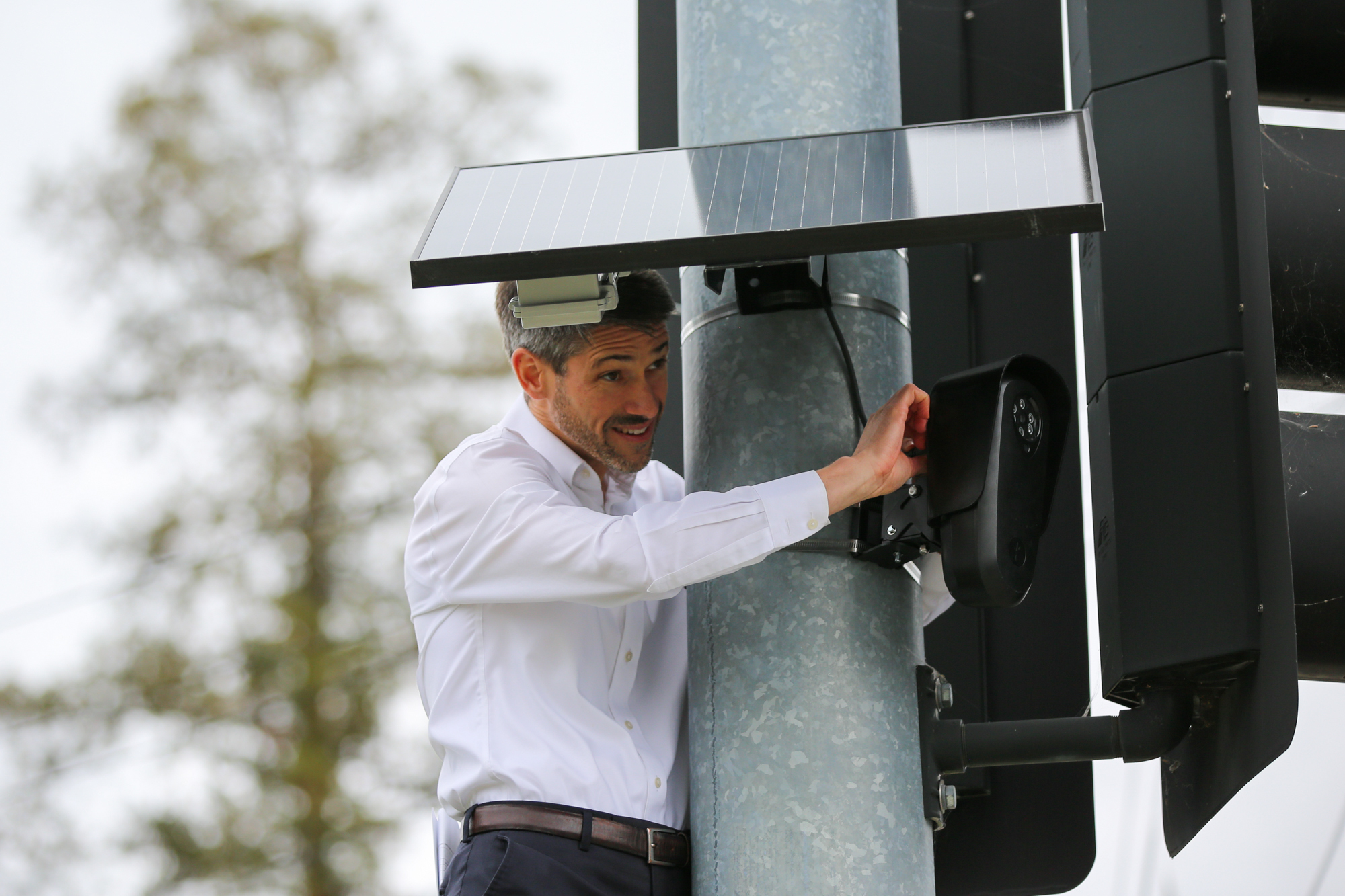
"caption": "San José Mayor Matt Mahan helps to install a Flock Safety brand automated license plate reader on April 23, 2024. The city and Mahan are now being sued by civil liberties groups over the technology's uses.",
"credit": "Joseph Geha/KQED",
"altTag": null,
"description": null,
"imgSizes": {
"thumbnail": {
"file": "https://cdn.kqed.org/wp-content/uploads/sites/10/2025/11/image-9-160x107.png",
"width": 160,
"height": 107,
"mimeType": "image/png"
},
"1536x1536": {
"file": "https://cdn.kqed.org/wp-content/uploads/sites/10/2025/11/image-9-1536x1024.png",
"width": 1536,
"height": 1024,
"mimeType": "image/png"
},
"post-thumbnail": {
"file": "https://cdn.kqed.org/wp-content/uploads/sites/10/2025/11/image-9-672x372.png",
"width": 672,
"height": 372,
"mimeType": "image/png"
},
"twentyfourteen-full-width": {
"file": "https://cdn.kqed.org/wp-content/uploads/sites/10/2025/11/image-9-1038x576.png",
"width": 1038,
"height": 576,
"mimeType": "image/png"
},
"npr-cds-wide": {
"file": "https://cdn.kqed.org/wp-content/uploads/sites/10/2025/11/image-9-1200x675.png",
"width": 1200,
"height": 675,
"mimeType": "image/png"
},
"kqedFullSize": {
"file": "https://cdn.kqed.org/wp-content/uploads/sites/10/2025/11/image-9.png",
"width": 2000,
"height": 1333
}
},
"isLoading": false,
"fetchFailed": false
},
"news_12064559": {
"type": "attachments",
"id": "news_12064559",
"meta": {
"index": "attachments_1716263798",
"site": "news",
"id": "12064559",
"found": true
},
"title": "Thanksgiving Turkeys Delivered To Bay Area Food Bank",
"publishDate": 1763488669,
"status": "inherit",
"parent": 12064551,
"modified": 1763494840,
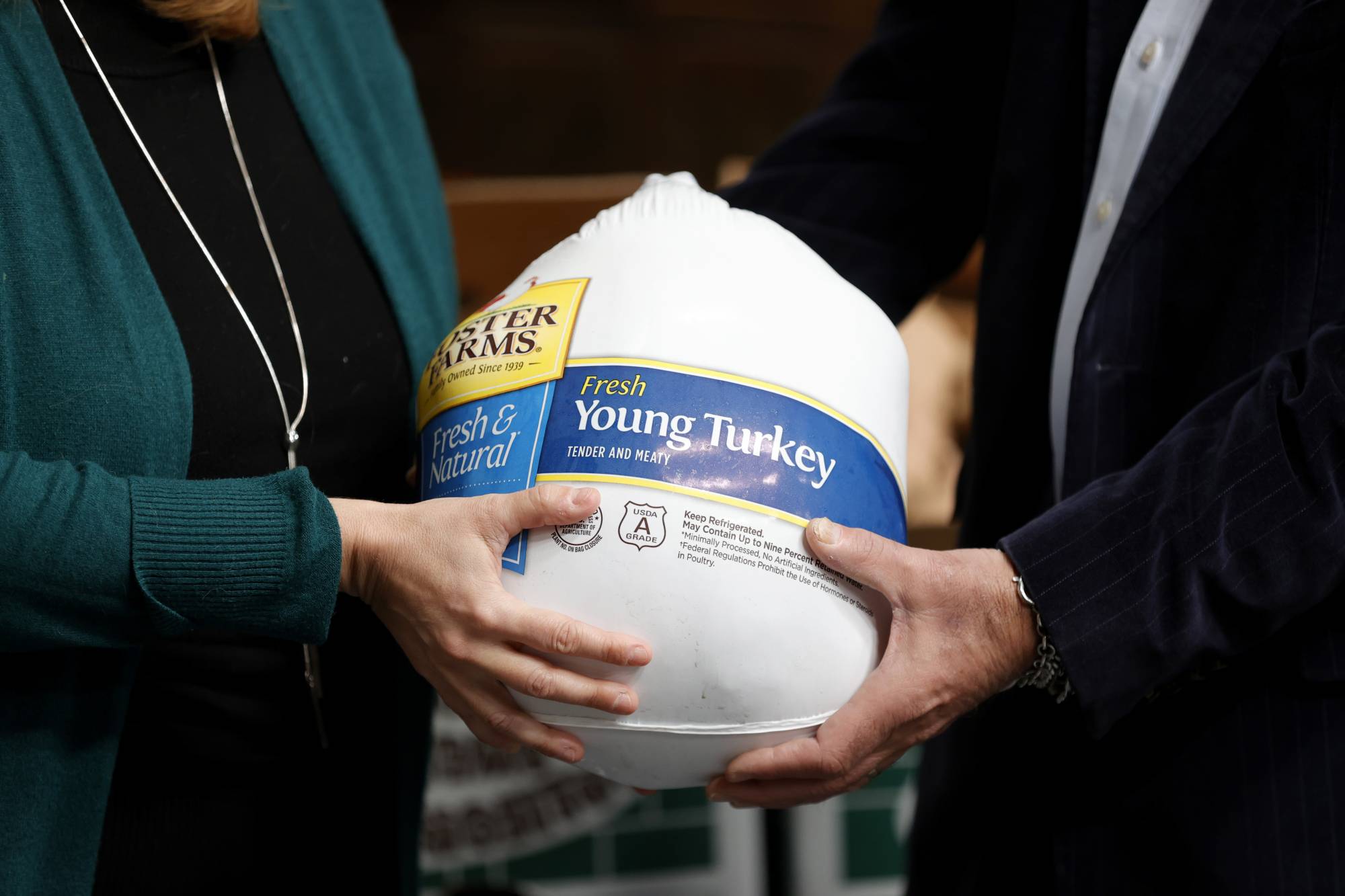
"caption": "A donated Foster Farms turkey is held during a press conference at the SF-Marin Food Bank on Nov 8, 2021, in San Francisco, California. ",
"credit": "Photo by Justin Sullivan/Getty Images",
"altTag": null,
"description": null,
"imgSizes": {
"medium": {
"file": "https://cdn.kqed.org/wp-content/uploads/sites/10/2025/11/GettyImages-1352132356-2000x1333.jpg",
"width": 2000,
"height": 1333,
"mimeType": "image/jpeg"
},
"large": {
"file": "https://cdn.kqed.org/wp-content/uploads/sites/10/2025/11/GettyImages-1352132356-2000x1333.jpg",
"width": 2000,
"height": 1333,
"mimeType": "image/jpeg"
},
"thumbnail": {
"file": "https://cdn.kqed.org/wp-content/uploads/sites/10/2025/11/GettyImages-1352132356-160x107.jpg",
"width": 160,
"height": 107,
"mimeType": "image/jpeg"
},
"1536x1536": {
"file": "https://cdn.kqed.org/wp-content/uploads/sites/10/2025/11/GettyImages-1352132356-1536x1024.jpg",
"width": 1536,
"height": 1024,
"mimeType": "image/jpeg"
},
"2048x2048": {
"file": "https://cdn.kqed.org/wp-content/uploads/sites/10/2025/11/GettyImages-1352132356-2048x1365.jpg",
"width": 2048,
"height": 1365,
"mimeType": "image/jpeg"
},
"post-thumbnail": {
"file": "https://cdn.kqed.org/wp-content/uploads/sites/10/2025/11/GettyImages-1352132356-672x372.jpg",
"width": 672,
"height": 372,
"mimeType": "image/jpeg"
},
"twentyfourteen-full-width": {
"file": "https://cdn.kqed.org/wp-content/uploads/sites/10/2025/11/GettyImages-1352132356-1038x576.jpg",
"width": 1038,
"height": 576,
"mimeType": "image/jpeg"
},
"full-width": {
"file": "https://cdn.kqed.org/wp-content/uploads/sites/10/2025/11/GettyImages-1352132356-2000x1333.jpg",
"width": 2000,
"height": 1333,
"mimeType": "image/jpeg"
},
"npr-cds-wide": {
"file": "https://cdn.kqed.org/wp-content/uploads/sites/10/2025/11/GettyImages-1352132356-1200x675.jpg",
"width": 1200,
"height": 675,
"mimeType": "image/jpeg"
},
"kqedFullSize": {
"file": "https://cdn.kqed.org/wp-content/uploads/sites/10/2025/11/GettyImages-1352132356-scaled-e1763488723616.jpg",
"width": 2000,
"height": 1334
}
},
"isLoading": false,
"fetchFailed": false
},
"news_12064345": {
"type": "attachments",
"id": "news_12064345",
"meta": {
"index": "attachments_1716263798",
"site": "news",
"id": "12064345",
"found": true
},
"title": "20251106_SFD4Supervisor_GC-3_qed",
"publishDate": 1763406959,
"status": "inherit",
"parent": 12064341,
"modified": 1763493540,
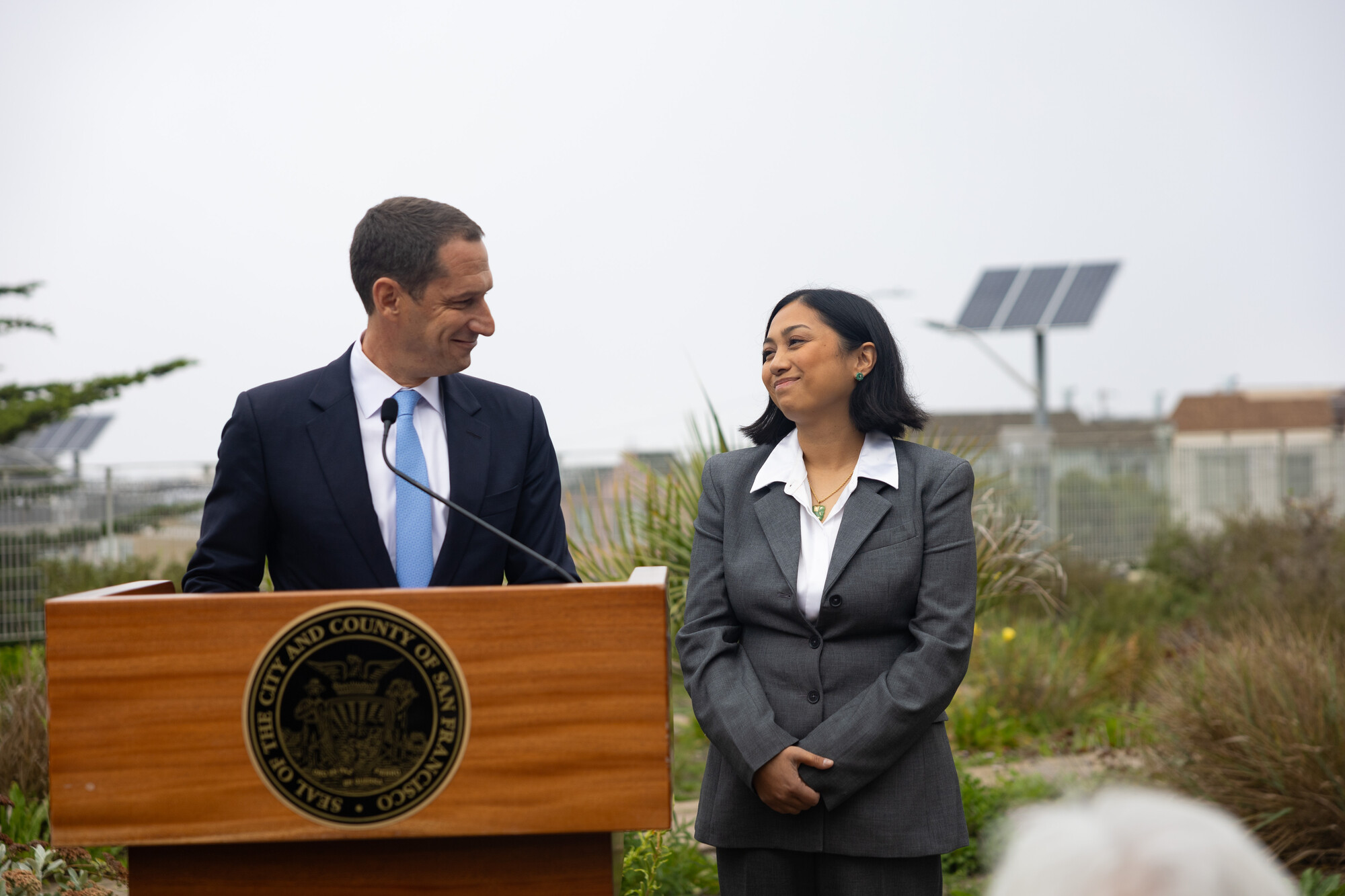
"caption": "Mayor Daniel Lurie, left, speaks during a press conference announcing Isabella “Beya” Alcaraz, right, as the next District 4 supervisor, representing the Sunset district, at Ortega Branch Library on Nov. 6, 2025. Alcaraz is the first Filipina American to serve on the Board of Supervisors.",
"credit": "Gina Castro/KQED",
"altTag": null,
"description": null,
"imgSizes": {
"thumbnail": {
"file": "https://cdn.kqed.org/wp-content/uploads/sites/10/2025/11/20251106_SFD4Supervisor_GC-3_qed-160x107.jpg",
"width": 160,
"height": 107,
"mimeType": "image/jpeg"
},
"1536x1536": {
"file": "https://cdn.kqed.org/wp-content/uploads/sites/10/2025/11/20251106_SFD4Supervisor_GC-3_qed-1536x1024.jpg",
"width": 1536,
"height": 1024,
"mimeType": "image/jpeg"
},
"post-thumbnail": {
"file": "https://cdn.kqed.org/wp-content/uploads/sites/10/2025/11/20251106_SFD4Supervisor_GC-3_qed-672x372.jpg",
"width": 672,
"height": 372,
"mimeType": "image/jpeg"
},
"twentyfourteen-full-width": {
"file": "https://cdn.kqed.org/wp-content/uploads/sites/10/2025/11/20251106_SFD4Supervisor_GC-3_qed-1038x576.jpg",
"width": 1038,
"height": 576,
"mimeType": "image/jpeg"
},
"npr-cds-wide": {
"file": "https://cdn.kqed.org/wp-content/uploads/sites/10/2025/11/20251106_SFD4Supervisor_GC-3_qed-1200x675.jpg",
"width": 1200,
"height": 675,
"mimeType": "image/jpeg"
},
"kqedFullSize": {
"file": "https://cdn.kqed.org/wp-content/uploads/sites/10/2025/11/20251106_SFD4Supervisor_GC-3_qed.jpg",
"width": 2000,
"height": 1333
}
},
"isLoading": false,
"fetchFailed": false
},
"news_12052663": {
"type": "attachments",
"id": "news_12052663",
"meta": {
"index": "attachments_1716263798",
"site": "news",
"id": "12052663",
"found": true
},
"title": "250818-SFUSDFIRSTDAY-04-KQED",
"publishDate": 1755549114,
"status": "inherit",
"parent": 12052638,
"modified": 1755549467,
"caption": "Superintendent Maria Su speaks to students at Sanchez Elementary School on the first day of classes for the new school year in San Francisco on Aug. 18, 2025.",
"credit": "Beth LaBerge/KQED",
"altTag": null,
"description": null,
"imgSizes": {
"thumbnail": {
"file": "https://cdn.kqed.org/wp-content/uploads/sites/10/2025/08/250818-SFUSDFIRSTDAY-04-KQED-160x107.jpg",
"width": 160,
"height": 107,
"mimeType": "image/jpeg"
},
"1536x1536": {
"file": "https://cdn.kqed.org/wp-content/uploads/sites/10/2025/08/250818-SFUSDFIRSTDAY-04-KQED-1536x1024.jpg",
"width": 1536,
"height": 1024,
"mimeType": "image/jpeg"
},
"post-thumbnail": {
"file": "https://cdn.kqed.org/wp-content/uploads/sites/10/2025/08/250818-SFUSDFIRSTDAY-04-KQED-672x372.jpg",
"width": 672,
"height": 372,
"mimeType": "image/jpeg"
},
"twentyfourteen-full-width": {
"file": "https://cdn.kqed.org/wp-content/uploads/sites/10/2025/08/250818-SFUSDFIRSTDAY-04-KQED-1038x576.jpg",
"width": 1038,
"height": 576,
"mimeType": "image/jpeg"
},
"kqedFullSize": {
"file": "https://cdn.kqed.org/wp-content/uploads/sites/10/2025/08/250818-SFUSDFIRSTDAY-04-KQED.jpg",
"width": 2000,
"height": 1333
}
},
"isLoading": false,
"fetchFailed": false
},
"news_12064410": {
"type": "attachments",
"id": "news_12064410",
"meta": {
"index": "attachments_1716263798",
"site": "news",
"id": "12064410",
"found": true
},
"title": "240522-ERPressure-09-BL_qed",
"publishDate": 1763413983,
"status": "inherit",
"parent": 12064324,
"modified": 1763414011,
"caption": "Nurse Julianne Vidal takes vitals for Brandon Radford, 80, in his room at Oak Days, a permanent supportive housing program in a former hotel in Oakland, on May 22, 2024. Advocates for people experiencing homelessness fear this kind of housing could lose funding under federal guidelines released this month.",
"credit": "Beth LaBerge/KQED",
"altTag": null,
"description": null,
"imgSizes": {
"thumbnail": {
"file": "https://cdn.kqed.org/wp-content/uploads/sites/10/2025/11/240522-ERPressure-09-BL_qed-160x107.jpg",
"width": 160,
"height": 107,
"mimeType": "image/jpeg"
},
"1536x1536": {
"file": "https://cdn.kqed.org/wp-content/uploads/sites/10/2025/11/240522-ERPressure-09-BL_qed-1536x1024.jpg",
"width": 1536,
"height": 1024,
"mimeType": "image/jpeg"
},
"post-thumbnail": {
"file": "https://cdn.kqed.org/wp-content/uploads/sites/10/2025/11/240522-ERPressure-09-BL_qed-672x372.jpg",
"width": 672,
"height": 372,
"mimeType": "image/jpeg"
},
"twentyfourteen-full-width": {
"file": "https://cdn.kqed.org/wp-content/uploads/sites/10/2025/11/240522-ERPressure-09-BL_qed-1038x576.jpg",
"width": 1038,
"height": 576,
"mimeType": "image/jpeg"
},
"npr-cds-wide": {
"file": "https://cdn.kqed.org/wp-content/uploads/sites/10/2025/11/240522-ERPressure-09-BL_qed-1200x675.jpg",
"width": 1200,
"height": 675,
"mimeType": "image/jpeg"
},
"kqedFullSize": {
"file": "https://cdn.kqed.org/wp-content/uploads/sites/10/2025/11/240522-ERPressure-09-BL_qed.jpg",
"width": 2000,
"height": 1333
}
},
"isLoading": false,
"fetchFailed": false
},
"news_12064522": {
"type": "attachments",
"id": "news_12064522",
"meta": {
"index": "attachments_1716263798",
"site": "news",
"id": "12064522",
"found": true
},
"title": "251117-STANFORDTRIAL-JG-7_qed",
"publishDate": 1763426345,
"status": "inherit",
"parent": 12064351,
"modified": 1763426356,
"caption": "Germán González, who is one of five pro-Palestinian protesters going to trial for breaking into the Stanford University president’s office, speaks to a group of supporters outside the Hall of Justice in San José on Monday, Nov. 17, 2025.",
"credit": "Joseph Geha/KQED",
"altTag": null,
"description": null,
"imgSizes": {
"thumbnail": {
"file": "https://cdn.kqed.org/wp-content/uploads/sites/10/2025/11/251117-STANFORDTRIAL-JG-7_qed-160x107.jpg",
"width": 160,
"height": 107,
"mimeType": "image/jpeg"
},
"1536x1536": {
"file": "https://cdn.kqed.org/wp-content/uploads/sites/10/2025/11/251117-STANFORDTRIAL-JG-7_qed-1536x1024.jpg",
"width": 1536,
"height": 1024,
"mimeType": "image/jpeg"
},
"post-thumbnail": {
"file": "https://cdn.kqed.org/wp-content/uploads/sites/10/2025/11/251117-STANFORDTRIAL-JG-7_qed-672x372.jpg",
"width": 672,
"height": 372,
"mimeType": "image/jpeg"
},
"twentyfourteen-full-width": {
"file": "https://cdn.kqed.org/wp-content/uploads/sites/10/2025/11/251117-STANFORDTRIAL-JG-7_qed-1038x576.jpg",
"width": 1038,
"height": 576,
"mimeType": "image/jpeg"
},
"npr-cds-wide": {
"file": "https://cdn.kqed.org/wp-content/uploads/sites/10/2025/11/251117-STANFORDTRIAL-JG-7_qed-1200x675.jpg",
"width": 1200,
"height": 675,
"mimeType": "image/jpeg"
},
"kqedFullSize": {
"file": "https://cdn.kqed.org/wp-content/uploads/sites/10/2025/11/251117-STANFORDTRIAL-JG-7_qed.jpg",
"width": 1999,
"height": 1333
}
},
"isLoading": false,
"fetchFailed": false
},
"news_12064376": {
"type": "attachments",
"id": "news_12064376",
"meta": {
"index": "attachments_1716263798",
"site": "news",
"id": "12064376",
"found": true
},
"title": "Israeli Prime Minister Netanyahu Meets With Elon Musk At Tesla In Fremont, CA",
"publishDate": 1763409755,
"status": "inherit",
"parent": 12064374,
"modified": 1763409817,
"caption": "The Tesla manufacturing facility on Sept. 18, 2023, in Fremont, California. ",
"credit": "Justin Sullivan/Getty Images",
"altTag": null,
"description": null,
"imgSizes": {
"thumbnail": {
"file": "https://cdn.kqed.org/wp-content/uploads/sites/10/2025/11/TeslaFremontGetty-160x95.jpg",
"width": 160,
"height": 95,
"mimeType": "image/jpeg"
},
"1536x1536": {
"file": "https://cdn.kqed.org/wp-content/uploads/sites/10/2025/11/TeslaFremontGetty-1536x914.jpg",
"width": 1536,
"height": 914,
"mimeType": "image/jpeg"
},
"post-thumbnail": {
"file": "https://cdn.kqed.org/wp-content/uploads/sites/10/2025/11/TeslaFremontGetty-672x372.jpg",
"width": 672,
"height": 372,
"mimeType": "image/jpeg"
},
"twentyfourteen-full-width": {
"file": "https://cdn.kqed.org/wp-content/uploads/sites/10/2025/11/TeslaFremontGetty-1038x576.jpg",
"width": 1038,
"height": 576,
"mimeType": "image/jpeg"
},
"npr-cds-wide": {
"file": "https://cdn.kqed.org/wp-content/uploads/sites/10/2025/11/TeslaFremontGetty-1200x675.jpg",
"width": 1200,
"height": 675,
"mimeType": "image/jpeg"
},
"kqedFullSize": {
"file": "https://cdn.kqed.org/wp-content/uploads/sites/10/2025/11/TeslaFremontGetty.jpg",
"width": 2000,
"height": 1190
}
},
"isLoading": false,
"fetchFailed": false
},
"news_12064489": {
"type": "attachments",
"id": "news_12064489",
"meta": {
"index": "attachments_1716263798",
"site": "news",
"id": "12064489",
"found": true
},
"title": "251117-SUTTER HEALTH SANTA CLARA-01-KQED",
"publishDate": 1763422094,
"status": "inherit",
"parent": 0,
"modified": 1763423846,
"caption": "An artist's rendering of a full-service emergency department at the planned Sutter Medical Center in Santa Clara.",
"credit": "Courtesy of Sutter Health",
"altTag": null,
"description": null,
"imgSizes": {
"thumbnail": {
"file": "https://cdn.kqed.org/wp-content/uploads/sites/10/2025/11/251117-SUTTER-HEALTH-SANTA-CLARA-01-KQED-160x100.jpg",
"width": 160,
"height": 100,
"mimeType": "image/jpeg"
},
"1536x1536": {
"file": "https://cdn.kqed.org/wp-content/uploads/sites/10/2025/11/251117-SUTTER-HEALTH-SANTA-CLARA-01-KQED-1536x960.jpg",
"width": 1536,
"height": 960,
"mimeType": "image/jpeg"
},
"post-thumbnail": {
"file": "https://cdn.kqed.org/wp-content/uploads/sites/10/2025/11/251117-SUTTER-HEALTH-SANTA-CLARA-01-KQED-672x372.jpg",
"width": 672,
"height": 372,
"mimeType": "image/jpeg"
},
"twentyfourteen-full-width": {
"file": "https://cdn.kqed.org/wp-content/uploads/sites/10/2025/11/251117-SUTTER-HEALTH-SANTA-CLARA-01-KQED-1038x576.jpg",
"width": 1038,
"height": 576,
"mimeType": "image/jpeg"
},
"npr-cds-wide": {
"file": "https://cdn.kqed.org/wp-content/uploads/sites/10/2025/11/251117-SUTTER-HEALTH-SANTA-CLARA-01-KQED-1200x675.jpg",
"width": 1200,
"height": 675,
"mimeType": "image/jpeg"
},
"kqedFullSize": {
"file": "https://cdn.kqed.org/wp-content/uploads/sites/10/2025/11/251117-SUTTER-HEALTH-SANTA-CLARA-01-KQED.jpg",
"width": 2000,
"height": 1250
}
},
"isLoading": false,
"fetchFailed": false
},
"news_12064469": {
"type": "attachments",
"id": "news_12064469",
"meta": {
"index": "attachments_1716263798",
"site": "news",
"id": "12064469",
"found": true
},
"title": "Memorial Placed Outside Of Laney College Where Athletic Director John Beam Was Shot",
"publishDate": 1763421256,
"status": "inherit",
"parent": 12064370,
"modified": 1763421298,
"caption": "A memorial bouquet and sign sit outside of the Laney College Fieldhouse in Oakland, California, on Friday, Nov. 14, 2025, one day after longtime Laney College athletic director John Beam was shot. ",
"credit": "Jessica Christian/San Francisco Chronicle via Getty Images",
"altTag": null,
"description": null,
"imgSizes": {
"thumbnail": {
"file": "https://cdn.kqed.org/wp-content/uploads/sites/10/2025/11/LaneyCollegeGetty4-160x107.jpg",
"width": 160,
"height": 107,
"mimeType": "image/jpeg"
},
"1536x1536": {
"file": "https://cdn.kqed.org/wp-content/uploads/sites/10/2025/11/LaneyCollegeGetty4-1536x1025.jpg",
"width": 1536,
"height": 1025,
"mimeType": "image/jpeg"
},
"post-thumbnail": {
"file": "https://cdn.kqed.org/wp-content/uploads/sites/10/2025/11/LaneyCollegeGetty4-672x372.jpg",
"width": 672,
"height": 372,
"mimeType": "image/jpeg"
},
"twentyfourteen-full-width": {
"file": "https://cdn.kqed.org/wp-content/uploads/sites/10/2025/11/LaneyCollegeGetty4-1038x576.jpg",
"width": 1038,
"height": 576,
"mimeType": "image/jpeg"
},
"npr-cds-wide": {
"file": "https://cdn.kqed.org/wp-content/uploads/sites/10/2025/11/LaneyCollegeGetty4-1200x675.jpg",
"width": 1200,
"height": 675,
"mimeType": "image/jpeg"
},
"kqedFullSize": {
"file": "https://cdn.kqed.org/wp-content/uploads/sites/10/2025/11/LaneyCollegeGetty4.jpg",
"width": 2000,
"height": 1334
}
},
"isLoading": false,
"fetchFailed": false
},
"news_12026470": {
"type": "attachments",
"id": "news_12026470",
"meta": {
"index": "attachments_1716263798",
"site": "news",
"id": "12026470",
"found": true
},
"title": "240620-AffordableHousingPresser-16-BL_qed",
"publishDate": 1739218616,
"status": "inherit",
"parent": 12026437,
"modified": 1739218629,
"caption": "San José Mayor Matt Mahan speaks during a press conference in support of a regional affordable housing measure at Five88, a mixed-use residential and retail property, in the Mission Bay neighborhood in San Francisco on June 20, 2024.",
"credit": "Beth LaBerge/KQED",
"altTag": null,
"description": null,
"imgSizes": {
"medium": {
"file": "https://cdn.kqed.org/wp-content/uploads/sites/10/2025/02/240620-AffordableHousingPresser-16-BL_qed-800x533.jpg",
"width": 800,
"height": 533,
"mimeType": "image/jpeg"
},
"large": {
"file": "https://cdn.kqed.org/wp-content/uploads/sites/10/2025/02/240620-AffordableHousingPresser-16-BL_qed-1020x680.jpg",
"width": 1020,
"height": 680,
"mimeType": "image/jpeg"
},
"thumbnail": {
"file": "https://cdn.kqed.org/wp-content/uploads/sites/10/2025/02/240620-AffordableHousingPresser-16-BL_qed-160x107.jpg",
"width": 160,
"height": 107,
"mimeType": "image/jpeg"
},
"1536x1536": {
"file": "https://cdn.kqed.org/wp-content/uploads/sites/10/2025/02/240620-AffordableHousingPresser-16-BL_qed-1536x1024.jpg",
"width": 1536,
"height": 1024,
"mimeType": "image/jpeg"
},
"post-thumbnail": {
"file": "https://cdn.kqed.org/wp-content/uploads/sites/10/2025/02/240620-AffordableHousingPresser-16-BL_qed-672x372.jpg",
"width": 672,
"height": 372,
"mimeType": "image/jpeg"
},
"twentyfourteen-full-width": {
"file": "https://cdn.kqed.org/wp-content/uploads/sites/10/2025/02/240620-AffordableHousingPresser-16-BL_qed-1038x576.jpg",
"width": 1038,
"height": 576,
"mimeType": "image/jpeg"
},
"full-width": {
"file": "https://cdn.kqed.org/wp-content/uploads/sites/10/2025/02/240620-AffordableHousingPresser-16-BL_qed-1920x1280.jpg",
"width": 1920,
"height": 1280,
"mimeType": "image/jpeg"
},
"kqedFullSize": {
"file": "https://cdn.kqed.org/wp-content/uploads/sites/10/2025/02/240620-AffordableHousingPresser-16-BL_qed.jpg",
"width": 2000,
"height": 1333
}
},
"isLoading": false,
"fetchFailed": false
},
"news_12064417": {
"type": "attachments",
"id": "news_12064417",
"meta": {
"index": "attachments_1716263798",
"site": "news",
"id": "12064417",
"found": true
},
"title": "251117-UCStrike-08-BL",
"publishDate": 1763416121,
"status": "inherit",
"parent": 0,
"modified": 1763416382,
"caption": "Aimee Villas, a lab technician, strikes alongside patient care and service workers represented by AFSCME Local 3299 at the UCSF Medical Center Mission Bay campus on Nov. 17, 2025, for living wages, affordable healthcare, housing benefits, and safe staffing.",
"credit": "Beth LaBerge/KQED",
"altTag": null,
"description": null,
"imgSizes": {
"thumbnail": {
"file": "https://cdn.kqed.org/wp-content/uploads/sites/10/2025/11/251117-UCStrike-08-BL-160x107.jpg",
"width": 160,
"height": 107,
"mimeType": "image/jpeg"
},
"1536x1536": {
"file": "https://cdn.kqed.org/wp-content/uploads/sites/10/2025/11/251117-UCStrike-08-BL-1536x1024.jpg",
"width": 1536,
"height": 1024,
"mimeType": "image/jpeg"
},
"post-thumbnail": {
"file": "https://cdn.kqed.org/wp-content/uploads/sites/10/2025/11/251117-UCStrike-08-BL-672x372.jpg",
"width": 672,
"height": 372,
"mimeType": "image/jpeg"
},
"twentyfourteen-full-width": {
"file": "https://cdn.kqed.org/wp-content/uploads/sites/10/2025/11/251117-UCStrike-08-BL-1038x576.jpg",
"width": 1038,
"height": 576,
"mimeType": "image/jpeg"
},
"npr-cds-wide": {
"file": "https://cdn.kqed.org/wp-content/uploads/sites/10/2025/11/251117-UCStrike-08-BL-1200x675.jpg",
"width": 1200,
"height": 675,
"mimeType": "image/jpeg"
},
"kqedFullSize": {
"file": "https://cdn.kqed.org/wp-content/uploads/sites/10/2025/11/251117-UCStrike-08-BL.jpg",
"width": 2000,
"height": 1333
}
},
"isLoading": false,
"fetchFailed": false
},
"news_12061354": {
"type": "attachments",
"id": "news_12061354",
"meta": {
"index": "attachments_1716263798",
"site": "news",
"id": "12061354",
"found": true
},
"title": "251023-SB304FOLO-13-BL-KQED",
"publishDate": 1761261308,
"status": "inherit",
"parent": 0,
"modified": 1763148225,
"caption": "Bartender Chris Strong works at Merchant’s Saloon in Jack London Square, a waterfront neighborhood in Oakland, on Oct. 23, 2025.",
"credit": "Beth LaBerge/KQED",
"altTag": null,
"description": null,
"imgSizes": {
"thumbnail": {
"file": "https://cdn.kqed.org/wp-content/uploads/sites/10/2025/10/251023-SB304FOLO-13-BL-KQED-160x107.jpg",
"width": 160,
"height": 107,
"mimeType": "image/jpeg"
},
"1536x1536": {
"file": "https://cdn.kqed.org/wp-content/uploads/sites/10/2025/10/251023-SB304FOLO-13-BL-KQED-1536x1024.jpg",
"width": 1536,
"height": 1024,
"mimeType": "image/jpeg"
},
"post-thumbnail": {
"file": "https://cdn.kqed.org/wp-content/uploads/sites/10/2025/10/251023-SB304FOLO-13-BL-KQED-672x372.jpg",
"width": 672,
"height": 372,
"mimeType": "image/jpeg"
},
"twentyfourteen-full-width": {
"file": "https://cdn.kqed.org/wp-content/uploads/sites/10/2025/10/251023-SB304FOLO-13-BL-KQED-1038x576.jpg",
"width": 1038,
"height": 576,
"mimeType": "image/jpeg"
},
"npr-cds-wide": {
"file": "https://cdn.kqed.org/wp-content/uploads/sites/10/2025/10/251023-SB304FOLO-13-BL-KQED-1600x900.jpg",
"width": 1600,
"height": 900,
"mimeType": "image/jpeg"
},
"kqedFullSize": {
"file": "https://cdn.kqed.org/wp-content/uploads/sites/10/2025/10/251023-SB304FOLO-13-BL-KQED.jpg",
"width": 2000,
"height": 1333
}
},
"isLoading": false,
"fetchFailed": false
}
},
"audioPlayerReducer": {
"postId": "stream_live",
"isPaused": true,
"isPlaying": false,
"pfsActive": false,
"pledgeModalIsOpen": true,
"playerDrawerIsOpen": false,
"liveAudioPlayStartedAt": 0,
"liveAudioPlayContext": ""
},
"authorsReducer": {
"gmarzorati": {
"type": "authors",
"id": "227",
"meta": {
"index": "authors_1716337520",
"id": "227",
"found": true
},
"name": "Guy Marzorati",
"firstName": "Guy",
"lastName": "Marzorati",
"slug": "gmarzorati",
"email": "gmarzorati@KQED.org",
"display_author_email": true,
"staff_mastheads": [
"news"
],
"title": "Correspondent",
"bio": "Guy Marzorati is a correspondent on KQED's California Politics and Government Desk, based in San Jose. A graduate of Santa Clara University, Guy joined KQED in 2013. He reports on state and local politics and produces KQED's digital voter guide.",
"avatar": "https://secure.gravatar.com/avatar/771cddf45ce3a8ed533d82dcc214e9ef925d76d2af5794a33da1ce439eb54a32?s=600&d=blank&r=g",
"twitter": "guymarzorati",
"bluesky": null,
"facebook": null,
"instagram": null,
"linkedin": null,
"sites": [
{
"site": "",
"roles": [
"editor"
]
},
{
"site": "news",
"roles": [
"editor"
]
},
{
"site": "science",
"roles": [
"editor"
]
},
{
"site": "forum",
"roles": [
"editor"
]
},
{
"site": "elections",
"roles": [
"editor"
]
},
{
"site": "liveblog",
"roles": [
"editor"
]
}
],
"headData": {
"title": "Guy Marzorati | KQED",
"description": "Correspondent",
"ogImgSrc": "https://secure.gravatar.com/avatar/771cddf45ce3a8ed533d82dcc214e9ef925d76d2af5794a33da1ce439eb54a32?s=600&d=blank&r=g",
"twImgSrc": "https://secure.gravatar.com/avatar/771cddf45ce3a8ed533d82dcc214e9ef925d76d2af5794a33da1ce439eb54a32?s=600&d=blank&r=g"
},
"isLoading": false,
"link": "/author/gmarzorati"
},
"rachael-myrow": {
"type": "authors",
"id": "251",
"meta": {
"index": "authors_1716337520",
"id": "251",
"found": true
},
"name": "Rachael Myrow",
"firstName": "Rachael",
"lastName": "Myrow",
"slug": "rachael-myrow",
"email": "rmyrow@kqed.org",
"display_author_email": true,
"staff_mastheads": [
"news"
],
"title": "Senior Editor of KQED's Silicon Valley News Desk",
"bio": "• I write and edit stories about how Silicon Valley power and policies shape everyday life in California. I’m also passionate about making Bay Area history and culture more accessible to a broad public. • I’ve been a journalist for most of my life, starting in high school with The Franklin Press in Los Angeles, where I grew up. While earning my first degree in English at UC Berkeley, I got my start in public radio at KALX-FM. After completing a second degree in journalism at Cal, I landed my first professional job at Marketplace, then moved on to KPCC (now LAist), and then KQED, where I hosted The California Report for more than seven years. • My reporting has appeared on NPR, The World, WBUR’s \u003ci>Here & Now\u003c/i>, and the BBC. I also guest host for KQED’s \u003ci>Forum\u003c/i>, as well as the Commonwealth Club in San Francisco. • I speak periodically on media, democracy and technology issues, and do voiceover work for documentaries and educational video projects. • Outside of the studio, you'll find me hiking Bay Area trails and whipping up Insta-ready meals in my kitchen. • I do not accept gifts, money, or favors from anyone connected to my reporting, I don't pay people for information, and I do not support or donate to political causes. • I strive to treat the people I report on with fairness, honesty, and respect. I also recognize there are often multiple sides to a story and work to verify information through multiple sources and documentation. If I get something wrong, I correct it.",
"avatar": "https://secure.gravatar.com/avatar/3ed8a3c5f26025e4a805ba634cda8cd764906b97438a6d9ce216b044e340da4e?s=600&d=blank&r=g",
"twitter": "rachaelmyrow",
"bluesky": null,
"facebook": null,
"instagram": null,
"linkedin": "https://www.linkedin.com/in/rachaelmyrow/",
"sites": [
{
"site": "arts",
"roles": [
"administrator"
]
},
{
"site": "news",
"roles": [
"edit_others_posts",
"editor"
]
},
{
"site": "futureofyou",
"roles": [
"editor"
]
},
{
"site": "bayareabites",
"roles": [
"editor"
]
},
{
"site": "stateofhealth",
"roles": [
"editor"
]
},
{
"site": "science",
"roles": [
"editor"
]
},
{
"site": "food",
"roles": [
"editor"
]
},
{
"site": "forum",
"roles": [
"editor"
]
},
{
"site": "liveblog",
"roles": [
"author"
]
}
],
"headData": {
"title": "Rachael Myrow | KQED",
"description": "Senior Editor of KQED's Silicon Valley News Desk",
"ogImgSrc": "https://secure.gravatar.com/avatar/3ed8a3c5f26025e4a805ba634cda8cd764906b97438a6d9ce216b044e340da4e?s=600&d=blank&r=g",
"twImgSrc": "https://secure.gravatar.com/avatar/3ed8a3c5f26025e4a805ba634cda8cd764906b97438a6d9ce216b044e340da4e?s=600&d=blank&r=g"
},
"isLoading": false,
"link": "/author/rachael-myrow"
},
"carlysevern": {
"type": "authors",
"id": "3243",
"meta": {
"index": "authors_1716337520",
"id": "3243",
"found": true
},
"name": "Carly Severn",
"firstName": "Carly",
"lastName": "Severn",
"slug": "carlysevern",
"email": "csevern@kqed.org",
"display_author_email": false,
"staff_mastheads": [
"news"
],
"title": "Senior Editor, Audience News ",
"bio": "Carly is KQED's Senior Editor of Audience News on the Digital News team, and has reported for the California Report Magazine, Bay Curious and KQED Arts. She's formerly the host of \u003ca href=\"http://ww2.kqed.org/pop/category/the-cooler/\" rel=\"noopener noreferrer\">The Cooler\u003c/a> podcast.",
"avatar": "https://secure.gravatar.com/avatar/54037bf5c128fe678f0ef26cec97a93f2e7f220a22d7285703328f12c42c1b1d?s=600&d=blank&r=g",
"twitter": "teacupinthebay",
"bluesky": null,
"facebook": null,
"instagram": null,
"linkedin": null,
"sites": [
{
"site": "",
"roles": [
"editor"
]
},
{
"site": "arts",
"roles": [
"editor"
]
},
{
"site": "news",
"roles": [
"administrator"
]
},
{
"site": "pop",
"roles": [
"editor"
]
},
{
"site": "futureofyou",
"roles": [
"editor"
]
},
{
"site": "about",
"roles": [
"administrator"
]
},
{
"site": "mindshift",
"roles": [
"editor"
]
},
{
"site": "bayareabites",
"roles": [
"editor"
]
},
{
"site": "stateofhealth",
"roles": [
"editor"
]
},
{
"site": "science",
"roles": [
"editor"
]
},
{
"site": "food",
"roles": [
"contributor"
]
},
{
"site": "forum",
"roles": [
"editor"
]
},
{
"site": "perspectives",
"roles": [
"administrator"
]
},
{
"site": "liveblog",
"roles": [
"editor"
]
}
],
"headData": {
"title": "Carly Severn | KQED",
"description": "Senior Editor, Audience News ",
"ogImgSrc": "https://secure.gravatar.com/avatar/54037bf5c128fe678f0ef26cec97a93f2e7f220a22d7285703328f12c42c1b1d?s=600&d=blank&r=g",
"twImgSrc": "https://secure.gravatar.com/avatar/54037bf5c128fe678f0ef26cec97a93f2e7f220a22d7285703328f12c42c1b1d?s=600&d=blank&r=g"
},
"isLoading": false,
"link": "/author/carlysevern"
},
"ebaldassari": {
"type": "authors",
"id": "11652",
"meta": {
"index": "authors_1716337520",
"id": "11652",
"found": true
},
"name": "Erin Baldassari",
"firstName": "Erin",
"lastName": "Baldassari",
"slug": "ebaldassari",
"email": "ebaldassari@KQED.org",
"display_author_email": true,
"staff_mastheads": [
"news"
],
"title": "Senior Editor",
"bio": "Erin Baldassari oversees the housing and early childhood education and care desks, as well as several of the station’s enterprise and accountability reporters. She joined KQED in 2020 to cover housing and co-host its housing podcast, \u003cem>SOLD OUT: Rethinking Housing in America\u003c/em>. Prior to that, she worked as a print journalist for roughly a decade, most recently at the \u003cem>Mercury News\u003c/em> and \u003cem>East Bay Times\u003c/em>, where she served on its 2017 Pulitzer Prize-winning team for coverage of the Ghost Ship Fire in Oakland. A Tufts University alumna, Erin grew up in the foothills of the Sierra Nevada mountains and in Sonoma County.",
"avatar": "https://secure.gravatar.com/avatar/5e95cad64a8ca08288082212e199d2b0cbeb4fd8e8ef5339395f361032bbe005?s=600&d=blank&r=g",
"twitter": null,
"bluesky": null,
"facebook": null,
"instagram": null,
"linkedin": null,
"sites": [
{
"site": "news",
"roles": [
"edit_others_posts",
"editor"
]
},
{
"site": "science",
"roles": [
"editor"
]
},
{
"site": "liveblog",
"roles": [
"editor"
]
}
],
"headData": {
"title": "Erin Baldassari | KQED",
"description": "Senior Editor",
"ogImgSrc": "https://secure.gravatar.com/avatar/5e95cad64a8ca08288082212e199d2b0cbeb4fd8e8ef5339395f361032bbe005?s=600&d=blank&r=g",
"twImgSrc": "https://secure.gravatar.com/avatar/5e95cad64a8ca08288082212e199d2b0cbeb4fd8e8ef5339395f361032bbe005?s=600&d=blank&r=g"
},
"isLoading": false,
"link": "/author/ebaldassari"
},
"ccabreralomeli": {
"type": "authors",
"id": "11708",
"meta": {
"index": "authors_1716337520",
"id": "11708",
"found": true
},
"name": "Carlos Cabrera-Lomelí",
"firstName": "Carlos",
"lastName": "Cabrera-Lomelí",
"slug": "ccabreralomeli",
"email": "ccabreralomeli@KQED.org",
"display_author_email": true,
"staff_mastheads": [
"news"
],
"title": "Community Reporter",
"bio": "Carlos Cabrera-Lomelí is a community reporter with KQED's digital engagement team. He also reports and co-produces for KQED's bilingual news hub KQED en Español. He grew up in San Francisco's Mission District and has previously worked with Univision, 48 Hills and REFORMA in Mexico City.",
"avatar": "https://secure.gravatar.com/avatar/c309be9665e484f887b818c89e273ecc673004f426f36b24d00a4d813a2e0518?s=600&d=blank&r=g",
"twitter": "@LomeliCabrera",
"bluesky": null,
"facebook": null,
"instagram": null,
"linkedin": null,
"sites": [
{
"site": "arts",
"roles": [
"editor"
]
},
{
"site": "news",
"roles": [
"editor"
]
},
{
"site": "about",
"roles": [
"editor"
]
},
{
"site": "science",
"roles": [
"editor"
]
},
{
"site": "perspectives",
"roles": [
"editor"
]
},
{
"site": "elections",
"roles": [
"editor"
]
},
{
"site": "liveblog",
"roles": [
"contributor"
]
}
],
"headData": {
"title": "Carlos Cabrera-Lomelí | KQED",
"description": "Community Reporter",
"ogImgSrc": "https://secure.gravatar.com/avatar/c309be9665e484f887b818c89e273ecc673004f426f36b24d00a4d813a2e0518?s=600&d=blank&r=g",
"twImgSrc": "https://secure.gravatar.com/avatar/c309be9665e484f887b818c89e273ecc673004f426f36b24d00a4d813a2e0518?s=600&d=blank&r=g"
},
"isLoading": false,
"link": "/author/ccabreralomeli"
},
"adahlstromeckman": {
"type": "authors",
"id": "11785",
"meta": {
"index": "authors_1716337520",
"id": "11785",
"found": true
},
"name": "Azul Dahlstrom-Eckman",
"firstName": "Azul",
"lastName": "Dahlstrom-Eckman",
"slug": "adahlstromeckman",
"email": "adahlstrom-eckman@kqed.org",
"display_author_email": true,
"staff_mastheads": [],
"title": "Reporter",
"bio": "Azul is a reporter for KQED focusing on transportation and features. He joined KQED in 2021 as an alumnus of KALW's Audio Academy radio journalism training program.",
"avatar": "https://secure.gravatar.com/avatar/9cb750298435add7815a777f55bf1f46845c1386bb8452555c60a7b820b5aba3?s=600&d=blank&r=g",
"twitter": "@zuliemann",
"bluesky": "@azul415.bsky.social",
"facebook": null,
"instagram": null,
"linkedin": null,
"sites": [
{
"site": "arts",
"roles": [
"editor"
]
},
{
"site": "news",
"roles": [
"editor"
]
},
{
"site": "science",
"roles": [
"editor"
]
},
{
"site": "liveblog",
"roles": [
"author"
]
}
],
"headData": {
"title": "Azul Dahlstrom-Eckman | KQED",
"description": "Reporter",
"ogImgSrc": "https://secure.gravatar.com/avatar/9cb750298435add7815a777f55bf1f46845c1386bb8452555c60a7b820b5aba3?s=600&d=blank&r=g",
"twImgSrc": "https://secure.gravatar.com/avatar/9cb750298435add7815a777f55bf1f46845c1386bb8452555c60a7b820b5aba3?s=600&d=blank&r=g"
},
"isLoading": false,
"link": "/author/adahlstromeckman"
},
"sjohnson": {
"type": "authors",
"id": "11840",
"meta": {
"index": "authors_1716337520",
"id": "11840",
"found": true
},
"name": "Sydney Johnson",
"firstName": "Sydney",
"lastName": "Johnson",
"slug": "sjohnson",
"email": "sjohnson@kqed.org",
"display_author_email": false,
"staff_mastheads": [
"news"
],
"title": "KQED Reporter",
"bio": "Sydney Johnson is a general assignment reporter at KQED. She previously reported on public health and city government at the San Francisco Examiner, and before that, she covered statewide education policy for EdSource. Her reporting has won multiple local, state and national awards. Sydney is a graduate of the University of California, Berkeley and lives in San Francisco.",
"avatar": "https://secure.gravatar.com/avatar/97855f2719b72ad6190b7c535fe642c8?s=600&d=blank&r=g",
"twitter": "sydneyfjohnson",
"facebook": null,
"instagram": null,
"linkedin": null,
"sites": [
{
"site": "news",
"roles": [
"editor"
]
}
],
"headData": {
"title": "Sydney Johnson | KQED",
"description": "KQED Reporter",
"ogImgSrc": "https://secure.gravatar.com/avatar/97855f2719b72ad6190b7c535fe642c8?s=600&d=blank&r=g",
"twImgSrc": "https://secure.gravatar.com/avatar/97855f2719b72ad6190b7c535fe642c8?s=600&d=blank&r=g"
},
"isLoading": false,
"link": "/author/sjohnson"
},
"jgeha": {
"type": "authors",
"id": "11906",
"meta": {
"index": "authors_1716337520",
"id": "11906",
"found": true
},
"name": "Joseph Geha",
"firstName": "Joseph",
"lastName": "Geha",
"slug": "jgeha",
"email": "jgeha@kqed.org",
"display_author_email": false,
"staff_mastheads": [
"news",
"science"
],
"title": "KQED Contributor",
"bio": null,
"avatar": "https://secure.gravatar.com/avatar/ea84d2b6dd93d6369d453edf19dd583f117cd1759d2d9c9c92f9de77017354fe?s=600&d=blank&r=g",
"twitter": null,
"bluesky": null,
"facebook": null,
"instagram": null,
"linkedin": null,
"sites": [
{
"site": "news",
"roles": [
"editor"
]
},
{
"site": "liveblog",
"roles": [
"author"
]
}
],
"headData": {
"title": "Joseph Geha | KQED",
"description": "KQED Contributor",
"ogImgSrc": "https://secure.gravatar.com/avatar/ea84d2b6dd93d6369d453edf19dd583f117cd1759d2d9c9c92f9de77017354fe?s=600&d=blank&r=g",
"twImgSrc": "https://secure.gravatar.com/avatar/ea84d2b6dd93d6369d453edf19dd583f117cd1759d2d9c9c92f9de77017354fe?s=600&d=blank&r=g"
},
"isLoading": false,
"link": "/author/jgeha"
},
"jservantez": {
"type": "authors",
"id": "11909",
"meta": {
"index": "authors_1716337520",
"id": "11909",
"found": true
},
"name": "Jared Servantez",
"firstName": "Jared",
"lastName": "Servantez",
"slug": "jservantez",
"email": "jservantez@kqed.org",
"display_author_email": true,
"staff_mastheads": [
"news"
],
"title": "KQED Contributor",
"bio": "Jared Servantez is the editor of KQED's Express Desk, leading the newsroom's online breaking news operation. He most recently worked for the Los Angeles Times, where he served as a breaking news editor, the Metro Desk's night editor, and a copy editor. Jared is a graduate of the USC Annenberg School for Communication and Journalism.",
"avatar": "https://secure.gravatar.com/avatar/f0e317c67bb498c3f077f033d1cc79e62f3bc1303fa20a14e8880d31fbe7e01e?s=600&d=blank&r=g",
"twitter": "jservantez",
"bluesky": null,
"facebook": null,
"instagram": null,
"linkedin": null,
"sites": [
{
"site": "news",
"roles": [
"editor"
]
},
{
"site": "science",
"roles": [
"editor",
"author"
]
},
{
"site": "liveblog",
"roles": [
"editor"
]
}
],
"headData": {
"title": "Jared Servantez | KQED",
"description": "KQED Contributor",
"ogImgSrc": "https://secure.gravatar.com/avatar/f0e317c67bb498c3f077f033d1cc79e62f3bc1303fa20a14e8880d31fbe7e01e?s=600&d=blank&r=g",
"twImgSrc": "https://secure.gravatar.com/avatar/f0e317c67bb498c3f077f033d1cc79e62f3bc1303fa20a14e8880d31fbe7e01e?s=600&d=blank&r=g"
},
"isLoading": false,
"link": "/author/jservantez"
},
"kdebenedetti": {
"type": "authors",
"id": "11913",
"meta": {
"index": "authors_1716337520",
"id": "11913",
"found": true
},
"name": "Katie DeBenedetti",
"firstName": "Katie",
"lastName": "DeBenedetti",
"slug": "kdebenedetti",
"email": "kdebenedetti@kqed.org",
"display_author_email": false,
"staff_mastheads": [
"news",
"science"
],
"title": "KQED Contributor",
"bio": "Katie DeBenedetti is a digital reporter covering daily news for the Express Desk. Prior to joining KQED as a culture reporting intern in January 2024, she covered education and city government for the Napa Valley Register.",
"avatar": "https://secure.gravatar.com/avatar/6e31073cb8f7e4214ab03f42771d0f45?s=600&d=blank&r=g",
"twitter": null,
"facebook": null,
"instagram": null,
"linkedin": null,
"sites": [
{
"site": "news",
"roles": [
"author"
]
},
{
"site": "science",
"roles": [
"author"
]
},
{
"site": "liveblog",
"roles": [
"author"
]
}
],
"headData": {
"title": "Katie DeBenedetti | KQED",
"description": "KQED Contributor",
"ogImgSrc": "https://secure.gravatar.com/avatar/6e31073cb8f7e4214ab03f42771d0f45?s=600&d=blank&r=g",
"twImgSrc": "https://secure.gravatar.com/avatar/6e31073cb8f7e4214ab03f42771d0f45?s=600&d=blank&r=g"
},
"isLoading": false,
"link": "/author/kdebenedetti"
},
"sarahwright": {
"type": "authors",
"id": "11956",
"meta": {
"index": "authors_1716337520",
"id": "11956",
"found": true
},
"name": "Sarah Wright",
"firstName": "Sarah",
"lastName": "Wright",
"slug": "sarahwright",
"email": "swright@kqed.org",
"display_author_email": true,
"staff_mastheads": [],
"title": "Outdoors Engagement Reporter",
"bio": "Sarah Wright is KQED's Outdoors Engagement Reporter. Originally from Lake Tahoe, she completed a thru-hike of the Pacific Crest Trail in 2019 and was a U.S. Fulbright Program grantee to Argentina in 2023. Her journalism has appeared in The Guardian, The San Francisco Standard, The Palo Alto Weekly and the Half Moon Bay Review.",
"avatar": "https://secure.gravatar.com/avatar/c161a3d6441865cba25e6db4fa561099ad665799e9432e34da2b84d7e371524c?s=600&d=blank&r=g",
"twitter": null,
"bluesky": null,
"facebook": null,
"instagram": null,
"linkedin": null,
"sites": [
{
"site": "arts",
"roles": [
"editor"
]
},
{
"site": "news",
"roles": [
"editor"
]
},
{
"site": "science",
"roles": [
"contributor",
"author"
]
},
{
"site": "forum",
"roles": [
"editor"
]
}
],
"headData": {
"title": "Sarah Wright | KQED",
"description": "Outdoors Engagement Reporter",
"ogImgSrc": "https://secure.gravatar.com/avatar/c161a3d6441865cba25e6db4fa561099ad665799e9432e34da2b84d7e371524c?s=600&d=blank&r=g",
"twImgSrc": "https://secure.gravatar.com/avatar/c161a3d6441865cba25e6db4fa561099ad665799e9432e34da2b84d7e371524c?s=600&d=blank&r=g"
},
"isLoading": false,
"link": "/author/sarahwright"
},
"aaliahmad": {
"type": "authors",
"id": "11986",
"meta": {
"index": "authors_1716337520",
"id": "11986",
"found": true
},
"name": "Ayah Ali-Ahmad",
"firstName": "Ayah",
"lastName": "Ali-Ahmad",
"slug": "aaliahmad",
"email": "aaliahmad@KQED.org",
"display_author_email": false,
"staff_mastheads": [],
"title": "KQED Contributor",
"bio": null,
"avatar": "https://secure.gravatar.com/avatar/1cf54f187a5e1064b2cfef3f3d2f1e4f93e453395d56912aca6382a6071ec3ed?s=600&d=blank&r=g",
"twitter": "ayahaliahmad",
"bluesky": null,
"facebook": null,
"instagram": null,
"linkedin": null,
"sites": [
{
"site": "news",
"roles": [
"subscriber"
]
}
],
"headData": {
"title": "Ayah Ali-Ahmad | KQED",
"description": "KQED Contributor",
"ogImgSrc": "https://secure.gravatar.com/avatar/1cf54f187a5e1064b2cfef3f3d2f1e4f93e453395d56912aca6382a6071ec3ed?s=600&d=blank&r=g",
"twImgSrc": "https://secure.gravatar.com/avatar/1cf54f187a5e1064b2cfef3f3d2f1e4f93e453395d56912aca6382a6071ec3ed?s=600&d=blank&r=g"
},
"isLoading": false,
"link": "/author/aaliahmad"
}
},
"pagesReducer": {
"news_category_local": {
"type": "terms",
"id": "news_28250",
"meta": {
"index": "terms_1716263798",
"site": "news",
"id": "28250",
"score": 12.795576
},
"featImg": null,
"name": "Local",
"description": null,
"taxonomy": "category",
"headData": {
"twImgId": null,
"twTitle": null,
"ogTitle": null,
"ogImgId": null,
"twDescription": null,
"description": null,
"title": "Local Archives | KQED News",
"ogDescription": null
},
"ttid": 28267,
"slug": "local",
"isLoading": false,
"title": "Local",
"pageMeta": {
"site": "news",
"WpPageTemplate": "page-topic-editorial",
"currentPage": 96
},
"blocks": [
{
"blockName": "kqed/post-list",
"attrs": {
"layout": "cardArticle2",
"query": "posts/news?category=local",
"seeMore": false,
"paginated": true,
"page": 96
}
},
{
"blockName": "kqed/ad"
}
]
}
},
"pfsSessionReducer": {},
"postsReducer": {
"stream_live": {
"type": "live",
"id": "stream_live",
"audioUrl": "https://hls.kqed.org/hls/kqed_app/playlist.m3u8",
"title": "Live Stream",
"excerpt": "Live Stream information currently unavailable.",
"link": "/radio",
"featImg": "",
"label": {
"name": "KQED Live",
"link": "/"
}
},
"stream_kqedNewscast": {
"type": "posts",
"id": "stream_kqedNewscast",
"audioUrl": "https://www.kqed.org/.stream/anon/radio/RDnews/newscast.mp3?_=1",
"title": "KQED Newscast",
"featImg": "",
"label": {
"name": "88.5 FM",
"link": "/"
}
},
"news_12064587": {
"type": "posts",
"id": "news_12064587",
"meta": {
"index": "posts_1716263798",
"site": "news",
"id": "12064587",
"score": null,
"sort": [
1763511398000
]
},
"guestAuthors": [],
"slug": "civil-liberties-groups-sue-san-jose-over-license-plate-reader-use",
"title": "Civil Liberties Groups Sue San José Over License Plate Reader Use",
"publishDate": 1763511398,
"format": "standard",
"headTitle": "Civil Liberties Groups Sue San José Over License Plate Reader Use | KQED",
"labelTerm": {
"site": "news"
},
"content": "\u003cp>A group of civil liberties and immigrant support organizations is suing \u003ca href=\"https://www.kqed.org/news/tag/san-jose\">San José\u003c/a>, alleging the city’s widespread use of hundreds of automated license plate readers amounts to a “deeply invasive” mass surveillance system that violates residents’ rights to privacy in California.\u003c/p>\n\u003cp>The city’s \u003ca href=\"https://www.kqed.org/news/11983813/san-jose-adding-hundreds-of-license-plate-readers-amid-privacy-and-efficacy-concerns\">current arsenal of readers\u003c/a>, often mounted on streetlight poles, is approaching 500, following an aggressive expansion push last year headed up by San José’s Police Chief Paul Joseph and Mayor Matt Mahan, under the banner of improved safety for residents. The lawsuit said the cameras scanned more than 361 million license plates last year in the city.\u003c/p>\n\u003cp>San José is far from alone in relying heavily on mass surveillance technologies, and not the only city to be sued for its alleged misuse.\u003c/p>\n\u003cp>[ad fullwidth]\u003c/p>\n\u003cp>Many \u003ca href=\"https://www.kqed.org/news/11989977/san-franciscos-new-license-plate-readers-are-leading-to-arrests-and-concerns-about-privacy\">other cities\u003c/a> are also adding to their arrays of cameras, listening devices and scanners, and on Tuesday, the same day the lawsuit against San José was filed, Oakland was also sued, alleging that its police department has shared license plate reader data with federal agencies, going against state law.\u003c/p>\n\u003cp>California’s Attorney General Rob Bonta has also cracked down on similar violations, suing the city of El Cajon in October over its refusal to comply with the more than decade-old state law, SB 34, that bans such data from being shared with federal agencies or out-of-state law enforcement.\u003c/p>\n\u003cfigure id=\"attachment_12047902\" class=\"wp-caption aligncenter\" style=\"max-width: 2000px\">\u003cimg loading=\"lazy\" decoding=\"async\" class=\"size-full wp-image-12047902\" src=\"https://cdn.kqed.org/wp-content/uploads/sites/10/2025/07/240418-SJPDFILE-JG-6_qed.jpg\" alt=\"\" width=\"2000\" height=\"1333\" srcset=\"https://cdn.kqed.org/wp-content/uploads/sites/10/2025/07/240418-SJPDFILE-JG-6_qed.jpg 2000w, https://cdn.kqed.org/wp-content/uploads/sites/10/2025/07/240418-SJPDFILE-JG-6_qed-160x107.jpg 160w, https://cdn.kqed.org/wp-content/uploads/sites/10/2025/07/240418-SJPDFILE-JG-6_qed-1536x1024.jpg 1536w\" sizes=\"auto, (max-width: 2000px) 100vw, 2000px\">\u003cfigcaption class=\"wp-caption-text\">The exterior of the San José Police Department headquarters on April 18, 2024. \u003ccite>(Joseph Geha/KQED)\u003c/cite>\u003c/figcaption>\u003c/figure>\n\u003cp>In San José, attorneys with the American Civil Liberties Union of Northern California and the Electronic Frontier Foundation, the organizations that filed the suit, say that because the city has so many readers and retains the plate and car data for a year, its surveillance of residents “is especially pervasive in both time and space.”\u003c/p>\n\u003cp>The lawsuit was filed on behalf of the California chapter of the Council on American Islamic Relations, known as CAIR-CA, and the Services, Immigrant Rights and Education Network, known as SIREN.\u003c/p>\n\u003cp>“For Muslim, immigrant, and other marginalized communities that already live with profiling, the idea that police can map your trips to the mosque, your lawyer, or your doctor — without a warrant — is chilling,” Zahra Billoo, executive director of the San Francisco Bay Area office of CAIR, wrote in an email.\u003c/p>\n\u003cp>The city’s cameras, from surveillance company Flock Safety, capture license plates on cars, but also the car’s make and model and other characteristics like roof racks or bumper stickers, and those captures happen millions of times each month. Flock’s software pings police when a car matching a “hotlist” is scanned by the cameras.[aside postID=news_11983813 hero='https://cdn.kqed.org/wp-content/uploads/sites/10/2024/04/SAN-JOSE-LICENSE-PLATE-READERS-11-KQED-1020x680.jpg']However, the lawsuit filed Tuesday doesn’t attack the use of the systems for quickly comparing cars to any current hotlists, attorneys say. Rather, the alleged violations of privacy rights and rights to be free from unreasonable searches and seizures stem from the police department’s retrospective reviews of the millions of data points the city keeps for a year.\u003c/p>\n\u003cp>Nick Hidalgo, a staff attorney for the ACLU of Northern California, said the lawsuit asks a judge to require San José police officers and other law enforcement agencies to get a warrant when they want to search the vast troves of stored data.\u003c/p>\n\u003cp>“It would be one thing if San José retained information for three minutes to check a license plate against a hotlist to make sure it wasn’t actively involved in an ongoing crime or an investigation,” Hidalgo said. “But that’s not what they do. They keep them for an entire year, which means that they can go back and look and see where a driver went to obtain medical care, where they worked, whether they attended a protest, or where they take their kids to school. It’s a huge overall scope problem.”\u003c/p>\n\u003cp>In April 2024, following a promotional event where Mayor Mahan climbed a ladder to help install a Flock camera in an East Side neighborhood, the city’s own data privacy officer, Albert Gehami, told KQED that keeping data not related to an investigation for a year is “excessive” and out of line with what many other police departments do.\u003c/p>\n\u003cp>The city attorney’s office at the time said if the City Council wanted to change the city’s policy on how long data is retained, they could, but no such action has been proposed.\u003c/p>\n\u003cfigure id=\"attachment_12005552\" class=\"wp-caption aligncenter\" style=\"max-width: 2000px\">\u003cimg loading=\"lazy\" decoding=\"async\" class=\"size-full wp-image-12005552\" src=\"https://cdn.kqed.org/wp-content/uploads/sites/10/2024/09/SFLicensePlateReader.jpg\" alt=\"\" width=\"2000\" height=\"1323\" srcset=\"https://cdn.kqed.org/wp-content/uploads/sites/10/2024/09/SFLicensePlateReader.jpg 2000w, https://cdn.kqed.org/wp-content/uploads/sites/10/2024/09/SFLicensePlateReader-800x529.jpg 800w, https://cdn.kqed.org/wp-content/uploads/sites/10/2024/09/SFLicensePlateReader-1020x675.jpg 1020w, https://cdn.kqed.org/wp-content/uploads/sites/10/2024/09/SFLicensePlateReader-160x106.jpg 160w, https://cdn.kqed.org/wp-content/uploads/sites/10/2024/09/SFLicensePlateReader-1536x1016.jpg 1536w, https://cdn.kqed.org/wp-content/uploads/sites/10/2024/09/SFLicensePlateReader-1920x1270.jpg 1920w\" sizes=\"auto, (max-width: 2000px) 100vw, 2000px\">\u003cfigcaption class=\"wp-caption-text\">An automated license plate reader is seen mounted on a pole on June 13, 2024, in San Francisco, California. Just across the Bay Bridge, Oakland is installing new automated license plate readers from the state. \u003ccite>(Justin Sullivan/Getty Images)\u003c/cite>\u003c/figcaption>\u003c/figure>\n\u003cp>The city attorney’s office did not respond to a request for comment on Tuesday. The police department declined to comment due to the pending litigation.\u003c/p>\n\u003cp>Mahan, in a statement sent to KQED, said the city has “built in robust data privacy and security measures throughout our ALPR system, including regular deletion of collected data that is not being actively used in an investigation.”\u003c/p>\n\u003cp>“While we take seriously our responsibility for data privacy and security, we can’t let fear of new tools get in the way of the safety of our families, especially given that this system is a big part of the reason we’ve solved 100% of homicides over the past three years,” he said.\u003c/p>\n\u003cp>The lawsuit cites the city’s Flock Transparency Portal data, showing there were 923,159 hotlist hits out of the city’s 361,494,941 total scans in 2024, or roughly 0.2% of scans. “In other words, nearly everyone whose ALPR information is stored by San José were under no suspicion whatsoever at the time the ALPR system captured that information,” the lawsuit said.[aside postID=news_12058285 hero='https://cdn.kqed.org/wp-content/uploads/sites/10/2025/10/GettyImages-1073937084-2000x1333.jpg']Between June 5, 2024, and June 17, 2025, the lawsuit said San José police officers conducted 261,711 searches of its Flock database, averaging several hundred times per day.\u003c/p>\n\u003cp>But because the department also shares its data with law enforcement agencies up and down the state, the database was searched a total of 3,965,519 times during that same period.\u003c/p>\n\u003cp>“Short of choosing not to drive, there is no way for a person traveling within the city of San José to avoid having their location information caught up in the SJPD’s ALPR surveillance web,” the lawsuit said. “Yet many San José residents have no choice but to drive because the city is a car-dependent series of communities, too large to commute by foot and often lacking meaningful public transportation alternatives.”\u003c/p>\n\u003cp>While public safety officials have touted the use of the readers as a way to cut down crime and improve safety, the police department has previously refused to offer data points or metrics to show how the systems are a success.\u003c/p>\n\u003cp>“We like to measure our success in terms of usefulness in our pursuit of public safety by solving and reducing crime,” Sgt. Jorge Garibay, a department spokesperson, told KQED in 2024.\u003c/p>\n\u003cp>“Crime trends fluctuate, as do crime types. What most of these have in common is a mode of transportation to and from the scene of crime. When that mode is a vehicle, ALPR success is achieved when a hit has been broadcasted and officers have a tangible lead to follow up on.”\u003c/p>\n\u003cfigure id=\"attachment_11989256\" class=\"wp-caption aligncenter\" style=\"max-width: 2000px\">\u003cimg loading=\"lazy\" decoding=\"async\" class=\"size-full wp-image-11989256\" src=\"https://cdn.kqed.org/wp-content/uploads/sites/10/2024/06/240424-SJPD-MD-01-KQED.jpg\" alt=\"\" width=\"2000\" height=\"1333\" srcset=\"https://cdn.kqed.org/wp-content/uploads/sites/10/2024/06/240424-SJPD-MD-01-KQED.jpg 2000w, https://cdn.kqed.org/wp-content/uploads/sites/10/2024/06/240424-SJPD-MD-01-KQED-800x533.jpg 800w, https://cdn.kqed.org/wp-content/uploads/sites/10/2024/06/240424-SJPD-MD-01-KQED-1020x680.jpg 1020w, https://cdn.kqed.org/wp-content/uploads/sites/10/2024/06/240424-SJPD-MD-01-KQED-160x107.jpg 160w, https://cdn.kqed.org/wp-content/uploads/sites/10/2024/06/240424-SJPD-MD-01-KQED-1536x1024.jpg 1536w, https://cdn.kqed.org/wp-content/uploads/sites/10/2024/06/240424-SJPD-MD-01-KQED-1920x1280.jpg 1920w\" sizes=\"auto, (max-width: 2000px) 100vw, 2000px\">\u003cfigcaption class=\"wp-caption-text\">A San José Police Department squad car in San José on April 18, 2024. \u003ccite>(Martin do Nascimento/KQED)\u003c/cite>\u003c/figcaption>\u003c/figure>\n\u003cp>Hidalgo, from the ACLU, said the system vendors like Flock Safety or Vigilant will always point to a handful of cases where the technology was useful for law enforcement. The San José Police Department’s Flock Safety portal, for example, also has a list of about 30 past incidents in 2024 and 2023 where the technology was used to make an arrest.\u003c/p>\n\u003cp>“But when you compare how often they are actually useful to just how much information they’re collecting and how rare those hits are … it really shows you that these are not the right technologies to protect people,” Hidalgo said.\u003c/p>\n\u003cp>The attorneys could have brought a similar lawsuit in many cities or jurisdictions in the state, Hidalgo said, as dragnet surveillance has become more commonplace. But the privacy violations are even worse in San José, due to the size and scope of its system, he said.\u003c/p>\n\u003cp>“But we’re very hopeful that if we obtain a positive ruling in this case, that it will encourage other jurisdictions … to reconsider how they use their license plate reader data.”\u003c/p>\n\u003cp>[ad floatright]\u003c/p>\n",
"blocks": [],
"excerpt": "A group of civil liberties organizations is suing San José over its use of license plate reader data.",
"status": "publish",
"parent": 0,
"modified": 1763513121,
"stats": {
"hasAudio": false,
"hasVideo": false,
"hasChartOrMap": false,
"iframeSrcs": [],
"hasGoogleForm": false,
"hasGallery": false,
"hasHearkenModule": false,
"hasPolis": false,
"paragraphCount": 28,
"wordCount": 1529
},
"headData": {
"title": "Civil Liberties Groups Sue San José Over License Plate Reader Use | KQED",
"description": "A group of civil liberties organizations is suing San José over its use of license plate reader data.",
"ogTitle": "",
"ogDescription": "",
"ogImgId": "",
"twTitle": "",
"twDescription": "",
"twImgId": "",
"schema": {
"@context": "https://schema.org",
"@type": "NewsArticle",
"headline": "Civil Liberties Groups Sue San José Over License Plate Reader Use",
"datePublished": "2025-11-18T16:16:38-08:00",
"dateModified": "2025-11-18T16:45:21-08:00",
"image": "https://cdn.kqed.org/wp-content/uploads/2020/02/KQED-OG-Image@1x.png",
"isAccessibleForFree": "True",
"publisher": {
"@type": "NewsMediaOrganization",
"@id": "https://www.kqed.org/#organization",
"name": "KQED",
"logo": "https://cdn.kqed.org/wp-content/uploads/2020/02/KQED-OG-Image@1x.png",
"url": "https://www.kqed.org",
"sameAs": [
"https://www.facebook.com/KQED",
"https://twitter.com/KQED",
"https://www.instagram.com/kqed/",
"https://www.tiktok.com/@kqedofficial",
"https://www.linkedin.com/company/kqed",
"https://www.youtube.com/channel/UCeC0IOo7i1P_61zVUWbJ4nw"
]
}
}
},
"primaryCategory": {
"termId": 8,
"slug": "news",
"name": "News"
},
"sticky": false,
"nprStoryId": "kqed-12064587",
"templateType": "standard",
"featuredImageType": "standard",
"excludeFromSiteSearch": "Include",
"articleAge": "0",
"path": "/news/12064587/civil-liberties-groups-sue-san-jose-over-license-plate-reader-use",
"audioTrackLength": null,
"parsedContent": [
{
"type": "contentString",
"content": "\u003cdiv class=\"post-body\">\u003cp>\u003cp>A group of civil liberties and immigrant support organizations is suing \u003ca href=\"https://www.kqed.org/news/tag/san-jose\">San José\u003c/a>, alleging the city’s widespread use of hundreds of automated license plate readers amounts to a “deeply invasive” mass surveillance system that violates residents’ rights to privacy in California.\u003c/p>\n\u003cp>The city’s \u003ca href=\"https://www.kqed.org/news/11983813/san-jose-adding-hundreds-of-license-plate-readers-amid-privacy-and-efficacy-concerns\">current arsenal of readers\u003c/a>, often mounted on streetlight poles, is approaching 500, following an aggressive expansion push last year headed up by San José’s Police Chief Paul Joseph and Mayor Matt Mahan, under the banner of improved safety for residents. The lawsuit said the cameras scanned more than 361 million license plates last year in the city.\u003c/p>\n\u003cp>San José is far from alone in relying heavily on mass surveillance technologies, and not the only city to be sued for its alleged misuse.\u003c/p>\n\u003cp>\u003c/p>\u003c/div>",
"attributes": {
"named": {},
"numeric": []
}
},
{
"type": "component",
"content": "",
"name": "ad",
"attributes": {
"named": {
"label": "fullwidth"
},
"numeric": [
"fullwidth"
]
}
},
{
"type": "contentString",
"content": "\u003cdiv class=\"post-body\">\u003cp>\u003c/p>\n\u003cp>Many \u003ca href=\"https://www.kqed.org/news/11989977/san-franciscos-new-license-plate-readers-are-leading-to-arrests-and-concerns-about-privacy\">other cities\u003c/a> are also adding to their arrays of cameras, listening devices and scanners, and on Tuesday, the same day the lawsuit against San José was filed, Oakland was also sued, alleging that its police department has shared license plate reader data with federal agencies, going against state law.\u003c/p>\n\u003cp>California’s Attorney General Rob Bonta has also cracked down on similar violations, suing the city of El Cajon in October over its refusal to comply with the more than decade-old state law, SB 34, that bans such data from being shared with federal agencies or out-of-state law enforcement.\u003c/p>\n\u003cfigure id=\"attachment_12047902\" class=\"wp-caption aligncenter\" style=\"max-width: 2000px\">\u003cimg loading=\"lazy\" decoding=\"async\" class=\"size-full wp-image-12047902\" src=\"https://cdn.kqed.org/wp-content/uploads/sites/10/2025/07/240418-SJPDFILE-JG-6_qed.jpg\" alt=\"\" width=\"2000\" height=\"1333\" srcset=\"https://cdn.kqed.org/wp-content/uploads/sites/10/2025/07/240418-SJPDFILE-JG-6_qed.jpg 2000w, https://cdn.kqed.org/wp-content/uploads/sites/10/2025/07/240418-SJPDFILE-JG-6_qed-160x107.jpg 160w, https://cdn.kqed.org/wp-content/uploads/sites/10/2025/07/240418-SJPDFILE-JG-6_qed-1536x1024.jpg 1536w\" sizes=\"auto, (max-width: 2000px) 100vw, 2000px\">\u003cfigcaption class=\"wp-caption-text\">The exterior of the San José Police Department headquarters on April 18, 2024. \u003ccite>(Joseph Geha/KQED)\u003c/cite>\u003c/figcaption>\u003c/figure>\n\u003cp>In San José, attorneys with the American Civil Liberties Union of Northern California and the Electronic Frontier Foundation, the organizations that filed the suit, say that because the city has so many readers and retains the plate and car data for a year, its surveillance of residents “is especially pervasive in both time and space.”\u003c/p>\n\u003cp>The lawsuit was filed on behalf of the California chapter of the Council on American Islamic Relations, known as CAIR-CA, and the Services, Immigrant Rights and Education Network, known as SIREN.\u003c/p>\n\u003cp>“For Muslim, immigrant, and other marginalized communities that already live with profiling, the idea that police can map your trips to the mosque, your lawyer, or your doctor — without a warrant — is chilling,” Zahra Billoo, executive director of the San Francisco Bay Area office of CAIR, wrote in an email.\u003c/p>\n\u003cp>The city’s cameras, from surveillance company Flock Safety, capture license plates on cars, but also the car’s make and model and other characteristics like roof racks or bumper stickers, and those captures happen millions of times each month. Flock’s software pings police when a car matching a “hotlist” is scanned by the cameras.\u003c/p>\u003c/div>",
"attributes": {
"named": {},
"numeric": []
}
},
{
"type": "component",
"content": "",
"name": "aside",
"attributes": {
"named": {
"postid": "news_11983813",
"hero": "https://cdn.kqed.org/wp-content/uploads/sites/10/2024/04/SAN-JOSE-LICENSE-PLATE-READERS-11-KQED-1020x680.jpg",
"label": ""
},
"numeric": []
}
},
{
"type": "contentString",
"content": "\u003cdiv class=\"post-body\">\u003cp>However, the lawsuit filed Tuesday doesn’t attack the use of the systems for quickly comparing cars to any current hotlists, attorneys say. Rather, the alleged violations of privacy rights and rights to be free from unreasonable searches and seizures stem from the police department’s retrospective reviews of the millions of data points the city keeps for a year.\u003c/p>\n\u003cp>Nick Hidalgo, a staff attorney for the ACLU of Northern California, said the lawsuit asks a judge to require San José police officers and other law enforcement agencies to get a warrant when they want to search the vast troves of stored data.\u003c/p>\n\u003cp>“It would be one thing if San José retained information for three minutes to check a license plate against a hotlist to make sure it wasn’t actively involved in an ongoing crime or an investigation,” Hidalgo said. “But that’s not what they do. They keep them for an entire year, which means that they can go back and look and see where a driver went to obtain medical care, where they worked, whether they attended a protest, or where they take their kids to school. It’s a huge overall scope problem.”\u003c/p>\n\u003cp>In April 2024, following a promotional event where Mayor Mahan climbed a ladder to help install a Flock camera in an East Side neighborhood, the city’s own data privacy officer, Albert Gehami, told KQED that keeping data not related to an investigation for a year is “excessive” and out of line with what many other police departments do.\u003c/p>\n\u003cp>The city attorney’s office at the time said if the City Council wanted to change the city’s policy on how long data is retained, they could, but no such action has been proposed.\u003c/p>\n\u003cfigure id=\"attachment_12005552\" class=\"wp-caption aligncenter\" style=\"max-width: 2000px\">\u003cimg loading=\"lazy\" decoding=\"async\" class=\"size-full wp-image-12005552\" src=\"https://cdn.kqed.org/wp-content/uploads/sites/10/2024/09/SFLicensePlateReader.jpg\" alt=\"\" width=\"2000\" height=\"1323\" srcset=\"https://cdn.kqed.org/wp-content/uploads/sites/10/2024/09/SFLicensePlateReader.jpg 2000w, https://cdn.kqed.org/wp-content/uploads/sites/10/2024/09/SFLicensePlateReader-800x529.jpg 800w, https://cdn.kqed.org/wp-content/uploads/sites/10/2024/09/SFLicensePlateReader-1020x675.jpg 1020w, https://cdn.kqed.org/wp-content/uploads/sites/10/2024/09/SFLicensePlateReader-160x106.jpg 160w, https://cdn.kqed.org/wp-content/uploads/sites/10/2024/09/SFLicensePlateReader-1536x1016.jpg 1536w, https://cdn.kqed.org/wp-content/uploads/sites/10/2024/09/SFLicensePlateReader-1920x1270.jpg 1920w\" sizes=\"auto, (max-width: 2000px) 100vw, 2000px\">\u003cfigcaption class=\"wp-caption-text\">An automated license plate reader is seen mounted on a pole on June 13, 2024, in San Francisco, California. Just across the Bay Bridge, Oakland is installing new automated license plate readers from the state. \u003ccite>(Justin Sullivan/Getty Images)\u003c/cite>\u003c/figcaption>\u003c/figure>\n\u003cp>The city attorney’s office did not respond to a request for comment on Tuesday. The police department declined to comment due to the pending litigation.\u003c/p>\n\u003cp>Mahan, in a statement sent to KQED, said the city has “built in robust data privacy and security measures throughout our ALPR system, including regular deletion of collected data that is not being actively used in an investigation.”\u003c/p>\n\u003cp>“While we take seriously our responsibility for data privacy and security, we can’t let fear of new tools get in the way of the safety of our families, especially given that this system is a big part of the reason we’ve solved 100% of homicides over the past three years,” he said.\u003c/p>\n\u003cp>The lawsuit cites the city’s Flock Transparency Portal data, showing there were 923,159 hotlist hits out of the city’s 361,494,941 total scans in 2024, or roughly 0.2% of scans. “In other words, nearly everyone whose ALPR information is stored by San José were under no suspicion whatsoever at the time the ALPR system captured that information,” the lawsuit said.\u003c/p>\u003c/div>",
"attributes": {
"named": {},
"numeric": []
}
},
{
"type": "component",
"content": "",
"name": "aside",
"attributes": {
"named": {
"postid": "news_12058285",
"hero": "https://cdn.kqed.org/wp-content/uploads/sites/10/2025/10/GettyImages-1073937084-2000x1333.jpg",
"label": ""
},
"numeric": []
}
},
{
"type": "contentString",
"content": "\u003cdiv class=\"post-body\">\u003cp>Between June 5, 2024, and June 17, 2025, the lawsuit said San José police officers conducted 261,711 searches of its Flock database, averaging several hundred times per day.\u003c/p>\n\u003cp>But because the department also shares its data with law enforcement agencies up and down the state, the database was searched a total of 3,965,519 times during that same period.\u003c/p>\n\u003cp>“Short of choosing not to drive, there is no way for a person traveling within the city of San José to avoid having their location information caught up in the SJPD’s ALPR surveillance web,” the lawsuit said. “Yet many San José residents have no choice but to drive because the city is a car-dependent series of communities, too large to commute by foot and often lacking meaningful public transportation alternatives.”\u003c/p>\n\u003cp>While public safety officials have touted the use of the readers as a way to cut down crime and improve safety, the police department has previously refused to offer data points or metrics to show how the systems are a success.\u003c/p>\n\u003cp>“We like to measure our success in terms of usefulness in our pursuit of public safety by solving and reducing crime,” Sgt. Jorge Garibay, a department spokesperson, told KQED in 2024.\u003c/p>\n\u003cp>“Crime trends fluctuate, as do crime types. What most of these have in common is a mode of transportation to and from the scene of crime. When that mode is a vehicle, ALPR success is achieved when a hit has been broadcasted and officers have a tangible lead to follow up on.”\u003c/p>\n\u003cfigure id=\"attachment_11989256\" class=\"wp-caption aligncenter\" style=\"max-width: 2000px\">\u003cimg loading=\"lazy\" decoding=\"async\" class=\"size-full wp-image-11989256\" src=\"https://cdn.kqed.org/wp-content/uploads/sites/10/2024/06/240424-SJPD-MD-01-KQED.jpg\" alt=\"\" width=\"2000\" height=\"1333\" srcset=\"https://cdn.kqed.org/wp-content/uploads/sites/10/2024/06/240424-SJPD-MD-01-KQED.jpg 2000w, https://cdn.kqed.org/wp-content/uploads/sites/10/2024/06/240424-SJPD-MD-01-KQED-800x533.jpg 800w, https://cdn.kqed.org/wp-content/uploads/sites/10/2024/06/240424-SJPD-MD-01-KQED-1020x680.jpg 1020w, https://cdn.kqed.org/wp-content/uploads/sites/10/2024/06/240424-SJPD-MD-01-KQED-160x107.jpg 160w, https://cdn.kqed.org/wp-content/uploads/sites/10/2024/06/240424-SJPD-MD-01-KQED-1536x1024.jpg 1536w, https://cdn.kqed.org/wp-content/uploads/sites/10/2024/06/240424-SJPD-MD-01-KQED-1920x1280.jpg 1920w\" sizes=\"auto, (max-width: 2000px) 100vw, 2000px\">\u003cfigcaption class=\"wp-caption-text\">A San José Police Department squad car in San José on April 18, 2024. \u003ccite>(Martin do Nascimento/KQED)\u003c/cite>\u003c/figcaption>\u003c/figure>\n\u003cp>Hidalgo, from the ACLU, said the system vendors like Flock Safety or Vigilant will always point to a handful of cases where the technology was useful for law enforcement. The San José Police Department’s Flock Safety portal, for example, also has a list of about 30 past incidents in 2024 and 2023 where the technology was used to make an arrest.\u003c/p>\n\u003cp>“But when you compare how often they are actually useful to just how much information they’re collecting and how rare those hits are … it really shows you that these are not the right technologies to protect people,” Hidalgo said.\u003c/p>\n\u003cp>The attorneys could have brought a similar lawsuit in many cities or jurisdictions in the state, Hidalgo said, as dragnet surveillance has become more commonplace. But the privacy violations are even worse in San José, due to the size and scope of its system, he said.\u003c/p>\n\u003cp>“But we’re very hopeful that if we obtain a positive ruling in this case, that it will encourage other jurisdictions … to reconsider how they use their license plate reader data.”\u003c/p>\n\u003cp>\u003c/p>\u003c/div>",
"attributes": {
"named": {},
"numeric": []
}
},
{
"type": "component",
"content": "",
"name": "ad",
"attributes": {
"named": {
"label": "floatright"
},
"numeric": [
"floatright"
]
}
},
{
"type": "contentString",
"content": "\u003cdiv class=\"post-body\">\u003cp>\u003c/p>\n\u003c/div>\u003c/p>",
"attributes": {
"named": {},
"numeric": []
}
}
],
"link": "/news/12064587/civil-liberties-groups-sue-san-jose-over-license-plate-reader-use",
"authors": [
"11906"
],
"categories": [
"news_28250",
"news_8",
"news_248"
],
"tags": [
"news_1386",
"news_22844",
"news_31197",
"news_5535",
"news_22456",
"news_3674",
"news_18541",
"news_667",
"news_21285",
"news_4289",
"news_1631"
],
"featImg": "news_12064595",
"label": "news"
},
"news_12064551": {
"type": "posts",
"id": "news_12064551",
"meta": {
"index": "posts_1716263798",
"site": "news",
"id": "12064551",
"score": null,
"sort": [
1763496005000
]
},
"guestAuthors": [],
"slug": "where-to-find-free-meals-thanksgiving-2025-bay-area-near-me",
"title": "Where to Find Free Thanksgiving 2025 Meals in the Bay Area",
"publishDate": 1763496005,
"format": "standard",
"headTitle": "Where to Find Free Thanksgiving 2025 Meals in the Bay Area | KQED",
"labelTerm": {},
"content": "\u003cp>The Thanksgiving holiday can be an anxious time for people facing \u003ca href=\"https://www.kqed.org/news/12063723/food-insecurity-on-campus-how-snap-is-a-lifeline-for-many-students\">food insecurity\u003c/a>.\u003c/p>\n\u003cp>But this year, the run-up to the holiday season has been even more fraught, as hundreds of thousands of Bay Area residents receiving benefits through the Supplemental Nutrition Assistance Program — known as CalFresh in the state — saw their\u003ca href=\"https://www.kqed.org/news/12060770/snap-calfresh-food-stamps-government-shutdown-november-payments-ebt\"> payments delayed during the now-ended government shutdown\u003c/a>. Federal employees in the region also went without pay during the shutdown, \u003ca href=\"https://www.kqed.org/news/12061440/calfresh-snap-ebt-shutdown-find-food-banks-near-me-san-francisco-bay-area-alameda-oakland-contra-costa-newsom-national-guard\">causing demand at Bay Area food banks to soar\u003c/a>.\u003c/p>\n\u003cul>\n\u003cli>\u003cstrong>\u003ca href=\"#Foodbank\">Jump straight to: Where to find a food bank this Thanksgiving\u003c/a>\u003c/strong>\u003c/li>\n\u003c/ul>\n\u003cp>[ad fullwidth]\u003c/p>\n\u003cp>While CalFresh benefits have finally been restored, many local families remain food insecure as Thanksgiving approaches. And in response, organizations around the Bay Area are getting ready to provide meals to people who need them this holiday season, from hot food to distribution boxes for use at home.\u003c/p>\n\u003cp>“Everyone is welcome to come — it doesn’t matter what zip code you live in or what your situation is,” Demone Carter, director of community engagement at Sacred Heart Community Services, told KQED in 2024. This San José-based nonprofit offers a food box distribution each Thanksgiving.\u003c/p>\n\u003cfigure id=\"attachment_11953001\" class=\"wp-caption aligncenter\" style=\"max-width: 2000px\">\u003ca href=\"https://cdn.kqed.org/wp-content/uploads/sites/10/2023/06/RS66299_230613-SFMarinFoodPantry-09-BL-KQED.jpg\">\u003cimg loading=\"lazy\" decoding=\"async\" class=\"size-full wp-image-11953001\" src=\"https://cdn.kqed.org/wp-content/uploads/sites/10/2023/06/RS66299_230613-SFMarinFoodPantry-09-BL-KQED.jpg\" alt=\"Stacked brown cardboard boxes of cauliflower and sweet potatoes in a paved outdoor area.\" width=\"2000\" height=\"1333\" srcset=\"https://cdn.kqed.org/wp-content/uploads/sites/10/2023/06/RS66299_230613-SFMarinFoodPantry-09-BL-KQED.jpg 2000w, https://cdn.kqed.org/wp-content/uploads/sites/10/2023/06/RS66299_230613-SFMarinFoodPantry-09-BL-KQED-800x533.jpg 800w, https://cdn.kqed.org/wp-content/uploads/sites/10/2023/06/RS66299_230613-SFMarinFoodPantry-09-BL-KQED-1020x680.jpg 1020w, https://cdn.kqed.org/wp-content/uploads/sites/10/2023/06/RS66299_230613-SFMarinFoodPantry-09-BL-KQED-160x107.jpg 160w, https://cdn.kqed.org/wp-content/uploads/sites/10/2023/06/RS66299_230613-SFMarinFoodPantry-09-BL-KQED-1536x1024.jpg 1536w, https://cdn.kqed.org/wp-content/uploads/sites/10/2023/06/RS66299_230613-SFMarinFoodPantry-09-BL-KQED-1920x1280.jpg 1920w\" sizes=\"auto, (max-width: 2000px) 100vw, 2000px\">\u003c/a>\u003cfigcaption class=\"wp-caption-text\">Boxes of vegetables await distribution at a San Francisco-Marin Food Bank pop-up pantry in the Richmond District of San Francisco on June 13, 2023. Volunteers at food pantries often help set up, build grocery bags, distribute food, check in participants, manage the line, and help with other tasks as needed. \u003ccite>(Beth LaBerge/KQED)\u003c/cite>\u003c/figcaption>\u003c/figure>\n\u003cp>Keep reading for a list of more places that are offering either hot meals or food boxes to the community this Thanksgiving week — or jump straight to where to find:\u003c/p>\n\u003cp>\u003cstrong>Jump straight to where to find Thanksgiving meals: \u003c/strong>\u003c/p>\n\u003cul>\n\u003cli>\u003cstrong>\u003ca href=\"#sanfrancisco\">Free Thanksgiving meals in San Francisco\u003cbr>\n\u003c/a>\u003c/strong>\u003c/li>\n\u003cli>\u003cstrong>\u003ca href=\"#eastbay\">Free Thanksgiving meals in the East Bay\u003c/a>\u003c/strong>\u003c/li>\n\u003cli>\u003cstrong>\u003ca href=\"#southbay\">Free Thanksgiving meals in the South Bay and Peninsula\u003cbr>\n\u003c/a>\u003c/strong>\u003c/li>\n\u003c/ul>\n\u003cp>If you’re hoping to volunteer with one of these organizations this Thanksgiving, look for “For volunteers” below.\u003c/p>\n\u003cp>Keep in mind that not all groups listed below will serve their Thanksgiving meals on Thursday, but rather a day or two before. We’ll continue to update the list as we find more information.\u003c/p>\n\u003ch2>\u003ca id=\"Foodbank\">\u003c/a>Looking for a food bank near you instead?\u003c/h2>\n\u003cp>For community members who prefer to take food home on their own schedule, the Bay Area’s food banks and pantries have already begun gearing up to meet community needs for Thanksgiving — after already dealing with several weeks of soaring demand due to the shutdown and SNAP delays.\u003c/p>\n\u003cp>Calls to the Alameda County Community Food Bank’s hotline skyrocketed in November, said Michael Altfest, the organization’s director of community engagement and marketing — with roughly a third of calls coming from people who hadn’t used a food bank before. The shutdown created “an extraordinary situation,” Altfest said, “and we’ve seen in the past that when there is an emergency like this, it typically hits the more vulnerable communities harder, and it takes them longer to recover from it.”[aside postID=news_12062018 hero='https://cdn.kqed.org/wp-content/uploads/sites/10/2025/10/FoodPantryGetty1.jpg']ACCFB is among the local food banks offering specialty food items as Thanksgiving approaches, based on requests from the community. This year, these items include over 100,000 whole chickens, corn meal, grits, masa, stuffing, fresh cranberries, stock and an increased amount of fresh produce.\u003c/p>\n\u003cp>Although the two terms are often used interchangeably, \u003ca href=\"https://www.feedingamerica.org/hunger-blog/what-difference-between-food-bank-and-food-pantry\">a food bank like ACCFB is usually where food is stored in a warehouse\u003c/a>, to be delivered to local food programs, which include food pantries. But don’t worry too much about the difference, as food banks specialize in helping connect you to where to actually physically pick up the food itself, and will be clear with you about the best locations near you to do so.\u003c/p>\n\u003cp>Many food banks have phone hotlines that can assist you in finding food nearby this holiday season. ACCFB’s helpline — 1-510-635-3663, open Monday through Friday 9 a.m.–4 p.m. — is available in multiple languages and promises to connect callers “to a source for groceries or a hot meal the same day you call us.” You can also search online using ACCFB’s \u003ca href=\"http://foodnow.net/\">FoodNow.net\u003c/a> tool for food sources near you.\u003c/p>\n\u003cp>The SF-Marin Food Bank has \u003ca href=\"https://foodlocator.sfmfoodbank.org/?_gl=1*3xmc3d*_gcl_aw*R0NMLjE3NjM2Njk3OTMuQ2p3S0NBaUFsZnZJQmhBNkVpd0FjRXJweVdOclRrU0dQc25ON1FkMTktTF9DcjI1YnI3RFRyeS1YUkIwM3RsY0xmaDZRcUw3RmxMS1V4b0NHMzRRQXZEX0J3RQ..*_gcl_au*MTAyODY0MTk3MC4xNzYxNjg5MjU3&_ga=2.164845503.1219262661.1763669793-1779016062.1761689258&_gac=1.229238510.1763669793.CjwKCAiAlfvIBhA6EiwAcErpyWNrTkSGPsnN7Qd19-L_Cr25br7DTry-XRB03tlcLfh6QqL7FlLKUxoCG34QAvD_BwE\">a Food Locator tool \u003c/a>to help you find food assistance in San Francisco and Marin, including monthly food boxes for seniors and one-time emergency food. You can also contact their San Francisco office at 415-824-3663 and their Marin office at 415-824-3663.\u003c/p>\n\u003cp>San José’s Second Harvest has \u003ca href=\"https://www.shfb.org/get-food/?filter_mode=distribution/\">a Find Food online search tool\u003c/a>, and you can call their Food Connection helpline at 1-800-984-3663 (or email foodconnection@shfb.org).\u003c/p>\n\u003cp>Bear in mind that many food banks and their distribution sites may be closed over the Thanksgiving holiday itself. \u003ca href=\"https://www.kqed.org/news/12061440/calfresh-snap-ebt-shutdown-find-food-banks-near-me-san-francisco-bay-area-alameda-oakland-contra-costa-newsom-national-guard\">Find a food bank near you in the Bay Area.\u003c/a>\u003c/p>\n\u003cp>\u003cem>For volunteers:\u003c/em> Sign-ups for Thanksgiving Day itself are always popular, and ACCFB’s volunteer shifts for the holiday are completely booked — although Altfest recommends checking for cancellations if you’re determined. At this stage of the year, “we’re really encouraging people to look to January, February and March for volunteering,” Altfest said.\u003c/p>\n\u003cp>If you’re looking to support your local food bank with donations, giving money rather than food itself gives these organizations far more flexibility, as they’re able to negotiate special deals for the food they buy in bulk, at much better prices than you can access as a private customer at a store. \u003ca href=\"https://www.kqed.org/news/12062018/how-to-volunteer-donate-food-bank-near-me-thanksgiving-free-meals-san-francisco-bay-area-snap-calfresh-delays-ebt-november-shutdown\">Read more tips on how to support your local food bank this Thanksgiving.\u003c/a>\u003c/p>\n\u003ch2>\u003ca id=\"sanfrancisco\">\u003c/a>Thanksgiving meals in San Francisco\u003c/h2>\n\u003cp>\u003cstrong>Martin de Porres House of Hospitality, 225 Potrero Ave.\u003c/strong>\u003c/p>\n\u003cp>A late \u003ca href=\"https://martindeporres.org/\">morning meal\u003c/a> will be served on Thanksgiving Day, Thursday, Nov. 27, between 9 a.m. and 2:30 p.m.\u003c/p>\n\u003cp>\u003cem>For volunteers: \u003c/em>While the organization has enough volunteers to serve the Thanksgiving meal, people are encouraged to bring a homemade pie to their annual Thanksgiving Pie Drop-Off on Tuesday, Nov. 25, from 4 p.m. to 6:30 p.m.\u003c/p>\n\u003cp>\u003cstrong>St. Anthony’s Dining Room, 121 Golden Gate Ave.\u003c/strong>\u003c/p>\n\u003cp>Celebrating its 75th year in the Tenderloin, \u003ca href=\"https://www.stanthonysf.org/75-years-of-love-and-community-in-the-tenderloin-this-thanksgiving/\">St. Anthony Foundation\u003c/a> plans to serve more than 2,000 Thanksgiving meals on Thanksgiving Day, Thursday, Nov. 27, between 10 a.m. and 1:30 p.m. this year. Doors will open at 7 a.m. for coffee and pastries.\u003c/p>\n\u003cp>\u003cstrong>GLIDE, 330 Ellis St.\u003c/strong>\u003c/p>\n\u003cp>Following a celebration at Glide Memorial Church, \u003ca href=\"https://www.glide.org/holidays-at-glide/\">Thanksgiving meals\u003c/a> of ham, turkey and all the fixings will be served on Thanksgiving Day, Thursday, Nov. 27, from 11 a.m. to 2 p.m.\u003c/p>\n\u003cp>\u003cem>For volunteers: \u003c/em>The church is accepting donations of frozen turkeys on Nov. 25 and 26 from 11 a.m. to 5:30 p.m.\u003c/p>\n\u003cp>\u003cstrong>CityTeam, 164 Sixth St.\u003c/strong>\u003c/p>\n\u003cp>Warm meals will be available for pickup on Thanksgiving Day, Thursday, Nov. 27, from 8 a.m. to noon.\u003c/p>\n\u003cp>On Nov. 26, a \u003ca href=\"https://www.instagram.com/cityteamsf/\">Thanksgiving Eve brunch\u003c/a> will be served from 11 a.m. to 2 p.m. while supplies last.\u003c/p>\n\u003cp>\u003cem>For volunteers: \u003c/em>Community members are welcome to bring sides and desserts and help with distribution on Thanksgiving Day from 7 a.m. to 10 a.m.\u003c/p>\n\u003ch2>\u003ca id=\"eastbay\">\u003c/a>Thanksgiving meals in the East Bay\u003c/h2>\n\u003cp>\u003cstrong>East Oakland Collective, 7800 MacArthur Blvd., Oakland\u003c/strong>\u003c/p>\n\u003cp>\u003ca href=\"https://www.instagram.com/p/DRIBOdcDyBD/\">Free Thanksgiving\u003c/a> staples and turkeys will be available for pickup on Thursday, Nov. 20, from 10:30 a.m. to 1:30 p.m. while supplies last.\u003c/p>\n\u003cp>Expect wait times and lines. First-come, first-served — no advanced registration required.\u003c/p>\n\u003cp>\u003cstrong>Lake Merritt United Methodist Church, enter either at 1330 Lakeshore Ave. or 1255 First Ave., Oakland\u003c/strong>\u003c/p>\n\u003cp>Warm meals, which include turkey, will be served on Thanksgiving Day, Thursday, Nov. 27, between noon and 1:30 p.m. for the 40th annual meal this year.\u003c/p>\n\u003cp>\u003cem>For volunteers:\u003c/em> \u003ca href=\"https://www.signupgenius.com/go/20F0F45A5A72AA3F49-58766683-2026#/\">Complete a sign-up form online\u003c/a>.\u003c/p>\n\u003ch2>\u003ca id=\"southbay\">\u003c/a>Thanksgiving meals on the Peninsula and South Bay\u003c/h2>\n\u003cp>\u003cstrong>Sacred Heart Community Service, 1381 S. First St., San José\u003c/strong>\u003c/p>\n\u003cp>Food boxes will be distributed on Monday, Nov. 24, from 9 a.m. to 4 p.m., Tuesday, Nov. 25, from 9 a.m. to 6 p.m. and Wednesday, Nov. 26, from 9 a.m. to 3 p.m. No appointment is required, but you do need to \u003ca href=\"https://www.sacredheartcs.org/new-member\">sign up to become a member here.\u003c/a>\u003c/p>\n\u003cp>\u003cstrong>Martha’s Kitchen, 749 Story Road, San José\u003c/strong>\u003c/p>\n\u003cp>Thanksgiving dine-in meals will be available from 4 p.m. to 5 p.m. on Tuesday, Nov. 25, and Wednesday, Nov. 26. Preregistration is \u003ca href=\"https://www.marthas-kitchen.org/ourservices\">available online\u003c/a>.\u003c/p>\n\u003cp>\u003cstrong>Salvation Army, 200 West Fifth St., Gilroy\u003c/strong>\u003c/p>\n\u003cp>Residents of the 95020, 95046 and 95037 zip codes can get drive-through food supplies on Tuesday, Nov. 25, at 9 a.m. and a hot Thanksgiving lunch at noon on Wednesday, Nov. 26.\u003c/p>\n\u003cp>\u003cem>For volunteers:\u003c/em> The organization expects to feed 250 families, and is \u003ca href=\"https://gilroy.salvationarmy.org/\">accepting donations and volunteers for both days online\u003c/a>.\u003c/p>\n\u003cp>\u003cstrong>Samaritan House Martin Luther King Center, 725 Monte Diablo Ave., San Mateo\u003c/strong>\u003c/p>\n\u003cp>The whole community is invited to a \u003ca href=\"https://samaritanhousesanmateo.org/\">Thanksgiving Day meal\u003c/a> from 11:30 a.m. to 3:30 p.m. on Thursday, Nov. 27, with all the fixings, music and raffles.\u003c/p>\n\u003cp>[ad floatright]\u003c/p>\n",
"blocks": [],
"excerpt": "Organizations from the East to the South Bay will provide free, warm meals to those in need on Thanksgiving and the days leading up to the holiday.",
"status": "publish",
"parent": 0,
"modified": 1764965223,
"stats": {
"hasAudio": false,
"hasVideo": false,
"hasChartOrMap": false,
"iframeSrcs": [],
"hasGoogleForm": false,
"hasGallery": false,
"hasHearkenModule": false,
"hasPolis": false,
"paragraphCount": 46,
"wordCount": 1570
},
"headData": {
"title": "Where to Find Free Thanksgiving 2025 Meals in the Bay Area | KQED",
"description": "Organizations from the East to the South Bay will provide free, warm meals to those in need on Thanksgiving and the days leading up to the holiday.",
"ogTitle": "",
"ogDescription": "",
"ogImgId": "",
"twTitle": "",
"twDescription": "",
"twImgId": "",
"schema": {
"@context": "https://schema.org",
"@type": "NewsArticle",
"headline": "Where to Find Free Thanksgiving 2025 Meals in the Bay Area",
"datePublished": "2025-11-18T12:00:05-08:00",
"dateModified": "2025-12-05T12:07:03-08:00",
"image": "https://cdn.kqed.org/wp-content/uploads/2020/02/KQED-OG-Image@1x.png",
"isAccessibleForFree": "True",
"publisher": {
"@type": "NewsMediaOrganization",
"@id": "https://www.kqed.org/#organization",
"name": "KQED",
"logo": "https://cdn.kqed.org/wp-content/uploads/2020/02/KQED-OG-Image@1x.png",
"url": "https://www.kqed.org",
"sameAs": [
"https://www.facebook.com/KQED",
"https://twitter.com/KQED",
"https://www.instagram.com/kqed/",
"https://www.tiktok.com/@kqedofficial",
"https://www.linkedin.com/company/kqed",
"https://www.youtube.com/channel/UCeC0IOo7i1P_61zVUWbJ4nw"
]
}
}
},
"primaryCategory": {
"termId": 24114,
"slug": "food",
"name": "Food"
},
"source": "Food",
"sourceUrl": "https://www.kqed.org/food",
"sticky": false,
"nprStoryId": "kqed-12064551",
"templateType": "standard",
"featuredImageType": "standard",
"excludeFromSiteSearch": "Include",
"articleAge": "0",
"path": "/news/12064551/where-to-find-free-meals-thanksgiving-2025-bay-area-near-me",
"audioTrackLength": null,
"parsedContent": [
{
"type": "contentString",
"content": "\u003cdiv class=\"post-body\">\u003cp>\u003cp>The Thanksgiving holiday can be an anxious time for people facing \u003ca href=\"https://www.kqed.org/news/12063723/food-insecurity-on-campus-how-snap-is-a-lifeline-for-many-students\">food insecurity\u003c/a>.\u003c/p>\n\u003cp>But this year, the run-up to the holiday season has been even more fraught, as hundreds of thousands of Bay Area residents receiving benefits through the Supplemental Nutrition Assistance Program — known as CalFresh in the state — saw their\u003ca href=\"https://www.kqed.org/news/12060770/snap-calfresh-food-stamps-government-shutdown-november-payments-ebt\"> payments delayed during the now-ended government shutdown\u003c/a>. Federal employees in the region also went without pay during the shutdown, \u003ca href=\"https://www.kqed.org/news/12061440/calfresh-snap-ebt-shutdown-find-food-banks-near-me-san-francisco-bay-area-alameda-oakland-contra-costa-newsom-national-guard\">causing demand at Bay Area food banks to soar\u003c/a>.\u003c/p>\n\u003cul>\n\u003cli>\u003cstrong>\u003ca href=\"#Foodbank\">Jump straight to: Where to find a food bank this Thanksgiving\u003c/a>\u003c/strong>\u003c/li>\n\u003c/ul>\n\u003cp>\u003c/p>\u003c/div>",
"attributes": {
"named": {},
"numeric": []
}
},
{
"type": "component",
"content": "",
"name": "ad",
"attributes": {
"named": {
"label": "fullwidth"
},
"numeric": [
"fullwidth"
]
}
},
{
"type": "contentString",
"content": "\u003cdiv class=\"post-body\">\u003cp>\u003c/p>\n\u003cp>While CalFresh benefits have finally been restored, many local families remain food insecure as Thanksgiving approaches. And in response, organizations around the Bay Area are getting ready to provide meals to people who need them this holiday season, from hot food to distribution boxes for use at home.\u003c/p>\n\u003cp>“Everyone is welcome to come — it doesn’t matter what zip code you live in or what your situation is,” Demone Carter, director of community engagement at Sacred Heart Community Services, told KQED in 2024. This San José-based nonprofit offers a food box distribution each Thanksgiving.\u003c/p>\n\u003cfigure id=\"attachment_11953001\" class=\"wp-caption aligncenter\" style=\"max-width: 2000px\">\u003ca href=\"https://cdn.kqed.org/wp-content/uploads/sites/10/2023/06/RS66299_230613-SFMarinFoodPantry-09-BL-KQED.jpg\">\u003cimg loading=\"lazy\" decoding=\"async\" class=\"size-full wp-image-11953001\" src=\"https://cdn.kqed.org/wp-content/uploads/sites/10/2023/06/RS66299_230613-SFMarinFoodPantry-09-BL-KQED.jpg\" alt=\"Stacked brown cardboard boxes of cauliflower and sweet potatoes in a paved outdoor area.\" width=\"2000\" height=\"1333\" srcset=\"https://cdn.kqed.org/wp-content/uploads/sites/10/2023/06/RS66299_230613-SFMarinFoodPantry-09-BL-KQED.jpg 2000w, https://cdn.kqed.org/wp-content/uploads/sites/10/2023/06/RS66299_230613-SFMarinFoodPantry-09-BL-KQED-800x533.jpg 800w, https://cdn.kqed.org/wp-content/uploads/sites/10/2023/06/RS66299_230613-SFMarinFoodPantry-09-BL-KQED-1020x680.jpg 1020w, https://cdn.kqed.org/wp-content/uploads/sites/10/2023/06/RS66299_230613-SFMarinFoodPantry-09-BL-KQED-160x107.jpg 160w, https://cdn.kqed.org/wp-content/uploads/sites/10/2023/06/RS66299_230613-SFMarinFoodPantry-09-BL-KQED-1536x1024.jpg 1536w, https://cdn.kqed.org/wp-content/uploads/sites/10/2023/06/RS66299_230613-SFMarinFoodPantry-09-BL-KQED-1920x1280.jpg 1920w\" sizes=\"auto, (max-width: 2000px) 100vw, 2000px\">\u003c/a>\u003cfigcaption class=\"wp-caption-text\">Boxes of vegetables await distribution at a San Francisco-Marin Food Bank pop-up pantry in the Richmond District of San Francisco on June 13, 2023. Volunteers at food pantries often help set up, build grocery bags, distribute food, check in participants, manage the line, and help with other tasks as needed. \u003ccite>(Beth LaBerge/KQED)\u003c/cite>\u003c/figcaption>\u003c/figure>\n\u003cp>Keep reading for a list of more places that are offering either hot meals or food boxes to the community this Thanksgiving week — or jump straight to where to find:\u003c/p>\n\u003cp>\u003cstrong>Jump straight to where to find Thanksgiving meals: \u003c/strong>\u003c/p>\n\u003cul>\n\u003cli>\u003cstrong>\u003ca href=\"#sanfrancisco\">Free Thanksgiving meals in San Francisco\u003cbr>\n\u003c/a>\u003c/strong>\u003c/li>\n\u003cli>\u003cstrong>\u003ca href=\"#eastbay\">Free Thanksgiving meals in the East Bay\u003c/a>\u003c/strong>\u003c/li>\n\u003cli>\u003cstrong>\u003ca href=\"#southbay\">Free Thanksgiving meals in the South Bay and Peninsula\u003cbr>\n\u003c/a>\u003c/strong>\u003c/li>\n\u003c/ul>\n\u003cp>If you’re hoping to volunteer with one of these organizations this Thanksgiving, look for “For volunteers” below.\u003c/p>\n\u003cp>Keep in mind that not all groups listed below will serve their Thanksgiving meals on Thursday, but rather a day or two before. We’ll continue to update the list as we find more information.\u003c/p>\n\u003ch2>\u003ca id=\"Foodbank\">\u003c/a>Looking for a food bank near you instead?\u003c/h2>\n\u003cp>For community members who prefer to take food home on their own schedule, the Bay Area’s food banks and pantries have already begun gearing up to meet community needs for Thanksgiving — after already dealing with several weeks of soaring demand due to the shutdown and SNAP delays.\u003c/p>\n\u003cp>Calls to the Alameda County Community Food Bank’s hotline skyrocketed in November, said Michael Altfest, the organization’s director of community engagement and marketing — with roughly a third of calls coming from people who hadn’t used a food bank before. The shutdown created “an extraordinary situation,” Altfest said, “and we’ve seen in the past that when there is an emergency like this, it typically hits the more vulnerable communities harder, and it takes them longer to recover from it.”\u003c/p>\u003c/div>",
"attributes": {
"named": {},
"numeric": []
}
},
{
"type": "component",
"content": "",
"name": "aside",
"attributes": {
"named": {
"postid": "news_12062018",
"hero": "https://cdn.kqed.org/wp-content/uploads/sites/10/2025/10/FoodPantryGetty1.jpg",
"label": ""
},
"numeric": []
}
},
{
"type": "contentString",
"content": "\u003cdiv class=\"post-body\">\u003cp>ACCFB is among the local food banks offering specialty food items as Thanksgiving approaches, based on requests from the community. This year, these items include over 100,000 whole chickens, corn meal, grits, masa, stuffing, fresh cranberries, stock and an increased amount of fresh produce.\u003c/p>\n\u003cp>Although the two terms are often used interchangeably, \u003ca href=\"https://www.feedingamerica.org/hunger-blog/what-difference-between-food-bank-and-food-pantry\">a food bank like ACCFB is usually where food is stored in a warehouse\u003c/a>, to be delivered to local food programs, which include food pantries. But don’t worry too much about the difference, as food banks specialize in helping connect you to where to actually physically pick up the food itself, and will be clear with you about the best locations near you to do so.\u003c/p>\n\u003cp>Many food banks have phone hotlines that can assist you in finding food nearby this holiday season. ACCFB’s helpline — 1-510-635-3663, open Monday through Friday 9 a.m.–4 p.m. — is available in multiple languages and promises to connect callers “to a source for groceries or a hot meal the same day you call us.” You can also search online using ACCFB’s \u003ca href=\"http://foodnow.net/\">FoodNow.net\u003c/a> tool for food sources near you.\u003c/p>\n\u003cp>The SF-Marin Food Bank has \u003ca href=\"https://foodlocator.sfmfoodbank.org/?_gl=1*3xmc3d*_gcl_aw*R0NMLjE3NjM2Njk3OTMuQ2p3S0NBaUFsZnZJQmhBNkVpd0FjRXJweVdOclRrU0dQc25ON1FkMTktTF9DcjI1YnI3RFRyeS1YUkIwM3RsY0xmaDZRcUw3RmxMS1V4b0NHMzRRQXZEX0J3RQ..*_gcl_au*MTAyODY0MTk3MC4xNzYxNjg5MjU3&_ga=2.164845503.1219262661.1763669793-1779016062.1761689258&_gac=1.229238510.1763669793.CjwKCAiAlfvIBhA6EiwAcErpyWNrTkSGPsnN7Qd19-L_Cr25br7DTry-XRB03tlcLfh6QqL7FlLKUxoCG34QAvD_BwE\">a Food Locator tool \u003c/a>to help you find food assistance in San Francisco and Marin, including monthly food boxes for seniors and one-time emergency food. You can also contact their San Francisco office at 415-824-3663 and their Marin office at 415-824-3663.\u003c/p>\n\u003cp>San José’s Second Harvest has \u003ca href=\"https://www.shfb.org/get-food/?filter_mode=distribution/\">a Find Food online search tool\u003c/a>, and you can call their Food Connection helpline at 1-800-984-3663 (or email foodconnection@shfb.org).\u003c/p>\n\u003cp>Bear in mind that many food banks and their distribution sites may be closed over the Thanksgiving holiday itself. \u003ca href=\"https://www.kqed.org/news/12061440/calfresh-snap-ebt-shutdown-find-food-banks-near-me-san-francisco-bay-area-alameda-oakland-contra-costa-newsom-national-guard\">Find a food bank near you in the Bay Area.\u003c/a>\u003c/p>\n\u003cp>\u003cem>For volunteers:\u003c/em> Sign-ups for Thanksgiving Day itself are always popular, and ACCFB’s volunteer shifts for the holiday are completely booked — although Altfest recommends checking for cancellations if you’re determined. At this stage of the year, “we’re really encouraging people to look to January, February and March for volunteering,” Altfest said.\u003c/p>\n\u003cp>If you’re looking to support your local food bank with donations, giving money rather than food itself gives these organizations far more flexibility, as they’re able to negotiate special deals for the food they buy in bulk, at much better prices than you can access as a private customer at a store. \u003ca href=\"https://www.kqed.org/news/12062018/how-to-volunteer-donate-food-bank-near-me-thanksgiving-free-meals-san-francisco-bay-area-snap-calfresh-delays-ebt-november-shutdown\">Read more tips on how to support your local food bank this Thanksgiving.\u003c/a>\u003c/p>\n\u003ch2>\u003ca id=\"sanfrancisco\">\u003c/a>Thanksgiving meals in San Francisco\u003c/h2>\n\u003cp>\u003cstrong>Martin de Porres House of Hospitality, 225 Potrero Ave.\u003c/strong>\u003c/p>\n\u003cp>A late \u003ca href=\"https://martindeporres.org/\">morning meal\u003c/a> will be served on Thanksgiving Day, Thursday, Nov. 27, between 9 a.m. and 2:30 p.m.\u003c/p>\n\u003cp>\u003cem>For volunteers: \u003c/em>While the organization has enough volunteers to serve the Thanksgiving meal, people are encouraged to bring a homemade pie to their annual Thanksgiving Pie Drop-Off on Tuesday, Nov. 25, from 4 p.m. to 6:30 p.m.\u003c/p>\n\u003cp>\u003cstrong>St. Anthony’s Dining Room, 121 Golden Gate Ave.\u003c/strong>\u003c/p>\n\u003cp>Celebrating its 75th year in the Tenderloin, \u003ca href=\"https://www.stanthonysf.org/75-years-of-love-and-community-in-the-tenderloin-this-thanksgiving/\">St. Anthony Foundation\u003c/a> plans to serve more than 2,000 Thanksgiving meals on Thanksgiving Day, Thursday, Nov. 27, between 10 a.m. and 1:30 p.m. this year. Doors will open at 7 a.m. for coffee and pastries.\u003c/p>\n\u003cp>\u003cstrong>GLIDE, 330 Ellis St.\u003c/strong>\u003c/p>\n\u003cp>Following a celebration at Glide Memorial Church, \u003ca href=\"https://www.glide.org/holidays-at-glide/\">Thanksgiving meals\u003c/a> of ham, turkey and all the fixings will be served on Thanksgiving Day, Thursday, Nov. 27, from 11 a.m. to 2 p.m.\u003c/p>\n\u003cp>\u003cem>For volunteers: \u003c/em>The church is accepting donations of frozen turkeys on Nov. 25 and 26 from 11 a.m. to 5:30 p.m.\u003c/p>\n\u003cp>\u003cstrong>CityTeam, 164 Sixth St.\u003c/strong>\u003c/p>\n\u003cp>Warm meals will be available for pickup on Thanksgiving Day, Thursday, Nov. 27, from 8 a.m. to noon.\u003c/p>\n\u003cp>On Nov. 26, a \u003ca href=\"https://www.instagram.com/cityteamsf/\">Thanksgiving Eve brunch\u003c/a> will be served from 11 a.m. to 2 p.m. while supplies last.\u003c/p>\n\u003cp>\u003cem>For volunteers: \u003c/em>Community members are welcome to bring sides and desserts and help with distribution on Thanksgiving Day from 7 a.m. to 10 a.m.\u003c/p>\n\u003ch2>\u003ca id=\"eastbay\">\u003c/a>Thanksgiving meals in the East Bay\u003c/h2>\n\u003cp>\u003cstrong>East Oakland Collective, 7800 MacArthur Blvd., Oakland\u003c/strong>\u003c/p>\n\u003cp>\u003ca href=\"https://www.instagram.com/p/DRIBOdcDyBD/\">Free Thanksgiving\u003c/a> staples and turkeys will be available for pickup on Thursday, Nov. 20, from 10:30 a.m. to 1:30 p.m. while supplies last.\u003c/p>\n\u003cp>Expect wait times and lines. First-come, first-served — no advanced registration required.\u003c/p>\n\u003cp>\u003cstrong>Lake Merritt United Methodist Church, enter either at 1330 Lakeshore Ave. or 1255 First Ave., Oakland\u003c/strong>\u003c/p>\n\u003cp>Warm meals, which include turkey, will be served on Thanksgiving Day, Thursday, Nov. 27, between noon and 1:30 p.m. for the 40th annual meal this year.\u003c/p>\n\u003cp>\u003cem>For volunteers:\u003c/em> \u003ca href=\"https://www.signupgenius.com/go/20F0F45A5A72AA3F49-58766683-2026#/\">Complete a sign-up form online\u003c/a>.\u003c/p>\n\u003ch2>\u003ca id=\"southbay\">\u003c/a>Thanksgiving meals on the Peninsula and South Bay\u003c/h2>\n\u003cp>\u003cstrong>Sacred Heart Community Service, 1381 S. First St., San José\u003c/strong>\u003c/p>\n\u003cp>Food boxes will be distributed on Monday, Nov. 24, from 9 a.m. to 4 p.m., Tuesday, Nov. 25, from 9 a.m. to 6 p.m. and Wednesday, Nov. 26, from 9 a.m. to 3 p.m. No appointment is required, but you do need to \u003ca href=\"https://www.sacredheartcs.org/new-member\">sign up to become a member here.\u003c/a>\u003c/p>\n\u003cp>\u003cstrong>Martha’s Kitchen, 749 Story Road, San José\u003c/strong>\u003c/p>\n\u003cp>Thanksgiving dine-in meals will be available from 4 p.m. to 5 p.m. on Tuesday, Nov. 25, and Wednesday, Nov. 26. Preregistration is \u003ca href=\"https://www.marthas-kitchen.org/ourservices\">available online\u003c/a>.\u003c/p>\n\u003cp>\u003cstrong>Salvation Army, 200 West Fifth St., Gilroy\u003c/strong>\u003c/p>\n\u003cp>Residents of the 95020, 95046 and 95037 zip codes can get drive-through food supplies on Tuesday, Nov. 25, at 9 a.m. and a hot Thanksgiving lunch at noon on Wednesday, Nov. 26.\u003c/p>\n\u003cp>\u003cem>For volunteers:\u003c/em> The organization expects to feed 250 families, and is \u003ca href=\"https://gilroy.salvationarmy.org/\">accepting donations and volunteers for both days online\u003c/a>.\u003c/p>\n\u003cp>\u003cstrong>Samaritan House Martin Luther King Center, 725 Monte Diablo Ave., San Mateo\u003c/strong>\u003c/p>\n\u003cp>The whole community is invited to a \u003ca href=\"https://samaritanhousesanmateo.org/\">Thanksgiving Day meal\u003c/a> from 11:30 a.m. to 3:30 p.m. on Thursday, Nov. 27, with all the fixings, music and raffles.\u003c/p>\n\u003cp>\u003c/p>\u003c/div>",
"attributes": {
"named": {},
"numeric": []
}
},
{
"type": "component",
"content": "",
"name": "ad",
"attributes": {
"named": {
"label": "floatright"
},
"numeric": [
"floatright"
]
}
},
{
"type": "contentString",
"content": "\u003cdiv class=\"post-body\">\u003cp>\u003c/p>\n\u003c/div>\u003c/p>",
"attributes": {
"named": {},
"numeric": []
}
}
],
"link": "/news/12064551/where-to-find-free-meals-thanksgiving-2025-bay-area-near-me",
"authors": [
"11708",
"3243",
"11956"
],
"categories": [
"news_24114",
"news_34168",
"news_28250",
"news_8"
],
"tags": [
"news_32707",
"news_22578",
"news_18545",
"news_21602",
"news_26702",
"news_293"
],
"featImg": "news_12064559",
"label": "source_news_12064551"
},
"news_12064341": {
"type": "posts",
"id": "news_12064341",
"meta": {
"index": "posts_1716263798",
"site": "news",
"id": "12064341",
"score": null,
"sort": [
1763488068000
]
},
"guestAuthors": [],
"slug": "after-appointment-fail-whats-next-for-mayor-daniel-lurie-and-the-sunset-district",
"title": "After Appointment Fail, What’s Next for Mayor Daniel Lurie and the Sunset District?",
"publishDate": 1763488068,
"format": "standard",
"headTitle": "After Appointment Fail, What’s Next for Mayor Daniel Lurie and the Sunset District? | KQED",
"labelTerm": {
"site": "news"
},
"content": "\u003cp>As an outsider with no political experience, \u003ca href=\"https://www.kqed.org/news/tag/san-francisco\">San Francisco\u003c/a> Mayor Daniel Lurie promised voters a fresh perspective on local governance and has enjoyed a relatively smooth first year in office. But the honeymoon period appears to have ended with \u003ca href=\"https://www.kqed.org/news/12064108/mayor-daniel-luries-pick-for-sunset-supervisor-resigns-after-1-week\">the abrupt resignation of the supervisor\u003c/a> he appointed — a shift that could complicate his relationship with residents on the city’s westside and his own political agenda.\u003c/p>\n\u003cp>“The sophomore slump has officially started,” David Ho, a political consultant, said. “He’s entering this period where he’s going to struggle to maintain the confidence of the voters.”\u003c/p>\n\u003cp>Lurie carried the westside and did well among Sunset District voters in his own 2024 election. And he has weathered several challenges as mayor so far, including passing a controversial budget earlier this year and, more recently, successfully averting a federal immigration crackdown in the city.\u003c/p>\n\u003cp>[ad fullwidth]\u003c/p>\n\u003cp>But the fallout over his recent District 4 appointment to the Board of Supervisors, Beya Alcaraz, marked a major misstep. The 29-year-old with no prior experience in government was not active in community organizing and was relatively unknown in the neighborhood and City Hall when the mayor picked her to replace recalled supervisor Joel Engardio.\u003c/p>\n\u003cp>Lurie said he chose Alcaraz because of her grit and small business background, plus her connection to the neighborhood. He knew she lacked the chops of a career politician, but she also didn’t come with political baggage — and had stated she would support his controversial family zoning plan, one of his chief agenda items. She was also a choice that initially appeased pro-recall voters when she agreed to revisit whether cars could be allowed back on the Great Highway — a flashpoint in the recall campaign.\u003c/p>\n\u003cfigure id=\"attachment_12063247\" class=\"wp-caption aligncenter\" style=\"max-width: 2000px\">\u003cimg loading=\"lazy\" decoding=\"async\" class=\"size-full wp-image-12063247\" src=\"https://cdn.kqed.org/wp-content/uploads/sites/10/2025/11/20251106_SFD4SUPERVISOR_GC-21-KQED.jpg\" alt=\"\" width=\"2000\" height=\"1333\" srcset=\"https://cdn.kqed.org/wp-content/uploads/sites/10/2025/11/20251106_SFD4SUPERVISOR_GC-21-KQED.jpg 2000w, https://cdn.kqed.org/wp-content/uploads/sites/10/2025/11/20251106_SFD4SUPERVISOR_GC-21-KQED-160x107.jpg 160w, https://cdn.kqed.org/wp-content/uploads/sites/10/2025/11/20251106_SFD4SUPERVISOR_GC-21-KQED-1536x1024.jpg 1536w\" sizes=\"auto, (max-width: 2000px) 100vw, 2000px\">\u003cfigcaption class=\"wp-caption-text\">Isabella “Beya” Alcaraz, left, shakes a supporter’s hand, following the announcement of her as the next District 4 supervisor, representing the Sunset district, at Ortega Branch Library on Nov. 6, 2025. \u003ccite>(Gina Castro for KQED)\u003c/cite>\u003c/figcaption>\u003c/figure>\n\u003cp>What Lurie’s team failed to get ahead of, however, was that Alcaraz also apparently misrepresented her business background. Shortly after her appointment, numerous news outlets reported her former pet shop was left in unsanitary conditions after she passed it over to a new owner in 2025, and \u003cem>Mission Local\u003c/em> first reported that she admitted to paying workers under the table to skirt taxes.\u003c/p>\n\u003cp>In choosing Alcaraz, Lurie “made a decision to do something which he hasn’t done yet in his tenure, which was to go off script,” said Patrick Murphy, a professor of public affairs at the University of San Francisco.\u003c/p>\n\u003cp>Lurie has taken full credit for the botched pick.\u003c/p>\n\u003cp>“This is not the first time that I have gotten something wrong. It won’t be the last. But what I commit to all of you and to the people of San Francisco is that I’m going to learn from this and I’m going to grow,” he said the day after Alcaraz resigned.[aside postID=news_12064108 hero='https://cdn.kqed.org/wp-content/uploads/sites/10/2025/11/20251106_SFD4SUPERVISOR_GC-6-KQED.jpg']But political analysts who spoke to KQED said that the brouhaha revealed gaps in the mayor’s own resume when it comes to political maneuvering. Lurie, an heir to the Levi Strauss fortune, comes from a well-connected family and has experience running a major nonprofit, Tipping Point.\u003c/p>\n\u003cp>He showed serious political chops after steering President Donald Trump clear of sending the National Guard to San Francisco, leveraging close ties to powerful tech billionaires to sway the commander in chief.\u003c/p>\n\u003cp>He’s largely stayed out of political tiffs. Lurie did not endorse Engardio in the recall, for example, and has avoided ever mentioning Trump’s name publicly. Polling on Lurie’s tenure has largely been positive.\u003c/p>\n\u003cp>So this bluster surprised some residents and analysts.\u003c/p>\n\u003cp>“It was actually a kind of rookie mistake to avoid the more foreseeable pitfalls,” said Keally McBride, professor of politics at the University of San Francisco. “They chose an untested candidate who ended up being quite an embarrassment.”\u003c/p>\n\u003cp>Alcaraz was the first Filipina woman to serve on the Board of Supervisors. But Ho said it was shocking to him that the mayor didn’t pick someone with closer ties to the powerful Chinese American community, which drove the recall election.\u003c/p>\n\u003cfigure id=\"attachment_12021089\" class=\"wp-caption aligncenter\" style=\"max-width: 2000px\">\u003cimg loading=\"lazy\" decoding=\"async\" class=\"size-full wp-image-12021089\" src=\"https://cdn.kqed.org/wp-content/uploads/sites/10/2025/01/20250108_LurieChinatownMarket_DMB_00098.jpg\" alt=\"\" width=\"2000\" height=\"1333\" srcset=\"https://cdn.kqed.org/wp-content/uploads/sites/10/2025/01/20250108_LurieChinatownMarket_DMB_00098.jpg 2000w, https://cdn.kqed.org/wp-content/uploads/sites/10/2025/01/20250108_LurieChinatownMarket_DMB_00098-800x533.jpg 800w, https://cdn.kqed.org/wp-content/uploads/sites/10/2025/01/20250108_LurieChinatownMarket_DMB_00098-1020x680.jpg 1020w, https://cdn.kqed.org/wp-content/uploads/sites/10/2025/01/20250108_LurieChinatownMarket_DMB_00098-160x107.jpg 160w, https://cdn.kqed.org/wp-content/uploads/sites/10/2025/01/20250108_LurieChinatownMarket_DMB_00098-1536x1024.jpg 1536w, https://cdn.kqed.org/wp-content/uploads/sites/10/2025/01/20250108_LurieChinatownMarket_DMB_00098-1920x1280.jpg 1920w\" sizes=\"auto, (max-width: 2000px) 100vw, 2000px\">\u003cfigcaption class=\"wp-caption-text\">Mayor Daniel Lurie, center, lights fireworks during the Chinatown Night Market on Grant Avenue on his Inauguration Day in San Francisco on Jan. 8, 2025. \u003ccite>(David M. Barreda/KQED)\u003c/cite>\u003c/figcaption>\u003c/figure>\n\u003cp>“People were surprised he didn’t pick a much more seasoned candidate that was ready to step into the role of supervisor,” Ho said. “I was also surprised that it wasn’t someone with deeper involvement in the Chinese American community or someone with a deep connection to that segment of the district.”\u003c/p>\n\u003cp>Groups on both sides of the Engardio recall have expressed concern about the fallout from the resignation, after only a week, of Lurie’s initial supervisor pick.\u003c/p>\n\u003cp>“The Sunset is once again left without representation, especially during a critical period when major policy decisions like the Family Zoning Plan are moving forward without a D4 voice at the table,” said Julia Kwon, a Sunset resident who advocates for the Chinese American Democratic Club. “The outcome shows that the initial vetting process did not meet the level of rigor that District 4 deserves.”\u003c/p>\n\u003cp>Lucas Lux, who backed Engardio and is a vocal advocate for Sunset Dunes, the park that has replaced a stretch of the Great Highway, said Lurie is stuck trying to straddle two very different kinds of voters in the neighborhood: those who support the park and his zoning plan, which would allow denser housing on the westside, versus those who want cars back on the Great Highway and oppose bringing thousands of new homes in the district.\u003c/p>\n\u003cfigure id=\"attachment_12040913\" class=\"wp-caption aligncenter\" style=\"max-width: 2000px\">\u003cimg loading=\"lazy\" decoding=\"async\" class=\"size-full wp-image-12040913\" src=\"https://cdn.kqed.org/wp-content/uploads/sites/10/2025/05/SunsetDunesGetty.jpg\" alt=\"\" width=\"2000\" height=\"1333\" srcset=\"https://cdn.kqed.org/wp-content/uploads/sites/10/2025/05/SunsetDunesGetty.jpg 2000w, https://cdn.kqed.org/wp-content/uploads/sites/10/2025/05/SunsetDunesGetty-800x533.jpg 800w, https://cdn.kqed.org/wp-content/uploads/sites/10/2025/05/SunsetDunesGetty-1020x680.jpg 1020w, https://cdn.kqed.org/wp-content/uploads/sites/10/2025/05/SunsetDunesGetty-160x107.jpg 160w, https://cdn.kqed.org/wp-content/uploads/sites/10/2025/05/SunsetDunesGetty-1536x1024.jpg 1536w, https://cdn.kqed.org/wp-content/uploads/sites/10/2025/05/SunsetDunesGetty-1920x1280.jpg 1920w\" sizes=\"auto, (max-width: 2000px) 100vw, 2000px\">\u003cfigcaption class=\"wp-caption-text\">Visitors are seen during the grand opening of the Sunset Dunes Park along the former Upper Great Highway, in San Francisco, on April 12, 2025. \u003ccite>(Stephen Lam/San Francisco Chronicle via Getty Images)\u003c/cite>\u003c/figcaption>\u003c/figure>\n\u003cp>“The mayor signaled to us very clearly that he’s willing to move against the will of the voters on Sunset Dunes in order to placate a small voter base on the westside,” Lux said. “The Lurie Administration has not decided who their voters are on the westside. Lurie got elected with more conservative votes on the westside, and his family zoning plan is going to challenge that.”\u003c/p>\n\u003cp>The challenge is even greater in the wake of the Alcaraz situation because some everyday residents have started to feel disillusioned.\u003c/p>\n\u003cp>“There’s been a revolving door of politicians … and hopefully there’ll be someone soon that doesn’t turn out to have been corrupt in some way or shady in some way,” Sunset resident Sandra Krista said while on a recent stroll at Sunset Dunes. “But until then, I’m happy that the Great Highway is open as a park. So at least we got something out of it.”\u003c/p>\n\u003cp>Still, others aren’t holding it all against the mayor.\u003c/p>\n\u003cfigure id=\"attachment_12031306\" class=\"wp-caption aligncenter\" style=\"max-width: 2000px\">\u003cimg loading=\"lazy\" decoding=\"async\" class=\"size-full wp-image-12031306\" src=\"https://cdn.kqed.org/wp-content/uploads/sites/10/2025/03/240214-CoastalCommission-33-BL_qed.jpg\" alt=\"\" width=\"2000\" height=\"1333\" srcset=\"https://cdn.kqed.org/wp-content/uploads/sites/10/2025/03/240214-CoastalCommission-33-BL_qed.jpg 2000w, https://cdn.kqed.org/wp-content/uploads/sites/10/2025/03/240214-CoastalCommission-33-BL_qed-800x533.jpg 800w, https://cdn.kqed.org/wp-content/uploads/sites/10/2025/03/240214-CoastalCommission-33-BL_qed-1020x680.jpg 1020w, https://cdn.kqed.org/wp-content/uploads/sites/10/2025/03/240214-CoastalCommission-33-BL_qed-160x107.jpg 160w, https://cdn.kqed.org/wp-content/uploads/sites/10/2025/03/240214-CoastalCommission-33-BL_qed-1536x1024.jpg 1536w, https://cdn.kqed.org/wp-content/uploads/sites/10/2025/03/240214-CoastalCommission-33-BL_qed-1920x1280.jpg 1920w\" sizes=\"auto, (max-width: 2000px) 100vw, 2000px\">\u003cfigcaption class=\"wp-caption-text\">People walk along the Great Highway in San Francisco on Feb. 14, 2024. \u003ccite>(Beth LaBerge/KQED)\u003c/cite>\u003c/figcaption>\u003c/figure>\n\u003cp>“I don’t think it’s a reflection on him,” Stelios Vafiadis, a Sunset resident who voted for Lurie, said while sipping coffee outside Java Beach Cafe on La Playa. “Maybe [Alcaraz] just couldn’t deal with all the obligations.”\u003c/p>\n\u003cp>Lurie said his office will be vetting potential supervisors more thoroughly and is already reviewing candidates to fill the seat as quickly as possible.\u003c/p>\n\u003cp>He’ll be looking, again, for a unicorn: someone willing to jump into the lion’s den, who has the qualifications to navigate a district in turmoil, and who supports his family zoning plan but also promises to at least look into putting cars back on the Great Highway.\u003c/p>\n\u003cp>It’s unclear if he’ll pick a caretaker to help get his zoning plan approved, which must be done by January, or if he’ll risk adding a new leader whom he doesn’t align with as closely ideologically but who could be popular in the Sunset.\u003c/p>\n\u003cp>The appointment is not Lurie’s only test ahead. The next budget cycle is just around the corner.\u003c/p>\n\u003cp>“Will folks be looking for his next mistake? Absolutely,” Murphy said. “But let’s be honest, the honeymoon was going to end in January, regardless, because he’s got to put forward a budget.”\u003c/p>\n\u003cp>[ad floatright]\u003c/p>\n",
"blocks": [],
"excerpt": "Lurie had strong westside support in his November election. Sunset residents and experts say that’s now teetering after his supervisor appointee abruptly resigned after one week.",
"status": "publish",
"parent": 0,
"modified": 1763665643,
"stats": {
"hasAudio": false,
"hasVideo": false,
"hasChartOrMap": false,
"iframeSrcs": [],
"hasGoogleForm": false,
"hasGallery": false,
"hasHearkenModule": false,
"hasPolis": false,
"paragraphCount": 30,
"wordCount": 1475
},
"headData": {
"title": "After Appointment Fail, What’s Next for Mayor Daniel Lurie and the Sunset District? | KQED",
"description": "Lurie had strong westside support in his November election. Sunset residents and experts say that’s now teetering after his supervisor appointee abruptly resigned after one week.",
"ogTitle": "",
"ogDescription": "",
"ogImgId": "",
"twTitle": "",
"twDescription": "",
"twImgId": "",
"schema": {
"@context": "https://schema.org",
"@type": "NewsArticle",
"headline": "After Appointment Fail, What’s Next for Mayor Daniel Lurie and the Sunset District?",
"datePublished": "2025-11-18T09:47:48-08:00",
"dateModified": "2025-11-20T11:07:23-08:00",
"image": "https://cdn.kqed.org/wp-content/uploads/2020/02/KQED-OG-Image@1x.png",
"isAccessibleForFree": "True",
"publisher": {
"@type": "NewsMediaOrganization",
"@id": "https://www.kqed.org/#organization",
"name": "KQED",
"logo": "https://cdn.kqed.org/wp-content/uploads/2020/02/KQED-OG-Image@1x.png",
"url": "https://www.kqed.org",
"sameAs": [
"https://www.facebook.com/KQED",
"https://twitter.com/KQED",
"https://www.instagram.com/kqed/",
"https://www.tiktok.com/@kqedofficial",
"https://www.linkedin.com/company/kqed",
"https://www.youtube.com/channel/UCeC0IOo7i1P_61zVUWbJ4nw"
]
}
}
},
"primaryCategory": {
"termId": 13,
"slug": "politics",
"name": "Politics"
},
"audioUrl": "https://traffic.omny.fm/d/clips/0af137ef-751e-4b19-a055-aaef00d2d578/ffca7e9f-6831-41c5-bcaf-aaef00f5a073/6a8ecf2c-d229-4939-a8f3-b39b011c1372/audio.mp3",
"sticky": false,
"nprStoryId": "kqed-12064341",
"templateType": "standard",
"featuredImageType": "standard",
"excludeFromSiteSearch": "Include",
"articleAge": "0",
"path": "/news/12064341/after-appointment-fail-whats-next-for-mayor-daniel-lurie-and-the-sunset-district",
"audioTrackLength": null,
"parsedContent": [
{
"type": "contentString",
"content": "\u003cdiv class=\"post-body\">\u003cp>\u003cp>As an outsider with no political experience, \u003ca href=\"https://www.kqed.org/news/tag/san-francisco\">San Francisco\u003c/a> Mayor Daniel Lurie promised voters a fresh perspective on local governance and has enjoyed a relatively smooth first year in office. But the honeymoon period appears to have ended with \u003ca href=\"https://www.kqed.org/news/12064108/mayor-daniel-luries-pick-for-sunset-supervisor-resigns-after-1-week\">the abrupt resignation of the supervisor\u003c/a> he appointed — a shift that could complicate his relationship with residents on the city’s westside and his own political agenda.\u003c/p>\n\u003cp>“The sophomore slump has officially started,” David Ho, a political consultant, said. “He’s entering this period where he’s going to struggle to maintain the confidence of the voters.”\u003c/p>\n\u003cp>Lurie carried the westside and did well among Sunset District voters in his own 2024 election. And he has weathered several challenges as mayor so far, including passing a controversial budget earlier this year and, more recently, successfully averting a federal immigration crackdown in the city.\u003c/p>\n\u003cp>\u003c/p>\u003c/div>",
"attributes": {
"named": {},
"numeric": []
}
},
{
"type": "component",
"content": "",
"name": "ad",
"attributes": {
"named": {
"label": "fullwidth"
},
"numeric": [
"fullwidth"
]
}
},
{
"type": "contentString",
"content": "\u003cdiv class=\"post-body\">\u003cp>\u003c/p>\n\u003cp>But the fallout over his recent District 4 appointment to the Board of Supervisors, Beya Alcaraz, marked a major misstep. The 29-year-old with no prior experience in government was not active in community organizing and was relatively unknown in the neighborhood and City Hall when the mayor picked her to replace recalled supervisor Joel Engardio.\u003c/p>\n\u003cp>Lurie said he chose Alcaraz because of her grit and small business background, plus her connection to the neighborhood. He knew she lacked the chops of a career politician, but she also didn’t come with political baggage — and had stated she would support his controversial family zoning plan, one of his chief agenda items. She was also a choice that initially appeased pro-recall voters when she agreed to revisit whether cars could be allowed back on the Great Highway — a flashpoint in the recall campaign.\u003c/p>\n\u003cfigure id=\"attachment_12063247\" class=\"wp-caption aligncenter\" style=\"max-width: 2000px\">\u003cimg loading=\"lazy\" decoding=\"async\" class=\"size-full wp-image-12063247\" src=\"https://cdn.kqed.org/wp-content/uploads/sites/10/2025/11/20251106_SFD4SUPERVISOR_GC-21-KQED.jpg\" alt=\"\" width=\"2000\" height=\"1333\" srcset=\"https://cdn.kqed.org/wp-content/uploads/sites/10/2025/11/20251106_SFD4SUPERVISOR_GC-21-KQED.jpg 2000w, https://cdn.kqed.org/wp-content/uploads/sites/10/2025/11/20251106_SFD4SUPERVISOR_GC-21-KQED-160x107.jpg 160w, https://cdn.kqed.org/wp-content/uploads/sites/10/2025/11/20251106_SFD4SUPERVISOR_GC-21-KQED-1536x1024.jpg 1536w\" sizes=\"auto, (max-width: 2000px) 100vw, 2000px\">\u003cfigcaption class=\"wp-caption-text\">Isabella “Beya” Alcaraz, left, shakes a supporter’s hand, following the announcement of her as the next District 4 supervisor, representing the Sunset district, at Ortega Branch Library on Nov. 6, 2025. \u003ccite>(Gina Castro for KQED)\u003c/cite>\u003c/figcaption>\u003c/figure>\n\u003cp>What Lurie’s team failed to get ahead of, however, was that Alcaraz also apparently misrepresented her business background. Shortly after her appointment, numerous news outlets reported her former pet shop was left in unsanitary conditions after she passed it over to a new owner in 2025, and \u003cem>Mission Local\u003c/em> first reported that she admitted to paying workers under the table to skirt taxes.\u003c/p>\n\u003cp>In choosing Alcaraz, Lurie “made a decision to do something which he hasn’t done yet in his tenure, which was to go off script,” said Patrick Murphy, a professor of public affairs at the University of San Francisco.\u003c/p>\n\u003cp>Lurie has taken full credit for the botched pick.\u003c/p>\n\u003cp>“This is not the first time that I have gotten something wrong. It won’t be the last. But what I commit to all of you and to the people of San Francisco is that I’m going to learn from this and I’m going to grow,” he said the day after Alcaraz resigned.\u003c/p>\u003c/div>",
"attributes": {
"named": {},
"numeric": []
}
},
{
"type": "component",
"content": "",
"name": "aside",
"attributes": {
"named": {
"postid": "news_12064108",
"hero": "https://cdn.kqed.org/wp-content/uploads/sites/10/2025/11/20251106_SFD4SUPERVISOR_GC-6-KQED.jpg",
"label": ""
},
"numeric": []
}
},
{
"type": "contentString",
"content": "\u003cdiv class=\"post-body\">\u003cp>But political analysts who spoke to KQED said that the brouhaha revealed gaps in the mayor’s own resume when it comes to political maneuvering. Lurie, an heir to the Levi Strauss fortune, comes from a well-connected family and has experience running a major nonprofit, Tipping Point.\u003c/p>\n\u003cp>He showed serious political chops after steering President Donald Trump clear of sending the National Guard to San Francisco, leveraging close ties to powerful tech billionaires to sway the commander in chief.\u003c/p>\n\u003cp>He’s largely stayed out of political tiffs. Lurie did not endorse Engardio in the recall, for example, and has avoided ever mentioning Trump’s name publicly. Polling on Lurie’s tenure has largely been positive.\u003c/p>\n\u003cp>So this bluster surprised some residents and analysts.\u003c/p>\n\u003cp>“It was actually a kind of rookie mistake to avoid the more foreseeable pitfalls,” said Keally McBride, professor of politics at the University of San Francisco. “They chose an untested candidate who ended up being quite an embarrassment.”\u003c/p>\n\u003cp>Alcaraz was the first Filipina woman to serve on the Board of Supervisors. But Ho said it was shocking to him that the mayor didn’t pick someone with closer ties to the powerful Chinese American community, which drove the recall election.\u003c/p>\n\u003cfigure id=\"attachment_12021089\" class=\"wp-caption aligncenter\" style=\"max-width: 2000px\">\u003cimg loading=\"lazy\" decoding=\"async\" class=\"size-full wp-image-12021089\" src=\"https://cdn.kqed.org/wp-content/uploads/sites/10/2025/01/20250108_LurieChinatownMarket_DMB_00098.jpg\" alt=\"\" width=\"2000\" height=\"1333\" srcset=\"https://cdn.kqed.org/wp-content/uploads/sites/10/2025/01/20250108_LurieChinatownMarket_DMB_00098.jpg 2000w, https://cdn.kqed.org/wp-content/uploads/sites/10/2025/01/20250108_LurieChinatownMarket_DMB_00098-800x533.jpg 800w, https://cdn.kqed.org/wp-content/uploads/sites/10/2025/01/20250108_LurieChinatownMarket_DMB_00098-1020x680.jpg 1020w, https://cdn.kqed.org/wp-content/uploads/sites/10/2025/01/20250108_LurieChinatownMarket_DMB_00098-160x107.jpg 160w, https://cdn.kqed.org/wp-content/uploads/sites/10/2025/01/20250108_LurieChinatownMarket_DMB_00098-1536x1024.jpg 1536w, https://cdn.kqed.org/wp-content/uploads/sites/10/2025/01/20250108_LurieChinatownMarket_DMB_00098-1920x1280.jpg 1920w\" sizes=\"auto, (max-width: 2000px) 100vw, 2000px\">\u003cfigcaption class=\"wp-caption-text\">Mayor Daniel Lurie, center, lights fireworks during the Chinatown Night Market on Grant Avenue on his Inauguration Day in San Francisco on Jan. 8, 2025. \u003ccite>(David M. Barreda/KQED)\u003c/cite>\u003c/figcaption>\u003c/figure>\n\u003cp>“People were surprised he didn’t pick a much more seasoned candidate that was ready to step into the role of supervisor,” Ho said. “I was also surprised that it wasn’t someone with deeper involvement in the Chinese American community or someone with a deep connection to that segment of the district.”\u003c/p>\n\u003cp>Groups on both sides of the Engardio recall have expressed concern about the fallout from the resignation, after only a week, of Lurie’s initial supervisor pick.\u003c/p>\n\u003cp>“The Sunset is once again left without representation, especially during a critical period when major policy decisions like the Family Zoning Plan are moving forward without a D4 voice at the table,” said Julia Kwon, a Sunset resident who advocates for the Chinese American Democratic Club. “The outcome shows that the initial vetting process did not meet the level of rigor that District 4 deserves.”\u003c/p>\n\u003cp>Lucas Lux, who backed Engardio and is a vocal advocate for Sunset Dunes, the park that has replaced a stretch of the Great Highway, said Lurie is stuck trying to straddle two very different kinds of voters in the neighborhood: those who support the park and his zoning plan, which would allow denser housing on the westside, versus those who want cars back on the Great Highway and oppose bringing thousands of new homes in the district.\u003c/p>\n\u003cfigure id=\"attachment_12040913\" class=\"wp-caption aligncenter\" style=\"max-width: 2000px\">\u003cimg loading=\"lazy\" decoding=\"async\" class=\"size-full wp-image-12040913\" src=\"https://cdn.kqed.org/wp-content/uploads/sites/10/2025/05/SunsetDunesGetty.jpg\" alt=\"\" width=\"2000\" height=\"1333\" srcset=\"https://cdn.kqed.org/wp-content/uploads/sites/10/2025/05/SunsetDunesGetty.jpg 2000w, https://cdn.kqed.org/wp-content/uploads/sites/10/2025/05/SunsetDunesGetty-800x533.jpg 800w, https://cdn.kqed.org/wp-content/uploads/sites/10/2025/05/SunsetDunesGetty-1020x680.jpg 1020w, https://cdn.kqed.org/wp-content/uploads/sites/10/2025/05/SunsetDunesGetty-160x107.jpg 160w, https://cdn.kqed.org/wp-content/uploads/sites/10/2025/05/SunsetDunesGetty-1536x1024.jpg 1536w, https://cdn.kqed.org/wp-content/uploads/sites/10/2025/05/SunsetDunesGetty-1920x1280.jpg 1920w\" sizes=\"auto, (max-width: 2000px) 100vw, 2000px\">\u003cfigcaption class=\"wp-caption-text\">Visitors are seen during the grand opening of the Sunset Dunes Park along the former Upper Great Highway, in San Francisco, on April 12, 2025. \u003ccite>(Stephen Lam/San Francisco Chronicle via Getty Images)\u003c/cite>\u003c/figcaption>\u003c/figure>\n\u003cp>“The mayor signaled to us very clearly that he’s willing to move against the will of the voters on Sunset Dunes in order to placate a small voter base on the westside,” Lux said. “The Lurie Administration has not decided who their voters are on the westside. Lurie got elected with more conservative votes on the westside, and his family zoning plan is going to challenge that.”\u003c/p>\n\u003cp>The challenge is even greater in the wake of the Alcaraz situation because some everyday residents have started to feel disillusioned.\u003c/p>\n\u003cp>“There’s been a revolving door of politicians … and hopefully there’ll be someone soon that doesn’t turn out to have been corrupt in some way or shady in some way,” Sunset resident Sandra Krista said while on a recent stroll at Sunset Dunes. “But until then, I’m happy that the Great Highway is open as a park. So at least we got something out of it.”\u003c/p>\n\u003cp>Still, others aren’t holding it all against the mayor.\u003c/p>\n\u003cfigure id=\"attachment_12031306\" class=\"wp-caption aligncenter\" style=\"max-width: 2000px\">\u003cimg loading=\"lazy\" decoding=\"async\" class=\"size-full wp-image-12031306\" src=\"https://cdn.kqed.org/wp-content/uploads/sites/10/2025/03/240214-CoastalCommission-33-BL_qed.jpg\" alt=\"\" width=\"2000\" height=\"1333\" srcset=\"https://cdn.kqed.org/wp-content/uploads/sites/10/2025/03/240214-CoastalCommission-33-BL_qed.jpg 2000w, https://cdn.kqed.org/wp-content/uploads/sites/10/2025/03/240214-CoastalCommission-33-BL_qed-800x533.jpg 800w, https://cdn.kqed.org/wp-content/uploads/sites/10/2025/03/240214-CoastalCommission-33-BL_qed-1020x680.jpg 1020w, https://cdn.kqed.org/wp-content/uploads/sites/10/2025/03/240214-CoastalCommission-33-BL_qed-160x107.jpg 160w, https://cdn.kqed.org/wp-content/uploads/sites/10/2025/03/240214-CoastalCommission-33-BL_qed-1536x1024.jpg 1536w, https://cdn.kqed.org/wp-content/uploads/sites/10/2025/03/240214-CoastalCommission-33-BL_qed-1920x1280.jpg 1920w\" sizes=\"auto, (max-width: 2000px) 100vw, 2000px\">\u003cfigcaption class=\"wp-caption-text\">People walk along the Great Highway in San Francisco on Feb. 14, 2024. \u003ccite>(Beth LaBerge/KQED)\u003c/cite>\u003c/figcaption>\u003c/figure>\n\u003cp>“I don’t think it’s a reflection on him,” Stelios Vafiadis, a Sunset resident who voted for Lurie, said while sipping coffee outside Java Beach Cafe on La Playa. “Maybe [Alcaraz] just couldn’t deal with all the obligations.”\u003c/p>\n\u003cp>Lurie said his office will be vetting potential supervisors more thoroughly and is already reviewing candidates to fill the seat as quickly as possible.\u003c/p>\n\u003cp>He’ll be looking, again, for a unicorn: someone willing to jump into the lion’s den, who has the qualifications to navigate a district in turmoil, and who supports his family zoning plan but also promises to at least look into putting cars back on the Great Highway.\u003c/p>\n\u003cp>It’s unclear if he’ll pick a caretaker to help get his zoning plan approved, which must be done by January, or if he’ll risk adding a new leader whom he doesn’t align with as closely ideologically but who could be popular in the Sunset.\u003c/p>\n\u003cp>The appointment is not Lurie’s only test ahead. The next budget cycle is just around the corner.\u003c/p>\n\u003cp>“Will folks be looking for his next mistake? Absolutely,” Murphy said. “But let’s be honest, the honeymoon was going to end in January, regardless, because he’s got to put forward a budget.”\u003c/p>\n\u003cp>\u003c/p>\u003c/div>",
"attributes": {
"named": {},
"numeric": []
}
},
{
"type": "component",
"content": "",
"name": "ad",
"attributes": {
"named": {
"label": "floatright"
},
"numeric": [
"floatright"
]
}
},
{
"type": "contentString",
"content": "\u003cdiv class=\"post-body\">\u003cp>\u003c/p>\n\u003c/div>\u003c/p>",
"attributes": {
"named": {},
"numeric": []
}
}
],
"link": "/news/12064341/after-appointment-fail-whats-next-for-mayor-daniel-lurie-and-the-sunset-district",
"authors": [
"11840"
],
"categories": [
"news_28250",
"news_8",
"news_13"
],
"tags": [
"news_34055",
"news_34377",
"news_17968",
"news_38",
"news_196",
"news_31584"
],
"featImg": "news_12064345",
"label": "news"
},
"news_12064366": {
"type": "posts",
"id": "news_12064366",
"meta": {
"index": "posts_1716263798",
"site": "news",
"id": "12064366",
"score": null,
"sort": [
1763478040000
]
},
"guestAuthors": [],
"slug": "sf-school-board-set-to-make-maria-su-the-permanent-superintendent-for-city-schools",
"title": "SF School Board Set to Make Maria Su the Permanent Superintendent for City Schools",
"publishDate": 1763478040,
"format": "standard",
"headTitle": "SF School Board Set to Make Maria Su the Permanent Superintendent for City Schools | KQED",
"labelTerm": {
"site": "news"
},
"content": "\u003cp>\u003ca href=\"https://www.kqed.org/news/12010687/sfs-new-school-superintendent-is-on-the-job-little-about-it-is-business-as-usual\">San Francisco’s interim superintendent of schools,\u003c/a> Maria Su, is set to become a permanent district employee on Tuesday, more than a year after she took the reins amid a \u003ca href=\"https://www.kqed.org/news/12010008/sf-schools-crisis-is-spiraling-with-top-official-to-resign-heres-all-thats-happened\">leadership and budgetary crisis\u003c/a> last fall.\u003c/p>\n\u003cp>Su will be selected as the permanent Superintendent of San Francisco Unified School District, and have her contract term extended through the 2027-2028 academic year, under the agreement expected to be passed by school board members on Tuesday.\u003c/p>\n\u003cp>Su said her hope is to build on the trust she’s earned with families during her tenure, while continuing to stabilize the district financially — a goal that means more budget cuts, and potentially school closures, in the coming years.\u003c/p>\n\u003cp>[ad fullwidth]\u003c/p>\n\u003cp>“I’m excited that the board and I are going to continue to commit to ensure that we stay focused on stability, stay focused on our students [and] stay focused on the basics of what SFUSD and school districts should be all about,” she said. “We actually did some really, really hard things last year … where we took very bold steps to reduce our budget by $114 million to help stabilize us. We now need another year of cuts so that we can finally get full control of our budget, so that we can stand on our own two feet.”\u003c/p>\n\u003cp>Su was tapped last October \u003ca href=\"https://www.kqed.org/news/12010687/sfs-new-school-superintendent-is-on-the-job-little-about-it-is-business-as-usual\">to head S\u003c/a>\u003cu>FUSD\u003c/u> after the exit of embattled Superintendent Matt Wayne during a botched rollout of a plan to close and merge schools.\u003c/p>\n\u003cfigure id=\"attachment_12046361\" class=\"wp-caption aligncenter\" style=\"max-width: 1999px\">\u003ca href=\"https://cdn.kqed.org/wp-content/uploads/sites/10/2025/06/250421-SFUSDCentralCuts-06-BL_qed-1.jpg\">\u003cimg loading=\"lazy\" decoding=\"async\" class=\"size-full wp-image-12046361\" src=\"https://cdn.kqed.org/wp-content/uploads/sites/10/2025/06/250421-SFUSDCentralCuts-06-BL_qed-1.jpg\" alt=\"\" width=\"1999\" height=\"1333\" srcset=\"https://cdn.kqed.org/wp-content/uploads/sites/10/2025/06/250421-SFUSDCentralCuts-06-BL_qed-1.jpg 1999w, https://cdn.kqed.org/wp-content/uploads/sites/10/2025/06/250421-SFUSDCentralCuts-06-BL_qed-1-160x107.jpg 160w, https://cdn.kqed.org/wp-content/uploads/sites/10/2025/06/250421-SFUSDCentralCuts-06-BL_qed-1-1536x1024.jpg 1536w\" sizes=\"auto, (max-width: 1999px) 100vw, 1999px\">\u003c/a>\u003cfigcaption class=\"wp-caption-text\">San Francisco Unified School District Superintendent Dr. Maria Su speaks during a press conference at the school district offices in San Francisco on April 21, 2025. \u003ccite>(Beth LaBerge/KQED)\u003c/cite>\u003c/figcaption>\u003c/figure>\n\u003cp>Then-Mayor London Breed released her from her position as head of the city’s Department of Children, Youth and Their Families and loaned her to the school district under a temporary agreement that maintained her status as a city employee.\u003c/p>\n\u003cp>When she stepped into the role, Su shelved the school closure plan and turned to the district’s \u003ca href=\"https://www.kqed.org/news/12044768/sf-school-district-unveils-balanced-budget-after-cutting-over-110-million-in-spending\">massive budget deficit\u003c/a>. The district was able to make $114 million in cuts without laying off teachers, instead relying on hundreds of \u003ca href=\"https://www.kqed.org/news/12017631/embattled-sf-school-district-offer-hundreds-buyouts-potential-layoffs\">early retirement buy-outs\u003c/a>, a strict staffing model and \u003ca href=\"https://www.kqed.org/news/12036914/more-sfusd-layoffs-to-target-central-office-bringing-budget-gap-closer-to-zero\">administrative cuts\u003c/a>.\u003c/p>\n\u003cp>Meredith Dodson, who runs the nonprofit parent organization San Francisco Parent Coalition, said it feels like the district has moved away from chaos under Su’s leadership.\u003c/p>\n\u003cp>“We’re not out of the woods yet with the budget and it sounds like the district is starting to talk about potential closures again, but regardless, what this new superintendent has been able to do over the last 12 months … she did start to make some significant decisions that put the district back on track and we’ve started to see some progress and some stabilization,” she told KQED.\u003c/p>\n\u003cp>School Board President Phil Kim said the district’s work over the last year has ensured greater fiscal and operational health for SFUSD.\u003c/p>\n\u003cp>“The board looks forward to working with Superintendent Su to continue on these efforts to bring greater stability and continuity to SFUSD,” he said.[aside postID=news_12059537 hero='https://cdn.kqed.org/wp-content/uploads/sites/10/2025/10/20240827_SFUSDProtest_GC-5_qed.jpg']This year, the district will need to identify another roughly $48 million in ongoing expenses to cut from its annual budget, which Su said will be harder with all of last year’s cuts already in place. The district is currently holding a series of town hall meetings at schools to decide where best to direct the funding cuts.\u003c/p>\n\u003cp>The board has also warned that the district needs to resume its conversation around school closures — a proposal bound to be widely unpopular regardless of the process.\u003c/p>\n\u003cp>At an Oct. 28 meeting, board members said they would likely direct Su to present plans that address the enrollment decline and budget constraints that sparked talk of school closures in 2024. That plan proposed \u003ca href=\"https://www.kqed.org/news/12008405/these-san-francisco-schools-could-close-list-isnt-final\">closing 11 schools\u003c/a>, merging many of them with other campuses.\u003c/p>\n\u003cp>“Conditions have not changed: Declining enrollment, increased costs, empty seats in our school buildings, these are things that we continue to struggle with that we absolutely need to address in order to ensure long-term sustainability,” he told KQED. “We believe that that work is critical.”\u003c/p>\n\u003cp>Su said there are some schools in the district that have less than 50% of seats filled.\u003c/p>\n\u003cp>The district is closing one small high school, \u003ca href=\"https://www.sfusd.edu/school/academy-san-francisco-mcateer/announcements/2025-10-01-important-update-academy-2026-27\">The Academy\u003c/a>, this spring, and moving its dual enrollment program with City College to Wallenberg High School, but Su has said the decision wasn’t indicative of a wider school closure conversation.\u003c/p>\n\u003cp>Thus far, she’s strayed away from the topic, instead floating a repurposing of existing school sites as dedicated early learning centers, expanded special education services or specialized schools, like a forthcoming K-8 Mandarin immersion program.\u003c/p>\n\u003cp>That process, though, could mean current school operations would have to change.\u003c/p>\n\u003cp>“We need to make sure that we look at all of our schools and ensure that we have a balanced school portfolio that meets those needs,” she told KQED. “And yes, we might have schools that we will have to close and that will be part of the reorganization.”\u003c/p>\n\u003cp>While the board and some parents seem pleased with Su’s first year, others have expressed concerns with the district’s \u003ca href=\"https://www.kqed.org/news/12061790/as-sf-expands-transitional-kindergarten-some-classes-still-lack-permanent-teachers\">expansion of transitional kindergarten\u003c/a> and certain \u003ca href=\"https://www.kqed.org/news/12046580/sf-school-district-wont-cancel-ethnic-studies-but-pauses-its-homegrown-curriculum\">ethnic studies\u003c/a> course materials.\u003c/p>\n\u003cfigure id=\"attachment_12008939\" class=\"wp-caption aligncenter\" style=\"max-width: 2000px\">\u003ca href=\"https://cdn.kqed.org/wp-content/uploads/sites/10/2024/10/241010-SFUSDClosures-11-BL_qed.jpg\">\u003cimg loading=\"lazy\" decoding=\"async\" class=\"size-full wp-image-12008939\" src=\"https://cdn.kqed.org/wp-content/uploads/sites/10/2024/10/241010-SFUSDClosures-11-BL_qed.jpg\" alt=\"\" width=\"2000\" height=\"1333\" srcset=\"https://cdn.kqed.org/wp-content/uploads/sites/10/2024/10/241010-SFUSDClosures-11-BL_qed.jpg 2000w, https://cdn.kqed.org/wp-content/uploads/sites/10/2024/10/241010-SFUSDClosures-11-BL_qed-800x533.jpg 800w, https://cdn.kqed.org/wp-content/uploads/sites/10/2024/10/241010-SFUSDClosures-11-BL_qed-1020x680.jpg 1020w, https://cdn.kqed.org/wp-content/uploads/sites/10/2024/10/241010-SFUSDClosures-11-BL_qed-160x107.jpg 160w, https://cdn.kqed.org/wp-content/uploads/sites/10/2024/10/241010-SFUSDClosures-11-BL_qed-1536x1024.jpg 1536w, https://cdn.kqed.org/wp-content/uploads/sites/10/2024/10/241010-SFUSDClosures-11-BL_qed-1920x1280.jpg 1920w\" sizes=\"auto, (max-width: 2000px) 100vw, 2000px\">\u003c/a>\u003cfigcaption class=\"wp-caption-text\">Signs cover the fence in front of Spring Valley Science Elementary School in San Francisco during a press conference on Oct. 10, 2024, to push for city intervention in SFUSD’s school closure plans. \u003ccite>(Beth LaBerge/KQED)\u003c/cite>\u003c/figcaption>\u003c/figure>\n\u003cp>And the city’s teachers union said it believes someone with more of a background in education should be at the helm.\u003c/p>\n\u003cp>“Maria Su is not an educator,” United Educators of San Francisco President Cassondra Curiel said. “We feel that it is irresponsible of the board to continue to a contract for this for multiple years.”\u003c/p>\n\u003cp>“We do think it’s critical that the highest decision-maker in our district has a perspective of how schools run,” she continued.\u003c/p>\n\u003cp>But Su said she brings other experience, including 20 years running a city department, and is hiring a deputy superintendent of educational services to oversee instruction and student services.\u003c/p>\n\u003cp>“I bring lots of other things and a lot of other skills to the table,” she said. “And I look forward to bringing that here within SFUSD, and I look forward to continue to work with our educators and our administrators.”\u003c/p>\n\u003cp>Board members will vote on the new contract during Tuesday night’s school board meeting. If passed, it will maintain her salary of $385,000 for the first year and add a potential 2% raise in her second year, based on a performance evaluation. Kim said the change in status from a city to district employee won’t impact the cost of her employment to the district.\u003c/p>\n\u003cp>\u003cem>KQED’s \u003c/em>\u003ca href=\"https://www.kqed.org/author/wcruz\">\u003cem>Billy Cruz\u003c/em>\u003c/a>\u003cem> contributed to this report.\u003c/em>\u003c/p>\n\u003cp>[ad floatright]\u003c/p>\n",
"blocks": [],
"excerpt": "Su took the reins of San Francisco schools last year during tumult over school closures, and has faced pushback from unions over her lack of classroom experience. ",
"status": "publish",
"parent": 0,
"modified": 1763491150,
"stats": {
"hasAudio": false,
"hasVideo": false,
"hasChartOrMap": false,
"iframeSrcs": [],
"hasGoogleForm": false,
"hasGallery": false,
"hasHearkenModule": false,
"hasPolis": false,
"paragraphCount": 29,
"wordCount": 1204
},
"headData": {
"title": "SF School Board Set to Make Maria Su the Permanent Superintendent for City Schools | KQED",
"description": "Su took the reins of San Francisco schools last year during tumult over school closures, and has faced pushback from unions over her lack of classroom experience. ",
"ogTitle": "",
"ogDescription": "",
"ogImgId": "",
"twTitle": "",
"twDescription": "",
"twImgId": "",
"schema": {
"@context": "https://schema.org",
"@type": "NewsArticle",
"headline": "SF School Board Set to Make Maria Su the Permanent Superintendent for City Schools",
"datePublished": "2025-11-18T07:00:40-08:00",
"dateModified": "2025-11-18T10:39:10-08:00",
"image": "https://cdn.kqed.org/wp-content/uploads/2020/02/KQED-OG-Image@1x.png",
"isAccessibleForFree": "True",
"publisher": {
"@type": "NewsMediaOrganization",
"@id": "https://www.kqed.org/#organization",
"name": "KQED",
"logo": "https://cdn.kqed.org/wp-content/uploads/2020/02/KQED-OG-Image@1x.png",
"url": "https://www.kqed.org",
"sameAs": [
"https://www.facebook.com/KQED",
"https://twitter.com/KQED",
"https://www.instagram.com/kqed/",
"https://www.tiktok.com/@kqedofficial",
"https://www.linkedin.com/company/kqed",
"https://www.youtube.com/channel/UCeC0IOo7i1P_61zVUWbJ4nw"
]
}
}
},
"primaryCategory": {
"termId": 18540,
"slug": "education",
"name": "Education"
},
"sticky": false,
"nprStoryId": "kqed-12064366",
"templateType": "standard",
"featuredImageType": "standard",
"excludeFromSiteSearch": "Include",
"articleAge": "0",
"path": "/news/12064366/sf-school-board-set-to-make-maria-su-the-permanent-superintendent-for-city-schools",
"audioTrackLength": null,
"parsedContent": [
{
"type": "contentString",
"content": "\u003cdiv class=\"post-body\">\u003cp>\u003cp>\u003ca href=\"https://www.kqed.org/news/12010687/sfs-new-school-superintendent-is-on-the-job-little-about-it-is-business-as-usual\">San Francisco’s interim superintendent of schools,\u003c/a> Maria Su, is set to become a permanent district employee on Tuesday, more than a year after she took the reins amid a \u003ca href=\"https://www.kqed.org/news/12010008/sf-schools-crisis-is-spiraling-with-top-official-to-resign-heres-all-thats-happened\">leadership and budgetary crisis\u003c/a> last fall.\u003c/p>\n\u003cp>Su will be selected as the permanent Superintendent of San Francisco Unified School District, and have her contract term extended through the 2027-2028 academic year, under the agreement expected to be passed by school board members on Tuesday.\u003c/p>\n\u003cp>Su said her hope is to build on the trust she’s earned with families during her tenure, while continuing to stabilize the district financially — a goal that means more budget cuts, and potentially school closures, in the coming years.\u003c/p>\n\u003cp>\u003c/p>\u003c/div>",
"attributes": {
"named": {},
"numeric": []
}
},
{
"type": "component",
"content": "",
"name": "ad",
"attributes": {
"named": {
"label": "fullwidth"
},
"numeric": [
"fullwidth"
]
}
},
{
"type": "contentString",
"content": "\u003cdiv class=\"post-body\">\u003cp>\u003c/p>\n\u003cp>“I’m excited that the board and I are going to continue to commit to ensure that we stay focused on stability, stay focused on our students [and] stay focused on the basics of what SFUSD and school districts should be all about,” she said. “We actually did some really, really hard things last year … where we took very bold steps to reduce our budget by $114 million to help stabilize us. We now need another year of cuts so that we can finally get full control of our budget, so that we can stand on our own two feet.”\u003c/p>\n\u003cp>Su was tapped last October \u003ca href=\"https://www.kqed.org/news/12010687/sfs-new-school-superintendent-is-on-the-job-little-about-it-is-business-as-usual\">to head S\u003c/a>\u003cu>FUSD\u003c/u> after the exit of embattled Superintendent Matt Wayne during a botched rollout of a plan to close and merge schools.\u003c/p>\n\u003cfigure id=\"attachment_12046361\" class=\"wp-caption aligncenter\" style=\"max-width: 1999px\">\u003ca href=\"https://cdn.kqed.org/wp-content/uploads/sites/10/2025/06/250421-SFUSDCentralCuts-06-BL_qed-1.jpg\">\u003cimg loading=\"lazy\" decoding=\"async\" class=\"size-full wp-image-12046361\" src=\"https://cdn.kqed.org/wp-content/uploads/sites/10/2025/06/250421-SFUSDCentralCuts-06-BL_qed-1.jpg\" alt=\"\" width=\"1999\" height=\"1333\" srcset=\"https://cdn.kqed.org/wp-content/uploads/sites/10/2025/06/250421-SFUSDCentralCuts-06-BL_qed-1.jpg 1999w, https://cdn.kqed.org/wp-content/uploads/sites/10/2025/06/250421-SFUSDCentralCuts-06-BL_qed-1-160x107.jpg 160w, https://cdn.kqed.org/wp-content/uploads/sites/10/2025/06/250421-SFUSDCentralCuts-06-BL_qed-1-1536x1024.jpg 1536w\" sizes=\"auto, (max-width: 1999px) 100vw, 1999px\">\u003c/a>\u003cfigcaption class=\"wp-caption-text\">San Francisco Unified School District Superintendent Dr. Maria Su speaks during a press conference at the school district offices in San Francisco on April 21, 2025. \u003ccite>(Beth LaBerge/KQED)\u003c/cite>\u003c/figcaption>\u003c/figure>\n\u003cp>Then-Mayor London Breed released her from her position as head of the city’s Department of Children, Youth and Their Families and loaned her to the school district under a temporary agreement that maintained her status as a city employee.\u003c/p>\n\u003cp>When she stepped into the role, Su shelved the school closure plan and turned to the district’s \u003ca href=\"https://www.kqed.org/news/12044768/sf-school-district-unveils-balanced-budget-after-cutting-over-110-million-in-spending\">massive budget deficit\u003c/a>. The district was able to make $114 million in cuts without laying off teachers, instead relying on hundreds of \u003ca href=\"https://www.kqed.org/news/12017631/embattled-sf-school-district-offer-hundreds-buyouts-potential-layoffs\">early retirement buy-outs\u003c/a>, a strict staffing model and \u003ca href=\"https://www.kqed.org/news/12036914/more-sfusd-layoffs-to-target-central-office-bringing-budget-gap-closer-to-zero\">administrative cuts\u003c/a>.\u003c/p>\n\u003cp>Meredith Dodson, who runs the nonprofit parent organization San Francisco Parent Coalition, said it feels like the district has moved away from chaos under Su’s leadership.\u003c/p>\n\u003cp>“We’re not out of the woods yet with the budget and it sounds like the district is starting to talk about potential closures again, but regardless, what this new superintendent has been able to do over the last 12 months … she did start to make some significant decisions that put the district back on track and we’ve started to see some progress and some stabilization,” she told KQED.\u003c/p>\n\u003cp>School Board President Phil Kim said the district’s work over the last year has ensured greater fiscal and operational health for SFUSD.\u003c/p>\n\u003cp>“The board looks forward to working with Superintendent Su to continue on these efforts to bring greater stability and continuity to SFUSD,” he said.\u003c/p>\u003c/div>",
"attributes": {
"named": {},
"numeric": []
}
},
{
"type": "component",
"content": "",
"name": "aside",
"attributes": {
"named": {
"postid": "news_12059537",
"hero": "https://cdn.kqed.org/wp-content/uploads/sites/10/2025/10/20240827_SFUSDProtest_GC-5_qed.jpg",
"label": ""
},
"numeric": []
}
},
{
"type": "contentString",
"content": "\u003cdiv class=\"post-body\">\u003cp>This year, the district will need to identify another roughly $48 million in ongoing expenses to cut from its annual budget, which Su said will be harder with all of last year’s cuts already in place. The district is currently holding a series of town hall meetings at schools to decide where best to direct the funding cuts.\u003c/p>\n\u003cp>The board has also warned that the district needs to resume its conversation around school closures — a proposal bound to be widely unpopular regardless of the process.\u003c/p>\n\u003cp>At an Oct. 28 meeting, board members said they would likely direct Su to present plans that address the enrollment decline and budget constraints that sparked talk of school closures in 2024. That plan proposed \u003ca href=\"https://www.kqed.org/news/12008405/these-san-francisco-schools-could-close-list-isnt-final\">closing 11 schools\u003c/a>, merging many of them with other campuses.\u003c/p>\n\u003cp>“Conditions have not changed: Declining enrollment, increased costs, empty seats in our school buildings, these are things that we continue to struggle with that we absolutely need to address in order to ensure long-term sustainability,” he told KQED. “We believe that that work is critical.”\u003c/p>\n\u003cp>Su said there are some schools in the district that have less than 50% of seats filled.\u003c/p>\n\u003cp>The district is closing one small high school, \u003ca href=\"https://www.sfusd.edu/school/academy-san-francisco-mcateer/announcements/2025-10-01-important-update-academy-2026-27\">The Academy\u003c/a>, this spring, and moving its dual enrollment program with City College to Wallenberg High School, but Su has said the decision wasn’t indicative of a wider school closure conversation.\u003c/p>\n\u003cp>Thus far, she’s strayed away from the topic, instead floating a repurposing of existing school sites as dedicated early learning centers, expanded special education services or specialized schools, like a forthcoming K-8 Mandarin immersion program.\u003c/p>\n\u003cp>That process, though, could mean current school operations would have to change.\u003c/p>\n\u003cp>“We need to make sure that we look at all of our schools and ensure that we have a balanced school portfolio that meets those needs,” she told KQED. “And yes, we might have schools that we will have to close and that will be part of the reorganization.”\u003c/p>\n\u003cp>While the board and some parents seem pleased with Su’s first year, others have expressed concerns with the district’s \u003ca href=\"https://www.kqed.org/news/12061790/as-sf-expands-transitional-kindergarten-some-classes-still-lack-permanent-teachers\">expansion of transitional kindergarten\u003c/a> and certain \u003ca href=\"https://www.kqed.org/news/12046580/sf-school-district-wont-cancel-ethnic-studies-but-pauses-its-homegrown-curriculum\">ethnic studies\u003c/a> course materials.\u003c/p>\n\u003cfigure id=\"attachment_12008939\" class=\"wp-caption aligncenter\" style=\"max-width: 2000px\">\u003ca href=\"https://cdn.kqed.org/wp-content/uploads/sites/10/2024/10/241010-SFUSDClosures-11-BL_qed.jpg\">\u003cimg loading=\"lazy\" decoding=\"async\" class=\"size-full wp-image-12008939\" src=\"https://cdn.kqed.org/wp-content/uploads/sites/10/2024/10/241010-SFUSDClosures-11-BL_qed.jpg\" alt=\"\" width=\"2000\" height=\"1333\" srcset=\"https://cdn.kqed.org/wp-content/uploads/sites/10/2024/10/241010-SFUSDClosures-11-BL_qed.jpg 2000w, https://cdn.kqed.org/wp-content/uploads/sites/10/2024/10/241010-SFUSDClosures-11-BL_qed-800x533.jpg 800w, https://cdn.kqed.org/wp-content/uploads/sites/10/2024/10/241010-SFUSDClosures-11-BL_qed-1020x680.jpg 1020w, https://cdn.kqed.org/wp-content/uploads/sites/10/2024/10/241010-SFUSDClosures-11-BL_qed-160x107.jpg 160w, https://cdn.kqed.org/wp-content/uploads/sites/10/2024/10/241010-SFUSDClosures-11-BL_qed-1536x1024.jpg 1536w, https://cdn.kqed.org/wp-content/uploads/sites/10/2024/10/241010-SFUSDClosures-11-BL_qed-1920x1280.jpg 1920w\" sizes=\"auto, (max-width: 2000px) 100vw, 2000px\">\u003c/a>\u003cfigcaption class=\"wp-caption-text\">Signs cover the fence in front of Spring Valley Science Elementary School in San Francisco during a press conference on Oct. 10, 2024, to push for city intervention in SFUSD’s school closure plans. \u003ccite>(Beth LaBerge/KQED)\u003c/cite>\u003c/figcaption>\u003c/figure>\n\u003cp>And the city’s teachers union said it believes someone with more of a background in education should be at the helm.\u003c/p>\n\u003cp>“Maria Su is not an educator,” United Educators of San Francisco President Cassondra Curiel said. “We feel that it is irresponsible of the board to continue to a contract for this for multiple years.”\u003c/p>\n\u003cp>“We do think it’s critical that the highest decision-maker in our district has a perspective of how schools run,” she continued.\u003c/p>\n\u003cp>But Su said she brings other experience, including 20 years running a city department, and is hiring a deputy superintendent of educational services to oversee instruction and student services.\u003c/p>\n\u003cp>“I bring lots of other things and a lot of other skills to the table,” she said. “And I look forward to bringing that here within SFUSD, and I look forward to continue to work with our educators and our administrators.”\u003c/p>\n\u003cp>Board members will vote on the new contract during Tuesday night’s school board meeting. If passed, it will maintain her salary of $385,000 for the first year and add a potential 2% raise in her second year, based on a performance evaluation. Kim said the change in status from a city to district employee won’t impact the cost of her employment to the district.\u003c/p>\n\u003cp>\u003cem>KQED’s \u003c/em>\u003ca href=\"https://www.kqed.org/author/wcruz\">\u003cem>Billy Cruz\u003c/em>\u003c/a>\u003cem> contributed to this report.\u003c/em>\u003c/p>\n\u003cp>\u003c/p>\u003c/div>",
"attributes": {
"named": {},
"numeric": []
}
},
{
"type": "component",
"content": "",
"name": "ad",
"attributes": {
"named": {
"label": "floatright"
},
"numeric": [
"floatright"
]
}
},
{
"type": "contentString",
"content": "\u003cdiv class=\"post-body\">\u003cp>\u003c/p>\n\u003c/div>\u003c/p>",
"attributes": {
"named": {},
"numeric": []
}
}
],
"link": "/news/12064366/sf-school-board-set-to-make-maria-su-the-permanent-superintendent-for-city-schools",
"authors": [
"11913"
],
"categories": [
"news_18540",
"news_28250",
"news_8",
"news_13"
],
"tags": [
"news_20013",
"news_38",
"news_3946",
"news_1290"
],
"featImg": "news_12052663",
"label": "news"
},
"news_12064324": {
"type": "posts",
"id": "news_12064324",
"meta": {
"index": "posts_1716263798",
"site": "news",
"id": "12064324",
"score": null,
"sort": [
1763474418000
]
},
"guestAuthors": [],
"slug": "its-devastating-more-than-100m-for-housing-homeless-at-risk-under-new-hud-policy",
"title": "‘It’s Devastating’: More Than $100M for Housing Homeless at Risk Under New HUD Policy",
"publishDate": 1763474418,
"format": "standard",
"headTitle": "‘It’s Devastating’: More Than $100M for Housing Homeless at Risk Under New HUD Policy | KQED",
"labelTerm": {
"site": "news"
},
"content": "\u003cp>The \u003ca href=\"https://www.kqed.org/news/tag/bay-area\">Bay Area\u003c/a> could lose more $100 million in federal funding that helps house people exiting homelessness, according to the policy and advocacy organization, All Home. Homeless service providers are wrestling with what the loss could mean for ongoing efforts to get people off the street and keep them housed.\u003c/p>\n\u003cp>“This policy is short-sighted,” said Vivian Wan, CEO of Abode Services, a nonprofit housing provider in the Bay Area. “It’s not going to drive the economy. It’s not going to be more cost-effective. It is certainly not going to end homelessness.”\u003c/p>\n\u003cp>New guidelines issued by the U.S. Department of Housing and Urban Development last week earmark 70% of a major federal homelessness funding program for competitive grants, up from 10% in prior years. Of the total funding, only 30% can be used for permanent supportive housing, \u003ca href=\"https://endhomelessness.org/wp-content/uploads/2025/11/Overall-Side-By-Side-Comparison-of-FY24-and-FY-25-CoC-Program-Competition-NOFOs.pdf?utm_source=Master+Email+List&utm_campaign=dc00b73fec-EMAIL_CAMPAIGN_2025_09_22_03_36_COPY_01&utm_medium=email&utm_term=0_-bd1968e562-270816748\">down from roughly 90% \u003c/a>in previous years.\u003c/p>\n\u003cp>[ad fullwidth]\u003c/p>\n\u003cp>\u003ca href=\"https://www.hud.gov/news/hud-no-25-132\">In a statement\u003c/a> issued last week, HUD Secretary Scott Turner said the changes were implemented to redirect the majority of the funding from permanent to transitional housing and to prioritize supportive services, such as substance abuse treatment and mental healthcare. The agency said it represented “the most significant policy reforms and changes in the program’s history.”\u003c/p>\n\u003cp>“We are stopping the Biden-era slush fund that fueled the homelessness crisis, shut out faith-based providers simply because of their values, and incentivized never-ending government dependency,” Turner said.\u003c/p>\n\u003cfigure id=\"attachment_12064495\" class=\"wp-caption aligncenter\" style=\"max-width: 2000px\">\u003cimg loading=\"lazy\" decoding=\"async\" class=\"size-full wp-image-12064495\" src=\"https://cdn.kqed.org/wp-content/uploads/sites/10/2025/11/ScottTurnerGetty.jpg\" alt=\"\" width=\"2000\" height=\"1333\" srcset=\"https://cdn.kqed.org/wp-content/uploads/sites/10/2025/11/ScottTurnerGetty.jpg 2000w, https://cdn.kqed.org/wp-content/uploads/sites/10/2025/11/ScottTurnerGetty-160x107.jpg 160w, https://cdn.kqed.org/wp-content/uploads/sites/10/2025/11/ScottTurnerGetty-1536x1024.jpg 1536w\" sizes=\"auto, (max-width: 2000px) 100vw, 2000px\">\u003cfigcaption class=\"wp-caption-text\">Secretary of Housing and Urban Development nominee, Scott Turner, testifies during his confirmation hearing in the Senate Banking, Housing, and Urban Affairs Committee on Thursday, Jan. 16, 2025. \u003ccite>(Bill Clark/CQ-Roll Call, Inc. via Getty Images)\u003c/cite>\u003c/figcaption>\u003c/figure>\n\u003cp>Homelessness policy analysts, service providers and advocates say the new funding guidelines may be especially problematic for the Bay Area because the competitive grants deprioritize funding for agencies that recognize transgender people, use \u003ca href=\"https://www.kqed.org/news/tag/harm-reduction\">harm reduction\u003c/a> practices, and \u003ca href=\"https://www.kqed.org/news/12054270/trumps-tectonic-shift-on-homelessness-could-have-dire-impacts-in-california\">follow Housing First \u003c/a>principles.\u003c/p>\n\u003cp>Ryan Finnigan, deputy director of research for the Terner Center for Housing Innovation at UC Berkeley, said that puts HUD’s new guidelines in “direct contradiction to many of the things that the state of California requires.”\u003c/p>\n\u003cp>In 2023, Bay Area agencies received nearly \u003ca href=\"https://www.hudexchange.info/programs/coc/coc-dashboard-reports/?filter_Year=2023&filter_State=CA&filter_CoC=&program=CoC&group=Dash\">$190 million\u003c/a> in funding from the federal government for permanent supportive housing, according to All Home, and the agency estimates about $103 million of that is now at risk.\u003c/p>\n\u003cp>Some counties have local tax measures to help pay for housing and services for people experiencing homelessness, such as \u003ca href=\"https://www.sf.gov/reports--december-2024--about-our-city-our-home-fund\">Proposition C in San Francisco\u003c/a> and \u003ca href=\"https://www.kqed.org/news/12048961/alameda-county-officials-will-dedicate-nearly-1b-to-homelessness-in-untapped-sales-tax-revenue\">Measure W\u003c/a> in Alameda County. But Finnigan said smaller counties that rely more heavily on federal funding will have a harder time making up the expected shortfall.[aside postID=news_12054270 hero='https://cdn.kqed.org/wp-content/uploads/sites/10/2025/08/250820-HOUSINGFIRST_02100_TV-KQED.jpg']“The hit is harder to weather for the small counties who don’t have as much [local funding] to fall back on,” Finnigan said. “And for the larger counties, that’s not necessarily so simple to understand what might happen and whether or how they can respond. But, they do at least have other resources to try to shuffle around.”\u003c/p>\n\u003cp>Susannah Parsons, director of policy and legislation for All Home, said that in the past, HUD typically continued funding for housing that had already been built. But with the new guidelines specifying that only 30% of the funding can go to permanent housing, it’s unclear how providers will make up the shortfall. The Terner Center estimates that \u003ca href=\"https://www.datawrapper.de/_/fPoHX/\">about 6,800 people exiting homelessness\u003c/a> in the Bay Area’s nine counties live in housing funded by the federal government.\u003c/p>\n\u003cp>“These are folks who are formerly homeless. Most of that — all of them — are elderly and disabled,” Parsons said, adding that because of the changing guidelines, “We’re anticipating significant disruptions in the system, and local jurisdictions right now are having conversations about where to look for immediate funding support to cover those gaps.”\u003c/p>\n\u003cp>But Paul Webster, a senior fellow with the conservative think-tank the Cicero Institute, said agencies can maintain their funding if they cease harm reduction practices and adopt the policies outlined by the federal government.\u003c/p>\n\u003cp>“It’s really up to the providers,” Webster said. “If you look at just the last 15 years of how effective this current approach has been, if I was a provider, I would be thanking HUD for encouraging me to … actually start funding things that work to get people better and get them out of homelessness.”\u003c/p>\n\u003cfigure id=\"attachment_11963502\" class=\"wp-caption aligncenter\" style=\"max-width: 1920px\">\u003cimg loading=\"lazy\" decoding=\"async\" class=\"size-full wp-image-11963502\" src=\"https://cdn.kqed.org/wp-content/uploads/sites/10/2023/10/004_SanFrancisco_AbigailHotel_10222021-qut.jpg\" alt=\"\" width=\"1920\" height=\"1280\" srcset=\"https://cdn.kqed.org/wp-content/uploads/sites/10/2023/10/004_SanFrancisco_AbigailHotel_10222021-qut.jpg 1920w, https://cdn.kqed.org/wp-content/uploads/sites/10/2023/10/004_SanFrancisco_AbigailHotel_10222021-qut-800x533.jpg 800w, https://cdn.kqed.org/wp-content/uploads/sites/10/2023/10/004_SanFrancisco_AbigailHotel_10222021-qut-1020x680.jpg 1020w, https://cdn.kqed.org/wp-content/uploads/sites/10/2023/10/004_SanFrancisco_AbigailHotel_10222021-qut-160x107.jpg 160w, https://cdn.kqed.org/wp-content/uploads/sites/10/2023/10/004_SanFrancisco_AbigailHotel_10222021-qut-1536x1024.jpg 1536w\" sizes=\"auto, (max-width: 1920px) 100vw, 1920px\">\u003cfigcaption class=\"wp-caption-text\">Shireen McSpadden, director of the Department of Homelessness and Supportive Housing, sits in a newly renovated room at the Abigail Hotel in San Francisco on Oct. 22, 2021. \u003ccite>(Beth LaBerge/KQED)\u003c/cite>\u003c/figcaption>\u003c/figure>\n\u003cp>At last count, there were \u003ca href=\"https://www.huduser.gov/portal/sites/default/files/pdf/2024-AHAR-Part-1.pdf\">187,000 people experiencing homelessness\u003c/a> in California. Webster pointed to a \u003ca href=\"https://www.kqed.org/news/11982237/california-audit-questions-state-homelessness-spending-san-jose\">2024 report from the State Auditor\u003c/a> that found the state was not doing enough to track outcomes, despite $24 billion allocated for homelessness between 2019 and 2023. He lauded HUD’s new funding guidelines as “desperately needed.”\u003c/p>\n\u003cp>“This latest funding round is to improve the health and long-term economic dependence for people who are homeless,” Webster said. “And that’s a contrast to the past, whose goal was to increase housing stability. So instead of housing stability, [HUD’s] goal is to improve health and, essentially, self-sufficiency.”\u003c/p>\n\u003cp>Abode Service’s Wan said she thinks it is unlikely the new funding priorities will prompt her organization to change its approach to addressing homelessness, even though she realizes that puts future funding at risk.[aside postID=news_12049734 hero='https://cdn.kqed.org/wp-content/uploads/sites/10/2025/07/241203-FresnoCampingBan-25-BL_qed.jpg']“It’s devastating,” she said. “From an organizational standpoint, we feel strongly that we need to stand behind our values. And it’s scary because that might put us at risk.”\u003c/p>\n\u003cp>In a statement on Friday, Tara Gallegos, a spokesperson for Gov. Gavin Newsom’s Office, said President Donald Trump was punishing Americans with “failed economic policies” and said the approach would only worsen homelessness.\u003c/p>\n\u003cp>In 2024, homelessness in California increased 3%, a smaller rise compared to the \u003ca href=\"https://www.huduser.gov/portal/sites/default/files/pdf/2024-AHAR-Part-1.pdf\">18% increase nationwide\u003c/a>. And unsheltered homelessness grew less than 1%, compared to a national increase of 7%.\u003c/p>\n\u003cp>“Trump’s plans will only exacerbate the problems created by his administration’s failures, putting formerly homeless people who have found stable housing back out on the streets,” Gallegos wrote. “California will continue to advance strategies that work to address the NATIONWIDE homelessness crisis, and support our communities in ways that we know are effective.”\u003c/p>\n\u003cp>Asked whether Newsom would prioritize funding for homeless service providers who find themselves losing federal funding, Gallegos said, “We aren’t able to provide information about any potential internal budget discussions.”\u003c/p>\n\u003cp>But it remains unclear how the new funding priorities will play out. Finnigan said there are still many unanswered questions about how HUD will rank applications and how well local agencies will be able to shift funding to make up for any shortfall. Applications for funding are not due until Jan. 14, and then it could take several months to actually issue awards.\u003c/p>\n\u003cp>In the meantime, existing contracts could expire before new awards are granted.\u003c/p>\n\u003cp>“Amid all of that, you’ve got really hardworking but also really capacity-strapped [local governments] and service providers holding their breath and trying to turn on a dime and figure out how they’re going to adapt to this really shifting landscape,” Finnigan said. “It’s all hard in how much is shifting, but it’s also hard in how much uncertainty there is that they’re trying to weather.”\u003c/p>\n\u003cp>[ad floatright]\u003c/p>\n",
"blocks": [],
"excerpt": "New policy changes under President Donald Trump would fund only 30% of the existing, roughly 6,800 homes for people exiting homelessness in the Bay Area that are currently funded through HUD.",
"status": "publish",
"parent": 0,
"modified": 1763582309,
"stats": {
"hasAudio": false,
"hasVideo": false,
"hasChartOrMap": false,
"iframeSrcs": [],
"hasGoogleForm": false,
"hasGallery": false,
"hasHearkenModule": false,
"hasPolis": false,
"paragraphCount": 25,
"wordCount": 1336
},
"headData": {
"title": "‘It’s Devastating’: More Than $100M for Housing Homeless at Risk Under New HUD Policy | KQED",
"description": "New policy changes under President Donald Trump would fund only 30% of the existing, roughly 6,800 homes for people exiting homelessness in the Bay Area that are currently funded through HUD.",
"ogTitle": "",
"ogDescription": "",
"ogImgId": "",
"twTitle": "",
"twDescription": "",
"twImgId": "",
"schema": {
"@context": "https://schema.org",
"@type": "NewsArticle",
"headline": "‘It’s Devastating’: More Than $100M for Housing Homeless at Risk Under New HUD Policy",
"datePublished": "2025-11-18T06:00:18-08:00",
"dateModified": "2025-11-19T11:58:29-08:00",
"image": "https://cdn.kqed.org/wp-content/uploads/2020/02/KQED-OG-Image@1x.png",
"isAccessibleForFree": "True",
"publisher": {
"@type": "NewsMediaOrganization",
"@id": "https://www.kqed.org/#organization",
"name": "KQED",
"logo": "https://cdn.kqed.org/wp-content/uploads/2020/02/KQED-OG-Image@1x.png",
"url": "https://www.kqed.org",
"sameAs": [
"https://www.facebook.com/KQED",
"https://twitter.com/KQED",
"https://www.instagram.com/kqed/",
"https://www.tiktok.com/@kqedofficial",
"https://www.linkedin.com/company/kqed",
"https://www.youtube.com/channel/UCeC0IOo7i1P_61zVUWbJ4nw"
]
}
}
},
"primaryCategory": {
"termId": 6266,
"slug": "housing",
"name": "Housing"
},
"audioUrl": "https://traffic.omny.fm/d/clips/0af137ef-751e-4b19-a055-aaef00d2d578/ffca7e9f-6831-41c5-bcaf-aaef00f5a073/7808f2f8-180e-480e-ac4f-b39a0119f927/audio.mp3",
"sticky": false,
"nprStoryId": "kqed-12064324",
"templateType": "standard",
"featuredImageType": "standard",
"excludeFromSiteSearch": "Include",
"articleAge": "0",
"path": "/news/12064324/its-devastating-more-than-100m-for-housing-homeless-at-risk-under-new-hud-policy",
"audioTrackLength": null,
"parsedContent": [
{
"type": "contentString",
"content": "\u003cdiv class=\"post-body\">\u003cp>\u003cp>The \u003ca href=\"https://www.kqed.org/news/tag/bay-area\">Bay Area\u003c/a> could lose more $100 million in federal funding that helps house people exiting homelessness, according to the policy and advocacy organization, All Home. Homeless service providers are wrestling with what the loss could mean for ongoing efforts to get people off the street and keep them housed.\u003c/p>\n\u003cp>“This policy is short-sighted,” said Vivian Wan, CEO of Abode Services, a nonprofit housing provider in the Bay Area. “It’s not going to drive the economy. It’s not going to be more cost-effective. It is certainly not going to end homelessness.”\u003c/p>\n\u003cp>New guidelines issued by the U.S. Department of Housing and Urban Development last week earmark 70% of a major federal homelessness funding program for competitive grants, up from 10% in prior years. Of the total funding, only 30% can be used for permanent supportive housing, \u003ca href=\"https://endhomelessness.org/wp-content/uploads/2025/11/Overall-Side-By-Side-Comparison-of-FY24-and-FY-25-CoC-Program-Competition-NOFOs.pdf?utm_source=Master+Email+List&utm_campaign=dc00b73fec-EMAIL_CAMPAIGN_2025_09_22_03_36_COPY_01&utm_medium=email&utm_term=0_-bd1968e562-270816748\">down from roughly 90% \u003c/a>in previous years.\u003c/p>\n\u003cp>\u003c/p>\u003c/div>",
"attributes": {
"named": {},
"numeric": []
}
},
{
"type": "component",
"content": "",
"name": "ad",
"attributes": {
"named": {
"label": "fullwidth"
},
"numeric": [
"fullwidth"
]
}
},
{
"type": "contentString",
"content": "\u003cdiv class=\"post-body\">\u003cp>\u003c/p>\n\u003cp>\u003ca href=\"https://www.hud.gov/news/hud-no-25-132\">In a statement\u003c/a> issued last week, HUD Secretary Scott Turner said the changes were implemented to redirect the majority of the funding from permanent to transitional housing and to prioritize supportive services, such as substance abuse treatment and mental healthcare. The agency said it represented “the most significant policy reforms and changes in the program’s history.”\u003c/p>\n\u003cp>“We are stopping the Biden-era slush fund that fueled the homelessness crisis, shut out faith-based providers simply because of their values, and incentivized never-ending government dependency,” Turner said.\u003c/p>\n\u003cfigure id=\"attachment_12064495\" class=\"wp-caption aligncenter\" style=\"max-width: 2000px\">\u003cimg loading=\"lazy\" decoding=\"async\" class=\"size-full wp-image-12064495\" src=\"https://cdn.kqed.org/wp-content/uploads/sites/10/2025/11/ScottTurnerGetty.jpg\" alt=\"\" width=\"2000\" height=\"1333\" srcset=\"https://cdn.kqed.org/wp-content/uploads/sites/10/2025/11/ScottTurnerGetty.jpg 2000w, https://cdn.kqed.org/wp-content/uploads/sites/10/2025/11/ScottTurnerGetty-160x107.jpg 160w, https://cdn.kqed.org/wp-content/uploads/sites/10/2025/11/ScottTurnerGetty-1536x1024.jpg 1536w\" sizes=\"auto, (max-width: 2000px) 100vw, 2000px\">\u003cfigcaption class=\"wp-caption-text\">Secretary of Housing and Urban Development nominee, Scott Turner, testifies during his confirmation hearing in the Senate Banking, Housing, and Urban Affairs Committee on Thursday, Jan. 16, 2025. \u003ccite>(Bill Clark/CQ-Roll Call, Inc. via Getty Images)\u003c/cite>\u003c/figcaption>\u003c/figure>\n\u003cp>Homelessness policy analysts, service providers and advocates say the new funding guidelines may be especially problematic for the Bay Area because the competitive grants deprioritize funding for agencies that recognize transgender people, use \u003ca href=\"https://www.kqed.org/news/tag/harm-reduction\">harm reduction\u003c/a> practices, and \u003ca href=\"https://www.kqed.org/news/12054270/trumps-tectonic-shift-on-homelessness-could-have-dire-impacts-in-california\">follow Housing First \u003c/a>principles.\u003c/p>\n\u003cp>Ryan Finnigan, deputy director of research for the Terner Center for Housing Innovation at UC Berkeley, said that puts HUD’s new guidelines in “direct contradiction to many of the things that the state of California requires.”\u003c/p>\n\u003cp>In 2023, Bay Area agencies received nearly \u003ca href=\"https://www.hudexchange.info/programs/coc/coc-dashboard-reports/?filter_Year=2023&filter_State=CA&filter_CoC=&program=CoC&group=Dash\">$190 million\u003c/a> in funding from the federal government for permanent supportive housing, according to All Home, and the agency estimates about $103 million of that is now at risk.\u003c/p>\n\u003cp>Some counties have local tax measures to help pay for housing and services for people experiencing homelessness, such as \u003ca href=\"https://www.sf.gov/reports--december-2024--about-our-city-our-home-fund\">Proposition C in San Francisco\u003c/a> and \u003ca href=\"https://www.kqed.org/news/12048961/alameda-county-officials-will-dedicate-nearly-1b-to-homelessness-in-untapped-sales-tax-revenue\">Measure W\u003c/a> in Alameda County. But Finnigan said smaller counties that rely more heavily on federal funding will have a harder time making up the expected shortfall.\u003c/p>\u003c/div>",
"attributes": {
"named": {},
"numeric": []
}
},
{
"type": "component",
"content": "",
"name": "aside",
"attributes": {
"named": {
"postid": "news_12054270",
"hero": "https://cdn.kqed.org/wp-content/uploads/sites/10/2025/08/250820-HOUSINGFIRST_02100_TV-KQED.jpg",
"label": ""
},
"numeric": []
}
},
{
"type": "contentString",
"content": "\u003cdiv class=\"post-body\">\u003cp>“The hit is harder to weather for the small counties who don’t have as much [local funding] to fall back on,” Finnigan said. “And for the larger counties, that’s not necessarily so simple to understand what might happen and whether or how they can respond. But, they do at least have other resources to try to shuffle around.”\u003c/p>\n\u003cp>Susannah Parsons, director of policy and legislation for All Home, said that in the past, HUD typically continued funding for housing that had already been built. But with the new guidelines specifying that only 30% of the funding can go to permanent housing, it’s unclear how providers will make up the shortfall. The Terner Center estimates that \u003ca href=\"https://www.datawrapper.de/_/fPoHX/\">about 6,800 people exiting homelessness\u003c/a> in the Bay Area’s nine counties live in housing funded by the federal government.\u003c/p>\n\u003cp>“These are folks who are formerly homeless. Most of that — all of them — are elderly and disabled,” Parsons said, adding that because of the changing guidelines, “We’re anticipating significant disruptions in the system, and local jurisdictions right now are having conversations about where to look for immediate funding support to cover those gaps.”\u003c/p>\n\u003cp>But Paul Webster, a senior fellow with the conservative think-tank the Cicero Institute, said agencies can maintain their funding if they cease harm reduction practices and adopt the policies outlined by the federal government.\u003c/p>\n\u003cp>“It’s really up to the providers,” Webster said. “If you look at just the last 15 years of how effective this current approach has been, if I was a provider, I would be thanking HUD for encouraging me to … actually start funding things that work to get people better and get them out of homelessness.”\u003c/p>\n\u003cfigure id=\"attachment_11963502\" class=\"wp-caption aligncenter\" style=\"max-width: 1920px\">\u003cimg loading=\"lazy\" decoding=\"async\" class=\"size-full wp-image-11963502\" src=\"https://cdn.kqed.org/wp-content/uploads/sites/10/2023/10/004_SanFrancisco_AbigailHotel_10222021-qut.jpg\" alt=\"\" width=\"1920\" height=\"1280\" srcset=\"https://cdn.kqed.org/wp-content/uploads/sites/10/2023/10/004_SanFrancisco_AbigailHotel_10222021-qut.jpg 1920w, https://cdn.kqed.org/wp-content/uploads/sites/10/2023/10/004_SanFrancisco_AbigailHotel_10222021-qut-800x533.jpg 800w, https://cdn.kqed.org/wp-content/uploads/sites/10/2023/10/004_SanFrancisco_AbigailHotel_10222021-qut-1020x680.jpg 1020w, https://cdn.kqed.org/wp-content/uploads/sites/10/2023/10/004_SanFrancisco_AbigailHotel_10222021-qut-160x107.jpg 160w, https://cdn.kqed.org/wp-content/uploads/sites/10/2023/10/004_SanFrancisco_AbigailHotel_10222021-qut-1536x1024.jpg 1536w\" sizes=\"auto, (max-width: 1920px) 100vw, 1920px\">\u003cfigcaption class=\"wp-caption-text\">Shireen McSpadden, director of the Department of Homelessness and Supportive Housing, sits in a newly renovated room at the Abigail Hotel in San Francisco on Oct. 22, 2021. \u003ccite>(Beth LaBerge/KQED)\u003c/cite>\u003c/figcaption>\u003c/figure>\n\u003cp>At last count, there were \u003ca href=\"https://www.huduser.gov/portal/sites/default/files/pdf/2024-AHAR-Part-1.pdf\">187,000 people experiencing homelessness\u003c/a> in California. Webster pointed to a \u003ca href=\"https://www.kqed.org/news/11982237/california-audit-questions-state-homelessness-spending-san-jose\">2024 report from the State Auditor\u003c/a> that found the state was not doing enough to track outcomes, despite $24 billion allocated for homelessness between 2019 and 2023. He lauded HUD’s new funding guidelines as “desperately needed.”\u003c/p>\n\u003cp>“This latest funding round is to improve the health and long-term economic dependence for people who are homeless,” Webster said. “And that’s a contrast to the past, whose goal was to increase housing stability. So instead of housing stability, [HUD’s] goal is to improve health and, essentially, self-sufficiency.”\u003c/p>\n\u003cp>Abode Service’s Wan said she thinks it is unlikely the new funding priorities will prompt her organization to change its approach to addressing homelessness, even though she realizes that puts future funding at risk.\u003c/p>\u003c/div>",
"attributes": {
"named": {},
"numeric": []
}
},
{
"type": "component",
"content": "",
"name": "aside",
"attributes": {
"named": {
"postid": "news_12049734",
"hero": "https://cdn.kqed.org/wp-content/uploads/sites/10/2025/07/241203-FresnoCampingBan-25-BL_qed.jpg",
"label": ""
},
"numeric": []
}
},
{
"type": "contentString",
"content": "\u003cdiv class=\"post-body\">\u003cp>“It’s devastating,” she said. “From an organizational standpoint, we feel strongly that we need to stand behind our values. And it’s scary because that might put us at risk.”\u003c/p>\n\u003cp>In a statement on Friday, Tara Gallegos, a spokesperson for Gov. Gavin Newsom’s Office, said President Donald Trump was punishing Americans with “failed economic policies” and said the approach would only worsen homelessness.\u003c/p>\n\u003cp>In 2024, homelessness in California increased 3%, a smaller rise compared to the \u003ca href=\"https://www.huduser.gov/portal/sites/default/files/pdf/2024-AHAR-Part-1.pdf\">18% increase nationwide\u003c/a>. And unsheltered homelessness grew less than 1%, compared to a national increase of 7%.\u003c/p>\n\u003cp>“Trump’s plans will only exacerbate the problems created by his administration’s failures, putting formerly homeless people who have found stable housing back out on the streets,” Gallegos wrote. “California will continue to advance strategies that work to address the NATIONWIDE homelessness crisis, and support our communities in ways that we know are effective.”\u003c/p>\n\u003cp>Asked whether Newsom would prioritize funding for homeless service providers who find themselves losing federal funding, Gallegos said, “We aren’t able to provide information about any potential internal budget discussions.”\u003c/p>\n\u003cp>But it remains unclear how the new funding priorities will play out. Finnigan said there are still many unanswered questions about how HUD will rank applications and how well local agencies will be able to shift funding to make up for any shortfall. Applications for funding are not due until Jan. 14, and then it could take several months to actually issue awards.\u003c/p>\n\u003cp>In the meantime, existing contracts could expire before new awards are granted.\u003c/p>\n\u003cp>“Amid all of that, you’ve got really hardworking but also really capacity-strapped [local governments] and service providers holding their breath and trying to turn on a dime and figure out how they’re going to adapt to this really shifting landscape,” Finnigan said. “It’s all hard in how much is shifting, but it’s also hard in how much uncertainty there is that they’re trying to weather.”\u003c/p>\n\u003cp>\u003c/p>\u003c/div>",
"attributes": {
"named": {},
"numeric": []
}
},
{
"type": "component",
"content": "",
"name": "ad",
"attributes": {
"named": {
"label": "floatright"
},
"numeric": [
"floatright"
]
}
},
{
"type": "contentString",
"content": "\u003cdiv class=\"post-body\">\u003cp>\u003c/p>\n\u003c/div>\u003c/p>",
"attributes": {
"named": {},
"numeric": []
}
}
],
"link": "/news/12064324/its-devastating-more-than-100m-for-housing-homeless-at-risk-under-new-hud-policy",
"authors": [
"11652"
],
"categories": [
"news_31795",
"news_6266",
"news_28250",
"news_8"
],
"tags": [
"news_3921",
"news_1386",
"news_18538",
"news_20472",
"news_27626",
"news_35063",
"news_1775",
"news_829",
"news_21308"
],
"featImg": "news_12064410",
"label": "news"
},
"news_12064351": {
"type": "posts",
"id": "news_12064351",
"meta": {
"index": "posts_1716263798",
"site": "news",
"id": "12064351",
"score": null,
"sort": [
1763426841000
]
},
"guestAuthors": [],
"slug": "stanford-protesters-negotiating-plea-deals-as-trial-begins",
"title": "Stanford Protesters Negotiating Plea Deals as Trial Begins",
"publishDate": 1763426841,
"format": "standard",
"headTitle": "Stanford Protesters Negotiating Plea Deals as Trial Begins | KQED",
"labelTerm": {
"site": "news"
},
"content": "\u003cp>Nearly a year and a half after a group of \u003ca href=\"https://www.kqed.org/news/tag/pro-palestinian-protest\">pro-Palestinian protesters\u003c/a> were arrested for breaking into and vandalizing the \u003ca href=\"https://www.kqed.org/news/tag/stanford-university\">Stanford University\u003c/a> president’s office, a trial is set to get underway.\u003c/p>\n\u003cp>A group of five protesters is scheduled to go to trial on Nov. 24. They face felony vandalism and conspiracy charges stemming from a grand jury indictment.\u003c/p>\n\u003cp>While hundreds of students have been arrested at college campuses across the country for protest-related activity since the war in \u003ca href=\"https://www.kqed.org/news/tag/gaza\">Gaza\u003c/a> began, few of the cases have progressed this far. Attorneys for the defendants and their supporters have accused the Santa Clara County District Attorney’s Office of seeking overly harsh punishment to quell further protests and speech.\u003c/p>\n\u003cp>[ad fullwidth]\u003c/p>\n\u003cp>On Monday morning, three other protesters told the court they intend to take a deal offered to them by a judge, which would require them to plead guilty to misdemeanors, a plan opposed by prosecutors. Three other protesters recently enrolled in mental health diversion programs.\u003c/p>\n\u003cp>The details of the misdemeanor deal remain vague for now, but attorneys for those defendants said it would likely include a path for their clients to ultimately have the charges dismissed.\u003c/p>\n\u003cp>EmilyRose Johns, an attorney representing Cameron Pennington, said the deal would likely require her client to perform community service and avoid any criminal behavior for a certain amount of time.\u003c/p>\n\u003cfigure id=\"attachment_12064524\" class=\"wp-caption aligncenter\" style=\"max-width: 2000px\">\u003cimg loading=\"lazy\" decoding=\"async\" class=\"size-full wp-image-12064524\" src=\"https://cdn.kqed.org/wp-content/uploads/sites/10/2025/11/251117-STANFORDTRIAL-JG-2_qed.jpg\" alt=\"\" width=\"2000\" height=\"1333\" srcset=\"https://cdn.kqed.org/wp-content/uploads/sites/10/2025/11/251117-STANFORDTRIAL-JG-2_qed.jpg 2000w, https://cdn.kqed.org/wp-content/uploads/sites/10/2025/11/251117-STANFORDTRIAL-JG-2_qed-160x107.jpg 160w, https://cdn.kqed.org/wp-content/uploads/sites/10/2025/11/251117-STANFORDTRIAL-JG-2_qed-1536x1024.jpg 1536w\" sizes=\"auto, (max-width: 2000px) 100vw, 2000px\">\u003cfigcaption class=\"wp-caption-text\">Hunter Taylor-Black, center, one of five pro-Palestinian protesters going to trial for breaking into the Stanford University president’s office, speaks to a group of supporters outside the Hall of Justice in San José on Monday, Nov. 17, 2025. \u003ccite>(Joseph Geha/KQED)\u003c/cite>\u003c/figcaption>\u003c/figure>\n\u003cp>“The court has indicated that if they’re successful, it may ultimately allow withdrawal of the plea and a diversion deal, which would mean that the clients have no conviction history,” Johns told KQED after a court hearing on Monday.\u003c/p>\n\u003cp>Prosecutors from the Santa Clara County District Attorney’s Office oppose the deal, which attorneys said was offered late last week to all the defendants by Judge Deborah Ryan, following private discussions between attorneys and Ryan in court chambers.\u003c/p>\n\u003cp>A spokesperson for the District Attorney’s Office didn’t respond to a request for comment on Monday afternoon.\u003c/p>\n\u003cp>“The judge is the current arbiter of justice. The judge is the person who decides what is just and appropriate and can dismiss cases over the district attorney’s objection and can make court offers to clients over the district attorney’s objection,” Johns said.[aside postID=news_12035346 hero='https://cdn.kqed.org/wp-content/uploads/sites/10/2024/06/240605-STANFORD-JG-10-KQED-1020x680.jpg']“The reason that misdemeanors are even on the table is that Judge Ryan has indicated that she didn’t believe this resembled felony conduct,” Johns said.\u003c/p>\n\u003cp>The case stems from a June 5, 2024, action by a group of a dozen protesters, mostly made up of current or former Stanford students at the time, who broke into the president’s office in the early morning hours and barricaded themselves inside before being arrested.\u003c/p>\n\u003cp>The group said on social media at the time they wanted Stanford leaders to “address their role in enabling and profiting from the ongoing genocide in Gaza.” It came amid a series of larger campus demonstrations aimed at pressuring the school to divest from companies that support Israel’s military bombardment in Gaza.\u003c/p>\n\u003cp>District Attorney Jeff Rosen said in April, when he brought initial felony charges against the group, that they “crossed the clear and bright line between dissent and destruction.”\u003c/p>\n\u003cp>Kaiden Wang, one of the defendants who intends to take the court deal, said the group’s actions fit into a legacy of protest in the region.\u003c/p>\n\u003cp>“I think that our action is part of the long history of activism in the Bay Area,” Wang said. “The Bay Area seems to be one of the earliest brewing grounds for these types of actions and these kinds of resistance towards systems of oppression.”\u003c/p>\n\u003cfigure id=\"attachment_11989555\" class=\"wp-caption aligncenter\" style=\"max-width: 2000px\">\u003cimg loading=\"lazy\" decoding=\"async\" class=\"size-full wp-image-11989555\" src=\"https://cdn.kqed.org/wp-content/uploads/sites/10/2024/06/240605-STANFORD-JG-15-1-e1744310968489.jpg\" alt=\"\" width=\"2000\" height=\"1333\">\u003cfigcaption class=\"wp-caption-text\">Building 10 at Stanford University, where pro-Palestinian protesters broke into the university president’s office and occupied it before being arrested on Wednesday, June 5, 2024. \u003ccite>(Joseph Geha/KQED)\u003c/cite>\u003c/figcaption>\u003c/figure>\n\u003cp>The protesters who intend to take the deal, as well as those who are headed to trial, will all still have to contend with the issue of a $329,000 claim for restitution by Stanford for damages caused by the group.\u003c/p>\n\u003cp>Tony Brass, an attorney representing Hunter Taylor-Black, who is proceeding to trial, said Stanford has refused to talk with attorneys about the figure, which could amount to “crippling debt” for some of the protesters.\u003c/p>\n\u003cp>Brass said the number could increase or decrease after a restitution hearing, and Stanford’s lack of engagement on the topic makes it hard to know what consequences his client and others may face, and is part of the reason they are going to trial.\u003c/p>\n\u003cp>Stanford did not immediately respond to a request for comment.\u003c/p>\n\u003cp>“What they’re trying to avoid is unknown consequences, unfair consequences, extreme consequences. And this could all be clarified,” he said.\u003c/p>\n\u003cfigure id=\"attachment_12064526\" class=\"wp-caption aligncenter\" style=\"max-width: 1999px\">\u003cimg loading=\"lazy\" decoding=\"async\" class=\"size-full wp-image-12064526\" src=\"https://cdn.kqed.org/wp-content/uploads/sites/10/2025/11/251117-STANFORDTRIAL-JG-1_qed.jpg\" alt=\"\" width=\"1999\" height=\"1333\" srcset=\"https://cdn.kqed.org/wp-content/uploads/sites/10/2025/11/251117-STANFORDTRIAL-JG-1_qed.jpg 1999w, https://cdn.kqed.org/wp-content/uploads/sites/10/2025/11/251117-STANFORDTRIAL-JG-1_qed-160x107.jpg 160w, https://cdn.kqed.org/wp-content/uploads/sites/10/2025/11/251117-STANFORDTRIAL-JG-1_qed-1536x1024.jpg 1536w\" sizes=\"auto, (max-width: 1999px) 100vw, 1999px\">\u003cfigcaption class=\"wp-caption-text\">A group of supporters gathered for a rally outside the Hall of Justice in San José on Nov. 17, 2025, after a court hearing for a group of pro-Palestinian protesters indicted for breaking into the Stanford University president’s office. \u003ccite>(Joseph Geha/KQED)\u003c/cite>\u003c/figcaption>\u003c/figure>\n\u003cp>One other protester, Jack Richardson, served as a witness for prosecutors in the grand jury and is now enrolled in a youth deferred judgment program.\u003c/p>\n\u003cp>Brass and other attorneys have also taken issue with the district attorney’s motions asking a judge to ban any mention of the word “genocide” from the trial. In those filings, the DA’s office said the word “genocide” is “inflammatory” and would prejudice the case.\u003c/p>\n\u003cp>Rosen’s office also filed motions asking to exclude the motives behind the actions of the protesters, saying the defense will likely “attempt to use this trial as another form of protest,” instead of focusing on guilt or innocence.[aside postID=news_12063531 hero='https://cdn.kqed.org/wp-content/uploads/sites/10/2024/02/240214-GOLDEN-GATE-BRIDGE-PROTEST-JCL-02-KQED-1020x680.jpg']“What matters is only that they agreed to occupy the building and that vandalism was necessary to accomplish the occupation. Their reasons for doing so have no relevance to the issues the jury will be asked to decide,” the filings say. “While such evidence might be relevant at sentencing, it serves no purpose at jury trial.”\u003c/p>\n\u003cp>The DA’s filings said the defense will attempt to “make this proceeding an extension of the June 5, 2024, political protest by falsely accusing Stanford University of supporting genocide.”\u003c/p>\n\u003cp>Brass said those motions show Rosen is trying to “present this trial completely sanitized,” without full context.\u003c/p>\n\u003cp>“These students were acting for a greater good. And their inaction was something they, out of a sense of conscience, couldn’t live with,” Brass said. “They had to draw more attention to it, had to amplify their voice, and this is what they did.”\u003c/p>\n\u003cp>He also noted that the protesters went into the building when it was empty and did not harm anyone or threaten anyone.\u003c/p>\n\u003cp>Maya Burke, one of the protesters going to trial, said the motions trying to limit the scope of the defendant’s arguments are “alarming.”\u003c/p>\n\u003cp>Burke said they are seeking justice.\u003c/p>\n\u003cp>“There are war crimes on,” Burke said, “and I would hope to see that acknowledged in the court and acknowledged in public.”\u003c/p>\n\u003cp>[ad floatright]\u003c/p>\n",
"blocks": [],
"excerpt": "While some of the former students seek deals, five are expected to go to trial. ",
"status": "publish",
"parent": 0,
"modified": 1764010223,
"stats": {
"hasAudio": false,
"hasVideo": false,
"hasChartOrMap": false,
"iframeSrcs": [],
"hasGoogleForm": false,
"hasGallery": false,
"hasHearkenModule": false,
"hasPolis": false,
"paragraphCount": 32,
"wordCount": 1316
},
"headData": {
"title": "Stanford Protesters Negotiating Plea Deals as Trial Begins | KQED",
"description": "While some of the former students seek deals, five are expected to go to trial. ",
"ogTitle": "",
"ogDescription": "",
"ogImgId": "",
"twTitle": "",
"twDescription": "",
"twImgId": "",
"schema": {
"@context": "https://schema.org",
"@type": "NewsArticle",
"headline": "Stanford Protesters Negotiating Plea Deals as Trial Begins",
"datePublished": "2025-11-17T16:47:21-08:00",
"dateModified": "2025-11-24T10:50:23-08:00",
"image": "https://cdn.kqed.org/wp-content/uploads/2020/02/KQED-OG-Image@1x.png",
"isAccessibleForFree": "True",
"publisher": {
"@type": "NewsMediaOrganization",
"@id": "https://www.kqed.org/#organization",
"name": "KQED",
"logo": "https://cdn.kqed.org/wp-content/uploads/2020/02/KQED-OG-Image@1x.png",
"url": "https://www.kqed.org",
"sameAs": [
"https://www.facebook.com/KQED",
"https://twitter.com/KQED",
"https://www.instagram.com/kqed/",
"https://www.tiktok.com/@kqedofficial",
"https://www.linkedin.com/company/kqed",
"https://www.youtube.com/channel/UCeC0IOo7i1P_61zVUWbJ4nw"
]
}
}
},
"primaryCategory": {
"termId": 34167,
"slug": "criminal-justice",
"name": "Criminal Justice"
},
"audioUrl": "https://traffic.omny.fm/d/clips/0af137ef-751e-4b19-a055-aaef00d2d578/ffca7e9f-6831-41c5-bcaf-aaef00f5a073/ba6f9650-0f5d-4a22-a0f3-b39f011e317d/audio.mp3",
"sticky": false,
"nprStoryId": "kqed-12064351",
"templateType": "standard",
"featuredImageType": "standard",
"excludeFromSiteSearch": "Include",
"articleAge": "0",
"path": "/news/12064351/stanford-protesters-negotiating-plea-deals-as-trial-begins",
"audioTrackLength": null,
"parsedContent": [
{
"type": "contentString",
"content": "\u003cdiv class=\"post-body\">\u003cp>\u003cp>Nearly a year and a half after a group of \u003ca href=\"https://www.kqed.org/news/tag/pro-palestinian-protest\">pro-Palestinian protesters\u003c/a> were arrested for breaking into and vandalizing the \u003ca href=\"https://www.kqed.org/news/tag/stanford-university\">Stanford University\u003c/a> president’s office, a trial is set to get underway.\u003c/p>\n\u003cp>A group of five protesters is scheduled to go to trial on Nov. 24. They face felony vandalism and conspiracy charges stemming from a grand jury indictment.\u003c/p>\n\u003cp>While hundreds of students have been arrested at college campuses across the country for protest-related activity since the war in \u003ca href=\"https://www.kqed.org/news/tag/gaza\">Gaza\u003c/a> began, few of the cases have progressed this far. Attorneys for the defendants and their supporters have accused the Santa Clara County District Attorney’s Office of seeking overly harsh punishment to quell further protests and speech.\u003c/p>\n\u003cp>\u003c/p>\u003c/div>",
"attributes": {
"named": {},
"numeric": []
}
},
{
"type": "component",
"content": "",
"name": "ad",
"attributes": {
"named": {
"label": "fullwidth"
},
"numeric": [
"fullwidth"
]
}
},
{
"type": "contentString",
"content": "\u003cdiv class=\"post-body\">\u003cp>\u003c/p>\n\u003cp>On Monday morning, three other protesters told the court they intend to take a deal offered to them by a judge, which would require them to plead guilty to misdemeanors, a plan opposed by prosecutors. Three other protesters recently enrolled in mental health diversion programs.\u003c/p>\n\u003cp>The details of the misdemeanor deal remain vague for now, but attorneys for those defendants said it would likely include a path for their clients to ultimately have the charges dismissed.\u003c/p>\n\u003cp>EmilyRose Johns, an attorney representing Cameron Pennington, said the deal would likely require her client to perform community service and avoid any criminal behavior for a certain amount of time.\u003c/p>\n\u003cfigure id=\"attachment_12064524\" class=\"wp-caption aligncenter\" style=\"max-width: 2000px\">\u003cimg loading=\"lazy\" decoding=\"async\" class=\"size-full wp-image-12064524\" src=\"https://cdn.kqed.org/wp-content/uploads/sites/10/2025/11/251117-STANFORDTRIAL-JG-2_qed.jpg\" alt=\"\" width=\"2000\" height=\"1333\" srcset=\"https://cdn.kqed.org/wp-content/uploads/sites/10/2025/11/251117-STANFORDTRIAL-JG-2_qed.jpg 2000w, https://cdn.kqed.org/wp-content/uploads/sites/10/2025/11/251117-STANFORDTRIAL-JG-2_qed-160x107.jpg 160w, https://cdn.kqed.org/wp-content/uploads/sites/10/2025/11/251117-STANFORDTRIAL-JG-2_qed-1536x1024.jpg 1536w\" sizes=\"auto, (max-width: 2000px) 100vw, 2000px\">\u003cfigcaption class=\"wp-caption-text\">Hunter Taylor-Black, center, one of five pro-Palestinian protesters going to trial for breaking into the Stanford University president’s office, speaks to a group of supporters outside the Hall of Justice in San José on Monday, Nov. 17, 2025. \u003ccite>(Joseph Geha/KQED)\u003c/cite>\u003c/figcaption>\u003c/figure>\n\u003cp>“The court has indicated that if they’re successful, it may ultimately allow withdrawal of the plea and a diversion deal, which would mean that the clients have no conviction history,” Johns told KQED after a court hearing on Monday.\u003c/p>\n\u003cp>Prosecutors from the Santa Clara County District Attorney’s Office oppose the deal, which attorneys said was offered late last week to all the defendants by Judge Deborah Ryan, following private discussions between attorneys and Ryan in court chambers.\u003c/p>\n\u003cp>A spokesperson for the District Attorney’s Office didn’t respond to a request for comment on Monday afternoon.\u003c/p>\n\u003cp>“The judge is the current arbiter of justice. The judge is the person who decides what is just and appropriate and can dismiss cases over the district attorney’s objection and can make court offers to clients over the district attorney’s objection,” Johns said.\u003c/p>\u003c/div>",
"attributes": {
"named": {},
"numeric": []
}
},
{
"type": "component",
"content": "",
"name": "aside",
"attributes": {
"named": {
"postid": "news_12035346",
"hero": "https://cdn.kqed.org/wp-content/uploads/sites/10/2024/06/240605-STANFORD-JG-10-KQED-1020x680.jpg",
"label": ""
},
"numeric": []
}
},
{
"type": "contentString",
"content": "\u003cdiv class=\"post-body\">\u003cp>“The reason that misdemeanors are even on the table is that Judge Ryan has indicated that she didn’t believe this resembled felony conduct,” Johns said.\u003c/p>\n\u003cp>The case stems from a June 5, 2024, action by a group of a dozen protesters, mostly made up of current or former Stanford students at the time, who broke into the president’s office in the early morning hours and barricaded themselves inside before being arrested.\u003c/p>\n\u003cp>The group said on social media at the time they wanted Stanford leaders to “address their role in enabling and profiting from the ongoing genocide in Gaza.” It came amid a series of larger campus demonstrations aimed at pressuring the school to divest from companies that support Israel’s military bombardment in Gaza.\u003c/p>\n\u003cp>District Attorney Jeff Rosen said in April, when he brought initial felony charges against the group, that they “crossed the clear and bright line between dissent and destruction.”\u003c/p>\n\u003cp>Kaiden Wang, one of the defendants who intends to take the court deal, said the group’s actions fit into a legacy of protest in the region.\u003c/p>\n\u003cp>“I think that our action is part of the long history of activism in the Bay Area,” Wang said. “The Bay Area seems to be one of the earliest brewing grounds for these types of actions and these kinds of resistance towards systems of oppression.”\u003c/p>\n\u003cfigure id=\"attachment_11989555\" class=\"wp-caption aligncenter\" style=\"max-width: 2000px\">\u003cimg loading=\"lazy\" decoding=\"async\" class=\"size-full wp-image-11989555\" src=\"https://cdn.kqed.org/wp-content/uploads/sites/10/2024/06/240605-STANFORD-JG-15-1-e1744310968489.jpg\" alt=\"\" width=\"2000\" height=\"1333\">\u003cfigcaption class=\"wp-caption-text\">Building 10 at Stanford University, where pro-Palestinian protesters broke into the university president’s office and occupied it before being arrested on Wednesday, June 5, 2024. \u003ccite>(Joseph Geha/KQED)\u003c/cite>\u003c/figcaption>\u003c/figure>\n\u003cp>The protesters who intend to take the deal, as well as those who are headed to trial, will all still have to contend with the issue of a $329,000 claim for restitution by Stanford for damages caused by the group.\u003c/p>\n\u003cp>Tony Brass, an attorney representing Hunter Taylor-Black, who is proceeding to trial, said Stanford has refused to talk with attorneys about the figure, which could amount to “crippling debt” for some of the protesters.\u003c/p>\n\u003cp>Brass said the number could increase or decrease after a restitution hearing, and Stanford’s lack of engagement on the topic makes it hard to know what consequences his client and others may face, and is part of the reason they are going to trial.\u003c/p>\n\u003cp>Stanford did not immediately respond to a request for comment.\u003c/p>\n\u003cp>“What they’re trying to avoid is unknown consequences, unfair consequences, extreme consequences. And this could all be clarified,” he said.\u003c/p>\n\u003cfigure id=\"attachment_12064526\" class=\"wp-caption aligncenter\" style=\"max-width: 1999px\">\u003cimg loading=\"lazy\" decoding=\"async\" class=\"size-full wp-image-12064526\" src=\"https://cdn.kqed.org/wp-content/uploads/sites/10/2025/11/251117-STANFORDTRIAL-JG-1_qed.jpg\" alt=\"\" width=\"1999\" height=\"1333\" srcset=\"https://cdn.kqed.org/wp-content/uploads/sites/10/2025/11/251117-STANFORDTRIAL-JG-1_qed.jpg 1999w, https://cdn.kqed.org/wp-content/uploads/sites/10/2025/11/251117-STANFORDTRIAL-JG-1_qed-160x107.jpg 160w, https://cdn.kqed.org/wp-content/uploads/sites/10/2025/11/251117-STANFORDTRIAL-JG-1_qed-1536x1024.jpg 1536w\" sizes=\"auto, (max-width: 1999px) 100vw, 1999px\">\u003cfigcaption class=\"wp-caption-text\">A group of supporters gathered for a rally outside the Hall of Justice in San José on Nov. 17, 2025, after a court hearing for a group of pro-Palestinian protesters indicted for breaking into the Stanford University president’s office. \u003ccite>(Joseph Geha/KQED)\u003c/cite>\u003c/figcaption>\u003c/figure>\n\u003cp>One other protester, Jack Richardson, served as a witness for prosecutors in the grand jury and is now enrolled in a youth deferred judgment program.\u003c/p>\n\u003cp>Brass and other attorneys have also taken issue with the district attorney’s motions asking a judge to ban any mention of the word “genocide” from the trial. In those filings, the DA’s office said the word “genocide” is “inflammatory” and would prejudice the case.\u003c/p>\n\u003cp>Rosen’s office also filed motions asking to exclude the motives behind the actions of the protesters, saying the defense will likely “attempt to use this trial as another form of protest,” instead of focusing on guilt or innocence.\u003c/p>\u003c/div>",
"attributes": {
"named": {},
"numeric": []
}
},
{
"type": "component",
"content": "",
"name": "aside",
"attributes": {
"named": {
"postid": "news_12063531",
"hero": "https://cdn.kqed.org/wp-content/uploads/sites/10/2024/02/240214-GOLDEN-GATE-BRIDGE-PROTEST-JCL-02-KQED-1020x680.jpg",
"label": ""
},
"numeric": []
}
},
{
"type": "contentString",
"content": "\u003cdiv class=\"post-body\">\u003cp>“What matters is only that they agreed to occupy the building and that vandalism was necessary to accomplish the occupation. Their reasons for doing so have no relevance to the issues the jury will be asked to decide,” the filings say. “While such evidence might be relevant at sentencing, it serves no purpose at jury trial.”\u003c/p>\n\u003cp>The DA’s filings said the defense will attempt to “make this proceeding an extension of the June 5, 2024, political protest by falsely accusing Stanford University of supporting genocide.”\u003c/p>\n\u003cp>Brass said those motions show Rosen is trying to “present this trial completely sanitized,” without full context.\u003c/p>\n\u003cp>“These students were acting for a greater good. And their inaction was something they, out of a sense of conscience, couldn’t live with,” Brass said. “They had to draw more attention to it, had to amplify their voice, and this is what they did.”\u003c/p>\n\u003cp>He also noted that the protesters went into the building when it was empty and did not harm anyone or threaten anyone.\u003c/p>\n\u003cp>Maya Burke, one of the protesters going to trial, said the motions trying to limit the scope of the defendant’s arguments are “alarming.”\u003c/p>\n\u003cp>Burke said they are seeking justice.\u003c/p>\n\u003cp>“There are war crimes on,” Burke said, “and I would hope to see that acknowledged in the court and acknowledged in public.”\u003c/p>\n\u003cp>\u003c/p>\u003c/div>",
"attributes": {
"named": {},
"numeric": []
}
},
{
"type": "component",
"content": "",
"name": "ad",
"attributes": {
"named": {
"label": "floatright"
},
"numeric": [
"floatright"
]
}
},
{
"type": "contentString",
"content": "\u003cdiv class=\"post-body\">\u003cp>\u003c/p>\n\u003c/div>\u003c/p>",
"attributes": {
"named": {},
"numeric": []
}
}
],
"link": "/news/12064351/stanford-protesters-negotiating-plea-deals-as-trial-begins",
"authors": [
"11906"
],
"categories": [
"news_34167",
"news_6188",
"news_28250",
"news_8"
],
"tags": [
"news_17725",
"news_6631",
"news_33333",
"news_19954",
"news_33647",
"news_21285",
"news_178",
"news_1928"
],
"featImg": "news_12064522",
"label": "news"
},
"news_12064374": {
"type": "posts",
"id": "news_12064374",
"meta": {
"index": "posts_1716263798",
"site": "news",
"id": "12064374",
"score": null,
"sort": [
1763424589000
]
},
"guestAuthors": [],
"slug": "tesla-dodges-class-action-case-now-faces-hundreds-of-individual-race-harassment-claims",
"title": "Tesla Dodges Class Action Case, Now Faces Hundreds of Individual Race-Harassment Claims",
"publishDate": 1763424589,
"format": "standard",
"headTitle": "Tesla Dodges Class Action Case, Now Faces Hundreds of Individual Race-Harassment Claims | KQED",
"labelTerm": {
"site": "news"
},
"content": "\u003cp>A California state judge has ruled that more than 14,000 Black workers who alleged racial harassment at \u003ca href=\"https://www.kqed.org/news/tag/tesla\">Tesla\u003c/a>’s flagship assembly plant in Fremont cannot sue as a class, meaning the company is likely to face a flood of individual lawsuits.\u003c/p>\n\u003cp>According to Superior Court Judge Peter Borkon’s Friday\u003ca href=\"https://tmsnrt.rs/3XzzhNU\"> ruling,\u003c/a> the 2017 lawsuit cannot move forward as a class action because lawyers for the plaintiffs were unable to find 200 randomly sampled class members willing to forgo a few days of wages to testify ahead of a trial scheduled for 2026.\u003c/p>\n\u003cp>Borkon said he did not trust that the jury would be able to “reliably extrapolate from the experiences of the trial witnesses to the 14,000 members of the class as a whole.”\u003c/p>\n\u003cp>[ad fullwidth]\u003c/p>\n\u003cp>“An infinitesimal number of the workers have testified,” Stanford Law School professor emeritus William Gould IV, a former National Labor Relations Board chairman, told KQED. Tesla “has superior resources, and plaintiffs need the class action to really get the defendant’s attention.”\u003c/p>\n\u003cp>The named plaintiff, former assembly line worker Marcus Vaughn, alleged that Black workers at the Fremont facility were subjected to a range of racist conduct, including slurs, graffiti and nooses hung at their workstations. Vaughn said that line workers and supervisors alike referred to him using a slur on a regular basis and that Tesla did not investigate after he complained in writing to the human resources department.\u003c/p>\n\u003cp>Instead, Vaughn said, Tesla fired him for “not having a positive attitude” six months after he started the job.\u003c/p>\n\u003cfigure id=\"attachment_11992305\" class=\"wp-caption aligncenter\" style=\"max-width: 1920px\">\u003cimg loading=\"lazy\" decoding=\"async\" class=\"size-full wp-image-11992305\" src=\"https://cdn.kqed.org/wp-content/uploads/sites/10/2024/06/TeslaFremont.jpg\" alt=\"\" width=\"1920\" height=\"1265\" srcset=\"https://cdn.kqed.org/wp-content/uploads/sites/10/2024/06/TeslaFremont.jpg 1920w, https://cdn.kqed.org/wp-content/uploads/sites/10/2024/06/TeslaFremont-800x527.jpg 800w, https://cdn.kqed.org/wp-content/uploads/sites/10/2024/06/TeslaFremont-1020x672.jpg 1020w, https://cdn.kqed.org/wp-content/uploads/sites/10/2024/06/TeslaFremont-160x105.jpg 160w, https://cdn.kqed.org/wp-content/uploads/sites/10/2024/06/TeslaFremont-1536x1012.jpg 1536w\" sizes=\"auto, (max-width: 1920px) 100vw, 1920px\">\u003cfigcaption class=\"wp-caption-text\">A row of new Tesla Superchargers seen outside of the Tesla Factory on Aug. 16, 2013, in Fremont, California. \u003ccite>(Justin Sullivan/Getty Images)\u003c/cite>\u003c/figcaption>\u003c/figure>\n\u003cp>The ruling is a meaningful legal victory for Tesla, but the company still faces multiple lawsuits alleging pervasive race discrimination and other forms of \u003ca href=\"https://www.kqed.org/forum/2010101854776/foreign-workers-at-tesla-spotlight-a-visa-system-vulnerable-to-fraud\">worker mistreatment\u003c/a> at its \u003ca href=\"https://www.kqed.org/news/11662641/tesla-says-its-factory-is-safer-but-it-left-injuries-off-the-books\">Fremont factory\u003c/a>.\u003c/p>\n\u003cp>The U.S. Equal Employment Opportunity Commission, which enforces federal anti-discrimination laws, has also brought \u003ca href=\"https://www.reuters.com/legal/tesla-appears-unlikely-nix-us-suit-alleging-bias-against-black-workers-2024-03-28/\">race discrimination claims\u003c/a> against Tesla in federal court in California, and state regulators at the California Department of Fair Employment & Housing \u003ca href=\"https://omny.fm/shows/kqed-segmented-audio/tesla-sued-over-disturbing-reports-of-workplace-ra\">are suing\u003c/a> in Alameda County Superior Court. The company has\u003ca href=\"https://www.reuters.com/business/autos-transportation/tesla-settles-black-employees-lawsuit-alleging-pervasive-harassment-2025-04-17/\"> settled other race discrimination lawsuits\u003c/a> involving individual plaintiffs.\u003c/p>\n\u003cp>In the wake of the class-action denial, plaintiffs’ lawyers said they intend to press on with a host of individual lawsuits. They’ve already filed more than 500 and plan to eventually file more than 900.\u003c/p>\n\u003cp>“Tesla has jumped out of the frying pan and into the fire with this decertification, because they are now facing hundreds of victims of race harassment seeking damages in their own suits,” wrote the plaintiffs’ co-lead counsel Bryan J. Schwartz.[aside postID=news_12063980 hero='https://cdn.kqed.org/wp-content/uploads/sites/10/2023/10/231005-TRUCK-GETTY-KQED-1020x680.jpg']Tesla and its attorneys did not respond to requests for comment on Monday, but the board has stated to investors that the company remains “committed to creating and maintaining a respectful and inclusive workplace, and the steps we have taken to prevent and address harassment and discrimination throughout our workforce, and will continue to challenge and defend ourselves against any allegations to the contrary.”\u003c/p>\n\u003cp>Tesla CEO Elon Musk’s performance at the electric vehicle maker has been both celebrated and dogged by persistent reports of erratic behavior. But at least as regards labor law, his largely \u003ca href=\"https://www.kqed.org/forum/2010101907450/lawsuits-against-national-labor-relations-board-could-cloud-future-of-organized-labor\">successful pushback\u003c/a> against the National Labor Relations Board’s attempts to rein in labor practices at his various companies is widely seen as indicating a \u003ca href=\"https://www.kqed.org/forum/2010101911701/federal-workers-face-new-round-of-layoffs-as-labor-rights-under-attack\">troubled future for the NLRB\u003c/a>.\u003c/p>\n\u003cp>“We have prominent people that are close to the White House saying that, really, employment discrimination laws should not have existed in the first place,” said Gould, the Stanford law professor emeritus.\u003c/p>\n\u003cp>Gould said many employees following news headlines may steer clear of lawsuits like Vaughn et al v. Tesla for fear of failure and retaliation from employers.\u003c/p>\n\u003cp>“Under these circumstances, the fact that workers will not come forward and testify does not necessarily mean that the plaintiffs’ case is weak. It may mean that people are more discouraged and less likely to stick their head up, in the fear that it will get chopped off,” he said.\u003c/p>\n\u003cp>\u003c/p>\n",
"blocks": [],
"excerpt": "A California judge has ruled that thousands of Black workers at Tesla’s flagship Fremont plant cannot sue over alleged racial harassment as a class, reversing an earlier ruling.",
"status": "publish",
"parent": 0,
"modified": 1763428908,
"stats": {
"hasAudio": false,
"hasVideo": false,
"hasChartOrMap": false,
"iframeSrcs": [],
"hasGoogleForm": false,
"hasGallery": false,
"hasHearkenModule": false,
"hasPolis": false,
"paragraphCount": 16,
"wordCount": 724
},
"headData": {
"title": "Tesla Dodges Class Action Case, Now Faces Hundreds of Individual Race-Harassment Claims | KQED",
"description": "A California judge has ruled that thousands of Black workers at Tesla’s flagship Fremont plant cannot sue over alleged racial harassment as a class, reversing an earlier ruling.",
"ogTitle": "",
"ogDescription": "",
"ogImgId": "",
"twTitle": "",
"twDescription": "",
"twImgId": "",
"schema": {
"@context": "https://schema.org",
"@type": "NewsArticle",
"headline": "Tesla Dodges Class Action Case, Now Faces Hundreds of Individual Race-Harassment Claims",
"datePublished": "2025-11-17T16:09:49-08:00",
"dateModified": "2025-11-17T17:21:48-08:00",
"image": "https://cdn.kqed.org/wp-content/uploads/2020/02/KQED-OG-Image@1x.png",
"isAccessibleForFree": "True",
"publisher": {
"@type": "NewsMediaOrganization",
"@id": "https://www.kqed.org/#organization",
"name": "KQED",
"logo": "https://cdn.kqed.org/wp-content/uploads/2020/02/KQED-OG-Image@1x.png",
"url": "https://www.kqed.org",
"sameAs": [
"https://www.facebook.com/KQED",
"https://twitter.com/KQED",
"https://www.instagram.com/kqed/",
"https://www.tiktok.com/@kqedofficial",
"https://www.linkedin.com/company/kqed",
"https://www.youtube.com/channel/UCeC0IOo7i1P_61zVUWbJ4nw"
]
}
}
},
"primaryCategory": {
"termId": 34551,
"slug": "labor",
"name": "Labor"
},
"sticky": false,
"nprStoryId": "kqed-12064374",
"templateType": "standard",
"featuredImageType": "standard",
"excludeFromSiteSearch": "Include",
"articleAge": "0",
"path": "/news/12064374/tesla-dodges-class-action-case-now-faces-hundreds-of-individual-race-harassment-claims",
"audioTrackLength": null,
"parsedContent": [
{
"type": "contentString",
"content": "\u003cdiv class=\"post-body\">\u003cp>\u003cp>A California state judge has ruled that more than 14,000 Black workers who alleged racial harassment at \u003ca href=\"https://www.kqed.org/news/tag/tesla\">Tesla\u003c/a>’s flagship assembly plant in Fremont cannot sue as a class, meaning the company is likely to face a flood of individual lawsuits.\u003c/p>\n\u003cp>According to Superior Court Judge Peter Borkon’s Friday\u003ca href=\"https://tmsnrt.rs/3XzzhNU\"> ruling,\u003c/a> the 2017 lawsuit cannot move forward as a class action because lawyers for the plaintiffs were unable to find 200 randomly sampled class members willing to forgo a few days of wages to testify ahead of a trial scheduled for 2026.\u003c/p>\n\u003cp>Borkon said he did not trust that the jury would be able to “reliably extrapolate from the experiences of the trial witnesses to the 14,000 members of the class as a whole.”\u003c/p>\n\u003cp>\u003c/p>\u003c/div>",
"attributes": {
"named": {},
"numeric": []
}
},
{
"type": "component",
"content": "",
"name": "ad",
"attributes": {
"named": {
"label": "fullwidth"
},
"numeric": [
"fullwidth"
]
}
},
{
"type": "contentString",
"content": "\u003cdiv class=\"post-body\">\u003cp>\u003c/p>\n\u003cp>“An infinitesimal number of the workers have testified,” Stanford Law School professor emeritus William Gould IV, a former National Labor Relations Board chairman, told KQED. Tesla “has superior resources, and plaintiffs need the class action to really get the defendant’s attention.”\u003c/p>\n\u003cp>The named plaintiff, former assembly line worker Marcus Vaughn, alleged that Black workers at the Fremont facility were subjected to a range of racist conduct, including slurs, graffiti and nooses hung at their workstations. Vaughn said that line workers and supervisors alike referred to him using a slur on a regular basis and that Tesla did not investigate after he complained in writing to the human resources department.\u003c/p>\n\u003cp>Instead, Vaughn said, Tesla fired him for “not having a positive attitude” six months after he started the job.\u003c/p>\n\u003cfigure id=\"attachment_11992305\" class=\"wp-caption aligncenter\" style=\"max-width: 1920px\">\u003cimg loading=\"lazy\" decoding=\"async\" class=\"size-full wp-image-11992305\" src=\"https://cdn.kqed.org/wp-content/uploads/sites/10/2024/06/TeslaFremont.jpg\" alt=\"\" width=\"1920\" height=\"1265\" srcset=\"https://cdn.kqed.org/wp-content/uploads/sites/10/2024/06/TeslaFremont.jpg 1920w, https://cdn.kqed.org/wp-content/uploads/sites/10/2024/06/TeslaFremont-800x527.jpg 800w, https://cdn.kqed.org/wp-content/uploads/sites/10/2024/06/TeslaFremont-1020x672.jpg 1020w, https://cdn.kqed.org/wp-content/uploads/sites/10/2024/06/TeslaFremont-160x105.jpg 160w, https://cdn.kqed.org/wp-content/uploads/sites/10/2024/06/TeslaFremont-1536x1012.jpg 1536w\" sizes=\"auto, (max-width: 1920px) 100vw, 1920px\">\u003cfigcaption class=\"wp-caption-text\">A row of new Tesla Superchargers seen outside of the Tesla Factory on Aug. 16, 2013, in Fremont, California. \u003ccite>(Justin Sullivan/Getty Images)\u003c/cite>\u003c/figcaption>\u003c/figure>\n\u003cp>The ruling is a meaningful legal victory for Tesla, but the company still faces multiple lawsuits alleging pervasive race discrimination and other forms of \u003ca href=\"https://www.kqed.org/forum/2010101854776/foreign-workers-at-tesla-spotlight-a-visa-system-vulnerable-to-fraud\">worker mistreatment\u003c/a> at its \u003ca href=\"https://www.kqed.org/news/11662641/tesla-says-its-factory-is-safer-but-it-left-injuries-off-the-books\">Fremont factory\u003c/a>.\u003c/p>\n\u003cp>The U.S. Equal Employment Opportunity Commission, which enforces federal anti-discrimination laws, has also brought \u003ca href=\"https://www.reuters.com/legal/tesla-appears-unlikely-nix-us-suit-alleging-bias-against-black-workers-2024-03-28/\">race discrimination claims\u003c/a> against Tesla in federal court in California, and state regulators at the California Department of Fair Employment & Housing \u003ca href=\"https://omny.fm/shows/kqed-segmented-audio/tesla-sued-over-disturbing-reports-of-workplace-ra\">are suing\u003c/a> in Alameda County Superior Court. The company has\u003ca href=\"https://www.reuters.com/business/autos-transportation/tesla-settles-black-employees-lawsuit-alleging-pervasive-harassment-2025-04-17/\"> settled other race discrimination lawsuits\u003c/a> involving individual plaintiffs.\u003c/p>\n\u003cp>In the wake of the class-action denial, plaintiffs’ lawyers said they intend to press on with a host of individual lawsuits. They’ve already filed more than 500 and plan to eventually file more than 900.\u003c/p>\n\u003cp>“Tesla has jumped out of the frying pan and into the fire with this decertification, because they are now facing hundreds of victims of race harassment seeking damages in their own suits,” wrote the plaintiffs’ co-lead counsel Bryan J. Schwartz.\u003c/p>\u003c/div>",
"attributes": {
"named": {},
"numeric": []
}
},
{
"type": "component",
"content": "",
"name": "aside",
"attributes": {
"named": {
"postid": "news_12063980",
"hero": "https://cdn.kqed.org/wp-content/uploads/sites/10/2023/10/231005-TRUCK-GETTY-KQED-1020x680.jpg",
"label": ""
},
"numeric": []
}
},
{
"type": "contentString",
"content": "\u003cdiv class=\"post-body\">\u003cp>Tesla and its attorneys did not respond to requests for comment on Monday, but the board has stated to investors that the company remains “committed to creating and maintaining a respectful and inclusive workplace, and the steps we have taken to prevent and address harassment and discrimination throughout our workforce, and will continue to challenge and defend ourselves against any allegations to the contrary.”\u003c/p>\n\u003cp>Tesla CEO Elon Musk’s performance at the electric vehicle maker has been both celebrated and dogged by persistent reports of erratic behavior. But at least as regards labor law, his largely \u003ca href=\"https://www.kqed.org/forum/2010101907450/lawsuits-against-national-labor-relations-board-could-cloud-future-of-organized-labor\">successful pushback\u003c/a> against the National Labor Relations Board’s attempts to rein in labor practices at his various companies is widely seen as indicating a \u003ca href=\"https://www.kqed.org/forum/2010101911701/federal-workers-face-new-round-of-layoffs-as-labor-rights-under-attack\">troubled future for the NLRB\u003c/a>.\u003c/p>\n\u003cp>“We have prominent people that are close to the White House saying that, really, employment discrimination laws should not have existed in the first place,” said Gould, the Stanford law professor emeritus.\u003c/p>\n\u003cp>Gould said many employees following news headlines may steer clear of lawsuits like Vaughn et al v. Tesla for fear of failure and retaliation from employers.\u003c/p>\n\u003cp>“Under these circumstances, the fact that workers will not come forward and testify does not necessarily mean that the plaintiffs’ case is weak. It may mean that people are more discouraged and less likely to stick their head up, in the fear that it will get chopped off,” he said.\u003c/p>\n\u003cp>\u003c/p>\n\u003c/div>\u003c/p>",
"attributes": {
"named": {},
"numeric": []
}
}
],
"link": "/news/12064374/tesla-dodges-class-action-case-now-faces-hundreds-of-individual-race-harassment-claims",
"authors": [
"251"
],
"categories": [
"news_31795",
"news_1758",
"news_34551",
"news_28250",
"news_8",
"news_248"
],
"tags": [
"news_33461",
"news_28272",
"news_3897",
"news_66",
"news_19904",
"news_21891",
"news_19216",
"news_34586",
"news_21285",
"news_28497",
"news_57"
],
"featImg": "news_12064376",
"label": "news"
},
"news_12064384": {
"type": "posts",
"id": "news_12064384",
"meta": {
"index": "posts_1716263798",
"site": "news",
"id": "12064384",
"score": null,
"sort": [
1763424025000
]
},
"guestAuthors": [],
"slug": "sutter-health-announces-multibillion-dollar-flagship-medical-center-in-santa-clara",
"title": "Sutter Health Announces Multibillion-Dollar Flagship Medical Center in Santa Clara",
"publishDate": 1763424025,
"format": "standard",
"headTitle": "Sutter Health Announces Multibillion-Dollar Flagship Medical Center in Santa Clara | KQED",
"labelTerm": {
"site": "news"
},
"content": "\u003cp>\u003ca href=\"https://www.kqed.org/news/tag/sutter-health\">Sutter Health\u003c/a> announced plans on Monday for a new flagship medical center in \u003ca href=\"https://www.kqed.org/news/tag/santa-clara\">Santa Clara,\u003c/a> part of a multibillion-dollar investment to expand health care access in Silicon Valley.\u003c/p>\n\u003cp>The centerpiece of the $2.8 billion dual-campus plan is an eight-story medical center to be built on a 13.63-acre site near Levi’s Stadium. Sutter Health President and CEO Warner Thomas called the facility the “digital hospital of the future.”\u003c/p>\n\u003cp>“Today marks a turning point … for the future of health care here in Santa Clara and in Silicon Valley,” Thomas said, describing the new 272-bed hospital, which will replace an existing office park at 2831 and 2841 Mission College Blvd. “This will be the largest investment in the history of Sutter Health.”\u003c/p>\n\u003cp>[ad fullwidth]\u003c/p>\n\u003cp>The new facility, slated to open in late 2031, will feature all private patient rooms, a full-service emergency department, intensive care units, advanced operating rooms and a Level III neonatal intensive care unit. Officials emphasized that the investment is designed to fill a critical gap in a region underserved by health systems.\u003c/p>\n\u003cp>Speaking at Monday’s event, Santa Clara County Supervisor Susan Ellenberg described the county’s emergency response system as being “under extraordinary strain,” noting that the county has the second-lowest ratio of ER treatment stations per resident in California.\u003c/p>\n\u003cp>“This level of demand clearly cannot be sustained by county facilities alone,” Ellenberg said. “The addition of a Sutter Health Medical Center … will help reduce the enormous pressure on county-operated facilities. It will also improve ambulance response times, access to care and provide more options for people who depend on us.”\u003c/p>\n\u003cp>Thomas reinforced the point, stating that the county’s hospital infrastructure has not “kept pace” with the region’s growth, lagging behind state and national averages for beds per capita.[aside postID=news_12062794 hero='https://cdn.kqed.org/wp-content/uploads/sites/10/2025/11/251104-MEASUREA-JG-1_qed.jpg']Santa Clara Mayor Lisa Gillmor called Sutter’s expansion “a very exciting day for Santa Clara” and a key step in meeting the needs of a growing population.\u003c/p>\n\u003cp>“The addition of the Sutter Health Hospital expands access, it increases capacity and gives our residents more choice, ensuring that more families can receive excellent care right here in Santa Clara, close to home,” Gillmor said.\u003c/p>\n\u003cp>The project, which includes the recently opened Sutter East Santa Clara Care Center, will create hubs for specialty care in cancer, women’s health and orthopedics. It will be integrated with the Palo Alto Foundation Medical Group to help with recruitment.\u003c/p>\n\u003cp>“In the 29 years I’ve worked here [in Santa Clara County], we haven’t had good enough access for our patients,” said Dr. Kurt VandeVort, CEO of PAFMG. “This is really a landmark investment.”\u003c/p>\n\u003cp>The initiative also includes a significant focus on workforce development. Thomas announced a new, multimillion-dollar partnership with the Santa Clara Unified School District to create “Health Career Pathways” to help prepare students for careers in health care.\u003c/p>\n\u003cp>SCUSD Superintendent Damon Wright said the collaboration would provide students with “hands-on, real-world experiences” and training for certification-eligible roles.\u003c/p>\n\u003cp>Sutter also plans to expand its Graduate Medical Education programs, aiming to train 1,000 residents and fellows annually by 2030, and is partnering with the West Valley-Mission Community College District on nursing and emergency services programs.\u003c/p>\n\u003cp>According to an independent analysis by \u003ca href=\"https://www.ey.com/en_us\">EY\u003c/a>, the new facilities are projected to support more than 5,000 jobs by 2031.\u003c/p>\n\u003cp>“This new medical center and the broader Santa Clara project represent a promise to this community to make accessing sought-after health care so much easier,” said Dr. Rebecca Fazilat, Board Chair of PAFMG.\u003c/p>\n\u003cp>\u003c/p>\n",
"blocks": [],
"excerpt": "The $2.8 billion investment, Sutter's largest ever, will build a new 272-bed hospital in an underserved area and create new health care education pathways.",
"status": "publish",
"parent": 0,
"modified": 1763497565,
"stats": {
"hasAudio": false,
"hasVideo": false,
"hasChartOrMap": false,
"iframeSrcs": [],
"hasGoogleForm": false,
"hasGallery": false,
"hasHearkenModule": false,
"hasPolis": false,
"paragraphCount": 17,
"wordCount": 657
},
"headData": {
"title": "Sutter Health Announces Multibillion-Dollar Flagship Medical Center in Santa Clara | KQED",
"description": "The $2.8 billion investment, Sutter's largest ever, will build a new 272-bed hospital in an underserved area and create new health care education pathways.",
"ogTitle": "",
"ogDescription": "",
"ogImgId": "",
"twTitle": "",
"twDescription": "",
"twImgId": "",
"schema": {
"@context": "https://schema.org",
"@type": "NewsArticle",
"headline": "Sutter Health Announces Multibillion-Dollar Flagship Medical Center in Santa Clara",
"datePublished": "2025-11-17T16:00:25-08:00",
"dateModified": "2025-11-18T12:26:05-08:00",
"image": "https://cdn.kqed.org/wp-content/uploads/2020/02/KQED-OG-Image@1x.png",
"isAccessibleForFree": "True",
"publisher": {
"@type": "NewsMediaOrganization",
"@id": "https://www.kqed.org/#organization",
"name": "KQED",
"logo": "https://cdn.kqed.org/wp-content/uploads/2020/02/KQED-OG-Image@1x.png",
"url": "https://www.kqed.org",
"sameAs": [
"https://www.facebook.com/KQED",
"https://twitter.com/KQED",
"https://www.instagram.com/kqed/",
"https://www.tiktok.com/@kqedofficial",
"https://www.linkedin.com/company/kqed",
"https://www.youtube.com/channel/UCeC0IOo7i1P_61zVUWbJ4nw"
]
}
}
},
"primaryCategory": {
"termId": 457,
"slug": "health",
"name": "Health"
},
"sticky": false,
"nprStoryId": "kqed-12064384",
"templateType": "standard",
"featuredImageType": "standard",
"excludeFromSiteSearch": "Include",
"showOnAuthorArchivePages": "No",
"articleAge": "0",
"path": "/news/12064384/sutter-health-announces-multibillion-dollar-flagship-medical-center-in-santa-clara",
"audioTrackLength": null,
"parsedContent": [
{
"type": "contentString",
"content": "\u003cdiv class=\"post-body\">\u003cp>\u003cp>\u003ca href=\"https://www.kqed.org/news/tag/sutter-health\">Sutter Health\u003c/a> announced plans on Monday for a new flagship medical center in \u003ca href=\"https://www.kqed.org/news/tag/santa-clara\">Santa Clara,\u003c/a> part of a multibillion-dollar investment to expand health care access in Silicon Valley.\u003c/p>\n\u003cp>The centerpiece of the $2.8 billion dual-campus plan is an eight-story medical center to be built on a 13.63-acre site near Levi’s Stadium. Sutter Health President and CEO Warner Thomas called the facility the “digital hospital of the future.”\u003c/p>\n\u003cp>“Today marks a turning point … for the future of health care here in Santa Clara and in Silicon Valley,” Thomas said, describing the new 272-bed hospital, which will replace an existing office park at 2831 and 2841 Mission College Blvd. “This will be the largest investment in the history of Sutter Health.”\u003c/p>\n\u003cp>\u003c/p>\u003c/div>",
"attributes": {
"named": {},
"numeric": []
}
},
{
"type": "component",
"content": "",
"name": "ad",
"attributes": {
"named": {
"label": "fullwidth"
},
"numeric": [
"fullwidth"
]
}
},
{
"type": "contentString",
"content": "\u003cdiv class=\"post-body\">\u003cp>\u003c/p>\n\u003cp>The new facility, slated to open in late 2031, will feature all private patient rooms, a full-service emergency department, intensive care units, advanced operating rooms and a Level III neonatal intensive care unit. Officials emphasized that the investment is designed to fill a critical gap in a region underserved by health systems.\u003c/p>\n\u003cp>Speaking at Monday’s event, Santa Clara County Supervisor Susan Ellenberg described the county’s emergency response system as being “under extraordinary strain,” noting that the county has the second-lowest ratio of ER treatment stations per resident in California.\u003c/p>\n\u003cp>“This level of demand clearly cannot be sustained by county facilities alone,” Ellenberg said. “The addition of a Sutter Health Medical Center … will help reduce the enormous pressure on county-operated facilities. It will also improve ambulance response times, access to care and provide more options for people who depend on us.”\u003c/p>\n\u003cp>Thomas reinforced the point, stating that the county’s hospital infrastructure has not “kept pace” with the region’s growth, lagging behind state and national averages for beds per capita.\u003c/p>\u003c/div>",
"attributes": {
"named": {},
"numeric": []
}
},
{
"type": "component",
"content": "",
"name": "aside",
"attributes": {
"named": {
"postid": "news_12062794",
"hero": "https://cdn.kqed.org/wp-content/uploads/sites/10/2025/11/251104-MEASUREA-JG-1_qed.jpg",
"label": ""
},
"numeric": []
}
},
{
"type": "contentString",
"content": "\u003cdiv class=\"post-body\">\u003cp>Santa Clara Mayor Lisa Gillmor called Sutter’s expansion “a very exciting day for Santa Clara” and a key step in meeting the needs of a growing population.\u003c/p>\n\u003cp>“The addition of the Sutter Health Hospital expands access, it increases capacity and gives our residents more choice, ensuring that more families can receive excellent care right here in Santa Clara, close to home,” Gillmor said.\u003c/p>\n\u003cp>The project, which includes the recently opened Sutter East Santa Clara Care Center, will create hubs for specialty care in cancer, women’s health and orthopedics. It will be integrated with the Palo Alto Foundation Medical Group to help with recruitment.\u003c/p>\n\u003cp>“In the 29 years I’ve worked here [in Santa Clara County], we haven’t had good enough access for our patients,” said Dr. Kurt VandeVort, CEO of PAFMG. “This is really a landmark investment.”\u003c/p>\n\u003cp>The initiative also includes a significant focus on workforce development. Thomas announced a new, multimillion-dollar partnership with the Santa Clara Unified School District to create “Health Career Pathways” to help prepare students for careers in health care.\u003c/p>\n\u003cp>SCUSD Superintendent Damon Wright said the collaboration would provide students with “hands-on, real-world experiences” and training for certification-eligible roles.\u003c/p>\n\u003cp>Sutter also plans to expand its Graduate Medical Education programs, aiming to train 1,000 residents and fellows annually by 2030, and is partnering with the West Valley-Mission Community College District on nursing and emergency services programs.\u003c/p>\n\u003cp>According to an independent analysis by \u003ca href=\"https://www.ey.com/en_us\">EY\u003c/a>, the new facilities are projected to support more than 5,000 jobs by 2031.\u003c/p>\n\u003cp>“This new medical center and the broader Santa Clara project represent a promise to this community to make accessing sought-after health care so much easier,” said Dr. Rebecca Fazilat, Board Chair of PAFMG.\u003c/p>\n\u003cp>\u003c/p>\n\u003c/div>\u003c/p>",
"attributes": {
"named": {},
"numeric": []
}
}
],
"link": "/news/12064384/sutter-health-announces-multibillion-dollar-flagship-medical-center-in-santa-clara",
"authors": [
"11986"
],
"categories": [
"news_457",
"news_28250",
"news_8"
],
"tags": [
"news_18543",
"news_5379",
"news_19960",
"news_1749",
"news_18188",
"news_18093"
],
"featImg": "news_12064489",
"label": "news"
},
"news_12064370": {
"type": "posts",
"id": "news_12064370",
"meta": {
"index": "posts_1716263798",
"site": "news",
"id": "12064370",
"score": null,
"sort": [
1763421764000
]
},
"guestAuthors": [],
"slug": "man-suspected-of-killing-oakland-laney-college-coach-john-beam-is-charged-with-murder",
"title": "Man Suspected of Killing Oakland Laney College Coach John Beam Is Charged With Murder",
"publishDate": 1763421764,
"format": "standard",
"headTitle": "Man Suspected of Killing Oakland Laney College Coach John Beam Is Charged With Murder | KQED",
"labelTerm": {
"site": "news"
},
"content": "\u003cp>Cedric Irving Jr., the man accused of fatally shooting longtime \u003ca href=\"https://www.kqed.org/news/12064112/suspect-arrested-in-shooting-of-oakland-laney-college-coach-john-beam\">Laney College football coach John Beam\u003c/a> last week in Oakland, was charged with murder on Monday by Alameda County prosecutors.\u003c/p>\n\u003cp>Combined with a gun enhancement, Irving, 27, could face 50 years to life in prison if convicted. He has no criminal record, prosecutors said.\u003c/p>\n\u003cp>Beam was shot in the head in the campus’ Laney Field House on Thursday afternoon and rushed to the hospital as police \u003ca href=\"https://www.kqed.org/news/12064033/oakland-laney-college-shooting-sends-athletic-staff-member-to-hospital\">locked down the campus\u003c/a> to investigate. He died Friday morning.\u003c/p>\n\u003cp>[ad fullwidth]\u003c/p>\n\u003cp>After officers reviewed surveillance footage and identified a potential suspect, Irving was arrested at the San Leandro BART station on Friday morning with a handgun in one of his bags, according to a declaration of probable cause filed by Oakland police. In an interview, Irving admitted to shooting Beam with the gun, police said.\u003c/p>\n\u003cp>Police have not disclosed a potential motive for the shooting, but they said Beam and Irving knew each other, although they did not have a close relationship.\u003c/p>\n\u003cp>Irving is being held without bail and scheduled to be arraigned Tuesday morning at the Wiley W. Manuel Courthouse in Oakland.\u003c/p>\n\u003cfigure id=\"attachment_12064167\" class=\"wp-caption aligncenter\" style=\"max-width: 2000px\">\u003cimg loading=\"lazy\" decoding=\"async\" class=\"size-full wp-image-12064167\" src=\"https://cdn.kqed.org/wp-content/uploads/sites/10/2025/11/LaneyCollegeGetty3.jpg\" alt=\"\" width=\"2000\" height=\"1334\" srcset=\"https://cdn.kqed.org/wp-content/uploads/sites/10/2025/11/LaneyCollegeGetty3.jpg 2000w, https://cdn.kqed.org/wp-content/uploads/sites/10/2025/11/LaneyCollegeGetty3-160x107.jpg 160w, https://cdn.kqed.org/wp-content/uploads/sites/10/2025/11/LaneyCollegeGetty3-1536x1025.jpg 1536w\" sizes=\"auto, (max-width: 2000px) 100vw, 2000px\">\u003cfigcaption class=\"wp-caption-text\">Crime scene tape at Laney College in Oakland, California, on Thursday, Nov. 13, 2025. The school was placed on lockdown after an individual was shot on campus, according to police. \u003ccite>(Santiago Mejia/San Francisco Chronicle via Getty Images)\u003c/cite>\u003c/figcaption>\u003c/figure>\n\u003cp>Beam, 66, spent decades coaching football in Oakland, where he led successful programs at both Skyline High School and Laney College. He and the Laney Eagles were featured in the fifth and final season of Netflix’s \u003cem>Last Chance U\u003c/em>, a docuseries that followed three junior college football programs across the country. In 2018, he guided the Eagles to a state championship and a No. 1 ranking in the country.\u003c/p>\n\u003cp>Last year, Beam stepped down as Laney’s football coach but remained on staff as athletic director.\u003c/p>\n\u003cp>“Coach Beam’s legacy isn’t measured in championships or statistics,” Oakland Mayor Barbara Lee said in a statement on Friday. “It’s measured in the thousands of young people he believed in, mentored, and refused to abandon, including my nephew, while at Skyline High School. He gave Oakland’s youth their best chance, and he never stopped fighting for them.”\u003c/p>\n\u003cp>At a Monday afternoon press conference, District Attorney Ursula Jones Dickson also announced that her office would reinstitute a policy of seeking mandatory minimum sentences for gun possession convictions.[aside postID=news_12064112 hero='https://cdn.kqed.org/wp-content/uploads/sites/10/2025/11/LaneyCollegeGetty2.jpg']She said that policy was last in place under Nancy O’Malley, who led the office before Pamela Price, who was recalled last year. Price had run on a progressive platform that included reducing the use of sentencing enhancements.\u003c/p>\n\u003cp>“My goal is to try to make people aware that there is absolutely some accountability for carrying a gun in Oakland,” Jones Dickson said.\u003c/p>\n\u003cp>The Laney College shooting was the \u003ca href=\"https://www.kqed.org/news/12064018/oakland-violence-prevention-program-at-risk-as-skyline-high-shooting-renews-urgency\">second at an Oakland school\u003c/a> in two days. On Wednesday afternoon, a student was \u003ca href=\"https://www.kqed.org/news/12063886/at-least-1-person-shot-at-oaklands-skyline-high-school\">shot and injured\u003c/a> at Skyline High, and two minors were arrested.\u003c/p>\n\u003cp>“When we are having two shootings in one week, back to back, two days in a row, on campuses in Oakland, we need to start having a conversation about what safety looks like in schools,” Jones Dickson said.\u003c/p>\n\u003cp>Some Skyline students were on a field trip to Laney College the day that Beam was shot. That meant they were locked down for shootings on back-to-back days, Jones Dickson said.\u003c/p>\n\u003cp>“That’s unacceptable that we have children in our community [for whom] now this is the norm, two days in a row, that they’re locked down for gun violence on a campus. I’m not good with that,” she said. “So, whatever it looks like, we need to start having those conversations; we should be doing that now.”\u003c/p>\n\u003cp>\u003cem>KQED’s \u003c/em>\u003ca href=\"https://www.kqed.org/author/shossaini\">\u003cem>Sara Hossaini\u003c/em>\u003c/a>\u003cem> contributed to this report.\u003c/em>\u003c/p>\n\u003cp>\u003c/p>\n",
"blocks": [],
"excerpt": "Cedric Irving Jr., 27, could face 50 years to life in prison if convicted of murder with a sentencing enhancement for using a gun.",
"status": "publish",
"parent": 0,
"modified": 1763423039,
"stats": {
"hasAudio": false,
"hasVideo": false,
"hasChartOrMap": false,
"iframeSrcs": [],
"hasGoogleForm": false,
"hasGallery": false,
"hasHearkenModule": false,
"hasPolis": false,
"paragraphCount": 18,
"wordCount": 678
},
"headData": {
"title": "Man Suspected of Killing Oakland Laney College Coach John Beam Is Charged With Murder | KQED",
"description": "Cedric Irving Jr., 27, could face 50 years to life in prison if convicted of murder with a sentencing enhancement for using a gun.",
"ogTitle": "",
"ogDescription": "",
"ogImgId": "",
"twTitle": "",
"twDescription": "",
"twImgId": "",
"schema": {
"@context": "https://schema.org",
"@type": "NewsArticle",
"headline": "Man Suspected of Killing Oakland Laney College Coach John Beam Is Charged With Murder",
"datePublished": "2025-11-17T15:22:44-08:00",
"dateModified": "2025-11-17T15:43:59-08:00",
"image": "https://cdn.kqed.org/wp-content/uploads/2020/02/KQED-OG-Image@1x.png",
"isAccessibleForFree": "True",
"publisher": {
"@type": "NewsMediaOrganization",
"@id": "https://www.kqed.org/#organization",
"name": "KQED",
"logo": "https://cdn.kqed.org/wp-content/uploads/2020/02/KQED-OG-Image@1x.png",
"url": "https://www.kqed.org",
"sameAs": [
"https://www.facebook.com/KQED",
"https://twitter.com/KQED",
"https://www.instagram.com/kqed/",
"https://www.tiktok.com/@kqedofficial",
"https://www.linkedin.com/company/kqed",
"https://www.youtube.com/channel/UCeC0IOo7i1P_61zVUWbJ4nw"
]
}
}
},
"primaryCategory": {
"termId": 34167,
"slug": "criminal-justice",
"name": "Criminal Justice"
},
"sticky": false,
"nprStoryId": "kqed-12064370",
"templateType": "standard",
"featuredImageType": "standard",
"excludeFromSiteSearch": "Include",
"articleAge": "0",
"path": "/news/12064370/man-suspected-of-killing-oakland-laney-college-coach-john-beam-is-charged-with-murder",
"audioTrackLength": null,
"parsedContent": [
{
"type": "contentString",
"content": "\u003cdiv class=\"post-body\">\u003cp>\u003cp>Cedric Irving Jr., the man accused of fatally shooting longtime \u003ca href=\"https://www.kqed.org/news/12064112/suspect-arrested-in-shooting-of-oakland-laney-college-coach-john-beam\">Laney College football coach John Beam\u003c/a> last week in Oakland, was charged with murder on Monday by Alameda County prosecutors.\u003c/p>\n\u003cp>Combined with a gun enhancement, Irving, 27, could face 50 years to life in prison if convicted. He has no criminal record, prosecutors said.\u003c/p>\n\u003cp>Beam was shot in the head in the campus’ Laney Field House on Thursday afternoon and rushed to the hospital as police \u003ca href=\"https://www.kqed.org/news/12064033/oakland-laney-college-shooting-sends-athletic-staff-member-to-hospital\">locked down the campus\u003c/a> to investigate. He died Friday morning.\u003c/p>\n\u003cp>\u003c/p>\u003c/div>",
"attributes": {
"named": {},
"numeric": []
}
},
{
"type": "component",
"content": "",
"name": "ad",
"attributes": {
"named": {
"label": "fullwidth"
},
"numeric": [
"fullwidth"
]
}
},
{
"type": "contentString",
"content": "\u003cdiv class=\"post-body\">\u003cp>\u003c/p>\n\u003cp>After officers reviewed surveillance footage and identified a potential suspect, Irving was arrested at the San Leandro BART station on Friday morning with a handgun in one of his bags, according to a declaration of probable cause filed by Oakland police. In an interview, Irving admitted to shooting Beam with the gun, police said.\u003c/p>\n\u003cp>Police have not disclosed a potential motive for the shooting, but they said Beam and Irving knew each other, although they did not have a close relationship.\u003c/p>\n\u003cp>Irving is being held without bail and scheduled to be arraigned Tuesday morning at the Wiley W. Manuel Courthouse in Oakland.\u003c/p>\n\u003cfigure id=\"attachment_12064167\" class=\"wp-caption aligncenter\" style=\"max-width: 2000px\">\u003cimg loading=\"lazy\" decoding=\"async\" class=\"size-full wp-image-12064167\" src=\"https://cdn.kqed.org/wp-content/uploads/sites/10/2025/11/LaneyCollegeGetty3.jpg\" alt=\"\" width=\"2000\" height=\"1334\" srcset=\"https://cdn.kqed.org/wp-content/uploads/sites/10/2025/11/LaneyCollegeGetty3.jpg 2000w, https://cdn.kqed.org/wp-content/uploads/sites/10/2025/11/LaneyCollegeGetty3-160x107.jpg 160w, https://cdn.kqed.org/wp-content/uploads/sites/10/2025/11/LaneyCollegeGetty3-1536x1025.jpg 1536w\" sizes=\"auto, (max-width: 2000px) 100vw, 2000px\">\u003cfigcaption class=\"wp-caption-text\">Crime scene tape at Laney College in Oakland, California, on Thursday, Nov. 13, 2025. The school was placed on lockdown after an individual was shot on campus, according to police. \u003ccite>(Santiago Mejia/San Francisco Chronicle via Getty Images)\u003c/cite>\u003c/figcaption>\u003c/figure>\n\u003cp>Beam, 66, spent decades coaching football in Oakland, where he led successful programs at both Skyline High School and Laney College. He and the Laney Eagles were featured in the fifth and final season of Netflix’s \u003cem>Last Chance U\u003c/em>, a docuseries that followed three junior college football programs across the country. In 2018, he guided the Eagles to a state championship and a No. 1 ranking in the country.\u003c/p>\n\u003cp>Last year, Beam stepped down as Laney’s football coach but remained on staff as athletic director.\u003c/p>\n\u003cp>“Coach Beam’s legacy isn’t measured in championships or statistics,” Oakland Mayor Barbara Lee said in a statement on Friday. “It’s measured in the thousands of young people he believed in, mentored, and refused to abandon, including my nephew, while at Skyline High School. He gave Oakland’s youth their best chance, and he never stopped fighting for them.”\u003c/p>\n\u003cp>At a Monday afternoon press conference, District Attorney Ursula Jones Dickson also announced that her office would reinstitute a policy of seeking mandatory minimum sentences for gun possession convictions.\u003c/p>\u003c/div>",
"attributes": {
"named": {},
"numeric": []
}
},
{
"type": "component",
"content": "",
"name": "aside",
"attributes": {
"named": {
"postid": "news_12064112",
"hero": "https://cdn.kqed.org/wp-content/uploads/sites/10/2025/11/LaneyCollegeGetty2.jpg",
"label": ""
},
"numeric": []
}
},
{
"type": "contentString",
"content": "\u003cdiv class=\"post-body\">\u003cp>She said that policy was last in place under Nancy O’Malley, who led the office before Pamela Price, who was recalled last year. Price had run on a progressive platform that included reducing the use of sentencing enhancements.\u003c/p>\n\u003cp>“My goal is to try to make people aware that there is absolutely some accountability for carrying a gun in Oakland,” Jones Dickson said.\u003c/p>\n\u003cp>The Laney College shooting was the \u003ca href=\"https://www.kqed.org/news/12064018/oakland-violence-prevention-program-at-risk-as-skyline-high-shooting-renews-urgency\">second at an Oakland school\u003c/a> in two days. On Wednesday afternoon, a student was \u003ca href=\"https://www.kqed.org/news/12063886/at-least-1-person-shot-at-oaklands-skyline-high-school\">shot and injured\u003c/a> at Skyline High, and two minors were arrested.\u003c/p>\n\u003cp>“When we are having two shootings in one week, back to back, two days in a row, on campuses in Oakland, we need to start having a conversation about what safety looks like in schools,” Jones Dickson said.\u003c/p>\n\u003cp>Some Skyline students were on a field trip to Laney College the day that Beam was shot. That meant they were locked down for shootings on back-to-back days, Jones Dickson said.\u003c/p>\n\u003cp>“That’s unacceptable that we have children in our community [for whom] now this is the norm, two days in a row, that they’re locked down for gun violence on a campus. I’m not good with that,” she said. “So, whatever it looks like, we need to start having those conversations; we should be doing that now.”\u003c/p>\n\u003cp>\u003cem>KQED’s \u003c/em>\u003ca href=\"https://www.kqed.org/author/shossaini\">\u003cem>Sara Hossaini\u003c/em>\u003c/a>\u003cem> contributed to this report.\u003c/em>\u003c/p>\n\u003cp>\u003c/p>\n\u003c/div>\u003c/p>",
"attributes": {
"named": {},
"numeric": []
}
}
],
"link": "/news/12064370/man-suspected-of-killing-oakland-laney-college-coach-john-beam-is-charged-with-murder",
"authors": [
"11909"
],
"categories": [
"news_34167",
"news_18540",
"news_28250",
"news_8"
],
"tags": [
"news_33130",
"news_17725",
"news_18352",
"news_27626",
"news_2231",
"news_35784",
"news_20264",
"news_19954",
"news_3574",
"news_34054",
"news_416"
],
"featImg": "news_12064469",
"label": "news"
},
"news_12064380": {
"type": "posts",
"id": "news_12064380",
"meta": {
"index": "posts_1716263798",
"site": "news",
"id": "12064380",
"score": null,
"sort": [
1763417758000
]
},
"guestAuthors": [],
"slug": "new-san-jose-tiny-homes-for-unhoused-open-next-to-former-encampment",
"title": "New San José Tiny Homes for Unhoused Open Next to Former Encampment",
"publishDate": 1763417758,
"format": "standard",
"headTitle": "New San José Tiny Homes for Unhoused Open Next to Former Encampment | KQED",
"labelTerm": {
"site": "news"
},
"content": "\u003cp>A new village of tiny homes for people experiencing homelessness opened Monday along the Guadalupe River in San José, as city officials work to \u003ca href=\"https://www.kqed.org/news/12042370/in-san-jose-a-controversial-choice-for-unhoused-shelter-or-arrest\">clear encampments along the riverbed\u003c/a> and move unhoused residents into a \u003ca href=\"https://www.kqed.org/news/12026630/san-jose-has-an-idea-to-bring-street-homelessness-to-functional-zero-can-it-work\">growing system\u003c/a> of temporary housing.\u003c/p>\n\u003cp>The 136-bed development sits on land owned by the Santa Clara Valley Water District, adjacent to a \u003ca href=\"https://www.kqed.org/news/12042960/soon-refusing-shelter-in-san-jose-could-get-you-arrested\">recently cleared encampment\u003c/a> clustered underneath Highway 85. The ribbon-cutting for the Cherry Avenue Interim Housing Community marks the latest in the city’s ambitious program of \u003ca href=\"https://www.kqed.org/news/12059460/bay-area-cities-expand-homeless-shelters-winning-over-neighbors-is-the-hard-part\">shelter expansion\u003c/a>.\u003c/p>\n\u003cp>“In just 10 months, we’ve opened eleven communities like this one, that are helping people get off the streets and get on with their lives,” Mayor Matt Mahan said on Monday.\u003c/p>\n\u003cp>[ad fullwidth]\u003c/p>\n\u003cp>The city council is \u003ca href=\"https://www.kqed.org/news/12043418/san-jose-council-approves-mahans-shelter-enforcement-plan\">investing tens of millions\u003c/a> of dollars to build nearly two dozen interim housing sites, which include tiny homes, converted motels and parking lots for RVs. Mahan \u003ca href=\"https://www.kqed.org/news/12042688/mahan-unveils-final-san-jose-budget-plan\">has argued\u003c/a> that housing can be constructed more quickly than affordable apartment buildings, while providing more desirable living conditions than a congregate shelter.\u003c/p>\n\u003cp>The detached units at Cherry Avenue each contain a bed and an HVAC system. Residents will be able to access bathrooms, laundry, prepared food and social workers in separate buildings.\u003c/p>\n\u003cfigure id=\"attachment_12042506\" class=\"wp-caption aligncenter\" style=\"max-width: 2000px\">\u003cimg loading=\"lazy\" decoding=\"async\" class=\"size-full wp-image-12042506\" src=\"https://cdn.kqed.org/wp-content/uploads/sites/10/2025/06/250529-SJARRESTSHELTERVOTE-14-BL-KQED.jpg\" alt=\"\" width=\"2000\" height=\"1333\" srcset=\"https://cdn.kqed.org/wp-content/uploads/sites/10/2025/06/250529-SJARRESTSHELTERVOTE-14-BL-KQED.jpg 2000w, https://cdn.kqed.org/wp-content/uploads/sites/10/2025/06/250529-SJARRESTSHELTERVOTE-14-BL-KQED-800x533.jpg 800w, https://cdn.kqed.org/wp-content/uploads/sites/10/2025/06/250529-SJARRESTSHELTERVOTE-14-BL-KQED-1020x680.jpg 1020w, https://cdn.kqed.org/wp-content/uploads/sites/10/2025/06/250529-SJARRESTSHELTERVOTE-14-BL-KQED-160x107.jpg 160w, https://cdn.kqed.org/wp-content/uploads/sites/10/2025/06/250529-SJARRESTSHELTERVOTE-14-BL-KQED-1536x1024.jpg 1536w, https://cdn.kqed.org/wp-content/uploads/sites/10/2025/06/250529-SJARRESTSHELTERVOTE-14-BL-KQED-1920x1280.jpg 1920w\" sizes=\"auto, (max-width: 2000px) 100vw, 2000px\">\u003cfigcaption class=\"wp-caption-text\">An interim housing site is built near an unhoused community along the Guadalupe River in San José on May 29, 2025. \u003ccite>(Beth LaBerge/KQED)\u003c/cite>\u003c/figcaption>\u003c/figure>\n\u003cp>The project was approved by the city council in 2023 and was backed by city and state dollars, along with private contributions from developer John Sobrato and Good Samaritan Hospital. The city broke ground on the development in January and residents will begin moving in by the end of the month.\u003c/p>\n\u003cp>Unlike \u003ca href=\"https://www.kqed.org/news/11942734/emergency-calls-complaints-are-down-near-san-joses-temporary-housing-sites-so-why-are-they-still-so-politically-risky\">many shelter projects\u003c/a>, Councilmember Pam Foley said the Cherry Avenue development faced no opposition from the surrounding community, which includes residents of the Robertsville and Erikson neighborhoods and businesses in the Almaden Ranch shopping center.\u003c/p>\n\u003cp>“This is the first and only project that hasn’t had the community members push back in a negative way,” Foley said. “The Erikson neighbors have been fundraising and organizing to create welcome baskets for the new residents who will soon call this home.”[aside postID=news_12059557 hero='https://cdn.kqed.org/wp-content/uploads/sites/10/2025/11/250724_Visit-to-Esmeralda_-0009_GH_qed.jpg']Under city policy, people experiencing homelessness near a new interim housing site are given the first offer to move in. For years, dozens of tents lined the Guadalupe River roughly a hundred yards from the Cherry Avenue shelter.\u003c/p>\n\u003cp>On Monday, the riverbed was clear of tents, the result of a sweep that took place this summer. San José Housing Director Erik Soliván said the city logged the names and contact information for roughly 40 people who were living in the encampment.\u003c/p>\n\u003cp>“As the process moved forward of clearing the encampment, we maintained contact with those individuals,” Soliván said. “That set of individuals who were cleared … will be the first ones to move into this site, as they’ll get the first offers.”\u003c/p>\n\u003cp>Gail Osmer, an advocate for the unhoused, spent years bringing food, blankets and other necessities to people in the riverbank encampment. She said many of the people living in the encampment were moved into other temporary housing facilities after the abatement.\u003c/p>\n\u003cp>“People are happy, I talked to people at the other sites,” Osmer said. “I don’t know if anybody is going to be coming [back] here … but people were happy to go inside — they don’t want to live out in the elements.”\u003c/p>\n\u003cp>\u003c/p>\n",
"blocks": [],
"excerpt": "Unhoused people living along the Guadalupe River will be given priority placement at a new tiny home community on San José’s Cherry Avenue. ",
"status": "publish",
"parent": 0,
"modified": 1763419956,
"stats": {
"hasAudio": false,
"hasVideo": false,
"hasChartOrMap": false,
"iframeSrcs": [],
"hasGoogleForm": false,
"hasGallery": false,
"hasHearkenModule": false,
"hasPolis": false,
"paragraphCount": 14,
"wordCount": 615
},
"headData": {
"title": "New San José Tiny Homes for Unhoused Open Next to Former Encampment | KQED",
"description": "Unhoused people living along the Guadalupe River will be given priority placement at a new tiny home community on San José’s Cherry Avenue. ",
"ogTitle": "",
"ogDescription": "",
"ogImgId": "",
"twTitle": "",
"twDescription": "",
"twImgId": "",
"schema": {
"@context": "https://schema.org",
"@type": "NewsArticle",
"headline": "New San José Tiny Homes for Unhoused Open Next to Former Encampment",
"datePublished": "2025-11-17T14:15:58-08:00",
"dateModified": "2025-11-17T14:52:36-08:00",
"image": "https://cdn.kqed.org/wp-content/uploads/2020/02/KQED-OG-Image@1x.png",
"isAccessibleForFree": "True",
"publisher": {
"@type": "NewsMediaOrganization",
"@id": "https://www.kqed.org/#organization",
"name": "KQED",
"logo": "https://cdn.kqed.org/wp-content/uploads/2020/02/KQED-OG-Image@1x.png",
"url": "https://www.kqed.org",
"sameAs": [
"https://www.facebook.com/KQED",
"https://twitter.com/KQED",
"https://www.instagram.com/kqed/",
"https://www.tiktok.com/@kqedofficial",
"https://www.linkedin.com/company/kqed",
"https://www.youtube.com/channel/UCeC0IOo7i1P_61zVUWbJ4nw"
]
}
}
},
"primaryCategory": {
"termId": 6266,
"slug": "housing",
"name": "Housing"
},
"sticky": false,
"nprStoryId": "kqed-12064380",
"templateType": "standard",
"featuredImageType": "standard",
"excludeFromSiteSearch": "Include",
"articleAge": "0",
"path": "/news/12064380/new-san-jose-tiny-homes-for-unhoused-open-next-to-former-encampment",
"audioTrackLength": null,
"parsedContent": [
{
"type": "contentString",
"content": "\u003cdiv class=\"post-body\">\u003cp>\u003cp>A new village of tiny homes for people experiencing homelessness opened Monday along the Guadalupe River in San José, as city officials work to \u003ca href=\"https://www.kqed.org/news/12042370/in-san-jose-a-controversial-choice-for-unhoused-shelter-or-arrest\">clear encampments along the riverbed\u003c/a> and move unhoused residents into a \u003ca href=\"https://www.kqed.org/news/12026630/san-jose-has-an-idea-to-bring-street-homelessness-to-functional-zero-can-it-work\">growing system\u003c/a> of temporary housing.\u003c/p>\n\u003cp>The 136-bed development sits on land owned by the Santa Clara Valley Water District, adjacent to a \u003ca href=\"https://www.kqed.org/news/12042960/soon-refusing-shelter-in-san-jose-could-get-you-arrested\">recently cleared encampment\u003c/a> clustered underneath Highway 85. The ribbon-cutting for the Cherry Avenue Interim Housing Community marks the latest in the city’s ambitious program of \u003ca href=\"https://www.kqed.org/news/12059460/bay-area-cities-expand-homeless-shelters-winning-over-neighbors-is-the-hard-part\">shelter expansion\u003c/a>.\u003c/p>\n\u003cp>“In just 10 months, we’ve opened eleven communities like this one, that are helping people get off the streets and get on with their lives,” Mayor Matt Mahan said on Monday.\u003c/p>\n\u003cp>\u003c/p>\u003c/div>",
"attributes": {
"named": {},
"numeric": []
}
},
{
"type": "component",
"content": "",
"name": "ad",
"attributes": {
"named": {
"label": "fullwidth"
},
"numeric": [
"fullwidth"
]
}
},
{
"type": "contentString",
"content": "\u003cdiv class=\"post-body\">\u003cp>\u003c/p>\n\u003cp>The city council is \u003ca href=\"https://www.kqed.org/news/12043418/san-jose-council-approves-mahans-shelter-enforcement-plan\">investing tens of millions\u003c/a> of dollars to build nearly two dozen interim housing sites, which include tiny homes, converted motels and parking lots for RVs. Mahan \u003ca href=\"https://www.kqed.org/news/12042688/mahan-unveils-final-san-jose-budget-plan\">has argued\u003c/a> that housing can be constructed more quickly than affordable apartment buildings, while providing more desirable living conditions than a congregate shelter.\u003c/p>\n\u003cp>The detached units at Cherry Avenue each contain a bed and an HVAC system. Residents will be able to access bathrooms, laundry, prepared food and social workers in separate buildings.\u003c/p>\n\u003cfigure id=\"attachment_12042506\" class=\"wp-caption aligncenter\" style=\"max-width: 2000px\">\u003cimg loading=\"lazy\" decoding=\"async\" class=\"size-full wp-image-12042506\" src=\"https://cdn.kqed.org/wp-content/uploads/sites/10/2025/06/250529-SJARRESTSHELTERVOTE-14-BL-KQED.jpg\" alt=\"\" width=\"2000\" height=\"1333\" srcset=\"https://cdn.kqed.org/wp-content/uploads/sites/10/2025/06/250529-SJARRESTSHELTERVOTE-14-BL-KQED.jpg 2000w, https://cdn.kqed.org/wp-content/uploads/sites/10/2025/06/250529-SJARRESTSHELTERVOTE-14-BL-KQED-800x533.jpg 800w, https://cdn.kqed.org/wp-content/uploads/sites/10/2025/06/250529-SJARRESTSHELTERVOTE-14-BL-KQED-1020x680.jpg 1020w, https://cdn.kqed.org/wp-content/uploads/sites/10/2025/06/250529-SJARRESTSHELTERVOTE-14-BL-KQED-160x107.jpg 160w, https://cdn.kqed.org/wp-content/uploads/sites/10/2025/06/250529-SJARRESTSHELTERVOTE-14-BL-KQED-1536x1024.jpg 1536w, https://cdn.kqed.org/wp-content/uploads/sites/10/2025/06/250529-SJARRESTSHELTERVOTE-14-BL-KQED-1920x1280.jpg 1920w\" sizes=\"auto, (max-width: 2000px) 100vw, 2000px\">\u003cfigcaption class=\"wp-caption-text\">An interim housing site is built near an unhoused community along the Guadalupe River in San José on May 29, 2025. \u003ccite>(Beth LaBerge/KQED)\u003c/cite>\u003c/figcaption>\u003c/figure>\n\u003cp>The project was approved by the city council in 2023 and was backed by city and state dollars, along with private contributions from developer John Sobrato and Good Samaritan Hospital. The city broke ground on the development in January and residents will begin moving in by the end of the month.\u003c/p>\n\u003cp>Unlike \u003ca href=\"https://www.kqed.org/news/11942734/emergency-calls-complaints-are-down-near-san-joses-temporary-housing-sites-so-why-are-they-still-so-politically-risky\">many shelter projects\u003c/a>, Councilmember Pam Foley said the Cherry Avenue development faced no opposition from the surrounding community, which includes residents of the Robertsville and Erikson neighborhoods and businesses in the Almaden Ranch shopping center.\u003c/p>\n\u003cp>“This is the first and only project that hasn’t had the community members push back in a negative way,” Foley said. “The Erikson neighbors have been fundraising and organizing to create welcome baskets for the new residents who will soon call this home.”\u003c/p>\u003c/div>",
"attributes": {
"named": {},
"numeric": []
}
},
{
"type": "component",
"content": "",
"name": "aside",
"attributes": {
"named": {
"postid": "news_12059557",
"hero": "https://cdn.kqed.org/wp-content/uploads/sites/10/2025/11/250724_Visit-to-Esmeralda_-0009_GH_qed.jpg",
"label": ""
},
"numeric": []
}
},
{
"type": "contentString",
"content": "\u003cdiv class=\"post-body\">\u003cp>Under city policy, people experiencing homelessness near a new interim housing site are given the first offer to move in. For years, dozens of tents lined the Guadalupe River roughly a hundred yards from the Cherry Avenue shelter.\u003c/p>\n\u003cp>On Monday, the riverbed was clear of tents, the result of a sweep that took place this summer. San José Housing Director Erik Soliván said the city logged the names and contact information for roughly 40 people who were living in the encampment.\u003c/p>\n\u003cp>“As the process moved forward of clearing the encampment, we maintained contact with those individuals,” Soliván said. “That set of individuals who were cleared … will be the first ones to move into this site, as they’ll get the first offers.”\u003c/p>\n\u003cp>Gail Osmer, an advocate for the unhoused, spent years bringing food, blankets and other necessities to people in the riverbank encampment. She said many of the people living in the encampment were moved into other temporary housing facilities after the abatement.\u003c/p>\n\u003cp>“People are happy, I talked to people at the other sites,” Osmer said. “I don’t know if anybody is going to be coming [back] here … but people were happy to go inside — they don’t want to live out in the elements.”\u003c/p>\n\u003cp>\u003c/p>\n\u003c/div>\u003c/p>",
"attributes": {
"named": {},
"numeric": []
}
}
],
"link": "/news/12064380/new-san-jose-tiny-homes-for-unhoused-open-next-to-former-encampment",
"authors": [
"227"
],
"categories": [
"news_6266",
"news_28250",
"news_8"
],
"tags": [
"news_3921",
"news_35213",
"news_1775",
"news_35718",
"news_31197",
"news_18541",
"news_3327"
],
"featImg": "news_12026470",
"label": "news"
},
"news_12064357": {
"type": "posts",
"id": "news_12064357",
"meta": {
"index": "posts_1716263798",
"site": "news",
"id": "12064357",
"score": null,
"sort": [
1763416948000
]
},
"guestAuthors": [],
"slug": "uc-service-workers-strike-saying-wages-arent-enough-to-afford-cost-of-living",
"title": "UC Service Workers Strike, Saying Wages Aren’t Enough to Afford Cost of Living",
"publishDate": 1763416948,
"format": "standard",
"headTitle": "UC Service Workers Strike, Saying Wages Aren’t Enough to Afford Cost of Living | KQED",
"labelTerm": {
"site": "news"
},
"content": "\u003cp>Tens of thousands of \u003ca href=\"https://www.kqed.org/news/tag/university-of-california\">University of California\u003c/a> workers began a \u003ca href=\"https://www.kqed.org/news/12064154/uc-workers-plan-two-day-strike-as-wage-talks-stall-and-staffing-shortages-deepen\">two-day strike\u003c/a> on Monday as yearslong negotiations with the university system over wages and benefits remain stalled.\u003c/p>\n\u003cp>Local 3299 of the American Federation of State, County and Municipal Employees (AFSCME), which represents more than 40,000 custodians, food service workers, patient care assistants and hospital technicians, said wage increases haven’t kept up with the cost of living as employees’ health care costs have skyrocketed, making it nearly impossible to make ends meet.\u003c/p>\n\u003cp>“There’s an affordability crisis that is crushing UC’s most vulnerable workers, workers that UC once called heroes during the pandemic,” said Carmen Lee, a UCSF transportation worker. “I feel completely disrespected.”\u003c/p>\n\u003cp>[ad fullwidth]\u003c/p>\n\u003cp>UCSF Health said in a statement that it did not expect significant disruptions to essential operations thanks to contingency plans, although radiology and lab services could still see delays, along with transportation and custodial services across the system.\u003c/p>\n\u003cp>Negotiations between AFSCME and the UC, which began in January 2024, have been deadlocked since April, when the university presented a “best and final” offer that was far from the union’s demands.\u003c/p>\n\u003cfigure id=\"attachment_12064421\" class=\"wp-caption aligncenter\" style=\"max-width: 2000px\">\u003cimg loading=\"lazy\" decoding=\"async\" class=\"size-full wp-image-12064421\" src=\"https://cdn.kqed.org/wp-content/uploads/sites/10/2025/11/251117-UCStrike-11-BL.jpg\" alt=\"\" width=\"2000\" height=\"1333\" srcset=\"https://cdn.kqed.org/wp-content/uploads/sites/10/2025/11/251117-UCStrike-11-BL.jpg 2000w, https://cdn.kqed.org/wp-content/uploads/sites/10/2025/11/251117-UCStrike-11-BL-160x107.jpg 160w, https://cdn.kqed.org/wp-content/uploads/sites/10/2025/11/251117-UCStrike-11-BL-1536x1024.jpg 1536w\" sizes=\"auto, (max-width: 2000px) 100vw, 2000px\">\u003cfigcaption class=\"wp-caption-text\">Carmen Lee (left), a shuttle operator, and Betty Yee, California State Controller, walk the picket line alongside patient care and service workers represented by AFSCME Local 3299 at the UCSF Medical Center Mission Bay campus on Nov. 17, 2025, striking for living wages, affordable health care, housing benefits and safe staffing. \u003ccite>(Beth LaBerge/KQED)\u003c/cite>\u003c/figcaption>\u003c/figure>\n\u003cp>The five-year contract proposal includes a 5% wage increase in 2025; 4% in 2026; and 3% in 2027, 2028 and 2029. AFSCME has asked for increases of 8.5% this year and 7.5% in each of the next two years, citing post-pandemic inflation, rising cost of living and increasing health care premiums.\u003c/p>\n\u003cp>“I used to bring home six bags of groceries to feed my family. … I had to give that up,” Lee said. “My health care went up $200. With the low wage that they’ve imposed on us so far, I’m not going to be able to afford that health care. I should be able to live and thrive in the city that I grew up in and raised my two sons in.”\u003c/p>\n\u003cp>Todd Stenhouse, AFSCME’s statewide spokesperson, said union members are making at least 7% less than they did seven years ago when accounting for the rising cost of living. That’s forcing people to move farther from their workplaces, including as far as El Dorado County, north of Sacramento, or crowd into homes and apartments that aren’t large enough for their families.[aside postID=news_12064154 hero='https://cdn.kqed.org/wp-content/uploads/sites/10/2022/12/RS61791_GettyImages-1244836327-qut-1020x680.jpg']“In the last three years, a third of [AFSCME members] have voluntarily left their jobs. Why? Because they can’t afford to stay,” he said.\u003c/p>\n\u003cp>In April, the university increased its best and final offer to make up for “potentially catastrophic state and federal funding cuts,” UC Associate Vice President for Systemwide Labor and Employee Relations Missy Matella said.\u003c/p>\n\u003cp>The UC said its offer was $113 million higher than its initial offer in February 2024, and meets the union’s demand to raise minimum wage to $25 an hour. AFSCME had asked that the wage hike be retroactive to 2023. It was implemented in July.\u003c/p>\n\u003cp>The university also implemented terms from its offer to add monthly health insurance premium credits up to $125 to reduce costs for Kaiser and UC Blue and Gold HMO enrollees. Under its offer, some employees could have access to $0 premiums.\u003c/p>\n\u003cp>Still, Joanna Marie Fernandez, who’s been an ophthalmic technician at UCSF for 11 years, said the deal doesn’t keep up with rising insurance and housing costs. At the same time, she said, she and her colleagues have had to take on more work because they are understaffed.\u003c/p>\n\u003cp>“We have double-booked, triple-booked patients in our clinic,” she told KQED. “I came out here [to UC] because of these incredible doctors, this incredible institution, and the thing is, we’re not even able to take care of our own health.”\u003c/p>\n\u003cfigure id=\"attachment_12064418\" class=\"wp-caption aligncenter\" style=\"max-width: 2000px\">\u003cimg loading=\"lazy\" decoding=\"async\" class=\"size-full wp-image-12064418\" src=\"https://cdn.kqed.org/wp-content/uploads/sites/10/2025/11/251117-UCStrike-14-BL.jpg\" alt=\"\" width=\"2000\" height=\"1333\" srcset=\"https://cdn.kqed.org/wp-content/uploads/sites/10/2025/11/251117-UCStrike-14-BL.jpg 2000w, https://cdn.kqed.org/wp-content/uploads/sites/10/2025/11/251117-UCStrike-14-BL-160x107.jpg 160w, https://cdn.kqed.org/wp-content/uploads/sites/10/2025/11/251117-UCStrike-14-BL-1536x1024.jpg 1536w\" sizes=\"auto, (max-width: 2000px) 100vw, 2000px\">\u003cfigcaption class=\"wp-caption-text\">Patient care and service workers represented by AFSCME Local 3299 picket at the UCSF Medical Center Mission Bay campus on Nov. 17, 2025, striking for living wages, affordable health care, housing benefits and safe staffing. \u003ccite>(Beth LaBerge/KQED)\u003c/cite>\u003c/figcaption>\u003c/figure>\n\u003cp>This month, two other bargaining groups have come to agreements with the UC.\u003c/p>\n\u003cp>“These outcomes show that UC can and has quickly closed deals when both parties actively participate in solutions-oriented bargaining,” the university said in a statement. “Despite UC’s continued outreach, AFSCME has not presented any substantive counterproposals since April 2025. Absent AFSCME’s engagement, the University cannot engage in meaningful negotiations for this critical workforce.”\u003c/p>\n\u003cp>On Nov. 8, \u003ca href=\"https://www.kqed.org/news/12034098/nearly-60000-uc-workers-hit-picket-lines-in-3rd-statewide-strike-in-recent-months\">UPTE-CWA\u003c/a>, which represents 21,000 research and technical professionals across the UC, announced a tentative deal with the university, prompting them to pull out of Monday’s strike.\u003c/p>\n\u003cfigure id=\"attachment_12064415\" class=\"wp-caption aligncenter\" style=\"max-width: 2000px\">\u003cimg loading=\"lazy\" decoding=\"async\" class=\"size-full wp-image-12064415\" src=\"https://cdn.kqed.org/wp-content/uploads/sites/10/2025/11/251117-UCStrike-02-BL.jpg\" alt=\"\" width=\"2000\" height=\"1333\" srcset=\"https://cdn.kqed.org/wp-content/uploads/sites/10/2025/11/251117-UCStrike-02-BL.jpg 2000w, https://cdn.kqed.org/wp-content/uploads/sites/10/2025/11/251117-UCStrike-02-BL-160x107.jpg 160w, https://cdn.kqed.org/wp-content/uploads/sites/10/2025/11/251117-UCStrike-02-BL-1536x1024.jpg 1536w\" sizes=\"auto, (max-width: 2000px) 100vw, 2000px\">\u003cfigcaption class=\"wp-caption-text\">Fredrieka Michael (center), a shuttle operator, strikes alongside patient care and service workers represented by AFSCME Local 3299 at the UCSF Medical Center Mission Bay campus on Nov. 17, 2025, for living wages, affordable health care, housing benefits and safe staffing. \u003ccite>(Beth LaBerge/KQED)\u003c/cite>\u003c/figcaption>\u003c/figure>\n\u003cp>And over the weekend, California Nurses Association/National Nurses United, which had planned a sympathy strike with AFSCME, also came to a tentative agreement.\u003c/p>\n\u003cp>UC nurses will vote on the tentative agreement this week, and thousands said they still planned to join picket lines off duty.\u003c/p>\n\u003cp>Stenhouse said it’s telling that AFSCME workers, who are some of the UC’s lowest-paid, are still negotiating.\u003c/p>\n\u003cp>“It says a lot that as we’re here today after a week where we saw two contracts settle, the most economically vulnerable workers are the last ones standing,” he said.\u003c/p>\n\u003cp>\u003cem>KQED’s \u003c/em>\u003ca href=\"https://www.kqed.org/author/eromero\">\u003cem>Ezra David Romero\u003c/em>\u003c/a>\u003cem> contributed to this report.\u003c/em>\u003c/p>\n\u003cp>\u003c/p>\n",
"blocks": [],
"excerpt": "The union representing over 40,000 University of California custodians, food service workers, patient care assistants and hospital technicians launched a two-day strike on Monday.",
"status": "publish",
"parent": 0,
"modified": 1763418332,
"stats": {
"hasAudio": false,
"hasVideo": false,
"hasChartOrMap": false,
"iframeSrcs": [],
"hasGoogleForm": false,
"hasGallery": false,
"hasHearkenModule": false,
"hasPolis": false,
"paragraphCount": 23,
"wordCount": 1028
},
"headData": {
"title": "UC Service Workers Strike, Saying Wages Aren’t Enough to Afford Cost of Living | KQED",
"description": "The union representing over 40,000 University of California custodians, food service workers, patient care assistants and hospital technicians launched a two-day strike on Monday.",
"ogTitle": "",
"ogDescription": "",
"ogImgId": "",
"twTitle": "",
"twDescription": "",
"twImgId": "",
"schema": {
"@context": "https://schema.org",
"@type": "NewsArticle",
"headline": "UC Service Workers Strike, Saying Wages Aren’t Enough to Afford Cost of Living",
"datePublished": "2025-11-17T14:02:28-08:00",
"dateModified": "2025-11-17T14:25:32-08:00",
"image": "https://cdn.kqed.org/wp-content/uploads/2020/02/KQED-OG-Image@1x.png",
"isAccessibleForFree": "True",
"publisher": {
"@type": "NewsMediaOrganization",
"@id": "https://www.kqed.org/#organization",
"name": "KQED",
"logo": "https://cdn.kqed.org/wp-content/uploads/2020/02/KQED-OG-Image@1x.png",
"url": "https://www.kqed.org",
"sameAs": [
"https://www.facebook.com/KQED",
"https://twitter.com/KQED",
"https://www.instagram.com/kqed/",
"https://www.tiktok.com/@kqedofficial",
"https://www.linkedin.com/company/kqed",
"https://www.youtube.com/channel/UCeC0IOo7i1P_61zVUWbJ4nw"
]
}
}
},
"primaryCategory": {
"termId": 34551,
"slug": "labor",
"name": "Labor"
},
"sticky": false,
"nprStoryId": "kqed-12064357",
"templateType": "standard",
"featuredImageType": "standard",
"excludeFromSiteSearch": "Include",
"articleAge": "0",
"path": "/news/12064357/uc-service-workers-strike-saying-wages-arent-enough-to-afford-cost-of-living",
"audioTrackLength": null,
"parsedContent": [
{
"type": "contentString",
"content": "\u003cdiv class=\"post-body\">\u003cp>\u003cp>Tens of thousands of \u003ca href=\"https://www.kqed.org/news/tag/university-of-california\">University of California\u003c/a> workers began a \u003ca href=\"https://www.kqed.org/news/12064154/uc-workers-plan-two-day-strike-as-wage-talks-stall-and-staffing-shortages-deepen\">two-day strike\u003c/a> on Monday as yearslong negotiations with the university system over wages and benefits remain stalled.\u003c/p>\n\u003cp>Local 3299 of the American Federation of State, County and Municipal Employees (AFSCME), which represents more than 40,000 custodians, food service workers, patient care assistants and hospital technicians, said wage increases haven’t kept up with the cost of living as employees’ health care costs have skyrocketed, making it nearly impossible to make ends meet.\u003c/p>\n\u003cp>“There’s an affordability crisis that is crushing UC’s most vulnerable workers, workers that UC once called heroes during the pandemic,” said Carmen Lee, a UCSF transportation worker. “I feel completely disrespected.”\u003c/p>\n\u003cp>\u003c/p>\u003c/div>",
"attributes": {
"named": {},
"numeric": []
}
},
{
"type": "component",
"content": "",
"name": "ad",
"attributes": {
"named": {
"label": "fullwidth"
},
"numeric": [
"fullwidth"
]
}
},
{
"type": "contentString",
"content": "\u003cdiv class=\"post-body\">\u003cp>\u003c/p>\n\u003cp>UCSF Health said in a statement that it did not expect significant disruptions to essential operations thanks to contingency plans, although radiology and lab services could still see delays, along with transportation and custodial services across the system.\u003c/p>\n\u003cp>Negotiations between AFSCME and the UC, which began in January 2024, have been deadlocked since April, when the university presented a “best and final” offer that was far from the union’s demands.\u003c/p>\n\u003cfigure id=\"attachment_12064421\" class=\"wp-caption aligncenter\" style=\"max-width: 2000px\">\u003cimg loading=\"lazy\" decoding=\"async\" class=\"size-full wp-image-12064421\" src=\"https://cdn.kqed.org/wp-content/uploads/sites/10/2025/11/251117-UCStrike-11-BL.jpg\" alt=\"\" width=\"2000\" height=\"1333\" srcset=\"https://cdn.kqed.org/wp-content/uploads/sites/10/2025/11/251117-UCStrike-11-BL.jpg 2000w, https://cdn.kqed.org/wp-content/uploads/sites/10/2025/11/251117-UCStrike-11-BL-160x107.jpg 160w, https://cdn.kqed.org/wp-content/uploads/sites/10/2025/11/251117-UCStrike-11-BL-1536x1024.jpg 1536w\" sizes=\"auto, (max-width: 2000px) 100vw, 2000px\">\u003cfigcaption class=\"wp-caption-text\">Carmen Lee (left), a shuttle operator, and Betty Yee, California State Controller, walk the picket line alongside patient care and service workers represented by AFSCME Local 3299 at the UCSF Medical Center Mission Bay campus on Nov. 17, 2025, striking for living wages, affordable health care, housing benefits and safe staffing. \u003ccite>(Beth LaBerge/KQED)\u003c/cite>\u003c/figcaption>\u003c/figure>\n\u003cp>The five-year contract proposal includes a 5% wage increase in 2025; 4% in 2026; and 3% in 2027, 2028 and 2029. AFSCME has asked for increases of 8.5% this year and 7.5% in each of the next two years, citing post-pandemic inflation, rising cost of living and increasing health care premiums.\u003c/p>\n\u003cp>“I used to bring home six bags of groceries to feed my family. … I had to give that up,” Lee said. “My health care went up $200. With the low wage that they’ve imposed on us so far, I’m not going to be able to afford that health care. I should be able to live and thrive in the city that I grew up in and raised my two sons in.”\u003c/p>\n\u003cp>Todd Stenhouse, AFSCME’s statewide spokesperson, said union members are making at least 7% less than they did seven years ago when accounting for the rising cost of living. That’s forcing people to move farther from their workplaces, including as far as El Dorado County, north of Sacramento, or crowd into homes and apartments that aren’t large enough for their families.\u003c/p>\u003c/div>",
"attributes": {
"named": {},
"numeric": []
}
},
{
"type": "component",
"content": "",
"name": "aside",
"attributes": {
"named": {
"postid": "news_12064154",
"hero": "https://cdn.kqed.org/wp-content/uploads/sites/10/2022/12/RS61791_GettyImages-1244836327-qut-1020x680.jpg",
"label": ""
},
"numeric": []
}
},
{
"type": "contentString",
"content": "\u003cdiv class=\"post-body\">\u003cp>“In the last three years, a third of [AFSCME members] have voluntarily left their jobs. Why? Because they can’t afford to stay,” he said.\u003c/p>\n\u003cp>In April, the university increased its best and final offer to make up for “potentially catastrophic state and federal funding cuts,” UC Associate Vice President for Systemwide Labor and Employee Relations Missy Matella said.\u003c/p>\n\u003cp>The UC said its offer was $113 million higher than its initial offer in February 2024, and meets the union’s demand to raise minimum wage to $25 an hour. AFSCME had asked that the wage hike be retroactive to 2023. It was implemented in July.\u003c/p>\n\u003cp>The university also implemented terms from its offer to add monthly health insurance premium credits up to $125 to reduce costs for Kaiser and UC Blue and Gold HMO enrollees. Under its offer, some employees could have access to $0 premiums.\u003c/p>\n\u003cp>Still, Joanna Marie Fernandez, who’s been an ophthalmic technician at UCSF for 11 years, said the deal doesn’t keep up with rising insurance and housing costs. At the same time, she said, she and her colleagues have had to take on more work because they are understaffed.\u003c/p>\n\u003cp>“We have double-booked, triple-booked patients in our clinic,” she told KQED. “I came out here [to UC] because of these incredible doctors, this incredible institution, and the thing is, we’re not even able to take care of our own health.”\u003c/p>\n\u003cfigure id=\"attachment_12064418\" class=\"wp-caption aligncenter\" style=\"max-width: 2000px\">\u003cimg loading=\"lazy\" decoding=\"async\" class=\"size-full wp-image-12064418\" src=\"https://cdn.kqed.org/wp-content/uploads/sites/10/2025/11/251117-UCStrike-14-BL.jpg\" alt=\"\" width=\"2000\" height=\"1333\" srcset=\"https://cdn.kqed.org/wp-content/uploads/sites/10/2025/11/251117-UCStrike-14-BL.jpg 2000w, https://cdn.kqed.org/wp-content/uploads/sites/10/2025/11/251117-UCStrike-14-BL-160x107.jpg 160w, https://cdn.kqed.org/wp-content/uploads/sites/10/2025/11/251117-UCStrike-14-BL-1536x1024.jpg 1536w\" sizes=\"auto, (max-width: 2000px) 100vw, 2000px\">\u003cfigcaption class=\"wp-caption-text\">Patient care and service workers represented by AFSCME Local 3299 picket at the UCSF Medical Center Mission Bay campus on Nov. 17, 2025, striking for living wages, affordable health care, housing benefits and safe staffing. \u003ccite>(Beth LaBerge/KQED)\u003c/cite>\u003c/figcaption>\u003c/figure>\n\u003cp>This month, two other bargaining groups have come to agreements with the UC.\u003c/p>\n\u003cp>“These outcomes show that UC can and has quickly closed deals when both parties actively participate in solutions-oriented bargaining,” the university said in a statement. “Despite UC’s continued outreach, AFSCME has not presented any substantive counterproposals since April 2025. Absent AFSCME’s engagement, the University cannot engage in meaningful negotiations for this critical workforce.”\u003c/p>\n\u003cp>On Nov. 8, \u003ca href=\"https://www.kqed.org/news/12034098/nearly-60000-uc-workers-hit-picket-lines-in-3rd-statewide-strike-in-recent-months\">UPTE-CWA\u003c/a>, which represents 21,000 research and technical professionals across the UC, announced a tentative deal with the university, prompting them to pull out of Monday’s strike.\u003c/p>\n\u003cfigure id=\"attachment_12064415\" class=\"wp-caption aligncenter\" style=\"max-width: 2000px\">\u003cimg loading=\"lazy\" decoding=\"async\" class=\"size-full wp-image-12064415\" src=\"https://cdn.kqed.org/wp-content/uploads/sites/10/2025/11/251117-UCStrike-02-BL.jpg\" alt=\"\" width=\"2000\" height=\"1333\" srcset=\"https://cdn.kqed.org/wp-content/uploads/sites/10/2025/11/251117-UCStrike-02-BL.jpg 2000w, https://cdn.kqed.org/wp-content/uploads/sites/10/2025/11/251117-UCStrike-02-BL-160x107.jpg 160w, https://cdn.kqed.org/wp-content/uploads/sites/10/2025/11/251117-UCStrike-02-BL-1536x1024.jpg 1536w\" sizes=\"auto, (max-width: 2000px) 100vw, 2000px\">\u003cfigcaption class=\"wp-caption-text\">Fredrieka Michael (center), a shuttle operator, strikes alongside patient care and service workers represented by AFSCME Local 3299 at the UCSF Medical Center Mission Bay campus on Nov. 17, 2025, for living wages, affordable health care, housing benefits and safe staffing. \u003ccite>(Beth LaBerge/KQED)\u003c/cite>\u003c/figcaption>\u003c/figure>\n\u003cp>And over the weekend, California Nurses Association/National Nurses United, which had planned a sympathy strike with AFSCME, also came to a tentative agreement.\u003c/p>\n\u003cp>UC nurses will vote on the tentative agreement this week, and thousands said they still planned to join picket lines off duty.\u003c/p>\n\u003cp>Stenhouse said it’s telling that AFSCME workers, who are some of the UC’s lowest-paid, are still negotiating.\u003c/p>\n\u003cp>“It says a lot that as we’re here today after a week where we saw two contracts settle, the most economically vulnerable workers are the last ones standing,” he said.\u003c/p>\n\u003cp>\u003cem>KQED’s \u003c/em>\u003ca href=\"https://www.kqed.org/author/eromero\">\u003cem>Ezra David Romero\u003c/em>\u003c/a>\u003cem> contributed to this report.\u003c/em>\u003c/p>\n\u003cp>\u003c/p>\n\u003c/div>\u003c/p>",
"attributes": {
"named": {},
"numeric": []
}
}
],
"link": "/news/12064357/uc-service-workers-strike-saying-wages-arent-enough-to-afford-cost-of-living",
"authors": [
"11913"
],
"categories": [
"news_31795",
"news_457",
"news_34551",
"news_28250",
"news_8"
],
"tags": [
"news_18538",
"news_18543",
"news_35118",
"news_24939",
"news_19904",
"news_24590",
"news_20482",
"news_21789",
"news_1901",
"news_19960",
"news_35047",
"news_922",
"news_3733",
"news_35322"
],
"featImg": "news_12064417",
"label": "news"
},
"news_12060191": {
"type": "posts",
"id": "news_12060191",
"meta": {
"index": "posts_1716263798",
"site": "news",
"id": "12060191",
"score": null,
"sort": [
1763391611000
]
},
"guestAuthors": [],
"slug": "new-law-aims-to-revive-oaklands-jack-london-square-by-expanding-allowed-businesses",
"title": "New Law Aims to Revive Oakland’s Jack London Square by Expanding Allowed Businesses",
"publishDate": 1763391611,
"format": "standard",
"headTitle": "New Law Aims to Revive Oakland’s Jack London Square by Expanding Allowed Businesses | KQED",
"labelTerm": {
"site": "news"
},
"content": "\u003cp>On a sunny Monday afternoon in \u003ca href=\"https://www.kqed.org/news/tag/oakland\">Oakland’s\u003c/a> Jack London Square, bartender Chris Strong pours whiskey shots and cracks beers at Merchants’ Saloon. The dim, weathered dive opens weekdays at 7 a.m. and caters to the area’s many blue-collar workers.\u003c/p>\n\u003cp>“The postal sorting facility guys, the dock workers, people who want to drink before they go into their crummy jobs,” Strong said.\u003c/p>\n\u003cp>Jack London Square clings to this gritty identity. The cries of freight trains and the rumble of container trucks echo through the warehouse-lined streets. The neighborhood is one of the oldest parts of Oakland, where in the 19th century sailors and fishermen worked the waterfront and a young Jack London wrote stories about his adventures.\u003c/p>\n\u003cp>[ad fullwidth]\u003c/p>\n\u003cp>While the industrial history of the neighborhood and views of the Oakland Estuary are part of this area’s charm, Jack London Square is in serious trouble, Strong and other workers told KQED.\u003c/p>\n\u003cp>“ Restaurants don’t survive. I’ve seen dozens come and go. There’s no draw,” Strong said.\u003c/p>\n\u003cp>As Oakland’s shipping business boomed over the years, the core of the city’s maritime industry left Jack London Square for the docks in West Oakland. City leaders later reimagined Jack London Square as a district focused on retail and shopping — similar to San Francisco’s \u003ca href=\"https://www.kqed.org/forum/2010101911068/what-should-a-remodel-of-fishermans-wharf-look-like\">Fisherman’s Wharf\u003c/a>.\u003c/p>\n\u003cfigure id=\"attachment_12061348\" class=\"wp-caption aligncenter\" style=\"max-width: 2000px\">\u003cimg loading=\"lazy\" decoding=\"async\" class=\"size-full wp-image-12061348\" src=\"https://cdn.kqed.org/wp-content/uploads/sites/10/2025/10/251023-SB304FOLO-01-BL-KQED.jpg\" alt=\"\" width=\"2000\" height=\"1333\" srcset=\"https://cdn.kqed.org/wp-content/uploads/sites/10/2025/10/251023-SB304FOLO-01-BL-KQED.jpg 2000w, https://cdn.kqed.org/wp-content/uploads/sites/10/2025/10/251023-SB304FOLO-01-BL-KQED-160x107.jpg 160w, https://cdn.kqed.org/wp-content/uploads/sites/10/2025/10/251023-SB304FOLO-01-BL-KQED-1536x1024.jpg 1536w\" sizes=\"auto, (max-width: 2000px) 100vw, 2000px\">\u003cfigcaption class=\"wp-caption-text\">The marina in Jack London Square, a waterfront neighborhood in Oakland, on Oct. 23, 2025. \u003ccite>(Beth LaBerge/KQED)\u003c/cite>\u003c/figcaption>\u003c/figure>\n\u003cp>But local business leaders say that strategy hasn’t paid off. About 52% of Jack London Square’s ground-floor space is now vacant, according to the Port of Oakland — more than 10 times the city’s overall retail vacancy rate, according to Oakland’s \u003ca href=\"https://www.canva.com/design/DAGZwdWTKC4/yZ9jiEqoa93DeqqnvpFBQQ/edit\">most recent economic report\u003c/a>.\u003c/p>\n\u003cp>SB 304, authored by state Sen. Jesse Arreguin (D-Oakland), aims to change that. The new law, recently signed by Gov. Gavin Newsom and set to go into effect Jan. 1, 2026, lifts longstanding restrictions on the types of businesses that can operate in Jack London Square.\u003c/p>\n\u003cp>Much of the neighborhood has been subject to the \u003ca href=\"https://www.portofoakland.com/about/about-the-port-of-oakland#tidelands-trust\">Tidelands Trust\u003c/a>, a state law requiring coastal land to be managed for the public’s benefit. In Jack London Square, where the \u003ca href=\"https://assets.cushmanwakefield.com/-/media/cw/marketbeat-pdfs/2025/q3/us-reports/office/eastbayoakland_americas_marketbeat_office_q3_2025.pdf?rev=f9920db83ed249778a3790b110e88270&_gl=1*1jd2t0q*_gcl_au*NzU5MjUzOTI2LjE3NjIyOTM0NDY.\">average asking rent\u003c/a> for office space is $2.43 per square foot, that responsibility falls to the Port of Oakland, which owns several properties in and around the area, said Jonathan Veach, the Port’s chief real estate officer.\u003c/p>\n\u003cp>\u003c!-- iframe plugin v.4.3 wordpress.org/plugins/iframe/ -->\u003cbr>\n\u003ciframe loading=\"lazy\" title=\"Jack London Square\" aria-label=\"Locator map\" id=\"datawrapper-chart-XxF92\" src=\"https://datawrapper.dwcdn.net/XxF92/8/\" scrolling=\"no\" frameborder=\"0\" style=\"width: 0; min-width: 100% !important; border: none;\" height=\"1000\" data-external=\"1\" width=\"100%\" class=\"iframe-class\">\u003c/iframe>\u003c/p>\n\u003cp>Under the trust, the Port can lease its properties for “water-related commerce, navigation, fisheries, ecological preservation and regional recreation,” or “visitor-serving commercial establishments” such as restaurants and hotels. SB 304 lifts these restrictions on seven Port-owned properties through Feb. 1, 2066.\u003c/p>\n\u003cp>“ [SB 304] allows us to move a little bit from tourist-serving retail to more local-serving retail,” said Veach, who called the bill “fairly unprecedented” in state history. A similar effort happened only once before, for San Francisco’s eastern waterfront in a \u003ca href=\"http://www.leginfo.ca.gov/pub/07-08/bill/sen/sb_0801-0850/sb_815_bill_20070223_introduced.html\">2007 bill\u003c/a>, he noted.\u003c/p>\n\u003cp>“ It could be a grocery store, a barbershop, a nail salon. Things that the local community would be able to use but aren’t necessarily visitor-serving retail,” Veach added.\u003c/p>\n\u003cfigure id=\"attachment_12061349\" class=\"wp-caption aligncenter\" style=\"max-width: 2000px\">\u003cimg loading=\"lazy\" decoding=\"async\" class=\"size-full wp-image-12061349\" src=\"https://cdn.kqed.org/wp-content/uploads/sites/10/2025/10/251023-SB304FOLO-02-BL-KQED.jpg\" alt=\"\" width=\"2000\" height=\"1333\" srcset=\"https://cdn.kqed.org/wp-content/uploads/sites/10/2025/10/251023-SB304FOLO-02-BL-KQED.jpg 2000w, https://cdn.kqed.org/wp-content/uploads/sites/10/2025/10/251023-SB304FOLO-02-BL-KQED-160x107.jpg 160w, https://cdn.kqed.org/wp-content/uploads/sites/10/2025/10/251023-SB304FOLO-02-BL-KQED-1536x1024.jpg 1536w\" sizes=\"auto, (max-width: 2000px) 100vw, 2000px\">\u003cfigcaption class=\"wp-caption-text\">Jack London Square, a waterfront neighborhood in Oakland, on Oct. 23, 2025. \u003ccite>(Beth LaBerge/KQED)\u003c/cite>\u003c/figcaption>\u003c/figure>\n\u003cp>Veach hopes SB 304 spurs growth beyond tourism. Oakland recorded 3.4 million visitors in 2024, according to a \u003ca href=\"https://assets.simpleviewinc.com/simpleview/image/upload/v1/clients/oakland/Visit_Oakland_Annual_Report_2024_7305ea15-d762-4a3b-9410-b9da135f400e.pdf\">city tourism report\u003c/a>. San Francisco, by comparison, saw more than \u003ca href=\"https://www.sftravel.com/media/press-release/san-francisco-travel-announces-2025-tourism-forecast-2024-results\">23 million visitors\u003c/a> the same year.\u003c/p>\n\u003cp>Oakland’s tourism industry has struggled following the \u003ca href=\"https://www.kqed.org/liveblog/lastoaklandasgame\">departures of major league teams\u003c/a>, like the A’s, Raiders and Warriors, Veach said.[aside postID=news_12047368 hero='https://cdn.kqed.org/wp-content/uploads/sites/10/2025/07/250702-OaklandProduceMarket-13-BL_qed.jpg']“ Once you start adding tenants, it gets easier to add new tenants because it’s an attractive place,” he added. “Conversely, once you start losing tenants, it gets harder. And then you have a downward spiral. So I think the cost of doing nothing is very significant.”\u003c/p>\n\u003cp>No arguments in opposition to SB 304 were submitted during the legislative process.\u003c/p>\n\u003cp>Standing outside the now-vacant Waterfront Hotel, which closed earlier this year after 35 years in business, Savlan Hauser, executive director of the Jack London Improvement District, said SB 304 will be a “game-changer” for the neighborhood.\u003c/p>\n\u003cp>“Having the flexibility to bring more diverse [businesses] down here that people can patronize and engage with is a big deal; this will help,” Hauser said.\u003c/p>\n\u003cp>Local business owners like Dorcia Darling-White, co-owner of Everett & Jones BBQ, are excited to see Jack London Square shift toward offering conveniences for Oaklanders.\u003c/p>\n\u003cfigure id=\"attachment_12061350\" class=\"wp-caption aligncenter\" style=\"max-width: 2000px\">\u003cimg loading=\"lazy\" decoding=\"async\" class=\"size-full wp-image-12061350\" src=\"https://cdn.kqed.org/wp-content/uploads/sites/10/2025/10/251023-SB304FOLO-05-BL-KQED.jpg\" alt=\"\" width=\"2000\" height=\"1333\" srcset=\"https://cdn.kqed.org/wp-content/uploads/sites/10/2025/10/251023-SB304FOLO-05-BL-KQED.jpg 2000w, https://cdn.kqed.org/wp-content/uploads/sites/10/2025/10/251023-SB304FOLO-05-BL-KQED-160x107.jpg 160w, https://cdn.kqed.org/wp-content/uploads/sites/10/2025/10/251023-SB304FOLO-05-BL-KQED-1536x1024.jpg 1536w\" sizes=\"auto, (max-width: 2000px) 100vw, 2000px\">\u003cfigcaption class=\"wp-caption-text\">Owner Dorcia White serves customers at Everett & Jones Barbeque’s Broadway location in Jack London Square, a waterfront neighborhood in Oakland, on Oct. 23, 2025. \u003ccite>(Beth LaBerge/KQED)\u003c/cite>\u003c/figcaption>\u003c/figure>\n\u003cp>She said a nail salon would be great. She currently drives to Alameda for her manicures.\u003c/p>\n\u003cp>“ People want to go to a place that’s bustling with life and energy,” she said. “The more that things are closed, the less people will frequent the area. So we’re excited for anything new.”\u003c/p>\n\u003cp>Strong, who’s worked as a bartender in the area for more than a decade, also supports more shops tailored to locals, such as a grocery store.\u003c/p>\n\u003cp>“ I would love to be able to run errands before work. The closest we have to a grocery store is the Restaurant Supply, and I don’t need 50 pounds of onions for home,” he said.\u003c/p>\n\u003cp>Though optimistic about the new law’s potential, Port officials are trying to temper expectations. Veach said major changes, like a new grocery store, could take time, but smaller businesses might open within a year as new marketing and leasing efforts begin.\u003c/p>\n\u003cp>\u003c/p>\n",
"blocks": [],
"excerpt": "A new California law, SB 304, lifts long-standing restrictions on Jack London Square properties, opening the door to local-serving businesses and offering Oakland a path to reduce high vacancy rates.",
"status": "publish",
"parent": 0,
"modified": 1763494268,
"stats": {
"hasAudio": false,
"hasVideo": false,
"hasChartOrMap": true,
"iframeSrcs": [
"https://datawrapper.dwcdn.net/XxF92/8/"
],
"hasGoogleForm": false,
"hasGallery": false,
"hasHearkenModule": false,
"hasPolis": false,
"paragraphCount": 26,
"wordCount": 1022
},
"headData": {
"title": "New Law Aims to Revive Oakland’s Jack London Square by Expanding Allowed Businesses | KQED",
"description": "A new California law, SB 304, lifts long-standing restrictions on Jack London Square properties, opening the door to local-serving businesses and offering Oakland a path to reduce high vacancy rates.",
"ogTitle": "",
"ogDescription": "",
"ogImgId": "",
"twTitle": "",
"twDescription": "",
"twImgId": "",
"schema": {
"@context": "https://schema.org",
"@type": "NewsArticle",
"headline": "New Law Aims to Revive Oakland’s Jack London Square by Expanding Allowed Businesses",
"datePublished": "2025-11-17T07:00:11-08:00",
"dateModified": "2025-11-18T11:31:08-08:00",
"image": "https://cdn.kqed.org/wp-content/uploads/2020/02/KQED-OG-Image@1x.png",
"isAccessibleForFree": "True",
"publisher": {
"@type": "NewsMediaOrganization",
"@id": "https://www.kqed.org/#organization",
"name": "KQED",
"logo": "https://cdn.kqed.org/wp-content/uploads/2020/02/KQED-OG-Image@1x.png",
"url": "https://www.kqed.org",
"sameAs": [
"https://www.facebook.com/KQED",
"https://twitter.com/KQED",
"https://www.instagram.com/kqed/",
"https://www.tiktok.com/@kqedofficial",
"https://www.linkedin.com/company/kqed",
"https://www.youtube.com/channel/UCeC0IOo7i1P_61zVUWbJ4nw"
]
}
}
},
"primaryCategory": {
"termId": 28250,
"slug": "local",
"name": "Local"
},
"audioUrl": "https://traffic.omny.fm/d/clips/0af137ef-751e-4b19-a055-aaef00d2d578/ffca7e9f-6831-41c5-bcaf-aaef00f5a073/db338efb-8009-4168-8a6c-b399012c3dce/audio.mp3",
"sticky": false,
"nprStoryId": "kqed-12060191",
"templateType": "standard",
"featuredImageType": "standard",
"excludeFromSiteSearch": "Include",
"articleAge": "0",
"path": "/news/12060191/new-law-aims-to-revive-oaklands-jack-london-square-by-expanding-allowed-businesses",
"audioTrackLength": null,
"parsedContent": [
{
"type": "contentString",
"content": "\u003cdiv class=\"post-body\">\u003cp>\u003cp>On a sunny Monday afternoon in \u003ca href=\"https://www.kqed.org/news/tag/oakland\">Oakland’s\u003c/a> Jack London Square, bartender Chris Strong pours whiskey shots and cracks beers at Merchants’ Saloon. The dim, weathered dive opens weekdays at 7 a.m. and caters to the area’s many blue-collar workers.\u003c/p>\n\u003cp>“The postal sorting facility guys, the dock workers, people who want to drink before they go into their crummy jobs,” Strong said.\u003c/p>\n\u003cp>Jack London Square clings to this gritty identity. The cries of freight trains and the rumble of container trucks echo through the warehouse-lined streets. The neighborhood is one of the oldest parts of Oakland, where in the 19th century sailors and fishermen worked the waterfront and a young Jack London wrote stories about his adventures.\u003c/p>\n\u003cp>\u003c/p>\u003c/div>",
"attributes": {
"named": {},
"numeric": []
}
},
{
"type": "component",
"content": "",
"name": "ad",
"attributes": {
"named": {
"label": "fullwidth"
},
"numeric": [
"fullwidth"
]
}
},
{
"type": "contentString",
"content": "\u003cdiv class=\"post-body\">\u003cp>\u003c/p>\n\u003cp>While the industrial history of the neighborhood and views of the Oakland Estuary are part of this area’s charm, Jack London Square is in serious trouble, Strong and other workers told KQED.\u003c/p>\n\u003cp>“ Restaurants don’t survive. I’ve seen dozens come and go. There’s no draw,” Strong said.\u003c/p>\n\u003cp>As Oakland’s shipping business boomed over the years, the core of the city’s maritime industry left Jack London Square for the docks in West Oakland. City leaders later reimagined Jack London Square as a district focused on retail and shopping — similar to San Francisco’s \u003ca href=\"https://www.kqed.org/forum/2010101911068/what-should-a-remodel-of-fishermans-wharf-look-like\">Fisherman’s Wharf\u003c/a>.\u003c/p>\n\u003cfigure id=\"attachment_12061348\" class=\"wp-caption aligncenter\" style=\"max-width: 2000px\">\u003cimg loading=\"lazy\" decoding=\"async\" class=\"size-full wp-image-12061348\" src=\"https://cdn.kqed.org/wp-content/uploads/sites/10/2025/10/251023-SB304FOLO-01-BL-KQED.jpg\" alt=\"\" width=\"2000\" height=\"1333\" srcset=\"https://cdn.kqed.org/wp-content/uploads/sites/10/2025/10/251023-SB304FOLO-01-BL-KQED.jpg 2000w, https://cdn.kqed.org/wp-content/uploads/sites/10/2025/10/251023-SB304FOLO-01-BL-KQED-160x107.jpg 160w, https://cdn.kqed.org/wp-content/uploads/sites/10/2025/10/251023-SB304FOLO-01-BL-KQED-1536x1024.jpg 1536w\" sizes=\"auto, (max-width: 2000px) 100vw, 2000px\">\u003cfigcaption class=\"wp-caption-text\">The marina in Jack London Square, a waterfront neighborhood in Oakland, on Oct. 23, 2025. \u003ccite>(Beth LaBerge/KQED)\u003c/cite>\u003c/figcaption>\u003c/figure>\n\u003cp>But local business leaders say that strategy hasn’t paid off. About 52% of Jack London Square’s ground-floor space is now vacant, according to the Port of Oakland — more than 10 times the city’s overall retail vacancy rate, according to Oakland’s \u003ca href=\"https://www.canva.com/design/DAGZwdWTKC4/yZ9jiEqoa93DeqqnvpFBQQ/edit\">most recent economic report\u003c/a>.\u003c/p>\n\u003cp>SB 304, authored by state Sen. Jesse Arreguin (D-Oakland), aims to change that. The new law, recently signed by Gov. Gavin Newsom and set to go into effect Jan. 1, 2026, lifts longstanding restrictions on the types of businesses that can operate in Jack London Square.\u003c/p>\n\u003cp>Much of the neighborhood has been subject to the \u003ca href=\"https://www.portofoakland.com/about/about-the-port-of-oakland#tidelands-trust\">Tidelands Trust\u003c/a>, a state law requiring coastal land to be managed for the public’s benefit. In Jack London Square, where the \u003ca href=\"https://assets.cushmanwakefield.com/-/media/cw/marketbeat-pdfs/2025/q3/us-reports/office/eastbayoakland_americas_marketbeat_office_q3_2025.pdf?rev=f9920db83ed249778a3790b110e88270&_gl=1*1jd2t0q*_gcl_au*NzU5MjUzOTI2LjE3NjIyOTM0NDY.\">average asking rent\u003c/a> for office space is $2.43 per square foot, that responsibility falls to the Port of Oakland, which owns several properties in and around the area, said Jonathan Veach, the Port’s chief real estate officer.\u003c/p>\n\u003cp>\u003c!-- iframe plugin v.4.3 wordpress.org/plugins/iframe/ -->\u003cbr>\n\u003ciframe loading=\"lazy\" title=\"Jack London Square\" aria-label=\"Locator map\" id=\"datawrapper-chart-XxF92\" src=\"https://datawrapper.dwcdn.net/XxF92/8/\" scrolling=\"no\" frameborder=\"0\" style=\"width: 0; min-width: 100% !important; border: none;\" height=\"1000\" data-external=\"1\" width=\"100%\" class=\"iframe-class\">\u003c/iframe>\u003c/p>\n\u003cp>Under the trust, the Port can lease its properties for “water-related commerce, navigation, fisheries, ecological preservation and regional recreation,” or “visitor-serving commercial establishments” such as restaurants and hotels. SB 304 lifts these restrictions on seven Port-owned properties through Feb. 1, 2066.\u003c/p>\n\u003cp>“ [SB 304] allows us to move a little bit from tourist-serving retail to more local-serving retail,” said Veach, who called the bill “fairly unprecedented” in state history. A similar effort happened only once before, for San Francisco’s eastern waterfront in a \u003ca href=\"http://www.leginfo.ca.gov/pub/07-08/bill/sen/sb_0801-0850/sb_815_bill_20070223_introduced.html\">2007 bill\u003c/a>, he noted.\u003c/p>\n\u003cp>“ It could be a grocery store, a barbershop, a nail salon. Things that the local community would be able to use but aren’t necessarily visitor-serving retail,” Veach added.\u003c/p>\n\u003cfigure id=\"attachment_12061349\" class=\"wp-caption aligncenter\" style=\"max-width: 2000px\">\u003cimg loading=\"lazy\" decoding=\"async\" class=\"size-full wp-image-12061349\" src=\"https://cdn.kqed.org/wp-content/uploads/sites/10/2025/10/251023-SB304FOLO-02-BL-KQED.jpg\" alt=\"\" width=\"2000\" height=\"1333\" srcset=\"https://cdn.kqed.org/wp-content/uploads/sites/10/2025/10/251023-SB304FOLO-02-BL-KQED.jpg 2000w, https://cdn.kqed.org/wp-content/uploads/sites/10/2025/10/251023-SB304FOLO-02-BL-KQED-160x107.jpg 160w, https://cdn.kqed.org/wp-content/uploads/sites/10/2025/10/251023-SB304FOLO-02-BL-KQED-1536x1024.jpg 1536w\" sizes=\"auto, (max-width: 2000px) 100vw, 2000px\">\u003cfigcaption class=\"wp-caption-text\">Jack London Square, a waterfront neighborhood in Oakland, on Oct. 23, 2025. \u003ccite>(Beth LaBerge/KQED)\u003c/cite>\u003c/figcaption>\u003c/figure>\n\u003cp>Veach hopes SB 304 spurs growth beyond tourism. Oakland recorded 3.4 million visitors in 2024, according to a \u003ca href=\"https://assets.simpleviewinc.com/simpleview/image/upload/v1/clients/oakland/Visit_Oakland_Annual_Report_2024_7305ea15-d762-4a3b-9410-b9da135f400e.pdf\">city tourism report\u003c/a>. San Francisco, by comparison, saw more than \u003ca href=\"https://www.sftravel.com/media/press-release/san-francisco-travel-announces-2025-tourism-forecast-2024-results\">23 million visitors\u003c/a> the same year.\u003c/p>\n\u003cp>Oakland’s tourism industry has struggled following the \u003ca href=\"https://www.kqed.org/liveblog/lastoaklandasgame\">departures of major league teams\u003c/a>, like the A’s, Raiders and Warriors, Veach said.\u003c/p>\u003c/div>",
"attributes": {
"named": {},
"numeric": []
}
},
{
"type": "component",
"content": "",
"name": "aside",
"attributes": {
"named": {
"postid": "news_12047368",
"hero": "https://cdn.kqed.org/wp-content/uploads/sites/10/2025/07/250702-OaklandProduceMarket-13-BL_qed.jpg",
"label": ""
},
"numeric": []
}
},
{
"type": "contentString",
"content": "\u003cdiv class=\"post-body\">\u003cp>“ Once you start adding tenants, it gets easier to add new tenants because it’s an attractive place,” he added. “Conversely, once you start losing tenants, it gets harder. And then you have a downward spiral. So I think the cost of doing nothing is very significant.”\u003c/p>\n\u003cp>No arguments in opposition to SB 304 were submitted during the legislative process.\u003c/p>\n\u003cp>Standing outside the now-vacant Waterfront Hotel, which closed earlier this year after 35 years in business, Savlan Hauser, executive director of the Jack London Improvement District, said SB 304 will be a “game-changer” for the neighborhood.\u003c/p>\n\u003cp>“Having the flexibility to bring more diverse [businesses] down here that people can patronize and engage with is a big deal; this will help,” Hauser said.\u003c/p>\n\u003cp>Local business owners like Dorcia Darling-White, co-owner of Everett & Jones BBQ, are excited to see Jack London Square shift toward offering conveniences for Oaklanders.\u003c/p>\n\u003cfigure id=\"attachment_12061350\" class=\"wp-caption aligncenter\" style=\"max-width: 2000px\">\u003cimg loading=\"lazy\" decoding=\"async\" class=\"size-full wp-image-12061350\" src=\"https://cdn.kqed.org/wp-content/uploads/sites/10/2025/10/251023-SB304FOLO-05-BL-KQED.jpg\" alt=\"\" width=\"2000\" height=\"1333\" srcset=\"https://cdn.kqed.org/wp-content/uploads/sites/10/2025/10/251023-SB304FOLO-05-BL-KQED.jpg 2000w, https://cdn.kqed.org/wp-content/uploads/sites/10/2025/10/251023-SB304FOLO-05-BL-KQED-160x107.jpg 160w, https://cdn.kqed.org/wp-content/uploads/sites/10/2025/10/251023-SB304FOLO-05-BL-KQED-1536x1024.jpg 1536w\" sizes=\"auto, (max-width: 2000px) 100vw, 2000px\">\u003cfigcaption class=\"wp-caption-text\">Owner Dorcia White serves customers at Everett & Jones Barbeque’s Broadway location in Jack London Square, a waterfront neighborhood in Oakland, on Oct. 23, 2025. \u003ccite>(Beth LaBerge/KQED)\u003c/cite>\u003c/figcaption>\u003c/figure>\n\u003cp>She said a nail salon would be great. She currently drives to Alameda for her manicures.\u003c/p>\n\u003cp>“ People want to go to a place that’s bustling with life and energy,” she said. “The more that things are closed, the less people will frequent the area. So we’re excited for anything new.”\u003c/p>\n\u003cp>Strong, who’s worked as a bartender in the area for more than a decade, also supports more shops tailored to locals, such as a grocery store.\u003c/p>\n\u003cp>“ I would love to be able to run errands before work. The closest we have to a grocery store is the Restaurant Supply, and I don’t need 50 pounds of onions for home,” he said.\u003c/p>\n\u003cp>Though optimistic about the new law’s potential, Port officials are trying to temper expectations. Veach said major changes, like a new grocery store, could take time, but smaller businesses might open within a year as new marketing and leasing efforts begin.\u003c/p>\n\u003cp>\u003c/p>\n\u003c/div>\u003c/p>",
"attributes": {
"named": {},
"numeric": []
}
}
],
"link": "/news/12060191/new-law-aims-to-revive-oaklands-jack-london-square-by-expanding-allowed-businesses",
"authors": [
"11785"
],
"categories": [
"news_1758",
"news_28250",
"news_8",
"news_13"
],
"tags": [
"news_24050",
"news_22960",
"news_18545",
"news_27626",
"news_4213",
"news_34054",
"news_4278",
"news_17968",
"news_2045",
"news_22714",
"news_27734",
"news_2318"
],
"featImg": "news_12061354",
"label": "news"
}
},
"podcastsReducer": {
"isFetching": false,
"fetchFailed": false,
"hasFetched": false,
"podcasts": {}
},
"radioProgramsReducer": {
"isFetching": false,
"fetchFailed": false,
"hasFetched": false,
"radioPrograms": {}
},
"radioSearchSegmentsReducer": {},
"programsReducer": {
"all-things-considered": {
"id": "all-things-considered",
"title": "All Things Considered",
"info": "Every weekday, \u003cem>All Things Considered\u003c/em> hosts Robert Siegel, Audie Cornish, Ari Shapiro, and Kelly McEvers present the program's trademark mix of news, interviews, commentaries, reviews, and offbeat features. Michel Martin hosts on the weekends.",
"airtime": "MON-FRI 1pm-2pm, 4:30pm-6:30pm\u003cbr />SAT-SUN 5pm-6pm",
"imageSrc": "https://cdn.kqed.org/wp-content/uploads/2024/04/All-Things-Considered-Podcast-Tile-360x360-1.jpg",
"officialWebsiteLink": "https://www.npr.org/programs/all-things-considered/",
"meta": {
"site": "news",
"source": "npr"
},
"link": "/radio/program/all-things-considered"
},
"american-suburb-podcast": {
"id": "american-suburb-podcast",
"title": "American Suburb: The Podcast",
"tagline": "The flip side of gentrification, told through one town",
"info": "Gentrification is changing cities across America, forcing people from neighborhoods they have long called home. Call them the displaced. Now those priced out of the Bay Area are looking for a better life in an unlikely place. American Suburb follows this migration to one California town along the Delta, 45 miles from San Francisco. But is this once sleepy suburb ready for them?",
"imageSrc": "https://cdn.kqed.org/wp-content/uploads/2024/04/American-Suburb-Podcast-Tile-703x703-1.jpg",
"officialWebsiteLink": "/news/series/american-suburb-podcast",
"meta": {
"site": "news",
"source": "kqed",
"order": 19
},
"link": "/news/series/american-suburb-podcast/",
"subscribe": {
"npr": "https://rpb3r.app.goo.gl/RBrW",
"apple": "https://itunes.apple.com/WebObjects/MZStore.woa/wa/viewPodcast?mt=2&id=1287748328",
"tuneIn": "https://tunein.com/radio/American-Suburb-p1086805/",
"rss": "https://ww2.kqed.org/news/series/american-suburb-podcast/feed/podcast",
"google": "https://podcasts.google.com/feed/aHR0cHM6Ly9mZWVkcy5tZWdhcGhvbmUuZm0vS1FJTkMzMDExODgxNjA5"
}
},
"baycurious": {
"id": "baycurious",
"title": "Bay Curious",
"tagline": "Exploring the Bay Area, one question at a time",
"info": "KQED’s new podcast, Bay Curious, gets to the bottom of the mysteries — both profound and peculiar — that give the Bay Area its unique identity. And we’ll do it with your help! You ask the questions. You decide what Bay Curious investigates. And you join us on the journey to find the answers.",
"imageSrc": "https://cdn.kqed.org/wp-content/uploads/2024/04/Bay-Curious-Podcast-Tile-703x703-1.jpg",
"imageAlt": "KQED Bay Curious",
"officialWebsiteLink": "/news/series/baycurious",
"meta": {
"site": "news",
"source": "kqed",
"order": 3
},
"link": "/podcasts/baycurious",
"subscribe": {
"apple": "https://podcasts.apple.com/us/podcast/bay-curious/id1172473406",
"npr": "https://www.npr.org/podcasts/500557090/bay-curious",
"rss": "https://ww2.kqed.org/news/category/bay-curious-podcast/feed/podcast",
"amazon": "https://music.amazon.com/podcasts/9a90d476-aa04-455d-9a4c-0871ed6216d4/bay-curious",
"stitcher": "https://www.stitcher.com/podcast/kqed/bay-curious",
"spotify": "https://open.spotify.com/show/6O76IdmhixfijmhTZLIJ8k"
}
},
"bbc-world-service": {
"id": "bbc-world-service",
"title": "BBC World Service",
"info": "The day's top stories from BBC News compiled twice daily in the week, once at weekends.",
"airtime": "MON-FRI 9pm-10pm, TUE-FRI 1am-2am",
"imageSrc": "https://cdn.kqed.org/wp-content/uploads/2024/04/BBC-World-Service-Podcast-Tile-360x360-1.jpg",
"officialWebsiteLink": "https://www.bbc.co.uk/sounds/play/live:bbc_world_service",
"meta": {
"site": "news",
"source": "BBC World Service"
},
"link": "/radio/program/bbc-world-service",
"subscribe": {
"apple": "https://itunes.apple.com/us/podcast/global-news-podcast/id135067274?mt=2",
"tuneIn": "https://tunein.com/radio/BBC-World-Service-p455581/",
"rss": "https://podcasts.files.bbci.co.uk/p02nq0gn.rss"
}
},
"californiareport": {
"id": "californiareport",
"title": "The California Report",
"tagline": "California, day by day",
"info": "KQED’s statewide radio news program providing daily coverage of issues, trends and public policy decisions.",
"imageSrc": "https://cdn.kqed.org/wp-content/uploads/2024/04/The-California-Report-Podcast-Tile-703x703-1.jpg",
"imageAlt": "KQED The California Report",
"officialWebsiteLink": "/californiareport",
"meta": {
"site": "news",
"source": "kqed",
"order": 8
},
"link": "/californiareport",
"subscribe": {
"apple": "https://podcasts.apple.com/us/podcast/kqeds-the-california-report/id79681292",
"amazon": "https://music.amazon.com/podcasts/26099305-72af-4542-9dde-ac1807fe36d5/kqed-s-the-california-report",
"npr": "https://www.npr.org/podcasts/432285393/the-california-report",
"stitcher": "https://www.stitcher.com/podcast/kqedfm-kqeds-the-california-report-podcast-8838",
"rss": "https://ww2.kqed.org/news/tag/tcram/feed/podcast"
}
},
"californiareportmagazine": {
"id": "californiareportmagazine",
"title": "The California Report Magazine",
"tagline": "Your state, your stories",
"info": "Every week, The California Report Magazine takes you on a road trip for the ears: to visit the places and meet the people who make California unique. The in-depth storytelling podcast from the California Report.",
"airtime": "FRI 4:30pm-5pm, 6:30pm-7pm, 11pm-11:30pm",
"imageSrc": "https://cdn.kqed.org/wp-content/uploads/2024/04/The-California-Report-Magazine-Podcast-Tile-703x703-1.jpg",
"imageAlt": "KQED The California Report Magazine",
"officialWebsiteLink": "/californiareportmagazine",
"meta": {
"site": "news",
"source": "kqed",
"order": 10
},
"link": "/californiareportmagazine",
"subscribe": {
"apple": "https://podcasts.apple.com/us/podcast/the-california-report-magazine/id1314750545",
"google": "https://podcasts.google.com/feed/aHR0cHM6Ly9mZWVkcy5tZWdhcGhvbmUuZm0vS1FJTkM3NjkwNjk1OTAz",
"npr": "https://www.npr.org/podcasts/564733126/the-california-report-magazine",
"stitcher": "https://www.stitcher.com/podcast/kqed/the-california-report-magazine",
"rss": "https://ww2.kqed.org/news/tag/tcrmag/feed/podcast"
}
},
"city-arts": {
"id": "city-arts",
"title": "City Arts & Lectures",
"info": "A one-hour radio program to hear celebrated writers, artists and thinkers address contemporary ideas and values, often discussing the creative process. Please note: tapes or transcripts are not available",
"imageSrc": "https://ww2.kqed.org/radio/wp-content/uploads/sites/50/2018/05/cityartsandlecture-300x300.jpg",
"officialWebsiteLink": "https://www.cityarts.net/",
"airtime": "SUN 1pm-2pm, TUE 10pm, WED 1am",
"meta": {
"site": "news",
"source": "City Arts & Lectures"
},
"link": "https://www.cityarts.net",
"subscribe": {
"tuneIn": "https://tunein.com/radio/City-Arts-and-Lectures-p692/",
"rss": "https://www.cityarts.net/feed/"
}
},
"closealltabs": {
"id": "closealltabs",
"title": "Close All Tabs",
"tagline": "Your irreverent guide to the trends redefining our world",
"info": "Close All Tabs breaks down how digital culture shapes our world through thoughtful insights and irreverent humor.",
"imageSrc": "https://cdn.kqed.org/wp-content/uploads/2025/02/CAT_2_Tile-scaled.jpg",
"imageAlt": "KQED Close All Tabs",
"officialWebsiteLink": "/podcasts/closealltabs",
"meta": {
"site": "news",
"source": "kqed",
"order": 1
},
"link": "/podcasts/closealltabs",
"subscribe": {
"apple": "https://podcasts.apple.com/us/podcast/close-all-tabs/id214663465",
"rss": "https://feeds.megaphone.fm/KQINC6993880386",
"amazon": "https://music.amazon.com/podcasts/92d9d4ac-67a3-4eed-b10a-fb45d45b1ef2/close-all-tabs",
"spotify": "https://open.spotify.com/show/6LAJFHnGK1pYXYzv6SIol6?si=deb0cae19813417c"
}
},
"code-switch-life-kit": {
"id": "code-switch-life-kit",
"title": "Code Switch / Life Kit",
"info": "\u003cem>Code Switch\u003c/em>, which listeners will hear in the first part of the hour, has fearless and much-needed conversations about race. Hosted by journalists of color, the show tackles the subject of race head-on, exploring how it impacts every part of society — from politics and pop culture to history, sports and more.\u003cbr />\u003cbr />\u003cem>Life Kit\u003c/em>, which will be in the second part of the hour, guides you through spaces and feelings no one prepares you for — from finances to mental health, from workplace microaggressions to imposter syndrome, from relationships to parenting. The show features experts with real world experience and shares their knowledge. Because everyone needs a little help being human.\u003cbr />\u003cbr />\u003ca href=\"https://www.npr.org/podcasts/510312/codeswitch\">\u003cem>Code Switch\u003c/em> offical site and podcast\u003c/a>\u003cbr />\u003ca href=\"https://www.npr.org/lifekit\">\u003cem>Life Kit\u003c/em> offical site and podcast\u003c/a>\u003cbr />",
"airtime": "SUN 9pm-10pm",
"imageSrc": "https://cdn.kqed.org/wp-content/uploads/2024/04/Code-Switch-Life-Kit-Podcast-Tile-360x360-1.jpg",
"meta": {
"site": "radio",
"source": "npr"
},
"link": "/radio/program/code-switch-life-kit",
"subscribe": {
"apple": "https://podcasts.apple.com/podcast/1112190608?mt=2&at=11l79Y&ct=nprdirectory",
"google": "https://podcasts.google.com/feed/aHR0cHM6Ly93d3cubnByLm9yZy9yc3MvcG9kY2FzdC5waHA_aWQ9NTEwMzEy",
"spotify": "https://open.spotify.com/show/3bExJ9JQpkwNhoHvaIIuyV",
"rss": "https://feeds.npr.org/510312/podcast.xml"
}
},
"commonwealth-club": {
"id": "commonwealth-club",
"title": "Commonwealth Club of California Podcast",
"info": "The Commonwealth Club of California is the nation's oldest and largest public affairs forum. As a non-partisan forum, The Club brings to the public airwaves diverse viewpoints on important topics. The Club's weekly radio broadcast - the oldest in the U.S., dating back to 1924 - is carried across the nation on public radio stations and is now podcasting. Our website archive features audio of our recent programs, as well as selected speeches from our long and distinguished history. This podcast feed is usually updated twice a week and is always un-edited.",
"airtime": "THU 10pm, FRI 1am",
"imageSrc": "https://cdn.kqed.org/wp-content/uploads/2024/04/Commonwealth-Club-Podcast-Tile-360x360-1.jpg",
"officialWebsiteLink": "https://www.commonwealthclub.org/podcasts",
"meta": {
"site": "news",
"source": "Commonwealth Club of California"
},
"link": "/radio/program/commonwealth-club",
"subscribe": {
"apple": "https://itunes.apple.com/us/podcast/commonwealth-club-of-california-podcast/id976334034?mt=2",
"google": "https://podcasts.google.com/feed/aHR0cDovL3d3dy5jb21tb253ZWFsdGhjbHViLm9yZy9hdWRpby9wb2RjYXN0L3dlZWtseS54bWw",
"tuneIn": "https://tunein.com/radio/Commonwealth-Club-of-California-p1060/"
}
},
"forum": {
"id": "forum",
"title": "Forum",
"tagline": "The conversation starts here",
"info": "KQED’s live call-in program discussing local, state, national and international issues, as well as in-depth interviews.",
"airtime": "MON-FRI 9am-11am, 10pm-11pm",
"imageSrc": "https://cdn.kqed.org/wp-content/uploads/2024/04/Forum-Podcast-Tile-703x703-1.jpg",
"imageAlt": "KQED Forum with Mina Kim and Alexis Madrigal",
"officialWebsiteLink": "/forum",
"meta": {
"site": "news",
"source": "kqed",
"order": 9
},
"link": "/forum",
"subscribe": {
"apple": "https://podcasts.apple.com/us/podcast/kqeds-forum/id73329719",
"google": "https://podcasts.google.com/feed/aHR0cHM6Ly9mZWVkcy5tZWdhcGhvbmUuZm0vS1FJTkM5NTU3MzgxNjMz",
"npr": "https://www.npr.org/podcasts/432307980/forum",
"stitcher": "https://www.stitcher.com/podcast/kqedfm-kqeds-forum-podcast",
"rss": "https://feeds.megaphone.fm/KQINC9557381633"
}
},
"freakonomics-radio": {
"id": "freakonomics-radio",
"title": "Freakonomics Radio",
"info": "Freakonomics Radio is a one-hour award-winning podcast and public-radio project hosted by Stephen Dubner, with co-author Steve Levitt as a regular guest. It is produced in partnership with WNYC.",
"imageSrc": "https://ww2.kqed.org/news/wp-content/uploads/sites/10/2018/05/freakonomicsRadio.png",
"officialWebsiteLink": "http://freakonomics.com/",
"airtime": "SUN 1am-2am, SAT 3pm-4pm",
"meta": {
"site": "radio",
"source": "WNYC"
},
"link": "/radio/program/freakonomics-radio",
"subscribe": {
"npr": "https://rpb3r.app.goo.gl/4s8b",
"apple": "https://itunes.apple.com/us/podcast/freakonomics-radio/id354668519",
"tuneIn": "https://tunein.com/podcasts/WNYC-Podcasts/Freakonomics-Radio-p272293/",
"rss": "https://feeds.feedburner.com/freakonomicsradio"
}
},
"fresh-air": {
"id": "fresh-air",
"title": "Fresh Air",
"info": "Hosted by Terry Gross, \u003cem>Fresh Air from WHYY\u003c/em> is the Peabody Award-winning weekday magazine of contemporary arts and issues. One of public radio's most popular programs, Fresh Air features intimate conversations with today's biggest luminaries.",
"airtime": "MON-FRI 7pm-8pm",
"imageSrc": "https://cdn.kqed.org/wp-content/uploads/2024/04/Fresh-Air-Podcast-Tile-360x360-1.jpg",
"officialWebsiteLink": "https://www.npr.org/programs/fresh-air/",
"meta": {
"site": "radio",
"source": "npr"
},
"link": "/radio/program/fresh-air",
"subscribe": {
"npr": "https://rpb3r.app.goo.gl/4s8b",
"apple": "https://itunes.apple.com/WebObjects/MZStore.woa/wa/viewPodcast?s=143441&mt=2&id=214089682&at=11l79Y&ct=nprdirectory",
"tuneIn": "https://tunein.com/radio/Fresh-Air-p17/",
"rss": "https://feeds.npr.org/381444908/podcast.xml"
}
},
"here-and-now": {
"id": "here-and-now",
"title": "Here & Now",
"info": "A live production of NPR and WBUR Boston, in collaboration with stations across the country, Here & Now reflects the fluid world of news as it's happening in the middle of the day, with timely, in-depth news, interviews and conversation. Hosted by Robin Young, Jeremy Hobson and Tonya Mosley.",
"airtime": "MON-THU 11am-12pm",
"imageSrc": "https://cdn.kqed.org/wp-content/uploads/2024/04/Here-And-Now-Podcast-Tile-360x360-1.jpg",
"officialWebsiteLink": "http://www.wbur.org/hereandnow",
"meta": {
"site": "news",
"source": "npr"
},
"link": "/radio/program/here-and-now",
"subsdcribe": {
"apple": "https://itunes.apple.com/WebObjects/MZStore.woa/wa/viewPodcast?mt=2&id=426698661",
"tuneIn": "https://tunein.com/radio/Here--Now-p211/",
"rss": "https://feeds.npr.org/510051/podcast.xml"
}
},
"hidden-brain": {
"id": "hidden-brain",
"title": "Hidden Brain",
"info": "Shankar Vedantam uses science and storytelling to reveal the unconscious patterns that drive human behavior, shape our choices and direct our relationships.",
"imageSrc": "https://ww2.kqed.org/radio/wp-content/uploads/sites/50/2018/05/hiddenbrain.jpg",
"officialWebsiteLink": "https://www.npr.org/series/423302056/hidden-brain",
"airtime": "SUN 7pm-8pm",
"meta": {
"site": "news",
"source": "NPR"
},
"link": "/radio/program/hidden-brain",
"subscribe": {
"apple": "https://itunes.apple.com/us/podcast/hidden-brain/id1028908750?mt=2",
"tuneIn": "https://tunein.com/podcasts/Science-Podcasts/Hidden-Brain-p787503/",
"rss": "https://feeds.npr.org/510308/podcast.xml"
}
},
"how-i-built-this": {
"id": "how-i-built-this",
"title": "How I Built This with Guy Raz",
"info": "Guy Raz dives into the stories behind some of the world's best known companies. How I Built This weaves a narrative journey about innovators, entrepreneurs and idealists—and the movements they built.",
"imageSrc": "https://ww2.kqed.org/news/wp-content/uploads/sites/10/2018/05/howIBuiltThis.png",
"officialWebsiteLink": "https://www.npr.org/podcasts/510313/how-i-built-this",
"airtime": "SUN 7:30pm-8pm",
"meta": {
"site": "news",
"source": "npr"
},
"link": "/radio/program/how-i-built-this",
"subscribe": {
"npr": "https://rpb3r.app.goo.gl/3zxy",
"apple": "https://itunes.apple.com/us/podcast/how-i-built-this-with-guy-raz/id1150510297?mt=2",
"tuneIn": "https://tunein.com/podcasts/Arts--Culture-Podcasts/How-I-Built-This-p910896/",
"rss": "https://feeds.npr.org/510313/podcast.xml"
}
},
"hyphenacion": {
"id": "hyphenacion",
"title": "Hyphenación",
"tagline": "Where conversation and cultura meet",
"info": "What kind of no sabo word is Hyphenación? For us, it’s about living within a hyphenation. Like being a third-gen Mexican-American from the Texas border now living that Bay Area Chicano life. Like Xorje! Each week we bring together a couple of hyphenated Latinos to talk all about personal life choices: family, careers, relationships, belonging … everything is on the table. ",
"imageSrc": "https://cdn.kqed.org/wp-content/uploads/2025/03/Hyphenacion_FinalAssets_PodcastTile.png",
"imageAlt": "KQED Hyphenación",
"officialWebsiteLink": "/podcasts/hyphenacion",
"meta": {
"site": "news",
"source": "kqed",
"order": 15
},
"link": "/podcasts/hyphenacion",
"subscribe": {
"apple": "https://podcasts.apple.com/us/podcast/hyphenaci%C3%B3n/id1191591838",
"spotify": "https://open.spotify.com/show/2p3Fifq96nw9BPcmFdIq0o?si=39209f7b25774f38",
"youtube": "https://www.youtube.com/c/kqedarts",
"amazon": "https://music.amazon.com/podcasts/6c3dd23c-93fb-4aab-97ba-1725fa6315f1/hyphenaci%C3%B3n",
"rss": "https://feeds.megaphone.fm/KQINC2275451163"
}
},
"jerrybrown": {
"id": "jerrybrown",
"title": "The Political Mind of Jerry Brown",
"tagline": "Lessons from a lifetime in politics",
"info": "The Political Mind of Jerry Brown brings listeners the wisdom of the former Governor, Mayor, and presidential candidate. Scott Shafer interviewed Brown for more than 40 hours, covering the former governor's life and half-century in the political game – and Brown has some lessons he'd like to share. ",
"imageSrc": "https://cdn.kqed.org/wp-content/uploads/2024/04/The-Political-Mind-of-Jerry-Brown-Podcast-Tile-703x703-1.jpg",
"imageAlt": "KQED The Political Mind of Jerry Brown",
"officialWebsiteLink": "/podcasts/jerrybrown",
"meta": {
"site": "news",
"source": "kqed",
"order": 18
},
"link": "/podcasts/jerrybrown",
"subscribe": {
"npr": "https://www.npr.org/podcasts/790253322/the-political-mind-of-jerry-brown",
"apple": "https://itunes.apple.com/us/podcast/id1492194549",
"rss": "https://ww2.kqed.org/news/series/jerrybrown/feed/podcast/",
"tuneIn": "http://tun.in/pjGcK",
"stitcher": "https://www.stitcher.com/podcast/kqed/the-political-mind-of-jerry-brown",
"spotify": "https://open.spotify.com/show/54C1dmuyFyKMFttY6X2j6r?si=K8SgRCoISNK6ZbjpXrX5-w",
"amazon": "https://music.amazon.com/podcasts/44420f75-3b0e-4301-ab3b-16da6b09e543/the-political-mind-of-jerry-brown"
}
},
"latino-usa": {
"id": "latino-usa",
"title": "Latino USA",
"airtime": "MON 1am-2am, SUN 6pm-7pm",
"info": "Latino USA, the radio journal of news and culture, is the only national, English-language radio program produced from a Latino perspective.",
"imageSrc": "https://ww2.kqed.org/radio/wp-content/uploads/sites/50/2018/04/latinoUsa.jpg",
"officialWebsiteLink": "http://latinousa.org/",
"meta": {
"site": "news",
"source": "npr"
},
"link": "/radio/program/latino-usa",
"subscribe": {
"npr": "https://rpb3r.app.goo.gl/xtTd",
"apple": "https://itunes.apple.com/WebObjects/MZStore.woa/wa/viewPodcast?s=143441&mt=2&id=79681317&at=11l79Y&ct=nprdirectory",
"tuneIn": "https://tunein.com/radio/Latino-USA-p621/",
"rss": "https://feeds.npr.org/510016/podcast.xml"
}
},
"marketplace": {
"id": "marketplace",
"title": "Marketplace",
"info": "Our flagship program, helmed by Kai Ryssdal, examines what the day in money delivered, through stories, conversations, newsworthy numbers and more. Updated Monday through Friday at about 3:30 p.m. PT.",
"airtime": "MON-FRI 4pm-4:30pm, MON-WED 6:30pm-7pm",
"imageSrc": "https://cdn.kqed.org/wp-content/uploads/2024/04/Marketplace-Podcast-Tile-360x360-1.jpg",
"officialWebsiteLink": "https://www.marketplace.org/",
"meta": {
"site": "news",
"source": "American Public Media"
},
"link": "/radio/program/marketplace",
"subscribe": {
"apple": "https://itunes.apple.com/WebObjects/MZStore.woa/wa/viewPodcast?s=143441&mt=2&id=201853034&at=11l79Y&ct=nprdirectory",
"tuneIn": "https://tunein.com/radio/APM-Marketplace-p88/",
"rss": "https://feeds.publicradio.org/public_feeds/marketplace-pm/rss/rss"
}
},
"masters-of-scale": {
"id": "masters-of-scale",
"title": "Masters of Scale",
"info": "Masters of Scale is an original podcast in which LinkedIn co-founder and Greylock Partner Reid Hoffman sets out to describe and prove theories that explain how great entrepreneurs take their companies from zero to a gazillion in ingenious fashion.",
"airtime": "Every other Wednesday June 12 through October 16 at 8pm (repeats Thursdays at 2am)",
"imageSrc": "https://cdn.kqed.org/wp-content/uploads/2024/04/Masters-of-Scale-Podcast-Tile-360x360-1.jpg",
"officialWebsiteLink": "https://mastersofscale.com/",
"meta": {
"site": "radio",
"source": "WaitWhat"
},
"link": "/radio/program/masters-of-scale",
"subscribe": {
"apple": "http://mastersofscale.app.link/",
"rss": "https://rss.art19.com/masters-of-scale"
}
},
"mindshift": {
"id": "mindshift",
"title": "MindShift",
"tagline": "A podcast about the future of learning and how we raise our kids",
"info": "The MindShift podcast explores the innovations in education that are shaping how kids learn. Hosts Ki Sung and Katrina Schwartz introduce listeners to educators, researchers, parents and students who are developing effective ways to improve how kids learn. We cover topics like how fed-up administrators are developing surprising tactics to deal with classroom disruptions; how listening to podcasts are helping kids develop reading skills; the consequences of overparenting; and why interdisciplinary learning can engage students on all ends of the traditional achievement spectrum. This podcast is part of the MindShift education site, a division of KQED News. KQED is an NPR/PBS member station based in San Francisco. You can also visit the MindShift website for episodes and supplemental blog posts or tweet us \u003ca href=\"https://twitter.com/MindShiftKQED\">@MindShiftKQED\u003c/a> or visit us at \u003ca href=\"/mindshift\">MindShift.KQED.org\u003c/a>",
"imageSrc": "https://cdn.kqed.org/wp-content/uploads/2024/04/Mindshift-Podcast-Tile-703x703-1.jpg",
"imageAlt": "KQED MindShift: How We Will Learn",
"officialWebsiteLink": "/mindshift/",
"meta": {
"site": "news",
"source": "kqed",
"order": 12
},
"link": "/podcasts/mindshift",
"subscribe": {
"apple": "https://podcasts.apple.com/us/podcast/mindshift-podcast/id1078765985",
"google": "https://podcasts.google.com/feed/aHR0cHM6Ly9mZWVkcy5tZWdhcGhvbmUuZm0vS1FJTkM1NzY0NjAwNDI5",
"npr": "https://www.npr.org/podcasts/464615685/mind-shift-podcast",
"stitcher": "https://www.stitcher.com/podcast/kqed/stories-teachers-share",
"spotify": "https://open.spotify.com/show/0MxSpNYZKNprFLCl7eEtyx"
}
},
"morning-edition": {
"id": "morning-edition",
"title": "Morning Edition",
"info": "\u003cem>Morning Edition\u003c/em> takes listeners around the country and the world with multi-faceted stories and commentaries every weekday. Hosts Steve Inskeep, David Greene and Rachel Martin bring you the latest breaking news and features to prepare you for the day.",
"airtime": "MON-FRI 3am-9am",
"imageSrc": "https://cdn.kqed.org/wp-content/uploads/2024/04/Morning-Edition-Podcast-Tile-360x360-1.jpg",
"officialWebsiteLink": "https://www.npr.org/programs/morning-edition/",
"meta": {
"site": "news",
"source": "npr"
},
"link": "/radio/program/morning-edition"
},
"onourwatch": {
"id": "onourwatch",
"title": "On Our Watch",
"tagline": "Deeply-reported investigative journalism",
"info": "For decades, the process for how police police themselves has been inconsistent – if not opaque. In some states, like California, these proceedings were completely hidden. After a new police transparency law unsealed scores of internal affairs files, our reporters set out to examine these cases and the shadow world of police discipline. On Our Watch brings listeners into the rooms where officers are questioned and witnesses are interrogated to find out who this system is really protecting. Is it the officers, or the public they've sworn to serve?",
"imageSrc": "https://cdn.kqed.org/wp-content/uploads/2024/04/On-Our-Watch-Podcast-Tile-703x703-1.jpg",
"imageAlt": "On Our Watch from NPR and KQED",
"officialWebsiteLink": "/podcasts/onourwatch",
"meta": {
"site": "news",
"source": "kqed",
"order": 11
},
"link": "/podcasts/onourwatch",
"subscribe": {
"apple": "https://podcasts.apple.com/podcast/id1567098962",
"google": "https://podcasts.google.com/feed/aHR0cHM6Ly9mZWVkcy5ucHIub3JnLzUxMDM2MC9wb2RjYXN0LnhtbD9zYz1nb29nbGVwb2RjYXN0cw",
"npr": "https://rpb3r.app.goo.gl/onourwatch",
"spotify": "https://open.spotify.com/show/0OLWoyizopu6tY1XiuX70x",
"tuneIn": "https://tunein.com/radio/On-Our-Watch-p1436229/",
"stitcher": "https://www.stitcher.com/show/on-our-watch",
"rss": "https://feeds.npr.org/510360/podcast.xml"
}
},
"on-the-media": {
"id": "on-the-media",
"title": "On The Media",
"info": "Our weekly podcast explores how the media 'sausage' is made, casts an incisive eye on fluctuations in the marketplace of ideas, and examines threats to the freedom of information and expression in America and abroad. For one hour a week, the show tries to lift the veil from the process of \"making media,\" especially news media, because it's through that lens that we see the world and the world sees us",
"airtime": "SUN 2pm-3pm, MON 12am-1am",
"imageSrc": "https://ww2.kqed.org/radio/wp-content/uploads/sites/50/2018/04/onTheMedia.png",
"officialWebsiteLink": "https://www.wnycstudios.org/shows/otm",
"meta": {
"site": "news",
"source": "wnyc"
},
"link": "/radio/program/on-the-media",
"subscribe": {
"apple": "https://itunes.apple.com/us/podcast/on-the-media/id73330715?mt=2",
"tuneIn": "https://tunein.com/radio/On-the-Media-p69/",
"rss": "http://feeds.wnyc.org/onthemedia"
}
},
"pbs-newshour": {
"id": "pbs-newshour",
"title": "PBS NewsHour",
"info": "Analysis, background reports and updates from the PBS NewsHour putting today's news in context.",
"airtime": "MON-FRI 3pm-4pm",
"imageSrc": "https://cdn.kqed.org/wp-content/uploads/2024/04/PBS-News-Hour-Podcast-Tile-360x360-1.jpg",
"officialWebsiteLink": "https://www.pbs.org/newshour/",
"meta": {
"site": "news",
"source": "pbs"
},
"link": "/radio/program/pbs-newshour",
"subscribe": {
"apple": "https://itunes.apple.com/us/podcast/pbs-newshour-full-show/id394432287?mt=2",
"tuneIn": "https://tunein.com/radio/PBS-NewsHour---Full-Show-p425698/",
"rss": "https://www.pbs.org/newshour/feeds/rss/podcasts/show"
}
},
"perspectives": {
"id": "perspectives",
"title": "Perspectives",
"tagline": "KQED's series of daily listener commentaries since 1991",
"info": "KQED's series of daily listener commentaries since 1991.",
"imageSrc": "https://cdn.kqed.org/wp-content/uploads/2025/01/Perspectives_Tile_Final.jpg",
"imageAlt": "KQED Perspectives",
"officialWebsiteLink": "/perspectives/",
"meta": {
"site": "radio",
"source": "kqed",
"order": 14
},
"link": "/perspectives",
"subscribe": {
"apple": "https://podcasts.apple.com/us/podcast/id73801135",
"npr": "https://www.npr.org/podcasts/432309616/perspectives",
"rss": "https://ww2.kqed.org/perspectives/category/perspectives/feed/",
"google": "https://podcasts.google.com/feed/aHR0cHM6Ly93dzIua3FlZC5vcmcvcGVyc3BlY3RpdmVzL2NhdGVnb3J5L3BlcnNwZWN0aXZlcy9mZWVkLw"
}
},
"planet-money": {
"id": "planet-money",
"title": "Planet Money",
"info": "The economy explained. Imagine you could call up a friend and say, Meet me at the bar and tell me what's going on with the economy. Now imagine that's actually a fun evening.",
"airtime": "SUN 3pm-4pm",
"imageSrc": "https://ww2.kqed.org/radio/wp-content/uploads/sites/50/2018/04/planetmoney.jpg",
"officialWebsiteLink": "https://www.npr.org/sections/money/",
"meta": {
"site": "news",
"source": "npr"
},
"link": "/radio/program/planet-money",
"subscribe": {
"npr": "https://rpb3r.app.goo.gl/M4f5",
"apple": "https://itunes.apple.com/us/podcast/planet-money/id290783428?mt=2",
"tuneIn": "https://tunein.com/podcasts/Business--Economics-Podcasts/Planet-Money-p164680/",
"rss": "https://feeds.npr.org/510289/podcast.xml"
}
},
"politicalbreakdown": {
"id": "politicalbreakdown",
"title": "Political Breakdown",
"tagline": "Politics from a personal perspective",
"info": "Political Breakdown is a new series that explores the political intersection of California and the nation. Each week hosts Scott Shafer and Marisa Lagos are joined with a new special guest to unpack politics -- with personality — and offer an insider’s glimpse at how politics happens.",
"airtime": "THU 6:30pm-7pm",
"imageSrc": "https://cdn.kqed.org/wp-content/uploads/2024/04/Political-Breakdown-2024-Podcast-Tile-703x703-1.jpg",
"imageAlt": "KQED Political Breakdown",
"officialWebsiteLink": "/podcasts/politicalbreakdown",
"meta": {
"site": "radio",
"source": "kqed",
"order": 5
},
"link": "/podcasts/politicalbreakdown",
"subscribe": {
"apple": "https://podcasts.apple.com/us/podcast/political-breakdown/id1327641087",
"amazon": "https://music.amazon.com/podcasts/e0c2d153-ad36-4c8d-901d-f1da6a724824/political-breakdown",
"npr": "https://www.npr.org/podcasts/572155894/political-breakdown",
"stitcher": "https://www.stitcher.com/podcast/kqed/political-breakdown",
"spotify": "https://open.spotify.com/show/07RVyIjIdk2WDuVehvBMoN",
"rss": "https://ww2.kqed.org/news/tag/political-breakdown/feed/podcast"
}
},
"possible": {
"id": "possible",
"title": "Possible",
"info": "Possible is hosted by entrepreneur Reid Hoffman and writer Aria Finger. Together in Possible, Hoffman and Finger lead enlightening discussions about building a brighter collective future. The show features interviews with visionary guests like Trevor Noah, Sam Altman and Janette Sadik-Khan. Possible paints an optimistic portrait of the world we can create through science, policy, business, art and our shared humanity. It asks: What if everything goes right for once? How can we get there? Each episode also includes a short fiction story generated by advanced AI GPT-4, serving as a thought-provoking springboard to speculate how humanity could leverage technology for good.",
"airtime": "SUN 2pm",
"imageSrc": "https://cdn.kqed.org/wp-content/uploads/2024/04/Possible-Podcast-Tile-360x360-1.jpg",
"officialWebsiteLink": "https://www.possible.fm/",
"meta": {
"site": "news",
"source": "Possible"
},
"link": "/radio/program/possible",
"subscribe": {
"apple": "https://podcasts.apple.com/us/podcast/possible/id1677184070",
"spotify": "https://open.spotify.com/show/730YpdUSNlMyPQwNnyjp4k"
}
},
"pri-the-world": {
"id": "pri-the-world",
"title": "PRI's The World: Latest Edition",
"info": "Each weekday, host Marco Werman and his team of producers bring you the world's most interesting stories in an hour of radio that reminds us just how small our planet really is.",
"airtime": "MON-FRI 2pm-3pm",
"imageSrc": "https://cdn.kqed.org/wp-content/uploads/2024/04/The-World-Podcast-Tile-360x360-1.jpg",
"officialWebsiteLink": "https://www.pri.org/programs/the-world",
"meta": {
"site": "news",
"source": "PRI"
},
"link": "/radio/program/pri-the-world",
"subscribe": {
"apple": "https://itunes.apple.com/us/podcast/pris-the-world-latest-edition/id278196007?mt=2",
"tuneIn": "https://tunein.com/podcasts/News--Politics-Podcasts/PRIs-The-World-p24/",
"rss": "http://feeds.feedburner.com/pri/theworld"
}
},
"radiolab": {
"id": "radiolab",
"title": "Radiolab",
"info": "A two-time Peabody Award-winner, Radiolab is an investigation told through sounds and stories, and centered around one big idea. In the Radiolab world, information sounds like music and science and culture collide. Hosted by Jad Abumrad and Robert Krulwich, the show is designed for listeners who demand skepticism, but appreciate wonder. WNYC Studios is the producer of other leading podcasts including Freakonomics Radio, Death, Sex & Money, On the Media and many more.",
"airtime": "SUN 12am-1am, SAT 2pm-3pm",
"imageSrc": "https://ww2.kqed.org/radio/wp-content/uploads/sites/50/2018/04/radiolab1400.png",
"officialWebsiteLink": "https://www.wnycstudios.org/shows/radiolab/",
"meta": {
"site": "science",
"source": "WNYC"
},
"link": "/radio/program/radiolab",
"subscribe": {
"apple": "https://itunes.apple.com/us/podcast/radiolab/id152249110?mt=2",
"tuneIn": "https://tunein.com/radio/RadioLab-p68032/",
"rss": "https://feeds.wnyc.org/radiolab"
}
},
"reveal": {
"id": "reveal",
"title": "Reveal",
"info": "Created by The Center for Investigative Reporting and PRX, Reveal is public radios first one-hour weekly radio show and podcast dedicated to investigative reporting. Credible, fact based and without a partisan agenda, Reveal combines the power and artistry of driveway moment storytelling with data-rich reporting on critically important issues. The result is stories that inform and inspire, arming our listeners with information to right injustices, hold the powerful accountable and improve lives.Reveal is hosted by Al Letson and showcases the award-winning work of CIR and newsrooms large and small across the nation. In a radio and podcast market crowded with choices, Reveal focuses on important and often surprising stories that illuminate the world for our listeners.",
"airtime": "SAT 4pm-5pm",
"imageSrc": "https://ww2.kqed.org/radio/wp-content/uploads/sites/50/2018/04/reveal300px.png",
"officialWebsiteLink": "https://www.revealnews.org/episodes/",
"meta": {
"site": "news",
"source": "npr"
},
"link": "/radio/program/reveal",
"subscribe": {
"apple": "https://itunes.apple.com/us/podcast/reveal/id886009669",
"tuneIn": "https://tunein.com/radio/Reveal-p679597/",
"rss": "http://feeds.revealradio.org/revealpodcast"
}
},
"rightnowish": {
"id": "rightnowish",
"title": "Rightnowish",
"tagline": "Art is where you find it",
"info": "Rightnowish digs into life in the Bay Area right now… ish. Journalist Pendarvis Harshaw takes us to galleries painted on the sides of liquor stores in West Oakland. We'll dance in warehouses in the Bayview, make smoothies with kids in South Berkeley, and listen to classical music in a 1984 Cutlass Supreme in Richmond. Every week, Pen talks to movers and shakers about how the Bay Area shapes what they create, and how they shape the place we call home.",
"imageSrc": "https://cdn.kqed.org/wp-content/uploads/2024/04/Rightnowish-Podcast-Tile-500x500-1.jpg",
"imageAlt": "KQED Rightnowish with Pendarvis Harshaw",
"officialWebsiteLink": "/podcasts/rightnowish",
"meta": {
"site": "arts",
"source": "kqed",
"order": 16
},
"link": "/podcasts/rightnowish",
"subscribe": {
"npr": "https://www.npr.org/podcasts/721590300/rightnowish",
"rss": "https://ww2.kqed.org/arts/programs/rightnowish/feed/podcast",
"apple": "https://podcasts.apple.com/us/podcast/rightnowish/id1482187648",
"stitcher": "https://www.stitcher.com/podcast/kqed/rightnowish",
"google": "https://podcasts.google.com/feed/aHR0cHM6Ly9mZWVkcy5tZWdhcGhvbmUuZm0vS1FJTkMxMjU5MTY3NDc4",
"spotify": "https://open.spotify.com/show/7kEJuafTzTVan7B78ttz1I"
}
},
"science-friday": {
"id": "science-friday",
"title": "Science Friday",
"info": "Science Friday is a weekly science talk show, broadcast live over public radio stations nationwide. Each week, the show focuses on science topics that are in the news and tries to bring an educated, balanced discussion to bear on the scientific issues at hand. Panels of expert guests join host Ira Flatow, a veteran science journalist, to discuss science and to take questions from listeners during the call-in portion of the program.",
"airtime": "FRI 11am-1pm",
"imageSrc": "https://cdn.kqed.org/wp-content/uploads/2024/04/Science-Friday-Podcast-Tile-360x360-1.jpg",
"officialWebsiteLink": "https://www.wnycstudios.org/shows/science-friday",
"meta": {
"site": "news",
"source": "npr"
},
"link": "/radio/program/science-friday",
"subscribe": {
"apple": "https://itunes.apple.com/WebObjects/MZStore.woa/wa/viewPodcast?s=143441&mt=2&id=73329284&at=11l79Y&ct=nprdirectory",
"tuneIn": "https://tunein.com/radio/Science-Friday-p394/",
"rss": "http://feeds.wnyc.org/science-friday"
}
},
"snap-judgment": {
"id": "snap-judgment",
"title": "Snap Judgment",
"tagline": "Real stories with killer beats",
"info": "The Snap Judgment radio show and podcast mixes real stories with killer beats to produce cinematic, dramatic radio. Snap's musical brand of storytelling dares listeners to see the world through the eyes of another. This is storytelling... with a BEAT!! Snap first aired on public radio stations nationwide in July 2010. Today, Snap Judgment airs on over 450 public radio stations and is brought to the airwaves by KQED & PRX.",
"airtime": "SAT 1pm-2pm, 9pm-10pm",
"imageSrc": "https://cdn.kqed.org/wp-content/uploads/2024/05/Snap-Judgment-Podcast-Tile-703x703-1.jpg",
"imageAlt": "KQED Snap Judgment",
"officialWebsiteLink": "https://snapjudgment.org",
"meta": {
"site": "arts",
"source": "kqed",
"order": 4
},
"link": "https://snapjudgment.org",
"subscribe": {
"apple": "https://podcasts.apple.com/us/podcast/snap-judgment/id283657561",
"npr": "https://www.npr.org/podcasts/449018144/snap-judgment",
"stitcher": "https://www.pandora.com/podcast/snap-judgment/PC:241?source=stitcher-sunset",
"spotify": "https://open.spotify.com/show/3Cct7ZWmxHNAtLgBTqjC5v",
"rss": "https://snap.feed.snapjudgment.org/"
}
},
"soldout": {
"id": "soldout",
"title": "SOLD OUT: Rethinking Housing in America",
"tagline": "A new future for housing",
"info": "Sold Out: Rethinking Housing in America",
"imageSrc": "https://cdn.kqed.org/wp-content/uploads/2024/04/Sold-Out-Podcast-Tile-703x703-1.jpg",
"imageAlt": "KQED Sold Out: Rethinking Housing in America",
"officialWebsiteLink": "/podcasts/soldout",
"meta": {
"site": "news",
"source": "kqed",
"order": 13
},
"link": "/podcasts/soldout",
"subscribe": {
"npr": "https://www.npr.org/podcasts/911586047/s-o-l-d-o-u-t-a-new-future-for-housing",
"apple": "https://podcasts.apple.com/us/podcast/introducing-sold-out-rethinking-housing-in-america/id1531354937",
"rss": "https://feeds.megaphone.fm/soldout",
"spotify": "https://open.spotify.com/show/38dTBSk2ISFoPiyYNoKn1X",
"stitcher": "https://www.stitcher.com/podcast/kqed/sold-out-rethinking-housing-in-america",
"tunein": "https://tunein.com/radio/SOLD-OUT-Rethinking-Housing-in-America-p1365871/"
}
},
"spooked": {
"id": "spooked",
"title": "Spooked",
"tagline": "True-life supernatural stories",
"info": "",
"imageSrc": "https://cdn.kqed.org/wp-content/uploads/2024/10/Spooked-Podcast-Tile-703x703-1.jpg",
"imageAlt": "KQED Spooked",
"officialWebsiteLink": "https://spookedpodcast.org/",
"meta": {
"site": "news",
"source": "kqed",
"order": 7
},
"link": "https://spookedpodcast.org/",
"subscribe": {
"apple": "https://podcasts.apple.com/us/podcast/spooked/id1279361017",
"npr": "https://www.npr.org/podcasts/549547848/snap-judgment-presents-spooked",
"spotify": "https://open.spotify.com/show/76571Rfl3m7PLJQZKQIGCT",
"rss": "https://feeds.simplecast.com/TBotaapn"
}
},
"tech-nation": {
"id": "tech-nation",
"title": "Tech Nation Radio Podcast",
"info": "Tech Nation is a weekly public radio program, hosted by Dr. Moira Gunn. Founded in 1993, it has grown from a simple interview show to a multi-faceted production, featuring conversations with noted technology and science leaders, and a weekly science and technology-related commentary.",
"airtime": "FRI 10pm",
"imageSrc": "https://cdn.kqed.org/wp-content/uploads/2024/04/Tech-Nation-Radio-Podcast-Tile-360x360-1.jpg",
"officialWebsiteLink": "http://technation.podomatic.com/",
"meta": {
"site": "science",
"source": "Tech Nation Media"
},
"link": "/radio/program/tech-nation",
"subscribe": {
"rss": "https://technation.podomatic.com/rss2.xml"
}
},
"ted-radio-hour": {
"id": "ted-radio-hour",
"title": "TED Radio Hour",
"info": "The TED Radio Hour is a journey through fascinating ideas, astonishing inventions, fresh approaches to old problems, and new ways to think and create.",
"airtime": "SUN 3pm-4pm, SAT 10pm-11pm",
"imageSrc": "https://ww2.kqed.org/radio/wp-content/uploads/sites/50/2018/04/tedRadioHour.jpg",
"officialWebsiteLink": "https://www.npr.org/programs/ted-radio-hour/?showDate=2018-06-22",
"meta": {
"site": "news",
"source": "npr"
},
"link": "/radio/program/ted-radio-hour",
"subscribe": {
"npr": "https://rpb3r.app.goo.gl/8vsS",
"apple": "https://itunes.apple.com/WebObjects/MZStore.woa/wa/viewPodcast?s=143441&mt=2&id=523121474&at=11l79Y&ct=nprdirectory",
"tuneIn": "https://tunein.com/radio/TED-Radio-Hour-p418021/",
"rss": "https://feeds.npr.org/510298/podcast.xml"
}
},
"thebay": {
"id": "thebay",
"title": "The Bay",
"tagline": "Local news to keep you rooted",
"info": "Host Devin Katayama walks you through the biggest story of the day with reporters and newsmakers.",
"imageSrc": "https://cdn.kqed.org/wp-content/uploads/2024/04/The-Bay-Podcast-Tile-703x703-1.jpg",
"imageAlt": "KQED The Bay",
"officialWebsiteLink": "/podcasts/thebay",
"meta": {
"site": "radio",
"source": "kqed",
"order": 2
},
"link": "/podcasts/thebay",
"subscribe": {
"apple": "https://podcasts.apple.com/us/podcast/the-bay/id1350043452",
"amazon": "https://music.amazon.com/podcasts/d800ea4c-7a2c-42f2-b861-edaf78a5db0b/the-bay",
"npr": "https://www.npr.org/podcasts/586725995/the-bay",
"stitcher": "https://www.stitcher.com/podcast/kqed/the-bay",
"spotify": "https://open.spotify.com/show/4BIKBKIujizLHlIlBNaAqQ",
"rss": "https://feeds.megaphone.fm/KQINC8259786327"
}
},
"thelatest": {
"id": "thelatest",
"title": "The Latest",
"tagline": "Trusted local news in real time",
"info": "",
"imageSrc": "https://cdn.kqed.org/wp-content/uploads/2025/05/The-Latest-2025-Podcast-Tile-703x703-1.jpg",
"imageAlt": "KQED The Latest",
"officialWebsiteLink": "/thelatest",
"meta": {
"site": "news",
"source": "kqed",
"order": 6
},
"link": "/thelatest",
"subscribe": {
"apple": "https://podcasts.apple.com/us/podcast/the-latest-from-kqed/id1197721799",
"npr": "https://www.npr.org/podcasts/1257949365/the-latest-from-k-q-e-d",
"spotify": "https://open.spotify.com/show/5KIIXMgM9GTi5AepwOYvIZ?si=bd3053fec7244dba",
"rss": "https://feeds.megaphone.fm/KQINC9137121918"
}
},
"theleap": {
"id": "theleap",
"title": "The Leap",
"tagline": "What if you closed your eyes, and jumped?",
"info": "Stories about people making dramatic, risky changes, told by award-winning public radio reporter Judy Campbell.",
"imageSrc": "https://cdn.kqed.org/wp-content/uploads/2024/04/The-Leap-Podcast-Tile-703x703-1.jpg",
"imageAlt": "KQED The Leap",
"officialWebsiteLink": "/podcasts/theleap",
"meta": {
"site": "news",
"source": "kqed",
"order": 17
},
"link": "/podcasts/theleap",
"subscribe": {
"apple": "https://podcasts.apple.com/us/podcast/the-leap/id1046668171",
"npr": "https://www.npr.org/podcasts/447248267/the-leap",
"stitcher": "https://www.stitcher.com/podcast/kqed/the-leap",
"spotify": "https://open.spotify.com/show/3sSlVHHzU0ytLwuGs1SD1U",
"rss": "https://ww2.kqed.org/news/programs/the-leap/feed/podcast"
}
},
"the-moth-radio-hour": {
"id": "the-moth-radio-hour",
"title": "The Moth Radio Hour",
"info": "Since its launch in 1997, The Moth has presented thousands of true stories, told live and without notes, to standing-room-only crowds worldwide. Moth storytellers stand alone, under a spotlight, with only a microphone and a roomful of strangers. The storyteller and the audience embark on a high-wire act of shared experience which is both terrifying and exhilarating. Since 2008, The Moth podcast has featured many of our favorite stories told live on Moth stages around the country. For information on all of our programs and live events, visit themoth.org.",
"airtime": "SAT 8pm-9pm and SUN 11am-12pm",
"imageSrc": "https://ww2.kqed.org/radio/wp-content/uploads/sites/50/2018/04/theMoth.jpg",
"officialWebsiteLink": "https://themoth.org/",
"meta": {
"site": "arts",
"source": "prx"
},
"link": "/radio/program/the-moth-radio-hour",
"subscribe": {
"apple": "https://itunes.apple.com/us/podcast/the-moth-podcast/id275699983?mt=2",
"tuneIn": "https://tunein.com/radio/The-Moth-p273888/",
"rss": "http://feeds.themoth.org/themothpodcast"
}
},
"the-new-yorker-radio-hour": {
"id": "the-new-yorker-radio-hour",
"title": "The New Yorker Radio Hour",
"info": "The New Yorker Radio Hour is a weekly program presented by the magazine's editor, David Remnick, and produced by WNYC Studios and The New Yorker. Each episode features a diverse mix of interviews, profiles, storytelling, and an occasional burst of humor inspired by the magazine, and shaped by its writers, artists, and editors. This isn't a radio version of a magazine, but something all its own, reflecting the rich possibilities of audio storytelling and conversation. Theme music for the show was composed and performed by Merrill Garbus of tUnE-YArDs.",
"airtime": "SAT 10am-11am",
"imageSrc": "https://cdn.kqed.org/wp-content/uploads/2024/04/The-New-Yorker-Podcast-Tile-360x360-1.jpg",
"officialWebsiteLink": "https://www.wnycstudios.org/shows/tnyradiohour",
"meta": {
"site": "arts",
"source": "WNYC"
},
"link": "/radio/program/the-new-yorker-radio-hour",
"subscribe": {
"apple": "https://itunes.apple.com/us/podcast/id1050430296",
"tuneIn": "https://tunein.com/podcasts/WNYC-Podcasts/New-Yorker-Radio-Hour-p803804/",
"rss": "https://feeds.feedburner.com/newyorkerradiohour"
}
},
"the-sam-sanders-show": {
"id": "the-sam-sanders-show",
"title": "The Sam Sanders Show",
"info": "One of public radio's most dynamic voices, Sam Sanders helped launch The NPR Politics Podcast and hosted NPR's hit show It's Been A Minute. Now, the award-winning host returns with something brand new, The Sam Sanders Show. Every week, Sam Sanders and friends dig into the culture that shapes our lives: what's driving the biggest trends, how artists really think, and even the memes you can't stop scrolling past. Sam is beloved for his way of unpacking the world and bringing you up close to fresh currents and engaging conversations. The Sam Sanders Show is smart, funny and always a good time.",
"airtime": "FRI 12-1pm AND SAT 11am-12pm",
"imageSrc": "https://cdn.kqed.org/wp-content/uploads/2025/11/The-Sam-Sanders-Show-Podcast-Tile-400x400-1.jpg",
"officialWebsiteLink": "https://www.kcrw.com/shows/the-sam-sanders-show/latest",
"meta": {
"site": "arts",
"source": "KCRW"
},
"link": "https://www.kcrw.com/shows/the-sam-sanders-show/latest",
"subscribe": {
"rss": "https://feed.cdnstream1.com/zjb/feed/download/ac/28/59/ac28594c-e1d0-4231-8728-61865cdc80e8.xml"
}
},
"the-splendid-table": {
"id": "the-splendid-table",
"title": "The Splendid Table",
"info": "\u003cem>The Splendid Table\u003c/em> hosts our nation's conversations about cooking, sustainability and food culture.",
"imageSrc": "https://cdn.kqed.org/wp-content/uploads/2024/04/The-Splendid-Table-Podcast-Tile-360x360-1.jpg",
"officialWebsiteLink": "https://www.splendidtable.org/",
"airtime": "SUN 10-11 pm",
"meta": {
"site": "radio",
"source": "npr"
},
"link": "/radio/program/the-splendid-table"
},
"this-american-life": {
"id": "this-american-life",
"title": "This American Life",
"info": "This American Life is a weekly public radio show, heard by 2.2 million people on more than 500 stations. Another 2.5 million people download the weekly podcast. It is hosted by Ira Glass, produced in collaboration with Chicago Public Media, delivered to stations by PRX The Public Radio Exchange, and has won all of the major broadcasting awards.",
"airtime": "SAT 12pm-1pm, 7pm-8pm",
"imageSrc": "https://ww2.kqed.org/radio/wp-content/uploads/sites/50/2018/04/thisAmericanLife.png",
"officialWebsiteLink": "https://www.thisamericanlife.org/",
"meta": {
"site": "news",
"source": "wbez"
},
"link": "/radio/program/this-american-life",
"subscribe": {
"apple": "https://itunes.apple.com/WebObjects/MZStore.woa/wa/viewPodcast?s=143441&mt=2&id=201671138&at=11l79Y&ct=nprdirectory",
"rss": "https://www.thisamericanlife.org/podcast/rss.xml"
}
},
"tinydeskradio": {
"id": "tinydeskradio",
"title": "Tiny Desk Radio",
"info": "We're bringing the best of Tiny Desk to the airwaves, only on public radio.",
"airtime": "SUN 8pm and SAT 9pm",
"imageSrc": "https://cdn.kqed.org/wp-content/uploads/2025/04/300x300-For-Member-Station-Logo-Tiny-Desk-Radio-@2x.png",
"officialWebsiteLink": "https://www.npr.org/series/g-s1-52030/tiny-desk-radio",
"meta": {
"site": "news",
"source": "npr"
},
"link": "/radio/program/tinydeskradio",
"subscribe": {
"rss": "https://feeds.npr.org/g-s1-52030/rss.xml"
}
},
"wait-wait-dont-tell-me": {
"id": "wait-wait-dont-tell-me",
"title": "Wait Wait... Don't Tell Me!",
"info": "Peter Sagal and Bill Kurtis host the weekly NPR News quiz show alongside some of the best and brightest news and entertainment personalities.",
"airtime": "SUN 10am-11am, SAT 11am-12pm, SAT 6pm-7pm",
"imageSrc": "https://cdn.kqed.org/wp-content/uploads/2024/04/Wait-Wait-Podcast-Tile-300x300-1.jpg",
"officialWebsiteLink": "https://www.npr.org/programs/wait-wait-dont-tell-me/",
"meta": {
"site": "news",
"source": "npr"
},
"link": "/radio/program/wait-wait-dont-tell-me",
"subscribe": {
"npr": "https://rpb3r.app.goo.gl/Xogv",
"apple": "https://itunes.apple.com/WebObjects/MZStore.woa/wa/viewPodcast?s=143441&mt=2&id=121493804&at=11l79Y&ct=nprdirectory",
"tuneIn": "https://tunein.com/radio/Wait-Wait-Dont-Tell-Me-p46/",
"rss": "https://feeds.npr.org/344098539/podcast.xml"
}
},
"weekend-edition-saturday": {
"id": "weekend-edition-saturday",
"title": "Weekend Edition Saturday",
"info": "Weekend Edition Saturday wraps up the week's news and offers a mix of analysis and features on a wide range of topics, including arts, sports, entertainment, and human interest stories. The two-hour program is hosted by NPR's Peabody Award-winning Scott Simon.",
"airtime": "SAT 5am-10am",
"imageSrc": "https://cdn.kqed.org/wp-content/uploads/2024/04/Weekend-Edition-Podcast-Tile-360x360-1.jpg",
"officialWebsiteLink": "https://www.npr.org/programs/weekend-edition-saturday/",
"meta": {
"site": "news",
"source": "npr"
},
"link": "/radio/program/weekend-edition-saturday"
},
"weekend-edition-sunday": {
"id": "weekend-edition-sunday",
"title": "Weekend Edition Sunday",
"info": "Weekend Edition Sunday features interviews with newsmakers, artists, scientists, politicians, musicians, writers, theologians and historians. The program has covered news events from Nelson Mandela's 1990 release from a South African prison to the capture of Saddam Hussein.",
"airtime": "SUN 5am-10am",
"imageSrc": "https://cdn.kqed.org/wp-content/uploads/2024/04/Weekend-Edition-Podcast-Tile-360x360-1.jpg",
"officialWebsiteLink": "https://www.npr.org/programs/weekend-edition-sunday/",
"meta": {
"site": "news",
"source": "npr"
},
"link": "/radio/program/weekend-edition-sunday"
}
},
"racesReducer": {},
"racesGenElectionReducer": {},
"racesGenElection2026Reducer": {},
"racesGeneralEl2026Reducer": {},
"radioSchedulesReducer": {},
"listsReducer": {
"posts/news?category=local": {
"isFetching": false,
"latestQuery": {
"from": 1140,
"size": 12
},
"vitalsOnly": false,
"totalRequested": 12,
"isLoading": false,
"isLoadingMore": true,
"total": {
"value": 2253,
"relation": "eq"
},
"items": [
"news_12064587",
"news_12064551",
"news_12064341",
"news_12064366",
"news_12064324",
"news_12064351",
"news_12064374",
"news_12064384",
"news_12064370",
"news_12064380",
"news_12064357",
"news_12060191"
],
"complete": true
}
},
"recallGuideReducer": {
"intros": {},
"policy": {},
"candidates": {}
},
"savedArticleReducer": {
"articles": [],
"status": {}
},
"newslettersReducer": {
"isFetching": false,
"fetchFailed": false,
"hasFetched": false,
"newsletters": {},
"isSubscribing": false,
"isUnsubscribing": false,
"subscribedNewsletters": {}
},
"termsReducer": {
"about": {
"name": "About",
"type": "terms",
"id": "about",
"slug": "about",
"link": "/about",
"taxonomy": "site"
},
"arts": {
"name": "Arts & Culture",
"grouping": [
"arts",
"pop",
"trulyca"
],
"description": "KQED Arts provides daily in-depth coverage of the Bay Area's music, art, film, performing arts, literature and arts news, as well as cultural commentary and criticism.",
"type": "terms",
"id": "arts",
"slug": "arts",
"link": "/arts",
"taxonomy": "site"
},
"artschool": {
"name": "Art School",
"parent": "arts",
"type": "terms",
"id": "artschool",
"slug": "artschool",
"link": "/artschool",
"taxonomy": "site"
},
"bayareabites": {
"name": "KQED food",
"grouping": [
"food",
"bayareabites",
"checkplease"
],
"parent": "food",
"type": "terms",
"id": "bayareabites",
"slug": "bayareabites",
"link": "/food",
"taxonomy": "site"
},
"bayareahiphop": {
"name": "Bay Area Hiphop",
"type": "terms",
"id": "bayareahiphop",
"slug": "bayareahiphop",
"link": "/bayareahiphop",
"taxonomy": "site"
},
"campaign21": {
"name": "Campaign 21",
"type": "terms",
"id": "campaign21",
"slug": "campaign21",
"link": "/campaign21",
"taxonomy": "site"
},
"careers": {
"name": "Careers",
"type": "terms",
"id": "careers",
"slug": "careers",
"link": "/careers",
"taxonomy": "site"
},
"checkplease": {
"name": "KQED food",
"grouping": [
"food",
"bayareabites",
"checkplease"
],
"parent": "food",
"type": "terms",
"id": "checkplease",
"slug": "checkplease",
"link": "/food",
"taxonomy": "site"
},
"education": {
"name": "Education",
"grouping": [
"education"
],
"type": "terms",
"id": "education",
"slug": "education",
"link": "/education",
"taxonomy": "site"
},
"elections": {
"name": "Elections",
"type": "terms",
"id": "elections",
"slug": "elections",
"link": "/elections",
"taxonomy": "site"
},
"events": {
"name": "Events",
"type": "terms",
"id": "events",
"slug": "events",
"link": "/events",
"taxonomy": "site"
},
"event": {
"name": "Event",
"alias": "events",
"type": "terms",
"id": "event",
"slug": "event",
"link": "/event",
"taxonomy": "site"
},
"filmschoolshorts": {
"name": "Film School Shorts",
"type": "terms",
"id": "filmschoolshorts",
"slug": "filmschoolshorts",
"link": "/filmschoolshorts",
"taxonomy": "site"
},
"food": {
"name": "KQED food",
"grouping": [
"food",
"bayareabites",
"checkplease"
],
"type": "terms",
"id": "food",
"slug": "food",
"link": "/food",
"taxonomy": "site"
},
"forum": {
"name": "Forum",
"relatedContentQuery": "posts/forum?",
"parent": "news",
"type": "terms",
"id": "forum",
"slug": "forum",
"link": "/forum",
"taxonomy": "site"
},
"futureofyou": {
"name": "Future of You",
"grouping": [
"science",
"futureofyou"
],
"parent": "science",
"type": "terms",
"id": "futureofyou",
"slug": "futureofyou",
"link": "/futureofyou",
"taxonomy": "site"
},
"jpepinheart": {
"name": "KQED food",
"relatedContentQuery": "posts/food,bayareabites,checkplease",
"parent": "food",
"type": "terms",
"id": "jpepinheart",
"slug": "jpepinheart",
"link": "/food",
"taxonomy": "site"
},
"liveblog": {
"name": "Live Blog",
"type": "terms",
"id": "liveblog",
"slug": "liveblog",
"link": "/liveblog",
"taxonomy": "site"
},
"livetv": {
"name": "Live TV",
"parent": "tv",
"type": "terms",
"id": "livetv",
"slug": "livetv",
"link": "/livetv",
"taxonomy": "site"
},
"lowdown": {
"name": "The Lowdown",
"relatedContentQuery": "posts/lowdown?",
"parent": "news",
"type": "terms",
"id": "lowdown",
"slug": "lowdown",
"link": "/lowdown",
"taxonomy": "site"
},
"mindshift": {
"name": "Mindshift",
"parent": "news",
"description": "MindShift explores the future of education by highlighting the innovative – and sometimes counterintuitive – ways educators and parents are helping all children succeed.",
"type": "terms",
"id": "mindshift",
"slug": "mindshift",
"link": "/mindshift",
"taxonomy": "site"
},
"news": {
"name": "News",
"grouping": [
"news",
"forum"
],
"type": "terms",
"id": "news",
"slug": "news",
"link": "/news",
"taxonomy": "site"
},
"newsletters": {
"name": "newsletters",
"type": "terms",
"id": "newsletters",
"slug": "newsletters",
"link": "/newsletters",
"taxonomy": "site"
},
"perspectives": {
"name": "Perspectives",
"parent": "radio",
"type": "terms",
"id": "perspectives",
"slug": "perspectives",
"link": "/perspectives",
"taxonomy": "site"
},
"podcasts": {
"name": "Podcasts",
"type": "terms",
"id": "podcasts",
"slug": "podcasts",
"link": "/podcasts",
"taxonomy": "site"
},
"pop": {
"name": "Pop",
"parent": "arts",
"type": "terms",
"id": "pop",
"slug": "pop",
"link": "/pop",
"taxonomy": "site"
},
"pressroom": {
"name": "Pressroom",
"type": "terms",
"id": "pressroom",
"slug": "pressroom",
"link": "/pressroom",
"taxonomy": "site"
},
"quest": {
"name": "Quest",
"parent": "science",
"type": "terms",
"id": "quest",
"slug": "quest",
"link": "/quest",
"taxonomy": "site"
},
"radio": {
"name": "Radio",
"grouping": [
"forum",
"perspectives"
],
"description": "Listen to KQED Public Radio – home of Forum and The California Report – on 88.5 FM in San Francisco, 89.3 FM in Sacramento, 88.3 FM in Santa Rosa and 88.1 FM in Martinez.",
"type": "terms",
"id": "radio",
"slug": "radio",
"link": "/radio",
"taxonomy": "site"
},
"root": {
"name": "KQED",
"image": "https://ww2.kqed.org/app/uploads/2020/02/KQED-OG-Image@1x.png",
"imageWidth": 1200,
"imageHeight": 630,
"headData": {
"title": "KQED | News, Radio, Podcasts, TV | Public Media for Northern California",
"description": "KQED provides public radio, television, and independent reporting on issues that matter to the Bay Area. We’re the NPR and PBS member station for Northern California."
},
"type": "terms",
"id": "root",
"slug": "root",
"link": "/root",
"taxonomy": "site"
},
"science": {
"name": "Science",
"grouping": [
"science",
"futureofyou"
],
"description": "KQED Science brings you award-winning science and environment coverage from the Bay Area and beyond.",
"type": "terms",
"id": "science",
"slug": "science",
"link": "/science",
"taxonomy": "site"
},
"stateofhealth": {
"name": "State of Health",
"parent": "science",
"type": "terms",
"id": "stateofhealth",
"slug": "stateofhealth",
"link": "/stateofhealth",
"taxonomy": "site"
},
"support": {
"name": "Support",
"type": "terms",
"id": "support",
"slug": "support",
"link": "/support",
"taxonomy": "site"
},
"thedolist": {
"name": "The Do List",
"parent": "arts",
"type": "terms",
"id": "thedolist",
"slug": "thedolist",
"link": "/thedolist",
"taxonomy": "site"
},
"trulyca": {
"name": "Truly CA",
"grouping": [
"arts",
"pop",
"trulyca"
],
"parent": "arts",
"type": "terms",
"id": "trulyca",
"slug": "trulyca",
"link": "/trulyca",
"taxonomy": "site"
},
"tv": {
"name": "TV",
"type": "terms",
"id": "tv",
"slug": "tv",
"link": "/tv",
"taxonomy": "site"
},
"voterguide": {
"name": "Voter Guide",
"parent": "elections",
"alias": "elections",
"type": "terms",
"id": "voterguide",
"slug": "voterguide",
"link": "/voterguide",
"taxonomy": "site"
},
"guiaelectoral": {
"name": "Guia Electoral",
"parent": "elections",
"alias": "elections",
"type": "terms",
"id": "guiaelectoral",
"slug": "guiaelectoral",
"link": "/guiaelectoral",
"taxonomy": "site"
},
"news_category_local": {
"isLoading": true
},
"news_28250": {
"type": "terms",
"id": "news_28250",
"meta": {
"index": "terms_1716263798",
"site": "news",
"id": "28250",
"found": true
},
"relationships": {},
"featImg": null,
"name": "Local",
"description": null,
"taxonomy": "category",
"headData": {
"twImgId": null,
"twTitle": null,
"ogTitle": null,
"ogImgId": null,
"twDescription": null,
"description": null,
"title": "Local Archives | KQED News",
"ogDescription": null
},
"ttid": 28267,
"slug": "local",
"isLoading": false,
"link": "/news/category/local"
},
"source_news_12064551": {
"type": "terms",
"id": "source_news_12064551",
"meta": {
"override": true
},
"name": "Food",
"link": "https://www.kqed.org/food",
"isLoading": false
},
"news_8": {
"type": "terms",
"id": "news_8",
"meta": {
"index": "terms_1716263798",
"site": "news",
"id": "8",
"found": true
},
"relationships": {},
"featImg": null,
"name": "News",
"description": null,
"taxonomy": "category",
"headData": {
"twImgId": null,
"twTitle": null,
"ogTitle": null,
"ogImgId": null,
"twDescription": null,
"description": null,
"title": "News Archives | KQED News",
"ogDescription": null
},
"ttid": 8,
"slug": "news",
"isLoading": false,
"link": "/news/category/news"
},
"news_248": {
"type": "terms",
"id": "news_248",
"meta": {
"index": "terms_1716263798",
"site": "news",
"id": "248",
"found": true
},
"relationships": {},
"featImg": null,
"name": "Technology",
"description": null,
"taxonomy": "category",
"headData": {
"twImgId": null,
"twTitle": null,
"ogTitle": null,
"ogImgId": null,
"twDescription": null,
"description": null,
"title": "Technology Archives | KQED News",
"ogDescription": null
},
"ttid": 256,
"slug": "technology",
"isLoading": false,
"link": "/news/category/technology"
},
"news_1386": {
"type": "terms",
"id": "news_1386",
"meta": {
"index": "terms_1716263798",
"site": "news",
"id": "1386",
"found": true
},
"relationships": {},
"featImg": null,
"name": "Bay Area",
"description": null,
"taxonomy": "tag",
"headData": {
"twImgId": null,
"twTitle": null,
"ogTitle": null,
"ogImgId": null,
"twDescription": null,
"description": null,
"title": "Bay Area Archives | KQED News",
"ogDescription": null
},
"ttid": 1398,
"slug": "bay-area",
"isLoading": false,
"link": "/news/tag/bay-area"
},
"news_22844": {
"type": "terms",
"id": "news_22844",
"meta": {
"index": "terms_1716263798",
"site": "news",
"id": "22844",
"found": true
},
"relationships": {},
"featImg": null,
"name": "Data Privacy",
"description": null,
"taxonomy": "tag",
"headData": {
"twImgId": null,
"twTitle": null,
"ogTitle": null,
"ogImgId": null,
"twDescription": null,
"description": null,
"title": "Data Privacy Archives | KQED News",
"ogDescription": null
},
"ttid": 22861,
"slug": "data-privacy",
"isLoading": false,
"link": "/news/tag/data-privacy"
},
"news_31197": {
"type": "terms",
"id": "news_31197",
"meta": {
"index": "terms_1716263798",
"site": "news",
"id": "31197",
"found": true
},
"relationships": {},
"name": "Matt Mahan",
"slug": "matt-mahan",
"taxonomy": "tag",
"description": null,
"featImg": null,
"headData": {
"title": "Matt Mahan | KQED News",
"description": null,
"ogTitle": null,
"ogDescription": null,
"ogImgId": null,
"twTitle": null,
"twDescription": null,
"twImgId": null
},
"ttid": 31214,
"isLoading": false,
"link": "/news/tag/matt-mahan"
},
"news_5535": {
"type": "terms",
"id": "news_5535",
"meta": {
"index": "terms_1716263798",
"site": "news",
"id": "5535",
"found": true
},
"relationships": {},
"featImg": null,
"name": "pedestrian safety",
"description": null,
"taxonomy": "tag",
"headData": {
"twImgId": null,
"twTitle": null,
"ogTitle": null,
"ogImgId": null,
"twDescription": null,
"description": null,
"title": "pedestrian safety Archives | KQED News",
"ogDescription": null
},
"ttid": 5558,
"slug": "pedestrian-safety",
"isLoading": false,
"link": "/news/tag/pedestrian-safety"
},
"news_22456": {
"type": "terms",
"id": "news_22456",
"meta": {
"index": "terms_1716263798",
"site": "news",
"id": "22456",
"found": true
},
"relationships": {},
"featImg": null,
"name": "public safety",
"description": null,
"taxonomy": "tag",
"headData": {
"twImgId": null,
"twTitle": null,
"ogTitle": null,
"ogImgId": null,
"twDescription": null,
"description": null,
"title": "public safety Archives | KQED News",
"ogDescription": null
},
"ttid": 22473,
"slug": "public-safety",
"isLoading": false,
"link": "/news/tag/public-safety"
},
"news_3674": {
"type": "terms",
"id": "news_3674",
"meta": {
"index": "terms_1716263798",
"site": "news",
"id": "3674",
"found": true
},
"relationships": {},
"featImg": null,
"name": "Rob Bonta",
"description": null,
"taxonomy": "tag",
"headData": {
"twImgId": null,
"twTitle": null,
"ogTitle": null,
"ogImgId": null,
"twDescription": null,
"description": null,
"title": "Rob Bonta Archives | KQED News",
"ogDescription": null
},
"ttid": 3692,
"slug": "rob-bonta",
"isLoading": false,
"link": "/news/tag/rob-bonta"
},
"news_18541": {
"type": "terms",
"id": "news_18541",
"meta": {
"index": "terms_1716263798",
"site": "news",
"id": "18541",
"found": true
},
"relationships": {},
"featImg": null,
"name": "San Jose",
"description": null,
"taxonomy": "tag",
"headData": {
"twImgId": null,
"twTitle": null,
"ogTitle": null,
"ogImgId": null,
"twDescription": null,
"description": null,
"title": "San Jose Archives | KQED News",
"ogDescription": null
},
"ttid": 91,
"slug": "san-jose",
"isLoading": false,
"link": "/news/tag/san-jose"
},
"news_667": {
"type": "terms",
"id": "news_667",
"meta": {
"index": "terms_1716263798",
"site": "news",
"id": "667",
"found": true
},
"relationships": {},
"featImg": null,
"name": "San Jose police",
"description": null,
"taxonomy": "tag",
"headData": {
"twImgId": null,
"twTitle": null,
"ogTitle": null,
"ogImgId": null,
"twDescription": null,
"description": null,
"title": "San Jose police Archives | KQED News",
"ogDescription": null
},
"ttid": 676,
"slug": "san-jose-police",
"isLoading": false,
"link": "/news/tag/san-jose-police"
},
"news_21285": {
"type": "terms",
"id": "news_21285",
"meta": {
"index": "terms_1716263798",
"site": "news",
"id": "21285",
"found": true
},
"relationships": {},
"featImg": null,
"name": "South Bay",
"description": null,
"taxonomy": "tag",
"headData": {
"twImgId": null,
"twTitle": null,
"ogTitle": null,
"ogImgId": null,
"twDescription": null,
"description": null,
"title": "South Bay Archives | KQED News",
"ogDescription": null
},
"ttid": 21302,
"slug": "south-bay",
"isLoading": false,
"link": "/news/tag/south-bay"
},
"news_4289": {
"type": "terms",
"id": "news_4289",
"meta": {
"index": "terms_1716263798",
"site": "news",
"id": "4289",
"found": true
},
"relationships": {},
"featImg": null,
"name": "surveillance",
"description": null,
"taxonomy": "tag",
"headData": {
"twImgId": null,
"twTitle": null,
"ogTitle": null,
"ogImgId": null,
"twDescription": null,
"description": null,
"title": "surveillance Archives | KQED News",
"ogDescription": null
},
"ttid": 4308,
"slug": "surveillance",
"isLoading": false,
"link": "/news/tag/surveillance"
},
"news_1631": {
"type": "terms",
"id": "news_1631",
"meta": {
"index": "terms_1716263798",
"site": "news",
"id": "1631",
"found": true
},
"relationships": {},
"name": "Technology",
"slug": "technology",
"taxonomy": "tag",
"description": null,
"featImg": null,
"headData": {
"title": "Technology | KQED News",
"description": null,
"ogTitle": null,
"ogDescription": null,
"ogImgId": null,
"twTitle": null,
"twDescription": null,
"twImgId": null
},
"ttid": 1643,
"isLoading": false,
"link": "/news/tag/technology"
},
"news_33733": {
"type": "terms",
"id": "news_33733",
"meta": {
"index": "terms_1716263798",
"site": "news",
"id": "33733",
"found": true
},
"relationships": {},
"featImg": null,
"name": "News",
"description": null,
"taxonomy": "interest",
"headData": {
"twImgId": null,
"twTitle": null,
"ogTitle": null,
"ogImgId": null,
"twDescription": null,
"description": null,
"title": "News Archives | KQED News",
"ogDescription": null
},
"ttid": 33750,
"slug": "news",
"isLoading": false,
"link": "/news/interest/news"
},
"news_33731": {
"type": "terms",
"id": "news_33731",
"meta": {
"index": "terms_1716263798",
"site": "news",
"id": "33731",
"found": true
},
"relationships": {},
"featImg": null,
"name": "South Bay",
"description": null,
"taxonomy": "interest",
"headData": {
"twImgId": null,
"twTitle": null,
"ogTitle": null,
"ogImgId": null,
"twDescription": null,
"description": null,
"title": "South Bay Archives | KQED News",
"ogDescription": null
},
"ttid": 33748,
"slug": "south-bay",
"isLoading": false,
"link": "/news/interest/south-bay"
},
"news_33732": {
"type": "terms",
"id": "news_33732",
"meta": {
"index": "terms_1716263798",
"site": "news",
"id": "33732",
"found": true
},
"relationships": {},
"featImg": null,
"name": "Technology",
"description": null,
"taxonomy": "interest",
"headData": {
"twImgId": null,
"twTitle": null,
"ogTitle": null,
"ogImgId": null,
"twDescription": null,
"description": null,
"title": "Technology Archives | KQED News",
"ogDescription": null
},
"ttid": 33749,
"slug": "technology",
"isLoading": false,
"link": "/news/interest/technology"
},
"news_24114": {
"type": "terms",
"id": "news_24114",
"meta": {
"index": "terms_1716263798",
"site": "news",
"id": "24114",
"found": true
},
"relationships": {},
"featImg": null,
"name": "Food",
"description": null,
"taxonomy": "category",
"headData": {
"twImgId": null,
"twTitle": null,
"ogTitle": null,
"ogImgId": null,
"twDescription": null,
"description": null,
"title": "Food Archives | KQED News",
"ogDescription": null
},
"ttid": 24131,
"slug": "food",
"isLoading": false,
"link": "/news/category/food"
},
"news_34168": {
"type": "terms",
"id": "news_34168",
"meta": {
"index": "terms_1716263798",
"site": "news",
"id": "34168",
"found": true
},
"relationships": {},
"name": "Guides",
"slug": "guides",
"taxonomy": "category",
"description": null,
"featImg": null,
"headData": {
"title": "Guides | KQED News",
"description": null,
"ogTitle": null,
"ogDescription": null,
"ogImgId": null,
"twTitle": null,
"twDescription": null,
"twImgId": null
},
"ttid": 34185,
"isLoading": false,
"link": "/news/category/guides"
},
"news_32707": {
"type": "terms",
"id": "news_32707",
"meta": {
"index": "terms_1716263798",
"site": "news",
"id": "32707",
"found": true
},
"relationships": {},
"featImg": null,
"name": "audience-news",
"description": null,
"taxonomy": "tag",
"headData": {
"twImgId": null,
"twTitle": null,
"ogTitle": null,
"ogImgId": null,
"twDescription": null,
"description": null,
"title": "audience-news Archives | KQED News",
"ogDescription": null
},
"ttid": 32724,
"slug": "audience-news",
"isLoading": false,
"link": "/news/tag/audience-news"
},
"news_22578": {
"type": "terms",
"id": "news_22578",
"meta": {
"index": "terms_1716263798",
"site": "news",
"id": "22578",
"found": true
},
"relationships": {},
"featImg": null,
"name": "CalFresh",
"description": null,
"taxonomy": "tag",
"headData": {
"twImgId": null,
"twTitle": null,
"ogTitle": null,
"ogImgId": null,
"twDescription": null,
"description": null,
"title": "CalFresh Archives | KQED News",
"ogDescription": null
},
"ttid": 22595,
"slug": "calfresh",
"isLoading": false,
"link": "/news/tag/calfresh"
},
"news_18545": {
"type": "terms",
"id": "news_18545",
"meta": {
"index": "terms_1716263798",
"site": "news",
"id": "18545",
"found": true
},
"relationships": {},
"featImg": null,
"name": "Economy",
"description": null,
"taxonomy": "tag",
"headData": {
"twImgId": null,
"twTitle": null,
"ogTitle": null,
"ogImgId": null,
"twDescription": null,
"description": null,
"title": "Economy Archives | KQED News",
"ogDescription": null
},
"ttid": 1771,
"slug": "economy",
"isLoading": false,
"link": "/news/tag/economy"
},
"news_21602": {
"type": "terms",
"id": "news_21602",
"meta": {
"index": "terms_1716263798",
"site": "news",
"id": "21602",
"found": true
},
"relationships": {},
"featImg": null,
"name": "food insecurity",
"description": null,
"taxonomy": "tag",
"headData": {
"twImgId": null,
"twTitle": null,
"ogTitle": null,
"ogImgId": null,
"twDescription": null,
"description": null,
"title": "food insecurity Archives | KQED News",
"ogDescription": null
},
"ttid": 21619,
"slug": "food-insecurity",
"isLoading": false,
"link": "/news/tag/food-insecurity"
},
"news_26702": {
"type": "terms",
"id": "news_26702",
"meta": {
"index": "terms_1716263798",
"site": "news",
"id": "26702",
"found": true
},
"relationships": {},
"featImg": null,
"name": "KQED guides",
"description": null,
"taxonomy": "tag",
"headData": {
"twImgId": null,
"twTitle": null,
"ogTitle": null,
"ogImgId": null,
"twDescription": null,
"description": null,
"title": "KQED guides Archives | KQED News",
"ogDescription": null
},
"ttid": 26719,
"slug": "kqed-guides",
"isLoading": false,
"link": "/news/tag/kqed-guides"
},
"news_293": {
"type": "terms",
"id": "news_293",
"meta": {
"index": "terms_1716263798",
"site": "news",
"id": "293",
"found": true
},
"relationships": {},
"featImg": null,
"name": "Thanksgiving",
"description": null,
"taxonomy": "tag",
"headData": {
"twImgId": null,
"twTitle": null,
"ogTitle": null,
"ogImgId": null,
"twDescription": null,
"description": null,
"title": "Thanksgiving Archives | KQED News",
"ogDescription": null
},
"ttid": 301,
"slug": "thanksgiving",
"isLoading": false,
"link": "/news/tag/thanksgiving"
},
"news_33741": {
"type": "terms",
"id": "news_33741",
"meta": {
"index": "terms_1716263798",
"site": "news",
"id": "33741",
"found": true
},
"relationships": {},
"featImg": null,
"name": "East Bay",
"description": null,
"taxonomy": "interest",
"headData": {
"twImgId": null,
"twTitle": null,
"ogTitle": null,
"ogImgId": null,
"twDescription": null,
"description": null,
"title": "East Bay Archives | KQED News",
"ogDescription": null
},
"ttid": 33758,
"slug": "east-bay",
"isLoading": false,
"link": "/news/interest/east-bay"
},
"news_33735": {
"type": "terms",
"id": "news_33735",
"meta": {
"index": "terms_1716263798",
"site": "news",
"id": "33735",
"found": true
},
"relationships": {},
"featImg": null,
"name": "Food and Drink",
"description": null,
"taxonomy": "interest",
"headData": {
"twImgId": null,
"twTitle": null,
"ogTitle": null,
"ogImgId": null,
"twDescription": null,
"description": null,
"title": "Food and Drink Archives | KQED News",
"ogDescription": null
},
"ttid": 33752,
"slug": "food-and-drink",
"isLoading": false,
"link": "/news/interest/food-and-drink"
},
"news_33730": {
"type": "terms",
"id": "news_33730",
"meta": {
"index": "terms_1716263798",
"site": "news",
"id": "33730",
"found": true
},
"relationships": {},
"featImg": null,
"name": "Oakland",
"description": null,
"taxonomy": "interest",
"headData": {
"twImgId": null,
"twTitle": null,
"ogTitle": null,
"ogImgId": null,
"twDescription": null,
"description": null,
"title": "Oakland Archives | KQED News",
"ogDescription": null
},
"ttid": 33747,
"slug": "oakland",
"isLoading": false,
"link": "/news/interest/oakland"
},
"news_33729": {
"type": "terms",
"id": "news_33729",
"meta": {
"index": "terms_1716263798",
"site": "news",
"id": "33729",
"found": true
},
"relationships": {},
"featImg": null,
"name": "San Francisco",
"description": null,
"taxonomy": "interest",
"headData": {
"twImgId": null,
"twTitle": null,
"ogTitle": null,
"ogImgId": null,
"twDescription": null,
"description": null,
"title": "San Francisco Archives | KQED News",
"ogDescription": null
},
"ttid": 33746,
"slug": "san-francisco",
"isLoading": false,
"link": "/news/interest/san-francisco"
},
"news_13": {
"type": "terms",
"id": "news_13",
"meta": {
"index": "terms_1716263798",
"site": "news",
"id": "13",
"found": true
},
"relationships": {},
"name": "Politics",
"slug": "politics",
"taxonomy": "category",
"description": null,
"featImg": null,
"headData": {
"title": "Politics | KQED News",
"description": null,
"ogTitle": null,
"ogDescription": null,
"ogImgId": null,
"twTitle": null,
"twDescription": null,
"twImgId": null
},
"ttid": 13,
"isLoading": false,
"link": "/news/category/politics"
},
"news_34055": {
"type": "terms",
"id": "news_34055",
"meta": {
"index": "terms_1716263798",
"site": "news",
"id": "34055",
"found": true
},
"relationships": {},
"name": "Daniel Lurie",
"slug": "daniel-lurie",
"taxonomy": "tag",
"description": null,
"featImg": null,
"headData": {
"title": "Daniel Lurie | KQED News",
"description": null,
"ogTitle": null,
"ogDescription": null,
"ogImgId": null,
"twTitle": null,
"twDescription": null,
"twImgId": null
},
"ttid": 34072,
"isLoading": false,
"link": "/news/tag/daniel-lurie"
},
"news_34377": {
"type": "terms",
"id": "news_34377",
"meta": {
"index": "terms_1716263798",
"site": "news",
"id": "34377",
"found": true
},
"relationships": {},
"name": "featured-politics",
"slug": "featured-politics",
"taxonomy": "tag",
"description": null,
"featImg": null,
"headData": {
"title": "featured-politics Archives | KQED News",
"description": null,
"ogTitle": null,
"ogDescription": null,
"ogImgId": null,
"twTitle": null,
"twDescription": null,
"twImgId": null
},
"ttid": 34394,
"isLoading": false,
"link": "/news/tag/featured-politics"
},
"news_17968": {
"type": "terms",
"id": "news_17968",
"meta": {
"index": "terms_1716263798",
"site": "news",
"id": "17968",
"found": true
},
"relationships": {},
"name": "Politics",
"slug": "politics",
"taxonomy": "tag",
"description": null,
"featImg": null,
"headData": {
"title": "Politics | KQED News",
"description": null,
"ogTitle": null,
"ogDescription": null,
"ogImgId": null,
"twTitle": null,
"twDescription": null,
"twImgId": null
},
"ttid": 18002,
"isLoading": false,
"link": "/news/tag/politics"
},
"news_38": {
"type": "terms",
"id": "news_38",
"meta": {
"index": "terms_1716263798",
"site": "news",
"id": "38",
"found": true
},
"relationships": {},
"featImg": null,
"name": "San Francisco",
"description": null,
"taxonomy": "tag",
"headData": {
"twImgId": null,
"twTitle": null,
"ogTitle": null,
"ogImgId": null,
"twDescription": null,
"description": null,
"title": "San Francisco Archives | KQED News",
"ogDescription": null
},
"ttid": 58,
"slug": "san-francisco",
"isLoading": false,
"link": "/news/tag/san-francisco"
},
"news_196": {
"type": "terms",
"id": "news_196",
"meta": {
"index": "terms_1716263798",
"site": "news",
"id": "196",
"found": true
},
"relationships": {},
"featImg": null,
"name": "San Francisco Board of Supervisors",
"description": null,
"taxonomy": "tag",
"headData": {
"twImgId": null,
"twTitle": null,
"ogTitle": null,
"ogImgId": null,
"twDescription": null,
"description": null,
"title": "San Francisco Board of Supervisors Archives | KQED News",
"ogDescription": null
},
"ttid": 204,
"slug": "san-francisco-board-of-supervisors",
"isLoading": false,
"link": "/news/tag/san-francisco-board-of-supervisors"
},
"news_31584": {
"type": "terms",
"id": "news_31584",
"meta": {
"index": "terms_1716263798",
"site": "news",
"id": "31584",
"found": true
},
"relationships": {},
"featImg": null,
"name": "sunset district",
"description": null,
"taxonomy": "tag",
"headData": {
"twImgId": null,
"twTitle": null,
"ogTitle": null,
"ogImgId": null,
"twDescription": null,
"description": null,
"title": "sunset district Archives | KQED News",
"ogDescription": null
},
"ttid": 31601,
"slug": "sunset-district",
"isLoading": false,
"link": "/news/tag/sunset-district"
},
"news_33734": {
"type": "terms",
"id": "news_33734",
"meta": {
"index": "terms_1716263798",
"site": "news",
"id": "33734",
"found": true
},
"relationships": {},
"featImg": null,
"name": "Local Politics",
"description": null,
"taxonomy": "interest",
"headData": {
"twImgId": null,
"twTitle": null,
"ogTitle": null,
"ogImgId": null,
"twDescription": null,
"description": null,
"title": "Local Politics Archives | KQED News",
"ogDescription": null
},
"ttid": 33751,
"slug": "local-politics",
"isLoading": false,
"link": "/news/interest/local-politics"
},
"news_18540": {
"type": "terms",
"id": "news_18540",
"meta": {
"index": "terms_1716263798",
"site": "news",
"id": "18540",
"found": true
},
"relationships": {},
"featImg": null,
"name": "Education",
"description": null,
"taxonomy": "category",
"headData": {
"twImgId": null,
"twTitle": null,
"ogTitle": null,
"ogImgId": null,
"twDescription": null,
"description": null,
"title": "Education Archives | KQED News",
"ogDescription": null
},
"ttid": 2595,
"slug": "education",
"isLoading": false,
"link": "/news/category/education"
},
"news_20013": {
"type": "terms",
"id": "news_20013",
"meta": {
"index": "terms_1716263798",
"site": "news",
"id": "20013",
"found": true
},
"relationships": {},
"featImg": null,
"name": "education",
"description": null,
"taxonomy": "tag",
"headData": {
"twImgId": null,
"twTitle": null,
"ogTitle": null,
"ogImgId": null,
"twDescription": null,
"description": null,
"title": "education Archives | KQED News",
"ogDescription": null
},
"ttid": 20030,
"slug": "education",
"isLoading": false,
"link": "/news/tag/education"
},
"news_3946": {
"type": "terms",
"id": "news_3946",
"meta": {
"index": "terms_1716263798",
"site": "news",
"id": "3946",
"found": true
},
"relationships": {},
"featImg": null,
"name": "San Francisco Unified School District",
"description": null,
"taxonomy": "tag",
"headData": {
"twImgId": null,
"twTitle": null,
"ogTitle": null,
"ogImgId": null,
"twDescription": null,
"description": null,
"title": "San Francisco Unified School District Archives | KQED News",
"ogDescription": null
},
"ttid": 3965,
"slug": "san-francisco-unified-school-district",
"isLoading": false,
"link": "/news/tag/san-francisco-unified-school-district"
},
"news_1290": {
"type": "terms",
"id": "news_1290",
"meta": {
"index": "terms_1716263798",
"site": "news",
"id": "1290",
"found": true
},
"relationships": {},
"featImg": null,
"name": "SFUSD",
"description": null,
"taxonomy": "tag",
"headData": {
"twImgId": null,
"twTitle": null,
"ogTitle": null,
"ogImgId": null,
"twDescription": null,
"description": null,
"title": "SFUSD Archives | KQED News",
"ogDescription": null
},
"ttid": 1302,
"slug": "sfusd",
"isLoading": false,
"link": "/news/tag/sfusd"
},
"news_33746": {
"type": "terms",
"id": "news_33746",
"meta": {
"index": "terms_1716263798",
"site": "news",
"id": "33746",
"found": true
},
"relationships": {},
"featImg": null,
"name": "Education",
"description": null,
"taxonomy": "interest",
"headData": {
"twImgId": null,
"twTitle": null,
"ogTitle": null,
"ogImgId": null,
"twDescription": null,
"description": null,
"title": "Education Archives | KQED News",
"ogDescription": null
},
"ttid": 33763,
"slug": "education",
"isLoading": false,
"link": "/news/interest/education"
},
"news_31795": {
"type": "terms",
"id": "news_31795",
"meta": {
"index": "terms_1716263798",
"site": "news",
"id": "31795",
"found": true
},
"relationships": {},
"featImg": null,
"name": "California",
"description": null,
"taxonomy": "category",
"headData": {
"twImgId": null,
"twTitle": null,
"ogTitle": null,
"ogImgId": null,
"twDescription": null,
"description": null,
"title": "California Archives | KQED News",
"ogDescription": null
},
"ttid": 31812,
"slug": "california",
"isLoading": false,
"link": "/news/category/california"
},
"news_6266": {
"type": "terms",
"id": "news_6266",
"meta": {
"index": "terms_1716263798",
"site": "news",
"id": "6266",
"found": true
},
"relationships": {},
"featImg": null,
"name": "Housing",
"description": null,
"taxonomy": "category",
"headData": {
"twImgId": null,
"twTitle": null,
"ogTitle": null,
"ogImgId": null,
"twDescription": null,
"description": null,
"title": "Housing Archives | KQED News",
"ogDescription": null
},
"ttid": 6290,
"slug": "housing",
"isLoading": false,
"link": "/news/category/housing"
},
"news_3921": {
"type": "terms",
"id": "news_3921",
"meta": {
"index": "terms_1716263798",
"site": "news",
"id": "3921",
"found": true
},
"relationships": {},
"featImg": null,
"name": "affordable housing",
"description": null,
"taxonomy": "tag",
"headData": {
"twImgId": null,
"twTitle": null,
"ogTitle": null,
"ogImgId": null,
"twDescription": null,
"description": null,
"title": "affordable housing Archives | KQED News",
"ogDescription": null
},
"ttid": 3940,
"slug": "affordable-housing",
"isLoading": false,
"link": "/news/tag/affordable-housing"
},
"news_18538": {
"type": "terms",
"id": "news_18538",
"meta": {
"index": "terms_1716263798",
"site": "news",
"id": "18538",
"found": true
},
"relationships": {},
"featImg": null,
"name": "California",
"description": null,
"taxonomy": "tag",
"headData": {
"twImgId": null,
"twTitle": null,
"ogTitle": null,
"ogImgId": null,
"twDescription": null,
"description": null,
"title": "California Archives | KQED News",
"ogDescription": null
},
"ttid": 31,
"slug": "california",
"isLoading": false,
"link": "/news/tag/california"
},
"news_20472": {
"type": "terms",
"id": "news_20472",
"meta": {
"index": "terms_1716263798",
"site": "news",
"id": "20472",
"found": true
},
"relationships": {},
"featImg": null,
"name": "california housing",
"description": null,
"taxonomy": "tag",
"headData": {
"twImgId": null,
"twTitle": null,
"ogTitle": null,
"ogImgId": null,
"twDescription": null,
"description": null,
"title": "california housing Archives | KQED News",
"ogDescription": null
},
"ttid": 20489,
"slug": "california-housing",
"isLoading": false,
"link": "/news/tag/california-housing"
},
"news_27626": {
"type": "terms",
"id": "news_27626",
"meta": {
"index": "terms_1716263798",
"site": "news",
"id": "27626",
"found": true
},
"relationships": {},
"featImg": null,
"name": "featured-news",
"description": null,
"taxonomy": "tag",
"headData": {
"twImgId": null,
"twTitle": null,
"ogTitle": null,
"ogImgId": null,
"twDescription": null,
"description": null,
"title": "featured-news Archives | KQED News",
"ogDescription": null
},
"ttid": 27643,
"slug": "featured-news",
"isLoading": false,
"link": "/news/tag/featured-news"
},
"news_35063": {
"type": "terms",
"id": "news_35063",
"meta": {
"index": "terms_1716263798",
"site": "news",
"id": "35063",
"found": true
},
"relationships": {},
"name": "federal funding",
"slug": "federal-funding",
"taxonomy": "tag",
"description": null,
"featImg": null,
"headData": {
"title": "federal funding | KQED News",
"description": null,
"ogTitle": null,
"ogDescription": null,
"ogImgId": null,
"twTitle": null,
"twDescription": null,
"twImgId": null
},
"ttid": 35080,
"isLoading": false,
"link": "/news/tag/federal-funding"
},
"news_1775": {
"type": "terms",
"id": "news_1775",
"meta": {
"index": "terms_1716263798",
"site": "news",
"id": "1775",
"found": true
},
"relationships": {},
"featImg": null,
"name": "housing",
"description": null,
"taxonomy": "tag",
"headData": {
"twImgId": null,
"twTitle": null,
"ogTitle": null,
"ogImgId": null,
"twDescription": null,
"description": null,
"title": "housing Archives | KQED News",
"ogDescription": null
},
"ttid": 1790,
"slug": "housing",
"isLoading": false,
"link": "/news/tag/housing"
},
"news_829": {
"type": "terms",
"id": "news_829",
"meta": {
"index": "terms_1716263798",
"site": "news",
"id": "829",
"found": true
},
"relationships": {},
"featImg": null,
"name": "hud",
"description": null,
"taxonomy": "tag",
"headData": {
"twImgId": null,
"twTitle": null,
"ogTitle": null,
"ogImgId": null,
"twDescription": null,
"description": null,
"title": "hud Archives | KQED News",
"ogDescription": null
},
"ttid": 839,
"slug": "hud",
"isLoading": false,
"link": "/news/tag/hud"
},
"news_21308": {
"type": "terms",
"id": "news_21308",
"meta": {
"index": "terms_1716263798",
"site": "news",
"id": "21308",
"found": true
},
"relationships": {},
"featImg": null,
"name": "low-income",
"description": null,
"taxonomy": "tag",
"headData": {
"twImgId": null,
"twTitle": null,
"ogTitle": null,
"ogImgId": null,
"twDescription": null,
"description": null,
"title": "low-income Archives | KQED News",
"ogDescription": null
},
"ttid": 21325,
"slug": "low-income",
"isLoading": false,
"link": "/news/tag/low-income"
},
"news_33738": {
"type": "terms",
"id": "news_33738",
"meta": {
"index": "terms_1716263798",
"site": "news",
"id": "33738",
"found": true
},
"relationships": {},
"featImg": null,
"name": "California",
"description": null,
"taxonomy": "interest",
"headData": {
"twImgId": null,
"twTitle": null,
"ogTitle": null,
"ogImgId": null,
"twDescription": null,
"description": null,
"title": "California Archives | KQED News",
"ogDescription": null
},
"ttid": 33755,
"slug": "california",
"isLoading": false,
"link": "/news/interest/california"
},
"news_33739": {
"type": "terms",
"id": "news_33739",
"meta": {
"index": "terms_1716263798",
"site": "news",
"id": "33739",
"found": true
},
"relationships": {},
"featImg": null,
"name": "Housing",
"description": null,
"taxonomy": "interest",
"headData": {
"twImgId": null,
"twTitle": null,
"ogTitle": null,
"ogImgId": null,
"twDescription": null,
"description": null,
"title": "Housing Archives | KQED News",
"ogDescription": null
},
"ttid": 33756,
"slug": "housing",
"isLoading": false,
"link": "/news/interest/housing"
},
"news_34167": {
"type": "terms",
"id": "news_34167",
"meta": {
"index": "terms_1716263798",
"site": "news",
"id": "34167",
"found": true
},
"relationships": {},
"name": "Criminal Justice",
"slug": "criminal-justice",
"taxonomy": "category",
"description": null,
"featImg": null,
"headData": {
"title": "Criminal Justice Archives | KQED News",
"description": null,
"ogTitle": null,
"ogDescription": null,
"ogImgId": null,
"twTitle": null,
"twDescription": null,
"twImgId": null
},
"ttid": 34184,
"isLoading": false,
"link": "/news/category/criminal-justice"
},
"news_6188": {
"type": "terms",
"id": "news_6188",
"meta": {
"index": "terms_1716263798",
"site": "news",
"id": "6188",
"found": true
},
"relationships": {},
"featImg": null,
"name": "Law and Justice",
"description": null,
"taxonomy": "category",
"headData": {
"twImgId": null,
"twTitle": null,
"ogTitle": null,
"ogImgId": null,
"twDescription": null,
"description": null,
"title": "Law and Justice Archives | KQED News",
"ogDescription": null
},
"ttid": 6212,
"slug": "law-and-justice",
"isLoading": false,
"link": "/news/category/law-and-justice"
},
"news_17725": {
"type": "terms",
"id": "news_17725",
"meta": {
"index": "terms_1716263798",
"site": "news",
"id": "17725",
"found": true
},
"relationships": {},
"featImg": null,
"name": "criminal justice",
"description": null,
"taxonomy": "tag",
"headData": {
"twImgId": null,
"twTitle": null,
"ogTitle": null,
"ogImgId": null,
"twDescription": null,
"description": null,
"title": "criminal justice Archives | KQED News",
"ogDescription": null
},
"ttid": 17759,
"slug": "criminal-justice",
"isLoading": false,
"link": "/news/tag/criminal-justice"
},
"news_6631": {
"type": "terms",
"id": "news_6631",
"meta": {
"index": "terms_1716263798",
"site": "news",
"id": "6631",
"found": true
},
"relationships": {},
"featImg": null,
"name": "Gaza",
"description": null,
"taxonomy": "tag",
"headData": {
"twImgId": null,
"twTitle": null,
"ogTitle": null,
"ogImgId": null,
"twDescription": null,
"description": null,
"title": "Gaza Archives | KQED News",
"ogDescription": null
},
"ttid": 6655,
"slug": "gaza",
"isLoading": false,
"link": "/news/tag/gaza"
},
"news_33333": {
"type": "terms",
"id": "news_33333",
"meta": {
"index": "terms_1716263798",
"site": "news",
"id": "33333",
"found": true
},
"relationships": {},
"featImg": null,
"name": "Israel-Hamas War",
"description": null,
"taxonomy": "tag",
"headData": {
"twImgId": null,
"twTitle": null,
"ogTitle": null,
"ogImgId": null,
"twDescription": null,
"description": null,
"title": "Israel-Hamas War Archives | KQED News",
"ogDescription": null
},
"ttid": 33350,
"slug": "israel-hamas-war",
"isLoading": false,
"link": "/news/tag/israel-hamas-war"
},
"news_19954": {
"type": "terms",
"id": "news_19954",
"meta": {
"index": "terms_1716263798",
"site": "news",
"id": "19954",
"found": true
},
"relationships": {},
"featImg": null,
"name": "Law and Justice",
"description": null,
"taxonomy": "tag",
"headData": {
"twImgId": null,
"twTitle": null,
"ogTitle": null,
"ogImgId": null,
"twDescription": null,
"description": null,
"title": "Law and Justice Archives | KQED News",
"ogDescription": null
},
"ttid": 19971,
"slug": "law-and-justice",
"isLoading": false,
"link": "/news/tag/law-and-justice"
},
"news_33647": {
"type": "terms",
"id": "news_33647",
"meta": {
"index": "terms_1716263798",
"site": "news",
"id": "33647",
"found": true
},
"relationships": {},
"featImg": null,
"name": "pro-palestinian protest",
"description": null,
"taxonomy": "tag",
"headData": {
"twImgId": null,
"twTitle": null,
"ogTitle": null,
"ogImgId": null,
"twDescription": null,
"description": null,
"title": "pro-palestinian protest Archives | KQED News",
"ogDescription": null
},
"ttid": 33664,
"slug": "pro-palestinian-protest",
"isLoading": false,
"link": "/news/tag/pro-palestinian-protest"
},
"news_178": {
"type": "terms",
"id": "news_178",
"meta": {
"index": "terms_1716263798",
"site": "news",
"id": "178",
"found": true
},
"relationships": {},
"featImg": null,
"name": "Stanford",
"description": null,
"taxonomy": "tag",
"headData": {
"twImgId": null,
"twTitle": null,
"ogTitle": null,
"ogImgId": null,
"twDescription": null,
"description": null,
"title": "Stanford Archives | KQED News",
"ogDescription": null
},
"ttid": 185,
"slug": "stanford",
"isLoading": false,
"link": "/news/tag/stanford"
},
"news_1928": {
"type": "terms",
"id": "news_1928",
"meta": {
"index": "terms_1716263798",
"site": "news",
"id": "1928",
"found": true
},
"relationships": {},
"featImg": null,
"name": "Stanford University",
"description": null,
"taxonomy": "tag",
"headData": {
"twImgId": null,
"twTitle": null,
"ogTitle": null,
"ogImgId": null,
"twDescription": null,
"description": null,
"title": "Stanford University Archives | KQED News",
"ogDescription": null
},
"ttid": 1943,
"slug": "stanford-university",
"isLoading": false,
"link": "/news/tag/stanford-university"
},
"news_33745": {
"type": "terms",
"id": "news_33745",
"meta": {
"index": "terms_1716263798",
"site": "news",
"id": "33745",
"found": true
},
"relationships": {},
"featImg": null,
"name": "Criminal Justice",
"description": null,
"taxonomy": "interest",
"headData": {
"twImgId": null,
"twTitle": null,
"ogTitle": null,
"ogImgId": null,
"twDescription": null,
"description": null,
"title": "Criminal Justice Archives | KQED News",
"ogDescription": null
},
"ttid": 33762,
"slug": "criminal-justice",
"isLoading": false,
"link": "/news/interest/criminal-justice"
},
"news_1758": {
"type": "terms",
"id": "news_1758",
"meta": {
"index": "terms_1716263798",
"site": "news",
"id": "1758",
"found": true
},
"relationships": {},
"featImg": null,
"name": "Economy",
"description": null,
"taxonomy": "category",
"headData": {
"twImgId": null,
"twTitle": null,
"ogTitle": null,
"ogImgId": null,
"twDescription": null,
"description": "Full coverage of the economy",
"title": "Economy Archives | KQED News",
"ogDescription": null
},
"ttid": 2648,
"slug": "economy",
"isLoading": false,
"link": "/news/category/economy"
},
"news_34551": {
"type": "terms",
"id": "news_34551",
"meta": {
"index": "terms_1716263798",
"site": "news",
"id": "34551",
"found": true
},
"relationships": {},
"name": "Labor",
"slug": "labor",
"taxonomy": "category",
"description": "We examine worker safety, workplace regulation, employment trends and union organizing.",
"featImg": null,
"headData": {
"title": "Labor | KQED News",
"description": "We examine worker safety, workplace regulation, employment trends and union organizing.",
"ogTitle": null,
"ogDescription": null,
"ogImgId": null,
"twTitle": null,
"twDescription": null,
"twImgId": null
},
"ttid": 34568,
"isLoading": false,
"link": "/news/category/labor"
},
"news_33461": {
"type": "terms",
"id": "news_33461",
"meta": {
"index": "terms_1716263798",
"site": "news",
"id": "33461",
"found": true
},
"relationships": {},
"featImg": null,
"name": "anti-black racism",
"description": null,
"taxonomy": "tag",
"headData": {
"twImgId": null,
"twTitle": null,
"ogTitle": null,
"ogImgId": null,
"twDescription": null,
"description": null,
"title": "anti-black racism Archives | KQED News",
"ogDescription": null
},
"ttid": 33478,
"slug": "anti-black-racism",
"isLoading": false,
"link": "/news/tag/anti-black-racism"
},
"news_28272": {
"type": "terms",
"id": "news_28272",
"meta": {
"index": "terms_1716263798",
"site": "news",
"id": "28272",
"found": true
},
"relationships": {},
"featImg": null,
"name": "black californians",
"description": null,
"taxonomy": "tag",
"headData": {
"twImgId": null,
"twTitle": null,
"ogTitle": null,
"ogImgId": null,
"twDescription": null,
"description": null,
"title": "black californians Archives | KQED News",
"ogDescription": null
},
"ttid": 28289,
"slug": "black-californians",
"isLoading": false,
"link": "/news/tag/black-californians"
},
"news_3897": {
"type": "terms",
"id": "news_3897",
"meta": {
"index": "terms_1716263798",
"site": "news",
"id": "3897",
"found": true
},
"relationships": {},
"featImg": null,
"name": "Elon Musk",
"description": null,
"taxonomy": "tag",
"headData": {
"twImgId": null,
"twTitle": null,
"ogTitle": null,
"ogImgId": null,
"twDescription": null,
"description": null,
"title": "Elon Musk Archives | KQED News",
"ogDescription": null
},
"ttid": 3916,
"slug": "elon-musk",
"isLoading": false,
"link": "/news/tag/elon-musk"
},
"news_66": {
"type": "terms",
"id": "news_66",
"meta": {
"index": "terms_1716263798",
"site": "news",
"id": "66",
"found": true
},
"relationships": {},
"featImg": null,
"name": "Fremont",
"description": null,
"taxonomy": "tag",
"headData": {
"twImgId": null,
"twTitle": null,
"ogTitle": null,
"ogImgId": null,
"twDescription": null,
"description": null,
"title": "Fremont Archives | KQED News",
"ogDescription": null
},
"ttid": 67,
"slug": "fremont",
"isLoading": false,
"link": "/news/tag/fremont"
},
"news_19904": {
"type": "terms",
"id": "news_19904",
"meta": {
"index": "terms_1716263798",
"site": "news",
"id": "19904",
"found": true
},
"relationships": {},
"name": "Labor",
"slug": "labor",
"taxonomy": "tag",
"description": null,
"featImg": null,
"headData": {
"title": "Labor | KQED News",
"description": null,
"ogTitle": null,
"ogDescription": null,
"ogImgId": null,
"twTitle": null,
"twDescription": null,
"twImgId": null
},
"ttid": 19921,
"isLoading": false,
"link": "/news/tag/labor"
},
"news_21891": {
"type": "terms",
"id": "news_21891",
"meta": {
"index": "terms_1716263798",
"site": "news",
"id": "21891",
"found": true
},
"relationships": {},
"featImg": null,
"name": "lawsuits",
"description": null,
"taxonomy": "tag",
"headData": {
"twImgId": null,
"twTitle": null,
"ogTitle": null,
"ogImgId": null,
"twDescription": null,
"description": null,
"title": "lawsuits Archives | KQED News",
"ogDescription": null
},
"ttid": 21908,
"slug": "lawsuits",
"isLoading": false,
"link": "/news/tag/lawsuits"
},
"news_19216": {
"type": "terms",
"id": "news_19216",
"meta": {
"index": "terms_1716263798",
"site": "news",
"id": "19216",
"found": true
},
"relationships": {},
"featImg": null,
"name": "racism",
"description": null,
"taxonomy": "tag",
"headData": {
"twImgId": null,
"twTitle": null,
"ogTitle": null,
"ogImgId": null,
"twDescription": null,
"description": null,
"title": "racism Archives | KQED News",
"ogDescription": null
},
"ttid": 19233,
"slug": "racism",
"isLoading": false,
"link": "/news/tag/racism"
},
"news_34586": {
"type": "terms",
"id": "news_34586",
"meta": {
"index": "terms_1716263798",
"site": "news",
"id": "34586",
"found": true
},
"relationships": {},
"name": "Silicon Valley",
"slug": "silicon-valley",
"taxonomy": "tag",
"description": null,
"featImg": null,
"headData": {
"title": "Silicon Valley | KQED News",
"description": null,
"ogTitle": null,
"ogDescription": null,
"ogImgId": null,
"twTitle": null,
"twDescription": null,
"twImgId": null
},
"ttid": 34603,
"isLoading": false,
"link": "/news/tag/silicon-valley"
},
"news_28497": {
"type": "terms",
"id": "news_28497",
"meta": {
"index": "terms_1716263798",
"site": "news",
"id": "28497",
"found": true
},
"relationships": {},
"featImg": null,
"name": "systemic racism",
"description": null,
"taxonomy": "tag",
"headData": {
"twImgId": null,
"twTitle": null,
"ogTitle": null,
"ogImgId": null,
"twDescription": null,
"description": null,
"title": "systemic racism Archives | KQED News",
"ogDescription": null
},
"ttid": 28514,
"slug": "systemic-racism",
"isLoading": false,
"link": "/news/tag/systemic-racism"
},
"news_57": {
"type": "terms",
"id": "news_57",
"meta": {
"index": "terms_1716263798",
"site": "news",
"id": "57",
"found": true
},
"relationships": {},
"featImg": null,
"name": "Tesla",
"description": null,
"taxonomy": "tag",
"headData": {
"twImgId": null,
"twTitle": null,
"ogTitle": null,
"ogImgId": null,
"twDescription": null,
"description": null,
"title": "Tesla Archives | KQED News",
"ogDescription": null
},
"ttid": 57,
"slug": "tesla",
"isLoading": false,
"link": "/news/tag/tesla"
},
"news_457": {
"type": "terms",
"id": "news_457",
"meta": {
"index": "terms_1716263798",
"site": "news",
"id": "457",
"found": true
},
"relationships": {},
"featImg": null,
"name": "Health",
"description": null,
"taxonomy": "category",
"headData": {
"twImgId": null,
"twTitle": null,
"ogTitle": null,
"ogImgId": null,
"twDescription": null,
"description": null,
"title": "Health Archives | KQED News",
"ogDescription": null
},
"ttid": 16998,
"slug": "health",
"isLoading": false,
"link": "/news/category/health"
},
"news_18543": {
"type": "terms",
"id": "news_18543",
"meta": {
"index": "terms_1716263798",
"site": "news",
"id": "18543",
"found": true
},
"relationships": {},
"featImg": null,
"name": "Health",
"description": null,
"taxonomy": "tag",
"headData": {
"twImgId": null,
"twTitle": null,
"ogTitle": null,
"ogImgId": null,
"twDescription": null,
"description": null,
"title": "Health Archives | KQED News",
"ogDescription": null
},
"ttid": 466,
"slug": "health",
"isLoading": false,
"link": "/news/tag/health"
},
"news_5379": {
"type": "terms",
"id": "news_5379",
"meta": {
"index": "terms_1716263798",
"site": "news",
"id": "5379",
"found": true
},
"relationships": {},
"featImg": null,
"name": "Levi's Stadium",
"description": null,
"taxonomy": "tag",
"headData": {
"twImgId": null,
"twTitle": null,
"ogTitle": null,
"ogImgId": null,
"twDescription": null,
"description": null,
"title": "Levi's Stadium Archives | KQED News",
"ogDescription": null
},
"ttid": 5402,
"slug": "levis-stadium",
"isLoading": false,
"link": "/news/tag/levis-stadium"
},
"news_19960": {
"type": "terms",
"id": "news_19960",
"meta": {
"index": "terms_1716263798",
"site": "news",
"id": "19960",
"found": true
},
"relationships": {},
"featImg": null,
"name": "public health",
"description": null,
"taxonomy": "tag",
"headData": {
"twImgId": null,
"twTitle": null,
"ogTitle": null,
"ogImgId": null,
"twDescription": null,
"description": null,
"title": "public health Archives | KQED News",
"ogDescription": null
},
"ttid": 19977,
"slug": "public-health",
"isLoading": false,
"link": "/news/tag/public-health"
},
"news_1749": {
"type": "terms",
"id": "news_1749",
"meta": {
"index": "terms_1716263798",
"site": "news",
"id": "1749",
"found": true
},
"relationships": {},
"featImg": null,
"name": "Santa Clara",
"description": null,
"taxonomy": "tag",
"headData": {
"twImgId": null,
"twTitle": null,
"ogTitle": null,
"ogImgId": null,
"twDescription": null,
"description": null,
"title": "Santa Clara Archives | KQED News",
"ogDescription": null
},
"ttid": 1761,
"slug": "santa-clara",
"isLoading": false,
"link": "/news/tag/santa-clara"
},
"news_18188": {
"type": "terms",
"id": "news_18188",
"meta": {
"index": "terms_1716263798",
"site": "news",
"id": "18188",
"found": true
},
"relationships": {},
"featImg": null,
"name": "Santa Clara County",
"description": null,
"taxonomy": "tag",
"headData": {
"twImgId": null,
"twTitle": null,
"ogTitle": null,
"ogImgId": null,
"twDescription": null,
"description": null,
"title": "Santa Clara County Archives | KQED News",
"ogDescription": null
},
"ttid": 18222,
"slug": "santa-clara-county",
"isLoading": false,
"link": "/news/tag/santa-clara-county"
},
"news_18093": {
"type": "terms",
"id": "news_18093",
"meta": {
"index": "terms_1716263798",
"site": "news",
"id": "18093",
"found": true
},
"relationships": {},
"featImg": null,
"name": "Sutter Health",
"description": null,
"taxonomy": "tag",
"headData": {
"twImgId": null,
"twTitle": null,
"ogTitle": null,
"ogImgId": null,
"twDescription": null,
"description": null,
"title": "Sutter Health Archives | KQED News",
"ogDescription": null
},
"ttid": 18127,
"slug": "sutter-health",
"isLoading": false,
"link": "/news/tag/sutter-health"
},
"news_33747": {
"type": "terms",
"id": "news_33747",
"meta": {
"index": "terms_1716263798",
"site": "news",
"id": "33747",
"found": true
},
"relationships": {},
"featImg": null,
"name": "Health",
"description": null,
"taxonomy": "interest",
"headData": {
"twImgId": null,
"twTitle": null,
"ogTitle": null,
"ogImgId": null,
"twDescription": null,
"description": null,
"title": "Health Archives | KQED News",
"ogDescription": null
},
"ttid": 33764,
"slug": "health",
"isLoading": false,
"link": "/news/interest/health"
},
"news_33130": {
"type": "terms",
"id": "news_33130",
"meta": {
"index": "terms_1716263798",
"site": "news",
"id": "33130",
"found": true
},
"relationships": {},
"featImg": null,
"name": "Bay Area sports",
"description": null,
"taxonomy": "tag",
"headData": {
"twImgId": null,
"twTitle": null,
"ogTitle": null,
"ogImgId": null,
"twDescription": null,
"description": null,
"title": "Bay Area sports Archives | KQED News",
"ogDescription": null
},
"ttid": 33147,
"slug": "bay-area-sports",
"isLoading": false,
"link": "/news/tag/bay-area-sports"
},
"news_18352": {
"type": "terms",
"id": "news_18352",
"meta": {
"index": "terms_1716263798",
"site": "news",
"id": "18352",
"found": true
},
"relationships": {},
"featImg": null,
"name": "East Bay",
"description": null,
"taxonomy": "tag",
"headData": {
"twImgId": null,
"twTitle": null,
"ogTitle": null,
"ogImgId": null,
"twDescription": null,
"description": null,
"title": "East Bay Archives | KQED News",
"ogDescription": null
},
"ttid": 18386,
"slug": "east-bay",
"isLoading": false,
"link": "/news/tag/east-bay"
},
"news_2231": {
"type": "terms",
"id": "news_2231",
"meta": {
"index": "terms_1716263798",
"site": "news",
"id": "2231",
"found": true
},
"relationships": {},
"featImg": null,
"name": "Football",
"description": null,
"taxonomy": "tag",
"headData": {
"twImgId": null,
"twTitle": null,
"ogTitle": null,
"ogImgId": null,
"twDescription": null,
"description": null,
"title": "Football Archives | KQED News",
"ogDescription": null
},
"ttid": 2246,
"slug": "football",
"isLoading": false,
"link": "/news/tag/football"
},
"news_35784": {
"type": "terms",
"id": "news_35784",
"meta": {
"index": "terms_1716263798",
"site": "news",
"id": "35784",
"found": true
},
"relationships": {},
"name": "gun violence",
"slug": "gun-violence",
"taxonomy": "tag",
"description": null,
"featImg": null,
"headData": {
"title": "gun violence | KQED News",
"description": null,
"ogTitle": null,
"ogDescription": null,
"ogImgId": null,
"twTitle": null,
"twDescription": null,
"twImgId": null
},
"ttid": 35801,
"isLoading": false,
"link": "/news/tag/gun-violence"
},
"news_20264": {
"type": "terms",
"id": "news_20264",
"meta": {
"index": "terms_1716263798",
"site": "news",
"id": "20264",
"found": true
},
"relationships": {},
"name": "Laney College",
"slug": "laney-college",
"taxonomy": "tag",
"description": null,
"featImg": null,
"headData": {
"title": "Laney College | KQED News",
"description": null,
"ogTitle": null,
"ogDescription": null,
"ogImgId": null,
"twTitle": null,
"twDescription": null,
"twImgId": null,
"metaRobotsNoIndex": "noindex"
},
"ttid": 20281,
"isLoading": false,
"link": "/news/tag/laney-college"
},
"news_3574": {
"type": "terms",
"id": "news_3574",
"meta": {
"index": "terms_1716263798",
"site": "news",
"id": "3574",
"found": true
},
"relationships": {},
"featImg": null,
"name": "murder",
"description": null,
"taxonomy": "tag",
"headData": {
"twImgId": null,
"twTitle": null,
"ogTitle": null,
"ogImgId": null,
"twDescription": null,
"description": null,
"title": "murder Archives | KQED News",
"ogDescription": null
},
"ttid": 3592,
"slug": "murder",
"isLoading": false,
"link": "/news/tag/murder"
},
"news_34054": {
"type": "terms",
"id": "news_34054",
"meta": {
"index": "terms_1716263798",
"site": "news",
"id": "34054",
"found": true
},
"relationships": {},
"featImg": null,
"name": "oakland",
"description": null,
"taxonomy": "tag",
"headData": {
"twImgId": null,
"twTitle": null,
"ogTitle": null,
"ogImgId": null,
"twDescription": null,
"description": null,
"title": "oakland Archives | KQED News",
"ogDescription": null
},
"ttid": 34071,
"slug": "oakland",
"isLoading": false,
"link": "/news/tag/oakland"
},
"news_416": {
"type": "terms",
"id": "news_416",
"meta": {
"index": "terms_1716263798",
"site": "news",
"id": "416",
"found": true
},
"relationships": {},
"featImg": null,
"name": "Oakland Police Department",
"description": null,
"taxonomy": "tag",
"headData": {
"twImgId": null,
"twTitle": null,
"ogTitle": null,
"ogImgId": null,
"twDescription": null,
"description": null,
"title": "Oakland Police Department Archives | KQED News",
"ogDescription": null
},
"ttid": 425,
"slug": "oakland-police-department",
"isLoading": false,
"link": "/news/tag/oakland-police-department"
},
"news_35213": {
"type": "terms",
"id": "news_35213",
"meta": {
"index": "terms_1716263798",
"site": "news",
"id": "35213",
"found": true
},
"relationships": {},
"name": "homeless shelters",
"slug": "homeless-shelters",
"taxonomy": "tag",
"description": null,
"featImg": null,
"headData": {
"title": "homeless shelters | KQED News",
"description": null,
"ogTitle": null,
"ogDescription": null,
"ogImgId": null,
"twTitle": null,
"twDescription": null,
"twImgId": null
},
"ttid": 35230,
"isLoading": false,
"link": "/news/tag/homeless-shelters"
},
"news_35718": {
"type": "terms",
"id": "news_35718",
"meta": {
"index": "terms_1716263798",
"site": "news",
"id": "35718",
"found": true
},
"relationships": {},
"name": "housing assistance",
"slug": "housing-assistance",
"taxonomy": "tag",
"description": null,
"featImg": null,
"headData": {
"title": "housing assistance | KQED News",
"description": null,
"ogTitle": null,
"ogDescription": null,
"ogImgId": null,
"twTitle": null,
"twDescription": null,
"twImgId": null
},
"ttid": 35735,
"isLoading": false,
"link": "/news/tag/housing-assistance"
},
"news_3327": {
"type": "terms",
"id": "news_3327",
"meta": {
"index": "terms_1716263798",
"site": "news",
"id": "3327",
"found": true
},
"relationships": {},
"featImg": null,
"name": "shelter",
"description": null,
"taxonomy": "tag",
"headData": {
"twImgId": null,
"twTitle": null,
"ogTitle": null,
"ogImgId": null,
"twDescription": null,
"description": null,
"title": "shelter Archives | KQED News",
"ogDescription": null
},
"ttid": 3345,
"slug": "shelter",
"isLoading": false,
"link": "/news/tag/shelter"
},
"news_35118": {
"type": "terms",
"id": "news_35118",
"meta": {
"index": "terms_1716263798",
"site": "news",
"id": "35118",
"found": true
},
"relationships": {},
"name": "health care",
"slug": "health-care",
"taxonomy": "tag",
"description": null,
"featImg": null,
"headData": {
"title": "health care | KQED News",
"description": null,
"ogTitle": null,
"ogDescription": null,
"ogImgId": null,
"twTitle": null,
"twDescription": null,
"twImgId": null
},
"ttid": 35135,
"isLoading": false,
"link": "/news/tag/health-care"
},
"news_24939": {
"type": "terms",
"id": "news_24939",
"meta": {
"index": "terms_1716263798",
"site": "news",
"id": "24939",
"found": true
},
"relationships": {},
"featImg": null,
"name": "health care workers",
"description": null,
"taxonomy": "tag",
"headData": {
"twImgId": null,
"twTitle": null,
"ogTitle": null,
"ogImgId": null,
"twDescription": null,
"description": null,
"title": "health care workers Archives | KQED News",
"ogDescription": null
},
"ttid": 24956,
"slug": "health-care-workers",
"isLoading": false,
"link": "/news/tag/health-care-workers"
},
"news_24590": {
"type": "terms",
"id": "news_24590",
"meta": {
"index": "terms_1716263798",
"site": "news",
"id": "24590",
"found": true
},
"relationships": {},
"featImg": null,
"name": "labor strikes",
"description": null,
"taxonomy": "tag",
"headData": {
"twImgId": null,
"twTitle": null,
"ogTitle": null,
"ogImgId": null,
"twDescription": null,
"description": null,
"title": "labor strikes Archives | KQED News",
"ogDescription": null
},
"ttid": 24607,
"slug": "labor-strikes",
"isLoading": false,
"link": "/news/tag/labor-strikes"
},
"news_20482": {
"type": "terms",
"id": "news_20482",
"meta": {
"index": "terms_1716263798",
"site": "news",
"id": "20482",
"found": true
},
"relationships": {},
"featImg": null,
"name": "labor unions",
"description": null,
"taxonomy": "tag",
"headData": {
"twImgId": null,
"twTitle": null,
"ogTitle": null,
"ogImgId": null,
"twDescription": null,
"description": null,
"title": "labor unions Archives | KQED News",
"ogDescription": null
},
"ttid": 20499,
"slug": "labor-unions",
"isLoading": false,
"link": "/news/tag/labor-unions"
},
"news_21789": {
"type": "terms",
"id": "news_21789",
"meta": {
"index": "terms_1716263798",
"site": "news",
"id": "21789",
"found": true
},
"relationships": {},
"featImg": null,
"name": "nurses",
"description": null,
"taxonomy": "tag",
"headData": {
"twImgId": null,
"twTitle": null,
"ogTitle": null,
"ogImgId": null,
"twDescription": null,
"description": null,
"title": "nurses Archives | KQED News",
"ogDescription": null
},
"ttid": 21806,
"slug": "nurses",
"isLoading": false,
"link": "/news/tag/nurses"
},
"news_1901": {
"type": "terms",
"id": "news_1901",
"meta": {
"index": "terms_1716263798",
"site": "news",
"id": "1901",
"found": true
},
"relationships": {},
"featImg": null,
"name": "nurses strike",
"description": null,
"taxonomy": "tag",
"headData": {
"twImgId": null,
"twTitle": null,
"ogTitle": null,
"ogImgId": null,
"twDescription": null,
"description": null,
"title": "nurses strike Archives | KQED News",
"ogDescription": null
},
"ttid": 1916,
"slug": "nurses-strike",
"isLoading": false,
"link": "/news/tag/nurses-strike"
},
"news_35047": {
"type": "terms",
"id": "news_35047",
"meta": {
"index": "terms_1716263798",
"site": "news",
"id": "35047",
"found": true
},
"relationships": {},
"name": "UC workers",
"slug": "uc-workers",
"taxonomy": "tag",
"description": null,
"featImg": null,
"headData": {
"title": "UC workers | KQED News",
"description": null,
"ogTitle": null,
"ogDescription": null,
"ogImgId": null,
"twTitle": null,
"twDescription": null,
"twImgId": null
},
"ttid": 35064,
"isLoading": false,
"link": "/news/tag/uc-workers"
},
"news_922": {
"type": "terms",
"id": "news_922",
"meta": {
"index": "terms_1716263798",
"site": "news",
"id": "922",
"found": true
},
"relationships": {},
"featImg": null,
"name": "ucsf",
"description": null,
"taxonomy": "tag",
"headData": {
"twImgId": null,
"twTitle": null,
"ogTitle": null,
"ogImgId": null,
"twDescription": null,
"description": null,
"title": "ucsf Archives | KQED News",
"ogDescription": null
},
"ttid": 932,
"slug": "ucsf",
"isLoading": false,
"link": "/news/tag/ucsf"
},
"news_3733": {
"type": "terms",
"id": "news_3733",
"meta": {
"index": "terms_1716263798",
"site": "news",
"id": "3733",
"found": true
},
"relationships": {},
"featImg": null,
"name": "wages",
"description": null,
"taxonomy": "tag",
"headData": {
"twImgId": null,
"twTitle": null,
"ogTitle": null,
"ogImgId": null,
"twDescription": null,
"description": null,
"title": "wages Archives | KQED News",
"ogDescription": null
},
"ttid": 3751,
"slug": "wages",
"isLoading": false,
"link": "/news/tag/wages"
},
"news_35322": {
"type": "terms",
"id": "news_35322",
"meta": {
"index": "terms_1716263798",
"site": "news",
"id": "35322",
"found": true
},
"relationships": {},
"name": "workers strike",
"slug": "workers-strike",
"taxonomy": "tag",
"description": null,
"featImg": null,
"headData": {
"title": "workers strike | KQED News",
"description": null,
"ogTitle": null,
"ogDescription": null,
"ogImgId": null,
"twTitle": null,
"twDescription": null,
"twImgId": null
},
"ttid": 35339,
"isLoading": false,
"link": "/news/tag/workers-strike"
},
"news_24050": {
"type": "terms",
"id": "news_24050",
"meta": {
"index": "terms_1716263798",
"site": "news",
"id": "24050",
"found": true
},
"relationships": {},
"featImg": null,
"name": "bars",
"description": null,
"taxonomy": "tag",
"headData": {
"twImgId": null,
"twTitle": null,
"ogTitle": null,
"ogImgId": null,
"twDescription": null,
"description": null,
"title": "bars Archives | KQED News",
"ogDescription": null
},
"ttid": 24067,
"slug": "bars",
"isLoading": false,
"link": "/news/tag/bars"
},
"news_22960": {
"type": "terms",
"id": "news_22960",
"meta": {
"index": "terms_1716263798",
"site": "news",
"id": "22960",
"found": true
},
"relationships": {},
"featImg": null,
"name": "community",
"description": null,
"taxonomy": "tag",
"headData": {
"twImgId": null,
"twTitle": null,
"ogTitle": null,
"ogImgId": null,
"twDescription": null,
"description": null,
"title": "community Archives | KQED News",
"ogDescription": null
},
"ttid": 22977,
"slug": "community",
"isLoading": false,
"link": "/news/tag/community"
},
"news_4213": {
"type": "terms",
"id": "news_4213",
"meta": {
"index": "terms_1716263798",
"site": "news",
"id": "4213",
"found": true
},
"relationships": {},
"featImg": null,
"name": "Jack London Square",
"description": null,
"taxonomy": "tag",
"headData": {
"twImgId": null,
"twTitle": null,
"ogTitle": null,
"ogImgId": null,
"twDescription": null,
"description": null,
"title": "Jack London Square Archives | KQED News",
"ogDescription": null
},
"ttid": 4232,
"slug": "jack-london-square",
"isLoading": false,
"link": "/news/tag/jack-london-square"
},
"news_4278": {
"type": "terms",
"id": "news_4278",
"meta": {
"index": "terms_1716263798",
"site": "news",
"id": "4278",
"found": true
},
"relationships": {},
"featImg": null,
"name": "Oakland Estuary",
"description": null,
"taxonomy": "tag",
"headData": {
"twImgId": null,
"twTitle": null,
"ogTitle": null,
"ogImgId": null,
"twDescription": null,
"description": null,
"title": "Oakland Estuary Archives | KQED News",
"ogDescription": null
},
"ttid": 4297,
"slug": "oakland-estuary",
"isLoading": false,
"link": "/news/tag/oakland-estuary"
},
"news_2045": {
"type": "terms",
"id": "news_2045",
"meta": {
"index": "terms_1716263798",
"site": "news",
"id": "2045",
"found": true
},
"relationships": {},
"featImg": null,
"name": "Port of Oakland",
"description": null,
"taxonomy": "tag",
"headData": {
"twImgId": null,
"twTitle": null,
"ogTitle": null,
"ogImgId": null,
"twDescription": null,
"description": null,
"title": "Port of Oakland Archives | KQED News",
"ogDescription": null
},
"ttid": 2060,
"slug": "port-of-oakland",
"isLoading": false,
"link": "/news/tag/port-of-oakland"
},
"news_22714": {
"type": "terms",
"id": "news_22714",
"meta": {
"index": "terms_1716263798",
"site": "news",
"id": "22714",
"found": true
},
"relationships": {},
"featImg": null,
"name": "restaurants",
"description": null,
"taxonomy": "tag",
"headData": {
"twImgId": null,
"twTitle": null,
"ogTitle": null,
"ogImgId": null,
"twDescription": null,
"description": null,
"title": "restaurants Archives | KQED News",
"ogDescription": null
},
"ttid": 22731,
"slug": "restaurants",
"isLoading": false,
"link": "/news/tag/restaurants"
},
"news_27734": {
"type": "terms",
"id": "news_27734",
"meta": {
"index": "terms_1716263798",
"site": "news",
"id": "27734",
"found": true
},
"relationships": {},
"featImg": null,
"name": "small businesses",
"description": null,
"taxonomy": "tag",
"headData": {
"twImgId": null,
"twTitle": null,
"ogTitle": null,
"ogImgId": null,
"twDescription": null,
"description": null,
"title": "small businesses Archives | KQED News",
"ogDescription": null
},
"ttid": 27751,
"slug": "small-businesses",
"isLoading": false,
"link": "/news/tag/small-businesses"
},
"news_2318": {
"type": "terms",
"id": "news_2318",
"meta": {
"index": "terms_1716263798",
"site": "news",
"id": "2318",
"found": true
},
"relationships": {},
"featImg": null,
"name": "West Oakland",
"description": null,
"taxonomy": "tag",
"headData": {
"twImgId": null,
"twTitle": null,
"ogTitle": null,
"ogImgId": null,
"twDescription": null,
"description": null,
"title": "West Oakland Archives | KQED News",
"ogDescription": null
},
"ttid": 2333,
"slug": "west-oakland",
"isLoading": false,
"link": "/news/tag/west-oakland"
}
},
"userPermissionsReducer": {
"wpLoggedIn": false
},
"eventsReducer": {},
"fssReducer": {},
"tvDailyScheduleReducer": {},
"tvWeeklyScheduleReducer": {},
"tvPrimetimeScheduleReducer": {},
"tvMonthlyScheduleReducer": {},
"userAccountReducer": {
"user": {
"email": null,
"emailStatus": "EMAIL_UNVALIDATED",
"loggedStatus": "LOGGED_OUT",
"loggingChecked": false,
"articles": [],
"firstName": null,
"lastName": null,
"phoneNumber": null,
"fetchingMembership": false,
"membershipError": false,
"memberships": [
{
"id": null,
"startDate": null,
"firstName": null,
"lastName": null,
"familyNumber": null,
"memberNumber": null,
"memberSince": null,
"expirationDate": null,
"pfsEligible": false,
"isSustaining": false,
"membershipLevel": "Prospect",
"membershipStatus": "Non Member",
"lastGiftDate": null,
"renewalDate": null,
"lastDonationAmount": null
}
]
},
"authModal": {
"isOpen": false,
"view": "LANDING_VIEW"
},
"error": null
},
"youthMediaReducer": {},
"checkPleaseReducer": {
"filterData": {
"region": {
"key": "Restaurant Region",
"filters": [
"Any Region"
]
},
"cuisine": {
"key": "Restaurant Cuisine",
"filters": [
"Any Cuisine"
]
}
},
"restaurantDataById": {},
"restaurantIdsSorted": [],
"error": null
},
"userAgentReducer": {
"userAgent": "Mozilla/5.0 AppleWebKit/537.36 (KHTML, like Gecko; compatible; ClaudeBot/1.0; +claudebot@anthropic.com)",
"isBot": true
},
"requestOutcomesReducer": {
"notFound": []
},
"navPromosReducer": {
"isFetching": false,
"fetchFailed": false,
"hasFetched": true,
"promos": {
"news": {},
"podcasts-radio": {},
"video-tv": {},
"events": {},
"support": {
"name": "Shop exclusive Bay Area offers",
"link": "https://shop.kqed.org/",
"imageURL": "https://cdn.kqed.org/wp-content/uploads/2026/11/Nav-Support-KQED-Marketplace@2x-e29b8111.png",
"description": "100% of net proceeds go to support KQED’s mission."
}
}
}
}