window.__IS_SSR__=true
window.__INITIAL_STATE__={
"attachmentsReducer": {
"audio_0": {
"type": "attachments",
"id": "audio_0",
"imgSizes": {
"kqedFullSize": {
"file": "https://ww2.kqed.org/news/wp-content/themes/KQED-unified/img/audio_bgs/background0.jpg"
}
}
},
"audio_1": {
"type": "attachments",
"id": "audio_1",
"imgSizes": {
"kqedFullSize": {
"file": "https://ww2.kqed.org/news/wp-content/themes/KQED-unified/img/audio_bgs/background1.jpg"
}
}
},
"audio_2": {
"type": "attachments",
"id": "audio_2",
"imgSizes": {
"kqedFullSize": {
"file": "https://ww2.kqed.org/news/wp-content/themes/KQED-unified/img/audio_bgs/background2.jpg"
}
}
},
"audio_3": {
"type": "attachments",
"id": "audio_3",
"imgSizes": {
"kqedFullSize": {
"file": "https://ww2.kqed.org/news/wp-content/themes/KQED-unified/img/audio_bgs/background3.jpg"
}
}
},
"audio_4": {
"type": "attachments",
"id": "audio_4",
"imgSizes": {
"kqedFullSize": {
"file": "https://ww2.kqed.org/news/wp-content/themes/KQED-unified/img/audio_bgs/background4.jpg"
}
}
},
"placeholder": {
"type": "attachments",
"id": "placeholder",
"imgSizes": {
"thumbnail": {
"file": "https://cdn.kqed.org/wp-content/uploads/2024/12/KQED-Default-Image-816638274-2000x1333-1-160x107.jpg",
"width": 160,
"height": 107,
"mimeType": "image/jpeg"
},
"medium": {
"file": "https://cdn.kqed.org/wp-content/uploads/2024/12/KQED-Default-Image-816638274-2000x1333-1-800x533.jpg",
"width": 800,
"height": 533,
"mimeType": "image/jpeg"
},
"medium_large": {
"file": "https://cdn.kqed.org/wp-content/uploads/2024/12/KQED-Default-Image-816638274-2000x1333-1-768x512.jpg",
"width": 768,
"height": 512,
"mimeType": "image/jpeg"
},
"large": {
"file": "https://cdn.kqed.org/wp-content/uploads/2024/12/KQED-Default-Image-816638274-2000x1333-1-1020x680.jpg",
"width": 1020,
"height": 680,
"mimeType": "image/jpeg"
},
"1536x1536": {
"file": "https://cdn.kqed.org/wp-content/uploads/2024/12/KQED-Default-Image-816638274-2000x1333-1-1536x1024.jpg",
"width": 1536,
"height": 1024,
"mimeType": "image/jpeg"
},
"fd-lrg": {
"file": "https://cdn.kqed.org/wp-content/uploads/2024/12/KQED-Default-Image-816638274-2000x1333-1-1536x1024.jpg",
"width": 1536,
"height": 1024,
"mimeType": "image/jpeg"
},
"fd-med": {
"file": "https://cdn.kqed.org/wp-content/uploads/2024/12/KQED-Default-Image-816638274-2000x1333-1-1020x680.jpg",
"width": 1020,
"height": 680,
"mimeType": "image/jpeg"
},
"fd-sm": {
"file": "https://cdn.kqed.org/wp-content/uploads/2024/12/KQED-Default-Image-816638274-2000x1333-1-800x533.jpg",
"width": 800,
"height": 533,
"mimeType": "image/jpeg"
},
"post-thumbnail": {
"file": "https://cdn.kqed.org/wp-content/uploads/2024/12/KQED-Default-Image-816638274-2000x1333-1-672x372.jpg",
"width": 672,
"height": 372,
"mimeType": "image/jpeg"
},
"twentyfourteen-full-width": {
"file": "https://cdn.kqed.org/wp-content/uploads/2024/12/KQED-Default-Image-816638274-2000x1333-1-1038x576.jpg",
"width": 1038,
"height": 576,
"mimeType": "image/jpeg"
},
"xxsmall": {
"file": "https://cdn.kqed.org/wp-content/uploads/2024/12/KQED-Default-Image-816638274-2000x1333-1-160x107.jpg",
"width": 160,
"height": 107,
"mimeType": "image/jpeg"
},
"xsmall": {
"file": "https://cdn.kqed.org/wp-content/uploads/2024/12/KQED-Default-Image-816638274-2000x1333-1-672x372.jpg",
"width": 672,
"height": 372,
"mimeType": "image/jpeg"
},
"small": {
"file": "https://cdn.kqed.org/wp-content/uploads/2024/12/KQED-Default-Image-816638274-2000x1333-1-672x372.jpg",
"width": 672,
"height": 372,
"mimeType": "image/jpeg"
},
"xlarge": {
"file": "https://cdn.kqed.org/wp-content/uploads/2024/12/KQED-Default-Image-816638274-2000x1333-1-1020x680.jpg",
"width": 1020,
"height": 680,
"mimeType": "image/jpeg"
},
"full-width": {
"file": "https://cdn.kqed.org/wp-content/uploads/2024/12/KQED-Default-Image-816638274-2000x1333-1-1920x1280.jpg",
"width": 1920,
"height": 1280,
"mimeType": "image/jpeg"
},
"guest-author-32": {
"file": "https://cdn.kqed.org/wp-content/uploads/2025/01/KQED-Default-Image-816638274-1333x1333-1-160x160.jpg",
"width": 32,
"height": 32,
"mimeType": "image/jpeg"
},
"guest-author-50": {
"file": "https://cdn.kqed.org/wp-content/uploads/2025/01/KQED-Default-Image-816638274-1333x1333-1-160x160.jpg",
"width": 50,
"height": 50,
"mimeType": "image/jpeg"
},
"guest-author-64": {
"file": "https://cdn.kqed.org/wp-content/uploads/2025/01/KQED-Default-Image-816638274-1333x1333-1-160x160.jpg",
"width": 64,
"height": 64,
"mimeType": "image/jpeg"
},
"guest-author-96": {
"file": "https://cdn.kqed.org/wp-content/uploads/2025/01/KQED-Default-Image-816638274-1333x1333-1-160x160.jpg",
"width": 96,
"height": 96,
"mimeType": "image/jpeg"
},
"guest-author-128": {
"file": "https://cdn.kqed.org/wp-content/uploads/2025/01/KQED-Default-Image-816638274-1333x1333-1-160x160.jpg",
"width": 128,
"height": 128,
"mimeType": "image/jpeg"
},
"detail": {
"file": "https://cdn.kqed.org/wp-content/uploads/2025/01/KQED-Default-Image-816638274-1333x1333-1-160x160.jpg",
"width": 160,
"height": 160,
"mimeType": "image/jpeg"
},
"kqedFullSize": {
"file": "https://cdn.kqed.org/wp-content/uploads/2024/12/KQED-Default-Image-816638274-2000x1333-1.jpg",
"width": 2000,
"height": 1333
}
}
},
"news_12061253": {
"type": "attachments",
"id": "news_12061253",
"meta": {
"index": "attachments_1716263798",
"site": "news",
"id": "12061253",
"found": true
},
"title": "251023-MAYOR LEE PRESSER-MD-05-KQED",
"publishDate": 1761245631,
"status": "inherit",
"parent": 0,
"modified": 1761245786,
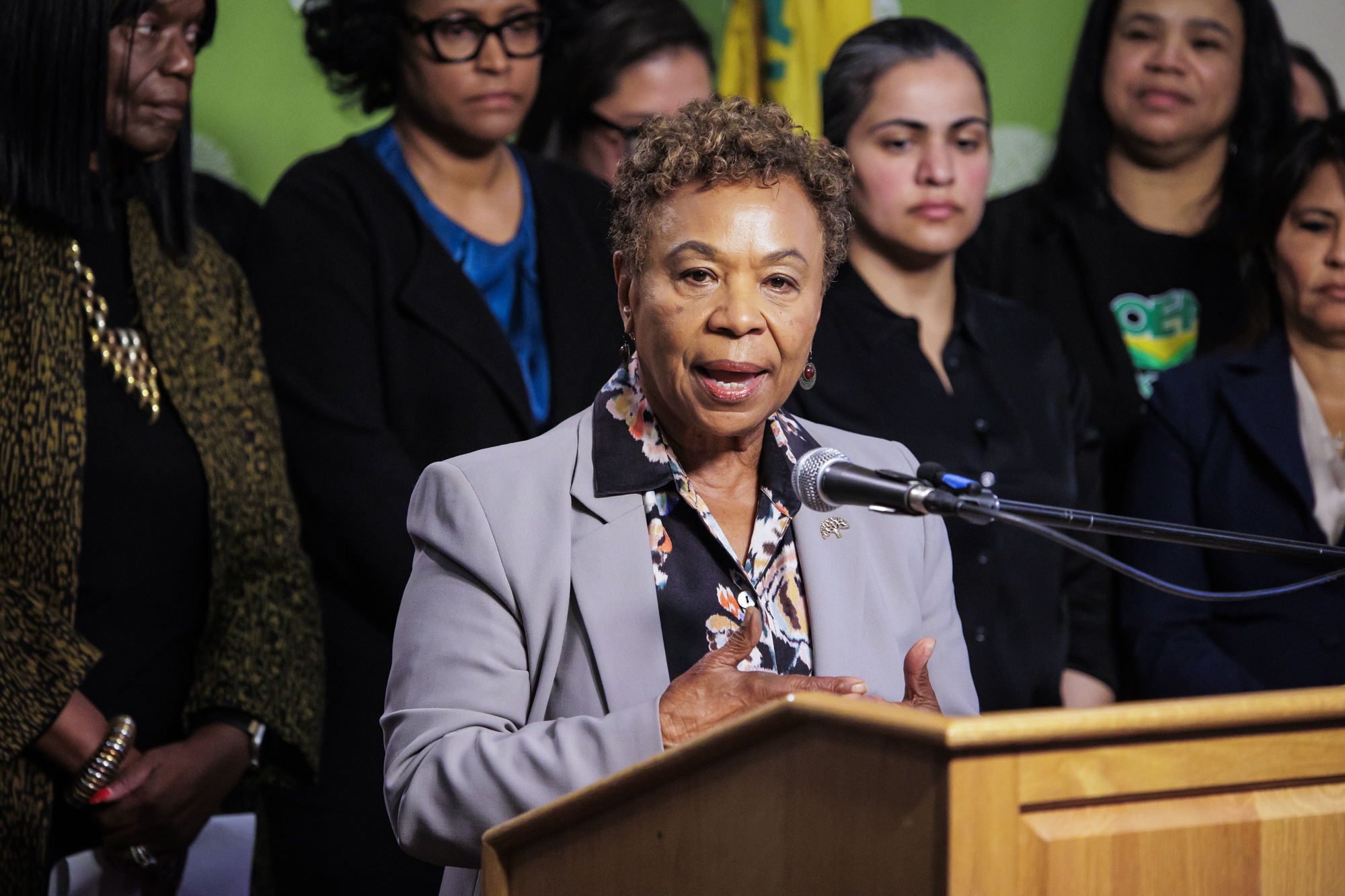
"caption": "Oakland Mayor Barbara Lee speaks at a press conference at Oakland City Hall on Oct. 23, 2025. After border agents began to arrive this week in Alameda, Mayor Lee said the county sheriff told her planned enforcement actions for the region are canceled.",
"credit": "Martin do Nascimento/KQED",
"altTag": null,
"description": null,
"imgSizes": {
"thumbnail": {
"file": "https://cdn.kqed.org/wp-content/uploads/sites/10/2025/10/251023-MAYOR-LEE-PRESSER-MD-05-KQED-160x107.jpg",
"width": 160,
"height": 107,
"mimeType": "image/jpeg"
},
"1536x1536": {
"file": "https://cdn.kqed.org/wp-content/uploads/sites/10/2025/10/251023-MAYOR-LEE-PRESSER-MD-05-KQED-1536x1024.jpg",
"width": 1536,
"height": 1024,
"mimeType": "image/jpeg"
},
"post-thumbnail": {
"file": "https://cdn.kqed.org/wp-content/uploads/sites/10/2025/10/251023-MAYOR-LEE-PRESSER-MD-05-KQED-672x372.jpg",
"width": 672,
"height": 372,
"mimeType": "image/jpeg"
},
"twentyfourteen-full-width": {
"file": "https://cdn.kqed.org/wp-content/uploads/sites/10/2025/10/251023-MAYOR-LEE-PRESSER-MD-05-KQED-1038x576.jpg",
"width": 1038,
"height": 576,
"mimeType": "image/jpeg"
},
"npr-cds-wide": {
"file": "https://cdn.kqed.org/wp-content/uploads/sites/10/2025/10/251023-MAYOR-LEE-PRESSER-MD-05-KQED-1600x900.jpg",
"width": 1600,
"height": 900,
"mimeType": "image/jpeg"
},
"kqedFullSize": {
"file": "https://cdn.kqed.org/wp-content/uploads/sites/10/2025/10/251023-MAYOR-LEE-PRESSER-MD-05-KQED.jpg",
"width": 2000,
"height": 1333
}
},
"isLoading": false,
"fetchFailed": false
},
"news_12043126": {
"type": "attachments",
"id": "news_12043126",
"meta": {
"index": "attachments_1716263798",
"site": "news",
"id": "12043126",
"found": true
},
"title": "013_KQED_SanFranciscoMarinFoodBank_03182020_9229_qed",
"publishDate": 1749235559,
"status": "inherit",
"parent": 12043122,
"modified": 1749235572,
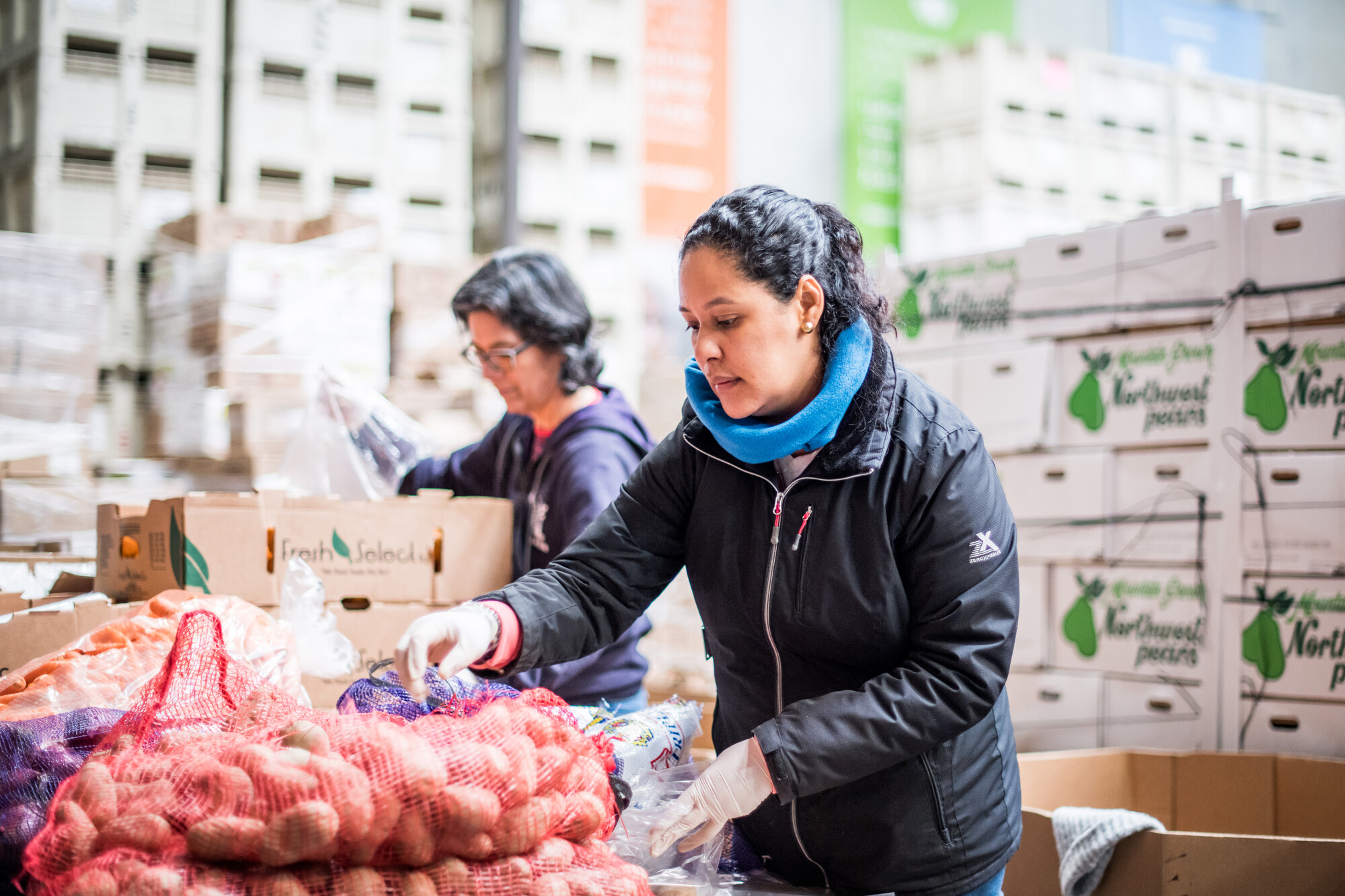
"caption": "Volunteers work to sort donated food at the San Francisco-Marin Food Bank in San Francisco's Dogpatch neighborhood on Wednesday, Mar. 18, 2020.",
"credit": "Beth LaBerge/KQED",
"altTag": null,
"description": null,
"imgSizes": {
"thumbnail": {
"file": "https://cdn.kqed.org/wp-content/uploads/sites/10/2025/06/013_KQED_SanFranciscoMarinFoodBank_03182020_9229_qed-160x107.jpg",
"width": 160,
"height": 107,
"mimeType": "image/jpeg"
},
"1536x1536": {
"file": "https://cdn.kqed.org/wp-content/uploads/sites/10/2025/06/013_KQED_SanFranciscoMarinFoodBank_03182020_9229_qed-1536x1024.jpg",
"width": 1536,
"height": 1024,
"mimeType": "image/jpeg"
},
"post-thumbnail": {
"file": "https://cdn.kqed.org/wp-content/uploads/sites/10/2025/06/013_KQED_SanFranciscoMarinFoodBank_03182020_9229_qed-672x372.jpg",
"width": 672,
"height": 372,
"mimeType": "image/jpeg"
},
"twentyfourteen-full-width": {
"file": "https://cdn.kqed.org/wp-content/uploads/sites/10/2025/06/013_KQED_SanFranciscoMarinFoodBank_03182020_9229_qed-1038x576.jpg",
"width": 1038,
"height": 576,
"mimeType": "image/jpeg"
},
"kqedFullSize": {
"file": "https://cdn.kqed.org/wp-content/uploads/sites/10/2025/06/013_KQED_SanFranciscoMarinFoodBank_03182020_9229_qed.jpg",
"width": 2000,
"height": 1333
}
},
"isLoading": false,
"fetchFailed": false
},
"news_12061450": {
"type": "attachments",
"id": "news_12061450",
"meta": {
"index": "attachments_1716263798",
"site": "news",
"id": "12061450",
"found": true
},
"title": "251024-CoastGuard-11-BL_qed",
"publishDate": 1761324549,
"status": "inherit",
"parent": 12061436,
"modified": 1761324610,
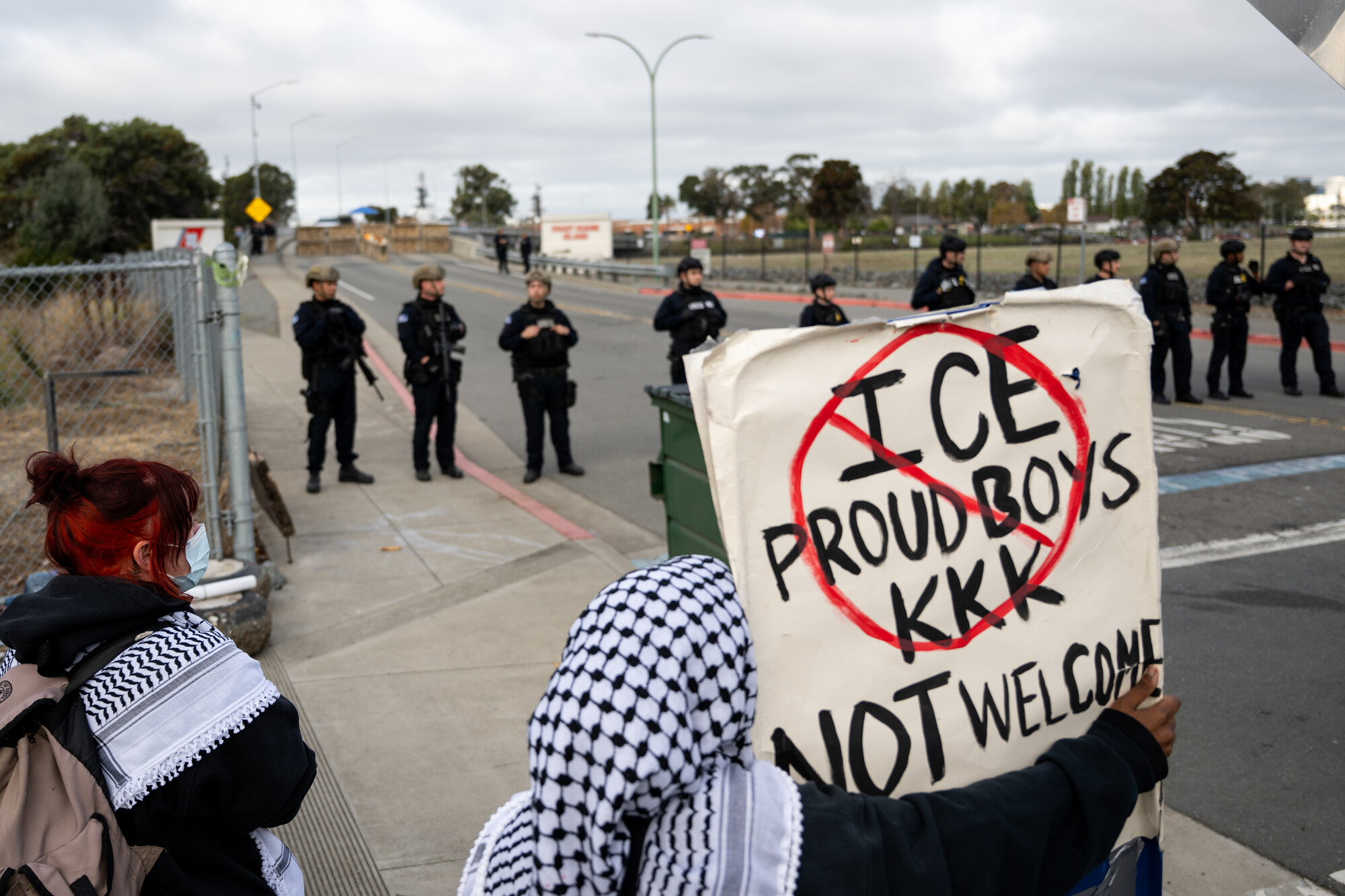
"caption": "U.S. Coast Guard security personnel stand at the intersection of Dennison Street and Embarcadero in front of Coast Guard Island in Oakland on Oct. 24, 2025, as demonstrators return following a shooting late last night in which security personnel opened fire on a U-Haul near the base.",
"credit": "Beth LaBerge/KQED",
"altTag": null,
"description": null,
"imgSizes": {
"thumbnail": {
"file": "https://cdn.kqed.org/wp-content/uploads/sites/10/2025/10/251024-CoastGuard-11-BL_qed-160x107.jpg",
"width": 160,
"height": 107,
"mimeType": "image/jpeg"
},
"1536x1536": {
"file": "https://cdn.kqed.org/wp-content/uploads/sites/10/2025/10/251024-CoastGuard-11-BL_qed-1536x1024.jpg",
"width": 1536,
"height": 1024,
"mimeType": "image/jpeg"
},
"post-thumbnail": {
"file": "https://cdn.kqed.org/wp-content/uploads/sites/10/2025/10/251024-CoastGuard-11-BL_qed-672x372.jpg",
"width": 672,
"height": 372,
"mimeType": "image/jpeg"
},
"twentyfourteen-full-width": {
"file": "https://cdn.kqed.org/wp-content/uploads/sites/10/2025/10/251024-CoastGuard-11-BL_qed-1038x576.jpg",
"width": 1038,
"height": 576,
"mimeType": "image/jpeg"
},
"npr-cds-wide": {
"file": "https://cdn.kqed.org/wp-content/uploads/sites/10/2025/10/251024-CoastGuard-11-BL_qed-1600x900.jpg",
"width": 1600,
"height": 900,
"mimeType": "image/jpeg"
},
"kqedFullSize": {
"file": "https://cdn.kqed.org/wp-content/uploads/sites/10/2025/10/251024-CoastGuard-11-BL_qed.jpg",
"width": 2000,
"height": 1333
}
},
"isLoading": false,
"fetchFailed": false
},
"news_12061284": {
"type": "attachments",
"id": "news_12061284",
"meta": {
"index": "attachments_1716263798",
"site": "news",
"id": "12061284",
"found": true
},
"title": "033_KQED_SanFrancisco_SFSU_03112020_6923_qed",
"publishDate": 1761252538,
"status": "inherit",
"parent": 12061272,
"modified": 1761252591,
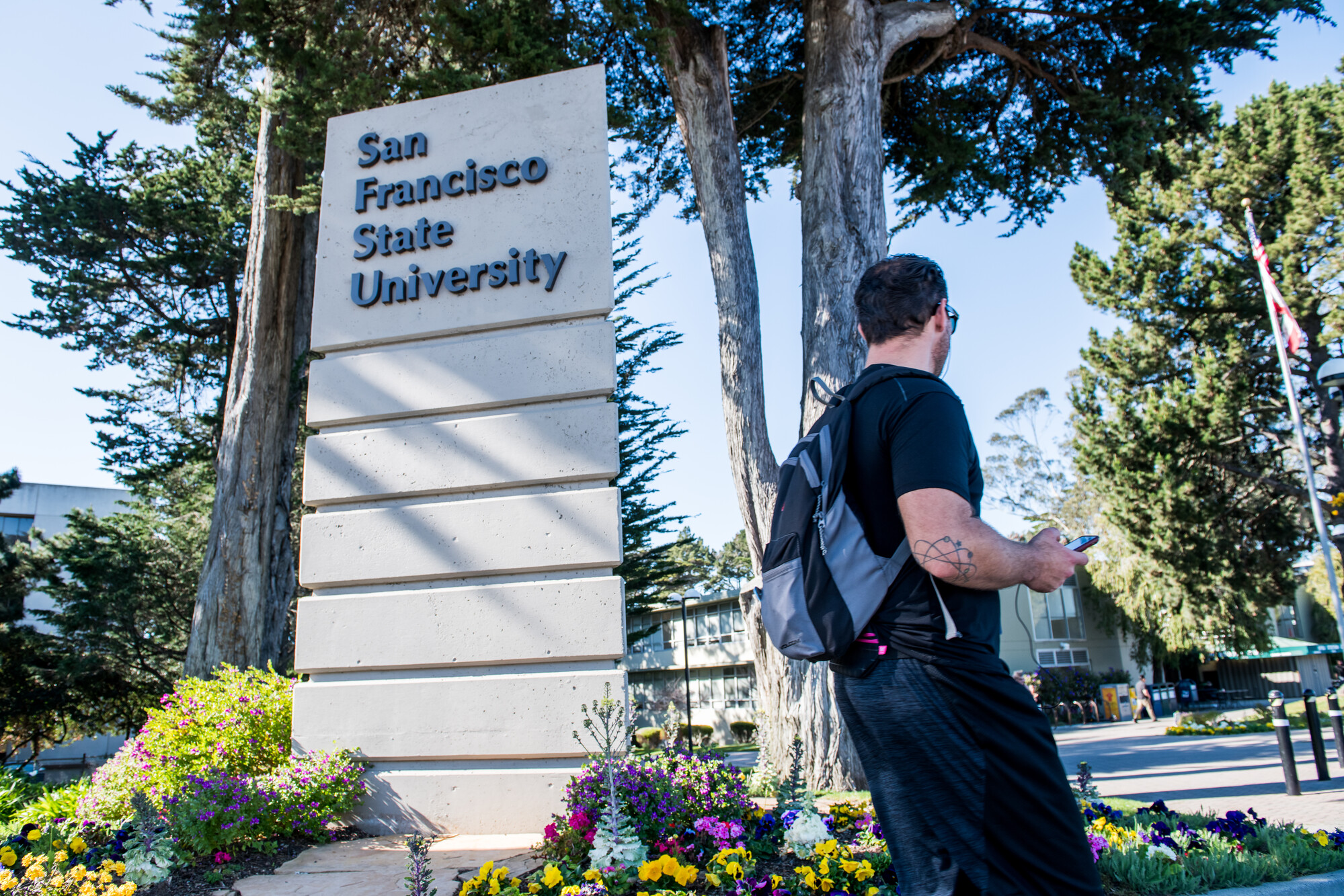
"caption": "San Francisco State University on March 11, 2020.\n\n",
"credit": "Beth LaBerge/KQED",
"altTag": null,
"description": null,
"imgSizes": {
"thumbnail": {
"file": "https://cdn.kqed.org/wp-content/uploads/sites/10/2025/10/033_KQED_SanFrancisco_SFSU_03112020_6923_qed-160x107.jpg",
"width": 160,
"height": 107,
"mimeType": "image/jpeg"
},
"1536x1536": {
"file": "https://cdn.kqed.org/wp-content/uploads/sites/10/2025/10/033_KQED_SanFrancisco_SFSU_03112020_6923_qed-1536x1024.jpg",
"width": 1536,
"height": 1024,
"mimeType": "image/jpeg"
},
"post-thumbnail": {
"file": "https://cdn.kqed.org/wp-content/uploads/sites/10/2025/10/033_KQED_SanFrancisco_SFSU_03112020_6923_qed-672x372.jpg",
"width": 672,
"height": 372,
"mimeType": "image/jpeg"
},
"twentyfourteen-full-width": {
"file": "https://cdn.kqed.org/wp-content/uploads/sites/10/2025/10/033_KQED_SanFrancisco_SFSU_03112020_6923_qed-1038x576.jpg",
"width": 1038,
"height": 576,
"mimeType": "image/jpeg"
},
"npr-cds-wide": {
"file": "https://cdn.kqed.org/wp-content/uploads/sites/10/2025/10/033_KQED_SanFrancisco_SFSU_03112020_6923_qed-1600x900.jpg",
"width": 1600,
"height": 900,
"mimeType": "image/jpeg"
},
"kqedFullSize": {
"file": "https://cdn.kqed.org/wp-content/uploads/sites/10/2025/10/033_KQED_SanFrancisco_SFSU_03112020_6923_qed.jpg",
"width": 1999,
"height": 1333
}
},
"isLoading": false,
"fetchFailed": false
},
"news_12060772": {
"type": "attachments",
"id": "news_12060772",
"meta": {
"index": "attachments_1716263798",
"site": "news",
"id": "12060772",
"found": true
},
"title": "SNAP and EBT Accepted here sign. SNAP and Food Stamps provide nutrition benefits to supplement the budgets of disadvantaged families.",
"publishDate": 1761001618,
"status": "inherit",
"parent": 12060770,
"modified": 1761001667,
"caption": "SNAP and EBT Accepted here sign. SNAP and Food Stamps provide nutrition benefits to supplement the budgets of disadvantaged families.",
"credit": "Jet City Image/iStock Editorial via Getty Images Plus",
"altTag": null,
"description": null,
"imgSizes": {
"thumbnail": {
"file": "https://cdn.kqed.org/wp-content/uploads/sites/10/2025/10/SNAPGetty-160x107.jpg",
"width": 160,
"height": 107,
"mimeType": "image/jpeg"
},
"1536x1536": {
"file": "https://cdn.kqed.org/wp-content/uploads/sites/10/2025/10/SNAPGetty-1536x1024.jpg",
"width": 1536,
"height": 1024,
"mimeType": "image/jpeg"
},
"post-thumbnail": {
"file": "https://cdn.kqed.org/wp-content/uploads/sites/10/2025/10/SNAPGetty-672x372.jpg",
"width": 672,
"height": 372,
"mimeType": "image/jpeg"
},
"twentyfourteen-full-width": {
"file": "https://cdn.kqed.org/wp-content/uploads/sites/10/2025/10/SNAPGetty-1038x576.jpg",
"width": 1038,
"height": 576,
"mimeType": "image/jpeg"
},
"kqedFullSize": {
"file": "https://cdn.kqed.org/wp-content/uploads/sites/10/2025/10/SNAPGetty.jpg",
"width": 2000,
"height": 1333
}
},
"isLoading": false,
"fetchFailed": false
},
"news_12061290": {
"type": "attachments",
"id": "news_12061290",
"meta": {
"index": "attachments_1716263798",
"site": "news",
"id": "12061290",
"found": true
},
"title": "20251023_SF CITY HALL_HERNANDEZ-2-KQED",
"publishDate": 1761255686,
"status": "inherit",
"parent": 0,
"modified": 1761255733,
"caption": "District 10 Supervisor Shamann Walton speaks at a rally outside San Francisco City Hall on Oct. 23, 2025, where faith, labor and community leaders denounced federal threats to deploy troops in the Bay Area.",
"credit": "Gustavo Hernandez/KQED",
"altTag": null,
"description": null,
"imgSizes": {
"thumbnail": {
"file": "https://cdn.kqed.org/wp-content/uploads/sites/10/2025/10/20251023_SF-CITY-HALL_HERNANDEZ-2-KQED-160x107.jpg",
"width": 160,
"height": 107,
"mimeType": "image/jpeg"
},
"1536x1536": {
"file": "https://cdn.kqed.org/wp-content/uploads/sites/10/2025/10/20251023_SF-CITY-HALL_HERNANDEZ-2-KQED-1536x1024.jpg",
"width": 1536,
"height": 1024,
"mimeType": "image/jpeg"
},
"post-thumbnail": {
"file": "https://cdn.kqed.org/wp-content/uploads/sites/10/2025/10/20251023_SF-CITY-HALL_HERNANDEZ-2-KQED-672x372.jpg",
"width": 672,
"height": 372,
"mimeType": "image/jpeg"
},
"twentyfourteen-full-width": {
"file": "https://cdn.kqed.org/wp-content/uploads/sites/10/2025/10/20251023_SF-CITY-HALL_HERNANDEZ-2-KQED-1038x576.jpg",
"width": 1038,
"height": 576,
"mimeType": "image/jpeg"
},
"npr-cds-wide": {
"file": "https://cdn.kqed.org/wp-content/uploads/sites/10/2025/10/20251023_SF-CITY-HALL_HERNANDEZ-2-KQED-1600x900.jpg",
"width": 1600,
"height": 900,
"mimeType": "image/jpeg"
},
"kqedFullSize": {
"file": "https://cdn.kqed.org/wp-content/uploads/sites/10/2025/10/20251023_SF-CITY-HALL_HERNANDEZ-2-KQED.jpg",
"width": 2000,
"height": 1333
}
},
"isLoading": false,
"fetchFailed": false
},
"news_12061257": {
"type": "attachments",
"id": "news_12061257",
"meta": {
"index": "attachments_1716263798",
"site": "news",
"id": "12061257",
"found": true
},
"title": "251023-MAYOR LEE PRESSER-MD-11-KQED",
"publishDate": 1761245645,
"status": "inherit",
"parent": 12061224,
"modified": 1761258885,
"caption": "Oakland Mayor Barbara Lee holds a press conference at Oakland City Hall flanked by prominent public figures on Oct. 23, 2025.",
"credit": "Martin do Nascimento/KQED",
"altTag": null,
"description": null,
"imgSizes": {
"thumbnail": {
"file": "https://cdn.kqed.org/wp-content/uploads/sites/10/2025/10/251023-MAYOR-LEE-PRESSER-MD-11-KQED-160x107.jpg",
"width": 160,
"height": 107,
"mimeType": "image/jpeg"
},
"1536x1536": {
"file": "https://cdn.kqed.org/wp-content/uploads/sites/10/2025/10/251023-MAYOR-LEE-PRESSER-MD-11-KQED-1536x1025.jpg",
"width": 1536,
"height": 1025,
"mimeType": "image/jpeg"
},
"post-thumbnail": {
"file": "https://cdn.kqed.org/wp-content/uploads/sites/10/2025/10/251023-MAYOR-LEE-PRESSER-MD-11-KQED-672x372.jpg",
"width": 672,
"height": 372,
"mimeType": "image/jpeg"
},
"twentyfourteen-full-width": {
"file": "https://cdn.kqed.org/wp-content/uploads/sites/10/2025/10/251023-MAYOR-LEE-PRESSER-MD-11-KQED-1038x576.jpg",
"width": 1038,
"height": 576,
"mimeType": "image/jpeg"
},
"npr-cds-wide": {
"file": "https://cdn.kqed.org/wp-content/uploads/sites/10/2025/10/251023-MAYOR-LEE-PRESSER-MD-11-KQED-1600x900.jpg",
"width": 1600,
"height": 900,
"mimeType": "image/jpeg"
},
"kqedFullSize": {
"file": "https://cdn.kqed.org/wp-content/uploads/sites/10/2025/10/251023-MAYOR-LEE-PRESSER-MD-11-KQED.jpg",
"width": 2000,
"height": 1334
}
},
"isLoading": false,
"fetchFailed": false
},
"news_12061203": {
"type": "attachments",
"id": "news_12061203",
"meta": {
"index": "attachments_1716263798",
"site": "news",
"id": "12061203",
"found": true
},
"title": "protesters block the entrance to Coast Guard Island Alameda",
"publishDate": 1761236167,
"status": "inherit",
"parent": 0,
"modified": 1761242543,
"caption": "A U.S. Customs and Border Protection agent confronts protesters blocking the entrance to Coast Guard Base Alameda, where they are sent to as a staging area for the long-threatened immigration crackdown, in Oakland on Oct. 23, 2025. ",
"credit": "Stephen Lam/San Francisco Chronicle via Getty Images",
"altTag": null,
"description": null,
"imgSizes": {
"thumbnail": {
"file": "https://cdn.kqed.org/wp-content/uploads/sites/10/2025/10/GETTYIMAGES-2242445000-KQED-160x107.jpg",
"width": 160,
"height": 107,
"mimeType": "image/jpeg"
},
"1536x1536": {
"file": "https://cdn.kqed.org/wp-content/uploads/sites/10/2025/10/GETTYIMAGES-2242445000-KQED-1536x1025.jpg",
"width": 1536,
"height": 1025,
"mimeType": "image/jpeg"
},
"post-thumbnail": {
"file": "https://cdn.kqed.org/wp-content/uploads/sites/10/2025/10/GETTYIMAGES-2242445000-KQED-672x372.jpg",
"width": 672,
"height": 372,
"mimeType": "image/jpeg"
},
"twentyfourteen-full-width": {
"file": "https://cdn.kqed.org/wp-content/uploads/sites/10/2025/10/GETTYIMAGES-2242445000-KQED-1038x576.jpg",
"width": 1038,
"height": 576,
"mimeType": "image/jpeg"
},
"npr-cds-wide": {
"file": "https://cdn.kqed.org/wp-content/uploads/sites/10/2025/10/GETTYIMAGES-2242445000-KQED-1600x900.jpg",
"width": 1600,
"height": 900,
"mimeType": "image/jpeg"
},
"kqedFullSize": {
"file": "https://cdn.kqed.org/wp-content/uploads/sites/10/2025/10/GETTYIMAGES-2242445000-KQED.jpg",
"width": 2000,
"height": 1334
}
},
"isLoading": false,
"fetchFailed": false
},
"news_12061161": {
"type": "attachments",
"id": "news_12061161",
"meta": {
"index": "attachments_1716263798",
"site": "news",
"id": "12061161",
"found": true
},
"title": "aztec dancers",
"publishDate": 1761187398,
"status": "inherit",
"parent": 12061160,
"modified": 1761187473,
"caption": "Una bailarina azteca se asoma por encima de los árboles de la calle 24 durante la bendición de los altares en las calles 24 y Folsom para dar inicio al Día de los Muertos en el distrito Mission de San Francisco, el domingo 1 de noviembre de 2020. El Área de la Bahía se prepara para el Día de los Muertos de este año, que caerá en fin de semana.",
"credit": "Sebastian Miño-Bucheli/KQED",
"altTag": null,
"description": null,
"imgSizes": {
"thumbnail": {
"file": "https://cdn.kqed.org/wp-content/uploads/sites/10/2025/10/aztec-dancers-160x115.jpg",
"width": 160,
"height": 115,
"mimeType": "image/jpeg"
},
"post-thumbnail": {
"file": "https://cdn.kqed.org/wp-content/uploads/sites/10/2025/10/aztec-dancers-672x372.jpg",
"width": 672,
"height": 372,
"mimeType": "image/jpeg"
},
"twentyfourteen-full-width": {
"file": "https://cdn.kqed.org/wp-content/uploads/sites/10/2025/10/aztec-dancers-1020x576.jpg",
"width": 1020,
"height": 576,
"mimeType": "image/jpeg"
},
"kqedFullSize": {
"file": "https://cdn.kqed.org/wp-content/uploads/sites/10/2025/10/aztec-dancers.jpg",
"width": 1020,
"height": 735
}
},
"isLoading": false,
"fetchFailed": false
},
"news_12044183": {
"type": "attachments",
"id": "news_12044183",
"meta": {
"index": "attachments_1716263798",
"site": "news",
"id": "12044183",
"found": true
},
"title": "20250428_WarrantlessSearches_GC-29_qed",
"publishDate": 1749836052,
"status": "inherit",
"parent": 12044180,
"modified": 1749836087,
"caption": "Mayor Daniel Lurie attends a press conference outside of San Francisco City Hall on April 28, 2025.",
"credit": "Gina Castro/KQED",
"altTag": null,
"description": null,
"imgSizes": {
"thumbnail": {
"file": "https://cdn.kqed.org/wp-content/uploads/sites/10/2025/06/20250428_WarrantlessSearches_GC-29_qed-160x110.jpg",
"width": 160,
"height": 110,
"mimeType": "image/jpeg"
},
"1536x1536": {
"file": "https://cdn.kqed.org/wp-content/uploads/sites/10/2025/06/20250428_WarrantlessSearches_GC-29_qed-1536x1057.jpg",
"width": 1536,
"height": 1057,
"mimeType": "image/jpeg"
},
"post-thumbnail": {
"file": "https://cdn.kqed.org/wp-content/uploads/sites/10/2025/06/20250428_WarrantlessSearches_GC-29_qed-672x372.jpg",
"width": 672,
"height": 372,
"mimeType": "image/jpeg"
},
"twentyfourteen-full-width": {
"file": "https://cdn.kqed.org/wp-content/uploads/sites/10/2025/06/20250428_WarrantlessSearches_GC-29_qed-1038x576.jpg",
"width": 1038,
"height": 576,
"mimeType": "image/jpeg"
},
"kqedFullSize": {
"file": "https://cdn.kqed.org/wp-content/uploads/sites/10/2025/06/20250428_WarrantlessSearches_GC-29_qed.jpg",
"width": 1937,
"height": 1333
}
},
"isLoading": false,
"fetchFailed": false
},
"news_12061114": {
"type": "attachments",
"id": "news_12061114",
"meta": {
"index": "attachments_1716263798",
"site": "news",
"id": "12061114",
"found": true
},
"title": "251022-INDIABASINSHORELINEPARK-06-BL-KQED",
"publishDate": 1761171770,
"status": "inherit",
"parent": 0,
"modified": 1761171802,
"caption": "A transmission tower at India Basin Shoreline Park in San Francisco on Oct. 22, 2025.",
"credit": "Beth LaBerge/KQED",
"altTag": null,
"description": null,
"imgSizes": {
"thumbnail": {
"file": "https://cdn.kqed.org/wp-content/uploads/sites/10/2025/10/251022-INDIABASINSHORELINEPARK-06-BL-KQED-160x107.jpg",
"width": 160,
"height": 107,
"mimeType": "image/jpeg"
},
"1536x1536": {
"file": "https://cdn.kqed.org/wp-content/uploads/sites/10/2025/10/251022-INDIABASINSHORELINEPARK-06-BL-KQED-1536x1024.jpg",
"width": 1536,
"height": 1024,
"mimeType": "image/jpeg"
},
"post-thumbnail": {
"file": "https://cdn.kqed.org/wp-content/uploads/sites/10/2025/10/251022-INDIABASINSHORELINEPARK-06-BL-KQED-672x372.jpg",
"width": 672,
"height": 372,
"mimeType": "image/jpeg"
},
"twentyfourteen-full-width": {
"file": "https://cdn.kqed.org/wp-content/uploads/sites/10/2025/10/251022-INDIABASINSHORELINEPARK-06-BL-KQED-1038x576.jpg",
"width": 1038,
"height": 576,
"mimeType": "image/jpeg"
},
"npr-cds-wide": {
"file": "https://cdn.kqed.org/wp-content/uploads/sites/10/2025/10/251022-INDIABASINSHORELINEPARK-06-BL-KQED-1600x900.jpg",
"width": 1600,
"height": 900,
"mimeType": "image/jpeg"
},
"kqedFullSize": {
"file": "https://cdn.kqed.org/wp-content/uploads/sites/10/2025/10/251022-INDIABASINSHORELINEPARK-06-BL-KQED.jpg",
"width": 2000,
"height": 1333
}
},
"isLoading": false,
"fetchFailed": false
},
"news_12061152": {
"type": "attachments",
"id": "news_12061152",
"meta": {
"index": "attachments_1716263798",
"site": "news",
"id": "12061152",
"found": true
},
"title": "251007_Urban Alchemy Rally_-24_qed",
"publishDate": 1761178521,
"status": "inherit",
"parent": 12061089,
"modified": 1761178552,
"caption": "San Francisco District Attorney Brooke Jenkins speaks at a rally outside City Hall on Monday, Oct. 7, 2025.",
"credit": "Gustavo Hernandez/KQED",
"altTag": null,
"description": null,
"imgSizes": {
"thumbnail": {
"file": "https://cdn.kqed.org/wp-content/uploads/sites/10/2025/10/251007_Urban-Alchemy-Rally_-24_qed-160x107.jpg",
"width": 160,
"height": 107,
"mimeType": "image/jpeg"
},
"1536x1536": {
"file": "https://cdn.kqed.org/wp-content/uploads/sites/10/2025/10/251007_Urban-Alchemy-Rally_-24_qed-1536x1024.jpg",
"width": 1536,
"height": 1024,
"mimeType": "image/jpeg"
},
"post-thumbnail": {
"file": "https://cdn.kqed.org/wp-content/uploads/sites/10/2025/10/251007_Urban-Alchemy-Rally_-24_qed-672x372.jpg",
"width": 672,
"height": 372,
"mimeType": "image/jpeg"
},
"twentyfourteen-full-width": {
"file": "https://cdn.kqed.org/wp-content/uploads/sites/10/2025/10/251007_Urban-Alchemy-Rally_-24_qed-1038x576.jpg",
"width": 1038,
"height": 576,
"mimeType": "image/jpeg"
},
"npr-cds-wide": {
"file": "https://cdn.kqed.org/wp-content/uploads/sites/10/2025/10/251007_Urban-Alchemy-Rally_-24_qed-1600x900.jpg",
"width": 1600,
"height": 900,
"mimeType": "image/jpeg"
},
"kqedFullSize": {
"file": "https://cdn.kqed.org/wp-content/uploads/sites/10/2025/10/251007_Urban-Alchemy-Rally_-24_qed.jpg",
"width": 2000,
"height": 1333
}
},
"isLoading": false,
"fetchFailed": false
}
},
"audioPlayerReducer": {
"postId": "stream_live",
"isPaused": true,
"isPlaying": false,
"pfsActive": false,
"pledgeModalIsOpen": true,
"playerDrawerIsOpen": false,
"liveAudioPlayStartedAt": 0,
"liveAudioPlayContext": ""
},
"authorsReducer": {
"shossaini": {
"type": "authors",
"id": "3214",
"meta": {
"index": "authors_1716337520",
"id": "3214",
"found": true
},
"name": "Sara Hossaini",
"firstName": "Sara",
"lastName": "Hossaini",
"slug": "shossaini",
"email": "shossaini@kqed.org",
"display_author_email": true,
"staff_mastheads": [
"news"
],
"title": "KQED Reporter",
"bio": "Sara Hossaini came to general assignment reporting at KQED in 2013 after two winters reporting at Wyoming Public Radio. She holds a bachelor's degree in broadcast journalism from the University of Nebraska-Lincoln. Her radio romance began after a bitter breakup with documentary film (Ok, maybe it's still complicated). Her first simultaneous jobs in San Francisco were as Associate Producer on a PBS film series through the Center for Asian American Media and as a butler. She likes to trot, plot and make things with her hands.",
"avatar": "https://secure.gravatar.com/avatar/060e9f56b9554e17942e89f413242774?s=600&d=blank&r=g",
"twitter": "mshossaini",
"facebook": null,
"instagram": null,
"linkedin": null,
"sites": [
{
"site": "news",
"roles": [
"author"
]
},
{
"site": "stateofhealth",
"roles": [
"author"
]
}
],
"headData": {
"title": "Sara Hossaini | KQED",
"description": "KQED Reporter",
"ogImgSrc": "https://secure.gravatar.com/avatar/060e9f56b9554e17942e89f413242774?s=600&d=blank&r=g",
"twImgSrc": "https://secure.gravatar.com/avatar/060e9f56b9554e17942e89f413242774?s=600&d=blank&r=g"
},
"isLoading": false,
"link": "/author/shossaini"
},
"carlysevern": {
"type": "authors",
"id": "3243",
"meta": {
"index": "authors_1716337520",
"id": "3243",
"found": true
},
"name": "Carly Severn",
"firstName": "Carly",
"lastName": "Severn",
"slug": "carlysevern",
"email": "csevern@kqed.org",
"display_author_email": false,
"staff_mastheads": [
"news"
],
"title": "Senior Editor, Audience News ",
"bio": "Carly is KQED's Senior Editor of Audience News on the Digital News team, and has reported for the California Report Magazine, Bay Curious and KQED Arts. She's formerly the host of \u003ca href=\"http://ww2.kqed.org/pop/category/the-cooler/\" rel=\"noopener noreferrer\">The Cooler\u003c/a> podcast.",
"avatar": "https://secure.gravatar.com/avatar/54037bf5c128fe678f0ef26cec97a93f2e7f220a22d7285703328f12c42c1b1d?s=600&d=blank&r=g",
"twitter": "teacupinthebay",
"bluesky": null,
"facebook": null,
"instagram": null,
"linkedin": null,
"sites": [
{
"site": "",
"roles": [
"editor"
]
},
{
"site": "arts",
"roles": [
"editor"
]
},
{
"site": "news",
"roles": [
"administrator"
]
},
{
"site": "pop",
"roles": [
"editor"
]
},
{
"site": "futureofyou",
"roles": [
"editor"
]
},
{
"site": "about",
"roles": [
"administrator"
]
},
{
"site": "mindshift",
"roles": [
"editor"
]
},
{
"site": "bayareabites",
"roles": [
"editor"
]
},
{
"site": "stateofhealth",
"roles": [
"editor"
]
},
{
"site": "science",
"roles": [
"editor"
]
},
{
"site": "food",
"roles": [
"contributor"
]
},
{
"site": "forum",
"roles": [
"editor"
]
},
{
"site": "perspectives",
"roles": [
"administrator"
]
},
{
"site": "liveblog",
"roles": [
"editor"
]
}
],
"headData": {
"title": "Carly Severn | KQED",
"description": "Senior Editor, Audience News ",
"ogImgSrc": "https://secure.gravatar.com/avatar/54037bf5c128fe678f0ef26cec97a93f2e7f220a22d7285703328f12c42c1b1d?s=600&d=blank&r=g",
"twImgSrc": "https://secure.gravatar.com/avatar/54037bf5c128fe678f0ef26cec97a93f2e7f220a22d7285703328f12c42c1b1d?s=600&d=blank&r=g"
},
"isLoading": false,
"link": "/author/carlysevern"
},
"nvoynovskaya": {
"type": "authors",
"id": "11387",
"meta": {
"index": "authors_1716337520",
"id": "11387",
"found": true
},
"name": "Nastia Voynovskaya",
"firstName": "Nastia",
"lastName": "Voynovskaya",
"slug": "nvoynovskaya",
"email": "nvoynovskaya@kqed.org",
"display_author_email": false,
"staff_mastheads": [
"arts"
],
"title": "Editor and reporter",
"bio": "Nastia Voynovskaya is a reporter, editor and host at KQED Arts & Culture. She's been covering the arts in the Bay Area for over a decade, with a focus on music, queer culture, labor issues and grassroots organizing. She has edited KQED story series such as Trans Bay: A History of San Francisco's Gender-Diverse Community, and co-created KQED's Bay Area hip-hop history project, That's My Word. Nastia's work has been recognized by the Society of Professional Journalists and San Francisco Press Club. She regularly appears on podcasts and radio programs, including NPR's All Songs Considered, and hosts live events where music, culture and conversation meet.",
"avatar": "https://secure.gravatar.com/avatar/5025ee460e5a85d69ca20ea6c6f2f80d7e17795c828f61ea3aecfcd924e9042e?s=600&d=blank&r=g",
"twitter": null,
"bluesky": null,
"facebook": null,
"instagram": "https://www.instagram.com/nananastia/",
"linkedin": null,
"sites": [
{
"site": "",
"roles": [
"editor"
]
},
{
"site": "arts",
"roles": [
"administrator"
]
},
{
"site": "news",
"roles": [
"editor"
]
},
{
"site": "pop",
"roles": [
"administrator"
]
},
{
"site": "bayareabites",
"roles": [
"editor"
]
},
{
"site": "podcasts",
"roles": [
"editor"
]
},
{
"site": "hiphop",
"roles": [
"editor"
]
}
],
"headData": {
"title": "Nastia Voynovskaya | KQED",
"description": "Editor and reporter",
"ogImgSrc": "https://secure.gravatar.com/avatar/5025ee460e5a85d69ca20ea6c6f2f80d7e17795c828f61ea3aecfcd924e9042e?s=600&d=blank&r=g",
"twImgSrc": "https://secure.gravatar.com/avatar/5025ee460e5a85d69ca20ea6c6f2f80d7e17795c828f61ea3aecfcd924e9042e?s=600&d=blank&r=g"
},
"isLoading": false,
"link": "/author/nvoynovskaya"
},
"ahall": {
"type": "authors",
"id": "11490",
"meta": {
"index": "authors_1716337520",
"id": "11490",
"found": true
},
"name": "Alex Hall",
"firstName": "Alex",
"lastName": "Hall",
"slug": "ahall",
"email": "ahall@kqed.org",
"display_author_email": false,
"staff_mastheads": [
"news"
],
"title": "KQED Enterprise & Accountability Reporter",
"bio": "Alex Hall is KQED's Enterprise and Accountability Reporter. She previously covered the Central Valley for five years from KQED's bureau in Fresno. Before joining KQED, Alex was an investigative reporting fellow at Wisconsin Public Radio and the Wisconsin Center for Investigative Journalism. She has also worked as a bilingual producer for NPR's investigative unit and freelance video producer for Reuters TV on the Latin America desk. She got her start in journalism in South America, where she worked as a radio producer and Spanish-English translator for CNN Chile. Her documentary and investigation into the series of deadly COVID-19 outbreaks at Foster Farms won a national Edward R. Murrow award and was named an Investigative Reporters & Editors award finalist. Alex's reporting for Reveal on the Wisconsin dairy industry's reliance on undocumented immigrant labor was made into a film, Los Lecheros, which won a regional Edward R. Murrow award for best news documentary.",
"avatar": "https://secure.gravatar.com/avatar/04c28ad4a7caa7ac2ef39c655c4030c993a3f331481d1da4799bb76ea85b9afa?s=600&d=blank&r=g",
"twitter": "@chalexhall",
"bluesky": null,
"facebook": null,
"instagram": null,
"linkedin": null,
"sites": [
{
"site": "news",
"roles": [
"editor"
]
},
{
"site": "liveblog",
"roles": [
"author"
]
}
],
"headData": {
"title": "Alex Hall | KQED",
"description": "KQED Enterprise & Accountability Reporter",
"ogImgSrc": "https://secure.gravatar.com/avatar/04c28ad4a7caa7ac2ef39c655c4030c993a3f331481d1da4799bb76ea85b9afa?s=600&d=blank&r=g",
"twImgSrc": "https://secure.gravatar.com/avatar/04c28ad4a7caa7ac2ef39c655c4030c993a3f331481d1da4799bb76ea85b9afa?s=600&d=blank&r=g"
},
"isLoading": false,
"link": "/author/ahall"
},
"ccabreralomeli": {
"type": "authors",
"id": "11708",
"meta": {
"index": "authors_1716337520",
"id": "11708",
"found": true
},
"name": "Carlos Cabrera-Lomelí",
"firstName": "Carlos",
"lastName": "Cabrera-Lomelí",
"slug": "ccabreralomeli",
"email": "ccabreralomeli@KQED.org",
"display_author_email": true,
"staff_mastheads": [
"news"
],
"title": "Community Reporter",
"bio": "Carlos Cabrera-Lomelí is a community reporter with KQED's digital engagement team. He also reports and co-produces for KQED's bilingual news hub KQED en Español. He grew up in San Francisco's Mission District and has previously worked with Univision, 48 Hills and REFORMA in Mexico City.",
"avatar": "https://secure.gravatar.com/avatar/c309be9665e484f887b818c89e273ecc673004f426f36b24d00a4d813a2e0518?s=600&d=blank&r=g",
"twitter": "@LomeliCabrera",
"bluesky": null,
"facebook": null,
"instagram": null,
"linkedin": null,
"sites": [
{
"site": "arts",
"roles": [
"editor"
]
},
{
"site": "news",
"roles": [
"editor"
]
},
{
"site": "about",
"roles": [
"editor"
]
},
{
"site": "science",
"roles": [
"editor"
]
},
{
"site": "perspectives",
"roles": [
"editor"
]
},
{
"site": "elections",
"roles": [
"editor"
]
},
{
"site": "liveblog",
"roles": [
"contributor"
]
}
],
"headData": {
"title": "Carlos Cabrera-Lomelí | KQED",
"description": "Community Reporter",
"ogImgSrc": "https://secure.gravatar.com/avatar/c309be9665e484f887b818c89e273ecc673004f426f36b24d00a4d813a2e0518?s=600&d=blank&r=g",
"twImgSrc": "https://secure.gravatar.com/avatar/c309be9665e484f887b818c89e273ecc673004f426f36b24d00a4d813a2e0518?s=600&d=blank&r=g"
},
"isLoading": false,
"link": "/author/ccabreralomeli"
},
"adahlstromeckman": {
"type": "authors",
"id": "11785",
"meta": {
"index": "authors_1716337520",
"id": "11785",
"found": true
},
"name": "Azul Dahlstrom-Eckman",
"firstName": "Azul",
"lastName": "Dahlstrom-Eckman",
"slug": "adahlstromeckman",
"email": "adahlstrom-eckman@kqed.org",
"display_author_email": true,
"staff_mastheads": [],
"title": "Reporter",
"bio": "Azul is a reporter for KQED focusing on transportation and features. He joined KQED in 2021 as an alumna of KALW's Audio Academy radio journalism training program.",
"avatar": "https://secure.gravatar.com/avatar/9cb750298435add7815a777f55bf1f46845c1386bb8452555c60a7b820b5aba3?s=600&d=blank&r=g",
"twitter": "@zuliemann",
"bluesky": "@azul415.bsky.social",
"facebook": null,
"instagram": null,
"linkedin": null,
"sites": [
{
"site": "arts",
"roles": [
"editor"
]
},
{
"site": "news",
"roles": [
"editor"
]
},
{
"site": "science",
"roles": [
"editor"
]
},
{
"site": "liveblog",
"roles": [
"author"
]
}
],
"headData": {
"title": "Azul Dahlstrom-Eckman | KQED",
"description": "Reporter",
"ogImgSrc": "https://secure.gravatar.com/avatar/9cb750298435add7815a777f55bf1f46845c1386bb8452555c60a7b820b5aba3?s=600&d=blank&r=g",
"twImgSrc": "https://secure.gravatar.com/avatar/9cb750298435add7815a777f55bf1f46845c1386bb8452555c60a7b820b5aba3?s=600&d=blank&r=g"
},
"isLoading": false,
"link": "/author/adahlstromeckman"
},
"nkhan": {
"type": "authors",
"id": "11867",
"meta": {
"index": "authors_1716337520",
"id": "11867",
"found": true
},
"name": "Nisa Khan",
"firstName": "Nisa",
"lastName": "Khan",
"slug": "nkhan",
"email": "nkhan@kqed.org",
"display_author_email": false,
"staff_mastheads": [],
"title": "KQED Contributor",
"bio": "Nisa Khan is a reporter for KQED's Audience News Desk. She was formerly a data reporter at Michigan Radio. She earned a Bachelor of Science in Information from the University of Michigan and a Master of Arts in Communication from Stanford University.",
"avatar": "https://secure.gravatar.com/avatar/8720459eef081ff64582b3506b124d58523e80e120704a0cbd9892533c914991?s=600&d=blank&r=g",
"twitter": "mnisakhan",
"bluesky": null,
"facebook": null,
"instagram": null,
"linkedin": null,
"sites": [
{
"site": "arts",
"roles": [
"editor"
]
},
{
"site": "news",
"roles": [
"editor"
]
},
{
"site": "science",
"roles": [
"editor",
"author"
]
},
{
"site": "forum",
"roles": [
"editor"
]
},
{
"site": "liveblog",
"roles": [
"contributor"
]
}
],
"headData": {
"title": "Nisa Khan | KQED",
"description": "KQED Contributor",
"ogImgSrc": "https://secure.gravatar.com/avatar/8720459eef081ff64582b3506b124d58523e80e120704a0cbd9892533c914991?s=600&d=blank&r=g",
"twImgSrc": "https://secure.gravatar.com/avatar/8720459eef081ff64582b3506b124d58523e80e120704a0cbd9892533c914991?s=600&d=blank&r=g"
},
"isLoading": false,
"link": "/author/nkhan"
},
"kdebenedetti": {
"type": "authors",
"id": "11913",
"meta": {
"index": "authors_1716337520",
"id": "11913",
"found": true
},
"name": "Katie DeBenedetti",
"firstName": "Katie",
"lastName": "DeBenedetti",
"slug": "kdebenedetti",
"email": "kdebenedetti@kqed.org",
"display_author_email": false,
"staff_mastheads": [
"news",
"science"
],
"title": "KQED Contributor",
"bio": "Katie DeBenedetti is a digital reporter covering daily news for the Express Desk. Prior to joining KQED as a culture reporting intern in January 2024, she covered education and city government for the Napa Valley Register.",
"avatar": "https://secure.gravatar.com/avatar/6e31073cb8f7e4214ab03f42771d0f45?s=600&d=blank&r=g",
"twitter": null,
"facebook": null,
"instagram": null,
"linkedin": null,
"sites": [
{
"site": "news",
"roles": [
"author"
]
},
{
"site": "science",
"roles": [
"author"
]
},
{
"site": "liveblog",
"roles": [
"author"
]
}
],
"headData": {
"title": "Katie DeBenedetti | KQED",
"description": "KQED Contributor",
"ogImgSrc": "https://secure.gravatar.com/avatar/6e31073cb8f7e4214ab03f42771d0f45?s=600&d=blank&r=g",
"twImgSrc": "https://secure.gravatar.com/avatar/6e31073cb8f7e4214ab03f42771d0f45?s=600&d=blank&r=g"
},
"isLoading": false,
"link": "/author/kdebenedetti"
},
"nsuliman": {
"type": "authors",
"id": "11985",
"meta": {
"index": "authors_1716337520",
"id": "11985",
"found": true
},
"name": "Nibras Suliman",
"firstName": "Nibras",
"lastName": "Suliman",
"slug": "nsuliman",
"email": "nsuliman@kqed.org",
"display_author_email": false,
"staff_mastheads": [],
"title": "KQED Contributor",
"bio": null,
"avatar": "https://secure.gravatar.com/avatar/581946774e0249b1fcdfb01d4f143d12?s=600&d=blank&r=g",
"twitter": null,
"facebook": null,
"instagram": null,
"linkedin": null,
"sites": [
{
"site": "news",
"roles": []
}
],
"headData": {
"title": "Nibras Suliman | KQED",
"description": "KQED Contributor",
"ogImgSrc": "https://secure.gravatar.com/avatar/581946774e0249b1fcdfb01d4f143d12?s=600&d=blank&r=g",
"twImgSrc": "https://secure.gravatar.com/avatar/581946774e0249b1fcdfb01d4f143d12?s=600&d=blank&r=g"
},
"isLoading": false,
"link": "/author/nsuliman"
}
},
"pagesReducer": {
"news_category_local": {
"type": "terms",
"id": "news_28250",
"meta": {
"index": "terms_1716263798",
"site": "news",
"id": "28250",
"score": 12.939901
},
"featImg": null,
"name": "Local",
"description": null,
"taxonomy": "category",
"headData": {
"twImgId": null,
"twTitle": null,
"ogTitle": null,
"ogImgId": null,
"twDescription": null,
"description": null,
"title": "Local Archives | KQED News",
"ogDescription": null
},
"ttid": 28267,
"slug": "local",
"isLoading": false,
"title": "Local",
"pageMeta": {
"site": "news",
"WpPageTemplate": "page-topic-editorial",
"currentPage": 79
},
"blocks": [
{
"blockName": "kqed/post-list",
"attrs": {
"layout": "cardArticle2",
"query": "posts/news?category=local",
"seeMore": false,
"paginated": true,
"page": 79
}
},
{
"blockName": "kqed/ad"
}
]
}
},
"pfsSessionReducer": {},
"postsReducer": {
"stream_live": {
"type": "live",
"id": "stream_live",
"audioUrl": "https://streams.kqed.org/kqedradio",
"title": "Live Stream",
"excerpt": "Live Stream information currently unavailable.",
"link": "/radio",
"featImg": "",
"label": {
"name": "KQED Live",
"link": "/"
}
},
"stream_kqedNewscast": {
"type": "posts",
"id": "stream_kqedNewscast",
"audioUrl": "https://www.kqed.org/.stream/anon/radio/RDnews/newscast.mp3?_=1",
"title": "KQED Newscast",
"featImg": "",
"label": {
"name": "88.5 FM",
"link": "/"
}
},
"news_12061545": {
"type": "posts",
"id": "news_12061545",
"meta": {
"index": "posts_1716263798",
"site": "news",
"id": "12061545",
"score": null,
"sort": [
1761337957000
]
},
"guestAuthors": [],
"slug": "bay-area-spared-from-federal-immigration-enforcement-surge-officials-say",
"title": "Bay Area Spared From Federal Immigration Enforcement ‘Surge,’ Officials Say",
"publishDate": 1761337957,
"format": "standard",
"headTitle": "Bay Area Spared From Federal Immigration Enforcement ‘Surge,’ Officials Say | KQED",
"labelTerm": {
"site": "news"
},
"content": "\u003cp>A major \u003ca href=\"https://www.kqed.org/news/12061080/federal-border-agents-to-arrive-in-bay-area-as-cities-brace-for-enforcement-surge\">escalation of immigration enforcement\u003c/a> expected in the Bay Area has been canceled, Oakland Mayor Barbara Lee confirmed Friday, a day after President Donald Trump called off a planned “surge” of federal officials into San Francisco.\u003c/p>\n\u003cp>The news comes after U.S. Customs and Border Protection officials began to \u003ca href=\"https://www.kqed.org/news/12061436/2-injured-after-officers-shoot-at-truck-outside-alameda-base-following-day-of-protests\">arrive this week at Alameda’s Coast Guard Island\u003c/a>, where they had planned to set up a “place of operation,” according to the Coast Guard. On Thursday, San Francisco Mayor Daniel Lurie said that after a phone call with Trump, the president would \u003ca href=\"https://www.kqed.org/news/12061209/lurie-trump-is-calling-off-plans-to-send-federal-troops-to-san-francisco\">not go through with plans to bring federal officials into the city\u003c/a> this weekend, but whether the cancellation applied to the wider Bay Area was initially unclear.\u003c/p>\n\u003cp>Now, Lee said, it appears the region will avoid an immigration enforcement surge, at least for now.\u003c/p>\n\u003cp>[ad fullwidth]\u003c/p>\n\u003cp>“I spoke with Alameda County Sheriff Yesenia Sanchez, who confirmed through her communications with ICE that Border Patrol operations are canceled for the greater Bay Area — which includes Oakland — at this time,” Lee said in a statement.\u003c/p>\n\u003cp>Sanchez said San Francisco’s ICE field director for removal operations, Sergio Albarran, told her that the direction from the Trump administration was to cancel planned enforcement actions.\u003c/p>\n\u003cp>Still, she said she believes the city should remain ready for an operation at any time.\u003c/p>\n\u003cfigure id=\"attachment_12061195\" class=\"wp-caption aligncenter\" style=\"max-width: 2000px\">\u003cimg loading=\"lazy\" decoding=\"async\" class=\"size-full wp-image-12061195\" src=\"https://cdn.kqed.org/wp-content/uploads/sites/10/2025/10/251023-COASTGUARD-02-BL-KQED.jpg\" alt=\"\" width=\"2000\" height=\"1333\" srcset=\"https://cdn.kqed.org/wp-content/uploads/sites/10/2025/10/251023-COASTGUARD-02-BL-KQED.jpg 2000w, https://cdn.kqed.org/wp-content/uploads/sites/10/2025/10/251023-COASTGUARD-02-BL-KQED-160x107.jpg 160w, https://cdn.kqed.org/wp-content/uploads/sites/10/2025/10/251023-COASTGUARD-02-BL-KQED-1536x1024.jpg 1536w\" sizes=\"auto, (max-width: 2000px) 100vw, 2000px\">\u003cfigcaption class=\"wp-caption-text\">U.S. Coast Guard security stand guard as demonstrators gather in front of the entrance to a U.S. Coast Guard base in Oakland on Oct. 23, 2025. \u003ccite>(Beth LaBerge/KQED)\u003c/cite>\u003c/figcaption>\u003c/figure>\n\u003cp>“They’re canceled for now. That doesn’t mean that they won’t come back,” Sanchez told KQED. “I think that we should be ready for operations to go at any point in time.\u003c/p>\n\u003cp>“I’ll just say quite candidly, I’m not put at ease by that,” she continued.\u003c/p>\n\u003cp>Trump has been \u003ca href=\"https://www.kqed.org/news/12060033/trump-calls-out-san-francisco-as-next-target-for-national-guard-deployment\">homing in on the Bay Area\u003c/a> as his next target for expanded immigration enforcement and National Guard deployment for weeks, on Sunday telling Fox News that forces would go into San Francisco.\u003c/p>\n\u003cp>Fears escalated Wednesday, after the Coast Guard confirmed that up to 100 Customs and Border Protection officials would begin staging at the agency’s Alameda base.[aside postID=news_12061436 hero='https://cdn.kqed.org/wp-content/uploads/sites/10/2025/10/251024-CoastGuard-11-BL_qed.jpg']In other cities, expanded immigration enforcement has been followed by Trump sending National Guard troops to Los Angeles; Washington, D.C.; Chicago; and Portland, Ore. Though he has cited alleged spikes in crime and violent protests against immigration enforcement operations as justification, with little evidence to show for it, the deployments have all targeted Democrat-led cities and raised criticisms of abuse of power.\u003c/p>\n\u003cp>Gov. Gavin Newsom called the move part of the “authoritarian playbook” being used by Trump’s administration.\u003c/p>\n\u003cp>“You send first masked men to the cities that you want to militarize … communities are torn asunder, it creates anxiety and stress, and that manifests into expressions of free speech. And then you use those expressions and those images as the justification to send the guard and suppress free speech, suppress free expression,” he said during a press conference Wednesday.\u003c/p>\n\u003cp>As CBP-marked vehicles arrived in Oakland on Thursday, hundreds of protesters gathered at the bridge access to Coast Guard Island to block their path, spurring scuffles with law enforcement agents that injured at least two protesters.\u003c/p>\n\u003cp>Late Thursday night, \u003ca href=\"https://www.kqed.org/news/12061436/2-injured-after-officers-shoot-at-truck-outside-alameda-base-following-day-of-protests\">two people were shot\u003c/a> and injured by law enforcement officials after a U-Haul truck attempted to back onto the bridge to the base.\u003c/p>\n\u003cfigure id=\"attachment_12061451\" class=\"wp-caption aligncenter\" style=\"max-width: 2000px\">\u003cimg loading=\"lazy\" decoding=\"async\" class=\"size-full wp-image-12061451\" src=\"https://cdn.kqed.org/wp-content/uploads/sites/10/2025/10/251024-CoastGuard-06-BL_qed.jpg\" alt=\"\" width=\"2000\" height=\"1333\" srcset=\"https://cdn.kqed.org/wp-content/uploads/sites/10/2025/10/251024-CoastGuard-06-BL_qed.jpg 2000w, https://cdn.kqed.org/wp-content/uploads/sites/10/2025/10/251024-CoastGuard-06-BL_qed-160x107.jpg 160w, https://cdn.kqed.org/wp-content/uploads/sites/10/2025/10/251024-CoastGuard-06-BL_qed-1536x1024.jpg 1536w\" sizes=\"auto, (max-width: 2000px) 100vw, 2000px\">\u003cfigcaption class=\"wp-caption-text\">U.S. Coast Guard security personnel stand at the intersection of Dennison Street and Embarcadero in front of Coast Guard Island in Oakland on Oct. 24, 2025, as demonstrators return following a shooting late last night in which security personnel opened fire on a U-Haul near the base. \u003ccite>(Beth LaBerge/KQED)\u003c/cite>\u003c/figcaption>\u003c/figure>\n\u003cp>A smaller protest reconvened near the island Friday morning, where at least one person was sprayed by pepper balls.\u003c/p>\n\u003cp>Sanchez said she was unsure how many federal agents did arrive on Coast Guard Island, or whether they had departed.\u003c/p>\n\u003cp>Alameda County District Attorney Ursula Jones Dickson said that she was concerned the federal agents were baiting Oakland, and that the situation remains fluid.\u003c/p>\n\u003cp>“Oakland is easy to point the finger at because people think we’re a violent city and that we’re lawless — we’re not,” she told reporters Friday. “It is just an easy example for the administration to come after people, specifically people of color, in a democratic city. That’s what I expect. Do I know that? No, that’s what my gut says.”\u003c/p>\n\u003cp>\u003cem>KQED’s \u003c/em>\u003ca href=\"https://www.kqed.org/author/ahall\">\u003cem>Alex Hall\u003c/em>\u003c/a>\u003cem> contributed to this report. \u003c/em>\u003c/p>\n\u003cp>\u003c/p>\n",
"blocks": [],
"excerpt": "After border agents began to arrive this week in Alameda, Oakland Mayor Barbara Lee said the county sheriff told her planned enforcement actions for the region are canceled.",
"status": "publish",
"parent": 0,
"modified": 1761338438,
"stats": {
"hasAudio": false,
"hasVideo": false,
"hasChartOrMap": false,
"iframeSrcs": [],
"hasGoogleForm": false,
"hasGallery": false,
"hasHearkenModule": false,
"hasPolis": false,
"paragraphCount": 21,
"wordCount": 814
},
"headData": {
"title": "Bay Area Spared From Federal Immigration Enforcement ‘Surge,’ Officials Say | KQED",
"description": "After border agents began to arrive this week in Alameda, Oakland Mayor Barbara Lee said the county sheriff told her planned enforcement actions for the region are canceled.",
"ogTitle": "",
"ogDescription": "",
"ogImgId": "",
"twTitle": "",
"twDescription": "",
"twImgId": "",
"schema": {
"@context": "https://schema.org",
"@type": "NewsArticle",
"headline": "Bay Area Spared From Federal Immigration Enforcement ‘Surge,’ Officials Say",
"datePublished": "2025-10-24T13:32:37-07:00",
"dateModified": "2025-10-24T13:40:38-07:00",
"image": "https://cdn.kqed.org/wp-content/uploads/2020/02/KQED-OG-Image@1x.png",
"isAccessibleForFree": "True",
"publisher": {
"@type": "NewsMediaOrganization",
"@id": "https://www.kqed.org/#organization",
"name": "KQED",
"logo": "https://cdn.kqed.org/wp-content/uploads/2020/02/KQED-OG-Image@1x.png",
"url": "https://www.kqed.org",
"sameAs": [
"https://www.facebook.com/KQED",
"https://twitter.com/KQED",
"https://www.instagram.com/kqed/",
"https://www.tiktok.com/@kqedofficial",
"https://www.linkedin.com/company/kqed",
"https://www.youtube.com/channel/UCeC0IOo7i1P_61zVUWbJ4nw"
]
}
}
},
"primaryCategory": {
"termId": 1169,
"slug": "immigration",
"name": "Immigration"
},
"sticky": false,
"nprStoryId": "kqed-12061545",
"templateType": "standard",
"featuredImageType": "standard",
"excludeFromSiteSearch": "Include",
"articleAge": "0",
"path": "/news/12061545/bay-area-spared-from-federal-immigration-enforcement-surge-officials-say",
"audioTrackLength": null,
"parsedContent": [
{
"type": "contentString",
"content": "\u003cdiv class=\"post-body\">\u003cp>\u003cp>A major \u003ca href=\"https://www.kqed.org/news/12061080/federal-border-agents-to-arrive-in-bay-area-as-cities-brace-for-enforcement-surge\">escalation of immigration enforcement\u003c/a> expected in the Bay Area has been canceled, Oakland Mayor Barbara Lee confirmed Friday, a day after President Donald Trump called off a planned “surge” of federal officials into San Francisco.\u003c/p>\n\u003cp>The news comes after U.S. Customs and Border Protection officials began to \u003ca href=\"https://www.kqed.org/news/12061436/2-injured-after-officers-shoot-at-truck-outside-alameda-base-following-day-of-protests\">arrive this week at Alameda’s Coast Guard Island\u003c/a>, where they had planned to set up a “place of operation,” according to the Coast Guard. On Thursday, San Francisco Mayor Daniel Lurie said that after a phone call with Trump, the president would \u003ca href=\"https://www.kqed.org/news/12061209/lurie-trump-is-calling-off-plans-to-send-federal-troops-to-san-francisco\">not go through with plans to bring federal officials into the city\u003c/a> this weekend, but whether the cancellation applied to the wider Bay Area was initially unclear.\u003c/p>\n\u003cp>Now, Lee said, it appears the region will avoid an immigration enforcement surge, at least for now.\u003c/p>\n\u003cp>\u003c/p>\u003c/div>",
"attributes": {
"named": {},
"numeric": []
}
},
{
"type": "component",
"content": "",
"name": "ad",
"attributes": {
"named": {
"label": "fullwidth"
},
"numeric": [
"fullwidth"
]
}
},
{
"type": "contentString",
"content": "\u003cdiv class=\"post-body\">\u003cp>\u003c/p>\n\u003cp>“I spoke with Alameda County Sheriff Yesenia Sanchez, who confirmed through her communications with ICE that Border Patrol operations are canceled for the greater Bay Area — which includes Oakland — at this time,” Lee said in a statement.\u003c/p>\n\u003cp>Sanchez said San Francisco’s ICE field director for removal operations, Sergio Albarran, told her that the direction from the Trump administration was to cancel planned enforcement actions.\u003c/p>\n\u003cp>Still, she said she believes the city should remain ready for an operation at any time.\u003c/p>\n\u003cfigure id=\"attachment_12061195\" class=\"wp-caption aligncenter\" style=\"max-width: 2000px\">\u003cimg loading=\"lazy\" decoding=\"async\" class=\"size-full wp-image-12061195\" src=\"https://cdn.kqed.org/wp-content/uploads/sites/10/2025/10/251023-COASTGUARD-02-BL-KQED.jpg\" alt=\"\" width=\"2000\" height=\"1333\" srcset=\"https://cdn.kqed.org/wp-content/uploads/sites/10/2025/10/251023-COASTGUARD-02-BL-KQED.jpg 2000w, https://cdn.kqed.org/wp-content/uploads/sites/10/2025/10/251023-COASTGUARD-02-BL-KQED-160x107.jpg 160w, https://cdn.kqed.org/wp-content/uploads/sites/10/2025/10/251023-COASTGUARD-02-BL-KQED-1536x1024.jpg 1536w\" sizes=\"auto, (max-width: 2000px) 100vw, 2000px\">\u003cfigcaption class=\"wp-caption-text\">U.S. Coast Guard security stand guard as demonstrators gather in front of the entrance to a U.S. Coast Guard base in Oakland on Oct. 23, 2025. \u003ccite>(Beth LaBerge/KQED)\u003c/cite>\u003c/figcaption>\u003c/figure>\n\u003cp>“They’re canceled for now. That doesn’t mean that they won’t come back,” Sanchez told KQED. “I think that we should be ready for operations to go at any point in time.\u003c/p>\n\u003cp>“I’ll just say quite candidly, I’m not put at ease by that,” she continued.\u003c/p>\n\u003cp>Trump has been \u003ca href=\"https://www.kqed.org/news/12060033/trump-calls-out-san-francisco-as-next-target-for-national-guard-deployment\">homing in on the Bay Area\u003c/a> as his next target for expanded immigration enforcement and National Guard deployment for weeks, on Sunday telling Fox News that forces would go into San Francisco.\u003c/p>\n\u003cp>Fears escalated Wednesday, after the Coast Guard confirmed that up to 100 Customs and Border Protection officials would begin staging at the agency’s Alameda base.\u003c/p>\u003c/div>",
"attributes": {
"named": {},
"numeric": []
}
},
{
"type": "component",
"content": "",
"name": "aside",
"attributes": {
"named": {
"postid": "news_12061436",
"hero": "https://cdn.kqed.org/wp-content/uploads/sites/10/2025/10/251024-CoastGuard-11-BL_qed.jpg",
"label": ""
},
"numeric": []
}
},
{
"type": "contentString",
"content": "\u003cdiv class=\"post-body\">\u003cp>In other cities, expanded immigration enforcement has been followed by Trump sending National Guard troops to Los Angeles; Washington, D.C.; Chicago; and Portland, Ore. Though he has cited alleged spikes in crime and violent protests against immigration enforcement operations as justification, with little evidence to show for it, the deployments have all targeted Democrat-led cities and raised criticisms of abuse of power.\u003c/p>\n\u003cp>Gov. Gavin Newsom called the move part of the “authoritarian playbook” being used by Trump’s administration.\u003c/p>\n\u003cp>“You send first masked men to the cities that you want to militarize … communities are torn asunder, it creates anxiety and stress, and that manifests into expressions of free speech. And then you use those expressions and those images as the justification to send the guard and suppress free speech, suppress free expression,” he said during a press conference Wednesday.\u003c/p>\n\u003cp>As CBP-marked vehicles arrived in Oakland on Thursday, hundreds of protesters gathered at the bridge access to Coast Guard Island to block their path, spurring scuffles with law enforcement agents that injured at least two protesters.\u003c/p>\n\u003cp>Late Thursday night, \u003ca href=\"https://www.kqed.org/news/12061436/2-injured-after-officers-shoot-at-truck-outside-alameda-base-following-day-of-protests\">two people were shot\u003c/a> and injured by law enforcement officials after a U-Haul truck attempted to back onto the bridge to the base.\u003c/p>\n\u003cfigure id=\"attachment_12061451\" class=\"wp-caption aligncenter\" style=\"max-width: 2000px\">\u003cimg loading=\"lazy\" decoding=\"async\" class=\"size-full wp-image-12061451\" src=\"https://cdn.kqed.org/wp-content/uploads/sites/10/2025/10/251024-CoastGuard-06-BL_qed.jpg\" alt=\"\" width=\"2000\" height=\"1333\" srcset=\"https://cdn.kqed.org/wp-content/uploads/sites/10/2025/10/251024-CoastGuard-06-BL_qed.jpg 2000w, https://cdn.kqed.org/wp-content/uploads/sites/10/2025/10/251024-CoastGuard-06-BL_qed-160x107.jpg 160w, https://cdn.kqed.org/wp-content/uploads/sites/10/2025/10/251024-CoastGuard-06-BL_qed-1536x1024.jpg 1536w\" sizes=\"auto, (max-width: 2000px) 100vw, 2000px\">\u003cfigcaption class=\"wp-caption-text\">U.S. Coast Guard security personnel stand at the intersection of Dennison Street and Embarcadero in front of Coast Guard Island in Oakland on Oct. 24, 2025, as demonstrators return following a shooting late last night in which security personnel opened fire on a U-Haul near the base. \u003ccite>(Beth LaBerge/KQED)\u003c/cite>\u003c/figcaption>\u003c/figure>\n\u003cp>A smaller protest reconvened near the island Friday morning, where at least one person was sprayed by pepper balls.\u003c/p>\n\u003cp>Sanchez said she was unsure how many federal agents did arrive on Coast Guard Island, or whether they had departed.\u003c/p>\n\u003cp>Alameda County District Attorney Ursula Jones Dickson said that she was concerned the federal agents were baiting Oakland, and that the situation remains fluid.\u003c/p>\n\u003cp>“Oakland is easy to point the finger at because people think we’re a violent city and that we’re lawless — we’re not,” she told reporters Friday. “It is just an easy example for the administration to come after people, specifically people of color, in a democratic city. That’s what I expect. Do I know that? No, that’s what my gut says.”\u003c/p>\n\u003cp>\u003cem>KQED’s \u003c/em>\u003ca href=\"https://www.kqed.org/author/ahall\">\u003cem>Alex Hall\u003c/em>\u003c/a>\u003cem> contributed to this report. \u003c/em>\u003c/p>\n\u003cp>\u003c/p>\n\u003c/div>\u003c/p>",
"attributes": {
"named": {},
"numeric": []
}
}
],
"link": "/news/12061545/bay-area-spared-from-federal-immigration-enforcement-surge-officials-say",
"authors": [
"11913"
],
"categories": [
"news_31795",
"news_1169",
"news_28250",
"news_8",
"news_13"
],
"tags": [
"news_22185",
"news_1386",
"news_18538",
"news_21200",
"news_1323",
"news_27626",
"news_34377",
"news_20202",
"news_34054",
"news_17968",
"news_20529"
],
"featImg": "news_12061253",
"label": "news"
},
"news_12061440": {
"type": "posts",
"id": "news_12061440",
"meta": {
"index": "posts_1716263798",
"site": "news",
"id": "12061440",
"score": null,
"sort": [
1761329719000
]
},
"guestAuthors": [],
"slug": "calfresh-snap-ebt-shutdown-find-food-banks-near-me-san-francisco-bay-area-alameda-oakland-contra-costa-newsom-national-guard",
"title": "How to Find a Food Bank or Pantry Near You in the San Francisco Bay Area",
"publishDate": 1761329719,
"format": "standard",
"headTitle": "How to Find a Food Bank or Pantry Near You in the San Francisco Bay Area | KQED",
"labelTerm": {
"site": "news"
},
"content": "\u003cp>\u003cem>\u003ca href=\"https://www.kqed.org/news/12062427/como-encontrar-un-banco-de-alimentos-o-despensa-cerca-de-usted-en-el-area-de-la-bahia\">Leer en español\u003c/a>\u003c/em>\u003c/p>\n\u003cp>If you’re one of the 5.5 million Californians who use CalFresh — the state’s version of the Supplemental Nutrition Assistance Program, sometimes referred to as food stamps — you’ll have seen \u003ca href=\"https://www.kqed.org/news/12060770/snap-calfresh-food-stamps-government-shutdown-november-payments-ebt\">your November SNAP payments on your EBT card delayed \u003c/a>due to the \u003ca href=\"https://www.kqed.org/news/tag/government-shutdown\">ongoing federal government shutdown\u003c/a>, according to the state.\u003c/p>\n\u003cp>On Nov. 3, President Donald Trump’s administration said it would \u003ca href=\"https://www.npr.org/2025/11/03/nx-s1-5596121/snap-food-benefits-trump-government-shutdown\">use the U.S. Department of Agriculture’s contingency fund to provide SNAP payments\u003c/a> in November after all, having previously claimed that it could not tap this fund.\u003c/p>\n\u003cp>[ad fullwidth]\u003c/p>\n\u003cp>But the White House warned that payments would still only be half of people’s regular benefits, and that there could be lengthy delays before EBT cards are reloaded. And on Nov. 4, \u003ca href=\"https://www.nytimes.com/live/2025/11/04/us/trump-shutdown-news#cities-nonprofits-food-stamp-snap-payments\">Trump again threatened to withhold SNAP payments\u003c/a> entirely — before a judge \u003ca href=\"https://apnews.com/live/donald-trump-news-updates-11-6-2025#0000019a-5af9-d003-addb-deffec620000\">ruled a second time that the White House must pay these benefits in full by Nov. 7\u003c/a>.\u003c/p>\n\u003cp>On Nov. 6, Gov. Gavin Newsom’s office confirmed that \u003ca href=\"https://www.gov.ca.gov/2025/11/06/californians-are-beginning-to-see-cash-on-their-snap-cards-following-major-win-against-the-trump-administration/\">some CalFresh recipients have begun to see benefits payments\u003c/a> arrive in full onto their EBT cards, but it’s not yet clear how these funds will continue to roll out, especially since \u003ca href=\"https://apnews.com/article/snap-food-government-shutdown-trump-a807e9f0c0a7213e203c074553dc1f9b\">the Trump administration asked a federal appeals court on Nov. 7 to block the judge’s order\u003c/a>.\u003c/p>\n\u003cp>Around the state, food banks are working to meet the needs of people who have already seen their access to food greatly reduced with the Thanksgiving holidays fast approaching.\u003c/p>\n\u003cp>[ad fullwidth]\u003c/p>\n\u003cp>\u003cstrong>Jump straight to:\u003c/strong>\u003c/p>\n\u003cul>\n\u003cli>\u003cstrong>\u003ca href=\"#find-food-bank-near-me\">Where to find a food bank near you\u003c/a>\u003c/strong>\u003c/li>\n\u003cli>\u003cstrong>\u003ca href=\"#Whattoknow\">What to know about your first food bank visit\u003c/a>\u003c/strong>\u003c/li>\n\u003cli>\u003cstrong>\u003ca href=\"#find-free-food-shutdown\">Where to find other sources of free food during the shutdown\u003c/a>\u003c/strong>\u003c/li>\n\u003c/ul>\n\u003cp>\u003ca href=\"https://public.tableau.com/app/profile/california.department.of.social.services/viz/CFdashboard-PUBLIC/Home\">Hundreds of thousands of people on CalFresh\u003c/a> live in the Bay Area, with the largest number of participants in Alameda County — and \u003ca href=\"https://www.accfb.org/\">the Alameda County Community Food Bank\u003c/a> has especially braced for a surge in usage.\u003c/p>\n\u003cp>ACCFB has already seen a 12% increase since July in people using their food distribution sites, said Elizabeth Gomez, the food bank’s vice president of impact. And the CalFresh delays “couldn’t come at a worse time,” she said. “This is November: It’s a time for family, for food, for togetherness.”\u003c/p>\n\u003cp>Many people on CalFresh are particularly relying on these funds to feed their families at the holidays, noted Gomez, “especially during the winter months when not only our food prices go up, but electricity bills go up.”\u003c/p>\n\u003cul>\n\u003cli>\u003cstrong>Tell us: \u003ca href=\"#snap-calfresh-ebt-share\">Will your family be affected by the CalFresh delays?\u003c/a>\u003c/strong>\u003c/li>\n\u003c/ul>\n\u003cp>“There’s no other word that I can describe this as, but catastrophic,” said Gomez. “This is terrible for our communities and for people that rely on CalFresh benefits as a critical source.”\u003c/p>\n\u003cp>“Unfortunately, food insecurity is already at an all-time high in Silicon Valley and in the Bay Area in general,” said Leslie Bacho, CEO of \u003ca href=\"https://www.shfb.org/\">Second Harvest of Silicon Valley\u003c/a>. “It’s in fact higher than the national average, and that’s due to the incredibly high cost of living here.”\u003c/p>\n\u003cp>Bacho said the current situation mirrors the jump in demand she and her colleagues saw in 2023, when \u003ca href=\"https://www.kqed.org/news/11943420/your-calfresh-benefits-will-drop-in-april-heres-what-you-can-do\">COVID-19 era emergency allotments were removed from SNAP benefits\u003c/a>. “That’s really concerning, because we already are serving 1 in 6 of our neighbors,” she said.\u003c/p>\n\u003cp>“We’re back up to serving the same number of people we served at the height of the pandemic, about a half million people a month,” said Bacho.\u003c/p>\n\u003cfigure id=\"attachment_11969784\" class=\"wp-caption aligncenter\" style=\"max-width: 2000px\">\u003ca href=\"https://cdn.kqed.org/wp-content/uploads/sites/10/2023/12/060723-Food-Bank-SKN-CM_12.jpg\">\u003cimg loading=\"lazy\" decoding=\"async\" class=\"size-full wp-image-11969784\" src=\"https://cdn.kqed.org/wp-content/uploads/sites/10/2023/12/060723-Food-Bank-SKN-CM_12.jpg\" alt=\"Two arms place a bag of food in to the back of a vehicle.\" width=\"2000\" height=\"1333\" srcset=\"https://cdn.kqed.org/wp-content/uploads/sites/10/2023/12/060723-Food-Bank-SKN-CM_12.jpg 2000w, https://cdn.kqed.org/wp-content/uploads/sites/10/2023/12/060723-Food-Bank-SKN-CM_12-800x533.jpg 800w, https://cdn.kqed.org/wp-content/uploads/sites/10/2023/12/060723-Food-Bank-SKN-CM_12-1020x680.jpg 1020w, https://cdn.kqed.org/wp-content/uploads/sites/10/2023/12/060723-Food-Bank-SKN-CM_12-160x107.jpg 160w, https://cdn.kqed.org/wp-content/uploads/sites/10/2023/12/060723-Food-Bank-SKN-CM_12-1536x1024.jpg 1536w, https://cdn.kqed.org/wp-content/uploads/sites/10/2023/12/060723-Food-Bank-SKN-CM_12-1920x1280.jpg 1920w\" sizes=\"auto, (max-width: 2000px) 100vw, 2000px\">\u003c/a>\u003cfigcaption class=\"wp-caption-text\">Food Bank of Contra Costa and Solano volunteers and staff load groceries into cars in Vallejo on June 7, 2023. \u003ccite>(Shelby Knowles/CalMatters)\u003c/cite>\u003c/figcaption>\u003c/figure>\n\u003cp>Keep reading for where to find a food bank or food pantry near you at this time, as well as what staff want you to know about using a food bank if it’s your first time. You can also see \u003ca href=\"https://www.kqed.org/arts/13982957/snap-calfresh-ebt-november-shutdown-meals-food-assistance-san-francisco-bay-area\">our list of Bay Area restaurants offering free or discounted meals\u003c/a> to families using CalFresh during the shutdown.\u003c/p>\n\u003cp>(And if you’d like to support your local food bank at this time,\u003ca href=\"https://www.kqed.org/news/12062018/how-to-volunteer-donate-food-bank-near-me-thanksgiving-free-meals-san-francisco-bay-area-snap-calfresh-delays-ebt-november-shutdown\"> read our guide to how to effectively donate your time or your money right now\u003c/a>.)\u003c/p>\n\u003ch2>\u003ca id=\"Whattoknow\">\u003c/a>What to know about your first food bank visit\u003c/h2>\n\u003cp>\u003cstrong>You’ll typically pick up food itself from a food \u003cem>pantry\u003c/em> rather than a food bank\u003c/strong>\u003c/p>\n\u003cp>Although the two terms are often used interchangeably, \u003ca href=\"https://www.feedingamerica.org/hunger-blog/what-difference-between-food-bank-and-food-pantry\">a food bank is usually where food is stored in a warehouse\u003c/a>, to be delivered to local food programs, which include food pantries.\u003c/p>\n\u003cp>But don’t worry too much about the difference, as food banks specialize in helping connect you to where to actually physically pick up the food itself, and will be clear with you about the best locations near you to do so.\u003c/p>\n\u003cp>\u003cstrong>Make the most of helplines and online “find food” tools\u003c/strong>\u003c/p>\n\u003cp>Many food banks have phone hotlines that can assist callers in finding food nearby. ACCFB’s helpline — 1-510-635-3663, open Mon-Fri 9 a.m.–4 p.m. — is available in multiple languages and promises to connect callers “to a source for groceries or a hot meal the same day you call us.” You can also search online using ACCFB’s \u003ca href=\"http://foodnow.net\">FoodNow.net\u003c/a> tool for food sources near you.\u003c/p>\n\u003cp>Second Harvest similarly has \u003ca href=\"https://www.shfb.org/get-food/?filter_mode=distribution/\">a Find Food online search tool\u003c/a>, and you can call their Food Connection helpline at 1-800-984-3663 (or email foodconnection@shfb.org.)\u003c/p>\n\u003cp>Helplines like ACCFB and Second Harvest’s can help you find other sources of food nearby beyond the bigger food banks. “Definitely utilize the resources in the community, like our food pantries, if you can go,” said Maria Gutierrez, outreach associate at ACCFB.\u003c/p>\n\u003cp>\u003cstrong>Be aware of any guidelines or limits on how many times you can visit\u003c/strong>\u003c/p>\n\u003cp>Different food banks and pantries may have different rules on how often a person can pick up food, although some have no limits.\u003c/p>\n\u003cp>“I know for most of the pantries that we refer clients to, they can go once or twice a month,” said Gutierrez.\u003c/p>\n\u003cp>\u003cstrong>Know about home delivery options\u003c/strong>\u003c/p>\n\u003cp>\u003ca href=\"https://www.foodnow.net/do-you-need-food-delivered-to-your-home/\">Some food banks, including ACCFB, will make home deliveries\u003c/a> if you’re physically unable to get to the food bank location. ACCFB says it’s seeing a significant increase in home delivery requests right now, which \u003ca href=\"https://www.sfchronicle.com/politics/article/bay-area-snap-benefits-21122988.php\">Alameda County Supervisor Nikki Fortunato Bas has attributed to fears many immigrants have\u003c/a> about leaving their homes amid\u003ca href=\"https://www.kqed.org/news/12061545/bay-area-spared-from-federal-immigration-enforcement-surge-officials-say\"> recent threats of an immigration crackdown\u003c/a>.\u003c/p>\n\u003cp>Food delivery app \u003ca href=\"https://about.doordash.com/en-us/news/snap-shutdown-announcement\">DoorDash is also waiving delivery and service fees for SNAP recipients\u003c/a> on one order from certain grocery stores. CalFresh users will need to link their EBT card to their DoorDash account to see the fees waived.\u003c/p>\n\u003cp>\u003cstrong>Don’t be deterred or feel you shouldn’t use a food bank \u003c/strong>\u003c/p>\n\u003cp>“I would say to not be afraid to ask for resources,” said Gutierrez. “I know that there’s a lot of stigma around utilizing these resources.”[aside postID=news_12060770 hero='https://cdn.kqed.org/wp-content/uploads/sites/10/2025/10/SNAPGetty.jpg']“Just go, take advantage of the resources that are available to you,” she advised. “Stay positive and in community.”\u003c/p>\n\u003cp>Gomez wants first-time visitors to food banks to know that staff and volunteers that work at food banks “are providing the assistance with love and empathy,” she said.\u003c/p>\n\u003cp>“There are a lot of people that have big hearts and are doing everything that we can to ensure that people don’t miss meals,” said Gomez.\u003c/p>\n\u003cp>Gomez also confirms that you won’t be asked about your documentation status in the U.S. when using ACCFB, and that you can request information via their hotline and the \u003ca href=\"http://foodnow.net\">FoodNow.net\u003c/a> tool anonymously.\u003c/p>\n\u003cp>\u003cstrong>You may see the California National Guard behind the scenes\u003c/strong>\u003c/p>\n\u003cp>Gov. Gavin Newsom has activated the California National Guard \u003ca href=\"https://www.kqed.org/news/12061030/california-national-guard-to-support-food-banks-as-federal-shutdown-drags-on\">to support some food banks around the state\u003c/a> during \u003ca href=\"https://www.kqed.org/news/12060770/snap-calfresh-food-stamps-government-shutdown-november-payments-ebt\">the federal government shutdown\u003c/a>. This is similar to how the National Guard were used to assist California food banks in March 2020 at the start of the COVID-19 pandemic, said Major General Matthew P. Beevers, adjutant general for the California National Guard. “The California Military Department, under the direction of the Governor’s Office, is proud to support food bank operations across the state,” said Beevers.\u003c/p>\n\u003cp>But food banks will have to request or agree to the state guard’s presence. And Assemblymember Alex Lee (D-San José), who chairs the state Legislature’s Human Services Committee with oversight of CalFresh policy, said that per Newsom’s office, the state guard “won’t be armed” when serving at food banks and will be more in behind-the-scenes logistical roles rather than being “civilian-facing.”\u003c/p>\n\u003cp>Lee said he also anticipated that the state guard would be “very few in numbers” at each food bank, because of the sheer number of organizations around the state needing help. And people there to use the food bank’s services “should not confuse [them] with federal troop deployment, federal agents, or ICE,” he said.\u003c/p>\n\u003cp>The California National Guard won’t be at every food bank, either. For example, Gomez confirms that right now, “ACCFB is not planning to utilize that resource.”\u003c/p>\n\u003ch2>\u003ca id=\"find-food-bank-near-me\">\u003c/a>Where can I find a food bank or food pantry near me?\u003c/h2>\n\u003cp>Remember, most food banks are not the actual site to get your meals, but rather a distributor to participating food pantries, organizations, nonprofits and churches.\u003c/p>\n\u003cp>Major food banks, like the \u003ca href=\"https://www.sfmfoodbank.org/workplace-giving/?ea.tracking.id=DigAd2526-PMG&utm_source=google&utm_medium=pmax&utm_campaign=evergreen&utm_content=workplacegiving&ea.tracking.id=DigAd2526-PMG&utm_source=google&utm_medium=pmax&utm_campaign=evergreen&gad_source=1&gad_campaignid=22903428179&gbraid=0AAAAACKCveNd07Igg9N0gD73ISiw1-uWD&gclid=CjwKCAjwpOfHBhAxEiwAm1SwErwV4xaFN_FEK7A9GBHjFfCEezDoE97Ft7G8ZkERCFXMNDrJVQO7YhoCKBsQAvD_BwE\">SF-Marin Food Bank\u003c/a> or the \u003ca href=\"https://www.cafoodbanks.org/our-members/\">California Association of Food Banks\u003c/a>, will likely have \u003ca href=\"https://foodlocator.sfmfoodbank.org/?_gl=1*1lbew87*_gcl_au*MTkzNzUwMDUyLjE3NjEyNDUwMzE.&_ga=2.54192875.2143041145.1761245031-1508876033.1761245031\">a tool online that can help you locate food resources\u003c/a> near you. These maps or search engines can list locations ranging from large operations to small community fridges.\u003c/p>\n\u003cfigure id=\"attachment_11953002\" class=\"wp-caption aligncenter\" style=\"max-width: 2000px\">\u003ca href=\"https://cdn.kqed.org/wp-content/uploads/sites/10/2023/06/RS66300_230613-SFMarinFoodPantry-11-BL-KQED.jpg\">\u003cimg loading=\"lazy\" decoding=\"async\" class=\"size-full wp-image-11953002\" src=\"https://cdn.kqed.org/wp-content/uploads/sites/10/2023/06/RS66300_230613-SFMarinFoodPantry-11-BL-KQED.jpg\" alt=\"A woman with white hair and a warm coat picks through a huge box of ears of corn in a paved outdoor area where lots of other people are also circulating.\" width=\"2000\" height=\"1333\" srcset=\"https://cdn.kqed.org/wp-content/uploads/sites/10/2023/06/RS66300_230613-SFMarinFoodPantry-11-BL-KQED.jpg 2000w, https://cdn.kqed.org/wp-content/uploads/sites/10/2023/06/RS66300_230613-SFMarinFoodPantry-11-BL-KQED-800x533.jpg 800w, https://cdn.kqed.org/wp-content/uploads/sites/10/2023/06/RS66300_230613-SFMarinFoodPantry-11-BL-KQED-1020x680.jpg 1020w, https://cdn.kqed.org/wp-content/uploads/sites/10/2023/06/RS66300_230613-SFMarinFoodPantry-11-BL-KQED-160x107.jpg 160w, https://cdn.kqed.org/wp-content/uploads/sites/10/2023/06/RS66300_230613-SFMarinFoodPantry-11-BL-KQED-1536x1024.jpg 1536w, https://cdn.kqed.org/wp-content/uploads/sites/10/2023/06/RS66300_230613-SFMarinFoodPantry-11-BL-KQED-1920x1280.jpg 1920w\" sizes=\"auto, (max-width: 2000px) 100vw, 2000px\">\u003c/a>\u003cfigcaption class=\"wp-caption-text\">Volunteers distribute food items at a San Francisco-Marin Food Bank pop-up pantry in the Richmond District of San Francisco on June 13, 2023. \u003ccite>(Beth LaBerge/KQED)\u003c/cite>\u003c/figcaption>\u003c/figure>\n\u003cp>You can also:\u003c/p>\n\u003cul>\n\u003cli>Use \u003ca href=\"https://www.cafoodbanks.org/our-members/\">the California Association of Food Banks’ online tool\u003c/a>, which lists all the major food banks in the state\u003c/li>\n\u003cli>\u003ca href=\"https://211ca.org/\">Call the state’s 211 hotline\u003c/a>.\u003c/li>\n\u003c/ul>\n\u003cp>Once you find a spot, be sure to check out the food bank or pantry online before heading out. Note what hours they are open, and for how long. Some locations are open to anyone and to walk-ins, but some may require people to register for a spot beforehand or live in a specific zip code.\u003c/p>\n\u003cp>Here are just some of the food banks and pantries around the Bay Area:\u003c/p>\n\u003cp>\u003cstrong>San Francisco\u003c/strong>\u003c/p>\n\u003cul>\n\u003cli>\u003ca href=\"https://www.sfmfoodbank.org/\">\u003cstrong>SF-Marin Food Bank\u003c/strong>\u003c/a> \u003ca href=\"https://www.sfmfoodbank.org/faq/\">does \u003cem>not\u003c/em> directly\u003c/a> provide food from its warehouse. Instead, it distributes food to participating pantries organizations and has \u003ca href=\"https://foodlocator.sfmfoodbank.org/?_gl=1*1lbew87*_gcl_au*MTkzNzUwMDUyLjE3NjEyNDUwMzE.&_ga=2.54192875.2143041145.1761245031-1508876033.1761245031\">a tool to locate food\u003c/a> resources near you.\u003c/li>\n\u003cli>\u003cstrong>\u003ca href=\"https://www.cityteam.org/get-help/san-francisco\">CityTeam San Francisco\u003c/a> \u003c/strong>also has \u003ca href=\"https://www.cityteam.org/get-help/san-francisco\">a searchable database \u003c/a>of places to find food and other types of support.\u003c/li>\n\u003cli>\u003ca href=\"https://www.stanthonysf.org/services/dining-room/\">\u003cstrong>St. Anthony’s Foundation\u003c/strong>\u003c/a> at 121 Golden Gate Ave.\u003c/li>\n\u003cli>\u003ca href=\"https://www.glide.org/programs/daily-free-meals/\">\u003cstrong>Glide Memorial Church\u003c/strong>\u003c/a> at 330 Ellis St.\u003c/li>\n\u003cli>\u003cstrong>\u003ca href=\"https://www.missionfoodhub.org/our-programs\">Mission Food Hub\u003c/a>\u003c/strong>, located at 701 Alabama St., provides groceries on Fridays to registered residents living in zip code 94110.\u003c/li>\n\u003cli>\u003ca href=\"https://richmondsf.org/food-security/\">\u003cstrong>The Richmond Neighborhood Center\u003c/strong>\u003c/a>, located in various spaces throughout the week, including George Peabody Elementary, Lafayette Elementary and The Richmond Neighborhood Center.\u003c/li>\n\u003c/ul>\n\u003cp>\u003cstrong>East Bay\u003c/strong>\u003c/p>\n\u003cul>\n\u003cli>\u003cstrong>\u003ca href=\"https://www.foodnow.net/find-a-food-pantry/\">Alameda County Community Food Bank\u003c/a> \u003c/strong>has \u003ca href=\"https://www.foodnow.net/find-a-food-pantry/\">a tool to find food resources\u003c/a> in the area. You can also call 510-635-3663 for any emergencies.\u003c/li>\n\u003cli>\u003cstrong>\u003ca href=\"https://www.foodbankccs.org/find-food/foodbycity/?_gl=1*3ajdlo*_up*MQ..*_ga*MjA5ODkyMDQ5NS4xNzYxMjQ2NjU0*_ga_8BLR9BK6YN*czE3NjEyNDY2NTMkbzEkZzAkdDE3NjEyNDY2NTMkajYwJGwwJGgw\">Food Bank of Contra Costa and Solano\u003c/a> \u003c/strong>has \u003ca href=\"https://www.foodbankccs.org/find-food/foodbycity/?_gl=1*3ajdlo*_up*MQ..*_ga*MjA5ODkyMDQ5NS4xNzYxMjQ2NjU0*_ga_8BLR9BK6YN*czE3NjEyNDY2NTMkbzEkZzAkdDE3NjEyNDY2NTMkajYwJGwwJGgw\">a searchable database\u003c/a>. You can also call for help at 855-309-3663.\u003c/li>\n\u003cli>\u003ca href=\"https://www.alamedafoodbank.org/get-food/\">\u003cstrong>Alameda Food Bank\u003c/strong>\u003c/a> at 677 W. Ranger Ave. in Alameda.\u003c/li>\n\u003cli>\u003cstrong>\u003ca href=\"https://loavesfishescc.org/need-a-meal/dining-room-locations/\">Loaves and Fishes of Contra Costa\u003c/a>\u003c/strong> at 835 Ferry St. in Martinez.\u003c/li>\n\u003cli>\u003ca href=\"https://loavesfishescc.org/need-a-meal/dining-room-locations/\">\u003cstrong>The American Legion Hall\u003c/strong>\u003c/a> at 403 West Sixth St. in Antioch.\u003c/li>\n\u003cli>\u003ca href=\"https://loavesfishescc.org/need-a-meal/dining-room-locations/\">\u003cstrong>The Redman-Pocahontas Hall\u003c/strong>\u003c/a> at 1403 Main St. in Oakley.\u003c/li>\n\u003cli>\u003ca href=\"https://loavesfishescc.org/need-a-meal/dining-room-locations/\">\u003cstrong>Saint Vincent de Paul\u003c/strong>\u003c/a> at 1415 Simpson Court in Pittsburg.\u003c/li>\n\u003cli>\u003ca href=\"https://loavesfishescc.org/need-a-meal/dining-room-locations/\">\u003cstrong>Trinity Center\u003c/strong>\u003c/a> at 1888 Trinity Ave. in Walnut Creek.\u003c/li>\n\u003c/ul>\n\u003cp>\u003cstrong>North Bay\u003c/strong>\u003c/p>\n\u003cul>\n\u003cli>\u003ca href=\"https://www.vinnies.org/need-help/hungry/\">\u003cstrong>St. Vincent de Paul Society of Marin County\u003c/strong>\u003c/a> at 820 B St. in San Rafael.\u003c/li>\n\u003cli>\u003ca href=\"https://www.canv.org/food-pantry/\">\u003cstrong>Community Action of Napa County Food Bank\u003c/strong>\u003c/a> delivers to partnering food pantries listed on \u003ca href=\"https://www.canv.org/food-pantry/\">its website.\u003c/a>\u003c/li>\n\u003cli>\u003ca href=\"https://getfood.refb.org/getfood.html\">\u003cstrong>Redwood Empire\u003c/strong>\u003c/a> has a searchable map on its website. People can also text “FOOD” to 707-353-3882 to get a list of options in Sonoma County.\u003c/li>\n\u003cli>\u003ca href=\"https://www.canv.org/food-pantry/\">\u003cstrong>Napa Food Pantry\u003c/strong>\u003c/a> at 938 Kaiser Road in Napa.\u003c/li>\n\u003cli>\u003ca href=\"https://www.canv.org/food-pantry/\">\u003cstrong>American Canyon Food Pantry\u003c/strong>\u003c/a> at 240 Rio Del Mar in American Canyon. There is another branch located at 300 Napa Junction Road.\u003c/li>\n\u003cli>\u003ca href=\"https://www.canv.org/food-pantry/\">\u003cstrong>Angwin Pantry\u003c/strong>\u003c/a> at 1 Angwin Ave. in Angwin.\u003c/li>\n\u003cli>\u003ca href=\"https://www.canv.org/food-pantry/\">\u003cstrong>North of Yountville Pantry\u003c/strong>\u003c/a> at 1777 Main St. in St. Helena.\u003c/li>\n\u003cli>\u003ca href=\"https://www.canv.org/food-pantry/\">\u003cstrong>Pope Valley Pantry\u003c/strong>\u003c/a> at 5800 Pope Valley / Chiles Road in Pope Valley.\u003c/li>\n\u003cli>\u003ca href=\"https://www.canv.org/food-pantry/\">\u003cstrong>Berryessa Pantry\u003c/strong>\u003c/a> at 6004 Monticello Road in Lake Berryessa.\u003c/li>\n\u003cli>\u003ca href=\"https://www.canv.org/food-pantry/\">\u003cstrong>Calistoga Pantry\u003c/strong>\u003c/a> at 1435 North Oak St. in Calistoga.\u003c/li>\n\u003c/ul>\n\u003cp>\u003cstrong>South Bay\u003c/strong>\u003c/p>\n\u003cul>\n\u003cli>\u003ca href=\"https://www.shfb.org/get-food/?filter_mode=distribution/\">\u003cstrong>Second Harvest of Silicon Valley\u003c/strong>\u003c/a> maintains \u003ca href=\"https://www.shfb.org/get-food/?filter_mode=distribution/\">a searchable map tool\u003c/a> to find food assistance in the area.\u003c/li>\n\u003cli>\u003cstrong>\u003ca href=\"https://www.marthas-kitchen.org/ourservices\">Martha’s Kitchen\u003c/a> \u003c/strong>at 749 Story Road in San José.\u003c/li>\n\u003cli>\u003cstrong>\u003ca href=\"https://www.marthas-kitchen.org/san-benito-county\">San Benito County Food Programs\u003c/a> \u003c/strong>has a list of locations specifically for seniors.\u003c/li>\n\u003cli>\u003ca href=\"https://siliconvalley.salvationarmy.org/silicon_valley/emmanuel-house/\">\u003cstrong>The Emmanuel House Program\u003c/strong>\u003c/a> at 405 N 4th St in San José.\u003c/li>\n\u003cli>\u003ca href=\"https://www.mtolive.org/projects-7\">\u003cstrong>Mt. Olive \u003c/strong>\u003c/a>at 605 Hamilton Ave. in Menlo Park.\u003c/li>\n\u003c/ul>\n\u003ch2>\u003ca id=\"find-free-food-shutdown\">\u003c/a>Where else to find food assistance during the shutdown\u003c/h2>\n\u003cp>\u003cstrong>Check if you’re eligible for food assistance through WIC \u003c/strong>\u003c/p>\n\u003cp>The Women, Infants and Children Supplemental Nutrition Program (WIC) provides food assistance to lower-income families who have young children or are expecting a new child, including grandparents. Like CalFresh, it’s federally funded and income-based, and you can receive WIC benefits on top of your CalFresh benefits — but unlike CalFresh, \u003ca href=\"https://www.kqed.org/news/12061005/wic-snap-shutdown-california-november-payments\">the state has confirmed that November WIC payments \u003cem>won’t \u003c/em>be affected during the shutdown\u003c/a>.\u003c/p>\n\u003cp>\u003ca href=\"https://myfamily.wic.ca.gov/Home/HowCanIGetWIC\">See if you qualify for WIC.\u003c/a>\u003c/p>\n\u003cp>\u003cstrong>Look for restaurants near you offering meals to CalFresh families\u003c/strong>\u003c/p>\n\u003cp>A growing number of\u003ca href=\"https://www.kqed.org/arts/13982957/snap-calfresh-ebt-november-shutdown-meals-food-assistance-san-francisco-bay-area\"> Bay Area restaurants are offering free or discounted meals\u003c/a> during the government shutdown to families using SNAP.\u003c/p>\n\u003cp>\u003cstrong>Get your existing EBT balance doubled at a farmer’s market\u003c/strong>\u003c/p>\n\u003cp>\u003ca href=\"https://marketmatch.org/about/how-it-works/\">The Market Match program\u003c/a> allows CalFresh users to show their EBT card at certain farmer’s markets and receive tokens for double their chosen dollar amount from the card to spend at the market. Use \u003ca href=\"https://ecologycenter.org/fmfinder/\">the Farmers’ Market Finder online tool\u003c/a> to find Bay Area locations which accept Market Match.\u003c/p>\n\u003cp>Be aware you’ll need to have existing funds left on your EBT card ahead of the November CalFresh delay, and have a plan for how you’ll best store fresh produce to preserve it — like freezing it.\u003c/p>\n\u003cp>\u003cstrong>Look at your county’s own food access programs\u003c/strong>\u003c/p>\n\u003cp>Bay Area counties have some food assistance options that are separate from nonprofit food banks, although sometimes they work together. Your county may provide locations where you can pick up free food, or offer other ways of getting free or low-cost meals that include delivery:\u003c/p>\n\u003cp>\u003cem>Food assistance from the City and County of San Francisco:\u003c/em>\u003c/p>\n\u003cul>\n\u003cli>\u003ca href=\"https://www.sfhsa.org/services/food/free-food-locations\">Free food locations offering both groceries and meals\u003c/a>\u003c/li>\n\u003cli>\u003ca href=\"https://www.sfhsa.org/services/disability-aging-services/groceries-meals\">Options for having meals delivered to your home\u003c/a>\u003c/li>\n\u003cli>\u003ca href=\"https://www.sfhsa.org/services/disability-aging/groceries-meals/community-meals\">Locations where you can find a community meal \u003c/a>\u003c/li>\n\u003cli>\u003ca href=\"https://www.sfchampss.org/our-program/\">Choosing Healthy Appetizing Meal Plan Solution for Seniors (CHAMPSS)\u003c/a>, a restaurant partnership that offers adults age 60 and older ways to eat subsidized meals at designated restaurants in San Francisco, with a suggested (optional) contribution of $5\u003c/li>\n\u003c/ul>\n\u003cp>\u003cem>Food assistance from Contra Costa County:\u003c/em>\u003c/p>\n\u003cul>\n\u003cli>\u003ca href=\"https://www.cchealth.org/health-and-safety-information/nutrition-and-healthy-living/get-food/food-assistance-for-everyone\">A food assistance program\u003c/a> that provides one member of lower-income households in the county a box of food every month\u003c/li>\n\u003cli>\u003ca href=\"https://www.cchealth.org/health-and-safety-information/nutrition-and-healthy-living/get-food/food-assistance-for-everyone\">The Community Produce Program\u003c/a> that offers one member of each household one or two bags of fresh fruits and vegetables, twice a month (own bag is required)\u003c/li>\n\u003c/ul>\n\u003cp>Contra Costa County residents can call (855) 309-FOOD (3663) for more information.\u003c/p>\n\u003cp>\u003cem>Food assistance from Alameda County:\u003c/em>\u003c/p>\n\u003cul>\n\u003cli>\u003ca href=\"https://foodnow.net/\">FoodNow.net\u003c/a>: A site managed with the Alameda County Community Food Bank that connects county residents to different food sources, including emergency groceries\u003c/li>\n\u003cli>\u003ca href=\"http://www.acgov.org/maps/food-services.htm\">Map of food services and distribution locations in Alameda County\u003c/a>\u003c/li>\n\u003cli>\u003ca href=\"https://www.alamedacountysocialservices.org/ex/our-services/Work-and-Money/General-Assistance/index\">General Assistance\u003c/a>: Cash aid for certain residents of Alameda County\u003c/li>\n\u003c/ul>\n\u003cp>\u003cem>Food assistance from Marin County:\u003c/em>\u003c/p>\n\u003cul>\n\u003cli>\u003ca href=\"https://www.marinhhs.org/resources/Food/Congregate-Meals\">Congregate meal options in Marin County\u003c/a>\u003c/li>\n\u003cli>\u003ca href=\"https://www.marinhhs.org/resources/Food/Food-Pantries\">Food pantry and distribution options in Marin County\u003c/a>\u003c/li>\n\u003cli>\u003ca href=\"https://www.marinhhs.org/resources/Food/Home-Delivered-Meals%2C-Food\">Home-delivered meals in Marin County\u003c/a>\u003c/li>\n\u003c/ul>\n\u003cp>\u003cem>Food assistance from San Mateo County:\u003c/em>\u003c/p>\n\u003cul>\n\u003cli>\u003ca href=\"https://www.smcgov.org/hsa/food-resources\">Food assistance resources\u003c/a> on offer within San Mateo\u003c/li>\n\u003c/ul>\n\u003cp>\u003cem>Food assistance from Napa County:\u003c/em>\u003c/p>\n\u003cul>\n\u003cli>\u003ca href=\"https://www.napacounty.gov/DocumentCenter/View/35354/Food-Resource-List_English_10-2024?bidId=\">A list of food services and distribution locations, including groceries, in Napa County (PDF)\u003c/a>\u003c/li>\n\u003cli>\u003ca href=\"https://www.canv.org/food-pantry/\">A list of Napa food pantries\u003c/a>\u003c/li>\n\u003c/ul>\n\u003cp>\u003cem>Food assistance options in Solano County:\u003c/em>\u003c/p>\n\u003cul>\n\u003cli>\u003ca href=\"https://www.solanocounty.gov/government/health-social-services-hss/employment-eligibility/cash-aid/general-assistance\">Assistance available during the government shutdown\u003c/a>, including food resources\u003c/li>\n\u003cli>\u003ca href=\"https://www.solanocounty.gov/government/health-social-services-hss/employment-eligibility/cash-aid/general-assistance\">General Assistance\u003c/a>: Cash aid for certain residents of Solano County\u003c/li>\n\u003c/ul>\n\u003cp>\u003cem>Food assistance options in Sonoma County:\u003c/em>\u003c/p>\n\u003cul>\n\u003cli>\u003ca href=\"https://sonomacounty.ca.gov/health-and-human-services/human-services/divisions-and-services/economic-assistance/food-and-nutrition-benefits/other-food-programs\">Meals and food service resources in Sonoma County\u003c/a>\u003c/li>\n\u003c/ul>\n\u003cp>\u003cem>Food assistance options in Santa Clara County:\u003c/em>\u003c/p>\n\u003cul>\n\u003cli>\u003ca href=\"https://socialservices.sccgov.org/food-assistance\">Food resources, including delivery, for older adults in Santa Clara County\u003c/a>\u003c/li>\n\u003c/ul>\n\u003ch2>\u003ca id=\"snap-calfresh-ebt-share\">\u003c/a>Want to share your story?\u003c/h2>\n\u003cp>https://docs.google.com/forms/d/e/1FAIpQLSep1AINaCxvNFFW4Pay4HnOcCYWtNZUaietXl2725dD7l6m9g/viewform?embedded=true\u003c/p>\n\u003cp>\u003cem>KQED’s \u003ca href=\"https://www.kqed.org/author/nvoynovskaya\">Nastia Voynovskaya\u003c/a> and Amanda Hernandez contributed reporting to this story.\u003c/em>\u003c/p>\n\u003cp>[ad floatright]\u003c/p>\n",
"blocks": [],
"excerpt": "With November CalFresh payments “delayed” due to the government shutdown, here’s where to find free food assistance in the Bay Area.\r\n",
"status": "publish",
"parent": 0,
"modified": 1762542737,
"stats": {
"hasAudio": false,
"hasVideo": false,
"hasChartOrMap": false,
"iframeSrcs": [],
"hasGoogleForm": true,
"hasGallery": false,
"hasHearkenModule": false,
"hasPolis": false,
"paragraphCount": 72,
"wordCount": 2879
},
"headData": {
"title": "How to Find a Food Bank or Pantry Near You in the San Francisco Bay Area | KQED",
"description": "With November CalFresh payments “delayed” due to the government shutdown, here’s where to find free food assistance in the Bay Area.\r\n",
"ogTitle": "",
"ogDescription": "",
"ogImgId": "",
"twTitle": "",
"twDescription": "",
"twImgId": "",
"schema": {
"@context": "https://schema.org",
"@type": "NewsArticle",
"headline": "How to Find a Food Bank or Pantry Near You in the San Francisco Bay Area",
"datePublished": "2025-10-24T11:15:19-07:00",
"dateModified": "2025-11-07T11:12:17-08:00",
"image": "https://cdn.kqed.org/wp-content/uploads/2020/02/KQED-OG-Image@1x.png",
"isAccessibleForFree": "True",
"publisher": {
"@type": "NewsMediaOrganization",
"@id": "https://www.kqed.org/#organization",
"name": "KQED",
"logo": "https://cdn.kqed.org/wp-content/uploads/2020/02/KQED-OG-Image@1x.png",
"url": "https://www.kqed.org",
"sameAs": [
"https://www.facebook.com/KQED",
"https://twitter.com/KQED",
"https://www.instagram.com/kqed/",
"https://www.tiktok.com/@kqedofficial",
"https://www.linkedin.com/company/kqed",
"https://www.youtube.com/channel/UCeC0IOo7i1P_61zVUWbJ4nw"
]
}
}
},
"primaryCategory": {
"termId": 457,
"slug": "health",
"name": "Health"
},
"sticky": false,
"nprStoryId": "kqed-12061440",
"templateType": "standard",
"featuredImageType": "standard",
"excludeFromSiteSearch": "Include",
"articleAge": "0",
"path": "/news/12061440/calfresh-snap-ebt-shutdown-find-food-banks-near-me-san-francisco-bay-area-alameda-oakland-contra-costa-newsom-national-guard",
"audioTrackLength": null,
"parsedContent": [
{
"type": "contentString",
"content": "\u003cdiv class=\"post-body\">\u003cp>\u003cp>\u003cem>\u003ca href=\"https://www.kqed.org/news/12062427/como-encontrar-un-banco-de-alimentos-o-despensa-cerca-de-usted-en-el-area-de-la-bahia\">Leer en español\u003c/a>\u003c/em>\u003c/p>\n\u003cp>If you’re one of the 5.5 million Californians who use CalFresh — the state’s version of the Supplemental Nutrition Assistance Program, sometimes referred to as food stamps — you’ll have seen \u003ca href=\"https://www.kqed.org/news/12060770/snap-calfresh-food-stamps-government-shutdown-november-payments-ebt\">your November SNAP payments on your EBT card delayed \u003c/a>due to the \u003ca href=\"https://www.kqed.org/news/tag/government-shutdown\">ongoing federal government shutdown\u003c/a>, according to the state.\u003c/p>\n\u003cp>On Nov. 3, President Donald Trump’s administration said it would \u003ca href=\"https://www.npr.org/2025/11/03/nx-s1-5596121/snap-food-benefits-trump-government-shutdown\">use the U.S. Department of Agriculture’s contingency fund to provide SNAP payments\u003c/a> in November after all, having previously claimed that it could not tap this fund.\u003c/p>\n\u003cp>\u003c/p>\u003c/div>",
"attributes": {
"named": {},
"numeric": []
}
},
{
"type": "component",
"content": "",
"name": "ad",
"attributes": {
"named": {
"label": "fullwidth"
},
"numeric": [
"fullwidth"
]
}
},
{
"type": "contentString",
"content": "\u003cdiv class=\"post-body\">\u003cp>\u003c/p>\n\u003cp>But the White House warned that payments would still only be half of people’s regular benefits, and that there could be lengthy delays before EBT cards are reloaded. And on Nov. 4, \u003ca href=\"https://www.nytimes.com/live/2025/11/04/us/trump-shutdown-news#cities-nonprofits-food-stamp-snap-payments\">Trump again threatened to withhold SNAP payments\u003c/a> entirely — before a judge \u003ca href=\"https://apnews.com/live/donald-trump-news-updates-11-6-2025#0000019a-5af9-d003-addb-deffec620000\">ruled a second time that the White House must pay these benefits in full by Nov. 7\u003c/a>.\u003c/p>\n\u003cp>On Nov. 6, Gov. Gavin Newsom’s office confirmed that \u003ca href=\"https://www.gov.ca.gov/2025/11/06/californians-are-beginning-to-see-cash-on-their-snap-cards-following-major-win-against-the-trump-administration/\">some CalFresh recipients have begun to see benefits payments\u003c/a> arrive in full onto their EBT cards, but it’s not yet clear how these funds will continue to roll out, especially since \u003ca href=\"https://apnews.com/article/snap-food-government-shutdown-trump-a807e9f0c0a7213e203c074553dc1f9b\">the Trump administration asked a federal appeals court on Nov. 7 to block the judge’s order\u003c/a>.\u003c/p>\n\u003cp>Around the state, food banks are working to meet the needs of people who have already seen their access to food greatly reduced with the Thanksgiving holidays fast approaching.\u003c/p>\n\u003cp>\u003c/p>\u003c/div>",
"attributes": {
"named": {},
"numeric": []
}
},
{
"type": "component",
"content": "",
"name": "ad",
"attributes": {
"named": {
"label": "fullwidth"
},
"numeric": [
"fullwidth"
]
}
},
{
"type": "contentString",
"content": "\u003cdiv class=\"post-body\">\u003cp>\u003c/p>\n\u003cp>\u003cstrong>Jump straight to:\u003c/strong>\u003c/p>\n\u003cul>\n\u003cli>\u003cstrong>\u003ca href=\"#find-food-bank-near-me\">Where to find a food bank near you\u003c/a>\u003c/strong>\u003c/li>\n\u003cli>\u003cstrong>\u003ca href=\"#Whattoknow\">What to know about your first food bank visit\u003c/a>\u003c/strong>\u003c/li>\n\u003cli>\u003cstrong>\u003ca href=\"#find-free-food-shutdown\">Where to find other sources of free food during the shutdown\u003c/a>\u003c/strong>\u003c/li>\n\u003c/ul>\n\u003cp>\u003ca href=\"https://public.tableau.com/app/profile/california.department.of.social.services/viz/CFdashboard-PUBLIC/Home\">Hundreds of thousands of people on CalFresh\u003c/a> live in the Bay Area, with the largest number of participants in Alameda County — and \u003ca href=\"https://www.accfb.org/\">the Alameda County Community Food Bank\u003c/a> has especially braced for a surge in usage.\u003c/p>\n\u003cp>ACCFB has already seen a 12% increase since July in people using their food distribution sites, said Elizabeth Gomez, the food bank’s vice president of impact. And the CalFresh delays “couldn’t come at a worse time,” she said. “This is November: It’s a time for family, for food, for togetherness.”\u003c/p>\n\u003cp>Many people on CalFresh are particularly relying on these funds to feed their families at the holidays, noted Gomez, “especially during the winter months when not only our food prices go up, but electricity bills go up.”\u003c/p>\n\u003cul>\n\u003cli>\u003cstrong>Tell us: \u003ca href=\"#snap-calfresh-ebt-share\">Will your family be affected by the CalFresh delays?\u003c/a>\u003c/strong>\u003c/li>\n\u003c/ul>\n\u003cp>“There’s no other word that I can describe this as, but catastrophic,” said Gomez. “This is terrible for our communities and for people that rely on CalFresh benefits as a critical source.”\u003c/p>\n\u003cp>“Unfortunately, food insecurity is already at an all-time high in Silicon Valley and in the Bay Area in general,” said Leslie Bacho, CEO of \u003ca href=\"https://www.shfb.org/\">Second Harvest of Silicon Valley\u003c/a>. “It’s in fact higher than the national average, and that’s due to the incredibly high cost of living here.”\u003c/p>\n\u003cp>Bacho said the current situation mirrors the jump in demand she and her colleagues saw in 2023, when \u003ca href=\"https://www.kqed.org/news/11943420/your-calfresh-benefits-will-drop-in-april-heres-what-you-can-do\">COVID-19 era emergency allotments were removed from SNAP benefits\u003c/a>. “That’s really concerning, because we already are serving 1 in 6 of our neighbors,” she said.\u003c/p>\n\u003cp>“We’re back up to serving the same number of people we served at the height of the pandemic, about a half million people a month,” said Bacho.\u003c/p>\n\u003cfigure id=\"attachment_11969784\" class=\"wp-caption aligncenter\" style=\"max-width: 2000px\">\u003ca href=\"https://cdn.kqed.org/wp-content/uploads/sites/10/2023/12/060723-Food-Bank-SKN-CM_12.jpg\">\u003cimg loading=\"lazy\" decoding=\"async\" class=\"size-full wp-image-11969784\" src=\"https://cdn.kqed.org/wp-content/uploads/sites/10/2023/12/060723-Food-Bank-SKN-CM_12.jpg\" alt=\"Two arms place a bag of food in to the back of a vehicle.\" width=\"2000\" height=\"1333\" srcset=\"https://cdn.kqed.org/wp-content/uploads/sites/10/2023/12/060723-Food-Bank-SKN-CM_12.jpg 2000w, https://cdn.kqed.org/wp-content/uploads/sites/10/2023/12/060723-Food-Bank-SKN-CM_12-800x533.jpg 800w, https://cdn.kqed.org/wp-content/uploads/sites/10/2023/12/060723-Food-Bank-SKN-CM_12-1020x680.jpg 1020w, https://cdn.kqed.org/wp-content/uploads/sites/10/2023/12/060723-Food-Bank-SKN-CM_12-160x107.jpg 160w, https://cdn.kqed.org/wp-content/uploads/sites/10/2023/12/060723-Food-Bank-SKN-CM_12-1536x1024.jpg 1536w, https://cdn.kqed.org/wp-content/uploads/sites/10/2023/12/060723-Food-Bank-SKN-CM_12-1920x1280.jpg 1920w\" sizes=\"auto, (max-width: 2000px) 100vw, 2000px\">\u003c/a>\u003cfigcaption class=\"wp-caption-text\">Food Bank of Contra Costa and Solano volunteers and staff load groceries into cars in Vallejo on June 7, 2023. \u003ccite>(Shelby Knowles/CalMatters)\u003c/cite>\u003c/figcaption>\u003c/figure>\n\u003cp>Keep reading for where to find a food bank or food pantry near you at this time, as well as what staff want you to know about using a food bank if it’s your first time. You can also see \u003ca href=\"https://www.kqed.org/arts/13982957/snap-calfresh-ebt-november-shutdown-meals-food-assistance-san-francisco-bay-area\">our list of Bay Area restaurants offering free or discounted meals\u003c/a> to families using CalFresh during the shutdown.\u003c/p>\n\u003cp>(And if you’d like to support your local food bank at this time,\u003ca href=\"https://www.kqed.org/news/12062018/how-to-volunteer-donate-food-bank-near-me-thanksgiving-free-meals-san-francisco-bay-area-snap-calfresh-delays-ebt-november-shutdown\"> read our guide to how to effectively donate your time or your money right now\u003c/a>.)\u003c/p>\n\u003ch2>\u003ca id=\"Whattoknow\">\u003c/a>What to know about your first food bank visit\u003c/h2>\n\u003cp>\u003cstrong>You’ll typically pick up food itself from a food \u003cem>pantry\u003c/em> rather than a food bank\u003c/strong>\u003c/p>\n\u003cp>Although the two terms are often used interchangeably, \u003ca href=\"https://www.feedingamerica.org/hunger-blog/what-difference-between-food-bank-and-food-pantry\">a food bank is usually where food is stored in a warehouse\u003c/a>, to be delivered to local food programs, which include food pantries.\u003c/p>\n\u003cp>But don’t worry too much about the difference, as food banks specialize in helping connect you to where to actually physically pick up the food itself, and will be clear with you about the best locations near you to do so.\u003c/p>\n\u003cp>\u003cstrong>Make the most of helplines and online “find food” tools\u003c/strong>\u003c/p>\n\u003cp>Many food banks have phone hotlines that can assist callers in finding food nearby. ACCFB’s helpline — 1-510-635-3663, open Mon-Fri 9 a.m.–4 p.m. — is available in multiple languages and promises to connect callers “to a source for groceries or a hot meal the same day you call us.” You can also search online using ACCFB’s \u003ca href=\"http://foodnow.net\">FoodNow.net\u003c/a> tool for food sources near you.\u003c/p>\n\u003cp>Second Harvest similarly has \u003ca href=\"https://www.shfb.org/get-food/?filter_mode=distribution/\">a Find Food online search tool\u003c/a>, and you can call their Food Connection helpline at 1-800-984-3663 (or email foodconnection@shfb.org.)\u003c/p>\n\u003cp>Helplines like ACCFB and Second Harvest’s can help you find other sources of food nearby beyond the bigger food banks. “Definitely utilize the resources in the community, like our food pantries, if you can go,” said Maria Gutierrez, outreach associate at ACCFB.\u003c/p>\n\u003cp>\u003cstrong>Be aware of any guidelines or limits on how many times you can visit\u003c/strong>\u003c/p>\n\u003cp>Different food banks and pantries may have different rules on how often a person can pick up food, although some have no limits.\u003c/p>\n\u003cp>“I know for most of the pantries that we refer clients to, they can go once or twice a month,” said Gutierrez.\u003c/p>\n\u003cp>\u003cstrong>Know about home delivery options\u003c/strong>\u003c/p>\n\u003cp>\u003ca href=\"https://www.foodnow.net/do-you-need-food-delivered-to-your-home/\">Some food banks, including ACCFB, will make home deliveries\u003c/a> if you’re physically unable to get to the food bank location. ACCFB says it’s seeing a significant increase in home delivery requests right now, which \u003ca href=\"https://www.sfchronicle.com/politics/article/bay-area-snap-benefits-21122988.php\">Alameda County Supervisor Nikki Fortunato Bas has attributed to fears many immigrants have\u003c/a> about leaving their homes amid\u003ca href=\"https://www.kqed.org/news/12061545/bay-area-spared-from-federal-immigration-enforcement-surge-officials-say\"> recent threats of an immigration crackdown\u003c/a>.\u003c/p>\n\u003cp>Food delivery app \u003ca href=\"https://about.doordash.com/en-us/news/snap-shutdown-announcement\">DoorDash is also waiving delivery and service fees for SNAP recipients\u003c/a> on one order from certain grocery stores. CalFresh users will need to link their EBT card to their DoorDash account to see the fees waived.\u003c/p>\n\u003cp>\u003cstrong>Don’t be deterred or feel you shouldn’t use a food bank \u003c/strong>\u003c/p>\n\u003cp>“I would say to not be afraid to ask for resources,” said Gutierrez. “I know that there’s a lot of stigma around utilizing these resources.”\u003c/p>\u003c/div>",
"attributes": {
"named": {},
"numeric": []
}
},
{
"type": "component",
"content": "",
"name": "aside",
"attributes": {
"named": {
"postid": "news_12060770",
"hero": "https://cdn.kqed.org/wp-content/uploads/sites/10/2025/10/SNAPGetty.jpg",
"label": ""
},
"numeric": []
}
},
{
"type": "contentString",
"content": "\u003cdiv class=\"post-body\">\u003cp>“Just go, take advantage of the resources that are available to you,” she advised. “Stay positive and in community.”\u003c/p>\n\u003cp>Gomez wants first-time visitors to food banks to know that staff and volunteers that work at food banks “are providing the assistance with love and empathy,” she said.\u003c/p>\n\u003cp>“There are a lot of people that have big hearts and are doing everything that we can to ensure that people don’t miss meals,” said Gomez.\u003c/p>\n\u003cp>Gomez also confirms that you won’t be asked about your documentation status in the U.S. when using ACCFB, and that you can request information via their hotline and the \u003ca href=\"http://foodnow.net\">FoodNow.net\u003c/a> tool anonymously.\u003c/p>\n\u003cp>\u003cstrong>You may see the California National Guard behind the scenes\u003c/strong>\u003c/p>\n\u003cp>Gov. Gavin Newsom has activated the California National Guard \u003ca href=\"https://www.kqed.org/news/12061030/california-national-guard-to-support-food-banks-as-federal-shutdown-drags-on\">to support some food banks around the state\u003c/a> during \u003ca href=\"https://www.kqed.org/news/12060770/snap-calfresh-food-stamps-government-shutdown-november-payments-ebt\">the federal government shutdown\u003c/a>. This is similar to how the National Guard were used to assist California food banks in March 2020 at the start of the COVID-19 pandemic, said Major General Matthew P. Beevers, adjutant general for the California National Guard. “The California Military Department, under the direction of the Governor’s Office, is proud to support food bank operations across the state,” said Beevers.\u003c/p>\n\u003cp>But food banks will have to request or agree to the state guard’s presence. And Assemblymember Alex Lee (D-San José), who chairs the state Legislature’s Human Services Committee with oversight of CalFresh policy, said that per Newsom’s office, the state guard “won’t be armed” when serving at food banks and will be more in behind-the-scenes logistical roles rather than being “civilian-facing.”\u003c/p>\n\u003cp>Lee said he also anticipated that the state guard would be “very few in numbers” at each food bank, because of the sheer number of organizations around the state needing help. And people there to use the food bank’s services “should not confuse [them] with federal troop deployment, federal agents, or ICE,” he said.\u003c/p>\n\u003cp>The California National Guard won’t be at every food bank, either. For example, Gomez confirms that right now, “ACCFB is not planning to utilize that resource.”\u003c/p>\n\u003ch2>\u003ca id=\"find-food-bank-near-me\">\u003c/a>Where can I find a food bank or food pantry near me?\u003c/h2>\n\u003cp>Remember, most food banks are not the actual site to get your meals, but rather a distributor to participating food pantries, organizations, nonprofits and churches.\u003c/p>\n\u003cp>Major food banks, like the \u003ca href=\"https://www.sfmfoodbank.org/workplace-giving/?ea.tracking.id=DigAd2526-PMG&utm_source=google&utm_medium=pmax&utm_campaign=evergreen&utm_content=workplacegiving&ea.tracking.id=DigAd2526-PMG&utm_source=google&utm_medium=pmax&utm_campaign=evergreen&gad_source=1&gad_campaignid=22903428179&gbraid=0AAAAACKCveNd07Igg9N0gD73ISiw1-uWD&gclid=CjwKCAjwpOfHBhAxEiwAm1SwErwV4xaFN_FEK7A9GBHjFfCEezDoE97Ft7G8ZkERCFXMNDrJVQO7YhoCKBsQAvD_BwE\">SF-Marin Food Bank\u003c/a> or the \u003ca href=\"https://www.cafoodbanks.org/our-members/\">California Association of Food Banks\u003c/a>, will likely have \u003ca href=\"https://foodlocator.sfmfoodbank.org/?_gl=1*1lbew87*_gcl_au*MTkzNzUwMDUyLjE3NjEyNDUwMzE.&_ga=2.54192875.2143041145.1761245031-1508876033.1761245031\">a tool online that can help you locate food resources\u003c/a> near you. These maps or search engines can list locations ranging from large operations to small community fridges.\u003c/p>\n\u003cfigure id=\"attachment_11953002\" class=\"wp-caption aligncenter\" style=\"max-width: 2000px\">\u003ca href=\"https://cdn.kqed.org/wp-content/uploads/sites/10/2023/06/RS66300_230613-SFMarinFoodPantry-11-BL-KQED.jpg\">\u003cimg loading=\"lazy\" decoding=\"async\" class=\"size-full wp-image-11953002\" src=\"https://cdn.kqed.org/wp-content/uploads/sites/10/2023/06/RS66300_230613-SFMarinFoodPantry-11-BL-KQED.jpg\" alt=\"A woman with white hair and a warm coat picks through a huge box of ears of corn in a paved outdoor area where lots of other people are also circulating.\" width=\"2000\" height=\"1333\" srcset=\"https://cdn.kqed.org/wp-content/uploads/sites/10/2023/06/RS66300_230613-SFMarinFoodPantry-11-BL-KQED.jpg 2000w, https://cdn.kqed.org/wp-content/uploads/sites/10/2023/06/RS66300_230613-SFMarinFoodPantry-11-BL-KQED-800x533.jpg 800w, https://cdn.kqed.org/wp-content/uploads/sites/10/2023/06/RS66300_230613-SFMarinFoodPantry-11-BL-KQED-1020x680.jpg 1020w, https://cdn.kqed.org/wp-content/uploads/sites/10/2023/06/RS66300_230613-SFMarinFoodPantry-11-BL-KQED-160x107.jpg 160w, https://cdn.kqed.org/wp-content/uploads/sites/10/2023/06/RS66300_230613-SFMarinFoodPantry-11-BL-KQED-1536x1024.jpg 1536w, https://cdn.kqed.org/wp-content/uploads/sites/10/2023/06/RS66300_230613-SFMarinFoodPantry-11-BL-KQED-1920x1280.jpg 1920w\" sizes=\"auto, (max-width: 2000px) 100vw, 2000px\">\u003c/a>\u003cfigcaption class=\"wp-caption-text\">Volunteers distribute food items at a San Francisco-Marin Food Bank pop-up pantry in the Richmond District of San Francisco on June 13, 2023. \u003ccite>(Beth LaBerge/KQED)\u003c/cite>\u003c/figcaption>\u003c/figure>\n\u003cp>You can also:\u003c/p>\n\u003cul>\n\u003cli>Use \u003ca href=\"https://www.cafoodbanks.org/our-members/\">the California Association of Food Banks’ online tool\u003c/a>, which lists all the major food banks in the state\u003c/li>\n\u003cli>\u003ca href=\"https://211ca.org/\">Call the state’s 211 hotline\u003c/a>.\u003c/li>\n\u003c/ul>\n\u003cp>Once you find a spot, be sure to check out the food bank or pantry online before heading out. Note what hours they are open, and for how long. Some locations are open to anyone and to walk-ins, but some may require people to register for a spot beforehand or live in a specific zip code.\u003c/p>\n\u003cp>Here are just some of the food banks and pantries around the Bay Area:\u003c/p>\n\u003cp>\u003cstrong>San Francisco\u003c/strong>\u003c/p>\n\u003cul>\n\u003cli>\u003ca href=\"https://www.sfmfoodbank.org/\">\u003cstrong>SF-Marin Food Bank\u003c/strong>\u003c/a> \u003ca href=\"https://www.sfmfoodbank.org/faq/\">does \u003cem>not\u003c/em> directly\u003c/a> provide food from its warehouse. Instead, it distributes food to participating pantries organizations and has \u003ca href=\"https://foodlocator.sfmfoodbank.org/?_gl=1*1lbew87*_gcl_au*MTkzNzUwMDUyLjE3NjEyNDUwMzE.&_ga=2.54192875.2143041145.1761245031-1508876033.1761245031\">a tool to locate food\u003c/a> resources near you.\u003c/li>\n\u003cli>\u003cstrong>\u003ca href=\"https://www.cityteam.org/get-help/san-francisco\">CityTeam San Francisco\u003c/a> \u003c/strong>also has \u003ca href=\"https://www.cityteam.org/get-help/san-francisco\">a searchable database \u003c/a>of places to find food and other types of support.\u003c/li>\n\u003cli>\u003ca href=\"https://www.stanthonysf.org/services/dining-room/\">\u003cstrong>St. Anthony’s Foundation\u003c/strong>\u003c/a> at 121 Golden Gate Ave.\u003c/li>\n\u003cli>\u003ca href=\"https://www.glide.org/programs/daily-free-meals/\">\u003cstrong>Glide Memorial Church\u003c/strong>\u003c/a> at 330 Ellis St.\u003c/li>\n\u003cli>\u003cstrong>\u003ca href=\"https://www.missionfoodhub.org/our-programs\">Mission Food Hub\u003c/a>\u003c/strong>, located at 701 Alabama St., provides groceries on Fridays to registered residents living in zip code 94110.\u003c/li>\n\u003cli>\u003ca href=\"https://richmondsf.org/food-security/\">\u003cstrong>The Richmond Neighborhood Center\u003c/strong>\u003c/a>, located in various spaces throughout the week, including George Peabody Elementary, Lafayette Elementary and The Richmond Neighborhood Center.\u003c/li>\n\u003c/ul>\n\u003cp>\u003cstrong>East Bay\u003c/strong>\u003c/p>\n\u003cul>\n\u003cli>\u003cstrong>\u003ca href=\"https://www.foodnow.net/find-a-food-pantry/\">Alameda County Community Food Bank\u003c/a> \u003c/strong>has \u003ca href=\"https://www.foodnow.net/find-a-food-pantry/\">a tool to find food resources\u003c/a> in the area. You can also call 510-635-3663 for any emergencies.\u003c/li>\n\u003cli>\u003cstrong>\u003ca href=\"https://www.foodbankccs.org/find-food/foodbycity/?_gl=1*3ajdlo*_up*MQ..*_ga*MjA5ODkyMDQ5NS4xNzYxMjQ2NjU0*_ga_8BLR9BK6YN*czE3NjEyNDY2NTMkbzEkZzAkdDE3NjEyNDY2NTMkajYwJGwwJGgw\">Food Bank of Contra Costa and Solano\u003c/a> \u003c/strong>has \u003ca href=\"https://www.foodbankccs.org/find-food/foodbycity/?_gl=1*3ajdlo*_up*MQ..*_ga*MjA5ODkyMDQ5NS4xNzYxMjQ2NjU0*_ga_8BLR9BK6YN*czE3NjEyNDY2NTMkbzEkZzAkdDE3NjEyNDY2NTMkajYwJGwwJGgw\">a searchable database\u003c/a>. You can also call for help at 855-309-3663.\u003c/li>\n\u003cli>\u003ca href=\"https://www.alamedafoodbank.org/get-food/\">\u003cstrong>Alameda Food Bank\u003c/strong>\u003c/a> at 677 W. Ranger Ave. in Alameda.\u003c/li>\n\u003cli>\u003cstrong>\u003ca href=\"https://loavesfishescc.org/need-a-meal/dining-room-locations/\">Loaves and Fishes of Contra Costa\u003c/a>\u003c/strong> at 835 Ferry St. in Martinez.\u003c/li>\n\u003cli>\u003ca href=\"https://loavesfishescc.org/need-a-meal/dining-room-locations/\">\u003cstrong>The American Legion Hall\u003c/strong>\u003c/a> at 403 West Sixth St. in Antioch.\u003c/li>\n\u003cli>\u003ca href=\"https://loavesfishescc.org/need-a-meal/dining-room-locations/\">\u003cstrong>The Redman-Pocahontas Hall\u003c/strong>\u003c/a> at 1403 Main St. in Oakley.\u003c/li>\n\u003cli>\u003ca href=\"https://loavesfishescc.org/need-a-meal/dining-room-locations/\">\u003cstrong>Saint Vincent de Paul\u003c/strong>\u003c/a> at 1415 Simpson Court in Pittsburg.\u003c/li>\n\u003cli>\u003ca href=\"https://loavesfishescc.org/need-a-meal/dining-room-locations/\">\u003cstrong>Trinity Center\u003c/strong>\u003c/a> at 1888 Trinity Ave. in Walnut Creek.\u003c/li>\n\u003c/ul>\n\u003cp>\u003cstrong>North Bay\u003c/strong>\u003c/p>\n\u003cul>\n\u003cli>\u003ca href=\"https://www.vinnies.org/need-help/hungry/\">\u003cstrong>St. Vincent de Paul Society of Marin County\u003c/strong>\u003c/a> at 820 B St. in San Rafael.\u003c/li>\n\u003cli>\u003ca href=\"https://www.canv.org/food-pantry/\">\u003cstrong>Community Action of Napa County Food Bank\u003c/strong>\u003c/a> delivers to partnering food pantries listed on \u003ca href=\"https://www.canv.org/food-pantry/\">its website.\u003c/a>\u003c/li>\n\u003cli>\u003ca href=\"https://getfood.refb.org/getfood.html\">\u003cstrong>Redwood Empire\u003c/strong>\u003c/a> has a searchable map on its website. People can also text “FOOD” to 707-353-3882 to get a list of options in Sonoma County.\u003c/li>\n\u003cli>\u003ca href=\"https://www.canv.org/food-pantry/\">\u003cstrong>Napa Food Pantry\u003c/strong>\u003c/a> at 938 Kaiser Road in Napa.\u003c/li>\n\u003cli>\u003ca href=\"https://www.canv.org/food-pantry/\">\u003cstrong>American Canyon Food Pantry\u003c/strong>\u003c/a> at 240 Rio Del Mar in American Canyon. There is another branch located at 300 Napa Junction Road.\u003c/li>\n\u003cli>\u003ca href=\"https://www.canv.org/food-pantry/\">\u003cstrong>Angwin Pantry\u003c/strong>\u003c/a> at 1 Angwin Ave. in Angwin.\u003c/li>\n\u003cli>\u003ca href=\"https://www.canv.org/food-pantry/\">\u003cstrong>North of Yountville Pantry\u003c/strong>\u003c/a> at 1777 Main St. in St. Helena.\u003c/li>\n\u003cli>\u003ca href=\"https://www.canv.org/food-pantry/\">\u003cstrong>Pope Valley Pantry\u003c/strong>\u003c/a> at 5800 Pope Valley / Chiles Road in Pope Valley.\u003c/li>\n\u003cli>\u003ca href=\"https://www.canv.org/food-pantry/\">\u003cstrong>Berryessa Pantry\u003c/strong>\u003c/a> at 6004 Monticello Road in Lake Berryessa.\u003c/li>\n\u003cli>\u003ca href=\"https://www.canv.org/food-pantry/\">\u003cstrong>Calistoga Pantry\u003c/strong>\u003c/a> at 1435 North Oak St. in Calistoga.\u003c/li>\n\u003c/ul>\n\u003cp>\u003cstrong>South Bay\u003c/strong>\u003c/p>\n\u003cul>\n\u003cli>\u003ca href=\"https://www.shfb.org/get-food/?filter_mode=distribution/\">\u003cstrong>Second Harvest of Silicon Valley\u003c/strong>\u003c/a> maintains \u003ca href=\"https://www.shfb.org/get-food/?filter_mode=distribution/\">a searchable map tool\u003c/a> to find food assistance in the area.\u003c/li>\n\u003cli>\u003cstrong>\u003ca href=\"https://www.marthas-kitchen.org/ourservices\">Martha’s Kitchen\u003c/a> \u003c/strong>at 749 Story Road in San José.\u003c/li>\n\u003cli>\u003cstrong>\u003ca href=\"https://www.marthas-kitchen.org/san-benito-county\">San Benito County Food Programs\u003c/a> \u003c/strong>has a list of locations specifically for seniors.\u003c/li>\n\u003cli>\u003ca href=\"https://siliconvalley.salvationarmy.org/silicon_valley/emmanuel-house/\">\u003cstrong>The Emmanuel House Program\u003c/strong>\u003c/a> at 405 N 4th St in San José.\u003c/li>\n\u003cli>\u003ca href=\"https://www.mtolive.org/projects-7\">\u003cstrong>Mt. Olive \u003c/strong>\u003c/a>at 605 Hamilton Ave. in Menlo Park.\u003c/li>\n\u003c/ul>\n\u003ch2>\u003ca id=\"find-free-food-shutdown\">\u003c/a>Where else to find food assistance during the shutdown\u003c/h2>\n\u003cp>\u003cstrong>Check if you’re eligible for food assistance through WIC \u003c/strong>\u003c/p>\n\u003cp>The Women, Infants and Children Supplemental Nutrition Program (WIC) provides food assistance to lower-income families who have young children or are expecting a new child, including grandparents. Like CalFresh, it’s federally funded and income-based, and you can receive WIC benefits on top of your CalFresh benefits — but unlike CalFresh, \u003ca href=\"https://www.kqed.org/news/12061005/wic-snap-shutdown-california-november-payments\">the state has confirmed that November WIC payments \u003cem>won’t \u003c/em>be affected during the shutdown\u003c/a>.\u003c/p>\n\u003cp>\u003ca href=\"https://myfamily.wic.ca.gov/Home/HowCanIGetWIC\">See if you qualify for WIC.\u003c/a>\u003c/p>\n\u003cp>\u003cstrong>Look for restaurants near you offering meals to CalFresh families\u003c/strong>\u003c/p>\n\u003cp>A growing number of\u003ca href=\"https://www.kqed.org/arts/13982957/snap-calfresh-ebt-november-shutdown-meals-food-assistance-san-francisco-bay-area\"> Bay Area restaurants are offering free or discounted meals\u003c/a> during the government shutdown to families using SNAP.\u003c/p>\n\u003cp>\u003cstrong>Get your existing EBT balance doubled at a farmer’s market\u003c/strong>\u003c/p>\n\u003cp>\u003ca href=\"https://marketmatch.org/about/how-it-works/\">The Market Match program\u003c/a> allows CalFresh users to show their EBT card at certain farmer’s markets and receive tokens for double their chosen dollar amount from the card to spend at the market. Use \u003ca href=\"https://ecologycenter.org/fmfinder/\">the Farmers’ Market Finder online tool\u003c/a> to find Bay Area locations which accept Market Match.\u003c/p>\n\u003cp>Be aware you’ll need to have existing funds left on your EBT card ahead of the November CalFresh delay, and have a plan for how you’ll best store fresh produce to preserve it — like freezing it.\u003c/p>\n\u003cp>\u003cstrong>Look at your county’s own food access programs\u003c/strong>\u003c/p>\n\u003cp>Bay Area counties have some food assistance options that are separate from nonprofit food banks, although sometimes they work together. Your county may provide locations where you can pick up free food, or offer other ways of getting free or low-cost meals that include delivery:\u003c/p>\n\u003cp>\u003cem>Food assistance from the City and County of San Francisco:\u003c/em>\u003c/p>\n\u003cul>\n\u003cli>\u003ca href=\"https://www.sfhsa.org/services/food/free-food-locations\">Free food locations offering both groceries and meals\u003c/a>\u003c/li>\n\u003cli>\u003ca href=\"https://www.sfhsa.org/services/disability-aging-services/groceries-meals\">Options for having meals delivered to your home\u003c/a>\u003c/li>\n\u003cli>\u003ca href=\"https://www.sfhsa.org/services/disability-aging/groceries-meals/community-meals\">Locations where you can find a community meal \u003c/a>\u003c/li>\n\u003cli>\u003ca href=\"https://www.sfchampss.org/our-program/\">Choosing Healthy Appetizing Meal Plan Solution for Seniors (CHAMPSS)\u003c/a>, a restaurant partnership that offers adults age 60 and older ways to eat subsidized meals at designated restaurants in San Francisco, with a suggested (optional) contribution of $5\u003c/li>\n\u003c/ul>\n\u003cp>\u003cem>Food assistance from Contra Costa County:\u003c/em>\u003c/p>\n\u003cul>\n\u003cli>\u003ca href=\"https://www.cchealth.org/health-and-safety-information/nutrition-and-healthy-living/get-food/food-assistance-for-everyone\">A food assistance program\u003c/a> that provides one member of lower-income households in the county a box of food every month\u003c/li>\n\u003cli>\u003ca href=\"https://www.cchealth.org/health-and-safety-information/nutrition-and-healthy-living/get-food/food-assistance-for-everyone\">The Community Produce Program\u003c/a> that offers one member of each household one or two bags of fresh fruits and vegetables, twice a month (own bag is required)\u003c/li>\n\u003c/ul>\n\u003cp>Contra Costa County residents can call (855) 309-FOOD (3663) for more information.\u003c/p>\n\u003cp>\u003cem>Food assistance from Alameda County:\u003c/em>\u003c/p>\n\u003cul>\n\u003cli>\u003ca href=\"https://foodnow.net/\">FoodNow.net\u003c/a>: A site managed with the Alameda County Community Food Bank that connects county residents to different food sources, including emergency groceries\u003c/li>\n\u003cli>\u003ca href=\"http://www.acgov.org/maps/food-services.htm\">Map of food services and distribution locations in Alameda County\u003c/a>\u003c/li>\n\u003cli>\u003ca href=\"https://www.alamedacountysocialservices.org/ex/our-services/Work-and-Money/General-Assistance/index\">General Assistance\u003c/a>: Cash aid for certain residents of Alameda County\u003c/li>\n\u003c/ul>\n\u003cp>\u003cem>Food assistance from Marin County:\u003c/em>\u003c/p>\n\u003cul>\n\u003cli>\u003ca href=\"https://www.marinhhs.org/resources/Food/Congregate-Meals\">Congregate meal options in Marin County\u003c/a>\u003c/li>\n\u003cli>\u003ca href=\"https://www.marinhhs.org/resources/Food/Food-Pantries\">Food pantry and distribution options in Marin County\u003c/a>\u003c/li>\n\u003cli>\u003ca href=\"https://www.marinhhs.org/resources/Food/Home-Delivered-Meals%2C-Food\">Home-delivered meals in Marin County\u003c/a>\u003c/li>\n\u003c/ul>\n\u003cp>\u003cem>Food assistance from San Mateo County:\u003c/em>\u003c/p>\n\u003cul>\n\u003cli>\u003ca href=\"https://www.smcgov.org/hsa/food-resources\">Food assistance resources\u003c/a> on offer within San Mateo\u003c/li>\n\u003c/ul>\n\u003cp>\u003cem>Food assistance from Napa County:\u003c/em>\u003c/p>\n\u003cul>\n\u003cli>\u003ca href=\"https://www.napacounty.gov/DocumentCenter/View/35354/Food-Resource-List_English_10-2024?bidId=\">A list of food services and distribution locations, including groceries, in Napa County (PDF)\u003c/a>\u003c/li>\n\u003cli>\u003ca href=\"https://www.canv.org/food-pantry/\">A list of Napa food pantries\u003c/a>\u003c/li>\n\u003c/ul>\n\u003cp>\u003cem>Food assistance options in Solano County:\u003c/em>\u003c/p>\n\u003cul>\n\u003cli>\u003ca href=\"https://www.solanocounty.gov/government/health-social-services-hss/employment-eligibility/cash-aid/general-assistance\">Assistance available during the government shutdown\u003c/a>, including food resources\u003c/li>\n\u003cli>\u003ca href=\"https://www.solanocounty.gov/government/health-social-services-hss/employment-eligibility/cash-aid/general-assistance\">General Assistance\u003c/a>: Cash aid for certain residents of Solano County\u003c/li>\n\u003c/ul>\n\u003cp>\u003cem>Food assistance options in Sonoma County:\u003c/em>\u003c/p>\n\u003cul>\n\u003cli>\u003ca href=\"https://sonomacounty.ca.gov/health-and-human-services/human-services/divisions-and-services/economic-assistance/food-and-nutrition-benefits/other-food-programs\">Meals and food service resources in Sonoma County\u003c/a>\u003c/li>\n\u003c/ul>\n\u003cp>\u003cem>Food assistance options in Santa Clara County:\u003c/em>\u003c/p>\n\u003cul>\n\u003cli>\u003ca href=\"https://socialservices.sccgov.org/food-assistance\">Food resources, including delivery, for older adults in Santa Clara County\u003c/a>\u003c/li>\n\u003c/ul>\n\u003ch2>\u003ca id=\"snap-calfresh-ebt-share\">\u003c/a>Want to share your story?\u003c/h2>\u003c/p>\u003cp>\u003cdiv class='utils-parseShortcode-shortcodes-__shortcodes__shortcodeWrapper'>\n \u003ciframe\n src='https://docs.google.com/forms/d/e/1FAIpQLSep1AINaCxvNFFW4Pay4HnOcCYWtNZUaietXl2725dD7l6m9g/viewform?embedded=true?embedded=true'\n title='https://docs.google.com/forms/d/e/1FAIpQLSep1AINaCxvNFFW4Pay4HnOcCYWtNZUaietXl2725dD7l6m9g/viewform?embedded=true'\n width='760' height='500'\n frameborder='0'\n marginheight='0' marginwidth='0'>\u003c/iframe>\u003c/div>\u003c/p>\u003cp>\u003cp>\u003cem>KQED’s \u003ca href=\"https://www.kqed.org/author/nvoynovskaya\">Nastia Voynovskaya\u003c/a> and Amanda Hernandez contributed reporting to this story.\u003c/em>\u003c/p>\n\u003cp>\u003c/p>\u003c/div>",
"attributes": {
"named": {},
"numeric": []
}
},
{
"type": "component",
"content": "",
"name": "ad",
"attributes": {
"named": {
"label": "floatright"
},
"numeric": [
"floatright"
]
}
},
{
"type": "contentString",
"content": "\u003cdiv class=\"post-body\">\u003cp>\u003c/p>\n\u003c/div>\u003c/p>",
"attributes": {
"named": {},
"numeric": []
}
}
],
"link": "/news/12061440/calfresh-snap-ebt-shutdown-find-food-banks-near-me-san-francisco-bay-area-alameda-oakland-contra-costa-newsom-national-guard",
"authors": [
"3243",
"11867"
],
"categories": [
"news_31795",
"news_34168",
"news_457",
"news_28250",
"news_8",
"news_13"
],
"tags": [
"news_32707",
"news_36020",
"news_22578",
"news_18538",
"news_29806",
"news_18545",
"news_35888",
"news_23122",
"news_21602",
"news_1204",
"news_18543",
"news_35118",
"news_2605",
"news_22992"
],
"featImg": "news_12043126",
"label": "news"
},
"news_12061436": {
"type": "posts",
"id": "news_12061436",
"meta": {
"index": "posts_1716263798",
"site": "news",
"id": "12061436",
"score": null,
"sort": [
1761325735000
]
},
"guestAuthors": [],
"slug": "2-injured-after-officers-shoot-at-truck-outside-alameda-base-following-day-of-protests",
"title": "2 Injured After Officers Shoot at Truck Outside Alameda Base Following Day of Protests",
"publishDate": 1761325735,
"format": "standard",
"headTitle": "2 Injured After Officers Shoot at Truck Outside Alameda Base Following Day of Protests | KQED",
"labelTerm": {
"site": "news"
},
"content": "\u003cp>At least two people were injured Thursday night when law enforcement officers opened fire on a U-Haul truck trying to back onto the bridge to Alameda’s Coast Guard Island, where federal agents arrived earlier in the day for what was expected to be a major \u003ca href=\"https://www.kqed.org/news/12061224/oakland-braces-for-possible-federal-action-after-san-francisco-dodges-trumps-attention\">immigration enforcement escalation\u003c/a> in the area.\u003c/p>\n\u003cp>The shooting occurred around 10 p.m., hours after hundreds of people had dispersed following protests there for much of the day against \u003ca href=\"https://www.kqed.org/news/12061191/activists-federal-agents-clash-at-coast-guard-base-during-immigration-crackdown\">the Border Patrol officers’ arrival\u003c/a>.\u003c/p>\n\u003cp>“The truck driver was wounded in the stomach and is being held for mental health evaluation,” the Department of Homeland Security \u003ca href=\"https://x.com/DHSgov/status/1981735133439725996\">said in a statement\u003c/a>. “A bystander was struck by a fragment, treated at a local hospital, and released.”\u003c/p>\n\u003cp>[ad fullwidth]\u003c/p>\n\u003cp>The Coast Guard said law enforcement officers opened fire on a U-Haul truck after its driver defied commands and backed onto the bridge that leads to the island base, reversing toward a blockade of officers and law enforcement vehicles shutting off access to the island, which is usually closed to the public. Officials have not specified what agency the officers were from.\u003c/p>\n\u003cp>Video footage captured by \u003ca href=\"https://www.youtube.com/watch?v=weYGEwkHDoA\">KTVU\u003c/a> and \u003ca href=\"https://x.com/SaraDonchey/status/1981607870325014602\">KPIX\u003c/a> shows a U-Haul truck line up facing away from the bridge before slowly reversing onto it.\u003c/p>\n\u003cfigure id=\"attachment_12061449\" class=\"wp-caption aligncenter\" style=\"max-width: 2000px\">\u003cimg loading=\"lazy\" decoding=\"async\" class=\"size-full wp-image-12061449\" src=\"https://cdn.kqed.org/wp-content/uploads/sites/10/2025/10/251024-CoastGuard-03-BL_qed.jpg\" alt=\"\" width=\"2000\" height=\"1333\" srcset=\"https://cdn.kqed.org/wp-content/uploads/sites/10/2025/10/251024-CoastGuard-03-BL_qed.jpg 2000w, https://cdn.kqed.org/wp-content/uploads/sites/10/2025/10/251024-CoastGuard-03-BL_qed-160x107.jpg 160w, https://cdn.kqed.org/wp-content/uploads/sites/10/2025/10/251024-CoastGuard-03-BL_qed-1536x1024.jpg 1536w\" sizes=\"auto, (max-width: 2000px) 100vw, 2000px\">\u003cfigcaption class=\"wp-caption-text\">FBI and law enforcement agents stand at the intersection of Dennison Street and Embarcadero in front of Coast Guard Island in Oakland on Oct. 24, 2025, following a shooting late last night in which security personnel opened fire on a U-Haul near the base. \u003ccite>(Beth LaBerge/KQED)\u003c/cite>\u003c/figcaption>\u003c/figure>\n\u003cp>Officers can be heard yelling at the driver before shooting repeatedly at the truck for multiple seconds. After the initial gunshots, the van reverses more quickly for another few seconds before coming to a halt and quickly pulling forward.\u003c/p>\n\u003cp>The vehicle appears to pause for about 30 seconds at the intersection leading off of the bridge before driving away.\u003c/p>\n\u003cp>The driver, along with another person not in the vehicle, were \u003ca href=\"https://www.mercurynews.com/2025/10/24/coast-guard-shooting-oakland-immigration-protest/\">injured in the shooting\u003c/a>, according to \u003ca href=\"https://x.com/henrykleeKTVU/status/1981707153619788001\">multiple reports\u003c/a>.[aside postID=news_12061191 hero='https://cdn.kqed.org/wp-content/uploads/sites/10/2025/10/GETTYIMAGES-2242445000-KQED.jpg']“Coast Guard personnel issued multiple verbal commands to stop the vehicle, the driver failed to comply and proceeded to put the vehicle in reverse,” the Coast Guard said in a statement. “When the vehicle’s actions posed a direct threat to the safety of Coast Guard and security personnel, law enforcement officers discharged several rounds of live fire.”\u003c/p>\n\u003cp>The Coast Guard said none of its personnel were injured during the incident.\u003c/p>\n\u003cp>The FBI is leading an investigation into the shooting, and agents were on the scene early Friday, with a block cordoned off in each direction surrounding the intersection near the bridge at Embarcadero and Dennison Street.\u003c/p>\n\u003cp>“At the request of the U.S. Coast Guard, the FBI is investigating a shooting incident that occurred around 10 p.m. last night on Coast Guard Island in Alameda,” spokesperson Cameron Polan told KQED. “At this time, the incident appears to be isolated, and there is no known current threat to the public.”\u003c/p>\n\u003cp>A group of about a dozen protesters were allowed back to the intersection after agents departed around 9 a.m.\u003c/p>\n\u003cp>A peaceful crowd of around 50 people gathered throughout the morning, though at one point officers fired what appeared to be pepper balls at a woman trying to drive up to the base.\u003c/p>\n\u003cp>Rose Strauser, who was among the activists, told KQED that the woman was not affiliated with the protest, but was trying to access a health center on the base to get medication.\u003c/p>\n\u003cp>“I don’t think she got hit because she was in her car, but she’s obviously really shaken up,” Strauser said. \u003c/p>\n\u003cp>\u003cem>KQED’s \u003c/em>\u003ca href=\"https://www.kqed.org/author/blaberge\">\u003cem>Beth LaBerge\u003c/em>\u003c/a>\u003cem> and \u003ca href=\"https://www.kqed.org/author/nvoynovskaya\">Nastia Voynovskaya\u003c/a> contributed to this report.\u003c/em>\u003c/p>\n\u003cp>\u003c/p>\n",
"blocks": [],
"excerpt": "Around 10 p.m. Thursday, officers opened fire on a U-Haul truck trying to back onto the bridge to Alameda’s Coast Guard Island, where federal agents began to arrive earlier in the day.",
"status": "publish",
"parent": 0,
"modified": 1761347483,
"stats": {
"hasAudio": false,
"hasVideo": false,
"hasChartOrMap": false,
"iframeSrcs": [],
"hasGoogleForm": false,
"hasGallery": false,
"hasHearkenModule": false,
"hasPolis": false,
"paragraphCount": 18,
"wordCount": 653
},
"headData": {
"title": "2 Injured After Officers Shoot at Truck Outside Alameda Base Following Day of Protests | KQED",
"description": "Around 10 p.m. Thursday, officers opened fire on a U-Haul truck trying to back onto the bridge to Alameda’s Coast Guard Island, where federal agents began to arrive earlier in the day.",
"ogTitle": "",
"ogDescription": "",
"ogImgId": "",
"twTitle": "",
"twDescription": "",
"twImgId": "",
"schema": {
"@context": "https://schema.org",
"@type": "NewsArticle",
"headline": "2 Injured After Officers Shoot at Truck Outside Alameda Base Following Day of Protests",
"datePublished": "2025-10-24T10:08:55-07:00",
"dateModified": "2025-10-24T16:11:23-07:00",
"image": "https://cdn.kqed.org/wp-content/uploads/2020/02/KQED-OG-Image@1x.png",
"isAccessibleForFree": "True",
"publisher": {
"@type": "NewsMediaOrganization",
"@id": "https://www.kqed.org/#organization",
"name": "KQED",
"logo": "https://cdn.kqed.org/wp-content/uploads/2020/02/KQED-OG-Image@1x.png",
"url": "https://www.kqed.org",
"sameAs": [
"https://www.facebook.com/KQED",
"https://twitter.com/KQED",
"https://www.instagram.com/kqed/",
"https://www.tiktok.com/@kqedofficial",
"https://www.linkedin.com/company/kqed",
"https://www.youtube.com/channel/UCeC0IOo7i1P_61zVUWbJ4nw"
]
}
}
},
"primaryCategory": {
"termId": 1169,
"slug": "immigration",
"name": "Immigration"
},
"sticky": false,
"nprStoryId": "kqed-12061436",
"templateType": "standard",
"featuredImageType": "standard",
"excludeFromSiteSearch": "Include",
"articleAge": "0",
"path": "/news/12061436/2-injured-after-officers-shoot-at-truck-outside-alameda-base-following-day-of-protests",
"audioTrackLength": null,
"parsedContent": [
{
"type": "contentString",
"content": "\u003cdiv class=\"post-body\">\u003cp>\u003cp>At least two people were injured Thursday night when law enforcement officers opened fire on a U-Haul truck trying to back onto the bridge to Alameda’s Coast Guard Island, where federal agents arrived earlier in the day for what was expected to be a major \u003ca href=\"https://www.kqed.org/news/12061224/oakland-braces-for-possible-federal-action-after-san-francisco-dodges-trumps-attention\">immigration enforcement escalation\u003c/a> in the area.\u003c/p>\n\u003cp>The shooting occurred around 10 p.m., hours after hundreds of people had dispersed following protests there for much of the day against \u003ca href=\"https://www.kqed.org/news/12061191/activists-federal-agents-clash-at-coast-guard-base-during-immigration-crackdown\">the Border Patrol officers’ arrival\u003c/a>.\u003c/p>\n\u003cp>“The truck driver was wounded in the stomach and is being held for mental health evaluation,” the Department of Homeland Security \u003ca href=\"https://x.com/DHSgov/status/1981735133439725996\">said in a statement\u003c/a>. “A bystander was struck by a fragment, treated at a local hospital, and released.”\u003c/p>\n\u003cp>\u003c/p>\u003c/div>",
"attributes": {
"named": {},
"numeric": []
}
},
{
"type": "component",
"content": "",
"name": "ad",
"attributes": {
"named": {
"label": "fullwidth"
},
"numeric": [
"fullwidth"
]
}
},
{
"type": "contentString",
"content": "\u003cdiv class=\"post-body\">\u003cp>\u003c/p>\n\u003cp>The Coast Guard said law enforcement officers opened fire on a U-Haul truck after its driver defied commands and backed onto the bridge that leads to the island base, reversing toward a blockade of officers and law enforcement vehicles shutting off access to the island, which is usually closed to the public. Officials have not specified what agency the officers were from.\u003c/p>\n\u003cp>Video footage captured by \u003ca href=\"https://www.youtube.com/watch?v=weYGEwkHDoA\">KTVU\u003c/a> and \u003ca href=\"https://x.com/SaraDonchey/status/1981607870325014602\">KPIX\u003c/a> shows a U-Haul truck line up facing away from the bridge before slowly reversing onto it.\u003c/p>\n\u003cfigure id=\"attachment_12061449\" class=\"wp-caption aligncenter\" style=\"max-width: 2000px\">\u003cimg loading=\"lazy\" decoding=\"async\" class=\"size-full wp-image-12061449\" src=\"https://cdn.kqed.org/wp-content/uploads/sites/10/2025/10/251024-CoastGuard-03-BL_qed.jpg\" alt=\"\" width=\"2000\" height=\"1333\" srcset=\"https://cdn.kqed.org/wp-content/uploads/sites/10/2025/10/251024-CoastGuard-03-BL_qed.jpg 2000w, https://cdn.kqed.org/wp-content/uploads/sites/10/2025/10/251024-CoastGuard-03-BL_qed-160x107.jpg 160w, https://cdn.kqed.org/wp-content/uploads/sites/10/2025/10/251024-CoastGuard-03-BL_qed-1536x1024.jpg 1536w\" sizes=\"auto, (max-width: 2000px) 100vw, 2000px\">\u003cfigcaption class=\"wp-caption-text\">FBI and law enforcement agents stand at the intersection of Dennison Street and Embarcadero in front of Coast Guard Island in Oakland on Oct. 24, 2025, following a shooting late last night in which security personnel opened fire on a U-Haul near the base. \u003ccite>(Beth LaBerge/KQED)\u003c/cite>\u003c/figcaption>\u003c/figure>\n\u003cp>Officers can be heard yelling at the driver before shooting repeatedly at the truck for multiple seconds. After the initial gunshots, the van reverses more quickly for another few seconds before coming to a halt and quickly pulling forward.\u003c/p>\n\u003cp>The vehicle appears to pause for about 30 seconds at the intersection leading off of the bridge before driving away.\u003c/p>\n\u003cp>The driver, along with another person not in the vehicle, were \u003ca href=\"https://www.mercurynews.com/2025/10/24/coast-guard-shooting-oakland-immigration-protest/\">injured in the shooting\u003c/a>, according to \u003ca href=\"https://x.com/henrykleeKTVU/status/1981707153619788001\">multiple reports\u003c/a>.\u003c/p>\u003c/div>",
"attributes": {
"named": {},
"numeric": []
}
},
{
"type": "component",
"content": "",
"name": "aside",
"attributes": {
"named": {
"postid": "news_12061191",
"hero": "https://cdn.kqed.org/wp-content/uploads/sites/10/2025/10/GETTYIMAGES-2242445000-KQED.jpg",
"label": ""
},
"numeric": []
}
},
{
"type": "contentString",
"content": "\u003cdiv class=\"post-body\">\u003cp>“Coast Guard personnel issued multiple verbal commands to stop the vehicle, the driver failed to comply and proceeded to put the vehicle in reverse,” the Coast Guard said in a statement. “When the vehicle’s actions posed a direct threat to the safety of Coast Guard and security personnel, law enforcement officers discharged several rounds of live fire.”\u003c/p>\n\u003cp>The Coast Guard said none of its personnel were injured during the incident.\u003c/p>\n\u003cp>The FBI is leading an investigation into the shooting, and agents were on the scene early Friday, with a block cordoned off in each direction surrounding the intersection near the bridge at Embarcadero and Dennison Street.\u003c/p>\n\u003cp>“At the request of the U.S. Coast Guard, the FBI is investigating a shooting incident that occurred around 10 p.m. last night on Coast Guard Island in Alameda,” spokesperson Cameron Polan told KQED. “At this time, the incident appears to be isolated, and there is no known current threat to the public.”\u003c/p>\n\u003cp>A group of about a dozen protesters were allowed back to the intersection after agents departed around 9 a.m.\u003c/p>\n\u003cp>A peaceful crowd of around 50 people gathered throughout the morning, though at one point officers fired what appeared to be pepper balls at a woman trying to drive up to the base.\u003c/p>\n\u003cp>Rose Strauser, who was among the activists, told KQED that the woman was not affiliated with the protest, but was trying to access a health center on the base to get medication.\u003c/p>\n\u003cp>“I don’t think she got hit because she was in her car, but she’s obviously really shaken up,” Strauser said. \u003c/p>\n\u003cp>\u003cem>KQED’s \u003c/em>\u003ca href=\"https://www.kqed.org/author/blaberge\">\u003cem>Beth LaBerge\u003c/em>\u003c/a>\u003cem> and \u003ca href=\"https://www.kqed.org/author/nvoynovskaya\">Nastia Voynovskaya\u003c/a> contributed to this report.\u003c/em>\u003c/p>\n\u003cp>\u003c/p>\n\u003c/div>\u003c/p>",
"attributes": {
"named": {},
"numeric": []
}
}
],
"link": "/news/12061436/2-injured-after-officers-shoot-at-truck-outside-alameda-base-following-day-of-protests",
"authors": [
"11913"
],
"categories": [
"news_1169",
"news_28250",
"news_8",
"news_13"
],
"tags": [
"news_18848",
"news_21130",
"news_21200",
"news_1323",
"news_27626",
"news_35606",
"news_20202",
"news_22923",
"news_20529"
],
"featImg": "news_12061450",
"label": "news"
},
"news_12061272": {
"type": "posts",
"id": "news_12061272",
"meta": {
"index": "posts_1716263798",
"site": "news",
"id": "12061272",
"score": null,
"sort": [
1761318048000
]
},
"guestAuthors": [],
"slug": "san-francisco-state-guarantees-admission-to-sf-public-school-students",
"title": "San Francisco State Guarantees Admission to SF Public School Students",
"publishDate": 1761318048,
"format": "standard",
"headTitle": "San Francisco State Guarantees Admission to SF Public School Students | KQED",
"labelTerm": {
"site": "news"
},
"content": "\u003cp>High schoolers in the San Francisco Unified School District and San Francisco City College students applying to college are now guaranteed admission to \u003ca href=\"https://www.kqed.org/news/tag/san-francisco-state-university\">San Francisco State University\u003c/a>.\u003c/p>\n\u003cp>On Thursday, the University and City College announced a partnership with the San Francisco Unified School District that guarantees admissions to high school seniors who meet certain eligibility requirements — benefitting both students and the University, which has suffered from declining enrollment.\u003c/p>\n\u003cp>The loss of students caused SFSU to announce a \u003ca href=\"https://president.sfsu.edu/presidents-messages-2024\">financial emergency in 2024. \u003c/a>SFSU president Lynn Mahoney \u003ca href=\"https://president.sfsu.edu/presidents-messages-2024\">said \u003c/a>that the school was expecting “significant reductions in the 2025–26 budget.”\u003c/p>\n\u003cp>[ad fullwidth]\u003c/p>\n\u003cp>Katie Lynch, who manages enrollment for SFSU, said guaranteed admissions could help keep the University afloat.\u003c/p>\n\u003cp>“We are deploying a number of strategies, one of them being the guaranteed admissions with San Francisco Unified and City College of San Francisco to help mitigate the loss of enrollment that we’re seeing and to bolster our relationship with our San Francisco residents as the institution of choice for them,” she said.\u003c/p>\n\u003cfigure id=\"attachment_12061390\" class=\"wp-caption aligncenter\" style=\"max-width: 2000px\">\u003cimg loading=\"lazy\" decoding=\"async\" class=\"size-full wp-image-12061390\" src=\"https://cdn.kqed.org/wp-content/uploads/sites/10/2025/10/SFUSD.jpg\" alt=\"\" width=\"2000\" height=\"1333\" srcset=\"https://cdn.kqed.org/wp-content/uploads/sites/10/2025/10/SFUSD.jpg 2000w, https://cdn.kqed.org/wp-content/uploads/sites/10/2025/10/SFUSD-160x107.jpg 160w, https://cdn.kqed.org/wp-content/uploads/sites/10/2025/10/SFUSD-1536x1024.jpg 1536w\" sizes=\"auto, (max-width: 2000px) 100vw, 2000px\">\u003cfigcaption class=\"wp-caption-text\">City College of San Francisco Chancellor Kimberlee S. Messina (from left), San Francisco Unified School District Superintendent Maria Su and SFSU President Lynn Mahoney pose at a press conference on Oct. 23, 2025, announcing the partnership. \u003ccite>(Kent Bravo/Dropbox)\u003c/cite>\u003c/figcaption>\u003c/figure>\n\u003cp>Now, the University will send all eligible students in San Francisco a postcard in the mail with the words, “Congratulations, You’re In!”\u003c/p>\n\u003cp>The new partnership is part of a larger movement to increase state college enrollment in California.\u003c/p>\n\u003cp>Last year, the California State University system announced a direct admissions pilot program with Riverside County in which about 12,000 high school seniors will be offered admission to a CSU for the fall 2025 term.[aside postID=news_12059855 hero='https://cdn.kqed.org/wp-content/uploads/sites/10/2025/04/20240403_SJSUFILE_GC-11-KQED-1020x680.jpg']Earlier this month, Gov. Gavin Newsom signed\u003ca href=\"https://leginfo.legislature.ca.gov/faces/billNavClient.xhtml?bill_id=202520260SB640\"> SB 640\u003c/a>, which expanded the program throughout California and allows every high school student to be admitted automatically if they have the grades to get in. The law takes effect in January, with full statewide participation starting for fall 2027 applicants.\u003c/p>\n\u003cp>To qualify, high school students must have a GPA of at least 2.5 and City College students must have a GPA of 2.0, among other requirements. Students still need to formally apply and pay the $70 application fee after they receive the offer.\u003c/p>\n\u003cp>“While we don’t know exactly how many students this will yield, we do think that year over year this will build greater momentum with enrolling San Francisco Unified and City College students,” Lynch said.\u003c/p>\n\u003cp>“I think it is going to reduce barriers for several hundred students who aren’t taking advantage of the educational wealth of the city,” said San Francisco State President Lynn Mahoney.\u003c/p>\n\u003cp>Kimberlee Messina, chancellor of City College of San Francisco, said she sees the new program as a way to reduce barriers for students looking to attend college.\u003c/p>\n\u003cp>“This partnership is demystifying all of the complications of higher education for our San Francisco students,” she said.\u003c/p>\n\u003cp>\u003c/p>\n",
"blocks": [],
"excerpt": "A new deal between San Francisco State University, City College of San Francisco and San Francisco schools automatically admits local students who meet GPA requirements. ",
"status": "publish",
"parent": 0,
"modified": 1767641786,
"stats": {
"hasAudio": false,
"hasVideo": false,
"hasChartOrMap": false,
"iframeSrcs": [],
"hasGoogleForm": false,
"hasGallery": false,
"hasHearkenModule": false,
"hasPolis": false,
"paragraphCount": 15,
"wordCount": 525
},
"headData": {
"title": "San Francisco State Guarantees Admission to SF Public School Students | KQED",
"description": "A new deal between San Francisco State University, City College of San Francisco and San Francisco schools automatically admits local students who meet GPA requirements. ",
"ogTitle": "",
"ogDescription": "",
"ogImgId": "",
"twTitle": "",
"twDescription": "",
"twImgId": "",
"schema": {
"@context": "https://schema.org",
"@type": "NewsArticle",
"headline": "San Francisco State Guarantees Admission to SF Public School Students",
"datePublished": "2025-10-24T08:00:48-07:00",
"dateModified": "2026-01-05T11:36:26-08:00",
"image": "https://cdn.kqed.org/wp-content/uploads/2020/02/KQED-OG-Image@1x.png",
"isAccessibleForFree": "True",
"publisher": {
"@type": "NewsMediaOrganization",
"@id": "https://www.kqed.org/#organization",
"name": "KQED",
"logo": "https://cdn.kqed.org/wp-content/uploads/2020/02/KQED-OG-Image@1x.png",
"url": "https://www.kqed.org",
"sameAs": [
"https://www.facebook.com/KQED",
"https://twitter.com/KQED",
"https://www.instagram.com/kqed/",
"https://www.tiktok.com/@kqedofficial",
"https://www.linkedin.com/company/kqed",
"https://www.youtube.com/channel/UCeC0IOo7i1P_61zVUWbJ4nw"
]
}
}
},
"primaryCategory": {
"termId": 18540,
"slug": "education",
"name": "Education"
},
"sticky": false,
"nprStoryId": "kqed-12061272",
"templateType": "standard",
"featuredImageType": "standard",
"excludeFromSiteSearch": "Include",
"showOnAuthorArchivePages": "No",
"articleAge": "0",
"path": "/news/12061272/san-francisco-state-guarantees-admission-to-sf-public-school-students",
"audioTrackLength": null,
"parsedContent": [
{
"type": "contentString",
"content": "\u003cdiv class=\"post-body\">\u003cp>\u003cp>High schoolers in the San Francisco Unified School District and San Francisco City College students applying to college are now guaranteed admission to \u003ca href=\"https://www.kqed.org/news/tag/san-francisco-state-university\">San Francisco State University\u003c/a>.\u003c/p>\n\u003cp>On Thursday, the University and City College announced a partnership with the San Francisco Unified School District that guarantees admissions to high school seniors who meet certain eligibility requirements — benefitting both students and the University, which has suffered from declining enrollment.\u003c/p>\n\u003cp>The loss of students caused SFSU to announce a \u003ca href=\"https://president.sfsu.edu/presidents-messages-2024\">financial emergency in 2024. \u003c/a>SFSU president Lynn Mahoney \u003ca href=\"https://president.sfsu.edu/presidents-messages-2024\">said \u003c/a>that the school was expecting “significant reductions in the 2025–26 budget.”\u003c/p>\n\u003cp>\u003c/p>\u003c/div>",
"attributes": {
"named": {},
"numeric": []
}
},
{
"type": "component",
"content": "",
"name": "ad",
"attributes": {
"named": {
"label": "fullwidth"
},
"numeric": [
"fullwidth"
]
}
},
{
"type": "contentString",
"content": "\u003cdiv class=\"post-body\">\u003cp>\u003c/p>\n\u003cp>Katie Lynch, who manages enrollment for SFSU, said guaranteed admissions could help keep the University afloat.\u003c/p>\n\u003cp>“We are deploying a number of strategies, one of them being the guaranteed admissions with San Francisco Unified and City College of San Francisco to help mitigate the loss of enrollment that we’re seeing and to bolster our relationship with our San Francisco residents as the institution of choice for them,” she said.\u003c/p>\n\u003cfigure id=\"attachment_12061390\" class=\"wp-caption aligncenter\" style=\"max-width: 2000px\">\u003cimg loading=\"lazy\" decoding=\"async\" class=\"size-full wp-image-12061390\" src=\"https://cdn.kqed.org/wp-content/uploads/sites/10/2025/10/SFUSD.jpg\" alt=\"\" width=\"2000\" height=\"1333\" srcset=\"https://cdn.kqed.org/wp-content/uploads/sites/10/2025/10/SFUSD.jpg 2000w, https://cdn.kqed.org/wp-content/uploads/sites/10/2025/10/SFUSD-160x107.jpg 160w, https://cdn.kqed.org/wp-content/uploads/sites/10/2025/10/SFUSD-1536x1024.jpg 1536w\" sizes=\"auto, (max-width: 2000px) 100vw, 2000px\">\u003cfigcaption class=\"wp-caption-text\">City College of San Francisco Chancellor Kimberlee S. Messina (from left), San Francisco Unified School District Superintendent Maria Su and SFSU President Lynn Mahoney pose at a press conference on Oct. 23, 2025, announcing the partnership. \u003ccite>(Kent Bravo/Dropbox)\u003c/cite>\u003c/figcaption>\u003c/figure>\n\u003cp>Now, the University will send all eligible students in San Francisco a postcard in the mail with the words, “Congratulations, You’re In!”\u003c/p>\n\u003cp>The new partnership is part of a larger movement to increase state college enrollment in California.\u003c/p>\n\u003cp>Last year, the California State University system announced a direct admissions pilot program with Riverside County in which about 12,000 high school seniors will be offered admission to a CSU for the fall 2025 term.\u003c/p>\u003c/div>",
"attributes": {
"named": {},
"numeric": []
}
},
{
"type": "component",
"content": "",
"name": "aside",
"attributes": {
"named": {
"postid": "news_12059855",
"hero": "https://cdn.kqed.org/wp-content/uploads/sites/10/2025/04/20240403_SJSUFILE_GC-11-KQED-1020x680.jpg",
"label": ""
},
"numeric": []
}
},
{
"type": "contentString",
"content": "\u003cdiv class=\"post-body\">\u003cp>Earlier this month, Gov. Gavin Newsom signed\u003ca href=\"https://leginfo.legislature.ca.gov/faces/billNavClient.xhtml?bill_id=202520260SB640\"> SB 640\u003c/a>, which expanded the program throughout California and allows every high school student to be admitted automatically if they have the grades to get in. The law takes effect in January, with full statewide participation starting for fall 2027 applicants.\u003c/p>\n\u003cp>To qualify, high school students must have a GPA of at least 2.5 and City College students must have a GPA of 2.0, among other requirements. Students still need to formally apply and pay the $70 application fee after they receive the offer.\u003c/p>\n\u003cp>“While we don’t know exactly how many students this will yield, we do think that year over year this will build greater momentum with enrolling San Francisco Unified and City College students,” Lynch said.\u003c/p>\n\u003cp>“I think it is going to reduce barriers for several hundred students who aren’t taking advantage of the educational wealth of the city,” said San Francisco State President Lynn Mahoney.\u003c/p>\n\u003cp>Kimberlee Messina, chancellor of City College of San Francisco, said she sees the new program as a way to reduce barriers for students looking to attend college.\u003c/p>\n\u003cp>“This partnership is demystifying all of the complications of higher education for our San Francisco students,” she said.\u003c/p>\n\u003cp>\u003c/p>\n\u003c/div>\u003c/p>",
"attributes": {
"named": {},
"numeric": []
}
}
],
"link": "/news/12061272/san-francisco-state-guarantees-admission-to-sf-public-school-students",
"authors": [
"11985"
],
"categories": [
"news_18540",
"news_28250",
"news_8"
],
"tags": [
"news_2863",
"news_22810",
"news_34055",
"news_20013",
"news_38",
"news_1260",
"news_2200"
],
"featImg": "news_12061284",
"label": "news"
},
"news_12060770": {
"type": "posts",
"id": "news_12060770",
"meta": {
"index": "posts_1716263798",
"site": "news",
"id": "12060770",
"score": null,
"sort": [
1761264943000
]
},
"guestAuthors": [],
"slug": "snap-calfresh-food-stamps-government-shutdown-november-payments-ebt",
"title": "CalFresh Benefits Will Be 'Delayed' in November by Shutdown. Here's What to Know",
"publishDate": 1761264943,
"format": "standard",
"headTitle": "CalFresh Benefits Will Be ‘Delayed’ in November by Shutdown. Here’s What to Know | KQED",
"labelTerm": {
"site": "news"
},
"content": "\u003cp>As \u003ca href=\"https://www.kqed.org/news/tag/government-shutdown\">the federal government shutdown\u003c/a> enters its second month, with no sign of ending any time soon, \u003ca href=\"https://www.ers.usda.gov/data-products/chart-gallery/chart-detail?chartId=55416\">around 42 million people in the United States\u003c/a> have already \u003ca href=\"https://www.politico.com/news/2025/11/01/millions-lose-food-aid-snap-trump-shutdown-00632404\">gone without their food benefits \u003c/a>from the Supplemental Nutrition Assistance Program, or SNAP.\u003c/p>\n\u003cp>On Nov. 6, Gov. Gavin Newsom’s office confirmed that \u003ca href=\"https://www.gov.ca.gov/2025/11/06/californians-are-beginning-to-see-cash-on-their-snap-cards-following-major-win-against-the-trump-administration/\">some CalFresh recipients \u003cem>have\u003c/em> begun to see benefits payments\u003c/a> arrive in full onto their EBT cards, after a judge \u003ca href=\"https://apnews.com/live/donald-trump-news-updates-11-6-2025#0000019a-5af9-d003-addb-deffec620000\">ruled a second time that the White House must pay these benefits\u003c/a> in full by Nov. 7. \u003ca href=\"https://www.fns.usda.gov/snap/updated-supplemental-nutrition-assistance-program-snap-november-benefit-issuance\">The U.S. Department of Agriculture announced\u003c/a> it will comply with the court order and start sending out full November SNAP benefits.\u003c/p>\n\u003cp>But it’s not yet clear how these funds will continue to roll out, especially since \u003ca href=\"https://apnews.com/article/snap-food-government-shutdown-trump-a807e9f0c0a7213e203c074553dc1f9b\">the Trump administration asked a federal appeals court on Nov. 7 to block the judge’s order\u003c/a>, and has \u003ca href=\"https://www.nytimes.com/live/2025/11/07/us/trump-news-shutdown?smid=nytcore-ios-share&referringSource=articleShare\">now appealed to the Supreme Court\u003c/a> after that request was denied.\u003c/p>\n\u003cp>[ad fullwidth]\u003c/p>\n\u003cp>How we got here: On Oct. 25, \u003ca href=\"https://www.fns.usda.gov/snap/supplemental-nutrition-assistance-program\">the USDA posted a notice to its site \u003c/a>stating that “the well has run dry” and “At this time, there will be no benefits issued November 01.”\u003c/p>\n\u003cp>On Nov. 3, President Donald Trump’s administration said it would \u003ca href=\"https://www.npr.org/2025/11/03/nx-s1-5596121/snap-food-benefits-trump-government-shutdown\">use the USDA’s contingency fund to provide SNAP payments\u003c/a> in November after all, having previously claimed that it could not tap this fund.\u003c/p>\n\u003cp>But the White House warned that payments would still only be half of people’s regular benefits, and that there could be lengthy delays before EBT cards are reloaded. And on Nov. 4, \u003ca href=\"https://www.nytimes.com/live/2025/11/04/us/trump-shutdown-news#cities-nonprofits-food-stamp-snap-payments\">Trump again threatened to withhold SNAP payments\u003c/a> entirely — before the judge \u003ca href=\"https://apnews.com/live/donald-trump-news-updates-11-6-2025#0000019a-5af9-d003-addb-deffec620000\">ruled that the White House must pay these benefits in full\u003c/a>.\u003c/p>\n\u003cp>\u003ca href=\"https://www.kqed.org/news/12062034/san-francisco-will-cover-full-snap-benefits-for-november-amid-federal-shutdown\">San Francisco mayor Daniel Lurie announced Oct. 29\u003c/a> that the city’s roughly 112,000 residents on SNAP will have their benefits covered in November through an $18 million public-private partnership.\u003c/p>\n\u003cp>In the week of Nov. 3, the city’s Human Services Agency will mail instructions to CalFresh users on how they can access pre-paid gift cards that will cover that month’s benefits.\u003c/p>\n\u003cp>\u003ca href=\"https://www.ktvu.com/news/grocery-debit-cards-going-107000-contra-costa-county-calfresh-recipients\">Contra Costa County has also announced plans\u003c/a> to provide alternative funding for its CalFresh users through grocery debit cards.\u003c/p>\n\u003cp>[ad fullwidth]\u003c/p>\n\u003cp>According to June state data, there are \u003ca href=\"https://public.tableau.com/app/profile/california.department.of.social.services/viz/CFdashboard-PUBLIC/Home\">5.5 million Californians on CalFresh\u003c/a>, the food nutrition program that supports lower-income residents and families. These include hundreds of thousands of people living in the Bay Area, where Alameda County has the highest share — 176,133 — of people using CalFresh.\u003c/p>\n\u003cul>\n\u003cli>\u003cstrong>Jump straight to: \u003ca href=\"#calfresh-ebt-snap-shutdown-delay\">What people on CalFresh should know right now\u003c/a>\u003c/strong>\u003c/li>\n\u003c/ul>\n\u003cp>USDA manages \u003ca href=\"https://calfresh.guide/how-the-calfresh-program-is-structured/\">SNAP on the national level\u003c/a> and handles the costs of all benefits distributed to participants through Electronic Benefit Transfer (EBT) cards using federal dollars. [aside postID=news_12061440 hero='https://cdn.kqed.org/wp-content/uploads/sites/10/2025/06/013_KQED_SanFranciscoMarinFoodBank_03182020_9229_qed.jpg']\u003c/p>\n\u003cp>All CalFresh enrollees will see their payments affected in November, but people newly enrolling in the program have already been affected and gone without October payments.\u003c/p>\n\u003cp>“If you signed up in the month of October, you’re more than likely not going to receive any CalFresh benefits for the month of October, nor likely November,” said Assemblymember Alex Lee, who chairs the state Legislature’s Human Services Committee with oversight of CalFresh policy.\u003c/p>\n\u003ch2>\u003ca id=\"calfresh-ebt-snap-shutdown-delay\">\u003c/a>What should people on CalFresh know right now?\u003c/h2>\n\u003cp>With so much uncertainty at the federal level, it’s not yet known what this SNAP “delay” could look like, and whether payments could still come through sometime in November on a later schedule.\u003c/p>\n\u003cp>As for CalFresh payments being back-issued when the government eventually reopens, “we’re not sure about retroactivity on certain things,” cautioned Lee.\u003c/p>\n\u003cul>\n\u003cli>\u003cstrong>Tell us: \u003ca href=\"#snap-calfresh-ebt-share\">Will your family be affected by the CalFresh delays?\u003c/a>\u003c/strong>\u003c/li>\n\u003c/ul>\n\u003cp>During the last government shutdown — the longest in U.S. history, lasting \u003ca href=\"https://www.theguardian.com/us-news/2025/oct/20/government-shutdown-republicans-longest-history\">35 days\u003c/a> from December 2018 to January 2019 during Trump’s first term — \u003ca href=\"https://www.cnn.com/2025/10/18/politics/snap-food-stamps-november-government-shutdown\">USDA initially said SNAP benefits would run out \u003c/a>by the end of January 2019. But February 2019 SNAP benefits were ultimately \u003ca href=\"https://www.crfb.org/papers/government-shutdowns-qa-everything-you-should-know\">distributed early\u003c/a> at the end of January, although food stamp beneficiaries then had to wait until March for the next round of payments.[aside postID=news_12061005 hero='https://cdn.kqed.org/wp-content/uploads/sites/10/2025/10/GettyImages-1457114961-2000x1333.jpg']\u003c/p>\n\u003cp>\u003ca href=\"https://www.bloomberg.com/news/articles/2025-10-23/firestorm-over-food-stamps-erupts-with-funds-set-to-expire\">According to reporting by Bloomberg\u003c/a>, this time around CalFresh recipients will still be able to use any benefits on their Electronic Benefit Transfer (EBT) cards in November, if they have leftover funds in their account. And the state says that “as of now, \u003ca href=\"https://www.cdss.ca.gov/benefits-services/food-nutrition-services/calfresh/calfresh-frequently-asked-questions\">you will be able to use your EBT card\u003c/a> with your existing benefits as usual through the federal government shutdown.”\u003c/p>\n\u003cp>But Lee warned that CalFresh users should ultimately decide what’s right for them and their families, when it comes to spending down their funds now to stock up ahead of November or to save that money.\u003c/p>\n\u003cp>He also warned of the risk that layoffs and furloughs among the federal workers who manage SNAP’s IT systems could potentially impact the EBT system over the coming weeks. While CalFresh users “may still be able to use their EBT cards for the time being, they will probably come to a point … probably relatively soon where that system won’t function,” said Lee.\u003c/p>\n\u003cp>Newsom’s Monday statement also warned of “further stress on local food banks” as the Thanksgiving holiday draws closer. On Wednesday, Newsom announced that he would be \u003ca href=\"https://www.gov.ca.gov/2025/10/22/california-to-deploy-national-guard-to-support-food-banks-fast-track-funding-as-trumps-shutdown-strips-families-of-food-benefits/\">“fast-tracking upwards of $80 million in state support”\u003c/a> for food banks during the shutdown.\u003c/p>\n\u003cp>You can \u003ca href=\"https://www.cafoodbanks.org/find-food/\">use the state’s tool to find a food bank near you\u003c/a> and \u003ca href=\"https://cdss.ca.gov/benefits-services/food-nutrition-services/calfresh/calfresh-frequently-asked-questions\">monitor the latest updates on CalFresh delays on the Department of Social Services site.\u003c/a>\u003c/p>\n\u003cp>You can also learn about \u003ca href=\"https://www.kqed.org/arts/13982957/snap-calfresh-ebt-november-shutdown-meals-food-assistance-san-francisco-bay-area\">restaurants near you offering free and discounted meals to CalFresh recipients\u003c/a> during the shutdown.\u003c/p>\n\u003ch2>Fears about hunger amid SNAP delays\u003c/h2>\n\u003cp>In California, seniors and children make up 63.2% of SNAP users, according to state data from last year. “More than likely, you know someone or you are someone that has needed CalFresh,” said Lee.\u003c/p>\n\u003cp>Advocates have expressed deep concern at the idea of CalFresh benefits being stopped or delayed in November because of the shutdown.\u003c/p>\n\u003cp>“CalFresh is a lifeline for more than 5 million Californians, including 2 million children,” said Shimica Gaskins, the president and CEO of End Child Poverty California. “It is unconscionable that families are just days away from major consequences to their November food benefits.”\u003c/p>\n\u003cp>Gaskins said that “even brief periods of hunger for children cause physical and psychological damage that brings lifelong harms to their growth and development,” and urged the USDA to “follow the law that SNAP is a federal entitlement, drawing on the contingency fund and any other resources, and direct states to issue full November benefits as soon as possible.”\u003c/p>\n\u003cfigure id=\"attachment_11792620\" class=\"wp-caption aligncenter\" style=\"max-width: 1920px\">\u003cimg loading=\"lazy\" decoding=\"async\" class=\"wp-image-11792620 size-full\" src=\"https://cdn.kqed.org/wp-content/uploads/sites/10/2019/12/ap_17271692702067-ea1b97e98e157d598fa245d9c752f917e6c25c57-e1576950264238.jpg\" alt=\"\" width=\"1920\" height=\"1440\">\u003cfigcaption class=\"wp-caption-text\">According to June state data, there are 5.5 million Californians on CalFresh, the food nutrition program that supports lower-income residents and families. \u003ccite>(Danny Moloshok/AP Photo)\u003c/cite>\u003c/figcaption>\u003c/figure>\n\u003ch2>How did we get here?\u003c/h2>\n\u003cp>According to \u003ca href=\"https://static.politico.com/f5/80/bc6534ea40138384f2dd885c83c5/snap-november-2025-issuance-file-guidance.pdf\">a letter obtained by Politico\u003c/a> dated Oct. 10, the United States Department of Agriculture \u003ca href=\"https://subscriber.politicopro.com/article/2025/10/snap-could-run-out-of-federal-support-within-weeks-trump-administration-warns-00604276\">warned state nutrition agencies\u003c/a> that it will run out of money if the shutdown continues to November.\u003c/p>\n\u003cp>USDA Acting Associate Administrator Ronald Ward wrote that “SNAP has funding available for benefits and operations through the month of October.”[aside postID=news_12058260 hero='https://cdn.kqed.org/wp-content/uploads/sites/10/2025/10/GettyImages-903911876-2000x1333.jpg']However, “if the current lapse in appropriations continues, there will be insufficient funds to pay full November SNAP benefits for approximately 42 million individuals across the Nation,” wrote Ward.\u003c/p>\n\u003cp>The letter instructed state agencies to delay sending November benefit issuance files to vendors, who then disperse funds to people on SNAP — which includes people on CalFresh in California.\u003c/p>\n\u003cp>Agriculture Secretary Brooke Rollins told reporters at the White House on Oct. 16 that \u003ca href=\"https://www.cnn.com/2025/10/18/politics/snap-food-stamps-november-government-shutdown\">SNAP would run out of money in two weeks\u003c/a> if the shutdown continued.\u003c/p>\n\u003cp>On Oct. 24, Axios reported that a memo from USDA stated \u003ca href=\"https://www.axios.com/2025/10/24/gov-shutdown-snap-payments-emergency-funds\">the agency wouldn’t use emergency money from its contingency funds\u003c/a> to pay for SNAP during the shutdown.\u003c/p>\n\u003cp>A banner message on the state’s \u003ca href=\"https://www.cdss.ca.gov/\">Department of Social Services website\u003c/a> attributes the shutdown to \u003ca href=\"https://www.cdss.ca.gov/\">“the failures of the President and Congress to continue government funding”\u003c/a> and warns Californians visiting government websites like \u003ca href=\"http://www.hhs.gov\">hhs.gov\u003c/a> for more information to “be wary of potential highly partisan political messaging while visiting federal government websites” — a response to\u003ca href=\"https://www.npr.org/2025/09/30/nx-s1-5558393/government-shutdown-trump-ethics-hatch-act\"> language posted to the official websites of various federal agencies\u003c/a> that refers to \u003ca href=\"https://apnews.com/live/donald-trump-news-updates-10-1-2025#00000199-a08e-de91-adfb-b8cf52820000\">“the Radical Left Democrat shutdown.”\u003c/a>\u003c/p>\n\u003cfigure id=\"attachment_11665754\" class=\"wp-caption aligncenter\" style=\"max-width: 1920px\">\u003cimg loading=\"lazy\" decoding=\"async\" class=\"size-full wp-image-11665754\" src=\"https://cdn.kqed.org/wp-content/uploads/sites/10/2018/05/ap_280051064851_custom-4b2f9763a560df0f3638e47794a33a8e40090371-e1525207334845.jpg\" alt=\"A box of food prepared at a food bank distribution in Petaluma. California ranks near the bottom in enrolling people for food assistance. To change that, it's taking lessons from its robust Medi-Cal health insurance program, which targets much the same population.\" width=\"1920\" height=\"1275\">\u003cfigcaption class=\"wp-caption-text\">A box of food prepared at a food bank distribution in Petaluma. \u003ccite>(Eric Risberg/AP)\u003c/cite>\u003c/figcaption>\u003c/figure>\n\u003ch2>How are other programs affected by the shutdown?\u003c/h2>\n\u003cp>On Oct. 10, \u003ca href=\"https://www.kqed.org/news/12061005/wic-snap-shutdown-california-november-payments\">the Women, Infants & Children Supplemental Nutrition Program (WIC)\u003c/a> received \u003ca href=\"https://apnews.com/article/government-shutdown-wic-food-a6d66fa0ce3d02257b5b43a79355b1bf\">a $300 million infusion\u003c/a> from President Donald Trump’s administration — which the White House said came from \u003ca href=\"https://apnews.com/article/government-shutdown-wic-food-a6d66fa0ce3d02257b5b43a79355b1bf\">unspent tariff revenue from the last fiscal year\u003c/a>. The California Department of Public Health has confirmed that \u003ca href=\"https://www.kqed.org/news/12061005/wic-snap-shutdown-california-november-payments\">these additional funds are allowing WIC to continue through the shutdown\u003c/a>, through at least Nov. 30.\u003c/p>\n\u003cp>WIC provides food assistance to lower-income families who have young children or are expecting a new child, including grandparents. Like CalFresh, it’s federally funded and income-based, but you can receive WIC benefits on top of your CalFresh benefits. \u003ca href=\"https://myfamily.wic.ca.gov/Home/HowCanIGetWIC\">See if you qualify for WIC.\u003c/a>\u003c/p>\n\u003cp>The state says \u003ca href=\"https://benefitscal.com/Dashboard/DBANN\">it expects “to fund CalWORKs [Temporary Assistance for Needy Families] benefits for November 2025,”\u003c/a> but that “a continued federal government shutdown will put December 2025 CalWORKs benefits at risk.”\u003c/p>\n\u003cp>The BenefitsCal website also warns that while “no immediate disruptions to Medi-Cal are expected, an extended federal shutdown lasting past December 2025 could impact the program.”\u003c/p>\n\u003cp>\u003ca href=\"https://www.kqed.org/news/12058260/will-my-social-security-be-affected-by-the-government-shutdown\">Social Security payments remain unaffected\u003c/a> during the shutdown.\u003c/p>\n\u003ch2>\u003ca id=\"snap-calfresh-ebt-share\">\u003c/a>Want to share your story?\u003c/h2>\n\u003cp>https://docs.google.com/forms/d/e/1FAIpQLSep1AINaCxvNFFW4Pay4HnOcCYWtNZUaietXl2725dD7l6m9g/viewform?embedded=true\u003c/p>\n\u003cp>[ad floatright]\u003c/p>\n",
"blocks": [],
"excerpt": "The 5.5 million people statewide using SNAP benefits — called CalFresh in California — will see their November payments delayed, according to the Department of Social Services. Here's what to know. ",
"status": "publish",
"parent": 0,
"modified": 1762561066,
"stats": {
"hasAudio": false,
"hasVideo": false,
"hasChartOrMap": false,
"iframeSrcs": [],
"hasGoogleForm": true,
"hasGallery": false,
"hasHearkenModule": false,
"hasPolis": false,
"paragraphCount": 40,
"wordCount": 1716
},
"headData": {
"title": "CalFresh Benefits Will Be 'Delayed' in November by Shutdown. Here's What to Know | KQED",
"description": "The 5.5 million people statewide using SNAP benefits — called CalFresh in California — will see their November payments delayed, according to the Department of Social Services. Here's what to know. ",
"ogTitle": "",
"ogDescription": "",
"ogImgId": "",
"twTitle": "",
"twDescription": "",
"twImgId": "",
"schema": {
"@context": "https://schema.org",
"@type": "NewsArticle",
"headline": "CalFresh Benefits Will Be 'Delayed' in November by Shutdown. Here's What to Know",
"datePublished": "2025-10-23T17:15:43-07:00",
"dateModified": "2025-11-07T16:17:46-08:00",
"image": "https://cdn.kqed.org/wp-content/uploads/2020/02/KQED-OG-Image@1x.png",
"isAccessibleForFree": "True",
"publisher": {
"@type": "NewsMediaOrganization",
"@id": "https://www.kqed.org/#organization",
"name": "KQED",
"logo": "https://cdn.kqed.org/wp-content/uploads/2020/02/KQED-OG-Image@1x.png",
"url": "https://www.kqed.org",
"sameAs": [
"https://www.facebook.com/KQED",
"https://twitter.com/KQED",
"https://www.instagram.com/kqed/",
"https://www.tiktok.com/@kqedofficial",
"https://www.linkedin.com/company/kqed",
"https://www.youtube.com/channel/UCeC0IOo7i1P_61zVUWbJ4nw"
]
}
}
},
"primaryCategory": {
"termId": 34168,
"slug": "guides-and-explainers",
"name": "Guides and Explainers"
},
"sticky": false,
"nprStoryId": "kqed-12060770",
"templateType": "standard",
"featuredImageType": "standard",
"excludeFromSiteSearch": "Include",
"articleAge": "0",
"path": "/news/12060770/snap-calfresh-food-stamps-government-shutdown-november-payments-ebt",
"audioTrackLength": null,
"parsedContent": [
{
"type": "contentString",
"content": "\u003cdiv class=\"post-body\">\u003cp>\u003cp>As \u003ca href=\"https://www.kqed.org/news/tag/government-shutdown\">the federal government shutdown\u003c/a> enters its second month, with no sign of ending any time soon, \u003ca href=\"https://www.ers.usda.gov/data-products/chart-gallery/chart-detail?chartId=55416\">around 42 million people in the United States\u003c/a> have already \u003ca href=\"https://www.politico.com/news/2025/11/01/millions-lose-food-aid-snap-trump-shutdown-00632404\">gone without their food benefits \u003c/a>from the Supplemental Nutrition Assistance Program, or SNAP.\u003c/p>\n\u003cp>On Nov. 6, Gov. Gavin Newsom’s office confirmed that \u003ca href=\"https://www.gov.ca.gov/2025/11/06/californians-are-beginning-to-see-cash-on-their-snap-cards-following-major-win-against-the-trump-administration/\">some CalFresh recipients \u003cem>have\u003c/em> begun to see benefits payments\u003c/a> arrive in full onto their EBT cards, after a judge \u003ca href=\"https://apnews.com/live/donald-trump-news-updates-11-6-2025#0000019a-5af9-d003-addb-deffec620000\">ruled a second time that the White House must pay these benefits\u003c/a> in full by Nov. 7. \u003ca href=\"https://www.fns.usda.gov/snap/updated-supplemental-nutrition-assistance-program-snap-november-benefit-issuance\">The U.S. Department of Agriculture announced\u003c/a> it will comply with the court order and start sending out full November SNAP benefits.\u003c/p>\n\u003cp>But it’s not yet clear how these funds will continue to roll out, especially since \u003ca href=\"https://apnews.com/article/snap-food-government-shutdown-trump-a807e9f0c0a7213e203c074553dc1f9b\">the Trump administration asked a federal appeals court on Nov. 7 to block the judge’s order\u003c/a>, and has \u003ca href=\"https://www.nytimes.com/live/2025/11/07/us/trump-news-shutdown?smid=nytcore-ios-share&referringSource=articleShare\">now appealed to the Supreme Court\u003c/a> after that request was denied.\u003c/p>\n\u003cp>\u003c/p>\u003c/div>",
"attributes": {
"named": {},
"numeric": []
}
},
{
"type": "component",
"content": "",
"name": "ad",
"attributes": {
"named": {
"label": "fullwidth"
},
"numeric": [
"fullwidth"
]
}
},
{
"type": "contentString",
"content": "\u003cdiv class=\"post-body\">\u003cp>\u003c/p>\n\u003cp>How we got here: On Oct. 25, \u003ca href=\"https://www.fns.usda.gov/snap/supplemental-nutrition-assistance-program\">the USDA posted a notice to its site \u003c/a>stating that “the well has run dry” and “At this time, there will be no benefits issued November 01.”\u003c/p>\n\u003cp>On Nov. 3, President Donald Trump’s administration said it would \u003ca href=\"https://www.npr.org/2025/11/03/nx-s1-5596121/snap-food-benefits-trump-government-shutdown\">use the USDA’s contingency fund to provide SNAP payments\u003c/a> in November after all, having previously claimed that it could not tap this fund.\u003c/p>\n\u003cp>But the White House warned that payments would still only be half of people’s regular benefits, and that there could be lengthy delays before EBT cards are reloaded. And on Nov. 4, \u003ca href=\"https://www.nytimes.com/live/2025/11/04/us/trump-shutdown-news#cities-nonprofits-food-stamp-snap-payments\">Trump again threatened to withhold SNAP payments\u003c/a> entirely — before the judge \u003ca href=\"https://apnews.com/live/donald-trump-news-updates-11-6-2025#0000019a-5af9-d003-addb-deffec620000\">ruled that the White House must pay these benefits in full\u003c/a>.\u003c/p>\n\u003cp>\u003ca href=\"https://www.kqed.org/news/12062034/san-francisco-will-cover-full-snap-benefits-for-november-amid-federal-shutdown\">San Francisco mayor Daniel Lurie announced Oct. 29\u003c/a> that the city’s roughly 112,000 residents on SNAP will have their benefits covered in November through an $18 million public-private partnership.\u003c/p>\n\u003cp>In the week of Nov. 3, the city’s Human Services Agency will mail instructions to CalFresh users on how they can access pre-paid gift cards that will cover that month’s benefits.\u003c/p>\n\u003cp>\u003ca href=\"https://www.ktvu.com/news/grocery-debit-cards-going-107000-contra-costa-county-calfresh-recipients\">Contra Costa County has also announced plans\u003c/a> to provide alternative funding for its CalFresh users through grocery debit cards.\u003c/p>\n\u003cp>\u003c/p>\u003c/div>",
"attributes": {
"named": {},
"numeric": []
}
},
{
"type": "component",
"content": "",
"name": "ad",
"attributes": {
"named": {
"label": "fullwidth"
},
"numeric": [
"fullwidth"
]
}
},
{
"type": "contentString",
"content": "\u003cdiv class=\"post-body\">\u003cp>\u003c/p>\n\u003cp>According to June state data, there are \u003ca href=\"https://public.tableau.com/app/profile/california.department.of.social.services/viz/CFdashboard-PUBLIC/Home\">5.5 million Californians on CalFresh\u003c/a>, the food nutrition program that supports lower-income residents and families. These include hundreds of thousands of people living in the Bay Area, where Alameda County has the highest share — 176,133 — of people using CalFresh.\u003c/p>\n\u003cul>\n\u003cli>\u003cstrong>Jump straight to: \u003ca href=\"#calfresh-ebt-snap-shutdown-delay\">What people on CalFresh should know right now\u003c/a>\u003c/strong>\u003c/li>\n\u003c/ul>\n\u003cp>USDA manages \u003ca href=\"https://calfresh.guide/how-the-calfresh-program-is-structured/\">SNAP on the national level\u003c/a> and handles the costs of all benefits distributed to participants through Electronic Benefit Transfer (EBT) cards using federal dollars. \u003c/p>\u003c/div>",
"attributes": {
"named": {},
"numeric": []
}
},
{
"type": "component",
"content": "",
"name": "aside",
"attributes": {
"named": {
"postid": "news_12061440",
"hero": "https://cdn.kqed.org/wp-content/uploads/sites/10/2025/06/013_KQED_SanFranciscoMarinFoodBank_03182020_9229_qed.jpg",
"label": ""
},
"numeric": []
}
},
{
"type": "contentString",
"content": "\u003cdiv class=\"post-body\">\u003cp>\u003c/p>\n\u003cp>All CalFresh enrollees will see their payments affected in November, but people newly enrolling in the program have already been affected and gone without October payments.\u003c/p>\n\u003cp>“If you signed up in the month of October, you’re more than likely not going to receive any CalFresh benefits for the month of October, nor likely November,” said Assemblymember Alex Lee, who chairs the state Legislature’s Human Services Committee with oversight of CalFresh policy.\u003c/p>\n\u003ch2>\u003ca id=\"calfresh-ebt-snap-shutdown-delay\">\u003c/a>What should people on CalFresh know right now?\u003c/h2>\n\u003cp>With so much uncertainty at the federal level, it’s not yet known what this SNAP “delay” could look like, and whether payments could still come through sometime in November on a later schedule.\u003c/p>\n\u003cp>As for CalFresh payments being back-issued when the government eventually reopens, “we’re not sure about retroactivity on certain things,” cautioned Lee.\u003c/p>\n\u003cul>\n\u003cli>\u003cstrong>Tell us: \u003ca href=\"#snap-calfresh-ebt-share\">Will your family be affected by the CalFresh delays?\u003c/a>\u003c/strong>\u003c/li>\n\u003c/ul>\n\u003cp>During the last government shutdown — the longest in U.S. history, lasting \u003ca href=\"https://www.theguardian.com/us-news/2025/oct/20/government-shutdown-republicans-longest-history\">35 days\u003c/a> from December 2018 to January 2019 during Trump’s first term — \u003ca href=\"https://www.cnn.com/2025/10/18/politics/snap-food-stamps-november-government-shutdown\">USDA initially said SNAP benefits would run out \u003c/a>by the end of January 2019. But February 2019 SNAP benefits were ultimately \u003ca href=\"https://www.crfb.org/papers/government-shutdowns-qa-everything-you-should-know\">distributed early\u003c/a> at the end of January, although food stamp beneficiaries then had to wait until March for the next round of payments.\u003c/p>\u003c/div>",
"attributes": {
"named": {},
"numeric": []
}
},
{
"type": "component",
"content": "",
"name": "aside",
"attributes": {
"named": {
"postid": "news_12061005",
"hero": "https://cdn.kqed.org/wp-content/uploads/sites/10/2025/10/GettyImages-1457114961-2000x1333.jpg",
"label": ""
},
"numeric": []
}
},
{
"type": "contentString",
"content": "\u003cdiv class=\"post-body\">\u003cp>\u003c/p>\n\u003cp>\u003ca href=\"https://www.bloomberg.com/news/articles/2025-10-23/firestorm-over-food-stamps-erupts-with-funds-set-to-expire\">According to reporting by Bloomberg\u003c/a>, this time around CalFresh recipients will still be able to use any benefits on their Electronic Benefit Transfer (EBT) cards in November, if they have leftover funds in their account. And the state says that “as of now, \u003ca href=\"https://www.cdss.ca.gov/benefits-services/food-nutrition-services/calfresh/calfresh-frequently-asked-questions\">you will be able to use your EBT card\u003c/a> with your existing benefits as usual through the federal government shutdown.”\u003c/p>\n\u003cp>But Lee warned that CalFresh users should ultimately decide what’s right for them and their families, when it comes to spending down their funds now to stock up ahead of November or to save that money.\u003c/p>\n\u003cp>He also warned of the risk that layoffs and furloughs among the federal workers who manage SNAP’s IT systems could potentially impact the EBT system over the coming weeks. While CalFresh users “may still be able to use their EBT cards for the time being, they will probably come to a point … probably relatively soon where that system won’t function,” said Lee.\u003c/p>\n\u003cp>Newsom’s Monday statement also warned of “further stress on local food banks” as the Thanksgiving holiday draws closer. On Wednesday, Newsom announced that he would be \u003ca href=\"https://www.gov.ca.gov/2025/10/22/california-to-deploy-national-guard-to-support-food-banks-fast-track-funding-as-trumps-shutdown-strips-families-of-food-benefits/\">“fast-tracking upwards of $80 million in state support”\u003c/a> for food banks during the shutdown.\u003c/p>\n\u003cp>You can \u003ca href=\"https://www.cafoodbanks.org/find-food/\">use the state’s tool to find a food bank near you\u003c/a> and \u003ca href=\"https://cdss.ca.gov/benefits-services/food-nutrition-services/calfresh/calfresh-frequently-asked-questions\">monitor the latest updates on CalFresh delays on the Department of Social Services site.\u003c/a>\u003c/p>\n\u003cp>You can also learn about \u003ca href=\"https://www.kqed.org/arts/13982957/snap-calfresh-ebt-november-shutdown-meals-food-assistance-san-francisco-bay-area\">restaurants near you offering free and discounted meals to CalFresh recipients\u003c/a> during the shutdown.\u003c/p>\n\u003ch2>Fears about hunger amid SNAP delays\u003c/h2>\n\u003cp>In California, seniors and children make up 63.2% of SNAP users, according to state data from last year. “More than likely, you know someone or you are someone that has needed CalFresh,” said Lee.\u003c/p>\n\u003cp>Advocates have expressed deep concern at the idea of CalFresh benefits being stopped or delayed in November because of the shutdown.\u003c/p>\n\u003cp>“CalFresh is a lifeline for more than 5 million Californians, including 2 million children,” said Shimica Gaskins, the president and CEO of End Child Poverty California. “It is unconscionable that families are just days away from major consequences to their November food benefits.”\u003c/p>\n\u003cp>Gaskins said that “even brief periods of hunger for children cause physical and psychological damage that brings lifelong harms to their growth and development,” and urged the USDA to “follow the law that SNAP is a federal entitlement, drawing on the contingency fund and any other resources, and direct states to issue full November benefits as soon as possible.”\u003c/p>\n\u003cfigure id=\"attachment_11792620\" class=\"wp-caption aligncenter\" style=\"max-width: 1920px\">\u003cimg loading=\"lazy\" decoding=\"async\" class=\"wp-image-11792620 size-full\" src=\"https://cdn.kqed.org/wp-content/uploads/sites/10/2019/12/ap_17271692702067-ea1b97e98e157d598fa245d9c752f917e6c25c57-e1576950264238.jpg\" alt=\"\" width=\"1920\" height=\"1440\">\u003cfigcaption class=\"wp-caption-text\">According to June state data, there are 5.5 million Californians on CalFresh, the food nutrition program that supports lower-income residents and families. \u003ccite>(Danny Moloshok/AP Photo)\u003c/cite>\u003c/figcaption>\u003c/figure>\n\u003ch2>How did we get here?\u003c/h2>\n\u003cp>According to \u003ca href=\"https://static.politico.com/f5/80/bc6534ea40138384f2dd885c83c5/snap-november-2025-issuance-file-guidance.pdf\">a letter obtained by Politico\u003c/a> dated Oct. 10, the United States Department of Agriculture \u003ca href=\"https://subscriber.politicopro.com/article/2025/10/snap-could-run-out-of-federal-support-within-weeks-trump-administration-warns-00604276\">warned state nutrition agencies\u003c/a> that it will run out of money if the shutdown continues to November.\u003c/p>\n\u003cp>USDA Acting Associate Administrator Ronald Ward wrote that “SNAP has funding available for benefits and operations through the month of October.”\u003c/p>\u003c/div>",
"attributes": {
"named": {},
"numeric": []
}
},
{
"type": "component",
"content": "",
"name": "aside",
"attributes": {
"named": {
"postid": "news_12058260",
"hero": "https://cdn.kqed.org/wp-content/uploads/sites/10/2025/10/GettyImages-903911876-2000x1333.jpg",
"label": ""
},
"numeric": []
}
},
{
"type": "contentString",
"content": "\u003cdiv class=\"post-body\">\u003cp>However, “if the current lapse in appropriations continues, there will be insufficient funds to pay full November SNAP benefits for approximately 42 million individuals across the Nation,” wrote Ward.\u003c/p>\n\u003cp>The letter instructed state agencies to delay sending November benefit issuance files to vendors, who then disperse funds to people on SNAP — which includes people on CalFresh in California.\u003c/p>\n\u003cp>Agriculture Secretary Brooke Rollins told reporters at the White House on Oct. 16 that \u003ca href=\"https://www.cnn.com/2025/10/18/politics/snap-food-stamps-november-government-shutdown\">SNAP would run out of money in two weeks\u003c/a> if the shutdown continued.\u003c/p>\n\u003cp>On Oct. 24, Axios reported that a memo from USDA stated \u003ca href=\"https://www.axios.com/2025/10/24/gov-shutdown-snap-payments-emergency-funds\">the agency wouldn’t use emergency money from its contingency funds\u003c/a> to pay for SNAP during the shutdown.\u003c/p>\n\u003cp>A banner message on the state’s \u003ca href=\"https://www.cdss.ca.gov/\">Department of Social Services website\u003c/a> attributes the shutdown to \u003ca href=\"https://www.cdss.ca.gov/\">“the failures of the President and Congress to continue government funding”\u003c/a> and warns Californians visiting government websites like \u003ca href=\"http://www.hhs.gov\">hhs.gov\u003c/a> for more information to “be wary of potential highly partisan political messaging while visiting federal government websites” — a response to\u003ca href=\"https://www.npr.org/2025/09/30/nx-s1-5558393/government-shutdown-trump-ethics-hatch-act\"> language posted to the official websites of various federal agencies\u003c/a> that refers to \u003ca href=\"https://apnews.com/live/donald-trump-news-updates-10-1-2025#00000199-a08e-de91-adfb-b8cf52820000\">“the Radical Left Democrat shutdown.”\u003c/a>\u003c/p>\n\u003cfigure id=\"attachment_11665754\" class=\"wp-caption aligncenter\" style=\"max-width: 1920px\">\u003cimg loading=\"lazy\" decoding=\"async\" class=\"size-full wp-image-11665754\" src=\"https://cdn.kqed.org/wp-content/uploads/sites/10/2018/05/ap_280051064851_custom-4b2f9763a560df0f3638e47794a33a8e40090371-e1525207334845.jpg\" alt=\"A box of food prepared at a food bank distribution in Petaluma. California ranks near the bottom in enrolling people for food assistance. To change that, it's taking lessons from its robust Medi-Cal health insurance program, which targets much the same population.\" width=\"1920\" height=\"1275\">\u003cfigcaption class=\"wp-caption-text\">A box of food prepared at a food bank distribution in Petaluma. \u003ccite>(Eric Risberg/AP)\u003c/cite>\u003c/figcaption>\u003c/figure>\n\u003ch2>How are other programs affected by the shutdown?\u003c/h2>\n\u003cp>On Oct. 10, \u003ca href=\"https://www.kqed.org/news/12061005/wic-snap-shutdown-california-november-payments\">the Women, Infants & Children Supplemental Nutrition Program (WIC)\u003c/a> received \u003ca href=\"https://apnews.com/article/government-shutdown-wic-food-a6d66fa0ce3d02257b5b43a79355b1bf\">a $300 million infusion\u003c/a> from President Donald Trump’s administration — which the White House said came from \u003ca href=\"https://apnews.com/article/government-shutdown-wic-food-a6d66fa0ce3d02257b5b43a79355b1bf\">unspent tariff revenue from the last fiscal year\u003c/a>. The California Department of Public Health has confirmed that \u003ca href=\"https://www.kqed.org/news/12061005/wic-snap-shutdown-california-november-payments\">these additional funds are allowing WIC to continue through the shutdown\u003c/a>, through at least Nov. 30.\u003c/p>\n\u003cp>WIC provides food assistance to lower-income families who have young children or are expecting a new child, including grandparents. Like CalFresh, it’s federally funded and income-based, but you can receive WIC benefits on top of your CalFresh benefits. \u003ca href=\"https://myfamily.wic.ca.gov/Home/HowCanIGetWIC\">See if you qualify for WIC.\u003c/a>\u003c/p>\n\u003cp>The state says \u003ca href=\"https://benefitscal.com/Dashboard/DBANN\">it expects “to fund CalWORKs [Temporary Assistance for Needy Families] benefits for November 2025,”\u003c/a> but that “a continued federal government shutdown will put December 2025 CalWORKs benefits at risk.”\u003c/p>\n\u003cp>The BenefitsCal website also warns that while “no immediate disruptions to Medi-Cal are expected, an extended federal shutdown lasting past December 2025 could impact the program.”\u003c/p>\n\u003cp>\u003ca href=\"https://www.kqed.org/news/12058260/will-my-social-security-be-affected-by-the-government-shutdown\">Social Security payments remain unaffected\u003c/a> during the shutdown.\u003c/p>\n\u003ch2>\u003ca id=\"snap-calfresh-ebt-share\">\u003c/a>Want to share your story?\u003c/h2>\u003c/p>\u003cp>\u003cdiv class='utils-parseShortcode-shortcodes-__shortcodes__shortcodeWrapper'>\n \u003ciframe\n src='https://docs.google.com/forms/d/e/1FAIpQLSep1AINaCxvNFFW4Pay4HnOcCYWtNZUaietXl2725dD7l6m9g/viewform?embedded=true?embedded=true'\n title='https://docs.google.com/forms/d/e/1FAIpQLSep1AINaCxvNFFW4Pay4HnOcCYWtNZUaietXl2725dD7l6m9g/viewform?embedded=true'\n width='760' height='500'\n frameborder='0'\n marginheight='0' marginwidth='0'>\u003c/iframe>\u003c/div>\u003c/p>\u003cp>\u003cp>\u003c/p>\u003c/div>",
"attributes": {
"named": {},
"numeric": []
}
},
{
"type": "component",
"content": "",
"name": "ad",
"attributes": {
"named": {
"label": "floatright"
},
"numeric": [
"floatright"
]
}
},
{
"type": "contentString",
"content": "\u003cdiv class=\"post-body\">\u003cp>\u003c/p>\n\u003c/div>\u003c/p>",
"attributes": {
"named": {},
"numeric": []
}
}
],
"link": "/news/12060770/snap-calfresh-food-stamps-government-shutdown-november-payments-ebt",
"authors": [
"11867",
"3243"
],
"categories": [
"news_31795",
"news_34168",
"news_457",
"news_28250",
"news_8",
"news_13"
],
"tags": [
"news_32707",
"news_36020",
"news_22578",
"news_18538",
"news_29806",
"news_18545",
"news_35888",
"news_23122",
"news_21602",
"news_1204",
"news_18543",
"news_35118",
"news_2605",
"news_22992"
],
"featImg": "news_12060772",
"label": "news"
},
"news_12061227": {
"type": "posts",
"id": "news_12061227",
"meta": {
"index": "posts_1716263798",
"site": "news",
"id": "12061227",
"score": null,
"sort": [
1761260885000
]
},
"guestAuthors": [],
"slug": "not-today-sf-officials-activists-vow-to-mobilize-against-immigration-enforcement",
"title": "‘Not Today’: SF Officials, Activists Vow to Mobilize Against Immigration Enforcement",
"publishDate": 1761260885,
"format": "standard",
"headTitle": "‘Not Today’: SF Officials, Activists Vow to Mobilize Against Immigration Enforcement | KQED",
"labelTerm": {
"site": "news"
},
"content": "\u003cp>As protesters rallied across the bay \u003ca href=\"https://www.kqed.org/news/12061191/activists-federal-agents-clash-at-coast-guard-base-during-immigration-crackdown\">at Alameda’s Coast Guard Island\u003c/a>, a coalition of labor, faith and city leaders gathered Thursday on the steps of San Francisco City Hall to denounce President Donald Trump’s mobilization of federal immigration agents in the Bay Area and share resources for community members who are at risk.\u003c/p>\n\u003cp>“They want us to backtrack our sanctuary policy,” said San Francisco Supervisor Jackie Fielder. “They want us to hand over our neighbors, our co-workers, our friends … to ICE. They want to tap our surveillance networks … to let Trump spy on our streets, our families, our people. They want our police to help them enforce their racist immigration agenda. Well, I say hell no. Not today, not tomorrow, not ever.”\u003c/p>\n\u003cp>Led by grassroots group Bay Resistance, the rally’s speakers included San Francisco Supervisors Chyanne Chen and Shamann Walton, as well as representatives from the San Francisco Labor Council, United Educators of San Francisco, SEIU Local 87, Mission Action and Trabajadores Unidos.\u003c/p>\n\u003cp>[ad fullwidth]\u003c/p>\n\u003cp>The groups stood against Trump’s decision this week to send more than 100 Customs and Border Protection agents to Alameda’s Coast Guard base as part of a\u003ca href=\"https://www.kqed.org/news/12061080/federal-border-agents-to-arrive-in-bay-area-as-cities-brace-for-enforcement-surge\"> major immigration enforcement operation\u003c/a> in the Bay Area.\u003c/p>\n\u003cp>Early Thursday morning, around 300 peaceful protesters assembled outside the Oakland entrance to Coast Guard Island. Activists told KQED that CBP agents drove through the crowd in SUVs, setting off flash-bang grenades; one of their vehicles ran over a protester’s foot. Another masked agent shot pepper powder at a reverend who attempted to block a vehicle, according to a witness. Two people were arrested as the protest dragged on into the afternoon.\u003c/p>\n\u003cfigure id=\"attachment_12061292\" class=\"wp-caption aligncenter\" style=\"max-width: 2000px\">\u003cimg loading=\"lazy\" decoding=\"async\" class=\"size-full wp-image-12061292\" src=\"https://cdn.kqed.org/wp-content/uploads/sites/10/2025/10/20251023_SF-CITY-HALL_HERNANDEZ-6-KQED.jpg\" alt=\"\" width=\"2000\" height=\"1333\" srcset=\"https://cdn.kqed.org/wp-content/uploads/sites/10/2025/10/20251023_SF-CITY-HALL_HERNANDEZ-6-KQED.jpg 2000w, https://cdn.kqed.org/wp-content/uploads/sites/10/2025/10/20251023_SF-CITY-HALL_HERNANDEZ-6-KQED-160x107.jpg 160w, https://cdn.kqed.org/wp-content/uploads/sites/10/2025/10/20251023_SF-CITY-HALL_HERNANDEZ-6-KQED-1536x1024.jpg 1536w\" sizes=\"auto, (max-width: 2000px) 100vw, 2000px\">\u003cfigcaption class=\"wp-caption-text\">Hundreds gathered on the steps of San Francisco City Hall for a press conference organized by faith, labor and immigrant rights groups opposing federal intervention and calling for community protection and solidarity on Oct. 23, 2025. \u003ccite>(Gustavo Hernandez/KQED)\u003c/cite>\u003c/figcaption>\u003c/figure>\n\u003cp>Elected officials, including Gov. Gavin Newsom, as well as community activists, have warned that Trump could use protests as a pretext to send in the National Guard to San Francisco or other Bay Area cities. But Thursday morning, Mayor Daniel Lurie\u003ca href=\"https://www.kqed.org/news/12061209/lurie-trump-is-calling-off-plans-to-send-federal-troops-to-san-francisco\"> announced that he received a late-night phone call\u003c/a> from the president, who told him he’d call off federal deployment to the city.\u003c/p>\n\u003cp>“My team will continue to monitor the situation closely, and our city remains prepared for any scenario,” Lurie said in a statement.\u003c/p>\n\u003cp>Many of the speakers on the City Hall steps were skeptical. “We want everyone to know that, regardless of new announcements, we stand with our communities,” Walton said. “We have to be careful because we do not trust this administration.”[aside postID=news_12061209 hero='https://cdn.kqed.org/wp-content/uploads/sites/10/2025/06/20250428_WarrantlessSearches_GC-29_qed.jpg']Fielder went further, denouncing Lurie’s statement that, although he opposes federalization of the National Guard, he’d welcome collaboration with the FBI; Drug Enforcement Administration; Bureau of Alcohol, Tobacco, Firearms and Explosives; and federal prosecutors to arrest drug dealers in San Francisco.\u003c/p>\n\u003cp>“We should not negotiate with a fascist administration,” Fielder said.\u003c/p>\n\u003cp>Several speakers pointed out that even if Trump doesn’t deploy the National Guard, CBP agents in Alameda still put people at risk. “As everyone knows, our workers live in the nine Bay Area counties and beyond,” said Kim Tavaglione, executive director of the San Francisco Labor Council. “Labor is vowing to protect every worker in every county in the Bay Area.”\u003c/p>\n\u003cp>Cassondra Curiel, president of United Educators of San Francisco, said that her union members are worried that heightened immigration enforcement increases their chances of being racially profiled and arrested, even if they are citizens or permanent residents. A \u003ca href=\"https://www.npr.org/2025/09/13/nx-s1-5507125/the-supreme-court-clears-the-way-for-ice-agents-to-treat-race-as-grounds-for-immigration-stops\">recent Supreme Court ruling\u003c/a> cleared the way for immigration enforcement agents to use race as a pretext to stop and detain people.\u003c/p>\n\u003cp>“We know these agents are going to profile Latino communities, Spanish speakers, Black people and Asian people, which is the majority — literally 78% — of our entire district,” Curiel told KQED in an interview after the rally.\u003c/p>\n\u003cfigure id=\"attachment_12061291\" class=\"wp-caption aligncenter\" style=\"max-width: 2000px\">\u003cimg loading=\"lazy\" decoding=\"async\" class=\"size-full wp-image-12061291\" src=\"https://cdn.kqed.org/wp-content/uploads/sites/10/2025/10/20251023_SF-CITY-HALL_HERNANDEZ-3-KQED.jpg\" alt=\"\" width=\"2000\" height=\"1333\" srcset=\"https://cdn.kqed.org/wp-content/uploads/sites/10/2025/10/20251023_SF-CITY-HALL_HERNANDEZ-3-KQED.jpg 2000w, https://cdn.kqed.org/wp-content/uploads/sites/10/2025/10/20251023_SF-CITY-HALL_HERNANDEZ-3-KQED-160x107.jpg 160w, https://cdn.kqed.org/wp-content/uploads/sites/10/2025/10/20251023_SF-CITY-HALL_HERNANDEZ-3-KQED-1536x1024.jpg 1536w\" sizes=\"auto, (max-width: 2000px) 100vw, 2000px\">\u003cfigcaption class=\"wp-caption-text\">Rev. Deborah Lee, co-executive director of the Interfaith Movement for Human Integrity, addresses the crowd on Oct. 23, 2025 rally at San Francisco City Hall. \u003ccite>(Gustavo Hernandez/KQED)\u003c/cite>\u003c/figcaption>\u003c/figure>\n\u003cp>Many of the activists pointed to mutual aid resources, including those assembled by \u003ca href=\"https://www.bayresistance.org/get-ready\">Bay Resistance\u003c/a>. The organization has a know-your-rights toolkit and phone numbers to a rapid-response network where people can report ICE agent sightings in all nine Bay Area counties, and get help if a loved one has been detained. Volunteers have also been watching street corners where day laborers gather and reporting ICE activity through the \u003ca href=\"https://ndlon.org/adopt-a-day-labor-corner/\">Adopt a Corner program\u003c/a>.\u003c/p>\n\u003cp>Laura Valdez, executive director of Mission Action and a representative of the \u003ca href=\"https://www.sfrrn.org/\">San Francisco Rapid Response Network\u003c/a>, implored immigrants to take precautions, including sharing identifying information such as their full legal name and immigration file “A-number” with trusted loved ones so that her organization can help locate them if they get detained by ICE.\u003c/p>\n\u003cp>“This might be the start of mass enforcement of our communities, and we need to prepare adequately,” Valdez said.\u003c/p>\n\u003cp>Bay Resistance will lead another protest on Thursday at 5 p.m. at San Francisco’s Embarcadero Plaza.\u003c/p>\n\u003cp>\u003c/p>\n",
"blocks": [],
"excerpt": "At San Francisco City Hall, labor, faith and city leaders implored the public to use rapid response networks to report ICE and Border Patrol activity. ",
"status": "publish",
"parent": 0,
"modified": 1761262073,
"stats": {
"hasAudio": false,
"hasVideo": false,
"hasChartOrMap": false,
"iframeSrcs": [],
"hasGoogleForm": false,
"hasGallery": false,
"hasHearkenModule": false,
"hasPolis": false,
"paragraphCount": 18,
"wordCount": 908
},
"headData": {
"title": "‘Not Today’: SF Officials, Activists Vow to Mobilize Against Immigration Enforcement | KQED",
"description": "At San Francisco City Hall, labor, faith and city leaders implored the public to use rapid response networks to report ICE and Border Patrol activity. ",
"ogTitle": "",
"ogDescription": "",
"ogImgId": "",
"twTitle": "",
"twDescription": "",
"twImgId": "",
"schema": {
"@context": "https://schema.org",
"@type": "NewsArticle",
"headline": "‘Not Today’: SF Officials, Activists Vow to Mobilize Against Immigration Enforcement",
"datePublished": "2025-10-23T16:08:05-07:00",
"dateModified": "2025-10-23T16:27:53-07:00",
"image": "https://cdn.kqed.org/wp-content/uploads/2020/02/KQED-OG-Image@1x.png",
"isAccessibleForFree": "True",
"publisher": {
"@type": "NewsMediaOrganization",
"@id": "https://www.kqed.org/#organization",
"name": "KQED",
"logo": "https://cdn.kqed.org/wp-content/uploads/2020/02/KQED-OG-Image@1x.png",
"url": "https://www.kqed.org",
"sameAs": [
"https://www.facebook.com/KQED",
"https://twitter.com/KQED",
"https://www.instagram.com/kqed/",
"https://www.tiktok.com/@kqedofficial",
"https://www.linkedin.com/company/kqed",
"https://www.youtube.com/channel/UCeC0IOo7i1P_61zVUWbJ4nw"
]
}
}
},
"primaryCategory": {
"termId": 1169,
"slug": "immigration",
"name": "Immigration"
},
"sticky": false,
"nprStoryId": "kqed-12061227",
"templateType": "standard",
"featuredImageType": "standard",
"excludeFromSiteSearch": "Include",
"articleAge": "0",
"path": "/news/12061227/not-today-sf-officials-activists-vow-to-mobilize-against-immigration-enforcement",
"audioTrackLength": null,
"parsedContent": [
{
"type": "contentString",
"content": "\u003cdiv class=\"post-body\">\u003cp>\u003cp>As protesters rallied across the bay \u003ca href=\"https://www.kqed.org/news/12061191/activists-federal-agents-clash-at-coast-guard-base-during-immigration-crackdown\">at Alameda’s Coast Guard Island\u003c/a>, a coalition of labor, faith and city leaders gathered Thursday on the steps of San Francisco City Hall to denounce President Donald Trump’s mobilization of federal immigration agents in the Bay Area and share resources for community members who are at risk.\u003c/p>\n\u003cp>“They want us to backtrack our sanctuary policy,” said San Francisco Supervisor Jackie Fielder. “They want us to hand over our neighbors, our co-workers, our friends … to ICE. They want to tap our surveillance networks … to let Trump spy on our streets, our families, our people. They want our police to help them enforce their racist immigration agenda. Well, I say hell no. Not today, not tomorrow, not ever.”\u003c/p>\n\u003cp>Led by grassroots group Bay Resistance, the rally’s speakers included San Francisco Supervisors Chyanne Chen and Shamann Walton, as well as representatives from the San Francisco Labor Council, United Educators of San Francisco, SEIU Local 87, Mission Action and Trabajadores Unidos.\u003c/p>\n\u003cp>\u003c/p>\u003c/div>",
"attributes": {
"named": {},
"numeric": []
}
},
{
"type": "component",
"content": "",
"name": "ad",
"attributes": {
"named": {
"label": "fullwidth"
},
"numeric": [
"fullwidth"
]
}
},
{
"type": "contentString",
"content": "\u003cdiv class=\"post-body\">\u003cp>\u003c/p>\n\u003cp>The groups stood against Trump’s decision this week to send more than 100 Customs and Border Protection agents to Alameda’s Coast Guard base as part of a\u003ca href=\"https://www.kqed.org/news/12061080/federal-border-agents-to-arrive-in-bay-area-as-cities-brace-for-enforcement-surge\"> major immigration enforcement operation\u003c/a> in the Bay Area.\u003c/p>\n\u003cp>Early Thursday morning, around 300 peaceful protesters assembled outside the Oakland entrance to Coast Guard Island. Activists told KQED that CBP agents drove through the crowd in SUVs, setting off flash-bang grenades; one of their vehicles ran over a protester’s foot. Another masked agent shot pepper powder at a reverend who attempted to block a vehicle, according to a witness. Two people were arrested as the protest dragged on into the afternoon.\u003c/p>\n\u003cfigure id=\"attachment_12061292\" class=\"wp-caption aligncenter\" style=\"max-width: 2000px\">\u003cimg loading=\"lazy\" decoding=\"async\" class=\"size-full wp-image-12061292\" src=\"https://cdn.kqed.org/wp-content/uploads/sites/10/2025/10/20251023_SF-CITY-HALL_HERNANDEZ-6-KQED.jpg\" alt=\"\" width=\"2000\" height=\"1333\" srcset=\"https://cdn.kqed.org/wp-content/uploads/sites/10/2025/10/20251023_SF-CITY-HALL_HERNANDEZ-6-KQED.jpg 2000w, https://cdn.kqed.org/wp-content/uploads/sites/10/2025/10/20251023_SF-CITY-HALL_HERNANDEZ-6-KQED-160x107.jpg 160w, https://cdn.kqed.org/wp-content/uploads/sites/10/2025/10/20251023_SF-CITY-HALL_HERNANDEZ-6-KQED-1536x1024.jpg 1536w\" sizes=\"auto, (max-width: 2000px) 100vw, 2000px\">\u003cfigcaption class=\"wp-caption-text\">Hundreds gathered on the steps of San Francisco City Hall for a press conference organized by faith, labor and immigrant rights groups opposing federal intervention and calling for community protection and solidarity on Oct. 23, 2025. \u003ccite>(Gustavo Hernandez/KQED)\u003c/cite>\u003c/figcaption>\u003c/figure>\n\u003cp>Elected officials, including Gov. Gavin Newsom, as well as community activists, have warned that Trump could use protests as a pretext to send in the National Guard to San Francisco or other Bay Area cities. But Thursday morning, Mayor Daniel Lurie\u003ca href=\"https://www.kqed.org/news/12061209/lurie-trump-is-calling-off-plans-to-send-federal-troops-to-san-francisco\"> announced that he received a late-night phone call\u003c/a> from the president, who told him he’d call off federal deployment to the city.\u003c/p>\n\u003cp>“My team will continue to monitor the situation closely, and our city remains prepared for any scenario,” Lurie said in a statement.\u003c/p>\n\u003cp>Many of the speakers on the City Hall steps were skeptical. “We want everyone to know that, regardless of new announcements, we stand with our communities,” Walton said. “We have to be careful because we do not trust this administration.”\u003c/p>\u003c/div>",
"attributes": {
"named": {},
"numeric": []
}
},
{
"type": "component",
"content": "",
"name": "aside",
"attributes": {
"named": {
"postid": "news_12061209",
"hero": "https://cdn.kqed.org/wp-content/uploads/sites/10/2025/06/20250428_WarrantlessSearches_GC-29_qed.jpg",
"label": ""
},
"numeric": []
}
},
{
"type": "contentString",
"content": "\u003cdiv class=\"post-body\">\u003cp>Fielder went further, denouncing Lurie’s statement that, although he opposes federalization of the National Guard, he’d welcome collaboration with the FBI; Drug Enforcement Administration; Bureau of Alcohol, Tobacco, Firearms and Explosives; and federal prosecutors to arrest drug dealers in San Francisco.\u003c/p>\n\u003cp>“We should not negotiate with a fascist administration,” Fielder said.\u003c/p>\n\u003cp>Several speakers pointed out that even if Trump doesn’t deploy the National Guard, CBP agents in Alameda still put people at risk. “As everyone knows, our workers live in the nine Bay Area counties and beyond,” said Kim Tavaglione, executive director of the San Francisco Labor Council. “Labor is vowing to protect every worker in every county in the Bay Area.”\u003c/p>\n\u003cp>Cassondra Curiel, president of United Educators of San Francisco, said that her union members are worried that heightened immigration enforcement increases their chances of being racially profiled and arrested, even if they are citizens or permanent residents. A \u003ca href=\"https://www.npr.org/2025/09/13/nx-s1-5507125/the-supreme-court-clears-the-way-for-ice-agents-to-treat-race-as-grounds-for-immigration-stops\">recent Supreme Court ruling\u003c/a> cleared the way for immigration enforcement agents to use race as a pretext to stop and detain people.\u003c/p>\n\u003cp>“We know these agents are going to profile Latino communities, Spanish speakers, Black people and Asian people, which is the majority — literally 78% — of our entire district,” Curiel told KQED in an interview after the rally.\u003c/p>\n\u003cfigure id=\"attachment_12061291\" class=\"wp-caption aligncenter\" style=\"max-width: 2000px\">\u003cimg loading=\"lazy\" decoding=\"async\" class=\"size-full wp-image-12061291\" src=\"https://cdn.kqed.org/wp-content/uploads/sites/10/2025/10/20251023_SF-CITY-HALL_HERNANDEZ-3-KQED.jpg\" alt=\"\" width=\"2000\" height=\"1333\" srcset=\"https://cdn.kqed.org/wp-content/uploads/sites/10/2025/10/20251023_SF-CITY-HALL_HERNANDEZ-3-KQED.jpg 2000w, https://cdn.kqed.org/wp-content/uploads/sites/10/2025/10/20251023_SF-CITY-HALL_HERNANDEZ-3-KQED-160x107.jpg 160w, https://cdn.kqed.org/wp-content/uploads/sites/10/2025/10/20251023_SF-CITY-HALL_HERNANDEZ-3-KQED-1536x1024.jpg 1536w\" sizes=\"auto, (max-width: 2000px) 100vw, 2000px\">\u003cfigcaption class=\"wp-caption-text\">Rev. Deborah Lee, co-executive director of the Interfaith Movement for Human Integrity, addresses the crowd on Oct. 23, 2025 rally at San Francisco City Hall. \u003ccite>(Gustavo Hernandez/KQED)\u003c/cite>\u003c/figcaption>\u003c/figure>\n\u003cp>Many of the activists pointed to mutual aid resources, including those assembled by \u003ca href=\"https://www.bayresistance.org/get-ready\">Bay Resistance\u003c/a>. The organization has a know-your-rights toolkit and phone numbers to a rapid-response network where people can report ICE agent sightings in all nine Bay Area counties, and get help if a loved one has been detained. Volunteers have also been watching street corners where day laborers gather and reporting ICE activity through the \u003ca href=\"https://ndlon.org/adopt-a-day-labor-corner/\">Adopt a Corner program\u003c/a>.\u003c/p>\n\u003cp>Laura Valdez, executive director of Mission Action and a representative of the \u003ca href=\"https://www.sfrrn.org/\">San Francisco Rapid Response Network\u003c/a>, implored immigrants to take precautions, including sharing identifying information such as their full legal name and immigration file “A-number” with trusted loved ones so that her organization can help locate them if they get detained by ICE.\u003c/p>\n\u003cp>“This might be the start of mass enforcement of our communities, and we need to prepare adequately,” Valdez said.\u003c/p>\n\u003cp>Bay Resistance will lead another protest on Thursday at 5 p.m. at San Francisco’s Embarcadero Plaza.\u003c/p>\n\u003cp>\u003c/p>\n\u003c/div>\u003c/p>",
"attributes": {
"named": {},
"numeric": []
}
}
],
"link": "/news/12061227/not-today-sf-officials-activists-vow-to-mobilize-against-immigration-enforcement",
"authors": [
"11387"
],
"categories": [
"news_1169",
"news_28250",
"news_8",
"news_13"
],
"tags": [
"news_1386",
"news_32006",
"news_21130",
"news_21200",
"news_34055",
"news_1323",
"news_35606",
"news_20202",
"news_38",
"news_28121",
"news_22923",
"news_20529"
],
"featImg": "news_12061290",
"label": "news"
},
"news_12061224": {
"type": "posts",
"id": "news_12061224",
"meta": {
"index": "posts_1716263798",
"site": "news",
"id": "12061224",
"score": null,
"sort": [
1761259607000
]
},
"guestAuthors": [],
"slug": "oakland-braces-for-possible-federal-action-after-san-francisco-dodges-trumps-attention",
"title": "Oakland Braces for Possible Federal Action After San Francisco Dodges Trump’s Attention",
"publishDate": 1761259607,
"format": "standard",
"headTitle": "Oakland Braces for Possible Federal Action After San Francisco Dodges Trump’s Attention | KQED",
"labelTerm": {
"site": "news"
},
"content": "\u003cp>East Bay officials say they are still prepared for a possible increase in federal immigration enforcement in the absence of clear information about what \u003ca href=\"https://www.kqed.org/news/12061209/lurie-trump-is-calling-off-plans-to-send-federal-troops-to-san-francisco\">President Trump’s decision to call off a federal “surge” in San Francisco\u003c/a> means for Oakland.\u003c/p>\n\u003cp>Speaking at a press conference at Oakland City Hall Thursday morning, Oakland Mayor Barbara Lee said the city was monitoring the situation and would keep residents informed of any developments.\u003c/p>\n\u003cp>“This is very fluid,” Lee said, flanked by East Bay officials at the local, state and federal levels. “There’s no information we can bring to you today to bring you up to date on what plans they have in place, but we are moving forward with our plans and we are prepared.”\u003c/p>\n\u003cp>[ad fullwidth]\u003c/p>\n\u003cp>The mayor’s press conference was called Wednesday afternoon after the \u003ca href=\"https://www.sfchronicle.com/bayarea/article/sf-immigration-operation-21114328.php\">\u003cem>San Francisco Chronicle\u003c/em> reported\u003c/a> that the Trump administration would dispatch more than 100 federal agents, including from U.S. Customs and Border Protection, to the U.S. Coast Guard base in Alameda.\u003c/p>\n\u003cp>What the federal agents would do was called into question Thursday morning after San Francisco Mayor Daniel Lurie announced he had spoken to Trump via phone late Wednesday and that the president had said he was calling off plans for a federal deployment in San Francisco. Trump, in a \u003ca href=\"https://truthsocial.com/@realDonaldTrump/posts/115424560133045127\">Truth Social post\u003c/a>, said he was cancelling a “surge” in the city planned for Saturday.\u003c/p>\n\u003cfigure id=\"attachment_12061254\" class=\"wp-caption aligncenter\" style=\"max-width: 2000px\">\u003cimg loading=\"lazy\" decoding=\"async\" class=\"size-full wp-image-12061254\" src=\"https://cdn.kqed.org/wp-content/uploads/sites/10/2025/10/251023-MAYOR-LEE-PRESSER-MD-07-KQED.jpg\" alt=\"\" width=\"2000\" height=\"1333\" srcset=\"https://cdn.kqed.org/wp-content/uploads/sites/10/2025/10/251023-MAYOR-LEE-PRESSER-MD-07-KQED.jpg 2000w, https://cdn.kqed.org/wp-content/uploads/sites/10/2025/10/251023-MAYOR-LEE-PRESSER-MD-07-KQED-160x107.jpg 160w, https://cdn.kqed.org/wp-content/uploads/sites/10/2025/10/251023-MAYOR-LEE-PRESSER-MD-07-KQED-1536x1024.jpg 1536w\" sizes=\"auto, (max-width: 2000px) 100vw, 2000px\">\u003cfigcaption class=\"wp-caption-text\">A person attending Oakland Mayor Barbara Lee’s press conference holds a sign that reads ‘Immigrants Are Essential’ at Oakland City Hall on Oct. 23, 2025. \u003ccite>(Martin do Nascimento/KQED)\u003c/cite>\u003c/figcaption>\u003c/figure>\n\u003cp>Protesters gathered at the road leading to Coast Guard Base Alameda Thursday where \u003ca href=\"https://www.kqed.org/news/12061191/activists-federal-agents-clash-at-coast-guard-base-during-immigration-crackdown\">they told KQED\u003c/a> that vans of CPB officials had entered early in the morning.\u003c/p>\n\u003cp>At the press conference in Oakland, Lee told reporters she had spoken with Lurie about his conversation with the president, and had been in touch with the governor’s office, but had not spoken with anyone in the federal government.\u003c/p>\n\u003cp>“The federal administration, of course, has escalated its rhetoric and its enforcement posture in the Bay Area,” Lee said. “We know that Border Patrol agents are being stationed on Coast Guard Island. But let me be clear, [in] our city, as I said, we are fully prepared. We’re monitoring developments closely and will keep our residents informed if there are any confirmed changes.”\u003c/p>\n\u003cp>As of Thursday afternoon, Lee’s office said that she still had not received any communication from the White House or the Department of Homeland Security.\u003c/p>\n\u003cp>“I will engage with anyone, at any level of government, to protect Oakland residents, as long as it respects our community’s values and constitutional rights,” Lee said. \u003c/p>\n\u003cp>At the press conference, law enforcement officials from Oakland and Alameda County reassured residents that local police would not assist federal immigration officers should they ramp up enforcement in the area.\u003c/p>\n\u003cfigure id=\"attachment_12061258\" class=\"wp-caption aligncenter\" style=\"max-width: 2000px\">\u003cimg loading=\"lazy\" decoding=\"async\" class=\"size-full wp-image-12061258\" src=\"https://cdn.kqed.org/wp-content/uploads/sites/10/2025/10/251023-MAYOR-LEE-PRESSER-MD-12-KQED.jpg\" alt=\"\" width=\"2000\" height=\"1334\" srcset=\"https://cdn.kqed.org/wp-content/uploads/sites/10/2025/10/251023-MAYOR-LEE-PRESSER-MD-12-KQED.jpg 2000w, https://cdn.kqed.org/wp-content/uploads/sites/10/2025/10/251023-MAYOR-LEE-PRESSER-MD-12-KQED-160x107.jpg 160w, https://cdn.kqed.org/wp-content/uploads/sites/10/2025/10/251023-MAYOR-LEE-PRESSER-MD-12-KQED-1536x1025.jpg 1536w\" sizes=\"auto, (max-width: 2000px) 100vw, 2000px\">\u003cfigcaption class=\"wp-caption-text\">Alameda County District Attorney Ursula Jones Dickson speaks at a press conference at Oakland City Hall on Oct. 23, 2025. \u003ccite>(Martin do Nascimento/KQED)\u003c/cite>\u003c/figcaption>\u003c/figure>\n\u003cp>They also urged protestors not to give the administration an excuse to escalate any possible response.\u003c/p>\n\u003cp>“We know that they’re baiting Oakland and that’s why San Francisco all of a sudden is off the table,” said Alameda County District Attorney Ursula Jones Dickson. “I’m not going to be quiet about what we know is coming. We know that their expectation is that Oakland is going to do something to cause them to make us the example. That’s not what we’re doing.”\u003c/p>\n\u003cp>Jones Dickson said local law enforcement cannot stop federal officials from coming into Alameda County or exercising a legal warrant, but the DA’s office will protect the rights of victims of crime, regardless of their immigration status.\u003c/p>\n\u003cp>OPD Assistant Chief James Beere reminded residents that local police should be identifiable by their uniforms or their credentials.\u003c/p>\n\u003cfigure id=\"attachment_12061256\" class=\"wp-caption aligncenter\" style=\"max-width: 2000px\">\u003cimg loading=\"lazy\" decoding=\"async\" class=\"size-full wp-image-12061256\" src=\"https://cdn.kqed.org/wp-content/uploads/sites/10/2025/10/251023-MAYOR-LEE-PRESSER-MD-09-KQED.jpg\" alt=\"\" width=\"2000\" height=\"1333\" srcset=\"https://cdn.kqed.org/wp-content/uploads/sites/10/2025/10/251023-MAYOR-LEE-PRESSER-MD-09-KQED.jpg 2000w, https://cdn.kqed.org/wp-content/uploads/sites/10/2025/10/251023-MAYOR-LEE-PRESSER-MD-09-KQED-160x107.jpg 160w, https://cdn.kqed.org/wp-content/uploads/sites/10/2025/10/251023-MAYOR-LEE-PRESSER-MD-09-KQED-1536x1024.jpg 1536w\" sizes=\"auto, (max-width: 2000px) 100vw, 2000px\">\u003cfigcaption class=\"wp-caption-text\">James Beere, assistant chief of police with the Oakland Police Department, speaks at a press conference at Oakland City Hall on Oct. 23, 2025. \u003ccite>(Martin do Nascimento/KQED)\u003c/cite>\u003c/figcaption>\u003c/figure>\n\u003cp>“I want to make it clear, if anyone attempts to enter your house and detain you and they are not in uniform, or they do not show official credentials, please call 911 immediately,” Beere said.\u003c/p>\n\u003cp>Other officials from the region, including State Senators Jesse Arreguin and Aisha Wahab, State Assemblymembers Mia Bonta and Liz Ortega and Alameda County Supervisors Nikki Fortunato Bas and Elisa Marquez were also in attendance, along with Oakland Fire Chief Damon Covington, OUSD Superintendent Denise Sadler and members of the Oakland City Council.\u003c/p>\n\u003cp>Oakland Police Chief Floyd Mitchell, who recently announced he will leave the department in December, was absent.[aside postID=news_12061209 hero='https://cdn.kqed.org/wp-content/uploads/sites/10/2025/06/20250428_WarrantlessSearches_GC-29_qed.jpg']Immigrant rights advocates disseminated a hotline phone number and urged people to call if they witnessed immigration officers.\u003c/p>\n\u003cp>“We are anticipating an escalation,” Lourdes Martinez with Centro Legal de la Raza said at the press conference. “What has happened in other cities, such as Washington, D.C., Chicago, Portland, is that if there has been deployment of additional federal law enforcement, it has really strengthened ICE and their ability to execute more detentions. So that is what we are bracing for.”\u003c/p>\n\u003cp>In his post on Truth Social just minutes before the press conference, Trump wrote that he had decided to call off the San Francisco operation after receiving calls from NVIDIA CEO Jensen Huang and Salesforce CEO Marc Benioff.\u003c/p>\n\u003cp>Asked about the post, East Bay Congresswoman Lateefah Simon, said she was more concerned about Trump’s decision-making processes than the influence tech has on his administration.\u003c/p>\n\u003cp>“What’s really concerning to me,” Simon said, “[is] not just Silicon Valley, but the fact that the president of the United States would move our men and women, our military, based on hunches and then get a phone call, not based on data, and then call it back.”\u003c/p>\n\u003cp>“That tells you all you need to know about an administration not focused on fact, not focused on public safety, not focused on coordination, not focused on ensuring that the people of this district and beyond are doing well,” she added. “I think that we’re in trouble as a nation.”\u003c/p>\n\u003cp>[ad floatright]\u003c/p>\n",
"blocks": [],
"excerpt": "Oakland Mayor Barbara Lee and other East Bay officials say they continue to stay prepared, as Trump’s plans for Oakland remain unclear.",
"status": "publish",
"parent": 0,
"modified": 1761263432,
"stats": {
"hasAudio": false,
"hasVideo": false,
"hasChartOrMap": false,
"iframeSrcs": [],
"hasGoogleForm": false,
"hasGallery": false,
"hasHearkenModule": false,
"hasPolis": false,
"paragraphCount": 25,
"wordCount": 1095
},
"headData": {
"title": "Oakland Braces for Possible Federal Action After San Francisco Dodges Trump’s Attention | KQED",
"description": "Oakland Mayor Barbara Lee and other East Bay officials say they continue to stay prepared, as Trump’s plans for Oakland remain unclear.",
"ogTitle": "",
"ogDescription": "",
"ogImgId": "",
"twTitle": "",
"twDescription": "",
"twImgId": "",
"schema": {
"@context": "https://schema.org",
"@type": "NewsArticle",
"headline": "Oakland Braces for Possible Federal Action After San Francisco Dodges Trump’s Attention",
"datePublished": "2025-10-23T15:46:47-07:00",
"dateModified": "2025-10-23T16:50:32-07:00",
"image": "https://cdn.kqed.org/wp-content/uploads/2020/02/KQED-OG-Image@1x.png",
"isAccessibleForFree": "True",
"publisher": {
"@type": "NewsMediaOrganization",
"@id": "https://www.kqed.org/#organization",
"name": "KQED",
"logo": "https://cdn.kqed.org/wp-content/uploads/2020/02/KQED-OG-Image@1x.png",
"url": "https://www.kqed.org",
"sameAs": [
"https://www.facebook.com/KQED",
"https://twitter.com/KQED",
"https://www.instagram.com/kqed/",
"https://www.tiktok.com/@kqedofficial",
"https://www.linkedin.com/company/kqed",
"https://www.youtube.com/channel/UCeC0IOo7i1P_61zVUWbJ4nw"
]
}
}
},
"primaryCategory": {
"termId": 1169,
"slug": "immigration",
"name": "Immigration"
},
"sticky": false,
"nprStoryId": "kqed-12061224",
"templateType": "standard",
"featuredImageType": "standard",
"excludeFromSiteSearch": "Include",
"articleAge": "0",
"path": "/news/12061224/oakland-braces-for-possible-federal-action-after-san-francisco-dodges-trumps-attention",
"audioTrackLength": null,
"parsedContent": [
{
"type": "contentString",
"content": "\u003cdiv class=\"post-body\">\u003cp>\u003cp>East Bay officials say they are still prepared for a possible increase in federal immigration enforcement in the absence of clear information about what \u003ca href=\"https://www.kqed.org/news/12061209/lurie-trump-is-calling-off-plans-to-send-federal-troops-to-san-francisco\">President Trump’s decision to call off a federal “surge” in San Francisco\u003c/a> means for Oakland.\u003c/p>\n\u003cp>Speaking at a press conference at Oakland City Hall Thursday morning, Oakland Mayor Barbara Lee said the city was monitoring the situation and would keep residents informed of any developments.\u003c/p>\n\u003cp>“This is very fluid,” Lee said, flanked by East Bay officials at the local, state and federal levels. “There’s no information we can bring to you today to bring you up to date on what plans they have in place, but we are moving forward with our plans and we are prepared.”\u003c/p>\n\u003cp>\u003c/p>\u003c/div>",
"attributes": {
"named": {},
"numeric": []
}
},
{
"type": "component",
"content": "",
"name": "ad",
"attributes": {
"named": {
"label": "fullwidth"
},
"numeric": [
"fullwidth"
]
}
},
{
"type": "contentString",
"content": "\u003cdiv class=\"post-body\">\u003cp>\u003c/p>\n\u003cp>The mayor’s press conference was called Wednesday afternoon after the \u003ca href=\"https://www.sfchronicle.com/bayarea/article/sf-immigration-operation-21114328.php\">\u003cem>San Francisco Chronicle\u003c/em> reported\u003c/a> that the Trump administration would dispatch more than 100 federal agents, including from U.S. Customs and Border Protection, to the U.S. Coast Guard base in Alameda.\u003c/p>\n\u003cp>What the federal agents would do was called into question Thursday morning after San Francisco Mayor Daniel Lurie announced he had spoken to Trump via phone late Wednesday and that the president had said he was calling off plans for a federal deployment in San Francisco. Trump, in a \u003ca href=\"https://truthsocial.com/@realDonaldTrump/posts/115424560133045127\">Truth Social post\u003c/a>, said he was cancelling a “surge” in the city planned for Saturday.\u003c/p>\n\u003cfigure id=\"attachment_12061254\" class=\"wp-caption aligncenter\" style=\"max-width: 2000px\">\u003cimg loading=\"lazy\" decoding=\"async\" class=\"size-full wp-image-12061254\" src=\"https://cdn.kqed.org/wp-content/uploads/sites/10/2025/10/251023-MAYOR-LEE-PRESSER-MD-07-KQED.jpg\" alt=\"\" width=\"2000\" height=\"1333\" srcset=\"https://cdn.kqed.org/wp-content/uploads/sites/10/2025/10/251023-MAYOR-LEE-PRESSER-MD-07-KQED.jpg 2000w, https://cdn.kqed.org/wp-content/uploads/sites/10/2025/10/251023-MAYOR-LEE-PRESSER-MD-07-KQED-160x107.jpg 160w, https://cdn.kqed.org/wp-content/uploads/sites/10/2025/10/251023-MAYOR-LEE-PRESSER-MD-07-KQED-1536x1024.jpg 1536w\" sizes=\"auto, (max-width: 2000px) 100vw, 2000px\">\u003cfigcaption class=\"wp-caption-text\">A person attending Oakland Mayor Barbara Lee’s press conference holds a sign that reads ‘Immigrants Are Essential’ at Oakland City Hall on Oct. 23, 2025. \u003ccite>(Martin do Nascimento/KQED)\u003c/cite>\u003c/figcaption>\u003c/figure>\n\u003cp>Protesters gathered at the road leading to Coast Guard Base Alameda Thursday where \u003ca href=\"https://www.kqed.org/news/12061191/activists-federal-agents-clash-at-coast-guard-base-during-immigration-crackdown\">they told KQED\u003c/a> that vans of CPB officials had entered early in the morning.\u003c/p>\n\u003cp>At the press conference in Oakland, Lee told reporters she had spoken with Lurie about his conversation with the president, and had been in touch with the governor’s office, but had not spoken with anyone in the federal government.\u003c/p>\n\u003cp>“The federal administration, of course, has escalated its rhetoric and its enforcement posture in the Bay Area,” Lee said. “We know that Border Patrol agents are being stationed on Coast Guard Island. But let me be clear, [in] our city, as I said, we are fully prepared. We’re monitoring developments closely and will keep our residents informed if there are any confirmed changes.”\u003c/p>\n\u003cp>As of Thursday afternoon, Lee’s office said that she still had not received any communication from the White House or the Department of Homeland Security.\u003c/p>\n\u003cp>“I will engage with anyone, at any level of government, to protect Oakland residents, as long as it respects our community’s values and constitutional rights,” Lee said. \u003c/p>\n\u003cp>At the press conference, law enforcement officials from Oakland and Alameda County reassured residents that local police would not assist federal immigration officers should they ramp up enforcement in the area.\u003c/p>\n\u003cfigure id=\"attachment_12061258\" class=\"wp-caption aligncenter\" style=\"max-width: 2000px\">\u003cimg loading=\"lazy\" decoding=\"async\" class=\"size-full wp-image-12061258\" src=\"https://cdn.kqed.org/wp-content/uploads/sites/10/2025/10/251023-MAYOR-LEE-PRESSER-MD-12-KQED.jpg\" alt=\"\" width=\"2000\" height=\"1334\" srcset=\"https://cdn.kqed.org/wp-content/uploads/sites/10/2025/10/251023-MAYOR-LEE-PRESSER-MD-12-KQED.jpg 2000w, https://cdn.kqed.org/wp-content/uploads/sites/10/2025/10/251023-MAYOR-LEE-PRESSER-MD-12-KQED-160x107.jpg 160w, https://cdn.kqed.org/wp-content/uploads/sites/10/2025/10/251023-MAYOR-LEE-PRESSER-MD-12-KQED-1536x1025.jpg 1536w\" sizes=\"auto, (max-width: 2000px) 100vw, 2000px\">\u003cfigcaption class=\"wp-caption-text\">Alameda County District Attorney Ursula Jones Dickson speaks at a press conference at Oakland City Hall on Oct. 23, 2025. \u003ccite>(Martin do Nascimento/KQED)\u003c/cite>\u003c/figcaption>\u003c/figure>\n\u003cp>They also urged protestors not to give the administration an excuse to escalate any possible response.\u003c/p>\n\u003cp>“We know that they’re baiting Oakland and that’s why San Francisco all of a sudden is off the table,” said Alameda County District Attorney Ursula Jones Dickson. “I’m not going to be quiet about what we know is coming. We know that their expectation is that Oakland is going to do something to cause them to make us the example. That’s not what we’re doing.”\u003c/p>\n\u003cp>Jones Dickson said local law enforcement cannot stop federal officials from coming into Alameda County or exercising a legal warrant, but the DA’s office will protect the rights of victims of crime, regardless of their immigration status.\u003c/p>\n\u003cp>OPD Assistant Chief James Beere reminded residents that local police should be identifiable by their uniforms or their credentials.\u003c/p>\n\u003cfigure id=\"attachment_12061256\" class=\"wp-caption aligncenter\" style=\"max-width: 2000px\">\u003cimg loading=\"lazy\" decoding=\"async\" class=\"size-full wp-image-12061256\" src=\"https://cdn.kqed.org/wp-content/uploads/sites/10/2025/10/251023-MAYOR-LEE-PRESSER-MD-09-KQED.jpg\" alt=\"\" width=\"2000\" height=\"1333\" srcset=\"https://cdn.kqed.org/wp-content/uploads/sites/10/2025/10/251023-MAYOR-LEE-PRESSER-MD-09-KQED.jpg 2000w, https://cdn.kqed.org/wp-content/uploads/sites/10/2025/10/251023-MAYOR-LEE-PRESSER-MD-09-KQED-160x107.jpg 160w, https://cdn.kqed.org/wp-content/uploads/sites/10/2025/10/251023-MAYOR-LEE-PRESSER-MD-09-KQED-1536x1024.jpg 1536w\" sizes=\"auto, (max-width: 2000px) 100vw, 2000px\">\u003cfigcaption class=\"wp-caption-text\">James Beere, assistant chief of police with the Oakland Police Department, speaks at a press conference at Oakland City Hall on Oct. 23, 2025. \u003ccite>(Martin do Nascimento/KQED)\u003c/cite>\u003c/figcaption>\u003c/figure>\n\u003cp>“I want to make it clear, if anyone attempts to enter your house and detain you and they are not in uniform, or they do not show official credentials, please call 911 immediately,” Beere said.\u003c/p>\n\u003cp>Other officials from the region, including State Senators Jesse Arreguin and Aisha Wahab, State Assemblymembers Mia Bonta and Liz Ortega and Alameda County Supervisors Nikki Fortunato Bas and Elisa Marquez were also in attendance, along with Oakland Fire Chief Damon Covington, OUSD Superintendent Denise Sadler and members of the Oakland City Council.\u003c/p>\n\u003cp>Oakland Police Chief Floyd Mitchell, who recently announced he will leave the department in December, was absent.\u003c/p>\u003c/div>",
"attributes": {
"named": {},
"numeric": []
}
},
{
"type": "component",
"content": "",
"name": "aside",
"attributes": {
"named": {
"postid": "news_12061209",
"hero": "https://cdn.kqed.org/wp-content/uploads/sites/10/2025/06/20250428_WarrantlessSearches_GC-29_qed.jpg",
"label": ""
},
"numeric": []
}
},
{
"type": "contentString",
"content": "\u003cdiv class=\"post-body\">\u003cp>Immigrant rights advocates disseminated a hotline phone number and urged people to call if they witnessed immigration officers.\u003c/p>\n\u003cp>“We are anticipating an escalation,” Lourdes Martinez with Centro Legal de la Raza said at the press conference. “What has happened in other cities, such as Washington, D.C., Chicago, Portland, is that if there has been deployment of additional federal law enforcement, it has really strengthened ICE and their ability to execute more detentions. So that is what we are bracing for.”\u003c/p>\n\u003cp>In his post on Truth Social just minutes before the press conference, Trump wrote that he had decided to call off the San Francisco operation after receiving calls from NVIDIA CEO Jensen Huang and Salesforce CEO Marc Benioff.\u003c/p>\n\u003cp>Asked about the post, East Bay Congresswoman Lateefah Simon, said she was more concerned about Trump’s decision-making processes than the influence tech has on his administration.\u003c/p>\n\u003cp>“What’s really concerning to me,” Simon said, “[is] not just Silicon Valley, but the fact that the president of the United States would move our men and women, our military, based on hunches and then get a phone call, not based on data, and then call it back.”\u003c/p>\n\u003cp>“That tells you all you need to know about an administration not focused on fact, not focused on public safety, not focused on coordination, not focused on ensuring that the people of this district and beyond are doing well,” she added. “I think that we’re in trouble as a nation.”\u003c/p>\n\u003cp>\u003c/p>\u003c/div>",
"attributes": {
"named": {},
"numeric": []
}
},
{
"type": "component",
"content": "",
"name": "ad",
"attributes": {
"named": {
"label": "floatright"
},
"numeric": [
"floatright"
]
}
},
{
"type": "contentString",
"content": "\u003cdiv class=\"post-body\">\u003cp>\u003c/p>\n\u003c/div>\u003c/p>",
"attributes": {
"named": {},
"numeric": []
}
}
],
"link": "/news/12061224/oakland-braces-for-possible-federal-action-after-san-francisco-dodges-trumps-attention",
"authors": [
"11490"
],
"categories": [
"news_31795",
"news_1169",
"news_28250",
"news_8",
"news_13"
],
"tags": [
"news_22185",
"news_18538",
"news_21200",
"news_1323",
"news_18352",
"news_35606",
"news_20202",
"news_34054",
"news_17968",
"news_20529"
],
"featImg": "news_12061257",
"label": "news"
},
"news_12061191": {
"type": "posts",
"id": "news_12061191",
"meta": {
"index": "posts_1716263798",
"site": "news",
"id": "12061191",
"score": null,
"sort": [
1761257824000
]
},
"guestAuthors": [],
"slug": "activists-federal-agents-clash-at-coast-guard-base-during-immigration-crackdown",
"title": "2 Arrests at Coast Guard Base Blockade During Trump Immigration Crackdown",
"publishDate": 1761257824,
"format": "standard",
"headTitle": "2 Arrests at Coast Guard Base Blockade During Trump Immigration Crackdown | KQED",
"labelTerm": {
"site": "news"
},
"content": "\u003cp>Two people have been arrested at the entrance to Alameda’s Coast Guard Island Thursday, where hundreds of \u003ca href=\"https://www.kqed.org/news/tag/bay-area\">Bay Area\u003c/a> residents have been stationed for hours, protesting the Trump administration’s deployment of U.S. Customs and Border Protection to Coast Guard Base Alameda.\u003c/p>\n\u003cp>Agents began arriving early Thursday morning, according to activists, as part of President Donald Trump’s long-anticipated expansion of \u003ca href=\"https://www.kqed.org/news/12061080/federal-border-agents-to-arrive-in-bay-area-as-cities-brace-for-enforcement-surge\">immigration enforcement operations in the Bay Area\u003c/a>.\u003c/p>\n\u003cp>Protesters said they began picketing at the intersection near the sole access bridge to the Coast Guard base overnight, before San Francisco Mayor Daniel Lurie and President Donald Trump announced Thursday that a planned federal “surge” into San Francisco this weekend had been called off.\u003c/p>\n\u003cp>[ad fullwidth]\u003c/p>\n\u003cp>The president has not addressed other Bay Area cities, which remain on high alert, or clarified what this means for the CBP officers who arrived in the East Bay early Thursday.\u003c/p>\n\u003cp>Around 2:30 p.m., organizers called on protesters to disperse and reconvene at Fruitvale Station in East Oakland around 4 p.m., after California Highway Patrol officers said they would arrest people who didn’t clear the intersection to allow civilians working on the island to leave.\u003c/p>\n\u003cfigure id=\"attachment_12061195\" class=\"wp-caption aligncenter\" style=\"max-width: 2000px\">\u003cimg loading=\"lazy\" decoding=\"async\" class=\"size-full wp-image-12061195\" src=\"https://cdn.kqed.org/wp-content/uploads/sites/10/2025/10/251023-COASTGUARD-02-BL-KQED.jpg\" alt=\"\" width=\"2000\" height=\"1333\" srcset=\"https://cdn.kqed.org/wp-content/uploads/sites/10/2025/10/251023-COASTGUARD-02-BL-KQED.jpg 2000w, https://cdn.kqed.org/wp-content/uploads/sites/10/2025/10/251023-COASTGUARD-02-BL-KQED-160x107.jpg 160w, https://cdn.kqed.org/wp-content/uploads/sites/10/2025/10/251023-COASTGUARD-02-BL-KQED-1536x1024.jpg 1536w\" sizes=\"auto, (max-width: 2000px) 100vw, 2000px\">\u003cfigcaption class=\"wp-caption-text\">U.S. Coast Guard security stand guard as demonstrators gather in front of the entrance to a U.S. Coast Guard base in Oakland on Oct. 23, 2025. \u003ccite>(Beth LaBerge/KQED)\u003c/cite>\u003c/figcaption>\u003c/figure>\n\u003cp>Some protesters refusing to move have engaged in an ongoing standoff with the law enforcement officials. By 3 p.m., CHP had largely cleared the middle of the intersection, but many people remained on the sides of the road.\u003c/p>\n\u003cp>Tensions first flared early Thursday morning, when around six marked CBP vans were able to enter the base shortly before 7 a.m. One official threw what appeared to be a flash-bang grenade into the crowd, and a van drove over the ankle of an organizer who was attempting to speak with the agents inside, according to activists.\u003c/p>\n\u003cp>Another agent exited their vehicle and shot pepper powder at a local faith leader attempting to block the road, according to Penny Nixon, with the Peninsula Solidarity Cohort.\u003c/p>\n\u003cfigure id=\"attachment_12061204\" class=\"wp-caption aligncenter\" style=\"max-width: 2000px\">\u003cimg loading=\"lazy\" decoding=\"async\" class=\"size-full wp-image-12061204\" src=\"https://cdn.kqed.org/wp-content/uploads/sites/10/2025/10/GETTYIMAGES-2242801100-KQED.jpg\" alt=\"\" width=\"2000\" height=\"1377\" srcset=\"https://cdn.kqed.org/wp-content/uploads/sites/10/2025/10/GETTYIMAGES-2242801100-KQED.jpg 2000w, https://cdn.kqed.org/wp-content/uploads/sites/10/2025/10/GETTYIMAGES-2242801100-KQED-160x110.jpg 160w, https://cdn.kqed.org/wp-content/uploads/sites/10/2025/10/GETTYIMAGES-2242801100-KQED-1536x1058.jpg 1536w\" sizes=\"auto, (max-width: 2000px) 100vw, 2000px\">\u003cfigcaption class=\"wp-caption-text\">In an aerial view, U.S. Coast Guard personnel stand guard at the entrance to Coast Guard Island as protesters block the road on Oct. 23, 2025, in Oakland. Federal agents have arrived in the San Francisco Bay Area for immigration operations. \u003ccite>(Justin Sullivan/Getty Images)\u003c/cite>\u003c/figcaption>\u003c/figure>\n\u003cp>“He [the reverend] was saying, ‘I come in peace’ in front of a car and an [immigration] agent geared up, masked, got out of the car, raised his weapon and shot,” she said. “What they are doing is immoral. It is anti-American, anti-democracy. But more than anything, it is immoral.”\u003c/p>\n\u003cp>The Department of Homeland Security said in a statement Friday that law enforcement provided “ample notice” to clear the street and “used appropriate force to clear the area for the safety of law enforcement.” \u003c/p>\n\u003cp>“Purposefully impeding access to federal buildings and law enforcement is dangerous and is not peacefully protesting,” a spokesperson said via email.\u003c/p>\n\u003cp>Smaller scuffles continued throughout the morning, but most of the protest was calm, with a steady flow of people joining and leaving the picket line at the intersection at the base’s access bridge. Alameda resident Nadine Skinner stopped by on her lunch break with apple strudels and beignets for the protesters who’d been standing in the streets for hours.\u003c/p>\n\u003cp>“For those who are still here staying, I want to support them and support our community,” she told KQED. “It’s hungering work protecting your community.”\u003c/p>\n\u003cp>“Disruption is a way to send a message … and right now, what’s going on is that ICE is not welcome in the Bay,” said Melanie Jasper, who’s been at the protest since 8:30 a.m.\u003c/p>\n\u003cp>She said that after at least some federal agents have accessed the island: “We don’t want to let them off their s—-y little island. If they want to hang out there, they can. They can’t come into our community.”[aside postID=news_12061209 hero='https://cdn.kqed.org/wp-content/uploads/sites/10/2025/06/20250428_WarrantlessSearches_GC-29_qed.jpg']Just after 12:30 p.m., California Highway Patrol officers arrived, saying they needed to keep access on and off the island open after emergency personnel had been unable to get through in response to an earlier 911 call.\u003c/p>\n\u003cp>Sgt. Andrew Barclay, CHP spokesperson, said the agency “supports peoples’ right to First Amendment speech, protected protest.”\u003c/p>\n\u003cp>Initially, protesters appeared to abide by CHP’s request, moving cars out of their way while continuing to sing hymns, bang drums and play music. But after CHP threatened to begin making arrests if protesters did not move around 2:30 p.m., organizers called on the crowd to disperse.\u003c/p>\n\u003cp>The protest in Oakland has been the first of many expected in the Bay Area in response to the immigration officials’ arrival. Hundreds also \u003ca href=\"https://www.kqed.org/news/12061227/not-today-sf-officials-activists-vow-to-mobilize-against-immigration-enforcement\">gathered on the steps of San Francisco’s City Hall \u003c/a>Thursday afternoon to oppose immigration enforcement in the city after the dispatch triggered fears that Trump was following through on promises to ramp up operations.\u003c/p>\n\u003cp>Sandra, 25, arrived at the demonstration shortly before noon. She said she planned to stay for a few hours before heading into San Francisco for another rally planned this evening.\u003c/p>\n\u003cp>“I come from a family of mixed-status people,” said Sandra, an East Bay resident and DACA recipient. “I wake up, it’s on my mind. Go to sleep, it is on my mind.\u003c/p>\n\u003cfigure id=\"attachment_12061197\" class=\"wp-caption aligncenter\" style=\"max-width: 2000px\">\u003cimg loading=\"lazy\" decoding=\"async\" class=\"size-full wp-image-12061197\" src=\"https://cdn.kqed.org/wp-content/uploads/sites/10/2025/10/251023-COASTGUARD-04-BL-KQED.jpg\" alt=\"\" width=\"2000\" height=\"1333\" srcset=\"https://cdn.kqed.org/wp-content/uploads/sites/10/2025/10/251023-COASTGUARD-04-BL-KQED.jpg 2000w, https://cdn.kqed.org/wp-content/uploads/sites/10/2025/10/251023-COASTGUARD-04-BL-KQED-160x107.jpg 160w, https://cdn.kqed.org/wp-content/uploads/sites/10/2025/10/251023-COASTGUARD-04-BL-KQED-1536x1024.jpg 1536w\" sizes=\"auto, (max-width: 2000px) 100vw, 2000px\">\u003cfigcaption class=\"wp-caption-text\">Demonstrators gather in front of the entrance to a U.S. Coast Guard base in Oakland on Oct. 23, 2025. \u003ccite>(Beth LaBerge/KQED)\u003c/cite>\u003c/figcaption>\u003c/figure>\n\u003cp>“It’s just the everyday fear, like constantly having to remind your family members that they have rights, constantly having to remind people not to open the doors … I have family members who are scared to go to the grocery store, scared to get gas, scared to go get water. Basic necessities.”\u003c/p>\n\u003cp>Throughout the summer, Immigration and Customs Enforcement and CBP officers have ramped up local enforcement operations, moving to have undocumented immigrants’ asylum cases dismissed and making detentions outside of courtrooms and ICE field offices. The move was unprecedented prior to the Trump administration.\u003c/p>\n\u003cp>“It feels like an invasion,” said Oakland resident Sonia Diermayer, who was at the Oakland protest earlier Thursday morning. “It feels as if the federal government is basically invading our communities to spread terrorism and fear, and it’s working.”\u003c/p>\n\u003cp>Recent expanded immigration enforcement in Los Angeles, Washington, D.C., Chicago and Portland, Oregon, has been followed by Trump sending National Guard troops to the cities. Though he has cited alleged crime spikes and violent protests against immigration enforcement operations as justification, with little evidence to show for it, the rollouts of federal troops have all targeted Democrat-led cities and raised criticisms of abuse of power.\u003c/p>\n\u003cp>Over the last few weeks, Trump has set his eyes on the Bay Area, and specifically San Francisco, as the \u003ca href=\"https://www.kqed.org/news/12060875/san-francisco-prepares-necessary-legal-action-if-trump-deploys-national-guard\">next target for National Guard deployment\u003c/a>.\u003c/p>\n\u003cfigure id=\"attachment_12061200\" class=\"wp-caption aligncenter\" style=\"max-width: 2000px\">\u003cimg loading=\"lazy\" decoding=\"async\" class=\"size-full wp-image-12061200\" src=\"https://cdn.kqed.org/wp-content/uploads/sites/10/2025/10/251023-COASTGUARD-08-BL-KQED.jpg\" alt=\"\" width=\"2000\" height=\"1333\" srcset=\"https://cdn.kqed.org/wp-content/uploads/sites/10/2025/10/251023-COASTGUARD-08-BL-KQED.jpg 2000w, https://cdn.kqed.org/wp-content/uploads/sites/10/2025/10/251023-COASTGUARD-08-BL-KQED-160x107.jpg 160w, https://cdn.kqed.org/wp-content/uploads/sites/10/2025/10/251023-COASTGUARD-08-BL-KQED-1536x1024.jpg 1536w\" sizes=\"auto, (max-width: 2000px) 100vw, 2000px\">\u003cfigcaption class=\"wp-caption-text\">A used flash-bang device lies on the ground near the entrance to a U.S. Coast Guard base in Oakland on Oct. 23, 2025. \u003ccite>(Beth LaBerge/KQED)\u003c/cite>\u003c/figcaption>\u003c/figure>\n\u003cp>“It’s the authoritarian playbook,” Gov. Gavin Newsom said during a press conference Wednesday. “For this administration, you send first masked men to the cities that you want to militarize … communities are torn asunder, it creates anxiety and stress, and that manifests into expressions of free speech. And then you use those expressions and those images as the justification to send the guard and suppress free speech, suppress free expression.”\u003c/p>\n\u003cp>Lurie and Trump confirmed that plans for a federal “surge” into San Francisco Saturday were called off after late-night conversations between the president, his “friends in the city” — \u003ca href=\"https://www.kqed.org/news/12060874/behind-benioffs-call-for-national-guard-troops\">including Salesforce CEO Marc Benioff \u003c/a>— and Lurie.\u003c/p>\n\u003cp>“I spoke to Mayor Lurie last night and he asked, very nicely, that I give him a chance to see if he can turn it around,” Trump wrote in a post on Truth Social Thursday. “The people of San Francisco have come together on fighting Crime, especially since we began to take charge of that very nasty subject.”\u003c/p>\n\u003cp>Lurie did not provide any information about other Bay Area cities while speaking to reporters Thursday.\u003c/p>\n\u003cp>“It would be really disturbing to me if Lurie didn’t have an agreement with the other mayors of the Bay Area … to make sure that we are united in stopping ICE from harming our communities,” said Michelle Mascarenhas, who was among the protesters. “That’s what I would be concerned about.”\u003c/p>\n\u003cp>San José Mayor Matt Mahan said in a social media statement that Trump did the “right thing” by calling off the deployment in San Francisco, adding that the South Bay city was the “safest big city in the nation because of the trust built between our police officers and our residents.\u003c/p>\n\u003cp>“We know how to keep our community safe — and we will continue to do so regardless of immigration status,” he wrote on\u003ca href=\"https://x.com/MattMahanSJ/status/1981412777911865527?t=qqjRBZu7SkBmsQvQfGicvQ&s=19\"> X\u003c/a>.\u003c/p>\n\u003cp>Oakland Mayor Barbara Lee said at a press conference Thursday that her office hasn’t received any information and will \u003ca href=\"https://www.kqed.org/news/12061224/oakland-braces-for-possible-federal-action-after-san-francisco-dodges-trumps-attention\">continue to prepare\u003c/a>. On Wednesday, Lee said the city “remains a proud sanctuary city committed to standing with our immigrant families.”\u003c/p>\n\u003cp>“I want to have a clean conscience for the future generations after,” Diermayer said. “That I’ve done my part. For my grandchildren, and children, and nieces and nephews … I want to give them some hope that there’s a future for them here in America.”\u003c/p>\n\u003cp>\u003cem>KQED’s \u003c/em>\u003ca href=\"https://www.kqed.org/author/ebaldassari\">\u003cem>Erin Baldassari\u003c/em>\u003c/a>\u003cem> and \u003c/em>\u003ca href=\"https://www.kqed.org/author/abandlamudi\">\u003cem>Adhiti Bandlamudi\u003c/em>\u003c/a>\u003cem> contributed to this report.\u003c/em>\u003c/p>\n\u003cp>[ad floatright]\u003c/p>\n",
"blocks": [],
"excerpt": "Crowds protesting President Donald Trump’s Bay Area immigration operation in Oakland were met with a forceful response by U.S. Customs and Border Protection and California Highway Patrol.",
"status": "publish",
"parent": 0,
"modified": 1761340986,
"stats": {
"hasAudio": false,
"hasVideo": false,
"hasChartOrMap": false,
"iframeSrcs": [],
"hasGoogleForm": false,
"hasGallery": false,
"hasHearkenModule": false,
"hasPolis": false,
"paragraphCount": 37,
"wordCount": 1702
},
"headData": {
"title": "2 Arrests at Coast Guard Base Blockade During Trump Immigration Crackdown | KQED",
"description": "Crowds protesting President Donald Trump’s Bay Area immigration operation in Oakland were met with a forceful response by U.S. Customs and Border Protection and California Highway Patrol.",
"ogTitle": "",
"ogDescription": "",
"ogImgId": "",
"twTitle": "",
"twDescription": "",
"twImgId": "",
"schema": {
"@context": "https://schema.org",
"@type": "NewsArticle",
"headline": "2 Arrests at Coast Guard Base Blockade During Trump Immigration Crackdown",
"datePublished": "2025-10-23T15:17:04-07:00",
"dateModified": "2025-10-24T14:23:06-07:00",
"image": "https://cdn.kqed.org/wp-content/uploads/2020/02/KQED-OG-Image@1x.png",
"isAccessibleForFree": "True",
"publisher": {
"@type": "NewsMediaOrganization",
"@id": "https://www.kqed.org/#organization",
"name": "KQED",
"logo": "https://cdn.kqed.org/wp-content/uploads/2020/02/KQED-OG-Image@1x.png",
"url": "https://www.kqed.org",
"sameAs": [
"https://www.facebook.com/KQED",
"https://twitter.com/KQED",
"https://www.instagram.com/kqed/",
"https://www.tiktok.com/@kqedofficial",
"https://www.linkedin.com/company/kqed",
"https://www.youtube.com/channel/UCeC0IOo7i1P_61zVUWbJ4nw"
]
}
}
},
"primaryCategory": {
"termId": 1169,
"slug": "immigration",
"name": "Immigration"
},
"sticky": false,
"nprStoryId": "kqed-12061191",
"templateType": "standard",
"featuredImageType": "standard",
"excludeFromSiteSearch": "Include",
"articleAge": "0",
"path": "/news/12061191/activists-federal-agents-clash-at-coast-guard-base-during-immigration-crackdown",
"audioTrackLength": null,
"parsedContent": [
{
"type": "contentString",
"content": "\u003cdiv class=\"post-body\">\u003cp>\u003cp>Two people have been arrested at the entrance to Alameda’s Coast Guard Island Thursday, where hundreds of \u003ca href=\"https://www.kqed.org/news/tag/bay-area\">Bay Area\u003c/a> residents have been stationed for hours, protesting the Trump administration’s deployment of U.S. Customs and Border Protection to Coast Guard Base Alameda.\u003c/p>\n\u003cp>Agents began arriving early Thursday morning, according to activists, as part of President Donald Trump’s long-anticipated expansion of \u003ca href=\"https://www.kqed.org/news/12061080/federal-border-agents-to-arrive-in-bay-area-as-cities-brace-for-enforcement-surge\">immigration enforcement operations in the Bay Area\u003c/a>.\u003c/p>\n\u003cp>Protesters said they began picketing at the intersection near the sole access bridge to the Coast Guard base overnight, before San Francisco Mayor Daniel Lurie and President Donald Trump announced Thursday that a planned federal “surge” into San Francisco this weekend had been called off.\u003c/p>\n\u003cp>\u003c/p>\u003c/div>",
"attributes": {
"named": {},
"numeric": []
}
},
{
"type": "component",
"content": "",
"name": "ad",
"attributes": {
"named": {
"label": "fullwidth"
},
"numeric": [
"fullwidth"
]
}
},
{
"type": "contentString",
"content": "\u003cdiv class=\"post-body\">\u003cp>\u003c/p>\n\u003cp>The president has not addressed other Bay Area cities, which remain on high alert, or clarified what this means for the CBP officers who arrived in the East Bay early Thursday.\u003c/p>\n\u003cp>Around 2:30 p.m., organizers called on protesters to disperse and reconvene at Fruitvale Station in East Oakland around 4 p.m., after California Highway Patrol officers said they would arrest people who didn’t clear the intersection to allow civilians working on the island to leave.\u003c/p>\n\u003cfigure id=\"attachment_12061195\" class=\"wp-caption aligncenter\" style=\"max-width: 2000px\">\u003cimg loading=\"lazy\" decoding=\"async\" class=\"size-full wp-image-12061195\" src=\"https://cdn.kqed.org/wp-content/uploads/sites/10/2025/10/251023-COASTGUARD-02-BL-KQED.jpg\" alt=\"\" width=\"2000\" height=\"1333\" srcset=\"https://cdn.kqed.org/wp-content/uploads/sites/10/2025/10/251023-COASTGUARD-02-BL-KQED.jpg 2000w, https://cdn.kqed.org/wp-content/uploads/sites/10/2025/10/251023-COASTGUARD-02-BL-KQED-160x107.jpg 160w, https://cdn.kqed.org/wp-content/uploads/sites/10/2025/10/251023-COASTGUARD-02-BL-KQED-1536x1024.jpg 1536w\" sizes=\"auto, (max-width: 2000px) 100vw, 2000px\">\u003cfigcaption class=\"wp-caption-text\">U.S. Coast Guard security stand guard as demonstrators gather in front of the entrance to a U.S. Coast Guard base in Oakland on Oct. 23, 2025. \u003ccite>(Beth LaBerge/KQED)\u003c/cite>\u003c/figcaption>\u003c/figure>\n\u003cp>Some protesters refusing to move have engaged in an ongoing standoff with the law enforcement officials. By 3 p.m., CHP had largely cleared the middle of the intersection, but many people remained on the sides of the road.\u003c/p>\n\u003cp>Tensions first flared early Thursday morning, when around six marked CBP vans were able to enter the base shortly before 7 a.m. One official threw what appeared to be a flash-bang grenade into the crowd, and a van drove over the ankle of an organizer who was attempting to speak with the agents inside, according to activists.\u003c/p>\n\u003cp>Another agent exited their vehicle and shot pepper powder at a local faith leader attempting to block the road, according to Penny Nixon, with the Peninsula Solidarity Cohort.\u003c/p>\n\u003cfigure id=\"attachment_12061204\" class=\"wp-caption aligncenter\" style=\"max-width: 2000px\">\u003cimg loading=\"lazy\" decoding=\"async\" class=\"size-full wp-image-12061204\" src=\"https://cdn.kqed.org/wp-content/uploads/sites/10/2025/10/GETTYIMAGES-2242801100-KQED.jpg\" alt=\"\" width=\"2000\" height=\"1377\" srcset=\"https://cdn.kqed.org/wp-content/uploads/sites/10/2025/10/GETTYIMAGES-2242801100-KQED.jpg 2000w, https://cdn.kqed.org/wp-content/uploads/sites/10/2025/10/GETTYIMAGES-2242801100-KQED-160x110.jpg 160w, https://cdn.kqed.org/wp-content/uploads/sites/10/2025/10/GETTYIMAGES-2242801100-KQED-1536x1058.jpg 1536w\" sizes=\"auto, (max-width: 2000px) 100vw, 2000px\">\u003cfigcaption class=\"wp-caption-text\">In an aerial view, U.S. Coast Guard personnel stand guard at the entrance to Coast Guard Island as protesters block the road on Oct. 23, 2025, in Oakland. Federal agents have arrived in the San Francisco Bay Area for immigration operations. \u003ccite>(Justin Sullivan/Getty Images)\u003c/cite>\u003c/figcaption>\u003c/figure>\n\u003cp>“He [the reverend] was saying, ‘I come in peace’ in front of a car and an [immigration] agent geared up, masked, got out of the car, raised his weapon and shot,” she said. “What they are doing is immoral. It is anti-American, anti-democracy. But more than anything, it is immoral.”\u003c/p>\n\u003cp>The Department of Homeland Security said in a statement Friday that law enforcement provided “ample notice” to clear the street and “used appropriate force to clear the area for the safety of law enforcement.” \u003c/p>\n\u003cp>“Purposefully impeding access to federal buildings and law enforcement is dangerous and is not peacefully protesting,” a spokesperson said via email.\u003c/p>\n\u003cp>Smaller scuffles continued throughout the morning, but most of the protest was calm, with a steady flow of people joining and leaving the picket line at the intersection at the base’s access bridge. Alameda resident Nadine Skinner stopped by on her lunch break with apple strudels and beignets for the protesters who’d been standing in the streets for hours.\u003c/p>\n\u003cp>“For those who are still here staying, I want to support them and support our community,” she told KQED. “It’s hungering work protecting your community.”\u003c/p>\n\u003cp>“Disruption is a way to send a message … and right now, what’s going on is that ICE is not welcome in the Bay,” said Melanie Jasper, who’s been at the protest since 8:30 a.m.\u003c/p>\n\u003cp>She said that after at least some federal agents have accessed the island: “We don’t want to let them off their s—-y little island. If they want to hang out there, they can. They can’t come into our community.”\u003c/p>\u003c/div>",
"attributes": {
"named": {},
"numeric": []
}
},
{
"type": "component",
"content": "",
"name": "aside",
"attributes": {
"named": {
"postid": "news_12061209",
"hero": "https://cdn.kqed.org/wp-content/uploads/sites/10/2025/06/20250428_WarrantlessSearches_GC-29_qed.jpg",
"label": ""
},
"numeric": []
}
},
{
"type": "contentString",
"content": "\u003cdiv class=\"post-body\">\u003cp>Just after 12:30 p.m., California Highway Patrol officers arrived, saying they needed to keep access on and off the island open after emergency personnel had been unable to get through in response to an earlier 911 call.\u003c/p>\n\u003cp>Sgt. Andrew Barclay, CHP spokesperson, said the agency “supports peoples’ right to First Amendment speech, protected protest.”\u003c/p>\n\u003cp>Initially, protesters appeared to abide by CHP’s request, moving cars out of their way while continuing to sing hymns, bang drums and play music. But after CHP threatened to begin making arrests if protesters did not move around 2:30 p.m., organizers called on the crowd to disperse.\u003c/p>\n\u003cp>The protest in Oakland has been the first of many expected in the Bay Area in response to the immigration officials’ arrival. Hundreds also \u003ca href=\"https://www.kqed.org/news/12061227/not-today-sf-officials-activists-vow-to-mobilize-against-immigration-enforcement\">gathered on the steps of San Francisco’s City Hall \u003c/a>Thursday afternoon to oppose immigration enforcement in the city after the dispatch triggered fears that Trump was following through on promises to ramp up operations.\u003c/p>\n\u003cp>Sandra, 25, arrived at the demonstration shortly before noon. She said she planned to stay for a few hours before heading into San Francisco for another rally planned this evening.\u003c/p>\n\u003cp>“I come from a family of mixed-status people,” said Sandra, an East Bay resident and DACA recipient. “I wake up, it’s on my mind. Go to sleep, it is on my mind.\u003c/p>\n\u003cfigure id=\"attachment_12061197\" class=\"wp-caption aligncenter\" style=\"max-width: 2000px\">\u003cimg loading=\"lazy\" decoding=\"async\" class=\"size-full wp-image-12061197\" src=\"https://cdn.kqed.org/wp-content/uploads/sites/10/2025/10/251023-COASTGUARD-04-BL-KQED.jpg\" alt=\"\" width=\"2000\" height=\"1333\" srcset=\"https://cdn.kqed.org/wp-content/uploads/sites/10/2025/10/251023-COASTGUARD-04-BL-KQED.jpg 2000w, https://cdn.kqed.org/wp-content/uploads/sites/10/2025/10/251023-COASTGUARD-04-BL-KQED-160x107.jpg 160w, https://cdn.kqed.org/wp-content/uploads/sites/10/2025/10/251023-COASTGUARD-04-BL-KQED-1536x1024.jpg 1536w\" sizes=\"auto, (max-width: 2000px) 100vw, 2000px\">\u003cfigcaption class=\"wp-caption-text\">Demonstrators gather in front of the entrance to a U.S. Coast Guard base in Oakland on Oct. 23, 2025. \u003ccite>(Beth LaBerge/KQED)\u003c/cite>\u003c/figcaption>\u003c/figure>\n\u003cp>“It’s just the everyday fear, like constantly having to remind your family members that they have rights, constantly having to remind people not to open the doors … I have family members who are scared to go to the grocery store, scared to get gas, scared to go get water. Basic necessities.”\u003c/p>\n\u003cp>Throughout the summer, Immigration and Customs Enforcement and CBP officers have ramped up local enforcement operations, moving to have undocumented immigrants’ asylum cases dismissed and making detentions outside of courtrooms and ICE field offices. The move was unprecedented prior to the Trump administration.\u003c/p>\n\u003cp>“It feels like an invasion,” said Oakland resident Sonia Diermayer, who was at the Oakland protest earlier Thursday morning. “It feels as if the federal government is basically invading our communities to spread terrorism and fear, and it’s working.”\u003c/p>\n\u003cp>Recent expanded immigration enforcement in Los Angeles, Washington, D.C., Chicago and Portland, Oregon, has been followed by Trump sending National Guard troops to the cities. Though he has cited alleged crime spikes and violent protests against immigration enforcement operations as justification, with little evidence to show for it, the rollouts of federal troops have all targeted Democrat-led cities and raised criticisms of abuse of power.\u003c/p>\n\u003cp>Over the last few weeks, Trump has set his eyes on the Bay Area, and specifically San Francisco, as the \u003ca href=\"https://www.kqed.org/news/12060875/san-francisco-prepares-necessary-legal-action-if-trump-deploys-national-guard\">next target for National Guard deployment\u003c/a>.\u003c/p>\n\u003cfigure id=\"attachment_12061200\" class=\"wp-caption aligncenter\" style=\"max-width: 2000px\">\u003cimg loading=\"lazy\" decoding=\"async\" class=\"size-full wp-image-12061200\" src=\"https://cdn.kqed.org/wp-content/uploads/sites/10/2025/10/251023-COASTGUARD-08-BL-KQED.jpg\" alt=\"\" width=\"2000\" height=\"1333\" srcset=\"https://cdn.kqed.org/wp-content/uploads/sites/10/2025/10/251023-COASTGUARD-08-BL-KQED.jpg 2000w, https://cdn.kqed.org/wp-content/uploads/sites/10/2025/10/251023-COASTGUARD-08-BL-KQED-160x107.jpg 160w, https://cdn.kqed.org/wp-content/uploads/sites/10/2025/10/251023-COASTGUARD-08-BL-KQED-1536x1024.jpg 1536w\" sizes=\"auto, (max-width: 2000px) 100vw, 2000px\">\u003cfigcaption class=\"wp-caption-text\">A used flash-bang device lies on the ground near the entrance to a U.S. Coast Guard base in Oakland on Oct. 23, 2025. \u003ccite>(Beth LaBerge/KQED)\u003c/cite>\u003c/figcaption>\u003c/figure>\n\u003cp>“It’s the authoritarian playbook,” Gov. Gavin Newsom said during a press conference Wednesday. “For this administration, you send first masked men to the cities that you want to militarize … communities are torn asunder, it creates anxiety and stress, and that manifests into expressions of free speech. And then you use those expressions and those images as the justification to send the guard and suppress free speech, suppress free expression.”\u003c/p>\n\u003cp>Lurie and Trump confirmed that plans for a federal “surge” into San Francisco Saturday were called off after late-night conversations between the president, his “friends in the city” — \u003ca href=\"https://www.kqed.org/news/12060874/behind-benioffs-call-for-national-guard-troops\">including Salesforce CEO Marc Benioff \u003c/a>— and Lurie.\u003c/p>\n\u003cp>“I spoke to Mayor Lurie last night and he asked, very nicely, that I give him a chance to see if he can turn it around,” Trump wrote in a post on Truth Social Thursday. “The people of San Francisco have come together on fighting Crime, especially since we began to take charge of that very nasty subject.”\u003c/p>\n\u003cp>Lurie did not provide any information about other Bay Area cities while speaking to reporters Thursday.\u003c/p>\n\u003cp>“It would be really disturbing to me if Lurie didn’t have an agreement with the other mayors of the Bay Area … to make sure that we are united in stopping ICE from harming our communities,” said Michelle Mascarenhas, who was among the protesters. “That’s what I would be concerned about.”\u003c/p>\n\u003cp>San José Mayor Matt Mahan said in a social media statement that Trump did the “right thing” by calling off the deployment in San Francisco, adding that the South Bay city was the “safest big city in the nation because of the trust built between our police officers and our residents.\u003c/p>\n\u003cp>“We know how to keep our community safe — and we will continue to do so regardless of immigration status,” he wrote on\u003ca href=\"https://x.com/MattMahanSJ/status/1981412777911865527?t=qqjRBZu7SkBmsQvQfGicvQ&s=19\"> X\u003c/a>.\u003c/p>\n\u003cp>Oakland Mayor Barbara Lee said at a press conference Thursday that her office hasn’t received any information and will \u003ca href=\"https://www.kqed.org/news/12061224/oakland-braces-for-possible-federal-action-after-san-francisco-dodges-trumps-attention\">continue to prepare\u003c/a>. On Wednesday, Lee said the city “remains a proud sanctuary city committed to standing with our immigrant families.”\u003c/p>\n\u003cp>“I want to have a clean conscience for the future generations after,” Diermayer said. “That I’ve done my part. For my grandchildren, and children, and nieces and nephews … I want to give them some hope that there’s a future for them here in America.”\u003c/p>\n\u003cp>\u003cem>KQED’s \u003c/em>\u003ca href=\"https://www.kqed.org/author/ebaldassari\">\u003cem>Erin Baldassari\u003c/em>\u003c/a>\u003cem> and \u003c/em>\u003ca href=\"https://www.kqed.org/author/abandlamudi\">\u003cem>Adhiti Bandlamudi\u003c/em>\u003c/a>\u003cem> contributed to this report.\u003c/em>\u003c/p>\n\u003cp>\u003c/p>\u003c/div>",
"attributes": {
"named": {},
"numeric": []
}
},
{
"type": "component",
"content": "",
"name": "ad",
"attributes": {
"named": {
"label": "floatright"
},
"numeric": [
"floatright"
]
}
},
{
"type": "contentString",
"content": "\u003cdiv class=\"post-body\">\u003cp>\u003c/p>\n\u003c/div>\u003c/p>",
"attributes": {
"named": {},
"numeric": []
}
}
],
"link": "/news/12061191/activists-federal-agents-clash-at-coast-guard-base-during-immigration-crackdown",
"authors": [
"11913",
"11785"
],
"categories": [
"news_1169",
"news_28250",
"news_8",
"news_13"
],
"tags": [
"news_18848",
"news_260",
"news_22185",
"news_1386",
"news_18538",
"news_34055",
"news_1323",
"news_27626",
"news_34377",
"news_35606",
"news_20202",
"news_34054",
"news_17968",
"news_38"
],
"featImg": "news_12061203",
"label": "news"
},
"news_12061160": {
"type": "posts",
"id": "news_12061160",
"meta": {
"index": "posts_1716263798",
"site": "news",
"id": "12061160",
"score": null,
"sort": [
1761249646000
]
},
"guestAuthors": [],
"slug": "celebraciones-del-dia-de-muertos-2025-en-el-area-de-la-bahia",
"title": "Celebraciones del Día de Muertos 2025 en el Área de la Bahía",
"publishDate": 1761249646,
"format": "standard",
"headTitle": "Celebraciones del Día de Muertos 2025 en el Área de la Bahía | KQED",
"labelTerm": {
"site": "news"
},
"content": "\u003cp>\u003ca href=\"https://www.kqed.org/news/12060264/2025-dia-de-los-muertos-events-around-the-bay-area\">Read in English\u003c/a>\u003c/p>\n\u003cp>Los pétalos brillantes del \u003ca href=\"https://www.npr.org/2021/10/30/1050726374/why-marigolds-or-cempasuchil-are-the-iconic-flower-of-dia-de-los-muertos\">cempasúchil\u003c/a>. Las velas que iluminan las fotografías de los seres queridos que ya no están. Y la calidez que se siente al comer deliciosos tamales.\u003c/p>\n\u003cp>En los hogares y en los espacios comunitarios, el Área de la Bahía se prepara para el Día de los Muertos, que se celebra tradicionalmente el 1 y el 2 de noviembre, y que este año cae en fin de semana.\u003c/p>\n\u003cp>Durante siglos, las familias de México y otros países latinoamericanos se han reunido en esta época para honrar a los difuntos, desde las pasadas generaciones hasta los que han fallecido recientemente.\u003c/p>\n\u003cp>Se colocan fotografías en las ofrendas: coloridos altares hechos a mano que albergan la comida o bebida favorita de un ser querido fallecido, junto con calaveras de azúcar minuciosamente detalladas y una gran cantidad de cempasúchil.\u003c/p>\n\u003cp>[ad fullwidth]\u003c/p>\n\u003cp>\u003cstrong>Ir directamente a los detalles de los eventos principales:\u003c/strong>\u003c/p>\n\u003cul>\n\u003cli>\u003ca href=\"#Oakland\">\u003cstrong>Festival del Día de los Muertos de Oakland\u003c/strong>\u003c/a>\u003c/li>\n\u003cli>\u003ca href=\"#Francisco\">\u003cstrong>Festival de Altares del Día de los Muertos en San Francisco\u003c/strong>\u003c/a>\u003c/li>\n\u003cli>\u003ca href=\"#ceremonial\">\u003cstrong>Procesión ceremonial del Día de los Muertos en San Francisco\u003c/strong>\u003c/a>\u003c/li>\n\u003c/ul>\n\u003cp>Gracias a la gran diáspora latina del Área de la Bahía, hay múltiples celebraciones comunitarias del Día de los Muertos en toda la región que son aptas para toda la familia y abiertas a todos, incluso a aquellos que están descubriendo esta tradición.\u003c/p>\n\u003cp>Tenga en cuenta que algunos eventos son celebraciones muy animadas con espacios para bailar y socializar, mientras que otros son ocasiones más solemnes que incluyen bendiciones tradicionales y expresiones orales.\u003c/p>\n\u003ch3>\u003ca id=\"Oakland\">\u003c/a>Festival del Día de los Muertos de Oakland\u003c/h3>\n\u003cp>\u003cstrong>Domingo, 2 de noviembre\u003c/strong>\u003c/p>\n\u003cp>En términos de asistencia y magnitud de la producción, esta celebración es, con diferencia, la más grande del Día de los Muertos en el Área de la Bahía. El domingo 2 de noviembre, nueve manzanas a lo largo de International Boulevard, en el distrito Fruitvale de la ciudad, se llenarán de ofrendas gigantes creadas por artistas locales, \u003ca href=\"https://www.kqed.org/news/12001199/the-provocative-and-flamboyant-origins-of-lowriding\">lowriders\u003c/a>, escenarios con música en vivo y decenas de puestos de grupos comunitarios y agencias gubernamentales locales.\u003c/p>\n\u003cp>El \u003ca href=\"https://diaoakland.com/\">Festival del Día de los Muertos de Oakland\u003c/a>, que celebra este año su trigésimo aniversario, es conocido por ser un espacio donde se puede bailar durante horas al son de bandas en vivo y reunirse con amigos que no se han visto en años, además de ser un evento que defiende firmemente los espacios públicos para las familias inmigrantes. El tema de este año es “Aquí Estamos y No Nos Vamos”\u003c/p>\n\u003cfigure id=\"attachment_12060282\" class=\"wp-caption aligncenter\" style=\"max-width: 1995px\">\u003cimg loading=\"lazy\" decoding=\"async\" class=\"size-full wp-image-12060282\" src=\"https://cdn.kqed.org/wp-content/uploads/sites/10/2025/10/Dia_photo.jpg\" alt=\"\" width=\"1995\" height=\"998\" srcset=\"https://cdn.kqed.org/wp-content/uploads/sites/10/2025/10/Dia_photo.jpg 1995w, https://cdn.kqed.org/wp-content/uploads/sites/10/2025/10/Dia_photo-160x80.jpg 160w, https://cdn.kqed.org/wp-content/uploads/sites/10/2025/10/Dia_photo-1536x768.jpg 1536w\" sizes=\"auto, (max-width: 1995px) 100vw, 1995px\">\u003cfigcaption class=\"wp-caption-text\">A map of Oakland’s Día de los Muertos Festival on International Blvd.\u003c/figcaption>\u003c/figure>\n\u003ch3>\u003ca id=\"Francisco\">\u003c/a>Festival de Altares del Día de los Muertos en San Francisco\u003c/h3>\n\u003cp>\u003cstrong>Domingo, 2 de noviembre\u003c/strong>\u003c/p>\n\u003cfigure id=\"attachment_12061162\" class=\"wp-caption aligncenter\" style=\"max-width: 1920px\">\u003cimg loading=\"lazy\" decoding=\"async\" class=\"size-full wp-image-12061162\" src=\"https://cdn.kqed.org/wp-content/uploads/sites/10/2025/10/altar.jpg\" alt=\"\" width=\"1920\" height=\"1280\" srcset=\"https://cdn.kqed.org/wp-content/uploads/sites/10/2025/10/altar.jpg 1920w, https://cdn.kqed.org/wp-content/uploads/sites/10/2025/10/altar-160x107.jpg 160w, https://cdn.kqed.org/wp-content/uploads/sites/10/2025/10/altar-1536x1024.jpg 1536w\" sizes=\"auto, (max-width: 1920px) 100vw, 1920px\">\u003cfigcaption class=\"wp-caption-text\">Un altar creado por el Young Women’s Freedom Center (Centro para la Libertad de las Mujeres Jóvenes) en memoria de las personas fallecidas a causa de la brutalidad policial y la violencia de género, así como de las personas que pasaron por el programa, en una celebración del Día de los Muertos en el distrito Mission de San Francisco el 2 de noviembre de 2021. \u003ccite>(Beth LaBerge/KQED)\u003c/cite>\u003c/figcaption>\u003c/figure>\n\u003cp>Las instalaciones se llevarán a cabo el 2 de noviembre, de 8:00 a. m. a 9:00 p. m. Se puede ingresar al parque por cualquier entrada y recorrer el espacio para observar las ofrendas.\u003c/p>\n\u003cp>Al mediodía habrá una ceremonia y, a las 5:00 p. m., comenzarán las presentaciones musicales y las lecturas de poesía.\u003c/p>\n\u003cp>\u003ca href=\"https://www.dayofthedeadsf.org/festival-of-altars/#honorsection\">También se puede registrar para hacer su propia ofrenda\u003c/a>.\u003c/p>\n\u003ch3>\u003ca id=\"ceremonial\">\u003c/a>Procesión ceremonial del Día de los Muertos en San Francisco\u003c/h3>\n\u003cp>\u003cstrong>Domingo, 2 de noviembre\u003c/strong>\u003c/p>\n\u003cp>A solo una cuadra de las ofrendas en el parque Potrero del Sol, músicos, artistas y conservadores de la cultura desfilarán por la calle 24, con miles de familias reunidas en la acera para verlos.\u003c/p>\n\u003cp>Organizado por el grupo comunitario El Colectivo del Rescate Cultural de La Misión, las ofrendas, el cempasúchil y los vendedores de artesanías llenan casi todas las cuadras en este evento.\u003c/p>\n\u003cfigure id=\"attachment_12061163\" class=\"wp-caption aligncenter\" style=\"max-width: 1920px\">\u003cimg loading=\"lazy\" decoding=\"async\" class=\"size-full wp-image-12061163\" src=\"https://cdn.kqed.org/wp-content/uploads/sites/10/2025/10/girls-as-catrinas.jpg\" alt=\"\" width=\"1920\" height=\"1280\" srcset=\"https://cdn.kqed.org/wp-content/uploads/sites/10/2025/10/girls-as-catrinas.jpg 1920w, https://cdn.kqed.org/wp-content/uploads/sites/10/2025/10/girls-as-catrinas-160x107.jpg 160w, https://cdn.kqed.org/wp-content/uploads/sites/10/2025/10/girls-as-catrinas-1536x1024.jpg 1536w\" sizes=\"auto, (max-width: 1920px) 100vw, 1920px\">\u003cfigcaption class=\"wp-caption-text\">Mariah Cativo (izquierda) y Lucy Molina posan para una foto mientras caminan por la calle 24 en el distrito Mission de San Francisco durante la celebración del Día de los Muertos el 2 de noviembre de 2021. \u003ccite>(Beth LaBerge/KQED)\u003c/cite>\u003c/figcaption>\u003c/figure>\n\u003cp>Y aunque algunas partes de la procesión son más tranquilas y solemnes, también habrá bandas en vivo, grupos de baile y lowriders, con presentaciones en todo el distrito de la Misión a lo largo de la noche.\u003c/p>\n\u003cp>La procesión comienza a las 7 p. m. del 2 de noviembre en la esquina de la calle 22 con Bryant Street, y luego se trasladará a la calle 24, donde los participantes permanecerán hasta llegar a la calle de la Misión. En cada intersección principal, los bailarines aztecas que encabezan la procesión se detendrán para realizar una danza ceremonial.\u003c/p>\n\u003ch3>Día de los Muertos en el Children’s Discovery Museum de San José\u003c/h3>\n\u003cp>\u003cstrong>Sábado, 1 de noviembre\u003c/strong>\u003c/p>\n\u003cp>El 1 de noviembre, el Children’s Discovery Museum, situado en el centro de San José, acogerá un evento familiar con motivo del Día de los Muertos, de 9:30 a. m. a 4:30 p. m.\u003c/p>\n\u003cp>Habrá cuentacuentos para niños, pintura con arena, actuaciones de marionetas gigantes con forma de esqueleto y una procesión que interactuará con las instalaciones del museo, incluido su esqueleto de mamut.\u003c/p>\n\u003cp>\u003ca href=\"https://14945.blackbaudhosting.com/14945/page.aspx?pid=196&tab=2&txobjid=196b56dd-e8aa-4160-bb0e-66cae3f3ed91\">Las entradas cuestan 18 dólares tanto para adultos como para niños\u003c/a>.\u003c/p>\n\u003ch3>Celebración del Día de Muertos al aire libre en el Distrito Tenderloin, San Francisco\u003c/h3>\n\u003cp>\u003cstrong>Sábado, 1 de noviembre\u003c/strong>\u003c/p>\n\u003cp>El distrito Tenderloin de San Francisco celebrará \u003ca href=\"https://www.eventbrite.com/e/tenderloin-street-fair-presents-dia-de-muertos-celebration-2025-tickets-1712459505479?aff=oddtdtcreator\">una feria al aire libre gratuita para toda la familia el 1 de noviembre, de 2 p. m. a 8 p. m.\u003c/a>, con motivo del Día de los Muertos, en la que habrá ofrendas, pintura facial, danza azteca, música en vivo y vendedores locales.\u003c/p>\n\u003cp>También habrá una “zona infantil” con lucha libre, castillos inflables y un zoológico interactivo.\u003c/p>\n\u003cp>Las entradas son gratuitas, pero \u003ca href=\"https://www.eventbrite.com/e/tenderloin-street-fair-presents-dia-de-muertos-celebration-2025-tickets-1712459505479?aff=oddtdtcreator\">puede registrarse para recibir una impresión sobre serigrafía gratuita de Evolved SF\u003c/a> cuando llegue (hasta agotar existencias).\u003c/p>\n\u003ch3>Baile de los Muertos en el Centro Cultural de la Misión para las Artes Latinas, San Francisco\u003c/h3>\n\u003cp>\u003cstrong>Viernes, 31 de octubre\u003c/strong>\u003c/p>\n\u003cp>Conocido por su exposición anual de ofrendas que se celebra durante la mayor parte de noviembre, el MCCLA (por sus siglas en inglés) \u003ca href=\"https://www.instagram.com/p/DP3z59YgdAD/\">también organiza una fiesta de baile en el distrito Mission\u003c/a> de San Francisco, a una cuadra de la estación de BART de la calle 24th en la Misión, el 31 de octubre de 7 p. m. a 11 p. m.\u003c/p>\n\u003cp>Este “festival del perreo” también incluirá diferentes concursos, entre ellos los de mejor disfraz y mejor catrina. La entrada cuesta 5 dólares para los mayores de 16 años.\u003c/p>\n\u003cp>\u003ca href=\"https://static1.squarespace.com/static/63cb3cd8c3f4173105d0917a/t/68f179aa46ba0625b4da642f/1760655789718/DOTD+-+All+Events+-+IG.jpg\">MCCLA organizará otros programas relacionados con el Día de los Muerto\u003c/a>s a lo largo de octubre y noviembre.\u003c/p>\n\u003ch3>Celebración del Día de los Muertos en Redwood City\u003c/h3>\n\u003cp>\u003cstrong>Domingo, 2 de noviembre\u003c/strong>\u003c/p>\n\u003cp>\u003ca href=\"https://casacirculocultural.org/es/adult-initiative/dia-de-los-muertos/\">La mayor celebración del Día de los Muertos en el condado de San Mateo\u003c/a> tendrá lugar este año en la plaza del juzgado de Redwood City el 2 de noviembre, de 15:00 a 20:30.\u003c/p>\n\u003cp>La plaza se llenará de bailes y actuaciones musicales, con un énfasis especial este año en las tradiciones del estado mexicano de Puebla. Los voluntarios del puesto de pintar caras pintarán diseños tradicionales de calaveras a los asistentes.\u003c/p>\n\u003cp>El Museo de Historia del Condado de San Mateo también estará abierto en ese y las familias podrán entrar para decorar calaveras de azúcar y realizar sus propias decoraciones de papel picado.\u003c/p>\n\u003ch3>Celebración del Día de los Muertos en Healdsburg\u003c/h3>\n\u003cp>\u003cstrong>Domingo, 26 de octubre\u003c/strong>\u003c/p>\n\u003cp>El grupo comunitario Corazón Healdsburg organizará una \u003ca href=\"https://www.facebook.com/events/974029314866436\">celebración del Día de los Muertos\u003c/a> en la plaza principal de la ciudad el 26 de octubre, desde el mediodía hasta las 6 p. m.\u003c/p>\n\u003cp>Las familias pueden traer fotos de sus seres queridos para añadirlas a la ofrenda comunitaria. Habrá mucha música en vivo, espectáculos de danza y pintarán caras durante todo el día.\u003c/p>\n\u003chr>\n\u003cp>[ad floatright]\u003c/p>\n\u003cp>\u003cem>Este artículo fue traducido por la periodista, \u003ca href=\"https://twitter.com/soytapatia\">María Peña\u003c/a>\u003c/em>\u003c/p>\n\n",
"blocks": [],
"excerpt": null,
"status": "publish",
"parent": 0,
"modified": 1761244736,
"stats": {
"hasAudio": false,
"hasVideo": false,
"hasChartOrMap": false,
"iframeSrcs": [],
"hasGoogleForm": false,
"hasGallery": false,
"hasHearkenModule": false,
"hasPolis": false,
"paragraphCount": 42,
"wordCount": 1601
},
"headData": {
"title": "Celebraciones del Día de Muertos 2025 en el Área de la Bahía | KQED",
"description": "Read in English Los pétalos brillantes del cempasúchil. Las velas que iluminan las fotografías de los seres queridos que ya no están. Y la calidez que se siente al comer deliciosos tamales. En los hogares y en los espacios comunitarios, el Área de la Bahía se prepara para el Día de los Muertos, que se",
"ogTitle": "",
"ogDescription": "",
"ogImgId": "",
"twTitle": "",
"twDescription": "",
"twImgId": "",
"schema": {
"@context": "https://schema.org",
"@type": "NewsArticle",
"headline": "Celebraciones del Día de Muertos 2025 en el Área de la Bahía",
"datePublished": "2025-10-23T13:00:46-07:00",
"dateModified": "2025-10-23T11:38:56-07:00",
"image": "https://cdn.kqed.org/wp-content/uploads/2020/02/KQED-OG-Image@1x.png",
"isAccessibleForFree": "True",
"publisher": {
"@type": "NewsMediaOrganization",
"@id": "https://www.kqed.org/#organization",
"name": "KQED",
"logo": "https://cdn.kqed.org/wp-content/uploads/2020/02/KQED-OG-Image@1x.png",
"url": "https://www.kqed.org",
"sameAs": [
"https://www.facebook.com/KQED",
"https://twitter.com/KQED",
"https://www.instagram.com/kqed/",
"https://www.tiktok.com/@kqedofficial",
"https://www.linkedin.com/company/kqed",
"https://www.youtube.com/channel/UCeC0IOo7i1P_61zVUWbJ4nw"
]
}
}
},
"primaryCategory": {
"termId": 28523,
"slug": "kqed-en-espanol",
"name": "KQED en Español"
},
"sticky": false,
"templateType": "standard",
"featuredImageType": "standard",
"excludeFromSiteSearch": "Include",
"articleAge": "0",
"path": "/news/12061160/celebraciones-del-dia-de-muertos-2025-en-el-area-de-la-bahia",
"audioTrackLength": null,
"parsedContent": [
{
"type": "contentString",
"content": "\u003cdiv class=\"post-body\">\u003cp>\u003cp>\u003ca href=\"https://www.kqed.org/news/12060264/2025-dia-de-los-muertos-events-around-the-bay-area\">Read in English\u003c/a>\u003c/p>\n\u003cp>Los pétalos brillantes del \u003ca href=\"https://www.npr.org/2021/10/30/1050726374/why-marigolds-or-cempasuchil-are-the-iconic-flower-of-dia-de-los-muertos\">cempasúchil\u003c/a>. Las velas que iluminan las fotografías de los seres queridos que ya no están. Y la calidez que se siente al comer deliciosos tamales.\u003c/p>\n\u003cp>En los hogares y en los espacios comunitarios, el Área de la Bahía se prepara para el Día de los Muertos, que se celebra tradicionalmente el 1 y el 2 de noviembre, y que este año cae en fin de semana.\u003c/p>\n\u003cp>Durante siglos, las familias de México y otros países latinoamericanos se han reunido en esta época para honrar a los difuntos, desde las pasadas generaciones hasta los que han fallecido recientemente.\u003c/p>\n\u003cp>Se colocan fotografías en las ofrendas: coloridos altares hechos a mano que albergan la comida o bebida favorita de un ser querido fallecido, junto con calaveras de azúcar minuciosamente detalladas y una gran cantidad de cempasúchil.\u003c/p>\n\u003cp>\u003c/p>\u003c/div>",
"attributes": {
"named": {},
"numeric": []
}
},
{
"type": "component",
"content": "",
"name": "ad",
"attributes": {
"named": {
"label": "fullwidth"
},
"numeric": [
"fullwidth"
]
}
},
{
"type": "contentString",
"content": "\u003cdiv class=\"post-body\">\u003cp>\u003c/p>\n\u003cp>\u003cstrong>Ir directamente a los detalles de los eventos principales:\u003c/strong>\u003c/p>\n\u003cul>\n\u003cli>\u003ca href=\"#Oakland\">\u003cstrong>Festival del Día de los Muertos de Oakland\u003c/strong>\u003c/a>\u003c/li>\n\u003cli>\u003ca href=\"#Francisco\">\u003cstrong>Festival de Altares del Día de los Muertos en San Francisco\u003c/strong>\u003c/a>\u003c/li>\n\u003cli>\u003ca href=\"#ceremonial\">\u003cstrong>Procesión ceremonial del Día de los Muertos en San Francisco\u003c/strong>\u003c/a>\u003c/li>\n\u003c/ul>\n\u003cp>Gracias a la gran diáspora latina del Área de la Bahía, hay múltiples celebraciones comunitarias del Día de los Muertos en toda la región que son aptas para toda la familia y abiertas a todos, incluso a aquellos que están descubriendo esta tradición.\u003c/p>\n\u003cp>Tenga en cuenta que algunos eventos son celebraciones muy animadas con espacios para bailar y socializar, mientras que otros son ocasiones más solemnes que incluyen bendiciones tradicionales y expresiones orales.\u003c/p>\n\u003ch3>\u003ca id=\"Oakland\">\u003c/a>Festival del Día de los Muertos de Oakland\u003c/h3>\n\u003cp>\u003cstrong>Domingo, 2 de noviembre\u003c/strong>\u003c/p>\n\u003cp>En términos de asistencia y magnitud de la producción, esta celebración es, con diferencia, la más grande del Día de los Muertos en el Área de la Bahía. El domingo 2 de noviembre, nueve manzanas a lo largo de International Boulevard, en el distrito Fruitvale de la ciudad, se llenarán de ofrendas gigantes creadas por artistas locales, \u003ca href=\"https://www.kqed.org/news/12001199/the-provocative-and-flamboyant-origins-of-lowriding\">lowriders\u003c/a>, escenarios con música en vivo y decenas de puestos de grupos comunitarios y agencias gubernamentales locales.\u003c/p>\n\u003cp>El \u003ca href=\"https://diaoakland.com/\">Festival del Día de los Muertos de Oakland\u003c/a>, que celebra este año su trigésimo aniversario, es conocido por ser un espacio donde se puede bailar durante horas al son de bandas en vivo y reunirse con amigos que no se han visto en años, además de ser un evento que defiende firmemente los espacios públicos para las familias inmigrantes. El tema de este año es “Aquí Estamos y No Nos Vamos”\u003c/p>\n\u003cfigure id=\"attachment_12060282\" class=\"wp-caption aligncenter\" style=\"max-width: 1995px\">\u003cimg loading=\"lazy\" decoding=\"async\" class=\"size-full wp-image-12060282\" src=\"https://cdn.kqed.org/wp-content/uploads/sites/10/2025/10/Dia_photo.jpg\" alt=\"\" width=\"1995\" height=\"998\" srcset=\"https://cdn.kqed.org/wp-content/uploads/sites/10/2025/10/Dia_photo.jpg 1995w, https://cdn.kqed.org/wp-content/uploads/sites/10/2025/10/Dia_photo-160x80.jpg 160w, https://cdn.kqed.org/wp-content/uploads/sites/10/2025/10/Dia_photo-1536x768.jpg 1536w\" sizes=\"auto, (max-width: 1995px) 100vw, 1995px\">\u003cfigcaption class=\"wp-caption-text\">A map of Oakland’s Día de los Muertos Festival on International Blvd.\u003c/figcaption>\u003c/figure>\n\u003ch3>\u003ca id=\"Francisco\">\u003c/a>Festival de Altares del Día de los Muertos en San Francisco\u003c/h3>\n\u003cp>\u003cstrong>Domingo, 2 de noviembre\u003c/strong>\u003c/p>\n\u003cfigure id=\"attachment_12061162\" class=\"wp-caption aligncenter\" style=\"max-width: 1920px\">\u003cimg loading=\"lazy\" decoding=\"async\" class=\"size-full wp-image-12061162\" src=\"https://cdn.kqed.org/wp-content/uploads/sites/10/2025/10/altar.jpg\" alt=\"\" width=\"1920\" height=\"1280\" srcset=\"https://cdn.kqed.org/wp-content/uploads/sites/10/2025/10/altar.jpg 1920w, https://cdn.kqed.org/wp-content/uploads/sites/10/2025/10/altar-160x107.jpg 160w, https://cdn.kqed.org/wp-content/uploads/sites/10/2025/10/altar-1536x1024.jpg 1536w\" sizes=\"auto, (max-width: 1920px) 100vw, 1920px\">\u003cfigcaption class=\"wp-caption-text\">Un altar creado por el Young Women’s Freedom Center (Centro para la Libertad de las Mujeres Jóvenes) en memoria de las personas fallecidas a causa de la brutalidad policial y la violencia de género, así como de las personas que pasaron por el programa, en una celebración del Día de los Muertos en el distrito Mission de San Francisco el 2 de noviembre de 2021. \u003ccite>(Beth LaBerge/KQED)\u003c/cite>\u003c/figcaption>\u003c/figure>\n\u003cp>Las instalaciones se llevarán a cabo el 2 de noviembre, de 8:00 a. m. a 9:00 p. m. Se puede ingresar al parque por cualquier entrada y recorrer el espacio para observar las ofrendas.\u003c/p>\n\u003cp>Al mediodía habrá una ceremonia y, a las 5:00 p. m., comenzarán las presentaciones musicales y las lecturas de poesía.\u003c/p>\n\u003cp>\u003ca href=\"https://www.dayofthedeadsf.org/festival-of-altars/#honorsection\">También se puede registrar para hacer su propia ofrenda\u003c/a>.\u003c/p>\n\u003ch3>\u003ca id=\"ceremonial\">\u003c/a>Procesión ceremonial del Día de los Muertos en San Francisco\u003c/h3>\n\u003cp>\u003cstrong>Domingo, 2 de noviembre\u003c/strong>\u003c/p>\n\u003cp>A solo una cuadra de las ofrendas en el parque Potrero del Sol, músicos, artistas y conservadores de la cultura desfilarán por la calle 24, con miles de familias reunidas en la acera para verlos.\u003c/p>\n\u003cp>Organizado por el grupo comunitario El Colectivo del Rescate Cultural de La Misión, las ofrendas, el cempasúchil y los vendedores de artesanías llenan casi todas las cuadras en este evento.\u003c/p>\n\u003cfigure id=\"attachment_12061163\" class=\"wp-caption aligncenter\" style=\"max-width: 1920px\">\u003cimg loading=\"lazy\" decoding=\"async\" class=\"size-full wp-image-12061163\" src=\"https://cdn.kqed.org/wp-content/uploads/sites/10/2025/10/girls-as-catrinas.jpg\" alt=\"\" width=\"1920\" height=\"1280\" srcset=\"https://cdn.kqed.org/wp-content/uploads/sites/10/2025/10/girls-as-catrinas.jpg 1920w, https://cdn.kqed.org/wp-content/uploads/sites/10/2025/10/girls-as-catrinas-160x107.jpg 160w, https://cdn.kqed.org/wp-content/uploads/sites/10/2025/10/girls-as-catrinas-1536x1024.jpg 1536w\" sizes=\"auto, (max-width: 1920px) 100vw, 1920px\">\u003cfigcaption class=\"wp-caption-text\">Mariah Cativo (izquierda) y Lucy Molina posan para una foto mientras caminan por la calle 24 en el distrito Mission de San Francisco durante la celebración del Día de los Muertos el 2 de noviembre de 2021. \u003ccite>(Beth LaBerge/KQED)\u003c/cite>\u003c/figcaption>\u003c/figure>\n\u003cp>Y aunque algunas partes de la procesión son más tranquilas y solemnes, también habrá bandas en vivo, grupos de baile y lowriders, con presentaciones en todo el distrito de la Misión a lo largo de la noche.\u003c/p>\n\u003cp>La procesión comienza a las 7 p. m. del 2 de noviembre en la esquina de la calle 22 con Bryant Street, y luego se trasladará a la calle 24, donde los participantes permanecerán hasta llegar a la calle de la Misión. En cada intersección principal, los bailarines aztecas que encabezan la procesión se detendrán para realizar una danza ceremonial.\u003c/p>\n\u003ch3>Día de los Muertos en el Children’s Discovery Museum de San José\u003c/h3>\n\u003cp>\u003cstrong>Sábado, 1 de noviembre\u003c/strong>\u003c/p>\n\u003cp>El 1 de noviembre, el Children’s Discovery Museum, situado en el centro de San José, acogerá un evento familiar con motivo del Día de los Muertos, de 9:30 a. m. a 4:30 p. m.\u003c/p>\n\u003cp>Habrá cuentacuentos para niños, pintura con arena, actuaciones de marionetas gigantes con forma de esqueleto y una procesión que interactuará con las instalaciones del museo, incluido su esqueleto de mamut.\u003c/p>\n\u003cp>\u003ca href=\"https://14945.blackbaudhosting.com/14945/page.aspx?pid=196&tab=2&txobjid=196b56dd-e8aa-4160-bb0e-66cae3f3ed91\">Las entradas cuestan 18 dólares tanto para adultos como para niños\u003c/a>.\u003c/p>\n\u003ch3>Celebración del Día de Muertos al aire libre en el Distrito Tenderloin, San Francisco\u003c/h3>\n\u003cp>\u003cstrong>Sábado, 1 de noviembre\u003c/strong>\u003c/p>\n\u003cp>El distrito Tenderloin de San Francisco celebrará \u003ca href=\"https://www.eventbrite.com/e/tenderloin-street-fair-presents-dia-de-muertos-celebration-2025-tickets-1712459505479?aff=oddtdtcreator\">una feria al aire libre gratuita para toda la familia el 1 de noviembre, de 2 p. m. a 8 p. m.\u003c/a>, con motivo del Día de los Muertos, en la que habrá ofrendas, pintura facial, danza azteca, música en vivo y vendedores locales.\u003c/p>\n\u003cp>También habrá una “zona infantil” con lucha libre, castillos inflables y un zoológico interactivo.\u003c/p>\n\u003cp>Las entradas son gratuitas, pero \u003ca href=\"https://www.eventbrite.com/e/tenderloin-street-fair-presents-dia-de-muertos-celebration-2025-tickets-1712459505479?aff=oddtdtcreator\">puede registrarse para recibir una impresión sobre serigrafía gratuita de Evolved SF\u003c/a> cuando llegue (hasta agotar existencias).\u003c/p>\n\u003ch3>Baile de los Muertos en el Centro Cultural de la Misión para las Artes Latinas, San Francisco\u003c/h3>\n\u003cp>\u003cstrong>Viernes, 31 de octubre\u003c/strong>\u003c/p>\n\u003cp>Conocido por su exposición anual de ofrendas que se celebra durante la mayor parte de noviembre, el MCCLA (por sus siglas en inglés) \u003ca href=\"https://www.instagram.com/p/DP3z59YgdAD/\">también organiza una fiesta de baile en el distrito Mission\u003c/a> de San Francisco, a una cuadra de la estación de BART de la calle 24th en la Misión, el 31 de octubre de 7 p. m. a 11 p. m.\u003c/p>\n\u003cp>Este “festival del perreo” también incluirá diferentes concursos, entre ellos los de mejor disfraz y mejor catrina. La entrada cuesta 5 dólares para los mayores de 16 años.\u003c/p>\n\u003cp>\u003ca href=\"https://static1.squarespace.com/static/63cb3cd8c3f4173105d0917a/t/68f179aa46ba0625b4da642f/1760655789718/DOTD+-+All+Events+-+IG.jpg\">MCCLA organizará otros programas relacionados con el Día de los Muerto\u003c/a>s a lo largo de octubre y noviembre.\u003c/p>\n\u003ch3>Celebración del Día de los Muertos en Redwood City\u003c/h3>\n\u003cp>\u003cstrong>Domingo, 2 de noviembre\u003c/strong>\u003c/p>\n\u003cp>\u003ca href=\"https://casacirculocultural.org/es/adult-initiative/dia-de-los-muertos/\">La mayor celebración del Día de los Muertos en el condado de San Mateo\u003c/a> tendrá lugar este año en la plaza del juzgado de Redwood City el 2 de noviembre, de 15:00 a 20:30.\u003c/p>\n\u003cp>La plaza se llenará de bailes y actuaciones musicales, con un énfasis especial este año en las tradiciones del estado mexicano de Puebla. Los voluntarios del puesto de pintar caras pintarán diseños tradicionales de calaveras a los asistentes.\u003c/p>\n\u003cp>El Museo de Historia del Condado de San Mateo también estará abierto en ese y las familias podrán entrar para decorar calaveras de azúcar y realizar sus propias decoraciones de papel picado.\u003c/p>\n\u003ch3>Celebración del Día de los Muertos en Healdsburg\u003c/h3>\n\u003cp>\u003cstrong>Domingo, 26 de octubre\u003c/strong>\u003c/p>\n\u003cp>El grupo comunitario Corazón Healdsburg organizará una \u003ca href=\"https://www.facebook.com/events/974029314866436\">celebración del Día de los Muertos\u003c/a> en la plaza principal de la ciudad el 26 de octubre, desde el mediodía hasta las 6 p. m.\u003c/p>\n\u003cp>Las familias pueden traer fotos de sus seres queridos para añadirlas a la ofrenda comunitaria. Habrá mucha música en vivo, espectáculos de danza y pintarán caras durante todo el día.\u003c/p>\n\u003chr>\n\u003cp>\u003c/p>\u003c/div>",
"attributes": {
"named": {},
"numeric": []
}
},
{
"type": "component",
"content": "",
"name": "ad",
"attributes": {
"named": {
"label": "floatright"
},
"numeric": [
"floatright"
]
}
},
{
"type": "contentString",
"content": "\u003cdiv class=\"post-body\">\u003cp>\u003c/p>\n\u003cp>\u003cem>Este artículo fue traducido por la periodista, \u003ca href=\"https://twitter.com/soytapatia\">María Peña\u003c/a>\u003c/em>\u003c/p>\n\n\u003c/div>\u003c/p>",
"attributes": {
"named": {},
"numeric": []
}
}
],
"link": "/news/12061160/celebraciones-del-dia-de-muertos-2025-en-el-area-de-la-bahia",
"authors": [
"11708"
],
"categories": [
"news_29992",
"news_223",
"news_31795",
"news_28523",
"news_28250"
],
"tags": [
"news_32707",
"news_28586",
"news_30152",
"news_27775"
],
"featImg": "news_12061161",
"label": "news"
},
"news_12061209": {
"type": "posts",
"id": "news_12061209",
"meta": {
"index": "posts_1716263798",
"site": "news",
"id": "12061209",
"score": null,
"sort": [
1761238854000
]
},
"guestAuthors": [],
"slug": "lurie-trump-is-calling-off-plans-to-send-federal-troops-to-san-francisco",
"title": "Lurie: Trump Is ‘Calling Off’ Plans to Send Federal Troops to San Francisco",
"publishDate": 1761238854,
"format": "standard",
"headTitle": "Lurie: Trump Is ‘Calling Off’ Plans to Send Federal Troops to San Francisco | KQED",
"labelTerm": {
"site": "news"
},
"content": "\u003cp>\u003ca href=\"https://www.kqed.org/news/tag/daniel-lurie\">Mayor Daniel Lurie\u003c/a> announced Thursday that President Donald Trump is “calling off any plans for a federal deployment in San Francisco,” after a phone call with the president the night before.\u003c/p>\n\u003cp>The mayor also said he spoke with Secretary of Homeland Security Kristi Noem, who “reaffirmed that direction,” in a conversation Thursday morning.\u003c/p>\n\u003cp>“We have work to do, and we would welcome continued partnerships with the FBI, [Drug Enforcement Administration], [Bureau of Alcohol, Tobacco, Firearms and Explosives,] and U.S. Attorney to get drugs and drug dealers off our streets, but having the military and militarized immigration enforcement in our city will hinder our recovery,” Lurie said.\u003c/p>\n\u003cp>Trump echoed the mayor in a statement on Truth Social, saying Lurie asked “very nicely” to rethink a “surge” of federal troops planned for Saturday.\u003c/p>\n\u003cp>[ad fullwidth]\u003c/p>\n\u003cp>“I told him I think he is making a mistake, because we can do it much faster, and remove the criminals that the Law does not permit him to remove,” the president posted. “The people of San Francisco have come together on fighting Crime, especially since we began to take charge of that very nasty subject.”\u003c/p>\n\u003cp>The news comes as federal officials arrived Thursday morning in the East Bay, where Customs and Border Protection is set to begin using Alameda’s Coast Guard base as a “place of operation” for expanded federal \u003ca href=\"https://www.kqed.org/news/12061080/federal-border-agents-to-arrive-in-bay-area-as-cities-brace-for-enforcement-surge\">immigration enforcement operations\u003c/a>. It remains unclear what Lurie’s announcement will mean for the rest of the Bay Area, or whether it applied to CBP officials who \u003ca href=\"https://www.kqed.org/news/12061191/activists-federal-agents-clash-at-coast-guard-base-during-immigration-crackdown\">arrived at Alameda’s Coast Guard Island\u003c/a> earlier Thursday morning as part of an apparent expansion of immigration enforcement.\u003c/p>\n\u003cp>“I was told the surge was being called off. [Trump] only spoke about San Francisco prior, so all I can say is what he told me,” Lurie told reporters midday Thursday.\u003c/p>\n\u003cp>Oakland Mayor Barbara Lee said the city hasn’t received any new information and \u003ca href=\"https://www.kqed.org/news/12061224/oakland-braces-for-possible-federal-action-after-san-francisco-dodges-trumps-attention\">will continue to prepare\u003c/a>.\u003c/p>\n\u003cfigure id=\"attachment_12061199\" class=\"wp-caption aligncenter\" style=\"max-width: 2000px\">\u003cimg loading=\"lazy\" decoding=\"async\" class=\"size-full wp-image-12061199\" src=\"https://cdn.kqed.org/wp-content/uploads/sites/10/2025/10/251023-COASTGUARD-07-BL-KQED.jpg\" alt=\"\" width=\"2000\" height=\"1333\" srcset=\"https://cdn.kqed.org/wp-content/uploads/sites/10/2025/10/251023-COASTGUARD-07-BL-KQED.jpg 2000w, https://cdn.kqed.org/wp-content/uploads/sites/10/2025/10/251023-COASTGUARD-07-BL-KQED-160x107.jpg 160w, https://cdn.kqed.org/wp-content/uploads/sites/10/2025/10/251023-COASTGUARD-07-BL-KQED-1536x1024.jpg 1536w\" sizes=\"auto, (max-width: 2000px) 100vw, 2000px\">\u003cfigcaption class=\"wp-caption-text\">Demonstrators gather in front of the entrance to a U.S. Coast Guard base in Oakland on Oct. 23, 2025. \u003ccite>(Beth LaBerge/KQED)\u003c/cite>\u003c/figcaption>\u003c/figure>\n\u003cp>In San José, Mayor Matt Mahan said that Trump did the “right thing” by calling off a federal deployment.\u003c/p>\n\u003cp>“We know how to keep our community safe — and we will continue to do so regardless of immigration status,” he \u003ca href=\"https://x.com/MattMahanSJ/status/1981412777911865527?t=qqjRBZu7SkBmsQvQfGicvQ&s=19\">wrote on X.\u003c/a>\u003c/p>\n\u003cp>As federal officials arrived at the bridge access to the base early Thursday, \u003ca href=\"https://www.kqed.org/news/12061191/activists-federal-agents-clash-at-coast-guard-base-during-immigration-crackdown\">clashes broke out with protesters gathered to block their path\u003c/a>, injuring at least two people. More demonstrations are planned throughout the day across the Bay Area.\u003c/p>\n\u003cp>While activists stationed by the bridge cheered upon hearing Lurie’s announcement, many said they would continue to protest the immigration agents’ arrival.[aside postID=news_12061191 hero='https://cdn.kqed.org/wp-content/uploads/sites/10/2025/10/GETTYIMAGES-2242445000-KQED.jpg']Lurie said his team remains “prepared for any scenario” and has a plan ready to be activated at any moment if necessary.\u003c/p>\n\u003cp>“It is my sincere hope that we never have to put that planning into action,” he told reporters Thursday.\u003c/p>\n\u003cp>“I am profoundly grateful to all the San Franciscans who came together over the last several days during a difficult time,” he continued. “This takes everyone. Our community, our values, and our progress have been on full display. This is our city at our best.”\u003c/p>\n\u003cp>Speaker Emerita Nancy Pelosi commended Lurie’s leadership, saying his handling of the potential deployment demonstrated a “steadfast commitment to the safety and well-being of San Franciscans.”\u003c/p>\n\u003cp>“Mayor Lurie has underscored that public safety must be driven by local priorities, respectful of our values and communities,” she wrote in a statement.\u003c/p>\n\u003cp>Not all local leaders were satisfied with Lurie’s announcement, though.\u003c/p>\n\u003cp>Supervisor Jackie Fielder, who represents San Francisco’s Mission District, a neighborhood with a significant Latino community, said she was concerned that the mayor “would welcome continued partnerships” with federal law enforcement agencies, which have been reassigned to conduct immigration enforcement activities under Trump.\u003c/p>\n\u003cp>“While we in San Francisco uphold a criminal justice system that ensures due process, Trump does not,” she said in a statement. “Trump has said he will come after presumed criminals, but his forces have come after law-abiding people in other cities, regardless of citizenship status … Welcoming ATF, FBI, DEA under Pam Bondi is a dangerous invitation to a fascist administration.”\u003c/p>\n\u003cfigure id=\"attachment_12041396\" class=\"wp-caption aligncenter\" style=\"max-width: 2000px\">\u003cimg loading=\"lazy\" decoding=\"async\" class=\"size-full wp-image-12041396\" src=\"https://cdn.kqed.org/wp-content/uploads/sites/10/2025/05/250128-SFImmigration-25-BL_qed.jpg\" alt=\"\" width=\"2000\" height=\"1333\" srcset=\"https://cdn.kqed.org/wp-content/uploads/sites/10/2025/05/250128-SFImmigration-25-BL_qed.jpg 2000w, https://cdn.kqed.org/wp-content/uploads/sites/10/2025/05/250128-SFImmigration-25-BL_qed-800x533.jpg 800w, https://cdn.kqed.org/wp-content/uploads/sites/10/2025/05/250128-SFImmigration-25-BL_qed-1020x680.jpg 1020w, https://cdn.kqed.org/wp-content/uploads/sites/10/2025/05/250128-SFImmigration-25-BL_qed-160x107.jpg 160w, https://cdn.kqed.org/wp-content/uploads/sites/10/2025/05/250128-SFImmigration-25-BL_qed-1536x1024.jpg 1536w, https://cdn.kqed.org/wp-content/uploads/sites/10/2025/05/250128-SFImmigration-25-BL_qed-1920x1280.jpg 1920w\" sizes=\"auto, (max-width: 2000px) 100vw, 2000px\">\u003cfigcaption class=\"wp-caption-text\">San Francisco Supervisor Jackie Fielder speaks during a press conference with elected and public safety officials and labor leaders in front of City Hall in San Francisco on Jan. 28, 2025, to reaffirm San Francisco’s commitment to being a Sanctuary City. \u003ccite>(Beth LaBerge/KQED)\u003c/cite>\u003c/figcaption>\u003c/figure>\n\u003cp>Lurie said the city has ongoing partnerships with federal law enforcement agencies to fight pervasive fentanyl use, and added that in a call Thursday with Attorney General Pam Bondi, she “echoed her willingness to partner with our local law enforcement to combat fentanyl and hold drug traffickers accountable.”\u003c/p>\n\u003cp>In other cities where Trump has deployed National Guard troops, he’s first sent in additional immigration agents, which has incited protests and offered a justification for the federal military forces.\u003c/p>\n\u003cp>In recent weeks, Trump has set his eye on the Bay Area for National Guard deployment, saying in a Fox News appearance Sunday that troops would come to San Francisco, floating the possible invocation of the Insurrection Act to carry out the deployment.\u003c/p>\n\u003cp>On Wednesday, Gov. Gavin Newsom called the move part of the “authoritarian playbook.”\u003c/p>\n\u003cp>“You send first masked men to the cities that you want to militarize … communities are torn asunder, it creates anxiety and stress, and that manifests into expressions of free speech,” he said. “And then you use those expressions and those images as the justification to send the guard and suppress free speech, suppress free expression.”\u003c/p>\n\u003cp>\u003cem>KQED’s \u003c/em>\u003ca href=\"https://www.kqed.org/author/adahlstromeckman\">\u003cem>Azul Dahlstrom-Eckman\u003c/em>\u003c/a>\u003cem>, \u003c/em>\u003ca href=\"https://www.kqed.org/author/sjohnson\">\u003cem>Sydney Johnson\u003c/em>\u003c/a>\u003cem> and \u003c/em>\u003ca href=\"https://www.kqed.org/author/ahall\">\u003cem>Alex Hall\u003c/em>\u003c/a>\u003cem> contributed to this report.\u003c/em>\u003c/p>\n\u003cp>\u003c/p>\n",
"blocks": [],
"excerpt": "San Francisco Mayor Daniel Lurie said he spoke with Trump and with Homeland Security chief Kristi Noem by phone last night and this morning.",
"status": "publish",
"parent": 0,
"modified": 1761262623,
"stats": {
"hasAudio": false,
"hasVideo": false,
"hasChartOrMap": false,
"iframeSrcs": [],
"hasGoogleForm": false,
"hasGallery": false,
"hasHearkenModule": false,
"hasPolis": false,
"paragraphCount": 27,
"wordCount": 1035
},
"headData": {
"title": "Lurie: Trump Is ‘Calling Off’ Plans to Send Federal Troops to San Francisco | KQED",
"description": "San Francisco Mayor Daniel Lurie said he spoke with Trump and with Homeland Security chief Kristi Noem by phone last night and this morning.",
"ogTitle": "",
"ogDescription": "",
"ogImgId": "",
"twTitle": "",
"twDescription": "",
"twImgId": "",
"schema": {
"@context": "https://schema.org",
"@type": "NewsArticle",
"headline": "Lurie: Trump Is ‘Calling Off’ Plans to Send Federal Troops to San Francisco",
"datePublished": "2025-10-23T10:00:54-07:00",
"dateModified": "2025-10-23T16:37:03-07:00",
"image": "https://cdn.kqed.org/wp-content/uploads/2020/02/KQED-OG-Image@1x.png",
"isAccessibleForFree": "True",
"publisher": {
"@type": "NewsMediaOrganization",
"@id": "https://www.kqed.org/#organization",
"name": "KQED",
"logo": "https://cdn.kqed.org/wp-content/uploads/2020/02/KQED-OG-Image@1x.png",
"url": "https://www.kqed.org",
"sameAs": [
"https://www.facebook.com/KQED",
"https://twitter.com/KQED",
"https://www.instagram.com/kqed/",
"https://www.tiktok.com/@kqedofficial",
"https://www.linkedin.com/company/kqed",
"https://www.youtube.com/channel/UCeC0IOo7i1P_61zVUWbJ4nw"
]
}
}
},
"primaryCategory": {
"termId": 13,
"slug": "politics",
"name": "Politics"
},
"sticky": false,
"nprStoryId": "kqed-12061209",
"templateType": "standard",
"featuredImageType": "standard",
"excludeFromSiteSearch": "Include",
"articleAge": "0",
"path": "/news/12061209/lurie-trump-is-calling-off-plans-to-send-federal-troops-to-san-francisco",
"audioTrackLength": null,
"parsedContent": [
{
"type": "contentString",
"content": "\u003cdiv class=\"post-body\">\u003cp>\u003cp>\u003ca href=\"https://www.kqed.org/news/tag/daniel-lurie\">Mayor Daniel Lurie\u003c/a> announced Thursday that President Donald Trump is “calling off any plans for a federal deployment in San Francisco,” after a phone call with the president the night before.\u003c/p>\n\u003cp>The mayor also said he spoke with Secretary of Homeland Security Kristi Noem, who “reaffirmed that direction,” in a conversation Thursday morning.\u003c/p>\n\u003cp>“We have work to do, and we would welcome continued partnerships with the FBI, [Drug Enforcement Administration], [Bureau of Alcohol, Tobacco, Firearms and Explosives,] and U.S. Attorney to get drugs and drug dealers off our streets, but having the military and militarized immigration enforcement in our city will hinder our recovery,” Lurie said.\u003c/p>\n\u003cp>Trump echoed the mayor in a statement on Truth Social, saying Lurie asked “very nicely” to rethink a “surge” of federal troops planned for Saturday.\u003c/p>\n\u003cp>\u003c/p>\u003c/div>",
"attributes": {
"named": {},
"numeric": []
}
},
{
"type": "component",
"content": "",
"name": "ad",
"attributes": {
"named": {
"label": "fullwidth"
},
"numeric": [
"fullwidth"
]
}
},
{
"type": "contentString",
"content": "\u003cdiv class=\"post-body\">\u003cp>\u003c/p>\n\u003cp>“I told him I think he is making a mistake, because we can do it much faster, and remove the criminals that the Law does not permit him to remove,” the president posted. “The people of San Francisco have come together on fighting Crime, especially since we began to take charge of that very nasty subject.”\u003c/p>\n\u003cp>The news comes as federal officials arrived Thursday morning in the East Bay, where Customs and Border Protection is set to begin using Alameda’s Coast Guard base as a “place of operation” for expanded federal \u003ca href=\"https://www.kqed.org/news/12061080/federal-border-agents-to-arrive-in-bay-area-as-cities-brace-for-enforcement-surge\">immigration enforcement operations\u003c/a>. It remains unclear what Lurie’s announcement will mean for the rest of the Bay Area, or whether it applied to CBP officials who \u003ca href=\"https://www.kqed.org/news/12061191/activists-federal-agents-clash-at-coast-guard-base-during-immigration-crackdown\">arrived at Alameda’s Coast Guard Island\u003c/a> earlier Thursday morning as part of an apparent expansion of immigration enforcement.\u003c/p>\n\u003cp>“I was told the surge was being called off. [Trump] only spoke about San Francisco prior, so all I can say is what he told me,” Lurie told reporters midday Thursday.\u003c/p>\n\u003cp>Oakland Mayor Barbara Lee said the city hasn’t received any new information and \u003ca href=\"https://www.kqed.org/news/12061224/oakland-braces-for-possible-federal-action-after-san-francisco-dodges-trumps-attention\">will continue to prepare\u003c/a>.\u003c/p>\n\u003cfigure id=\"attachment_12061199\" class=\"wp-caption aligncenter\" style=\"max-width: 2000px\">\u003cimg loading=\"lazy\" decoding=\"async\" class=\"size-full wp-image-12061199\" src=\"https://cdn.kqed.org/wp-content/uploads/sites/10/2025/10/251023-COASTGUARD-07-BL-KQED.jpg\" alt=\"\" width=\"2000\" height=\"1333\" srcset=\"https://cdn.kqed.org/wp-content/uploads/sites/10/2025/10/251023-COASTGUARD-07-BL-KQED.jpg 2000w, https://cdn.kqed.org/wp-content/uploads/sites/10/2025/10/251023-COASTGUARD-07-BL-KQED-160x107.jpg 160w, https://cdn.kqed.org/wp-content/uploads/sites/10/2025/10/251023-COASTGUARD-07-BL-KQED-1536x1024.jpg 1536w\" sizes=\"auto, (max-width: 2000px) 100vw, 2000px\">\u003cfigcaption class=\"wp-caption-text\">Demonstrators gather in front of the entrance to a U.S. Coast Guard base in Oakland on Oct. 23, 2025. \u003ccite>(Beth LaBerge/KQED)\u003c/cite>\u003c/figcaption>\u003c/figure>\n\u003cp>In San José, Mayor Matt Mahan said that Trump did the “right thing” by calling off a federal deployment.\u003c/p>\n\u003cp>“We know how to keep our community safe — and we will continue to do so regardless of immigration status,” he \u003ca href=\"https://x.com/MattMahanSJ/status/1981412777911865527?t=qqjRBZu7SkBmsQvQfGicvQ&s=19\">wrote on X.\u003c/a>\u003c/p>\n\u003cp>As federal officials arrived at the bridge access to the base early Thursday, \u003ca href=\"https://www.kqed.org/news/12061191/activists-federal-agents-clash-at-coast-guard-base-during-immigration-crackdown\">clashes broke out with protesters gathered to block their path\u003c/a>, injuring at least two people. More demonstrations are planned throughout the day across the Bay Area.\u003c/p>\n\u003cp>While activists stationed by the bridge cheered upon hearing Lurie’s announcement, many said they would continue to protest the immigration agents’ arrival.\u003c/p>\u003c/div>",
"attributes": {
"named": {},
"numeric": []
}
},
{
"type": "component",
"content": "",
"name": "aside",
"attributes": {
"named": {
"postid": "news_12061191",
"hero": "https://cdn.kqed.org/wp-content/uploads/sites/10/2025/10/GETTYIMAGES-2242445000-KQED.jpg",
"label": ""
},
"numeric": []
}
},
{
"type": "contentString",
"content": "\u003cdiv class=\"post-body\">\u003cp>Lurie said his team remains “prepared for any scenario” and has a plan ready to be activated at any moment if necessary.\u003c/p>\n\u003cp>“It is my sincere hope that we never have to put that planning into action,” he told reporters Thursday.\u003c/p>\n\u003cp>“I am profoundly grateful to all the San Franciscans who came together over the last several days during a difficult time,” he continued. “This takes everyone. Our community, our values, and our progress have been on full display. This is our city at our best.”\u003c/p>\n\u003cp>Speaker Emerita Nancy Pelosi commended Lurie’s leadership, saying his handling of the potential deployment demonstrated a “steadfast commitment to the safety and well-being of San Franciscans.”\u003c/p>\n\u003cp>“Mayor Lurie has underscored that public safety must be driven by local priorities, respectful of our values and communities,” she wrote in a statement.\u003c/p>\n\u003cp>Not all local leaders were satisfied with Lurie’s announcement, though.\u003c/p>\n\u003cp>Supervisor Jackie Fielder, who represents San Francisco’s Mission District, a neighborhood with a significant Latino community, said she was concerned that the mayor “would welcome continued partnerships” with federal law enforcement agencies, which have been reassigned to conduct immigration enforcement activities under Trump.\u003c/p>\n\u003cp>“While we in San Francisco uphold a criminal justice system that ensures due process, Trump does not,” she said in a statement. “Trump has said he will come after presumed criminals, but his forces have come after law-abiding people in other cities, regardless of citizenship status … Welcoming ATF, FBI, DEA under Pam Bondi is a dangerous invitation to a fascist administration.”\u003c/p>\n\u003cfigure id=\"attachment_12041396\" class=\"wp-caption aligncenter\" style=\"max-width: 2000px\">\u003cimg loading=\"lazy\" decoding=\"async\" class=\"size-full wp-image-12041396\" src=\"https://cdn.kqed.org/wp-content/uploads/sites/10/2025/05/250128-SFImmigration-25-BL_qed.jpg\" alt=\"\" width=\"2000\" height=\"1333\" srcset=\"https://cdn.kqed.org/wp-content/uploads/sites/10/2025/05/250128-SFImmigration-25-BL_qed.jpg 2000w, https://cdn.kqed.org/wp-content/uploads/sites/10/2025/05/250128-SFImmigration-25-BL_qed-800x533.jpg 800w, https://cdn.kqed.org/wp-content/uploads/sites/10/2025/05/250128-SFImmigration-25-BL_qed-1020x680.jpg 1020w, https://cdn.kqed.org/wp-content/uploads/sites/10/2025/05/250128-SFImmigration-25-BL_qed-160x107.jpg 160w, https://cdn.kqed.org/wp-content/uploads/sites/10/2025/05/250128-SFImmigration-25-BL_qed-1536x1024.jpg 1536w, https://cdn.kqed.org/wp-content/uploads/sites/10/2025/05/250128-SFImmigration-25-BL_qed-1920x1280.jpg 1920w\" sizes=\"auto, (max-width: 2000px) 100vw, 2000px\">\u003cfigcaption class=\"wp-caption-text\">San Francisco Supervisor Jackie Fielder speaks during a press conference with elected and public safety officials and labor leaders in front of City Hall in San Francisco on Jan. 28, 2025, to reaffirm San Francisco’s commitment to being a Sanctuary City. \u003ccite>(Beth LaBerge/KQED)\u003c/cite>\u003c/figcaption>\u003c/figure>\n\u003cp>Lurie said the city has ongoing partnerships with federal law enforcement agencies to fight pervasive fentanyl use, and added that in a call Thursday with Attorney General Pam Bondi, she “echoed her willingness to partner with our local law enforcement to combat fentanyl and hold drug traffickers accountable.”\u003c/p>\n\u003cp>In other cities where Trump has deployed National Guard troops, he’s first sent in additional immigration agents, which has incited protests and offered a justification for the federal military forces.\u003c/p>\n\u003cp>In recent weeks, Trump has set his eye on the Bay Area for National Guard deployment, saying in a Fox News appearance Sunday that troops would come to San Francisco, floating the possible invocation of the Insurrection Act to carry out the deployment.\u003c/p>\n\u003cp>On Wednesday, Gov. Gavin Newsom called the move part of the “authoritarian playbook.”\u003c/p>\n\u003cp>“You send first masked men to the cities that you want to militarize … communities are torn asunder, it creates anxiety and stress, and that manifests into expressions of free speech,” he said. “And then you use those expressions and those images as the justification to send the guard and suppress free speech, suppress free expression.”\u003c/p>\n\u003cp>\u003cem>KQED’s \u003c/em>\u003ca href=\"https://www.kqed.org/author/adahlstromeckman\">\u003cem>Azul Dahlstrom-Eckman\u003c/em>\u003c/a>\u003cem>, \u003c/em>\u003ca href=\"https://www.kqed.org/author/sjohnson\">\u003cem>Sydney Johnson\u003c/em>\u003c/a>\u003cem> and \u003c/em>\u003ca href=\"https://www.kqed.org/author/ahall\">\u003cem>Alex Hall\u003c/em>\u003c/a>\u003cem> contributed to this report.\u003c/em>\u003c/p>\n\u003cp>\u003c/p>\n\u003c/div>\u003c/p>",
"attributes": {
"named": {},
"numeric": []
}
}
],
"link": "/news/12061209/lurie-trump-is-calling-off-plans-to-send-federal-troops-to-san-francisco",
"authors": [
"11913"
],
"categories": [
"news_1169",
"news_28250",
"news_8",
"news_13"
],
"tags": [
"news_1386",
"news_35204",
"news_21200",
"news_34055",
"news_1323",
"news_27626",
"news_35606",
"news_20202",
"news_17968",
"news_38",
"news_20529"
],
"featImg": "news_12044183",
"label": "news"
},
"news_12060929": {
"type": "posts",
"id": "news_12060929",
"meta": {
"index": "posts_1716263798",
"site": "news",
"id": "12060929",
"score": null,
"sort": [
1761231614000
]
},
"guestAuthors": [],
"slug": "pge-tower-symbol-of-environmental-racism-removed-from-bayview-hunters-point",
"title": "PG&E Tower, ‘Symbol of Environmental Racism,’ Removed From Bayview-Hunters Point",
"publishDate": 1761231614,
"format": "standard",
"headTitle": "PG&E Tower, ‘Symbol of Environmental Racism,’ Removed From Bayview-Hunters Point | KQED",
"labelTerm": {
"site": "news"
},
"content": "\u003cp>A PG&E transmission tower in \u003ca href=\"https://www.kqed.org/news/tag/san-francisco\">San Francisco\u003c/a>‘s Bayview-Hunters Point neighborhood is being removed this week after years of advocacy by residents over health and environmental concerns.\u003c/p>\n\u003cp>Arieann Harrison, whose family has lived in the neighborhood for generations, grew up across the street from the tower. She said she and other residents are glad to see it go.\u003c/p>\n\u003cp>“It’s a symbol of long-overdue environmental justice for Bayview-Hunters Point; this tower stood as a reminder of industrial neglect and environmental racism lingering between our community and the shoreline we deserve to access freely,” she said.\u003c/p>\n\u003cp>[ad fullwidth]\u003c/p>\n\u003cp>The tower, located at the entrance of \u003ca href=\"https://www.kqed.org/forum/2010101907522/how-to-design-a-park-that-brings-a-community-together\">India Basin Waterfront Park\u003c/a>, \u003ca href=\"https://sfrecpark.org/CivicAlerts.aspx?AID=2325\">stood \u003c/a>between the neighborhood and the park for years. For residents, it was a reminder of \u003ca href=\"https://www.kqed.org/arts/13925787/from-the-soil-a-family-tree-on-toxic-terrain\">the toxic PG&E plant \u003c/a>that neighbors fought successfully to close in 2006.\u003c/p>\n\u003cp>Harrison said blood tests reveal elevated levels of metal in her body, including lead, mercury and antimony. She said her son’s tests reveal similar results, and that, more than once, she’s had to rush him to the emergency room due to excessive nose bleeds and weight loss.\u003c/p>\n\u003cfigure id=\"attachment_12061020\" class=\"wp-caption aligncenter\" style=\"max-width: 2000px\">\u003cimg loading=\"lazy\" decoding=\"async\" class=\"size-full wp-image-12061020\" src=\"https://cdn.kqed.org/wp-content/uploads/sites/10/2025/10/BayviewHuntersPointKQED.jpg\" alt=\"\" width=\"2000\" height=\"1500\" srcset=\"https://cdn.kqed.org/wp-content/uploads/sites/10/2025/10/BayviewHuntersPointKQED.jpg 2000w, https://cdn.kqed.org/wp-content/uploads/sites/10/2025/10/BayviewHuntersPointKQED-160x120.jpg 160w, https://cdn.kqed.org/wp-content/uploads/sites/10/2025/10/BayviewHuntersPointKQED-1536x1152.jpg 1536w\" sizes=\"auto, (max-width: 2000px) 100vw, 2000px\">\u003cfigcaption class=\"wp-caption-text\">Community members, including Arieann Harrison (second from left), meet with PG&E Senior Director of Community Relations Stephanie Isaacson (right) at the tower site in Bayview-Hunters Point on Oct. 20, 2025. \u003ccite>(Nibras Suliman/KQED)\u003c/cite>\u003c/figcaption>\u003c/figure>\n\u003cp>She said these are the consequences of living in such an industrialized area.\u003c/p>\n\u003cp>“Being a Black mother, my experience … is that usually you’re looked at like you are the problem. But that wasn’t necessarily so, because it wasn’t just true for my child, it was true for every child in the building,” she said.\u003c/p>\n\u003cp>Harrison is one of several generations of community members who have advocated for environmental justice in the district.[aside postID=news_12005257 hero='https://cdn.kqed.org/wp-content/uploads/sites/10/2024/09/240918-HUNTERSPOINTCRANE-16-BL-KQED-1020x680.jpg']“My mother, Marie Harrison, who was deemed the mother of the movement for environmental justice here in San Francisco, would be proud of seeing these projects move forward. But unfortunately, you have the city dragging its feet with doing the right thing,” she said.\u003c/p>\n\u003cp>In a statement, the San Francisco Recreation and Park Department said that the development of the park and the removal of the tower is an effort to reconnect the neighborhood to its shoreline.\u003c/p>\n\u003cp>The new city park is scheduled for completion in 2028 at a total cost of $200 million.\u003c/p>\n\u003cp>Once completed, the park will connect the 2.5-acre southern section of the park at 900 Innes Ave to the 7.5-acre India Basin Shoreline Park, creating a 10-acre park with playgrounds, boating, a cookout terrace and more.\u003c/p>\n\u003cp>PG&E added that the development is a way of working with the community to meet their needs.\u003c/p>\n\u003cp>“This is the culmination, but not the end of many, many years of us working with and engaging with the community and attempting to keep our promises to right the wrongs of the historic inequity that has plagued this community,” said Stephanie Isaacson, senior director of community relations at PG&E.\u003c/p>\n\u003cfigure id=\"attachment_12061113\" class=\"wp-caption aligncenter\" style=\"max-width: 2000px\">\u003cimg loading=\"lazy\" decoding=\"async\" class=\"size-full wp-image-12061113\" src=\"https://cdn.kqed.org/wp-content/uploads/sites/10/2025/10/251022-INDIABASINSHORELINEPARK-02-BL-KQED.jpg\" alt=\"\" width=\"2000\" height=\"1333\" srcset=\"https://cdn.kqed.org/wp-content/uploads/sites/10/2025/10/251022-INDIABASINSHORELINEPARK-02-BL-KQED.jpg 2000w, https://cdn.kqed.org/wp-content/uploads/sites/10/2025/10/251022-INDIABASINSHORELINEPARK-02-BL-KQED-160x107.jpg 160w, https://cdn.kqed.org/wp-content/uploads/sites/10/2025/10/251022-INDIABASINSHORELINEPARK-02-BL-KQED-1536x1024.jpg 1536w\" sizes=\"auto, (max-width: 2000px) 100vw, 2000px\">\u003cfigcaption class=\"wp-caption-text\">A sign announces upgrades to the India Basin Shoreline Park in San Francisco on Oct. 22, 2025. \u003ccite>(Beth LaBerge/KQED)\u003c/cite>\u003c/figcaption>\u003c/figure>\n\u003cp>The property at 900 Innes Ave. was acquired by the San Francisco Recreation and Park Department in 2014 and was opened to the public in October 2024. It was previously used as a shipbuilding and boat repair facility, which left behind \u003ca href=\"https://ibwaterfrontpark.com/faq\">harmful chemicals\u003c/a> in the soil.\u003c/p>\n\u003cp>While the contaminated soil was removed during the restoration of the park, Harrison said there’s much more work that needs to be done for the health of the community.\u003c/p>\n\u003cp>“For decades, Bayview Hunters Point has waited for promises to become action,” she said.“I think that the city of San Francisco needs to share some of the burden that we have here in District 10, and have borne the brunt of for a very long time — for decades.”\u003c/p>\n\u003cp>\u003c/p>\n",
"blocks": [],
"excerpt": "The tower stood between residents of the San Francisco neighborhood and the city’s new India Basin Waterfront Park. ",
"status": "publish",
"parent": 0,
"modified": 1767641741,
"stats": {
"hasAudio": false,
"hasVideo": false,
"hasChartOrMap": false,
"iframeSrcs": [],
"hasGoogleForm": false,
"hasGallery": false,
"hasHearkenModule": false,
"hasPolis": false,
"paragraphCount": 18,
"wordCount": 698
},
"headData": {
"title": "PG&E Tower, ‘Symbol of Environmental Racism,’ Removed From Bayview-Hunters Point | KQED",
"description": "The tower stood between residents of the San Francisco neighborhood and the city’s new India Basin Waterfront Park. ",
"ogTitle": "",
"ogDescription": "",
"ogImgId": "",
"twTitle": "",
"twDescription": "",
"twImgId": "",
"schema": {
"@context": "https://schema.org",
"@type": "NewsArticle",
"headline": "PG&E Tower, ‘Symbol of Environmental Racism,’ Removed From Bayview-Hunters Point",
"datePublished": "2025-10-23T08:00:14-07:00",
"dateModified": "2026-01-05T11:35:41-08:00",
"image": "https://cdn.kqed.org/wp-content/uploads/2020/02/KQED-OG-Image@1x.png",
"isAccessibleForFree": "True",
"publisher": {
"@type": "NewsMediaOrganization",
"@id": "https://www.kqed.org/#organization",
"name": "KQED",
"logo": "https://cdn.kqed.org/wp-content/uploads/2020/02/KQED-OG-Image@1x.png",
"url": "https://www.kqed.org",
"sameAs": [
"https://www.facebook.com/KQED",
"https://twitter.com/KQED",
"https://www.instagram.com/kqed/",
"https://www.tiktok.com/@kqedofficial",
"https://www.linkedin.com/company/kqed",
"https://www.youtube.com/channel/UCeC0IOo7i1P_61zVUWbJ4nw"
]
}
}
},
"primaryCategory": {
"termId": 8,
"slug": "news",
"name": "News"
},
"sticky": false,
"nprStoryId": "kqed-12060929",
"templateType": "standard",
"featuredImageType": "standard",
"excludeFromSiteSearch": "Include",
"showOnAuthorArchivePages": "No",
"articleAge": "0",
"path": "/news/12060929/pge-tower-symbol-of-environmental-racism-removed-from-bayview-hunters-point",
"audioTrackLength": null,
"parsedContent": [
{
"type": "contentString",
"content": "\u003cdiv class=\"post-body\">\u003cp>\u003cp>A PG&E transmission tower in \u003ca href=\"https://www.kqed.org/news/tag/san-francisco\">San Francisco\u003c/a>‘s Bayview-Hunters Point neighborhood is being removed this week after years of advocacy by residents over health and environmental concerns.\u003c/p>\n\u003cp>Arieann Harrison, whose family has lived in the neighborhood for generations, grew up across the street from the tower. She said she and other residents are glad to see it go.\u003c/p>\n\u003cp>“It’s a symbol of long-overdue environmental justice for Bayview-Hunters Point; this tower stood as a reminder of industrial neglect and environmental racism lingering between our community and the shoreline we deserve to access freely,” she said.\u003c/p>\n\u003cp>\u003c/p>\u003c/div>",
"attributes": {
"named": {},
"numeric": []
}
},
{
"type": "component",
"content": "",
"name": "ad",
"attributes": {
"named": {
"label": "fullwidth"
},
"numeric": [
"fullwidth"
]
}
},
{
"type": "contentString",
"content": "\u003cdiv class=\"post-body\">\u003cp>\u003c/p>\n\u003cp>The tower, located at the entrance of \u003ca href=\"https://www.kqed.org/forum/2010101907522/how-to-design-a-park-that-brings-a-community-together\">India Basin Waterfront Park\u003c/a>, \u003ca href=\"https://sfrecpark.org/CivicAlerts.aspx?AID=2325\">stood \u003c/a>between the neighborhood and the park for years. For residents, it was a reminder of \u003ca href=\"https://www.kqed.org/arts/13925787/from-the-soil-a-family-tree-on-toxic-terrain\">the toxic PG&E plant \u003c/a>that neighbors fought successfully to close in 2006.\u003c/p>\n\u003cp>Harrison said blood tests reveal elevated levels of metal in her body, including lead, mercury and antimony. She said her son’s tests reveal similar results, and that, more than once, she’s had to rush him to the emergency room due to excessive nose bleeds and weight loss.\u003c/p>\n\u003cfigure id=\"attachment_12061020\" class=\"wp-caption aligncenter\" style=\"max-width: 2000px\">\u003cimg loading=\"lazy\" decoding=\"async\" class=\"size-full wp-image-12061020\" src=\"https://cdn.kqed.org/wp-content/uploads/sites/10/2025/10/BayviewHuntersPointKQED.jpg\" alt=\"\" width=\"2000\" height=\"1500\" srcset=\"https://cdn.kqed.org/wp-content/uploads/sites/10/2025/10/BayviewHuntersPointKQED.jpg 2000w, https://cdn.kqed.org/wp-content/uploads/sites/10/2025/10/BayviewHuntersPointKQED-160x120.jpg 160w, https://cdn.kqed.org/wp-content/uploads/sites/10/2025/10/BayviewHuntersPointKQED-1536x1152.jpg 1536w\" sizes=\"auto, (max-width: 2000px) 100vw, 2000px\">\u003cfigcaption class=\"wp-caption-text\">Community members, including Arieann Harrison (second from left), meet with PG&E Senior Director of Community Relations Stephanie Isaacson (right) at the tower site in Bayview-Hunters Point on Oct. 20, 2025. \u003ccite>(Nibras Suliman/KQED)\u003c/cite>\u003c/figcaption>\u003c/figure>\n\u003cp>She said these are the consequences of living in such an industrialized area.\u003c/p>\n\u003cp>“Being a Black mother, my experience … is that usually you’re looked at like you are the problem. But that wasn’t necessarily so, because it wasn’t just true for my child, it was true for every child in the building,” she said.\u003c/p>\n\u003cp>Harrison is one of several generations of community members who have advocated for environmental justice in the district.\u003c/p>\u003c/div>",
"attributes": {
"named": {},
"numeric": []
}
},
{
"type": "component",
"content": "",
"name": "aside",
"attributes": {
"named": {
"postid": "news_12005257",
"hero": "https://cdn.kqed.org/wp-content/uploads/sites/10/2024/09/240918-HUNTERSPOINTCRANE-16-BL-KQED-1020x680.jpg",
"label": ""
},
"numeric": []
}
},
{
"type": "contentString",
"content": "\u003cdiv class=\"post-body\">\u003cp>“My mother, Marie Harrison, who was deemed the mother of the movement for environmental justice here in San Francisco, would be proud of seeing these projects move forward. But unfortunately, you have the city dragging its feet with doing the right thing,” she said.\u003c/p>\n\u003cp>In a statement, the San Francisco Recreation and Park Department said that the development of the park and the removal of the tower is an effort to reconnect the neighborhood to its shoreline.\u003c/p>\n\u003cp>The new city park is scheduled for completion in 2028 at a total cost of $200 million.\u003c/p>\n\u003cp>Once completed, the park will connect the 2.5-acre southern section of the park at 900 Innes Ave to the 7.5-acre India Basin Shoreline Park, creating a 10-acre park with playgrounds, boating, a cookout terrace and more.\u003c/p>\n\u003cp>PG&E added that the development is a way of working with the community to meet their needs.\u003c/p>\n\u003cp>“This is the culmination, but not the end of many, many years of us working with and engaging with the community and attempting to keep our promises to right the wrongs of the historic inequity that has plagued this community,” said Stephanie Isaacson, senior director of community relations at PG&E.\u003c/p>\n\u003cfigure id=\"attachment_12061113\" class=\"wp-caption aligncenter\" style=\"max-width: 2000px\">\u003cimg loading=\"lazy\" decoding=\"async\" class=\"size-full wp-image-12061113\" src=\"https://cdn.kqed.org/wp-content/uploads/sites/10/2025/10/251022-INDIABASINSHORELINEPARK-02-BL-KQED.jpg\" alt=\"\" width=\"2000\" height=\"1333\" srcset=\"https://cdn.kqed.org/wp-content/uploads/sites/10/2025/10/251022-INDIABASINSHORELINEPARK-02-BL-KQED.jpg 2000w, https://cdn.kqed.org/wp-content/uploads/sites/10/2025/10/251022-INDIABASINSHORELINEPARK-02-BL-KQED-160x107.jpg 160w, https://cdn.kqed.org/wp-content/uploads/sites/10/2025/10/251022-INDIABASINSHORELINEPARK-02-BL-KQED-1536x1024.jpg 1536w\" sizes=\"auto, (max-width: 2000px) 100vw, 2000px\">\u003cfigcaption class=\"wp-caption-text\">A sign announces upgrades to the India Basin Shoreline Park in San Francisco on Oct. 22, 2025. \u003ccite>(Beth LaBerge/KQED)\u003c/cite>\u003c/figcaption>\u003c/figure>\n\u003cp>The property at 900 Innes Ave. was acquired by the San Francisco Recreation and Park Department in 2014 and was opened to the public in October 2024. It was previously used as a shipbuilding and boat repair facility, which left behind \u003ca href=\"https://ibwaterfrontpark.com/faq\">harmful chemicals\u003c/a> in the soil.\u003c/p>\n\u003cp>While the contaminated soil was removed during the restoration of the park, Harrison said there’s much more work that needs to be done for the health of the community.\u003c/p>\n\u003cp>“For decades, Bayview Hunters Point has waited for promises to become action,” she said.“I think that the city of San Francisco needs to share some of the burden that we have here in District 10, and have borne the brunt of for a very long time — for decades.”\u003c/p>\n\u003cp>\u003c/p>\n\u003c/div>\u003c/p>",
"attributes": {
"named": {},
"numeric": []
}
}
],
"link": "/news/12060929/pge-tower-symbol-of-environmental-racism-removed-from-bayview-hunters-point",
"authors": [
"11985"
],
"categories": [
"news_28250",
"news_8"
],
"tags": [
"news_1386",
"news_5706",
"news_1700",
"news_140",
"news_19216",
"news_38"
],
"featImg": "news_12061114",
"label": "news"
},
"news_12061089": {
"type": "posts",
"id": "news_12061089",
"meta": {
"index": "posts_1716263798",
"site": "news",
"id": "12061089",
"score": null,
"sort": [
1761228008000
]
},
"guestAuthors": [],
"slug": "jenkins-san-francisco-superior-court-is-complicit-in-dereliction-of-duty",
"title": "Jenkins: San Francisco Superior Court Is ‘Complicit’ in ‘Dereliction of Duty’",
"publishDate": 1761228008,
"format": "standard",
"headTitle": "Jenkins: San Francisco Superior Court Is ‘Complicit’ in ‘Dereliction of Duty’ | KQED",
"labelTerm": {
"site": "news"
},
"content": "\u003cp>After \u003ca href=\"https://www.kqed.org/news/tag/san-francisco-superior-court\">San Francisco Superior Court\u003c/a> officials \u003ca href=\"https://sf.courts.ca.gov/system/files/news/25crim.pdf\">announced\u003c/a> Tuesday that they would release some defendants from pre-trial custody who don’t have an attorney to represent them, \u003ca href=\"https://www.kqed.org/news/tag/san-francisco-district-attorney\">District Attorney\u003c/a> Brooke Jenkins lashed out at the county’s judges for being “complicit” in what she called the public defender’s office’s “dereliction of duty.”\u003c/p>\n\u003cp>“What is new is that the court has become complicit in this by now stating that they are going to release potentially dangerous and violent felons back into the community because of what’s happening,” Jenkins told KQED.\u003c/p>\n\u003cp>“The court has the power to appoint the public defender, whether or not they are saying they don’t have the capacity.”\u003c/p>\n\u003cp>[ad fullwidth]\u003c/p>\n\u003cp>Court officials have said they’re “facing an unprecedented number of misdemeanor cases, most of which must be brought to trial within 45 days.”\u003c/p>\n\u003cp>Since May, the San Francisco Public Defender’s Office has declared itself unavailable one day per week in misdemeanor and some felony cases, due to what the office calls excessive workloads and understaffing. The Bar Association of San Francisco provided private attorneys to represent those defendants, but their caseloads have now increased, and they have said they will no longer accept new appointments.\u003c/p>\n\u003cp>Jenkins said she believes the move is a tactic designed to extract more money for the office from city leaders, one that threatens to disrupt her office’s efforts to prosecute.\u003c/p>\n\u003cfigure id=\"attachment_11999100\" class=\"wp-caption aligncenter\" style=\"max-width: 2000px\">\u003cimg loading=\"lazy\" decoding=\"async\" class=\"size-full wp-image-11999100\" src=\"https://cdn.kqed.org/wp-content/uploads/sites/10/2024/08/240806-JacoboArraignment-22-BL_qed.jpg\" alt=\"\" width=\"2000\" height=\"1333\" srcset=\"https://cdn.kqed.org/wp-content/uploads/sites/10/2024/08/240806-JacoboArraignment-22-BL_qed.jpg 2000w, https://cdn.kqed.org/wp-content/uploads/sites/10/2024/08/240806-JacoboArraignment-22-BL_qed-800x533.jpg 800w, https://cdn.kqed.org/wp-content/uploads/sites/10/2024/08/240806-JacoboArraignment-22-BL_qed-1020x680.jpg 1020w, https://cdn.kqed.org/wp-content/uploads/sites/10/2024/08/240806-JacoboArraignment-22-BL_qed-160x107.jpg 160w, https://cdn.kqed.org/wp-content/uploads/sites/10/2024/08/240806-JacoboArraignment-22-BL_qed-1536x1024.jpg 1536w, https://cdn.kqed.org/wp-content/uploads/sites/10/2024/08/240806-JacoboArraignment-22-BL_qed-1920x1280.jpg 1920w\" sizes=\"auto, (max-width: 2000px) 100vw, 2000px\">\u003cfigcaption class=\"wp-caption-text\">The door for Superior Court Criminal Division Department 10 at the Hall of Justice in San Francisco on Aug. 6, 2024. \u003ccite>(Beth LaBerge/KQED)\u003c/cite>\u003c/figcaption>\u003c/figure>\n\u003cp>The district attorney came into office promising a stricter attitude toward prosecutions and plea deals than her former boss and predecessor, Chesa Boudin, who was \u003ca href=\"https://www.kqed.org/news/11916212/chesa-boudin-recall-sf-voters-on-track-to-oust-district-attorney\">recalled\u003c/a> in 2022 amid shifting attitudes in San Francisco toward criminal justice reform. Jenkins has even floated the idea of charging fentanyl dealers with murder in drug-related deaths.\u003c/p>\n\u003cp>According to the city’s \u003ca href=\"https://sfdistrictattorney.org/policy/data-dashboards/#case-resolutions\">dashboard\u003c/a>, she filed 8,000 cases in 2024, compared to about 5,600 in 2021 during Boudin’s last full year, though the rate of convictions and diversions remains proportionately similar.\u003c/p>\n\u003cp>But, as Jenkins pointed out, the numbers haven’t yet rebounded to the peaks seen before Boudin took office.\u003c/p>\n\u003cp>“That is not adding up,” Jenkins said. “They didn’t say in 2019, when the numbers were at their highest, that they were unable to manage their caseloads.”[aside postID=news_12060821 hero='https://cdn.kqed.org/wp-content/uploads/sites/10/2025/06/031523-ICE-Arrest-AP-CM-01-copy.jpg']Jenkins also accused the public defender’s office of mismanagement, such as double-staffing felony cases and intentionally avoiding plea deals to force misdemeanor cases to trial.\u003c/p>\n\u003cp>San Francisco Public Defender Mano Raju rejected those accusations, noting that his office has consistently advocated for more resources over the years. He added that while he double-staffs certain felony cases, each lawyer still has numerous cases at any given time.\u003c/p>\n\u003cp>\u003cstrong>“\u003c/strong>It is my ethical and legal mandate to represent our clients in an effective way, and our defenders understand what that means,” Raju said. “We’ve had several attorneys who had to go out on some form of stress leave or medical issues … To have a caseload where several of your clients are looking at decades in prison or life sentences at one time is extremely, extremely difficult work.”\u003c/p>\n\u003cp>Raju said he’s optimistic that the Mayor’s office and Board of Supervisors will help create more parity between the two offices’ budgets — the District Attorney’s office receives more than \u003ca href=\"https://cdn.kqed.org/wp-content/uploads/sites/10/2025/10/PDR_letter_to_Steven_Betz_9.16.25_Redacted-1.pdf\" target=\"_blank\" rel=\"noopener\">$30,000,000\u003c/a> more.\u003c/p>\n\u003cp>\u003cem>“\u003c/em>The district attorney’s office has sole discretion over what cases to file, and there’s been a nearly 60% increase in filing since 2021,” Raju said, “and that had some predictable results, filling our jails to over capacity and increasing our case loads to a breaking point.”\u003c/p>\n\u003cfigure id=\"attachment_12028393\" class=\"wp-caption aligncenter\" style=\"max-width: 2000px\">\u003cimg loading=\"lazy\" decoding=\"async\" class=\"size-full wp-image-12028393\" src=\"https://cdn.kqed.org/wp-content/uploads/sites/10/2025/02/250224-SFPD-POLICE-COMMISSIONER-PROTEST-MD-23.jpg\" alt=\"\" width=\"2000\" height=\"1333\" srcset=\"https://cdn.kqed.org/wp-content/uploads/sites/10/2025/02/250224-SFPD-POLICE-COMMISSIONER-PROTEST-MD-23.jpg 2000w, https://cdn.kqed.org/wp-content/uploads/sites/10/2025/02/250224-SFPD-POLICE-COMMISSIONER-PROTEST-MD-23-800x533.jpg 800w, https://cdn.kqed.org/wp-content/uploads/sites/10/2025/02/250224-SFPD-POLICE-COMMISSIONER-PROTEST-MD-23-1020x680.jpg 1020w, https://cdn.kqed.org/wp-content/uploads/sites/10/2025/02/250224-SFPD-POLICE-COMMISSIONER-PROTEST-MD-23-160x107.jpg 160w, https://cdn.kqed.org/wp-content/uploads/sites/10/2025/02/250224-SFPD-POLICE-COMMISSIONER-PROTEST-MD-23-1536x1024.jpg 1536w, https://cdn.kqed.org/wp-content/uploads/sites/10/2025/02/250224-SFPD-POLICE-COMMISSIONER-PROTEST-MD-23-1920x1280.jpg 1920w\" sizes=\"auto, (max-width: 2000px) 100vw, 2000px\">\u003cfigcaption class=\"wp-caption-text\">San Francisco Public Defender Mano Raju speaks at a rally protesting Mayor Daniel Lurie’s attempt to remove Carter-Oberstone from the Police Commission on the steps of San Francisco City Hall, on Feb. 24, 2025. \u003ccite>(Martin do Nascimento/KQED)\u003c/cite>\u003c/figcaption>\u003c/figure>\n\u003cp>Raju pointed to a first-of-its-kind comprehensive national \u003ca href=\"https://www.rand.org/pubs/research_reports/RRA2559-1.html\">study\u003c/a> on appropriate case workload for public defenders, which his office’s internal analysis used to determine that it needs 26 more attorneys. He said the office is now unavailable two days a week for misdemeanor cases, something that it’s regularly evaluating and may dial down.\u003c/p>\n\u003cp>\u003cstrong>“\u003c/strong>I’m hoping that the courts are not intimidated by these tactics,” said Raju, in reference to Jenkins’ comments.\u003c/p>\n\u003cp>The district attorney was \u003ca href=\"https://www.kqed.org/news/12038250/da-jenkins-accused-personal-attacks-against-judges-state-bar-complaint\">reported to the State Bar\u003c/a> by a former Superior Court Judge in April for alleged incendiary attacks against judges over their decisions.\u003c/p>\n\u003cp>“But what I’m concerned about,” Raju continued, “is being able to represent my clients in a constitutionally mandated way.”\u003cem> \u003c/em>\u003c/p>\n\u003cp>Robert Weisberg, co-director of the Stanford Criminal Justice Center, said the public defender’s office’s move is not uncommon when understaffed, and a similar thing happened during the tenure of a previous public defender, Jeff Adachi.\u003c/p>\n\u003cp>“An important thing is that it’s not just a question of the right to counsel [at] a trial, it’s the right to effective counsel under the Constitution,” Weisberg said.\u003c/p>\n\u003cp>He said the issue is often settled in some way, though the Court has the option to hold Raju’s office in contempt.\u003c/p>\n\u003cp>\u003c/p>\n",
"blocks": [],
"excerpt": "San Francisco Superior Court officials announced judges will soon release some criminal pre-trial defendants who don’t have a public defender to represent them. ",
"status": "publish",
"parent": 0,
"modified": 1761180363,
"stats": {
"hasAudio": false,
"hasVideo": false,
"hasChartOrMap": false,
"iframeSrcs": [],
"hasGoogleForm": false,
"hasGallery": false,
"hasHearkenModule": false,
"hasPolis": false,
"paragraphCount": 23,
"wordCount": 959
},
"headData": {
"title": "Jenkins: San Francisco Superior Court Is ‘Complicit’ in ‘Dereliction of Duty’ | KQED",
"description": "San Francisco Superior Court officials announced judges will soon release some criminal pre-trial defendants who don’t have a public defender to represent them. ",
"ogTitle": "",
"ogDescription": "",
"ogImgId": "",
"twTitle": "",
"twDescription": "",
"twImgId": "",
"schema": {
"@context": "https://schema.org",
"@type": "NewsArticle",
"headline": "Jenkins: San Francisco Superior Court Is ‘Complicit’ in ‘Dereliction of Duty’",
"datePublished": "2025-10-23T07:00:08-07:00",
"dateModified": "2025-10-22T17:46:03-07:00",
"image": "https://cdn.kqed.org/wp-content/uploads/2020/02/KQED-OG-Image@1x.png",
"isAccessibleForFree": "True",
"publisher": {
"@type": "NewsMediaOrganization",
"@id": "https://www.kqed.org/#organization",
"name": "KQED",
"logo": "https://cdn.kqed.org/wp-content/uploads/2020/02/KQED-OG-Image@1x.png",
"url": "https://www.kqed.org",
"sameAs": [
"https://www.facebook.com/KQED",
"https://twitter.com/KQED",
"https://www.instagram.com/kqed/",
"https://www.tiktok.com/@kqedofficial",
"https://www.linkedin.com/company/kqed",
"https://www.youtube.com/channel/UCeC0IOo7i1P_61zVUWbJ4nw"
]
}
}
},
"primaryCategory": {
"termId": 34167,
"slug": "criminal-justice",
"name": "Criminal Justice"
},
"sticky": false,
"templateType": "standard",
"featuredImageType": "standard",
"excludeFromSiteSearch": "Include",
"articleAge": "0",
"path": "/news/12061089/jenkins-san-francisco-superior-court-is-complicit-in-dereliction-of-duty",
"audioTrackLength": null,
"parsedContent": [
{
"type": "contentString",
"content": "\u003cdiv class=\"post-body\">\u003cp>\u003cp>After \u003ca href=\"https://www.kqed.org/news/tag/san-francisco-superior-court\">San Francisco Superior Court\u003c/a> officials \u003ca href=\"https://sf.courts.ca.gov/system/files/news/25crim.pdf\">announced\u003c/a> Tuesday that they would release some defendants from pre-trial custody who don’t have an attorney to represent them, \u003ca href=\"https://www.kqed.org/news/tag/san-francisco-district-attorney\">District Attorney\u003c/a> Brooke Jenkins lashed out at the county’s judges for being “complicit” in what she called the public defender’s office’s “dereliction of duty.”\u003c/p>\n\u003cp>“What is new is that the court has become complicit in this by now stating that they are going to release potentially dangerous and violent felons back into the community because of what’s happening,” Jenkins told KQED.\u003c/p>\n\u003cp>“The court has the power to appoint the public defender, whether or not they are saying they don’t have the capacity.”\u003c/p>\n\u003cp>\u003c/p>\u003c/div>",
"attributes": {
"named": {},
"numeric": []
}
},
{
"type": "component",
"content": "",
"name": "ad",
"attributes": {
"named": {
"label": "fullwidth"
},
"numeric": [
"fullwidth"
]
}
},
{
"type": "contentString",
"content": "\u003cdiv class=\"post-body\">\u003cp>\u003c/p>\n\u003cp>Court officials have said they’re “facing an unprecedented number of misdemeanor cases, most of which must be brought to trial within 45 days.”\u003c/p>\n\u003cp>Since May, the San Francisco Public Defender’s Office has declared itself unavailable one day per week in misdemeanor and some felony cases, due to what the office calls excessive workloads and understaffing. The Bar Association of San Francisco provided private attorneys to represent those defendants, but their caseloads have now increased, and they have said they will no longer accept new appointments.\u003c/p>\n\u003cp>Jenkins said she believes the move is a tactic designed to extract more money for the office from city leaders, one that threatens to disrupt her office’s efforts to prosecute.\u003c/p>\n\u003cfigure id=\"attachment_11999100\" class=\"wp-caption aligncenter\" style=\"max-width: 2000px\">\u003cimg loading=\"lazy\" decoding=\"async\" class=\"size-full wp-image-11999100\" src=\"https://cdn.kqed.org/wp-content/uploads/sites/10/2024/08/240806-JacoboArraignment-22-BL_qed.jpg\" alt=\"\" width=\"2000\" height=\"1333\" srcset=\"https://cdn.kqed.org/wp-content/uploads/sites/10/2024/08/240806-JacoboArraignment-22-BL_qed.jpg 2000w, https://cdn.kqed.org/wp-content/uploads/sites/10/2024/08/240806-JacoboArraignment-22-BL_qed-800x533.jpg 800w, https://cdn.kqed.org/wp-content/uploads/sites/10/2024/08/240806-JacoboArraignment-22-BL_qed-1020x680.jpg 1020w, https://cdn.kqed.org/wp-content/uploads/sites/10/2024/08/240806-JacoboArraignment-22-BL_qed-160x107.jpg 160w, https://cdn.kqed.org/wp-content/uploads/sites/10/2024/08/240806-JacoboArraignment-22-BL_qed-1536x1024.jpg 1536w, https://cdn.kqed.org/wp-content/uploads/sites/10/2024/08/240806-JacoboArraignment-22-BL_qed-1920x1280.jpg 1920w\" sizes=\"auto, (max-width: 2000px) 100vw, 2000px\">\u003cfigcaption class=\"wp-caption-text\">The door for Superior Court Criminal Division Department 10 at the Hall of Justice in San Francisco on Aug. 6, 2024. \u003ccite>(Beth LaBerge/KQED)\u003c/cite>\u003c/figcaption>\u003c/figure>\n\u003cp>The district attorney came into office promising a stricter attitude toward prosecutions and plea deals than her former boss and predecessor, Chesa Boudin, who was \u003ca href=\"https://www.kqed.org/news/11916212/chesa-boudin-recall-sf-voters-on-track-to-oust-district-attorney\">recalled\u003c/a> in 2022 amid shifting attitudes in San Francisco toward criminal justice reform. Jenkins has even floated the idea of charging fentanyl dealers with murder in drug-related deaths.\u003c/p>\n\u003cp>According to the city’s \u003ca href=\"https://sfdistrictattorney.org/policy/data-dashboards/#case-resolutions\">dashboard\u003c/a>, she filed 8,000 cases in 2024, compared to about 5,600 in 2021 during Boudin’s last full year, though the rate of convictions and diversions remains proportionately similar.\u003c/p>\n\u003cp>But, as Jenkins pointed out, the numbers haven’t yet rebounded to the peaks seen before Boudin took office.\u003c/p>\n\u003cp>“That is not adding up,” Jenkins said. “They didn’t say in 2019, when the numbers were at their highest, that they were unable to manage their caseloads.”\u003c/p>\u003c/div>",
"attributes": {
"named": {},
"numeric": []
}
},
{
"type": "component",
"content": "",
"name": "aside",
"attributes": {
"named": {
"postid": "news_12060821",
"hero": "https://cdn.kqed.org/wp-content/uploads/sites/10/2025/06/031523-ICE-Arrest-AP-CM-01-copy.jpg",
"label": ""
},
"numeric": []
}
},
{
"type": "contentString",
"content": "\u003cdiv class=\"post-body\">\u003cp>Jenkins also accused the public defender’s office of mismanagement, such as double-staffing felony cases and intentionally avoiding plea deals to force misdemeanor cases to trial.\u003c/p>\n\u003cp>San Francisco Public Defender Mano Raju rejected those accusations, noting that his office has consistently advocated for more resources over the years. He added that while he double-staffs certain felony cases, each lawyer still has numerous cases at any given time.\u003c/p>\n\u003cp>\u003cstrong>“\u003c/strong>It is my ethical and legal mandate to represent our clients in an effective way, and our defenders understand what that means,” Raju said. “We’ve had several attorneys who had to go out on some form of stress leave or medical issues … To have a caseload where several of your clients are looking at decades in prison or life sentences at one time is extremely, extremely difficult work.”\u003c/p>\n\u003cp>Raju said he’s optimistic that the Mayor’s office and Board of Supervisors will help create more parity between the two offices’ budgets — the District Attorney’s office receives more than \u003ca href=\"https://cdn.kqed.org/wp-content/uploads/sites/10/2025/10/PDR_letter_to_Steven_Betz_9.16.25_Redacted-1.pdf\" target=\"_blank\" rel=\"noopener\">$30,000,000\u003c/a> more.\u003c/p>\n\u003cp>\u003cem>“\u003c/em>The district attorney’s office has sole discretion over what cases to file, and there’s been a nearly 60% increase in filing since 2021,” Raju said, “and that had some predictable results, filling our jails to over capacity and increasing our case loads to a breaking point.”\u003c/p>\n\u003cfigure id=\"attachment_12028393\" class=\"wp-caption aligncenter\" style=\"max-width: 2000px\">\u003cimg loading=\"lazy\" decoding=\"async\" class=\"size-full wp-image-12028393\" src=\"https://cdn.kqed.org/wp-content/uploads/sites/10/2025/02/250224-SFPD-POLICE-COMMISSIONER-PROTEST-MD-23.jpg\" alt=\"\" width=\"2000\" height=\"1333\" srcset=\"https://cdn.kqed.org/wp-content/uploads/sites/10/2025/02/250224-SFPD-POLICE-COMMISSIONER-PROTEST-MD-23.jpg 2000w, https://cdn.kqed.org/wp-content/uploads/sites/10/2025/02/250224-SFPD-POLICE-COMMISSIONER-PROTEST-MD-23-800x533.jpg 800w, https://cdn.kqed.org/wp-content/uploads/sites/10/2025/02/250224-SFPD-POLICE-COMMISSIONER-PROTEST-MD-23-1020x680.jpg 1020w, https://cdn.kqed.org/wp-content/uploads/sites/10/2025/02/250224-SFPD-POLICE-COMMISSIONER-PROTEST-MD-23-160x107.jpg 160w, https://cdn.kqed.org/wp-content/uploads/sites/10/2025/02/250224-SFPD-POLICE-COMMISSIONER-PROTEST-MD-23-1536x1024.jpg 1536w, https://cdn.kqed.org/wp-content/uploads/sites/10/2025/02/250224-SFPD-POLICE-COMMISSIONER-PROTEST-MD-23-1920x1280.jpg 1920w\" sizes=\"auto, (max-width: 2000px) 100vw, 2000px\">\u003cfigcaption class=\"wp-caption-text\">San Francisco Public Defender Mano Raju speaks at a rally protesting Mayor Daniel Lurie’s attempt to remove Carter-Oberstone from the Police Commission on the steps of San Francisco City Hall, on Feb. 24, 2025. \u003ccite>(Martin do Nascimento/KQED)\u003c/cite>\u003c/figcaption>\u003c/figure>\n\u003cp>Raju pointed to a first-of-its-kind comprehensive national \u003ca href=\"https://www.rand.org/pubs/research_reports/RRA2559-1.html\">study\u003c/a> on appropriate case workload for public defenders, which his office’s internal analysis used to determine that it needs 26 more attorneys. He said the office is now unavailable two days a week for misdemeanor cases, something that it’s regularly evaluating and may dial down.\u003c/p>\n\u003cp>\u003cstrong>“\u003c/strong>I’m hoping that the courts are not intimidated by these tactics,” said Raju, in reference to Jenkins’ comments.\u003c/p>\n\u003cp>The district attorney was \u003ca href=\"https://www.kqed.org/news/12038250/da-jenkins-accused-personal-attacks-against-judges-state-bar-complaint\">reported to the State Bar\u003c/a> by a former Superior Court Judge in April for alleged incendiary attacks against judges over their decisions.\u003c/p>\n\u003cp>“But what I’m concerned about,” Raju continued, “is being able to represent my clients in a constitutionally mandated way.”\u003cem> \u003c/em>\u003c/p>\n\u003cp>Robert Weisberg, co-director of the Stanford Criminal Justice Center, said the public defender’s office’s move is not uncommon when understaffed, and a similar thing happened during the tenure of a previous public defender, Jeff Adachi.\u003c/p>\n\u003cp>“An important thing is that it’s not just a question of the right to counsel [at] a trial, it’s the right to effective counsel under the Constitution,” Weisberg said.\u003c/p>\n\u003cp>He said the issue is often settled in some way, though the Court has the option to hold Raju’s office in contempt.\u003c/p>\n\u003cp>\u003c/p>\n\u003c/div>\u003c/p>",
"attributes": {
"named": {},
"numeric": []
}
}
],
"link": "/news/12061089/jenkins-san-francisco-superior-court-is-complicit-in-dereliction-of-duty",
"authors": [
"3214"
],
"categories": [
"news_31795",
"news_34167",
"news_6188",
"news_28250",
"news_8",
"news_13"
],
"tags": [
"news_31298",
"news_17725",
"news_27626",
"news_19954",
"news_38",
"news_959",
"news_25891",
"news_30759"
],
"featImg": "news_12061152",
"label": "news"
}
},
"podcastsReducer": {
"isFetching": false,
"fetchFailed": false,
"hasFetched": false,
"podcasts": {}
},
"radioProgramsReducer": {
"isFetching": false,
"fetchFailed": false,
"hasFetched": false,
"radioPrograms": {}
},
"radioSearchSegmentsReducer": {},
"programsReducer": {
"all-things-considered": {
"id": "all-things-considered",
"title": "All Things Considered",
"info": "Every weekday, \u003cem>All Things Considered\u003c/em> hosts Robert Siegel, Audie Cornish, Ari Shapiro, and Kelly McEvers present the program's trademark mix of news, interviews, commentaries, reviews, and offbeat features. Michel Martin hosts on the weekends.",
"airtime": "MON-FRI 1pm-2pm, 4:30pm-6:30pm\u003cbr />SAT-SUN 5pm-6pm",
"imageSrc": "https://cdn.kqed.org/wp-content/uploads/2024/04/All-Things-Considered-Podcast-Tile-360x360-1.jpg",
"officialWebsiteLink": "https://www.npr.org/programs/all-things-considered/",
"meta": {
"site": "news",
"source": "npr"
},
"link": "/radio/program/all-things-considered"
},
"american-suburb-podcast": {
"id": "american-suburb-podcast",
"title": "American Suburb: The Podcast",
"tagline": "The flip side of gentrification, told through one town",
"info": "Gentrification is changing cities across America, forcing people from neighborhoods they have long called home. Call them the displaced. Now those priced out of the Bay Area are looking for a better life in an unlikely place. American Suburb follows this migration to one California town along the Delta, 45 miles from San Francisco. But is this once sleepy suburb ready for them?",
"imageSrc": "https://cdn.kqed.org/wp-content/uploads/2024/04/American-Suburb-Podcast-Tile-703x703-1.jpg",
"officialWebsiteLink": "/news/series/american-suburb-podcast",
"meta": {
"site": "news",
"source": "kqed",
"order": 19
},
"link": "/news/series/american-suburb-podcast/",
"subscribe": {
"npr": "https://rpb3r.app.goo.gl/RBrW",
"apple": "https://itunes.apple.com/WebObjects/MZStore.woa/wa/viewPodcast?mt=2&id=1287748328",
"tuneIn": "https://tunein.com/radio/American-Suburb-p1086805/",
"rss": "https://ww2.kqed.org/news/series/american-suburb-podcast/feed/podcast",
"google": "https://podcasts.google.com/feed/aHR0cHM6Ly9mZWVkcy5tZWdhcGhvbmUuZm0vS1FJTkMzMDExODgxNjA5"
}
},
"baycurious": {
"id": "baycurious",
"title": "Bay Curious",
"tagline": "Exploring the Bay Area, one question at a time",
"info": "KQED’s new podcast, Bay Curious, gets to the bottom of the mysteries — both profound and peculiar — that give the Bay Area its unique identity. And we’ll do it with your help! You ask the questions. You decide what Bay Curious investigates. And you join us on the journey to find the answers.",
"imageSrc": "https://cdn.kqed.org/wp-content/uploads/2024/04/Bay-Curious-Podcast-Tile-703x703-1.jpg",
"imageAlt": "KQED Bay Curious",
"officialWebsiteLink": "/news/series/baycurious",
"meta": {
"site": "news",
"source": "kqed",
"order": 3
},
"link": "/podcasts/baycurious",
"subscribe": {
"apple": "https://podcasts.apple.com/us/podcast/bay-curious/id1172473406",
"npr": "https://www.npr.org/podcasts/500557090/bay-curious",
"rss": "https://ww2.kqed.org/news/category/bay-curious-podcast/feed/podcast",
"amazon": "https://music.amazon.com/podcasts/9a90d476-aa04-455d-9a4c-0871ed6216d4/bay-curious",
"stitcher": "https://www.stitcher.com/podcast/kqed/bay-curious",
"spotify": "https://open.spotify.com/show/6O76IdmhixfijmhTZLIJ8k"
}
},
"bbc-world-service": {
"id": "bbc-world-service",
"title": "BBC World Service",
"info": "The day's top stories from BBC News compiled twice daily in the week, once at weekends.",
"airtime": "MON-FRI 9pm-10pm, TUE-FRI 1am-2am",
"imageSrc": "https://cdn.kqed.org/wp-content/uploads/2024/04/BBC-World-Service-Podcast-Tile-360x360-1.jpg",
"officialWebsiteLink": "https://www.bbc.co.uk/sounds/play/live:bbc_world_service",
"meta": {
"site": "news",
"source": "BBC World Service"
},
"link": "/radio/program/bbc-world-service",
"subscribe": {
"apple": "https://itunes.apple.com/us/podcast/global-news-podcast/id135067274?mt=2",
"tuneIn": "https://tunein.com/radio/BBC-World-Service-p455581/",
"rss": "https://podcasts.files.bbci.co.uk/p02nq0gn.rss"
}
},
"californiareport": {
"id": "californiareport",
"title": "The California Report",
"tagline": "California, day by day",
"info": "KQED’s statewide radio news program providing daily coverage of issues, trends and public policy decisions.",
"imageSrc": "https://cdn.kqed.org/wp-content/uploads/2024/04/The-California-Report-Podcast-Tile-703x703-1.jpg",
"imageAlt": "KQED The California Report",
"officialWebsiteLink": "/californiareport",
"meta": {
"site": "news",
"source": "kqed",
"order": 8
},
"link": "/californiareport",
"subscribe": {
"apple": "https://podcasts.apple.com/us/podcast/kqeds-the-california-report/id79681292",
"amazon": "https://music.amazon.com/podcasts/26099305-72af-4542-9dde-ac1807fe36d5/kqed-s-the-california-report",
"npr": "https://www.npr.org/podcasts/432285393/the-california-report",
"stitcher": "https://www.stitcher.com/podcast/kqedfm-kqeds-the-california-report-podcast-8838",
"rss": "https://ww2.kqed.org/news/tag/tcram/feed/podcast"
}
},
"californiareportmagazine": {
"id": "californiareportmagazine",
"title": "The California Report Magazine",
"tagline": "Your state, your stories",
"info": "Every week, The California Report Magazine takes you on a road trip for the ears: to visit the places and meet the people who make California unique. The in-depth storytelling podcast from the California Report.",
"airtime": "FRI 4:30pm-5pm, 6:30pm-7pm, 11pm-11:30pm",
"imageSrc": "https://cdn.kqed.org/wp-content/uploads/2024/04/The-California-Report-Magazine-Podcast-Tile-703x703-1.jpg",
"imageAlt": "KQED The California Report Magazine",
"officialWebsiteLink": "/californiareportmagazine",
"meta": {
"site": "news",
"source": "kqed",
"order": 10
},
"link": "/californiareportmagazine",
"subscribe": {
"apple": "https://podcasts.apple.com/us/podcast/the-california-report-magazine/id1314750545",
"google": "https://podcasts.google.com/feed/aHR0cHM6Ly9mZWVkcy5tZWdhcGhvbmUuZm0vS1FJTkM3NjkwNjk1OTAz",
"npr": "https://www.npr.org/podcasts/564733126/the-california-report-magazine",
"stitcher": "https://www.stitcher.com/podcast/kqed/the-california-report-magazine",
"rss": "https://ww2.kqed.org/news/tag/tcrmag/feed/podcast"
}
},
"city-arts": {
"id": "city-arts",
"title": "City Arts & Lectures",
"info": "A one-hour radio program to hear celebrated writers, artists and thinkers address contemporary ideas and values, often discussing the creative process. Please note: tapes or transcripts are not available",
"imageSrc": "https://ww2.kqed.org/radio/wp-content/uploads/sites/50/2018/05/cityartsandlecture-300x300.jpg",
"officialWebsiteLink": "https://www.cityarts.net/",
"airtime": "SUN 1pm-2pm, TUE 10pm, WED 1am",
"meta": {
"site": "news",
"source": "City Arts & Lectures"
},
"link": "https://www.cityarts.net",
"subscribe": {
"tuneIn": "https://tunein.com/radio/City-Arts-and-Lectures-p692/",
"rss": "https://www.cityarts.net/feed/"
}
},
"closealltabs": {
"id": "closealltabs",
"title": "Close All Tabs",
"tagline": "Your irreverent guide to the trends redefining our world",
"info": "Close All Tabs breaks down how digital culture shapes our world through thoughtful insights and irreverent humor.",
"imageSrc": "https://cdn.kqed.org/wp-content/uploads/2025/02/CAT_2_Tile-scaled.jpg",
"imageAlt": "KQED Close All Tabs",
"officialWebsiteLink": "/podcasts/closealltabs",
"meta": {
"site": "news",
"source": "kqed",
"order": 1
},
"link": "/podcasts/closealltabs",
"subscribe": {
"apple": "https://podcasts.apple.com/us/podcast/close-all-tabs/id214663465",
"rss": "https://feeds.megaphone.fm/KQINC6993880386",
"amazon": "https://music.amazon.com/podcasts/92d9d4ac-67a3-4eed-b10a-fb45d45b1ef2/close-all-tabs",
"spotify": "https://open.spotify.com/show/6LAJFHnGK1pYXYzv6SIol6?si=deb0cae19813417c"
}
},
"code-switch-life-kit": {
"id": "code-switch-life-kit",
"title": "Code Switch / Life Kit",
"info": "\u003cem>Code Switch\u003c/em>, which listeners will hear in the first part of the hour, has fearless and much-needed conversations about race. Hosted by journalists of color, the show tackles the subject of race head-on, exploring how it impacts every part of society — from politics and pop culture to history, sports and more.\u003cbr />\u003cbr />\u003cem>Life Kit\u003c/em>, which will be in the second part of the hour, guides you through spaces and feelings no one prepares you for — from finances to mental health, from workplace microaggressions to imposter syndrome, from relationships to parenting. The show features experts with real world experience and shares their knowledge. Because everyone needs a little help being human.\u003cbr />\u003cbr />\u003ca href=\"https://www.npr.org/podcasts/510312/codeswitch\">\u003cem>Code Switch\u003c/em> offical site and podcast\u003c/a>\u003cbr />\u003ca href=\"https://www.npr.org/lifekit\">\u003cem>Life Kit\u003c/em> offical site and podcast\u003c/a>\u003cbr />",
"airtime": "SUN 9pm-10pm",
"imageSrc": "https://cdn.kqed.org/wp-content/uploads/2024/04/Code-Switch-Life-Kit-Podcast-Tile-360x360-1.jpg",
"meta": {
"site": "radio",
"source": "npr"
},
"link": "/radio/program/code-switch-life-kit",
"subscribe": {
"apple": "https://podcasts.apple.com/podcast/1112190608?mt=2&at=11l79Y&ct=nprdirectory",
"google": "https://podcasts.google.com/feed/aHR0cHM6Ly93d3cubnByLm9yZy9yc3MvcG9kY2FzdC5waHA_aWQ9NTEwMzEy",
"spotify": "https://open.spotify.com/show/3bExJ9JQpkwNhoHvaIIuyV",
"rss": "https://feeds.npr.org/510312/podcast.xml"
}
},
"commonwealth-club": {
"id": "commonwealth-club",
"title": "Commonwealth Club of California Podcast",
"info": "The Commonwealth Club of California is the nation's oldest and largest public affairs forum. As a non-partisan forum, The Club brings to the public airwaves diverse viewpoints on important topics. The Club's weekly radio broadcast - the oldest in the U.S., dating back to 1924 - is carried across the nation on public radio stations and is now podcasting. Our website archive features audio of our recent programs, as well as selected speeches from our long and distinguished history. This podcast feed is usually updated twice a week and is always un-edited.",
"airtime": "THU 10pm, FRI 1am",
"imageSrc": "https://cdn.kqed.org/wp-content/uploads/2024/04/Commonwealth-Club-Podcast-Tile-360x360-1.jpg",
"officialWebsiteLink": "https://www.commonwealthclub.org/podcasts",
"meta": {
"site": "news",
"source": "Commonwealth Club of California"
},
"link": "/radio/program/commonwealth-club",
"subscribe": {
"apple": "https://itunes.apple.com/us/podcast/commonwealth-club-of-california-podcast/id976334034?mt=2",
"google": "https://podcasts.google.com/feed/aHR0cDovL3d3dy5jb21tb253ZWFsdGhjbHViLm9yZy9hdWRpby9wb2RjYXN0L3dlZWtseS54bWw",
"tuneIn": "https://tunein.com/radio/Commonwealth-Club-of-California-p1060/"
}
},
"forum": {
"id": "forum",
"title": "Forum",
"tagline": "The conversation starts here",
"info": "KQED’s live call-in program discussing local, state, national and international issues, as well as in-depth interviews.",
"airtime": "MON-FRI 9am-11am, 10pm-11pm",
"imageSrc": "https://cdn.kqed.org/wp-content/uploads/2024/04/Forum-Podcast-Tile-703x703-1.jpg",
"imageAlt": "KQED Forum with Mina Kim and Alexis Madrigal",
"officialWebsiteLink": "/forum",
"meta": {
"site": "news",
"source": "kqed",
"order": 9
},
"link": "/forum",
"subscribe": {
"apple": "https://podcasts.apple.com/us/podcast/kqeds-forum/id73329719",
"google": "https://podcasts.google.com/feed/aHR0cHM6Ly9mZWVkcy5tZWdhcGhvbmUuZm0vS1FJTkM5NTU3MzgxNjMz",
"npr": "https://www.npr.org/podcasts/432307980/forum",
"stitcher": "https://www.stitcher.com/podcast/kqedfm-kqeds-forum-podcast",
"rss": "https://feeds.megaphone.fm/KQINC9557381633"
}
},
"freakonomics-radio": {
"id": "freakonomics-radio",
"title": "Freakonomics Radio",
"info": "Freakonomics Radio is a one-hour award-winning podcast and public-radio project hosted by Stephen Dubner, with co-author Steve Levitt as a regular guest. It is produced in partnership with WNYC.",
"imageSrc": "https://ww2.kqed.org/news/wp-content/uploads/sites/10/2018/05/freakonomicsRadio.png",
"officialWebsiteLink": "http://freakonomics.com/",
"airtime": "SUN 1am-2am, SAT 3pm-4pm",
"meta": {
"site": "radio",
"source": "WNYC"
},
"link": "/radio/program/freakonomics-radio",
"subscribe": {
"npr": "https://rpb3r.app.goo.gl/4s8b",
"apple": "https://itunes.apple.com/us/podcast/freakonomics-radio/id354668519",
"tuneIn": "https://tunein.com/podcasts/WNYC-Podcasts/Freakonomics-Radio-p272293/",
"rss": "https://feeds.feedburner.com/freakonomicsradio"
}
},
"fresh-air": {
"id": "fresh-air",
"title": "Fresh Air",
"info": "Hosted by Terry Gross, \u003cem>Fresh Air from WHYY\u003c/em> is the Peabody Award-winning weekday magazine of contemporary arts and issues. One of public radio's most popular programs, Fresh Air features intimate conversations with today's biggest luminaries.",
"airtime": "MON-FRI 7pm-8pm",
"imageSrc": "https://cdn.kqed.org/wp-content/uploads/2024/04/Fresh-Air-Podcast-Tile-360x360-1.jpg",
"officialWebsiteLink": "https://www.npr.org/programs/fresh-air/",
"meta": {
"site": "radio",
"source": "npr"
},
"link": "/radio/program/fresh-air",
"subscribe": {
"npr": "https://rpb3r.app.goo.gl/4s8b",
"apple": "https://itunes.apple.com/WebObjects/MZStore.woa/wa/viewPodcast?s=143441&mt=2&id=214089682&at=11l79Y&ct=nprdirectory",
"tuneIn": "https://tunein.com/radio/Fresh-Air-p17/",
"rss": "https://feeds.npr.org/381444908/podcast.xml"
}
},
"here-and-now": {
"id": "here-and-now",
"title": "Here & Now",
"info": "A live production of NPR and WBUR Boston, in collaboration with stations across the country, Here & Now reflects the fluid world of news as it's happening in the middle of the day, with timely, in-depth news, interviews and conversation. Hosted by Robin Young, Jeremy Hobson and Tonya Mosley.",
"airtime": "MON-THU 11am-12pm",
"imageSrc": "https://cdn.kqed.org/wp-content/uploads/2024/04/Here-And-Now-Podcast-Tile-360x360-1.jpg",
"officialWebsiteLink": "http://www.wbur.org/hereandnow",
"meta": {
"site": "news",
"source": "npr"
},
"link": "/radio/program/here-and-now",
"subsdcribe": {
"apple": "https://itunes.apple.com/WebObjects/MZStore.woa/wa/viewPodcast?mt=2&id=426698661",
"tuneIn": "https://tunein.com/radio/Here--Now-p211/",
"rss": "https://feeds.npr.org/510051/podcast.xml"
}
},
"hidden-brain": {
"id": "hidden-brain",
"title": "Hidden Brain",
"info": "Shankar Vedantam uses science and storytelling to reveal the unconscious patterns that drive human behavior, shape our choices and direct our relationships.",
"imageSrc": "https://ww2.kqed.org/radio/wp-content/uploads/sites/50/2018/05/hiddenbrain.jpg",
"officialWebsiteLink": "https://www.npr.org/series/423302056/hidden-brain",
"airtime": "SUN 7pm-8pm",
"meta": {
"site": "news",
"source": "NPR"
},
"link": "/radio/program/hidden-brain",
"subscribe": {
"apple": "https://itunes.apple.com/us/podcast/hidden-brain/id1028908750?mt=2",
"tuneIn": "https://tunein.com/podcasts/Science-Podcasts/Hidden-Brain-p787503/",
"rss": "https://feeds.npr.org/510308/podcast.xml"
}
},
"how-i-built-this": {
"id": "how-i-built-this",
"title": "How I Built This with Guy Raz",
"info": "Guy Raz dives into the stories behind some of the world's best known companies. How I Built This weaves a narrative journey about innovators, entrepreneurs and idealists—and the movements they built.",
"imageSrc": "https://ww2.kqed.org/news/wp-content/uploads/sites/10/2018/05/howIBuiltThis.png",
"officialWebsiteLink": "https://www.npr.org/podcasts/510313/how-i-built-this",
"airtime": "SUN 7:30pm-8pm",
"meta": {
"site": "news",
"source": "npr"
},
"link": "/radio/program/how-i-built-this",
"subscribe": {
"npr": "https://rpb3r.app.goo.gl/3zxy",
"apple": "https://itunes.apple.com/us/podcast/how-i-built-this-with-guy-raz/id1150510297?mt=2",
"tuneIn": "https://tunein.com/podcasts/Arts--Culture-Podcasts/How-I-Built-This-p910896/",
"rss": "https://feeds.npr.org/510313/podcast.xml"
}
},
"hyphenacion": {
"id": "hyphenacion",
"title": "Hyphenación",
"tagline": "Where conversation and cultura meet",
"info": "What kind of no sabo word is Hyphenación? For us, it’s about living within a hyphenation. Like being a third-gen Mexican-American from the Texas border now living that Bay Area Chicano life. Like Xorje! Each week we bring together a couple of hyphenated Latinos to talk all about personal life choices: family, careers, relationships, belonging … everything is on the table. ",
"imageSrc": "https://cdn.kqed.org/wp-content/uploads/2025/03/Hyphenacion_FinalAssets_PodcastTile.png",
"imageAlt": "KQED Hyphenación",
"officialWebsiteLink": "/podcasts/hyphenacion",
"meta": {
"site": "news",
"source": "kqed",
"order": 15
},
"link": "/podcasts/hyphenacion",
"subscribe": {
"apple": "https://podcasts.apple.com/us/podcast/hyphenaci%C3%B3n/id1191591838",
"spotify": "https://open.spotify.com/show/2p3Fifq96nw9BPcmFdIq0o?si=39209f7b25774f38",
"youtube": "https://www.youtube.com/c/kqedarts",
"amazon": "https://music.amazon.com/podcasts/6c3dd23c-93fb-4aab-97ba-1725fa6315f1/hyphenaci%C3%B3n",
"rss": "https://feeds.megaphone.fm/KQINC2275451163"
}
},
"jerrybrown": {
"id": "jerrybrown",
"title": "The Political Mind of Jerry Brown",
"tagline": "Lessons from a lifetime in politics",
"info": "The Political Mind of Jerry Brown brings listeners the wisdom of the former Governor, Mayor, and presidential candidate. Scott Shafer interviewed Brown for more than 40 hours, covering the former governor's life and half-century in the political game – and Brown has some lessons he'd like to share. ",
"imageSrc": "https://cdn.kqed.org/wp-content/uploads/2024/04/The-Political-Mind-of-Jerry-Brown-Podcast-Tile-703x703-1.jpg",
"imageAlt": "KQED The Political Mind of Jerry Brown",
"officialWebsiteLink": "/podcasts/jerrybrown",
"meta": {
"site": "news",
"source": "kqed",
"order": 18
},
"link": "/podcasts/jerrybrown",
"subscribe": {
"npr": "https://www.npr.org/podcasts/790253322/the-political-mind-of-jerry-brown",
"apple": "https://itunes.apple.com/us/podcast/id1492194549",
"rss": "https://ww2.kqed.org/news/series/jerrybrown/feed/podcast/",
"tuneIn": "http://tun.in/pjGcK",
"stitcher": "https://www.stitcher.com/podcast/kqed/the-political-mind-of-jerry-brown",
"spotify": "https://open.spotify.com/show/54C1dmuyFyKMFttY6X2j6r?si=K8SgRCoISNK6ZbjpXrX5-w",
"amazon": "https://music.amazon.com/podcasts/44420f75-3b0e-4301-ab3b-16da6b09e543/the-political-mind-of-jerry-brown"
}
},
"latino-usa": {
"id": "latino-usa",
"title": "Latino USA",
"airtime": "MON 1am-2am, SUN 6pm-7pm",
"info": "Latino USA, the radio journal of news and culture, is the only national, English-language radio program produced from a Latino perspective.",
"imageSrc": "https://ww2.kqed.org/radio/wp-content/uploads/sites/50/2018/04/latinoUsa.jpg",
"officialWebsiteLink": "http://latinousa.org/",
"meta": {
"site": "news",
"source": "npr"
},
"link": "/radio/program/latino-usa",
"subscribe": {
"npr": "https://rpb3r.app.goo.gl/xtTd",
"apple": "https://itunes.apple.com/WebObjects/MZStore.woa/wa/viewPodcast?s=143441&mt=2&id=79681317&at=11l79Y&ct=nprdirectory",
"tuneIn": "https://tunein.com/radio/Latino-USA-p621/",
"rss": "https://feeds.npr.org/510016/podcast.xml"
}
},
"marketplace": {
"id": "marketplace",
"title": "Marketplace",
"info": "Our flagship program, helmed by Kai Ryssdal, examines what the day in money delivered, through stories, conversations, newsworthy numbers and more. Updated Monday through Friday at about 3:30 p.m. PT.",
"airtime": "MON-FRI 4pm-4:30pm, MON-WED 6:30pm-7pm",
"imageSrc": "https://cdn.kqed.org/wp-content/uploads/2024/04/Marketplace-Podcast-Tile-360x360-1.jpg",
"officialWebsiteLink": "https://www.marketplace.org/",
"meta": {
"site": "news",
"source": "American Public Media"
},
"link": "/radio/program/marketplace",
"subscribe": {
"apple": "https://itunes.apple.com/WebObjects/MZStore.woa/wa/viewPodcast?s=143441&mt=2&id=201853034&at=11l79Y&ct=nprdirectory",
"tuneIn": "https://tunein.com/radio/APM-Marketplace-p88/",
"rss": "https://feeds.publicradio.org/public_feeds/marketplace-pm/rss/rss"
}
},
"masters-of-scale": {
"id": "masters-of-scale",
"title": "Masters of Scale",
"info": "Masters of Scale is an original podcast in which LinkedIn co-founder and Greylock Partner Reid Hoffman sets out to describe and prove theories that explain how great entrepreneurs take their companies from zero to a gazillion in ingenious fashion.",
"airtime": "Every other Wednesday June 12 through October 16 at 8pm (repeats Thursdays at 2am)",
"imageSrc": "https://cdn.kqed.org/wp-content/uploads/2024/04/Masters-of-Scale-Podcast-Tile-360x360-1.jpg",
"officialWebsiteLink": "https://mastersofscale.com/",
"meta": {
"site": "radio",
"source": "WaitWhat"
},
"link": "/radio/program/masters-of-scale",
"subscribe": {
"apple": "http://mastersofscale.app.link/",
"rss": "https://rss.art19.com/masters-of-scale"
}
},
"mindshift": {
"id": "mindshift",
"title": "MindShift",
"tagline": "A podcast about the future of learning and how we raise our kids",
"info": "The MindShift podcast explores the innovations in education that are shaping how kids learn. Hosts Ki Sung and Katrina Schwartz introduce listeners to educators, researchers, parents and students who are developing effective ways to improve how kids learn. We cover topics like how fed-up administrators are developing surprising tactics to deal with classroom disruptions; how listening to podcasts are helping kids develop reading skills; the consequences of overparenting; and why interdisciplinary learning can engage students on all ends of the traditional achievement spectrum. This podcast is part of the MindShift education site, a division of KQED News. KQED is an NPR/PBS member station based in San Francisco. You can also visit the MindShift website for episodes and supplemental blog posts or tweet us \u003ca href=\"https://twitter.com/MindShiftKQED\">@MindShiftKQED\u003c/a> or visit us at \u003ca href=\"/mindshift\">MindShift.KQED.org\u003c/a>",
"imageSrc": "https://cdn.kqed.org/wp-content/uploads/2024/04/Mindshift-Podcast-Tile-703x703-1.jpg",
"imageAlt": "KQED MindShift: How We Will Learn",
"officialWebsiteLink": "/mindshift/",
"meta": {
"site": "news",
"source": "kqed",
"order": 12
},
"link": "/podcasts/mindshift",
"subscribe": {
"apple": "https://podcasts.apple.com/us/podcast/mindshift-podcast/id1078765985",
"google": "https://podcasts.google.com/feed/aHR0cHM6Ly9mZWVkcy5tZWdhcGhvbmUuZm0vS1FJTkM1NzY0NjAwNDI5",
"npr": "https://www.npr.org/podcasts/464615685/mind-shift-podcast",
"stitcher": "https://www.stitcher.com/podcast/kqed/stories-teachers-share",
"spotify": "https://open.spotify.com/show/0MxSpNYZKNprFLCl7eEtyx"
}
},
"morning-edition": {
"id": "morning-edition",
"title": "Morning Edition",
"info": "\u003cem>Morning Edition\u003c/em> takes listeners around the country and the world with multi-faceted stories and commentaries every weekday. Hosts Steve Inskeep, David Greene and Rachel Martin bring you the latest breaking news and features to prepare you for the day.",
"airtime": "MON-FRI 3am-9am",
"imageSrc": "https://cdn.kqed.org/wp-content/uploads/2024/04/Morning-Edition-Podcast-Tile-360x360-1.jpg",
"officialWebsiteLink": "https://www.npr.org/programs/morning-edition/",
"meta": {
"site": "news",
"source": "npr"
},
"link": "/radio/program/morning-edition"
},
"onourwatch": {
"id": "onourwatch",
"title": "On Our Watch",
"tagline": "Deeply-reported investigative journalism",
"info": "For decades, the process for how police police themselves has been inconsistent – if not opaque. In some states, like California, these proceedings were completely hidden. After a new police transparency law unsealed scores of internal affairs files, our reporters set out to examine these cases and the shadow world of police discipline. On Our Watch brings listeners into the rooms where officers are questioned and witnesses are interrogated to find out who this system is really protecting. Is it the officers, or the public they've sworn to serve?",
"imageSrc": "https://cdn.kqed.org/wp-content/uploads/2024/04/On-Our-Watch-Podcast-Tile-703x703-1.jpg",
"imageAlt": "On Our Watch from NPR and KQED",
"officialWebsiteLink": "/podcasts/onourwatch",
"meta": {
"site": "news",
"source": "kqed",
"order": 11
},
"link": "/podcasts/onourwatch",
"subscribe": {
"apple": "https://podcasts.apple.com/podcast/id1567098962",
"google": "https://podcasts.google.com/feed/aHR0cHM6Ly9mZWVkcy5ucHIub3JnLzUxMDM2MC9wb2RjYXN0LnhtbD9zYz1nb29nbGVwb2RjYXN0cw",
"npr": "https://rpb3r.app.goo.gl/onourwatch",
"spotify": "https://open.spotify.com/show/0OLWoyizopu6tY1XiuX70x",
"tuneIn": "https://tunein.com/radio/On-Our-Watch-p1436229/",
"stitcher": "https://www.stitcher.com/show/on-our-watch",
"rss": "https://feeds.npr.org/510360/podcast.xml"
}
},
"on-the-media": {
"id": "on-the-media",
"title": "On The Media",
"info": "Our weekly podcast explores how the media 'sausage' is made, casts an incisive eye on fluctuations in the marketplace of ideas, and examines threats to the freedom of information and expression in America and abroad. For one hour a week, the show tries to lift the veil from the process of \"making media,\" especially news media, because it's through that lens that we see the world and the world sees us",
"airtime": "SUN 2pm-3pm, MON 12am-1am",
"imageSrc": "https://ww2.kqed.org/radio/wp-content/uploads/sites/50/2018/04/onTheMedia.png",
"officialWebsiteLink": "https://www.wnycstudios.org/shows/otm",
"meta": {
"site": "news",
"source": "wnyc"
},
"link": "/radio/program/on-the-media",
"subscribe": {
"apple": "https://itunes.apple.com/us/podcast/on-the-media/id73330715?mt=2",
"tuneIn": "https://tunein.com/radio/On-the-Media-p69/",
"rss": "http://feeds.wnyc.org/onthemedia"
}
},
"pbs-newshour": {
"id": "pbs-newshour",
"title": "PBS NewsHour",
"info": "Analysis, background reports and updates from the PBS NewsHour putting today's news in context.",
"airtime": "MON-FRI 3pm-4pm",
"imageSrc": "https://cdn.kqed.org/wp-content/uploads/2024/04/PBS-News-Hour-Podcast-Tile-360x360-1.jpg",
"officialWebsiteLink": "https://www.pbs.org/newshour/",
"meta": {
"site": "news",
"source": "pbs"
},
"link": "/radio/program/pbs-newshour",
"subscribe": {
"apple": "https://itunes.apple.com/us/podcast/pbs-newshour-full-show/id394432287?mt=2",
"tuneIn": "https://tunein.com/radio/PBS-NewsHour---Full-Show-p425698/",
"rss": "https://www.pbs.org/newshour/feeds/rss/podcasts/show"
}
},
"perspectives": {
"id": "perspectives",
"title": "Perspectives",
"tagline": "KQED's series of daily listener commentaries since 1991",
"info": "KQED's series of daily listener commentaries since 1991.",
"imageSrc": "https://cdn.kqed.org/wp-content/uploads/2025/01/Perspectives_Tile_Final.jpg",
"imageAlt": "KQED Perspectives",
"officialWebsiteLink": "/perspectives/",
"meta": {
"site": "radio",
"source": "kqed",
"order": 14
},
"link": "/perspectives",
"subscribe": {
"apple": "https://podcasts.apple.com/us/podcast/id73801135",
"npr": "https://www.npr.org/podcasts/432309616/perspectives",
"rss": "https://ww2.kqed.org/perspectives/category/perspectives/feed/",
"google": "https://podcasts.google.com/feed/aHR0cHM6Ly93dzIua3FlZC5vcmcvcGVyc3BlY3RpdmVzL2NhdGVnb3J5L3BlcnNwZWN0aXZlcy9mZWVkLw"
}
},
"planet-money": {
"id": "planet-money",
"title": "Planet Money",
"info": "The economy explained. Imagine you could call up a friend and say, Meet me at the bar and tell me what's going on with the economy. Now imagine that's actually a fun evening.",
"airtime": "SUN 3pm-4pm",
"imageSrc": "https://ww2.kqed.org/radio/wp-content/uploads/sites/50/2018/04/planetmoney.jpg",
"officialWebsiteLink": "https://www.npr.org/sections/money/",
"meta": {
"site": "news",
"source": "npr"
},
"link": "/radio/program/planet-money",
"subscribe": {
"npr": "https://rpb3r.app.goo.gl/M4f5",
"apple": "https://itunes.apple.com/us/podcast/planet-money/id290783428?mt=2",
"tuneIn": "https://tunein.com/podcasts/Business--Economics-Podcasts/Planet-Money-p164680/",
"rss": "https://feeds.npr.org/510289/podcast.xml"
}
},
"politicalbreakdown": {
"id": "politicalbreakdown",
"title": "Political Breakdown",
"tagline": "Politics from a personal perspective",
"info": "Political Breakdown is a new series that explores the political intersection of California and the nation. Each week hosts Scott Shafer and Marisa Lagos are joined with a new special guest to unpack politics -- with personality — and offer an insider’s glimpse at how politics happens.",
"airtime": "THU 6:30pm-7pm",
"imageSrc": "https://cdn.kqed.org/wp-content/uploads/2024/04/Political-Breakdown-2024-Podcast-Tile-703x703-1.jpg",
"imageAlt": "KQED Political Breakdown",
"officialWebsiteLink": "/podcasts/politicalbreakdown",
"meta": {
"site": "radio",
"source": "kqed",
"order": 5
},
"link": "/podcasts/politicalbreakdown",
"subscribe": {
"apple": "https://podcasts.apple.com/us/podcast/political-breakdown/id1327641087",
"amazon": "https://music.amazon.com/podcasts/e0c2d153-ad36-4c8d-901d-f1da6a724824/political-breakdown",
"npr": "https://www.npr.org/podcasts/572155894/political-breakdown",
"stitcher": "https://www.stitcher.com/podcast/kqed/political-breakdown",
"spotify": "https://open.spotify.com/show/07RVyIjIdk2WDuVehvBMoN",
"rss": "https://ww2.kqed.org/news/tag/political-breakdown/feed/podcast"
}
},
"possible": {
"id": "possible",
"title": "Possible",
"info": "Possible is hosted by entrepreneur Reid Hoffman and writer Aria Finger. Together in Possible, Hoffman and Finger lead enlightening discussions about building a brighter collective future. The show features interviews with visionary guests like Trevor Noah, Sam Altman and Janette Sadik-Khan. Possible paints an optimistic portrait of the world we can create through science, policy, business, art and our shared humanity. It asks: What if everything goes right for once? How can we get there? Each episode also includes a short fiction story generated by advanced AI GPT-4, serving as a thought-provoking springboard to speculate how humanity could leverage technology for good.",
"airtime": "SUN 2pm",
"imageSrc": "https://cdn.kqed.org/wp-content/uploads/2024/04/Possible-Podcast-Tile-360x360-1.jpg",
"officialWebsiteLink": "https://www.possible.fm/",
"meta": {
"site": "news",
"source": "Possible"
},
"link": "/radio/program/possible",
"subscribe": {
"apple": "https://podcasts.apple.com/us/podcast/possible/id1677184070",
"spotify": "https://open.spotify.com/show/730YpdUSNlMyPQwNnyjp4k"
}
},
"pri-the-world": {
"id": "pri-the-world",
"title": "PRI's The World: Latest Edition",
"info": "Each weekday, host Marco Werman and his team of producers bring you the world's most interesting stories in an hour of radio that reminds us just how small our planet really is.",
"airtime": "MON-FRI 2pm-3pm",
"imageSrc": "https://cdn.kqed.org/wp-content/uploads/2024/04/The-World-Podcast-Tile-360x360-1.jpg",
"officialWebsiteLink": "https://www.pri.org/programs/the-world",
"meta": {
"site": "news",
"source": "PRI"
},
"link": "/radio/program/pri-the-world",
"subscribe": {
"apple": "https://itunes.apple.com/us/podcast/pris-the-world-latest-edition/id278196007?mt=2",
"tuneIn": "https://tunein.com/podcasts/News--Politics-Podcasts/PRIs-The-World-p24/",
"rss": "http://feeds.feedburner.com/pri/theworld"
}
},
"radiolab": {
"id": "radiolab",
"title": "Radiolab",
"info": "A two-time Peabody Award-winner, Radiolab is an investigation told through sounds and stories, and centered around one big idea. In the Radiolab world, information sounds like music and science and culture collide. Hosted by Jad Abumrad and Robert Krulwich, the show is designed for listeners who demand skepticism, but appreciate wonder. WNYC Studios is the producer of other leading podcasts including Freakonomics Radio, Death, Sex & Money, On the Media and many more.",
"airtime": "SUN 12am-1am, SAT 2pm-3pm",
"imageSrc": "https://ww2.kqed.org/radio/wp-content/uploads/sites/50/2018/04/radiolab1400.png",
"officialWebsiteLink": "https://www.wnycstudios.org/shows/radiolab/",
"meta": {
"site": "science",
"source": "WNYC"
},
"link": "/radio/program/radiolab",
"subscribe": {
"apple": "https://itunes.apple.com/us/podcast/radiolab/id152249110?mt=2",
"tuneIn": "https://tunein.com/radio/RadioLab-p68032/",
"rss": "https://feeds.wnyc.org/radiolab"
}
},
"reveal": {
"id": "reveal",
"title": "Reveal",
"info": "Created by The Center for Investigative Reporting and PRX, Reveal is public radios first one-hour weekly radio show and podcast dedicated to investigative reporting. Credible, fact based and without a partisan agenda, Reveal combines the power and artistry of driveway moment storytelling with data-rich reporting on critically important issues. The result is stories that inform and inspire, arming our listeners with information to right injustices, hold the powerful accountable and improve lives.Reveal is hosted by Al Letson and showcases the award-winning work of CIR and newsrooms large and small across the nation. In a radio and podcast market crowded with choices, Reveal focuses on important and often surprising stories that illuminate the world for our listeners.",
"airtime": "SAT 4pm-5pm",
"imageSrc": "https://ww2.kqed.org/radio/wp-content/uploads/sites/50/2018/04/reveal300px.png",
"officialWebsiteLink": "https://www.revealnews.org/episodes/",
"meta": {
"site": "news",
"source": "npr"
},
"link": "/radio/program/reveal",
"subscribe": {
"apple": "https://itunes.apple.com/us/podcast/reveal/id886009669",
"tuneIn": "https://tunein.com/radio/Reveal-p679597/",
"rss": "http://feeds.revealradio.org/revealpodcast"
}
},
"rightnowish": {
"id": "rightnowish",
"title": "Rightnowish",
"tagline": "Art is where you find it",
"info": "Rightnowish digs into life in the Bay Area right now… ish. Journalist Pendarvis Harshaw takes us to galleries painted on the sides of liquor stores in West Oakland. We'll dance in warehouses in the Bayview, make smoothies with kids in South Berkeley, and listen to classical music in a 1984 Cutlass Supreme in Richmond. Every week, Pen talks to movers and shakers about how the Bay Area shapes what they create, and how they shape the place we call home.",
"imageSrc": "https://cdn.kqed.org/wp-content/uploads/2024/04/Rightnowish-Podcast-Tile-500x500-1.jpg",
"imageAlt": "KQED Rightnowish with Pendarvis Harshaw",
"officialWebsiteLink": "/podcasts/rightnowish",
"meta": {
"site": "arts",
"source": "kqed",
"order": 16
},
"link": "/podcasts/rightnowish",
"subscribe": {
"npr": "https://www.npr.org/podcasts/721590300/rightnowish",
"rss": "https://ww2.kqed.org/arts/programs/rightnowish/feed/podcast",
"apple": "https://podcasts.apple.com/us/podcast/rightnowish/id1482187648",
"stitcher": "https://www.stitcher.com/podcast/kqed/rightnowish",
"google": "https://podcasts.google.com/feed/aHR0cHM6Ly9mZWVkcy5tZWdhcGhvbmUuZm0vS1FJTkMxMjU5MTY3NDc4",
"spotify": "https://open.spotify.com/show/7kEJuafTzTVan7B78ttz1I"
}
},
"science-friday": {
"id": "science-friday",
"title": "Science Friday",
"info": "Science Friday is a weekly science talk show, broadcast live over public radio stations nationwide. Each week, the show focuses on science topics that are in the news and tries to bring an educated, balanced discussion to bear on the scientific issues at hand. Panels of expert guests join host Ira Flatow, a veteran science journalist, to discuss science and to take questions from listeners during the call-in portion of the program.",
"airtime": "FRI 11am-1pm",
"imageSrc": "https://cdn.kqed.org/wp-content/uploads/2024/04/Science-Friday-Podcast-Tile-360x360-1.jpg",
"officialWebsiteLink": "https://www.wnycstudios.org/shows/science-friday",
"meta": {
"site": "news",
"source": "npr"
},
"link": "/radio/program/science-friday",
"subscribe": {
"apple": "https://itunes.apple.com/WebObjects/MZStore.woa/wa/viewPodcast?s=143441&mt=2&id=73329284&at=11l79Y&ct=nprdirectory",
"tuneIn": "https://tunein.com/radio/Science-Friday-p394/",
"rss": "http://feeds.wnyc.org/science-friday"
}
},
"snap-judgment": {
"id": "snap-judgment",
"title": "Snap Judgment",
"tagline": "Real stories with killer beats",
"info": "The Snap Judgment radio show and podcast mixes real stories with killer beats to produce cinematic, dramatic radio. Snap's musical brand of storytelling dares listeners to see the world through the eyes of another. This is storytelling... with a BEAT!! Snap first aired on public radio stations nationwide in July 2010. Today, Snap Judgment airs on over 450 public radio stations and is brought to the airwaves by KQED & PRX.",
"airtime": "SAT 1pm-2pm, 9pm-10pm",
"imageSrc": "https://cdn.kqed.org/wp-content/uploads/2024/05/Snap-Judgment-Podcast-Tile-703x703-1.jpg",
"imageAlt": "KQED Snap Judgment",
"officialWebsiteLink": "https://snapjudgment.org",
"meta": {
"site": "arts",
"source": "kqed",
"order": 4
},
"link": "https://snapjudgment.org",
"subscribe": {
"apple": "https://podcasts.apple.com/us/podcast/snap-judgment/id283657561",
"npr": "https://www.npr.org/podcasts/449018144/snap-judgment",
"stitcher": "https://www.pandora.com/podcast/snap-judgment/PC:241?source=stitcher-sunset",
"spotify": "https://open.spotify.com/show/3Cct7ZWmxHNAtLgBTqjC5v",
"rss": "https://snap.feed.snapjudgment.org/"
}
},
"soldout": {
"id": "soldout",
"title": "SOLD OUT: Rethinking Housing in America",
"tagline": "A new future for housing",
"info": "Sold Out: Rethinking Housing in America",
"imageSrc": "https://cdn.kqed.org/wp-content/uploads/2024/04/Sold-Out-Podcast-Tile-703x703-1.jpg",
"imageAlt": "KQED Sold Out: Rethinking Housing in America",
"officialWebsiteLink": "/podcasts/soldout",
"meta": {
"site": "news",
"source": "kqed",
"order": 13
},
"link": "/podcasts/soldout",
"subscribe": {
"npr": "https://www.npr.org/podcasts/911586047/s-o-l-d-o-u-t-a-new-future-for-housing",
"apple": "https://podcasts.apple.com/us/podcast/introducing-sold-out-rethinking-housing-in-america/id1531354937",
"rss": "https://feeds.megaphone.fm/soldout",
"spotify": "https://open.spotify.com/show/38dTBSk2ISFoPiyYNoKn1X",
"stitcher": "https://www.stitcher.com/podcast/kqed/sold-out-rethinking-housing-in-america",
"tunein": "https://tunein.com/radio/SOLD-OUT-Rethinking-Housing-in-America-p1365871/"
}
},
"spooked": {
"id": "spooked",
"title": "Spooked",
"tagline": "True-life supernatural stories",
"info": "",
"imageSrc": "https://cdn.kqed.org/wp-content/uploads/2024/10/Spooked-Podcast-Tile-703x703-1.jpg",
"imageAlt": "KQED Spooked",
"officialWebsiteLink": "https://spookedpodcast.org/",
"meta": {
"site": "news",
"source": "kqed",
"order": 7
},
"link": "https://spookedpodcast.org/",
"subscribe": {
"apple": "https://podcasts.apple.com/us/podcast/spooked/id1279361017",
"npr": "https://www.npr.org/podcasts/549547848/snap-judgment-presents-spooked",
"spotify": "https://open.spotify.com/show/76571Rfl3m7PLJQZKQIGCT",
"rss": "https://feeds.simplecast.com/TBotaapn"
}
},
"tech-nation": {
"id": "tech-nation",
"title": "Tech Nation Radio Podcast",
"info": "Tech Nation is a weekly public radio program, hosted by Dr. Moira Gunn. Founded in 1993, it has grown from a simple interview show to a multi-faceted production, featuring conversations with noted technology and science leaders, and a weekly science and technology-related commentary.",
"airtime": "FRI 10pm",
"imageSrc": "https://cdn.kqed.org/wp-content/uploads/2024/04/Tech-Nation-Radio-Podcast-Tile-360x360-1.jpg",
"officialWebsiteLink": "http://technation.podomatic.com/",
"meta": {
"site": "science",
"source": "Tech Nation Media"
},
"link": "/radio/program/tech-nation",
"subscribe": {
"rss": "https://technation.podomatic.com/rss2.xml"
}
},
"ted-radio-hour": {
"id": "ted-radio-hour",
"title": "TED Radio Hour",
"info": "The TED Radio Hour is a journey through fascinating ideas, astonishing inventions, fresh approaches to old problems, and new ways to think and create.",
"airtime": "SUN 3pm-4pm, SAT 10pm-11pm",
"imageSrc": "https://ww2.kqed.org/radio/wp-content/uploads/sites/50/2018/04/tedRadioHour.jpg",
"officialWebsiteLink": "https://www.npr.org/programs/ted-radio-hour/?showDate=2018-06-22",
"meta": {
"site": "news",
"source": "npr"
},
"link": "/radio/program/ted-radio-hour",
"subscribe": {
"npr": "https://rpb3r.app.goo.gl/8vsS",
"apple": "https://itunes.apple.com/WebObjects/MZStore.woa/wa/viewPodcast?s=143441&mt=2&id=523121474&at=11l79Y&ct=nprdirectory",
"tuneIn": "https://tunein.com/radio/TED-Radio-Hour-p418021/",
"rss": "https://feeds.npr.org/510298/podcast.xml"
}
},
"thebay": {
"id": "thebay",
"title": "The Bay",
"tagline": "Local news to keep you rooted",
"info": "Host Devin Katayama walks you through the biggest story of the day with reporters and newsmakers.",
"imageSrc": "https://cdn.kqed.org/wp-content/uploads/2024/04/The-Bay-Podcast-Tile-703x703-1.jpg",
"imageAlt": "KQED The Bay",
"officialWebsiteLink": "/podcasts/thebay",
"meta": {
"site": "radio",
"source": "kqed",
"order": 2
},
"link": "/podcasts/thebay",
"subscribe": {
"apple": "https://podcasts.apple.com/us/podcast/the-bay/id1350043452",
"amazon": "https://music.amazon.com/podcasts/d800ea4c-7a2c-42f2-b861-edaf78a5db0b/the-bay",
"npr": "https://www.npr.org/podcasts/586725995/the-bay",
"stitcher": "https://www.stitcher.com/podcast/kqed/the-bay",
"spotify": "https://open.spotify.com/show/4BIKBKIujizLHlIlBNaAqQ",
"rss": "https://feeds.megaphone.fm/KQINC8259786327"
}
},
"thelatest": {
"id": "thelatest",
"title": "The Latest",
"tagline": "Trusted local news in real time",
"info": "",
"imageSrc": "https://cdn.kqed.org/wp-content/uploads/2025/05/The-Latest-2025-Podcast-Tile-703x703-1.jpg",
"imageAlt": "KQED The Latest",
"officialWebsiteLink": "/thelatest",
"meta": {
"site": "news",
"source": "kqed",
"order": 6
},
"link": "/thelatest",
"subscribe": {
"apple": "https://podcasts.apple.com/us/podcast/the-latest-from-kqed/id1197721799",
"npr": "https://www.npr.org/podcasts/1257949365/the-latest-from-k-q-e-d",
"spotify": "https://open.spotify.com/show/5KIIXMgM9GTi5AepwOYvIZ?si=bd3053fec7244dba",
"rss": "https://feeds.megaphone.fm/KQINC9137121918"
}
},
"theleap": {
"id": "theleap",
"title": "The Leap",
"tagline": "What if you closed your eyes, and jumped?",
"info": "Stories about people making dramatic, risky changes, told by award-winning public radio reporter Judy Campbell.",
"imageSrc": "https://cdn.kqed.org/wp-content/uploads/2024/04/The-Leap-Podcast-Tile-703x703-1.jpg",
"imageAlt": "KQED The Leap",
"officialWebsiteLink": "/podcasts/theleap",
"meta": {
"site": "news",
"source": "kqed",
"order": 17
},
"link": "/podcasts/theleap",
"subscribe": {
"apple": "https://podcasts.apple.com/us/podcast/the-leap/id1046668171",
"npr": "https://www.npr.org/podcasts/447248267/the-leap",
"stitcher": "https://www.stitcher.com/podcast/kqed/the-leap",
"spotify": "https://open.spotify.com/show/3sSlVHHzU0ytLwuGs1SD1U",
"rss": "https://ww2.kqed.org/news/programs/the-leap/feed/podcast"
}
},
"the-moth-radio-hour": {
"id": "the-moth-radio-hour",
"title": "The Moth Radio Hour",
"info": "Since its launch in 1997, The Moth has presented thousands of true stories, told live and without notes, to standing-room-only crowds worldwide. Moth storytellers stand alone, under a spotlight, with only a microphone and a roomful of strangers. The storyteller and the audience embark on a high-wire act of shared experience which is both terrifying and exhilarating. Since 2008, The Moth podcast has featured many of our favorite stories told live on Moth stages around the country. For information on all of our programs and live events, visit themoth.org.",
"airtime": "SAT 8pm-9pm and SUN 11am-12pm",
"imageSrc": "https://ww2.kqed.org/radio/wp-content/uploads/sites/50/2018/04/theMoth.jpg",
"officialWebsiteLink": "https://themoth.org/",
"meta": {
"site": "arts",
"source": "prx"
},
"link": "/radio/program/the-moth-radio-hour",
"subscribe": {
"apple": "https://itunes.apple.com/us/podcast/the-moth-podcast/id275699983?mt=2",
"tuneIn": "https://tunein.com/radio/The-Moth-p273888/",
"rss": "http://feeds.themoth.org/themothpodcast"
}
},
"the-new-yorker-radio-hour": {
"id": "the-new-yorker-radio-hour",
"title": "The New Yorker Radio Hour",
"info": "The New Yorker Radio Hour is a weekly program presented by the magazine's editor, David Remnick, and produced by WNYC Studios and The New Yorker. Each episode features a diverse mix of interviews, profiles, storytelling, and an occasional burst of humor inspired by the magazine, and shaped by its writers, artists, and editors. This isn't a radio version of a magazine, but something all its own, reflecting the rich possibilities of audio storytelling and conversation. Theme music for the show was composed and performed by Merrill Garbus of tUnE-YArDs.",
"airtime": "SAT 10am-11am",
"imageSrc": "https://cdn.kqed.org/wp-content/uploads/2024/04/The-New-Yorker-Podcast-Tile-360x360-1.jpg",
"officialWebsiteLink": "https://www.wnycstudios.org/shows/tnyradiohour",
"meta": {
"site": "arts",
"source": "WNYC"
},
"link": "/radio/program/the-new-yorker-radio-hour",
"subscribe": {
"apple": "https://itunes.apple.com/us/podcast/id1050430296",
"tuneIn": "https://tunein.com/podcasts/WNYC-Podcasts/New-Yorker-Radio-Hour-p803804/",
"rss": "https://feeds.feedburner.com/newyorkerradiohour"
}
},
"the-sam-sanders-show": {
"id": "the-sam-sanders-show",
"title": "The Sam Sanders Show",
"info": "One of public radio's most dynamic voices, Sam Sanders helped launch The NPR Politics Podcast and hosted NPR's hit show It's Been A Minute. Now, the award-winning host returns with something brand new, The Sam Sanders Show. Every week, Sam Sanders and friends dig into the culture that shapes our lives: what's driving the biggest trends, how artists really think, and even the memes you can't stop scrolling past. Sam is beloved for his way of unpacking the world and bringing you up close to fresh currents and engaging conversations. The Sam Sanders Show is smart, funny and always a good time.",
"airtime": "FRI 12-1pm AND SAT 11am-12pm",
"imageSrc": "https://cdn.kqed.org/wp-content/uploads/2025/11/The-Sam-Sanders-Show-Podcast-Tile-400x400-1.jpg",
"officialWebsiteLink": "https://www.kcrw.com/shows/the-sam-sanders-show/latest",
"meta": {
"site": "arts",
"source": "KCRW"
},
"link": "https://www.kcrw.com/shows/the-sam-sanders-show/latest",
"subscribe": {
"rss": "https://feed.cdnstream1.com/zjb/feed/download/ac/28/59/ac28594c-e1d0-4231-8728-61865cdc80e8.xml"
}
},
"the-splendid-table": {
"id": "the-splendid-table",
"title": "The Splendid Table",
"info": "\u003cem>The Splendid Table\u003c/em> hosts our nation's conversations about cooking, sustainability and food culture.",
"imageSrc": "https://cdn.kqed.org/wp-content/uploads/2024/04/The-Splendid-Table-Podcast-Tile-360x360-1.jpg",
"officialWebsiteLink": "https://www.splendidtable.org/",
"airtime": "SUN 10-11 pm",
"meta": {
"site": "radio",
"source": "npr"
},
"link": "/radio/program/the-splendid-table"
},
"this-american-life": {
"id": "this-american-life",
"title": "This American Life",
"info": "This American Life is a weekly public radio show, heard by 2.2 million people on more than 500 stations. Another 2.5 million people download the weekly podcast. It is hosted by Ira Glass, produced in collaboration with Chicago Public Media, delivered to stations by PRX The Public Radio Exchange, and has won all of the major broadcasting awards.",
"airtime": "SAT 12pm-1pm, 7pm-8pm",
"imageSrc": "https://ww2.kqed.org/radio/wp-content/uploads/sites/50/2018/04/thisAmericanLife.png",
"officialWebsiteLink": "https://www.thisamericanlife.org/",
"meta": {
"site": "news",
"source": "wbez"
},
"link": "/radio/program/this-american-life",
"subscribe": {
"apple": "https://itunes.apple.com/WebObjects/MZStore.woa/wa/viewPodcast?s=143441&mt=2&id=201671138&at=11l79Y&ct=nprdirectory",
"rss": "https://www.thisamericanlife.org/podcast/rss.xml"
}
},
"tinydeskradio": {
"id": "tinydeskradio",
"title": "Tiny Desk Radio",
"info": "We're bringing the best of Tiny Desk to the airwaves, only on public radio.",
"airtime": "SUN 8pm and SAT 9pm",
"imageSrc": "https://cdn.kqed.org/wp-content/uploads/2025/04/300x300-For-Member-Station-Logo-Tiny-Desk-Radio-@2x.png",
"officialWebsiteLink": "https://www.npr.org/series/g-s1-52030/tiny-desk-radio",
"meta": {
"site": "news",
"source": "npr"
},
"link": "/radio/program/tinydeskradio",
"subscribe": {
"rss": "https://feeds.npr.org/g-s1-52030/rss.xml"
}
},
"wait-wait-dont-tell-me": {
"id": "wait-wait-dont-tell-me",
"title": "Wait Wait... Don't Tell Me!",
"info": "Peter Sagal and Bill Kurtis host the weekly NPR News quiz show alongside some of the best and brightest news and entertainment personalities.",
"airtime": "SUN 10am-11am, SAT 11am-12pm, SAT 6pm-7pm",
"imageSrc": "https://cdn.kqed.org/wp-content/uploads/2024/04/Wait-Wait-Podcast-Tile-300x300-1.jpg",
"officialWebsiteLink": "https://www.npr.org/programs/wait-wait-dont-tell-me/",
"meta": {
"site": "news",
"source": "npr"
},
"link": "/radio/program/wait-wait-dont-tell-me",
"subscribe": {
"npr": "https://rpb3r.app.goo.gl/Xogv",
"apple": "https://itunes.apple.com/WebObjects/MZStore.woa/wa/viewPodcast?s=143441&mt=2&id=121493804&at=11l79Y&ct=nprdirectory",
"tuneIn": "https://tunein.com/radio/Wait-Wait-Dont-Tell-Me-p46/",
"rss": "https://feeds.npr.org/344098539/podcast.xml"
}
},
"weekend-edition-saturday": {
"id": "weekend-edition-saturday",
"title": "Weekend Edition Saturday",
"info": "Weekend Edition Saturday wraps up the week's news and offers a mix of analysis and features on a wide range of topics, including arts, sports, entertainment, and human interest stories. The two-hour program is hosted by NPR's Peabody Award-winning Scott Simon.",
"airtime": "SAT 5am-10am",
"imageSrc": "https://cdn.kqed.org/wp-content/uploads/2024/04/Weekend-Edition-Podcast-Tile-360x360-1.jpg",
"officialWebsiteLink": "https://www.npr.org/programs/weekend-edition-saturday/",
"meta": {
"site": "news",
"source": "npr"
},
"link": "/radio/program/weekend-edition-saturday"
},
"weekend-edition-sunday": {
"id": "weekend-edition-sunday",
"title": "Weekend Edition Sunday",
"info": "Weekend Edition Sunday features interviews with newsmakers, artists, scientists, politicians, musicians, writers, theologians and historians. The program has covered news events from Nelson Mandela's 1990 release from a South African prison to the capture of Saddam Hussein.",
"airtime": "SUN 5am-10am",
"imageSrc": "https://cdn.kqed.org/wp-content/uploads/2024/04/Weekend-Edition-Podcast-Tile-360x360-1.jpg",
"officialWebsiteLink": "https://www.npr.org/programs/weekend-edition-sunday/",
"meta": {
"site": "news",
"source": "npr"
},
"link": "/radio/program/weekend-edition-sunday"
}
},
"racesReducer": {},
"racesGenElectionReducer": {},
"racesGenElection2026Reducer": {},
"racesGenElection2026PresidentialReducer": {},
"radioSchedulesReducer": {},
"listsReducer": {
"posts/news?category=local": {
"isFetching": false,
"latestQuery": {
"from": 936,
"size": 12
},
"vitalsOnly": false,
"totalRequested": 12,
"isLoading": false,
"isLoadingMore": true,
"total": {
"value": 1973,
"relation": "eq"
},
"items": [
"news_12061545",
"news_12061440",
"news_12061436",
"news_12061272",
"news_12060770",
"news_12061227",
"news_12061224",
"news_12061191",
"news_12061160",
"news_12061209",
"news_12060929",
"news_12061089"
],
"complete": true
}
},
"recallGuideReducer": {
"intros": {},
"policy": {},
"candidates": {}
},
"savedArticleReducer": {
"articles": [],
"status": {}
},
"newslettersReducer": {
"isFetching": false,
"fetchFailed": false,
"hasFetched": false,
"newsletters": {},
"isSubscribing": false,
"isUnsubscribing": false,
"subscribedNewsletters": {}
},
"termsReducer": {
"about": {
"name": "About",
"type": "terms",
"id": "about",
"slug": "about",
"link": "/about",
"taxonomy": "site"
},
"arts": {
"name": "Arts & Culture",
"grouping": [
"arts",
"pop",
"trulyca"
],
"description": "KQED Arts provides daily in-depth coverage of the Bay Area's music, art, film, performing arts, literature and arts news, as well as cultural commentary and criticism.",
"type": "terms",
"id": "arts",
"slug": "arts",
"link": "/arts",
"taxonomy": "site"
},
"artschool": {
"name": "Art School",
"parent": "arts",
"type": "terms",
"id": "artschool",
"slug": "artschool",
"link": "/artschool",
"taxonomy": "site"
},
"bayareabites": {
"name": "KQED food",
"grouping": [
"food",
"bayareabites",
"checkplease"
],
"parent": "food",
"type": "terms",
"id": "bayareabites",
"slug": "bayareabites",
"link": "/food",
"taxonomy": "site"
},
"bayareahiphop": {
"name": "Bay Area Hiphop",
"type": "terms",
"id": "bayareahiphop",
"slug": "bayareahiphop",
"link": "/bayareahiphop",
"taxonomy": "site"
},
"campaign21": {
"name": "Campaign 21",
"type": "terms",
"id": "campaign21",
"slug": "campaign21",
"link": "/campaign21",
"taxonomy": "site"
},
"careers": {
"name": "Careers",
"type": "terms",
"id": "careers",
"slug": "careers",
"link": "/careers",
"taxonomy": "site"
},
"checkplease": {
"name": "KQED food",
"grouping": [
"food",
"bayareabites",
"checkplease"
],
"parent": "food",
"type": "terms",
"id": "checkplease",
"slug": "checkplease",
"link": "/food",
"taxonomy": "site"
},
"education": {
"name": "Education",
"grouping": [
"education"
],
"type": "terms",
"id": "education",
"slug": "education",
"link": "/education",
"taxonomy": "site"
},
"elections": {
"name": "Elections",
"type": "terms",
"id": "elections",
"slug": "elections",
"link": "/elections",
"taxonomy": "site"
},
"events": {
"name": "Events",
"type": "terms",
"id": "events",
"slug": "events",
"link": "/events",
"taxonomy": "site"
},
"event": {
"name": "Event",
"alias": "events",
"type": "terms",
"id": "event",
"slug": "event",
"link": "/event",
"taxonomy": "site"
},
"filmschoolshorts": {
"name": "Film School Shorts",
"type": "terms",
"id": "filmschoolshorts",
"slug": "filmschoolshorts",
"link": "/filmschoolshorts",
"taxonomy": "site"
},
"food": {
"name": "KQED food",
"grouping": [
"food",
"bayareabites",
"checkplease"
],
"type": "terms",
"id": "food",
"slug": "food",
"link": "/food",
"taxonomy": "site"
},
"forum": {
"name": "Forum",
"relatedContentQuery": "posts/forum?",
"parent": "news",
"type": "terms",
"id": "forum",
"slug": "forum",
"link": "/forum",
"taxonomy": "site"
},
"futureofyou": {
"name": "Future of You",
"grouping": [
"science",
"futureofyou"
],
"parent": "science",
"type": "terms",
"id": "futureofyou",
"slug": "futureofyou",
"link": "/futureofyou",
"taxonomy": "site"
},
"jpepinheart": {
"name": "KQED food",
"relatedContentQuery": "posts/food,bayareabites,checkplease",
"parent": "food",
"type": "terms",
"id": "jpepinheart",
"slug": "jpepinheart",
"link": "/food",
"taxonomy": "site"
},
"liveblog": {
"name": "Live Blog",
"type": "terms",
"id": "liveblog",
"slug": "liveblog",
"link": "/liveblog",
"taxonomy": "site"
},
"livetv": {
"name": "Live TV",
"parent": "tv",
"type": "terms",
"id": "livetv",
"slug": "livetv",
"link": "/livetv",
"taxonomy": "site"
},
"lowdown": {
"name": "The Lowdown",
"relatedContentQuery": "posts/lowdown?",
"parent": "news",
"type": "terms",
"id": "lowdown",
"slug": "lowdown",
"link": "/lowdown",
"taxonomy": "site"
},
"mindshift": {
"name": "Mindshift",
"parent": "news",
"description": "MindShift explores the future of education by highlighting the innovative – and sometimes counterintuitive – ways educators and parents are helping all children succeed.",
"type": "terms",
"id": "mindshift",
"slug": "mindshift",
"link": "/mindshift",
"taxonomy": "site"
},
"news": {
"name": "News",
"grouping": [
"news",
"forum"
],
"type": "terms",
"id": "news",
"slug": "news",
"link": "/news",
"taxonomy": "site"
},
"newsletters": {
"name": "newsletters",
"type": "terms",
"id": "newsletters",
"slug": "newsletters",
"link": "/newsletters",
"taxonomy": "site"
},
"perspectives": {
"name": "Perspectives",
"parent": "radio",
"type": "terms",
"id": "perspectives",
"slug": "perspectives",
"link": "/perspectives",
"taxonomy": "site"
},
"podcasts": {
"name": "Podcasts",
"type": "terms",
"id": "podcasts",
"slug": "podcasts",
"link": "/podcasts",
"taxonomy": "site"
},
"pop": {
"name": "Pop",
"parent": "arts",
"type": "terms",
"id": "pop",
"slug": "pop",
"link": "/pop",
"taxonomy": "site"
},
"pressroom": {
"name": "Pressroom",
"type": "terms",
"id": "pressroom",
"slug": "pressroom",
"link": "/pressroom",
"taxonomy": "site"
},
"quest": {
"name": "Quest",
"parent": "science",
"type": "terms",
"id": "quest",
"slug": "quest",
"link": "/quest",
"taxonomy": "site"
},
"radio": {
"name": "Radio",
"grouping": [
"forum",
"perspectives"
],
"description": "Listen to KQED Public Radio – home of Forum and The California Report – on 88.5 FM in San Francisco, 89.3 FM in Sacramento, 88.3 FM in Santa Rosa and 88.1 FM in Martinez.",
"type": "terms",
"id": "radio",
"slug": "radio",
"link": "/radio",
"taxonomy": "site"
},
"root": {
"name": "KQED",
"image": "https://ww2.kqed.org/app/uploads/2020/02/KQED-OG-Image@1x.png",
"imageWidth": 1200,
"imageHeight": 630,
"headData": {
"title": "KQED | News, Radio, Podcasts, TV | Public Media for Northern California",
"description": "KQED provides public radio, television, and independent reporting on issues that matter to the Bay Area. We’re the NPR and PBS member station for Northern California."
},
"type": "terms",
"id": "root",
"slug": "root",
"link": "/root",
"taxonomy": "site"
},
"science": {
"name": "Science",
"grouping": [
"science",
"futureofyou"
],
"description": "KQED Science brings you award-winning science and environment coverage from the Bay Area and beyond.",
"type": "terms",
"id": "science",
"slug": "science",
"link": "/science",
"taxonomy": "site"
},
"stateofhealth": {
"name": "State of Health",
"parent": "science",
"type": "terms",
"id": "stateofhealth",
"slug": "stateofhealth",
"link": "/stateofhealth",
"taxonomy": "site"
},
"support": {
"name": "Support",
"type": "terms",
"id": "support",
"slug": "support",
"link": "/support",
"taxonomy": "site"
},
"thedolist": {
"name": "The Do List",
"parent": "arts",
"type": "terms",
"id": "thedolist",
"slug": "thedolist",
"link": "/thedolist",
"taxonomy": "site"
},
"trulyca": {
"name": "Truly CA",
"grouping": [
"arts",
"pop",
"trulyca"
],
"parent": "arts",
"type": "terms",
"id": "trulyca",
"slug": "trulyca",
"link": "/trulyca",
"taxonomy": "site"
},
"tv": {
"name": "TV",
"type": "terms",
"id": "tv",
"slug": "tv",
"link": "/tv",
"taxonomy": "site"
},
"voterguide": {
"name": "Voter Guide",
"parent": "elections",
"alias": "elections",
"type": "terms",
"id": "voterguide",
"slug": "voterguide",
"link": "/voterguide",
"taxonomy": "site"
},
"guiaelectoral": {
"name": "Guia Electoral",
"parent": "elections",
"alias": "elections",
"type": "terms",
"id": "guiaelectoral",
"slug": "guiaelectoral",
"link": "/guiaelectoral",
"taxonomy": "site"
},
"news_category_local": {
"isLoading": true
},
"news_28250": {
"type": "terms",
"id": "news_28250",
"meta": {
"index": "terms_1716263798",
"site": "news",
"id": "28250",
"found": true
},
"relationships": {},
"featImg": null,
"name": "Local",
"description": null,
"taxonomy": "category",
"headData": {
"twImgId": null,
"twTitle": null,
"ogTitle": null,
"ogImgId": null,
"twDescription": null,
"description": null,
"title": "Local Archives | KQED News",
"ogDescription": null
},
"ttid": 28267,
"slug": "local",
"isLoading": false,
"link": "/news/category/local"
},
"news_31795": {
"type": "terms",
"id": "news_31795",
"meta": {
"index": "terms_1716263798",
"site": "news",
"id": "31795",
"found": true
},
"relationships": {},
"featImg": null,
"name": "California",
"description": null,
"taxonomy": "category",
"headData": {
"twImgId": null,
"twTitle": null,
"ogTitle": null,
"ogImgId": null,
"twDescription": null,
"description": null,
"title": "California Archives | KQED News",
"ogDescription": null
},
"ttid": 31812,
"slug": "california",
"isLoading": false,
"link": "/news/category/california"
},
"news_1169": {
"type": "terms",
"id": "news_1169",
"meta": {
"index": "terms_1716263798",
"site": "news",
"id": "1169",
"found": true
},
"relationships": {},
"featImg": null,
"name": "Immigration",
"description": null,
"taxonomy": "category",
"headData": {
"twImgId": null,
"twTitle": null,
"ogTitle": null,
"ogImgId": null,
"twDescription": null,
"description": null,
"title": "Immigration Archives | KQED News",
"ogDescription": null
},
"ttid": 1180,
"slug": "immigration",
"isLoading": false,
"link": "/news/category/immigration"
},
"news_8": {
"type": "terms",
"id": "news_8",
"meta": {
"index": "terms_1716263798",
"site": "news",
"id": "8",
"found": true
},
"relationships": {},
"featImg": null,
"name": "News",
"description": null,
"taxonomy": "category",
"headData": {
"twImgId": null,
"twTitle": null,
"ogTitle": null,
"ogImgId": null,
"twDescription": null,
"description": null,
"title": "News Archives | KQED News",
"ogDescription": null
},
"ttid": 8,
"slug": "news",
"isLoading": false,
"link": "/news/category/news"
},
"news_13": {
"type": "terms",
"id": "news_13",
"meta": {
"index": "terms_1716263798",
"site": "news",
"id": "13",
"found": true
},
"relationships": {},
"name": "Politics",
"slug": "politics",
"taxonomy": "category",
"description": null,
"featImg": null,
"headData": {
"title": "Politics | KQED News",
"description": null,
"ogTitle": null,
"ogDescription": null,
"ogImgId": null,
"twTitle": null,
"twDescription": null,
"twImgId": null
},
"ttid": 13,
"isLoading": false,
"link": "/news/category/politics"
},
"news_22185": {
"type": "terms",
"id": "news_22185",
"meta": {
"index": "terms_1716263798",
"site": "news",
"id": "22185",
"found": true
},
"relationships": {},
"featImg": null,
"name": "Barbara Lee",
"description": null,
"taxonomy": "tag",
"headData": {
"twImgId": null,
"twTitle": null,
"ogTitle": null,
"ogImgId": null,
"twDescription": null,
"description": null,
"title": "Barbara Lee Archives | KQED News",
"ogDescription": null
},
"ttid": 22202,
"slug": "barbara-lee",
"isLoading": false,
"link": "/news/tag/barbara-lee"
},
"news_1386": {
"type": "terms",
"id": "news_1386",
"meta": {
"index": "terms_1716263798",
"site": "news",
"id": "1386",
"found": true
},
"relationships": {},
"featImg": null,
"name": "Bay Area",
"description": null,
"taxonomy": "tag",
"headData": {
"twImgId": null,
"twTitle": null,
"ogTitle": null,
"ogImgId": null,
"twDescription": null,
"description": null,
"title": "Bay Area Archives | KQED News",
"ogDescription": null
},
"ttid": 1398,
"slug": "bay-area",
"isLoading": false,
"link": "/news/tag/bay-area"
},
"news_18538": {
"type": "terms",
"id": "news_18538",
"meta": {
"index": "terms_1716263798",
"site": "news",
"id": "18538",
"found": true
},
"relationships": {},
"featImg": null,
"name": "California",
"description": null,
"taxonomy": "tag",
"headData": {
"twImgId": null,
"twTitle": null,
"ogTitle": null,
"ogImgId": null,
"twDescription": null,
"description": null,
"title": "California Archives | KQED News",
"ogDescription": null
},
"ttid": 31,
"slug": "california",
"isLoading": false,
"link": "/news/tag/california"
},
"news_21200": {
"type": "terms",
"id": "news_21200",
"meta": {
"index": "terms_1716263798",
"site": "news",
"id": "21200",
"found": true
},
"relationships": {},
"featImg": null,
"name": "Customs and Border Protection",
"description": null,
"taxonomy": "tag",
"headData": {
"twImgId": null,
"twTitle": null,
"ogTitle": null,
"ogImgId": null,
"twDescription": null,
"description": null,
"title": "Customs and Border Protection Archives | KQED News",
"ogDescription": null
},
"ttid": 21217,
"slug": "customs-and-border-protection",
"isLoading": false,
"link": "/news/tag/customs-and-border-protection"
},
"news_1323": {
"type": "terms",
"id": "news_1323",
"meta": {
"index": "terms_1716263798",
"site": "news",
"id": "1323",
"found": true
},
"relationships": {},
"featImg": null,
"name": "Donald Trump",
"description": null,
"taxonomy": "tag",
"headData": {
"twImgId": null,
"twTitle": null,
"ogTitle": null,
"ogImgId": null,
"twDescription": null,
"description": null,
"title": "Donald Trump Archives | KQED News",
"ogDescription": null
},
"ttid": 1335,
"slug": "donald-trump",
"isLoading": false,
"link": "/news/tag/donald-trump"
},
"news_27626": {
"type": "terms",
"id": "news_27626",
"meta": {
"index": "terms_1716263798",
"site": "news",
"id": "27626",
"found": true
},
"relationships": {},
"featImg": null,
"name": "featured-news",
"description": null,
"taxonomy": "tag",
"headData": {
"twImgId": null,
"twTitle": null,
"ogTitle": null,
"ogImgId": null,
"twDescription": null,
"description": null,
"title": "featured-news Archives | KQED News",
"ogDescription": null
},
"ttid": 27643,
"slug": "featured-news",
"isLoading": false,
"link": "/news/tag/featured-news"
},
"news_34377": {
"type": "terms",
"id": "news_34377",
"meta": {
"index": "terms_1716263798",
"site": "news",
"id": "34377",
"found": true
},
"relationships": {},
"name": "featured-politics",
"slug": "featured-politics",
"taxonomy": "tag",
"description": null,
"featImg": null,
"headData": {
"title": "featured-politics Archives | KQED News",
"description": null,
"ogTitle": null,
"ogDescription": null,
"ogImgId": null,
"twTitle": null,
"twDescription": null,
"twImgId": null
},
"ttid": 34394,
"isLoading": false,
"link": "/news/tag/featured-politics"
},
"news_20202": {
"type": "terms",
"id": "news_20202",
"meta": {
"index": "terms_1716263798",
"site": "news",
"id": "20202",
"found": true
},
"relationships": {},
"featImg": null,
"name": "immigration",
"description": null,
"taxonomy": "tag",
"headData": {
"twImgId": null,
"twTitle": null,
"ogTitle": null,
"ogImgId": null,
"twDescription": null,
"description": null,
"title": "immigration Archives | KQED News",
"ogDescription": null
},
"ttid": 20219,
"slug": "immigration",
"isLoading": false,
"link": "/news/tag/immigration"
},
"news_34054": {
"type": "terms",
"id": "news_34054",
"meta": {
"index": "terms_1716263798",
"site": "news",
"id": "34054",
"found": true
},
"relationships": {},
"featImg": null,
"name": "oakland",
"description": null,
"taxonomy": "tag",
"headData": {
"twImgId": null,
"twTitle": null,
"ogTitle": null,
"ogImgId": null,
"twDescription": null,
"description": null,
"title": "oakland Archives | KQED News",
"ogDescription": null
},
"ttid": 34071,
"slug": "oakland",
"isLoading": false,
"link": "/news/tag/oakland"
},
"news_17968": {
"type": "terms",
"id": "news_17968",
"meta": {
"index": "terms_1716263798",
"site": "news",
"id": "17968",
"found": true
},
"relationships": {},
"name": "Politics",
"slug": "politics",
"taxonomy": "tag",
"description": null,
"featImg": null,
"headData": {
"title": "Politics | KQED News",
"description": null,
"ogTitle": null,
"ogDescription": null,
"ogImgId": null,
"twTitle": null,
"twDescription": null,
"twImgId": null
},
"ttid": 18002,
"isLoading": false,
"link": "/news/tag/politics"
},
"news_20529": {
"type": "terms",
"id": "news_20529",
"meta": {
"index": "terms_1716263798",
"site": "news",
"id": "20529",
"found": true
},
"relationships": {},
"featImg": null,
"name": "U.S. Immigration and Customs Enforcement",
"description": null,
"taxonomy": "tag",
"headData": {
"twImgId": null,
"twTitle": null,
"ogTitle": null,
"ogImgId": null,
"twDescription": null,
"description": null,
"title": "U.S. Immigration and Customs Enforcement Archives | KQED News",
"ogDescription": null
},
"ttid": 20546,
"slug": "u-s-immigration-and-customs-enforcement",
"isLoading": false,
"link": "/news/tag/u-s-immigration-and-customs-enforcement"
},
"news_33748": {
"type": "terms",
"id": "news_33748",
"meta": {
"index": "terms_1716263798",
"site": "news",
"id": "33748",
"found": true
},
"relationships": {},
"featImg": null,
"name": "Immigration",
"description": null,
"taxonomy": "interest",
"headData": {
"twImgId": null,
"twTitle": null,
"ogTitle": null,
"ogImgId": null,
"twDescription": null,
"description": null,
"title": "Immigration Archives | KQED News",
"ogDescription": null
},
"ttid": 33765,
"slug": "immigration",
"isLoading": false,
"link": "/news/interest/immigration"
},
"news_33734": {
"type": "terms",
"id": "news_33734",
"meta": {
"index": "terms_1716263798",
"site": "news",
"id": "33734",
"found": true
},
"relationships": {},
"featImg": null,
"name": "Local Politics",
"description": null,
"taxonomy": "interest",
"headData": {
"twImgId": null,
"twTitle": null,
"ogTitle": null,
"ogImgId": null,
"twDescription": null,
"description": null,
"title": "Local Politics Archives | KQED News",
"ogDescription": null
},
"ttid": 33751,
"slug": "local-politics",
"isLoading": false,
"link": "/news/interest/local-politics"
},
"news_33733": {
"type": "terms",
"id": "news_33733",
"meta": {
"index": "terms_1716263798",
"site": "news",
"id": "33733",
"found": true
},
"relationships": {},
"featImg": null,
"name": "News",
"description": null,
"taxonomy": "interest",
"headData": {
"twImgId": null,
"twTitle": null,
"ogTitle": null,
"ogImgId": null,
"twDescription": null,
"description": null,
"title": "News Archives | KQED News",
"ogDescription": null
},
"ttid": 33750,
"slug": "news",
"isLoading": false,
"link": "/news/interest/news"
},
"news_34168": {
"type": "terms",
"id": "news_34168",
"meta": {
"index": "terms_1716263798",
"site": "news",
"id": "34168",
"found": true
},
"relationships": {},
"name": "Guides and Explainers",
"slug": "guides-and-explainers",
"taxonomy": "category",
"description": null,
"featImg": null,
"headData": {
"title": "Guides and Explainers Archives | KQED News",
"description": null,
"ogTitle": null,
"ogDescription": null,
"ogImgId": null,
"twTitle": null,
"twDescription": null,
"twImgId": null
},
"ttid": 34185,
"isLoading": false,
"link": "/news/category/guides-and-explainers"
},
"news_457": {
"type": "terms",
"id": "news_457",
"meta": {
"index": "terms_1716263798",
"site": "news",
"id": "457",
"found": true
},
"relationships": {},
"featImg": null,
"name": "Health",
"description": null,
"taxonomy": "category",
"headData": {
"twImgId": null,
"twTitle": null,
"ogTitle": null,
"ogImgId": null,
"twDescription": null,
"description": null,
"title": "Health Archives | KQED News",
"ogDescription": null
},
"ttid": 16998,
"slug": "health",
"isLoading": false,
"link": "/news/category/health"
},
"news_32707": {
"type": "terms",
"id": "news_32707",
"meta": {
"index": "terms_1716263798",
"site": "news",
"id": "32707",
"found": true
},
"relationships": {},
"featImg": null,
"name": "audience-news",
"description": null,
"taxonomy": "tag",
"headData": {
"twImgId": null,
"twTitle": null,
"ogTitle": null,
"ogImgId": null,
"twDescription": null,
"description": null,
"title": "audience-news Archives | KQED News",
"ogDescription": null
},
"ttid": 32724,
"slug": "audience-news",
"isLoading": false,
"link": "/news/tag/audience-news"
},
"news_36020": {
"type": "terms",
"id": "news_36020",
"meta": {
"index": "terms_1716263798",
"site": "news",
"id": "36020",
"found": true
},
"relationships": {},
"name": "audience-shutdown",
"slug": "audience-shutdown",
"taxonomy": "tag",
"description": null,
"featImg": null,
"headData": {
"title": "audience-shutdown | KQED News",
"description": null,
"ogTitle": null,
"ogDescription": null,
"ogImgId": null,
"twTitle": null,
"twDescription": null,
"twImgId": null
},
"ttid": 36037,
"isLoading": false,
"link": "/news/tag/audience-shutdown"
},
"news_22578": {
"type": "terms",
"id": "news_22578",
"meta": {
"index": "terms_1716263798",
"site": "news",
"id": "22578",
"found": true
},
"relationships": {},
"featImg": null,
"name": "CalFresh",
"description": null,
"taxonomy": "tag",
"headData": {
"twImgId": null,
"twTitle": null,
"ogTitle": null,
"ogImgId": null,
"twDescription": null,
"description": null,
"title": "CalFresh Archives | KQED News",
"ogDescription": null
},
"ttid": 22595,
"slug": "calfresh",
"isLoading": false,
"link": "/news/tag/calfresh"
},
"news_29806": {
"type": "terms",
"id": "news_29806",
"meta": {
"index": "terms_1716263798",
"site": "news",
"id": "29806",
"found": true
},
"relationships": {},
"name": "EBT",
"slug": "ebt",
"taxonomy": "tag",
"description": null,
"featImg": null,
"headData": {
"title": "EBT | KQED News",
"description": null,
"ogTitle": null,
"ogDescription": null,
"ogImgId": null,
"twTitle": null,
"twDescription": null,
"twImgId": null,
"metaRobotsNoIndex": "noindex"
},
"ttid": 29823,
"isLoading": false,
"link": "/news/tag/ebt"
},
"news_18545": {
"type": "terms",
"id": "news_18545",
"meta": {
"index": "terms_1716263798",
"site": "news",
"id": "18545",
"found": true
},
"relationships": {},
"featImg": null,
"name": "Economy",
"description": null,
"taxonomy": "tag",
"headData": {
"twImgId": null,
"twTitle": null,
"ogTitle": null,
"ogImgId": null,
"twDescription": null,
"description": null,
"title": "Economy Archives | KQED News",
"ogDescription": null
},
"ttid": 1771,
"slug": "economy",
"isLoading": false,
"link": "/news/tag/economy"
},
"news_35888": {
"type": "terms",
"id": "news_35888",
"meta": {
"index": "terms_1716263798",
"site": "news",
"id": "35888",
"found": true
},
"relationships": {},
"name": "featured-audience-news",
"slug": "featured-audience-news",
"taxonomy": "tag",
"description": null,
"featImg": null,
"headData": {
"title": "featured-audience-news | KQED News",
"description": null,
"ogTitle": null,
"ogDescription": null,
"ogImgId": null,
"twTitle": null,
"twDescription": null,
"twImgId": null
},
"ttid": 35905,
"isLoading": false,
"link": "/news/tag/featured-audience-news"
},
"news_23122": {
"type": "terms",
"id": "news_23122",
"meta": {
"index": "terms_1716263798",
"site": "news",
"id": "23122",
"found": true
},
"relationships": {},
"featImg": null,
"name": "food assistance",
"description": null,
"taxonomy": "tag",
"headData": {
"twImgId": null,
"twTitle": null,
"ogTitle": null,
"ogImgId": null,
"twDescription": null,
"description": null,
"title": "food assistance Archives | KQED News",
"ogDescription": null
},
"ttid": 23139,
"slug": "food-assistance",
"isLoading": false,
"link": "/news/tag/food-assistance"
},
"news_21602": {
"type": "terms",
"id": "news_21602",
"meta": {
"index": "terms_1716263798",
"site": "news",
"id": "21602",
"found": true
},
"relationships": {},
"featImg": null,
"name": "food insecurity",
"description": null,
"taxonomy": "tag",
"headData": {
"twImgId": null,
"twTitle": null,
"ogTitle": null,
"ogImgId": null,
"twDescription": null,
"description": null,
"title": "food insecurity Archives | KQED News",
"ogDescription": null
},
"ttid": 21619,
"slug": "food-insecurity",
"isLoading": false,
"link": "/news/tag/food-insecurity"
},
"news_1204": {
"type": "terms",
"id": "news_1204",
"meta": {
"index": "terms_1716263798",
"site": "news",
"id": "1204",
"found": true
},
"relationships": {},
"featImg": null,
"name": "government shutdown",
"description": null,
"taxonomy": "tag",
"headData": {
"twImgId": null,
"twTitle": null,
"ogTitle": null,
"ogImgId": null,
"twDescription": null,
"description": null,
"title": "government shutdown Archives | KQED News",
"ogDescription": null
},
"ttid": 1216,
"slug": "government-shutdown",
"isLoading": false,
"link": "/news/tag/government-shutdown"
},
"news_18543": {
"type": "terms",
"id": "news_18543",
"meta": {
"index": "terms_1716263798",
"site": "news",
"id": "18543",
"found": true
},
"relationships": {},
"featImg": null,
"name": "Health",
"description": null,
"taxonomy": "tag",
"headData": {
"twImgId": null,
"twTitle": null,
"ogTitle": null,
"ogImgId": null,
"twDescription": null,
"description": null,
"title": "Health Archives | KQED News",
"ogDescription": null
},
"ttid": 466,
"slug": "health",
"isLoading": false,
"link": "/news/tag/health"
},
"news_35118": {
"type": "terms",
"id": "news_35118",
"meta": {
"index": "terms_1716263798",
"site": "news",
"id": "35118",
"found": true
},
"relationships": {},
"name": "health care",
"slug": "health-care",
"taxonomy": "tag",
"description": null,
"featImg": null,
"headData": {
"title": "health care | KQED News",
"description": null,
"ogTitle": null,
"ogDescription": null,
"ogImgId": null,
"twTitle": null,
"twDescription": null,
"twImgId": null
},
"ttid": 35135,
"isLoading": false,
"link": "/news/tag/health-care"
},
"news_2605": {
"type": "terms",
"id": "news_2605",
"meta": {
"index": "terms_1716263798",
"site": "news",
"id": "2605",
"found": true
},
"relationships": {},
"featImg": null,
"name": "Medi-Cal",
"description": null,
"taxonomy": "tag",
"headData": {
"twImgId": null,
"twTitle": null,
"ogTitle": null,
"ogImgId": null,
"twDescription": null,
"description": null,
"title": "Medi-Cal Archives | KQED News",
"ogDescription": null
},
"ttid": 2621,
"slug": "medi-cal",
"isLoading": false,
"link": "/news/tag/medi-cal"
},
"news_22992": {
"type": "terms",
"id": "news_22992",
"meta": {
"index": "terms_1716263798",
"site": "news",
"id": "22992",
"found": true
},
"relationships": {},
"featImg": null,
"name": "snap",
"description": null,
"taxonomy": "tag",
"headData": {
"twImgId": null,
"twTitle": null,
"ogTitle": null,
"ogImgId": null,
"twDescription": null,
"description": null,
"title": "snap Archives | KQED News",
"ogDescription": null
},
"ttid": 23009,
"slug": "snap",
"isLoading": false,
"link": "/news/tag/snap"
},
"news_33747": {
"type": "terms",
"id": "news_33747",
"meta": {
"index": "terms_1716263798",
"site": "news",
"id": "33747",
"found": true
},
"relationships": {},
"featImg": null,
"name": "Health",
"description": null,
"taxonomy": "interest",
"headData": {
"twImgId": null,
"twTitle": null,
"ogTitle": null,
"ogImgId": null,
"twDescription": null,
"description": null,
"title": "Health Archives | KQED News",
"ogDescription": null
},
"ttid": 33764,
"slug": "health",
"isLoading": false,
"link": "/news/interest/health"
},
"news_18848": {
"type": "terms",
"id": "news_18848",
"meta": {
"index": "terms_1716263798",
"site": "news",
"id": "18848",
"found": true
},
"relationships": {},
"featImg": null,
"name": "Alameda",
"description": null,
"taxonomy": "tag",
"headData": {
"twImgId": null,
"twTitle": null,
"ogTitle": null,
"ogImgId": null,
"twDescription": null,
"description": null,
"title": "Alameda Archives | KQED News",
"ogDescription": null
},
"ttid": 18865,
"slug": "alameda",
"isLoading": false,
"link": "/news/tag/alameda"
},
"news_21130": {
"type": "terms",
"id": "news_21130",
"meta": {
"index": "terms_1716263798",
"site": "news",
"id": "21130",
"found": true
},
"relationships": {},
"name": "Coast Guard",
"slug": "coast-guard",
"taxonomy": "tag",
"description": null,
"featImg": null,
"headData": {
"title": "Coast Guard | KQED News",
"description": null,
"ogTitle": null,
"ogDescription": null,
"ogImgId": null,
"twTitle": null,
"twDescription": null,
"twImgId": null,
"metaRobotsNoIndex": "noindex"
},
"ttid": 21147,
"isLoading": false,
"link": "/news/tag/coast-guard"
},
"news_35606": {
"type": "terms",
"id": "news_35606",
"meta": {
"index": "terms_1716263798",
"site": "news",
"id": "35606",
"found": true
},
"relationships": {},
"name": "ICE raids",
"slug": "ice-raids",
"taxonomy": "tag",
"description": null,
"featImg": null,
"headData": {
"title": "ICE raids | KQED News",
"description": null,
"ogTitle": null,
"ogDescription": null,
"ogImgId": null,
"twTitle": null,
"twDescription": null,
"twImgId": null
},
"ttid": 35623,
"isLoading": false,
"link": "/news/tag/ice-raids"
},
"news_22923": {
"type": "terms",
"id": "news_22923",
"meta": {
"index": "terms_1716263798",
"site": "news",
"id": "22923",
"found": true
},
"relationships": {},
"name": "U.S. Coast Guard",
"slug": "u-s-coast-guard",
"taxonomy": "tag",
"description": null,
"featImg": null,
"headData": {
"title": "U.S. Coast Guard | KQED News",
"description": null,
"ogTitle": null,
"ogDescription": null,
"ogImgId": null,
"twTitle": null,
"twDescription": null,
"twImgId": null,
"metaRobotsNoIndex": "noindex"
},
"ttid": 22940,
"isLoading": false,
"link": "/news/tag/u-s-coast-guard"
},
"news_33730": {
"type": "terms",
"id": "news_33730",
"meta": {
"index": "terms_1716263798",
"site": "news",
"id": "33730",
"found": true
},
"relationships": {},
"featImg": null,
"name": "Oakland",
"description": null,
"taxonomy": "interest",
"headData": {
"twImgId": null,
"twTitle": null,
"ogTitle": null,
"ogImgId": null,
"twDescription": null,
"description": null,
"title": "Oakland Archives | KQED News",
"ogDescription": null
},
"ttid": 33747,
"slug": "oakland",
"isLoading": false,
"link": "/news/interest/oakland"
},
"news_18540": {
"type": "terms",
"id": "news_18540",
"meta": {
"index": "terms_1716263798",
"site": "news",
"id": "18540",
"found": true
},
"relationships": {},
"featImg": null,
"name": "Education",
"description": null,
"taxonomy": "category",
"headData": {
"twImgId": null,
"twTitle": null,
"ogTitle": null,
"ogImgId": null,
"twDescription": null,
"description": null,
"title": "Education Archives | KQED News",
"ogDescription": null
},
"ttid": 2595,
"slug": "education",
"isLoading": false,
"link": "/news/category/education"
},
"news_2863": {
"type": "terms",
"id": "news_2863",
"meta": {
"index": "terms_1716263798",
"site": "news",
"id": "2863",
"found": true
},
"relationships": {},
"featImg": null,
"name": "City College of San Francisco",
"description": null,
"taxonomy": "tag",
"headData": {
"twImgId": null,
"twTitle": null,
"ogTitle": null,
"ogImgId": null,
"twDescription": null,
"description": null,
"title": "City College of San Francisco Archives | KQED News",
"ogDescription": null
},
"ttid": 2881,
"slug": "city-college-of-san-francisco",
"isLoading": false,
"link": "/news/tag/city-college-of-san-francisco"
},
"news_22810": {
"type": "terms",
"id": "news_22810",
"meta": {
"index": "terms_1716263798",
"site": "news",
"id": "22810",
"found": true
},
"relationships": {},
"featImg": null,
"name": "college access",
"description": null,
"taxonomy": "tag",
"headData": {
"twImgId": null,
"twTitle": null,
"ogTitle": null,
"ogImgId": null,
"twDescription": null,
"description": null,
"title": "college access Archives | KQED News",
"ogDescription": null
},
"ttid": 22827,
"slug": "college-access",
"isLoading": false,
"link": "/news/tag/college-access"
},
"news_34055": {
"type": "terms",
"id": "news_34055",
"meta": {
"index": "terms_1716263798",
"site": "news",
"id": "34055",
"found": true
},
"relationships": {},
"name": "Daniel Lurie",
"slug": "daniel-lurie",
"taxonomy": "tag",
"description": null,
"featImg": null,
"headData": {
"title": "Daniel Lurie | KQED News",
"description": null,
"ogTitle": null,
"ogDescription": null,
"ogImgId": null,
"twTitle": null,
"twDescription": null,
"twImgId": null
},
"ttid": 34072,
"isLoading": false,
"link": "/news/tag/daniel-lurie"
},
"news_20013": {
"type": "terms",
"id": "news_20013",
"meta": {
"index": "terms_1716263798",
"site": "news",
"id": "20013",
"found": true
},
"relationships": {},
"featImg": null,
"name": "education",
"description": null,
"taxonomy": "tag",
"headData": {
"twImgId": null,
"twTitle": null,
"ogTitle": null,
"ogImgId": null,
"twDescription": null,
"description": null,
"title": "education Archives | KQED News",
"ogDescription": null
},
"ttid": 20030,
"slug": "education",
"isLoading": false,
"link": "/news/tag/education"
},
"news_38": {
"type": "terms",
"id": "news_38",
"meta": {
"index": "terms_1716263798",
"site": "news",
"id": "38",
"found": true
},
"relationships": {},
"featImg": null,
"name": "San Francisco",
"description": null,
"taxonomy": "tag",
"headData": {
"twImgId": null,
"twTitle": null,
"ogTitle": null,
"ogImgId": null,
"twDescription": null,
"description": null,
"title": "San Francisco Archives | KQED News",
"ogDescription": null
},
"ttid": 58,
"slug": "san-francisco",
"isLoading": false,
"link": "/news/tag/san-francisco"
},
"news_1260": {
"type": "terms",
"id": "news_1260",
"meta": {
"index": "terms_1716263798",
"site": "news",
"id": "1260",
"found": true
},
"relationships": {},
"featImg": null,
"name": "San Francisco State",
"description": null,
"taxonomy": "tag",
"headData": {
"twImgId": null,
"twTitle": null,
"ogTitle": null,
"ogImgId": null,
"twDescription": null,
"description": null,
"title": "San Francisco State Archives | KQED News",
"ogDescription": null
},
"ttid": 1272,
"slug": "san-francisco-state",
"isLoading": false,
"link": "/news/tag/san-francisco-state"
},
"news_2200": {
"type": "terms",
"id": "news_2200",
"meta": {
"index": "terms_1716263798",
"site": "news",
"id": "2200",
"found": true
},
"relationships": {},
"featImg": null,
"name": "San Francisco State University",
"description": null,
"taxonomy": "tag",
"headData": {
"twImgId": null,
"twTitle": null,
"ogTitle": null,
"ogImgId": null,
"twDescription": null,
"description": null,
"title": "San Francisco State University Archives | KQED News",
"ogDescription": null
},
"ttid": 2215,
"slug": "san-francisco-state-university",
"isLoading": false,
"link": "/news/tag/san-francisco-state-university"
},
"news_33746": {
"type": "terms",
"id": "news_33746",
"meta": {
"index": "terms_1716263798",
"site": "news",
"id": "33746",
"found": true
},
"relationships": {},
"featImg": null,
"name": "Education",
"description": null,
"taxonomy": "interest",
"headData": {
"twImgId": null,
"twTitle": null,
"ogTitle": null,
"ogImgId": null,
"twDescription": null,
"description": null,
"title": "Education Archives | KQED News",
"ogDescription": null
},
"ttid": 33763,
"slug": "education",
"isLoading": false,
"link": "/news/interest/education"
},
"news_33729": {
"type": "terms",
"id": "news_33729",
"meta": {
"index": "terms_1716263798",
"site": "news",
"id": "33729",
"found": true
},
"relationships": {},
"featImg": null,
"name": "San Francisco",
"description": null,
"taxonomy": "interest",
"headData": {
"twImgId": null,
"twTitle": null,
"ogTitle": null,
"ogImgId": null,
"twDescription": null,
"description": null,
"title": "San Francisco Archives | KQED News",
"ogDescription": null
},
"ttid": 33746,
"slug": "san-francisco",
"isLoading": false,
"link": "/news/interest/san-francisco"
},
"news_32006": {
"type": "terms",
"id": "news_32006",
"meta": {
"index": "terms_1716263798",
"site": "news",
"id": "32006",
"found": true
},
"relationships": {},
"featImg": null,
"name": "City Hall",
"description": null,
"taxonomy": "tag",
"headData": {
"twImgId": null,
"twTitle": null,
"ogTitle": null,
"ogImgId": null,
"twDescription": null,
"description": null,
"title": "City Hall Archives | KQED News",
"ogDescription": null
},
"ttid": 32023,
"slug": "city-hall",
"isLoading": false,
"link": "/news/tag/city-hall"
},
"news_28121": {
"type": "terms",
"id": "news_28121",
"meta": {
"index": "terms_1716263798",
"site": "news",
"id": "28121",
"found": true
},
"relationships": {},
"name": "Shamann Walton",
"slug": "shamann-walton",
"taxonomy": "tag",
"description": null,
"featImg": null,
"headData": {
"title": "Shamann Walton | KQED News",
"description": null,
"ogTitle": null,
"ogDescription": null,
"ogImgId": null,
"twTitle": null,
"twDescription": null,
"twImgId": null,
"metaRobotsNoIndex": "noindex"
},
"ttid": 28138,
"isLoading": false,
"link": "/news/tag/shamann-walton"
},
"news_18352": {
"type": "terms",
"id": "news_18352",
"meta": {
"index": "terms_1716263798",
"site": "news",
"id": "18352",
"found": true
},
"relationships": {},
"featImg": null,
"name": "East Bay",
"description": null,
"taxonomy": "tag",
"headData": {
"twImgId": null,
"twTitle": null,
"ogTitle": null,
"ogImgId": null,
"twDescription": null,
"description": null,
"title": "East Bay Archives | KQED News",
"ogDescription": null
},
"ttid": 18386,
"slug": "east-bay",
"isLoading": false,
"link": "/news/tag/east-bay"
},
"news_260": {
"type": "terms",
"id": "news_260",
"meta": {
"index": "terms_1716263798",
"site": "news",
"id": "260",
"found": true
},
"relationships": {},
"featImg": null,
"name": "Alameda County",
"description": null,
"taxonomy": "tag",
"headData": {
"twImgId": null,
"twTitle": null,
"ogTitle": null,
"ogImgId": null,
"twDescription": null,
"description": null,
"title": "Alameda County Archives | KQED News",
"ogDescription": null
},
"ttid": 268,
"slug": "alameda-county",
"isLoading": false,
"link": "/news/tag/alameda-county"
},
"news_29992": {
"type": "terms",
"id": "news_29992",
"meta": {
"index": "terms_1716263798",
"site": "news",
"id": "29992",
"found": true
},
"relationships": {},
"featImg": null,
"name": "Arts",
"description": null,
"taxonomy": "category",
"headData": {
"twImgId": null,
"twTitle": null,
"ogTitle": null,
"ogImgId": null,
"twDescription": null,
"description": null,
"title": "Arts Archives | KQED News",
"ogDescription": null
},
"ttid": 30009,
"slug": "arts",
"isLoading": false,
"link": "/news/category/arts"
},
"news_223": {
"type": "terms",
"id": "news_223",
"meta": {
"index": "terms_1716263798",
"site": "news",
"id": "223",
"found": true
},
"relationships": {},
"featImg": null,
"name": "Arts and Culture",
"description": null,
"taxonomy": "category",
"headData": {
"twImgId": null,
"twTitle": null,
"ogTitle": null,
"ogImgId": null,
"twDescription": null,
"description": null,
"title": "Arts and Culture Archives | KQED News",
"ogDescription": null
},
"ttid": 231,
"slug": "arts-and-culture",
"isLoading": false,
"link": "/news/category/arts-and-culture"
},
"news_28523": {
"type": "terms",
"id": "news_28523",
"meta": {
"index": "terms_1716263798",
"site": "news",
"id": "28523",
"found": true
},
"relationships": {},
"featImg": null,
"name": "KQED en Español",
"description": null,
"taxonomy": "category",
"headData": {
"twImgId": null,
"twTitle": null,
"ogTitle": null,
"ogImgId": null,
"twDescription": null,
"description": null,
"title": "KQED en Español Archives | KQED News",
"ogDescription": null
},
"ttid": 28540,
"slug": "kqed-en-espanol",
"isLoading": false,
"link": "/news/category/kqed-en-espanol"
},
"news_28586": {
"type": "terms",
"id": "news_28586",
"meta": {
"index": "terms_1716263798",
"site": "news",
"id": "28586",
"found": true
},
"relationships": {},
"featImg": null,
"name": "en español",
"description": null,
"taxonomy": "tag",
"headData": {
"twImgId": null,
"twTitle": null,
"ogTitle": null,
"ogImgId": null,
"twDescription": null,
"description": null,
"title": "en español Archives | KQED News",
"ogDescription": null
},
"ttid": 28603,
"slug": "en-espanol",
"isLoading": false,
"link": "/news/tag/en-espanol"
},
"news_30152": {
"type": "terms",
"id": "news_30152",
"meta": {
"index": "terms_1716263798",
"site": "news",
"id": "30152",
"found": true
},
"relationships": {},
"featImg": null,
"name": "guías de KQED",
"description": null,
"taxonomy": "tag",
"headData": {
"twImgId": null,
"twTitle": null,
"ogTitle": null,
"ogImgId": null,
"twDescription": null,
"description": null,
"title": "guías de KQED Archives | KQED News",
"ogDescription": null
},
"ttid": 30169,
"slug": "guias-de-kqed",
"isLoading": false,
"link": "/news/tag/guias-de-kqed"
},
"news_27775": {
"type": "terms",
"id": "news_27775",
"meta": {
"index": "terms_1716263798",
"site": "news",
"id": "27775",
"found": true
},
"relationships": {},
"featImg": null,
"name": "kqed en español",
"description": null,
"taxonomy": "tag",
"headData": {
"twImgId": null,
"twTitle": null,
"ogTitle": null,
"ogImgId": null,
"twDescription": null,
"description": null,
"title": "kqed en español Archives | KQED News",
"ogDescription": null
},
"ttid": 27792,
"slug": "kqed-en-espanol",
"isLoading": false,
"link": "/news/tag/kqed-en-espanol"
},
"news_35204": {
"type": "terms",
"id": "news_35204",
"meta": {
"index": "terms_1716263798",
"site": "news",
"id": "35204",
"found": true
},
"relationships": {},
"name": "CPB",
"slug": "cpb",
"taxonomy": "tag",
"description": null,
"featImg": null,
"headData": {
"title": "CPB | KQED News",
"description": null,
"ogTitle": null,
"ogDescription": null,
"ogImgId": null,
"twTitle": null,
"twDescription": null,
"twImgId": null
},
"ttid": 35221,
"isLoading": false,
"link": "/news/tag/cpb"
},
"news_5706": {
"type": "terms",
"id": "news_5706",
"meta": {
"index": "terms_1716263798",
"site": "news",
"id": "5706",
"found": true
},
"relationships": {},
"featImg": null,
"name": "Bayview",
"description": null,
"taxonomy": "tag",
"headData": {
"twImgId": null,
"twTitle": null,
"ogTitle": null,
"ogImgId": null,
"twDescription": null,
"description": null,
"title": "Bayview Archives | KQED News",
"ogDescription": null
},
"ttid": 5730,
"slug": "bayview",
"isLoading": false,
"link": "/news/tag/bayview"
},
"news_1700": {
"type": "terms",
"id": "news_1700",
"meta": {
"index": "terms_1716263798",
"site": "news",
"id": "1700",
"found": true
},
"relationships": {},
"featImg": null,
"name": "Bayview Hunters Point",
"description": null,
"taxonomy": "tag",
"headData": {
"twImgId": null,
"twTitle": null,
"ogTitle": null,
"ogImgId": null,
"twDescription": null,
"description": null,
"title": "Bayview Hunters Point Archives | KQED News",
"ogDescription": null
},
"ttid": 1712,
"slug": "bayview-hunters-point",
"isLoading": false,
"link": "/news/tag/bayview-hunters-point"
},
"news_140": {
"type": "terms",
"id": "news_140",
"meta": {
"index": "terms_1716263798",
"site": "news",
"id": "140",
"found": true
},
"relationships": {},
"featImg": null,
"name": "PG&E",
"description": null,
"taxonomy": "tag",
"headData": {
"twImgId": null,
"twTitle": null,
"ogTitle": null,
"ogImgId": null,
"twDescription": null,
"description": null,
"title": "PG&E Archives | KQED News",
"ogDescription": null
},
"ttid": 144,
"slug": "pge",
"isLoading": false,
"link": "/news/tag/pge"
},
"news_19216": {
"type": "terms",
"id": "news_19216",
"meta": {
"index": "terms_1716263798",
"site": "news",
"id": "19216",
"found": true
},
"relationships": {},
"featImg": null,
"name": "racism",
"description": null,
"taxonomy": "tag",
"headData": {
"twImgId": null,
"twTitle": null,
"ogTitle": null,
"ogImgId": null,
"twDescription": null,
"description": null,
"title": "racism Archives | KQED News",
"ogDescription": null
},
"ttid": 19233,
"slug": "racism",
"isLoading": false,
"link": "/news/tag/racism"
},
"news_34167": {
"type": "terms",
"id": "news_34167",
"meta": {
"index": "terms_1716263798",
"site": "news",
"id": "34167",
"found": true
},
"relationships": {},
"name": "Criminal Justice",
"slug": "criminal-justice",
"taxonomy": "category",
"description": null,
"featImg": null,
"headData": {
"title": "Criminal Justice Archives | KQED News",
"description": null,
"ogTitle": null,
"ogDescription": null,
"ogImgId": null,
"twTitle": null,
"twDescription": null,
"twImgId": null
},
"ttid": 34184,
"isLoading": false,
"link": "/news/category/criminal-justice"
},
"news_6188": {
"type": "terms",
"id": "news_6188",
"meta": {
"index": "terms_1716263798",
"site": "news",
"id": "6188",
"found": true
},
"relationships": {},
"featImg": null,
"name": "Law and Justice",
"description": null,
"taxonomy": "category",
"headData": {
"twImgId": null,
"twTitle": null,
"ogTitle": null,
"ogImgId": null,
"twDescription": null,
"description": null,
"title": "Law and Justice Archives | KQED News",
"ogDescription": null
},
"ttid": 6212,
"slug": "law-and-justice",
"isLoading": false,
"link": "/news/category/law-and-justice"
},
"news_31298": {
"type": "terms",
"id": "news_31298",
"meta": {
"index": "terms_1716263798",
"site": "news",
"id": "31298",
"found": true
},
"relationships": {},
"name": "Brooke Jenkins",
"slug": "brooke-jenkins",
"taxonomy": "tag",
"description": null,
"featImg": null,
"headData": {
"title": "Brooke Jenkins | KQED News",
"description": null,
"ogTitle": null,
"ogDescription": null,
"ogImgId": null,
"twTitle": null,
"twDescription": null,
"twImgId": null,
"metaRobotsNoIndex": "index"
},
"ttid": 31315,
"isLoading": false,
"link": "/news/tag/brooke-jenkins"
},
"news_17725": {
"type": "terms",
"id": "news_17725",
"meta": {
"index": "terms_1716263798",
"site": "news",
"id": "17725",
"found": true
},
"relationships": {},
"featImg": null,
"name": "criminal justice",
"description": null,
"taxonomy": "tag",
"headData": {
"twImgId": null,
"twTitle": null,
"ogTitle": null,
"ogImgId": null,
"twDescription": null,
"description": null,
"title": "criminal justice Archives | KQED News",
"ogDescription": null
},
"ttid": 17759,
"slug": "criminal-justice",
"isLoading": false,
"link": "/news/tag/criminal-justice"
},
"news_19954": {
"type": "terms",
"id": "news_19954",
"meta": {
"index": "terms_1716263798",
"site": "news",
"id": "19954",
"found": true
},
"relationships": {},
"featImg": null,
"name": "Law and Justice",
"description": null,
"taxonomy": "tag",
"headData": {
"twImgId": null,
"twTitle": null,
"ogTitle": null,
"ogImgId": null,
"twDescription": null,
"description": null,
"title": "Law and Justice Archives | KQED News",
"ogDescription": null
},
"ttid": 19971,
"slug": "law-and-justice",
"isLoading": false,
"link": "/news/tag/law-and-justice"
},
"news_959": {
"type": "terms",
"id": "news_959",
"meta": {
"index": "terms_1716263798",
"site": "news",
"id": "959",
"found": true
},
"relationships": {},
"featImg": null,
"name": "San Francisco Public Defender",
"description": null,
"taxonomy": "tag",
"headData": {
"twImgId": null,
"twTitle": null,
"ogTitle": null,
"ogImgId": null,
"twDescription": null,
"description": null,
"title": "San Francisco Public Defender Archives | KQED News",
"ogDescription": null
},
"ttid": 969,
"slug": "san-francisco-public-defender",
"isLoading": false,
"link": "/news/tag/san-francisco-public-defender"
},
"news_25891": {
"type": "terms",
"id": "news_25891",
"meta": {
"index": "terms_1716263798",
"site": "news",
"id": "25891",
"found": true
},
"relationships": {},
"name": "San Francisco Public Defender’s Office",
"slug": "san-francisco-public-defenders-office",
"taxonomy": "tag",
"description": null,
"featImg": null,
"headData": {
"title": "San Francisco Public Defender’s Office | KQED News",
"description": null,
"ogTitle": null,
"ogDescription": null,
"ogImgId": null,
"twTitle": null,
"twDescription": null,
"twImgId": null,
"metaRobotsNoIndex": "noindex"
},
"ttid": 25908,
"isLoading": false,
"link": "/news/tag/san-francisco-public-defenders-office"
},
"news_30759": {
"type": "terms",
"id": "news_30759",
"meta": {
"index": "terms_1716263798",
"site": "news",
"id": "30759",
"found": true
},
"relationships": {},
"name": "San Francisco Superior Court",
"slug": "san-francisco-superior-court",
"taxonomy": "tag",
"description": null,
"featImg": null,
"headData": {
"title": "San Francisco Superior Court | KQED News",
"description": null,
"ogTitle": null,
"ogDescription": null,
"ogImgId": null,
"twTitle": null,
"twDescription": null,
"twImgId": null,
"metaRobotsNoIndex": "noindex"
},
"ttid": 30776,
"isLoading": false,
"link": "/news/tag/san-francisco-superior-court"
},
"news_33745": {
"type": "terms",
"id": "news_33745",
"meta": {
"index": "terms_1716263798",
"site": "news",
"id": "33745",
"found": true
},
"relationships": {},
"featImg": null,
"name": "Criminal Justice",
"description": null,
"taxonomy": "interest",
"headData": {
"twImgId": null,
"twTitle": null,
"ogTitle": null,
"ogImgId": null,
"twDescription": null,
"description": null,
"title": "Criminal Justice Archives | KQED News",
"ogDescription": null
},
"ttid": 33762,
"slug": "criminal-justice",
"isLoading": false,
"link": "/news/interest/criminal-justice"
}
},
"userPermissionsReducer": {
"wpLoggedIn": false
},
"eventsReducer": {},
"fssReducer": {},
"tvDailyScheduleReducer": {},
"tvWeeklyScheduleReducer": {},
"tvPrimetimeScheduleReducer": {},
"tvMonthlyScheduleReducer": {},
"userAccountReducer": {
"user": {
"email": null,
"emailStatus": "EMAIL_UNVALIDATED",
"loggedStatus": "LOGGED_OUT",
"loggingChecked": false,
"articles": [],
"firstName": null,
"lastName": null,
"phoneNumber": null,
"fetchingMembership": false,
"membershipError": false,
"memberships": [
{
"id": null,
"startDate": null,
"firstName": null,
"lastName": null,
"familyNumber": null,
"memberNumber": null,
"memberSince": null,
"expirationDate": null,
"pfsEligible": false,
"isSustaining": false,
"membershipLevel": "Prospect",
"membershipStatus": "Non Member",
"lastGiftDate": null,
"renewalDate": null,
"lastDonationAmount": null
}
]
},
"authModal": {
"isOpen": false,
"view": "LANDING_VIEW"
},
"error": null
},
"youthMediaReducer": {},
"checkPleaseReducer": {
"filterData": {
"region": {
"key": "Restaurant Region",
"filters": [
"Any Region"
]
},
"cuisine": {
"key": "Restaurant Cuisine",
"filters": [
"Any Cuisine"
]
}
},
"restaurantDataById": {},
"restaurantIdsSorted": [],
"error": null
},
"userAgentReducer": {
"userAgent": "Mozilla/5.0 AppleWebKit/537.36 (KHTML, like Gecko; compatible; ClaudeBot/1.0; +claudebot@anthropic.com)",
"isBot": true
},
"requestOutcomesReducer": {
"notFound": []
}
}