window.__IS_SSR__=true
window.__INITIAL_STATE__={
"attachmentsReducer": {
"audio_0": {
"type": "attachments",
"id": "audio_0",
"imgSizes": {
"kqedFullSize": {
"file": "https://ww2.kqed.org/news/wp-content/themes/KQED-unified/img/audio_bgs/background0.jpg"
}
}
},
"audio_1": {
"type": "attachments",
"id": "audio_1",
"imgSizes": {
"kqedFullSize": {
"file": "https://ww2.kqed.org/news/wp-content/themes/KQED-unified/img/audio_bgs/background1.jpg"
}
}
},
"audio_2": {
"type": "attachments",
"id": "audio_2",
"imgSizes": {
"kqedFullSize": {
"file": "https://ww2.kqed.org/news/wp-content/themes/KQED-unified/img/audio_bgs/background2.jpg"
}
}
},
"audio_3": {
"type": "attachments",
"id": "audio_3",
"imgSizes": {
"kqedFullSize": {
"file": "https://ww2.kqed.org/news/wp-content/themes/KQED-unified/img/audio_bgs/background3.jpg"
}
}
},
"audio_4": {
"type": "attachments",
"id": "audio_4",
"imgSizes": {
"kqedFullSize": {
"file": "https://ww2.kqed.org/news/wp-content/themes/KQED-unified/img/audio_bgs/background4.jpg"
}
}
},
"placeholder": {
"type": "attachments",
"id": "placeholder",
"imgSizes": {
"thumbnail": {
"file": "https://cdn.kqed.org/wp-content/uploads/2024/12/KQED-Default-Image-816638274-2000x1333-1-160x107.jpg",
"width": 160,
"height": 107,
"mimeType": "image/jpeg"
},
"medium": {
"file": "https://cdn.kqed.org/wp-content/uploads/2024/12/KQED-Default-Image-816638274-2000x1333-1-800x533.jpg",
"width": 800,
"height": 533,
"mimeType": "image/jpeg"
},
"medium_large": {
"file": "https://cdn.kqed.org/wp-content/uploads/2024/12/KQED-Default-Image-816638274-2000x1333-1-768x512.jpg",
"width": 768,
"height": 512,
"mimeType": "image/jpeg"
},
"large": {
"file": "https://cdn.kqed.org/wp-content/uploads/2024/12/KQED-Default-Image-816638274-2000x1333-1-1020x680.jpg",
"width": 1020,
"height": 680,
"mimeType": "image/jpeg"
},
"1536x1536": {
"file": "https://cdn.kqed.org/wp-content/uploads/2024/12/KQED-Default-Image-816638274-2000x1333-1-1536x1024.jpg",
"width": 1536,
"height": 1024,
"mimeType": "image/jpeg"
},
"fd-lrg": {
"file": "https://cdn.kqed.org/wp-content/uploads/2024/12/KQED-Default-Image-816638274-2000x1333-1-1536x1024.jpg",
"width": 1536,
"height": 1024,
"mimeType": "image/jpeg"
},
"fd-med": {
"file": "https://cdn.kqed.org/wp-content/uploads/2024/12/KQED-Default-Image-816638274-2000x1333-1-1020x680.jpg",
"width": 1020,
"height": 680,
"mimeType": "image/jpeg"
},
"fd-sm": {
"file": "https://cdn.kqed.org/wp-content/uploads/2024/12/KQED-Default-Image-816638274-2000x1333-1-800x533.jpg",
"width": 800,
"height": 533,
"mimeType": "image/jpeg"
},
"post-thumbnail": {
"file": "https://cdn.kqed.org/wp-content/uploads/2024/12/KQED-Default-Image-816638274-2000x1333-1-672x372.jpg",
"width": 672,
"height": 372,
"mimeType": "image/jpeg"
},
"twentyfourteen-full-width": {
"file": "https://cdn.kqed.org/wp-content/uploads/2024/12/KQED-Default-Image-816638274-2000x1333-1-1038x576.jpg",
"width": 1038,
"height": 576,
"mimeType": "image/jpeg"
},
"xxsmall": {
"file": "https://cdn.kqed.org/wp-content/uploads/2024/12/KQED-Default-Image-816638274-2000x1333-1-160x107.jpg",
"width": 160,
"height": 107,
"mimeType": "image/jpeg"
},
"xsmall": {
"file": "https://cdn.kqed.org/wp-content/uploads/2024/12/KQED-Default-Image-816638274-2000x1333-1-672x372.jpg",
"width": 672,
"height": 372,
"mimeType": "image/jpeg"
},
"small": {
"file": "https://cdn.kqed.org/wp-content/uploads/2024/12/KQED-Default-Image-816638274-2000x1333-1-672x372.jpg",
"width": 672,
"height": 372,
"mimeType": "image/jpeg"
},
"xlarge": {
"file": "https://cdn.kqed.org/wp-content/uploads/2024/12/KQED-Default-Image-816638274-2000x1333-1-1020x680.jpg",
"width": 1020,
"height": 680,
"mimeType": "image/jpeg"
},
"full-width": {
"file": "https://cdn.kqed.org/wp-content/uploads/2024/12/KQED-Default-Image-816638274-2000x1333-1-1920x1280.jpg",
"width": 1920,
"height": 1280,
"mimeType": "image/jpeg"
},
"guest-author-32": {
"file": "https://cdn.kqed.org/wp-content/uploads/2025/01/KQED-Default-Image-816638274-1333x1333-1-160x160.jpg",
"width": 32,
"height": 32,
"mimeType": "image/jpeg"
},
"guest-author-50": {
"file": "https://cdn.kqed.org/wp-content/uploads/2025/01/KQED-Default-Image-816638274-1333x1333-1-160x160.jpg",
"width": 50,
"height": 50,
"mimeType": "image/jpeg"
},
"guest-author-64": {
"file": "https://cdn.kqed.org/wp-content/uploads/2025/01/KQED-Default-Image-816638274-1333x1333-1-160x160.jpg",
"width": 64,
"height": 64,
"mimeType": "image/jpeg"
},
"guest-author-96": {
"file": "https://cdn.kqed.org/wp-content/uploads/2025/01/KQED-Default-Image-816638274-1333x1333-1-160x160.jpg",
"width": 96,
"height": 96,
"mimeType": "image/jpeg"
},
"guest-author-128": {
"file": "https://cdn.kqed.org/wp-content/uploads/2025/01/KQED-Default-Image-816638274-1333x1333-1-160x160.jpg",
"width": 128,
"height": 128,
"mimeType": "image/jpeg"
},
"detail": {
"file": "https://cdn.kqed.org/wp-content/uploads/2025/01/KQED-Default-Image-816638274-1333x1333-1-160x160.jpg",
"width": 160,
"height": 160,
"mimeType": "image/jpeg"
},
"kqedFullSize": {
"file": "https://cdn.kqed.org/wp-content/uploads/2024/12/KQED-Default-Image-816638274-2000x1333-1.jpg",
"width": 2000,
"height": 1333
}
}
},
"news_12061109": {
"type": "attachments",
"id": "news_12061109",
"meta": {
"index": "attachments_1716263798",
"site": "news",
"id": "12061109",
"found": true
},
"title": "251007_Urban Alchemy Rally_-2_qed",
"publishDate": 1761171697,
"status": "inherit",
"parent": 12061106,
"modified": 1761171728,
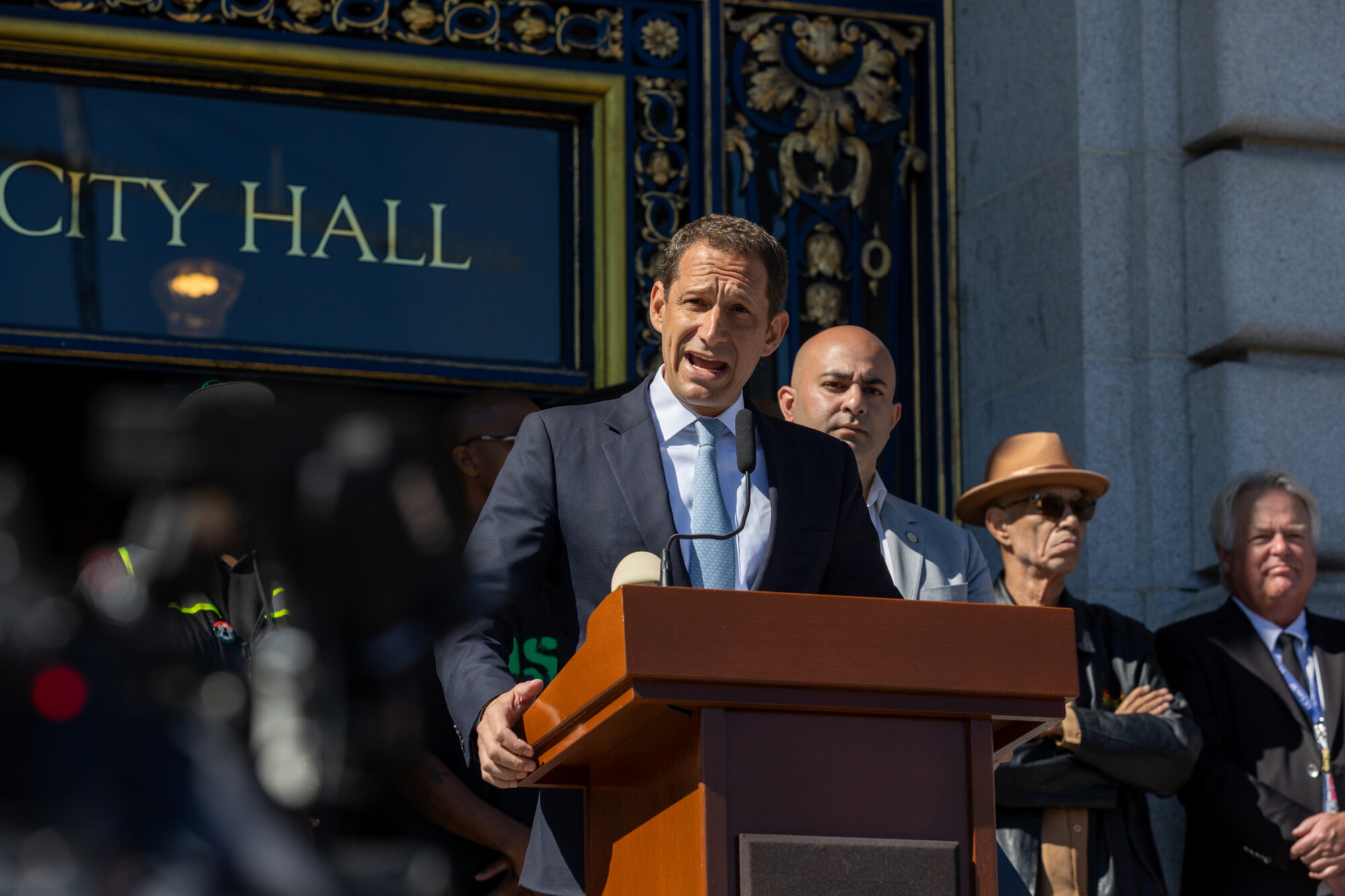
"caption": "Mayor Daniel Lurie speaks at a rally on the steps of City Hall in San Francisco on Oct. 7, 2025. Lurie’s new executive directive comes one day after City Attorney David Chiu said his office is prepared to sue the Trump administration.",
"credit": "Gustavo Hernandez/KQED",
"altTag": null,
"description": null,
"imgSizes": {
"thumbnail": {
"file": "https://cdn.kqed.org/wp-content/uploads/sites/10/2025/10/251007_Urban-Alchemy-Rally_-2_qed-1-160x107.jpg",
"width": 160,
"height": 107,
"mimeType": "image/jpeg"
},
"1536x1536": {
"file": "https://cdn.kqed.org/wp-content/uploads/sites/10/2025/10/251007_Urban-Alchemy-Rally_-2_qed-1-1536x1024.jpg",
"width": 1536,
"height": 1024,
"mimeType": "image/jpeg"
},
"post-thumbnail": {
"file": "https://cdn.kqed.org/wp-content/uploads/sites/10/2025/10/251007_Urban-Alchemy-Rally_-2_qed-1-672x372.jpg",
"width": 672,
"height": 372,
"mimeType": "image/jpeg"
},
"twentyfourteen-full-width": {
"file": "https://cdn.kqed.org/wp-content/uploads/sites/10/2025/10/251007_Urban-Alchemy-Rally_-2_qed-1-1038x576.jpg",
"width": 1038,
"height": 576,
"mimeType": "image/jpeg"
},
"npr-cds-wide": {
"file": "https://cdn.kqed.org/wp-content/uploads/sites/10/2025/10/251007_Urban-Alchemy-Rally_-2_qed-1-1600x900.jpg",
"width": 1600,
"height": 900,
"mimeType": "image/jpeg"
},
"kqedFullSize": {
"file": "https://cdn.kqed.org/wp-content/uploads/sites/10/2025/10/251007_Urban-Alchemy-Rally_-2_qed-1.jpg",
"width": 2000,
"height": 1333
}
},
"isLoading": false,
"fetchFailed": false
},
"news_12061092": {
"type": "attachments",
"id": "news_12061092",
"meta": {
"index": "attachments_1716263798",
"site": "news",
"id": "12061092",
"found": true
},
"title": "California Scenics",
"publishDate": 1761167608,
"status": "inherit",
"parent": 12061054,
"modified": 1761167688,
"caption": "The California and Hawaiian Sugar Company (C&H Sugar) refinery on May 18, 2013, in Crockett, California, refines, packages and markets cane sugar from Hawaii. ",
"credit": "Robert Alexander/Archive Photos/Getty Images",
"altTag": null,
"description": null,
"imgSizes": {
"thumbnail": {
"file": "https://cdn.kqed.org/wp-content/uploads/sites/10/2025/10/CHSugarCrockettGetty-160x97.jpg",
"width": 160,
"height": 97,
"mimeType": "image/jpeg"
},
"1536x1536": {
"file": "https://cdn.kqed.org/wp-content/uploads/sites/10/2025/10/CHSugarCrockettGetty-1536x932.jpg",
"width": 1536,
"height": 932,
"mimeType": "image/jpeg"
},
"post-thumbnail": {
"file": "https://cdn.kqed.org/wp-content/uploads/sites/10/2025/10/CHSugarCrockettGetty-672x372.jpg",
"width": 672,
"height": 372,
"mimeType": "image/jpeg"
},
"twentyfourteen-full-width": {
"file": "https://cdn.kqed.org/wp-content/uploads/sites/10/2025/10/CHSugarCrockettGetty-1038x576.jpg",
"width": 1038,
"height": 576,
"mimeType": "image/jpeg"
},
"npr-cds-wide": {
"file": "https://cdn.kqed.org/wp-content/uploads/sites/10/2025/10/CHSugarCrockettGetty-1600x900.jpg",
"width": 1600,
"height": 900,
"mimeType": "image/jpeg"
},
"kqedFullSize": {
"file": "https://cdn.kqed.org/wp-content/uploads/sites/10/2025/10/CHSugarCrockettGetty.jpg",
"width": 2000,
"height": 1214
}
},
"isLoading": false,
"fetchFailed": false
},
"news_12048135": {
"type": "attachments",
"id": "news_12048135",
"meta": {
"index": "attachments_1716263798",
"site": "news",
"id": "12048135",
"found": true
},
"title": "Protests Erupt In L.A. County Sparked By Federal Immigration Raids",
"publishDate": 1752605450,
"status": "inherit",
"parent": 12048121,
"modified": 1779816898,
"caption": "Federal agents guard outside of a federal building and Immigration and Customs Enforcement (ICE) detention center in downtown Los Angeles as demonstrations continue after a series of immigration raids began June 13, 2025, in Los Angeles. Tensions in the city remain high after the Trump administration called in the National Guard and the Marines against the wishes of city leaders.",
"credit": "Spencer Platt/Getty Images",
"altTag": null,
"description": null,
"imgSizes": {
"medium": {
"file": "https://cdn.kqed.org/wp-content/uploads/sites/10/2025/07/GettyImages-2220045842-2000x1334.jpg",
"width": 2000,
"height": 1334,
"mimeType": "image/jpeg"
},
"large": {
"file": "https://cdn.kqed.org/wp-content/uploads/sites/10/2025/07/GettyImages-2220045842-2000x1334.jpg",
"width": 2000,
"height": 1334,
"mimeType": "image/jpeg"
},
"thumbnail": {
"file": "https://cdn.kqed.org/wp-content/uploads/sites/10/2025/07/GettyImages-2220045842-160x107.jpg",
"width": 160,
"height": 107,
"mimeType": "image/jpeg"
},
"1536x1536": {
"file": "https://cdn.kqed.org/wp-content/uploads/sites/10/2025/07/GettyImages-2220045842-1536x1025.jpg",
"width": 1536,
"height": 1025,
"mimeType": "image/jpeg"
},
"2048x2048": {
"file": "https://cdn.kqed.org/wp-content/uploads/sites/10/2025/07/GettyImages-2220045842-2048x1366.jpg",
"width": 2048,
"height": 1366,
"mimeType": "image/jpeg"
},
"post-thumbnail": {
"file": "https://cdn.kqed.org/wp-content/uploads/sites/10/2025/07/GettyImages-2220045842-672x372.jpg",
"width": 672,
"height": 372,
"mimeType": "image/jpeg"
},
"twentyfourteen-full-width": {
"file": "https://cdn.kqed.org/wp-content/uploads/sites/10/2025/07/GettyImages-2220045842-1038x576.jpg",
"width": 1038,
"height": 576,
"mimeType": "image/jpeg"
},
"full-width": {
"file": "https://cdn.kqed.org/wp-content/uploads/sites/10/2025/07/GettyImages-2220045842-2000x1334.jpg",
"width": 2000,
"height": 1334,
"mimeType": "image/jpeg"
},
"kqedFullSize": {
"file": "https://cdn.kqed.org/wp-content/uploads/sites/10/2025/07/GettyImages-2220045842-scaled-e1752857672682.jpg",
"width": 2000,
"height": 1334
}
},
"isLoading": false,
"fetchFailed": false
},
"news_12061007": {
"type": "attachments",
"id": "news_12061007",
"meta": {
"index": "attachments_1716263798",
"site": "news",
"id": "12061007",
"found": true
},
"title": "ChessStory1",
"publishDate": 1761152146,
"status": "inherit",
"parent": 12060859,
"modified": 1761156156,
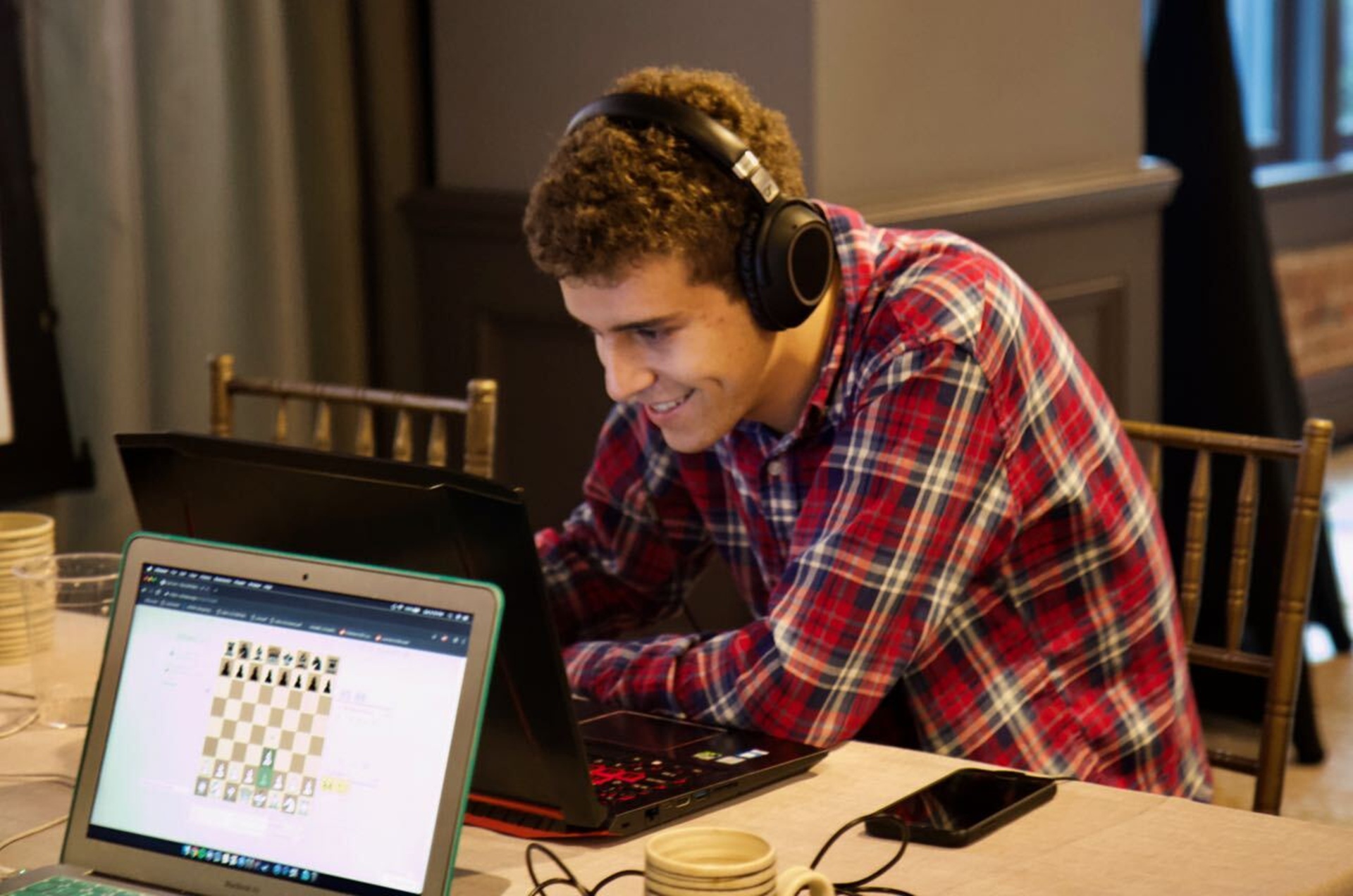
"caption": "Daniel Narodistky at Stanford Chess Club's \"Big Mindgame\" competition with UC Berkeley in 2019.",
"credit": "Courtesy of Stanford Chess Club",
"altTag": null,
"description": null,
"imgSizes": {
"thumbnail": {
"file": "https://cdn.kqed.org/wp-content/uploads/sites/10/2025/10/ChessStory1-160x106.jpg",
"width": 160,
"height": 106,
"mimeType": "image/jpeg"
},
"1536x1536": {
"file": "https://cdn.kqed.org/wp-content/uploads/sites/10/2025/10/ChessStory1-1536x1018.jpg",
"width": 1536,
"height": 1018,
"mimeType": "image/jpeg"
},
"post-thumbnail": {
"file": "https://cdn.kqed.org/wp-content/uploads/sites/10/2025/10/ChessStory1-672x372.jpg",
"width": 672,
"height": 372,
"mimeType": "image/jpeg"
},
"twentyfourteen-full-width": {
"file": "https://cdn.kqed.org/wp-content/uploads/sites/10/2025/10/ChessStory1-1038x576.jpg",
"width": 1038,
"height": 576,
"mimeType": "image/jpeg"
},
"kqedFullSize": {
"file": "https://cdn.kqed.org/wp-content/uploads/sites/10/2025/10/ChessStory1.jpg",
"width": 1920,
"height": 1272
}
},
"isLoading": false,
"fetchFailed": false
},
"news_12061008": {
"type": "attachments",
"id": "news_12061008",
"meta": {
"index": "attachments_1716263798",
"site": "news",
"id": "12061008",
"found": true
},
"title": "Close-up view of unrecognizable single dad with baby at kitchen counter feeding milk bottle to newborn.",
"publishDate": 1761152469,
"status": "inherit",
"parent": 12061005,
"modified": 1761767630,
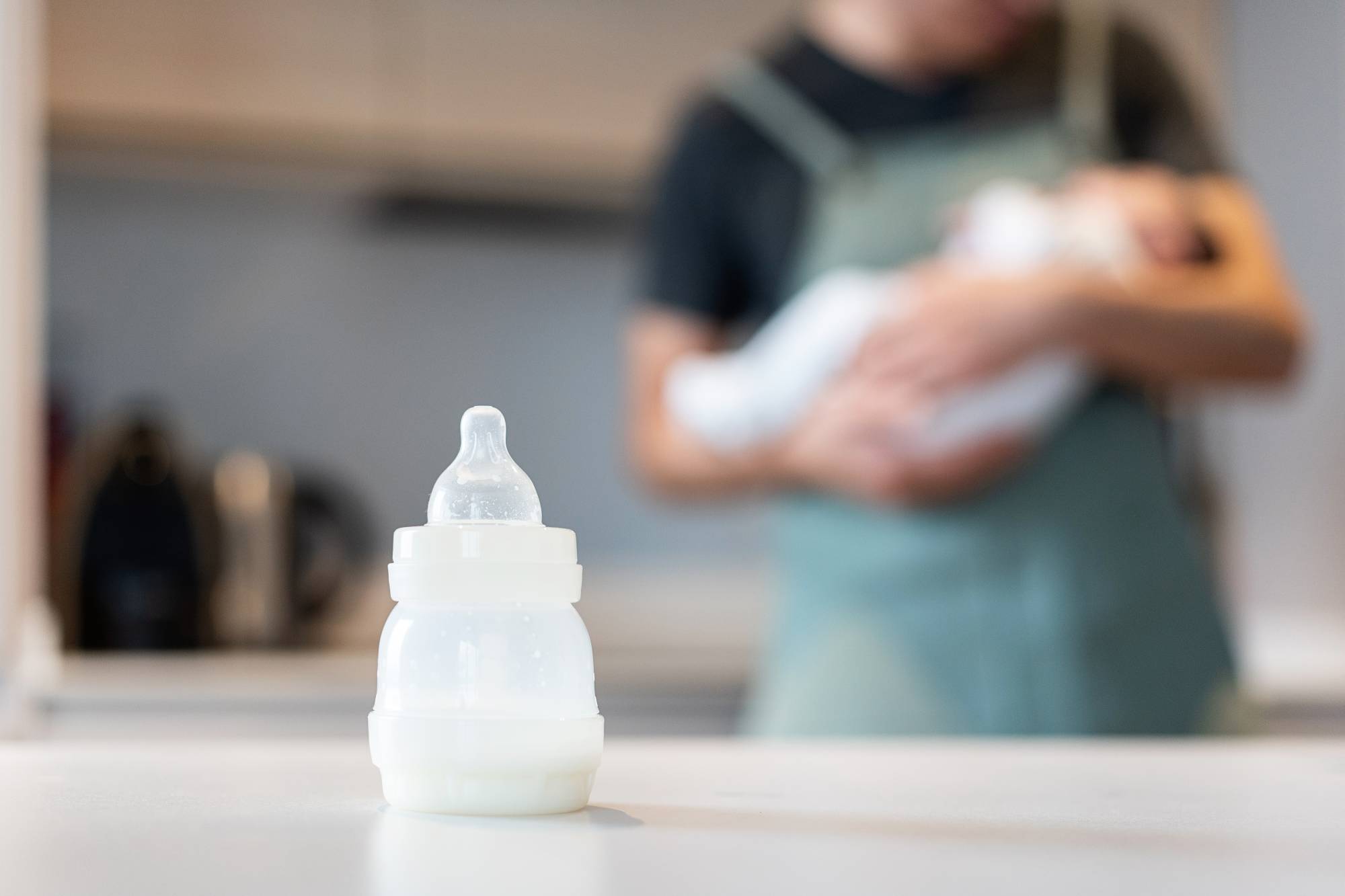
"caption": "The Women, Infants, & Children Supplemental Nutrition Program (known as WIC) — which provides support to low-income families with young children — is expected to stay operational during the ongoing government shutdown. \n",
"credit": "Vera Vita/Getty Images",
"altTag": null,
"description": null,
"imgSizes": {
"medium": {
"file": "https://cdn.kqed.org/wp-content/uploads/sites/10/2025/10/GettyImages-1457114961-2000x1333.jpg",
"width": 2000,
"height": 1333,
"mimeType": "image/jpeg"
},
"large": {
"file": "https://cdn.kqed.org/wp-content/uploads/sites/10/2025/10/GettyImages-1457114961-2000x1333.jpg",
"width": 2000,
"height": 1333,
"mimeType": "image/jpeg"
},
"thumbnail": {
"file": "https://cdn.kqed.org/wp-content/uploads/sites/10/2025/10/GettyImages-1457114961-160x107.jpg",
"width": 160,
"height": 107,
"mimeType": "image/jpeg"
},
"1536x1536": {
"file": "https://cdn.kqed.org/wp-content/uploads/sites/10/2025/10/GettyImages-1457114961-1536x1024.jpg",
"width": 1536,
"height": 1024,
"mimeType": "image/jpeg"
},
"2048x2048": {
"file": "https://cdn.kqed.org/wp-content/uploads/sites/10/2025/10/GettyImages-1457114961-2048x1365.jpg",
"width": 2048,
"height": 1365,
"mimeType": "image/jpeg"
},
"post-thumbnail": {
"file": "https://cdn.kqed.org/wp-content/uploads/sites/10/2025/10/GettyImages-1457114961-672x372.jpg",
"width": 672,
"height": 372,
"mimeType": "image/jpeg"
},
"twentyfourteen-full-width": {
"file": "https://cdn.kqed.org/wp-content/uploads/sites/10/2025/10/GettyImages-1457114961-1038x576.jpg",
"width": 1038,
"height": 576,
"mimeType": "image/jpeg"
},
"full-width": {
"file": "https://cdn.kqed.org/wp-content/uploads/sites/10/2025/10/GettyImages-1457114961-2000x1333.jpg",
"width": 2000,
"height": 1333,
"mimeType": "image/jpeg"
},
"kqedFullSize": {
"file": "https://cdn.kqed.org/wp-content/uploads/sites/10/2025/10/GettyImages-1457114961-scaled-e1761152533545.jpg",
"width": 2000,
"height": 1334
}
},
"isLoading": false,
"fetchFailed": false
},
"news_12060313": {
"type": "attachments",
"id": "news_12060313",
"meta": {
"index": "attachments_1716263798",
"site": "news",
"id": "12060313",
"found": true
},
"title": "251016-DUBAICHOCOLATES-09-BL-KQED",
"publishDate": 1760723984,
"status": "inherit",
"parent": 12060700,
"modified": 1760985460,
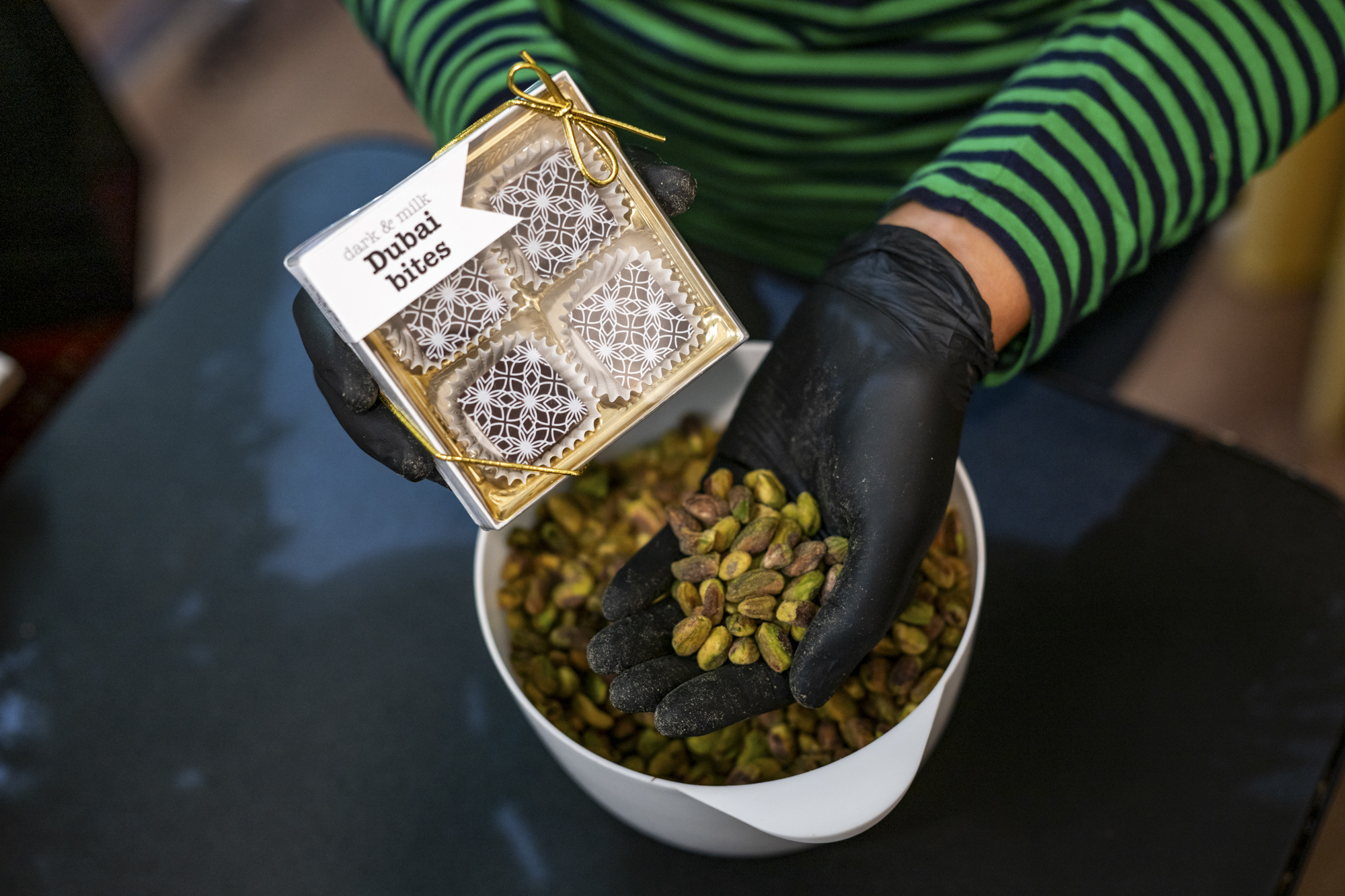
"caption": "Malena Lopez-Maggi, owner and chocolatier, holds a box of Dubai chocolates and a handful of pistachios at The Xocolate Bar in Berkeley on Oct. 16, 2025.",
"credit": "Beth LaBerge/KQED",
"altTag": null,
"description": null,
"imgSizes": {
"thumbnail": {
"file": "https://cdn.kqed.org/wp-content/uploads/sites/10/2025/10/251016-DUBAICHOCOLATES-09-BL-KQED-160x107.jpg",
"width": 160,
"height": 107,
"mimeType": "image/jpeg"
},
"1536x1536": {
"file": "https://cdn.kqed.org/wp-content/uploads/sites/10/2025/10/251016-DUBAICHOCOLATES-09-BL-KQED-1536x1024.jpg",
"width": 1536,
"height": 1024,
"mimeType": "image/jpeg"
},
"post-thumbnail": {
"file": "https://cdn.kqed.org/wp-content/uploads/sites/10/2025/10/251016-DUBAICHOCOLATES-09-BL-KQED-672x372.jpg",
"width": 672,
"height": 372,
"mimeType": "image/jpeg"
},
"twentyfourteen-full-width": {
"file": "https://cdn.kqed.org/wp-content/uploads/sites/10/2025/10/251016-DUBAICHOCOLATES-09-BL-KQED-1038x576.jpg",
"width": 1038,
"height": 576,
"mimeType": "image/jpeg"
},
"kqedFullSize": {
"file": "https://cdn.kqed.org/wp-content/uploads/sites/10/2025/10/251016-DUBAICHOCOLATES-09-BL-KQED.jpg",
"width": 2000,
"height": 1333
}
},
"isLoading": false,
"fetchFailed": false
},
"news_12060896": {
"type": "attachments",
"id": "news_12060896",
"meta": {
"index": "attachments_1716263798",
"site": "news",
"id": "12060896",
"found": true
},
"title": "PeterOrtizKQED",
"publishDate": 1761077689,
"status": "inherit",
"parent": 12060893,
"modified": 1761077700,
"caption": "District 5 San José City Councilmember Peter Ortiz speaks during a protest against ICE in South San José on June 6, 2025.",
"credit": "Joseph Geha/KQED",
"altTag": null,
"description": null,
"imgSizes": {
"thumbnail": {
"file": "https://cdn.kqed.org/wp-content/uploads/sites/10/2025/10/PeterOrtizKQED-160x120.jpg",
"width": 160,
"height": 120,
"mimeType": "image/jpeg"
},
"1536x1536": {
"file": "https://cdn.kqed.org/wp-content/uploads/sites/10/2025/10/PeterOrtizKQED-1536x1156.jpg",
"width": 1536,
"height": 1156,
"mimeType": "image/jpeg"
},
"post-thumbnail": {
"file": "https://cdn.kqed.org/wp-content/uploads/sites/10/2025/10/PeterOrtizKQED-672x372.jpg",
"width": 672,
"height": 372,
"mimeType": "image/jpeg"
},
"twentyfourteen-full-width": {
"file": "https://cdn.kqed.org/wp-content/uploads/sites/10/2025/10/PeterOrtizKQED-1038x576.jpg",
"width": 1038,
"height": 576,
"mimeType": "image/jpeg"
},
"kqedFullSize": {
"file": "https://cdn.kqed.org/wp-content/uploads/sites/10/2025/10/PeterOrtizKQED.jpg",
"width": 2000,
"height": 1505
}
},
"isLoading": false,
"fetchFailed": false
},
"news_12060891": {
"type": "attachments",
"id": "news_12060891",
"meta": {
"index": "attachments_1716263798",
"site": "news",
"id": "12060891",
"found": true
},
"title": "Los Angeles protests",
"publishDate": 1761077276,
"status": "inherit",
"parent": 12060875,
"modified": 1761077304,
"caption": "National Guard soldiers are posted near an entrance to the Federal Building in Los Angeles during a demonstration in response to a series of United States Immigration and Customs Enforcement (ICE) raids throughout the country, on June 10, 2025. ",
"credit": "Gabrielle Lurie/San Francisco Chronicle via Getty Images",
"altTag": null,
"description": null,
"imgSizes": {
"thumbnail": {
"file": "https://cdn.kqed.org/wp-content/uploads/sites/10/2025/10/NationalGuardGetty-160x107.jpg",
"width": 160,
"height": 107,
"mimeType": "image/jpeg"
},
"1536x1536": {
"file": "https://cdn.kqed.org/wp-content/uploads/sites/10/2025/10/NationalGuardGetty-1536x1024.jpg",
"width": 1536,
"height": 1024,
"mimeType": "image/jpeg"
},
"post-thumbnail": {
"file": "https://cdn.kqed.org/wp-content/uploads/sites/10/2025/10/NationalGuardGetty-672x372.jpg",
"width": 672,
"height": 372,
"mimeType": "image/jpeg"
},
"twentyfourteen-full-width": {
"file": "https://cdn.kqed.org/wp-content/uploads/sites/10/2025/10/NationalGuardGetty-1038x576.jpg",
"width": 1038,
"height": 576,
"mimeType": "image/jpeg"
},
"kqedFullSize": {
"file": "https://cdn.kqed.org/wp-content/uploads/sites/10/2025/10/NationalGuardGetty.jpg",
"width": 2000,
"height": 1333
}
},
"isLoading": false,
"fetchFailed": false
},
"news_12060865": {
"type": "attachments",
"id": "news_12060865",
"meta": {
"index": "attachments_1716263798",
"site": "news",
"id": "12060865",
"found": true
},
"title": "Kansas City Chiefs v Oakland Raiders",
"publishDate": 1761074817,
"status": "inherit",
"parent": 12060853,
"modified": 1761074866,
"caption": "Doug Martin, #28 of the Oakland Raiders, carries the ball against the Kansas City Chiefs during the second half of their NFL football game at Oakland-Alameda County Coliseum on Dec. 2, 2018, in Oakland, California. ",
"credit": "Thearon W. Henderson/Getty Images",
"altTag": null,
"description": null,
"imgSizes": {
"thumbnail": {
"file": "https://cdn.kqed.org/wp-content/uploads/sites/10/2025/10/DougMartinRaidersGetty-160x108.jpg",
"width": 160,
"height": 108,
"mimeType": "image/jpeg"
},
"1536x1536": {
"file": "https://cdn.kqed.org/wp-content/uploads/sites/10/2025/10/DougMartinRaidersGetty-1536x1037.jpg",
"width": 1536,
"height": 1037,
"mimeType": "image/jpeg"
},
"post-thumbnail": {
"file": "https://cdn.kqed.org/wp-content/uploads/sites/10/2025/10/DougMartinRaidersGetty-672x372.jpg",
"width": 672,
"height": 372,
"mimeType": "image/jpeg"
},
"twentyfourteen-full-width": {
"file": "https://cdn.kqed.org/wp-content/uploads/sites/10/2025/10/DougMartinRaidersGetty-1038x576.jpg",
"width": 1038,
"height": 576,
"mimeType": "image/jpeg"
},
"kqedFullSize": {
"file": "https://cdn.kqed.org/wp-content/uploads/sites/10/2025/10/DougMartinRaidersGetty.jpg",
"width": 2000,
"height": 1350
}
},
"isLoading": false,
"fetchFailed": false
},
"news_12060836": {
"type": "attachments",
"id": "news_12060836",
"meta": {
"index": "attachments_1716263798",
"site": "news",
"id": "12060836",
"found": true
},
"title": "251021-DIWALI PARIVAR-NK-04-KQED",
"publishDate": 1761068607,
"status": "inherit",
"parent": 0,
"modified": 1761069354,
"caption": "Kaj (left) dances during the Diwali celebrations at Parivar Bay Area in San Francisco on Oct. 20, 2025.",
"credit": "Nisa Khan/KQED",
"altTag": null,
"description": null,
"imgSizes": {
"thumbnail": {
"file": "https://cdn.kqed.org/wp-content/uploads/sites/10/2025/10/251021-DIWALI-PARIVAR-NK-04-KQED-160x107.jpg",
"width": 160,
"height": 107,
"mimeType": "image/jpeg"
},
"1536x1536": {
"file": "https://cdn.kqed.org/wp-content/uploads/sites/10/2025/10/251021-DIWALI-PARIVAR-NK-04-KQED-1536x1024.jpg",
"width": 1536,
"height": 1024,
"mimeType": "image/jpeg"
},
"post-thumbnail": {
"file": "https://cdn.kqed.org/wp-content/uploads/sites/10/2025/10/251021-DIWALI-PARIVAR-NK-04-KQED-672x372.jpg",
"width": 672,
"height": 372,
"mimeType": "image/jpeg"
},
"twentyfourteen-full-width": {
"file": "https://cdn.kqed.org/wp-content/uploads/sites/10/2025/10/251021-DIWALI-PARIVAR-NK-04-KQED-1038x576.jpg",
"width": 1038,
"height": 576,
"mimeType": "image/jpeg"
},
"kqedFullSize": {
"file": "https://cdn.kqed.org/wp-content/uploads/sites/10/2025/10/251021-DIWALI-PARIVAR-NK-04-KQED.jpg",
"width": 2000,
"height": 1333
}
},
"isLoading": false,
"fetchFailed": false
},
"news_11955918": {
"type": "attachments",
"id": "news_11955918",
"meta": {
"index": "attachments_1716263798",
"site": "news",
"id": "11955918",
"found": true
},
"parent": 0,
"imgSizes": {
"twentyfourteen-full-width": {
"file": "https://ww2.kqed.org/app/uploads/sites/10/2023/07/230718-CAR-WASH-WAGE-THEFT-Getty-GM-KQED-1038x576.jpg",
"width": 1038,
"mimeType": "image/jpeg",
"height": 576
},
"thumbnail": {
"file": "https://ww2.kqed.org/app/uploads/sites/10/2023/07/230718-CAR-WASH-WAGE-THEFT-Getty-GM-KQED-160x107.jpg",
"width": 160,
"mimeType": "image/jpeg",
"height": 107
},
"post-thumbnail": {
"file": "https://ww2.kqed.org/app/uploads/sites/10/2023/07/230718-CAR-WASH-WAGE-THEFT-Getty-GM-KQED-672x372.jpg",
"width": 672,
"mimeType": "image/jpeg",
"height": 372
},
"kqedFullSize": {
"file": "https://ww2.kqed.org/app/uploads/sites/10/2023/07/230718-CAR-WASH-WAGE-THEFT-Getty-GM-KQED.jpg",
"width": 2000,
"height": 1333
},
"large": {
"file": "https://ww2.kqed.org/app/uploads/sites/10/2023/07/230718-CAR-WASH-WAGE-THEFT-Getty-GM-KQED-1020x680.jpg",
"width": 1020,
"mimeType": "image/jpeg",
"height": 680
},
"1536x1536": {
"file": "https://ww2.kqed.org/app/uploads/sites/10/2023/07/230718-CAR-WASH-WAGE-THEFT-Getty-GM-KQED-1536x1024.jpg",
"width": 1536,
"mimeType": "image/jpeg",
"height": 1024
},
"full-width": {
"file": "https://ww2.kqed.org/app/uploads/sites/10/2023/07/230718-CAR-WASH-WAGE-THEFT-Getty-GM-KQED-1920x1280.jpg",
"width": 1920,
"mimeType": "image/jpeg",
"height": 1280
},
"medium": {
"file": "https://ww2.kqed.org/app/uploads/sites/10/2023/07/230718-CAR-WASH-WAGE-THEFT-Getty-GM-KQED-800x533.jpg",
"width": 800,
"mimeType": "image/jpeg",
"height": 533
}
},
"publishDate": 1689697200,
"modified": 1689718244,
"caption": "Protesters picket in front of the Shine N Brite Car Wash in Inglewood on July 11, 2023. Shine N Brite Car Wash was cited last November after state regulators found the carwash operator paid workers as low as $7 an hour.",
"description": null,
"title": "Hot weather photos",
"credit": "Genaro Molina/Los Angeles Times via Getty Images",
"status": "inherit",
"altTag": "A group of people holds signs and walks in a line in front of a car wash on a sunny day.",
"isLoading": false,
"fetchFailed": false
},
"news_12060658": {
"type": "attachments",
"id": "news_12060658",
"meta": {
"index": "attachments_1716263798",
"site": "news",
"id": "12060658",
"found": true
},
"title": "BOLETA SOBRE LA MESA",
"publishDate": 1760927380,
"status": "inherit",
"parent": 12060657,
"modified": 1760927429,
"caption": "Un residente del Área de la Bahía se prepara para llenar su boleta por correo en 2021.",
"credit": "Beth LaBerge/KQED",
"altTag": null,
"description": null,
"imgSizes": {
"thumbnail": {
"file": "https://cdn.kqed.org/wp-content/uploads/sites/10/2025/10/BOLETA-SOBRE-LA-MESA-160x106.jpg",
"width": 160,
"height": 106,
"mimeType": "image/jpeg"
},
"post-thumbnail": {
"file": "https://cdn.kqed.org/wp-content/uploads/sites/10/2025/10/BOLETA-SOBRE-LA-MESA-672x372.jpg",
"width": 672,
"height": 372,
"mimeType": "image/jpeg"
},
"twentyfourteen-full-width": {
"file": "https://cdn.kqed.org/wp-content/uploads/sites/10/2025/10/BOLETA-SOBRE-LA-MESA-1020x576.jpg",
"width": 1020,
"height": 576,
"mimeType": "image/jpeg"
},
"kqedFullSize": {
"file": "https://cdn.kqed.org/wp-content/uploads/sites/10/2025/10/BOLETA-SOBRE-LA-MESA.jpg",
"width": 1020,
"height": 677
}
},
"isLoading": false,
"fetchFailed": false
}
},
"audioPlayerReducer": {
"postId": "stream_live",
"isPaused": true,
"isPlaying": false,
"pfsActive": false,
"pledgeModalIsOpen": true,
"playerDrawerIsOpen": false,
"liveAudioPlayStartedAt": 0,
"liveAudioPlayContext": ""
},
"authorsReducer": {
"gmarzorati": {
"type": "authors",
"id": "227",
"meta": {
"index": "authors_1716337520",
"id": "227",
"found": true
},
"name": "Guy Marzorati",
"firstName": "Guy",
"lastName": "Marzorati",
"slug": "gmarzorati",
"email": "gmarzorati@KQED.org",
"display_author_email": true,
"staff_mastheads": [
"news"
],
"title": "Correspondent",
"bio": "Guy Marzorati is a correspondent on KQED's California Politics and Government Desk, based in San Jose. A graduate of Santa Clara University, Guy joined KQED in 2013. He reports on state and local politics and produces KQED's digital voter guide.",
"avatar": "https://secure.gravatar.com/avatar/e7038b8dbfd55b104369b76b1cd0b9de?s=600&d=blank&r=g",
"twitter": "guymarzorati",
"facebook": null,
"instagram": null,
"linkedin": null,
"sites": [
{
"site": "",
"roles": [
"editor"
]
},
{
"site": "news",
"roles": [
"editor"
]
},
{
"site": "science",
"roles": [
"editor"
]
},
{
"site": "forum",
"roles": [
"editor"
]
},
{
"site": "elections",
"roles": [
"editor"
]
},
{
"site": "liveblog",
"roles": [
"editor"
]
}
],
"headData": {
"title": "Guy Marzorati | KQED",
"description": "Correspondent",
"ogImgSrc": "https://secure.gravatar.com/avatar/e7038b8dbfd55b104369b76b1cd0b9de?s=600&d=blank&r=g",
"twImgSrc": "https://secure.gravatar.com/avatar/e7038b8dbfd55b104369b76b1cd0b9de?s=600&d=blank&r=g"
},
"isLoading": false,
"link": "/author/gmarzorati"
},
"carlysevern": {
"type": "authors",
"id": "3243",
"meta": {
"index": "authors_1716337520",
"id": "3243",
"found": true
},
"name": "Carly Severn",
"firstName": "Carly",
"lastName": "Severn",
"slug": "carlysevern",
"email": "csevern@kqed.org",
"display_author_email": false,
"staff_mastheads": [
"news"
],
"title": "Senior Editor, Audience News ",
"bio": "Carly is KQED's Senior Editor of Audience News on the Digital News team, and has reported for the California Report Magazine, Bay Curious and KQED Arts. She's formerly the host of \u003ca href=\"http://ww2.kqed.org/pop/category/the-cooler/\" rel=\"noopener noreferrer\">The Cooler\u003c/a> podcast.",
"avatar": "https://secure.gravatar.com/avatar/54037bf5c128fe678f0ef26cec97a93f2e7f220a22d7285703328f12c42c1b1d?s=600&d=blank&r=g",
"twitter": "teacupinthebay",
"bluesky": null,
"facebook": null,
"instagram": null,
"linkedin": null,
"sites": [
{
"site": "",
"roles": [
"editor"
]
},
{
"site": "arts",
"roles": [
"editor"
]
},
{
"site": "news",
"roles": [
"administrator"
]
},
{
"site": "pop",
"roles": [
"editor"
]
},
{
"site": "futureofyou",
"roles": [
"editor"
]
},
{
"site": "about",
"roles": [
"administrator"
]
},
{
"site": "mindshift",
"roles": [
"editor"
]
},
{
"site": "bayareabites",
"roles": [
"editor"
]
},
{
"site": "stateofhealth",
"roles": [
"editor"
]
},
{
"site": "science",
"roles": [
"editor"
]
},
{
"site": "food",
"roles": [
"contributor"
]
},
{
"site": "forum",
"roles": [
"editor"
]
},
{
"site": "perspectives",
"roles": [
"administrator"
]
},
{
"site": "liveblog",
"roles": [
"editor"
]
}
],
"headData": {
"title": "Carly Severn | KQED",
"description": "Senior Editor, Audience News ",
"ogImgSrc": "https://secure.gravatar.com/avatar/54037bf5c128fe678f0ef26cec97a93f2e7f220a22d7285703328f12c42c1b1d?s=600&d=blank&r=g",
"twImgSrc": "https://secure.gravatar.com/avatar/54037bf5c128fe678f0ef26cec97a93f2e7f220a22d7285703328f12c42c1b1d?s=600&d=blank&r=g"
},
"isLoading": false,
"link": "/author/carlysevern"
},
"ccabreralomeli": {
"type": "authors",
"id": "11708",
"meta": {
"index": "authors_1716337520",
"id": "11708",
"found": true
},
"name": "Carlos Cabrera-Lomelí",
"firstName": "Carlos",
"lastName": "Cabrera-Lomelí",
"slug": "ccabreralomeli",
"email": "ccabreralomeli@KQED.org",
"display_author_email": true,
"staff_mastheads": [
"news"
],
"title": "Community Reporter",
"bio": "Carlos Cabrera-Lomelí is a community reporter with KQED's digital engagement team. He also reports and co-produces for KQED's bilingual news hub KQED en Español. He grew up in San Francisco's Mission District and has previously worked with Univision, 48 Hills and REFORMA in Mexico City.",
"avatar": "https://secure.gravatar.com/avatar/c309be9665e484f887b818c89e273ecc673004f426f36b24d00a4d813a2e0518?s=600&d=blank&r=g",
"twitter": "@LomeliCabrera",
"bluesky": null,
"facebook": null,
"instagram": null,
"linkedin": null,
"sites": [
{
"site": "arts",
"roles": [
"editor"
]
},
{
"site": "news",
"roles": [
"editor"
]
},
{
"site": "about",
"roles": [
"editor"
]
},
{
"site": "science",
"roles": [
"editor"
]
},
{
"site": "perspectives",
"roles": [
"editor"
]
},
{
"site": "elections",
"roles": [
"editor"
]
},
{
"site": "liveblog",
"roles": [
"contributor"
]
}
],
"headData": {
"title": "Carlos Cabrera-Lomelí | KQED",
"description": "Community Reporter",
"ogImgSrc": "https://secure.gravatar.com/avatar/c309be9665e484f887b818c89e273ecc673004f426f36b24d00a4d813a2e0518?s=600&d=blank&r=g",
"twImgSrc": "https://secure.gravatar.com/avatar/c309be9665e484f887b818c89e273ecc673004f426f36b24d00a4d813a2e0518?s=600&d=blank&r=g"
},
"isLoading": false,
"link": "/author/ccabreralomeli"
},
"sjohnson": {
"type": "authors",
"id": "11840",
"meta": {
"index": "authors_1716337520",
"id": "11840",
"found": true
},
"name": "Sydney Johnson",
"firstName": "Sydney",
"lastName": "Johnson",
"slug": "sjohnson",
"email": "sjohnson@kqed.org",
"display_author_email": false,
"staff_mastheads": [
"news"
],
"title": "KQED Reporter",
"bio": "Sydney Johnson is a general assignment reporter at KQED. She previously reported on public health and city government at the San Francisco Examiner, and before that, she covered statewide education policy for EdSource. Her reporting has won multiple local, state and national awards. Sydney is a graduate of the University of California, Berkeley and lives in San Francisco.",
"avatar": "https://secure.gravatar.com/avatar/97855f2719b72ad6190b7c535fe642c8?s=600&d=blank&r=g",
"twitter": "sydneyfjohnson",
"facebook": null,
"instagram": null,
"linkedin": null,
"sites": [
{
"site": "news",
"roles": [
"editor"
]
}
],
"headData": {
"title": "Sydney Johnson | KQED",
"description": "KQED Reporter",
"ogImgSrc": "https://secure.gravatar.com/avatar/97855f2719b72ad6190b7c535fe642c8?s=600&d=blank&r=g",
"twImgSrc": "https://secure.gravatar.com/avatar/97855f2719b72ad6190b7c535fe642c8?s=600&d=blank&r=g"
},
"isLoading": false,
"link": "/author/sjohnson"
},
"nkhan": {
"type": "authors",
"id": "11867",
"meta": {
"index": "authors_1716337520",
"id": "11867",
"found": true
},
"name": "Nisa Khan",
"firstName": "Nisa",
"lastName": "Khan",
"slug": "nkhan",
"email": "nkhan@kqed.org",
"display_author_email": false,
"staff_mastheads": [],
"title": "KQED Contributor",
"bio": "Nisa Khan is a reporter for KQED's Audience News Desk. She was formerly a data reporter at Michigan Radio. She earned a Bachelor of Science in Information from the University of Michigan and a Master of Arts in Communication from Stanford University.",
"avatar": "https://secure.gravatar.com/avatar/8720459eef081ff64582b3506b124d58523e80e120704a0cbd9892533c914991?s=600&d=blank&r=g",
"twitter": "mnisakhan",
"bluesky": null,
"facebook": null,
"instagram": null,
"linkedin": null,
"sites": [
{
"site": "arts",
"roles": [
"editor"
]
},
{
"site": "news",
"roles": [
"editor"
]
},
{
"site": "science",
"roles": [
"editor",
"author"
]
},
{
"site": "forum",
"roles": [
"editor"
]
},
{
"site": "liveblog",
"roles": [
"contributor"
]
}
],
"headData": {
"title": "Nisa Khan | KQED",
"description": "KQED Contributor",
"ogImgSrc": "https://secure.gravatar.com/avatar/8720459eef081ff64582b3506b124d58523e80e120704a0cbd9892533c914991?s=600&d=blank&r=g",
"twImgSrc": "https://secure.gravatar.com/avatar/8720459eef081ff64582b3506b124d58523e80e120704a0cbd9892533c914991?s=600&d=blank&r=g"
},
"isLoading": false,
"link": "/author/nkhan"
},
"jgeha": {
"type": "authors",
"id": "11906",
"meta": {
"index": "authors_1716337520",
"id": "11906",
"found": true
},
"name": "Joseph Geha",
"firstName": "Joseph",
"lastName": "Geha",
"slug": "jgeha",
"email": "jgeha@kqed.org",
"display_author_email": false,
"staff_mastheads": [
"news",
"science"
],
"title": "KQED Contributor",
"bio": null,
"avatar": "https://secure.gravatar.com/avatar/ea84d2b6dd93d6369d453edf19dd583f117cd1759d2d9c9c92f9de77017354fe?s=600&d=blank&r=g",
"twitter": null,
"bluesky": null,
"facebook": null,
"instagram": null,
"linkedin": null,
"sites": [
{
"site": "news",
"roles": [
"editor"
]
},
{
"site": "liveblog",
"roles": [
"author"
]
}
],
"headData": {
"title": "Joseph Geha | KQED",
"description": "KQED Contributor",
"ogImgSrc": "https://secure.gravatar.com/avatar/ea84d2b6dd93d6369d453edf19dd583f117cd1759d2d9c9c92f9de77017354fe?s=600&d=blank&r=g",
"twImgSrc": "https://secure.gravatar.com/avatar/ea84d2b6dd93d6369d453edf19dd583f117cd1759d2d9c9c92f9de77017354fe?s=600&d=blank&r=g"
},
"isLoading": false,
"link": "/author/jgeha"
},
"kdebenedetti": {
"type": "authors",
"id": "11913",
"meta": {
"index": "authors_1716337520",
"id": "11913",
"found": true
},
"name": "Katie DeBenedetti",
"firstName": "Katie",
"lastName": "DeBenedetti",
"slug": "kdebenedetti",
"email": "kdebenedetti@kqed.org",
"display_author_email": false,
"staff_mastheads": [
"news",
"science"
],
"title": "KQED Contributor",
"bio": "Katie DeBenedetti is a digital reporter covering daily news for the Express Desk. Prior to joining KQED as a culture reporting intern in January 2024, she covered education and city government for the Napa Valley Register.",
"avatar": "https://secure.gravatar.com/avatar/6e31073cb8f7e4214ab03f42771d0f45?s=600&d=blank&r=g",
"twitter": null,
"facebook": null,
"instagram": null,
"linkedin": null,
"sites": [
{
"site": "news",
"roles": [
"author"
]
},
{
"site": "science",
"roles": [
"author"
]
},
{
"site": "liveblog",
"roles": [
"author"
]
}
],
"headData": {
"title": "Katie DeBenedetti | KQED",
"description": "KQED Contributor",
"ogImgSrc": "https://secure.gravatar.com/avatar/6e31073cb8f7e4214ab03f42771d0f45?s=600&d=blank&r=g",
"twImgSrc": "https://secure.gravatar.com/avatar/6e31073cb8f7e4214ab03f42771d0f45?s=600&d=blank&r=g"
},
"isLoading": false,
"link": "/author/kdebenedetti"
},
"nsuliman": {
"type": "authors",
"id": "11985",
"meta": {
"index": "authors_1716337520",
"id": "11985",
"found": true
},
"name": "Nibras Suliman",
"firstName": "Nibras",
"lastName": "Suliman",
"slug": "nsuliman",
"email": "nsuliman@kqed.org",
"display_author_email": false,
"staff_mastheads": [],
"title": "KQED Contributor",
"bio": null,
"avatar": "https://secure.gravatar.com/avatar/581946774e0249b1fcdfb01d4f143d12?s=600&d=blank&r=g",
"twitter": null,
"facebook": null,
"instagram": null,
"linkedin": null,
"sites": [
{
"site": "news",
"roles": []
}
],
"headData": {
"title": "Nibras Suliman | KQED",
"description": "KQED Contributor",
"ogImgSrc": "https://secure.gravatar.com/avatar/581946774e0249b1fcdfb01d4f143d12?s=600&d=blank&r=g",
"twImgSrc": "https://secure.gravatar.com/avatar/581946774e0249b1fcdfb01d4f143d12?s=600&d=blank&r=g"
},
"isLoading": false,
"link": "/author/nsuliman"
},
"aaliahmad": {
"type": "authors",
"id": "11986",
"meta": {
"index": "authors_1716337520",
"id": "11986",
"found": true
},
"name": "Ayah Ali-Ahmad",
"firstName": "Ayah",
"lastName": "Ali-Ahmad",
"slug": "aaliahmad",
"email": "aaliahmad@KQED.org",
"display_author_email": false,
"staff_mastheads": [],
"title": "KQED Contributor",
"bio": null,
"avatar": "https://secure.gravatar.com/avatar/1cf54f187a5e1064b2cfef3f3d2f1e4f93e453395d56912aca6382a6071ec3ed?s=600&d=blank&r=g",
"twitter": "ayahaliahmad",
"bluesky": null,
"facebook": null,
"instagram": null,
"linkedin": null,
"sites": [
{
"site": "news",
"roles": [
"subscriber"
]
}
],
"headData": {
"title": "Ayah Ali-Ahmad | KQED",
"description": "KQED Contributor",
"ogImgSrc": "https://secure.gravatar.com/avatar/1cf54f187a5e1064b2cfef3f3d2f1e4f93e453395d56912aca6382a6071ec3ed?s=600&d=blank&r=g",
"twImgSrc": "https://secure.gravatar.com/avatar/1cf54f187a5e1064b2cfef3f3d2f1e4f93e453395d56912aca6382a6071ec3ed?s=600&d=blank&r=g"
},
"isLoading": false,
"link": "/author/aaliahmad"
}
},
"pagesReducer": {
"news_category_local": {
"type": "terms",
"id": "news_28250",
"meta": {
"index": "terms_1716263798",
"site": "news",
"id": "28250",
"score": 12.939901
},
"featImg": null,
"name": "Local",
"description": null,
"taxonomy": "category",
"headData": {
"twImgId": null,
"twTitle": null,
"ogTitle": null,
"ogImgId": null,
"twDescription": null,
"description": null,
"title": "Local Archives | KQED News",
"ogDescription": null
},
"ttid": 28267,
"slug": "local",
"isLoading": false,
"title": "Local",
"pageMeta": {
"site": "news",
"WpPageTemplate": "page-topic-editorial",
"currentPage": 80
},
"blocks": [
{
"blockName": "kqed/post-list",
"attrs": {
"layout": "cardArticle2",
"query": "posts/news?category=local",
"seeMore": false,
"paginated": true,
"page": 80
}
},
{
"blockName": "kqed/ad"
}
]
}
},
"pfsSessionReducer": {},
"postsReducer": {
"stream_live": {
"type": "live",
"id": "stream_live",
"audioUrl": "https://streams.kqed.org/kqedradio",
"title": "Live Stream",
"excerpt": "Live Stream information currently unavailable.",
"link": "/radio",
"featImg": "",
"label": {
"name": "KQED Live",
"link": "/"
}
},
"stream_kqedNewscast": {
"type": "posts",
"id": "stream_kqedNewscast",
"audioUrl": "https://www.kqed.org/.stream/anon/radio/RDnews/newscast.mp3?_=1",
"title": "KQED Newscast",
"featImg": "",
"label": {
"name": "88.5 FM",
"link": "/"
}
},
"news_12061106": {
"type": "posts",
"id": "news_12061106",
"meta": {
"index": "posts_1716263798",
"site": "news",
"id": "12061106",
"score": null,
"sort": [
1761174004000
]
},
"guestAuthors": [],
"slug": "sf-mayor-directs-police-to-protect-immigrants-protestors-ahead-of-anticipated-raids",
"title": "SF Mayor Directs Police to Protect Immigrants, Protesters Ahead of Anticipated Raids",
"publishDate": 1761174004,
"format": "standard",
"headTitle": "SF Mayor Directs Police to Protect Immigrants, Protesters Ahead of Anticipated Raids | KQED",
"labelTerm": {
"site": "news"
},
"content": "\u003cp>\u003ca href=\"https://www.kqed.org/news/tag/san-francisco\">San Francisco\u003c/a> Mayor Daniel Lurie is directing local law enforcement to support immigrant communities, protect peaceful protesters and refrain from assisting with federal civil immigration enforcement — in line with the city’s sanctuary policy — ahead of the anticipated arrival of U.S. Customs and Border Patrol agents in the Bay Area this week.\u003c/p>\n\u003cp>The mayor on Wednesday announced the new \u003ca href=\"https://media.api.sf.gov/documents/2025-05_Executive_Directive.pdf\">executive directive\u003c/a> and said he had activated the city’s Department of Emergency Management shortly after reports that the Trump administration had \u003ca href=\"https://www.kqed.org/news/12061080/federal-border-agents-to-arrive-in-bay-area-as-cities-brace-for-enforcement-surge\">dispatched roughly 100 federal agents\u003c/a> from U.S. Customs and Border Protection to the region. They are slated to arrive at the Alameda Coast Guard base on Thursday, KQED has confirmed.\u003c/p>\n\u003cp>The National Guard has previously deployed in cities where federal immigration agents are carrying out enforcement operations and local leaders are anticipating that troops will come to San Francisco.\u003c/p>\n\u003cp>[ad fullwidth]\u003c/p>\n\u003cp>In a quickly scheduled public address, Lurie criticized aggressive immigration enforcement raids and displays of force by the National Guard, and called on San Franciscans to peacefully protest. In keeping with his typical approach, he avoided calling out President Donald Trump or the Trump administration by name, instead referring to “this federal administration.”\u003c/p>\n\u003cp>“These tactics are designed to incite backlash, chaos and violence, which are then used as an excuse to deploy military personnel. They are intentionally creating a dangerous situation in the name of public safety,” Lurie said. “And while we cannot control the federal government, here in San Francisco, we define who we are. We stick to our values.”\u003c/p>\n\u003cfigure id=\"attachment_12051970\" class=\"wp-caption aligncenter\" style=\"max-width: 2000px\">\u003cimg loading=\"lazy\" decoding=\"async\" class=\"size-full wp-image-12051970\" src=\"https://cdn.kqed.org/wp-content/uploads/sites/10/2025/08/NationalGuardTrumpAP.jpg\" alt=\"\" width=\"2000\" height=\"1337\" srcset=\"https://cdn.kqed.org/wp-content/uploads/sites/10/2025/08/NationalGuardTrumpAP.jpg 2000w, https://cdn.kqed.org/wp-content/uploads/sites/10/2025/08/NationalGuardTrumpAP-160x107.jpg 160w, https://cdn.kqed.org/wp-content/uploads/sites/10/2025/08/NationalGuardTrumpAP-1536x1027.jpg 1536w\" sizes=\"auto, (max-width: 2000px) 100vw, 2000px\">\u003cfigcaption class=\"wp-caption-text\">Federal agents stage at MacArthur Park on July 7, 2025, in Los Angeles, California. \u003ccite>(Damian Dovarganes/AP Photo)\u003c/cite>\u003c/figcaption>\u003c/figure>\n\u003cp>Arrests outside of San Francisco’s immigration courthouse by ICE agents have increased this year. The mayor’s latest order calls on the city’s law enforcement agencies to “support San Francisco’s immigrant communities” and directs departments to “coordinate public safety and communication procedures in the event of enhanced federal immigration enforcement actions or federal deployment of the National Guard in San Francisco.”\u003c/p>\n\u003cp>Lurie’s response comes one day after City Attorney David Chiu said \u003ca href=\"https://www.kqed.org/news/12060875/san-francisco-prepares-necessary-legal-action-if-trump-deploys-national-guard\">his office is prepared to sue the Trump administration\u003c/a> if the president follows through on recent threats to send the National Guard to San Francisco.\u003c/p>\n\u003cp>On Tuesday, the Board of Supervisors pressed Lurie over his administration’s plans for keeping residents safe in the face of increased ICE raids. The mayor responded by saying that crime rates are dramatically lower this year than in previous years, defended local law enforcement capabilities and said his office has been meeting regularly with city agencies to prepare for potential interventions by the National Guard.[aside postID=news_12061080 hero='https://cdn.kqed.org/wp-content/uploads/sites/10/2025/07/GettyImages-2220045842-2000x1334.jpg']“This scenario has become increasingly and terrifyingly more real for thousands of our constituents over the past six days,” said Supervisor Jackie Fielder, whose district includes the heavily Latino Mission District. “We’ve been bracing for this moment. The moment that people stop going to work, when anyone Black or brown can’t freely walk outside without the fear of Trump’s federal agents racially profiling and arresting them. The moment when parents stop sending their kids to school, become too afraid to go get groceries, or go to the doctor.”\u003c/p>\n\u003cp>Gov. Gavin Newsom and Attorney General Rob Bonta, who sued President Donald Trump earlier this year for deploying the National Guard in Los Angeles during anti-ICE protests, \u003ca href=\"https://www.kqed.org/news/12060755/bonta-says-state-is-ready-vows-to-sue-in-minutes-if-trump-sends-troops-to-sf\">also vowed Tuesday to sue again\u003c/a> “in minutes” if Trump sends troops to San Francisco.\u003c/p>\n\u003cp>On Wednesday, Newsom ordered a National Guard unit to come to the Bay Area in order to \u003ca href=\"https://www.kqed.org/news/12061030/california-national-guard-to-support-food-banks-as-federal-shutdown-drags-on\">support food banks across the state\u003c/a> as the federal government shutdown continues. The move potentially limits National Guard personnel available for Trump’s deployment threats.\u003c/p>\n\u003cp>Trump has deployed the National Guard in several major Democratic cities this year, including Chicago and Portland, to follow and protect ICE agents during immigration enforcement. Details about any military following immigration agents to San Francisco have not been confirmed.\u003c/p>\n\u003cfigure id=\"attachment_12053489\" class=\"wp-caption aligncenter\" style=\"max-width: 2000px\">\u003cimg loading=\"lazy\" decoding=\"async\" class=\"size-full wp-image-12053489\" src=\"https://cdn.kqed.org/wp-content/uploads/sites/10/2025/08/250128-SFImmigration-08-BL_qed-1.jpg\" alt=\"\" width=\"2000\" height=\"1333\" srcset=\"https://cdn.kqed.org/wp-content/uploads/sites/10/2025/08/250128-SFImmigration-08-BL_qed-1.jpg 2000w, https://cdn.kqed.org/wp-content/uploads/sites/10/2025/08/250128-SFImmigration-08-BL_qed-1-160x107.jpg 160w, https://cdn.kqed.org/wp-content/uploads/sites/10/2025/08/250128-SFImmigration-08-BL_qed-1-1536x1024.jpg 1536w\" sizes=\"auto, (max-width: 2000px) 100vw, 2000px\">\u003cfigcaption class=\"wp-caption-text\">A group of elected and public safety officials, labor leaders, and community members fills the steps in front of City Hall in San Francisco on Tuesday, Jan. 28, 2025, during a press conference to reaffirm San Francisco’s commitment to being a Sanctuary City. \u003ccite>(Beth LaBerge/KQED)\u003c/cite>\u003c/figcaption>\u003c/figure>\n\u003cp>Lurie’s words on Wednesday marked a more defiant tone for the mayor.\u003c/p>\n\u003cp>“Uncoordinated federal action undermines our work. Having the military posted in front of our schools, restaurants and office buildings will hinder our progress and let chaos get in the way of our recovery,” Lurie said. “It cuts off families from income, keeps children from the food and social services they desperately need, and stops people from reporting crime and taking their loved ones to the hospital. This doesn’t make our city safer — it terrorizes our communities.”\u003c/p>\n\u003cp>Lurie, standing beside Chiu in his address on Wednesday, underscored that the National Guard does not have the power to make arrests or police the city’s fentanyl crisis and that local law enforcement cannot aid federal immigration enforcement.\u003c/p>\n\u003cp>But local police are also prohibited from interfering with federal agents, who can make arrests.\u003c/p>\n\u003cp>The mayor did invite greater cooperation with federal law enforcement agencies to arrest drug dealers.\u003c/p>\n\u003cp>“We would welcome the opportunity to strengthen our partnerships with the FBI, DEA, ATF and U.S. Attorney to get drugs and drug dealers off our streets. That’s the work we need to keep doing,” Lurie said. “A federal deployment of the National Guard can’t do that. They cannot arrest drug dealers or shut down open-air drug markets.”\u003c/p>\n\u003cp>\u003c/p>\n",
"blocks": [],
"excerpt": "Lurie’s new executive directive comes one day after City Attorney David Chiu said his office is prepared to sue the Trump administration.",
"status": "publish",
"parent": 0,
"modified": 1761231154,
"stats": {
"hasAudio": false,
"hasVideo": false,
"hasChartOrMap": false,
"iframeSrcs": [],
"hasGoogleForm": false,
"hasGallery": false,
"hasHearkenModule": false,
"hasPolis": false,
"paragraphCount": 19,
"wordCount": 987
},
"headData": {
"title": "SF Mayor Directs Police to Protect Immigrants, Protesters Ahead of Anticipated Raids | KQED",
"description": "Lurie’s new executive directive comes one day after City Attorney David Chiu said his office is prepared to sue the Trump administration.",
"ogTitle": "",
"ogDescription": "",
"ogImgId": "",
"twTitle": "",
"twDescription": "",
"twImgId": "",
"schema": {
"@context": "https://schema.org",
"@type": "NewsArticle",
"headline": "SF Mayor Directs Police to Protect Immigrants, Protesters Ahead of Anticipated Raids",
"datePublished": "2025-10-22T16:00:04-07:00",
"dateModified": "2025-10-23T07:52:34-07:00",
"image": "https://cdn.kqed.org/wp-content/uploads/2020/02/KQED-OG-Image@1x.png",
"isAccessibleForFree": "True",
"publisher": {
"@type": "NewsMediaOrganization",
"@id": "https://www.kqed.org/#organization",
"name": "KQED",
"logo": "https://cdn.kqed.org/wp-content/uploads/2020/02/KQED-OG-Image@1x.png",
"url": "https://www.kqed.org",
"sameAs": [
"https://www.facebook.com/KQED",
"https://twitter.com/KQED",
"https://www.instagram.com/kqed/",
"https://www.tiktok.com/@kqedofficial",
"https://www.linkedin.com/company/kqed",
"https://www.youtube.com/channel/UCeC0IOo7i1P_61zVUWbJ4nw"
]
}
}
},
"primaryCategory": {
"termId": 13,
"slug": "politics",
"name": "Politics"
},
"sticky": false,
"nprStoryId": "kqed-12061106",
"templateType": "standard",
"featuredImageType": "standard",
"excludeFromSiteSearch": "Include",
"articleAge": "0",
"path": "/news/12061106/sf-mayor-directs-police-to-protect-immigrants-protestors-ahead-of-anticipated-raids",
"audioTrackLength": null,
"parsedContent": [
{
"type": "contentString",
"content": "\u003cdiv class=\"post-body\">\u003cp>\u003cp>\u003ca href=\"https://www.kqed.org/news/tag/san-francisco\">San Francisco\u003c/a> Mayor Daniel Lurie is directing local law enforcement to support immigrant communities, protect peaceful protesters and refrain from assisting with federal civil immigration enforcement — in line with the city’s sanctuary policy — ahead of the anticipated arrival of U.S. Customs and Border Patrol agents in the Bay Area this week.\u003c/p>\n\u003cp>The mayor on Wednesday announced the new \u003ca href=\"https://media.api.sf.gov/documents/2025-05_Executive_Directive.pdf\">executive directive\u003c/a> and said he had activated the city’s Department of Emergency Management shortly after reports that the Trump administration had \u003ca href=\"https://www.kqed.org/news/12061080/federal-border-agents-to-arrive-in-bay-area-as-cities-brace-for-enforcement-surge\">dispatched roughly 100 federal agents\u003c/a> from U.S. Customs and Border Protection to the region. They are slated to arrive at the Alameda Coast Guard base on Thursday, KQED has confirmed.\u003c/p>\n\u003cp>The National Guard has previously deployed in cities where federal immigration agents are carrying out enforcement operations and local leaders are anticipating that troops will come to San Francisco.\u003c/p>\n\u003cp>\u003c/p>\u003c/div>",
"attributes": {
"named": {},
"numeric": []
}
},
{
"type": "component",
"content": "",
"name": "ad",
"attributes": {
"named": {
"label": "fullwidth"
},
"numeric": [
"fullwidth"
]
}
},
{
"type": "contentString",
"content": "\u003cdiv class=\"post-body\">\u003cp>\u003c/p>\n\u003cp>In a quickly scheduled public address, Lurie criticized aggressive immigration enforcement raids and displays of force by the National Guard, and called on San Franciscans to peacefully protest. In keeping with his typical approach, he avoided calling out President Donald Trump or the Trump administration by name, instead referring to “this federal administration.”\u003c/p>\n\u003cp>“These tactics are designed to incite backlash, chaos and violence, which are then used as an excuse to deploy military personnel. They are intentionally creating a dangerous situation in the name of public safety,” Lurie said. “And while we cannot control the federal government, here in San Francisco, we define who we are. We stick to our values.”\u003c/p>\n\u003cfigure id=\"attachment_12051970\" class=\"wp-caption aligncenter\" style=\"max-width: 2000px\">\u003cimg loading=\"lazy\" decoding=\"async\" class=\"size-full wp-image-12051970\" src=\"https://cdn.kqed.org/wp-content/uploads/sites/10/2025/08/NationalGuardTrumpAP.jpg\" alt=\"\" width=\"2000\" height=\"1337\" srcset=\"https://cdn.kqed.org/wp-content/uploads/sites/10/2025/08/NationalGuardTrumpAP.jpg 2000w, https://cdn.kqed.org/wp-content/uploads/sites/10/2025/08/NationalGuardTrumpAP-160x107.jpg 160w, https://cdn.kqed.org/wp-content/uploads/sites/10/2025/08/NationalGuardTrumpAP-1536x1027.jpg 1536w\" sizes=\"auto, (max-width: 2000px) 100vw, 2000px\">\u003cfigcaption class=\"wp-caption-text\">Federal agents stage at MacArthur Park on July 7, 2025, in Los Angeles, California. \u003ccite>(Damian Dovarganes/AP Photo)\u003c/cite>\u003c/figcaption>\u003c/figure>\n\u003cp>Arrests outside of San Francisco’s immigration courthouse by ICE agents have increased this year. The mayor’s latest order calls on the city’s law enforcement agencies to “support San Francisco’s immigrant communities” and directs departments to “coordinate public safety and communication procedures in the event of enhanced federal immigration enforcement actions or federal deployment of the National Guard in San Francisco.”\u003c/p>\n\u003cp>Lurie’s response comes one day after City Attorney David Chiu said \u003ca href=\"https://www.kqed.org/news/12060875/san-francisco-prepares-necessary-legal-action-if-trump-deploys-national-guard\">his office is prepared to sue the Trump administration\u003c/a> if the president follows through on recent threats to send the National Guard to San Francisco.\u003c/p>\n\u003cp>On Tuesday, the Board of Supervisors pressed Lurie over his administration’s plans for keeping residents safe in the face of increased ICE raids. The mayor responded by saying that crime rates are dramatically lower this year than in previous years, defended local law enforcement capabilities and said his office has been meeting regularly with city agencies to prepare for potential interventions by the National Guard.\u003c/p>\u003c/div>",
"attributes": {
"named": {},
"numeric": []
}
},
{
"type": "component",
"content": "",
"name": "aside",
"attributes": {
"named": {
"postid": "news_12061080",
"hero": "https://cdn.kqed.org/wp-content/uploads/sites/10/2025/07/GettyImages-2220045842-2000x1334.jpg",
"label": ""
},
"numeric": []
}
},
{
"type": "contentString",
"content": "\u003cdiv class=\"post-body\">\u003cp>“This scenario has become increasingly and terrifyingly more real for thousands of our constituents over the past six days,” said Supervisor Jackie Fielder, whose district includes the heavily Latino Mission District. “We’ve been bracing for this moment. The moment that people stop going to work, when anyone Black or brown can’t freely walk outside without the fear of Trump’s federal agents racially profiling and arresting them. The moment when parents stop sending their kids to school, become too afraid to go get groceries, or go to the doctor.”\u003c/p>\n\u003cp>Gov. Gavin Newsom and Attorney General Rob Bonta, who sued President Donald Trump earlier this year for deploying the National Guard in Los Angeles during anti-ICE protests, \u003ca href=\"https://www.kqed.org/news/12060755/bonta-says-state-is-ready-vows-to-sue-in-minutes-if-trump-sends-troops-to-sf\">also vowed Tuesday to sue again\u003c/a> “in minutes” if Trump sends troops to San Francisco.\u003c/p>\n\u003cp>On Wednesday, Newsom ordered a National Guard unit to come to the Bay Area in order to \u003ca href=\"https://www.kqed.org/news/12061030/california-national-guard-to-support-food-banks-as-federal-shutdown-drags-on\">support food banks across the state\u003c/a> as the federal government shutdown continues. The move potentially limits National Guard personnel available for Trump’s deployment threats.\u003c/p>\n\u003cp>Trump has deployed the National Guard in several major Democratic cities this year, including Chicago and Portland, to follow and protect ICE agents during immigration enforcement. Details about any military following immigration agents to San Francisco have not been confirmed.\u003c/p>\n\u003cfigure id=\"attachment_12053489\" class=\"wp-caption aligncenter\" style=\"max-width: 2000px\">\u003cimg loading=\"lazy\" decoding=\"async\" class=\"size-full wp-image-12053489\" src=\"https://cdn.kqed.org/wp-content/uploads/sites/10/2025/08/250128-SFImmigration-08-BL_qed-1.jpg\" alt=\"\" width=\"2000\" height=\"1333\" srcset=\"https://cdn.kqed.org/wp-content/uploads/sites/10/2025/08/250128-SFImmigration-08-BL_qed-1.jpg 2000w, https://cdn.kqed.org/wp-content/uploads/sites/10/2025/08/250128-SFImmigration-08-BL_qed-1-160x107.jpg 160w, https://cdn.kqed.org/wp-content/uploads/sites/10/2025/08/250128-SFImmigration-08-BL_qed-1-1536x1024.jpg 1536w\" sizes=\"auto, (max-width: 2000px) 100vw, 2000px\">\u003cfigcaption class=\"wp-caption-text\">A group of elected and public safety officials, labor leaders, and community members fills the steps in front of City Hall in San Francisco on Tuesday, Jan. 28, 2025, during a press conference to reaffirm San Francisco’s commitment to being a Sanctuary City. \u003ccite>(Beth LaBerge/KQED)\u003c/cite>\u003c/figcaption>\u003c/figure>\n\u003cp>Lurie’s words on Wednesday marked a more defiant tone for the mayor.\u003c/p>\n\u003cp>“Uncoordinated federal action undermines our work. Having the military posted in front of our schools, restaurants and office buildings will hinder our progress and let chaos get in the way of our recovery,” Lurie said. “It cuts off families from income, keeps children from the food and social services they desperately need, and stops people from reporting crime and taking their loved ones to the hospital. This doesn’t make our city safer — it terrorizes our communities.”\u003c/p>\n\u003cp>Lurie, standing beside Chiu in his address on Wednesday, underscored that the National Guard does not have the power to make arrests or police the city’s fentanyl crisis and that local law enforcement cannot aid federal immigration enforcement.\u003c/p>\n\u003cp>But local police are also prohibited from interfering with federal agents, who can make arrests.\u003c/p>\n\u003cp>The mayor did invite greater cooperation with federal law enforcement agencies to arrest drug dealers.\u003c/p>\n\u003cp>“We would welcome the opportunity to strengthen our partnerships with the FBI, DEA, ATF and U.S. Attorney to get drugs and drug dealers off our streets. That’s the work we need to keep doing,” Lurie said. “A federal deployment of the National Guard can’t do that. They cannot arrest drug dealers or shut down open-air drug markets.”\u003c/p>\n\u003cp>\u003c/p>\n\u003c/div>\u003c/p>",
"attributes": {
"named": {},
"numeric": []
}
}
],
"link": "/news/12061106/sf-mayor-directs-police-to-protect-immigrants-protestors-ahead-of-anticipated-raids",
"authors": [
"11840"
],
"categories": [
"news_1169",
"news_28250",
"news_8",
"news_13"
],
"tags": [
"news_20098",
"news_34055",
"news_1323",
"news_34377",
"news_35606",
"news_20202",
"news_79",
"news_17968",
"news_38"
],
"featImg": "news_12061109",
"label": "news"
},
"news_12061054": {
"type": "posts",
"id": "news_12061054",
"meta": {
"index": "posts_1716263798",
"site": "news",
"id": "12061054",
"score": null,
"sort": [
1761171018000
]
},
"guestAuthors": [],
"slug": "bay-area-regulators-settle-with-wastewater-plant-for-734000-over-foul-odor",
"title": "Bay Area Regulators Settle With Wastewater Plant for $734,000 Over Foul Odor",
"publishDate": 1761171018,
"format": "standard",
"headTitle": "Bay Area Regulators Settle With Wastewater Plant for $734,000 Over Foul Odor | KQED",
"labelTerm": {
"site": "news"
},
"content": "\u003cp>San Francisco Bay water quality regulators announced Wednesday a $734,000 settlement with C&H Sugar, three years after the company’s Crockett wastewater plant sent out an extreme smell for more than a month \u003ca href=\"http://www.kqed.org/news/11928995/contra-costa-health-officials-dont-plan-to-investigate-whether-toxic-releases-from-crockett-wastewater-plant-made-people-sick\">following an equipment failure\u003c/a>.\u003c/p>\n\u003cp>This comes a month after the same company settled with Contra Costa County prosecutors for approximately $500,000 over the same incident.\u003c/p>\n\u003cp>The equipment failure occurred due to excessive heat in September 2022. Residents living near the plant complained that it made them sick and “reported smelling rotten eggs and suffered subsequent nausea, burning eyes, headaches, and respiratory problems during this entire period. Some residents reported avoiding walking and recreating outside,” Crockett Community Services District said in a statement on Wednesday.\u003c/p>\n\u003cp>[ad fullwidth]\u003c/p>\n\u003cp>“C&H, which was operating the plant, did not have a sufficient contingency plan in place to deal with kinds of exceedingly warm weather that they got that day and that we see more and more of with climate change,” said Bill Johnson, a San Francisco Bay Regional Water Quality Control board member.\u003c/p>\n\u003cp>The company also discharged wastewater that failed to meet the agency’s water quality standards.\u003c/p>\n\u003cp>The Water Board said that it required C&H to share information about the reliability of its treatment system, specifically about the causes of the equipment failures that resulted in the odor.[aside postID=news_12059271 hero='https://cdn.kqed.org/wp-content/uploads/sites/10/2025/09/250509-BeniciaRefinery-32-BL_qed-1.jpg']They said that C&H responded 209 days past the deadline and failed to include significant elements in their report, like what would be done to properly maintain the equipment and prevent power outages.\u003c/p>\n\u003cp>C&H owns and operates the majority of the Crockett plant, but shares part of it with the Crockett Community Services District.\u003c/p>\n\u003cp>“C&H is committed to responsible operations and has invested in significant upgrades to the jointly-owned water treatment facility that processes wastewater from the local community and the sugar factory,” they said in a statement.\u003c/p>\n\u003cp>The Water Board asked that $360,000 of the settlement money go to its \u003ca href=\"https://www.waterboards.ca.gov/water_issues/programs/grants_loans/cleanup_and_abatement.html\">Cleanup and Abatement Account\u003c/a>, which awards grants for pollution cleanup projects in California. It plans to spend the remaining $374,000 on projects to improve the Carquinez Waterfront.\u003c/p>\n\u003cp>On Oct. 3, the board published the \u003ca href=\"https://www.waterboards.ca.gov/press_room/press_releases/2025/pr20251021-ch-sugar-enforcemen-release.html\">settlement\u003c/a> for a 30-day public comment period.\u003c/p>\n\u003cp>“If none of the comments suggest that we need to change the settlement in some important way, we’ll send the settlement to our executive officer to approve or disapprove on behalf of the board,” Johnson said.\u003c/p>\n\u003cp>\u003c/p>\n",
"blocks": [],
"excerpt": "The San Francisco Bay Regional Water Quality Control announced the settlement with C&H Sugar, three years after the company’s Crockett plant emitted the putrid smell for more than a month. ",
"status": "publish",
"parent": 0,
"modified": 1767641639,
"stats": {
"hasAudio": false,
"hasVideo": false,
"hasChartOrMap": false,
"iframeSrcs": [],
"hasGoogleForm": false,
"hasGallery": false,
"hasHearkenModule": false,
"hasPolis": false,
"paragraphCount": 13,
"wordCount": 446
},
"headData": {
"title": "Bay Area Regulators Settle With Wastewater Plant for $734,000 Over Foul Odor | KQED",
"description": "The San Francisco Bay Regional Water Quality Control announced the settlement with C&H Sugar, three years after the company’s Crockett plant emitted the putrid smell for more than a month. ",
"ogTitle": "",
"ogDescription": "",
"ogImgId": "",
"twTitle": "",
"twDescription": "",
"twImgId": "",
"schema": {
"@context": "https://schema.org",
"@type": "NewsArticle",
"headline": "Bay Area Regulators Settle With Wastewater Plant for $734,000 Over Foul Odor",
"datePublished": "2025-10-22T15:10:18-07:00",
"dateModified": "2026-01-05T11:33:59-08:00",
"image": "https://cdn.kqed.org/wp-content/uploads/2020/02/KQED-OG-Image@1x.png",
"isAccessibleForFree": "True",
"publisher": {
"@type": "NewsMediaOrganization",
"@id": "https://www.kqed.org/#organization",
"name": "KQED",
"logo": "https://cdn.kqed.org/wp-content/uploads/2020/02/KQED-OG-Image@1x.png",
"url": "https://www.kqed.org",
"sameAs": [
"https://www.facebook.com/KQED",
"https://twitter.com/KQED",
"https://www.instagram.com/kqed/",
"https://www.tiktok.com/@kqedofficial",
"https://www.linkedin.com/company/kqed",
"https://www.youtube.com/channel/UCeC0IOo7i1P_61zVUWbJ4nw"
]
}
}
},
"primaryCategory": {
"termId": 457,
"slug": "health",
"name": "Health"
},
"sticky": false,
"nprStoryId": "kqed-12061054",
"templateType": "standard",
"featuredImageType": "standard",
"excludeFromSiteSearch": "Include",
"showOnAuthorArchivePages": "No",
"articleAge": "0",
"path": "/news/12061054/bay-area-regulators-settle-with-wastewater-plant-for-734000-over-foul-odor",
"audioTrackLength": null,
"parsedContent": [
{
"type": "contentString",
"content": "\u003cdiv class=\"post-body\">\u003cp>\u003cp>San Francisco Bay water quality regulators announced Wednesday a $734,000 settlement with C&H Sugar, three years after the company’s Crockett wastewater plant sent out an extreme smell for more than a month \u003ca href=\"http://www.kqed.org/news/11928995/contra-costa-health-officials-dont-plan-to-investigate-whether-toxic-releases-from-crockett-wastewater-plant-made-people-sick\">following an equipment failure\u003c/a>.\u003c/p>\n\u003cp>This comes a month after the same company settled with Contra Costa County prosecutors for approximately $500,000 over the same incident.\u003c/p>\n\u003cp>The equipment failure occurred due to excessive heat in September 2022. Residents living near the plant complained that it made them sick and “reported smelling rotten eggs and suffered subsequent nausea, burning eyes, headaches, and respiratory problems during this entire period. Some residents reported avoiding walking and recreating outside,” Crockett Community Services District said in a statement on Wednesday.\u003c/p>\n\u003cp>\u003c/p>\u003c/div>",
"attributes": {
"named": {},
"numeric": []
}
},
{
"type": "component",
"content": "",
"name": "ad",
"attributes": {
"named": {
"label": "fullwidth"
},
"numeric": [
"fullwidth"
]
}
},
{
"type": "contentString",
"content": "\u003cdiv class=\"post-body\">\u003cp>\u003c/p>\n\u003cp>“C&H, which was operating the plant, did not have a sufficient contingency plan in place to deal with kinds of exceedingly warm weather that they got that day and that we see more and more of with climate change,” said Bill Johnson, a San Francisco Bay Regional Water Quality Control board member.\u003c/p>\n\u003cp>The company also discharged wastewater that failed to meet the agency’s water quality standards.\u003c/p>\n\u003cp>The Water Board said that it required C&H to share information about the reliability of its treatment system, specifically about the causes of the equipment failures that resulted in the odor.\u003c/p>\u003c/div>",
"attributes": {
"named": {},
"numeric": []
}
},
{
"type": "component",
"content": "",
"name": "aside",
"attributes": {
"named": {
"postid": "news_12059271",
"hero": "https://cdn.kqed.org/wp-content/uploads/sites/10/2025/09/250509-BeniciaRefinery-32-BL_qed-1.jpg",
"label": ""
},
"numeric": []
}
},
{
"type": "contentString",
"content": "\u003cdiv class=\"post-body\">\u003cp>They said that C&H responded 209 days past the deadline and failed to include significant elements in their report, like what would be done to properly maintain the equipment and prevent power outages.\u003c/p>\n\u003cp>C&H owns and operates the majority of the Crockett plant, but shares part of it with the Crockett Community Services District.\u003c/p>\n\u003cp>“C&H is committed to responsible operations and has invested in significant upgrades to the jointly-owned water treatment facility that processes wastewater from the local community and the sugar factory,” they said in a statement.\u003c/p>\n\u003cp>The Water Board asked that $360,000 of the settlement money go to its \u003ca href=\"https://www.waterboards.ca.gov/water_issues/programs/grants_loans/cleanup_and_abatement.html\">Cleanup and Abatement Account\u003c/a>, which awards grants for pollution cleanup projects in California. It plans to spend the remaining $374,000 on projects to improve the Carquinez Waterfront.\u003c/p>\n\u003cp>On Oct. 3, the board published the \u003ca href=\"https://www.waterboards.ca.gov/press_room/press_releases/2025/pr20251021-ch-sugar-enforcemen-release.html\">settlement\u003c/a> for a 30-day public comment period.\u003c/p>\n\u003cp>“If none of the comments suggest that we need to change the settlement in some important way, we’ll send the settlement to our executive officer to approve or disapprove on behalf of the board,” Johnson said.\u003c/p>\n\u003cp>\u003c/p>\n\u003c/div>\u003c/p>",
"attributes": {
"named": {},
"numeric": []
}
}
],
"link": "/news/12061054/bay-area-regulators-settle-with-wastewater-plant-for-734000-over-foul-odor",
"authors": [
"11985"
],
"categories": [
"news_19906",
"news_457",
"news_28250",
"news_8"
],
"tags": [
"news_26838",
"news_18352",
"news_20023",
"news_31830",
"news_20287"
],
"featImg": "news_12061092",
"label": "news"
},
"news_12061080": {
"type": "posts",
"id": "news_12061080",
"meta": {
"index": "posts_1716263798",
"site": "news",
"id": "12061080",
"score": null,
"sort": [
1761169045000
]
},
"guestAuthors": [],
"slug": "federal-border-agents-to-arrive-in-bay-area-as-cities-brace-for-enforcement-surge",
"title": "Federal Border Agents to Arrive in Bay Area as Cities Brace for Enforcement Surge",
"publishDate": 1761169045,
"format": "standard",
"headTitle": "Federal Border Agents to Arrive in Bay Area as Cities Brace for Enforcement Surge | KQED",
"labelTerm": {
"site": "news"
},
"content": "\u003cp>Federal agents are set to arrive in Alameda this week as part of a major \u003ca href=\"https://www.kqed.org/immigration\">immigration\u003c/a> enforcement operation in the Bay Area, the U.S. Coast Guard confirmed.\u003c/p>\n\u003cp>Alameda’s Coast Guard base will serve as a “place of operation” for the U.S. Customs and Border Protection agency, a spokesperson said, as President Donald Trump continues to crack down on undocumented immigration with expanded raids and surges of federal officers.\u003c/p>\n\u003cp>“The support of [Department of Homeland Security] agencies continues the Coast Guard’s action to provide its unique authorities and capabilities as part of [the] government’s approach to control, secure and defend U.S. borders and maritime approaches by dismantling transnational criminal organizations, including drug and human smuggling operations, narcoterrorists and other hostile activity before they reach the border,” the spokesperson said.\u003c/p>\n\u003cp>[ad fullwidth]\u003c/p>\n\u003cp>Alameda County Supervisor Nikki Fortunato Bas told KQED that Trump is sending 60 to 100 Border Patrol agents, who are expected to begin arriving at the base as soon as Thursday.\u003c/p>\n\u003cp>Elsewhere, expanded immigration enforcement has been followed by Trump sending \u003ca href=\"https://www.kqed.org/news/12058799/trumps-national-guard-moves-are-part-of-a-dangerous-plan-california-ag-warns\">National Guard troops\u003c/a> to cities such as Los Angeles, Washington, D.C., Chicago and Portland, Oregon. Though he has cited alleged crime spikes and violent protests against immigration enforcement operations as justification, with little evidence to show for it, the deployments have all targeted Democrat-led cities and raised criticisms of abuse of power.\u003c/p>\n\u003cp>For weeks, he has also \u003ca href=\"https://www.kqed.org/news/12060033/trump-calls-out-san-francisco-as-next-target-for-national-guard-deployment\">threatened to expand his operation\u003c/a> to the Bay Area.\u003c/p>\n\u003cfigure id=\"attachment_12054634\" class=\"wp-caption aligncenter\" style=\"max-width: 2000px\">\u003cimg loading=\"lazy\" decoding=\"async\" class=\"size-full wp-image-12054634\" src=\"https://cdn.kqed.org/wp-content/uploads/sites/10/2025/09/GavinNewsomAP.jpg\" alt=\"\" width=\"2000\" height=\"1333\" srcset=\"https://cdn.kqed.org/wp-content/uploads/sites/10/2025/09/GavinNewsomAP.jpg 2000w, https://cdn.kqed.org/wp-content/uploads/sites/10/2025/09/GavinNewsomAP-160x107.jpg 160w, https://cdn.kqed.org/wp-content/uploads/sites/10/2025/09/GavinNewsomAP-1536x1024.jpg 1536w\" sizes=\"auto, (max-width: 2000px) 100vw, 2000px\">\u003cfigcaption class=\"wp-caption-text\">Gov. Gavin Newsom at a press conference to discuss the measures to redraw the state’s Congressional districts and put new maps before voters in a special election, in Sacramento, California, on Aug. 21, 2025. \u003ccite>(Rich Pedroncelli/AP Photo)\u003c/cite>\u003c/figcaption>\u003c/figure>\n\u003cp>“It’s the authoritarian playbook,” Gov. Gavin Newsom said during a press conference Wednesday. “For this administration, you send first masked men to the cities that you want to militarize … communities are torn asunder, it creates anxiety and stress, and that manifests into expressions of free speech. And then you use those expressions and those images as the justification to send the guard and suppress free speech, suppress free expression.”\u003c/p>\n\u003cp>Since May, Immigration and Customs Enforcement and CBP officials have been \u003ca href=\"https://www.kqed.org/news/12041473/unprecedented-ice-officers-operating-inside-bay-area-immigration-courts-lawyers-say\">escalating operations\u003c/a> throughout the Bay Area, moving to have undocumented immigrants’ asylum cases dismissed and arresting them outside of courtrooms and ICE field offices.\u003c/p>\n\u003cp>More than 2,000 people were arrested in San Francisco’s “Area of Responsibility” between January and July 2025, \u003ca href=\"https://missionlocal.org/2025/07/ice-data-immigrants-arrested-sf/\">according to \u003cem>Mission Local.\u003c/em>\u003c/a>\u003c/p>\n\u003cp>Local rapid response networks said Wednesday that they were prepared to respond to heightened immigration enforcement in the region.[aside postID=news_12061106 hero='https://cdn.kqed.org/wp-content/uploads/sites/10/2025/10/251007_Urban-Alchemy-Rally_-2_qed-1.jpg']Alameda County is activating emergency operations, according to Centro Legal de La Raza attorney Lourdes Martinez, and would be operating its Immigration Legal and Education Partnership hotline through the weekend.\u003c/p>\n\u003cp>Milli Atkinson, the director of the Immigrant Legal Defense Program with the Bar Association of San Francisco, said the city’s rapid response network was also aware of the potential for increased operations targeting San Francisco and is “prepared to respond from a place of power, not panic.”\u003c/p>\n\u003cp>California Collaborative for Immigrant Justice will also provide attorney activation for rapid response networks in the region, according to communications manager Alex Mensing.\u003c/p>\n\u003cp>Local political leaders were also quick to respond to the news Wednesday, including San Francisco Mayor Daniel Lurie, who offered his most forceful rejection of the Trump administration in a virtual press conference, saying he had \u003ca href=\"https://www.kqed.org/news/12061106/sf-mayor-directs-police-to-protect-immigrants-protestors-ahead-of-anticipated-raids\">signed an emergency directive\u003c/a> to build on the city’s preparation for possible federal troop deployment and was activating the Department of Emergency Management.\u003c/p>\n\u003cp>He urged anyone who protests to do so peacefully.\u003c/p>\n\u003cp>In Oakland, Mayor Barbara Lee said the city “remains a proud sanctuary city committed to standing with our immigrant families.”\u003c/p>\n\u003cp>“We will notify our community with as much information as possible about any federal deployment,” she said in a statement. “Real public safety comes from Oakland-based solutions, not federal military occupation.”\u003c/p>\n\u003cfigure id=\"attachment_12055135\" class=\"wp-caption aligncenter\" style=\"max-width: 2000px\">\u003cimg loading=\"lazy\" decoding=\"async\" class=\"size-full wp-image-12055135\" src=\"https://cdn.kqed.org/wp-content/uploads/sites/10/2025/09/250814-OaklandPushback-10_qed.jpg\" alt=\"\" width=\"2000\" height=\"1333\" srcset=\"https://cdn.kqed.org/wp-content/uploads/sites/10/2025/09/250814-OaklandPushback-10_qed.jpg 2000w, https://cdn.kqed.org/wp-content/uploads/sites/10/2025/09/250814-OaklandPushback-10_qed-160x107.jpg 160w, https://cdn.kqed.org/wp-content/uploads/sites/10/2025/09/250814-OaklandPushback-10_qed-1536x1024.jpg 1536w\" sizes=\"auto, (max-width: 2000px) 100vw, 2000px\">\u003cfigcaption class=\"wp-caption-text\">Mayor Barbara Lee speaks during a press conference at Oakland City Hall in Oakland on Aug. 14, 2025, condemning President Trump’s recent remarks about Oakland. \u003ccite>(Beth LaBerge/KQED)\u003c/cite>\u003c/figcaption>\u003c/figure>\n\u003cp>“Based on what they’re doing in other parts of the country, we certainly are going to be very vigilant around places where there may be large numbers of our immigrant community members,” Fortunato Bas said. “We have your back, and we are going to work very hard to defend the rights of our immigrant community members.”\u003c/p>\n\u003cp>\u003cem>The \u003ca href=\"https://www.sfchronicle.com/bayarea/article/sf-immigration-operation-21114328.php\" target=\"_blank\" rel=\"noopener\">San Francisco Chronicle\u003c/a>\u003c/em> first reported that the Trump administration had dispatched federal agents to Alameda.\u003c/p>\n\u003cp>While the officials arriving on Wednesday aren’t members of the National Guard, the planned deployment comes after Trump told Fox News on Sunday that he planned to make San Francisco his next target for federal military deployment.\u003c/p>\n\u003cp>San Francisco \u003ca href=\"https://www.kqed.org/news/12060875/san-francisco-prepares-necessary-legal-action-if-trump-deploys-national-guard\">City Attorney David Chiu\u003c/a> and \u003ca href=\"https://www.kqed.org/news/12060755/bonta-says-state-is-ready-vows-to-sue-in-minutes-if-trump-sends-troops-to-sf\">Attorney General Rob Bonta\u003c/a> have already vowed to take legal action immediately should troops be sent to San Francisco.\u003c/p>\n\u003cfigure id=\"attachment_12024429\" class=\"wp-caption aligncenter\" style=\"max-width: 2000px\">\u003cimg loading=\"lazy\" decoding=\"async\" class=\"size-full wp-image-12024429\" src=\"https://cdn.kqed.org/wp-content/uploads/sites/10/2025/01/250128-SFImmigration-05-BL.jpg\" alt=\"\" width=\"2000\" height=\"1333\" srcset=\"https://cdn.kqed.org/wp-content/uploads/sites/10/2025/01/250128-SFImmigration-05-BL.jpg 2000w, https://cdn.kqed.org/wp-content/uploads/sites/10/2025/01/250128-SFImmigration-05-BL-800x533.jpg 800w, https://cdn.kqed.org/wp-content/uploads/sites/10/2025/01/250128-SFImmigration-05-BL-1020x680.jpg 1020w, https://cdn.kqed.org/wp-content/uploads/sites/10/2025/01/250128-SFImmigration-05-BL-160x107.jpg 160w, https://cdn.kqed.org/wp-content/uploads/sites/10/2025/01/250128-SFImmigration-05-BL-1536x1024.jpg 1536w, https://cdn.kqed.org/wp-content/uploads/sites/10/2025/01/250128-SFImmigration-05-BL-1920x1280.jpg 1920w\" sizes=\"auto, (max-width: 2000px) 100vw, 2000px\">\u003cfigcaption class=\"wp-caption-text\">San Francisco City Attorney David Chiu speaks during a press conference with elected and public safety officials and labor leaders in front of City Hall in San Francisco on Jan. 28, 2025, to reaffirm San Francisco’s commitment to being a Sanctuary City. \u003ccite>(Beth LaBerge/KQED)\u003c/cite>\u003c/figcaption>\u003c/figure>\n\u003cp>“We understand the anticipated increase in immigration enforcement in the area may be a precursor to that deployment,” a spokesperson for the California Department of Justice said. “Federal agents like CBP can enforce immigration laws, but we will continue to monitor the Trump Administration’s actions closely for compliance with the law.”\u003c/p>\n\u003cp>Thus far, lawsuits have hindered deployments in Chicago and Portland, though the 9th Circuit Court of Appeals on Monday lifted an order that had temporarily blocked troops’ access to the Oregon city.\u003c/p>\n\u003cp>Trump said he could use the Insurrection Act to deploy troops in San Francisco. The law allows the president to federalize state National Guard units and deploy federal troops to cities during times of heightened civil disorder or insurrection, giving him “unquestioned power,” he said.\u003c/p>\n\u003cp>“Everybody agrees you’re allowed to use that [the Insurrection Act] and there are no more court cases, there is no more anything. We’re trying to do it in a nicer manner, but we can always use the Insurrection Act,” he said on Fox News’ \u003ca href=\"https://www.foxnews.com/video/6383070885112\">\u003cem>Sunday Morning Futures\u003c/em>\u003c/a>\u003cem>.\u003c/em>\u003c/p>\n\u003cfigure id=\"attachment_12051925\" class=\"wp-caption aligncenter\" style=\"max-width: 2000px\">\u003cimg loading=\"lazy\" decoding=\"async\" class=\"wp-image-12051925 size-full\" src=\"https://cdn.kqed.org/wp-content/uploads/sites/10/2025/08/GettyImages-2229572233-scaled-e1756854510343.jpg\" alt=\"\" width=\"2000\" height=\"1334\">\u003cfigcaption class=\"wp-caption-text\">President Donald Trump answers questions during a press conference in the James S. Brady Press Briefing Room of the White House on Aug. 11, 2025, in Washington, D.C. Trump announced he will use his authority to place the D.C. Metropolitan Police Department under federal control to assist in crime prevention in the nation’s capital, and that the National Guard will be deployed to D.C. \u003ccite>(Andrew Harnik/Getty Images)\u003c/cite>\u003c/figcaption>\u003c/figure>\n\u003cp>The city of Alameda said its police department would not be part of any federal immigration enforcement operations and would not enforce federal immigration laws or related civil warrants. It urged people choosing to protest in response to the deployment to “avoid direct interaction with federal law enforcement.”\u003c/p>\n\u003cp>Gov. Newsom echoed the sentiment on social media, saying, “President Trump and Stephen Miller’s authoritarian playbook is coming for another of our cities, and violence and vandalism are exactly what they’re looking for to invoke chaos.\u003c/p>\n\u003cp>“Help keep yourself and your communities safe. Remain peaceful.”\u003c/p>\n\u003cp>“Oakland and [Alameda] County have a long history of protests and social justice, and we know how to protest peacefully and make our voices heard,” Fortunato Bas said. “It’s going to be very important to have a united voice that we do not support any federal deployment in our cities. We do not support increased immigration raids. And we will protest them and do that peacefully.”\u003c/p>\n\u003cp>\u003cem>KQED’s \u003c/em>\u003ca href=\"https://www.kqed.org/author/tychehendricks\">\u003cem>Tyche Hendricks\u003c/em>\u003c/a>\u003cem> and \u003c/em>\u003ca href=\"https://www.kqed.org/author/jlara\">\u003cem>Juan Carlos Lara\u003c/em>\u003c/a>\u003cem> contributed to this report.\u003c/em>\u003c/p>\n\u003cp>[ad floatright]\u003c/p>\n",
"blocks": [],
"excerpt": "The Trump administration is sending dozens of Customs and Border Protection agents to Alameda’s Coast Guard base as part of federal immigration and border operations. ",
"status": "publish",
"parent": 0,
"modified": 1761177611,
"stats": {
"hasAudio": false,
"hasVideo": false,
"hasChartOrMap": false,
"iframeSrcs": [],
"hasGoogleForm": false,
"hasGallery": false,
"hasHearkenModule": false,
"hasPolis": false,
"paragraphCount": 31,
"wordCount": 1375
},
"headData": {
"title": "Federal Border Agents to Arrive in Bay Area as Cities Brace for Enforcement Surge | KQED",
"description": "The Trump administration is sending dozens of Customs and Border Protection agents to Alameda’s Coast Guard base as part of federal immigration and border operations. ",
"ogTitle": "",
"ogDescription": "",
"ogImgId": "",
"twTitle": "",
"twDescription": "",
"twImgId": "",
"schema": {
"@context": "https://schema.org",
"@type": "NewsArticle",
"headline": "Federal Border Agents to Arrive in Bay Area as Cities Brace for Enforcement Surge",
"datePublished": "2025-10-22T14:37:25-07:00",
"dateModified": "2025-10-22T17:00:11-07:00",
"image": "https://cdn.kqed.org/wp-content/uploads/2020/02/KQED-OG-Image@1x.png",
"isAccessibleForFree": "True",
"publisher": {
"@type": "NewsMediaOrganization",
"@id": "https://www.kqed.org/#organization",
"name": "KQED",
"logo": "https://cdn.kqed.org/wp-content/uploads/2020/02/KQED-OG-Image@1x.png",
"url": "https://www.kqed.org",
"sameAs": [
"https://www.facebook.com/KQED",
"https://twitter.com/KQED",
"https://www.instagram.com/kqed/",
"https://www.tiktok.com/@kqedofficial",
"https://www.linkedin.com/company/kqed",
"https://www.youtube.com/channel/UCeC0IOo7i1P_61zVUWbJ4nw"
]
}
}
},
"primaryCategory": {
"termId": 1169,
"slug": "immigration",
"name": "Immigration"
},
"sticky": false,
"nprStoryId": "kqed-12061080",
"templateType": "standard",
"featuredImageType": "standard",
"excludeFromSiteSearch": "Include",
"articleAge": "0",
"path": "/news/12061080/federal-border-agents-to-arrive-in-bay-area-as-cities-brace-for-enforcement-surge",
"audioTrackLength": null,
"parsedContent": [
{
"type": "contentString",
"content": "\u003cdiv class=\"post-body\">\u003cp>\u003cp>Federal agents are set to arrive in Alameda this week as part of a major \u003ca href=\"https://www.kqed.org/immigration\">immigration\u003c/a> enforcement operation in the Bay Area, the U.S. Coast Guard confirmed.\u003c/p>\n\u003cp>Alameda’s Coast Guard base will serve as a “place of operation” for the U.S. Customs and Border Protection agency, a spokesperson said, as President Donald Trump continues to crack down on undocumented immigration with expanded raids and surges of federal officers.\u003c/p>\n\u003cp>“The support of [Department of Homeland Security] agencies continues the Coast Guard’s action to provide its unique authorities and capabilities as part of [the] government’s approach to control, secure and defend U.S. borders and maritime approaches by dismantling transnational criminal organizations, including drug and human smuggling operations, narcoterrorists and other hostile activity before they reach the border,” the spokesperson said.\u003c/p>\n\u003cp>\u003c/p>\u003c/div>",
"attributes": {
"named": {},
"numeric": []
}
},
{
"type": "component",
"content": "",
"name": "ad",
"attributes": {
"named": {
"label": "fullwidth"
},
"numeric": [
"fullwidth"
]
}
},
{
"type": "contentString",
"content": "\u003cdiv class=\"post-body\">\u003cp>\u003c/p>\n\u003cp>Alameda County Supervisor Nikki Fortunato Bas told KQED that Trump is sending 60 to 100 Border Patrol agents, who are expected to begin arriving at the base as soon as Thursday.\u003c/p>\n\u003cp>Elsewhere, expanded immigration enforcement has been followed by Trump sending \u003ca href=\"https://www.kqed.org/news/12058799/trumps-national-guard-moves-are-part-of-a-dangerous-plan-california-ag-warns\">National Guard troops\u003c/a> to cities such as Los Angeles, Washington, D.C., Chicago and Portland, Oregon. Though he has cited alleged crime spikes and violent protests against immigration enforcement operations as justification, with little evidence to show for it, the deployments have all targeted Democrat-led cities and raised criticisms of abuse of power.\u003c/p>\n\u003cp>For weeks, he has also \u003ca href=\"https://www.kqed.org/news/12060033/trump-calls-out-san-francisco-as-next-target-for-national-guard-deployment\">threatened to expand his operation\u003c/a> to the Bay Area.\u003c/p>\n\u003cfigure id=\"attachment_12054634\" class=\"wp-caption aligncenter\" style=\"max-width: 2000px\">\u003cimg loading=\"lazy\" decoding=\"async\" class=\"size-full wp-image-12054634\" src=\"https://cdn.kqed.org/wp-content/uploads/sites/10/2025/09/GavinNewsomAP.jpg\" alt=\"\" width=\"2000\" height=\"1333\" srcset=\"https://cdn.kqed.org/wp-content/uploads/sites/10/2025/09/GavinNewsomAP.jpg 2000w, https://cdn.kqed.org/wp-content/uploads/sites/10/2025/09/GavinNewsomAP-160x107.jpg 160w, https://cdn.kqed.org/wp-content/uploads/sites/10/2025/09/GavinNewsomAP-1536x1024.jpg 1536w\" sizes=\"auto, (max-width: 2000px) 100vw, 2000px\">\u003cfigcaption class=\"wp-caption-text\">Gov. Gavin Newsom at a press conference to discuss the measures to redraw the state’s Congressional districts and put new maps before voters in a special election, in Sacramento, California, on Aug. 21, 2025. \u003ccite>(Rich Pedroncelli/AP Photo)\u003c/cite>\u003c/figcaption>\u003c/figure>\n\u003cp>“It’s the authoritarian playbook,” Gov. Gavin Newsom said during a press conference Wednesday. “For this administration, you send first masked men to the cities that you want to militarize … communities are torn asunder, it creates anxiety and stress, and that manifests into expressions of free speech. And then you use those expressions and those images as the justification to send the guard and suppress free speech, suppress free expression.”\u003c/p>\n\u003cp>Since May, Immigration and Customs Enforcement and CBP officials have been \u003ca href=\"https://www.kqed.org/news/12041473/unprecedented-ice-officers-operating-inside-bay-area-immigration-courts-lawyers-say\">escalating operations\u003c/a> throughout the Bay Area, moving to have undocumented immigrants’ asylum cases dismissed and arresting them outside of courtrooms and ICE field offices.\u003c/p>\n\u003cp>More than 2,000 people were arrested in San Francisco’s “Area of Responsibility” between January and July 2025, \u003ca href=\"https://missionlocal.org/2025/07/ice-data-immigrants-arrested-sf/\">according to \u003cem>Mission Local.\u003c/em>\u003c/a>\u003c/p>\n\u003cp>Local rapid response networks said Wednesday that they were prepared to respond to heightened immigration enforcement in the region.\u003c/p>\u003c/div>",
"attributes": {
"named": {},
"numeric": []
}
},
{
"type": "component",
"content": "",
"name": "aside",
"attributes": {
"named": {
"postid": "news_12061106",
"hero": "https://cdn.kqed.org/wp-content/uploads/sites/10/2025/10/251007_Urban-Alchemy-Rally_-2_qed-1.jpg",
"label": ""
},
"numeric": []
}
},
{
"type": "contentString",
"content": "\u003cdiv class=\"post-body\">\u003cp>Alameda County is activating emergency operations, according to Centro Legal de La Raza attorney Lourdes Martinez, and would be operating its Immigration Legal and Education Partnership hotline through the weekend.\u003c/p>\n\u003cp>Milli Atkinson, the director of the Immigrant Legal Defense Program with the Bar Association of San Francisco, said the city’s rapid response network was also aware of the potential for increased operations targeting San Francisco and is “prepared to respond from a place of power, not panic.”\u003c/p>\n\u003cp>California Collaborative for Immigrant Justice will also provide attorney activation for rapid response networks in the region, according to communications manager Alex Mensing.\u003c/p>\n\u003cp>Local political leaders were also quick to respond to the news Wednesday, including San Francisco Mayor Daniel Lurie, who offered his most forceful rejection of the Trump administration in a virtual press conference, saying he had \u003ca href=\"https://www.kqed.org/news/12061106/sf-mayor-directs-police-to-protect-immigrants-protestors-ahead-of-anticipated-raids\">signed an emergency directive\u003c/a> to build on the city’s preparation for possible federal troop deployment and was activating the Department of Emergency Management.\u003c/p>\n\u003cp>He urged anyone who protests to do so peacefully.\u003c/p>\n\u003cp>In Oakland, Mayor Barbara Lee said the city “remains a proud sanctuary city committed to standing with our immigrant families.”\u003c/p>\n\u003cp>“We will notify our community with as much information as possible about any federal deployment,” she said in a statement. “Real public safety comes from Oakland-based solutions, not federal military occupation.”\u003c/p>\n\u003cfigure id=\"attachment_12055135\" class=\"wp-caption aligncenter\" style=\"max-width: 2000px\">\u003cimg loading=\"lazy\" decoding=\"async\" class=\"size-full wp-image-12055135\" src=\"https://cdn.kqed.org/wp-content/uploads/sites/10/2025/09/250814-OaklandPushback-10_qed.jpg\" alt=\"\" width=\"2000\" height=\"1333\" srcset=\"https://cdn.kqed.org/wp-content/uploads/sites/10/2025/09/250814-OaklandPushback-10_qed.jpg 2000w, https://cdn.kqed.org/wp-content/uploads/sites/10/2025/09/250814-OaklandPushback-10_qed-160x107.jpg 160w, https://cdn.kqed.org/wp-content/uploads/sites/10/2025/09/250814-OaklandPushback-10_qed-1536x1024.jpg 1536w\" sizes=\"auto, (max-width: 2000px) 100vw, 2000px\">\u003cfigcaption class=\"wp-caption-text\">Mayor Barbara Lee speaks during a press conference at Oakland City Hall in Oakland on Aug. 14, 2025, condemning President Trump’s recent remarks about Oakland. \u003ccite>(Beth LaBerge/KQED)\u003c/cite>\u003c/figcaption>\u003c/figure>\n\u003cp>“Based on what they’re doing in other parts of the country, we certainly are going to be very vigilant around places where there may be large numbers of our immigrant community members,” Fortunato Bas said. “We have your back, and we are going to work very hard to defend the rights of our immigrant community members.”\u003c/p>\n\u003cp>\u003cem>The \u003ca href=\"https://www.sfchronicle.com/bayarea/article/sf-immigration-operation-21114328.php\" target=\"_blank\" rel=\"noopener\">San Francisco Chronicle\u003c/a>\u003c/em> first reported that the Trump administration had dispatched federal agents to Alameda.\u003c/p>\n\u003cp>While the officials arriving on Wednesday aren’t members of the National Guard, the planned deployment comes after Trump told Fox News on Sunday that he planned to make San Francisco his next target for federal military deployment.\u003c/p>\n\u003cp>San Francisco \u003ca href=\"https://www.kqed.org/news/12060875/san-francisco-prepares-necessary-legal-action-if-trump-deploys-national-guard\">City Attorney David Chiu\u003c/a> and \u003ca href=\"https://www.kqed.org/news/12060755/bonta-says-state-is-ready-vows-to-sue-in-minutes-if-trump-sends-troops-to-sf\">Attorney General Rob Bonta\u003c/a> have already vowed to take legal action immediately should troops be sent to San Francisco.\u003c/p>\n\u003cfigure id=\"attachment_12024429\" class=\"wp-caption aligncenter\" style=\"max-width: 2000px\">\u003cimg loading=\"lazy\" decoding=\"async\" class=\"size-full wp-image-12024429\" src=\"https://cdn.kqed.org/wp-content/uploads/sites/10/2025/01/250128-SFImmigration-05-BL.jpg\" alt=\"\" width=\"2000\" height=\"1333\" srcset=\"https://cdn.kqed.org/wp-content/uploads/sites/10/2025/01/250128-SFImmigration-05-BL.jpg 2000w, https://cdn.kqed.org/wp-content/uploads/sites/10/2025/01/250128-SFImmigration-05-BL-800x533.jpg 800w, https://cdn.kqed.org/wp-content/uploads/sites/10/2025/01/250128-SFImmigration-05-BL-1020x680.jpg 1020w, https://cdn.kqed.org/wp-content/uploads/sites/10/2025/01/250128-SFImmigration-05-BL-160x107.jpg 160w, https://cdn.kqed.org/wp-content/uploads/sites/10/2025/01/250128-SFImmigration-05-BL-1536x1024.jpg 1536w, https://cdn.kqed.org/wp-content/uploads/sites/10/2025/01/250128-SFImmigration-05-BL-1920x1280.jpg 1920w\" sizes=\"auto, (max-width: 2000px) 100vw, 2000px\">\u003cfigcaption class=\"wp-caption-text\">San Francisco City Attorney David Chiu speaks during a press conference with elected and public safety officials and labor leaders in front of City Hall in San Francisco on Jan. 28, 2025, to reaffirm San Francisco’s commitment to being a Sanctuary City. \u003ccite>(Beth LaBerge/KQED)\u003c/cite>\u003c/figcaption>\u003c/figure>\n\u003cp>“We understand the anticipated increase in immigration enforcement in the area may be a precursor to that deployment,” a spokesperson for the California Department of Justice said. “Federal agents like CBP can enforce immigration laws, but we will continue to monitor the Trump Administration’s actions closely for compliance with the law.”\u003c/p>\n\u003cp>Thus far, lawsuits have hindered deployments in Chicago and Portland, though the 9th Circuit Court of Appeals on Monday lifted an order that had temporarily blocked troops’ access to the Oregon city.\u003c/p>\n\u003cp>Trump said he could use the Insurrection Act to deploy troops in San Francisco. The law allows the president to federalize state National Guard units and deploy federal troops to cities during times of heightened civil disorder or insurrection, giving him “unquestioned power,” he said.\u003c/p>\n\u003cp>“Everybody agrees you’re allowed to use that [the Insurrection Act] and there are no more court cases, there is no more anything. We’re trying to do it in a nicer manner, but we can always use the Insurrection Act,” he said on Fox News’ \u003ca href=\"https://www.foxnews.com/video/6383070885112\">\u003cem>Sunday Morning Futures\u003c/em>\u003c/a>\u003cem>.\u003c/em>\u003c/p>\n\u003cfigure id=\"attachment_12051925\" class=\"wp-caption aligncenter\" style=\"max-width: 2000px\">\u003cimg loading=\"lazy\" decoding=\"async\" class=\"wp-image-12051925 size-full\" src=\"https://cdn.kqed.org/wp-content/uploads/sites/10/2025/08/GettyImages-2229572233-scaled-e1756854510343.jpg\" alt=\"\" width=\"2000\" height=\"1334\">\u003cfigcaption class=\"wp-caption-text\">President Donald Trump answers questions during a press conference in the James S. Brady Press Briefing Room of the White House on Aug. 11, 2025, in Washington, D.C. Trump announced he will use his authority to place the D.C. Metropolitan Police Department under federal control to assist in crime prevention in the nation’s capital, and that the National Guard will be deployed to D.C. \u003ccite>(Andrew Harnik/Getty Images)\u003c/cite>\u003c/figcaption>\u003c/figure>\n\u003cp>The city of Alameda said its police department would not be part of any federal immigration enforcement operations and would not enforce federal immigration laws or related civil warrants. It urged people choosing to protest in response to the deployment to “avoid direct interaction with federal law enforcement.”\u003c/p>\n\u003cp>Gov. Newsom echoed the sentiment on social media, saying, “President Trump and Stephen Miller’s authoritarian playbook is coming for another of our cities, and violence and vandalism are exactly what they’re looking for to invoke chaos.\u003c/p>\n\u003cp>“Help keep yourself and your communities safe. Remain peaceful.”\u003c/p>\n\u003cp>“Oakland and [Alameda] County have a long history of protests and social justice, and we know how to protest peacefully and make our voices heard,” Fortunato Bas said. “It’s going to be very important to have a united voice that we do not support any federal deployment in our cities. We do not support increased immigration raids. And we will protest them and do that peacefully.”\u003c/p>\n\u003cp>\u003cem>KQED’s \u003c/em>\u003ca href=\"https://www.kqed.org/author/tychehendricks\">\u003cem>Tyche Hendricks\u003c/em>\u003c/a>\u003cem> and \u003c/em>\u003ca href=\"https://www.kqed.org/author/jlara\">\u003cem>Juan Carlos Lara\u003c/em>\u003c/a>\u003cem> contributed to this report.\u003c/em>\u003c/p>\n\u003cp>\u003c/p>\u003c/div>",
"attributes": {
"named": {},
"numeric": []
}
},
{
"type": "component",
"content": "",
"name": "ad",
"attributes": {
"named": {
"label": "floatright"
},
"numeric": [
"floatright"
]
}
},
{
"type": "contentString",
"content": "\u003cdiv class=\"post-body\">\u003cp>\u003c/p>\n\u003c/div>\u003c/p>",
"attributes": {
"named": {},
"numeric": []
}
}
],
"link": "/news/12061080/federal-border-agents-to-arrive-in-bay-area-as-cities-brace-for-enforcement-surge",
"authors": [
"11913"
],
"categories": [
"news_31795",
"news_1169",
"news_28250",
"news_8",
"news_13"
],
"tags": [
"news_260",
"news_1386",
"news_18538",
"news_21130",
"news_1323",
"news_27626",
"news_35606",
"news_20202",
"news_21791",
"news_22923",
"news_20529"
],
"featImg": "news_12048135",
"label": "news"
},
"news_12060859": {
"type": "posts",
"id": "news_12060859",
"meta": {
"index": "posts_1716263798",
"site": "news",
"id": "12060859",
"score": null,
"sort": [
1761157710000
]
},
"guestAuthors": [],
"slug": "chess-grandmaster-daniel-naroditsky-a-bay-area-child-prodigy-dies-at-29",
"title": "Chess Grandmaster Daniel Naroditsky, a Bay Area Child Prodigy, Dies at 29",
"publishDate": 1761157710,
"format": "standard",
"headTitle": "Chess Grandmaster Daniel Naroditsky, a Bay Area Child Prodigy, Dies at 29 | KQED",
"labelTerm": {
"site": "news"
},
"content": "\u003cp>Chess grandmaster Daniel Naroditsky, a child prodigy and professional player who grew up in the \u003ca href=\"https://www.kqed.org/news/tag/bay-area\">Bay Area\u003c/a>, died Monday. He was 29.\u003c/p>\n\u003cp>Naroditsky rose quickly through the ranks to the highest title in the sport — aside from World Chess Champion — at 18. Through social media and livestreaming, he became one of the most influential teachers and players in the sport.\u003c/p>\n\u003cp>“Let us remember Daniel for his passion and love for the game of chess, and for the joy and inspiration he brought to us all every day,” his family said in a statement through the Charlotte Chess Center in North Carolina, where Naroditsky worked and trained professionally.\u003c/p>\n\u003cp>[ad fullwidth]\u003c/p>\n\u003cp>Naroditsky grew up in Foster City in San Mateo County. At 6, he began playing chess with his father, Vladimir, and brother, Alan, \u003ca href=\"https://www.smdailyjournal.com/news/local/local-youth-wins-chess-championship/article_2f1e5805-c7c2-5841-9489-57e2fde2f489.html\">according to the \u003cem>San Mateo Daily Journal\u003c/em>\u003c/a>.\u003c/p>\n\u003cp>“To the world, Daniel is the chess grandmaster, passionate commentator and the gifted educator who we know and love. To me, he is all of those things — but he will always be Danya, my little brother,” Alan told KQED in a statement. He said the two loved watching Warriors games together, calling each other to discuss NBA highlights and swapping puns and inside jokes.\u003c/p>\n\u003cp>“He was my best friend, and one of the best human beings I have ever known,” he continued. “His death is a huge loss to us all.”\u003c/p>\n\u003cp>As a child, he won tournaments across the world, from his first locally in Burlingame to the under-12 world championship in Turkey.\u003c/p>\n\u003cp>“Chess is its own world,” Naroditsky told the \u003cem>San Mateo Daily Journal\u003c/em> in 2007. “I enjoy being in it and staying in it; the tactics and strategies.”\u003c/p>\n\u003cp>He attended Crystal Springs Uplands School, a private middle and high school in Hillsborough.\u003c/p>\n\u003cp>“During his years at Crystal, Daniel was known not only for his extraordinary intellect and chess mastery, but also for his warmth, humility, and kindness,” Head of School Kelly Sortino said in a statement.\u003c/p>\n\u003cp>Through the years, the school has shared updates on Naroditsky’s burgeoning career, and he played \u003ca href=\"https://www.crystal.org/news-detail?pk=718336\">against a chess computer\u003c/a> there in an educational event organized by other alumni after his graduation.[aside postID=news_12060853 hero='https://cdn.kqed.org/wp-content/uploads/sites/10/2025/10/DougMartinRaidersGetty.jpg']“Our hearts go out to his family and loved ones, as well as to all who were inspired by his talent and character. His loss is felt deeply within the Crystal community,” Sortino’s statement continued.\u003c/p>\n\u003cp>As an undergraduate at Stanford University from 2015 to 2019, \u003ca href=\"https://www.twitch.tv/stanfordchess/about\">Naroditsky was part of the chess club\u003c/a>. He served as president during his senior year, helping host events like a rivalry match between Stanford and UC Berkeley and sharing livestreams of the team’s matches on Twitch.\u003c/p>\n\u003cp>After graduating, he moved to North Carolina, where he continued to stream professionally and coached top junior chess players at the Charlotte Chess Center.\u003c/p>\n\u003cp>Naroditsky also posted frequent videos on YouTube that taught the sport to hundreds of thousands of followers, many of whom called him “Danya” or “Sensei.”\u003c/p>\n\u003cp>His \u003ca href=\"https://www.youtube.com/watch?v=-rqPeGKVPbA\">most recent video last week\u003c/a> marked his return after a monthslong break.\u003c/p>\n\u003cp>“You thought I was gone forever, but little do you know I am back and better than ever,” he said, adding that he’d been posting less frequently in recent months as part of a “creative break.”\u003c/p>\n\u003cp>Since his death, comments from fans thanked him for piquing their interest in the sport and helping them with their mental health.\u003c/p>\n\u003cp>“His passion for the game was contagious,” wrote one viewer, who said they watched his streams with their husband.\u003c/p>\n\u003cp>“I can’t even guess how many hours I spent watching his content and how much it comforted me in my own time of depression,” another said. “He didn’t only get me into chess, but also helped me — and I’m certain many others as well — through an extremely difficult time.”\u003c/p>\n\u003cp>\u003c/p>\n",
"blocks": [],
"excerpt": "Naroditsky, who grew up in Foster City and won tournaments across the world as a child, became one of the sport’s most influential figures through social media and livestreaming.",
"status": "publish",
"parent": 0,
"modified": 1761171206,
"stats": {
"hasAudio": false,
"hasVideo": false,
"hasChartOrMap": false,
"iframeSrcs": [],
"hasGoogleForm": false,
"hasGallery": false,
"hasHearkenModule": false,
"hasPolis": false,
"paragraphCount": 21,
"wordCount": 694
},
"headData": {
"title": "Chess Grandmaster Daniel Naroditsky, a Bay Area Child Prodigy, Dies at 29 | KQED",
"description": "Naroditsky, who grew up in Foster City and won tournaments across the world as a child, became one of the sport’s most influential figures through social media and livestreaming.",
"ogTitle": "",
"ogDescription": "",
"ogImgId": "",
"twTitle": "",
"twDescription": "",
"twImgId": "",
"schema": {
"@context": "https://schema.org",
"@type": "NewsArticle",
"headline": "Chess Grandmaster Daniel Naroditsky, a Bay Area Child Prodigy, Dies at 29",
"datePublished": "2025-10-22T11:28:30-07:00",
"dateModified": "2025-10-22T15:13:26-07:00",
"image": "https://cdn.kqed.org/wp-content/uploads/2020/02/KQED-OG-Image@1x.png",
"isAccessibleForFree": "True",
"publisher": {
"@type": "NewsMediaOrganization",
"@id": "https://www.kqed.org/#organization",
"name": "KQED",
"logo": "https://cdn.kqed.org/wp-content/uploads/2020/02/KQED-OG-Image@1x.png",
"url": "https://www.kqed.org",
"sameAs": [
"https://www.facebook.com/KQED",
"https://twitter.com/KQED",
"https://www.instagram.com/kqed/",
"https://www.tiktok.com/@kqedofficial",
"https://www.linkedin.com/company/kqed",
"https://www.youtube.com/channel/UCeC0IOo7i1P_61zVUWbJ4nw"
]
}
}
},
"primaryCategory": {
"termId": 8,
"slug": "news",
"name": "News"
},
"sticky": false,
"nprStoryId": "kqed-12060859",
"templateType": "standard",
"featuredImageType": "standard",
"excludeFromSiteSearch": "Include",
"articleAge": "0",
"path": "/news/12060859/chess-grandmaster-daniel-naroditsky-a-bay-area-child-prodigy-dies-at-29",
"audioTrackLength": null,
"parsedContent": [
{
"type": "contentString",
"content": "\u003cdiv class=\"post-body\">\u003cp>\u003cp>Chess grandmaster Daniel Naroditsky, a child prodigy and professional player who grew up in the \u003ca href=\"https://www.kqed.org/news/tag/bay-area\">Bay Area\u003c/a>, died Monday. He was 29.\u003c/p>\n\u003cp>Naroditsky rose quickly through the ranks to the highest title in the sport — aside from World Chess Champion — at 18. Through social media and livestreaming, he became one of the most influential teachers and players in the sport.\u003c/p>\n\u003cp>“Let us remember Daniel for his passion and love for the game of chess, and for the joy and inspiration he brought to us all every day,” his family said in a statement through the Charlotte Chess Center in North Carolina, where Naroditsky worked and trained professionally.\u003c/p>\n\u003cp>\u003c/p>\u003c/div>",
"attributes": {
"named": {},
"numeric": []
}
},
{
"type": "component",
"content": "",
"name": "ad",
"attributes": {
"named": {
"label": "fullwidth"
},
"numeric": [
"fullwidth"
]
}
},
{
"type": "contentString",
"content": "\u003cdiv class=\"post-body\">\u003cp>\u003c/p>\n\u003cp>Naroditsky grew up in Foster City in San Mateo County. At 6, he began playing chess with his father, Vladimir, and brother, Alan, \u003ca href=\"https://www.smdailyjournal.com/news/local/local-youth-wins-chess-championship/article_2f1e5805-c7c2-5841-9489-57e2fde2f489.html\">according to the \u003cem>San Mateo Daily Journal\u003c/em>\u003c/a>.\u003c/p>\n\u003cp>“To the world, Daniel is the chess grandmaster, passionate commentator and the gifted educator who we know and love. To me, he is all of those things — but he will always be Danya, my little brother,” Alan told KQED in a statement. He said the two loved watching Warriors games together, calling each other to discuss NBA highlights and swapping puns and inside jokes.\u003c/p>\n\u003cp>“He was my best friend, and one of the best human beings I have ever known,” he continued. “His death is a huge loss to us all.”\u003c/p>\n\u003cp>As a child, he won tournaments across the world, from his first locally in Burlingame to the under-12 world championship in Turkey.\u003c/p>\n\u003cp>“Chess is its own world,” Naroditsky told the \u003cem>San Mateo Daily Journal\u003c/em> in 2007. “I enjoy being in it and staying in it; the tactics and strategies.”\u003c/p>\n\u003cp>He attended Crystal Springs Uplands School, a private middle and high school in Hillsborough.\u003c/p>\n\u003cp>“During his years at Crystal, Daniel was known not only for his extraordinary intellect and chess mastery, but also for his warmth, humility, and kindness,” Head of School Kelly Sortino said in a statement.\u003c/p>\n\u003cp>Through the years, the school has shared updates on Naroditsky’s burgeoning career, and he played \u003ca href=\"https://www.crystal.org/news-detail?pk=718336\">against a chess computer\u003c/a> there in an educational event organized by other alumni after his graduation.\u003c/p>\u003c/div>",
"attributes": {
"named": {},
"numeric": []
}
},
{
"type": "component",
"content": "",
"name": "aside",
"attributes": {
"named": {
"postid": "news_12060853",
"hero": "https://cdn.kqed.org/wp-content/uploads/sites/10/2025/10/DougMartinRaidersGetty.jpg",
"label": ""
},
"numeric": []
}
},
{
"type": "contentString",
"content": "\u003cdiv class=\"post-body\">\u003cp>“Our hearts go out to his family and loved ones, as well as to all who were inspired by his talent and character. His loss is felt deeply within the Crystal community,” Sortino’s statement continued.\u003c/p>\n\u003cp>As an undergraduate at Stanford University from 2015 to 2019, \u003ca href=\"https://www.twitch.tv/stanfordchess/about\">Naroditsky was part of the chess club\u003c/a>. He served as president during his senior year, helping host events like a rivalry match between Stanford and UC Berkeley and sharing livestreams of the team’s matches on Twitch.\u003c/p>\n\u003cp>After graduating, he moved to North Carolina, where he continued to stream professionally and coached top junior chess players at the Charlotte Chess Center.\u003c/p>\n\u003cp>Naroditsky also posted frequent videos on YouTube that taught the sport to hundreds of thousands of followers, many of whom called him “Danya” or “Sensei.”\u003c/p>\n\u003cp>His \u003ca href=\"https://www.youtube.com/watch?v=-rqPeGKVPbA\">most recent video last week\u003c/a> marked his return after a monthslong break.\u003c/p>\n\u003cp>“You thought I was gone forever, but little do you know I am back and better than ever,” he said, adding that he’d been posting less frequently in recent months as part of a “creative break.”\u003c/p>\n\u003cp>Since his death, comments from fans thanked him for piquing their interest in the sport and helping them with their mental health.\u003c/p>\n\u003cp>“His passion for the game was contagious,” wrote one viewer, who said they watched his streams with their husband.\u003c/p>\n\u003cp>“I can’t even guess how many hours I spent watching his content and how much it comforted me in my own time of depression,” another said. “He didn’t only get me into chess, but also helped me — and I’m certain many others as well — through an extremely difficult time.”\u003c/p>\n\u003cp>\u003c/p>\n\u003c/div>\u003c/p>",
"attributes": {
"named": {},
"numeric": []
}
}
],
"link": "/news/12060859/chess-grandmaster-daniel-naroditsky-a-bay-area-child-prodigy-dies-at-29",
"authors": [
"11913"
],
"categories": [
"news_28250",
"news_8"
],
"tags": [
"news_1386",
"news_22434",
"news_2109",
"news_19192",
"news_34078",
"news_178"
],
"featImg": "news_12061007",
"label": "news"
},
"news_12061005": {
"type": "posts",
"id": "news_12061005",
"meta": {
"index": "posts_1716263798",
"site": "news",
"id": "12061005",
"score": null,
"sort": [
1761155507000
]
},
"guestAuthors": [],
"slug": "wic-snap-shutdown-california-november-payments",
"title": "With SNAP in Shutdown Jeopardy, WIC Program for Families With Young Children Safe for Now",
"publishDate": 1761155507,
"format": "standard",
"headTitle": "With SNAP in Shutdown Jeopardy, WIC Program for Families With Young Children Safe for Now | KQED",
"labelTerm": {
"site": "news"
},
"content": "\u003cp>With the \u003ca href=\"https://www.kqed.org/news/tag/government-shutdown\">federal government shutdown\u003c/a> now in its third week, and with no signs of ending anytime soon, Californians who use national social services programs are becoming increasingly concerned about the impacts on their benefits.\u003c/p>\n\u003cp>On Monday, Gov. Gavin Newsom warned that the shutdown “will \u003ca href=\"https://www.kqed.org/news/12060770/snap-calfresh-food-stamps-government-shutdown-november-payments-ebt\">likely delay food benefits” in November for people using CalFresh\u003c/a> — California’s version of the Supplemental Nutrition Assistance Program (SNAP), formerly known as food stamps — “if President Trump and Congress do not reopen the federal government by October 23, or take action to fund benefits.”\u003c/p>\n\u003cul>\n\u003cli>\u003cstrong>\u003ca href=\"#DoIneed\">Jump straight to: Do I need to do anything right now if I’m on WIC?\u003c/a>\u003c/strong>\u003c/li>\n\u003c/ul>\n\u003cp>[ad fullwidth]\u003cbr>\nAnother federally funded initiative that’s been the cause of concern during the shutdown is the\u003ca href=\"https://www.sfhsa.org/services/food/women-infants-children-supplemental-nutrition-program-wic\"> Women, Infants, & Children Supplemental Nutrition Program\u003c/a> (WIC), which provides support to low-income families with young children or who are expecting a child. WIC helps parents receive food assistance to \u003ca href=\"https://myfamily.wic.ca.gov/WAFL\">purchase items like fresh fruits and vegetables, milk, formula and baby food\u003c/a>, as well as offering \u003ca href=\"https://myfamily.wic.ca.gov/Home/HowWICHelps\">infant nutrition aid, including free breastfeeding support.\u003c/a>\u003c/p>\n\u003cp>But for now, the California Department of Public Health confirms that families using WIC can at least be assured that \u003ca href=\"https://myfamily.wic.ca.gov/Home/FederalBudget\">these particular benefits should stay in place throughout November\u003c/a>.\u003c/p>\n\u003cfigure id=\"attachment_12061018\" class=\"wp-caption aligncenter\" style=\"max-width: 2560px\">\u003ca href=\"https://cdn.kqed.org/wp-content/uploads/sites/10/2025/10/GettyImages-1031437072-scaled.jpg\">\u003cimg loading=\"lazy\" decoding=\"async\" class=\"size-full wp-image-12061018\" src=\"https://cdn.kqed.org/wp-content/uploads/sites/10/2025/10/GettyImages-1031437072-scaled.jpg\" alt=\"\" width=\"2560\" height=\"1707\">\u003c/a>\u003cfigcaption class=\"wp-caption-text\">WIC helps parents receive food assistance to purchase items like fresh fruits and vegetables, milk, formula and baby food, as well as offering infant nutrition aid, including free breastfeeding support. The program is expected to stay operational during the shutdown. \u003ccite>(Photo by Rawpixel/iStock / Getty Images Plus)\u003c/cite>\u003c/figcaption>\u003c/figure>\n\u003cp>“We project to remain fully operational through November 30, assuming no unexpected changes at the federal government level,” CDPH said in a statement on Wednesday.\u003c/p>\n\u003cp>A huge number of Californians depend on WIC. According to CDPH, \u003ca href=\"https://www.cdph.ca.gov/Programs/CFH/DWICSN/Pages/AboutWIC/ProgramOverview.aspx\">the program serves approximately 1 million participants statewide each month\u003c/a>. Additionally, around “60 percent of all California resident births in a given year are eligible for the WIC program,” CDPH said.\u003c/p>\n\u003ch2>How is WIC funded?\u003c/h2>\n\u003cp>WIC is handled by the United States Department of Agriculture (USDA). The program is \u003ca href=\"https://www.cdph.ca.gov/Programs/CFH/DWICSN/Pages/ResearchandData/WICProgramCostInfo.aspx\">funded by different sources of money\u003c/a>, including money granted by Congress, reallocations of unspent funds from the year prior and rebates from infant formula manufacturers. States can also use \u003ca href=\"https://www.cnn.com/2025/10/07/politics/tariff-revenue-federal-food-aid\">their own funds\u003c/a> to supplement their WIC program.\u003c/p>\n\u003cp>With the USDA’s $150 million contingency fund for WIC \u003ca href=\"https://www.politico.com/live-updates/2025/10/10/congress/usda-wic-tariff-revenue-nutrition-benefits-trump-00600666\">quickly\u003c/a> \u003ca href=\"https://www.pbs.org/newshour/nation/government-shutdown-threatens-wic-food-program-used-by-millions-of-families\">used up by states in the first week of the shutdown\u003c/a>, on Oct. 10, the WIC program received \u003ca href=\"https://apnews.com/article/government-shutdown-wic-food-a6d66fa0ce3d02257b5b43a79355b1bf\">a $300 million infusion\u003c/a> from President Donald Trump’s administration — which the White House said came from \u003ca href=\"https://apnews.com/article/government-shutdown-wic-food-a6d66fa0ce3d02257b5b43a79355b1bf\">unspent tariff revenue from the last fiscal year\u003c/a>. CDPH said these additional funds are allowing WIC to continue through the shutdown.[aside postID=news_12060770 hero='https://cdn.kqed.org/wp-content/uploads/sites/10/2025/10/SNAPGetty.jpg']However, some \u003ca href=\"https://washingtonstatestandard.com/2025/10/01/wa-nutrition-program-for-babies-mothers-at-risk-in-shutdown/\">states facing financial difficulties, like Washington\u003c/a>, may still struggle to continue their WIC program in the coming weeks. “Several [states] are set to run out of funds to pay for WIC benefits on November 1 and may need to start making contingency plans as early as next week,” read \u003ca href=\"https://www.nwica.org/press-releases/national-wic-association-urges-additional-funding-to-prevent-disruption-in-wic-on-november-1\">an Oct. 21 statement\u003c/a> from Georgia Machell, the president of the National WIC Association.\u003c/p>\n\u003cp>“NWA is calling on the White House to make additional emergency funds available to avoid a short-term crisis for the millions of American families who count on WIC while Congress negotiates full-year funding for FY 2026,” Machell said.\u003c/p>\n\u003cp>And while WIC is expected to stay afloat in California, the state may still face a difficult road ahead. Sarah Diaz, a coordinator with the California WIC Association, said about half of the families in the WIC program also receive support from CalFresh, meaning that half a million of those people could\u003ca href=\"https://www.kqed.org/news/12060770/snap-calfresh-food-stamps-government-shutdown-november-payments-ebt\"> potentially see their SNAP payments stop in November during the shutdown\u003c/a>.\u003c/p>\n\u003ch2>\u003ca id=\"DoIneed\">\u003c/a>What to do right now if you’re on WIC\u003c/h2>\n\u003cp>CDPH said that the agency “continues to monitor the federal budget situation and the potential impact of a government shutdown on the WIC program.”\u003c/p>\n\u003cp>When it comes to the shutdown, “things can always change depending on different variables and USDA actions,” Diaz said. “But right now, the expectation is that WIC should continue operations in November and participants should continue coming in.”\u003c/p>\n\u003cp>This means people in California should still keep their appointments, use their WIC cards at stores and apply for benefits, she said. Diaz added there could be some “interruptions” if the “shutdown continues for a really extended period,” but for now, “nothing has changed.”\u003c/p>\n\u003cp>Government employees who have been furloughed during the shutdown may also be eligible for WIC benefits since \u003ca href=\"https://myfamily.wic.ca.gov/Home/FederalBudget\">“even temporary changes in income can make you qualify\u003c/a>,” Diaz said.\u003c/p>\n\u003cp>\u003ca href=\"https://myfamily.wic.ca.gov/Home/FederalBudget\">See the latest updates about WIC in California.\u003c/a>\u003c/p>\n\u003cp>\u003cem>This story contains reporting from KQED’s \u003c/em>\u003ca href=\"https://www.kqed.org/author/carlysevern\">\u003cem>Carly Severn\u003c/em>\u003c/a>\u003cem>.\u003c/em>\u003c/p>\n\u003cp>\u003c/p>\n",
"blocks": [],
"excerpt": "The Women, Infants and Children Supplemental Nutrition Program — which provides support to low-income families with young children — is expected to stay operational during the ongoing government shutdown, at least through November. ",
"status": "publish",
"parent": 0,
"modified": 1761760137,
"stats": {
"hasAudio": false,
"hasVideo": false,
"hasChartOrMap": false,
"iframeSrcs": [],
"hasGoogleForm": false,
"hasGallery": false,
"hasHearkenModule": false,
"hasPolis": false,
"paragraphCount": 17,
"wordCount": 825
},
"headData": {
"title": "With SNAP in Shutdown Jeopardy, WIC Program for Families With Young Children Safe for Now | KQED",
"description": "The Women, Infants and Children Supplemental Nutrition Program — which provides support to low-income families with young children — is expected to stay operational during the ongoing government shutdown, at least through November. ",
"ogTitle": "",
"ogDescription": "",
"ogImgId": "",
"twTitle": "",
"twDescription": "",
"twImgId": "",
"schema": {
"@context": "https://schema.org",
"@type": "NewsArticle",
"headline": "With SNAP in Shutdown Jeopardy, WIC Program for Families With Young Children Safe for Now",
"datePublished": "2025-10-22T10:51:47-07:00",
"dateModified": "2025-10-29T10:48:57-07:00",
"image": "https://cdn.kqed.org/wp-content/uploads/2020/02/KQED-OG-Image@1x.png",
"isAccessibleForFree": "True",
"publisher": {
"@type": "NewsMediaOrganization",
"@id": "https://www.kqed.org/#organization",
"name": "KQED",
"logo": "https://cdn.kqed.org/wp-content/uploads/2020/02/KQED-OG-Image@1x.png",
"url": "https://www.kqed.org",
"sameAs": [
"https://www.facebook.com/KQED",
"https://twitter.com/KQED",
"https://www.instagram.com/kqed/",
"https://www.tiktok.com/@kqedofficial",
"https://www.linkedin.com/company/kqed",
"https://www.youtube.com/channel/UCeC0IOo7i1P_61zVUWbJ4nw"
]
}
}
},
"primaryCategory": {
"termId": 457,
"slug": "health",
"name": "Health"
},
"sticky": false,
"nprStoryId": "kqed-12061005",
"templateType": "standard",
"featuredImageType": "standard",
"excludeFromSiteSearch": "Include",
"articleAge": "0",
"path": "/news/12061005/wic-snap-shutdown-california-november-payments",
"audioTrackLength": null,
"parsedContent": [
{
"type": "contentString",
"content": "\u003cdiv class=\"post-body\">\u003cp>\u003cp>With the \u003ca href=\"https://www.kqed.org/news/tag/government-shutdown\">federal government shutdown\u003c/a> now in its third week, and with no signs of ending anytime soon, Californians who use national social services programs are becoming increasingly concerned about the impacts on their benefits.\u003c/p>\n\u003cp>On Monday, Gov. Gavin Newsom warned that the shutdown “will \u003ca href=\"https://www.kqed.org/news/12060770/snap-calfresh-food-stamps-government-shutdown-november-payments-ebt\">likely delay food benefits” in November for people using CalFresh\u003c/a> — California’s version of the Supplemental Nutrition Assistance Program (SNAP), formerly known as food stamps — “if President Trump and Congress do not reopen the federal government by October 23, or take action to fund benefits.”\u003c/p>\n\u003cul>\n\u003cli>\u003cstrong>\u003ca href=\"#DoIneed\">Jump straight to: Do I need to do anything right now if I’m on WIC?\u003c/a>\u003c/strong>\u003c/li>\n\u003c/ul>\n\u003cp>\u003c/p>\u003c/div>",
"attributes": {
"named": {},
"numeric": []
}
},
{
"type": "component",
"content": "",
"name": "ad",
"attributes": {
"named": {
"label": "fullwidth"
},
"numeric": [
"fullwidth"
]
}
},
{
"type": "contentString",
"content": "\u003cdiv class=\"post-body\">\u003cp>\u003cbr>\nAnother federally funded initiative that’s been the cause of concern during the shutdown is the\u003ca href=\"https://www.sfhsa.org/services/food/women-infants-children-supplemental-nutrition-program-wic\"> Women, Infants, & Children Supplemental Nutrition Program\u003c/a> (WIC), which provides support to low-income families with young children or who are expecting a child. WIC helps parents receive food assistance to \u003ca href=\"https://myfamily.wic.ca.gov/WAFL\">purchase items like fresh fruits and vegetables, milk, formula and baby food\u003c/a>, as well as offering \u003ca href=\"https://myfamily.wic.ca.gov/Home/HowWICHelps\">infant nutrition aid, including free breastfeeding support.\u003c/a>\u003c/p>\n\u003cp>But for now, the California Department of Public Health confirms that families using WIC can at least be assured that \u003ca href=\"https://myfamily.wic.ca.gov/Home/FederalBudget\">these particular benefits should stay in place throughout November\u003c/a>.\u003c/p>\n\u003cfigure id=\"attachment_12061018\" class=\"wp-caption aligncenter\" style=\"max-width: 2560px\">\u003ca href=\"https://cdn.kqed.org/wp-content/uploads/sites/10/2025/10/GettyImages-1031437072-scaled.jpg\">\u003cimg loading=\"lazy\" decoding=\"async\" class=\"size-full wp-image-12061018\" src=\"https://cdn.kqed.org/wp-content/uploads/sites/10/2025/10/GettyImages-1031437072-scaled.jpg\" alt=\"\" width=\"2560\" height=\"1707\">\u003c/a>\u003cfigcaption class=\"wp-caption-text\">WIC helps parents receive food assistance to purchase items like fresh fruits and vegetables, milk, formula and baby food, as well as offering infant nutrition aid, including free breastfeeding support. The program is expected to stay operational during the shutdown. \u003ccite>(Photo by Rawpixel/iStock / Getty Images Plus)\u003c/cite>\u003c/figcaption>\u003c/figure>\n\u003cp>“We project to remain fully operational through November 30, assuming no unexpected changes at the federal government level,” CDPH said in a statement on Wednesday.\u003c/p>\n\u003cp>A huge number of Californians depend on WIC. According to CDPH, \u003ca href=\"https://www.cdph.ca.gov/Programs/CFH/DWICSN/Pages/AboutWIC/ProgramOverview.aspx\">the program serves approximately 1 million participants statewide each month\u003c/a>. Additionally, around “60 percent of all California resident births in a given year are eligible for the WIC program,” CDPH said.\u003c/p>\n\u003ch2>How is WIC funded?\u003c/h2>\n\u003cp>WIC is handled by the United States Department of Agriculture (USDA). The program is \u003ca href=\"https://www.cdph.ca.gov/Programs/CFH/DWICSN/Pages/ResearchandData/WICProgramCostInfo.aspx\">funded by different sources of money\u003c/a>, including money granted by Congress, reallocations of unspent funds from the year prior and rebates from infant formula manufacturers. States can also use \u003ca href=\"https://www.cnn.com/2025/10/07/politics/tariff-revenue-federal-food-aid\">their own funds\u003c/a> to supplement their WIC program.\u003c/p>\n\u003cp>With the USDA’s $150 million contingency fund for WIC \u003ca href=\"https://www.politico.com/live-updates/2025/10/10/congress/usda-wic-tariff-revenue-nutrition-benefits-trump-00600666\">quickly\u003c/a> \u003ca href=\"https://www.pbs.org/newshour/nation/government-shutdown-threatens-wic-food-program-used-by-millions-of-families\">used up by states in the first week of the shutdown\u003c/a>, on Oct. 10, the WIC program received \u003ca href=\"https://apnews.com/article/government-shutdown-wic-food-a6d66fa0ce3d02257b5b43a79355b1bf\">a $300 million infusion\u003c/a> from President Donald Trump’s administration — which the White House said came from \u003ca href=\"https://apnews.com/article/government-shutdown-wic-food-a6d66fa0ce3d02257b5b43a79355b1bf\">unspent tariff revenue from the last fiscal year\u003c/a>. CDPH said these additional funds are allowing WIC to continue through the shutdown.\u003c/p>\u003c/div>",
"attributes": {
"named": {},
"numeric": []
}
},
{
"type": "component",
"content": "",
"name": "aside",
"attributes": {
"named": {
"postid": "news_12060770",
"hero": "https://cdn.kqed.org/wp-content/uploads/sites/10/2025/10/SNAPGetty.jpg",
"label": ""
},
"numeric": []
}
},
{
"type": "contentString",
"content": "\u003cdiv class=\"post-body\">\u003cp>However, some \u003ca href=\"https://washingtonstatestandard.com/2025/10/01/wa-nutrition-program-for-babies-mothers-at-risk-in-shutdown/\">states facing financial difficulties, like Washington\u003c/a>, may still struggle to continue their WIC program in the coming weeks. “Several [states] are set to run out of funds to pay for WIC benefits on November 1 and may need to start making contingency plans as early as next week,” read \u003ca href=\"https://www.nwica.org/press-releases/national-wic-association-urges-additional-funding-to-prevent-disruption-in-wic-on-november-1\">an Oct. 21 statement\u003c/a> from Georgia Machell, the president of the National WIC Association.\u003c/p>\n\u003cp>“NWA is calling on the White House to make additional emergency funds available to avoid a short-term crisis for the millions of American families who count on WIC while Congress negotiates full-year funding for FY 2026,” Machell said.\u003c/p>\n\u003cp>And while WIC is expected to stay afloat in California, the state may still face a difficult road ahead. Sarah Diaz, a coordinator with the California WIC Association, said about half of the families in the WIC program also receive support from CalFresh, meaning that half a million of those people could\u003ca href=\"https://www.kqed.org/news/12060770/snap-calfresh-food-stamps-government-shutdown-november-payments-ebt\"> potentially see their SNAP payments stop in November during the shutdown\u003c/a>.\u003c/p>\n\u003ch2>\u003ca id=\"DoIneed\">\u003c/a>What to do right now if you’re on WIC\u003c/h2>\n\u003cp>CDPH said that the agency “continues to monitor the federal budget situation and the potential impact of a government shutdown on the WIC program.”\u003c/p>\n\u003cp>When it comes to the shutdown, “things can always change depending on different variables and USDA actions,” Diaz said. “But right now, the expectation is that WIC should continue operations in November and participants should continue coming in.”\u003c/p>\n\u003cp>This means people in California should still keep their appointments, use their WIC cards at stores and apply for benefits, she said. Diaz added there could be some “interruptions” if the “shutdown continues for a really extended period,” but for now, “nothing has changed.”\u003c/p>\n\u003cp>Government employees who have been furloughed during the shutdown may also be eligible for WIC benefits since \u003ca href=\"https://myfamily.wic.ca.gov/Home/FederalBudget\">“even temporary changes in income can make you qualify\u003c/a>,” Diaz said.\u003c/p>\n\u003cp>\u003ca href=\"https://myfamily.wic.ca.gov/Home/FederalBudget\">See the latest updates about WIC in California.\u003c/a>\u003c/p>\n\u003cp>\u003cem>This story contains reporting from KQED’s \u003c/em>\u003ca href=\"https://www.kqed.org/author/carlysevern\">\u003cem>Carly Severn\u003c/em>\u003c/a>\u003cem>.\u003c/em>\u003c/p>\n\u003cp>\u003c/p>\n\u003c/div>\u003c/p>",
"attributes": {
"named": {},
"numeric": []
}
}
],
"link": "/news/12061005/wic-snap-shutdown-california-november-payments",
"authors": [
"11867"
],
"categories": [
"news_31795",
"news_34168",
"news_457",
"news_28250",
"news_8",
"news_13"
],
"tags": [
"news_32707",
"news_36020",
"news_18538",
"news_18545",
"news_35888",
"news_23122",
"news_21602",
"news_1204",
"news_18543"
],
"featImg": "news_12061008",
"label": "news"
},
"news_12060700": {
"type": "posts",
"id": "news_12060700",
"meta": {
"index": "posts_1716263798",
"site": "news",
"id": "12060700",
"score": null,
"sort": [
1761141652000
]
},
"guestAuthors": [],
"slug": "dubai-chocolate-recipe-pistachios-climate-change-california",
"title": "Pistachios and Climate Change: Inside Dubai Chocolate Is a Very California Story",
"publishDate": 1761141652,
"format": "standard",
"headTitle": "Pistachios and Climate Change: Inside Dubai Chocolate Is a Very California Story | KQED",
"labelTerm": {
"site": "news"
},
"content": "\u003cp>The warm and velvety smell of cacao permeates every corner of The Xocolate Bar, an independent chocolate shop in \u003ca href=\"https://www.kqed.org/news/tag/berkeley\">Berkeley.\u003c/a>\u003c/p>\n\u003cp>In the kitchen, you’ll also detect the aroma of freshly ground pistachios, as owner Malena López-Maggi blends these crunchy green gems down to a rich and silky butter — all in pursuit of the tastiest “Dubai chocolate” bar she can conjure.\u003c/p>\n\u003cp>This crunchy, gooey and savory combination of chocolate, pistachio cream, tahini and \u003ca href=\"https://en.wikipedia.org/wiki/Kadayif\">kataifi\u003c/a> — has become \u003ca href=\"https://www.bbc.com/travel/article/20250502-how-dubai-chocolate-conquered-the-world\">a worldwide culinary phenomenon\u003c/a> since United Arab Emirates-based chocolatier Sarah Hamouda \u003ca href=\"https://www.falstaff.com/en/news/falstaff-exclusive-an-interview-with-sarah-hamouda-creator-of-dubai-chocolate\">first crafted the recipe\u003c/a> in 2021. In the years since, influencers from \u003ca href=\"https://www.tiktok.com/@huda/video/7397490808200482078\">all over the world\u003c/a> have posted videos of themselves \u003ca href=\"https://www.tiktok.com/@mariavehera257/video/7313986849104481538\">savoring Dubai chocolate\u003c/a>, which has now become synonymous with a certain feeling of epicurean luxury.\u003c/p>\n\u003cp>[ad fullwidth]\u003c/p>\n\u003cp>You have to \u003cem>taste \u003c/em>Dubai chocolate to understand why it’s become such a social media phenomenon, López-Maggi says. “The kataifi is nice and toasty, then you mix it with really creamy pistachio butter and shove it into a thick chocolate shell. When you bite it, it’s audibly crunchy — an \u003ca href=\"https://www.youtube.com/watch?v=ZCDtnBewXHM\">ASMR-type of sound\u003c/a>.”\u003c/p>\n\u003cp>As demand for Hamoud’s creation has skyrocketed — 1.2 million bars were sold \u003ca href=\"https://www.cnbc.com/2025/05/31/walmart-shake-shack-trader-joes-dubai-chocolate.html\">at Dubai’s airport alone in April\u003c/a> — the concoction has been used in everything from \u003ca href=\"https://www.ghirardelli.com/stores/sf-original\">sundaes\u003c/a> at San Francisco’s Ghirardelli Square to \u003ca href=\"https://secretlosangeles.com/matcha-labubu-dubai-chocolate-la/\">edible Labubus\u003c/a>.\u003c/p>\n\u003cfigure id=\"attachment_12060312\" class=\"wp-caption aligncenter\" style=\"max-width: 2000px\">\u003ca href=\"https://cdn.kqed.org/wp-content/uploads/sites/10/2025/10/251016-DUBAICHOCOLATES-05-BL-KQED.jpg\">\u003cimg loading=\"lazy\" decoding=\"async\" class=\"size-full wp-image-12060312\" src=\"https://cdn.kqed.org/wp-content/uploads/sites/10/2025/10/251016-DUBAICHOCOLATES-05-BL-KQED.jpg\" alt=\"\" width=\"2000\" height=\"1333\" srcset=\"https://cdn.kqed.org/wp-content/uploads/sites/10/2025/10/251016-DUBAICHOCOLATES-05-BL-KQED.jpg 2000w, https://cdn.kqed.org/wp-content/uploads/sites/10/2025/10/251016-DUBAICHOCOLATES-05-BL-KQED-160x107.jpg 160w, https://cdn.kqed.org/wp-content/uploads/sites/10/2025/10/251016-DUBAICHOCOLATES-05-BL-KQED-1536x1024.jpg 1536w\" sizes=\"auto, (max-width: 2000px) 100vw, 2000px\">\u003c/a>\u003cfigcaption class=\"wp-caption-text\">Malena Lopez-Maggi, owner and chocolatier, at The Xocolate Bar in Berkeley on Oct. 16, 2025. She co-founded the chocolate business in 2006 and is known for crafting artisanal, plant-based chocolates. \u003ccite>(Beth LaBerge/KQED)\u003c/cite>\u003c/figcaption>\u003c/figure>\n\u003cp>López-Maggi says she didn’t jump on the Dubai chocolate craze when she first saw it on her social media feed last year. “We thought this was going to blow over quickly — ‘it’s a TikTok trend,’” she recalls.\u003c/p>\n\u003cp>But unlike other online fads of the 2020s, the allure of this sweet treat has far from faded. With customers coming into her stores every week looking for Dubai chocolate, López-Maggi crafted her own recipe earlier this year. And for one key ingredient — the pistachios that give the chocolate bar its bright-green accents — she turned not to her previous Italian suppliers but to California’s Central Valley.\u003c/p>\n\u003cp>When you savor a chocolate treat mixed with pistachio in the United States, while you may just see Dubai’s name on the label it’s actually rural California towns — Mendota, Coalinga, Wasco, Chowchilla, to name a few — that harvest \u003ca href=\"https://acpistachios.wpenginepowered.com/wp-content/uploads/2025/01/2024-Pistachio-Statistics.pdf\">over 98% of pistachios\u003c/a> grown nationally. And sourcing her pistachios so close to home helped López-Maggi cut costs when the \u003ca href=\"https://tradingeconomics.com/commodity/cocoa\">price of cocoa quadrupled\u003c/a> in just a few years due to ongoing \u003ca href=\"https://www.reuters.com/markets/commodities/ivory-coasts-mid-crop-cocoa-output-expected-drop-around-40-due-long-drought-2025-03-18/\">drought conditions in West Africa\u003c/a>.\u003c/p>\n\u003cp>As Dubai chocolate’s popularity soars, so has \u003ca href=\"https://acpistachios.wpenginepowered.com/wp-content/uploads/2024/09/08-2024-Inventory-Shipment-Tons.pdf\">the demand\u003c/a> for this unassuming nut that for decades has quietly thrived in the heat of the Central Valley and provided a livelihood to generations of rural and immigrant communities. But while the state’s pistachio growers and chocolatiers have big dreams of what could come from this culinary phenomenon, California faces a dryer, hotter future that could soon put all of that to the test.\u003c/p>\n\u003ch2>The view from pistachio country\u003c/h2>\n\u003cp>Walking between the rows of pistachio trees in a Fresno County orchard, dressed in a black cowboy hat and boots, William Bordeau points out the large machine moving from tree to tree — clamping onto each’s trunk and vigorously shaking thousands of ripe nuts from its branches.\u003c/p>\n\u003cp>Standing in this orchard, the long-tailed machine — known as a tree shaker — feels like it’s conjuring earthquakes with each jolt. Ripe pistachios rain down into large containers and within hours, the tree shaker can collect up to 3,000 pounds of nuts.[aside postID=news_12050185 hero='https://cdn.kqed.org/wp-content/uploads/sites/10/2025/07/CAT-%E2%80%94-Save-or-Scroll-with-Daysia-Tolentino-and-Moises-Mendez-II.png']Bordeau has been a U.S. Marine, a casino manager and a schoolteacher, but says that pistachio grower is one of the most satisfying jobs he’s had. There may be more money in other industries, he adds, “but you don’t feel like you’re giving back to society like you do when you’re providing safe, affordable, nutritious food.”\u003c/p>\n\u003cp>Born in the small town of Coalinga to a family that’s lived in the Central Valley for four generations, Bordeau has worked with all kinds of crops. “This is some of the most productive land in the world,” he says.\u003c/p>\n\u003cp>But pistachios are tricky. A tree must first grow for about seven years until it’s ready to yield nuts that can be sold on the market.\u003c/p>\n\u003cp>For many farmers, that’s too long. But those who do wait get to reap the rewards: a crop that can live on significantly less water than its more popular cousin, almonds. “This is a hardy plant,” Bordeau says. “Pistachios are very drought tolerant.”\u003c/p>\n\u003cp>Pistachios are native to the deserts of Central Asia, and the long, dry Central Valley summers pack enough heat, comparatively, for them to grow. Only Iran — where farmers have been growing them for millennia — rivals how much California can produce: Just last year, the Golden State harvested \u003ca href=\"https://acpistachios.wpenginepowered.com/wp-content/uploads/2025/01/2024-Pistachio-Statistics.pdf\">over a billion pounds\u003c/a> of this little green nut.\u003c/p>\n\u003cp>“Historically, pistachios have been seen more as a snack,” Bordeau says. “But we also want it to be something you can have in all these wonderful dishes, like Dubai chocolate.”\u003c/p>\n\u003ch2>No water, no pistachios\u003c/h2>\n\u003cp>How much water a California farmer can use is determined by \u003ca href=\"https://sgma.water.ca.gov/portal/gsa/all\">a local water district\u003c/a> that keeps track of available groundwater and distributes it accordingly. But those agencies have limits — and \u003ca href=\"https://water.ca.gov/programs/groundwater-management/sgma-groundwater-management\">state law\u003c/a> requires them to hand out only as much water as underground aquifers can handle without running dry over time.\u003c/p>\n\u003cp>So if California has a dry year when aquifers are running low, farmers like Bordeau receive a much smaller allocation, regardless of market demand for the crop they’re growing. And water from the Sacramento-San Joaquin Delta — the only other source of water for many pistachio farms — is controlled by \u003ca href=\"https://www.congress.gov/crs-product/R45342\">federal regulators\u003c/a> that cut water deliveries if they threaten \u003ca href=\"https://www.opb.org/article/2022/12/15/some-of-america-s-biggest-vegetable-growers-fought-for-water-then-the-water-ran-out/\">the survival of wildlife in the Delta\u003c/a>.\u003c/p>\n\u003cfigure id=\"attachment_12059863\" class=\"wp-caption aligncenter\" style=\"max-width: 2000px\">\u003ca href=\"https://cdn.kqed.org/wp-content/uploads/sites/10/2025/10/251007-PISTACHIOS-05-BL-KQED.jpg\">\u003cimg loading=\"lazy\" decoding=\"async\" class=\"size-full wp-image-12059863\" src=\"https://cdn.kqed.org/wp-content/uploads/sites/10/2025/10/251007-PISTACHIOS-05-BL-KQED.jpg\" alt=\"\" width=\"2000\" height=\"1333\" srcset=\"https://cdn.kqed.org/wp-content/uploads/sites/10/2025/10/251007-PISTACHIOS-05-BL-KQED.jpg 2000w, https://cdn.kqed.org/wp-content/uploads/sites/10/2025/10/251007-PISTACHIOS-05-BL-KQED-160x107.jpg 160w, https://cdn.kqed.org/wp-content/uploads/sites/10/2025/10/251007-PISTACHIOS-05-BL-KQED-1536x1024.jpg 1536w\" sizes=\"auto, (max-width: 2000px) 100vw, 2000px\">\u003c/a>\u003cfigcaption class=\"wp-caption-text\">Workers run a machine that shakes pistachio trees during harvest at Joe Coelho’s family orchard in Coalinga, Calif., on Oct. 7, 2025. \u003ccite>(Beth LaBerge/KQED)\u003c/cite>\u003c/figcaption>\u003c/figure>\n\u003cp>While pistachios may be less water-dependent than other crops, “if we’re not allocated any water, we can’t farm,” says Bordeau, who also sits on the board of directors of the Westlands Water District, the largest agricultural water agency in the U.S.. “We need to invest in our water infrastructure: reservoirs, conveyance mechanisms and canals.”\u003c/p>\n\u003cp>It’s a paradox wrapped in gold foil: the key ingredients of Dubai chocolate — \u003ca href=\"https://www.cbsnews.com/news/climate-change-cacao-crops-west-africa/\">cacao\u003c/a> and pistachios — are both highly vulnerable to climate change, a crisis partly fueled by greenhouse gas emissions. And the United Arab Emirates, home to Dubai, ranks among the \u003ca href=\"https://edgar.jrc.ec.europa.eu/report_2023#emissions_table\">world’s top emitters\u003c/a> on a per capita basis. On a warmer planet, farmers will need more water to keep growing these crops.\u003c/p>\n\u003cp>At the state level, Gov. Gavin Newsom \u003ca href=\"https://www.gov.ca.gov/2025/05/14/governor-newsoms-budget-calls-for-fast-track-of-critical-water-infrastructure-project/?utm_source=chatgpt.com\">is betting big\u003c/a> on the controversial $20 billion Delta Conveyance Project, which would move more water from the state’s northern half through a tunnel to then distribute to other regions. And even President Donald Trump has stepped into California’s water woes, \u003ca href=\"https://www.whitehouse.gov/presidential-actions/2025/01/putting-people-over-fish-stopping-radical-environmentalism-to-provide-water-to-southern-california/\">ordering his administration\u003c/a> on his first day back in the White House to “route more water” from reservoirs in the Delta to the Central Valley — an action many state officials \u003ca href=\"https://washingtonpost.com/climate-environment/2025/03/07/trump-water-release-california-fires/\">labeled as a publicity stunt\u003c/a>.[aside postID=news_12050185 hero='https://cdn.kqed.org/wp-content/uploads/sites/10/2025/07/CAT-%E2%80%94-Save-or-Scroll-with-Daysia-Tolentino-and-Moises-Mendez-II.png']But researchers warn that due to climate change, California faces a future where droughts will become \u003ca href=\"https://climateresilience.ca.gov/overview/impacts.html/\">more frequent and longer\u003c/a>. Warmer temperatures could \u003ca href=\"https://www.ars.usda.gov/research/publications/publication/?seqNo115=396645\">also increase soil salinity\u003c/a> — how much salt is in the ground — and push farmers to use more water to counteract it.\u003c/p>\n\u003cp>In order to make every single drop of water count, growers have teamed up with environmentalists to design \u003ca href=\"https://www.youtube.com/watch?v=2wVcVLxMZHg&list=UU7g5TlGMzbT59xGXfyUciVQ&index=5\">more efficient irrigation methods\u003c/a> and in some instances, abandoning more water-intensive crops. But a drought that lasts multiple years could strain even pistachios, which can normally weather more saline conditions, says Phoebe Gordon, orchard systems advisor at the UC Agriculture and Natural Resources unit.\u003c/p>\n\u003cp>“How long can you keep on irrigating these trees under limited water conditions and have them continue to perform, to be able to pay the bills?” asks Gordon.\u003c/p>\n\u003cp>“Yield will decline — that is absolutely not a question,” she says.\u003c/p>\n\u003ch2>The melting point\u003c/h2>\n\u003cp>Outside of the Central Valley, climate change is coming for the other parts of your Dubai chocolate bar, too.\u003c/p>\n\u003cp>When droughts in West Africa caused cocoa prices to skyrocket earlier this year, Bay Area chocolatier López-Maggi had to let go half of her staff and shut down her wholesale business, which supplied over 400 retail stores.\u003c/p>\n\u003cfigure id=\"attachment_12060311\" class=\"wp-caption aligncenter\" style=\"max-width: 2000px\">\u003ca href=\"https://cdn.kqed.org/wp-content/uploads/sites/10/2025/10/251016-DUBAICHOCOLATES-02-BL-KQED.jpg\">\u003cimg loading=\"lazy\" decoding=\"async\" class=\"size-full wp-image-12060311\" src=\"https://cdn.kqed.org/wp-content/uploads/sites/10/2025/10/251016-DUBAICHOCOLATES-02-BL-KQED.jpg\" alt=\"\" width=\"2000\" height=\"1333\" srcset=\"https://cdn.kqed.org/wp-content/uploads/sites/10/2025/10/251016-DUBAICHOCOLATES-02-BL-KQED.jpg 2000w, https://cdn.kqed.org/wp-content/uploads/sites/10/2025/10/251016-DUBAICHOCOLATES-02-BL-KQED-160x107.jpg 160w, https://cdn.kqed.org/wp-content/uploads/sites/10/2025/10/251016-DUBAICHOCOLATES-02-BL-KQED-1536x1024.jpg 1536w\" sizes=\"auto, (max-width: 2000px) 100vw, 2000px\">\u003c/a>\u003cfigcaption class=\"wp-caption-text\">Boxes of Dubai chocolates sit on the shelf at The Xocolate Bar in Berkeley on Oct. 16, 2025. \u003ccite>(Beth LaBerge/KQED)\u003c/cite>\u003c/figcaption>\u003c/figure>\n\u003cp>“Wholesale margins are already so thin that when your ingredient prices more than double — I mean, people are only willing to pay a certain amount for food,” she says. “So many of my colleagues went out of business.”\u003c/p>\n\u003cp>Cocoa prices are slowly coming back down to Earth, but López-Maggi is preparing for a future where climate change permanently alters the chocolate supply chain. In response to these fluctuating costs, big brands like Hershey’s and Mars are already marketing products \u003ca href=\"https://www.bloomberg.com/news/articles/2024-02-29/rising-cocoa-prices-drive-mars-hersey-to-use-less-chocolate\">with less chocolate content\u003c/a>, or substituting it with cheaper alternatives like palm oil.\u003c/p>\n\u003cp>But nothing can replace the best ingredients, López-Maggi says. “Chocolate, it’s \u003ca href=\"https://exhibits.library.cornell.edu/chocolate-food-of-the-gods/feature/theobroma-cacao-food-of-the-gods\">called \u003cem>theobroma cacao\u003c/em>\u003c/a> for a reason: food of the gods,” she says. “There’s all these special magic things about chocolate you just can’t fake.”\u003c/p>\n\u003cp>Back in the Central Valley, it’s farmworkers who are the first to feel the consequences when there’s not enough water here.\u003c/p>\n\u003cfigure id=\"attachment_12059868\" class=\"wp-caption aligncenter\" style=\"max-width: 2000px\">\u003ca href=\"https://cdn.kqed.org/wp-content/uploads/sites/10/2025/10/251007-PISTACHIOS-23-BL-KQED.jpg\">\u003cimg loading=\"lazy\" decoding=\"async\" class=\"size-full wp-image-12059868\" src=\"https://cdn.kqed.org/wp-content/uploads/sites/10/2025/10/251007-PISTACHIOS-23-BL-KQED.jpg\" alt=\"\" width=\"2000\" height=\"1333\" srcset=\"https://cdn.kqed.org/wp-content/uploads/sites/10/2025/10/251007-PISTACHIOS-23-BL-KQED.jpg 2000w, https://cdn.kqed.org/wp-content/uploads/sites/10/2025/10/251007-PISTACHIOS-23-BL-KQED-160x107.jpg 160w, https://cdn.kqed.org/wp-content/uploads/sites/10/2025/10/251007-PISTACHIOS-23-BL-KQED-1536x1024.jpg 1536w\" sizes=\"auto, (max-width: 2000px) 100vw, 2000px\">\u003c/a>\u003cfigcaption class=\"wp-caption-text\">Pistachio trees line the road at Joe Coelho’s family orchard in Coalinga, Calif., on Oct. 7, 2025. \u003ccite>(Beth LaBerge/KQED)\u003c/cite>\u003c/figcaption>\u003c/figure>\n\u003cp>“When we plant less, that equals less jobs for people,” says Joe Coelho, a Fresno County farmer and director of sustainability and member outreach for the industry group American Pistachio Growers. Many people who work his fields are from the small town of Mendota, a community where over 90% of residents are Latino. A large proportion of residents have recently arrived from El Salvador and about a third live below the federal poverty line.\u003c/p>\n\u003cp>According to the \u003ca href=\"https://data.census.gov/profile/Mendota_city,_California?g=160XX00US0646828\">latest Census data\u003c/a>, around half of Mendota residents are unemployed — a number that can spike dramatically during drought years.\u003c/p>\n\u003cp>“These are our friends, our family. I’ve spent years of my life bleeding in the fields with these people,” says Coelho, who grew up on a farm in nearby Riverdale. “Agriculture is the backbone of life out here in the Central Valley.”\u003c/p>\n\u003cp>Coelho first met fellow pistachio grower Bordeau when they were both in their teens. Decades later, the two have their own families and farms. They can talk about almost anything for hours: pistachios, new irrigation technologies and the heat from the Central Valley sun, which quickly evaporates any drop of water that falls on the soil here.\u003c/p>\n\u003cp>“We’re trying to find a way that we can still succeed,” Bordeau says. “Solutions exist, man.”\u003c/p>\n\u003cp>[ad floatright]\u003c/p>\n",
"blocks": [],
"excerpt": "Pistachios, a key ingredient in Dubai chocolate, thrives in California’s Central Valley. But climate change could change it all.",
"status": "publish",
"parent": 0,
"modified": 1761171247,
"stats": {
"hasAudio": false,
"hasVideo": false,
"hasChartOrMap": false,
"iframeSrcs": [],
"hasGoogleForm": false,
"hasGallery": false,
"hasHearkenModule": false,
"hasPolis": false,
"paragraphCount": 37,
"wordCount": 2040
},
"headData": {
"title": "Pistachios and Climate Change: Inside Dubai Chocolate Is a Very California Story | KQED",
"description": "Pistachios, a key ingredient in Dubai chocolate, thrives in California’s Central Valley. But climate change could change it all.",
"ogTitle": "",
"ogDescription": "",
"ogImgId": "",
"twTitle": "",
"twDescription": "",
"twImgId": "",
"schema": {
"@context": "https://schema.org",
"@type": "NewsArticle",
"headline": "Pistachios and Climate Change: Inside Dubai Chocolate Is a Very California Story",
"datePublished": "2025-10-22T07:00:52-07:00",
"dateModified": "2025-10-22T15:14:07-07:00",
"image": "https://cdn.kqed.org/wp-content/uploads/2020/02/KQED-OG-Image@1x.png",
"isAccessibleForFree": "True",
"publisher": {
"@type": "NewsMediaOrganization",
"@id": "https://www.kqed.org/#organization",
"name": "KQED",
"logo": "https://cdn.kqed.org/wp-content/uploads/2020/02/KQED-OG-Image@1x.png",
"url": "https://www.kqed.org",
"sameAs": [
"https://www.facebook.com/KQED",
"https://twitter.com/KQED",
"https://www.instagram.com/kqed/",
"https://www.tiktok.com/@kqedofficial",
"https://www.linkedin.com/company/kqed",
"https://www.youtube.com/channel/UCeC0IOo7i1P_61zVUWbJ4nw"
]
}
}
},
"primaryCategory": {
"termId": 34165,
"slug": "climate",
"name": "Climate"
},
"sticky": false,
"nprStoryId": "kqed-12060700",
"templateType": "standard",
"featuredImageType": "standard",
"excludeFromSiteSearch": "Include",
"articleAge": "0",
"path": "/news/12060700/dubai-chocolate-recipe-pistachios-climate-change-california",
"audioTrackLength": null,
"parsedContent": [
{
"type": "contentString",
"content": "\u003cdiv class=\"post-body\">\u003cp>\u003cp>The warm and velvety smell of cacao permeates every corner of The Xocolate Bar, an independent chocolate shop in \u003ca href=\"https://www.kqed.org/news/tag/berkeley\">Berkeley.\u003c/a>\u003c/p>\n\u003cp>In the kitchen, you’ll also detect the aroma of freshly ground pistachios, as owner Malena López-Maggi blends these crunchy green gems down to a rich and silky butter — all in pursuit of the tastiest “Dubai chocolate” bar she can conjure.\u003c/p>\n\u003cp>This crunchy, gooey and savory combination of chocolate, pistachio cream, tahini and \u003ca href=\"https://en.wikipedia.org/wiki/Kadayif\">kataifi\u003c/a> — has become \u003ca href=\"https://www.bbc.com/travel/article/20250502-how-dubai-chocolate-conquered-the-world\">a worldwide culinary phenomenon\u003c/a> since United Arab Emirates-based chocolatier Sarah Hamouda \u003ca href=\"https://www.falstaff.com/en/news/falstaff-exclusive-an-interview-with-sarah-hamouda-creator-of-dubai-chocolate\">first crafted the recipe\u003c/a> in 2021. In the years since, influencers from \u003ca href=\"https://www.tiktok.com/@huda/video/7397490808200482078\">all over the world\u003c/a> have posted videos of themselves \u003ca href=\"https://www.tiktok.com/@mariavehera257/video/7313986849104481538\">savoring Dubai chocolate\u003c/a>, which has now become synonymous with a certain feeling of epicurean luxury.\u003c/p>\n\u003cp>\u003c/p>\u003c/div>",
"attributes": {
"named": {},
"numeric": []
}
},
{
"type": "component",
"content": "",
"name": "ad",
"attributes": {
"named": {
"label": "fullwidth"
},
"numeric": [
"fullwidth"
]
}
},
{
"type": "contentString",
"content": "\u003cdiv class=\"post-body\">\u003cp>\u003c/p>\n\u003cp>You have to \u003cem>taste \u003c/em>Dubai chocolate to understand why it’s become such a social media phenomenon, López-Maggi says. “The kataifi is nice and toasty, then you mix it with really creamy pistachio butter and shove it into a thick chocolate shell. When you bite it, it’s audibly crunchy — an \u003ca href=\"https://www.youtube.com/watch?v=ZCDtnBewXHM\">ASMR-type of sound\u003c/a>.”\u003c/p>\n\u003cp>As demand for Hamoud’s creation has skyrocketed — 1.2 million bars were sold \u003ca href=\"https://www.cnbc.com/2025/05/31/walmart-shake-shack-trader-joes-dubai-chocolate.html\">at Dubai’s airport alone in April\u003c/a> — the concoction has been used in everything from \u003ca href=\"https://www.ghirardelli.com/stores/sf-original\">sundaes\u003c/a> at San Francisco’s Ghirardelli Square to \u003ca href=\"https://secretlosangeles.com/matcha-labubu-dubai-chocolate-la/\">edible Labubus\u003c/a>.\u003c/p>\n\u003cfigure id=\"attachment_12060312\" class=\"wp-caption aligncenter\" style=\"max-width: 2000px\">\u003ca href=\"https://cdn.kqed.org/wp-content/uploads/sites/10/2025/10/251016-DUBAICHOCOLATES-05-BL-KQED.jpg\">\u003cimg loading=\"lazy\" decoding=\"async\" class=\"size-full wp-image-12060312\" src=\"https://cdn.kqed.org/wp-content/uploads/sites/10/2025/10/251016-DUBAICHOCOLATES-05-BL-KQED.jpg\" alt=\"\" width=\"2000\" height=\"1333\" srcset=\"https://cdn.kqed.org/wp-content/uploads/sites/10/2025/10/251016-DUBAICHOCOLATES-05-BL-KQED.jpg 2000w, https://cdn.kqed.org/wp-content/uploads/sites/10/2025/10/251016-DUBAICHOCOLATES-05-BL-KQED-160x107.jpg 160w, https://cdn.kqed.org/wp-content/uploads/sites/10/2025/10/251016-DUBAICHOCOLATES-05-BL-KQED-1536x1024.jpg 1536w\" sizes=\"auto, (max-width: 2000px) 100vw, 2000px\">\u003c/a>\u003cfigcaption class=\"wp-caption-text\">Malena Lopez-Maggi, owner and chocolatier, at The Xocolate Bar in Berkeley on Oct. 16, 2025. She co-founded the chocolate business in 2006 and is known for crafting artisanal, plant-based chocolates. \u003ccite>(Beth LaBerge/KQED)\u003c/cite>\u003c/figcaption>\u003c/figure>\n\u003cp>López-Maggi says she didn’t jump on the Dubai chocolate craze when she first saw it on her social media feed last year. “We thought this was going to blow over quickly — ‘it’s a TikTok trend,’” she recalls.\u003c/p>\n\u003cp>But unlike other online fads of the 2020s, the allure of this sweet treat has far from faded. With customers coming into her stores every week looking for Dubai chocolate, López-Maggi crafted her own recipe earlier this year. And for one key ingredient — the pistachios that give the chocolate bar its bright-green accents — she turned not to her previous Italian suppliers but to California’s Central Valley.\u003c/p>\n\u003cp>When you savor a chocolate treat mixed with pistachio in the United States, while you may just see Dubai’s name on the label it’s actually rural California towns — Mendota, Coalinga, Wasco, Chowchilla, to name a few — that harvest \u003ca href=\"https://acpistachios.wpenginepowered.com/wp-content/uploads/2025/01/2024-Pistachio-Statistics.pdf\">over 98% of pistachios\u003c/a> grown nationally. And sourcing her pistachios so close to home helped López-Maggi cut costs when the \u003ca href=\"https://tradingeconomics.com/commodity/cocoa\">price of cocoa quadrupled\u003c/a> in just a few years due to ongoing \u003ca href=\"https://www.reuters.com/markets/commodities/ivory-coasts-mid-crop-cocoa-output-expected-drop-around-40-due-long-drought-2025-03-18/\">drought conditions in West Africa\u003c/a>.\u003c/p>\n\u003cp>As Dubai chocolate’s popularity soars, so has \u003ca href=\"https://acpistachios.wpenginepowered.com/wp-content/uploads/2024/09/08-2024-Inventory-Shipment-Tons.pdf\">the demand\u003c/a> for this unassuming nut that for decades has quietly thrived in the heat of the Central Valley and provided a livelihood to generations of rural and immigrant communities. But while the state’s pistachio growers and chocolatiers have big dreams of what could come from this culinary phenomenon, California faces a dryer, hotter future that could soon put all of that to the test.\u003c/p>\n\u003ch2>The view from pistachio country\u003c/h2>\n\u003cp>Walking between the rows of pistachio trees in a Fresno County orchard, dressed in a black cowboy hat and boots, William Bordeau points out the large machine moving from tree to tree — clamping onto each’s trunk and vigorously shaking thousands of ripe nuts from its branches.\u003c/p>\n\u003cp>Standing in this orchard, the long-tailed machine — known as a tree shaker — feels like it’s conjuring earthquakes with each jolt. Ripe pistachios rain down into large containers and within hours, the tree shaker can collect up to 3,000 pounds of nuts.\u003c/p>\u003c/div>",
"attributes": {
"named": {},
"numeric": []
}
},
{
"type": "component",
"content": "",
"name": "aside",
"attributes": {
"named": {
"postid": "news_12050185",
"hero": "https://cdn.kqed.org/wp-content/uploads/sites/10/2025/07/CAT-%E2%80%94-Save-or-Scroll-with-Daysia-Tolentino-and-Moises-Mendez-II.png",
"label": ""
},
"numeric": []
}
},
{
"type": "contentString",
"content": "\u003cdiv class=\"post-body\">\u003cp>Bordeau has been a U.S. Marine, a casino manager and a schoolteacher, but says that pistachio grower is one of the most satisfying jobs he’s had. There may be more money in other industries, he adds, “but you don’t feel like you’re giving back to society like you do when you’re providing safe, affordable, nutritious food.”\u003c/p>\n\u003cp>Born in the small town of Coalinga to a family that’s lived in the Central Valley for four generations, Bordeau has worked with all kinds of crops. “This is some of the most productive land in the world,” he says.\u003c/p>\n\u003cp>But pistachios are tricky. A tree must first grow for about seven years until it’s ready to yield nuts that can be sold on the market.\u003c/p>\n\u003cp>For many farmers, that’s too long. But those who do wait get to reap the rewards: a crop that can live on significantly less water than its more popular cousin, almonds. “This is a hardy plant,” Bordeau says. “Pistachios are very drought tolerant.”\u003c/p>\n\u003cp>Pistachios are native to the deserts of Central Asia, and the long, dry Central Valley summers pack enough heat, comparatively, for them to grow. Only Iran — where farmers have been growing them for millennia — rivals how much California can produce: Just last year, the Golden State harvested \u003ca href=\"https://acpistachios.wpenginepowered.com/wp-content/uploads/2025/01/2024-Pistachio-Statistics.pdf\">over a billion pounds\u003c/a> of this little green nut.\u003c/p>\n\u003cp>“Historically, pistachios have been seen more as a snack,” Bordeau says. “But we also want it to be something you can have in all these wonderful dishes, like Dubai chocolate.”\u003c/p>\n\u003ch2>No water, no pistachios\u003c/h2>\n\u003cp>How much water a California farmer can use is determined by \u003ca href=\"https://sgma.water.ca.gov/portal/gsa/all\">a local water district\u003c/a> that keeps track of available groundwater and distributes it accordingly. But those agencies have limits — and \u003ca href=\"https://water.ca.gov/programs/groundwater-management/sgma-groundwater-management\">state law\u003c/a> requires them to hand out only as much water as underground aquifers can handle without running dry over time.\u003c/p>\n\u003cp>So if California has a dry year when aquifers are running low, farmers like Bordeau receive a much smaller allocation, regardless of market demand for the crop they’re growing. And water from the Sacramento-San Joaquin Delta — the only other source of water for many pistachio farms — is controlled by \u003ca href=\"https://www.congress.gov/crs-product/R45342\">federal regulators\u003c/a> that cut water deliveries if they threaten \u003ca href=\"https://www.opb.org/article/2022/12/15/some-of-america-s-biggest-vegetable-growers-fought-for-water-then-the-water-ran-out/\">the survival of wildlife in the Delta\u003c/a>.\u003c/p>\n\u003cfigure id=\"attachment_12059863\" class=\"wp-caption aligncenter\" style=\"max-width: 2000px\">\u003ca href=\"https://cdn.kqed.org/wp-content/uploads/sites/10/2025/10/251007-PISTACHIOS-05-BL-KQED.jpg\">\u003cimg loading=\"lazy\" decoding=\"async\" class=\"size-full wp-image-12059863\" src=\"https://cdn.kqed.org/wp-content/uploads/sites/10/2025/10/251007-PISTACHIOS-05-BL-KQED.jpg\" alt=\"\" width=\"2000\" height=\"1333\" srcset=\"https://cdn.kqed.org/wp-content/uploads/sites/10/2025/10/251007-PISTACHIOS-05-BL-KQED.jpg 2000w, https://cdn.kqed.org/wp-content/uploads/sites/10/2025/10/251007-PISTACHIOS-05-BL-KQED-160x107.jpg 160w, https://cdn.kqed.org/wp-content/uploads/sites/10/2025/10/251007-PISTACHIOS-05-BL-KQED-1536x1024.jpg 1536w\" sizes=\"auto, (max-width: 2000px) 100vw, 2000px\">\u003c/a>\u003cfigcaption class=\"wp-caption-text\">Workers run a machine that shakes pistachio trees during harvest at Joe Coelho’s family orchard in Coalinga, Calif., on Oct. 7, 2025. \u003ccite>(Beth LaBerge/KQED)\u003c/cite>\u003c/figcaption>\u003c/figure>\n\u003cp>While pistachios may be less water-dependent than other crops, “if we’re not allocated any water, we can’t farm,” says Bordeau, who also sits on the board of directors of the Westlands Water District, the largest agricultural water agency in the U.S.. “We need to invest in our water infrastructure: reservoirs, conveyance mechanisms and canals.”\u003c/p>\n\u003cp>It’s a paradox wrapped in gold foil: the key ingredients of Dubai chocolate — \u003ca href=\"https://www.cbsnews.com/news/climate-change-cacao-crops-west-africa/\">cacao\u003c/a> and pistachios — are both highly vulnerable to climate change, a crisis partly fueled by greenhouse gas emissions. And the United Arab Emirates, home to Dubai, ranks among the \u003ca href=\"https://edgar.jrc.ec.europa.eu/report_2023#emissions_table\">world’s top emitters\u003c/a> on a per capita basis. On a warmer planet, farmers will need more water to keep growing these crops.\u003c/p>\n\u003cp>At the state level, Gov. Gavin Newsom \u003ca href=\"https://www.gov.ca.gov/2025/05/14/governor-newsoms-budget-calls-for-fast-track-of-critical-water-infrastructure-project/?utm_source=chatgpt.com\">is betting big\u003c/a> on the controversial $20 billion Delta Conveyance Project, which would move more water from the state’s northern half through a tunnel to then distribute to other regions. And even President Donald Trump has stepped into California’s water woes, \u003ca href=\"https://www.whitehouse.gov/presidential-actions/2025/01/putting-people-over-fish-stopping-radical-environmentalism-to-provide-water-to-southern-california/\">ordering his administration\u003c/a> on his first day back in the White House to “route more water” from reservoirs in the Delta to the Central Valley — an action many state officials \u003ca href=\"https://washingtonpost.com/climate-environment/2025/03/07/trump-water-release-california-fires/\">labeled as a publicity stunt\u003c/a>.\u003c/p>\u003c/div>",
"attributes": {
"named": {},
"numeric": []
}
},
{
"type": "component",
"content": "",
"name": "aside",
"attributes": {
"named": {
"postid": "news_12050185",
"hero": "https://cdn.kqed.org/wp-content/uploads/sites/10/2025/07/CAT-%E2%80%94-Save-or-Scroll-with-Daysia-Tolentino-and-Moises-Mendez-II.png",
"label": ""
},
"numeric": []
}
},
{
"type": "contentString",
"content": "\u003cdiv class=\"post-body\">\u003cp>But researchers warn that due to climate change, California faces a future where droughts will become \u003ca href=\"https://climateresilience.ca.gov/overview/impacts.html/\">more frequent and longer\u003c/a>. Warmer temperatures could \u003ca href=\"https://www.ars.usda.gov/research/publications/publication/?seqNo115=396645\">also increase soil salinity\u003c/a> — how much salt is in the ground — and push farmers to use more water to counteract it.\u003c/p>\n\u003cp>In order to make every single drop of water count, growers have teamed up with environmentalists to design \u003ca href=\"https://www.youtube.com/watch?v=2wVcVLxMZHg&list=UU7g5TlGMzbT59xGXfyUciVQ&index=5\">more efficient irrigation methods\u003c/a> and in some instances, abandoning more water-intensive crops. But a drought that lasts multiple years could strain even pistachios, which can normally weather more saline conditions, says Phoebe Gordon, orchard systems advisor at the UC Agriculture and Natural Resources unit.\u003c/p>\n\u003cp>“How long can you keep on irrigating these trees under limited water conditions and have them continue to perform, to be able to pay the bills?” asks Gordon.\u003c/p>\n\u003cp>“Yield will decline — that is absolutely not a question,” she says.\u003c/p>\n\u003ch2>The melting point\u003c/h2>\n\u003cp>Outside of the Central Valley, climate change is coming for the other parts of your Dubai chocolate bar, too.\u003c/p>\n\u003cp>When droughts in West Africa caused cocoa prices to skyrocket earlier this year, Bay Area chocolatier López-Maggi had to let go half of her staff and shut down her wholesale business, which supplied over 400 retail stores.\u003c/p>\n\u003cfigure id=\"attachment_12060311\" class=\"wp-caption aligncenter\" style=\"max-width: 2000px\">\u003ca href=\"https://cdn.kqed.org/wp-content/uploads/sites/10/2025/10/251016-DUBAICHOCOLATES-02-BL-KQED.jpg\">\u003cimg loading=\"lazy\" decoding=\"async\" class=\"size-full wp-image-12060311\" src=\"https://cdn.kqed.org/wp-content/uploads/sites/10/2025/10/251016-DUBAICHOCOLATES-02-BL-KQED.jpg\" alt=\"\" width=\"2000\" height=\"1333\" srcset=\"https://cdn.kqed.org/wp-content/uploads/sites/10/2025/10/251016-DUBAICHOCOLATES-02-BL-KQED.jpg 2000w, https://cdn.kqed.org/wp-content/uploads/sites/10/2025/10/251016-DUBAICHOCOLATES-02-BL-KQED-160x107.jpg 160w, https://cdn.kqed.org/wp-content/uploads/sites/10/2025/10/251016-DUBAICHOCOLATES-02-BL-KQED-1536x1024.jpg 1536w\" sizes=\"auto, (max-width: 2000px) 100vw, 2000px\">\u003c/a>\u003cfigcaption class=\"wp-caption-text\">Boxes of Dubai chocolates sit on the shelf at The Xocolate Bar in Berkeley on Oct. 16, 2025. \u003ccite>(Beth LaBerge/KQED)\u003c/cite>\u003c/figcaption>\u003c/figure>\n\u003cp>“Wholesale margins are already so thin that when your ingredient prices more than double — I mean, people are only willing to pay a certain amount for food,” she says. “So many of my colleagues went out of business.”\u003c/p>\n\u003cp>Cocoa prices are slowly coming back down to Earth, but López-Maggi is preparing for a future where climate change permanently alters the chocolate supply chain. In response to these fluctuating costs, big brands like Hershey’s and Mars are already marketing products \u003ca href=\"https://www.bloomberg.com/news/articles/2024-02-29/rising-cocoa-prices-drive-mars-hersey-to-use-less-chocolate\">with less chocolate content\u003c/a>, or substituting it with cheaper alternatives like palm oil.\u003c/p>\n\u003cp>But nothing can replace the best ingredients, López-Maggi says. “Chocolate, it’s \u003ca href=\"https://exhibits.library.cornell.edu/chocolate-food-of-the-gods/feature/theobroma-cacao-food-of-the-gods\">called \u003cem>theobroma cacao\u003c/em>\u003c/a> for a reason: food of the gods,” she says. “There’s all these special magic things about chocolate you just can’t fake.”\u003c/p>\n\u003cp>Back in the Central Valley, it’s farmworkers who are the first to feel the consequences when there’s not enough water here.\u003c/p>\n\u003cfigure id=\"attachment_12059868\" class=\"wp-caption aligncenter\" style=\"max-width: 2000px\">\u003ca href=\"https://cdn.kqed.org/wp-content/uploads/sites/10/2025/10/251007-PISTACHIOS-23-BL-KQED.jpg\">\u003cimg loading=\"lazy\" decoding=\"async\" class=\"size-full wp-image-12059868\" src=\"https://cdn.kqed.org/wp-content/uploads/sites/10/2025/10/251007-PISTACHIOS-23-BL-KQED.jpg\" alt=\"\" width=\"2000\" height=\"1333\" srcset=\"https://cdn.kqed.org/wp-content/uploads/sites/10/2025/10/251007-PISTACHIOS-23-BL-KQED.jpg 2000w, https://cdn.kqed.org/wp-content/uploads/sites/10/2025/10/251007-PISTACHIOS-23-BL-KQED-160x107.jpg 160w, https://cdn.kqed.org/wp-content/uploads/sites/10/2025/10/251007-PISTACHIOS-23-BL-KQED-1536x1024.jpg 1536w\" sizes=\"auto, (max-width: 2000px) 100vw, 2000px\">\u003c/a>\u003cfigcaption class=\"wp-caption-text\">Pistachio trees line the road at Joe Coelho’s family orchard in Coalinga, Calif., on Oct. 7, 2025. \u003ccite>(Beth LaBerge/KQED)\u003c/cite>\u003c/figcaption>\u003c/figure>\n\u003cp>“When we plant less, that equals less jobs for people,” says Joe Coelho, a Fresno County farmer and director of sustainability and member outreach for the industry group American Pistachio Growers. Many people who work his fields are from the small town of Mendota, a community where over 90% of residents are Latino. A large proportion of residents have recently arrived from El Salvador and about a third live below the federal poverty line.\u003c/p>\n\u003cp>According to the \u003ca href=\"https://data.census.gov/profile/Mendota_city,_California?g=160XX00US0646828\">latest Census data\u003c/a>, around half of Mendota residents are unemployed — a number that can spike dramatically during drought years.\u003c/p>\n\u003cp>“These are our friends, our family. I’ve spent years of my life bleeding in the fields with these people,” says Coelho, who grew up on a farm in nearby Riverdale. “Agriculture is the backbone of life out here in the Central Valley.”\u003c/p>\n\u003cp>Coelho first met fellow pistachio grower Bordeau when they were both in their teens. Decades later, the two have their own families and farms. They can talk about almost anything for hours: pistachios, new irrigation technologies and the heat from the Central Valley sun, which quickly evaporates any drop of water that falls on the soil here.\u003c/p>\n\u003cp>“We’re trying to find a way that we can still succeed,” Bordeau says. “Solutions exist, man.”\u003c/p>\n\u003cp>\u003c/p>\u003c/div>",
"attributes": {
"named": {},
"numeric": []
}
},
{
"type": "component",
"content": "",
"name": "ad",
"attributes": {
"named": {
"label": "floatright"
},
"numeric": [
"floatright"
]
}
},
{
"type": "contentString",
"content": "\u003cdiv class=\"post-body\">\u003cp>\u003c/p>\n\u003c/div>\u003c/p>",
"attributes": {
"named": {},
"numeric": []
}
}
],
"link": "/news/12060700/dubai-chocolate-recipe-pistachios-climate-change-california",
"authors": [
"11708"
],
"categories": [
"news_223",
"news_31795",
"news_34165",
"news_24114",
"news_34168",
"news_28250",
"news_8"
],
"tags": [
"news_32707",
"news_1386",
"news_24312",
"news_255",
"news_35888",
"news_27626"
],
"featImg": "news_12060313",
"label": "news"
},
"news_12060893": {
"type": "posts",
"id": "news_12060893",
"meta": {
"index": "posts_1716263798",
"site": "news",
"id": "12060893",
"score": null,
"sort": [
1761091502000
]
},
"guestAuthors": [],
"slug": "south-bay-leaders-aim-to-create-ice-free-zones",
"title": "South Bay Leaders Aim to Create ‘ICE-Free Zones’",
"publishDate": 1761091502,
"format": "standard",
"headTitle": "South Bay Leaders Aim to Create ‘ICE-Free Zones’ | KQED",
"labelTerm": {
"site": "news"
},
"content": "\u003cp>\u003ca href=\"https://www.kqed.org/news/tag/south-bay\">South Bay\u003c/a> leaders this week are considering new laws aiming to prevent immigration agents and other federal authorities from using public facilities like parking garages for their operations.\u003c/p>\n\u003cp>The Santa Clara County Board of Supervisors and the San José City Council’s Rules Committee are hearing early versions of local proposals that would make city- and county-owned parking lots, garages and land off-limits for Immigration and Customs Enforcement agents working in the city.\u003c/p>\n\u003cp>“San José will not allow our resources to be weaponized against our very own residents,” City Councilmember Peter Ortiz said Tuesday during a press conference about the new policies.\u003c/p>\n\u003cp>[ad fullwidth]\u003c/p>\n\u003cp>Ortiz is leading the call for the new policy in the city, which is modeled after the “ICE Free Zone” executive order issued by Chicago Mayor Brandon Johnson earlier this month.\u003c/p>\n\u003cp>The local action comes just days after President Donald Trump said he is targeting San Francisco as the next city to deploy the National Guard. Local officials expect any guard deployment to target the broader Bay Area, including places like San José and Oakland, and the region has been bracing for ramped-up immigration enforcement efforts for months.\u003c/p>\n\u003cp>“That kind of rhetoric and that kind of federal overreach is exactly why this policy needs to be enforced and implemented,” Ortiz said. “We cannot wait until federal agents show up in our neighborhoods to finally decide that we should have protected our community spaces.”\u003c/p>\n\u003cfigure id=\"attachment_12037905\" class=\"wp-caption aligncenter\" style=\"max-width: 2000px\">\u003cimg loading=\"lazy\" decoding=\"async\" class=\"size-full wp-image-12037905\" src=\"https://cdn.kqed.org/wp-content/uploads/sites/10/2025/04/20240324_SANTACLARASUPERIORCOURT_GC-2-KQED.jpg\" alt=\"\" width=\"2000\" height=\"1333\" srcset=\"https://cdn.kqed.org/wp-content/uploads/sites/10/2025/04/20240324_SANTACLARASUPERIORCOURT_GC-2-KQED.jpg 2000w, https://cdn.kqed.org/wp-content/uploads/sites/10/2025/04/20240324_SANTACLARASUPERIORCOURT_GC-2-KQED-800x533.jpg 800w, https://cdn.kqed.org/wp-content/uploads/sites/10/2025/04/20240324_SANTACLARASUPERIORCOURT_GC-2-KQED-1020x680.jpg 1020w, https://cdn.kqed.org/wp-content/uploads/sites/10/2025/04/20240324_SANTACLARASUPERIORCOURT_GC-2-KQED-160x107.jpg 160w, https://cdn.kqed.org/wp-content/uploads/sites/10/2025/04/20240324_SANTACLARASUPERIORCOURT_GC-2-KQED-1536x1024.jpg 1536w, https://cdn.kqed.org/wp-content/uploads/sites/10/2025/04/20240324_SANTACLARASUPERIORCOURT_GC-2-KQED-1920x1280.jpg 1920w\" sizes=\"auto, (max-width: 2000px) 100vw, 2000px\">\u003cfigcaption class=\"wp-caption-text\">Santa Clara County Superior Court in San José on March 24, 2025. \u003ccite>(Gina Castro/KQED)\u003c/cite>\u003c/figcaption>\u003c/figure>\n\u003cp>While the new laws, if enacted, wouldn’t completely prevent federal immigration officers from carrying out their duties if they have a lawful warrant or court order for a person’s removal, the policies could make it harder for those authorities to find places to stage, process or surveil residents.\u003c/p>\n\u003cp>The county board unanimously supported advancing the proposal at its meeting on Tuesday afternoon, and it will return for a more formal vote at a future meeting. San José’s Rules Committee will consider the city proposal on Wednesday to weigh whether to send it to the full City Council for discussion.\u003c/p>\n\u003cp>For instance, the county policy would also include a directive to identify all county property that could potentially be used for immigration enforcement and ensure that “wherever appropriate, physical barriers such as locked gates are used to limit access” to those sites and structures.[aside postID=news_12060875 hero='https://cdn.kqed.org/wp-content/uploads/sites/10/2025/10/NationalGuardGetty.jpg']County Supervisor Sylvia Arenas, who is leading the county effort, said the region’s elected officials are trying to use physical barriers and a patchwork of new laws to foil ongoing immigration enforcement tactics she described as “horrific.”\u003c/p>\n\u003cp>“It’s a little bump in the road. But if that bump in the road distracts them and keeps some from coming to our community, I think that’s helpful. So anything to irritate and to agitate those ICE agents, I think, is good,” Arenas told KQED.\u003c/p>\n\u003cp>The county policy would also call for signs to be posted on county properties, “declaring the restriction of immigration enforcement” there. The county would make similar signs available to private property and business owners for free if they want to display them.\u003c/p>\n\u003cp>Ortiz recently spearheaded a new proposed policy in San José that would ban all law enforcement officers, including federal immigration agents, from wearing masks or face coverings and would require clear agency affiliation on their uniforms. The council will consider the ordinance for a formal vote on Oct. 28.\u003c/p>\n\u003cp>He acknowledged it’s possible federal authorities may ignore these kinds of local ordinances, or that they may end up being challenged in court, but said it’s important to put them on the books nonetheless.\u003c/p>\n\u003cfigure id=\"attachment_12058716\" class=\"wp-caption aligncenter\" style=\"max-width: 2000px\">\u003cimg loading=\"lazy\" decoding=\"async\" class=\"size-full wp-image-12058716\" src=\"https://cdn.kqed.org/wp-content/uploads/sites/10/2025/10/AP25278748416734-scaled-e1761091431392.jpg\" alt=\"Several people dressed in military gear and wearing gas masks stand in a line in the middle of the street.\" width=\"2000\" height=\"1334\">\u003cfigcaption class=\"wp-caption-text\">Law enforcement officers block the road for a vehicle to enter a U.S. Immigration and Customs Enforcement facility on Oct. 4, 2025, in Portland, Oregon. \u003ccite>(Jenny Kane/The Associated Press )\u003c/cite>\u003c/figcaption>\u003c/figure>\n\u003cp>“I took the lead in authoring this policy to make sure San José sets the standard that our city and county stands firmly on the side of our residents, and not with federal intimidation, because that’s what this is,” he said.\u003c/p>\n\u003cp>Arenas said her late parents, who were immigrant farmworkers, often lived in fear of ICE knocking on their door, even when they were legal residents and later citizens.\u003c/p>\n\u003cp>“And it’s sad to say, but I’m relieved that they’re not here to see their worst fear,” Arenas said. “I’m relieved that they didn’t live to see the day Latinos were rounded up in such a savage and inhumane manner. I’m relieved that my parents didn’t live to see the day in which a president made this country believe in absurdities and then carry out monstrosities.”\u003c/p>\n\u003cp>Lucila Ortiz (no relation to Peter Ortiz), the political director of community and labor organization Working Partnerships USA, said she’s happy to see local leaders taking action proactively.\u003c/p>\n\u003cp>She noted federal budgets for immigration enforcement are increasing, the threat of the National Guard coming to the region, and influential figures like Department of Homeland Security Secretary Kristi Noem saying ICE agents will be at the Super Bowl in Santa Clara next year.\u003c/p>\n\u003cp>“This is not a hypothetical. This is happening now,” she told KQED. “And so we can’t be quiet, we can’t be getting comfortable. We’ve got to do everything that we can, expect the worst and hope for the best.”\u003c/p>\n\u003cp>\u003c/p>\n",
"blocks": [],
"excerpt": "South Bay leaders are pushing new policies aimed at barring immigration agents from using public facilities for their operations. ",
"status": "publish",
"parent": 0,
"modified": 1761094758,
"stats": {
"hasAudio": false,
"hasVideo": false,
"hasChartOrMap": false,
"iframeSrcs": [],
"hasGoogleForm": false,
"hasGallery": false,
"hasHearkenModule": false,
"hasPolis": false,
"paragraphCount": 21,
"wordCount": 973
},
"headData": {
"title": "South Bay Leaders Aim to Create ‘ICE-Free Zones’ | KQED",
"description": "South Bay leaders are pushing new policies aimed at barring immigration agents from using public facilities for their operations. ",
"ogTitle": "",
"ogDescription": "",
"ogImgId": "",
"twTitle": "",
"twDescription": "",
"twImgId": "",
"schema": {
"@context": "https://schema.org",
"@type": "NewsArticle",
"headline": "South Bay Leaders Aim to Create ‘ICE-Free Zones’",
"datePublished": "2025-10-21T17:05:02-07:00",
"dateModified": "2025-10-21T17:59:18-07:00",
"image": "https://cdn.kqed.org/wp-content/uploads/2020/02/KQED-OG-Image@1x.png",
"isAccessibleForFree": "True",
"publisher": {
"@type": "NewsMediaOrganization",
"@id": "https://www.kqed.org/#organization",
"name": "KQED",
"logo": "https://cdn.kqed.org/wp-content/uploads/2020/02/KQED-OG-Image@1x.png",
"url": "https://www.kqed.org",
"sameAs": [
"https://www.facebook.com/KQED",
"https://twitter.com/KQED",
"https://www.instagram.com/kqed/",
"https://www.tiktok.com/@kqedofficial",
"https://www.linkedin.com/company/kqed",
"https://www.youtube.com/channel/UCeC0IOo7i1P_61zVUWbJ4nw"
]
}
}
},
"primaryCategory": {
"termId": 1169,
"slug": "immigration",
"name": "Immigration"
},
"sticky": false,
"nprStoryId": "kqed-12060893",
"templateType": "standard",
"featuredImageType": "standard",
"excludeFromSiteSearch": "Include",
"articleAge": "0",
"path": "/news/12060893/south-bay-leaders-aim-to-create-ice-free-zones",
"audioTrackLength": null,
"parsedContent": [
{
"type": "contentString",
"content": "\u003cdiv class=\"post-body\">\u003cp>\u003cp>\u003ca href=\"https://www.kqed.org/news/tag/south-bay\">South Bay\u003c/a> leaders this week are considering new laws aiming to prevent immigration agents and other federal authorities from using public facilities like parking garages for their operations.\u003c/p>\n\u003cp>The Santa Clara County Board of Supervisors and the San José City Council’s Rules Committee are hearing early versions of local proposals that would make city- and county-owned parking lots, garages and land off-limits for Immigration and Customs Enforcement agents working in the city.\u003c/p>\n\u003cp>“San José will not allow our resources to be weaponized against our very own residents,” City Councilmember Peter Ortiz said Tuesday during a press conference about the new policies.\u003c/p>\n\u003cp>\u003c/p>\u003c/div>",
"attributes": {
"named": {},
"numeric": []
}
},
{
"type": "component",
"content": "",
"name": "ad",
"attributes": {
"named": {
"label": "fullwidth"
},
"numeric": [
"fullwidth"
]
}
},
{
"type": "contentString",
"content": "\u003cdiv class=\"post-body\">\u003cp>\u003c/p>\n\u003cp>Ortiz is leading the call for the new policy in the city, which is modeled after the “ICE Free Zone” executive order issued by Chicago Mayor Brandon Johnson earlier this month.\u003c/p>\n\u003cp>The local action comes just days after President Donald Trump said he is targeting San Francisco as the next city to deploy the National Guard. Local officials expect any guard deployment to target the broader Bay Area, including places like San José and Oakland, and the region has been bracing for ramped-up immigration enforcement efforts for months.\u003c/p>\n\u003cp>“That kind of rhetoric and that kind of federal overreach is exactly why this policy needs to be enforced and implemented,” Ortiz said. “We cannot wait until federal agents show up in our neighborhoods to finally decide that we should have protected our community spaces.”\u003c/p>\n\u003cfigure id=\"attachment_12037905\" class=\"wp-caption aligncenter\" style=\"max-width: 2000px\">\u003cimg loading=\"lazy\" decoding=\"async\" class=\"size-full wp-image-12037905\" src=\"https://cdn.kqed.org/wp-content/uploads/sites/10/2025/04/20240324_SANTACLARASUPERIORCOURT_GC-2-KQED.jpg\" alt=\"\" width=\"2000\" height=\"1333\" srcset=\"https://cdn.kqed.org/wp-content/uploads/sites/10/2025/04/20240324_SANTACLARASUPERIORCOURT_GC-2-KQED.jpg 2000w, https://cdn.kqed.org/wp-content/uploads/sites/10/2025/04/20240324_SANTACLARASUPERIORCOURT_GC-2-KQED-800x533.jpg 800w, https://cdn.kqed.org/wp-content/uploads/sites/10/2025/04/20240324_SANTACLARASUPERIORCOURT_GC-2-KQED-1020x680.jpg 1020w, https://cdn.kqed.org/wp-content/uploads/sites/10/2025/04/20240324_SANTACLARASUPERIORCOURT_GC-2-KQED-160x107.jpg 160w, https://cdn.kqed.org/wp-content/uploads/sites/10/2025/04/20240324_SANTACLARASUPERIORCOURT_GC-2-KQED-1536x1024.jpg 1536w, https://cdn.kqed.org/wp-content/uploads/sites/10/2025/04/20240324_SANTACLARASUPERIORCOURT_GC-2-KQED-1920x1280.jpg 1920w\" sizes=\"auto, (max-width: 2000px) 100vw, 2000px\">\u003cfigcaption class=\"wp-caption-text\">Santa Clara County Superior Court in San José on March 24, 2025. \u003ccite>(Gina Castro/KQED)\u003c/cite>\u003c/figcaption>\u003c/figure>\n\u003cp>While the new laws, if enacted, wouldn’t completely prevent federal immigration officers from carrying out their duties if they have a lawful warrant or court order for a person’s removal, the policies could make it harder for those authorities to find places to stage, process or surveil residents.\u003c/p>\n\u003cp>The county board unanimously supported advancing the proposal at its meeting on Tuesday afternoon, and it will return for a more formal vote at a future meeting. San José’s Rules Committee will consider the city proposal on Wednesday to weigh whether to send it to the full City Council for discussion.\u003c/p>\n\u003cp>For instance, the county policy would also include a directive to identify all county property that could potentially be used for immigration enforcement and ensure that “wherever appropriate, physical barriers such as locked gates are used to limit access” to those sites and structures.\u003c/p>\u003c/div>",
"attributes": {
"named": {},
"numeric": []
}
},
{
"type": "component",
"content": "",
"name": "aside",
"attributes": {
"named": {
"postid": "news_12060875",
"hero": "https://cdn.kqed.org/wp-content/uploads/sites/10/2025/10/NationalGuardGetty.jpg",
"label": ""
},
"numeric": []
}
},
{
"type": "contentString",
"content": "\u003cdiv class=\"post-body\">\u003cp>County Supervisor Sylvia Arenas, who is leading the county effort, said the region’s elected officials are trying to use physical barriers and a patchwork of new laws to foil ongoing immigration enforcement tactics she described as “horrific.”\u003c/p>\n\u003cp>“It’s a little bump in the road. But if that bump in the road distracts them and keeps some from coming to our community, I think that’s helpful. So anything to irritate and to agitate those ICE agents, I think, is good,” Arenas told KQED.\u003c/p>\n\u003cp>The county policy would also call for signs to be posted on county properties, “declaring the restriction of immigration enforcement” there. The county would make similar signs available to private property and business owners for free if they want to display them.\u003c/p>\n\u003cp>Ortiz recently spearheaded a new proposed policy in San José that would ban all law enforcement officers, including federal immigration agents, from wearing masks or face coverings and would require clear agency affiliation on their uniforms. The council will consider the ordinance for a formal vote on Oct. 28.\u003c/p>\n\u003cp>He acknowledged it’s possible federal authorities may ignore these kinds of local ordinances, or that they may end up being challenged in court, but said it’s important to put them on the books nonetheless.\u003c/p>\n\u003cfigure id=\"attachment_12058716\" class=\"wp-caption aligncenter\" style=\"max-width: 2000px\">\u003cimg loading=\"lazy\" decoding=\"async\" class=\"size-full wp-image-12058716\" src=\"https://cdn.kqed.org/wp-content/uploads/sites/10/2025/10/AP25278748416734-scaled-e1761091431392.jpg\" alt=\"Several people dressed in military gear and wearing gas masks stand in a line in the middle of the street.\" width=\"2000\" height=\"1334\">\u003cfigcaption class=\"wp-caption-text\">Law enforcement officers block the road for a vehicle to enter a U.S. Immigration and Customs Enforcement facility on Oct. 4, 2025, in Portland, Oregon. \u003ccite>(Jenny Kane/The Associated Press )\u003c/cite>\u003c/figcaption>\u003c/figure>\n\u003cp>“I took the lead in authoring this policy to make sure San José sets the standard that our city and county stands firmly on the side of our residents, and not with federal intimidation, because that’s what this is,” he said.\u003c/p>\n\u003cp>Arenas said her late parents, who were immigrant farmworkers, often lived in fear of ICE knocking on their door, even when they were legal residents and later citizens.\u003c/p>\n\u003cp>“And it’s sad to say, but I’m relieved that they’re not here to see their worst fear,” Arenas said. “I’m relieved that they didn’t live to see the day Latinos were rounded up in such a savage and inhumane manner. I’m relieved that my parents didn’t live to see the day in which a president made this country believe in absurdities and then carry out monstrosities.”\u003c/p>\n\u003cp>Lucila Ortiz (no relation to Peter Ortiz), the political director of community and labor organization Working Partnerships USA, said she’s happy to see local leaders taking action proactively.\u003c/p>\n\u003cp>She noted federal budgets for immigration enforcement are increasing, the threat of the National Guard coming to the region, and influential figures like Department of Homeland Security Secretary Kristi Noem saying ICE agents will be at the Super Bowl in Santa Clara next year.\u003c/p>\n\u003cp>“This is not a hypothetical. This is happening now,” she told KQED. “And so we can’t be quiet, we can’t be getting comfortable. We’ve got to do everything that we can, expect the worst and hope for the best.”\u003c/p>\n\u003cp>\u003c/p>\n\u003c/div>\u003c/p>",
"attributes": {
"named": {},
"numeric": []
}
}
],
"link": "/news/12060893/south-bay-leaders-aim-to-create-ice-free-zones",
"authors": [
"11906"
],
"categories": [
"news_1169",
"news_28250",
"news_8"
],
"tags": [
"news_35606",
"news_20202",
"news_17968",
"news_18541",
"news_18188",
"news_21285",
"news_20529"
],
"featImg": "news_12060896",
"label": "news"
},
"news_12060875": {
"type": "posts",
"id": "news_12060875",
"meta": {
"index": "posts_1716263798",
"site": "news",
"id": "12060875",
"score": null,
"sort": [
1761089085000
]
},
"guestAuthors": [],
"slug": "san-francisco-prepares-necessary-legal-action-if-trump-deploys-national-guard",
"title": "San Francisco Prepares ‘Necessary Legal Action’ if Trump Deploys National Guard",
"publishDate": 1761089085,
"format": "standard",
"headTitle": "San Francisco Prepares ‘Necessary Legal Action’ if Trump Deploys National Guard | KQED",
"labelTerm": {
"site": "news"
},
"content": "\u003cp>San Francisco and state officials are gearing up for a legal battle against President Donald Trump if he follows through on \u003ca href=\"https://www.kqed.org/news/12060033/trump-calls-out-san-francisco-as-next-target-for-national-guard-deployment\">threats to deploy federal troops to the city\u003c/a>.\u003c/p>\n\u003cp>On Tuesday, City Attorney David Chiu announced his office has joined efforts to urge the U.S. Supreme Court to block the Trump administration from deploying the National Guard in Chicago and said he’s prepared to go to court if troops arrive in San Francisco. Also on Tuesday, Gov. Gavin Newsom and Attorney General Rob Bonta said they’re also prepared to “file a lawsuit immediately” should the guard show up in San Francisco.\u003c/p>\n\u003cp>“We don’t bow to kings, and we’re standing up to this wannabe tyrant,” Newsom said in a statement.\u003c/p>\n\u003cp>The move comes just days after the president said he wants to send federal law enforcement to the city next.\u003c/p>\n\u003cp>“Our local law enforcement have deep local experience and expertise that the military simply does not,” Chiu said in a statement. “Should President Trump make good on his ridiculous threats to send the military to San Francisco, our city is prepared, and my office is prepared to take the necessary legal action to defend San Francisco.”\u003c/p>\n\u003cp>[ad fullwidth]\u003c/p>\n\u003cp>Shortly after the city attorney’s announcement, Supervisor Jackie Fielder asked Mayor Daniel Lurie — who has refrained from calling out Trump directly — about how the city is preparing to respond if the administration sends troops to San Francisco.\u003c/p>\n\u003cp>Lurie answered the question at Tuesday’s Board of Supervisors meeting, saying his office has convened a policy group representing different local law enforcement and other agencies to regularly monitor National Guard deployments in other cities, and discuss how to keep local residents safe if that extends to San Francisco. He said the group met on Tuesday, but did not go into detail about the discussion.\u003c/p>\n\u003cfigure id=\"attachment_12060040\" class=\"wp-caption aligncenter\" style=\"max-width: 1999px\">\u003cimg loading=\"lazy\" decoding=\"async\" class=\"size-full wp-image-12060040\" src=\"https://cdn.kqed.org/wp-content/uploads/sites/10/2025/10/250609-LuriePresser-04-BL_qed.jpg\" alt=\"\" width=\"1999\" height=\"1333\" srcset=\"https://cdn.kqed.org/wp-content/uploads/sites/10/2025/10/250609-LuriePresser-04-BL_qed.jpg 1999w, https://cdn.kqed.org/wp-content/uploads/sites/10/2025/10/250609-LuriePresser-04-BL_qed-160x107.jpg 160w, https://cdn.kqed.org/wp-content/uploads/sites/10/2025/10/250609-LuriePresser-04-BL_qed-1536x1024.jpg 1536w\" sizes=\"auto, (max-width: 1999px) 100vw, 1999px\">\u003cfigcaption class=\"wp-caption-text\">Mayor Daniel Lurie speaks at a press conference with public safety leaders in San Francisco on June 9, 2025. \u003ccite>(Beth LaBerge/KQED)\u003c/cite>\u003c/figcaption>\u003c/figure>\n\u003cp>“It is not the role of local law enforcement to assist with military operations on our streets,” Lurie said. “I am fully committed to upholding those policies.”\u003c/p>\n\u003cp>When asked about the president’s decisions to deploy federal troops to other Democratic cities and threats to do so in San Francisco, Lurie has repeatedly defended the city’s local law enforcement capabilities and pointed to the city’s declining crime rates and growing police force.\u003c/p>\n\u003cp>State leaders have also rejected the idea that the guard is needed in San Francisco.\u003c/p>\n\u003cp>“Local officials do not want the National Guard in San Francisco, contrary to what President Trump actually believes,” Attorney General Rob Bonta’s office said in a statement.[aside postID=news_12060755 hero='https://cdn.kqed.org/wp-content/uploads/sites/10/2025/10/RobBontaAP.jpg']Gov. Gavin Newsom and Bonta held a press conference in San Francisco on Monday, calling on the Supreme Court to halt Trump’s military deployment in Chicago. Newsom and Bonta previously sued the Trump administration over sending troops to Los Angeles in June. That litigation is ongoing.\u003c/p>\n\u003cp>This week, Trump recently doubled down on his comments, saying he could invoke the Insurrection Act to deploy troops in San Francisco.\u003c/p>\n\u003cp>“We’re going to go to San Francisco,” Trump said in an interview on Sunday on Fox News. “The difference is I think they want us in San Francisco.”\u003c/p>\n\u003cp>The Board of Supervisors unanimously approved Fielder’s motion on Tuesday to ask the mayor about the city’s plans for responding to federal law enforcement.\u003c/p>\n\u003cp>“[Trump’s] comments about our city should not be taken lightly,” Fielder said at the meeting.\u003c/p>\n\u003cp>Lurie’s response to the board was built on a statement he released Monday, where — in a departure from his usual strategy of avoiding the topic — the mayor said issues such as outdoor drug dealing will not improve with military personnel on the ground.\u003c/p>\n\u003cfigure id=\"attachment_12059236\" class=\"wp-caption aligncenter\" style=\"max-width: 2000px\">\u003cimg loading=\"lazy\" decoding=\"async\" class=\"size-full wp-image-12059236\" src=\"https://cdn.kqed.org/wp-content/uploads/sites/10/2025/10/NationalGuardPortlandAP.jpg\" alt=\"\" width=\"2000\" height=\"1334\" srcset=\"https://cdn.kqed.org/wp-content/uploads/sites/10/2025/10/NationalGuardPortlandAP.jpg 2000w, https://cdn.kqed.org/wp-content/uploads/sites/10/2025/10/NationalGuardPortlandAP-160x107.jpg 160w, https://cdn.kqed.org/wp-content/uploads/sites/10/2025/10/NationalGuardPortlandAP-1536x1025.jpg 1536w\" sizes=\"auto, (max-width: 2000px) 100vw, 2000px\">\u003cfigcaption class=\"wp-caption-text\">A protester is arrested by police and federal officers outside a U.S. Immigration and Customs Enforcement facility in Portland, Oregon, on Oct. 6, 2025. \u003ccite>(Ethan Swope/AP Photo)\u003c/cite>\u003c/figcaption>\u003c/figure>\n\u003cp>“I am deeply grateful to the members of our military for their service to our country, but the National Guard does not have the authority to arrest drug dealers — and sending them to San Francisco will do nothing to get fentanyl off the streets or make our city safer,” Lurie said Monday.\u003c/p>\n\u003cp>As tensions escalate, Lurie has yet to mention Trump directly. Instead, on Monday, he said he welcomed “stronger coordination” with federal law enforcement agencies like the FBI, DEA, ATF and U.S. Attorney “to execute targeted operations, arrest drug dealers, and disrupt drug markets and multinational cartels.”\u003c/p>\n\u003cp>That response also raised questions from Fielder. Immigration and Customs Enforcement raids and arrests have dramatically increased in San Francisco this year, leaving many immigrants and other residents worried about any increase in federal law enforcement that could intersect with immigration, transgender and LGBTQ issues, as well as homelessness and addiction.\u003c/p>\n\u003cp>“In the Mission, we have been bracing for this moment, the moment that people stop going to work, when anyone Black or Brown can’t freely walk outside without the fear of Trump’s federal agents racially profiling and arresting them, the moment when parents stop sending kids to school, become too afraid to go to the grocery store or doctor,” Fielder, who represents the area, said Tuesday. “What we have been preparing for in the Mission is essentially a shutdown the likes of which we haven’t seen since COVID.”[aside postID=news_12060384 hero='https://cdn.kqed.org/wp-content/uploads/sites/10/2024/02/ap20336794283031_custom-78b2f9039ebb1cd87ba3c4d3edf97a3854590c5a-1020x679.jpg']Meanwhile, community groups like Bay Resistance are also gearing up for the possibility of federal troops arriving in San Francisco, in the form of text alerts, pre-planned rallies on the first day of any deployment action and vigils in local neighborhoods.\u003c/p>\n\u003cp>The National Guard is not allowed to do the job of local law enforcement. San Francisco is also a sanctuary city, meaning local officials can not aid ICE officials, but the city also cannot interfere with ICE operations, either.\u003c/p>\n\u003cp>Chiu on Wednesday echoed Lurie in pointing out that San Francisco has seen “historic drops in crime.”\u003c/p>\n\u003cp>“Needlessly and haphazardly deploying the military to American cities makes us all less safe,” Chiu said. “These deployments inflame tensions, undermine local law enforcement and harm local economies.”\u003c/p>\n\u003cp>Trump’s escalation of threats to bring troops to San Francisco arrived shortly after \u003ca href=\"https://www.kqed.org/news/12059728/salesforce-ceo-marc-benioff-sf-mayor-scrap-event-after-national-guard-comment\">Salesforce CEO Marc Benioff\u003c/a> praised the president and called for the National Guard in the city.\u003c/p>\n\u003cp>City officials such as District Attorney Brooke Jenkins were \u003ca href=\"https://www.kqed.org/news/12060033/trump-calls-out-san-francisco-as-next-target-for-national-guard-deployment\">quick to fire back at Benioff’s remarks\u003c/a>, which he shared with the \u003cem>New York Times\u003c/em> just prior to his company’s major technology conference, called Dreamforce, in downtown San Francisco last week.\u003c/p>\n\u003cp>Benioff later \u003ca href=\"https://www.kqed.org/news/12060384/salesforce-ceo-marc-benioff-walks-back-call-for-national-guard-to-san-francisco\">walked back and apologized for his remarks\u003c/a>, after multiple celebrities dropped out of the conference and venture capitalist Ron Conway resigned from the Salesforce philanthropic arm. Lurie said he also spoke to Benioff days before the apology.\u003c/p>\n\u003cp>[ad floatright]\u003c/p>\n",
"blocks": [],
"excerpt": "Mayor Daniel Lurie said Tuesday that the city’s issues around outdoor drug dealing won’t benefit from federal troops on the ground. ",
"status": "publish",
"parent": 0,
"modified": 1761175901,
"stats": {
"hasAudio": false,
"hasVideo": false,
"hasChartOrMap": false,
"iframeSrcs": [],
"hasGoogleForm": false,
"hasGallery": false,
"hasHearkenModule": false,
"hasPolis": false,
"paragraphCount": 28,
"wordCount": 1237
},
"headData": {
"title": "San Francisco Prepares ‘Necessary Legal Action’ if Trump Deploys National Guard | KQED",
"description": "Mayor Daniel Lurie said Tuesday that the city’s issues around outdoor drug dealing won’t benefit from federal troops on the ground. ",
"ogTitle": "",
"ogDescription": "",
"ogImgId": "",
"twTitle": "",
"twDescription": "",
"twImgId": "",
"schema": {
"@context": "https://schema.org",
"@type": "NewsArticle",
"headline": "San Francisco Prepares ‘Necessary Legal Action’ if Trump Deploys National Guard",
"datePublished": "2025-10-21T16:24:45-07:00",
"dateModified": "2025-10-22T16:31:41-07:00",
"image": "https://cdn.kqed.org/wp-content/uploads/2020/02/KQED-OG-Image@1x.png",
"isAccessibleForFree": "True",
"publisher": {
"@type": "NewsMediaOrganization",
"@id": "https://www.kqed.org/#organization",
"name": "KQED",
"logo": "https://cdn.kqed.org/wp-content/uploads/2020/02/KQED-OG-Image@1x.png",
"url": "https://www.kqed.org",
"sameAs": [
"https://www.facebook.com/KQED",
"https://twitter.com/KQED",
"https://www.instagram.com/kqed/",
"https://www.tiktok.com/@kqedofficial",
"https://www.linkedin.com/company/kqed",
"https://www.youtube.com/channel/UCeC0IOo7i1P_61zVUWbJ4nw"
]
}
}
},
"primaryCategory": {
"termId": 13,
"slug": "politics",
"name": "Politics"
},
"sticky": false,
"nprStoryId": "kqed-12060875",
"templateType": "standard",
"featuredImageType": "standard",
"excludeFromSiteSearch": "Include",
"articleAge": "0",
"path": "/news/12060875/san-francisco-prepares-necessary-legal-action-if-trump-deploys-national-guard",
"audioTrackLength": null,
"parsedContent": [
{
"type": "contentString",
"content": "\u003cdiv class=\"post-body\">\u003cp>\u003cp>San Francisco and state officials are gearing up for a legal battle against President Donald Trump if he follows through on \u003ca href=\"https://www.kqed.org/news/12060033/trump-calls-out-san-francisco-as-next-target-for-national-guard-deployment\">threats to deploy federal troops to the city\u003c/a>.\u003c/p>\n\u003cp>On Tuesday, City Attorney David Chiu announced his office has joined efforts to urge the U.S. Supreme Court to block the Trump administration from deploying the National Guard in Chicago and said he’s prepared to go to court if troops arrive in San Francisco. Also on Tuesday, Gov. Gavin Newsom and Attorney General Rob Bonta said they’re also prepared to “file a lawsuit immediately” should the guard show up in San Francisco.\u003c/p>\n\u003cp>“We don’t bow to kings, and we’re standing up to this wannabe tyrant,” Newsom said in a statement.\u003c/p>\n\u003cp>The move comes just days after the president said he wants to send federal law enforcement to the city next.\u003c/p>\n\u003cp>“Our local law enforcement have deep local experience and expertise that the military simply does not,” Chiu said in a statement. “Should President Trump make good on his ridiculous threats to send the military to San Francisco, our city is prepared, and my office is prepared to take the necessary legal action to defend San Francisco.”\u003c/p>\n\u003cp>\u003c/p>\u003c/div>",
"attributes": {
"named": {},
"numeric": []
}
},
{
"type": "component",
"content": "",
"name": "ad",
"attributes": {
"named": {
"label": "fullwidth"
},
"numeric": [
"fullwidth"
]
}
},
{
"type": "contentString",
"content": "\u003cdiv class=\"post-body\">\u003cp>\u003c/p>\n\u003cp>Shortly after the city attorney’s announcement, Supervisor Jackie Fielder asked Mayor Daniel Lurie — who has refrained from calling out Trump directly — about how the city is preparing to respond if the administration sends troops to San Francisco.\u003c/p>\n\u003cp>Lurie answered the question at Tuesday’s Board of Supervisors meeting, saying his office has convened a policy group representing different local law enforcement and other agencies to regularly monitor National Guard deployments in other cities, and discuss how to keep local residents safe if that extends to San Francisco. He said the group met on Tuesday, but did not go into detail about the discussion.\u003c/p>\n\u003cfigure id=\"attachment_12060040\" class=\"wp-caption aligncenter\" style=\"max-width: 1999px\">\u003cimg loading=\"lazy\" decoding=\"async\" class=\"size-full wp-image-12060040\" src=\"https://cdn.kqed.org/wp-content/uploads/sites/10/2025/10/250609-LuriePresser-04-BL_qed.jpg\" alt=\"\" width=\"1999\" height=\"1333\" srcset=\"https://cdn.kqed.org/wp-content/uploads/sites/10/2025/10/250609-LuriePresser-04-BL_qed.jpg 1999w, https://cdn.kqed.org/wp-content/uploads/sites/10/2025/10/250609-LuriePresser-04-BL_qed-160x107.jpg 160w, https://cdn.kqed.org/wp-content/uploads/sites/10/2025/10/250609-LuriePresser-04-BL_qed-1536x1024.jpg 1536w\" sizes=\"auto, (max-width: 1999px) 100vw, 1999px\">\u003cfigcaption class=\"wp-caption-text\">Mayor Daniel Lurie speaks at a press conference with public safety leaders in San Francisco on June 9, 2025. \u003ccite>(Beth LaBerge/KQED)\u003c/cite>\u003c/figcaption>\u003c/figure>\n\u003cp>“It is not the role of local law enforcement to assist with military operations on our streets,” Lurie said. “I am fully committed to upholding those policies.”\u003c/p>\n\u003cp>When asked about the president’s decisions to deploy federal troops to other Democratic cities and threats to do so in San Francisco, Lurie has repeatedly defended the city’s local law enforcement capabilities and pointed to the city’s declining crime rates and growing police force.\u003c/p>\n\u003cp>State leaders have also rejected the idea that the guard is needed in San Francisco.\u003c/p>\n\u003cp>“Local officials do not want the National Guard in San Francisco, contrary to what President Trump actually believes,” Attorney General Rob Bonta’s office said in a statement.\u003c/p>\u003c/div>",
"attributes": {
"named": {},
"numeric": []
}
},
{
"type": "component",
"content": "",
"name": "aside",
"attributes": {
"named": {
"postid": "news_12060755",
"hero": "https://cdn.kqed.org/wp-content/uploads/sites/10/2025/10/RobBontaAP.jpg",
"label": ""
},
"numeric": []
}
},
{
"type": "contentString",
"content": "\u003cdiv class=\"post-body\">\u003cp>Gov. Gavin Newsom and Bonta held a press conference in San Francisco on Monday, calling on the Supreme Court to halt Trump’s military deployment in Chicago. Newsom and Bonta previously sued the Trump administration over sending troops to Los Angeles in June. That litigation is ongoing.\u003c/p>\n\u003cp>This week, Trump recently doubled down on his comments, saying he could invoke the Insurrection Act to deploy troops in San Francisco.\u003c/p>\n\u003cp>“We’re going to go to San Francisco,” Trump said in an interview on Sunday on Fox News. “The difference is I think they want us in San Francisco.”\u003c/p>\n\u003cp>The Board of Supervisors unanimously approved Fielder’s motion on Tuesday to ask the mayor about the city’s plans for responding to federal law enforcement.\u003c/p>\n\u003cp>“[Trump’s] comments about our city should not be taken lightly,” Fielder said at the meeting.\u003c/p>\n\u003cp>Lurie’s response to the board was built on a statement he released Monday, where — in a departure from his usual strategy of avoiding the topic — the mayor said issues such as outdoor drug dealing will not improve with military personnel on the ground.\u003c/p>\n\u003cfigure id=\"attachment_12059236\" class=\"wp-caption aligncenter\" style=\"max-width: 2000px\">\u003cimg loading=\"lazy\" decoding=\"async\" class=\"size-full wp-image-12059236\" src=\"https://cdn.kqed.org/wp-content/uploads/sites/10/2025/10/NationalGuardPortlandAP.jpg\" alt=\"\" width=\"2000\" height=\"1334\" srcset=\"https://cdn.kqed.org/wp-content/uploads/sites/10/2025/10/NationalGuardPortlandAP.jpg 2000w, https://cdn.kqed.org/wp-content/uploads/sites/10/2025/10/NationalGuardPortlandAP-160x107.jpg 160w, https://cdn.kqed.org/wp-content/uploads/sites/10/2025/10/NationalGuardPortlandAP-1536x1025.jpg 1536w\" sizes=\"auto, (max-width: 2000px) 100vw, 2000px\">\u003cfigcaption class=\"wp-caption-text\">A protester is arrested by police and federal officers outside a U.S. Immigration and Customs Enforcement facility in Portland, Oregon, on Oct. 6, 2025. \u003ccite>(Ethan Swope/AP Photo)\u003c/cite>\u003c/figcaption>\u003c/figure>\n\u003cp>“I am deeply grateful to the members of our military for their service to our country, but the National Guard does not have the authority to arrest drug dealers — and sending them to San Francisco will do nothing to get fentanyl off the streets or make our city safer,” Lurie said Monday.\u003c/p>\n\u003cp>As tensions escalate, Lurie has yet to mention Trump directly. Instead, on Monday, he said he welcomed “stronger coordination” with federal law enforcement agencies like the FBI, DEA, ATF and U.S. Attorney “to execute targeted operations, arrest drug dealers, and disrupt drug markets and multinational cartels.”\u003c/p>\n\u003cp>That response also raised questions from Fielder. Immigration and Customs Enforcement raids and arrests have dramatically increased in San Francisco this year, leaving many immigrants and other residents worried about any increase in federal law enforcement that could intersect with immigration, transgender and LGBTQ issues, as well as homelessness and addiction.\u003c/p>\n\u003cp>“In the Mission, we have been bracing for this moment, the moment that people stop going to work, when anyone Black or Brown can’t freely walk outside without the fear of Trump’s federal agents racially profiling and arresting them, the moment when parents stop sending kids to school, become too afraid to go to the grocery store or doctor,” Fielder, who represents the area, said Tuesday. “What we have been preparing for in the Mission is essentially a shutdown the likes of which we haven’t seen since COVID.”\u003c/p>\u003c/div>",
"attributes": {
"named": {},
"numeric": []
}
},
{
"type": "component",
"content": "",
"name": "aside",
"attributes": {
"named": {
"postid": "news_12060384",
"hero": "https://cdn.kqed.org/wp-content/uploads/sites/10/2024/02/ap20336794283031_custom-78b2f9039ebb1cd87ba3c4d3edf97a3854590c5a-1020x679.jpg",
"label": ""
},
"numeric": []
}
},
{
"type": "contentString",
"content": "\u003cdiv class=\"post-body\">\u003cp>Meanwhile, community groups like Bay Resistance are also gearing up for the possibility of federal troops arriving in San Francisco, in the form of text alerts, pre-planned rallies on the first day of any deployment action and vigils in local neighborhoods.\u003c/p>\n\u003cp>The National Guard is not allowed to do the job of local law enforcement. San Francisco is also a sanctuary city, meaning local officials can not aid ICE officials, but the city also cannot interfere with ICE operations, either.\u003c/p>\n\u003cp>Chiu on Wednesday echoed Lurie in pointing out that San Francisco has seen “historic drops in crime.”\u003c/p>\n\u003cp>“Needlessly and haphazardly deploying the military to American cities makes us all less safe,” Chiu said. “These deployments inflame tensions, undermine local law enforcement and harm local economies.”\u003c/p>\n\u003cp>Trump’s escalation of threats to bring troops to San Francisco arrived shortly after \u003ca href=\"https://www.kqed.org/news/12059728/salesforce-ceo-marc-benioff-sf-mayor-scrap-event-after-national-guard-comment\">Salesforce CEO Marc Benioff\u003c/a> praised the president and called for the National Guard in the city.\u003c/p>\n\u003cp>City officials such as District Attorney Brooke Jenkins were \u003ca href=\"https://www.kqed.org/news/12060033/trump-calls-out-san-francisco-as-next-target-for-national-guard-deployment\">quick to fire back at Benioff’s remarks\u003c/a>, which he shared with the \u003cem>New York Times\u003c/em> just prior to his company’s major technology conference, called Dreamforce, in downtown San Francisco last week.\u003c/p>\n\u003cp>Benioff later \u003ca href=\"https://www.kqed.org/news/12060384/salesforce-ceo-marc-benioff-walks-back-call-for-national-guard-to-san-francisco\">walked back and apologized for his remarks\u003c/a>, after multiple celebrities dropped out of the conference and venture capitalist Ron Conway resigned from the Salesforce philanthropic arm. Lurie said he also spoke to Benioff days before the apology.\u003c/p>\n\u003cp>\u003c/p>\u003c/div>",
"attributes": {
"named": {},
"numeric": []
}
},
{
"type": "component",
"content": "",
"name": "ad",
"attributes": {
"named": {
"label": "floatright"
},
"numeric": [
"floatright"
]
}
},
{
"type": "contentString",
"content": "\u003cdiv class=\"post-body\">\u003cp>\u003c/p>\n\u003c/div>\u003c/p>",
"attributes": {
"named": {},
"numeric": []
}
}
],
"link": "/news/12060875/san-francisco-prepares-necessary-legal-action-if-trump-deploys-national-guard",
"authors": [
"11840"
],
"categories": [
"news_1169",
"news_28250",
"news_8",
"news_13"
],
"tags": [
"news_1386",
"news_18538",
"news_20098",
"news_1323",
"news_27626",
"news_34377",
"news_23051",
"news_16",
"news_20202",
"news_79",
"news_17968",
"news_38"
],
"featImg": "news_12060891",
"label": "news"
},
"news_12060853": {
"type": "posts",
"id": "news_12060853",
"meta": {
"index": "posts_1716263798",
"site": "news",
"id": "12060853",
"score": null,
"sort": [
1761075007000
]
},
"guestAuthors": [],
"slug": "former-raider-doug-martins-family-sought-help-with-mental-health-before-his-death",
"title": "Former Raider Doug Martin’s Family Sought Help With Mental Health Before His Death",
"publishDate": 1761075007,
"format": "standard",
"headTitle": "Former Raider Doug Martin’s Family Sought Help With Mental Health Before His Death | KQED",
"labelTerm": {
"site": "news"
},
"content": "\u003cp>Former NFL running back \u003ca href=\"https://www.kqed.org/news/12060707/reported-death-of-ex-raider-doug-martin-in-oakland-police-custody-raises-questions\">Doug Martin\u003c/a> was struggling with a mental health challenge before he died in Oakland police custody, his family said Monday.\u003c/p>\n\u003cp>Martin, who grew up in Stockton and returned to the Bay Area to finish his football career with the Raiders in 2018, died after he was arrested in an alleged residential break-in early Saturday morning.\u003c/p>\n\u003cp>“Doug battled mental health challenges that profoundly impacted his personal and professional life,” Martin’s former agent Brian Murphy said in a statement on behalf of Martin’s family on Monday. “Ultimately, mental illness proved to be the one opponent from which Doug could not run.”\u003c/p>\n\u003cp>[ad fullwidth]\u003c/p>\n\u003cp>Oakland police arrested Martin after responding to a report of a residential break-in in the Chabot Park neighborhood just after 4 a.m., according to a statement. Around the same time, officers were informed that a person in the area — who they believed to be the same individual — was experiencing a medical emergency.\u003c/p>\n\u003cp>“Doug’s parents were actively seeking medical assistance for him and had contacted local authorities for support,” according to the statement from Murphy. “Feeling overwhelmed and disoriented, Doug fled his home during the night and entered a neighbor’s residence two doors down, where he was taken into custody by police.”\u003c/p>\n\u003cfigure id=\"attachment_12038002\" class=\"wp-caption aligncenter\" style=\"max-width: 2000px\">\u003cimg loading=\"lazy\" decoding=\"async\" class=\"size-full wp-image-12038002\" src=\"https://cdn.kqed.org/wp-content/uploads/sites/10/2025/04/250428-OPD-FILE-MD-01-KQED-1.jpg\" alt=\"\" width=\"2000\" height=\"1333\" srcset=\"https://cdn.kqed.org/wp-content/uploads/sites/10/2025/04/250428-OPD-FILE-MD-01-KQED-1.jpg 2000w, https://cdn.kqed.org/wp-content/uploads/sites/10/2025/04/250428-OPD-FILE-MD-01-KQED-1-800x533.jpg 800w, https://cdn.kqed.org/wp-content/uploads/sites/10/2025/04/250428-OPD-FILE-MD-01-KQED-1-1020x680.jpg 1020w, https://cdn.kqed.org/wp-content/uploads/sites/10/2025/04/250428-OPD-FILE-MD-01-KQED-1-160x107.jpg 160w, https://cdn.kqed.org/wp-content/uploads/sites/10/2025/04/250428-OPD-FILE-MD-01-KQED-1-1536x1024.jpg 1536w, https://cdn.kqed.org/wp-content/uploads/sites/10/2025/04/250428-OPD-FILE-MD-01-KQED-1-1920x1280.jpg 1920w\" sizes=\"auto, (max-width: 2000px) 100vw, 2000px\">\u003cfigcaption class=\"wp-caption-text\">An Oakland Police Department squad car in downtown Oakland on April 28, 2025. \u003ccite>(Martin do Nascimento/KQED)\u003c/cite>\u003c/figcaption>\u003c/figure>\n\u003cp>Officers responding to the reports of a break-in and medical emergency found Martin inside the residence, and “a struggle ensued” while trying to detain him, according to the Oakland Police Department. He became unresponsive after the arrest, police said.\u003c/p>\n\u003cp>Paramedic personnel administered aid and Martin was taken to a nearby hospital, where he died.\u003c/p>\n\u003cp>An investigation into the circumstances of his death is ongoing, and the officers involved in Martin’s arrest have been placed on administrative leave, per department policy.\u003c/p>\n\u003cp>Civil rights attorney John Burris, who has overseen reforms in the Oakland Police Department since a landmark 2003 settlement over \u003ca href=\"https://www.kqed.org/forum/2010101891855/oakland-police-departments-brutality-corruption-and-cover-up-and-long-road-toward-reform\">widespread misconduct by a group of former officers\u003c/a>, said investigators should be assessing footage of the altercation between Martin and officers and how he was restrained in their investigation.[aside postID=news_12060707 hero='https://cdn.kqed.org/wp-content/uploads/sites/10/2025/10/Doug-Martin-NFL-Getty.jpg']He also noted that Martin’s mental health crisis, history as a football player and or any drug or alcohol use that’s determined could have been factors.\u003c/p>\n\u003cp>“It’s not usual for a person to be taken into custody for a burglary and dies shortly thereafter,” Burris said. “Doesn’t have to be the police officer’s fault … but these are the kinds of things they need to find out.”\u003c/p>\n\u003cp>Martin was born in Oakland and grew up in Stockton, where he became a star of the St. Mary’s High School football program before committing to attend Boise State University in 2006.\u003c/p>\n\u003cp>After four seasons as one of the best running backs in school history, he was drafted by the Tampa Bay Buccaneers in 2012, where he played six seasons. He appeared in two Pro Bowls and was a finalist for Offensive Rookie of the Year with the Bucs, but struggled to come back from a rocky 2016 season, during which he was suspended over Adderall use. The four-game suspension bled into the 2017 season, at the end of which he was released.\u003c/p>\n\u003cp>During his final season with the Raiders, he ran for his third-highest rushing yards after replacing an injured Marshawn Lynch in the starting lineup. He was re-signed in 2019, but retired quietly after an injury settlement before the season began.\u003c/p>\n\u003cp>Martin’s family requested privacy to navigate the loss, and reaffirmed that an investigation is underway.\u003c/p>\n\u003cp>“This is really a difficult situation and a tragic loss,” said Tony Franks, who coached Martin at St. Mary’s High School. “We need to look after one another. Sometimes people might be going through some challenges, and we have to be aware of that and reach out and take care of folks.”\u003c/p>\n\u003cp>\u003c/p>\n",
"blocks": [],
"excerpt": "Martin died in Oakland police custody over the weekend after he was arrested in an alleged residential break-in. His family said he was “overwhelmed and disoriented.”",
"status": "publish",
"parent": 0,
"modified": 1761077772,
"stats": {
"hasAudio": false,
"hasVideo": false,
"hasChartOrMap": false,
"iframeSrcs": [],
"hasGoogleForm": false,
"hasGallery": false,
"hasHearkenModule": false,
"hasPolis": false,
"paragraphCount": 17,
"wordCount": 712
},
"headData": {
"title": "Former Raider Doug Martin’s Family Sought Help With Mental Health Before His Death | KQED",
"description": "Martin died in Oakland police custody over the weekend after he was arrested in an alleged residential break-in. His family said he was “overwhelmed and disoriented.”",
"ogTitle": "",
"ogDescription": "",
"ogImgId": "",
"twTitle": "",
"twDescription": "",
"twImgId": "",
"schema": {
"@context": "https://schema.org",
"@type": "NewsArticle",
"headline": "Former Raider Doug Martin’s Family Sought Help With Mental Health Before His Death",
"datePublished": "2025-10-21T12:30:07-07:00",
"dateModified": "2025-10-21T13:16:12-07:00",
"image": "https://cdn.kqed.org/wp-content/uploads/2020/02/KQED-OG-Image@1x.png",
"isAccessibleForFree": "True",
"publisher": {
"@type": "NewsMediaOrganization",
"@id": "https://www.kqed.org/#organization",
"name": "KQED",
"logo": "https://cdn.kqed.org/wp-content/uploads/2020/02/KQED-OG-Image@1x.png",
"url": "https://www.kqed.org",
"sameAs": [
"https://www.facebook.com/KQED",
"https://twitter.com/KQED",
"https://www.instagram.com/kqed/",
"https://www.tiktok.com/@kqedofficial",
"https://www.linkedin.com/company/kqed",
"https://www.youtube.com/channel/UCeC0IOo7i1P_61zVUWbJ4nw"
]
}
}
},
"primaryCategory": {
"termId": 34167,
"slug": "criminal-justice",
"name": "Criminal Justice"
},
"sticky": false,
"nprStoryId": "kqed-12060853",
"templateType": "standard",
"featuredImageType": "standard",
"excludeFromSiteSearch": "Include",
"articleAge": "0",
"path": "/news/12060853/former-raider-doug-martins-family-sought-help-with-mental-health-before-his-death",
"audioTrackLength": null,
"parsedContent": [
{
"type": "contentString",
"content": "\u003cdiv class=\"post-body\">\u003cp>\u003cp>Former NFL running back \u003ca href=\"https://www.kqed.org/news/12060707/reported-death-of-ex-raider-doug-martin-in-oakland-police-custody-raises-questions\">Doug Martin\u003c/a> was struggling with a mental health challenge before he died in Oakland police custody, his family said Monday.\u003c/p>\n\u003cp>Martin, who grew up in Stockton and returned to the Bay Area to finish his football career with the Raiders in 2018, died after he was arrested in an alleged residential break-in early Saturday morning.\u003c/p>\n\u003cp>“Doug battled mental health challenges that profoundly impacted his personal and professional life,” Martin’s former agent Brian Murphy said in a statement on behalf of Martin’s family on Monday. “Ultimately, mental illness proved to be the one opponent from which Doug could not run.”\u003c/p>\n\u003cp>\u003c/p>\u003c/div>",
"attributes": {
"named": {},
"numeric": []
}
},
{
"type": "component",
"content": "",
"name": "ad",
"attributes": {
"named": {
"label": "fullwidth"
},
"numeric": [
"fullwidth"
]
}
},
{
"type": "contentString",
"content": "\u003cdiv class=\"post-body\">\u003cp>\u003c/p>\n\u003cp>Oakland police arrested Martin after responding to a report of a residential break-in in the Chabot Park neighborhood just after 4 a.m., according to a statement. Around the same time, officers were informed that a person in the area — who they believed to be the same individual — was experiencing a medical emergency.\u003c/p>\n\u003cp>“Doug’s parents were actively seeking medical assistance for him and had contacted local authorities for support,” according to the statement from Murphy. “Feeling overwhelmed and disoriented, Doug fled his home during the night and entered a neighbor’s residence two doors down, where he was taken into custody by police.”\u003c/p>\n\u003cfigure id=\"attachment_12038002\" class=\"wp-caption aligncenter\" style=\"max-width: 2000px\">\u003cimg loading=\"lazy\" decoding=\"async\" class=\"size-full wp-image-12038002\" src=\"https://cdn.kqed.org/wp-content/uploads/sites/10/2025/04/250428-OPD-FILE-MD-01-KQED-1.jpg\" alt=\"\" width=\"2000\" height=\"1333\" srcset=\"https://cdn.kqed.org/wp-content/uploads/sites/10/2025/04/250428-OPD-FILE-MD-01-KQED-1.jpg 2000w, https://cdn.kqed.org/wp-content/uploads/sites/10/2025/04/250428-OPD-FILE-MD-01-KQED-1-800x533.jpg 800w, https://cdn.kqed.org/wp-content/uploads/sites/10/2025/04/250428-OPD-FILE-MD-01-KQED-1-1020x680.jpg 1020w, https://cdn.kqed.org/wp-content/uploads/sites/10/2025/04/250428-OPD-FILE-MD-01-KQED-1-160x107.jpg 160w, https://cdn.kqed.org/wp-content/uploads/sites/10/2025/04/250428-OPD-FILE-MD-01-KQED-1-1536x1024.jpg 1536w, https://cdn.kqed.org/wp-content/uploads/sites/10/2025/04/250428-OPD-FILE-MD-01-KQED-1-1920x1280.jpg 1920w\" sizes=\"auto, (max-width: 2000px) 100vw, 2000px\">\u003cfigcaption class=\"wp-caption-text\">An Oakland Police Department squad car in downtown Oakland on April 28, 2025. \u003ccite>(Martin do Nascimento/KQED)\u003c/cite>\u003c/figcaption>\u003c/figure>\n\u003cp>Officers responding to the reports of a break-in and medical emergency found Martin inside the residence, and “a struggle ensued” while trying to detain him, according to the Oakland Police Department. He became unresponsive after the arrest, police said.\u003c/p>\n\u003cp>Paramedic personnel administered aid and Martin was taken to a nearby hospital, where he died.\u003c/p>\n\u003cp>An investigation into the circumstances of his death is ongoing, and the officers involved in Martin’s arrest have been placed on administrative leave, per department policy.\u003c/p>\n\u003cp>Civil rights attorney John Burris, who has overseen reforms in the Oakland Police Department since a landmark 2003 settlement over \u003ca href=\"https://www.kqed.org/forum/2010101891855/oakland-police-departments-brutality-corruption-and-cover-up-and-long-road-toward-reform\">widespread misconduct by a group of former officers\u003c/a>, said investigators should be assessing footage of the altercation between Martin and officers and how he was restrained in their investigation.\u003c/p>\u003c/div>",
"attributes": {
"named": {},
"numeric": []
}
},
{
"type": "component",
"content": "",
"name": "aside",
"attributes": {
"named": {
"postid": "news_12060707",
"hero": "https://cdn.kqed.org/wp-content/uploads/sites/10/2025/10/Doug-Martin-NFL-Getty.jpg",
"label": ""
},
"numeric": []
}
},
{
"type": "contentString",
"content": "\u003cdiv class=\"post-body\">\u003cp>He also noted that Martin’s mental health crisis, history as a football player and or any drug or alcohol use that’s determined could have been factors.\u003c/p>\n\u003cp>“It’s not usual for a person to be taken into custody for a burglary and dies shortly thereafter,” Burris said. “Doesn’t have to be the police officer’s fault … but these are the kinds of things they need to find out.”\u003c/p>\n\u003cp>Martin was born in Oakland and grew up in Stockton, where he became a star of the St. Mary’s High School football program before committing to attend Boise State University in 2006.\u003c/p>\n\u003cp>After four seasons as one of the best running backs in school history, he was drafted by the Tampa Bay Buccaneers in 2012, where he played six seasons. He appeared in two Pro Bowls and was a finalist for Offensive Rookie of the Year with the Bucs, but struggled to come back from a rocky 2016 season, during which he was suspended over Adderall use. The four-game suspension bled into the 2017 season, at the end of which he was released.\u003c/p>\n\u003cp>During his final season with the Raiders, he ran for his third-highest rushing yards after replacing an injured Marshawn Lynch in the starting lineup. He was re-signed in 2019, but retired quietly after an injury settlement before the season began.\u003c/p>\n\u003cp>Martin’s family requested privacy to navigate the loss, and reaffirmed that an investigation is underway.\u003c/p>\n\u003cp>“This is really a difficult situation and a tragic loss,” said Tony Franks, who coached Martin at St. Mary’s High School. “We need to look after one another. Sometimes people might be going through some challenges, and we have to be aware of that and reach out and take care of folks.”\u003c/p>\n\u003cp>\u003c/p>\n\u003c/div>\u003c/p>",
"attributes": {
"named": {},
"numeric": []
}
}
],
"link": "/news/12060853/former-raider-doug-martins-family-sought-help-with-mental-health-before-his-death",
"authors": [
"11913"
],
"categories": [
"news_34167",
"news_6188",
"news_28250",
"news_8",
"news_10"
],
"tags": [
"news_18563",
"news_499",
"news_34054",
"news_412",
"news_416",
"news_366",
"news_1526",
"news_12",
"news_34078"
],
"featImg": "news_12060865",
"label": "news"
},
"news_12060818": {
"type": "posts",
"id": "news_12060818",
"meta": {
"index": "posts_1716263798",
"site": "news",
"id": "12060818",
"score": null,
"sort": [
1761073616000
]
},
"guestAuthors": [],
"slug": "we-are-home-center-supporting-transgender-immigrants-opens-in-sf-during-diwali",
"title": "‘We Are Home.’ Center Supporting Transgender Immigrants Opens in SF During Diwali",
"publishDate": 1761073616,
"format": "standard",
"headTitle": "‘We Are Home.’ Center Supporting Transgender Immigrants Opens in SF During Diwali | KQED",
"labelTerm": {
"site": "news"
},
"content": "\u003cp>Throughout the night, Anjali Rimi held back tears.\u003c/p>\n\u003cp>For six years, she has led Parivar Bay Area, an organization centered on and supporting \u003ca href=\"https://link.ucop.edu/2019/10/14/exploring-the-history-of-gender-expression/\">Hijrah and Kinnar \u003c/a>people in the United States and across the globe.\u003c/p>\n\u003cp>On Oct. 20, during \u003ca href=\"https://www.kqed.org/news/12058893/happy-diwali-2025-events-san-francisco-bay-area-parties\">Diwali\u003c/a> and in a packed, brightly decorated office full of long-time friends, family and supporters, Rimi was able to cut the ribbon and officially open a physical space that Parivar can call home.\u003c/p>\n\u003cp>[ad fullwidth]\u003c/p>\n\u003cp>“I’m feeling very grateful,” she said to KQED. “We have tried many times to see if we can actually have a place where we can belong, we can be ourselves. And being in this physical space, it gives us that rooting.”\u003c/p>\n\u003cp>“It also looks at our existence as one that is formidable when we are being erased as human beings.”\u003c/p>\n\u003cp>Parivar \u003ca href=\"https://www.parivarbayarea.net/\">describes itself\u003c/a> as the nation’s first and only trans-led organization centering Indian, South Asian and Global South transgender, gender-diverse and intersex immigrants and asylees.\u003c/p>\n\u003cfigure id=\"attachment_12060833\" class=\"wp-caption aligncenter\" style=\"max-width: 2000px\">\u003cimg loading=\"lazy\" decoding=\"async\" class=\"size-full wp-image-12060833\" src=\"https://cdn.kqed.org/wp-content/uploads/sites/10/2025/10/251021-DIWALI-PARIVAR-NK-01-KQED.jpg\" alt=\"\" width=\"2000\" height=\"1333\" srcset=\"https://cdn.kqed.org/wp-content/uploads/sites/10/2025/10/251021-DIWALI-PARIVAR-NK-01-KQED.jpg 2000w, https://cdn.kqed.org/wp-content/uploads/sites/10/2025/10/251021-DIWALI-PARIVAR-NK-01-KQED-160x107.jpg 160w, https://cdn.kqed.org/wp-content/uploads/sites/10/2025/10/251021-DIWALI-PARIVAR-NK-01-KQED-1536x1024.jpg 1536w\" sizes=\"auto, (max-width: 2000px) 100vw, 2000px\">\u003cfigcaption class=\"wp-caption-text\">Parivar Bay Area, an organization centering Indian, South Asian and Global South transgender, gender-diverse and intersex immigrants and asylees, opens its doors in San Francisco on Oct. 20, during Diwali. \u003ccite>(Nisa Khan/KQED)\u003c/cite>\u003c/figcaption>\u003c/figure>\n\u003cp>The center aims to provide resources like legal assistance and \u003ca href=\"https://www.parivarbayarea.net/community-building\">leadership training\u003c/a>. Parivar’s long-term goal is to become an official nonprofit.\u003c/p>\n\u003cp>Parivar’s Director of Strategy Phanny Lun said it is “difficult for anyone right now to be transgender.” While right-leaning figures have been targeting transgender people for years, the Trump administration has intensified\u003ca href=\"https://www.kqed.org/arts/13977169/transgender-history-bay-area-san-francisco-lgbtq-trans-bay\"> anti-trans policies\u003c/a> on \u003ca href=\"https://www.kqed.org/news/12050945/dangerous-how-a-top-civil-rights-attorney-describes-attack-on-trans-health-care\">a federal level\u003c/a>.\u003c/p>\n\u003cp>Shortly after his inauguration, President Donald Trump issued \u003ca href=\"https://www.whitehouse.gov/presidential-actions/2025/01/defending-women-from-gender-ideology-extremism-and-restoring-biological-truth-to-the-federal-government/\">an executive order\u003c/a> stating that it “is the policy of the United States to recognize two sexes, male and female.”[aside postID=news_12058893 hero='https://cdn.kqed.org/wp-content/uploads/sites/10/2025/10/DiwaliIndiaGetty1.jpg']It’s why — in the midst of a politically turbulent time — a space like Parivar is “refreshing.”\u003c/p>\n\u003cp>“It’s knowing that there’s community and support. That’s a really big thing — and making sure that our community knows that there are services out there for us,” Lun said. “Not just doom and gloom, based on what the media and those who are anti-trans [are saying.]”\u003c/p>\n\u003cp>“The conversation is very, ‘There’s nothing for you. There’s nothing.’ That’s not true … It’s very important for those who are immigrants and trans to know that they have a place and a group that will be of assistance to them.”\u003c/p>\n\u003cp>The new office is located near downtown San Francisco, close to City Hall, and its grand opening on Monday was attended by a host of public officials, like District 8 Supervisor Rafael Mandelman, director of the city’s Office of Transgender Initiatives, Honey Mahogany and representatives from the office of District 5 Supervisor Bilal Mahmood and Mayor Daniel Lurie.\u003c/p>\n\u003cp>“[Rimi has] always brought more depth to our board,” said Suzanne Ford, executive director of San Francisco Pride, at Parivar’s Diwali debut. “We’ve been in this fight together for a long time.”\u003c/p>\n\u003ch2>Addressing a broad need\u003c/h2>\n\u003cp>Rimi, who herself immigrated from India, emphasized that the center offers legal support for immigrants from any country — especially those who are in the gender minority and have had difficulty accessing culturally knowledgeable services.\u003c/p>\n\u003cp>A lack of translation services is a common challenge. But sometimes there is “the lawyer himself or herself or themselves having transphobia that’s inherent” that can prevent transgender immigrants from having their case “be presented powerfully and strongly for approvals.’\u003c/p>\n\u003cfigure id=\"attachment_12060834\" class=\"wp-caption aligncenter\" style=\"max-width: 2000px\">\u003cimg loading=\"lazy\" decoding=\"async\" class=\"wp-image-12060834 size-full\" src=\"https://cdn.kqed.org/wp-content/uploads/sites/10/2025/10/251021-DIWALI-PARIVAR-NK-02-KQED.jpg\" alt=\"\" width=\"2000\" height=\"1333\" srcset=\"https://cdn.kqed.org/wp-content/uploads/sites/10/2025/10/251021-DIWALI-PARIVAR-NK-02-KQED.jpg 2000w, https://cdn.kqed.org/wp-content/uploads/sites/10/2025/10/251021-DIWALI-PARIVAR-NK-02-KQED-160x107.jpg 160w, https://cdn.kqed.org/wp-content/uploads/sites/10/2025/10/251021-DIWALI-PARIVAR-NK-02-KQED-1536x1024.jpg 1536w\" sizes=\"auto, (max-width: 2000px) 100vw, 2000px\">\u003cfigcaption class=\"wp-caption-text\">Public officials participate in a ribbon-cutting ceremony for Parivar’s grand opening in San Francisco on Oct. 20. \u003ccite>(Nisa Khan/KQED)\u003c/cite>\u003c/figcaption>\u003c/figure>\n\u003cp>Parivar strives to fill those gaps by centering a legal network of pro or low-bono services — like immigration-focused firm \u003ca href=\"https://okanlaw.com/\">Okan Law\u003c/a> — that can assist trans immigrants in citizenship, green card and work permit cases.\u003c/p>\n\u003cp>“Literally two blocks from here, I was homeless for [3 to 4] months, and then I became stateless, and then I ended up leaving the country,” Rimi said. “I built myself up, and through legal immigration, I came back into the country.”\u003c/p>\n\u003cp>Rimi explained that her story proves that there is “a broad need for our transgender immigrants and asylees that is literally not met.”[aside postID=news_12058796 hero='https://cdn.kqed.org/wp-content/uploads/sites/10/2025/09/250913-NIMISHAAUNTY00688_TV-KQED.jpg']The mission to center trans and gender-diverse immigrants especially resonated with J Jha, who was granted asylum in 2017. They said that San Francisco was their “city of refuge.”\u003c/p>\n\u003cp>“I didn’t come to America as a trans person. America allowed me to blossom into my full, authentic self, and realized this imagination can be brought to reality because I am safe here.”\u003c/p>\n\u003cp>Jha said it made them angry to see “any immigrant of any class or race being mistreated.”\u003c/p>\n\u003cp>The need for support is even greater, following the Trump administration’s ramped-up immigration enforcement in the country, which has especially targeted undocumented individuals.\u003c/p>\n\u003cp>Among his actions are announcing \u003ca href=\"https://www.kqed.org/news/12058586/silicon-valley-dreams-at-risk-current-h-1bs-sidestep-trumps-100k-fee-for-now\">exorbitant fees on H1-B visa holders\u003c/a>, allowing \u003ca href=\"https://www.kqed.org/news/12055606/how-ice-is-using-your-data-and-what-you-can-do-about-it\">data to be shared across agencies\u003c/a> and \u003ca href=\"https://www.kqed.org/news/12059894/alameda-county-approves-3-5-million-to-scale-up-immigrant-defense-amid-ice-surge\">bolstering the budget\u003c/a> of Immigration and Customs Enforcement. ICE arrests have sparked a wildfire of fear across the country, especially with circulating reports of \u003ca href=\"https://www.kqed.org/news/12060135/families-once-torn-apart-at-border-face-renewed-threat-of-separation\">families being torn apart\u003c/a>, \u003ca href=\"https://www.kqed.org/news/12058936/masking-bill-fuels-california-legal-battle-over-federal-immigration-agents\">masked officers\u003c/a>, potential due process \u003ca href=\"https://www.msnbc.com/opinion/msnbc-opinion/ice-memo-deportation-due-process-six-hours-rcna218745\">violations\u003c/a> and the detention of \u003ca href=\"https://www.propublica.org/article/immigration-dhs-american-citizens-arrested-detained-against-will\">U.S. citizens\u003c/a>.\u003c/p>\n\u003cp>“It is really important that while we advocate for immigrant rights, we also look at immigrant care,” Jha said. “What happens when the battle for legal status is going on? How do we nourish our folks?”\u003c/p>\n\u003cp>These are “hugely important” aspects to keep in mind for people who are “fighting for their life … with immigration, with the society and with their own self.”\u003c/p>\n\u003ch2>Celebrating togetherness\u003c/h2>\n\u003cp>For Rimi, Parivar is rooted in Indian and South Asian culture.\u003c/p>\n\u003cp>“You will see me in TL with my bindi, with my sari and all of that because I believe that’s how it can inspire others to be themselves,” Rimi said.\u003c/p>\n\u003cp>And she couldn’t think of a better way to open the space than during Diwali — the Festival of Lights observed by Hindus, Jains, Sikhs and Buddhists.\u003c/p>\n\u003cfigure id=\"attachment_12060835\" class=\"wp-caption aligncenter\" style=\"max-width: 2000px\">\u003cimg loading=\"lazy\" decoding=\"async\" class=\"size-full wp-image-12060835\" src=\"https://cdn.kqed.org/wp-content/uploads/sites/10/2025/10/251021-DIWALI-PARIVAR-NK-03-KQED.jpg\" alt=\"\" width=\"2000\" height=\"1333\" srcset=\"https://cdn.kqed.org/wp-content/uploads/sites/10/2025/10/251021-DIWALI-PARIVAR-NK-03-KQED.jpg 2000w, https://cdn.kqed.org/wp-content/uploads/sites/10/2025/10/251021-DIWALI-PARIVAR-NK-03-KQED-160x107.jpg 160w, https://cdn.kqed.org/wp-content/uploads/sites/10/2025/10/251021-DIWALI-PARIVAR-NK-03-KQED-1536x1024.jpg 1536w\" sizes=\"auto, (max-width: 2000px) 100vw, 2000px\">\u003cfigcaption class=\"wp-caption-text\">Berkeley resident Alfred Twu lights a candle during the Diwali celebration at Parivar Bay Area in San Francisco on Oct. 20, 2025. \u003ccite>(Nisa Khan/KQED)\u003c/cite>\u003c/figcaption>\u003c/figure>\n\u003cp>Earlier this month, California became \u003ca href=\"https://www.kqed.org/news/12058893/happy-diwali-2025-events-san-francisco-bay-area-parties\">the third state in the nation\u003c/a> to officially recognize Diwali as a state holiday. The bill, signed by Gov. Gavin Newsom, would allow community colleges and public schools to close for the holiday. State employees can also take paid time off.\u003c/p>\n\u003cp>A resolution is also being presented to the San Francisco Board of Supervisors on Tuesday to \u003ca href=\"https://sfgov.legistar.com/LegislationDetail.aspx?ID=7697879&GUID=BCDDEC82-CFE1-4746-BCFD-D6872F944D1C\">celebrate Diwali\u003c/a> in the city.\u003c/p>\n\u003cp>“Diwali to me is togetherness,” Rimi said. “It is also devotion, rooted in connecting back to the feminine energy.”\u003c/p>\n\u003cp>“That is the energy that has helped us be ourselves.”\u003c/p>\n\u003cp>[ad floatright]\u003c/p>\n",
"blocks": [],
"excerpt": "Parivar Bay Area, a transgender-led organization that supports gender-diverse immigrants, opened in downtown San Francisco during Diwali. ",
"status": "publish",
"parent": 0,
"modified": 1761076443,
"stats": {
"hasAudio": false,
"hasVideo": false,
"hasChartOrMap": false,
"iframeSrcs": [],
"hasGoogleForm": false,
"hasGallery": false,
"hasHearkenModule": false,
"hasPolis": false,
"paragraphCount": 33,
"wordCount": 1242
},
"headData": {
"title": "‘We Are Home.’ Center Supporting Transgender Immigrants Opens in SF During Diwali | KQED",
"description": "Parivar Bay Area, a transgender-led organization that supports gender-diverse immigrants, opened in downtown San Francisco during Diwali. ",
"ogTitle": "",
"ogDescription": "",
"ogImgId": "",
"twTitle": "",
"twDescription": "",
"twImgId": "",
"schema": {
"@context": "https://schema.org",
"@type": "NewsArticle",
"headline": "‘We Are Home.’ Center Supporting Transgender Immigrants Opens in SF During Diwali",
"datePublished": "2025-10-21T12:06:56-07:00",
"dateModified": "2025-10-21T12:54:03-07:00",
"image": "https://cdn.kqed.org/wp-content/uploads/2020/02/KQED-OG-Image@1x.png",
"isAccessibleForFree": "True",
"publisher": {
"@type": "NewsMediaOrganization",
"@id": "https://www.kqed.org/#organization",
"name": "KQED",
"logo": "https://cdn.kqed.org/wp-content/uploads/2020/02/KQED-OG-Image@1x.png",
"url": "https://www.kqed.org",
"sameAs": [
"https://www.facebook.com/KQED",
"https://twitter.com/KQED",
"https://www.instagram.com/kqed/",
"https://www.tiktok.com/@kqedofficial",
"https://www.linkedin.com/company/kqed",
"https://www.youtube.com/channel/UCeC0IOo7i1P_61zVUWbJ4nw"
]
}
}
},
"primaryCategory": {
"termId": 223,
"slug": "arts-and-culture",
"name": "Arts and Culture"
},
"sticky": false,
"nprStoryId": "kqed-12060818",
"templateType": "standard",
"featuredImageType": "standard",
"excludeFromSiteSearch": "Include",
"articleAge": "0",
"path": "/news/12060818/we-are-home-center-supporting-transgender-immigrants-opens-in-sf-during-diwali",
"audioTrackLength": null,
"parsedContent": [
{
"type": "contentString",
"content": "\u003cdiv class=\"post-body\">\u003cp>\u003cp>Throughout the night, Anjali Rimi held back tears.\u003c/p>\n\u003cp>For six years, she has led Parivar Bay Area, an organization centered on and supporting \u003ca href=\"https://link.ucop.edu/2019/10/14/exploring-the-history-of-gender-expression/\">Hijrah and Kinnar \u003c/a>people in the United States and across the globe.\u003c/p>\n\u003cp>On Oct. 20, during \u003ca href=\"https://www.kqed.org/news/12058893/happy-diwali-2025-events-san-francisco-bay-area-parties\">Diwali\u003c/a> and in a packed, brightly decorated office full of long-time friends, family and supporters, Rimi was able to cut the ribbon and officially open a physical space that Parivar can call home.\u003c/p>\n\u003cp>\u003c/p>\u003c/div>",
"attributes": {
"named": {},
"numeric": []
}
},
{
"type": "component",
"content": "",
"name": "ad",
"attributes": {
"named": {
"label": "fullwidth"
},
"numeric": [
"fullwidth"
]
}
},
{
"type": "contentString",
"content": "\u003cdiv class=\"post-body\">\u003cp>\u003c/p>\n\u003cp>“I’m feeling very grateful,” she said to KQED. “We have tried many times to see if we can actually have a place where we can belong, we can be ourselves. And being in this physical space, it gives us that rooting.”\u003c/p>\n\u003cp>“It also looks at our existence as one that is formidable when we are being erased as human beings.”\u003c/p>\n\u003cp>Parivar \u003ca href=\"https://www.parivarbayarea.net/\">describes itself\u003c/a> as the nation’s first and only trans-led organization centering Indian, South Asian and Global South transgender, gender-diverse and intersex immigrants and asylees.\u003c/p>\n\u003cfigure id=\"attachment_12060833\" class=\"wp-caption aligncenter\" style=\"max-width: 2000px\">\u003cimg loading=\"lazy\" decoding=\"async\" class=\"size-full wp-image-12060833\" src=\"https://cdn.kqed.org/wp-content/uploads/sites/10/2025/10/251021-DIWALI-PARIVAR-NK-01-KQED.jpg\" alt=\"\" width=\"2000\" height=\"1333\" srcset=\"https://cdn.kqed.org/wp-content/uploads/sites/10/2025/10/251021-DIWALI-PARIVAR-NK-01-KQED.jpg 2000w, https://cdn.kqed.org/wp-content/uploads/sites/10/2025/10/251021-DIWALI-PARIVAR-NK-01-KQED-160x107.jpg 160w, https://cdn.kqed.org/wp-content/uploads/sites/10/2025/10/251021-DIWALI-PARIVAR-NK-01-KQED-1536x1024.jpg 1536w\" sizes=\"auto, (max-width: 2000px) 100vw, 2000px\">\u003cfigcaption class=\"wp-caption-text\">Parivar Bay Area, an organization centering Indian, South Asian and Global South transgender, gender-diverse and intersex immigrants and asylees, opens its doors in San Francisco on Oct. 20, during Diwali. \u003ccite>(Nisa Khan/KQED)\u003c/cite>\u003c/figcaption>\u003c/figure>\n\u003cp>The center aims to provide resources like legal assistance and \u003ca href=\"https://www.parivarbayarea.net/community-building\">leadership training\u003c/a>. Parivar’s long-term goal is to become an official nonprofit.\u003c/p>\n\u003cp>Parivar’s Director of Strategy Phanny Lun said it is “difficult for anyone right now to be transgender.” While right-leaning figures have been targeting transgender people for years, the Trump administration has intensified\u003ca href=\"https://www.kqed.org/arts/13977169/transgender-history-bay-area-san-francisco-lgbtq-trans-bay\"> anti-trans policies\u003c/a> on \u003ca href=\"https://www.kqed.org/news/12050945/dangerous-how-a-top-civil-rights-attorney-describes-attack-on-trans-health-care\">a federal level\u003c/a>.\u003c/p>\n\u003cp>Shortly after his inauguration, President Donald Trump issued \u003ca href=\"https://www.whitehouse.gov/presidential-actions/2025/01/defending-women-from-gender-ideology-extremism-and-restoring-biological-truth-to-the-federal-government/\">an executive order\u003c/a> stating that it “is the policy of the United States to recognize two sexes, male and female.”\u003c/p>\u003c/div>",
"attributes": {
"named": {},
"numeric": []
}
},
{
"type": "component",
"content": "",
"name": "aside",
"attributes": {
"named": {
"postid": "news_12058893",
"hero": "https://cdn.kqed.org/wp-content/uploads/sites/10/2025/10/DiwaliIndiaGetty1.jpg",
"label": ""
},
"numeric": []
}
},
{
"type": "contentString",
"content": "\u003cdiv class=\"post-body\">\u003cp>It’s why — in the midst of a politically turbulent time — a space like Parivar is “refreshing.”\u003c/p>\n\u003cp>“It’s knowing that there’s community and support. That’s a really big thing — and making sure that our community knows that there are services out there for us,” Lun said. “Not just doom and gloom, based on what the media and those who are anti-trans [are saying.]”\u003c/p>\n\u003cp>“The conversation is very, ‘There’s nothing for you. There’s nothing.’ That’s not true … It’s very important for those who are immigrants and trans to know that they have a place and a group that will be of assistance to them.”\u003c/p>\n\u003cp>The new office is located near downtown San Francisco, close to City Hall, and its grand opening on Monday was attended by a host of public officials, like District 8 Supervisor Rafael Mandelman, director of the city’s Office of Transgender Initiatives, Honey Mahogany and representatives from the office of District 5 Supervisor Bilal Mahmood and Mayor Daniel Lurie.\u003c/p>\n\u003cp>“[Rimi has] always brought more depth to our board,” said Suzanne Ford, executive director of San Francisco Pride, at Parivar’s Diwali debut. “We’ve been in this fight together for a long time.”\u003c/p>\n\u003ch2>Addressing a broad need\u003c/h2>\n\u003cp>Rimi, who herself immigrated from India, emphasized that the center offers legal support for immigrants from any country — especially those who are in the gender minority and have had difficulty accessing culturally knowledgeable services.\u003c/p>\n\u003cp>A lack of translation services is a common challenge. But sometimes there is “the lawyer himself or herself or themselves having transphobia that’s inherent” that can prevent transgender immigrants from having their case “be presented powerfully and strongly for approvals.’\u003c/p>\n\u003cfigure id=\"attachment_12060834\" class=\"wp-caption aligncenter\" style=\"max-width: 2000px\">\u003cimg loading=\"lazy\" decoding=\"async\" class=\"wp-image-12060834 size-full\" src=\"https://cdn.kqed.org/wp-content/uploads/sites/10/2025/10/251021-DIWALI-PARIVAR-NK-02-KQED.jpg\" alt=\"\" width=\"2000\" height=\"1333\" srcset=\"https://cdn.kqed.org/wp-content/uploads/sites/10/2025/10/251021-DIWALI-PARIVAR-NK-02-KQED.jpg 2000w, https://cdn.kqed.org/wp-content/uploads/sites/10/2025/10/251021-DIWALI-PARIVAR-NK-02-KQED-160x107.jpg 160w, https://cdn.kqed.org/wp-content/uploads/sites/10/2025/10/251021-DIWALI-PARIVAR-NK-02-KQED-1536x1024.jpg 1536w\" sizes=\"auto, (max-width: 2000px) 100vw, 2000px\">\u003cfigcaption class=\"wp-caption-text\">Public officials participate in a ribbon-cutting ceremony for Parivar’s grand opening in San Francisco on Oct. 20. \u003ccite>(Nisa Khan/KQED)\u003c/cite>\u003c/figcaption>\u003c/figure>\n\u003cp>Parivar strives to fill those gaps by centering a legal network of pro or low-bono services — like immigration-focused firm \u003ca href=\"https://okanlaw.com/\">Okan Law\u003c/a> — that can assist trans immigrants in citizenship, green card and work permit cases.\u003c/p>\n\u003cp>“Literally two blocks from here, I was homeless for [3 to 4] months, and then I became stateless, and then I ended up leaving the country,” Rimi said. “I built myself up, and through legal immigration, I came back into the country.”\u003c/p>\n\u003cp>Rimi explained that her story proves that there is “a broad need for our transgender immigrants and asylees that is literally not met.”\u003c/p>\u003c/div>",
"attributes": {
"named": {},
"numeric": []
}
},
{
"type": "component",
"content": "",
"name": "aside",
"attributes": {
"named": {
"postid": "news_12058796",
"hero": "https://cdn.kqed.org/wp-content/uploads/sites/10/2025/09/250913-NIMISHAAUNTY00688_TV-KQED.jpg",
"label": ""
},
"numeric": []
}
},
{
"type": "contentString",
"content": "\u003cdiv class=\"post-body\">\u003cp>The mission to center trans and gender-diverse immigrants especially resonated with J Jha, who was granted asylum in 2017. They said that San Francisco was their “city of refuge.”\u003c/p>\n\u003cp>“I didn’t come to America as a trans person. America allowed me to blossom into my full, authentic self, and realized this imagination can be brought to reality because I am safe here.”\u003c/p>\n\u003cp>Jha said it made them angry to see “any immigrant of any class or race being mistreated.”\u003c/p>\n\u003cp>The need for support is even greater, following the Trump administration’s ramped-up immigration enforcement in the country, which has especially targeted undocumented individuals.\u003c/p>\n\u003cp>Among his actions are announcing \u003ca href=\"https://www.kqed.org/news/12058586/silicon-valley-dreams-at-risk-current-h-1bs-sidestep-trumps-100k-fee-for-now\">exorbitant fees on H1-B visa holders\u003c/a>, allowing \u003ca href=\"https://www.kqed.org/news/12055606/how-ice-is-using-your-data-and-what-you-can-do-about-it\">data to be shared across agencies\u003c/a> and \u003ca href=\"https://www.kqed.org/news/12059894/alameda-county-approves-3-5-million-to-scale-up-immigrant-defense-amid-ice-surge\">bolstering the budget\u003c/a> of Immigration and Customs Enforcement. ICE arrests have sparked a wildfire of fear across the country, especially with circulating reports of \u003ca href=\"https://www.kqed.org/news/12060135/families-once-torn-apart-at-border-face-renewed-threat-of-separation\">families being torn apart\u003c/a>, \u003ca href=\"https://www.kqed.org/news/12058936/masking-bill-fuels-california-legal-battle-over-federal-immigration-agents\">masked officers\u003c/a>, potential due process \u003ca href=\"https://www.msnbc.com/opinion/msnbc-opinion/ice-memo-deportation-due-process-six-hours-rcna218745\">violations\u003c/a> and the detention of \u003ca href=\"https://www.propublica.org/article/immigration-dhs-american-citizens-arrested-detained-against-will\">U.S. citizens\u003c/a>.\u003c/p>\n\u003cp>“It is really important that while we advocate for immigrant rights, we also look at immigrant care,” Jha said. “What happens when the battle for legal status is going on? How do we nourish our folks?”\u003c/p>\n\u003cp>These are “hugely important” aspects to keep in mind for people who are “fighting for their life … with immigration, with the society and with their own self.”\u003c/p>\n\u003ch2>Celebrating togetherness\u003c/h2>\n\u003cp>For Rimi, Parivar is rooted in Indian and South Asian culture.\u003c/p>\n\u003cp>“You will see me in TL with my bindi, with my sari and all of that because I believe that’s how it can inspire others to be themselves,” Rimi said.\u003c/p>\n\u003cp>And she couldn’t think of a better way to open the space than during Diwali — the Festival of Lights observed by Hindus, Jains, Sikhs and Buddhists.\u003c/p>\n\u003cfigure id=\"attachment_12060835\" class=\"wp-caption aligncenter\" style=\"max-width: 2000px\">\u003cimg loading=\"lazy\" decoding=\"async\" class=\"size-full wp-image-12060835\" src=\"https://cdn.kqed.org/wp-content/uploads/sites/10/2025/10/251021-DIWALI-PARIVAR-NK-03-KQED.jpg\" alt=\"\" width=\"2000\" height=\"1333\" srcset=\"https://cdn.kqed.org/wp-content/uploads/sites/10/2025/10/251021-DIWALI-PARIVAR-NK-03-KQED.jpg 2000w, https://cdn.kqed.org/wp-content/uploads/sites/10/2025/10/251021-DIWALI-PARIVAR-NK-03-KQED-160x107.jpg 160w, https://cdn.kqed.org/wp-content/uploads/sites/10/2025/10/251021-DIWALI-PARIVAR-NK-03-KQED-1536x1024.jpg 1536w\" sizes=\"auto, (max-width: 2000px) 100vw, 2000px\">\u003cfigcaption class=\"wp-caption-text\">Berkeley resident Alfred Twu lights a candle during the Diwali celebration at Parivar Bay Area in San Francisco on Oct. 20, 2025. \u003ccite>(Nisa Khan/KQED)\u003c/cite>\u003c/figcaption>\u003c/figure>\n\u003cp>Earlier this month, California became \u003ca href=\"https://www.kqed.org/news/12058893/happy-diwali-2025-events-san-francisco-bay-area-parties\">the third state in the nation\u003c/a> to officially recognize Diwali as a state holiday. The bill, signed by Gov. Gavin Newsom, would allow community colleges and public schools to close for the holiday. State employees can also take paid time off.\u003c/p>\n\u003cp>A resolution is also being presented to the San Francisco Board of Supervisors on Tuesday to \u003ca href=\"https://sfgov.legistar.com/LegislationDetail.aspx?ID=7697879&GUID=BCDDEC82-CFE1-4746-BCFD-D6872F944D1C\">celebrate Diwali\u003c/a> in the city.\u003c/p>\n\u003cp>“Diwali to me is togetherness,” Rimi said. “It is also devotion, rooted in connecting back to the feminine energy.”\u003c/p>\n\u003cp>“That is the energy that has helped us be ourselves.”\u003c/p>\n\u003cp>\u003c/p>\u003c/div>",
"attributes": {
"named": {},
"numeric": []
}
},
{
"type": "component",
"content": "",
"name": "ad",
"attributes": {
"named": {
"label": "floatright"
},
"numeric": [
"floatright"
]
}
},
{
"type": "contentString",
"content": "\u003cdiv class=\"post-body\">\u003cp>\u003c/p>\n\u003c/div>\u003c/p>",
"attributes": {
"named": {},
"numeric": []
}
}
],
"link": "/news/12060818/we-are-home-center-supporting-transgender-immigrants-opens-in-sf-during-diwali",
"authors": [
"11867"
],
"categories": [
"news_29992",
"news_223",
"news_34168",
"news_28250",
"news_8"
],
"tags": [
"news_19133",
"news_32662",
"news_1386",
"news_35951"
],
"featImg": "news_12060836",
"label": "news"
},
"news_12060714": {
"type": "posts",
"id": "news_12060714",
"meta": {
"index": "posts_1716263798",
"site": "news",
"id": "12060714",
"score": null,
"sort": [
1761003098000
]
},
"guestAuthors": [],
"slug": "new-california-law-imposes-massive-fines-on-employers-who-refuse-to-pay-stolen-wages",
"title": "New California Law Imposes Massive Fines on Employers Who Refuse to Pay Stolen Wages",
"publishDate": 1761003098,
"format": "standard",
"headTitle": "New California Law Imposes Massive Fines on Employers Who Refuse to Pay Stolen Wages | KQED",
"labelTerm": {
"site": "news"
},
"content": "\u003cp>\u003ca href=\"https://www.kqed.org/news/tag/california\">California\u003c/a> has raised the stakes for businesses that steal wages and tripled the price of wage theft.\u003c/p>\n\u003cp>On Oct. 13, Gov. Gavin Newsom signed \u003ca href=\"https://legiscan.com/CA/text/SB261/id/3097188\">SB 261\u003c/a>, a bill championed by Santa Clara County officials and labor leaders. The new law imposes \u003ca href=\"https://legiscan.com/CA/text/SB261/id/3273327\">severe financial penalties\u003c/a> on unpaid wage judgments, with the aim of addressing the systemic failure of collection that has cost the state billions.\u003c/p>\n\u003cp>“Employers need to pay their employees what they are owed,” bill author and state Sen. Aisha Wahab, D-Fremont, said at a press conference on Monday. “These employees work hard. They deserve every single dollar they work for. And the fact that employers are circumventing pay is a crime.”\u003c/p>\n\u003cp>[ad fullwidth]\u003c/p>\n\u003cp>State and local officials said that employers have historically been able to ignore court-ordered wage judgments with impunity, leaving tens of thousands of workers uncompensated.\u003c/p>\n\u003cp>“There has not been any repercussion for employers that refuse to pay on wage theft judgment. This law changes that,” said Tony LoPresti, county counsel for Santa Clara County. He noted that the monetary loss from wage theft nationwide is “five times what the monetary loss is for burglary and larceny and robbery combined.”\u003c/p>\n\u003cfigure id=\"attachment_12014943\" class=\"wp-caption aligncenter\" style=\"max-width: 2000px\">\u003cimg loading=\"lazy\" decoding=\"async\" class=\"size-full wp-image-12014943\" src=\"https://cdn.kqed.org/wp-content/uploads/sites/10/2024/11/GettyImages-567385215-scaled-e1761002972718.jpg\" alt=\"\" width=\"2000\" height=\"1396\">\u003cfigcaption class=\"wp-caption-text\">Labor groups and workers, including John Beard, with the L.A. Black Worker Center (holding sign), participates in a news conference on the steps of City Hall, to urge the City Council to raise the Los Angeles minimum wage to $15 per hour and include paid sick days and wage theft protections. \u003ccite>(Katie Falkenberg/Los Angeles Times via Getty Images)\u003c/cite>\u003c/figcaption>\u003c/figure>\n\u003cp>Starting Jan. 1, 2026, employers who refuse to pay a wage theft judgment for 180 days will face a civil penalty of up to three times the outstanding judgment amount, plus interest.\u003c/p>\n\u003cp>Half of the resulting penalty will go directly to the affected workers, while the other half supports increased enforcement efforts by the Division of Labor Standards Enforcement.\u003c/p>\n\u003cp>The bill also requires courts award workers and county prosecutors reasonable attorney fees and costs, making efforts towards enforcement of the law more sustainable, LoPresti said.\u003c/p>\n\u003cp>Furthermore, the law will help prevent companies from simply closing and reorganizing to erase their debt, according to Ruth Silver Taube, supervising attorney of the Worker’s Rights Clinic at Santa Clara University School of Law.[aside postID=news_12060288 hero='https://cdn.kqed.org/wp-content/uploads/sites/10/2025/10/251014-KAISER-STRIKE-START-MD-06-KQED.jpg']“This collaboration is a model for everybody in our communities to recognize that the economy, that workers, that government, and leaders can come together and say we demand better for working families,” said Jean Cohen, executive officer of the South Bay AFL-CIO Labor Council. “This legislation is a perfect example of the outcome of that commitment.”\u003c/p>\n\u003cp>Wage theft is a particularly serious problem in Santa Clara County. Supervisor Betty Duong noted that since 2010, the Labor Commissioner’s Office has issued over $35 million in unpaid wage theft judgments in the county alone.\u003c/p>\n\u003cp>“Wage theft isn’t a victimless crime. It’s the theft of rent money, grocery money and child care money,” Duong said.\u003c/p>\n\u003cp>The failure to collect disproportionately impacts vulnerable groups. According to Wahab, workers in industries like construction — many of whom are immigrants and English language learners — are highly susceptible to wage theft and rarely see payments after winning their claims. Collection statistics underscore this crisis: a 2023 California State Auditor \u003ca href=\"https://www.auditor.ca.gov/reports/2023-104/\">report\u003c/a> found that the Labor Commission only fully collected on 12% of judgments between 2018 and 2023.\u003c/p>\n\u003cp>“Some days at the Law Center’s clinic and on the advice line, I will get five or six clients coming in, or callers calling, that have not got wage theft judgment paid for years and years,” Taube said. “And it’s a huge problem, and it’s heartbreaking to hear their stories because they’ve actually done the work, went through a hearing, and a judgment was recorded.”\u003c/p>\n\u003cp>Santa Clara County’s own programs served as a model for SB 261. The county’s Food Permit Enforcement Program \u003ca href=\"https://www.kqed.org/news/11958124/santa-clara-county-pushes-food-businesses-to-pay-worker-wages-or-lose-permits\">leverages health permits\u003c/a> to compel food retailers with unpaid wage judgments to comply, or risk losing their authorization to operate.\u003c/p>\n\u003cp>Duong confirmed that the county’s permits are contingent on following all applicable workplace laws, meaning that employers with unpaid judgments should now expect issues with permits.\u003c/p>\n\u003cp>Since 2019, this program has helped collect more than $110,000 for workers.\u003c/p>\n\u003cp>Now, LoPresti said the state can ensure that justice for workers no longer “ends with a piece of paper. It ends with a paycheck”\u003c/p>\n\u003cp>\u003c/p>\n",
"blocks": [],
"excerpt": "The bill, championed by Santa Clara County, significantly transforms the state’s enforcement of labor laws. ",
"status": "publish",
"parent": 0,
"modified": 1763421701,
"stats": {
"hasAudio": false,
"hasVideo": false,
"hasChartOrMap": false,
"iframeSrcs": [],
"hasGoogleForm": false,
"hasGallery": false,
"hasHearkenModule": false,
"hasPolis": false,
"paragraphCount": 19,
"wordCount": 787
},
"headData": {
"title": "New California Law Imposes Massive Fines on Employers Who Refuse to Pay Stolen Wages | KQED",
"description": "The bill, championed by Santa Clara County, significantly transforms the state’s enforcement of labor laws. ",
"ogTitle": "",
"ogDescription": "",
"ogImgId": "",
"twTitle": "",
"twDescription": "",
"twImgId": "",
"schema": {
"@context": "https://schema.org",
"@type": "NewsArticle",
"headline": "New California Law Imposes Massive Fines on Employers Who Refuse to Pay Stolen Wages",
"datePublished": "2025-10-20T16:31:38-07:00",
"dateModified": "2025-11-17T15:21:41-08:00",
"image": "https://cdn.kqed.org/wp-content/uploads/2020/02/KQED-OG-Image@1x.png",
"isAccessibleForFree": "True",
"publisher": {
"@type": "NewsMediaOrganization",
"@id": "https://www.kqed.org/#organization",
"name": "KQED",
"logo": "https://cdn.kqed.org/wp-content/uploads/2020/02/KQED-OG-Image@1x.png",
"url": "https://www.kqed.org",
"sameAs": [
"https://www.facebook.com/KQED",
"https://twitter.com/KQED",
"https://www.instagram.com/kqed/",
"https://www.tiktok.com/@kqedofficial",
"https://www.linkedin.com/company/kqed",
"https://www.youtube.com/channel/UCeC0IOo7i1P_61zVUWbJ4nw"
]
}
}
},
"primaryCategory": {
"termId": 34551,
"slug": "labor",
"name": "Labor"
},
"sticky": false,
"nprStoryId": "kqed-12060714",
"templateType": "standard",
"featuredImageType": "standard",
"excludeFromSiteSearch": "Include",
"showOnAuthorArchivePages": "No",
"articleAge": "0",
"path": "/news/12060714/new-california-law-imposes-massive-fines-on-employers-who-refuse-to-pay-stolen-wages",
"audioTrackLength": null,
"parsedContent": [
{
"type": "contentString",
"content": "\u003cdiv class=\"post-body\">\u003cp>\u003cp>\u003ca href=\"https://www.kqed.org/news/tag/california\">California\u003c/a> has raised the stakes for businesses that steal wages and tripled the price of wage theft.\u003c/p>\n\u003cp>On Oct. 13, Gov. Gavin Newsom signed \u003ca href=\"https://legiscan.com/CA/text/SB261/id/3097188\">SB 261\u003c/a>, a bill championed by Santa Clara County officials and labor leaders. The new law imposes \u003ca href=\"https://legiscan.com/CA/text/SB261/id/3273327\">severe financial penalties\u003c/a> on unpaid wage judgments, with the aim of addressing the systemic failure of collection that has cost the state billions.\u003c/p>\n\u003cp>“Employers need to pay their employees what they are owed,” bill author and state Sen. Aisha Wahab, D-Fremont, said at a press conference on Monday. “These employees work hard. They deserve every single dollar they work for. And the fact that employers are circumventing pay is a crime.”\u003c/p>\n\u003cp>\u003c/p>\u003c/div>",
"attributes": {
"named": {},
"numeric": []
}
},
{
"type": "component",
"content": "",
"name": "ad",
"attributes": {
"named": {
"label": "fullwidth"
},
"numeric": [
"fullwidth"
]
}
},
{
"type": "contentString",
"content": "\u003cdiv class=\"post-body\">\u003cp>\u003c/p>\n\u003cp>State and local officials said that employers have historically been able to ignore court-ordered wage judgments with impunity, leaving tens of thousands of workers uncompensated.\u003c/p>\n\u003cp>“There has not been any repercussion for employers that refuse to pay on wage theft judgment. This law changes that,” said Tony LoPresti, county counsel for Santa Clara County. He noted that the monetary loss from wage theft nationwide is “five times what the monetary loss is for burglary and larceny and robbery combined.”\u003c/p>\n\u003cfigure id=\"attachment_12014943\" class=\"wp-caption aligncenter\" style=\"max-width: 2000px\">\u003cimg loading=\"lazy\" decoding=\"async\" class=\"size-full wp-image-12014943\" src=\"https://cdn.kqed.org/wp-content/uploads/sites/10/2024/11/GettyImages-567385215-scaled-e1761002972718.jpg\" alt=\"\" width=\"2000\" height=\"1396\">\u003cfigcaption class=\"wp-caption-text\">Labor groups and workers, including John Beard, with the L.A. Black Worker Center (holding sign), participates in a news conference on the steps of City Hall, to urge the City Council to raise the Los Angeles minimum wage to $15 per hour and include paid sick days and wage theft protections. \u003ccite>(Katie Falkenberg/Los Angeles Times via Getty Images)\u003c/cite>\u003c/figcaption>\u003c/figure>\n\u003cp>Starting Jan. 1, 2026, employers who refuse to pay a wage theft judgment for 180 days will face a civil penalty of up to three times the outstanding judgment amount, plus interest.\u003c/p>\n\u003cp>Half of the resulting penalty will go directly to the affected workers, while the other half supports increased enforcement efforts by the Division of Labor Standards Enforcement.\u003c/p>\n\u003cp>The bill also requires courts award workers and county prosecutors reasonable attorney fees and costs, making efforts towards enforcement of the law more sustainable, LoPresti said.\u003c/p>\n\u003cp>Furthermore, the law will help prevent companies from simply closing and reorganizing to erase their debt, according to Ruth Silver Taube, supervising attorney of the Worker’s Rights Clinic at Santa Clara University School of Law.\u003c/p>\u003c/div>",
"attributes": {
"named": {},
"numeric": []
}
},
{
"type": "component",
"content": "",
"name": "aside",
"attributes": {
"named": {
"postid": "news_12060288",
"hero": "https://cdn.kqed.org/wp-content/uploads/sites/10/2025/10/251014-KAISER-STRIKE-START-MD-06-KQED.jpg",
"label": ""
},
"numeric": []
}
},
{
"type": "contentString",
"content": "\u003cdiv class=\"post-body\">\u003cp>“This collaboration is a model for everybody in our communities to recognize that the economy, that workers, that government, and leaders can come together and say we demand better for working families,” said Jean Cohen, executive officer of the South Bay AFL-CIO Labor Council. “This legislation is a perfect example of the outcome of that commitment.”\u003c/p>\n\u003cp>Wage theft is a particularly serious problem in Santa Clara County. Supervisor Betty Duong noted that since 2010, the Labor Commissioner’s Office has issued over $35 million in unpaid wage theft judgments in the county alone.\u003c/p>\n\u003cp>“Wage theft isn’t a victimless crime. It’s the theft of rent money, grocery money and child care money,” Duong said.\u003c/p>\n\u003cp>The failure to collect disproportionately impacts vulnerable groups. According to Wahab, workers in industries like construction — many of whom are immigrants and English language learners — are highly susceptible to wage theft and rarely see payments after winning their claims. Collection statistics underscore this crisis: a 2023 California State Auditor \u003ca href=\"https://www.auditor.ca.gov/reports/2023-104/\">report\u003c/a> found that the Labor Commission only fully collected on 12% of judgments between 2018 and 2023.\u003c/p>\n\u003cp>“Some days at the Law Center’s clinic and on the advice line, I will get five or six clients coming in, or callers calling, that have not got wage theft judgment paid for years and years,” Taube said. “And it’s a huge problem, and it’s heartbreaking to hear their stories because they’ve actually done the work, went through a hearing, and a judgment was recorded.”\u003c/p>\n\u003cp>Santa Clara County’s own programs served as a model for SB 261. The county’s Food Permit Enforcement Program \u003ca href=\"https://www.kqed.org/news/11958124/santa-clara-county-pushes-food-businesses-to-pay-worker-wages-or-lose-permits\">leverages health permits\u003c/a> to compel food retailers with unpaid wage judgments to comply, or risk losing their authorization to operate.\u003c/p>\n\u003cp>Duong confirmed that the county’s permits are contingent on following all applicable workplace laws, meaning that employers with unpaid judgments should now expect issues with permits.\u003c/p>\n\u003cp>Since 2019, this program has helped collect more than $110,000 for workers.\u003c/p>\n\u003cp>Now, LoPresti said the state can ensure that justice for workers no longer “ends with a piece of paper. It ends with a paycheck”\u003c/p>\n\u003cp>\u003c/p>\n\u003c/div>\u003c/p>",
"attributes": {
"named": {},
"numeric": []
}
}
],
"link": "/news/12060714/new-california-law-imposes-massive-fines-on-employers-who-refuse-to-pay-stolen-wages",
"authors": [
"11986"
],
"categories": [
"news_34551",
"news_28250",
"news_8"
],
"tags": [
"news_18538",
"news_17725",
"news_16",
"news_19904",
"news_18541",
"news_18188",
"news_34586",
"news_18208"
],
"featImg": "news_11955918",
"label": "news"
},
"news_12060657": {
"type": "posts",
"id": "news_12060657",
"meta": {
"index": "posts_1716263798",
"site": "news",
"id": "12060657",
"score": null,
"sort": [
1760992836000
]
},
"guestAuthors": [],
"slug": "elecciones-2025-cometio-un-error-al-llenar-su-boleta-electoral-le-explicamos-como-corregirlo",
"title": "Elecciones 2025: ¿Cometió un error al llenar su boleta electoral? Le explicamos cómo corregirlo",
"publishDate": 1760992836,
"format": "standard",
"headTitle": "Elecciones 2025: ¿Cometió un error al llenar su boleta electoral? Le explicamos cómo corregirlo | KQED",
"labelTerm": {
"site": "news"
},
"content": "\u003cp>\u003cem>\u003ca href=\"https://www.kqed.org/news/12058818/how-to-correct-fix-mistake-on-ballot-election-2025-prop-50\">Read in English\u003c/a>\u003c/em>\u003c/p>\n\u003cp>Faltan pocos días para las elecciones de EE. UU.. Si usted está registrado para votar en California, su boleta electoral debería llegar pronto a su buzón. El último día para presentar su voto es el 4 de noviembre.\u003c/p>\n\u003cp>Si usted ha decidido completar su boleta antes del 4 de noviembre, pero cometió un error, ¿qué puede hacer para corregirlo? Siga leyendo para saber cómo llenar su papeleta, cuán importante es su firma y cuáles son sus opciones si necesita empezar de nuevo con una papeleta nueva. O vaya directamente a:\u003c/p>\n\u003cul>\n\u003cli>\u003ca href=\"#boleta\">\u003cstrong>¿Cuáles son las normas de mi condado del Área de la Bahía para corregir errores en la boleta electoral?\u003c/strong>\u003c/a>\u003c/li>\n\u003cli>\u003ca href=\"#firmar\">\u003cstrong>¿Qué hago si me equivoqué a la hora de firmar la boleta?\u003c/strong>\u003c/a>\u003c/li>\n\u003cli>\u003ca href=\"#fecha\">\u003cstrong>Me preocupa haber escrito una fecha incorrecta en el sobre de mi papeleta electoral.\u003c/strong>\u003c/a>\u003c/li>\n\u003c/ul>\n\u003cp>Si busca información sobre el contenido de su papeleta electoral, consulte las guías de KQED sobre:\u003cbr>\n\u003ca href=\"https://www.kqed.org/proposition-50\">La Proposición 50\u003c/a>, que propone rediseñar los límites de los distritos electorales de California (para todos los votantes de California).\u003cbr>\n\u003ca href=\"https://www.kqed.org/measure-a\">La Medida A\u003c/a>, que propone que el condado de Santa Clara aumente su impuesto sobre las ventas para financiar los servicios del condado (solo para los votantes de Santa Clara).\u003c/p>\n\u003cp>(Y si quiere asegurarse de que está correctamente registrado para votar,\u003ca href=\"https://www.kqed.org/news/12003124/how-do-i-know-if-im-registered-to-vote-heres-how-to-check\"> lea nuestra guía de 2024 para comprobar su registro como votante\u003c/a>, incluyendo por qué podría necesitar volver a registrarse).\u003c/p>\n\u003cfigure id=\"attachment_12060669\" class=\"wp-caption aligncenter\" style=\"max-width: 1536px\">\u003cimg loading=\"lazy\" decoding=\"async\" class=\"size-full wp-image-12060669\" src=\"https://cdn.kqed.org/wp-content/uploads/sites/10/2025/10/MUJER-LLENA-LA-BOLETA-1.jpg\" alt=\"\" width=\"1536\" height=\"1024\" srcset=\"https://cdn.kqed.org/wp-content/uploads/sites/10/2025/10/MUJER-LLENA-LA-BOLETA-1.jpg 1536w, https://cdn.kqed.org/wp-content/uploads/sites/10/2025/10/MUJER-LLENA-LA-BOLETA-1-160x107.jpg 160w\" sizes=\"auto, (max-width: 1536px) 100vw, 1536px\">\u003cfigcaption class=\"wp-caption-text\">Una residente de San Francisco llena su boleta por correo. \u003ccite>(Beth LaBerge/KQED)\u003c/cite>\u003c/figcaption>\u003c/figure>\n\u003ch3>\u003ca id=\"boleta\">\u003c/a>¿Cómo puedo corregir un error en mi boleta electoral?\u003c/h3>\n\u003cp>Primero, no entre en pánico.\u003c/p>\n\u003cp>[ad fullwidth]\u003c/p>\n\u003cp>Las personas cometen errores en las boletas electorales, pero también encuentran buenas soluciones para corregirlos. La tarea de los funcionarios electorales del condado, una vez que han verificado su firma, es asegurarse de que su boleta electoral se pueda leer correctamente. Si eso significa que las correcciones que ha realizado en su boleta electoral han dado lugar a problemas de legibilidad, los funcionarios, que trabajan en equipos de dos personas, la volverán a hacer por usted de acuerdo con la intención que ha indicado con sus correcciones.\u003c/p>\n\u003cp>Lo más importante que hay que saber es que no existe un enfoque único para corregir un error en su boleta electoral en California. La forma en que un votante corrige un error depende del condado, y esas instrucciones varían de un lugar a otro.\u003c/p>\n\u003cp>Recuerde que cada condado del Área de la Bahía tiene un proceso diferente para que un votante corrija un error en la boleta. Estas reglas se encuentran escritas en la propia papeleta. En 2024 KQED contactó a las oficinas electorales de cada condado para confirmar esta información. Siga leyendo para saber qué nos dijo su condado.\u003c/p>\n\u003cp>Y si tiene alguna pregunta específica sobre su boleta electoral que no se responda aquí, siempre puede \u003ca href=\"https://www.kqed.org/news/12060643\">ponerse en contacto con la oficina electoral de su condado para obtener asesoramiento e instrucciones\u003c/a>.\u003c/p>\n\u003cfigure id=\"attachment_12060662\" class=\"wp-caption aligncenter\" style=\"max-width: 1536px\">\u003cimg loading=\"lazy\" decoding=\"async\" class=\"size-full wp-image-12060662\" src=\"https://cdn.kqed.org/wp-content/uploads/sites/10/2025/10/PERSONA-ENTREGA-LA-BOLETA-AL-CARTERO.jpg\" alt=\"\" width=\"1536\" height=\"1024\" srcset=\"https://cdn.kqed.org/wp-content/uploads/sites/10/2025/10/PERSONA-ENTREGA-LA-BOLETA-AL-CARTERO.jpg 1536w, https://cdn.kqed.org/wp-content/uploads/sites/10/2025/10/PERSONA-ENTREGA-LA-BOLETA-AL-CARTERO-160x107.jpg 160w\" sizes=\"auto, (max-width: 1536px) 100vw, 1536px\">\u003cfigcaption class=\"wp-caption-text\">Una residente de San Francisco entrega su boleta por correo a un empleado del Servicio Postal de EE. UU. \u003ccite>(Beth LaBerge/KQED)\u003c/cite>\u003c/figcaption>\u003c/figure>\n\u003cp>\u003cstrong>Condado de Alameda\u003c/strong>\u003c/p>\n\u003cp>El condado de Alameda no respondió a las varias solicitudes por parte de KQED sobre qué instrucciones ofrecen a los votantes que cometen un error en su boleta, pero en la boleta misma, el condado explica que los votantes deben solicitar una nueva boleta si cometen un error, en lugar de intentar corregirlo.\u003c/p>\n\u003cp>\u003ca href=\"https://www.kqed.org/news/12058818/how-to-correct-fix-mistake-on-ballot-election-2025-prop-50#how-to-get-new-ballot\">Pase directamente a nuestra sección de cómo puede pedir una nueva boleta electoral\u003c/a>. También puede llamar al Registro de electores del condado de Alameda al (510) 267-8683 o al 800-345-VOTE (8683) si tiene preguntas sobre su boleta individual.\u003c/p>\n\u003cp>\u003cstrong>Condado de Contra Costa\u003c/strong>\u003c/p>\n\u003cp>Si comete un error, la funcionaria electoral del condado de Contra Costa, Kristin Connelly, dijo: “Basta con marcar con una X el óvalo de la opción que escogió por error y luego rellene el óvalo de la opción correcta”.\u003c/p>\n\u003cp>“Con tan solo que podamos determinar cuál es la intención del votante, podemos contar su voto correctamente”, dijo Connelly. Pero si aún le preocupa su voto, \u003ca href=\"https://www.kqed.org/news/12058818/how-to-correct-fix-mistake-on-ballot-election-2025-prop-50#how-to-get-new-ballot\">siempre puede solicitar una nueva boleta\u003c/a>, ya sea para enviarla por correo o para votar en persona.\u003c/p>\n\u003cp>“Todo esto depende totalmente del votante y de lo que lo haga sentir cómodo y seguro”, agregó la funcionaria.\u003c/p>\n\u003cp>\u003cstrong>Condado de Napa\u003c/strong>\u003c/p>\n\u003cp>John Tuteur, quien dirige el Registro de electores del condado de Napa, dijo que si alguien comete un error en su boleta, “debe marcar con un círculo la opción correcta y dibujar una flecha que apunte hacia ella”. Las máquinas del condado que procesan las boletas identificarán las marcas adicionales y luego la enviarán automáticamente al personal capacitado del condado para que se pueda determinar cuál es la elección correcta del votante.\u003c/p>\n\u003cp>Todo este proceso está documentado, agregó Tuteur, por lo que los funcionarios electorales siempre saben quién revisó cuál boleta y qué fue la decisión final.\u003c/p>\n\u003cp>\u003cstrong>Condado de Santa Clara\u003c/strong>\u003c/p>\n\u003cp>Steve Goltiao, oficial de comunicaciones del Registro de electores del condado de Santa Clara, dijo que un votante puede “corregir su error tachando la opción incorrecta y completando el óvalo correcto como se muestra en la imagen” a continuación. No debe firmar ni poner sus iniciales a lado de la opción correcta, dijo Goltiao.\u003c/p>\n\u003cfigure id=\"attachment_12010264\" class=\"wp-caption aligncenter\" style=\"max-width: 500px\">\u003cimg loading=\"lazy\" decoding=\"async\" class=\"size-full wp-image-12010264\" src=\"https://cdn.kqed.org/wp-content/uploads/sites/10/2024/10/Ballot-mistake-EDIT.png\" alt=\"Un dibujo que muestra una pregunta de opción multiple en una boleta. Una mano sostiene un bolígrafo, el cual ha tachado por completo una opción y ha rellenado el óvalo de otra opción.\" width=\"500\" height=\"100\" srcset=\"https://cdn.kqed.org/wp-content/uploads/sites/10/2024/10/Ballot-mistake-EDIT.png 500w, https://cdn.kqed.org/wp-content/uploads/sites/10/2024/10/Ballot-mistake-EDIT-160x32.png 160w\" sizes=\"auto, (max-width: 500px) 100vw, 500px\">\u003cfigcaption class=\"wp-caption-text\">Cómo el condado de Santa Clara recomienda a los votantes que corrijan un error en sus boletas. \u003ccite>(Condado de Santa Clara)\u003c/cite>\u003c/figcaption>\u003c/figure>\n\u003cp>También puede solicitar una nueva boleta llamando al (408) 299-VOTE [8683] o al 866-430-VOTE [8683]. “Los votantes también pueden usar el Sistema para votar por correo de manera remota (RAVBM, por sus siglas en inglés) para descargar una copia de la boleta la cual puede imprimir y devolver por correo”, dijo Goltiao. \u003ca href=\"https://vote.santaclaracounty.gov/vote-mail/how-mark-your-vote-mail-ballot\">Lea más información para los votantes de Santa Clara sobre cómo marcar y devolver las boletas\u003c/a>.\u003c/p>\n\u003cp>\u003cstrong>San Francisco\u003c/strong>\u003c/p>\n\u003cp>“Los votantes pueden pedir una nueva boleta si se equivocan al marcar sus selecciones”, dijo a KQED el director del Departamento de elecciones de San Francisco, John Arntz. Puede solicitar esa nueva boleta en persona en su centro de votación, yendo a la Oficina de elecciones de San Francisco en el Ayuntamiento, o contactando al Departamento de elecciones por correo o llamada telefónica (encontrará la información de contacto de esta dependencia hasta el final de esta guía). También puede acceder a \u003ca href=\"https://www.sf.gov/es/departments--department-elections\">su portal del elector\u003c/a> en la página web de la Ciudad de San Francisco para solicitar una nueva boleta.\u003c/p>\n\u003cp>Pero si un votante no quiere (o no puede) solicitar una nueva boleta, dijo Arntz, “les decimos que también pueden tachar la selección incorrecta, llenar el óvalo correcto y anotar en la tarjeta que cometieron un error”. Cuando un votante hace esto, dijo Artnz, las máquinas que procesan los votos reconocerá estas marcas. Luego, la boleta se “traslada a revisión o adjudicación manual”, y los funcionarios electorales mirarán personalmente la boleta para averiguar cuál fue la decisión final de ese votante.\u003c/p>\n\u003cp>“Cuando los votantes indican que han cometido un error, nuestro personal corregirá la situación para que la elección correcta de los votantes sea contada”, dijo Artnz.\u003c/p>\n\u003cp>\u003cstrong>Condado de San Mateo\u003c/strong>\u003c/p>\n\u003cfigure id=\"attachment_12010266\" class=\"wp-caption aligncenter\" style=\"max-width: 1920px\">\u003cimg loading=\"lazy\" decoding=\"async\" class=\"size-full wp-image-12010266\" src=\"https://cdn.kqed.org/wp-content/uploads/sites/10/2024/10/San-Mateo-voting.png\" alt=\"Una sección de la boleta del condado de San Mateo donde se explica las varias opciones que tiene un votante si cometió un error al completar la boleta.\" width=\"1920\" height=\"431\" srcset=\"https://cdn.kqed.org/wp-content/uploads/sites/10/2024/10/San-Mateo-voting.png 1920w, https://cdn.kqed.org/wp-content/uploads/sites/10/2024/10/San-Mateo-voting-800x180.png 800w, https://cdn.kqed.org/wp-content/uploads/sites/10/2024/10/San-Mateo-voting-1020x229.png 1020w, https://cdn.kqed.org/wp-content/uploads/sites/10/2024/10/San-Mateo-voting-160x36.png 160w, https://cdn.kqed.org/wp-content/uploads/sites/10/2024/10/San-Mateo-voting-1536x345.png 1536w\" sizes=\"auto, (max-width: 1920px) 100vw, 1920px\">\u003cfigcaption class=\"wp-caption-text\">Cómo es que el condado de San Mateo recomienda que un votante corrija un error en la boleta. \u003ccite>(Condado de San Mateo)\u003c/cite>\u003c/figcaption>\u003c/figure>\n\u003cp>Mark Church, funcionario electoral del condado de San Mateo, dijo a KQED que “cualquier marca adicional que haga un votante en su boleta, como una ‘X’”, resultará que esta boleta sea impugnada. Luego, la boleta será enviada a una de las estaciones de adjudicación del condado, donde un funcionara revisará su boleta cuidadosamente para identificar cuál es la elección correcta del votante.\u003c/p>\n\u003cp>“Por lo tanto, es preferible que un votante solicite una nueva boleta si comete un error al completar su boleta”, dijo Church. Esto lo puede hacer en persona visitando uno de \u003ca href=\"https://caearlyvoting.sos.ca.gov/ES\">los 49 centros de votación del condado\u003c/a> o llamando a la Oficina de elecciones al (650) 312-5222.\u003c/p>\n\u003cp>\u003cstrong>Condado de Solano\u003c/strong>\u003c/p>\n\u003cp>“Como es el caso con muchas otras cosas, las circunstancias individuales y cuánto falta para el día de elecciones son factores clave”, dijo John Gardner, funcionario del Registro de electores del condado de Solano. Pero, como regla general, recomienda a los votantes de Solano a \u003ca href=\"https://www.solanocounty.com/depts/rov/contact_us.asp\">“llamar a nuestra oficina y hablar con el personal para que podamos analizar las opciones”\u003c/a> o enviarles un correo electrónico.\u003c/p>\n\u003cp>Cuando llame al condado, un funcionario electoral le dirá qué opciones tiene, una de ellas siendo escribir notas en su boleta para dejar clara su intención. “O sea, dibuje flechas que apunten hacia la opción correcta y escriba ‘Quiero esta’ al lado”, dijo Gardner, para que el funcionario que revise su boleta pueda entender lo qué pasó. Otra opción es pedir que le manden una nueva boleta.\u003c/p>\n\u003cp>“Tenemos muchas opciones para los votantes, pero lo mejor es que se pongan en contacto con nosotros para que les expliquemos qué opciones aplican a su situación y necesidades”, dijo Gardner.\u003c/p>\n\u003cp>\u003cstrong>Condado de Sonoma\u003c/strong>\u003c/p>\n\u003cp>“Los votantes deben marcar una X sobre la opción incorrecta y marcar la correcta”, dijo Deva Proto, funcionaria del Registro de electores del condado de Sonoma.\u003c/p>\n\u003cp>“Los votantes también pueden solicitar una nueva boleta, si es que lo prefieren, ir en persona a cualquier centro de votación o conseguir una nueva boleta”, explicó Proto.\u003c/p>\n\u003cp>\u003cstrong>Condado de Marín\u003c/strong>\u003c/p>\n\u003cp>Los votantes del condado de Marín “pueden tachar el error y marcar su elección correcta”, dijo Lynda Roberts, funcionaria del registro de electores del condado, a KQED. “Siempre que podamos distinguir cuál era su intención, podemos contar el voto”.\u003c/p>\n\u003cp>Sin embargo, los votantes de Marin “no deben poner sus iniciales ni escribir su nombre junto a las correcciones que hacen, ya que las boletas deben permanecer anónimas”, agregó Roberts.\u003c/p>\n\u003cp>¿Qué pasa si sólo quiero una nueva papeleta?\u003c/p>\n\u003cp>Si ha cometido un error demasiado grande en su papeleta para arreglarlo, su mejor plan de acción puede ser enfocarse en conseguir una nueva, y eso está muy bien. Lo puede hacer así:\u003c/p>\n\u003cul>\n\u003cli style=\"list-style-type: none;\">\n\u003cul>\n\u003cli>Llamar a la oficina electoral de su condado para pedir que cancelen esa papeleta y le emitan una nueva.\u003c/li>\n\u003cli>Ir a la oficina electoral de su condado con su papeleta estropeada en horario de oficina y votar allí mismo en el mostrador.\u003c/li>\n\u003cli>Aproveche las opciones de votación anticipada disponibles en muchos condados.\u003c/li>\n\u003c/ul>\n\u003c/li>\n\u003c/ul>\n\u003cp>Acuda a un centro de votación el día de las elecciones, el 5 de noviembre, entregue allí su papeleta estropeada y obtenga una nueva papeleta.\u003cbr>\nTambién puede hacer esto si ha dañado accidentalmente su papeleta de alguna manera (los derrames de café también suceden).\u003c/p>\n\u003cfigure id=\"attachment_12060663\" class=\"wp-caption aligncenter\" style=\"max-width: 1536px\">\u003cimg loading=\"lazy\" decoding=\"async\" class=\"size-full wp-image-12060663\" src=\"https://cdn.kqed.org/wp-content/uploads/sites/10/2025/10/MUJER-CON-CALCOMANIA-YA-VOTE.jpg\" alt=\"\" width=\"1536\" height=\"1024\" srcset=\"https://cdn.kqed.org/wp-content/uploads/sites/10/2025/10/MUJER-CON-CALCOMANIA-YA-VOTE.jpg 1536w, https://cdn.kqed.org/wp-content/uploads/sites/10/2025/10/MUJER-CON-CALCOMANIA-YA-VOTE-160x107.jpg 160w\" sizes=\"auto, (max-width: 1536px) 100vw, 1536px\">\u003cfigcaption class=\"wp-caption-text\">Una residente de San Francisco coloca una calcomanía de “¡Yo voté!” después de completar su boleta por correo. \u003ccite>(Beth LaBerge/KQED)\u003c/cite>\u003c/figcaption>\u003c/figure>\n\u003ch3>\u003ca id=\"firmar\">\u003c/a>¿Qué hago si me equivoqué a la hora de firmar la boleta?\u003c/h3>\n\u003cp>Cuando haya terminado de llenar su boleta electoral, debe firmar el sobre (no la boleta electoral en sí, ya que estas deben permanecer anónimas).\u003c/p>\n\u003cp>Pero algunos errores importantes que las personas pueden cometer con sus firmas son:\u003c/p>\n\u003cul>\n\u003cli>Olvidarse de firmar el sobre de la boleta.\u003cbr>\nFirmar accidentalmente el sobre equivocado de la boleta en su hogar (es decir, confundir su boleta con la de su pareja o compañero de cuarto).\u003c/li>\n\u003cli>Firmar de forma que la firma no coincida con la que hicieron al registrarse para votar.\u003c/li>\n\u003c/ul>\n\u003cp>¿Por qué no podría coincidir su firma con la que está archivada? Si se registró para votar a una edad temprana, tal vez su firma haya cambiado con el tiempo. O tal vez se registró para votar en el Departamento de Vehículos Motorizados (DMV, por sus siglas en inglés), y proporcionó su firma en una pantalla con un lápiz óptico, lo que no replica del todo cómo haría su firma con un bolígrafo en papel.\u003c/p>\n\u003cp>Si se registró de esta manera, vea la firma que aparece en su licencia de conducir, o en su documento de identidad estatal, porque esa es la que quiere que coincida con la firma de su papeleta.\u003c/p>\n\u003cp>Incluso si no se ha registrado en el DMV, es muy probable que la firma que aparece en su licencia o identificación estatal más reciente sea la que debe emular. Esto se debe a que cuando se registre para votar en línea, la oficina electoral de su condado solicitará electrónicamente una copia de la firma que el DMV tiene actualmente de usted, y esta información se actualiza regularmente.\u003c/p>\n\u003cp>Para tranquilizarse aún más, debe saber que California no es un estado de “coincidencia exacta” y no exige que las firmas de los votantes repliquen al 100% la firma que está archivada.\u003c/p>\n\u003ch2>¿Y si no sé cuál es la firma “correcta” con la que debo firmar el sobre?\u003c/h2>\n\u003cp>Si realmente le preocupa que la firma de su sobre no coincida con la firma con la que está registrado para votar, existen dos soluciones.\u003c/p>\n\u003cp>Primero, si es el 20 de octubre o antes, \u003ca href=\"https://registertovote.ca.gov/es-mx\">puede volver a registrarse para votar con su firma actual\u003c/a>, para asegurarse de que el estado tiene la firma más reciente en sus archivos. Si se vuelve a registrar después del 20 de octubre, tendrá que completar el proceso de \u003ca href=\"https://www.sos.ca.gov/elections/voter-registration/same-day-reg\">registro de electores en el mismo día\u003c/a> (también conocido como “voto condicional”) y solicitar su papeleta en persona en la oficina electoral de su condado o en el centro de votación.\u003c/p>\n\u003cp>En 2021, Kim Alexander, presidenta de la fundación no partidista \u003ca href=\"https://www.calvoter.org/\">California Voter Foundation\u003c/a>, nos dijo que hay otra solución si le preocupa su firma: Si puede, vaya a votar en persona.\u003c/p>\n\u003cp>Eso es porque la firma va sólo en el sobre de su boleta, y si usted está votando en persona, no hay sobre, porque esa boleta luego va directamente a la urna sin necesidad de ese sobre en absoluto.\u003c/p>\n\u003cp>“Así que si quiere tener la satisfacción de depositar su papeleta en la urna y saber que no se va a retrasar por algún problema con la firma, puede ir a votar en persona”, dijo Alexander.\u003c/p>\n\u003ch2>Yo ya envié mi boleta, pero ahora me siento nervioso de cómo escribí mi firma. ¿Qué hago?\u003c/h2>\n\u003cp>No se preocupe: Existe todo un sistema para ayudarle a corregir su error.\u003c/p>\n\u003cp>Si la oficina electoral de su condado detecta un error de firma en su papeleta, se pondrán en contacto con usted por correo para verificarlo y trabajar con usted para corregirlo, de modo que su papeleta pueda ser contada después de todo. Es lo que se llama “curar” una boleta.\u003c/p>\n\u003cp>Este sistema también se aplica cuando parece que un miembro de la familia de un votante puede haber firmado su papeleta, en lugar del votante. Esto ocurre con frecuencia, cuando en un hogar hay varios votantes que reciben todos una papeleta por correo.\u003c/p>\n\u003cp>Una manera de estar tranquilo es \u003ca href=\"https://california.ballottrax.net/voter/\">registrarse para hacer un seguimiento de su papeleta\u003c/a>, así se enterará rápidamente de cualquier problema con su papeleta o su firma.\u003c/p>\n\u003ch3>\u003ca id=\"fecha\">\u003c/a>Creo que escribí la fecha equivocada en el sobre\u003c/h3>\n\u003cp>En primer lugar, esa fecha debe ser la fecha en la que firmó su sobre, no su fecha de nacimiento.\u003c/p>\n\u003cp>Pero si se siente preocupado porque se confundió de fecha, no se preocupe. Los funcionarios electorales dicen que la fecha que realmente están buscando es la fecha del matasellos de la boleta, para asegurarse de que se presentó a tiempo.\u003c/p>\n\u003cp>Los funcionarios electorales sólo examinarán realmente la fecha que ha escrito si reciben su papeleta después del día de las elecciones.\u003c/p>\n\u003cp>Y si aún no ha enviado su sobre por correo, se puede corregir, sólo basta con tachar claramente la fecha incorrecta en el sobre y escribir encima la correcta.\u003c/p>\n\u003ch2>¿Qué pasa si utilizo tecnología de asistencia para llenar los formularios?\u003c/h2>\n\u003cp>Se permite recibir ayuda física de alguien de confianza para llenar su boleta, tanto si vota en casa, como en un centro de votación. Sólo tiene que asegurarse de que su firma sea la suya y coincida con la que está registrado para votar.\u003c/p>\n\u003cp>Los votantes discapacitados también pueden optar por utilizar el sistema de \u003ca href=\"https://www.sos.ca.gov/elections/voting-resources/remote-accessible-vote-mail\">voto por correo accesible a distancia\u003c/a> para votar de forma privada e independiente en casa, utilizando su dispositivo de asistencia habitual en su computadora para llenar la papeleta en su pantalla y luego imprimirla y enviarla por correo.\u003c/p>\n\u003cp>Todos los centros de votación de California también están equipados con una unidad de votación accesible. Ahí, los votantes invidentes o visión reducida, o que tengan una discapacidad que limite su destreza, podrán utilizar el dispositivo de ayuda de su preferencia que les permita votar de forma privada e independiente.\u003c/p>\n\u003ch2>¿Cómo puedo asegurarme de que mi voto por correo llegue a tiempo?\u003c/h2>\n\u003cp>Recuerde que una de las principales razones por las que se descalifican las papeletas en las elecciones es porque los votantes las envían por correo demasiado tarde, demasiado tarde el mismo día de las elecciones (después de que el Servicio Postal ya haya recolectado lo que está en los buzones), o después del día de las elecciones.\u003c/p>\n\u003cp>Para que su papeleta sea contabilizada en estas elecciones, debe llevar el sello postal del día de las elecciones, el 4 de noviembre. Su papeleta tiene siete días \u003ca href=\"https://www.sos.ca.gov/elections/upcoming-elections/pres-prim-march-2024?mc_cid=638980d345&mc_eid=b5c444f6a0\">para llegar a la oficina electoral de su condado\u003c/a>.\u003c/p>\n\u003cp>Por lo tanto, es tan importante como siempre asegurarse de tener un plan para emitir su voto a tiempo, y si no va a votar en persona, eso significa asegurarse de llevar su papeleta a un buzón del Servicio Postal, a \u003ca href=\"https://caearlyvoting.sos.ca.gov/\">un buzón de votación segura, en un centro de votación\u003c/a>, o en la oficina electoral de su condado antes de que cierren las urnas el 4 de noviembre.\u003c/p>\n\u003ch2>Otros errores comunes que debe tener en cuenta sobre su boleta …\u003c/h2>\n\u003cp>\u003cstrong>Asegúrese de llenar y firmar la papeleta y el sobre con su nombre.\u003c/strong> Es común ver a parejas o compañeros de piso confundir accidentalmente sus papeletas.\u003c/p>\n\u003cp>\u003cstrong>Asegúrese de utilizar un bolígrafo negro o azul.\u003c/strong> Se lee mejor y no retrasa a los trabajadores cuando tienen que comprobar la intención del votante. (No utilices un rotulador o un Sharpie que traspasa el papel y marca otras páginas de su papeleta).\u003c/p>\n\u003cp>\u003cstrong>No envíe un sobre vacío.\u003c/strong> Esto ocurre. Mantener el sobre y la papeleta juntos en su casa puede ser una forma de evitar este problema. Y, por supuesto, cuando esté listo para enviar su papeleta, asegúrese de que está realmente dentro del sobre antes de sellarlo.\u003c/p>\n\u003cp>\u003cstrong>No ponga un sello postal.\u003c/strong> El sobre de la papeleta está franqueado, no lo necesita.\u003c/p>\n\u003cfigure id=\"attachment_12060664\" class=\"wp-caption aligncenter\" style=\"max-width: 1536px\">\u003cimg loading=\"lazy\" decoding=\"async\" class=\"size-full wp-image-12060664\" src=\"https://cdn.kqed.org/wp-content/uploads/sites/10/2025/10/MUJER-FUERA-DEL-CENTRO-DE-VOTACION.jpg\" alt=\"\" width=\"1536\" height=\"1024\" srcset=\"https://cdn.kqed.org/wp-content/uploads/sites/10/2025/10/MUJER-FUERA-DEL-CENTRO-DE-VOTACION.jpg 1536w, https://cdn.kqed.org/wp-content/uploads/sites/10/2025/10/MUJER-FUERA-DEL-CENTRO-DE-VOTACION-160x107.jpg 160w\" sizes=\"auto, (max-width: 1536px) 100vw, 1536px\">\u003cfigcaption class=\"wp-caption-text\">Bei Kao sostiene su calcomanía de “Voté” después de votar en Oakland el 27 de octubre de 2020. \u003ccite>(Beth LaBerge/KQED)\u003c/cite>\u003c/figcaption>\u003c/figure>\n\u003ch2>Y recuerde, no es necesario que vote por correo postal\u003c/h2>\n\u003cp>Desde 2020, cada votante que está registrado en California recibe una boleta por el correo postal de manera automática, sin tener que pedirla. Pero esta es tan sólo una opción de muchas.\u003c/p>\n\u003cp>Todavía puede votar en persona, sea en un centro de votación (en el día de elecciones o antes). Si vive en Alameda, Marín, Napa, San Mateo, Santa Clara o Sonoma, los centros de votación comienzan a recibir votantes a partir del 26 de octubre. En San Francisco, Contra Costa y Solano, los centros de votación se habilitarán unos días después, pero una opción que actualmente tiene disponible: ya puede presentar su boleta o votar en persona en la oficina electoral de su condado.\u003c/p>\n\u003cp>\u003ca href=\"https://caearlyvoting.sos.ca.gov/ES\">Vea las opciones que están disponible en su condado para votar de manera adelantada.\u003c/a>\u003c/p>\n\u003cp>\u003cstrong>Póngase directamente en contacto con su condado\u003c/strong>\u003c/p>\n\u003cp>En toda el Área de la Bahía, los funcionarios electorales están animando a los votantes a que se pongan en contacto, temprano, con cualquier pregunta o preocupación. Aquí está la información de contacto de su condado:\u003c/p>\n\u003cul>\n\u003cli>\u003ca href=\"https://acvote.alamedacountyca.gov/index\">Alameda\u003c/a>: Para información sobre el voto por correo, registro y centros de votación, llame al (510) 267-8683.\u003c/li>\n\u003cli>\u003ca href=\"https://www.contracostavote.gov/traducciones-no-disponibles/?lang=es\">Contra Costa\u003c/a>: Llame al (925) 335-7800 o envíe un correo electrónico a voter.services@vote.cccounty.us.\u003c/li>\n\u003cli>\u003ca href=\"https://www.marincounty.gov/\">Marín\u003c/a>: Llame al (415) 473-6456 o vaya a la página electoral del condado de Marín en línea para enviar un formulario por correo electrónico.\u003c/li>\n\u003cli>\u003ca href=\"https://www.napacounty.gov/396/Elections\">Napa\u003c/a>: Llame al (707) 253-4321 o envíe un correo electrónico a la oficina de elecciones en elections@countyofnapa.org.\u003c/li>\n\u003cli>\u003ca href=\"https://www.sf.gov/es/departments--department-elections\">San Francisco\u003c/a>: Llame al (415) 554-4375 o envíe un correo electrónico a sfvote@sfgov.org.\u003c/li>\n\u003cli>\u003ca href=\"https://smcacre.gov/elections#\">San Mateo\u003c/a>: Llame al (888) 762-8683 o envíe un correo electrónico a registrar@smcacre.org.\u003c/li>\n\u003cli>\u003ca href=\"https://vote.santaclaracounty.gov/espanol\">Santa Clara\u003c/a>: Llame gratis al (866) 430-VOTE (8683) o envíe un correo electrónico a registrar@rov.sccgov.org.\u003c/li>\n\u003cli>\u003ca href=\"https://www.solanocounty.gov/government/registrar-voters\">Solano\u003c/a>: Llame al (707) 784-6675 o al (888) 933-VOTE (8683). También puede enviar un correo electrónico a elections@solanocounty.com.\u003c/li>\n\u003cli>\u003ca href=\"https://sonomacounty.gov/administrative-support-and-fiscal-services/registrar-of-voters\">Sonoma\u003c/a>: Llame al (707) 565-6800 o al número gratuito (800) 750-8683.\u003c/li>\n\u003c/ul>\n\u003cp>El estado también tiene una lista completa de \u003ca href=\"https://www.sos.ca.gov/elections/voting-resources/county-elections-offices/\">todas las oficinas electorales de los condados de California\u003c/a>\u003c/p>\n\u003cp>Añada la \u003ca href=\"https://www.sos.ca.gov/elections/voting-resources/voting-california/election-dates-and-resources\">lista completa de plazos del estado para las elecciones del 4 de noviembre\u003c/a>.\u003c/p>\n\u003chr>\n\u003cp>[ad floatright]\u003c/p>\n\u003cp>\u003cem>Este artículo fue traducido por la periodista \u003ca href=\"https://www.kqed.org/author/mpena/\">María Peña\u003c/a> y esa traducción fue editada por el periodista \u003ca href=\"https://www.kqed.org/author/ccabreralomeli\">Carlos Cabrera-Lomelí\u003c/a>.\u003c/em>\u003c/p>\n\n",
"blocks": [],
"excerpt": null,
"status": "publish",
"parent": 0,
"modified": 1760993228,
"stats": {
"hasAudio": false,
"hasVideo": false,
"hasChartOrMap": false,
"iframeSrcs": [],
"hasGoogleForm": false,
"hasGallery": false,
"hasHearkenModule": false,
"hasPolis": false,
"paragraphCount": 82,
"wordCount": 4059
},
"headData": {
"title": "Elecciones 2025: ¿Cometió un error al llenar su boleta electoral? Le explicamos cómo corregirlo | KQED",
"description": "Read in English Faltan pocos días para las elecciones de EE. UU.. Si usted está registrado para votar en California, su boleta electoral debería llegar pronto a su buzón. El último día para presentar su voto es el 4 de noviembre. Si usted ha decidido completar su boleta antes del 4 de noviembre, pero cometió un error, ¿qué puede hacer para corregirlo? Siga leyendo para saber cómo llenar su papeleta, cuán importante es su firma y cuáles son sus opciones si necesita empezar de nuevo con una papeleta nueva. O vaya directamente a: ¿Cuáles son las normas de mi condado",
"ogTitle": "",
"ogDescription": "",
"ogImgId": "",
"twTitle": "",
"twDescription": "",
"twImgId": "",
"schema": {
"@context": "https://schema.org",
"@type": "NewsArticle",
"headline": "Elecciones 2025: ¿Cometió un error al llenar su boleta electoral? Le explicamos cómo corregirlo",
"datePublished": "2025-10-20T13:40:36-07:00",
"dateModified": "2025-10-20T13:47:08-07:00",
"image": "https://cdn.kqed.org/wp-content/uploads/2020/02/KQED-OG-Image@1x.png",
"isAccessibleForFree": "True",
"publisher": {
"@type": "NewsMediaOrganization",
"@id": "https://www.kqed.org/#organization",
"name": "KQED",
"logo": "https://cdn.kqed.org/wp-content/uploads/2020/02/KQED-OG-Image@1x.png",
"url": "https://www.kqed.org",
"sameAs": [
"https://www.facebook.com/KQED",
"https://twitter.com/KQED",
"https://www.instagram.com/kqed/",
"https://www.tiktok.com/@kqedofficial",
"https://www.linkedin.com/company/kqed",
"https://www.youtube.com/channel/UCeC0IOo7i1P_61zVUWbJ4nw"
]
}
}
},
"primaryCategory": {
"termId": 28523,
"slug": "kqed-en-espanol",
"name": "KQED en Español"
},
"sticky": false,
"nprStoryId": "kqed-12060657",
"templateType": "standard",
"featuredImageType": "standard",
"excludeFromSiteSearch": "Include",
"articleAge": "0",
"path": "/news/12060657/elecciones-2025-cometio-un-error-al-llenar-su-boleta-electoral-le-explicamos-como-corregirlo",
"audioTrackLength": null,
"parsedContent": [
{
"type": "contentString",
"content": "\u003cdiv class=\"post-body\">\u003cp>\u003cp>\u003cem>\u003ca href=\"https://www.kqed.org/news/12058818/how-to-correct-fix-mistake-on-ballot-election-2025-prop-50\">Read in English\u003c/a>\u003c/em>\u003c/p>\n\u003cp>Faltan pocos días para las elecciones de EE. UU.. Si usted está registrado para votar en California, su boleta electoral debería llegar pronto a su buzón. El último día para presentar su voto es el 4 de noviembre.\u003c/p>\n\u003cp>Si usted ha decidido completar su boleta antes del 4 de noviembre, pero cometió un error, ¿qué puede hacer para corregirlo? Siga leyendo para saber cómo llenar su papeleta, cuán importante es su firma y cuáles son sus opciones si necesita empezar de nuevo con una papeleta nueva. O vaya directamente a:\u003c/p>\n\u003cul>\n\u003cli>\u003ca href=\"#boleta\">\u003cstrong>¿Cuáles son las normas de mi condado del Área de la Bahía para corregir errores en la boleta electoral?\u003c/strong>\u003c/a>\u003c/li>\n\u003cli>\u003ca href=\"#firmar\">\u003cstrong>¿Qué hago si me equivoqué a la hora de firmar la boleta?\u003c/strong>\u003c/a>\u003c/li>\n\u003cli>\u003ca href=\"#fecha\">\u003cstrong>Me preocupa haber escrito una fecha incorrecta en el sobre de mi papeleta electoral.\u003c/strong>\u003c/a>\u003c/li>\n\u003c/ul>\n\u003cp>Si busca información sobre el contenido de su papeleta electoral, consulte las guías de KQED sobre:\u003cbr>\n\u003ca href=\"https://www.kqed.org/proposition-50\">La Proposición 50\u003c/a>, que propone rediseñar los límites de los distritos electorales de California (para todos los votantes de California).\u003cbr>\n\u003ca href=\"https://www.kqed.org/measure-a\">La Medida A\u003c/a>, que propone que el condado de Santa Clara aumente su impuesto sobre las ventas para financiar los servicios del condado (solo para los votantes de Santa Clara).\u003c/p>\n\u003cp>(Y si quiere asegurarse de que está correctamente registrado para votar,\u003ca href=\"https://www.kqed.org/news/12003124/how-do-i-know-if-im-registered-to-vote-heres-how-to-check\"> lea nuestra guía de 2024 para comprobar su registro como votante\u003c/a>, incluyendo por qué podría necesitar volver a registrarse).\u003c/p>\n\u003cfigure id=\"attachment_12060669\" class=\"wp-caption aligncenter\" style=\"max-width: 1536px\">\u003cimg loading=\"lazy\" decoding=\"async\" class=\"size-full wp-image-12060669\" src=\"https://cdn.kqed.org/wp-content/uploads/sites/10/2025/10/MUJER-LLENA-LA-BOLETA-1.jpg\" alt=\"\" width=\"1536\" height=\"1024\" srcset=\"https://cdn.kqed.org/wp-content/uploads/sites/10/2025/10/MUJER-LLENA-LA-BOLETA-1.jpg 1536w, https://cdn.kqed.org/wp-content/uploads/sites/10/2025/10/MUJER-LLENA-LA-BOLETA-1-160x107.jpg 160w\" sizes=\"auto, (max-width: 1536px) 100vw, 1536px\">\u003cfigcaption class=\"wp-caption-text\">Una residente de San Francisco llena su boleta por correo. \u003ccite>(Beth LaBerge/KQED)\u003c/cite>\u003c/figcaption>\u003c/figure>\n\u003ch3>\u003ca id=\"boleta\">\u003c/a>¿Cómo puedo corregir un error en mi boleta electoral?\u003c/h3>\n\u003cp>Primero, no entre en pánico.\u003c/p>\n\u003cp>\u003c/p>\u003c/div>",
"attributes": {
"named": {},
"numeric": []
}
},
{
"type": "component",
"content": "",
"name": "ad",
"attributes": {
"named": {
"label": "fullwidth"
},
"numeric": [
"fullwidth"
]
}
},
{
"type": "contentString",
"content": "\u003cdiv class=\"post-body\">\u003cp>\u003c/p>\n\u003cp>Las personas cometen errores en las boletas electorales, pero también encuentran buenas soluciones para corregirlos. La tarea de los funcionarios electorales del condado, una vez que han verificado su firma, es asegurarse de que su boleta electoral se pueda leer correctamente. Si eso significa que las correcciones que ha realizado en su boleta electoral han dado lugar a problemas de legibilidad, los funcionarios, que trabajan en equipos de dos personas, la volverán a hacer por usted de acuerdo con la intención que ha indicado con sus correcciones.\u003c/p>\n\u003cp>Lo más importante que hay que saber es que no existe un enfoque único para corregir un error en su boleta electoral en California. La forma en que un votante corrige un error depende del condado, y esas instrucciones varían de un lugar a otro.\u003c/p>\n\u003cp>Recuerde que cada condado del Área de la Bahía tiene un proceso diferente para que un votante corrija un error en la boleta. Estas reglas se encuentran escritas en la propia papeleta. En 2024 KQED contactó a las oficinas electorales de cada condado para confirmar esta información. Siga leyendo para saber qué nos dijo su condado.\u003c/p>\n\u003cp>Y si tiene alguna pregunta específica sobre su boleta electoral que no se responda aquí, siempre puede \u003ca href=\"https://www.kqed.org/news/12060643\">ponerse en contacto con la oficina electoral de su condado para obtener asesoramiento e instrucciones\u003c/a>.\u003c/p>\n\u003cfigure id=\"attachment_12060662\" class=\"wp-caption aligncenter\" style=\"max-width: 1536px\">\u003cimg loading=\"lazy\" decoding=\"async\" class=\"size-full wp-image-12060662\" src=\"https://cdn.kqed.org/wp-content/uploads/sites/10/2025/10/PERSONA-ENTREGA-LA-BOLETA-AL-CARTERO.jpg\" alt=\"\" width=\"1536\" height=\"1024\" srcset=\"https://cdn.kqed.org/wp-content/uploads/sites/10/2025/10/PERSONA-ENTREGA-LA-BOLETA-AL-CARTERO.jpg 1536w, https://cdn.kqed.org/wp-content/uploads/sites/10/2025/10/PERSONA-ENTREGA-LA-BOLETA-AL-CARTERO-160x107.jpg 160w\" sizes=\"auto, (max-width: 1536px) 100vw, 1536px\">\u003cfigcaption class=\"wp-caption-text\">Una residente de San Francisco entrega su boleta por correo a un empleado del Servicio Postal de EE. UU. \u003ccite>(Beth LaBerge/KQED)\u003c/cite>\u003c/figcaption>\u003c/figure>\n\u003cp>\u003cstrong>Condado de Alameda\u003c/strong>\u003c/p>\n\u003cp>El condado de Alameda no respondió a las varias solicitudes por parte de KQED sobre qué instrucciones ofrecen a los votantes que cometen un error en su boleta, pero en la boleta misma, el condado explica que los votantes deben solicitar una nueva boleta si cometen un error, en lugar de intentar corregirlo.\u003c/p>\n\u003cp>\u003ca href=\"https://www.kqed.org/news/12058818/how-to-correct-fix-mistake-on-ballot-election-2025-prop-50#how-to-get-new-ballot\">Pase directamente a nuestra sección de cómo puede pedir una nueva boleta electoral\u003c/a>. También puede llamar al Registro de electores del condado de Alameda al (510) 267-8683 o al 800-345-VOTE (8683) si tiene preguntas sobre su boleta individual.\u003c/p>\n\u003cp>\u003cstrong>Condado de Contra Costa\u003c/strong>\u003c/p>\n\u003cp>Si comete un error, la funcionaria electoral del condado de Contra Costa, Kristin Connelly, dijo: “Basta con marcar con una X el óvalo de la opción que escogió por error y luego rellene el óvalo de la opción correcta”.\u003c/p>\n\u003cp>“Con tan solo que podamos determinar cuál es la intención del votante, podemos contar su voto correctamente”, dijo Connelly. Pero si aún le preocupa su voto, \u003ca href=\"https://www.kqed.org/news/12058818/how-to-correct-fix-mistake-on-ballot-election-2025-prop-50#how-to-get-new-ballot\">siempre puede solicitar una nueva boleta\u003c/a>, ya sea para enviarla por correo o para votar en persona.\u003c/p>\n\u003cp>“Todo esto depende totalmente del votante y de lo que lo haga sentir cómodo y seguro”, agregó la funcionaria.\u003c/p>\n\u003cp>\u003cstrong>Condado de Napa\u003c/strong>\u003c/p>\n\u003cp>John Tuteur, quien dirige el Registro de electores del condado de Napa, dijo que si alguien comete un error en su boleta, “debe marcar con un círculo la opción correcta y dibujar una flecha que apunte hacia ella”. Las máquinas del condado que procesan las boletas identificarán las marcas adicionales y luego la enviarán automáticamente al personal capacitado del condado para que se pueda determinar cuál es la elección correcta del votante.\u003c/p>\n\u003cp>Todo este proceso está documentado, agregó Tuteur, por lo que los funcionarios electorales siempre saben quién revisó cuál boleta y qué fue la decisión final.\u003c/p>\n\u003cp>\u003cstrong>Condado de Santa Clara\u003c/strong>\u003c/p>\n\u003cp>Steve Goltiao, oficial de comunicaciones del Registro de electores del condado de Santa Clara, dijo que un votante puede “corregir su error tachando la opción incorrecta y completando el óvalo correcto como se muestra en la imagen” a continuación. No debe firmar ni poner sus iniciales a lado de la opción correcta, dijo Goltiao.\u003c/p>\n\u003cfigure id=\"attachment_12010264\" class=\"wp-caption aligncenter\" style=\"max-width: 500px\">\u003cimg loading=\"lazy\" decoding=\"async\" class=\"size-full wp-image-12010264\" src=\"https://cdn.kqed.org/wp-content/uploads/sites/10/2024/10/Ballot-mistake-EDIT.png\" alt=\"Un dibujo que muestra una pregunta de opción multiple en una boleta. Una mano sostiene un bolígrafo, el cual ha tachado por completo una opción y ha rellenado el óvalo de otra opción.\" width=\"500\" height=\"100\" srcset=\"https://cdn.kqed.org/wp-content/uploads/sites/10/2024/10/Ballot-mistake-EDIT.png 500w, https://cdn.kqed.org/wp-content/uploads/sites/10/2024/10/Ballot-mistake-EDIT-160x32.png 160w\" sizes=\"auto, (max-width: 500px) 100vw, 500px\">\u003cfigcaption class=\"wp-caption-text\">Cómo el condado de Santa Clara recomienda a los votantes que corrijan un error en sus boletas. \u003ccite>(Condado de Santa Clara)\u003c/cite>\u003c/figcaption>\u003c/figure>\n\u003cp>También puede solicitar una nueva boleta llamando al (408) 299-VOTE [8683] o al 866-430-VOTE [8683]. “Los votantes también pueden usar el Sistema para votar por correo de manera remota (RAVBM, por sus siglas en inglés) para descargar una copia de la boleta la cual puede imprimir y devolver por correo”, dijo Goltiao. \u003ca href=\"https://vote.santaclaracounty.gov/vote-mail/how-mark-your-vote-mail-ballot\">Lea más información para los votantes de Santa Clara sobre cómo marcar y devolver las boletas\u003c/a>.\u003c/p>\n\u003cp>\u003cstrong>San Francisco\u003c/strong>\u003c/p>\n\u003cp>“Los votantes pueden pedir una nueva boleta si se equivocan al marcar sus selecciones”, dijo a KQED el director del Departamento de elecciones de San Francisco, John Arntz. Puede solicitar esa nueva boleta en persona en su centro de votación, yendo a la Oficina de elecciones de San Francisco en el Ayuntamiento, o contactando al Departamento de elecciones por correo o llamada telefónica (encontrará la información de contacto de esta dependencia hasta el final de esta guía). También puede acceder a \u003ca href=\"https://www.sf.gov/es/departments--department-elections\">su portal del elector\u003c/a> en la página web de la Ciudad de San Francisco para solicitar una nueva boleta.\u003c/p>\n\u003cp>Pero si un votante no quiere (o no puede) solicitar una nueva boleta, dijo Arntz, “les decimos que también pueden tachar la selección incorrecta, llenar el óvalo correcto y anotar en la tarjeta que cometieron un error”. Cuando un votante hace esto, dijo Artnz, las máquinas que procesan los votos reconocerá estas marcas. Luego, la boleta se “traslada a revisión o adjudicación manual”, y los funcionarios electorales mirarán personalmente la boleta para averiguar cuál fue la decisión final de ese votante.\u003c/p>\n\u003cp>“Cuando los votantes indican que han cometido un error, nuestro personal corregirá la situación para que la elección correcta de los votantes sea contada”, dijo Artnz.\u003c/p>\n\u003cp>\u003cstrong>Condado de San Mateo\u003c/strong>\u003c/p>\n\u003cfigure id=\"attachment_12010266\" class=\"wp-caption aligncenter\" style=\"max-width: 1920px\">\u003cimg loading=\"lazy\" decoding=\"async\" class=\"size-full wp-image-12010266\" src=\"https://cdn.kqed.org/wp-content/uploads/sites/10/2024/10/San-Mateo-voting.png\" alt=\"Una sección de la boleta del condado de San Mateo donde se explica las varias opciones que tiene un votante si cometió un error al completar la boleta.\" width=\"1920\" height=\"431\" srcset=\"https://cdn.kqed.org/wp-content/uploads/sites/10/2024/10/San-Mateo-voting.png 1920w, https://cdn.kqed.org/wp-content/uploads/sites/10/2024/10/San-Mateo-voting-800x180.png 800w, https://cdn.kqed.org/wp-content/uploads/sites/10/2024/10/San-Mateo-voting-1020x229.png 1020w, https://cdn.kqed.org/wp-content/uploads/sites/10/2024/10/San-Mateo-voting-160x36.png 160w, https://cdn.kqed.org/wp-content/uploads/sites/10/2024/10/San-Mateo-voting-1536x345.png 1536w\" sizes=\"auto, (max-width: 1920px) 100vw, 1920px\">\u003cfigcaption class=\"wp-caption-text\">Cómo es que el condado de San Mateo recomienda que un votante corrija un error en la boleta. \u003ccite>(Condado de San Mateo)\u003c/cite>\u003c/figcaption>\u003c/figure>\n\u003cp>Mark Church, funcionario electoral del condado de San Mateo, dijo a KQED que “cualquier marca adicional que haga un votante en su boleta, como una ‘X’”, resultará que esta boleta sea impugnada. Luego, la boleta será enviada a una de las estaciones de adjudicación del condado, donde un funcionara revisará su boleta cuidadosamente para identificar cuál es la elección correcta del votante.\u003c/p>\n\u003cp>“Por lo tanto, es preferible que un votante solicite una nueva boleta si comete un error al completar su boleta”, dijo Church. Esto lo puede hacer en persona visitando uno de \u003ca href=\"https://caearlyvoting.sos.ca.gov/ES\">los 49 centros de votación del condado\u003c/a> o llamando a la Oficina de elecciones al (650) 312-5222.\u003c/p>\n\u003cp>\u003cstrong>Condado de Solano\u003c/strong>\u003c/p>\n\u003cp>“Como es el caso con muchas otras cosas, las circunstancias individuales y cuánto falta para el día de elecciones son factores clave”, dijo John Gardner, funcionario del Registro de electores del condado de Solano. Pero, como regla general, recomienda a los votantes de Solano a \u003ca href=\"https://www.solanocounty.com/depts/rov/contact_us.asp\">“llamar a nuestra oficina y hablar con el personal para que podamos analizar las opciones”\u003c/a> o enviarles un correo electrónico.\u003c/p>\n\u003cp>Cuando llame al condado, un funcionario electoral le dirá qué opciones tiene, una de ellas siendo escribir notas en su boleta para dejar clara su intención. “O sea, dibuje flechas que apunten hacia la opción correcta y escriba ‘Quiero esta’ al lado”, dijo Gardner, para que el funcionario que revise su boleta pueda entender lo qué pasó. Otra opción es pedir que le manden una nueva boleta.\u003c/p>\n\u003cp>“Tenemos muchas opciones para los votantes, pero lo mejor es que se pongan en contacto con nosotros para que les expliquemos qué opciones aplican a su situación y necesidades”, dijo Gardner.\u003c/p>\n\u003cp>\u003cstrong>Condado de Sonoma\u003c/strong>\u003c/p>\n\u003cp>“Los votantes deben marcar una X sobre la opción incorrecta y marcar la correcta”, dijo Deva Proto, funcionaria del Registro de electores del condado de Sonoma.\u003c/p>\n\u003cp>“Los votantes también pueden solicitar una nueva boleta, si es que lo prefieren, ir en persona a cualquier centro de votación o conseguir una nueva boleta”, explicó Proto.\u003c/p>\n\u003cp>\u003cstrong>Condado de Marín\u003c/strong>\u003c/p>\n\u003cp>Los votantes del condado de Marín “pueden tachar el error y marcar su elección correcta”, dijo Lynda Roberts, funcionaria del registro de electores del condado, a KQED. “Siempre que podamos distinguir cuál era su intención, podemos contar el voto”.\u003c/p>\n\u003cp>Sin embargo, los votantes de Marin “no deben poner sus iniciales ni escribir su nombre junto a las correcciones que hacen, ya que las boletas deben permanecer anónimas”, agregó Roberts.\u003c/p>\n\u003cp>¿Qué pasa si sólo quiero una nueva papeleta?\u003c/p>\n\u003cp>Si ha cometido un error demasiado grande en su papeleta para arreglarlo, su mejor plan de acción puede ser enfocarse en conseguir una nueva, y eso está muy bien. Lo puede hacer así:\u003c/p>\n\u003cul>\n\u003cli style=\"list-style-type: none;\">\n\u003cul>\n\u003cli>Llamar a la oficina electoral de su condado para pedir que cancelen esa papeleta y le emitan una nueva.\u003c/li>\n\u003cli>Ir a la oficina electoral de su condado con su papeleta estropeada en horario de oficina y votar allí mismo en el mostrador.\u003c/li>\n\u003cli>Aproveche las opciones de votación anticipada disponibles en muchos condados.\u003c/li>\n\u003c/ul>\n\u003c/li>\n\u003c/ul>\n\u003cp>Acuda a un centro de votación el día de las elecciones, el 5 de noviembre, entregue allí su papeleta estropeada y obtenga una nueva papeleta.\u003cbr>\nTambién puede hacer esto si ha dañado accidentalmente su papeleta de alguna manera (los derrames de café también suceden).\u003c/p>\n\u003cfigure id=\"attachment_12060663\" class=\"wp-caption aligncenter\" style=\"max-width: 1536px\">\u003cimg loading=\"lazy\" decoding=\"async\" class=\"size-full wp-image-12060663\" src=\"https://cdn.kqed.org/wp-content/uploads/sites/10/2025/10/MUJER-CON-CALCOMANIA-YA-VOTE.jpg\" alt=\"\" width=\"1536\" height=\"1024\" srcset=\"https://cdn.kqed.org/wp-content/uploads/sites/10/2025/10/MUJER-CON-CALCOMANIA-YA-VOTE.jpg 1536w, https://cdn.kqed.org/wp-content/uploads/sites/10/2025/10/MUJER-CON-CALCOMANIA-YA-VOTE-160x107.jpg 160w\" sizes=\"auto, (max-width: 1536px) 100vw, 1536px\">\u003cfigcaption class=\"wp-caption-text\">Una residente de San Francisco coloca una calcomanía de “¡Yo voté!” después de completar su boleta por correo. \u003ccite>(Beth LaBerge/KQED)\u003c/cite>\u003c/figcaption>\u003c/figure>\n\u003ch3>\u003ca id=\"firmar\">\u003c/a>¿Qué hago si me equivoqué a la hora de firmar la boleta?\u003c/h3>\n\u003cp>Cuando haya terminado de llenar su boleta electoral, debe firmar el sobre (no la boleta electoral en sí, ya que estas deben permanecer anónimas).\u003c/p>\n\u003cp>Pero algunos errores importantes que las personas pueden cometer con sus firmas son:\u003c/p>\n\u003cul>\n\u003cli>Olvidarse de firmar el sobre de la boleta.\u003cbr>\nFirmar accidentalmente el sobre equivocado de la boleta en su hogar (es decir, confundir su boleta con la de su pareja o compañero de cuarto).\u003c/li>\n\u003cli>Firmar de forma que la firma no coincida con la que hicieron al registrarse para votar.\u003c/li>\n\u003c/ul>\n\u003cp>¿Por qué no podría coincidir su firma con la que está archivada? Si se registró para votar a una edad temprana, tal vez su firma haya cambiado con el tiempo. O tal vez se registró para votar en el Departamento de Vehículos Motorizados (DMV, por sus siglas en inglés), y proporcionó su firma en una pantalla con un lápiz óptico, lo que no replica del todo cómo haría su firma con un bolígrafo en papel.\u003c/p>\n\u003cp>Si se registró de esta manera, vea la firma que aparece en su licencia de conducir, o en su documento de identidad estatal, porque esa es la que quiere que coincida con la firma de su papeleta.\u003c/p>\n\u003cp>Incluso si no se ha registrado en el DMV, es muy probable que la firma que aparece en su licencia o identificación estatal más reciente sea la que debe emular. Esto se debe a que cuando se registre para votar en línea, la oficina electoral de su condado solicitará electrónicamente una copia de la firma que el DMV tiene actualmente de usted, y esta información se actualiza regularmente.\u003c/p>\n\u003cp>Para tranquilizarse aún más, debe saber que California no es un estado de “coincidencia exacta” y no exige que las firmas de los votantes repliquen al 100% la firma que está archivada.\u003c/p>\n\u003ch2>¿Y si no sé cuál es la firma “correcta” con la que debo firmar el sobre?\u003c/h2>\n\u003cp>Si realmente le preocupa que la firma de su sobre no coincida con la firma con la que está registrado para votar, existen dos soluciones.\u003c/p>\n\u003cp>Primero, si es el 20 de octubre o antes, \u003ca href=\"https://registertovote.ca.gov/es-mx\">puede volver a registrarse para votar con su firma actual\u003c/a>, para asegurarse de que el estado tiene la firma más reciente en sus archivos. Si se vuelve a registrar después del 20 de octubre, tendrá que completar el proceso de \u003ca href=\"https://www.sos.ca.gov/elections/voter-registration/same-day-reg\">registro de electores en el mismo día\u003c/a> (también conocido como “voto condicional”) y solicitar su papeleta en persona en la oficina electoral de su condado o en el centro de votación.\u003c/p>\n\u003cp>En 2021, Kim Alexander, presidenta de la fundación no partidista \u003ca href=\"https://www.calvoter.org/\">California Voter Foundation\u003c/a>, nos dijo que hay otra solución si le preocupa su firma: Si puede, vaya a votar en persona.\u003c/p>\n\u003cp>Eso es porque la firma va sólo en el sobre de su boleta, y si usted está votando en persona, no hay sobre, porque esa boleta luego va directamente a la urna sin necesidad de ese sobre en absoluto.\u003c/p>\n\u003cp>“Así que si quiere tener la satisfacción de depositar su papeleta en la urna y saber que no se va a retrasar por algún problema con la firma, puede ir a votar en persona”, dijo Alexander.\u003c/p>\n\u003ch2>Yo ya envié mi boleta, pero ahora me siento nervioso de cómo escribí mi firma. ¿Qué hago?\u003c/h2>\n\u003cp>No se preocupe: Existe todo un sistema para ayudarle a corregir su error.\u003c/p>\n\u003cp>Si la oficina electoral de su condado detecta un error de firma en su papeleta, se pondrán en contacto con usted por correo para verificarlo y trabajar con usted para corregirlo, de modo que su papeleta pueda ser contada después de todo. Es lo que se llama “curar” una boleta.\u003c/p>\n\u003cp>Este sistema también se aplica cuando parece que un miembro de la familia de un votante puede haber firmado su papeleta, en lugar del votante. Esto ocurre con frecuencia, cuando en un hogar hay varios votantes que reciben todos una papeleta por correo.\u003c/p>\n\u003cp>Una manera de estar tranquilo es \u003ca href=\"https://california.ballottrax.net/voter/\">registrarse para hacer un seguimiento de su papeleta\u003c/a>, así se enterará rápidamente de cualquier problema con su papeleta o su firma.\u003c/p>\n\u003ch3>\u003ca id=\"fecha\">\u003c/a>Creo que escribí la fecha equivocada en el sobre\u003c/h3>\n\u003cp>En primer lugar, esa fecha debe ser la fecha en la que firmó su sobre, no su fecha de nacimiento.\u003c/p>\n\u003cp>Pero si se siente preocupado porque se confundió de fecha, no se preocupe. Los funcionarios electorales dicen que la fecha que realmente están buscando es la fecha del matasellos de la boleta, para asegurarse de que se presentó a tiempo.\u003c/p>\n\u003cp>Los funcionarios electorales sólo examinarán realmente la fecha que ha escrito si reciben su papeleta después del día de las elecciones.\u003c/p>\n\u003cp>Y si aún no ha enviado su sobre por correo, se puede corregir, sólo basta con tachar claramente la fecha incorrecta en el sobre y escribir encima la correcta.\u003c/p>\n\u003ch2>¿Qué pasa si utilizo tecnología de asistencia para llenar los formularios?\u003c/h2>\n\u003cp>Se permite recibir ayuda física de alguien de confianza para llenar su boleta, tanto si vota en casa, como en un centro de votación. Sólo tiene que asegurarse de que su firma sea la suya y coincida con la que está registrado para votar.\u003c/p>\n\u003cp>Los votantes discapacitados también pueden optar por utilizar el sistema de \u003ca href=\"https://www.sos.ca.gov/elections/voting-resources/remote-accessible-vote-mail\">voto por correo accesible a distancia\u003c/a> para votar de forma privada e independiente en casa, utilizando su dispositivo de asistencia habitual en su computadora para llenar la papeleta en su pantalla y luego imprimirla y enviarla por correo.\u003c/p>\n\u003cp>Todos los centros de votación de California también están equipados con una unidad de votación accesible. Ahí, los votantes invidentes o visión reducida, o que tengan una discapacidad que limite su destreza, podrán utilizar el dispositivo de ayuda de su preferencia que les permita votar de forma privada e independiente.\u003c/p>\n\u003ch2>¿Cómo puedo asegurarme de que mi voto por correo llegue a tiempo?\u003c/h2>\n\u003cp>Recuerde que una de las principales razones por las que se descalifican las papeletas en las elecciones es porque los votantes las envían por correo demasiado tarde, demasiado tarde el mismo día de las elecciones (después de que el Servicio Postal ya haya recolectado lo que está en los buzones), o después del día de las elecciones.\u003c/p>\n\u003cp>Para que su papeleta sea contabilizada en estas elecciones, debe llevar el sello postal del día de las elecciones, el 4 de noviembre. Su papeleta tiene siete días \u003ca href=\"https://www.sos.ca.gov/elections/upcoming-elections/pres-prim-march-2024?mc_cid=638980d345&mc_eid=b5c444f6a0\">para llegar a la oficina electoral de su condado\u003c/a>.\u003c/p>\n\u003cp>Por lo tanto, es tan importante como siempre asegurarse de tener un plan para emitir su voto a tiempo, y si no va a votar en persona, eso significa asegurarse de llevar su papeleta a un buzón del Servicio Postal, a \u003ca href=\"https://caearlyvoting.sos.ca.gov/\">un buzón de votación segura, en un centro de votación\u003c/a>, o en la oficina electoral de su condado antes de que cierren las urnas el 4 de noviembre.\u003c/p>\n\u003ch2>Otros errores comunes que debe tener en cuenta sobre su boleta …\u003c/h2>\n\u003cp>\u003cstrong>Asegúrese de llenar y firmar la papeleta y el sobre con su nombre.\u003c/strong> Es común ver a parejas o compañeros de piso confundir accidentalmente sus papeletas.\u003c/p>\n\u003cp>\u003cstrong>Asegúrese de utilizar un bolígrafo negro o azul.\u003c/strong> Se lee mejor y no retrasa a los trabajadores cuando tienen que comprobar la intención del votante. (No utilices un rotulador o un Sharpie que traspasa el papel y marca otras páginas de su papeleta).\u003c/p>\n\u003cp>\u003cstrong>No envíe un sobre vacío.\u003c/strong> Esto ocurre. Mantener el sobre y la papeleta juntos en su casa puede ser una forma de evitar este problema. Y, por supuesto, cuando esté listo para enviar su papeleta, asegúrese de que está realmente dentro del sobre antes de sellarlo.\u003c/p>\n\u003cp>\u003cstrong>No ponga un sello postal.\u003c/strong> El sobre de la papeleta está franqueado, no lo necesita.\u003c/p>\n\u003cfigure id=\"attachment_12060664\" class=\"wp-caption aligncenter\" style=\"max-width: 1536px\">\u003cimg loading=\"lazy\" decoding=\"async\" class=\"size-full wp-image-12060664\" src=\"https://cdn.kqed.org/wp-content/uploads/sites/10/2025/10/MUJER-FUERA-DEL-CENTRO-DE-VOTACION.jpg\" alt=\"\" width=\"1536\" height=\"1024\" srcset=\"https://cdn.kqed.org/wp-content/uploads/sites/10/2025/10/MUJER-FUERA-DEL-CENTRO-DE-VOTACION.jpg 1536w, https://cdn.kqed.org/wp-content/uploads/sites/10/2025/10/MUJER-FUERA-DEL-CENTRO-DE-VOTACION-160x107.jpg 160w\" sizes=\"auto, (max-width: 1536px) 100vw, 1536px\">\u003cfigcaption class=\"wp-caption-text\">Bei Kao sostiene su calcomanía de “Voté” después de votar en Oakland el 27 de octubre de 2020. \u003ccite>(Beth LaBerge/KQED)\u003c/cite>\u003c/figcaption>\u003c/figure>\n\u003ch2>Y recuerde, no es necesario que vote por correo postal\u003c/h2>\n\u003cp>Desde 2020, cada votante que está registrado en California recibe una boleta por el correo postal de manera automática, sin tener que pedirla. Pero esta es tan sólo una opción de muchas.\u003c/p>\n\u003cp>Todavía puede votar en persona, sea en un centro de votación (en el día de elecciones o antes). Si vive en Alameda, Marín, Napa, San Mateo, Santa Clara o Sonoma, los centros de votación comienzan a recibir votantes a partir del 26 de octubre. En San Francisco, Contra Costa y Solano, los centros de votación se habilitarán unos días después, pero una opción que actualmente tiene disponible: ya puede presentar su boleta o votar en persona en la oficina electoral de su condado.\u003c/p>\n\u003cp>\u003ca href=\"https://caearlyvoting.sos.ca.gov/ES\">Vea las opciones que están disponible en su condado para votar de manera adelantada.\u003c/a>\u003c/p>\n\u003cp>\u003cstrong>Póngase directamente en contacto con su condado\u003c/strong>\u003c/p>\n\u003cp>En toda el Área de la Bahía, los funcionarios electorales están animando a los votantes a que se pongan en contacto, temprano, con cualquier pregunta o preocupación. Aquí está la información de contacto de su condado:\u003c/p>\n\u003cul>\n\u003cli>\u003ca href=\"https://acvote.alamedacountyca.gov/index\">Alameda\u003c/a>: Para información sobre el voto por correo, registro y centros de votación, llame al (510) 267-8683.\u003c/li>\n\u003cli>\u003ca href=\"https://www.contracostavote.gov/traducciones-no-disponibles/?lang=es\">Contra Costa\u003c/a>: Llame al (925) 335-7800 o envíe un correo electrónico a voter.services@vote.cccounty.us.\u003c/li>\n\u003cli>\u003ca href=\"https://www.marincounty.gov/\">Marín\u003c/a>: Llame al (415) 473-6456 o vaya a la página electoral del condado de Marín en línea para enviar un formulario por correo electrónico.\u003c/li>\n\u003cli>\u003ca href=\"https://www.napacounty.gov/396/Elections\">Napa\u003c/a>: Llame al (707) 253-4321 o envíe un correo electrónico a la oficina de elecciones en elections@countyofnapa.org.\u003c/li>\n\u003cli>\u003ca href=\"https://www.sf.gov/es/departments--department-elections\">San Francisco\u003c/a>: Llame al (415) 554-4375 o envíe un correo electrónico a sfvote@sfgov.org.\u003c/li>\n\u003cli>\u003ca href=\"https://smcacre.gov/elections#\">San Mateo\u003c/a>: Llame al (888) 762-8683 o envíe un correo electrónico a registrar@smcacre.org.\u003c/li>\n\u003cli>\u003ca href=\"https://vote.santaclaracounty.gov/espanol\">Santa Clara\u003c/a>: Llame gratis al (866) 430-VOTE (8683) o envíe un correo electrónico a registrar@rov.sccgov.org.\u003c/li>\n\u003cli>\u003ca href=\"https://www.solanocounty.gov/government/registrar-voters\">Solano\u003c/a>: Llame al (707) 784-6675 o al (888) 933-VOTE (8683). También puede enviar un correo electrónico a elections@solanocounty.com.\u003c/li>\n\u003cli>\u003ca href=\"https://sonomacounty.gov/administrative-support-and-fiscal-services/registrar-of-voters\">Sonoma\u003c/a>: Llame al (707) 565-6800 o al número gratuito (800) 750-8683.\u003c/li>\n\u003c/ul>\n\u003cp>El estado también tiene una lista completa de \u003ca href=\"https://www.sos.ca.gov/elections/voting-resources/county-elections-offices/\">todas las oficinas electorales de los condados de California\u003c/a>\u003c/p>\n\u003cp>Añada la \u003ca href=\"https://www.sos.ca.gov/elections/voting-resources/voting-california/election-dates-and-resources\">lista completa de plazos del estado para las elecciones del 4 de noviembre\u003c/a>.\u003c/p>\n\u003chr>\n\u003cp>\u003c/p>\u003c/div>",
"attributes": {
"named": {},
"numeric": []
}
},
{
"type": "component",
"content": "",
"name": "ad",
"attributes": {
"named": {
"label": "floatright"
},
"numeric": [
"floatright"
]
}
},
{
"type": "contentString",
"content": "\u003cdiv class=\"post-body\">\u003cp>\u003c/p>\n\u003cp>\u003cem>Este artículo fue traducido por la periodista \u003ca href=\"https://www.kqed.org/author/mpena/\">María Peña\u003c/a> y esa traducción fue editada por el periodista \u003ca href=\"https://www.kqed.org/author/ccabreralomeli\">Carlos Cabrera-Lomelí\u003c/a>.\u003c/em>\u003c/p>\n\n\u003c/div>\u003c/p>",
"attributes": {
"named": {},
"numeric": []
}
}
],
"link": "/news/12060657/elecciones-2025-cometio-un-error-al-llenar-su-boleta-electoral-le-explicamos-como-corregirlo",
"authors": [
"3243",
"227"
],
"categories": [
"news_31795",
"news_28523",
"news_28250",
"news_8",
"news_13"
],
"tags": [
"news_32707",
"news_28586",
"news_30152"
],
"featImg": "news_12060658",
"label": "news"
}
},
"podcastsReducer": {
"isFetching": false,
"fetchFailed": false,
"hasFetched": false,
"podcasts": {}
},
"radioProgramsReducer": {
"isFetching": false,
"fetchFailed": false,
"hasFetched": false,
"radioPrograms": {}
},
"radioSearchSegmentsReducer": {},
"programsReducer": {
"all-things-considered": {
"id": "all-things-considered",
"title": "All Things Considered",
"info": "Every weekday, \u003cem>All Things Considered\u003c/em> hosts Robert Siegel, Audie Cornish, Ari Shapiro, and Kelly McEvers present the program's trademark mix of news, interviews, commentaries, reviews, and offbeat features. Michel Martin hosts on the weekends.",
"airtime": "MON-FRI 1pm-2pm, 4:30pm-6:30pm\u003cbr />SAT-SUN 5pm-6pm",
"imageSrc": "https://cdn.kqed.org/wp-content/uploads/2024/04/All-Things-Considered-Podcast-Tile-360x360-1.jpg",
"officialWebsiteLink": "https://www.npr.org/programs/all-things-considered/",
"meta": {
"site": "news",
"source": "npr"
},
"link": "/radio/program/all-things-considered"
},
"american-suburb-podcast": {
"id": "american-suburb-podcast",
"title": "American Suburb: The Podcast",
"tagline": "The flip side of gentrification, told through one town",
"info": "Gentrification is changing cities across America, forcing people from neighborhoods they have long called home. Call them the displaced. Now those priced out of the Bay Area are looking for a better life in an unlikely place. American Suburb follows this migration to one California town along the Delta, 45 miles from San Francisco. But is this once sleepy suburb ready for them?",
"imageSrc": "https://cdn.kqed.org/wp-content/uploads/2024/04/American-Suburb-Podcast-Tile-703x703-1.jpg",
"officialWebsiteLink": "/news/series/american-suburb-podcast",
"meta": {
"site": "news",
"source": "kqed",
"order": 19
},
"link": "/news/series/american-suburb-podcast/",
"subscribe": {
"npr": "https://rpb3r.app.goo.gl/RBrW",
"apple": "https://itunes.apple.com/WebObjects/MZStore.woa/wa/viewPodcast?mt=2&id=1287748328",
"tuneIn": "https://tunein.com/radio/American-Suburb-p1086805/",
"rss": "https://ww2.kqed.org/news/series/american-suburb-podcast/feed/podcast",
"google": "https://podcasts.google.com/feed/aHR0cHM6Ly9mZWVkcy5tZWdhcGhvbmUuZm0vS1FJTkMzMDExODgxNjA5"
}
},
"baycurious": {
"id": "baycurious",
"title": "Bay Curious",
"tagline": "Exploring the Bay Area, one question at a time",
"info": "KQED’s new podcast, Bay Curious, gets to the bottom of the mysteries — both profound and peculiar — that give the Bay Area its unique identity. And we’ll do it with your help! You ask the questions. You decide what Bay Curious investigates. And you join us on the journey to find the answers.",
"imageSrc": "https://cdn.kqed.org/wp-content/uploads/2024/04/Bay-Curious-Podcast-Tile-703x703-1.jpg",
"imageAlt": "KQED Bay Curious",
"officialWebsiteLink": "/news/series/baycurious",
"meta": {
"site": "news",
"source": "kqed",
"order": 3
},
"link": "/podcasts/baycurious",
"subscribe": {
"apple": "https://podcasts.apple.com/us/podcast/bay-curious/id1172473406",
"npr": "https://www.npr.org/podcasts/500557090/bay-curious",
"rss": "https://ww2.kqed.org/news/category/bay-curious-podcast/feed/podcast",
"amazon": "https://music.amazon.com/podcasts/9a90d476-aa04-455d-9a4c-0871ed6216d4/bay-curious",
"stitcher": "https://www.stitcher.com/podcast/kqed/bay-curious",
"spotify": "https://open.spotify.com/show/6O76IdmhixfijmhTZLIJ8k"
}
},
"bbc-world-service": {
"id": "bbc-world-service",
"title": "BBC World Service",
"info": "The day's top stories from BBC News compiled twice daily in the week, once at weekends.",
"airtime": "MON-FRI 9pm-10pm, TUE-FRI 1am-2am",
"imageSrc": "https://cdn.kqed.org/wp-content/uploads/2024/04/BBC-World-Service-Podcast-Tile-360x360-1.jpg",
"officialWebsiteLink": "https://www.bbc.co.uk/sounds/play/live:bbc_world_service",
"meta": {
"site": "news",
"source": "BBC World Service"
},
"link": "/radio/program/bbc-world-service",
"subscribe": {
"apple": "https://itunes.apple.com/us/podcast/global-news-podcast/id135067274?mt=2",
"tuneIn": "https://tunein.com/radio/BBC-World-Service-p455581/",
"rss": "https://podcasts.files.bbci.co.uk/p02nq0gn.rss"
}
},
"californiareport": {
"id": "californiareport",
"title": "The California Report",
"tagline": "California, day by day",
"info": "KQED’s statewide radio news program providing daily coverage of issues, trends and public policy decisions.",
"imageSrc": "https://cdn.kqed.org/wp-content/uploads/2024/04/The-California-Report-Podcast-Tile-703x703-1.jpg",
"imageAlt": "KQED The California Report",
"officialWebsiteLink": "/californiareport",
"meta": {
"site": "news",
"source": "kqed",
"order": 8
},
"link": "/californiareport",
"subscribe": {
"apple": "https://podcasts.apple.com/us/podcast/kqeds-the-california-report/id79681292",
"amazon": "https://music.amazon.com/podcasts/26099305-72af-4542-9dde-ac1807fe36d5/kqed-s-the-california-report",
"npr": "https://www.npr.org/podcasts/432285393/the-california-report",
"stitcher": "https://www.stitcher.com/podcast/kqedfm-kqeds-the-california-report-podcast-8838",
"rss": "https://ww2.kqed.org/news/tag/tcram/feed/podcast"
}
},
"californiareportmagazine": {
"id": "californiareportmagazine",
"title": "The California Report Magazine",
"tagline": "Your state, your stories",
"info": "Every week, The California Report Magazine takes you on a road trip for the ears: to visit the places and meet the people who make California unique. The in-depth storytelling podcast from the California Report.",
"airtime": "FRI 4:30pm-5pm, 6:30pm-7pm, 11pm-11:30pm",
"imageSrc": "https://cdn.kqed.org/wp-content/uploads/2024/04/The-California-Report-Magazine-Podcast-Tile-703x703-1.jpg",
"imageAlt": "KQED The California Report Magazine",
"officialWebsiteLink": "/californiareportmagazine",
"meta": {
"site": "news",
"source": "kqed",
"order": 10
},
"link": "/californiareportmagazine",
"subscribe": {
"apple": "https://podcasts.apple.com/us/podcast/the-california-report-magazine/id1314750545",
"google": "https://podcasts.google.com/feed/aHR0cHM6Ly9mZWVkcy5tZWdhcGhvbmUuZm0vS1FJTkM3NjkwNjk1OTAz",
"npr": "https://www.npr.org/podcasts/564733126/the-california-report-magazine",
"stitcher": "https://www.stitcher.com/podcast/kqed/the-california-report-magazine",
"rss": "https://ww2.kqed.org/news/tag/tcrmag/feed/podcast"
}
},
"city-arts": {
"id": "city-arts",
"title": "City Arts & Lectures",
"info": "A one-hour radio program to hear celebrated writers, artists and thinkers address contemporary ideas and values, often discussing the creative process. Please note: tapes or transcripts are not available",
"imageSrc": "https://ww2.kqed.org/radio/wp-content/uploads/sites/50/2018/05/cityartsandlecture-300x300.jpg",
"officialWebsiteLink": "https://www.cityarts.net/",
"airtime": "SUN 1pm-2pm, TUE 10pm, WED 1am",
"meta": {
"site": "news",
"source": "City Arts & Lectures"
},
"link": "https://www.cityarts.net",
"subscribe": {
"tuneIn": "https://tunein.com/radio/City-Arts-and-Lectures-p692/",
"rss": "https://www.cityarts.net/feed/"
}
},
"closealltabs": {
"id": "closealltabs",
"title": "Close All Tabs",
"tagline": "Your irreverent guide to the trends redefining our world",
"info": "Close All Tabs breaks down how digital culture shapes our world through thoughtful insights and irreverent humor.",
"imageSrc": "https://cdn.kqed.org/wp-content/uploads/2025/02/CAT_2_Tile-scaled.jpg",
"imageAlt": "KQED Close All Tabs",
"officialWebsiteLink": "/podcasts/closealltabs",
"meta": {
"site": "news",
"source": "kqed",
"order": 1
},
"link": "/podcasts/closealltabs",
"subscribe": {
"apple": "https://podcasts.apple.com/us/podcast/close-all-tabs/id214663465",
"rss": "https://feeds.megaphone.fm/KQINC6993880386",
"amazon": "https://music.amazon.com/podcasts/92d9d4ac-67a3-4eed-b10a-fb45d45b1ef2/close-all-tabs",
"spotify": "https://open.spotify.com/show/6LAJFHnGK1pYXYzv6SIol6?si=deb0cae19813417c"
}
},
"code-switch-life-kit": {
"id": "code-switch-life-kit",
"title": "Code Switch / Life Kit",
"info": "\u003cem>Code Switch\u003c/em>, which listeners will hear in the first part of the hour, has fearless and much-needed conversations about race. Hosted by journalists of color, the show tackles the subject of race head-on, exploring how it impacts every part of society — from politics and pop culture to history, sports and more.\u003cbr />\u003cbr />\u003cem>Life Kit\u003c/em>, which will be in the second part of the hour, guides you through spaces and feelings no one prepares you for — from finances to mental health, from workplace microaggressions to imposter syndrome, from relationships to parenting. The show features experts with real world experience and shares their knowledge. Because everyone needs a little help being human.\u003cbr />\u003cbr />\u003ca href=\"https://www.npr.org/podcasts/510312/codeswitch\">\u003cem>Code Switch\u003c/em> offical site and podcast\u003c/a>\u003cbr />\u003ca href=\"https://www.npr.org/lifekit\">\u003cem>Life Kit\u003c/em> offical site and podcast\u003c/a>\u003cbr />",
"airtime": "SUN 9pm-10pm",
"imageSrc": "https://cdn.kqed.org/wp-content/uploads/2024/04/Code-Switch-Life-Kit-Podcast-Tile-360x360-1.jpg",
"meta": {
"site": "radio",
"source": "npr"
},
"link": "/radio/program/code-switch-life-kit",
"subscribe": {
"apple": "https://podcasts.apple.com/podcast/1112190608?mt=2&at=11l79Y&ct=nprdirectory",
"google": "https://podcasts.google.com/feed/aHR0cHM6Ly93d3cubnByLm9yZy9yc3MvcG9kY2FzdC5waHA_aWQ9NTEwMzEy",
"spotify": "https://open.spotify.com/show/3bExJ9JQpkwNhoHvaIIuyV",
"rss": "https://feeds.npr.org/510312/podcast.xml"
}
},
"commonwealth-club": {
"id": "commonwealth-club",
"title": "Commonwealth Club of California Podcast",
"info": "The Commonwealth Club of California is the nation's oldest and largest public affairs forum. As a non-partisan forum, The Club brings to the public airwaves diverse viewpoints on important topics. The Club's weekly radio broadcast - the oldest in the U.S., dating back to 1924 - is carried across the nation on public radio stations and is now podcasting. Our website archive features audio of our recent programs, as well as selected speeches from our long and distinguished history. This podcast feed is usually updated twice a week and is always un-edited.",
"airtime": "THU 10pm, FRI 1am",
"imageSrc": "https://cdn.kqed.org/wp-content/uploads/2024/04/Commonwealth-Club-Podcast-Tile-360x360-1.jpg",
"officialWebsiteLink": "https://www.commonwealthclub.org/podcasts",
"meta": {
"site": "news",
"source": "Commonwealth Club of California"
},
"link": "/radio/program/commonwealth-club",
"subscribe": {
"apple": "https://itunes.apple.com/us/podcast/commonwealth-club-of-california-podcast/id976334034?mt=2",
"google": "https://podcasts.google.com/feed/aHR0cDovL3d3dy5jb21tb253ZWFsdGhjbHViLm9yZy9hdWRpby9wb2RjYXN0L3dlZWtseS54bWw",
"tuneIn": "https://tunein.com/radio/Commonwealth-Club-of-California-p1060/"
}
},
"forum": {
"id": "forum",
"title": "Forum",
"tagline": "The conversation starts here",
"info": "KQED’s live call-in program discussing local, state, national and international issues, as well as in-depth interviews.",
"airtime": "MON-FRI 9am-11am, 10pm-11pm",
"imageSrc": "https://cdn.kqed.org/wp-content/uploads/2024/04/Forum-Podcast-Tile-703x703-1.jpg",
"imageAlt": "KQED Forum with Mina Kim and Alexis Madrigal",
"officialWebsiteLink": "/forum",
"meta": {
"site": "news",
"source": "kqed",
"order": 9
},
"link": "/forum",
"subscribe": {
"apple": "https://podcasts.apple.com/us/podcast/kqeds-forum/id73329719",
"google": "https://podcasts.google.com/feed/aHR0cHM6Ly9mZWVkcy5tZWdhcGhvbmUuZm0vS1FJTkM5NTU3MzgxNjMz",
"npr": "https://www.npr.org/podcasts/432307980/forum",
"stitcher": "https://www.stitcher.com/podcast/kqedfm-kqeds-forum-podcast",
"rss": "https://feeds.megaphone.fm/KQINC9557381633"
}
},
"freakonomics-radio": {
"id": "freakonomics-radio",
"title": "Freakonomics Radio",
"info": "Freakonomics Radio is a one-hour award-winning podcast and public-radio project hosted by Stephen Dubner, with co-author Steve Levitt as a regular guest. It is produced in partnership with WNYC.",
"imageSrc": "https://ww2.kqed.org/news/wp-content/uploads/sites/10/2018/05/freakonomicsRadio.png",
"officialWebsiteLink": "http://freakonomics.com/",
"airtime": "SUN 1am-2am, SAT 3pm-4pm",
"meta": {
"site": "radio",
"source": "WNYC"
},
"link": "/radio/program/freakonomics-radio",
"subscribe": {
"npr": "https://rpb3r.app.goo.gl/4s8b",
"apple": "https://itunes.apple.com/us/podcast/freakonomics-radio/id354668519",
"tuneIn": "https://tunein.com/podcasts/WNYC-Podcasts/Freakonomics-Radio-p272293/",
"rss": "https://feeds.feedburner.com/freakonomicsradio"
}
},
"fresh-air": {
"id": "fresh-air",
"title": "Fresh Air",
"info": "Hosted by Terry Gross, \u003cem>Fresh Air from WHYY\u003c/em> is the Peabody Award-winning weekday magazine of contemporary arts and issues. One of public radio's most popular programs, Fresh Air features intimate conversations with today's biggest luminaries.",
"airtime": "MON-FRI 7pm-8pm",
"imageSrc": "https://cdn.kqed.org/wp-content/uploads/2024/04/Fresh-Air-Podcast-Tile-360x360-1.jpg",
"officialWebsiteLink": "https://www.npr.org/programs/fresh-air/",
"meta": {
"site": "radio",
"source": "npr"
},
"link": "/radio/program/fresh-air",
"subscribe": {
"npr": "https://rpb3r.app.goo.gl/4s8b",
"apple": "https://itunes.apple.com/WebObjects/MZStore.woa/wa/viewPodcast?s=143441&mt=2&id=214089682&at=11l79Y&ct=nprdirectory",
"tuneIn": "https://tunein.com/radio/Fresh-Air-p17/",
"rss": "https://feeds.npr.org/381444908/podcast.xml"
}
},
"here-and-now": {
"id": "here-and-now",
"title": "Here & Now",
"info": "A live production of NPR and WBUR Boston, in collaboration with stations across the country, Here & Now reflects the fluid world of news as it's happening in the middle of the day, with timely, in-depth news, interviews and conversation. Hosted by Robin Young, Jeremy Hobson and Tonya Mosley.",
"airtime": "MON-THU 11am-12pm",
"imageSrc": "https://cdn.kqed.org/wp-content/uploads/2024/04/Here-And-Now-Podcast-Tile-360x360-1.jpg",
"officialWebsiteLink": "http://www.wbur.org/hereandnow",
"meta": {
"site": "news",
"source": "npr"
},
"link": "/radio/program/here-and-now",
"subsdcribe": {
"apple": "https://itunes.apple.com/WebObjects/MZStore.woa/wa/viewPodcast?mt=2&id=426698661",
"tuneIn": "https://tunein.com/radio/Here--Now-p211/",
"rss": "https://feeds.npr.org/510051/podcast.xml"
}
},
"hidden-brain": {
"id": "hidden-brain",
"title": "Hidden Brain",
"info": "Shankar Vedantam uses science and storytelling to reveal the unconscious patterns that drive human behavior, shape our choices and direct our relationships.",
"imageSrc": "https://ww2.kqed.org/radio/wp-content/uploads/sites/50/2018/05/hiddenbrain.jpg",
"officialWebsiteLink": "https://www.npr.org/series/423302056/hidden-brain",
"airtime": "SUN 7pm-8pm",
"meta": {
"site": "news",
"source": "NPR"
},
"link": "/radio/program/hidden-brain",
"subscribe": {
"apple": "https://itunes.apple.com/us/podcast/hidden-brain/id1028908750?mt=2",
"tuneIn": "https://tunein.com/podcasts/Science-Podcasts/Hidden-Brain-p787503/",
"rss": "https://feeds.npr.org/510308/podcast.xml"
}
},
"how-i-built-this": {
"id": "how-i-built-this",
"title": "How I Built This with Guy Raz",
"info": "Guy Raz dives into the stories behind some of the world's best known companies. How I Built This weaves a narrative journey about innovators, entrepreneurs and idealists—and the movements they built.",
"imageSrc": "https://ww2.kqed.org/news/wp-content/uploads/sites/10/2018/05/howIBuiltThis.png",
"officialWebsiteLink": "https://www.npr.org/podcasts/510313/how-i-built-this",
"airtime": "SUN 7:30pm-8pm",
"meta": {
"site": "news",
"source": "npr"
},
"link": "/radio/program/how-i-built-this",
"subscribe": {
"npr": "https://rpb3r.app.goo.gl/3zxy",
"apple": "https://itunes.apple.com/us/podcast/how-i-built-this-with-guy-raz/id1150510297?mt=2",
"tuneIn": "https://tunein.com/podcasts/Arts--Culture-Podcasts/How-I-Built-This-p910896/",
"rss": "https://feeds.npr.org/510313/podcast.xml"
}
},
"hyphenacion": {
"id": "hyphenacion",
"title": "Hyphenación",
"tagline": "Where conversation and cultura meet",
"info": "What kind of no sabo word is Hyphenación? For us, it’s about living within a hyphenation. Like being a third-gen Mexican-American from the Texas border now living that Bay Area Chicano life. Like Xorje! Each week we bring together a couple of hyphenated Latinos to talk all about personal life choices: family, careers, relationships, belonging … everything is on the table. ",
"imageSrc": "https://cdn.kqed.org/wp-content/uploads/2025/03/Hyphenacion_FinalAssets_PodcastTile.png",
"imageAlt": "KQED Hyphenación",
"officialWebsiteLink": "/podcasts/hyphenacion",
"meta": {
"site": "news",
"source": "kqed",
"order": 15
},
"link": "/podcasts/hyphenacion",
"subscribe": {
"apple": "https://podcasts.apple.com/us/podcast/hyphenaci%C3%B3n/id1191591838",
"spotify": "https://open.spotify.com/show/2p3Fifq96nw9BPcmFdIq0o?si=39209f7b25774f38",
"youtube": "https://www.youtube.com/c/kqedarts",
"amazon": "https://music.amazon.com/podcasts/6c3dd23c-93fb-4aab-97ba-1725fa6315f1/hyphenaci%C3%B3n",
"rss": "https://feeds.megaphone.fm/KQINC2275451163"
}
},
"jerrybrown": {
"id": "jerrybrown",
"title": "The Political Mind of Jerry Brown",
"tagline": "Lessons from a lifetime in politics",
"info": "The Political Mind of Jerry Brown brings listeners the wisdom of the former Governor, Mayor, and presidential candidate. Scott Shafer interviewed Brown for more than 40 hours, covering the former governor's life and half-century in the political game – and Brown has some lessons he'd like to share. ",
"imageSrc": "https://cdn.kqed.org/wp-content/uploads/2024/04/The-Political-Mind-of-Jerry-Brown-Podcast-Tile-703x703-1.jpg",
"imageAlt": "KQED The Political Mind of Jerry Brown",
"officialWebsiteLink": "/podcasts/jerrybrown",
"meta": {
"site": "news",
"source": "kqed",
"order": 18
},
"link": "/podcasts/jerrybrown",
"subscribe": {
"npr": "https://www.npr.org/podcasts/790253322/the-political-mind-of-jerry-brown",
"apple": "https://itunes.apple.com/us/podcast/id1492194549",
"rss": "https://ww2.kqed.org/news/series/jerrybrown/feed/podcast/",
"tuneIn": "http://tun.in/pjGcK",
"stitcher": "https://www.stitcher.com/podcast/kqed/the-political-mind-of-jerry-brown",
"spotify": "https://open.spotify.com/show/54C1dmuyFyKMFttY6X2j6r?si=K8SgRCoISNK6ZbjpXrX5-w",
"amazon": "https://music.amazon.com/podcasts/44420f75-3b0e-4301-ab3b-16da6b09e543/the-political-mind-of-jerry-brown"
}
},
"latino-usa": {
"id": "latino-usa",
"title": "Latino USA",
"airtime": "MON 1am-2am, SUN 6pm-7pm",
"info": "Latino USA, the radio journal of news and culture, is the only national, English-language radio program produced from a Latino perspective.",
"imageSrc": "https://ww2.kqed.org/radio/wp-content/uploads/sites/50/2018/04/latinoUsa.jpg",
"officialWebsiteLink": "http://latinousa.org/",
"meta": {
"site": "news",
"source": "npr"
},
"link": "/radio/program/latino-usa",
"subscribe": {
"npr": "https://rpb3r.app.goo.gl/xtTd",
"apple": "https://itunes.apple.com/WebObjects/MZStore.woa/wa/viewPodcast?s=143441&mt=2&id=79681317&at=11l79Y&ct=nprdirectory",
"tuneIn": "https://tunein.com/radio/Latino-USA-p621/",
"rss": "https://feeds.npr.org/510016/podcast.xml"
}
},
"marketplace": {
"id": "marketplace",
"title": "Marketplace",
"info": "Our flagship program, helmed by Kai Ryssdal, examines what the day in money delivered, through stories, conversations, newsworthy numbers and more. Updated Monday through Friday at about 3:30 p.m. PT.",
"airtime": "MON-FRI 4pm-4:30pm, MON-WED 6:30pm-7pm",
"imageSrc": "https://cdn.kqed.org/wp-content/uploads/2024/04/Marketplace-Podcast-Tile-360x360-1.jpg",
"officialWebsiteLink": "https://www.marketplace.org/",
"meta": {
"site": "news",
"source": "American Public Media"
},
"link": "/radio/program/marketplace",
"subscribe": {
"apple": "https://itunes.apple.com/WebObjects/MZStore.woa/wa/viewPodcast?s=143441&mt=2&id=201853034&at=11l79Y&ct=nprdirectory",
"tuneIn": "https://tunein.com/radio/APM-Marketplace-p88/",
"rss": "https://feeds.publicradio.org/public_feeds/marketplace-pm/rss/rss"
}
},
"masters-of-scale": {
"id": "masters-of-scale",
"title": "Masters of Scale",
"info": "Masters of Scale is an original podcast in which LinkedIn co-founder and Greylock Partner Reid Hoffman sets out to describe and prove theories that explain how great entrepreneurs take their companies from zero to a gazillion in ingenious fashion.",
"airtime": "Every other Wednesday June 12 through October 16 at 8pm (repeats Thursdays at 2am)",
"imageSrc": "https://cdn.kqed.org/wp-content/uploads/2024/04/Masters-of-Scale-Podcast-Tile-360x360-1.jpg",
"officialWebsiteLink": "https://mastersofscale.com/",
"meta": {
"site": "radio",
"source": "WaitWhat"
},
"link": "/radio/program/masters-of-scale",
"subscribe": {
"apple": "http://mastersofscale.app.link/",
"rss": "https://rss.art19.com/masters-of-scale"
}
},
"mindshift": {
"id": "mindshift",
"title": "MindShift",
"tagline": "A podcast about the future of learning and how we raise our kids",
"info": "The MindShift podcast explores the innovations in education that are shaping how kids learn. Hosts Ki Sung and Katrina Schwartz introduce listeners to educators, researchers, parents and students who are developing effective ways to improve how kids learn. We cover topics like how fed-up administrators are developing surprising tactics to deal with classroom disruptions; how listening to podcasts are helping kids develop reading skills; the consequences of overparenting; and why interdisciplinary learning can engage students on all ends of the traditional achievement spectrum. This podcast is part of the MindShift education site, a division of KQED News. KQED is an NPR/PBS member station based in San Francisco. You can also visit the MindShift website for episodes and supplemental blog posts or tweet us \u003ca href=\"https://twitter.com/MindShiftKQED\">@MindShiftKQED\u003c/a> or visit us at \u003ca href=\"/mindshift\">MindShift.KQED.org\u003c/a>",
"imageSrc": "https://cdn.kqed.org/wp-content/uploads/2024/04/Mindshift-Podcast-Tile-703x703-1.jpg",
"imageAlt": "KQED MindShift: How We Will Learn",
"officialWebsiteLink": "/mindshift/",
"meta": {
"site": "news",
"source": "kqed",
"order": 12
},
"link": "/podcasts/mindshift",
"subscribe": {
"apple": "https://podcasts.apple.com/us/podcast/mindshift-podcast/id1078765985",
"google": "https://podcasts.google.com/feed/aHR0cHM6Ly9mZWVkcy5tZWdhcGhvbmUuZm0vS1FJTkM1NzY0NjAwNDI5",
"npr": "https://www.npr.org/podcasts/464615685/mind-shift-podcast",
"stitcher": "https://www.stitcher.com/podcast/kqed/stories-teachers-share",
"spotify": "https://open.spotify.com/show/0MxSpNYZKNprFLCl7eEtyx"
}
},
"morning-edition": {
"id": "morning-edition",
"title": "Morning Edition",
"info": "\u003cem>Morning Edition\u003c/em> takes listeners around the country and the world with multi-faceted stories and commentaries every weekday. Hosts Steve Inskeep, David Greene and Rachel Martin bring you the latest breaking news and features to prepare you for the day.",
"airtime": "MON-FRI 3am-9am",
"imageSrc": "https://cdn.kqed.org/wp-content/uploads/2024/04/Morning-Edition-Podcast-Tile-360x360-1.jpg",
"officialWebsiteLink": "https://www.npr.org/programs/morning-edition/",
"meta": {
"site": "news",
"source": "npr"
},
"link": "/radio/program/morning-edition"
},
"onourwatch": {
"id": "onourwatch",
"title": "On Our Watch",
"tagline": "Deeply-reported investigative journalism",
"info": "For decades, the process for how police police themselves has been inconsistent – if not opaque. In some states, like California, these proceedings were completely hidden. After a new police transparency law unsealed scores of internal affairs files, our reporters set out to examine these cases and the shadow world of police discipline. On Our Watch brings listeners into the rooms where officers are questioned and witnesses are interrogated to find out who this system is really protecting. Is it the officers, or the public they've sworn to serve?",
"imageSrc": "https://cdn.kqed.org/wp-content/uploads/2024/04/On-Our-Watch-Podcast-Tile-703x703-1.jpg",
"imageAlt": "On Our Watch from NPR and KQED",
"officialWebsiteLink": "/podcasts/onourwatch",
"meta": {
"site": "news",
"source": "kqed",
"order": 11
},
"link": "/podcasts/onourwatch",
"subscribe": {
"apple": "https://podcasts.apple.com/podcast/id1567098962",
"google": "https://podcasts.google.com/feed/aHR0cHM6Ly9mZWVkcy5ucHIub3JnLzUxMDM2MC9wb2RjYXN0LnhtbD9zYz1nb29nbGVwb2RjYXN0cw",
"npr": "https://rpb3r.app.goo.gl/onourwatch",
"spotify": "https://open.spotify.com/show/0OLWoyizopu6tY1XiuX70x",
"tuneIn": "https://tunein.com/radio/On-Our-Watch-p1436229/",
"stitcher": "https://www.stitcher.com/show/on-our-watch",
"rss": "https://feeds.npr.org/510360/podcast.xml"
}
},
"on-the-media": {
"id": "on-the-media",
"title": "On The Media",
"info": "Our weekly podcast explores how the media 'sausage' is made, casts an incisive eye on fluctuations in the marketplace of ideas, and examines threats to the freedom of information and expression in America and abroad. For one hour a week, the show tries to lift the veil from the process of \"making media,\" especially news media, because it's through that lens that we see the world and the world sees us",
"airtime": "SUN 2pm-3pm, MON 12am-1am",
"imageSrc": "https://ww2.kqed.org/radio/wp-content/uploads/sites/50/2018/04/onTheMedia.png",
"officialWebsiteLink": "https://www.wnycstudios.org/shows/otm",
"meta": {
"site": "news",
"source": "wnyc"
},
"link": "/radio/program/on-the-media",
"subscribe": {
"apple": "https://itunes.apple.com/us/podcast/on-the-media/id73330715?mt=2",
"tuneIn": "https://tunein.com/radio/On-the-Media-p69/",
"rss": "http://feeds.wnyc.org/onthemedia"
}
},
"pbs-newshour": {
"id": "pbs-newshour",
"title": "PBS NewsHour",
"info": "Analysis, background reports and updates from the PBS NewsHour putting today's news in context.",
"airtime": "MON-FRI 3pm-4pm",
"imageSrc": "https://cdn.kqed.org/wp-content/uploads/2024/04/PBS-News-Hour-Podcast-Tile-360x360-1.jpg",
"officialWebsiteLink": "https://www.pbs.org/newshour/",
"meta": {
"site": "news",
"source": "pbs"
},
"link": "/radio/program/pbs-newshour",
"subscribe": {
"apple": "https://itunes.apple.com/us/podcast/pbs-newshour-full-show/id394432287?mt=2",
"tuneIn": "https://tunein.com/radio/PBS-NewsHour---Full-Show-p425698/",
"rss": "https://www.pbs.org/newshour/feeds/rss/podcasts/show"
}
},
"perspectives": {
"id": "perspectives",
"title": "Perspectives",
"tagline": "KQED's series of daily listener commentaries since 1991",
"info": "KQED's series of daily listener commentaries since 1991.",
"imageSrc": "https://cdn.kqed.org/wp-content/uploads/2025/01/Perspectives_Tile_Final.jpg",
"imageAlt": "KQED Perspectives",
"officialWebsiteLink": "/perspectives/",
"meta": {
"site": "radio",
"source": "kqed",
"order": 14
},
"link": "/perspectives",
"subscribe": {
"apple": "https://podcasts.apple.com/us/podcast/id73801135",
"npr": "https://www.npr.org/podcasts/432309616/perspectives",
"rss": "https://ww2.kqed.org/perspectives/category/perspectives/feed/",
"google": "https://podcasts.google.com/feed/aHR0cHM6Ly93dzIua3FlZC5vcmcvcGVyc3BlY3RpdmVzL2NhdGVnb3J5L3BlcnNwZWN0aXZlcy9mZWVkLw"
}
},
"planet-money": {
"id": "planet-money",
"title": "Planet Money",
"info": "The economy explained. Imagine you could call up a friend and say, Meet me at the bar and tell me what's going on with the economy. Now imagine that's actually a fun evening.",
"airtime": "SUN 3pm-4pm",
"imageSrc": "https://ww2.kqed.org/radio/wp-content/uploads/sites/50/2018/04/planetmoney.jpg",
"officialWebsiteLink": "https://www.npr.org/sections/money/",
"meta": {
"site": "news",
"source": "npr"
},
"link": "/radio/program/planet-money",
"subscribe": {
"npr": "https://rpb3r.app.goo.gl/M4f5",
"apple": "https://itunes.apple.com/us/podcast/planet-money/id290783428?mt=2",
"tuneIn": "https://tunein.com/podcasts/Business--Economics-Podcasts/Planet-Money-p164680/",
"rss": "https://feeds.npr.org/510289/podcast.xml"
}
},
"politicalbreakdown": {
"id": "politicalbreakdown",
"title": "Political Breakdown",
"tagline": "Politics from a personal perspective",
"info": "Political Breakdown is a new series that explores the political intersection of California and the nation. Each week hosts Scott Shafer and Marisa Lagos are joined with a new special guest to unpack politics -- with personality — and offer an insider’s glimpse at how politics happens.",
"airtime": "THU 6:30pm-7pm",
"imageSrc": "https://cdn.kqed.org/wp-content/uploads/2024/04/Political-Breakdown-2024-Podcast-Tile-703x703-1.jpg",
"imageAlt": "KQED Political Breakdown",
"officialWebsiteLink": "/podcasts/politicalbreakdown",
"meta": {
"site": "radio",
"source": "kqed",
"order": 5
},
"link": "/podcasts/politicalbreakdown",
"subscribe": {
"apple": "https://podcasts.apple.com/us/podcast/political-breakdown/id1327641087",
"amazon": "https://music.amazon.com/podcasts/e0c2d153-ad36-4c8d-901d-f1da6a724824/political-breakdown",
"npr": "https://www.npr.org/podcasts/572155894/political-breakdown",
"stitcher": "https://www.stitcher.com/podcast/kqed/political-breakdown",
"spotify": "https://open.spotify.com/show/07RVyIjIdk2WDuVehvBMoN",
"rss": "https://ww2.kqed.org/news/tag/political-breakdown/feed/podcast"
}
},
"possible": {
"id": "possible",
"title": "Possible",
"info": "Possible is hosted by entrepreneur Reid Hoffman and writer Aria Finger. Together in Possible, Hoffman and Finger lead enlightening discussions about building a brighter collective future. The show features interviews with visionary guests like Trevor Noah, Sam Altman and Janette Sadik-Khan. Possible paints an optimistic portrait of the world we can create through science, policy, business, art and our shared humanity. It asks: What if everything goes right for once? How can we get there? Each episode also includes a short fiction story generated by advanced AI GPT-4, serving as a thought-provoking springboard to speculate how humanity could leverage technology for good.",
"airtime": "SUN 2pm",
"imageSrc": "https://cdn.kqed.org/wp-content/uploads/2024/04/Possible-Podcast-Tile-360x360-1.jpg",
"officialWebsiteLink": "https://www.possible.fm/",
"meta": {
"site": "news",
"source": "Possible"
},
"link": "/radio/program/possible",
"subscribe": {
"apple": "https://podcasts.apple.com/us/podcast/possible/id1677184070",
"spotify": "https://open.spotify.com/show/730YpdUSNlMyPQwNnyjp4k"
}
},
"pri-the-world": {
"id": "pri-the-world",
"title": "PRI's The World: Latest Edition",
"info": "Each weekday, host Marco Werman and his team of producers bring you the world's most interesting stories in an hour of radio that reminds us just how small our planet really is.",
"airtime": "MON-FRI 2pm-3pm",
"imageSrc": "https://cdn.kqed.org/wp-content/uploads/2024/04/The-World-Podcast-Tile-360x360-1.jpg",
"officialWebsiteLink": "https://www.pri.org/programs/the-world",
"meta": {
"site": "news",
"source": "PRI"
},
"link": "/radio/program/pri-the-world",
"subscribe": {
"apple": "https://itunes.apple.com/us/podcast/pris-the-world-latest-edition/id278196007?mt=2",
"tuneIn": "https://tunein.com/podcasts/News--Politics-Podcasts/PRIs-The-World-p24/",
"rss": "http://feeds.feedburner.com/pri/theworld"
}
},
"radiolab": {
"id": "radiolab",
"title": "Radiolab",
"info": "A two-time Peabody Award-winner, Radiolab is an investigation told through sounds and stories, and centered around one big idea. In the Radiolab world, information sounds like music and science and culture collide. Hosted by Jad Abumrad and Robert Krulwich, the show is designed for listeners who demand skepticism, but appreciate wonder. WNYC Studios is the producer of other leading podcasts including Freakonomics Radio, Death, Sex & Money, On the Media and many more.",
"airtime": "SUN 12am-1am, SAT 2pm-3pm",
"imageSrc": "https://ww2.kqed.org/radio/wp-content/uploads/sites/50/2018/04/radiolab1400.png",
"officialWebsiteLink": "https://www.wnycstudios.org/shows/radiolab/",
"meta": {
"site": "science",
"source": "WNYC"
},
"link": "/radio/program/radiolab",
"subscribe": {
"apple": "https://itunes.apple.com/us/podcast/radiolab/id152249110?mt=2",
"tuneIn": "https://tunein.com/radio/RadioLab-p68032/",
"rss": "https://feeds.wnyc.org/radiolab"
}
},
"reveal": {
"id": "reveal",
"title": "Reveal",
"info": "Created by The Center for Investigative Reporting and PRX, Reveal is public radios first one-hour weekly radio show and podcast dedicated to investigative reporting. Credible, fact based and without a partisan agenda, Reveal combines the power and artistry of driveway moment storytelling with data-rich reporting on critically important issues. The result is stories that inform and inspire, arming our listeners with information to right injustices, hold the powerful accountable and improve lives.Reveal is hosted by Al Letson and showcases the award-winning work of CIR and newsrooms large and small across the nation. In a radio and podcast market crowded with choices, Reveal focuses on important and often surprising stories that illuminate the world for our listeners.",
"airtime": "SAT 4pm-5pm",
"imageSrc": "https://ww2.kqed.org/radio/wp-content/uploads/sites/50/2018/04/reveal300px.png",
"officialWebsiteLink": "https://www.revealnews.org/episodes/",
"meta": {
"site": "news",
"source": "npr"
},
"link": "/radio/program/reveal",
"subscribe": {
"apple": "https://itunes.apple.com/us/podcast/reveal/id886009669",
"tuneIn": "https://tunein.com/radio/Reveal-p679597/",
"rss": "http://feeds.revealradio.org/revealpodcast"
}
},
"rightnowish": {
"id": "rightnowish",
"title": "Rightnowish",
"tagline": "Art is where you find it",
"info": "Rightnowish digs into life in the Bay Area right now… ish. Journalist Pendarvis Harshaw takes us to galleries painted on the sides of liquor stores in West Oakland. We'll dance in warehouses in the Bayview, make smoothies with kids in South Berkeley, and listen to classical music in a 1984 Cutlass Supreme in Richmond. Every week, Pen talks to movers and shakers about how the Bay Area shapes what they create, and how they shape the place we call home.",
"imageSrc": "https://cdn.kqed.org/wp-content/uploads/2024/04/Rightnowish-Podcast-Tile-500x500-1.jpg",
"imageAlt": "KQED Rightnowish with Pendarvis Harshaw",
"officialWebsiteLink": "/podcasts/rightnowish",
"meta": {
"site": "arts",
"source": "kqed",
"order": 16
},
"link": "/podcasts/rightnowish",
"subscribe": {
"npr": "https://www.npr.org/podcasts/721590300/rightnowish",
"rss": "https://ww2.kqed.org/arts/programs/rightnowish/feed/podcast",
"apple": "https://podcasts.apple.com/us/podcast/rightnowish/id1482187648",
"stitcher": "https://www.stitcher.com/podcast/kqed/rightnowish",
"google": "https://podcasts.google.com/feed/aHR0cHM6Ly9mZWVkcy5tZWdhcGhvbmUuZm0vS1FJTkMxMjU5MTY3NDc4",
"spotify": "https://open.spotify.com/show/7kEJuafTzTVan7B78ttz1I"
}
},
"science-friday": {
"id": "science-friday",
"title": "Science Friday",
"info": "Science Friday is a weekly science talk show, broadcast live over public radio stations nationwide. Each week, the show focuses on science topics that are in the news and tries to bring an educated, balanced discussion to bear on the scientific issues at hand. Panels of expert guests join host Ira Flatow, a veteran science journalist, to discuss science and to take questions from listeners during the call-in portion of the program.",
"airtime": "FRI 11am-1pm",
"imageSrc": "https://cdn.kqed.org/wp-content/uploads/2024/04/Science-Friday-Podcast-Tile-360x360-1.jpg",
"officialWebsiteLink": "https://www.wnycstudios.org/shows/science-friday",
"meta": {
"site": "news",
"source": "npr"
},
"link": "/radio/program/science-friday",
"subscribe": {
"apple": "https://itunes.apple.com/WebObjects/MZStore.woa/wa/viewPodcast?s=143441&mt=2&id=73329284&at=11l79Y&ct=nprdirectory",
"tuneIn": "https://tunein.com/radio/Science-Friday-p394/",
"rss": "http://feeds.wnyc.org/science-friday"
}
},
"snap-judgment": {
"id": "snap-judgment",
"title": "Snap Judgment",
"tagline": "Real stories with killer beats",
"info": "The Snap Judgment radio show and podcast mixes real stories with killer beats to produce cinematic, dramatic radio. Snap's musical brand of storytelling dares listeners to see the world through the eyes of another. This is storytelling... with a BEAT!! Snap first aired on public radio stations nationwide in July 2010. Today, Snap Judgment airs on over 450 public radio stations and is brought to the airwaves by KQED & PRX.",
"airtime": "SAT 1pm-2pm, 9pm-10pm",
"imageSrc": "https://cdn.kqed.org/wp-content/uploads/2024/05/Snap-Judgment-Podcast-Tile-703x703-1.jpg",
"imageAlt": "KQED Snap Judgment",
"officialWebsiteLink": "https://snapjudgment.org",
"meta": {
"site": "arts",
"source": "kqed",
"order": 4
},
"link": "https://snapjudgment.org",
"subscribe": {
"apple": "https://podcasts.apple.com/us/podcast/snap-judgment/id283657561",
"npr": "https://www.npr.org/podcasts/449018144/snap-judgment",
"stitcher": "https://www.pandora.com/podcast/snap-judgment/PC:241?source=stitcher-sunset",
"spotify": "https://open.spotify.com/show/3Cct7ZWmxHNAtLgBTqjC5v",
"rss": "https://snap.feed.snapjudgment.org/"
}
},
"soldout": {
"id": "soldout",
"title": "SOLD OUT: Rethinking Housing in America",
"tagline": "A new future for housing",
"info": "Sold Out: Rethinking Housing in America",
"imageSrc": "https://cdn.kqed.org/wp-content/uploads/2024/04/Sold-Out-Podcast-Tile-703x703-1.jpg",
"imageAlt": "KQED Sold Out: Rethinking Housing in America",
"officialWebsiteLink": "/podcasts/soldout",
"meta": {
"site": "news",
"source": "kqed",
"order": 13
},
"link": "/podcasts/soldout",
"subscribe": {
"npr": "https://www.npr.org/podcasts/911586047/s-o-l-d-o-u-t-a-new-future-for-housing",
"apple": "https://podcasts.apple.com/us/podcast/introducing-sold-out-rethinking-housing-in-america/id1531354937",
"rss": "https://feeds.megaphone.fm/soldout",
"spotify": "https://open.spotify.com/show/38dTBSk2ISFoPiyYNoKn1X",
"stitcher": "https://www.stitcher.com/podcast/kqed/sold-out-rethinking-housing-in-america",
"tunein": "https://tunein.com/radio/SOLD-OUT-Rethinking-Housing-in-America-p1365871/"
}
},
"spooked": {
"id": "spooked",
"title": "Spooked",
"tagline": "True-life supernatural stories",
"info": "",
"imageSrc": "https://cdn.kqed.org/wp-content/uploads/2024/10/Spooked-Podcast-Tile-703x703-1.jpg",
"imageAlt": "KQED Spooked",
"officialWebsiteLink": "https://spookedpodcast.org/",
"meta": {
"site": "news",
"source": "kqed",
"order": 7
},
"link": "https://spookedpodcast.org/",
"subscribe": {
"apple": "https://podcasts.apple.com/us/podcast/spooked/id1279361017",
"npr": "https://www.npr.org/podcasts/549547848/snap-judgment-presents-spooked",
"spotify": "https://open.spotify.com/show/76571Rfl3m7PLJQZKQIGCT",
"rss": "https://feeds.simplecast.com/TBotaapn"
}
},
"tech-nation": {
"id": "tech-nation",
"title": "Tech Nation Radio Podcast",
"info": "Tech Nation is a weekly public radio program, hosted by Dr. Moira Gunn. Founded in 1993, it has grown from a simple interview show to a multi-faceted production, featuring conversations with noted technology and science leaders, and a weekly science and technology-related commentary.",
"airtime": "FRI 10pm",
"imageSrc": "https://cdn.kqed.org/wp-content/uploads/2024/04/Tech-Nation-Radio-Podcast-Tile-360x360-1.jpg",
"officialWebsiteLink": "http://technation.podomatic.com/",
"meta": {
"site": "science",
"source": "Tech Nation Media"
},
"link": "/radio/program/tech-nation",
"subscribe": {
"rss": "https://technation.podomatic.com/rss2.xml"
}
},
"ted-radio-hour": {
"id": "ted-radio-hour",
"title": "TED Radio Hour",
"info": "The TED Radio Hour is a journey through fascinating ideas, astonishing inventions, fresh approaches to old problems, and new ways to think and create.",
"airtime": "SUN 3pm-4pm, SAT 10pm-11pm",
"imageSrc": "https://ww2.kqed.org/radio/wp-content/uploads/sites/50/2018/04/tedRadioHour.jpg",
"officialWebsiteLink": "https://www.npr.org/programs/ted-radio-hour/?showDate=2018-06-22",
"meta": {
"site": "news",
"source": "npr"
},
"link": "/radio/program/ted-radio-hour",
"subscribe": {
"npr": "https://rpb3r.app.goo.gl/8vsS",
"apple": "https://itunes.apple.com/WebObjects/MZStore.woa/wa/viewPodcast?s=143441&mt=2&id=523121474&at=11l79Y&ct=nprdirectory",
"tuneIn": "https://tunein.com/radio/TED-Radio-Hour-p418021/",
"rss": "https://feeds.npr.org/510298/podcast.xml"
}
},
"thebay": {
"id": "thebay",
"title": "The Bay",
"tagline": "Local news to keep you rooted",
"info": "Host Devin Katayama walks you through the biggest story of the day with reporters and newsmakers.",
"imageSrc": "https://cdn.kqed.org/wp-content/uploads/2024/04/The-Bay-Podcast-Tile-703x703-1.jpg",
"imageAlt": "KQED The Bay",
"officialWebsiteLink": "/podcasts/thebay",
"meta": {
"site": "radio",
"source": "kqed",
"order": 2
},
"link": "/podcasts/thebay",
"subscribe": {
"apple": "https://podcasts.apple.com/us/podcast/the-bay/id1350043452",
"amazon": "https://music.amazon.com/podcasts/d800ea4c-7a2c-42f2-b861-edaf78a5db0b/the-bay",
"npr": "https://www.npr.org/podcasts/586725995/the-bay",
"stitcher": "https://www.stitcher.com/podcast/kqed/the-bay",
"spotify": "https://open.spotify.com/show/4BIKBKIujizLHlIlBNaAqQ",
"rss": "https://feeds.megaphone.fm/KQINC8259786327"
}
},
"thelatest": {
"id": "thelatest",
"title": "The Latest",
"tagline": "Trusted local news in real time",
"info": "",
"imageSrc": "https://cdn.kqed.org/wp-content/uploads/2025/05/The-Latest-2025-Podcast-Tile-703x703-1.jpg",
"imageAlt": "KQED The Latest",
"officialWebsiteLink": "/thelatest",
"meta": {
"site": "news",
"source": "kqed",
"order": 6
},
"link": "/thelatest",
"subscribe": {
"apple": "https://podcasts.apple.com/us/podcast/the-latest-from-kqed/id1197721799",
"npr": "https://www.npr.org/podcasts/1257949365/the-latest-from-k-q-e-d",
"spotify": "https://open.spotify.com/show/5KIIXMgM9GTi5AepwOYvIZ?si=bd3053fec7244dba",
"rss": "https://feeds.megaphone.fm/KQINC9137121918"
}
},
"theleap": {
"id": "theleap",
"title": "The Leap",
"tagline": "What if you closed your eyes, and jumped?",
"info": "Stories about people making dramatic, risky changes, told by award-winning public radio reporter Judy Campbell.",
"imageSrc": "https://cdn.kqed.org/wp-content/uploads/2024/04/The-Leap-Podcast-Tile-703x703-1.jpg",
"imageAlt": "KQED The Leap",
"officialWebsiteLink": "/podcasts/theleap",
"meta": {
"site": "news",
"source": "kqed",
"order": 17
},
"link": "/podcasts/theleap",
"subscribe": {
"apple": "https://podcasts.apple.com/us/podcast/the-leap/id1046668171",
"npr": "https://www.npr.org/podcasts/447248267/the-leap",
"stitcher": "https://www.stitcher.com/podcast/kqed/the-leap",
"spotify": "https://open.spotify.com/show/3sSlVHHzU0ytLwuGs1SD1U",
"rss": "https://ww2.kqed.org/news/programs/the-leap/feed/podcast"
}
},
"the-moth-radio-hour": {
"id": "the-moth-radio-hour",
"title": "The Moth Radio Hour",
"info": "Since its launch in 1997, The Moth has presented thousands of true stories, told live and without notes, to standing-room-only crowds worldwide. Moth storytellers stand alone, under a spotlight, with only a microphone and a roomful of strangers. The storyteller and the audience embark on a high-wire act of shared experience which is both terrifying and exhilarating. Since 2008, The Moth podcast has featured many of our favorite stories told live on Moth stages around the country. For information on all of our programs and live events, visit themoth.org.",
"airtime": "SAT 8pm-9pm and SUN 11am-12pm",
"imageSrc": "https://ww2.kqed.org/radio/wp-content/uploads/sites/50/2018/04/theMoth.jpg",
"officialWebsiteLink": "https://themoth.org/",
"meta": {
"site": "arts",
"source": "prx"
},
"link": "/radio/program/the-moth-radio-hour",
"subscribe": {
"apple": "https://itunes.apple.com/us/podcast/the-moth-podcast/id275699983?mt=2",
"tuneIn": "https://tunein.com/radio/The-Moth-p273888/",
"rss": "http://feeds.themoth.org/themothpodcast"
}
},
"the-new-yorker-radio-hour": {
"id": "the-new-yorker-radio-hour",
"title": "The New Yorker Radio Hour",
"info": "The New Yorker Radio Hour is a weekly program presented by the magazine's editor, David Remnick, and produced by WNYC Studios and The New Yorker. Each episode features a diverse mix of interviews, profiles, storytelling, and an occasional burst of humor inspired by the magazine, and shaped by its writers, artists, and editors. This isn't a radio version of a magazine, but something all its own, reflecting the rich possibilities of audio storytelling and conversation. Theme music for the show was composed and performed by Merrill Garbus of tUnE-YArDs.",
"airtime": "SAT 10am-11am",
"imageSrc": "https://cdn.kqed.org/wp-content/uploads/2024/04/The-New-Yorker-Podcast-Tile-360x360-1.jpg",
"officialWebsiteLink": "https://www.wnycstudios.org/shows/tnyradiohour",
"meta": {
"site": "arts",
"source": "WNYC"
},
"link": "/radio/program/the-new-yorker-radio-hour",
"subscribe": {
"apple": "https://itunes.apple.com/us/podcast/id1050430296",
"tuneIn": "https://tunein.com/podcasts/WNYC-Podcasts/New-Yorker-Radio-Hour-p803804/",
"rss": "https://feeds.feedburner.com/newyorkerradiohour"
}
},
"the-sam-sanders-show": {
"id": "the-sam-sanders-show",
"title": "The Sam Sanders Show",
"info": "One of public radio's most dynamic voices, Sam Sanders helped launch The NPR Politics Podcast and hosted NPR's hit show It's Been A Minute. Now, the award-winning host returns with something brand new, The Sam Sanders Show. Every week, Sam Sanders and friends dig into the culture that shapes our lives: what's driving the biggest trends, how artists really think, and even the memes you can't stop scrolling past. Sam is beloved for his way of unpacking the world and bringing you up close to fresh currents and engaging conversations. The Sam Sanders Show is smart, funny and always a good time.",
"airtime": "FRI 12-1pm AND SAT 11am-12pm",
"imageSrc": "https://cdn.kqed.org/wp-content/uploads/2025/11/The-Sam-Sanders-Show-Podcast-Tile-400x400-1.jpg",
"officialWebsiteLink": "https://www.kcrw.com/shows/the-sam-sanders-show/latest",
"meta": {
"site": "arts",
"source": "KCRW"
},
"link": "https://www.kcrw.com/shows/the-sam-sanders-show/latest",
"subscribe": {
"rss": "https://feed.cdnstream1.com/zjb/feed/download/ac/28/59/ac28594c-e1d0-4231-8728-61865cdc80e8.xml"
}
},
"the-splendid-table": {
"id": "the-splendid-table",
"title": "The Splendid Table",
"info": "\u003cem>The Splendid Table\u003c/em> hosts our nation's conversations about cooking, sustainability and food culture.",
"imageSrc": "https://cdn.kqed.org/wp-content/uploads/2024/04/The-Splendid-Table-Podcast-Tile-360x360-1.jpg",
"officialWebsiteLink": "https://www.splendidtable.org/",
"airtime": "SUN 10-11 pm",
"meta": {
"site": "radio",
"source": "npr"
},
"link": "/radio/program/the-splendid-table"
},
"this-american-life": {
"id": "this-american-life",
"title": "This American Life",
"info": "This American Life is a weekly public radio show, heard by 2.2 million people on more than 500 stations. Another 2.5 million people download the weekly podcast. It is hosted by Ira Glass, produced in collaboration with Chicago Public Media, delivered to stations by PRX The Public Radio Exchange, and has won all of the major broadcasting awards.",
"airtime": "SAT 12pm-1pm, 7pm-8pm",
"imageSrc": "https://ww2.kqed.org/radio/wp-content/uploads/sites/50/2018/04/thisAmericanLife.png",
"officialWebsiteLink": "https://www.thisamericanlife.org/",
"meta": {
"site": "news",
"source": "wbez"
},
"link": "/radio/program/this-american-life",
"subscribe": {
"apple": "https://itunes.apple.com/WebObjects/MZStore.woa/wa/viewPodcast?s=143441&mt=2&id=201671138&at=11l79Y&ct=nprdirectory",
"rss": "https://www.thisamericanlife.org/podcast/rss.xml"
}
},
"tinydeskradio": {
"id": "tinydeskradio",
"title": "Tiny Desk Radio",
"info": "We're bringing the best of Tiny Desk to the airwaves, only on public radio.",
"airtime": "SUN 8pm and SAT 9pm",
"imageSrc": "https://cdn.kqed.org/wp-content/uploads/2025/04/300x300-For-Member-Station-Logo-Tiny-Desk-Radio-@2x.png",
"officialWebsiteLink": "https://www.npr.org/series/g-s1-52030/tiny-desk-radio",
"meta": {
"site": "news",
"source": "npr"
},
"link": "/radio/program/tinydeskradio",
"subscribe": {
"rss": "https://feeds.npr.org/g-s1-52030/rss.xml"
}
},
"wait-wait-dont-tell-me": {
"id": "wait-wait-dont-tell-me",
"title": "Wait Wait... Don't Tell Me!",
"info": "Peter Sagal and Bill Kurtis host the weekly NPR News quiz show alongside some of the best and brightest news and entertainment personalities.",
"airtime": "SUN 10am-11am, SAT 11am-12pm, SAT 6pm-7pm",
"imageSrc": "https://cdn.kqed.org/wp-content/uploads/2024/04/Wait-Wait-Podcast-Tile-300x300-1.jpg",
"officialWebsiteLink": "https://www.npr.org/programs/wait-wait-dont-tell-me/",
"meta": {
"site": "news",
"source": "npr"
},
"link": "/radio/program/wait-wait-dont-tell-me",
"subscribe": {
"npr": "https://rpb3r.app.goo.gl/Xogv",
"apple": "https://itunes.apple.com/WebObjects/MZStore.woa/wa/viewPodcast?s=143441&mt=2&id=121493804&at=11l79Y&ct=nprdirectory",
"tuneIn": "https://tunein.com/radio/Wait-Wait-Dont-Tell-Me-p46/",
"rss": "https://feeds.npr.org/344098539/podcast.xml"
}
},
"weekend-edition-saturday": {
"id": "weekend-edition-saturday",
"title": "Weekend Edition Saturday",
"info": "Weekend Edition Saturday wraps up the week's news and offers a mix of analysis and features on a wide range of topics, including arts, sports, entertainment, and human interest stories. The two-hour program is hosted by NPR's Peabody Award-winning Scott Simon.",
"airtime": "SAT 5am-10am",
"imageSrc": "https://cdn.kqed.org/wp-content/uploads/2024/04/Weekend-Edition-Podcast-Tile-360x360-1.jpg",
"officialWebsiteLink": "https://www.npr.org/programs/weekend-edition-saturday/",
"meta": {
"site": "news",
"source": "npr"
},
"link": "/radio/program/weekend-edition-saturday"
},
"weekend-edition-sunday": {
"id": "weekend-edition-sunday",
"title": "Weekend Edition Sunday",
"info": "Weekend Edition Sunday features interviews with newsmakers, artists, scientists, politicians, musicians, writers, theologians and historians. The program has covered news events from Nelson Mandela's 1990 release from a South African prison to the capture of Saddam Hussein.",
"airtime": "SUN 5am-10am",
"imageSrc": "https://cdn.kqed.org/wp-content/uploads/2024/04/Weekend-Edition-Podcast-Tile-360x360-1.jpg",
"officialWebsiteLink": "https://www.npr.org/programs/weekend-edition-sunday/",
"meta": {
"site": "news",
"source": "npr"
},
"link": "/radio/program/weekend-edition-sunday"
}
},
"racesReducer": {},
"racesGenElectionReducer": {},
"racesGenElection2026Reducer": {},
"racesGenElection2026PresidentialReducer": {},
"radioSchedulesReducer": {},
"listsReducer": {
"posts/news?category=local": {
"isFetching": false,
"latestQuery": {
"from": 948,
"size": 12
},
"vitalsOnly": false,
"totalRequested": 12,
"isLoading": false,
"isLoadingMore": true,
"total": {
"value": 1973,
"relation": "eq"
},
"items": [
"news_12061106",
"news_12061054",
"news_12061080",
"news_12060859",
"news_12061005",
"news_12060700",
"news_12060893",
"news_12060875",
"news_12060853",
"news_12060818",
"news_12060714",
"news_12060657"
],
"complete": true
}
},
"recallGuideReducer": {
"intros": {},
"policy": {},
"candidates": {}
},
"savedArticleReducer": {
"articles": [],
"status": {}
},
"newslettersReducer": {
"isFetching": false,
"fetchFailed": false,
"hasFetched": false,
"newsletters": {},
"isSubscribing": false,
"isUnsubscribing": false,
"subscribedNewsletters": {}
},
"termsReducer": {
"about": {
"name": "About",
"type": "terms",
"id": "about",
"slug": "about",
"link": "/about",
"taxonomy": "site"
},
"arts": {
"name": "Arts & Culture",
"grouping": [
"arts",
"pop",
"trulyca"
],
"description": "KQED Arts provides daily in-depth coverage of the Bay Area's music, art, film, performing arts, literature and arts news, as well as cultural commentary and criticism.",
"type": "terms",
"id": "arts",
"slug": "arts",
"link": "/arts",
"taxonomy": "site"
},
"artschool": {
"name": "Art School",
"parent": "arts",
"type": "terms",
"id": "artschool",
"slug": "artschool",
"link": "/artschool",
"taxonomy": "site"
},
"bayareabites": {
"name": "KQED food",
"grouping": [
"food",
"bayareabites",
"checkplease"
],
"parent": "food",
"type": "terms",
"id": "bayareabites",
"slug": "bayareabites",
"link": "/food",
"taxonomy": "site"
},
"bayareahiphop": {
"name": "Bay Area Hiphop",
"type": "terms",
"id": "bayareahiphop",
"slug": "bayareahiphop",
"link": "/bayareahiphop",
"taxonomy": "site"
},
"campaign21": {
"name": "Campaign 21",
"type": "terms",
"id": "campaign21",
"slug": "campaign21",
"link": "/campaign21",
"taxonomy": "site"
},
"careers": {
"name": "Careers",
"type": "terms",
"id": "careers",
"slug": "careers",
"link": "/careers",
"taxonomy": "site"
},
"checkplease": {
"name": "KQED food",
"grouping": [
"food",
"bayareabites",
"checkplease"
],
"parent": "food",
"type": "terms",
"id": "checkplease",
"slug": "checkplease",
"link": "/food",
"taxonomy": "site"
},
"education": {
"name": "Education",
"grouping": [
"education"
],
"type": "terms",
"id": "education",
"slug": "education",
"link": "/education",
"taxonomy": "site"
},
"elections": {
"name": "Elections",
"type": "terms",
"id": "elections",
"slug": "elections",
"link": "/elections",
"taxonomy": "site"
},
"events": {
"name": "Events",
"type": "terms",
"id": "events",
"slug": "events",
"link": "/events",
"taxonomy": "site"
},
"event": {
"name": "Event",
"alias": "events",
"type": "terms",
"id": "event",
"slug": "event",
"link": "/event",
"taxonomy": "site"
},
"filmschoolshorts": {
"name": "Film School Shorts",
"type": "terms",
"id": "filmschoolshorts",
"slug": "filmschoolshorts",
"link": "/filmschoolshorts",
"taxonomy": "site"
},
"food": {
"name": "KQED food",
"grouping": [
"food",
"bayareabites",
"checkplease"
],
"type": "terms",
"id": "food",
"slug": "food",
"link": "/food",
"taxonomy": "site"
},
"forum": {
"name": "Forum",
"relatedContentQuery": "posts/forum?",
"parent": "news",
"type": "terms",
"id": "forum",
"slug": "forum",
"link": "/forum",
"taxonomy": "site"
},
"futureofyou": {
"name": "Future of You",
"grouping": [
"science",
"futureofyou"
],
"parent": "science",
"type": "terms",
"id": "futureofyou",
"slug": "futureofyou",
"link": "/futureofyou",
"taxonomy": "site"
},
"jpepinheart": {
"name": "KQED food",
"relatedContentQuery": "posts/food,bayareabites,checkplease",
"parent": "food",
"type": "terms",
"id": "jpepinheart",
"slug": "jpepinheart",
"link": "/food",
"taxonomy": "site"
},
"liveblog": {
"name": "Live Blog",
"type": "terms",
"id": "liveblog",
"slug": "liveblog",
"link": "/liveblog",
"taxonomy": "site"
},
"livetv": {
"name": "Live TV",
"parent": "tv",
"type": "terms",
"id": "livetv",
"slug": "livetv",
"link": "/livetv",
"taxonomy": "site"
},
"lowdown": {
"name": "The Lowdown",
"relatedContentQuery": "posts/lowdown?",
"parent": "news",
"type": "terms",
"id": "lowdown",
"slug": "lowdown",
"link": "/lowdown",
"taxonomy": "site"
},
"mindshift": {
"name": "Mindshift",
"parent": "news",
"description": "MindShift explores the future of education by highlighting the innovative – and sometimes counterintuitive – ways educators and parents are helping all children succeed.",
"type": "terms",
"id": "mindshift",
"slug": "mindshift",
"link": "/mindshift",
"taxonomy": "site"
},
"news": {
"name": "News",
"grouping": [
"news",
"forum"
],
"type": "terms",
"id": "news",
"slug": "news",
"link": "/news",
"taxonomy": "site"
},
"newsletters": {
"name": "newsletters",
"type": "terms",
"id": "newsletters",
"slug": "newsletters",
"link": "/newsletters",
"taxonomy": "site"
},
"perspectives": {
"name": "Perspectives",
"parent": "radio",
"type": "terms",
"id": "perspectives",
"slug": "perspectives",
"link": "/perspectives",
"taxonomy": "site"
},
"podcasts": {
"name": "Podcasts",
"type": "terms",
"id": "podcasts",
"slug": "podcasts",
"link": "/podcasts",
"taxonomy": "site"
},
"pop": {
"name": "Pop",
"parent": "arts",
"type": "terms",
"id": "pop",
"slug": "pop",
"link": "/pop",
"taxonomy": "site"
},
"pressroom": {
"name": "Pressroom",
"type": "terms",
"id": "pressroom",
"slug": "pressroom",
"link": "/pressroom",
"taxonomy": "site"
},
"quest": {
"name": "Quest",
"parent": "science",
"type": "terms",
"id": "quest",
"slug": "quest",
"link": "/quest",
"taxonomy": "site"
},
"radio": {
"name": "Radio",
"grouping": [
"forum",
"perspectives"
],
"description": "Listen to KQED Public Radio – home of Forum and The California Report – on 88.5 FM in San Francisco, 89.3 FM in Sacramento, 88.3 FM in Santa Rosa and 88.1 FM in Martinez.",
"type": "terms",
"id": "radio",
"slug": "radio",
"link": "/radio",
"taxonomy": "site"
},
"root": {
"name": "KQED",
"image": "https://ww2.kqed.org/app/uploads/2020/02/KQED-OG-Image@1x.png",
"imageWidth": 1200,
"imageHeight": 630,
"headData": {
"title": "KQED | News, Radio, Podcasts, TV | Public Media for Northern California",
"description": "KQED provides public radio, television, and independent reporting on issues that matter to the Bay Area. We’re the NPR and PBS member station for Northern California."
},
"type": "terms",
"id": "root",
"slug": "root",
"link": "/root",
"taxonomy": "site"
},
"science": {
"name": "Science",
"grouping": [
"science",
"futureofyou"
],
"description": "KQED Science brings you award-winning science and environment coverage from the Bay Area and beyond.",
"type": "terms",
"id": "science",
"slug": "science",
"link": "/science",
"taxonomy": "site"
},
"stateofhealth": {
"name": "State of Health",
"parent": "science",
"type": "terms",
"id": "stateofhealth",
"slug": "stateofhealth",
"link": "/stateofhealth",
"taxonomy": "site"
},
"support": {
"name": "Support",
"type": "terms",
"id": "support",
"slug": "support",
"link": "/support",
"taxonomy": "site"
},
"thedolist": {
"name": "The Do List",
"parent": "arts",
"type": "terms",
"id": "thedolist",
"slug": "thedolist",
"link": "/thedolist",
"taxonomy": "site"
},
"trulyca": {
"name": "Truly CA",
"grouping": [
"arts",
"pop",
"trulyca"
],
"parent": "arts",
"type": "terms",
"id": "trulyca",
"slug": "trulyca",
"link": "/trulyca",
"taxonomy": "site"
},
"tv": {
"name": "TV",
"type": "terms",
"id": "tv",
"slug": "tv",
"link": "/tv",
"taxonomy": "site"
},
"voterguide": {
"name": "Voter Guide",
"parent": "elections",
"alias": "elections",
"type": "terms",
"id": "voterguide",
"slug": "voterguide",
"link": "/voterguide",
"taxonomy": "site"
},
"guiaelectoral": {
"name": "Guia Electoral",
"parent": "elections",
"alias": "elections",
"type": "terms",
"id": "guiaelectoral",
"slug": "guiaelectoral",
"link": "/guiaelectoral",
"taxonomy": "site"
},
"news_category_local": {
"isLoading": true
},
"news_28250": {
"type": "terms",
"id": "news_28250",
"meta": {
"index": "terms_1716263798",
"site": "news",
"id": "28250",
"found": true
},
"relationships": {},
"featImg": null,
"name": "Local",
"description": null,
"taxonomy": "category",
"headData": {
"twImgId": null,
"twTitle": null,
"ogTitle": null,
"ogImgId": null,
"twDescription": null,
"description": null,
"title": "Local Archives | KQED News",
"ogDescription": null
},
"ttid": 28267,
"slug": "local",
"isLoading": false,
"link": "/news/category/local"
},
"news_1169": {
"type": "terms",
"id": "news_1169",
"meta": {
"index": "terms_1716263798",
"site": "news",
"id": "1169",
"found": true
},
"relationships": {},
"featImg": null,
"name": "Immigration",
"description": null,
"taxonomy": "category",
"headData": {
"twImgId": null,
"twTitle": null,
"ogTitle": null,
"ogImgId": null,
"twDescription": null,
"description": null,
"title": "Immigration Archives | KQED News",
"ogDescription": null
},
"ttid": 1180,
"slug": "immigration",
"isLoading": false,
"link": "/news/category/immigration"
},
"news_8": {
"type": "terms",
"id": "news_8",
"meta": {
"index": "terms_1716263798",
"site": "news",
"id": "8",
"found": true
},
"relationships": {},
"featImg": null,
"name": "News",
"description": null,
"taxonomy": "category",
"headData": {
"twImgId": null,
"twTitle": null,
"ogTitle": null,
"ogImgId": null,
"twDescription": null,
"description": null,
"title": "News Archives | KQED News",
"ogDescription": null
},
"ttid": 8,
"slug": "news",
"isLoading": false,
"link": "/news/category/news"
},
"news_13": {
"type": "terms",
"id": "news_13",
"meta": {
"index": "terms_1716263798",
"site": "news",
"id": "13",
"found": true
},
"relationships": {},
"name": "Politics",
"slug": "politics",
"taxonomy": "category",
"description": null,
"featImg": null,
"headData": {
"title": "Politics | KQED News",
"description": null,
"ogTitle": null,
"ogDescription": null,
"ogImgId": null,
"twTitle": null,
"twDescription": null,
"twImgId": null
},
"ttid": 13,
"isLoading": false,
"link": "/news/category/politics"
},
"news_20098": {
"type": "terms",
"id": "news_20098",
"meta": {
"index": "terms_1716263798",
"site": "news",
"id": "20098",
"found": true
},
"relationships": {},
"featImg": null,
"name": "California National Guard",
"description": null,
"taxonomy": "tag",
"headData": {
"twImgId": null,
"twTitle": null,
"ogTitle": null,
"ogImgId": null,
"twDescription": null,
"description": null,
"title": "California National Guard Archives | KQED News",
"ogDescription": null
},
"ttid": 20115,
"slug": "california-national-guard",
"isLoading": false,
"link": "/news/tag/california-national-guard"
},
"news_34055": {
"type": "terms",
"id": "news_34055",
"meta": {
"index": "terms_1716263798",
"site": "news",
"id": "34055",
"found": true
},
"relationships": {},
"name": "Daniel Lurie",
"slug": "daniel-lurie",
"taxonomy": "tag",
"description": null,
"featImg": null,
"headData": {
"title": "Daniel Lurie | KQED News",
"description": null,
"ogTitle": null,
"ogDescription": null,
"ogImgId": null,
"twTitle": null,
"twDescription": null,
"twImgId": null
},
"ttid": 34072,
"isLoading": false,
"link": "/news/tag/daniel-lurie"
},
"news_1323": {
"type": "terms",
"id": "news_1323",
"meta": {
"index": "terms_1716263798",
"site": "news",
"id": "1323",
"found": true
},
"relationships": {},
"featImg": null,
"name": "Donald Trump",
"description": null,
"taxonomy": "tag",
"headData": {
"twImgId": null,
"twTitle": null,
"ogTitle": null,
"ogImgId": null,
"twDescription": null,
"description": null,
"title": "Donald Trump Archives | KQED News",
"ogDescription": null
},
"ttid": 1335,
"slug": "donald-trump",
"isLoading": false,
"link": "/news/tag/donald-trump"
},
"news_34377": {
"type": "terms",
"id": "news_34377",
"meta": {
"index": "terms_1716263798",
"site": "news",
"id": "34377",
"found": true
},
"relationships": {},
"name": "featured-politics",
"slug": "featured-politics",
"taxonomy": "tag",
"description": null,
"featImg": null,
"headData": {
"title": "featured-politics Archives | KQED News",
"description": null,
"ogTitle": null,
"ogDescription": null,
"ogImgId": null,
"twTitle": null,
"twDescription": null,
"twImgId": null
},
"ttid": 34394,
"isLoading": false,
"link": "/news/tag/featured-politics"
},
"news_35606": {
"type": "terms",
"id": "news_35606",
"meta": {
"index": "terms_1716263798",
"site": "news",
"id": "35606",
"found": true
},
"relationships": {},
"name": "ICE raids",
"slug": "ice-raids",
"taxonomy": "tag",
"description": null,
"featImg": null,
"headData": {
"title": "ICE raids | KQED News",
"description": null,
"ogTitle": null,
"ogDescription": null,
"ogImgId": null,
"twTitle": null,
"twDescription": null,
"twImgId": null
},
"ttid": 35623,
"isLoading": false,
"link": "/news/tag/ice-raids"
},
"news_20202": {
"type": "terms",
"id": "news_20202",
"meta": {
"index": "terms_1716263798",
"site": "news",
"id": "20202",
"found": true
},
"relationships": {},
"featImg": null,
"name": "immigration",
"description": null,
"taxonomy": "tag",
"headData": {
"twImgId": null,
"twTitle": null,
"ogTitle": null,
"ogImgId": null,
"twDescription": null,
"description": null,
"title": "immigration Archives | KQED News",
"ogDescription": null
},
"ttid": 20219,
"slug": "immigration",
"isLoading": false,
"link": "/news/tag/immigration"
},
"news_79": {
"type": "terms",
"id": "news_79",
"meta": {
"index": "terms_1716263798",
"site": "news",
"id": "79",
"found": true
},
"relationships": {},
"featImg": null,
"name": "National Guard",
"description": null,
"taxonomy": "tag",
"headData": {
"twImgId": null,
"twTitle": null,
"ogTitle": null,
"ogImgId": null,
"twDescription": null,
"description": null,
"title": "National Guard Archives | KQED News",
"ogDescription": null
},
"ttid": 80,
"slug": "national-guard",
"isLoading": false,
"link": "/news/tag/national-guard"
},
"news_17968": {
"type": "terms",
"id": "news_17968",
"meta": {
"index": "terms_1716263798",
"site": "news",
"id": "17968",
"found": true
},
"relationships": {},
"name": "Politics",
"slug": "politics",
"taxonomy": "tag",
"description": null,
"featImg": null,
"headData": {
"title": "Politics | KQED News",
"description": null,
"ogTitle": null,
"ogDescription": null,
"ogImgId": null,
"twTitle": null,
"twDescription": null,
"twImgId": null
},
"ttid": 18002,
"isLoading": false,
"link": "/news/tag/politics"
},
"news_38": {
"type": "terms",
"id": "news_38",
"meta": {
"index": "terms_1716263798",
"site": "news",
"id": "38",
"found": true
},
"relationships": {},
"featImg": null,
"name": "San Francisco",
"description": null,
"taxonomy": "tag",
"headData": {
"twImgId": null,
"twTitle": null,
"ogTitle": null,
"ogImgId": null,
"twDescription": null,
"description": null,
"title": "San Francisco Archives | KQED News",
"ogDescription": null
},
"ttid": 58,
"slug": "san-francisco",
"isLoading": false,
"link": "/news/tag/san-francisco"
},
"news_33734": {
"type": "terms",
"id": "news_33734",
"meta": {
"index": "terms_1716263798",
"site": "news",
"id": "33734",
"found": true
},
"relationships": {},
"featImg": null,
"name": "Local Politics",
"description": null,
"taxonomy": "interest",
"headData": {
"twImgId": null,
"twTitle": null,
"ogTitle": null,
"ogImgId": null,
"twDescription": null,
"description": null,
"title": "Local Politics Archives | KQED News",
"ogDescription": null
},
"ttid": 33751,
"slug": "local-politics",
"isLoading": false,
"link": "/news/interest/local-politics"
},
"news_33733": {
"type": "terms",
"id": "news_33733",
"meta": {
"index": "terms_1716263798",
"site": "news",
"id": "33733",
"found": true
},
"relationships": {},
"featImg": null,
"name": "News",
"description": null,
"taxonomy": "interest",
"headData": {
"twImgId": null,
"twTitle": null,
"ogTitle": null,
"ogImgId": null,
"twDescription": null,
"description": null,
"title": "News Archives | KQED News",
"ogDescription": null
},
"ttid": 33750,
"slug": "news",
"isLoading": false,
"link": "/news/interest/news"
},
"news_33729": {
"type": "terms",
"id": "news_33729",
"meta": {
"index": "terms_1716263798",
"site": "news",
"id": "33729",
"found": true
},
"relationships": {},
"featImg": null,
"name": "San Francisco",
"description": null,
"taxonomy": "interest",
"headData": {
"twImgId": null,
"twTitle": null,
"ogTitle": null,
"ogImgId": null,
"twDescription": null,
"description": null,
"title": "San Francisco Archives | KQED News",
"ogDescription": null
},
"ttid": 33746,
"slug": "san-francisco",
"isLoading": false,
"link": "/news/interest/san-francisco"
},
"news_19906": {
"type": "terms",
"id": "news_19906",
"meta": {
"index": "terms_1716263798",
"site": "news",
"id": "19906",
"found": true
},
"relationships": {},
"featImg": null,
"name": "Environment",
"description": null,
"taxonomy": "category",
"headData": {
"twImgId": null,
"twTitle": null,
"ogTitle": null,
"ogImgId": null,
"twDescription": null,
"description": null,
"title": "Environment Archives | KQED News",
"ogDescription": null
},
"ttid": 19923,
"slug": "environment",
"isLoading": false,
"link": "/news/category/environment"
},
"news_457": {
"type": "terms",
"id": "news_457",
"meta": {
"index": "terms_1716263798",
"site": "news",
"id": "457",
"found": true
},
"relationships": {},
"featImg": null,
"name": "Health",
"description": null,
"taxonomy": "category",
"headData": {
"twImgId": null,
"twTitle": null,
"ogTitle": null,
"ogImgId": null,
"twDescription": null,
"description": null,
"title": "Health Archives | KQED News",
"ogDescription": null
},
"ttid": 16998,
"slug": "health",
"isLoading": false,
"link": "/news/category/health"
},
"news_26838": {
"type": "terms",
"id": "news_26838",
"meta": {
"index": "terms_1716263798",
"site": "news",
"id": "26838",
"found": true
},
"relationships": {},
"featImg": null,
"name": "crockett",
"description": null,
"taxonomy": "tag",
"headData": {
"twImgId": null,
"twTitle": null,
"ogTitle": null,
"ogImgId": null,
"twDescription": null,
"description": null,
"title": "crockett Archives | KQED News",
"ogDescription": null
},
"ttid": 26855,
"slug": "crockett",
"isLoading": false,
"link": "/news/tag/crockett"
},
"news_18352": {
"type": "terms",
"id": "news_18352",
"meta": {
"index": "terms_1716263798",
"site": "news",
"id": "18352",
"found": true
},
"relationships": {},
"featImg": null,
"name": "East Bay",
"description": null,
"taxonomy": "tag",
"headData": {
"twImgId": null,
"twTitle": null,
"ogTitle": null,
"ogImgId": null,
"twDescription": null,
"description": null,
"title": "East Bay Archives | KQED News",
"ogDescription": null
},
"ttid": 18386,
"slug": "east-bay",
"isLoading": false,
"link": "/news/tag/east-bay"
},
"news_20023": {
"type": "terms",
"id": "news_20023",
"meta": {
"index": "terms_1716263798",
"site": "news",
"id": "20023",
"found": true
},
"relationships": {},
"featImg": null,
"name": "environment",
"description": null,
"taxonomy": "tag",
"headData": {
"twImgId": null,
"twTitle": null,
"ogTitle": null,
"ogImgId": null,
"twDescription": null,
"description": null,
"title": "environment Archives | KQED News",
"ogDescription": null
},
"ttid": 20040,
"slug": "environment",
"isLoading": false,
"link": "/news/tag/environment"
},
"news_31830": {
"type": "terms",
"id": "news_31830",
"meta": {
"index": "terms_1716263798",
"site": "news",
"id": "31830",
"found": true
},
"relationships": {},
"featImg": null,
"name": "environmental pollution",
"description": null,
"taxonomy": "tag",
"headData": {
"twImgId": null,
"twTitle": null,
"ogTitle": null,
"ogImgId": null,
"twDescription": null,
"description": null,
"title": "environmental pollution Archives | KQED News",
"ogDescription": null
},
"ttid": 31847,
"slug": "environmental-pollution",
"isLoading": false,
"link": "/news/tag/environmental-pollution"
},
"news_20287": {
"type": "terms",
"id": "news_20287",
"meta": {
"index": "terms_1716263798",
"site": "news",
"id": "20287",
"found": true
},
"relationships": {},
"featImg": null,
"name": "wastewater",
"description": null,
"taxonomy": "tag",
"headData": {
"twImgId": null,
"twTitle": null,
"ogTitle": null,
"ogImgId": null,
"twDescription": null,
"description": null,
"title": "wastewater Archives | KQED News",
"ogDescription": null
},
"ttid": 20304,
"slug": "wastewater",
"isLoading": false,
"link": "/news/tag/wastewater"
},
"news_33738": {
"type": "terms",
"id": "news_33738",
"meta": {
"index": "terms_1716263798",
"site": "news",
"id": "33738",
"found": true
},
"relationships": {},
"featImg": null,
"name": "California",
"description": null,
"taxonomy": "interest",
"headData": {
"twImgId": null,
"twTitle": null,
"ogTitle": null,
"ogImgId": null,
"twDescription": null,
"description": null,
"title": "California Archives | KQED News",
"ogDescription": null
},
"ttid": 33755,
"slug": "california",
"isLoading": false,
"link": "/news/interest/california"
},
"news_33747": {
"type": "terms",
"id": "news_33747",
"meta": {
"index": "terms_1716263798",
"site": "news",
"id": "33747",
"found": true
},
"relationships": {},
"featImg": null,
"name": "Health",
"description": null,
"taxonomy": "interest",
"headData": {
"twImgId": null,
"twTitle": null,
"ogTitle": null,
"ogImgId": null,
"twDescription": null,
"description": null,
"title": "Health Archives | KQED News",
"ogDescription": null
},
"ttid": 33764,
"slug": "health",
"isLoading": false,
"link": "/news/interest/health"
},
"news_31795": {
"type": "terms",
"id": "news_31795",
"meta": {
"index": "terms_1716263798",
"site": "news",
"id": "31795",
"found": true
},
"relationships": {},
"featImg": null,
"name": "California",
"description": null,
"taxonomy": "category",
"headData": {
"twImgId": null,
"twTitle": null,
"ogTitle": null,
"ogImgId": null,
"twDescription": null,
"description": null,
"title": "California Archives | KQED News",
"ogDescription": null
},
"ttid": 31812,
"slug": "california",
"isLoading": false,
"link": "/news/category/california"
},
"news_260": {
"type": "terms",
"id": "news_260",
"meta": {
"index": "terms_1716263798",
"site": "news",
"id": "260",
"found": true
},
"relationships": {},
"featImg": null,
"name": "Alameda County",
"description": null,
"taxonomy": "tag",
"headData": {
"twImgId": null,
"twTitle": null,
"ogTitle": null,
"ogImgId": null,
"twDescription": null,
"description": null,
"title": "Alameda County Archives | KQED News",
"ogDescription": null
},
"ttid": 268,
"slug": "alameda-county",
"isLoading": false,
"link": "/news/tag/alameda-county"
},
"news_1386": {
"type": "terms",
"id": "news_1386",
"meta": {
"index": "terms_1716263798",
"site": "news",
"id": "1386",
"found": true
},
"relationships": {},
"featImg": null,
"name": "Bay Area",
"description": null,
"taxonomy": "tag",
"headData": {
"twImgId": null,
"twTitle": null,
"ogTitle": null,
"ogImgId": null,
"twDescription": null,
"description": null,
"title": "Bay Area Archives | KQED News",
"ogDescription": null
},
"ttid": 1398,
"slug": "bay-area",
"isLoading": false,
"link": "/news/tag/bay-area"
},
"news_18538": {
"type": "terms",
"id": "news_18538",
"meta": {
"index": "terms_1716263798",
"site": "news",
"id": "18538",
"found": true
},
"relationships": {},
"featImg": null,
"name": "California",
"description": null,
"taxonomy": "tag",
"headData": {
"twImgId": null,
"twTitle": null,
"ogTitle": null,
"ogImgId": null,
"twDescription": null,
"description": null,
"title": "California Archives | KQED News",
"ogDescription": null
},
"ttid": 31,
"slug": "california",
"isLoading": false,
"link": "/news/tag/california"
},
"news_21130": {
"type": "terms",
"id": "news_21130",
"meta": {
"index": "terms_1716263798",
"site": "news",
"id": "21130",
"found": true
},
"relationships": {},
"name": "Coast Guard",
"slug": "coast-guard",
"taxonomy": "tag",
"description": null,
"featImg": null,
"headData": {
"title": "Coast Guard | KQED News",
"description": null,
"ogTitle": null,
"ogDescription": null,
"ogImgId": null,
"twTitle": null,
"twDescription": null,
"twImgId": null,
"metaRobotsNoIndex": "noindex"
},
"ttid": 21147,
"isLoading": false,
"link": "/news/tag/coast-guard"
},
"news_27626": {
"type": "terms",
"id": "news_27626",
"meta": {
"index": "terms_1716263798",
"site": "news",
"id": "27626",
"found": true
},
"relationships": {},
"featImg": null,
"name": "featured-news",
"description": null,
"taxonomy": "tag",
"headData": {
"twImgId": null,
"twTitle": null,
"ogTitle": null,
"ogImgId": null,
"twDescription": null,
"description": null,
"title": "featured-news Archives | KQED News",
"ogDescription": null
},
"ttid": 27643,
"slug": "featured-news",
"isLoading": false,
"link": "/news/tag/featured-news"
},
"news_21791": {
"type": "terms",
"id": "news_21791",
"meta": {
"index": "terms_1716263798",
"site": "news",
"id": "21791",
"found": true
},
"relationships": {},
"featImg": null,
"name": "immigration enforcement",
"description": null,
"taxonomy": "tag",
"headData": {
"twImgId": null,
"twTitle": null,
"ogTitle": null,
"ogImgId": null,
"twDescription": null,
"description": null,
"title": "immigration enforcement Archives | KQED News",
"ogDescription": null
},
"ttid": 21808,
"slug": "immigration-enforcement",
"isLoading": false,
"link": "/news/tag/immigration-enforcement"
},
"news_22923": {
"type": "terms",
"id": "news_22923",
"meta": {
"index": "terms_1716263798",
"site": "news",
"id": "22923",
"found": true
},
"relationships": {},
"name": "U.S. Coast Guard",
"slug": "u-s-coast-guard",
"taxonomy": "tag",
"description": null,
"featImg": null,
"headData": {
"title": "U.S. Coast Guard | KQED News",
"description": null,
"ogTitle": null,
"ogDescription": null,
"ogImgId": null,
"twTitle": null,
"twDescription": null,
"twImgId": null,
"metaRobotsNoIndex": "noindex"
},
"ttid": 22940,
"isLoading": false,
"link": "/news/tag/u-s-coast-guard"
},
"news_20529": {
"type": "terms",
"id": "news_20529",
"meta": {
"index": "terms_1716263798",
"site": "news",
"id": "20529",
"found": true
},
"relationships": {},
"featImg": null,
"name": "U.S. Immigration and Customs Enforcement",
"description": null,
"taxonomy": "tag",
"headData": {
"twImgId": null,
"twTitle": null,
"ogTitle": null,
"ogImgId": null,
"twDescription": null,
"description": null,
"title": "U.S. Immigration and Customs Enforcement Archives | KQED News",
"ogDescription": null
},
"ttid": 20546,
"slug": "u-s-immigration-and-customs-enforcement",
"isLoading": false,
"link": "/news/tag/u-s-immigration-and-customs-enforcement"
},
"news_33748": {
"type": "terms",
"id": "news_33748",
"meta": {
"index": "terms_1716263798",
"site": "news",
"id": "33748",
"found": true
},
"relationships": {},
"featImg": null,
"name": "Immigration",
"description": null,
"taxonomy": "interest",
"headData": {
"twImgId": null,
"twTitle": null,
"ogTitle": null,
"ogImgId": null,
"twDescription": null,
"description": null,
"title": "Immigration Archives | KQED News",
"ogDescription": null
},
"ttid": 33765,
"slug": "immigration",
"isLoading": false,
"link": "/news/interest/immigration"
},
"news_22434": {
"type": "terms",
"id": "news_22434",
"meta": {
"index": "terms_1716263798",
"site": "news",
"id": "22434",
"found": true
},
"relationships": {},
"featImg": null,
"name": "death",
"description": null,
"taxonomy": "tag",
"headData": {
"twImgId": null,
"twTitle": null,
"ogTitle": null,
"ogImgId": null,
"twDescription": null,
"description": null,
"title": "death Archives | KQED News",
"ogDescription": null
},
"ttid": 22451,
"slug": "death",
"isLoading": false,
"link": "/news/tag/death"
},
"news_2109": {
"type": "terms",
"id": "news_2109",
"meta": {
"index": "terms_1716263798",
"site": "news",
"id": "2109",
"found": true
},
"relationships": {},
"featImg": null,
"name": "mental health",
"description": null,
"taxonomy": "tag",
"headData": {
"twImgId": null,
"twTitle": null,
"ogTitle": null,
"ogImgId": null,
"twDescription": null,
"description": null,
"title": "mental health Archives | KQED News",
"ogDescription": null
},
"ttid": 2124,
"slug": "mental-health",
"isLoading": false,
"link": "/news/tag/mental-health"
},
"news_19192": {
"type": "terms",
"id": "news_19192",
"meta": {
"index": "terms_1716263798",
"site": "news",
"id": "19192",
"found": true
},
"relationships": {},
"featImg": null,
"name": "San Mateo",
"description": null,
"taxonomy": "tag",
"headData": {
"twImgId": null,
"twTitle": null,
"ogTitle": null,
"ogImgId": null,
"twDescription": null,
"description": null,
"title": "San Mateo Archives | KQED News",
"ogDescription": null
},
"ttid": 19209,
"slug": "san-mateo",
"isLoading": false,
"link": "/news/tag/san-mateo"
},
"news_34078": {
"type": "terms",
"id": "news_34078",
"meta": {
"index": "terms_1716263798",
"site": "news",
"id": "34078",
"found": true
},
"relationships": {},
"featImg": null,
"name": "sports",
"description": null,
"taxonomy": "tag",
"headData": {
"twImgId": null,
"twTitle": null,
"ogTitle": null,
"ogImgId": null,
"twDescription": null,
"description": null,
"title": "sports Archives | KQED News",
"ogDescription": null
},
"ttid": 34095,
"slug": "sports",
"isLoading": false,
"link": "/news/tag/sports"
},
"news_178": {
"type": "terms",
"id": "news_178",
"meta": {
"index": "terms_1716263798",
"site": "news",
"id": "178",
"found": true
},
"relationships": {},
"featImg": null,
"name": "Stanford",
"description": null,
"taxonomy": "tag",
"headData": {
"twImgId": null,
"twTitle": null,
"ogTitle": null,
"ogImgId": null,
"twDescription": null,
"description": null,
"title": "Stanford Archives | KQED News",
"ogDescription": null
},
"ttid": 185,
"slug": "stanford",
"isLoading": false,
"link": "/news/tag/stanford"
},
"news_34168": {
"type": "terms",
"id": "news_34168",
"meta": {
"index": "terms_1716263798",
"site": "news",
"id": "34168",
"found": true
},
"relationships": {},
"name": "Guides and Explainers",
"slug": "guides-and-explainers",
"taxonomy": "category",
"description": null,
"featImg": null,
"headData": {
"title": "Guides and Explainers Archives | KQED News",
"description": null,
"ogTitle": null,
"ogDescription": null,
"ogImgId": null,
"twTitle": null,
"twDescription": null,
"twImgId": null
},
"ttid": 34185,
"isLoading": false,
"link": "/news/category/guides-and-explainers"
},
"news_32707": {
"type": "terms",
"id": "news_32707",
"meta": {
"index": "terms_1716263798",
"site": "news",
"id": "32707",
"found": true
},
"relationships": {},
"featImg": null,
"name": "audience-news",
"description": null,
"taxonomy": "tag",
"headData": {
"twImgId": null,
"twTitle": null,
"ogTitle": null,
"ogImgId": null,
"twDescription": null,
"description": null,
"title": "audience-news Archives | KQED News",
"ogDescription": null
},
"ttid": 32724,
"slug": "audience-news",
"isLoading": false,
"link": "/news/tag/audience-news"
},
"news_36020": {
"type": "terms",
"id": "news_36020",
"meta": {
"index": "terms_1716263798",
"site": "news",
"id": "36020",
"found": true
},
"relationships": {},
"name": "audience-shutdown",
"slug": "audience-shutdown",
"taxonomy": "tag",
"description": null,
"featImg": null,
"headData": {
"title": "audience-shutdown | KQED News",
"description": null,
"ogTitle": null,
"ogDescription": null,
"ogImgId": null,
"twTitle": null,
"twDescription": null,
"twImgId": null
},
"ttid": 36037,
"isLoading": false,
"link": "/news/tag/audience-shutdown"
},
"news_18545": {
"type": "terms",
"id": "news_18545",
"meta": {
"index": "terms_1716263798",
"site": "news",
"id": "18545",
"found": true
},
"relationships": {},
"featImg": null,
"name": "Economy",
"description": null,
"taxonomy": "tag",
"headData": {
"twImgId": null,
"twTitle": null,
"ogTitle": null,
"ogImgId": null,
"twDescription": null,
"description": null,
"title": "Economy Archives | KQED News",
"ogDescription": null
},
"ttid": 1771,
"slug": "economy",
"isLoading": false,
"link": "/news/tag/economy"
},
"news_35888": {
"type": "terms",
"id": "news_35888",
"meta": {
"index": "terms_1716263798",
"site": "news",
"id": "35888",
"found": true
},
"relationships": {},
"name": "featured-audience-news",
"slug": "featured-audience-news",
"taxonomy": "tag",
"description": null,
"featImg": null,
"headData": {
"title": "featured-audience-news | KQED News",
"description": null,
"ogTitle": null,
"ogDescription": null,
"ogImgId": null,
"twTitle": null,
"twDescription": null,
"twImgId": null
},
"ttid": 35905,
"isLoading": false,
"link": "/news/tag/featured-audience-news"
},
"news_23122": {
"type": "terms",
"id": "news_23122",
"meta": {
"index": "terms_1716263798",
"site": "news",
"id": "23122",
"found": true
},
"relationships": {},
"featImg": null,
"name": "food assistance",
"description": null,
"taxonomy": "tag",
"headData": {
"twImgId": null,
"twTitle": null,
"ogTitle": null,
"ogImgId": null,
"twDescription": null,
"description": null,
"title": "food assistance Archives | KQED News",
"ogDescription": null
},
"ttid": 23139,
"slug": "food-assistance",
"isLoading": false,
"link": "/news/tag/food-assistance"
},
"news_21602": {
"type": "terms",
"id": "news_21602",
"meta": {
"index": "terms_1716263798",
"site": "news",
"id": "21602",
"found": true
},
"relationships": {},
"featImg": null,
"name": "food insecurity",
"description": null,
"taxonomy": "tag",
"headData": {
"twImgId": null,
"twTitle": null,
"ogTitle": null,
"ogImgId": null,
"twDescription": null,
"description": null,
"title": "food insecurity Archives | KQED News",
"ogDescription": null
},
"ttid": 21619,
"slug": "food-insecurity",
"isLoading": false,
"link": "/news/tag/food-insecurity"
},
"news_1204": {
"type": "terms",
"id": "news_1204",
"meta": {
"index": "terms_1716263798",
"site": "news",
"id": "1204",
"found": true
},
"relationships": {},
"featImg": null,
"name": "government shutdown",
"description": null,
"taxonomy": "tag",
"headData": {
"twImgId": null,
"twTitle": null,
"ogTitle": null,
"ogImgId": null,
"twDescription": null,
"description": null,
"title": "government shutdown Archives | KQED News",
"ogDescription": null
},
"ttid": 1216,
"slug": "government-shutdown",
"isLoading": false,
"link": "/news/tag/government-shutdown"
},
"news_18543": {
"type": "terms",
"id": "news_18543",
"meta": {
"index": "terms_1716263798",
"site": "news",
"id": "18543",
"found": true
},
"relationships": {},
"featImg": null,
"name": "Health",
"description": null,
"taxonomy": "tag",
"headData": {
"twImgId": null,
"twTitle": null,
"ogTitle": null,
"ogImgId": null,
"twDescription": null,
"description": null,
"title": "Health Archives | KQED News",
"ogDescription": null
},
"ttid": 466,
"slug": "health",
"isLoading": false,
"link": "/news/tag/health"
},
"news_223": {
"type": "terms",
"id": "news_223",
"meta": {
"index": "terms_1716263798",
"site": "news",
"id": "223",
"found": true
},
"relationships": {},
"featImg": null,
"name": "Arts and Culture",
"description": null,
"taxonomy": "category",
"headData": {
"twImgId": null,
"twTitle": null,
"ogTitle": null,
"ogImgId": null,
"twDescription": null,
"description": null,
"title": "Arts and Culture Archives | KQED News",
"ogDescription": null
},
"ttid": 231,
"slug": "arts-and-culture",
"isLoading": false,
"link": "/news/category/arts-and-culture"
},
"news_34165": {
"type": "terms",
"id": "news_34165",
"meta": {
"index": "terms_1716263798",
"site": "news",
"id": "34165",
"found": true
},
"relationships": {},
"name": "Climate",
"slug": "climate",
"taxonomy": "category",
"description": null,
"featImg": null,
"headData": {
"title": "Climate Archives | KQED News",
"description": null,
"ogTitle": null,
"ogDescription": null,
"ogImgId": null,
"twTitle": null,
"twDescription": null,
"twImgId": null
},
"ttid": 34182,
"isLoading": false,
"link": "/news/category/climate"
},
"news_24114": {
"type": "terms",
"id": "news_24114",
"meta": {
"index": "terms_1716263798",
"site": "news",
"id": "24114",
"found": true
},
"relationships": {},
"featImg": null,
"name": "Food",
"description": null,
"taxonomy": "category",
"headData": {
"twImgId": null,
"twTitle": null,
"ogTitle": null,
"ogImgId": null,
"twDescription": null,
"description": null,
"title": "Food Archives | KQED News",
"ogDescription": null
},
"ttid": 24131,
"slug": "food",
"isLoading": false,
"link": "/news/category/food"
},
"news_24312": {
"type": "terms",
"id": "news_24312",
"meta": {
"index": "terms_1716263798",
"site": "news",
"id": "24312",
"found": true
},
"relationships": {},
"featImg": null,
"name": "Bay Area Food",
"description": null,
"taxonomy": "tag",
"headData": {
"twImgId": null,
"twTitle": null,
"ogTitle": null,
"ogImgId": null,
"twDescription": null,
"description": null,
"title": "Bay Area Food Archives | KQED News",
"ogDescription": null
},
"ttid": 24329,
"slug": "bay-area-food",
"isLoading": false,
"link": "/news/tag/bay-area-food"
},
"news_255": {
"type": "terms",
"id": "news_255",
"meta": {
"index": "terms_1716263798",
"site": "news",
"id": "255",
"found": true
},
"relationships": {},
"featImg": null,
"name": "climate change",
"description": null,
"taxonomy": "tag",
"headData": {
"twImgId": null,
"twTitle": null,
"ogTitle": null,
"ogImgId": null,
"twDescription": null,
"description": null,
"title": "climate change Archives | KQED News",
"ogDescription": null
},
"ttid": 263,
"slug": "climate-change",
"isLoading": false,
"link": "/news/tag/climate-change"
},
"news_33750": {
"type": "terms",
"id": "news_33750",
"meta": {
"index": "terms_1716263798",
"site": "news",
"id": "33750",
"found": true
},
"relationships": {},
"featImg": null,
"name": "Climate",
"description": null,
"taxonomy": "interest",
"headData": {
"twImgId": null,
"twTitle": null,
"ogTitle": null,
"ogImgId": null,
"twDescription": null,
"description": null,
"title": "Climate Archives | KQED News",
"ogDescription": null
},
"ttid": 33767,
"slug": "climate",
"isLoading": false,
"link": "/news/interest/climate"
},
"news_33735": {
"type": "terms",
"id": "news_33735",
"meta": {
"index": "terms_1716263798",
"site": "news",
"id": "33735",
"found": true
},
"relationships": {},
"featImg": null,
"name": "Food and Drink",
"description": null,
"taxonomy": "interest",
"headData": {
"twImgId": null,
"twTitle": null,
"ogTitle": null,
"ogImgId": null,
"twDescription": null,
"description": null,
"title": "Food and Drink Archives | KQED News",
"ogDescription": null
},
"ttid": 33752,
"slug": "food-and-drink",
"isLoading": false,
"link": "/news/interest/food-and-drink"
},
"news_18541": {
"type": "terms",
"id": "news_18541",
"meta": {
"index": "terms_1716263798",
"site": "news",
"id": "18541",
"found": true
},
"relationships": {},
"featImg": null,
"name": "San Jose",
"description": null,
"taxonomy": "tag",
"headData": {
"twImgId": null,
"twTitle": null,
"ogTitle": null,
"ogImgId": null,
"twDescription": null,
"description": null,
"title": "San Jose Archives | KQED News",
"ogDescription": null
},
"ttid": 91,
"slug": "san-jose",
"isLoading": false,
"link": "/news/tag/san-jose"
},
"news_18188": {
"type": "terms",
"id": "news_18188",
"meta": {
"index": "terms_1716263798",
"site": "news",
"id": "18188",
"found": true
},
"relationships": {},
"featImg": null,
"name": "Santa Clara County",
"description": null,
"taxonomy": "tag",
"headData": {
"twImgId": null,
"twTitle": null,
"ogTitle": null,
"ogImgId": null,
"twDescription": null,
"description": null,
"title": "Santa Clara County Archives | KQED News",
"ogDescription": null
},
"ttid": 18222,
"slug": "santa-clara-county",
"isLoading": false,
"link": "/news/tag/santa-clara-county"
},
"news_21285": {
"type": "terms",
"id": "news_21285",
"meta": {
"index": "terms_1716263798",
"site": "news",
"id": "21285",
"found": true
},
"relationships": {},
"featImg": null,
"name": "South Bay",
"description": null,
"taxonomy": "tag",
"headData": {
"twImgId": null,
"twTitle": null,
"ogTitle": null,
"ogImgId": null,
"twDescription": null,
"description": null,
"title": "South Bay Archives | KQED News",
"ogDescription": null
},
"ttid": 21302,
"slug": "south-bay",
"isLoading": false,
"link": "/news/tag/south-bay"
},
"news_33731": {
"type": "terms",
"id": "news_33731",
"meta": {
"index": "terms_1716263798",
"site": "news",
"id": "33731",
"found": true
},
"relationships": {},
"featImg": null,
"name": "South Bay",
"description": null,
"taxonomy": "interest",
"headData": {
"twImgId": null,
"twTitle": null,
"ogTitle": null,
"ogImgId": null,
"twDescription": null,
"description": null,
"title": "South Bay Archives | KQED News",
"ogDescription": null
},
"ttid": 33748,
"slug": "south-bay",
"isLoading": false,
"link": "/news/interest/south-bay"
},
"news_23051": {
"type": "terms",
"id": "news_23051",
"meta": {
"index": "terms_1716263798",
"site": "news",
"id": "23051",
"found": true
},
"relationships": {},
"featImg": null,
"name": "fentanyl",
"description": null,
"taxonomy": "tag",
"headData": {
"twImgId": null,
"twTitle": null,
"ogTitle": null,
"ogImgId": null,
"twDescription": null,
"description": null,
"title": "fentanyl Archives | KQED News",
"ogDescription": null
},
"ttid": 23068,
"slug": "fentanyl",
"isLoading": false,
"link": "/news/tag/fentanyl"
},
"news_16": {
"type": "terms",
"id": "news_16",
"meta": {
"index": "terms_1716263798",
"site": "news",
"id": "16",
"found": true
},
"relationships": {},
"featImg": null,
"name": "Gavin Newsom",
"description": null,
"taxonomy": "tag",
"headData": {
"twImgId": null,
"twTitle": null,
"ogTitle": null,
"ogImgId": null,
"twDescription": null,
"description": null,
"title": "Gavin Newsom Archives | KQED News",
"ogDescription": null
},
"ttid": 16,
"slug": "gavin-newsom",
"isLoading": false,
"link": "/news/tag/gavin-newsom"
},
"news_34167": {
"type": "terms",
"id": "news_34167",
"meta": {
"index": "terms_1716263798",
"site": "news",
"id": "34167",
"found": true
},
"relationships": {},
"name": "Criminal Justice",
"slug": "criminal-justice",
"taxonomy": "category",
"description": null,
"featImg": null,
"headData": {
"title": "Criminal Justice Archives | KQED News",
"description": null,
"ogTitle": null,
"ogDescription": null,
"ogImgId": null,
"twTitle": null,
"twDescription": null,
"twImgId": null
},
"ttid": 34184,
"isLoading": false,
"link": "/news/category/criminal-justice"
},
"news_6188": {
"type": "terms",
"id": "news_6188",
"meta": {
"index": "terms_1716263798",
"site": "news",
"id": "6188",
"found": true
},
"relationships": {},
"featImg": null,
"name": "Law and Justice",
"description": null,
"taxonomy": "category",
"headData": {
"twImgId": null,
"twTitle": null,
"ogTitle": null,
"ogImgId": null,
"twDescription": null,
"description": null,
"title": "Law and Justice Archives | KQED News",
"ogDescription": null
},
"ttid": 6212,
"slug": "law-and-justice",
"isLoading": false,
"link": "/news/category/law-and-justice"
},
"news_10": {
"type": "terms",
"id": "news_10",
"meta": {
"index": "terms_1716263798",
"site": "news",
"id": "10",
"found": true
},
"relationships": {},
"featImg": null,
"name": "Sports",
"description": null,
"taxonomy": "category",
"headData": {
"twImgId": null,
"twTitle": null,
"ogTitle": null,
"ogImgId": null,
"twDescription": null,
"description": null,
"title": "Sports Archives | KQED News",
"ogDescription": null
},
"ttid": 10,
"slug": "sports",
"isLoading": false,
"link": "/news/category/sports"
},
"news_18563": {
"type": "terms",
"id": "news_18563",
"meta": {
"index": "terms_1716263798",
"site": "news",
"id": "18563",
"found": true
},
"relationships": {},
"featImg": null,
"name": "in-custody death",
"description": null,
"taxonomy": "tag",
"headData": {
"twImgId": null,
"twTitle": null,
"ogTitle": null,
"ogImgId": null,
"twDescription": null,
"description": null,
"title": "in-custody death Archives | KQED News",
"ogDescription": null
},
"ttid": 18580,
"slug": "in-custody-death",
"isLoading": false,
"link": "/news/tag/in-custody-death"
},
"news_499": {
"type": "terms",
"id": "news_499",
"meta": {
"index": "terms_1716263798",
"site": "news",
"id": "499",
"found": true
},
"relationships": {},
"featImg": null,
"name": "NFL",
"description": null,
"taxonomy": "tag",
"headData": {
"twImgId": null,
"twTitle": null,
"ogTitle": null,
"ogImgId": null,
"twDescription": null,
"description": null,
"title": "NFL Archives | KQED News",
"ogDescription": null
},
"ttid": 508,
"slug": "nfl",
"isLoading": false,
"link": "/news/tag/nfl"
},
"news_34054": {
"type": "terms",
"id": "news_34054",
"meta": {
"index": "terms_1716263798",
"site": "news",
"id": "34054",
"found": true
},
"relationships": {},
"featImg": null,
"name": "oakland",
"description": null,
"taxonomy": "tag",
"headData": {
"twImgId": null,
"twTitle": null,
"ogTitle": null,
"ogImgId": null,
"twDescription": null,
"description": null,
"title": "oakland Archives | KQED News",
"ogDescription": null
},
"ttid": 34071,
"slug": "oakland",
"isLoading": false,
"link": "/news/tag/oakland"
},
"news_412": {
"type": "terms",
"id": "news_412",
"meta": {
"index": "terms_1716263798",
"site": "news",
"id": "412",
"found": true
},
"relationships": {},
"featImg": null,
"name": "Oakland police",
"description": null,
"taxonomy": "tag",
"headData": {
"twImgId": null,
"twTitle": null,
"ogTitle": null,
"ogImgId": null,
"twDescription": null,
"description": null,
"title": "Oakland police Archives | KQED News",
"ogDescription": null
},
"ttid": 421,
"slug": "oakland-police",
"isLoading": false,
"link": "/news/tag/oakland-police"
},
"news_416": {
"type": "terms",
"id": "news_416",
"meta": {
"index": "terms_1716263798",
"site": "news",
"id": "416",
"found": true
},
"relationships": {},
"featImg": null,
"name": "Oakland Police Department",
"description": null,
"taxonomy": "tag",
"headData": {
"twImgId": null,
"twTitle": null,
"ogTitle": null,
"ogImgId": null,
"twDescription": null,
"description": null,
"title": "Oakland Police Department Archives | KQED News",
"ogDescription": null
},
"ttid": 425,
"slug": "oakland-police-department",
"isLoading": false,
"link": "/news/tag/oakland-police-department"
},
"news_366": {
"type": "terms",
"id": "news_366",
"meta": {
"index": "terms_1716263798",
"site": "news",
"id": "366",
"found": true
},
"relationships": {},
"featImg": null,
"name": "Oakland Raiders",
"description": null,
"taxonomy": "tag",
"headData": {
"twImgId": null,
"twTitle": null,
"ogTitle": null,
"ogImgId": null,
"twDescription": null,
"description": null,
"title": "Oakland Raiders Archives | KQED News",
"ogDescription": null
},
"ttid": 374,
"slug": "oakland-raiders",
"isLoading": false,
"link": "/news/tag/oakland-raiders"
},
"news_1526": {
"type": "terms",
"id": "news_1526",
"meta": {
"index": "terms_1716263798",
"site": "news",
"id": "1526",
"found": true
},
"relationships": {},
"featImg": null,
"name": "OPD",
"description": null,
"taxonomy": "tag",
"headData": {
"twImgId": null,
"twTitle": null,
"ogTitle": null,
"ogImgId": null,
"twDescription": null,
"description": null,
"title": "OPD Archives | KQED News",
"ogDescription": null
},
"ttid": 1538,
"slug": "opd",
"isLoading": false,
"link": "/news/tag/opd"
},
"news_12": {
"type": "terms",
"id": "news_12",
"meta": {
"index": "terms_1716263798",
"site": "news",
"id": "12",
"found": true
},
"relationships": {},
"featImg": null,
"name": "Raiders",
"description": null,
"taxonomy": "tag",
"headData": {
"twImgId": null,
"twTitle": null,
"ogTitle": null,
"ogImgId": null,
"twDescription": null,
"description": null,
"title": "Raiders Archives | KQED News",
"ogDescription": null
},
"ttid": 12,
"slug": "raiders",
"isLoading": false,
"link": "/news/tag/raiders"
},
"news_33745": {
"type": "terms",
"id": "news_33745",
"meta": {
"index": "terms_1716263798",
"site": "news",
"id": "33745",
"found": true
},
"relationships": {},
"featImg": null,
"name": "Criminal Justice",
"description": null,
"taxonomy": "interest",
"headData": {
"twImgId": null,
"twTitle": null,
"ogTitle": null,
"ogImgId": null,
"twDescription": null,
"description": null,
"title": "Criminal Justice Archives | KQED News",
"ogDescription": null
},
"ttid": 33762,
"slug": "criminal-justice",
"isLoading": false,
"link": "/news/interest/criminal-justice"
},
"news_33730": {
"type": "terms",
"id": "news_33730",
"meta": {
"index": "terms_1716263798",
"site": "news",
"id": "33730",
"found": true
},
"relationships": {},
"featImg": null,
"name": "Oakland",
"description": null,
"taxonomy": "interest",
"headData": {
"twImgId": null,
"twTitle": null,
"ogTitle": null,
"ogImgId": null,
"twDescription": null,
"description": null,
"title": "Oakland Archives | KQED News",
"ogDescription": null
},
"ttid": 33747,
"slug": "oakland",
"isLoading": false,
"link": "/news/interest/oakland"
},
"news_29992": {
"type": "terms",
"id": "news_29992",
"meta": {
"index": "terms_1716263798",
"site": "news",
"id": "29992",
"found": true
},
"relationships": {},
"featImg": null,
"name": "Arts",
"description": null,
"taxonomy": "category",
"headData": {
"twImgId": null,
"twTitle": null,
"ogTitle": null,
"ogImgId": null,
"twDescription": null,
"description": null,
"title": "Arts Archives | KQED News",
"ogDescription": null
},
"ttid": 30009,
"slug": "arts",
"isLoading": false,
"link": "/news/category/arts"
},
"news_19133": {
"type": "terms",
"id": "news_19133",
"meta": {
"index": "terms_1716263798",
"site": "news",
"id": "19133",
"found": true
},
"relationships": {},
"featImg": null,
"name": "Arts",
"description": null,
"taxonomy": "tag",
"headData": {
"twImgId": null,
"twTitle": null,
"ogTitle": null,
"ogImgId": null,
"twDescription": null,
"description": null,
"title": "Arts Archives | KQED News",
"ogDescription": null
},
"ttid": 19150,
"slug": "arts",
"isLoading": false,
"link": "/news/tag/arts"
},
"news_32662": {
"type": "terms",
"id": "news_32662",
"meta": {
"index": "terms_1716263798",
"site": "news",
"id": "32662",
"found": true
},
"relationships": {},
"featImg": null,
"name": "arts and culture",
"description": null,
"taxonomy": "tag",
"headData": {
"twImgId": null,
"twTitle": null,
"ogTitle": null,
"ogImgId": null,
"twDescription": null,
"description": null,
"title": "arts and culture Archives | KQED News",
"ogDescription": null
},
"ttid": 32679,
"slug": "arts-and-culture",
"isLoading": false,
"link": "/news/tag/arts-and-culture"
},
"news_35951": {
"type": "terms",
"id": "news_35951",
"meta": {
"index": "terms_1716263798",
"site": "news",
"id": "35951",
"found": true
},
"relationships": {},
"name": "Diwali",
"slug": "diwali",
"taxonomy": "tag",
"description": null,
"featImg": null,
"headData": {
"title": "Diwali | KQED News",
"description": null,
"ogTitle": null,
"ogDescription": null,
"ogImgId": null,
"twTitle": null,
"twDescription": null,
"twImgId": null
},
"ttid": 35968,
"isLoading": false,
"link": "/news/tag/diwali"
},
"news_33736": {
"type": "terms",
"id": "news_33736",
"meta": {
"index": "terms_1716263798",
"site": "news",
"id": "33736",
"found": true
},
"relationships": {},
"featImg": null,
"name": "Arts and Culture",
"description": null,
"taxonomy": "interest",
"headData": {
"twImgId": null,
"twTitle": null,
"ogTitle": null,
"ogImgId": null,
"twDescription": null,
"description": null,
"title": "Arts and Culture Archives | KQED News",
"ogDescription": null
},
"ttid": 33753,
"slug": "arts-and-culture",
"isLoading": false,
"link": "/news/interest/arts-and-culture"
},
"news_33740": {
"type": "terms",
"id": "news_33740",
"meta": {
"index": "terms_1716263798",
"site": "news",
"id": "33740",
"found": true
},
"relationships": {},
"featImg": null,
"name": "Events",
"description": null,
"taxonomy": "interest",
"headData": {
"twImgId": null,
"twTitle": null,
"ogTitle": null,
"ogImgId": null,
"twDescription": null,
"description": null,
"title": "Events Archives | KQED News",
"ogDescription": null
},
"ttid": 33757,
"slug": "events",
"isLoading": false,
"link": "/news/interest/events"
},
"news_34551": {
"type": "terms",
"id": "news_34551",
"meta": {
"index": "terms_1716263798",
"site": "news",
"id": "34551",
"found": true
},
"relationships": {},
"name": "Labor",
"slug": "labor",
"taxonomy": "category",
"description": "We examine worker safety, workplace regulation, employment trends and union organizing.",
"featImg": null,
"headData": {
"title": "Labor | KQED News",
"description": "We examine worker safety, workplace regulation, employment trends and union organizing.",
"ogTitle": null,
"ogDescription": null,
"ogImgId": null,
"twTitle": null,
"twDescription": null,
"twImgId": null
},
"ttid": 34568,
"isLoading": false,
"link": "/news/category/labor"
},
"news_17725": {
"type": "terms",
"id": "news_17725",
"meta": {
"index": "terms_1716263798",
"site": "news",
"id": "17725",
"found": true
},
"relationships": {},
"featImg": null,
"name": "criminal justice",
"description": null,
"taxonomy": "tag",
"headData": {
"twImgId": null,
"twTitle": null,
"ogTitle": null,
"ogImgId": null,
"twDescription": null,
"description": null,
"title": "criminal justice Archives | KQED News",
"ogDescription": null
},
"ttid": 17759,
"slug": "criminal-justice",
"isLoading": false,
"link": "/news/tag/criminal-justice"
},
"news_19904": {
"type": "terms",
"id": "news_19904",
"meta": {
"index": "terms_1716263798",
"site": "news",
"id": "19904",
"found": true
},
"relationships": {},
"name": "Labor",
"slug": "labor",
"taxonomy": "tag",
"description": null,
"featImg": null,
"headData": {
"title": "Labor | KQED News",
"description": null,
"ogTitle": null,
"ogDescription": null,
"ogImgId": null,
"twTitle": null,
"twDescription": null,
"twImgId": null
},
"ttid": 19921,
"isLoading": false,
"link": "/news/tag/labor"
},
"news_34586": {
"type": "terms",
"id": "news_34586",
"meta": {
"index": "terms_1716263798",
"site": "news",
"id": "34586",
"found": true
},
"relationships": {},
"name": "Silicon Valley",
"slug": "silicon-valley",
"taxonomy": "tag",
"description": null,
"featImg": null,
"headData": {
"title": "Silicon Valley | KQED News",
"description": null,
"ogTitle": null,
"ogDescription": null,
"ogImgId": null,
"twTitle": null,
"twDescription": null,
"twImgId": null
},
"ttid": 34603,
"isLoading": false,
"link": "/news/tag/silicon-valley"
},
"news_18208": {
"type": "terms",
"id": "news_18208",
"meta": {
"index": "terms_1716263798",
"site": "news",
"id": "18208",
"found": true
},
"relationships": {},
"featImg": null,
"name": "wage theft",
"description": null,
"taxonomy": "tag",
"headData": {
"twImgId": null,
"twTitle": null,
"ogTitle": null,
"ogImgId": null,
"twDescription": null,
"description": null,
"title": "wage theft Archives | KQED News",
"ogDescription": null
},
"ttid": 18242,
"slug": "wage-theft",
"isLoading": false,
"link": "/news/tag/wage-theft"
},
"news_28523": {
"type": "terms",
"id": "news_28523",
"meta": {
"index": "terms_1716263798",
"site": "news",
"id": "28523",
"found": true
},
"relationships": {},
"featImg": null,
"name": "KQED en Español",
"description": null,
"taxonomy": "category",
"headData": {
"twImgId": null,
"twTitle": null,
"ogTitle": null,
"ogImgId": null,
"twDescription": null,
"description": null,
"title": "KQED en Español Archives | KQED News",
"ogDescription": null
},
"ttid": 28540,
"slug": "kqed-en-espanol",
"isLoading": false,
"link": "/news/category/kqed-en-espanol"
},
"news_28586": {
"type": "terms",
"id": "news_28586",
"meta": {
"index": "terms_1716263798",
"site": "news",
"id": "28586",
"found": true
},
"relationships": {},
"featImg": null,
"name": "en español",
"description": null,
"taxonomy": "tag",
"headData": {
"twImgId": null,
"twTitle": null,
"ogTitle": null,
"ogImgId": null,
"twDescription": null,
"description": null,
"title": "en español Archives | KQED News",
"ogDescription": null
},
"ttid": 28603,
"slug": "en-espanol",
"isLoading": false,
"link": "/news/tag/en-espanol"
},
"news_30152": {
"type": "terms",
"id": "news_30152",
"meta": {
"index": "terms_1716263798",
"site": "news",
"id": "30152",
"found": true
},
"relationships": {},
"featImg": null,
"name": "guías de KQED",
"description": null,
"taxonomy": "tag",
"headData": {
"twImgId": null,
"twTitle": null,
"ogTitle": null,
"ogImgId": null,
"twDescription": null,
"description": null,
"title": "guías de KQED Archives | KQED News",
"ogDescription": null
},
"ttid": 30169,
"slug": "guias-de-kqed",
"isLoading": false,
"link": "/news/tag/guias-de-kqed"
}
},
"userPermissionsReducer": {
"wpLoggedIn": false
},
"eventsReducer": {},
"fssReducer": {},
"tvDailyScheduleReducer": {},
"tvWeeklyScheduleReducer": {},
"tvPrimetimeScheduleReducer": {},
"tvMonthlyScheduleReducer": {},
"userAccountReducer": {
"user": {
"email": null,
"emailStatus": "EMAIL_UNVALIDATED",
"loggedStatus": "LOGGED_OUT",
"loggingChecked": false,
"articles": [],
"firstName": null,
"lastName": null,
"phoneNumber": null,
"fetchingMembership": false,
"membershipError": false,
"memberships": [
{
"id": null,
"startDate": null,
"firstName": null,
"lastName": null,
"familyNumber": null,
"memberNumber": null,
"memberSince": null,
"expirationDate": null,
"pfsEligible": false,
"isSustaining": false,
"membershipLevel": "Prospect",
"membershipStatus": "Non Member",
"lastGiftDate": null,
"renewalDate": null,
"lastDonationAmount": null
}
]
},
"authModal": {
"isOpen": false,
"view": "LANDING_VIEW"
},
"error": null
},
"youthMediaReducer": {},
"checkPleaseReducer": {
"filterData": {
"region": {
"key": "Restaurant Region",
"filters": [
"Any Region"
]
},
"cuisine": {
"key": "Restaurant Cuisine",
"filters": [
"Any Cuisine"
]
}
},
"restaurantDataById": {},
"restaurantIdsSorted": [],
"error": null
},
"userAgentReducer": {
"userAgent": "Mozilla/5.0 AppleWebKit/537.36 (KHTML, like Gecko; compatible; ClaudeBot/1.0; +claudebot@anthropic.com)",
"isBot": true
},
"requestOutcomesReducer": {
"notFound": []
}
}