window.__IS_SSR__=true
window.__INITIAL_STATE__={
"attachmentsReducer": {
"audio_0": {
"type": "attachments",
"id": "audio_0",
"imgSizes": {
"kqedFullSize": {
"file": "https://ww2.kqed.org/news/wp-content/themes/KQED-unified/img/audio_bgs/background0.jpg"
}
}
},
"audio_1": {
"type": "attachments",
"id": "audio_1",
"imgSizes": {
"kqedFullSize": {
"file": "https://ww2.kqed.org/news/wp-content/themes/KQED-unified/img/audio_bgs/background1.jpg"
}
}
},
"audio_2": {
"type": "attachments",
"id": "audio_2",
"imgSizes": {
"kqedFullSize": {
"file": "https://ww2.kqed.org/news/wp-content/themes/KQED-unified/img/audio_bgs/background2.jpg"
}
}
},
"audio_3": {
"type": "attachments",
"id": "audio_3",
"imgSizes": {
"kqedFullSize": {
"file": "https://ww2.kqed.org/news/wp-content/themes/KQED-unified/img/audio_bgs/background3.jpg"
}
}
},
"audio_4": {
"type": "attachments",
"id": "audio_4",
"imgSizes": {
"kqedFullSize": {
"file": "https://ww2.kqed.org/news/wp-content/themes/KQED-unified/img/audio_bgs/background4.jpg"
}
}
},
"placeholder": {
"type": "attachments",
"id": "placeholder",
"imgSizes": {
"thumbnail": {
"file": "https://cdn.kqed.org/wp-content/uploads/2024/12/KQED-Default-Image-816638274-2000x1333-1-160x107.jpg",
"width": 160,
"height": 107,
"mimeType": "image/jpeg"
},
"medium": {
"file": "https://cdn.kqed.org/wp-content/uploads/2024/12/KQED-Default-Image-816638274-2000x1333-1-800x533.jpg",
"width": 800,
"height": 533,
"mimeType": "image/jpeg"
},
"medium_large": {
"file": "https://cdn.kqed.org/wp-content/uploads/2024/12/KQED-Default-Image-816638274-2000x1333-1-768x512.jpg",
"width": 768,
"height": 512,
"mimeType": "image/jpeg"
},
"large": {
"file": "https://cdn.kqed.org/wp-content/uploads/2024/12/KQED-Default-Image-816638274-2000x1333-1-1020x680.jpg",
"width": 1020,
"height": 680,
"mimeType": "image/jpeg"
},
"1536x1536": {
"file": "https://cdn.kqed.org/wp-content/uploads/2024/12/KQED-Default-Image-816638274-2000x1333-1-1536x1024.jpg",
"width": 1536,
"height": 1024,
"mimeType": "image/jpeg"
},
"fd-lrg": {
"file": "https://cdn.kqed.org/wp-content/uploads/2024/12/KQED-Default-Image-816638274-2000x1333-1-1536x1024.jpg",
"width": 1536,
"height": 1024,
"mimeType": "image/jpeg"
},
"fd-med": {
"file": "https://cdn.kqed.org/wp-content/uploads/2024/12/KQED-Default-Image-816638274-2000x1333-1-1020x680.jpg",
"width": 1020,
"height": 680,
"mimeType": "image/jpeg"
},
"fd-sm": {
"file": "https://cdn.kqed.org/wp-content/uploads/2024/12/KQED-Default-Image-816638274-2000x1333-1-800x533.jpg",
"width": 800,
"height": 533,
"mimeType": "image/jpeg"
},
"post-thumbnail": {
"file": "https://cdn.kqed.org/wp-content/uploads/2024/12/KQED-Default-Image-816638274-2000x1333-1-672x372.jpg",
"width": 672,
"height": 372,
"mimeType": "image/jpeg"
},
"twentyfourteen-full-width": {
"file": "https://cdn.kqed.org/wp-content/uploads/2024/12/KQED-Default-Image-816638274-2000x1333-1-1038x576.jpg",
"width": 1038,
"height": 576,
"mimeType": "image/jpeg"
},
"xxsmall": {
"file": "https://cdn.kqed.org/wp-content/uploads/2024/12/KQED-Default-Image-816638274-2000x1333-1-160x107.jpg",
"width": 160,
"height": 107,
"mimeType": "image/jpeg"
},
"xsmall": {
"file": "https://cdn.kqed.org/wp-content/uploads/2024/12/KQED-Default-Image-816638274-2000x1333-1-672x372.jpg",
"width": 672,
"height": 372,
"mimeType": "image/jpeg"
},
"small": {
"file": "https://cdn.kqed.org/wp-content/uploads/2024/12/KQED-Default-Image-816638274-2000x1333-1-672x372.jpg",
"width": 672,
"height": 372,
"mimeType": "image/jpeg"
},
"xlarge": {
"file": "https://cdn.kqed.org/wp-content/uploads/2024/12/KQED-Default-Image-816638274-2000x1333-1-1020x680.jpg",
"width": 1020,
"height": 680,
"mimeType": "image/jpeg"
},
"full-width": {
"file": "https://cdn.kqed.org/wp-content/uploads/2024/12/KQED-Default-Image-816638274-2000x1333-1-1920x1280.jpg",
"width": 1920,
"height": 1280,
"mimeType": "image/jpeg"
},
"guest-author-32": {
"file": "https://cdn.kqed.org/wp-content/uploads/2025/01/KQED-Default-Image-816638274-1333x1333-1-160x160.jpg",
"width": 32,
"height": 32,
"mimeType": "image/jpeg"
},
"guest-author-50": {
"file": "https://cdn.kqed.org/wp-content/uploads/2025/01/KQED-Default-Image-816638274-1333x1333-1-160x160.jpg",
"width": 50,
"height": 50,
"mimeType": "image/jpeg"
},
"guest-author-64": {
"file": "https://cdn.kqed.org/wp-content/uploads/2025/01/KQED-Default-Image-816638274-1333x1333-1-160x160.jpg",
"width": 64,
"height": 64,
"mimeType": "image/jpeg"
},
"guest-author-96": {
"file": "https://cdn.kqed.org/wp-content/uploads/2025/01/KQED-Default-Image-816638274-1333x1333-1-160x160.jpg",
"width": 96,
"height": 96,
"mimeType": "image/jpeg"
},
"guest-author-128": {
"file": "https://cdn.kqed.org/wp-content/uploads/2025/01/KQED-Default-Image-816638274-1333x1333-1-160x160.jpg",
"width": 128,
"height": 128,
"mimeType": "image/jpeg"
},
"detail": {
"file": "https://cdn.kqed.org/wp-content/uploads/2025/01/KQED-Default-Image-816638274-1333x1333-1-160x160.jpg",
"width": 160,
"height": 160,
"mimeType": "image/jpeg"
},
"kqedFullSize": {
"file": "https://cdn.kqed.org/wp-content/uploads/2024/12/KQED-Default-Image-816638274-2000x1333-1.jpg",
"width": 2000,
"height": 1333
}
}
},
"news_12062170": {
"type": "attachments",
"id": "news_12062170",
"meta": {
"index": "attachments_1716263798",
"site": "news",
"id": "12062170",
"found": true
},
"title": "251029-PUMPKIN PATCH CITY HALL-MD-01-KQED",
"publishDate": 1761778895,
"status": "inherit",
"parent": 0,
"modified": 1761779064,
"caption": "Ethan Huaynate picks out a pumpkin at the pumpkin patch festival at Civic Center in San Francisco on Oct. 29, 2025.",
"credit": "Martin do Nascimento/KQED",
"altTag": null,
"description": null,
"imgSizes": {
"thumbnail": {
"file": "https://cdn.kqed.org/wp-content/uploads/sites/10/2025/10/251029-PUMPKIN-PATCH-CITY-HALL-MD-01-KQED-160x107.jpg",
"width": 160,
"height": 107,
"mimeType": "image/jpeg"
},
"1536x1536": {
"file": "https://cdn.kqed.org/wp-content/uploads/sites/10/2025/10/251029-PUMPKIN-PATCH-CITY-HALL-MD-01-KQED-1536x1025.jpg",
"width": 1536,
"height": 1025,
"mimeType": "image/jpeg"
},
"post-thumbnail": {
"file": "https://cdn.kqed.org/wp-content/uploads/sites/10/2025/10/251029-PUMPKIN-PATCH-CITY-HALL-MD-01-KQED-672x372.jpg",
"width": 672,
"height": 372,
"mimeType": "image/jpeg"
},
"twentyfourteen-full-width": {
"file": "https://cdn.kqed.org/wp-content/uploads/sites/10/2025/10/251029-PUMPKIN-PATCH-CITY-HALL-MD-01-KQED-1038x576.jpg",
"width": 1038,
"height": 576,
"mimeType": "image/jpeg"
},
"npr-cds-wide": {
"file": "https://cdn.kqed.org/wp-content/uploads/sites/10/2025/10/251029-PUMPKIN-PATCH-CITY-HALL-MD-01-KQED-1600x900.jpg",
"width": 1600,
"height": 900,
"mimeType": "image/jpeg"
},
"kqedFullSize": {
"file": "https://cdn.kqed.org/wp-content/uploads/sites/10/2025/10/251029-PUMPKIN-PATCH-CITY-HALL-MD-01-KQED.jpg",
"width": 2000,
"height": 1334
}
},
"isLoading": false,
"fetchFailed": false
},
"news_12062428": {
"type": "attachments",
"id": "news_12062428",
"meta": {
"index": "attachments_1716263798",
"site": "news",
"id": "12062428",
"found": true
},
"title": "laday a food bank",
"publishDate": 1761875926,
"status": "inherit",
"parent": 12062427,
"modified": 1761875993,
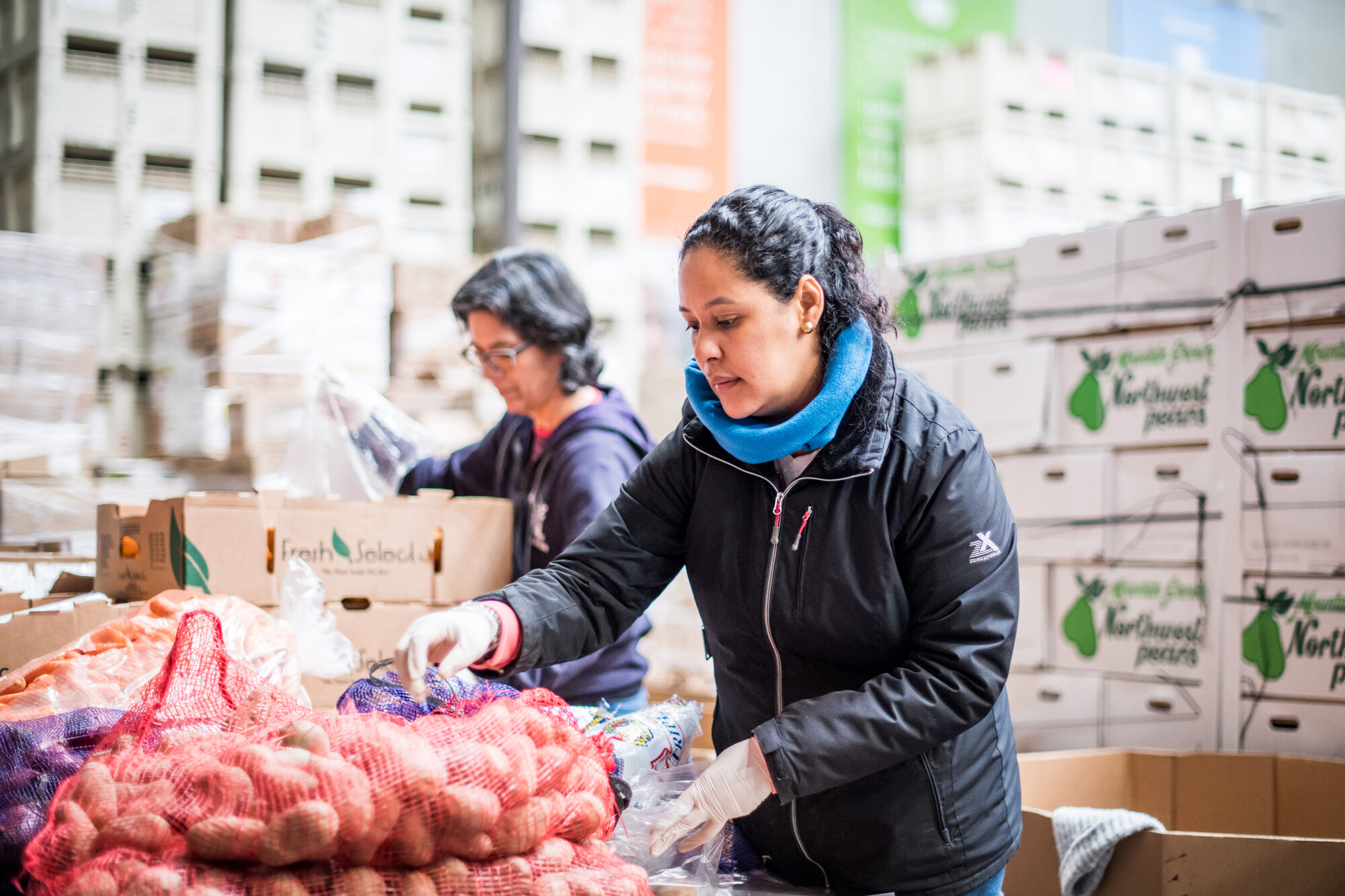
"caption": "Voluntarios trabajan clasificando alimentos donados en el Banco de Alimentos de San Francisco-Marin, en el barrio Dogpatch de San Francisco, el miércoles 18 de marzo de 2020. Mientras California advierte que los pagos de CalFresh se «retrasarán» en noviembre debido al cierre del gobierno, aquí te indicamos dónde encontrar ayuda alimentaria gratuita.",
"credit": "Beth LaBerge/KQED",
"altTag": null,
"description": null,
"imgSizes": {
"thumbnail": {
"file": "https://cdn.kqed.org/wp-content/uploads/sites/10/2025/10/laday-a-food-bank-160x107.jpg",
"width": 160,
"height": 107,
"mimeType": "image/jpeg"
},
"1536x1536": {
"file": "https://cdn.kqed.org/wp-content/uploads/sites/10/2025/10/laday-a-food-bank-1536x1024.jpg",
"width": 1536,
"height": 1024,
"mimeType": "image/jpeg"
},
"post-thumbnail": {
"file": "https://cdn.kqed.org/wp-content/uploads/sites/10/2025/10/laday-a-food-bank-672x372.jpg",
"width": 672,
"height": 372,
"mimeType": "image/jpeg"
},
"twentyfourteen-full-width": {
"file": "https://cdn.kqed.org/wp-content/uploads/sites/10/2025/10/laday-a-food-bank-1038x576.jpg",
"width": 1038,
"height": 576,
"mimeType": "image/jpeg"
},
"npr-cds-wide": {
"file": "https://cdn.kqed.org/wp-content/uploads/sites/10/2025/10/laday-a-food-bank-1200x675.jpg",
"width": 1200,
"height": 675,
"mimeType": "image/jpeg"
},
"kqedFullSize": {
"file": "https://cdn.kqed.org/wp-content/uploads/sites/10/2025/10/laday-a-food-bank.jpg",
"width": 2000,
"height": 1333
}
},
"isLoading": false,
"fetchFailed": false
},
"news_12052480": {
"type": "attachments",
"id": "news_12052480",
"meta": {
"index": "attachments_1716263798",
"site": "news",
"id": "12052480",
"found": true
},
"title": "250815-SF TK-DN-01-KQED",
"publishDate": 1755299194,
"status": "inherit",
"parent": 12052609,
"modified": 1755539932,
"caption": "Joselyn Manigque's transitional kindergarten classroom at Dr. William Cobb Elementary School in San Francisco on Aug. 15, 2025.",
"credit": "Daisy Nguyen/KQED",
"altTag": null,
"description": null,
"imgSizes": {
"thumbnail": {
"file": "https://cdn.kqed.org/wp-content/uploads/sites/10/2025/08/250815-SF-TK-DN-01-KQED-160x120.jpg",
"width": 160,
"height": 120,
"mimeType": "image/jpeg"
},
"1536x1536": {
"file": "https://cdn.kqed.org/wp-content/uploads/sites/10/2025/08/250815-SF-TK-DN-01-KQED-1536x1152.jpg",
"width": 1536,
"height": 1152,
"mimeType": "image/jpeg"
},
"post-thumbnail": {
"file": "https://cdn.kqed.org/wp-content/uploads/sites/10/2025/08/250815-SF-TK-DN-01-KQED-672x372.jpg",
"width": 672,
"height": 372,
"mimeType": "image/jpeg"
},
"twentyfourteen-full-width": {
"file": "https://cdn.kqed.org/wp-content/uploads/sites/10/2025/08/250815-SF-TK-DN-01-KQED-1038x576.jpg",
"width": 1038,
"height": 576,
"mimeType": "image/jpeg"
},
"kqedFullSize": {
"file": "https://cdn.kqed.org/wp-content/uploads/sites/10/2025/08/250815-SF-TK-DN-01-KQED.jpg",
"width": 2000,
"height": 1500
}
},
"isLoading": false,
"fetchFailed": false
},
"news_12062249": {
"type": "attachments",
"id": "news_12062249",
"meta": {
"index": "attachments_1716263798",
"site": "news",
"id": "12062249",
"found": true
},
"title": "RV1",
"publishDate": 1761844485,
"status": "inherit",
"parent": 12062202,
"modified": 1761844565,
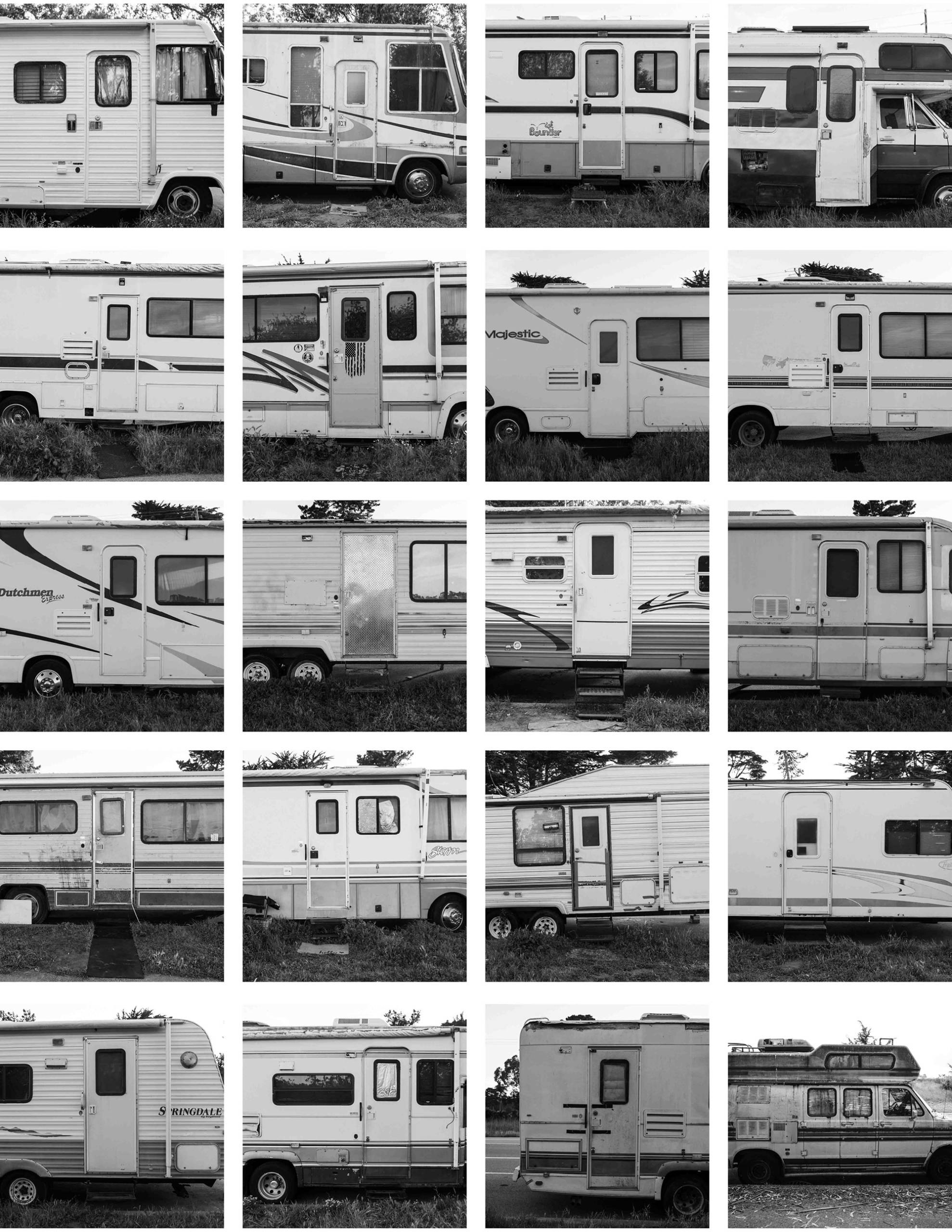
"caption": "A collage that show the entrances of RVs that have begun to appear more and more on the street near Lake Merced in San Francisco, California, on April 9, 2025. After a uniquely working immigrant RV community was displaced in the nearby street of Winston, some families opted for Lake Merced or the Bayview.",
"credit": "Pablo Unzueta for El Tecolote/CatchLight Local",
"altTag": null,
"description": null,
"imgSizes": {
"thumbnail": {
"file": "https://cdn.kqed.org/wp-content/uploads/sites/10/2025/10/RV1-160x207.jpg",
"width": 160,
"height": 207,
"mimeType": "image/jpeg"
},
"1536x1536": {
"file": "https://cdn.kqed.org/wp-content/uploads/sites/10/2025/10/RV1-1187x1536.jpg",
"width": 1187,
"height": 1536,
"mimeType": "image/jpeg"
},
"2048x2048": {
"file": "https://cdn.kqed.org/wp-content/uploads/sites/10/2025/10/RV1-1583x2048.jpg",
"width": 1583,
"height": 2048,
"mimeType": "image/jpeg"
},
"post-thumbnail": {
"file": "https://cdn.kqed.org/wp-content/uploads/sites/10/2025/10/RV1-672x372.jpg",
"width": 672,
"height": 372,
"mimeType": "image/jpeg"
},
"twentyfourteen-full-width": {
"file": "https://cdn.kqed.org/wp-content/uploads/sites/10/2025/10/RV1-1038x576.jpg",
"width": 1038,
"height": 576,
"mimeType": "image/jpeg"
},
"npr-cds-wide": {
"file": "https://cdn.kqed.org/wp-content/uploads/sites/10/2025/10/RV1-1600x900.jpg",
"width": 1600,
"height": 900,
"mimeType": "image/jpeg"
},
"kqedFullSize": {
"file": "https://cdn.kqed.org/wp-content/uploads/sites/10/2025/10/RV1-scaled.jpg",
"width": 1978,
"height": 2560
}
},
"isLoading": false,
"fetchFailed": false
},
"news_12062379": {
"type": "attachments",
"id": "news_12062379",
"meta": {
"index": "attachments_1716263798",
"site": "news",
"id": "12062379",
"found": true
},
"title": "251030-marinmentalhealth00680_TV_qed",
"publishDate": 1761863560,
"status": "inherit",
"parent": 12062334,
"modified": 1761863587,
"caption": "Tonatiuh Beltran gets emotional as she speaks about her mother’s death outside the Marin County Superior Court during a press conference in San Rafael on Oct. 30, 2025. Olivia Beltran was killed by her daughter Tonatzyn Beltran during a mental health episode in 2024 and the family is calling on Marin County District Attorney’s office to pursue mental health treatment rather than criminal prosecution of Tonantzyn Beltran.",
"credit": "Tâm Vũ / KQED",
"altTag": null,
"description": null,
"imgSizes": {
"thumbnail": {
"file": "https://cdn.kqed.org/wp-content/uploads/sites/10/2025/10/251030-marinmentalhealth00680_TV_qed-160x107.jpg",
"width": 160,
"height": 107,
"mimeType": "image/jpeg"
},
"1536x1536": {
"file": "https://cdn.kqed.org/wp-content/uploads/sites/10/2025/10/251030-marinmentalhealth00680_TV_qed-1536x1024.jpg",
"width": 1536,
"height": 1024,
"mimeType": "image/jpeg"
},
"post-thumbnail": {
"file": "https://cdn.kqed.org/wp-content/uploads/sites/10/2025/10/251030-marinmentalhealth00680_TV_qed-672x372.jpg",
"width": 672,
"height": 372,
"mimeType": "image/jpeg"
},
"twentyfourteen-full-width": {
"file": "https://cdn.kqed.org/wp-content/uploads/sites/10/2025/10/251030-marinmentalhealth00680_TV_qed-1038x576.jpg",
"width": 1038,
"height": 576,
"mimeType": "image/jpeg"
},
"npr-cds-wide": {
"file": "https://cdn.kqed.org/wp-content/uploads/sites/10/2025/10/251030-marinmentalhealth00680_TV_qed-1200x675.jpg",
"width": 1200,
"height": 675,
"mimeType": "image/jpeg"
},
"kqedFullSize": {
"file": "https://cdn.kqed.org/wp-content/uploads/sites/10/2025/10/251030-marinmentalhealth00680_TV_qed.jpg",
"width": 2000,
"height": 1333
}
},
"isLoading": false,
"fetchFailed": false
},
"news_12030960": {
"type": "attachments",
"id": "news_12030960",
"meta": {
"index": "attachments_1716263798",
"site": "news",
"id": "12030960",
"found": true
},
"title": "uc-berkeley-malak-afaneh-handout_qed",
"publishDate": 1741801339,
"status": "inherit",
"parent": 12030938,
"modified": 1741801426,
"caption": "A third-year UC Berkeley law student speaks during a protest at the university on May 7, 2024.",
"credit": "Courtesy of Malak Afaneh",
"altTag": null,
"description": null,
"imgSizes": {
"medium": {
"file": "https://cdn.kqed.org/wp-content/uploads/sites/10/2025/03/uc-berkeley-malak-afaneh-handout_qed-800x533.jpg",
"width": 800,
"height": 533,
"mimeType": "image/jpeg"
},
"large": {
"file": "https://cdn.kqed.org/wp-content/uploads/sites/10/2025/03/uc-berkeley-malak-afaneh-handout_qed-1020x680.jpg",
"width": 1020,
"height": 680,
"mimeType": "image/jpeg"
},
"thumbnail": {
"file": "https://cdn.kqed.org/wp-content/uploads/sites/10/2025/03/uc-berkeley-malak-afaneh-handout_qed-160x107.jpg",
"width": 160,
"height": 107,
"mimeType": "image/jpeg"
},
"1536x1536": {
"file": "https://cdn.kqed.org/wp-content/uploads/sites/10/2025/03/uc-berkeley-malak-afaneh-handout_qed-1536x1024.jpg",
"width": 1536,
"height": 1024,
"mimeType": "image/jpeg"
},
"post-thumbnail": {
"file": "https://cdn.kqed.org/wp-content/uploads/sites/10/2025/03/uc-berkeley-malak-afaneh-handout_qed-672x372.jpg",
"width": 672,
"height": 372,
"mimeType": "image/jpeg"
},
"twentyfourteen-full-width": {
"file": "https://cdn.kqed.org/wp-content/uploads/sites/10/2025/03/uc-berkeley-malak-afaneh-handout_qed-1038x576.jpg",
"width": 1038,
"height": 576,
"mimeType": "image/jpeg"
},
"full-width": {
"file": "https://cdn.kqed.org/wp-content/uploads/sites/10/2025/03/uc-berkeley-malak-afaneh-handout_qed-1920x1280.jpg",
"width": 1920,
"height": 1280,
"mimeType": "image/jpeg"
},
"kqedFullSize": {
"file": "https://cdn.kqed.org/wp-content/uploads/sites/10/2025/03/uc-berkeley-malak-afaneh-handout_qed.jpg",
"width": 2000,
"height": 1333
}
},
"isLoading": false,
"fetchFailed": false
},
"news_12062307": {
"type": "attachments",
"id": "news_12062307",
"meta": {
"index": "attachments_1716263798",
"site": "news",
"id": "12062307",
"found": true
},
"title": "Oakland Museum Entrance",
"publishDate": 1761852175,
"status": "inherit",
"parent": 12062303,
"modified": 1761852218,
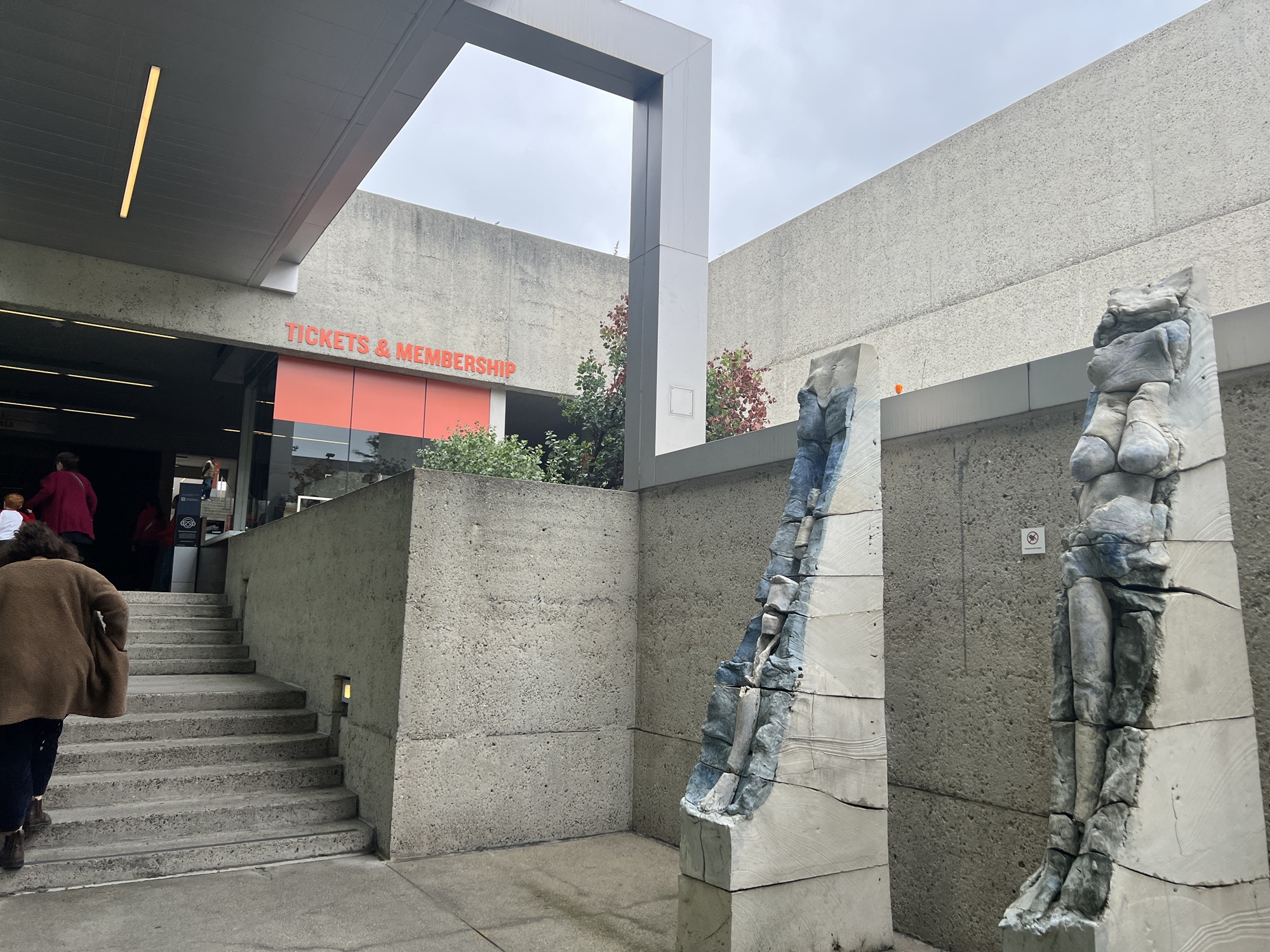
"caption": "Entrance to the Oakland Museum of California in Oakland, California, on April 3, 2024. ",
"credit": "Smith Collection/Gado/Getty Images",
"altTag": null,
"description": null,
"imgSizes": {
"thumbnail": {
"file": "https://cdn.kqed.org/wp-content/uploads/sites/10/2025/10/Oakland-Museum-of-California-Getty-160x120.jpg",
"width": 160,
"height": 120,
"mimeType": "image/jpeg"
},
"1536x1536": {
"file": "https://cdn.kqed.org/wp-content/uploads/sites/10/2025/10/Oakland-Museum-of-California-Getty-1536x1152.jpg",
"width": 1536,
"height": 1152,
"mimeType": "image/jpeg"
},
"post-thumbnail": {
"file": "https://cdn.kqed.org/wp-content/uploads/sites/10/2025/10/Oakland-Museum-of-California-Getty-672x372.jpg",
"width": 672,
"height": 372,
"mimeType": "image/jpeg"
},
"twentyfourteen-full-width": {
"file": "https://cdn.kqed.org/wp-content/uploads/sites/10/2025/10/Oakland-Museum-of-California-Getty-1038x576.jpg",
"width": 1038,
"height": 576,
"mimeType": "image/jpeg"
},
"npr-cds-wide": {
"file": "https://cdn.kqed.org/wp-content/uploads/sites/10/2025/10/Oakland-Museum-of-California-Getty-1600x900.jpg",
"width": 1600,
"height": 900,
"mimeType": "image/jpeg"
},
"kqedFullSize": {
"file": "https://cdn.kqed.org/wp-content/uploads/sites/10/2025/10/Oakland-Museum-of-California-Getty.jpg",
"width": 2000,
"height": 1500
}
},
"isLoading": false,
"fetchFailed": false
},
"news_12056813": {
"type": "attachments",
"id": "news_12056813",
"meta": {
"index": "attachments_1716263798",
"site": "news",
"id": "12056813",
"found": true
},
"title": "holt_286_4870.jpg",
"publishDate": 1758301557,
"status": "inherit",
"parent": 12056776,
"modified": 1758308245,
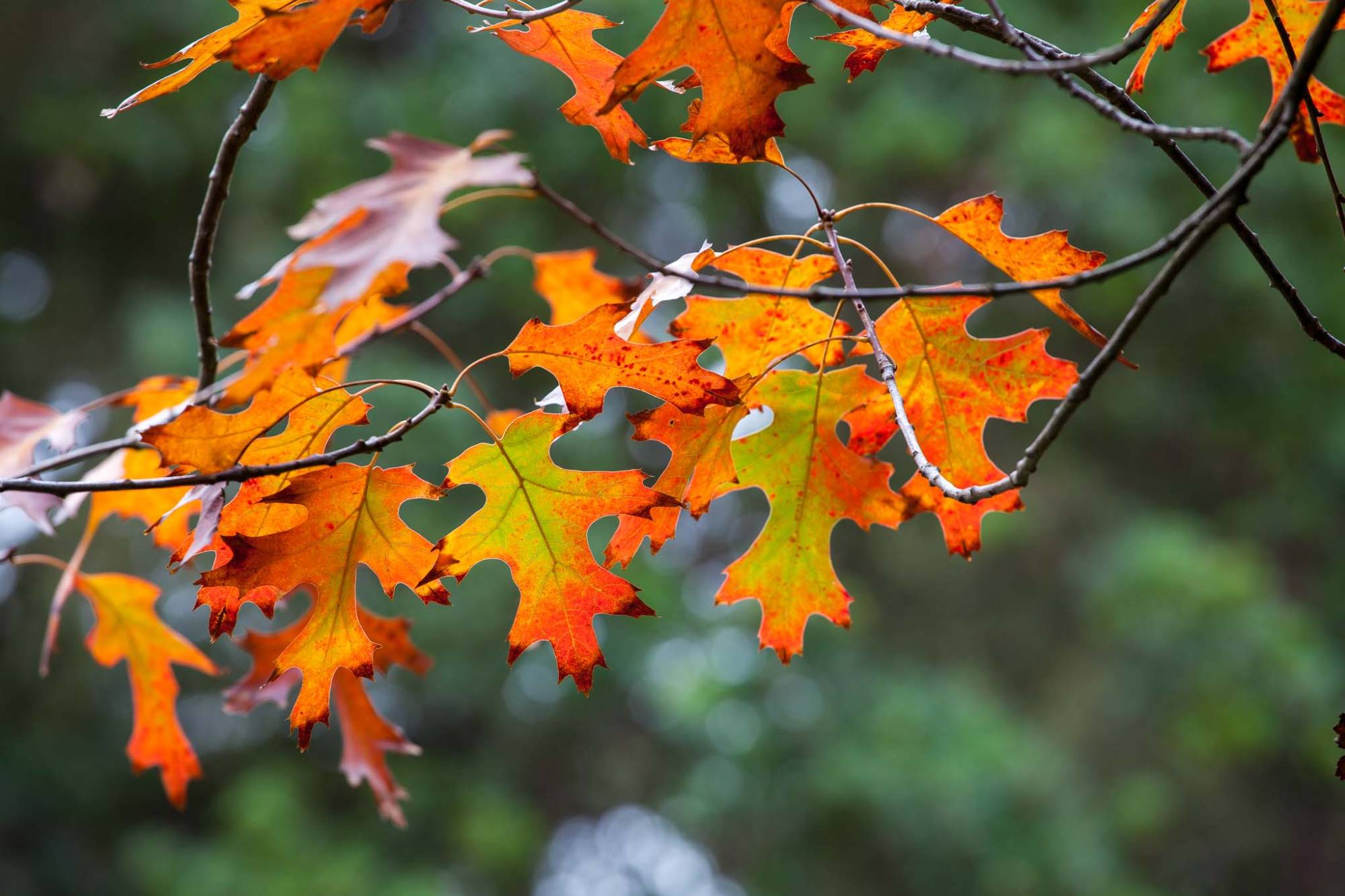
"caption": "Quercus rubra, a Northern Red Oak tree with leaves in fall color in San Francisco's Botanical Garden.",
"credit": "Courtesy of Saxon Holt",
"altTag": null,
"description": null,
"imgSizes": {
"medium": {
"file": "https://cdn.kqed.org/wp-content/uploads/sites/10/2025/09/holt_286_4870-2000x1333.jpg",
"width": 2000,
"height": 1333,
"mimeType": "image/jpeg"
},
"large": {
"file": "https://cdn.kqed.org/wp-content/uploads/sites/10/2025/09/holt_286_4870-2000x1333.jpg",
"width": 2000,
"height": 1333,
"mimeType": "image/jpeg"
},
"thumbnail": {
"file": "https://cdn.kqed.org/wp-content/uploads/sites/10/2025/09/holt_286_4870-160x107.jpg",
"width": 160,
"height": 107,
"mimeType": "image/jpeg"
},
"1536x1536": {
"file": "https://cdn.kqed.org/wp-content/uploads/sites/10/2025/09/holt_286_4870-1536x1024.jpg",
"width": 1536,
"height": 1024,
"mimeType": "image/jpeg"
},
"post-thumbnail": {
"file": "https://cdn.kqed.org/wp-content/uploads/sites/10/2025/09/holt_286_4870-672x372.jpg",
"width": 672,
"height": 372,
"mimeType": "image/jpeg"
},
"twentyfourteen-full-width": {
"file": "https://cdn.kqed.org/wp-content/uploads/sites/10/2025/09/holt_286_4870-1038x576.jpg",
"width": 1038,
"height": 576,
"mimeType": "image/jpeg"
},
"full-width": {
"file": "https://cdn.kqed.org/wp-content/uploads/sites/10/2025/09/holt_286_4870-2000x1333.jpg",
"width": 2000,
"height": 1333,
"mimeType": "image/jpeg"
},
"kqedFullSize": {
"file": "https://cdn.kqed.org/wp-content/uploads/sites/10/2025/09/holt_286_4870-e1758301572353.jpg",
"width": 2000,
"height": 1333
}
},
"isLoading": false,
"fetchFailed": false
},
"news_12058754": {
"type": "attachments",
"id": "news_12058754",
"meta": {
"index": "attachments_1716263798",
"site": "news",
"id": "12058754",
"found": true
},
"title": "251003_ORBIT_ROOM-_-19-KQED",
"publishDate": 1759765403,
"status": "inherit",
"parent": 0,
"modified": 1759765584,
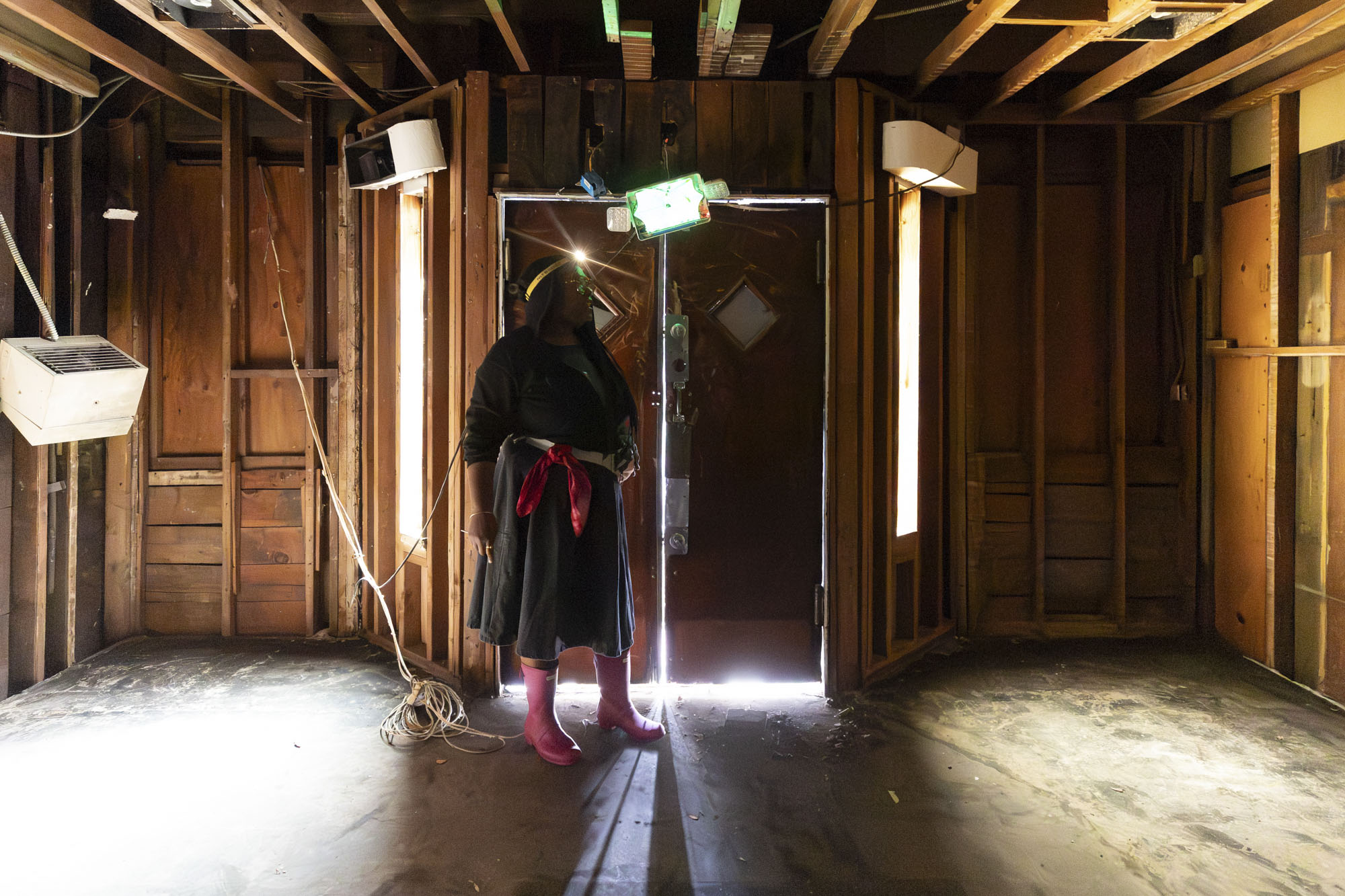
"caption": "Noni Session stands near the front doors of Esther’s Orbit Room as daylight streams into the building under renovation in Oakland on Oct. 2, 2025.",
"credit": "Gustavo Hernandez/KQED",
"altTag": null,
"description": null,
"imgSizes": {
"thumbnail": {
"file": "https://cdn.kqed.org/wp-content/uploads/sites/10/2025/10/251003_ORBIT_ROOM-_-19-KQED-160x107.jpg",
"width": 160,
"height": 107,
"mimeType": "image/jpeg"
},
"1536x1536": {
"file": "https://cdn.kqed.org/wp-content/uploads/sites/10/2025/10/251003_ORBIT_ROOM-_-19-KQED-1536x1024.jpg",
"width": 1536,
"height": 1024,
"mimeType": "image/jpeg"
},
"post-thumbnail": {
"file": "https://cdn.kqed.org/wp-content/uploads/sites/10/2025/10/251003_ORBIT_ROOM-_-19-KQED-672x372.jpg",
"width": 672,
"height": 372,
"mimeType": "image/jpeg"
},
"twentyfourteen-full-width": {
"file": "https://cdn.kqed.org/wp-content/uploads/sites/10/2025/10/251003_ORBIT_ROOM-_-19-KQED-1038x576.jpg",
"width": 1038,
"height": 576,
"mimeType": "image/jpeg"
},
"kqedFullSize": {
"file": "https://cdn.kqed.org/wp-content/uploads/sites/10/2025/10/251003_ORBIT_ROOM-_-19-KQED.jpg",
"width": 2000,
"height": 1333
}
},
"isLoading": false,
"fetchFailed": false
},
"news_12061781": {
"type": "attachments",
"id": "news_12061781",
"meta": {
"index": "attachments_1716263798",
"site": "news",
"id": "12061781",
"found": true
},
"title": "251027-JANE STANFORD ARCHIVAL-03-KQED",
"publishDate": 1761604939,
"status": "inherit",
"parent": 0,
"modified": 1761605047,
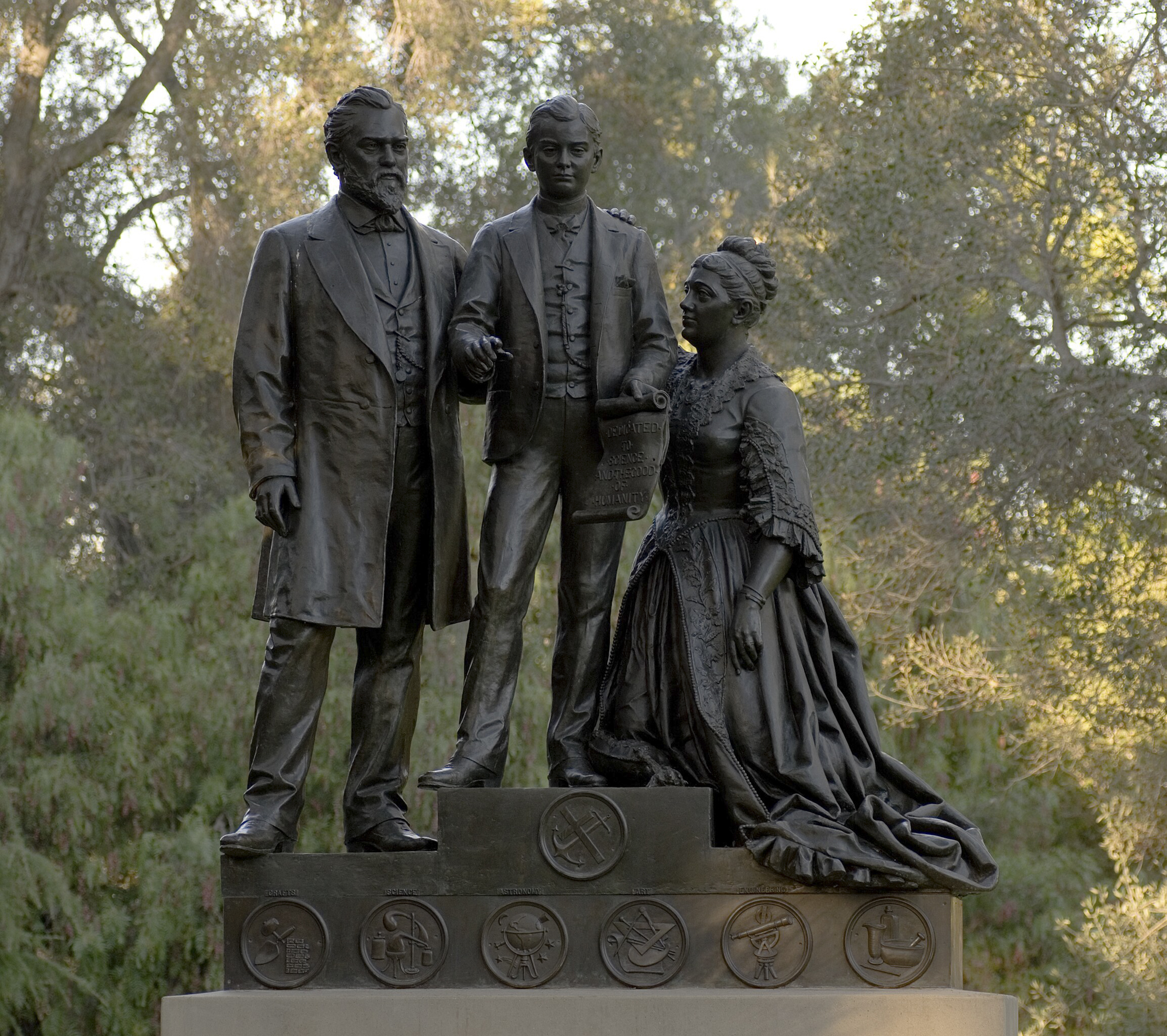
"caption": "This bronze statue of the Stanford family is located on Stanford University’s campus. Crafted by Larkin Goldsmith Mead in 1899.",
"credit": "Wikimedia Commons",
"altTag": null,
"description": null,
"imgSizes": {
"thumbnail": {
"file": "https://cdn.kqed.org/wp-content/uploads/sites/10/2025/10/251027-JANE-STANFORD-ARCHIVAL-03-KQED-160x142.jpg",
"width": 160,
"height": 142,
"mimeType": "image/jpeg"
},
"1536x1536": {
"file": "https://cdn.kqed.org/wp-content/uploads/sites/10/2025/10/251027-JANE-STANFORD-ARCHIVAL-03-KQED-1536x1363.jpg",
"width": 1536,
"height": 1363,
"mimeType": "image/jpeg"
},
"post-thumbnail": {
"file": "https://cdn.kqed.org/wp-content/uploads/sites/10/2025/10/251027-JANE-STANFORD-ARCHIVAL-03-KQED-672x372.jpg",
"width": 672,
"height": 372,
"mimeType": "image/jpeg"
},
"twentyfourteen-full-width": {
"file": "https://cdn.kqed.org/wp-content/uploads/sites/10/2025/10/251027-JANE-STANFORD-ARCHIVAL-03-KQED-1038x576.jpg",
"width": 1038,
"height": 576,
"mimeType": "image/jpeg"
},
"npr-cds-wide": {
"file": "https://cdn.kqed.org/wp-content/uploads/sites/10/2025/10/251027-JANE-STANFORD-ARCHIVAL-03-KQED-1600x900.jpg",
"width": 1600,
"height": 900,
"mimeType": "image/jpeg"
},
"kqedFullSize": {
"file": "https://cdn.kqed.org/wp-content/uploads/sites/10/2025/10/251027-JANE-STANFORD-ARCHIVAL-03-KQED.jpg",
"width": 2000,
"height": 1775
}
},
"isLoading": false,
"fetchFailed": false
},
"news_12062182": {
"type": "attachments",
"id": "news_12062182",
"meta": {
"index": "attachments_1716263798",
"site": "news",
"id": "12062182",
"found": true
},
"title": "250519-AffordableHousingFile-13-BL_qed (1)",
"publishDate": 1761779265,
"status": "inherit",
"parent": 12062042,
"modified": 1764725123,
"caption": "Construction is underway on an affordable housing apartment building at 2550 Irving St. in San Francisco’s Sunset District on May 19, 2025.",
"credit": "Beth LaBerge/KQED",
"altTag": null,
"description": null,
"imgSizes": {
"thumbnail": {
"file": "https://cdn.kqed.org/wp-content/uploads/sites/10/2025/10/250519-AffordableHousingFile-13-BL_qed-1-160x107.jpg",
"width": 160,
"height": 107,
"mimeType": "image/jpeg"
},
"1536x1536": {
"file": "https://cdn.kqed.org/wp-content/uploads/sites/10/2025/10/250519-AffordableHousingFile-13-BL_qed-1-1536x1024.jpg",
"width": 1536,
"height": 1024,
"mimeType": "image/jpeg"
},
"post-thumbnail": {
"file": "https://cdn.kqed.org/wp-content/uploads/sites/10/2025/10/250519-AffordableHousingFile-13-BL_qed-1-672x372.jpg",
"width": 672,
"height": 372,
"mimeType": "image/jpeg"
},
"twentyfourteen-full-width": {
"file": "https://cdn.kqed.org/wp-content/uploads/sites/10/2025/10/250519-AffordableHousingFile-13-BL_qed-1-1038x576.jpg",
"width": 1038,
"height": 576,
"mimeType": "image/jpeg"
},
"npr-cds-wide": {
"file": "https://cdn.kqed.org/wp-content/uploads/sites/10/2025/10/250519-AffordableHousingFile-13-BL_qed-1-1600x900.jpg",
"width": 1600,
"height": 900,
"mimeType": "image/jpeg"
},
"kqedFullSize": {
"file": "https://cdn.kqed.org/wp-content/uploads/sites/10/2025/10/250519-AffordableHousingFile-13-BL_qed-1.jpg",
"width": 2000,
"height": 1333
}
},
"isLoading": false,
"fetchFailed": false
},
"news_12061852": {
"type": "attachments",
"id": "news_12061852",
"meta": {
"index": "attachments_1716263798",
"site": "news",
"id": "12061852",
"found": true
},
"title": "Sonoma-Animal-Trial-05-KQED",
"publishDate": 1761677094,
"status": "inherit",
"parent": 0,
"modified": 1761677137,
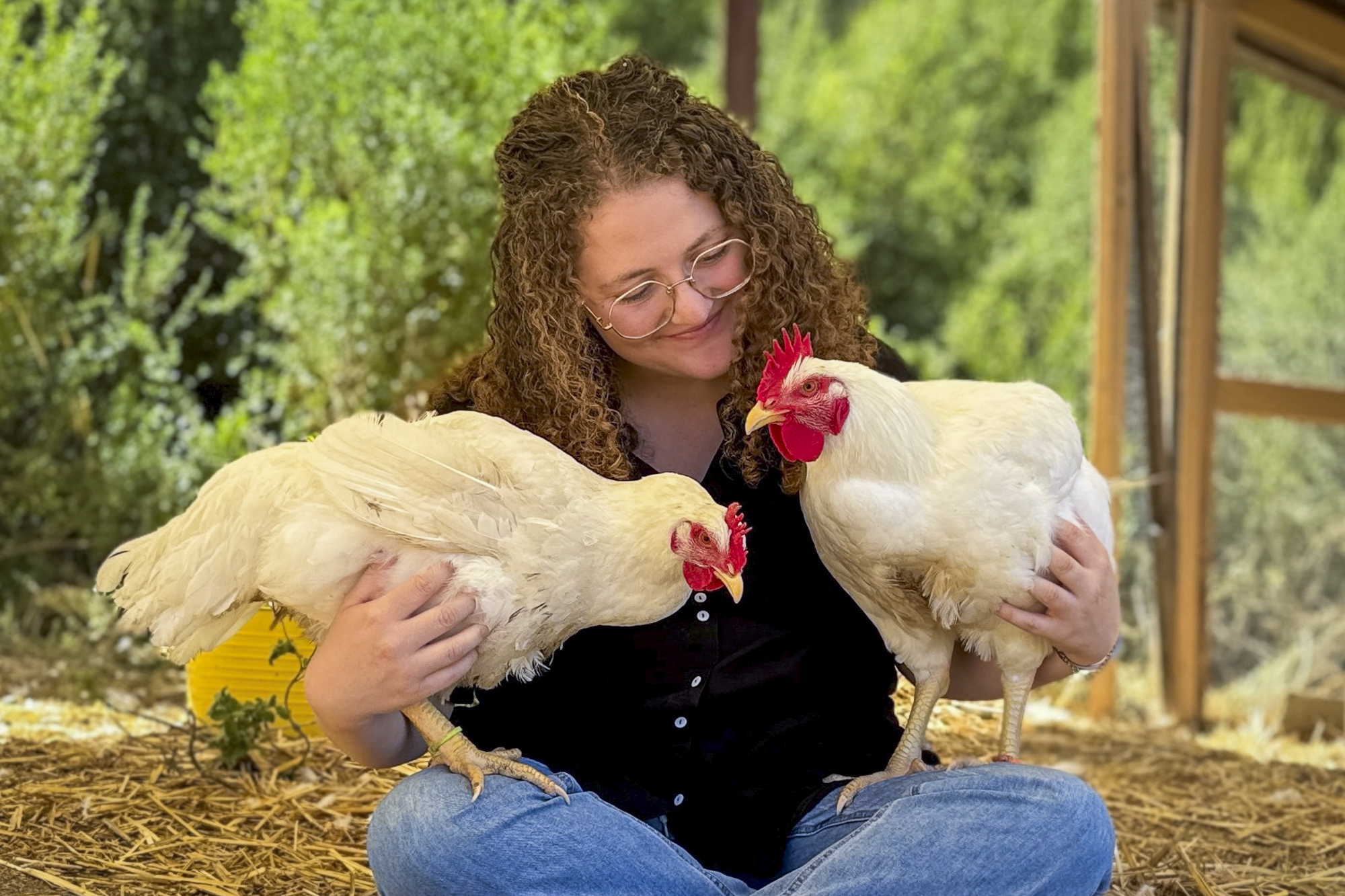
"caption": "Zoe Rosenberg with chickens. ",
"credit": "Courtesy of Zoe Rosenberg",
"altTag": null,
"description": null,
"imgSizes": {
"thumbnail": {
"file": "https://cdn.kqed.org/wp-content/uploads/sites/10/2025/10/Sonoma-Animal-Trial-05-KQED-160x107.jpg",
"width": 160,
"height": 107,
"mimeType": "image/jpeg"
},
"1536x1536": {
"file": "https://cdn.kqed.org/wp-content/uploads/sites/10/2025/10/Sonoma-Animal-Trial-05-KQED-1536x1024.jpg",
"width": 1536,
"height": 1024,
"mimeType": "image/jpeg"
},
"post-thumbnail": {
"file": "https://cdn.kqed.org/wp-content/uploads/sites/10/2025/10/Sonoma-Animal-Trial-05-KQED-672x372.jpg",
"width": 672,
"height": 372,
"mimeType": "image/jpeg"
},
"twentyfourteen-full-width": {
"file": "https://cdn.kqed.org/wp-content/uploads/sites/10/2025/10/Sonoma-Animal-Trial-05-KQED-1038x576.jpg",
"width": 1038,
"height": 576,
"mimeType": "image/jpeg"
},
"npr-cds-wide": {
"file": "https://cdn.kqed.org/wp-content/uploads/sites/10/2025/10/Sonoma-Animal-Trial-05-KQED-1600x900.jpg",
"width": 1600,
"height": 900,
"mimeType": "image/jpeg"
},
"kqedFullSize": {
"file": "https://cdn.kqed.org/wp-content/uploads/sites/10/2025/10/Sonoma-Animal-Trial-05-KQED.jpg",
"width": 2000,
"height": 1333
}
},
"isLoading": false,
"fetchFailed": false
}
},
"audioPlayerReducer": {
"postId": "stream_live",
"isPaused": true,
"isPlaying": false,
"pfsActive": false,
"pledgeModalIsOpen": true,
"playerDrawerIsOpen": false,
"liveAudioPlayStartedAt": 0,
"liveAudioPlayContext": ""
},
"authorsReducer": {
"byline_news_12062202": {
"type": "authors",
"id": "byline_news_12062202",
"meta": {
"override": true
},
"slug": "byline_news_12062202",
"name": "Mariana Duran, Pablo Unzueta, Yesica Prado, El Tecolote",
"isLoading": false
},
"carlysevern": {
"type": "authors",
"id": "3243",
"meta": {
"index": "authors_1716337520",
"id": "3243",
"found": true
},
"name": "Carly Severn",
"firstName": "Carly",
"lastName": "Severn",
"slug": "carlysevern",
"email": "csevern@kqed.org",
"display_author_email": false,
"staff_mastheads": [
"news"
],
"title": "Senior Editor, Audience News ",
"bio": "Carly is KQED's Senior Editor of Audience News on the Digital News team, and has reported for the California Report Magazine, Bay Curious and KQED Arts. She's formerly the host of \u003ca href=\"http://ww2.kqed.org/pop/category/the-cooler/\" rel=\"noopener noreferrer\">The Cooler\u003c/a> podcast.",
"avatar": "https://secure.gravatar.com/avatar/54037bf5c128fe678f0ef26cec97a93f2e7f220a22d7285703328f12c42c1b1d?s=600&d=blank&r=g",
"twitter": "teacupinthebay",
"bluesky": null,
"facebook": null,
"instagram": null,
"linkedin": null,
"sites": [
{
"site": "",
"roles": [
"editor"
]
},
{
"site": "arts",
"roles": [
"editor"
]
},
{
"site": "news",
"roles": [
"administrator"
]
},
{
"site": "pop",
"roles": [
"editor"
]
},
{
"site": "futureofyou",
"roles": [
"editor"
]
},
{
"site": "about",
"roles": [
"administrator"
]
},
{
"site": "mindshift",
"roles": [
"editor"
]
},
{
"site": "bayareabites",
"roles": [
"editor"
]
},
{
"site": "stateofhealth",
"roles": [
"editor"
]
},
{
"site": "science",
"roles": [
"editor"
]
},
{
"site": "food",
"roles": [
"contributor"
]
},
{
"site": "forum",
"roles": [
"editor"
]
},
{
"site": "perspectives",
"roles": [
"administrator"
]
},
{
"site": "liveblog",
"roles": [
"editor"
]
}
],
"headData": {
"title": "Carly Severn | KQED",
"description": "Senior Editor, Audience News ",
"ogImgSrc": "https://secure.gravatar.com/avatar/54037bf5c128fe678f0ef26cec97a93f2e7f220a22d7285703328f12c42c1b1d?s=600&d=blank&r=g",
"twImgSrc": "https://secure.gravatar.com/avatar/54037bf5c128fe678f0ef26cec97a93f2e7f220a22d7285703328f12c42c1b1d?s=600&d=blank&r=g"
},
"isLoading": false,
"link": "/author/carlysevern"
},
"ebaldassari": {
"type": "authors",
"id": "11652",
"meta": {
"index": "authors_1716337520",
"id": "11652",
"found": true
},
"name": "Erin Baldassari",
"firstName": "Erin",
"lastName": "Baldassari",
"slug": "ebaldassari",
"email": "ebaldassari@KQED.org",
"display_author_email": true,
"staff_mastheads": [
"news"
],
"title": "Staff Writer",
"bio": "Erin Baldassari covers housing for KQED. She's a former print journalist and most recently worked as the transportation reporter for the \u003cem>Mercury News\u003c/em> and \u003cem>East Bay Times. \u003c/em>There, she focused on how the Bay Area’s housing shortage has changed the way people move around the region. She also served on the \u003cem>East Bay Times\u003c/em>’ 2017 Pulitzer Prize-winning team for coverage of the Ghost Ship Fire in Oakland. Prior to that, Erin worked as a breaking news and general assignment reporter for a variety of outlets in the Bay Area and the greater Boston area. A Tufts University alumna, Erin grew up in the foothills of the Sierra Nevada mountains and in Sonoma County. She is a life-long KQED listener.",
"avatar": "https://secure.gravatar.com/avatar/5e95cad64a8ca08288082212e199d2b0cbeb4fd8e8ef5339395f361032bbe005?s=600&d=blank&r=g",
"twitter": "e_baldi",
"bluesky": null,
"facebook": null,
"instagram": null,
"linkedin": null,
"sites": [
{
"site": "news",
"roles": [
"edit_others_posts",
"editor"
]
},
{
"site": "science",
"roles": [
"editor"
]
},
{
"site": "liveblog",
"roles": [
"editor"
]
}
],
"headData": {
"title": "Erin Baldassari | KQED",
"description": "Staff Writer",
"ogImgSrc": "https://secure.gravatar.com/avatar/5e95cad64a8ca08288082212e199d2b0cbeb4fd8e8ef5339395f361032bbe005?s=600&d=blank&r=g",
"twImgSrc": "https://secure.gravatar.com/avatar/5e95cad64a8ca08288082212e199d2b0cbeb4fd8e8ef5339395f361032bbe005?s=600&d=blank&r=g"
},
"isLoading": false,
"link": "/author/ebaldassari"
},
"abandlamudi": {
"type": "authors",
"id": "11672",
"meta": {
"index": "authors_1716337520",
"id": "11672",
"found": true
},
"name": "Adhiti Bandlamudi",
"firstName": "Adhiti",
"lastName": "Bandlamudi",
"slug": "abandlamudi",
"email": "abandlamudi@kqed.org",
"display_author_email": false,
"staff_mastheads": [
"news"
],
"title": "KQED Housing Reporter",
"bio": "Adhiti Bandlamudi reports for KQED's Housing desk. She focuses on how housing gets built across the Bay Area. Before joining KQED in 2020, she reported for WUNC in Durham, North Carolina, WABE in Atlanta, Georgia and Capital Public Radio in Sacramento. In 2017, she was awarded a Kroc Fellowship at NPR where she reported on everything from sprinkles to the Golden State Killer's arrest. When she's not reporting, she's baking new recipes in her kitchen or watching movies with friends and family. She's originally from Georgia and has strong opinions about Great British Bake Off.",
"avatar": "https://secure.gravatar.com/avatar/868129c8b257bb99a3500e2c86a65400?s=600&d=mm&r=g",
"twitter": "oddity_adhiti",
"facebook": null,
"instagram": null,
"linkedin": null,
"sites": [
{
"site": "arts",
"roles": [
"author"
]
},
{
"site": "news",
"roles": [
"editor"
]
},
{
"site": "liveblog",
"roles": [
"author"
]
}
],
"headData": {
"title": "Adhiti Bandlamudi | KQED",
"description": "KQED Housing Reporter",
"ogImgSrc": "https://secure.gravatar.com/avatar/868129c8b257bb99a3500e2c86a65400?s=600&d=mm&r=g",
"twImgSrc": "https://secure.gravatar.com/avatar/868129c8b257bb99a3500e2c86a65400?s=600&d=mm&r=g"
},
"isLoading": false,
"link": "/author/abandlamudi"
},
"jlara": {
"type": "authors",
"id": "11761",
"meta": {
"index": "authors_1716337520",
"id": "11761",
"found": true
},
"name": "Juan Carlos Lara",
"firstName": "Juan Carlos",
"lastName": "Lara",
"slug": "jlara",
"email": "jlara@kqed.org",
"display_author_email": false,
"staff_mastheads": [],
"title": "KQED Contributor",
"bio": null,
"avatar": "https://secure.gravatar.com/avatar/19e2052b9b05657c5ff2af2121846e9c?s=600&d=blank&r=g",
"twitter": null,
"facebook": null,
"instagram": null,
"linkedin": null,
"sites": [
{
"site": "arts",
"roles": [
"editor"
]
},
{
"site": "news",
"roles": [
"editor"
]
},
{
"site": "forum",
"roles": [
"editor"
]
},
{
"site": "liveblog",
"roles": [
"contributor"
]
}
],
"headData": {
"title": "Juan Carlos Lara | KQED",
"description": "KQED Contributor",
"ogImgSrc": "https://secure.gravatar.com/avatar/19e2052b9b05657c5ff2af2121846e9c?s=600&d=blank&r=g",
"twImgSrc": "https://secure.gravatar.com/avatar/19e2052b9b05657c5ff2af2121846e9c?s=600&d=blank&r=g"
},
"isLoading": false,
"link": "/author/jlara"
},
"daisynguyen": {
"type": "authors",
"id": "11829",
"meta": {
"index": "authors_1716337520",
"id": "11829",
"found": true
},
"name": "Daisy Nguyen",
"firstName": "Daisy",
"lastName": "Nguyen",
"slug": "daisynguyen",
"email": "daisynguyen@kqed.org",
"display_author_email": true,
"staff_mastheads": [
"news"
],
"title": "KQED Contributor",
"bio": "I have covered early childhood education and child care for KQED since 2022. I focus on policies aimed at increasing access to early care and education and how they shape individual lives. I've been a journalist for more than two decades, with most of that time devoted to covering breaking news throughout California for The Associated Press. I grew up in San Francisco and studied at UC Davis and Columbia University's Graduate School of Journalism. I live in Oakland with my husband and two kids.",
"avatar": "https://secure.gravatar.com/avatar/2da2127c27f7143b53ebd419800fd55f?s=600&d=blank&r=g",
"twitter": null,
"facebook": null,
"instagram": null,
"linkedin": "https://www.linkedin.com/in/daisynguyen/",
"sites": [
{
"site": "news",
"roles": [
"author"
]
},
{
"site": "liveblog",
"roles": [
"author"
]
}
],
"headData": {
"title": "Daisy Nguyen | KQED",
"description": "KQED Contributor",
"ogImgSrc": "https://secure.gravatar.com/avatar/2da2127c27f7143b53ebd419800fd55f?s=600&d=blank&r=g",
"twImgSrc": "https://secure.gravatar.com/avatar/2da2127c27f7143b53ebd419800fd55f?s=600&d=blank&r=g"
},
"isLoading": false,
"link": "/author/daisynguyen"
},
"sjohnson": {
"type": "authors",
"id": "11840",
"meta": {
"index": "authors_1716337520",
"id": "11840",
"found": true
},
"name": "Sydney Johnson",
"firstName": "Sydney",
"lastName": "Johnson",
"slug": "sjohnson",
"email": "sjohnson@kqed.org",
"display_author_email": false,
"staff_mastheads": [
"news"
],
"title": "KQED Reporter",
"bio": "Sydney Johnson is a general assignment reporter at KQED. She previously reported on public health and city government at the San Francisco Examiner, and before that, she covered statewide education policy for EdSource. Her reporting has won multiple local, state and national awards. Sydney is a graduate of the University of California, Berkeley and lives in San Francisco.",
"avatar": "https://secure.gravatar.com/avatar/97855f2719b72ad6190b7c535fe642c8?s=600&d=blank&r=g",
"twitter": "sydneyfjohnson",
"facebook": null,
"instagram": null,
"linkedin": null,
"sites": [
{
"site": "news",
"roles": [
"editor"
]
}
],
"headData": {
"title": "Sydney Johnson | KQED",
"description": "KQED Reporter",
"ogImgSrc": "https://secure.gravatar.com/avatar/97855f2719b72ad6190b7c535fe642c8?s=600&d=blank&r=g",
"twImgSrc": "https://secure.gravatar.com/avatar/97855f2719b72ad6190b7c535fe642c8?s=600&d=blank&r=g"
},
"isLoading": false,
"link": "/author/sjohnson"
},
"nkhan": {
"type": "authors",
"id": "11867",
"meta": {
"index": "authors_1716337520",
"id": "11867",
"found": true
},
"name": "Nisa Khan",
"firstName": "Nisa",
"lastName": "Khan",
"slug": "nkhan",
"email": "nkhan@kqed.org",
"display_author_email": false,
"staff_mastheads": [],
"title": "KQED Contributor",
"bio": "Nisa Khan is a reporter for KQED's Audience News Desk. She was formerly a data reporter at Michigan Radio. She earned a Bachelor of Science in Information from the University of Michigan and a Master of Arts in Communication from Stanford University.",
"avatar": "https://secure.gravatar.com/avatar/8720459eef081ff64582b3506b124d58523e80e120704a0cbd9892533c914991?s=600&d=blank&r=g",
"twitter": "mnisakhan",
"bluesky": null,
"facebook": null,
"instagram": null,
"linkedin": null,
"sites": [
{
"site": "arts",
"roles": [
"editor"
]
},
{
"site": "news",
"roles": [
"editor"
]
},
{
"site": "science",
"roles": [
"editor",
"author"
]
},
{
"site": "forum",
"roles": [
"editor"
]
},
{
"site": "liveblog",
"roles": [
"contributor"
]
}
],
"headData": {
"title": "Nisa Khan | KQED",
"description": "KQED Contributor",
"ogImgSrc": "https://secure.gravatar.com/avatar/8720459eef081ff64582b3506b124d58523e80e120704a0cbd9892533c914991?s=600&d=blank&r=g",
"twImgSrc": "https://secure.gravatar.com/avatar/8720459eef081ff64582b3506b124d58523e80e120704a0cbd9892533c914991?s=600&d=blank&r=g"
},
"isLoading": false,
"link": "/author/nkhan"
},
"kdebenedetti": {
"type": "authors",
"id": "11913",
"meta": {
"index": "authors_1716337520",
"id": "11913",
"found": true
},
"name": "Katie DeBenedetti",
"firstName": "Katie",
"lastName": "DeBenedetti",
"slug": "kdebenedetti",
"email": "kdebenedetti@kqed.org",
"display_author_email": false,
"staff_mastheads": [
"news",
"science"
],
"title": "KQED Contributor",
"bio": "Katie DeBenedetti is a digital reporter covering daily news for the Express Desk. Prior to joining KQED as a culture reporting intern in January 2024, she covered education and city government for the Napa Valley Register.",
"avatar": "https://secure.gravatar.com/avatar/6e31073cb8f7e4214ab03f42771d0f45?s=600&d=blank&r=g",
"twitter": null,
"facebook": null,
"instagram": null,
"linkedin": null,
"sites": [
{
"site": "news",
"roles": [
"author"
]
},
{
"site": "science",
"roles": [
"author"
]
},
{
"site": "liveblog",
"roles": [
"author"
]
}
],
"headData": {
"title": "Katie DeBenedetti | KQED",
"description": "KQED Contributor",
"ogImgSrc": "https://secure.gravatar.com/avatar/6e31073cb8f7e4214ab03f42771d0f45?s=600&d=blank&r=g",
"twImgSrc": "https://secure.gravatar.com/avatar/6e31073cb8f7e4214ab03f42771d0f45?s=600&d=blank&r=g"
},
"isLoading": false,
"link": "/author/kdebenedetti"
},
"sarahwright": {
"type": "authors",
"id": "11956",
"meta": {
"index": "authors_1716337520",
"id": "11956",
"found": true
},
"name": "Sarah Wright",
"firstName": "Sarah",
"lastName": "Wright",
"slug": "sarahwright",
"email": "swright@kqed.org",
"display_author_email": true,
"staff_mastheads": [],
"title": "Outdoors Engagement Reporter",
"bio": "Sarah Wright is KQED's Outdoors Engagement Reporter. Originally from Lake Tahoe, she completed a thru-hike of the Pacific Crest Trail in 2019 and was a U.S. Fulbright Program grantee to Argentina in 2023. Her journalism has appeared in The Guardian, The San Francisco Standard, The Palo Alto Weekly and the Half Moon Bay Review.",
"avatar": "https://secure.gravatar.com/avatar/c161a3d6441865cba25e6db4fa561099ad665799e9432e34da2b84d7e371524c?s=600&d=blank&r=g",
"twitter": null,
"bluesky": null,
"facebook": null,
"instagram": null,
"linkedin": null,
"sites": [
{
"site": "arts",
"roles": [
"editor"
]
},
{
"site": "news",
"roles": [
"editor"
]
},
{
"site": "science",
"roles": [
"contributor",
"author"
]
},
{
"site": "forum",
"roles": [
"editor"
]
}
],
"headData": {
"title": "Sarah Wright | KQED",
"description": "Outdoors Engagement Reporter",
"ogImgSrc": "https://secure.gravatar.com/avatar/c161a3d6441865cba25e6db4fa561099ad665799e9432e34da2b84d7e371524c?s=600&d=blank&r=g",
"twImgSrc": "https://secure.gravatar.com/avatar/c161a3d6441865cba25e6db4fa561099ad665799e9432e34da2b84d7e371524c?s=600&d=blank&r=g"
},
"isLoading": false,
"link": "/author/sarahwright"
}
},
"pagesReducer": {
"news_category_local": {
"type": "terms",
"id": "news_28250",
"meta": {
"index": "terms_1716263798",
"site": "news",
"id": "28250",
"score": 12.939859
},
"featImg": null,
"name": "Local",
"description": null,
"taxonomy": "category",
"headData": {
"twImgId": null,
"twTitle": null,
"ogTitle": null,
"ogImgId": null,
"twDescription": null,
"description": null,
"title": "Local Archives | KQED News",
"ogDescription": null
},
"ttid": 28267,
"slug": "local",
"isLoading": false,
"title": "Local",
"pageMeta": {
"site": "news",
"WpPageTemplate": "page-topic-editorial",
"currentPage": 77
},
"blocks": [
{
"blockName": "kqed/post-list",
"attrs": {
"layout": "cardArticle2",
"query": "posts/news?category=local",
"seeMore": false,
"paginated": true,
"page": 77
}
},
{
"blockName": "kqed/ad"
}
]
}
},
"pfsSessionReducer": {},
"postsReducer": {
"stream_live": {
"type": "live",
"id": "stream_live",
"audioUrl": "https://streams.kqed.org/kqedradio",
"title": "Live Stream",
"excerpt": "Live Stream information currently unavailable.",
"link": "/radio",
"featImg": "",
"label": {
"name": "KQED Live",
"link": "/"
}
},
"stream_kqedNewscast": {
"type": "posts",
"id": "stream_kqedNewscast",
"audioUrl": "https://www.kqed.org/.stream/anon/radio/RDnews/newscast.mp3?_=1",
"title": "KQED Newscast",
"featImg": "",
"label": {
"name": "88.5 FM",
"link": "/"
}
},
"news_12062406": {
"type": "posts",
"id": "news_12062406",
"meta": {
"index": "posts_1716263798",
"site": "news",
"id": "12062406",
"score": null,
"sort": [
1761928369000
]
},
"guestAuthors": [],
"slug": "a-pumpkin-patch-brings-joy-to-kids-in-san-franciscos-tenderloin-neighborhood",
"title": "A Pumpkin Patch Brings Joy to Kids in San Francisco’s Tenderloin Neighborhood",
"publishDate": 1761928369,
"format": "standard",
"headTitle": "A Pumpkin Patch Brings Joy to Kids in San Francisco’s Tenderloin Neighborhood | KQED",
"labelTerm": {
"site": "news"
},
"content": "\u003cp>The Tenderloin has the highest concentration of children in San Francisco.\u003c/p>\n\u003cp>It’s also a tough place for families because they have to navigate homeless encampments and open-air drug use on the sidewalks.\u003c/p>\n\u003cp>When October rolls around, child care centers in the neighborhood usually take young kids to a pumpkin patch miles away, to the Sunset District or Half Moon Bay.\u003c/p>\n\u003cp>[ad fullwidth]\u003c/p>\n\u003cp>This year, the staff at Compass Family Services considered chartering a bus for the annual autumn journey.\u003c/p>\n\u003cp>“But every time you rent a bus to go on a field trip, that’s a couple thousand dollars, even if it’s nearby,” said Erica Kisch, CEO of the nonprofit organization. “And then I started to think about it and was like, ‘Why do we have to go to the Sunset for a pumpkin patch?’ Let’s host a pumpkin patch here.”\u003c/p>\n\u003cp>When she asked a few organizations to sponsor an autumn festival for kids in the Tenderloin, they responded with gusto.\u003c/p>\n\u003cfigure id=\"attachment_12062173\" class=\"wp-caption aligncenter\" style=\"max-width: 2000px\">\u003cimg loading=\"lazy\" decoding=\"async\" class=\"size-full wp-image-12062173\" src=\"https://cdn.kqed.org/wp-content/uploads/sites/10/2025/10/251029-PUMPKIN-PATCH-CITY-HALL-MD-04-KQED.jpg\" alt=\"\" width=\"2000\" height=\"1334\" srcset=\"https://cdn.kqed.org/wp-content/uploads/sites/10/2025/10/251029-PUMPKIN-PATCH-CITY-HALL-MD-04-KQED.jpg 2000w, https://cdn.kqed.org/wp-content/uploads/sites/10/2025/10/251029-PUMPKIN-PATCH-CITY-HALL-MD-04-KQED-160x107.jpg 160w, https://cdn.kqed.org/wp-content/uploads/sites/10/2025/10/251029-PUMPKIN-PATCH-CITY-HALL-MD-04-KQED-1536x1025.jpg 1536w\" sizes=\"auto, (max-width: 2000px) 100vw, 2000px\">\u003cfigcaption class=\"wp-caption-text\">Children pick out pumpkins in front of Trick-or-Treat Lane at the pumpkin patch festival at Civic Center in San Francisco on Oct. 29, 2025. \u003ccite>(Martin do Nascimento/KQED)\u003c/cite>\u003c/figcaption>\u003c/figure>\n\u003cp>The city’s police department donated a bouncy house, the San Francisco Opera offered puppets and music, jugglers and magicians raised their hands, and a few players from the Golden State Valkyries women’s basketball team wanted to meet the kids.\u003c/p>\n\u003cp>“It was kind of incredible how much interest and enthusiasm and support we got,” Kisch said.\u003c/p>\n\u003cp>And so on Wednesday, about 800 children converged on Civic Center Plaza to pick their own decorative gourd, get their face painted, jump in a bouncy house, and get treats like beignets from Brenda’s French Soul Food.\u003c/p>\n\u003cfigure id=\"attachment_12062176\" class=\"wp-caption aligncenter\" style=\"max-width: 2000px\">\u003cimg loading=\"lazy\" decoding=\"async\" class=\"size-full wp-image-12062176\" src=\"https://cdn.kqed.org/wp-content/uploads/sites/10/2025/10/251029-PUMPKIN-PATCH-CITY-HALL-MD-07-KQED.jpg\" alt=\"\" width=\"2000\" height=\"1334\" srcset=\"https://cdn.kqed.org/wp-content/uploads/sites/10/2025/10/251029-PUMPKIN-PATCH-CITY-HALL-MD-07-KQED.jpg 2000w, https://cdn.kqed.org/wp-content/uploads/sites/10/2025/10/251029-PUMPKIN-PATCH-CITY-HALL-MD-07-KQED-160x107.jpg 160w, https://cdn.kqed.org/wp-content/uploads/sites/10/2025/10/251029-PUMPKIN-PATCH-CITY-HALL-MD-07-KQED-1536x1025.jpg 1536w\" sizes=\"auto, (max-width: 2000px) 100vw, 2000px\">\u003cfigcaption class=\"wp-caption-text\">Children play in a bounce house at the pumpkin patch festival at Civic Center in San Francisco on Oct. 29, 2025. \u003ccite>(Martin do Nascimento/KQED)\u003c/cite>\u003c/figcaption>\u003c/figure>\n\u003cp>“We donated about 150 beignets to this event. They are almost gone. Everyone is loving it,” Alicia Stamps, the restaurant’s general manager, said.\u003c/p>\n\u003cp>Stamps said the festival gave everyone a chance to come together during uncertain times.\u003c/p>\n\u003cp>As the federal shutdown drags on, the Trump administration will stop funding the Supplemental Nutrition Assistance Program, or SNAP, when funds run out Saturday.[aside postID=news_12056592 hero='https://cdn.kqed.org/wp-content/uploads/sites/10/2025/09/250918-TLICECREAM-04-BL-KQED.jpg']That will affect some 112,000 San Francisco residents’ access to food in November.\u003c/p>\n\u003cp>“I think it’s important for each of us to show up for one another, for the community, to let people know that they are not alone, that we see them and that we are with them,” Stamps said.\u003c/p>\n\u003cp>Kisch said she started planning the festival a month and half ago, and when the government shutdown began on Oct. 1 she worried whether moving forward with it was “tone deaf.”\u003c/p>\n\u003cp>“But I kind of keep going back to the importance of joy as a form of resilience, and we’re not going to sacrifice one for the other,” she said. “We’re going to feed our families, and we’re also going to have some fun.”\u003c/p>\n\u003cp>Saucy Fainga stumbled onto the pumpkin patch when she was on her way to the farmer’s market with her 1-year-old daughter, Reign.\u003c/p>\n\u003cfigure id=\"attachment_12062175\" class=\"wp-caption aligncenter\" style=\"max-width: 2000px\">\u003cimg loading=\"lazy\" decoding=\"async\" class=\"size-full wp-image-12062175\" src=\"https://cdn.kqed.org/wp-content/uploads/sites/10/2025/10/251029-PUMPKIN-PATCH-CITY-HALL-MD-06-KQED.jpg\" alt=\"\" width=\"2000\" height=\"1334\" srcset=\"https://cdn.kqed.org/wp-content/uploads/sites/10/2025/10/251029-PUMPKIN-PATCH-CITY-HALL-MD-06-KQED.jpg 2000w, https://cdn.kqed.org/wp-content/uploads/sites/10/2025/10/251029-PUMPKIN-PATCH-CITY-HALL-MD-06-KQED-160x107.jpg 160w, https://cdn.kqed.org/wp-content/uploads/sites/10/2025/10/251029-PUMPKIN-PATCH-CITY-HALL-MD-06-KQED-1536x1025.jpg 1536w\" sizes=\"auto, (max-width: 2000px) 100vw, 2000px\">\u003cfigcaption class=\"wp-caption-text\">Per Sia reads children’s books at the pumpkin patch festival at Civic Center in San Francisco on Oct. 29, 2025. \u003ccite>(Martin do Nascimento/KQED)\u003c/cite>\u003c/figcaption>\u003c/figure>\n\u003cp>“My husband and I were literally just talking about how far we have to go to visit a pumpkin patch,” Fainga said. “I’m so glad I found this.”\u003c/p>\n\u003cp>She said she planned to come back with the rest of her family to take photos on a haystack positioned in front of City Hall and the inflatable marshmallow man from the “Ghostbusters” movies.\u003c/p>\n\u003cp>Other parents walked through the Tenderloin with their kids and teachers from GLIDE’s Family, Youth and Childcare Center to get to the festival.\u003c/p>\n\u003cp>Patrice Clark, a supervisor at the center, said she was glad they got to feel safe walking in the neighborhood.\u003c/p>\n\u003cfigure id=\"attachment_12062174\" class=\"wp-caption aligncenter\" style=\"max-width: 2000px\">\u003cimg loading=\"lazy\" decoding=\"async\" class=\"size-full wp-image-12062174\" src=\"https://cdn.kqed.org/wp-content/uploads/sites/10/2025/10/251029-PUMPKIN-PATCH-CITY-HALL-MD-05-KQED.jpg\" alt=\"\" width=\"2000\" height=\"1334\" srcset=\"https://cdn.kqed.org/wp-content/uploads/sites/10/2025/10/251029-PUMPKIN-PATCH-CITY-HALL-MD-05-KQED.jpg 2000w, https://cdn.kqed.org/wp-content/uploads/sites/10/2025/10/251029-PUMPKIN-PATCH-CITY-HALL-MD-05-KQED-160x107.jpg 160w, https://cdn.kqed.org/wp-content/uploads/sites/10/2025/10/251029-PUMPKIN-PATCH-CITY-HALL-MD-05-KQED-1536x1025.jpg 1536w\" sizes=\"auto, (max-width: 2000px) 100vw, 2000px\">\u003cfigcaption class=\"wp-caption-text\">Sarah Abdulla (center) accompanies her child’s elementary school class through Trick-or-Treat Lane at the pumpkin patch festival at Civic Center in San Francisco on Oct. 29, 2025. \u003ccite>(Martin do Nascimento/KQED)\u003c/cite>\u003c/figcaption>\u003c/figure>\n\u003cp>“Parents rush through because they’re nervous about walking through their community,” she said.\u003c/p>\n\u003cp>Clark hopes the experience empowers parents to take back the streets and lets kids feel a greater sense of belonging.\u003c/p>\n\u003cp>“Because we live in the Tenderloin and it has a bad rap, they still have a right to feel proud about where they go to school and where they live,” she said.\u003c/p>\n\u003cp>\u003c/p>\n",
"blocks": [],
"excerpt": "When October rolls around, child care centers in the Tenderloin usually take young kids miles away to visit a pumpkin patch. This year, the pumpkin patch came to them. ",
"status": "publish",
"parent": 0,
"modified": 1761933310,
"stats": {
"hasAudio": false,
"hasVideo": false,
"hasChartOrMap": false,
"iframeSrcs": [],
"hasGoogleForm": false,
"hasGallery": false,
"hasHearkenModule": false,
"hasPolis": false,
"paragraphCount": 25,
"wordCount": 831
},
"headData": {
"title": "A Pumpkin Patch Brings Joy to Kids in San Francisco’s Tenderloin Neighborhood | KQED",
"description": "When October rolls around, child care centers in the Tenderloin usually take young kids miles away to visit a pumpkin patch. This year, the pumpkin patch came to them. ",
"ogTitle": "",
"ogDescription": "",
"ogImgId": "",
"twTitle": "",
"twDescription": "",
"twImgId": "",
"schema": {
"@context": "https://schema.org",
"@type": "NewsArticle",
"headline": "A Pumpkin Patch Brings Joy to Kids in San Francisco’s Tenderloin Neighborhood",
"datePublished": "2025-10-31T09:32:49-07:00",
"dateModified": "2025-10-31T10:55:10-07:00",
"image": "https://cdn.kqed.org/wp-content/uploads/2020/02/KQED-OG-Image@1x.png",
"isAccessibleForFree": "True",
"publisher": {
"@type": "NewsMediaOrganization",
"@id": "https://www.kqed.org/#organization",
"name": "KQED",
"logo": "https://cdn.kqed.org/wp-content/uploads/2020/02/KQED-OG-Image@1x.png",
"url": "https://www.kqed.org",
"sameAs": [
"https://www.facebook.com/KQED",
"https://twitter.com/KQED",
"https://www.instagram.com/kqed/",
"https://www.tiktok.com/@kqedofficial",
"https://www.linkedin.com/company/kqed",
"https://www.youtube.com/channel/UCeC0IOo7i1P_61zVUWbJ4nw"
]
}
}
},
"primaryCategory": {
"termId": 28250,
"slug": "local",
"name": "Local"
},
"audioUrl": "https://traffic.omny.fm/d/clips/0af137ef-751e-4b19-a055-aaef00d2d578/ffca7e9f-6831-41c5-bcaf-aaef00f5a073/e15a14ca-9b7e-4ad2-9d65-b387010a694e/audio.mp3",
"sticky": false,
"nprStoryId": "kqed-12062406",
"templateType": "standard",
"featuredImageType": "standard",
"excludeFromSiteSearch": "Include",
"articleAge": "0",
"path": "/news/12062406/a-pumpkin-patch-brings-joy-to-kids-in-san-franciscos-tenderloin-neighborhood",
"audioTrackLength": null,
"parsedContent": [
{
"type": "contentString",
"content": "\u003cdiv class=\"post-body\">\u003cp>\u003cp>The Tenderloin has the highest concentration of children in San Francisco.\u003c/p>\n\u003cp>It’s also a tough place for families because they have to navigate homeless encampments and open-air drug use on the sidewalks.\u003c/p>\n\u003cp>When October rolls around, child care centers in the neighborhood usually take young kids to a pumpkin patch miles away, to the Sunset District or Half Moon Bay.\u003c/p>\n\u003cp>\u003c/p>\u003c/div>",
"attributes": {
"named": {},
"numeric": []
}
},
{
"type": "component",
"content": "",
"name": "ad",
"attributes": {
"named": {
"label": "fullwidth"
},
"numeric": [
"fullwidth"
]
}
},
{
"type": "contentString",
"content": "\u003cdiv class=\"post-body\">\u003cp>\u003c/p>\n\u003cp>This year, the staff at Compass Family Services considered chartering a bus for the annual autumn journey.\u003c/p>\n\u003cp>“But every time you rent a bus to go on a field trip, that’s a couple thousand dollars, even if it’s nearby,” said Erica Kisch, CEO of the nonprofit organization. “And then I started to think about it and was like, ‘Why do we have to go to the Sunset for a pumpkin patch?’ Let’s host a pumpkin patch here.”\u003c/p>\n\u003cp>When she asked a few organizations to sponsor an autumn festival for kids in the Tenderloin, they responded with gusto.\u003c/p>\n\u003cfigure id=\"attachment_12062173\" class=\"wp-caption aligncenter\" style=\"max-width: 2000px\">\u003cimg loading=\"lazy\" decoding=\"async\" class=\"size-full wp-image-12062173\" src=\"https://cdn.kqed.org/wp-content/uploads/sites/10/2025/10/251029-PUMPKIN-PATCH-CITY-HALL-MD-04-KQED.jpg\" alt=\"\" width=\"2000\" height=\"1334\" srcset=\"https://cdn.kqed.org/wp-content/uploads/sites/10/2025/10/251029-PUMPKIN-PATCH-CITY-HALL-MD-04-KQED.jpg 2000w, https://cdn.kqed.org/wp-content/uploads/sites/10/2025/10/251029-PUMPKIN-PATCH-CITY-HALL-MD-04-KQED-160x107.jpg 160w, https://cdn.kqed.org/wp-content/uploads/sites/10/2025/10/251029-PUMPKIN-PATCH-CITY-HALL-MD-04-KQED-1536x1025.jpg 1536w\" sizes=\"auto, (max-width: 2000px) 100vw, 2000px\">\u003cfigcaption class=\"wp-caption-text\">Children pick out pumpkins in front of Trick-or-Treat Lane at the pumpkin patch festival at Civic Center in San Francisco on Oct. 29, 2025. \u003ccite>(Martin do Nascimento/KQED)\u003c/cite>\u003c/figcaption>\u003c/figure>\n\u003cp>The city’s police department donated a bouncy house, the San Francisco Opera offered puppets and music, jugglers and magicians raised their hands, and a few players from the Golden State Valkyries women’s basketball team wanted to meet the kids.\u003c/p>\n\u003cp>“It was kind of incredible how much interest and enthusiasm and support we got,” Kisch said.\u003c/p>\n\u003cp>And so on Wednesday, about 800 children converged on Civic Center Plaza to pick their own decorative gourd, get their face painted, jump in a bouncy house, and get treats like beignets from Brenda’s French Soul Food.\u003c/p>\n\u003cfigure id=\"attachment_12062176\" class=\"wp-caption aligncenter\" style=\"max-width: 2000px\">\u003cimg loading=\"lazy\" decoding=\"async\" class=\"size-full wp-image-12062176\" src=\"https://cdn.kqed.org/wp-content/uploads/sites/10/2025/10/251029-PUMPKIN-PATCH-CITY-HALL-MD-07-KQED.jpg\" alt=\"\" width=\"2000\" height=\"1334\" srcset=\"https://cdn.kqed.org/wp-content/uploads/sites/10/2025/10/251029-PUMPKIN-PATCH-CITY-HALL-MD-07-KQED.jpg 2000w, https://cdn.kqed.org/wp-content/uploads/sites/10/2025/10/251029-PUMPKIN-PATCH-CITY-HALL-MD-07-KQED-160x107.jpg 160w, https://cdn.kqed.org/wp-content/uploads/sites/10/2025/10/251029-PUMPKIN-PATCH-CITY-HALL-MD-07-KQED-1536x1025.jpg 1536w\" sizes=\"auto, (max-width: 2000px) 100vw, 2000px\">\u003cfigcaption class=\"wp-caption-text\">Children play in a bounce house at the pumpkin patch festival at Civic Center in San Francisco on Oct. 29, 2025. \u003ccite>(Martin do Nascimento/KQED)\u003c/cite>\u003c/figcaption>\u003c/figure>\n\u003cp>“We donated about 150 beignets to this event. They are almost gone. Everyone is loving it,” Alicia Stamps, the restaurant’s general manager, said.\u003c/p>\n\u003cp>Stamps said the festival gave everyone a chance to come together during uncertain times.\u003c/p>\n\u003cp>As the federal shutdown drags on, the Trump administration will stop funding the Supplemental Nutrition Assistance Program, or SNAP, when funds run out Saturday.\u003c/p>\u003c/div>",
"attributes": {
"named": {},
"numeric": []
}
},
{
"type": "component",
"content": "",
"name": "aside",
"attributes": {
"named": {
"postid": "news_12056592",
"hero": "https://cdn.kqed.org/wp-content/uploads/sites/10/2025/09/250918-TLICECREAM-04-BL-KQED.jpg",
"label": ""
},
"numeric": []
}
},
{
"type": "contentString",
"content": "\u003cdiv class=\"post-body\">\u003cp>That will affect some 112,000 San Francisco residents’ access to food in November.\u003c/p>\n\u003cp>“I think it’s important for each of us to show up for one another, for the community, to let people know that they are not alone, that we see them and that we are with them,” Stamps said.\u003c/p>\n\u003cp>Kisch said she started planning the festival a month and half ago, and when the government shutdown began on Oct. 1 she worried whether moving forward with it was “tone deaf.”\u003c/p>\n\u003cp>“But I kind of keep going back to the importance of joy as a form of resilience, and we’re not going to sacrifice one for the other,” she said. “We’re going to feed our families, and we’re also going to have some fun.”\u003c/p>\n\u003cp>Saucy Fainga stumbled onto the pumpkin patch when she was on her way to the farmer’s market with her 1-year-old daughter, Reign.\u003c/p>\n\u003cfigure id=\"attachment_12062175\" class=\"wp-caption aligncenter\" style=\"max-width: 2000px\">\u003cimg loading=\"lazy\" decoding=\"async\" class=\"size-full wp-image-12062175\" src=\"https://cdn.kqed.org/wp-content/uploads/sites/10/2025/10/251029-PUMPKIN-PATCH-CITY-HALL-MD-06-KQED.jpg\" alt=\"\" width=\"2000\" height=\"1334\" srcset=\"https://cdn.kqed.org/wp-content/uploads/sites/10/2025/10/251029-PUMPKIN-PATCH-CITY-HALL-MD-06-KQED.jpg 2000w, https://cdn.kqed.org/wp-content/uploads/sites/10/2025/10/251029-PUMPKIN-PATCH-CITY-HALL-MD-06-KQED-160x107.jpg 160w, https://cdn.kqed.org/wp-content/uploads/sites/10/2025/10/251029-PUMPKIN-PATCH-CITY-HALL-MD-06-KQED-1536x1025.jpg 1536w\" sizes=\"auto, (max-width: 2000px) 100vw, 2000px\">\u003cfigcaption class=\"wp-caption-text\">Per Sia reads children’s books at the pumpkin patch festival at Civic Center in San Francisco on Oct. 29, 2025. \u003ccite>(Martin do Nascimento/KQED)\u003c/cite>\u003c/figcaption>\u003c/figure>\n\u003cp>“My husband and I were literally just talking about how far we have to go to visit a pumpkin patch,” Fainga said. “I’m so glad I found this.”\u003c/p>\n\u003cp>She said she planned to come back with the rest of her family to take photos on a haystack positioned in front of City Hall and the inflatable marshmallow man from the “Ghostbusters” movies.\u003c/p>\n\u003cp>Other parents walked through the Tenderloin with their kids and teachers from GLIDE’s Family, Youth and Childcare Center to get to the festival.\u003c/p>\n\u003cp>Patrice Clark, a supervisor at the center, said she was glad they got to feel safe walking in the neighborhood.\u003c/p>\n\u003cfigure id=\"attachment_12062174\" class=\"wp-caption aligncenter\" style=\"max-width: 2000px\">\u003cimg loading=\"lazy\" decoding=\"async\" class=\"size-full wp-image-12062174\" src=\"https://cdn.kqed.org/wp-content/uploads/sites/10/2025/10/251029-PUMPKIN-PATCH-CITY-HALL-MD-05-KQED.jpg\" alt=\"\" width=\"2000\" height=\"1334\" srcset=\"https://cdn.kqed.org/wp-content/uploads/sites/10/2025/10/251029-PUMPKIN-PATCH-CITY-HALL-MD-05-KQED.jpg 2000w, https://cdn.kqed.org/wp-content/uploads/sites/10/2025/10/251029-PUMPKIN-PATCH-CITY-HALL-MD-05-KQED-160x107.jpg 160w, https://cdn.kqed.org/wp-content/uploads/sites/10/2025/10/251029-PUMPKIN-PATCH-CITY-HALL-MD-05-KQED-1536x1025.jpg 1536w\" sizes=\"auto, (max-width: 2000px) 100vw, 2000px\">\u003cfigcaption class=\"wp-caption-text\">Sarah Abdulla (center) accompanies her child’s elementary school class through Trick-or-Treat Lane at the pumpkin patch festival at Civic Center in San Francisco on Oct. 29, 2025. \u003ccite>(Martin do Nascimento/KQED)\u003c/cite>\u003c/figcaption>\u003c/figure>\n\u003cp>“Parents rush through because they’re nervous about walking through their community,” she said.\u003c/p>\n\u003cp>Clark hopes the experience empowers parents to take back the streets and lets kids feel a greater sense of belonging.\u003c/p>\n\u003cp>“Because we live in the Tenderloin and it has a bad rap, they still have a right to feel proud about where they go to school and where they live,” she said.\u003c/p>\n\u003cp>\u003c/p>\n\u003c/div>\u003c/p>",
"attributes": {
"named": {},
"numeric": []
}
}
],
"link": "/news/12062406/a-pumpkin-patch-brings-joy-to-kids-in-san-franciscos-tenderloin-neighborhood",
"authors": [
"11829"
],
"categories": [
"news_28250",
"news_8"
],
"tags": [
"news_35666",
"news_2043",
"news_32006",
"news_34055",
"news_32102",
"news_18816",
"news_38",
"news_3181"
],
"featImg": "news_12062170",
"label": "news"
},
"news_12062427": {
"type": "posts",
"id": "news_12062427",
"meta": {
"index": "posts_1716263798",
"site": "news",
"id": "12062427",
"score": null,
"sort": [
1761924724000
]
},
"guestAuthors": [],
"slug": "como-encontrar-un-banco-de-alimentos-o-despensa-cerca-de-usted-en-el-area-de-la-bahia",
"title": "Cómo encontrar un banco de alimentos o despensa cerca de usted en el Área de la Bahía",
"publishDate": 1761924724,
"format": "standard",
"headTitle": "Cómo encontrar un banco de alimentos o despensa cerca de usted en el Área de la Bahía | KQED",
"labelTerm": {
"site": "news"
},
"content": "\u003cp>\u003ca href=\"https://www.kqed.org/news/12061440/calfresh-snap-ebt-shutdown-find-food-banks-near-me-san-francisco-bay-area-alameda-oakland-contra-costa-newsom-national-guard\">Read in English\u003c/a>\u003c/p>\n\u003cp>Si usted es uno de los 5,5 millones de californianos que utilizan CalFresh, la versión estatal del Programa de Asistencia Nutricional Suplementaria (o SNAP por sus siglas en inglés), también conocido como cupones de alimentos, ahora debe esperar que \u003ca href=\"https://www.kqed.org/news/12060770/snap-calfresh-food-stamps-government-shutdown-november-payments-ebt\">sus pagos SNAP de noviembre en su tarjeta EBT se “demoren”\u003c/a> debido al \u003ca href=\"https://www.kqed.org/news/tag/government-shutdown\">actual cierre del gobierno federal\u003c/a>, según el estado.\u003c/p>\n\u003cp>El 25 de octubre, \u003ca href=\"https://www.fns.usda.gov/snap/supplemental-nutrition-assistance-program\">el Departamento de Agricultura de los Estados Unidos publicó un aviso en su sitio web\u003c/a> en el que afirmaba que “el pozo se ha secado” y que “en este momento, no se emitirán prestaciones el 1 de noviembre”. \u003ca href=\"https://www.npr.org/2025/10/27/nx-s1-5587255/snap-benefit-shutdown-contingency-fund-food-stamps\">Según un memorándum del Departamento de Agricultura de los EE. UU. (o USDA por sus siglas en inglés) al que ha tenido acceso NPR\u003c/a>, la administración del presidente Donald Trump no utilizará el fondo de contingencia de la agencia, de unos 6 mil millones de dólares, para financiar el SNAP durante el mes de noviembre. \u003ca href=\"https://www.kqed.org/news/12061823/california-sues-trump-administration-over-suspension-of-snap-benefits-during-shutdown\">California se ha sumado a otros 21 estados para demandar a la administración\u003c/a> por esta decisión.\u003c/p>\n\u003cp>En todo el estado, los bancos de alimentos se están preparando para satisfacer las necesidades de las personas que, con toda seguridad, verán muy reducido su acceso a los alimentos durante las próximas semanas, con las vacaciones de Acción de Gracias acercándose rápidamente.\u003c/p>\n\u003cp>\u003cstrong>Vaya directamente a:\u003c/strong>\u003c/p>\n\u003cul>\n\u003cli>\u003ca href=\"#banco\">\u003cstrong>Dónde encontrar un banco de alimentos cerca de usted\u003c/strong>\u003c/a>\u003c/li>\n\u003cli>\u003ca href=\"#alimentos\">\u003cstrong>Qué debe saber sobre su primera visita a un banco de alimentos\u003c/strong>\u003c/a>\u003c/li>\n\u003cli>\u003ca href=\"#encontrar\">\u003cstrong>Dónde encontrar otras fuentes de alimentos gratuitos durante el cierre\u003c/strong>\u003c/a>\u003c/li>\n\u003c/ul>\n\u003cp>\u003ca href=\"https://public.tableau.com/app/profile/california.department.of.social.services/viz/CFdashboard-PUBLIC/Home\">Cientos de miles de personas que reciben CalFresh\u003c/a> viven en el Área de la Bahía, y el mayor número de beneficiarios se encuentra en el condado de Alameda, por lo que \u003ca href=\"https://www.accfb.org/\">el Banco de Alimentos Comunitario del Condado de Alameda\u003c/a> (o ACCFB por sus siglas en inglés) se está preparando para un aumento en el uso de sus servicios.\u003c/p>\n\u003cp>[ad fullwidth]\u003c/p>\n\u003cp>El ACCFB ya ha registrado un aumento del 12% desde julio en el número de personas que utilizan sus centros de distribución de alimentos, según Elizabeth Gómez, vicepresidenta de impacto del banco de alimentos. Y los retrasos de CalFresh “no podrían llegar en peor momento”, afirmó. “Estamos en noviembre: es una época para la familia, para la comida, para la unión”.\u003c/p>\n\u003cp>Muchas personas que reciben CalFresh dependen especialmente de estos fondos para alimentar a sus familias durante las fiestas, señaló Gómez, “especialmente durante los meses de invierno, cuando no solo suben los precios de los alimentos, sino también las facturas de electricidad”.\u003c/p>\n\u003ch5>\u003cstrong>Cuéntenos: \u003ca href=\"https://www.kqed.org/news/12061440/calfresh-snap-ebt-shutdown-find-food-banks-near-me-san-francisco-bay-area-alameda-oakland-contra-costa-newsom-national-guard#snap-calfresh-ebt-share\">¿Se verá afectada su familia por los retrasos de CalFresh?\u003c/a>\u003c/strong>\u003c/h5>\n\u003cp>“No hay otra palabra con la que pueda describir esto, salvo catastrófico”, dijo Gómez. “Esto es terrible para nuestras comunidades y para las personas que dependen de los beneficios de CalFresh como fuente fundamental”.\u003c/p>\n\u003cp>“Desgraciadamente, la inseguridad alimentaria ya ha alcanzado niveles sin precedentes en el Valle del Silicio y en el Área de la Bahía en general”, dijo Leslie Bacho, directora ejecutiva de \u003ca href=\"https://www.shfb.org/\">Second Harvest of Silicon Valley\u003c/a>. “De hecho, es superior al promedio nacional, y eso se debe al altísimo costo de la vida aquí”.\u003c/p>\n\u003cp>Bacho dijo que la situación actual refleja el aumento de la demanda que ella y sus colegas observaron en 2023, cuando \u003ca href=\"https://www.kqed.org/news/11943420/your-calfresh-benefits-will-drop-in-april-heres-what-you-can-do\">se eliminaron las asignaciones de emergencia de la era COVID-19 de las prestaciones SNAP\u003c/a>. “Es realmente preocupante, porque ya estamos atendiendo a 1 de cada 6 de nuestros vecinos”, dijo.\u003c/p>\n\u003cp>“Hemos vuelto a atender al mismo número de personas que atendíamos en el punto álgido de la pandemia, alrededor de medio millón de personas al mes”, dijo Bacho.\u003c/p>\n\u003cfigure id=\"attachment_12062429\" class=\"wp-caption aligncenter\" style=\"max-width: 1536px\">\u003cimg loading=\"lazy\" decoding=\"async\" class=\"size-full wp-image-12062429\" src=\"https://cdn.kqed.org/wp-content/uploads/sites/10/2025/10/food-card-trunk.jpg\" alt=\"\" width=\"1536\" height=\"1024\" srcset=\"https://cdn.kqed.org/wp-content/uploads/sites/10/2025/10/food-card-trunk.jpg 1536w, https://cdn.kqed.org/wp-content/uploads/sites/10/2025/10/food-card-trunk-160x107.jpg 160w\" sizes=\"auto, (max-width: 1536px) 100vw, 1536px\">\u003cfigcaption class=\"wp-caption-text\">Voluntarios y personal del Banco de Alimentos de Contra Costa y Solano cargan alimentos en automóviles en Vallejo el 7 de junio de 2023. \u003ccite>(Shelby Knowles/CalMatters)\u003c/cite>\u003c/figcaption>\u003c/figure>\n\u003cp>Siga leyendo para saber dónde encontrar un banco de alimentos o una despensa de alimentos cerca de usted en este momento, así como lo que el personal quiere que sepa sobre el uso de un banco de alimentos si es su primera vez. También puede consultar \u003ca href=\"https://www.kqed.org/arts/13982957/snap-calfresh-ebt-november-shutdown-meals-food-assistance-san-francisco-bay-area\">nuestra lista de restaurantes del Área de la Bahía que están ofreciendo comidas gratuitas o con descuento\u003c/a> a las familias que reciben CalFresh durante el cierre.\u003c/p>\n\u003cp>(Y si desea apoyar a su banco de alimentos local en este momento, \u003ca href=\"https://www.kqed.org/news/12062018/how-to-volunteer-donate-food-bank-near-me-thanksgiving-free-meals-san-francisco-bay-area-snap-calfresh-delays-ebt-november-shutdown\">lea nuestra guía sobre cómo donar su tiempo o su dinero en estos momentos\u003c/a>).\u003c/p>\n\u003ch3>\u003ca id=\"alimentos\">\u003c/a>Lo que debe saber sobre su primera visita al banco de alimentos\u003c/h3>\n\u003cp>\u003cstrong>Normalmente, recogerá los alimentos en una despensa de alimentos en lugar de en un banco de alimentos\u003c/strong>\u003c/p>\n\u003cp>Aunque ambos términos se utilizan a menudo de forma intercambiable, \u003ca href=\"https://www.feedingamerica.org/hunger-blog/what-difference-between-food-bank-and-food-pantry\">un banco de alimentos suele ser un lugar donde se almacenan los alimentos en un almacén\u003c/a> para su entrega a programas alimentarios locales, entre los que se incluyen las despensas de alimentos. Pero no se preocupe demasiado por la diferencia, ya que los bancos de alimentos se especializan en ayudar a encontrar el lugar donde recoger físicamente los alimentos y le indicarán claramente cuáles son los mejores lugares cerca de usted para hacerlo.\u003c/p>\n\u003cp>\u003cstrong>Aproveche al máximo las líneas de ayuda y las herramientas por internet para “encontrar alimentos”\u003c/strong>\u003c/p>\n\u003cp>Muchos bancos de alimentos disponen de líneas telefónicas de ayuda que pueden ayudar a las personas que llaman a encontrar alimentos cerca de ellos. La línea de ayuda de ACCFB, 510-635-3663, abierta de lunes a viernes de 9 a. m. a 4 p. m., está disponible en varios idiomas y promete conectar a las personas que llaman “con una fuente de alimentos o una comida preparada el mismo día que nos llaman”. También puede buscar en línea utilizando la \u003ca href=\"http://FoodNow.net\">herramienta FoodNow.net\u003c/a> de ACCFB para encontrar fuentes de alimentos cerca de usted.\u003c/p>\n\u003cp>\u003ca href=\"https://www.shfb.org/es/get-food/?filter_mode=distribution/\">Second Harvest cuenta igualmente con una herramienta de búsqueda en línea llamada Find Food\u003c/a>, y puede llamar a su línea de ayuda Food Connection al 1-800-984-3663 (o enviar un correo electrónico a foodconnection@shfb.org). Las líneas de ayuda como las de ACCFB y Second Harvest pueden ayudarle a encontrar otras fuentes de alimentos cercanas, además de los bancos de alimentos más grandes. “Aproveche sin duda los recursos de la comunidad, como nuestros bancos de alimentos, si puede acudir a ellos”, aconseja María Gutiérrez, representante de ACCFB.\u003c/p>\n\u003cp>\u003cstrong>Tenga en cuenta las pautas o límites sobre cuántas veces puede visitar\u003c/strong>\u003c/p>\n\u003cp>Los diferentes bancos de alimentos y despensas pueden tener diferentes reglamentos sobre la frecuencia con la que una persona puede buscar alimentos, aunque algunos no tienen límites.\u003cbr>\n“Sé que en la mayoría de las despensas a las que referimos a nuestros clientes, pueden ir una o dos veces al mes”, dijo Gutiérrez.\u003c/p>\n\u003cp>\u003cstrong>Infórmese sobre las opciones de entrega a domicilio\u003c/strong>\u003c/p>\n\u003cp>\u003ca href=\"https://www.foodnow.net/es/entrega/\">Algunos bancos de alimentos, incluido el ACCFB, realizan entregas a domicilio\u003c/a> si usted no puede desplazarse físicamente hasta el banco de alimentos. El ACCFB afirma que está observando un aumento significativo de las solicitudes de entrega a domicilio en estos momentos, lo que \u003ca href=\"https://www.sfchronicle.com/politics/article/bay-area-snap-benefits-21122988.php\">la supervisora del condado de Alameda, Nikki Fortunato Bas, ha atribuido al temor que muchos inmigrantes tienen\u003c/a> de salir de sus casas ante \u003ca href=\"https://www.kqed.org/news/12061545/bay-area-spared-from-federal-immigration-enforcement-surge-officials-say\">las recientes amenazas de una ofensiva contra la inmigración\u003c/a>.\u003c/p>\n\u003cp>La aplicación de entrega de comida a domicilio \u003ca href=\"https://about.doordash.com/es-us/news/snap-shutdown-announcement\">DoorDash también está eximiendo de las tarifas de entrega y servicio a los beneficiarios de SNAP\u003c/a> en un pedido de determinadas tiendas de comestibles. Los usuarios de CalFresh deberán vincular su tarjeta EBT a su cuenta de DoorDash para que se les aplique la exención de las tarifas.\u003c/p>\n\u003cp>\u003cstrong>No se sienta intimidado ni piense que no debe acudir a un banco de alimentos\u003c/strong>\u003c/p>\n\u003cp>“Yo diría que no hay que tener miedo de solicitar estos recursos”, afirma Gutiérrez. “Sé que existe un cierto estigma en torno al uso de estos recursos”.\u003c/p>\n\u003cp>“Simplemente vayan, aprovechen los recursos que tienen a su disposición”, aconsejó. “Mantengan una actitud positiva y permanezcan en comunidad”.\u003c/p>\n\u003cp>Gómez quiere que las personas que visitan los bancos de alimentos por primera vez sepan que el personal y los voluntarios que trabajan en ellos « brindan ayuda con amor y empatía», afirmó.\u003c/p>\n\u003cp>“Hay mucha gente con un gran corazón que está haciendo todo lo posible para garantizar que las personas no se queden sin comer”, dijo Gómez.\u003c/p>\n\u003cp>Gómez también confirma que no se le preguntará por su estatus migratorio en los E.E.U.U. cuando utilice el ACCFB, y que puede solicitar información de forma anónima a través de su línea directa y la herramienta \u003ca href=\"http://foodnow.net/\">FoodNow.net\u003c/a>.\u003c/p>\n\u003cp>\u003cstrong>Es posible que vea a la Guardia Nacional de California tras bastidores\u003c/strong>\u003c/p>\n\u003cp>El gobernador Gavin Newsom ha activado a la Guardia Nacional de California \u003ca href=\"https://www.kqed.org/news/12061030/california-national-guard-to-support-food-banks-as-federal-shutdown-drags-on\">para apoyar a algunos bancos de alimentos del estado\u003c/a> durante \u003ca href=\"https://www.kqed.org/news/12060770/snap-calfresh-food-stamps-government-shutdown-november-payments-ebt\">el cierre del gobierno federal\u003c/a>. Esto es parecido a cómo se utilizó a la Guardia Nacional para ayudar a los bancos de alimentos de California en marzo de 2020, al comienzo de la pandemia de COVID-19, dijo el Mayor General Matthew P. Beevers, general adjunto de la Guardia Nacional de California. “El Departamento Militar de California, bajo la dirección de la oficina del gobernador, se enorgullece de apoyar las operaciones de los bancos de alimentos en todo el estado”, dijo Beevers.\u003c/p>\n\u003cp>Sin embargo, los bancos de alimentos tendrán que solicitar o aceptar la presencia de la Guardia Estatal. El asambleísta Alex Lee (demócrata por San José), que encabeza el Comité de Servicios Humanos de la Legislatura estatal y supervisa la política de CalFresh, dijo que, según la oficina de Newsom, la Guardia Estatal “no estará armada” cuando preste servicio en los bancos de alimentos y desempeñará más bien funciones logísticas entre bastidores, en lugar de estar “en contacto con la población civil”.\u003c/p>\n\u003cp>Lee dijo que también preveía que la guardia estatal sería “muy escasa en número” en cada banco de alimentos, debido al gran número de organizaciones de todo el estado que necesitan ayuda. Y las personas que acuden a los servicios de los bancos de alimentos “no deben confundirlos con el despliegue de tropas federales, agentes federales o ICE”, dijo.\u003c/p>\n\u003cp>La Guardia Nacional de California tampoco estará presente en todos los bancos de alimentos. Por ejemplo, Gómez confirma que, en estos momentos, “la ACCFB no tiene previsto utilizar ese recurso”.\u003c/p>\n\u003ch3>\u003ca id=\"banco\">\u003c/a>¿Dónde puedo encontrar un banco de alimentos o una despensa de alimentos cerca de mí?\u003c/h3>\n\u003cp>Recuerde que la mayoría de los bancos de alimentos no son el lugar donde se obtienen las comidas, sino más bien un distribuidor para las despensas de alimentos, organizaciones, organizaciones sin fines de lucro e iglesias participantes.\u003c/p>\n\u003cp>Los principales bancos de alimentos, como el \u003ca href=\"https://www.sfmfoodbank.org/workplace-giving/?ea.tracking.id=DigAd2526-PMG&utm_source=google&utm_medium=pmax&utm_campaign=evergreen&utm_content=workplacegiving&ea.tracking.id=DigAd2526-PMG&utm_source=google&utm_medium=pmax&utm_campaign=evergreen&gad_source=1&gad_campaignid=22903428179&gbraid=0AAAAACKCveNd07Igg9N0gD73ISiw1-uWD&gclid=CjwKCAjwpOfHBhAxEiwAm1SwErwV4xaFN_FEK7A9GBHjFfCEezDoE97Ft7G8ZkERCFXMNDrJVQO7YhoCKBsQAvD_BwE\">SF-Marin Food Bank\u003c/a> o la \u003ca href=\"https://www.cafoodbanks.org/es/our-members/\">California Association of Food Banks\u003c/a>, probablemente dispongan de \u003ca href=\"https://foodlocator.sfmfoodbank.org/?_gl=1*1lbew87*_gcl_au*MTkzNzUwMDUyLjE3NjEyNDUwMzE.&_ga=2.54192875.2143041145.1761245031-1508876033.1761245031\">una herramienta en línea que le ayude a localizar recursos alimentarios\u003c/a> cerca de usted. Estos mapas o buscadores en línea pueden mostrar ubicaciones que van desde grandes operaciones hasta pequeños almacenes comunitarios.\u003c/p>\n\u003cfigure id=\"attachment_12062430\" class=\"wp-caption aligncenter\" style=\"max-width: 1536px\">\u003cimg loading=\"lazy\" decoding=\"async\" class=\"size-full wp-image-12062430\" src=\"https://cdn.kqed.org/wp-content/uploads/sites/10/2025/10/volunteer-with-corn.jpg\" alt=\"\" width=\"1536\" height=\"1024\" srcset=\"https://cdn.kqed.org/wp-content/uploads/sites/10/2025/10/volunteer-with-corn.jpg 1536w, https://cdn.kqed.org/wp-content/uploads/sites/10/2025/10/volunteer-with-corn-160x107.jpg 160w\" sizes=\"auto, (max-width: 1536px) 100vw, 1536px\">\u003cfigcaption class=\"wp-caption-text\">Voluntarios distribuyen alimentos en un banco de alimentos temporal del Banco de Alimentos de San Francisco-Marin en el distrito Richmond de San Francisco el 13 de junio de 2023. \u003ccite>(Beth LaBerge/KQED)\u003c/cite>\u003c/figcaption>\u003c/figure>\n\u003cp>También puede:\u003c/p>\n\u003cul>\n\u003cli>Utilizar \u003ca href=\"https://www.cafoodbanks.org/es/our-members/\">la herramienta en línea de la Asociación de Bancos de Alimentos de California\u003c/a>, que incluye una lista de los principales bancos de alimentos del estado.\u003c/li>\n\u003cli>\u003ca href=\"https://211ca.org/es/\">Llamar a la línea directa 211 del estado\u003c/a>.\u003c/li>\n\u003c/ul>\n\u003cp>Una vez que encuentre un lugar, asegúrese de consultar el banco de alimentos o la despensa en línea antes de salir. Tome nota de los horarios de apertura y la duración del servicio. Algunos lugares están abiertos a cualquier persona y no requieren cita previa, pero otros pueden exigir que las personas se registren con antelación o que vivan en un código postal específico.\u003c/p>\n\u003cp>Estos son solo algunos de los bancos de alimentos y despensas de el Área de la Bahía:\u003c/p>\n\u003cp>\u003cstrong>San Francisco\u003c/strong>\u003c/p>\n\u003cul>\n\u003cli>\u003ca href=\"https://www.sfmfoodbank.org/\">SF-Marin Food Bank\u003c/a> no proporciona alimentos directamente desde su almacén. En su lugar, distribuye alimentos a las organizaciones participantes y cuenta con \u003ca href=\"https://foodlocator.sfmfoodbank.org/?_gl=1*1lbew87*_gcl_au*MTkzNzUwMDUyLjE3NjEyNDUwMzE.&_ga=2.54192875.2143041145.1761245031-1508876033.1761245031\">una herramienta para localizar recursos alimentarios cerca de usted\u003c/a>.\u003c/li>\n\u003cli>\u003ca href=\"https://www.cityteam.org/get-help/san-francisco\">CityTeam San Francisco\u003c/a> también cuenta con \u003ca href=\"https://www.cityteam.org/get-help/san-francisco\">una base de datos\u003c/a> en la que se pueden buscar lugares donde encontrar alimentos y otros tipos de ayuda.\u003c/li>\n\u003cli>\u003ca href=\"https://www.stanthonysf.org/services/dining-room/\">St. Anthony’s Foundation\u003c/a> ubicado en 121 Golden Gate Ave.\u003c/li>\n\u003cli>\u003ca href=\"https://www.glide.org/programs/daily-free-meals/\">Glide Memorial Church\u003c/a> en 330 Ellis St.\u003c/li>\n\u003cli>\u003ca href=\"https://es.missionfoodhub.org/our-programs\">Mission Food Hub\u003c/a>, ubicado en el 701 Alabama St., proporciona alimentos los viernes a los residentes registrados que viven en el código postal 94110.\u003c/li>\n\u003cli>\u003ca href=\"https://richmondsf.org/food-security/\">The Richmond Neighborhood Center\u003c/a>, ubicado en varios lugares a lo largo de la semana, incluyendo George Peabody Elementary, Lafayette Elementary y The Richmond Neighborhood Center.\u003c/li>\n\u003c/ul>\n\u003cp>\u003cstrong>Este de la Bahía\u003c/strong>\u003c/p>\n\u003cul>\n\u003cli>\u003ca href=\"https://www.foodnow.net/find-a-food-pantry/\">Alameda County Community Food Bank\u003c/a> tiene una \u003ca href=\"https://www.foodnow.net/find-a-food-pantry/\">herramienta para encontrar recursos alimentarios\u003c/a> en la zona. También puede llamar al 510-635-3663 para cualquier emergencia.\u003c/li>\n\u003cli>\u003ca href=\"https://www.foodbankccs.org/find-food/foodbycity/?_gl=1*3ajdlo*_up*MQ..*_ga*MjA5ODkyMDQ5NS4xNzYxMjQ2NjU0*_ga_8BLR9BK6YN*czE3NjEyNDY2NTMkbzEkZzAkdDE3NjEyNDY2NTMkajYwJGwwJGgw\">Food Bank of Contra Costa and Solano\u003c/a> tiene \u003ca href=\"https://www.foodbankccs.org/find-food/foodbycity/?_gl=1*3ajdlo*_up*MQ..*_ga*MjA5ODkyMDQ5NS4xNzYxMjQ2NjU0*_ga_8BLR9BK6YN*czE3NjEyNDY2NTMkbzEkZzAkdDE3NjEyNDY2NTMkajYwJGwwJGgw\">una base de datos con función de búsqueda\u003c/a>. También puede llamar al 855-309-3663 para pedir ayuda.\u003c/li>\n\u003cli>\u003ca href=\"https://www.alamedafoodbank.org/get-food/\">Alameda Food Bank\u003c/a>, en 677 W. Ranger Ave., Alameda.\u003c/li>\n\u003cli>\u003ca href=\"https://loavesfishescc.org/need-a-meal/dining-room-locations/\">Loaves and Fishes of Contra Costa\u003c/a>, en 835 Ferry St., Martinez.\u003c/li>\n\u003cli>\u003ca href=\"https://loavesfishescc.org/need-a-meal/dining-room-locations/\">The American Legion Hall\u003c/a>, en 403 West Sixth St., Antioch.\u003c/li>\n\u003cli>\u003ca href=\"https://loavesfishescc.org/need-a-meal/dining-room-locations/\">The Redman-Pocahontas Hall\u003c/a>, en 1403 Main St., Oakley.\u003c/li>\n\u003cli>\u003ca href=\"https://loavesfishescc.org/need-a-meal/dining-room-locations/\">Saint Vincent de Paul\u003c/a>, en 1415 Simpson Court, Pittsburg.\u003c/li>\n\u003cli>\u003ca href=\"https://loavesfishescc.org/need-a-meal/dining-room-locations/\">Trinity Center\u003c/a>, en 1888 Trinity Ave., Walnut Creek.\u003c/li>\n\u003c/ul>\n\u003cp>\u003cstrong>Norte de la Bahía\u003c/strong>\u003c/p>\n\u003cul>\n\u003cli>\u003ca href=\"https://www.vinnies.org/need-help/hungry/\">St. Vincent de Paul Society of Marin County\u003c/a>, en el 820 B St. de San Rafael.\u003c/li>\n\u003cli>\u003ca href=\"https://www.canv.org/food-pantry/\">Community Action of Napa County Food Bank\u003c/a> realiza entregas a los bancos de alimentos asociados que figuran en \u003ca href=\"https://www.canv.org/food-pantry/\">su sitio web\u003c/a>.\u003c/li>\n\u003cli>\u003ca href=\"https://getfood.refb.org/getfood.html\">Redwood Empire\u003c/a> tiene un mapa con función de búsqueda en su sitio web. También se puede enviar un mensaje de texto con la palabra “FOOD” al 707-353-3882 para obtener una lista de opciones en el condado de Sonoma.\u003c/li>\n\u003cli>\u003ca href=\"https://www.canv.org/food-pantry/\">Napa Food Pantry\u003c/a>, en 938 Kaiser Road, Napa.\u003c/li>\n\u003cli>\u003ca href=\"https://www.canv.org/food-pantry/\">American Canyon Food Pantry\u003c/a>, en 240 Rio Del Mar, American Canyon. Hay otra sucursal en 300 Napa Junction Road.\u003c/li>\n\u003cli>\u003ca href=\"https://www.canv.org/food-pantry/\">Angwin Food Pantry\u003c/a>, en 1 Angwin Ave., Angwin.\u003c/li>\n\u003cli>\u003ca href=\"https://www.canv.org/food-pantry/\">North of Yountville Food Pantry\u003c/a>, en 1777 Main St., St. Helena.\u003c/li>\n\u003cli>\u003ca href=\"https://www.canv.org/food-pantry/\">Pope Valley Pantry\u003c/a>, en 5800 Pope Valley / Chiles Road, Pope Valley.\u003c/li>\n\u003cli>\u003ca href=\"https://www.canv.org/food-pantry/\">Berryessa Pantry\u003c/a>, en 6004 Monticello Road, Lake Berryessa.\u003c/li>\n\u003cli>\u003ca href=\"https://www.canv.org/food-pantry/\">Calistoga Pantry\u003c/a>, en 1435 North Oak St., Calistoga.\u003c/li>\n\u003c/ul>\n\u003cp>\u003cstrong>Sur de la Bahía\u003c/strong>\u003c/p>\n\u003cul>\n\u003cli>\u003ca href=\"https://www.shfb.org/get-food/?filter_mode=distribution/\">Second Harvest of Silicon Valley\u003c/a> mantiene \u003ca href=\"https://www.shfb.org/get-food/?filter_mode=distribution/\">una herramienta de mapa con función de búsqueda\u003c/a> para encontrar asistencia alimentaria en la zona.\u003c/li>\n\u003cli>\u003ca href=\"https://www.marthas-kitchen.org/ourservices\">Martha’s Kitchen\u003c/a> en 749 Story Road, San José.\u003c/li>\n\u003cli>\u003ca href=\"https://www.marthas-kitchen.org/san-benito-county\">San Benito County Food Programs\u003c/a> tiene una lista de lugares específicos para personas mayores.\u003c/li>\n\u003cli>\u003ca href=\"https://siliconvalley.salvationarmy.org/silicon_valley/emmanuel-house/\">The Emmanuel House Program\u003c/a> en 405 N 4th St, San José.\u003c/li>\n\u003cli>\u003ca href=\"https://www.mtolive.org/projects-7\">Mt. Olive\u003c/a> en 605 Hamilton Ave., Menlo Park.\u003c/li>\n\u003c/ul>\n\u003ch3>\u003ca id=\"encontrar\">\u003c/a>Dónde puede encontrar más asistencia alimenticia durante el cierre\u003c/h3>\n\u003cp>Compruebe si reúne los requisitos para recibir asistencia alimenticia a través del WIC\u003c/p>\n\u003cp>El Programa de Nutrición Suplementaria para Mujeres, Bebés y Niños (o WIC por sus siglas en inglés) proporciona asistencia alimenticia a familias de bajos ingresos que tienen niños pequeños o están esperando un nuevo hijo, incluidos los abuelos. Al igual que CalFresh, está financiado por el gobierno federal y se basa en los ingresos, y puede recibir los beneficios del WIC además de los de CalFresh, pero a diferencia de CalFresh, \u003ca href=\"https://www.kqed.org/news/12061005/wic-snap-shutdown-california-november-payments\">el estado ha confirmado que los pagos del WIC de noviembre no se verán afectados durante el cierre\u003c/a>.\u003c/p>\n\u003cp>\u003ca href=\"https://myfamily.wic.ca.gov/Home/HowCanIGetWIC\">Sepa si reúne los requisitos para el WIC\u003c/a>.\u003c/p>\n\u003cp>\u003cstrong>Busque restaurantes cerca de usted que ofrecen comidas a familias beneficiarias de CalFresh\u003c/strong>\u003c/p>\n\u003cp>Un número cada vez mayor de restaurantes del \u003ca href=\"https://www.kqed.org/arts/13982957/snap-calfresh-ebt-november-shutdown-meals-food-assistance-san-francisco-bay-area\">área de la bahía están ofreciendo comidas gratuitas o con descuento\u003c/a> durante el cierre del gobierno a las familias que utilizan SNAP.\u003c/p>\n\u003cp>\u003cstrong>Duplique el saldo de su tarjeta EBT en un mercado agrícola\u003c/strong>\u003c/p>\n\u003cp>\u003ca href=\"https://marketmatch.org/about/how-it-works/\">El programa Market Match\u003c/a> les permite a los usuarios de CalFresh mostrar su tarjeta EBT en ciertos mercados agrícolas y recibir fichas por el doble del monto en dólares que elijan de la tarjeta para comprar en el mercado. Use \u003ca href=\"https://ecologycenter.org/fmfinder/\">la herramienta en línea Farmers Market Finder\u003c/a> para encontrar lugares en el Área de la Bahía que aceptan Market Match.\u003c/p>\n\u003cp>Tenga en cuenta que deberá tener fondos disponibles en su tarjeta EBT antes del retraso de CalFresh en noviembre y tener un plan para guardar los productos frescos de la mejor manera posible, por ejemplo, congelándolos.\u003c/p>\n\u003cp>\u003cstrong>Consulte los programas de acceso a alimentos de su condado\u003c/strong>\u003c/p>\n\u003cp>Los condados del Área de la Bahía cuentan con algunas opciones de asistencia alimenticia que son independientes de los bancos de alimentos sin fines de lucro, aunque a veces estos trabajan en conjunto. Es posible que su condado proporcione lugares donde puede recoger alimentos gratuitos o que ofrezca otras formas de obtener comidas gratuitas o de bajo costo, incluyendo la entrega a domicilio:\u003c/p>\n\u003cp>\u003cem>Asistencia alimentaria de la ciudad y el condado de San Francisco\u003c/em>:\u003c/p>\n\u003cul>\n\u003cli>\u003ca href=\"https://www.sfhsa.org/es/services/food/free-food-locations\">Lugares donde se ofrece comida gratuita, tanto alimentos como comidas\u003c/a>.\u003c/li>\n\u003cli>\u003ca href=\"https://www.sfhsa.org/es/services/disability-aging/groceries-meals\">Opciones para que le entreguen comidas a domicilio\u003c/a>.\u003c/li>\n\u003cli>\u003ca href=\"https://www.sfhsa.org/es/services/disability-aging/groceries-meals\">Lugares donde puede encontrar comidas comunitarias\u003c/a>.\u003c/li>\n\u003cli>\u003ca href=\"https://www.sfchampss.org/our-program/\">Choosing Healthy Appetizing Meal Plan Solution for Seniors (CHAMPSS por sus siglas en inglés)\u003c/a>, una asociación de restaurantes que ofrece a los adultos mayores de 60 años la posibilidad de comer comidas subvencionadas en restaurantes designados de San Francisco, con una contribución sugerida (opcional) de 5 dólares.\u003c/li>\n\u003c/ul>\n\u003cp>\u003cem>Asistencia alimentaria del condado de Contra Costa\u003c/em>:\u003c/p>\n\u003cul>\n\u003cli>\u003ca href=\"https://www.cchealth.org/health-and-safety-information/nutrition-and-healthy-living/get-food/food-assistance-for-everyone\">Un programa de asistencia alimentaria\u003c/a> que proporciona a un miembro de los hogares con bajos ingresos del condado una caja de alimentos cada mes\u003c/li>\n\u003cli>\u003ca href=\"https://www.cchealth.org/health-and-safety-information/nutrition-and-healthy-living/get-food/food-assistance-for-everyone\">El Programa Comunitario de Productos Agrícolas\u003c/a>, que ofrece a un miembro de cada hogar una o dos bolsas de frutas y verduras frescas dos veces al mes (se requiere llevar su propia bolsa)\u003c/li>\n\u003c/ul>\n\u003cp>Los residentes del condado de Contra Costa pueden llamar al (855) 309-FOOD (3663) para obtener más información.\u003c/p>\n\u003cp>\u003cem>Asistencia alimentaria del condado de Alameda\u003c/em>:\u003c/p>\n\u003cul>\n\u003cli>\u003ca href=\"https://foodnow.net/\">FoodNow.net\u003c/a>: un sitio gestionado por el Banco de Alimentos Comunitario del Condado de Alameda que conecta a los residentes del condado con diferentes fuentes de alimentos, incluyendo comestibles de emergencia.\u003c/li>\n\u003cli>\u003ca href=\"http://www.acgov.org/maps/food-services.htm\">Mapa de servicios alimenticios y lugares de distribución en el condado de Alameda\u003c/a>.\u003c/li>\n\u003cli>\u003ca href=\"https://www.alamedacountysocialservices.org/ex/our-services/Work-and-Money/General-Assistance/index\">Asistencia general\u003c/a>: ayuda en efectivo para ciertos residentes del condado de Alameda.\u003c/li>\n\u003c/ul>\n\u003cp>\u003cem>Ayuda alimentaria del condado de Marin\u003c/em>:\u003c/p>\n\u003cul>\n\u003cli>\u003ca href=\"https://www.marinhhs.org/resources/Food/Congregate-Meals#\">Opciones de comidas comunitarias en el condado de Marin\u003c/a>\u003c/li>\n\u003cli>\u003ca href=\"https://www.marinhhs.org/resources/Food/Congregate-Meals#\">Opciones de despensas y distribución de alimentos en el condado de Marin\u003c/a>\u003c/li>\n\u003cli>\u003ca href=\"https://www.marinhhs.org/resources/Food/Home-Delivered-Meals%2C-Food\">Comidas a domicilio en el condado de Marin\u003c/a>\u003c/li>\n\u003c/ul>\n\u003cp>\u003cem>Ayuda alimentaria del condado de San Mateo\u003c/em>:\u003c/p>\n\u003cul>\n\u003cli>\u003ca href=\"https://www.smcgov.org/hsa/food-resources#\">Recursos de ayuda alimentaria\u003c/a> disponibles en San Mateo\u003c/li>\n\u003c/ul>\n\u003cp>\u003cem>Ayuda alimentaria del condado de Napa\u003c/em>:\u003c/p>\n\u003cul>\n\u003cli>\u003ca href=\"https://www.napacounty.gov/DocumentCenter/View/35354/Food-Resource-List_English_10-2024?bidId=\">Lista de servicios alimentarios y puntos de distribución, incluyendo comestibles, en el condado de Napa (PDF)\u003c/a>\u003c/li>\n\u003cli>\u003ca href=\"https://www.canv.org/food-pantry/\">Lista de despensas de alimentos en Napa\u003c/a>\u003c/li>\n\u003c/ul>\n\u003cp>\u003cem>Opciones de asistencia alimentaria en el condado de Solano\u003c/em>:\u003c/p>\n\u003cul>\n\u003cli>\u003ca href=\"https://www.solanocounty.gov/government/health-social-services-hss/employment-eligibility/cash-aid/general-assistance\">Asistencia disponible durante el cierre del gobierno\u003c/a>, incluidos recursos alimentarios\u003c/li>\n\u003cli>\u003ca href=\"https://www.solanocounty.gov/government/health-social-services-hss/employment-eligibility/cash-aid/general-assistance\">Asistencia general\u003c/a>: Ayuda en efectivo para determinados residentes del condado de Solano\u003c/li>\n\u003c/ul>\n\u003cp>\u003cem>Opciones de asistencia alimentaria en el condado de Sonoma\u003c/em>:\u003c/p>\n\u003cul>\n\u003cli>\u003ca href=\"https://sonomacounty.gov/health-and-human-services/human-services/health-food/get-food-now-from-food-pantries\">Recursos de comidas y servicios alimentarios en el condado de Sonoma\u003c/a>\u003c/li>\n\u003c/ul>\n\u003cp>\u003cem>Opciones de asistencia alimentaria en el condado de Santa Clara\u003c/em>:\u003c/p>\n\u003cul>\n\u003cli>\u003ca href=\"https://socialservices.sccgov.org/food-assistance\">Recursos alimentarios, incluida la entrega a domicilio, para personas mayores en el condado de Santa Clara\u003c/a>\u003c/li>\n\u003c/ul>\n\u003ch4>\u003cstrong>¿Quiere compartir su experiencia?\u003c/strong>\u003c/h4>\n\u003cp>https://docs.google.com/forms/d/e/1FAIpQLSep1AINaCxvNFFW4Pay4HnOcCYWtNZUaietXl2725dD7l6m9g/viewform?embedded=true\u003c/p>\n\u003cp>Las periodistas de KQED \u003ca href=\"https://www.kqed.org/author/nvoynovskaya\">Nastia Voynovskaya\u003c/a> y Amanda Hernández contribuyeron con la cobertura de este artículo.\u003c/p>\n\u003chr>\n\u003cp>[ad floatright]\u003c/p>\n\u003cp>\u003cem>Este artículo fue traducido por la periodista, \u003ca href=\"https://twitter.com/soytapatia\">María Peña\u003c/a>\u003c/em>\u003c/p>\n\n",
"blocks": [],
"excerpt": null,
"status": "publish",
"parent": 0,
"modified": 1761924724,
"stats": {
"hasAudio": false,
"hasVideo": false,
"hasChartOrMap": false,
"iframeSrcs": [],
"hasGoogleForm": true,
"hasGallery": false,
"hasHearkenModule": false,
"hasPolis": false,
"paragraphCount": 68,
"wordCount": 3632
},
"headData": {
"title": "Cómo encontrar un banco de alimentos o despensa cerca de usted en el Área de la Bahía | KQED",
"description": "Read in English Si usted es uno de los 5,5 millones de californianos que utilizan CalFresh, la versión estatal del Programa de Asistencia Nutricional Suplementaria (o SNAP por sus siglas en inglés), también conocido como cupones de alimentos, ahora debe esperar que sus pagos SNAP de noviembre en su tarjeta EBT se “demoren” debido al actual cierre del gobierno federal, según el estado. El 25 de octubre, el Departamento de Agricultura de los Estados Unidos publicó un aviso en su sitio web en el que afirmaba que “el pozo se ha secado” y que “en este momento, no se emitirán",
"ogTitle": "",
"ogDescription": "",
"ogImgId": "",
"twTitle": "",
"twDescription": "",
"twImgId": "",
"schema": {
"@context": "https://schema.org",
"@type": "NewsArticle",
"headline": "Cómo encontrar un banco de alimentos o despensa cerca de usted en el Área de la Bahía",
"datePublished": "2025-10-31T08:32:04-07:00",
"dateModified": "2025-10-31T08:32:04-07:00",
"image": "https://cdn.kqed.org/wp-content/uploads/2020/02/KQED-OG-Image@1x.png",
"isAccessibleForFree": "True",
"publisher": {
"@type": "NewsMediaOrganization",
"@id": "https://www.kqed.org/#organization",
"name": "KQED",
"logo": "https://cdn.kqed.org/wp-content/uploads/2020/02/KQED-OG-Image@1x.png",
"url": "https://www.kqed.org",
"sameAs": [
"https://www.facebook.com/KQED",
"https://twitter.com/KQED",
"https://www.instagram.com/kqed/",
"https://www.tiktok.com/@kqedofficial",
"https://www.linkedin.com/company/kqed",
"https://www.youtube.com/channel/UCeC0IOo7i1P_61zVUWbJ4nw"
]
}
}
},
"primaryCategory": {
"termId": 28523,
"slug": "kqed-en-espanol",
"name": "KQED en Español"
},
"sticky": false,
"nprStoryId": "kqed-12062427",
"templateType": "standard",
"featuredImageType": "standard",
"excludeFromSiteSearch": "Include",
"articleAge": "0",
"path": "/news/12062427/como-encontrar-un-banco-de-alimentos-o-despensa-cerca-de-usted-en-el-area-de-la-bahia",
"audioTrackLength": null,
"parsedContent": [
{
"type": "contentString",
"content": "\u003cdiv class=\"post-body\">\u003cp>\u003cp>\u003ca href=\"https://www.kqed.org/news/12061440/calfresh-snap-ebt-shutdown-find-food-banks-near-me-san-francisco-bay-area-alameda-oakland-contra-costa-newsom-national-guard\">Read in English\u003c/a>\u003c/p>\n\u003cp>Si usted es uno de los 5,5 millones de californianos que utilizan CalFresh, la versión estatal del Programa de Asistencia Nutricional Suplementaria (o SNAP por sus siglas en inglés), también conocido como cupones de alimentos, ahora debe esperar que \u003ca href=\"https://www.kqed.org/news/12060770/snap-calfresh-food-stamps-government-shutdown-november-payments-ebt\">sus pagos SNAP de noviembre en su tarjeta EBT se “demoren”\u003c/a> debido al \u003ca href=\"https://www.kqed.org/news/tag/government-shutdown\">actual cierre del gobierno federal\u003c/a>, según el estado.\u003c/p>\n\u003cp>El 25 de octubre, \u003ca href=\"https://www.fns.usda.gov/snap/supplemental-nutrition-assistance-program\">el Departamento de Agricultura de los Estados Unidos publicó un aviso en su sitio web\u003c/a> en el que afirmaba que “el pozo se ha secado” y que “en este momento, no se emitirán prestaciones el 1 de noviembre”. \u003ca href=\"https://www.npr.org/2025/10/27/nx-s1-5587255/snap-benefit-shutdown-contingency-fund-food-stamps\">Según un memorándum del Departamento de Agricultura de los EE. UU. (o USDA por sus siglas en inglés) al que ha tenido acceso NPR\u003c/a>, la administración del presidente Donald Trump no utilizará el fondo de contingencia de la agencia, de unos 6 mil millones de dólares, para financiar el SNAP durante el mes de noviembre. \u003ca href=\"https://www.kqed.org/news/12061823/california-sues-trump-administration-over-suspension-of-snap-benefits-during-shutdown\">California se ha sumado a otros 21 estados para demandar a la administración\u003c/a> por esta decisión.\u003c/p>\n\u003cp>En todo el estado, los bancos de alimentos se están preparando para satisfacer las necesidades de las personas que, con toda seguridad, verán muy reducido su acceso a los alimentos durante las próximas semanas, con las vacaciones de Acción de Gracias acercándose rápidamente.\u003c/p>\n\u003cp>\u003cstrong>Vaya directamente a:\u003c/strong>\u003c/p>\n\u003cul>\n\u003cli>\u003ca href=\"#banco\">\u003cstrong>Dónde encontrar un banco de alimentos cerca de usted\u003c/strong>\u003c/a>\u003c/li>\n\u003cli>\u003ca href=\"#alimentos\">\u003cstrong>Qué debe saber sobre su primera visita a un banco de alimentos\u003c/strong>\u003c/a>\u003c/li>\n\u003cli>\u003ca href=\"#encontrar\">\u003cstrong>Dónde encontrar otras fuentes de alimentos gratuitos durante el cierre\u003c/strong>\u003c/a>\u003c/li>\n\u003c/ul>\n\u003cp>\u003ca href=\"https://public.tableau.com/app/profile/california.department.of.social.services/viz/CFdashboard-PUBLIC/Home\">Cientos de miles de personas que reciben CalFresh\u003c/a> viven en el Área de la Bahía, y el mayor número de beneficiarios se encuentra en el condado de Alameda, por lo que \u003ca href=\"https://www.accfb.org/\">el Banco de Alimentos Comunitario del Condado de Alameda\u003c/a> (o ACCFB por sus siglas en inglés) se está preparando para un aumento en el uso de sus servicios.\u003c/p>\n\u003cp>\u003c/p>\u003c/div>",
"attributes": {
"named": {},
"numeric": []
}
},
{
"type": "component",
"content": "",
"name": "ad",
"attributes": {
"named": {
"label": "fullwidth"
},
"numeric": [
"fullwidth"
]
}
},
{
"type": "contentString",
"content": "\u003cdiv class=\"post-body\">\u003cp>\u003c/p>\n\u003cp>El ACCFB ya ha registrado un aumento del 12% desde julio en el número de personas que utilizan sus centros de distribución de alimentos, según Elizabeth Gómez, vicepresidenta de impacto del banco de alimentos. Y los retrasos de CalFresh “no podrían llegar en peor momento”, afirmó. “Estamos en noviembre: es una época para la familia, para la comida, para la unión”.\u003c/p>\n\u003cp>Muchas personas que reciben CalFresh dependen especialmente de estos fondos para alimentar a sus familias durante las fiestas, señaló Gómez, “especialmente durante los meses de invierno, cuando no solo suben los precios de los alimentos, sino también las facturas de electricidad”.\u003c/p>\n\u003ch5>\u003cstrong>Cuéntenos: \u003ca href=\"https://www.kqed.org/news/12061440/calfresh-snap-ebt-shutdown-find-food-banks-near-me-san-francisco-bay-area-alameda-oakland-contra-costa-newsom-national-guard#snap-calfresh-ebt-share\">¿Se verá afectada su familia por los retrasos de CalFresh?\u003c/a>\u003c/strong>\u003c/h5>\n\u003cp>“No hay otra palabra con la que pueda describir esto, salvo catastrófico”, dijo Gómez. “Esto es terrible para nuestras comunidades y para las personas que dependen de los beneficios de CalFresh como fuente fundamental”.\u003c/p>\n\u003cp>“Desgraciadamente, la inseguridad alimentaria ya ha alcanzado niveles sin precedentes en el Valle del Silicio y en el Área de la Bahía en general”, dijo Leslie Bacho, directora ejecutiva de \u003ca href=\"https://www.shfb.org/\">Second Harvest of Silicon Valley\u003c/a>. “De hecho, es superior al promedio nacional, y eso se debe al altísimo costo de la vida aquí”.\u003c/p>\n\u003cp>Bacho dijo que la situación actual refleja el aumento de la demanda que ella y sus colegas observaron en 2023, cuando \u003ca href=\"https://www.kqed.org/news/11943420/your-calfresh-benefits-will-drop-in-april-heres-what-you-can-do\">se eliminaron las asignaciones de emergencia de la era COVID-19 de las prestaciones SNAP\u003c/a>. “Es realmente preocupante, porque ya estamos atendiendo a 1 de cada 6 de nuestros vecinos”, dijo.\u003c/p>\n\u003cp>“Hemos vuelto a atender al mismo número de personas que atendíamos en el punto álgido de la pandemia, alrededor de medio millón de personas al mes”, dijo Bacho.\u003c/p>\n\u003cfigure id=\"attachment_12062429\" class=\"wp-caption aligncenter\" style=\"max-width: 1536px\">\u003cimg loading=\"lazy\" decoding=\"async\" class=\"size-full wp-image-12062429\" src=\"https://cdn.kqed.org/wp-content/uploads/sites/10/2025/10/food-card-trunk.jpg\" alt=\"\" width=\"1536\" height=\"1024\" srcset=\"https://cdn.kqed.org/wp-content/uploads/sites/10/2025/10/food-card-trunk.jpg 1536w, https://cdn.kqed.org/wp-content/uploads/sites/10/2025/10/food-card-trunk-160x107.jpg 160w\" sizes=\"auto, (max-width: 1536px) 100vw, 1536px\">\u003cfigcaption class=\"wp-caption-text\">Voluntarios y personal del Banco de Alimentos de Contra Costa y Solano cargan alimentos en automóviles en Vallejo el 7 de junio de 2023. \u003ccite>(Shelby Knowles/CalMatters)\u003c/cite>\u003c/figcaption>\u003c/figure>\n\u003cp>Siga leyendo para saber dónde encontrar un banco de alimentos o una despensa de alimentos cerca de usted en este momento, así como lo que el personal quiere que sepa sobre el uso de un banco de alimentos si es su primera vez. También puede consultar \u003ca href=\"https://www.kqed.org/arts/13982957/snap-calfresh-ebt-november-shutdown-meals-food-assistance-san-francisco-bay-area\">nuestra lista de restaurantes del Área de la Bahía que están ofreciendo comidas gratuitas o con descuento\u003c/a> a las familias que reciben CalFresh durante el cierre.\u003c/p>\n\u003cp>(Y si desea apoyar a su banco de alimentos local en este momento, \u003ca href=\"https://www.kqed.org/news/12062018/how-to-volunteer-donate-food-bank-near-me-thanksgiving-free-meals-san-francisco-bay-area-snap-calfresh-delays-ebt-november-shutdown\">lea nuestra guía sobre cómo donar su tiempo o su dinero en estos momentos\u003c/a>).\u003c/p>\n\u003ch3>\u003ca id=\"alimentos\">\u003c/a>Lo que debe saber sobre su primera visita al banco de alimentos\u003c/h3>\n\u003cp>\u003cstrong>Normalmente, recogerá los alimentos en una despensa de alimentos en lugar de en un banco de alimentos\u003c/strong>\u003c/p>\n\u003cp>Aunque ambos términos se utilizan a menudo de forma intercambiable, \u003ca href=\"https://www.feedingamerica.org/hunger-blog/what-difference-between-food-bank-and-food-pantry\">un banco de alimentos suele ser un lugar donde se almacenan los alimentos en un almacén\u003c/a> para su entrega a programas alimentarios locales, entre los que se incluyen las despensas de alimentos. Pero no se preocupe demasiado por la diferencia, ya que los bancos de alimentos se especializan en ayudar a encontrar el lugar donde recoger físicamente los alimentos y le indicarán claramente cuáles son los mejores lugares cerca de usted para hacerlo.\u003c/p>\n\u003cp>\u003cstrong>Aproveche al máximo las líneas de ayuda y las herramientas por internet para “encontrar alimentos”\u003c/strong>\u003c/p>\n\u003cp>Muchos bancos de alimentos disponen de líneas telefónicas de ayuda que pueden ayudar a las personas que llaman a encontrar alimentos cerca de ellos. La línea de ayuda de ACCFB, 510-635-3663, abierta de lunes a viernes de 9 a. m. a 4 p. m., está disponible en varios idiomas y promete conectar a las personas que llaman “con una fuente de alimentos o una comida preparada el mismo día que nos llaman”. También puede buscar en línea utilizando la \u003ca href=\"http://FoodNow.net\">herramienta FoodNow.net\u003c/a> de ACCFB para encontrar fuentes de alimentos cerca de usted.\u003c/p>\n\u003cp>\u003ca href=\"https://www.shfb.org/es/get-food/?filter_mode=distribution/\">Second Harvest cuenta igualmente con una herramienta de búsqueda en línea llamada Find Food\u003c/a>, y puede llamar a su línea de ayuda Food Connection al 1-800-984-3663 (o enviar un correo electrónico a foodconnection@shfb.org). Las líneas de ayuda como las de ACCFB y Second Harvest pueden ayudarle a encontrar otras fuentes de alimentos cercanas, además de los bancos de alimentos más grandes. “Aproveche sin duda los recursos de la comunidad, como nuestros bancos de alimentos, si puede acudir a ellos”, aconseja María Gutiérrez, representante de ACCFB.\u003c/p>\n\u003cp>\u003cstrong>Tenga en cuenta las pautas o límites sobre cuántas veces puede visitar\u003c/strong>\u003c/p>\n\u003cp>Los diferentes bancos de alimentos y despensas pueden tener diferentes reglamentos sobre la frecuencia con la que una persona puede buscar alimentos, aunque algunos no tienen límites.\u003cbr>\n“Sé que en la mayoría de las despensas a las que referimos a nuestros clientes, pueden ir una o dos veces al mes”, dijo Gutiérrez.\u003c/p>\n\u003cp>\u003cstrong>Infórmese sobre las opciones de entrega a domicilio\u003c/strong>\u003c/p>\n\u003cp>\u003ca href=\"https://www.foodnow.net/es/entrega/\">Algunos bancos de alimentos, incluido el ACCFB, realizan entregas a domicilio\u003c/a> si usted no puede desplazarse físicamente hasta el banco de alimentos. El ACCFB afirma que está observando un aumento significativo de las solicitudes de entrega a domicilio en estos momentos, lo que \u003ca href=\"https://www.sfchronicle.com/politics/article/bay-area-snap-benefits-21122988.php\">la supervisora del condado de Alameda, Nikki Fortunato Bas, ha atribuido al temor que muchos inmigrantes tienen\u003c/a> de salir de sus casas ante \u003ca href=\"https://www.kqed.org/news/12061545/bay-area-spared-from-federal-immigration-enforcement-surge-officials-say\">las recientes amenazas de una ofensiva contra la inmigración\u003c/a>.\u003c/p>\n\u003cp>La aplicación de entrega de comida a domicilio \u003ca href=\"https://about.doordash.com/es-us/news/snap-shutdown-announcement\">DoorDash también está eximiendo de las tarifas de entrega y servicio a los beneficiarios de SNAP\u003c/a> en un pedido de determinadas tiendas de comestibles. Los usuarios de CalFresh deberán vincular su tarjeta EBT a su cuenta de DoorDash para que se les aplique la exención de las tarifas.\u003c/p>\n\u003cp>\u003cstrong>No se sienta intimidado ni piense que no debe acudir a un banco de alimentos\u003c/strong>\u003c/p>\n\u003cp>“Yo diría que no hay que tener miedo de solicitar estos recursos”, afirma Gutiérrez. “Sé que existe un cierto estigma en torno al uso de estos recursos”.\u003c/p>\n\u003cp>“Simplemente vayan, aprovechen los recursos que tienen a su disposición”, aconsejó. “Mantengan una actitud positiva y permanezcan en comunidad”.\u003c/p>\n\u003cp>Gómez quiere que las personas que visitan los bancos de alimentos por primera vez sepan que el personal y los voluntarios que trabajan en ellos « brindan ayuda con amor y empatía», afirmó.\u003c/p>\n\u003cp>“Hay mucha gente con un gran corazón que está haciendo todo lo posible para garantizar que las personas no se queden sin comer”, dijo Gómez.\u003c/p>\n\u003cp>Gómez también confirma que no se le preguntará por su estatus migratorio en los E.E.U.U. cuando utilice el ACCFB, y que puede solicitar información de forma anónima a través de su línea directa y la herramienta \u003ca href=\"http://foodnow.net/\">FoodNow.net\u003c/a>.\u003c/p>\n\u003cp>\u003cstrong>Es posible que vea a la Guardia Nacional de California tras bastidores\u003c/strong>\u003c/p>\n\u003cp>El gobernador Gavin Newsom ha activado a la Guardia Nacional de California \u003ca href=\"https://www.kqed.org/news/12061030/california-national-guard-to-support-food-banks-as-federal-shutdown-drags-on\">para apoyar a algunos bancos de alimentos del estado\u003c/a> durante \u003ca href=\"https://www.kqed.org/news/12060770/snap-calfresh-food-stamps-government-shutdown-november-payments-ebt\">el cierre del gobierno federal\u003c/a>. Esto es parecido a cómo se utilizó a la Guardia Nacional para ayudar a los bancos de alimentos de California en marzo de 2020, al comienzo de la pandemia de COVID-19, dijo el Mayor General Matthew P. Beevers, general adjunto de la Guardia Nacional de California. “El Departamento Militar de California, bajo la dirección de la oficina del gobernador, se enorgullece de apoyar las operaciones de los bancos de alimentos en todo el estado”, dijo Beevers.\u003c/p>\n\u003cp>Sin embargo, los bancos de alimentos tendrán que solicitar o aceptar la presencia de la Guardia Estatal. El asambleísta Alex Lee (demócrata por San José), que encabeza el Comité de Servicios Humanos de la Legislatura estatal y supervisa la política de CalFresh, dijo que, según la oficina de Newsom, la Guardia Estatal “no estará armada” cuando preste servicio en los bancos de alimentos y desempeñará más bien funciones logísticas entre bastidores, en lugar de estar “en contacto con la población civil”.\u003c/p>\n\u003cp>Lee dijo que también preveía que la guardia estatal sería “muy escasa en número” en cada banco de alimentos, debido al gran número de organizaciones de todo el estado que necesitan ayuda. Y las personas que acuden a los servicios de los bancos de alimentos “no deben confundirlos con el despliegue de tropas federales, agentes federales o ICE”, dijo.\u003c/p>\n\u003cp>La Guardia Nacional de California tampoco estará presente en todos los bancos de alimentos. Por ejemplo, Gómez confirma que, en estos momentos, “la ACCFB no tiene previsto utilizar ese recurso”.\u003c/p>\n\u003ch3>\u003ca id=\"banco\">\u003c/a>¿Dónde puedo encontrar un banco de alimentos o una despensa de alimentos cerca de mí?\u003c/h3>\n\u003cp>Recuerde que la mayoría de los bancos de alimentos no son el lugar donde se obtienen las comidas, sino más bien un distribuidor para las despensas de alimentos, organizaciones, organizaciones sin fines de lucro e iglesias participantes.\u003c/p>\n\u003cp>Los principales bancos de alimentos, como el \u003ca href=\"https://www.sfmfoodbank.org/workplace-giving/?ea.tracking.id=DigAd2526-PMG&utm_source=google&utm_medium=pmax&utm_campaign=evergreen&utm_content=workplacegiving&ea.tracking.id=DigAd2526-PMG&utm_source=google&utm_medium=pmax&utm_campaign=evergreen&gad_source=1&gad_campaignid=22903428179&gbraid=0AAAAACKCveNd07Igg9N0gD73ISiw1-uWD&gclid=CjwKCAjwpOfHBhAxEiwAm1SwErwV4xaFN_FEK7A9GBHjFfCEezDoE97Ft7G8ZkERCFXMNDrJVQO7YhoCKBsQAvD_BwE\">SF-Marin Food Bank\u003c/a> o la \u003ca href=\"https://www.cafoodbanks.org/es/our-members/\">California Association of Food Banks\u003c/a>, probablemente dispongan de \u003ca href=\"https://foodlocator.sfmfoodbank.org/?_gl=1*1lbew87*_gcl_au*MTkzNzUwMDUyLjE3NjEyNDUwMzE.&_ga=2.54192875.2143041145.1761245031-1508876033.1761245031\">una herramienta en línea que le ayude a localizar recursos alimentarios\u003c/a> cerca de usted. Estos mapas o buscadores en línea pueden mostrar ubicaciones que van desde grandes operaciones hasta pequeños almacenes comunitarios.\u003c/p>\n\u003cfigure id=\"attachment_12062430\" class=\"wp-caption aligncenter\" style=\"max-width: 1536px\">\u003cimg loading=\"lazy\" decoding=\"async\" class=\"size-full wp-image-12062430\" src=\"https://cdn.kqed.org/wp-content/uploads/sites/10/2025/10/volunteer-with-corn.jpg\" alt=\"\" width=\"1536\" height=\"1024\" srcset=\"https://cdn.kqed.org/wp-content/uploads/sites/10/2025/10/volunteer-with-corn.jpg 1536w, https://cdn.kqed.org/wp-content/uploads/sites/10/2025/10/volunteer-with-corn-160x107.jpg 160w\" sizes=\"auto, (max-width: 1536px) 100vw, 1536px\">\u003cfigcaption class=\"wp-caption-text\">Voluntarios distribuyen alimentos en un banco de alimentos temporal del Banco de Alimentos de San Francisco-Marin en el distrito Richmond de San Francisco el 13 de junio de 2023. \u003ccite>(Beth LaBerge/KQED)\u003c/cite>\u003c/figcaption>\u003c/figure>\n\u003cp>También puede:\u003c/p>\n\u003cul>\n\u003cli>Utilizar \u003ca href=\"https://www.cafoodbanks.org/es/our-members/\">la herramienta en línea de la Asociación de Bancos de Alimentos de California\u003c/a>, que incluye una lista de los principales bancos de alimentos del estado.\u003c/li>\n\u003cli>\u003ca href=\"https://211ca.org/es/\">Llamar a la línea directa 211 del estado\u003c/a>.\u003c/li>\n\u003c/ul>\n\u003cp>Una vez que encuentre un lugar, asegúrese de consultar el banco de alimentos o la despensa en línea antes de salir. Tome nota de los horarios de apertura y la duración del servicio. Algunos lugares están abiertos a cualquier persona y no requieren cita previa, pero otros pueden exigir que las personas se registren con antelación o que vivan en un código postal específico.\u003c/p>\n\u003cp>Estos son solo algunos de los bancos de alimentos y despensas de el Área de la Bahía:\u003c/p>\n\u003cp>\u003cstrong>San Francisco\u003c/strong>\u003c/p>\n\u003cul>\n\u003cli>\u003ca href=\"https://www.sfmfoodbank.org/\">SF-Marin Food Bank\u003c/a> no proporciona alimentos directamente desde su almacén. En su lugar, distribuye alimentos a las organizaciones participantes y cuenta con \u003ca href=\"https://foodlocator.sfmfoodbank.org/?_gl=1*1lbew87*_gcl_au*MTkzNzUwMDUyLjE3NjEyNDUwMzE.&_ga=2.54192875.2143041145.1761245031-1508876033.1761245031\">una herramienta para localizar recursos alimentarios cerca de usted\u003c/a>.\u003c/li>\n\u003cli>\u003ca href=\"https://www.cityteam.org/get-help/san-francisco\">CityTeam San Francisco\u003c/a> también cuenta con \u003ca href=\"https://www.cityteam.org/get-help/san-francisco\">una base de datos\u003c/a> en la que se pueden buscar lugares donde encontrar alimentos y otros tipos de ayuda.\u003c/li>\n\u003cli>\u003ca href=\"https://www.stanthonysf.org/services/dining-room/\">St. Anthony’s Foundation\u003c/a> ubicado en 121 Golden Gate Ave.\u003c/li>\n\u003cli>\u003ca href=\"https://www.glide.org/programs/daily-free-meals/\">Glide Memorial Church\u003c/a> en 330 Ellis St.\u003c/li>\n\u003cli>\u003ca href=\"https://es.missionfoodhub.org/our-programs\">Mission Food Hub\u003c/a>, ubicado en el 701 Alabama St., proporciona alimentos los viernes a los residentes registrados que viven en el código postal 94110.\u003c/li>\n\u003cli>\u003ca href=\"https://richmondsf.org/food-security/\">The Richmond Neighborhood Center\u003c/a>, ubicado en varios lugares a lo largo de la semana, incluyendo George Peabody Elementary, Lafayette Elementary y The Richmond Neighborhood Center.\u003c/li>\n\u003c/ul>\n\u003cp>\u003cstrong>Este de la Bahía\u003c/strong>\u003c/p>\n\u003cul>\n\u003cli>\u003ca href=\"https://www.foodnow.net/find-a-food-pantry/\">Alameda County Community Food Bank\u003c/a> tiene una \u003ca href=\"https://www.foodnow.net/find-a-food-pantry/\">herramienta para encontrar recursos alimentarios\u003c/a> en la zona. También puede llamar al 510-635-3663 para cualquier emergencia.\u003c/li>\n\u003cli>\u003ca href=\"https://www.foodbankccs.org/find-food/foodbycity/?_gl=1*3ajdlo*_up*MQ..*_ga*MjA5ODkyMDQ5NS4xNzYxMjQ2NjU0*_ga_8BLR9BK6YN*czE3NjEyNDY2NTMkbzEkZzAkdDE3NjEyNDY2NTMkajYwJGwwJGgw\">Food Bank of Contra Costa and Solano\u003c/a> tiene \u003ca href=\"https://www.foodbankccs.org/find-food/foodbycity/?_gl=1*3ajdlo*_up*MQ..*_ga*MjA5ODkyMDQ5NS4xNzYxMjQ2NjU0*_ga_8BLR9BK6YN*czE3NjEyNDY2NTMkbzEkZzAkdDE3NjEyNDY2NTMkajYwJGwwJGgw\">una base de datos con función de búsqueda\u003c/a>. También puede llamar al 855-309-3663 para pedir ayuda.\u003c/li>\n\u003cli>\u003ca href=\"https://www.alamedafoodbank.org/get-food/\">Alameda Food Bank\u003c/a>, en 677 W. Ranger Ave., Alameda.\u003c/li>\n\u003cli>\u003ca href=\"https://loavesfishescc.org/need-a-meal/dining-room-locations/\">Loaves and Fishes of Contra Costa\u003c/a>, en 835 Ferry St., Martinez.\u003c/li>\n\u003cli>\u003ca href=\"https://loavesfishescc.org/need-a-meal/dining-room-locations/\">The American Legion Hall\u003c/a>, en 403 West Sixth St., Antioch.\u003c/li>\n\u003cli>\u003ca href=\"https://loavesfishescc.org/need-a-meal/dining-room-locations/\">The Redman-Pocahontas Hall\u003c/a>, en 1403 Main St., Oakley.\u003c/li>\n\u003cli>\u003ca href=\"https://loavesfishescc.org/need-a-meal/dining-room-locations/\">Saint Vincent de Paul\u003c/a>, en 1415 Simpson Court, Pittsburg.\u003c/li>\n\u003cli>\u003ca href=\"https://loavesfishescc.org/need-a-meal/dining-room-locations/\">Trinity Center\u003c/a>, en 1888 Trinity Ave., Walnut Creek.\u003c/li>\n\u003c/ul>\n\u003cp>\u003cstrong>Norte de la Bahía\u003c/strong>\u003c/p>\n\u003cul>\n\u003cli>\u003ca href=\"https://www.vinnies.org/need-help/hungry/\">St. Vincent de Paul Society of Marin County\u003c/a>, en el 820 B St. de San Rafael.\u003c/li>\n\u003cli>\u003ca href=\"https://www.canv.org/food-pantry/\">Community Action of Napa County Food Bank\u003c/a> realiza entregas a los bancos de alimentos asociados que figuran en \u003ca href=\"https://www.canv.org/food-pantry/\">su sitio web\u003c/a>.\u003c/li>\n\u003cli>\u003ca href=\"https://getfood.refb.org/getfood.html\">Redwood Empire\u003c/a> tiene un mapa con función de búsqueda en su sitio web. También se puede enviar un mensaje de texto con la palabra “FOOD” al 707-353-3882 para obtener una lista de opciones en el condado de Sonoma.\u003c/li>\n\u003cli>\u003ca href=\"https://www.canv.org/food-pantry/\">Napa Food Pantry\u003c/a>, en 938 Kaiser Road, Napa.\u003c/li>\n\u003cli>\u003ca href=\"https://www.canv.org/food-pantry/\">American Canyon Food Pantry\u003c/a>, en 240 Rio Del Mar, American Canyon. Hay otra sucursal en 300 Napa Junction Road.\u003c/li>\n\u003cli>\u003ca href=\"https://www.canv.org/food-pantry/\">Angwin Food Pantry\u003c/a>, en 1 Angwin Ave., Angwin.\u003c/li>\n\u003cli>\u003ca href=\"https://www.canv.org/food-pantry/\">North of Yountville Food Pantry\u003c/a>, en 1777 Main St., St. Helena.\u003c/li>\n\u003cli>\u003ca href=\"https://www.canv.org/food-pantry/\">Pope Valley Pantry\u003c/a>, en 5800 Pope Valley / Chiles Road, Pope Valley.\u003c/li>\n\u003cli>\u003ca href=\"https://www.canv.org/food-pantry/\">Berryessa Pantry\u003c/a>, en 6004 Monticello Road, Lake Berryessa.\u003c/li>\n\u003cli>\u003ca href=\"https://www.canv.org/food-pantry/\">Calistoga Pantry\u003c/a>, en 1435 North Oak St., Calistoga.\u003c/li>\n\u003c/ul>\n\u003cp>\u003cstrong>Sur de la Bahía\u003c/strong>\u003c/p>\n\u003cul>\n\u003cli>\u003ca href=\"https://www.shfb.org/get-food/?filter_mode=distribution/\">Second Harvest of Silicon Valley\u003c/a> mantiene \u003ca href=\"https://www.shfb.org/get-food/?filter_mode=distribution/\">una herramienta de mapa con función de búsqueda\u003c/a> para encontrar asistencia alimentaria en la zona.\u003c/li>\n\u003cli>\u003ca href=\"https://www.marthas-kitchen.org/ourservices\">Martha’s Kitchen\u003c/a> en 749 Story Road, San José.\u003c/li>\n\u003cli>\u003ca href=\"https://www.marthas-kitchen.org/san-benito-county\">San Benito County Food Programs\u003c/a> tiene una lista de lugares específicos para personas mayores.\u003c/li>\n\u003cli>\u003ca href=\"https://siliconvalley.salvationarmy.org/silicon_valley/emmanuel-house/\">The Emmanuel House Program\u003c/a> en 405 N 4th St, San José.\u003c/li>\n\u003cli>\u003ca href=\"https://www.mtolive.org/projects-7\">Mt. Olive\u003c/a> en 605 Hamilton Ave., Menlo Park.\u003c/li>\n\u003c/ul>\n\u003ch3>\u003ca id=\"encontrar\">\u003c/a>Dónde puede encontrar más asistencia alimenticia durante el cierre\u003c/h3>\n\u003cp>Compruebe si reúne los requisitos para recibir asistencia alimenticia a través del WIC\u003c/p>\n\u003cp>El Programa de Nutrición Suplementaria para Mujeres, Bebés y Niños (o WIC por sus siglas en inglés) proporciona asistencia alimenticia a familias de bajos ingresos que tienen niños pequeños o están esperando un nuevo hijo, incluidos los abuelos. Al igual que CalFresh, está financiado por el gobierno federal y se basa en los ingresos, y puede recibir los beneficios del WIC además de los de CalFresh, pero a diferencia de CalFresh, \u003ca href=\"https://www.kqed.org/news/12061005/wic-snap-shutdown-california-november-payments\">el estado ha confirmado que los pagos del WIC de noviembre no se verán afectados durante el cierre\u003c/a>.\u003c/p>\n\u003cp>\u003ca href=\"https://myfamily.wic.ca.gov/Home/HowCanIGetWIC\">Sepa si reúne los requisitos para el WIC\u003c/a>.\u003c/p>\n\u003cp>\u003cstrong>Busque restaurantes cerca de usted que ofrecen comidas a familias beneficiarias de CalFresh\u003c/strong>\u003c/p>\n\u003cp>Un número cada vez mayor de restaurantes del \u003ca href=\"https://www.kqed.org/arts/13982957/snap-calfresh-ebt-november-shutdown-meals-food-assistance-san-francisco-bay-area\">área de la bahía están ofreciendo comidas gratuitas o con descuento\u003c/a> durante el cierre del gobierno a las familias que utilizan SNAP.\u003c/p>\n\u003cp>\u003cstrong>Duplique el saldo de su tarjeta EBT en un mercado agrícola\u003c/strong>\u003c/p>\n\u003cp>\u003ca href=\"https://marketmatch.org/about/how-it-works/\">El programa Market Match\u003c/a> les permite a los usuarios de CalFresh mostrar su tarjeta EBT en ciertos mercados agrícolas y recibir fichas por el doble del monto en dólares que elijan de la tarjeta para comprar en el mercado. Use \u003ca href=\"https://ecologycenter.org/fmfinder/\">la herramienta en línea Farmers Market Finder\u003c/a> para encontrar lugares en el Área de la Bahía que aceptan Market Match.\u003c/p>\n\u003cp>Tenga en cuenta que deberá tener fondos disponibles en su tarjeta EBT antes del retraso de CalFresh en noviembre y tener un plan para guardar los productos frescos de la mejor manera posible, por ejemplo, congelándolos.\u003c/p>\n\u003cp>\u003cstrong>Consulte los programas de acceso a alimentos de su condado\u003c/strong>\u003c/p>\n\u003cp>Los condados del Área de la Bahía cuentan con algunas opciones de asistencia alimenticia que son independientes de los bancos de alimentos sin fines de lucro, aunque a veces estos trabajan en conjunto. Es posible que su condado proporcione lugares donde puede recoger alimentos gratuitos o que ofrezca otras formas de obtener comidas gratuitas o de bajo costo, incluyendo la entrega a domicilio:\u003c/p>\n\u003cp>\u003cem>Asistencia alimentaria de la ciudad y el condado de San Francisco\u003c/em>:\u003c/p>\n\u003cul>\n\u003cli>\u003ca href=\"https://www.sfhsa.org/es/services/food/free-food-locations\">Lugares donde se ofrece comida gratuita, tanto alimentos como comidas\u003c/a>.\u003c/li>\n\u003cli>\u003ca href=\"https://www.sfhsa.org/es/services/disability-aging/groceries-meals\">Opciones para que le entreguen comidas a domicilio\u003c/a>.\u003c/li>\n\u003cli>\u003ca href=\"https://www.sfhsa.org/es/services/disability-aging/groceries-meals\">Lugares donde puede encontrar comidas comunitarias\u003c/a>.\u003c/li>\n\u003cli>\u003ca href=\"https://www.sfchampss.org/our-program/\">Choosing Healthy Appetizing Meal Plan Solution for Seniors (CHAMPSS por sus siglas en inglés)\u003c/a>, una asociación de restaurantes que ofrece a los adultos mayores de 60 años la posibilidad de comer comidas subvencionadas en restaurantes designados de San Francisco, con una contribución sugerida (opcional) de 5 dólares.\u003c/li>\n\u003c/ul>\n\u003cp>\u003cem>Asistencia alimentaria del condado de Contra Costa\u003c/em>:\u003c/p>\n\u003cul>\n\u003cli>\u003ca href=\"https://www.cchealth.org/health-and-safety-information/nutrition-and-healthy-living/get-food/food-assistance-for-everyone\">Un programa de asistencia alimentaria\u003c/a> que proporciona a un miembro de los hogares con bajos ingresos del condado una caja de alimentos cada mes\u003c/li>\n\u003cli>\u003ca href=\"https://www.cchealth.org/health-and-safety-information/nutrition-and-healthy-living/get-food/food-assistance-for-everyone\">El Programa Comunitario de Productos Agrícolas\u003c/a>, que ofrece a un miembro de cada hogar una o dos bolsas de frutas y verduras frescas dos veces al mes (se requiere llevar su propia bolsa)\u003c/li>\n\u003c/ul>\n\u003cp>Los residentes del condado de Contra Costa pueden llamar al (855) 309-FOOD (3663) para obtener más información.\u003c/p>\n\u003cp>\u003cem>Asistencia alimentaria del condado de Alameda\u003c/em>:\u003c/p>\n\u003cul>\n\u003cli>\u003ca href=\"https://foodnow.net/\">FoodNow.net\u003c/a>: un sitio gestionado por el Banco de Alimentos Comunitario del Condado de Alameda que conecta a los residentes del condado con diferentes fuentes de alimentos, incluyendo comestibles de emergencia.\u003c/li>\n\u003cli>\u003ca href=\"http://www.acgov.org/maps/food-services.htm\">Mapa de servicios alimenticios y lugares de distribución en el condado de Alameda\u003c/a>.\u003c/li>\n\u003cli>\u003ca href=\"https://www.alamedacountysocialservices.org/ex/our-services/Work-and-Money/General-Assistance/index\">Asistencia general\u003c/a>: ayuda en efectivo para ciertos residentes del condado de Alameda.\u003c/li>\n\u003c/ul>\n\u003cp>\u003cem>Ayuda alimentaria del condado de Marin\u003c/em>:\u003c/p>\n\u003cul>\n\u003cli>\u003ca href=\"https://www.marinhhs.org/resources/Food/Congregate-Meals#\">Opciones de comidas comunitarias en el condado de Marin\u003c/a>\u003c/li>\n\u003cli>\u003ca href=\"https://www.marinhhs.org/resources/Food/Congregate-Meals#\">Opciones de despensas y distribución de alimentos en el condado de Marin\u003c/a>\u003c/li>\n\u003cli>\u003ca href=\"https://www.marinhhs.org/resources/Food/Home-Delivered-Meals%2C-Food\">Comidas a domicilio en el condado de Marin\u003c/a>\u003c/li>\n\u003c/ul>\n\u003cp>\u003cem>Ayuda alimentaria del condado de San Mateo\u003c/em>:\u003c/p>\n\u003cul>\n\u003cli>\u003ca href=\"https://www.smcgov.org/hsa/food-resources#\">Recursos de ayuda alimentaria\u003c/a> disponibles en San Mateo\u003c/li>\n\u003c/ul>\n\u003cp>\u003cem>Ayuda alimentaria del condado de Napa\u003c/em>:\u003c/p>\n\u003cul>\n\u003cli>\u003ca href=\"https://www.napacounty.gov/DocumentCenter/View/35354/Food-Resource-List_English_10-2024?bidId=\">Lista de servicios alimentarios y puntos de distribución, incluyendo comestibles, en el condado de Napa (PDF)\u003c/a>\u003c/li>\n\u003cli>\u003ca href=\"https://www.canv.org/food-pantry/\">Lista de despensas de alimentos en Napa\u003c/a>\u003c/li>\n\u003c/ul>\n\u003cp>\u003cem>Opciones de asistencia alimentaria en el condado de Solano\u003c/em>:\u003c/p>\n\u003cul>\n\u003cli>\u003ca href=\"https://www.solanocounty.gov/government/health-social-services-hss/employment-eligibility/cash-aid/general-assistance\">Asistencia disponible durante el cierre del gobierno\u003c/a>, incluidos recursos alimentarios\u003c/li>\n\u003cli>\u003ca href=\"https://www.solanocounty.gov/government/health-social-services-hss/employment-eligibility/cash-aid/general-assistance\">Asistencia general\u003c/a>: Ayuda en efectivo para determinados residentes del condado de Solano\u003c/li>\n\u003c/ul>\n\u003cp>\u003cem>Opciones de asistencia alimentaria en el condado de Sonoma\u003c/em>:\u003c/p>\n\u003cul>\n\u003cli>\u003ca href=\"https://sonomacounty.gov/health-and-human-services/human-services/health-food/get-food-now-from-food-pantries\">Recursos de comidas y servicios alimentarios en el condado de Sonoma\u003c/a>\u003c/li>\n\u003c/ul>\n\u003cp>\u003cem>Opciones de asistencia alimentaria en el condado de Santa Clara\u003c/em>:\u003c/p>\n\u003cul>\n\u003cli>\u003ca href=\"https://socialservices.sccgov.org/food-assistance\">Recursos alimentarios, incluida la entrega a domicilio, para personas mayores en el condado de Santa Clara\u003c/a>\u003c/li>\n\u003c/ul>\n\u003ch4>\u003cstrong>¿Quiere compartir su experiencia?\u003c/strong>\u003c/h4>\u003c/p>\u003cp>\u003cdiv class='utils-parseShortcode-shortcodes-__shortcodes__shortcodeWrapper'>\n \u003ciframe\n src='https://docs.google.com/forms/d/e/1FAIpQLSep1AINaCxvNFFW4Pay4HnOcCYWtNZUaietXl2725dD7l6m9g/viewform?embedded=true?embedded=true'\n title='https://docs.google.com/forms/d/e/1FAIpQLSep1AINaCxvNFFW4Pay4HnOcCYWtNZUaietXl2725dD7l6m9g/viewform?embedded=true'\n width='760' height='500'\n frameborder='0'\n marginheight='0' marginwidth='0'>\u003c/iframe>\u003c/div>\u003c/p>\u003cp>\u003cp>Las periodistas de KQED \u003ca href=\"https://www.kqed.org/author/nvoynovskaya\">Nastia Voynovskaya\u003c/a> y Amanda Hernández contribuyeron con la cobertura de este artículo.\u003c/p>\n\u003chr>\n\u003cp>\u003c/p>\u003c/div>",
"attributes": {
"named": {},
"numeric": []
}
},
{
"type": "component",
"content": "",
"name": "ad",
"attributes": {
"named": {
"label": "floatright"
},
"numeric": [
"floatright"
]
}
},
{
"type": "contentString",
"content": "\u003cdiv class=\"post-body\">\u003cp>\u003c/p>\n\u003cp>\u003cem>Este artículo fue traducido por la periodista, \u003ca href=\"https://twitter.com/soytapatia\">María Peña\u003c/a>\u003c/em>\u003c/p>\n\n\u003c/div>\u003c/p>",
"attributes": {
"named": {},
"numeric": []
}
}
],
"link": "/news/12062427/como-encontrar-un-banco-de-alimentos-o-despensa-cerca-de-usted-en-el-area-de-la-bahia",
"authors": [
"3243",
"11867"
],
"categories": [
"news_31795",
"news_1758",
"news_24114",
"news_28523",
"news_28250",
"news_8"
],
"tags": [
"news_32707",
"news_28586",
"news_30152",
"news_27775"
],
"featImg": "news_12062428",
"label": "news"
},
"news_12061790": {
"type": "posts",
"id": "news_12061790",
"meta": {
"index": "posts_1716263798",
"site": "news",
"id": "12061790",
"score": null,
"sort": [
1761922859000
]
},
"guestAuthors": [],
"slug": "as-sf-expands-transitional-kindergarten-some-classes-still-lack-permanent-teachers",
"title": "As SF Expands Transitional Kindergarten, Some Classes Still Lack Permanent Teachers",
"publishDate": 1761922859,
"format": "standard",
"headTitle": "As SF Expands Transitional Kindergarten, Some Classes Still Lack Permanent Teachers | KQED",
"labelTerm": {
"site": "news"
},
"content": "\u003cp>On the calendar in Room 202 at \u003ca href=\"https://www.kqed.org/news/12053574/sf-school-serving-spanish-speaking-immigrants-is-severely-understaffed-parents-say\">Mission Education Center\u003c/a>, there’s a sad face scribbled across Oct. 31.\u003c/p>\n\u003cp>For the 4-year-olds in the Upper Noe school’s transitional kindergarten classroom, Halloween won’t just be a flurry of costumes and candy. It’ll also be their last day with Ms. Katrina, who’s been a familiar face amid a rotation of substitute teachers since August, when the school year began without a permanent teacher in place.\u003c/p>\n\u003cp>Maya Karwande’s daughter told her over the weekend that she’ll miss Ms. Katrina, who works out of the San Francisco Unified School District’s central office as an instructional coach supporting classroom teachers but has been stationed at MEC for about two months.\u003c/p>\n\u003cp>[ad fullwidth]\u003c/p>\n\u003cp>Though Karwande said the coaches have provided much-needed stability for the young students, parents were initially assured they would remain until their children’s classroom had a permanent teacher. But last week, the district told parents it “isn’t optimistic” it’ll be able to fill the role at all, according to Karwande. The instructional coaches’ last day is Friday, Karwande said.\u003c/p>\n\u003cp>“We are facing a situation where the kids have a new substitute teacher … every month for the rest of the year. Or even a series of substitutes that are less than 30 days at a time,” she said via email.\u003c/p>\n\u003cp>“As a parent, I’m so stressed out,” she told KQED last week.\u003c/p>\n\u003cfigure id=\"attachment_12053561\" class=\"wp-caption aligncenter\" style=\"max-width: 2000px\">\u003cimg loading=\"lazy\" decoding=\"async\" class=\"wp-image-12053561 size-full\" src=\"https://cdn.kqed.org/wp-content/uploads/sites/10/2025/08/250825-SFUSDMISSIONEDCENTER-08-BL-KQED.jpg\" alt=\"\" width=\"2000\" height=\"1333\" srcset=\"https://cdn.kqed.org/wp-content/uploads/sites/10/2025/08/250825-SFUSDMISSIONEDCENTER-08-BL-KQED.jpg 2000w, https://cdn.kqed.org/wp-content/uploads/sites/10/2025/08/250825-SFUSDMISSIONEDCENTER-08-BL-KQED-160x107.jpg 160w, https://cdn.kqed.org/wp-content/uploads/sites/10/2025/08/250825-SFUSDMISSIONEDCENTER-08-BL-KQED-1536x1024.jpg 1536w\" sizes=\"auto, (max-width: 2000px) 100vw, 2000px\">\u003cfigcaption class=\"wp-caption-text\">The Mission Education Center, a bilingual elementary school in the San Francisco Unified School District, in San Francisco’s Noe Valley neighborhood, on Aug. 25, 2025. \u003ccite>(Beth LaBerge/KQED)\u003c/cite>\u003c/figcaption>\u003c/figure>\n\u003cp>SFUSD \u003ca href=\"https://www.kqed.org/news/12052609/as-transitional-kindergarten-opens-to-all-4-year-olds-sf-parents-compete-for-seats\">expanded its transitional kindergarten program\u003c/a> this fall, adding more than a dozen new classrooms as part of California public schools’ gradual rollout of the early education grade level akin to preschool. Any child in the state who turns 4 by Sept. 1 is guaranteed a seat in a TK classroom.\u003c/p>\n\u003cp>The district has \u003ca href=\"https://www.kqed.org/news/12031802/san-francisco-public-schools-see-surge-applications-thanks-transitional-kindergarten-demand\">touted a boost in enrollment\u003c/a> thanks to growing TK interest, and it announced plans to open even more classrooms in the coming years to meet demand. But parents in at least five classrooms at four of the city’s early learning centers and elementary schools told KQED that their students still don’t have permanent teachers — and don’t seem likely to get one.\u003c/p>\n\u003cp>“If I had known in advance that my daughter’s classroom was not going to have a permanent lead teacher, or that they’re in limbo about a permanent teacher, I may have made other arrangements,” said Susan Zhang, whose daughter attends Frank McCoppin Elementary School in the Richmond District. She said her class has cycled through about 10 teachers since August.\u003c/p>\n\u003cp>“This is really not what we were expecting, and it’s not what our children need or deserve,” she continued.\u003c/p>\n\u003ch2>‘We have asked repeatedly, who’s accountable?’\u003c/h2>\n\u003cp>Substitute teachers with certain emergency permits can work in TK classrooms without meeting the same early education credential and experience requirements as permanent teachers — which are more extensive than those for other elementary school grades — but they can only teach the same group of students for 30 calendar days in an academic year, \u003ca href=\"https://www.ctc.ca.gov/credentials/leaflets/30-Day-Substitute-Teaching-Permit-(CL-505p)#:~:text=The%20Emergency%2030%2DDay%20Substitute,How%20to%20Apply\">according to California’s Commission on Teacher Credentialing\u003c/a>.\u003c/p>\n\u003cp>Zhang’s daughter’s classroom has had a long-term substitute since the beginning of October, but he is also leaving at the end of the month. While a new 30-day sub is interested in taking over the class in November, according to Zhang, parents haven’t gotten any confirmation.\u003c/p>\n\u003cp>“At the very least, we were just hoping for some communication and transparency from the district … and they just have not been giving us that,” Zhang said. “It’s been very frustrating for families.”\u003c/p>\n\u003cfigure id=\"attachment_11863671\" class=\"wp-caption aligncenter\" style=\"max-width: 2000px\">\u003cimg loading=\"lazy\" decoding=\"async\" class=\"wp-image-11863671 size-full\" src=\"https://cdn.kqed.org/wp-content/uploads/sites/10/2021/03/GettyImages-1213355350-scaled-e1761869574699.jpg\" alt=\"\" width=\"2000\" height=\"1334\">\u003cfigcaption class=\"wp-caption-text\">An aerial view of the schoolyard at Frank McCoppin Elementary School on March 18, 2020, in San Francisco. \u003ccite>(Justin Sullivan/Getty Images)\u003c/cite>\u003c/figcaption>\u003c/figure>\n\u003cp>Yaely Knebel, another TK parent at McCoppin, has been trying to gather information from district staff since the first week of school about when their children might get a permanent teacher, and why they started the year without one.\u003c/p>\n\u003cp>She’s been repeatedly bounced back and forth between administrators and school staff on a lengthy email chain, viewed by KQED.\u003c/p>\n\u003cp>District officials and McCoppin’s principal have sent some intermittent updates, but Knebel said parents have mostly been left to piece together what’s happening in their children’s classroom on their own.\u003c/p>\n\u003cp>According to Knebel, McCoppin’s original TK teacher resigned the position over the summer, leaving the school scrambling weeks before the first day. Parents were told that the principal interviewed and selected a replacement teacher, who was going to transfer to McCoppin from a different SFUSD school, but a “paperwork problem” held things up.[aside postID=news_12061802 hero='https://cdn.kqed.org/wp-content/uploads/sites/10/2025/10/251027-CHILD-CARE-PRICES-MD-05-1-KQED.jpg']In early September, the district told families that it instructed McCoppin’s principal to recruit a new candidate instead, since the teacher he selected couldn’t be released from their current school without a replacement being hired there, per the district and teachers union’s collective bargaining agreement. But parents say their principal told them there were no eligible TK teachers in the district’s hiring pool.\u003c/p>\n\u003cp>The district said via email that it is actively recruiting teachers for a small number of remaining TK vacancies.\u003c/p>\n\u003cp>“We have asked them repeatedly: Who’s accountable and what the plan is and how the pool will get bigger, and we just keep being redirected to, ‘The principal will recruit, the principal will recruit,’” Knebel told KQED.\u003c/p>\n\u003cp>“It’s very flippant and has gotten to a place of being super dismissed and frustrated with what’s happening,” she continued.\u003c/p>\n\u003cp>In September, McCoppin parents requested a meeting with district and school site staff, and the district’s executive director of schools supporting McCoppin said she, and potentially a human resources representative, would meet with them. But a date was never set, and once October’s long-term sub was in place, Knebel and Zhang said they were told that meeting was no longer necessary.\u003c/p>\n\u003cp>“We replied, ‘Actually, absolutely we would still like the meeting, that does not negate the need,’” Knebel said. “And then no response. It’s been completely pulled off the table now.”\u003c/p>\n\u003cp>Throughout October, Knebel has sent district and school staff multiple emails seeking a meeting and more answers, but she has gotten little information and no offer to talk face-to-face.\u003c/p>\n\u003cp>“I don’t want to send angry emails. I have a full-time job. This is exhausting,” Knebel said. “The goal is really to have a safe, happy learning environment for my kid.”\u003c/p>\n\u003ch2>A district-wide problem\u003c/h2>\n\u003cp>Junipero Serra Elementary and Junipero Serra Annex in Bernal Heights both have TK classes in similar situations, according to parents. Two classes at MEC don’t have permanent teachers.\u003c/p>\n\u003cp>Parents at MEC, which has also been operating without a principal since the start of the year, met with SFUSD human resources staff for the first time last week. According to Karwande, the district declined earlier meeting requests because they didn’t have any updates.\u003c/p>\n\u003cp>Parents wrote a letter to the district \u003ca href=\"https://www.kqed.org/news/12053574/sf-school-serving-spanish-speaking-immigrants-is-severely-understaffed-parents-say\">during the first week of school\u003c/a>, calling the conditions in their students’ classrooms “unsafe and unacceptable.” They said there was just one paraeducator bouncing between the school’s three TK classrooms, which required at least four based on student staffing ratios, and the interim principal had to step in to teach one class, while a parent said they led circle time in another.\u003c/p>\n\u003cfigure id=\"attachment_12046126\" class=\"wp-caption aligncenter\" style=\"max-width: 1999px\">\u003cimg loading=\"lazy\" decoding=\"async\" class=\"size-full wp-image-12046126\" src=\"https://cdn.kqed.org/wp-content/uploads/sites/10/2025/06/250418-SFUSD-01-BL_qed.jpg\" alt=\"\" width=\"1999\" height=\"1333\" srcset=\"https://cdn.kqed.org/wp-content/uploads/sites/10/2025/06/250418-SFUSD-01-BL_qed.jpg 1999w, https://cdn.kqed.org/wp-content/uploads/sites/10/2025/06/250418-SFUSD-01-BL_qed-160x107.jpg 160w, https://cdn.kqed.org/wp-content/uploads/sites/10/2025/06/250418-SFUSD-01-BL_qed-1536x1024.jpg 1536w\" sizes=\"auto, (max-width: 1999px) 100vw, 1999px\">\u003cfigcaption class=\"wp-caption-text\">The San Francisco Unified School District Administrative Offices in San Francisco on April 18, 2025. \u003ccite>(Beth LaBerge/KQED)\u003c/cite>\u003c/figcaption>\u003c/figure>\n\u003cp>By the end of week one, SFUSD said that it had offered a candidate the principal job and was “fully committed to providing the very best care and quality education to each of the 76 students enrolled at MEC.”\u003c/p>\n\u003cp>Karwande said most of the paraeducator vacancies have been filled, and the district sent Ms. Katrina and other instructional coaches to support the classrooms, but a permanent principal still hasn’t started. Now, it’s unlikely the remaining two TK vacancies will be filled, she said.\u003c/p>\n\u003cp>“What has been the most disappointing is feeling like the district is not meeting us where we’re at in the urgency of this situation,” Karwande told KQED.\u003c/p>\n\u003cp>District spokesperson Laura Dudnick said in a statement that the “positions have been challenging to fill due to statewide shortages of credentialed TK teachers.”[aside postID=news_12059537 hero='https://cdn.kqed.org/wp-content/uploads/sites/10/2025/10/20240827_SFUSDProtest_GC-5_qed.jpg']“In the meantime, we are ensuring that all classrooms have consistent coverage by qualified substitutes or long-term staff, with instructional coaches … provided to maintain continuity of instruction for students,” she said.\u003c/p>\n\u003cp>Specific early education qualifications that took effect this fall might be making it more difficult to permanently staff TK classrooms.\u003c/p>\n\u003cp>In addition to a multi-subject teaching credential, teachers have to meet a new early \u003ca href=\"https://law.justia.com/codes/california/2016/code-edc/title-2/division-4/part-27/chapter-1/article-1/section-48000\">education instruction requirement\u003c/a> this fall, either by completing 24 units of early childhood education or child development courses, obtaining a Child Development Teacher Permit or having an equivalent amount of work determined by their school district.\u003c/p>\n\u003cp>The state Legislature introduced the requirement about 10 years ago, but enforcement has been pushed back multiple times, according to Hanna Melnick, director of early learning policy at the Learning Policy Institute.\u003c/p>\n\u003cp>She said a survey of TK teachers conducted by the Learning Policy Institute last year found that more than 50% of respondents had the necessary course units or experience equivalent to meet the new requirement, while about a third reported having a Child Development Teacher Permit. It’s unclear how many met multiple requirements, though, or what the total portion of the workforce with the appropriate qualifications was.\u003c/p>\n\u003cp>In SFUSD, the requirement’s effective date aligned with the exodus of hundreds of educators through early retirement buy-outs as part of the district’s stabilization plan to close a major budget deficit last year, while also adding 16 new TK classrooms.\u003c/p>\n\u003cfigure id=\"attachment_12031806\" class=\"wp-caption aligncenter\" style=\"max-width: 2000px\">\u003cimg loading=\"lazy\" decoding=\"async\" class=\"wp-image-12031806 size-full\" src=\"https://cdn.kqed.org/wp-content/uploads/sites/10/2025/03/TKSF.jpg\" alt=\"\" width=\"2000\" height=\"1500\" srcset=\"https://cdn.kqed.org/wp-content/uploads/sites/10/2025/03/TKSF.jpg 2000w, https://cdn.kqed.org/wp-content/uploads/sites/10/2025/03/TKSF-800x600.jpg 800w, https://cdn.kqed.org/wp-content/uploads/sites/10/2025/03/TKSF-1020x765.jpg 1020w, https://cdn.kqed.org/wp-content/uploads/sites/10/2025/03/TKSF-160x120.jpg 160w, https://cdn.kqed.org/wp-content/uploads/sites/10/2025/03/TKSF-1536x1152.jpg 1536w, https://cdn.kqed.org/wp-content/uploads/sites/10/2025/03/TKSF-1920x1440.jpg 1920w\" sizes=\"auto, (max-width: 2000px) 100vw, 2000px\">\u003cfigcaption class=\"wp-caption-text\">Four-year-old students head back to their transitional kindergarten class at Tule Elk Park Early Educational School in San Francisco on Jan. 8, 2001. Tule Elk Park is not undergoing the same staffing issues. \u003ccite>(Ana Tintocalis/KQED)\u003c/cite>\u003c/figcaption>\u003c/figure>\n\u003cp>Still, Melnick said, “it has been known to districts for quite a while that that would eventually be the requirement.”\u003c/p>\n\u003cp>“It’s highly concerning to have any kind of instability, let alone someone who doesn’t know child development, in a [TK] classroom,” she continued. “Thirty-day subs are problematic for any grade level, but especially for 4-year-olds and especially for kids who are new to a school setting. That’s a really unfortunate way to start the school year.”\u003c/p>\n\u003cp>Parents are worried that as the district plans to continue increasing TK capacity, including at the \u003ca href=\"https://www.sfusd.edu/school/mission-bay-school#:~:text=SFUSD%20will%20open%20Mission%20Bay,the%20city's%20fastest%20growing%20areas.\">new Mission Bay Elementary Schoo\u003c/a>l set to open next fall, more students could be left behind.\u003c/p>\n\u003cp>Knebel and Zhang told KQED their kids have had little continuity of instruction. They said one of the substitutes in their children’s classroom put on movies.\u003c/p>\n\u003cp>At Junipero Serra, parents said some of the substitutes have not known how to properly discipline such young students or understand their developmental needs. And at MEC, which is a Spanish immersion campus, many of the instructors haven’t been Spanish-speaking.\u003c/p>\n\u003cp>“They can’t even get enough eligible teachers for the current class count,” Knebel said. “So they’re publicly stating ‘We’re going to have a spot for every eligible 4-year-old,’ but what does that spot mean? [If] it’s just like show up and watch TV with a sub, that’s not really a spot.”\u003c/p>\n\u003cp>[ad floatright]\u003c/p>\n",
"blocks": [],
"excerpt": "Parents in a handful of classes said they are operating with a rotation of substitute teachers and instructional coaches — and don’t seem likely to get a permanent teacher.",
"status": "publish",
"parent": 0,
"modified": 1763495288,
"stats": {
"hasAudio": false,
"hasVideo": false,
"hasChartOrMap": false,
"iframeSrcs": [],
"hasGoogleForm": false,
"hasGallery": false,
"hasHearkenModule": false,
"hasPolis": false,
"paragraphCount": 44,
"wordCount": 2095
},
"headData": {
"title": "As SF Expands Transitional Kindergarten, Some Classes Still Lack Permanent Teachers | KQED",
"description": "Parents in a handful of classes said they are operating with a rotation of substitute teachers and instructional coaches — and don’t seem likely to get a permanent teacher.",
"ogTitle": "",
"ogDescription": "",
"ogImgId": "",
"twTitle": "",
"twDescription": "",
"twImgId": "",
"schema": {
"@context": "https://schema.org",
"@type": "NewsArticle",
"headline": "As SF Expands Transitional Kindergarten, Some Classes Still Lack Permanent Teachers",
"datePublished": "2025-10-31T08:00:59-07:00",
"dateModified": "2025-11-18T11:48:08-08:00",
"image": "https://cdn.kqed.org/wp-content/uploads/2020/02/KQED-OG-Image@1x.png",
"isAccessibleForFree": "True",
"publisher": {
"@type": "NewsMediaOrganization",
"@id": "https://www.kqed.org/#organization",
"name": "KQED",
"logo": "https://cdn.kqed.org/wp-content/uploads/2020/02/KQED-OG-Image@1x.png",
"url": "https://www.kqed.org",
"sameAs": [
"https://www.facebook.com/KQED",
"https://twitter.com/KQED",
"https://www.instagram.com/kqed/",
"https://www.tiktok.com/@kqedofficial",
"https://www.linkedin.com/company/kqed",
"https://www.youtube.com/channel/UCeC0IOo7i1P_61zVUWbJ4nw"
]
}
}
},
"primaryCategory": {
"termId": 18540,
"slug": "education",
"name": "Education"
},
"audioUrl": "https://traffic.omny.fm/d/clips/0af137ef-751e-4b19-a055-aaef00d2d578/ffca7e9f-6831-41c5-bcaf-aaef00f5a073/076b3eb3-dc00-4533-b196-b399012c3dcc/audio.mp3",
"sticky": false,
"nprStoryId": "kqed-12061790",
"templateType": "standard",
"featuredImageType": "standard",
"excludeFromSiteSearch": "Include",
"articleAge": "0",
"path": "/news/12061790/as-sf-expands-transitional-kindergarten-some-classes-still-lack-permanent-teachers",
"audioTrackLength": null,
"parsedContent": [
{
"type": "contentString",
"content": "\u003cdiv class=\"post-body\">\u003cp>\u003cp>On the calendar in Room 202 at \u003ca href=\"https://www.kqed.org/news/12053574/sf-school-serving-spanish-speaking-immigrants-is-severely-understaffed-parents-say\">Mission Education Center\u003c/a>, there’s a sad face scribbled across Oct. 31.\u003c/p>\n\u003cp>For the 4-year-olds in the Upper Noe school’s transitional kindergarten classroom, Halloween won’t just be a flurry of costumes and candy. It’ll also be their last day with Ms. Katrina, who’s been a familiar face amid a rotation of substitute teachers since August, when the school year began without a permanent teacher in place.\u003c/p>\n\u003cp>Maya Karwande’s daughter told her over the weekend that she’ll miss Ms. Katrina, who works out of the San Francisco Unified School District’s central office as an instructional coach supporting classroom teachers but has been stationed at MEC for about two months.\u003c/p>\n\u003cp>\u003c/p>\u003c/div>",
"attributes": {
"named": {},
"numeric": []
}
},
{
"type": "component",
"content": "",
"name": "ad",
"attributes": {
"named": {
"label": "fullwidth"
},
"numeric": [
"fullwidth"
]
}
},
{
"type": "contentString",
"content": "\u003cdiv class=\"post-body\">\u003cp>\u003c/p>\n\u003cp>Though Karwande said the coaches have provided much-needed stability for the young students, parents were initially assured they would remain until their children’s classroom had a permanent teacher. But last week, the district told parents it “isn’t optimistic” it’ll be able to fill the role at all, according to Karwande. The instructional coaches’ last day is Friday, Karwande said.\u003c/p>\n\u003cp>“We are facing a situation where the kids have a new substitute teacher … every month for the rest of the year. Or even a series of substitutes that are less than 30 days at a time,” she said via email.\u003c/p>\n\u003cp>“As a parent, I’m so stressed out,” she told KQED last week.\u003c/p>\n\u003cfigure id=\"attachment_12053561\" class=\"wp-caption aligncenter\" style=\"max-width: 2000px\">\u003cimg loading=\"lazy\" decoding=\"async\" class=\"wp-image-12053561 size-full\" src=\"https://cdn.kqed.org/wp-content/uploads/sites/10/2025/08/250825-SFUSDMISSIONEDCENTER-08-BL-KQED.jpg\" alt=\"\" width=\"2000\" height=\"1333\" srcset=\"https://cdn.kqed.org/wp-content/uploads/sites/10/2025/08/250825-SFUSDMISSIONEDCENTER-08-BL-KQED.jpg 2000w, https://cdn.kqed.org/wp-content/uploads/sites/10/2025/08/250825-SFUSDMISSIONEDCENTER-08-BL-KQED-160x107.jpg 160w, https://cdn.kqed.org/wp-content/uploads/sites/10/2025/08/250825-SFUSDMISSIONEDCENTER-08-BL-KQED-1536x1024.jpg 1536w\" sizes=\"auto, (max-width: 2000px) 100vw, 2000px\">\u003cfigcaption class=\"wp-caption-text\">The Mission Education Center, a bilingual elementary school in the San Francisco Unified School District, in San Francisco’s Noe Valley neighborhood, on Aug. 25, 2025. \u003ccite>(Beth LaBerge/KQED)\u003c/cite>\u003c/figcaption>\u003c/figure>\n\u003cp>SFUSD \u003ca href=\"https://www.kqed.org/news/12052609/as-transitional-kindergarten-opens-to-all-4-year-olds-sf-parents-compete-for-seats\">expanded its transitional kindergarten program\u003c/a> this fall, adding more than a dozen new classrooms as part of California public schools’ gradual rollout of the early education grade level akin to preschool. Any child in the state who turns 4 by Sept. 1 is guaranteed a seat in a TK classroom.\u003c/p>\n\u003cp>The district has \u003ca href=\"https://www.kqed.org/news/12031802/san-francisco-public-schools-see-surge-applications-thanks-transitional-kindergarten-demand\">touted a boost in enrollment\u003c/a> thanks to growing TK interest, and it announced plans to open even more classrooms in the coming years to meet demand. But parents in at least five classrooms at four of the city’s early learning centers and elementary schools told KQED that their students still don’t have permanent teachers — and don’t seem likely to get one.\u003c/p>\n\u003cp>“If I had known in advance that my daughter’s classroom was not going to have a permanent lead teacher, or that they’re in limbo about a permanent teacher, I may have made other arrangements,” said Susan Zhang, whose daughter attends Frank McCoppin Elementary School in the Richmond District. She said her class has cycled through about 10 teachers since August.\u003c/p>\n\u003cp>“This is really not what we were expecting, and it’s not what our children need or deserve,” she continued.\u003c/p>\n\u003ch2>‘We have asked repeatedly, who’s accountable?’\u003c/h2>\n\u003cp>Substitute teachers with certain emergency permits can work in TK classrooms without meeting the same early education credential and experience requirements as permanent teachers — which are more extensive than those for other elementary school grades — but they can only teach the same group of students for 30 calendar days in an academic year, \u003ca href=\"https://www.ctc.ca.gov/credentials/leaflets/30-Day-Substitute-Teaching-Permit-(CL-505p)#:~:text=The%20Emergency%2030%2DDay%20Substitute,How%20to%20Apply\">according to California’s Commission on Teacher Credentialing\u003c/a>.\u003c/p>\n\u003cp>Zhang’s daughter’s classroom has had a long-term substitute since the beginning of October, but he is also leaving at the end of the month. While a new 30-day sub is interested in taking over the class in November, according to Zhang, parents haven’t gotten any confirmation.\u003c/p>\n\u003cp>“At the very least, we were just hoping for some communication and transparency from the district … and they just have not been giving us that,” Zhang said. “It’s been very frustrating for families.”\u003c/p>\n\u003cfigure id=\"attachment_11863671\" class=\"wp-caption aligncenter\" style=\"max-width: 2000px\">\u003cimg loading=\"lazy\" decoding=\"async\" class=\"wp-image-11863671 size-full\" src=\"https://cdn.kqed.org/wp-content/uploads/sites/10/2021/03/GettyImages-1213355350-scaled-e1761869574699.jpg\" alt=\"\" width=\"2000\" height=\"1334\">\u003cfigcaption class=\"wp-caption-text\">An aerial view of the schoolyard at Frank McCoppin Elementary School on March 18, 2020, in San Francisco. \u003ccite>(Justin Sullivan/Getty Images)\u003c/cite>\u003c/figcaption>\u003c/figure>\n\u003cp>Yaely Knebel, another TK parent at McCoppin, has been trying to gather information from district staff since the first week of school about when their children might get a permanent teacher, and why they started the year without one.\u003c/p>\n\u003cp>She’s been repeatedly bounced back and forth between administrators and school staff on a lengthy email chain, viewed by KQED.\u003c/p>\n\u003cp>District officials and McCoppin’s principal have sent some intermittent updates, but Knebel said parents have mostly been left to piece together what’s happening in their children’s classroom on their own.\u003c/p>\n\u003cp>According to Knebel, McCoppin’s original TK teacher resigned the position over the summer, leaving the school scrambling weeks before the first day. Parents were told that the principal interviewed and selected a replacement teacher, who was going to transfer to McCoppin from a different SFUSD school, but a “paperwork problem” held things up.\u003c/p>\u003c/div>",
"attributes": {
"named": {},
"numeric": []
}
},
{
"type": "component",
"content": "",
"name": "aside",
"attributes": {
"named": {
"postid": "news_12061802",
"hero": "https://cdn.kqed.org/wp-content/uploads/sites/10/2025/10/251027-CHILD-CARE-PRICES-MD-05-1-KQED.jpg",
"label": ""
},
"numeric": []
}
},
{
"type": "contentString",
"content": "\u003cdiv class=\"post-body\">\u003cp>In early September, the district told families that it instructed McCoppin’s principal to recruit a new candidate instead, since the teacher he selected couldn’t be released from their current school without a replacement being hired there, per the district and teachers union’s collective bargaining agreement. But parents say their principal told them there were no eligible TK teachers in the district’s hiring pool.\u003c/p>\n\u003cp>The district said via email that it is actively recruiting teachers for a small number of remaining TK vacancies.\u003c/p>\n\u003cp>“We have asked them repeatedly: Who’s accountable and what the plan is and how the pool will get bigger, and we just keep being redirected to, ‘The principal will recruit, the principal will recruit,’” Knebel told KQED.\u003c/p>\n\u003cp>“It’s very flippant and has gotten to a place of being super dismissed and frustrated with what’s happening,” she continued.\u003c/p>\n\u003cp>In September, McCoppin parents requested a meeting with district and school site staff, and the district’s executive director of schools supporting McCoppin said she, and potentially a human resources representative, would meet with them. But a date was never set, and once October’s long-term sub was in place, Knebel and Zhang said they were told that meeting was no longer necessary.\u003c/p>\n\u003cp>“We replied, ‘Actually, absolutely we would still like the meeting, that does not negate the need,’” Knebel said. “And then no response. It’s been completely pulled off the table now.”\u003c/p>\n\u003cp>Throughout October, Knebel has sent district and school staff multiple emails seeking a meeting and more answers, but she has gotten little information and no offer to talk face-to-face.\u003c/p>\n\u003cp>“I don’t want to send angry emails. I have a full-time job. This is exhausting,” Knebel said. “The goal is really to have a safe, happy learning environment for my kid.”\u003c/p>\n\u003ch2>A district-wide problem\u003c/h2>\n\u003cp>Junipero Serra Elementary and Junipero Serra Annex in Bernal Heights both have TK classes in similar situations, according to parents. Two classes at MEC don’t have permanent teachers.\u003c/p>\n\u003cp>Parents at MEC, which has also been operating without a principal since the start of the year, met with SFUSD human resources staff for the first time last week. According to Karwande, the district declined earlier meeting requests because they didn’t have any updates.\u003c/p>\n\u003cp>Parents wrote a letter to the district \u003ca href=\"https://www.kqed.org/news/12053574/sf-school-serving-spanish-speaking-immigrants-is-severely-understaffed-parents-say\">during the first week of school\u003c/a>, calling the conditions in their students’ classrooms “unsafe and unacceptable.” They said there was just one paraeducator bouncing between the school’s three TK classrooms, which required at least four based on student staffing ratios, and the interim principal had to step in to teach one class, while a parent said they led circle time in another.\u003c/p>\n\u003cfigure id=\"attachment_12046126\" class=\"wp-caption aligncenter\" style=\"max-width: 1999px\">\u003cimg loading=\"lazy\" decoding=\"async\" class=\"size-full wp-image-12046126\" src=\"https://cdn.kqed.org/wp-content/uploads/sites/10/2025/06/250418-SFUSD-01-BL_qed.jpg\" alt=\"\" width=\"1999\" height=\"1333\" srcset=\"https://cdn.kqed.org/wp-content/uploads/sites/10/2025/06/250418-SFUSD-01-BL_qed.jpg 1999w, https://cdn.kqed.org/wp-content/uploads/sites/10/2025/06/250418-SFUSD-01-BL_qed-160x107.jpg 160w, https://cdn.kqed.org/wp-content/uploads/sites/10/2025/06/250418-SFUSD-01-BL_qed-1536x1024.jpg 1536w\" sizes=\"auto, (max-width: 1999px) 100vw, 1999px\">\u003cfigcaption class=\"wp-caption-text\">The San Francisco Unified School District Administrative Offices in San Francisco on April 18, 2025. \u003ccite>(Beth LaBerge/KQED)\u003c/cite>\u003c/figcaption>\u003c/figure>\n\u003cp>By the end of week one, SFUSD said that it had offered a candidate the principal job and was “fully committed to providing the very best care and quality education to each of the 76 students enrolled at MEC.”\u003c/p>\n\u003cp>Karwande said most of the paraeducator vacancies have been filled, and the district sent Ms. Katrina and other instructional coaches to support the classrooms, but a permanent principal still hasn’t started. Now, it’s unlikely the remaining two TK vacancies will be filled, she said.\u003c/p>\n\u003cp>“What has been the most disappointing is feeling like the district is not meeting us where we’re at in the urgency of this situation,” Karwande told KQED.\u003c/p>\n\u003cp>District spokesperson Laura Dudnick said in a statement that the “positions have been challenging to fill due to statewide shortages of credentialed TK teachers.”\u003c/p>\u003c/div>",
"attributes": {
"named": {},
"numeric": []
}
},
{
"type": "component",
"content": "",
"name": "aside",
"attributes": {
"named": {
"postid": "news_12059537",
"hero": "https://cdn.kqed.org/wp-content/uploads/sites/10/2025/10/20240827_SFUSDProtest_GC-5_qed.jpg",
"label": ""
},
"numeric": []
}
},
{
"type": "contentString",
"content": "\u003cdiv class=\"post-body\">\u003cp>“In the meantime, we are ensuring that all classrooms have consistent coverage by qualified substitutes or long-term staff, with instructional coaches … provided to maintain continuity of instruction for students,” she said.\u003c/p>\n\u003cp>Specific early education qualifications that took effect this fall might be making it more difficult to permanently staff TK classrooms.\u003c/p>\n\u003cp>In addition to a multi-subject teaching credential, teachers have to meet a new early \u003ca href=\"https://law.justia.com/codes/california/2016/code-edc/title-2/division-4/part-27/chapter-1/article-1/section-48000\">education instruction requirement\u003c/a> this fall, either by completing 24 units of early childhood education or child development courses, obtaining a Child Development Teacher Permit or having an equivalent amount of work determined by their school district.\u003c/p>\n\u003cp>The state Legislature introduced the requirement about 10 years ago, but enforcement has been pushed back multiple times, according to Hanna Melnick, director of early learning policy at the Learning Policy Institute.\u003c/p>\n\u003cp>She said a survey of TK teachers conducted by the Learning Policy Institute last year found that more than 50% of respondents had the necessary course units or experience equivalent to meet the new requirement, while about a third reported having a Child Development Teacher Permit. It’s unclear how many met multiple requirements, though, or what the total portion of the workforce with the appropriate qualifications was.\u003c/p>\n\u003cp>In SFUSD, the requirement’s effective date aligned with the exodus of hundreds of educators through early retirement buy-outs as part of the district’s stabilization plan to close a major budget deficit last year, while also adding 16 new TK classrooms.\u003c/p>\n\u003cfigure id=\"attachment_12031806\" class=\"wp-caption aligncenter\" style=\"max-width: 2000px\">\u003cimg loading=\"lazy\" decoding=\"async\" class=\"wp-image-12031806 size-full\" src=\"https://cdn.kqed.org/wp-content/uploads/sites/10/2025/03/TKSF.jpg\" alt=\"\" width=\"2000\" height=\"1500\" srcset=\"https://cdn.kqed.org/wp-content/uploads/sites/10/2025/03/TKSF.jpg 2000w, https://cdn.kqed.org/wp-content/uploads/sites/10/2025/03/TKSF-800x600.jpg 800w, https://cdn.kqed.org/wp-content/uploads/sites/10/2025/03/TKSF-1020x765.jpg 1020w, https://cdn.kqed.org/wp-content/uploads/sites/10/2025/03/TKSF-160x120.jpg 160w, https://cdn.kqed.org/wp-content/uploads/sites/10/2025/03/TKSF-1536x1152.jpg 1536w, https://cdn.kqed.org/wp-content/uploads/sites/10/2025/03/TKSF-1920x1440.jpg 1920w\" sizes=\"auto, (max-width: 2000px) 100vw, 2000px\">\u003cfigcaption class=\"wp-caption-text\">Four-year-old students head back to their transitional kindergarten class at Tule Elk Park Early Educational School in San Francisco on Jan. 8, 2001. Tule Elk Park is not undergoing the same staffing issues. \u003ccite>(Ana Tintocalis/KQED)\u003c/cite>\u003c/figcaption>\u003c/figure>\n\u003cp>Still, Melnick said, “it has been known to districts for quite a while that that would eventually be the requirement.”\u003c/p>\n\u003cp>“It’s highly concerning to have any kind of instability, let alone someone who doesn’t know child development, in a [TK] classroom,” she continued. “Thirty-day subs are problematic for any grade level, but especially for 4-year-olds and especially for kids who are new to a school setting. That’s a really unfortunate way to start the school year.”\u003c/p>\n\u003cp>Parents are worried that as the district plans to continue increasing TK capacity, including at the \u003ca href=\"https://www.sfusd.edu/school/mission-bay-school#:~:text=SFUSD%20will%20open%20Mission%20Bay,the%20city's%20fastest%20growing%20areas.\">new Mission Bay Elementary Schoo\u003c/a>l set to open next fall, more students could be left behind.\u003c/p>\n\u003cp>Knebel and Zhang told KQED their kids have had little continuity of instruction. They said one of the substitutes in their children’s classroom put on movies.\u003c/p>\n\u003cp>At Junipero Serra, parents said some of the substitutes have not known how to properly discipline such young students or understand their developmental needs. And at MEC, which is a Spanish immersion campus, many of the instructors haven’t been Spanish-speaking.\u003c/p>\n\u003cp>“They can’t even get enough eligible teachers for the current class count,” Knebel said. “So they’re publicly stating ‘We’re going to have a spot for every eligible 4-year-old,’ but what does that spot mean? [If] it’s just like show up and watch TV with a sub, that’s not really a spot.”\u003c/p>\n\u003cp>\u003c/p>\u003c/div>",
"attributes": {
"named": {},
"numeric": []
}
},
{
"type": "component",
"content": "",
"name": "ad",
"attributes": {
"named": {
"label": "floatright"
},
"numeric": [
"floatright"
]
}
},
{
"type": "contentString",
"content": "\u003cdiv class=\"post-body\">\u003cp>\u003c/p>\n\u003c/div>\u003c/p>",
"attributes": {
"named": {},
"numeric": []
}
}
],
"link": "/news/12061790/as-sf-expands-transitional-kindergarten-some-classes-still-lack-permanent-teachers",
"authors": [
"11913"
],
"categories": [
"news_18540",
"news_28250",
"news_8"
],
"tags": [
"news_20013",
"news_27626",
"news_38",
"news_30812",
"news_3946",
"news_1290",
"news_34163"
],
"featImg": "news_12052480",
"label": "news"
},
"news_12062202": {
"type": "posts",
"id": "news_12062202",
"meta": {
"index": "posts_1716263798",
"site": "news",
"id": "12062202",
"score": null,
"sort": [
1761915602000
]
},
"guestAuthors": [],
"slug": "this-is-our-home-san-francisco-families-in-rvs-brace-for-new-city-crackdown",
"title": "‘This Is Our Home’: San Francisco Families in RVs Brace for New City Crackdown",
"publishDate": 1761915602,
"format": "standard",
"headTitle": "‘This Is Our Home’: San Francisco Families in RVs Brace for New City Crackdown | KQED",
"labelTerm": {
"term": 28184,
"site": "news"
},
"content": "\u003cp>\u003ca href=\"https://eltecolote.org/content/en/sf-rv-crackdown-fallout/\">\u003cem>El Tecolote originally published this story.\u003c/em>\u003c/a>\u003c/p>\n\u003cp>Along John Muir Drive, a winding road in \u003ca href=\"https://www.kqed.org/news/tag/san-francisco\">San Francisco\u003c/a>’s quiet Lake Merced neighborhood, more than a \u003ca href=\"https://www.kqed.org/news/12047562/please-just-let-us-be-san-francisco-rv-crackdown-advances-despite-families-pleas\">dozen RVs line the curb\u003c/a>. Inside one of them, Jessica Cuevas, 32, lives with her 8-year-old son.\u003c/p>\n\u003cp>After being evicted from her $3,800-a-month rental in late January, she bought an RV on Facebook Marketplace and parked near her son’s school in the Bayview. When parking tickets began piling up, she moved across the city to Lake Merced, joining other RV residents who, once again, may soon have to leave, this time having nowhere else to go.\u003c/p>\n\u003cp>As San Francisco steps up efforts to curb vehicular \u003ca href=\"https://www.kqed.org/news/tag/homelessness\">homelessness\u003c/a>, safe parking options for RV residents have dwindled. The crisis, which disproportionately impacts Latino\u003ca href=\"https://www.kqed.org/news/tag/immigrants\"> immigrants\u003c/a>, has pushed longtime residents hit hard by pandemic job loss and newcomers seeking sanctuary into two distinct neighborhoods: Lake Merced and the Bayview.\u003c/p>\n\u003cp>[ad fullwidth]\u003c/p>\n\u003cp>At the same time, more people are turning to oversized vehicles for shelter as San Francisco’s cost of living soars. Driven onto the same few streets, many RV residents have formed small communities of support.\u003c/p>\n\u003cp>Now, a new citywide policy could decide the future of hundreds of people and families who call RVs home. Starting Nov. 1, 2025, San Francisco will enforce a two-hour parking limit for large vehicles. Residents must obtain a \u003ca href=\"https://www.sf.gov/large-vehicle-refuge-permit-program\">Large Vehicle Refuge Permit\u003c/a> or face tickets and towing.\u003c/p>\n\u003cfigure id=\"attachment_12062252\" class=\"wp-caption aligncenter\" style=\"max-width: 2000px\">\u003cimg loading=\"lazy\" decoding=\"async\" class=\"wp-image-12062252 size-full\" src=\"https://cdn.kqed.org/wp-content/uploads/sites/10/2025/10/RV2.jpg\" alt=\"\" width=\"2000\" height=\"1330\" srcset=\"https://cdn.kqed.org/wp-content/uploads/sites/10/2025/10/RV2.jpg 2000w, https://cdn.kqed.org/wp-content/uploads/sites/10/2025/10/RV2-160x106.jpg 160w, https://cdn.kqed.org/wp-content/uploads/sites/10/2025/10/RV2-1536x1021.jpg 1536w\" sizes=\"auto, (max-width: 2000px) 100vw, 2000px\">\u003cfigcaption class=\"wp-caption-text\">The Lakewood Apartments serve as a backdrop to a row of RVs parked along the street near Lake Merced in San Francisco, California, on April 9, 2025. Some neighbors have voiced concerns about the RVs in online forums such as Reddit. \u003ccite>(Pablo Unzueta for El Tecolote/CatchLight Local)\u003c/cite>\u003c/figcaption>\u003c/figure>\n\u003cp>City officials say the program will connect eligible residents to housing assistance, but advocates warn it will uproot families and worsen conditions for working-class immigrants, seniors and people with disabilities already weathering the physical and mental health toll of displacement.\u003c/p>\n\u003cp>Over the past year, \u003cem>El Tecolote\u003c/em> has documented the informal support systems forged by RV residents in Lake Merced and the Bayview in the absence of city aid. Firsthand accounts and public records reveal that, despite the promised support, the city’s upcoming crackdown threatens to dismantle the fragile stability these households have found.\u003c/p>\n\u003ch2>This isn’t forever: Families find refuge in Lake Merced\u003c/h2>\n\u003cp>When Cuevas worked as a DoorDash delivery driver last year, she often drove past dozens of parked RVs around Lake Merced. The Mexican mother worked three jobs and shared a Visitacion Valley home with two roommates to cover $3,800 rent.\u003c/p>\n\u003cp>She had already been homeless once, when she first moved to the Bay Area in 2018 with a pending asylum application. After time in San Mateo County’s shelter system, a social worker helped her find housing in San Francisco.\u003c/p>\n\u003cfigure id=\"attachment_12062256\" class=\"wp-caption aligncenter\" style=\"max-width: 2000px\">\u003cimg loading=\"lazy\" decoding=\"async\" class=\"wp-image-12062256 size-full\" src=\"https://cdn.kqed.org/wp-content/uploads/sites/10/2025/10/RV3.jpg\" alt=\"\" width=\"2000\" height=\"1330\" srcset=\"https://cdn.kqed.org/wp-content/uploads/sites/10/2025/10/RV3.jpg 2000w, https://cdn.kqed.org/wp-content/uploads/sites/10/2025/10/RV3-160x106.jpg 160w, https://cdn.kqed.org/wp-content/uploads/sites/10/2025/10/RV3-1536x1021.jpg 1536w\" sizes=\"auto, (max-width: 2000px) 100vw, 2000px\">\u003cfigcaption class=\"wp-caption-text\">Jessica Cuevas, 32, stands outside her RV near Lake Merced holding her two guinea pigs in San Francisco, California, on April 9, 2025. “I like staying on this street because it feels safer than the Bayview, where we stayed for a short time,” she said. “It’s been really difficult to get any type of resources.” \u003ccite>(Pablo Unzueta for El Tecolote/CatchLight Local)\u003c/cite>\u003c/figcaption>\u003c/figure>\n\u003cp>By late January, an eviction over missed rent payments pushed her family back to the streets. Cuevas bought an RV and started parking near her 8-year-old son’s school in the Bayview, moving every 72 hours to avoid tickets. As the citations piled up, Cuevas remembered the motorhomes she’d seen in Lake Merced and headed west.\u003c/p>\n\u003cp>In March, Cuevas found a spot on John Muir Drive, a wide, quiet street facing the lake where dozens of other RVs were parked.\u003c/p>\n\u003cp>“We’re still here,” Cuevas said. “We’re trying to look for a better place. But we have to wait.”\u003c/p>\n\u003cfigure id=\"attachment_12062269\" class=\"wp-caption aligncenter\" style=\"max-width: 2000px\">\u003cimg loading=\"lazy\" decoding=\"async\" class=\"wp-image-12062269 size-full\" src=\"https://cdn.kqed.org/wp-content/uploads/sites/10/2025/10/RV4.jpg\" alt=\"\" width=\"2000\" height=\"1330\" srcset=\"https://cdn.kqed.org/wp-content/uploads/sites/10/2025/10/RV4.jpg 2000w, https://cdn.kqed.org/wp-content/uploads/sites/10/2025/10/RV4-160x106.jpg 160w, https://cdn.kqed.org/wp-content/uploads/sites/10/2025/10/RV4-1536x1021.jpg 1536w\" sizes=\"auto, (max-width: 2000px) 100vw, 2000px\">\u003cfigcaption class=\"wp-caption-text\">Nathan, 8, holds his guinea pig outside the RV he shares with his mother, Jessica Cuevas, near Lake Merced in San Francisco, California, on April 9, 2025. \u003ccite>(Pablo Unzueta for El Tecolote/CatchLight Local)\u003c/cite>\u003c/figcaption>\u003c/figure>\n\u003cp>Her RV is small and poorly insulated, and rain seeps through the roof. Inside, a single mattress fills most of the floor, and a plastic box holds her son’s two guinea pigs, Pepe and Greñas. Without electricity or plumbing, they rely on the park’s public restrooms and a propane stove.\u003c/p>\n\u003cp>This kind of unstable housing puts residents at greater risk of poor health outcomes, including respiratory and cardiac diseases, \u003ca href=\"https://pmc.ncbi.nlm.nih.gov/articles/PMC10203673/#Sec16\">public health experts warn\u003c/a>. It also makes it harder to manage chronic conditions.[aside postID=news_12062042 hero='https://cdn.kqed.org/wp-content/uploads/sites/10/2025/10/250519-AffordableHousingFile-13-BL_qed-1.jpg']San Francisco’s promise of housing support to RV residents is what Cuevas said she needs, though those options seem far from reach.\u003c/p>\n\u003cp>She’s been on the city’s backlogged family-shelter waitlist since January. In June, the Department of Homelessness and Supportive Housing \u003ca href=\"https://media.api.sf.gov/documents/Agenda_Item_8_Directors_Report_June_2025.pdf\">reported\u003c/a> that 295 families were waiting for shelter.\u003c/p>\n\u003cp>For now, Lake Merced feels more peaceful than anywhere else she’s parked.\u003c/p>\n\u003cp>The area is quiet, aside from chirping birds and the occasional car driving by. Between the line of RVs and the lake, residents take evening strolls along a walking path.\u003c/p>\n\u003cp>Many parked along the road have formed a sense of community. They look out for one another — Cuevas said she once drove a neighbor to the hospital after noticing she was limping — and work together to keep the area clean.\u003c/p>\n\u003cfigure id=\"attachment_12062280\" class=\"wp-caption aligncenter\" style=\"max-width: 2000px\">\u003cimg loading=\"lazy\" decoding=\"async\" class=\"wp-image-12062280 size-full\" src=\"https://cdn.kqed.org/wp-content/uploads/sites/10/2025/10/RV5.jpg\" alt=\"\" width=\"2000\" height=\"1330\" srcset=\"https://cdn.kqed.org/wp-content/uploads/sites/10/2025/10/RV5.jpg 2000w, https://cdn.kqed.org/wp-content/uploads/sites/10/2025/10/RV5-160x106.jpg 160w, https://cdn.kqed.org/wp-content/uploads/sites/10/2025/10/RV5-1536x1021.jpg 1536w\" sizes=\"auto, (max-width: 2000px) 100vw, 2000px\">\u003cfigcaption class=\"wp-caption-text\">The work boots of Rubén, 23, a Mexican immigrant who lives in an RV near Lake Merced, an area that has become a refuge for displaced working families in San Francisco, California, on April 9, 2025. \u003ccite>(Pablo Unzueta for El Tecolote/CatchLight Local)\u003c/cite>\u003c/figcaption>\u003c/figure>\n\u003cp>“This place is nice and we try to take care of it, because they’re letting us stay here,” said Rubén, a 23-year-old Mexican immigrant who lives a few RVs down. Unlike Cuevas, Rubén chose to move out of a shared apartment and invest in an RV, saving the wages he earns from a street-repavement company.\u003c/p>\n\u003cp>Residents are able to park on John Muir Drive for months largely due to sparse enforcement, moving their vehicles only for biweekly street sweeping.\u003c/p>\n\u003cp>Yet even that schedule brings stress, affecting their mental health.\u003c/p>\n\u003cfigure id=\"attachment_12062288\" class=\"wp-caption aligncenter\" style=\"max-width: 2000px\">\u003cimg loading=\"lazy\" decoding=\"async\" class=\"size-full wp-image-12062288\" src=\"https://cdn.kqed.org/wp-content/uploads/sites/10/2025/10/RV6.jpg\" alt=\"\" width=\"2000\" height=\"1330\" srcset=\"https://cdn.kqed.org/wp-content/uploads/sites/10/2025/10/RV6.jpg 2000w, https://cdn.kqed.org/wp-content/uploads/sites/10/2025/10/RV6-160x106.jpg 160w, https://cdn.kqed.org/wp-content/uploads/sites/10/2025/10/RV6-1536x1021.jpg 1536w\" sizes=\"auto, (max-width: 2000px) 100vw, 2000px\">\u003cfigcaption class=\"wp-caption-text\">Yuri S., 40, stands outside her RV near Lake Merced, an area that has become a parking refuge for working families in San Francisco, California, on April 9, 2025. \u003ccite>(Pablo Unzueta for El Tecolote/CatchLight Local)\u003c/cite>\u003c/figcaption>\u003c/figure>\n\u003cp>Yuri S., 40, watches her 1-year-old daughter during the day while her husband works, so she’s often in charge of moving the RV every other Monday, despite not knowing how to drive.\u003c/p>\n\u003cp>When spaces fill up after street sweeping, she sometimes has to park in other parts of Lake Merced that feel less safe, with heavier traffic and unfamiliar neighbors.\u003c/p>\n\u003cp>“Sometimes I just want to leave as fast as I can,” said Yuri, whose family was pushed out of a shared apartment in Daly City after having a baby last October. “I’m not used to this. Living here in the United States is completely different from anything I was used to.”\u003c/p>\n\u003ch2>Echoes of a displaced community\u003c/h2>\n\u003cp>Some residents now parked along John Muir Drive had previously spent years in even more established RV communities nearby, along Winston Drive and Lake Merced Boulevard. There, they had systems in place to discard water waste, organize trash pickups and coordinate child care.\u003c/p>\n\u003cp>But last summer, the tight-knit community of predominantly Latino families was dispersed to different parts of the city after one of San Francisco’s \u003ca href=\"https://eltecolote.org/content/en/sf-rv-crackdown-six-takeaways/\">most controversial crackdowns\u003c/a>. According to Lukas Illa, an organizer with the Coalition on Homelessness, the displacement placed them in even more precarious situations.\u003c/p>\n\u003cfigure id=\"attachment_12062289\" class=\"wp-caption aligncenter\" style=\"max-width: 2000px\">\u003cimg loading=\"lazy\" decoding=\"async\" class=\"size-full wp-image-12062289\" src=\"https://cdn.kqed.org/wp-content/uploads/sites/10/2025/10/RV8.jpg\" alt=\"\" width=\"2000\" height=\"1330\" srcset=\"https://cdn.kqed.org/wp-content/uploads/sites/10/2025/10/RV8.jpg 2000w, https://cdn.kqed.org/wp-content/uploads/sites/10/2025/10/RV8-160x106.jpg 160w, https://cdn.kqed.org/wp-content/uploads/sites/10/2025/10/RV8-1536x1021.jpg 1536w\" sizes=\"auto, (max-width: 2000px) 100vw, 2000px\">\u003cfigcaption class=\"wp-caption-text\">A row of RVs, where many working immigrant families live, lines a street near Lake Merced in San Francisco, California, on April 9, 2025. \u003ccite>(Pablo Unzueta for El Tecolote/CatchLight Local)\u003c/cite>\u003c/figcaption>\u003c/figure>\n\u003cp>“Sweeps are not only a means to displace people from a sidewalk, it is a means to break down communities and break down political power,” Illa told \u003cem>El Tecolote.\u003c/em> “It breaks down communication channels. It breaks down the community of trust and resource sharing.”\u003c/p>\n\u003cp>Illa said the mass eviction of a working-class community of families with children on Winston Drive exposed the limits of the city’s goodwill to find compassionate solutions. “We had the most humanizing population,” he said. “And still, nothing was done. It was seen as acceptable to displace them.”\u003c/p>\n\u003cp>District 7 Supervisor Myrna Melgar, who represents the neighborhood, has since become a leading voice in regulating and banning RVs citywide. Melgar has framed enforcement as a way to protect RV residents, who she said have faced harassment, vandalism and frequent calls to law enforcement, including Immigration and Customs Enforcement ICE.\u003c/p>\n\u003cfigure id=\"attachment_12062292\" class=\"wp-caption aligncenter\" style=\"max-width: 2000px\">\u003cimg loading=\"lazy\" decoding=\"async\" class=\"size-full wp-image-12062292\" src=\"https://cdn.kqed.org/wp-content/uploads/sites/10/2025/10/RV9.jpg\" alt=\"\" width=\"2000\" height=\"1330\" srcset=\"https://cdn.kqed.org/wp-content/uploads/sites/10/2025/10/RV9.jpg 2000w, https://cdn.kqed.org/wp-content/uploads/sites/10/2025/10/RV9-160x106.jpg 160w, https://cdn.kqed.org/wp-content/uploads/sites/10/2025/10/RV9-1536x1021.jpg 1536w\" sizes=\"auto, (max-width: 2000px) 100vw, 2000px\">\u003cfigcaption class=\"wp-caption-text\">Juan Sebastián, 25, a newcomer from Colombia, shows his neck tattoo in the Bayview neighborhood of San Francisco, California, on April 24, 2025. “I carried my two daughters in front of me with my suitcase on my back,” Sebastián said, recalling his migration through the Darién Gap from Colombia. He and his wife later saved enough money to apply for political asylum and obtain Social Security numbers. “It’s all been thanks to the RV,” he said. \u003ccite>(Pablo Unzueta for El Tecolote/CatchLight Local)\u003c/cite>\u003c/figcaption>\u003c/figure>\n\u003cp>“We do not have a system to not just regulate but also support these families in an adequate way,” Melgar said \u003ca href=\"https://sanfrancisco.granicus.com/player/clip/50412?view_id=10&redirect=true\">on July 15\u003c/a>, ahead of the vote to approve the new RV policy. “I think it’s on us to build the system to support people to success, and not pretend that by leaving them on the streets we are doing the progressive thing.”\u003c/p>\n\u003cp>Even in Lake Merced, where \u003ca href=\"https://journaliststudio.google.com/pinpoint/document-view?collection=d25e221763f99bd4&p=1&docid=2b28caa7a019a360_d25e221763f99bd4&page=1&capvm=2&dapvm=2\">complaints from neighbors\u003c/a> are driving an uptick in enforcement on certain streets, RV residents have continued to park and accrue tickets. Vidal Drive, for instance, limits parking to four hours without a permit but remains a refuge for residents like Beriuska Acosta.\u003c/p>\n\u003cp>“The tickets are piling up, but we have nowhere else to park,” Acosta said. Each one costs $102. “I get stressed out when I see the parking officers coming because you don’t know who you are going to get that day.”\u003c/p>\n\u003ch2>In the Bayview, RV residents are pushed to the brink\u003c/h2>\n\u003cp>While Lake Merced’s RVs sit near water and family housing, those in Bayview–Hunters Point make do in industrial corridors lined with warehouses and empty lots.\u003c/p>\n\u003cp>Along Jerrold and Barneveld avenues, rows of RVs sit wheel-to-wheel. Children’s bikes and barbecue grills rest outside. On Toland Street, a massive Amazon logo looms over the rows of vehicular homes.\u003c/p>\n\u003cp>For Laura C., 37, living in an RV is the only option for her family. She rents her vehicle for $1,000 a month from another resident and has been parking along the same Bayview Avenue for months.\u003c/p>\n\u003cfigure id=\"attachment_12062293\" class=\"wp-caption aligncenter\" style=\"max-width: 2000px\">\u003cimg loading=\"lazy\" decoding=\"async\" class=\"size-full wp-image-12062293\" src=\"https://cdn.kqed.org/wp-content/uploads/sites/10/2025/10/RV11.jpg\" alt=\"\" width=\"2000\" height=\"1333\" srcset=\"https://cdn.kqed.org/wp-content/uploads/sites/10/2025/10/RV11.jpg 2000w, https://cdn.kqed.org/wp-content/uploads/sites/10/2025/10/RV11-160x107.jpg 160w, https://cdn.kqed.org/wp-content/uploads/sites/10/2025/10/RV11-1536x1024.jpg 1536w\" sizes=\"auto, (max-width: 2000px) 100vw, 2000px\">\u003cfigcaption class=\"wp-caption-text\">RVs are parked in front of an Amazon warehouse in the industrial Bayview neighborhood, where a concentration of families are living inside their RVs, many who are working immigrants, in San Francisco, California, on Jan. 17, 2025. \u003ccite>(Pablo Unzueta for El Tecolote/CatchLight Local)\u003c/cite>\u003c/figcaption>\u003c/figure>\n\u003cp>“On one occasion, the city came to clear us out,” Laura said. “But to tell you the truth, we came back. There is nowhere else to park.”\u003c/p>\n\u003cp>District 10 Supervisor Shaman Walton, who oversees the Bayview, was one of two supervisors to vote against the new RV policy, arguing that an enforcement-first approach won’t solve the housing crisis that made RV living necessary.\u003c/p>\n\u003cp>“To say that someone living in a vehicle does not have a home is malicious when they have no other form of shelter,” Walton said during the board’s vote. “This legislation is alluding to supporting brick and mortar as the only possible home in the most expensive city on the planet.”\u003c/p>\n\u003cp>With 55% of the city’s RVs parked in the Bayview, Walton’s district is the epicenter of San Francisco’s RV crisis. In \u003ca href=\"https://journaliststudio.google.com/pinpoint/document-view?collection=d25e221763f99bd4&p=1&docid=7763a74df0eb275f_d25e221763f99bd4&page=1&capvm=2&dapvm=2\">emails obtained\u003c/a> by \u003cem>El Tecolote\u003c/em>, residents described RVs blocking hydrants and generating trash and noise, which they fear deters potential tenants.\u003c/p>\n\u003cfigure id=\"attachment_12062296\" class=\"wp-caption aligncenter\" style=\"max-width: 2000px\">\u003cimg loading=\"lazy\" decoding=\"async\" class=\"size-full wp-image-12062296\" src=\"https://cdn.kqed.org/wp-content/uploads/sites/10/2025/10/RV10.jpg\" alt=\"\" width=\"2000\" height=\"1330\" srcset=\"https://cdn.kqed.org/wp-content/uploads/sites/10/2025/10/RV10.jpg 2000w, https://cdn.kqed.org/wp-content/uploads/sites/10/2025/10/RV10-160x106.jpg 160w, https://cdn.kqed.org/wp-content/uploads/sites/10/2025/10/RV10-1536x1021.jpg 1536w\" sizes=\"auto, (max-width: 2000px) 100vw, 2000px\">\u003cfigcaption class=\"wp-caption-text\">Inside the RV the Clavejo family rents for $1,000 a month in the industrial Bayview neighborhood of San Francisco, California, on April 3, 2025. \u003ccite>(Pablo Unzueta for El Tecolote/CatchLight Local)\u003c/cite>\u003c/figcaption>\u003c/figure>\n\u003cp>Despite numerous 311 reports, many cases are quickly closed as “invalid” or “canceled,” fueling accusations of unequal enforcement compared with wealthier Lake Merced.\u003c/p>\n\u003cp>Meanwhile, along a number of streets in the Bayview, RV neighbors say they help each other find jobs, resources and care for each other’s pets. Some, like Laura, lend their shower or kitchen to neighbors living in cars.\u003c/p>\n\u003cp>In September, the SFMTA began taping notices on the windshields of the RVs, warning that vehicles longer than 22 feet or taller than seven feet will risk being towed. The flyers invited residents to informational events and permit workshops.\u003c/p>\n\u003cfigure id=\"attachment_12062298\" class=\"wp-caption aligncenter\" style=\"max-width: 2000px\">\u003cimg loading=\"lazy\" decoding=\"async\" class=\"size-full wp-image-12062298\" src=\"https://cdn.kqed.org/wp-content/uploads/sites/10/2025/10/RV12.jpg\" alt=\"\" width=\"2000\" height=\"1330\" srcset=\"https://cdn.kqed.org/wp-content/uploads/sites/10/2025/10/RV12.jpg 2000w, https://cdn.kqed.org/wp-content/uploads/sites/10/2025/10/RV12-160x106.jpg 160w, https://cdn.kqed.org/wp-content/uploads/sites/10/2025/10/RV12-1536x1021.jpg 1536w\" sizes=\"auto, (max-width: 2000px) 100vw, 2000px\">\u003cfigcaption class=\"wp-caption-text\">Sofía, 7, plays on a smartphone inside the RV her parents rent for $1,000 a month in the industrial Bayview neighborhood in San Francisco, California, on April 3, 2025. \u003ccite>(Pablo Unzueta for El Tecolote/CatchLight Local)\u003c/cite>\u003c/figcaption>\u003c/figure>\n\u003cp>The agency is offering six-month parking permits for people who were found parked in the city on May 31, as well as a limited number of housing subsidies.\u003c/p>\n\u003cp>Permits could be revoked if residents decline shelter services. The city will also have an optional buyback program, paying $175 per linear foot — $1,000 upfront, with the remainder after residents secure housing.\u003c/p>\n\u003cp>Laura and her husband said they feel reassured by the permit but are anxious that they might be required to give up their RV to qualify for housing, a rumor that has circled among RV communities.\u003c/p>\n\u003cfigure id=\"attachment_12062299\" class=\"wp-caption aligncenter\" style=\"max-width: 2000px\">\u003cimg loading=\"lazy\" decoding=\"async\" class=\"size-full wp-image-12062299\" src=\"https://cdn.kqed.org/wp-content/uploads/sites/10/2025/10/RV14.jpg\" alt=\"\" width=\"2000\" height=\"1330\" srcset=\"https://cdn.kqed.org/wp-content/uploads/sites/10/2025/10/RV14.jpg 2000w, https://cdn.kqed.org/wp-content/uploads/sites/10/2025/10/RV14-160x106.jpg 160w, https://cdn.kqed.org/wp-content/uploads/sites/10/2025/10/RV14-1536x1021.jpg 1536w\" sizes=\"auto, (max-width: 2000px) 100vw, 2000px\">\u003cfigcaption class=\"wp-caption-text\">Laura C., 37, checks her DoorDash app from her car in the Bayview neighborhood of San Francisco, California, on April 3, 2025. \u003ccite>(Pablo Unzueta for El Tecolote/CatchLight Local)\u003c/cite>\u003c/figcaption>\u003c/figure>\n\u003cp>A spokesperson with the Department of Emergency Management \u003ca href=\"https://drive.google.com/file/d/1v0axnUbwmWfMXKqYU3BFw7fvR6Dq_aaj/view?usp=drive_link\">clarified in an email\u003c/a> that residents can keep their RVs, though they must move them to storage or parking outside the city once the ban begins.\u003c/p>\n\u003cp>Still, Laura worries that housing subsidies won’t provide lasting relief. She and her husband have struggled to find steady work to cover a full month’s rent, and their rental assistance is \u003ca href=\"https://www.sf.gov/strategy-to-address-vehicular-homelessness-and-restore-public-spaces?\">temporary\u003c/a>.\u003c/p>\n\u003cp>“You adapt to a place,” Laura said. “We’ve already adapted to the calmness here. So going to a different place is difficult because you’re not sure if you can trust it, you can’t leave your children alone.”\u003c/p>\n\u003ch2>The toll of displacement on fragile communities\u003c/h2>\n\u003cp>As the ban looms closer, many RV residents feel mounting anxiety about their future. Lupe Velez, communications director at the Coalition on Homelessness, said some elderly immigrants she’s spoken with are so stressed they can’t sleep, unsure if they’ll qualify for permits.\u003c/p>\n\u003cp>“There’s really just so many barriers that they’re facing just to receive this information: cultural, language, generational,” she said. “It’s just really devastating.”\u003c/p>\n\u003cfigure id=\"attachment_12062302\" class=\"wp-caption aligncenter\" style=\"max-width: 2000px\">\u003cimg loading=\"lazy\" decoding=\"async\" class=\"size-full wp-image-12062302\" src=\"https://cdn.kqed.org/wp-content/uploads/sites/10/2025/10/RV15.jpg\" alt=\"\" width=\"2000\" height=\"1330\" srcset=\"https://cdn.kqed.org/wp-content/uploads/sites/10/2025/10/RV15.jpg 2000w, https://cdn.kqed.org/wp-content/uploads/sites/10/2025/10/RV15-160x106.jpg 160w, https://cdn.kqed.org/wp-content/uploads/sites/10/2025/10/RV15-1536x1021.jpg 1536w\" sizes=\"auto, (max-width: 2000px) 100vw, 2000px\">\u003cfigcaption class=\"wp-caption-text\">Laura C., 37, pours a spoonful of Gatorade into a cup while her two children eat lunch inside their RV in the Bayview neighborhood of San Francisco, California, on April 3, 2025. \u003ccite>(Pablo Unzueta for El Tecolote/CatchLight Local)\u003c/cite>\u003c/figcaption>\u003c/figure>\n\u003cp>For some residents, giving up their vehicle would mean surrendering their only source of stability. And frequent displacement can disrupt access to medication and healthcare visits, as well as take a steep mental toll.\u003c/p>\n\u003cp>A 2021 study on Oakland’s RV population, for instance, found that \u003ca href=\"https://homelessness.ucsf.edu/sites/default/files/resources/UCSF%20BHHI%20Oversized%20Vehicle%20Report.pdf\">RV residents were often reluctant\u003c/a> to seek healthcare or social services because they feared their vehicles might be towed while they were gone.\u003c/p>\n\u003cp>For Daniela, 37, who lost most of her belongings during a tent sweep five years ago, those fears are constant. She fears leaving her RV for too long, worried that it might get towed. She can’t fathom giving it up for a shelter bed, leaving her five pet dogs behind.\u003c/p>\n\u003cfigure id=\"attachment_12062315\" class=\"wp-caption aligncenter\" style=\"max-width: 2000px\">\u003cimg loading=\"lazy\" decoding=\"async\" class=\"size-full wp-image-12062315\" src=\"https://cdn.kqed.org/wp-content/uploads/sites/10/2025/10/RV16.jpg\" alt=\"\" width=\"2000\" height=\"1330\" srcset=\"https://cdn.kqed.org/wp-content/uploads/sites/10/2025/10/RV16.jpg 2000w, https://cdn.kqed.org/wp-content/uploads/sites/10/2025/10/RV16-160x106.jpg 160w, https://cdn.kqed.org/wp-content/uploads/sites/10/2025/10/RV16-1536x1021.jpg 1536w\" sizes=\"auto, (max-width: 2000px) 100vw, 2000px\">\u003cfigcaption class=\"wp-caption-text\">Samir, 8, walks past the RV where he lives with his family in the Bayview neighborhood of San Francisco, California, on April 24, 2025. He attends Buena Vista Horace Mann K–8 Community School, which operates an overnight shelter for students and families experiencing homelessness. \u003ccite>(Pablo Unzueta for El Tecolote/CatchLight Local)\u003c/cite>\u003c/figcaption>\u003c/figure>\n\u003cp>“Sometimes I have enough to eat, sometimes I don’t,” said Daniela, who parks her RV in the Bayview by an Amazon warehouse. “I’m always worried about the police coming and taking away my home because it’s the only thing I have.”\u003c/p>\n\u003cp>Others are cautiously optimistic. Asylum seeker Alexander, 33, and his wife live with their dog in an RV. Increased enforcement pushed them from Vidal Drive to John Muir Drive, and they’re now weighing the city’s permit program — or even its RV buyback offer.\u003c/p>\n\u003cp>“It’s nice that they’re giving us opportunities,” Alexander told \u003cem>El Tecolote\u003c/em>. “That they’re not just putting rules but that they’re giving us a way to move forward.”\u003c/p>\n\u003cfigure id=\"attachment_12062316\" class=\"wp-caption aligncenter\" style=\"max-width: 2000px\">\u003cimg loading=\"lazy\" decoding=\"async\" class=\"size-full wp-image-12062316\" src=\"https://cdn.kqed.org/wp-content/uploads/sites/10/2025/10/RV18.jpg\" alt=\"\" width=\"2000\" height=\"1330\" srcset=\"https://cdn.kqed.org/wp-content/uploads/sites/10/2025/10/RV18.jpg 2000w, https://cdn.kqed.org/wp-content/uploads/sites/10/2025/10/RV18-160x106.jpg 160w, https://cdn.kqed.org/wp-content/uploads/sites/10/2025/10/RV18-1536x1021.jpg 1536w\" sizes=\"auto, (max-width: 2000px) 100vw, 2000px\">\u003cfigcaption class=\"wp-caption-text\">Samir, 8, tries to juggle his soccer ball with his feet in the Bayview neighborhood in San Francisco, California, on April 24, 2025. \u003ccite>(Pablo Unzueta for El Tecolote/CatchLight Local)\u003c/cite>\u003c/figcaption>\u003c/figure>\n\u003cp>A few vehicles down, Mario and Nancy Guardin are more skeptical. They plan to apply for the permit but are wary of selling their RV, worried that once housing subsidies expire, they’ll face homelessness again.\u003c/p>\n\u003cp>“With a safe parking site, they would be able to solve all these problems,” Mario said. “But they don’t want that.”\u003c/p>\n\u003cp>With an enforcement deadline looming, the city is deciding where to place the new two-hour parking signs. Mayoral staffer Eufern Pan advised the SFMTA in \u003ca href=\"https://journaliststudio.google.com/pinpoint/document-view?collection=d25e221763f99bd4&p=1&docid=6a366498aa6e6557_d25e221763f99bd4&page=1&capvm=2&dapvm=2\">an email\u003c/a> to base the locations on four factors: where RVs are concentrated, where constituents complain most, 311 data, and input from police and parking officers who work on homelessness.\u003c/p>\n\u003cfigure id=\"attachment_12062324\" class=\"wp-caption aligncenter\" style=\"max-width: 2000px\">\u003cimg loading=\"lazy\" decoding=\"async\" class=\"size-full wp-image-12062324\" src=\"https://cdn.kqed.org/wp-content/uploads/sites/10/2025/10/RV19.jpg\" alt=\"\" width=\"2000\" height=\"1333\" srcset=\"https://cdn.kqed.org/wp-content/uploads/sites/10/2025/10/RV19.jpg 2000w, https://cdn.kqed.org/wp-content/uploads/sites/10/2025/10/RV19-160x107.jpg 160w, https://cdn.kqed.org/wp-content/uploads/sites/10/2025/10/RV19-1536x1024.jpg 1536w\" sizes=\"auto, (max-width: 2000px) 100vw, 2000px\">\u003cfigcaption class=\"wp-caption-text\">Pairs of shoes dangle above the Bayview neighborhood where a concentration of families are living inside their RVs, many who are working immigrants, in San Francisco, California, on Jan. 17, 2025. \u003ccite>(Pablo Unzueta for El Tecolote/CatchLight Local)\u003c/cite>\u003c/figcaption>\u003c/figure>\n\u003cp>For the dense communities of families living in RVs in Lake Merced and the Bayview, it’s unclear whether the new policy will stabilize their lives with more housing opportunities or uproot them entirely through constant tows.\u003c/p>\n\u003cp>“They have consolidated the RVs to two different spots. It’s the Bayview, it’s Lake Merced,” Illa said. “[It’ll make it easy] for cops to monitor every two hours.”\u003c/p>\n\u003cp>Illa said a ban on large RVs, a “visible sign of poverty,” will only encourage housed residents to report RVs in their neighborhoods and push families to seek refuge in cars and smaller vehicles.\u003c/p>\n\u003cfigure id=\"attachment_12062320\" class=\"wp-caption aligncenter\" style=\"max-width: 2000px\">\u003cimg loading=\"lazy\" decoding=\"async\" class=\"size-full wp-image-12062320\" src=\"https://cdn.kqed.org/wp-content/uploads/sites/10/2025/10/RV17.jpg\" alt=\"\" width=\"2000\" height=\"1330\" srcset=\"https://cdn.kqed.org/wp-content/uploads/sites/10/2025/10/RV17.jpg 2000w, https://cdn.kqed.org/wp-content/uploads/sites/10/2025/10/RV17-160x106.jpg 160w, https://cdn.kqed.org/wp-content/uploads/sites/10/2025/10/RV17-1536x1021.jpg 1536w\" sizes=\"auto, (max-width: 2000px) 100vw, 2000px\">\u003cfigcaption class=\"wp-caption-text\">Laura C., 37, looks out from the RV she rents for $1,000 a month in the Bayview neighborhood of San Francisco, California, on April 24, 2025. \u003ccite>(Pablo Unzueta for El Tecolote/CatchLight Local)\u003c/cite>\u003c/figcaption>\u003c/figure>\n\u003cp>“It’s a lot harder to stay vehicularly housed in an RV versus like a sedan because the image of an RV is so stigmatized, is so hyper policed, that it is reported the second that it is seen,” Illa said.\u003c/p>\n\u003cp>From the living room of her RV in the Bayview, Laura looks out over an industrial landscape. Her eyes widen when she thinks about a backup plan.\u003c/p>\n\u003cp>“This is our home. If they take our homes, we will end up in the street,” she said. “For me, this is my home.”\u003c/p>\n\u003cp>\u003cem>This project was supported by the USC Annenberg Center for Health Journalism, and is part of “Healing California,” a yearlong reporting Ethnic Media Collaborative venture with print, online and broadcast outlets across California.\u003c/em>\u003c/p>\n\u003cp>[ad floatright]\u003c/p>\n",
"blocks": [],
"excerpt": "Along Lake Merced and in the Bayview, families who turned to RVs for shelter face new city rules that could uproot the fragile communities they’ve built.",
"status": "publish",
"parent": 0,
"modified": 1761922410,
"stats": {
"hasAudio": false,
"hasVideo": false,
"hasChartOrMap": false,
"iframeSrcs": [],
"hasGoogleForm": false,
"hasGallery": false,
"hasHearkenModule": false,
"hasPolis": false,
"paragraphCount": 69,
"wordCount": 3450
},
"headData": {
"title": "‘This Is Our Home’: San Francisco Families in RVs Brace for New City Crackdown | KQED",
"description": "Along Lake Merced and in the Bayview, families who turned to RVs for shelter face new city rules that could uproot the fragile communities they’ve built.",
"ogTitle": "",
"ogDescription": "",
"ogImgId": "",
"twTitle": "",
"twDescription": "",
"twImgId": "",
"schema": {
"@context": "https://schema.org",
"@type": "NewsArticle",
"headline": "‘This Is Our Home’: San Francisco Families in RVs Brace for New City Crackdown",
"datePublished": "2025-10-31T06:00:02-07:00",
"dateModified": "2025-10-31T07:53:30-07:00",
"image": "https://cdn.kqed.org/wp-content/uploads/2020/02/KQED-OG-Image@1x.png",
"isAccessibleForFree": "True",
"publisher": {
"@type": "NewsMediaOrganization",
"@id": "https://www.kqed.org/#organization",
"name": "KQED",
"logo": "https://cdn.kqed.org/wp-content/uploads/2020/02/KQED-OG-Image@1x.png",
"url": "https://www.kqed.org",
"sameAs": [
"https://www.facebook.com/KQED",
"https://twitter.com/KQED",
"https://www.instagram.com/kqed/",
"https://www.tiktok.com/@kqedofficial",
"https://www.linkedin.com/company/kqed",
"https://www.youtube.com/channel/UCeC0IOo7i1P_61zVUWbJ4nw"
]
}
}
},
"primaryCategory": {
"termId": 6266,
"slug": "housing",
"name": "Housing"
},
"sticky": false,
"nprByline": "Mariana Duran, Pablo Unzueta, Yesica Prado, El Tecolote",
"nprStoryId": "kqed-12062202",
"templateType": "standard",
"featuredImageType": "standard",
"excludeFromSiteSearch": "Include",
"showOnAuthorArchivePages": "No",
"articleAge": "0",
"path": "/news/12062202/this-is-our-home-san-francisco-families-in-rvs-brace-for-new-city-crackdown",
"audioTrackLength": null,
"parsedContent": [
{
"type": "contentString",
"content": "\u003cdiv class=\"post-body\">\u003cp>\u003cp>\u003ca href=\"https://eltecolote.org/content/en/sf-rv-crackdown-fallout/\">\u003cem>El Tecolote originally published this story.\u003c/em>\u003c/a>\u003c/p>\n\u003cp>Along John Muir Drive, a winding road in \u003ca href=\"https://www.kqed.org/news/tag/san-francisco\">San Francisco\u003c/a>’s quiet Lake Merced neighborhood, more than a \u003ca href=\"https://www.kqed.org/news/12047562/please-just-let-us-be-san-francisco-rv-crackdown-advances-despite-families-pleas\">dozen RVs line the curb\u003c/a>. Inside one of them, Jessica Cuevas, 32, lives with her 8-year-old son.\u003c/p>\n\u003cp>After being evicted from her $3,800-a-month rental in late January, she bought an RV on Facebook Marketplace and parked near her son’s school in the Bayview. When parking tickets began piling up, she moved across the city to Lake Merced, joining other RV residents who, once again, may soon have to leave, this time having nowhere else to go.\u003c/p>\n\u003cp>As San Francisco steps up efforts to curb vehicular \u003ca href=\"https://www.kqed.org/news/tag/homelessness\">homelessness\u003c/a>, safe parking options for RV residents have dwindled. The crisis, which disproportionately impacts Latino\u003ca href=\"https://www.kqed.org/news/tag/immigrants\"> immigrants\u003c/a>, has pushed longtime residents hit hard by pandemic job loss and newcomers seeking sanctuary into two distinct neighborhoods: Lake Merced and the Bayview.\u003c/p>\n\u003cp>\u003c/p>\u003c/div>",
"attributes": {
"named": {},
"numeric": []
}
},
{
"type": "component",
"content": "",
"name": "ad",
"attributes": {
"named": {
"label": "fullwidth"
},
"numeric": [
"fullwidth"
]
}
},
{
"type": "contentString",
"content": "\u003cdiv class=\"post-body\">\u003cp>\u003c/p>\n\u003cp>At the same time, more people are turning to oversized vehicles for shelter as San Francisco’s cost of living soars. Driven onto the same few streets, many RV residents have formed small communities of support.\u003c/p>\n\u003cp>Now, a new citywide policy could decide the future of hundreds of people and families who call RVs home. Starting Nov. 1, 2025, San Francisco will enforce a two-hour parking limit for large vehicles. Residents must obtain a \u003ca href=\"https://www.sf.gov/large-vehicle-refuge-permit-program\">Large Vehicle Refuge Permit\u003c/a> or face tickets and towing.\u003c/p>\n\u003cfigure id=\"attachment_12062252\" class=\"wp-caption aligncenter\" style=\"max-width: 2000px\">\u003cimg loading=\"lazy\" decoding=\"async\" class=\"wp-image-12062252 size-full\" src=\"https://cdn.kqed.org/wp-content/uploads/sites/10/2025/10/RV2.jpg\" alt=\"\" width=\"2000\" height=\"1330\" srcset=\"https://cdn.kqed.org/wp-content/uploads/sites/10/2025/10/RV2.jpg 2000w, https://cdn.kqed.org/wp-content/uploads/sites/10/2025/10/RV2-160x106.jpg 160w, https://cdn.kqed.org/wp-content/uploads/sites/10/2025/10/RV2-1536x1021.jpg 1536w\" sizes=\"auto, (max-width: 2000px) 100vw, 2000px\">\u003cfigcaption class=\"wp-caption-text\">The Lakewood Apartments serve as a backdrop to a row of RVs parked along the street near Lake Merced in San Francisco, California, on April 9, 2025. Some neighbors have voiced concerns about the RVs in online forums such as Reddit. \u003ccite>(Pablo Unzueta for El Tecolote/CatchLight Local)\u003c/cite>\u003c/figcaption>\u003c/figure>\n\u003cp>City officials say the program will connect eligible residents to housing assistance, but advocates warn it will uproot families and worsen conditions for working-class immigrants, seniors and people with disabilities already weathering the physical and mental health toll of displacement.\u003c/p>\n\u003cp>Over the past year, \u003cem>El Tecolote\u003c/em> has documented the informal support systems forged by RV residents in Lake Merced and the Bayview in the absence of city aid. Firsthand accounts and public records reveal that, despite the promised support, the city’s upcoming crackdown threatens to dismantle the fragile stability these households have found.\u003c/p>\n\u003ch2>This isn’t forever: Families find refuge in Lake Merced\u003c/h2>\n\u003cp>When Cuevas worked as a DoorDash delivery driver last year, she often drove past dozens of parked RVs around Lake Merced. The Mexican mother worked three jobs and shared a Visitacion Valley home with two roommates to cover $3,800 rent.\u003c/p>\n\u003cp>She had already been homeless once, when she first moved to the Bay Area in 2018 with a pending asylum application. After time in San Mateo County’s shelter system, a social worker helped her find housing in San Francisco.\u003c/p>\n\u003cfigure id=\"attachment_12062256\" class=\"wp-caption aligncenter\" style=\"max-width: 2000px\">\u003cimg loading=\"lazy\" decoding=\"async\" class=\"wp-image-12062256 size-full\" src=\"https://cdn.kqed.org/wp-content/uploads/sites/10/2025/10/RV3.jpg\" alt=\"\" width=\"2000\" height=\"1330\" srcset=\"https://cdn.kqed.org/wp-content/uploads/sites/10/2025/10/RV3.jpg 2000w, https://cdn.kqed.org/wp-content/uploads/sites/10/2025/10/RV3-160x106.jpg 160w, https://cdn.kqed.org/wp-content/uploads/sites/10/2025/10/RV3-1536x1021.jpg 1536w\" sizes=\"auto, (max-width: 2000px) 100vw, 2000px\">\u003cfigcaption class=\"wp-caption-text\">Jessica Cuevas, 32, stands outside her RV near Lake Merced holding her two guinea pigs in San Francisco, California, on April 9, 2025. “I like staying on this street because it feels safer than the Bayview, where we stayed for a short time,” she said. “It’s been really difficult to get any type of resources.” \u003ccite>(Pablo Unzueta for El Tecolote/CatchLight Local)\u003c/cite>\u003c/figcaption>\u003c/figure>\n\u003cp>By late January, an eviction over missed rent payments pushed her family back to the streets. Cuevas bought an RV and started parking near her 8-year-old son’s school in the Bayview, moving every 72 hours to avoid tickets. As the citations piled up, Cuevas remembered the motorhomes she’d seen in Lake Merced and headed west.\u003c/p>\n\u003cp>In March, Cuevas found a spot on John Muir Drive, a wide, quiet street facing the lake where dozens of other RVs were parked.\u003c/p>\n\u003cp>“We’re still here,” Cuevas said. “We’re trying to look for a better place. But we have to wait.”\u003c/p>\n\u003cfigure id=\"attachment_12062269\" class=\"wp-caption aligncenter\" style=\"max-width: 2000px\">\u003cimg loading=\"lazy\" decoding=\"async\" class=\"wp-image-12062269 size-full\" src=\"https://cdn.kqed.org/wp-content/uploads/sites/10/2025/10/RV4.jpg\" alt=\"\" width=\"2000\" height=\"1330\" srcset=\"https://cdn.kqed.org/wp-content/uploads/sites/10/2025/10/RV4.jpg 2000w, https://cdn.kqed.org/wp-content/uploads/sites/10/2025/10/RV4-160x106.jpg 160w, https://cdn.kqed.org/wp-content/uploads/sites/10/2025/10/RV4-1536x1021.jpg 1536w\" sizes=\"auto, (max-width: 2000px) 100vw, 2000px\">\u003cfigcaption class=\"wp-caption-text\">Nathan, 8, holds his guinea pig outside the RV he shares with his mother, Jessica Cuevas, near Lake Merced in San Francisco, California, on April 9, 2025. \u003ccite>(Pablo Unzueta for El Tecolote/CatchLight Local)\u003c/cite>\u003c/figcaption>\u003c/figure>\n\u003cp>Her RV is small and poorly insulated, and rain seeps through the roof. Inside, a single mattress fills most of the floor, and a plastic box holds her son’s two guinea pigs, Pepe and Greñas. Without electricity or plumbing, they rely on the park’s public restrooms and a propane stove.\u003c/p>\n\u003cp>This kind of unstable housing puts residents at greater risk of poor health outcomes, including respiratory and cardiac diseases, \u003ca href=\"https://pmc.ncbi.nlm.nih.gov/articles/PMC10203673/#Sec16\">public health experts warn\u003c/a>. It also makes it harder to manage chronic conditions.\u003c/p>\u003c/div>",
"attributes": {
"named": {},
"numeric": []
}
},
{
"type": "component",
"content": "",
"name": "aside",
"attributes": {
"named": {
"postid": "news_12062042",
"hero": "https://cdn.kqed.org/wp-content/uploads/sites/10/2025/10/250519-AffordableHousingFile-13-BL_qed-1.jpg",
"label": ""
},
"numeric": []
}
},
{
"type": "contentString",
"content": "\u003cdiv class=\"post-body\">\u003cp>San Francisco’s promise of housing support to RV residents is what Cuevas said she needs, though those options seem far from reach.\u003c/p>\n\u003cp>She’s been on the city’s backlogged family-shelter waitlist since January. In June, the Department of Homelessness and Supportive Housing \u003ca href=\"https://media.api.sf.gov/documents/Agenda_Item_8_Directors_Report_June_2025.pdf\">reported\u003c/a> that 295 families were waiting for shelter.\u003c/p>\n\u003cp>For now, Lake Merced feels more peaceful than anywhere else she’s parked.\u003c/p>\n\u003cp>The area is quiet, aside from chirping birds and the occasional car driving by. Between the line of RVs and the lake, residents take evening strolls along a walking path.\u003c/p>\n\u003cp>Many parked along the road have formed a sense of community. They look out for one another — Cuevas said she once drove a neighbor to the hospital after noticing she was limping — and work together to keep the area clean.\u003c/p>\n\u003cfigure id=\"attachment_12062280\" class=\"wp-caption aligncenter\" style=\"max-width: 2000px\">\u003cimg loading=\"lazy\" decoding=\"async\" class=\"wp-image-12062280 size-full\" src=\"https://cdn.kqed.org/wp-content/uploads/sites/10/2025/10/RV5.jpg\" alt=\"\" width=\"2000\" height=\"1330\" srcset=\"https://cdn.kqed.org/wp-content/uploads/sites/10/2025/10/RV5.jpg 2000w, https://cdn.kqed.org/wp-content/uploads/sites/10/2025/10/RV5-160x106.jpg 160w, https://cdn.kqed.org/wp-content/uploads/sites/10/2025/10/RV5-1536x1021.jpg 1536w\" sizes=\"auto, (max-width: 2000px) 100vw, 2000px\">\u003cfigcaption class=\"wp-caption-text\">The work boots of Rubén, 23, a Mexican immigrant who lives in an RV near Lake Merced, an area that has become a refuge for displaced working families in San Francisco, California, on April 9, 2025. \u003ccite>(Pablo Unzueta for El Tecolote/CatchLight Local)\u003c/cite>\u003c/figcaption>\u003c/figure>\n\u003cp>“This place is nice and we try to take care of it, because they’re letting us stay here,” said Rubén, a 23-year-old Mexican immigrant who lives a few RVs down. Unlike Cuevas, Rubén chose to move out of a shared apartment and invest in an RV, saving the wages he earns from a street-repavement company.\u003c/p>\n\u003cp>Residents are able to park on John Muir Drive for months largely due to sparse enforcement, moving their vehicles only for biweekly street sweeping.\u003c/p>\n\u003cp>Yet even that schedule brings stress, affecting their mental health.\u003c/p>\n\u003cfigure id=\"attachment_12062288\" class=\"wp-caption aligncenter\" style=\"max-width: 2000px\">\u003cimg loading=\"lazy\" decoding=\"async\" class=\"size-full wp-image-12062288\" src=\"https://cdn.kqed.org/wp-content/uploads/sites/10/2025/10/RV6.jpg\" alt=\"\" width=\"2000\" height=\"1330\" srcset=\"https://cdn.kqed.org/wp-content/uploads/sites/10/2025/10/RV6.jpg 2000w, https://cdn.kqed.org/wp-content/uploads/sites/10/2025/10/RV6-160x106.jpg 160w, https://cdn.kqed.org/wp-content/uploads/sites/10/2025/10/RV6-1536x1021.jpg 1536w\" sizes=\"auto, (max-width: 2000px) 100vw, 2000px\">\u003cfigcaption class=\"wp-caption-text\">Yuri S., 40, stands outside her RV near Lake Merced, an area that has become a parking refuge for working families in San Francisco, California, on April 9, 2025. \u003ccite>(Pablo Unzueta for El Tecolote/CatchLight Local)\u003c/cite>\u003c/figcaption>\u003c/figure>\n\u003cp>Yuri S., 40, watches her 1-year-old daughter during the day while her husband works, so she’s often in charge of moving the RV every other Monday, despite not knowing how to drive.\u003c/p>\n\u003cp>When spaces fill up after street sweeping, she sometimes has to park in other parts of Lake Merced that feel less safe, with heavier traffic and unfamiliar neighbors.\u003c/p>\n\u003cp>“Sometimes I just want to leave as fast as I can,” said Yuri, whose family was pushed out of a shared apartment in Daly City after having a baby last October. “I’m not used to this. Living here in the United States is completely different from anything I was used to.”\u003c/p>\n\u003ch2>Echoes of a displaced community\u003c/h2>\n\u003cp>Some residents now parked along John Muir Drive had previously spent years in even more established RV communities nearby, along Winston Drive and Lake Merced Boulevard. There, they had systems in place to discard water waste, organize trash pickups and coordinate child care.\u003c/p>\n\u003cp>But last summer, the tight-knit community of predominantly Latino families was dispersed to different parts of the city after one of San Francisco’s \u003ca href=\"https://eltecolote.org/content/en/sf-rv-crackdown-six-takeaways/\">most controversial crackdowns\u003c/a>. According to Lukas Illa, an organizer with the Coalition on Homelessness, the displacement placed them in even more precarious situations.\u003c/p>\n\u003cfigure id=\"attachment_12062289\" class=\"wp-caption aligncenter\" style=\"max-width: 2000px\">\u003cimg loading=\"lazy\" decoding=\"async\" class=\"size-full wp-image-12062289\" src=\"https://cdn.kqed.org/wp-content/uploads/sites/10/2025/10/RV8.jpg\" alt=\"\" width=\"2000\" height=\"1330\" srcset=\"https://cdn.kqed.org/wp-content/uploads/sites/10/2025/10/RV8.jpg 2000w, https://cdn.kqed.org/wp-content/uploads/sites/10/2025/10/RV8-160x106.jpg 160w, https://cdn.kqed.org/wp-content/uploads/sites/10/2025/10/RV8-1536x1021.jpg 1536w\" sizes=\"auto, (max-width: 2000px) 100vw, 2000px\">\u003cfigcaption class=\"wp-caption-text\">A row of RVs, where many working immigrant families live, lines a street near Lake Merced in San Francisco, California, on April 9, 2025. \u003ccite>(Pablo Unzueta for El Tecolote/CatchLight Local)\u003c/cite>\u003c/figcaption>\u003c/figure>\n\u003cp>“Sweeps are not only a means to displace people from a sidewalk, it is a means to break down communities and break down political power,” Illa told \u003cem>El Tecolote.\u003c/em> “It breaks down communication channels. It breaks down the community of trust and resource sharing.”\u003c/p>\n\u003cp>Illa said the mass eviction of a working-class community of families with children on Winston Drive exposed the limits of the city’s goodwill to find compassionate solutions. “We had the most humanizing population,” he said. “And still, nothing was done. It was seen as acceptable to displace them.”\u003c/p>\n\u003cp>District 7 Supervisor Myrna Melgar, who represents the neighborhood, has since become a leading voice in regulating and banning RVs citywide. Melgar has framed enforcement as a way to protect RV residents, who she said have faced harassment, vandalism and frequent calls to law enforcement, including Immigration and Customs Enforcement ICE.\u003c/p>\n\u003cfigure id=\"attachment_12062292\" class=\"wp-caption aligncenter\" style=\"max-width: 2000px\">\u003cimg loading=\"lazy\" decoding=\"async\" class=\"size-full wp-image-12062292\" src=\"https://cdn.kqed.org/wp-content/uploads/sites/10/2025/10/RV9.jpg\" alt=\"\" width=\"2000\" height=\"1330\" srcset=\"https://cdn.kqed.org/wp-content/uploads/sites/10/2025/10/RV9.jpg 2000w, https://cdn.kqed.org/wp-content/uploads/sites/10/2025/10/RV9-160x106.jpg 160w, https://cdn.kqed.org/wp-content/uploads/sites/10/2025/10/RV9-1536x1021.jpg 1536w\" sizes=\"auto, (max-width: 2000px) 100vw, 2000px\">\u003cfigcaption class=\"wp-caption-text\">Juan Sebastián, 25, a newcomer from Colombia, shows his neck tattoo in the Bayview neighborhood of San Francisco, California, on April 24, 2025. “I carried my two daughters in front of me with my suitcase on my back,” Sebastián said, recalling his migration through the Darién Gap from Colombia. He and his wife later saved enough money to apply for political asylum and obtain Social Security numbers. “It’s all been thanks to the RV,” he said. \u003ccite>(Pablo Unzueta for El Tecolote/CatchLight Local)\u003c/cite>\u003c/figcaption>\u003c/figure>\n\u003cp>“We do not have a system to not just regulate but also support these families in an adequate way,” Melgar said \u003ca href=\"https://sanfrancisco.granicus.com/player/clip/50412?view_id=10&redirect=true\">on July 15\u003c/a>, ahead of the vote to approve the new RV policy. “I think it’s on us to build the system to support people to success, and not pretend that by leaving them on the streets we are doing the progressive thing.”\u003c/p>\n\u003cp>Even in Lake Merced, where \u003ca href=\"https://journaliststudio.google.com/pinpoint/document-view?collection=d25e221763f99bd4&p=1&docid=2b28caa7a019a360_d25e221763f99bd4&page=1&capvm=2&dapvm=2\">complaints from neighbors\u003c/a> are driving an uptick in enforcement on certain streets, RV residents have continued to park and accrue tickets. Vidal Drive, for instance, limits parking to four hours without a permit but remains a refuge for residents like Beriuska Acosta.\u003c/p>\n\u003cp>“The tickets are piling up, but we have nowhere else to park,” Acosta said. Each one costs $102. “I get stressed out when I see the parking officers coming because you don’t know who you are going to get that day.”\u003c/p>\n\u003ch2>In the Bayview, RV residents are pushed to the brink\u003c/h2>\n\u003cp>While Lake Merced’s RVs sit near water and family housing, those in Bayview–Hunters Point make do in industrial corridors lined with warehouses and empty lots.\u003c/p>\n\u003cp>Along Jerrold and Barneveld avenues, rows of RVs sit wheel-to-wheel. Children’s bikes and barbecue grills rest outside. On Toland Street, a massive Amazon logo looms over the rows of vehicular homes.\u003c/p>\n\u003cp>For Laura C., 37, living in an RV is the only option for her family. She rents her vehicle for $1,000 a month from another resident and has been parking along the same Bayview Avenue for months.\u003c/p>\n\u003cfigure id=\"attachment_12062293\" class=\"wp-caption aligncenter\" style=\"max-width: 2000px\">\u003cimg loading=\"lazy\" decoding=\"async\" class=\"size-full wp-image-12062293\" src=\"https://cdn.kqed.org/wp-content/uploads/sites/10/2025/10/RV11.jpg\" alt=\"\" width=\"2000\" height=\"1333\" srcset=\"https://cdn.kqed.org/wp-content/uploads/sites/10/2025/10/RV11.jpg 2000w, https://cdn.kqed.org/wp-content/uploads/sites/10/2025/10/RV11-160x107.jpg 160w, https://cdn.kqed.org/wp-content/uploads/sites/10/2025/10/RV11-1536x1024.jpg 1536w\" sizes=\"auto, (max-width: 2000px) 100vw, 2000px\">\u003cfigcaption class=\"wp-caption-text\">RVs are parked in front of an Amazon warehouse in the industrial Bayview neighborhood, where a concentration of families are living inside their RVs, many who are working immigrants, in San Francisco, California, on Jan. 17, 2025. \u003ccite>(Pablo Unzueta for El Tecolote/CatchLight Local)\u003c/cite>\u003c/figcaption>\u003c/figure>\n\u003cp>“On one occasion, the city came to clear us out,” Laura said. “But to tell you the truth, we came back. There is nowhere else to park.”\u003c/p>\n\u003cp>District 10 Supervisor Shaman Walton, who oversees the Bayview, was one of two supervisors to vote against the new RV policy, arguing that an enforcement-first approach won’t solve the housing crisis that made RV living necessary.\u003c/p>\n\u003cp>“To say that someone living in a vehicle does not have a home is malicious when they have no other form of shelter,” Walton said during the board’s vote. “This legislation is alluding to supporting brick and mortar as the only possible home in the most expensive city on the planet.”\u003c/p>\n\u003cp>With 55% of the city’s RVs parked in the Bayview, Walton’s district is the epicenter of San Francisco’s RV crisis. In \u003ca href=\"https://journaliststudio.google.com/pinpoint/document-view?collection=d25e221763f99bd4&p=1&docid=7763a74df0eb275f_d25e221763f99bd4&page=1&capvm=2&dapvm=2\">emails obtained\u003c/a> by \u003cem>El Tecolote\u003c/em>, residents described RVs blocking hydrants and generating trash and noise, which they fear deters potential tenants.\u003c/p>\n\u003cfigure id=\"attachment_12062296\" class=\"wp-caption aligncenter\" style=\"max-width: 2000px\">\u003cimg loading=\"lazy\" decoding=\"async\" class=\"size-full wp-image-12062296\" src=\"https://cdn.kqed.org/wp-content/uploads/sites/10/2025/10/RV10.jpg\" alt=\"\" width=\"2000\" height=\"1330\" srcset=\"https://cdn.kqed.org/wp-content/uploads/sites/10/2025/10/RV10.jpg 2000w, https://cdn.kqed.org/wp-content/uploads/sites/10/2025/10/RV10-160x106.jpg 160w, https://cdn.kqed.org/wp-content/uploads/sites/10/2025/10/RV10-1536x1021.jpg 1536w\" sizes=\"auto, (max-width: 2000px) 100vw, 2000px\">\u003cfigcaption class=\"wp-caption-text\">Inside the RV the Clavejo family rents for $1,000 a month in the industrial Bayview neighborhood of San Francisco, California, on April 3, 2025. \u003ccite>(Pablo Unzueta for El Tecolote/CatchLight Local)\u003c/cite>\u003c/figcaption>\u003c/figure>\n\u003cp>Despite numerous 311 reports, many cases are quickly closed as “invalid” or “canceled,” fueling accusations of unequal enforcement compared with wealthier Lake Merced.\u003c/p>\n\u003cp>Meanwhile, along a number of streets in the Bayview, RV neighbors say they help each other find jobs, resources and care for each other’s pets. Some, like Laura, lend their shower or kitchen to neighbors living in cars.\u003c/p>\n\u003cp>In September, the SFMTA began taping notices on the windshields of the RVs, warning that vehicles longer than 22 feet or taller than seven feet will risk being towed. The flyers invited residents to informational events and permit workshops.\u003c/p>\n\u003cfigure id=\"attachment_12062298\" class=\"wp-caption aligncenter\" style=\"max-width: 2000px\">\u003cimg loading=\"lazy\" decoding=\"async\" class=\"size-full wp-image-12062298\" src=\"https://cdn.kqed.org/wp-content/uploads/sites/10/2025/10/RV12.jpg\" alt=\"\" width=\"2000\" height=\"1330\" srcset=\"https://cdn.kqed.org/wp-content/uploads/sites/10/2025/10/RV12.jpg 2000w, https://cdn.kqed.org/wp-content/uploads/sites/10/2025/10/RV12-160x106.jpg 160w, https://cdn.kqed.org/wp-content/uploads/sites/10/2025/10/RV12-1536x1021.jpg 1536w\" sizes=\"auto, (max-width: 2000px) 100vw, 2000px\">\u003cfigcaption class=\"wp-caption-text\">Sofía, 7, plays on a smartphone inside the RV her parents rent for $1,000 a month in the industrial Bayview neighborhood in San Francisco, California, on April 3, 2025. \u003ccite>(Pablo Unzueta for El Tecolote/CatchLight Local)\u003c/cite>\u003c/figcaption>\u003c/figure>\n\u003cp>The agency is offering six-month parking permits for people who were found parked in the city on May 31, as well as a limited number of housing subsidies.\u003c/p>\n\u003cp>Permits could be revoked if residents decline shelter services. The city will also have an optional buyback program, paying $175 per linear foot — $1,000 upfront, with the remainder after residents secure housing.\u003c/p>\n\u003cp>Laura and her husband said they feel reassured by the permit but are anxious that they might be required to give up their RV to qualify for housing, a rumor that has circled among RV communities.\u003c/p>\n\u003cfigure id=\"attachment_12062299\" class=\"wp-caption aligncenter\" style=\"max-width: 2000px\">\u003cimg loading=\"lazy\" decoding=\"async\" class=\"size-full wp-image-12062299\" src=\"https://cdn.kqed.org/wp-content/uploads/sites/10/2025/10/RV14.jpg\" alt=\"\" width=\"2000\" height=\"1330\" srcset=\"https://cdn.kqed.org/wp-content/uploads/sites/10/2025/10/RV14.jpg 2000w, https://cdn.kqed.org/wp-content/uploads/sites/10/2025/10/RV14-160x106.jpg 160w, https://cdn.kqed.org/wp-content/uploads/sites/10/2025/10/RV14-1536x1021.jpg 1536w\" sizes=\"auto, (max-width: 2000px) 100vw, 2000px\">\u003cfigcaption class=\"wp-caption-text\">Laura C., 37, checks her DoorDash app from her car in the Bayview neighborhood of San Francisco, California, on April 3, 2025. \u003ccite>(Pablo Unzueta for El Tecolote/CatchLight Local)\u003c/cite>\u003c/figcaption>\u003c/figure>\n\u003cp>A spokesperson with the Department of Emergency Management \u003ca href=\"https://drive.google.com/file/d/1v0axnUbwmWfMXKqYU3BFw7fvR6Dq_aaj/view?usp=drive_link\">clarified in an email\u003c/a> that residents can keep their RVs, though they must move them to storage or parking outside the city once the ban begins.\u003c/p>\n\u003cp>Still, Laura worries that housing subsidies won’t provide lasting relief. She and her husband have struggled to find steady work to cover a full month’s rent, and their rental assistance is \u003ca href=\"https://www.sf.gov/strategy-to-address-vehicular-homelessness-and-restore-public-spaces?\">temporary\u003c/a>.\u003c/p>\n\u003cp>“You adapt to a place,” Laura said. “We’ve already adapted to the calmness here. So going to a different place is difficult because you’re not sure if you can trust it, you can’t leave your children alone.”\u003c/p>\n\u003ch2>The toll of displacement on fragile communities\u003c/h2>\n\u003cp>As the ban looms closer, many RV residents feel mounting anxiety about their future. Lupe Velez, communications director at the Coalition on Homelessness, said some elderly immigrants she’s spoken with are so stressed they can’t sleep, unsure if they’ll qualify for permits.\u003c/p>\n\u003cp>“There’s really just so many barriers that they’re facing just to receive this information: cultural, language, generational,” she said. “It’s just really devastating.”\u003c/p>\n\u003cfigure id=\"attachment_12062302\" class=\"wp-caption aligncenter\" style=\"max-width: 2000px\">\u003cimg loading=\"lazy\" decoding=\"async\" class=\"size-full wp-image-12062302\" src=\"https://cdn.kqed.org/wp-content/uploads/sites/10/2025/10/RV15.jpg\" alt=\"\" width=\"2000\" height=\"1330\" srcset=\"https://cdn.kqed.org/wp-content/uploads/sites/10/2025/10/RV15.jpg 2000w, https://cdn.kqed.org/wp-content/uploads/sites/10/2025/10/RV15-160x106.jpg 160w, https://cdn.kqed.org/wp-content/uploads/sites/10/2025/10/RV15-1536x1021.jpg 1536w\" sizes=\"auto, (max-width: 2000px) 100vw, 2000px\">\u003cfigcaption class=\"wp-caption-text\">Laura C., 37, pours a spoonful of Gatorade into a cup while her two children eat lunch inside their RV in the Bayview neighborhood of San Francisco, California, on April 3, 2025. \u003ccite>(Pablo Unzueta for El Tecolote/CatchLight Local)\u003c/cite>\u003c/figcaption>\u003c/figure>\n\u003cp>For some residents, giving up their vehicle would mean surrendering their only source of stability. And frequent displacement can disrupt access to medication and healthcare visits, as well as take a steep mental toll.\u003c/p>\n\u003cp>A 2021 study on Oakland’s RV population, for instance, found that \u003ca href=\"https://homelessness.ucsf.edu/sites/default/files/resources/UCSF%20BHHI%20Oversized%20Vehicle%20Report.pdf\">RV residents were often reluctant\u003c/a> to seek healthcare or social services because they feared their vehicles might be towed while they were gone.\u003c/p>\n\u003cp>For Daniela, 37, who lost most of her belongings during a tent sweep five years ago, those fears are constant. She fears leaving her RV for too long, worried that it might get towed. She can’t fathom giving it up for a shelter bed, leaving her five pet dogs behind.\u003c/p>\n\u003cfigure id=\"attachment_12062315\" class=\"wp-caption aligncenter\" style=\"max-width: 2000px\">\u003cimg loading=\"lazy\" decoding=\"async\" class=\"size-full wp-image-12062315\" src=\"https://cdn.kqed.org/wp-content/uploads/sites/10/2025/10/RV16.jpg\" alt=\"\" width=\"2000\" height=\"1330\" srcset=\"https://cdn.kqed.org/wp-content/uploads/sites/10/2025/10/RV16.jpg 2000w, https://cdn.kqed.org/wp-content/uploads/sites/10/2025/10/RV16-160x106.jpg 160w, https://cdn.kqed.org/wp-content/uploads/sites/10/2025/10/RV16-1536x1021.jpg 1536w\" sizes=\"auto, (max-width: 2000px) 100vw, 2000px\">\u003cfigcaption class=\"wp-caption-text\">Samir, 8, walks past the RV where he lives with his family in the Bayview neighborhood of San Francisco, California, on April 24, 2025. He attends Buena Vista Horace Mann K–8 Community School, which operates an overnight shelter for students and families experiencing homelessness. \u003ccite>(Pablo Unzueta for El Tecolote/CatchLight Local)\u003c/cite>\u003c/figcaption>\u003c/figure>\n\u003cp>“Sometimes I have enough to eat, sometimes I don’t,” said Daniela, who parks her RV in the Bayview by an Amazon warehouse. “I’m always worried about the police coming and taking away my home because it’s the only thing I have.”\u003c/p>\n\u003cp>Others are cautiously optimistic. Asylum seeker Alexander, 33, and his wife live with their dog in an RV. Increased enforcement pushed them from Vidal Drive to John Muir Drive, and they’re now weighing the city’s permit program — or even its RV buyback offer.\u003c/p>\n\u003cp>“It’s nice that they’re giving us opportunities,” Alexander told \u003cem>El Tecolote\u003c/em>. “That they’re not just putting rules but that they’re giving us a way to move forward.”\u003c/p>\n\u003cfigure id=\"attachment_12062316\" class=\"wp-caption aligncenter\" style=\"max-width: 2000px\">\u003cimg loading=\"lazy\" decoding=\"async\" class=\"size-full wp-image-12062316\" src=\"https://cdn.kqed.org/wp-content/uploads/sites/10/2025/10/RV18.jpg\" alt=\"\" width=\"2000\" height=\"1330\" srcset=\"https://cdn.kqed.org/wp-content/uploads/sites/10/2025/10/RV18.jpg 2000w, https://cdn.kqed.org/wp-content/uploads/sites/10/2025/10/RV18-160x106.jpg 160w, https://cdn.kqed.org/wp-content/uploads/sites/10/2025/10/RV18-1536x1021.jpg 1536w\" sizes=\"auto, (max-width: 2000px) 100vw, 2000px\">\u003cfigcaption class=\"wp-caption-text\">Samir, 8, tries to juggle his soccer ball with his feet in the Bayview neighborhood in San Francisco, California, on April 24, 2025. \u003ccite>(Pablo Unzueta for El Tecolote/CatchLight Local)\u003c/cite>\u003c/figcaption>\u003c/figure>\n\u003cp>A few vehicles down, Mario and Nancy Guardin are more skeptical. They plan to apply for the permit but are wary of selling their RV, worried that once housing subsidies expire, they’ll face homelessness again.\u003c/p>\n\u003cp>“With a safe parking site, they would be able to solve all these problems,” Mario said. “But they don’t want that.”\u003c/p>\n\u003cp>With an enforcement deadline looming, the city is deciding where to place the new two-hour parking signs. Mayoral staffer Eufern Pan advised the SFMTA in \u003ca href=\"https://journaliststudio.google.com/pinpoint/document-view?collection=d25e221763f99bd4&p=1&docid=6a366498aa6e6557_d25e221763f99bd4&page=1&capvm=2&dapvm=2\">an email\u003c/a> to base the locations on four factors: where RVs are concentrated, where constituents complain most, 311 data, and input from police and parking officers who work on homelessness.\u003c/p>\n\u003cfigure id=\"attachment_12062324\" class=\"wp-caption aligncenter\" style=\"max-width: 2000px\">\u003cimg loading=\"lazy\" decoding=\"async\" class=\"size-full wp-image-12062324\" src=\"https://cdn.kqed.org/wp-content/uploads/sites/10/2025/10/RV19.jpg\" alt=\"\" width=\"2000\" height=\"1333\" srcset=\"https://cdn.kqed.org/wp-content/uploads/sites/10/2025/10/RV19.jpg 2000w, https://cdn.kqed.org/wp-content/uploads/sites/10/2025/10/RV19-160x107.jpg 160w, https://cdn.kqed.org/wp-content/uploads/sites/10/2025/10/RV19-1536x1024.jpg 1536w\" sizes=\"auto, (max-width: 2000px) 100vw, 2000px\">\u003cfigcaption class=\"wp-caption-text\">Pairs of shoes dangle above the Bayview neighborhood where a concentration of families are living inside their RVs, many who are working immigrants, in San Francisco, California, on Jan. 17, 2025. \u003ccite>(Pablo Unzueta for El Tecolote/CatchLight Local)\u003c/cite>\u003c/figcaption>\u003c/figure>\n\u003cp>For the dense communities of families living in RVs in Lake Merced and the Bayview, it’s unclear whether the new policy will stabilize their lives with more housing opportunities or uproot them entirely through constant tows.\u003c/p>\n\u003cp>“They have consolidated the RVs to two different spots. It’s the Bayview, it’s Lake Merced,” Illa said. “[It’ll make it easy] for cops to monitor every two hours.”\u003c/p>\n\u003cp>Illa said a ban on large RVs, a “visible sign of poverty,” will only encourage housed residents to report RVs in their neighborhoods and push families to seek refuge in cars and smaller vehicles.\u003c/p>\n\u003cfigure id=\"attachment_12062320\" class=\"wp-caption aligncenter\" style=\"max-width: 2000px\">\u003cimg loading=\"lazy\" decoding=\"async\" class=\"size-full wp-image-12062320\" src=\"https://cdn.kqed.org/wp-content/uploads/sites/10/2025/10/RV17.jpg\" alt=\"\" width=\"2000\" height=\"1330\" srcset=\"https://cdn.kqed.org/wp-content/uploads/sites/10/2025/10/RV17.jpg 2000w, https://cdn.kqed.org/wp-content/uploads/sites/10/2025/10/RV17-160x106.jpg 160w, https://cdn.kqed.org/wp-content/uploads/sites/10/2025/10/RV17-1536x1021.jpg 1536w\" sizes=\"auto, (max-width: 2000px) 100vw, 2000px\">\u003cfigcaption class=\"wp-caption-text\">Laura C., 37, looks out from the RV she rents for $1,000 a month in the Bayview neighborhood of San Francisco, California, on April 24, 2025. \u003ccite>(Pablo Unzueta for El Tecolote/CatchLight Local)\u003c/cite>\u003c/figcaption>\u003c/figure>\n\u003cp>“It’s a lot harder to stay vehicularly housed in an RV versus like a sedan because the image of an RV is so stigmatized, is so hyper policed, that it is reported the second that it is seen,” Illa said.\u003c/p>\n\u003cp>From the living room of her RV in the Bayview, Laura looks out over an industrial landscape. Her eyes widen when she thinks about a backup plan.\u003c/p>\n\u003cp>“This is our home. If they take our homes, we will end up in the street,” she said. “For me, this is my home.”\u003c/p>\n\u003cp>\u003cem>This project was supported by the USC Annenberg Center for Health Journalism, and is part of “Healing California,” a yearlong reporting Ethnic Media Collaborative venture with print, online and broadcast outlets across California.\u003c/em>\u003c/p>\n\u003cp>\u003c/p>\u003c/div>",
"attributes": {
"named": {},
"numeric": []
}
},
{
"type": "component",
"content": "",
"name": "ad",
"attributes": {
"named": {
"label": "floatright"
},
"numeric": [
"floatright"
]
}
},
{
"type": "contentString",
"content": "\u003cdiv class=\"post-body\">\u003cp>\u003c/p>\n\u003c/div>\u003c/p>",
"attributes": {
"named": {},
"numeric": []
}
}
],
"link": "/news/12062202/this-is-our-home-san-francisco-families-in-rvs-brace-for-new-city-crackdown",
"authors": [
"byline_news_12062202"
],
"categories": [
"news_31795",
"news_6266",
"news_28250",
"news_8"
],
"tags": [
"news_3921",
"news_1386",
"news_5706",
"news_27626",
"news_4020",
"news_1775",
"news_35558",
"news_35825",
"news_28313",
"news_38"
],
"affiliates": [
"news_28184"
],
"featImg": "news_12062249",
"label": "news_28184"
},
"news_12062334": {
"type": "posts",
"id": "news_12062334",
"meta": {
"index": "posts_1716263798",
"site": "news",
"id": "12062334",
"score": null,
"sort": [
1761865513000
]
},
"guestAuthors": [],
"slug": "family-says-marin-county-murder-suspect-should-receive-mental-health-care-not-prison",
"title": "Family Says Marin County Murder Suspect Should Receive Mental Health Care, Not Prison",
"publishDate": 1761865513,
"format": "standard",
"headTitle": "Family Says Marin County Murder Suspect Should Receive Mental Health Care, Not Prison | KQED",
"labelTerm": {
"site": "news"
},
"content": "\u003cp>With the trial of a \u003ca href=\"https://www.kqed.org/news/tag/marin\">Marin\u003c/a> woman charged in the death of her mother set to begin next week, advocates are asking the county’s district attorney to seek mental health treatment, instead of criminal prosecution.\u003c/p>\n\u003cp>Family members and restorative justice advocates said Tonantzyn Beltran, 30, was in the midst of a severe mental health episode when she fatally stabbed her mother, Olivia Beltran, in the victim’s San Rafael apartment in January 2024.\u003c/p>\n\u003cp>“My sister’s not a monster, and she’s not disposable,” Tonatiuh Beltran, Tonantzyn’s younger sister, said Thursday. “It’s an unfortunate reality that she was failed by a medical system since the time I was 16 years old.”\u003c/p>\n\u003cp>[ad fullwidth]\u003c/p>\n\u003cp>The day before the stabbing, Tnantzyn had been hospitalized at Santa Rosa Memorial Hospital after police intervened in a mental health crisis. Despite her family’s pleas for the medical center to keep her on a mandatory 72-hour hold, Tonatiuh said, clinicians discharged her.\u003c/p>\n\u003cp>On Jan. 8, 2024, San Rafael police responded to reports of a physical fight and stabbing at Olivia’s apartment just before 5 p.m. When they arrived, they found Beltran standing over her mother, holding a knife. Olivia had been stabbed and her clothes soaked in blood, police said in a \u003ca href=\"https://www.srpd.org/press-release.php?id=768\">press release\u003c/a> at the time.\u003c/p>\n\u003cfigure id=\"attachment_12062383\" class=\"wp-caption aligncenter\" style=\"max-width: 2000px\">\u003cimg loading=\"lazy\" decoding=\"async\" class=\"size-full wp-image-12062383\" src=\"https://cdn.kqed.org/wp-content/uploads/sites/10/2025/10/251030-marinmentalhealth00351_TV_qed.jpg\" alt=\"\" width=\"2000\" height=\"1333\" srcset=\"https://cdn.kqed.org/wp-content/uploads/sites/10/2025/10/251030-marinmentalhealth00351_TV_qed.jpg 2000w, https://cdn.kqed.org/wp-content/uploads/sites/10/2025/10/251030-marinmentalhealth00351_TV_qed-160x107.jpg 160w, https://cdn.kqed.org/wp-content/uploads/sites/10/2025/10/251030-marinmentalhealth00351_TV_qed-1536x1024.jpg 1536w\" sizes=\"auto, (max-width: 2000px) 100vw, 2000px\">\u003cfigcaption class=\"wp-caption-text\">Supporters of the Beltran family hold up a sign reading, “Prison doesn’t treat mental illness” outside the Marin County Superior Court during a press conference in San Rafael on Oct. 30, 2025. \u003ccite>(Tâm Vũ/KQED)\u003c/cite>\u003c/figcaption>\u003c/figure>\n\u003cp>Fire officials rendered aid and transported the victim to a local hospital, where she died within hours.\u003c/p>\n\u003cp>Now, she said, it feels like the family is being ignored again.\u003c/p>\n\u003cp>“They dismissed us,” Tonatiuh Beltran said. “My mom kept trying, but 24 hours later, the tragedy happened, and it changed my life forever.”\u003c/p>\n\u003cp>“The district attorney’s office is moving forward with a criminal trial despite our wishes for my sister to be hospitalized,” she continued. “It feels like another tragedy, on top of what we have already had to survive.\u003c/p>\n\u003cfigure id=\"attachment_12062378\" class=\"wp-caption aligncenter\" style=\"max-width: 2000px\">\u003cimg loading=\"lazy\" decoding=\"async\" class=\"size-full wp-image-12062378\" src=\"https://cdn.kqed.org/wp-content/uploads/sites/10/2025/10/Beltran-Family.jpg\" alt=\"\" width=\"2000\" height=\"1500\" srcset=\"https://cdn.kqed.org/wp-content/uploads/sites/10/2025/10/Beltran-Family.jpg 2000w, https://cdn.kqed.org/wp-content/uploads/sites/10/2025/10/Beltran-Family-160x120.jpg 160w, https://cdn.kqed.org/wp-content/uploads/sites/10/2025/10/Beltran-Family-1536x1152.jpg 1536w\" sizes=\"auto, (max-width: 2000px) 100vw, 2000px\">\u003cfigcaption class=\"wp-caption-text\">Left to right: Olivia, Tonatiuh and Tonantzyn Beltran at UC Berkeley. \u003ccite>(Courtesy of Erin Musgrave Communications)\u003c/cite>\u003c/figcaption>\u003c/figure>\n\u003cp>“My mother made it clear from the start that she wanted my sister to get help, that she wanted my sister to receive the proper treatment and hospitalization, not criminalization.”\u003c/p>\n\u003cp>Beltran said her sister had previously been diagnosed with schizoaffective disorder. She pleaded not guilty by reason of insanity last September, but after multiple mental health evaluations, she was declared fit to stand trial this spring.\u003c/p>\n\u003cp>“The district attorney, time and time again, claims to represent victims. She claims to center victims’ rights and victims’ voices. But in this case, she is ignoring the voice,” said George Galvis, co-founder and executive director of Communities United for Restorative Youth Justice.\u003c/p>\n\u003cfigure id=\"attachment_12062384\" class=\"wp-caption aligncenter\" style=\"max-width: 2000px\">\u003cimg loading=\"lazy\" decoding=\"async\" class=\"wp-image-12062384 size-full\" src=\"https://cdn.kqed.org/wp-content/uploads/sites/10/2025/10/251030-marinmentalhealth00693_TV_qed.jpg\" alt=\"\" width=\"2000\" height=\"1333\" srcset=\"https://cdn.kqed.org/wp-content/uploads/sites/10/2025/10/251030-marinmentalhealth00693_TV_qed.jpg 2000w, https://cdn.kqed.org/wp-content/uploads/sites/10/2025/10/251030-marinmentalhealth00693_TV_qed-160x107.jpg 160w, https://cdn.kqed.org/wp-content/uploads/sites/10/2025/10/251030-marinmentalhealth00693_TV_qed-1536x1024.jpg 1536w\" sizes=\"auto, (max-width: 2000px) 100vw, 2000px\">\u003cfigcaption class=\"wp-caption-text\">Tonatiuh Beltran wears a shirt honoring her mother, Olivia Beltran, outside the Marin County Superior Court during a press conference in San Rafael on Oct. 30, 2025.\u003c/figcaption>\u003c/figure>\n\u003cp>Pleading not guilty by reason of insanity, he said, “does not mean it’s a get-out-of-jail-free card. It does mean that there isn’t accountability. It’s an understanding of how we treat that person,” adding that jails and prisons aren’t equipped to handle extreme mental health issues.\u003c/p>\n\u003cp>The Marin County District Attorney’s Office declined a request for comment.\u003c/p>\n\u003cp>The trial was initially set to begin Oct. 21, but has been pushed back to Nov. 3.\u003c/p>\n\u003cp>\u003cem>KQED’s \u003c/em>\u003ca href=\"https://www.kqed.org/author/gmeline\">\u003cem>Gabe Meline\u003c/em>\u003c/a>\u003cem> contributed to this report.\u003c/em>\u003c/p>\n\u003cp>\u003c/p>\n",
"blocks": [],
"excerpt": "Tonantzyn Beltran was in the midst of a severe mental health episode when she fatally stabbed her mother in January 2024, her sister said. ",
"status": "publish",
"parent": 0,
"modified": 1761870985,
"stats": {
"hasAudio": false,
"hasVideo": false,
"hasChartOrMap": false,
"iframeSrcs": [],
"hasGoogleForm": false,
"hasGallery": false,
"hasHearkenModule": false,
"hasPolis": false,
"paragraphCount": 18,
"wordCount": 627
},
"headData": {
"title": "Family Says Marin County Murder Suspect Should Receive Mental Health Care, Not Prison | KQED",
"description": "Tonantzyn Beltran was in the midst of a severe mental health episode when she fatally stabbed her mother in January 2024, her sister said. ",
"ogTitle": "",
"ogDescription": "",
"ogImgId": "",
"twTitle": "",
"twDescription": "",
"twImgId": "",
"schema": {
"@context": "https://schema.org",
"@type": "NewsArticle",
"headline": "Family Says Marin County Murder Suspect Should Receive Mental Health Care, Not Prison",
"datePublished": "2025-10-30T16:05:13-07:00",
"dateModified": "2025-10-30T17:36:25-07:00",
"image": "https://cdn.kqed.org/wp-content/uploads/2020/02/KQED-OG-Image@1x.png",
"isAccessibleForFree": "True",
"publisher": {
"@type": "NewsMediaOrganization",
"@id": "https://www.kqed.org/#organization",
"name": "KQED",
"logo": "https://cdn.kqed.org/wp-content/uploads/2020/02/KQED-OG-Image@1x.png",
"url": "https://www.kqed.org",
"sameAs": [
"https://www.facebook.com/KQED",
"https://twitter.com/KQED",
"https://www.instagram.com/kqed/",
"https://www.tiktok.com/@kqedofficial",
"https://www.linkedin.com/company/kqed",
"https://www.youtube.com/channel/UCeC0IOo7i1P_61zVUWbJ4nw"
]
}
}
},
"primaryCategory": {
"termId": 8,
"slug": "news",
"name": "News"
},
"sticky": false,
"nprStoryId": "kqed-12062334",
"templateType": "standard",
"featuredImageType": "standard",
"excludeFromSiteSearch": "Include",
"articleAge": "0",
"path": "/news/12062334/family-says-marin-county-murder-suspect-should-receive-mental-health-care-not-prison",
"audioTrackLength": null,
"parsedContent": [
{
"type": "contentString",
"content": "\u003cdiv class=\"post-body\">\u003cp>\u003cp>With the trial of a \u003ca href=\"https://www.kqed.org/news/tag/marin\">Marin\u003c/a> woman charged in the death of her mother set to begin next week, advocates are asking the county’s district attorney to seek mental health treatment, instead of criminal prosecution.\u003c/p>\n\u003cp>Family members and restorative justice advocates said Tonantzyn Beltran, 30, was in the midst of a severe mental health episode when she fatally stabbed her mother, Olivia Beltran, in the victim’s San Rafael apartment in January 2024.\u003c/p>\n\u003cp>“My sister’s not a monster, and she’s not disposable,” Tonatiuh Beltran, Tonantzyn’s younger sister, said Thursday. “It’s an unfortunate reality that she was failed by a medical system since the time I was 16 years old.”\u003c/p>\n\u003cp>\u003c/p>\u003c/div>",
"attributes": {
"named": {},
"numeric": []
}
},
{
"type": "component",
"content": "",
"name": "ad",
"attributes": {
"named": {
"label": "fullwidth"
},
"numeric": [
"fullwidth"
]
}
},
{
"type": "contentString",
"content": "\u003cdiv class=\"post-body\">\u003cp>\u003c/p>\n\u003cp>The day before the stabbing, Tnantzyn had been hospitalized at Santa Rosa Memorial Hospital after police intervened in a mental health crisis. Despite her family’s pleas for the medical center to keep her on a mandatory 72-hour hold, Tonatiuh said, clinicians discharged her.\u003c/p>\n\u003cp>On Jan. 8, 2024, San Rafael police responded to reports of a physical fight and stabbing at Olivia’s apartment just before 5 p.m. When they arrived, they found Beltran standing over her mother, holding a knife. Olivia had been stabbed and her clothes soaked in blood, police said in a \u003ca href=\"https://www.srpd.org/press-release.php?id=768\">press release\u003c/a> at the time.\u003c/p>\n\u003cfigure id=\"attachment_12062383\" class=\"wp-caption aligncenter\" style=\"max-width: 2000px\">\u003cimg loading=\"lazy\" decoding=\"async\" class=\"size-full wp-image-12062383\" src=\"https://cdn.kqed.org/wp-content/uploads/sites/10/2025/10/251030-marinmentalhealth00351_TV_qed.jpg\" alt=\"\" width=\"2000\" height=\"1333\" srcset=\"https://cdn.kqed.org/wp-content/uploads/sites/10/2025/10/251030-marinmentalhealth00351_TV_qed.jpg 2000w, https://cdn.kqed.org/wp-content/uploads/sites/10/2025/10/251030-marinmentalhealth00351_TV_qed-160x107.jpg 160w, https://cdn.kqed.org/wp-content/uploads/sites/10/2025/10/251030-marinmentalhealth00351_TV_qed-1536x1024.jpg 1536w\" sizes=\"auto, (max-width: 2000px) 100vw, 2000px\">\u003cfigcaption class=\"wp-caption-text\">Supporters of the Beltran family hold up a sign reading, “Prison doesn’t treat mental illness” outside the Marin County Superior Court during a press conference in San Rafael on Oct. 30, 2025. \u003ccite>(Tâm Vũ/KQED)\u003c/cite>\u003c/figcaption>\u003c/figure>\n\u003cp>Fire officials rendered aid and transported the victim to a local hospital, where she died within hours.\u003c/p>\n\u003cp>Now, she said, it feels like the family is being ignored again.\u003c/p>\n\u003cp>“They dismissed us,” Tonatiuh Beltran said. “My mom kept trying, but 24 hours later, the tragedy happened, and it changed my life forever.”\u003c/p>\n\u003cp>“The district attorney’s office is moving forward with a criminal trial despite our wishes for my sister to be hospitalized,” she continued. “It feels like another tragedy, on top of what we have already had to survive.\u003c/p>\n\u003cfigure id=\"attachment_12062378\" class=\"wp-caption aligncenter\" style=\"max-width: 2000px\">\u003cimg loading=\"lazy\" decoding=\"async\" class=\"size-full wp-image-12062378\" src=\"https://cdn.kqed.org/wp-content/uploads/sites/10/2025/10/Beltran-Family.jpg\" alt=\"\" width=\"2000\" height=\"1500\" srcset=\"https://cdn.kqed.org/wp-content/uploads/sites/10/2025/10/Beltran-Family.jpg 2000w, https://cdn.kqed.org/wp-content/uploads/sites/10/2025/10/Beltran-Family-160x120.jpg 160w, https://cdn.kqed.org/wp-content/uploads/sites/10/2025/10/Beltran-Family-1536x1152.jpg 1536w\" sizes=\"auto, (max-width: 2000px) 100vw, 2000px\">\u003cfigcaption class=\"wp-caption-text\">Left to right: Olivia, Tonatiuh and Tonantzyn Beltran at UC Berkeley. \u003ccite>(Courtesy of Erin Musgrave Communications)\u003c/cite>\u003c/figcaption>\u003c/figure>\n\u003cp>“My mother made it clear from the start that she wanted my sister to get help, that she wanted my sister to receive the proper treatment and hospitalization, not criminalization.”\u003c/p>\n\u003cp>Beltran said her sister had previously been diagnosed with schizoaffective disorder. She pleaded not guilty by reason of insanity last September, but after multiple mental health evaluations, she was declared fit to stand trial this spring.\u003c/p>\n\u003cp>“The district attorney, time and time again, claims to represent victims. She claims to center victims’ rights and victims’ voices. But in this case, she is ignoring the voice,” said George Galvis, co-founder and executive director of Communities United for Restorative Youth Justice.\u003c/p>\n\u003cfigure id=\"attachment_12062384\" class=\"wp-caption aligncenter\" style=\"max-width: 2000px\">\u003cimg loading=\"lazy\" decoding=\"async\" class=\"wp-image-12062384 size-full\" src=\"https://cdn.kqed.org/wp-content/uploads/sites/10/2025/10/251030-marinmentalhealth00693_TV_qed.jpg\" alt=\"\" width=\"2000\" height=\"1333\" srcset=\"https://cdn.kqed.org/wp-content/uploads/sites/10/2025/10/251030-marinmentalhealth00693_TV_qed.jpg 2000w, https://cdn.kqed.org/wp-content/uploads/sites/10/2025/10/251030-marinmentalhealth00693_TV_qed-160x107.jpg 160w, https://cdn.kqed.org/wp-content/uploads/sites/10/2025/10/251030-marinmentalhealth00693_TV_qed-1536x1024.jpg 1536w\" sizes=\"auto, (max-width: 2000px) 100vw, 2000px\">\u003cfigcaption class=\"wp-caption-text\">Tonatiuh Beltran wears a shirt honoring her mother, Olivia Beltran, outside the Marin County Superior Court during a press conference in San Rafael on Oct. 30, 2025.\u003c/figcaption>\u003c/figure>\n\u003cp>Pleading not guilty by reason of insanity, he said, “does not mean it’s a get-out-of-jail-free card. It does mean that there isn’t accountability. It’s an understanding of how we treat that person,” adding that jails and prisons aren’t equipped to handle extreme mental health issues.\u003c/p>\n\u003cp>The Marin County District Attorney’s Office declined a request for comment.\u003c/p>\n\u003cp>The trial was initially set to begin Oct. 21, but has been pushed back to Nov. 3.\u003c/p>\n\u003cp>\u003cem>KQED’s \u003c/em>\u003ca href=\"https://www.kqed.org/author/gmeline\">\u003cem>Gabe Meline\u003c/em>\u003c/a>\u003cem> contributed to this report.\u003c/em>\u003c/p>\n\u003cp>\u003c/p>\n\u003c/div>\u003c/p>",
"attributes": {
"named": {},
"numeric": []
}
}
],
"link": "/news/12062334/family-says-marin-county-murder-suspect-should-receive-mental-health-care-not-prison",
"authors": [
"11913"
],
"categories": [
"news_457",
"news_28250",
"news_8"
],
"tags": [
"news_1386",
"news_27626",
"news_18543",
"news_35118",
"news_6505",
"news_3729",
"news_2109",
"news_35994"
],
"featImg": "news_12062379",
"label": "news"
},
"news_12062192": {
"type": "posts",
"id": "news_12062192",
"meta": {
"index": "posts_1716263798",
"site": "news",
"id": "12062192",
"score": null,
"sort": [
1761857996000
]
},
"guestAuthors": [],
"slug": "uc-berkeley-law-school-says-school-likely-violated-civil-rights-of-pro-palestinian-protesters",
"title": "Law Students Say UC Berkeley Likely Violated Civil Rights of Pro-Palestinian Protesters",
"publishDate": 1761857996,
"format": "standard",
"headTitle": "Law Students Say UC Berkeley Likely Violated Civil Rights of Pro-Palestinian Protesters | KQED",
"labelTerm": {
"site": "news"
},
"content": "\u003cp>\u003ca href=\"https://www.kqed.org/news/tag/uc-berkeley\">UC Berkeley\u003c/a> likely violated federal civil rights law in its response to pro-Palestinian protests over the past two years, according to a new \u003ca href=\"https://static1.squarespace.com/static/548748b1e4b083fc03ebf70e/t/69038e405b5a3e7d70225824/1761840704073/PALA+Report_final.pdf\">report\u003c/a> by Berkeley law school students.\u003c/p>\n\u003cp>In the report, published Thursday, the Palestine Advocacy Legal Assistance Project found that the university repressed pro-Palestinian speech and failed to support or protect Palestinian students who were harassed or assaulted as a result of their activism.\u003c/p>\n\u003cp>“UC Berkeley’s administration has responded to this mobilization for Gaza by repressing pro-Palestinian speech and punishing Palestinian students and their allies for their activism,” the report’s authors wrote.\u003c/p>\n\u003cp>[ad fullwidth]\u003c/p>\n\u003cp>The report said that the university’s actions — or in some cases, inaction — likely violated Title VI of the Civil Rights Act, which prohibits discrimination against race, color or national origin.\u003c/p>\n\u003cp>“An institution need not directly discriminate to violate Title VI. It may also violate Title VI if it demonstrates deliberate indifference to a “hostile environment” created by peer-to-peer harassment,” the report authors wrote.\u003c/p>\n\u003cp>Israel’s bombing of Gaza as part of the country’s war with Hamas and killing of nearly \u003ca href=\"https://www.unrwa.org/resources/reports/unrwa-situation-report-194-situation-gaza-strip-and-west-bank-including-east-jerusalem\">70,000 \u003c/a>Palestinians has sparked widespread protests on Berkeley’s campus and led to several confrontations between pro-Palestinian activists and Jewish groups, supporters of Israel and faculty members.\u003c/p>\n\u003cfigure id=\"attachment_12008661\" class=\"wp-caption aligncenter\" style=\"max-width: 2000px\">\u003cimg loading=\"lazy\" decoding=\"async\" class=\"size-full wp-image-12008661\" src=\"https://cdn.kqed.org/wp-content/uploads/sites/10/2024/10/241008-UCB-CAMPUS-WALKOUT-MD-07-KQED.jpg\" alt=\"\" width=\"2000\" height=\"1333\" srcset=\"https://cdn.kqed.org/wp-content/uploads/sites/10/2024/10/241008-UCB-CAMPUS-WALKOUT-MD-07-KQED.jpg 2000w, https://cdn.kqed.org/wp-content/uploads/sites/10/2024/10/241008-UCB-CAMPUS-WALKOUT-MD-07-KQED-800x533.jpg 800w, https://cdn.kqed.org/wp-content/uploads/sites/10/2024/10/241008-UCB-CAMPUS-WALKOUT-MD-07-KQED-1020x680.jpg 1020w, https://cdn.kqed.org/wp-content/uploads/sites/10/2024/10/241008-UCB-CAMPUS-WALKOUT-MD-07-KQED-160x107.jpg 160w, https://cdn.kqed.org/wp-content/uploads/sites/10/2024/10/241008-UCB-CAMPUS-WALKOUT-MD-07-KQED-1536x1024.jpg 1536w, https://cdn.kqed.org/wp-content/uploads/sites/10/2024/10/241008-UCB-CAMPUS-WALKOUT-MD-07-KQED-1920x1280.jpg 1920w\" sizes=\"auto, (max-width: 2000px) 100vw, 2000px\">\u003cfigcaption class=\"wp-caption-text\">Students cheer at a rally for Gaza and Lebanon at the University of California, Berkeley, on Oct. 8, 2024. \u003ccite>(Martin do Nascimento/KQED)\u003c/cite>\u003c/figcaption>\u003c/figure>\n\u003cp>As the number of clashes has grown, groups across the ideological spectrum have increased calls for university administrators to intervene, and many have accused the university of failing to take sufficient action.\u003c/p>\n\u003cp>In March, the Department of Justice began investigating the UC system \u003ca href=\"https://www.kqed.org/news/12029887/trump-doj-investigate-university-california-over-antisemitism-allegations\">for violations of civil rights law r\u003c/a>elated to employees facing antisemitism.\u003c/p>\n\u003cp>Campus Jewish groups are \u003ca href=\"https://www.kqed.org/news/11969165/lawsuit-intensifies-spotlight-on-free-speech-controversies-at-uc-berkeley\">also suing the university\u003c/a> for failing to intervene after several student groups implemented bylaws stating that they would not allow supporters of Zionism to speak at their events. Those groups said that the policy does not discriminate against Jewish students, but critics said that those policies disproportionately affect Jewish people.[aside postID=news_12061703 hero='https://cdn.kqed.org/wp-content/uploads/sites/10/2025/10/SamiHamdiGetty.jpg']The university also faced backlash for its decision in September to hand over the names of 160 students and faculty \u003ca href=\"https://www.kqed.org/news/12055827/uc-berkeley-gives-trump-administration-160-names-in-antisemitism-investigation\">accused of antisemitism to the federal government\u003c/a>, as part of the Trump administration’s broader investigations into reports of bullying and \u003ca href=\"https://www.kqed.org/news/11978998/uc-berkeley-jewish-community-members-march-on-campus-amid-rising-tensions\">harassment of Jewish students on campus\u003c/a>. The report’s main finding notably mirrors these accusations by arguing that the university deliberately allowed a hostile environment towards pro-Palestinian demonstrators.\u003c/p>\n\u003cp>“UC Berkeley has and will maintain an unwavering commitment to Free Speech for all, and to doing all that we can so that every student feels safe and a true sense of belonging regardless of their identity, origins or beliefs,” Assistant Vice Chancellor Dan Mogulof said. “The campus also continues to urge anyone who has witnessed or has been subject to alleged identity-based discrimination and/or harassment to report to our Office for the Prevention of Harassment and Discrimination.”\u003c/p>\n\u003cp>Thursday’s report cited several incidents where authors said the university failed to intervene.\u003c/p>\n\u003cp>When protesters blocked part of Sather Gate in early 2024, they faced “daily harassment and sometimes physical violence,” the report said.\u003c/p>\n\u003cfigure id=\"attachment_11978960\" class=\"wp-caption aligncenter\" style=\"max-width: 2000px\">\u003cimg loading=\"lazy\" decoding=\"async\" class=\"size-full wp-image-11978960\" src=\"https://cdn.kqed.org/wp-content/uploads/sites/10/2024/03/240311-JEWISHPROTEST-JY-05-KQED.jpg\" alt=\"A sign blocks passage through an ornate gateway.\" width=\"2000\" height=\"1333\" srcset=\"https://cdn.kqed.org/wp-content/uploads/sites/10/2024/03/240311-JEWISHPROTEST-JY-05-KQED.jpg 2000w, https://cdn.kqed.org/wp-content/uploads/sites/10/2024/03/240311-JEWISHPROTEST-JY-05-KQED-800x533.jpg 800w, https://cdn.kqed.org/wp-content/uploads/sites/10/2024/03/240311-JEWISHPROTEST-JY-05-KQED-1020x680.jpg 1020w, https://cdn.kqed.org/wp-content/uploads/sites/10/2024/03/240311-JEWISHPROTEST-JY-05-KQED-160x107.jpg 160w, https://cdn.kqed.org/wp-content/uploads/sites/10/2024/03/240311-JEWISHPROTEST-JY-05-KQED-1536x1024.jpg 1536w, https://cdn.kqed.org/wp-content/uploads/sites/10/2024/03/240311-JEWISHPROTEST-JY-05-KQED-1920x1280.jpg 1920w\" sizes=\"auto, (max-width: 2000px) 100vw, 2000px\">\u003cfigcaption class=\"wp-caption-text\">A large pro-Palestine sign held by students blocks the central entrance to Sather Gate on the Berkeley campus. Both walkways on either side remained open. \u003ccite>(Juliana Yamada/KQED)\u003c/cite>\u003c/figcaption>\u003c/figure>\n\u003cp>One person reportedly became aggressive, threatened protesters’ lives and brandished a knife. That person was placed on a week-long restraining order, the report said, but protesters didn’t press charges, and once the order expired, the man returned.\u003c/p>\n\u003cp>In April of 2024, during a dinner for law students hosted by \u003ca href=\"https://www.kqed.org/news/11982697/confrontation-at-uc-berkeley-law-school-deans-home-highlights-campus-tensions\">Dean of Berkeley Law Erwin Chemerinsky and his wife,\u003c/a> law professor Catherine Fisk, a Muslim student addressed the group with a microphone to talk about the plight of Palestinian students and the last night of Ramadan.\u003c/p>\n\u003cp>Chemerinsky and Fisk repeatedly asked the student to leave, with Fisk also seemingly attempting to take the microphone from the student’s hands. The University later opened a\u003ca href=\"https://www.kqed.org/news/11985245/uc-berkeley-opens-civil-rights-investigation-into-confrontation-at-deans-home\"> civil rights investigation into Fisk\u003c/a>, on behalf of the student.\u003c/p>\n\u003cp>The report accused Chemerinsky of aiming to chill student protest through a statement he made following that incident.\u003c/p>\n\u003cfigure id=\"attachment_12042500\" class=\"wp-caption aligncenter\" style=\"max-width: 2000px\">\u003cimg loading=\"lazy\" decoding=\"async\" class=\"size-full wp-image-12042500\" src=\"https://cdn.kqed.org/wp-content/uploads/sites/10/2025/06/ErwinChemerinskyGetty.jpg\" alt=\"\" width=\"2000\" height=\"1373\" srcset=\"https://cdn.kqed.org/wp-content/uploads/sites/10/2025/06/ErwinChemerinskyGetty.jpg 2000w, https://cdn.kqed.org/wp-content/uploads/sites/10/2025/06/ErwinChemerinskyGetty-800x549.jpg 800w, https://cdn.kqed.org/wp-content/uploads/sites/10/2025/06/ErwinChemerinskyGetty-1020x700.jpg 1020w, https://cdn.kqed.org/wp-content/uploads/sites/10/2025/06/ErwinChemerinskyGetty-160x110.jpg 160w, https://cdn.kqed.org/wp-content/uploads/sites/10/2025/06/ErwinChemerinskyGetty-1536x1054.jpg 1536w, https://cdn.kqed.org/wp-content/uploads/sites/10/2025/06/ErwinChemerinskyGetty-1920x1318.jpg 1920w\" sizes=\"auto, (max-width: 2000px) 100vw, 2000px\">\u003cfigcaption class=\"wp-caption-text\">UC Berkeley law school dean Erwin Chemerinsky at his home in Oakland, California, on Jan. 19, 2021. \u003ccite>(Carlos Avila Gonzalez/The San Francisco Chronicle via Getty Images)\u003c/cite>\u003c/figcaption>\u003c/figure>\n\u003cp>“He wrote that any similar disruptions would be reported to student conduct and noted that student conduct violations are reported to the bar association — a clear threat to protestors’ ability to practice law after they graduate,” the report stated.\u003c/p>\n\u003cp>“The Fisk incident happened right before I entered in the fall of ‘24,” said Oton De Souza, a second-year law student and one of the authors. “I remember during orientation, it was a very somber moment where Dean Chemerinsky was talking about free speech, but then it turned very cold when he talked about disruption and how that would lead into student conduct [reports].”\u003c/p>\n\u003cp>While the university has encouraged all community members to report harassment or discrimination, the report also found that Berkeley did not fully investigate some of those reports.\u003c/p>\n\u003cp>“PALA interviewed a lot of these students who went through this process from the pro-Palestine advocacy side,” De Souza said. “A lot of their requests directly to the university weren’t listened to, and ultimately, some of them just fizzled out and the university never followed up on it.”\u003c/p>\n\u003cp>\u003cem>\u003cstrong>Correction, Nov. 4:\u003c/strong> An earlier version of this story misstated the number of Palestinian civilians killed in Gaza. The story said that nearly 70,000 Palestinian civilians had been killed. That figure represents the total number of Palestinians killed, according to United Nations estimates, and not all were civilians. The story has been updated to remove the word “civilians.”\u003c/em>\u003c/p>\n\u003cp>\u003c/p>\n",
"blocks": [],
"excerpt": "The report found that the university failed to protect students’ rights to free speech and perpetuated anti-Arab racism in the treatment of demonstrators on campus.",
"status": "publish",
"parent": 0,
"modified": 1762304625,
"stats": {
"hasAudio": false,
"hasVideo": false,
"hasChartOrMap": false,
"iframeSrcs": [],
"hasGoogleForm": false,
"hasGallery": false,
"hasHearkenModule": false,
"hasPolis": false,
"paragraphCount": 23,
"wordCount": 1028
},
"headData": {
"title": "Law Students Say UC Berkeley Likely Violated Civil Rights of Pro-Palestinian Protesters | KQED",
"description": "The report found that the university failed to protect students’ rights to free speech and perpetuated anti-Arab racism in the treatment of demonstrators on campus.",
"ogTitle": "",
"ogDescription": "",
"ogImgId": "",
"twTitle": "",
"twDescription": "",
"twImgId": "",
"schema": {
"@context": "https://schema.org",
"@type": "NewsArticle",
"headline": "Law Students Say UC Berkeley Likely Violated Civil Rights of Pro-Palestinian Protesters",
"datePublished": "2025-10-30T13:59:56-07:00",
"dateModified": "2025-11-04T17:03:45-08:00",
"image": "https://cdn.kqed.org/wp-content/uploads/2020/02/KQED-OG-Image@1x.png",
"isAccessibleForFree": "True",
"publisher": {
"@type": "NewsMediaOrganization",
"@id": "https://www.kqed.org/#organization",
"name": "KQED",
"logo": "https://cdn.kqed.org/wp-content/uploads/2020/02/KQED-OG-Image@1x.png",
"url": "https://www.kqed.org",
"sameAs": [
"https://www.facebook.com/KQED",
"https://twitter.com/KQED",
"https://www.instagram.com/kqed/",
"https://www.tiktok.com/@kqedofficial",
"https://www.linkedin.com/company/kqed",
"https://www.youtube.com/channel/UCeC0IOo7i1P_61zVUWbJ4nw"
]
}
}
},
"primaryCategory": {
"termId": 6188,
"slug": "law-and-justice",
"name": "Law and Justice"
},
"sticky": false,
"nprStoryId": "kqed-12062192",
"templateType": "standard",
"featuredImageType": "standard",
"excludeFromSiteSearch": "Include",
"articleAge": "0",
"path": "/news/12062192/uc-berkeley-law-school-says-school-likely-violated-civil-rights-of-pro-palestinian-protesters",
"audioTrackLength": null,
"parsedContent": [
{
"type": "contentString",
"content": "\u003cdiv class=\"post-body\">\u003cp>\u003cp>\u003ca href=\"https://www.kqed.org/news/tag/uc-berkeley\">UC Berkeley\u003c/a> likely violated federal civil rights law in its response to pro-Palestinian protests over the past two years, according to a new \u003ca href=\"https://static1.squarespace.com/static/548748b1e4b083fc03ebf70e/t/69038e405b5a3e7d70225824/1761840704073/PALA+Report_final.pdf\">report\u003c/a> by Berkeley law school students.\u003c/p>\n\u003cp>In the report, published Thursday, the Palestine Advocacy Legal Assistance Project found that the university repressed pro-Palestinian speech and failed to support or protect Palestinian students who were harassed or assaulted as a result of their activism.\u003c/p>\n\u003cp>“UC Berkeley’s administration has responded to this mobilization for Gaza by repressing pro-Palestinian speech and punishing Palestinian students and their allies for their activism,” the report’s authors wrote.\u003c/p>\n\u003cp>\u003c/p>\u003c/div>",
"attributes": {
"named": {},
"numeric": []
}
},
{
"type": "component",
"content": "",
"name": "ad",
"attributes": {
"named": {
"label": "fullwidth"
},
"numeric": [
"fullwidth"
]
}
},
{
"type": "contentString",
"content": "\u003cdiv class=\"post-body\">\u003cp>\u003c/p>\n\u003cp>The report said that the university’s actions — or in some cases, inaction — likely violated Title VI of the Civil Rights Act, which prohibits discrimination against race, color or national origin.\u003c/p>\n\u003cp>“An institution need not directly discriminate to violate Title VI. It may also violate Title VI if it demonstrates deliberate indifference to a “hostile environment” created by peer-to-peer harassment,” the report authors wrote.\u003c/p>\n\u003cp>Israel’s bombing of Gaza as part of the country’s war with Hamas and killing of nearly \u003ca href=\"https://www.unrwa.org/resources/reports/unrwa-situation-report-194-situation-gaza-strip-and-west-bank-including-east-jerusalem\">70,000 \u003c/a>Palestinians has sparked widespread protests on Berkeley’s campus and led to several confrontations between pro-Palestinian activists and Jewish groups, supporters of Israel and faculty members.\u003c/p>\n\u003cfigure id=\"attachment_12008661\" class=\"wp-caption aligncenter\" style=\"max-width: 2000px\">\u003cimg loading=\"lazy\" decoding=\"async\" class=\"size-full wp-image-12008661\" src=\"https://cdn.kqed.org/wp-content/uploads/sites/10/2024/10/241008-UCB-CAMPUS-WALKOUT-MD-07-KQED.jpg\" alt=\"\" width=\"2000\" height=\"1333\" srcset=\"https://cdn.kqed.org/wp-content/uploads/sites/10/2024/10/241008-UCB-CAMPUS-WALKOUT-MD-07-KQED.jpg 2000w, https://cdn.kqed.org/wp-content/uploads/sites/10/2024/10/241008-UCB-CAMPUS-WALKOUT-MD-07-KQED-800x533.jpg 800w, https://cdn.kqed.org/wp-content/uploads/sites/10/2024/10/241008-UCB-CAMPUS-WALKOUT-MD-07-KQED-1020x680.jpg 1020w, https://cdn.kqed.org/wp-content/uploads/sites/10/2024/10/241008-UCB-CAMPUS-WALKOUT-MD-07-KQED-160x107.jpg 160w, https://cdn.kqed.org/wp-content/uploads/sites/10/2024/10/241008-UCB-CAMPUS-WALKOUT-MD-07-KQED-1536x1024.jpg 1536w, https://cdn.kqed.org/wp-content/uploads/sites/10/2024/10/241008-UCB-CAMPUS-WALKOUT-MD-07-KQED-1920x1280.jpg 1920w\" sizes=\"auto, (max-width: 2000px) 100vw, 2000px\">\u003cfigcaption class=\"wp-caption-text\">Students cheer at a rally for Gaza and Lebanon at the University of California, Berkeley, on Oct. 8, 2024. \u003ccite>(Martin do Nascimento/KQED)\u003c/cite>\u003c/figcaption>\u003c/figure>\n\u003cp>As the number of clashes has grown, groups across the ideological spectrum have increased calls for university administrators to intervene, and many have accused the university of failing to take sufficient action.\u003c/p>\n\u003cp>In March, the Department of Justice began investigating the UC system \u003ca href=\"https://www.kqed.org/news/12029887/trump-doj-investigate-university-california-over-antisemitism-allegations\">for violations of civil rights law r\u003c/a>elated to employees facing antisemitism.\u003c/p>\n\u003cp>Campus Jewish groups are \u003ca href=\"https://www.kqed.org/news/11969165/lawsuit-intensifies-spotlight-on-free-speech-controversies-at-uc-berkeley\">also suing the university\u003c/a> for failing to intervene after several student groups implemented bylaws stating that they would not allow supporters of Zionism to speak at their events. Those groups said that the policy does not discriminate against Jewish students, but critics said that those policies disproportionately affect Jewish people.\u003c/p>\u003c/div>",
"attributes": {
"named": {},
"numeric": []
}
},
{
"type": "component",
"content": "",
"name": "aside",
"attributes": {
"named": {
"postid": "news_12061703",
"hero": "https://cdn.kqed.org/wp-content/uploads/sites/10/2025/10/SamiHamdiGetty.jpg",
"label": ""
},
"numeric": []
}
},
{
"type": "contentString",
"content": "\u003cdiv class=\"post-body\">\u003cp>The university also faced backlash for its decision in September to hand over the names of 160 students and faculty \u003ca href=\"https://www.kqed.org/news/12055827/uc-berkeley-gives-trump-administration-160-names-in-antisemitism-investigation\">accused of antisemitism to the federal government\u003c/a>, as part of the Trump administration’s broader investigations into reports of bullying and \u003ca href=\"https://www.kqed.org/news/11978998/uc-berkeley-jewish-community-members-march-on-campus-amid-rising-tensions\">harassment of Jewish students on campus\u003c/a>. The report’s main finding notably mirrors these accusations by arguing that the university deliberately allowed a hostile environment towards pro-Palestinian demonstrators.\u003c/p>\n\u003cp>“UC Berkeley has and will maintain an unwavering commitment to Free Speech for all, and to doing all that we can so that every student feels safe and a true sense of belonging regardless of their identity, origins or beliefs,” Assistant Vice Chancellor Dan Mogulof said. “The campus also continues to urge anyone who has witnessed or has been subject to alleged identity-based discrimination and/or harassment to report to our Office for the Prevention of Harassment and Discrimination.”\u003c/p>\n\u003cp>Thursday’s report cited several incidents where authors said the university failed to intervene.\u003c/p>\n\u003cp>When protesters blocked part of Sather Gate in early 2024, they faced “daily harassment and sometimes physical violence,” the report said.\u003c/p>\n\u003cfigure id=\"attachment_11978960\" class=\"wp-caption aligncenter\" style=\"max-width: 2000px\">\u003cimg loading=\"lazy\" decoding=\"async\" class=\"size-full wp-image-11978960\" src=\"https://cdn.kqed.org/wp-content/uploads/sites/10/2024/03/240311-JEWISHPROTEST-JY-05-KQED.jpg\" alt=\"A sign blocks passage through an ornate gateway.\" width=\"2000\" height=\"1333\" srcset=\"https://cdn.kqed.org/wp-content/uploads/sites/10/2024/03/240311-JEWISHPROTEST-JY-05-KQED.jpg 2000w, https://cdn.kqed.org/wp-content/uploads/sites/10/2024/03/240311-JEWISHPROTEST-JY-05-KQED-800x533.jpg 800w, https://cdn.kqed.org/wp-content/uploads/sites/10/2024/03/240311-JEWISHPROTEST-JY-05-KQED-1020x680.jpg 1020w, https://cdn.kqed.org/wp-content/uploads/sites/10/2024/03/240311-JEWISHPROTEST-JY-05-KQED-160x107.jpg 160w, https://cdn.kqed.org/wp-content/uploads/sites/10/2024/03/240311-JEWISHPROTEST-JY-05-KQED-1536x1024.jpg 1536w, https://cdn.kqed.org/wp-content/uploads/sites/10/2024/03/240311-JEWISHPROTEST-JY-05-KQED-1920x1280.jpg 1920w\" sizes=\"auto, (max-width: 2000px) 100vw, 2000px\">\u003cfigcaption class=\"wp-caption-text\">A large pro-Palestine sign held by students blocks the central entrance to Sather Gate on the Berkeley campus. Both walkways on either side remained open. \u003ccite>(Juliana Yamada/KQED)\u003c/cite>\u003c/figcaption>\u003c/figure>\n\u003cp>One person reportedly became aggressive, threatened protesters’ lives and brandished a knife. That person was placed on a week-long restraining order, the report said, but protesters didn’t press charges, and once the order expired, the man returned.\u003c/p>\n\u003cp>In April of 2024, during a dinner for law students hosted by \u003ca href=\"https://www.kqed.org/news/11982697/confrontation-at-uc-berkeley-law-school-deans-home-highlights-campus-tensions\">Dean of Berkeley Law Erwin Chemerinsky and his wife,\u003c/a> law professor Catherine Fisk, a Muslim student addressed the group with a microphone to talk about the plight of Palestinian students and the last night of Ramadan.\u003c/p>\n\u003cp>Chemerinsky and Fisk repeatedly asked the student to leave, with Fisk also seemingly attempting to take the microphone from the student’s hands. The University later opened a\u003ca href=\"https://www.kqed.org/news/11985245/uc-berkeley-opens-civil-rights-investigation-into-confrontation-at-deans-home\"> civil rights investigation into Fisk\u003c/a>, on behalf of the student.\u003c/p>\n\u003cp>The report accused Chemerinsky of aiming to chill student protest through a statement he made following that incident.\u003c/p>\n\u003cfigure id=\"attachment_12042500\" class=\"wp-caption aligncenter\" style=\"max-width: 2000px\">\u003cimg loading=\"lazy\" decoding=\"async\" class=\"size-full wp-image-12042500\" src=\"https://cdn.kqed.org/wp-content/uploads/sites/10/2025/06/ErwinChemerinskyGetty.jpg\" alt=\"\" width=\"2000\" height=\"1373\" srcset=\"https://cdn.kqed.org/wp-content/uploads/sites/10/2025/06/ErwinChemerinskyGetty.jpg 2000w, https://cdn.kqed.org/wp-content/uploads/sites/10/2025/06/ErwinChemerinskyGetty-800x549.jpg 800w, https://cdn.kqed.org/wp-content/uploads/sites/10/2025/06/ErwinChemerinskyGetty-1020x700.jpg 1020w, https://cdn.kqed.org/wp-content/uploads/sites/10/2025/06/ErwinChemerinskyGetty-160x110.jpg 160w, https://cdn.kqed.org/wp-content/uploads/sites/10/2025/06/ErwinChemerinskyGetty-1536x1054.jpg 1536w, https://cdn.kqed.org/wp-content/uploads/sites/10/2025/06/ErwinChemerinskyGetty-1920x1318.jpg 1920w\" sizes=\"auto, (max-width: 2000px) 100vw, 2000px\">\u003cfigcaption class=\"wp-caption-text\">UC Berkeley law school dean Erwin Chemerinsky at his home in Oakland, California, on Jan. 19, 2021. \u003ccite>(Carlos Avila Gonzalez/The San Francisco Chronicle via Getty Images)\u003c/cite>\u003c/figcaption>\u003c/figure>\n\u003cp>“He wrote that any similar disruptions would be reported to student conduct and noted that student conduct violations are reported to the bar association — a clear threat to protestors’ ability to practice law after they graduate,” the report stated.\u003c/p>\n\u003cp>“The Fisk incident happened right before I entered in the fall of ‘24,” said Oton De Souza, a second-year law student and one of the authors. “I remember during orientation, it was a very somber moment where Dean Chemerinsky was talking about free speech, but then it turned very cold when he talked about disruption and how that would lead into student conduct [reports].”\u003c/p>\n\u003cp>While the university has encouraged all community members to report harassment or discrimination, the report also found that Berkeley did not fully investigate some of those reports.\u003c/p>\n\u003cp>“PALA interviewed a lot of these students who went through this process from the pro-Palestine advocacy side,” De Souza said. “A lot of their requests directly to the university weren’t listened to, and ultimately, some of them just fizzled out and the university never followed up on it.”\u003c/p>\n\u003cp>\u003cem>\u003cstrong>Correction, Nov. 4:\u003c/strong> An earlier version of this story misstated the number of Palestinian civilians killed in Gaza. The story said that nearly 70,000 Palestinian civilians had been killed. That figure represents the total number of Palestinians killed, according to United Nations estimates, and not all were civilians. The story has been updated to remove the word “civilians.”\u003c/em>\u003c/p>\n\u003cp>\u003c/p>\n\u003c/div>\u003c/p>",
"attributes": {
"named": {},
"numeric": []
}
}
],
"link": "/news/12062192/uc-berkeley-law-school-says-school-likely-violated-civil-rights-of-pro-palestinian-protesters",
"authors": [
"11761"
],
"categories": [
"news_31795",
"news_18540",
"news_6188",
"news_28250",
"news_8"
],
"tags": [
"news_4750",
"news_20013",
"news_6631",
"news_33333",
"news_19954",
"news_33440",
"news_33647",
"news_17597"
],
"featImg": "news_12030960",
"label": "news"
},
"news_12062303": {
"type": "posts",
"id": "news_12062303",
"meta": {
"index": "posts_1716263798",
"site": "news",
"id": "12062303",
"score": null,
"sort": [
1761852453000
]
},
"guestAuthors": [],
"slug": "days-before-the-louvre-jewel-heist-the-oakland-museum-suffers-its-own-massive-art-theft",
"title": "Days Before the Louvre Jewel Heist, the Oakland Museum Suffers Its Own Massive Art Theft",
"publishDate": 1761852453,
"format": "standard",
"headTitle": "Days Before the Louvre Jewel Heist, the Oakland Museum Suffers Its Own Massive Art Theft | KQED",
"labelTerm": {
"site": "news"
},
"content": "\u003cp>Days before a jewelry heist at the Louvre captured national attention, \u003ca href=\"https://www.kqed.org/arts/tag/oakland-museum-of-california\">a longstanding Bay Area museum\u003c/a> experienced a major theft of its own.\u003c/p>\n\u003cp>On Oct. 15, burglars stole more than 1,000 items from the Oakland Museum of California, including “Native American baskets, jewelry, laptops, and other historic artifacts,” Oakland’s police department said in a press release this week.\u003c/p>\n\u003cp>While the items taken in Oakland may not shine as brightly as the \u003ca href=\"https://www.npr.org/2025/10/19/nx-s1-5579509/thieves-steal-priceless-jewels-louvre\">French crown jewels\u003c/a> stolen from the iconic Paris gallery, Oakland Museum Director and CEO Lori Fogarty said the political pins, military memorabilia, Native baskets and scrimshaw artifacts now missing from the museum’s vast collection also have a priceless history.\u003c/p>\n\u003cp>[ad fullwidth]\u003c/p>\n\u003cp>“Our mission is to tell the broad story of California in all of its diversity, especially highlighting the story of everyday people, everyday life,” she told KQED. “We think of ourselves as stewards, not as owners, of that kind of cultural heritage.\u003c/p>\n\u003cp>“It feels like an attack on our community and on our cultural heritage, and for our staff who devote their full careers to caring for and preserving our collections, it’s truly heartbreaking,” she continued.\u003c/p>\n\u003cp>The theft occurred overnight on Oct. 15 at the museum’s off-site storage facility in Oakland, according to Oakland Police. Fogarty said that when museum staff arrived the following morning, it was evident there had been a break-in at the warehouse, where hundreds of thousands of its collection items are held when not on display.\u003c/p>\n\u003cfigure id=\"attachment_12048969\" class=\"wp-caption aligncenter\" style=\"max-width: 1900px\">\u003cimg loading=\"lazy\" decoding=\"async\" class=\"size-full wp-image-12048969\" src=\"https://cdn.kqed.org/wp-content/uploads/sites/10/2025/07/OaklandPoliceCar_qed.jpg\" alt=\"\" width=\"1900\" height=\"1333\" srcset=\"https://cdn.kqed.org/wp-content/uploads/sites/10/2025/07/OaklandPoliceCar_qed.jpg 1900w, https://cdn.kqed.org/wp-content/uploads/sites/10/2025/07/OaklandPoliceCar_qed-160x112.jpg 160w, https://cdn.kqed.org/wp-content/uploads/sites/10/2025/07/OaklandPoliceCar_qed-1536x1078.jpg 1536w\" sizes=\"auto, (max-width: 1900px) 100vw, 1900px\">\u003cfigcaption class=\"wp-caption-text\">An Oakland Police officer walks by patrol cars at the Oakland Police headquarters on Dec. 6, 2012, in Oakland, California. \u003ccite>(Justin Sullivan/Getty Images)\u003c/cite>\u003c/figcaption>\u003c/figure>\n\u003cp>“They saw right away that there had been an intrusion … and that a significant number of items were stolen,” Fogarty said.\u003c/p>\n\u003cp>In the weeks since, museum staff have been taking inventory to identify what’s missing and working with insurance brokers and the city of Oakland, which owns the collection, to determine the monetary value of the pieces.\u003c/p>\n\u003cp>The most valuable, and most likely to turn up at a pawn shop or flea market, are several baskets made by a Northern California Native tribe, a collection of metal and stone jewelry pieces from a California artist and a number of scrimshaw artifacts, according to Fogarty.\u003c/p>\n\u003cp>“We share a sense of responsibility for the public, but also for the Indigenous people of California for stewarding those collections,” Fogarty told KQED.[aside postID=news_12062057 hero='https://cdn.kqed.org/wp-content/uploads/sites/10/2025/10/251003_ORBIT_ROOM-_-19-KQED.jpg']“For me and for a number of our collection staff, it’s the loss of the Native baskets that really hits home the hardest,” she continued, noting that much of the museum’s basket collection dates back to the early 1900s.\u003c/p>\n\u003cp>Oakland’s museum boasts the largest collection of California art history and natural science anywhere, including more than two million artworks, artifacts and specimens collected over the last 115 years, Fogarty said.\u003c/p>\n\u003cp>Its current site next to Lake Merritt opened in 1969, but was born from three predecessor institutions, including the Oakland History Museum, which was founded in 1910.\u003c/p>\n\u003cp>The Oakland Museum experienced a \u003ca href=\"https://www.eastbaytimes.com/2012/11/13/police-artifacts-pilfered-in-break-in-at-oakland-museum/\">series of break-ins\u003c/a> in 2012 and 2013, when thieves stole gold nuggets and other Gold Rush-era artifacts from its main site. An Oakland man was sentenced to four years in prison in 2014 for thieving the most high-profile of those goods: a jewelry box made of California gold and adorned with gold-veined quartz, \u003ca href=\"https://www.sfgate.com/crime/article/invaluable-item-stolen-from-oakland-museum-4177973.php\">valued at up to $800,000\u003c/a>. The box was ultimately returned.\u003c/p>\n\u003cp>“We are very much hoping that we will have a similar outcome here,” Fogarty said.\u003c/p>\n\u003cp>She said the museum took additional security precautions immediately following the break-in, and is working with OPD and the city to identify ways to bolster protections in the future.\u003c/p>\n\u003cp>OPD and the FBI’s Art Crime Team are co-leading an ongoing investigation into the incident, and have asked people to notify them if they see any items that resemble the stolen goods at local pawn shops, antique stores or flea markets.\u003c/p>\n\u003cp>\u003cem>KQED’s \u003c/em>\u003ca href=\"https://www.kqed.org/author/wcruz\">\u003cem>Billy Cruz\u003c/em>\u003c/a>\u003cem> contributed to this report. \u003c/em>\u003c/p>\n\u003cp>\u003c/p>\n",
"blocks": [],
"excerpt": "Burglars stole more than 1,000 \"priceless\" historical artifacts from the Oakland Museum of California earlier this month, the director said. ",
"status": "publish",
"parent": 0,
"modified": 1761867071,
"stats": {
"hasAudio": false,
"hasVideo": false,
"hasChartOrMap": false,
"iframeSrcs": [],
"hasGoogleForm": false,
"hasGallery": false,
"hasHearkenModule": false,
"hasPolis": false,
"paragraphCount": 19,
"wordCount": 718
},
"headData": {
"title": "Days Before the Louvre Jewel Heist, the Oakland Museum Suffers Its Own Massive Art Theft | KQED",
"description": "Burglars stole more than 1,000 "priceless" historical artifacts from the Oakland Museum of California earlier this month, the director said. ",
"ogTitle": "",
"ogDescription": "",
"ogImgId": "",
"twTitle": "",
"twDescription": "",
"twImgId": "",
"schema": {
"@context": "https://schema.org",
"@type": "NewsArticle",
"headline": "Days Before the Louvre Jewel Heist, the Oakland Museum Suffers Its Own Massive Art Theft",
"datePublished": "2025-10-30T12:27:33-07:00",
"dateModified": "2025-10-30T16:31:11-07:00",
"image": "https://cdn.kqed.org/wp-content/uploads/2020/02/KQED-OG-Image@1x.png",
"isAccessibleForFree": "True",
"publisher": {
"@type": "NewsMediaOrganization",
"@id": "https://www.kqed.org/#organization",
"name": "KQED",
"logo": "https://cdn.kqed.org/wp-content/uploads/2020/02/KQED-OG-Image@1x.png",
"url": "https://www.kqed.org",
"sameAs": [
"https://www.facebook.com/KQED",
"https://twitter.com/KQED",
"https://www.instagram.com/kqed/",
"https://www.tiktok.com/@kqedofficial",
"https://www.linkedin.com/company/kqed",
"https://www.youtube.com/channel/UCeC0IOo7i1P_61zVUWbJ4nw"
]
}
}
},
"primaryCategory": {
"termId": 34167,
"slug": "criminal-justice",
"name": "Criminal Justice"
},
"sticky": false,
"nprStoryId": "kqed-12062303",
"templateType": "standard",
"featuredImageType": "standard",
"excludeFromSiteSearch": "Include",
"articleAge": "0",
"path": "/news/12062303/days-before-the-louvre-jewel-heist-the-oakland-museum-suffers-its-own-massive-art-theft",
"audioTrackLength": null,
"parsedContent": [
{
"type": "contentString",
"content": "\u003cdiv class=\"post-body\">\u003cp>\u003cp>Days before a jewelry heist at the Louvre captured national attention, \u003ca href=\"https://www.kqed.org/arts/tag/oakland-museum-of-california\">a longstanding Bay Area museum\u003c/a> experienced a major theft of its own.\u003c/p>\n\u003cp>On Oct. 15, burglars stole more than 1,000 items from the Oakland Museum of California, including “Native American baskets, jewelry, laptops, and other historic artifacts,” Oakland’s police department said in a press release this week.\u003c/p>\n\u003cp>While the items taken in Oakland may not shine as brightly as the \u003ca href=\"https://www.npr.org/2025/10/19/nx-s1-5579509/thieves-steal-priceless-jewels-louvre\">French crown jewels\u003c/a> stolen from the iconic Paris gallery, Oakland Museum Director and CEO Lori Fogarty said the political pins, military memorabilia, Native baskets and scrimshaw artifacts now missing from the museum’s vast collection also have a priceless history.\u003c/p>\n\u003cp>\u003c/p>\u003c/div>",
"attributes": {
"named": {},
"numeric": []
}
},
{
"type": "component",
"content": "",
"name": "ad",
"attributes": {
"named": {
"label": "fullwidth"
},
"numeric": [
"fullwidth"
]
}
},
{
"type": "contentString",
"content": "\u003cdiv class=\"post-body\">\u003cp>\u003c/p>\n\u003cp>“Our mission is to tell the broad story of California in all of its diversity, especially highlighting the story of everyday people, everyday life,” she told KQED. “We think of ourselves as stewards, not as owners, of that kind of cultural heritage.\u003c/p>\n\u003cp>“It feels like an attack on our community and on our cultural heritage, and for our staff who devote their full careers to caring for and preserving our collections, it’s truly heartbreaking,” she continued.\u003c/p>\n\u003cp>The theft occurred overnight on Oct. 15 at the museum’s off-site storage facility in Oakland, according to Oakland Police. Fogarty said that when museum staff arrived the following morning, it was evident there had been a break-in at the warehouse, where hundreds of thousands of its collection items are held when not on display.\u003c/p>\n\u003cfigure id=\"attachment_12048969\" class=\"wp-caption aligncenter\" style=\"max-width: 1900px\">\u003cimg loading=\"lazy\" decoding=\"async\" class=\"size-full wp-image-12048969\" src=\"https://cdn.kqed.org/wp-content/uploads/sites/10/2025/07/OaklandPoliceCar_qed.jpg\" alt=\"\" width=\"1900\" height=\"1333\" srcset=\"https://cdn.kqed.org/wp-content/uploads/sites/10/2025/07/OaklandPoliceCar_qed.jpg 1900w, https://cdn.kqed.org/wp-content/uploads/sites/10/2025/07/OaklandPoliceCar_qed-160x112.jpg 160w, https://cdn.kqed.org/wp-content/uploads/sites/10/2025/07/OaklandPoliceCar_qed-1536x1078.jpg 1536w\" sizes=\"auto, (max-width: 1900px) 100vw, 1900px\">\u003cfigcaption class=\"wp-caption-text\">An Oakland Police officer walks by patrol cars at the Oakland Police headquarters on Dec. 6, 2012, in Oakland, California. \u003ccite>(Justin Sullivan/Getty Images)\u003c/cite>\u003c/figcaption>\u003c/figure>\n\u003cp>“They saw right away that there had been an intrusion … and that a significant number of items were stolen,” Fogarty said.\u003c/p>\n\u003cp>In the weeks since, museum staff have been taking inventory to identify what’s missing and working with insurance brokers and the city of Oakland, which owns the collection, to determine the monetary value of the pieces.\u003c/p>\n\u003cp>The most valuable, and most likely to turn up at a pawn shop or flea market, are several baskets made by a Northern California Native tribe, a collection of metal and stone jewelry pieces from a California artist and a number of scrimshaw artifacts, according to Fogarty.\u003c/p>\n\u003cp>“We share a sense of responsibility for the public, but also for the Indigenous people of California for stewarding those collections,” Fogarty told KQED.\u003c/p>\u003c/div>",
"attributes": {
"named": {},
"numeric": []
}
},
{
"type": "component",
"content": "",
"name": "aside",
"attributes": {
"named": {
"postid": "news_12062057",
"hero": "https://cdn.kqed.org/wp-content/uploads/sites/10/2025/10/251003_ORBIT_ROOM-_-19-KQED.jpg",
"label": ""
},
"numeric": []
}
},
{
"type": "contentString",
"content": "\u003cdiv class=\"post-body\">\u003cp>“For me and for a number of our collection staff, it’s the loss of the Native baskets that really hits home the hardest,” she continued, noting that much of the museum’s basket collection dates back to the early 1900s.\u003c/p>\n\u003cp>Oakland’s museum boasts the largest collection of California art history and natural science anywhere, including more than two million artworks, artifacts and specimens collected over the last 115 years, Fogarty said.\u003c/p>\n\u003cp>Its current site next to Lake Merritt opened in 1969, but was born from three predecessor institutions, including the Oakland History Museum, which was founded in 1910.\u003c/p>\n\u003cp>The Oakland Museum experienced a \u003ca href=\"https://www.eastbaytimes.com/2012/11/13/police-artifacts-pilfered-in-break-in-at-oakland-museum/\">series of break-ins\u003c/a> in 2012 and 2013, when thieves stole gold nuggets and other Gold Rush-era artifacts from its main site. An Oakland man was sentenced to four years in prison in 2014 for thieving the most high-profile of those goods: a jewelry box made of California gold and adorned with gold-veined quartz, \u003ca href=\"https://www.sfgate.com/crime/article/invaluable-item-stolen-from-oakland-museum-4177973.php\">valued at up to $800,000\u003c/a>. The box was ultimately returned.\u003c/p>\n\u003cp>“We are very much hoping that we will have a similar outcome here,” Fogarty said.\u003c/p>\n\u003cp>She said the museum took additional security precautions immediately following the break-in, and is working with OPD and the city to identify ways to bolster protections in the future.\u003c/p>\n\u003cp>OPD and the FBI’s Art Crime Team are co-leading an ongoing investigation into the incident, and have asked people to notify them if they see any items that resemble the stolen goods at local pawn shops, antique stores or flea markets.\u003c/p>\n\u003cp>\u003cem>KQED’s \u003c/em>\u003ca href=\"https://www.kqed.org/author/wcruz\">\u003cem>Billy Cruz\u003c/em>\u003c/a>\u003cem> contributed to this report. \u003c/em>\u003c/p>\n\u003cp>\u003c/p>\n\u003c/div>\u003c/p>",
"attributes": {
"named": {},
"numeric": []
}
}
],
"link": "/news/12062303/days-before-the-louvre-jewel-heist-the-oakland-museum-suffers-its-own-massive-art-theft",
"authors": [
"11913"
],
"categories": [
"news_29992",
"news_34167",
"news_28250",
"news_8"
],
"tags": [
"news_17626",
"news_17725",
"news_34054",
"news_2501",
"news_4500"
],
"featImg": "news_12062307",
"label": "news"
},
"news_12056776": {
"type": "posts",
"id": "news_12056776",
"meta": {
"index": "posts_1716263798",
"site": "news",
"id": "12056776",
"score": null,
"sort": [
1761850203000
]
},
"guestAuthors": [],
"slug": "san-francisco-bay-area-fall-foliage-near-me-map-colors-clocks-go-back",
"title": "Where to See Bay Area Fall Foliage Near You",
"publishDate": 1761850203,
"format": "standard",
"headTitle": "Where to See Bay Area Fall Foliage Near You | KQED",
"labelTerm": {
"site": "news"
},
"content": "\u003cp>\u003ca href=\"https://apnews.com/article/daylight-saving-time-health-effects-body-b67f3f0c00774851514c7fc80913c7c4\">The clocks “fall back” this weekend, \u003c/a>at 2 a.m. on Sunday, Nov. 2.\u003c/p>\n\u003cp>And along with crisper weather, \u003ca href=\"https://www.kqed.org/arts/13979698/10-best-bay-area-san-francisco-oakland-san-jose-halloween-events-guide-2025\" target=\"_blank\" rel=\"noopener\">Halloween\u003c/a> candy and thoughts of the holidays, this time of year brings another autumnal pleasure: seeking out fall foliage.\u003c/p>\n\u003cp>In the Bay Area, the yellows, oranges and reds don’t truly hit their peaks until November, \u003ca href=\"https://californiafallcolor.com/2025/09/01/2025-predictions/\" target=\"_blank\" rel=\"noopener\">according to this year’s predictions\u003c/a>. So with October almost over, now’s the time to text the group chat to make plans for the perfect fall picnic — surrounded by the best colors the Bay has to offer.\u003c/p>\n\u003cp>[ad fullwidth]\u003c/p>\n\u003cp>And we’ve since done the work for you on this one on \u003cem>where \u003c/em>to go — keep reading for five ideas for the ideal autumn gathering.\u003c/p>\n\u003cp>Jump straight to:\u003c/p>\n\u003cul>\n\u003cli>\u003ca href=\"#CruisealongtheSilveradoTrail\">Cruise along the Silverado Trail\u003c/a>\u003c/li>\n\u003cli>\u003ca href=\"#SoakinthespectacleofSanFranciscosgardens\">Soak in the spectacle of San Francisco’s gardens\u003c/a>\u003c/li>\n\u003cli>\u003ca href=\"#TakethescenicrouteinSonomaCounty\">Take the scenic route in Sonoma County\u003c/a>\u003c/li>\n\u003cli>\u003ca href=\"#GetlostinLivermoressycamoregroves\">Get lost in Livermore’s sycamore groves\u003c/a>\u003c/li>\n\u003cli>\u003ca href=\"#FurtherafieldExplorenewcornersofSantaCruzCounty\">Further afield: Explore new corners of Santa Cruz County\u003c/a>\u003c/li>\n\u003c/ul>\n\u003ch2>\u003cstrong>\u003ca id=\"CruisealongtheSilveradoTrail\">\u003c/a>Explore Napa’s Silverado Trail\u003c/strong>\u003c/h2>\n\u003cp>“Folks call us every fall asking: ‘Where can we hike and \u003ca href=\"https://www.visit-vermont.com/state/foliage/\" target=\"_blank\" rel=\"noopener\">find Vermont\u003c/a>?’” said Ryan Ayers, who works in community relations and outreach for Napa County Regional Park and Open Space District.\u003c/p>\n\u003cp>The reality is that “most of the native plants we have are not good for color change,” he said.\u003c/p>\n\u003cfigure id=\"attachment_12056790\" class=\"wp-caption aligncenter\" style=\"max-width: 2000px\">\u003cimg loading=\"lazy\" decoding=\"async\" class=\"size-full wp-image-12056790\" src=\"https://cdn.kqed.org/wp-content/uploads/sites/10/2025/09/Moore-Creek-Park-Conn-Peak-Trail-Sunset-scaled-e1758300678271.jpg\" alt=\"\" width=\"2000\" height=\"1500\">\u003cfigcaption class=\"wp-caption-text\">The sun sets on Conn Peak trail in Napa’s Moore Creek park. \u003ccite>(Courtesy of the Napa Open Space District)\u003c/cite>\u003c/figcaption>\u003c/figure>\n\u003cp>But there \u003cem>is \u003c/em>one iconic Bay Area plant that does create a spectacular rainbow of fall colors, Ayers said: The grapevines that make up the region’s iconic vineyards.\u003c/p>\n\u003cp>To get the best view of the changing colorscape, take a drive up \u003ca href=\"https://www.visitcalifornia.com/experience/napa-valleys-silverado-trail/\" target=\"_blank\" rel=\"noopener\">Napa’s Silverado Trail\u003c/a>, the affectionate nickname for the road running parallel to Highway 29 from San Francisco to Calistoga, and pass winery after winery blanketing the hills. The 29-mile scenic road winds through the valley, passing by some of the most famous wineries in the world.[aside postID=news_12049568 hero='https://cdn.kqed.org/wp-content/uploads/sites/10/2025/07/Fog-2.png']If you’re looking for a hike amid the foliage, Ayers suggested heading to Moore Creek Park for a \u003ca href=\"https://napaoutdoors.org/wp-content/uploads/2022/03/Moore-Creek-Hennessey-brochure-Nov-18-2021-COLOR.pdf\" target=\"_blank\" rel=\"noopener\">jaunt along the Moore Creek Trail\u003c/a> — and, if you’re feeling extra ambitious, all the way to a “top secret swimming hole,” he said.\u003c/p>\n\u003cp>“There’s not a bad walk anywhere in there,” Ayers said of the park.\u003c/p>\n\u003cp>\u003cem>Picnicking pointers: \u003c/em>Stop on the way and grab upscale to-go fare at \u003ca href=\"https://www.stationsh.com/\" target=\"_blank\" rel=\"noopener\">Station St. Helena\u003c/a>, or a full deli sandwich at \u003ca href=\"https://www.giugnis.com/\" target=\"_blank\" rel=\"noopener\">Giugnis\u003c/a>, a Saint Helena staple that’s been \u003ca href=\"https://www.giugnis.com/\" target=\"_blank\" rel=\"noopener\">open since 1911. \u003c/a>\u003c/p>\n\u003cp>Then, Ayers suggested heading to \u003ca href=\"https://www.parks.ca.gov/?page_id=477\" target=\"_blank\" rel=\"noopener\">Bothe-Napa Valley State Park\u003c/a>, where you’ll find a spacious picnic area where you can enjoy your meal. For the history buffs or spooky season enthusiasts, nearby the picnic area is the historic\u003ca href=\"https://www.atlasobscura.com/places/calistoga-pioneer-cemetery\"> Pioneer Cemetery\u003c/a>, where early Napa Valley settlers — including survivors of the \u003ca href=\"https://www.kqed.org/news/11844011/donner-party-pt-1\" target=\"_blank\" rel=\"noopener\">infamous Donner Party\u003c/a> — are buried.\u003c/p>\n\u003ch2>\u003cstrong>\u003ca id=\"SoakinthespectacleofSanFranciscosgardens\">\u003c/a>Find peace in San Francisco’s gardens\u003c/strong>\u003c/h2>\n\u003cp>When searching for fall colors, it’ll help to know your trees — and the \u003ca href=\"https://hgic.clemson.edu/the-history-of-the-ginkgo-tree/\" target=\"_blank\" rel=\"noopener\">ginkgo\u003c/a> is one of the key species that’s near-guaranteed to turn a brilliant yellow each fall.\u003c/p>\n\u003cp>Luckily for San Franciscans looking for a tranquil picnic spot, the \u003ca href=\"https://gggp.org/japanese-tea-garden/\" target=\"_blank\" rel=\"noopener\">Japanese Tea Garden\u003c/a> is full of ginkgos on display — and it’s even free for city residents to visit.\u003c/p>\n\u003cp>“Some of them are starting to turn a little bit yellow now, and they will peak usually close to Thanksgiving,” garden supervisor Steven Pitsenbarger said. Gingkos can continue their colorful displays into December and “even into early January,” he said.\u003c/p>\n\u003cfigure id=\"attachment_12056797\" class=\"wp-caption aligncenter\" style=\"max-width: 2000px\">\u003cimg loading=\"lazy\" decoding=\"async\" class=\"size-full wp-image-12056797\" src=\"https://cdn.kqed.org/wp-content/uploads/sites/10/2025/09/holt_901_516-scaled-e1758300905811.jpg\" alt=\"\" width=\"2000\" height=\"1406\">\u003cfigcaption class=\"wp-caption-text\">Autumn in Japanese Tea Garden in Gardens of Golden Gate Park, San Francisco, California. \u003ccite>(Courtesy of Saxon Holt)\u003c/cite>\u003c/figcaption>\u003c/figure>\n\u003cp>“A hotter summer and a colder winter will make more dramatic colors,” Pitsenbarger said — but although the Bay Area’s more temperate seasonal shifts can mean less dramatic fall changes than you’d see elsewhere, “even so, we still will always have some color,” he said.\u003c/p>\n\u003cp>That’s true, too, for the maples in the garden, many of which were planted this year \u003ca href=\"https://sfrecpark.org/CivicAlerts.aspx?AID=1986\" target=\"_blank\" rel=\"noopener\">along a new pathway\u003c/a>, and will turn colors ranging from yellow to orange to red — and even deep purple.\u003c/p>\n\u003cp>Just a few steps away is the \u003ca href=\"https://gggp.org/san-francisco-botanical-garden/\" target=\"_blank\" rel=\"noopener\">San Francisco Botanical Garden\u003c/a>, whose Temperate Asia area and Moon Viewing Garden boast cherry, beech and alder trees, among other autumn staples, said Brendan Lange, spokesperson for Gardens of Golden Gate Park.\u003c/p>\n\u003cfigure id=\"attachment_12056799\" class=\"wp-caption aligncenter\" style=\"max-width: 2000px\">\u003cimg loading=\"lazy\" decoding=\"async\" class=\"size-full wp-image-12056799\" src=\"https://cdn.kqed.org/wp-content/uploads/sites/10/2025/09/Moon-View-e1758300999218.jpg\" alt=\"\" width=\"2000\" height=\"1265\">\u003cfigcaption class=\"wp-caption-text\">Platform viewing deck over pond in Moon Viewing Garden in San Francisco Botanical Garden with fall foliage color in Japanese Maple trees. \u003ccite>(Courtesy of Saxon Holt)\u003c/cite>\u003c/figcaption>\u003c/figure>\n\u003cp>\u003cem>Picnicking pointers: \u003c/em>The Botanical Garden is the perfect place to sit with a picnic, with its wealth of nooks and crannies — or you could spread out on the Great Meadow near the garden’s eastern entrance.\u003c/p>\n\u003cp>While you can’t bring your own food into the Japanese Tea Garden, there is a tea house inside where you can enjoy a warm beverage and light snacks while taking in the view. Despite being just 4 acres, the garden can get quite crowded, but Pitsenbarger said they have regulars who come every week who “notice all the subtle changes that happen throughout the year.” Meanwhile, other visitors will arrive, ”find a spot in the garden and hang out, and just watch and see how the earth turns around them,” he said.\u003c/p>\n\u003cp>“One of the better ways to experience the garden is to sit and kind of absorb things,” Pitsenbarger said.\u003c/p>\n\u003ch2>\u003cstrong>\u003ca id=\"TakethescenicrouteinSonomaCounty\">\u003c/a>Go for a scenic stroll in Sonoma County\u003c/strong>\u003c/h2>\n\u003cp>Like Ayers, Sonoma County Regional Parks spokesperson Sarah Campbell was sure to manage the expectations of visitors who might be hoping to find East Coast-like fall colors in Sonoma County. “What people have in mind isn’t necessarily what you’ll find,” she said.\u003c/p>\n\u003cp>But casual walkers or bikers can still find fall vibes on the \u003ca href=\"https://parks.sonomacounty.ca.gov/visit/find-a-park/west-county-regional-trail\" target=\"_blank\" rel=\"noopener\">West County Regional Trail\u003c/a>, a 5-mile paved wheelchair and stroller-accessible walkway that takes you the scenic route over wetlands, by farms and vineyards, and spits you out in the charming small town of Sebastopol.\u003c/p>\n\u003cp>The town is full of gems, from Florence Avenue’s \u003ca href=\"https://www.abc10.com/article/entertainment/television/programs/backroads/junk-art-of-sebastopol/103-2fe9c24b-bcc7-4bb8-a7fd-72da00162e15\" target=\"_blank\" rel=\"noopener\">“Junk Art”\u003c/a> and countless antique and craft boutiques downtown to \u003ca href=\"https://thebarlow.net/\" target=\"_blank\" rel=\"noopener\">a 12-acre outdoor artists’ and artisans’ marketplace\u003c/a>.\u003c/p>\n\u003cfigure id=\"attachment_12056803\" class=\"wp-caption aligncenter\" style=\"max-width: 2000px\">\u003cimg loading=\"lazy\" decoding=\"async\" class=\"size-full wp-image-12056803\" src=\"https://cdn.kqed.org/wp-content/uploads/sites/10/2025/09/Shiloh-Ranch-Big-Leaf-Maple-Trail-scaled-e1758301114292.jpg\" alt=\"\" width=\"2000\" height=\"1334\">\u003cfigcaption class=\"wp-caption-text\">Shiloh Ranch Big Leaf Maple Trail in Sonoma County, California. \u003ccite>(Courtesy of the Sonoma County Regional Parks)\u003c/cite>\u003c/figcaption>\u003c/figure>\n\u003cp>The rest of Sonoma County boasts a number of \u003ca href=\"https://parks.sonomacounty.ca.gov/learn/blog/perfect-sonoma-county-fall-hikes\" target=\"_blank\" rel=\"noopener\">fall-friendly hiking areas\u003c/a>, Campbell said, including the Big Leaf Trail at \u003ca href=\"https://parks.sonomacounty.ca.gov/visit/find-a-park/shiloh-ranch-regional-park\" target=\"_blank\" rel=\"noopener\">Shiloh Ranch Regional Park\u003c/a> — be prepared, this one is “rugged,” she said. There’s also \u003ca href=\"https://parks.sonomacounty.ca.gov/visit/find-a-park/riverfront-regional-park\">Riverfront Regional Park\u003c/a>, with views of the Russian River and several small lakes.\u003c/p>\n\u003cp>\u003cem>Picnicking pointers: \u003c/em>While the Gravenstein Apple Fair, featuring the world-famous Sonoma native fruit, is behind us, \u003ca href=\"https://www.sebastopolfarmersmarket.org/\" target=\"_blank\" rel=\"noopener\">the Sebastopol farmers market runs all year long on Sundays\u003c/a> and will easily fill your picnic basket.\u003c/p>\n\u003cp>After you’ve got the goods, you can head to \u003ca href=\"https://parks.sonomacounty.ca.gov/visit/find-a-park/ragle-ranch-regional-park\" target=\"_blank\" rel=\"noopener\">Ragle Ranch Regional Park\u003c/a> to enjoy your meal, and maybe even catch a glimpse of wildlife along Atascadero Creek.\u003c/p>\n\u003ch2>\u003cstrong>\u003ca id=\"GetlostinLivermoressycamoregroves\">\u003c/a>Soak in the big leaves at Sycamore Grove Park in Livermore\u003c/strong>\u003c/h2>\n\u003cp>For stunning — and colorful — sycamore trees, look no further than Livermore in Alameda County, where they’re abundant at \u003ca href=\"https://www.larpd.org/sycamore-grove-park\" target=\"_blank\" rel=\"noopener\">Sycamore Grove Park. \u003c/a>\u003c/p>\n\u003cp>Sycamore trees “have a wide range on their bigger leaves, so it goes from yellow to orange-ish, almost a little red,” said park ranger and field supervisor Seth Eddings from Livermore Area Recreation and Park District’s Open Space team. “Not too much red, but a little bit.”\u003c/p>\n\u003cp>But it’s not just the trees that are abundant at Sycamore. The sweeping grasslands are a sight to behold, Eddings said, as is the wildlife — the park’s nature area has a wealth of wild animals, from bobcats and badgers to owls and mountain lions. And even, if you’re lucky, “if river otters: “My theory is if you see a river otter, they let you see them,” he said. “They’re very elusive animals.”\u003c/p>\n\u003cp>Eddings will host a free ranger talk on the \u003ca href=\"https://www.larpd.org/2025-09-27-ranger-program-cats-of-sycamore\" target=\"_blank\" rel=\"noopener\">wild cats of Sycamore\u003c/a> at the end of the month.\u003c/p>\n\u003cp>\u003cem>Picnicking pointers: \u003c/em>The park offers two picnic areas on either side of the park — one off Wetmore Road and the other off Arroyo Road. The \u003ca href=\"https://www.larpd.org/picnic-rentals\" target=\"_blank\" rel=\"noopener\">larger sites near the ranger station can even be reserved\u003c/a> for bigger private events.\u003c/p>\n\u003cp>Stop in downtown Livermore on your way for a spread of lunch options, or detour to locals’ favorite \u003ca href=\"https://places.singleplatform.com/ofelias-kitchen/menu?ref=google\" target=\"_blank\" rel=\"noopener\">Ofelia’s Kitchen\u003c/a> for true cafe staples.\u003c/p>\n\u003ch2>\u003cstrong>\u003ca id=\"FurtherafieldExplorenewcornersofSantaCruzCounty\">\u003c/a>Further afield: Grab some grub in Santa Cruz County’s Aptos\u003c/strong>\u003c/h2>\n\u003cp>The \u003ca href=\"https://www.parks.ca.gov/?page_id=666\" target=\"_blank\" rel=\"noopener\">Forest of Nisene Marks State Park\u003c/a> in Santa Cruz County is best known for its evergreen redwoods. But it also follows a \u003ca href=\"https://www.nps.gov/articles/000/nrca_glca_2021_riparian.htm\" target=\"_blank\" rel=\"noopener\">riparian \u003c/a>corridor that features the big leaf maple, as well as sycamore, box elders, willows and cottonwoods, “that all have some great fall color,” said Sarah Shea, parks superintendent for Santa Cruz County Parks.\u003c/p>\n\u003cp>The park’s trails reach all the way south to the town of Aptos, whose \u003ca href=\"https://parks.santacruzcountyca.gov/Home/ExploreOurParksBeaches/AllCountyParks/AptosVillageCountyPark.aspx\" target=\"_blank\" rel=\"noopener\">Village Park\u003c/a>, Shea said, is a great spot to catch the fall colors and sit down with your picnic.\u003c/p>\n\u003cfigure id=\"attachment_12056786\" class=\"wp-caption aligncenter\" style=\"max-width: 2000px\">\u003cimg loading=\"lazy\" decoding=\"async\" class=\"wp-image-12056786 size-full\" src=\"https://cdn.kqed.org/wp-content/uploads/sites/10/2025/09/AptosVillage-DeviPridePhotography079-scaled-e1758300501457.jpg\" alt=\"\" width=\"2000\" height=\"1334\">\u003cfigcaption class=\"wp-caption-text\">A girl explores the forest floor at Aptos Village in Santa Cruz County. \u003ccite>(Courtesy of Devi Pride)\u003c/cite>\u003c/figcaption>\u003c/figure>\n\u003cp>For a full-day scenic journey, you can \u003ca href=\"https://www.alltrails.com/trail/us/california/maple-falls-via-the-bridge-creek-trail-and-aptos-creek-road\" target=\"_blank\" rel=\"noopener\">venture up Maple Falls,\u003c/a> a 7–8 mile hike that takes you over creeks (and former creeks, where you can see \u003ca href=\"https://www.santacruz.org/blog/spotlight-on-parks-forest-of-nisene-marks/\" target=\"_blank\" rel=\"noopener\">fossilized seashells\u003c/a>), through dense redwoods and fern forests and all the way up to a 30-foot waterfall.\u003c/p>\n\u003cp>\u003cem>Picnicking pointers:\u003c/em> Within walking distance of the Aptos’ downtown area, the Aptos Village County Park is a great option for lunch, Shea said.\u003c/p>\n\u003cp>“It’s just down below the village, and so there’s lots of opportunities to grab a picnic and then head down to the park,” she said. If you want some local grub, check out \u003ca href=\"https://www.deluxefoodsofaptos.com/\" target=\"_blank\" rel=\"noopener\">Deluxe Foods\u003c/a> or any of the \u003ca href=\"https://www.instagram.com/thepalmdeliaptos/?hl=en\" target=\"_blank\" rel=\"noopener\">handful\u003c/a> of delis in the area for top-tier to-go eats.\u003c/p>\n\u003cp>Most importantly: Don’t forget to stop at \u003ca href=\"https://mariannesicecream.com/\" target=\"_blank\" rel=\"noopener\">Marianne’s Ice Cream\u003c/a> on the way out to taste iconic fall flavors like pumpkin and maple nut.\u003c/p>\n\u003cp>[ad floatright]\u003c/p>\n",
"blocks": [],
"excerpt": "With the peak for autumnal colors just around the corner, check out five of the Bay Area’s best spots to get the most out of this fall.",
"status": "publish",
"parent": 0,
"modified": 1764966107,
"stats": {
"hasAudio": false,
"hasVideo": false,
"hasChartOrMap": false,
"iframeSrcs": [],
"hasGoogleForm": false,
"hasGallery": false,
"hasHearkenModule": false,
"hasPolis": false,
"paragraphCount": 41,
"wordCount": 1791
},
"headData": {
"title": "Where to See Bay Area Fall Foliage Near You | KQED",
"description": "With the peak for autumnal colors just around the corner, check out five of the Bay Area’s best spots to get the most out of this fall.",
"ogTitle": "",
"ogDescription": "",
"ogImgId": "",
"twTitle": "",
"twDescription": "",
"twImgId": "",
"schema": {
"@context": "https://schema.org",
"@type": "NewsArticle",
"headline": "Where to See Bay Area Fall Foliage Near You",
"datePublished": "2025-10-30T11:50:03-07:00",
"dateModified": "2025-12-05T12:21:47-08:00",
"image": "https://cdn.kqed.org/wp-content/uploads/2020/02/KQED-OG-Image@1x.png",
"isAccessibleForFree": "True",
"publisher": {
"@type": "NewsMediaOrganization",
"@id": "https://www.kqed.org/#organization",
"name": "KQED",
"logo": "https://cdn.kqed.org/wp-content/uploads/2020/02/KQED-OG-Image@1x.png",
"url": "https://www.kqed.org",
"sameAs": [
"https://www.facebook.com/KQED",
"https://twitter.com/KQED",
"https://www.instagram.com/kqed/",
"https://www.tiktok.com/@kqedofficial",
"https://www.linkedin.com/company/kqed",
"https://www.youtube.com/channel/UCeC0IOo7i1P_61zVUWbJ4nw"
]
}
}
},
"primaryCategory": {
"termId": 34168,
"slug": "guides-and-explainers",
"name": "Guides and Explainers"
},
"sticky": false,
"WpOldSlug": "bay-area-fall-foliage-guide-make-your-leaf-peeping-plans-now",
"nprStoryId": "kqed-12056776",
"templateType": "standard",
"featuredImageType": "standard",
"excludeFromSiteSearch": "Include",
"articleAge": "0",
"path": "/news/12056776/san-francisco-bay-area-fall-foliage-near-me-map-colors-clocks-go-back",
"audioTrackLength": null,
"parsedContent": [
{
"type": "contentString",
"content": "\u003cdiv class=\"post-body\">\u003cp>\u003cp>\u003ca href=\"https://apnews.com/article/daylight-saving-time-health-effects-body-b67f3f0c00774851514c7fc80913c7c4\">The clocks “fall back” this weekend, \u003c/a>at 2 a.m. on Sunday, Nov. 2.\u003c/p>\n\u003cp>And along with crisper weather, \u003ca href=\"https://www.kqed.org/arts/13979698/10-best-bay-area-san-francisco-oakland-san-jose-halloween-events-guide-2025\" target=\"_blank\" rel=\"noopener\">Halloween\u003c/a> candy and thoughts of the holidays, this time of year brings another autumnal pleasure: seeking out fall foliage.\u003c/p>\n\u003cp>In the Bay Area, the yellows, oranges and reds don’t truly hit their peaks until November, \u003ca href=\"https://californiafallcolor.com/2025/09/01/2025-predictions/\" target=\"_blank\" rel=\"noopener\">according to this year’s predictions\u003c/a>. So with October almost over, now’s the time to text the group chat to make plans for the perfect fall picnic — surrounded by the best colors the Bay has to offer.\u003c/p>\n\u003cp>\u003c/p>\u003c/div>",
"attributes": {
"named": {},
"numeric": []
}
},
{
"type": "component",
"content": "",
"name": "ad",
"attributes": {
"named": {
"label": "fullwidth"
},
"numeric": [
"fullwidth"
]
}
},
{
"type": "contentString",
"content": "\u003cdiv class=\"post-body\">\u003cp>\u003c/p>\n\u003cp>And we’ve since done the work for you on this one on \u003cem>where \u003c/em>to go — keep reading for five ideas for the ideal autumn gathering.\u003c/p>\n\u003cp>Jump straight to:\u003c/p>\n\u003cul>\n\u003cli>\u003ca href=\"#CruisealongtheSilveradoTrail\">Cruise along the Silverado Trail\u003c/a>\u003c/li>\n\u003cli>\u003ca href=\"#SoakinthespectacleofSanFranciscosgardens\">Soak in the spectacle of San Francisco’s gardens\u003c/a>\u003c/li>\n\u003cli>\u003ca href=\"#TakethescenicrouteinSonomaCounty\">Take the scenic route in Sonoma County\u003c/a>\u003c/li>\n\u003cli>\u003ca href=\"#GetlostinLivermoressycamoregroves\">Get lost in Livermore’s sycamore groves\u003c/a>\u003c/li>\n\u003cli>\u003ca href=\"#FurtherafieldExplorenewcornersofSantaCruzCounty\">Further afield: Explore new corners of Santa Cruz County\u003c/a>\u003c/li>\n\u003c/ul>\n\u003ch2>\u003cstrong>\u003ca id=\"CruisealongtheSilveradoTrail\">\u003c/a>Explore Napa’s Silverado Trail\u003c/strong>\u003c/h2>\n\u003cp>“Folks call us every fall asking: ‘Where can we hike and \u003ca href=\"https://www.visit-vermont.com/state/foliage/\" target=\"_blank\" rel=\"noopener\">find Vermont\u003c/a>?’” said Ryan Ayers, who works in community relations and outreach for Napa County Regional Park and Open Space District.\u003c/p>\n\u003cp>The reality is that “most of the native plants we have are not good for color change,” he said.\u003c/p>\n\u003cfigure id=\"attachment_12056790\" class=\"wp-caption aligncenter\" style=\"max-width: 2000px\">\u003cimg loading=\"lazy\" decoding=\"async\" class=\"size-full wp-image-12056790\" src=\"https://cdn.kqed.org/wp-content/uploads/sites/10/2025/09/Moore-Creek-Park-Conn-Peak-Trail-Sunset-scaled-e1758300678271.jpg\" alt=\"\" width=\"2000\" height=\"1500\">\u003cfigcaption class=\"wp-caption-text\">The sun sets on Conn Peak trail in Napa’s Moore Creek park. \u003ccite>(Courtesy of the Napa Open Space District)\u003c/cite>\u003c/figcaption>\u003c/figure>\n\u003cp>But there \u003cem>is \u003c/em>one iconic Bay Area plant that does create a spectacular rainbow of fall colors, Ayers said: The grapevines that make up the region’s iconic vineyards.\u003c/p>\n\u003cp>To get the best view of the changing colorscape, take a drive up \u003ca href=\"https://www.visitcalifornia.com/experience/napa-valleys-silverado-trail/\" target=\"_blank\" rel=\"noopener\">Napa’s Silverado Trail\u003c/a>, the affectionate nickname for the road running parallel to Highway 29 from San Francisco to Calistoga, and pass winery after winery blanketing the hills. The 29-mile scenic road winds through the valley, passing by some of the most famous wineries in the world.\u003c/p>\u003c/div>",
"attributes": {
"named": {},
"numeric": []
}
},
{
"type": "component",
"content": "",
"name": "aside",
"attributes": {
"named": {
"postid": "news_12049568",
"hero": "https://cdn.kqed.org/wp-content/uploads/sites/10/2025/07/Fog-2.png",
"label": ""
},
"numeric": []
}
},
{
"type": "contentString",
"content": "\u003cdiv class=\"post-body\">\u003cp>If you’re looking for a hike amid the foliage, Ayers suggested heading to Moore Creek Park for a \u003ca href=\"https://napaoutdoors.org/wp-content/uploads/2022/03/Moore-Creek-Hennessey-brochure-Nov-18-2021-COLOR.pdf\" target=\"_blank\" rel=\"noopener\">jaunt along the Moore Creek Trail\u003c/a> — and, if you’re feeling extra ambitious, all the way to a “top secret swimming hole,” he said.\u003c/p>\n\u003cp>“There’s not a bad walk anywhere in there,” Ayers said of the park.\u003c/p>\n\u003cp>\u003cem>Picnicking pointers: \u003c/em>Stop on the way and grab upscale to-go fare at \u003ca href=\"https://www.stationsh.com/\" target=\"_blank\" rel=\"noopener\">Station St. Helena\u003c/a>, or a full deli sandwich at \u003ca href=\"https://www.giugnis.com/\" target=\"_blank\" rel=\"noopener\">Giugnis\u003c/a>, a Saint Helena staple that’s been \u003ca href=\"https://www.giugnis.com/\" target=\"_blank\" rel=\"noopener\">open since 1911. \u003c/a>\u003c/p>\n\u003cp>Then, Ayers suggested heading to \u003ca href=\"https://www.parks.ca.gov/?page_id=477\" target=\"_blank\" rel=\"noopener\">Bothe-Napa Valley State Park\u003c/a>, where you’ll find a spacious picnic area where you can enjoy your meal. For the history buffs or spooky season enthusiasts, nearby the picnic area is the historic\u003ca href=\"https://www.atlasobscura.com/places/calistoga-pioneer-cemetery\"> Pioneer Cemetery\u003c/a>, where early Napa Valley settlers — including survivors of the \u003ca href=\"https://www.kqed.org/news/11844011/donner-party-pt-1\" target=\"_blank\" rel=\"noopener\">infamous Donner Party\u003c/a> — are buried.\u003c/p>\n\u003ch2>\u003cstrong>\u003ca id=\"SoakinthespectacleofSanFranciscosgardens\">\u003c/a>Find peace in San Francisco’s gardens\u003c/strong>\u003c/h2>\n\u003cp>When searching for fall colors, it’ll help to know your trees — and the \u003ca href=\"https://hgic.clemson.edu/the-history-of-the-ginkgo-tree/\" target=\"_blank\" rel=\"noopener\">ginkgo\u003c/a> is one of the key species that’s near-guaranteed to turn a brilliant yellow each fall.\u003c/p>\n\u003cp>Luckily for San Franciscans looking for a tranquil picnic spot, the \u003ca href=\"https://gggp.org/japanese-tea-garden/\" target=\"_blank\" rel=\"noopener\">Japanese Tea Garden\u003c/a> is full of ginkgos on display — and it’s even free for city residents to visit.\u003c/p>\n\u003cp>“Some of them are starting to turn a little bit yellow now, and they will peak usually close to Thanksgiving,” garden supervisor Steven Pitsenbarger said. Gingkos can continue their colorful displays into December and “even into early January,” he said.\u003c/p>\n\u003cfigure id=\"attachment_12056797\" class=\"wp-caption aligncenter\" style=\"max-width: 2000px\">\u003cimg loading=\"lazy\" decoding=\"async\" class=\"size-full wp-image-12056797\" src=\"https://cdn.kqed.org/wp-content/uploads/sites/10/2025/09/holt_901_516-scaled-e1758300905811.jpg\" alt=\"\" width=\"2000\" height=\"1406\">\u003cfigcaption class=\"wp-caption-text\">Autumn in Japanese Tea Garden in Gardens of Golden Gate Park, San Francisco, California. \u003ccite>(Courtesy of Saxon Holt)\u003c/cite>\u003c/figcaption>\u003c/figure>\n\u003cp>“A hotter summer and a colder winter will make more dramatic colors,” Pitsenbarger said — but although the Bay Area’s more temperate seasonal shifts can mean less dramatic fall changes than you’d see elsewhere, “even so, we still will always have some color,” he said.\u003c/p>\n\u003cp>That’s true, too, for the maples in the garden, many of which were planted this year \u003ca href=\"https://sfrecpark.org/CivicAlerts.aspx?AID=1986\" target=\"_blank\" rel=\"noopener\">along a new pathway\u003c/a>, and will turn colors ranging from yellow to orange to red — and even deep purple.\u003c/p>\n\u003cp>Just a few steps away is the \u003ca href=\"https://gggp.org/san-francisco-botanical-garden/\" target=\"_blank\" rel=\"noopener\">San Francisco Botanical Garden\u003c/a>, whose Temperate Asia area and Moon Viewing Garden boast cherry, beech and alder trees, among other autumn staples, said Brendan Lange, spokesperson for Gardens of Golden Gate Park.\u003c/p>\n\u003cfigure id=\"attachment_12056799\" class=\"wp-caption aligncenter\" style=\"max-width: 2000px\">\u003cimg loading=\"lazy\" decoding=\"async\" class=\"size-full wp-image-12056799\" src=\"https://cdn.kqed.org/wp-content/uploads/sites/10/2025/09/Moon-View-e1758300999218.jpg\" alt=\"\" width=\"2000\" height=\"1265\">\u003cfigcaption class=\"wp-caption-text\">Platform viewing deck over pond in Moon Viewing Garden in San Francisco Botanical Garden with fall foliage color in Japanese Maple trees. \u003ccite>(Courtesy of Saxon Holt)\u003c/cite>\u003c/figcaption>\u003c/figure>\n\u003cp>\u003cem>Picnicking pointers: \u003c/em>The Botanical Garden is the perfect place to sit with a picnic, with its wealth of nooks and crannies — or you could spread out on the Great Meadow near the garden’s eastern entrance.\u003c/p>\n\u003cp>While you can’t bring your own food into the Japanese Tea Garden, there is a tea house inside where you can enjoy a warm beverage and light snacks while taking in the view. Despite being just 4 acres, the garden can get quite crowded, but Pitsenbarger said they have regulars who come every week who “notice all the subtle changes that happen throughout the year.” Meanwhile, other visitors will arrive, ”find a spot in the garden and hang out, and just watch and see how the earth turns around them,” he said.\u003c/p>\n\u003cp>“One of the better ways to experience the garden is to sit and kind of absorb things,” Pitsenbarger said.\u003c/p>\n\u003ch2>\u003cstrong>\u003ca id=\"TakethescenicrouteinSonomaCounty\">\u003c/a>Go for a scenic stroll in Sonoma County\u003c/strong>\u003c/h2>\n\u003cp>Like Ayers, Sonoma County Regional Parks spokesperson Sarah Campbell was sure to manage the expectations of visitors who might be hoping to find East Coast-like fall colors in Sonoma County. “What people have in mind isn’t necessarily what you’ll find,” she said.\u003c/p>\n\u003cp>But casual walkers or bikers can still find fall vibes on the \u003ca href=\"https://parks.sonomacounty.ca.gov/visit/find-a-park/west-county-regional-trail\" target=\"_blank\" rel=\"noopener\">West County Regional Trail\u003c/a>, a 5-mile paved wheelchair and stroller-accessible walkway that takes you the scenic route over wetlands, by farms and vineyards, and spits you out in the charming small town of Sebastopol.\u003c/p>\n\u003cp>The town is full of gems, from Florence Avenue’s \u003ca href=\"https://www.abc10.com/article/entertainment/television/programs/backroads/junk-art-of-sebastopol/103-2fe9c24b-bcc7-4bb8-a7fd-72da00162e15\" target=\"_blank\" rel=\"noopener\">“Junk Art”\u003c/a> and countless antique and craft boutiques downtown to \u003ca href=\"https://thebarlow.net/\" target=\"_blank\" rel=\"noopener\">a 12-acre outdoor artists’ and artisans’ marketplace\u003c/a>.\u003c/p>\n\u003cfigure id=\"attachment_12056803\" class=\"wp-caption aligncenter\" style=\"max-width: 2000px\">\u003cimg loading=\"lazy\" decoding=\"async\" class=\"size-full wp-image-12056803\" src=\"https://cdn.kqed.org/wp-content/uploads/sites/10/2025/09/Shiloh-Ranch-Big-Leaf-Maple-Trail-scaled-e1758301114292.jpg\" alt=\"\" width=\"2000\" height=\"1334\">\u003cfigcaption class=\"wp-caption-text\">Shiloh Ranch Big Leaf Maple Trail in Sonoma County, California. \u003ccite>(Courtesy of the Sonoma County Regional Parks)\u003c/cite>\u003c/figcaption>\u003c/figure>\n\u003cp>The rest of Sonoma County boasts a number of \u003ca href=\"https://parks.sonomacounty.ca.gov/learn/blog/perfect-sonoma-county-fall-hikes\" target=\"_blank\" rel=\"noopener\">fall-friendly hiking areas\u003c/a>, Campbell said, including the Big Leaf Trail at \u003ca href=\"https://parks.sonomacounty.ca.gov/visit/find-a-park/shiloh-ranch-regional-park\" target=\"_blank\" rel=\"noopener\">Shiloh Ranch Regional Park\u003c/a> — be prepared, this one is “rugged,” she said. There’s also \u003ca href=\"https://parks.sonomacounty.ca.gov/visit/find-a-park/riverfront-regional-park\">Riverfront Regional Park\u003c/a>, with views of the Russian River and several small lakes.\u003c/p>\n\u003cp>\u003cem>Picnicking pointers: \u003c/em>While the Gravenstein Apple Fair, featuring the world-famous Sonoma native fruit, is behind us, \u003ca href=\"https://www.sebastopolfarmersmarket.org/\" target=\"_blank\" rel=\"noopener\">the Sebastopol farmers market runs all year long on Sundays\u003c/a> and will easily fill your picnic basket.\u003c/p>\n\u003cp>After you’ve got the goods, you can head to \u003ca href=\"https://parks.sonomacounty.ca.gov/visit/find-a-park/ragle-ranch-regional-park\" target=\"_blank\" rel=\"noopener\">Ragle Ranch Regional Park\u003c/a> to enjoy your meal, and maybe even catch a glimpse of wildlife along Atascadero Creek.\u003c/p>\n\u003ch2>\u003cstrong>\u003ca id=\"GetlostinLivermoressycamoregroves\">\u003c/a>Soak in the big leaves at Sycamore Grove Park in Livermore\u003c/strong>\u003c/h2>\n\u003cp>For stunning — and colorful — sycamore trees, look no further than Livermore in Alameda County, where they’re abundant at \u003ca href=\"https://www.larpd.org/sycamore-grove-park\" target=\"_blank\" rel=\"noopener\">Sycamore Grove Park. \u003c/a>\u003c/p>\n\u003cp>Sycamore trees “have a wide range on their bigger leaves, so it goes from yellow to orange-ish, almost a little red,” said park ranger and field supervisor Seth Eddings from Livermore Area Recreation and Park District’s Open Space team. “Not too much red, but a little bit.”\u003c/p>\n\u003cp>But it’s not just the trees that are abundant at Sycamore. The sweeping grasslands are a sight to behold, Eddings said, as is the wildlife — the park’s nature area has a wealth of wild animals, from bobcats and badgers to owls and mountain lions. And even, if you’re lucky, “if river otters: “My theory is if you see a river otter, they let you see them,” he said. “They’re very elusive animals.”\u003c/p>\n\u003cp>Eddings will host a free ranger talk on the \u003ca href=\"https://www.larpd.org/2025-09-27-ranger-program-cats-of-sycamore\" target=\"_blank\" rel=\"noopener\">wild cats of Sycamore\u003c/a> at the end of the month.\u003c/p>\n\u003cp>\u003cem>Picnicking pointers: \u003c/em>The park offers two picnic areas on either side of the park — one off Wetmore Road and the other off Arroyo Road. The \u003ca href=\"https://www.larpd.org/picnic-rentals\" target=\"_blank\" rel=\"noopener\">larger sites near the ranger station can even be reserved\u003c/a> for bigger private events.\u003c/p>\n\u003cp>Stop in downtown Livermore on your way for a spread of lunch options, or detour to locals’ favorite \u003ca href=\"https://places.singleplatform.com/ofelias-kitchen/menu?ref=google\" target=\"_blank\" rel=\"noopener\">Ofelia’s Kitchen\u003c/a> for true cafe staples.\u003c/p>\n\u003ch2>\u003cstrong>\u003ca id=\"FurtherafieldExplorenewcornersofSantaCruzCounty\">\u003c/a>Further afield: Grab some grub in Santa Cruz County’s Aptos\u003c/strong>\u003c/h2>\n\u003cp>The \u003ca href=\"https://www.parks.ca.gov/?page_id=666\" target=\"_blank\" rel=\"noopener\">Forest of Nisene Marks State Park\u003c/a> in Santa Cruz County is best known for its evergreen redwoods. But it also follows a \u003ca href=\"https://www.nps.gov/articles/000/nrca_glca_2021_riparian.htm\" target=\"_blank\" rel=\"noopener\">riparian \u003c/a>corridor that features the big leaf maple, as well as sycamore, box elders, willows and cottonwoods, “that all have some great fall color,” said Sarah Shea, parks superintendent for Santa Cruz County Parks.\u003c/p>\n\u003cp>The park’s trails reach all the way south to the town of Aptos, whose \u003ca href=\"https://parks.santacruzcountyca.gov/Home/ExploreOurParksBeaches/AllCountyParks/AptosVillageCountyPark.aspx\" target=\"_blank\" rel=\"noopener\">Village Park\u003c/a>, Shea said, is a great spot to catch the fall colors and sit down with your picnic.\u003c/p>\n\u003cfigure id=\"attachment_12056786\" class=\"wp-caption aligncenter\" style=\"max-width: 2000px\">\u003cimg loading=\"lazy\" decoding=\"async\" class=\"wp-image-12056786 size-full\" src=\"https://cdn.kqed.org/wp-content/uploads/sites/10/2025/09/AptosVillage-DeviPridePhotography079-scaled-e1758300501457.jpg\" alt=\"\" width=\"2000\" height=\"1334\">\u003cfigcaption class=\"wp-caption-text\">A girl explores the forest floor at Aptos Village in Santa Cruz County. \u003ccite>(Courtesy of Devi Pride)\u003c/cite>\u003c/figcaption>\u003c/figure>\n\u003cp>For a full-day scenic journey, you can \u003ca href=\"https://www.alltrails.com/trail/us/california/maple-falls-via-the-bridge-creek-trail-and-aptos-creek-road\" target=\"_blank\" rel=\"noopener\">venture up Maple Falls,\u003c/a> a 7–8 mile hike that takes you over creeks (and former creeks, where you can see \u003ca href=\"https://www.santacruz.org/blog/spotlight-on-parks-forest-of-nisene-marks/\" target=\"_blank\" rel=\"noopener\">fossilized seashells\u003c/a>), through dense redwoods and fern forests and all the way up to a 30-foot waterfall.\u003c/p>\n\u003cp>\u003cem>Picnicking pointers:\u003c/em> Within walking distance of the Aptos’ downtown area, the Aptos Village County Park is a great option for lunch, Shea said.\u003c/p>\n\u003cp>“It’s just down below the village, and so there’s lots of opportunities to grab a picnic and then head down to the park,” she said. If you want some local grub, check out \u003ca href=\"https://www.deluxefoodsofaptos.com/\" target=\"_blank\" rel=\"noopener\">Deluxe Foods\u003c/a> or any of the \u003ca href=\"https://www.instagram.com/thepalmdeliaptos/?hl=en\" target=\"_blank\" rel=\"noopener\">handful\u003c/a> of delis in the area for top-tier to-go eats.\u003c/p>\n\u003cp>Most importantly: Don’t forget to stop at \u003ca href=\"https://mariannesicecream.com/\" target=\"_blank\" rel=\"noopener\">Marianne’s Ice Cream\u003c/a> on the way out to taste iconic fall flavors like pumpkin and maple nut.\u003c/p>\n\u003cp>\u003c/p>\u003c/div>",
"attributes": {
"named": {},
"numeric": []
}
},
{
"type": "component",
"content": "",
"name": "ad",
"attributes": {
"named": {
"label": "floatright"
},
"numeric": [
"floatright"
]
}
},
{
"type": "contentString",
"content": "\u003cdiv class=\"post-body\">\u003cp>\u003c/p>\n\u003c/div>\u003c/p>",
"attributes": {
"named": {},
"numeric": []
}
}
],
"link": "/news/12056776/san-francisco-bay-area-fall-foliage-near-me-map-colors-clocks-go-back",
"authors": [
"11956"
],
"categories": [
"news_31795",
"news_34165",
"news_19906",
"news_34168",
"news_28250"
],
"tags": [
"news_32707",
"news_18538",
"news_34081",
"news_35769",
"news_17925",
"news_804",
"news_2520",
"news_17996",
"news_721",
"news_4981",
"news_1855"
],
"featImg": "news_12056813",
"label": "news"
},
"news_12062057": {
"type": "posts",
"id": "news_12062057",
"meta": {
"index": "posts_1716263798",
"site": "news",
"id": "12062057",
"score": null,
"sort": [
1761832838000
]
},
"guestAuthors": [],
"slug": "historic-west-oakland-blues-clubs-restoration-reveals-layers-of-hidden-history",
"title": "Historic West Oakland Blues Club’s Restoration Reveals Layers of Hidden History",
"publishDate": 1761832838,
"format": "standard",
"headTitle": "Historic West Oakland Blues Club’s Restoration Reveals Layers of Hidden History | KQED",
"labelTerm": {
"site": "news"
},
"content": "\u003cp>When Noni Session first imagined reopening Esther’s Orbit Room, she saw a gleaming new building that would serve as an anchor for a reinvigorated cultural and commercial corridor.\u003c/p>\n\u003cp>For Session, who was born and raised in \u003ca href=\"https://www.kqed.org/news/tag/west-oakland\">West Oakland\u003c/a> and is the executive director of the \u003ca href=\"https://ebprec.org/\">East Bay Permanent Real Estate Cooperative\u003c/a>, or EBPREC, renovating Esther’s was a chance at a fresh start.\u003c/p>\n\u003cp>The former blues club had been a staple of the historic Seventh Street district, called the “Harlem of the West,” serving as the center of Black life in West Oakland for roughly half a century. While a series of policy decisions decimated the strip, with dozens of businesses and thousands of homes razed, Esther’s had remained the lone holdout, keeping its \u003ca href=\"https://www.kqed.org/arts/13809453/evolutionary-blues-resurrects-west-oaklands-musical-legacy\">doors open until 2011\u003c/a>.\u003c/p>\n\u003cp>[ad fullwidth]\u003c/p>\n\u003cp>The building had sat vacant for around a decade by the time it came to EBPREC’s attention. But the decision to reopen it as a performance venue, bar and eatery seemed self-evident, Session said. She and her team at the developer co-op purchased the building and planned contemporary additions, including a wellness studio, working and living spaces for artists and an outdoor patio.\u003c/p>\n\u003cp>They released renderings of the proposed upgrades: new balconies, murals, and a bold new sign replacing the rough faux-stone facade in favor of a fresh, modern aesthetic.\u003c/p>\n\u003cp>“We thought we were doing West Oakland a favor by getting rid of the sniff of the trauma and the lack of resources, right? You know, new facade, new bar, new vibe, new day,” Session said.\u003c/p>\n\u003cfigure id=\"attachment_12062061\" class=\"wp-caption aligncenter\" style=\"max-width: 2000px\">\u003cimg loading=\"lazy\" decoding=\"async\" class=\"wp-image-12062061 size-full\" src=\"https://cdn.kqed.org/wp-content/uploads/sites/10/2025/10/Esthers-Orbit-Room-1.jpg\" alt=\"\" width=\"2000\" height=\"1514\" srcset=\"https://cdn.kqed.org/wp-content/uploads/sites/10/2025/10/Esthers-Orbit-Room-1.jpg 2000w, https://cdn.kqed.org/wp-content/uploads/sites/10/2025/10/Esthers-Orbit-Room-1-160x121.jpg 160w, https://cdn.kqed.org/wp-content/uploads/sites/10/2025/10/Esthers-Orbit-Room-1-1536x1163.jpg 1536w\" sizes=\"auto, (max-width: 2000px) 100vw, 2000px\">\u003cfigcaption class=\"wp-caption-text\">Esther’s Orbit Room photographed in 1987. \u003ccite>(Courtesy of the African American Museum & Library at Oakland)\u003c/cite>\u003c/figcaption>\u003c/figure>\n\u003cp>And then came the outcry.\u003c/p>\n\u003cp>“Some of the old men in the neighborhood — on public record — were like, ‘That’s cultural genocide,’” Session recalled.\u003c/p>\n\u003cp>She and her colleagues at EBPREC were already having some misgivings about the proposed design and had resolved to change it. But the criticism still threw Session for a loop.\u003c/p>\n\u003cp>“And then after some time sitting with it, looking at it, we realized you couldn’t really see West Oakland in that rendering,” she said. “It was only really then that I understood what they meant by cultural genocide, that they could not see their story on the surfaces of these buildings that we were calling assets, but not treating like assets.”[aside postID=forum_2010101895065 hero='https://ww2.kqed.org/app/uploads/sites/43/2023/11/010_KQED_AlamedaAffordableHousing_01122023-qut-1020x680.jpg']Now, instead of a ground-breaking ceremony, planned for later this year, there will be a rock-breaking ceremony. With help from professional masons, volunteers will painstakingly remove the building’s original fabricated stones from the exterior so \u003ca href=\"https://www.instagram.com/p/DLa2PyfBllH/?utm_source=ig_web_copy_link&igsh=MzRlODBiNWFlZA==\">they can be reconstructed\u003c/a> when the restoration is complete.\u003c/p>\n\u003cp>For some of West Oakland’s older generation, who experienced Seventh Street in its heyday, the decision to restore — rather than remodel — is one step toward repairing what was lost.\u003c/p>\n\u003cp>“It is sort of a love letter to a legacy,” said Cheryl Fabio, whose documentary film, \u003cem>Evolutionary Blues: West Oakland’s Music Legacy\u003c/em>, recounts the area’s musical history. “It is some repair — not enough repair — but some repair for what was stolen in places like Seventh Street.”\u003c/p>\n\u003cp>Inside, Session said EBPREC plans to repurpose the building’s original wooden walls, painted yellow and orange and long hidden beneath a layer of sheetrock, to use as a decorative backing for the bar and stage. The bar’s antique safe, rolltop desks and other furniture will feature prominently. “So that everywhere you turn, you see the authentic textures of this historical space.”\u003c/p>\n\u003cp>In a true act of serendipity, Session said, they uncovered Esther’s original stage lights, hidden behind an artificial wall and perfectly positioned where a new stage had already been planned. Standing inside the blackened room with only a headlamp to see by, Session pointed to the conical spotlight covers, their bulbs removed, nestled into the ceiling.\u003c/p>\n\u003cp>“We were just dumbfounded,” she said. “What we’ve realized we need to do is, in some ways — this is a made-up word — but that we need to museumize the whole space.”\u003c/p>\n\u003ch2>‘The place to be’\u003c/h2>\n\u003cp>At its height in the middle of the 20th Century, Seventh Street was not only a prime entertainment district drawing national acts — such as B.B. King, Al Green, Aretha Franklin, Big Mama Thornton and other blues greats — but the locus of civic and community life. There were banks and lawyers’ offices, barber shops and grocery stores, a record store and recording studio, pharmacies, clothing stores, a bowling alley, theaters, and plenty of eateries.\u003c/p>\n\u003cp>Esther Mabry, the Orbit Room’s namesake, founder and operator for more than a half-century, first came to Seventh Street during WWII, drawn from her hometown of Palestine, Texas, by the promise of good pay, she said in a \u003ca href=\"https://californiarevealed.org/do/97295ae0-188e-425d-96ca-264375d3b633\">2002 interview\u003c/a> with the African American Museum and Library at Oakland, or AAMLO.\u003c/p>\n\u003cfigure id=\"attachment_12062065\" class=\"wp-caption aligncenter\" style=\"max-width: 2000px\">\u003cimg loading=\"lazy\" decoding=\"async\" class=\"size-full wp-image-12062065\" src=\"https://cdn.kqed.org/wp-content/uploads/sites/10/2025/10/Esthers-Orbit-Room-3.jpg\" alt=\"\" width=\"2000\" height=\"2471\" srcset=\"https://cdn.kqed.org/wp-content/uploads/sites/10/2025/10/Esthers-Orbit-Room-3.jpg 2000w, https://cdn.kqed.org/wp-content/uploads/sites/10/2025/10/Esthers-Orbit-Room-3-160x198.jpg 160w, https://cdn.kqed.org/wp-content/uploads/sites/10/2025/10/Esthers-Orbit-Room-3-1243x1536.jpg 1243w, https://cdn.kqed.org/wp-content/uploads/sites/10/2025/10/Esthers-Orbit-Room-3-1658x2048.jpg 1658w\" sizes=\"auto, (max-width: 2000px) 100vw, 2000px\">\u003cfigcaption class=\"wp-caption-text\">Two men stand shaking hands on the sidewalk underneath Elsie’s neon sign on Seventh Street, circa the 1950s. \u003ccite>(Courtesy of the African American Museum & Library at Oakland)\u003c/cite>\u003c/figcaption>\u003c/figure>\n\u003cp>“Everybody was making good money, and they were talking about how much money they were making,” she said.\u003c/p>\n\u003cp>By that time, West Oakland, the terminus of the transcontinental railroad, had already become a magnet for working-class people of all ethnicities, said Mitchell Schwarzer, an architectural historian and author of the book, \u003ca href=\"https://www.ucpress.edu/books/hella-town/paper\">\u003cem>Hella Town: Oakland’s History of Development and Disruption\u003c/em>\u003c/a>. But, he said, it had a particular pull for Black transplants as the West Coast headquarters of the \u003ca href=\"https://oaklandlibrary.org/content/oaklands-pullman-porters/\">Brotherhood of Sleeping Car Porters\u003c/a>, a large and influential union representing Black workers.\u003c/p>\n\u003cp>“The Porters became the genesis of a larger black community. They were kind of the foundation because they had decent-paying jobs at the time,” Schwarzer said. “And for Black people, this was probably one of the best jobs you could get until the war industries.”\u003c/p>\n\u003cp>Mabry herself worked for the Southern Pacific Railroad when she first arrived in West Oakland, she told AAMLO.\u003c/p>\n\u003cp>“I sold tickets and made sandwiches — they had boxed lunches — and just did it all,” she said. “It was the place to be.”\u003c/p>\n\u003cfigure id=\"attachment_12058750\" class=\"wp-caption aligncenter\" style=\"max-width: 2000px\">\u003cimg loading=\"lazy\" decoding=\"async\" class=\"size-full wp-image-12058750\" src=\"https://cdn.kqed.org/wp-content/uploads/sites/10/2025/10/251003_ORBIT_ROOM-_-3-KQED.jpg\" alt=\"\" width=\"2000\" height=\"1333\" srcset=\"https://cdn.kqed.org/wp-content/uploads/sites/10/2025/10/251003_ORBIT_ROOM-_-3-KQED.jpg 2000w, https://cdn.kqed.org/wp-content/uploads/sites/10/2025/10/251003_ORBIT_ROOM-_-3-KQED-160x107.jpg 160w, https://cdn.kqed.org/wp-content/uploads/sites/10/2025/10/251003_ORBIT_ROOM-_-3-KQED-1536x1024.jpg 1536w\" sizes=\"auto, (max-width: 2000px) 100vw, 2000px\">\u003cfigcaption class=\"wp-caption-text\">The exterior of Esther’s Orbit Room, a historic former jazz club on Seventh Street in Oakland, on Oct. 2, 2025. Once a hub for music legends such as BB King and Etta James, the building is being renovated by the East Bay Permanent Real Estate Cooperative. \u003ccite>(Gustavo Hernandez/KQED)\u003c/cite>\u003c/figcaption>\u003c/figure>\n\u003cp>And Mabry was at the center of it. She told AAMLO she first opened Esther’s Breakfast Club, located across the street from the Orbit Room’s current location, in 1950.\u003c/p>\n\u003cp>By then, Schwarzer said West Oakland was well on its way to becoming a majority Black neighborhood, in part because racial covenants prevented Black residents from owning property in other parts of the city, and the \u003ca href=\"https://dsl.richmond.edu/panorama/redlining/map/CA/Oakland/context#loc=11/37.8099/-122.2263\">federal government’s policy\u003c/a> of redlining made buying and improving properties in most Black neighborhoods very difficult. So, working-class residents mingled with their wealthier neighbors in West Oakland, providing a diverse economic base that allowed businesses to thrive.\u003c/p>\n\u003cp>And they all frequented Esther’s. “The pimps and prostitutes, they’d be up all night, and they would be ready to come in and eat and drink,” Mabry told AAMLO, adding that Sunday dinners were a different crowd, “All the attorneys and the judges and doctors, they all came.”\u003c/p>\n\u003cp>“All walks of life,” she said.\u003c/p>\n\u003cp>She and her husband, William Mabry, bought the building in 1959 and expanded it to include cocktails and live music in 1961, according to the \u003ca href=\"https://www.eastbaytimes.com/2010/06/01/esther-mabry-owner-of-esthers-orbit-room-in-west-oakland-dies-at-90/\">East Bay Times.\u003c/a> In 1963, the couple opened Esther’s Orbit Room, at 1753 Seventh St., with a dance hall that could \u003ca href=\"https://cdnc.ucr.edu/?a=d&d=OT19850729.1.7&srpos=8&e=-------en--20--1-byDA-txt-txIN-%22Esther+Mabry%22-------\">host some 300 guests\u003c/a> and Harry “Daddy O” Gibson and Jay Payton headlining, according to a \u003ca href=\"https://cdnc.ucr.edu/?a=d&d=OT19631105.1.40&srpos=6&e=-------en--20--1--txt-txIN-%22Esther%27s+Orbit+Room%22-------\">notice\u003c/a> in the Oakland Tribune.\u003c/p>\n\u003cfigure id=\"attachment_12058753\" class=\"wp-caption aligncenter\" style=\"max-width: 2000px\">\u003cimg loading=\"lazy\" decoding=\"async\" class=\"wp-image-12058753 size-full\" src=\"https://cdn.kqed.org/wp-content/uploads/sites/10/2025/10/251003_ORBIT_ROOM-_-17-KQED.jpg\" alt=\"\" width=\"2000\" height=\"1333\" srcset=\"https://cdn.kqed.org/wp-content/uploads/sites/10/2025/10/251003_ORBIT_ROOM-_-17-KQED.jpg 2000w, https://cdn.kqed.org/wp-content/uploads/sites/10/2025/10/251003_ORBIT_ROOM-_-17-KQED-160x107.jpg 160w, https://cdn.kqed.org/wp-content/uploads/sites/10/2025/10/251003_ORBIT_ROOM-_-17-KQED-1536x1024.jpg 1536w\" sizes=\"auto, (max-width: 2000px) 100vw, 2000px\">\u003cfigcaption class=\"wp-caption-text\">An old safe was discovered inside Esther’s Orbit Room with plans to be made into a liquor cabinet during renovations in Oakland on Oct. 2, 2025. \u003ccite>(Gustavo Hernandez/KQED)\u003c/cite>\u003c/figcaption>\u003c/figure>\n\u003cp>Patrons came as much for the performers as for her down-home Southern food.\u003c/p>\n\u003cp>“Chitlins,” Mabry told AAMLO. “That was my thing that kept me in business was chitlins. Nobody had chitlins but me; I started everybody having chitlins.”\u003c/p>\n\u003cp>But Mabry did more than serve food. She often connected her patrons in need of work with available jobs or served as the conduit between employers and their employees.\u003c/p>\n\u003cp>She told AAMLO, “They’d come there to look for somebody, and I’d find them for them. I knew just about where to get in contact with somebody, where they’d be playing cards or something, and go and tell them that they’ve got a job for them this evening. That would work out real good.”\u003c/p>\n\u003cp>And Esther’s served a civic function, hosting meetings for the East Bay Democratic Club, \u003ca href=\"https://cdnc.ucr.edu/?a=d&d=OT19660603.1.5&srpos=4&e=-------en--20--1--txt-txIN-%22Esther%27s+Orbit+Room%22-------\">political forums\u003c/a> and city council \u003ca href=\"https://cdnc.ucr.edu/?a=d&d=OT19670405.1.31&srpos=5&e=-------en--20--1--txt-txIN-%22Esther%27s+Orbit+Room%22-------\">candidates’ fundraisers\u003c/a>; it was even visited \u003ca href=\"https://cdnc.ucr.edu/?a=d&d=OT19701208.1.19&srpos=1&e=-------en--20--1--txt-txIN-%22Esther%27s+Breakfast+Club%22-------\">by Ethel Kennedy\u003c/a>, the widow of Robert F. Kennedy, on a tour of West Oakland in 1970.\u003c/p>\n\u003ch2>‘We always come back’\u003c/h2>\n\u003cp>By then, massive developments were well underway, Schwarzer said. And a series of governmental policy decisions had, over several decades, hastened the hollowing out of Seventh Street.\u003c/p>\n\u003cp>The first was the construction, during the mid-1950s, of the Cypress Street Viaduct, a freeway that tore through the middle of West Oakland, along with the city’s Chinatown, Japantown and Mexican communities, \u003ca href=\"https://archive.ph/20250111235351/https:/www.fhwa.dot.gov/environment/environmental_justice/case_studies/case5.cfm\">uprooting some 600 families\u003c/a> and dozens of businesses.\u003c/p>\n\u003cp>“So you have a freeway that takes its route through the primary minority communities in Oakland, and disrupts them dramatically,” he said. “That’s the first big change. This was called the Cypress Viaduct, and it went right through the middle of West Oakland — a two-level concrete structure.”\u003c/p>\n\u003cfigure id=\"attachment_12062064\" class=\"wp-caption aligncenter\" style=\"max-width: 2000px\">\u003cimg loading=\"lazy\" decoding=\"async\" class=\"size-full wp-image-12062064\" src=\"https://cdn.kqed.org/wp-content/uploads/sites/10/2025/10/Esthers-Orbit-Room-2.jpg\" alt=\"\" width=\"2000\" height=\"1416\" srcset=\"https://cdn.kqed.org/wp-content/uploads/sites/10/2025/10/Esthers-Orbit-Room-2.jpg 2000w, https://cdn.kqed.org/wp-content/uploads/sites/10/2025/10/Esthers-Orbit-Room-2-160x113.jpg 160w, https://cdn.kqed.org/wp-content/uploads/sites/10/2025/10/Esthers-Orbit-Room-2-1536x1087.jpg 1536w\" sizes=\"auto, (max-width: 2000px) 100vw, 2000px\">\u003cfigcaption class=\"wp-caption-text\">In an Oakland Post story from Sept. 25, 1963, the newspaper reports on the status of the new Oakland Main Post Office development: “Weeds are over nine feet high. This is an insult to the Negro community. In the background are businesses on Seventh St. This area was sold to the federal government for an alleged Post Office. Over 500 homes were destroyed, to create this blight.” \u003ccite>(Courtesy of the African American Museum & Library at Oakland)\u003c/cite>\u003c/figcaption>\u003c/figure>\n\u003cp>Then came what politicians called “slum clearing” for the \u003ca href=\"https://www.oaklandca.gov/files/assets/city/v/1/city-administrator/documents/archive-oakland-redevelopment-agency/redevelopment-plan.pdf\">Acorn Urban Renewal Plan\u003c/a>, Schwarzer said, and a new Oakland Main Post Office and distribution center. Demolition for that began in 1960, when a contractor used a \u003ca href=\"https://cdnc.ucr.edu/?a=d&d=OT19600816.1.13&srpos=4&e=------196-en--20-OT-1--txt-txIN-%22sherman+tank%22-------\">surplus WWII Sherman Tank\u003c/a> to plow through hundreds of homes. “The elapsed time from the first resounding snap to the last dusty roar was 10 minutes,” an Oakland Tribune article from the time stated. But despite the expediency of demolition, construction was slow, and the new post office didn’t open \u003ca href=\"https://cdnc.ucr.edu/?a=d&d=OT19691017.1.17&srpos=1&e=01-01-1969-01-12-1970--en--20-OT-1--txt-txIN-Oakland+post+office-------\">until 1969\u003c/a>.\u003c/p>\n\u003cp>Esther’s Orbit Room, which was located next to the new post office, eventually had to move to make way for its parking lot, and Mabry relocated across the street to its current location.[aside postID=news_11823182 hero='https://cdn.kqed.org/wp-content/uploads/sites/10/2020/06/002_KQED_Oakland_GeorgeFloydProtest_06032020-672x372.jpg']But the real death knell for Seventh Street, said Ronnie Stewart, executive director of the Bay Area Blues Society, was the construction of the West Oakland BART Station, with its elevated tracks running down the middle of the street. To accommodate them, businesses along one side of the street were leveled. For those that remained, there were years of construction to contend with, Stewart said.\u003c/p>\n\u003cp>“During the process … they parked bulldozers and tractors and earth-moving equipment. They put that in front of all the different clubs. Cars couldn’t park. You couldn’t even hardly go down Seventh Street,” Stewart said. “And so consequently, that destroyed it.”\u003c/p>\n\u003cp>Esther’s and a neighboring restaurant, The Barn, which also served Southern cuisine, continued operating in large part because they received patrons from the post office, Stewart said. But many of the other businesses “just died on the vine.” And while Esther’s still had live music, the rumble of passing BART trains would interrupt it, shaking the walls, rattling glassware and setting lights to flicker, he said.\u003c/p>\n\u003cp>Residents displaced by the redevelopment or who left voluntarily moved to North Oakland and West Berkeley, to the Oakland hills if they could afford it, and to East Oakland, Schwarzer said.\u003c/p>\n\u003cfigure id=\"attachment_12058749\" class=\"wp-caption aligncenter\" style=\"max-width: 2000px\">\u003cimg loading=\"lazy\" decoding=\"async\" class=\"size-full wp-image-12058749\" src=\"https://cdn.kqed.org/wp-content/uploads/sites/10/2025/10/251003_ORBIT_ROOM-_-2-KQED.jpg\" alt=\"\" width=\"2000\" height=\"1333\" srcset=\"https://cdn.kqed.org/wp-content/uploads/sites/10/2025/10/251003_ORBIT_ROOM-_-2-KQED.jpg 2000w, https://cdn.kqed.org/wp-content/uploads/sites/10/2025/10/251003_ORBIT_ROOM-_-2-KQED-160x107.jpg 160w, https://cdn.kqed.org/wp-content/uploads/sites/10/2025/10/251003_ORBIT_ROOM-_-2-KQED-1536x1024.jpg 1536w\" sizes=\"auto, (max-width: 2000px) 100vw, 2000px\">\u003cfigcaption class=\"wp-caption-text\">Noni Session, executive director of the East Bay Permanent Real Estate Cooperative, stands in front of the Barn next to Esther’s Orbit Room on Seventh Street in Oakland, part of plans to revive the corridor with a community café, meeting, and maker space, on Oct. 2, 2025. \u003ccite>(Gustavo Hernandez/KQED)\u003c/cite>\u003c/figcaption>\u003c/figure>\n\u003cp>“So there’s a segmentation which hadn’t been present as much before 1960 because the community was so jammed into West Oakland,” he said. “Dispersal of the Black community into segmental class groups starts to weaken the older commercial districts.”\u003c/p>\n\u003cp>But Fabio said that mass displacement had a deeper, psychological impact on the people who lived it.\u003c/p>\n\u003cp>“So all of those homes they took out also removed all of those voices, right?” she said. “The impact is devastating.”\u003c/p>\n\u003cp>By 1985, when the Oakland Tribune \u003ca href=\"https://cdnc.ucr.edu/?a=d&d=OT19850729.1.7&srpos=8&e=-------en--20--1-byDA-txt-txIN-%22Esther+Mabry%22-------\">profiled Esther and her Orbit Room\u003c/a>, West Oakland featured “mostly boarded-up shops, liquor stores, vacant lots and a fried chicken outlet.” Still, Mabry remained, serving as “a sort of neighborhood update service, a place where people who used to live around Seventh Street go to look up old pals who are still there.”\u003c/p>\n\u003cp>Customer Betty Johnson commented to the Tribune, “It seems like, regardless of where we go, we always come back to Esther’s.”\u003c/p>\n\u003ch2>‘Back like it was before’\u003c/h2>\n\u003cp>Mabry’s business persisted past the turn of the century as the “Grand Lady of Seventh Street” and the last remaining testament to the storied strip. When Mabry’s health began to fail, her nephew took over operations. Mabry \u003ca href=\"https://www.eastbaytimes.com/2010/06/01/esther-mabry-owner-of-esthers-orbit-room-in-west-oakland-dies-at-90/\">died in 2010\u003c/a>, and the bar closed the following year.\u003c/p>\n\u003cp>To Stewart, it’s vital the building — and Mabry’s legacy — is preserved, and he’s grateful EBPREC listened to his and other community members’ feedback, urging them to keep that history alive.\u003c/p>\n\u003cfigure id=\"attachment_12058748\" class=\"wp-caption aligncenter\" style=\"max-width: 2000px\">\u003cimg loading=\"lazy\" decoding=\"async\" class=\"wp-image-12058748 size-full\" src=\"https://cdn.kqed.org/wp-content/uploads/sites/10/2025/10/251003_ORBIT_ROOM-_-1-KQED.jpg\" alt=\"\" width=\"2000\" height=\"1333\" srcset=\"https://cdn.kqed.org/wp-content/uploads/sites/10/2025/10/251003_ORBIT_ROOM-_-1-KQED.jpg 2000w, https://cdn.kqed.org/wp-content/uploads/sites/10/2025/10/251003_ORBIT_ROOM-_-1-KQED-160x107.jpg 160w, https://cdn.kqed.org/wp-content/uploads/sites/10/2025/10/251003_ORBIT_ROOM-_-1-KQED-1536x1024.jpg 1536w\" sizes=\"auto, (max-width: 2000px) 100vw, 2000px\">\u003cfigcaption class=\"wp-caption-text\">The Barn, next to Esther’s Orbit Room on Seventh Street in West Oakland, is part of efforts to revive the corridor as a community café, meeting and maker space in Oakland on Oct. 2, 2025. \u003ccite>(Gustavo Hernandez/KQED)\u003c/cite>\u003c/figcaption>\u003c/figure>\n\u003cp>“[Seventh Street] was the center of Black life. And we think it’s very important to have that remembrance,” Stewart said, “And we feel that the community should have some sort of an iconic symbol of where it used to be.”\u003c/p>\n\u003cp>The building next to Esther’s, which held The Barn and where EBPREC now has its headquarters, will house a new museum to recount the story of Seventh Street, complete with oral histories, archival photos and other memorabilia, Session said. Some of Esther’s original furniture, gambling gear, signage, a clock — even one of Mabry’s hats — will be housed inside the Orbit Room.\u003c/p>\n\u003cp>EBPREC hopes the roughly $9 million restoration will become the cornerstone of a plan to revitalize the entire 13 blocks of the historic stretch in an initiative called \u003ca href=\"https://www.7thstreetoakland.com/\">7th Street Thrives\u003c/a>, which includes a coalition of other area residents, business and property owners and city officials.\u003c/p>\n\u003cp>The vision is to have “every commercial space leased up, the lights turned back on, the trash picked up regularly, and foot traffic and business at increasing levels,” Session said.\u003c/p>\n\u003cfigure id=\"attachment_12058751\" class=\"wp-caption aligncenter\" style=\"max-width: 2000px\">\u003cimg loading=\"lazy\" decoding=\"async\" class=\"size-full wp-image-12058751\" src=\"https://cdn.kqed.org/wp-content/uploads/sites/10/2025/10/251003_ORBIT_ROOM-_-5-KQED.jpg\" alt=\"\" width=\"2000\" height=\"1333\" srcset=\"https://cdn.kqed.org/wp-content/uploads/sites/10/2025/10/251003_ORBIT_ROOM-_-5-KQED.jpg 2000w, https://cdn.kqed.org/wp-content/uploads/sites/10/2025/10/251003_ORBIT_ROOM-_-5-KQED-160x107.jpg 160w, https://cdn.kqed.org/wp-content/uploads/sites/10/2025/10/251003_ORBIT_ROOM-_-5-KQED-1536x1024.jpg 1536w\" sizes=\"auto, (max-width: 2000px) 100vw, 2000px\">\u003cfigcaption class=\"wp-caption-text\">Noni Session points to the spot where the first brick was removed from Esther’s Orbit Room during renovations on Seventh Street in Oakland on Oct. 2, 2025. The cooperative is seeking skilled masons to help preserve its original stone facade. \u003ccite>(Gustavo Hernandez/KQED)\u003c/cite>\u003c/figcaption>\u003c/figure>\n\u003cp>But more than that, she said it’s also about retaining community control of the corridor’s future and ensuring existing and returning residents can benefit from it.\u003c/p>\n\u003cp>“People don’t want something new,” Session said. “They want to recover what was lost.”\u003c/p>\n\u003cp>To her dying day, that’s what Mabry wanted, too, Stewart said. In her 2002 conversation with AAMLO, Mabry told her interviewers it was her “greatest ambition” to see Seventh Street, and all of West Oakland, revitalized.\u003c/p>\n\u003cp>After all, she told the Tribune in 1985, “This is where people’s roots are. We just try to take care of ‘em.”\u003c/p>\n\u003cp>[ad floatright]\u003c/p>\n",
"blocks": [],
"excerpt": "The restoration of Esther’s Orbit Room, a historic blues club in West Oakland, will include a performance venue and bar, artist spaces, food and more.",
"status": "publish",
"parent": 0,
"modified": 1763754059,
"stats": {
"hasAudio": false,
"hasVideo": false,
"hasChartOrMap": false,
"iframeSrcs": [],
"hasGoogleForm": false,
"hasGallery": false,
"hasHearkenModule": false,
"hasPolis": false,
"paragraphCount": 57,
"wordCount": 2905
},
"headData": {
"title": "Historic West Oakland Blues Club’s Restoration Reveals Layers of Hidden History | KQED",
"description": "The restoration of Esther’s Orbit Room, a historic blues club in West Oakland, will include a performance venue and bar, artist spaces, food and more.",
"ogTitle": "",
"ogDescription": "",
"ogImgId": "",
"twTitle": "",
"twDescription": "",
"twImgId": "",
"schema": {
"@context": "https://schema.org",
"@type": "NewsArticle",
"headline": "Historic West Oakland Blues Club’s Restoration Reveals Layers of Hidden History",
"datePublished": "2025-10-30T07:00:38-07:00",
"dateModified": "2025-11-21T11:40:59-08:00",
"image": "https://cdn.kqed.org/wp-content/uploads/2020/02/KQED-OG-Image@1x.png",
"isAccessibleForFree": "True",
"publisher": {
"@type": "NewsMediaOrganization",
"@id": "https://www.kqed.org/#organization",
"name": "KQED",
"logo": "https://cdn.kqed.org/wp-content/uploads/2020/02/KQED-OG-Image@1x.png",
"url": "https://www.kqed.org",
"sameAs": [
"https://www.facebook.com/KQED",
"https://twitter.com/KQED",
"https://www.instagram.com/kqed/",
"https://www.tiktok.com/@kqedofficial",
"https://www.linkedin.com/company/kqed",
"https://www.youtube.com/channel/UCeC0IOo7i1P_61zVUWbJ4nw"
]
}
}
},
"primaryCategory": {
"termId": 28250,
"slug": "local",
"name": "Local"
},
"audioUrl": "https://traffic.omny.fm/d/clips/0af137ef-751e-4b19-a055-aaef00d2d578/ffca7e9f-6831-41c5-bcaf-aaef00f5a073/45f49640-59fd-4083-ba66-b39c01260b74/audio.mp3",
"sticky": false,
"nprStoryId": "kqed-12062057",
"templateType": "standard",
"featuredImageType": "standard",
"excludeFromSiteSearch": "Include",
"articleAge": "0",
"path": "/news/12062057/historic-west-oakland-blues-clubs-restoration-reveals-layers-of-hidden-history",
"audioTrackLength": null,
"parsedContent": [
{
"type": "contentString",
"content": "\u003cdiv class=\"post-body\">\u003cp>\u003cp>When Noni Session first imagined reopening Esther’s Orbit Room, she saw a gleaming new building that would serve as an anchor for a reinvigorated cultural and commercial corridor.\u003c/p>\n\u003cp>For Session, who was born and raised in \u003ca href=\"https://www.kqed.org/news/tag/west-oakland\">West Oakland\u003c/a> and is the executive director of the \u003ca href=\"https://ebprec.org/\">East Bay Permanent Real Estate Cooperative\u003c/a>, or EBPREC, renovating Esther’s was a chance at a fresh start.\u003c/p>\n\u003cp>The former blues club had been a staple of the historic Seventh Street district, called the “Harlem of the West,” serving as the center of Black life in West Oakland for roughly half a century. While a series of policy decisions decimated the strip, with dozens of businesses and thousands of homes razed, Esther’s had remained the lone holdout, keeping its \u003ca href=\"https://www.kqed.org/arts/13809453/evolutionary-blues-resurrects-west-oaklands-musical-legacy\">doors open until 2011\u003c/a>.\u003c/p>\n\u003cp>\u003c/p>\u003c/div>",
"attributes": {
"named": {},
"numeric": []
}
},
{
"type": "component",
"content": "",
"name": "ad",
"attributes": {
"named": {
"label": "fullwidth"
},
"numeric": [
"fullwidth"
]
}
},
{
"type": "contentString",
"content": "\u003cdiv class=\"post-body\">\u003cp>\u003c/p>\n\u003cp>The building had sat vacant for around a decade by the time it came to EBPREC’s attention. But the decision to reopen it as a performance venue, bar and eatery seemed self-evident, Session said. She and her team at the developer co-op purchased the building and planned contemporary additions, including a wellness studio, working and living spaces for artists and an outdoor patio.\u003c/p>\n\u003cp>They released renderings of the proposed upgrades: new balconies, murals, and a bold new sign replacing the rough faux-stone facade in favor of a fresh, modern aesthetic.\u003c/p>\n\u003cp>“We thought we were doing West Oakland a favor by getting rid of the sniff of the trauma and the lack of resources, right? You know, new facade, new bar, new vibe, new day,” Session said.\u003c/p>\n\u003cfigure id=\"attachment_12062061\" class=\"wp-caption aligncenter\" style=\"max-width: 2000px\">\u003cimg loading=\"lazy\" decoding=\"async\" class=\"wp-image-12062061 size-full\" src=\"https://cdn.kqed.org/wp-content/uploads/sites/10/2025/10/Esthers-Orbit-Room-1.jpg\" alt=\"\" width=\"2000\" height=\"1514\" srcset=\"https://cdn.kqed.org/wp-content/uploads/sites/10/2025/10/Esthers-Orbit-Room-1.jpg 2000w, https://cdn.kqed.org/wp-content/uploads/sites/10/2025/10/Esthers-Orbit-Room-1-160x121.jpg 160w, https://cdn.kqed.org/wp-content/uploads/sites/10/2025/10/Esthers-Orbit-Room-1-1536x1163.jpg 1536w\" sizes=\"auto, (max-width: 2000px) 100vw, 2000px\">\u003cfigcaption class=\"wp-caption-text\">Esther’s Orbit Room photographed in 1987. \u003ccite>(Courtesy of the African American Museum & Library at Oakland)\u003c/cite>\u003c/figcaption>\u003c/figure>\n\u003cp>And then came the outcry.\u003c/p>\n\u003cp>“Some of the old men in the neighborhood — on public record — were like, ‘That’s cultural genocide,’” Session recalled.\u003c/p>\n\u003cp>She and her colleagues at EBPREC were already having some misgivings about the proposed design and had resolved to change it. But the criticism still threw Session for a loop.\u003c/p>\n\u003cp>“And then after some time sitting with it, looking at it, we realized you couldn’t really see West Oakland in that rendering,” she said. “It was only really then that I understood what they meant by cultural genocide, that they could not see their story on the surfaces of these buildings that we were calling assets, but not treating like assets.”\u003c/p>\u003c/div>",
"attributes": {
"named": {},
"numeric": []
}
},
{
"type": "component",
"content": "",
"name": "aside",
"attributes": {
"named": {
"postid": "forum_2010101895065",
"hero": "https://ww2.kqed.org/app/uploads/sites/43/2023/11/010_KQED_AlamedaAffordableHousing_01122023-qut-1020x680.jpg",
"label": ""
},
"numeric": []
}
},
{
"type": "contentString",
"content": "\u003cdiv class=\"post-body\">\u003cp>Now, instead of a ground-breaking ceremony, planned for later this year, there will be a rock-breaking ceremony. With help from professional masons, volunteers will painstakingly remove the building’s original fabricated stones from the exterior so \u003ca href=\"https://www.instagram.com/p/DLa2PyfBllH/?utm_source=ig_web_copy_link&igsh=MzRlODBiNWFlZA==\">they can be reconstructed\u003c/a> when the restoration is complete.\u003c/p>\n\u003cp>For some of West Oakland’s older generation, who experienced Seventh Street in its heyday, the decision to restore — rather than remodel — is one step toward repairing what was lost.\u003c/p>\n\u003cp>“It is sort of a love letter to a legacy,” said Cheryl Fabio, whose documentary film, \u003cem>Evolutionary Blues: West Oakland’s Music Legacy\u003c/em>, recounts the area’s musical history. “It is some repair — not enough repair — but some repair for what was stolen in places like Seventh Street.”\u003c/p>\n\u003cp>Inside, Session said EBPREC plans to repurpose the building’s original wooden walls, painted yellow and orange and long hidden beneath a layer of sheetrock, to use as a decorative backing for the bar and stage. The bar’s antique safe, rolltop desks and other furniture will feature prominently. “So that everywhere you turn, you see the authentic textures of this historical space.”\u003c/p>\n\u003cp>In a true act of serendipity, Session said, they uncovered Esther’s original stage lights, hidden behind an artificial wall and perfectly positioned where a new stage had already been planned. Standing inside the blackened room with only a headlamp to see by, Session pointed to the conical spotlight covers, their bulbs removed, nestled into the ceiling.\u003c/p>\n\u003cp>“We were just dumbfounded,” she said. “What we’ve realized we need to do is, in some ways — this is a made-up word — but that we need to museumize the whole space.”\u003c/p>\n\u003ch2>‘The place to be’\u003c/h2>\n\u003cp>At its height in the middle of the 20th Century, Seventh Street was not only a prime entertainment district drawing national acts — such as B.B. King, Al Green, Aretha Franklin, Big Mama Thornton and other blues greats — but the locus of civic and community life. There were banks and lawyers’ offices, barber shops and grocery stores, a record store and recording studio, pharmacies, clothing stores, a bowling alley, theaters, and plenty of eateries.\u003c/p>\n\u003cp>Esther Mabry, the Orbit Room’s namesake, founder and operator for more than a half-century, first came to Seventh Street during WWII, drawn from her hometown of Palestine, Texas, by the promise of good pay, she said in a \u003ca href=\"https://californiarevealed.org/do/97295ae0-188e-425d-96ca-264375d3b633\">2002 interview\u003c/a> with the African American Museum and Library at Oakland, or AAMLO.\u003c/p>\n\u003cfigure id=\"attachment_12062065\" class=\"wp-caption aligncenter\" style=\"max-width: 2000px\">\u003cimg loading=\"lazy\" decoding=\"async\" class=\"size-full wp-image-12062065\" src=\"https://cdn.kqed.org/wp-content/uploads/sites/10/2025/10/Esthers-Orbit-Room-3.jpg\" alt=\"\" width=\"2000\" height=\"2471\" srcset=\"https://cdn.kqed.org/wp-content/uploads/sites/10/2025/10/Esthers-Orbit-Room-3.jpg 2000w, https://cdn.kqed.org/wp-content/uploads/sites/10/2025/10/Esthers-Orbit-Room-3-160x198.jpg 160w, https://cdn.kqed.org/wp-content/uploads/sites/10/2025/10/Esthers-Orbit-Room-3-1243x1536.jpg 1243w, https://cdn.kqed.org/wp-content/uploads/sites/10/2025/10/Esthers-Orbit-Room-3-1658x2048.jpg 1658w\" sizes=\"auto, (max-width: 2000px) 100vw, 2000px\">\u003cfigcaption class=\"wp-caption-text\">Two men stand shaking hands on the sidewalk underneath Elsie’s neon sign on Seventh Street, circa the 1950s. \u003ccite>(Courtesy of the African American Museum & Library at Oakland)\u003c/cite>\u003c/figcaption>\u003c/figure>\n\u003cp>“Everybody was making good money, and they were talking about how much money they were making,” she said.\u003c/p>\n\u003cp>By that time, West Oakland, the terminus of the transcontinental railroad, had already become a magnet for working-class people of all ethnicities, said Mitchell Schwarzer, an architectural historian and author of the book, \u003ca href=\"https://www.ucpress.edu/books/hella-town/paper\">\u003cem>Hella Town: Oakland’s History of Development and Disruption\u003c/em>\u003c/a>. But, he said, it had a particular pull for Black transplants as the West Coast headquarters of the \u003ca href=\"https://oaklandlibrary.org/content/oaklands-pullman-porters/\">Brotherhood of Sleeping Car Porters\u003c/a>, a large and influential union representing Black workers.\u003c/p>\n\u003cp>“The Porters became the genesis of a larger black community. They were kind of the foundation because they had decent-paying jobs at the time,” Schwarzer said. “And for Black people, this was probably one of the best jobs you could get until the war industries.”\u003c/p>\n\u003cp>Mabry herself worked for the Southern Pacific Railroad when she first arrived in West Oakland, she told AAMLO.\u003c/p>\n\u003cp>“I sold tickets and made sandwiches — they had boxed lunches — and just did it all,” she said. “It was the place to be.”\u003c/p>\n\u003cfigure id=\"attachment_12058750\" class=\"wp-caption aligncenter\" style=\"max-width: 2000px\">\u003cimg loading=\"lazy\" decoding=\"async\" class=\"size-full wp-image-12058750\" src=\"https://cdn.kqed.org/wp-content/uploads/sites/10/2025/10/251003_ORBIT_ROOM-_-3-KQED.jpg\" alt=\"\" width=\"2000\" height=\"1333\" srcset=\"https://cdn.kqed.org/wp-content/uploads/sites/10/2025/10/251003_ORBIT_ROOM-_-3-KQED.jpg 2000w, https://cdn.kqed.org/wp-content/uploads/sites/10/2025/10/251003_ORBIT_ROOM-_-3-KQED-160x107.jpg 160w, https://cdn.kqed.org/wp-content/uploads/sites/10/2025/10/251003_ORBIT_ROOM-_-3-KQED-1536x1024.jpg 1536w\" sizes=\"auto, (max-width: 2000px) 100vw, 2000px\">\u003cfigcaption class=\"wp-caption-text\">The exterior of Esther’s Orbit Room, a historic former jazz club on Seventh Street in Oakland, on Oct. 2, 2025. Once a hub for music legends such as BB King and Etta James, the building is being renovated by the East Bay Permanent Real Estate Cooperative. \u003ccite>(Gustavo Hernandez/KQED)\u003c/cite>\u003c/figcaption>\u003c/figure>\n\u003cp>And Mabry was at the center of it. She told AAMLO she first opened Esther’s Breakfast Club, located across the street from the Orbit Room’s current location, in 1950.\u003c/p>\n\u003cp>By then, Schwarzer said West Oakland was well on its way to becoming a majority Black neighborhood, in part because racial covenants prevented Black residents from owning property in other parts of the city, and the \u003ca href=\"https://dsl.richmond.edu/panorama/redlining/map/CA/Oakland/context#loc=11/37.8099/-122.2263\">federal government’s policy\u003c/a> of redlining made buying and improving properties in most Black neighborhoods very difficult. So, working-class residents mingled with their wealthier neighbors in West Oakland, providing a diverse economic base that allowed businesses to thrive.\u003c/p>\n\u003cp>And they all frequented Esther’s. “The pimps and prostitutes, they’d be up all night, and they would be ready to come in and eat and drink,” Mabry told AAMLO, adding that Sunday dinners were a different crowd, “All the attorneys and the judges and doctors, they all came.”\u003c/p>\n\u003cp>“All walks of life,” she said.\u003c/p>\n\u003cp>She and her husband, William Mabry, bought the building in 1959 and expanded it to include cocktails and live music in 1961, according to the \u003ca href=\"https://www.eastbaytimes.com/2010/06/01/esther-mabry-owner-of-esthers-orbit-room-in-west-oakland-dies-at-90/\">East Bay Times.\u003c/a> In 1963, the couple opened Esther’s Orbit Room, at 1753 Seventh St., with a dance hall that could \u003ca href=\"https://cdnc.ucr.edu/?a=d&d=OT19850729.1.7&srpos=8&e=-------en--20--1-byDA-txt-txIN-%22Esther+Mabry%22-------\">host some 300 guests\u003c/a> and Harry “Daddy O” Gibson and Jay Payton headlining, according to a \u003ca href=\"https://cdnc.ucr.edu/?a=d&d=OT19631105.1.40&srpos=6&e=-------en--20--1--txt-txIN-%22Esther%27s+Orbit+Room%22-------\">notice\u003c/a> in the Oakland Tribune.\u003c/p>\n\u003cfigure id=\"attachment_12058753\" class=\"wp-caption aligncenter\" style=\"max-width: 2000px\">\u003cimg loading=\"lazy\" decoding=\"async\" class=\"wp-image-12058753 size-full\" src=\"https://cdn.kqed.org/wp-content/uploads/sites/10/2025/10/251003_ORBIT_ROOM-_-17-KQED.jpg\" alt=\"\" width=\"2000\" height=\"1333\" srcset=\"https://cdn.kqed.org/wp-content/uploads/sites/10/2025/10/251003_ORBIT_ROOM-_-17-KQED.jpg 2000w, https://cdn.kqed.org/wp-content/uploads/sites/10/2025/10/251003_ORBIT_ROOM-_-17-KQED-160x107.jpg 160w, https://cdn.kqed.org/wp-content/uploads/sites/10/2025/10/251003_ORBIT_ROOM-_-17-KQED-1536x1024.jpg 1536w\" sizes=\"auto, (max-width: 2000px) 100vw, 2000px\">\u003cfigcaption class=\"wp-caption-text\">An old safe was discovered inside Esther’s Orbit Room with plans to be made into a liquor cabinet during renovations in Oakland on Oct. 2, 2025. \u003ccite>(Gustavo Hernandez/KQED)\u003c/cite>\u003c/figcaption>\u003c/figure>\n\u003cp>Patrons came as much for the performers as for her down-home Southern food.\u003c/p>\n\u003cp>“Chitlins,” Mabry told AAMLO. “That was my thing that kept me in business was chitlins. Nobody had chitlins but me; I started everybody having chitlins.”\u003c/p>\n\u003cp>But Mabry did more than serve food. She often connected her patrons in need of work with available jobs or served as the conduit between employers and their employees.\u003c/p>\n\u003cp>She told AAMLO, “They’d come there to look for somebody, and I’d find them for them. I knew just about where to get in contact with somebody, where they’d be playing cards or something, and go and tell them that they’ve got a job for them this evening. That would work out real good.”\u003c/p>\n\u003cp>And Esther’s served a civic function, hosting meetings for the East Bay Democratic Club, \u003ca href=\"https://cdnc.ucr.edu/?a=d&d=OT19660603.1.5&srpos=4&e=-------en--20--1--txt-txIN-%22Esther%27s+Orbit+Room%22-------\">political forums\u003c/a> and city council \u003ca href=\"https://cdnc.ucr.edu/?a=d&d=OT19670405.1.31&srpos=5&e=-------en--20--1--txt-txIN-%22Esther%27s+Orbit+Room%22-------\">candidates’ fundraisers\u003c/a>; it was even visited \u003ca href=\"https://cdnc.ucr.edu/?a=d&d=OT19701208.1.19&srpos=1&e=-------en--20--1--txt-txIN-%22Esther%27s+Breakfast+Club%22-------\">by Ethel Kennedy\u003c/a>, the widow of Robert F. Kennedy, on a tour of West Oakland in 1970.\u003c/p>\n\u003ch2>‘We always come back’\u003c/h2>\n\u003cp>By then, massive developments were well underway, Schwarzer said. And a series of governmental policy decisions had, over several decades, hastened the hollowing out of Seventh Street.\u003c/p>\n\u003cp>The first was the construction, during the mid-1950s, of the Cypress Street Viaduct, a freeway that tore through the middle of West Oakland, along with the city’s Chinatown, Japantown and Mexican communities, \u003ca href=\"https://archive.ph/20250111235351/https:/www.fhwa.dot.gov/environment/environmental_justice/case_studies/case5.cfm\">uprooting some 600 families\u003c/a> and dozens of businesses.\u003c/p>\n\u003cp>“So you have a freeway that takes its route through the primary minority communities in Oakland, and disrupts them dramatically,” he said. “That’s the first big change. This was called the Cypress Viaduct, and it went right through the middle of West Oakland — a two-level concrete structure.”\u003c/p>\n\u003cfigure id=\"attachment_12062064\" class=\"wp-caption aligncenter\" style=\"max-width: 2000px\">\u003cimg loading=\"lazy\" decoding=\"async\" class=\"size-full wp-image-12062064\" src=\"https://cdn.kqed.org/wp-content/uploads/sites/10/2025/10/Esthers-Orbit-Room-2.jpg\" alt=\"\" width=\"2000\" height=\"1416\" srcset=\"https://cdn.kqed.org/wp-content/uploads/sites/10/2025/10/Esthers-Orbit-Room-2.jpg 2000w, https://cdn.kqed.org/wp-content/uploads/sites/10/2025/10/Esthers-Orbit-Room-2-160x113.jpg 160w, https://cdn.kqed.org/wp-content/uploads/sites/10/2025/10/Esthers-Orbit-Room-2-1536x1087.jpg 1536w\" sizes=\"auto, (max-width: 2000px) 100vw, 2000px\">\u003cfigcaption class=\"wp-caption-text\">In an Oakland Post story from Sept. 25, 1963, the newspaper reports on the status of the new Oakland Main Post Office development: “Weeds are over nine feet high. This is an insult to the Negro community. In the background are businesses on Seventh St. This area was sold to the federal government for an alleged Post Office. Over 500 homes were destroyed, to create this blight.” \u003ccite>(Courtesy of the African American Museum & Library at Oakland)\u003c/cite>\u003c/figcaption>\u003c/figure>\n\u003cp>Then came what politicians called “slum clearing” for the \u003ca href=\"https://www.oaklandca.gov/files/assets/city/v/1/city-administrator/documents/archive-oakland-redevelopment-agency/redevelopment-plan.pdf\">Acorn Urban Renewal Plan\u003c/a>, Schwarzer said, and a new Oakland Main Post Office and distribution center. Demolition for that began in 1960, when a contractor used a \u003ca href=\"https://cdnc.ucr.edu/?a=d&d=OT19600816.1.13&srpos=4&e=------196-en--20-OT-1--txt-txIN-%22sherman+tank%22-------\">surplus WWII Sherman Tank\u003c/a> to plow through hundreds of homes. “The elapsed time from the first resounding snap to the last dusty roar was 10 minutes,” an Oakland Tribune article from the time stated. But despite the expediency of demolition, construction was slow, and the new post office didn’t open \u003ca href=\"https://cdnc.ucr.edu/?a=d&d=OT19691017.1.17&srpos=1&e=01-01-1969-01-12-1970--en--20-OT-1--txt-txIN-Oakland+post+office-------\">until 1969\u003c/a>.\u003c/p>\n\u003cp>Esther’s Orbit Room, which was located next to the new post office, eventually had to move to make way for its parking lot, and Mabry relocated across the street to its current location.\u003c/p>\u003c/div>",
"attributes": {
"named": {},
"numeric": []
}
},
{
"type": "component",
"content": "",
"name": "aside",
"attributes": {
"named": {
"postid": "news_11823182",
"hero": "https://cdn.kqed.org/wp-content/uploads/sites/10/2020/06/002_KQED_Oakland_GeorgeFloydProtest_06032020-672x372.jpg",
"label": ""
},
"numeric": []
}
},
{
"type": "contentString",
"content": "\u003cdiv class=\"post-body\">\u003cp>But the real death knell for Seventh Street, said Ronnie Stewart, executive director of the Bay Area Blues Society, was the construction of the West Oakland BART Station, with its elevated tracks running down the middle of the street. To accommodate them, businesses along one side of the street were leveled. For those that remained, there were years of construction to contend with, Stewart said.\u003c/p>\n\u003cp>“During the process … they parked bulldozers and tractors and earth-moving equipment. They put that in front of all the different clubs. Cars couldn’t park. You couldn’t even hardly go down Seventh Street,” Stewart said. “And so consequently, that destroyed it.”\u003c/p>\n\u003cp>Esther’s and a neighboring restaurant, The Barn, which also served Southern cuisine, continued operating in large part because they received patrons from the post office, Stewart said. But many of the other businesses “just died on the vine.” And while Esther’s still had live music, the rumble of passing BART trains would interrupt it, shaking the walls, rattling glassware and setting lights to flicker, he said.\u003c/p>\n\u003cp>Residents displaced by the redevelopment or who left voluntarily moved to North Oakland and West Berkeley, to the Oakland hills if they could afford it, and to East Oakland, Schwarzer said.\u003c/p>\n\u003cfigure id=\"attachment_12058749\" class=\"wp-caption aligncenter\" style=\"max-width: 2000px\">\u003cimg loading=\"lazy\" decoding=\"async\" class=\"size-full wp-image-12058749\" src=\"https://cdn.kqed.org/wp-content/uploads/sites/10/2025/10/251003_ORBIT_ROOM-_-2-KQED.jpg\" alt=\"\" width=\"2000\" height=\"1333\" srcset=\"https://cdn.kqed.org/wp-content/uploads/sites/10/2025/10/251003_ORBIT_ROOM-_-2-KQED.jpg 2000w, https://cdn.kqed.org/wp-content/uploads/sites/10/2025/10/251003_ORBIT_ROOM-_-2-KQED-160x107.jpg 160w, https://cdn.kqed.org/wp-content/uploads/sites/10/2025/10/251003_ORBIT_ROOM-_-2-KQED-1536x1024.jpg 1536w\" sizes=\"auto, (max-width: 2000px) 100vw, 2000px\">\u003cfigcaption class=\"wp-caption-text\">Noni Session, executive director of the East Bay Permanent Real Estate Cooperative, stands in front of the Barn next to Esther’s Orbit Room on Seventh Street in Oakland, part of plans to revive the corridor with a community café, meeting, and maker space, on Oct. 2, 2025. \u003ccite>(Gustavo Hernandez/KQED)\u003c/cite>\u003c/figcaption>\u003c/figure>\n\u003cp>“So there’s a segmentation which hadn’t been present as much before 1960 because the community was so jammed into West Oakland,” he said. “Dispersal of the Black community into segmental class groups starts to weaken the older commercial districts.”\u003c/p>\n\u003cp>But Fabio said that mass displacement had a deeper, psychological impact on the people who lived it.\u003c/p>\n\u003cp>“So all of those homes they took out also removed all of those voices, right?” she said. “The impact is devastating.”\u003c/p>\n\u003cp>By 1985, when the Oakland Tribune \u003ca href=\"https://cdnc.ucr.edu/?a=d&d=OT19850729.1.7&srpos=8&e=-------en--20--1-byDA-txt-txIN-%22Esther+Mabry%22-------\">profiled Esther and her Orbit Room\u003c/a>, West Oakland featured “mostly boarded-up shops, liquor stores, vacant lots and a fried chicken outlet.” Still, Mabry remained, serving as “a sort of neighborhood update service, a place where people who used to live around Seventh Street go to look up old pals who are still there.”\u003c/p>\n\u003cp>Customer Betty Johnson commented to the Tribune, “It seems like, regardless of where we go, we always come back to Esther’s.”\u003c/p>\n\u003ch2>‘Back like it was before’\u003c/h2>\n\u003cp>Mabry’s business persisted past the turn of the century as the “Grand Lady of Seventh Street” and the last remaining testament to the storied strip. When Mabry’s health began to fail, her nephew took over operations. Mabry \u003ca href=\"https://www.eastbaytimes.com/2010/06/01/esther-mabry-owner-of-esthers-orbit-room-in-west-oakland-dies-at-90/\">died in 2010\u003c/a>, and the bar closed the following year.\u003c/p>\n\u003cp>To Stewart, it’s vital the building — and Mabry’s legacy — is preserved, and he’s grateful EBPREC listened to his and other community members’ feedback, urging them to keep that history alive.\u003c/p>\n\u003cfigure id=\"attachment_12058748\" class=\"wp-caption aligncenter\" style=\"max-width: 2000px\">\u003cimg loading=\"lazy\" decoding=\"async\" class=\"wp-image-12058748 size-full\" src=\"https://cdn.kqed.org/wp-content/uploads/sites/10/2025/10/251003_ORBIT_ROOM-_-1-KQED.jpg\" alt=\"\" width=\"2000\" height=\"1333\" srcset=\"https://cdn.kqed.org/wp-content/uploads/sites/10/2025/10/251003_ORBIT_ROOM-_-1-KQED.jpg 2000w, https://cdn.kqed.org/wp-content/uploads/sites/10/2025/10/251003_ORBIT_ROOM-_-1-KQED-160x107.jpg 160w, https://cdn.kqed.org/wp-content/uploads/sites/10/2025/10/251003_ORBIT_ROOM-_-1-KQED-1536x1024.jpg 1536w\" sizes=\"auto, (max-width: 2000px) 100vw, 2000px\">\u003cfigcaption class=\"wp-caption-text\">The Barn, next to Esther’s Orbit Room on Seventh Street in West Oakland, is part of efforts to revive the corridor as a community café, meeting and maker space in Oakland on Oct. 2, 2025. \u003ccite>(Gustavo Hernandez/KQED)\u003c/cite>\u003c/figcaption>\u003c/figure>\n\u003cp>“[Seventh Street] was the center of Black life. And we think it’s very important to have that remembrance,” Stewart said, “And we feel that the community should have some sort of an iconic symbol of where it used to be.”\u003c/p>\n\u003cp>The building next to Esther’s, which held The Barn and where EBPREC now has its headquarters, will house a new museum to recount the story of Seventh Street, complete with oral histories, archival photos and other memorabilia, Session said. Some of Esther’s original furniture, gambling gear, signage, a clock — even one of Mabry’s hats — will be housed inside the Orbit Room.\u003c/p>\n\u003cp>EBPREC hopes the roughly $9 million restoration will become the cornerstone of a plan to revitalize the entire 13 blocks of the historic stretch in an initiative called \u003ca href=\"https://www.7thstreetoakland.com/\">7th Street Thrives\u003c/a>, which includes a coalition of other area residents, business and property owners and city officials.\u003c/p>\n\u003cp>The vision is to have “every commercial space leased up, the lights turned back on, the trash picked up regularly, and foot traffic and business at increasing levels,” Session said.\u003c/p>\n\u003cfigure id=\"attachment_12058751\" class=\"wp-caption aligncenter\" style=\"max-width: 2000px\">\u003cimg loading=\"lazy\" decoding=\"async\" class=\"size-full wp-image-12058751\" src=\"https://cdn.kqed.org/wp-content/uploads/sites/10/2025/10/251003_ORBIT_ROOM-_-5-KQED.jpg\" alt=\"\" width=\"2000\" height=\"1333\" srcset=\"https://cdn.kqed.org/wp-content/uploads/sites/10/2025/10/251003_ORBIT_ROOM-_-5-KQED.jpg 2000w, https://cdn.kqed.org/wp-content/uploads/sites/10/2025/10/251003_ORBIT_ROOM-_-5-KQED-160x107.jpg 160w, https://cdn.kqed.org/wp-content/uploads/sites/10/2025/10/251003_ORBIT_ROOM-_-5-KQED-1536x1024.jpg 1536w\" sizes=\"auto, (max-width: 2000px) 100vw, 2000px\">\u003cfigcaption class=\"wp-caption-text\">Noni Session points to the spot where the first brick was removed from Esther’s Orbit Room during renovations on Seventh Street in Oakland on Oct. 2, 2025. The cooperative is seeking skilled masons to help preserve its original stone facade. \u003ccite>(Gustavo Hernandez/KQED)\u003c/cite>\u003c/figcaption>\u003c/figure>\n\u003cp>But more than that, she said it’s also about retaining community control of the corridor’s future and ensuring existing and returning residents can benefit from it.\u003c/p>\n\u003cp>“People don’t want something new,” Session said. “They want to recover what was lost.”\u003c/p>\n\u003cp>To her dying day, that’s what Mabry wanted, too, Stewart said. In her 2002 conversation with AAMLO, Mabry told her interviewers it was her “greatest ambition” to see Seventh Street, and all of West Oakland, revitalized.\u003c/p>\n\u003cp>After all, she told the Tribune in 1985, “This is where people’s roots are. We just try to take care of ‘em.”\u003c/p>\n\u003cp>\u003c/p>\u003c/div>",
"attributes": {
"named": {},
"numeric": []
}
},
{
"type": "component",
"content": "",
"name": "ad",
"attributes": {
"named": {
"label": "floatright"
},
"numeric": [
"floatright"
]
}
},
{
"type": "contentString",
"content": "\u003cdiv class=\"post-body\">\u003cp>\u003c/p>\n\u003c/div>\u003c/p>",
"attributes": {
"named": {},
"numeric": []
}
}
],
"link": "/news/12062057/historic-west-oakland-blues-clubs-restoration-reveals-layers-of-hidden-history",
"authors": [
"11652"
],
"categories": [
"news_29992",
"news_223",
"news_6266",
"news_28250",
"news_8"
],
"tags": [
"news_3921",
"news_5241",
"news_19133",
"news_29600",
"news_22960",
"news_22973",
"news_18352",
"news_27626",
"news_1775",
"news_1425",
"news_34054",
"news_2266",
"news_2318"
],
"featImg": "news_12058754",
"label": "news"
},
"news_12062097": {
"type": "posts",
"id": "news_12062097",
"meta": {
"index": "posts_1716263798",
"site": "news",
"id": "12062097",
"score": null,
"sort": [
1761818404000
]
},
"guestAuthors": [],
"slug": "who-killed-jane-stanford-inside-a-120-year-old-mystery",
"title": "Who Killed Jane Stanford? Inside a 120-Year-Old Mystery",
"publishDate": 1761818404,
"format": "standard",
"headTitle": "Who Killed Jane Stanford? Inside a 120-Year-Old Mystery | KQED",
"labelTerm": {},
"content": "\u003cp>\u003ca href=\"#episode-transcript\">\u003ci>View the full episode transcript.\u003c/i>\u003c/a>\u003cbr>\n[baycuriouspodcastinfo]\u003cbr>\nFounded in 1885, Stanford University is famed for its world-class research in medicine, business, law and the humanities, not to mention its 20 living Nobel laureates.\u003cbr>\nThis manicured institution on the San Francisco peninsula isn’t necessarily the kind of place you’d expect to harbor a century-old murder mystery.\u003c/p>\n\u003cp>But 120 years ago this year, the university’s co-founder, Jane Stanford, died suddenly one winter evening. And although the official verdict was natural causes, the original coroner’s report indicated something far more sinister: poisoning.\u003c/p>\n\u003cp>So what really happened to Jane Stanford in 1905? It’s a question that preoccupies Richard White, Stanford University history professor emeritus and author of \u003ca href=\"https://history.stanford.edu/people/richard-white\">\u003cem>Who Killed Jane Stanford\u003c/em>\u003c/a>\u003cem>?\u003c/em>\u003c/p>\n\u003cp>[ad fullwidth]\u003c/p>\n\u003cp>Several years ago, White was teaching his students how to use the Stanford University archives. He asked them to research the curious history of Jane Stanford.\u003c/p>\n\u003cp>“I thought, if I can’t get them interested in the story that supposedly somebody murdered the founder of the university, I cannot get them interested in anything,” White said.\u003c/p>\n\u003cfigure id=\"attachment_12061787\" class=\"wp-caption alignright\" style=\"max-width: 1594px\">\u003ca href=\"https://cdn.kqed.org/wp-content/uploads/sites/10/2025/10/251027-JANE-STANFORD-ARCHIVAL-06-KQED.jpg\">\u003cimg loading=\"lazy\" decoding=\"async\" class=\"size-full wp-image-12061787\" src=\"https://cdn.kqed.org/wp-content/uploads/sites/10/2025/10/251027-JANE-STANFORD-ARCHIVAL-06-KQED.jpg\" alt=\"\" width=\"1594\" height=\"2500\" srcset=\"https://cdn.kqed.org/wp-content/uploads/sites/10/2025/10/251027-JANE-STANFORD-ARCHIVAL-06-KQED.jpg 1594w, https://cdn.kqed.org/wp-content/uploads/sites/10/2025/10/251027-JANE-STANFORD-ARCHIVAL-06-KQED-160x251.jpg 160w, https://cdn.kqed.org/wp-content/uploads/sites/10/2025/10/251027-JANE-STANFORD-ARCHIVAL-06-KQED-979x1536.jpg 979w, https://cdn.kqed.org/wp-content/uploads/sites/10/2025/10/251027-JANE-STANFORD-ARCHIVAL-06-KQED-1306x2048.jpg 1306w\" sizes=\"auto, (max-width: 1594px) 100vw, 1594px\">\u003c/a>\u003cfigcaption class=\"wp-caption-text\">A Portrait of Jane Stanford with her son, Leland Jr., before he died of typhoid in 1884. \u003ccite>(Special Collections & University Archives, Stanford University Libraries)\u003c/cite>\u003c/figcaption>\u003c/figure>\n\u003cp>When his students kept hitting roadblocks in the archives, an intrigued White couldn’t resist looking into the story himself — and soon found himself baffled that the death of Jane Stanford wasn’t a bigger source of intrigue. Especially since Stanford Medical School physician Robert Cutler had \u003ca href=\"https://www.sup.org/books/history/mysterious-death-jane-stanford\">already published a 2003 book\u003c/a> concluding that she did not die of natural causes, but had instead been killed by strychnine poisoning.\u003c/p>\n\u003cp>“The university had contended from the very beginning that she’d died of a heart attack,” White said. “And that contradiction, I thought, would have a lot of public interest and certainly bring some response from the university — but it hadn’t.”\u003c/p>\n\u003cp>\u003ca href=\"https://www.stanford.edu/about/history/\">The university’s history webpage\u003c/a> doesn’t mention the death of Jane Stanford at all, let alone the fact that she may well have been murdered. (Stanford University didn’t respond to our request for official comment on their co-founder’s death.)\u003c/p>\n\u003cp>But one thing is certain: strychnine poisoning is a particularly horrible way to die. When this white powder gets into the body, it attacks the chemical that normally controls nerve signals to a person’s muscles, inducing waves of painful spasms. The jaw locks tight and the limbs start twisting in on themselves. In high amounts, strychnine can kill within minutes.\u003c/p>\n\u003cp>Strychnine tastes bitter but is odorless, making it a notoriously popular way to poison a person in the 19th and early 20th centuries. It was also an ingredient in rat bait — and even some medicines — making it easy to obtain.\u003c/p>\n\u003cp>“You have to be able to follow the evidence, and I follow the evidence,” White said. And after much research, he has a theory about who ended Jane Stanford’s life.\u003c/p>\n\u003ch2>A ‘personal fiefdom’\u003c/h2>\n\u003cp>Jane Stanford was born Jane Lathrop in 1828 in upstate New York. At the age of 22, she married Leland Stanford, a railroad baron, who briefly served as governor of California from 1862 to 1863, and then a U.S. senator for almost a decade starting in 1885.\u003c/p>\n\u003cp>At age 39, Jane Stanford gave birth to \u003ca href=\"https://stanfordmag.org/contents/about-a-boy\">her only child, Leland Stanford Jr\u003c/a>., but Leland Jr. died from typhoid in his teens. “She never gets over that,” White said. “She will be in mourning for the rest of her life.”[aside postID=news_11893685 hero='https://cdn.kqed.org/wp-content/uploads/sites/10/2019/10/RS39771_4.34-qut.jpg']In their grief, the Stanfords sought ways to honor Leland Jr.’s memory. At this time, “California has great ambitions beyond just being a sort of outpost of wealth in the West,” White said. “It wants to become a cultural leader, an industrial leader. And so, founding universities and founding colleges is very much in the mind of the San Francisco elite.”\u003c/p>\n\u003cp>So, in 1891, Jane and Leland opened their university on the San Francisco Peninsula, called Leland Stanford Junior University. But Leland Stanford Sr would only live two more years before he too died, in 1893.\u003c/p>\n\u003cp>At age 65, Jane Stanford found herself in charge of the new university — a heavy responsibility compounded, White said, by Leland Sr’s financial mismanagement of both the university’s funds and the Stanfords’ own money.\u003c/p>\n\u003cp>“It turned out that Leland Stanford was not nearly as competent as most people thought,” White said.\u003c/p>\n\u003cp>For the next several years, Jane Stanford was constantly fighting to keep the university afloat in a way that wouldn’t further tank her considerable fortune. But her methods of managing the university’s affairs swiftly made her very unpopular.\u003c/p>\n\u003cp>“Once she gets power, she uses it ruthlessly,” White said. “She knows the power of wealth and she exerts that power — so much so that she makes a great many enemies.”\u003c/p>\n\u003cp>Jane Stanford was a walking contradiction. She was an advocate for women’s rights and insisted Stanford admit female students, but then treated those same students poorly. The women in her personal life found this out firsthand — chief among them her longtime companion and secretary, Bertha Berner, “who wasn’t really a servant, but Jane Stanford often treated her like one,” White said.\u003c/p>\n\u003cfigure id=\"attachment_12061782\" class=\"wp-caption aligncenter\" style=\"max-width: 2000px\">\u003ca href=\"https://cdn.kqed.org/wp-content/uploads/sites/10/2025/10/251027-JANE-STANFORD-ARCHIVAL-04-KQED.jpg\">\u003cimg loading=\"lazy\" decoding=\"async\" class=\"size-full wp-image-12061782\" src=\"https://cdn.kqed.org/wp-content/uploads/sites/10/2025/10/251027-JANE-STANFORD-ARCHIVAL-04-KQED.jpg\" alt=\"\" width=\"2000\" height=\"1387\" srcset=\"https://cdn.kqed.org/wp-content/uploads/sites/10/2025/10/251027-JANE-STANFORD-ARCHIVAL-04-KQED.jpg 2000w, https://cdn.kqed.org/wp-content/uploads/sites/10/2025/10/251027-JANE-STANFORD-ARCHIVAL-04-KQED-160x111.jpg 160w, https://cdn.kqed.org/wp-content/uploads/sites/10/2025/10/251027-JANE-STANFORD-ARCHIVAL-04-KQED-1536x1065.jpg 1536w\" sizes=\"auto, (max-width: 2000px) 100vw, 2000px\">\u003c/a>\u003cfigcaption class=\"wp-caption-text\">The Stanford women’s basketball team circa 1896. Jane Stanford, co-founder of Stanford University, insisted that women be admitted from the school’s inception in 1891. \u003ccite>(Special Collections & University Archives, Stanford University Libraries)\u003c/cite>\u003c/figcaption>\u003c/figure>\n\u003cp>While running the university as what White called “a personal fiefdom,” Jane Stanford butted heads often with the institution’s president, David Starr Jordan. While “devoted” to the university, Jordan knew “that the university and his own job depend on pleasing Jane Stanford,” White said.\u003c/p>\n\u003cp>Jane Stanford’s religious beliefs were also a major headache for Jordan. She was a Spiritualist: a belief system that hinged on making contact with the dead. Like many people who turned to Spiritualism in the 19th century, Stanford was motivated by the losses in her own life: the death of her son and husband.\u003c/p>\n\u003cp>Back in the Victorian era, the sheer prevalence of death through disease and infant mortality meant that virtually everyone was surrounded by tragedies like Stanford’s. But it was one thing for well-to-do ladies to be conducting seances in their free time, and quite another for the leader of a major university. Not least because Stanford told people that she was using those seances to receive instructions on how to run the university.\u003c/p>\n\u003cp>Jordan and his Stanford University colleagues lived in fear of their boss’s Spiritualism becoming common knowledge, White said.\u003c/p>\n\u003cp>“That’s going to endanger all the legal documents she signs,” he said. “It’s very hard to uphold a legal document when you say the ghosts are the ones telling you to sign it or not.”\u003c/p>\n\u003cp>But for Jordan, things soon got even worse, White said – when he realized “that Leland Stanford had endowed the university in such a way that the university really has no free and clear access to its funds or even a guarantee of its funds until Jane Stanford is dead.”\u003c/p>\n\u003cp>All of this leads us to 1905, when 76-year-old Jane Stanford was poisoned not once but twice. She did not survive the second attempt.\u003c/p>\n\u003ch2>A cover-up across an ocean\u003c/h2>\n\u003cp>The first poisoning attempt in January 1905, inside Jane Stanford’s San Francisco mansion, was unsuccessful.\u003c/p>\n\u003cp>Stanford complained of feeling sick after drinking from a bottle of Poland Spring water and called out for her household staff, including her secretary and companion, Bertha Berner. After vomiting, Stanford recovered — and when the water was tested, strychnine was found.[aside postID=news_11700225 hero='https://cdn.kqed.org/wp-content/uploads/sites/10/2018/10/RS33251_composite_2-qut.jpg'] However, it wasn’t a pure form of the poison in the bottle. “Somebody who didn’t know much about poisoning people had dumped rat poison in it,” White said. Other ingredients in the rat poison had caused Stanford to vomit, which saved her life.\u003c/p>\n\u003cp>Stanford’s inner circle advised her to keep the incident under wraps to prevent a scandal that could taint the university, and to get far away from San Francisco and a poisoner who might try again. So just over a month later, Stanford departed for Hawaii with just two trusted employees: a maid and Bertha Berner.\u003c/p>\n\u003cp>Her attempts to evade her poisoner proved unsuccessful. On February 28, 1905, Stanford woke up in her Oahu hotel in the middle of the night and screamed out for Berner. She knew she’d been poisoned again.\u003c/p>\n\u003cp>“She died within 10 minutes of the doctor coming in,” White said — and the medical evaluation swiftly concluded she showed all the symptoms of strychnine poisoning. “Later on, the coroner’s jury would determine that it had been strychnine poisoning and that she had been poisoned by party or parties unknown,” White said.\u003c/p>\n\u003cp>This was the story reported by the earliest newspaper accounts, like that of \u003ca href=\"https://cdnc.ucr.edu/?a=d&d=BT19050304.2.29&srpos=10&e=------190-en--20--1--txt-txIN-%22jane+stanford%22----1905---\">the Oceanside Blade in Southern California\u003c/a> on March 4, 1905, which noted the “suspicious circumstances which point to poisoning by strychnine.\u003cstrong>”\u003c/strong>\u003c/p>\n\u003cfigure id=\"attachment_12061783\" class=\"wp-caption alignright\" style=\"max-width: 2047px\">\u003ca href=\"https://cdn.kqed.org/wp-content/uploads/sites/10/2025/10/251027-JANE-STANFORD-ARCHIVAL-05-KQED-scaled.jpg\">\u003cimg loading=\"lazy\" decoding=\"async\" class=\"size-full wp-image-12061783\" src=\"https://cdn.kqed.org/wp-content/uploads/sites/10/2025/10/251027-JANE-STANFORD-ARCHIVAL-05-KQED-scaled.jpg\" alt=\"\" width=\"2047\" height=\"2560\" srcset=\"https://cdn.kqed.org/wp-content/uploads/sites/10/2025/10/251027-JANE-STANFORD-ARCHIVAL-05-KQED-scaled.jpg 2047w, https://cdn.kqed.org/wp-content/uploads/sites/10/2025/10/251027-JANE-STANFORD-ARCHIVAL-05-KQED-2000x2501.jpg 2000w, https://cdn.kqed.org/wp-content/uploads/sites/10/2025/10/251027-JANE-STANFORD-ARCHIVAL-05-KQED-160x200.jpg 160w, https://cdn.kqed.org/wp-content/uploads/sites/10/2025/10/251027-JANE-STANFORD-ARCHIVAL-05-KQED-1228x1536.jpg 1228w, https://cdn.kqed.org/wp-content/uploads/sites/10/2025/10/251027-JANE-STANFORD-ARCHIVAL-05-KQED-1638x2048.jpg 1638w\" sizes=\"auto, (max-width: 2047px) 100vw, 2047px\">\u003c/a>\u003cfigcaption class=\"wp-caption-text\">David Starr Jordan was the first president of Stanford University and butted heads with Jane Stanford often. He died in 1931, outliving Jane by more than 20 years. \u003ccite>(Courtesy of the San Francisco History Center, San Francisco Public Library)\u003c/cite>\u003c/figcaption>\u003c/figure>\n\u003cp>While Stanford’s household fell under suspicion, another person absolutely had the motive, White said: Stanford University’s president, David Starr Jordan. Just a few weeks before the first poisoning attempt, Jordan had not only discovered that Stanford intended to fire him, but had been working with colleagues to try to take control of the university’s finances.\u003c/p>\n\u003cp>At the news of Jane Stanford’s death, Jordan jumped on a boat to Oahu: “Ostensibly to bring her body home,” White said, “but what he’s really in Hawaii for is to suppress the coroner’s jury verdict.”\u003c/p>\n\u003cp>On arrival in Honolulu, Jordan hired another doctor to deliver a verdict on the death, one who contradicted the earlier account of strychnine poisoning, “though he has not examined the body,” and “doesn’t know anything about strychnine poisoning,” White said.\u003c/p>\n\u003cp>Jordan then used that new verdict to suppress the investigation back in San Francisco, an inquiry which neatly concluded that rather than being poisoned, Stanford had instead died of a heart attack. \u003ca href=\"https://cdnc.ucr.edu/?a=d&d=SRPD19051231.2.17&srpos=5&e=------190-en--20--1--txt-txIN-%22jane+stanford%22----1905---\">He also used the local papers\u003c/a> to discredit the Hawaii authorities, creating a general air of — as White put it — “There’s nothing to see here, there’s nothing to look at, let’s get on with things.”\u003c/p>\n\u003cp>“For a long time, this becomes the official story from Stanford University: That she died a natural death and that she was not poisoned by strychnine,” he said.\u003c/p>\n\u003ch2>A suspect in plain sight\u003c/h2>\n\u003cp>While Jordan certainly acted suspiciously, White said that “the other stuff with Jordan doesn’t really add up.”\u003c/p>\n\u003cp>Jordan may have had several reasons to want Jane Stanford out of the picture, but he wasn’t actually present at either poisoning attempt. He lacked the opportunity to poison her himself. “Sometimes you just get really lucky,” White said. “He wanted her killed, and she was killed.\u003cbr>\n[aside postID=news_11894939 hero='https://ww2.kqed.org/app/uploads/sites/10/2021/11/3738571926_99e9526967_o-1020x683.jpg']For White, there’s a far more persuasive suspect hiding in plain sight: Stanford’s longtime, long-suffering companion and secretary Bertha Berner.\u003c/p>\n\u003cp>Berner had been in Stanford’s service from a young age, ever since they met at the memorial service for Leland Junior. She was, by all accounts, “a very attractive, very smart, and very capable woman,” White said — and he believes Berner’s decision not to marry was a strategic, practical move.\u003c/p>\n\u003cp>Not only would marriage have meant giving up traveling the world with Jane Stanford and access to high society, but Berner was also the sole caretaker for her sick mother. “She really cannot afford to give up this job,” White said. And Stanford knew it, even going so far as to sabotage any romantic relationships Berner dared to have.\u003c/p>\n\u003cp>The relationship between the two women became “incredibly rocky,” White said, to the point where Berner quit Stanford’s employ several times. “But she always comes back.”\u003c/p>\n\u003cp>Not convinced? How about this for motive — Berner was a beneficiary in Jane Stanford’s will.\u003c/p>\n\u003cp>And at the time of the second poisoning attempt, Berner’s mother became even sicker. Berner even declined to join Stanford on her Hawaii trip due to fears about her mother’s ailing health, but her employer insisted that Berner make the trip if she wanted to keep the job.\u003c/p>\n\u003cp>While Stanford clearly did not harbor any suspicions that her trusted companion and secretary of many years had anything to do with the first attempt on her life, she was nonetheless aware that Berner was romantically involved with Stanford’s own butler — and that the pair had been “embezzling money from her,” White said. “She can hang that over Bertha Berner’s head.”\u003c/p>\n\u003ch2>A killer walks free?\u003c/h2>\n\u003cp>To White, when added together, Berner’s motives are convincing. Her trusted position meant she also had the opportunity to poison Stanford, and she was present at both attempts.\u003c/p>\n\u003cp>White’s research shows Berner also had the means to kill Jane Stanford. By the time Berner left for Hawaii, she’d started a relationship with a Palo Alto pharmacist. This association provided “a place where Bertha Berner can get free, pure strychnine,” White said. “Otherwise, that would be very difficult to do.”\u003c/p>\n\u003cfigure id=\"attachment_12061780\" class=\"wp-caption aligncenter\" style=\"max-width: 2000px\">\u003ca href=\"https://cdn.kqed.org/wp-content/uploads/sites/10/2025/10/251027-JANE-STANFORD-ARCHIVAL-02-KQED.jpg\">\u003cimg loading=\"lazy\" decoding=\"async\" class=\"size-full wp-image-12061780\" src=\"https://cdn.kqed.org/wp-content/uploads/sites/10/2025/10/251027-JANE-STANFORD-ARCHIVAL-02-KQED.jpg\" alt=\"\" width=\"2000\" height=\"1362\" srcset=\"https://cdn.kqed.org/wp-content/uploads/sites/10/2025/10/251027-JANE-STANFORD-ARCHIVAL-02-KQED.jpg 2000w, https://cdn.kqed.org/wp-content/uploads/sites/10/2025/10/251027-JANE-STANFORD-ARCHIVAL-02-KQED-160x109.jpg 160w, https://cdn.kqed.org/wp-content/uploads/sites/10/2025/10/251027-JANE-STANFORD-ARCHIVAL-02-KQED-1536x1046.jpg 1536w\" sizes=\"auto, (max-width: 2000px) 100vw, 2000px\">\u003c/a>\u003cfigcaption class=\"wp-caption-text\">David Starr Jordan, the first president of Stanford University, bats in a faculty versus student baseball game, a tradition on campus. Jordan often butted heads with Jane Stanford over how to run the university and covered up her death by poisoning in 1905. \u003ccite>(Special Collections & University Archives, Stanford University Libraries)\u003c/cite>\u003c/figcaption>\u003c/figure>\n\u003cp>White suspects that university president Jordan may have suspected Berner at the time, and that he may have actively protected her after Jane Stanford’s demise.\u003c/p>\n\u003cp>“He does it in writing,” White said: “He reassures her that, ‘we know you didn’t do it; we’re going take care of you; you have nothing to worry about.’”\u003c/p>\n\u003cp>And even if other people close to Jane Stanford suspected there’d been a murder and a cover-up, nobody wanted to bring that kind of scandal upon Stanford University, White said.\u003c/p>\n\u003cp>Jane Stanford was buried in the mausoleum at Stanford University, next to her husband and son. As her body was carried to its final resting place, the procession was full of people who had butted heads with her while she was alive.\u003c/p>\n\u003cp>The man who led the cover-up of her murder now led the walk from the church to her tomb. And walking pride of place, behind the casket, was Bertha Berner.\u003c/p>\n\u003cp>\u003c!-- iframe plugin v.4.3 wordpress.org/plugins/iframe/ -->\u003cbr>\n\u003ciframe loading=\"lazy\" data-testid=\"embed-iframe\" style=\"border-radius:12px\" src=\"https://open.spotify.com/embed/playlist/63j9eNYdy78nVPUzUJ791e?utm_source=generator&theme=0\" width=\"100%\" height=\"352\" frameborder=\"0\" allowfullscreen allow=\"autoplay; clipboard-write; encrypted-media; fullscreen; picture-in-picture\" scrolling=\"yes\" class=\"iframe-class\">\u003c/iframe>\u003c/p>\n\u003cp>[baycuriousquestion]\u003c/p>\n\u003ch2 id=\"episode-transcript\">Episode Transcript\u003c/h2>\n\u003cp>\u003cstrong>Katrina Schwartz:\u003c/strong> Stanford University is undeniably a Bay Area icon with the pedigree to match.\u003c/p>\n\u003cp>Founded back in the late 19th century, this private institution sprawling over 8,000 manicured acres on the sunny San Francisco peninsula is famed for its world-class research in medicine, business, law and the humanities. It has 20 living Nobel laureates.\u003c/p>\n\u003cp>In short: not the kind of place you’d necessarily expect to harbor a century-old mystery full of skulduggery, lies and poison.\u003c/p>\n\u003cp>But that’s exactly what lies beneath Stanford’s history. Because the woman who co-founded this place, Jane Stanford, died in very strange circumstances in 1905. And although the official verdict was natural causes, some suspect something far more sinister happened.\u003c/p>\n\u003cp>Today on Bay Curious, we’re following the historic breadcrumbs to discover who might have been responsible. Stay with us.\u003c/p>\n\u003cp>\u003cem>Sponsor message\u003c/em>\u003c/p>\n\u003cp>\u003cstrong>Katrina Schwartz:\u003c/strong> What really happened to Jane Stanford, co-founder of Stanford University, who died suddenly in 1905?\u003c/p>\n\u003cp>KQED’s Carly Severn brings us the historic mystery — and dastardly cover-up — that a lot of people in the Bay Area still don’t know about.\u003c/p>\n\u003cp>\u003cstrong>Carly Severn:\u003c/strong> Death by poisoning is a nasty way to go. But strychnine poisoning is a particularly horrible way to die.\u003c/p>\n\u003cp>When this white powder gets into your body, it attacks the chemical that normally controls nerve signals to your muscles resulting in overwhelming, painful spasms all over. Your jaw locks tight. Your limbs start twisting in on themselves. In high amounts, strychnine can kill you within minutes.\u003c/p>\n\u003cp>Strychnine tastes bitter but it doesn’t smell of anything. And as an ingredient in rat bait, and even some medicines in the 19th and early twentieth centuries, it was a very popular way to poison someone.\u003c/p>\n\u003cp>So what if I told you that 120 years ago, the co-founder of Stanford University found this out first-hand. And almost nobody is talking about it.\u003c/p>\n\u003cp>\u003cstrong>Richard White: \u003c/strong>You have to be able to follow the evidence, and I follow the evidence.\u003c/p>\n\u003cp>\u003cstrong>Carly Severn: \u003c/strong>Richard White is a professor emeritus in Stanford University’s history department. Several years ago he was TEACHING students how to use the university’s own archives to investigate historical conundrums … and he asked them to find out what happened to Jane Stanford.\u003c/p>\n\u003cp>\u003cstrong>Richard White: \u003c/strong>I thought, if I can’t get them interested in the story that supposedly somebody murdered the founder of the university, I cannot get them interested in anything.\u003c/p>\n\u003cp>\u003cstrong>Carly Severn: \u003c/strong>Richard found there was a lot his students couldn’t uncover about this case, prompting him to turn historical detective after the class had long ended.\u003c/p>\n\u003cp>When he started looking into it he was baffled this wasn’t a bigger source of intrigue. Especially because a physician at Stanford Medical School had already written a book showing that Jane Stanford had 100% been killed by strychnine poisoning.\u003c/p>\n\u003cp>\u003cstrong>Richard White: \u003c/strong>And the university had contended from the very beginning that she’d died of a heart attack. And that contradiction, I thought, would have a lot of public interest and certainly bring some response from the university, but it hadn’t.\u003c/p>\n\u003cp>\u003cstrong>Carly Severn: \u003c/strong>To get to the bottom of this mystery, let’s wind back all the way to 1828 when Jane Stanford entered this world in upstate New York.\u003c/p>\n\u003cp>As a young woman, Jane married Leland Stanford, a businessman and politician who made his fortune in the railroad business, and who briefly served as governor of California in the 1860s.\u003c/p>\n\u003cp>Jane gave birth to her only child — also called Leland — when she was 39. And she doted on him.\u003c/p>\n\u003cp>But then tragedy struck in 1884, when that son died of typhoid. And in their grief, the Stanfords looked for ways to honor his memory.\u003c/p>\n\u003cp>\u003cstrong>Richard White: \u003c/strong>Founding universities and founding colleges is very much in the mind of the San Francisco elite.\u003c/p>\n\u003cp>\u003cstrong>Carly Severn: \u003c/strong>And so, in 1891, Jane and Leland opened a university on the Peninsula calling it Leland Stanford Junior University, after their son.\u003c/p>\n\u003cp>But just two years later, Jane’s husband died. And at age 65, Jane found herself in charge of the university.\u003c/p>\n\u003cp>\u003cstrong>Richard White: \u003c/strong>But it turned out that Leland Stanford was not nearly as competent as most people thought.\u003c/p>\n\u003cp>\u003cstrong>Carly Severn: \u003c/strong>Richard says Leland Stanford had mismanaged University funds and his own fortune for a long time. So for the next several years, Jane was constantly fighting to keep the university afloat in a way that wouldn’t tank her considerable fortune.\u003c/p>\n\u003cp>And this is really where the trouble began. Because Jane’s way of managing affairs at Stanford University made her very unpopular.\u003c/p>\n\u003cp>\u003cstrong>Richard White:\u003c/strong> Once she gets power she uses it ruthlessly. She knows the power of wealth and she exerts that power, so much so that she makes a great many enemies.\u003c/p>\n\u003cp>\u003cstrong>Carly Severn: \u003c/strong>Jane was a walking contradiction. She was an advocate for women’s rights and insisted Stanford admit female students, but treated those students terribly.\u003c/p>\n\u003cp>And when it came to men, Jane particularly butted heads with the president of Stanford University: David Starr Jordan.\u003c/p>\n\u003cp>\u003cstrong>Richard White: \u003c/strong>Jane Stanford runs Stanford University as a personal fiefdom. David Starr Jordan is devoted to the university, but he knows that the university and his own job depend on pleasing Jane Stanford.\u003c/p>\n\u003cp>\u003cstrong>Carly Severn: \u003c/strong>Jane Stanford was also a Spiritualist, a belief system that hinged on making contact with the dead. And like many people who turned to Spiritualism in the 19th century, Jane was motivated by personal tragedy beginning with the death of her son.\u003c/p>\n\u003cp>\u003cstrong>Richard White: \u003c/strong>She never gets over that. She will be in mourning for the rest of her life.\u003c/p>\n\u003cp>\u003cstrong>Carly Severn: \u003c/strong>But it was one thing for well-to-do ladies to be conducting seances in their free time and quite another for the leader of a major university.\u003c/p>\n\u003cp>Jane’s Spiritualism became a big problem for Stanford University and for its president, Jordan. Because Jane told people that she was using her seances to receive instructions from her dead husband and son on how to run Stanford.\u003c/p>\n\u003cp>\u003cstrong>Richard White: \u003c/strong>The great fear of Stanford University is that they’re gonna discover that Jane Stanford is a spiritualist and that’s gonna endanger all the legal documents she signs. It’s very hard to uphold the legal document when you say the ghosts are the ones telling you to sign it or not.\u003c/p>\n\u003cp>\u003cstrong>Carly Severn: \u003c/strong>Jane’s beliefs were a constant source of stress for Jordan. And their relationship deteriorated even further when Jane made him fire a professor friend of his, sparking a scandal about academic freedom.\u003c/p>\n\u003cp>And while trying to navigate all of this, Jordan made a discovery:\u003c/p>\n\u003cp>\u003cstrong>Richard White: \u003c/strong>He also realizes that Leland Stanford had endowed the university in such a way that the university really has no free and clear access to its funds or even a guarantee of its funds until Jane Stanford is dead.\u003c/p>\n\u003cp>\u003cstrong>Carly Severn: \u003c/strong>In 1905, when Jane was 76, someone tried to poison her not once, but twice.\u003c/p>\n\u003cp>The first attempt, at her Nob Hill mansion, was unsuccessful. Jane complained of feeling sick after drinking from a bottle of spring water and called for her staff.\u003c/p>\n\u003cp>\u003cstrong>Richard White: \u003c/strong>One of them was her secretary and companion, Bertha Berner, who wasn’t really a servant, but Jane Stanford often treated her like one.\u003c/p>\n\u003cp>\u003cstrong>Carly Severn: \u003c/strong>Bertha and the maids helped Jane to vomit. And when that water bottle was tested, the verdict came back: it was strychnine.\u003c/p>\n\u003cp>\u003cstrong>Richard White: \u003c/strong>But it wasn’t pure strychnine. Somebody who didn’t know much about poisoning people, had dumped rat poison in it. The rat poison had caused her to vomit. She felt very sick, but she recovered from it.\u003c/p>\n\u003cp>\u003cstrong>Carly Severn: \u003c/strong>The people around Jane advised her to keep the incident under wraps to prevent a scandal. And to get the hell out of dodge away from the poisoner who might try again with something even stronger than rat poison this time.\u003c/p>\n\u003cp>So Jane left for Hawaii with just two trusted employees: a maid and Bertha Berner.\u003c/p>\n\u003cp>Which leads us to the second poisoning. Just over a month after the first attempt, Jane woke up in the middle of the night in her Oahu hotel and screamed for Bertha. She knew she’d been poisoned again.\u003c/p>\n\u003cp>\u003cstrong>Richard White: \u003c/strong>Somebody obtained pure strychnine, put it in her water and she died within 10 minutes of the doctor coming in. The doctors looked at her, she showed all the symptoms of strychnine poisoning. Later on, the coroner’s jury would determine that it had been strychnine poisoning and that she had been poisoned by party or parties unknown.\u003c/p>\n\u003cp>\u003cstrong>Carly Severn: \u003c/strong>And this was the story that was reported by the earliest newspaper accounts.\u003c/p>\n\u003cp>\u003cstrong>Voice reads newspaper clipping: \u003c/strong>Oceanside Blade, March 1905: Mrs. Jane Stanford of San Francisco … died at Honolulu Wednesday under suspicious circumstances which point to poisoning by strychnine which had been mixed with bicarbonate of soda taken as a medicine … Mrs. Stanford had taken the medicine and retired but was soon afterward seized with violent convulsions dying in a few minutes.\u003c/p>\n\u003cp>\u003cstrong>Carly Severn: \u003c/strong>Naturally, Jane’s household was under suspicion. But another person absolutely had the motive — David Starr Jordan, the president of Stanford University.\u003c/p>\n\u003cp>Just a few weeks before Jane was poisoned the first time he’d found out that she was planning to fire him. And Richard says Jordan had also been trying to take control from Jane of those Stanford finances via some pretty shady means.\u003c/p>\n\u003cp>And now, Jane was dead and Jordan was on a boat to Hawaii.\u003c/p>\n\u003cp>\u003cstrong>Richard White: \u003c/strong>Ostensibly to bring her body home, but what he’s really in Hawaii for is to suppress the coroner’s jury verdict. He hires another doctor. He says she didn’t die of strychnine poisoning, though he has not examined the body, doesn’t know anything about strychnine poisoning, and he discredits doctors who in fact are much more senior and well-known than him.\u003c/p>\n\u003cp>\u003cstrong>Carly Severn: \u003c/strong>Jordan then used that new verdict to suppress the investigation back in San Francisco, which neatly concluded that instead of being poisoned, Jane had died of a heart attack.\u003c/p>\n\u003cp>Jordan also used the newspapers to discredit the Hawaii authorities.\u003c/p>\n\u003cp>\u003cstrong>Voice reading newspaper clipping: \u003c/strong>Press Democrat, December 1905: According to Dr. Jordan no strychnine was found in Mrs. Stanford’s room.\u003c/p>\n\u003cp>\u003cstrong>Richard White: \u003c/strong>There’s nothing to see here. There’s nothing to look at. Let’s get on with things. And it is a conspiracy to cover up her death and the conspiracy worked.\u003c/p>\n\u003cp>\u003cstrong>Carly Severn: \u003c/strong>Because in 1905 — before widespread telephones, before the internet — covering up someone’s death like this across an ocean no less was in many ways a lot simpler.\u003c/p>\n\u003cp>\u003cstrong>Richard White: \u003c/strong>For a long time, this becomes the official story from Stanford University, that she died a natural death and that she was not poisoned by strychnine.\u003c/p>\n\u003cp>\u003cstrong>Carly Severn: \u003c/strong>So you’re hearing all this and thinking: well, it’s so clearly this guy right? David Starr Jordan’s the murderer? He’s the one trying to cover up her death! I mean, what more do we need??\u003c/p>\n\u003cp>\u003cstrong>Richard White: \u003c/strong>And that’s what a lot of people think, except that the other stuff with Jordan doesn’t really add up.\u003c/p>\n\u003cp>\u003cstrong>Carly Severn: \u003c/strong>For one thing, he’s not present at the scene of either poisoning attempt. And he definitely wasn’t anywhere near Hawaii the second time. So while he had the motive, he doesn’t actually have the opportunity to poison her himself.\u003c/p>\n\u003cp>\u003cstrong>Richard White: \u003c/strong>It’s one of those times where for David Starr Jordan, you just think sometimes you just get really lucky. He wanted her killed and she was killed.\u003c/p>\n\u003cp>\u003cstrong>Carly Severn: \u003c/strong>So if it wasn’t David Starr Jordan, who did kill Jane Stanford?\u003c/p>\n\u003cp>Well if you’ve watched one murder mystery in your life, you’ve probably learned to watch out for that one “harmless” background character who keeps popping up.\u003c/p>\n\u003cp>And so you might be wondering, what about Jane’s longtime, long-suffering companion and secretary: Bertha Berner?\u003c/p>\n\u003cp>Bertha had been employed by Jane from a young age, ever since they met at the memorial service for Jane’s son.\u003c/p>\n\u003cp>\u003cstrong>Richard White: \u003c/strong>And Bertha Berner, by all accounts, was both a very attractive, very smart, and very capable woman.\u003c/p>\n\u003cp>\u003cstrong>Carly Severn: \u003c/strong>Bertha never married, which wasn’t that unusual for the time, but Richard says that was a strategic, practical decision she made.\u003c/p>\n\u003cp>\u003cstrong>Richard White: \u003c/strong>First of all, it would give up her job that she has with Stanford, traveling around the world, the access to a society which otherwise she would have no access to. And secondly, she becomes the sole support of her mother. She really cannot afford to give up this job.\u003c/p>\n\u003cp>\u003cstrong>Carly Severn: \u003c/strong>And Jane knew it. Richard says this gave her carte blanche to treat Bertha like a true “frenemy,” even going so far as to sabotage Bertha’s romantic relationships when she dared to have them.\u003c/p>\n\u003cp>\u003cstrong>Richard White: \u003c/strong>Their relationship becomes incredibly rocky. Bertha Berner refuses to put up with it. And several times, which rarely shows up until I started looking at it, she leaves Jane Stanford’s employ, sometimes for years at a time. But she always comes back.\u003c/p>\n\u003cp>\u003cstrong>Carly Severn: \u003c/strong>Another reason that Bertha stuck around through it all … she was in Jane Stanford’s will.\u003c/p>\n\u003cp>And this is where we come to Richard’s theory about Bertha.\u003c/p>\n\u003cp>Because the second poisoning attempt coincides with Bertha’s mother getting really sick.\u003c/p>\n\u003cp>\u003cstrong>Richard White: \u003c/strong>When Jane Stanford asked her to come to Hawaii, says, I can’t. My mother’s dying. I have to stay here and take care of her.\u003c/p>\n\u003cp>\u003cstrong>Carly Severn: \u003c/strong>But Jane insisted she make the journey if she wanted to keep the job.\u003c/p>\n\u003cp>Jane clearly still trusted Bertha and harbored zero suspicions she’d been involved in the first poisoning. Although she did have some dirt on Bertha:\u003c/p>\n\u003cp>\u003cstrong>Richard White: \u003c/strong>Bertha Berner has had an affair with Albert Beverly, who’s Jane Stanford’s butler at the time.\u003c/p>\n\u003cp>\u003cstrong>Carly Severn: \u003c/strong>Yup, there’s a shady butler in this mystery.\u003c/p>\n\u003cp>\u003cstrong>Richard White: \u003c/strong>Jane Stanford knows about that. And she also knows that both of them have been embezzling money from her. She can hang that over Bertha Berners head.\u003c/p>\n\u003cp>\u003cstrong>Carly Severn: \u003c/strong>As all good mysteries show, a killer needs the means, the motive, and the opportunity. And according to Richard, Bertha had all three.\u003c/p>\n\u003cp>She had the motive: anger at her years of mistreatment by Jane, fear that her embezzlement might be exposed, and financial incentive, from being in the will.\u003c/p>\n\u003cp>\u003cstrong>Richard White: \u003c/strong>If she can get away with the murder, she will have money in the will. She will in fact be able to continue to take care of her mother and she can set herself up not comfortably, but well enough to last for the rest of her life, which she does do.\u003c/p>\n\u003cp>\u003cstrong>Carly Severn: \u003c/strong>She also had the physical opportunity. All of Jane’s servants were suspects in the first poisoning, but Bertha was the only one who’d been present for both attempts.\u003c/p>\n\u003cp>Which brings us to the means. That first poisoning, with the rat poison, had been clumsy. But by the time Bertha left for Hawaii, Richard says she’d started a relationship with a Palo Alto pharmacist.\u003c/p>\n\u003cp>\u003cstrong>Richard White: \u003c/strong>He becomes a place where Bertha Berner can get free, pure strychnine. Otherwise, that would be very difficult to do.\u003c/p>\n\u003cp>\u003cstrong>Carly Severn: \u003c/strong>Guess the Butler was out of the picture?\u003c/p>\n\u003cp>Some time after Jane died, Bertha also did something really weird. She wrote a tell-all book about Jane.\u003c/p>\n\u003cp>\u003cstrong>Richard White: \u003c/strong>She doesn’t mention the affairs, she doesn’t mentioned the embezzling, but what she says is Jane Stanford had money and she knew the power of money. She used it like a queen. She dominated everyone around her. She got what she wanted and she forced people to do what she want them to do because she has control over her money. Which sounds very much like the reason why, in fact, in the end, she will kill her.\u003c/p>\n\u003cp>\u003cstrong>Carly Severn: \u003c/strong>So if it was Bertha, even if Stanford president David Starr Jordan wasn’t in on it, did he know?\u003c/p>\n\u003cp>Richard says he’s pretty sure the answer is yes, given how Jordan treated Bertha after the murder:\u003c/p>\n\u003cp>\u003cstrong>Richard White: \u003c/strong>What he does, and this he does in writing, is he reassures her that we know you didn’t do it, we’re gonna take care of you, you have nothing to worry about.\u003c/p>\n\u003cp>\u003cstrong>Carly Severn: \u003c/strong>And even if other people close to Jane suspected there’d been a murder and a cover-up, they didn’t want to bring that kind of smoke to Stanford.\u003c/p>\n\u003cp>Jane was buried in the mausoleum at Stanford University next to her husband and son. As her body was carried to her final resting place, the procession was full of people who had butted heads with her while she was alive.\u003c/p>\n\u003cp>David Starr Jordan — the man who led the cover-up of her murder — led the walk from the church to her tomb.\u003c/p>\n\u003cp>And the final insult? Walking pride of place, behind the casket, was Bertha Berner.\u003c/p>\n\u003cp>\u003cstrong>Richard White: \u003c/strong>The woman I think, murdered her.\u003cstrong> \u003c/strong>\u003c/p>\n\u003cp>\u003cstrong>Carly Severn: \u003c/strong>When you made as many enemies in life as Jane Stanford not even your funeral is safe.\u003c/p>\n\u003cp>\u003cstrong>Katrina Schwartz:\u003c/strong> That was KQED’s Carly Severn.\u003c/p>\n\u003cp>Bay Curious has published many episodes over the years that get into the spookier side of Bay Area history. If you’re looking for a little thrill this All Hallow’s Eve, check out our spooky Spotify playlist linked in the show notes.\u003c/p>\n\u003cp>And, don’t forget to grab yourself a ticket to our trivia night. It’s on Thursday, November 13 at KQED headquarters in San Francisco. Come alone or with a team. It will be a lot of fun! Tickets are at kqed.org/events.\u003c/p>\n\u003cp>Bay Curious is produced at member-supported KQED in San Francisco.\u003c/p>\n\u003cp>Our show is made by Christopher Beale, Gabriela Glueck, Olivia Allen-Price, and me, Katrina Schwartz.\u003c/p>\n\u003cp>With extra support from Maha Sanad, Katie Sprenger, Jen Chien, Ethan Toven-Lindsey and everyone on team KQED.\u003c/p>\n\u003cp>Some members of the KQED podcast team are represented by The Screen Actors Guild, American Federation of Television and Radio Artists. San Francisco Northern California Local.\u003c/p>\n\u003cp>I hope everyone has a fun and safe Halloween tomorrow. See you next week!\u003c/p>\n\u003cp>[ad floatright]\u003c/p>\n",
"blocks": [],
"excerpt": "In 1905, Stanford University’s cofounder died suddenly under mysterious circumstances. This professor has a theory on who’s responsible.\r\n",
"status": "publish",
"parent": 0,
"modified": 1761784445,
"stats": {
"hasAudio": false,
"hasVideo": false,
"hasChartOrMap": false,
"iframeSrcs": [],
"hasGoogleForm": false,
"hasGallery": false,
"hasHearkenModule": true,
"hasPolis": false,
"paragraphCount": 165,
"wordCount": 5858
},
"headData": {
"title": "Who Killed Jane Stanford? Inside a 120-Year-Old Mystery | KQED",
"description": "In 1905, Stanford University’s cofounder died suddenly under mysterious circumstances. This professor has a theory on who’s responsible.\r\n",
"ogTitle": "",
"ogDescription": "",
"ogImgId": "",
"twTitle": "",
"twDescription": "",
"twImgId": "",
"schema": {
"@context": "https://schema.org",
"@type": "NewsArticle",
"headline": "Who Killed Jane Stanford? Inside a 120-Year-Old Mystery",
"datePublished": "2025-10-30T03:00:04-07:00",
"dateModified": "2025-10-29T17:34:05-07:00",
"image": "https://cdn.kqed.org/wp-content/uploads/2020/02/KQED-OG-Image@1x.png",
"isAccessibleForFree": "True",
"publisher": {
"@type": "NewsMediaOrganization",
"@id": "https://www.kqed.org/#organization",
"name": "KQED",
"logo": "https://cdn.kqed.org/wp-content/uploads/2020/02/KQED-OG-Image@1x.png",
"url": "https://www.kqed.org",
"sameAs": [
"https://www.facebook.com/KQED",
"https://twitter.com/KQED",
"https://www.instagram.com/kqed/",
"https://www.tiktok.com/@kqedofficial",
"https://www.linkedin.com/company/kqed",
"https://www.youtube.com/channel/UCeC0IOo7i1P_61zVUWbJ4nw"
]
}
}
},
"primaryCategory": {
"termId": 33520,
"slug": "podcast",
"name": "Podcast"
},
"source": "Bay Curious",
"sourceUrl": "https://www.kqed.org/podcasts/baycurious",
"audioUrl": "https://dcs-spotify.megaphone.fm/KQINC7981493048.mp3?key=c42c67d3a8c0b16f837a466cd0171926&request_event_id=7ae14c67-a7b6-4c6a-b1a9-5a66892f14dc&session_id=7ae14c67-a7b6-4c6a-b1a9-5a66892f14dc&timetoken=1761782484_618AA9DEA804588BEF7EE03A444E16D2",
"sticky": false,
"templateType": "standard",
"featuredImageType": "standard",
"excludeFromSiteSearch": "Include",
"articleAge": "0",
"path": "/news/12062097/who-killed-jane-stanford-inside-a-120-year-old-mystery",
"audioTrackLength": null,
"parsedContent": [
{
"type": "contentString",
"content": "\u003cdiv class=\"post-body\">\u003cp>\u003cp>\u003ca href=\"#episode-transcript\">\u003ci>View the full episode transcript.\u003c/i>\u003c/a>\u003cbr>\n\u003c/p>\u003cp>\u003caside class=\"alignleft utils-parseShortcode-shortcodes-__bayCuriousPodcastShortcode__bayCurious\">\u003cimg src=https://cdn.kqed.org/wp-content/uploads/2023/02/bayCuriousLogo.png alt=\"Bay Curious Podcast\" loading=\"lazy\" />\n \u003ca href=\"/news/series/baycurious\">Bay Curious\u003c/a> is a podcast that answers your questions about the Bay Area.\n Subscribe on \u003ca href=\"https://itunes.apple.com/us/podcast/bay-curious/id1172473406\" target=\"_blank\" rel=\"noopener noreferrer\">Apple Podcasts\u003c/a>,\n \u003ca href=\"http://www.npr.org/podcasts/500557090/bay-curious\" target=\"_blank\" rel=\"noopener noreferrer\">NPR One\u003c/a> or your favorite podcast platform.\u003c/aside>\u003c/p>\u003cp>\u003cbr>\nFounded in 1885, Stanford University is famed for its world-class research in medicine, business, law and the humanities, not to mention its 20 living Nobel laureates.\u003cbr>\nThis manicured institution on the San Francisco peninsula isn’t necessarily the kind of place you’d expect to harbor a century-old murder mystery.\u003c/p>\n\u003cp>But 120 years ago this year, the university’s co-founder, Jane Stanford, died suddenly one winter evening. And although the official verdict was natural causes, the original coroner’s report indicated something far more sinister: poisoning.\u003c/p>\n\u003cp>So what really happened to Jane Stanford in 1905? It’s a question that preoccupies Richard White, Stanford University history professor emeritus and author of \u003ca href=\"https://history.stanford.edu/people/richard-white\">\u003cem>Who Killed Jane Stanford\u003c/em>\u003c/a>\u003cem>?\u003c/em>\u003c/p>\n\u003cp>\u003c/p>\u003c/div>",
"attributes": {
"named": {},
"numeric": []
}
},
{
"type": "component",
"content": "",
"name": "ad",
"attributes": {
"named": {
"label": "fullwidth"
},
"numeric": [
"fullwidth"
]
}
},
{
"type": "contentString",
"content": "\u003cdiv class=\"post-body\">\u003cp>\u003c/p>\n\u003cp>Several years ago, White was teaching his students how to use the Stanford University archives. He asked them to research the curious history of Jane Stanford.\u003c/p>\n\u003cp>“I thought, if I can’t get them interested in the story that supposedly somebody murdered the founder of the university, I cannot get them interested in anything,” White said.\u003c/p>\n\u003cfigure id=\"attachment_12061787\" class=\"wp-caption alignright\" style=\"max-width: 1594px\">\u003ca href=\"https://cdn.kqed.org/wp-content/uploads/sites/10/2025/10/251027-JANE-STANFORD-ARCHIVAL-06-KQED.jpg\">\u003cimg loading=\"lazy\" decoding=\"async\" class=\"size-full wp-image-12061787\" src=\"https://cdn.kqed.org/wp-content/uploads/sites/10/2025/10/251027-JANE-STANFORD-ARCHIVAL-06-KQED.jpg\" alt=\"\" width=\"1594\" height=\"2500\" srcset=\"https://cdn.kqed.org/wp-content/uploads/sites/10/2025/10/251027-JANE-STANFORD-ARCHIVAL-06-KQED.jpg 1594w, https://cdn.kqed.org/wp-content/uploads/sites/10/2025/10/251027-JANE-STANFORD-ARCHIVAL-06-KQED-160x251.jpg 160w, https://cdn.kqed.org/wp-content/uploads/sites/10/2025/10/251027-JANE-STANFORD-ARCHIVAL-06-KQED-979x1536.jpg 979w, https://cdn.kqed.org/wp-content/uploads/sites/10/2025/10/251027-JANE-STANFORD-ARCHIVAL-06-KQED-1306x2048.jpg 1306w\" sizes=\"auto, (max-width: 1594px) 100vw, 1594px\">\u003c/a>\u003cfigcaption class=\"wp-caption-text\">A Portrait of Jane Stanford with her son, Leland Jr., before he died of typhoid in 1884. \u003ccite>(Special Collections & University Archives, Stanford University Libraries)\u003c/cite>\u003c/figcaption>\u003c/figure>\n\u003cp>When his students kept hitting roadblocks in the archives, an intrigued White couldn’t resist looking into the story himself — and soon found himself baffled that the death of Jane Stanford wasn’t a bigger source of intrigue. Especially since Stanford Medical School physician Robert Cutler had \u003ca href=\"https://www.sup.org/books/history/mysterious-death-jane-stanford\">already published a 2003 book\u003c/a> concluding that she did not die of natural causes, but had instead been killed by strychnine poisoning.\u003c/p>\n\u003cp>“The university had contended from the very beginning that she’d died of a heart attack,” White said. “And that contradiction, I thought, would have a lot of public interest and certainly bring some response from the university — but it hadn’t.”\u003c/p>\n\u003cp>\u003ca href=\"https://www.stanford.edu/about/history/\">The university’s history webpage\u003c/a> doesn’t mention the death of Jane Stanford at all, let alone the fact that she may well have been murdered. (Stanford University didn’t respond to our request for official comment on their co-founder’s death.)\u003c/p>\n\u003cp>But one thing is certain: strychnine poisoning is a particularly horrible way to die. When this white powder gets into the body, it attacks the chemical that normally controls nerve signals to a person’s muscles, inducing waves of painful spasms. The jaw locks tight and the limbs start twisting in on themselves. In high amounts, strychnine can kill within minutes.\u003c/p>\n\u003cp>Strychnine tastes bitter but is odorless, making it a notoriously popular way to poison a person in the 19th and early 20th centuries. It was also an ingredient in rat bait — and even some medicines — making it easy to obtain.\u003c/p>\n\u003cp>“You have to be able to follow the evidence, and I follow the evidence,” White said. And after much research, he has a theory about who ended Jane Stanford’s life.\u003c/p>\n\u003ch2>A ‘personal fiefdom’\u003c/h2>\n\u003cp>Jane Stanford was born Jane Lathrop in 1828 in upstate New York. At the age of 22, she married Leland Stanford, a railroad baron, who briefly served as governor of California from 1862 to 1863, and then a U.S. senator for almost a decade starting in 1885.\u003c/p>\n\u003cp>At age 39, Jane Stanford gave birth to \u003ca href=\"https://stanfordmag.org/contents/about-a-boy\">her only child, Leland Stanford Jr\u003c/a>., but Leland Jr. died from typhoid in his teens. “She never gets over that,” White said. “She will be in mourning for the rest of her life.”\u003c/p>\u003c/div>",
"attributes": {
"named": {},
"numeric": []
}
},
{
"type": "component",
"content": "",
"name": "aside",
"attributes": {
"named": {
"postid": "news_11893685",
"hero": "https://cdn.kqed.org/wp-content/uploads/sites/10/2019/10/RS39771_4.34-qut.jpg",
"label": ""
},
"numeric": []
}
},
{
"type": "contentString",
"content": "\u003cdiv class=\"post-body\">\u003cp>In their grief, the Stanfords sought ways to honor Leland Jr.’s memory. At this time, “California has great ambitions beyond just being a sort of outpost of wealth in the West,” White said. “It wants to become a cultural leader, an industrial leader. And so, founding universities and founding colleges is very much in the mind of the San Francisco elite.”\u003c/p>\n\u003cp>So, in 1891, Jane and Leland opened their university on the San Francisco Peninsula, called Leland Stanford Junior University. But Leland Stanford Sr would only live two more years before he too died, in 1893.\u003c/p>\n\u003cp>At age 65, Jane Stanford found herself in charge of the new university — a heavy responsibility compounded, White said, by Leland Sr’s financial mismanagement of both the university’s funds and the Stanfords’ own money.\u003c/p>\n\u003cp>“It turned out that Leland Stanford was not nearly as competent as most people thought,” White said.\u003c/p>\n\u003cp>For the next several years, Jane Stanford was constantly fighting to keep the university afloat in a way that wouldn’t further tank her considerable fortune. But her methods of managing the university’s affairs swiftly made her very unpopular.\u003c/p>\n\u003cp>“Once she gets power, she uses it ruthlessly,” White said. “She knows the power of wealth and she exerts that power — so much so that she makes a great many enemies.”\u003c/p>\n\u003cp>Jane Stanford was a walking contradiction. She was an advocate for women’s rights and insisted Stanford admit female students, but then treated those same students poorly. The women in her personal life found this out firsthand — chief among them her longtime companion and secretary, Bertha Berner, “who wasn’t really a servant, but Jane Stanford often treated her like one,” White said.\u003c/p>\n\u003cfigure id=\"attachment_12061782\" class=\"wp-caption aligncenter\" style=\"max-width: 2000px\">\u003ca href=\"https://cdn.kqed.org/wp-content/uploads/sites/10/2025/10/251027-JANE-STANFORD-ARCHIVAL-04-KQED.jpg\">\u003cimg loading=\"lazy\" decoding=\"async\" class=\"size-full wp-image-12061782\" src=\"https://cdn.kqed.org/wp-content/uploads/sites/10/2025/10/251027-JANE-STANFORD-ARCHIVAL-04-KQED.jpg\" alt=\"\" width=\"2000\" height=\"1387\" srcset=\"https://cdn.kqed.org/wp-content/uploads/sites/10/2025/10/251027-JANE-STANFORD-ARCHIVAL-04-KQED.jpg 2000w, https://cdn.kqed.org/wp-content/uploads/sites/10/2025/10/251027-JANE-STANFORD-ARCHIVAL-04-KQED-160x111.jpg 160w, https://cdn.kqed.org/wp-content/uploads/sites/10/2025/10/251027-JANE-STANFORD-ARCHIVAL-04-KQED-1536x1065.jpg 1536w\" sizes=\"auto, (max-width: 2000px) 100vw, 2000px\">\u003c/a>\u003cfigcaption class=\"wp-caption-text\">The Stanford women’s basketball team circa 1896. Jane Stanford, co-founder of Stanford University, insisted that women be admitted from the school’s inception in 1891. \u003ccite>(Special Collections & University Archives, Stanford University Libraries)\u003c/cite>\u003c/figcaption>\u003c/figure>\n\u003cp>While running the university as what White called “a personal fiefdom,” Jane Stanford butted heads often with the institution’s president, David Starr Jordan. While “devoted” to the university, Jordan knew “that the university and his own job depend on pleasing Jane Stanford,” White said.\u003c/p>\n\u003cp>Jane Stanford’s religious beliefs were also a major headache for Jordan. She was a Spiritualist: a belief system that hinged on making contact with the dead. Like many people who turned to Spiritualism in the 19th century, Stanford was motivated by the losses in her own life: the death of her son and husband.\u003c/p>\n\u003cp>Back in the Victorian era, the sheer prevalence of death through disease and infant mortality meant that virtually everyone was surrounded by tragedies like Stanford’s. But it was one thing for well-to-do ladies to be conducting seances in their free time, and quite another for the leader of a major university. Not least because Stanford told people that she was using those seances to receive instructions on how to run the university.\u003c/p>\n\u003cp>Jordan and his Stanford University colleagues lived in fear of their boss’s Spiritualism becoming common knowledge, White said.\u003c/p>\n\u003cp>“That’s going to endanger all the legal documents she signs,” he said. “It’s very hard to uphold a legal document when you say the ghosts are the ones telling you to sign it or not.”\u003c/p>\n\u003cp>But for Jordan, things soon got even worse, White said – when he realized “that Leland Stanford had endowed the university in such a way that the university really has no free and clear access to its funds or even a guarantee of its funds until Jane Stanford is dead.”\u003c/p>\n\u003cp>All of this leads us to 1905, when 76-year-old Jane Stanford was poisoned not once but twice. She did not survive the second attempt.\u003c/p>\n\u003ch2>A cover-up across an ocean\u003c/h2>\n\u003cp>The first poisoning attempt in January 1905, inside Jane Stanford’s San Francisco mansion, was unsuccessful.\u003c/p>\n\u003cp>Stanford complained of feeling sick after drinking from a bottle of Poland Spring water and called out for her household staff, including her secretary and companion, Bertha Berner. After vomiting, Stanford recovered — and when the water was tested, strychnine was found.\u003c/p>\u003c/div>",
"attributes": {
"named": {},
"numeric": []
}
},
{
"type": "component",
"content": "",
"name": "aside",
"attributes": {
"named": {
"postid": "news_11700225",
"hero": "https://cdn.kqed.org/wp-content/uploads/sites/10/2018/10/RS33251_composite_2-qut.jpg",
"label": ""
},
"numeric": []
}
},
{
"type": "contentString",
"content": "\u003cdiv class=\"post-body\">\u003cp> However, it wasn’t a pure form of the poison in the bottle. “Somebody who didn’t know much about poisoning people had dumped rat poison in it,” White said. Other ingredients in the rat poison had caused Stanford to vomit, which saved her life.\u003c/p>\n\u003cp>Stanford’s inner circle advised her to keep the incident under wraps to prevent a scandal that could taint the university, and to get far away from San Francisco and a poisoner who might try again. So just over a month later, Stanford departed for Hawaii with just two trusted employees: a maid and Bertha Berner.\u003c/p>\n\u003cp>Her attempts to evade her poisoner proved unsuccessful. On February 28, 1905, Stanford woke up in her Oahu hotel in the middle of the night and screamed out for Berner. She knew she’d been poisoned again.\u003c/p>\n\u003cp>“She died within 10 minutes of the doctor coming in,” White said — and the medical evaluation swiftly concluded she showed all the symptoms of strychnine poisoning. “Later on, the coroner’s jury would determine that it had been strychnine poisoning and that she had been poisoned by party or parties unknown,” White said.\u003c/p>\n\u003cp>This was the story reported by the earliest newspaper accounts, like that of \u003ca href=\"https://cdnc.ucr.edu/?a=d&d=BT19050304.2.29&srpos=10&e=------190-en--20--1--txt-txIN-%22jane+stanford%22----1905---\">the Oceanside Blade in Southern California\u003c/a> on March 4, 1905, which noted the “suspicious circumstances which point to poisoning by strychnine.\u003cstrong>”\u003c/strong>\u003c/p>\n\u003cfigure id=\"attachment_12061783\" class=\"wp-caption alignright\" style=\"max-width: 2047px\">\u003ca href=\"https://cdn.kqed.org/wp-content/uploads/sites/10/2025/10/251027-JANE-STANFORD-ARCHIVAL-05-KQED-scaled.jpg\">\u003cimg loading=\"lazy\" decoding=\"async\" class=\"size-full wp-image-12061783\" src=\"https://cdn.kqed.org/wp-content/uploads/sites/10/2025/10/251027-JANE-STANFORD-ARCHIVAL-05-KQED-scaled.jpg\" alt=\"\" width=\"2047\" height=\"2560\" srcset=\"https://cdn.kqed.org/wp-content/uploads/sites/10/2025/10/251027-JANE-STANFORD-ARCHIVAL-05-KQED-scaled.jpg 2047w, https://cdn.kqed.org/wp-content/uploads/sites/10/2025/10/251027-JANE-STANFORD-ARCHIVAL-05-KQED-2000x2501.jpg 2000w, https://cdn.kqed.org/wp-content/uploads/sites/10/2025/10/251027-JANE-STANFORD-ARCHIVAL-05-KQED-160x200.jpg 160w, https://cdn.kqed.org/wp-content/uploads/sites/10/2025/10/251027-JANE-STANFORD-ARCHIVAL-05-KQED-1228x1536.jpg 1228w, https://cdn.kqed.org/wp-content/uploads/sites/10/2025/10/251027-JANE-STANFORD-ARCHIVAL-05-KQED-1638x2048.jpg 1638w\" sizes=\"auto, (max-width: 2047px) 100vw, 2047px\">\u003c/a>\u003cfigcaption class=\"wp-caption-text\">David Starr Jordan was the first president of Stanford University and butted heads with Jane Stanford often. He died in 1931, outliving Jane by more than 20 years. \u003ccite>(Courtesy of the San Francisco History Center, San Francisco Public Library)\u003c/cite>\u003c/figcaption>\u003c/figure>\n\u003cp>While Stanford’s household fell under suspicion, another person absolutely had the motive, White said: Stanford University’s president, David Starr Jordan. Just a few weeks before the first poisoning attempt, Jordan had not only discovered that Stanford intended to fire him, but had been working with colleagues to try to take control of the university’s finances.\u003c/p>\n\u003cp>At the news of Jane Stanford’s death, Jordan jumped on a boat to Oahu: “Ostensibly to bring her body home,” White said, “but what he’s really in Hawaii for is to suppress the coroner’s jury verdict.”\u003c/p>\n\u003cp>On arrival in Honolulu, Jordan hired another doctor to deliver a verdict on the death, one who contradicted the earlier account of strychnine poisoning, “though he has not examined the body,” and “doesn’t know anything about strychnine poisoning,” White said.\u003c/p>\n\u003cp>Jordan then used that new verdict to suppress the investigation back in San Francisco, an inquiry which neatly concluded that rather than being poisoned, Stanford had instead died of a heart attack. \u003ca href=\"https://cdnc.ucr.edu/?a=d&d=SRPD19051231.2.17&srpos=5&e=------190-en--20--1--txt-txIN-%22jane+stanford%22----1905---\">He also used the local papers\u003c/a> to discredit the Hawaii authorities, creating a general air of — as White put it — “There’s nothing to see here, there’s nothing to look at, let’s get on with things.”\u003c/p>\n\u003cp>“For a long time, this becomes the official story from Stanford University: That she died a natural death and that she was not poisoned by strychnine,” he said.\u003c/p>\n\u003ch2>A suspect in plain sight\u003c/h2>\n\u003cp>While Jordan certainly acted suspiciously, White said that “the other stuff with Jordan doesn’t really add up.”\u003c/p>\n\u003cp>Jordan may have had several reasons to want Jane Stanford out of the picture, but he wasn’t actually present at either poisoning attempt. He lacked the opportunity to poison her himself. “Sometimes you just get really lucky,” White said. “He wanted her killed, and she was killed.\u003cbr>\n\u003c/p>\u003c/div>",
"attributes": {
"named": {},
"numeric": []
}
},
{
"type": "component",
"content": "",
"name": "aside",
"attributes": {
"named": {
"postid": "news_11894939",
"hero": "https://ww2.kqed.org/app/uploads/sites/10/2021/11/3738571926_99e9526967_o-1020x683.jpg",
"label": ""
},
"numeric": []
}
},
{
"type": "contentString",
"content": "\u003cdiv class=\"post-body\">\u003cp>For White, there’s a far more persuasive suspect hiding in plain sight: Stanford’s longtime, long-suffering companion and secretary Bertha Berner.\u003c/p>\n\u003cp>Berner had been in Stanford’s service from a young age, ever since they met at the memorial service for Leland Junior. She was, by all accounts, “a very attractive, very smart, and very capable woman,” White said — and he believes Berner’s decision not to marry was a strategic, practical move.\u003c/p>\n\u003cp>Not only would marriage have meant giving up traveling the world with Jane Stanford and access to high society, but Berner was also the sole caretaker for her sick mother. “She really cannot afford to give up this job,” White said. And Stanford knew it, even going so far as to sabotage any romantic relationships Berner dared to have.\u003c/p>\n\u003cp>The relationship between the two women became “incredibly rocky,” White said, to the point where Berner quit Stanford’s employ several times. “But she always comes back.”\u003c/p>\n\u003cp>Not convinced? How about this for motive — Berner was a beneficiary in Jane Stanford’s will.\u003c/p>\n\u003cp>And at the time of the second poisoning attempt, Berner’s mother became even sicker. Berner even declined to join Stanford on her Hawaii trip due to fears about her mother’s ailing health, but her employer insisted that Berner make the trip if she wanted to keep the job.\u003c/p>\n\u003cp>While Stanford clearly did not harbor any suspicions that her trusted companion and secretary of many years had anything to do with the first attempt on her life, she was nonetheless aware that Berner was romantically involved with Stanford’s own butler — and that the pair had been “embezzling money from her,” White said. “She can hang that over Bertha Berner’s head.”\u003c/p>\n\u003ch2>A killer walks free?\u003c/h2>\n\u003cp>To White, when added together, Berner’s motives are convincing. Her trusted position meant she also had the opportunity to poison Stanford, and she was present at both attempts.\u003c/p>\n\u003cp>White’s research shows Berner also had the means to kill Jane Stanford. By the time Berner left for Hawaii, she’d started a relationship with a Palo Alto pharmacist. This association provided “a place where Bertha Berner can get free, pure strychnine,” White said. “Otherwise, that would be very difficult to do.”\u003c/p>\n\u003cfigure id=\"attachment_12061780\" class=\"wp-caption aligncenter\" style=\"max-width: 2000px\">\u003ca href=\"https://cdn.kqed.org/wp-content/uploads/sites/10/2025/10/251027-JANE-STANFORD-ARCHIVAL-02-KQED.jpg\">\u003cimg loading=\"lazy\" decoding=\"async\" class=\"size-full wp-image-12061780\" src=\"https://cdn.kqed.org/wp-content/uploads/sites/10/2025/10/251027-JANE-STANFORD-ARCHIVAL-02-KQED.jpg\" alt=\"\" width=\"2000\" height=\"1362\" srcset=\"https://cdn.kqed.org/wp-content/uploads/sites/10/2025/10/251027-JANE-STANFORD-ARCHIVAL-02-KQED.jpg 2000w, https://cdn.kqed.org/wp-content/uploads/sites/10/2025/10/251027-JANE-STANFORD-ARCHIVAL-02-KQED-160x109.jpg 160w, https://cdn.kqed.org/wp-content/uploads/sites/10/2025/10/251027-JANE-STANFORD-ARCHIVAL-02-KQED-1536x1046.jpg 1536w\" sizes=\"auto, (max-width: 2000px) 100vw, 2000px\">\u003c/a>\u003cfigcaption class=\"wp-caption-text\">David Starr Jordan, the first president of Stanford University, bats in a faculty versus student baseball game, a tradition on campus. Jordan often butted heads with Jane Stanford over how to run the university and covered up her death by poisoning in 1905. \u003ccite>(Special Collections & University Archives, Stanford University Libraries)\u003c/cite>\u003c/figcaption>\u003c/figure>\n\u003cp>White suspects that university president Jordan may have suspected Berner at the time, and that he may have actively protected her after Jane Stanford’s demise.\u003c/p>\n\u003cp>“He does it in writing,” White said: “He reassures her that, ‘we know you didn’t do it; we’re going take care of you; you have nothing to worry about.’”\u003c/p>\n\u003cp>And even if other people close to Jane Stanford suspected there’d been a murder and a cover-up, nobody wanted to bring that kind of scandal upon Stanford University, White said.\u003c/p>\n\u003cp>Jane Stanford was buried in the mausoleum at Stanford University, next to her husband and son. As her body was carried to its final resting place, the procession was full of people who had butted heads with her while she was alive.\u003c/p>\n\u003cp>The man who led the cover-up of her murder now led the walk from the church to her tomb. And walking pride of place, behind the casket, was Bertha Berner.\u003c/p>\n\u003cp>\u003c!-- iframe plugin v.4.3 wordpress.org/plugins/iframe/ -->\u003cbr>\n\u003ciframe loading=\"lazy\" data-testid=\"embed-iframe\" style=\"border-radius:12px\" src=\"https://open.spotify.com/embed/playlist/63j9eNYdy78nVPUzUJ791e?utm_source=generator&theme=0\" width=\"100%\" height=\"352\" frameborder=\"0\" allowfullscreen allow=\"autoplay; clipboard-write; encrypted-media; fullscreen; picture-in-picture\" scrolling=\"yes\" class=\"iframe-class\">\u003c/iframe>\u003c/p>\n\u003cp>\u003c/p>\u003c/div>",
"attributes": {
"named": {},
"numeric": []
}
},
{
"type": "component",
"content": "",
"name": "baycuriousquestion",
"attributes": {
"named": {
"label": ""
},
"numeric": []
}
},
{
"type": "contentString",
"content": "\u003cdiv class=\"post-body\">\u003c/div>",
"attributes": {
"named": {},
"numeric": []
}
},
{
"type": "contentString",
"content": "\u003cdiv class=\"post-content post-body\">\u003ch2 id=\"episode-transcript\">Episode Transcript\u003c/h2>\n\u003cp>\u003cstrong>Katrina Schwartz:\u003c/strong> Stanford University is undeniably a Bay Area icon with the pedigree to match.\u003c/p>\n\u003cp>Founded back in the late 19th century, this private institution sprawling over 8,000 manicured acres on the sunny San Francisco peninsula is famed for its world-class research in medicine, business, law and the humanities. It has 20 living Nobel laureates.\u003c/p>\n\u003cp>In short: not the kind of place you’d necessarily expect to harbor a century-old mystery full of skulduggery, lies and poison.\u003c/p>\n\u003cp>But that’s exactly what lies beneath Stanford’s history. Because the woman who co-founded this place, Jane Stanford, died in very strange circumstances in 1905. And although the official verdict was natural causes, some suspect something far more sinister happened.\u003c/p>\n\u003cp>Today on Bay Curious, we’re following the historic breadcrumbs to discover who might have been responsible. Stay with us.\u003c/p>\n\u003cp>\u003cem>Sponsor message\u003c/em>\u003c/p>\n\u003cp>\u003cstrong>Katrina Schwartz:\u003c/strong> What really happened to Jane Stanford, co-founder of Stanford University, who died suddenly in 1905?\u003c/p>\n\u003cp>KQED’s Carly Severn brings us the historic mystery — and dastardly cover-up — that a lot of people in the Bay Area still don’t know about.\u003c/p>\n\u003cp>\u003cstrong>Carly Severn:\u003c/strong> Death by poisoning is a nasty way to go. But strychnine poisoning is a particularly horrible way to die.\u003c/p>\n\u003cp>When this white powder gets into your body, it attacks the chemical that normally controls nerve signals to your muscles resulting in overwhelming, painful spasms all over. Your jaw locks tight. Your limbs start twisting in on themselves. In high amounts, strychnine can kill you within minutes.\u003c/p>\n\u003cp>Strychnine tastes bitter but it doesn’t smell of anything. And as an ingredient in rat bait, and even some medicines in the 19th and early twentieth centuries, it was a very popular way to poison someone.\u003c/p>\n\u003cp>So what if I told you that 120 years ago, the co-founder of Stanford University found this out first-hand. And almost nobody is talking about it.\u003c/p>\n\u003cp>\u003cstrong>Richard White: \u003c/strong>You have to be able to follow the evidence, and I follow the evidence.\u003c/p>\n\u003cp>\u003cstrong>Carly Severn: \u003c/strong>Richard White is a professor emeritus in Stanford University’s history department. Several years ago he was TEACHING students how to use the university’s own archives to investigate historical conundrums … and he asked them to find out what happened to Jane Stanford.\u003c/p>\n\u003cp>\u003cstrong>Richard White: \u003c/strong>I thought, if I can’t get them interested in the story that supposedly somebody murdered the founder of the university, I cannot get them interested in anything.\u003c/p>\n\u003cp>\u003cstrong>Carly Severn: \u003c/strong>Richard found there was a lot his students couldn’t uncover about this case, prompting him to turn historical detective after the class had long ended.\u003c/p>\n\u003cp>When he started looking into it he was baffled this wasn’t a bigger source of intrigue. Especially because a physician at Stanford Medical School had already written a book showing that Jane Stanford had 100% been killed by strychnine poisoning.\u003c/p>\n\u003cp>\u003cstrong>Richard White: \u003c/strong>And the university had contended from the very beginning that she’d died of a heart attack. And that contradiction, I thought, would have a lot of public interest and certainly bring some response from the university, but it hadn’t.\u003c/p>\n\u003cp>\u003cstrong>Carly Severn: \u003c/strong>To get to the bottom of this mystery, let’s wind back all the way to 1828 when Jane Stanford entered this world in upstate New York.\u003c/p>\n\u003cp>As a young woman, Jane married Leland Stanford, a businessman and politician who made his fortune in the railroad business, and who briefly served as governor of California in the 1860s.\u003c/p>\n\u003cp>Jane gave birth to her only child — also called Leland — when she was 39. And she doted on him.\u003c/p>\n\u003cp>But then tragedy struck in 1884, when that son died of typhoid. And in their grief, the Stanfords looked for ways to honor his memory.\u003c/p>\n\u003cp>\u003cstrong>Richard White: \u003c/strong>Founding universities and founding colleges is very much in the mind of the San Francisco elite.\u003c/p>\n\u003cp>\u003cstrong>Carly Severn: \u003c/strong>And so, in 1891, Jane and Leland opened a university on the Peninsula calling it Leland Stanford Junior University, after their son.\u003c/p>\n\u003cp>But just two years later, Jane’s husband died. And at age 65, Jane found herself in charge of the university.\u003c/p>\n\u003cp>\u003cstrong>Richard White: \u003c/strong>But it turned out that Leland Stanford was not nearly as competent as most people thought.\u003c/p>\n\u003cp>\u003cstrong>Carly Severn: \u003c/strong>Richard says Leland Stanford had mismanaged University funds and his own fortune for a long time. So for the next several years, Jane was constantly fighting to keep the university afloat in a way that wouldn’t tank her considerable fortune.\u003c/p>\n\u003cp>And this is really where the trouble began. Because Jane’s way of managing affairs at Stanford University made her very unpopular.\u003c/p>\n\u003cp>\u003cstrong>Richard White:\u003c/strong> Once she gets power she uses it ruthlessly. She knows the power of wealth and she exerts that power, so much so that she makes a great many enemies.\u003c/p>\n\u003cp>\u003cstrong>Carly Severn: \u003c/strong>Jane was a walking contradiction. She was an advocate for women’s rights and insisted Stanford admit female students, but treated those students terribly.\u003c/p>\n\u003cp>And when it came to men, Jane particularly butted heads with the president of Stanford University: David Starr Jordan.\u003c/p>\n\u003cp>\u003cstrong>Richard White: \u003c/strong>Jane Stanford runs Stanford University as a personal fiefdom. David Starr Jordan is devoted to the university, but he knows that the university and his own job depend on pleasing Jane Stanford.\u003c/p>\n\u003cp>\u003cstrong>Carly Severn: \u003c/strong>Jane Stanford was also a Spiritualist, a belief system that hinged on making contact with the dead. And like many people who turned to Spiritualism in the 19th century, Jane was motivated by personal tragedy beginning with the death of her son.\u003c/p>\n\u003cp>\u003cstrong>Richard White: \u003c/strong>She never gets over that. She will be in mourning for the rest of her life.\u003c/p>\n\u003cp>\u003cstrong>Carly Severn: \u003c/strong>But it was one thing for well-to-do ladies to be conducting seances in their free time and quite another for the leader of a major university.\u003c/p>\n\u003cp>Jane’s Spiritualism became a big problem for Stanford University and for its president, Jordan. Because Jane told people that she was using her seances to receive instructions from her dead husband and son on how to run Stanford.\u003c/p>\n\u003cp>\u003cstrong>Richard White: \u003c/strong>The great fear of Stanford University is that they’re gonna discover that Jane Stanford is a spiritualist and that’s gonna endanger all the legal documents she signs. It’s very hard to uphold the legal document when you say the ghosts are the ones telling you to sign it or not.\u003c/p>\n\u003cp>\u003cstrong>Carly Severn: \u003c/strong>Jane’s beliefs were a constant source of stress for Jordan. And their relationship deteriorated even further when Jane made him fire a professor friend of his, sparking a scandal about academic freedom.\u003c/p>\n\u003cp>And while trying to navigate all of this, Jordan made a discovery:\u003c/p>\n\u003cp>\u003cstrong>Richard White: \u003c/strong>He also realizes that Leland Stanford had endowed the university in such a way that the university really has no free and clear access to its funds or even a guarantee of its funds until Jane Stanford is dead.\u003c/p>\n\u003cp>\u003cstrong>Carly Severn: \u003c/strong>In 1905, when Jane was 76, someone tried to poison her not once, but twice.\u003c/p>\n\u003cp>The first attempt, at her Nob Hill mansion, was unsuccessful. Jane complained of feeling sick after drinking from a bottle of spring water and called for her staff.\u003c/p>\n\u003cp>\u003cstrong>Richard White: \u003c/strong>One of them was her secretary and companion, Bertha Berner, who wasn’t really a servant, but Jane Stanford often treated her like one.\u003c/p>\n\u003cp>\u003cstrong>Carly Severn: \u003c/strong>Bertha and the maids helped Jane to vomit. And when that water bottle was tested, the verdict came back: it was strychnine.\u003c/p>\n\u003cp>\u003cstrong>Richard White: \u003c/strong>But it wasn’t pure strychnine. Somebody who didn’t know much about poisoning people, had dumped rat poison in it. The rat poison had caused her to vomit. She felt very sick, but she recovered from it.\u003c/p>\n\u003cp>\u003cstrong>Carly Severn: \u003c/strong>The people around Jane advised her to keep the incident under wraps to prevent a scandal. And to get the hell out of dodge away from the poisoner who might try again with something even stronger than rat poison this time.\u003c/p>\n\u003cp>So Jane left for Hawaii with just two trusted employees: a maid and Bertha Berner.\u003c/p>\n\u003cp>Which leads us to the second poisoning. Just over a month after the first attempt, Jane woke up in the middle of the night in her Oahu hotel and screamed for Bertha. She knew she’d been poisoned again.\u003c/p>\n\u003cp>\u003cstrong>Richard White: \u003c/strong>Somebody obtained pure strychnine, put it in her water and she died within 10 minutes of the doctor coming in. The doctors looked at her, she showed all the symptoms of strychnine poisoning. Later on, the coroner’s jury would determine that it had been strychnine poisoning and that she had been poisoned by party or parties unknown.\u003c/p>\n\u003cp>\u003cstrong>Carly Severn: \u003c/strong>And this was the story that was reported by the earliest newspaper accounts.\u003c/p>\n\u003cp>\u003cstrong>Voice reads newspaper clipping: \u003c/strong>Oceanside Blade, March 1905: Mrs. Jane Stanford of San Francisco … died at Honolulu Wednesday under suspicious circumstances which point to poisoning by strychnine which had been mixed with bicarbonate of soda taken as a medicine … Mrs. Stanford had taken the medicine and retired but was soon afterward seized with violent convulsions dying in a few minutes.\u003c/p>\n\u003cp>\u003cstrong>Carly Severn: \u003c/strong>Naturally, Jane’s household was under suspicion. But another person absolutely had the motive — David Starr Jordan, the president of Stanford University.\u003c/p>\n\u003cp>Just a few weeks before Jane was poisoned the first time he’d found out that she was planning to fire him. And Richard says Jordan had also been trying to take control from Jane of those Stanford finances via some pretty shady means.\u003c/p>\n\u003cp>And now, Jane was dead and Jordan was on a boat to Hawaii.\u003c/p>\n\u003cp>\u003cstrong>Richard White: \u003c/strong>Ostensibly to bring her body home, but what he’s really in Hawaii for is to suppress the coroner’s jury verdict. He hires another doctor. He says she didn’t die of strychnine poisoning, though he has not examined the body, doesn’t know anything about strychnine poisoning, and he discredits doctors who in fact are much more senior and well-known than him.\u003c/p>\n\u003cp>\u003cstrong>Carly Severn: \u003c/strong>Jordan then used that new verdict to suppress the investigation back in San Francisco, which neatly concluded that instead of being poisoned, Jane had died of a heart attack.\u003c/p>\n\u003cp>Jordan also used the newspapers to discredit the Hawaii authorities.\u003c/p>\n\u003cp>\u003cstrong>Voice reading newspaper clipping: \u003c/strong>Press Democrat, December 1905: According to Dr. Jordan no strychnine was found in Mrs. Stanford’s room.\u003c/p>\n\u003cp>\u003cstrong>Richard White: \u003c/strong>There’s nothing to see here. There’s nothing to look at. Let’s get on with things. And it is a conspiracy to cover up her death and the conspiracy worked.\u003c/p>\n\u003cp>\u003cstrong>Carly Severn: \u003c/strong>Because in 1905 — before widespread telephones, before the internet — covering up someone’s death like this across an ocean no less was in many ways a lot simpler.\u003c/p>\n\u003cp>\u003cstrong>Richard White: \u003c/strong>For a long time, this becomes the official story from Stanford University, that she died a natural death and that she was not poisoned by strychnine.\u003c/p>\n\u003cp>\u003cstrong>Carly Severn: \u003c/strong>So you’re hearing all this and thinking: well, it’s so clearly this guy right? David Starr Jordan’s the murderer? He’s the one trying to cover up her death! I mean, what more do we need??\u003c/p>\n\u003cp>\u003cstrong>Richard White: \u003c/strong>And that’s what a lot of people think, except that the other stuff with Jordan doesn’t really add up.\u003c/p>\n\u003cp>\u003cstrong>Carly Severn: \u003c/strong>For one thing, he’s not present at the scene of either poisoning attempt. And he definitely wasn’t anywhere near Hawaii the second time. So while he had the motive, he doesn’t actually have the opportunity to poison her himself.\u003c/p>\n\u003cp>\u003cstrong>Richard White: \u003c/strong>It’s one of those times where for David Starr Jordan, you just think sometimes you just get really lucky. He wanted her killed and she was killed.\u003c/p>\n\u003cp>\u003cstrong>Carly Severn: \u003c/strong>So if it wasn’t David Starr Jordan, who did kill Jane Stanford?\u003c/p>\n\u003cp>Well if you’ve watched one murder mystery in your life, you’ve probably learned to watch out for that one “harmless” background character who keeps popping up.\u003c/p>\n\u003cp>And so you might be wondering, what about Jane’s longtime, long-suffering companion and secretary: Bertha Berner?\u003c/p>\n\u003cp>Bertha had been employed by Jane from a young age, ever since they met at the memorial service for Jane’s son.\u003c/p>\n\u003cp>\u003cstrong>Richard White: \u003c/strong>And Bertha Berner, by all accounts, was both a very attractive, very smart, and very capable woman.\u003c/p>\n\u003cp>\u003cstrong>Carly Severn: \u003c/strong>Bertha never married, which wasn’t that unusual for the time, but Richard says that was a strategic, practical decision she made.\u003c/p>\n\u003cp>\u003cstrong>Richard White: \u003c/strong>First of all, it would give up her job that she has with Stanford, traveling around the world, the access to a society which otherwise she would have no access to. And secondly, she becomes the sole support of her mother. She really cannot afford to give up this job.\u003c/p>\n\u003cp>\u003cstrong>Carly Severn: \u003c/strong>And Jane knew it. Richard says this gave her carte blanche to treat Bertha like a true “frenemy,” even going so far as to sabotage Bertha’s romantic relationships when she dared to have them.\u003c/p>\n\u003cp>\u003cstrong>Richard White: \u003c/strong>Their relationship becomes incredibly rocky. Bertha Berner refuses to put up with it. And several times, which rarely shows up until I started looking at it, she leaves Jane Stanford’s employ, sometimes for years at a time. But she always comes back.\u003c/p>\n\u003cp>\u003cstrong>Carly Severn: \u003c/strong>Another reason that Bertha stuck around through it all … she was in Jane Stanford’s will.\u003c/p>\n\u003cp>And this is where we come to Richard’s theory about Bertha.\u003c/p>\n\u003cp>Because the second poisoning attempt coincides with Bertha’s mother getting really sick.\u003c/p>\n\u003cp>\u003cstrong>Richard White: \u003c/strong>When Jane Stanford asked her to come to Hawaii, says, I can’t. My mother’s dying. I have to stay here and take care of her.\u003c/p>\n\u003cp>\u003cstrong>Carly Severn: \u003c/strong>But Jane insisted she make the journey if she wanted to keep the job.\u003c/p>\n\u003cp>Jane clearly still trusted Bertha and harbored zero suspicions she’d been involved in the first poisoning. Although she did have some dirt on Bertha:\u003c/p>\n\u003cp>\u003cstrong>Richard White: \u003c/strong>Bertha Berner has had an affair with Albert Beverly, who’s Jane Stanford’s butler at the time.\u003c/p>\n\u003cp>\u003cstrong>Carly Severn: \u003c/strong>Yup, there’s a shady butler in this mystery.\u003c/p>\n\u003cp>\u003cstrong>Richard White: \u003c/strong>Jane Stanford knows about that. And she also knows that both of them have been embezzling money from her. She can hang that over Bertha Berners head.\u003c/p>\n\u003cp>\u003cstrong>Carly Severn: \u003c/strong>As all good mysteries show, a killer needs the means, the motive, and the opportunity. And according to Richard, Bertha had all three.\u003c/p>\n\u003cp>She had the motive: anger at her years of mistreatment by Jane, fear that her embezzlement might be exposed, and financial incentive, from being in the will.\u003c/p>\n\u003cp>\u003cstrong>Richard White: \u003c/strong>If she can get away with the murder, she will have money in the will. She will in fact be able to continue to take care of her mother and she can set herself up not comfortably, but well enough to last for the rest of her life, which she does do.\u003c/p>\n\u003cp>\u003cstrong>Carly Severn: \u003c/strong>She also had the physical opportunity. All of Jane’s servants were suspects in the first poisoning, but Bertha was the only one who’d been present for both attempts.\u003c/p>\n\u003cp>Which brings us to the means. That first poisoning, with the rat poison, had been clumsy. But by the time Bertha left for Hawaii, Richard says she’d started a relationship with a Palo Alto pharmacist.\u003c/p>\n\u003cp>\u003cstrong>Richard White: \u003c/strong>He becomes a place where Bertha Berner can get free, pure strychnine. Otherwise, that would be very difficult to do.\u003c/p>\n\u003cp>\u003cstrong>Carly Severn: \u003c/strong>Guess the Butler was out of the picture?\u003c/p>\n\u003cp>Some time after Jane died, Bertha also did something really weird. She wrote a tell-all book about Jane.\u003c/p>\n\u003cp>\u003cstrong>Richard White: \u003c/strong>She doesn’t mention the affairs, she doesn’t mentioned the embezzling, but what she says is Jane Stanford had money and she knew the power of money. She used it like a queen. She dominated everyone around her. She got what she wanted and she forced people to do what she want them to do because she has control over her money. Which sounds very much like the reason why, in fact, in the end, she will kill her.\u003c/p>\n\u003cp>\u003cstrong>Carly Severn: \u003c/strong>So if it was Bertha, even if Stanford president David Starr Jordan wasn’t in on it, did he know?\u003c/p>\n\u003cp>Richard says he’s pretty sure the answer is yes, given how Jordan treated Bertha after the murder:\u003c/p>\n\u003cp>\u003cstrong>Richard White: \u003c/strong>What he does, and this he does in writing, is he reassures her that we know you didn’t do it, we’re gonna take care of you, you have nothing to worry about.\u003c/p>\n\u003cp>\u003cstrong>Carly Severn: \u003c/strong>And even if other people close to Jane suspected there’d been a murder and a cover-up, they didn’t want to bring that kind of smoke to Stanford.\u003c/p>\n\u003cp>Jane was buried in the mausoleum at Stanford University next to her husband and son. As her body was carried to her final resting place, the procession was full of people who had butted heads with her while she was alive.\u003c/p>\n\u003cp>David Starr Jordan — the man who led the cover-up of her murder — led the walk from the church to her tomb.\u003c/p>\n\u003cp>And the final insult? Walking pride of place, behind the casket, was Bertha Berner.\u003c/p>\n\u003cp>\u003cstrong>Richard White: \u003c/strong>The woman I think, murdered her.\u003cstrong> \u003c/strong>\u003c/p>\n\u003cp>\u003cstrong>Carly Severn: \u003c/strong>When you made as many enemies in life as Jane Stanford not even your funeral is safe.\u003c/p>\n\u003cp>\u003cstrong>Katrina Schwartz:\u003c/strong> That was KQED’s Carly Severn.\u003c/p>\n\u003cp>Bay Curious has published many episodes over the years that get into the spookier side of Bay Area history. If you’re looking for a little thrill this All Hallow’s Eve, check out our spooky Spotify playlist linked in the show notes.\u003c/p>\n\u003cp>And, don’t forget to grab yourself a ticket to our trivia night. It’s on Thursday, November 13 at KQED headquarters in San Francisco. Come alone or with a team. It will be a lot of fun! Tickets are at kqed.org/events.\u003c/p>\n\u003cp>Bay Curious is produced at member-supported KQED in San Francisco.\u003c/p>\n\u003cp>Our show is made by Christopher Beale, Gabriela Glueck, Olivia Allen-Price, and me, Katrina Schwartz.\u003c/p>\n\u003cp>With extra support from Maha Sanad, Katie Sprenger, Jen Chien, Ethan Toven-Lindsey and everyone on team KQED.\u003c/p>\n\u003cp>Some members of the KQED podcast team are represented by The Screen Actors Guild, American Federation of Television and Radio Artists. San Francisco Northern California Local.\u003c/p>\n\u003cp>I hope everyone has a fun and safe Halloween tomorrow. See you next week!\u003c/p>\n\u003cp>\u003c/p>\n\u003c/div>"
}
],
"link": "/news/12062097/who-killed-jane-stanford-inside-a-120-year-old-mystery",
"authors": [
"3243"
],
"programs": [
"news_33523",
"news_34552"
],
"series": [
"news_17986"
],
"categories": [
"news_28250",
"news_8",
"news_33520"
],
"tags": [
"news_3631",
"news_18426",
"news_18538",
"news_28426",
"news_178",
"news_1928"
],
"featImg": "news_12061781",
"label": "source_news_12062097"
},
"news_12062042": {
"type": "posts",
"id": "news_12062042",
"meta": {
"index": "posts_1716263798",
"site": "news",
"id": "12062042",
"score": null,
"sort": [
1761780125000
]
},
"guestAuthors": [],
"slug": "report-projects-weak-housing-production-under-san-francisco-zoning-plan-over-next-20-years",
"title": "Report Projects Weak Housing Production Under San Francisco Zoning Plan Over Next 20 Years",
"publishDate": 1761780125,
"format": "standard",
"headTitle": "Report Projects Weak Housing Production Under San Francisco Zoning Plan Over Next 20 Years | KQED",
"labelTerm": {
"site": "news"
},
"content": "\u003cp>\u003ca href=\"https://www.kqed.org/news/tag/san-francisco\">San Francisco\u003c/a>’s contentious \u003ca href=\"https://sfplanning.org/sf-family-zoning-plan\">rezoning plan\u003c/a> is unlikely to produce the number of homes the city is required to build to meet state requirements, according to projections in a report released Thursday by the city’s chief economist.\u003c/p>\n\u003cp>San Francisco is on the hook to make way for 82,000 new homes by 2031, and risks losing state funding and control over housing development if a local rezoning plan is not adopted by January 2026. The report could add another hurdle for the housing proposal, which has already been a major test for Mayor Daniel Lurie, who had never served in public office before this year.\u003c/p>\n\u003cp>The report suggests that Lurie’s Family Zoning Plan could lead to a “significant increase in the city’s housing supply.” But even optimistic modeling projected only about 14,600 new units, due to construction costs and the plan’s dependency on market conditions.\u003c/p>\n\u003cp>[ad fullwidth]\u003c/p>\n\u003cp>“The context for housing development in San Francisco has changed profoundly in the past several years,” the report read.\u003c/p>\n\u003cp>“Nevertheless, under both scenarios considered in this report, the proposed rezoning would lead to a significant increase in the city’s housing supply, and have broadly positive effects on housing prices and the city’s broader economy.”\u003c/p>\n\u003cp>The city’s Office of Economic Analysis reviews all new legislation introduced at the board and will report on its economic effects if it’s determined to have a significant impact.\u003c/p>\n\u003cfigure id=\"attachment_12062183\" class=\"wp-caption aligncenter\" style=\"max-width: 2000px\">\u003cimg loading=\"lazy\" decoding=\"async\" class=\"wp-image-12062183 size-full\" src=\"https://cdn.kqed.org/wp-content/uploads/sites/10/2025/10/240214-CoastalCommission-56-BL_qed.jpg\" alt=\"\" width=\"2000\" height=\"1333\" srcset=\"https://cdn.kqed.org/wp-content/uploads/sites/10/2025/10/240214-CoastalCommission-56-BL_qed.jpg 2000w, https://cdn.kqed.org/wp-content/uploads/sites/10/2025/10/240214-CoastalCommission-56-BL_qed-160x107.jpg 160w, https://cdn.kqed.org/wp-content/uploads/sites/10/2025/10/240214-CoastalCommission-56-BL_qed-1536x1024.jpg 1536w\" sizes=\"auto, (max-width: 2000px) 100vw, 2000px\">\u003cfigcaption class=\"wp-caption-text\">Houses line Lawton Street in San Francisco’s Sunset District on Feb. 14, 2024. \u003ccite>(Beth LaBerge/KQED)\u003c/cite>\u003c/figcaption>\u003c/figure>\n\u003cp>The Family Zoning Plan increases citywide capacity for about 39,000 additional homes, meeting the state target of 36,200 units in the city’s more residential \u003ca href=\"https://www.kqed.org/news/12057448/on-sfs-west-side-a-push-to-protect-historic-landmarks-amid-plans-for-more-housing\">western\u003c/a> and northern neighborhoods. The plan does not include blueprints for actual developments, but instead permits more units to be built on some 92,000 parcels in the city to allow denser and taller housing in areas where development is restricted.\u003c/p>\n\u003cp>A separate \u003ca href=\"https://sfplanning.org/sites/default/files/documents/citywide/FZP-Factsheet-Capacity-Calculations.pdf\">financial feasibility\u003c/a> analysis by the Planning Department found that the plan could produce about 19,000 units of moderate and above moderate income units, meeting the state-mandated target of 16,000 for these income categories.\u003c/p>\n\u003cp>The report analyzes market trends before and after the 2010s, when housing production sharply increased following a post-recession low. But the chief economist points out that housing is now more expensive to build than before the coronavirus pandemic, with no clear signals that could change or revert back any time soon.[aside postID=news_12059533 hero='https://cdn.kqed.org/wp-content/uploads/sites/10/2025/06/002_KQED_Housing_Oakland_02212020_3417_qed-1020x680.jpg']“An expansive rezoning effort, like the proposed Family Zoning plan, will be challenged to match the 2010s levels of new housing development in the city, even under an optimistic high-growth scenario,” the report read.\u003c/p>\n\u003cp>California Department of Housing and Community Development, in its preliminary review in September, said the city’s rezoning plan is largely compliant. It’s unclear how they will view the latest report or whether it will affect the city’s standing with the state.\u003c/p>\n\u003cp>If the city fails to pass a rezoning plan by January, state officials could withhold local funding and take over San Francisco’s housing production approval processes.\u003c/p>\n\u003cp>“Too many parents are already afraid their kids won’t be able to afford to live in San Francisco,” said Charles Lutvak, a spokesperson for the mayor’s office. “Mayor Lurie’s Family Zoning Plan will help build the housing we need and meet our obligations under state law — we just need to get it done.”\u003c/p>\n\u003cp>Yes In My Backyard (YIMBY) organizers who support the rezoning proposal have been pushing for more permissive rules to allow for more density and housing across the city.\u003c/p>\n\u003cp>“We still should be doing family zoning, but we need to do a lot more to actually produce the housing we need as a city,” said Jane Natoli, Organizing Director at YIMBY Action in San Francisco, who stressed that the plan needs to pass. “I am concerned because we have a target that we’re supposed to be moving toward.”\u003c/p>\n\u003cfigure id=\"attachment_12046616\" class=\"wp-caption aligncenter\" style=\"max-width: 2000px\">\u003cimg loading=\"lazy\" decoding=\"async\" class=\"size-full wp-image-12046616\" src=\"https://cdn.kqed.org/wp-content/uploads/sites/10/2025/06/250618-NewTeacherHousing-19-BL_qed.jpg\" alt=\"\" width=\"2000\" height=\"1333\" srcset=\"https://cdn.kqed.org/wp-content/uploads/sites/10/2025/06/250618-NewTeacherHousing-19-BL_qed.jpg 2000w, https://cdn.kqed.org/wp-content/uploads/sites/10/2025/06/250618-NewTeacherHousing-19-BL_qed-160x107.jpg 160w, https://cdn.kqed.org/wp-content/uploads/sites/10/2025/06/250618-NewTeacherHousing-19-BL_qed-1536x1024.jpg 1536w\" sizes=\"auto, (max-width: 2000px) 100vw, 2000px\">\u003cfigcaption class=\"wp-caption-text\">Construction workers build at 750 Golden Gate Avenue in San Francisco on June 18, 2025, during a groundbreaking ceremony marking the start of two affordable housing projects. One will deliver 75 units prioritized for SFUSD and City College educators, and the other at 850 Turk will add 92 family apartments. \u003ccite>(Beth LaBerge/KQED)\u003c/cite>\u003c/figcaption>\u003c/figure>\n\u003cp>Critics of the plan, which span from homeowners fearful of changes in their neighborhoods to housing watchdogs who say the plan doesn’t do enough to protect renters and small businesses, said the latest findings match some of their concerns, too.\u003c/p>\n\u003cp>\u003cstrong>“\u003c/strong>The problem isn’t zoning; it’s financing, construction costs, and an outdated RHNA formula driven by politics rather than real demand,” said Lori Brooks with Neighborhoods United SF, using an acronym that stands for Regional Housing Needs Allocation and refers to the number of homes each jurisdiction must build.\u003c/p>\n\u003cp>Some supervisors are simultaneously pushing for a \u003ca href=\"https://www.kqed.org/news/12058853/san-francisco-public-bank-supporters-eye-2026-ballot-measure\">public bank that could help finance the thousands of affordable units\u003c/a> that are already approved in San Francisco, but are stalled in the development pipeline due to a lack of funding. Other datasets show \u003ca href=\"https://www.sfchronicle.com/sf/article/housing-megaprojects-stalled-20812460.php\">private development has also slowed\u003c/a>.[aside postID=news_12061468 hero='https://cdn.kqed.org/wp-content/uploads/sites/10/2025/10/251015-FAIRFAXRECALL-24-BL-KQED.jpg']“Instead of focusing on what’s actually needed — preserving existing rent-controlled housing, supporting small businesses, and building truly affordable homes — this plan upzones nearly the entire west and northeast sides of the city with no guardrails, no affordability guarantees, and silences the voice of residents in how their communities should grow,” Brooks said.\u003c/p>\n\u003cp>The report casts two projections based on a high-growth scenario and a low-growth scenario.\u003c/p>\n\u003cp>The high-growth scenario assumes that the city’s housing process returns to pre-pandemic levels by 2030 and grows until 2045, projecting a 10% increase in housing prices over the next five years. Under that model, the report found the plan could add 14,646 additional housing units, beyond what the city’s existing zoning might produce, over the next 20 years.\u003c/p>\n\u003cp>The low-growth scenario assumes that San Francisco housing prices increase only at the U.S. long-term rate of 1.8% annually, and that housing prices won’t reach pre-pandemic levels until 2041. That projection would lead to only 8,504 new units in 20 years.\u003c/p>\n\u003cp>The report also highlights changes to the housing market that have occurred in westside and northern neighborhoods, which are a focus of the rezoning plan to increase density. Condos downtown and in the South of Market neighborhood have experienced price drops of nearly 40% since 2016, while the Richmond and Sunset have fallen only slightly.\u003c/p>\n\u003cfigure id=\"attachment_12042431\" class=\"wp-caption aligncenter\" style=\"max-width: 2000px\">\u003cimg loading=\"lazy\" decoding=\"async\" class=\"size-full wp-image-12042431\" src=\"https://cdn.kqed.org/wp-content/uploads/sites/10/2025/06/250519-AffordableHousingFile-10-BL_qed.jpg\" alt=\"\" width=\"2000\" height=\"1333\" srcset=\"https://cdn.kqed.org/wp-content/uploads/sites/10/2025/06/250519-AffordableHousingFile-10-BL_qed.jpg 2000w, https://cdn.kqed.org/wp-content/uploads/sites/10/2025/06/250519-AffordableHousingFile-10-BL_qed-800x533.jpg 800w, https://cdn.kqed.org/wp-content/uploads/sites/10/2025/06/250519-AffordableHousingFile-10-BL_qed-1020x680.jpg 1020w, https://cdn.kqed.org/wp-content/uploads/sites/10/2025/06/250519-AffordableHousingFile-10-BL_qed-160x107.jpg 160w, https://cdn.kqed.org/wp-content/uploads/sites/10/2025/06/250519-AffordableHousingFile-10-BL_qed-1536x1024.jpg 1536w, https://cdn.kqed.org/wp-content/uploads/sites/10/2025/06/250519-AffordableHousingFile-10-BL_qed-1920x1280.jpg 1920w\" sizes=\"auto, (max-width: 2000px) 100vw, 2000px\">\u003cfigcaption class=\"wp-caption-text\">Housing in San Francisco’s Sunset District on May 19, 2025. \u003ccite>(Beth LaBerge/KQED)\u003c/cite>\u003c/figcaption>\u003c/figure>\n\u003cp>Jeff Bellisario, executive director of the Bay Area Council, said he’s projecting insignificant shifts in construction and labor costs in the years ahead. But other market factors could pose a challenge for the city in its effort to build thousands of new affordable homes.\u003c/p>\n\u003cp>“The real question is, where do rents go in the city? They have been increasing in the last 12 months. Do they continue on an upward trajectory?” he said. “Even if costs continue to move in an upward fashion or stay elevated, that may not matter if developers are able to recapture that via rents or if their condos are for-sale units via higher home prices. So I think that’s really the equation to think about.”\u003c/p>\n\u003cp>The report notes that the amount of housing that will be produced as a result of rezoning, and its economic impact on the city, depends on the future housing market conditions, creating uncertainty in the projections.\u003c/p>\n\u003cp>“If market conditions were such that the 36,000 unit target was achieved, as a result of the rezoning, the economic impact on the city would likely be significantly more positive than the estimates in this report,” it read.\u003c/p>\n\u003cp>San Francisco’s Planning Commission approved the city’s zoning plan in September. In the weeks since, supervisors have put forward amendments, including to prohibit demolition of buildings with more than two rent-controlled units and to incentivize developers to replace lost commercial space.\u003c/p>\n\u003cp>Those amendments were not included in the city economist’s latest report, but could lower the housing production projections even more.\u003c/p>\n\u003cp>“As for the amendments, some are improvements, but they do not go far enough to protect tenants, small businesses, or neighborhood-serving corridors,” Brooks, of Neighborhoods United SF, said. “A responsible housing plan must balance production with protection and preservation. This one does not.”\u003c/p>\n\u003cp>[ad floatright]\u003c/p>\n",
"blocks": [],
"excerpt": "But the report acknowledges that Mayor Daniel Lurie’s Family Zoning Plan could lead to a “significant increase in the city’s housing supply.” ",
"status": "publish",
"parent": 0,
"modified": 1761851232,
"stats": {
"hasAudio": false,
"hasVideo": false,
"hasChartOrMap": false,
"iframeSrcs": [],
"hasGoogleForm": false,
"hasGallery": false,
"hasHearkenModule": false,
"hasPolis": false,
"paragraphCount": 30,
"wordCount": 1517
},
"headData": {
"title": "Report Projects Weak Housing Production Under San Francisco Zoning Plan Over Next 20 Years | KQED",
"description": "But the report acknowledges that Mayor Daniel Lurie’s Family Zoning Plan could lead to a “significant increase in the city’s housing supply.” ",
"ogTitle": "",
"ogDescription": "",
"ogImgId": "",
"twTitle": "",
"twDescription": "",
"twImgId": "",
"schema": {
"@context": "https://schema.org",
"@type": "NewsArticle",
"headline": "Report Projects Weak Housing Production Under San Francisco Zoning Plan Over Next 20 Years",
"datePublished": "2025-10-29T16:22:05-07:00",
"dateModified": "2025-10-30T12:07:12-07:00",
"image": "https://cdn.kqed.org/wp-content/uploads/2020/02/KQED-OG-Image@1x.png",
"isAccessibleForFree": "True",
"publisher": {
"@type": "NewsMediaOrganization",
"@id": "https://www.kqed.org/#organization",
"name": "KQED",
"logo": "https://cdn.kqed.org/wp-content/uploads/2020/02/KQED-OG-Image@1x.png",
"url": "https://www.kqed.org",
"sameAs": [
"https://www.facebook.com/KQED",
"https://twitter.com/KQED",
"https://www.instagram.com/kqed/",
"https://www.tiktok.com/@kqedofficial",
"https://www.linkedin.com/company/kqed",
"https://www.youtube.com/channel/UCeC0IOo7i1P_61zVUWbJ4nw"
]
}
}
},
"primaryCategory": {
"termId": 6266,
"slug": "housing",
"name": "Housing"
},
"sticky": false,
"nprStoryId": "kqed-12062042",
"templateType": "standard",
"featuredImageType": "standard",
"excludeFromSiteSearch": "Include",
"articleAge": "0",
"path": "/news/12062042/report-projects-weak-housing-production-under-san-francisco-zoning-plan-over-next-20-years",
"audioTrackLength": null,
"parsedContent": [
{
"type": "contentString",
"content": "\u003cdiv class=\"post-body\">\u003cp>\u003cp>\u003ca href=\"https://www.kqed.org/news/tag/san-francisco\">San Francisco\u003c/a>’s contentious \u003ca href=\"https://sfplanning.org/sf-family-zoning-plan\">rezoning plan\u003c/a> is unlikely to produce the number of homes the city is required to build to meet state requirements, according to projections in a report released Thursday by the city’s chief economist.\u003c/p>\n\u003cp>San Francisco is on the hook to make way for 82,000 new homes by 2031, and risks losing state funding and control over housing development if a local rezoning plan is not adopted by January 2026. The report could add another hurdle for the housing proposal, which has already been a major test for Mayor Daniel Lurie, who had never served in public office before this year.\u003c/p>\n\u003cp>The report suggests that Lurie’s Family Zoning Plan could lead to a “significant increase in the city’s housing supply.” But even optimistic modeling projected only about 14,600 new units, due to construction costs and the plan’s dependency on market conditions.\u003c/p>\n\u003cp>\u003c/p>\u003c/div>",
"attributes": {
"named": {},
"numeric": []
}
},
{
"type": "component",
"content": "",
"name": "ad",
"attributes": {
"named": {
"label": "fullwidth"
},
"numeric": [
"fullwidth"
]
}
},
{
"type": "contentString",
"content": "\u003cdiv class=\"post-body\">\u003cp>\u003c/p>\n\u003cp>“The context for housing development in San Francisco has changed profoundly in the past several years,” the report read.\u003c/p>\n\u003cp>“Nevertheless, under both scenarios considered in this report, the proposed rezoning would lead to a significant increase in the city’s housing supply, and have broadly positive effects on housing prices and the city’s broader economy.”\u003c/p>\n\u003cp>The city’s Office of Economic Analysis reviews all new legislation introduced at the board and will report on its economic effects if it’s determined to have a significant impact.\u003c/p>\n\u003cfigure id=\"attachment_12062183\" class=\"wp-caption aligncenter\" style=\"max-width: 2000px\">\u003cimg loading=\"lazy\" decoding=\"async\" class=\"wp-image-12062183 size-full\" src=\"https://cdn.kqed.org/wp-content/uploads/sites/10/2025/10/240214-CoastalCommission-56-BL_qed.jpg\" alt=\"\" width=\"2000\" height=\"1333\" srcset=\"https://cdn.kqed.org/wp-content/uploads/sites/10/2025/10/240214-CoastalCommission-56-BL_qed.jpg 2000w, https://cdn.kqed.org/wp-content/uploads/sites/10/2025/10/240214-CoastalCommission-56-BL_qed-160x107.jpg 160w, https://cdn.kqed.org/wp-content/uploads/sites/10/2025/10/240214-CoastalCommission-56-BL_qed-1536x1024.jpg 1536w\" sizes=\"auto, (max-width: 2000px) 100vw, 2000px\">\u003cfigcaption class=\"wp-caption-text\">Houses line Lawton Street in San Francisco’s Sunset District on Feb. 14, 2024. \u003ccite>(Beth LaBerge/KQED)\u003c/cite>\u003c/figcaption>\u003c/figure>\n\u003cp>The Family Zoning Plan increases citywide capacity for about 39,000 additional homes, meeting the state target of 36,200 units in the city’s more residential \u003ca href=\"https://www.kqed.org/news/12057448/on-sfs-west-side-a-push-to-protect-historic-landmarks-amid-plans-for-more-housing\">western\u003c/a> and northern neighborhoods. The plan does not include blueprints for actual developments, but instead permits more units to be built on some 92,000 parcels in the city to allow denser and taller housing in areas where development is restricted.\u003c/p>\n\u003cp>A separate \u003ca href=\"https://sfplanning.org/sites/default/files/documents/citywide/FZP-Factsheet-Capacity-Calculations.pdf\">financial feasibility\u003c/a> analysis by the Planning Department found that the plan could produce about 19,000 units of moderate and above moderate income units, meeting the state-mandated target of 16,000 for these income categories.\u003c/p>\n\u003cp>The report analyzes market trends before and after the 2010s, when housing production sharply increased following a post-recession low. But the chief economist points out that housing is now more expensive to build than before the coronavirus pandemic, with no clear signals that could change or revert back any time soon.\u003c/p>\u003c/div>",
"attributes": {
"named": {},
"numeric": []
}
},
{
"type": "component",
"content": "",
"name": "aside",
"attributes": {
"named": {
"postid": "news_12059533",
"hero": "https://cdn.kqed.org/wp-content/uploads/sites/10/2025/06/002_KQED_Housing_Oakland_02212020_3417_qed-1020x680.jpg",
"label": ""
},
"numeric": []
}
},
{
"type": "contentString",
"content": "\u003cdiv class=\"post-body\">\u003cp>“An expansive rezoning effort, like the proposed Family Zoning plan, will be challenged to match the 2010s levels of new housing development in the city, even under an optimistic high-growth scenario,” the report read.\u003c/p>\n\u003cp>California Department of Housing and Community Development, in its preliminary review in September, said the city’s rezoning plan is largely compliant. It’s unclear how they will view the latest report or whether it will affect the city’s standing with the state.\u003c/p>\n\u003cp>If the city fails to pass a rezoning plan by January, state officials could withhold local funding and take over San Francisco’s housing production approval processes.\u003c/p>\n\u003cp>“Too many parents are already afraid their kids won’t be able to afford to live in San Francisco,” said Charles Lutvak, a spokesperson for the mayor’s office. “Mayor Lurie’s Family Zoning Plan will help build the housing we need and meet our obligations under state law — we just need to get it done.”\u003c/p>\n\u003cp>Yes In My Backyard (YIMBY) organizers who support the rezoning proposal have been pushing for more permissive rules to allow for more density and housing across the city.\u003c/p>\n\u003cp>“We still should be doing family zoning, but we need to do a lot more to actually produce the housing we need as a city,” said Jane Natoli, Organizing Director at YIMBY Action in San Francisco, who stressed that the plan needs to pass. “I am concerned because we have a target that we’re supposed to be moving toward.”\u003c/p>\n\u003cfigure id=\"attachment_12046616\" class=\"wp-caption aligncenter\" style=\"max-width: 2000px\">\u003cimg loading=\"lazy\" decoding=\"async\" class=\"size-full wp-image-12046616\" src=\"https://cdn.kqed.org/wp-content/uploads/sites/10/2025/06/250618-NewTeacherHousing-19-BL_qed.jpg\" alt=\"\" width=\"2000\" height=\"1333\" srcset=\"https://cdn.kqed.org/wp-content/uploads/sites/10/2025/06/250618-NewTeacherHousing-19-BL_qed.jpg 2000w, https://cdn.kqed.org/wp-content/uploads/sites/10/2025/06/250618-NewTeacherHousing-19-BL_qed-160x107.jpg 160w, https://cdn.kqed.org/wp-content/uploads/sites/10/2025/06/250618-NewTeacherHousing-19-BL_qed-1536x1024.jpg 1536w\" sizes=\"auto, (max-width: 2000px) 100vw, 2000px\">\u003cfigcaption class=\"wp-caption-text\">Construction workers build at 750 Golden Gate Avenue in San Francisco on June 18, 2025, during a groundbreaking ceremony marking the start of two affordable housing projects. One will deliver 75 units prioritized for SFUSD and City College educators, and the other at 850 Turk will add 92 family apartments. \u003ccite>(Beth LaBerge/KQED)\u003c/cite>\u003c/figcaption>\u003c/figure>\n\u003cp>Critics of the plan, which span from homeowners fearful of changes in their neighborhoods to housing watchdogs who say the plan doesn’t do enough to protect renters and small businesses, said the latest findings match some of their concerns, too.\u003c/p>\n\u003cp>\u003cstrong>“\u003c/strong>The problem isn’t zoning; it’s financing, construction costs, and an outdated RHNA formula driven by politics rather than real demand,” said Lori Brooks with Neighborhoods United SF, using an acronym that stands for Regional Housing Needs Allocation and refers to the number of homes each jurisdiction must build.\u003c/p>\n\u003cp>Some supervisors are simultaneously pushing for a \u003ca href=\"https://www.kqed.org/news/12058853/san-francisco-public-bank-supporters-eye-2026-ballot-measure\">public bank that could help finance the thousands of affordable units\u003c/a> that are already approved in San Francisco, but are stalled in the development pipeline due to a lack of funding. Other datasets show \u003ca href=\"https://www.sfchronicle.com/sf/article/housing-megaprojects-stalled-20812460.php\">private development has also slowed\u003c/a>.\u003c/p>\u003c/div>",
"attributes": {
"named": {},
"numeric": []
}
},
{
"type": "component",
"content": "",
"name": "aside",
"attributes": {
"named": {
"postid": "news_12061468",
"hero": "https://cdn.kqed.org/wp-content/uploads/sites/10/2025/10/251015-FAIRFAXRECALL-24-BL-KQED.jpg",
"label": ""
},
"numeric": []
}
},
{
"type": "contentString",
"content": "\u003cdiv class=\"post-body\">\u003cp>“Instead of focusing on what’s actually needed — preserving existing rent-controlled housing, supporting small businesses, and building truly affordable homes — this plan upzones nearly the entire west and northeast sides of the city with no guardrails, no affordability guarantees, and silences the voice of residents in how their communities should grow,” Brooks said.\u003c/p>\n\u003cp>The report casts two projections based on a high-growth scenario and a low-growth scenario.\u003c/p>\n\u003cp>The high-growth scenario assumes that the city’s housing process returns to pre-pandemic levels by 2030 and grows until 2045, projecting a 10% increase in housing prices over the next five years. Under that model, the report found the plan could add 14,646 additional housing units, beyond what the city’s existing zoning might produce, over the next 20 years.\u003c/p>\n\u003cp>The low-growth scenario assumes that San Francisco housing prices increase only at the U.S. long-term rate of 1.8% annually, and that housing prices won’t reach pre-pandemic levels until 2041. That projection would lead to only 8,504 new units in 20 years.\u003c/p>\n\u003cp>The report also highlights changes to the housing market that have occurred in westside and northern neighborhoods, which are a focus of the rezoning plan to increase density. Condos downtown and in the South of Market neighborhood have experienced price drops of nearly 40% since 2016, while the Richmond and Sunset have fallen only slightly.\u003c/p>\n\u003cfigure id=\"attachment_12042431\" class=\"wp-caption aligncenter\" style=\"max-width: 2000px\">\u003cimg loading=\"lazy\" decoding=\"async\" class=\"size-full wp-image-12042431\" src=\"https://cdn.kqed.org/wp-content/uploads/sites/10/2025/06/250519-AffordableHousingFile-10-BL_qed.jpg\" alt=\"\" width=\"2000\" height=\"1333\" srcset=\"https://cdn.kqed.org/wp-content/uploads/sites/10/2025/06/250519-AffordableHousingFile-10-BL_qed.jpg 2000w, https://cdn.kqed.org/wp-content/uploads/sites/10/2025/06/250519-AffordableHousingFile-10-BL_qed-800x533.jpg 800w, https://cdn.kqed.org/wp-content/uploads/sites/10/2025/06/250519-AffordableHousingFile-10-BL_qed-1020x680.jpg 1020w, https://cdn.kqed.org/wp-content/uploads/sites/10/2025/06/250519-AffordableHousingFile-10-BL_qed-160x107.jpg 160w, https://cdn.kqed.org/wp-content/uploads/sites/10/2025/06/250519-AffordableHousingFile-10-BL_qed-1536x1024.jpg 1536w, https://cdn.kqed.org/wp-content/uploads/sites/10/2025/06/250519-AffordableHousingFile-10-BL_qed-1920x1280.jpg 1920w\" sizes=\"auto, (max-width: 2000px) 100vw, 2000px\">\u003cfigcaption class=\"wp-caption-text\">Housing in San Francisco’s Sunset District on May 19, 2025. \u003ccite>(Beth LaBerge/KQED)\u003c/cite>\u003c/figcaption>\u003c/figure>\n\u003cp>Jeff Bellisario, executive director of the Bay Area Council, said he’s projecting insignificant shifts in construction and labor costs in the years ahead. But other market factors could pose a challenge for the city in its effort to build thousands of new affordable homes.\u003c/p>\n\u003cp>“The real question is, where do rents go in the city? They have been increasing in the last 12 months. Do they continue on an upward trajectory?” he said. “Even if costs continue to move in an upward fashion or stay elevated, that may not matter if developers are able to recapture that via rents or if their condos are for-sale units via higher home prices. So I think that’s really the equation to think about.”\u003c/p>\n\u003cp>The report notes that the amount of housing that will be produced as a result of rezoning, and its economic impact on the city, depends on the future housing market conditions, creating uncertainty in the projections.\u003c/p>\n\u003cp>“If market conditions were such that the 36,000 unit target was achieved, as a result of the rezoning, the economic impact on the city would likely be significantly more positive than the estimates in this report,” it read.\u003c/p>\n\u003cp>San Francisco’s Planning Commission approved the city’s zoning plan in September. In the weeks since, supervisors have put forward amendments, including to prohibit demolition of buildings with more than two rent-controlled units and to incentivize developers to replace lost commercial space.\u003c/p>\n\u003cp>Those amendments were not included in the city economist’s latest report, but could lower the housing production projections even more.\u003c/p>\n\u003cp>“As for the amendments, some are improvements, but they do not go far enough to protect tenants, small businesses, or neighborhood-serving corridors,” Brooks, of Neighborhoods United SF, said. “A responsible housing plan must balance production with protection and preservation. This one does not.”\u003c/p>\n\u003cp>\u003c/p>\u003c/div>",
"attributes": {
"named": {},
"numeric": []
}
},
{
"type": "component",
"content": "",
"name": "ad",
"attributes": {
"named": {
"label": "floatright"
},
"numeric": [
"floatright"
]
}
},
{
"type": "contentString",
"content": "\u003cdiv class=\"post-body\">\u003cp>\u003c/p>\n\u003c/div>\u003c/p>",
"attributes": {
"named": {},
"numeric": []
}
}
],
"link": "/news/12062042/report-projects-weak-housing-production-under-san-francisco-zoning-plan-over-next-20-years",
"authors": [
"11840",
"11672"
],
"categories": [
"news_6266",
"news_28250",
"news_8",
"news_13"
],
"tags": [
"news_3921",
"news_3651",
"news_34055",
"news_21863",
"news_18545",
"news_1775",
"news_38",
"news_31584"
],
"featImg": "news_12062182",
"label": "news"
},
"news_12061839": {
"type": "posts",
"id": "news_12061839",
"meta": {
"index": "posts_1716263798",
"site": "news",
"id": "12061839",
"score": null,
"sort": [
1761777159000
]
},
"guestAuthors": [],
"slug": "rescue-or-crime-uc-berkeley-student-faces-5-years-in-sonoma-poultry-farm-case",
"title": "Berkeley Animal Rights Activist Found Guilty in Sonoma Chicken Theft Case",
"publishDate": 1761777159,
"format": "standard",
"headTitle": "Berkeley Animal Rights Activist Found Guilty in Sonoma Chicken Theft Case | KQED",
"labelTerm": {
"site": "news"
},
"content": "\u003cp>UC Berkeley student and animal rights activist Zoe Rosenberg has been found guilty of all counts, including felony conspiracy, after \u003ca href=\"https://www.kqed.org/news/12055745/berkeley-animal-activist-faces-prison-in-sonoma-chicken-theft-case\">taking four chickens from a Sonoma County poultry facility\u003c/a> two years ago.\u003c/p>\n\u003cp>She could now face up to four and a half years in prison for her role in the 2023 heist, which her attorneys tried to paint as a “rescue” of mistreated, bruised and scratched-up animals. She will be sentenced on Dec. 3.\u003c/p>\n\u003cp>Whether Rosenberg, 23, took the chickens from Petaluma Poultry was not in question — video footage captured by animal rights group Direct Action Everywhere, where Rosenberg is an organizer, showed her enter the farm in protective gear, pluck four chickens from crates on a truck bed and carry them off of the property.\u003c/p>\n\u003cp>[ad fullwidth]\u003c/p>\n\u003cp>Instead, her three-week trial, which brought national attention to the issues of factory farming and animal welfare, focused primarily on intent. Rosenberg’s attorneys tried to persuade the jury that her goal was not to break the law but to “help” birds that Rosenberg said were sick, scratched and bruised, while prosecutors argued the theft was a felony that goes beyond animal welfare.\u003c/p>\n\u003cp>“It’s not a whodunit, it’s really a whydunit,” Chris Carraway, Rosenberg’s lawyer, told KQED ahead of her trial’s opening in September. “Zoe believed that this conduct was permissible under the circumstances.”\u003c/p>\n\u003cfigure id=\"attachment_12011468\" class=\"wp-caption aligncenter\" style=\"max-width: 2000px\">\u003ca href=\"https://cdn.kqed.org/wp-content/uploads/sites/10/2024/10/20241028_MEASUREJ_GC-18-KQED.jpg\">\u003cimg loading=\"lazy\" decoding=\"async\" src=\"https://cdn.kqed.org/wp-content/uploads/sites/10/2024/10/20241028_MEASUREJ_GC-18-KQED.jpg\" alt=\"\" width=\"2000\" height=\"1333\" class=\"size-full wp-image-12011468\" srcset=\"https://cdn.kqed.org/wp-content/uploads/sites/10/2024/10/20241028_MEASUREJ_GC-18-KQED.jpg 2000w, https://cdn.kqed.org/wp-content/uploads/sites/10/2024/10/20241028_MEASUREJ_GC-18-KQED-800x533.jpg 800w, https://cdn.kqed.org/wp-content/uploads/sites/10/2024/10/20241028_MEASUREJ_GC-18-KQED-1020x680.jpg 1020w, https://cdn.kqed.org/wp-content/uploads/sites/10/2024/10/20241028_MEASUREJ_GC-18-KQED-160x107.jpg 160w, https://cdn.kqed.org/wp-content/uploads/sites/10/2024/10/20241028_MEASUREJ_GC-18-KQED-1536x1024.jpg 1536w, https://cdn.kqed.org/wp-content/uploads/sites/10/2024/10/20241028_MEASUREJ_GC-18-KQED-1920x1280.jpg 1920w\" sizes=\"auto, (max-width: 2000px) 100vw, 2000px\">\u003c/a>\u003cfigcaption class=\"wp-caption-text\">Rhode Island Red chickens at Weber Family Farms in Petaluma on Oct. 28, 2024. \u003ccite>(Gina Castro/KQED)\u003c/cite>\u003c/figcaption>\u003c/figure>\n\u003cp>The Sonoma County District Attorney’s Office alleged that Rosenberg, an organizer for animal rights group Direct Action Everywhere, visited Petaluma Poultry multiple times without authorization, and tagged a dozen farm delivery vehicles with GPS trackers, in the spring of 2023.\u003c/p>\n\u003cp>In June of that year, prosecutors said, she entered the farm in protective gear, examined crates of chickens on a truck bed, and placed four in a red bucket while about 50 DxE activists rallied outside. The incident was captured in video footage, viewed by KQED.\u003c/p>\n\u003cp>Rosenberg’s attorneys, Carraway and Kevin Little, tried to posit that her actions came after efforts to report mistreatment at Petaluma Poultry to local authorities, and that she did not have criminal intent when she took the chickens off the property.\u003c/p>\n\u003cp>But the jury disagreed, finding her guilty on all counts Wednesday, including felony conspiracy, as well as the two misdemeanors for trespassing on various occasions and a third for tampering with a vehicle or its contents.\u003c/p>\n\u003cp>The decision could have reverberating effects throughout the country, as DxE has escalated such missions — \u003ca href=\"https://www.motherjones.com/food/2017/11/inside-the-bold-new-animal-liberation-movement-no-masks-no-regrets-all-the-risk/\">referred to as “open rescues\u003c/a>” — in recent years.[aside postID=news_12055745 hero='https://cdn.kqed.org/wp-content/uploads/sites/10/2025/09/Sonoma-Animal-Trial-02-KQED.jpg']Animal activists have said they’re taking animals from farms where they believe they’re suffering, and at least two juries in recent related cases seemed to agree. Activists in Utah and Merced County were cleared of wrongdoing following similar actions, though a Sonoma County court found DxE co-founder Wayne Hsiung guilty of felony conspiracy in 2023 for actions he took during Sonoma County farm protests in 2018 and 2019.\u003c/p>\n\u003cp>When asked on the stand last week if she wants open rescue “to be something that happens everywhere,” Rosenberg told prosecutors: “Yes.”\u003c/p>\n\u003cp>Rosenberg’s defense team is expected to appeal, creating the opportunity to set a legal precedent for the practice.\u003c/p>\n\u003cp>Sonoma County farmers have called DxE “extremist,” and condemned the use of open rescue as dangerous and unlawful.\u003c/p>\n\u003cp>“Having to deal with a bunch of activists that are trying to break into your operation, are putting tracking devices on farm vehicles so they can see where the farm vehicles are — that goes beyond the line,” said Mike Weber, who co-owns a chicken farm in Petaluma targeted by DxE in 2018. “That has nothing to do with animal welfare. I’d like to see that come to an end.”\u003c/p>\n\u003cp>Rosenberg’s lawyers had also tried to downplay her involvement in the incident, relying on \u003ca href=\"https://www.pressdemocrat.com/2025/10/16/former-dxe-member-says-she-alone-led-petaluma-poultry-break-ins-tied-to-zoe-rosenberg-case/\">testimony from former DxE activist, Raven Deerbrook\u003c/a>, who was Rosenberg’s co-defendant before reaching a plea deal over the summer. Deerbrook told the jury that she had been investigating conditions and Petaluma Poultry prior to Rosenberg’s involvement, and spearheaded the series of break-ins that led to the chicken capture, the \u003cem>Press Democrat \u003c/em>reported.\u003c/p>\n\u003cp>Deerbrook testified that she placed the GPS trackers, used bolt cutters to get through a fence and brought the buckets used to transport the chickens. She pled no contest to two misdemeanor charges in June.\u003c/p>\n\u003cp>But prosecutors have pointed to a long history of similar activism by Rosenberg. Deputy District Attorney Matt Hobson showed the jury photos of her \u003ca href=\"https://www.instagram.com/reel/ClEiueZApk0/\">pouring fake blood on the floor of a Safeway\u003c/a> and \u003ca href=\"https://www.instagram.com/p/COs_vLPpnsh/\">posing in red-hued water in a fountain at UC Berkeley\u003c/a>, holding a sign that said “UC Berkeley drop factory farms,” the \u003ca href=\"https://www.pressdemocrat.com/2025/10/23/from-nba-arrest-to-bloody-fountain-prosecutors-challenge-zoe-rosenbergs-role-in-petaluma-poultry-raid/\">\u003cem>Press Democrat \u003c/em>reported\u003c/a>.\u003c/p>\n\u003cp>Rosenberg was also previously arrested following a \u003ca href=\"https://x.com/DxEverywhere/status/1515434238295695363/photo/1\">2022 NBA playoff game\u003c/a>, where she chained herself to a basketball hoop in protest of former Minnesota Timberwolves’ owner Glen Taylor. Direct Action Everywhere claimed responsibility for that protest as part of ongoing efforts to get Taylor to step down over his financial backing of an Iowa-based egg farm they say participated in animal cruelty.\u003c/p>\n\u003cp>“The ongoing prosecution is not about silencing speech — it is about holding accountable a pattern of calculated, unlawful activity,” a Petaluma Poultry spokesperson said in a statement.\u003c/p>\n\u003cp>Rosenberg was not taken into custody following the decision, but Judge Kenneth Gnoss mandated that she wear a GPS-equipped ankle monitor and stay 500 feet from Petaluma Poultry and all Perdue facilities. She was also ordered not to contact six individuals believed to be fellow activists.\u003c/p>\n\u003cp>DxE said on appeal, Rosenberg’s team will fight for permission to include more evidence on animal cruelty, and to make a necessity defense, or argument that Rosenberg’s actions were necessary to prevent imminent harm. According to the Press Democrat, they were barred ahead of this trial.\u003c/p>\n\u003cp>The organization said the four chickens, who Rosenberg renamed Poppy, Ivy, Aster and Azalea, were safe at a “sanctuary for rescued animals.”\u003c/p>\n\u003cp>“I will not apologize for taking sick, neglected animals to get medical care,” Rosenberg said in a statement following her conviction. \u003c/p>\n\u003cp>Now that her trial is over, Rosenberg said she plans to focus on reporting alleged crimes and safety violations at Petaluma Poultry. \u003c/p>\n\u003cp>“I hope that they will use the resources that they now have to investigate the real crime and to help real animals whose safety is threatened,” she told reporters Thursday. “If they want to put me in jail, fine, but please give these animals the justice that they deserve.” \u003c/p>\n\u003cp>\u003cem>KQED’s \u003c/em>\u003ca href=\"https://www.kqed.org/author/dcronin\">\u003cem>Dana Cronin\u003c/em>\u003c/a>\u003cem> and \u003c/em>\u003ca href=\"https://www.kqed.org/author/gmeline\">\u003cem>Gabe Meline\u003c/em>\u003c/a>\u003cem> contributed to this report.\u003c/em>\u003c/p>\n\u003cp>[ad floatright]\u003c/p>\n",
"blocks": [],
"excerpt": "Lawyers for Direct Action Everywhere organizer Zoe Rosenberg, who faces up to five years in prison, tried to argue that she “rescued” chickens from animal abuse in Sonoma County. \r\n",
"status": "publish",
"parent": 0,
"modified": 1761848164,
"stats": {
"hasAudio": false,
"hasVideo": false,
"hasChartOrMap": false,
"iframeSrcs": [],
"hasGoogleForm": false,
"hasGallery": false,
"hasHearkenModule": false,
"hasPolis": false,
"paragraphCount": 28,
"wordCount": 1187
},
"headData": {
"title": "Berkeley Animal Rights Activist Found Guilty in Sonoma Chicken Theft Case | KQED",
"description": "Lawyers for Direct Action Everywhere organizer Zoe Rosenberg, who faces up to five years in prison, tried to argue that she “rescued” chickens from animal abuse in Sonoma County. \r\n",
"ogTitle": "",
"ogDescription": "",
"ogImgId": "",
"twTitle": "",
"twDescription": "",
"twImgId": "",
"schema": {
"@context": "https://schema.org",
"@type": "NewsArticle",
"headline": "Berkeley Animal Rights Activist Found Guilty in Sonoma Chicken Theft Case",
"datePublished": "2025-10-29T15:32:39-07:00",
"dateModified": "2025-10-30T11:16:04-07:00",
"image": "https://cdn.kqed.org/wp-content/uploads/2020/02/KQED-OG-Image@1x.png",
"isAccessibleForFree": "True",
"publisher": {
"@type": "NewsMediaOrganization",
"@id": "https://www.kqed.org/#organization",
"name": "KQED",
"logo": "https://cdn.kqed.org/wp-content/uploads/2020/02/KQED-OG-Image@1x.png",
"url": "https://www.kqed.org",
"sameAs": [
"https://www.facebook.com/KQED",
"https://twitter.com/KQED",
"https://www.instagram.com/kqed/",
"https://www.tiktok.com/@kqedofficial",
"https://www.linkedin.com/company/kqed",
"https://www.youtube.com/channel/UCeC0IOo7i1P_61zVUWbJ4nw"
]
}
}
},
"primaryCategory": {
"termId": 34167,
"slug": "criminal-justice",
"name": "Criminal Justice"
},
"sticky": false,
"nprStoryId": "kqed-12061839",
"templateType": "standard",
"featuredImageType": "standard",
"excludeFromSiteSearch": "Include",
"articleAge": "0",
"path": "/news/12061839/rescue-or-crime-uc-berkeley-student-faces-5-years-in-sonoma-poultry-farm-case",
"audioTrackLength": null,
"parsedContent": [
{
"type": "contentString",
"content": "\u003cdiv class=\"post-body\">\u003cp>\u003cp>UC Berkeley student and animal rights activist Zoe Rosenberg has been found guilty of all counts, including felony conspiracy, after \u003ca href=\"https://www.kqed.org/news/12055745/berkeley-animal-activist-faces-prison-in-sonoma-chicken-theft-case\">taking four chickens from a Sonoma County poultry facility\u003c/a> two years ago.\u003c/p>\n\u003cp>She could now face up to four and a half years in prison for her role in the 2023 heist, which her attorneys tried to paint as a “rescue” of mistreated, bruised and scratched-up animals. She will be sentenced on Dec. 3.\u003c/p>\n\u003cp>Whether Rosenberg, 23, took the chickens from Petaluma Poultry was not in question — video footage captured by animal rights group Direct Action Everywhere, where Rosenberg is an organizer, showed her enter the farm in protective gear, pluck four chickens from crates on a truck bed and carry them off of the property.\u003c/p>\n\u003cp>\u003c/p>\u003c/div>",
"attributes": {
"named": {},
"numeric": []
}
},
{
"type": "component",
"content": "",
"name": "ad",
"attributes": {
"named": {
"label": "fullwidth"
},
"numeric": [
"fullwidth"
]
}
},
{
"type": "contentString",
"content": "\u003cdiv class=\"post-body\">\u003cp>\u003c/p>\n\u003cp>Instead, her three-week trial, which brought national attention to the issues of factory farming and animal welfare, focused primarily on intent. Rosenberg’s attorneys tried to persuade the jury that her goal was not to break the law but to “help” birds that Rosenberg said were sick, scratched and bruised, while prosecutors argued the theft was a felony that goes beyond animal welfare.\u003c/p>\n\u003cp>“It’s not a whodunit, it’s really a whydunit,” Chris Carraway, Rosenberg’s lawyer, told KQED ahead of her trial’s opening in September. “Zoe believed that this conduct was permissible under the circumstances.”\u003c/p>\n\u003cfigure id=\"attachment_12011468\" class=\"wp-caption aligncenter\" style=\"max-width: 2000px\">\u003ca href=\"https://cdn.kqed.org/wp-content/uploads/sites/10/2024/10/20241028_MEASUREJ_GC-18-KQED.jpg\">\u003cimg loading=\"lazy\" decoding=\"async\" src=\"https://cdn.kqed.org/wp-content/uploads/sites/10/2024/10/20241028_MEASUREJ_GC-18-KQED.jpg\" alt=\"\" width=\"2000\" height=\"1333\" class=\"size-full wp-image-12011468\" srcset=\"https://cdn.kqed.org/wp-content/uploads/sites/10/2024/10/20241028_MEASUREJ_GC-18-KQED.jpg 2000w, https://cdn.kqed.org/wp-content/uploads/sites/10/2024/10/20241028_MEASUREJ_GC-18-KQED-800x533.jpg 800w, https://cdn.kqed.org/wp-content/uploads/sites/10/2024/10/20241028_MEASUREJ_GC-18-KQED-1020x680.jpg 1020w, https://cdn.kqed.org/wp-content/uploads/sites/10/2024/10/20241028_MEASUREJ_GC-18-KQED-160x107.jpg 160w, https://cdn.kqed.org/wp-content/uploads/sites/10/2024/10/20241028_MEASUREJ_GC-18-KQED-1536x1024.jpg 1536w, https://cdn.kqed.org/wp-content/uploads/sites/10/2024/10/20241028_MEASUREJ_GC-18-KQED-1920x1280.jpg 1920w\" sizes=\"auto, (max-width: 2000px) 100vw, 2000px\">\u003c/a>\u003cfigcaption class=\"wp-caption-text\">Rhode Island Red chickens at Weber Family Farms in Petaluma on Oct. 28, 2024. \u003ccite>(Gina Castro/KQED)\u003c/cite>\u003c/figcaption>\u003c/figure>\n\u003cp>The Sonoma County District Attorney’s Office alleged that Rosenberg, an organizer for animal rights group Direct Action Everywhere, visited Petaluma Poultry multiple times without authorization, and tagged a dozen farm delivery vehicles with GPS trackers, in the spring of 2023.\u003c/p>\n\u003cp>In June of that year, prosecutors said, she entered the farm in protective gear, examined crates of chickens on a truck bed, and placed four in a red bucket while about 50 DxE activists rallied outside. The incident was captured in video footage, viewed by KQED.\u003c/p>\n\u003cp>Rosenberg’s attorneys, Carraway and Kevin Little, tried to posit that her actions came after efforts to report mistreatment at Petaluma Poultry to local authorities, and that she did not have criminal intent when she took the chickens off the property.\u003c/p>\n\u003cp>But the jury disagreed, finding her guilty on all counts Wednesday, including felony conspiracy, as well as the two misdemeanors for trespassing on various occasions and a third for tampering with a vehicle or its contents.\u003c/p>\n\u003cp>The decision could have reverberating effects throughout the country, as DxE has escalated such missions — \u003ca href=\"https://www.motherjones.com/food/2017/11/inside-the-bold-new-animal-liberation-movement-no-masks-no-regrets-all-the-risk/\">referred to as “open rescues\u003c/a>” — in recent years.\u003c/p>\u003c/div>",
"attributes": {
"named": {},
"numeric": []
}
},
{
"type": "component",
"content": "",
"name": "aside",
"attributes": {
"named": {
"postid": "news_12055745",
"hero": "https://cdn.kqed.org/wp-content/uploads/sites/10/2025/09/Sonoma-Animal-Trial-02-KQED.jpg",
"label": ""
},
"numeric": []
}
},
{
"type": "contentString",
"content": "\u003cdiv class=\"post-body\">\u003cp>Animal activists have said they’re taking animals from farms where they believe they’re suffering, and at least two juries in recent related cases seemed to agree. Activists in Utah and Merced County were cleared of wrongdoing following similar actions, though a Sonoma County court found DxE co-founder Wayne Hsiung guilty of felony conspiracy in 2023 for actions he took during Sonoma County farm protests in 2018 and 2019.\u003c/p>\n\u003cp>When asked on the stand last week if she wants open rescue “to be something that happens everywhere,” Rosenberg told prosecutors: “Yes.”\u003c/p>\n\u003cp>Rosenberg’s defense team is expected to appeal, creating the opportunity to set a legal precedent for the practice.\u003c/p>\n\u003cp>Sonoma County farmers have called DxE “extremist,” and condemned the use of open rescue as dangerous and unlawful.\u003c/p>\n\u003cp>“Having to deal with a bunch of activists that are trying to break into your operation, are putting tracking devices on farm vehicles so they can see where the farm vehicles are — that goes beyond the line,” said Mike Weber, who co-owns a chicken farm in Petaluma targeted by DxE in 2018. “That has nothing to do with animal welfare. I’d like to see that come to an end.”\u003c/p>\n\u003cp>Rosenberg’s lawyers had also tried to downplay her involvement in the incident, relying on \u003ca href=\"https://www.pressdemocrat.com/2025/10/16/former-dxe-member-says-she-alone-led-petaluma-poultry-break-ins-tied-to-zoe-rosenberg-case/\">testimony from former DxE activist, Raven Deerbrook\u003c/a>, who was Rosenberg’s co-defendant before reaching a plea deal over the summer. Deerbrook told the jury that she had been investigating conditions and Petaluma Poultry prior to Rosenberg’s involvement, and spearheaded the series of break-ins that led to the chicken capture, the \u003cem>Press Democrat \u003c/em>reported.\u003c/p>\n\u003cp>Deerbrook testified that she placed the GPS trackers, used bolt cutters to get through a fence and brought the buckets used to transport the chickens. She pled no contest to two misdemeanor charges in June.\u003c/p>\n\u003cp>But prosecutors have pointed to a long history of similar activism by Rosenberg. Deputy District Attorney Matt Hobson showed the jury photos of her \u003ca href=\"https://www.instagram.com/reel/ClEiueZApk0/\">pouring fake blood on the floor of a Safeway\u003c/a> and \u003ca href=\"https://www.instagram.com/p/COs_vLPpnsh/\">posing in red-hued water in a fountain at UC Berkeley\u003c/a>, holding a sign that said “UC Berkeley drop factory farms,” the \u003ca href=\"https://www.pressdemocrat.com/2025/10/23/from-nba-arrest-to-bloody-fountain-prosecutors-challenge-zoe-rosenbergs-role-in-petaluma-poultry-raid/\">\u003cem>Press Democrat \u003c/em>reported\u003c/a>.\u003c/p>\n\u003cp>Rosenberg was also previously arrested following a \u003ca href=\"https://x.com/DxEverywhere/status/1515434238295695363/photo/1\">2022 NBA playoff game\u003c/a>, where she chained herself to a basketball hoop in protest of former Minnesota Timberwolves’ owner Glen Taylor. Direct Action Everywhere claimed responsibility for that protest as part of ongoing efforts to get Taylor to step down over his financial backing of an Iowa-based egg farm they say participated in animal cruelty.\u003c/p>\n\u003cp>“The ongoing prosecution is not about silencing speech — it is about holding accountable a pattern of calculated, unlawful activity,” a Petaluma Poultry spokesperson said in a statement.\u003c/p>\n\u003cp>Rosenberg was not taken into custody following the decision, but Judge Kenneth Gnoss mandated that she wear a GPS-equipped ankle monitor and stay 500 feet from Petaluma Poultry and all Perdue facilities. She was also ordered not to contact six individuals believed to be fellow activists.\u003c/p>\n\u003cp>DxE said on appeal, Rosenberg’s team will fight for permission to include more evidence on animal cruelty, and to make a necessity defense, or argument that Rosenberg’s actions were necessary to prevent imminent harm. According to the Press Democrat, they were barred ahead of this trial.\u003c/p>\n\u003cp>The organization said the four chickens, who Rosenberg renamed Poppy, Ivy, Aster and Azalea, were safe at a “sanctuary for rescued animals.”\u003c/p>\n\u003cp>“I will not apologize for taking sick, neglected animals to get medical care,” Rosenberg said in a statement following her conviction. \u003c/p>\n\u003cp>Now that her trial is over, Rosenberg said she plans to focus on reporting alleged crimes and safety violations at Petaluma Poultry. \u003c/p>\n\u003cp>“I hope that they will use the resources that they now have to investigate the real crime and to help real animals whose safety is threatened,” she told reporters Thursday. “If they want to put me in jail, fine, but please give these animals the justice that they deserve.” \u003c/p>\n\u003cp>\u003cem>KQED’s \u003c/em>\u003ca href=\"https://www.kqed.org/author/dcronin\">\u003cem>Dana Cronin\u003c/em>\u003c/a>\u003cem> and \u003c/em>\u003ca href=\"https://www.kqed.org/author/gmeline\">\u003cem>Gabe Meline\u003c/em>\u003c/a>\u003cem> contributed to this report.\u003c/em>\u003c/p>\n\u003cp>\u003c/p>\u003c/div>",
"attributes": {
"named": {},
"numeric": []
}
},
{
"type": "component",
"content": "",
"name": "ad",
"attributes": {
"named": {
"label": "floatright"
},
"numeric": [
"floatright"
]
}
},
{
"type": "contentString",
"content": "\u003cdiv class=\"post-body\">\u003cp>\u003c/p>\n\u003c/div>\u003c/p>",
"attributes": {
"named": {},
"numeric": []
}
}
],
"link": "/news/12061839/rescue-or-crime-uc-berkeley-student-faces-5-years-in-sonoma-poultry-farm-case",
"authors": [
"11913"
],
"categories": [
"news_34167",
"news_28250",
"news_8"
],
"tags": [
"news_21077",
"news_2549",
"news_34576",
"news_18132",
"news_1386",
"news_35183",
"news_17725",
"news_34575",
"news_27626",
"news_2509",
"news_4981"
],
"featImg": "news_12061852",
"label": "news"
}
},
"podcastsReducer": {
"isFetching": false,
"fetchFailed": false,
"hasFetched": false,
"podcasts": {}
},
"radioProgramsReducer": {
"isFetching": false,
"fetchFailed": false,
"hasFetched": false,
"radioPrograms": {}
},
"radioSearchSegmentsReducer": {},
"programsReducer": {
"all-things-considered": {
"id": "all-things-considered",
"title": "All Things Considered",
"info": "Every weekday, \u003cem>All Things Considered\u003c/em> hosts Robert Siegel, Audie Cornish, Ari Shapiro, and Kelly McEvers present the program's trademark mix of news, interviews, commentaries, reviews, and offbeat features. Michel Martin hosts on the weekends.",
"airtime": "MON-FRI 1pm-2pm, 4:30pm-6:30pm\u003cbr />SAT-SUN 5pm-6pm",
"imageSrc": "https://cdn.kqed.org/wp-content/uploads/2024/04/All-Things-Considered-Podcast-Tile-360x360-1.jpg",
"officialWebsiteLink": "https://www.npr.org/programs/all-things-considered/",
"meta": {
"site": "news",
"source": "npr"
},
"link": "/radio/program/all-things-considered"
},
"american-suburb-podcast": {
"id": "american-suburb-podcast",
"title": "American Suburb: The Podcast",
"tagline": "The flip side of gentrification, told through one town",
"info": "Gentrification is changing cities across America, forcing people from neighborhoods they have long called home. Call them the displaced. Now those priced out of the Bay Area are looking for a better life in an unlikely place. American Suburb follows this migration to one California town along the Delta, 45 miles from San Francisco. But is this once sleepy suburb ready for them?",
"imageSrc": "https://cdn.kqed.org/wp-content/uploads/2024/04/American-Suburb-Podcast-Tile-703x703-1.jpg",
"officialWebsiteLink": "/news/series/american-suburb-podcast",
"meta": {
"site": "news",
"source": "kqed",
"order": 19
},
"link": "/news/series/american-suburb-podcast/",
"subscribe": {
"npr": "https://rpb3r.app.goo.gl/RBrW",
"apple": "https://itunes.apple.com/WebObjects/MZStore.woa/wa/viewPodcast?mt=2&id=1287748328",
"tuneIn": "https://tunein.com/radio/American-Suburb-p1086805/",
"rss": "https://ww2.kqed.org/news/series/american-suburb-podcast/feed/podcast",
"google": "https://podcasts.google.com/feed/aHR0cHM6Ly9mZWVkcy5tZWdhcGhvbmUuZm0vS1FJTkMzMDExODgxNjA5"
}
},
"baycurious": {
"id": "baycurious",
"title": "Bay Curious",
"tagline": "Exploring the Bay Area, one question at a time",
"info": "KQED’s new podcast, Bay Curious, gets to the bottom of the mysteries — both profound and peculiar — that give the Bay Area its unique identity. And we’ll do it with your help! You ask the questions. You decide what Bay Curious investigates. And you join us on the journey to find the answers.",
"imageSrc": "https://cdn.kqed.org/wp-content/uploads/2024/04/Bay-Curious-Podcast-Tile-703x703-1.jpg",
"imageAlt": "KQED Bay Curious",
"officialWebsiteLink": "/news/series/baycurious",
"meta": {
"site": "news",
"source": "kqed",
"order": 3
},
"link": "/podcasts/baycurious",
"subscribe": {
"apple": "https://podcasts.apple.com/us/podcast/bay-curious/id1172473406",
"npr": "https://www.npr.org/podcasts/500557090/bay-curious",
"rss": "https://ww2.kqed.org/news/category/bay-curious-podcast/feed/podcast",
"amazon": "https://music.amazon.com/podcasts/9a90d476-aa04-455d-9a4c-0871ed6216d4/bay-curious",
"stitcher": "https://www.stitcher.com/podcast/kqed/bay-curious",
"spotify": "https://open.spotify.com/show/6O76IdmhixfijmhTZLIJ8k"
}
},
"bbc-world-service": {
"id": "bbc-world-service",
"title": "BBC World Service",
"info": "The day's top stories from BBC News compiled twice daily in the week, once at weekends.",
"airtime": "MON-FRI 9pm-10pm, TUE-FRI 1am-2am",
"imageSrc": "https://cdn.kqed.org/wp-content/uploads/2024/04/BBC-World-Service-Podcast-Tile-360x360-1.jpg",
"officialWebsiteLink": "https://www.bbc.co.uk/sounds/play/live:bbc_world_service",
"meta": {
"site": "news",
"source": "BBC World Service"
},
"link": "/radio/program/bbc-world-service",
"subscribe": {
"apple": "https://itunes.apple.com/us/podcast/global-news-podcast/id135067274?mt=2",
"tuneIn": "https://tunein.com/radio/BBC-World-Service-p455581/",
"rss": "https://podcasts.files.bbci.co.uk/p02nq0gn.rss"
}
},
"californiareport": {
"id": "californiareport",
"title": "The California Report",
"tagline": "California, day by day",
"info": "KQED’s statewide radio news program providing daily coverage of issues, trends and public policy decisions.",
"imageSrc": "https://cdn.kqed.org/wp-content/uploads/2024/04/The-California-Report-Podcast-Tile-703x703-1.jpg",
"imageAlt": "KQED The California Report",
"officialWebsiteLink": "/californiareport",
"meta": {
"site": "news",
"source": "kqed",
"order": 8
},
"link": "/californiareport",
"subscribe": {
"apple": "https://podcasts.apple.com/us/podcast/kqeds-the-california-report/id79681292",
"amazon": "https://music.amazon.com/podcasts/26099305-72af-4542-9dde-ac1807fe36d5/kqed-s-the-california-report",
"npr": "https://www.npr.org/podcasts/432285393/the-california-report",
"stitcher": "https://www.stitcher.com/podcast/kqedfm-kqeds-the-california-report-podcast-8838",
"rss": "https://ww2.kqed.org/news/tag/tcram/feed/podcast"
}
},
"californiareportmagazine": {
"id": "californiareportmagazine",
"title": "The California Report Magazine",
"tagline": "Your state, your stories",
"info": "Every week, The California Report Magazine takes you on a road trip for the ears: to visit the places and meet the people who make California unique. The in-depth storytelling podcast from the California Report.",
"airtime": "FRI 4:30pm-5pm, 6:30pm-7pm, 11pm-11:30pm",
"imageSrc": "https://cdn.kqed.org/wp-content/uploads/2024/04/The-California-Report-Magazine-Podcast-Tile-703x703-1.jpg",
"imageAlt": "KQED The California Report Magazine",
"officialWebsiteLink": "/californiareportmagazine",
"meta": {
"site": "news",
"source": "kqed",
"order": 10
},
"link": "/californiareportmagazine",
"subscribe": {
"apple": "https://podcasts.apple.com/us/podcast/the-california-report-magazine/id1314750545",
"google": "https://podcasts.google.com/feed/aHR0cHM6Ly9mZWVkcy5tZWdhcGhvbmUuZm0vS1FJTkM3NjkwNjk1OTAz",
"npr": "https://www.npr.org/podcasts/564733126/the-california-report-magazine",
"stitcher": "https://www.stitcher.com/podcast/kqed/the-california-report-magazine",
"rss": "https://ww2.kqed.org/news/tag/tcrmag/feed/podcast"
}
},
"city-arts": {
"id": "city-arts",
"title": "City Arts & Lectures",
"info": "A one-hour radio program to hear celebrated writers, artists and thinkers address contemporary ideas and values, often discussing the creative process. Please note: tapes or transcripts are not available",
"imageSrc": "https://ww2.kqed.org/radio/wp-content/uploads/sites/50/2018/05/cityartsandlecture-300x300.jpg",
"officialWebsiteLink": "https://www.cityarts.net/",
"airtime": "SUN 1pm-2pm, TUE 10pm, WED 1am",
"meta": {
"site": "news",
"source": "City Arts & Lectures"
},
"link": "https://www.cityarts.net",
"subscribe": {
"tuneIn": "https://tunein.com/radio/City-Arts-and-Lectures-p692/",
"rss": "https://www.cityarts.net/feed/"
}
},
"closealltabs": {
"id": "closealltabs",
"title": "Close All Tabs",
"tagline": "Your irreverent guide to the trends redefining our world",
"info": "Close All Tabs breaks down how digital culture shapes our world through thoughtful insights and irreverent humor.",
"imageSrc": "https://cdn.kqed.org/wp-content/uploads/2025/02/CAT_2_Tile-scaled.jpg",
"imageAlt": "KQED Close All Tabs",
"officialWebsiteLink": "/podcasts/closealltabs",
"meta": {
"site": "news",
"source": "kqed",
"order": 1
},
"link": "/podcasts/closealltabs",
"subscribe": {
"apple": "https://podcasts.apple.com/us/podcast/close-all-tabs/id214663465",
"rss": "https://feeds.megaphone.fm/KQINC6993880386",
"amazon": "https://music.amazon.com/podcasts/92d9d4ac-67a3-4eed-b10a-fb45d45b1ef2/close-all-tabs",
"spotify": "https://open.spotify.com/show/6LAJFHnGK1pYXYzv6SIol6?si=deb0cae19813417c"
}
},
"code-switch-life-kit": {
"id": "code-switch-life-kit",
"title": "Code Switch / Life Kit",
"info": "\u003cem>Code Switch\u003c/em>, which listeners will hear in the first part of the hour, has fearless and much-needed conversations about race. Hosted by journalists of color, the show tackles the subject of race head-on, exploring how it impacts every part of society — from politics and pop culture to history, sports and more.\u003cbr />\u003cbr />\u003cem>Life Kit\u003c/em>, which will be in the second part of the hour, guides you through spaces and feelings no one prepares you for — from finances to mental health, from workplace microaggressions to imposter syndrome, from relationships to parenting. The show features experts with real world experience and shares their knowledge. Because everyone needs a little help being human.\u003cbr />\u003cbr />\u003ca href=\"https://www.npr.org/podcasts/510312/codeswitch\">\u003cem>Code Switch\u003c/em> offical site and podcast\u003c/a>\u003cbr />\u003ca href=\"https://www.npr.org/lifekit\">\u003cem>Life Kit\u003c/em> offical site and podcast\u003c/a>\u003cbr />",
"airtime": "SUN 9pm-10pm",
"imageSrc": "https://cdn.kqed.org/wp-content/uploads/2024/04/Code-Switch-Life-Kit-Podcast-Tile-360x360-1.jpg",
"meta": {
"site": "radio",
"source": "npr"
},
"link": "/radio/program/code-switch-life-kit",
"subscribe": {
"apple": "https://podcasts.apple.com/podcast/1112190608?mt=2&at=11l79Y&ct=nprdirectory",
"google": "https://podcasts.google.com/feed/aHR0cHM6Ly93d3cubnByLm9yZy9yc3MvcG9kY2FzdC5waHA_aWQ9NTEwMzEy",
"spotify": "https://open.spotify.com/show/3bExJ9JQpkwNhoHvaIIuyV",
"rss": "https://feeds.npr.org/510312/podcast.xml"
}
},
"commonwealth-club": {
"id": "commonwealth-club",
"title": "Commonwealth Club of California Podcast",
"info": "The Commonwealth Club of California is the nation's oldest and largest public affairs forum. As a non-partisan forum, The Club brings to the public airwaves diverse viewpoints on important topics. The Club's weekly radio broadcast - the oldest in the U.S., dating back to 1924 - is carried across the nation on public radio stations and is now podcasting. Our website archive features audio of our recent programs, as well as selected speeches from our long and distinguished history. This podcast feed is usually updated twice a week and is always un-edited.",
"airtime": "THU 10pm, FRI 1am",
"imageSrc": "https://cdn.kqed.org/wp-content/uploads/2024/04/Commonwealth-Club-Podcast-Tile-360x360-1.jpg",
"officialWebsiteLink": "https://www.commonwealthclub.org/podcasts",
"meta": {
"site": "news",
"source": "Commonwealth Club of California"
},
"link": "/radio/program/commonwealth-club",
"subscribe": {
"apple": "https://itunes.apple.com/us/podcast/commonwealth-club-of-california-podcast/id976334034?mt=2",
"google": "https://podcasts.google.com/feed/aHR0cDovL3d3dy5jb21tb253ZWFsdGhjbHViLm9yZy9hdWRpby9wb2RjYXN0L3dlZWtseS54bWw",
"tuneIn": "https://tunein.com/radio/Commonwealth-Club-of-California-p1060/"
}
},
"forum": {
"id": "forum",
"title": "Forum",
"tagline": "The conversation starts here",
"info": "KQED’s live call-in program discussing local, state, national and international issues, as well as in-depth interviews.",
"airtime": "MON-FRI 9am-11am, 10pm-11pm",
"imageSrc": "https://cdn.kqed.org/wp-content/uploads/2024/04/Forum-Podcast-Tile-703x703-1.jpg",
"imageAlt": "KQED Forum with Mina Kim and Alexis Madrigal",
"officialWebsiteLink": "/forum",
"meta": {
"site": "news",
"source": "kqed",
"order": 9
},
"link": "/forum",
"subscribe": {
"apple": "https://podcasts.apple.com/us/podcast/kqeds-forum/id73329719",
"google": "https://podcasts.google.com/feed/aHR0cHM6Ly9mZWVkcy5tZWdhcGhvbmUuZm0vS1FJTkM5NTU3MzgxNjMz",
"npr": "https://www.npr.org/podcasts/432307980/forum",
"stitcher": "https://www.stitcher.com/podcast/kqedfm-kqeds-forum-podcast",
"rss": "https://feeds.megaphone.fm/KQINC9557381633"
}
},
"freakonomics-radio": {
"id": "freakonomics-radio",
"title": "Freakonomics Radio",
"info": "Freakonomics Radio is a one-hour award-winning podcast and public-radio project hosted by Stephen Dubner, with co-author Steve Levitt as a regular guest. It is produced in partnership with WNYC.",
"imageSrc": "https://ww2.kqed.org/news/wp-content/uploads/sites/10/2018/05/freakonomicsRadio.png",
"officialWebsiteLink": "http://freakonomics.com/",
"airtime": "SUN 1am-2am, SAT 3pm-4pm",
"meta": {
"site": "radio",
"source": "WNYC"
},
"link": "/radio/program/freakonomics-radio",
"subscribe": {
"npr": "https://rpb3r.app.goo.gl/4s8b",
"apple": "https://itunes.apple.com/us/podcast/freakonomics-radio/id354668519",
"tuneIn": "https://tunein.com/podcasts/WNYC-Podcasts/Freakonomics-Radio-p272293/",
"rss": "https://feeds.feedburner.com/freakonomicsradio"
}
},
"fresh-air": {
"id": "fresh-air",
"title": "Fresh Air",
"info": "Hosted by Terry Gross, \u003cem>Fresh Air from WHYY\u003c/em> is the Peabody Award-winning weekday magazine of contemporary arts and issues. One of public radio's most popular programs, Fresh Air features intimate conversations with today's biggest luminaries.",
"airtime": "MON-FRI 7pm-8pm",
"imageSrc": "https://cdn.kqed.org/wp-content/uploads/2024/04/Fresh-Air-Podcast-Tile-360x360-1.jpg",
"officialWebsiteLink": "https://www.npr.org/programs/fresh-air/",
"meta": {
"site": "radio",
"source": "npr"
},
"link": "/radio/program/fresh-air",
"subscribe": {
"npr": "https://rpb3r.app.goo.gl/4s8b",
"apple": "https://itunes.apple.com/WebObjects/MZStore.woa/wa/viewPodcast?s=143441&mt=2&id=214089682&at=11l79Y&ct=nprdirectory",
"tuneIn": "https://tunein.com/radio/Fresh-Air-p17/",
"rss": "https://feeds.npr.org/381444908/podcast.xml"
}
},
"here-and-now": {
"id": "here-and-now",
"title": "Here & Now",
"info": "A live production of NPR and WBUR Boston, in collaboration with stations across the country, Here & Now reflects the fluid world of news as it's happening in the middle of the day, with timely, in-depth news, interviews and conversation. Hosted by Robin Young, Jeremy Hobson and Tonya Mosley.",
"airtime": "MON-THU 11am-12pm",
"imageSrc": "https://cdn.kqed.org/wp-content/uploads/2024/04/Here-And-Now-Podcast-Tile-360x360-1.jpg",
"officialWebsiteLink": "http://www.wbur.org/hereandnow",
"meta": {
"site": "news",
"source": "npr"
},
"link": "/radio/program/here-and-now",
"subsdcribe": {
"apple": "https://itunes.apple.com/WebObjects/MZStore.woa/wa/viewPodcast?mt=2&id=426698661",
"tuneIn": "https://tunein.com/radio/Here--Now-p211/",
"rss": "https://feeds.npr.org/510051/podcast.xml"
}
},
"hidden-brain": {
"id": "hidden-brain",
"title": "Hidden Brain",
"info": "Shankar Vedantam uses science and storytelling to reveal the unconscious patterns that drive human behavior, shape our choices and direct our relationships.",
"imageSrc": "https://ww2.kqed.org/radio/wp-content/uploads/sites/50/2018/05/hiddenbrain.jpg",
"officialWebsiteLink": "https://www.npr.org/series/423302056/hidden-brain",
"airtime": "SUN 7pm-8pm",
"meta": {
"site": "news",
"source": "NPR"
},
"link": "/radio/program/hidden-brain",
"subscribe": {
"apple": "https://itunes.apple.com/us/podcast/hidden-brain/id1028908750?mt=2",
"tuneIn": "https://tunein.com/podcasts/Science-Podcasts/Hidden-Brain-p787503/",
"rss": "https://feeds.npr.org/510308/podcast.xml"
}
},
"how-i-built-this": {
"id": "how-i-built-this",
"title": "How I Built This with Guy Raz",
"info": "Guy Raz dives into the stories behind some of the world's best known companies. How I Built This weaves a narrative journey about innovators, entrepreneurs and idealists—and the movements they built.",
"imageSrc": "https://ww2.kqed.org/news/wp-content/uploads/sites/10/2018/05/howIBuiltThis.png",
"officialWebsiteLink": "https://www.npr.org/podcasts/510313/how-i-built-this",
"airtime": "SUN 7:30pm-8pm",
"meta": {
"site": "news",
"source": "npr"
},
"link": "/radio/program/how-i-built-this",
"subscribe": {
"npr": "https://rpb3r.app.goo.gl/3zxy",
"apple": "https://itunes.apple.com/us/podcast/how-i-built-this-with-guy-raz/id1150510297?mt=2",
"tuneIn": "https://tunein.com/podcasts/Arts--Culture-Podcasts/How-I-Built-This-p910896/",
"rss": "https://feeds.npr.org/510313/podcast.xml"
}
},
"hyphenacion": {
"id": "hyphenacion",
"title": "Hyphenación",
"tagline": "Where conversation and cultura meet",
"info": "What kind of no sabo word is Hyphenación? For us, it’s about living within a hyphenation. Like being a third-gen Mexican-American from the Texas border now living that Bay Area Chicano life. Like Xorje! Each week we bring together a couple of hyphenated Latinos to talk all about personal life choices: family, careers, relationships, belonging … everything is on the table. ",
"imageSrc": "https://cdn.kqed.org/wp-content/uploads/2025/03/Hyphenacion_FinalAssets_PodcastTile.png",
"imageAlt": "KQED Hyphenación",
"officialWebsiteLink": "/podcasts/hyphenacion",
"meta": {
"site": "news",
"source": "kqed",
"order": 15
},
"link": "/podcasts/hyphenacion",
"subscribe": {
"apple": "https://podcasts.apple.com/us/podcast/hyphenaci%C3%B3n/id1191591838",
"spotify": "https://open.spotify.com/show/2p3Fifq96nw9BPcmFdIq0o?si=39209f7b25774f38",
"youtube": "https://www.youtube.com/c/kqedarts",
"amazon": "https://music.amazon.com/podcasts/6c3dd23c-93fb-4aab-97ba-1725fa6315f1/hyphenaci%C3%B3n",
"rss": "https://feeds.megaphone.fm/KQINC2275451163"
}
},
"jerrybrown": {
"id": "jerrybrown",
"title": "The Political Mind of Jerry Brown",
"tagline": "Lessons from a lifetime in politics",
"info": "The Political Mind of Jerry Brown brings listeners the wisdom of the former Governor, Mayor, and presidential candidate. Scott Shafer interviewed Brown for more than 40 hours, covering the former governor's life and half-century in the political game – and Brown has some lessons he'd like to share. ",
"imageSrc": "https://cdn.kqed.org/wp-content/uploads/2024/04/The-Political-Mind-of-Jerry-Brown-Podcast-Tile-703x703-1.jpg",
"imageAlt": "KQED The Political Mind of Jerry Brown",
"officialWebsiteLink": "/podcasts/jerrybrown",
"meta": {
"site": "news",
"source": "kqed",
"order": 18
},
"link": "/podcasts/jerrybrown",
"subscribe": {
"npr": "https://www.npr.org/podcasts/790253322/the-political-mind-of-jerry-brown",
"apple": "https://itunes.apple.com/us/podcast/id1492194549",
"rss": "https://ww2.kqed.org/news/series/jerrybrown/feed/podcast/",
"tuneIn": "http://tun.in/pjGcK",
"stitcher": "https://www.stitcher.com/podcast/kqed/the-political-mind-of-jerry-brown",
"spotify": "https://open.spotify.com/show/54C1dmuyFyKMFttY6X2j6r?si=K8SgRCoISNK6ZbjpXrX5-w",
"amazon": "https://music.amazon.com/podcasts/44420f75-3b0e-4301-ab3b-16da6b09e543/the-political-mind-of-jerry-brown"
}
},
"latino-usa": {
"id": "latino-usa",
"title": "Latino USA",
"airtime": "MON 1am-2am, SUN 6pm-7pm",
"info": "Latino USA, the radio journal of news and culture, is the only national, English-language radio program produced from a Latino perspective.",
"imageSrc": "https://ww2.kqed.org/radio/wp-content/uploads/sites/50/2018/04/latinoUsa.jpg",
"officialWebsiteLink": "http://latinousa.org/",
"meta": {
"site": "news",
"source": "npr"
},
"link": "/radio/program/latino-usa",
"subscribe": {
"npr": "https://rpb3r.app.goo.gl/xtTd",
"apple": "https://itunes.apple.com/WebObjects/MZStore.woa/wa/viewPodcast?s=143441&mt=2&id=79681317&at=11l79Y&ct=nprdirectory",
"tuneIn": "https://tunein.com/radio/Latino-USA-p621/",
"rss": "https://feeds.npr.org/510016/podcast.xml"
}
},
"marketplace": {
"id": "marketplace",
"title": "Marketplace",
"info": "Our flagship program, helmed by Kai Ryssdal, examines what the day in money delivered, through stories, conversations, newsworthy numbers and more. Updated Monday through Friday at about 3:30 p.m. PT.",
"airtime": "MON-FRI 4pm-4:30pm, MON-WED 6:30pm-7pm",
"imageSrc": "https://cdn.kqed.org/wp-content/uploads/2024/04/Marketplace-Podcast-Tile-360x360-1.jpg",
"officialWebsiteLink": "https://www.marketplace.org/",
"meta": {
"site": "news",
"source": "American Public Media"
},
"link": "/radio/program/marketplace",
"subscribe": {
"apple": "https://itunes.apple.com/WebObjects/MZStore.woa/wa/viewPodcast?s=143441&mt=2&id=201853034&at=11l79Y&ct=nprdirectory",
"tuneIn": "https://tunein.com/radio/APM-Marketplace-p88/",
"rss": "https://feeds.publicradio.org/public_feeds/marketplace-pm/rss/rss"
}
},
"masters-of-scale": {
"id": "masters-of-scale",
"title": "Masters of Scale",
"info": "Masters of Scale is an original podcast in which LinkedIn co-founder and Greylock Partner Reid Hoffman sets out to describe and prove theories that explain how great entrepreneurs take their companies from zero to a gazillion in ingenious fashion.",
"airtime": "Every other Wednesday June 12 through October 16 at 8pm (repeats Thursdays at 2am)",
"imageSrc": "https://cdn.kqed.org/wp-content/uploads/2024/04/Masters-of-Scale-Podcast-Tile-360x360-1.jpg",
"officialWebsiteLink": "https://mastersofscale.com/",
"meta": {
"site": "radio",
"source": "WaitWhat"
},
"link": "/radio/program/masters-of-scale",
"subscribe": {
"apple": "http://mastersofscale.app.link/",
"rss": "https://rss.art19.com/masters-of-scale"
}
},
"mindshift": {
"id": "mindshift",
"title": "MindShift",
"tagline": "A podcast about the future of learning and how we raise our kids",
"info": "The MindShift podcast explores the innovations in education that are shaping how kids learn. Hosts Ki Sung and Katrina Schwartz introduce listeners to educators, researchers, parents and students who are developing effective ways to improve how kids learn. We cover topics like how fed-up administrators are developing surprising tactics to deal with classroom disruptions; how listening to podcasts are helping kids develop reading skills; the consequences of overparenting; and why interdisciplinary learning can engage students on all ends of the traditional achievement spectrum. This podcast is part of the MindShift education site, a division of KQED News. KQED is an NPR/PBS member station based in San Francisco. You can also visit the MindShift website for episodes and supplemental blog posts or tweet us \u003ca href=\"https://twitter.com/MindShiftKQED\">@MindShiftKQED\u003c/a> or visit us at \u003ca href=\"/mindshift\">MindShift.KQED.org\u003c/a>",
"imageSrc": "https://cdn.kqed.org/wp-content/uploads/2024/04/Mindshift-Podcast-Tile-703x703-1.jpg",
"imageAlt": "KQED MindShift: How We Will Learn",
"officialWebsiteLink": "/mindshift/",
"meta": {
"site": "news",
"source": "kqed",
"order": 12
},
"link": "/podcasts/mindshift",
"subscribe": {
"apple": "https://podcasts.apple.com/us/podcast/mindshift-podcast/id1078765985",
"google": "https://podcasts.google.com/feed/aHR0cHM6Ly9mZWVkcy5tZWdhcGhvbmUuZm0vS1FJTkM1NzY0NjAwNDI5",
"npr": "https://www.npr.org/podcasts/464615685/mind-shift-podcast",
"stitcher": "https://www.stitcher.com/podcast/kqed/stories-teachers-share",
"spotify": "https://open.spotify.com/show/0MxSpNYZKNprFLCl7eEtyx"
}
},
"morning-edition": {
"id": "morning-edition",
"title": "Morning Edition",
"info": "\u003cem>Morning Edition\u003c/em> takes listeners around the country and the world with multi-faceted stories and commentaries every weekday. Hosts Steve Inskeep, David Greene and Rachel Martin bring you the latest breaking news and features to prepare you for the day.",
"airtime": "MON-FRI 3am-9am",
"imageSrc": "https://cdn.kqed.org/wp-content/uploads/2024/04/Morning-Edition-Podcast-Tile-360x360-1.jpg",
"officialWebsiteLink": "https://www.npr.org/programs/morning-edition/",
"meta": {
"site": "news",
"source": "npr"
},
"link": "/radio/program/morning-edition"
},
"onourwatch": {
"id": "onourwatch",
"title": "On Our Watch",
"tagline": "Deeply-reported investigative journalism",
"info": "For decades, the process for how police police themselves has been inconsistent – if not opaque. In some states, like California, these proceedings were completely hidden. After a new police transparency law unsealed scores of internal affairs files, our reporters set out to examine these cases and the shadow world of police discipline. On Our Watch brings listeners into the rooms where officers are questioned and witnesses are interrogated to find out who this system is really protecting. Is it the officers, or the public they've sworn to serve?",
"imageSrc": "https://cdn.kqed.org/wp-content/uploads/2024/04/On-Our-Watch-Podcast-Tile-703x703-1.jpg",
"imageAlt": "On Our Watch from NPR and KQED",
"officialWebsiteLink": "/podcasts/onourwatch",
"meta": {
"site": "news",
"source": "kqed",
"order": 11
},
"link": "/podcasts/onourwatch",
"subscribe": {
"apple": "https://podcasts.apple.com/podcast/id1567098962",
"google": "https://podcasts.google.com/feed/aHR0cHM6Ly9mZWVkcy5ucHIub3JnLzUxMDM2MC9wb2RjYXN0LnhtbD9zYz1nb29nbGVwb2RjYXN0cw",
"npr": "https://rpb3r.app.goo.gl/onourwatch",
"spotify": "https://open.spotify.com/show/0OLWoyizopu6tY1XiuX70x",
"tuneIn": "https://tunein.com/radio/On-Our-Watch-p1436229/",
"stitcher": "https://www.stitcher.com/show/on-our-watch",
"rss": "https://feeds.npr.org/510360/podcast.xml"
}
},
"on-the-media": {
"id": "on-the-media",
"title": "On The Media",
"info": "Our weekly podcast explores how the media 'sausage' is made, casts an incisive eye on fluctuations in the marketplace of ideas, and examines threats to the freedom of information and expression in America and abroad. For one hour a week, the show tries to lift the veil from the process of \"making media,\" especially news media, because it's through that lens that we see the world and the world sees us",
"airtime": "SUN 2pm-3pm, MON 12am-1am",
"imageSrc": "https://ww2.kqed.org/radio/wp-content/uploads/sites/50/2018/04/onTheMedia.png",
"officialWebsiteLink": "https://www.wnycstudios.org/shows/otm",
"meta": {
"site": "news",
"source": "wnyc"
},
"link": "/radio/program/on-the-media",
"subscribe": {
"apple": "https://itunes.apple.com/us/podcast/on-the-media/id73330715?mt=2",
"tuneIn": "https://tunein.com/radio/On-the-Media-p69/",
"rss": "http://feeds.wnyc.org/onthemedia"
}
},
"pbs-newshour": {
"id": "pbs-newshour",
"title": "PBS NewsHour",
"info": "Analysis, background reports and updates from the PBS NewsHour putting today's news in context.",
"airtime": "MON-FRI 3pm-4pm",
"imageSrc": "https://cdn.kqed.org/wp-content/uploads/2024/04/PBS-News-Hour-Podcast-Tile-360x360-1.jpg",
"officialWebsiteLink": "https://www.pbs.org/newshour/",
"meta": {
"site": "news",
"source": "pbs"
},
"link": "/radio/program/pbs-newshour",
"subscribe": {
"apple": "https://itunes.apple.com/us/podcast/pbs-newshour-full-show/id394432287?mt=2",
"tuneIn": "https://tunein.com/radio/PBS-NewsHour---Full-Show-p425698/",
"rss": "https://www.pbs.org/newshour/feeds/rss/podcasts/show"
}
},
"perspectives": {
"id": "perspectives",
"title": "Perspectives",
"tagline": "KQED's series of daily listener commentaries since 1991",
"info": "KQED's series of daily listener commentaries since 1991.",
"imageSrc": "https://cdn.kqed.org/wp-content/uploads/2025/01/Perspectives_Tile_Final.jpg",
"imageAlt": "KQED Perspectives",
"officialWebsiteLink": "/perspectives/",
"meta": {
"site": "radio",
"source": "kqed",
"order": 14
},
"link": "/perspectives",
"subscribe": {
"apple": "https://podcasts.apple.com/us/podcast/id73801135",
"npr": "https://www.npr.org/podcasts/432309616/perspectives",
"rss": "https://ww2.kqed.org/perspectives/category/perspectives/feed/",
"google": "https://podcasts.google.com/feed/aHR0cHM6Ly93dzIua3FlZC5vcmcvcGVyc3BlY3RpdmVzL2NhdGVnb3J5L3BlcnNwZWN0aXZlcy9mZWVkLw"
}
},
"planet-money": {
"id": "planet-money",
"title": "Planet Money",
"info": "The economy explained. Imagine you could call up a friend and say, Meet me at the bar and tell me what's going on with the economy. Now imagine that's actually a fun evening.",
"airtime": "SUN 3pm-4pm",
"imageSrc": "https://ww2.kqed.org/radio/wp-content/uploads/sites/50/2018/04/planetmoney.jpg",
"officialWebsiteLink": "https://www.npr.org/sections/money/",
"meta": {
"site": "news",
"source": "npr"
},
"link": "/radio/program/planet-money",
"subscribe": {
"npr": "https://rpb3r.app.goo.gl/M4f5",
"apple": "https://itunes.apple.com/us/podcast/planet-money/id290783428?mt=2",
"tuneIn": "https://tunein.com/podcasts/Business--Economics-Podcasts/Planet-Money-p164680/",
"rss": "https://feeds.npr.org/510289/podcast.xml"
}
},
"politicalbreakdown": {
"id": "politicalbreakdown",
"title": "Political Breakdown",
"tagline": "Politics from a personal perspective",
"info": "Political Breakdown is a new series that explores the political intersection of California and the nation. Each week hosts Scott Shafer and Marisa Lagos are joined with a new special guest to unpack politics -- with personality — and offer an insider’s glimpse at how politics happens.",
"airtime": "THU 6:30pm-7pm",
"imageSrc": "https://cdn.kqed.org/wp-content/uploads/2024/04/Political-Breakdown-2024-Podcast-Tile-703x703-1.jpg",
"imageAlt": "KQED Political Breakdown",
"officialWebsiteLink": "/podcasts/politicalbreakdown",
"meta": {
"site": "radio",
"source": "kqed",
"order": 5
},
"link": "/podcasts/politicalbreakdown",
"subscribe": {
"apple": "https://podcasts.apple.com/us/podcast/political-breakdown/id1327641087",
"amazon": "https://music.amazon.com/podcasts/e0c2d153-ad36-4c8d-901d-f1da6a724824/political-breakdown",
"npr": "https://www.npr.org/podcasts/572155894/political-breakdown",
"stitcher": "https://www.stitcher.com/podcast/kqed/political-breakdown",
"spotify": "https://open.spotify.com/show/07RVyIjIdk2WDuVehvBMoN",
"rss": "https://ww2.kqed.org/news/tag/political-breakdown/feed/podcast"
}
},
"possible": {
"id": "possible",
"title": "Possible",
"info": "Possible is hosted by entrepreneur Reid Hoffman and writer Aria Finger. Together in Possible, Hoffman and Finger lead enlightening discussions about building a brighter collective future. The show features interviews with visionary guests like Trevor Noah, Sam Altman and Janette Sadik-Khan. Possible paints an optimistic portrait of the world we can create through science, policy, business, art and our shared humanity. It asks: What if everything goes right for once? How can we get there? Each episode also includes a short fiction story generated by advanced AI GPT-4, serving as a thought-provoking springboard to speculate how humanity could leverage technology for good.",
"airtime": "SUN 2pm",
"imageSrc": "https://cdn.kqed.org/wp-content/uploads/2024/04/Possible-Podcast-Tile-360x360-1.jpg",
"officialWebsiteLink": "https://www.possible.fm/",
"meta": {
"site": "news",
"source": "Possible"
},
"link": "/radio/program/possible",
"subscribe": {
"apple": "https://podcasts.apple.com/us/podcast/possible/id1677184070",
"spotify": "https://open.spotify.com/show/730YpdUSNlMyPQwNnyjp4k"
}
},
"pri-the-world": {
"id": "pri-the-world",
"title": "PRI's The World: Latest Edition",
"info": "Each weekday, host Marco Werman and his team of producers bring you the world's most interesting stories in an hour of radio that reminds us just how small our planet really is.",
"airtime": "MON-FRI 2pm-3pm",
"imageSrc": "https://cdn.kqed.org/wp-content/uploads/2024/04/The-World-Podcast-Tile-360x360-1.jpg",
"officialWebsiteLink": "https://www.pri.org/programs/the-world",
"meta": {
"site": "news",
"source": "PRI"
},
"link": "/radio/program/pri-the-world",
"subscribe": {
"apple": "https://itunes.apple.com/us/podcast/pris-the-world-latest-edition/id278196007?mt=2",
"tuneIn": "https://tunein.com/podcasts/News--Politics-Podcasts/PRIs-The-World-p24/",
"rss": "http://feeds.feedburner.com/pri/theworld"
}
},
"radiolab": {
"id": "radiolab",
"title": "Radiolab",
"info": "A two-time Peabody Award-winner, Radiolab is an investigation told through sounds and stories, and centered around one big idea. In the Radiolab world, information sounds like music and science and culture collide. Hosted by Jad Abumrad and Robert Krulwich, the show is designed for listeners who demand skepticism, but appreciate wonder. WNYC Studios is the producer of other leading podcasts including Freakonomics Radio, Death, Sex & Money, On the Media and many more.",
"airtime": "SUN 12am-1am, SAT 2pm-3pm",
"imageSrc": "https://ww2.kqed.org/radio/wp-content/uploads/sites/50/2018/04/radiolab1400.png",
"officialWebsiteLink": "https://www.wnycstudios.org/shows/radiolab/",
"meta": {
"site": "science",
"source": "WNYC"
},
"link": "/radio/program/radiolab",
"subscribe": {
"apple": "https://itunes.apple.com/us/podcast/radiolab/id152249110?mt=2",
"tuneIn": "https://tunein.com/radio/RadioLab-p68032/",
"rss": "https://feeds.wnyc.org/radiolab"
}
},
"reveal": {
"id": "reveal",
"title": "Reveal",
"info": "Created by The Center for Investigative Reporting and PRX, Reveal is public radios first one-hour weekly radio show and podcast dedicated to investigative reporting. Credible, fact based and without a partisan agenda, Reveal combines the power and artistry of driveway moment storytelling with data-rich reporting on critically important issues. The result is stories that inform and inspire, arming our listeners with information to right injustices, hold the powerful accountable and improve lives.Reveal is hosted by Al Letson and showcases the award-winning work of CIR and newsrooms large and small across the nation. In a radio and podcast market crowded with choices, Reveal focuses on important and often surprising stories that illuminate the world for our listeners.",
"airtime": "SAT 4pm-5pm",
"imageSrc": "https://ww2.kqed.org/radio/wp-content/uploads/sites/50/2018/04/reveal300px.png",
"officialWebsiteLink": "https://www.revealnews.org/episodes/",
"meta": {
"site": "news",
"source": "npr"
},
"link": "/radio/program/reveal",
"subscribe": {
"apple": "https://itunes.apple.com/us/podcast/reveal/id886009669",
"tuneIn": "https://tunein.com/radio/Reveal-p679597/",
"rss": "http://feeds.revealradio.org/revealpodcast"
}
},
"rightnowish": {
"id": "rightnowish",
"title": "Rightnowish",
"tagline": "Art is where you find it",
"info": "Rightnowish digs into life in the Bay Area right now… ish. Journalist Pendarvis Harshaw takes us to galleries painted on the sides of liquor stores in West Oakland. We'll dance in warehouses in the Bayview, make smoothies with kids in South Berkeley, and listen to classical music in a 1984 Cutlass Supreme in Richmond. Every week, Pen talks to movers and shakers about how the Bay Area shapes what they create, and how they shape the place we call home.",
"imageSrc": "https://cdn.kqed.org/wp-content/uploads/2024/04/Rightnowish-Podcast-Tile-500x500-1.jpg",
"imageAlt": "KQED Rightnowish with Pendarvis Harshaw",
"officialWebsiteLink": "/podcasts/rightnowish",
"meta": {
"site": "arts",
"source": "kqed",
"order": 16
},
"link": "/podcasts/rightnowish",
"subscribe": {
"npr": "https://www.npr.org/podcasts/721590300/rightnowish",
"rss": "https://ww2.kqed.org/arts/programs/rightnowish/feed/podcast",
"apple": "https://podcasts.apple.com/us/podcast/rightnowish/id1482187648",
"stitcher": "https://www.stitcher.com/podcast/kqed/rightnowish",
"google": "https://podcasts.google.com/feed/aHR0cHM6Ly9mZWVkcy5tZWdhcGhvbmUuZm0vS1FJTkMxMjU5MTY3NDc4",
"spotify": "https://open.spotify.com/show/7kEJuafTzTVan7B78ttz1I"
}
},
"science-friday": {
"id": "science-friday",
"title": "Science Friday",
"info": "Science Friday is a weekly science talk show, broadcast live over public radio stations nationwide. Each week, the show focuses on science topics that are in the news and tries to bring an educated, balanced discussion to bear on the scientific issues at hand. Panels of expert guests join host Ira Flatow, a veteran science journalist, to discuss science and to take questions from listeners during the call-in portion of the program.",
"airtime": "FRI 11am-1pm",
"imageSrc": "https://cdn.kqed.org/wp-content/uploads/2024/04/Science-Friday-Podcast-Tile-360x360-1.jpg",
"officialWebsiteLink": "https://www.wnycstudios.org/shows/science-friday",
"meta": {
"site": "news",
"source": "npr"
},
"link": "/radio/program/science-friday",
"subscribe": {
"apple": "https://itunes.apple.com/WebObjects/MZStore.woa/wa/viewPodcast?s=143441&mt=2&id=73329284&at=11l79Y&ct=nprdirectory",
"tuneIn": "https://tunein.com/radio/Science-Friday-p394/",
"rss": "http://feeds.wnyc.org/science-friday"
}
},
"snap-judgment": {
"id": "snap-judgment",
"title": "Snap Judgment",
"tagline": "Real stories with killer beats",
"info": "The Snap Judgment radio show and podcast mixes real stories with killer beats to produce cinematic, dramatic radio. Snap's musical brand of storytelling dares listeners to see the world through the eyes of another. This is storytelling... with a BEAT!! Snap first aired on public radio stations nationwide in July 2010. Today, Snap Judgment airs on over 450 public radio stations and is brought to the airwaves by KQED & PRX.",
"airtime": "SAT 1pm-2pm, 9pm-10pm",
"imageSrc": "https://cdn.kqed.org/wp-content/uploads/2024/05/Snap-Judgment-Podcast-Tile-703x703-1.jpg",
"imageAlt": "KQED Snap Judgment",
"officialWebsiteLink": "https://snapjudgment.org",
"meta": {
"site": "arts",
"source": "kqed",
"order": 4
},
"link": "https://snapjudgment.org",
"subscribe": {
"apple": "https://podcasts.apple.com/us/podcast/snap-judgment/id283657561",
"npr": "https://www.npr.org/podcasts/449018144/snap-judgment",
"stitcher": "https://www.pandora.com/podcast/snap-judgment/PC:241?source=stitcher-sunset",
"spotify": "https://open.spotify.com/show/3Cct7ZWmxHNAtLgBTqjC5v",
"rss": "https://snap.feed.snapjudgment.org/"
}
},
"soldout": {
"id": "soldout",
"title": "SOLD OUT: Rethinking Housing in America",
"tagline": "A new future for housing",
"info": "Sold Out: Rethinking Housing in America",
"imageSrc": "https://cdn.kqed.org/wp-content/uploads/2024/04/Sold-Out-Podcast-Tile-703x703-1.jpg",
"imageAlt": "KQED Sold Out: Rethinking Housing in America",
"officialWebsiteLink": "/podcasts/soldout",
"meta": {
"site": "news",
"source": "kqed",
"order": 13
},
"link": "/podcasts/soldout",
"subscribe": {
"npr": "https://www.npr.org/podcasts/911586047/s-o-l-d-o-u-t-a-new-future-for-housing",
"apple": "https://podcasts.apple.com/us/podcast/introducing-sold-out-rethinking-housing-in-america/id1531354937",
"rss": "https://feeds.megaphone.fm/soldout",
"spotify": "https://open.spotify.com/show/38dTBSk2ISFoPiyYNoKn1X",
"stitcher": "https://www.stitcher.com/podcast/kqed/sold-out-rethinking-housing-in-america",
"tunein": "https://tunein.com/radio/SOLD-OUT-Rethinking-Housing-in-America-p1365871/"
}
},
"spooked": {
"id": "spooked",
"title": "Spooked",
"tagline": "True-life supernatural stories",
"info": "",
"imageSrc": "https://cdn.kqed.org/wp-content/uploads/2024/10/Spooked-Podcast-Tile-703x703-1.jpg",
"imageAlt": "KQED Spooked",
"officialWebsiteLink": "https://spookedpodcast.org/",
"meta": {
"site": "news",
"source": "kqed",
"order": 7
},
"link": "https://spookedpodcast.org/",
"subscribe": {
"apple": "https://podcasts.apple.com/us/podcast/spooked/id1279361017",
"npr": "https://www.npr.org/podcasts/549547848/snap-judgment-presents-spooked",
"spotify": "https://open.spotify.com/show/76571Rfl3m7PLJQZKQIGCT",
"rss": "https://feeds.simplecast.com/TBotaapn"
}
},
"tech-nation": {
"id": "tech-nation",
"title": "Tech Nation Radio Podcast",
"info": "Tech Nation is a weekly public radio program, hosted by Dr. Moira Gunn. Founded in 1993, it has grown from a simple interview show to a multi-faceted production, featuring conversations with noted technology and science leaders, and a weekly science and technology-related commentary.",
"airtime": "FRI 10pm",
"imageSrc": "https://cdn.kqed.org/wp-content/uploads/2024/04/Tech-Nation-Radio-Podcast-Tile-360x360-1.jpg",
"officialWebsiteLink": "http://technation.podomatic.com/",
"meta": {
"site": "science",
"source": "Tech Nation Media"
},
"link": "/radio/program/tech-nation",
"subscribe": {
"rss": "https://technation.podomatic.com/rss2.xml"
}
},
"ted-radio-hour": {
"id": "ted-radio-hour",
"title": "TED Radio Hour",
"info": "The TED Radio Hour is a journey through fascinating ideas, astonishing inventions, fresh approaches to old problems, and new ways to think and create.",
"airtime": "SUN 3pm-4pm, SAT 10pm-11pm",
"imageSrc": "https://ww2.kqed.org/radio/wp-content/uploads/sites/50/2018/04/tedRadioHour.jpg",
"officialWebsiteLink": "https://www.npr.org/programs/ted-radio-hour/?showDate=2018-06-22",
"meta": {
"site": "news",
"source": "npr"
},
"link": "/radio/program/ted-radio-hour",
"subscribe": {
"npr": "https://rpb3r.app.goo.gl/8vsS",
"apple": "https://itunes.apple.com/WebObjects/MZStore.woa/wa/viewPodcast?s=143441&mt=2&id=523121474&at=11l79Y&ct=nprdirectory",
"tuneIn": "https://tunein.com/radio/TED-Radio-Hour-p418021/",
"rss": "https://feeds.npr.org/510298/podcast.xml"
}
},
"thebay": {
"id": "thebay",
"title": "The Bay",
"tagline": "Local news to keep you rooted",
"info": "Host Devin Katayama walks you through the biggest story of the day with reporters and newsmakers.",
"imageSrc": "https://cdn.kqed.org/wp-content/uploads/2024/04/The-Bay-Podcast-Tile-703x703-1.jpg",
"imageAlt": "KQED The Bay",
"officialWebsiteLink": "/podcasts/thebay",
"meta": {
"site": "radio",
"source": "kqed",
"order": 2
},
"link": "/podcasts/thebay",
"subscribe": {
"apple": "https://podcasts.apple.com/us/podcast/the-bay/id1350043452",
"amazon": "https://music.amazon.com/podcasts/d800ea4c-7a2c-42f2-b861-edaf78a5db0b/the-bay",
"npr": "https://www.npr.org/podcasts/586725995/the-bay",
"stitcher": "https://www.stitcher.com/podcast/kqed/the-bay",
"spotify": "https://open.spotify.com/show/4BIKBKIujizLHlIlBNaAqQ",
"rss": "https://feeds.megaphone.fm/KQINC8259786327"
}
},
"thelatest": {
"id": "thelatest",
"title": "The Latest",
"tagline": "Trusted local news in real time",
"info": "",
"imageSrc": "https://cdn.kqed.org/wp-content/uploads/2025/05/The-Latest-2025-Podcast-Tile-703x703-1.jpg",
"imageAlt": "KQED The Latest",
"officialWebsiteLink": "/thelatest",
"meta": {
"site": "news",
"source": "kqed",
"order": 6
},
"link": "/thelatest",
"subscribe": {
"apple": "https://podcasts.apple.com/us/podcast/the-latest-from-kqed/id1197721799",
"npr": "https://www.npr.org/podcasts/1257949365/the-latest-from-k-q-e-d",
"spotify": "https://open.spotify.com/show/5KIIXMgM9GTi5AepwOYvIZ?si=bd3053fec7244dba",
"rss": "https://feeds.megaphone.fm/KQINC9137121918"
}
},
"theleap": {
"id": "theleap",
"title": "The Leap",
"tagline": "What if you closed your eyes, and jumped?",
"info": "Stories about people making dramatic, risky changes, told by award-winning public radio reporter Judy Campbell.",
"imageSrc": "https://cdn.kqed.org/wp-content/uploads/2024/04/The-Leap-Podcast-Tile-703x703-1.jpg",
"imageAlt": "KQED The Leap",
"officialWebsiteLink": "/podcasts/theleap",
"meta": {
"site": "news",
"source": "kqed",
"order": 17
},
"link": "/podcasts/theleap",
"subscribe": {
"apple": "https://podcasts.apple.com/us/podcast/the-leap/id1046668171",
"npr": "https://www.npr.org/podcasts/447248267/the-leap",
"stitcher": "https://www.stitcher.com/podcast/kqed/the-leap",
"spotify": "https://open.spotify.com/show/3sSlVHHzU0ytLwuGs1SD1U",
"rss": "https://ww2.kqed.org/news/programs/the-leap/feed/podcast"
}
},
"the-moth-radio-hour": {
"id": "the-moth-radio-hour",
"title": "The Moth Radio Hour",
"info": "Since its launch in 1997, The Moth has presented thousands of true stories, told live and without notes, to standing-room-only crowds worldwide. Moth storytellers stand alone, under a spotlight, with only a microphone and a roomful of strangers. The storyteller and the audience embark on a high-wire act of shared experience which is both terrifying and exhilarating. Since 2008, The Moth podcast has featured many of our favorite stories told live on Moth stages around the country. For information on all of our programs and live events, visit themoth.org.",
"airtime": "SAT 8pm-9pm and SUN 11am-12pm",
"imageSrc": "https://ww2.kqed.org/radio/wp-content/uploads/sites/50/2018/04/theMoth.jpg",
"officialWebsiteLink": "https://themoth.org/",
"meta": {
"site": "arts",
"source": "prx"
},
"link": "/radio/program/the-moth-radio-hour",
"subscribe": {
"apple": "https://itunes.apple.com/us/podcast/the-moth-podcast/id275699983?mt=2",
"tuneIn": "https://tunein.com/radio/The-Moth-p273888/",
"rss": "http://feeds.themoth.org/themothpodcast"
}
},
"the-new-yorker-radio-hour": {
"id": "the-new-yorker-radio-hour",
"title": "The New Yorker Radio Hour",
"info": "The New Yorker Radio Hour is a weekly program presented by the magazine's editor, David Remnick, and produced by WNYC Studios and The New Yorker. Each episode features a diverse mix of interviews, profiles, storytelling, and an occasional burst of humor inspired by the magazine, and shaped by its writers, artists, and editors. This isn't a radio version of a magazine, but something all its own, reflecting the rich possibilities of audio storytelling and conversation. Theme music for the show was composed and performed by Merrill Garbus of tUnE-YArDs.",
"airtime": "SAT 10am-11am",
"imageSrc": "https://cdn.kqed.org/wp-content/uploads/2024/04/The-New-Yorker-Podcast-Tile-360x360-1.jpg",
"officialWebsiteLink": "https://www.wnycstudios.org/shows/tnyradiohour",
"meta": {
"site": "arts",
"source": "WNYC"
},
"link": "/radio/program/the-new-yorker-radio-hour",
"subscribe": {
"apple": "https://itunes.apple.com/us/podcast/id1050430296",
"tuneIn": "https://tunein.com/podcasts/WNYC-Podcasts/New-Yorker-Radio-Hour-p803804/",
"rss": "https://feeds.feedburner.com/newyorkerradiohour"
}
},
"the-sam-sanders-show": {
"id": "the-sam-sanders-show",
"title": "The Sam Sanders Show",
"info": "One of public radio's most dynamic voices, Sam Sanders helped launch The NPR Politics Podcast and hosted NPR's hit show It's Been A Minute. Now, the award-winning host returns with something brand new, The Sam Sanders Show. Every week, Sam Sanders and friends dig into the culture that shapes our lives: what's driving the biggest trends, how artists really think, and even the memes you can't stop scrolling past. Sam is beloved for his way of unpacking the world and bringing you up close to fresh currents and engaging conversations. The Sam Sanders Show is smart, funny and always a good time.",
"airtime": "FRI 12-1pm AND SAT 11am-12pm",
"imageSrc": "https://cdn.kqed.org/wp-content/uploads/2025/11/The-Sam-Sanders-Show-Podcast-Tile-400x400-1.jpg",
"officialWebsiteLink": "https://www.kcrw.com/shows/the-sam-sanders-show/latest",
"meta": {
"site": "arts",
"source": "KCRW"
},
"link": "https://www.kcrw.com/shows/the-sam-sanders-show/latest",
"subscribe": {
"rss": "https://feed.cdnstream1.com/zjb/feed/download/ac/28/59/ac28594c-e1d0-4231-8728-61865cdc80e8.xml"
}
},
"the-splendid-table": {
"id": "the-splendid-table",
"title": "The Splendid Table",
"info": "\u003cem>The Splendid Table\u003c/em> hosts our nation's conversations about cooking, sustainability and food culture.",
"imageSrc": "https://cdn.kqed.org/wp-content/uploads/2024/04/The-Splendid-Table-Podcast-Tile-360x360-1.jpg",
"officialWebsiteLink": "https://www.splendidtable.org/",
"airtime": "SUN 10-11 pm",
"meta": {
"site": "radio",
"source": "npr"
},
"link": "/radio/program/the-splendid-table"
},
"this-american-life": {
"id": "this-american-life",
"title": "This American Life",
"info": "This American Life is a weekly public radio show, heard by 2.2 million people on more than 500 stations. Another 2.5 million people download the weekly podcast. It is hosted by Ira Glass, produced in collaboration with Chicago Public Media, delivered to stations by PRX The Public Radio Exchange, and has won all of the major broadcasting awards.",
"airtime": "SAT 12pm-1pm, 7pm-8pm",
"imageSrc": "https://ww2.kqed.org/radio/wp-content/uploads/sites/50/2018/04/thisAmericanLife.png",
"officialWebsiteLink": "https://www.thisamericanlife.org/",
"meta": {
"site": "news",
"source": "wbez"
},
"link": "/radio/program/this-american-life",
"subscribe": {
"apple": "https://itunes.apple.com/WebObjects/MZStore.woa/wa/viewPodcast?s=143441&mt=2&id=201671138&at=11l79Y&ct=nprdirectory",
"rss": "https://www.thisamericanlife.org/podcast/rss.xml"
}
},
"tinydeskradio": {
"id": "tinydeskradio",
"title": "Tiny Desk Radio",
"info": "We're bringing the best of Tiny Desk to the airwaves, only on public radio.",
"airtime": "SUN 8pm and SAT 9pm",
"imageSrc": "https://cdn.kqed.org/wp-content/uploads/2025/04/300x300-For-Member-Station-Logo-Tiny-Desk-Radio-@2x.png",
"officialWebsiteLink": "https://www.npr.org/series/g-s1-52030/tiny-desk-radio",
"meta": {
"site": "news",
"source": "npr"
},
"link": "/radio/program/tinydeskradio",
"subscribe": {
"rss": "https://feeds.npr.org/g-s1-52030/rss.xml"
}
},
"wait-wait-dont-tell-me": {
"id": "wait-wait-dont-tell-me",
"title": "Wait Wait... Don't Tell Me!",
"info": "Peter Sagal and Bill Kurtis host the weekly NPR News quiz show alongside some of the best and brightest news and entertainment personalities.",
"airtime": "SUN 10am-11am, SAT 11am-12pm, SAT 6pm-7pm",
"imageSrc": "https://cdn.kqed.org/wp-content/uploads/2024/04/Wait-Wait-Podcast-Tile-300x300-1.jpg",
"officialWebsiteLink": "https://www.npr.org/programs/wait-wait-dont-tell-me/",
"meta": {
"site": "news",
"source": "npr"
},
"link": "/radio/program/wait-wait-dont-tell-me",
"subscribe": {
"npr": "https://rpb3r.app.goo.gl/Xogv",
"apple": "https://itunes.apple.com/WebObjects/MZStore.woa/wa/viewPodcast?s=143441&mt=2&id=121493804&at=11l79Y&ct=nprdirectory",
"tuneIn": "https://tunein.com/radio/Wait-Wait-Dont-Tell-Me-p46/",
"rss": "https://feeds.npr.org/344098539/podcast.xml"
}
},
"weekend-edition-saturday": {
"id": "weekend-edition-saturday",
"title": "Weekend Edition Saturday",
"info": "Weekend Edition Saturday wraps up the week's news and offers a mix of analysis and features on a wide range of topics, including arts, sports, entertainment, and human interest stories. The two-hour program is hosted by NPR's Peabody Award-winning Scott Simon.",
"airtime": "SAT 5am-10am",
"imageSrc": "https://cdn.kqed.org/wp-content/uploads/2024/04/Weekend-Edition-Podcast-Tile-360x360-1.jpg",
"officialWebsiteLink": "https://www.npr.org/programs/weekend-edition-saturday/",
"meta": {
"site": "news",
"source": "npr"
},
"link": "/radio/program/weekend-edition-saturday"
},
"weekend-edition-sunday": {
"id": "weekend-edition-sunday",
"title": "Weekend Edition Sunday",
"info": "Weekend Edition Sunday features interviews with newsmakers, artists, scientists, politicians, musicians, writers, theologians and historians. The program has covered news events from Nelson Mandela's 1990 release from a South African prison to the capture of Saddam Hussein.",
"airtime": "SUN 5am-10am",
"imageSrc": "https://cdn.kqed.org/wp-content/uploads/2024/04/Weekend-Edition-Podcast-Tile-360x360-1.jpg",
"officialWebsiteLink": "https://www.npr.org/programs/weekend-edition-sunday/",
"meta": {
"site": "news",
"source": "npr"
},
"link": "/radio/program/weekend-edition-sunday"
}
},
"racesReducer": {},
"racesGenElectionReducer": {},
"racesGenElection2026Reducer": {},
"racesGenElection2026PresidentialReducer": {},
"radioSchedulesReducer": {},
"listsReducer": {
"posts/news?category=local": {
"isFetching": false,
"latestQuery": {
"from": 912,
"size": 12
},
"vitalsOnly": false,
"totalRequested": 12,
"isLoading": false,
"isLoadingMore": true,
"total": {
"value": 1972,
"relation": "eq"
},
"items": [
"news_12062406",
"news_12062427",
"news_12061790",
"news_12062202",
"news_12062334",
"news_12062192",
"news_12062303",
"news_12056776",
"news_12062057",
"news_12062097",
"news_12062042",
"news_12061839"
],
"complete": true
}
},
"recallGuideReducer": {
"intros": {},
"policy": {},
"candidates": {}
},
"savedArticleReducer": {
"articles": [],
"status": {}
},
"newslettersReducer": {
"isFetching": false,
"fetchFailed": false,
"hasFetched": false,
"newsletters": {},
"isSubscribing": false,
"isUnsubscribing": false,
"subscribedNewsletters": {}
},
"termsReducer": {
"about": {
"name": "About",
"type": "terms",
"id": "about",
"slug": "about",
"link": "/about",
"taxonomy": "site"
},
"arts": {
"name": "Arts & Culture",
"grouping": [
"arts",
"pop",
"trulyca"
],
"description": "KQED Arts provides daily in-depth coverage of the Bay Area's music, art, film, performing arts, literature and arts news, as well as cultural commentary and criticism.",
"type": "terms",
"id": "arts",
"slug": "arts",
"link": "/arts",
"taxonomy": "site"
},
"artschool": {
"name": "Art School",
"parent": "arts",
"type": "terms",
"id": "artschool",
"slug": "artschool",
"link": "/artschool",
"taxonomy": "site"
},
"bayareabites": {
"name": "KQED food",
"grouping": [
"food",
"bayareabites",
"checkplease"
],
"parent": "food",
"type": "terms",
"id": "bayareabites",
"slug": "bayareabites",
"link": "/food",
"taxonomy": "site"
},
"bayareahiphop": {
"name": "Bay Area Hiphop",
"type": "terms",
"id": "bayareahiphop",
"slug": "bayareahiphop",
"link": "/bayareahiphop",
"taxonomy": "site"
},
"campaign21": {
"name": "Campaign 21",
"type": "terms",
"id": "campaign21",
"slug": "campaign21",
"link": "/campaign21",
"taxonomy": "site"
},
"careers": {
"name": "Careers",
"type": "terms",
"id": "careers",
"slug": "careers",
"link": "/careers",
"taxonomy": "site"
},
"checkplease": {
"name": "KQED food",
"grouping": [
"food",
"bayareabites",
"checkplease"
],
"parent": "food",
"type": "terms",
"id": "checkplease",
"slug": "checkplease",
"link": "/food",
"taxonomy": "site"
},
"education": {
"name": "Education",
"grouping": [
"education"
],
"type": "terms",
"id": "education",
"slug": "education",
"link": "/education",
"taxonomy": "site"
},
"elections": {
"name": "Elections",
"type": "terms",
"id": "elections",
"slug": "elections",
"link": "/elections",
"taxonomy": "site"
},
"events": {
"name": "Events",
"type": "terms",
"id": "events",
"slug": "events",
"link": "/events",
"taxonomy": "site"
},
"event": {
"name": "Event",
"alias": "events",
"type": "terms",
"id": "event",
"slug": "event",
"link": "/event",
"taxonomy": "site"
},
"filmschoolshorts": {
"name": "Film School Shorts",
"type": "terms",
"id": "filmschoolshorts",
"slug": "filmschoolshorts",
"link": "/filmschoolshorts",
"taxonomy": "site"
},
"food": {
"name": "KQED food",
"grouping": [
"food",
"bayareabites",
"checkplease"
],
"type": "terms",
"id": "food",
"slug": "food",
"link": "/food",
"taxonomy": "site"
},
"forum": {
"name": "Forum",
"relatedContentQuery": "posts/forum?",
"parent": "news",
"type": "terms",
"id": "forum",
"slug": "forum",
"link": "/forum",
"taxonomy": "site"
},
"futureofyou": {
"name": "Future of You",
"grouping": [
"science",
"futureofyou"
],
"parent": "science",
"type": "terms",
"id": "futureofyou",
"slug": "futureofyou",
"link": "/futureofyou",
"taxonomy": "site"
},
"jpepinheart": {
"name": "KQED food",
"relatedContentQuery": "posts/food,bayareabites,checkplease",
"parent": "food",
"type": "terms",
"id": "jpepinheart",
"slug": "jpepinheart",
"link": "/food",
"taxonomy": "site"
},
"liveblog": {
"name": "Live Blog",
"type": "terms",
"id": "liveblog",
"slug": "liveblog",
"link": "/liveblog",
"taxonomy": "site"
},
"livetv": {
"name": "Live TV",
"parent": "tv",
"type": "terms",
"id": "livetv",
"slug": "livetv",
"link": "/livetv",
"taxonomy": "site"
},
"lowdown": {
"name": "The Lowdown",
"relatedContentQuery": "posts/lowdown?",
"parent": "news",
"type": "terms",
"id": "lowdown",
"slug": "lowdown",
"link": "/lowdown",
"taxonomy": "site"
},
"mindshift": {
"name": "Mindshift",
"parent": "news",
"description": "MindShift explores the future of education by highlighting the innovative – and sometimes counterintuitive – ways educators and parents are helping all children succeed.",
"type": "terms",
"id": "mindshift",
"slug": "mindshift",
"link": "/mindshift",
"taxonomy": "site"
},
"news": {
"name": "News",
"grouping": [
"news",
"forum"
],
"type": "terms",
"id": "news",
"slug": "news",
"link": "/news",
"taxonomy": "site"
},
"newsletters": {
"name": "newsletters",
"type": "terms",
"id": "newsletters",
"slug": "newsletters",
"link": "/newsletters",
"taxonomy": "site"
},
"perspectives": {
"name": "Perspectives",
"parent": "radio",
"type": "terms",
"id": "perspectives",
"slug": "perspectives",
"link": "/perspectives",
"taxonomy": "site"
},
"podcasts": {
"name": "Podcasts",
"type": "terms",
"id": "podcasts",
"slug": "podcasts",
"link": "/podcasts",
"taxonomy": "site"
},
"pop": {
"name": "Pop",
"parent": "arts",
"type": "terms",
"id": "pop",
"slug": "pop",
"link": "/pop",
"taxonomy": "site"
},
"pressroom": {
"name": "Pressroom",
"type": "terms",
"id": "pressroom",
"slug": "pressroom",
"link": "/pressroom",
"taxonomy": "site"
},
"quest": {
"name": "Quest",
"parent": "science",
"type": "terms",
"id": "quest",
"slug": "quest",
"link": "/quest",
"taxonomy": "site"
},
"radio": {
"name": "Radio",
"grouping": [
"forum",
"perspectives"
],
"description": "Listen to KQED Public Radio – home of Forum and The California Report – on 88.5 FM in San Francisco, 89.3 FM in Sacramento, 88.3 FM in Santa Rosa and 88.1 FM in Martinez.",
"type": "terms",
"id": "radio",
"slug": "radio",
"link": "/radio",
"taxonomy": "site"
},
"root": {
"name": "KQED",
"image": "https://ww2.kqed.org/app/uploads/2020/02/KQED-OG-Image@1x.png",
"imageWidth": 1200,
"imageHeight": 630,
"headData": {
"title": "KQED | News, Radio, Podcasts, TV | Public Media for Northern California",
"description": "KQED provides public radio, television, and independent reporting on issues that matter to the Bay Area. We’re the NPR and PBS member station for Northern California."
},
"type": "terms",
"id": "root",
"slug": "root",
"link": "/root",
"taxonomy": "site"
},
"science": {
"name": "Science",
"grouping": [
"science",
"futureofyou"
],
"description": "KQED Science brings you award-winning science and environment coverage from the Bay Area and beyond.",
"type": "terms",
"id": "science",
"slug": "science",
"link": "/science",
"taxonomy": "site"
},
"stateofhealth": {
"name": "State of Health",
"parent": "science",
"type": "terms",
"id": "stateofhealth",
"slug": "stateofhealth",
"link": "/stateofhealth",
"taxonomy": "site"
},
"support": {
"name": "Support",
"type": "terms",
"id": "support",
"slug": "support",
"link": "/support",
"taxonomy": "site"
},
"thedolist": {
"name": "The Do List",
"parent": "arts",
"type": "terms",
"id": "thedolist",
"slug": "thedolist",
"link": "/thedolist",
"taxonomy": "site"
},
"trulyca": {
"name": "Truly CA",
"grouping": [
"arts",
"pop",
"trulyca"
],
"parent": "arts",
"type": "terms",
"id": "trulyca",
"slug": "trulyca",
"link": "/trulyca",
"taxonomy": "site"
},
"tv": {
"name": "TV",
"type": "terms",
"id": "tv",
"slug": "tv",
"link": "/tv",
"taxonomy": "site"
},
"voterguide": {
"name": "Voter Guide",
"parent": "elections",
"alias": "elections",
"type": "terms",
"id": "voterguide",
"slug": "voterguide",
"link": "/voterguide",
"taxonomy": "site"
},
"guiaelectoral": {
"name": "Guia Electoral",
"parent": "elections",
"alias": "elections",
"type": "terms",
"id": "guiaelectoral",
"slug": "guiaelectoral",
"link": "/guiaelectoral",
"taxonomy": "site"
},
"news_category_local": {
"isLoading": true
},
"news_28250": {
"type": "terms",
"id": "news_28250",
"meta": {
"index": "terms_1716263798",
"site": "news",
"id": "28250",
"found": true
},
"relationships": {},
"featImg": null,
"name": "Local",
"description": null,
"taxonomy": "category",
"headData": {
"twImgId": null,
"twTitle": null,
"ogTitle": null,
"ogImgId": null,
"twDescription": null,
"description": null,
"title": "Local Archives | KQED News",
"ogDescription": null
},
"ttid": 28267,
"slug": "local",
"isLoading": false,
"link": "/news/category/local"
},
"source_news_12062097": {
"type": "terms",
"id": "source_news_12062097",
"meta": {
"override": true
},
"name": "Bay Curious",
"link": "https://www.kqed.org/podcasts/baycurious",
"isLoading": false
},
"news_8": {
"type": "terms",
"id": "news_8",
"meta": {
"index": "terms_1716263798",
"site": "news",
"id": "8",
"found": true
},
"relationships": {},
"featImg": null,
"name": "News",
"description": null,
"taxonomy": "category",
"headData": {
"twImgId": null,
"twTitle": null,
"ogTitle": null,
"ogImgId": null,
"twDescription": null,
"description": null,
"title": "News Archives | KQED News",
"ogDescription": null
},
"ttid": 8,
"slug": "news",
"isLoading": false,
"link": "/news/category/news"
},
"news_35666": {
"type": "terms",
"id": "news_35666",
"meta": {
"index": "terms_1716263798",
"site": "news",
"id": "35666",
"found": true
},
"relationships": {},
"name": "bilal mahmood",
"slug": "bilal-mahmood",
"taxonomy": "tag",
"description": null,
"featImg": null,
"headData": {
"title": "bilal mahmood | KQED News",
"description": null,
"ogTitle": null,
"ogDescription": null,
"ogImgId": null,
"twTitle": null,
"twDescription": null,
"twImgId": null
},
"ttid": 35683,
"isLoading": false,
"link": "/news/tag/bilal-mahmood"
},
"news_2043": {
"type": "terms",
"id": "news_2043",
"meta": {
"index": "terms_1716263798",
"site": "news",
"id": "2043",
"found": true
},
"relationships": {},
"featImg": null,
"name": "children",
"description": null,
"taxonomy": "tag",
"headData": {
"twImgId": null,
"twTitle": null,
"ogTitle": null,
"ogImgId": null,
"twDescription": null,
"description": null,
"title": "children Archives | KQED News",
"ogDescription": null
},
"ttid": 2058,
"slug": "children",
"isLoading": false,
"link": "/news/tag/children"
},
"news_32006": {
"type": "terms",
"id": "news_32006",
"meta": {
"index": "terms_1716263798",
"site": "news",
"id": "32006",
"found": true
},
"relationships": {},
"featImg": null,
"name": "City Hall",
"description": null,
"taxonomy": "tag",
"headData": {
"twImgId": null,
"twTitle": null,
"ogTitle": null,
"ogImgId": null,
"twDescription": null,
"description": null,
"title": "City Hall Archives | KQED News",
"ogDescription": null
},
"ttid": 32023,
"slug": "city-hall",
"isLoading": false,
"link": "/news/tag/city-hall"
},
"news_34055": {
"type": "terms",
"id": "news_34055",
"meta": {
"index": "terms_1716263798",
"site": "news",
"id": "34055",
"found": true
},
"relationships": {},
"name": "Daniel Lurie",
"slug": "daniel-lurie",
"taxonomy": "tag",
"description": null,
"featImg": null,
"headData": {
"title": "Daniel Lurie | KQED News",
"description": null,
"ogTitle": null,
"ogDescription": null,
"ogImgId": null,
"twTitle": null,
"twDescription": null,
"twImgId": null
},
"ttid": 34072,
"isLoading": false,
"link": "/news/tag/daniel-lurie"
},
"news_32102": {
"type": "terms",
"id": "news_32102",
"meta": {
"index": "terms_1716263798",
"site": "news",
"id": "32102",
"found": true
},
"relationships": {},
"featImg": null,
"name": "early childhood education and care",
"description": null,
"taxonomy": "tag",
"headData": {
"twImgId": null,
"twTitle": null,
"ogTitle": null,
"ogImgId": null,
"twDescription": null,
"description": null,
"title": "early childhood education and care Archives | KQED News",
"ogDescription": null
},
"ttid": 32119,
"slug": "early-childhood-education-and-care",
"isLoading": false,
"link": "/news/tag/early-childhood-education-and-care"
},
"news_18816": {
"type": "terms",
"id": "news_18816",
"meta": {
"index": "terms_1716263798",
"site": "news",
"id": "18816",
"found": true
},
"relationships": {},
"featImg": null,
"name": "Halloween",
"description": null,
"taxonomy": "tag",
"headData": {
"twImgId": null,
"twTitle": null,
"ogTitle": null,
"ogImgId": null,
"twDescription": null,
"description": null,
"title": "Halloween Archives | KQED News",
"ogDescription": null
},
"ttid": 18833,
"slug": "halloween",
"isLoading": false,
"link": "/news/tag/halloween"
},
"news_38": {
"type": "terms",
"id": "news_38",
"meta": {
"index": "terms_1716263798",
"site": "news",
"id": "38",
"found": true
},
"relationships": {},
"featImg": null,
"name": "San Francisco",
"description": null,
"taxonomy": "tag",
"headData": {
"twImgId": null,
"twTitle": null,
"ogTitle": null,
"ogImgId": null,
"twDescription": null,
"description": null,
"title": "San Francisco Archives | KQED News",
"ogDescription": null
},
"ttid": 58,
"slug": "san-francisco",
"isLoading": false,
"link": "/news/tag/san-francisco"
},
"news_3181": {
"type": "terms",
"id": "news_3181",
"meta": {
"index": "terms_1716263798",
"site": "news",
"id": "3181",
"found": true
},
"relationships": {},
"featImg": null,
"name": "Tenderloin",
"description": null,
"taxonomy": "tag",
"headData": {
"twImgId": null,
"twTitle": null,
"ogTitle": null,
"ogImgId": null,
"twDescription": null,
"description": null,
"title": "Tenderloin Archives | KQED News",
"ogDescription": null
},
"ttid": 3199,
"slug": "tenderloin",
"isLoading": false,
"link": "/news/tag/tenderloin"
},
"news_33749": {
"type": "terms",
"id": "news_33749",
"meta": {
"index": "terms_1716263798",
"site": "news",
"id": "33749",
"found": true
},
"relationships": {},
"featImg": null,
"name": "Entertainment",
"description": null,
"taxonomy": "interest",
"headData": {
"twImgId": null,
"twTitle": null,
"ogTitle": null,
"ogImgId": null,
"twDescription": null,
"description": null,
"title": "Entertainment Archives | KQED News",
"ogDescription": null
},
"ttid": 33766,
"slug": "entertainment",
"isLoading": false,
"link": "/news/interest/entertainment"
},
"news_33733": {
"type": "terms",
"id": "news_33733",
"meta": {
"index": "terms_1716263798",
"site": "news",
"id": "33733",
"found": true
},
"relationships": {},
"featImg": null,
"name": "News",
"description": null,
"taxonomy": "interest",
"headData": {
"twImgId": null,
"twTitle": null,
"ogTitle": null,
"ogImgId": null,
"twDescription": null,
"description": null,
"title": "News Archives | KQED News",
"ogDescription": null
},
"ttid": 33750,
"slug": "news",
"isLoading": false,
"link": "/news/interest/news"
},
"news_33729": {
"type": "terms",
"id": "news_33729",
"meta": {
"index": "terms_1716263798",
"site": "news",
"id": "33729",
"found": true
},
"relationships": {},
"featImg": null,
"name": "San Francisco",
"description": null,
"taxonomy": "interest",
"headData": {
"twImgId": null,
"twTitle": null,
"ogTitle": null,
"ogImgId": null,
"twDescription": null,
"description": null,
"title": "San Francisco Archives | KQED News",
"ogDescription": null
},
"ttid": 33746,
"slug": "san-francisco",
"isLoading": false,
"link": "/news/interest/san-francisco"
},
"news_31795": {
"type": "terms",
"id": "news_31795",
"meta": {
"index": "terms_1716263798",
"site": "news",
"id": "31795",
"found": true
},
"relationships": {},
"featImg": null,
"name": "California",
"description": null,
"taxonomy": "category",
"headData": {
"twImgId": null,
"twTitle": null,
"ogTitle": null,
"ogImgId": null,
"twDescription": null,
"description": null,
"title": "California Archives | KQED News",
"ogDescription": null
},
"ttid": 31812,
"slug": "california",
"isLoading": false,
"link": "/news/category/california"
},
"news_1758": {
"type": "terms",
"id": "news_1758",
"meta": {
"index": "terms_1716263798",
"site": "news",
"id": "1758",
"found": true
},
"relationships": {},
"featImg": null,
"name": "Economy",
"description": null,
"taxonomy": "category",
"headData": {
"twImgId": null,
"twTitle": null,
"ogTitle": null,
"ogImgId": null,
"twDescription": null,
"description": "Full coverage of the economy",
"title": "Economy Archives | KQED News",
"ogDescription": null
},
"ttid": 2648,
"slug": "economy",
"isLoading": false,
"link": "/news/category/economy"
},
"news_24114": {
"type": "terms",
"id": "news_24114",
"meta": {
"index": "terms_1716263798",
"site": "news",
"id": "24114",
"found": true
},
"relationships": {},
"featImg": null,
"name": "Food",
"description": null,
"taxonomy": "category",
"headData": {
"twImgId": null,
"twTitle": null,
"ogTitle": null,
"ogImgId": null,
"twDescription": null,
"description": null,
"title": "Food Archives | KQED News",
"ogDescription": null
},
"ttid": 24131,
"slug": "food",
"isLoading": false,
"link": "/news/category/food"
},
"news_28523": {
"type": "terms",
"id": "news_28523",
"meta": {
"index": "terms_1716263798",
"site": "news",
"id": "28523",
"found": true
},
"relationships": {},
"featImg": null,
"name": "KQED en Español",
"description": null,
"taxonomy": "category",
"headData": {
"twImgId": null,
"twTitle": null,
"ogTitle": null,
"ogImgId": null,
"twDescription": null,
"description": null,
"title": "KQED en Español Archives | KQED News",
"ogDescription": null
},
"ttid": 28540,
"slug": "kqed-en-espanol",
"isLoading": false,
"link": "/news/category/kqed-en-espanol"
},
"news_32707": {
"type": "terms",
"id": "news_32707",
"meta": {
"index": "terms_1716263798",
"site": "news",
"id": "32707",
"found": true
},
"relationships": {},
"featImg": null,
"name": "audience-news",
"description": null,
"taxonomy": "tag",
"headData": {
"twImgId": null,
"twTitle": null,
"ogTitle": null,
"ogImgId": null,
"twDescription": null,
"description": null,
"title": "audience-news Archives | KQED News",
"ogDescription": null
},
"ttid": 32724,
"slug": "audience-news",
"isLoading": false,
"link": "/news/tag/audience-news"
},
"news_28586": {
"type": "terms",
"id": "news_28586",
"meta": {
"index": "terms_1716263798",
"site": "news",
"id": "28586",
"found": true
},
"relationships": {},
"featImg": null,
"name": "en español",
"description": null,
"taxonomy": "tag",
"headData": {
"twImgId": null,
"twTitle": null,
"ogTitle": null,
"ogImgId": null,
"twDescription": null,
"description": null,
"title": "en español Archives | KQED News",
"ogDescription": null
},
"ttid": 28603,
"slug": "en-espanol",
"isLoading": false,
"link": "/news/tag/en-espanol"
},
"news_30152": {
"type": "terms",
"id": "news_30152",
"meta": {
"index": "terms_1716263798",
"site": "news",
"id": "30152",
"found": true
},
"relationships": {},
"featImg": null,
"name": "guías de KQED",
"description": null,
"taxonomy": "tag",
"headData": {
"twImgId": null,
"twTitle": null,
"ogTitle": null,
"ogImgId": null,
"twDescription": null,
"description": null,
"title": "guías de KQED Archives | KQED News",
"ogDescription": null
},
"ttid": 30169,
"slug": "guias-de-kqed",
"isLoading": false,
"link": "/news/tag/guias-de-kqed"
},
"news_27775": {
"type": "terms",
"id": "news_27775",
"meta": {
"index": "terms_1716263798",
"site": "news",
"id": "27775",
"found": true
},
"relationships": {},
"featImg": null,
"name": "kqed en español",
"description": null,
"taxonomy": "tag",
"headData": {
"twImgId": null,
"twTitle": null,
"ogTitle": null,
"ogImgId": null,
"twDescription": null,
"description": null,
"title": "kqed en español Archives | KQED News",
"ogDescription": null
},
"ttid": 27792,
"slug": "kqed-en-espanol",
"isLoading": false,
"link": "/news/tag/kqed-en-espanol"
},
"news_18540": {
"type": "terms",
"id": "news_18540",
"meta": {
"index": "terms_1716263798",
"site": "news",
"id": "18540",
"found": true
},
"relationships": {},
"featImg": null,
"name": "Education",
"description": null,
"taxonomy": "category",
"headData": {
"twImgId": null,
"twTitle": null,
"ogTitle": null,
"ogImgId": null,
"twDescription": null,
"description": null,
"title": "Education Archives | KQED News",
"ogDescription": null
},
"ttid": 2595,
"slug": "education",
"isLoading": false,
"link": "/news/category/education"
},
"news_20013": {
"type": "terms",
"id": "news_20013",
"meta": {
"index": "terms_1716263798",
"site": "news",
"id": "20013",
"found": true
},
"relationships": {},
"featImg": null,
"name": "education",
"description": null,
"taxonomy": "tag",
"headData": {
"twImgId": null,
"twTitle": null,
"ogTitle": null,
"ogImgId": null,
"twDescription": null,
"description": null,
"title": "education Archives | KQED News",
"ogDescription": null
},
"ttid": 20030,
"slug": "education",
"isLoading": false,
"link": "/news/tag/education"
},
"news_27626": {
"type": "terms",
"id": "news_27626",
"meta": {
"index": "terms_1716263798",
"site": "news",
"id": "27626",
"found": true
},
"relationships": {},
"featImg": null,
"name": "featured-news",
"description": null,
"taxonomy": "tag",
"headData": {
"twImgId": null,
"twTitle": null,
"ogTitle": null,
"ogImgId": null,
"twDescription": null,
"description": null,
"title": "featured-news Archives | KQED News",
"ogDescription": null
},
"ttid": 27643,
"slug": "featured-news",
"isLoading": false,
"link": "/news/tag/featured-news"
},
"news_30812": {
"type": "terms",
"id": "news_30812",
"meta": {
"index": "terms_1716263798",
"site": "news",
"id": "30812",
"found": true
},
"relationships": {},
"featImg": null,
"name": "san francisco teachers",
"description": null,
"taxonomy": "tag",
"headData": {
"twImgId": null,
"twTitle": null,
"ogTitle": null,
"ogImgId": null,
"twDescription": null,
"description": null,
"title": "san francisco teachers Archives | KQED News",
"ogDescription": null
},
"ttid": 30829,
"slug": "san-francisco-teachers",
"isLoading": false,
"link": "/news/tag/san-francisco-teachers"
},
"news_3946": {
"type": "terms",
"id": "news_3946",
"meta": {
"index": "terms_1716263798",
"site": "news",
"id": "3946",
"found": true
},
"relationships": {},
"featImg": null,
"name": "San Francisco Unified School District",
"description": null,
"taxonomy": "tag",
"headData": {
"twImgId": null,
"twTitle": null,
"ogTitle": null,
"ogImgId": null,
"twDescription": null,
"description": null,
"title": "San Francisco Unified School District Archives | KQED News",
"ogDescription": null
},
"ttid": 3965,
"slug": "san-francisco-unified-school-district",
"isLoading": false,
"link": "/news/tag/san-francisco-unified-school-district"
},
"news_1290": {
"type": "terms",
"id": "news_1290",
"meta": {
"index": "terms_1716263798",
"site": "news",
"id": "1290",
"found": true
},
"relationships": {},
"featImg": null,
"name": "SFUSD",
"description": null,
"taxonomy": "tag",
"headData": {
"twImgId": null,
"twTitle": null,
"ogTitle": null,
"ogImgId": null,
"twDescription": null,
"description": null,
"title": "SFUSD Archives | KQED News",
"ogDescription": null
},
"ttid": 1302,
"slug": "sfusd",
"isLoading": false,
"link": "/news/tag/sfusd"
},
"news_34163": {
"type": "terms",
"id": "news_34163",
"meta": {
"index": "terms_1716263798",
"site": "news",
"id": "34163",
"found": true
},
"relationships": {},
"name": "TK",
"slug": "tk",
"taxonomy": "tag",
"description": null,
"featImg": null,
"headData": {
"title": "TK Archives | KQED News",
"description": null,
"ogTitle": null,
"ogDescription": null,
"ogImgId": null,
"twTitle": null,
"twDescription": null,
"twImgId": null
},
"ttid": 34180,
"isLoading": false,
"link": "/news/tag/tk"
},
"news_33746": {
"type": "terms",
"id": "news_33746",
"meta": {
"index": "terms_1716263798",
"site": "news",
"id": "33746",
"found": true
},
"relationships": {},
"featImg": null,
"name": "Education",
"description": null,
"taxonomy": "interest",
"headData": {
"twImgId": null,
"twTitle": null,
"ogTitle": null,
"ogImgId": null,
"twDescription": null,
"description": null,
"title": "Education Archives | KQED News",
"ogDescription": null
},
"ttid": 33763,
"slug": "education",
"isLoading": false,
"link": "/news/interest/education"
},
"news_6266": {
"type": "terms",
"id": "news_6266",
"meta": {
"index": "terms_1716263798",
"site": "news",
"id": "6266",
"found": true
},
"relationships": {},
"featImg": null,
"name": "Housing",
"description": null,
"taxonomy": "category",
"headData": {
"twImgId": null,
"twTitle": null,
"ogTitle": null,
"ogImgId": null,
"twDescription": null,
"description": null,
"title": "Housing Archives | KQED News",
"ogDescription": null
},
"ttid": 6290,
"slug": "housing",
"isLoading": false,
"link": "/news/category/housing"
},
"news_3921": {
"type": "terms",
"id": "news_3921",
"meta": {
"index": "terms_1716263798",
"site": "news",
"id": "3921",
"found": true
},
"relationships": {},
"featImg": null,
"name": "affordable housing",
"description": null,
"taxonomy": "tag",
"headData": {
"twImgId": null,
"twTitle": null,
"ogTitle": null,
"ogImgId": null,
"twDescription": null,
"description": null,
"title": "affordable housing Archives | KQED News",
"ogDescription": null
},
"ttid": 3940,
"slug": "affordable-housing",
"isLoading": false,
"link": "/news/tag/affordable-housing"
},
"news_1386": {
"type": "terms",
"id": "news_1386",
"meta": {
"index": "terms_1716263798",
"site": "news",
"id": "1386",
"found": true
},
"relationships": {},
"featImg": null,
"name": "Bay Area",
"description": null,
"taxonomy": "tag",
"headData": {
"twImgId": null,
"twTitle": null,
"ogTitle": null,
"ogImgId": null,
"twDescription": null,
"description": null,
"title": "Bay Area Archives | KQED News",
"ogDescription": null
},
"ttid": 1398,
"slug": "bay-area",
"isLoading": false,
"link": "/news/tag/bay-area"
},
"news_5706": {
"type": "terms",
"id": "news_5706",
"meta": {
"index": "terms_1716263798",
"site": "news",
"id": "5706",
"found": true
},
"relationships": {},
"featImg": null,
"name": "Bayview",
"description": null,
"taxonomy": "tag",
"headData": {
"twImgId": null,
"twTitle": null,
"ogTitle": null,
"ogImgId": null,
"twDescription": null,
"description": null,
"title": "Bayview Archives | KQED News",
"ogDescription": null
},
"ttid": 5730,
"slug": "bayview",
"isLoading": false,
"link": "/news/tag/bayview"
},
"news_4020": {
"type": "terms",
"id": "news_4020",
"meta": {
"index": "terms_1716263798",
"site": "news",
"id": "4020",
"found": true
},
"relationships": {},
"name": "Homelessness",
"slug": "homelessness",
"taxonomy": "tag",
"description": null,
"featImg": null,
"headData": {
"title": "Homelessness | KQED News",
"description": null,
"ogTitle": null,
"ogDescription": null,
"ogImgId": null,
"twTitle": null,
"twDescription": null,
"twImgId": null,
"metaRobotsNoIndex": "index"
},
"ttid": 4039,
"isLoading": false,
"link": "/news/tag/homelessness"
},
"news_1775": {
"type": "terms",
"id": "news_1775",
"meta": {
"index": "terms_1716263798",
"site": "news",
"id": "1775",
"found": true
},
"relationships": {},
"featImg": null,
"name": "housing",
"description": null,
"taxonomy": "tag",
"headData": {
"twImgId": null,
"twTitle": null,
"ogTitle": null,
"ogImgId": null,
"twDescription": null,
"description": null,
"title": "housing Archives | KQED News",
"ogDescription": null
},
"ttid": 1790,
"slug": "housing",
"isLoading": false,
"link": "/news/tag/housing"
},
"news_35558": {
"type": "terms",
"id": "news_35558",
"meta": {
"index": "terms_1716263798",
"site": "news",
"id": "35558",
"found": true
},
"relationships": {},
"name": "immigrant families",
"slug": "immigrant-families",
"taxonomy": "tag",
"description": null,
"featImg": null,
"headData": {
"title": "immigrant families | KQED News",
"description": null,
"ogTitle": null,
"ogDescription": null,
"ogImgId": null,
"twTitle": null,
"twDescription": null,
"twImgId": null
},
"ttid": 35575,
"isLoading": false,
"link": "/news/tag/immigrant-families"
},
"news_35825": {
"type": "terms",
"id": "news_35825",
"meta": {
"index": "terms_1716263798",
"site": "news",
"id": "35825",
"found": true
},
"relationships": {},
"name": "immigrant workers",
"slug": "immigrant-workers",
"taxonomy": "tag",
"description": null,
"featImg": null,
"headData": {
"title": "immigrant workers | KQED News",
"description": null,
"ogTitle": null,
"ogDescription": null,
"ogImgId": null,
"twTitle": null,
"twDescription": null,
"twImgId": null
},
"ttid": 35842,
"isLoading": false,
"link": "/news/tag/immigrant-workers"
},
"news_28313": {
"type": "terms",
"id": "news_28313",
"meta": {
"index": "terms_1716263798",
"site": "news",
"id": "28313",
"found": true
},
"relationships": {},
"name": "Lake Merced",
"slug": "lake-merced",
"taxonomy": "tag",
"description": null,
"featImg": null,
"headData": {
"title": "Lake Merced | KQED News",
"description": null,
"ogTitle": null,
"ogDescription": null,
"ogImgId": null,
"twTitle": null,
"twDescription": null,
"twImgId": null,
"metaRobotsNoIndex": "noindex"
},
"ttid": 28330,
"isLoading": false,
"link": "/news/tag/lake-merced"
},
"news_28184": {
"type": "terms",
"id": "news_28184",
"meta": {
"index": "terms_1716263798",
"site": "news",
"id": "28184",
"found": true
},
"relationships": {},
"featImg": null,
"name": "El Tecolote",
"description": null,
"taxonomy": "affiliate",
"headData": {
"twImgId": null,
"twTitle": null,
"ogTitle": null,
"ogImgId": null,
"twDescription": null,
"description": null,
"title": "El Tecolote Archives | KQED Arts",
"ogDescription": null
},
"ttid": 28201,
"slug": "el-tecolote",
"isLoading": false,
"link": "/news/affiliate/el-tecolote"
},
"news_33739": {
"type": "terms",
"id": "news_33739",
"meta": {
"index": "terms_1716263798",
"site": "news",
"id": "33739",
"found": true
},
"relationships": {},
"featImg": null,
"name": "Housing",
"description": null,
"taxonomy": "interest",
"headData": {
"twImgId": null,
"twTitle": null,
"ogTitle": null,
"ogImgId": null,
"twDescription": null,
"description": null,
"title": "Housing Archives | KQED News",
"ogDescription": null
},
"ttid": 33756,
"slug": "housing",
"isLoading": false,
"link": "/news/interest/housing"
},
"news_457": {
"type": "terms",
"id": "news_457",
"meta": {
"index": "terms_1716263798",
"site": "news",
"id": "457",
"found": true
},
"relationships": {},
"featImg": null,
"name": "Health",
"description": null,
"taxonomy": "category",
"headData": {
"twImgId": null,
"twTitle": null,
"ogTitle": null,
"ogImgId": null,
"twDescription": null,
"description": null,
"title": "Health Archives | KQED News",
"ogDescription": null
},
"ttid": 16998,
"slug": "health",
"isLoading": false,
"link": "/news/category/health"
},
"news_18543": {
"type": "terms",
"id": "news_18543",
"meta": {
"index": "terms_1716263798",
"site": "news",
"id": "18543",
"found": true
},
"relationships": {},
"featImg": null,
"name": "Health",
"description": null,
"taxonomy": "tag",
"headData": {
"twImgId": null,
"twTitle": null,
"ogTitle": null,
"ogImgId": null,
"twDescription": null,
"description": null,
"title": "Health Archives | KQED News",
"ogDescription": null
},
"ttid": 466,
"slug": "health",
"isLoading": false,
"link": "/news/tag/health"
},
"news_35118": {
"type": "terms",
"id": "news_35118",
"meta": {
"index": "terms_1716263798",
"site": "news",
"id": "35118",
"found": true
},
"relationships": {},
"name": "health care",
"slug": "health-care",
"taxonomy": "tag",
"description": null,
"featImg": null,
"headData": {
"title": "health care | KQED News",
"description": null,
"ogTitle": null,
"ogDescription": null,
"ogImgId": null,
"twTitle": null,
"twDescription": null,
"twImgId": null
},
"ttid": 35135,
"isLoading": false,
"link": "/news/tag/health-care"
},
"news_6505": {
"type": "terms",
"id": "news_6505",
"meta": {
"index": "terms_1716263798",
"site": "news",
"id": "6505",
"found": true
},
"relationships": {},
"featImg": null,
"name": "Marin",
"description": null,
"taxonomy": "tag",
"headData": {
"twImgId": null,
"twTitle": null,
"ogTitle": null,
"ogImgId": null,
"twDescription": null,
"description": null,
"title": "Marin Archives | KQED News",
"ogDescription": null
},
"ttid": 6529,
"slug": "marin",
"isLoading": false,
"link": "/news/tag/marin"
},
"news_3729": {
"type": "terms",
"id": "news_3729",
"meta": {
"index": "terms_1716263798",
"site": "news",
"id": "3729",
"found": true
},
"relationships": {},
"featImg": null,
"name": "Marin County",
"description": null,
"taxonomy": "tag",
"headData": {
"twImgId": null,
"twTitle": null,
"ogTitle": null,
"ogImgId": null,
"twDescription": null,
"description": null,
"title": "Marin County Archives | KQED News",
"ogDescription": null
},
"ttid": 3747,
"slug": "marin-county",
"isLoading": false,
"link": "/news/tag/marin-county"
},
"news_2109": {
"type": "terms",
"id": "news_2109",
"meta": {
"index": "terms_1716263798",
"site": "news",
"id": "2109",
"found": true
},
"relationships": {},
"featImg": null,
"name": "mental health",
"description": null,
"taxonomy": "tag",
"headData": {
"twImgId": null,
"twTitle": null,
"ogTitle": null,
"ogImgId": null,
"twDescription": null,
"description": null,
"title": "mental health Archives | KQED News",
"ogDescription": null
},
"ttid": 2124,
"slug": "mental-health",
"isLoading": false,
"link": "/news/tag/mental-health"
},
"news_35994": {
"type": "terms",
"id": "news_35994",
"meta": {
"index": "terms_1716263798",
"site": "news",
"id": "35994",
"found": true
},
"relationships": {},
"name": "mental health care",
"slug": "mental-health-care",
"taxonomy": "tag",
"description": null,
"featImg": null,
"headData": {
"title": "mental health care | KQED News",
"description": null,
"ogTitle": null,
"ogDescription": null,
"ogImgId": null,
"twTitle": null,
"twDescription": null,
"twImgId": null
},
"ttid": 36011,
"isLoading": false,
"link": "/news/tag/mental-health-care"
},
"news_33747": {
"type": "terms",
"id": "news_33747",
"meta": {
"index": "terms_1716263798",
"site": "news",
"id": "33747",
"found": true
},
"relationships": {},
"featImg": null,
"name": "Health",
"description": null,
"taxonomy": "interest",
"headData": {
"twImgId": null,
"twTitle": null,
"ogTitle": null,
"ogImgId": null,
"twDescription": null,
"description": null,
"title": "Health Archives | KQED News",
"ogDescription": null
},
"ttid": 33764,
"slug": "health",
"isLoading": false,
"link": "/news/interest/health"
},
"news_6188": {
"type": "terms",
"id": "news_6188",
"meta": {
"index": "terms_1716263798",
"site": "news",
"id": "6188",
"found": true
},
"relationships": {},
"featImg": null,
"name": "Law and Justice",
"description": null,
"taxonomy": "category",
"headData": {
"twImgId": null,
"twTitle": null,
"ogTitle": null,
"ogImgId": null,
"twDescription": null,
"description": null,
"title": "Law and Justice Archives | KQED News",
"ogDescription": null
},
"ttid": 6212,
"slug": "law-and-justice",
"isLoading": false,
"link": "/news/category/law-and-justice"
},
"news_4750": {
"type": "terms",
"id": "news_4750",
"meta": {
"index": "terms_1716263798",
"site": "news",
"id": "4750",
"found": true
},
"relationships": {},
"featImg": null,
"name": "civil rights",
"description": null,
"taxonomy": "tag",
"headData": {
"twImgId": null,
"twTitle": null,
"ogTitle": null,
"ogImgId": null,
"twDescription": null,
"description": null,
"title": "civil rights Archives | KQED News",
"ogDescription": null
},
"ttid": 4769,
"slug": "civil-rights",
"isLoading": false,
"link": "/news/tag/civil-rights"
},
"news_6631": {
"type": "terms",
"id": "news_6631",
"meta": {
"index": "terms_1716263798",
"site": "news",
"id": "6631",
"found": true
},
"relationships": {},
"featImg": null,
"name": "Gaza",
"description": null,
"taxonomy": "tag",
"headData": {
"twImgId": null,
"twTitle": null,
"ogTitle": null,
"ogImgId": null,
"twDescription": null,
"description": null,
"title": "Gaza Archives | KQED News",
"ogDescription": null
},
"ttid": 6655,
"slug": "gaza",
"isLoading": false,
"link": "/news/tag/gaza"
},
"news_33333": {
"type": "terms",
"id": "news_33333",
"meta": {
"index": "terms_1716263798",
"site": "news",
"id": "33333",
"found": true
},
"relationships": {},
"featImg": null,
"name": "Israel-Hamas War",
"description": null,
"taxonomy": "tag",
"headData": {
"twImgId": null,
"twTitle": null,
"ogTitle": null,
"ogImgId": null,
"twDescription": null,
"description": null,
"title": "Israel-Hamas War Archives | KQED News",
"ogDescription": null
},
"ttid": 33350,
"slug": "israel-hamas-war",
"isLoading": false,
"link": "/news/tag/israel-hamas-war"
},
"news_19954": {
"type": "terms",
"id": "news_19954",
"meta": {
"index": "terms_1716263798",
"site": "news",
"id": "19954",
"found": true
},
"relationships": {},
"featImg": null,
"name": "Law and Justice",
"description": null,
"taxonomy": "tag",
"headData": {
"twImgId": null,
"twTitle": null,
"ogTitle": null,
"ogImgId": null,
"twDescription": null,
"description": null,
"title": "Law and Justice Archives | KQED News",
"ogDescription": null
},
"ttid": 19971,
"slug": "law-and-justice",
"isLoading": false,
"link": "/news/tag/law-and-justice"
},
"news_33440": {
"type": "terms",
"id": "news_33440",
"meta": {
"index": "terms_1716263798",
"site": "news",
"id": "33440",
"found": true
},
"relationships": {},
"featImg": null,
"name": "Palestinians",
"description": null,
"taxonomy": "tag",
"headData": {
"twImgId": null,
"twTitle": null,
"ogTitle": null,
"ogImgId": null,
"twDescription": null,
"description": null,
"title": "Palestinians Archives | KQED News",
"ogDescription": null
},
"ttid": 33457,
"slug": "palestinians",
"isLoading": false,
"link": "/news/tag/palestinians"
},
"news_33647": {
"type": "terms",
"id": "news_33647",
"meta": {
"index": "terms_1716263798",
"site": "news",
"id": "33647",
"found": true
},
"relationships": {},
"featImg": null,
"name": "pro-palestinian protest",
"description": null,
"taxonomy": "tag",
"headData": {
"twImgId": null,
"twTitle": null,
"ogTitle": null,
"ogImgId": null,
"twDescription": null,
"description": null,
"title": "pro-palestinian protest Archives | KQED News",
"ogDescription": null
},
"ttid": 33664,
"slug": "pro-palestinian-protest",
"isLoading": false,
"link": "/news/tag/pro-palestinian-protest"
},
"news_17597": {
"type": "terms",
"id": "news_17597",
"meta": {
"index": "terms_1716263798",
"site": "news",
"id": "17597",
"found": true
},
"relationships": {},
"featImg": null,
"name": "UC Berkeley",
"description": null,
"taxonomy": "tag",
"headData": {
"twImgId": null,
"twTitle": null,
"ogTitle": null,
"ogImgId": null,
"twDescription": null,
"description": null,
"title": "UC Berkeley Archives | KQED News",
"ogDescription": null
},
"ttid": 17631,
"slug": "uc-berkeley",
"isLoading": false,
"link": "/news/tag/uc-berkeley"
},
"news_33742": {
"type": "terms",
"id": "news_33742",
"meta": {
"index": "terms_1716263798",
"site": "news",
"id": "33742",
"found": true
},
"relationships": {},
"featImg": null,
"name": "Berkeley",
"description": null,
"taxonomy": "interest",
"headData": {
"twImgId": null,
"twTitle": null,
"ogTitle": null,
"ogImgId": null,
"twDescription": null,
"description": null,
"title": "Berkeley Archives | KQED News",
"ogDescription": null
},
"ttid": 33759,
"slug": "berkeley",
"isLoading": false,
"link": "/news/interest/berkeley"
},
"news_29992": {
"type": "terms",
"id": "news_29992",
"meta": {
"index": "terms_1716263798",
"site": "news",
"id": "29992",
"found": true
},
"relationships": {},
"featImg": null,
"name": "Arts",
"description": null,
"taxonomy": "category",
"headData": {
"twImgId": null,
"twTitle": null,
"ogTitle": null,
"ogImgId": null,
"twDescription": null,
"description": null,
"title": "Arts Archives | KQED News",
"ogDescription": null
},
"ttid": 30009,
"slug": "arts",
"isLoading": false,
"link": "/news/category/arts"
},
"news_34167": {
"type": "terms",
"id": "news_34167",
"meta": {
"index": "terms_1716263798",
"site": "news",
"id": "34167",
"found": true
},
"relationships": {},
"name": "Criminal Justice",
"slug": "criminal-justice",
"taxonomy": "category",
"description": null,
"featImg": null,
"headData": {
"title": "Criminal Justice Archives | KQED News",
"description": null,
"ogTitle": null,
"ogDescription": null,
"ogImgId": null,
"twTitle": null,
"twDescription": null,
"twImgId": null
},
"ttid": 34184,
"isLoading": false,
"link": "/news/category/criminal-justice"
},
"news_17626": {
"type": "terms",
"id": "news_17626",
"meta": {
"index": "terms_1716263798",
"site": "news",
"id": "17626",
"found": true
},
"relationships": {},
"featImg": null,
"name": "crime",
"description": null,
"taxonomy": "tag",
"headData": {
"twImgId": null,
"twTitle": null,
"ogTitle": null,
"ogImgId": null,
"twDescription": null,
"description": null,
"title": "crime Archives | KQED News",
"ogDescription": null
},
"ttid": 17660,
"slug": "crime",
"isLoading": false,
"link": "/news/tag/crime"
},
"news_17725": {
"type": "terms",
"id": "news_17725",
"meta": {
"index": "terms_1716263798",
"site": "news",
"id": "17725",
"found": true
},
"relationships": {},
"featImg": null,
"name": "criminal justice",
"description": null,
"taxonomy": "tag",
"headData": {
"twImgId": null,
"twTitle": null,
"ogTitle": null,
"ogImgId": null,
"twDescription": null,
"description": null,
"title": "criminal justice Archives | KQED News",
"ogDescription": null
},
"ttid": 17759,
"slug": "criminal-justice",
"isLoading": false,
"link": "/news/tag/criminal-justice"
},
"news_34054": {
"type": "terms",
"id": "news_34054",
"meta": {
"index": "terms_1716263798",
"site": "news",
"id": "34054",
"found": true
},
"relationships": {},
"featImg": null,
"name": "oakland",
"description": null,
"taxonomy": "tag",
"headData": {
"twImgId": null,
"twTitle": null,
"ogTitle": null,
"ogImgId": null,
"twDescription": null,
"description": null,
"title": "oakland Archives | KQED News",
"ogDescription": null
},
"ttid": 34071,
"slug": "oakland",
"isLoading": false,
"link": "/news/tag/oakland"
},
"news_2501": {
"type": "terms",
"id": "news_2501",
"meta": {
"index": "terms_1716263798",
"site": "news",
"id": "2501",
"found": true
},
"relationships": {},
"featImg": null,
"name": "Oakland Museum of California",
"description": null,
"taxonomy": "tag",
"headData": {
"twImgId": null,
"twTitle": null,
"ogTitle": null,
"ogImgId": null,
"twDescription": null,
"description": null,
"title": "Oakland Museum of California Archives | KQED News",
"ogDescription": null
},
"ttid": 2516,
"slug": "oakland-museum-of-california",
"isLoading": false,
"link": "/news/tag/oakland-museum-of-california"
},
"news_4500": {
"type": "terms",
"id": "news_4500",
"meta": {
"index": "terms_1716263798",
"site": "news",
"id": "4500",
"found": true
},
"relationships": {},
"featImg": null,
"name": "theft",
"description": null,
"taxonomy": "tag",
"headData": {
"twImgId": null,
"twTitle": null,
"ogTitle": null,
"ogImgId": null,
"twDescription": null,
"description": null,
"title": "theft Archives | KQED News",
"ogDescription": null
},
"ttid": 4519,
"slug": "theft",
"isLoading": false,
"link": "/news/tag/theft"
},
"news_33745": {
"type": "terms",
"id": "news_33745",
"meta": {
"index": "terms_1716263798",
"site": "news",
"id": "33745",
"found": true
},
"relationships": {},
"featImg": null,
"name": "Criminal Justice",
"description": null,
"taxonomy": "interest",
"headData": {
"twImgId": null,
"twTitle": null,
"ogTitle": null,
"ogImgId": null,
"twDescription": null,
"description": null,
"title": "Criminal Justice Archives | KQED News",
"ogDescription": null
},
"ttid": 33762,
"slug": "criminal-justice",
"isLoading": false,
"link": "/news/interest/criminal-justice"
},
"news_33730": {
"type": "terms",
"id": "news_33730",
"meta": {
"index": "terms_1716263798",
"site": "news",
"id": "33730",
"found": true
},
"relationships": {},
"featImg": null,
"name": "Oakland",
"description": null,
"taxonomy": "interest",
"headData": {
"twImgId": null,
"twTitle": null,
"ogTitle": null,
"ogImgId": null,
"twDescription": null,
"description": null,
"title": "Oakland Archives | KQED News",
"ogDescription": null
},
"ttid": 33747,
"slug": "oakland",
"isLoading": false,
"link": "/news/interest/oakland"
},
"news_34165": {
"type": "terms",
"id": "news_34165",
"meta": {
"index": "terms_1716263798",
"site": "news",
"id": "34165",
"found": true
},
"relationships": {},
"name": "Climate",
"slug": "climate",
"taxonomy": "category",
"description": null,
"featImg": null,
"headData": {
"title": "Climate Archives | KQED News",
"description": null,
"ogTitle": null,
"ogDescription": null,
"ogImgId": null,
"twTitle": null,
"twDescription": null,
"twImgId": null
},
"ttid": 34182,
"isLoading": false,
"link": "/news/category/climate"
},
"news_19906": {
"type": "terms",
"id": "news_19906",
"meta": {
"index": "terms_1716263798",
"site": "news",
"id": "19906",
"found": true
},
"relationships": {},
"featImg": null,
"name": "Environment",
"description": null,
"taxonomy": "category",
"headData": {
"twImgId": null,
"twTitle": null,
"ogTitle": null,
"ogImgId": null,
"twDescription": null,
"description": null,
"title": "Environment Archives | KQED News",
"ogDescription": null
},
"ttid": 19923,
"slug": "environment",
"isLoading": false,
"link": "/news/category/environment"
},
"news_34168": {
"type": "terms",
"id": "news_34168",
"meta": {
"index": "terms_1716263798",
"site": "news",
"id": "34168",
"found": true
},
"relationships": {},
"name": "Guides and Explainers",
"slug": "guides-and-explainers",
"taxonomy": "category",
"description": null,
"featImg": null,
"headData": {
"title": "Guides and Explainers Archives | KQED News",
"description": null,
"ogTitle": null,
"ogDescription": null,
"ogImgId": null,
"twTitle": null,
"twDescription": null,
"twImgId": null
},
"ttid": 34185,
"isLoading": false,
"link": "/news/category/guides-and-explainers"
},
"news_18538": {
"type": "terms",
"id": "news_18538",
"meta": {
"index": "terms_1716263798",
"site": "news",
"id": "18538",
"found": true
},
"relationships": {},
"featImg": null,
"name": "California",
"description": null,
"taxonomy": "tag",
"headData": {
"twImgId": null,
"twTitle": null,
"ogTitle": null,
"ogImgId": null,
"twDescription": null,
"description": null,
"title": "California Archives | KQED News",
"ogDescription": null
},
"ttid": 31,
"slug": "california",
"isLoading": false,
"link": "/news/tag/california"
},
"news_34081": {
"type": "terms",
"id": "news_34081",
"meta": {
"index": "terms_1716263798",
"site": "news",
"id": "34081",
"found": true
},
"relationships": {},
"featImg": null,
"name": "events",
"description": null,
"taxonomy": "tag",
"headData": {
"twImgId": null,
"twTitle": null,
"ogTitle": null,
"ogImgId": null,
"twDescription": null,
"description": null,
"title": "events Archives | KQED News",
"ogDescription": null
},
"ttid": 34098,
"slug": "events",
"isLoading": false,
"link": "/news/tag/events"
},
"news_35769": {
"type": "terms",
"id": "news_35769",
"meta": {
"index": "terms_1716263798",
"site": "news",
"id": "35769",
"found": true
},
"relationships": {},
"name": "Fall Guide 2025",
"slug": "fall-guide-2025",
"taxonomy": "tag",
"description": null,
"featImg": null,
"headData": {
"title": "Fall Guide 2025 | KQED News",
"description": null,
"ogTitle": null,
"ogDescription": null,
"ogImgId": null,
"twTitle": null,
"twDescription": null,
"twImgId": null
},
"ttid": 35786,
"isLoading": false,
"link": "/news/tag/fall-guide-2025"
},
"news_17925": {
"type": "terms",
"id": "news_17925",
"meta": {
"index": "terms_1716263798",
"site": "news",
"id": "17925",
"found": true
},
"relationships": {},
"featImg": null,
"name": "hiking",
"description": null,
"taxonomy": "tag",
"headData": {
"twImgId": null,
"twTitle": null,
"ogTitle": null,
"ogImgId": null,
"twDescription": null,
"description": null,
"title": "hiking Archives | KQED News",
"ogDescription": null
},
"ttid": 17959,
"slug": "hiking",
"isLoading": false,
"link": "/news/tag/hiking"
},
"news_804": {
"type": "terms",
"id": "news_804",
"meta": {
"index": "terms_1716263798",
"site": "news",
"id": "804",
"found": true
},
"relationships": {},
"featImg": null,
"name": "Livermore",
"description": null,
"taxonomy": "tag",
"headData": {
"twImgId": null,
"twTitle": null,
"ogTitle": null,
"ogImgId": null,
"twDescription": null,
"description": null,
"title": "Livermore Archives | KQED News",
"ogDescription": null
},
"ttid": 814,
"slug": "livermore",
"isLoading": false,
"link": "/news/tag/livermore"
},
"news_2520": {
"type": "terms",
"id": "news_2520",
"meta": {
"index": "terms_1716263798",
"site": "news",
"id": "2520",
"found": true
},
"relationships": {},
"featImg": null,
"name": "Napa",
"description": null,
"taxonomy": "tag",
"headData": {
"twImgId": null,
"twTitle": null,
"ogTitle": null,
"ogImgId": null,
"twDescription": null,
"description": null,
"title": "Napa Archives | KQED News",
"ogDescription": null
},
"ttid": 2535,
"slug": "napa",
"isLoading": false,
"link": "/news/tag/napa"
},
"news_17996": {
"type": "terms",
"id": "news_17996",
"meta": {
"index": "terms_1716263798",
"site": "news",
"id": "17996",
"found": true
},
"relationships": {},
"featImg": null,
"name": "News",
"description": null,
"taxonomy": "tag",
"headData": {
"twImgId": null,
"twTitle": null,
"ogTitle": null,
"ogImgId": null,
"twDescription": null,
"description": null,
"title": "News Archives | KQED News",
"ogDescription": null
},
"ttid": 18030,
"slug": "news",
"isLoading": false,
"link": "/news/tag/news"
},
"news_721": {
"type": "terms",
"id": "news_721",
"meta": {
"index": "terms_1716263798",
"site": "news",
"id": "721",
"found": true
},
"relationships": {},
"featImg": null,
"name": "Santa Cruz",
"description": null,
"taxonomy": "tag",
"headData": {
"twImgId": null,
"twTitle": null,
"ogTitle": null,
"ogImgId": null,
"twDescription": null,
"description": null,
"title": "Santa Cruz Archives | KQED News",
"ogDescription": null
},
"ttid": 730,
"slug": "santa-cruz",
"isLoading": false,
"link": "/news/tag/santa-cruz"
},
"news_4981": {
"type": "terms",
"id": "news_4981",
"meta": {
"index": "terms_1716263798",
"site": "news",
"id": "4981",
"found": true
},
"relationships": {},
"featImg": null,
"name": "Sonoma County",
"description": null,
"taxonomy": "tag",
"headData": {
"twImgId": null,
"twTitle": null,
"ogTitle": null,
"ogImgId": null,
"twDescription": null,
"description": null,
"title": "Sonoma County Archives | KQED News",
"ogDescription": null
},
"ttid": 5000,
"slug": "sonoma-county",
"isLoading": false,
"link": "/news/tag/sonoma-county"
},
"news_1855": {
"type": "terms",
"id": "news_1855",
"meta": {
"index": "terms_1716263798",
"site": "news",
"id": "1855",
"found": true
},
"relationships": {},
"featImg": null,
"name": "travel",
"description": null,
"taxonomy": "tag",
"headData": {
"twImgId": null,
"twTitle": null,
"ogTitle": null,
"ogImgId": null,
"twDescription": null,
"description": null,
"title": "travel Archives | KQED News",
"ogDescription": null
},
"ttid": 1870,
"slug": "travel",
"isLoading": false,
"link": "/news/tag/travel"
},
"news_33738": {
"type": "terms",
"id": "news_33738",
"meta": {
"index": "terms_1716263798",
"site": "news",
"id": "33738",
"found": true
},
"relationships": {},
"featImg": null,
"name": "California",
"description": null,
"taxonomy": "interest",
"headData": {
"twImgId": null,
"twTitle": null,
"ogTitle": null,
"ogImgId": null,
"twDescription": null,
"description": null,
"title": "California Archives | KQED News",
"ogDescription": null
},
"ttid": 33755,
"slug": "california",
"isLoading": false,
"link": "/news/interest/california"
},
"news_33750": {
"type": "terms",
"id": "news_33750",
"meta": {
"index": "terms_1716263798",
"site": "news",
"id": "33750",
"found": true
},
"relationships": {},
"featImg": null,
"name": "Climate",
"description": null,
"taxonomy": "interest",
"headData": {
"twImgId": null,
"twTitle": null,
"ogTitle": null,
"ogImgId": null,
"twDescription": null,
"description": null,
"title": "Climate Archives | KQED News",
"ogDescription": null
},
"ttid": 33767,
"slug": "climate",
"isLoading": false,
"link": "/news/interest/climate"
},
"news_223": {
"type": "terms",
"id": "news_223",
"meta": {
"index": "terms_1716263798",
"site": "news",
"id": "223",
"found": true
},
"relationships": {},
"featImg": null,
"name": "Arts and Culture",
"description": null,
"taxonomy": "category",
"headData": {
"twImgId": null,
"twTitle": null,
"ogTitle": null,
"ogImgId": null,
"twDescription": null,
"description": null,
"title": "Arts and Culture Archives | KQED News",
"ogDescription": null
},
"ttid": 231,
"slug": "arts-and-culture",
"isLoading": false,
"link": "/news/category/arts-and-culture"
},
"news_5241": {
"type": "terms",
"id": "news_5241",
"meta": {
"index": "terms_1716263798",
"site": "news",
"id": "5241",
"found": true
},
"relationships": {},
"featImg": null,
"name": "African-American history",
"description": null,
"taxonomy": "tag",
"headData": {
"twImgId": null,
"twTitle": null,
"ogTitle": null,
"ogImgId": null,
"twDescription": null,
"description": null,
"title": "African-American history Archives | KQED News",
"ogDescription": null
},
"ttid": 5263,
"slug": "african-american-history",
"isLoading": false,
"link": "/news/tag/african-american-history"
},
"news_19133": {
"type": "terms",
"id": "news_19133",
"meta": {
"index": "terms_1716263798",
"site": "news",
"id": "19133",
"found": true
},
"relationships": {},
"featImg": null,
"name": "Arts",
"description": null,
"taxonomy": "tag",
"headData": {
"twImgId": null,
"twTitle": null,
"ogTitle": null,
"ogImgId": null,
"twDescription": null,
"description": null,
"title": "Arts Archives | KQED News",
"ogDescription": null
},
"ttid": 19150,
"slug": "arts",
"isLoading": false,
"link": "/news/tag/arts"
},
"news_29600": {
"type": "terms",
"id": "news_29600",
"meta": {
"index": "terms_1716263798",
"site": "news",
"id": "29600",
"found": true
},
"relationships": {},
"featImg": null,
"name": "black history",
"description": null,
"taxonomy": "tag",
"headData": {
"twImgId": null,
"twTitle": null,
"ogTitle": null,
"ogImgId": null,
"twDescription": null,
"description": null,
"title": "black history Archives | KQED News",
"ogDescription": null
},
"ttid": 29617,
"slug": "black-history",
"isLoading": false,
"link": "/news/tag/black-history"
},
"news_22960": {
"type": "terms",
"id": "news_22960",
"meta": {
"index": "terms_1716263798",
"site": "news",
"id": "22960",
"found": true
},
"relationships": {},
"featImg": null,
"name": "community",
"description": null,
"taxonomy": "tag",
"headData": {
"twImgId": null,
"twTitle": null,
"ogTitle": null,
"ogImgId": null,
"twDescription": null,
"description": null,
"title": "community Archives | KQED News",
"ogDescription": null
},
"ttid": 22977,
"slug": "community",
"isLoading": false,
"link": "/news/tag/community"
},
"news_22973": {
"type": "terms",
"id": "news_22973",
"meta": {
"index": "terms_1716263798",
"site": "news",
"id": "22973",
"found": true
},
"relationships": {},
"featImg": null,
"name": "culture",
"description": null,
"taxonomy": "tag",
"headData": {
"twImgId": null,
"twTitle": null,
"ogTitle": null,
"ogImgId": null,
"twDescription": null,
"description": null,
"title": "culture Archives | KQED News",
"ogDescription": null
},
"ttid": 22990,
"slug": "culture",
"isLoading": false,
"link": "/news/tag/culture"
},
"news_18352": {
"type": "terms",
"id": "news_18352",
"meta": {
"index": "terms_1716263798",
"site": "news",
"id": "18352",
"found": true
},
"relationships": {},
"featImg": null,
"name": "East Bay",
"description": null,
"taxonomy": "tag",
"headData": {
"twImgId": null,
"twTitle": null,
"ogTitle": null,
"ogImgId": null,
"twDescription": null,
"description": null,
"title": "East Bay Archives | KQED News",
"ogDescription": null
},
"ttid": 18386,
"slug": "east-bay",
"isLoading": false,
"link": "/news/tag/east-bay"
},
"news_1425": {
"type": "terms",
"id": "news_1425",
"meta": {
"index": "terms_1716263798",
"site": "news",
"id": "1425",
"found": true
},
"relationships": {},
"featImg": null,
"name": "music",
"description": null,
"taxonomy": "tag",
"headData": {
"twImgId": null,
"twTitle": null,
"ogTitle": null,
"ogImgId": null,
"twDescription": null,
"description": null,
"title": "music Archives | KQED News",
"ogDescription": null
},
"ttid": 1437,
"slug": "music",
"isLoading": false,
"link": "/news/tag/music"
},
"news_2266": {
"type": "terms",
"id": "news_2266",
"meta": {
"index": "terms_1716263798",
"site": "news",
"id": "2266",
"found": true
},
"relationships": {},
"featImg": null,
"name": "Oakland history",
"description": null,
"taxonomy": "tag",
"headData": {
"twImgId": null,
"twTitle": null,
"ogTitle": null,
"ogImgId": null,
"twDescription": null,
"description": null,
"title": "Oakland history Archives | KQED News",
"ogDescription": null
},
"ttid": 2281,
"slug": "oakland-history",
"isLoading": false,
"link": "/news/tag/oakland-history"
},
"news_2318": {
"type": "terms",
"id": "news_2318",
"meta": {
"index": "terms_1716263798",
"site": "news",
"id": "2318",
"found": true
},
"relationships": {},
"featImg": null,
"name": "West Oakland",
"description": null,
"taxonomy": "tag",
"headData": {
"twImgId": null,
"twTitle": null,
"ogTitle": null,
"ogImgId": null,
"twDescription": null,
"description": null,
"title": "West Oakland Archives | KQED News",
"ogDescription": null
},
"ttid": 2333,
"slug": "west-oakland",
"isLoading": false,
"link": "/news/tag/west-oakland"
},
"news_33523": {
"type": "terms",
"id": "news_33523",
"meta": {
"index": "terms_1716263798",
"site": "news",
"id": "33523",
"found": true
},
"relationships": {},
"featImg": null,
"name": "Bay Curious",
"description": null,
"taxonomy": "program",
"headData": {
"twImgId": null,
"twTitle": null,
"ogTitle": null,
"ogImgId": null,
"twDescription": null,
"description": null,
"title": "Bay Curious Archives | KQED News",
"ogDescription": null
},
"ttid": 33540,
"slug": "bay-curious",
"isLoading": false,
"link": "/news/program/bay-curious"
},
"news_34552": {
"type": "terms",
"id": "news_34552",
"meta": {
"index": "terms_1716263798",
"site": "news",
"id": "34552",
"found": true
},
"relationships": {},
"name": "baycurious",
"slug": "baycurious",
"taxonomy": "program",
"description": null,
"featImg": null,
"headData": {
"title": "baycurious | KQED News",
"description": null,
"ogTitle": null,
"ogDescription": null,
"ogImgId": null,
"twTitle": null,
"twDescription": null,
"twImgId": null
},
"ttid": 34569,
"isLoading": false,
"link": "/news/program/baycurious"
},
"news_17986": {
"type": "terms",
"id": "news_17986",
"meta": {
"index": "terms_1716263798",
"site": "news",
"id": "17986",
"found": true
},
"relationships": {},
"featImg": "https://ww2.kqed.org/app/uploads/sites/10/2016/11/BayCuriousLogoFinal01-e1493662037229.png",
"name": "Bay Curious",
"description": "\u003ch2>A podcast exploring the Bay Area one question at a time\u003c/h2>\r\n\r\n\u003caside>\r\n\u003cdiv style=\"width: 100%; padding-right: 20px;\">\r\n\r\nKQED’s \u003cstrong>Bay Curious\u003c/strong> gets to the bottom of the mysteries — both profound and peculiar — that give the Bay Area its unique identity. And we’ll do it with your help! You ask the questions. You decide what Bay Curious investigates. And you join us on the journey to find the answers.\r\n\u003cbr />\r\n\u003cspan class=\"alignleft\">\u003ca href=\"https://itunes.apple.com/us/podcast/id1172473406\">\u003cimg width=\"75px\" src=\"https://ww2.kqed.org/news/wp-content/uploads/sites/10/2016/11/DownloadOniTunes_100x100.png\">\u003c/a> \u003ca href=\"https://goo.gl/app/playmusic?ibi=com.google.PlayMusic&isi=691797987&ius=googleplaymusic&link=https://play.google.com/music/m/Ipi2mc5aqfen4nr2daayiziiyuy?t%3DBay_Curious\">\u003cimg width=\"75px\" src=\"https://ww2.kqed.org/news/wp-content/uploads/sites/10/2016/11/Google_Play_100x100.png\">\u003c/a>\u003c/span>\u003c/div>\r\n\u003c/aside> \r\n\u003ch2>What's your question?\u003c/h2>\r\n\u003cdiv id=\"huxq6\" class=\"curiosity-module\" data-pym-src=\"//modules.wearehearken.com/kqed/curiosity_modules/133\">\u003c/div>\r\n\u003cscript src=\"//assets.wearehearken.com/production/thirdparty/p.m.js\">\u003c/script>\r\n\u003ch2>Bay Curious monthly newsletter\u003c/h2>\r\nWe're launching it soon! \u003ca href=\"https://docs.google.com/forms/d/e/1FAIpQLSdEtzbyNbSQkRHCCAkKhoGiAl3Bd0zWxhk0ZseJ1KH_o_ZDjQ/viewform\" target=\"_blank\">Sign up\u003c/a> so you don't miss it when it drops.\r\n",
"taxonomy": "series",
"headData": {
"twImgId": null,
"twTitle": null,
"ogTitle": null,
"ogImgId": null,
"twDescription": null,
"description": "A podcast exploring the Bay Area one question at a time KQED’s Bay Curious gets to the bottom of the mysteries — both profound and peculiar — that give the Bay Area its unique identity. And we’ll do it with your help! You ask the questions. You decide what Bay Curious investigates. And you join us on the journey to find the answers. What's your question? Bay Curious monthly newsletter We're launching it soon! Sign up so you don't miss it when it drops.",
"title": "Bay Curious Archives | KQED News",
"ogDescription": null
},
"ttid": 18020,
"slug": "baycurious",
"isLoading": false,
"link": "/news/series/baycurious"
},
"news_33520": {
"type": "terms",
"id": "news_33520",
"meta": {
"index": "terms_1716263798",
"site": "news",
"id": "33520",
"found": true
},
"relationships": {},
"featImg": null,
"name": "Podcast",
"description": null,
"taxonomy": "category",
"headData": {
"twImgId": null,
"twTitle": null,
"ogTitle": null,
"ogImgId": null,
"twDescription": null,
"description": null,
"title": "Podcast Archives | KQED News",
"ogDescription": null
},
"ttid": 33537,
"slug": "podcast",
"isLoading": false,
"link": "/news/category/podcast"
},
"news_3631": {
"type": "terms",
"id": "news_3631",
"meta": {
"index": "terms_1716263798",
"site": "news",
"id": "3631",
"found": true
},
"relationships": {},
"featImg": null,
"name": "Bay Area History",
"description": null,
"taxonomy": "tag",
"headData": {
"twImgId": null,
"twTitle": null,
"ogTitle": null,
"ogImgId": null,
"twDescription": null,
"description": null,
"title": "Bay Area History Archives | KQED News",
"ogDescription": null
},
"ttid": 3649,
"slug": "bay-area-history",
"isLoading": false,
"link": "/news/tag/bay-area-history"
},
"news_18426": {
"type": "terms",
"id": "news_18426",
"meta": {
"index": "terms_1716263798",
"site": "news",
"id": "18426",
"found": true
},
"relationships": {},
"featImg": null,
"name": "Bay Curious",
"description": null,
"taxonomy": "tag",
"headData": {
"twImgId": null,
"twTitle": null,
"ogTitle": null,
"ogImgId": null,
"twDescription": null,
"description": null,
"title": "Bay Curious Archives | KQED News",
"ogDescription": null
},
"ttid": 18460,
"slug": "bay-curious",
"isLoading": false,
"link": "/news/tag/bay-curious"
},
"news_28426": {
"type": "terms",
"id": "news_28426",
"meta": {
"index": "terms_1716263798",
"site": "news",
"id": "28426",
"found": true
},
"relationships": {},
"featImg": null,
"name": "podcast",
"description": null,
"taxonomy": "tag",
"headData": {
"twImgId": null,
"twTitle": null,
"ogTitle": null,
"ogImgId": null,
"twDescription": null,
"description": null,
"title": "podcast Archives | KQED News",
"ogDescription": null
},
"ttid": 28443,
"slug": "podcast",
"isLoading": false,
"link": "/news/tag/podcast"
},
"news_178": {
"type": "terms",
"id": "news_178",
"meta": {
"index": "terms_1716263798",
"site": "news",
"id": "178",
"found": true
},
"relationships": {},
"featImg": null,
"name": "Stanford",
"description": null,
"taxonomy": "tag",
"headData": {
"twImgId": null,
"twTitle": null,
"ogTitle": null,
"ogImgId": null,
"twDescription": null,
"description": null,
"title": "Stanford Archives | KQED News",
"ogDescription": null
},
"ttid": 185,
"slug": "stanford",
"isLoading": false,
"link": "/news/tag/stanford"
},
"news_1928": {
"type": "terms",
"id": "news_1928",
"meta": {
"index": "terms_1716263798",
"site": "news",
"id": "1928",
"found": true
},
"relationships": {},
"featImg": null,
"name": "Stanford University",
"description": null,
"taxonomy": "tag",
"headData": {
"twImgId": null,
"twTitle": null,
"ogTitle": null,
"ogImgId": null,
"twDescription": null,
"description": null,
"title": "Stanford University Archives | KQED News",
"ogDescription": null
},
"ttid": 1943,
"slug": "stanford-university",
"isLoading": false,
"link": "/news/tag/stanford-university"
},
"news_33736": {
"type": "terms",
"id": "news_33736",
"meta": {
"index": "terms_1716263798",
"site": "news",
"id": "33736",
"found": true
},
"relationships": {},
"featImg": null,
"name": "Arts and Culture",
"description": null,
"taxonomy": "interest",
"headData": {
"twImgId": null,
"twTitle": null,
"ogTitle": null,
"ogImgId": null,
"twDescription": null,
"description": null,
"title": "Arts and Culture Archives | KQED News",
"ogDescription": null
},
"ttid": 33753,
"slug": "arts-and-culture",
"isLoading": false,
"link": "/news/interest/arts-and-culture"
},
"news_13": {
"type": "terms",
"id": "news_13",
"meta": {
"index": "terms_1716263798",
"site": "news",
"id": "13",
"found": true
},
"relationships": {},
"name": "Politics",
"slug": "politics",
"taxonomy": "category",
"description": null,
"featImg": null,
"headData": {
"title": "Politics | KQED News",
"description": null,
"ogTitle": null,
"ogDescription": null,
"ogImgId": null,
"twTitle": null,
"twDescription": null,
"twImgId": null
},
"ttid": 13,
"isLoading": false,
"link": "/news/category/politics"
},
"news_3651": {
"type": "terms",
"id": "news_3651",
"meta": {
"index": "terms_1716263798",
"site": "news",
"id": "3651",
"found": true
},
"relationships": {},
"featImg": null,
"name": "California economy",
"description": null,
"taxonomy": "tag",
"headData": {
"twImgId": null,
"twTitle": null,
"ogTitle": null,
"ogImgId": null,
"twDescription": null,
"description": null,
"title": "California economy Archives | KQED News",
"ogDescription": null
},
"ttid": 3669,
"slug": "california-economy",
"isLoading": false,
"link": "/news/tag/california-economy"
},
"news_21863": {
"type": "terms",
"id": "news_21863",
"meta": {
"index": "terms_1716263798",
"site": "news",
"id": "21863",
"found": true
},
"relationships": {},
"featImg": null,
"name": "development",
"description": null,
"taxonomy": "tag",
"headData": {
"twImgId": null,
"twTitle": null,
"ogTitle": null,
"ogImgId": null,
"twDescription": null,
"description": null,
"title": "development Archives | KQED News",
"ogDescription": null
},
"ttid": 21880,
"slug": "development",
"isLoading": false,
"link": "/news/tag/development"
},
"news_18545": {
"type": "terms",
"id": "news_18545",
"meta": {
"index": "terms_1716263798",
"site": "news",
"id": "18545",
"found": true
},
"relationships": {},
"featImg": null,
"name": "Economy",
"description": null,
"taxonomy": "tag",
"headData": {
"twImgId": null,
"twTitle": null,
"ogTitle": null,
"ogImgId": null,
"twDescription": null,
"description": null,
"title": "Economy Archives | KQED News",
"ogDescription": null
},
"ttid": 1771,
"slug": "economy",
"isLoading": false,
"link": "/news/tag/economy"
},
"news_31584": {
"type": "terms",
"id": "news_31584",
"meta": {
"index": "terms_1716263798",
"site": "news",
"id": "31584",
"found": true
},
"relationships": {},
"featImg": null,
"name": "sunset district",
"description": null,
"taxonomy": "tag",
"headData": {
"twImgId": null,
"twTitle": null,
"ogTitle": null,
"ogImgId": null,
"twDescription": null,
"description": null,
"title": "sunset district Archives | KQED News",
"ogDescription": null
},
"ttid": 31601,
"slug": "sunset-district",
"isLoading": false,
"link": "/news/tag/sunset-district"
},
"news_21077": {
"type": "terms",
"id": "news_21077",
"meta": {
"index": "terms_1716263798",
"site": "news",
"id": "21077",
"found": true
},
"relationships": {},
"featImg": null,
"name": "activism",
"description": null,
"taxonomy": "tag",
"headData": {
"twImgId": null,
"twTitle": null,
"ogTitle": null,
"ogImgId": null,
"twDescription": null,
"description": null,
"title": "activism Archives | KQED News",
"ogDescription": null
},
"ttid": 21094,
"slug": "activism",
"isLoading": false,
"link": "/news/tag/activism"
},
"news_2549": {
"type": "terms",
"id": "news_2549",
"meta": {
"index": "terms_1716263798",
"site": "news",
"id": "2549",
"found": true
},
"relationships": {},
"featImg": null,
"name": "animal rights",
"description": null,
"taxonomy": "tag",
"headData": {
"twImgId": null,
"twTitle": null,
"ogTitle": null,
"ogImgId": null,
"twDescription": null,
"description": null,
"title": "animal rights Archives | KQED News",
"ogDescription": null
},
"ttid": 2564,
"slug": "animal-rights",
"isLoading": false,
"link": "/news/tag/animal-rights"
},
"news_34576": {
"type": "terms",
"id": "news_34576",
"meta": {
"index": "terms_1716263798",
"site": "news",
"id": "34576",
"found": true
},
"relationships": {},
"name": "animal welfare",
"slug": "animal-welfare",
"taxonomy": "tag",
"description": null,
"featImg": null,
"headData": {
"title": "animal welfare | KQED News",
"description": null,
"ogTitle": null,
"ogDescription": null,
"ogImgId": null,
"twTitle": null,
"twDescription": null,
"twImgId": null
},
"ttid": 34593,
"isLoading": false,
"link": "/news/tag/animal-welfare"
},
"news_18132": {
"type": "terms",
"id": "news_18132",
"meta": {
"index": "terms_1716263798",
"site": "news",
"id": "18132",
"found": true
},
"relationships": {},
"featImg": null,
"name": "animals",
"description": null,
"taxonomy": "tag",
"headData": {
"twImgId": null,
"twTitle": null,
"ogTitle": null,
"ogImgId": null,
"twDescription": null,
"description": null,
"title": "animals Archives | KQED News",
"ogDescription": null
},
"ttid": 18166,
"slug": "animals",
"isLoading": false,
"link": "/news/tag/animals"
},
"news_35183": {
"type": "terms",
"id": "news_35183",
"meta": {
"index": "terms_1716263798",
"site": "news",
"id": "35183",
"found": true
},
"relationships": {},
"name": "chickens",
"slug": "chickens",
"taxonomy": "tag",
"description": null,
"featImg": null,
"headData": {
"title": "chickens | KQED News",
"description": null,
"ogTitle": null,
"ogDescription": null,
"ogImgId": null,
"twTitle": null,
"twDescription": null,
"twImgId": null
},
"ttid": 35200,
"isLoading": false,
"link": "/news/tag/chickens"
},
"news_34575": {
"type": "terms",
"id": "news_34575",
"meta": {
"index": "terms_1716263798",
"site": "news",
"id": "34575",
"found": true
},
"relationships": {},
"name": "factory farms",
"slug": "factory-farms",
"taxonomy": "tag",
"description": null,
"featImg": null,
"headData": {
"title": "factory farms | KQED News",
"description": null,
"ogTitle": null,
"ogDescription": null,
"ogImgId": null,
"twTitle": null,
"twDescription": null,
"twImgId": null,
"metaRobotsNoIndex": "noindex"
},
"ttid": 34592,
"isLoading": false,
"link": "/news/tag/factory-farms"
},
"news_2509": {
"type": "terms",
"id": "news_2509",
"meta": {
"index": "terms_1716263798",
"site": "news",
"id": "2509",
"found": true
},
"relationships": {},
"featImg": null,
"name": "Petaluma",
"description": null,
"taxonomy": "tag",
"headData": {
"twImgId": null,
"twTitle": null,
"ogTitle": null,
"ogImgId": null,
"twDescription": null,
"description": null,
"title": "Petaluma Archives | KQED News",
"ogDescription": null
},
"ttid": 2524,
"slug": "petaluma",
"isLoading": false,
"link": "/news/tag/petaluma"
}
},
"userPermissionsReducer": {
"wpLoggedIn": false
},
"eventsReducer": {},
"fssReducer": {},
"tvDailyScheduleReducer": {},
"tvWeeklyScheduleReducer": {},
"tvPrimetimeScheduleReducer": {},
"tvMonthlyScheduleReducer": {},
"userAccountReducer": {
"user": {
"email": null,
"emailStatus": "EMAIL_UNVALIDATED",
"loggedStatus": "LOGGED_OUT",
"loggingChecked": false,
"articles": [],
"firstName": null,
"lastName": null,
"phoneNumber": null,
"fetchingMembership": false,
"membershipError": false,
"memberships": [
{
"id": null,
"startDate": null,
"firstName": null,
"lastName": null,
"familyNumber": null,
"memberNumber": null,
"memberSince": null,
"expirationDate": null,
"pfsEligible": false,
"isSustaining": false,
"membershipLevel": "Prospect",
"membershipStatus": "Non Member",
"lastGiftDate": null,
"renewalDate": null,
"lastDonationAmount": null
}
]
},
"authModal": {
"isOpen": false,
"view": "LANDING_VIEW"
},
"error": null
},
"youthMediaReducer": {},
"checkPleaseReducer": {
"filterData": {
"region": {
"key": "Restaurant Region",
"filters": [
"Any Region"
]
},
"cuisine": {
"key": "Restaurant Cuisine",
"filters": [
"Any Cuisine"
]
}
},
"restaurantDataById": {},
"restaurantIdsSorted": [],
"error": null
},
"userAgentReducer": {
"userAgent": "Mozilla/5.0 AppleWebKit/537.36 (KHTML, like Gecko; compatible; ClaudeBot/1.0; +claudebot@anthropic.com)",
"isBot": true
},
"requestOutcomesReducer": {
"notFound": []
}
}