window.__IS_SSR__=true
window.__INITIAL_STATE__={
"attachmentsReducer": {
"audio_0": {
"type": "attachments",
"id": "audio_0",
"imgSizes": {
"kqedFullSize": {
"file": "https://ww2.kqed.org/news/wp-content/themes/KQED-unified/img/audio_bgs/background0.jpg"
}
}
},
"audio_1": {
"type": "attachments",
"id": "audio_1",
"imgSizes": {
"kqedFullSize": {
"file": "https://ww2.kqed.org/news/wp-content/themes/KQED-unified/img/audio_bgs/background1.jpg"
}
}
},
"audio_2": {
"type": "attachments",
"id": "audio_2",
"imgSizes": {
"kqedFullSize": {
"file": "https://ww2.kqed.org/news/wp-content/themes/KQED-unified/img/audio_bgs/background2.jpg"
}
}
},
"audio_3": {
"type": "attachments",
"id": "audio_3",
"imgSizes": {
"kqedFullSize": {
"file": "https://ww2.kqed.org/news/wp-content/themes/KQED-unified/img/audio_bgs/background3.jpg"
}
}
},
"audio_4": {
"type": "attachments",
"id": "audio_4",
"imgSizes": {
"kqedFullSize": {
"file": "https://ww2.kqed.org/news/wp-content/themes/KQED-unified/img/audio_bgs/background4.jpg"
}
}
},
"placeholder": {
"type": "attachments",
"id": "placeholder",
"imgSizes": {
"thumbnail": {
"file": "https://cdn.kqed.org/wp-content/uploads/2024/12/KQED-Default-Image-816638274-2000x1333-1-160x107.jpg",
"width": 160,
"height": 107,
"mimeType": "image/jpeg"
},
"medium": {
"file": "https://cdn.kqed.org/wp-content/uploads/2024/12/KQED-Default-Image-816638274-2000x1333-1-800x533.jpg",
"width": 800,
"height": 533,
"mimeType": "image/jpeg"
},
"medium_large": {
"file": "https://cdn.kqed.org/wp-content/uploads/2024/12/KQED-Default-Image-816638274-2000x1333-1-768x512.jpg",
"width": 768,
"height": 512,
"mimeType": "image/jpeg"
},
"large": {
"file": "https://cdn.kqed.org/wp-content/uploads/2024/12/KQED-Default-Image-816638274-2000x1333-1-1020x680.jpg",
"width": 1020,
"height": 680,
"mimeType": "image/jpeg"
},
"1536x1536": {
"file": "https://cdn.kqed.org/wp-content/uploads/2024/12/KQED-Default-Image-816638274-2000x1333-1-1536x1024.jpg",
"width": 1536,
"height": 1024,
"mimeType": "image/jpeg"
},
"fd-lrg": {
"file": "https://cdn.kqed.org/wp-content/uploads/2024/12/KQED-Default-Image-816638274-2000x1333-1-1536x1024.jpg",
"width": 1536,
"height": 1024,
"mimeType": "image/jpeg"
},
"fd-med": {
"file": "https://cdn.kqed.org/wp-content/uploads/2024/12/KQED-Default-Image-816638274-2000x1333-1-1020x680.jpg",
"width": 1020,
"height": 680,
"mimeType": "image/jpeg"
},
"fd-sm": {
"file": "https://cdn.kqed.org/wp-content/uploads/2024/12/KQED-Default-Image-816638274-2000x1333-1-800x533.jpg",
"width": 800,
"height": 533,
"mimeType": "image/jpeg"
},
"post-thumbnail": {
"file": "https://cdn.kqed.org/wp-content/uploads/2024/12/KQED-Default-Image-816638274-2000x1333-1-672x372.jpg",
"width": 672,
"height": 372,
"mimeType": "image/jpeg"
},
"twentyfourteen-full-width": {
"file": "https://cdn.kqed.org/wp-content/uploads/2024/12/KQED-Default-Image-816638274-2000x1333-1-1038x576.jpg",
"width": 1038,
"height": 576,
"mimeType": "image/jpeg"
},
"xxsmall": {
"file": "https://cdn.kqed.org/wp-content/uploads/2024/12/KQED-Default-Image-816638274-2000x1333-1-160x107.jpg",
"width": 160,
"height": 107,
"mimeType": "image/jpeg"
},
"xsmall": {
"file": "https://cdn.kqed.org/wp-content/uploads/2024/12/KQED-Default-Image-816638274-2000x1333-1-672x372.jpg",
"width": 672,
"height": 372,
"mimeType": "image/jpeg"
},
"small": {
"file": "https://cdn.kqed.org/wp-content/uploads/2024/12/KQED-Default-Image-816638274-2000x1333-1-672x372.jpg",
"width": 672,
"height": 372,
"mimeType": "image/jpeg"
},
"xlarge": {
"file": "https://cdn.kqed.org/wp-content/uploads/2024/12/KQED-Default-Image-816638274-2000x1333-1-1020x680.jpg",
"width": 1020,
"height": 680,
"mimeType": "image/jpeg"
},
"full-width": {
"file": "https://cdn.kqed.org/wp-content/uploads/2024/12/KQED-Default-Image-816638274-2000x1333-1-1920x1280.jpg",
"width": 1920,
"height": 1280,
"mimeType": "image/jpeg"
},
"guest-author-32": {
"file": "https://cdn.kqed.org/wp-content/uploads/2025/01/KQED-Default-Image-816638274-1333x1333-1-160x160.jpg",
"width": 32,
"height": 32,
"mimeType": "image/jpeg"
},
"guest-author-50": {
"file": "https://cdn.kqed.org/wp-content/uploads/2025/01/KQED-Default-Image-816638274-1333x1333-1-160x160.jpg",
"width": 50,
"height": 50,
"mimeType": "image/jpeg"
},
"guest-author-64": {
"file": "https://cdn.kqed.org/wp-content/uploads/2025/01/KQED-Default-Image-816638274-1333x1333-1-160x160.jpg",
"width": 64,
"height": 64,
"mimeType": "image/jpeg"
},
"guest-author-96": {
"file": "https://cdn.kqed.org/wp-content/uploads/2025/01/KQED-Default-Image-816638274-1333x1333-1-160x160.jpg",
"width": 96,
"height": 96,
"mimeType": "image/jpeg"
},
"guest-author-128": {
"file": "https://cdn.kqed.org/wp-content/uploads/2025/01/KQED-Default-Image-816638274-1333x1333-1-160x160.jpg",
"width": 128,
"height": 128,
"mimeType": "image/jpeg"
},
"detail": {
"file": "https://cdn.kqed.org/wp-content/uploads/2025/01/KQED-Default-Image-816638274-1333x1333-1-160x160.jpg",
"width": 160,
"height": 160,
"mimeType": "image/jpeg"
},
"kqedFullSize": {
"file": "https://cdn.kqed.org/wp-content/uploads/2024/12/KQED-Default-Image-816638274-2000x1333-1.jpg",
"width": 2000,
"height": 1333
}
}
},
"news_12080314": {
"type": "attachments",
"id": "news_12080314",
"meta": {
"index": "attachments_1716263798",
"site": "news",
"id": "12080314",
"found": true
},
"title": "041526_CHADASHBY_9485-KQED",
"publishDate": 1776372204,
"status": "inherit",
"parent": 0,
"modified": 1776375714,
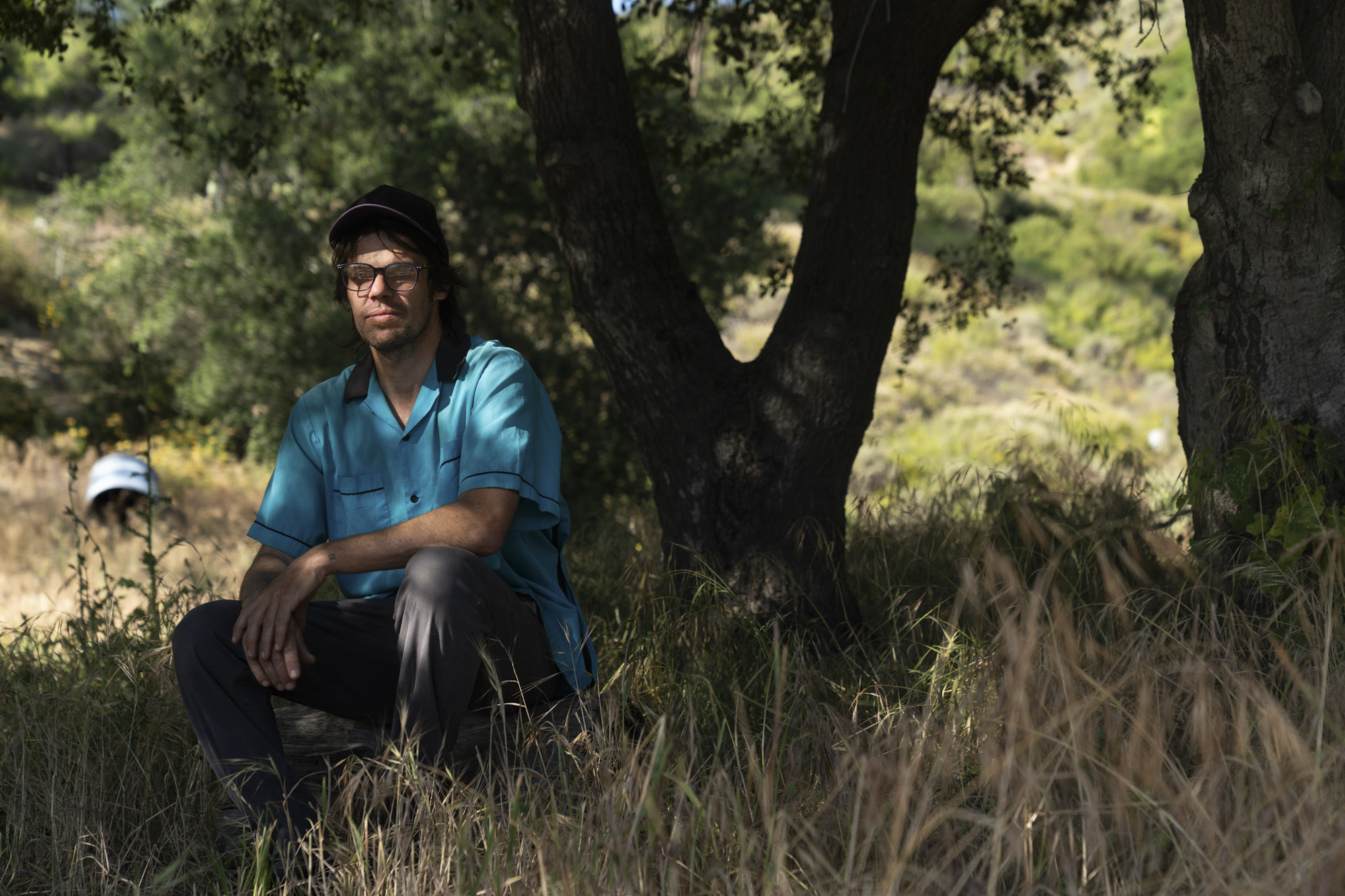
"caption": "Chad Ashby at his home in Topanga on April 15, 2026. Ashby will be working on a support boat as part of the Global Samud flotilla, an effort to deliver aid to Gaza. ",
"credit": "Lauren Justice for KQED",
"altTag": null,
"description": null,
"imgSizes": {
"thumbnail": {
"file": "https://cdn.kqed.org/wp-content/uploads/sites/10/2026/04/041526_CHADASHBY_9485-KQED-160x107.jpg",
"width": 160,
"height": 107,
"mimeType": "image/jpeg"
},
"1536x1536": {
"file": "https://cdn.kqed.org/wp-content/uploads/sites/10/2026/04/041526_CHADASHBY_9485-KQED-1536x1024.jpg",
"width": 1536,
"height": 1024,
"mimeType": "image/jpeg"
},
"post-thumbnail": {
"file": "https://cdn.kqed.org/wp-content/uploads/sites/10/2026/04/041526_CHADASHBY_9485-KQED-672x372.jpg",
"width": 672,
"height": 372,
"mimeType": "image/jpeg"
},
"twentyfourteen-full-width": {
"file": "https://cdn.kqed.org/wp-content/uploads/sites/10/2026/04/041526_CHADASHBY_9485-KQED-1038x576.jpg",
"width": 1038,
"height": 576,
"mimeType": "image/jpeg"
},
"npr-cds-wide": {
"file": "https://cdn.kqed.org/wp-content/uploads/sites/10/2026/04/041526_CHADASHBY_9485-KQED-1200x675.jpg",
"width": 1200,
"height": 675,
"mimeType": "image/jpeg"
},
"npr-cds-square": {
"file": "https://cdn.kqed.org/wp-content/uploads/sites/10/2026/04/041526_CHADASHBY_9485-KQED-600x600.jpg",
"width": 600,
"height": 600,
"mimeType": "image/jpeg"
},
"kqedFullSize": {
"file": "https://cdn.kqed.org/wp-content/uploads/sites/10/2026/04/041526_CHADASHBY_9485-KQED.jpg",
"width": 2000,
"height": 1333
}
},
"isLoading": false,
"fetchFailed": false
},
"news_12080782": {
"type": "attachments",
"id": "news_12080782",
"meta": {
"index": "attachments_1716263798",
"site": "news",
"id": "12080782",
"found": true
},
"title": "260421-OAKLANDDIOCESEBELLWEATHER-07-BL-KQED",
"publishDate": 1776811437,
"status": "inherit",
"parent": 0,
"modified": 1776812836,
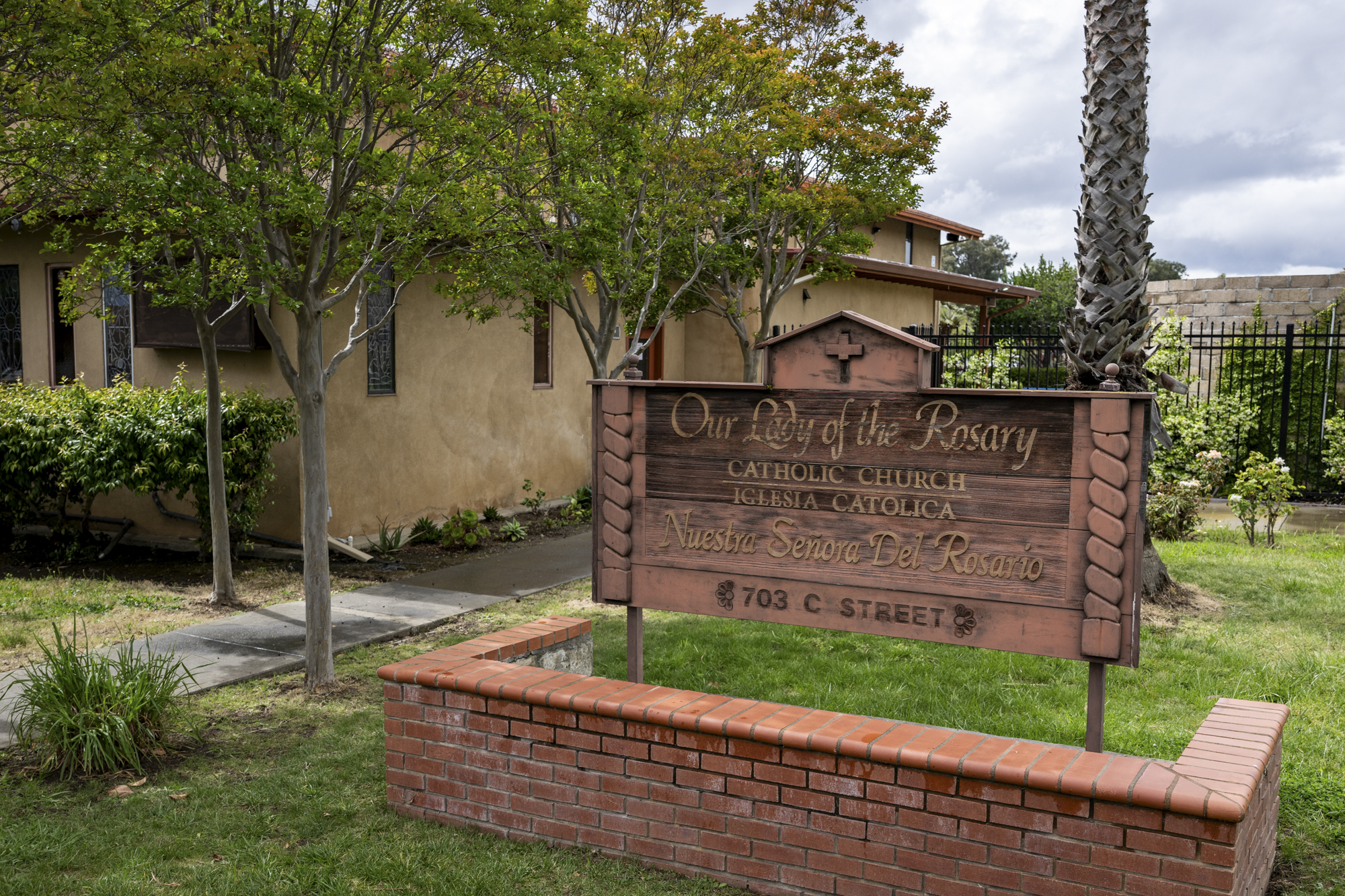
"caption": "Our Lady of the Rosary Church, a Roman Catholic parish in the Diocese of Oakland, in Union City, on April 21, 2026.",
"credit": "Beth LaBerge/KQED",
"altTag": null,
"description": null,
"imgSizes": {
"thumbnail": {
"file": "https://cdn.kqed.org/wp-content/uploads/sites/10/2026/04/260421-OAKLANDDIOCESEBELLWEATHER-07-BL-KQED-160x107.jpg",
"width": 160,
"height": 107,
"mimeType": "image/jpeg"
},
"1536x1536": {
"file": "https://cdn.kqed.org/wp-content/uploads/sites/10/2026/04/260421-OAKLANDDIOCESEBELLWEATHER-07-BL-KQED-1536x1024.jpg",
"width": 1536,
"height": 1024,
"mimeType": "image/jpeg"
},
"post-thumbnail": {
"file": "https://cdn.kqed.org/wp-content/uploads/sites/10/2026/04/260421-OAKLANDDIOCESEBELLWEATHER-07-BL-KQED-672x372.jpg",
"width": 672,
"height": 372,
"mimeType": "image/jpeg"
},
"twentyfourteen-full-width": {
"file": "https://cdn.kqed.org/wp-content/uploads/sites/10/2026/04/260421-OAKLANDDIOCESEBELLWEATHER-07-BL-KQED-1038x576.jpg",
"width": 1038,
"height": 576,
"mimeType": "image/jpeg"
},
"npr-cds-wide": {
"file": "https://cdn.kqed.org/wp-content/uploads/sites/10/2026/04/260421-OAKLANDDIOCESEBELLWEATHER-07-BL-KQED-1200x675.jpg",
"width": 1200,
"height": 675,
"mimeType": "image/jpeg"
},
"npr-cds-square": {
"file": "https://cdn.kqed.org/wp-content/uploads/sites/10/2026/04/260421-OAKLANDDIOCESEBELLWEATHER-07-BL-KQED-600x600.jpg",
"width": 600,
"height": 600,
"mimeType": "image/jpeg"
},
"kqedFullSize": {
"file": "https://cdn.kqed.org/wp-content/uploads/sites/10/2026/04/260421-OAKLANDDIOCESEBELLWEATHER-07-BL-KQED.jpg",
"width": 2000,
"height": 1333
}
},
"isLoading": false,
"fetchFailed": false
},
"news_12080719": {
"type": "attachments",
"id": "news_12080719",
"meta": {
"index": "attachments_1716263798",
"site": "news",
"id": "12080719",
"found": true
},
"title": "A commuter looks for a less crowded section of a westbound BART train at the West Oakland station in Oakland, Calif. on Friday, Feb. 16, 2018. BART officials will begin a study on the feasibility of a second transbay tube",
"publishDate": 1776797943,
"status": "inherit",
"parent": 12080707,
"modified": 1776799298,
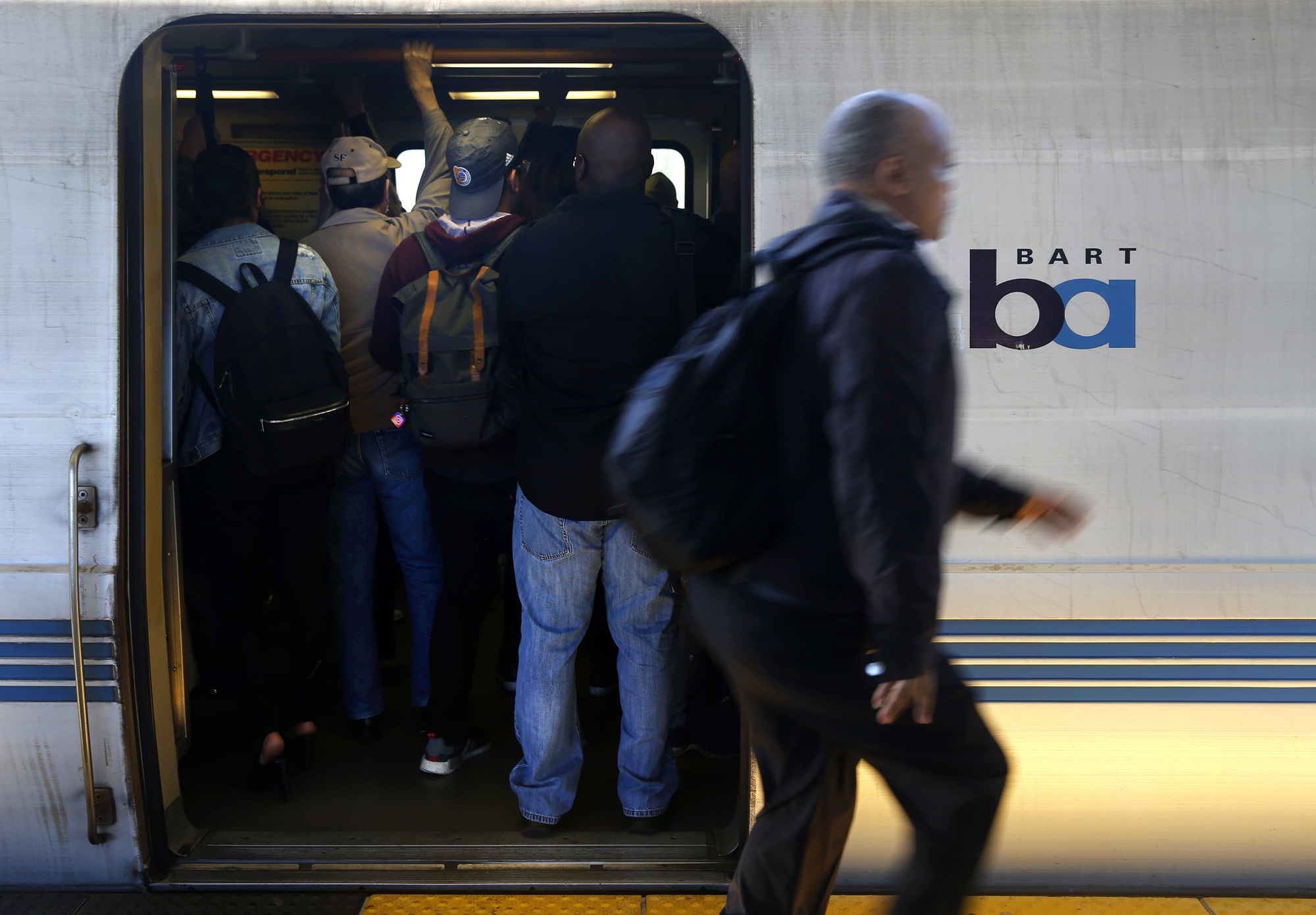
"caption": "A commuter looks for a less crowded section of a westbound BART train at the West Oakland station in Oakland, California, on Friday, Feb. 16, 2018. BART officials will begin a study on the feasibility of a second transbay tube. ",
"credit": "Paul Chinn/The San Francisco Chronicle via Getty Images",
"altTag": null,
"description": null,
"imgSizes": {
"thumbnail": {
"file": "https://cdn.kqed.org/wp-content/uploads/sites/10/2026/04/BARTSFGetty-160x111.jpg",
"width": 160,
"height": 111,
"mimeType": "image/jpeg"
},
"1536x1536": {
"file": "https://cdn.kqed.org/wp-content/uploads/sites/10/2026/04/BARTSFGetty-1536x1068.jpg",
"width": 1536,
"height": 1068,
"mimeType": "image/jpeg"
},
"post-thumbnail": {
"file": "https://cdn.kqed.org/wp-content/uploads/sites/10/2026/04/BARTSFGetty-672x372.jpg",
"width": 672,
"height": 372,
"mimeType": "image/jpeg"
},
"twentyfourteen-full-width": {
"file": "https://cdn.kqed.org/wp-content/uploads/sites/10/2026/04/BARTSFGetty-1038x576.jpg",
"width": 1038,
"height": 576,
"mimeType": "image/jpeg"
},
"npr-cds-wide": {
"file": "https://cdn.kqed.org/wp-content/uploads/sites/10/2026/04/BARTSFGetty-1200x675.jpg",
"width": 1200,
"height": 675,
"mimeType": "image/jpeg"
},
"npr-cds-square": {
"file": "https://cdn.kqed.org/wp-content/uploads/sites/10/2026/04/BARTSFGetty-600x600.jpg",
"width": 600,
"height": 600,
"mimeType": "image/jpeg"
},
"kqedFullSize": {
"file": "https://cdn.kqed.org/wp-content/uploads/sites/10/2026/04/BARTSFGetty.jpg",
"width": 2000,
"height": 1391
}
},
"isLoading": false,
"fetchFailed": false
},
"news_12080645": {
"type": "attachments",
"id": "news_12080645",
"meta": {
"index": "attachments_1716263798",
"site": "news",
"id": "12080645",
"found": true
},
"title": "260420-SLEEP PODS-MD-01-KQED_1",
"publishDate": 1776722847,
"status": "inherit",
"parent": 0,
"modified": 1776775510,
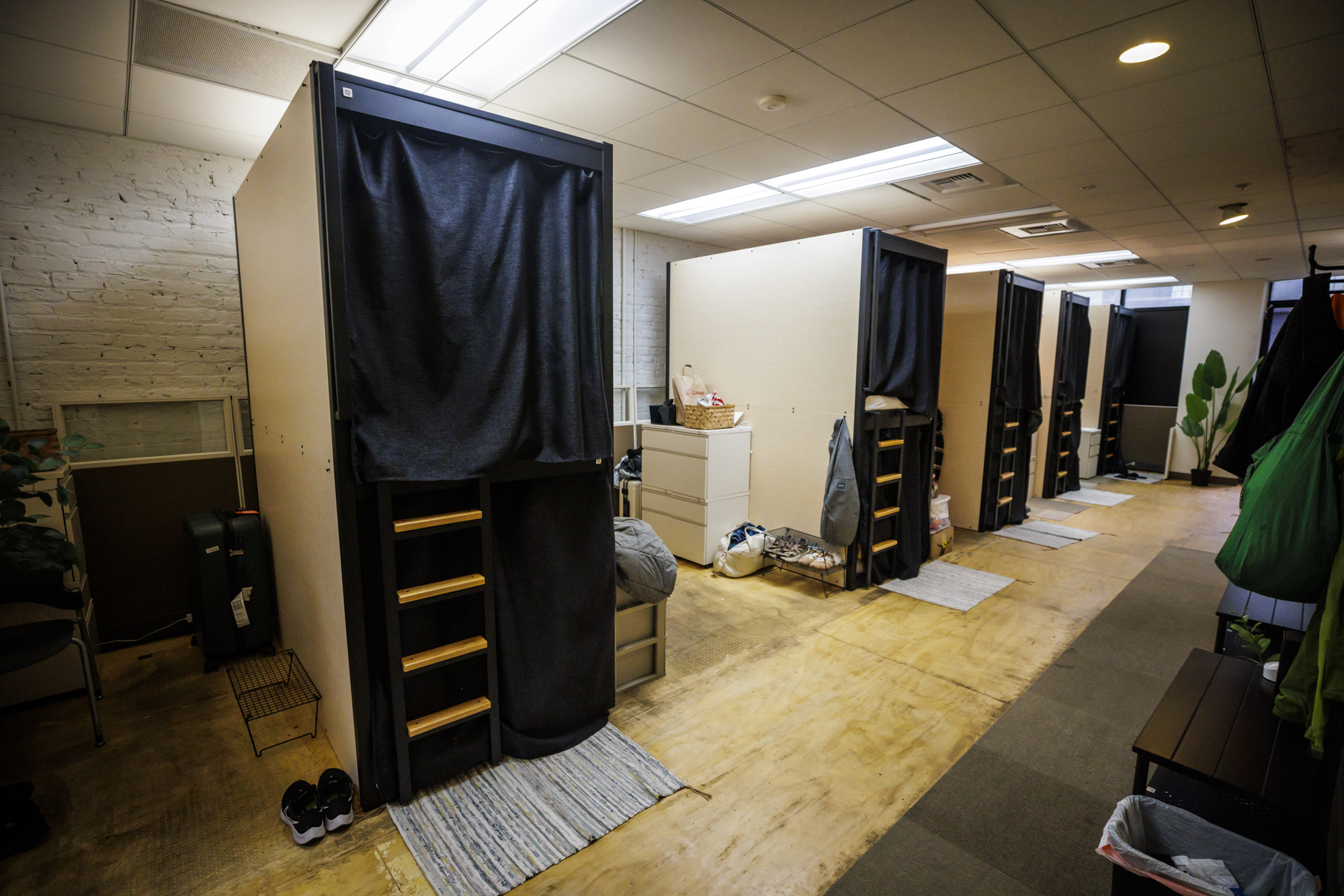
"caption": "Sleeping pods at the Brownstone Shared Housing co-living space in San Francisco on April 20, 2026.",
"credit": "Martin do Nascimento/KQED",
"altTag": null,
"description": null,
"imgSizes": {
"thumbnail": {
"file": "https://cdn.kqed.org/wp-content/uploads/sites/10/2026/04/260420-SLEEP-PODS-MD-01-KQED_1-160x107.jpg",
"width": 160,
"height": 107,
"mimeType": "image/jpeg"
},
"1536x1536": {
"file": "https://cdn.kqed.org/wp-content/uploads/sites/10/2026/04/260420-SLEEP-PODS-MD-01-KQED_1-1536x1025.jpg",
"width": 1536,
"height": 1025,
"mimeType": "image/jpeg"
},
"post-thumbnail": {
"file": "https://cdn.kqed.org/wp-content/uploads/sites/10/2026/04/260420-SLEEP-PODS-MD-01-KQED_1-672x372.jpg",
"width": 672,
"height": 372,
"mimeType": "image/jpeg"
},
"twentyfourteen-full-width": {
"file": "https://cdn.kqed.org/wp-content/uploads/sites/10/2026/04/260420-SLEEP-PODS-MD-01-KQED_1-1038x576.jpg",
"width": 1038,
"height": 576,
"mimeType": "image/jpeg"
},
"npr-cds-wide": {
"file": "https://cdn.kqed.org/wp-content/uploads/sites/10/2026/04/260420-SLEEP-PODS-MD-01-KQED_1-1200x675.jpg",
"width": 1200,
"height": 675,
"mimeType": "image/jpeg"
},
"npr-cds-square": {
"file": "https://cdn.kqed.org/wp-content/uploads/sites/10/2026/04/260420-SLEEP-PODS-MD-01-KQED_1-600x600.jpg",
"width": 600,
"height": 600,
"mimeType": "image/jpeg"
},
"kqedFullSize": {
"file": "https://cdn.kqed.org/wp-content/uploads/sites/10/2026/04/260420-SLEEP-PODS-MD-01-KQED_1.jpg",
"width": 2000,
"height": 1334
}
},
"isLoading": false,
"fetchFailed": false
},
"news_12080539": {
"type": "attachments",
"id": "news_12080539",
"meta": {
"index": "attachments_1716263798",
"site": "news",
"id": "12080539",
"found": true
},
"title": "Female art studio instructor laughing with students",
"publishDate": 1776609425,
"status": "inherit",
"parent": 12080474,
"modified": 1776609589,
"caption": "Pursuing hobbies in social spaces can help you meet new people, but one listener found difficulty leveling those relationships up to friendships. ",
"credit": "MoMo Productions/Getty Images",
"altTag": null,
"description": "Pursuing hobbies in social spaces can help you meet new people, but one listener found difficulty leveling those relationships up to friendships. ",
"imgSizes": {
"medium": {
"file": "https://cdn.kqed.org/wp-content/uploads/sites/10/2026/04/GettyImages-2150205273-2000x1334.jpg",
"width": 2000,
"height": 1334,
"mimeType": "image/jpeg"
},
"large": {
"file": "https://cdn.kqed.org/wp-content/uploads/sites/10/2026/04/GettyImages-2150205273-2000x1334.jpg",
"width": 2000,
"height": 1334,
"mimeType": "image/jpeg"
},
"thumbnail": {
"file": "https://cdn.kqed.org/wp-content/uploads/sites/10/2026/04/GettyImages-2150205273-160x107.jpg",
"width": 160,
"height": 107,
"mimeType": "image/jpeg"
},
"1536x1536": {
"file": "https://cdn.kqed.org/wp-content/uploads/sites/10/2026/04/GettyImages-2150205273-1536x1024.jpg",
"width": 1536,
"height": 1024,
"mimeType": "image/jpeg"
},
"2048x2048": {
"file": "https://cdn.kqed.org/wp-content/uploads/sites/10/2026/04/GettyImages-2150205273-2048x1366.jpg",
"width": 2048,
"height": 1366,
"mimeType": "image/jpeg"
},
"post-thumbnail": {
"file": "https://cdn.kqed.org/wp-content/uploads/sites/10/2026/04/GettyImages-2150205273-672x372.jpg",
"width": 672,
"height": 372,
"mimeType": "image/jpeg"
},
"twentyfourteen-full-width": {
"file": "https://cdn.kqed.org/wp-content/uploads/sites/10/2026/04/GettyImages-2150205273-1038x576.jpg",
"width": 1038,
"height": 576,
"mimeType": "image/jpeg"
},
"full-width": {
"file": "https://cdn.kqed.org/wp-content/uploads/sites/10/2026/04/GettyImages-2150205273-2000x1334.jpg",
"width": 2000,
"height": 1334,
"mimeType": "image/jpeg"
},
"npr-cds-wide": {
"file": "https://cdn.kqed.org/wp-content/uploads/sites/10/2026/04/GettyImages-2150205273-1200x675.jpg",
"width": 1200,
"height": 675,
"mimeType": "image/jpeg"
},
"npr-cds-square": {
"file": "https://cdn.kqed.org/wp-content/uploads/sites/10/2026/04/GettyImages-2150205273-600x600.jpg",
"width": 600,
"height": 600,
"mimeType": "image/jpeg"
},
"kqedFullSize": {
"file": "https://cdn.kqed.org/wp-content/uploads/sites/10/2026/04/GettyImages-2150205273.jpg",
"width": 2120,
"height": 1414
}
},
"isLoading": false,
"fetchFailed": false
},
"news_12080559": {
"type": "attachments",
"id": "news_12080559",
"meta": {
"index": "attachments_1716263798",
"site": "news",
"id": "12080559",
"found": true
},
"title": "041826-I80Closure-JY-13",
"publishDate": 1776625760,
"status": "inherit",
"parent": 12080542,
"modified": 1776707566,
"caption": "Traffic is rerouted from I-80 eastbound to U.S. 101 as Caltrans performs construction in San Francisco on Saturday, April 18, 2026. Throughout the weekend, Caltrans is repairing viaducts and performing necessary repairs, prompting a stretch of I-80 to be closed until early Monday morning.",
"credit": "Juliana Yamada for KQED",
"altTag": null,
"description": null,
"imgSizes": {
"medium": {
"file": "https://cdn.kqed.org/wp-content/uploads/sites/10/2026/04/041826-I80Closure-JY-13-2000x1335.jpg",
"width": 2000,
"height": 1335,
"mimeType": "image/jpeg"
},
"large": {
"file": "https://cdn.kqed.org/wp-content/uploads/sites/10/2026/04/041826-I80Closure-JY-13-2000x1335.jpg",
"width": 2000,
"height": 1335,
"mimeType": "image/jpeg"
},
"thumbnail": {
"file": "https://cdn.kqed.org/wp-content/uploads/sites/10/2026/04/041826-I80Closure-JY-13-160x107.jpg",
"width": 160,
"height": 107,
"mimeType": "image/jpeg"
},
"1536x1536": {
"file": "https://cdn.kqed.org/wp-content/uploads/sites/10/2026/04/041826-I80Closure-JY-13-1536x1025.jpg",
"width": 1536,
"height": 1025,
"mimeType": "image/jpeg"
},
"2048x2048": {
"file": "https://cdn.kqed.org/wp-content/uploads/sites/10/2026/04/041826-I80Closure-JY-13-2048x1367.jpg",
"width": 2048,
"height": 1367,
"mimeType": "image/jpeg"
},
"post-thumbnail": {
"file": "https://cdn.kqed.org/wp-content/uploads/sites/10/2026/04/041826-I80Closure-JY-13-672x372.jpg",
"width": 672,
"height": 372,
"mimeType": "image/jpeg"
},
"twentyfourteen-full-width": {
"file": "https://cdn.kqed.org/wp-content/uploads/sites/10/2026/04/041826-I80Closure-JY-13-1038x576.jpg",
"width": 1038,
"height": 576,
"mimeType": "image/jpeg"
},
"full-width": {
"file": "https://cdn.kqed.org/wp-content/uploads/sites/10/2026/04/041826-I80Closure-JY-13-2000x1335.jpg",
"width": 2000,
"height": 1335,
"mimeType": "image/jpeg"
},
"npr-cds-wide": {
"file": "https://cdn.kqed.org/wp-content/uploads/sites/10/2026/04/041826-I80Closure-JY-13-1200x675.jpg",
"width": 1200,
"height": 675,
"mimeType": "image/jpeg"
},
"npr-cds-square": {
"file": "https://cdn.kqed.org/wp-content/uploads/sites/10/2026/04/041826-I80Closure-JY-13-600x600.jpg",
"width": 600,
"height": 600,
"mimeType": "image/jpeg"
},
"kqedFullSize": {
"file": "https://cdn.kqed.org/wp-content/uploads/sites/10/2026/04/041826-I80Closure-JY-13-scaled.jpg",
"width": 2560,
"height": 1709
}
},
"isLoading": false,
"fetchFailed": false
},
"news_12080448": {
"type": "attachments",
"id": "news_12080448",
"meta": {
"index": "attachments_1716263798",
"site": "news",
"id": "12080448",
"found": true
},
"title": "250818-SFUSDFirstDay-37_qed",
"publishDate": 1776455905,
"status": "inherit",
"parent": 12080441,
"modified": 1776455917,
"caption": "Students sit in class at Dr. Martin Luther King, Jr. Academic Middle School for their first day of the school year in San Francisco on Aug. 18, 2025.",
"credit": "Beth LaBerge/KQED",
"altTag": null,
"description": null,
"imgSizes": {
"thumbnail": {
"file": "https://cdn.kqed.org/wp-content/uploads/sites/10/2026/04/250818-SFUSDFirstDay-37_qed-160x107.jpg",
"width": 160,
"height": 107,
"mimeType": "image/jpeg"
},
"1536x1536": {
"file": "https://cdn.kqed.org/wp-content/uploads/sites/10/2026/04/250818-SFUSDFirstDay-37_qed-1536x1024.jpg",
"width": 1536,
"height": 1024,
"mimeType": "image/jpeg"
},
"post-thumbnail": {
"file": "https://cdn.kqed.org/wp-content/uploads/sites/10/2026/04/250818-SFUSDFirstDay-37_qed-672x372.jpg",
"width": 672,
"height": 372,
"mimeType": "image/jpeg"
},
"twentyfourteen-full-width": {
"file": "https://cdn.kqed.org/wp-content/uploads/sites/10/2026/04/250818-SFUSDFirstDay-37_qed-1038x576.jpg",
"width": 1038,
"height": 576,
"mimeType": "image/jpeg"
},
"npr-cds-wide": {
"file": "https://cdn.kqed.org/wp-content/uploads/sites/10/2026/04/250818-SFUSDFirstDay-37_qed-1200x675.jpg",
"width": 1200,
"height": 675,
"mimeType": "image/jpeg"
},
"npr-cds-square": {
"file": "https://cdn.kqed.org/wp-content/uploads/sites/10/2026/04/250818-SFUSDFirstDay-37_qed-600x600.jpg",
"width": 600,
"height": 600,
"mimeType": "image/jpeg"
},
"kqedFullSize": {
"file": "https://cdn.kqed.org/wp-content/uploads/sites/10/2026/04/250818-SFUSDFirstDay-37_qed.jpg",
"width": 2000,
"height": 1333
}
},
"isLoading": false,
"fetchFailed": false
},
"news_12080166": {
"type": "attachments",
"id": "news_12080166",
"meta": {
"index": "attachments_1716263798",
"site": "news",
"id": "12080166",
"found": true
},
"title": "A view of the San Francisco skyline from Dolores Park on April 15, 2026.",
"publishDate": 1776296693,
"status": "inherit",
"parent": 0,
"modified": 1776296708,
"caption": "A view of the San Francisco skyline from Dolores Park on April 15, 2026.",
"credit": "Beth LaBerge/KQED",
"altTag": null,
"description": null,
"imgSizes": {
"thumbnail": {
"file": "https://cdn.kqed.org/wp-content/uploads/sites/10/2026/04/260415-SPUREARTHQUAKE-06-BL-KQED-160x107.jpg",
"width": 160,
"height": 107,
"mimeType": "image/jpeg"
},
"1536x1536": {
"file": "https://cdn.kqed.org/wp-content/uploads/sites/10/2026/04/260415-SPUREARTHQUAKE-06-BL-KQED-1536x1024.jpg",
"width": 1536,
"height": 1024,
"mimeType": "image/jpeg"
},
"post-thumbnail": {
"file": "https://cdn.kqed.org/wp-content/uploads/sites/10/2026/04/260415-SPUREARTHQUAKE-06-BL-KQED-672x372.jpg",
"width": 672,
"height": 372,
"mimeType": "image/jpeg"
},
"twentyfourteen-full-width": {
"file": "https://cdn.kqed.org/wp-content/uploads/sites/10/2026/04/260415-SPUREARTHQUAKE-06-BL-KQED-1038x576.jpg",
"width": 1038,
"height": 576,
"mimeType": "image/jpeg"
},
"npr-cds-wide": {
"file": "https://cdn.kqed.org/wp-content/uploads/sites/10/2026/04/260415-SPUREARTHQUAKE-06-BL-KQED-1200x675.jpg",
"width": 1200,
"height": 675,
"mimeType": "image/jpeg"
},
"npr-cds-square": {
"file": "https://cdn.kqed.org/wp-content/uploads/sites/10/2026/04/260415-SPUREARTHQUAKE-06-BL-KQED-600x600.jpg",
"width": 600,
"height": 600,
"mimeType": "image/jpeg"
},
"kqedFullSize": {
"file": "https://cdn.kqed.org/wp-content/uploads/sites/10/2026/04/260415-SPUREARTHQUAKE-06-BL-KQED.jpg",
"width": 2000,
"height": 1333
}
},
"isLoading": false,
"fetchFailed": false
},
"news_12080407": {
"type": "attachments",
"id": "news_12080407",
"meta": {
"index": "attachments_1716263798",
"site": "news",
"id": "12080407",
"found": true
},
"title": "SeaLionSF1",
"publishDate": 1776448274,
"status": "inherit",
"parent": 12080405,
"modified": 1776470488,
"caption": "10-month-old Irving journeyed from Ocean Beach to 48th Street early Thursday morning.",
"credit": "Katie Young/The Marine Mammal Center",
"altTag": null,
"description": null,
"imgSizes": {
"thumbnail": {
"file": "https://cdn.kqed.org/wp-content/uploads/sites/10/2026/04/SeaLionSF1-160x120.jpg",
"width": 160,
"height": 120,
"mimeType": "image/jpeg"
},
"1536x1536": {
"file": "https://cdn.kqed.org/wp-content/uploads/sites/10/2026/04/SeaLionSF1-1536x1152.jpg",
"width": 1536,
"height": 1152,
"mimeType": "image/jpeg"
},
"post-thumbnail": {
"file": "https://cdn.kqed.org/wp-content/uploads/sites/10/2026/04/SeaLionSF1-672x372.jpg",
"width": 672,
"height": 372,
"mimeType": "image/jpeg"
},
"twentyfourteen-full-width": {
"file": "https://cdn.kqed.org/wp-content/uploads/sites/10/2026/04/SeaLionSF1-1038x576.jpg",
"width": 1038,
"height": 576,
"mimeType": "image/jpeg"
},
"npr-cds-wide": {
"file": "https://cdn.kqed.org/wp-content/uploads/sites/10/2026/04/SeaLionSF1-1200x675.jpg",
"width": 1200,
"height": 675,
"mimeType": "image/jpeg"
},
"npr-cds-square": {
"file": "https://cdn.kqed.org/wp-content/uploads/sites/10/2026/04/SeaLionSF1-600x600.jpg",
"width": 600,
"height": 600,
"mimeType": "image/jpeg"
},
"kqedFullSize": {
"file": "https://cdn.kqed.org/wp-content/uploads/sites/10/2026/04/SeaLionSF1.jpg",
"width": 2000,
"height": 1500
}
},
"isLoading": false,
"fetchFailed": false
},
"news_12080108": {
"type": "attachments",
"id": "news_12080108",
"meta": {
"index": "attachments_1716263798",
"site": "news",
"id": "12080108",
"found": true
},
"title": "260415-Mosaic Project-01-KQED",
"publishDate": 1776292362,
"status": "inherit",
"parent": 0,
"modified": 1776295895,
"caption": "This rendering shows plans for the Mosaic Project's proposed permanent home in Alameda County, which it hopes will serve up to 100 students per week, for about 130 days out of the year, at a proposed new permanent facility in Castro Valley.",
"credit": "Courtesy of the Mosaic Project",
"altTag": null,
"description": null,
"imgSizes": {
"thumbnail": {
"file": "https://cdn.kqed.org/wp-content/uploads/sites/10/2026/04/260415-Mosaic-Project-01-KQED-160x107.jpg",
"width": 160,
"height": 107,
"mimeType": "image/jpeg"
},
"1536x1536": {
"file": "https://cdn.kqed.org/wp-content/uploads/sites/10/2026/04/260415-Mosaic-Project-01-KQED-1536x1024.jpg",
"width": 1536,
"height": 1024,
"mimeType": "image/jpeg"
},
"post-thumbnail": {
"file": "https://cdn.kqed.org/wp-content/uploads/sites/10/2026/04/260415-Mosaic-Project-01-KQED-672x372.jpg",
"width": 672,
"height": 372,
"mimeType": "image/jpeg"
},
"twentyfourteen-full-width": {
"file": "https://cdn.kqed.org/wp-content/uploads/sites/10/2026/04/260415-Mosaic-Project-01-KQED-1038x576.jpg",
"width": 1038,
"height": 576,
"mimeType": "image/jpeg"
},
"npr-cds-wide": {
"file": "https://cdn.kqed.org/wp-content/uploads/sites/10/2026/04/260415-Mosaic-Project-01-KQED-1200x675.jpg",
"width": 1200,
"height": 675,
"mimeType": "image/jpeg"
},
"npr-cds-square": {
"file": "https://cdn.kqed.org/wp-content/uploads/sites/10/2026/04/260415-Mosaic-Project-01-KQED-600x600.jpg",
"width": 600,
"height": 600,
"mimeType": "image/jpeg"
},
"kqedFullSize": {
"file": "https://cdn.kqed.org/wp-content/uploads/sites/10/2026/04/260415-Mosaic-Project-01-KQED.jpg",
"width": 2000,
"height": 1333
}
},
"isLoading": false,
"fetchFailed": false
},
"news_12080436": {
"type": "attachments",
"id": "news_12080436",
"meta": {
"index": "attachments_1716263798",
"site": "news",
"id": "12080436",
"found": true
},
"title": "Philz Coffee Storefront",
"publishDate": 1776454439,
"status": "inherit",
"parent": 12080428,
"modified": 1776454510,
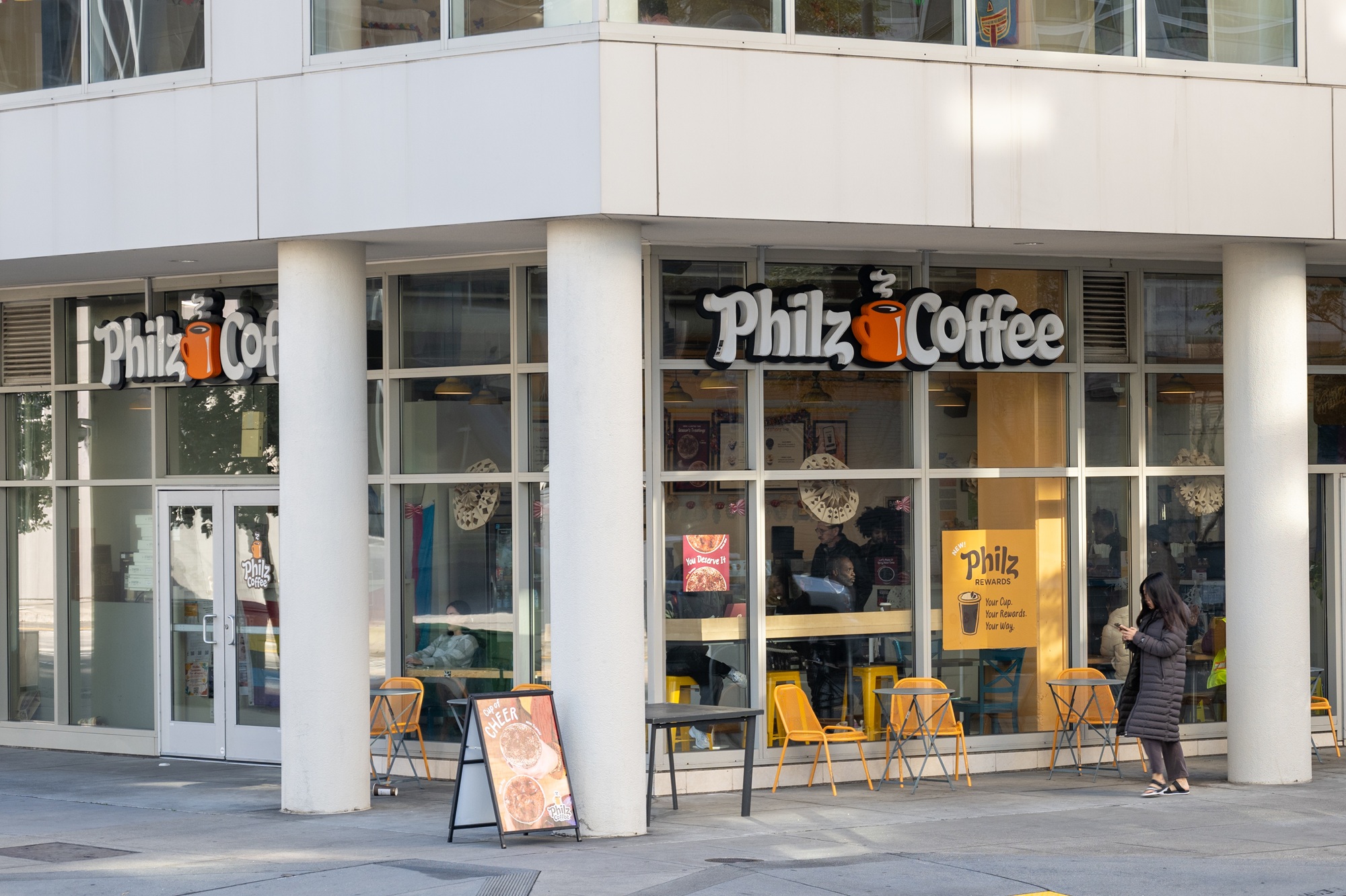
"caption": "Philz Coffee in San Francisco, California, on Dec. 11, 2025. ",
"credit": "Smith Collection/Gado via Getty Images",
"altTag": null,
"description": null,
"imgSizes": {
"thumbnail": {
"file": "https://cdn.kqed.org/wp-content/uploads/sites/10/2026/04/PhilzCoffeeGetty1-160x107.jpg",
"width": 160,
"height": 107,
"mimeType": "image/jpeg"
},
"1536x1536": {
"file": "https://cdn.kqed.org/wp-content/uploads/sites/10/2026/04/PhilzCoffeeGetty1-1536x1023.jpg",
"width": 1536,
"height": 1023,
"mimeType": "image/jpeg"
},
"post-thumbnail": {
"file": "https://cdn.kqed.org/wp-content/uploads/sites/10/2026/04/PhilzCoffeeGetty1-672x372.jpg",
"width": 672,
"height": 372,
"mimeType": "image/jpeg"
},
"twentyfourteen-full-width": {
"file": "https://cdn.kqed.org/wp-content/uploads/sites/10/2026/04/PhilzCoffeeGetty1-1038x576.jpg",
"width": 1038,
"height": 576,
"mimeType": "image/jpeg"
},
"npr-cds-wide": {
"file": "https://cdn.kqed.org/wp-content/uploads/sites/10/2026/04/PhilzCoffeeGetty1-1200x675.jpg",
"width": 1200,
"height": 675,
"mimeType": "image/jpeg"
},
"npr-cds-square": {
"file": "https://cdn.kqed.org/wp-content/uploads/sites/10/2026/04/PhilzCoffeeGetty1-600x600.jpg",
"width": 600,
"height": 600,
"mimeType": "image/jpeg"
},
"kqedFullSize": {
"file": "https://cdn.kqed.org/wp-content/uploads/sites/10/2026/04/PhilzCoffeeGetty1.jpg",
"width": 2000,
"height": 1332
}
},
"isLoading": false,
"fetchFailed": false
},
"news_12080282": {
"type": "attachments",
"id": "news_12080282",
"meta": {
"index": "attachments_1716263798",
"site": "news",
"id": "12080282",
"found": true
},
"title": "IMG_1441 (1)",
"publishDate": 1776366313,
"status": "inherit",
"parent": 12079852,
"modified": 1776366341,
"caption": "What does it take to start growing your own food in the Bay Area?",
"credit": "Anna Vignet/KQED",
"altTag": null,
"description": null,
"imgSizes": {
"medium": {
"file": "https://cdn.kqed.org/wp-content/uploads/sites/10/2026/04/IMG_1441-1-2000x1500.jpg",
"width": 2000,
"height": 1500,
"mimeType": "image/jpeg"
},
"large": {
"file": "https://cdn.kqed.org/wp-content/uploads/sites/10/2026/04/IMG_1441-1-2000x1500.jpg",
"width": 2000,
"height": 1500,
"mimeType": "image/jpeg"
},
"thumbnail": {
"file": "https://cdn.kqed.org/wp-content/uploads/sites/10/2026/04/IMG_1441-1-160x120.jpg",
"width": 160,
"height": 120,
"mimeType": "image/jpeg"
},
"1536x1536": {
"file": "https://cdn.kqed.org/wp-content/uploads/sites/10/2026/04/IMG_1441-1-1536x1152.jpg",
"width": 1536,
"height": 1152,
"mimeType": "image/jpeg"
},
"2048x2048": {
"file": "https://cdn.kqed.org/wp-content/uploads/sites/10/2026/04/IMG_1441-1-2048x1536.jpg",
"width": 2048,
"height": 1536,
"mimeType": "image/jpeg"
},
"post-thumbnail": {
"file": "https://cdn.kqed.org/wp-content/uploads/sites/10/2026/04/IMG_1441-1-672x372.jpg",
"width": 672,
"height": 372,
"mimeType": "image/jpeg"
},
"twentyfourteen-full-width": {
"file": "https://cdn.kqed.org/wp-content/uploads/sites/10/2026/04/IMG_1441-1-1038x576.jpg",
"width": 1038,
"height": 576,
"mimeType": "image/jpeg"
},
"full-width": {
"file": "https://cdn.kqed.org/wp-content/uploads/sites/10/2026/04/IMG_1441-1-2000x1500.jpg",
"width": 2000,
"height": 1500,
"mimeType": "image/jpeg"
},
"npr-cds-wide": {
"file": "https://cdn.kqed.org/wp-content/uploads/sites/10/2026/04/IMG_1441-1-1200x675.jpg",
"width": 1200,
"height": 675,
"mimeType": "image/jpeg"
},
"npr-cds-square": {
"file": "https://cdn.kqed.org/wp-content/uploads/sites/10/2026/04/IMG_1441-1-600x600.jpg",
"width": 600,
"height": 600,
"mimeType": "image/jpeg"
},
"kqedFullSize": {
"file": "https://cdn.kqed.org/wp-content/uploads/sites/10/2026/04/IMG_1441-1.jpg",
"width": 2560,
"height": 1920
}
},
"isLoading": false,
"fetchFailed": false
}
},
"audioPlayerReducer": {
"postId": "stream_live",
"isPaused": true,
"isPlaying": false,
"pfsActive": false,
"pledgeModalIsOpen": true,
"playerDrawerIsOpen": false,
"liveAudioPlayStartedAt": 0,
"liveAudioPlayContext": ""
},
"authorsReducer": {
"ohubertallen": {
"type": "authors",
"id": "102",
"meta": {
"index": "authors_1716337520",
"id": "102",
"found": true
},
"name": "Olivia Allen-Price",
"firstName": "Olivia",
"lastName": "Allen-Price",
"slug": "ohubertallen",
"email": "oallenprice@kqed.org",
"display_author_email": false,
"staff_mastheads": [
"news"
],
"title": "Senior Editor",
"bio": "Olivia Allen-Price is senior editor and host of the award-winning Bay Curious podcast. Prior to joining KQED in 2013, Olivia worked at The Baltimore Sun and The Virginian-Pilot in Norfolk, Va. She holds degrees in journalism and political science from Elon University. Her work has earned awards from the Society of Professional Journalists, the Hearst Foundation and Hearken. She loves to talk about running and curly hair.\r\n\r\nFollow: \u003ca href=\"https://twitter.com/oallenprice\">@oallenprice\u003c/a>\r\nEmail: \u003ca href=\"mailto:oallenprice@kqed.org\">oallenprice@kqed.org\u003c/a>",
"avatar": "https://secure.gravatar.com/avatar/07f7803c1f6be56f3be58ef276dfa64dce898502e0554408ef4858451a8294f7?s=600&d=blank&r=g",
"twitter": "oallenprice",
"bluesky": null,
"facebook": null,
"instagram": null,
"linkedin": null,
"sites": [
{
"site": "",
"roles": [
"editor"
]
},
{
"site": "arts",
"roles": [
"subscriber"
]
},
{
"site": "news",
"roles": [
"administrator"
]
},
{
"site": "pop",
"roles": [
"administrator"
]
},
{
"site": "bayareabites",
"roles": [
"contributor"
]
},
{
"site": "stateofhealth",
"roles": [
"administrator"
]
},
{
"site": "science",
"roles": [
"editor"
]
}
],
"headData": {
"title": "Olivia Allen-Price | KQED",
"description": "Senior Editor",
"ogImgSrc": "https://secure.gravatar.com/avatar/07f7803c1f6be56f3be58ef276dfa64dce898502e0554408ef4858451a8294f7?s=600&d=blank&r=g",
"twImgSrc": "https://secure.gravatar.com/avatar/07f7803c1f6be56f3be58ef276dfa64dce898502e0554408ef4858451a8294f7?s=600&d=blank&r=g"
},
"isLoading": false,
"link": "/author/ohubertallen"
},
"eromero": {
"type": "authors",
"id": "11746",
"meta": {
"index": "authors_1716337520",
"id": "11746",
"found": true
},
"name": "Ezra David Romero",
"firstName": "Ezra David",
"lastName": "Romero",
"slug": "eromero",
"email": "eromero@kqed.org",
"display_author_email": true,
"staff_mastheads": [
"news",
"science"
],
"title": "Climate Reporter",
"bio": "Ezra David Romero is a climate reporter for KQED News. He covers the absence and excess of water in the Bay Area — think sea level rise, flooding and drought. For nearly a decade he’s covered how warming temperatures are altering the lives of Californians. He’s reported on farmers worried their pistachio trees aren’t getting enough sleep, families desperate for water, scientists studying dying giant sequoias, and alongside firefighters containing wildfires. His work has appeared on local stations across California and nationally on public radio shows like Morning Edition, Here and Now, All Things Considered and Science Friday. ",
"avatar": "https://secure.gravatar.com/avatar/c76404d287c10ed40224227551ac36e24352c7306f106632caf6fead76f8801f?s=600&d=blank&r=g",
"twitter": "ezraromero",
"bluesky": null,
"facebook": null,
"instagram": null,
"linkedin": null,
"sites": [
{
"site": "arts",
"roles": [
"editor"
]
},
{
"site": "news",
"roles": [
"editor"
]
},
{
"site": "science",
"roles": [
"editor"
]
},
{
"site": "liveblog",
"roles": [
"author"
]
}
],
"headData": {
"title": "Ezra David Romero | KQED",
"description": "Climate Reporter",
"ogImgSrc": "https://secure.gravatar.com/avatar/c76404d287c10ed40224227551ac36e24352c7306f106632caf6fead76f8801f?s=600&d=blank&r=g",
"twImgSrc": "https://secure.gravatar.com/avatar/c76404d287c10ed40224227551ac36e24352c7306f106632caf6fead76f8801f?s=600&d=blank&r=g"
},
"isLoading": false,
"link": "/author/eromero"
},
"daisynguyen": {
"type": "authors",
"id": "11829",
"meta": {
"index": "authors_1716337520",
"id": "11829",
"found": true
},
"name": "Daisy Nguyen",
"firstName": "Daisy",
"lastName": "Nguyen",
"slug": "daisynguyen",
"email": "daisynguyen@kqed.org",
"display_author_email": true,
"staff_mastheads": [
"news"
],
"title": "KQED Contributor",
"bio": "I have covered early childhood education and child care for KQED since 2022. I focus on policies aimed at increasing access to early care and education and how they shape individual lives. I've been a journalist for more than two decades, with most of that time devoted to covering breaking news throughout California for The Associated Press. I grew up in San Francisco and studied at UC Davis and Columbia University's Graduate School of Journalism. I live in Oakland with my husband and two kids.",
"avatar": "https://secure.gravatar.com/avatar/2da2127c27f7143b53ebd419800fd55f?s=600&d=blank&r=g",
"twitter": null,
"facebook": null,
"instagram": null,
"linkedin": "https://www.linkedin.com/in/daisynguyen/",
"sites": [
{
"site": "news",
"roles": [
"author"
]
},
{
"site": "liveblog",
"roles": [
"author"
]
}
],
"headData": {
"title": "Daisy Nguyen | KQED",
"description": "KQED Contributor",
"ogImgSrc": "https://secure.gravatar.com/avatar/2da2127c27f7143b53ebd419800fd55f?s=600&d=blank&r=g",
"twImgSrc": "https://secure.gravatar.com/avatar/2da2127c27f7143b53ebd419800fd55f?s=600&d=blank&r=g"
},
"isLoading": false,
"link": "/author/daisynguyen"
},
"sjohnson": {
"type": "authors",
"id": "11840",
"meta": {
"index": "authors_1716337520",
"id": "11840",
"found": true
},
"name": "Sydney Johnson",
"firstName": "Sydney",
"lastName": "Johnson",
"slug": "sjohnson",
"email": "sjohnson@kqed.org",
"display_author_email": false,
"staff_mastheads": [
"news"
],
"title": "KQED Reporter",
"bio": "Sydney Johnson is a general assignment reporter at KQED. She previously reported on public health and city government at the San Francisco Examiner, and before that, she covered statewide education policy for EdSource. Her reporting has won multiple local, state and national awards. Sydney is a graduate of the University of California, Berkeley and lives in San Francisco.",
"avatar": "https://secure.gravatar.com/avatar/97855f2719b72ad6190b7c535fe642c8?s=600&d=blank&r=g",
"twitter": "sydneyfjohnson",
"facebook": null,
"instagram": null,
"linkedin": null,
"sites": [
{
"site": "news",
"roles": [
"editor"
]
}
],
"headData": {
"title": "Sydney Johnson | KQED",
"description": "KQED Reporter",
"ogImgSrc": "https://secure.gravatar.com/avatar/97855f2719b72ad6190b7c535fe642c8?s=600&d=blank&r=g",
"twImgSrc": "https://secure.gravatar.com/avatar/97855f2719b72ad6190b7c535fe642c8?s=600&d=blank&r=g"
},
"isLoading": false,
"link": "/author/sjohnson"
},
"wcruz": {
"type": "authors",
"id": "11877",
"meta": {
"index": "authors_1716337520",
"id": "11877",
"found": true
},
"name": "Billy Cruz",
"firstName": "Billy",
"lastName": "Cruz",
"slug": "wcruz",
"email": "wcruz@KQED.org",
"display_author_email": false,
"staff_mastheads": [
"news"
],
"title": null,
"bio": null,
"avatar": "https://secure.gravatar.com/avatar/f19b14c4121ba9ba1e03e99eec83488517a34ef9e0f144abe8f5212c35f37684?s=600&d=blank&r=g",
"twitter": null,
"bluesky": null,
"facebook": null,
"instagram": null,
"linkedin": null,
"sites": [
{
"site": "news",
"roles": [
"editor"
]
}
],
"headData": {
"title": "Billy Cruz | KQED",
"description": null,
"ogImgSrc": "https://secure.gravatar.com/avatar/f19b14c4121ba9ba1e03e99eec83488517a34ef9e0f144abe8f5212c35f37684?s=600&d=blank&r=g",
"twImgSrc": "https://secure.gravatar.com/avatar/f19b14c4121ba9ba1e03e99eec83488517a34ef9e0f144abe8f5212c35f37684?s=600&d=blank&r=g"
},
"isLoading": false,
"link": "/author/wcruz"
},
"kdebenedetti": {
"type": "authors",
"id": "11913",
"meta": {
"index": "authors_1716337520",
"id": "11913",
"found": true
},
"name": "Katie DeBenedetti",
"firstName": "Katie",
"lastName": "DeBenedetti",
"slug": "kdebenedetti",
"email": "kdebenedetti@kqed.org",
"display_author_email": false,
"staff_mastheads": [
"news",
"science"
],
"title": "KQED Contributor",
"bio": "Katie DeBenedetti is a digital reporter covering daily news for the Express Desk. Prior to joining KQED as a culture reporting intern in January 2024, she covered education and city government for the Napa Valley Register.",
"avatar": "https://secure.gravatar.com/avatar/6e31073cb8f7e4214ab03f42771d0f45?s=600&d=blank&r=g",
"twitter": null,
"facebook": null,
"instagram": null,
"linkedin": null,
"sites": [
{
"site": "news",
"roles": [
"author"
]
},
{
"site": "science",
"roles": [
"author"
]
},
{
"site": "liveblog",
"roles": [
"author"
]
}
],
"headData": {
"title": "Katie DeBenedetti | KQED",
"description": "KQED Contributor",
"ogImgSrc": "https://secure.gravatar.com/avatar/6e31073cb8f7e4214ab03f42771d0f45?s=600&d=blank&r=g",
"twImgSrc": "https://secure.gravatar.com/avatar/6e31073cb8f7e4214ab03f42771d0f45?s=600&d=blank&r=g"
},
"isLoading": false,
"link": "/author/kdebenedetti"
},
"emanoukian": {
"type": "authors",
"id": "11925",
"meta": {
"index": "authors_1716337520",
"id": "11925",
"found": true
},
"name": "Elize Manoukian",
"firstName": "Elize",
"lastName": "Manoukian",
"slug": "emanoukian",
"email": "emanoukian@KQED.org",
"display_author_email": false,
"staff_mastheads": [
"news"
],
"title": "Digital News Editor",
"bio": "Elize Manoukian is an award-winning audio producer and Senior Editor on the Express Desk, KQED's digital news platform. Her work has appeared on KPFA, Interlochen Public Radio, Oregon Public Broadcast, the New York Daily News, LA Times and the San Diego Union-Tribune.",
"avatar": "https://secure.gravatar.com/avatar/4525f1a8e46ccb30933b32653d9772064cfefe3fa655eb45b3b3a80341f6bdad?s=600&d=blank&r=g",
"twitter": null,
"bluesky": null,
"facebook": null,
"instagram": null,
"linkedin": null,
"sites": [
{
"site": "arts",
"roles": [
"editor"
]
},
{
"site": "news",
"roles": [
"editor"
]
},
{
"site": "science",
"roles": [
"editor"
]
}
],
"headData": {
"title": "Elize Manoukian | KQED",
"description": "Digital News Editor",
"ogImgSrc": "https://secure.gravatar.com/avatar/4525f1a8e46ccb30933b32653d9772064cfefe3fa655eb45b3b3a80341f6bdad?s=600&d=blank&r=g",
"twImgSrc": "https://secure.gravatar.com/avatar/4525f1a8e46ccb30933b32653d9772064cfefe3fa655eb45b3b3a80341f6bdad?s=600&d=blank&r=g"
},
"isLoading": false,
"link": "/author/emanoukian"
},
"sarahwright": {
"type": "authors",
"id": "11956",
"meta": {
"index": "authors_1716337520",
"id": "11956",
"found": true
},
"name": "Sarah Wright",
"firstName": "Sarah",
"lastName": "Wright",
"slug": "sarahwright",
"email": "swright@kqed.org",
"display_author_email": true,
"staff_mastheads": [],
"title": "Outdoors Engagement Reporter",
"bio": "Sarah Wright is KQED's Outdoors Engagement Reporter. Originally from Lake Tahoe, she completed a thru-hike of the Pacific Crest Trail in 2019 and was a U.S. Fulbright Program grantee to Argentina in 2023. Her journalism has appeared in The Guardian, The San Francisco Standard, The Palo Alto Weekly and the Half Moon Bay Review.",
"avatar": "https://secure.gravatar.com/avatar/c161a3d6441865cba25e6db4fa561099ad665799e9432e34da2b84d7e371524c?s=600&d=blank&r=g",
"twitter": null,
"bluesky": null,
"facebook": null,
"instagram": null,
"linkedin": null,
"sites": [
{
"site": "arts",
"roles": [
"editor"
]
},
{
"site": "news",
"roles": [
"editor"
]
},
{
"site": "science",
"roles": [
"contributor",
"author"
]
},
{
"site": "forum",
"roles": [
"editor"
]
}
],
"headData": {
"title": "Sarah Wright | KQED",
"description": "Outdoors Engagement Reporter",
"ogImgSrc": "https://secure.gravatar.com/avatar/c161a3d6441865cba25e6db4fa561099ad665799e9432e34da2b84d7e371524c?s=600&d=blank&r=g",
"twImgSrc": "https://secure.gravatar.com/avatar/c161a3d6441865cba25e6db4fa561099ad665799e9432e34da2b84d7e371524c?s=600&d=blank&r=g"
},
"isLoading": false,
"link": "/author/sarahwright"
},
"aaliahmad": {
"type": "authors",
"id": "11986",
"meta": {
"index": "authors_1716337520",
"id": "11986",
"found": true
},
"name": "Ayah Ali-Ahmad",
"firstName": "Ayah",
"lastName": "Ali-Ahmad",
"slug": "aaliahmad",
"email": "aaliahmad@KQED.org",
"display_author_email": false,
"staff_mastheads": [],
"title": "KQED Contributor",
"bio": null,
"avatar": "https://secure.gravatar.com/avatar/1cf54f187a5e1064b2cfef3f3d2f1e4f93e453395d56912aca6382a6071ec3ed?s=600&d=blank&r=g",
"twitter": "ayahaliahmad",
"bluesky": null,
"facebook": null,
"instagram": null,
"linkedin": null,
"sites": [
{
"site": "news",
"roles": [
"subscriber"
]
}
],
"headData": {
"title": "Ayah Ali-Ahmad | KQED",
"description": "KQED Contributor",
"ogImgSrc": "https://secure.gravatar.com/avatar/1cf54f187a5e1064b2cfef3f3d2f1e4f93e453395d56912aca6382a6071ec3ed?s=600&d=blank&r=g",
"twImgSrc": "https://secure.gravatar.com/avatar/1cf54f187a5e1064b2cfef3f3d2f1e4f93e453395d56912aca6382a6071ec3ed?s=600&d=blank&r=g"
},
"isLoading": false,
"link": "/author/aaliahmad"
}
},
"pagesReducer": {
"news_category_local": {
"type": "terms",
"id": "news_28250",
"meta": {
"index": "terms_1716263798",
"site": "news",
"id": "28250",
"score": 12.939732
},
"featImg": null,
"name": "Local",
"description": null,
"taxonomy": "category",
"headData": {
"twImgId": null,
"twTitle": null,
"ogTitle": null,
"ogImgId": null,
"twDescription": null,
"description": null,
"title": "Local Archives | KQED News",
"ogDescription": null
},
"ttid": 28267,
"slug": "local",
"isLoading": false,
"title": "Local",
"pageMeta": {
"site": "news",
"WpPageTemplate": "page-topic-editorial",
"currentPage": 41
},
"blocks": [
{
"blockName": "kqed/post-list",
"attrs": {
"layout": "cardArticle2",
"query": "posts/news?category=local",
"seeMore": false,
"paginated": true,
"page": 41
}
},
{
"blockName": "kqed/ad"
}
]
}
},
"pfsSessionReducer": {},
"postsReducer": {
"stream_live": {
"type": "live",
"id": "stream_live",
"audioUrl": "https://streams.kqed.org/kqedradio",
"title": "Live Stream",
"excerpt": "Live Stream information currently unavailable.",
"link": "/radio",
"featImg": "",
"label": {
"name": "KQED Live",
"link": "/"
}
},
"stream_kqedNewscast": {
"type": "posts",
"id": "stream_kqedNewscast",
"audioUrl": "https://www.kqed.org/.stream/anon/radio/RDnews/newscast.mp3?_=1",
"title": "KQED Newscast",
"featImg": "",
"label": {
"name": "88.5 FM",
"link": "/"
}
},
"news_12080402": {
"type": "posts",
"id": "news_12080402",
"meta": {
"index": "posts_1716263798",
"site": "news",
"id": "12080402",
"score": null,
"sort": [
1776862827000
]
},
"guestAuthors": [],
"slug": "these-californians-are-setting-sail-for-gaza-to-show-theyre-anything-but-powerless",
"title": "These Californians Are Setting Sail for Gaza to Show They’re Anything but Powerless",
"publishDate": 1776862827,
"format": "standard",
"headTitle": "These Californians Are Setting Sail for Gaza to Show They’re Anything but Powerless | KQED",
"labelTerm": {
"site": "news"
},
"content": "\u003cp>Early last Wednesday, it was Gabriel Korty’s turn to take watch while \u003ca href=\"https://www.kqed.org/news/12059265/california-journalist-others-on-2nd-gaza-aid-flotilla-released-from-israeli-captivity\">sailing\u003c/a> across the Balearic Sea.\u003c/p>\n\u003cp>He rose at dawn to look out from the deck of an eight-person wooden \u003ca href=\"https://www.vesselfinder.com/?mmsi=224114520\">sailboat\u003c/a> named Al Quds, an Arabic name for Jerusalem, as part of the Global Sumud Flotilla, a civilian aid fleet destined for Gaza.\u003c/p>\n\u003cp>Back home,\u003ca href=\"https://www.instagram.com/gabekorty/\"> the Point Reyes artist\u003c/a> said he often struggled to discuss the \u003ca href=\"https://www.kqed.org/news/12051743/bay-area-rabbis-jewish-leaders-demand-israel-let-aid-into-gaza-as-crisis-persists\">humanitarian crisis in Gaza\u003c/a> with those around him.\u003c/p>\n\u003cp>“Some people just don’t have the capacity to talk about it,” Korty, 36, said of his community in the foggy, rural beach town an hour north of San Francisco. “I think maybe because they feel that they can’t do anything about it.”\u003c/p>\n\u003cp>[ad fullwidth]\u003c/p>\n\u003cp>So, he set out to prove that regular people can do something. Today, he’s cruising around the coast of Sicily along with a fleet carrying over 1,000 people from more than 100 countries, and at least six people with ties to California.\u003c/p>\n\u003cp>It’s significantly larger than a previous mission in September 2025, which included 42 boats and 462 participants, but has the same aim: to deliver humanitarian aid to Palestinians in Gaza and remind the world of the enclave’s plight, Korty said.\u003c/p>\n\u003cp>“It really feels like people were forgetting that this genocide was still happening,” Korty said. “I wanted to be here so people in my community had some sort of connection to this flotilla and maybe would pay Gaza the attention it deserves.”\u003c/p>\n\u003cfigure id=\"attachment_12080589\" class=\"wp-caption alignleft\" style=\"max-width: 960px\">\u003cimg loading=\"lazy\" decoding=\"async\" class=\"size-full wp-image-12080589\" src=\"https://cdn.kqed.org/wp-content/uploads/sites/10/2026/04/260420-GAZA-FOLITTLA-02-KQED.jpg\" alt=\"\" width=\"960\" height=\"1280\" srcset=\"https://cdn.kqed.org/wp-content/uploads/sites/10/2026/04/260420-GAZA-FOLITTLA-02-KQED.jpg 960w, https://cdn.kqed.org/wp-content/uploads/sites/10/2026/04/260420-GAZA-FOLITTLA-02-KQED-160x213.jpg 160w\" sizes=\"auto, (max-width: 960px) 100vw, 960px\">\u003cfigcaption class=\"wp-caption-text\">A portrait of Gabriel Korty, an artist, woodworker and event producer from Point Reyes. Korty is crewing on Al Quds, a sailboat with Spanish flags, headed to Gaza as part of the Global Sumud Flotilla. \u003ccite>(Courtesy of Gabriel Korty)\u003c/cite>\u003c/figcaption>\u003c/figure>\n\u003cp>The Gaza Strip is one of the most densely populated places on Earth. It is around two-thirds the size of San José, with twice the population. More than half of its residents are children.\u003c/p>\n\u003cp>In 2007, after Hamas took control of Gaza’s governance from the Palestinian Authority, Israel began a blockade of the strip by air, land and sea, effectively caging in its 2 million Palestinians. Following Hamas’ Oct. 7, 2023, attacks on Israel and the start of an Israeli military campaign that leveled entire cities and killed, by some estimates, around \u003ca href=\"https://www.thelancet.com/journals/langlo/article/PIIS2214-109X(25)00522-4/fulltext\">75,000 \u003c/a>Palestinians, the stranglehold on humanitarian food, medicine and aid intensified. By April 2025, the blockade pushed \u003ca href=\"https://www.ohchr.org/en/press-releases/2025/09/gaza-un-experts-urge-general-assembly-respond-famine-and-genocide\">parts of Gaza into famine\u003c/a>, according to the United Nations.\u003c/p>\n\u003cp>As part of a ceasefire declared Oct. 10, 2025, Israel promised to freely allow aid to pass into Gaza. However, \u003ca href=\"https://www.aljazeera.com/news/2025/11/11/how-many-times-has-israel-violated-the-gaza-ceasefire-here-are-the-numbers#:~:text=Israel%20still%20choking%20aid,%2C%20crisps%2C%20and%20soft%20drinks.\">analysis by Al Jazeera\u003c/a> found that aid deliveries in the weeks that followed faced major delays, if allowed in at all. Israel’s military and Hamas, meanwhile, have continued to trade attacks.\u003c/p>\n\u003cp>“Israel controls all inflow and outflow of personnel and aid on the borders of Gaza,” said Dr. Mohammad Subeh, an emergency room physician based in Saratoga. “Anything that is going to enter, whether it be on trucks or otherwise, has to be vetted.”\u003c/p>\n\u003cp>Subeh, who is assisting the flotilla as part of the medical coordination team before heading to Lebanon for an aid mission, has \u003ca href=\"https://www.kqed.org/news/11981941/hopeandlossingaza\">traveled to Gaza multiple times\u003c/a>, mainly to set up American-style field hospitals to evaluate and treat civilians.\u003c/p>\n\u003cp>There, he experienced firsthand the challenges of providing lifesaving medical care under siege.\u003c/p>\n\u003cp>Medications that contain ingredients like glycerin, which can be found in Children’s Tylenol, are rejected by the Israeli authorities as “dual-use” because they could be used for military purposes, Subeh said. Physicians have also \u003ca href=\"https://www.cbc.ca/news/canada/kitchener-waterloo/guelph-doctor-denied-gaza-entry-9.7080727\">reported\u003c/a> that Israel has limited the bringing in of \u003ca href=\"https://peaceandjustice.org/to-get-a-stethoscope-into-gaza-you-needed-to-buy-a-tv/\">stethoscopes\u003c/a>, a tool that is practically synonymous with the practice of medicine.\u003c/p>\n\u003cp>“You’re going through this constant struggle to try to justify all the things that you are bringing in to treat patients,” said Subeh, 41.\u003c/p>\n\u003cfigure id=\"attachment_12007717\" class=\"wp-caption aligncenter\" style=\"max-width: 2000px\">\u003cimg loading=\"lazy\" decoding=\"async\" class=\"size-full wp-image-12007717\" src=\"https://cdn.kqed.org/wp-content/uploads/sites/10/2024/10/240403-DRSUBEH-005-BL-KQED.jpg\" alt=\"\" width=\"2000\" height=\"1333\" srcset=\"https://cdn.kqed.org/wp-content/uploads/sites/10/2024/10/240403-DRSUBEH-005-BL-KQED.jpg 2000w, https://cdn.kqed.org/wp-content/uploads/sites/10/2024/10/240403-DRSUBEH-005-BL-KQED-800x533.jpg 800w, https://cdn.kqed.org/wp-content/uploads/sites/10/2024/10/240403-DRSUBEH-005-BL-KQED-1020x680.jpg 1020w, https://cdn.kqed.org/wp-content/uploads/sites/10/2024/10/240403-DRSUBEH-005-BL-KQED-160x107.jpg 160w, https://cdn.kqed.org/wp-content/uploads/sites/10/2024/10/240403-DRSUBEH-005-BL-KQED-1536x1024.jpg 1536w, https://cdn.kqed.org/wp-content/uploads/sites/10/2024/10/240403-DRSUBEH-005-BL-KQED-1920x1280.jpg 1920w\" sizes=\"auto, (max-width: 2000px) 100vw, 2000px\">\u003cfigcaption class=\"wp-caption-text\">Dr. Mohammad Subeh poses for a portrait in San Francisco on April 3, 2024, after a medical mission in Gaza. \u003ccite>(Beth LaBerge/KQED)\u003c/cite>\u003c/figcaption>\u003c/figure>\n\u003cp>Subeh traveled to Sicily to help train boat medics before another round of ships departs Saturday for the journey across the Mediterranean. Medics will also train in how to provide care in detention, in case the fleet is intercepted.\u003c/p>\n\u003cp>International activists \u003ca href=\"https://www.kqed.org/news/11983361/bay-area-residents-to-join-gaza-aid-flotilla\">have tried to reach Gaza’s shores\u003c/a> multiple times since Israel’s blockade started. None of the attempts has made it past the naval blockade, which has \u003ca href=\"https://casebook.icrc.org/case-study/israel-blockade-gaza-and-flotilla-incident\">closed\u003c/a> Gaza’s coast to maritime traffic.\u003c/p>\n\u003cp>While no international law prohibits civilian vessels from reaching Gaza by boat, Israel said its naval blockade is legal and necessary for self-defense, as an attempt to stop the illegal transport of weapons.\u003c/p>\n\u003cp>Many flotilla participants, deemed a security threat, are banned for life from entering Palestinian territories. But Subeh said that’s a risk faced by anyone who provides aid. After being denied entry to Gaza twice, Subeh said he took his \u003ca href=\"https://www.washingtonpost.com/world/2025/12/08/israel-gaza-doctors-denied-entry/\">case\u003c/a> to an Israeli high court.[aside postID=news_12079164 hero='https://cdn.kqed.org/wp-content/uploads/sites/10/2026/04/260408-SFSUNegotiations-21-BL_qed.jpg']“The question we should be asking is, what right does the state of Israel have of banning folks from going to Palestine?” said Subeh, who is Palestinian and grew up in Kuwait and Los Angeles as a refugee. “Everybody’s silence plays a huge role.”\u003c/p>\n\u003cp>Chad Ashby, a ship electrician from Los Angeles, considered joining the Freedom Flotilla, a precursor to the Global Sumud Flotilla, last year and interviewed with organizers at the time. A longtime activist who lived on boats in Bay Area marinas for a decade, Ashby said he’s made more than a dozen humanitarian trips to the Mediterranean with Sea-Watch, a German organization that rescues refugees off the Libyan coast and ferries them to boats bound for Europe.\u003c/p>\n\u003cp>With Sea-Watch, Ashby, 41, has come face to face with Libyan Coast Guard vessels, with machine guns mounted on their bows, as his crew worked to rescue people from sinking rubber boats and life rafts. He said he still remembers how his heart pounded for hours after his first encounter with Libya’s fleet, which is known for firing on migrants and activists.\u003c/p>\n\u003cp>“Doing this type of work, your comfort level starts to change, and you just start to become more comfortable with doing things that seem a bit more risky,” Ashby said.\u003c/p>\n\u003cp>Last year, though, Ashby backed out of joining the Freedom Flotilla. In his research, he learned about an Israeli \u003ca href=\"https://www.pbs.org/newshour/world/activist-flotilla-seeking-to-break-the-israeli-blockade-of-gaza-says-drones-attacked-its-boats\">raid\u003c/a> on the Mavi Marmara, a passenger ferry headed to Gaza in 2010, that killed nine Turkish activists, including one Turkish American. The attack was condemned globally, and Israel eventually agreed to pay Turkey $20 million in compensation.\u003c/p>\n\u003cp>“Hearing that story gave me great hesitation,” Ashby said. “It made me [think] I’m not sure if I’m really willing to die for this right now.”\u003c/p>\n\u003cfigure id=\"attachment_12080620\" class=\"wp-caption aligncenter\" style=\"max-width: 2000px\">\u003cimg loading=\"lazy\" decoding=\"async\" class=\"size-full wp-image-12080620\" src=\"https://cdn.kqed.org/wp-content/uploads/sites/10/2026/04/260420-GAZA-FLOTILLA-03-KQED.jpg\" alt=\"\" width=\"2000\" height=\"1333\" srcset=\"https://cdn.kqed.org/wp-content/uploads/sites/10/2026/04/260420-GAZA-FLOTILLA-03-KQED.jpg 2000w, https://cdn.kqed.org/wp-content/uploads/sites/10/2026/04/260420-GAZA-FLOTILLA-03-KQED-160x107.jpg 160w, https://cdn.kqed.org/wp-content/uploads/sites/10/2026/04/260420-GAZA-FLOTILLA-03-KQED-1536x1024.jpg 1536w\" sizes=\"auto, (max-width: 2000px) 100vw, 2000px\">\u003cfigcaption class=\"wp-caption-text\">Members of the crew of the Shireen, a legal support boat, look out from the port of Augusta, Sicily, on April 18, 2026. The Global Sumud Flotilla includes around 70 vessels and nearly 1,000 participants from 70 countries, making it significantly larger than a previous mission in September 2025, which included 42 boats and 462 participants.\u003c/figcaption>\u003c/figure>\n\u003cp>Some of Ashby’s friends from the Sea-Watch community were on a Freedom Flotilla ship called the \u003ca href=\"https://www.thenation.com/article/activism/conscience-drone-strike-gaza-flotilla-aftermath/\">Conscience\u003c/a> that was anchored off the coast of Malta last May when it was hit twice by drones in the middle of the night, ripping open the ship’s hull. No one claimed responsibility for the attack.\u003c/p>\n\u003cp>In the months after, \u003ca href=\"https://www.kqed.org/news/12058820/ca-families-officials-call-for-release-of-us-citizens-detained-with-gaza-aid-flotilla\">more ships embarked for Gaza\u003c/a>, carrying activists including Greta Thunberg and Amazon labor organizer Chris Smalls. That voyage made international news when Israel detained more than \u003ca href=\"https://www.bbc.com/news/articles/c0lk292jww4o\">400\u003c/a> participants 70 nautical miles off Gaza’s coast. \u003ca href=\"https://www.kqed.org/news/12058820/ca-families-officials-call-for-release-of-us-citizens-detained-with-gaza-aid-flotilla\">California lawmakers and people around the world\u003c/a> called for the immediate release of the detained activists.\u003c/p>\n\u003cp>“Hearing about that mission changed a lot of minds for activists, because people before that thought that this is like a death sentence,” Ashby said. “Even though they were not able to deliver the aid, they were able to get the message out.”\u003c/p>\n\u003cp>Last week, Ashby packed a small bag, including his electrical equipment and his documents. He also brought his violin, he said, not only to keep up his daily practice but also as a form of meditation.\u003c/p>\n\u003cfigure id=\"attachment_12080315\" class=\"wp-caption aligncenter\" style=\"max-width: 2000px\">\u003cimg loading=\"lazy\" decoding=\"async\" class=\"size-full wp-image-12080315\" src=\"https://cdn.kqed.org/wp-content/uploads/sites/10/2026/04/041526_CHADASHBY_9530-KQED.jpg\" alt=\"\" width=\"2000\" height=\"1333\" srcset=\"https://cdn.kqed.org/wp-content/uploads/sites/10/2026/04/041526_CHADASHBY_9530-KQED.jpg 2000w, https://cdn.kqed.org/wp-content/uploads/sites/10/2026/04/041526_CHADASHBY_9530-KQED-160x107.jpg 160w, https://cdn.kqed.org/wp-content/uploads/sites/10/2026/04/041526_CHADASHBY_9530-KQED-1536x1024.jpg 1536w\" sizes=\"auto, (max-width: 2000px) 100vw, 2000px\">\u003cfigcaption class=\"wp-caption-text\">Chad Ashby plays violin at his home in Topanga on April 15, 2026. \u003ccite>(Lauren Justice for KQED)\u003c/cite>\u003c/figcaption>\u003c/figure>\n\u003cp>Then, he traveled to Sicily’s eastern coast to join the crew of the Shireen, a sailboat named for Palestinian American journalist Shireen Abu Akleh, who was killed by Israeli forces in the occupied West Bank while reporting in 2022.\u003c/p>\n\u003cp>Immediately, the crew got to work on a list of maintenance tasks needed before the boat could leave port. In the evenings, after working, the crew and others in the marina joined together to play music and \u003ca href=\"https://wavezero.world/?podcast=1f13347d-8921-68d2-8710-b31fe50b6f8e\">livestreamed\u003c/a> it as a radio show.\u003c/p>\n\u003cp>“It’s impressive how many people have come together to try to make an effort to put a stop to the genocide,” Ashby said. “I love to see all of the organization and the passion.”\u003c/p>\n\u003cp>The Shireen doesn’t plan to reach Gaza and will stay in international waters for the duration of the voyage. As a legal support boat, it carries a handful of legal observers as well as a small group of people with the skills to fix other ships’ broken navigational systems, lights and whatever else they need to make it across the sea.\u003c/p>\n\u003cp>“We’re just inundated with this horrible information and feeling so bad for what was happening and feeling very powerless,” Ashby said. “And it seemed like a way that I could use my skill to be able to help out.”\u003c/p>\n\u003cp>[ad floatright]\u003c/p>\n",
"blocks": [],
"excerpt": "A handful of activists from the Bay Area and Los Angeles have joined a fleet of over 1,000 volunteers on another civilian flotilla that aims to deliver lifesaving aid to Palestinians.",
"status": "publish",
"parent": 0,
"modified": 1777395891,
"stats": {
"hasAudio": false,
"hasVideo": false,
"hasChartOrMap": false,
"iframeSrcs": [],
"hasGoogleForm": false,
"hasGallery": false,
"hasHearkenModule": false,
"hasPolis": false,
"paragraphCount": 35,
"wordCount": 1694
},
"headData": {
"title": "These Californians Are Setting Sail for Gaza to Show They’re Anything but Powerless | KQED",
"description": "A handful of activists from the Bay Area and Los Angeles have joined a fleet of over 1,000 volunteers on another civilian flotilla that aims to deliver lifesaving aid to Palestinians.",
"ogTitle": "",
"ogDescription": "",
"ogImgId": "",
"twTitle": "",
"twDescription": "",
"twImgId": "",
"schema": {
"@context": "https://schema.org",
"@type": "NewsArticle",
"headline": "These Californians Are Setting Sail for Gaza to Show They’re Anything but Powerless",
"datePublished": "2026-04-22T06:00:27-07:00",
"dateModified": "2026-04-28T10:04:51-07:00",
"image": "https://cdn.kqed.org/wp-content/uploads/2020/02/KQED-OG-Image@1x.png",
"isAccessibleForFree": "True",
"publisher": {
"@type": "NewsMediaOrganization",
"@id": "https://www.kqed.org/#organization",
"name": "KQED",
"logo": "https://cdn.kqed.org/wp-content/uploads/2020/02/KQED-OG-Image@1x.png",
"url": "https://www.kqed.org",
"sameAs": [
"https://www.facebook.com/KQED",
"https://twitter.com/KQED",
"https://www.instagram.com/kqed/",
"https://www.tiktok.com/@kqedofficial",
"https://www.linkedin.com/company/kqed",
"https://www.youtube.com/channel/UCeC0IOo7i1P_61zVUWbJ4nw"
]
}
}
},
"primaryCategory": {
"termId": 13,
"slug": "politics",
"name": "Politics"
},
"audioUrl": "https://traffic.omny.fm/d/clips/0af137ef-751e-4b19-a055-aaef00d2d578/ffca7e9f-6831-41c5-bcaf-aaef00f5a073/ee06921e-38c4-4293-98e5-b43a010fea35/audio.mp3",
"sticky": false,
"nprStoryId": "kqed-12080402",
"templateType": "standard",
"featuredImageType": "standard",
"excludeFromSiteSearch": "Include",
"articleAge": "0",
"path": "/news/12080402/these-californians-are-setting-sail-for-gaza-to-show-theyre-anything-but-powerless",
"audioTrackLength": null,
"parsedContent": [
{
"type": "contentString",
"content": "\u003cdiv class=\"post-body\">\u003cp>\u003cp>Early last Wednesday, it was Gabriel Korty’s turn to take watch while \u003ca href=\"https://www.kqed.org/news/12059265/california-journalist-others-on-2nd-gaza-aid-flotilla-released-from-israeli-captivity\">sailing\u003c/a> across the Balearic Sea.\u003c/p>\n\u003cp>He rose at dawn to look out from the deck of an eight-person wooden \u003ca href=\"https://www.vesselfinder.com/?mmsi=224114520\">sailboat\u003c/a> named Al Quds, an Arabic name for Jerusalem, as part of the Global Sumud Flotilla, a civilian aid fleet destined for Gaza.\u003c/p>\n\u003cp>Back home,\u003ca href=\"https://www.instagram.com/gabekorty/\"> the Point Reyes artist\u003c/a> said he often struggled to discuss the \u003ca href=\"https://www.kqed.org/news/12051743/bay-area-rabbis-jewish-leaders-demand-israel-let-aid-into-gaza-as-crisis-persists\">humanitarian crisis in Gaza\u003c/a> with those around him.\u003c/p>\n\u003cp>“Some people just don’t have the capacity to talk about it,” Korty, 36, said of his community in the foggy, rural beach town an hour north of San Francisco. “I think maybe because they feel that they can’t do anything about it.”\u003c/p>\n\u003cp>\u003c/p>\u003c/div>",
"attributes": {
"named": {},
"numeric": []
}
},
{
"type": "component",
"content": "",
"name": "ad",
"attributes": {
"named": {
"label": "fullwidth"
},
"numeric": [
"fullwidth"
]
}
},
{
"type": "contentString",
"content": "\u003cdiv class=\"post-body\">\u003cp>\u003c/p>\n\u003cp>So, he set out to prove that regular people can do something. Today, he’s cruising around the coast of Sicily along with a fleet carrying over 1,000 people from more than 100 countries, and at least six people with ties to California.\u003c/p>\n\u003cp>It’s significantly larger than a previous mission in September 2025, which included 42 boats and 462 participants, but has the same aim: to deliver humanitarian aid to Palestinians in Gaza and remind the world of the enclave’s plight, Korty said.\u003c/p>\n\u003cp>“It really feels like people were forgetting that this genocide was still happening,” Korty said. “I wanted to be here so people in my community had some sort of connection to this flotilla and maybe would pay Gaza the attention it deserves.”\u003c/p>\n\u003cfigure id=\"attachment_12080589\" class=\"wp-caption alignleft\" style=\"max-width: 960px\">\u003cimg loading=\"lazy\" decoding=\"async\" class=\"size-full wp-image-12080589\" src=\"https://cdn.kqed.org/wp-content/uploads/sites/10/2026/04/260420-GAZA-FOLITTLA-02-KQED.jpg\" alt=\"\" width=\"960\" height=\"1280\" srcset=\"https://cdn.kqed.org/wp-content/uploads/sites/10/2026/04/260420-GAZA-FOLITTLA-02-KQED.jpg 960w, https://cdn.kqed.org/wp-content/uploads/sites/10/2026/04/260420-GAZA-FOLITTLA-02-KQED-160x213.jpg 160w\" sizes=\"auto, (max-width: 960px) 100vw, 960px\">\u003cfigcaption class=\"wp-caption-text\">A portrait of Gabriel Korty, an artist, woodworker and event producer from Point Reyes. Korty is crewing on Al Quds, a sailboat with Spanish flags, headed to Gaza as part of the Global Sumud Flotilla. \u003ccite>(Courtesy of Gabriel Korty)\u003c/cite>\u003c/figcaption>\u003c/figure>\n\u003cp>The Gaza Strip is one of the most densely populated places on Earth. It is around two-thirds the size of San José, with twice the population. More than half of its residents are children.\u003c/p>\n\u003cp>In 2007, after Hamas took control of Gaza’s governance from the Palestinian Authority, Israel began a blockade of the strip by air, land and sea, effectively caging in its 2 million Palestinians. Following Hamas’ Oct. 7, 2023, attacks on Israel and the start of an Israeli military campaign that leveled entire cities and killed, by some estimates, around \u003ca href=\"https://www.thelancet.com/journals/langlo/article/PIIS2214-109X(25)00522-4/fulltext\">75,000 \u003c/a>Palestinians, the stranglehold on humanitarian food, medicine and aid intensified. By April 2025, the blockade pushed \u003ca href=\"https://www.ohchr.org/en/press-releases/2025/09/gaza-un-experts-urge-general-assembly-respond-famine-and-genocide\">parts of Gaza into famine\u003c/a>, according to the United Nations.\u003c/p>\n\u003cp>As part of a ceasefire declared Oct. 10, 2025, Israel promised to freely allow aid to pass into Gaza. However, \u003ca href=\"https://www.aljazeera.com/news/2025/11/11/how-many-times-has-israel-violated-the-gaza-ceasefire-here-are-the-numbers#:~:text=Israel%20still%20choking%20aid,%2C%20crisps%2C%20and%20soft%20drinks.\">analysis by Al Jazeera\u003c/a> found that aid deliveries in the weeks that followed faced major delays, if allowed in at all. Israel’s military and Hamas, meanwhile, have continued to trade attacks.\u003c/p>\n\u003cp>“Israel controls all inflow and outflow of personnel and aid on the borders of Gaza,” said Dr. Mohammad Subeh, an emergency room physician based in Saratoga. “Anything that is going to enter, whether it be on trucks or otherwise, has to be vetted.”\u003c/p>\n\u003cp>Subeh, who is assisting the flotilla as part of the medical coordination team before heading to Lebanon for an aid mission, has \u003ca href=\"https://www.kqed.org/news/11981941/hopeandlossingaza\">traveled to Gaza multiple times\u003c/a>, mainly to set up American-style field hospitals to evaluate and treat civilians.\u003c/p>\n\u003cp>There, he experienced firsthand the challenges of providing lifesaving medical care under siege.\u003c/p>\n\u003cp>Medications that contain ingredients like glycerin, which can be found in Children’s Tylenol, are rejected by the Israeli authorities as “dual-use” because they could be used for military purposes, Subeh said. Physicians have also \u003ca href=\"https://www.cbc.ca/news/canada/kitchener-waterloo/guelph-doctor-denied-gaza-entry-9.7080727\">reported\u003c/a> that Israel has limited the bringing in of \u003ca href=\"https://peaceandjustice.org/to-get-a-stethoscope-into-gaza-you-needed-to-buy-a-tv/\">stethoscopes\u003c/a>, a tool that is practically synonymous with the practice of medicine.\u003c/p>\n\u003cp>“You’re going through this constant struggle to try to justify all the things that you are bringing in to treat patients,” said Subeh, 41.\u003c/p>\n\u003cfigure id=\"attachment_12007717\" class=\"wp-caption aligncenter\" style=\"max-width: 2000px\">\u003cimg loading=\"lazy\" decoding=\"async\" class=\"size-full wp-image-12007717\" src=\"https://cdn.kqed.org/wp-content/uploads/sites/10/2024/10/240403-DRSUBEH-005-BL-KQED.jpg\" alt=\"\" width=\"2000\" height=\"1333\" srcset=\"https://cdn.kqed.org/wp-content/uploads/sites/10/2024/10/240403-DRSUBEH-005-BL-KQED.jpg 2000w, https://cdn.kqed.org/wp-content/uploads/sites/10/2024/10/240403-DRSUBEH-005-BL-KQED-800x533.jpg 800w, https://cdn.kqed.org/wp-content/uploads/sites/10/2024/10/240403-DRSUBEH-005-BL-KQED-1020x680.jpg 1020w, https://cdn.kqed.org/wp-content/uploads/sites/10/2024/10/240403-DRSUBEH-005-BL-KQED-160x107.jpg 160w, https://cdn.kqed.org/wp-content/uploads/sites/10/2024/10/240403-DRSUBEH-005-BL-KQED-1536x1024.jpg 1536w, https://cdn.kqed.org/wp-content/uploads/sites/10/2024/10/240403-DRSUBEH-005-BL-KQED-1920x1280.jpg 1920w\" sizes=\"auto, (max-width: 2000px) 100vw, 2000px\">\u003cfigcaption class=\"wp-caption-text\">Dr. Mohammad Subeh poses for a portrait in San Francisco on April 3, 2024, after a medical mission in Gaza. \u003ccite>(Beth LaBerge/KQED)\u003c/cite>\u003c/figcaption>\u003c/figure>\n\u003cp>Subeh traveled to Sicily to help train boat medics before another round of ships departs Saturday for the journey across the Mediterranean. Medics will also train in how to provide care in detention, in case the fleet is intercepted.\u003c/p>\n\u003cp>International activists \u003ca href=\"https://www.kqed.org/news/11983361/bay-area-residents-to-join-gaza-aid-flotilla\">have tried to reach Gaza’s shores\u003c/a> multiple times since Israel’s blockade started. None of the attempts has made it past the naval blockade, which has \u003ca href=\"https://casebook.icrc.org/case-study/israel-blockade-gaza-and-flotilla-incident\">closed\u003c/a> Gaza’s coast to maritime traffic.\u003c/p>\n\u003cp>While no international law prohibits civilian vessels from reaching Gaza by boat, Israel said its naval blockade is legal and necessary for self-defense, as an attempt to stop the illegal transport of weapons.\u003c/p>\n\u003cp>Many flotilla participants, deemed a security threat, are banned for life from entering Palestinian territories. But Subeh said that’s a risk faced by anyone who provides aid. After being denied entry to Gaza twice, Subeh said he took his \u003ca href=\"https://www.washingtonpost.com/world/2025/12/08/israel-gaza-doctors-denied-entry/\">case\u003c/a> to an Israeli high court.\u003c/p>\u003c/div>",
"attributes": {
"named": {},
"numeric": []
}
},
{
"type": "component",
"content": "",
"name": "aside",
"attributes": {
"named": {
"postid": "news_12079164",
"hero": "https://cdn.kqed.org/wp-content/uploads/sites/10/2026/04/260408-SFSUNegotiations-21-BL_qed.jpg",
"label": ""
},
"numeric": []
}
},
{
"type": "contentString",
"content": "\u003cdiv class=\"post-body\">\u003cp>“The question we should be asking is, what right does the state of Israel have of banning folks from going to Palestine?” said Subeh, who is Palestinian and grew up in Kuwait and Los Angeles as a refugee. “Everybody’s silence plays a huge role.”\u003c/p>\n\u003cp>Chad Ashby, a ship electrician from Los Angeles, considered joining the Freedom Flotilla, a precursor to the Global Sumud Flotilla, last year and interviewed with organizers at the time. A longtime activist who lived on boats in Bay Area marinas for a decade, Ashby said he’s made more than a dozen humanitarian trips to the Mediterranean with Sea-Watch, a German organization that rescues refugees off the Libyan coast and ferries them to boats bound for Europe.\u003c/p>\n\u003cp>With Sea-Watch, Ashby, 41, has come face to face with Libyan Coast Guard vessels, with machine guns mounted on their bows, as his crew worked to rescue people from sinking rubber boats and life rafts. He said he still remembers how his heart pounded for hours after his first encounter with Libya’s fleet, which is known for firing on migrants and activists.\u003c/p>\n\u003cp>“Doing this type of work, your comfort level starts to change, and you just start to become more comfortable with doing things that seem a bit more risky,” Ashby said.\u003c/p>\n\u003cp>Last year, though, Ashby backed out of joining the Freedom Flotilla. In his research, he learned about an Israeli \u003ca href=\"https://www.pbs.org/newshour/world/activist-flotilla-seeking-to-break-the-israeli-blockade-of-gaza-says-drones-attacked-its-boats\">raid\u003c/a> on the Mavi Marmara, a passenger ferry headed to Gaza in 2010, that killed nine Turkish activists, including one Turkish American. The attack was condemned globally, and Israel eventually agreed to pay Turkey $20 million in compensation.\u003c/p>\n\u003cp>“Hearing that story gave me great hesitation,” Ashby said. “It made me [think] I’m not sure if I’m really willing to die for this right now.”\u003c/p>\n\u003cfigure id=\"attachment_12080620\" class=\"wp-caption aligncenter\" style=\"max-width: 2000px\">\u003cimg loading=\"lazy\" decoding=\"async\" class=\"size-full wp-image-12080620\" src=\"https://cdn.kqed.org/wp-content/uploads/sites/10/2026/04/260420-GAZA-FLOTILLA-03-KQED.jpg\" alt=\"\" width=\"2000\" height=\"1333\" srcset=\"https://cdn.kqed.org/wp-content/uploads/sites/10/2026/04/260420-GAZA-FLOTILLA-03-KQED.jpg 2000w, https://cdn.kqed.org/wp-content/uploads/sites/10/2026/04/260420-GAZA-FLOTILLA-03-KQED-160x107.jpg 160w, https://cdn.kqed.org/wp-content/uploads/sites/10/2026/04/260420-GAZA-FLOTILLA-03-KQED-1536x1024.jpg 1536w\" sizes=\"auto, (max-width: 2000px) 100vw, 2000px\">\u003cfigcaption class=\"wp-caption-text\">Members of the crew of the Shireen, a legal support boat, look out from the port of Augusta, Sicily, on April 18, 2026. The Global Sumud Flotilla includes around 70 vessels and nearly 1,000 participants from 70 countries, making it significantly larger than a previous mission in September 2025, which included 42 boats and 462 participants.\u003c/figcaption>\u003c/figure>\n\u003cp>Some of Ashby’s friends from the Sea-Watch community were on a Freedom Flotilla ship called the \u003ca href=\"https://www.thenation.com/article/activism/conscience-drone-strike-gaza-flotilla-aftermath/\">Conscience\u003c/a> that was anchored off the coast of Malta last May when it was hit twice by drones in the middle of the night, ripping open the ship’s hull. No one claimed responsibility for the attack.\u003c/p>\n\u003cp>In the months after, \u003ca href=\"https://www.kqed.org/news/12058820/ca-families-officials-call-for-release-of-us-citizens-detained-with-gaza-aid-flotilla\">more ships embarked for Gaza\u003c/a>, carrying activists including Greta Thunberg and Amazon labor organizer Chris Smalls. That voyage made international news when Israel detained more than \u003ca href=\"https://www.bbc.com/news/articles/c0lk292jww4o\">400\u003c/a> participants 70 nautical miles off Gaza’s coast. \u003ca href=\"https://www.kqed.org/news/12058820/ca-families-officials-call-for-release-of-us-citizens-detained-with-gaza-aid-flotilla\">California lawmakers and people around the world\u003c/a> called for the immediate release of the detained activists.\u003c/p>\n\u003cp>“Hearing about that mission changed a lot of minds for activists, because people before that thought that this is like a death sentence,” Ashby said. “Even though they were not able to deliver the aid, they were able to get the message out.”\u003c/p>\n\u003cp>Last week, Ashby packed a small bag, including his electrical equipment and his documents. He also brought his violin, he said, not only to keep up his daily practice but also as a form of meditation.\u003c/p>\n\u003cfigure id=\"attachment_12080315\" class=\"wp-caption aligncenter\" style=\"max-width: 2000px\">\u003cimg loading=\"lazy\" decoding=\"async\" class=\"size-full wp-image-12080315\" src=\"https://cdn.kqed.org/wp-content/uploads/sites/10/2026/04/041526_CHADASHBY_9530-KQED.jpg\" alt=\"\" width=\"2000\" height=\"1333\" srcset=\"https://cdn.kqed.org/wp-content/uploads/sites/10/2026/04/041526_CHADASHBY_9530-KQED.jpg 2000w, https://cdn.kqed.org/wp-content/uploads/sites/10/2026/04/041526_CHADASHBY_9530-KQED-160x107.jpg 160w, https://cdn.kqed.org/wp-content/uploads/sites/10/2026/04/041526_CHADASHBY_9530-KQED-1536x1024.jpg 1536w\" sizes=\"auto, (max-width: 2000px) 100vw, 2000px\">\u003cfigcaption class=\"wp-caption-text\">Chad Ashby plays violin at his home in Topanga on April 15, 2026. \u003ccite>(Lauren Justice for KQED)\u003c/cite>\u003c/figcaption>\u003c/figure>\n\u003cp>Then, he traveled to Sicily’s eastern coast to join the crew of the Shireen, a sailboat named for Palestinian American journalist Shireen Abu Akleh, who was killed by Israeli forces in the occupied West Bank while reporting in 2022.\u003c/p>\n\u003cp>Immediately, the crew got to work on a list of maintenance tasks needed before the boat could leave port. In the evenings, after working, the crew and others in the marina joined together to play music and \u003ca href=\"https://wavezero.world/?podcast=1f13347d-8921-68d2-8710-b31fe50b6f8e\">livestreamed\u003c/a> it as a radio show.\u003c/p>\n\u003cp>“It’s impressive how many people have come together to try to make an effort to put a stop to the genocide,” Ashby said. “I love to see all of the organization and the passion.”\u003c/p>\n\u003cp>The Shireen doesn’t plan to reach Gaza and will stay in international waters for the duration of the voyage. As a legal support boat, it carries a handful of legal observers as well as a small group of people with the skills to fix other ships’ broken navigational systems, lights and whatever else they need to make it across the sea.\u003c/p>\n\u003cp>“We’re just inundated with this horrible information and feeling so bad for what was happening and feeling very powerless,” Ashby said. “And it seemed like a way that I could use my skill to be able to help out.”\u003c/p>\n\u003cp>\u003c/p>\u003c/div>",
"attributes": {
"named": {},
"numeric": []
}
},
{
"type": "component",
"content": "",
"name": "ad",
"attributes": {
"named": {
"label": "floatright"
},
"numeric": [
"floatright"
]
}
},
{
"type": "contentString",
"content": "\u003cdiv class=\"post-body\">\u003cp>\u003c/p>\n\u003c/div>\u003c/p>",
"attributes": {
"named": {},
"numeric": []
}
}
],
"link": "/news/12080402/these-californians-are-setting-sail-for-gaza-to-show-theyre-anything-but-powerless",
"authors": [
"11925"
],
"categories": [
"news_28250",
"news_8",
"news_13"
],
"tags": [
"news_1386",
"news_27626",
"news_6631",
"news_32406",
"news_1741",
"news_33333",
"news_29475",
"news_33440",
"news_33647"
],
"featImg": "news_12080314",
"label": "news"
},
"news_12080731": {
"type": "posts",
"id": "news_12080731",
"meta": {
"index": "posts_1716263798",
"site": "news",
"id": "12080731",
"score": null,
"sort": [
1776812478000
]
},
"guestAuthors": [],
"slug": "bay-area-jury-to-deliberate-historic-catholic-clergy-abuse-case",
"title": "Bay Area Jury to Deliberate Historic Catholic Clergy Abuse Case",
"publishDate": 1776812478,
"format": "standard",
"headTitle": "Bay Area Jury to Deliberate Historic Catholic Clergy Abuse Case | KQED",
"labelTerm": {
"site": "news"
},
"content": "\u003cp>An \u003ca href=\"https://www.kqed.org/news/tag/alameda-county\">Alameda County\u003c/a> jury began deliberating Tuesday in what may be the first Catholic clergy abuse case in California to reach trial.\u003c/p>\n\u003cp>The historic civil case centers on a 61-year-old man who said he was repeatedly molested as a 10-year-old altar boy by a Catholic priest in Union City more than 50 years ago. The Roman Catholic Diocese of Oakland does not dispute that the abuse occurred or that it failed to properly supervise the priest. What remains for the jury to decide is how much money the man is owed for enduring the trauma.\u003c/p>\n\u003cp>The verdict, expected as early as Wednesday, could have far-reaching consequences not just for this plaintiff, but for hundreds of others still waiting for their abuse cases against Northern California clergy to be resolved.\u003c/p>\n\u003cp>[ad fullwidth]\u003c/p>\n\u003cp>“After years of stalling, and delays, and tricks of all kinds and procedural tactics to stall these cases, finally the first one has reached the jury,” said Rick Simons, the lead plaintiffs’ liaison counsel, after closing arguments Tuesday. “Survivors will have a better chance to either get a day in court or a settlement because of what this individual plaintiff was willing to do.”\u003c/p>\n\u003cp>The Diocese of Oakland declined to comment on the case, saying in a statement that it would be inappropriate to do so while the jury is deliberating.\u003c/p>\n\u003cp>The case was filed in 2019, which makes it one of thousands brought after a \u003ca href=\"https://legiscan.com/CA/text/AB218/id/2056946\">change\u003c/a> in state law that temporarily lifted the statute of limitations on childhood sexual abuse claims and allowed survivors to file lawsuits over decades-old incidents.\u003c/p>\n\u003cfigure id=\"attachment_12080783\" class=\"wp-caption aligncenter\" style=\"max-width: 2000px\">\u003cimg loading=\"lazy\" decoding=\"async\" class=\"size-full wp-image-12080783\" src=\"https://cdn.kqed.org/wp-content/uploads/sites/10/2026/04/260421-OAKLANDDIOCESEBELLWEATHER-08-BL-KQED.jpg\" alt=\"\" width=\"2000\" height=\"1333\" srcset=\"https://cdn.kqed.org/wp-content/uploads/sites/10/2026/04/260421-OAKLANDDIOCESEBELLWEATHER-08-BL-KQED.jpg 2000w, https://cdn.kqed.org/wp-content/uploads/sites/10/2026/04/260421-OAKLANDDIOCESEBELLWEATHER-08-BL-KQED-160x107.jpg 160w, https://cdn.kqed.org/wp-content/uploads/sites/10/2026/04/260421-OAKLANDDIOCESEBELLWEATHER-08-BL-KQED-1536x1024.jpg 1536w\" sizes=\"auto, (max-width: 2000px) 100vw, 2000px\">\u003cfigcaption class=\"wp-caption-text\">Our Lady of the Rosary Church, a Roman Catholic parish in the Diocese of Oakland, in Union City, on April 21, 2026. \u003ccite>(Beth LaBerge/KQED)\u003c/cite>\u003c/figcaption>\u003c/figure>\n\u003cp>However, in May 2023, the Oakland Diocese filed for Chapter 11 bankruptcy protection, which placed a legal hold on most proceedings against it.\u003c/p>\n\u003cp>A bankruptcy judge allowed a handful of cases, including this one, to proceed — but any judgment cannot be collected against the diocese directly while the bankruptcy stay remains in effect. Insurance coverage, however, is not included in the stay and remains a potential source of compensation for victims.\u003c/p>\n\u003cp>“People will finally get their cases heard after years and after decades of waiting,” Simons said.\u003c/p>\n\u003cp>This bellwether trial will allow both sides to gauge how their arguments land when the time comes to tackle the hundreds of cases still waiting to be resolved.\u003c/p>\n\u003cp>“The idea is this case, and if necessary a couple of other trials, will help everybody involved get ideas as to ranges of values for cases, and that in turn should help settle the many, many cases that have not yet been settled,” Simons said.[aside postID=news_12019043 hero='https://cdn.kqed.org/wp-content/uploads/sites/10/2019/01/RS33212_Photo-Oct-11-1-22-47-PM-qut-1020x765.jpg']Simons represents approximately 80 plaintiffs in Northern California and serves as liaison counsel coordinating the interests of all plaintiffs in the complex litigation. According to reporting from the \u003ca href=\"https://www.mercurynews.com/2026/04/20/oakland-diocese-catholic-abuse-lawsuit-kiesle/\">Bay Area News Group\u003c/a>, East Bay priest Stephen Kiesle is alleged to have abused victims in more than 60 of the roughly 350 pending lawsuits against the diocese.\u003c/p>\n\u003cp>The former priest was first convicted of lewd conduct in 1978, defrocked in 1987, and later sentenced to six years in prison in 2004 on additional molestation charges. He is currently incarcerated on a separate vehicular manslaughter conviction and did not appear at trial.\u003c/p>\n\u003cp>Simons said the abuse his client suffered as a fifth-grader in 1975 had never fully left him — a theme the jury heard throughout the trial. The plaintiff has struggled with post-traumatic stress disorder and major depressive disorder for decades, which a clinical psychologist hired by his attorney linked to the childhood abuse, the Bay Area News Group reported.\u003c/p>\n\u003cp>Simons told KQED that carrying the secret of abuse — as Kiesle instructed his victims to do — compounded the long-term psychological harm.\u003c/p>\n\u003cp>“The betrayal of trust is one of the factors that causes child abuse to be serious and permanent in many cases,” Simons said. “The helplessness of the kid in terms of being able to prevent the abuse is very damaging to their mental health.”\u003c/p>\n\u003cp>Attorneys for the diocese, however, argued that the man’s decades of mental health struggles could not be attributed solely to the abuse and pointed to other traumas in his life, including the death of a childhood friend and his mother’s alcoholism.\u003c/p>\n\u003cp>Jurors will return on Wednesday at 8:30 a.m. to continue their deliberations. Nine of the jurors must agree on a verdict.\u003c/p>\n\u003cp>\u003c/p>\n",
"blocks": [],
"excerpt": "The case, which centers on abuse perpetrated by an infamous East Bay priest, could be the first lawsuit against the Catholic Church to reach a jury anywhere in California. ",
"status": "publish",
"parent": 0,
"modified": 1776813732,
"stats": {
"hasAudio": false,
"hasVideo": false,
"hasChartOrMap": false,
"iframeSrcs": [],
"hasGoogleForm": false,
"hasGallery": false,
"hasHearkenModule": false,
"hasPolis": false,
"paragraphCount": 19,
"wordCount": 789
},
"headData": {
"title": "Bay Area Jury to Deliberate Historic Catholic Clergy Abuse Case | KQED",
"description": "The case, which centers on abuse perpetrated by an infamous East Bay priest, could be the first lawsuit against the Catholic Church to reach a jury anywhere in California. ",
"ogTitle": "",
"ogDescription": "",
"ogImgId": "",
"twTitle": "",
"twDescription": "",
"twImgId": "",
"schema": {
"@context": "https://schema.org",
"@type": "NewsArticle",
"headline": "Bay Area Jury to Deliberate Historic Catholic Clergy Abuse Case",
"datePublished": "2026-04-21T16:01:18-07:00",
"dateModified": "2026-04-21T16:22:12-07:00",
"image": "https://cdn.kqed.org/wp-content/uploads/2020/02/KQED-OG-Image@1x.png",
"isAccessibleForFree": "True",
"publisher": {
"@type": "NewsMediaOrganization",
"@id": "https://www.kqed.org/#organization",
"name": "KQED",
"logo": "https://cdn.kqed.org/wp-content/uploads/2020/02/KQED-OG-Image@1x.png",
"url": "https://www.kqed.org",
"sameAs": [
"https://www.facebook.com/KQED",
"https://twitter.com/KQED",
"https://www.instagram.com/kqed/",
"https://www.tiktok.com/@kqedofficial",
"https://www.linkedin.com/company/kqed",
"https://www.youtube.com/channel/UCeC0IOo7i1P_61zVUWbJ4nw"
]
}
}
},
"primaryCategory": {
"termId": 34167,
"slug": "criminal-justice",
"name": "Criminal Justice"
},
"sticky": false,
"nprStoryId": "kqed-12080731",
"templateType": "standard",
"featuredImageType": "standard",
"excludeFromSiteSearch": "Include",
"articleAge": "0",
"path": "/news/12080731/bay-area-jury-to-deliberate-historic-catholic-clergy-abuse-case",
"audioTrackLength": null,
"parsedContent": [
{
"type": "contentString",
"content": "\u003cdiv class=\"post-body\">\u003cp>\u003cp>An \u003ca href=\"https://www.kqed.org/news/tag/alameda-county\">Alameda County\u003c/a> jury began deliberating Tuesday in what may be the first Catholic clergy abuse case in California to reach trial.\u003c/p>\n\u003cp>The historic civil case centers on a 61-year-old man who said he was repeatedly molested as a 10-year-old altar boy by a Catholic priest in Union City more than 50 years ago. The Roman Catholic Diocese of Oakland does not dispute that the abuse occurred or that it failed to properly supervise the priest. What remains for the jury to decide is how much money the man is owed for enduring the trauma.\u003c/p>\n\u003cp>The verdict, expected as early as Wednesday, could have far-reaching consequences not just for this plaintiff, but for hundreds of others still waiting for their abuse cases against Northern California clergy to be resolved.\u003c/p>\n\u003cp>\u003c/p>\u003c/div>",
"attributes": {
"named": {},
"numeric": []
}
},
{
"type": "component",
"content": "",
"name": "ad",
"attributes": {
"named": {
"label": "fullwidth"
},
"numeric": [
"fullwidth"
]
}
},
{
"type": "contentString",
"content": "\u003cdiv class=\"post-body\">\u003cp>\u003c/p>\n\u003cp>“After years of stalling, and delays, and tricks of all kinds and procedural tactics to stall these cases, finally the first one has reached the jury,” said Rick Simons, the lead plaintiffs’ liaison counsel, after closing arguments Tuesday. “Survivors will have a better chance to either get a day in court or a settlement because of what this individual plaintiff was willing to do.”\u003c/p>\n\u003cp>The Diocese of Oakland declined to comment on the case, saying in a statement that it would be inappropriate to do so while the jury is deliberating.\u003c/p>\n\u003cp>The case was filed in 2019, which makes it one of thousands brought after a \u003ca href=\"https://legiscan.com/CA/text/AB218/id/2056946\">change\u003c/a> in state law that temporarily lifted the statute of limitations on childhood sexual abuse claims and allowed survivors to file lawsuits over decades-old incidents.\u003c/p>\n\u003cfigure id=\"attachment_12080783\" class=\"wp-caption aligncenter\" style=\"max-width: 2000px\">\u003cimg loading=\"lazy\" decoding=\"async\" class=\"size-full wp-image-12080783\" src=\"https://cdn.kqed.org/wp-content/uploads/sites/10/2026/04/260421-OAKLANDDIOCESEBELLWEATHER-08-BL-KQED.jpg\" alt=\"\" width=\"2000\" height=\"1333\" srcset=\"https://cdn.kqed.org/wp-content/uploads/sites/10/2026/04/260421-OAKLANDDIOCESEBELLWEATHER-08-BL-KQED.jpg 2000w, https://cdn.kqed.org/wp-content/uploads/sites/10/2026/04/260421-OAKLANDDIOCESEBELLWEATHER-08-BL-KQED-160x107.jpg 160w, https://cdn.kqed.org/wp-content/uploads/sites/10/2026/04/260421-OAKLANDDIOCESEBELLWEATHER-08-BL-KQED-1536x1024.jpg 1536w\" sizes=\"auto, (max-width: 2000px) 100vw, 2000px\">\u003cfigcaption class=\"wp-caption-text\">Our Lady of the Rosary Church, a Roman Catholic parish in the Diocese of Oakland, in Union City, on April 21, 2026. \u003ccite>(Beth LaBerge/KQED)\u003c/cite>\u003c/figcaption>\u003c/figure>\n\u003cp>However, in May 2023, the Oakland Diocese filed for Chapter 11 bankruptcy protection, which placed a legal hold on most proceedings against it.\u003c/p>\n\u003cp>A bankruptcy judge allowed a handful of cases, including this one, to proceed — but any judgment cannot be collected against the diocese directly while the bankruptcy stay remains in effect. Insurance coverage, however, is not included in the stay and remains a potential source of compensation for victims.\u003c/p>\n\u003cp>“People will finally get their cases heard after years and after decades of waiting,” Simons said.\u003c/p>\n\u003cp>This bellwether trial will allow both sides to gauge how their arguments land when the time comes to tackle the hundreds of cases still waiting to be resolved.\u003c/p>\n\u003cp>“The idea is this case, and if necessary a couple of other trials, will help everybody involved get ideas as to ranges of values for cases, and that in turn should help settle the many, many cases that have not yet been settled,” Simons said.\u003c/p>\u003c/div>",
"attributes": {
"named": {},
"numeric": []
}
},
{
"type": "component",
"content": "",
"name": "aside",
"attributes": {
"named": {
"postid": "news_12019043",
"hero": "https://cdn.kqed.org/wp-content/uploads/sites/10/2019/01/RS33212_Photo-Oct-11-1-22-47-PM-qut-1020x765.jpg",
"label": ""
},
"numeric": []
}
},
{
"type": "contentString",
"content": "\u003cdiv class=\"post-body\">\u003cp>Simons represents approximately 80 plaintiffs in Northern California and serves as liaison counsel coordinating the interests of all plaintiffs in the complex litigation. According to reporting from the \u003ca href=\"https://www.mercurynews.com/2026/04/20/oakland-diocese-catholic-abuse-lawsuit-kiesle/\">Bay Area News Group\u003c/a>, East Bay priest Stephen Kiesle is alleged to have abused victims in more than 60 of the roughly 350 pending lawsuits against the diocese.\u003c/p>\n\u003cp>The former priest was first convicted of lewd conduct in 1978, defrocked in 1987, and later sentenced to six years in prison in 2004 on additional molestation charges. He is currently incarcerated on a separate vehicular manslaughter conviction and did not appear at trial.\u003c/p>\n\u003cp>Simons said the abuse his client suffered as a fifth-grader in 1975 had never fully left him — a theme the jury heard throughout the trial. The plaintiff has struggled with post-traumatic stress disorder and major depressive disorder for decades, which a clinical psychologist hired by his attorney linked to the childhood abuse, the Bay Area News Group reported.\u003c/p>\n\u003cp>Simons told KQED that carrying the secret of abuse — as Kiesle instructed his victims to do — compounded the long-term psychological harm.\u003c/p>\n\u003cp>“The betrayal of trust is one of the factors that causes child abuse to be serious and permanent in many cases,” Simons said. “The helplessness of the kid in terms of being able to prevent the abuse is very damaging to their mental health.”\u003c/p>\n\u003cp>Attorneys for the diocese, however, argued that the man’s decades of mental health struggles could not be attributed solely to the abuse and pointed to other traumas in his life, including the death of a childhood friend and his mother’s alcoholism.\u003c/p>\n\u003cp>Jurors will return on Wednesday at 8:30 a.m. to continue their deliberations. Nine of the jurors must agree on a verdict.\u003c/p>\n\u003cp>\u003c/p>\n\u003c/div>\u003c/p>",
"attributes": {
"named": {},
"numeric": []
}
}
],
"link": "/news/12080731/bay-area-jury-to-deliberate-historic-catholic-clergy-abuse-case",
"authors": [
"11986"
],
"categories": [
"news_34167",
"news_28250",
"news_8"
],
"tags": [
"news_1177",
"news_25609",
"news_5559",
"news_21641",
"news_17626",
"news_17725",
"news_34054",
"news_4361",
"news_856",
"news_2700",
"news_24079",
"news_1527"
],
"featImg": "news_12080782",
"label": "news"
},
"news_12080707": {
"type": "posts",
"id": "news_12080707",
"meta": {
"index": "posts_1716263798",
"site": "news",
"id": "12080707",
"score": null,
"sort": [
1776799142000
]
},
"guestAuthors": [],
"slug": "bart-ridership-surged-while-i-80-was-closed-through-san-francisco",
"title": "BART Ridership Surged While I-80 Was Closed Through San Francisco",
"publishDate": 1776799142,
"format": "standard",
"headTitle": "BART Ridership Surged While I-80 Was Closed Through San Francisco | KQED",
"labelTerm": {
"site": "news"
},
"content": "\u003cp>\u003ca href=\"https://www.kqed.org/news/tag/bart\">BART\u003c/a> ridership surged over the weekend amid a major freeway closure through San Francisco that rerouted traffic heading toward the Bay Bridge.\u003c/p>\n\u003cp>The transit agency recorded a 46% increase on both Saturday and Sunday compared to the same days the previous weekend. It saw a smaller boost, about 16%, on Friday. Eastbound Interstate 80 through San Francisco \u003ca href=\"https://www.kqed.org/news/12080542/empty-i-80-allows-caltrans-to-repair-key-san-francisco-bay-bridge-connector\">was closed\u003c/a> for about 48 hours beginning at 11 p.m. Friday.\u003c/p>\n\u003cp>Officials said the boost shows that BART is still vital to the Bay Area’s transportation network, as it faces a major budget shortfall and possible drastic service cuts while it struggles to recover from pandemic ridership losses.\u003c/p>\n\u003cp>[ad fullwidth]\u003c/p>\n\u003cp>“The sharp increases underscore BART’s critical role in keeping the region moving when major infrastructure is out of commission,” the agency said in a press release.\u003c/p>\n\u003cp>Local transportation officials had\u003ca href=\"https://www.kqed.org/news/12078991/i80-101-closure-san-francisco-weekend-april-17-18-19-bay-bridge-detour-traffic-alternative-route\"> warned drivers to avoid the area\u003c/a> around the eastbound I-80 closure, which extended about 1.6 miles from 17th Street to 4th Street. The connector ramps from northbound and southbound U.S. 101 were also closed.\u003c/p>\n\u003cfigure id=\"attachment_12079174\" class=\"wp-caption aligncenter\" style=\"max-width: 2000px\">\u003ca href=\"https://cdn.kqed.org/wp-content/uploads/sites/10/2026/04/260408-I80Closure-01-BL_qed.jpg\">\u003cimg loading=\"lazy\" decoding=\"async\" class=\"size-full wp-image-12079174\" src=\"https://cdn.kqed.org/wp-content/uploads/sites/10/2026/04/260408-I80Closure-01-BL_qed.jpg\" alt=\"\" width=\"2000\" height=\"1333\" srcset=\"https://cdn.kqed.org/wp-content/uploads/sites/10/2026/04/260408-I80Closure-01-BL_qed.jpg 2000w, https://cdn.kqed.org/wp-content/uploads/sites/10/2026/04/260408-I80Closure-01-BL_qed-160x107.jpg 160w, https://cdn.kqed.org/wp-content/uploads/sites/10/2026/04/260408-I80Closure-01-BL_qed-1536x1024.jpg 1536w\" sizes=\"auto, (max-width: 2000px) 100vw, 2000px\">\u003c/a>\u003cfigcaption class=\"wp-caption-text\">A sign for eastbound I-80 and the Bay Bridge on April 8, 2026. Eastbound lanes are scheduled to close from 11 p.m. April 17 to 6 a.m. April 20 for planned construction work, with detours in place during the closure. \u003ccite>(Beth LaBerge/KQED)\u003c/cite>\u003c/figcaption>\u003c/figure>\n\u003cp>Caltrans urged motorists to use alternative routes or ditch their cars entirely in favor of public transit to avoid delays — and it seems many did.\u003c/p>\n\u003cp>As BART ridership increased, vehicle traffic over the Bay Bridge into San Francisco dipped about 7% on Saturday compared to the previous week, according to preliminary data from the Bay Area Toll Authority. Traffic was down 16% compared to the same weekend last year. While the toll authority only tracks bridge trips in the westbound direction, which was unaffected by the closure, John Goodwin, a spokesperson for the agency, said it usually assumes that traffic numbers will be roughly the same in the opposite direction.\u003c/p>\n\u003cp>The toll authority data showed little impact on vehicle traffic Sunday, with about 150 more cars crossing the Bay Bridge than the previous week, though traffic was down 15% compared to the same weekend last year.\u003c/p>\n\u003cp>Separate from the road closure, BART numbers have been increasing in recent months, with the agency recording its highest post-COVID-19 ridership levels in March. April ridership so far is up 10% compared to last year.\u003c/p>\n\u003cp>The agency saw a major drop-off during the pandemic, when significantly fewer Bay Area residents were commuting into the city for work. Lasting shifts toward more hybrid and remote work, and companies moving out of downtown, have made it difficult for BART to recoup ridership in recent years, contributing to what it’s called a “fiscal cliff.” [aside postID=news_12078991 hero='https://cdn.kqed.org/wp-content/uploads/sites/10/2026/04/260408-I80Closure-11-BL_qed.jpg'] The agency is currently lobbying for additional funding in the coming November election, warning that without new revenue, it could make major service cuts.\u003c/p>\n\u003cp>A coalition of transit advocates, led by state Sens. Scott Wiener and Jesse Arreguín, is campaigning for a ballot measure called the \u003ca href=\"https://www.kqed.org/news/12070685/campaign-to-avert-bay-area-public-transit-death-spiral-gets-underway\">Connect Bay Area Act\u003c/a>, a regional sales tax that would generate around $1 billion annually for BART, Muni, AC Transit, Caltrain and other regional transit agencies.\u003c/p>\n\u003cp>BART has \u003ca href=\"https://www.sfchronicle.com/bayarea/article/bart-doomsday-station-closures-21944447.php\">approved a plan\u003c/a> that could close 10 to 15 stations, eliminate the Red and Green lines or cut late night service beginning next year if the Connect Bay Area Act isn’t passed. The \u003ca href=\"https://www.kqed.org/forum/2010101912988/bart-proposes-station-closures-and-fare-hikes-to-deal-with-massive-budget-shortfall\">“doomsday” plan\u003c/a> would reduce service by more than 60% to stave off a $376 million budget deficit.\u003c/p>\n\u003cp>BART representatives have previously warned weekend service could be cut to help close the budget deficit.\u003c/p>\n\u003cp>The agency said its capacity to accommodate increased ridership needs over the weekend while I-80 was closed came “while running standard 5-line weekend service.”\u003c/p>\n\u003cp>“BART will continue to play a vital role in supporting the Bay Area during major events, infrastructure projects, and other moments when reliable transit is needed most,” the agency said in its press release.\u003c/p>\n\u003cp>\u003c/p>\n",
"blocks": [],
"excerpt": "The Bay Area transit agency said a nearly 50% increase in ridership over the prior weekend underscores the critical role it plays in the region’s transportation network.",
"status": "publish",
"parent": 0,
"modified": 1776803518,
"stats": {
"hasAudio": false,
"hasVideo": false,
"hasChartOrMap": false,
"iframeSrcs": [],
"hasGoogleForm": false,
"hasGallery": false,
"hasHearkenModule": false,
"hasPolis": false,
"paragraphCount": 17,
"wordCount": 702
},
"headData": {
"title": "BART Ridership Surged While I-80 Was Closed Through San Francisco | KQED",
"description": "The Bay Area transit agency said a nearly 50% increase in ridership over the prior weekend underscores the critical role it plays in the region’s transportation network.",
"ogTitle": "",
"ogDescription": "",
"ogImgId": "",
"twTitle": "",
"twDescription": "",
"twImgId": "",
"schema": {
"@context": "https://schema.org",
"@type": "NewsArticle",
"headline": "BART Ridership Surged While I-80 Was Closed Through San Francisco",
"datePublished": "2026-04-21T12:19:02-07:00",
"dateModified": "2026-04-21T13:31:58-07:00",
"image": "https://cdn.kqed.org/wp-content/uploads/2020/02/KQED-OG-Image@1x.png",
"isAccessibleForFree": "True",
"publisher": {
"@type": "NewsMediaOrganization",
"@id": "https://www.kqed.org/#organization",
"name": "KQED",
"logo": "https://cdn.kqed.org/wp-content/uploads/2020/02/KQED-OG-Image@1x.png",
"url": "https://www.kqed.org",
"sameAs": [
"https://www.facebook.com/KQED",
"https://twitter.com/KQED",
"https://www.instagram.com/kqed/",
"https://www.tiktok.com/@kqedofficial",
"https://www.linkedin.com/company/kqed",
"https://www.youtube.com/channel/UCeC0IOo7i1P_61zVUWbJ4nw"
]
}
}
},
"primaryCategory": {
"termId": 1397,
"slug": "transportation",
"name": "Transportation"
},
"sticky": false,
"nprStoryId": "kqed-12080707",
"templateType": "standard",
"featuredImageType": "standard",
"excludeFromSiteSearch": "Include",
"articleAge": "0",
"path": "/news/12080707/bart-ridership-surged-while-i-80-was-closed-through-san-francisco",
"audioTrackLength": null,
"parsedContent": [
{
"type": "contentString",
"content": "\u003cdiv class=\"post-body\">\u003cp>\u003cp>\u003ca href=\"https://www.kqed.org/news/tag/bart\">BART\u003c/a> ridership surged over the weekend amid a major freeway closure through San Francisco that rerouted traffic heading toward the Bay Bridge.\u003c/p>\n\u003cp>The transit agency recorded a 46% increase on both Saturday and Sunday compared to the same days the previous weekend. It saw a smaller boost, about 16%, on Friday. Eastbound Interstate 80 through San Francisco \u003ca href=\"https://www.kqed.org/news/12080542/empty-i-80-allows-caltrans-to-repair-key-san-francisco-bay-bridge-connector\">was closed\u003c/a> for about 48 hours beginning at 11 p.m. Friday.\u003c/p>\n\u003cp>Officials said the boost shows that BART is still vital to the Bay Area’s transportation network, as it faces a major budget shortfall and possible drastic service cuts while it struggles to recover from pandemic ridership losses.\u003c/p>\n\u003cp>\u003c/p>\u003c/div>",
"attributes": {
"named": {},
"numeric": []
}
},
{
"type": "component",
"content": "",
"name": "ad",
"attributes": {
"named": {
"label": "fullwidth"
},
"numeric": [
"fullwidth"
]
}
},
{
"type": "contentString",
"content": "\u003cdiv class=\"post-body\">\u003cp>\u003c/p>\n\u003cp>“The sharp increases underscore BART’s critical role in keeping the region moving when major infrastructure is out of commission,” the agency said in a press release.\u003c/p>\n\u003cp>Local transportation officials had\u003ca href=\"https://www.kqed.org/news/12078991/i80-101-closure-san-francisco-weekend-april-17-18-19-bay-bridge-detour-traffic-alternative-route\"> warned drivers to avoid the area\u003c/a> around the eastbound I-80 closure, which extended about 1.6 miles from 17th Street to 4th Street. The connector ramps from northbound and southbound U.S. 101 were also closed.\u003c/p>\n\u003cfigure id=\"attachment_12079174\" class=\"wp-caption aligncenter\" style=\"max-width: 2000px\">\u003ca href=\"https://cdn.kqed.org/wp-content/uploads/sites/10/2026/04/260408-I80Closure-01-BL_qed.jpg\">\u003cimg loading=\"lazy\" decoding=\"async\" class=\"size-full wp-image-12079174\" src=\"https://cdn.kqed.org/wp-content/uploads/sites/10/2026/04/260408-I80Closure-01-BL_qed.jpg\" alt=\"\" width=\"2000\" height=\"1333\" srcset=\"https://cdn.kqed.org/wp-content/uploads/sites/10/2026/04/260408-I80Closure-01-BL_qed.jpg 2000w, https://cdn.kqed.org/wp-content/uploads/sites/10/2026/04/260408-I80Closure-01-BL_qed-160x107.jpg 160w, https://cdn.kqed.org/wp-content/uploads/sites/10/2026/04/260408-I80Closure-01-BL_qed-1536x1024.jpg 1536w\" sizes=\"auto, (max-width: 2000px) 100vw, 2000px\">\u003c/a>\u003cfigcaption class=\"wp-caption-text\">A sign for eastbound I-80 and the Bay Bridge on April 8, 2026. Eastbound lanes are scheduled to close from 11 p.m. April 17 to 6 a.m. April 20 for planned construction work, with detours in place during the closure. \u003ccite>(Beth LaBerge/KQED)\u003c/cite>\u003c/figcaption>\u003c/figure>\n\u003cp>Caltrans urged motorists to use alternative routes or ditch their cars entirely in favor of public transit to avoid delays — and it seems many did.\u003c/p>\n\u003cp>As BART ridership increased, vehicle traffic over the Bay Bridge into San Francisco dipped about 7% on Saturday compared to the previous week, according to preliminary data from the Bay Area Toll Authority. Traffic was down 16% compared to the same weekend last year. While the toll authority only tracks bridge trips in the westbound direction, which was unaffected by the closure, John Goodwin, a spokesperson for the agency, said it usually assumes that traffic numbers will be roughly the same in the opposite direction.\u003c/p>\n\u003cp>The toll authority data showed little impact on vehicle traffic Sunday, with about 150 more cars crossing the Bay Bridge than the previous week, though traffic was down 15% compared to the same weekend last year.\u003c/p>\n\u003cp>Separate from the road closure, BART numbers have been increasing in recent months, with the agency recording its highest post-COVID-19 ridership levels in March. April ridership so far is up 10% compared to last year.\u003c/p>\n\u003cp>The agency saw a major drop-off during the pandemic, when significantly fewer Bay Area residents were commuting into the city for work. Lasting shifts toward more hybrid and remote work, and companies moving out of downtown, have made it difficult for BART to recoup ridership in recent years, contributing to what it’s called a “fiscal cliff.” \u003c/p>\u003c/div>",
"attributes": {
"named": {},
"numeric": []
}
},
{
"type": "component",
"content": "",
"name": "aside",
"attributes": {
"named": {
"postid": "news_12078991",
"hero": "https://cdn.kqed.org/wp-content/uploads/sites/10/2026/04/260408-I80Closure-11-BL_qed.jpg",
"label": ""
},
"numeric": []
}
},
{
"type": "contentString",
"content": "\u003cdiv class=\"post-body\">\u003cp> The agency is currently lobbying for additional funding in the coming November election, warning that without new revenue, it could make major service cuts.\u003c/p>\n\u003cp>A coalition of transit advocates, led by state Sens. Scott Wiener and Jesse Arreguín, is campaigning for a ballot measure called the \u003ca href=\"https://www.kqed.org/news/12070685/campaign-to-avert-bay-area-public-transit-death-spiral-gets-underway\">Connect Bay Area Act\u003c/a>, a regional sales tax that would generate around $1 billion annually for BART, Muni, AC Transit, Caltrain and other regional transit agencies.\u003c/p>\n\u003cp>BART has \u003ca href=\"https://www.sfchronicle.com/bayarea/article/bart-doomsday-station-closures-21944447.php\">approved a plan\u003c/a> that could close 10 to 15 stations, eliminate the Red and Green lines or cut late night service beginning next year if the Connect Bay Area Act isn’t passed. The \u003ca href=\"https://www.kqed.org/forum/2010101912988/bart-proposes-station-closures-and-fare-hikes-to-deal-with-massive-budget-shortfall\">“doomsday” plan\u003c/a> would reduce service by more than 60% to stave off a $376 million budget deficit.\u003c/p>\n\u003cp>BART representatives have previously warned weekend service could be cut to help close the budget deficit.\u003c/p>\n\u003cp>The agency said its capacity to accommodate increased ridership needs over the weekend while I-80 was closed came “while running standard 5-line weekend service.”\u003c/p>\n\u003cp>“BART will continue to play a vital role in supporting the Bay Area during major events, infrastructure projects, and other moments when reliable transit is needed most,” the agency said in its press release.\u003c/p>\n\u003cp>\u003c/p>\n\u003c/div>\u003c/p>",
"attributes": {
"named": {},
"numeric": []
}
}
],
"link": "/news/12080707/bart-ridership-surged-while-i-80-was-closed-through-san-francisco",
"authors": [
"11913"
],
"categories": [
"news_28250",
"news_8",
"news_1397"
],
"tags": [
"news_4090",
"news_17768",
"news_2480",
"news_38",
"news_92",
"news_4520",
"news_20517"
],
"featImg": "news_12080719",
"label": "news"
},
"news_12080289": {
"type": "posts",
"id": "news_12080289",
"meta": {
"index": "posts_1716263798",
"site": "news",
"id": "12080289",
"score": null,
"sort": [
1776789649000
]
},
"guestAuthors": [],
"slug": "700-a-month-sleeping-pods-make-sf-more-affordable-but-at-what-cost",
"title": "For $700 a Month, Sleeping Pods Make SF More Affordable, but at What Cost?",
"publishDate": 1776789649,
"format": "standard",
"headTitle": "For $700 a Month, Sleeping Pods Make SF More Affordable, but at What Cost? | KQED",
"labelTerm": {
"site": "news"
},
"content": "\u003cp>\u003cem>This story is part of \u003c/em>\u003ca href=\"https://www.kqed.org/affordability\">\u003cstrong>\u003cem>How We Get By\u003c/em>\u003c/strong>\u003c/a>\u003cem>, a KQED series exploring how people are coping with rising costs in the Bay Area and California. Find the \u003c/em>\u003ca href=\"https://www.kqed.org/affordability\">\u003cem>full series here\u003c/em>\u003c/a>\u003cem>.\u003c/em>\u003c/p>\n\u003cp>For some San Franciscans, giving up space and privacy is a worthwhile trade for affordable rent. At Brownstone Shared \u003ca href=\"https://www.kqed.org/news/tag/housing\">Housing\u003c/a>, residents take that tradeoff to the extreme, paying $700 per month for a bunk bed in a room with 30 other adults in the heart of downtown.\u003c/p>\n\u003cp>Brownstone is a sleeping pod company. Pods have been around San Francisco for over a decade, but they are having a moment as droves of tech workers flock to one of the world’s most expensive cities, chasing AI fortunes. They have been characterized as everything from \u003ca href=\"https://www.independent.co.uk/news/world/americas/san-francisco-brownstone-sleeping-pods-b2885522.html\">dystopian\u003c/a> and \u003ca href=\"https://www.deanprestonsf.com/blog/are-sleeping-pods-even-legal\">potentially illegal\u003c/a> to an \u003ca href=\"https://www.cbsnews.com/sanfrancisco/news/start-up-sets-up-sleeping-pods-at-site-of-former-bank-in-san-francisco/\">affordable\u003c/a> housing solution — and they have proven popular among some young professionals, who say pods offer them an efficient, simple housing option.\u003c/p>\n\u003cp>Some housing experts are skeptical that sleeping pods can provide anything more than a short-term stopgap for a narrow group of residents navigating the housing crisis in San Francisco.\u003c/p>\n\u003cp>[ad fullwidth]\u003c/p>\n\u003cp>“It’s kind of silly to think we’re going to need a single-family home at every point of our life, from birth ‘til death,” Brownstone CEO James Stallworth said. “So that’s how I see the pods, more as a utility to fill in the gaps in life, understanding that we’ll always need shelter.”\u003c/p>\n\u003cp>At his company’s Mint Plaza location, people are sold on the simple offer. For $700, each resident is guaranteed a twin-sized sleeping pod with a privacy curtain, a thermostat and a light, as well as access to a central common area with a small kitchen, workspaces and bathrooms split between roughly 30 roommates. No deposit. No one-year lease. No background checks or proof of income.\u003c/p>\n\u003cp>The city has long been known for a variety of group living quarters, from hacker houses to hippie communes to residential hotels. But as the cost of living and a tech-fueled economy have drawn young people from all over to San Francisco in more recent years, various models of dormitory-style housing have entered a new iteration.\u003c/p>\n\u003cfigure id=\"attachment_12080130\" class=\"wp-caption aligncenter\" style=\"max-width: 2000px\">\u003cimg loading=\"lazy\" decoding=\"async\" class=\"size-full wp-image-12080130\" src=\"https://cdn.kqed.org/wp-content/uploads/sites/10/2026/04/041026AFFORDABILITY_-SLEEPING-PODS_GH_017-KQED.jpg\" alt=\"\" width=\"2000\" height=\"1333\" srcset=\"https://cdn.kqed.org/wp-content/uploads/sites/10/2026/04/041026AFFORDABILITY_-SLEEPING-PODS_GH_017-KQED.jpg 2000w, https://cdn.kqed.org/wp-content/uploads/sites/10/2026/04/041026AFFORDABILITY_-SLEEPING-PODS_GH_017-KQED-160x107.jpg 160w, https://cdn.kqed.org/wp-content/uploads/sites/10/2026/04/041026AFFORDABILITY_-SLEEPING-PODS_GH_017-KQED-1536x1024.jpg 1536w\" sizes=\"auto, (max-width: 2000px) 100vw, 2000px\">\u003cfigcaption class=\"wp-caption-text\">The exterior of Brownstone Shared Housing in San Francisco on April 10, 2026. \u003ccite>(Gustavo Hernandez/KQED)\u003c/cite>\u003c/figcaption>\u003c/figure>\n\u003cp>One of the earliest pod sites to arrive on the scene was PodShare, a co-living company founded in 2012 that has properties in San Francisco, Los Angeles and San Diego.\u003c/p>\n\u003cp>Other companies attempting something similar, like \u003ca href=\"https://www.instagram.com/haasliving/\">Haas Living\u003c/a>, have come and gone. But Brownstone is the only one looking to dramatically expand into the market with a massive 400-bed super dorm downtown. Stallworth sees the current AI boom as a potential funnel of new residents for whom pod living might be ideal.\u003c/p>\n\u003cp>“Our goal is still thousands of spots in the city, and potentially hundreds of thousands in the nation,” Stallworth said.\u003c/p>\n\u003cp>Tech workers embarking on their careers, and especially students, say they’re feeling the squeeze and looking for creative housing options.\u003c/p>\n\u003ch2>Life inside the pods\u003c/h2>\n\u003cp>Haseab Ullah first tucked his tall, broad frame into one of Brownstone’s sleeping pods, located in a former bank building in Mint Plaza, while participating in a tech incubator program in 2023. After bouncing between San Francisco and Toronto, his hometown, he’s spent about two years living in the pods and is still there.\u003c/p>\n\u003cp>He said he’s stayed because he has an “aversion” to spending the money he earns inefficiently.\u003c/p>\n\u003cp>“When I first came to San Francisco, I wasn’t ready to stay. I just came for the incubator. I didn’t feel ready, and I didn’t think I had enough money,” he said recently, in a conference room in the back of Brownstone’s main common area, a modern space with exposed brick walls, a projector screen and large cushioned chairs. Elements of the building’s former bank still remain, such as a teller counter that now functions as a row of stations where residents can work remotely.\u003c/p>\n\u003cfigure id=\"attachment_12080128\" class=\"wp-caption aligncenter\" style=\"max-width: 2000px\">\u003cimg loading=\"lazy\" decoding=\"async\" class=\"size-full wp-image-12080128\" src=\"https://cdn.kqed.org/wp-content/uploads/sites/10/2026/04/041026AFFORDABILITY_-SLEEPING-PODS_GH_012-KQED.jpg\" alt=\"\" width=\"2000\" height=\"1333\" srcset=\"https://cdn.kqed.org/wp-content/uploads/sites/10/2026/04/041026AFFORDABILITY_-SLEEPING-PODS_GH_012-KQED.jpg 2000w, https://cdn.kqed.org/wp-content/uploads/sites/10/2026/04/041026AFFORDABILITY_-SLEEPING-PODS_GH_012-KQED-160x107.jpg 160w, https://cdn.kqed.org/wp-content/uploads/sites/10/2026/04/041026AFFORDABILITY_-SLEEPING-PODS_GH_012-KQED-1536x1024.jpg 1536w\" sizes=\"auto, (max-width: 2000px) 100vw, 2000px\">\u003cfigcaption class=\"wp-caption-text\">Haseab Ullah, a resident, uses his laptop in the common area at Brownstone Shared Housing on April 10, 2026. \u003ccite>(Gustavo Hernandez/KQED)\u003c/cite>\u003c/figcaption>\u003c/figure>\n\u003cp>After seeing Brownstone online, he said he messaged the owner on several different platforms, including Facebook, Twitter and Craigslist to lock in a bed.\u003c/p>\n\u003cp>This reporter spent several nights and days living the pod life at Mint Plaza and met several residents who told KQED they arrived at Brownstone for reasons similar to Ullah’s. They were moving to the city from out of town, or out of the country, either to start or find a job, and needed a cheap place to get their footing.\u003c/p>\n\u003cp>For the most part, residents go about their days quietly and IRL interactions are friendly but brief, while the house WhatsApp group buzzes with recommendations for local tech events or occasional complaints about missing food or clothing. From what this reporter observed, the common areas were sparsely populated, with the exception of one or two people clicking away at their laptops.[aside postID=news_12079098 hero='https://cdn.kqed.org/wp-content/uploads/sites/10/2026/04/041226Affordability-series-teacher-housing_GH_002_qed.jpg']“Of course, you do have people who only need a month, and then they’re out. And then you have some who are more social and interact with people, and then you have people who just kind of keep to themselves and you never really hear from them,” Stallworth said.\u003c/p>\n\u003cp>Personal space is hard to come by. The bunk curtains offer some semblance of privacy, and first-come, first-served unlocked storage cubbies give the illusion of security, while a small room in the common space can be reserved for calls or meetings. But other private needs, like changing clothes, take place either in the pod, a restroom or between the bunk beds — a practice that quickly became uncomfortable.\u003c/p>\n\u003cp>It’s also not an ideal home for someone who enjoys cooking. A small kitchenette offers a sink, a countertop burner, a toaster oven and an air fryer. The fridge and cabinets operate on an honor system and a “use the space you can find” approach. While the lack of rules and boundaries gives people freedom to do as they please, it also means pantry items go missing on occasion.\u003c/p>\n\u003cp>Stolen leftovers are not unique to Brownstone, of course. But what sets it and other sleeping pods apart from other group living setups like co-ops or hacker houses is not only the extremely tight living quarters but their very solitary, often transient nature.\u003c/p>\n\u003cp>The average apartment in San Francisco is 716 square feet, about 8% larger than a decade ago, according to a 2025 study from \u003ca href=\"https://www.rentcafe.com/blog/rental-market/market-snapshots/national-average-apartment-size/\">RentCafe\u003c/a>, while rent on average in the city is currently at $3,650 per month, according to Zillow. Meanwhile, the pods at Brownstone in Mint Plaza have just enough space to lie down and sit up, but not fully extend both arms.\u003c/p>\n\u003cfigure id=\"attachment_12080485\" class=\"wp-caption aligncenter\" style=\"max-width: 2000px\">\u003cimg loading=\"lazy\" decoding=\"async\" class=\"size-full wp-image-12080485\" src=\"https://cdn.kqed.org/wp-content/uploads/sites/10/2026/04/260416-Sleeping-Pod-SJ-01-KQED.jpg\" alt=\"\" width=\"2000\" height=\"1500\" srcset=\"https://cdn.kqed.org/wp-content/uploads/sites/10/2026/04/260416-Sleeping-Pod-SJ-01-KQED.jpg 2000w, https://cdn.kqed.org/wp-content/uploads/sites/10/2026/04/260416-Sleeping-Pod-SJ-01-KQED-160x120.jpg 160w, https://cdn.kqed.org/wp-content/uploads/sites/10/2026/04/260416-Sleeping-Pod-SJ-01-KQED-1536x1152.jpg 1536w\" sizes=\"auto, (max-width: 2000px) 100vw, 2000px\">\u003cfigcaption class=\"wp-caption-text\">The inside of a sleeping pod at Brownstone Shared Housing on March 16, 2026. \u003ccite>(Sydney Johnson/KQED)\u003c/cite>\u003c/figcaption>\u003c/figure>\n\u003cp>Pods clearly appeal to some people; they are often near capacity at Mint Plaza with guests moving in and out. But pod life was certainly not for this 32-year-old woman, who is candidly skeptical of AI and missed sleeping with her dog.\u003c/p>\n\u003cp>And it certainly would not be suitable for all kinds of people, like those with certain disabilities or who want to live with a partner. (One Brownstone resident said he books a hotel when his girlfriend is in town, which is starting to outweigh the savings from staying in a pod.)\u003c/p>\n\u003cp>“It’s certainly not a permanent home in the sense that you expect to come and stay here for the rest of your natural life. We see it as a utility to satisfy that need at different points in life that currently aren’t served by the existing housing stock,” Stallworth said. “We have had older people use the pods if they are traveling for long-term work assignments or they got their visa, and their family isn’t here yet, so there’s all sorts of different points in life where you might need a pod.”\u003c/p>\n\u003ch2>Rebranding an old concept\u003c/h2>\n\u003cp>Fernando Martí, a housing activist who teaches at Cal Poly San Luis Obispo and the University of San Francisco, thinks pods are merely a rebranding of a centuries-old concept.\u003c/p>\n\u003cp>“Big cities have always had residential hotels. That’s where workers first came to the city and needed a place to stay,” Martí said. “I don’t think it’s anything new, other than the branding and the cost.”\u003c/p>\n\u003cfigure id=\"attachment_12080125\" class=\"wp-caption aligncenter\" style=\"max-width: 2000px\">\u003cimg loading=\"lazy\" decoding=\"async\" class=\"size-full wp-image-12080125\" src=\"https://cdn.kqed.org/wp-content/uploads/sites/10/2026/04/041026AFFORDABILITY_-SLEEPING-PODS_GH_006-KQED.jpg\" alt=\"\" width=\"2000\" height=\"1333\" srcset=\"https://cdn.kqed.org/wp-content/uploads/sites/10/2026/04/041026AFFORDABILITY_-SLEEPING-PODS_GH_006-KQED.jpg 2000w, https://cdn.kqed.org/wp-content/uploads/sites/10/2026/04/041026AFFORDABILITY_-SLEEPING-PODS_GH_006-KQED-160x107.jpg 160w, https://cdn.kqed.org/wp-content/uploads/sites/10/2026/04/041026AFFORDABILITY_-SLEEPING-PODS_GH_006-KQED-1536x1024.jpg 1536w\" sizes=\"auto, (max-width: 2000px) 100vw, 2000px\">\u003cfigcaption class=\"wp-caption-text\">James Stallworth walks toward the sleeping pod area of Brownstone Shared Housing on April 10, 2026. \u003ccite>(Gustavo Hernandez/KQED)\u003c/cite>\u003c/figcaption>\u003c/figure>\n\u003cp>Sleeping pods are not a new concept outside of California, but are often geared toward travelers looking for cheap short-term accommodations. Stallworth is trying to cultivate a longer-term clientele, whether it’s a few months or even a few years.\u003c/p>\n\u003cp>But while pods aren’t set up for seniors on fixed incomes and families with children, who bear the brunt of the housing crisis, according to Carolina Reid, a professor in affordable housing and urban policy at the University of California, Berkeley, single-room occupancy (SRO) hotels continue to serve them.[aside postID=news_12078480 hero='https://cdn.kqed.org/wp-content/uploads/sites/10/2026/04/AffordabilitySeriesIntro_Lede.jpg']These short-term micro-housing units with shared bathrooms and kitchen spaces have been a common source of affordable housing for generations of newcomers to San Francisco, and, according to a \u003ca href=\"https://www.pew.org/en/research-and-analysis/issue-briefs/2025/07/how-states-and-cities-decimated-americans-lowest-cost-housing-option\">Pew Charitable Trusts report\u003c/a>, were used to rent for as low as $100 to $300 per month in 2025 dollars. Today, monthly rent in an SRO in San Francisco costs, on \u003ca href=\"https://projects.sfplanning.org/community-stabilization/sro-hotel-protections.htm#:~:text=The%20total%20average%20rent%20for,neighborhoods%20for%20renting%20SRO%20units\">average, around $900\u003c/a>, according to the San Francisco Planning Department.\u003c/p>\n\u003cp>In stark contrast to the pods, SROs in San Francisco’s most densely packed neighborhoods have become de facto permanent housing for the city’s lowest-income residents, as the stock of extremely affordable housing has diminished.\u003c/p>\n\u003cp>“To me, there’s this question of, is [a sleeping pod] a primary residence?” said Malcolm Yeung, CEO of Chinatown Community Development Center, which manages a portfolio of SROs in San Francisco.\u003c/p>\n\u003cp>While SROs went from primarily serving as stopgap housing to a permanent place to live, Charlotte Sarfati didn’t think she could do the same in a sleeping pod. She reached her personal limit at nine months after staying in different pod buildings, like Haas Living, before moving to a one-bedroom apartment in Oakland.\u003c/p>\n\u003cp>“Especially with having a full-time job, it starts kind of getting to you just being around people and wanting privacy,” the nurse-turned-tech worker said. “Once you feel the drain of working a 9-to-5, it became a little too much for me.”\u003c/p>\n\u003ch2>Riding the AI wave\u003c/h2>\n\u003cp>With its minimalistic \u003ca href=\"https://www.theverge.com/2016/8/3/12325104/airbnb-aesthetic-global-minimalism-startup-gentrification\">AirSpace\u003c/a> aesthetic, Brownstone is actively catering to Safrati’s demographic: residents in their 20s to early 40s, with many current residents telling KQED they work in tech.\u003c/p>\n\u003cp>At the 400-pod megadorm that Brownstone is trying to launch, the same twin-sized pods would go for $1,200 per month, about $500 more than the Mint Plaza location. Stallworth said that’s simply a reflection of the market, which has seen rents go up this year in San Francisco.\u003c/p>\n\u003cp>“They’re making a lot more money per square foot than a studio would be,” Martí said. “And that’s always been the case, right? Developers make more money on studios than they do on two-bedrooms because if you can cram more little studios, you can earn a lot more.”\u003c/p>\n\u003cfigure id=\"attachment_12080129\" class=\"wp-caption aligncenter\" style=\"max-width: 2000px\">\u003cimg loading=\"lazy\" decoding=\"async\" class=\"size-full wp-image-12080129\" src=\"https://cdn.kqed.org/wp-content/uploads/sites/10/2026/04/041026AFFORDABILITY_-SLEEPING-PODS_GH_014-KQED.jpg\" alt=\"\" width=\"2000\" height=\"1333\" srcset=\"https://cdn.kqed.org/wp-content/uploads/sites/10/2026/04/041026AFFORDABILITY_-SLEEPING-PODS_GH_014-KQED.jpg 2000w, https://cdn.kqed.org/wp-content/uploads/sites/10/2026/04/041026AFFORDABILITY_-SLEEPING-PODS_GH_014-KQED-160x107.jpg 160w, https://cdn.kqed.org/wp-content/uploads/sites/10/2026/04/041026AFFORDABILITY_-SLEEPING-PODS_GH_014-KQED-1536x1024.jpg 1536w\" sizes=\"auto, (max-width: 2000px) 100vw, 2000px\">\u003cfigcaption class=\"wp-caption-text\">A common area with seating and a projector screen is seen inside Brownstone Shared Housing on April 10, 2026. \u003ccite>(Gustavo Hernandez/KQED)\u003c/cite>\u003c/figcaption>\u003c/figure>\n\u003cp>In other words, cramming more people into smaller spaces is a simple way to squeeze money out of more renters. The market for sleeping pods, currently valued at around $2.7 billion in 2026, is growing globally, according to \u003ca href=\"https://www.businessresearchinsights.com/market-reports/sleeping-pod-market-104352\">Business Research Insights\u003c/a>.\u003c/p>\n\u003cp>House prices have nearly tripled in San Francisco in the recovery following the Great Recession, according to Reid. As a result, households that are cost burdened have gone from those making under $50,000 per year to now close to $100,000.\u003c/p>\n\u003cp>“This is really making San Francisco a place that only the extremely rich can afford,” Reid said. “It means affordability pressures are moving up the income ladder, just because of the lack of both rental and affordable home ownership opportunities.”\u003c/p>\n\u003cp>Stallworth, 34, got the idea for Brownstone while he was a student at Stanford University, facing his own housing struggles in the 2010s.\u003c/p>\n\u003cfigure id=\"attachment_12080447\" class=\"wp-caption aligncenter\" style=\"max-width: 1999px\">\u003cimg loading=\"lazy\" decoding=\"async\" class=\"size-full wp-image-12080447\" src=\"https://cdn.kqed.org/wp-content/uploads/sites/10/2026/04/041026Affordability_-Sleeping-Pods_GH_002_qed.jpg\" alt=\"\" width=\"1999\" height=\"1333\" srcset=\"https://cdn.kqed.org/wp-content/uploads/sites/10/2026/04/041026Affordability_-Sleeping-Pods_GH_002_qed.jpg 1999w, https://cdn.kqed.org/wp-content/uploads/sites/10/2026/04/041026Affordability_-Sleeping-Pods_GH_002_qed-160x107.jpg 160w, https://cdn.kqed.org/wp-content/uploads/sites/10/2026/04/041026Affordability_-Sleeping-Pods_GH_002_qed-1536x1024.jpg 1536w\" sizes=\"auto, (max-width: 1999px) 100vw, 1999px\">\u003cfigcaption class=\"wp-caption-text\">James Stallworth, co-founder of Brownstone Shared Housing, on April 10, 2026. \u003ccite>(Gustavo Hernandez/KQED)\u003c/cite>\u003c/figcaption>\u003c/figure>\n\u003cp>“I was crashing on couches and trying to make it work, but it was extremely difficult,” he said.\u003c/p>\n\u003cp>Stallworth ended up living for free in the basement of a hacker house stacked with Ikea bunk beds in exchange for helping run the booking system. He met his co-founder, Christina Lennox, while working as an auditor for the state. She had experience as a landlord, and the two wanted to create an alternative to what they saw on the housing market.\u003c/p>\n\u003cp>“Housing is a barrier to opportunities,” Stallworth said. “In Silicon Valley, we like to pretend that it’s a meritocracy, but access to housing is mostly determined by money.”\u003c/p>\n\u003cp>Business hasn’t all been smooth, and the company’s relationship with the city has been rocky.[aside postID=news_12078615 hero='https://cdn.kqed.org/wp-content/uploads/sites/10/2026/04/260320-KOGURACOMPANY00242_TV-KQED.jpg']Last year, Brownstone was hit with an eviction notice after landlords of the Mint Plaza location said the startup failed to pay rent and allegedly owed more than $150,000. The case was later dismissed, and the company said it would pivot to a franchise model.\u003c/p>\n\u003cp>And, Brownstone is not officially approved to operate the 30-pod building in Mint Plaza, according to Dan Sider, chief of staff for the San Francisco Planning Department.\u003c/p>\n\u003cp>It’s now attempting to move forward with its 400-pod facility along mid-Market. \u003ca href=\"https://brownstone.live/market-street\">Video renderings\u003c/a> show rows of dozens of rectangular bunk beds in a cavernous office-like space. Sider said no permits have been sought or granted for the proposed new space, which has already faced criticism for serving more as a warehouse than housing and has raised questions about how such a site could safely and legally house so many people under one roof.\u003c/p>\n\u003cp>Still, Sider said the city is open to working with Brownstone on the project.\u003c/p>\n\u003cp>“At the end of the day, Brownstone is building new places for people to live. We support that wholeheartedly. Especially so in these cases because their projects would activate underused buildings,” Sider said. “It’s also worth noting that, regarding their Mid-Market proposal, we’ve had encouraging preliminary conversations with Brownstone that suggest a departure from the ‘ask for forgiveness rather than permission’ approach they used at Mint Plaza.”\u003c/p>\n\u003cp>New legislation that took effect last year in San Francisco waived impact fees for residential adaptive reuse projects like Brownstone’s buildings, meaning it does not have to contribute funding to the city’s overall affordable housing goals.\u003c/p>\n\u003cp>Whether Brownstone can scale up remains to be seen. One day in the Mint Plaza location, Stallworth himself was taking out trash.\u003c/p>\n\u003cfigure id=\"attachment_12080126\" class=\"wp-caption aligncenter\" style=\"max-width: 2000px\">\u003cimg loading=\"lazy\" decoding=\"async\" class=\"size-full wp-image-12080126\" src=\"https://cdn.kqed.org/wp-content/uploads/sites/10/2026/04/041026AFFORDABILITY_-SLEEPING-PODS_GH_007-KQED.jpg\" alt=\"\" width=\"2000\" height=\"1333\" srcset=\"https://cdn.kqed.org/wp-content/uploads/sites/10/2026/04/041026AFFORDABILITY_-SLEEPING-PODS_GH_007-KQED.jpg 2000w, https://cdn.kqed.org/wp-content/uploads/sites/10/2026/04/041026AFFORDABILITY_-SLEEPING-PODS_GH_007-KQED-160x107.jpg 160w, https://cdn.kqed.org/wp-content/uploads/sites/10/2026/04/041026AFFORDABILITY_-SLEEPING-PODS_GH_007-KQED-1536x1024.jpg 1536w\" sizes=\"auto, (max-width: 2000px) 100vw, 2000px\">\u003cfigcaption class=\"wp-caption-text\">A dry-erase board displaying house rules is posted near the sleeping pod area at Brownstone Shared Housing on April 10, 2026. \u003ccite>(Gustavo Hernandez/KQED)\u003c/cite>\u003c/figcaption>\u003c/figure>\n\u003cp>Another key question: Is there enough of a market for the pods, especially at a steeper price, to sustain an enterprise like Brownstone long term? While the swelling AI industry has drawn workers to San Francisco, the current bubble could just as quickly pop.\u003c/p>\n\u003cp>“The housing crisis is so severe that we need to be experimenting with lots of different models,” Reid said. “But I’m not sure that it is a long-term solution to San Francisco’s housing crisis, just because my hunch is that nobody wants to stay in a pod permanently.”\u003c/p>\n\u003cp>For residents like Ullah, who spends much of his time working on the various tech projects he has brewing, saving money is worth giving up some space. He’s not actively looking to move right now, as rents have only gone up in San Francisco in recent months. But in theory, he said, he’d take a better option if something came along.\u003c/p>\n\u003cp>“Of course, if there was a better option, if the housing situation in San Francisco was better, I would pick that option,” he said. “But I thought about it like, will I compromise on my housing right now, temporarily, in order to be successful in the future? Absolutely.”\u003c/p>\n\u003cp>[ad floatright]\u003c/p>\n",
"blocks": [],
"excerpt": "As one sleeping pod company looks to build a massive 400-bed super dorm, experts are skeptical it will provide a real solution for most residents struggling to afford housing in San Francisco. ",
"status": "publish",
"parent": 0,
"modified": 1777309634,
"stats": {
"hasAudio": false,
"hasVideo": false,
"hasChartOrMap": false,
"iframeSrcs": [],
"hasGoogleForm": false,
"hasGallery": false,
"hasHearkenModule": false,
"hasPolis": false,
"paragraphCount": 55,
"wordCount": 2923
},
"headData": {
"title": "For $700 a Month, Sleeping Pods Make SF More Affordable, but at What Cost? | KQED",
"description": "As one sleeping pod company looks to build a massive 400-bed super dorm, experts are skeptical it will provide a real solution for most residents struggling to afford housing in San Francisco. ",
"ogTitle": "",
"ogDescription": "",
"ogImgId": "",
"twTitle": "",
"twDescription": "",
"twImgId": "",
"schema": {
"@context": "https://schema.org",
"@type": "NewsArticle",
"headline": "For $700 a Month, Sleeping Pods Make SF More Affordable, but at What Cost?",
"datePublished": "2026-04-21T09:40:49-07:00",
"dateModified": "2026-04-27T10:07:14-07:00",
"image": "https://cdn.kqed.org/wp-content/uploads/2020/02/KQED-OG-Image@1x.png",
"isAccessibleForFree": "True",
"publisher": {
"@type": "NewsMediaOrganization",
"@id": "https://www.kqed.org/#organization",
"name": "KQED",
"logo": "https://cdn.kqed.org/wp-content/uploads/2020/02/KQED-OG-Image@1x.png",
"url": "https://www.kqed.org",
"sameAs": [
"https://www.facebook.com/KQED",
"https://twitter.com/KQED",
"https://www.instagram.com/kqed/",
"https://www.tiktok.com/@kqedofficial",
"https://www.linkedin.com/company/kqed",
"https://www.youtube.com/channel/UCeC0IOo7i1P_61zVUWbJ4nw"
]
}
}
},
"primaryCategory": {
"termId": 6266,
"slug": "housing",
"name": "Housing"
},
"audioUrl": "https://traffic.omny.fm/d/clips/0af137ef-751e-4b19-a055-aaef00d2d578/ffca7e9f-6831-41c5-bcaf-aaef00f5a073/ac2211ec-0d17-4a2c-8967-b439011129fe/audio.mp3",
"sticky": false,
"nprStoryId": "kqed-12080289",
"templateType": "standard",
"featuredImageType": "standard",
"excludeFromSiteSearch": "Include",
"articleAge": "0",
"path": "/news/12080289/700-a-month-sleeping-pods-make-sf-more-affordable-but-at-what-cost",
"audioTrackLength": null,
"parsedContent": [
{
"type": "contentString",
"content": "\u003cdiv class=\"post-body\">\u003cp>\u003cp>\u003cem>This story is part of \u003c/em>\u003ca href=\"https://www.kqed.org/affordability\">\u003cstrong>\u003cem>How We Get By\u003c/em>\u003c/strong>\u003c/a>\u003cem>, a KQED series exploring how people are coping with rising costs in the Bay Area and California. Find the \u003c/em>\u003ca href=\"https://www.kqed.org/affordability\">\u003cem>full series here\u003c/em>\u003c/a>\u003cem>.\u003c/em>\u003c/p>\n\u003cp>For some San Franciscans, giving up space and privacy is a worthwhile trade for affordable rent. At Brownstone Shared \u003ca href=\"https://www.kqed.org/news/tag/housing\">Housing\u003c/a>, residents take that tradeoff to the extreme, paying $700 per month for a bunk bed in a room with 30 other adults in the heart of downtown.\u003c/p>\n\u003cp>Brownstone is a sleeping pod company. Pods have been around San Francisco for over a decade, but they are having a moment as droves of tech workers flock to one of the world’s most expensive cities, chasing AI fortunes. They have been characterized as everything from \u003ca href=\"https://www.independent.co.uk/news/world/americas/san-francisco-brownstone-sleeping-pods-b2885522.html\">dystopian\u003c/a> and \u003ca href=\"https://www.deanprestonsf.com/blog/are-sleeping-pods-even-legal\">potentially illegal\u003c/a> to an \u003ca href=\"https://www.cbsnews.com/sanfrancisco/news/start-up-sets-up-sleeping-pods-at-site-of-former-bank-in-san-francisco/\">affordable\u003c/a> housing solution — and they have proven popular among some young professionals, who say pods offer them an efficient, simple housing option.\u003c/p>\n\u003cp>Some housing experts are skeptical that sleeping pods can provide anything more than a short-term stopgap for a narrow group of residents navigating the housing crisis in San Francisco.\u003c/p>\n\u003cp>\u003c/p>\u003c/div>",
"attributes": {
"named": {},
"numeric": []
}
},
{
"type": "component",
"content": "",
"name": "ad",
"attributes": {
"named": {
"label": "fullwidth"
},
"numeric": [
"fullwidth"
]
}
},
{
"type": "contentString",
"content": "\u003cdiv class=\"post-body\">\u003cp>\u003c/p>\n\u003cp>“It’s kind of silly to think we’re going to need a single-family home at every point of our life, from birth ‘til death,” Brownstone CEO James Stallworth said. “So that’s how I see the pods, more as a utility to fill in the gaps in life, understanding that we’ll always need shelter.”\u003c/p>\n\u003cp>At his company’s Mint Plaza location, people are sold on the simple offer. For $700, each resident is guaranteed a twin-sized sleeping pod with a privacy curtain, a thermostat and a light, as well as access to a central common area with a small kitchen, workspaces and bathrooms split between roughly 30 roommates. No deposit. No one-year lease. No background checks or proof of income.\u003c/p>\n\u003cp>The city has long been known for a variety of group living quarters, from hacker houses to hippie communes to residential hotels. But as the cost of living and a tech-fueled economy have drawn young people from all over to San Francisco in more recent years, various models of dormitory-style housing have entered a new iteration.\u003c/p>\n\u003cfigure id=\"attachment_12080130\" class=\"wp-caption aligncenter\" style=\"max-width: 2000px\">\u003cimg loading=\"lazy\" decoding=\"async\" class=\"size-full wp-image-12080130\" src=\"https://cdn.kqed.org/wp-content/uploads/sites/10/2026/04/041026AFFORDABILITY_-SLEEPING-PODS_GH_017-KQED.jpg\" alt=\"\" width=\"2000\" height=\"1333\" srcset=\"https://cdn.kqed.org/wp-content/uploads/sites/10/2026/04/041026AFFORDABILITY_-SLEEPING-PODS_GH_017-KQED.jpg 2000w, https://cdn.kqed.org/wp-content/uploads/sites/10/2026/04/041026AFFORDABILITY_-SLEEPING-PODS_GH_017-KQED-160x107.jpg 160w, https://cdn.kqed.org/wp-content/uploads/sites/10/2026/04/041026AFFORDABILITY_-SLEEPING-PODS_GH_017-KQED-1536x1024.jpg 1536w\" sizes=\"auto, (max-width: 2000px) 100vw, 2000px\">\u003cfigcaption class=\"wp-caption-text\">The exterior of Brownstone Shared Housing in San Francisco on April 10, 2026. \u003ccite>(Gustavo Hernandez/KQED)\u003c/cite>\u003c/figcaption>\u003c/figure>\n\u003cp>One of the earliest pod sites to arrive on the scene was PodShare, a co-living company founded in 2012 that has properties in San Francisco, Los Angeles and San Diego.\u003c/p>\n\u003cp>Other companies attempting something similar, like \u003ca href=\"https://www.instagram.com/haasliving/\">Haas Living\u003c/a>, have come and gone. But Brownstone is the only one looking to dramatically expand into the market with a massive 400-bed super dorm downtown. Stallworth sees the current AI boom as a potential funnel of new residents for whom pod living might be ideal.\u003c/p>\n\u003cp>“Our goal is still thousands of spots in the city, and potentially hundreds of thousands in the nation,” Stallworth said.\u003c/p>\n\u003cp>Tech workers embarking on their careers, and especially students, say they’re feeling the squeeze and looking for creative housing options.\u003c/p>\n\u003ch2>Life inside the pods\u003c/h2>\n\u003cp>Haseab Ullah first tucked his tall, broad frame into one of Brownstone’s sleeping pods, located in a former bank building in Mint Plaza, while participating in a tech incubator program in 2023. After bouncing between San Francisco and Toronto, his hometown, he’s spent about two years living in the pods and is still there.\u003c/p>\n\u003cp>He said he’s stayed because he has an “aversion” to spending the money he earns inefficiently.\u003c/p>\n\u003cp>“When I first came to San Francisco, I wasn’t ready to stay. I just came for the incubator. I didn’t feel ready, and I didn’t think I had enough money,” he said recently, in a conference room in the back of Brownstone’s main common area, a modern space with exposed brick walls, a projector screen and large cushioned chairs. Elements of the building’s former bank still remain, such as a teller counter that now functions as a row of stations where residents can work remotely.\u003c/p>\n\u003cfigure id=\"attachment_12080128\" class=\"wp-caption aligncenter\" style=\"max-width: 2000px\">\u003cimg loading=\"lazy\" decoding=\"async\" class=\"size-full wp-image-12080128\" src=\"https://cdn.kqed.org/wp-content/uploads/sites/10/2026/04/041026AFFORDABILITY_-SLEEPING-PODS_GH_012-KQED.jpg\" alt=\"\" width=\"2000\" height=\"1333\" srcset=\"https://cdn.kqed.org/wp-content/uploads/sites/10/2026/04/041026AFFORDABILITY_-SLEEPING-PODS_GH_012-KQED.jpg 2000w, https://cdn.kqed.org/wp-content/uploads/sites/10/2026/04/041026AFFORDABILITY_-SLEEPING-PODS_GH_012-KQED-160x107.jpg 160w, https://cdn.kqed.org/wp-content/uploads/sites/10/2026/04/041026AFFORDABILITY_-SLEEPING-PODS_GH_012-KQED-1536x1024.jpg 1536w\" sizes=\"auto, (max-width: 2000px) 100vw, 2000px\">\u003cfigcaption class=\"wp-caption-text\">Haseab Ullah, a resident, uses his laptop in the common area at Brownstone Shared Housing on April 10, 2026. \u003ccite>(Gustavo Hernandez/KQED)\u003c/cite>\u003c/figcaption>\u003c/figure>\n\u003cp>After seeing Brownstone online, he said he messaged the owner on several different platforms, including Facebook, Twitter and Craigslist to lock in a bed.\u003c/p>\n\u003cp>This reporter spent several nights and days living the pod life at Mint Plaza and met several residents who told KQED they arrived at Brownstone for reasons similar to Ullah’s. They were moving to the city from out of town, or out of the country, either to start or find a job, and needed a cheap place to get their footing.\u003c/p>\n\u003cp>For the most part, residents go about their days quietly and IRL interactions are friendly but brief, while the house WhatsApp group buzzes with recommendations for local tech events or occasional complaints about missing food or clothing. From what this reporter observed, the common areas were sparsely populated, with the exception of one or two people clicking away at their laptops.\u003c/p>\u003c/div>",
"attributes": {
"named": {},
"numeric": []
}
},
{
"type": "component",
"content": "",
"name": "aside",
"attributes": {
"named": {
"postid": "news_12079098",
"hero": "https://cdn.kqed.org/wp-content/uploads/sites/10/2026/04/041226Affordability-series-teacher-housing_GH_002_qed.jpg",
"label": ""
},
"numeric": []
}
},
{
"type": "contentString",
"content": "\u003cdiv class=\"post-body\">\u003cp>“Of course, you do have people who only need a month, and then they’re out. And then you have some who are more social and interact with people, and then you have people who just kind of keep to themselves and you never really hear from them,” Stallworth said.\u003c/p>\n\u003cp>Personal space is hard to come by. The bunk curtains offer some semblance of privacy, and first-come, first-served unlocked storage cubbies give the illusion of security, while a small room in the common space can be reserved for calls or meetings. But other private needs, like changing clothes, take place either in the pod, a restroom or between the bunk beds — a practice that quickly became uncomfortable.\u003c/p>\n\u003cp>It’s also not an ideal home for someone who enjoys cooking. A small kitchenette offers a sink, a countertop burner, a toaster oven and an air fryer. The fridge and cabinets operate on an honor system and a “use the space you can find” approach. While the lack of rules and boundaries gives people freedom to do as they please, it also means pantry items go missing on occasion.\u003c/p>\n\u003cp>Stolen leftovers are not unique to Brownstone, of course. But what sets it and other sleeping pods apart from other group living setups like co-ops or hacker houses is not only the extremely tight living quarters but their very solitary, often transient nature.\u003c/p>\n\u003cp>The average apartment in San Francisco is 716 square feet, about 8% larger than a decade ago, according to a 2025 study from \u003ca href=\"https://www.rentcafe.com/blog/rental-market/market-snapshots/national-average-apartment-size/\">RentCafe\u003c/a>, while rent on average in the city is currently at $3,650 per month, according to Zillow. Meanwhile, the pods at Brownstone in Mint Plaza have just enough space to lie down and sit up, but not fully extend both arms.\u003c/p>\n\u003cfigure id=\"attachment_12080485\" class=\"wp-caption aligncenter\" style=\"max-width: 2000px\">\u003cimg loading=\"lazy\" decoding=\"async\" class=\"size-full wp-image-12080485\" src=\"https://cdn.kqed.org/wp-content/uploads/sites/10/2026/04/260416-Sleeping-Pod-SJ-01-KQED.jpg\" alt=\"\" width=\"2000\" height=\"1500\" srcset=\"https://cdn.kqed.org/wp-content/uploads/sites/10/2026/04/260416-Sleeping-Pod-SJ-01-KQED.jpg 2000w, https://cdn.kqed.org/wp-content/uploads/sites/10/2026/04/260416-Sleeping-Pod-SJ-01-KQED-160x120.jpg 160w, https://cdn.kqed.org/wp-content/uploads/sites/10/2026/04/260416-Sleeping-Pod-SJ-01-KQED-1536x1152.jpg 1536w\" sizes=\"auto, (max-width: 2000px) 100vw, 2000px\">\u003cfigcaption class=\"wp-caption-text\">The inside of a sleeping pod at Brownstone Shared Housing on March 16, 2026. \u003ccite>(Sydney Johnson/KQED)\u003c/cite>\u003c/figcaption>\u003c/figure>\n\u003cp>Pods clearly appeal to some people; they are often near capacity at Mint Plaza with guests moving in and out. But pod life was certainly not for this 32-year-old woman, who is candidly skeptical of AI and missed sleeping with her dog.\u003c/p>\n\u003cp>And it certainly would not be suitable for all kinds of people, like those with certain disabilities or who want to live with a partner. (One Brownstone resident said he books a hotel when his girlfriend is in town, which is starting to outweigh the savings from staying in a pod.)\u003c/p>\n\u003cp>“It’s certainly not a permanent home in the sense that you expect to come and stay here for the rest of your natural life. We see it as a utility to satisfy that need at different points in life that currently aren’t served by the existing housing stock,” Stallworth said. “We have had older people use the pods if they are traveling for long-term work assignments or they got their visa, and their family isn’t here yet, so there’s all sorts of different points in life where you might need a pod.”\u003c/p>\n\u003ch2>Rebranding an old concept\u003c/h2>\n\u003cp>Fernando Martí, a housing activist who teaches at Cal Poly San Luis Obispo and the University of San Francisco, thinks pods are merely a rebranding of a centuries-old concept.\u003c/p>\n\u003cp>“Big cities have always had residential hotels. That’s where workers first came to the city and needed a place to stay,” Martí said. “I don’t think it’s anything new, other than the branding and the cost.”\u003c/p>\n\u003cfigure id=\"attachment_12080125\" class=\"wp-caption aligncenter\" style=\"max-width: 2000px\">\u003cimg loading=\"lazy\" decoding=\"async\" class=\"size-full wp-image-12080125\" src=\"https://cdn.kqed.org/wp-content/uploads/sites/10/2026/04/041026AFFORDABILITY_-SLEEPING-PODS_GH_006-KQED.jpg\" alt=\"\" width=\"2000\" height=\"1333\" srcset=\"https://cdn.kqed.org/wp-content/uploads/sites/10/2026/04/041026AFFORDABILITY_-SLEEPING-PODS_GH_006-KQED.jpg 2000w, https://cdn.kqed.org/wp-content/uploads/sites/10/2026/04/041026AFFORDABILITY_-SLEEPING-PODS_GH_006-KQED-160x107.jpg 160w, https://cdn.kqed.org/wp-content/uploads/sites/10/2026/04/041026AFFORDABILITY_-SLEEPING-PODS_GH_006-KQED-1536x1024.jpg 1536w\" sizes=\"auto, (max-width: 2000px) 100vw, 2000px\">\u003cfigcaption class=\"wp-caption-text\">James Stallworth walks toward the sleeping pod area of Brownstone Shared Housing on April 10, 2026. \u003ccite>(Gustavo Hernandez/KQED)\u003c/cite>\u003c/figcaption>\u003c/figure>\n\u003cp>Sleeping pods are not a new concept outside of California, but are often geared toward travelers looking for cheap short-term accommodations. Stallworth is trying to cultivate a longer-term clientele, whether it’s a few months or even a few years.\u003c/p>\n\u003cp>But while pods aren’t set up for seniors on fixed incomes and families with children, who bear the brunt of the housing crisis, according to Carolina Reid, a professor in affordable housing and urban policy at the University of California, Berkeley, single-room occupancy (SRO) hotels continue to serve them.\u003c/p>\u003c/div>",
"attributes": {
"named": {},
"numeric": []
}
},
{
"type": "component",
"content": "",
"name": "aside",
"attributes": {
"named": {
"postid": "news_12078480",
"hero": "https://cdn.kqed.org/wp-content/uploads/sites/10/2026/04/AffordabilitySeriesIntro_Lede.jpg",
"label": ""
},
"numeric": []
}
},
{
"type": "contentString",
"content": "\u003cdiv class=\"post-body\">\u003cp>These short-term micro-housing units with shared bathrooms and kitchen spaces have been a common source of affordable housing for generations of newcomers to San Francisco, and, according to a \u003ca href=\"https://www.pew.org/en/research-and-analysis/issue-briefs/2025/07/how-states-and-cities-decimated-americans-lowest-cost-housing-option\">Pew Charitable Trusts report\u003c/a>, were used to rent for as low as $100 to $300 per month in 2025 dollars. Today, monthly rent in an SRO in San Francisco costs, on \u003ca href=\"https://projects.sfplanning.org/community-stabilization/sro-hotel-protections.htm#:~:text=The%20total%20average%20rent%20for,neighborhoods%20for%20renting%20SRO%20units\">average, around $900\u003c/a>, according to the San Francisco Planning Department.\u003c/p>\n\u003cp>In stark contrast to the pods, SROs in San Francisco’s most densely packed neighborhoods have become de facto permanent housing for the city’s lowest-income residents, as the stock of extremely affordable housing has diminished.\u003c/p>\n\u003cp>“To me, there’s this question of, is [a sleeping pod] a primary residence?” said Malcolm Yeung, CEO of Chinatown Community Development Center, which manages a portfolio of SROs in San Francisco.\u003c/p>\n\u003cp>While SROs went from primarily serving as stopgap housing to a permanent place to live, Charlotte Sarfati didn’t think she could do the same in a sleeping pod. She reached her personal limit at nine months after staying in different pod buildings, like Haas Living, before moving to a one-bedroom apartment in Oakland.\u003c/p>\n\u003cp>“Especially with having a full-time job, it starts kind of getting to you just being around people and wanting privacy,” the nurse-turned-tech worker said. “Once you feel the drain of working a 9-to-5, it became a little too much for me.”\u003c/p>\n\u003ch2>Riding the AI wave\u003c/h2>\n\u003cp>With its minimalistic \u003ca href=\"https://www.theverge.com/2016/8/3/12325104/airbnb-aesthetic-global-minimalism-startup-gentrification\">AirSpace\u003c/a> aesthetic, Brownstone is actively catering to Safrati’s demographic: residents in their 20s to early 40s, with many current residents telling KQED they work in tech.\u003c/p>\n\u003cp>At the 400-pod megadorm that Brownstone is trying to launch, the same twin-sized pods would go for $1,200 per month, about $500 more than the Mint Plaza location. Stallworth said that’s simply a reflection of the market, which has seen rents go up this year in San Francisco.\u003c/p>\n\u003cp>“They’re making a lot more money per square foot than a studio would be,” Martí said. “And that’s always been the case, right? Developers make more money on studios than they do on two-bedrooms because if you can cram more little studios, you can earn a lot more.”\u003c/p>\n\u003cfigure id=\"attachment_12080129\" class=\"wp-caption aligncenter\" style=\"max-width: 2000px\">\u003cimg loading=\"lazy\" decoding=\"async\" class=\"size-full wp-image-12080129\" src=\"https://cdn.kqed.org/wp-content/uploads/sites/10/2026/04/041026AFFORDABILITY_-SLEEPING-PODS_GH_014-KQED.jpg\" alt=\"\" width=\"2000\" height=\"1333\" srcset=\"https://cdn.kqed.org/wp-content/uploads/sites/10/2026/04/041026AFFORDABILITY_-SLEEPING-PODS_GH_014-KQED.jpg 2000w, https://cdn.kqed.org/wp-content/uploads/sites/10/2026/04/041026AFFORDABILITY_-SLEEPING-PODS_GH_014-KQED-160x107.jpg 160w, https://cdn.kqed.org/wp-content/uploads/sites/10/2026/04/041026AFFORDABILITY_-SLEEPING-PODS_GH_014-KQED-1536x1024.jpg 1536w\" sizes=\"auto, (max-width: 2000px) 100vw, 2000px\">\u003cfigcaption class=\"wp-caption-text\">A common area with seating and a projector screen is seen inside Brownstone Shared Housing on April 10, 2026. \u003ccite>(Gustavo Hernandez/KQED)\u003c/cite>\u003c/figcaption>\u003c/figure>\n\u003cp>In other words, cramming more people into smaller spaces is a simple way to squeeze money out of more renters. The market for sleeping pods, currently valued at around $2.7 billion in 2026, is growing globally, according to \u003ca href=\"https://www.businessresearchinsights.com/market-reports/sleeping-pod-market-104352\">Business Research Insights\u003c/a>.\u003c/p>\n\u003cp>House prices have nearly tripled in San Francisco in the recovery following the Great Recession, according to Reid. As a result, households that are cost burdened have gone from those making under $50,000 per year to now close to $100,000.\u003c/p>\n\u003cp>“This is really making San Francisco a place that only the extremely rich can afford,” Reid said. “It means affordability pressures are moving up the income ladder, just because of the lack of both rental and affordable home ownership opportunities.”\u003c/p>\n\u003cp>Stallworth, 34, got the idea for Brownstone while he was a student at Stanford University, facing his own housing struggles in the 2010s.\u003c/p>\n\u003cfigure id=\"attachment_12080447\" class=\"wp-caption aligncenter\" style=\"max-width: 1999px\">\u003cimg loading=\"lazy\" decoding=\"async\" class=\"size-full wp-image-12080447\" src=\"https://cdn.kqed.org/wp-content/uploads/sites/10/2026/04/041026Affordability_-Sleeping-Pods_GH_002_qed.jpg\" alt=\"\" width=\"1999\" height=\"1333\" srcset=\"https://cdn.kqed.org/wp-content/uploads/sites/10/2026/04/041026Affordability_-Sleeping-Pods_GH_002_qed.jpg 1999w, https://cdn.kqed.org/wp-content/uploads/sites/10/2026/04/041026Affordability_-Sleeping-Pods_GH_002_qed-160x107.jpg 160w, https://cdn.kqed.org/wp-content/uploads/sites/10/2026/04/041026Affordability_-Sleeping-Pods_GH_002_qed-1536x1024.jpg 1536w\" sizes=\"auto, (max-width: 1999px) 100vw, 1999px\">\u003cfigcaption class=\"wp-caption-text\">James Stallworth, co-founder of Brownstone Shared Housing, on April 10, 2026. \u003ccite>(Gustavo Hernandez/KQED)\u003c/cite>\u003c/figcaption>\u003c/figure>\n\u003cp>“I was crashing on couches and trying to make it work, but it was extremely difficult,” he said.\u003c/p>\n\u003cp>Stallworth ended up living for free in the basement of a hacker house stacked with Ikea bunk beds in exchange for helping run the booking system. He met his co-founder, Christina Lennox, while working as an auditor for the state. She had experience as a landlord, and the two wanted to create an alternative to what they saw on the housing market.\u003c/p>\n\u003cp>“Housing is a barrier to opportunities,” Stallworth said. “In Silicon Valley, we like to pretend that it’s a meritocracy, but access to housing is mostly determined by money.”\u003c/p>\n\u003cp>Business hasn’t all been smooth, and the company’s relationship with the city has been rocky.\u003c/p>\u003c/div>",
"attributes": {
"named": {},
"numeric": []
}
},
{
"type": "component",
"content": "",
"name": "aside",
"attributes": {
"named": {
"postid": "news_12078615",
"hero": "https://cdn.kqed.org/wp-content/uploads/sites/10/2026/04/260320-KOGURACOMPANY00242_TV-KQED.jpg",
"label": ""
},
"numeric": []
}
},
{
"type": "contentString",
"content": "\u003cdiv class=\"post-body\">\u003cp>Last year, Brownstone was hit with an eviction notice after landlords of the Mint Plaza location said the startup failed to pay rent and allegedly owed more than $150,000. The case was later dismissed, and the company said it would pivot to a franchise model.\u003c/p>\n\u003cp>And, Brownstone is not officially approved to operate the 30-pod building in Mint Plaza, according to Dan Sider, chief of staff for the San Francisco Planning Department.\u003c/p>\n\u003cp>It’s now attempting to move forward with its 400-pod facility along mid-Market. \u003ca href=\"https://brownstone.live/market-street\">Video renderings\u003c/a> show rows of dozens of rectangular bunk beds in a cavernous office-like space. Sider said no permits have been sought or granted for the proposed new space, which has already faced criticism for serving more as a warehouse than housing and has raised questions about how such a site could safely and legally house so many people under one roof.\u003c/p>\n\u003cp>Still, Sider said the city is open to working with Brownstone on the project.\u003c/p>\n\u003cp>“At the end of the day, Brownstone is building new places for people to live. We support that wholeheartedly. Especially so in these cases because their projects would activate underused buildings,” Sider said. “It’s also worth noting that, regarding their Mid-Market proposal, we’ve had encouraging preliminary conversations with Brownstone that suggest a departure from the ‘ask for forgiveness rather than permission’ approach they used at Mint Plaza.”\u003c/p>\n\u003cp>New legislation that took effect last year in San Francisco waived impact fees for residential adaptive reuse projects like Brownstone’s buildings, meaning it does not have to contribute funding to the city’s overall affordable housing goals.\u003c/p>\n\u003cp>Whether Brownstone can scale up remains to be seen. One day in the Mint Plaza location, Stallworth himself was taking out trash.\u003c/p>\n\u003cfigure id=\"attachment_12080126\" class=\"wp-caption aligncenter\" style=\"max-width: 2000px\">\u003cimg loading=\"lazy\" decoding=\"async\" class=\"size-full wp-image-12080126\" src=\"https://cdn.kqed.org/wp-content/uploads/sites/10/2026/04/041026AFFORDABILITY_-SLEEPING-PODS_GH_007-KQED.jpg\" alt=\"\" width=\"2000\" height=\"1333\" srcset=\"https://cdn.kqed.org/wp-content/uploads/sites/10/2026/04/041026AFFORDABILITY_-SLEEPING-PODS_GH_007-KQED.jpg 2000w, https://cdn.kqed.org/wp-content/uploads/sites/10/2026/04/041026AFFORDABILITY_-SLEEPING-PODS_GH_007-KQED-160x107.jpg 160w, https://cdn.kqed.org/wp-content/uploads/sites/10/2026/04/041026AFFORDABILITY_-SLEEPING-PODS_GH_007-KQED-1536x1024.jpg 1536w\" sizes=\"auto, (max-width: 2000px) 100vw, 2000px\">\u003cfigcaption class=\"wp-caption-text\">A dry-erase board displaying house rules is posted near the sleeping pod area at Brownstone Shared Housing on April 10, 2026. \u003ccite>(Gustavo Hernandez/KQED)\u003c/cite>\u003c/figcaption>\u003c/figure>\n\u003cp>Another key question: Is there enough of a market for the pods, especially at a steeper price, to sustain an enterprise like Brownstone long term? While the swelling AI industry has drawn workers to San Francisco, the current bubble could just as quickly pop.\u003c/p>\n\u003cp>“The housing crisis is so severe that we need to be experimenting with lots of different models,” Reid said. “But I’m not sure that it is a long-term solution to San Francisco’s housing crisis, just because my hunch is that nobody wants to stay in a pod permanently.”\u003c/p>\n\u003cp>For residents like Ullah, who spends much of his time working on the various tech projects he has brewing, saving money is worth giving up some space. He’s not actively looking to move right now, as rents have only gone up in San Francisco in recent months. But in theory, he said, he’d take a better option if something came along.\u003c/p>\n\u003cp>“Of course, if there was a better option, if the housing situation in San Francisco was better, I would pick that option,” he said. “But I thought about it like, will I compromise on my housing right now, temporarily, in order to be successful in the future? Absolutely.”\u003c/p>\n\u003cp>\u003c/p>\u003c/div>",
"attributes": {
"named": {},
"numeric": []
}
},
{
"type": "component",
"content": "",
"name": "ad",
"attributes": {
"named": {
"label": "floatright"
},
"numeric": [
"floatright"
]
}
},
{
"type": "contentString",
"content": "\u003cdiv class=\"post-body\">\u003cp>\u003c/p>\n\u003c/div>\u003c/p>",
"attributes": {
"named": {},
"numeric": []
}
}
],
"link": "/news/12080289/700-a-month-sleeping-pods-make-sf-more-affordable-but-at-what-cost",
"authors": [
"11840"
],
"categories": [
"news_6266",
"news_28250",
"news_8"
],
"tags": [
"news_26598",
"news_3921",
"news_1386",
"news_18538",
"news_36350",
"news_27626",
"news_1775",
"news_38"
],
"featImg": "news_12080645",
"label": "news"
},
"news_12080474": {
"type": "posts",
"id": "news_12080474",
"meta": {
"index": "posts_1716263798",
"site": "news",
"id": "12080474",
"score": null,
"sort": [
1776679211000
]
},
"guestAuthors": [],
"slug": "how-to-make-friends-in-the-bay-area-2",
"title": "How to Make Friends in the Bay Area",
"publishDate": 1776679211,
"format": "standard",
"headTitle": "How to Make Friends in the Bay Area | KQED",
"labelTerm": {
"term": 33523,
"site": "news"
},
"content": "\u003cp>\u003ca href=\"#episode-transcript\">\u003ci>View the full episode transcript.\u003c/i>\u003c/a>\u003c/p>\n\u003cp>How do you make friends?\u003c/p>\n\u003cp>It may seem like a simple question, but it’s a difficult one to answer for so many people, especially here in the Bay Area.\u003c/p>\n\u003cp>We’re a community that has a lot of folks coming and going all time. Many places where we once gathered – so-called third spaces – closed during the pandemic. Going out is expensive! We’re all busy, with many balancing the time demands of family, keeping our health in check, careers and unfortunately, \u003cem>commuting\u003c/em> to those careers. Plus, the pandemic made some of us feel pretty rusty on our social skills.\u003c/p>\n\u003cp>Over the years Bay Curious has received a few questions from people looking for advice on how to build friendships here. We even tackled the topic 8 years ago. But in the post-pandemic world, we thought it was high time we revisited the topic.\u003c/p>\n\u003cp>[ad fullwidth]\u003c/p>\n\u003cp>So today we’re going to share an episode from The Bay that we think has some great tips. Even if you have a full stable of friends, there’s always room for one more. Enjoy!\u003c/p>\n\u003cp>\u003c!-- iframe plugin v.4.3 wordpress.org/plugins/iframe/ -->\u003cbr>\n\u003ciframe loading=\"lazy\" frameborder=\"0\" height=\"200\" scrolling=\"no\" src=\"https://playlist.megaphone.fm?e=KQINC9397229188&light=true\" width=\"100%\" class=\"iframe-class\">\u003c/iframe>\u003c/p>\n\u003ch2 id=\"episode-transcript\">Episode Transcript\u003c/h2>\n\u003cp>\u003cb>Olivia Allen-Price: \u003c/b>\u003cspan style=\"font-weight: 400;\">How do you make friends?\u003c/span>\u003c/p>\n\u003cp>\u003cspan style=\"font-weight: 400;\">It may seem like a simple question, but it’s a difficult one to answer for so many people. Especially here in the Bay Area.\u003c/span>\u003c/p>\n\u003cul>\n\u003cli style=\"font-weight: 400;\" aria-level=\"1\">\u003cspan style=\"font-weight: 400;\">We’re a community that has a lot of folks coming and going all time. \u003c/span>\u003c/li>\n\u003cli style=\"font-weight: 400;\" aria-level=\"1\">\u003cspan style=\"font-weight: 400;\">A lot of places where folks gathered – so-called third spaces – closed during the pandemic.\u003c/span>\u003c/li>\n\u003cli style=\"font-weight: 400;\" aria-level=\"1\">\u003cspan style=\"font-weight: 400;\">Going out is expensive!\u003c/span>\u003c/li>\n\u003cli style=\"font-weight: 400;\" aria-level=\"1\">\u003cspan style=\"font-weight: 400;\">We’re all busy! With many balancing the time demands of family, keeping our health in check, careers and unfortunately, \u003c/span>\u003ci>\u003cspan style=\"font-weight: 400;\">commuting to those careers.\u003c/span>\u003c/i>\u003c/li>\n\u003cli style=\"font-weight: 400;\" aria-level=\"1\">\u003cspan style=\"font-weight: 400;\">The pandemic made some of us feel rusty – it can feel easier to stay home and scroll the internet…\u003c/span>\u003c/li>\n\u003c/ul>\n\u003cp>\u003cspan style=\"font-weight: 400;\">…and it can feel impossible to make a good old fashioned friend anymore.\u003c/span>\u003c/p>\n\u003cp>\u003cspan style=\"font-weight: 400;\">Over the years Bay Curious has received a few questions from people looking for advice on how to build friendships here. So today we’re going to share an episode from The Bay, another KQED podcast, who just tackled this topic. And we really loved their episode.\u003c/span>\u003c/p>\n\u003cp>\u003cspan style=\"font-weight: 400;\">Here’s host of The Bay, Ericka Cruz Guevarra kicking things off with Bay producer, Jessica Kariisa…\u003c/span>\u003c/p>\n\u003cp>\u003cspan style=\"font-weight: 400;\">\u003cstrong>Ericka Cruz Guevarra [\u003c/strong>00:04:39] We put out a call out to our listeners about making friends in the Bay Area. Can you actually just remind us first what we were asking?\u003c/span>\u003c/p>\n\u003cp>\u003cb>Jessica Kariisa \u003c/b>\u003cspan style=\"font-weight: 400;\">[00:04:51] So we asked folks basically what are their thoughts on how it is to make friends in the Bay Area? Do they find it easy? Do they find it hard, what’s worked for them, what’s not worked for them. We got a lot of responses from people saying that they were not having a hard time.\u003c/span>\u003c/p>\n\u003cp>\u003cb>Bee\u003c/b>\u003cspan style=\"font-weight: 400;\"> [00:05:13] I find it very easy to make friends.\u003c/span>\u003c/p>\n\u003cp>\u003cb>Jessica Kariisa\u003c/b>\u003cspan style=\"font-weight: 400;\"> [00:05:16] Some people are born and raised here. There was a caller named Bee in Oakland who said, you know, he’s very extroverted, he has kids. So there’s lots of opportunities for him to meet different kinds of people.\u003c/span>\u003c/p>\n\u003cp>\u003cb>Bee \u003c/b>\u003cspan style=\"font-weight: 400;\">[00:05:29] In Oakland, I think a lot of folks look after each other and want to be in connection with their neighbors.\u003c/span>\u003c/p>\n\u003cp>\u003cb>Jessica Kariisa \u003c/b>\u003cspan style=\"font-weight: 400;\">[00:05:36] Similarly, there was a caller named Dan in San Francisco who is also very extroverted.\u003c/span>\u003c/p>\n\u003cp>\u003cb>Dan\u003c/b>\u003cspan style=\"font-weight: 400;\"> [00:05:42] I find it quite easy to make friends in San Francisco. Super easy to chat with anyone. I love talking to strangers.\u003c/span>\u003c/p>\n\u003cp>\u003cb>Jessica Kariisa \u003c/b>\u003cspan style=\"font-weight: 400;\">[00:05:52] He’s in a co-living type situation. He’s also in a coworking situation. He volunteers. In fact, he said it was so easy for him that he has too many friends, and he needs to cut back.\u003c/span>\u003c/p>\n\u003cp>\u003cb>Dan \u003c/b>\u003cspan style=\"font-weight: 400;\">[00:06:04] I have to divest from some potential friendships to focus on the ones I have or the ones that I’m already investing in. It really is a bounty.\u003c/span>\u003c/p>\n\u003cp>\u003cb>Dian \u003c/b>\u003cspan style=\"font-weight: 400;\">[00:06:16] My name is Dian Ostolski. I live in Pittsburgh. I came out after my divorce.\u003c/span>\u003c/p>\n\u003cp>\u003cb>Jessica Kariisa \u003c/b>\u003cspan style=\"font-weight: 400;\">[00:06:23] And there’s also people who’ve moved here who’ve had a really easy time making friends. There was a lady who reached out to us named Dian. She’s a trans woman. She came out after moving to the Bay Area and she’s had an amazing experience making friends out here. She’s joined a lot of supportive groups. She also just has picked up so many hobbies and the Bay area has actually been the place where her identity has like blossomed.\u003c/span>\u003c/p>\n\u003cp>\u003cb>Dian \u003c/b>\u003cspan style=\"font-weight: 400;\">[00:06:49] In Walnut Creek. We have Club 1220. It’s the only gay bar left in the county, but they’ve been here for 30 years. And I started learning how to play pool and ended up joining two different leagues. So I have just met so many more friends than I ever thought at coming out to California at my age of 55, now 69. So much friendship and support. It has been wonderful.\u003c/span>\u003c/p>\n\u003cp>\u003cb>Ericka Cruz Guevarra\u003c/b>\u003cspan style=\"font-weight: 400;\"> [00:07:13] And then what about people who have struggled to make friends in the Bay Area? What did we hear from folks on that?\u003c/span>\u003c/p>\n\u003cp>\u003cb>Emily\u003c/b>\u003cspan style=\"font-weight: 400;\"> [00:07:22] Hi, this is Emily calling from Oakland about making friends.\u003c/span>\u003c/p>\n\u003cp>\u003cb>Jessica Kariisa\u003c/b>\u003cspan style=\"font-weight: 400;\"> [00:07:28] There was a caller named Emily, and she said that two of her closest friends moved away because they couldn’t afford to stay in the Bay Area.\u003c/span>\u003c/p>\n\u003cp>\u003cb>Emily \u003c/b>\u003cspan style=\"font-weight: 400;\">[00:07:37] I think that that is a challenge a lot of people experience of making good friends and then they leave. And so having consistent community is difficult.\u003c/span>\u003c/p>\n\u003cp>\u003cb>Ericka Cruz Guevarra \u003c/b>\u003cspan style=\"font-weight: 400;\">[00:07:50] Definitely. I have a friend who I made maybe in the last three years who is moving soon, not necessarily because she’s getting pushed out but because she just, I feel like it’s just a transitory sort of place, the Bay Area. People sort of come for a little bit and then leave and you know go off to do other things and yeah how do you maintain those friendships outside of the Bay area too? You, Jessica, wanted to follow one specific person. Tell me a little bit about Katie.\u003c/span>\u003c/p>\n\u003cp>\u003cb>Jessica Kariisa \u003c/b>\u003cspan style=\"font-weight: 400;\">[00:08:25] One of the listeners who reached out to us is a woman named Katie Barrow, and she’s been struggling to make friends.\u003c/span>\u003c/p>\n\u003cp>\u003cb>Katie Barrow\u003c/b>\u003cspan style=\"font-weight: 400;\"> [00:08:32] I am 42 and I am from Flagstaff, Arizona, born and raised and lived there until I went to college at Syracuse, which was about as far away as I could possibly go.\u003c/span>\u003c/p>\n\u003cp>\u003cb>Jessica Kariisa \u003c/b>\u003cspan style=\"font-weight: 400;\">[00:08:45] She’s lived in San Jose for the past 10 years. She’s in the broader Bay Area even longer than that. She moved here after college.\u003c/span>\u003c/p>\n\u003cp>\u003cb>Katie Barrow\u003c/b>\u003cspan style=\"font-weight: 400;\"> [00:08:53] I moved to California the day after I graduated. I was tired of the cold and looking forward to some sun.\u003c/span>\u003c/p>\n\u003cp>\u003cb>Jessica Kariisa \u003c/b>\u003cspan style=\"font-weight: 400;\">[00:09:02] Katie is recently divorced and so she’s a single mom and she was a stay at home mom for seven years and after her divorce she got back into the workforce. So her whole identity has shifted.\u003c/span>\u003c/p>\n\u003cp>\u003cb>Katie Barrow\u003c/b>\u003cspan style=\"font-weight: 400;\"> [00:09:15] When you’re married, you have your partner and you don’t need as many friends to be there for you like after work. You kind of always have someone to do something with. I wanted to find other people that I could go out and do things with. I wanted go to the movies or go to a bar. I’m super creative. I love painting and I love crafts as just an outlet. Didn’t always have someone to do that with.\u003c/span>\u003c/p>\n\u003cp>\u003cb>Jessica Kariisa \u003c/b>\u003cspan style=\"font-weight: 400;\">[00:09:51] And so she’s at a place where she’s been trying to make new friends as she adjusts to this new chapter in her life. And she told us that it’s been really hard for her for a lot of the same reasons that we’ve brought up.\u003c/span>\u003c/p>\n\u003cp>\u003cb>Katie Barrow \u003c/b>\u003cspan style=\"font-weight: 400;\">[00:10:03] The biggest challenge is just being busy and like being in the Bay Area, I think everyone is busy and everyone has unique interests and so it’s hard to find someone that can align with your schedule and your interests.\u003c/span>\u003c/p>\n\u003cp>\u003cb>Jessica Kariisa\u003c/b>\u003cspan style=\"font-weight: 400;\"> [00:10:21] To her credit, she has tried a lot of different things. She’s tried meetup groups, she’s tried exercise classes, but it’s been difficult in all those different things just to kind of take things to the next level, and to also find people who also want to commit to making a new friend.\u003c/span>\u003c/p>\n\u003cp>\u003cb>Ericka Cruz Guevarra\u003c/b>\u003cspan style=\"font-weight: 400;\"> [00:10:43] The consistency part.\u003c/span>\u003c/p>\n\u003cp>\u003cb>Jessica Kariisa\u003c/b>\u003cspan style=\"font-weight: 400;\"> [00:10:44] Part of this.\u003c/span>\u003c/p>\n\u003cp>\u003cb>Ericka Cruz Guevarra\u003c/b>\u003cspan style=\"font-weight: 400;\"> [00:10:45] Yeah, and especially I imagine as a single mom.\u003c/span>\u003c/p>\n\u003cp>\u003cb>Jessica Kariisa \u003c/b>\u003cspan style=\"font-weight: 400;\">[00:10:49] That’s key. Right, yeah exactly. I mean her time is pretty limited and so I think having people who have flexibility in their schedule is also really important.\u003c/span>\u003c/p>\n\u003cp>\u003cb>Katie Barrow \u003c/b>\u003cspan style=\"font-weight: 400;\">[00:11:01] Yeah, driving is another thing. San Francisco feels really far. I’d love to meet someone who lived in a similar area so we could just kind of meet after work, go to happy hour, and it didn’t feel like something that needed to be really planned and have lots of logistics.\u003c/span>\u003c/p>\n\u003cp>\u003cb>Jessica Kariisa \u003c/b>\u003cspan style=\"font-weight: 400;\">[00:11:23] I don’t know how many times, you know, I’ve met people, or even with close friends, you open up your Google calendar, when are you free? No, not free, no, not, and then next thing you know you’re meeting like two months from now, you now, which is not really conducive to building intimate relationships quickly.\u003c/span>\u003c/p>\n\u003cp>\u003cb>Olivia Allen-Price:\u003c/b>\u003cspan style=\"font-weight: 400;\"> When we return, Jessica tries to help Katie – and all of us – make some friends. Stay with us.\u003c/span>\u003c/p>\n\u003cp>\u003cspan style=\"font-weight: 400;\">SPONSOR MESSAGES\u003c/span>\u003cspan style=\"font-weight: 400;\">\u003cbr>\n\u003c/span>\u003cspan style=\"font-weight: 400;\">\u003cbr>\n\u003c/span>\u003cb>Ericka Cruz Guevarra \u003c/b>\u003cspan style=\"font-weight: 400;\">[00:11:42]: Jessica, you decided to actually try and help. Where did you start? How’d you help her out?\u003c/span>\u003c/p>\n\u003cp>\u003cb>Jessica Kariisa\u003c/b>\u003cspan style=\"font-weight: 400;\"> [00:11:52] Right, yeah, I decided to play fairy godmother. And so I went out, I met Katie in San Jose. I also live in San José, so that was very convenient. And then I actually reached out to a friendship expert, you could say.\u003c/span>\u003c/p>\n\u003cp>\u003cb>Kat Vellos \u003c/b>\u003cspan style=\"font-weight: 400;\">[00:12:08] So my name is Kat, and I am a connection coach and educator.\u003c/span>\u003c/p>\n\u003cp>\u003cb>Jessica Kariisa \u003c/b>\u003cspan style=\"font-weight: 400;\">[00:12:13] Her name is Kat Vellos. She’s based in the Bay Area, and she’s a connection, coach and an educator and a researcher who has studied. Adult friendships, how people make friendships, also how the built environment affects our ability to make and sustain friendships.\u003c/span>\u003c/p>\n\u003cp>\u003cb>Kat Vellos\u003c/b>\u003cspan style=\"font-weight: 400;\"> [00:12:31] All of the work that I do is about helping people cultivate more friendships, and community in their lives, and also creating more places that are conducive to the creation of friendship and community.\u003c/span>\u003c/p>\n\u003cp>\u003cb>Jessica Kariisa \u003c/b>\u003cspan style=\"font-weight: 400;\">[00:12:41] When I brought up Katie’s case, like she told me she actually had very similar experiences when she moved to the Bay Area. She’s a transplant to this area, and she found that a lot of friends she was making were moving away. And I was like, man, it’s really hard to make friends and the more people I to to find out how friendship was going for them. The more people said, man, it’s really hard to make friends as an adult. And so that also was actually what spurred a lot of her research into how to sustain connections.\u003c/span>\u003c/p>\n\u003cp>\u003cb>Ericka Cruz Guevarra \u003c/b>\u003cspan style=\"font-weight: 400;\">[00:13:13] So you shared with Kat, Katie’s situation, she’s a single mom, she’s in her early 40s, she’s on this sort of new life stage, she’s living in San Jose and she’s trying to make friends. What was Kat’s advice for Katie?\u003c/span>\u003c/p>\n\u003cp>\u003cb>Jessica Kariisa \u003c/b>\u003cspan style=\"font-weight: 400;\">[00:13:29] She said that sustained connection really boils down to like four things. She calls them the four seeds of connection.\u003c/span>\u003c/p>\n\u003cp>\u003cb>Kat Vellos \u003c/b>\u003cspan style=\"font-weight: 400;\">[00:13:41] So the seeds of connection are the four elements that determine whether your new friendship is going to stick and last and get deeper.\u003c/span>\u003c/p>\n\u003cp>\u003cb>Jessica Kariisa \u003c/b>\u003cspan style=\"font-weight: 400;\">[00:13:52] And those are compatibility. Do we get along? Do we vibe? Is there a vibe? Proximity, you know, are we close to each other? Can we actually see each other, right? Frequency and commitment. And so in Katie’s case, she found that there was definitely seeds of compatibility in some of the things she was trying out, proximity. She was trying things in her neighborhood and in her area, but there was not enough frequency and there was no enough commitment. And that doesn’t mean she’s doing something wrong. I’m just saying what we would want to focus on to increase more depth and connection in her life. And so her recommendation was that Katie basically needs to find a group or an activity and become an enthusiastic regular in that space. Join a club that brings together people that you’re compatible with and where the conversation is going to be easy and abundant. And so one thing Katie talked about that she liked doing is she likes crafting. And so Kat went and found a craft group in the South Bay. You know, it’s not like that she has to do that exact activity, but just in the, to give an example, if you like crafting, check out this craft group, go there, keep going there, and on top of that, be enthusiastic in your participation.\u003c/span>\u003c/p>\n\u003cp>\u003cb>Kat Vellos \u003c/b>\u003cspan style=\"font-weight: 400;\">[00:15:32] So that means not just showing up and hanging in a corner, then scurrying out the door before it’s over, actually going up, having some conversation with other people there. And when you meet someone that you think you click with, invite them to spend time together outside of that place too.\u003c/span>\u003c/p>\n\u003cp>\u003cb>Jessica Kariisa\u003c/b>\u003cspan style=\"font-weight: 400;\"> [00:15:46] She said follow up with them almost immediately to do something like hit them up right away. If you met on a Tuesday, try to see them that weekend and try to invite them to something that you’re already doing.\u003c/span>\u003c/p>\n\u003cp>\u003cb>Kat Vellos\u003c/b>\u003cspan style=\"font-weight: 400;\"> [00:16:00] So level one might be going for a walk, getting a coffee, having a drink, having a meal. But level two, I encourage you to think about maybe making it a level two thing, which is something that’s a little bit more interesting and meaningful to you, right? So if you love bird watching, invite them to go to the marina and look at birds with you. If you love women’s basketball, invite them come watch a game at your favorite sports bar. If you like trivia, invite them be on your trivia team next week.\u003c/span>\u003c/p>\n\u003cp>\u003cb>Ericka Cruz Guevarra \u003c/b>\u003cspan style=\"font-weight: 400;\">[00:16:32] So Kat recommends a craft night. What did Katie think of this?\u003c/span>\u003c/p>\n\u003cp>\u003cb>Jessica Kariisa \u003c/b>\u003cspan style=\"font-weight: 400;\">[00:16:37] Hey, Katie.\u003c/span>\u003c/p>\n\u003cp>\u003cb>Katie Barrow \u003c/b>\u003cspan style=\"font-weight: 400;\">[00:16:38] Hi.\u003c/span>\u003c/p>\n\u003cp>\u003cb>Jessica Kariisa \u003c/b>\u003cspan style=\"font-weight: 400;\">[00:16:39] Does this sound okay?\u003c/span>\u003c/p>\n\u003cp>\u003cb>Katie Barrow\u003c/b>\u003cspan style=\"font-weight: 400;\"> [00:16:41] Yeah, this sounds good.\u003c/span>\u003c/p>\n\u003cp>\u003cb>Jessica Kariisa\u003c/b>\u003cspan style=\"font-weight: 400;\"> [00:16:42] She was pretty excited about it.\u003c/span>\u003c/p>\n\u003cp>\u003cb>Katie Barrow\u003c/b>\u003cspan style=\"font-weight: 400;\"> [00:16:44] Where you’re sitting down and knitting – I like that idea.\u003c/span>\u003c/p>\n\u003cp>\u003cb>Jessica Kariisa \u003c/b>\u003cspan style=\"font-weight: 400;\">[00:16:46] One thing she did mention to me was that she hadn’t, cause I think the group was actually a crochet group and she hadn’t crocheted in like 10 years. And so she needed to kind of brush up on her crochet skills a little bit, but she was still down for it.\u003c/span>\u003c/p>\n\u003cp>\u003cb>Jessica Kariisa\u003c/b>\u003cspan style=\"font-weight: 400;\"> [00:17:03] And what do you think about the part about being like an enthusiastic regular, like giving someone your number and trying to hang out soon? How does that feel?\u003c/span>\u003c/p>\n\u003cp>\u003cb>Katie Barrow\u003c/b>\u003cspan style=\"font-weight: 400;\"> [00:17:14] It feels intimidating, but I think it’s an important part of making the actual connection.\u003c/span>\u003c/p>\n\u003cp>\u003cb>Ericka Cruz Guevarra \u003c/b>\u003cspan style=\"font-weight: 400;\">[00:17:28] So how did it go? Did Katie actually go to the craft night and what was her experience like?\u003c/span>\u003c/p>\n\u003cp>\u003cb>Jessica Kariisa \u003c/b>\u003cspan style=\"font-weight: 400;\">[00:17:35] So I actually shared this advice with Katie like a month ago, and she had a very eventful month of March.\u003c/span>\u003c/p>\n\u003cp>\u003cb>Katie Barrow \u003c/b>\u003cspan style=\"font-weight: 400;\">[00:17:45] I have tried a couple of different things and learned a lot about myself and my schedule and limitations and yeah, a lot of really good things came out of it.\u003c/span>\u003c/p>\n\u003cp>\u003cb>Jessica Kariisa \u003c/b>\u003cspan style=\"font-weight: 400;\">[00:17:59] She didn’t wanna go into the crochet night cold turkey. So she signed up for a crochet class and she actually invited a coworker friend to go with her to this crochet class.\u003c/span>\u003c/p>\n\u003cp>\u003cb>Ericka Cruz Guevarra \u003c/b>\u003cspan style=\"font-weight: 400;\">[00:18:13] Is this a co-worker that she was interested in being friends with?\u003c/span>\u003c/p>\n\u003cp>\u003cb>Jessica Kariisa \u003c/b>\u003cspan style=\"font-weight: 400;\">[00:18:19] Yeah I think this was a co-worker that she was already work friends with, but was also open to the idea of that friendship expanding beyond work. And so she invited her out.\u003c/span>\u003c/p>\n\u003cp>\u003cb>Katie Barrow \u003c/b>\u003cspan style=\"font-weight: 400;\">[00:18:29] And we learned how to crochet in an hour. It all came back to me pretty quickly, a little more challenging for her.\u003c/span>\u003c/p>\n\u003cp>\u003cb>Jessica Kariisa \u003c/b>\u003cspan style=\"font-weight: 400;\">[00:18:37] The demographic was about 20 years older than them.\u003c/span>\u003c/p>\n\u003cp>\u003cb>Ericka Cruz Guevarra\u003c/b>\u003cspan style=\"font-weight: 400;\"> [00:18:42] I don’t hate that.\u003c/span>\u003c/p>\n\u003cp>\u003cb>Jessica Kariisa\u003c/b>\u003cspan style=\"font-weight: 400;\"> [00:18:44] I don’t hate it either. But I think the vibe wasn’t vibing. It seemed a little too a little to far out.\u003c/span>\u003c/p>\n\u003cp>\u003cb>Katie Barrow \u003c/b>\u003cspan style=\"font-weight: 400;\">[00:18:52] Well, that’s probably not representative of some of the other clubs. Um, I thought, you know, maybe, um, I should look into some other activities also.\u003c/span>\u003c/p>\n\u003cp>\u003cb>Jessica Kariisa \u003c/b>\u003cspan style=\"font-weight: 400;\">[00:19:00] So after the crochet class, Katie went to a pickleball class. She said she met some pretty cool people there. The teacher was great. The other participants in the class were really great, but she kind of chickened out and didn’t ask for contacts afterwards. And so there was no way to really follow up with those people again.\u003c/span>\u003c/p>\n\u003cp>\u003cb>Katie Barrow \u003c/b>\u003cspan style=\"font-weight: 400;\">[00:19:24] I wish I had gotten their information, because I would love to go and play with them again.\u003c/span>\u003c/p>\n\u003cp>\u003cb>Jessica Kariisa \u003c/b>\u003cspan style=\"font-weight: 400;\">[00:19:33] But then her coworker, kind of like as a little, you know, I came out with you, so you come out with me kind of thing, invited Katie out to a run club. And so Katie went out to this run club and she was feeling it. She went with her dog, you know which is great conversation starter. If you have a dog and you want to make friends take the dog out.\u003c/span>\u003c/p>\n\u003cp>\u003cb>Ericka Cruz Guevarra\u003c/b>\u003cspan style=\"font-weight: 400;\"> [00:19:55] Right.\u003c/span>\u003c/p>\n\u003cp>\u003cb>Katie Barrow\u003c/b>\u003cspan style=\"font-weight: 400;\"> [00:19:57] My dog Sally is a great emotional support and she’s super friendly. And every time I bring her somewhere, people just come up and talk to me and pet her. And so that was a great way to just kind of get immersed in the group.\u003c/span>\u003c/p>\n\u003cp>\u003cb>Jessica Kariisa\u003c/b>\u003cspan style=\"font-weight: 400;\"> [00:20:15] She did like the walk / run path, you know, and then afterwards, uh, people went out to a pub afterwards. It was like a run club where people go and go to a pub afterwards.\u003c/span>\u003c/p>\n\u003cp>\u003cb>Katie Barrow \u003c/b>\u003cspan style=\"font-weight: 400;\">[00:20:29] Uh, some people there that I could definitely see myself being friends with.\u003c/span>\u003c/p>\n\u003cp>\u003cb>Jessica Kariisa \u003c/b>\u003cspan style=\"font-weight: 400;\">[00:20:36] And she talked to some folks there and she exchanged some contacts. So that was really successful and she definitely sees herself going back out to the Run Club.\u003c/span>\u003c/p>\n\u003cp>\u003cb>Ericka Cruz Guevarra\u003c/b>\u003cspan style=\"font-weight: 400;\"> [00:20:49] I’m feeling very proud of Katie right now.\u003c/span>\u003c/p>\n\u003cp>\u003cb>Jessica Kariisa \u003c/b>\u003cspan style=\"font-weight: 400;\">[00:20:51] Me too, me too. Katie really did her thing and that’s just like the tip of the iceberg. She did so many other things. One thing that Katie talked about wanting in her life was spontaneity, right? Someone who she could just hit up last minute, be like. I’m gonna go, do you wanna do this thing with me? But the other side of that is also being up for doing stuff yourself, right? Like being up for other people’s spontaneous invites. And so her kids do theater. And so there’s a group of theater parents that see each other at theater events, don’t usually hang out outside of that, but are loosely connected on social media. And one of the theater parents posted one night, I have this really delicious cake. Does anybody wanna come eat it with me, a carrot cake? Yeah.\u003c/span>\u003c/p>\n\u003cp>\u003cb>Katie Barrow\u003c/b>\u003cspan style=\"font-weight: 400;\"> [00:21:38] And I just said, yeah, I’d love to. And so I went over that night and a couple of other theater friends were there too. And so it was a really cool like impromptu get together.\u003c/span>\u003c/p>\n\u003cp>\u003cb>Jessica Kariisa \u003c/b>\u003cspan style=\"font-weight: 400;\">[00:21:55] She wasn’t the only one there. A few other people showed up and she happened to have some, you know, extra tickets to her daughter’s play. And so she invited people out and then she got to hang out with them again. And so, she’s really just been, you now, firing on all cylinders really and just trying all sorts of things to try to make some connections and it’s really been panning out.\u003c/span>\u003c/p>\n\u003cp>\u003cb>Katie Barrow\u003c/b>\u003cspan style=\"font-weight: 400;\"> [00:22:20] You know, just assuming that people are busy isn’t always correct and sometimes it’s cool to try to do things spontaneously.\u003c/span>\u003c/p>\n\u003cp>\u003cb>Jessica Kariisa \u003c/b>\u003cspan style=\"font-weight: 400;\">[00:22:26] And something really interesting Katie told me is that through this process, this challenge, she ended up telling a lot of people about it. And she was like, that’s actually really powerful too.\u003c/span>\u003c/p>\n\u003cp>\u003cb>Katie Barrow \u003c/b>\u003cspan style=\"font-weight: 400;\">[00:22:38] I think a lot of times people might think that you already have your friendship circle and when they know that you are like actively looking to expand and do things with other people, then they are more welcome.\u003c/span>\u003c/p>\n\u003cp>\u003cb>Jessica Kariisa \u003c/b>\u003cspan style=\"font-weight: 400;\">[00:22:54] I was mentioning earlier, she’s been hanging out a lot with her coworker. That was an existing connection in her life. And I think one thing that she’s also been leaning into, also like the theater parent, is the people who are already there. Sometimes we take for granted the people that are already in our life. We think, oh, they’re too busy, they’re to this, they are to whatever.\u003c/span>\u003c/p>\n\u003cp>\u003cb>Ericka Cruz Guevarra\u003c/b>\u003cspan style=\"font-weight: 400;\"> [00:23:15] They’re too far away.\u003c/span>\u003c/p>\n\u003cp>\u003cb>Jessica Kariisa\u003c/b>\u003cspan style=\"font-weight: 400;\"> [00:23:16] They’re too far away — too far way, too far away.\u003c/span>\u003c/p>\n\u003cp>\u003cb>Ericka Cruz Guevarra \u003c/b>\u003cspan style=\"font-weight: 400;\">[00:23:20] Looking at you, Jessica Kariisa.\u003c/span>\u003c/p>\n\u003cp>\u003cb>Jessica Kariisa \u003c/b>\u003cspan style=\"font-weight: 400;\">[00:23:22] Listen, Vallejo San Jose. People do it all the time.\u003c/span>\u003c/p>\n\u003cp>\u003cb>Ericka Cruz Guevarra\u003c/b>\u003cspan style=\"font-weight: 400;\"> [00:23:24] I guess overall, what has changed for Katie? Does she just have like hella friends now?\u003c/span>\u003c/p>\n\u003cp>\u003cb>Jessica Kariisa \u003c/b>\u003cspan style=\"font-weight: 400;\">[00:23:33] You know, I don’t think Katie would say she has hella friends now, but I think what was interesting, talking to Katie, like listening to her first voice note and why we wanted to talk to her. It just seemed like she was kind of in a place where she felt like she didn’t know what to do.\u003c/span>\u003c/p>\n\u003cp>\u003cb>Katie Barrow \u003c/b>\u003cspan style=\"font-weight: 400;\">[00:23:53] Actually, March has been such a fun month. It’s been busy. My house is a mess because I’ve been going out a lot more.\u003c/span>\u003c/p>\n\u003cp>\u003cb>Jessica Kariisa \u003c/b>\u003cspan style=\"font-weight: 400;\">[00:23:59] Talking to her now, it just feels like all of a sudden where a bunch of doors felt shut, now a bunch doors feel open.\u003c/span>\u003c/p>\n\u003cp>\u003cb>Katie Barrow \u003c/b>\u003cspan style=\"font-weight: 400;\">[00:24:08] I’m just looking forward to being out more, being involved in the community, meeting new people and maybe even starting a craft group at my house.\u003c/span>\u003c/p>\n\u003cp>\u003cb>Ericka Cruz Guevarra\u003c/b>\u003cspan style=\"font-weight: 400;\"> [00:24:27] I’m curious, Jessica, what takeaways you have from your reporting, and what takeaways do you have around what actually works?\u003c/span>\u003cspan style=\"font-weight: 400;\">\u003cbr>\n\u003c/span>\u003cspan style=\"font-weight: 400;\">\u003cbr>\n\u003c/span>\u003cb>Jessica Kariisa\u003c/b>\u003cspan style=\"font-weight: 400;\"> [00:24:36] You just have to keep showing up. You know, I think you just have to keep show up and I’ve seen this in my personal life too. Where you go out to whatever event, you think, oh my gosh, I’m just gonna click with everybody and you come back and you’re like, that sucked. And what do you do after that? You keep showing. Whether it’s maybe that same event because there’s something worthwhile there, or you try a different event, or you just go for walks in your neighborhood every day. Going for walks to my neighborhood every day, I actually got to know my neighbors. It took about a year, but it still happened. You never know where those connections are gonna come from and how they’re gonna develop, but they will develop and they will come. And that’s definitely like something to look forward to.\u003c/span>\u003c/p>\n\u003cp>\u003cb>Ericka Cruz Guevarra:\u003c/b>\u003cspan style=\"font-weight: 400;\"> Well Jessica Kariisa it was such a pleasure having you on this side of the microphone. Thank you so much for doing this and for sharing your reporting with us. I really appreciate you.\u003c/span>\u003c/p>\n\u003cp>\u003cb>Jessica Kariisa:\u003c/b>\u003cspan style=\"font-weight: 400;\"> Yeah, thank you so much for having me.\u003c/span>\u003c/p>\n\u003cp>\u003cb>Olivia Allen-Price: \u003c/b>\u003cspan style=\"font-weight: 400;\">That was Ericka Cruz Guevarra and Jessica Kariisa with The Bay. If you like what you heard be sure to subscribe to their show – it’s a great way to keep up with local news in a way that helps you to really, truly understand it. Find The Bay wherever you listen!\u003c/span>\u003c/p>\n\u003cp>\u003cspan style=\"font-weight: 400;\">The Bay is made by: Alan Montecillo, Jessica Kariisa and Ericka Cruz Guevarra. On the Bay Curious side it’s Katrina Schwartz, Christopher Beale and me Olivia Allen-Price. With support from Jen Chien, Maha Sanad, Katie Sprenger, Ethan Toven Lindsey. \u003c/span>\u003c/p>\n\u003cp>\u003cspan style=\"font-weight: 400;\">Some members of the KQED podcast team are represented by The Screen Actors Guild, American Federation of Television and Radio Artists, San Francisco Northern California Local.\u003c/span>\u003c/p>\n\u003cp>\u003cspan style=\"font-weight: 400;\">ECG: You can join the thousands of everyday listeners who help power shows like The Bay by becoming a KQED member. Which you can do at \u003c/span>\u003ca href=\"http://kqed.org/donate\">\u003cspan style=\"font-weight: 400;\">KQED.org/donate\u003c/span>\u003c/a>\u003cspan style=\"font-weight: 400;\">.\u003c/span>\u003c/p>\n\u003cp>\u003cspan style=\"font-weight: 400;\">I’m Olivia Allen-Price. Now go make a friend!\u003c/span>\u003c/p>\n\u003cp>[ad floatright]\u003c/p>\n\u003cp> \u003c/p>\n\n",
"blocks": [],
"excerpt": null,
"status": "publish",
"parent": 0,
"modified": 1776702679,
"stats": {
"hasAudio": true,
"hasVideo": false,
"hasChartOrMap": false,
"iframeSrcs": [],
"hasGoogleForm": false,
"hasGallery": false,
"hasHearkenModule": false,
"hasPolis": false,
"paragraphCount": 114,
"wordCount": 4608
},
"headData": {
"title": "How to Make Friends in the Bay Area | KQED",
"description": "View the full episode transcript. How do you make friends? It may seem like a simple question, but it’s a difficult one to answer for so many people, especially here in the Bay Area. We’re a community that has a lot of folks coming and going all time. Many places where we once gathered – so-called third spaces – closed during the pandemic. Going out is expensive! We’re all busy, with many balancing the time demands of family, keeping our health in check, careers and unfortunately, commuting to those careers. Plus, the pandemic made some of us feel pretty rusty",
"ogTitle": "",
"ogDescription": "",
"ogImgId": "",
"twTitle": "",
"twDescription": "",
"twImgId": "",
"schema": {
"@context": "https://schema.org",
"@type": "NewsArticle",
"headline": "How to Make Friends in the Bay Area",
"datePublished": "2026-04-20T03:00:11-07:00",
"dateModified": "2026-04-20T09:31:19-07:00",
"image": "https://cdn.kqed.org/wp-content/uploads/2020/02/KQED-OG-Image@1x.png",
"isAccessibleForFree": "True",
"publisher": {
"@type": "NewsMediaOrganization",
"@id": "https://www.kqed.org/#organization",
"name": "KQED",
"logo": "https://cdn.kqed.org/wp-content/uploads/2020/02/KQED-OG-Image@1x.png",
"url": "https://www.kqed.org",
"sameAs": [
"https://www.facebook.com/KQED",
"https://twitter.com/KQED",
"https://www.instagram.com/kqed/",
"https://www.tiktok.com/@kqedofficial",
"https://www.linkedin.com/company/kqed",
"https://www.youtube.com/channel/UCeC0IOo7i1P_61zVUWbJ4nw"
]
}
}
},
"primaryCategory": {
"termId": 28250,
"slug": "local",
"name": "Local"
},
"sticky": false,
"nprStoryId": "kqed-12080474",
"templateType": "standard",
"featuredImageType": "standard",
"excludeFromSiteSearch": "Include",
"articleAge": "0",
"path": "/news/12080474/how-to-make-friends-in-the-bay-area-2",
"audioTrackLength": null,
"parsedContent": [
{
"type": "contentString",
"content": "\u003cdiv class=\"post-body\">\u003cp>\u003cp>\u003ca href=\"#episode-transcript\">\u003ci>View the full episode transcript.\u003c/i>\u003c/a>\u003c/p>\n\u003cp>How do you make friends?\u003c/p>\n\u003cp>It may seem like a simple question, but it’s a difficult one to answer for so many people, especially here in the Bay Area.\u003c/p>\n\u003cp>We’re a community that has a lot of folks coming and going all time. Many places where we once gathered – so-called third spaces – closed during the pandemic. Going out is expensive! We’re all busy, with many balancing the time demands of family, keeping our health in check, careers and unfortunately, \u003cem>commuting\u003c/em> to those careers. Plus, the pandemic made some of us feel pretty rusty on our social skills.\u003c/p>\n\u003cp>Over the years Bay Curious has received a few questions from people looking for advice on how to build friendships here. We even tackled the topic 8 years ago. But in the post-pandemic world, we thought it was high time we revisited the topic.\u003c/p>\n\u003cp>\u003c/p>\u003c/div>",
"attributes": {
"named": {},
"numeric": []
}
},
{
"type": "component",
"content": "",
"name": "ad",
"attributes": {
"named": {
"label": "fullwidth"
},
"numeric": [
"fullwidth"
]
}
},
{
"type": "contentString",
"content": "\u003cdiv class=\"post-body\">\u003cp>\u003c/p>\n\u003cp>So today we’re going to share an episode from The Bay that we think has some great tips. Even if you have a full stable of friends, there’s always room for one more. Enjoy!\u003c/p>\n\u003cp>\u003c!-- iframe plugin v.4.3 wordpress.org/plugins/iframe/ -->\u003cbr>\n\u003ciframe loading=\"lazy\" frameborder=\"0\" height=\"200\" scrolling=\"no\" src=\"https://playlist.megaphone.fm?e=KQINC9397229188&light=true\" width=\"100%\" class=\"iframe-class\">\u003c/iframe>\u003c/div>",
"attributes": {
"named": {},
"numeric": []
}
},
{
"type": "contentString",
"content": "\u003cdiv class=\"post-content post-body\">\u003ch2 id=\"episode-transcript\">Episode Transcript\u003c/h2>\n\u003cp>\u003cb>Olivia Allen-Price: \u003c/b>\u003cspan style=\"font-weight: 400;\">How do you make friends?\u003c/span>\u003c/p>\n\u003cp>\u003cspan style=\"font-weight: 400;\">It may seem like a simple question, but it’s a difficult one to answer for so many people. Especially here in the Bay Area.\u003c/span>\u003c/p>\n\u003cul>\n\u003cli style=\"font-weight: 400;\" aria-level=\"1\">\u003cspan style=\"font-weight: 400;\">We’re a community that has a lot of folks coming and going all time. \u003c/span>\u003c/li>\n\u003cli style=\"font-weight: 400;\" aria-level=\"1\">\u003cspan style=\"font-weight: 400;\">A lot of places where folks gathered – so-called third spaces – closed during the pandemic.\u003c/span>\u003c/li>\n\u003cli style=\"font-weight: 400;\" aria-level=\"1\">\u003cspan style=\"font-weight: 400;\">Going out is expensive!\u003c/span>\u003c/li>\n\u003cli style=\"font-weight: 400;\" aria-level=\"1\">\u003cspan style=\"font-weight: 400;\">We’re all busy! With many balancing the time demands of family, keeping our health in check, careers and unfortunately, \u003c/span>\u003ci>\u003cspan style=\"font-weight: 400;\">commuting to those careers.\u003c/span>\u003c/i>\u003c/li>\n\u003cli style=\"font-weight: 400;\" aria-level=\"1\">\u003cspan style=\"font-weight: 400;\">The pandemic made some of us feel rusty – it can feel easier to stay home and scroll the internet…\u003c/span>\u003c/li>\n\u003c/ul>\n\u003cp>\u003cspan style=\"font-weight: 400;\">…and it can feel impossible to make a good old fashioned friend anymore.\u003c/span>\u003c/p>\n\u003cp>\u003cspan style=\"font-weight: 400;\">Over the years Bay Curious has received a few questions from people looking for advice on how to build friendships here. So today we’re going to share an episode from The Bay, another KQED podcast, who just tackled this topic. And we really loved their episode.\u003c/span>\u003c/p>\n\u003cp>\u003cspan style=\"font-weight: 400;\">Here’s host of The Bay, Ericka Cruz Guevarra kicking things off with Bay producer, Jessica Kariisa…\u003c/span>\u003c/p>\n\u003cp>\u003cspan style=\"font-weight: 400;\">\u003cstrong>Ericka Cruz Guevarra [\u003c/strong>00:04:39] We put out a call out to our listeners about making friends in the Bay Area. Can you actually just remind us first what we were asking?\u003c/span>\u003c/p>\n\u003cp>\u003cb>Jessica Kariisa \u003c/b>\u003cspan style=\"font-weight: 400;\">[00:04:51] So we asked folks basically what are their thoughts on how it is to make friends in the Bay Area? Do they find it easy? Do they find it hard, what’s worked for them, what’s not worked for them. We got a lot of responses from people saying that they were not having a hard time.\u003c/span>\u003c/p>\n\u003cp>\u003cb>Bee\u003c/b>\u003cspan style=\"font-weight: 400;\"> [00:05:13] I find it very easy to make friends.\u003c/span>\u003c/p>\n\u003cp>\u003cb>Jessica Kariisa\u003c/b>\u003cspan style=\"font-weight: 400;\"> [00:05:16] Some people are born and raised here. There was a caller named Bee in Oakland who said, you know, he’s very extroverted, he has kids. So there’s lots of opportunities for him to meet different kinds of people.\u003c/span>\u003c/p>\n\u003cp>\u003cb>Bee \u003c/b>\u003cspan style=\"font-weight: 400;\">[00:05:29] In Oakland, I think a lot of folks look after each other and want to be in connection with their neighbors.\u003c/span>\u003c/p>\n\u003cp>\u003cb>Jessica Kariisa \u003c/b>\u003cspan style=\"font-weight: 400;\">[00:05:36] Similarly, there was a caller named Dan in San Francisco who is also very extroverted.\u003c/span>\u003c/p>\n\u003cp>\u003cb>Dan\u003c/b>\u003cspan style=\"font-weight: 400;\"> [00:05:42] I find it quite easy to make friends in San Francisco. Super easy to chat with anyone. I love talking to strangers.\u003c/span>\u003c/p>\n\u003cp>\u003cb>Jessica Kariisa \u003c/b>\u003cspan style=\"font-weight: 400;\">[00:05:52] He’s in a co-living type situation. He’s also in a coworking situation. He volunteers. In fact, he said it was so easy for him that he has too many friends, and he needs to cut back.\u003c/span>\u003c/p>\n\u003cp>\u003cb>Dan \u003c/b>\u003cspan style=\"font-weight: 400;\">[00:06:04] I have to divest from some potential friendships to focus on the ones I have or the ones that I’m already investing in. It really is a bounty.\u003c/span>\u003c/p>\n\u003cp>\u003cb>Dian \u003c/b>\u003cspan style=\"font-weight: 400;\">[00:06:16] My name is Dian Ostolski. I live in Pittsburgh. I came out after my divorce.\u003c/span>\u003c/p>\n\u003cp>\u003cb>Jessica Kariisa \u003c/b>\u003cspan style=\"font-weight: 400;\">[00:06:23] And there’s also people who’ve moved here who’ve had a really easy time making friends. There was a lady who reached out to us named Dian. She’s a trans woman. She came out after moving to the Bay Area and she’s had an amazing experience making friends out here. She’s joined a lot of supportive groups. She also just has picked up so many hobbies and the Bay area has actually been the place where her identity has like blossomed.\u003c/span>\u003c/p>\n\u003cp>\u003cb>Dian \u003c/b>\u003cspan style=\"font-weight: 400;\">[00:06:49] In Walnut Creek. We have Club 1220. It’s the only gay bar left in the county, but they’ve been here for 30 years. And I started learning how to play pool and ended up joining two different leagues. So I have just met so many more friends than I ever thought at coming out to California at my age of 55, now 69. So much friendship and support. It has been wonderful.\u003c/span>\u003c/p>\n\u003cp>\u003cb>Ericka Cruz Guevarra\u003c/b>\u003cspan style=\"font-weight: 400;\"> [00:07:13] And then what about people who have struggled to make friends in the Bay Area? What did we hear from folks on that?\u003c/span>\u003c/p>\n\u003cp>\u003cb>Emily\u003c/b>\u003cspan style=\"font-weight: 400;\"> [00:07:22] Hi, this is Emily calling from Oakland about making friends.\u003c/span>\u003c/p>\n\u003cp>\u003cb>Jessica Kariisa\u003c/b>\u003cspan style=\"font-weight: 400;\"> [00:07:28] There was a caller named Emily, and she said that two of her closest friends moved away because they couldn’t afford to stay in the Bay Area.\u003c/span>\u003c/p>\n\u003cp>\u003cb>Emily \u003c/b>\u003cspan style=\"font-weight: 400;\">[00:07:37] I think that that is a challenge a lot of people experience of making good friends and then they leave. And so having consistent community is difficult.\u003c/span>\u003c/p>\n\u003cp>\u003cb>Ericka Cruz Guevarra \u003c/b>\u003cspan style=\"font-weight: 400;\">[00:07:50] Definitely. I have a friend who I made maybe in the last three years who is moving soon, not necessarily because she’s getting pushed out but because she just, I feel like it’s just a transitory sort of place, the Bay Area. People sort of come for a little bit and then leave and you know go off to do other things and yeah how do you maintain those friendships outside of the Bay area too? You, Jessica, wanted to follow one specific person. Tell me a little bit about Katie.\u003c/span>\u003c/p>\n\u003cp>\u003cb>Jessica Kariisa \u003c/b>\u003cspan style=\"font-weight: 400;\">[00:08:25] One of the listeners who reached out to us is a woman named Katie Barrow, and she’s been struggling to make friends.\u003c/span>\u003c/p>\n\u003cp>\u003cb>Katie Barrow\u003c/b>\u003cspan style=\"font-weight: 400;\"> [00:08:32] I am 42 and I am from Flagstaff, Arizona, born and raised and lived there until I went to college at Syracuse, which was about as far away as I could possibly go.\u003c/span>\u003c/p>\n\u003cp>\u003cb>Jessica Kariisa \u003c/b>\u003cspan style=\"font-weight: 400;\">[00:08:45] She’s lived in San Jose for the past 10 years. She’s in the broader Bay Area even longer than that. She moved here after college.\u003c/span>\u003c/p>\n\u003cp>\u003cb>Katie Barrow\u003c/b>\u003cspan style=\"font-weight: 400;\"> [00:08:53] I moved to California the day after I graduated. I was tired of the cold and looking forward to some sun.\u003c/span>\u003c/p>\n\u003cp>\u003cb>Jessica Kariisa \u003c/b>\u003cspan style=\"font-weight: 400;\">[00:09:02] Katie is recently divorced and so she’s a single mom and she was a stay at home mom for seven years and after her divorce she got back into the workforce. So her whole identity has shifted.\u003c/span>\u003c/p>\n\u003cp>\u003cb>Katie Barrow\u003c/b>\u003cspan style=\"font-weight: 400;\"> [00:09:15] When you’re married, you have your partner and you don’t need as many friends to be there for you like after work. You kind of always have someone to do something with. I wanted to find other people that I could go out and do things with. I wanted go to the movies or go to a bar. I’m super creative. I love painting and I love crafts as just an outlet. Didn’t always have someone to do that with.\u003c/span>\u003c/p>\n\u003cp>\u003cb>Jessica Kariisa \u003c/b>\u003cspan style=\"font-weight: 400;\">[00:09:51] And so she’s at a place where she’s been trying to make new friends as she adjusts to this new chapter in her life. And she told us that it’s been really hard for her for a lot of the same reasons that we’ve brought up.\u003c/span>\u003c/p>\n\u003cp>\u003cb>Katie Barrow \u003c/b>\u003cspan style=\"font-weight: 400;\">[00:10:03] The biggest challenge is just being busy and like being in the Bay Area, I think everyone is busy and everyone has unique interests and so it’s hard to find someone that can align with your schedule and your interests.\u003c/span>\u003c/p>\n\u003cp>\u003cb>Jessica Kariisa\u003c/b>\u003cspan style=\"font-weight: 400;\"> [00:10:21] To her credit, she has tried a lot of different things. She’s tried meetup groups, she’s tried exercise classes, but it’s been difficult in all those different things just to kind of take things to the next level, and to also find people who also want to commit to making a new friend.\u003c/span>\u003c/p>\n\u003cp>\u003cb>Ericka Cruz Guevarra\u003c/b>\u003cspan style=\"font-weight: 400;\"> [00:10:43] The consistency part.\u003c/span>\u003c/p>\n\u003cp>\u003cb>Jessica Kariisa\u003c/b>\u003cspan style=\"font-weight: 400;\"> [00:10:44] Part of this.\u003c/span>\u003c/p>\n\u003cp>\u003cb>Ericka Cruz Guevarra\u003c/b>\u003cspan style=\"font-weight: 400;\"> [00:10:45] Yeah, and especially I imagine as a single mom.\u003c/span>\u003c/p>\n\u003cp>\u003cb>Jessica Kariisa \u003c/b>\u003cspan style=\"font-weight: 400;\">[00:10:49] That’s key. Right, yeah exactly. I mean her time is pretty limited and so I think having people who have flexibility in their schedule is also really important.\u003c/span>\u003c/p>\n\u003cp>\u003cb>Katie Barrow \u003c/b>\u003cspan style=\"font-weight: 400;\">[00:11:01] Yeah, driving is another thing. San Francisco feels really far. I’d love to meet someone who lived in a similar area so we could just kind of meet after work, go to happy hour, and it didn’t feel like something that needed to be really planned and have lots of logistics.\u003c/span>\u003c/p>\n\u003cp>\u003cb>Jessica Kariisa \u003c/b>\u003cspan style=\"font-weight: 400;\">[00:11:23] I don’t know how many times, you know, I’ve met people, or even with close friends, you open up your Google calendar, when are you free? No, not free, no, not, and then next thing you know you’re meeting like two months from now, you now, which is not really conducive to building intimate relationships quickly.\u003c/span>\u003c/p>\n\u003cp>\u003cb>Olivia Allen-Price:\u003c/b>\u003cspan style=\"font-weight: 400;\"> When we return, Jessica tries to help Katie – and all of us – make some friends. Stay with us.\u003c/span>\u003c/p>\n\u003cp>\u003cspan style=\"font-weight: 400;\">SPONSOR MESSAGES\u003c/span>\u003cspan style=\"font-weight: 400;\">\u003cbr>\n\u003c/span>\u003cspan style=\"font-weight: 400;\">\u003cbr>\n\u003c/span>\u003cb>Ericka Cruz Guevarra \u003c/b>\u003cspan style=\"font-weight: 400;\">[00:11:42]: Jessica, you decided to actually try and help. Where did you start? How’d you help her out?\u003c/span>\u003c/p>\n\u003cp>\u003cb>Jessica Kariisa\u003c/b>\u003cspan style=\"font-weight: 400;\"> [00:11:52] Right, yeah, I decided to play fairy godmother. And so I went out, I met Katie in San Jose. I also live in San José, so that was very convenient. And then I actually reached out to a friendship expert, you could say.\u003c/span>\u003c/p>\n\u003cp>\u003cb>Kat Vellos \u003c/b>\u003cspan style=\"font-weight: 400;\">[00:12:08] So my name is Kat, and I am a connection coach and educator.\u003c/span>\u003c/p>\n\u003cp>\u003cb>Jessica Kariisa \u003c/b>\u003cspan style=\"font-weight: 400;\">[00:12:13] Her name is Kat Vellos. She’s based in the Bay Area, and she’s a connection, coach and an educator and a researcher who has studied. Adult friendships, how people make friendships, also how the built environment affects our ability to make and sustain friendships.\u003c/span>\u003c/p>\n\u003cp>\u003cb>Kat Vellos\u003c/b>\u003cspan style=\"font-weight: 400;\"> [00:12:31] All of the work that I do is about helping people cultivate more friendships, and community in their lives, and also creating more places that are conducive to the creation of friendship and community.\u003c/span>\u003c/p>\n\u003cp>\u003cb>Jessica Kariisa \u003c/b>\u003cspan style=\"font-weight: 400;\">[00:12:41] When I brought up Katie’s case, like she told me she actually had very similar experiences when she moved to the Bay Area. She’s a transplant to this area, and she found that a lot of friends she was making were moving away. And I was like, man, it’s really hard to make friends and the more people I to to find out how friendship was going for them. The more people said, man, it’s really hard to make friends as an adult. And so that also was actually what spurred a lot of her research into how to sustain connections.\u003c/span>\u003c/p>\n\u003cp>\u003cb>Ericka Cruz Guevarra \u003c/b>\u003cspan style=\"font-weight: 400;\">[00:13:13] So you shared with Kat, Katie’s situation, she’s a single mom, she’s in her early 40s, she’s on this sort of new life stage, she’s living in San Jose and she’s trying to make friends. What was Kat’s advice for Katie?\u003c/span>\u003c/p>\n\u003cp>\u003cb>Jessica Kariisa \u003c/b>\u003cspan style=\"font-weight: 400;\">[00:13:29] She said that sustained connection really boils down to like four things. She calls them the four seeds of connection.\u003c/span>\u003c/p>\n\u003cp>\u003cb>Kat Vellos \u003c/b>\u003cspan style=\"font-weight: 400;\">[00:13:41] So the seeds of connection are the four elements that determine whether your new friendship is going to stick and last and get deeper.\u003c/span>\u003c/p>\n\u003cp>\u003cb>Jessica Kariisa \u003c/b>\u003cspan style=\"font-weight: 400;\">[00:13:52] And those are compatibility. Do we get along? Do we vibe? Is there a vibe? Proximity, you know, are we close to each other? Can we actually see each other, right? Frequency and commitment. And so in Katie’s case, she found that there was definitely seeds of compatibility in some of the things she was trying out, proximity. She was trying things in her neighborhood and in her area, but there was not enough frequency and there was no enough commitment. And that doesn’t mean she’s doing something wrong. I’m just saying what we would want to focus on to increase more depth and connection in her life. And so her recommendation was that Katie basically needs to find a group or an activity and become an enthusiastic regular in that space. Join a club that brings together people that you’re compatible with and where the conversation is going to be easy and abundant. And so one thing Katie talked about that she liked doing is she likes crafting. And so Kat went and found a craft group in the South Bay. You know, it’s not like that she has to do that exact activity, but just in the, to give an example, if you like crafting, check out this craft group, go there, keep going there, and on top of that, be enthusiastic in your participation.\u003c/span>\u003c/p>\n\u003cp>\u003cb>Kat Vellos \u003c/b>\u003cspan style=\"font-weight: 400;\">[00:15:32] So that means not just showing up and hanging in a corner, then scurrying out the door before it’s over, actually going up, having some conversation with other people there. And when you meet someone that you think you click with, invite them to spend time together outside of that place too.\u003c/span>\u003c/p>\n\u003cp>\u003cb>Jessica Kariisa\u003c/b>\u003cspan style=\"font-weight: 400;\"> [00:15:46] She said follow up with them almost immediately to do something like hit them up right away. If you met on a Tuesday, try to see them that weekend and try to invite them to something that you’re already doing.\u003c/span>\u003c/p>\n\u003cp>\u003cb>Kat Vellos\u003c/b>\u003cspan style=\"font-weight: 400;\"> [00:16:00] So level one might be going for a walk, getting a coffee, having a drink, having a meal. But level two, I encourage you to think about maybe making it a level two thing, which is something that’s a little bit more interesting and meaningful to you, right? So if you love bird watching, invite them to go to the marina and look at birds with you. If you love women’s basketball, invite them come watch a game at your favorite sports bar. If you like trivia, invite them be on your trivia team next week.\u003c/span>\u003c/p>\n\u003cp>\u003cb>Ericka Cruz Guevarra \u003c/b>\u003cspan style=\"font-weight: 400;\">[00:16:32] So Kat recommends a craft night. What did Katie think of this?\u003c/span>\u003c/p>\n\u003cp>\u003cb>Jessica Kariisa \u003c/b>\u003cspan style=\"font-weight: 400;\">[00:16:37] Hey, Katie.\u003c/span>\u003c/p>\n\u003cp>\u003cb>Katie Barrow \u003c/b>\u003cspan style=\"font-weight: 400;\">[00:16:38] Hi.\u003c/span>\u003c/p>\n\u003cp>\u003cb>Jessica Kariisa \u003c/b>\u003cspan style=\"font-weight: 400;\">[00:16:39] Does this sound okay?\u003c/span>\u003c/p>\n\u003cp>\u003cb>Katie Barrow\u003c/b>\u003cspan style=\"font-weight: 400;\"> [00:16:41] Yeah, this sounds good.\u003c/span>\u003c/p>\n\u003cp>\u003cb>Jessica Kariisa\u003c/b>\u003cspan style=\"font-weight: 400;\"> [00:16:42] She was pretty excited about it.\u003c/span>\u003c/p>\n\u003cp>\u003cb>Katie Barrow\u003c/b>\u003cspan style=\"font-weight: 400;\"> [00:16:44] Where you’re sitting down and knitting – I like that idea.\u003c/span>\u003c/p>\n\u003cp>\u003cb>Jessica Kariisa \u003c/b>\u003cspan style=\"font-weight: 400;\">[00:16:46] One thing she did mention to me was that she hadn’t, cause I think the group was actually a crochet group and she hadn’t crocheted in like 10 years. And so she needed to kind of brush up on her crochet skills a little bit, but she was still down for it.\u003c/span>\u003c/p>\n\u003cp>\u003cb>Jessica Kariisa\u003c/b>\u003cspan style=\"font-weight: 400;\"> [00:17:03] And what do you think about the part about being like an enthusiastic regular, like giving someone your number and trying to hang out soon? How does that feel?\u003c/span>\u003c/p>\n\u003cp>\u003cb>Katie Barrow\u003c/b>\u003cspan style=\"font-weight: 400;\"> [00:17:14] It feels intimidating, but I think it’s an important part of making the actual connection.\u003c/span>\u003c/p>\n\u003cp>\u003cb>Ericka Cruz Guevarra \u003c/b>\u003cspan style=\"font-weight: 400;\">[00:17:28] So how did it go? Did Katie actually go to the craft night and what was her experience like?\u003c/span>\u003c/p>\n\u003cp>\u003cb>Jessica Kariisa \u003c/b>\u003cspan style=\"font-weight: 400;\">[00:17:35] So I actually shared this advice with Katie like a month ago, and she had a very eventful month of March.\u003c/span>\u003c/p>\n\u003cp>\u003cb>Katie Barrow \u003c/b>\u003cspan style=\"font-weight: 400;\">[00:17:45] I have tried a couple of different things and learned a lot about myself and my schedule and limitations and yeah, a lot of really good things came out of it.\u003c/span>\u003c/p>\n\u003cp>\u003cb>Jessica Kariisa \u003c/b>\u003cspan style=\"font-weight: 400;\">[00:17:59] She didn’t wanna go into the crochet night cold turkey. So she signed up for a crochet class and she actually invited a coworker friend to go with her to this crochet class.\u003c/span>\u003c/p>\n\u003cp>\u003cb>Ericka Cruz Guevarra \u003c/b>\u003cspan style=\"font-weight: 400;\">[00:18:13] Is this a co-worker that she was interested in being friends with?\u003c/span>\u003c/p>\n\u003cp>\u003cb>Jessica Kariisa \u003c/b>\u003cspan style=\"font-weight: 400;\">[00:18:19] Yeah I think this was a co-worker that she was already work friends with, but was also open to the idea of that friendship expanding beyond work. And so she invited her out.\u003c/span>\u003c/p>\n\u003cp>\u003cb>Katie Barrow \u003c/b>\u003cspan style=\"font-weight: 400;\">[00:18:29] And we learned how to crochet in an hour. It all came back to me pretty quickly, a little more challenging for her.\u003c/span>\u003c/p>\n\u003cp>\u003cb>Jessica Kariisa \u003c/b>\u003cspan style=\"font-weight: 400;\">[00:18:37] The demographic was about 20 years older than them.\u003c/span>\u003c/p>\n\u003cp>\u003cb>Ericka Cruz Guevarra\u003c/b>\u003cspan style=\"font-weight: 400;\"> [00:18:42] I don’t hate that.\u003c/span>\u003c/p>\n\u003cp>\u003cb>Jessica Kariisa\u003c/b>\u003cspan style=\"font-weight: 400;\"> [00:18:44] I don’t hate it either. But I think the vibe wasn’t vibing. It seemed a little too a little to far out.\u003c/span>\u003c/p>\n\u003cp>\u003cb>Katie Barrow \u003c/b>\u003cspan style=\"font-weight: 400;\">[00:18:52] Well, that’s probably not representative of some of the other clubs. Um, I thought, you know, maybe, um, I should look into some other activities also.\u003c/span>\u003c/p>\n\u003cp>\u003cb>Jessica Kariisa \u003c/b>\u003cspan style=\"font-weight: 400;\">[00:19:00] So after the crochet class, Katie went to a pickleball class. She said she met some pretty cool people there. The teacher was great. The other participants in the class were really great, but she kind of chickened out and didn’t ask for contacts afterwards. And so there was no way to really follow up with those people again.\u003c/span>\u003c/p>\n\u003cp>\u003cb>Katie Barrow \u003c/b>\u003cspan style=\"font-weight: 400;\">[00:19:24] I wish I had gotten their information, because I would love to go and play with them again.\u003c/span>\u003c/p>\n\u003cp>\u003cb>Jessica Kariisa \u003c/b>\u003cspan style=\"font-weight: 400;\">[00:19:33] But then her coworker, kind of like as a little, you know, I came out with you, so you come out with me kind of thing, invited Katie out to a run club. And so Katie went out to this run club and she was feeling it. She went with her dog, you know which is great conversation starter. If you have a dog and you want to make friends take the dog out.\u003c/span>\u003c/p>\n\u003cp>\u003cb>Ericka Cruz Guevarra\u003c/b>\u003cspan style=\"font-weight: 400;\"> [00:19:55] Right.\u003c/span>\u003c/p>\n\u003cp>\u003cb>Katie Barrow\u003c/b>\u003cspan style=\"font-weight: 400;\"> [00:19:57] My dog Sally is a great emotional support and she’s super friendly. And every time I bring her somewhere, people just come up and talk to me and pet her. And so that was a great way to just kind of get immersed in the group.\u003c/span>\u003c/p>\n\u003cp>\u003cb>Jessica Kariisa\u003c/b>\u003cspan style=\"font-weight: 400;\"> [00:20:15] She did like the walk / run path, you know, and then afterwards, uh, people went out to a pub afterwards. It was like a run club where people go and go to a pub afterwards.\u003c/span>\u003c/p>\n\u003cp>\u003cb>Katie Barrow \u003c/b>\u003cspan style=\"font-weight: 400;\">[00:20:29] Uh, some people there that I could definitely see myself being friends with.\u003c/span>\u003c/p>\n\u003cp>\u003cb>Jessica Kariisa \u003c/b>\u003cspan style=\"font-weight: 400;\">[00:20:36] And she talked to some folks there and she exchanged some contacts. So that was really successful and she definitely sees herself going back out to the Run Club.\u003c/span>\u003c/p>\n\u003cp>\u003cb>Ericka Cruz Guevarra\u003c/b>\u003cspan style=\"font-weight: 400;\"> [00:20:49] I’m feeling very proud of Katie right now.\u003c/span>\u003c/p>\n\u003cp>\u003cb>Jessica Kariisa \u003c/b>\u003cspan style=\"font-weight: 400;\">[00:20:51] Me too, me too. Katie really did her thing and that’s just like the tip of the iceberg. She did so many other things. One thing that Katie talked about wanting in her life was spontaneity, right? Someone who she could just hit up last minute, be like. I’m gonna go, do you wanna do this thing with me? But the other side of that is also being up for doing stuff yourself, right? Like being up for other people’s spontaneous invites. And so her kids do theater. And so there’s a group of theater parents that see each other at theater events, don’t usually hang out outside of that, but are loosely connected on social media. And one of the theater parents posted one night, I have this really delicious cake. Does anybody wanna come eat it with me, a carrot cake? Yeah.\u003c/span>\u003c/p>\n\u003cp>\u003cb>Katie Barrow\u003c/b>\u003cspan style=\"font-weight: 400;\"> [00:21:38] And I just said, yeah, I’d love to. And so I went over that night and a couple of other theater friends were there too. And so it was a really cool like impromptu get together.\u003c/span>\u003c/p>\n\u003cp>\u003cb>Jessica Kariisa \u003c/b>\u003cspan style=\"font-weight: 400;\">[00:21:55] She wasn’t the only one there. A few other people showed up and she happened to have some, you know, extra tickets to her daughter’s play. And so she invited people out and then she got to hang out with them again. And so, she’s really just been, you now, firing on all cylinders really and just trying all sorts of things to try to make some connections and it’s really been panning out.\u003c/span>\u003c/p>\n\u003cp>\u003cb>Katie Barrow\u003c/b>\u003cspan style=\"font-weight: 400;\"> [00:22:20] You know, just assuming that people are busy isn’t always correct and sometimes it’s cool to try to do things spontaneously.\u003c/span>\u003c/p>\n\u003cp>\u003cb>Jessica Kariisa \u003c/b>\u003cspan style=\"font-weight: 400;\">[00:22:26] And something really interesting Katie told me is that through this process, this challenge, she ended up telling a lot of people about it. And she was like, that’s actually really powerful too.\u003c/span>\u003c/p>\n\u003cp>\u003cb>Katie Barrow \u003c/b>\u003cspan style=\"font-weight: 400;\">[00:22:38] I think a lot of times people might think that you already have your friendship circle and when they know that you are like actively looking to expand and do things with other people, then they are more welcome.\u003c/span>\u003c/p>\n\u003cp>\u003cb>Jessica Kariisa \u003c/b>\u003cspan style=\"font-weight: 400;\">[00:22:54] I was mentioning earlier, she’s been hanging out a lot with her coworker. That was an existing connection in her life. And I think one thing that she’s also been leaning into, also like the theater parent, is the people who are already there. Sometimes we take for granted the people that are already in our life. We think, oh, they’re too busy, they’re to this, they are to whatever.\u003c/span>\u003c/p>\n\u003cp>\u003cb>Ericka Cruz Guevarra\u003c/b>\u003cspan style=\"font-weight: 400;\"> [00:23:15] They’re too far away.\u003c/span>\u003c/p>\n\u003cp>\u003cb>Jessica Kariisa\u003c/b>\u003cspan style=\"font-weight: 400;\"> [00:23:16] They’re too far away — too far way, too far away.\u003c/span>\u003c/p>\n\u003cp>\u003cb>Ericka Cruz Guevarra \u003c/b>\u003cspan style=\"font-weight: 400;\">[00:23:20] Looking at you, Jessica Kariisa.\u003c/span>\u003c/p>\n\u003cp>\u003cb>Jessica Kariisa \u003c/b>\u003cspan style=\"font-weight: 400;\">[00:23:22] Listen, Vallejo San Jose. People do it all the time.\u003c/span>\u003c/p>\n\u003cp>\u003cb>Ericka Cruz Guevarra\u003c/b>\u003cspan style=\"font-weight: 400;\"> [00:23:24] I guess overall, what has changed for Katie? Does she just have like hella friends now?\u003c/span>\u003c/p>\n\u003cp>\u003cb>Jessica Kariisa \u003c/b>\u003cspan style=\"font-weight: 400;\">[00:23:33] You know, I don’t think Katie would say she has hella friends now, but I think what was interesting, talking to Katie, like listening to her first voice note and why we wanted to talk to her. It just seemed like she was kind of in a place where she felt like she didn’t know what to do.\u003c/span>\u003c/p>\n\u003cp>\u003cb>Katie Barrow \u003c/b>\u003cspan style=\"font-weight: 400;\">[00:23:53] Actually, March has been such a fun month. It’s been busy. My house is a mess because I’ve been going out a lot more.\u003c/span>\u003c/p>\n\u003cp>\u003cb>Jessica Kariisa \u003c/b>\u003cspan style=\"font-weight: 400;\">[00:23:59] Talking to her now, it just feels like all of a sudden where a bunch of doors felt shut, now a bunch doors feel open.\u003c/span>\u003c/p>\n\u003cp>\u003cb>Katie Barrow \u003c/b>\u003cspan style=\"font-weight: 400;\">[00:24:08] I’m just looking forward to being out more, being involved in the community, meeting new people and maybe even starting a craft group at my house.\u003c/span>\u003c/p>\n\u003cp>\u003cb>Ericka Cruz Guevarra\u003c/b>\u003cspan style=\"font-weight: 400;\"> [00:24:27] I’m curious, Jessica, what takeaways you have from your reporting, and what takeaways do you have around what actually works?\u003c/span>\u003cspan style=\"font-weight: 400;\">\u003cbr>\n\u003c/span>\u003cspan style=\"font-weight: 400;\">\u003cbr>\n\u003c/span>\u003cb>Jessica Kariisa\u003c/b>\u003cspan style=\"font-weight: 400;\"> [00:24:36] You just have to keep showing up. You know, I think you just have to keep show up and I’ve seen this in my personal life too. Where you go out to whatever event, you think, oh my gosh, I’m just gonna click with everybody and you come back and you’re like, that sucked. And what do you do after that? You keep showing. Whether it’s maybe that same event because there’s something worthwhile there, or you try a different event, or you just go for walks in your neighborhood every day. Going for walks to my neighborhood every day, I actually got to know my neighbors. It took about a year, but it still happened. You never know where those connections are gonna come from and how they’re gonna develop, but they will develop and they will come. And that’s definitely like something to look forward to.\u003c/span>\u003c/p>\n\u003cp>\u003cb>Ericka Cruz Guevarra:\u003c/b>\u003cspan style=\"font-weight: 400;\"> Well Jessica Kariisa it was such a pleasure having you on this side of the microphone. Thank you so much for doing this and for sharing your reporting with us. I really appreciate you.\u003c/span>\u003c/p>\n\u003cp>\u003cb>Jessica Kariisa:\u003c/b>\u003cspan style=\"font-weight: 400;\"> Yeah, thank you so much for having me.\u003c/span>\u003c/p>\n\u003cp>\u003cb>Olivia Allen-Price: \u003c/b>\u003cspan style=\"font-weight: 400;\">That was Ericka Cruz Guevarra and Jessica Kariisa with The Bay. If you like what you heard be sure to subscribe to their show – it’s a great way to keep up with local news in a way that helps you to really, truly understand it. Find The Bay wherever you listen!\u003c/span>\u003c/p>\n\u003cp>\u003cspan style=\"font-weight: 400;\">The Bay is made by: Alan Montecillo, Jessica Kariisa and Ericka Cruz Guevarra. On the Bay Curious side it’s Katrina Schwartz, Christopher Beale and me Olivia Allen-Price. With support from Jen Chien, Maha Sanad, Katie Sprenger, Ethan Toven Lindsey. \u003c/span>\u003c/p>\n\u003cp>\u003cspan style=\"font-weight: 400;\">Some members of the KQED podcast team are represented by The Screen Actors Guild, American Federation of Television and Radio Artists, San Francisco Northern California Local.\u003c/span>\u003c/p>\n\u003cp>\u003cspan style=\"font-weight: 400;\">ECG: You can join the thousands of everyday listeners who help power shows like The Bay by becoming a KQED member. Which you can do at \u003c/span>\u003ca href=\"http://kqed.org/donate\">\u003cspan style=\"font-weight: 400;\">KQED.org/donate\u003c/span>\u003c/a>\u003cspan style=\"font-weight: 400;\">.\u003c/span>\u003c/p>\n\u003cp>\u003cspan style=\"font-weight: 400;\">I’m Olivia Allen-Price. Now go make a friend!\u003c/span>\u003c/p>\n\u003cp>\u003c/p>\n\u003cp> \u003c/p>\n\n\u003c/div>"
}
],
"link": "/news/12080474/how-to-make-friends-in-the-bay-area-2",
"authors": [
"102"
],
"programs": [
"news_33523"
],
"series": [
"news_17986"
],
"categories": [
"news_28250",
"news_8"
],
"featImg": "news_12080539",
"label": "news_33523"
},
"news_12080542": {
"type": "posts",
"id": "news_12080542",
"meta": {
"index": "posts_1716263798",
"site": "news",
"id": "12080542",
"score": null,
"sort": [
1776626998000
]
},
"guestAuthors": [],
"slug": "empty-i-80-allows-caltrans-to-repair-key-san-francisco-bay-bridge-connector",
"title": "Empty I-80 Allows Caltrans to Repair Key San Francisco Bay Bridge Connector",
"publishDate": 1776626998,
"format": "standard",
"headTitle": "Empty I-80 Allows Caltrans to Repair Key San Francisco Bay Bridge Connector | KQED",
"labelTerm": {
"site": "news"
},
"content": "\u003cp>Eastbound Interstate 80 was largely empty Saturday, a rare break in traffic that allowed crews to take over one of the \u003ca href=\"https://www.kqed.org/news/tag/bay-area\">Bay Area’\u003c/a>s busiest corridors.\u003c/p>\n\u003cp>More than 100 workers with Caltrans spread out across the closed lanes, working around the clock to resurface a section of roadway leading to the Bay Bridge. The weekend closure halted traffic along the connector between U.S. Highway 101 and Interstate 80, a key route for commuters.\u003c/p>\n\u003cp>On an overpass above the work zone, crews in hard hats and high-visibility vests prepared the surface for a new layer designed to extend the life of the bridge deck. Below, a staging area held trucks, equipment and materials.\u003c/p>\n\u003cp>[ad fullwidth]\u003c/p>\n\u003cp>“It requires a huge crew to make it happen,” Caltrans spokesperson Lori Shepherd said. “And it really requires that the public stay out of the area if they can.”\u003c/p>\n\u003cp>Shepherd said the agency is asking people to take public transportation during the closure.\u003c/p>\n\u003cp>\u003ca href=\"https://www.kqed.org/news/12078991/i80-101-closure-san-francisco-weekend-april-17-18-19-bay-bridge-detour-traffic-alternative-route\">Previous KQED reporting noted\u003c/a> that traffic was expected to shift onto city streets and other highways during the shutdown.\u003c/p>\n\u003cfigure id=\"attachment_12080551\" class=\"wp-caption aligncenter\" style=\"max-width: 2560px\">\u003cimg loading=\"lazy\" decoding=\"async\" class=\"size-full wp-image-12080551\" src=\"https://cdn.kqed.org/wp-content/uploads/sites/10/2026/04/041826-I80Closure-JY-05-scaled.jpg\" alt=\"\" width=\"2560\" height=\"1707\" srcset=\"https://cdn.kqed.org/wp-content/uploads/sites/10/2026/04/041826-I80Closure-JY-05-scaled.jpg 2560w, https://cdn.kqed.org/wp-content/uploads/sites/10/2026/04/041826-I80Closure-JY-05-2000x1334.jpg 2000w, https://cdn.kqed.org/wp-content/uploads/sites/10/2026/04/041826-I80Closure-JY-05-160x107.jpg 160w, https://cdn.kqed.org/wp-content/uploads/sites/10/2026/04/041826-I80Closure-JY-05-1536x1024.jpg 1536w, https://cdn.kqed.org/wp-content/uploads/sites/10/2026/04/041826-I80Closure-JY-05-2048x1366.jpg 2048w\" sizes=\"auto, (max-width: 2560px) 100vw, 2560px\">\u003cfigcaption class=\"wp-caption-text\">\u003cspan class=\"hover:entity-accent entity-underline inline cursor-pointer align-baseline\">\u003cspan class=\"whitespace-normal\">Caltrans\u003c/span>\u003c/span> crews perform construction on eastbound Interstate 80 in San Francisco on Saturday, April 18, 2026. Workers are repairing viaducts where I-80 intersects with U.S. Highway 101 near the Bay Bridge, prompting closures through early Monday morning. \u003ccite>(Juliana Yamada for KQED)\u003c/cite>\u003c/figcaption>\u003c/figure>\n\u003cp>Pedro Quintana, a Caltrans communications manager for the Bay Area, said crews are applying what is known as a poly-overlay — an additional layer of material about an inch thick placed on top of the existing surface.\u003c/p>\n\u003cp>“We have crews right now getting ready to do another poly-overlay,” Quintana said. He described it as “an extra layer, an inch of layer onto the bridge deck.”\u003c/p>\n\u003cp>“This is going to definitely help revive the bridge deck for the next 10 years,” Quintana said. “You’re not going to experience those potholes, those cracks in the cement at all.”\u003c/p>\n\u003cfigure id=\"attachment_12080548\" class=\"wp-caption aligncenter\" style=\"max-width: 2560px\">\u003cimg loading=\"lazy\" decoding=\"async\" class=\"size-full wp-image-12080548\" src=\"https://cdn.kqed.org/wp-content/uploads/sites/10/2026/04/041826-I80Closure-JY-02-scaled.jpg\" alt=\"\" width=\"2560\" height=\"1706\" srcset=\"https://cdn.kqed.org/wp-content/uploads/sites/10/2026/04/041826-I80Closure-JY-02-scaled.jpg 2560w, https://cdn.kqed.org/wp-content/uploads/sites/10/2026/04/041826-I80Closure-JY-02-2000x1333.jpg 2000w, https://cdn.kqed.org/wp-content/uploads/sites/10/2026/04/041826-I80Closure-JY-02-160x107.jpg 160w, https://cdn.kqed.org/wp-content/uploads/sites/10/2026/04/041826-I80Closure-JY-02-1536x1024.jpg 1536w, https://cdn.kqed.org/wp-content/uploads/sites/10/2026/04/041826-I80Closure-JY-02-2048x1365.jpg 2048w\" sizes=\"auto, (max-width: 2560px) 100vw, 2560px\">\u003cfigcaption class=\"wp-caption-text\">\u003cspan class=\"hover:entity-accent entity-underline inline cursor-pointer align-baseline\">\u003cspan class=\"whitespace-normal\">Caltrans\u003c/span>\u003c/span> Public Information Officer Lori Shepherd speaks with \u003cspan class=\"hover:entity-accent entity-underline inline cursor-pointer align-baseline\">\u003cspan class=\"whitespace-normal\">KQED\u003c/span>\u003c/span> reporter Billy Cruz about the “Fab Rehab” of eastbound Interstate 80 in San Francisco on April 18, 2026. Caltrans crews are repairing viaducts where I-80 intersects with U.S. 101 near the Bay Bridge, prompting closures through early Monday morning. \u003ccite>(Juliana Yamada for KQED)\u003c/cite>\u003c/figcaption>\u003c/figure>\n\u003cp>On Saturday, workers operated machinery, inspected sections of roadway and coordinated tasks across the site without traffic moving through the area.\u003c/p>\n\u003cp>The closure is expected to last through the weekend, with lanes reopening once the resurfacing work is complete.\u003c/p>\n\u003cp>“We’re asking people to take public transportation this weekend, if possible,” Shepherd said.\u003c/p>\n\u003cp>\u003cem>KQED’s \u003ca href=\"https://www.kqed.org/author/otaylor\">Otis R. Taylor Jr.\u003c/a> contributed to this story\u003c/em>.\u003c/p>\n\u003cp>\u003c/p>\n",
"blocks": [],
"excerpt": "Caltrans crews shut down eastbound I-80 in San Francisco to resurface the Bay Bridge approach, redirecting traffic and urging drivers to use public transit during the weekend closure.",
"status": "publish",
"parent": 0,
"modified": 1776708790,
"stats": {
"hasAudio": false,
"hasVideo": false,
"hasChartOrMap": false,
"iframeSrcs": [],
"hasGoogleForm": false,
"hasGallery": false,
"hasHearkenModule": false,
"hasPolis": false,
"paragraphCount": 15,
"wordCount": 457
},
"headData": {
"title": "Empty I-80 Allows Caltrans to Repair Key San Francisco Bay Bridge Connector | KQED",
"description": "Caltrans crews shut down eastbound I-80 in San Francisco to resurface the Bay Bridge approach, redirecting traffic and urging drivers to use public transit during the weekend closure.",
"ogTitle": "",
"ogDescription": "",
"ogImgId": "",
"twTitle": "",
"twDescription": "",
"twImgId": "",
"schema": {
"@context": "https://schema.org",
"@type": "NewsArticle",
"headline": "Empty I-80 Allows Caltrans to Repair Key San Francisco Bay Bridge Connector",
"datePublished": "2026-04-19T12:29:58-07:00",
"dateModified": "2026-04-20T11:13:10-07:00",
"image": "https://cdn.kqed.org/wp-content/uploads/2020/02/KQED-OG-Image@1x.png",
"isAccessibleForFree": "True",
"publisher": {
"@type": "NewsMediaOrganization",
"@id": "https://www.kqed.org/#organization",
"name": "KQED",
"logo": "https://cdn.kqed.org/wp-content/uploads/2020/02/KQED-OG-Image@1x.png",
"url": "https://www.kqed.org",
"sameAs": [
"https://www.facebook.com/KQED",
"https://twitter.com/KQED",
"https://www.instagram.com/kqed/",
"https://www.tiktok.com/@kqedofficial",
"https://www.linkedin.com/company/kqed",
"https://www.youtube.com/channel/UCeC0IOo7i1P_61zVUWbJ4nw"
]
}
}
},
"primaryCategory": {
"termId": 1397,
"slug": "transportation",
"name": "Transportation"
},
"sticky": false,
"nprStoryId": "kqed-12080542",
"templateType": "standard",
"featuredImageType": "standard",
"excludeFromSiteSearch": "Include",
"articleAge": "0",
"path": "/news/12080542/empty-i-80-allows-caltrans-to-repair-key-san-francisco-bay-bridge-connector",
"audioTrackLength": null,
"parsedContent": [
{
"type": "contentString",
"content": "\u003cdiv class=\"post-body\">\u003cp>\u003cp>Eastbound Interstate 80 was largely empty Saturday, a rare break in traffic that allowed crews to take over one of the \u003ca href=\"https://www.kqed.org/news/tag/bay-area\">Bay Area’\u003c/a>s busiest corridors.\u003c/p>\n\u003cp>More than 100 workers with Caltrans spread out across the closed lanes, working around the clock to resurface a section of roadway leading to the Bay Bridge. The weekend closure halted traffic along the connector between U.S. Highway 101 and Interstate 80, a key route for commuters.\u003c/p>\n\u003cp>On an overpass above the work zone, crews in hard hats and high-visibility vests prepared the surface for a new layer designed to extend the life of the bridge deck. Below, a staging area held trucks, equipment and materials.\u003c/p>\n\u003cp>\u003c/p>\u003c/div>",
"attributes": {
"named": {},
"numeric": []
}
},
{
"type": "component",
"content": "",
"name": "ad",
"attributes": {
"named": {
"label": "fullwidth"
},
"numeric": [
"fullwidth"
]
}
},
{
"type": "contentString",
"content": "\u003cdiv class=\"post-body\">\u003cp>\u003c/p>\n\u003cp>“It requires a huge crew to make it happen,” Caltrans spokesperson Lori Shepherd said. “And it really requires that the public stay out of the area if they can.”\u003c/p>\n\u003cp>Shepherd said the agency is asking people to take public transportation during the closure.\u003c/p>\n\u003cp>\u003ca href=\"https://www.kqed.org/news/12078991/i80-101-closure-san-francisco-weekend-april-17-18-19-bay-bridge-detour-traffic-alternative-route\">Previous KQED reporting noted\u003c/a> that traffic was expected to shift onto city streets and other highways during the shutdown.\u003c/p>\n\u003cfigure id=\"attachment_12080551\" class=\"wp-caption aligncenter\" style=\"max-width: 2560px\">\u003cimg loading=\"lazy\" decoding=\"async\" class=\"size-full wp-image-12080551\" src=\"https://cdn.kqed.org/wp-content/uploads/sites/10/2026/04/041826-I80Closure-JY-05-scaled.jpg\" alt=\"\" width=\"2560\" height=\"1707\" srcset=\"https://cdn.kqed.org/wp-content/uploads/sites/10/2026/04/041826-I80Closure-JY-05-scaled.jpg 2560w, https://cdn.kqed.org/wp-content/uploads/sites/10/2026/04/041826-I80Closure-JY-05-2000x1334.jpg 2000w, https://cdn.kqed.org/wp-content/uploads/sites/10/2026/04/041826-I80Closure-JY-05-160x107.jpg 160w, https://cdn.kqed.org/wp-content/uploads/sites/10/2026/04/041826-I80Closure-JY-05-1536x1024.jpg 1536w, https://cdn.kqed.org/wp-content/uploads/sites/10/2026/04/041826-I80Closure-JY-05-2048x1366.jpg 2048w\" sizes=\"auto, (max-width: 2560px) 100vw, 2560px\">\u003cfigcaption class=\"wp-caption-text\">\u003cspan class=\"hover:entity-accent entity-underline inline cursor-pointer align-baseline\">\u003cspan class=\"whitespace-normal\">Caltrans\u003c/span>\u003c/span> crews perform construction on eastbound Interstate 80 in San Francisco on Saturday, April 18, 2026. Workers are repairing viaducts where I-80 intersects with U.S. Highway 101 near the Bay Bridge, prompting closures through early Monday morning. \u003ccite>(Juliana Yamada for KQED)\u003c/cite>\u003c/figcaption>\u003c/figure>\n\u003cp>Pedro Quintana, a Caltrans communications manager for the Bay Area, said crews are applying what is known as a poly-overlay — an additional layer of material about an inch thick placed on top of the existing surface.\u003c/p>\n\u003cp>“We have crews right now getting ready to do another poly-overlay,” Quintana said. He described it as “an extra layer, an inch of layer onto the bridge deck.”\u003c/p>\n\u003cp>“This is going to definitely help revive the bridge deck for the next 10 years,” Quintana said. “You’re not going to experience those potholes, those cracks in the cement at all.”\u003c/p>\n\u003cfigure id=\"attachment_12080548\" class=\"wp-caption aligncenter\" style=\"max-width: 2560px\">\u003cimg loading=\"lazy\" decoding=\"async\" class=\"size-full wp-image-12080548\" src=\"https://cdn.kqed.org/wp-content/uploads/sites/10/2026/04/041826-I80Closure-JY-02-scaled.jpg\" alt=\"\" width=\"2560\" height=\"1706\" srcset=\"https://cdn.kqed.org/wp-content/uploads/sites/10/2026/04/041826-I80Closure-JY-02-scaled.jpg 2560w, https://cdn.kqed.org/wp-content/uploads/sites/10/2026/04/041826-I80Closure-JY-02-2000x1333.jpg 2000w, https://cdn.kqed.org/wp-content/uploads/sites/10/2026/04/041826-I80Closure-JY-02-160x107.jpg 160w, https://cdn.kqed.org/wp-content/uploads/sites/10/2026/04/041826-I80Closure-JY-02-1536x1024.jpg 1536w, https://cdn.kqed.org/wp-content/uploads/sites/10/2026/04/041826-I80Closure-JY-02-2048x1365.jpg 2048w\" sizes=\"auto, (max-width: 2560px) 100vw, 2560px\">\u003cfigcaption class=\"wp-caption-text\">\u003cspan class=\"hover:entity-accent entity-underline inline cursor-pointer align-baseline\">\u003cspan class=\"whitespace-normal\">Caltrans\u003c/span>\u003c/span> Public Information Officer Lori Shepherd speaks with \u003cspan class=\"hover:entity-accent entity-underline inline cursor-pointer align-baseline\">\u003cspan class=\"whitespace-normal\">KQED\u003c/span>\u003c/span> reporter Billy Cruz about the “Fab Rehab” of eastbound Interstate 80 in San Francisco on April 18, 2026. Caltrans crews are repairing viaducts where I-80 intersects with U.S. 101 near the Bay Bridge, prompting closures through early Monday morning. \u003ccite>(Juliana Yamada for KQED)\u003c/cite>\u003c/figcaption>\u003c/figure>\n\u003cp>On Saturday, workers operated machinery, inspected sections of roadway and coordinated tasks across the site without traffic moving through the area.\u003c/p>\n\u003cp>The closure is expected to last through the weekend, with lanes reopening once the resurfacing work is complete.\u003c/p>\n\u003cp>“We’re asking people to take public transportation this weekend, if possible,” Shepherd said.\u003c/p>\n\u003cp>\u003cem>KQED’s \u003ca href=\"https://www.kqed.org/author/otaylor\">Otis R. Taylor Jr.\u003c/a> contributed to this story\u003c/em>.\u003c/p>\n\u003cp>\u003c/p>\n\u003c/div>\u003c/p>",
"attributes": {
"named": {},
"numeric": []
}
}
],
"link": "/news/12080542/empty-i-80-allows-caltrans-to-repair-key-san-francisco-bay-bridge-connector",
"authors": [
"11877"
],
"categories": [
"news_28250",
"news_8",
"news_1397"
],
"tags": [
"news_269",
"news_1386",
"news_4090",
"news_27626",
"news_2480",
"news_34054",
"news_1533",
"news_38",
"news_20517"
],
"featImg": "news_12080559",
"label": "news"
},
"news_12080441": {
"type": "posts",
"id": "news_12080441",
"meta": {
"index": "posts_1716263798",
"site": "news",
"id": "12080441",
"score": null,
"sort": [
1776603643000
]
},
"guestAuthors": [],
"slug": "sf-public-schools-are-set-for-new-history-textbooks-for-the-first-time-in-20-years",
"title": "SF Public Schools Are Set for New History Textbooks for the First Time in 20 Years",
"publishDate": 1776603643,
"format": "standard",
"headTitle": "SF Public Schools Are Set for New History Textbooks for the First Time in 20 Years | KQED",
"labelTerm": {
"site": "news"
},
"content": "\u003cp>\u003ca href=\"https://www.kqed.org/news/tag/san-francisco-unified-school-district\">San Francisco public schools\u003c/a> will introduce new history and social studies materials in elementary and high school classrooms for the first time in more than 20 years next fall, under a curriculum overhaul set to be approved this month.\u003c/p>\n\u003cp>The city’s school board is also set to permanently shelve its pioneering ethnic studies curriculum in favor of an off-the-shelf alternative after the homegrown course was put on pause \u003ca href=\"https://www.kqed.org/news/12054363/ethnic-studies-debate-follows-students-into-san-francisco-classrooms\">following controversy\u003c/a> last summer.\u003c/p>\n\u003cp>Superintendent Maria Su said the new history and social studies materials will replace sorely outdated textbooks, in which George W. Bush is president of the United States and self-driving cars and smartphones are still far-off ideas.\u003c/p>\n\u003cp>“That day not only happened already, but it happened like five years ago,” Su said. “We’re way behind on this.”\u003c/p>\n\u003cp>[ad fullwidth]\u003c/p>\n\u003cp>Generally, school districts update their curriculum every six to 10 years.\u003c/p>\n\u003cp>Su said the overhaul will include lesson planning materials to teach modern world history and social science, meaning teachers will no longer have to augment the curriculum to cover events in the 21st century.\u003c/p>\n\u003cp>“We can’t be a world-class school district if we’re using a curriculum that is 20 years old,” she said. “Our students deserve to have updated materials that really embrace the new way of thinking in our city, in our state, in our country.”\u003c/p>\n\u003cfigure id=\"attachment_12053747\" class=\"wp-caption aligncenter\" style=\"max-width: 1999px\">\u003cimg loading=\"lazy\" decoding=\"async\" class=\"size-full wp-image-12053747\" src=\"https://cdn.kqed.org/wp-content/uploads/sites/10/2025/08/250818-SFUSDFirstDay-20_qed.jpg\" alt=\"\" width=\"1999\" height=\"1333\" srcset=\"https://cdn.kqed.org/wp-content/uploads/sites/10/2025/08/250818-SFUSDFirstDay-20_qed.jpg 1999w, https://cdn.kqed.org/wp-content/uploads/sites/10/2025/08/250818-SFUSDFirstDay-20_qed-160x107.jpg 160w, https://cdn.kqed.org/wp-content/uploads/sites/10/2025/08/250818-SFUSDFirstDay-20_qed-1536x1024.jpg 1536w\" sizes=\"auto, (max-width: 1999px) 100vw, 1999px\">\u003cfigcaption class=\"wp-caption-text\">Superintendent Maria Su speaks to students at Sanchez Elementary School on the first day of classes for the new school year in San Francisco on Aug. 18, 2025. \u003ccite>(Beth LaBerge/KQED)\u003c/cite>\u003c/figcaption>\u003c/figure>\n\u003cp>The new elementary and high school curriculum from InquirEd and McGraw-Hill will go before a San Francisco Unified School District board of education vote later this month, on the district’s recommendation. SFUSD plans to continue using its middle school course materials, though they will be refurbished to reflect the current day.\u003c/p>\n\u003cp>The vote comes four years after SFUSD began a process in which central office educators reviewed available curriculum programs and an 80-person team of school site educators and community members evaluated the top selections.\u003c/p>\n\u003cp>For the last two school years, 40 elementary school classrooms and 35 high school classrooms have piloted the top options, which the district has recommended for adoption. The overhaul is expected to cost the district about $7.3 million for the next five years of physical and digital course materials.\u003c/p>\n\u003cp>At the middle school level, SFUSD said none of the programs that were evaluated surpassed the performance of the current program, TCI’s \u003cem>History Alive\u003c/em>. The district said it will continue to use \u003cem>History Alive\u003c/em> while continuing to review newly released instructional materials.[aside postID=news_12054363 hero='https://cdn.kqed.org/wp-content/uploads/sites/10/2025/08/250418-SFUSD-04-BL_qed.jpg']The social science curriculum changes follow similar program overhauls for English language arts and mathematics. In 2024, SFUSD adopted a new language arts core curriculum for pre-kindergarten through eighth grade, and in the fall, it rolled out a new math curriculum for kindergarten through eighth grade.\u003c/p>\n\u003cp>“I am proud to follow through on our promise to provide a world-class education for every student — this is about making sure that we are setting our students up for success today and into the future,” Su said in a statement announcing the curriculum.\u003c/p>\n\u003cp>The board will also vote on standardized ninth-grade ethnic studies course materials, after the district’s homegrown curriculum, developed by educators over the last 15 years, caused controversy last summer.\u003c/p>\n\u003cp>SFUSD has been lauded as a leader in ethnic studies throughout the state, first introducing the course as an elective in 2010 and making it a yearlong requirement for ninth graders in 2024.\u003c/p>\n\u003cp>Studies showed \u003ca href=\"https://www.kqed.org/news/12046122/sfusd-was-a-pioneer-in-ethnic-studies-now-the-program-could-be-put-on-pause\">improved graduation outcomes\u003c/a> for students who took the course, and the district’s success was cited by state lawmakers when they enacted a mandate for California public schools to require a semester of ethnic studies in 2021. That policy was set to take effect last year, but it hasn’t been implemented due to \u003ca href=\"https://calmatters.org/education/k-12-education/2025/09/ethnic-studies-california/#:~:text=California%20passed%20the%20ethnic%20studies,such%20as%20Hmong%20or%20Armenian.\">budget constraints\u003c/a>.\u003c/p>\n\u003cp>San Francisco’s course came under scrutiny last year following multiple reports from the national group Parents Defending Education, which has opposed lessons about racism, social justice, sexual orientation and gender identity. The group \u003ca href=\"https://defendinged.org/incidents/san-francisco-unified-school-district-has-ninth-grade-ethnic-studies-curriculum-that-teaches-gender-is-fluid-lesson-on-white-supremacy-proposes-creating-a-country-for-black-people-in-the-southern-sta/\">obtained a trove of SFUSD ethnic studies teachers’ lesson plans\u003c/a>, curriculum and miscellaneous documents through public records requests, and accused the course of being “activist-driven” and biased.\u003c/p>\n\u003cfigure id=\"attachment_12036911\" class=\"wp-caption aligncenter\" style=\"max-width: 2000px\">\u003cimg loading=\"lazy\" decoding=\"async\" class=\"size-full wp-image-12036911\" src=\"https://cdn.kqed.org/wp-content/uploads/sites/10/2025/04/250418-SFUSD-06-BL-KQED.jpg\" alt=\"\" width=\"2000\" height=\"1333\" srcset=\"https://cdn.kqed.org/wp-content/uploads/sites/10/2025/04/250418-SFUSD-06-BL-KQED.jpg 2000w, https://cdn.kqed.org/wp-content/uploads/sites/10/2025/04/250418-SFUSD-06-BL-KQED-800x533.jpg 800w, https://cdn.kqed.org/wp-content/uploads/sites/10/2025/04/250418-SFUSD-06-BL-KQED-1020x680.jpg 1020w, https://cdn.kqed.org/wp-content/uploads/sites/10/2025/04/250418-SFUSD-06-BL-KQED-160x107.jpg 160w, https://cdn.kqed.org/wp-content/uploads/sites/10/2025/04/250418-SFUSD-06-BL-KQED-1536x1024.jpg 1536w, https://cdn.kqed.org/wp-content/uploads/sites/10/2025/04/250418-SFUSD-06-BL-KQED-1920x1280.jpg 1920w\" sizes=\"auto, (max-width: 2000px) 100vw, 2000px\">\u003cfigcaption class=\"wp-caption-text\">The San Francisco Unified School District Administrative Offices in San Francisco on April 18, 2025. \u003ccite>(Beth LaBerge/KQED)\u003c/cite>\u003c/figcaption>\u003c/figure>\n\u003cp>Media coverage cited one in-class activity that asked students to role-play as Israeli soldiers putting Palestinians into refugee camps, and a slide deck that compared civil rights and other social movements to the Red Guards, an often-violent youth movement supporting Mao Zedong during China’s cultural revolution in the 1960s.\u003c/p>\n\u003cp>Ethnic studies teachers at the time told KQED they had never seen the documents or taught those lessons, but the curriculum was put aside by Su and replaced with an off-the-shelf option used in other districts across California.\u003c/p>\n\u003cp>In the fall, SFUSD piloted \u003ca href=\"https://gibbssmitheducation.com/diversity-studies/voices\">\u003cem>Voices: An Ethnic Studies Survey\u003c/em>\u003c/a>\u003cem>, \u003c/em>by Gibbs Smith Education, which it’s now recommending as the permanent curriculum. The district said the \u003cem>Voices\u003c/em> curriculum was the only one reviewed by an evaluation committee, which included 16 ethnic studies teachers and 15 other district educators, plus a handful of community members.\u003c/p>\n\u003cp>Su said it’s been well-received thus far, which is why she’s choosing to recommend it for permanent use.\u003c/p>\n\u003cp>The school board is set to vote on the curriculum changes on April 28.\u003c/p>\n\u003cp>\u003c/p>\n",
"blocks": [],
"excerpt": "San Francisco’s school board will vote on district recommendations for a new elementary and high school social studies curriculum, as well as a permanent ethnic studies replacement.",
"status": "publish",
"parent": 0,
"modified": 1776708076,
"stats": {
"hasAudio": false,
"hasVideo": false,
"hasChartOrMap": false,
"iframeSrcs": [],
"hasGoogleForm": false,
"hasGallery": false,
"hasHearkenModule": false,
"hasPolis": false,
"paragraphCount": 23,
"wordCount": 965
},
"headData": {
"title": "SF Public Schools Are Set for New History Textbooks for the First Time in 20 Years | KQED",
"description": "San Francisco’s school board will vote on district recommendations for a new elementary and high school social studies curriculum, as well as a permanent ethnic studies replacement.",
"ogTitle": "",
"ogDescription": "",
"ogImgId": "",
"twTitle": "",
"twDescription": "",
"twImgId": "",
"schema": {
"@context": "https://schema.org",
"@type": "NewsArticle",
"headline": "SF Public Schools Are Set for New History Textbooks for the First Time in 20 Years",
"datePublished": "2026-04-19T06:00:43-07:00",
"dateModified": "2026-04-20T11:01:16-07:00",
"image": "https://cdn.kqed.org/wp-content/uploads/2020/02/KQED-OG-Image@1x.png",
"isAccessibleForFree": "True",
"publisher": {
"@type": "NewsMediaOrganization",
"@id": "https://www.kqed.org/#organization",
"name": "KQED",
"logo": "https://cdn.kqed.org/wp-content/uploads/2020/02/KQED-OG-Image@1x.png",
"url": "https://www.kqed.org",
"sameAs": [
"https://www.facebook.com/KQED",
"https://twitter.com/KQED",
"https://www.instagram.com/kqed/",
"https://www.tiktok.com/@kqedofficial",
"https://www.linkedin.com/company/kqed",
"https://www.youtube.com/channel/UCeC0IOo7i1P_61zVUWbJ4nw"
]
}
}
},
"primaryCategory": {
"termId": 18540,
"slug": "education",
"name": "Education"
},
"sticky": false,
"nprStoryId": "kqed-12080441",
"templateType": "standard",
"featuredImageType": "standard",
"excludeFromSiteSearch": "Include",
"articleAge": "0",
"path": "/news/12080441/sf-public-schools-are-set-for-new-history-textbooks-for-the-first-time-in-20-years",
"audioTrackLength": null,
"parsedContent": [
{
"type": "contentString",
"content": "\u003cdiv class=\"post-body\">\u003cp>\u003cp>\u003ca href=\"https://www.kqed.org/news/tag/san-francisco-unified-school-district\">San Francisco public schools\u003c/a> will introduce new history and social studies materials in elementary and high school classrooms for the first time in more than 20 years next fall, under a curriculum overhaul set to be approved this month.\u003c/p>\n\u003cp>The city’s school board is also set to permanently shelve its pioneering ethnic studies curriculum in favor of an off-the-shelf alternative after the homegrown course was put on pause \u003ca href=\"https://www.kqed.org/news/12054363/ethnic-studies-debate-follows-students-into-san-francisco-classrooms\">following controversy\u003c/a> last summer.\u003c/p>\n\u003cp>Superintendent Maria Su said the new history and social studies materials will replace sorely outdated textbooks, in which George W. Bush is president of the United States and self-driving cars and smartphones are still far-off ideas.\u003c/p>\n\u003cp>“That day not only happened already, but it happened like five years ago,” Su said. “We’re way behind on this.”\u003c/p>\n\u003cp>\u003c/p>\u003c/div>",
"attributes": {
"named": {},
"numeric": []
}
},
{
"type": "component",
"content": "",
"name": "ad",
"attributes": {
"named": {
"label": "fullwidth"
},
"numeric": [
"fullwidth"
]
}
},
{
"type": "contentString",
"content": "\u003cdiv class=\"post-body\">\u003cp>\u003c/p>\n\u003cp>Generally, school districts update their curriculum every six to 10 years.\u003c/p>\n\u003cp>Su said the overhaul will include lesson planning materials to teach modern world history and social science, meaning teachers will no longer have to augment the curriculum to cover events in the 21st century.\u003c/p>\n\u003cp>“We can’t be a world-class school district if we’re using a curriculum that is 20 years old,” she said. “Our students deserve to have updated materials that really embrace the new way of thinking in our city, in our state, in our country.”\u003c/p>\n\u003cfigure id=\"attachment_12053747\" class=\"wp-caption aligncenter\" style=\"max-width: 1999px\">\u003cimg loading=\"lazy\" decoding=\"async\" class=\"size-full wp-image-12053747\" src=\"https://cdn.kqed.org/wp-content/uploads/sites/10/2025/08/250818-SFUSDFirstDay-20_qed.jpg\" alt=\"\" width=\"1999\" height=\"1333\" srcset=\"https://cdn.kqed.org/wp-content/uploads/sites/10/2025/08/250818-SFUSDFirstDay-20_qed.jpg 1999w, https://cdn.kqed.org/wp-content/uploads/sites/10/2025/08/250818-SFUSDFirstDay-20_qed-160x107.jpg 160w, https://cdn.kqed.org/wp-content/uploads/sites/10/2025/08/250818-SFUSDFirstDay-20_qed-1536x1024.jpg 1536w\" sizes=\"auto, (max-width: 1999px) 100vw, 1999px\">\u003cfigcaption class=\"wp-caption-text\">Superintendent Maria Su speaks to students at Sanchez Elementary School on the first day of classes for the new school year in San Francisco on Aug. 18, 2025. \u003ccite>(Beth LaBerge/KQED)\u003c/cite>\u003c/figcaption>\u003c/figure>\n\u003cp>The new elementary and high school curriculum from InquirEd and McGraw-Hill will go before a San Francisco Unified School District board of education vote later this month, on the district’s recommendation. SFUSD plans to continue using its middle school course materials, though they will be refurbished to reflect the current day.\u003c/p>\n\u003cp>The vote comes four years after SFUSD began a process in which central office educators reviewed available curriculum programs and an 80-person team of school site educators and community members evaluated the top selections.\u003c/p>\n\u003cp>For the last two school years, 40 elementary school classrooms and 35 high school classrooms have piloted the top options, which the district has recommended for adoption. The overhaul is expected to cost the district about $7.3 million for the next five years of physical and digital course materials.\u003c/p>\n\u003cp>At the middle school level, SFUSD said none of the programs that were evaluated surpassed the performance of the current program, TCI’s \u003cem>History Alive\u003c/em>. The district said it will continue to use \u003cem>History Alive\u003c/em> while continuing to review newly released instructional materials.\u003c/p>\u003c/div>",
"attributes": {
"named": {},
"numeric": []
}
},
{
"type": "component",
"content": "",
"name": "aside",
"attributes": {
"named": {
"postid": "news_12054363",
"hero": "https://cdn.kqed.org/wp-content/uploads/sites/10/2025/08/250418-SFUSD-04-BL_qed.jpg",
"label": ""
},
"numeric": []
}
},
{
"type": "contentString",
"content": "\u003cdiv class=\"post-body\">\u003cp>The social science curriculum changes follow similar program overhauls for English language arts and mathematics. In 2024, SFUSD adopted a new language arts core curriculum for pre-kindergarten through eighth grade, and in the fall, it rolled out a new math curriculum for kindergarten through eighth grade.\u003c/p>\n\u003cp>“I am proud to follow through on our promise to provide a world-class education for every student — this is about making sure that we are setting our students up for success today and into the future,” Su said in a statement announcing the curriculum.\u003c/p>\n\u003cp>The board will also vote on standardized ninth-grade ethnic studies course materials, after the district’s homegrown curriculum, developed by educators over the last 15 years, caused controversy last summer.\u003c/p>\n\u003cp>SFUSD has been lauded as a leader in ethnic studies throughout the state, first introducing the course as an elective in 2010 and making it a yearlong requirement for ninth graders in 2024.\u003c/p>\n\u003cp>Studies showed \u003ca href=\"https://www.kqed.org/news/12046122/sfusd-was-a-pioneer-in-ethnic-studies-now-the-program-could-be-put-on-pause\">improved graduation outcomes\u003c/a> for students who took the course, and the district’s success was cited by state lawmakers when they enacted a mandate for California public schools to require a semester of ethnic studies in 2021. That policy was set to take effect last year, but it hasn’t been implemented due to \u003ca href=\"https://calmatters.org/education/k-12-education/2025/09/ethnic-studies-california/#:~:text=California%20passed%20the%20ethnic%20studies,such%20as%20Hmong%20or%20Armenian.\">budget constraints\u003c/a>.\u003c/p>\n\u003cp>San Francisco’s course came under scrutiny last year following multiple reports from the national group Parents Defending Education, which has opposed lessons about racism, social justice, sexual orientation and gender identity. The group \u003ca href=\"https://defendinged.org/incidents/san-francisco-unified-school-district-has-ninth-grade-ethnic-studies-curriculum-that-teaches-gender-is-fluid-lesson-on-white-supremacy-proposes-creating-a-country-for-black-people-in-the-southern-sta/\">obtained a trove of SFUSD ethnic studies teachers’ lesson plans\u003c/a>, curriculum and miscellaneous documents through public records requests, and accused the course of being “activist-driven” and biased.\u003c/p>\n\u003cfigure id=\"attachment_12036911\" class=\"wp-caption aligncenter\" style=\"max-width: 2000px\">\u003cimg loading=\"lazy\" decoding=\"async\" class=\"size-full wp-image-12036911\" src=\"https://cdn.kqed.org/wp-content/uploads/sites/10/2025/04/250418-SFUSD-06-BL-KQED.jpg\" alt=\"\" width=\"2000\" height=\"1333\" srcset=\"https://cdn.kqed.org/wp-content/uploads/sites/10/2025/04/250418-SFUSD-06-BL-KQED.jpg 2000w, https://cdn.kqed.org/wp-content/uploads/sites/10/2025/04/250418-SFUSD-06-BL-KQED-800x533.jpg 800w, https://cdn.kqed.org/wp-content/uploads/sites/10/2025/04/250418-SFUSD-06-BL-KQED-1020x680.jpg 1020w, https://cdn.kqed.org/wp-content/uploads/sites/10/2025/04/250418-SFUSD-06-BL-KQED-160x107.jpg 160w, https://cdn.kqed.org/wp-content/uploads/sites/10/2025/04/250418-SFUSD-06-BL-KQED-1536x1024.jpg 1536w, https://cdn.kqed.org/wp-content/uploads/sites/10/2025/04/250418-SFUSD-06-BL-KQED-1920x1280.jpg 1920w\" sizes=\"auto, (max-width: 2000px) 100vw, 2000px\">\u003cfigcaption class=\"wp-caption-text\">The San Francisco Unified School District Administrative Offices in San Francisco on April 18, 2025. \u003ccite>(Beth LaBerge/KQED)\u003c/cite>\u003c/figcaption>\u003c/figure>\n\u003cp>Media coverage cited one in-class activity that asked students to role-play as Israeli soldiers putting Palestinians into refugee camps, and a slide deck that compared civil rights and other social movements to the Red Guards, an often-violent youth movement supporting Mao Zedong during China’s cultural revolution in the 1960s.\u003c/p>\n\u003cp>Ethnic studies teachers at the time told KQED they had never seen the documents or taught those lessons, but the curriculum was put aside by Su and replaced with an off-the-shelf option used in other districts across California.\u003c/p>\n\u003cp>In the fall, SFUSD piloted \u003ca href=\"https://gibbssmitheducation.com/diversity-studies/voices\">\u003cem>Voices: An Ethnic Studies Survey\u003c/em>\u003c/a>\u003cem>, \u003c/em>by Gibbs Smith Education, which it’s now recommending as the permanent curriculum. The district said the \u003cem>Voices\u003c/em> curriculum was the only one reviewed by an evaluation committee, which included 16 ethnic studies teachers and 15 other district educators, plus a handful of community members.\u003c/p>\n\u003cp>Su said it’s been well-received thus far, which is why she’s choosing to recommend it for permanent use.\u003c/p>\n\u003cp>The school board is set to vote on the curriculum changes on April 28.\u003c/p>\n\u003cp>\u003c/p>\n\u003c/div>\u003c/p>",
"attributes": {
"named": {},
"numeric": []
}
}
],
"link": "/news/12080441/sf-public-schools-are-set-for-new-history-textbooks-for-the-first-time-in-20-years",
"authors": [
"11913"
],
"categories": [
"news_18540",
"news_28250",
"news_8"
],
"tags": [
"news_22973",
"news_20013",
"news_19203",
"news_27626",
"news_38",
"news_3946",
"news_1290"
],
"featImg": "news_12080448",
"label": "news"
},
"news_12080455": {
"type": "posts",
"id": "news_12080455",
"meta": {
"index": "posts_1716263798",
"site": "news",
"id": "12080455",
"score": null,
"sort": [
1776517210000
]
},
"guestAuthors": [],
"slug": "san-franciscos-skyline-shines-but-earthquake-risk-remains-120-years-after-1906",
"title": "San Francisco’s Skyline Shines, but Earthquake Risk Remains 120 Years After 1906",
"publishDate": 1776517210,
"format": "standard",
"headTitle": "San Francisco’s Skyline Shines, but Earthquake Risk Remains 120 Years After 1906 | KQED",
"labelTerm": {
"site": "news"
},
"content": "\u003cp>\u003ca href=\"https://www.kqed.org/news/12069967/mayor-lurie-on-san-francisco-we-are-on-our-way-back-but-we-still-have-work-to-do\">San Franciscans\u003c/a> love to gather at Dolores Park to watch the skyline glow at sunset. The hard edges of the \u003ca href=\"https://www.kqed.org/news/11934056/the-transamerica-pyramid-at-50-from-architectural-butchery-to-icon\">Transamerica Pyramid\u003c/a> catch the light. Then the San Francisco Marriott Marquis, with its Art Deco-inspired windows, and finally, the spiraling silvery-grey of the Salesforce Tower.\u003c/p>\n\u003cp>But when Mary Ellen Carroll looks out at the skyline and rows of Victorian homes with soft-story ground floors, she’s filled with anxiety.\u003c/p>\n\u003cp>“I see all these people, all these buildings, and the extent of the need that could occur after a big earthquake,” said Carroll, executive director of the San Francisco Department of Emergency Management. “How many people are ready for that?”\u003c/p>\n\u003cp>[ad fullwidth]\u003c/p>\n\u003cp>That “heavy responsibility” for Carroll shakes up every April 18, the anniversary of the \u003ca href=\"https://www.kqed.org/news/10930485/see-how-san-francisco-rebuilt-110-years-after-the-1906-quake\">1906 earthquake\u003c/a>. This year marks 120 years since the magnitude 7.9 rupture along the San Andreas fault roughly two miles offshore.\u003c/p>\n\u003cp>The quake and the fires that followed killed 3,000 people, leveled much of San Francisco and left more than half the \u003ca href=\"https://www.kqed.org/arts/13898345/the-1906-earthquake-survivor-who-fought-for-san-franciscos-homeless-population\">city’s residents unhoused\u003c/a>.\u003c/p>\n\u003cfigure id=\"attachment_12080164\" class=\"wp-caption aligncenter\" style=\"max-width: 2000px\">\u003cimg loading=\"lazy\" decoding=\"async\" class=\"size-full wp-image-12080164\" src=\"https://cdn.kqed.org/wp-content/uploads/sites/10/2026/04/260415-SPUREARTHQUAKE-01-BL-KQED.jpg\" alt=\"\" width=\"2000\" height=\"1333\" srcset=\"https://cdn.kqed.org/wp-content/uploads/sites/10/2026/04/260415-SPUREARTHQUAKE-01-BL-KQED.jpg 2000w, https://cdn.kqed.org/wp-content/uploads/sites/10/2026/04/260415-SPUREARTHQUAKE-01-BL-KQED-160x107.jpg 160w, https://cdn.kqed.org/wp-content/uploads/sites/10/2026/04/260415-SPUREARTHQUAKE-01-BL-KQED-1536x1024.jpg 1536w\" sizes=\"auto, (max-width: 2000px) 100vw, 2000px\">\u003cfigcaption class=\"wp-caption-text\">Mary Ellen Carroll, executive director of the San Francisco Department of Emergency Management, at her office in San Francisco City Hall on April 15, 2026. \u003ccite>(Beth LaBerge/KQED)\u003c/cite>\u003c/figcaption>\u003c/figure>\n\u003cp>The anniversary reminds Carroll that the Bay Area remains extremely vulnerable.\u003c/p>\n\u003cp>There’s a 72% chance that a magnitude 6.7 earthquake or stronger will occur here in the next three decades, according to \u003ca href=\"https://www.usgs.gov/faqs/what-probability-earthquake-will-occur-los-angeles-area-san-francisco-bay-area#:~:text=San%20Francisco%20Bay%20area%3A,an%20earthquake%20measuring%20magnitude%207.5\">a 2014 analysis\u003c/a> from the United States Geological Survey.\u003c/p>\n\u003cp>When the earth shakes wildly again, it will do so in a Bay Area transformed from 1906, now home to a population more than 10 times larger.\u003c/p>\n\u003cfigure id=\"attachment_12080264\" class=\"wp-caption aligncenter\" style=\"max-width: 1973px\">\u003cimg loading=\"lazy\" decoding=\"async\" class=\"size-full wp-image-12080264\" src=\"https://cdn.kqed.org/wp-content/uploads/sites/10/2026/04/240416-1906-san-francisco-KQED.jpg\" alt=\"\" width=\"1973\" height=\"1424\" srcset=\"https://cdn.kqed.org/wp-content/uploads/sites/10/2026/04/240416-1906-san-francisco-KQED.jpg 1973w, https://cdn.kqed.org/wp-content/uploads/sites/10/2026/04/240416-1906-san-francisco-KQED-160x115.jpg 160w, https://cdn.kqed.org/wp-content/uploads/sites/10/2026/04/240416-1906-san-francisco-KQED-1536x1109.jpg 1536w\" sizes=\"auto, (max-width: 1973px) 100vw, 1973px\">\u003cfigcaption class=\"wp-caption-text\">This photograph, taken by George Lawrence from a series of kites five weeks after the great earthquake of April 18, 1906, shows the devastation brought on the city of San Francisco by the quake and subsequent fire. The view is looking over Nob Hill toward the business district, South of the Slot, and the distant Mission. The Fairmont Hotel, far left. dwarfs the Call Building. \u003ccite>(Courtesy of Harry Myers)\u003c/cite>\u003c/figcaption>\u003c/figure>\n\u003cp>San Francisco spent more than $20 billion on seismic upgrades over the past several decades. The money went to \u003ca href=\"https://data.sfgov.org/Housing-and-Buildings/Map-of-Soft-Story-Properties/jwdp-cqyc\">retrofitting older brick and wood buildings\u003c/a>, seismic improvements to infrastructure, constructing new, safe hospitals, police and fire stations and strengthening emergency response systems.\u003c/p>\n\u003cp>But a \u003ca href=\"https://www.spur.org/publications/policy-brief/2026-04-09/120-years-after-1906\">new policy brief from the Bay Area think tank SPUR\u003c/a> warns that more than 3,700 pre-1995 concrete buildings — concentrated downtown — could face significant risk, and some fire hazards have gone unaddressed.\u003c/p>\n\u003cp>“There would definitely be buildings that could collapse,” said Sarah Atkinson, author of the report.\u003c/p>\n\u003cfigure id=\"attachment_12080162\" class=\"wp-caption aligncenter\" style=\"max-width: 2000px\">\u003cimg loading=\"lazy\" decoding=\"async\" class=\"size-full wp-image-12080162\" src=\"https://cdn.kqed.org/wp-content/uploads/sites/10/2026/04/260413-SPUREARTHQUAKE-03-BL-KQED.jpg\" alt=\"\" width=\"2000\" height=\"1333\" srcset=\"https://cdn.kqed.org/wp-content/uploads/sites/10/2026/04/260413-SPUREARTHQUAKE-03-BL-KQED.jpg 2000w, https://cdn.kqed.org/wp-content/uploads/sites/10/2026/04/260413-SPUREARTHQUAKE-03-BL-KQED-160x107.jpg 160w, https://cdn.kqed.org/wp-content/uploads/sites/10/2026/04/260413-SPUREARTHQUAKE-03-BL-KQED-1536x1024.jpg 1536w\" sizes=\"auto, (max-width: 2000px) 100vw, 2000px\">\u003cfigcaption class=\"wp-caption-text\">Sarah Atkinson, a hazard resilience senior policy manager at the San Francisco Bay Area Planning and Urban Research Association (SPUR), at the organization’s offices in San Francisco on April 13, 2026. \u003ccite>(Beth LaBerge/KQED)\u003c/cite>\u003c/figcaption>\u003c/figure>\n\u003cp>The state has significantly improved its early warning system, too. While phone applications and alerts give people an \u003ca href=\"https://www.kqed.org/science/2000568/after-4-6-earthquake-jolts-santa-cruz-seismologists-double-down-on-myshake-alerts\">extra moment to drop and hold on\u003c/a>, they do little to improve a building’s seismic safety. Some researchers point to evidence that a much larger earthquake than the 1906 quake could shake the Bay Area.\u003c/p>\n\u003cp>Carroll said most San Franciscans cannot grasp what a colossal rattling will feel like.\u003c/p>\n\u003cp>“It’s going to take an earthquake for us to take an earthquake seriously,” Carroll said. “There will be catastrophic damage. It will interrupt the economy, likely take lives, and we’ll take considerable time to recover.”\u003c/p>\n\u003ch2>‘A big earthquake can happen again’\u003c/h2>\n\u003cp>Predicting where the next damaging Bay Area earthquake isn’t an exact science. Seismologists know a lot about faults: their general size, stress and history. But scientists can’t tell exactly when or where a rupture will occur.\u003c/p>\n\u003cp>Beneath the region, there lie many medium- to large-faults, including the San Andreas and Hayward faults, as well as many smaller fissures. Evan Hirakawa, a USGS research geophysicist, said seismologists are watching the Hayward Fault, which runs beneath the East Bay Hills, because it has the highest likelihood of a major earthquake.\u003c/p>\n\u003cp>The San Andreas has a lower probability because it experienced an intense quake a little more than a century ago, which is “recently” in geologic time.\u003c/p>\n\u003cfigure id=\"attachment_12080165\" class=\"wp-caption aligncenter\" style=\"max-width: 2000px\">\u003cimg loading=\"lazy\" decoding=\"async\" class=\"size-full wp-image-12080165\" src=\"https://cdn.kqed.org/wp-content/uploads/sites/10/2026/04/260415-SPUREARTHQUAKE-02-BL-KQED.jpg\" alt=\"\" width=\"2000\" height=\"1333\" srcset=\"https://cdn.kqed.org/wp-content/uploads/sites/10/2026/04/260415-SPUREARTHQUAKE-02-BL-KQED.jpg 2000w, https://cdn.kqed.org/wp-content/uploads/sites/10/2026/04/260415-SPUREARTHQUAKE-02-BL-KQED-160x107.jpg 160w, https://cdn.kqed.org/wp-content/uploads/sites/10/2026/04/260415-SPUREARTHQUAKE-02-BL-KQED-1536x1024.jpg 1536w\" sizes=\"auto, (max-width: 2000px) 100vw, 2000px\">\u003cfigcaption class=\"wp-caption-text\">A view of high-rises in downtown San Francisco from Salesforce Park on April 15, 2026. \u003ccite>(Beth LaBerge/KQED)\u003c/cite>\u003c/figcaption>\u003c/figure>\n\u003cp>But an impressive quake could also happen on a separate fracture.\u003c/p>\n\u003cp>“We see these old black and white pictures of people in 1906, dealing with the rubble, but in some ways [the next big quake] might not be that different,” Hirakawa said. “People should know that a big earthquake can happen again.”\u003c/p>\n\u003cp>Stephen Sherman Wade was 8 years old and living in Southern California when the 1994 Northridge earthquake shook his family’s home for more than 20 seconds.\u003c/p>\n\u003cp>“Beds shuddered against the wall,” Wade said. “It was terrifying.”\u003c/p>\n\u003cp>After moving to San Francisco’s SoMa neighborhood in 2020, he made it a priority to find a home that was seismically safe.\u003c/p>\n\u003cp>“No building is ever going to be 100% structurally sound against an earthquake,” Wade said, “but you can build pretty well for it.”\u003c/p>\n\u003ch2>‘We still have a lot of work to do’\u003c/h2>\n\u003cp>San Francisco’s earthquake dilemma is long-standing. The SPUR brief states that 60% of the city’s buildings were constructed prior to 1940, “without consideration for modern earthquake codes.”\u003c/p>\n\u003cp>Many are made of concrete, and in previous quakes elsewhere, similar buildings “pancaked on themselves,” causing “a lot of deaths,” Atkinson said.\u003c/p>\n\u003cp>In 1992, San Francisco developed a seismic hazard rating system to assess more than 200 city-owned buildings, using a 1-to-4 scale (best to worst). The city is still \u003ca href=\"https://onesanfrancisco.org/the-plan-2018/building-our-future-earthquakes#:~:text=Seismic%20Hazard%20Ratings%20(SHRs)%20were,prioritization%20of%20seismically%20vulnerable%20structures.\">working to address\u003c/a> many at-risk buildings.\u003c/p>\n\u003cfigure id=\"attachment_12080328\" class=\"wp-caption alignleft\" style=\"max-width: 1212px\">\u003cimg loading=\"lazy\" decoding=\"async\" class=\"size-full wp-image-12080328\" src=\"https://cdn.kqed.org/wp-content/uploads/sites/10/2026/04/260416-SPUR-Map-KQED.png\" alt=\"\" width=\"1212\" height=\"820\" srcset=\"https://cdn.kqed.org/wp-content/uploads/sites/10/2026/04/260416-SPUR-Map-KQED.png 1212w, https://cdn.kqed.org/wp-content/uploads/sites/10/2026/04/260416-SPUR-Map-KQED-160x108.png 160w\" sizes=\"auto, (max-width: 1212px) 100vw, 1212px\">\u003cfigcaption class=\"wp-caption-text\">A new policy brief from the Bay Area think tank SPUR warns that more than 3,700 pre-1995 concrete buildings could face significant risk if a large earthquake were to occur near San Francisco. The map highlighted in the SPUR reporter is sourced from the City and County of San Francisco. \u003ccite>(Courtesy of SPUR)\u003c/cite>\u003c/figcaption>\u003c/figure>\n\u003cp>Officials are now turning to concrete buildings and requiring owners to self-report to staff by June 2027. The thousands of commercial, government, industrial and multi-family buildings are scattered throughout the city, but a concentrated block is in downtown.\u003c/p>\n\u003cp>On the emergency services side, Carroll’s team is modernizing the city’s earthquake plan, transforming a big binder of scenarios into actionable lists that staff can also pull up on their phones during a disaster. The update is due by the end of the year.\u003c/p>\n\u003cp>Simultaneously, the city is asking voters to approve a \u003ca href=\"https://sfpublicworks.org/eser-2026#:~:text=The%20previous%20three%20ESER%20bonds,progress%20to%20protect%20San%20Francisco.\">$535 million bond\u003c/a> in June. The measure would fund seismic upgrades to fire stations, police stations, the 911 center, the \u003ca href=\"https://www.kqed.org/news/12060130/san-francisco-reveals-new-earthquake-firefighting-system-36-years-after-loma-prieta\">emergency firefighting water system\u003c/a>, and improvements to the bus system.\u003c/p>\n\u003cp>“We’ve touched every neighborhood in the city, and we still have a lot of work to do, which is why another bond is coming up,” said Brian Strong, the city’s chief resilience officer.\u003c/p>\n\u003cp>But there’s a new complication, he said. The city cannot rely on federal disaster aid under the Trump administration, and city budget constraints are limiting its office’s capacity to focus on seismic issues.\u003c/p>\n\u003cp>“We need to start making investments upfront so that when an earthquake happens, we don’t need to have that sort of high level of support from the federal government,” Strong said.\u003c/p>\n\u003ch2>‘It’s a known limitation of earthquake warning’\u003c/h2>\n\u003cp>Robert Olshansky remembers when there was no early earthquake warning system. Phones didn’t blare in the middle of the night, agencies didn’t text warnings.\u003c/p>\n\u003cp>Olshansky was rocked by a moderate-sized tremor in Southern California in 1971 and lived in North Berkeley during the Loma Prieta quake in 1989. By contrast, the 1906 quake released about 16 times as much energy as the Loma Prieta quake, according \u003ca href=\"https://earthquake.usgs.gov/earthquakes/events/1906calif/18april/got_seismogram_lp.php\">to the USGS\u003c/a>.\u003c/p>\n\u003cfigure id=\"attachment_12080163\" class=\"wp-caption aligncenter\" style=\"max-width: 2000px\">\u003cimg loading=\"lazy\" decoding=\"async\" class=\"size-full wp-image-12080163\" src=\"https://cdn.kqed.org/wp-content/uploads/sites/10/2026/04/260413-SPUREARTHQUAKE-07-BL-KQED.jpg\" alt=\"\" width=\"2000\" height=\"1333\" srcset=\"https://cdn.kqed.org/wp-content/uploads/sites/10/2026/04/260413-SPUREARTHQUAKE-07-BL-KQED.jpg 2000w, https://cdn.kqed.org/wp-content/uploads/sites/10/2026/04/260413-SPUREARTHQUAKE-07-BL-KQED-160x107.jpg 160w, https://cdn.kqed.org/wp-content/uploads/sites/10/2026/04/260413-SPUREARTHQUAKE-07-BL-KQED-1536x1024.jpg 1536w\" sizes=\"auto, (max-width: 2000px) 100vw, 2000px\">\u003cfigcaption class=\"wp-caption-text\">The San Francisco Bay Area Planning and Urban Research Association (SPUR) offices in San Francisco on April 13, 2026. \u003ccite>(Beth LaBerge/KQED)\u003c/cite>\u003c/figcaption>\u003c/figure>\n\u003cp>At the time, Olshansky was about to put his home on the market that weekend so he and his family could move out of state. When he got home early from work, the house began to shake. His impulse was to run out, but he froze and endured the shaking.\u003c/p>\n\u003cp>“I turned on the news to try and find out what happened, but it wasn’t clear at first,” Olshansky said. “There was the Bay Bridge, there was a fire in the Mission District. We were seeing all these bits of news.”\u003c/p>\n\u003cp>Today, systems like the MyShake app developed by UC Berkeley’s Seismology Lab can send alerts within seven seconds of a magnitude 4.5 earthquake or larger. But in the case of a “1906-type earthquake,” communities closest to the epicenter will likely get no warning, said Angie Lux, a project scientist for earthquake warning with the lab.[aside postID=news_11999982 hero='https://cdn.kqed.org/wp-content/uploads/sites/10/2024/08/MyShakeUCBerkeley-1020x679.jpg']“It’s a known limitation of earthquake warning, but I don’t think that it makes the system not useful,” Lux said. “Just having that warning means that people take action faster.”\u003c/p>\n\u003cp>But there might be another signal for some large quakes in Northern California. Chris Goldfinger, a marine geologist at Oregon State University, published a study last fall that found \u003ca href=\"https://pubs.geoscienceworld.org/gsa/geosphere/article/21/6/1132/661517/Unravelling-the-dance-of-earthquakes-Evidence-of?searchresult=1\">large earthquakes likely occurred in\u003c/a> sync along the West Coast’s two major faults — the San Andreas and the Cascadia Subduction Zone — over the past 3,000 years.\u003c/p>\n\u003cp>The faults rupturing together may produce “shaking that could actually be stronger than 1906,” and after the Cascadia moves, the San Andreas could follow within “minutes to hours to days” and up to 50 years, Goldfinger said.\u003c/p>\n\u003cp>“That would give you more than the few seconds that you’d get now from the early warning system we have,” Goldfinger said.\u003c/p>\n\u003cp>He said the Bay Area will eventually jolt harder than people have experienced in modern history.\u003c/p>\n\u003cp>“It’s definitely going to happen,” Goldfinger said. “It is just really a question of when and a question of how prepared we will be for it.”\u003c/p>\n\u003cp>[ad floatright]\u003c/p>\n",
"blocks": [],
"excerpt": "Exactly 120 years after the 1906 earthquake, San Francisco faces ongoing seismic risk and experts warn the city is still not fully prepared for a major quake.",
"status": "publish",
"parent": 0,
"modified": 1776459630,
"stats": {
"hasAudio": false,
"hasVideo": false,
"hasChartOrMap": false,
"iframeSrcs": [],
"hasGoogleForm": false,
"hasGallery": false,
"hasHearkenModule": false,
"hasPolis": false,
"paragraphCount": 44,
"wordCount": 1793
},
"headData": {
"title": "San Francisco’s Skyline Shines, but Earthquake Risk Remains 120 Years After 1906 | KQED",
"description": "Exactly 120 years after the 1906 earthquake, San Francisco faces ongoing seismic risk and experts warn the city is still not fully prepared for a major quake.",
"ogTitle": "",
"ogDescription": "",
"ogImgId": "",
"twTitle": "",
"twDescription": "",
"twImgId": "",
"schema": {
"@context": "https://schema.org",
"@type": "NewsArticle",
"headline": "San Francisco’s Skyline Shines, but Earthquake Risk Remains 120 Years After 1906",
"datePublished": "2026-04-18T06:00:10-07:00",
"dateModified": "2026-04-17T14:00:30-07:00",
"image": "https://cdn.kqed.org/wp-content/uploads/2020/02/KQED-OG-Image@1x.png",
"isAccessibleForFree": "True",
"publisher": {
"@type": "NewsMediaOrganization",
"@id": "https://www.kqed.org/#organization",
"name": "KQED",
"logo": "https://cdn.kqed.org/wp-content/uploads/2020/02/KQED-OG-Image@1x.png",
"url": "https://www.kqed.org",
"sameAs": [
"https://www.facebook.com/KQED",
"https://twitter.com/KQED",
"https://www.instagram.com/kqed/",
"https://www.tiktok.com/@kqedofficial",
"https://www.linkedin.com/company/kqed",
"https://www.youtube.com/channel/UCeC0IOo7i1P_61zVUWbJ4nw"
]
}
}
},
"primaryCategory": {
"termId": 19906,
"slug": "environment",
"name": "Environment"
},
"audioUrl": "https://traffic.omny.fm/d/clips/0af137ef-751e-4b19-a055-aaef00d2d578/ffca7e9f-6831-41c5-bcaf-aaef00f5a073/e0ea46a5-a765-4109-96ac-b42f01160588/audio.mp3",
"sticky": false,
"templateType": "standard",
"featuredImageType": "standard",
"excludeFromSiteSearch": "Include",
"articleAge": "0",
"path": "/news/12080455/san-franciscos-skyline-shines-but-earthquake-risk-remains-120-years-after-1906",
"audioTrackLength": null,
"parsedContent": [
{
"type": "contentString",
"content": "\u003cdiv class=\"post-body\">\u003cp>\u003cp>\u003ca href=\"https://www.kqed.org/news/12069967/mayor-lurie-on-san-francisco-we-are-on-our-way-back-but-we-still-have-work-to-do\">San Franciscans\u003c/a> love to gather at Dolores Park to watch the skyline glow at sunset. The hard edges of the \u003ca href=\"https://www.kqed.org/news/11934056/the-transamerica-pyramid-at-50-from-architectural-butchery-to-icon\">Transamerica Pyramid\u003c/a> catch the light. Then the San Francisco Marriott Marquis, with its Art Deco-inspired windows, and finally, the spiraling silvery-grey of the Salesforce Tower.\u003c/p>\n\u003cp>But when Mary Ellen Carroll looks out at the skyline and rows of Victorian homes with soft-story ground floors, she’s filled with anxiety.\u003c/p>\n\u003cp>“I see all these people, all these buildings, and the extent of the need that could occur after a big earthquake,” said Carroll, executive director of the San Francisco Department of Emergency Management. “How many people are ready for that?”\u003c/p>\n\u003cp>\u003c/p>\u003c/div>",
"attributes": {
"named": {},
"numeric": []
}
},
{
"type": "component",
"content": "",
"name": "ad",
"attributes": {
"named": {
"label": "fullwidth"
},
"numeric": [
"fullwidth"
]
}
},
{
"type": "contentString",
"content": "\u003cdiv class=\"post-body\">\u003cp>\u003c/p>\n\u003cp>That “heavy responsibility” for Carroll shakes up every April 18, the anniversary of the \u003ca href=\"https://www.kqed.org/news/10930485/see-how-san-francisco-rebuilt-110-years-after-the-1906-quake\">1906 earthquake\u003c/a>. This year marks 120 years since the magnitude 7.9 rupture along the San Andreas fault roughly two miles offshore.\u003c/p>\n\u003cp>The quake and the fires that followed killed 3,000 people, leveled much of San Francisco and left more than half the \u003ca href=\"https://www.kqed.org/arts/13898345/the-1906-earthquake-survivor-who-fought-for-san-franciscos-homeless-population\">city’s residents unhoused\u003c/a>.\u003c/p>\n\u003cfigure id=\"attachment_12080164\" class=\"wp-caption aligncenter\" style=\"max-width: 2000px\">\u003cimg loading=\"lazy\" decoding=\"async\" class=\"size-full wp-image-12080164\" src=\"https://cdn.kqed.org/wp-content/uploads/sites/10/2026/04/260415-SPUREARTHQUAKE-01-BL-KQED.jpg\" alt=\"\" width=\"2000\" height=\"1333\" srcset=\"https://cdn.kqed.org/wp-content/uploads/sites/10/2026/04/260415-SPUREARTHQUAKE-01-BL-KQED.jpg 2000w, https://cdn.kqed.org/wp-content/uploads/sites/10/2026/04/260415-SPUREARTHQUAKE-01-BL-KQED-160x107.jpg 160w, https://cdn.kqed.org/wp-content/uploads/sites/10/2026/04/260415-SPUREARTHQUAKE-01-BL-KQED-1536x1024.jpg 1536w\" sizes=\"auto, (max-width: 2000px) 100vw, 2000px\">\u003cfigcaption class=\"wp-caption-text\">Mary Ellen Carroll, executive director of the San Francisco Department of Emergency Management, at her office in San Francisco City Hall on April 15, 2026. \u003ccite>(Beth LaBerge/KQED)\u003c/cite>\u003c/figcaption>\u003c/figure>\n\u003cp>The anniversary reminds Carroll that the Bay Area remains extremely vulnerable.\u003c/p>\n\u003cp>There’s a 72% chance that a magnitude 6.7 earthquake or stronger will occur here in the next three decades, according to \u003ca href=\"https://www.usgs.gov/faqs/what-probability-earthquake-will-occur-los-angeles-area-san-francisco-bay-area#:~:text=San%20Francisco%20Bay%20area%3A,an%20earthquake%20measuring%20magnitude%207.5\">a 2014 analysis\u003c/a> from the United States Geological Survey.\u003c/p>\n\u003cp>When the earth shakes wildly again, it will do so in a Bay Area transformed from 1906, now home to a population more than 10 times larger.\u003c/p>\n\u003cfigure id=\"attachment_12080264\" class=\"wp-caption aligncenter\" style=\"max-width: 1973px\">\u003cimg loading=\"lazy\" decoding=\"async\" class=\"size-full wp-image-12080264\" src=\"https://cdn.kqed.org/wp-content/uploads/sites/10/2026/04/240416-1906-san-francisco-KQED.jpg\" alt=\"\" width=\"1973\" height=\"1424\" srcset=\"https://cdn.kqed.org/wp-content/uploads/sites/10/2026/04/240416-1906-san-francisco-KQED.jpg 1973w, https://cdn.kqed.org/wp-content/uploads/sites/10/2026/04/240416-1906-san-francisco-KQED-160x115.jpg 160w, https://cdn.kqed.org/wp-content/uploads/sites/10/2026/04/240416-1906-san-francisco-KQED-1536x1109.jpg 1536w\" sizes=\"auto, (max-width: 1973px) 100vw, 1973px\">\u003cfigcaption class=\"wp-caption-text\">This photograph, taken by George Lawrence from a series of kites five weeks after the great earthquake of April 18, 1906, shows the devastation brought on the city of San Francisco by the quake and subsequent fire. The view is looking over Nob Hill toward the business district, South of the Slot, and the distant Mission. The Fairmont Hotel, far left. dwarfs the Call Building. \u003ccite>(Courtesy of Harry Myers)\u003c/cite>\u003c/figcaption>\u003c/figure>\n\u003cp>San Francisco spent more than $20 billion on seismic upgrades over the past several decades. The money went to \u003ca href=\"https://data.sfgov.org/Housing-and-Buildings/Map-of-Soft-Story-Properties/jwdp-cqyc\">retrofitting older brick and wood buildings\u003c/a>, seismic improvements to infrastructure, constructing new, safe hospitals, police and fire stations and strengthening emergency response systems.\u003c/p>\n\u003cp>But a \u003ca href=\"https://www.spur.org/publications/policy-brief/2026-04-09/120-years-after-1906\">new policy brief from the Bay Area think tank SPUR\u003c/a> warns that more than 3,700 pre-1995 concrete buildings — concentrated downtown — could face significant risk, and some fire hazards have gone unaddressed.\u003c/p>\n\u003cp>“There would definitely be buildings that could collapse,” said Sarah Atkinson, author of the report.\u003c/p>\n\u003cfigure id=\"attachment_12080162\" class=\"wp-caption aligncenter\" style=\"max-width: 2000px\">\u003cimg loading=\"lazy\" decoding=\"async\" class=\"size-full wp-image-12080162\" src=\"https://cdn.kqed.org/wp-content/uploads/sites/10/2026/04/260413-SPUREARTHQUAKE-03-BL-KQED.jpg\" alt=\"\" width=\"2000\" height=\"1333\" srcset=\"https://cdn.kqed.org/wp-content/uploads/sites/10/2026/04/260413-SPUREARTHQUAKE-03-BL-KQED.jpg 2000w, https://cdn.kqed.org/wp-content/uploads/sites/10/2026/04/260413-SPUREARTHQUAKE-03-BL-KQED-160x107.jpg 160w, https://cdn.kqed.org/wp-content/uploads/sites/10/2026/04/260413-SPUREARTHQUAKE-03-BL-KQED-1536x1024.jpg 1536w\" sizes=\"auto, (max-width: 2000px) 100vw, 2000px\">\u003cfigcaption class=\"wp-caption-text\">Sarah Atkinson, a hazard resilience senior policy manager at the San Francisco Bay Area Planning and Urban Research Association (SPUR), at the organization’s offices in San Francisco on April 13, 2026. \u003ccite>(Beth LaBerge/KQED)\u003c/cite>\u003c/figcaption>\u003c/figure>\n\u003cp>The state has significantly improved its early warning system, too. While phone applications and alerts give people an \u003ca href=\"https://www.kqed.org/science/2000568/after-4-6-earthquake-jolts-santa-cruz-seismologists-double-down-on-myshake-alerts\">extra moment to drop and hold on\u003c/a>, they do little to improve a building’s seismic safety. Some researchers point to evidence that a much larger earthquake than the 1906 quake could shake the Bay Area.\u003c/p>\n\u003cp>Carroll said most San Franciscans cannot grasp what a colossal rattling will feel like.\u003c/p>\n\u003cp>“It’s going to take an earthquake for us to take an earthquake seriously,” Carroll said. “There will be catastrophic damage. It will interrupt the economy, likely take lives, and we’ll take considerable time to recover.”\u003c/p>\n\u003ch2>‘A big earthquake can happen again’\u003c/h2>\n\u003cp>Predicting where the next damaging Bay Area earthquake isn’t an exact science. Seismologists know a lot about faults: their general size, stress and history. But scientists can’t tell exactly when or where a rupture will occur.\u003c/p>\n\u003cp>Beneath the region, there lie many medium- to large-faults, including the San Andreas and Hayward faults, as well as many smaller fissures. Evan Hirakawa, a USGS research geophysicist, said seismologists are watching the Hayward Fault, which runs beneath the East Bay Hills, because it has the highest likelihood of a major earthquake.\u003c/p>\n\u003cp>The San Andreas has a lower probability because it experienced an intense quake a little more than a century ago, which is “recently” in geologic time.\u003c/p>\n\u003cfigure id=\"attachment_12080165\" class=\"wp-caption aligncenter\" style=\"max-width: 2000px\">\u003cimg loading=\"lazy\" decoding=\"async\" class=\"size-full wp-image-12080165\" src=\"https://cdn.kqed.org/wp-content/uploads/sites/10/2026/04/260415-SPUREARTHQUAKE-02-BL-KQED.jpg\" alt=\"\" width=\"2000\" height=\"1333\" srcset=\"https://cdn.kqed.org/wp-content/uploads/sites/10/2026/04/260415-SPUREARTHQUAKE-02-BL-KQED.jpg 2000w, https://cdn.kqed.org/wp-content/uploads/sites/10/2026/04/260415-SPUREARTHQUAKE-02-BL-KQED-160x107.jpg 160w, https://cdn.kqed.org/wp-content/uploads/sites/10/2026/04/260415-SPUREARTHQUAKE-02-BL-KQED-1536x1024.jpg 1536w\" sizes=\"auto, (max-width: 2000px) 100vw, 2000px\">\u003cfigcaption class=\"wp-caption-text\">A view of high-rises in downtown San Francisco from Salesforce Park on April 15, 2026. \u003ccite>(Beth LaBerge/KQED)\u003c/cite>\u003c/figcaption>\u003c/figure>\n\u003cp>But an impressive quake could also happen on a separate fracture.\u003c/p>\n\u003cp>“We see these old black and white pictures of people in 1906, dealing with the rubble, but in some ways [the next big quake] might not be that different,” Hirakawa said. “People should know that a big earthquake can happen again.”\u003c/p>\n\u003cp>Stephen Sherman Wade was 8 years old and living in Southern California when the 1994 Northridge earthquake shook his family’s home for more than 20 seconds.\u003c/p>\n\u003cp>“Beds shuddered against the wall,” Wade said. “It was terrifying.”\u003c/p>\n\u003cp>After moving to San Francisco’s SoMa neighborhood in 2020, he made it a priority to find a home that was seismically safe.\u003c/p>\n\u003cp>“No building is ever going to be 100% structurally sound against an earthquake,” Wade said, “but you can build pretty well for it.”\u003c/p>\n\u003ch2>‘We still have a lot of work to do’\u003c/h2>\n\u003cp>San Francisco’s earthquake dilemma is long-standing. The SPUR brief states that 60% of the city’s buildings were constructed prior to 1940, “without consideration for modern earthquake codes.”\u003c/p>\n\u003cp>Many are made of concrete, and in previous quakes elsewhere, similar buildings “pancaked on themselves,” causing “a lot of deaths,” Atkinson said.\u003c/p>\n\u003cp>In 1992, San Francisco developed a seismic hazard rating system to assess more than 200 city-owned buildings, using a 1-to-4 scale (best to worst). The city is still \u003ca href=\"https://onesanfrancisco.org/the-plan-2018/building-our-future-earthquakes#:~:text=Seismic%20Hazard%20Ratings%20(SHRs)%20were,prioritization%20of%20seismically%20vulnerable%20structures.\">working to address\u003c/a> many at-risk buildings.\u003c/p>\n\u003cfigure id=\"attachment_12080328\" class=\"wp-caption alignleft\" style=\"max-width: 1212px\">\u003cimg loading=\"lazy\" decoding=\"async\" class=\"size-full wp-image-12080328\" src=\"https://cdn.kqed.org/wp-content/uploads/sites/10/2026/04/260416-SPUR-Map-KQED.png\" alt=\"\" width=\"1212\" height=\"820\" srcset=\"https://cdn.kqed.org/wp-content/uploads/sites/10/2026/04/260416-SPUR-Map-KQED.png 1212w, https://cdn.kqed.org/wp-content/uploads/sites/10/2026/04/260416-SPUR-Map-KQED-160x108.png 160w\" sizes=\"auto, (max-width: 1212px) 100vw, 1212px\">\u003cfigcaption class=\"wp-caption-text\">A new policy brief from the Bay Area think tank SPUR warns that more than 3,700 pre-1995 concrete buildings could face significant risk if a large earthquake were to occur near San Francisco. The map highlighted in the SPUR reporter is sourced from the City and County of San Francisco. \u003ccite>(Courtesy of SPUR)\u003c/cite>\u003c/figcaption>\u003c/figure>\n\u003cp>Officials are now turning to concrete buildings and requiring owners to self-report to staff by June 2027. The thousands of commercial, government, industrial and multi-family buildings are scattered throughout the city, but a concentrated block is in downtown.\u003c/p>\n\u003cp>On the emergency services side, Carroll’s team is modernizing the city’s earthquake plan, transforming a big binder of scenarios into actionable lists that staff can also pull up on their phones during a disaster. The update is due by the end of the year.\u003c/p>\n\u003cp>Simultaneously, the city is asking voters to approve a \u003ca href=\"https://sfpublicworks.org/eser-2026#:~:text=The%20previous%20three%20ESER%20bonds,progress%20to%20protect%20San%20Francisco.\">$535 million bond\u003c/a> in June. The measure would fund seismic upgrades to fire stations, police stations, the 911 center, the \u003ca href=\"https://www.kqed.org/news/12060130/san-francisco-reveals-new-earthquake-firefighting-system-36-years-after-loma-prieta\">emergency firefighting water system\u003c/a>, and improvements to the bus system.\u003c/p>\n\u003cp>“We’ve touched every neighborhood in the city, and we still have a lot of work to do, which is why another bond is coming up,” said Brian Strong, the city’s chief resilience officer.\u003c/p>\n\u003cp>But there’s a new complication, he said. The city cannot rely on federal disaster aid under the Trump administration, and city budget constraints are limiting its office’s capacity to focus on seismic issues.\u003c/p>\n\u003cp>“We need to start making investments upfront so that when an earthquake happens, we don’t need to have that sort of high level of support from the federal government,” Strong said.\u003c/p>\n\u003ch2>‘It’s a known limitation of earthquake warning’\u003c/h2>\n\u003cp>Robert Olshansky remembers when there was no early earthquake warning system. Phones didn’t blare in the middle of the night, agencies didn’t text warnings.\u003c/p>\n\u003cp>Olshansky was rocked by a moderate-sized tremor in Southern California in 1971 and lived in North Berkeley during the Loma Prieta quake in 1989. By contrast, the 1906 quake released about 16 times as much energy as the Loma Prieta quake, according \u003ca href=\"https://earthquake.usgs.gov/earthquakes/events/1906calif/18april/got_seismogram_lp.php\">to the USGS\u003c/a>.\u003c/p>\n\u003cfigure id=\"attachment_12080163\" class=\"wp-caption aligncenter\" style=\"max-width: 2000px\">\u003cimg loading=\"lazy\" decoding=\"async\" class=\"size-full wp-image-12080163\" src=\"https://cdn.kqed.org/wp-content/uploads/sites/10/2026/04/260413-SPUREARTHQUAKE-07-BL-KQED.jpg\" alt=\"\" width=\"2000\" height=\"1333\" srcset=\"https://cdn.kqed.org/wp-content/uploads/sites/10/2026/04/260413-SPUREARTHQUAKE-07-BL-KQED.jpg 2000w, https://cdn.kqed.org/wp-content/uploads/sites/10/2026/04/260413-SPUREARTHQUAKE-07-BL-KQED-160x107.jpg 160w, https://cdn.kqed.org/wp-content/uploads/sites/10/2026/04/260413-SPUREARTHQUAKE-07-BL-KQED-1536x1024.jpg 1536w\" sizes=\"auto, (max-width: 2000px) 100vw, 2000px\">\u003cfigcaption class=\"wp-caption-text\">The San Francisco Bay Area Planning and Urban Research Association (SPUR) offices in San Francisco on April 13, 2026. \u003ccite>(Beth LaBerge/KQED)\u003c/cite>\u003c/figcaption>\u003c/figure>\n\u003cp>At the time, Olshansky was about to put his home on the market that weekend so he and his family could move out of state. When he got home early from work, the house began to shake. His impulse was to run out, but he froze and endured the shaking.\u003c/p>\n\u003cp>“I turned on the news to try and find out what happened, but it wasn’t clear at first,” Olshansky said. “There was the Bay Bridge, there was a fire in the Mission District. We were seeing all these bits of news.”\u003c/p>\n\u003cp>Today, systems like the MyShake app developed by UC Berkeley’s Seismology Lab can send alerts within seven seconds of a magnitude 4.5 earthquake or larger. But in the case of a “1906-type earthquake,” communities closest to the epicenter will likely get no warning, said Angie Lux, a project scientist for earthquake warning with the lab.\u003c/p>\u003c/div>",
"attributes": {
"named": {},
"numeric": []
}
},
{
"type": "component",
"content": "",
"name": "aside",
"attributes": {
"named": {
"postid": "news_11999982",
"hero": "https://cdn.kqed.org/wp-content/uploads/sites/10/2024/08/MyShakeUCBerkeley-1020x679.jpg",
"label": ""
},
"numeric": []
}
},
{
"type": "contentString",
"content": "\u003cdiv class=\"post-body\">\u003cp>“It’s a known limitation of earthquake warning, but I don’t think that it makes the system not useful,” Lux said. “Just having that warning means that people take action faster.”\u003c/p>\n\u003cp>But there might be another signal for some large quakes in Northern California. Chris Goldfinger, a marine geologist at Oregon State University, published a study last fall that found \u003ca href=\"https://pubs.geoscienceworld.org/gsa/geosphere/article/21/6/1132/661517/Unravelling-the-dance-of-earthquakes-Evidence-of?searchresult=1\">large earthquakes likely occurred in\u003c/a> sync along the West Coast’s two major faults — the San Andreas and the Cascadia Subduction Zone — over the past 3,000 years.\u003c/p>\n\u003cp>The faults rupturing together may produce “shaking that could actually be stronger than 1906,” and after the Cascadia moves, the San Andreas could follow within “minutes to hours to days” and up to 50 years, Goldfinger said.\u003c/p>\n\u003cp>“That would give you more than the few seconds that you’d get now from the early warning system we have,” Goldfinger said.\u003c/p>\n\u003cp>He said the Bay Area will eventually jolt harder than people have experienced in modern history.\u003c/p>\n\u003cp>“It’s definitely going to happen,” Goldfinger said. “It is just really a question of when and a question of how prepared we will be for it.”\u003c/p>\n\u003cp>\u003c/p>\u003c/div>",
"attributes": {
"named": {},
"numeric": []
}
},
{
"type": "component",
"content": "",
"name": "ad",
"attributes": {
"named": {
"label": "floatright"
},
"numeric": [
"floatright"
]
}
},
{
"type": "contentString",
"content": "\u003cdiv class=\"post-body\">\u003cp>\u003c/p>\n\u003c/div>\u003c/p>",
"attributes": {
"named": {},
"numeric": []
}
}
],
"link": "/news/12080455/san-franciscos-skyline-shines-but-earthquake-risk-remains-120-years-after-1906",
"authors": [
"11746"
],
"categories": [
"news_34165",
"news_19906",
"news_28250",
"news_8",
"news_356"
],
"tags": [
"news_993",
"news_1386",
"news_19204",
"news_25411",
"news_17826",
"news_20023",
"news_27626",
"news_28199",
"news_38",
"news_1256",
"news_3187"
],
"featImg": "news_12080166",
"label": "news"
},
"news_12080405": {
"type": "posts",
"id": "news_12080405",
"meta": {
"index": "posts_1716263798",
"site": "news",
"id": "12080405",
"score": null,
"sort": [
1776470513000
]
},
"guestAuthors": [],
"slug": "irving-the-baby-sea-lion-is-rescued-from-san-francisco-streets",
"title": "Irving the Baby Sea Lion Is Rescued From San Francisco Streets",
"publishDate": 1776470513,
"format": "standard",
"headTitle": "Irving the Baby Sea Lion Is Rescued From San Francisco Streets | KQED",
"labelTerm": {
"site": "news"
},
"content": "\u003cp>Early Thursday morning, \u003ca href=\"https://www.kqed.org/news/tag/san-francisco\">San Francisco\u003c/a> park rangers found an unexpected visitor on the streets of the Outer Sunset.\u003c/p>\n\u003cp>A 10-month-old California sea lion pup had wandered onto the corner of 48th Avenue and Irving Street after an unusual overnight adventure.\u003c/p>\n\u003cp>“It’s likely that this young sea lion came ashore at Ocean Beach,” said Giancarlo Rulli, a spokesperson for the Marine Mammal Center, which aided in his rescue. “We’re not 100% certain why it would have made its way up a stairwell, crossing the Great Highway and then ending up just an avenue or two down.”\u003c/p>\n\u003cp>[ad fullwidth]\u003c/p>\n\u003cp>Recreation and Park Department rangers, San Francisco police and a Marine Mammal Center volunteer worked together to corral the pup — now named Irving — into a carrier crate and transfer him to a nearby ranger station for the night. Rulli said he was taken up to the Marine Mammal Center’s hospital in Sausalito on Thursday for further medical examination.\u003c/p>\n\u003cp>The young pup had likely just begun foraging on his own, Rulli said, since most spend the first six to nine months of their lives staying close to their mothers before becoming independent.[aside postID=news_12040111 hero='https://cdn.kqed.org/wp-content/uploads/sites/10/2025/05/GettyImages-517005006_qed-1020x680.jpg']“Young California sea lions, especially in their first year or first months, in this case, of foraging on their own … have really have quite kind of an uphill challenge to try and find food sources,” he said. “It’s not necessarily uncommon to see younger malnourished sea lion pups that haven’t taken to developing these important skills out in the open ocean to wind up in areas that would seem out of habitat.”\u003c/p>\n\u003cp>Irving is about 40 pounds — half of the normal weight of a pup his age, according to Rulli. On Friday, the Marine Mammal Center conducted an admission exam and was waiting for further blood testing to determine if he has any underlying ailments.\u003c/p>\n\u003cp>If his temperament is any indication, though, Rulli said Irving looked pretty good.\u003c/p>\n\u003cp>“During [his] exams, this young sea lion was very active and quite feisty,” Rulli said. “Which, in terms of positive initial signs, is generally something that we’re looking for.”\u003c/p>\n\u003cp>Rulli said Irving is still early in the rehabilitation process and is still being tube-fed. No long-term plan for his release has been set yet, but usually malnourished pups remain at the Marine Mammal Center for six to ten weeks, he said.\u003c/p>\n\u003cp>\u003c/p>\n",
"blocks": [],
"excerpt": "With help from police and a marine mammal center volunteer, the California sea lion was corralled into a crate and taken to an animal hospital for treatment.",
"status": "publish",
"parent": 0,
"modified": 1776706630,
"stats": {
"hasAudio": false,
"hasVideo": false,
"hasChartOrMap": false,
"iframeSrcs": [],
"hasGoogleForm": false,
"hasGallery": false,
"hasHearkenModule": false,
"hasPolis": false,
"paragraphCount": 11,
"wordCount": 438
},
"headData": {
"title": "Irving the Baby Sea Lion Is Rescued From San Francisco Streets | KQED",
"description": "With help from police and a marine mammal center volunteer, the California sea lion was corralled into a crate and taken to an animal hospital for treatment.",
"ogTitle": "",
"ogDescription": "",
"ogImgId": "",
"twTitle": "",
"twDescription": "",
"twImgId": "",
"schema": {
"@context": "https://schema.org",
"@type": "NewsArticle",
"headline": "Irving the Baby Sea Lion Is Rescued From San Francisco Streets",
"datePublished": "2026-04-17T17:01:53-07:00",
"dateModified": "2026-04-20T10:37:10-07:00",
"image": "https://cdn.kqed.org/wp-content/uploads/2020/02/KQED-OG-Image@1x.png",
"isAccessibleForFree": "True",
"publisher": {
"@type": "NewsMediaOrganization",
"@id": "https://www.kqed.org/#organization",
"name": "KQED",
"logo": "https://cdn.kqed.org/wp-content/uploads/2020/02/KQED-OG-Image@1x.png",
"url": "https://www.kqed.org",
"sameAs": [
"https://www.facebook.com/KQED",
"https://twitter.com/KQED",
"https://www.instagram.com/kqed/",
"https://www.tiktok.com/@kqedofficial",
"https://www.linkedin.com/company/kqed",
"https://www.youtube.com/channel/UCeC0IOo7i1P_61zVUWbJ4nw"
]
}
}
},
"primaryCategory": {
"termId": 28250,
"slug": "local",
"name": "Local"
},
"sticky": false,
"nprStoryId": "kqed-12080405",
"templateType": "standard",
"featuredImageType": "standard",
"excludeFromSiteSearch": "Include",
"articleAge": "0",
"path": "/news/12080405/irving-the-baby-sea-lion-is-rescued-from-san-francisco-streets",
"audioTrackLength": null,
"parsedContent": [
{
"type": "contentString",
"content": "\u003cdiv class=\"post-body\">\u003cp>\u003cp>Early Thursday morning, \u003ca href=\"https://www.kqed.org/news/tag/san-francisco\">San Francisco\u003c/a> park rangers found an unexpected visitor on the streets of the Outer Sunset.\u003c/p>\n\u003cp>A 10-month-old California sea lion pup had wandered onto the corner of 48th Avenue and Irving Street after an unusual overnight adventure.\u003c/p>\n\u003cp>“It’s likely that this young sea lion came ashore at Ocean Beach,” said Giancarlo Rulli, a spokesperson for the Marine Mammal Center, which aided in his rescue. “We’re not 100% certain why it would have made its way up a stairwell, crossing the Great Highway and then ending up just an avenue or two down.”\u003c/p>\n\u003cp>\u003c/p>\u003c/div>",
"attributes": {
"named": {},
"numeric": []
}
},
{
"type": "component",
"content": "",
"name": "ad",
"attributes": {
"named": {
"label": "fullwidth"
},
"numeric": [
"fullwidth"
]
}
},
{
"type": "contentString",
"content": "\u003cdiv class=\"post-body\">\u003cp>\u003c/p>\n\u003cp>Recreation and Park Department rangers, San Francisco police and a Marine Mammal Center volunteer worked together to corral the pup — now named Irving — into a carrier crate and transfer him to a nearby ranger station for the night. Rulli said he was taken up to the Marine Mammal Center’s hospital in Sausalito on Thursday for further medical examination.\u003c/p>\n\u003cp>The young pup had likely just begun foraging on his own, Rulli said, since most spend the first six to nine months of their lives staying close to their mothers before becoming independent.\u003c/p>\u003c/div>",
"attributes": {
"named": {},
"numeric": []
}
},
{
"type": "component",
"content": "",
"name": "aside",
"attributes": {
"named": {
"postid": "news_12040111",
"hero": "https://cdn.kqed.org/wp-content/uploads/sites/10/2025/05/GettyImages-517005006_qed-1020x680.jpg",
"label": ""
},
"numeric": []
}
},
{
"type": "contentString",
"content": "\u003cdiv class=\"post-body\">\u003cp>“Young California sea lions, especially in their first year or first months, in this case, of foraging on their own … have really have quite kind of an uphill challenge to try and find food sources,” he said. “It’s not necessarily uncommon to see younger malnourished sea lion pups that haven’t taken to developing these important skills out in the open ocean to wind up in areas that would seem out of habitat.”\u003c/p>\n\u003cp>Irving is about 40 pounds — half of the normal weight of a pup his age, according to Rulli. On Friday, the Marine Mammal Center conducted an admission exam and was waiting for further blood testing to determine if he has any underlying ailments.\u003c/p>\n\u003cp>If his temperament is any indication, though, Rulli said Irving looked pretty good.\u003c/p>\n\u003cp>“During [his] exams, this young sea lion was very active and quite feisty,” Rulli said. “Which, in terms of positive initial signs, is generally something that we’re looking for.”\u003c/p>\n\u003cp>Rulli said Irving is still early in the rehabilitation process and is still being tube-fed. No long-term plan for his release has been set yet, but usually malnourished pups remain at the Marine Mammal Center for six to ten weeks, he said.\u003c/p>\n\u003cp>\u003c/p>\n\u003c/div>\u003c/p>",
"attributes": {
"named": {},
"numeric": []
}
}
],
"link": "/news/12080405/irving-the-baby-sea-lion-is-rescued-from-san-francisco-streets",
"authors": [
"11913"
],
"categories": [
"news_28250",
"news_8"
],
"tags": [
"news_27626",
"news_38",
"news_372"
],
"featImg": "news_12080407",
"label": "news"
},
"news_12079838": {
"type": "posts",
"id": "news_12079838",
"meta": {
"index": "posts_1716263798",
"site": "news",
"id": "12079838",
"score": null,
"sort": [
1776469780000
]
},
"guestAuthors": [],
"slug": "bay-area-nature-camp-fights-bureaucracy-and-nimbyism-ahead-of-key-vote",
"title": "Bay Area Nature Camp Wins Key Approval for New Home After Fighting ‘Bureaucracy and NIMBYism’",
"publishDate": 1776469780,
"format": "standard",
"headTitle": "Bay Area Nature Camp Wins Key Approval for New Home After Fighting ‘Bureaucracy and NIMBYism’ | KQED",
"labelTerm": {
"site": "news"
},
"content": "\u003cp>Alameda County Supervisors have approved an outdoor education program’s plan to build a permanent campsite for \u003ca href=\"https://www.kqed.org/news/tag/bay-area\">Bay Area\u003c/a> school children in the rolling hills of Castro Valley.\u003c/p>\n\u003cp>For 25 years, the Mosaic Project has been bringing tens of thousands of fourth and fifth graders from different backgrounds together for a week of learning in nature, renting land in Napa and Santa Cruz counties — locations that require long bus rides for the kids.\u003c/p>\n\u003cp>The organization spent $3 million and 10 years developing plans for a permanent home in Alameda County and hopes to serve up to 100 students per week, for about 130 days out of the year. It applied for a conditional land use permit to replace a former car storage building with cabins, a dining hall and staff residence on a piece of land off Cull Canyon Road.\u003c/p>\n\u003cp>[ad fullwidth]\u003c/p>\n\u003cp>School leaders and parents praise its mission of teaching the students to resolve conflicts peacefully, and numerous students inspired by the experience come back as youth leaders or counselors. But the Oakland-based nonprofit faced an uncertain future due to fierce opposition by a small, but influential group of Castro Valley residents over its plans to establish the camp near their rural properties. \u003c/p>\n\u003cp>“We give kids the experience of living in a welcoming, inclusive and joyful community. We’re the only ones that we know of that are doing this, and we’re in danger of not existing because of bureaucracy and NIMBYism,” Lara Mendel, co-founder of the project, said ahead of Thursday’s vote. \u003c/p>\n\u003cp>Board members voted 3-1 to allow the project to move forward. The only ‘no’ vote came from Nate Miley, the longtime supervisor who represents Castro Valley, an unincorporated community of 66,000 wedged between suburban sprawl and picturesque open spaces. Supporters of the outdoor recreation facility had questioned whether he can vote independently given that he appointed members of a municipal advisory council that unanimously rejected county staff recommendations to approve the project last August. \u003c/p>\n\u003cfigure id=\"attachment_12080109\" class=\"wp-caption alignleft\" style=\"max-width: 1014px\">\u003cimg loading=\"lazy\" decoding=\"async\" class=\"size-full wp-image-12080109\" src=\"https://cdn.kqed.org/wp-content/uploads/sites/10/2026/04/260415-Mosaic-Project-02-KQED.jpg\" alt=\"\" width=\"1014\" height=\"657\" srcset=\"https://cdn.kqed.org/wp-content/uploads/sites/10/2026/04/260415-Mosaic-Project-02-KQED.jpg 1014w, https://cdn.kqed.org/wp-content/uploads/sites/10/2026/04/260415-Mosaic-Project-02-KQED-160x104.jpg 160w\" sizes=\"auto, (max-width: 1014px) 100vw, 1014px\">\u003cfigcaption class=\"wp-caption-text\">The Mosaic Project’s proposed new facility would replace a former car storage building with cabins, a dining hall and staff residence on a piece of land off Cull Canyon Road in Castro Valley. \u003ccite>(Courtesy of the Mosaic Project)\u003c/cite>\u003c/figcaption>\u003c/figure>\n\u003cp>“The MAC has, I would say, not very diverse appointments, and amplifies a Castro Valley that I don’t think is Castro Valley writ large,” said Michael Kusiak, a school board member who wants to provide local students convenient access to the program.\u003c/p>\n\u003cp>He said the appointees overwhelmingly represent “legacy voices” in the community who want to preserve the status quo in Castro Valley.\u003c/p>\n\u003cp>“Those voices tend to get amplified a bit more than others, and that’s frustrating, particularly when you hear people make these comments that makes you go, ‘What are we really talking about here, people? Maybe you want to say what you really mean,’” he said. “I haven’t found the arguments against the project to be very credible.”\u003c/p>\n\u003cp>Miley also nominated the majority of a five-member zoning board that voted against the proposal in December.\u003c/p>\n\u003cp>\u003ca href=\"https://alamedacounty.granicus.com/player/clip/9984?view_id=3&redirect=true\">At that meeting\u003c/a>, members of the governing board said they were worried the facility would increase traffic and wildfire danger in the boxed canyon, as well as strain the local water supply, which depends on wells.\u003c/p>\n\u003cp>At Thursday’s board meeting, Miley said he wasn’t convinced by expert assessments that the project met fire safety requirements. He also worried about putting children close to a winery where alcohol consumption is permitted.\u003c/p>\n\u003cp>“To me it’s important that I put authenticity on the people who have lived in the canyon, who have experienced these issues and concerns, not academically, not by study, but by everyday existence,” he said.\u003c/p>\n\u003cp>Teddy Seibert, vice-chair of the West County Board of Zoning Adjustments, recused herself from voting in the December meeting because she owns a winery that shares boundaries with the Mosaic Project’s property. But in a letter submitted to the board, she called the proposal “a thinly-veiled attempt at urban expansion.” Her husband, Keith Seibert, said in public comments that he feared losing the winery’s license to serve alcohol if a youth facility moved in next door.\u003c/p>\n\u003cfigure id=\"attachment_12080113\" class=\"wp-caption aligncenter\" style=\"max-width: 2560px\">\u003cimg loading=\"lazy\" decoding=\"async\" class=\"size-full wp-image-12080113\" src=\"https://cdn.kqed.org/wp-content/uploads/sites/10/2026/04/260415-Mosaic-Project-06-KQED-scaled.jpg\" alt=\"\" width=\"2560\" height=\"1706\" srcset=\"https://cdn.kqed.org/wp-content/uploads/sites/10/2026/04/260415-Mosaic-Project-06-KQED-scaled.jpg 2560w, https://cdn.kqed.org/wp-content/uploads/sites/10/2026/04/260415-Mosaic-Project-06-KQED-2000x1333.jpg 2000w, https://cdn.kqed.org/wp-content/uploads/sites/10/2026/04/260415-Mosaic-Project-06-KQED-160x107.jpg 160w, https://cdn.kqed.org/wp-content/uploads/sites/10/2026/04/260415-Mosaic-Project-06-KQED-1536x1024.jpg 1536w, https://cdn.kqed.org/wp-content/uploads/sites/10/2026/04/260415-Mosaic-Project-06-KQED-2048x1365.jpg 2048w\" sizes=\"auto, (max-width: 2560px) 100vw, 2560px\">\u003cfigcaption class=\"wp-caption-text\">This rendering shows plans for the Mosaic Project’s proposed permanent home in Alameda County, which it hopes will serve up to 100 students per week, for about 130 days out of the year, at a proposed new permanent facility in Castro Valley. \u003ccite>(Courtesy of the Mosaic Project)\u003c/cite>\u003c/figcaption>\u003c/figure>\n\u003cp>Chuck Shipman, a resident of the Sequoians nudist club at the end of the road, said: “I would kind of feel concerned if somebody comes in there and says, ‘Well, I don’t want my kids around a nudist resort.’ That would affect our business also.”\u003c/p>\n\u003cp>Another resident worried about additional noise from “100 fourth and fifth graders at an evening campfire or tromping through the hills collecting forest products.” Several others sought to redefine the program as a school, which would violate Measure D, a 26-year-old initiative Miley championed to restrict urban development in rural parts of Alameda County.\u003c/p>\n\u003cp>However, the Mosaic Project’s land use attorney, David Smith, said an environmental review and scientific studies by outside consultants have addressed these concerns.\u003c/p>\n\u003cp>He said the facility, which would cover just two acres of the 37-acre property, will be built with fire-resistant materials that would create a break in the canyon in the event of a conflagration. Water tanks at the site would be reserved for fire suppression that everyone in the canyon can use.\u003c/p>\n\u003cp>“We have put in exhaustive modeling from fire experts of all possible scenarios,” Smith said. “It’s undisputed that the wildfire risk for the canyon as a whole is materially improved with the project than without it.”[aside postID=news_12078183 hero='https://cdn.kqed.org/wp-content/uploads/sites/10/2026/03/031626_PINNACLESFORTHEDAY-_GH_040-KQED.jpg']Hydrologists also discovered a plentiful and drinkable water source on the site. As for the winery’s concern, Smith pointed out that a state law that refuses alcohol licenses for businesses near youth facilities doesn’t apply to those seeking a renewal.\u003c/p>\n\u003cp>“They herald [the Mosaic Project] but say it’s the wrong place for it, because a winery is the right place for parties but not for kids next door? That’s just hard to accept,” Smith said.\u003c/p>\n\u003cp>Email messages seeking comments from the Seiberts, owners of the TwiningVine Estate Winery, have not been returned.\u003c/p>\n\u003cp>Grace Russell, an eighth grade student at Oakland School of the Arts, said the long rides to the Santa Cruz Mountains created “a lot of anticipating” when she went on her first-ever overnight camp with the Mosaic Project four years ago.\u003c/p>\n\u003cp>“I think having Mosaic closer to where most of the schools are [located] would make a big impact because not only is it easier to get there, but then on the first day there’s more time for doing ‘get to know you’ activities, and there’s time on the last day for people to say their goodbyes,” Russell said.\u003c/p>\n\u003cp>Russell plans to return to Mosaic in the fall as a youth leader.\u003c/p>\n\u003cp>“It’s a little bit hard to understand why people don’t want Mosaic in their community, just because of how much it helps people,” she said.\u003c/p>\n\u003cp>Mendel said the rental locations also create unsustainable commutes for the staff, who mostly live in the East Bay.\u003c/p>\n\u003cp>“We go away for six weeks, and people give up their life for this,” she said. “We’ve lost amazing staff because they fall in love and they want a family and they can’t be leaving for six, seven weeks a session.”\u003c/p>\n\u003cp>A permanent location in Castro Valley would keep the program going in the long term, she said.\u003c/p>\n\u003cp>[ad floatright]\u003c/p>\n",
"blocks": [],
"excerpt": "The Alameda County Board of Supervisors voted 3-1 to allow the Mosaic Project to move forward with plans to build an outdoors education facility in Castro Valley, amid fierce opposition from a cohort of residents. \r\n",
"status": "publish",
"parent": 0,
"modified": 1776469786,
"stats": {
"hasAudio": false,
"hasVideo": false,
"hasChartOrMap": false,
"iframeSrcs": [],
"hasGoogleForm": false,
"hasGallery": false,
"hasHearkenModule": false,
"hasPolis": false,
"paragraphCount": 30,
"wordCount": 1375
},
"headData": {
"title": "Bay Area Nature Camp Wins Key Approval for New Home After Fighting ‘Bureaucracy and NIMBYism’ | KQED",
"description": "The Alameda County Board of Supervisors voted 3-1 to allow the Mosaic Project to move forward with plans to build an outdoors education facility in Castro Valley, amid fierce opposition from a cohort of residents. \r\n",
"ogTitle": "",
"ogDescription": "",
"ogImgId": "",
"twTitle": "",
"twDescription": "",
"twImgId": "",
"schema": {
"@context": "https://schema.org",
"@type": "NewsArticle",
"headline": "Bay Area Nature Camp Wins Key Approval for New Home After Fighting ‘Bureaucracy and NIMBYism’",
"datePublished": "2026-04-17T16:49:40-07:00",
"dateModified": "2026-04-17T16:49:46-07:00",
"image": "https://cdn.kqed.org/wp-content/uploads/2020/02/KQED-OG-Image@1x.png",
"isAccessibleForFree": "True",
"publisher": {
"@type": "NewsMediaOrganization",
"@id": "https://www.kqed.org/#organization",
"name": "KQED",
"logo": "https://cdn.kqed.org/wp-content/uploads/2020/02/KQED-OG-Image@1x.png",
"url": "https://www.kqed.org",
"sameAs": [
"https://www.facebook.com/KQED",
"https://twitter.com/KQED",
"https://www.instagram.com/kqed/",
"https://www.tiktok.com/@kqedofficial",
"https://www.linkedin.com/company/kqed",
"https://www.youtube.com/channel/UCeC0IOo7i1P_61zVUWbJ4nw"
]
}
}
},
"primaryCategory": {
"termId": 18540,
"slug": "education",
"name": "Education"
},
"sticky": false,
"nprStoryId": "kqed-12079838",
"templateType": "standard",
"featuredImageType": "standard",
"excludeFromSiteSearch": "Include",
"articleAge": "0",
"path": "/news/12079838/bay-area-nature-camp-fights-bureaucracy-and-nimbyism-ahead-of-key-vote",
"audioTrackLength": null,
"parsedContent": [
{
"type": "contentString",
"content": "\u003cdiv class=\"post-body\">\u003cp>\u003cp>Alameda County Supervisors have approved an outdoor education program’s plan to build a permanent campsite for \u003ca href=\"https://www.kqed.org/news/tag/bay-area\">Bay Area\u003c/a> school children in the rolling hills of Castro Valley.\u003c/p>\n\u003cp>For 25 years, the Mosaic Project has been bringing tens of thousands of fourth and fifth graders from different backgrounds together for a week of learning in nature, renting land in Napa and Santa Cruz counties — locations that require long bus rides for the kids.\u003c/p>\n\u003cp>The organization spent $3 million and 10 years developing plans for a permanent home in Alameda County and hopes to serve up to 100 students per week, for about 130 days out of the year. It applied for a conditional land use permit to replace a former car storage building with cabins, a dining hall and staff residence on a piece of land off Cull Canyon Road.\u003c/p>\n\u003cp>\u003c/p>\u003c/div>",
"attributes": {
"named": {},
"numeric": []
}
},
{
"type": "component",
"content": "",
"name": "ad",
"attributes": {
"named": {
"label": "fullwidth"
},
"numeric": [
"fullwidth"
]
}
},
{
"type": "contentString",
"content": "\u003cdiv class=\"post-body\">\u003cp>\u003c/p>\n\u003cp>School leaders and parents praise its mission of teaching the students to resolve conflicts peacefully, and numerous students inspired by the experience come back as youth leaders or counselors. But the Oakland-based nonprofit faced an uncertain future due to fierce opposition by a small, but influential group of Castro Valley residents over its plans to establish the camp near their rural properties. \u003c/p>\n\u003cp>“We give kids the experience of living in a welcoming, inclusive and joyful community. We’re the only ones that we know of that are doing this, and we’re in danger of not existing because of bureaucracy and NIMBYism,” Lara Mendel, co-founder of the project, said ahead of Thursday’s vote. \u003c/p>\n\u003cp>Board members voted 3-1 to allow the project to move forward. The only ‘no’ vote came from Nate Miley, the longtime supervisor who represents Castro Valley, an unincorporated community of 66,000 wedged between suburban sprawl and picturesque open spaces. Supporters of the outdoor recreation facility had questioned whether he can vote independently given that he appointed members of a municipal advisory council that unanimously rejected county staff recommendations to approve the project last August. \u003c/p>\n\u003cfigure id=\"attachment_12080109\" class=\"wp-caption alignleft\" style=\"max-width: 1014px\">\u003cimg loading=\"lazy\" decoding=\"async\" class=\"size-full wp-image-12080109\" src=\"https://cdn.kqed.org/wp-content/uploads/sites/10/2026/04/260415-Mosaic-Project-02-KQED.jpg\" alt=\"\" width=\"1014\" height=\"657\" srcset=\"https://cdn.kqed.org/wp-content/uploads/sites/10/2026/04/260415-Mosaic-Project-02-KQED.jpg 1014w, https://cdn.kqed.org/wp-content/uploads/sites/10/2026/04/260415-Mosaic-Project-02-KQED-160x104.jpg 160w\" sizes=\"auto, (max-width: 1014px) 100vw, 1014px\">\u003cfigcaption class=\"wp-caption-text\">The Mosaic Project’s proposed new facility would replace a former car storage building with cabins, a dining hall and staff residence on a piece of land off Cull Canyon Road in Castro Valley. \u003ccite>(Courtesy of the Mosaic Project)\u003c/cite>\u003c/figcaption>\u003c/figure>\n\u003cp>“The MAC has, I would say, not very diverse appointments, and amplifies a Castro Valley that I don’t think is Castro Valley writ large,” said Michael Kusiak, a school board member who wants to provide local students convenient access to the program.\u003c/p>\n\u003cp>He said the appointees overwhelmingly represent “legacy voices” in the community who want to preserve the status quo in Castro Valley.\u003c/p>\n\u003cp>“Those voices tend to get amplified a bit more than others, and that’s frustrating, particularly when you hear people make these comments that makes you go, ‘What are we really talking about here, people? Maybe you want to say what you really mean,’” he said. “I haven’t found the arguments against the project to be very credible.”\u003c/p>\n\u003cp>Miley also nominated the majority of a five-member zoning board that voted against the proposal in December.\u003c/p>\n\u003cp>\u003ca href=\"https://alamedacounty.granicus.com/player/clip/9984?view_id=3&redirect=true\">At that meeting\u003c/a>, members of the governing board said they were worried the facility would increase traffic and wildfire danger in the boxed canyon, as well as strain the local water supply, which depends on wells.\u003c/p>\n\u003cp>At Thursday’s board meeting, Miley said he wasn’t convinced by expert assessments that the project met fire safety requirements. He also worried about putting children close to a winery where alcohol consumption is permitted.\u003c/p>\n\u003cp>“To me it’s important that I put authenticity on the people who have lived in the canyon, who have experienced these issues and concerns, not academically, not by study, but by everyday existence,” he said.\u003c/p>\n\u003cp>Teddy Seibert, vice-chair of the West County Board of Zoning Adjustments, recused herself from voting in the December meeting because she owns a winery that shares boundaries with the Mosaic Project’s property. But in a letter submitted to the board, she called the proposal “a thinly-veiled attempt at urban expansion.” Her husband, Keith Seibert, said in public comments that he feared losing the winery’s license to serve alcohol if a youth facility moved in next door.\u003c/p>\n\u003cfigure id=\"attachment_12080113\" class=\"wp-caption aligncenter\" style=\"max-width: 2560px\">\u003cimg loading=\"lazy\" decoding=\"async\" class=\"size-full wp-image-12080113\" src=\"https://cdn.kqed.org/wp-content/uploads/sites/10/2026/04/260415-Mosaic-Project-06-KQED-scaled.jpg\" alt=\"\" width=\"2560\" height=\"1706\" srcset=\"https://cdn.kqed.org/wp-content/uploads/sites/10/2026/04/260415-Mosaic-Project-06-KQED-scaled.jpg 2560w, https://cdn.kqed.org/wp-content/uploads/sites/10/2026/04/260415-Mosaic-Project-06-KQED-2000x1333.jpg 2000w, https://cdn.kqed.org/wp-content/uploads/sites/10/2026/04/260415-Mosaic-Project-06-KQED-160x107.jpg 160w, https://cdn.kqed.org/wp-content/uploads/sites/10/2026/04/260415-Mosaic-Project-06-KQED-1536x1024.jpg 1536w, https://cdn.kqed.org/wp-content/uploads/sites/10/2026/04/260415-Mosaic-Project-06-KQED-2048x1365.jpg 2048w\" sizes=\"auto, (max-width: 2560px) 100vw, 2560px\">\u003cfigcaption class=\"wp-caption-text\">This rendering shows plans for the Mosaic Project’s proposed permanent home in Alameda County, which it hopes will serve up to 100 students per week, for about 130 days out of the year, at a proposed new permanent facility in Castro Valley. \u003ccite>(Courtesy of the Mosaic Project)\u003c/cite>\u003c/figcaption>\u003c/figure>\n\u003cp>Chuck Shipman, a resident of the Sequoians nudist club at the end of the road, said: “I would kind of feel concerned if somebody comes in there and says, ‘Well, I don’t want my kids around a nudist resort.’ That would affect our business also.”\u003c/p>\n\u003cp>Another resident worried about additional noise from “100 fourth and fifth graders at an evening campfire or tromping through the hills collecting forest products.” Several others sought to redefine the program as a school, which would violate Measure D, a 26-year-old initiative Miley championed to restrict urban development in rural parts of Alameda County.\u003c/p>\n\u003cp>However, the Mosaic Project’s land use attorney, David Smith, said an environmental review and scientific studies by outside consultants have addressed these concerns.\u003c/p>\n\u003cp>He said the facility, which would cover just two acres of the 37-acre property, will be built with fire-resistant materials that would create a break in the canyon in the event of a conflagration. Water tanks at the site would be reserved for fire suppression that everyone in the canyon can use.\u003c/p>\n\u003cp>“We have put in exhaustive modeling from fire experts of all possible scenarios,” Smith said. “It’s undisputed that the wildfire risk for the canyon as a whole is materially improved with the project than without it.”\u003c/p>\u003c/div>",
"attributes": {
"named": {},
"numeric": []
}
},
{
"type": "component",
"content": "",
"name": "aside",
"attributes": {
"named": {
"postid": "news_12078183",
"hero": "https://cdn.kqed.org/wp-content/uploads/sites/10/2026/03/031626_PINNACLESFORTHEDAY-_GH_040-KQED.jpg",
"label": ""
},
"numeric": []
}
},
{
"type": "contentString",
"content": "\u003cdiv class=\"post-body\">\u003cp>Hydrologists also discovered a plentiful and drinkable water source on the site. As for the winery’s concern, Smith pointed out that a state law that refuses alcohol licenses for businesses near youth facilities doesn’t apply to those seeking a renewal.\u003c/p>\n\u003cp>“They herald [the Mosaic Project] but say it’s the wrong place for it, because a winery is the right place for parties but not for kids next door? That’s just hard to accept,” Smith said.\u003c/p>\n\u003cp>Email messages seeking comments from the Seiberts, owners of the TwiningVine Estate Winery, have not been returned.\u003c/p>\n\u003cp>Grace Russell, an eighth grade student at Oakland School of the Arts, said the long rides to the Santa Cruz Mountains created “a lot of anticipating” when she went on her first-ever overnight camp with the Mosaic Project four years ago.\u003c/p>\n\u003cp>“I think having Mosaic closer to where most of the schools are [located] would make a big impact because not only is it easier to get there, but then on the first day there’s more time for doing ‘get to know you’ activities, and there’s time on the last day for people to say their goodbyes,” Russell said.\u003c/p>\n\u003cp>Russell plans to return to Mosaic in the fall as a youth leader.\u003c/p>\n\u003cp>“It’s a little bit hard to understand why people don’t want Mosaic in their community, just because of how much it helps people,” she said.\u003c/p>\n\u003cp>Mendel said the rental locations also create unsustainable commutes for the staff, who mostly live in the East Bay.\u003c/p>\n\u003cp>“We go away for six weeks, and people give up their life for this,” she said. “We’ve lost amazing staff because they fall in love and they want a family and they can’t be leaving for six, seven weeks a session.”\u003c/p>\n\u003cp>A permanent location in Castro Valley would keep the program going in the long term, she said.\u003c/p>\n\u003cp>\u003c/p>\u003c/div>",
"attributes": {
"named": {},
"numeric": []
}
},
{
"type": "component",
"content": "",
"name": "ad",
"attributes": {
"named": {
"label": "floatright"
},
"numeric": [
"floatright"
]
}
},
{
"type": "contentString",
"content": "\u003cdiv class=\"post-body\">\u003cp>\u003c/p>\n\u003c/div>\u003c/p>",
"attributes": {
"named": {},
"numeric": []
}
}
],
"link": "/news/12079838/bay-area-nature-camp-fights-bureaucracy-and-nimbyism-ahead-of-key-vote",
"authors": [
"11829"
],
"categories": [
"news_18540",
"news_28250",
"news_8"
],
"tags": [
"news_260",
"news_1386",
"news_5012",
"news_20754",
"news_32102",
"news_32928",
"news_29460",
"news_20013",
"news_34054",
"news_36379"
],
"featImg": "news_12080108",
"label": "news"
},
"news_12080428": {
"type": "posts",
"id": "news_12080428",
"meta": {
"index": "posts_1716263798",
"site": "news",
"id": "12080428",
"score": null,
"sort": [
1776459198000
]
},
"guestAuthors": [],
"slug": "bay-areas-philz-coffee-will-keep-up-pride-flags-ceo-says-after-backlash",
"title": "Bay Area’s Philz Coffee Will Keep Up Pride Flags, CEO Says After Backlash",
"publishDate": 1776459198,
"format": "standard",
"headTitle": "Bay Area’s Philz Coffee Will Keep Up Pride Flags, CEO Says After Backlash | KQED",
"labelTerm": {
"site": "news"
},
"content": "\u003cp>Philz Coffee’s \u003ca href=\"https://www.kqed.org/news/tag/pride\">pride\u003c/a> flags aren’t going anywhere.\u003c/p>\n\u003cp>The Bay Area-based company said Friday that it is reversing its decision to remove the rainbow flags from stores after backlash from baristas and others — and will put every flag taken down back up.\u003c/p>\n\u003cp>“I made a mistake, and I am sincerely sorry,” CEO Mahesh Sadarangani said in a statement on the company’s website. “To our Team Members, to our customers, and to the LGBTQIA+ community that has been with us since the very beginning, the confusion and hurt we caused around our new policy for Pride flags failed you.”\u003c/p>\n\u003cp>[ad fullwidth]\u003c/p>\n\u003cp>Early this month, \u003ca href=\"https://www.change.org/p/urge-philz-coffee-to-keep-pride-flags-up\">a Change.org petition \u003c/a>started by Philz baristas said the company had decided to remove the flags, gathering thousands of signatures against the move. Sadarangani confirmed the decision in an emailed statement to \u003ca href=\"https://www.sfchronicle.com/food/restaurants/article/philz-coffee-pride-flags-ban-22195803.php\">the \u003cem>San Francisco Chronicle\u003c/em>\u003c/a> on April 9.\u003c/p>\n\u003cp>“We are working toward creating a more consistent, inclusive experience across all our stores, including removing a variety of flags and other decor,” Sadarangani said in the statement. “This is a change in how our stores look, not in who we are.”\u003c/p>\n\u003cfigure id=\"attachment_12080432\" class=\"wp-caption aligncenter\" style=\"max-width: 2000px\">\u003cimg loading=\"lazy\" decoding=\"async\" class=\"size-full wp-image-12080432\" src=\"https://cdn.kqed.org/wp-content/uploads/sites/10/2026/04/PhilzCoffeeGetty.jpg\" alt=\"\" width=\"2000\" height=\"1500\" srcset=\"https://cdn.kqed.org/wp-content/uploads/sites/10/2026/04/PhilzCoffeeGetty.jpg 2000w, https://cdn.kqed.org/wp-content/uploads/sites/10/2026/04/PhilzCoffeeGetty-160x120.jpg 160w, https://cdn.kqed.org/wp-content/uploads/sites/10/2026/04/PhilzCoffeeGetty-1536x1152.jpg 1536w\" sizes=\"auto, (max-width: 2000px) 100vw, 2000px\">\u003cfigcaption class=\"wp-caption-text\">Inside a Philz Coffee shop at Bay Street in Emeryville, a Progress Pride flag hangs above the counter on July 29, 2024. \u003ccite>(Smith Collection/Gado via Getty Images)\u003c/cite>\u003c/figcaption>\u003c/figure>\n\u003cp>The next day, San Francisco Pride and other groups led a protest outside the company’s shop in the Castro neighborhood, where pride flags are a major part of the community’s self-expression and history.\u003c/p>\n\u003cp>Suzanne Ford, executive director of SF Pride, said Sadarangani reached out to her and Jupiter Peraza, an activist and a member of the city’s Trans Advisory Committee, the next week for a conversation about what had happened and how it affected the neighborhood and queer Philz workers.[aside postID=news_12051278 hero='https://cdn.kqed.org/wp-content/uploads/sites/10/2025/08/PhilzCoffeeGetty.jpg']“She and I sat down with Mahesh, and for about an hour and a half and were able to share the impact of their announcement on the LGBTQ community and what it meant as a trans woman to wake up feeling very upset about something that happened in her own neighborhood,” Ford said. “And it’s not just about the customers [the decision] hurt. It hurt a lot of their team members,” Ford said. “Their team members were vocal to their management.\u003c/p>\n\u003cp>Ford said she felt encouraged by the CEO’s response.\u003c/p>\n\u003cp>“Philz is a better company than they were last week,” Ford said. “And I feel like Mahesh probably is a different person than he was last week.”\u003c/p>\n\u003cp>The company, which was founded in San Francisco’s Mission District in 2003, currently has 82 stores spread across California and Chicago and more than 1,500 employees.\u003c/p>\n\u003cp>In August, the company was \u003ca href=\"https://www.kqed.org/news/12051278/no-layoffs-in-philz-coffee-sale-but-stock-owning-former-employees-will-lose-out\">purchased by private equity firm\u003c/a> Freeman Spogli.\u003c/p>\n\u003cp>\u003c/p>\n",
"blocks": [],
"excerpt": "CEO Mahesh Sadarangani apologized in a statement to the company’s LGBTQ community members and baristas for its decision to remove the flags from stores. ",
"status": "publish",
"parent": 0,
"modified": 1776461129,
"stats": {
"hasAudio": false,
"hasVideo": false,
"hasChartOrMap": false,
"iframeSrcs": [],
"hasGoogleForm": false,
"hasGallery": false,
"hasHearkenModule": false,
"hasPolis": false,
"paragraphCount": 13,
"wordCount": 503
},
"headData": {
"title": "Bay Area’s Philz Coffee Will Keep Up Pride Flags, CEO Says After Backlash | KQED",
"description": "CEO Mahesh Sadarangani apologized in a statement to the company’s LGBTQ community members and baristas for its decision to remove the flags from stores. ",
"ogTitle": "",
"ogDescription": "",
"ogImgId": "",
"twTitle": "",
"twDescription": "",
"twImgId": "",
"schema": {
"@context": "https://schema.org",
"@type": "NewsArticle",
"headline": "Bay Area’s Philz Coffee Will Keep Up Pride Flags, CEO Says After Backlash",
"datePublished": "2026-04-17T13:53:18-07:00",
"dateModified": "2026-04-17T14:25:29-07:00",
"image": "https://cdn.kqed.org/wp-content/uploads/2020/02/KQED-OG-Image@1x.png",
"isAccessibleForFree": "True",
"publisher": {
"@type": "NewsMediaOrganization",
"@id": "https://www.kqed.org/#organization",
"name": "KQED",
"logo": "https://cdn.kqed.org/wp-content/uploads/2020/02/KQED-OG-Image@1x.png",
"url": "https://www.kqed.org",
"sameAs": [
"https://www.facebook.com/KQED",
"https://twitter.com/KQED",
"https://www.instagram.com/kqed/",
"https://www.tiktok.com/@kqedofficial",
"https://www.linkedin.com/company/kqed",
"https://www.youtube.com/channel/UCeC0IOo7i1P_61zVUWbJ4nw"
]
}
}
},
"primaryCategory": {
"termId": 28250,
"slug": "local",
"name": "Local"
},
"sticky": false,
"nprStoryId": "kqed-12080428",
"templateType": "standard",
"featuredImageType": "standard",
"excludeFromSiteSearch": "Include",
"articleAge": "0",
"path": "/news/12080428/bay-areas-philz-coffee-will-keep-up-pride-flags-ceo-says-after-backlash",
"audioTrackLength": null,
"parsedContent": [
{
"type": "contentString",
"content": "\u003cdiv class=\"post-body\">\u003cp>\u003cp>Philz Coffee’s \u003ca href=\"https://www.kqed.org/news/tag/pride\">pride\u003c/a> flags aren’t going anywhere.\u003c/p>\n\u003cp>The Bay Area-based company said Friday that it is reversing its decision to remove the rainbow flags from stores after backlash from baristas and others — and will put every flag taken down back up.\u003c/p>\n\u003cp>“I made a mistake, and I am sincerely sorry,” CEO Mahesh Sadarangani said in a statement on the company’s website. “To our Team Members, to our customers, and to the LGBTQIA+ community that has been with us since the very beginning, the confusion and hurt we caused around our new policy for Pride flags failed you.”\u003c/p>\n\u003cp>\u003c/p>\u003c/div>",
"attributes": {
"named": {},
"numeric": []
}
},
{
"type": "component",
"content": "",
"name": "ad",
"attributes": {
"named": {
"label": "fullwidth"
},
"numeric": [
"fullwidth"
]
}
},
{
"type": "contentString",
"content": "\u003cdiv class=\"post-body\">\u003cp>\u003c/p>\n\u003cp>Early this month, \u003ca href=\"https://www.change.org/p/urge-philz-coffee-to-keep-pride-flags-up\">a Change.org petition \u003c/a>started by Philz baristas said the company had decided to remove the flags, gathering thousands of signatures against the move. Sadarangani confirmed the decision in an emailed statement to \u003ca href=\"https://www.sfchronicle.com/food/restaurants/article/philz-coffee-pride-flags-ban-22195803.php\">the \u003cem>San Francisco Chronicle\u003c/em>\u003c/a> on April 9.\u003c/p>\n\u003cp>“We are working toward creating a more consistent, inclusive experience across all our stores, including removing a variety of flags and other decor,” Sadarangani said in the statement. “This is a change in how our stores look, not in who we are.”\u003c/p>\n\u003cfigure id=\"attachment_12080432\" class=\"wp-caption aligncenter\" style=\"max-width: 2000px\">\u003cimg loading=\"lazy\" decoding=\"async\" class=\"size-full wp-image-12080432\" src=\"https://cdn.kqed.org/wp-content/uploads/sites/10/2026/04/PhilzCoffeeGetty.jpg\" alt=\"\" width=\"2000\" height=\"1500\" srcset=\"https://cdn.kqed.org/wp-content/uploads/sites/10/2026/04/PhilzCoffeeGetty.jpg 2000w, https://cdn.kqed.org/wp-content/uploads/sites/10/2026/04/PhilzCoffeeGetty-160x120.jpg 160w, https://cdn.kqed.org/wp-content/uploads/sites/10/2026/04/PhilzCoffeeGetty-1536x1152.jpg 1536w\" sizes=\"auto, (max-width: 2000px) 100vw, 2000px\">\u003cfigcaption class=\"wp-caption-text\">Inside a Philz Coffee shop at Bay Street in Emeryville, a Progress Pride flag hangs above the counter on July 29, 2024. \u003ccite>(Smith Collection/Gado via Getty Images)\u003c/cite>\u003c/figcaption>\u003c/figure>\n\u003cp>The next day, San Francisco Pride and other groups led a protest outside the company’s shop in the Castro neighborhood, where pride flags are a major part of the community’s self-expression and history.\u003c/p>\n\u003cp>Suzanne Ford, executive director of SF Pride, said Sadarangani reached out to her and Jupiter Peraza, an activist and a member of the city’s Trans Advisory Committee, the next week for a conversation about what had happened and how it affected the neighborhood and queer Philz workers.\u003c/p>\u003c/div>",
"attributes": {
"named": {},
"numeric": []
}
},
{
"type": "component",
"content": "",
"name": "aside",
"attributes": {
"named": {
"postid": "news_12051278",
"hero": "https://cdn.kqed.org/wp-content/uploads/sites/10/2025/08/PhilzCoffeeGetty.jpg",
"label": ""
},
"numeric": []
}
},
{
"type": "contentString",
"content": "\u003cdiv class=\"post-body\">\u003cp>“She and I sat down with Mahesh, and for about an hour and a half and were able to share the impact of their announcement on the LGBTQ community and what it meant as a trans woman to wake up feeling very upset about something that happened in her own neighborhood,” Ford said. “And it’s not just about the customers [the decision] hurt. It hurt a lot of their team members,” Ford said. “Their team members were vocal to their management.\u003c/p>\n\u003cp>Ford said she felt encouraged by the CEO’s response.\u003c/p>\n\u003cp>“Philz is a better company than they were last week,” Ford said. “And I feel like Mahesh probably is a different person than he was last week.”\u003c/p>\n\u003cp>The company, which was founded in San Francisco’s Mission District in 2003, currently has 82 stores spread across California and Chicago and more than 1,500 employees.\u003c/p>\n\u003cp>In August, the company was \u003ca href=\"https://www.kqed.org/news/12051278/no-layoffs-in-philz-coffee-sale-but-stock-owning-former-employees-will-lose-out\">purchased by private equity firm\u003c/a> Freeman Spogli.\u003c/p>\n\u003cp>\u003c/p>\n\u003c/div>\u003c/p>",
"attributes": {
"named": {},
"numeric": []
}
}
],
"link": "/news/12080428/bay-areas-philz-coffee-will-keep-up-pride-flags-ceo-says-after-backlash",
"authors": [
"11925"
],
"categories": [
"news_24114",
"news_28250",
"news_8"
],
"tags": [
"news_1386",
"news_333",
"news_19904",
"news_20004",
"news_20003",
"news_19345",
"news_33256"
],
"featImg": "news_12080436",
"label": "news"
},
"news_12079852": {
"type": "posts",
"id": "news_12079852",
"meta": {
"index": "posts_1716263798",
"site": "news",
"id": "12079852",
"score": null,
"sort": [
1776434438000
]
},
"guestAuthors": [],
"slug": "want-to-save-on-groceries-you-can-grow-your-own-garden",
"title": "Want to Save on Groceries? You Can Grow Your Own Garden",
"publishDate": 1776434438,
"format": "standard",
"headTitle": "Want to Save on Groceries? You Can Grow Your Own Garden | KQED",
"labelTerm": {
"site": "news"
},
"content": "\u003cp>\u003cem>This story is part of\u003c/em>\u003ca href=\"https://www.kqed.org/affordability\">\u003cem> \u003cstrong>How We Get By\u003c/strong>\u003c/em>\u003c/a>\u003cem>, a KQED series exploring how people are coping with rising costs in the Bay Area and California. Find the\u003c/em>\u003ca href=\"https://www.kqed.org/affordability\">\u003cem> full series here\u003c/em>\u003c/a>\u003cem>.\u003c/em>\u003c/p>\n\u003cp>If you’ve been feeling the sticker shock of grocery prices these days, it’s not just you. The cost of food at Bay Area grocery stores went up by almost 6% in the last year alone, \u003ca href=\"https://www.bls.gov/regions/west/news-release/consumerpriceindex_sanfrancisco.htm\">according to the U.S. Bureau of Labor Statistics.\u003c/a>\u003c/p>\n\u003cp>Scouring the shelves for deals, buying off-brand or purchasing items in bulk are some options for reducing your food bills. But here in the Bay Area, with our year-round good weather, you could consider growing your own food — even if you’ve never done it before, or don’t have a big yard.\u003c/p>\n\u003cp>So how can you get started growing your own garden, and what could you grow here in the Bay Area that might help reduce your grocery bill? We talked to the experts for their top tips and practical information for starting your own garden, no matter how small.\u003c/p>\n\u003cp>[ad fullwidth]\u003c/p>\n\u003cp>\u003cstrong>Jump straight to: \u003c/strong>\u003c/p>\n\u003cul>\n\u003cli>\u003cstrong>\u003ca href=\"#ThreesimplefoodstogrowhereintheBayArea\">Three simple foods to grow here in the Bay Area\u003c/a>\u003c/strong>\u003c/li>\n\u003cli>\u003cstrong>\u003ca href=\"#Thebeginnermistakeseveryonemakesthatyoucanavoid\">The beginner mistakes everyone makes (that you can avoid)\u003c/a>\u003c/strong>\u003c/li>\n\u003c/ul>\n\u003ch2>Why grow your own garden?\u003c/h2>\n\u003cp>Take it from the experts: Growing your own food at home isn’t just beneficial to your wallet.\u003c/p>\n\u003cp>“Almost as important as saving money on your food is, what you grow is likely to be healthier,” said Maggie Mah, one of the University of California’s Master Gardeners who specialize in helping people grow their own food here in the Bay Area and nationwide. The food you grow is “going to be fresher,” she said.\u003c/p>\n\u003cfigure id=\"attachment_12080116\" class=\"wp-caption aligncenter\" style=\"max-width: 2000px\">\u003cimg loading=\"lazy\" decoding=\"async\" class=\"size-full wp-image-12080116\" src=\"https://cdn.kqed.org/wp-content/uploads/sites/10/2026/04/041526GROWN-YOUR-OWN-GARDEN_GH_005-KQED.jpg\" alt=\"\" width=\"2000\" height=\"1333\" srcset=\"https://cdn.kqed.org/wp-content/uploads/sites/10/2026/04/041526GROWN-YOUR-OWN-GARDEN_GH_005-KQED.jpg 2000w, https://cdn.kqed.org/wp-content/uploads/sites/10/2026/04/041526GROWN-YOUR-OWN-GARDEN_GH_005-KQED-160x107.jpg 160w, https://cdn.kqed.org/wp-content/uploads/sites/10/2026/04/041526GROWN-YOUR-OWN-GARDEN_GH_005-KQED-1536x1024.jpg 1536w\" sizes=\"auto, (max-width: 2000px) 100vw, 2000px\">\u003cfigcaption class=\"wp-caption-text\">Maggie Mah, Marketing & Media Co-Chair and UC Master Gardener, stands beside her car with trays of tomato plants at the Gardening Education Center on April 15, 2026, in San Mateo. \u003ccite>(Gustavo Hernandez/KQED)\u003c/cite>\u003c/figcaption>\u003c/figure>\n\u003cp>You can also have greater control over the food itself, she said, by growing a pesticide-free garden and producing the fruits and veggies you know you’ll eat.\u003c/p>\n\u003cp>“But on top of that is really the sense of being empowered,” Mah said. “I find that it’s just great to be able to go out and pick big handfuls of green beans that I grew myself, or tomatoes or whatever it is.”\u003c/p>\n\u003cp>“It’s a sense of reclaiming yourself in this day and age,” she said.\u003c/p>\n\u003ch2>Start small\u003c/h2>\n\u003cp>The first thing you should do, Mah said, is assess how much space you have and let that determine your gardening potential — and your path forward.\u003c/p>\n\u003cp>And don’t worry: You don’t need all that much space. All it takes is \u003cem>some \u003c/em>access to the outdoors, even if that’s just a windowsill or railing which can hold a pot big enough for basics like herbs, some lettuce, tomatoes or even potatoes.\u003c/p>\n\u003cp>Then, advised Mah, decide what you want to grow. If your square footage is small, consider plants that produce a lot of fruits or veggies relative to their size — like tomatoes, rather than a space-intensive plant like a watermelon.\u003c/p>\n\u003cfigure id=\"attachment_12080118\" class=\"wp-caption aligncenter\" style=\"max-width: 2000px\">\u003cimg loading=\"lazy\" decoding=\"async\" class=\"size-full wp-image-12080118\" src=\"https://cdn.kqed.org/wp-content/uploads/sites/10/2026/04/041526GROWN-YOUR-OWN-GARDEN_GH_007-KQED.jpg\" alt=\"\" width=\"2000\" height=\"1333\" srcset=\"https://cdn.kqed.org/wp-content/uploads/sites/10/2026/04/041526GROWN-YOUR-OWN-GARDEN_GH_007-KQED.jpg 2000w, https://cdn.kqed.org/wp-content/uploads/sites/10/2026/04/041526GROWN-YOUR-OWN-GARDEN_GH_007-KQED-160x107.jpg 160w, https://cdn.kqed.org/wp-content/uploads/sites/10/2026/04/041526GROWN-YOUR-OWN-GARDEN_GH_007-KQED-1536x1024.jpg 1536w\" sizes=\"auto, (max-width: 2000px) 100vw, 2000px\">\u003cfigcaption class=\"wp-caption-text\">Helen Lew removes deep-rooted weeds while seated in a demonstration garden at the Gardening Education Center on April 15, 2026, in San Mateo. \u003ccite>(Gustavo Hernandez/KQED)\u003c/cite>\u003c/figcaption>\u003c/figure>\n\u003cp>And if you’re really pressed for space, remember you can always utilize vertical space for crops like pole beans or squash. You could even try \u003ca href=\"https://ucanr.edu/blog/hort-coco-uc-master-gardener-program-contra-costa/article/companion-planting-vegetable-garden\">inter-cropping or companion planting,\u003c/a> which is pairing similar plants to make the most of your space.\u003c/p>\n\u003cp>“Start small, and then as you build success and you build learning about your particular location and what works and what doesn’t work, you can really build upon that,” Mah said.\u003c/p>\n\u003cp>[ad fullwidth]\u003c/p>\n\u003cp>Plants like tomatoes or broccoli thrive \u003ca href=\"https://ucanr.edu/site/uc-master-gardeners-santa-clara-county/container-gardening-basics\">even in somewhat small pots or buckets\u003c/a>. And lettuces need just a few inches of soil. Arugula in particular is a very quick, easy and nutritious crop, Mah said.\u003c/p>\n\u003cp>“You throw the seeds in the ground and a couple of days later, you’ve got arugula — and you can keep on harvesting it,” Mah said.\u003c/p>\n\u003ch2>Assess conditions\u003c/h2>\n\u003cp>While you can work with different space limitations, one nonnegotiable when it comes to growing your own food is consistent access to sun, Mah said. “It takes six to eight hours of sun to be successful growing pretty much anything,” she said.\u003c/p>\n\u003cp>Also, “you don’t want to plant something that’s going to take a bunch of months to be able to harvest,” Mah said — so you’ll want to look for varieties that mature quickly, and that might depend on exactly where you’re located.\u003c/p>\n\u003cfigure id=\"attachment_12080117\" class=\"wp-caption aligncenter\" style=\"max-width: 2000px\">\u003cimg loading=\"lazy\" decoding=\"async\" class=\"size-full wp-image-12080117\" src=\"https://cdn.kqed.org/wp-content/uploads/sites/10/2026/04/041526GROWN-YOUR-OWN-GARDEN_GH_006-KQED.jpg\" alt=\"\" width=\"2000\" height=\"1333\" srcset=\"https://cdn.kqed.org/wp-content/uploads/sites/10/2026/04/041526GROWN-YOUR-OWN-GARDEN_GH_006-KQED.jpg 2000w, https://cdn.kqed.org/wp-content/uploads/sites/10/2026/04/041526GROWN-YOUR-OWN-GARDEN_GH_006-KQED-160x107.jpg 160w, https://cdn.kqed.org/wp-content/uploads/sites/10/2026/04/041526GROWN-YOUR-OWN-GARDEN_GH_006-KQED-1536x1024.jpg 1536w\" sizes=\"auto, (max-width: 2000px) 100vw, 2000px\">\u003cfigcaption class=\"wp-caption-text\">Paul Robeson tomato seedlings grow among dozens of varieties cultivated at the Gardening Education Center on April 15, 2026, in San Mateo. \u003ccite>(Gustavo Hernandez/KQED)\u003c/cite>\u003c/figcaption>\u003c/figure>\n\u003cp>You can find that information on the seed packet itself — but be aware that how quickly your food will grow is entirely location-dependent. And the Bay Area’s fog and microclimates, which can create dramatically different temperatures just a few miles away, can heavily influence a plant’s timeline.\u003c/p>\n\u003cp>Before choosing a plant, you should also consult a \u003ca href=\"https://ucanr.edu/site/mgsmsf/edible-gardening-and-planting-calendars\">planting calendar\u003c/a>, Mah said, and make sure you’re planting something that can grow at this time of year. The calendars are \u003ca href=\"https://ecologycenter.org/wp-content/uploads/2012/06/seed_chart.pdf\">location-specific\u003c/a> and often available where seeds and plants are sold or lent, so be sure you’re looking at information for your specific geographic region.\u003c/p>\n\u003ch2>Prep your soil\u003c/h2>\n\u003cp>Once you’ve decided on a plant, make sure your soil is prepared. You can get soil and — more importantly — compost from many different sources. \u003ca href=\"https://ucanr.edu/site/ucce-master-gardeners-stanislaus-county/composting-basics\">Compost is decomposed organic material\u003c/a> that helps add nutrients to your soil and boosts its health, and as a result, boosts the growth potential for your plants.\u003c/p>\n\u003cp>For one, you can get free compost via giveaway programs like the one for Berkeley residents \u003ca href=\"https://berkeleyca.gov/city-services/trash-recycling/free-compost-program\">at the Berkeley Marina.\u003c/a>\u003c/p>\n\u003cp>Eddie Mendoza, who works at the marina, said the compost is usually delivered on Fridays from the Central Valley and that the supply lasts through the weekend. They sometimes also have \u003ca href=\"https://ucanr.edu/program/uc-master-gardener-program/mulch\">woodchips and mulch\u003c/a> available, which can also boost the health of your soil or help with drainage, he said.\u003c/p>\n\u003cfigure id=\"attachment_12080270\" class=\"wp-caption aligncenter\" style=\"max-width: 2000px\">\u003cimg loading=\"lazy\" decoding=\"async\" class=\"wp-image-12080270 size-full\" src=\"https://cdn.kqed.org/wp-content/uploads/sites/10/2026/04/CompostFlickr.jpg\" alt=\"\" width=\"2000\" height=\"1262\" srcset=\"https://cdn.kqed.org/wp-content/uploads/sites/10/2026/04/CompostFlickr.jpg 2000w, https://cdn.kqed.org/wp-content/uploads/sites/10/2026/04/CompostFlickr-160x101.jpg 160w, https://cdn.kqed.org/wp-content/uploads/sites/10/2026/04/CompostFlickr-1536x969.jpg 1536w\" sizes=\"auto, (max-width: 2000px) 100vw, 2000px\">\u003cfigcaption class=\"wp-caption-text\">The Velveteen Bean produces and sells small-batch compost and teaches people how to build and maintain their own compost piles. \u003ccite>(Brian Hicks/Flickr)\u003c/cite>\u003c/figcaption>\u003c/figure>\n\u003cp>But you have to bring your own tools to the marina — Mendoza suggested you pack a shovel and a few buckets — and it’s best to get there early, especially during peak weekends during the summer, he said.\u003c/p>\n\u003cp>“By Monday morning, it’s all gone,” he said.\u003c/p>\n\u003cp>You can even make your own compost pile, although Mah warned it might take a few months if starting from scratch. It’s easier than many people imagine, said Maggie Owsley, whose East Bay group \u003ca href=\"https://www.thevelveteenbean.com/\">The Velveteen Bean\u003c/a> produces and sells small-batch compost and teaches people how to build and maintain their own compost piles.\u003c/p>\n\u003cp>“There’s a myth that you need a huge bag of compost to start seeds, to start a garden,” Owsley said. “You actually can do a lot with what you’re making at home or what your neighbors are making.”\u003c/p>\n\u003ch2>Decide whether you’ll choose seeds or plants — and get to know your local resources\u003c/h2>\n\u003cp>Seeds are the least expensive option when it comes to starting your garden — but be aware that where they lack in cost, they more than make up in time. So only go the seed route if you’re not in a hurry to harvest, said Odette Pollar, executive director of the East Bay-based Plant Exchange.\u003c/p>\n\u003cp>If you have the time, “seeds are always the easiest, the least expensive way to go,” she said.\u003c/p>\n\u003cp>While you can purchase seeds at a garden store, you could also head to your local seed lending library for free seeds, where you’ll be highly encouraged to then harvest seeds from whatever resulting plant you grow and donate them back to the library (more on this below). The San Francisco Public Library system maintains a \u003ca href=\"https://sfpl.org/locations/potrero/potrero-branch-seed-lending-library\">Seed Lending Library at its Potrero Branch\u003c/a>, as does the \u003ca href=\"https://oaklandlibrary.org/seed-lending/\">Oakland Public Library\u003c/a> and \u003ca href=\"https://smcl.org/blogs/post/san-mateo-county-libraries-has-seed-libraries/\">many Peninsula libraries\u003c/a>.\u003c/p>\n\u003cfigure id=\"attachment_12080123\" class=\"wp-caption aligncenter\" style=\"max-width: 2000px\">\u003cimg loading=\"lazy\" decoding=\"async\" class=\"size-full wp-image-12080123\" src=\"https://cdn.kqed.org/wp-content/uploads/sites/10/2026/04/041526GROWN-YOUR-OWN-GARDEN_GH_018-KQED.jpg\" alt=\"\" width=\"2000\" height=\"1333\" srcset=\"https://cdn.kqed.org/wp-content/uploads/sites/10/2026/04/041526GROWN-YOUR-OWN-GARDEN_GH_018-KQED.jpg 2000w, https://cdn.kqed.org/wp-content/uploads/sites/10/2026/04/041526GROWN-YOUR-OWN-GARDEN_GH_018-KQED-160x107.jpg 160w, https://cdn.kqed.org/wp-content/uploads/sites/10/2026/04/041526GROWN-YOUR-OWN-GARDEN_GH_018-KQED-1536x1024.jpg 1536w\" sizes=\"auto, (max-width: 2000px) 100vw, 2000px\">\u003cfigcaption class=\"wp-caption-text\">Anne Blenman Hare, a UC Master Gardener since 2003, trims tomato plant stems at the Gardening Education Center on April 15, 2026, in San Mateo. \u003ccite>(Gustavo Hernandez/KQED)\u003c/cite>\u003c/figcaption>\u003c/figure>\n\u003cp>The Berkeley Ecology Center, too, now hosts the \u003ca href=\"https://ecologycenter.org/basil/\">Bay Area Seed Interchange Library\u003c/a>, which is open Wednesday through Saturday from 12 to 6 p.m. and also does periodic seed exchange events, where participants can come learn about seed saving and shop for free seeds.\u003c/p>\n\u003cp>“It’s really cool to see these little things go in the dirt and you think, oh, this is never going to happen,” Mah said. “Then, all of a sudden, ‘boom.’ It’s really fun.”\u003c/p>\n\u003cp>There is one advantage to starting with a plant: “You know they were alive when you brought them home,” Pollar said. You can get plants for relatively cheap at nurseries or at large stores like Home Depot.[aside postID=news_12040961 hero='https://cdn.kqed.org/wp-content/uploads/sites/10/2025/05/GettyImages-1312721999-1020x680.jpg']You can also find free (albeit mostly non-edible) plants at places like \u003ca href=\"https://theplantexchange.com/\">The Plant Exchange\u003c/a>, along with the pots to grow them in. While this East Bay group isn’t fully operational anymore since executive director Pollar retired in 2023, the group still promotes grassroots exchanges, cohosts events with other organizations and throws one-day plant sale events every few months.\u003c/p>\n\u003cp>At sales like these, you can find an abundance of tools like rakes and shovels, soil, decorative rocks and pots — and they’re all priced to sell, Pollar said.\u003c/p>\n\u003cp>“Our goal is for all neighborhoods to have exchanges,” Pollar said. “Just do it — throw it in your driveway. It’s a great way to get to know neighbors, but also to reuse and recycle and rehome.”\u003c/p>\n\u003cp>Pollar also suggested scouring thrift stores, secondhand stores and online forums like Craigslist for free or low-cost gardening supplies.\u003c/p>\n\u003cp>[ad fullwidth]\u003c/p>\n\u003cp>But the most effective way to lower your overall food costs at home, Pollar said, is to start growing plants like herbs that take up relatively little space but tend to be expensive at the grocery store.\u003c/p>\n\u003cp>And from there, you can graduate from herbs to experimenting with slightly bigger plants like tomatoes, and even dwarf citrus fruit trees in pots.\u003c/p>\n\u003ch2>Lean on community\u003c/h2>\n\u003cp>The absolutely best free resource you’ll find, Pollar said, is people with experience in gardening.\u003c/p>\n\u003cp>You might find them at your local nursery or garden store, or even at your local gardening club, where Pollar suggested you can meet people with experience and get your questions answered immediately. “And then that keeps \u003cem>you \u003c/em>motivated as well,” she said.\u003c/p>\n\u003cp>You could also source expertise from your neighbors or your local \u003ca href=\"https://www.kqed.org/news/12040961/in-the-bay-area-community-gardens-can-help-you-make-the-most-of-spring\">community garden\u003c/a>, Owsley said.\u003c/p>\n\u003cfigure id=\"attachment_12080122\" class=\"wp-caption aligncenter\" style=\"max-width: 2000px\">\u003cimg loading=\"lazy\" decoding=\"async\" class=\"size-full wp-image-12080122\" src=\"https://cdn.kqed.org/wp-content/uploads/sites/10/2026/04/041526GROWN-YOUR-OWN-GARDEN_GH_017-KQED.jpg\" alt=\"\" width=\"2000\" height=\"1333\" srcset=\"https://cdn.kqed.org/wp-content/uploads/sites/10/2026/04/041526GROWN-YOUR-OWN-GARDEN_GH_017-KQED.jpg 2000w, https://cdn.kqed.org/wp-content/uploads/sites/10/2026/04/041526GROWN-YOUR-OWN-GARDEN_GH_017-KQED-160x107.jpg 160w, https://cdn.kqed.org/wp-content/uploads/sites/10/2026/04/041526GROWN-YOUR-OWN-GARDEN_GH_017-KQED-1536x1024.jpg 1536w\" sizes=\"auto, (max-width: 2000px) 100vw, 2000px\">\u003cfigcaption class=\"wp-caption-text\">Susan Patton-Fox and Kathy Fleming trim tomato plant stems among dense foliage at the Gardening Education Center on April 15, 2026, in San Mateo. \u003ccite>(Gustavo Hernandez/KQED)\u003c/cite>\u003c/figcaption>\u003c/figure>\n\u003cp>“Connect with people in your neighborhood,” Owsley said. “Connect with your community garden. Connect with someone who has nice pots outside their house. They are probably more than willing to talk to you about it.”\u003c/p>\n\u003cp>“Gardeners are also extremely generous, and they’ll generally give you a clipping if you ask for it,” Pollar said. “They’ll usually offer — ‘do you want some?’ That’s a great way to start.”\u003c/p>\n\u003cp>Alternatively, you could draw wisdom from a \u003ca href=\"https://ucanr.edu/site/mgsmsf\">UC Master Gardener\u003c/a> like Mah. She’s one of a whole staff that is available to help people grow their own food, for free. Their planting calendar, books and other no-cost resources are on hand to help anyone start a garden here in the Bay Area and beyond.[aside postID=news_12078915 hero='https://cdn.kqed.org/wp-content/uploads/sites/10/2026/04/012426_FREEOAKLANDUP_GH_011-KQED.jpg']The UC Master Gardeners’ best resource is their free help line, which “will give very detailed personal responses to people who call in with problems” about gardening, Mah said. You can reach the help line at 650-276-7430 for San Francisco and San Mateo counties, or 510-670-5645 for Alameda County. You can also reach the master gardeners via email or by \u003ca href=\"https://ucanr.edu/counties\">visiting their office in person.\u003c/a>\u003c/p>\n\u003cp>With the right advice, struggling gardeners often end up with the opposite problem: an overabundance of what they’ve grown. And soon, you’ll be the one giving back to the community, Mah said.\u003c/p>\n\u003cp>“Start small, and focus on what you and your family are going to eat reasonably,” she said. “Because it becomes kind of addictive.”\u003c/p>\n\u003cp>Once you have one successfully producing plant, you can propagate it for your or others’ future use — or find out \u003ca href=\"https://ucanr.edu/site/uc-master-gardeners-santa-clara-county/seed-saving-basics\">how to save seeds\u003c/a> to use in the future or donate back to your local seed library.\u003c/p>\n\u003cp>If there’s one thing Rebecca Newburn, who founded the \u003ca href=\"https://www.richmondgrowsseeds.org/\">Richmond Grows Seed Lending Library\u003c/a>, has learned from growing her own garden and the gardening community, it’s generosity, she said.\u003c/p>\n\u003cp>“You plant a lettuce plant, and you’re gonna get 500 from one,” she said. “It’s the most generous part of the universe — just planting a seed.”\u003c/p>\n\u003ch2>\u003ca id=\"Thebeginnermistakeseveryonemakesthatyoucanavoid\">\u003c/a>What \u003cem>not\u003c/em> to do when gardening\u003c/h2>\n\u003cp>Mah said the key to gardening — and where many new gardeners get tripped up — is putting “the right plant in the right place.”\u003c/p>\n\u003cp>That means not only keeping your plant healthy, but also giving it the particular balance of sun, drainage and compost it needs to thrive.\u003c/p>\n\u003cp>Pollar warned about over- and under-watering, especially for beginner gardeners. Bugs can also be a problem, she said, but growing a garden in a planter or on a deck can help mitigate pests.\u003c/p>\n\u003cfigure id=\"attachment_12080121\" class=\"wp-caption aligncenter\" style=\"max-width: 2000px\">\u003cimg loading=\"lazy\" decoding=\"async\" class=\"size-full wp-image-12080121\" src=\"https://cdn.kqed.org/wp-content/uploads/sites/10/2026/04/041526GROWN-YOUR-OWN-GARDEN_GH_014-KQED.jpg\" alt=\"\" width=\"2000\" height=\"1333\" srcset=\"https://cdn.kqed.org/wp-content/uploads/sites/10/2026/04/041526GROWN-YOUR-OWN-GARDEN_GH_014-KQED.jpg 2000w, https://cdn.kqed.org/wp-content/uploads/sites/10/2026/04/041526GROWN-YOUR-OWN-GARDEN_GH_014-KQED-160x107.jpg 160w, https://cdn.kqed.org/wp-content/uploads/sites/10/2026/04/041526GROWN-YOUR-OWN-GARDEN_GH_014-KQED-1536x1024.jpg 1536w\" sizes=\"auto, (max-width: 2000px) 100vw, 2000px\">\u003cfigcaption class=\"wp-caption-text\">Kathy Fleming, the UC Master Gardener Program’s first president, laughs as volunteers prepare plants for the Spring Garden Market sale at the Gardening Education Center on April 15, 2026, in San Mateo. \u003ccite>(Gustavo Hernandez/KQED)\u003c/cite>\u003c/figcaption>\u003c/figure>\n\u003cp>Keep your expectations realistic and start slow, Pollar said: “What you want to do is have fun with this and not say, ‘OK, now half my vegetable intake I will be growing immediately,’” she said. “Maybe not so much.”\u003c/p>\n\u003cp>But if you’re really intent on making a dent in your food bill, you’ll need to plan ahead, Mah said. “There’s a rotation to pay attention to — what you’re planting and when,” she said.\u003c/p>\n\u003cp>\u003ca href=\"https://ucanr.edu/site/uc-master-gardeners-placer-county/article/vegetable-crop-rotation\">Rotating your crops\u003c/a> not only ensures you’ll have food all year round, but it is also critical to keeping your soil healthy. Luckily, even “\u003ca href=\"https://ucanr.edu/site/uc-marin-master-gardeners/cover-crops-soil-enhancement\">cover crops\u003c/a>” — the ones intended to replenish the nutrients in your soil, like fava beans — can be delicious.\u003c/p>\n\u003ch2>\u003ca id=\"ThreesimplefoodstogrowhereintheBayArea\">\u003c/a>How to grow three simple produce staples at home in the Bay Area\u003c/h2>\n\u003cp>\u003cstrong>Broccoli\u003c/strong>\u003c/p>\n\u003cp>You can grow \u003ca href=\"https://ucanr.edu/site/uc-marin-master-gardeners/document/broccoli\">broccoli\u003c/a> both in the spring and the fall, so no matter when you get your garden started, the planting season won’t be too far away.\u003c/p>\n\u003cp>You can even start your broccoli seeds indoors to avoid any near-freezing temperatures — which may stunt the growth of young plants — then transfer them outside after six weeks into a bucket or planter at least 1 foot deep.\u003c/p>\n\u003cfigure id=\"attachment_12080267\" class=\"wp-caption aligncenter\" style=\"max-width: 2000px\">\u003cimg loading=\"lazy\" decoding=\"async\" class=\"wp-image-12080267 size-full\" src=\"https://cdn.kqed.org/wp-content/uploads/sites/10/2026/04/BroccoliFlickr1.jpg\" alt=\"\" width=\"2000\" height=\"1500\" srcset=\"https://cdn.kqed.org/wp-content/uploads/sites/10/2026/04/BroccoliFlickr1.jpg 2000w, https://cdn.kqed.org/wp-content/uploads/sites/10/2026/04/BroccoliFlickr1-160x120.jpg 160w, https://cdn.kqed.org/wp-content/uploads/sites/10/2026/04/BroccoliFlickr1-1536x1152.jpg 1536w\" sizes=\"auto, (max-width: 2000px) 100vw, 2000px\">\u003cfigcaption class=\"wp-caption-text\">Broccoli is a vegetable that can grow in the spring and fall. \u003ccite>(Ann Gahagen/Flickr)\u003c/cite>\u003c/figcaption>\u003c/figure>\n\u003cp>Make sure your plants are 12 inches apart (or maybe just start with one plant) and that your soil has adequate drainage and enough water, watering two to three times a week or less if leaves begin to turn yellow. And always harvest broccoli as soon as it’s mature and firm. You can keep harvesting even after you remove the main head, as smaller offshoots will start to form.\u003c/p>\n\u003cp>Be sure to rotate this crop — by planting something else or moving its location between seasons — to avoid pest buildups.\u003c/p>\n\u003cp>Specific UC Master Gardener broccoli guides for:\u003c/p>\n\u003cul>\n\u003cli>\u003cstrong>\u003ca href=\"https://ucanr.edu/site/uc-marin-master-gardeners/document/broccoli\">Marin County\u003c/a>\u003c/strong>\u003c/li>\n\u003cli>\u003cstrong>\u003ca href=\"https://ucanr.edu/site/uc-master-gardeners-santa-clara-county/broccoli\">Santa Clara County\u003c/a>\u003c/strong>\u003c/li>\n\u003cli>\u003cstrong>\u003ca href=\"https://ucanr.edu/site/mg-sonoma/broccoli\">Sonoma County\u003c/a>\u003c/strong>\u003c/li>\n\u003c/ul>\n\u003cp>\u003cstrong>Tomatoes\u003c/strong>\u003c/p>\n\u003cp>The big thing to know about \u003ca href=\"https://ucanr.edu/site/uc-master-gardener-program-alameda-county/guide-growing-tomatoes\">tomatoes \u003c/a>is that they’re sun-lovers — they need at least 6 full hours of direct sunlight per day — so make sure you can provide that.\u003c/p>\n\u003cp>You can start your tomatoes as seeds or full plants, but wait to put them outside until daytime temperatures are regularly above 70 degrees and nights are above 50 degrees. Until then, keep them indoors.\u003c/p>\n\u003cfigure id=\"attachment_12080273\" class=\"wp-caption aligncenter\" style=\"max-width: 2000px\">\u003cimg loading=\"lazy\" decoding=\"async\" class=\"size-full wp-image-12080273\" src=\"https://cdn.kqed.org/wp-content/uploads/sites/10/2026/04/TomatoesFlickr2.jpg\" alt=\"\" width=\"2000\" height=\"1227\" srcset=\"https://cdn.kqed.org/wp-content/uploads/sites/10/2026/04/TomatoesFlickr2.jpg 2000w, https://cdn.kqed.org/wp-content/uploads/sites/10/2026/04/TomatoesFlickr2-160x98.jpg 160w, https://cdn.kqed.org/wp-content/uploads/sites/10/2026/04/TomatoesFlickr2-1536x942.jpg 1536w\" sizes=\"auto, (max-width: 2000px) 100vw, 2000px\">\u003cfigcaption class=\"wp-caption-text\">Tomatoes. \u003ccite>(Thomas Johnson/Flickr)\u003c/cite>\u003c/figcaption>\u003c/figure>\n\u003cp>Tomatoes should be planted in at least 18 inches of soil to let them take root and need to be watered consistently, so don’t let them dry out. You may need stakes to support the plants if they’re especially tall.\u003c/p>\n\u003cp>Harvest tomatoes when they have a little bit of “give” to them and aren’t rock hard, but before they’re fully soft. The more you harvest them, the more fruit they produce.\u003c/p>\n\u003cp>Specific UC Master Gardener tomato guides for:\u003c/p>\n\u003cul>\n\u003cli>\u003cstrong>\u003ca href=\"https://ucanr.edu/site/uc-master-gardener-program-alameda-county/guide-growing-tomatoes\">Alameda County\u003c/a>\u003c/strong>\u003c/li>\n\u003cli>\u003cstrong>\u003ca href=\"https://ucanr.edu/site/uc-master-gardeners-santa-clara-county/tomatoes\">Santa Clara County\u003c/a>\u003c/strong>\u003c/li>\n\u003cli>\u003cstrong>\u003ca href=\"https://ucanr.edu/sites/default/files/2025-06/5795_FactSheet_Growing%20Container%20Tomatoes%20in%20SF_v6.6.pdf\">San Francisco\u003c/a>\u003c/strong>\u003c/li>\n\u003c/ul>\n\u003cp>\u003cstrong>Potatoes\u003c/strong>\u003c/p>\n\u003cp>Perhaps the most fun and easy staple to grow is the \u003ca href=\"https://ucanr.edu/site/uc-marin-master-gardeners/document/potato\">potato\u003c/a>, which can be planted all the way through the spring and summer, depending on your local microclimate.\u003c/p>\n\u003cp>You don’t even need seeds for this one, as you can actually plant an entire potato or just a piece of it. Just make sure any potato chunk you plant has an “eye”: the discolored, pocked part of the potato.\u003c/p>\n\u003cfigure id=\"attachment_12080115\" class=\"wp-caption aligncenter\" style=\"max-width: 2000px\">\u003cimg loading=\"lazy\" decoding=\"async\" class=\"size-full wp-image-12080115\" src=\"https://cdn.kqed.org/wp-content/uploads/sites/10/2026/04/041526GROWN-YOUR-OWN-GARDEN_GH_003-KQED.jpg\" alt=\"\" width=\"2000\" height=\"1333\" srcset=\"https://cdn.kqed.org/wp-content/uploads/sites/10/2026/04/041526GROWN-YOUR-OWN-GARDEN_GH_003-KQED.jpg 2000w, https://cdn.kqed.org/wp-content/uploads/sites/10/2026/04/041526GROWN-YOUR-OWN-GARDEN_GH_003-KQED-160x107.jpg 160w, https://cdn.kqed.org/wp-content/uploads/sites/10/2026/04/041526GROWN-YOUR-OWN-GARDEN_GH_003-KQED-1536x1024.jpg 1536w\" sizes=\"auto, (max-width: 2000px) 100vw, 2000px\">\u003cfigcaption class=\"wp-caption-text\">A honeybee pollinates a flowering plant in the demonstration garden at the Gardening Education Center on April 15, 2026, in San Mateo. \u003ccite>(Gustavo Hernandez/KQED)\u003c/cite>\u003c/figcaption>\u003c/figure>\n\u003cp>Just dig about 8 inches down into a bucket or planter (it should be at least 18 inches deep with soil) and place your potato pieces around a foot apart.\u003c/p>\n\u003cp>Keep adding soil once the plant starts to grow and water the tubers once or twice a week — but only lightly to avoid rot. Once the leaves of the plant have gone yellow, use your hands to dig up the potatoes and discard any green ones, as those are toxic.\u003c/p>\n\u003cp>Specific UC Master Gardener potato guides for:\u003c/p>\n\u003cul>\n\u003cli>\u003cstrong>\u003ca href=\"https://ucanr.edu/site/uc-marin-master-gardeners/document/potato\">Marin County\u003c/a>\u003c/strong>\u003c/li>\n\u003cli>\u003cstrong>\u003ca href=\"https://ucanr.edu/site/uc-master-gardeners-santa-clara-county/potatoes\">Santa Clara County\u003c/a>\u003c/strong>\u003c/li>\n\u003cli>\u003cstrong>\u003ca href=\"https://ucanr.edu/blog/hort-coco-uc-master-gardener-program-contra-costa/article/growing-potatoes-grow-bags\">Contra Costa County\u003c/a>\u003c/strong>\u003c/li>\n\u003c/ul>\n\u003cp>Not interested in any of these veggies? Take a look at the \u003ca href=\"https://ucanr.edu/site/uc-master-gardener-program-alameda-county/your-alameda-county-garden-month-month\">Alameda County month-by-month planting calendar\u003c/a> for more ideas.\u003c/p>\n\u003cp>[ad floatright]\u003c/p>\n",
"blocks": [],
"excerpt": "Starting your own garden doesn’t have to cost much. Find out what you need to grow grocery staples.",
"status": "publish",
"parent": 0,
"modified": 1776833354,
"stats": {
"hasAudio": false,
"hasVideo": false,
"hasChartOrMap": false,
"iframeSrcs": [],
"hasGoogleForm": false,
"hasGallery": false,
"hasHearkenModule": false,
"hasPolis": false,
"paragraphCount": 79,
"wordCount": 3198
},
"headData": {
"title": "Want to Save on Groceries? You Can Grow Your Own Garden | KQED",
"description": "Starting your own garden doesn’t have to cost much. Find out what you need to grow grocery staples.",
"ogTitle": "",
"ogDescription": "",
"ogImgId": "",
"twTitle": "",
"twDescription": "",
"twImgId": "",
"schema": {
"@context": "https://schema.org",
"@type": "NewsArticle",
"headline": "Want to Save on Groceries? You Can Grow Your Own Garden",
"datePublished": "2026-04-17T07:00:38-07:00",
"dateModified": "2026-04-21T21:49:14-07:00",
"image": "https://cdn.kqed.org/wp-content/uploads/2020/02/KQED-OG-Image@1x.png",
"isAccessibleForFree": "True",
"publisher": {
"@type": "NewsMediaOrganization",
"@id": "https://www.kqed.org/#organization",
"name": "KQED",
"logo": "https://cdn.kqed.org/wp-content/uploads/2020/02/KQED-OG-Image@1x.png",
"url": "https://www.kqed.org",
"sameAs": [
"https://www.facebook.com/KQED",
"https://twitter.com/KQED",
"https://www.instagram.com/kqed/",
"https://www.tiktok.com/@kqedofficial",
"https://www.linkedin.com/company/kqed",
"https://www.youtube.com/channel/UCeC0IOo7i1P_61zVUWbJ4nw"
]
}
}
},
"primaryCategory": {
"termId": 457,
"slug": "health",
"name": "Health"
},
"audioUrl": "https://traffic.omny.fm/d/clips/0af137ef-751e-4b19-a055-aaef00d2d578/ffca7e9f-6831-41c5-bcaf-aaef00f5a073/683f56d2-cef2-49c3-bc92-b42f0135e0b0/audio.mp3",
"sticky": false,
"nprStoryId": "kqed-12079852",
"templateType": "standard",
"featuredImageType": "standard",
"excludeFromSiteSearch": "Include",
"articleAge": "0",
"path": "/news/12079852/want-to-save-on-groceries-you-can-grow-your-own-garden",
"audioTrackLength": null,
"parsedContent": [
{
"type": "contentString",
"content": "\u003cdiv class=\"post-body\">\u003cp>\u003cp>\u003cem>This story is part of\u003c/em>\u003ca href=\"https://www.kqed.org/affordability\">\u003cem> \u003cstrong>How We Get By\u003c/strong>\u003c/em>\u003c/a>\u003cem>, a KQED series exploring how people are coping with rising costs in the Bay Area and California. Find the\u003c/em>\u003ca href=\"https://www.kqed.org/affordability\">\u003cem> full series here\u003c/em>\u003c/a>\u003cem>.\u003c/em>\u003c/p>\n\u003cp>If you’ve been feeling the sticker shock of grocery prices these days, it’s not just you. The cost of food at Bay Area grocery stores went up by almost 6% in the last year alone, \u003ca href=\"https://www.bls.gov/regions/west/news-release/consumerpriceindex_sanfrancisco.htm\">according to the U.S. Bureau of Labor Statistics.\u003c/a>\u003c/p>\n\u003cp>Scouring the shelves for deals, buying off-brand or purchasing items in bulk are some options for reducing your food bills. But here in the Bay Area, with our year-round good weather, you could consider growing your own food — even if you’ve never done it before, or don’t have a big yard.\u003c/p>\n\u003cp>So how can you get started growing your own garden, and what could you grow here in the Bay Area that might help reduce your grocery bill? We talked to the experts for their top tips and practical information for starting your own garden, no matter how small.\u003c/p>\n\u003cp>\u003c/p>\u003c/div>",
"attributes": {
"named": {},
"numeric": []
}
},
{
"type": "component",
"content": "",
"name": "ad",
"attributes": {
"named": {
"label": "fullwidth"
},
"numeric": [
"fullwidth"
]
}
},
{
"type": "contentString",
"content": "\u003cdiv class=\"post-body\">\u003cp>\u003c/p>\n\u003cp>\u003cstrong>Jump straight to: \u003c/strong>\u003c/p>\n\u003cul>\n\u003cli>\u003cstrong>\u003ca href=\"#ThreesimplefoodstogrowhereintheBayArea\">Three simple foods to grow here in the Bay Area\u003c/a>\u003c/strong>\u003c/li>\n\u003cli>\u003cstrong>\u003ca href=\"#Thebeginnermistakeseveryonemakesthatyoucanavoid\">The beginner mistakes everyone makes (that you can avoid)\u003c/a>\u003c/strong>\u003c/li>\n\u003c/ul>\n\u003ch2>Why grow your own garden?\u003c/h2>\n\u003cp>Take it from the experts: Growing your own food at home isn’t just beneficial to your wallet.\u003c/p>\n\u003cp>“Almost as important as saving money on your food is, what you grow is likely to be healthier,” said Maggie Mah, one of the University of California’s Master Gardeners who specialize in helping people grow their own food here in the Bay Area and nationwide. The food you grow is “going to be fresher,” she said.\u003c/p>\n\u003cfigure id=\"attachment_12080116\" class=\"wp-caption aligncenter\" style=\"max-width: 2000px\">\u003cimg loading=\"lazy\" decoding=\"async\" class=\"size-full wp-image-12080116\" src=\"https://cdn.kqed.org/wp-content/uploads/sites/10/2026/04/041526GROWN-YOUR-OWN-GARDEN_GH_005-KQED.jpg\" alt=\"\" width=\"2000\" height=\"1333\" srcset=\"https://cdn.kqed.org/wp-content/uploads/sites/10/2026/04/041526GROWN-YOUR-OWN-GARDEN_GH_005-KQED.jpg 2000w, https://cdn.kqed.org/wp-content/uploads/sites/10/2026/04/041526GROWN-YOUR-OWN-GARDEN_GH_005-KQED-160x107.jpg 160w, https://cdn.kqed.org/wp-content/uploads/sites/10/2026/04/041526GROWN-YOUR-OWN-GARDEN_GH_005-KQED-1536x1024.jpg 1536w\" sizes=\"auto, (max-width: 2000px) 100vw, 2000px\">\u003cfigcaption class=\"wp-caption-text\">Maggie Mah, Marketing & Media Co-Chair and UC Master Gardener, stands beside her car with trays of tomato plants at the Gardening Education Center on April 15, 2026, in San Mateo. \u003ccite>(Gustavo Hernandez/KQED)\u003c/cite>\u003c/figcaption>\u003c/figure>\n\u003cp>You can also have greater control over the food itself, she said, by growing a pesticide-free garden and producing the fruits and veggies you know you’ll eat.\u003c/p>\n\u003cp>“But on top of that is really the sense of being empowered,” Mah said. “I find that it’s just great to be able to go out and pick big handfuls of green beans that I grew myself, or tomatoes or whatever it is.”\u003c/p>\n\u003cp>“It’s a sense of reclaiming yourself in this day and age,” she said.\u003c/p>\n\u003ch2>Start small\u003c/h2>\n\u003cp>The first thing you should do, Mah said, is assess how much space you have and let that determine your gardening potential — and your path forward.\u003c/p>\n\u003cp>And don’t worry: You don’t need all that much space. All it takes is \u003cem>some \u003c/em>access to the outdoors, even if that’s just a windowsill or railing which can hold a pot big enough for basics like herbs, some lettuce, tomatoes or even potatoes.\u003c/p>\n\u003cp>Then, advised Mah, decide what you want to grow. If your square footage is small, consider plants that produce a lot of fruits or veggies relative to their size — like tomatoes, rather than a space-intensive plant like a watermelon.\u003c/p>\n\u003cfigure id=\"attachment_12080118\" class=\"wp-caption aligncenter\" style=\"max-width: 2000px\">\u003cimg loading=\"lazy\" decoding=\"async\" class=\"size-full wp-image-12080118\" src=\"https://cdn.kqed.org/wp-content/uploads/sites/10/2026/04/041526GROWN-YOUR-OWN-GARDEN_GH_007-KQED.jpg\" alt=\"\" width=\"2000\" height=\"1333\" srcset=\"https://cdn.kqed.org/wp-content/uploads/sites/10/2026/04/041526GROWN-YOUR-OWN-GARDEN_GH_007-KQED.jpg 2000w, https://cdn.kqed.org/wp-content/uploads/sites/10/2026/04/041526GROWN-YOUR-OWN-GARDEN_GH_007-KQED-160x107.jpg 160w, https://cdn.kqed.org/wp-content/uploads/sites/10/2026/04/041526GROWN-YOUR-OWN-GARDEN_GH_007-KQED-1536x1024.jpg 1536w\" sizes=\"auto, (max-width: 2000px) 100vw, 2000px\">\u003cfigcaption class=\"wp-caption-text\">Helen Lew removes deep-rooted weeds while seated in a demonstration garden at the Gardening Education Center on April 15, 2026, in San Mateo. \u003ccite>(Gustavo Hernandez/KQED)\u003c/cite>\u003c/figcaption>\u003c/figure>\n\u003cp>And if you’re really pressed for space, remember you can always utilize vertical space for crops like pole beans or squash. You could even try \u003ca href=\"https://ucanr.edu/blog/hort-coco-uc-master-gardener-program-contra-costa/article/companion-planting-vegetable-garden\">inter-cropping or companion planting,\u003c/a> which is pairing similar plants to make the most of your space.\u003c/p>\n\u003cp>“Start small, and then as you build success and you build learning about your particular location and what works and what doesn’t work, you can really build upon that,” Mah said.\u003c/p>\n\u003cp>\u003c/p>\u003c/div>",
"attributes": {
"named": {},
"numeric": []
}
},
{
"type": "component",
"content": "",
"name": "ad",
"attributes": {
"named": {
"label": "fullwidth"
},
"numeric": [
"fullwidth"
]
}
},
{
"type": "contentString",
"content": "\u003cdiv class=\"post-body\">\u003cp>\u003c/p>\n\u003cp>Plants like tomatoes or broccoli thrive \u003ca href=\"https://ucanr.edu/site/uc-master-gardeners-santa-clara-county/container-gardening-basics\">even in somewhat small pots or buckets\u003c/a>. And lettuces need just a few inches of soil. Arugula in particular is a very quick, easy and nutritious crop, Mah said.\u003c/p>\n\u003cp>“You throw the seeds in the ground and a couple of days later, you’ve got arugula — and you can keep on harvesting it,” Mah said.\u003c/p>\n\u003ch2>Assess conditions\u003c/h2>\n\u003cp>While you can work with different space limitations, one nonnegotiable when it comes to growing your own food is consistent access to sun, Mah said. “It takes six to eight hours of sun to be successful growing pretty much anything,” she said.\u003c/p>\n\u003cp>Also, “you don’t want to plant something that’s going to take a bunch of months to be able to harvest,” Mah said — so you’ll want to look for varieties that mature quickly, and that might depend on exactly where you’re located.\u003c/p>\n\u003cfigure id=\"attachment_12080117\" class=\"wp-caption aligncenter\" style=\"max-width: 2000px\">\u003cimg loading=\"lazy\" decoding=\"async\" class=\"size-full wp-image-12080117\" src=\"https://cdn.kqed.org/wp-content/uploads/sites/10/2026/04/041526GROWN-YOUR-OWN-GARDEN_GH_006-KQED.jpg\" alt=\"\" width=\"2000\" height=\"1333\" srcset=\"https://cdn.kqed.org/wp-content/uploads/sites/10/2026/04/041526GROWN-YOUR-OWN-GARDEN_GH_006-KQED.jpg 2000w, https://cdn.kqed.org/wp-content/uploads/sites/10/2026/04/041526GROWN-YOUR-OWN-GARDEN_GH_006-KQED-160x107.jpg 160w, https://cdn.kqed.org/wp-content/uploads/sites/10/2026/04/041526GROWN-YOUR-OWN-GARDEN_GH_006-KQED-1536x1024.jpg 1536w\" sizes=\"auto, (max-width: 2000px) 100vw, 2000px\">\u003cfigcaption class=\"wp-caption-text\">Paul Robeson tomato seedlings grow among dozens of varieties cultivated at the Gardening Education Center on April 15, 2026, in San Mateo. \u003ccite>(Gustavo Hernandez/KQED)\u003c/cite>\u003c/figcaption>\u003c/figure>\n\u003cp>You can find that information on the seed packet itself — but be aware that how quickly your food will grow is entirely location-dependent. And the Bay Area’s fog and microclimates, which can create dramatically different temperatures just a few miles away, can heavily influence a plant’s timeline.\u003c/p>\n\u003cp>Before choosing a plant, you should also consult a \u003ca href=\"https://ucanr.edu/site/mgsmsf/edible-gardening-and-planting-calendars\">planting calendar\u003c/a>, Mah said, and make sure you’re planting something that can grow at this time of year. The calendars are \u003ca href=\"https://ecologycenter.org/wp-content/uploads/2012/06/seed_chart.pdf\">location-specific\u003c/a> and often available where seeds and plants are sold or lent, so be sure you’re looking at information for your specific geographic region.\u003c/p>\n\u003ch2>Prep your soil\u003c/h2>\n\u003cp>Once you’ve decided on a plant, make sure your soil is prepared. You can get soil and — more importantly — compost from many different sources. \u003ca href=\"https://ucanr.edu/site/ucce-master-gardeners-stanislaus-county/composting-basics\">Compost is decomposed organic material\u003c/a> that helps add nutrients to your soil and boosts its health, and as a result, boosts the growth potential for your plants.\u003c/p>\n\u003cp>For one, you can get free compost via giveaway programs like the one for Berkeley residents \u003ca href=\"https://berkeleyca.gov/city-services/trash-recycling/free-compost-program\">at the Berkeley Marina.\u003c/a>\u003c/p>\n\u003cp>Eddie Mendoza, who works at the marina, said the compost is usually delivered on Fridays from the Central Valley and that the supply lasts through the weekend. They sometimes also have \u003ca href=\"https://ucanr.edu/program/uc-master-gardener-program/mulch\">woodchips and mulch\u003c/a> available, which can also boost the health of your soil or help with drainage, he said.\u003c/p>\n\u003cfigure id=\"attachment_12080270\" class=\"wp-caption aligncenter\" style=\"max-width: 2000px\">\u003cimg loading=\"lazy\" decoding=\"async\" class=\"wp-image-12080270 size-full\" src=\"https://cdn.kqed.org/wp-content/uploads/sites/10/2026/04/CompostFlickr.jpg\" alt=\"\" width=\"2000\" height=\"1262\" srcset=\"https://cdn.kqed.org/wp-content/uploads/sites/10/2026/04/CompostFlickr.jpg 2000w, https://cdn.kqed.org/wp-content/uploads/sites/10/2026/04/CompostFlickr-160x101.jpg 160w, https://cdn.kqed.org/wp-content/uploads/sites/10/2026/04/CompostFlickr-1536x969.jpg 1536w\" sizes=\"auto, (max-width: 2000px) 100vw, 2000px\">\u003cfigcaption class=\"wp-caption-text\">The Velveteen Bean produces and sells small-batch compost and teaches people how to build and maintain their own compost piles. \u003ccite>(Brian Hicks/Flickr)\u003c/cite>\u003c/figcaption>\u003c/figure>\n\u003cp>But you have to bring your own tools to the marina — Mendoza suggested you pack a shovel and a few buckets — and it’s best to get there early, especially during peak weekends during the summer, he said.\u003c/p>\n\u003cp>“By Monday morning, it’s all gone,” he said.\u003c/p>\n\u003cp>You can even make your own compost pile, although Mah warned it might take a few months if starting from scratch. It’s easier than many people imagine, said Maggie Owsley, whose East Bay group \u003ca href=\"https://www.thevelveteenbean.com/\">The Velveteen Bean\u003c/a> produces and sells small-batch compost and teaches people how to build and maintain their own compost piles.\u003c/p>\n\u003cp>“There’s a myth that you need a huge bag of compost to start seeds, to start a garden,” Owsley said. “You actually can do a lot with what you’re making at home or what your neighbors are making.”\u003c/p>\n\u003ch2>Decide whether you’ll choose seeds or plants — and get to know your local resources\u003c/h2>\n\u003cp>Seeds are the least expensive option when it comes to starting your garden — but be aware that where they lack in cost, they more than make up in time. So only go the seed route if you’re not in a hurry to harvest, said Odette Pollar, executive director of the East Bay-based Plant Exchange.\u003c/p>\n\u003cp>If you have the time, “seeds are always the easiest, the least expensive way to go,” she said.\u003c/p>\n\u003cp>While you can purchase seeds at a garden store, you could also head to your local seed lending library for free seeds, where you’ll be highly encouraged to then harvest seeds from whatever resulting plant you grow and donate them back to the library (more on this below). The San Francisco Public Library system maintains a \u003ca href=\"https://sfpl.org/locations/potrero/potrero-branch-seed-lending-library\">Seed Lending Library at its Potrero Branch\u003c/a>, as does the \u003ca href=\"https://oaklandlibrary.org/seed-lending/\">Oakland Public Library\u003c/a> and \u003ca href=\"https://smcl.org/blogs/post/san-mateo-county-libraries-has-seed-libraries/\">many Peninsula libraries\u003c/a>.\u003c/p>\n\u003cfigure id=\"attachment_12080123\" class=\"wp-caption aligncenter\" style=\"max-width: 2000px\">\u003cimg loading=\"lazy\" decoding=\"async\" class=\"size-full wp-image-12080123\" src=\"https://cdn.kqed.org/wp-content/uploads/sites/10/2026/04/041526GROWN-YOUR-OWN-GARDEN_GH_018-KQED.jpg\" alt=\"\" width=\"2000\" height=\"1333\" srcset=\"https://cdn.kqed.org/wp-content/uploads/sites/10/2026/04/041526GROWN-YOUR-OWN-GARDEN_GH_018-KQED.jpg 2000w, https://cdn.kqed.org/wp-content/uploads/sites/10/2026/04/041526GROWN-YOUR-OWN-GARDEN_GH_018-KQED-160x107.jpg 160w, https://cdn.kqed.org/wp-content/uploads/sites/10/2026/04/041526GROWN-YOUR-OWN-GARDEN_GH_018-KQED-1536x1024.jpg 1536w\" sizes=\"auto, (max-width: 2000px) 100vw, 2000px\">\u003cfigcaption class=\"wp-caption-text\">Anne Blenman Hare, a UC Master Gardener since 2003, trims tomato plant stems at the Gardening Education Center on April 15, 2026, in San Mateo. \u003ccite>(Gustavo Hernandez/KQED)\u003c/cite>\u003c/figcaption>\u003c/figure>\n\u003cp>The Berkeley Ecology Center, too, now hosts the \u003ca href=\"https://ecologycenter.org/basil/\">Bay Area Seed Interchange Library\u003c/a>, which is open Wednesday through Saturday from 12 to 6 p.m. and also does periodic seed exchange events, where participants can come learn about seed saving and shop for free seeds.\u003c/p>\n\u003cp>“It’s really cool to see these little things go in the dirt and you think, oh, this is never going to happen,” Mah said. “Then, all of a sudden, ‘boom.’ It’s really fun.”\u003c/p>\n\u003cp>There is one advantage to starting with a plant: “You know they were alive when you brought them home,” Pollar said. You can get plants for relatively cheap at nurseries or at large stores like Home Depot.\u003c/p>\u003c/div>",
"attributes": {
"named": {},
"numeric": []
}
},
{
"type": "component",
"content": "",
"name": "aside",
"attributes": {
"named": {
"postid": "news_12040961",
"hero": "https://cdn.kqed.org/wp-content/uploads/sites/10/2025/05/GettyImages-1312721999-1020x680.jpg",
"label": ""
},
"numeric": []
}
},
{
"type": "contentString",
"content": "\u003cdiv class=\"post-body\">\u003cp>You can also find free (albeit mostly non-edible) plants at places like \u003ca href=\"https://theplantexchange.com/\">The Plant Exchange\u003c/a>, along with the pots to grow them in. While this East Bay group isn’t fully operational anymore since executive director Pollar retired in 2023, the group still promotes grassroots exchanges, cohosts events with other organizations and throws one-day plant sale events every few months.\u003c/p>\n\u003cp>At sales like these, you can find an abundance of tools like rakes and shovels, soil, decorative rocks and pots — and they’re all priced to sell, Pollar said.\u003c/p>\n\u003cp>“Our goal is for all neighborhoods to have exchanges,” Pollar said. “Just do it — throw it in your driveway. It’s a great way to get to know neighbors, but also to reuse and recycle and rehome.”\u003c/p>\n\u003cp>Pollar also suggested scouring thrift stores, secondhand stores and online forums like Craigslist for free or low-cost gardening supplies.\u003c/p>\n\u003cp>\u003c/p>\u003c/div>",
"attributes": {
"named": {},
"numeric": []
}
},
{
"type": "component",
"content": "",
"name": "ad",
"attributes": {
"named": {
"label": "fullwidth"
},
"numeric": [
"fullwidth"
]
}
},
{
"type": "contentString",
"content": "\u003cdiv class=\"post-body\">\u003cp>\u003c/p>\n\u003cp>But the most effective way to lower your overall food costs at home, Pollar said, is to start growing plants like herbs that take up relatively little space but tend to be expensive at the grocery store.\u003c/p>\n\u003cp>And from there, you can graduate from herbs to experimenting with slightly bigger plants like tomatoes, and even dwarf citrus fruit trees in pots.\u003c/p>\n\u003ch2>Lean on community\u003c/h2>\n\u003cp>The absolutely best free resource you’ll find, Pollar said, is people with experience in gardening.\u003c/p>\n\u003cp>You might find them at your local nursery or garden store, or even at your local gardening club, where Pollar suggested you can meet people with experience and get your questions answered immediately. “And then that keeps \u003cem>you \u003c/em>motivated as well,” she said.\u003c/p>\n\u003cp>You could also source expertise from your neighbors or your local \u003ca href=\"https://www.kqed.org/news/12040961/in-the-bay-area-community-gardens-can-help-you-make-the-most-of-spring\">community garden\u003c/a>, Owsley said.\u003c/p>\n\u003cfigure id=\"attachment_12080122\" class=\"wp-caption aligncenter\" style=\"max-width: 2000px\">\u003cimg loading=\"lazy\" decoding=\"async\" class=\"size-full wp-image-12080122\" src=\"https://cdn.kqed.org/wp-content/uploads/sites/10/2026/04/041526GROWN-YOUR-OWN-GARDEN_GH_017-KQED.jpg\" alt=\"\" width=\"2000\" height=\"1333\" srcset=\"https://cdn.kqed.org/wp-content/uploads/sites/10/2026/04/041526GROWN-YOUR-OWN-GARDEN_GH_017-KQED.jpg 2000w, https://cdn.kqed.org/wp-content/uploads/sites/10/2026/04/041526GROWN-YOUR-OWN-GARDEN_GH_017-KQED-160x107.jpg 160w, https://cdn.kqed.org/wp-content/uploads/sites/10/2026/04/041526GROWN-YOUR-OWN-GARDEN_GH_017-KQED-1536x1024.jpg 1536w\" sizes=\"auto, (max-width: 2000px) 100vw, 2000px\">\u003cfigcaption class=\"wp-caption-text\">Susan Patton-Fox and Kathy Fleming trim tomato plant stems among dense foliage at the Gardening Education Center on April 15, 2026, in San Mateo. \u003ccite>(Gustavo Hernandez/KQED)\u003c/cite>\u003c/figcaption>\u003c/figure>\n\u003cp>“Connect with people in your neighborhood,” Owsley said. “Connect with your community garden. Connect with someone who has nice pots outside their house. They are probably more than willing to talk to you about it.”\u003c/p>\n\u003cp>“Gardeners are also extremely generous, and they’ll generally give you a clipping if you ask for it,” Pollar said. “They’ll usually offer — ‘do you want some?’ That’s a great way to start.”\u003c/p>\n\u003cp>Alternatively, you could draw wisdom from a \u003ca href=\"https://ucanr.edu/site/mgsmsf\">UC Master Gardener\u003c/a> like Mah. She’s one of a whole staff that is available to help people grow their own food, for free. Their planting calendar, books and other no-cost resources are on hand to help anyone start a garden here in the Bay Area and beyond.\u003c/p>\u003c/div>",
"attributes": {
"named": {},
"numeric": []
}
},
{
"type": "component",
"content": "",
"name": "aside",
"attributes": {
"named": {
"postid": "news_12078915",
"hero": "https://cdn.kqed.org/wp-content/uploads/sites/10/2026/04/012426_FREEOAKLANDUP_GH_011-KQED.jpg",
"label": ""
},
"numeric": []
}
},
{
"type": "contentString",
"content": "\u003cdiv class=\"post-body\">\u003cp>The UC Master Gardeners’ best resource is their free help line, which “will give very detailed personal responses to people who call in with problems” about gardening, Mah said. You can reach the help line at 650-276-7430 for San Francisco and San Mateo counties, or 510-670-5645 for Alameda County. You can also reach the master gardeners via email or by \u003ca href=\"https://ucanr.edu/counties\">visiting their office in person.\u003c/a>\u003c/p>\n\u003cp>With the right advice, struggling gardeners often end up with the opposite problem: an overabundance of what they’ve grown. And soon, you’ll be the one giving back to the community, Mah said.\u003c/p>\n\u003cp>“Start small, and focus on what you and your family are going to eat reasonably,” she said. “Because it becomes kind of addictive.”\u003c/p>\n\u003cp>Once you have one successfully producing plant, you can propagate it for your or others’ future use — or find out \u003ca href=\"https://ucanr.edu/site/uc-master-gardeners-santa-clara-county/seed-saving-basics\">how to save seeds\u003c/a> to use in the future or donate back to your local seed library.\u003c/p>\n\u003cp>If there’s one thing Rebecca Newburn, who founded the \u003ca href=\"https://www.richmondgrowsseeds.org/\">Richmond Grows Seed Lending Library\u003c/a>, has learned from growing her own garden and the gardening community, it’s generosity, she said.\u003c/p>\n\u003cp>“You plant a lettuce plant, and you’re gonna get 500 from one,” she said. “It’s the most generous part of the universe — just planting a seed.”\u003c/p>\n\u003ch2>\u003ca id=\"Thebeginnermistakeseveryonemakesthatyoucanavoid\">\u003c/a>What \u003cem>not\u003c/em> to do when gardening\u003c/h2>\n\u003cp>Mah said the key to gardening — and where many new gardeners get tripped up — is putting “the right plant in the right place.”\u003c/p>\n\u003cp>That means not only keeping your plant healthy, but also giving it the particular balance of sun, drainage and compost it needs to thrive.\u003c/p>\n\u003cp>Pollar warned about over- and under-watering, especially for beginner gardeners. Bugs can also be a problem, she said, but growing a garden in a planter or on a deck can help mitigate pests.\u003c/p>\n\u003cfigure id=\"attachment_12080121\" class=\"wp-caption aligncenter\" style=\"max-width: 2000px\">\u003cimg loading=\"lazy\" decoding=\"async\" class=\"size-full wp-image-12080121\" src=\"https://cdn.kqed.org/wp-content/uploads/sites/10/2026/04/041526GROWN-YOUR-OWN-GARDEN_GH_014-KQED.jpg\" alt=\"\" width=\"2000\" height=\"1333\" srcset=\"https://cdn.kqed.org/wp-content/uploads/sites/10/2026/04/041526GROWN-YOUR-OWN-GARDEN_GH_014-KQED.jpg 2000w, https://cdn.kqed.org/wp-content/uploads/sites/10/2026/04/041526GROWN-YOUR-OWN-GARDEN_GH_014-KQED-160x107.jpg 160w, https://cdn.kqed.org/wp-content/uploads/sites/10/2026/04/041526GROWN-YOUR-OWN-GARDEN_GH_014-KQED-1536x1024.jpg 1536w\" sizes=\"auto, (max-width: 2000px) 100vw, 2000px\">\u003cfigcaption class=\"wp-caption-text\">Kathy Fleming, the UC Master Gardener Program’s first president, laughs as volunteers prepare plants for the Spring Garden Market sale at the Gardening Education Center on April 15, 2026, in San Mateo. \u003ccite>(Gustavo Hernandez/KQED)\u003c/cite>\u003c/figcaption>\u003c/figure>\n\u003cp>Keep your expectations realistic and start slow, Pollar said: “What you want to do is have fun with this and not say, ‘OK, now half my vegetable intake I will be growing immediately,’” she said. “Maybe not so much.”\u003c/p>\n\u003cp>But if you’re really intent on making a dent in your food bill, you’ll need to plan ahead, Mah said. “There’s a rotation to pay attention to — what you’re planting and when,” she said.\u003c/p>\n\u003cp>\u003ca href=\"https://ucanr.edu/site/uc-master-gardeners-placer-county/article/vegetable-crop-rotation\">Rotating your crops\u003c/a> not only ensures you’ll have food all year round, but it is also critical to keeping your soil healthy. Luckily, even “\u003ca href=\"https://ucanr.edu/site/uc-marin-master-gardeners/cover-crops-soil-enhancement\">cover crops\u003c/a>” — the ones intended to replenish the nutrients in your soil, like fava beans — can be delicious.\u003c/p>\n\u003ch2>\u003ca id=\"ThreesimplefoodstogrowhereintheBayArea\">\u003c/a>How to grow three simple produce staples at home in the Bay Area\u003c/h2>\n\u003cp>\u003cstrong>Broccoli\u003c/strong>\u003c/p>\n\u003cp>You can grow \u003ca href=\"https://ucanr.edu/site/uc-marin-master-gardeners/document/broccoli\">broccoli\u003c/a> both in the spring and the fall, so no matter when you get your garden started, the planting season won’t be too far away.\u003c/p>\n\u003cp>You can even start your broccoli seeds indoors to avoid any near-freezing temperatures — which may stunt the growth of young plants — then transfer them outside after six weeks into a bucket or planter at least 1 foot deep.\u003c/p>\n\u003cfigure id=\"attachment_12080267\" class=\"wp-caption aligncenter\" style=\"max-width: 2000px\">\u003cimg loading=\"lazy\" decoding=\"async\" class=\"wp-image-12080267 size-full\" src=\"https://cdn.kqed.org/wp-content/uploads/sites/10/2026/04/BroccoliFlickr1.jpg\" alt=\"\" width=\"2000\" height=\"1500\" srcset=\"https://cdn.kqed.org/wp-content/uploads/sites/10/2026/04/BroccoliFlickr1.jpg 2000w, https://cdn.kqed.org/wp-content/uploads/sites/10/2026/04/BroccoliFlickr1-160x120.jpg 160w, https://cdn.kqed.org/wp-content/uploads/sites/10/2026/04/BroccoliFlickr1-1536x1152.jpg 1536w\" sizes=\"auto, (max-width: 2000px) 100vw, 2000px\">\u003cfigcaption class=\"wp-caption-text\">Broccoli is a vegetable that can grow in the spring and fall. \u003ccite>(Ann Gahagen/Flickr)\u003c/cite>\u003c/figcaption>\u003c/figure>\n\u003cp>Make sure your plants are 12 inches apart (or maybe just start with one plant) and that your soil has adequate drainage and enough water, watering two to three times a week or less if leaves begin to turn yellow. And always harvest broccoli as soon as it’s mature and firm. You can keep harvesting even after you remove the main head, as smaller offshoots will start to form.\u003c/p>\n\u003cp>Be sure to rotate this crop — by planting something else or moving its location between seasons — to avoid pest buildups.\u003c/p>\n\u003cp>Specific UC Master Gardener broccoli guides for:\u003c/p>\n\u003cul>\n\u003cli>\u003cstrong>\u003ca href=\"https://ucanr.edu/site/uc-marin-master-gardeners/document/broccoli\">Marin County\u003c/a>\u003c/strong>\u003c/li>\n\u003cli>\u003cstrong>\u003ca href=\"https://ucanr.edu/site/uc-master-gardeners-santa-clara-county/broccoli\">Santa Clara County\u003c/a>\u003c/strong>\u003c/li>\n\u003cli>\u003cstrong>\u003ca href=\"https://ucanr.edu/site/mg-sonoma/broccoli\">Sonoma County\u003c/a>\u003c/strong>\u003c/li>\n\u003c/ul>\n\u003cp>\u003cstrong>Tomatoes\u003c/strong>\u003c/p>\n\u003cp>The big thing to know about \u003ca href=\"https://ucanr.edu/site/uc-master-gardener-program-alameda-county/guide-growing-tomatoes\">tomatoes \u003c/a>is that they’re sun-lovers — they need at least 6 full hours of direct sunlight per day — so make sure you can provide that.\u003c/p>\n\u003cp>You can start your tomatoes as seeds or full plants, but wait to put them outside until daytime temperatures are regularly above 70 degrees and nights are above 50 degrees. Until then, keep them indoors.\u003c/p>\n\u003cfigure id=\"attachment_12080273\" class=\"wp-caption aligncenter\" style=\"max-width: 2000px\">\u003cimg loading=\"lazy\" decoding=\"async\" class=\"size-full wp-image-12080273\" src=\"https://cdn.kqed.org/wp-content/uploads/sites/10/2026/04/TomatoesFlickr2.jpg\" alt=\"\" width=\"2000\" height=\"1227\" srcset=\"https://cdn.kqed.org/wp-content/uploads/sites/10/2026/04/TomatoesFlickr2.jpg 2000w, https://cdn.kqed.org/wp-content/uploads/sites/10/2026/04/TomatoesFlickr2-160x98.jpg 160w, https://cdn.kqed.org/wp-content/uploads/sites/10/2026/04/TomatoesFlickr2-1536x942.jpg 1536w\" sizes=\"auto, (max-width: 2000px) 100vw, 2000px\">\u003cfigcaption class=\"wp-caption-text\">Tomatoes. \u003ccite>(Thomas Johnson/Flickr)\u003c/cite>\u003c/figcaption>\u003c/figure>\n\u003cp>Tomatoes should be planted in at least 18 inches of soil to let them take root and need to be watered consistently, so don’t let them dry out. You may need stakes to support the plants if they’re especially tall.\u003c/p>\n\u003cp>Harvest tomatoes when they have a little bit of “give” to them and aren’t rock hard, but before they’re fully soft. The more you harvest them, the more fruit they produce.\u003c/p>\n\u003cp>Specific UC Master Gardener tomato guides for:\u003c/p>\n\u003cul>\n\u003cli>\u003cstrong>\u003ca href=\"https://ucanr.edu/site/uc-master-gardener-program-alameda-county/guide-growing-tomatoes\">Alameda County\u003c/a>\u003c/strong>\u003c/li>\n\u003cli>\u003cstrong>\u003ca href=\"https://ucanr.edu/site/uc-master-gardeners-santa-clara-county/tomatoes\">Santa Clara County\u003c/a>\u003c/strong>\u003c/li>\n\u003cli>\u003cstrong>\u003ca href=\"https://ucanr.edu/sites/default/files/2025-06/5795_FactSheet_Growing%20Container%20Tomatoes%20in%20SF_v6.6.pdf\">San Francisco\u003c/a>\u003c/strong>\u003c/li>\n\u003c/ul>\n\u003cp>\u003cstrong>Potatoes\u003c/strong>\u003c/p>\n\u003cp>Perhaps the most fun and easy staple to grow is the \u003ca href=\"https://ucanr.edu/site/uc-marin-master-gardeners/document/potato\">potato\u003c/a>, which can be planted all the way through the spring and summer, depending on your local microclimate.\u003c/p>\n\u003cp>You don’t even need seeds for this one, as you can actually plant an entire potato or just a piece of it. Just make sure any potato chunk you plant has an “eye”: the discolored, pocked part of the potato.\u003c/p>\n\u003cfigure id=\"attachment_12080115\" class=\"wp-caption aligncenter\" style=\"max-width: 2000px\">\u003cimg loading=\"lazy\" decoding=\"async\" class=\"size-full wp-image-12080115\" src=\"https://cdn.kqed.org/wp-content/uploads/sites/10/2026/04/041526GROWN-YOUR-OWN-GARDEN_GH_003-KQED.jpg\" alt=\"\" width=\"2000\" height=\"1333\" srcset=\"https://cdn.kqed.org/wp-content/uploads/sites/10/2026/04/041526GROWN-YOUR-OWN-GARDEN_GH_003-KQED.jpg 2000w, https://cdn.kqed.org/wp-content/uploads/sites/10/2026/04/041526GROWN-YOUR-OWN-GARDEN_GH_003-KQED-160x107.jpg 160w, https://cdn.kqed.org/wp-content/uploads/sites/10/2026/04/041526GROWN-YOUR-OWN-GARDEN_GH_003-KQED-1536x1024.jpg 1536w\" sizes=\"auto, (max-width: 2000px) 100vw, 2000px\">\u003cfigcaption class=\"wp-caption-text\">A honeybee pollinates a flowering plant in the demonstration garden at the Gardening Education Center on April 15, 2026, in San Mateo. \u003ccite>(Gustavo Hernandez/KQED)\u003c/cite>\u003c/figcaption>\u003c/figure>\n\u003cp>Just dig about 8 inches down into a bucket or planter (it should be at least 18 inches deep with soil) and place your potato pieces around a foot apart.\u003c/p>\n\u003cp>Keep adding soil once the plant starts to grow and water the tubers once or twice a week — but only lightly to avoid rot. Once the leaves of the plant have gone yellow, use your hands to dig up the potatoes and discard any green ones, as those are toxic.\u003c/p>\n\u003cp>Specific UC Master Gardener potato guides for:\u003c/p>\n\u003cul>\n\u003cli>\u003cstrong>\u003ca href=\"https://ucanr.edu/site/uc-marin-master-gardeners/document/potato\">Marin County\u003c/a>\u003c/strong>\u003c/li>\n\u003cli>\u003cstrong>\u003ca href=\"https://ucanr.edu/site/uc-master-gardeners-santa-clara-county/potatoes\">Santa Clara County\u003c/a>\u003c/strong>\u003c/li>\n\u003cli>\u003cstrong>\u003ca href=\"https://ucanr.edu/blog/hort-coco-uc-master-gardener-program-contra-costa/article/growing-potatoes-grow-bags\">Contra Costa County\u003c/a>\u003c/strong>\u003c/li>\n\u003c/ul>\n\u003cp>Not interested in any of these veggies? Take a look at the \u003ca href=\"https://ucanr.edu/site/uc-master-gardener-program-alameda-county/your-alameda-county-garden-month-month\">Alameda County month-by-month planting calendar\u003c/a> for more ideas.\u003c/p>\n\u003cp>\u003c/p>\u003c/div>",
"attributes": {
"named": {},
"numeric": []
}
},
{
"type": "component",
"content": "",
"name": "ad",
"attributes": {
"named": {
"label": "floatright"
},
"numeric": [
"floatright"
]
}
},
{
"type": "contentString",
"content": "\u003cdiv class=\"post-body\">\u003cp>\u003c/p>\n\u003c/div>\u003c/p>",
"attributes": {
"named": {},
"numeric": []
}
}
],
"link": "/news/12079852/want-to-save-on-groceries-you-can-grow-your-own-garden",
"authors": [
"11956"
],
"categories": [
"news_1758",
"news_24114",
"news_34168",
"news_457",
"news_28250"
],
"tags": [
"news_26598",
"news_32707",
"news_1386",
"news_18538",
"news_3651",
"news_18545",
"news_27626",
"news_333",
"news_5620",
"news_34418",
"news_18543"
],
"featImg": "news_12080282",
"label": "news"
}
},
"podcastsReducer": {
"isFetching": false,
"fetchFailed": false,
"hasFetched": false,
"podcasts": {}
},
"radioProgramsReducer": {
"isFetching": false,
"fetchFailed": false,
"hasFetched": false,
"radioPrograms": {}
},
"radioSearchSegmentsReducer": {},
"programsReducer": {
"all-things-considered": {
"id": "all-things-considered",
"title": "All Things Considered",
"info": "Every weekday, \u003cem>All Things Considered\u003c/em> hosts Robert Siegel, Audie Cornish, Ari Shapiro, and Kelly McEvers present the program's trademark mix of news, interviews, commentaries, reviews, and offbeat features. Michel Martin hosts on the weekends.",
"airtime": "MON-FRI 1pm-2pm, 4:30pm-6:30pm\u003cbr />SAT-SUN 5pm-6pm",
"imageSrc": "https://cdn.kqed.org/wp-content/uploads/2024/04/All-Things-Considered-Podcast-Tile-360x360-1.jpg",
"officialWebsiteLink": "https://www.npr.org/programs/all-things-considered/",
"meta": {
"site": "news",
"source": "npr"
},
"link": "/radio/program/all-things-considered"
},
"american-suburb-podcast": {
"id": "american-suburb-podcast",
"title": "American Suburb: The Podcast",
"tagline": "The flip side of gentrification, told through one town",
"info": "Gentrification is changing cities across America, forcing people from neighborhoods they have long called home. Call them the displaced. Now those priced out of the Bay Area are looking for a better life in an unlikely place. American Suburb follows this migration to one California town along the Delta, 45 miles from San Francisco. But is this once sleepy suburb ready for them?",
"imageSrc": "https://cdn.kqed.org/wp-content/uploads/2024/04/American-Suburb-Podcast-Tile-703x703-1.jpg",
"officialWebsiteLink": "/news/series/american-suburb-podcast",
"meta": {
"site": "news",
"source": "kqed",
"order": 19
},
"link": "/news/series/american-suburb-podcast/",
"subscribe": {
"npr": "https://rpb3r.app.goo.gl/RBrW",
"apple": "https://itunes.apple.com/WebObjects/MZStore.woa/wa/viewPodcast?mt=2&id=1287748328",
"tuneIn": "https://tunein.com/radio/American-Suburb-p1086805/",
"rss": "https://ww2.kqed.org/news/series/american-suburb-podcast/feed/podcast",
"google": "https://podcasts.google.com/feed/aHR0cHM6Ly9mZWVkcy5tZWdhcGhvbmUuZm0vS1FJTkMzMDExODgxNjA5"
}
},
"baycurious": {
"id": "baycurious",
"title": "Bay Curious",
"tagline": "Exploring the Bay Area, one question at a time",
"info": "KQED’s new podcast, Bay Curious, gets to the bottom of the mysteries — both profound and peculiar — that give the Bay Area its unique identity. And we’ll do it with your help! You ask the questions. You decide what Bay Curious investigates. And you join us on the journey to find the answers.",
"imageSrc": "https://cdn.kqed.org/wp-content/uploads/2024/04/Bay-Curious-Podcast-Tile-703x703-1.jpg",
"imageAlt": "KQED Bay Curious",
"officialWebsiteLink": "/news/series/baycurious",
"meta": {
"site": "news",
"source": "kqed",
"order": 3
},
"link": "/podcasts/baycurious",
"subscribe": {
"apple": "https://podcasts.apple.com/us/podcast/bay-curious/id1172473406",
"npr": "https://www.npr.org/podcasts/500557090/bay-curious",
"rss": "https://ww2.kqed.org/news/category/bay-curious-podcast/feed/podcast",
"amazon": "https://music.amazon.com/podcasts/9a90d476-aa04-455d-9a4c-0871ed6216d4/bay-curious",
"stitcher": "https://www.stitcher.com/podcast/kqed/bay-curious",
"spotify": "https://open.spotify.com/show/6O76IdmhixfijmhTZLIJ8k"
}
},
"bbc-world-service": {
"id": "bbc-world-service",
"title": "BBC World Service",
"info": "The day's top stories from BBC News compiled twice daily in the week, once at weekends.",
"airtime": "MON-FRI 9pm-10pm, TUE-FRI 1am-2am",
"imageSrc": "https://cdn.kqed.org/wp-content/uploads/2024/04/BBC-World-Service-Podcast-Tile-360x360-1.jpg",
"officialWebsiteLink": "https://www.bbc.co.uk/sounds/play/live:bbc_world_service",
"meta": {
"site": "news",
"source": "BBC World Service"
},
"link": "/radio/program/bbc-world-service",
"subscribe": {
"apple": "https://itunes.apple.com/us/podcast/global-news-podcast/id135067274?mt=2",
"tuneIn": "https://tunein.com/radio/BBC-World-Service-p455581/",
"rss": "https://podcasts.files.bbci.co.uk/p02nq0gn.rss"
}
},
"californiareport": {
"id": "californiareport",
"title": "The California Report",
"tagline": "California, day by day",
"info": "KQED’s statewide radio news program providing daily coverage of issues, trends and public policy decisions.",
"imageSrc": "https://cdn.kqed.org/wp-content/uploads/2024/04/The-California-Report-Podcast-Tile-703x703-1.jpg",
"imageAlt": "KQED The California Report",
"officialWebsiteLink": "/californiareport",
"meta": {
"site": "news",
"source": "kqed",
"order": 8
},
"link": "/californiareport",
"subscribe": {
"apple": "https://podcasts.apple.com/us/podcast/kqeds-the-california-report/id79681292",
"amazon": "https://music.amazon.com/podcasts/26099305-72af-4542-9dde-ac1807fe36d5/kqed-s-the-california-report",
"npr": "https://www.npr.org/podcasts/432285393/the-california-report",
"stitcher": "https://www.stitcher.com/podcast/kqedfm-kqeds-the-california-report-podcast-8838",
"rss": "https://ww2.kqed.org/news/tag/tcram/feed/podcast"
}
},
"californiareportmagazine": {
"id": "californiareportmagazine",
"title": "The California Report Magazine",
"tagline": "Your state, your stories",
"info": "Every week, The California Report Magazine takes you on a road trip for the ears: to visit the places and meet the people who make California unique. The in-depth storytelling podcast from the California Report.",
"airtime": "FRI 4:30pm-5pm, 6:30pm-7pm, 11pm-11:30pm",
"imageSrc": "https://cdn.kqed.org/wp-content/uploads/2024/04/The-California-Report-Magazine-Podcast-Tile-703x703-1.jpg",
"imageAlt": "KQED The California Report Magazine",
"officialWebsiteLink": "/californiareportmagazine",
"meta": {
"site": "news",
"source": "kqed",
"order": 10
},
"link": "/californiareportmagazine",
"subscribe": {
"apple": "https://podcasts.apple.com/us/podcast/the-california-report-magazine/id1314750545",
"google": "https://podcasts.google.com/feed/aHR0cHM6Ly9mZWVkcy5tZWdhcGhvbmUuZm0vS1FJTkM3NjkwNjk1OTAz",
"npr": "https://www.npr.org/podcasts/564733126/the-california-report-magazine",
"stitcher": "https://www.stitcher.com/podcast/kqed/the-california-report-magazine",
"rss": "https://ww2.kqed.org/news/tag/tcrmag/feed/podcast"
}
},
"city-arts": {
"id": "city-arts",
"title": "City Arts & Lectures",
"info": "A one-hour radio program to hear celebrated writers, artists and thinkers address contemporary ideas and values, often discussing the creative process. Please note: tapes or transcripts are not available",
"imageSrc": "https://ww2.kqed.org/radio/wp-content/uploads/sites/50/2018/05/cityartsandlecture-300x300.jpg",
"officialWebsiteLink": "https://www.cityarts.net/",
"airtime": "SUN 1pm-2pm, TUE 10pm, WED 1am",
"meta": {
"site": "news",
"source": "City Arts & Lectures"
},
"link": "https://www.cityarts.net",
"subscribe": {
"tuneIn": "https://tunein.com/radio/City-Arts-and-Lectures-p692/",
"rss": "https://www.cityarts.net/feed/"
}
},
"closealltabs": {
"id": "closealltabs",
"title": "Close All Tabs",
"tagline": "Your irreverent guide to the trends redefining our world",
"info": "Close All Tabs breaks down how digital culture shapes our world through thoughtful insights and irreverent humor.",
"imageSrc": "https://cdn.kqed.org/wp-content/uploads/2025/02/CAT_2_Tile-scaled.jpg",
"imageAlt": "KQED Close All Tabs",
"officialWebsiteLink": "/podcasts/closealltabs",
"meta": {
"site": "news",
"source": "kqed",
"order": 1
},
"link": "/podcasts/closealltabs",
"subscribe": {
"apple": "https://podcasts.apple.com/us/podcast/close-all-tabs/id214663465",
"rss": "https://feeds.megaphone.fm/KQINC6993880386",
"amazon": "https://music.amazon.com/podcasts/92d9d4ac-67a3-4eed-b10a-fb45d45b1ef2/close-all-tabs",
"spotify": "https://open.spotify.com/show/6LAJFHnGK1pYXYzv6SIol6?si=deb0cae19813417c"
}
},
"code-switch-life-kit": {
"id": "code-switch-life-kit",
"title": "Code Switch / Life Kit",
"info": "\u003cem>Code Switch\u003c/em>, which listeners will hear in the first part of the hour, has fearless and much-needed conversations about race. Hosted by journalists of color, the show tackles the subject of race head-on, exploring how it impacts every part of society — from politics and pop culture to history, sports and more.\u003cbr />\u003cbr />\u003cem>Life Kit\u003c/em>, which will be in the second part of the hour, guides you through spaces and feelings no one prepares you for — from finances to mental health, from workplace microaggressions to imposter syndrome, from relationships to parenting. The show features experts with real world experience and shares their knowledge. Because everyone needs a little help being human.\u003cbr />\u003cbr />\u003ca href=\"https://www.npr.org/podcasts/510312/codeswitch\">\u003cem>Code Switch\u003c/em> offical site and podcast\u003c/a>\u003cbr />\u003ca href=\"https://www.npr.org/lifekit\">\u003cem>Life Kit\u003c/em> offical site and podcast\u003c/a>\u003cbr />",
"airtime": "SUN 9pm-10pm",
"imageSrc": "https://cdn.kqed.org/wp-content/uploads/2024/04/Code-Switch-Life-Kit-Podcast-Tile-360x360-1.jpg",
"meta": {
"site": "radio",
"source": "npr"
},
"link": "/radio/program/code-switch-life-kit",
"subscribe": {
"apple": "https://podcasts.apple.com/podcast/1112190608?mt=2&at=11l79Y&ct=nprdirectory",
"google": "https://podcasts.google.com/feed/aHR0cHM6Ly93d3cubnByLm9yZy9yc3MvcG9kY2FzdC5waHA_aWQ9NTEwMzEy",
"spotify": "https://open.spotify.com/show/3bExJ9JQpkwNhoHvaIIuyV",
"rss": "https://feeds.npr.org/510312/podcast.xml"
}
},
"commonwealth-club": {
"id": "commonwealth-club",
"title": "Commonwealth Club of California Podcast",
"info": "The Commonwealth Club of California is the nation's oldest and largest public affairs forum. As a non-partisan forum, The Club brings to the public airwaves diverse viewpoints on important topics. The Club's weekly radio broadcast - the oldest in the U.S., dating back to 1924 - is carried across the nation on public radio stations and is now podcasting. Our website archive features audio of our recent programs, as well as selected speeches from our long and distinguished history. This podcast feed is usually updated twice a week and is always un-edited.",
"airtime": "THU 10pm, FRI 1am",
"imageSrc": "https://cdn.kqed.org/wp-content/uploads/2024/04/Commonwealth-Club-Podcast-Tile-360x360-1.jpg",
"officialWebsiteLink": "https://www.commonwealthclub.org/podcasts",
"meta": {
"site": "news",
"source": "Commonwealth Club of California"
},
"link": "/radio/program/commonwealth-club",
"subscribe": {
"apple": "https://itunes.apple.com/us/podcast/commonwealth-club-of-california-podcast/id976334034?mt=2",
"google": "https://podcasts.google.com/feed/aHR0cDovL3d3dy5jb21tb253ZWFsdGhjbHViLm9yZy9hdWRpby9wb2RjYXN0L3dlZWtseS54bWw",
"tuneIn": "https://tunein.com/radio/Commonwealth-Club-of-California-p1060/"
}
},
"forum": {
"id": "forum",
"title": "Forum",
"tagline": "The conversation starts here",
"info": "KQED’s live call-in program discussing local, state, national and international issues, as well as in-depth interviews.",
"airtime": "MON-FRI 9am-11am, 10pm-11pm",
"imageSrc": "https://cdn.kqed.org/wp-content/uploads/2024/04/Forum-Podcast-Tile-703x703-1.jpg",
"imageAlt": "KQED Forum with Mina Kim and Alexis Madrigal",
"officialWebsiteLink": "/forum",
"meta": {
"site": "news",
"source": "kqed",
"order": 9
},
"link": "/forum",
"subscribe": {
"apple": "https://podcasts.apple.com/us/podcast/kqeds-forum/id73329719",
"google": "https://podcasts.google.com/feed/aHR0cHM6Ly9mZWVkcy5tZWdhcGhvbmUuZm0vS1FJTkM5NTU3MzgxNjMz",
"npr": "https://www.npr.org/podcasts/432307980/forum",
"stitcher": "https://www.stitcher.com/podcast/kqedfm-kqeds-forum-podcast",
"rss": "https://feeds.megaphone.fm/KQINC9557381633"
}
},
"freakonomics-radio": {
"id": "freakonomics-radio",
"title": "Freakonomics Radio",
"info": "Freakonomics Radio is a one-hour award-winning podcast and public-radio project hosted by Stephen Dubner, with co-author Steve Levitt as a regular guest. It is produced in partnership with WNYC.",
"imageSrc": "https://ww2.kqed.org/news/wp-content/uploads/sites/10/2018/05/freakonomicsRadio.png",
"officialWebsiteLink": "http://freakonomics.com/",
"airtime": "SUN 1am-2am, SAT 3pm-4pm",
"meta": {
"site": "radio",
"source": "WNYC"
},
"link": "/radio/program/freakonomics-radio",
"subscribe": {
"npr": "https://rpb3r.app.goo.gl/4s8b",
"apple": "https://itunes.apple.com/us/podcast/freakonomics-radio/id354668519",
"tuneIn": "https://tunein.com/podcasts/WNYC-Podcasts/Freakonomics-Radio-p272293/",
"rss": "https://feeds.feedburner.com/freakonomicsradio"
}
},
"fresh-air": {
"id": "fresh-air",
"title": "Fresh Air",
"info": "Hosted by Terry Gross, \u003cem>Fresh Air from WHYY\u003c/em> is the Peabody Award-winning weekday magazine of contemporary arts and issues. One of public radio's most popular programs, Fresh Air features intimate conversations with today's biggest luminaries.",
"airtime": "MON-FRI 7pm-8pm",
"imageSrc": "https://cdn.kqed.org/wp-content/uploads/2024/04/Fresh-Air-Podcast-Tile-360x360-1.jpg",
"officialWebsiteLink": "https://www.npr.org/programs/fresh-air/",
"meta": {
"site": "radio",
"source": "npr"
},
"link": "/radio/program/fresh-air",
"subscribe": {
"npr": "https://rpb3r.app.goo.gl/4s8b",
"apple": "https://itunes.apple.com/WebObjects/MZStore.woa/wa/viewPodcast?s=143441&mt=2&id=214089682&at=11l79Y&ct=nprdirectory",
"tuneIn": "https://tunein.com/radio/Fresh-Air-p17/",
"rss": "https://feeds.npr.org/381444908/podcast.xml"
}
},
"here-and-now": {
"id": "here-and-now",
"title": "Here & Now",
"info": "A live production of NPR and WBUR Boston, in collaboration with stations across the country, Here & Now reflects the fluid world of news as it's happening in the middle of the day, with timely, in-depth news, interviews and conversation. Hosted by Robin Young, Jeremy Hobson and Tonya Mosley.",
"airtime": "MON-THU 11am-12pm",
"imageSrc": "https://cdn.kqed.org/wp-content/uploads/2024/04/Here-And-Now-Podcast-Tile-360x360-1.jpg",
"officialWebsiteLink": "http://www.wbur.org/hereandnow",
"meta": {
"site": "news",
"source": "npr"
},
"link": "/radio/program/here-and-now",
"subsdcribe": {
"apple": "https://itunes.apple.com/WebObjects/MZStore.woa/wa/viewPodcast?mt=2&id=426698661",
"tuneIn": "https://tunein.com/radio/Here--Now-p211/",
"rss": "https://feeds.npr.org/510051/podcast.xml"
}
},
"hidden-brain": {
"id": "hidden-brain",
"title": "Hidden Brain",
"info": "Shankar Vedantam uses science and storytelling to reveal the unconscious patterns that drive human behavior, shape our choices and direct our relationships.",
"imageSrc": "https://ww2.kqed.org/radio/wp-content/uploads/sites/50/2018/05/hiddenbrain.jpg",
"officialWebsiteLink": "https://www.npr.org/series/423302056/hidden-brain",
"airtime": "SUN 7pm-8pm",
"meta": {
"site": "news",
"source": "NPR"
},
"link": "/radio/program/hidden-brain",
"subscribe": {
"apple": "https://itunes.apple.com/us/podcast/hidden-brain/id1028908750?mt=2",
"tuneIn": "https://tunein.com/podcasts/Science-Podcasts/Hidden-Brain-p787503/",
"rss": "https://feeds.npr.org/510308/podcast.xml"
}
},
"how-i-built-this": {
"id": "how-i-built-this",
"title": "How I Built This with Guy Raz",
"info": "Guy Raz dives into the stories behind some of the world's best known companies. How I Built This weaves a narrative journey about innovators, entrepreneurs and idealists—and the movements they built.",
"imageSrc": "https://ww2.kqed.org/news/wp-content/uploads/sites/10/2018/05/howIBuiltThis.png",
"officialWebsiteLink": "https://www.npr.org/podcasts/510313/how-i-built-this",
"airtime": "SUN 7:30pm-8pm",
"meta": {
"site": "news",
"source": "npr"
},
"link": "/radio/program/how-i-built-this",
"subscribe": {
"npr": "https://rpb3r.app.goo.gl/3zxy",
"apple": "https://itunes.apple.com/us/podcast/how-i-built-this-with-guy-raz/id1150510297?mt=2",
"tuneIn": "https://tunein.com/podcasts/Arts--Culture-Podcasts/How-I-Built-This-p910896/",
"rss": "https://feeds.npr.org/510313/podcast.xml"
}
},
"hyphenacion": {
"id": "hyphenacion",
"title": "Hyphenación",
"tagline": "Where conversation and cultura meet",
"info": "What kind of no sabo word is Hyphenación? For us, it’s about living within a hyphenation. Like being a third-gen Mexican-American from the Texas border now living that Bay Area Chicano life. Like Xorje! Each week we bring together a couple of hyphenated Latinos to talk all about personal life choices: family, careers, relationships, belonging … everything is on the table. ",
"imageSrc": "https://cdn.kqed.org/wp-content/uploads/2025/03/Hyphenacion_FinalAssets_PodcastTile.png",
"imageAlt": "KQED Hyphenación",
"officialWebsiteLink": "/podcasts/hyphenacion",
"meta": {
"site": "news",
"source": "kqed",
"order": 15
},
"link": "/podcasts/hyphenacion",
"subscribe": {
"apple": "https://podcasts.apple.com/us/podcast/hyphenaci%C3%B3n/id1191591838",
"spotify": "https://open.spotify.com/show/2p3Fifq96nw9BPcmFdIq0o?si=39209f7b25774f38",
"youtube": "https://www.youtube.com/c/kqedarts",
"amazon": "https://music.amazon.com/podcasts/6c3dd23c-93fb-4aab-97ba-1725fa6315f1/hyphenaci%C3%B3n",
"rss": "https://feeds.megaphone.fm/KQINC2275451163"
}
},
"jerrybrown": {
"id": "jerrybrown",
"title": "The Political Mind of Jerry Brown",
"tagline": "Lessons from a lifetime in politics",
"info": "The Political Mind of Jerry Brown brings listeners the wisdom of the former Governor, Mayor, and presidential candidate. Scott Shafer interviewed Brown for more than 40 hours, covering the former governor's life and half-century in the political game – and Brown has some lessons he'd like to share. ",
"imageSrc": "https://cdn.kqed.org/wp-content/uploads/2024/04/The-Political-Mind-of-Jerry-Brown-Podcast-Tile-703x703-1.jpg",
"imageAlt": "KQED The Political Mind of Jerry Brown",
"officialWebsiteLink": "/podcasts/jerrybrown",
"meta": {
"site": "news",
"source": "kqed",
"order": 18
},
"link": "/podcasts/jerrybrown",
"subscribe": {
"npr": "https://www.npr.org/podcasts/790253322/the-political-mind-of-jerry-brown",
"apple": "https://itunes.apple.com/us/podcast/id1492194549",
"rss": "https://ww2.kqed.org/news/series/jerrybrown/feed/podcast/",
"tuneIn": "http://tun.in/pjGcK",
"stitcher": "https://www.stitcher.com/podcast/kqed/the-political-mind-of-jerry-brown",
"spotify": "https://open.spotify.com/show/54C1dmuyFyKMFttY6X2j6r?si=K8SgRCoISNK6ZbjpXrX5-w",
"amazon": "https://music.amazon.com/podcasts/44420f75-3b0e-4301-ab3b-16da6b09e543/the-political-mind-of-jerry-brown"
}
},
"latino-usa": {
"id": "latino-usa",
"title": "Latino USA",
"airtime": "MON 1am-2am, SUN 6pm-7pm",
"info": "Latino USA, the radio journal of news and culture, is the only national, English-language radio program produced from a Latino perspective.",
"imageSrc": "https://ww2.kqed.org/radio/wp-content/uploads/sites/50/2018/04/latinoUsa.jpg",
"officialWebsiteLink": "http://latinousa.org/",
"meta": {
"site": "news",
"source": "npr"
},
"link": "/radio/program/latino-usa",
"subscribe": {
"npr": "https://rpb3r.app.goo.gl/xtTd",
"apple": "https://itunes.apple.com/WebObjects/MZStore.woa/wa/viewPodcast?s=143441&mt=2&id=79681317&at=11l79Y&ct=nprdirectory",
"tuneIn": "https://tunein.com/radio/Latino-USA-p621/",
"rss": "https://feeds.npr.org/510016/podcast.xml"
}
},
"marketplace": {
"id": "marketplace",
"title": "Marketplace",
"info": "Our flagship program, helmed by Kai Ryssdal, examines what the day in money delivered, through stories, conversations, newsworthy numbers and more. Updated Monday through Friday at about 3:30 p.m. PT.",
"airtime": "MON-FRI 4pm-4:30pm, MON-WED 6:30pm-7pm",
"imageSrc": "https://cdn.kqed.org/wp-content/uploads/2024/04/Marketplace-Podcast-Tile-360x360-1.jpg",
"officialWebsiteLink": "https://www.marketplace.org/",
"meta": {
"site": "news",
"source": "American Public Media"
},
"link": "/radio/program/marketplace",
"subscribe": {
"apple": "https://itunes.apple.com/WebObjects/MZStore.woa/wa/viewPodcast?s=143441&mt=2&id=201853034&at=11l79Y&ct=nprdirectory",
"tuneIn": "https://tunein.com/radio/APM-Marketplace-p88/",
"rss": "https://feeds.publicradio.org/public_feeds/marketplace-pm/rss/rss"
}
},
"masters-of-scale": {
"id": "masters-of-scale",
"title": "Masters of Scale",
"info": "Masters of Scale is an original podcast in which LinkedIn co-founder and Greylock Partner Reid Hoffman sets out to describe and prove theories that explain how great entrepreneurs take their companies from zero to a gazillion in ingenious fashion.",
"airtime": "Every other Wednesday June 12 through October 16 at 8pm (repeats Thursdays at 2am)",
"imageSrc": "https://cdn.kqed.org/wp-content/uploads/2024/04/Masters-of-Scale-Podcast-Tile-360x360-1.jpg",
"officialWebsiteLink": "https://mastersofscale.com/",
"meta": {
"site": "radio",
"source": "WaitWhat"
},
"link": "/radio/program/masters-of-scale",
"subscribe": {
"apple": "http://mastersofscale.app.link/",
"rss": "https://rss.art19.com/masters-of-scale"
}
},
"mindshift": {
"id": "mindshift",
"title": "MindShift",
"tagline": "A podcast about the future of learning and how we raise our kids",
"info": "The MindShift podcast explores the innovations in education that are shaping how kids learn. Hosts Ki Sung and Katrina Schwartz introduce listeners to educators, researchers, parents and students who are developing effective ways to improve how kids learn. We cover topics like how fed-up administrators are developing surprising tactics to deal with classroom disruptions; how listening to podcasts are helping kids develop reading skills; the consequences of overparenting; and why interdisciplinary learning can engage students on all ends of the traditional achievement spectrum. This podcast is part of the MindShift education site, a division of KQED News. KQED is an NPR/PBS member station based in San Francisco. You can also visit the MindShift website for episodes and supplemental blog posts or tweet us \u003ca href=\"https://twitter.com/MindShiftKQED\">@MindShiftKQED\u003c/a> or visit us at \u003ca href=\"/mindshift\">MindShift.KQED.org\u003c/a>",
"imageSrc": "https://cdn.kqed.org/wp-content/uploads/2024/04/Mindshift-Podcast-Tile-703x703-1.jpg",
"imageAlt": "KQED MindShift: How We Will Learn",
"officialWebsiteLink": "/mindshift/",
"meta": {
"site": "news",
"source": "kqed",
"order": 12
},
"link": "/podcasts/mindshift",
"subscribe": {
"apple": "https://podcasts.apple.com/us/podcast/mindshift-podcast/id1078765985",
"google": "https://podcasts.google.com/feed/aHR0cHM6Ly9mZWVkcy5tZWdhcGhvbmUuZm0vS1FJTkM1NzY0NjAwNDI5",
"npr": "https://www.npr.org/podcasts/464615685/mind-shift-podcast",
"stitcher": "https://www.stitcher.com/podcast/kqed/stories-teachers-share",
"spotify": "https://open.spotify.com/show/0MxSpNYZKNprFLCl7eEtyx"
}
},
"morning-edition": {
"id": "morning-edition",
"title": "Morning Edition",
"info": "\u003cem>Morning Edition\u003c/em> takes listeners around the country and the world with multi-faceted stories and commentaries every weekday. Hosts Steve Inskeep, David Greene and Rachel Martin bring you the latest breaking news and features to prepare you for the day.",
"airtime": "MON-FRI 3am-9am",
"imageSrc": "https://cdn.kqed.org/wp-content/uploads/2024/04/Morning-Edition-Podcast-Tile-360x360-1.jpg",
"officialWebsiteLink": "https://www.npr.org/programs/morning-edition/",
"meta": {
"site": "news",
"source": "npr"
},
"link": "/radio/program/morning-edition"
},
"onourwatch": {
"id": "onourwatch",
"title": "On Our Watch",
"tagline": "Deeply-reported investigative journalism",
"info": "For decades, the process for how police police themselves has been inconsistent – if not opaque. In some states, like California, these proceedings were completely hidden. After a new police transparency law unsealed scores of internal affairs files, our reporters set out to examine these cases and the shadow world of police discipline. On Our Watch brings listeners into the rooms where officers are questioned and witnesses are interrogated to find out who this system is really protecting. Is it the officers, or the public they've sworn to serve?",
"imageSrc": "https://cdn.kqed.org/wp-content/uploads/2024/04/On-Our-Watch-Podcast-Tile-703x703-1.jpg",
"imageAlt": "On Our Watch from NPR and KQED",
"officialWebsiteLink": "/podcasts/onourwatch",
"meta": {
"site": "news",
"source": "kqed",
"order": 11
},
"link": "/podcasts/onourwatch",
"subscribe": {
"apple": "https://podcasts.apple.com/podcast/id1567098962",
"google": "https://podcasts.google.com/feed/aHR0cHM6Ly9mZWVkcy5ucHIub3JnLzUxMDM2MC9wb2RjYXN0LnhtbD9zYz1nb29nbGVwb2RjYXN0cw",
"npr": "https://rpb3r.app.goo.gl/onourwatch",
"spotify": "https://open.spotify.com/show/0OLWoyizopu6tY1XiuX70x",
"tuneIn": "https://tunein.com/radio/On-Our-Watch-p1436229/",
"stitcher": "https://www.stitcher.com/show/on-our-watch",
"rss": "https://feeds.npr.org/510360/podcast.xml"
}
},
"on-the-media": {
"id": "on-the-media",
"title": "On The Media",
"info": "Our weekly podcast explores how the media 'sausage' is made, casts an incisive eye on fluctuations in the marketplace of ideas, and examines threats to the freedom of information and expression in America and abroad. For one hour a week, the show tries to lift the veil from the process of \"making media,\" especially news media, because it's through that lens that we see the world and the world sees us",
"airtime": "SUN 2pm-3pm, MON 12am-1am",
"imageSrc": "https://ww2.kqed.org/radio/wp-content/uploads/sites/50/2018/04/onTheMedia.png",
"officialWebsiteLink": "https://www.wnycstudios.org/shows/otm",
"meta": {
"site": "news",
"source": "wnyc"
},
"link": "/radio/program/on-the-media",
"subscribe": {
"apple": "https://itunes.apple.com/us/podcast/on-the-media/id73330715?mt=2",
"tuneIn": "https://tunein.com/radio/On-the-Media-p69/",
"rss": "http://feeds.wnyc.org/onthemedia"
}
},
"pbs-newshour": {
"id": "pbs-newshour",
"title": "PBS NewsHour",
"info": "Analysis, background reports and updates from the PBS NewsHour putting today's news in context.",
"airtime": "MON-FRI 3pm-4pm",
"imageSrc": "https://cdn.kqed.org/wp-content/uploads/2024/04/PBS-News-Hour-Podcast-Tile-360x360-1.jpg",
"officialWebsiteLink": "https://www.pbs.org/newshour/",
"meta": {
"site": "news",
"source": "pbs"
},
"link": "/radio/program/pbs-newshour",
"subscribe": {
"apple": "https://itunes.apple.com/us/podcast/pbs-newshour-full-show/id394432287?mt=2",
"tuneIn": "https://tunein.com/radio/PBS-NewsHour---Full-Show-p425698/",
"rss": "https://www.pbs.org/newshour/feeds/rss/podcasts/show"
}
},
"perspectives": {
"id": "perspectives",
"title": "Perspectives",
"tagline": "KQED's series of daily listener commentaries since 1991",
"info": "KQED's series of daily listener commentaries since 1991.",
"imageSrc": "https://cdn.kqed.org/wp-content/uploads/2025/01/Perspectives_Tile_Final.jpg",
"imageAlt": "KQED Perspectives",
"officialWebsiteLink": "/perspectives/",
"meta": {
"site": "radio",
"source": "kqed",
"order": 14
},
"link": "/perspectives",
"subscribe": {
"apple": "https://podcasts.apple.com/us/podcast/id73801135",
"npr": "https://www.npr.org/podcasts/432309616/perspectives",
"rss": "https://ww2.kqed.org/perspectives/category/perspectives/feed/",
"google": "https://podcasts.google.com/feed/aHR0cHM6Ly93dzIua3FlZC5vcmcvcGVyc3BlY3RpdmVzL2NhdGVnb3J5L3BlcnNwZWN0aXZlcy9mZWVkLw"
}
},
"planet-money": {
"id": "planet-money",
"title": "Planet Money",
"info": "The economy explained. Imagine you could call up a friend and say, Meet me at the bar and tell me what's going on with the economy. Now imagine that's actually a fun evening.",
"airtime": "SUN 3pm-4pm",
"imageSrc": "https://ww2.kqed.org/radio/wp-content/uploads/sites/50/2018/04/planetmoney.jpg",
"officialWebsiteLink": "https://www.npr.org/sections/money/",
"meta": {
"site": "news",
"source": "npr"
},
"link": "/radio/program/planet-money",
"subscribe": {
"npr": "https://rpb3r.app.goo.gl/M4f5",
"apple": "https://itunes.apple.com/us/podcast/planet-money/id290783428?mt=2",
"tuneIn": "https://tunein.com/podcasts/Business--Economics-Podcasts/Planet-Money-p164680/",
"rss": "https://feeds.npr.org/510289/podcast.xml"
}
},
"politicalbreakdown": {
"id": "politicalbreakdown",
"title": "Political Breakdown",
"tagline": "Politics from a personal perspective",
"info": "Political Breakdown is a new series that explores the political intersection of California and the nation. Each week hosts Scott Shafer and Marisa Lagos are joined with a new special guest to unpack politics -- with personality — and offer an insider’s glimpse at how politics happens.",
"airtime": "THU 6:30pm-7pm",
"imageSrc": "https://cdn.kqed.org/wp-content/uploads/2024/04/Political-Breakdown-2024-Podcast-Tile-703x703-1.jpg",
"imageAlt": "KQED Political Breakdown",
"officialWebsiteLink": "/podcasts/politicalbreakdown",
"meta": {
"site": "radio",
"source": "kqed",
"order": 5
},
"link": "/podcasts/politicalbreakdown",
"subscribe": {
"apple": "https://podcasts.apple.com/us/podcast/political-breakdown/id1327641087",
"amazon": "https://music.amazon.com/podcasts/e0c2d153-ad36-4c8d-901d-f1da6a724824/political-breakdown",
"npr": "https://www.npr.org/podcasts/572155894/political-breakdown",
"stitcher": "https://www.stitcher.com/podcast/kqed/political-breakdown",
"spotify": "https://open.spotify.com/show/07RVyIjIdk2WDuVehvBMoN",
"rss": "https://ww2.kqed.org/news/tag/political-breakdown/feed/podcast"
}
},
"possible": {
"id": "possible",
"title": "Possible",
"info": "Possible is hosted by entrepreneur Reid Hoffman and writer Aria Finger. Together in Possible, Hoffman and Finger lead enlightening discussions about building a brighter collective future. The show features interviews with visionary guests like Trevor Noah, Sam Altman and Janette Sadik-Khan. Possible paints an optimistic portrait of the world we can create through science, policy, business, art and our shared humanity. It asks: What if everything goes right for once? How can we get there? Each episode also includes a short fiction story generated by advanced AI GPT-4, serving as a thought-provoking springboard to speculate how humanity could leverage technology for good.",
"airtime": "SUN 2pm",
"imageSrc": "https://cdn.kqed.org/wp-content/uploads/2024/04/Possible-Podcast-Tile-360x360-1.jpg",
"officialWebsiteLink": "https://www.possible.fm/",
"meta": {
"site": "news",
"source": "Possible"
},
"link": "/radio/program/possible",
"subscribe": {
"apple": "https://podcasts.apple.com/us/podcast/possible/id1677184070",
"spotify": "https://open.spotify.com/show/730YpdUSNlMyPQwNnyjp4k"
}
},
"pri-the-world": {
"id": "pri-the-world",
"title": "PRI's The World: Latest Edition",
"info": "Each weekday, host Marco Werman and his team of producers bring you the world's most interesting stories in an hour of radio that reminds us just how small our planet really is.",
"airtime": "MON-FRI 2pm-3pm",
"imageSrc": "https://cdn.kqed.org/wp-content/uploads/2024/04/The-World-Podcast-Tile-360x360-1.jpg",
"officialWebsiteLink": "https://www.pri.org/programs/the-world",
"meta": {
"site": "news",
"source": "PRI"
},
"link": "/radio/program/pri-the-world",
"subscribe": {
"apple": "https://itunes.apple.com/us/podcast/pris-the-world-latest-edition/id278196007?mt=2",
"tuneIn": "https://tunein.com/podcasts/News--Politics-Podcasts/PRIs-The-World-p24/",
"rss": "http://feeds.feedburner.com/pri/theworld"
}
},
"radiolab": {
"id": "radiolab",
"title": "Radiolab",
"info": "A two-time Peabody Award-winner, Radiolab is an investigation told through sounds and stories, and centered around one big idea. In the Radiolab world, information sounds like music and science and culture collide. Hosted by Jad Abumrad and Robert Krulwich, the show is designed for listeners who demand skepticism, but appreciate wonder. WNYC Studios is the producer of other leading podcasts including Freakonomics Radio, Death, Sex & Money, On the Media and many more.",
"airtime": "SUN 12am-1am, SAT 2pm-3pm",
"imageSrc": "https://ww2.kqed.org/radio/wp-content/uploads/sites/50/2018/04/radiolab1400.png",
"officialWebsiteLink": "https://www.wnycstudios.org/shows/radiolab/",
"meta": {
"site": "science",
"source": "WNYC"
},
"link": "/radio/program/radiolab",
"subscribe": {
"apple": "https://itunes.apple.com/us/podcast/radiolab/id152249110?mt=2",
"tuneIn": "https://tunein.com/radio/RadioLab-p68032/",
"rss": "https://feeds.wnyc.org/radiolab"
}
},
"reveal": {
"id": "reveal",
"title": "Reveal",
"info": "Created by The Center for Investigative Reporting and PRX, Reveal is public radios first one-hour weekly radio show and podcast dedicated to investigative reporting. Credible, fact based and without a partisan agenda, Reveal combines the power and artistry of driveway moment storytelling with data-rich reporting on critically important issues. The result is stories that inform and inspire, arming our listeners with information to right injustices, hold the powerful accountable and improve lives.Reveal is hosted by Al Letson and showcases the award-winning work of CIR and newsrooms large and small across the nation. In a radio and podcast market crowded with choices, Reveal focuses on important and often surprising stories that illuminate the world for our listeners.",
"airtime": "SAT 4pm-5pm",
"imageSrc": "https://ww2.kqed.org/radio/wp-content/uploads/sites/50/2018/04/reveal300px.png",
"officialWebsiteLink": "https://www.revealnews.org/episodes/",
"meta": {
"site": "news",
"source": "npr"
},
"link": "/radio/program/reveal",
"subscribe": {
"apple": "https://itunes.apple.com/us/podcast/reveal/id886009669",
"tuneIn": "https://tunein.com/radio/Reveal-p679597/",
"rss": "http://feeds.revealradio.org/revealpodcast"
}
},
"rightnowish": {
"id": "rightnowish",
"title": "Rightnowish",
"tagline": "Art is where you find it",
"info": "Rightnowish digs into life in the Bay Area right now… ish. Journalist Pendarvis Harshaw takes us to galleries painted on the sides of liquor stores in West Oakland. We'll dance in warehouses in the Bayview, make smoothies with kids in South Berkeley, and listen to classical music in a 1984 Cutlass Supreme in Richmond. Every week, Pen talks to movers and shakers about how the Bay Area shapes what they create, and how they shape the place we call home.",
"imageSrc": "https://cdn.kqed.org/wp-content/uploads/2024/04/Rightnowish-Podcast-Tile-500x500-1.jpg",
"imageAlt": "KQED Rightnowish with Pendarvis Harshaw",
"officialWebsiteLink": "/podcasts/rightnowish",
"meta": {
"site": "arts",
"source": "kqed",
"order": 16
},
"link": "/podcasts/rightnowish",
"subscribe": {
"npr": "https://www.npr.org/podcasts/721590300/rightnowish",
"rss": "https://ww2.kqed.org/arts/programs/rightnowish/feed/podcast",
"apple": "https://podcasts.apple.com/us/podcast/rightnowish/id1482187648",
"stitcher": "https://www.stitcher.com/podcast/kqed/rightnowish",
"google": "https://podcasts.google.com/feed/aHR0cHM6Ly9mZWVkcy5tZWdhcGhvbmUuZm0vS1FJTkMxMjU5MTY3NDc4",
"spotify": "https://open.spotify.com/show/7kEJuafTzTVan7B78ttz1I"
}
},
"science-friday": {
"id": "science-friday",
"title": "Science Friday",
"info": "Science Friday is a weekly science talk show, broadcast live over public radio stations nationwide. Each week, the show focuses on science topics that are in the news and tries to bring an educated, balanced discussion to bear on the scientific issues at hand. Panels of expert guests join host Ira Flatow, a veteran science journalist, to discuss science and to take questions from listeners during the call-in portion of the program.",
"airtime": "FRI 11am-1pm",
"imageSrc": "https://cdn.kqed.org/wp-content/uploads/2024/04/Science-Friday-Podcast-Tile-360x360-1.jpg",
"officialWebsiteLink": "https://www.wnycstudios.org/shows/science-friday",
"meta": {
"site": "news",
"source": "npr"
},
"link": "/radio/program/science-friday",
"subscribe": {
"apple": "https://itunes.apple.com/WebObjects/MZStore.woa/wa/viewPodcast?s=143441&mt=2&id=73329284&at=11l79Y&ct=nprdirectory",
"tuneIn": "https://tunein.com/radio/Science-Friday-p394/",
"rss": "http://feeds.wnyc.org/science-friday"
}
},
"snap-judgment": {
"id": "snap-judgment",
"title": "Snap Judgment",
"tagline": "Real stories with killer beats",
"info": "The Snap Judgment radio show and podcast mixes real stories with killer beats to produce cinematic, dramatic radio. Snap's musical brand of storytelling dares listeners to see the world through the eyes of another. This is storytelling... with a BEAT!! Snap first aired on public radio stations nationwide in July 2010. Today, Snap Judgment airs on over 450 public radio stations and is brought to the airwaves by KQED & PRX.",
"airtime": "SAT 1pm-2pm, 9pm-10pm",
"imageSrc": "https://cdn.kqed.org/wp-content/uploads/2024/05/Snap-Judgment-Podcast-Tile-703x703-1.jpg",
"imageAlt": "KQED Snap Judgment",
"officialWebsiteLink": "https://snapjudgment.org",
"meta": {
"site": "arts",
"source": "kqed",
"order": 4
},
"link": "https://snapjudgment.org",
"subscribe": {
"apple": "https://podcasts.apple.com/us/podcast/snap-judgment/id283657561",
"npr": "https://www.npr.org/podcasts/449018144/snap-judgment",
"stitcher": "https://www.pandora.com/podcast/snap-judgment/PC:241?source=stitcher-sunset",
"spotify": "https://open.spotify.com/show/3Cct7ZWmxHNAtLgBTqjC5v",
"rss": "https://snap.feed.snapjudgment.org/"
}
},
"soldout": {
"id": "soldout",
"title": "SOLD OUT: Rethinking Housing in America",
"tagline": "A new future for housing",
"info": "Sold Out: Rethinking Housing in America",
"imageSrc": "https://cdn.kqed.org/wp-content/uploads/2024/04/Sold-Out-Podcast-Tile-703x703-1.jpg",
"imageAlt": "KQED Sold Out: Rethinking Housing in America",
"officialWebsiteLink": "/podcasts/soldout",
"meta": {
"site": "news",
"source": "kqed",
"order": 13
},
"link": "/podcasts/soldout",
"subscribe": {
"npr": "https://www.npr.org/podcasts/911586047/s-o-l-d-o-u-t-a-new-future-for-housing",
"apple": "https://podcasts.apple.com/us/podcast/introducing-sold-out-rethinking-housing-in-america/id1531354937",
"rss": "https://feeds.megaphone.fm/soldout",
"spotify": "https://open.spotify.com/show/38dTBSk2ISFoPiyYNoKn1X",
"stitcher": "https://www.stitcher.com/podcast/kqed/sold-out-rethinking-housing-in-america",
"tunein": "https://tunein.com/radio/SOLD-OUT-Rethinking-Housing-in-America-p1365871/"
}
},
"spooked": {
"id": "spooked",
"title": "Spooked",
"tagline": "True-life supernatural stories",
"info": "",
"imageSrc": "https://cdn.kqed.org/wp-content/uploads/2024/10/Spooked-Podcast-Tile-703x703-1.jpg",
"imageAlt": "KQED Spooked",
"officialWebsiteLink": "https://spookedpodcast.org/",
"meta": {
"site": "news",
"source": "kqed",
"order": 7
},
"link": "https://spookedpodcast.org/",
"subscribe": {
"apple": "https://podcasts.apple.com/us/podcast/spooked/id1279361017",
"npr": "https://www.npr.org/podcasts/549547848/snap-judgment-presents-spooked",
"spotify": "https://open.spotify.com/show/76571Rfl3m7PLJQZKQIGCT",
"rss": "https://feeds.simplecast.com/TBotaapn"
}
},
"tech-nation": {
"id": "tech-nation",
"title": "Tech Nation Radio Podcast",
"info": "Tech Nation is a weekly public radio program, hosted by Dr. Moira Gunn. Founded in 1993, it has grown from a simple interview show to a multi-faceted production, featuring conversations with noted technology and science leaders, and a weekly science and technology-related commentary.",
"airtime": "FRI 10pm",
"imageSrc": "https://cdn.kqed.org/wp-content/uploads/2024/04/Tech-Nation-Radio-Podcast-Tile-360x360-1.jpg",
"officialWebsiteLink": "http://technation.podomatic.com/",
"meta": {
"site": "science",
"source": "Tech Nation Media"
},
"link": "/radio/program/tech-nation",
"subscribe": {
"rss": "https://technation.podomatic.com/rss2.xml"
}
},
"ted-radio-hour": {
"id": "ted-radio-hour",
"title": "TED Radio Hour",
"info": "The TED Radio Hour is a journey through fascinating ideas, astonishing inventions, fresh approaches to old problems, and new ways to think and create.",
"airtime": "SUN 3pm-4pm, SAT 10pm-11pm",
"imageSrc": "https://ww2.kqed.org/radio/wp-content/uploads/sites/50/2018/04/tedRadioHour.jpg",
"officialWebsiteLink": "https://www.npr.org/programs/ted-radio-hour/?showDate=2018-06-22",
"meta": {
"site": "news",
"source": "npr"
},
"link": "/radio/program/ted-radio-hour",
"subscribe": {
"npr": "https://rpb3r.app.goo.gl/8vsS",
"apple": "https://itunes.apple.com/WebObjects/MZStore.woa/wa/viewPodcast?s=143441&mt=2&id=523121474&at=11l79Y&ct=nprdirectory",
"tuneIn": "https://tunein.com/radio/TED-Radio-Hour-p418021/",
"rss": "https://feeds.npr.org/510298/podcast.xml"
}
},
"thebay": {
"id": "thebay",
"title": "The Bay",
"tagline": "Local news to keep you rooted",
"info": "Host Devin Katayama walks you through the biggest story of the day with reporters and newsmakers.",
"imageSrc": "https://cdn.kqed.org/wp-content/uploads/2024/04/The-Bay-Podcast-Tile-703x703-1.jpg",
"imageAlt": "KQED The Bay",
"officialWebsiteLink": "/podcasts/thebay",
"meta": {
"site": "radio",
"source": "kqed",
"order": 2
},
"link": "/podcasts/thebay",
"subscribe": {
"apple": "https://podcasts.apple.com/us/podcast/the-bay/id1350043452",
"amazon": "https://music.amazon.com/podcasts/d800ea4c-7a2c-42f2-b861-edaf78a5db0b/the-bay",
"npr": "https://www.npr.org/podcasts/586725995/the-bay",
"stitcher": "https://www.stitcher.com/podcast/kqed/the-bay",
"spotify": "https://open.spotify.com/show/4BIKBKIujizLHlIlBNaAqQ",
"rss": "https://feeds.megaphone.fm/KQINC8259786327"
}
},
"thelatest": {
"id": "thelatest",
"title": "The Latest",
"tagline": "Trusted local news in real time",
"info": "",
"imageSrc": "https://cdn.kqed.org/wp-content/uploads/2025/05/The-Latest-2025-Podcast-Tile-703x703-1.jpg",
"imageAlt": "KQED The Latest",
"officialWebsiteLink": "/thelatest",
"meta": {
"site": "news",
"source": "kqed",
"order": 6
},
"link": "/thelatest",
"subscribe": {
"apple": "https://podcasts.apple.com/us/podcast/the-latest-from-kqed/id1197721799",
"npr": "https://www.npr.org/podcasts/1257949365/the-latest-from-k-q-e-d",
"spotify": "https://open.spotify.com/show/5KIIXMgM9GTi5AepwOYvIZ?si=bd3053fec7244dba",
"rss": "https://feeds.megaphone.fm/KQINC9137121918"
}
},
"theleap": {
"id": "theleap",
"title": "The Leap",
"tagline": "What if you closed your eyes, and jumped?",
"info": "Stories about people making dramatic, risky changes, told by award-winning public radio reporter Judy Campbell.",
"imageSrc": "https://cdn.kqed.org/wp-content/uploads/2024/04/The-Leap-Podcast-Tile-703x703-1.jpg",
"imageAlt": "KQED The Leap",
"officialWebsiteLink": "/podcasts/theleap",
"meta": {
"site": "news",
"source": "kqed",
"order": 17
},
"link": "/podcasts/theleap",
"subscribe": {
"apple": "https://podcasts.apple.com/us/podcast/the-leap/id1046668171",
"npr": "https://www.npr.org/podcasts/447248267/the-leap",
"stitcher": "https://www.stitcher.com/podcast/kqed/the-leap",
"spotify": "https://open.spotify.com/show/3sSlVHHzU0ytLwuGs1SD1U",
"rss": "https://ww2.kqed.org/news/programs/the-leap/feed/podcast"
}
},
"the-moth-radio-hour": {
"id": "the-moth-radio-hour",
"title": "The Moth Radio Hour",
"info": "Since its launch in 1997, The Moth has presented thousands of true stories, told live and without notes, to standing-room-only crowds worldwide. Moth storytellers stand alone, under a spotlight, with only a microphone and a roomful of strangers. The storyteller and the audience embark on a high-wire act of shared experience which is both terrifying and exhilarating. Since 2008, The Moth podcast has featured many of our favorite stories told live on Moth stages around the country. For information on all of our programs and live events, visit themoth.org.",
"airtime": "SAT 8pm-9pm and SUN 11am-12pm",
"imageSrc": "https://ww2.kqed.org/radio/wp-content/uploads/sites/50/2018/04/theMoth.jpg",
"officialWebsiteLink": "https://themoth.org/",
"meta": {
"site": "arts",
"source": "prx"
},
"link": "/radio/program/the-moth-radio-hour",
"subscribe": {
"apple": "https://itunes.apple.com/us/podcast/the-moth-podcast/id275699983?mt=2",
"tuneIn": "https://tunein.com/radio/The-Moth-p273888/",
"rss": "http://feeds.themoth.org/themothpodcast"
}
},
"the-new-yorker-radio-hour": {
"id": "the-new-yorker-radio-hour",
"title": "The New Yorker Radio Hour",
"info": "The New Yorker Radio Hour is a weekly program presented by the magazine's editor, David Remnick, and produced by WNYC Studios and The New Yorker. Each episode features a diverse mix of interviews, profiles, storytelling, and an occasional burst of humor inspired by the magazine, and shaped by its writers, artists, and editors. This isn't a radio version of a magazine, but something all its own, reflecting the rich possibilities of audio storytelling and conversation. Theme music for the show was composed and performed by Merrill Garbus of tUnE-YArDs.",
"airtime": "SAT 10am-11am",
"imageSrc": "https://cdn.kqed.org/wp-content/uploads/2024/04/The-New-Yorker-Podcast-Tile-360x360-1.jpg",
"officialWebsiteLink": "https://www.wnycstudios.org/shows/tnyradiohour",
"meta": {
"site": "arts",
"source": "WNYC"
},
"link": "/radio/program/the-new-yorker-radio-hour",
"subscribe": {
"apple": "https://itunes.apple.com/us/podcast/id1050430296",
"tuneIn": "https://tunein.com/podcasts/WNYC-Podcasts/New-Yorker-Radio-Hour-p803804/",
"rss": "https://feeds.feedburner.com/newyorkerradiohour"
}
},
"the-sam-sanders-show": {
"id": "the-sam-sanders-show",
"title": "The Sam Sanders Show",
"info": "One of public radio's most dynamic voices, Sam Sanders helped launch The NPR Politics Podcast and hosted NPR's hit show It's Been A Minute. Now, the award-winning host returns with something brand new, The Sam Sanders Show. Every week, Sam Sanders and friends dig into the culture that shapes our lives: what's driving the biggest trends, how artists really think, and even the memes you can't stop scrolling past. Sam is beloved for his way of unpacking the world and bringing you up close to fresh currents and engaging conversations. The Sam Sanders Show is smart, funny and always a good time.",
"airtime": "FRI 12-1pm AND SAT 11am-12pm",
"imageSrc": "https://cdn.kqed.org/wp-content/uploads/2025/11/The-Sam-Sanders-Show-Podcast-Tile-400x400-1.jpg",
"officialWebsiteLink": "https://www.kcrw.com/shows/the-sam-sanders-show/latest",
"meta": {
"site": "arts",
"source": "KCRW"
},
"link": "https://www.kcrw.com/shows/the-sam-sanders-show/latest",
"subscribe": {
"rss": "https://feed.cdnstream1.com/zjb/feed/download/ac/28/59/ac28594c-e1d0-4231-8728-61865cdc80e8.xml"
}
},
"the-splendid-table": {
"id": "the-splendid-table",
"title": "The Splendid Table",
"info": "\u003cem>The Splendid Table\u003c/em> hosts our nation's conversations about cooking, sustainability and food culture.",
"imageSrc": "https://cdn.kqed.org/wp-content/uploads/2024/04/The-Splendid-Table-Podcast-Tile-360x360-1.jpg",
"officialWebsiteLink": "https://www.splendidtable.org/",
"airtime": "SUN 10-11 pm",
"meta": {
"site": "radio",
"source": "npr"
},
"link": "/radio/program/the-splendid-table"
},
"this-american-life": {
"id": "this-american-life",
"title": "This American Life",
"info": "This American Life is a weekly public radio show, heard by 2.2 million people on more than 500 stations. Another 2.5 million people download the weekly podcast. It is hosted by Ira Glass, produced in collaboration with Chicago Public Media, delivered to stations by PRX The Public Radio Exchange, and has won all of the major broadcasting awards.",
"airtime": "SAT 12pm-1pm, 7pm-8pm",
"imageSrc": "https://ww2.kqed.org/radio/wp-content/uploads/sites/50/2018/04/thisAmericanLife.png",
"officialWebsiteLink": "https://www.thisamericanlife.org/",
"meta": {
"site": "news",
"source": "wbez"
},
"link": "/radio/program/this-american-life",
"subscribe": {
"apple": "https://itunes.apple.com/WebObjects/MZStore.woa/wa/viewPodcast?s=143441&mt=2&id=201671138&at=11l79Y&ct=nprdirectory",
"rss": "https://www.thisamericanlife.org/podcast/rss.xml"
}
},
"tinydeskradio": {
"id": "tinydeskradio",
"title": "Tiny Desk Radio",
"info": "We're bringing the best of Tiny Desk to the airwaves, only on public radio.",
"airtime": "SUN 8pm and SAT 9pm",
"imageSrc": "https://cdn.kqed.org/wp-content/uploads/2025/04/300x300-For-Member-Station-Logo-Tiny-Desk-Radio-@2x.png",
"officialWebsiteLink": "https://www.npr.org/series/g-s1-52030/tiny-desk-radio",
"meta": {
"site": "news",
"source": "npr"
},
"link": "/radio/program/tinydeskradio",
"subscribe": {
"rss": "https://feeds.npr.org/g-s1-52030/rss.xml"
}
},
"wait-wait-dont-tell-me": {
"id": "wait-wait-dont-tell-me",
"title": "Wait Wait... Don't Tell Me!",
"info": "Peter Sagal and Bill Kurtis host the weekly NPR News quiz show alongside some of the best and brightest news and entertainment personalities.",
"airtime": "SUN 10am-11am, SAT 11am-12pm, SAT 6pm-7pm",
"imageSrc": "https://cdn.kqed.org/wp-content/uploads/2024/04/Wait-Wait-Podcast-Tile-300x300-1.jpg",
"officialWebsiteLink": "https://www.npr.org/programs/wait-wait-dont-tell-me/",
"meta": {
"site": "news",
"source": "npr"
},
"link": "/radio/program/wait-wait-dont-tell-me",
"subscribe": {
"npr": "https://rpb3r.app.goo.gl/Xogv",
"apple": "https://itunes.apple.com/WebObjects/MZStore.woa/wa/viewPodcast?s=143441&mt=2&id=121493804&at=11l79Y&ct=nprdirectory",
"tuneIn": "https://tunein.com/radio/Wait-Wait-Dont-Tell-Me-p46/",
"rss": "https://feeds.npr.org/344098539/podcast.xml"
}
},
"weekend-edition-saturday": {
"id": "weekend-edition-saturday",
"title": "Weekend Edition Saturday",
"info": "Weekend Edition Saturday wraps up the week's news and offers a mix of analysis and features on a wide range of topics, including arts, sports, entertainment, and human interest stories. The two-hour program is hosted by NPR's Peabody Award-winning Scott Simon.",
"airtime": "SAT 5am-10am",
"imageSrc": "https://cdn.kqed.org/wp-content/uploads/2024/04/Weekend-Edition-Podcast-Tile-360x360-1.jpg",
"officialWebsiteLink": "https://www.npr.org/programs/weekend-edition-saturday/",
"meta": {
"site": "news",
"source": "npr"
},
"link": "/radio/program/weekend-edition-saturday"
},
"weekend-edition-sunday": {
"id": "weekend-edition-sunday",
"title": "Weekend Edition Sunday",
"info": "Weekend Edition Sunday features interviews with newsmakers, artists, scientists, politicians, musicians, writers, theologians and historians. The program has covered news events from Nelson Mandela's 1990 release from a South African prison to the capture of Saddam Hussein.",
"airtime": "SUN 5am-10am",
"imageSrc": "https://cdn.kqed.org/wp-content/uploads/2024/04/Weekend-Edition-Podcast-Tile-360x360-1.jpg",
"officialWebsiteLink": "https://www.npr.org/programs/weekend-edition-sunday/",
"meta": {
"site": "news",
"source": "npr"
},
"link": "/radio/program/weekend-edition-sunday"
}
},
"racesReducer": {},
"racesGenElectionReducer": {},
"racesGenElection2026Reducer": {},
"radioSchedulesReducer": {},
"listsReducer": {
"posts/news?category=local": {
"isFetching": false,
"latestQuery": {
"from": 480,
"size": 12
},
"vitalsOnly": false,
"totalRequested": 12,
"isLoading": false,
"isLoadingMore": true,
"total": {
"value": 1967,
"relation": "eq"
},
"items": [
"news_12080402",
"news_12080731",
"news_12080707",
"news_12080289",
"news_12080474",
"news_12080542",
"news_12080441",
"news_12080455",
"news_12080405",
"news_12079838",
"news_12080428",
"news_12079852"
],
"complete": true
}
},
"recallGuideReducer": {
"intros": {},
"policy": {},
"candidates": {}
},
"savedArticleReducer": {
"articles": [],
"status": {}
},
"newslettersReducer": {
"isFetching": false,
"fetchFailed": false,
"hasFetched": false,
"newsletters": {},
"isSubscribing": false,
"isUnsubscribing": false,
"subscribedNewsletters": {}
},
"termsReducer": {
"about": {
"name": "About",
"type": "terms",
"id": "about",
"slug": "about",
"link": "/about",
"taxonomy": "site"
},
"arts": {
"name": "Arts & Culture",
"grouping": [
"arts",
"pop",
"trulyca"
],
"description": "KQED Arts provides daily in-depth coverage of the Bay Area's music, art, film, performing arts, literature and arts news, as well as cultural commentary and criticism.",
"type": "terms",
"id": "arts",
"slug": "arts",
"link": "/arts",
"taxonomy": "site"
},
"artschool": {
"name": "Art School",
"parent": "arts",
"type": "terms",
"id": "artschool",
"slug": "artschool",
"link": "/artschool",
"taxonomy": "site"
},
"bayareabites": {
"name": "KQED food",
"grouping": [
"food",
"bayareabites",
"checkplease"
],
"parent": "food",
"type": "terms",
"id": "bayareabites",
"slug": "bayareabites",
"link": "/food",
"taxonomy": "site"
},
"bayareahiphop": {
"name": "Bay Area Hiphop",
"type": "terms",
"id": "bayareahiphop",
"slug": "bayareahiphop",
"link": "/bayareahiphop",
"taxonomy": "site"
},
"campaign21": {
"name": "Campaign 21",
"type": "terms",
"id": "campaign21",
"slug": "campaign21",
"link": "/campaign21",
"taxonomy": "site"
},
"careers": {
"name": "Careers",
"type": "terms",
"id": "careers",
"slug": "careers",
"link": "/careers",
"taxonomy": "site"
},
"checkplease": {
"name": "KQED food",
"grouping": [
"food",
"bayareabites",
"checkplease"
],
"parent": "food",
"type": "terms",
"id": "checkplease",
"slug": "checkplease",
"link": "/food",
"taxonomy": "site"
},
"education": {
"name": "Education",
"grouping": [
"education"
],
"type": "terms",
"id": "education",
"slug": "education",
"link": "/education",
"taxonomy": "site"
},
"elections": {
"name": "Elections",
"type": "terms",
"id": "elections",
"slug": "elections",
"link": "/elections",
"taxonomy": "site"
},
"events": {
"name": "Events",
"type": "terms",
"id": "events",
"slug": "events",
"link": "/events",
"taxonomy": "site"
},
"event": {
"name": "Event",
"alias": "events",
"type": "terms",
"id": "event",
"slug": "event",
"link": "/event",
"taxonomy": "site"
},
"filmschoolshorts": {
"name": "Film School Shorts",
"type": "terms",
"id": "filmschoolshorts",
"slug": "filmschoolshorts",
"link": "/filmschoolshorts",
"taxonomy": "site"
},
"food": {
"name": "KQED food",
"grouping": [
"food",
"bayareabites",
"checkplease"
],
"type": "terms",
"id": "food",
"slug": "food",
"link": "/food",
"taxonomy": "site"
},
"forum": {
"name": "Forum",
"relatedContentQuery": "posts/forum?",
"parent": "news",
"type": "terms",
"id": "forum",
"slug": "forum",
"link": "/forum",
"taxonomy": "site"
},
"futureofyou": {
"name": "Future of You",
"grouping": [
"science",
"futureofyou"
],
"parent": "science",
"type": "terms",
"id": "futureofyou",
"slug": "futureofyou",
"link": "/futureofyou",
"taxonomy": "site"
},
"jpepinheart": {
"name": "KQED food",
"relatedContentQuery": "posts/food,bayareabites,checkplease",
"parent": "food",
"type": "terms",
"id": "jpepinheart",
"slug": "jpepinheart",
"link": "/food",
"taxonomy": "site"
},
"liveblog": {
"name": "Live Blog",
"type": "terms",
"id": "liveblog",
"slug": "liveblog",
"link": "/liveblog",
"taxonomy": "site"
},
"livetv": {
"name": "Live TV",
"parent": "tv",
"type": "terms",
"id": "livetv",
"slug": "livetv",
"link": "/livetv",
"taxonomy": "site"
},
"lowdown": {
"name": "The Lowdown",
"relatedContentQuery": "posts/lowdown?",
"parent": "news",
"type": "terms",
"id": "lowdown",
"slug": "lowdown",
"link": "/lowdown",
"taxonomy": "site"
},
"mindshift": {
"name": "Mindshift",
"parent": "news",
"description": "MindShift explores the future of education by highlighting the innovative – and sometimes counterintuitive – ways educators and parents are helping all children succeed.",
"type": "terms",
"id": "mindshift",
"slug": "mindshift",
"link": "/mindshift",
"taxonomy": "site"
},
"news": {
"name": "News",
"grouping": [
"news",
"forum"
],
"type": "terms",
"id": "news",
"slug": "news",
"link": "/news",
"taxonomy": "site"
},
"newsletters": {
"name": "newsletters",
"type": "terms",
"id": "newsletters",
"slug": "newsletters",
"link": "/newsletters",
"taxonomy": "site"
},
"perspectives": {
"name": "Perspectives",
"parent": "radio",
"type": "terms",
"id": "perspectives",
"slug": "perspectives",
"link": "/perspectives",
"taxonomy": "site"
},
"podcasts": {
"name": "Podcasts",
"type": "terms",
"id": "podcasts",
"slug": "podcasts",
"link": "/podcasts",
"taxonomy": "site"
},
"pop": {
"name": "Pop",
"parent": "arts",
"type": "terms",
"id": "pop",
"slug": "pop",
"link": "/pop",
"taxonomy": "site"
},
"pressroom": {
"name": "Pressroom",
"type": "terms",
"id": "pressroom",
"slug": "pressroom",
"link": "/pressroom",
"taxonomy": "site"
},
"quest": {
"name": "Quest",
"parent": "science",
"type": "terms",
"id": "quest",
"slug": "quest",
"link": "/quest",
"taxonomy": "site"
},
"radio": {
"name": "Radio",
"grouping": [
"forum",
"perspectives"
],
"description": "Listen to KQED Public Radio – home of Forum and The California Report – on 88.5 FM in San Francisco, 89.3 FM in Sacramento, 88.3 FM in Santa Rosa and 88.1 FM in Martinez.",
"type": "terms",
"id": "radio",
"slug": "radio",
"link": "/radio",
"taxonomy": "site"
},
"root": {
"name": "KQED",
"image": "https://ww2.kqed.org/app/uploads/2020/02/KQED-OG-Image@1x.png",
"imageWidth": 1200,
"imageHeight": 630,
"headData": {
"title": "KQED | News, Radio, Podcasts, TV | Public Media for Northern California",
"description": "KQED provides public radio, television, and independent reporting on issues that matter to the Bay Area. We’re the NPR and PBS member station for Northern California."
},
"type": "terms",
"id": "root",
"slug": "root",
"link": "/root",
"taxonomy": "site"
},
"science": {
"name": "Science",
"grouping": [
"science",
"futureofyou"
],
"description": "KQED Science brings you award-winning science and environment coverage from the Bay Area and beyond.",
"type": "terms",
"id": "science",
"slug": "science",
"link": "/science",
"taxonomy": "site"
},
"stateofhealth": {
"name": "State of Health",
"parent": "science",
"type": "terms",
"id": "stateofhealth",
"slug": "stateofhealth",
"link": "/stateofhealth",
"taxonomy": "site"
},
"support": {
"name": "Support",
"type": "terms",
"id": "support",
"slug": "support",
"link": "/support",
"taxonomy": "site"
},
"thedolist": {
"name": "The Do List",
"parent": "arts",
"type": "terms",
"id": "thedolist",
"slug": "thedolist",
"link": "/thedolist",
"taxonomy": "site"
},
"trulyca": {
"name": "Truly CA",
"grouping": [
"arts",
"pop",
"trulyca"
],
"parent": "arts",
"type": "terms",
"id": "trulyca",
"slug": "trulyca",
"link": "/trulyca",
"taxonomy": "site"
},
"tv": {
"name": "TV",
"type": "terms",
"id": "tv",
"slug": "tv",
"link": "/tv",
"taxonomy": "site"
},
"voterguide": {
"name": "Voter Guide",
"parent": "elections",
"alias": "elections",
"type": "terms",
"id": "voterguide",
"slug": "voterguide",
"link": "/voterguide",
"taxonomy": "site"
},
"guiaelectoral": {
"name": "Guia Electoral",
"parent": "elections",
"alias": "elections",
"type": "terms",
"id": "guiaelectoral",
"slug": "guiaelectoral",
"link": "/guiaelectoral",
"taxonomy": "site"
},
"news_category_local": {
"isLoading": true
},
"news_28250": {
"type": "terms",
"id": "news_28250",
"meta": {
"index": "terms_1716263798",
"site": "news",
"id": "28250",
"found": true
},
"relationships": {},
"featImg": null,
"name": "Local",
"description": null,
"taxonomy": "category",
"headData": {
"twImgId": null,
"twTitle": null,
"ogTitle": null,
"ogImgId": null,
"twDescription": null,
"description": null,
"title": "Local Archives | KQED News",
"ogDescription": null
},
"ttid": 28267,
"slug": "local",
"isLoading": false,
"link": "/news/category/local"
},
"news_8": {
"type": "terms",
"id": "news_8",
"meta": {
"index": "terms_1716263798",
"site": "news",
"id": "8",
"found": true
},
"relationships": {},
"featImg": null,
"name": "News",
"description": null,
"taxonomy": "category",
"headData": {
"twImgId": null,
"twTitle": null,
"ogTitle": null,
"ogImgId": null,
"twDescription": null,
"description": null,
"title": "News Archives | KQED News",
"ogDescription": null
},
"ttid": 8,
"slug": "news",
"isLoading": false,
"link": "/news/category/news"
},
"news_13": {
"type": "terms",
"id": "news_13",
"meta": {
"index": "terms_1716263798",
"site": "news",
"id": "13",
"found": true
},
"relationships": {},
"name": "Politics",
"slug": "politics",
"taxonomy": "category",
"description": null,
"featImg": null,
"headData": {
"title": "Politics | KQED News",
"description": null,
"ogTitle": null,
"ogDescription": null,
"ogImgId": null,
"twTitle": null,
"twDescription": null,
"twImgId": null
},
"ttid": 13,
"isLoading": false,
"link": "/news/category/politics"
},
"news_1386": {
"type": "terms",
"id": "news_1386",
"meta": {
"index": "terms_1716263798",
"site": "news",
"id": "1386",
"found": true
},
"relationships": {},
"featImg": null,
"name": "Bay Area",
"description": null,
"taxonomy": "tag",
"headData": {
"twImgId": null,
"twTitle": null,
"ogTitle": null,
"ogImgId": null,
"twDescription": null,
"description": null,
"title": "Bay Area Archives | KQED News",
"ogDescription": null
},
"ttid": 1398,
"slug": "bay-area",
"isLoading": false,
"link": "/news/tag/bay-area"
},
"news_27626": {
"type": "terms",
"id": "news_27626",
"meta": {
"index": "terms_1716263798",
"site": "news",
"id": "27626",
"found": true
},
"relationships": {},
"featImg": null,
"name": "featured-news",
"description": null,
"taxonomy": "tag",
"headData": {
"twImgId": null,
"twTitle": null,
"ogTitle": null,
"ogImgId": null,
"twDescription": null,
"description": null,
"title": "featured-news Archives | KQED News",
"ogDescription": null
},
"ttid": 27643,
"slug": "featured-news",
"isLoading": false,
"link": "/news/tag/featured-news"
},
"news_6631": {
"type": "terms",
"id": "news_6631",
"meta": {
"index": "terms_1716263798",
"site": "news",
"id": "6631",
"found": true
},
"relationships": {},
"featImg": null,
"name": "Gaza",
"description": null,
"taxonomy": "tag",
"headData": {
"twImgId": null,
"twTitle": null,
"ogTitle": null,
"ogImgId": null,
"twDescription": null,
"description": null,
"title": "Gaza Archives | KQED News",
"ogDescription": null
},
"ttid": 6655,
"slug": "gaza",
"isLoading": false,
"link": "/news/tag/gaza"
},
"news_32406": {
"type": "terms",
"id": "news_32406",
"meta": {
"index": "terms_1716263798",
"site": "news",
"id": "32406",
"found": true
},
"relationships": {},
"featImg": null,
"name": "humanitarian aid",
"description": null,
"taxonomy": "tag",
"headData": {
"twImgId": null,
"twTitle": null,
"ogTitle": null,
"ogImgId": null,
"twDescription": null,
"description": null,
"title": "humanitarian aid Archives | KQED News",
"ogDescription": null
},
"ttid": 32423,
"slug": "humanitarian-aid",
"isLoading": false,
"link": "/news/tag/humanitarian-aid"
},
"news_1741": {
"type": "terms",
"id": "news_1741",
"meta": {
"index": "terms_1716263798",
"site": "news",
"id": "1741",
"found": true
},
"relationships": {},
"featImg": null,
"name": "Israel",
"description": null,
"taxonomy": "tag",
"headData": {
"twImgId": null,
"twTitle": null,
"ogTitle": null,
"ogImgId": null,
"twDescription": null,
"description": null,
"title": "Israel Archives | KQED News",
"ogDescription": null
},
"ttid": 1753,
"slug": "israel",
"isLoading": false,
"link": "/news/tag/israel"
},
"news_33333": {
"type": "terms",
"id": "news_33333",
"meta": {
"index": "terms_1716263798",
"site": "news",
"id": "33333",
"found": true
},
"relationships": {},
"featImg": null,
"name": "Israel-Hamas War",
"description": null,
"taxonomy": "tag",
"headData": {
"twImgId": null,
"twTitle": null,
"ogTitle": null,
"ogImgId": null,
"twDescription": null,
"description": null,
"title": "Israel-Hamas War Archives | KQED News",
"ogDescription": null
},
"ttid": 33350,
"slug": "israel-hamas-war",
"isLoading": false,
"link": "/news/tag/israel-hamas-war"
},
"news_29475": {
"type": "terms",
"id": "news_29475",
"meta": {
"index": "terms_1716263798",
"site": "news",
"id": "29475",
"found": true
},
"relationships": {},
"featImg": null,
"name": "palestine",
"description": null,
"taxonomy": "tag",
"headData": {
"twImgId": null,
"twTitle": null,
"ogTitle": null,
"ogImgId": null,
"twDescription": null,
"description": null,
"title": "palestine Archives | KQED News",
"ogDescription": null
},
"ttid": 29492,
"slug": "palestine",
"isLoading": false,
"link": "/news/tag/palestine"
},
"news_33440": {
"type": "terms",
"id": "news_33440",
"meta": {
"index": "terms_1716263798",
"site": "news",
"id": "33440",
"found": true
},
"relationships": {},
"featImg": null,
"name": "Palestinians",
"description": null,
"taxonomy": "tag",
"headData": {
"twImgId": null,
"twTitle": null,
"ogTitle": null,
"ogImgId": null,
"twDescription": null,
"description": null,
"title": "Palestinians Archives | KQED News",
"ogDescription": null
},
"ttid": 33457,
"slug": "palestinians",
"isLoading": false,
"link": "/news/tag/palestinians"
},
"news_33647": {
"type": "terms",
"id": "news_33647",
"meta": {
"index": "terms_1716263798",
"site": "news",
"id": "33647",
"found": true
},
"relationships": {},
"featImg": null,
"name": "pro-palestinian protest",
"description": null,
"taxonomy": "tag",
"headData": {
"twImgId": null,
"twTitle": null,
"ogTitle": null,
"ogImgId": null,
"twDescription": null,
"description": null,
"title": "pro-palestinian protest Archives | KQED News",
"ogDescription": null
},
"ttid": 33664,
"slug": "pro-palestinian-protest",
"isLoading": false,
"link": "/news/tag/pro-palestinian-protest"
},
"news_33734": {
"type": "terms",
"id": "news_33734",
"meta": {
"index": "terms_1716263798",
"site": "news",
"id": "33734",
"found": true
},
"relationships": {},
"featImg": null,
"name": "Local Politics",
"description": null,
"taxonomy": "interest",
"headData": {
"twImgId": null,
"twTitle": null,
"ogTitle": null,
"ogImgId": null,
"twDescription": null,
"description": null,
"title": "Local Politics Archives | KQED News",
"ogDescription": null
},
"ttid": 33751,
"slug": "local-politics",
"isLoading": false,
"link": "/news/interest/local-politics"
},
"news_33733": {
"type": "terms",
"id": "news_33733",
"meta": {
"index": "terms_1716263798",
"site": "news",
"id": "33733",
"found": true
},
"relationships": {},
"featImg": null,
"name": "News",
"description": null,
"taxonomy": "interest",
"headData": {
"twImgId": null,
"twTitle": null,
"ogTitle": null,
"ogImgId": null,
"twDescription": null,
"description": null,
"title": "News Archives | KQED News",
"ogDescription": null
},
"ttid": 33750,
"slug": "news",
"isLoading": false,
"link": "/news/interest/news"
},
"news_34167": {
"type": "terms",
"id": "news_34167",
"meta": {
"index": "terms_1716263798",
"site": "news",
"id": "34167",
"found": true
},
"relationships": {},
"name": "Criminal Justice",
"slug": "criminal-justice",
"taxonomy": "category",
"description": null,
"featImg": null,
"headData": {
"title": "Criminal Justice Archives | KQED News",
"description": null,
"ogTitle": null,
"ogDescription": null,
"ogImgId": null,
"twTitle": null,
"twDescription": null,
"twImgId": null
},
"ttid": 34184,
"isLoading": false,
"link": "/news/category/criminal-justice"
},
"news_1177": {
"type": "terms",
"id": "news_1177",
"meta": {
"index": "terms_1716263798",
"site": "news",
"id": "1177",
"found": true
},
"relationships": {},
"featImg": null,
"name": "Catholic Church",
"description": null,
"taxonomy": "tag",
"headData": {
"twImgId": null,
"twTitle": null,
"ogTitle": null,
"ogImgId": null,
"twDescription": null,
"description": null,
"title": "Catholic Church Archives | KQED News",
"ogDescription": null
},
"ttid": 1188,
"slug": "catholic-church",
"isLoading": false,
"link": "/news/tag/catholic-church"
},
"news_25609": {
"type": "terms",
"id": "news_25609",
"meta": {
"index": "terms_1716263798",
"site": "news",
"id": "25609",
"found": true
},
"relationships": {},
"featImg": null,
"name": "Catholic Church sexual abuse",
"description": null,
"taxonomy": "tag",
"headData": {
"twImgId": null,
"twTitle": null,
"ogTitle": null,
"ogImgId": null,
"twDescription": null,
"description": null,
"title": "Catholic Church sexual abuse Archives | KQED News",
"ogDescription": null
},
"ttid": 25626,
"slug": "catholic-church-sexual-abuse",
"isLoading": false,
"link": "/news/tag/catholic-church-sexual-abuse"
},
"news_5559": {
"type": "terms",
"id": "news_5559",
"meta": {
"index": "terms_1716263798",
"site": "news",
"id": "5559",
"found": true
},
"relationships": {},
"featImg": null,
"name": "child abuse",
"description": null,
"taxonomy": "tag",
"headData": {
"twImgId": null,
"twTitle": null,
"ogTitle": null,
"ogImgId": null,
"twDescription": null,
"description": null,
"title": "child abuse Archives | KQED News",
"ogDescription": null
},
"ttid": 5582,
"slug": "child-abuse",
"isLoading": false,
"link": "/news/tag/child-abuse"
},
"news_21641": {
"type": "terms",
"id": "news_21641",
"meta": {
"index": "terms_1716263798",
"site": "news",
"id": "21641",
"found": true
},
"relationships": {},
"featImg": null,
"name": "churches",
"description": null,
"taxonomy": "tag",
"headData": {
"twImgId": null,
"twTitle": null,
"ogTitle": null,
"ogImgId": null,
"twDescription": null,
"description": null,
"title": "churches Archives | KQED News",
"ogDescription": null
},
"ttid": 21658,
"slug": "churches",
"isLoading": false,
"link": "/news/tag/churches"
},
"news_17626": {
"type": "terms",
"id": "news_17626",
"meta": {
"index": "terms_1716263798",
"site": "news",
"id": "17626",
"found": true
},
"relationships": {},
"featImg": null,
"name": "crime",
"description": null,
"taxonomy": "tag",
"headData": {
"twImgId": null,
"twTitle": null,
"ogTitle": null,
"ogImgId": null,
"twDescription": null,
"description": null,
"title": "crime Archives | KQED News",
"ogDescription": null
},
"ttid": 17660,
"slug": "crime",
"isLoading": false,
"link": "/news/tag/crime"
},
"news_17725": {
"type": "terms",
"id": "news_17725",
"meta": {
"index": "terms_1716263798",
"site": "news",
"id": "17725",
"found": true
},
"relationships": {},
"featImg": null,
"name": "criminal justice",
"description": null,
"taxonomy": "tag",
"headData": {
"twImgId": null,
"twTitle": null,
"ogTitle": null,
"ogImgId": null,
"twDescription": null,
"description": null,
"title": "criminal justice Archives | KQED News",
"ogDescription": null
},
"ttid": 17759,
"slug": "criminal-justice",
"isLoading": false,
"link": "/news/tag/criminal-justice"
},
"news_34054": {
"type": "terms",
"id": "news_34054",
"meta": {
"index": "terms_1716263798",
"site": "news",
"id": "34054",
"found": true
},
"relationships": {},
"featImg": null,
"name": "oakland",
"description": null,
"taxonomy": "tag",
"headData": {
"twImgId": null,
"twTitle": null,
"ogTitle": null,
"ogImgId": null,
"twDescription": null,
"description": null,
"title": "oakland Archives | KQED News",
"ogDescription": null
},
"ttid": 34071,
"slug": "oakland",
"isLoading": false,
"link": "/news/tag/oakland"
},
"news_4361": {
"type": "terms",
"id": "news_4361",
"meta": {
"index": "terms_1716263798",
"site": "news",
"id": "4361",
"found": true
},
"relationships": {},
"featImg": null,
"name": "Oakland diocese",
"description": null,
"taxonomy": "tag",
"headData": {
"twImgId": null,
"twTitle": null,
"ogTitle": null,
"ogImgId": null,
"twDescription": null,
"description": null,
"title": "Oakland diocese Archives | KQED News",
"ogDescription": null
},
"ttid": 4380,
"slug": "oakland-diocese",
"isLoading": false,
"link": "/news/tag/oakland-diocese"
},
"news_856": {
"type": "terms",
"id": "news_856",
"meta": {
"index": "terms_1716263798",
"site": "news",
"id": "856",
"found": true
},
"relationships": {},
"featImg": null,
"name": "Religion",
"description": null,
"taxonomy": "tag",
"headData": {
"twImgId": null,
"twTitle": null,
"ogTitle": null,
"ogImgId": null,
"twDescription": null,
"description": null,
"title": "Religion Archives | KQED News",
"ogDescription": null
},
"ttid": 866,
"slug": "religion",
"isLoading": false,
"link": "/news/tag/religion"
},
"news_2700": {
"type": "terms",
"id": "news_2700",
"meta": {
"index": "terms_1716263798",
"site": "news",
"id": "2700",
"found": true
},
"relationships": {},
"featImg": null,
"name": "sexual abuse",
"description": null,
"taxonomy": "tag",
"headData": {
"twImgId": null,
"twTitle": null,
"ogTitle": null,
"ogImgId": null,
"twDescription": null,
"description": null,
"title": "sexual abuse Archives | KQED News",
"ogDescription": null
},
"ttid": 2718,
"slug": "sexual-abuse",
"isLoading": false,
"link": "/news/tag/sexual-abuse"
},
"news_24079": {
"type": "terms",
"id": "news_24079",
"meta": {
"index": "terms_1716263798",
"site": "news",
"id": "24079",
"found": true
},
"relationships": {},
"featImg": null,
"name": "sexual abuse by priests",
"description": null,
"taxonomy": "tag",
"headData": {
"twImgId": null,
"twTitle": null,
"ogTitle": null,
"ogImgId": null,
"twDescription": null,
"description": null,
"title": "sexual abuse by priests Archives | KQED News",
"ogDescription": null
},
"ttid": 24096,
"slug": "sexual-abuse-by-priests",
"isLoading": false,
"link": "/news/tag/sexual-abuse-by-priests"
},
"news_1527": {
"type": "terms",
"id": "news_1527",
"meta": {
"index": "terms_1716263798",
"site": "news",
"id": "1527",
"found": true
},
"relationships": {},
"featImg": null,
"name": "sexual assault",
"description": null,
"taxonomy": "tag",
"headData": {
"twImgId": null,
"twTitle": null,
"ogTitle": null,
"ogImgId": null,
"twDescription": null,
"description": null,
"title": "sexual assault Archives | KQED News",
"ogDescription": null
},
"ttid": 1539,
"slug": "sexual-assault",
"isLoading": false,
"link": "/news/tag/sexual-assault"
},
"news_33745": {
"type": "terms",
"id": "news_33745",
"meta": {
"index": "terms_1716263798",
"site": "news",
"id": "33745",
"found": true
},
"relationships": {},
"featImg": null,
"name": "Criminal Justice",
"description": null,
"taxonomy": "interest",
"headData": {
"twImgId": null,
"twTitle": null,
"ogTitle": null,
"ogImgId": null,
"twDescription": null,
"description": null,
"title": "Criminal Justice Archives | KQED News",
"ogDescription": null
},
"ttid": 33762,
"slug": "criminal-justice",
"isLoading": false,
"link": "/news/interest/criminal-justice"
},
"news_33730": {
"type": "terms",
"id": "news_33730",
"meta": {
"index": "terms_1716263798",
"site": "news",
"id": "33730",
"found": true
},
"relationships": {},
"featImg": null,
"name": "Oakland",
"description": null,
"taxonomy": "interest",
"headData": {
"twImgId": null,
"twTitle": null,
"ogTitle": null,
"ogImgId": null,
"twDescription": null,
"description": null,
"title": "Oakland Archives | KQED News",
"ogDescription": null
},
"ttid": 33747,
"slug": "oakland",
"isLoading": false,
"link": "/news/interest/oakland"
},
"news_1397": {
"type": "terms",
"id": "news_1397",
"meta": {
"index": "terms_1716263798",
"site": "news",
"id": "1397",
"found": true
},
"relationships": {},
"featImg": null,
"name": "Transportation",
"description": null,
"taxonomy": "category",
"headData": {
"twImgId": null,
"twTitle": null,
"ogTitle": null,
"ogImgId": null,
"twDescription": null,
"description": null,
"title": "Transportation Archives | KQED News",
"ogDescription": null
},
"ttid": 1409,
"slug": "transportation",
"isLoading": false,
"link": "/news/category/transportation"
},
"news_4090": {
"type": "terms",
"id": "news_4090",
"meta": {
"index": "terms_1716263798",
"site": "news",
"id": "4090",
"found": true
},
"relationships": {},
"featImg": null,
"name": "Bay Area Traffic",
"description": null,
"taxonomy": "tag",
"headData": {
"twImgId": null,
"twTitle": null,
"ogTitle": null,
"ogImgId": null,
"twDescription": null,
"description": "KQED's Bay Area Traffic is your go-to source for the latest updates on traffic conditions. We share real-time traffic reports to help commuters stay informed.",
"title": "Bay Area Traffic Archives | KQED News",
"ogDescription": null
},
"ttid": 4109,
"slug": "bay-area-traffic",
"isLoading": false,
"link": "/news/tag/bay-area-traffic"
},
"news_17768": {
"type": "terms",
"id": "news_17768",
"meta": {
"index": "terms_1716263798",
"site": "news",
"id": "17768",
"found": true
},
"relationships": {},
"featImg": null,
"name": "commuting",
"description": null,
"taxonomy": "tag",
"headData": {
"twImgId": null,
"twTitle": null,
"ogTitle": null,
"ogImgId": null,
"twDescription": null,
"description": null,
"title": "commuting Archives | KQED News",
"ogDescription": null
},
"ttid": 17802,
"slug": "commuting",
"isLoading": false,
"link": "/news/tag/commuting"
},
"news_2480": {
"type": "terms",
"id": "news_2480",
"meta": {
"index": "terms_1716263798",
"site": "news",
"id": "2480",
"found": true
},
"relationships": {},
"featImg": null,
"name": "I-80",
"description": null,
"taxonomy": "tag",
"headData": {
"twImgId": null,
"twTitle": null,
"ogTitle": null,
"ogImgId": null,
"twDescription": null,
"description": null,
"title": "I-80 Archives | KQED News",
"ogDescription": null
},
"ttid": 2495,
"slug": "i-80",
"isLoading": false,
"link": "/news/tag/i-80"
},
"news_38": {
"type": "terms",
"id": "news_38",
"meta": {
"index": "terms_1716263798",
"site": "news",
"id": "38",
"found": true
},
"relationships": {},
"featImg": null,
"name": "San Francisco",
"description": null,
"taxonomy": "tag",
"headData": {
"twImgId": null,
"twTitle": null,
"ogTitle": null,
"ogImgId": null,
"twDescription": null,
"description": null,
"title": "San Francisco Archives | KQED News",
"ogDescription": null
},
"ttid": 58,
"slug": "san-francisco",
"isLoading": false,
"link": "/news/tag/san-francisco"
},
"news_92": {
"type": "terms",
"id": "news_92",
"meta": {
"index": "terms_1716263798",
"site": "news",
"id": "92",
"found": true
},
"relationships": {},
"featImg": null,
"name": "traffic",
"description": null,
"taxonomy": "tag",
"headData": {
"twImgId": null,
"twTitle": null,
"ogTitle": null,
"ogImgId": null,
"twDescription": null,
"description": null,
"title": "traffic Archives | KQED News",
"ogDescription": null
},
"ttid": 95,
"slug": "traffic",
"isLoading": false,
"link": "/news/tag/traffic"
},
"news_4520": {
"type": "terms",
"id": "news_4520",
"meta": {
"index": "terms_1716263798",
"site": "news",
"id": "4520",
"found": true
},
"relationships": {},
"featImg": null,
"name": "traffic congestion",
"description": null,
"taxonomy": "tag",
"headData": {
"twImgId": null,
"twTitle": null,
"ogTitle": null,
"ogImgId": null,
"twDescription": null,
"description": null,
"title": "traffic congestion Archives | KQED News",
"ogDescription": null
},
"ttid": 4539,
"slug": "traffic-congestion",
"isLoading": false,
"link": "/news/tag/traffic-congestion"
},
"news_20517": {
"type": "terms",
"id": "news_20517",
"meta": {
"index": "terms_1716263798",
"site": "news",
"id": "20517",
"found": true
},
"relationships": {},
"featImg": null,
"name": "transportation",
"description": null,
"taxonomy": "tag",
"headData": {
"twImgId": null,
"twTitle": null,
"ogTitle": null,
"ogImgId": null,
"twDescription": null,
"description": null,
"title": "transportation Archives | KQED News",
"ogDescription": null
},
"ttid": 20534,
"slug": "transportation",
"isLoading": false,
"link": "/news/tag/transportation"
},
"news_33741": {
"type": "terms",
"id": "news_33741",
"meta": {
"index": "terms_1716263798",
"site": "news",
"id": "33741",
"found": true
},
"relationships": {},
"featImg": null,
"name": "East Bay",
"description": null,
"taxonomy": "interest",
"headData": {
"twImgId": null,
"twTitle": null,
"ogTitle": null,
"ogImgId": null,
"twDescription": null,
"description": null,
"title": "East Bay Archives | KQED News",
"ogDescription": null
},
"ttid": 33758,
"slug": "east-bay",
"isLoading": false,
"link": "/news/interest/east-bay"
},
"news_33729": {
"type": "terms",
"id": "news_33729",
"meta": {
"index": "terms_1716263798",
"site": "news",
"id": "33729",
"found": true
},
"relationships": {},
"featImg": null,
"name": "San Francisco",
"description": null,
"taxonomy": "interest",
"headData": {
"twImgId": null,
"twTitle": null,
"ogTitle": null,
"ogImgId": null,
"twDescription": null,
"description": null,
"title": "San Francisco Archives | KQED News",
"ogDescription": null
},
"ttid": 33746,
"slug": "san-francisco",
"isLoading": false,
"link": "/news/interest/san-francisco"
},
"news_6266": {
"type": "terms",
"id": "news_6266",
"meta": {
"index": "terms_1716263798",
"site": "news",
"id": "6266",
"found": true
},
"relationships": {},
"featImg": null,
"name": "Housing",
"description": null,
"taxonomy": "category",
"headData": {
"twImgId": null,
"twTitle": null,
"ogTitle": null,
"ogImgId": null,
"twDescription": null,
"description": null,
"title": "Housing Archives | KQED News",
"ogDescription": null
},
"ttid": 6290,
"slug": "housing",
"isLoading": false,
"link": "/news/category/housing"
},
"news_26598": {
"type": "terms",
"id": "news_26598",
"meta": {
"index": "terms_1716263798",
"site": "news",
"id": "26598",
"found": true
},
"relationships": {},
"name": "affordability",
"slug": "affordability",
"taxonomy": "tag",
"description": null,
"featImg": null,
"headData": {
"title": "affordability | KQED News",
"description": null,
"ogTitle": null,
"ogDescription": null,
"ogImgId": null,
"twTitle": null,
"twDescription": null,
"twImgId": null,
"metaRobotsNoIndex": "noindex"
},
"ttid": 26615,
"isLoading": false,
"link": "/news/tag/affordability"
},
"news_3921": {
"type": "terms",
"id": "news_3921",
"meta": {
"index": "terms_1716263798",
"site": "news",
"id": "3921",
"found": true
},
"relationships": {},
"featImg": null,
"name": "affordable housing",
"description": null,
"taxonomy": "tag",
"headData": {
"twImgId": null,
"twTitle": null,
"ogTitle": null,
"ogImgId": null,
"twDescription": null,
"description": null,
"title": "affordable housing Archives | KQED News",
"ogDescription": null
},
"ttid": 3940,
"slug": "affordable-housing",
"isLoading": false,
"link": "/news/tag/affordable-housing"
},
"news_18538": {
"type": "terms",
"id": "news_18538",
"meta": {
"index": "terms_1716263798",
"site": "news",
"id": "18538",
"found": true
},
"relationships": {},
"featImg": null,
"name": "California",
"description": null,
"taxonomy": "tag",
"headData": {
"twImgId": null,
"twTitle": null,
"ogTitle": null,
"ogImgId": null,
"twDescription": null,
"description": null,
"title": "California Archives | KQED News",
"ogDescription": null
},
"ttid": 31,
"slug": "california",
"isLoading": false,
"link": "/news/tag/california"
},
"news_36350": {
"type": "terms",
"id": "news_36350",
"meta": {
"index": "terms_1716263798",
"site": "news",
"id": "36350",
"found": true
},
"relationships": {},
"name": "featured-affordability",
"slug": "featured-affordability",
"taxonomy": "tag",
"description": null,
"featImg": null,
"headData": {
"title": "featured-affordability | KQED News",
"description": null,
"ogTitle": null,
"ogDescription": null,
"ogImgId": null,
"twTitle": null,
"twDescription": null,
"twImgId": null
},
"ttid": 36367,
"isLoading": false,
"link": "/news/tag/featured-affordability"
},
"news_1775": {
"type": "terms",
"id": "news_1775",
"meta": {
"index": "terms_1716263798",
"site": "news",
"id": "1775",
"found": true
},
"relationships": {},
"featImg": null,
"name": "housing",
"description": null,
"taxonomy": "tag",
"headData": {
"twImgId": null,
"twTitle": null,
"ogTitle": null,
"ogImgId": null,
"twDescription": null,
"description": null,
"title": "housing Archives | KQED News",
"ogDescription": null
},
"ttid": 1790,
"slug": "housing",
"isLoading": false,
"link": "/news/tag/housing"
},
"news_33739": {
"type": "terms",
"id": "news_33739",
"meta": {
"index": "terms_1716263798",
"site": "news",
"id": "33739",
"found": true
},
"relationships": {},
"featImg": null,
"name": "Housing",
"description": null,
"taxonomy": "interest",
"headData": {
"twImgId": null,
"twTitle": null,
"ogTitle": null,
"ogImgId": null,
"twDescription": null,
"description": null,
"title": "Housing Archives | KQED News",
"ogDescription": null
},
"ttid": 33756,
"slug": "housing",
"isLoading": false,
"link": "/news/interest/housing"
},
"news_33523": {
"type": "terms",
"id": "news_33523",
"meta": {
"index": "terms_1716263798",
"site": "news",
"id": "33523",
"found": true
},
"relationships": {},
"featImg": null,
"name": "Bay Curious",
"description": null,
"taxonomy": "program",
"headData": {
"twImgId": null,
"twTitle": null,
"ogTitle": null,
"ogImgId": null,
"twDescription": null,
"description": null,
"title": "Bay Curious Archives | KQED News",
"ogDescription": null
},
"ttid": 33540,
"slug": "bay-curious",
"isLoading": false,
"link": "/news/program/bay-curious"
},
"news_17986": {
"type": "terms",
"id": "news_17986",
"meta": {
"index": "terms_1716263798",
"site": "news",
"id": "17986",
"found": true
},
"relationships": {},
"featImg": "https://ww2.kqed.org/app/uploads/sites/10/2016/11/BayCuriousLogoFinal01-e1493662037229.png",
"name": "Bay Curious",
"description": "\u003ch2>A podcast exploring the Bay Area one question at a time\u003c/h2>\r\n\r\n\u003caside>\r\n\u003cdiv style=\"width: 100%; padding-right: 20px;\">\r\n\r\nKQED’s \u003cstrong>Bay Curious\u003c/strong> gets to the bottom of the mysteries — both profound and peculiar — that give the Bay Area its unique identity. And we’ll do it with your help! You ask the questions. You decide what Bay Curious investigates. And you join us on the journey to find the answers.\r\n\u003cbr />\r\n\u003cspan class=\"alignleft\">\u003ca href=\"https://itunes.apple.com/us/podcast/id1172473406\">\u003cimg width=\"75px\" src=\"https://ww2.kqed.org/news/wp-content/uploads/sites/10/2016/11/DownloadOniTunes_100x100.png\">\u003c/a> \u003ca href=\"https://goo.gl/app/playmusic?ibi=com.google.PlayMusic&isi=691797987&ius=googleplaymusic&link=https://play.google.com/music/m/Ipi2mc5aqfen4nr2daayiziiyuy?t%3DBay_Curious\">\u003cimg width=\"75px\" src=\"https://ww2.kqed.org/news/wp-content/uploads/sites/10/2016/11/Google_Play_100x100.png\">\u003c/a>\u003c/span>\u003c/div>\r\n\u003c/aside> \r\n\u003ch2>What's your question?\u003c/h2>\r\n\u003cdiv id=\"huxq6\" class=\"curiosity-module\" data-pym-src=\"//modules.wearehearken.com/kqed/curiosity_modules/133\">\u003c/div>\r\n\u003cscript src=\"//assets.wearehearken.com/production/thirdparty/p.m.js\">\u003c/script>\r\n\u003ch2>Bay Curious monthly newsletter\u003c/h2>\r\nWe're launching it soon! \u003ca href=\"https://docs.google.com/forms/d/e/1FAIpQLSdEtzbyNbSQkRHCCAkKhoGiAl3Bd0zWxhk0ZseJ1KH_o_ZDjQ/viewform\" target=\"_blank\">Sign up\u003c/a> so you don't miss it when it drops.\r\n",
"taxonomy": "series",
"headData": {
"twImgId": null,
"twTitle": null,
"ogTitle": null,
"ogImgId": null,
"twDescription": null,
"description": "A podcast exploring the Bay Area one question at a time KQED’s Bay Curious gets to the bottom of the mysteries — both profound and peculiar — that give the Bay Area its unique identity. And we’ll do it with your help! You ask the questions. You decide what Bay Curious investigates. And you join us on the journey to find the answers. What's your question? Bay Curious monthly newsletter We're launching it soon! Sign up so you don't miss it when it drops.",
"title": "Bay Curious Archives | KQED News",
"ogDescription": null
},
"ttid": 18020,
"slug": "baycurious",
"isLoading": false,
"link": "/news/series/baycurious"
},
"news_269": {
"type": "terms",
"id": "news_269",
"meta": {
"index": "terms_1716263798",
"site": "news",
"id": "269",
"found": true
},
"relationships": {},
"featImg": null,
"name": "BART",
"description": null,
"taxonomy": "tag",
"headData": {
"twImgId": null,
"twTitle": null,
"ogTitle": null,
"ogImgId": null,
"twDescription": null,
"description": null,
"title": "BART Archives | KQED News",
"ogDescription": null
},
"ttid": 277,
"slug": "bart",
"isLoading": false,
"link": "/news/tag/bart"
},
"news_1533": {
"type": "terms",
"id": "news_1533",
"meta": {
"index": "terms_1716263798",
"site": "news",
"id": "1533",
"found": true
},
"relationships": {},
"featImg": null,
"name": "public transportation",
"description": null,
"taxonomy": "tag",
"headData": {
"twImgId": null,
"twTitle": null,
"ogTitle": null,
"ogImgId": null,
"twDescription": null,
"description": null,
"title": "public transportation Archives | KQED News",
"ogDescription": null
},
"ttid": 1545,
"slug": "public-transportation",
"isLoading": false,
"link": "/news/tag/public-transportation"
},
"news_18540": {
"type": "terms",
"id": "news_18540",
"meta": {
"index": "terms_1716263798",
"site": "news",
"id": "18540",
"found": true
},
"relationships": {},
"featImg": null,
"name": "Education",
"description": null,
"taxonomy": "category",
"headData": {
"twImgId": null,
"twTitle": null,
"ogTitle": null,
"ogImgId": null,
"twDescription": null,
"description": null,
"title": "Education Archives | KQED News",
"ogDescription": null
},
"ttid": 2595,
"slug": "education",
"isLoading": false,
"link": "/news/category/education"
},
"news_22973": {
"type": "terms",
"id": "news_22973",
"meta": {
"index": "terms_1716263798",
"site": "news",
"id": "22973",
"found": true
},
"relationships": {},
"featImg": null,
"name": "culture",
"description": null,
"taxonomy": "tag",
"headData": {
"twImgId": null,
"twTitle": null,
"ogTitle": null,
"ogImgId": null,
"twDescription": null,
"description": null,
"title": "culture Archives | KQED News",
"ogDescription": null
},
"ttid": 22990,
"slug": "culture",
"isLoading": false,
"link": "/news/tag/culture"
},
"news_20013": {
"type": "terms",
"id": "news_20013",
"meta": {
"index": "terms_1716263798",
"site": "news",
"id": "20013",
"found": true
},
"relationships": {},
"featImg": null,
"name": "education",
"description": null,
"taxonomy": "tag",
"headData": {
"twImgId": null,
"twTitle": null,
"ogTitle": null,
"ogImgId": null,
"twDescription": null,
"description": null,
"title": "education Archives | KQED News",
"ogDescription": null
},
"ttid": 20030,
"slug": "education",
"isLoading": false,
"link": "/news/tag/education"
},
"news_19203": {
"type": "terms",
"id": "news_19203",
"meta": {
"index": "terms_1716263798",
"site": "news",
"id": "19203",
"found": true
},
"relationships": {},
"featImg": null,
"name": "ethnic studies",
"description": null,
"taxonomy": "tag",
"headData": {
"twImgId": null,
"twTitle": null,
"ogTitle": null,
"ogImgId": null,
"twDescription": null,
"description": null,
"title": "ethnic studies Archives | KQED News",
"ogDescription": null
},
"ttid": 19220,
"slug": "ethnic-studies",
"isLoading": false,
"link": "/news/tag/ethnic-studies"
},
"news_3946": {
"type": "terms",
"id": "news_3946",
"meta": {
"index": "terms_1716263798",
"site": "news",
"id": "3946",
"found": true
},
"relationships": {},
"featImg": null,
"name": "San Francisco Unified School District",
"description": null,
"taxonomy": "tag",
"headData": {
"twImgId": null,
"twTitle": null,
"ogTitle": null,
"ogImgId": null,
"twDescription": null,
"description": null,
"title": "San Francisco Unified School District Archives | KQED News",
"ogDescription": null
},
"ttid": 3965,
"slug": "san-francisco-unified-school-district",
"isLoading": false,
"link": "/news/tag/san-francisco-unified-school-district"
},
"news_1290": {
"type": "terms",
"id": "news_1290",
"meta": {
"index": "terms_1716263798",
"site": "news",
"id": "1290",
"found": true
},
"relationships": {},
"featImg": null,
"name": "SFUSD",
"description": null,
"taxonomy": "tag",
"headData": {
"twImgId": null,
"twTitle": null,
"ogTitle": null,
"ogImgId": null,
"twDescription": null,
"description": null,
"title": "SFUSD Archives | KQED News",
"ogDescription": null
},
"ttid": 1302,
"slug": "sfusd",
"isLoading": false,
"link": "/news/tag/sfusd"
},
"news_33746": {
"type": "terms",
"id": "news_33746",
"meta": {
"index": "terms_1716263798",
"site": "news",
"id": "33746",
"found": true
},
"relationships": {},
"featImg": null,
"name": "Education",
"description": null,
"taxonomy": "interest",
"headData": {
"twImgId": null,
"twTitle": null,
"ogTitle": null,
"ogImgId": null,
"twDescription": null,
"description": null,
"title": "Education Archives | KQED News",
"ogDescription": null
},
"ttid": 33763,
"slug": "education",
"isLoading": false,
"link": "/news/interest/education"
},
"news_34165": {
"type": "terms",
"id": "news_34165",
"meta": {
"index": "terms_1716263798",
"site": "news",
"id": "34165",
"found": true
},
"relationships": {},
"name": "Climate",
"slug": "climate",
"taxonomy": "category",
"description": null,
"featImg": null,
"headData": {
"title": "Climate Archives | KQED News",
"description": null,
"ogTitle": null,
"ogDescription": null,
"ogImgId": null,
"twTitle": null,
"twDescription": null,
"twImgId": null
},
"ttid": 34182,
"isLoading": false,
"link": "/news/category/climate"
},
"news_19906": {
"type": "terms",
"id": "news_19906",
"meta": {
"index": "terms_1716263798",
"site": "news",
"id": "19906",
"found": true
},
"relationships": {},
"featImg": null,
"name": "Environment",
"description": null,
"taxonomy": "category",
"headData": {
"twImgId": null,
"twTitle": null,
"ogTitle": null,
"ogImgId": null,
"twDescription": null,
"description": null,
"title": "Environment Archives | KQED News",
"ogDescription": null
},
"ttid": 19923,
"slug": "environment",
"isLoading": false,
"link": "/news/category/environment"
},
"news_356": {
"type": "terms",
"id": "news_356",
"meta": {
"index": "terms_1716263798",
"site": "news",
"id": "356",
"found": true
},
"relationships": {},
"featImg": null,
"name": "Science",
"description": null,
"taxonomy": "category",
"headData": {
"twImgId": null,
"twTitle": null,
"ogTitle": null,
"ogImgId": null,
"twDescription": null,
"description": null,
"title": "Science Archives | KQED News",
"ogDescription": null
},
"ttid": 364,
"slug": "science",
"isLoading": false,
"link": "/news/category/science"
},
"news_993": {
"type": "terms",
"id": "news_993",
"meta": {
"index": "terms_1716263798",
"site": "news",
"id": "993",
"found": true
},
"relationships": {},
"featImg": null,
"name": "1906 earthquake",
"description": null,
"taxonomy": "tag",
"headData": {
"twImgId": null,
"twTitle": null,
"ogTitle": null,
"ogImgId": null,
"twDescription": null,
"description": null,
"title": "1906 earthquake Archives | KQED News",
"ogDescription": null
},
"ttid": 1003,
"slug": "1906-earthquake",
"isLoading": false,
"link": "/news/tag/1906-earthquake"
},
"news_19204": {
"type": "terms",
"id": "news_19204",
"meta": {
"index": "terms_1716263798",
"site": "news",
"id": "19204",
"found": true
},
"relationships": {},
"featImg": null,
"name": "climate",
"description": null,
"taxonomy": "tag",
"headData": {
"twImgId": null,
"twTitle": null,
"ogTitle": null,
"ogImgId": null,
"twDescription": null,
"description": null,
"title": "climate Archives | KQED News",
"ogDescription": null
},
"ttid": 19221,
"slug": "climate",
"isLoading": false,
"link": "/news/tag/climate"
},
"news_25411": {
"type": "terms",
"id": "news_25411",
"meta": {
"index": "terms_1716263798",
"site": "news",
"id": "25411",
"found": true
},
"relationships": {},
"featImg": null,
"name": "disaster preparedness",
"description": null,
"taxonomy": "tag",
"headData": {
"twImgId": null,
"twTitle": null,
"ogTitle": null,
"ogImgId": null,
"twDescription": null,
"description": null,
"title": "disaster preparedness Archives | KQED News",
"ogDescription": null
},
"ttid": 25428,
"slug": "disaster-preparedness",
"isLoading": false,
"link": "/news/tag/disaster-preparedness"
},
"news_17826": {
"type": "terms",
"id": "news_17826",
"meta": {
"index": "terms_1716263798",
"site": "news",
"id": "17826",
"found": true
},
"relationships": {},
"featImg": null,
"name": "earthquakes",
"description": null,
"taxonomy": "tag",
"headData": {
"twImgId": null,
"twTitle": null,
"ogTitle": null,
"ogImgId": null,
"twDescription": null,
"description": null,
"title": "earthquakes Archives | KQED News",
"ogDescription": null
},
"ttid": 17860,
"slug": "earthquakes",
"isLoading": false,
"link": "/news/tag/earthquakes"
},
"news_20023": {
"type": "terms",
"id": "news_20023",
"meta": {
"index": "terms_1716263798",
"site": "news",
"id": "20023",
"found": true
},
"relationships": {},
"featImg": null,
"name": "environment",
"description": null,
"taxonomy": "tag",
"headData": {
"twImgId": null,
"twTitle": null,
"ogTitle": null,
"ogImgId": null,
"twDescription": null,
"description": null,
"title": "environment Archives | KQED News",
"ogDescription": null
},
"ttid": 20040,
"slug": "environment",
"isLoading": false,
"link": "/news/tag/environment"
},
"news_28199": {
"type": "terms",
"id": "news_28199",
"meta": {
"index": "terms_1716263798",
"site": "news",
"id": "28199",
"found": true
},
"relationships": {},
"featImg": null,
"name": "featured-science",
"description": null,
"taxonomy": "tag",
"headData": {
"twImgId": null,
"twTitle": null,
"ogTitle": null,
"ogImgId": null,
"twDescription": null,
"description": null,
"title": "featured-science Archives | KQED News",
"ogDescription": null
},
"ttid": 28216,
"slug": "featured-science",
"isLoading": false,
"link": "/news/tag/featured-science"
},
"news_1256": {
"type": "terms",
"id": "news_1256",
"meta": {
"index": "terms_1716263798",
"site": "news",
"id": "1256",
"found": true
},
"relationships": {},
"name": "San Francisco Earthquake",
"slug": "san-francisco-earthquake",
"taxonomy": "tag",
"description": null,
"featImg": null,
"headData": {
"title": "San Francisco Earthquake | KQED News",
"description": null,
"ogTitle": null,
"ogDescription": null,
"ogImgId": null,
"twTitle": null,
"twDescription": null,
"twImgId": null,
"metaRobotsNoIndex": "noindex"
},
"ttid": 1268,
"isLoading": false,
"link": "/news/tag/san-francisco-earthquake"
},
"news_3187": {
"type": "terms",
"id": "news_3187",
"meta": {
"index": "terms_1716263798",
"site": "news",
"id": "3187",
"found": true
},
"relationships": {},
"featImg": null,
"name": "science",
"description": null,
"taxonomy": "tag",
"headData": {
"twImgId": null,
"twTitle": null,
"ogTitle": null,
"ogImgId": null,
"twDescription": null,
"description": null,
"title": "science Archives | KQED News",
"ogDescription": null
},
"ttid": 3205,
"slug": "science-2",
"isLoading": false,
"link": "/news/tag/science-2"
},
"news_33750": {
"type": "terms",
"id": "news_33750",
"meta": {
"index": "terms_1716263798",
"site": "news",
"id": "33750",
"found": true
},
"relationships": {},
"featImg": null,
"name": "Climate",
"description": null,
"taxonomy": "interest",
"headData": {
"twImgId": null,
"twTitle": null,
"ogTitle": null,
"ogImgId": null,
"twDescription": null,
"description": null,
"title": "Climate Archives | KQED News",
"ogDescription": null
},
"ttid": 33767,
"slug": "climate",
"isLoading": false,
"link": "/news/interest/climate"
},
"news_372": {
"type": "terms",
"id": "news_372",
"meta": {
"index": "terms_1716263798",
"site": "news",
"id": "372",
"found": true
},
"relationships": {},
"featImg": null,
"name": "sea lion",
"description": null,
"taxonomy": "tag",
"headData": {
"twImgId": null,
"twTitle": null,
"ogTitle": null,
"ogImgId": null,
"twDescription": null,
"description": null,
"title": "sea lion Archives | KQED News",
"ogDescription": null
},
"ttid": 380,
"slug": "sea-lion",
"isLoading": false,
"link": "/news/tag/sea-lion"
},
"news_260": {
"type": "terms",
"id": "news_260",
"meta": {
"index": "terms_1716263798",
"site": "news",
"id": "260",
"found": true
},
"relationships": {},
"featImg": null,
"name": "Alameda County",
"description": null,
"taxonomy": "tag",
"headData": {
"twImgId": null,
"twTitle": null,
"ogTitle": null,
"ogImgId": null,
"twDescription": null,
"description": null,
"title": "Alameda County Archives | KQED News",
"ogDescription": null
},
"ttid": 268,
"slug": "alameda-county",
"isLoading": false,
"link": "/news/tag/alameda-county"
},
"news_5012": {
"type": "terms",
"id": "news_5012",
"meta": {
"index": "terms_1716263798",
"site": "news",
"id": "5012",
"found": true
},
"relationships": {},
"name": "Castro Valley",
"slug": "castro-valley",
"taxonomy": "tag",
"description": null,
"featImg": null,
"headData": {
"title": "Castro Valley | KQED News",
"description": null,
"ogTitle": null,
"ogDescription": null,
"ogImgId": null,
"twTitle": null,
"twDescription": null,
"twImgId": null,
"metaRobotsNoIndex": "noindex"
},
"ttid": 5031,
"isLoading": false,
"link": "/news/tag/castro-valley"
},
"news_20754": {
"type": "terms",
"id": "news_20754",
"meta": {
"index": "terms_1716263798",
"site": "news",
"id": "20754",
"found": true
},
"relationships": {},
"featImg": null,
"name": "child care",
"description": null,
"taxonomy": "tag",
"headData": {
"twImgId": null,
"twTitle": null,
"ogTitle": null,
"ogImgId": null,
"twDescription": null,
"description": null,
"title": "child care Archives | KQED News",
"ogDescription": null
},
"ttid": 20771,
"slug": "child-care",
"isLoading": false,
"link": "/news/tag/child-care"
},
"news_32102": {
"type": "terms",
"id": "news_32102",
"meta": {
"index": "terms_1716263798",
"site": "news",
"id": "32102",
"found": true
},
"relationships": {},
"featImg": null,
"name": "early childhood education and care",
"description": null,
"taxonomy": "tag",
"headData": {
"twImgId": null,
"twTitle": null,
"ogTitle": null,
"ogImgId": null,
"twDescription": null,
"description": null,
"title": "early childhood education and care Archives | KQED News",
"ogDescription": null
},
"ttid": 32119,
"slug": "early-childhood-education-and-care",
"isLoading": false,
"link": "/news/tag/early-childhood-education-and-care"
},
"news_32928": {
"type": "terms",
"id": "news_32928",
"meta": {
"index": "terms_1716263798",
"site": "news",
"id": "32928",
"found": true
},
"relationships": {},
"featImg": null,
"name": "early childhood services",
"description": null,
"taxonomy": "tag",
"headData": {
"twImgId": null,
"twTitle": null,
"ogTitle": null,
"ogImgId": null,
"twDescription": null,
"description": null,
"title": "early childhood services Archives | KQED News",
"ogDescription": null
},
"ttid": 32945,
"slug": "early-childhood-services",
"isLoading": false,
"link": "/news/tag/early-childhood-services"
},
"news_29460": {
"type": "terms",
"id": "news_29460",
"meta": {
"index": "terms_1716263798",
"site": "news",
"id": "29460",
"found": true
},
"relationships": {},
"featImg": null,
"name": "early education",
"description": null,
"taxonomy": "tag",
"headData": {
"twImgId": null,
"twTitle": null,
"ogTitle": null,
"ogImgId": null,
"twDescription": null,
"description": null,
"title": "early education Archives | KQED News",
"ogDescription": null
},
"ttid": 29477,
"slug": "early-education",
"isLoading": false,
"link": "/news/tag/early-education"
},
"news_36379": {
"type": "terms",
"id": "news_36379",
"meta": {
"index": "terms_1716263798",
"site": "news",
"id": "36379",
"found": true
},
"relationships": {},
"name": "outdoors",
"slug": "outdoors",
"taxonomy": "tag",
"description": null,
"featImg": null,
"headData": {
"title": "outdoors | KQED News",
"description": null,
"ogTitle": null,
"ogDescription": null,
"ogImgId": null,
"twTitle": null,
"twDescription": null,
"twImgId": null
},
"ttid": 36396,
"isLoading": false,
"link": "/news/tag/outdoors"
},
"news_24114": {
"type": "terms",
"id": "news_24114",
"meta": {
"index": "terms_1716263798",
"site": "news",
"id": "24114",
"found": true
},
"relationships": {},
"featImg": null,
"name": "Food",
"description": null,
"taxonomy": "category",
"headData": {
"twImgId": null,
"twTitle": null,
"ogTitle": null,
"ogImgId": null,
"twDescription": null,
"description": null,
"title": "Food Archives | KQED News",
"ogDescription": null
},
"ttid": 24131,
"slug": "food",
"isLoading": false,
"link": "/news/category/food"
},
"news_333": {
"type": "terms",
"id": "news_333",
"meta": {
"index": "terms_1716263798",
"site": "news",
"id": "333",
"found": true
},
"relationships": {},
"featImg": null,
"name": "Food",
"description": null,
"taxonomy": "tag",
"headData": {
"twImgId": null,
"twTitle": null,
"ogTitle": null,
"ogImgId": null,
"twDescription": null,
"description": null,
"title": "Food Archives | KQED News",
"ogDescription": null
},
"ttid": 341,
"slug": "food",
"isLoading": false,
"link": "/news/tag/food"
},
"news_19904": {
"type": "terms",
"id": "news_19904",
"meta": {
"index": "terms_1716263798",
"site": "news",
"id": "19904",
"found": true
},
"relationships": {},
"name": "Labor",
"slug": "labor",
"taxonomy": "tag",
"description": null,
"featImg": null,
"headData": {
"title": "Labor | KQED News",
"description": null,
"ogTitle": null,
"ogDescription": null,
"ogImgId": null,
"twTitle": null,
"twDescription": null,
"twImgId": null
},
"ttid": 19921,
"isLoading": false,
"link": "/news/tag/labor"
},
"news_20004": {
"type": "terms",
"id": "news_20004",
"meta": {
"index": "terms_1716263798",
"site": "news",
"id": "20004",
"found": true
},
"relationships": {},
"featImg": null,
"name": "LGBTQ",
"description": null,
"taxonomy": "tag",
"headData": {
"twImgId": null,
"twTitle": null,
"ogTitle": null,
"ogImgId": null,
"twDescription": null,
"description": null,
"title": "LGBTQ Archives | KQED News",
"ogDescription": null
},
"ttid": 20021,
"slug": "lgbtq",
"isLoading": false,
"link": "/news/tag/lgbtq"
},
"news_20003": {
"type": "terms",
"id": "news_20003",
"meta": {
"index": "terms_1716263798",
"site": "news",
"id": "20003",
"found": true
},
"relationships": {},
"featImg": null,
"name": "LGBTQ community",
"description": null,
"taxonomy": "tag",
"headData": {
"twImgId": null,
"twTitle": null,
"ogTitle": null,
"ogImgId": null,
"twDescription": null,
"description": null,
"title": "LGBTQ community Archives | KQED News",
"ogDescription": null
},
"ttid": 20020,
"slug": "lgbtq-community",
"isLoading": false,
"link": "/news/tag/lgbtq-community"
},
"news_19345": {
"type": "terms",
"id": "news_19345",
"meta": {
"index": "terms_1716263798",
"site": "news",
"id": "19345",
"found": true
},
"relationships": {},
"featImg": null,
"name": "LGBTQ rights",
"description": null,
"taxonomy": "tag",
"headData": {
"twImgId": null,
"twTitle": null,
"ogTitle": null,
"ogImgId": null,
"twDescription": null,
"description": null,
"title": "LGBTQ rights Archives | KQED News",
"ogDescription": null
},
"ttid": 19362,
"slug": "lgbtq-rights",
"isLoading": false,
"link": "/news/tag/lgbtq-rights"
},
"news_33256": {
"type": "terms",
"id": "news_33256",
"meta": {
"index": "terms_1716263798",
"site": "news",
"id": "33256",
"found": true
},
"relationships": {},
"name": "pride flag",
"slug": "pride-flag",
"taxonomy": "tag",
"description": null,
"featImg": null,
"headData": {
"title": "pride flag | KQED News",
"description": null,
"ogTitle": null,
"ogDescription": null,
"ogImgId": null,
"twTitle": null,
"twDescription": null,
"twImgId": null,
"metaRobotsNoIndex": "noindex"
},
"ttid": 33273,
"isLoading": false,
"link": "/news/tag/pride-flag"
},
"news_33738": {
"type": "terms",
"id": "news_33738",
"meta": {
"index": "terms_1716263798",
"site": "news",
"id": "33738",
"found": true
},
"relationships": {},
"featImg": null,
"name": "California",
"description": null,
"taxonomy": "interest",
"headData": {
"twImgId": null,
"twTitle": null,
"ogTitle": null,
"ogImgId": null,
"twDescription": null,
"description": null,
"title": "California Archives | KQED News",
"ogDescription": null
},
"ttid": 33755,
"slug": "california",
"isLoading": false,
"link": "/news/interest/california"
},
"news_33735": {
"type": "terms",
"id": "news_33735",
"meta": {
"index": "terms_1716263798",
"site": "news",
"id": "33735",
"found": true
},
"relationships": {},
"featImg": null,
"name": "Food and Drink",
"description": null,
"taxonomy": "interest",
"headData": {
"twImgId": null,
"twTitle": null,
"ogTitle": null,
"ogImgId": null,
"twDescription": null,
"description": null,
"title": "Food and Drink Archives | KQED News",
"ogDescription": null
},
"ttid": 33752,
"slug": "food-and-drink",
"isLoading": false,
"link": "/news/interest/food-and-drink"
},
"news_1758": {
"type": "terms",
"id": "news_1758",
"meta": {
"index": "terms_1716263798",
"site": "news",
"id": "1758",
"found": true
},
"relationships": {},
"featImg": null,
"name": "Economy",
"description": null,
"taxonomy": "category",
"headData": {
"twImgId": null,
"twTitle": null,
"ogTitle": null,
"ogImgId": null,
"twDescription": null,
"description": "Full coverage of the economy",
"title": "Economy Archives | KQED News",
"ogDescription": null
},
"ttid": 2648,
"slug": "economy",
"isLoading": false,
"link": "/news/category/economy"
},
"news_34168": {
"type": "terms",
"id": "news_34168",
"meta": {
"index": "terms_1716263798",
"site": "news",
"id": "34168",
"found": true
},
"relationships": {},
"name": "Guides and Explainers",
"slug": "guides-and-explainers",
"taxonomy": "category",
"description": null,
"featImg": null,
"headData": {
"title": "Guides and Explainers Archives | KQED News",
"description": null,
"ogTitle": null,
"ogDescription": null,
"ogImgId": null,
"twTitle": null,
"twDescription": null,
"twImgId": null
},
"ttid": 34185,
"isLoading": false,
"link": "/news/category/guides-and-explainers"
},
"news_457": {
"type": "terms",
"id": "news_457",
"meta": {
"index": "terms_1716263798",
"site": "news",
"id": "457",
"found": true
},
"relationships": {},
"featImg": null,
"name": "Health",
"description": null,
"taxonomy": "category",
"headData": {
"twImgId": null,
"twTitle": null,
"ogTitle": null,
"ogImgId": null,
"twDescription": null,
"description": null,
"title": "Health Archives | KQED News",
"ogDescription": null
},
"ttid": 16998,
"slug": "health",
"isLoading": false,
"link": "/news/category/health"
},
"news_32707": {
"type": "terms",
"id": "news_32707",
"meta": {
"index": "terms_1716263798",
"site": "news",
"id": "32707",
"found": true
},
"relationships": {},
"featImg": null,
"name": "audience-news",
"description": null,
"taxonomy": "tag",
"headData": {
"twImgId": null,
"twTitle": null,
"ogTitle": null,
"ogImgId": null,
"twDescription": null,
"description": null,
"title": "audience-news Archives | KQED News",
"ogDescription": null
},
"ttid": 32724,
"slug": "audience-news",
"isLoading": false,
"link": "/news/tag/audience-news"
},
"news_3651": {
"type": "terms",
"id": "news_3651",
"meta": {
"index": "terms_1716263798",
"site": "news",
"id": "3651",
"found": true
},
"relationships": {},
"featImg": null,
"name": "California economy",
"description": null,
"taxonomy": "tag",
"headData": {
"twImgId": null,
"twTitle": null,
"ogTitle": null,
"ogImgId": null,
"twDescription": null,
"description": null,
"title": "California economy Archives | KQED News",
"ogDescription": null
},
"ttid": 3669,
"slug": "california-economy",
"isLoading": false,
"link": "/news/tag/california-economy"
},
"news_18545": {
"type": "terms",
"id": "news_18545",
"meta": {
"index": "terms_1716263798",
"site": "news",
"id": "18545",
"found": true
},
"relationships": {},
"featImg": null,
"name": "Economy",
"description": null,
"taxonomy": "tag",
"headData": {
"twImgId": null,
"twTitle": null,
"ogTitle": null,
"ogImgId": null,
"twDescription": null,
"description": null,
"title": "Economy Archives | KQED News",
"ogDescription": null
},
"ttid": 1771,
"slug": "economy",
"isLoading": false,
"link": "/news/tag/economy"
},
"news_5620": {
"type": "terms",
"id": "news_5620",
"meta": {
"index": "terms_1716263798",
"site": "news",
"id": "5620",
"found": true
},
"relationships": {},
"featImg": null,
"name": "gardening",
"description": null,
"taxonomy": "tag",
"headData": {
"twImgId": null,
"twTitle": null,
"ogTitle": null,
"ogImgId": null,
"twDescription": null,
"description": null,
"title": "gardening Archives | KQED News",
"ogDescription": null
},
"ttid": 5644,
"slug": "gardening",
"isLoading": false,
"link": "/news/tag/gardening"
},
"news_34418": {
"type": "terms",
"id": "news_34418",
"meta": {
"index": "terms_1716263798",
"site": "news",
"id": "34418",
"found": true
},
"relationships": {},
"name": "grocery prices",
"slug": "grocery-prices",
"taxonomy": "tag",
"description": null,
"featImg": null,
"headData": {
"title": "grocery prices | KQED News",
"description": null,
"ogTitle": null,
"ogDescription": null,
"ogImgId": null,
"twTitle": null,
"twDescription": null,
"twImgId": null
},
"ttid": 34435,
"isLoading": false,
"link": "/news/tag/grocery-prices"
},
"news_18543": {
"type": "terms",
"id": "news_18543",
"meta": {
"index": "terms_1716263798",
"site": "news",
"id": "18543",
"found": true
},
"relationships": {},
"featImg": null,
"name": "Health",
"description": null,
"taxonomy": "tag",
"headData": {
"twImgId": null,
"twTitle": null,
"ogTitle": null,
"ogImgId": null,
"twDescription": null,
"description": null,
"title": "Health Archives | KQED News",
"ogDescription": null
},
"ttid": 466,
"slug": "health",
"isLoading": false,
"link": "/news/tag/health"
},
"news_33747": {
"type": "terms",
"id": "news_33747",
"meta": {
"index": "terms_1716263798",
"site": "news",
"id": "33747",
"found": true
},
"relationships": {},
"featImg": null,
"name": "Health",
"description": null,
"taxonomy": "interest",
"headData": {
"twImgId": null,
"twTitle": null,
"ogTitle": null,
"ogImgId": null,
"twDescription": null,
"description": null,
"title": "Health Archives | KQED News",
"ogDescription": null
},
"ttid": 33764,
"slug": "health",
"isLoading": false,
"link": "/news/interest/health"
}
},
"userPermissionsReducer": {
"wpLoggedIn": false
},
"eventsReducer": {},
"fssReducer": {},
"tvDailyScheduleReducer": {},
"tvWeeklyScheduleReducer": {},
"tvPrimetimeScheduleReducer": {},
"tvMonthlyScheduleReducer": {},
"userAccountReducer": {
"user": {
"email": null,
"emailStatus": "EMAIL_UNVALIDATED",
"loggedStatus": "LOGGED_OUT",
"loggingChecked": false,
"articles": [],
"firstName": null,
"lastName": null,
"phoneNumber": null,
"fetchingMembership": false,
"membershipError": false,
"memberships": [
{
"id": null,
"startDate": null,
"firstName": null,
"lastName": null,
"familyNumber": null,
"memberNumber": null,
"memberSince": null,
"expirationDate": null,
"pfsEligible": false,
"isSustaining": false,
"membershipLevel": "Prospect",
"membershipStatus": "Non Member",
"lastGiftDate": null,
"renewalDate": null,
"lastDonationAmount": null
}
]
},
"authModal": {
"isOpen": false,
"view": "LANDING_VIEW"
},
"error": null
},
"youthMediaReducer": {},
"checkPleaseReducer": {
"filterData": {
"region": {
"key": "Restaurant Region",
"filters": [
"Any Region"
]
},
"cuisine": {
"key": "Restaurant Cuisine",
"filters": [
"Any Cuisine"
]
}
},
"restaurantDataById": {},
"restaurantIdsSorted": [],
"error": null
},
"userAgentReducer": {
"userAgent": "Mozilla/5.0 AppleWebKit/537.36 (KHTML, like Gecko; compatible; ClaudeBot/1.0; +claudebot@anthropic.com)",
"isBot": true
},
"requestOutcomesReducer": {
"notFound": []
}
}