window.__IS_SSR__=true
window.__INITIAL_STATE__={
"attachmentsReducer": {
"audio_0": {
"type": "attachments",
"id": "audio_0",
"imgSizes": {
"kqedFullSize": {
"file": "https://ww2.kqed.org/news/wp-content/themes/KQED-unified/img/audio_bgs/background0.jpg"
}
}
},
"audio_1": {
"type": "attachments",
"id": "audio_1",
"imgSizes": {
"kqedFullSize": {
"file": "https://ww2.kqed.org/news/wp-content/themes/KQED-unified/img/audio_bgs/background1.jpg"
}
}
},
"audio_2": {
"type": "attachments",
"id": "audio_2",
"imgSizes": {
"kqedFullSize": {
"file": "https://ww2.kqed.org/news/wp-content/themes/KQED-unified/img/audio_bgs/background2.jpg"
}
}
},
"audio_3": {
"type": "attachments",
"id": "audio_3",
"imgSizes": {
"kqedFullSize": {
"file": "https://ww2.kqed.org/news/wp-content/themes/KQED-unified/img/audio_bgs/background3.jpg"
}
}
},
"audio_4": {
"type": "attachments",
"id": "audio_4",
"imgSizes": {
"kqedFullSize": {
"file": "https://ww2.kqed.org/news/wp-content/themes/KQED-unified/img/audio_bgs/background4.jpg"
}
}
},
"placeholder": {
"type": "attachments",
"id": "placeholder",
"imgSizes": {
"thumbnail": {
"file": "https://cdn.kqed.org/wp-content/uploads/2024/12/KQED-Default-Image-816638274-2000x1333-1-160x107.jpg",
"width": 160,
"height": 107,
"mimeType": "image/jpeg"
},
"medium": {
"file": "https://cdn.kqed.org/wp-content/uploads/2024/12/KQED-Default-Image-816638274-2000x1333-1-800x533.jpg",
"width": 800,
"height": 533,
"mimeType": "image/jpeg"
},
"medium_large": {
"file": "https://cdn.kqed.org/wp-content/uploads/2024/12/KQED-Default-Image-816638274-2000x1333-1-768x512.jpg",
"width": 768,
"height": 512,
"mimeType": "image/jpeg"
},
"large": {
"file": "https://cdn.kqed.org/wp-content/uploads/2024/12/KQED-Default-Image-816638274-2000x1333-1-1020x680.jpg",
"width": 1020,
"height": 680,
"mimeType": "image/jpeg"
},
"1536x1536": {
"file": "https://cdn.kqed.org/wp-content/uploads/2024/12/KQED-Default-Image-816638274-2000x1333-1-1536x1024.jpg",
"width": 1536,
"height": 1024,
"mimeType": "image/jpeg"
},
"fd-lrg": {
"file": "https://cdn.kqed.org/wp-content/uploads/2024/12/KQED-Default-Image-816638274-2000x1333-1-1536x1024.jpg",
"width": 1536,
"height": 1024,
"mimeType": "image/jpeg"
},
"fd-med": {
"file": "https://cdn.kqed.org/wp-content/uploads/2024/12/KQED-Default-Image-816638274-2000x1333-1-1020x680.jpg",
"width": 1020,
"height": 680,
"mimeType": "image/jpeg"
},
"fd-sm": {
"file": "https://cdn.kqed.org/wp-content/uploads/2024/12/KQED-Default-Image-816638274-2000x1333-1-800x533.jpg",
"width": 800,
"height": 533,
"mimeType": "image/jpeg"
},
"post-thumbnail": {
"file": "https://cdn.kqed.org/wp-content/uploads/2024/12/KQED-Default-Image-816638274-2000x1333-1-672x372.jpg",
"width": 672,
"height": 372,
"mimeType": "image/jpeg"
},
"twentyfourteen-full-width": {
"file": "https://cdn.kqed.org/wp-content/uploads/2024/12/KQED-Default-Image-816638274-2000x1333-1-1038x576.jpg",
"width": 1038,
"height": 576,
"mimeType": "image/jpeg"
},
"xxsmall": {
"file": "https://cdn.kqed.org/wp-content/uploads/2024/12/KQED-Default-Image-816638274-2000x1333-1-160x107.jpg",
"width": 160,
"height": 107,
"mimeType": "image/jpeg"
},
"xsmall": {
"file": "https://cdn.kqed.org/wp-content/uploads/2024/12/KQED-Default-Image-816638274-2000x1333-1-672x372.jpg",
"width": 672,
"height": 372,
"mimeType": "image/jpeg"
},
"small": {
"file": "https://cdn.kqed.org/wp-content/uploads/2024/12/KQED-Default-Image-816638274-2000x1333-1-672x372.jpg",
"width": 672,
"height": 372,
"mimeType": "image/jpeg"
},
"xlarge": {
"file": "https://cdn.kqed.org/wp-content/uploads/2024/12/KQED-Default-Image-816638274-2000x1333-1-1020x680.jpg",
"width": 1020,
"height": 680,
"mimeType": "image/jpeg"
},
"full-width": {
"file": "https://cdn.kqed.org/wp-content/uploads/2024/12/KQED-Default-Image-816638274-2000x1333-1-1920x1280.jpg",
"width": 1920,
"height": 1280,
"mimeType": "image/jpeg"
},
"guest-author-32": {
"file": "https://cdn.kqed.org/wp-content/uploads/2025/01/KQED-Default-Image-816638274-1333x1333-1-160x160.jpg",
"width": 32,
"height": 32,
"mimeType": "image/jpeg"
},
"guest-author-50": {
"file": "https://cdn.kqed.org/wp-content/uploads/2025/01/KQED-Default-Image-816638274-1333x1333-1-160x160.jpg",
"width": 50,
"height": 50,
"mimeType": "image/jpeg"
},
"guest-author-64": {
"file": "https://cdn.kqed.org/wp-content/uploads/2025/01/KQED-Default-Image-816638274-1333x1333-1-160x160.jpg",
"width": 64,
"height": 64,
"mimeType": "image/jpeg"
},
"guest-author-96": {
"file": "https://cdn.kqed.org/wp-content/uploads/2025/01/KQED-Default-Image-816638274-1333x1333-1-160x160.jpg",
"width": 96,
"height": 96,
"mimeType": "image/jpeg"
},
"guest-author-128": {
"file": "https://cdn.kqed.org/wp-content/uploads/2025/01/KQED-Default-Image-816638274-1333x1333-1-160x160.jpg",
"width": 128,
"height": 128,
"mimeType": "image/jpeg"
},
"detail": {
"file": "https://cdn.kqed.org/wp-content/uploads/2025/01/KQED-Default-Image-816638274-1333x1333-1-160x160.jpg",
"width": 160,
"height": 160,
"mimeType": "image/jpeg"
},
"kqedFullSize": {
"file": "https://cdn.kqed.org/wp-content/uploads/2024/12/KQED-Default-Image-816638274-2000x1333-1.jpg",
"width": 2000,
"height": 1333
}
}
},
"news_12086031": {
"type": "attachments",
"id": "news_12086031",
"meta": {
"index": "attachments_1716263798",
"site": "news",
"id": "12086031",
"found": true
},
"title": "060226CHAKRABARTI_GH_026-KQED",
"publishDate": 1780469272,
"status": "inherit",
"parent": 0,
"modified": 1780469284,
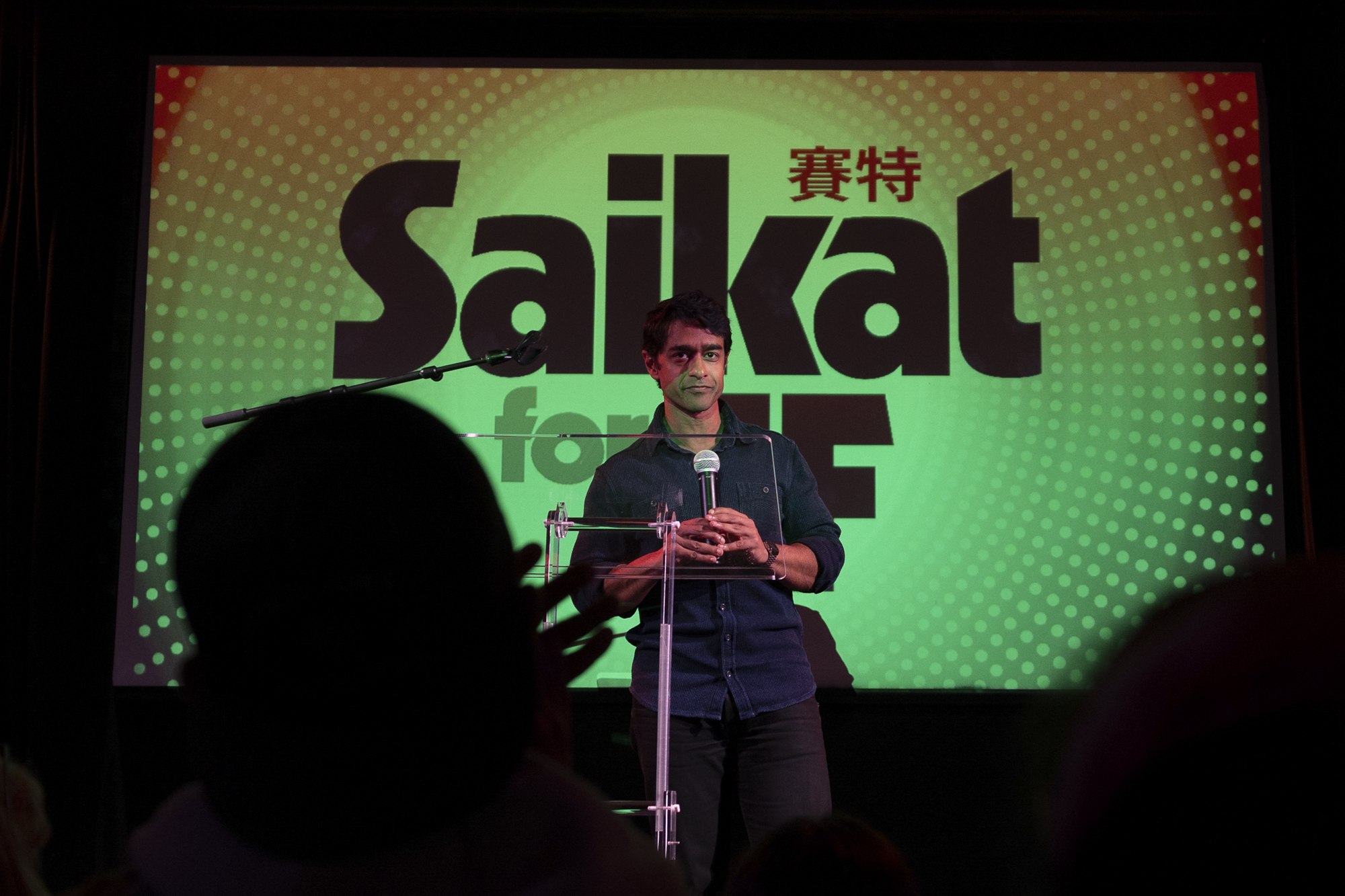
"caption": "Congressional candidate Saikat Chakrabarti addresses to his supporters during election night event at The Chapel on June 3, 2026, in San Francisco. Chakrabarti is throwing his efforts behind his former opponent, Supervisor Connie Chan. ",
"credit": "Gustavo Hernandez/KQED",
"altTag": null,
"description": null,
"imgSizes": {
"thumbnail": {
"file": "https://cdn.kqed.org/wp-content/uploads/sites/10/2026/06/060226CHAKRABARTI_GH_026-KQED-160x107.jpg",
"width": 160,
"height": 107,
"mimeType": "image/jpeg"
},
"1536x1536": {
"file": "https://cdn.kqed.org/wp-content/uploads/sites/10/2026/06/060226CHAKRABARTI_GH_026-KQED-1536x1024.jpg",
"width": 1536,
"height": 1024,
"mimeType": "image/jpeg"
},
"post-thumbnail": {
"file": "https://cdn.kqed.org/wp-content/uploads/sites/10/2026/06/060226CHAKRABARTI_GH_026-KQED-672x372.jpg",
"width": 672,
"height": 372,
"mimeType": "image/jpeg"
},
"twentyfourteen-full-width": {
"file": "https://cdn.kqed.org/wp-content/uploads/sites/10/2026/06/060226CHAKRABARTI_GH_026-KQED-1038x576.jpg",
"width": 1038,
"height": 576,
"mimeType": "image/jpeg"
},
"npr-cds-wide": {
"file": "https://cdn.kqed.org/wp-content/uploads/sites/10/2026/06/060226CHAKRABARTI_GH_026-KQED-1200x675.jpg",
"width": 1200,
"height": 675,
"mimeType": "image/jpeg"
},
"npr-cds-square": {
"file": "https://cdn.kqed.org/wp-content/uploads/sites/10/2026/06/060226CHAKRABARTI_GH_026-KQED-600x600.jpg",
"width": 600,
"height": 600,
"mimeType": "image/jpeg"
},
"kqedFullSize": {
"file": "https://cdn.kqed.org/wp-content/uploads/sites/10/2026/06/060226CHAKRABARTI_GH_026-KQED.jpg",
"width": 2000,
"height": 1333
}
},
"isLoading": false,
"fetchFailed": false
},
"news_12087360": {
"type": "attachments",
"id": "news_12087360",
"meta": {
"index": "attachments_1716263798",
"site": "news",
"id": "12087360",
"found": true
},
"title": "260608-PGEBREAKUPPRICING-06-BL-KQED",
"publishDate": 1781286389,
"status": "inherit",
"parent": 0,
"modified": 1781286430,
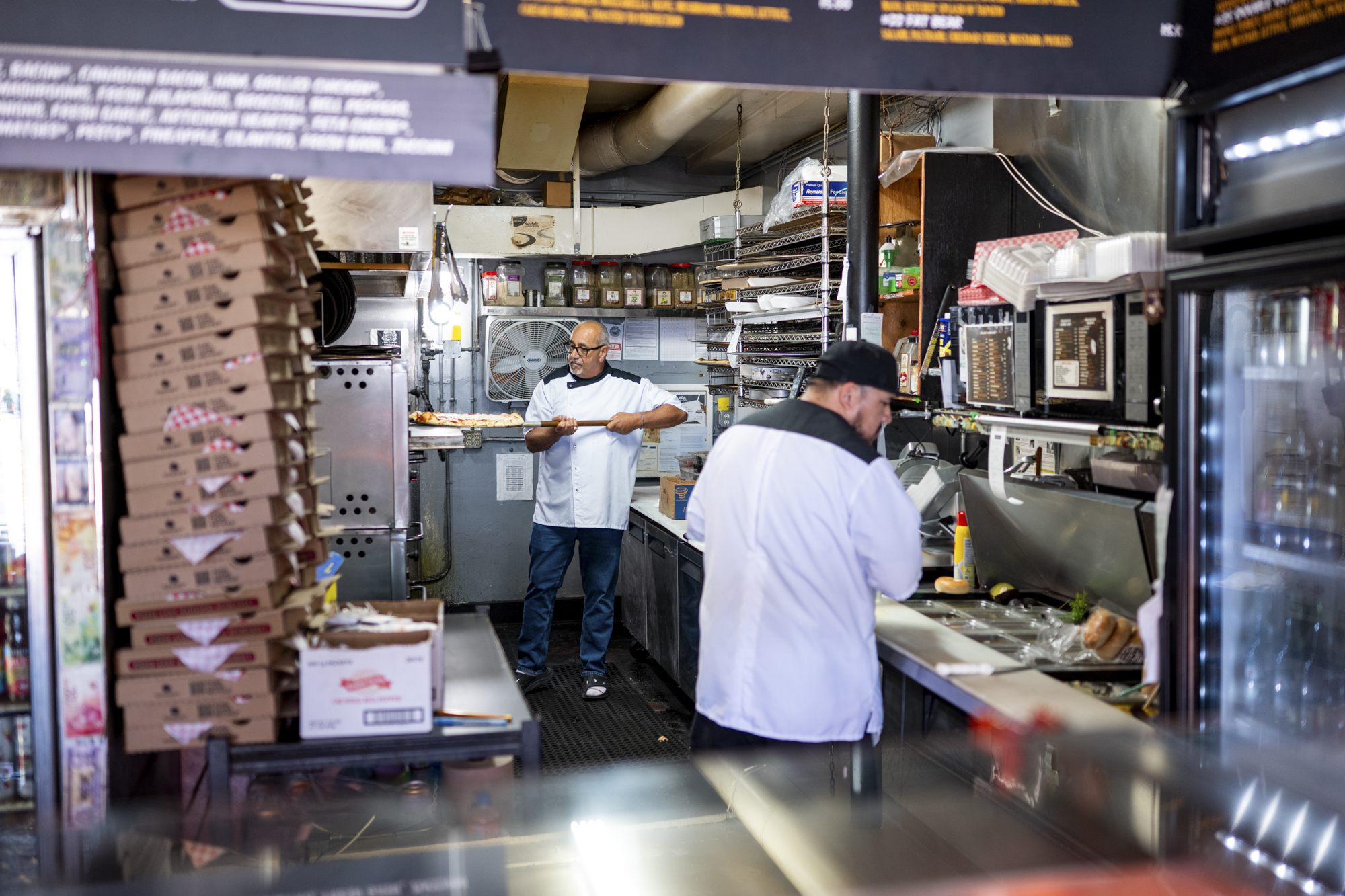
"caption": "Joe Dabit, owner of Pizza Joint, works in the kitchen at the restaurant in San Francisco's Richmond District on June 8, 2026.",
"credit": "Beth LaBerge/KQED",
"altTag": null,
"description": null,
"imgSizes": {
"thumbnail": {
"file": "https://cdn.kqed.org/wp-content/uploads/sites/10/2026/06/260608-PGEBREAKUPPRICING-06-BL-KQED-160x107.jpg",
"width": 160,
"height": 107,
"mimeType": "image/jpeg"
},
"1536x1536": {
"file": "https://cdn.kqed.org/wp-content/uploads/sites/10/2026/06/260608-PGEBREAKUPPRICING-06-BL-KQED-1536x1024.jpg",
"width": 1536,
"height": 1024,
"mimeType": "image/jpeg"
},
"post-thumbnail": {
"file": "https://cdn.kqed.org/wp-content/uploads/sites/10/2026/06/260608-PGEBREAKUPPRICING-06-BL-KQED-672x372.jpg",
"width": 672,
"height": 372,
"mimeType": "image/jpeg"
},
"twentyfourteen-full-width": {
"file": "https://cdn.kqed.org/wp-content/uploads/sites/10/2026/06/260608-PGEBREAKUPPRICING-06-BL-KQED-1038x576.jpg",
"width": 1038,
"height": 576,
"mimeType": "image/jpeg"
},
"npr-cds-wide": {
"file": "https://cdn.kqed.org/wp-content/uploads/sites/10/2026/06/260608-PGEBREAKUPPRICING-06-BL-KQED-1200x675.jpg",
"width": 1200,
"height": 675,
"mimeType": "image/jpeg"
},
"npr-cds-square": {
"file": "https://cdn.kqed.org/wp-content/uploads/sites/10/2026/06/260608-PGEBREAKUPPRICING-06-BL-KQED-600x600.jpg",
"width": 600,
"height": 600,
"mimeType": "image/jpeg"
},
"kqedFullSize": {
"file": "https://cdn.kqed.org/wp-content/uploads/sites/10/2026/06/260608-PGEBREAKUPPRICING-06-BL-KQED.jpg",
"width": 2000,
"height": 1333
}
},
"isLoading": false,
"fetchFailed": false
},
"news_12087435": {
"type": "attachments",
"id": "news_12087435",
"meta": {
"index": "attachments_1716263798",
"site": "news",
"id": "12087435",
"found": true
},
"title": "260609-PacificaPierUpdate-22-BL_qed",
"publishDate": 1781298543,
"status": "inherit",
"parent": 12087431,
"modified": 1781298543,
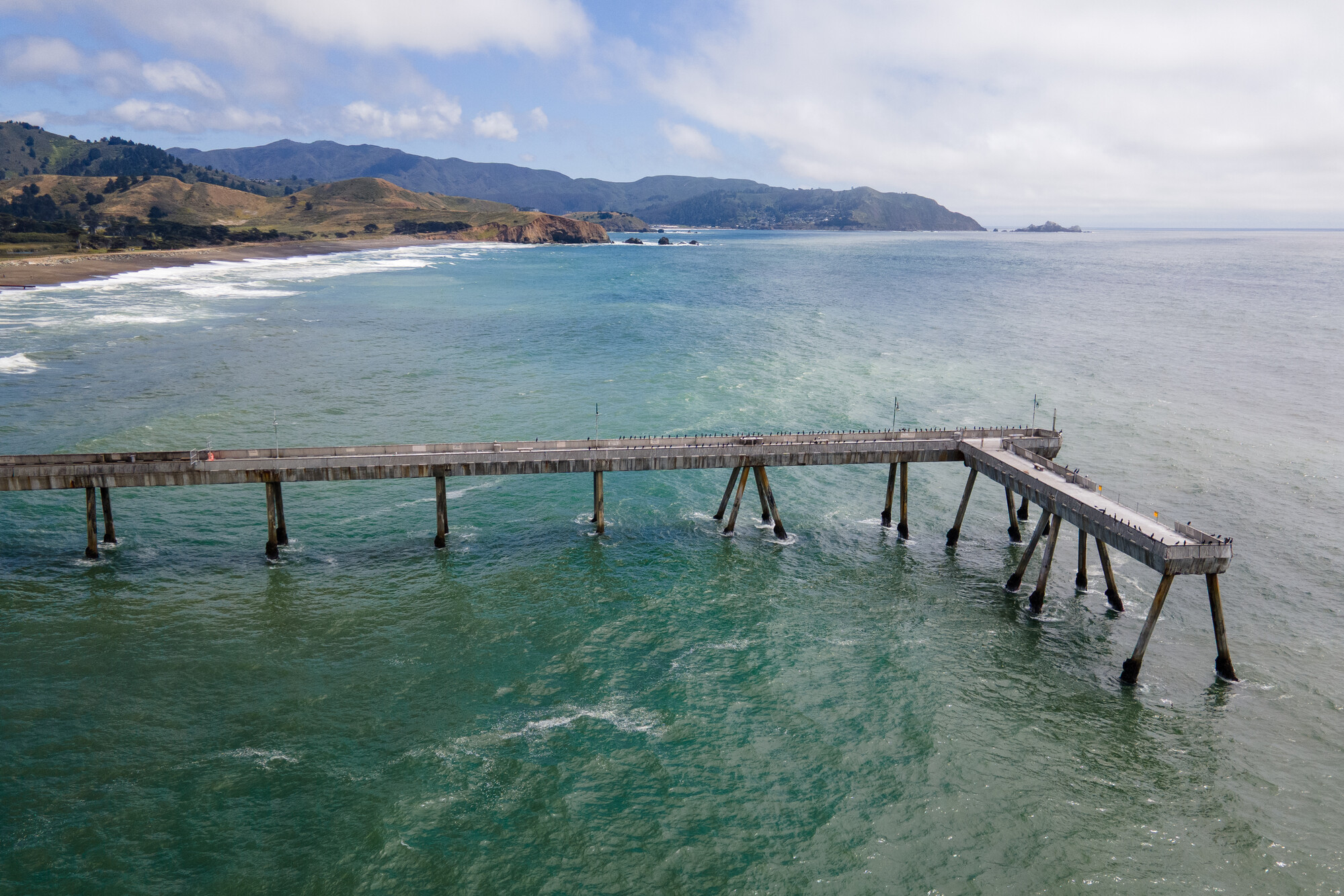
"caption": "The Pacifica Municipal Pier on June 9, 2026, after severe structural damage and widening cracks forced its closure.",
"credit": null,
"altTag": null,
"description": null,
"imgSizes": {
"thumbnail": {
"file": "https://cdn.kqed.org/wp-content/uploads/sites/10/2026/06/260609-PacificaPierUpdate-22-BL_qed-160x107.jpg",
"width": 160,
"height": 107,
"mimeType": "image/jpeg"
},
"1536x1536": {
"file": "https://cdn.kqed.org/wp-content/uploads/sites/10/2026/06/260609-PacificaPierUpdate-22-BL_qed-1536x1024.jpg",
"width": 1536,
"height": 1024,
"mimeType": "image/jpeg"
},
"post-thumbnail": {
"file": "https://cdn.kqed.org/wp-content/uploads/sites/10/2026/06/260609-PacificaPierUpdate-22-BL_qed-672x372.jpg",
"width": 672,
"height": 372,
"mimeType": "image/jpeg"
},
"twentyfourteen-full-width": {
"file": "https://cdn.kqed.org/wp-content/uploads/sites/10/2026/06/260609-PacificaPierUpdate-22-BL_qed-1038x576.jpg",
"width": 1038,
"height": 576,
"mimeType": "image/jpeg"
},
"npr-cds-wide": {
"file": "https://cdn.kqed.org/wp-content/uploads/sites/10/2026/06/260609-PacificaPierUpdate-22-BL_qed-1200x675.jpg",
"width": 1200,
"height": 675,
"mimeType": "image/jpeg"
},
"npr-cds-square": {
"file": "https://cdn.kqed.org/wp-content/uploads/sites/10/2026/06/260609-PacificaPierUpdate-22-BL_qed-600x600.jpg",
"width": 600,
"height": 600,
"mimeType": "image/jpeg"
},
"kqedFullSize": {
"file": "https://cdn.kqed.org/wp-content/uploads/sites/10/2026/06/260609-PacificaPierUpdate-22-BL_qed.jpg",
"width": 1999,
"height": 1333
}
},
"isLoading": false,
"fetchFailed": false
},
"news_12070909": {
"type": "attachments",
"id": "news_12070909",
"meta": {
"index": "attachments_1716263798",
"site": "news",
"id": "12070909",
"found": true
},
"title": "US-HEALTH-IMMUNIZATION-VACCINES",
"publishDate": 1769196427,
"status": "inherit",
"parent": 12070907,
"modified": 1781476064,
"caption": "A vial of the Measles, Mumps, and Rubella (MMR) vaccination for children is displayed during an immunization event at the L.A. Care and Blue Shield of California Promise Health Plan Community Resource Center in the Panorama City neighborhood of Los Angeles, California, on Oct. 24, 2025. ",
"credit": "Patrick T. Fallon/AFP via Getty Images",
"altTag": null,
"description": null,
"imgSizes": {
"medium": {
"file": "https://cdn.kqed.org/wp-content/uploads/sites/10/2026/01/GettyImages-2242752228-2000x1333.jpg",
"width": 2000,
"height": 1333,
"mimeType": "image/jpeg"
},
"large": {
"file": "https://cdn.kqed.org/wp-content/uploads/sites/10/2026/01/GettyImages-2242752228-2000x1333.jpg",
"width": 2000,
"height": 1333,
"mimeType": "image/jpeg"
},
"thumbnail": {
"file": "https://cdn.kqed.org/wp-content/uploads/sites/10/2026/01/GettyImages-2242752228-160x107.jpg",
"width": 160,
"height": 107,
"mimeType": "image/jpeg"
},
"1536x1536": {
"file": "https://cdn.kqed.org/wp-content/uploads/sites/10/2026/01/GettyImages-2242752228-1536x1024.jpg",
"width": 1536,
"height": 1024,
"mimeType": "image/jpeg"
},
"2048x2048": {
"file": "https://cdn.kqed.org/wp-content/uploads/sites/10/2026/01/GettyImages-2242752228-2048x1365.jpg",
"width": 2048,
"height": 1365,
"mimeType": "image/jpeg"
},
"post-thumbnail": {
"file": "https://cdn.kqed.org/wp-content/uploads/sites/10/2026/01/GettyImages-2242752228-672x372.jpg",
"width": 672,
"height": 372,
"mimeType": "image/jpeg"
},
"twentyfourteen-full-width": {
"file": "https://cdn.kqed.org/wp-content/uploads/sites/10/2026/01/GettyImages-2242752228-1038x576.jpg",
"width": 1038,
"height": 576,
"mimeType": "image/jpeg"
},
"full-width": {
"file": "https://cdn.kqed.org/wp-content/uploads/sites/10/2026/01/GettyImages-2242752228-2000x1333.jpg",
"width": 2000,
"height": 1333,
"mimeType": "image/jpeg"
},
"npr-cds-wide": {
"file": "https://cdn.kqed.org/wp-content/uploads/sites/10/2026/01/GettyImages-2242752228-1200x675.jpg",
"width": 1200,
"height": 675,
"mimeType": "image/jpeg"
},
"kqedFullSize": {
"file": "https://cdn.kqed.org/wp-content/uploads/sites/10/2026/01/GettyImages-2242752228-scaled-e1769196948121.jpg",
"width": 2000,
"height": 1334
}
},
"isLoading": false,
"fetchFailed": false
},
"news_12087523": {
"type": "attachments",
"id": "news_12087523",
"meta": {
"index": "attachments_1716263798",
"site": "news",
"id": "12087523",
"found": true
},
"title": "World Cup Kickoff",
"publishDate": 1781395896,
"status": "inherit",
"parent": 12087516,
"modified": 1781395915,
"caption": "Hundreds of people exit Levi's Stadium in Santa Clara during the Qatar versus Switzerland World Cup match on Saturday, June 13, 2026.",
"credit": "Estefany Gonzalez for KQED",
"altTag": null,
"description": null,
"imgSizes": {
"thumbnail": {
"file": "https://cdn.kqed.org/wp-content/uploads/sites/10/2026/06/20260613_WorldCup_EG_046-160x107.jpg",
"width": 160,
"height": 107,
"mimeType": "image/jpeg"
},
"1536x1536": {
"file": "https://cdn.kqed.org/wp-content/uploads/sites/10/2026/06/20260613_WorldCup_EG_046-1536x1024.jpg",
"width": 1536,
"height": 1024,
"mimeType": "image/jpeg"
},
"post-thumbnail": {
"file": "https://cdn.kqed.org/wp-content/uploads/sites/10/2026/06/20260613_WorldCup_EG_046-672x372.jpg",
"width": 672,
"height": 372,
"mimeType": "image/jpeg"
},
"twentyfourteen-full-width": {
"file": "https://cdn.kqed.org/wp-content/uploads/sites/10/2026/06/20260613_WorldCup_EG_046-1038x576.jpg",
"width": 1038,
"height": 576,
"mimeType": "image/jpeg"
},
"npr-cds-wide": {
"file": "https://cdn.kqed.org/wp-content/uploads/sites/10/2026/06/20260613_WorldCup_EG_046-1200x675.jpg",
"width": 1200,
"height": 675,
"mimeType": "image/jpeg"
},
"npr-cds-square": {
"file": "https://cdn.kqed.org/wp-content/uploads/sites/10/2026/06/20260613_WorldCup_EG_046-600x600.jpg",
"width": 600,
"height": 600,
"mimeType": "image/jpeg"
},
"kqedFullSize": {
"file": "https://cdn.kqed.org/wp-content/uploads/sites/10/2026/06/20260613_WorldCup_EG_046.jpg",
"width": 2000,
"height": 1333
}
},
"isLoading": false,
"fetchFailed": false
},
"news_12087391": {
"type": "attachments",
"id": "news_12087391",
"meta": {
"index": "attachments_1716263798",
"site": "news",
"id": "12087391",
"found": true
},
"title": "Eric Jones on the campaign trail",
"publishDate": 1781291734,
"status": "inherit",
"parent": 12087322,
"modified": 1781304608,
"caption": "Eric Jones at a Democratic Party fundraiser in Placer County on May 20, 2026. Jones is facing Rep. Mike Thompson, who is seeking his 15th term in the U.S. House of Representatives for California’s 4th District. ",
"credit": "Kent Porter/MediaNews Group via The Press Democrat via Getty Images",
"altTag": null,
"description": null,
"imgSizes": {
"thumbnail": {
"file": "https://cdn.kqed.org/wp-content/uploads/sites/10/2026/06/EricJonesGetty-160x104.jpg",
"width": 160,
"height": 104,
"mimeType": "image/jpeg"
},
"1536x1536": {
"file": "https://cdn.kqed.org/wp-content/uploads/sites/10/2026/06/EricJonesGetty-1536x998.jpg",
"width": 1536,
"height": 998,
"mimeType": "image/jpeg"
},
"post-thumbnail": {
"file": "https://cdn.kqed.org/wp-content/uploads/sites/10/2026/06/EricJonesGetty-672x372.jpg",
"width": 672,
"height": 372,
"mimeType": "image/jpeg"
},
"twentyfourteen-full-width": {
"file": "https://cdn.kqed.org/wp-content/uploads/sites/10/2026/06/EricJonesGetty-1038x576.jpg",
"width": 1038,
"height": 576,
"mimeType": "image/jpeg"
},
"npr-cds-wide": {
"file": "https://cdn.kqed.org/wp-content/uploads/sites/10/2026/06/EricJonesGetty-1200x675.jpg",
"width": 1200,
"height": 675,
"mimeType": "image/jpeg"
},
"npr-cds-square": {
"file": "https://cdn.kqed.org/wp-content/uploads/sites/10/2026/06/EricJonesGetty-600x600.jpg",
"width": 600,
"height": 600,
"mimeType": "image/jpeg"
},
"kqedFullSize": {
"file": "https://cdn.kqed.org/wp-content/uploads/sites/10/2026/06/EricJonesGetty.jpg",
"width": 2000,
"height": 1300
}
},
"isLoading": false,
"fetchFailed": false
},
"news_12087488": {
"type": "attachments",
"id": "news_12087488",
"meta": {
"index": "attachments_1716263798",
"site": "news",
"id": "12087488",
"found": true
},
"title": "Trailhead Gays LEDE",
"publishDate": 1781306954,
"status": "inherit",
"parent": 12087471,
"modified": 1781307496,
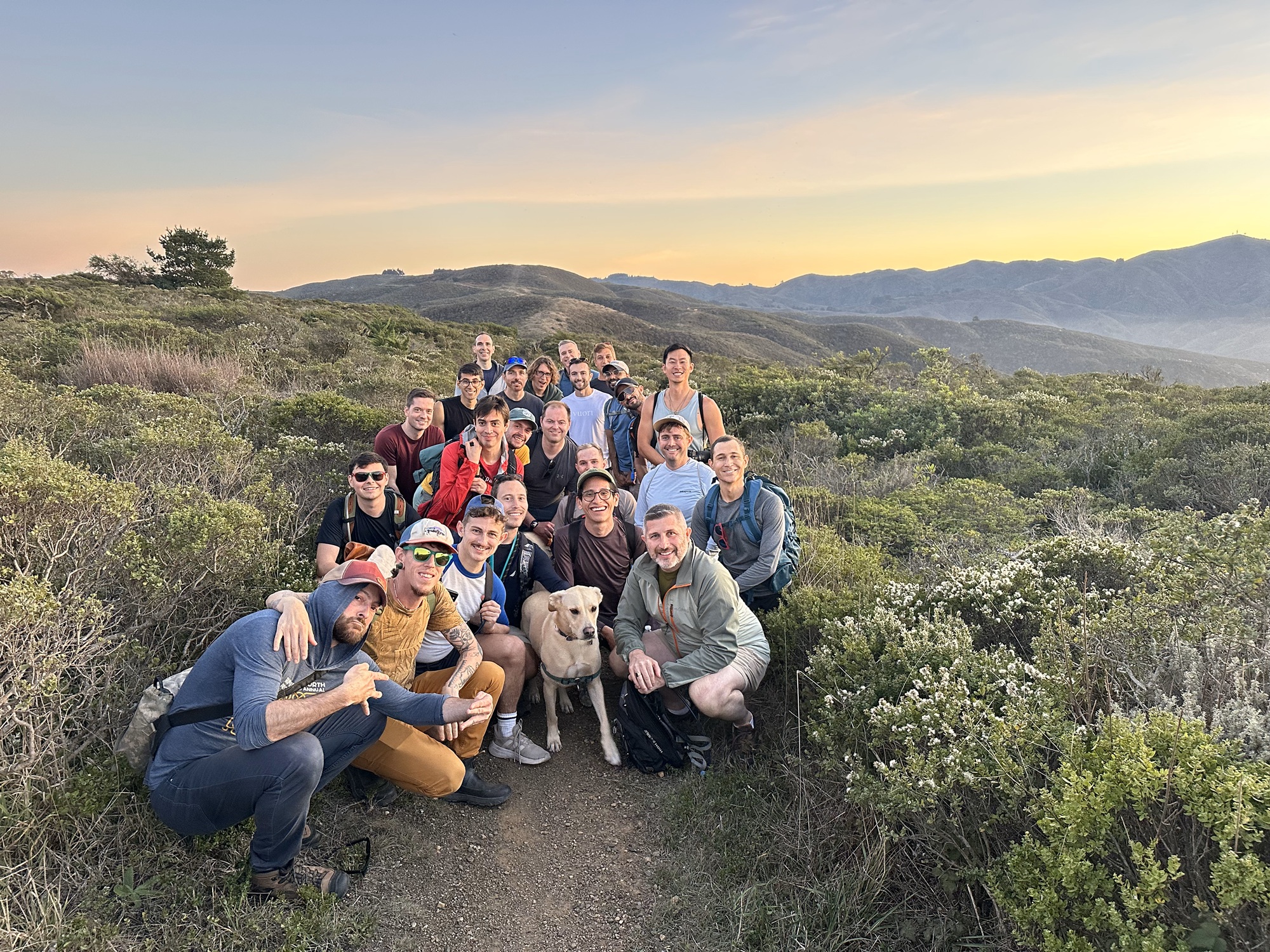
"caption": "Members of Trailhead Gays gather for their monthly outdoors-oriented adventures. \n",
"credit": "Courtesy of Gio Orantes",
"altTag": null,
"description": null,
"imgSizes": {
"thumbnail": {
"file": "https://cdn.kqed.org/wp-content/uploads/sites/10/2026/06/Trailhead-Gays-LEDE-160x120.jpg",
"width": 160,
"height": 120,
"mimeType": "image/jpeg"
},
"1536x1536": {
"file": "https://cdn.kqed.org/wp-content/uploads/sites/10/2026/06/Trailhead-Gays-LEDE-1536x1152.jpg",
"width": 1536,
"height": 1152,
"mimeType": "image/jpeg"
},
"post-thumbnail": {
"file": "https://cdn.kqed.org/wp-content/uploads/sites/10/2026/06/Trailhead-Gays-LEDE-672x372.jpg",
"width": 672,
"height": 372,
"mimeType": "image/jpeg"
},
"twentyfourteen-full-width": {
"file": "https://cdn.kqed.org/wp-content/uploads/sites/10/2026/06/Trailhead-Gays-LEDE-1038x576.jpg",
"width": 1038,
"height": 576,
"mimeType": "image/jpeg"
},
"npr-cds-wide": {
"file": "https://cdn.kqed.org/wp-content/uploads/sites/10/2026/06/Trailhead-Gays-LEDE-1200x675.jpg",
"width": 1200,
"height": 675,
"mimeType": "image/jpeg"
},
"npr-cds-square": {
"file": "https://cdn.kqed.org/wp-content/uploads/sites/10/2026/06/Trailhead-Gays-LEDE-600x600.jpg",
"width": 600,
"height": 600,
"mimeType": "image/jpeg"
},
"kqedFullSize": {
"file": "https://cdn.kqed.org/wp-content/uploads/sites/10/2026/06/Trailhead-Gays-LEDE.jpg",
"width": 2000,
"height": 1500
}
},
"isLoading": false,
"fetchFailed": false
},
"news_12087378": {
"type": "attachments",
"id": "news_12087378",
"meta": {
"index": "attachments_1716263798",
"site": "news",
"id": "12087378",
"found": true
},
"title": "La Raging Waters, San Jose",
"publishDate": 1781289124,
"status": "inherit",
"parent": 0,
"modified": 1781307203,
"caption": "A photo of Raging Waters in San José. The city said that beginning this summer, the water park formerly known as CaliBunga/Raging Waters will temporarily close. ",
"credit": "Eusiceidragi via Flickr",
"altTag": null,
"description": null,
"imgSizes": {
"thumbnail": {
"file": "https://cdn.kqed.org/wp-content/uploads/sites/10/2026/06/260612-RAGING-WATERS-01-KQED-160x120.jpg",
"width": 160,
"height": 120,
"mimeType": "image/jpeg"
},
"1536x1536": {
"file": "https://cdn.kqed.org/wp-content/uploads/sites/10/2026/06/260612-RAGING-WATERS-01-KQED-1536x1152.jpg",
"width": 1536,
"height": 1152,
"mimeType": "image/jpeg"
},
"post-thumbnail": {
"file": "https://cdn.kqed.org/wp-content/uploads/sites/10/2026/06/260612-RAGING-WATERS-01-KQED-672x372.jpg",
"width": 672,
"height": 372,
"mimeType": "image/jpeg"
},
"twentyfourteen-full-width": {
"file": "https://cdn.kqed.org/wp-content/uploads/sites/10/2026/06/260612-RAGING-WATERS-01-KQED-1038x576.jpg",
"width": 1038,
"height": 576,
"mimeType": "image/jpeg"
},
"npr-cds-wide": {
"file": "https://cdn.kqed.org/wp-content/uploads/sites/10/2026/06/260612-RAGING-WATERS-01-KQED-1200x675.jpg",
"width": 1200,
"height": 675,
"mimeType": "image/jpeg"
},
"npr-cds-square": {
"file": "https://cdn.kqed.org/wp-content/uploads/sites/10/2026/06/260612-RAGING-WATERS-01-KQED-600x600.jpg",
"width": 600,
"height": 600,
"mimeType": "image/jpeg"
},
"kqedFullSize": {
"file": "https://cdn.kqed.org/wp-content/uploads/sites/10/2026/06/260612-RAGING-WATERS-01-KQED.jpg",
"width": 2000,
"height": 1500
}
},
"isLoading": false,
"fetchFailed": false
},
"news_12087385": {
"type": "attachments",
"id": "news_12087385",
"meta": {
"index": "attachments_1716263798",
"site": "news",
"id": "12087385",
"found": true
},
"title": "260612-SFPD officers hit-01-KQED",
"publishDate": 1781290332,
"status": "inherit",
"parent": 0,
"modified": 1781293958,
"caption": "A vehicle struck three pedestrians near the intersection in Nob Hill on Friday, June 12, 2026, leaving one person pinned beneath the car and all three hospitalized.",
"credit": "Desmond Meagley/KQED",
"altTag": null,
"description": null,
"imgSizes": {
"thumbnail": {
"file": "https://cdn.kqed.org/wp-content/uploads/sites/10/2026/06/260612-SFPD-officers-hit-01-KQED-160x107.jpg",
"width": 160,
"height": 107,
"mimeType": "image/jpeg"
},
"1536x1536": {
"file": "https://cdn.kqed.org/wp-content/uploads/sites/10/2026/06/260612-SFPD-officers-hit-01-KQED-1536x1024.jpg",
"width": 1536,
"height": 1024,
"mimeType": "image/jpeg"
},
"post-thumbnail": {
"file": "https://cdn.kqed.org/wp-content/uploads/sites/10/2026/06/260612-SFPD-officers-hit-01-KQED-672x372.jpg",
"width": 672,
"height": 372,
"mimeType": "image/jpeg"
},
"twentyfourteen-full-width": {
"file": "https://cdn.kqed.org/wp-content/uploads/sites/10/2026/06/260612-SFPD-officers-hit-01-KQED-1038x576.jpg",
"width": 1038,
"height": 576,
"mimeType": "image/jpeg"
},
"npr-cds-wide": {
"file": "https://cdn.kqed.org/wp-content/uploads/sites/10/2026/06/260612-SFPD-officers-hit-01-KQED-1200x675.jpg",
"width": 1200,
"height": 675,
"mimeType": "image/jpeg"
},
"npr-cds-square": {
"file": "https://cdn.kqed.org/wp-content/uploads/sites/10/2026/06/260612-SFPD-officers-hit-01-KQED-600x600.jpg",
"width": 600,
"height": 600,
"mimeType": "image/jpeg"
},
"kqedFullSize": {
"file": "https://cdn.kqed.org/wp-content/uploads/sites/10/2026/06/260612-SFPD-officers-hit-01-KQED.jpg",
"width": 2000,
"height": 1333
}
},
"isLoading": false,
"fetchFailed": false
},
"news_12087309": {
"type": "attachments",
"id": "news_12087309",
"meta": {
"index": "attachments_1716263798",
"site": "news",
"id": "12087309",
"found": true
},
"title": "Massive fire destroys Medline Industries warehouse in Tracy of California",
"publishDate": 1781281713,
"status": "inherit",
"parent": 12087306,
"modified": 1781281754,
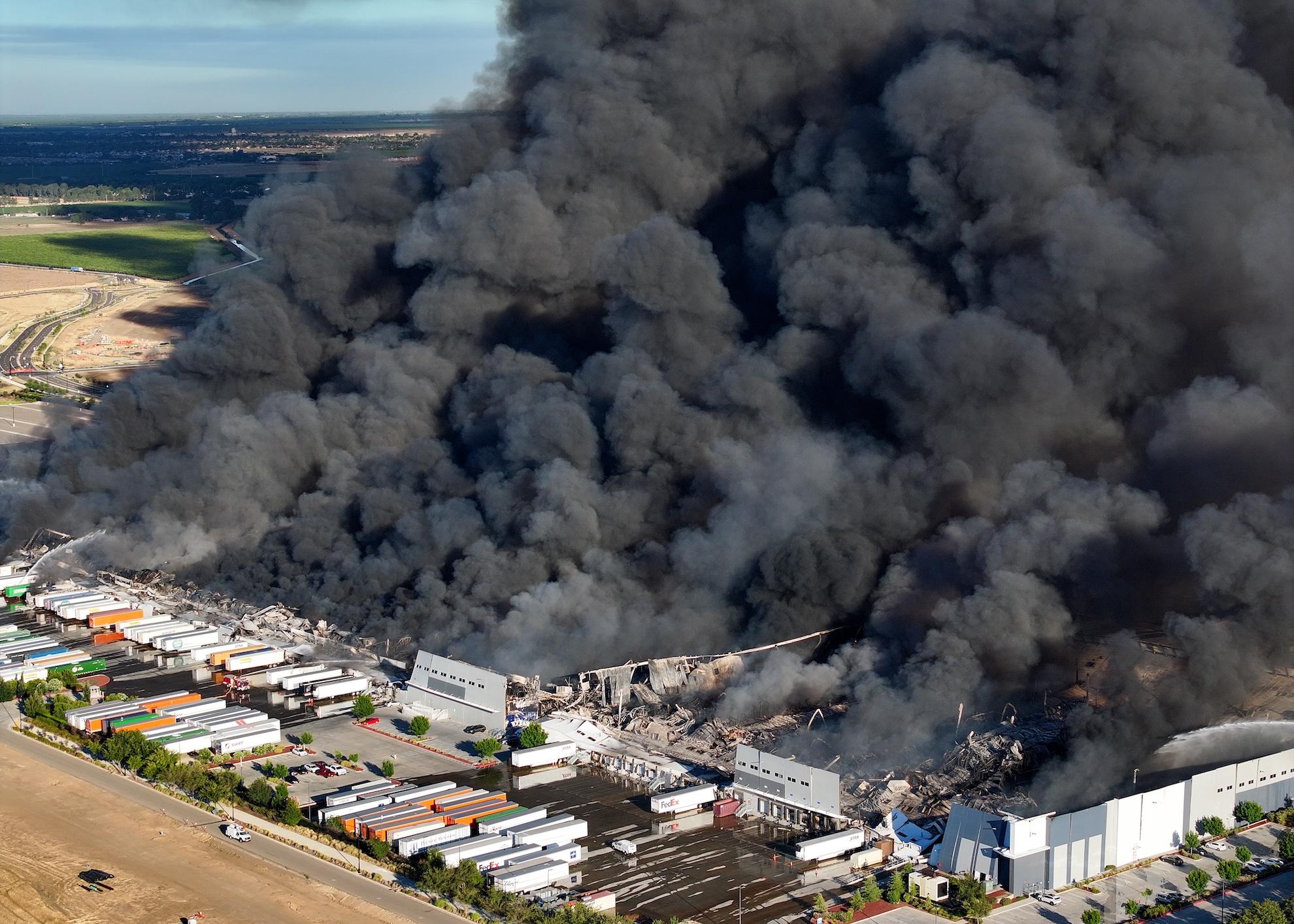
"caption": "Black smoke pours into the sky from a massive commercial fire at the Medline Industries medical supply warehouse in Tracy, California, on June 11, 2026. The South San Joaquin County Fire Authority reported that the million-square-foot distribution facility on Promontory Parkway was fully engulfed, prompting the evacuation of neighboring commercial structures and nearby fulfillment centers within the industrial park. ",
"credit": "Tayfun Coskun/Anadolu via Getty Images",
"altTag": null,
"description": null,
"imgSizes": {
"thumbnail": {
"file": "https://cdn.kqed.org/wp-content/uploads/sites/10/2026/06/GettyImages-2280499585-160x114.jpg",
"width": 160,
"height": 114,
"mimeType": "image/jpeg"
},
"1536x1536": {
"file": "https://cdn.kqed.org/wp-content/uploads/sites/10/2026/06/GettyImages-2280499585-1536x1097.jpg",
"width": 1536,
"height": 1097,
"mimeType": "image/jpeg"
},
"post-thumbnail": {
"file": "https://cdn.kqed.org/wp-content/uploads/sites/10/2026/06/GettyImages-2280499585-672x372.jpg",
"width": 672,
"height": 372,
"mimeType": "image/jpeg"
},
"twentyfourteen-full-width": {
"file": "https://cdn.kqed.org/wp-content/uploads/sites/10/2026/06/GettyImages-2280499585-1038x576.jpg",
"width": 1038,
"height": 576,
"mimeType": "image/jpeg"
},
"npr-cds-wide": {
"file": "https://cdn.kqed.org/wp-content/uploads/sites/10/2026/06/GettyImages-2280499585-1200x675.jpg",
"width": 1200,
"height": 675,
"mimeType": "image/jpeg"
},
"npr-cds-square": {
"file": "https://cdn.kqed.org/wp-content/uploads/sites/10/2026/06/GettyImages-2280499585-600x600.jpg",
"width": 600,
"height": 600,
"mimeType": "image/jpeg"
},
"kqedFullSize": {
"file": "https://cdn.kqed.org/wp-content/uploads/sites/10/2026/06/GettyImages-2280499585.jpg",
"width": 1980,
"height": 1414
}
},
"isLoading": false,
"fetchFailed": false
},
"news_12087340": {
"type": "attachments",
"id": "news_12087340",
"meta": {
"index": "attachments_1716263798",
"site": "news",
"id": "12087340",
"found": true
},
"title": "260611-KONDAWORLDCUP00428_TV-KQED",
"publishDate": 1781283412,
"status": "inherit",
"parent": 0,
"modified": 1781283953,
"caption": "Cici Nuñez poses for a portrait with a Mexico flag at a Mexico vs. South Africa World Cup watch party at SPARK Social SF in San Francisco on June 11, 2026.",
"credit": "Tâm Vũ/KQED",
"altTag": null,
"description": null,
"imgSizes": {
"thumbnail": {
"file": "https://cdn.kqed.org/wp-content/uploads/sites/10/2026/06/260611-KONDAWORLDCUP00428_TV-KQED-160x107.jpg",
"width": 160,
"height": 107,
"mimeType": "image/jpeg"
},
"1536x1536": {
"file": "https://cdn.kqed.org/wp-content/uploads/sites/10/2026/06/260611-KONDAWORLDCUP00428_TV-KQED-1536x1024.jpg",
"width": 1536,
"height": 1024,
"mimeType": "image/jpeg"
},
"post-thumbnail": {
"file": "https://cdn.kqed.org/wp-content/uploads/sites/10/2026/06/260611-KONDAWORLDCUP00428_TV-KQED-672x372.jpg",
"width": 672,
"height": 372,
"mimeType": "image/jpeg"
},
"twentyfourteen-full-width": {
"file": "https://cdn.kqed.org/wp-content/uploads/sites/10/2026/06/260611-KONDAWORLDCUP00428_TV-KQED-1038x576.jpg",
"width": 1038,
"height": 576,
"mimeType": "image/jpeg"
},
"npr-cds-wide": {
"file": "https://cdn.kqed.org/wp-content/uploads/sites/10/2026/06/260611-KONDAWORLDCUP00428_TV-KQED-1200x675.jpg",
"width": 1200,
"height": 675,
"mimeType": "image/jpeg"
},
"npr-cds-square": {
"file": "https://cdn.kqed.org/wp-content/uploads/sites/10/2026/06/260611-KONDAWORLDCUP00428_TV-KQED-600x600.jpg",
"width": 600,
"height": 600,
"mimeType": "image/jpeg"
},
"kqedFullSize": {
"file": "https://cdn.kqed.org/wp-content/uploads/sites/10/2026/06/260611-KONDAWORLDCUP00428_TV-KQED.jpg",
"width": 2000,
"height": 1333
}
},
"isLoading": false,
"fetchFailed": false
},
"news_12087240": {
"type": "attachments",
"id": "news_12087240",
"meta": {
"index": "attachments_1716263798",
"site": "news",
"id": "12087240",
"found": true
},
"title": "Copy of Untitled (12 x 8 in) - 3",
"publishDate": 1781215013,
"status": "inherit",
"parent": 0,
"modified": 1781238379,
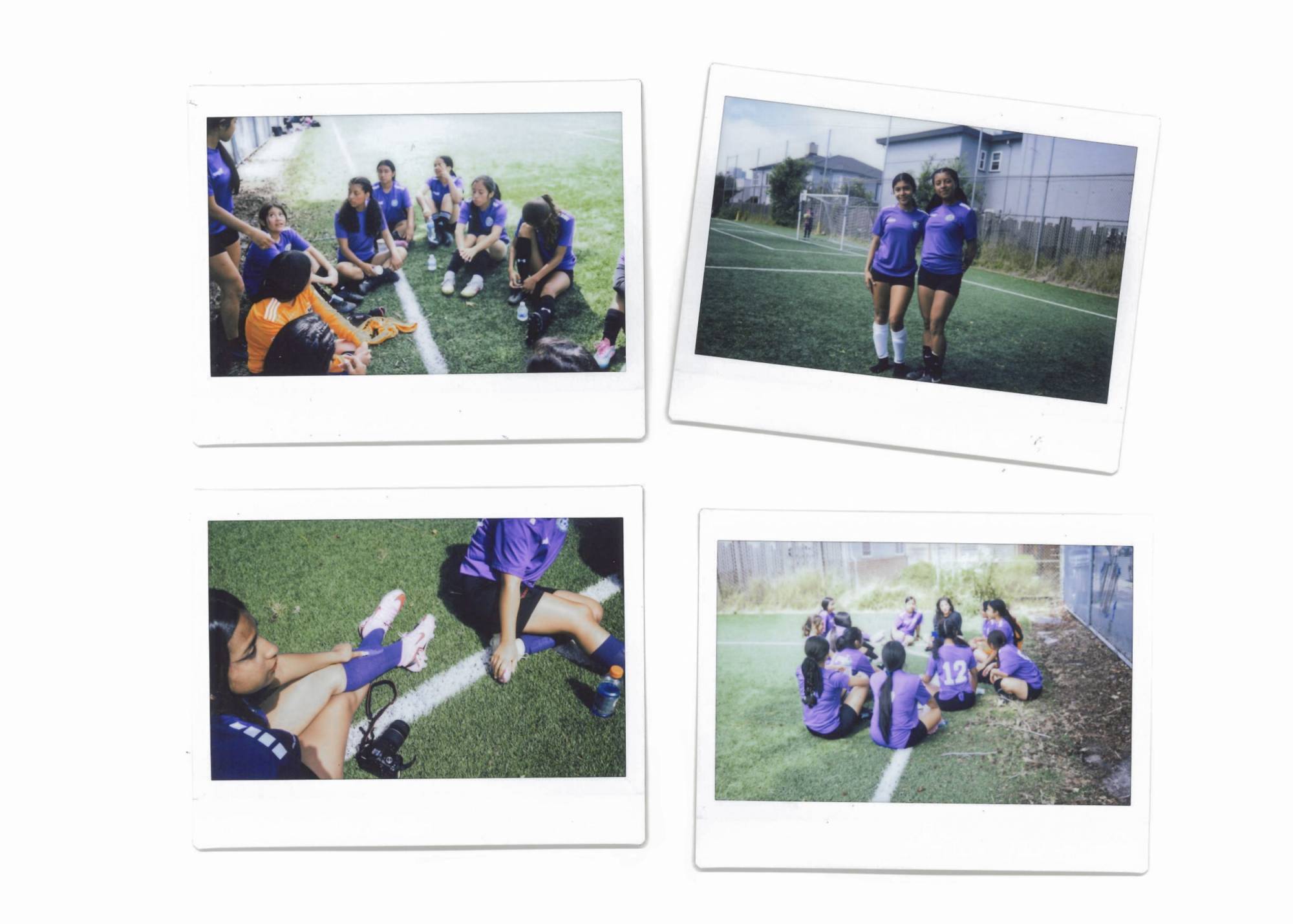
"caption": "Scenes from the last game of the season for an East Oakland high school’s Soccer Without Borders team. ",
"credit": "Instant photos made by Ximena Natera and Soccer Without Borders players",
"altTag": null,
"description": null,
"imgSizes": {
"medium": {
"file": "https://cdn.kqed.org/wp-content/uploads/sites/10/2026/06/NATERA_CLMENTALHEALTH_POLAROID_COVER_260609_001-KQED-1-2000x1429.jpg",
"width": 2000,
"height": 1429,
"mimeType": "image/jpeg"
},
"large": {
"file": "https://cdn.kqed.org/wp-content/uploads/sites/10/2026/06/NATERA_CLMENTALHEALTH_POLAROID_COVER_260609_001-KQED-1-2000x1429.jpg",
"width": 2000,
"height": 1429,
"mimeType": "image/jpeg"
},
"thumbnail": {
"file": "https://cdn.kqed.org/wp-content/uploads/sites/10/2026/06/NATERA_CLMENTALHEALTH_POLAROID_COVER_260609_001-KQED-1-160x114.jpg",
"width": 160,
"height": 114,
"mimeType": "image/jpeg"
},
"1536x1536": {
"file": "https://cdn.kqed.org/wp-content/uploads/sites/10/2026/06/NATERA_CLMENTALHEALTH_POLAROID_COVER_260609_001-KQED-1-1536x1097.jpg",
"width": 1536,
"height": 1097,
"mimeType": "image/jpeg"
},
"2048x2048": {
"file": "https://cdn.kqed.org/wp-content/uploads/sites/10/2026/06/NATERA_CLMENTALHEALTH_POLAROID_COVER_260609_001-KQED-1-2048x1463.jpg",
"width": 2048,
"height": 1463,
"mimeType": "image/jpeg"
},
"post-thumbnail": {
"file": "https://cdn.kqed.org/wp-content/uploads/sites/10/2026/06/NATERA_CLMENTALHEALTH_POLAROID_COVER_260609_001-KQED-1-672x372.jpg",
"width": 672,
"height": 372,
"mimeType": "image/jpeg"
},
"twentyfourteen-full-width": {
"file": "https://cdn.kqed.org/wp-content/uploads/sites/10/2026/06/NATERA_CLMENTALHEALTH_POLAROID_COVER_260609_001-KQED-1-1038x576.jpg",
"width": 1038,
"height": 576,
"mimeType": "image/jpeg"
},
"full-width": {
"file": "https://cdn.kqed.org/wp-content/uploads/sites/10/2026/06/NATERA_CLMENTALHEALTH_POLAROID_COVER_260609_001-KQED-1-2000x1429.jpg",
"width": 2000,
"height": 1429,
"mimeType": "image/jpeg"
},
"npr-cds-wide": {
"file": "https://cdn.kqed.org/wp-content/uploads/sites/10/2026/06/NATERA_CLMENTALHEALTH_POLAROID_COVER_260609_001-KQED-1-1200x675.jpg",
"width": 1200,
"height": 675,
"mimeType": "image/jpeg"
},
"npr-cds-square": {
"file": "https://cdn.kqed.org/wp-content/uploads/sites/10/2026/06/NATERA_CLMENTALHEALTH_POLAROID_COVER_260609_001-KQED-1-600x600.jpg",
"width": 600,
"height": 600,
"mimeType": "image/jpeg"
},
"kqedFullSize": {
"file": "https://cdn.kqed.org/wp-content/uploads/sites/10/2026/06/NATERA_CLMENTALHEALTH_POLAROID_COVER_260609_001-KQED-1.jpg",
"width": 2500,
"height": 1786
}
},
"isLoading": false,
"fetchFailed": false
}
},
"audioPlayerReducer": {
"postId": "stream_live",
"isPaused": true,
"isPlaying": false,
"pfsActive": false,
"pledgeModalIsOpen": true,
"playerDrawerIsOpen": false,
"liveAudioPlayStartedAt": 0,
"liveAudioPlayContext": ""
},
"authorsReducer": {
"byline_news_12086356": {
"type": "authors",
"id": "byline_news_12086356",
"meta": {
"override": true
},
"slug": "byline_news_12086356",
"name": "Alonso Daboub",
"isLoading": false
},
"ecruzguevarra": {
"type": "authors",
"id": "8654",
"meta": {
"index": "authors_1716337520",
"id": "8654",
"found": true
},
"name": "Ericka Cruz Guevarra",
"firstName": "Ericka",
"lastName": "Cruz Guevarra",
"slug": "ecruzguevarra",
"email": "ecruzguevarra@kqed.org",
"display_author_email": true,
"staff_mastheads": [
"news"
],
"title": "Producer, The Bay Podcast",
"bio": "Ericka Cruz Guevarra is host of \u003ca href=\"https://www.kqed.org/podcasts/thebay\">\u003cem>The Bay\u003c/em>\u003c/a> podcast at KQED. Before host, she was the show’s producer. Her work in that capacity includes a three-part reported series on policing in Vallejo, which won a 2020 excellence in journalism award from the Society of Professional Journalists. Ericka has worked as a breaking news reporter at Oregon Public Broadcasting, helped produce the Code Switch podcast, and was KQED’s inaugural Raul Ramirez Diversity Fund intern. She’s also an alumna of NPR’s Next Generation Radio program. Send her an email if you have strong feelings about whether Fairfield and Suisun City are the Bay. Ericka is represented by SAG-AFTRA.",
"avatar": "https://secure.gravatar.com/avatar/accefc1de4bafc7e234b69bcb9b6f6536c130fd84709bc3069ef11a78787e1bb?s=600&d=blank&r=g",
"twitter": "NotoriousECG",
"bluesky": null,
"facebook": null,
"instagram": null,
"linkedin": null,
"sites": [
{
"site": "arts",
"roles": [
"subscriber"
]
},
{
"site": "news",
"roles": [
"editor",
"manage_categories"
]
},
{
"site": "futureofyou",
"roles": [
"subscriber"
]
},
{
"site": "stateofhealth",
"roles": [
"subscriber"
]
},
{
"site": "science",
"roles": [
"editor"
]
},
{
"site": "forum",
"roles": [
"subscriber"
]
}
],
"headData": {
"title": "Ericka Cruz Guevarra | KQED",
"description": "Producer, The Bay Podcast",
"ogImgSrc": "https://secure.gravatar.com/avatar/accefc1de4bafc7e234b69bcb9b6f6536c130fd84709bc3069ef11a78787e1bb?s=600&d=blank&r=g",
"twImgSrc": "https://secure.gravatar.com/avatar/accefc1de4bafc7e234b69bcb9b6f6536c130fd84709bc3069ef11a78787e1bb?s=600&d=blank&r=g"
},
"isLoading": false,
"link": "/author/ecruzguevarra"
},
"amontecillo": {
"type": "authors",
"id": "11649",
"meta": {
"index": "authors_1716337520",
"id": "11649",
"found": true
},
"name": "Alan Montecillo",
"firstName": "Alan",
"lastName": "Montecillo",
"slug": "amontecillo",
"email": "amontecillo@kqed.org",
"display_author_email": false,
"staff_mastheads": [
"news"
],
"title": "KQED Contributor",
"bio": "Alan Montecillo is the senior editor of \u003cem>\u003ca href=\"http://kqed.org/thebay\">The Bay\u003c/a>, \u003c/em> KQED's local news podcast. Before moving to the Bay Area, he worked as a senior talk show producer for WILL in Champaign-Urbana, Illinois and at Oregon Public Broadcasting in Portland, Oregon. He has won journalism awards from the Society of Professional Journalists Northern California, the Public Media Journalists Association, The Signal Awards, and has also received a regional Edward R. Murrow award. Alan is a Filipino American from Hong Kong and a graduate of Reed College.",
"avatar": "https://secure.gravatar.com/avatar/268f53a2066899ea9efdd8a5900218b17c822d9862cbc9326cccec53ef41d349?s=600&d=blank&r=g",
"twitter": "alanmontecillo",
"bluesky": null,
"facebook": null,
"instagram": null,
"linkedin": null,
"sites": [
{
"site": "",
"roles": [
"editor"
]
},
{
"site": "news",
"roles": [
"editor",
"manage_categories"
]
}
],
"headData": {
"title": "Alan Montecillo | KQED",
"description": "KQED Contributor",
"ogImgSrc": "https://secure.gravatar.com/avatar/268f53a2066899ea9efdd8a5900218b17c822d9862cbc9326cccec53ef41d349?s=600&d=blank&r=g",
"twImgSrc": "https://secure.gravatar.com/avatar/268f53a2066899ea9efdd8a5900218b17c822d9862cbc9326cccec53ef41d349?s=600&d=blank&r=g"
},
"isLoading": false,
"link": "/author/amontecillo"
},
"btorres": {
"type": "authors",
"id": "11666",
"meta": {
"index": "authors_1716337520",
"id": "11666",
"found": true
},
"name": "Blanca Torres",
"firstName": "Blanca",
"lastName": "Torres",
"slug": "btorres",
"email": "btorres@kqed.org",
"display_author_email": true,
"staff_mastheads": [
"news"
],
"title": "Producer, Forum",
"bio": "Blanca Torres brings sharp news judgement and keen sense of lively conversation to her work as producer for Forum. She loves producing shows that leave listeners feeling like they heard distinctive voices, learned something new and gained a fresh perspective.\r\n\r\nShe joined KQED in January of 2020 after 16 years of working as a newspaper reporter most recently at the \u003cem>San Francisco Business Times,\u003c/em> where she wrote about real estate and economic development. Before that, she covered a variety of beats including crime, education, retail, workplace, the economy, consumer issues, and small business for the \u003cem>Contra Costa Times, Baltimore Sun\u003c/em> and\u003cem> The Seattle Times\u003c/em>. In addition to reporting, she worked as an editorial writer and columnist for the \u003cem>Seattle Times\u003c/em>. From 2017 to 2020, Blanca won a total of ten awards from the National Association of Real Estate Editors and won first place for land use reporting from the California News Publishers Association two years in a row. She is also a member and former board member for the National Association of Hispanic Journalists.\r\n\r\nA native of the Pacific Northwest, Blanca earned her bachelor's degree from Vanderbilt University in Nashville and a master's in fine arts in creative writing at Mills College. She lives in the East Bay with her family.",
"avatar": "https://secure.gravatar.com/avatar/50b49d19b14a1eed34f26ebf4681152cdd81574ed21851100871ccd29e578cdc?s=600&d=blank&r=g",
"twitter": "@blancawrites",
"bluesky": null,
"facebook": null,
"instagram": null,
"linkedin": null,
"sites": [
{
"site": "arts",
"roles": [
"editor"
]
},
{
"site": "news",
"roles": [
"editor"
]
},
{
"site": "forum",
"roles": [
"editor"
]
}
],
"headData": {
"title": "Blanca Torres | KQED",
"description": "Producer, Forum",
"ogImgSrc": "https://secure.gravatar.com/avatar/50b49d19b14a1eed34f26ebf4681152cdd81574ed21851100871ccd29e578cdc?s=600&d=blank&r=g",
"twImgSrc": "https://secure.gravatar.com/avatar/50b49d19b14a1eed34f26ebf4681152cdd81574ed21851100871ccd29e578cdc?s=600&d=blank&r=g"
},
"isLoading": false,
"link": "/author/btorres"
},
"eromero": {
"type": "authors",
"id": "11746",
"meta": {
"index": "authors_1716337520",
"id": "11746",
"found": true
},
"name": "Ezra David Romero",
"firstName": "Ezra David",
"lastName": "Romero",
"slug": "eromero",
"email": "eromero@kqed.org",
"display_author_email": true,
"staff_mastheads": [
"news",
"science"
],
"title": "Climate Reporter",
"bio": "Ezra David Romero is a climate reporter for KQED News. He covers the absence and excess of water in the Bay Area — think sea level rise, flooding and drought. For nearly a decade he’s covered how warming temperatures are altering the lives of Californians. He’s reported on farmers worried their pistachio trees aren’t getting enough sleep, families desperate for water, scientists studying dying giant sequoias, and alongside firefighters containing wildfires. His work has appeared on local stations across California and nationally on public radio shows like Morning Edition, Here and Now, All Things Considered and Science Friday. ",
"avatar": "https://secure.gravatar.com/avatar/c76404d287c10ed40224227551ac36e24352c7306f106632caf6fead76f8801f?s=600&d=blank&r=g",
"twitter": "ezraromero",
"bluesky": null,
"facebook": null,
"instagram": null,
"linkedin": null,
"sites": [
{
"site": "arts",
"roles": [
"editor"
]
},
{
"site": "news",
"roles": [
"editor"
]
},
{
"site": "science",
"roles": [
"editor"
]
},
{
"site": "liveblog",
"roles": [
"author"
]
}
],
"headData": {
"title": "Ezra David Romero | KQED",
"description": "Climate Reporter",
"ogImgSrc": "https://secure.gravatar.com/avatar/c76404d287c10ed40224227551ac36e24352c7306f106632caf6fead76f8801f?s=600&d=blank&r=g",
"twImgSrc": "https://secure.gravatar.com/avatar/c76404d287c10ed40224227551ac36e24352c7306f106632caf6fead76f8801f?s=600&d=blank&r=g"
},
"isLoading": false,
"link": "/author/eromero"
},
"ibloom": {
"type": "authors",
"id": "11805",
"meta": {
"index": "authors_1716337520",
"id": "11805",
"found": true
},
"name": "Izzy Bloom",
"firstName": "Izzy",
"lastName": "Bloom",
"slug": "ibloom",
"email": "ibloom@kqed.org",
"display_author_email": false,
"staff_mastheads": [],
"title": "KQED Reporter & Producer",
"bio": "Izzy is a reporter and producer on KQED's California Politics & Government Desk. She joined the desk in 2024 to produce Political Breakdown, covering local and national elections and attending the RNC and DNC in Milwaukee and Chicago. \r\n\r\nBefore that, Izzy was a producer on The California Report and reported long-form stories for The California Report Magazine. She was a finalist for the Third Coast/Richard H. Driehaus Foundation Competition and was awarded for her reporting on indigenous land back by the Society of Professional Journalists. Izzy received her master's in journalism from the University of California, Berkeley.",
"avatar": "https://secure.gravatar.com/avatar/cc4d272ca430783ee1a8efac470a6b1e0fdd082c3beb61da019801d0ff751c8c?s=600&d=blank&r=g",
"twitter": null,
"bluesky": null,
"facebook": null,
"instagram": null,
"linkedin": null,
"sites": [
{
"site": "news",
"roles": [
"editor"
]
},
{
"site": "perspectives",
"roles": [
"editor"
]
}
],
"headData": {
"title": "Izzy Bloom | KQED",
"description": "KQED Reporter & Producer",
"ogImgSrc": "https://secure.gravatar.com/avatar/cc4d272ca430783ee1a8efac470a6b1e0fdd082c3beb61da019801d0ff751c8c?s=600&d=blank&r=g",
"twImgSrc": "https://secure.gravatar.com/avatar/cc4d272ca430783ee1a8efac470a6b1e0fdd082c3beb61da019801d0ff751c8c?s=600&d=blank&r=g"
},
"isLoading": false,
"link": "/author/ibloom"
},
"jessicakariisa": {
"type": "authors",
"id": "11831",
"meta": {
"index": "authors_1716337520",
"id": "11831",
"found": true
},
"name": "Jessica Kariisa",
"firstName": "Jessica",
"lastName": "Kariisa",
"slug": "jessicakariisa",
"email": "jkariisa@kqed.org",
"display_author_email": false,
"staff_mastheads": [],
"title": "Producer, The Bay",
"bio": "Jessica Kariisa is the producer of The Bay. She first joined KQED as an intern for The California Report Magazine, after which she became an on-call producer. She reported a Bay Curious episode on the use of rap lyrics in criminal trials which won a Society of Professional Journalists award in 2023 for Excellence in Features Journalism and the 2023 Signal Award for Best Conversation Starter. She’s worked on podcasts for Snap Judgment and American Public Media. Before embarking on her audio career, she was a music journalist.\r\n\r\nJessica Kariisa is represented by SAG-AFTRA.",
"avatar": "https://secure.gravatar.com/avatar/522e97b28ac0b3d411621c0fde8f3419c7b71ea2c5c262c57c4bb600963f328c?s=600&d=blank&r=g",
"twitter": null,
"bluesky": null,
"facebook": null,
"instagram": null,
"linkedin": null,
"sites": [
{
"site": "arts",
"roles": [
"author"
]
},
{
"site": "news",
"roles": [
"editor",
"manage_categories"
]
}
],
"headData": {
"title": "Jessica Kariisa | KQED",
"description": "Producer, The Bay",
"ogImgSrc": "https://secure.gravatar.com/avatar/522e97b28ac0b3d411621c0fde8f3419c7b71ea2c5c262c57c4bb600963f328c?s=600&d=blank&r=g",
"twImgSrc": "https://secure.gravatar.com/avatar/522e97b28ac0b3d411621c0fde8f3419c7b71ea2c5c262c57c4bb600963f328c?s=600&d=blank&r=g"
},
"isLoading": false,
"link": "/author/jessicakariisa"
},
"sjohnson": {
"type": "authors",
"id": "11840",
"meta": {
"index": "authors_1716337520",
"id": "11840",
"found": true
},
"name": "Sydney Johnson",
"firstName": "Sydney",
"lastName": "Johnson",
"slug": "sjohnson",
"email": "sjohnson@kqed.org",
"display_author_email": false,
"staff_mastheads": [
"news"
],
"title": "KQED Reporter",
"bio": "Sydney Johnson is a general assignment reporter at KQED. She previously reported on public health and city government at the San Francisco Examiner, and before that, she covered statewide education policy for EdSource. Her reporting has won multiple local, state and national awards. Sydney is a graduate of the University of California, Berkeley and lives in San Francisco.",
"avatar": "https://secure.gravatar.com/avatar/97855f2719b72ad6190b7c535fe642c8?s=600&d=blank&r=g",
"twitter": "sydneyfjohnson",
"facebook": null,
"instagram": null,
"linkedin": null,
"sites": [
{
"site": "news",
"roles": [
"editor"
]
}
],
"headData": {
"title": "Sydney Johnson | KQED",
"description": "KQED Reporter",
"ogImgSrc": "https://secure.gravatar.com/avatar/97855f2719b72ad6190b7c535fe642c8?s=600&d=blank&r=g",
"twImgSrc": "https://secure.gravatar.com/avatar/97855f2719b72ad6190b7c535fe642c8?s=600&d=blank&r=g"
},
"isLoading": false,
"link": "/author/sjohnson"
},
"kdebenedetti": {
"type": "authors",
"id": "11913",
"meta": {
"index": "authors_1716337520",
"id": "11913",
"found": true
},
"name": "Katie DeBenedetti",
"firstName": "Katie",
"lastName": "DeBenedetti",
"slug": "kdebenedetti",
"email": "kdebenedetti@kqed.org",
"display_author_email": false,
"staff_mastheads": [
"news",
"science"
],
"title": "KQED Contributor",
"bio": "Katie DeBenedetti is a digital reporter covering daily news for the Express Desk. Prior to joining KQED as a culture reporting intern in January 2024, she covered education and city government for the Napa Valley Register.",
"avatar": "https://secure.gravatar.com/avatar/6e31073cb8f7e4214ab03f42771d0f45?s=600&d=blank&r=g",
"twitter": null,
"facebook": null,
"instagram": null,
"linkedin": null,
"sites": [
{
"site": "news",
"roles": [
"author"
]
},
{
"site": "science",
"roles": [
"author"
]
},
{
"site": "liveblog",
"roles": [
"author"
]
}
],
"headData": {
"title": "Katie DeBenedetti | KQED",
"description": "KQED Contributor",
"ogImgSrc": "https://secure.gravatar.com/avatar/6e31073cb8f7e4214ab03f42771d0f45?s=600&d=blank&r=g",
"twImgSrc": "https://secure.gravatar.com/avatar/6e31073cb8f7e4214ab03f42771d0f45?s=600&d=blank&r=g"
},
"isLoading": false,
"link": "/author/kdebenedetti"
},
"skennedy": {
"type": "authors",
"id": "11935",
"meta": {
"index": "authors_1716337520",
"id": "11935",
"found": true
},
"name": "Samantha Kennedy",
"firstName": "Samantha",
"lastName": "Kennedy",
"slug": "skennedy",
"email": "SKennedy@kqed.org",
"display_author_email": false,
"staff_mastheads": [],
"title": "KQED Contributor",
"bio": null,
"avatar": "https://secure.gravatar.com/avatar/adc7b14bf1e801793202a156ecc864d4ad505b0fd63162a2f3da0e5ba57222d0?s=600&d=blank&r=g",
"twitter": null,
"bluesky": null,
"facebook": null,
"instagram": null,
"linkedin": null,
"sites": [
{
"site": "arts",
"roles": [
"author"
]
},
{
"site": "news",
"roles": [
"editor"
]
},
{
"site": "science",
"roles": [
"editor"
]
}
],
"headData": {
"title": "Samantha Kennedy | KQED",
"description": "KQED Contributor",
"ogImgSrc": "https://secure.gravatar.com/avatar/adc7b14bf1e801793202a156ecc864d4ad505b0fd63162a2f3da0e5ba57222d0?s=600&d=blank&r=g",
"twImgSrc": "https://secure.gravatar.com/avatar/adc7b14bf1e801793202a156ecc864d4ad505b0fd63162a2f3da0e5ba57222d0?s=600&d=blank&r=g"
},
"isLoading": false,
"link": "/author/skennedy"
},
"sarahwright": {
"type": "authors",
"id": "11956",
"meta": {
"index": "authors_1716337520",
"id": "11956",
"found": true
},
"name": "Sarah Wright",
"firstName": "Sarah",
"lastName": "Wright",
"slug": "sarahwright",
"email": "swright@kqed.org",
"display_author_email": true,
"staff_mastheads": [],
"title": "Outdoors Engagement Reporter",
"bio": "Sarah Wright is KQED's Outdoors Engagement Reporter. Originally from Lake Tahoe, she completed a thru-hike of the Pacific Crest Trail in 2019 and was a U.S. Fulbright Program grantee to Argentina in 2023. Her journalism has appeared in The Guardian, The San Francisco Standard, The Palo Alto Weekly and the Half Moon Bay Review.",
"avatar": "https://secure.gravatar.com/avatar/c161a3d6441865cba25e6db4fa561099ad665799e9432e34da2b84d7e371524c?s=600&d=blank&r=g",
"twitter": null,
"bluesky": null,
"facebook": null,
"instagram": null,
"linkedin": null,
"sites": [
{
"site": "arts",
"roles": [
"editor"
]
},
{
"site": "news",
"roles": [
"editor"
]
},
{
"site": "science",
"roles": [
"contributor",
"author"
]
},
{
"site": "forum",
"roles": [
"editor"
]
}
],
"headData": {
"title": "Sarah Wright | KQED",
"description": "Outdoors Engagement Reporter",
"ogImgSrc": "https://secure.gravatar.com/avatar/c161a3d6441865cba25e6db4fa561099ad665799e9432e34da2b84d7e371524c?s=600&d=blank&r=g",
"twImgSrc": "https://secure.gravatar.com/avatar/c161a3d6441865cba25e6db4fa561099ad665799e9432e34da2b84d7e371524c?s=600&d=blank&r=g"
},
"isLoading": false,
"link": "/author/sarahwright"
},
"aaliahmad": {
"type": "authors",
"id": "11986",
"meta": {
"index": "authors_1716337520",
"id": "11986",
"found": true
},
"name": "Ayah Ali-Ahmad",
"firstName": "Ayah",
"lastName": "Ali-Ahmad",
"slug": "aaliahmad",
"email": "aaliahmad@KQED.org",
"display_author_email": false,
"staff_mastheads": [],
"title": "KQED Contributor",
"bio": null,
"avatar": "https://secure.gravatar.com/avatar/1cf54f187a5e1064b2cfef3f3d2f1e4f93e453395d56912aca6382a6071ec3ed?s=600&d=blank&r=g",
"twitter": "ayahaliahmad",
"bluesky": null,
"facebook": null,
"instagram": null,
"linkedin": null,
"sites": [
{
"site": "news",
"roles": [
"subscriber"
]
}
],
"headData": {
"title": "Ayah Ali-Ahmad | KQED",
"description": "KQED Contributor",
"ogImgSrc": "https://secure.gravatar.com/avatar/1cf54f187a5e1064b2cfef3f3d2f1e4f93e453395d56912aca6382a6071ec3ed?s=600&d=blank&r=g",
"twImgSrc": "https://secure.gravatar.com/avatar/1cf54f187a5e1064b2cfef3f3d2f1e4f93e453395d56912aca6382a6071ec3ed?s=600&d=blank&r=g"
},
"isLoading": false,
"link": "/author/aaliahmad"
},
"ejackson": {
"type": "authors",
"id": "12003",
"meta": {
"index": "authors_1716337520",
"id": "12003",
"found": true
},
"name": "Ella Jackson",
"firstName": "Ella",
"lastName": "Jackson",
"slug": "ejackson",
"email": "ejackson@kqed.org",
"display_author_email": false,
"staff_mastheads": [],
"title": "KQED Contributor",
"bio": null,
"avatar": "https://secure.gravatar.com/avatar/3c688edc62aec1dcae096e1475956d245f72bde99cff316455871c9b22a7205b?s=600&d=blank&r=g",
"twitter": null,
"bluesky": null,
"facebook": null,
"instagram": null,
"linkedin": null,
"sites": [
{
"site": "news",
"roles": [
"author"
]
},
{
"site": "science",
"roles": [
"author"
]
}
],
"headData": {
"title": "Ella Jackson | KQED",
"description": "KQED Contributor",
"ogImgSrc": "https://secure.gravatar.com/avatar/3c688edc62aec1dcae096e1475956d245f72bde99cff316455871c9b22a7205b?s=600&d=blank&r=g",
"twImgSrc": "https://secure.gravatar.com/avatar/3c688edc62aec1dcae096e1475956d245f72bde99cff316455871c9b22a7205b?s=600&d=blank&r=g"
},
"isLoading": false,
"link": "/author/ejackson"
}
},
"pagesReducer": {
"news_category_local": {
"type": "terms",
"id": "news_28250",
"meta": {
"index": "terms_1716263798",
"site": "news",
"id": "28250",
"score": 12.93969
},
"featImg": null,
"name": "Local",
"description": null,
"taxonomy": "category",
"headData": {
"twImgId": null,
"twTitle": null,
"ogTitle": null,
"ogImgId": null,
"twDescription": null,
"description": null,
"title": "Local Archives | KQED News",
"ogDescription": null
},
"ttid": 28267,
"slug": "local",
"isLoading": false,
"title": "Local",
"pageMeta": {
"site": "news",
"WpPageTemplate": "page-topic-editorial",
"currentPage": 28
},
"blocks": [
{
"blockName": "kqed/post-list",
"attrs": {
"layout": "cardArticle2",
"query": "posts/news?category=local",
"seeMore": false,
"paginated": true,
"page": 28
}
},
{
"blockName": "kqed/ad"
}
]
}
},
"pfsSessionReducer": {},
"postsReducer": {
"stream_live": {
"type": "live",
"id": "stream_live",
"audioUrl": "https://streams.kqed.org/kqedradio",
"title": "Live Stream",
"excerpt": "Live Stream information currently unavailable.",
"link": "/radio",
"featImg": "",
"label": {
"name": "KQED Live",
"link": "/"
}
},
"stream_kqedNewscast": {
"type": "posts",
"id": "stream_kqedNewscast",
"audioUrl": "https://www.kqed.org/.stream/anon/radio/RDnews/newscast.mp3?_=1",
"title": "KQED Newscast",
"featImg": "",
"label": {
"name": "88.5 FM",
"link": "/"
}
},
"news_12087620": {
"type": "posts",
"id": "news_12087620",
"meta": {
"index": "posts_1716263798",
"site": "news",
"id": "12087620",
"score": null,
"sort": [
1781567593000
]
},
"guestAuthors": [],
"slug": "saikat-chakrabarti-launches-campaign-to-support-connie-chans-bid-for-congress",
"title": "Saikat Chakrabarti Launches Campaign to Support Connie Chan’s Bid for Congress",
"publishDate": 1781567593,
"format": "standard",
"headTitle": "Saikat Chakrabarti Launches Campaign to Support Connie Chan’s Bid for Congress | KQED",
"labelTerm": {
"site": "news"
},
"content": "\u003cp>\u003ca href=\"https://www.kqed.org/news/tag/saikat-chakrabarti\">Saikat Chakrabarti\u003c/a>, the former tech engineer who ran a failed campaign to replace Rep. Nancy Pelosi in Congress, is throwing his efforts behind his former opponent, Supervisor Connie Chan.\u003c/p>\n\u003cp>Chakrabarti filed papers on Monday to launch an independent expenditure campaign and is turning his campaign into a political action committee, called Solidarity PAC,\u003ca href=\"https://www.kqed.org/news/12084959/after-pelosi-young-sf-voters-want-change-two-progressives-are-competing-to-offer-it\"> to support Chan,\u003c/a> who defeated Chakrabarti in the June primary and will face off against Sen. Scott Wiener in November’s general election.\u003c/p>\n\u003cp>While Chakrabarti and Chan differed on ways to accomplish change in Washington, he said that the two agree on “almost everything” when it comes to federal policy, like stopping the flow of weapons from the U.S. to Israel and increasing taxes on the rich.\u003c/p>\n\u003cp>[ad fullwidth]\u003c/p>\n\u003cp>“It’s extremely important that we have someone representing San Francisco who is for a tax on the ultra-rich, and Connie’s the only candidate right now that supports that,” Chakrabarti said. “And it’s really important that we have someone representing San Francisco who does not take corporate money.”\u003c/p>\n\u003cp>Chakrabarti said in addition to the independent expenditure campaign, he is directing the more than 200 paid staff members from his run to pivot their door knocking and other field efforts to support Chan as well.\u003c/p>\n\u003cp>He told KQED that he plans to put money into the committee backing Chan “at the same pace” that he was funding his own campaign through at least July 10.\u003c/p>\n\u003cfigure id=\"attachment_12086008\" class=\"wp-caption aligncenter\" style=\"max-width: 2000px\">\u003cimg loading=\"lazy\" decoding=\"async\" class=\"size-full wp-image-12086008\" src=\"https://cdn.kqed.org/wp-content/uploads/sites/10/2026/06/260602-DISTRICT11CONNIECHAN-03-BL-KQED.jpg\" alt=\"\" width=\"2000\" height=\"1333\" srcset=\"https://cdn.kqed.org/wp-content/uploads/sites/10/2026/06/260602-DISTRICT11CONNIECHAN-03-BL-KQED.jpg 2000w, https://cdn.kqed.org/wp-content/uploads/sites/10/2026/06/260602-DISTRICT11CONNIECHAN-03-BL-KQED-160x107.jpg 160w, https://cdn.kqed.org/wp-content/uploads/sites/10/2026/06/260602-DISTRICT11CONNIECHAN-03-BL-KQED-1536x1024.jpg 1536w\" sizes=\"auto, (max-width: 2000px) 100vw, 2000px\">\u003cfigcaption class=\"wp-caption-text\">Supervisor Connie Chan speaks to supporters during an election night party at El Rio in San Francisco on June 2, 2026. \u003ccite>(Beth LaBerge/KQED)\u003c/cite>\u003c/figcaption>\u003c/figure>\n\u003cp>Chakrabarti ran one of the most expensive self-funded campaigns, pouring $10 million of his own wealth from a former career as a tech engineer into the race. While Chan amassed wide support from labor unions, her campaign raised only a small fraction of the money compared to Chakrabarti.\u003c/p>\n\u003cp>“This campaign has always been about empowering working people — not cozying up to big corporations. I welcome Saikat’s endorsement and will work every day to earn the vote of every person in San Francisco,” Chan said in a statement about the endorsement.\u003c/p>\n\u003cp>Candidates are not allowed to directly coordinate with independent expenditures, and Chan did not comment on Chakrabarti’s fundraising.[aside postID=news_12087400 hero='https://cdn.kqed.org/wp-content/uploads/sites/10/2026/06/GETTYIMAGES-2279541285-KQED.jpg']“Together, we can stand up to corporate power and bring the voices of working families to Washington.”\u003c/p>\n\u003cp>Chakrabarti, who previously worked as chief of staff for New York Rep. Alexandria Ocasio-Cortez, ran as a progressive Democrat focused on changing the Democratic Party and breaking ties with corporate donors.\u003c/p>\n\u003cp>But as a political outsider, he had little footprint in San Francisco’s small but mighty political circles and was not shy to criticize Democratic leaders like Pelosi, who has held the seat representing San Francisco for nearly four decades.\u003c/p>\n\u003cp>Chan, also a progressive Democrat who moved to San Francisco from Hong Kong in her youth, has worked for years in City Hall and received the coveted endorsement from Pelosi herself.\u003c/p>\n\u003cp>Jason McDaniel, a political science professor at San Francisco State University, said Chakrabarti’s move to back Chan could help consolidate more left-leaning voters.\u003c/p>\n\u003cp>“It’s sending a signal to a lot of the sort of progressive voters and leaders in the city that there is a sense of unity and solidarity. I do think that one important part of this,” he said.\u003c/p>\n\u003cp>Chakrabarti acknowledged that his campaign likely split some progressive voters and said he was happy to “consolidate the progressive movement.”\u003c/p>\n\u003cfigure id=\"attachment_12085169\" class=\"wp-caption aligncenter\" style=\"max-width: 2000px\">\u003cimg loading=\"lazy\" decoding=\"async\" class=\"size-full wp-image-12085169\" src=\"https://cdn.kqed.org/wp-content/uploads/sites/10/2026/05/260515-SF-YOUNG-PROGRESSIVES-MD-01-KQED.jpg\" alt=\"\" width=\"2000\" height=\"1334\" srcset=\"https://cdn.kqed.org/wp-content/uploads/sites/10/2026/05/260515-SF-YOUNG-PROGRESSIVES-MD-01-KQED.jpg 2000w, https://cdn.kqed.org/wp-content/uploads/sites/10/2026/05/260515-SF-YOUNG-PROGRESSIVES-MD-01-KQED-160x107.jpg 160w, https://cdn.kqed.org/wp-content/uploads/sites/10/2026/05/260515-SF-YOUNG-PROGRESSIVES-MD-01-KQED-1536x1025.jpg 1536w\" sizes=\"auto, (max-width: 2000px) 100vw, 2000px\">\u003cfigcaption class=\"wp-caption-text\">San Francisco City Supervisor and Congressional candidate Connie Chan pins a button on a supporter at a get out the vote rally at City Hall in San Francisco on May 15, 2026. \u003ccite>(Martin do Nascimento/KQED)\u003c/cite>\u003c/figcaption>\u003c/figure>\n\u003cp>But Chakrabarti’s endorsement isn’t guaranteed to be a big boost for Chan’s campaign, McDaniel said, noting that Chakrabarti did well among some demographics such as younger tech workers who might peel off and go for Wiener, the more moderate of the three.\u003c/p>\n\u003cp>“Some people, maybe sort of younger tech type workers, saw Chakrabarti as a change agent,” he said. “Some similar voters see Scott Wiener as the one who also maybe represents change and who’s still relatively progressive and very liberal.”\u003c/p>\n\u003cp>Wiener, a productive state lawmaker who also previously served as a local supervisor, received endorsements and hefty campaign contributions from various tech leaders as well as groups like San Francisco YIMBY, the moderate political organization GrowSF and the San Francisco Democratic Party.\u003c/p>\n\u003cp>“Connie Chan has built a career on blocking housing and affordability for young people — the same voters Saikat claimed to speak for,” said Joe Arellano, campaign spokesperson for Wiener. “With this move, it’s clear that Saikat never cared about what’s best for San Francisco. He was only in the race to stroke his massive ego.”\u003c/p>\n\u003cp>Wiener was projected to be the frontrunner in June and came out with nearly 41% of the vote in the June primary.\u003c/p>\n\u003cfigure id=\"attachment_12069066\" class=\"wp-caption aligncenter\" style=\"max-width: 2000px\">\u003cimg loading=\"lazy\" decoding=\"async\" class=\"size-full wp-image-12069066\" src=\"https://cdn.kqed.org/wp-content/uploads/sites/10/2026/01/260107-SFCongressionalCandidateForum-25-BL_qed.jpg\" alt=\"\" width=\"2000\" height=\"1333\" srcset=\"https://cdn.kqed.org/wp-content/uploads/sites/10/2026/01/260107-SFCongressionalCandidateForum-25-BL_qed.jpg 2000w, https://cdn.kqed.org/wp-content/uploads/sites/10/2026/01/260107-SFCongressionalCandidateForum-25-BL_qed-160x107.jpg 160w, https://cdn.kqed.org/wp-content/uploads/sites/10/2026/01/260107-SFCongressionalCandidateForum-25-BL_qed-1536x1024.jpg 1536w\" sizes=\"auto, (max-width: 2000px) 100vw, 2000px\">\u003cfigcaption class=\"wp-caption-text\">Candidates running for California’s 11th Congressional District, (from left) Saikat Chakrabarti, state Sen. Scott Wiener, and San Francisco Supervisor Connie Chan, take part in a forum at UC Law San Francisco on Jan. 7, 2026. \u003ccite>(Beth LaBerge/KQED)\u003c/cite>\u003c/figcaption>\u003c/figure>\n\u003cp>Chan came in second with roughly 30%, higher than recent polling had projected, and Chakrabarti came in third with 18% of votes.\u003c/p>\n\u003cp>“A week ago, Saikat was running Connie Chan attack ads, calling her ‘the establishment,’ and saying she’s a puppet of AIPAC. Now he’s endorsing her?” Arellano said. “This is the cynical politics that voters hate.”\u003c/p>\n\u003cp>Chakrabarti said his support for Chan comes down to wanting to reshape democratic politics in Washington, D.C.\u003c/p>\n\u003cp>“I never believed that it’s all about one race or one seat. I’ve always thought it has to be a movement of change,” Chakrabarti said. “Connie Chan is part of the movement in the right direction for the Democratic Party.”\u003c/p>\n\u003cp>\u003c/p>\n",
"blocks": [],
"excerpt": "Chakrabarti placed third in the June primary to replace Rep. Nancy Pelosi and is now directing his supporters to back his former opponent in the general election. ",
"status": "publish",
"parent": 0,
"modified": 1781581524,
"stats": {
"hasAudio": false,
"hasVideo": false,
"hasChartOrMap": false,
"iframeSrcs": [],
"hasGoogleForm": false,
"hasGallery": false,
"hasHearkenModule": false,
"hasPolis": false,
"paragraphCount": 26,
"wordCount": 1054
},
"headData": {
"title": "Saikat Chakrabarti Launches Campaign to Support Connie Chan’s Bid for Congress | KQED",
"description": "Chakrabarti placed third in the June primary to replace Rep. Nancy Pelosi and is now directing his supporters to back his former opponent in the general election. ",
"ogTitle": "",
"ogDescription": "",
"ogImgId": "",
"twTitle": "",
"twDescription": "",
"twImgId": "",
"schema": {
"@context": "https://schema.org",
"@type": "NewsArticle",
"headline": "Saikat Chakrabarti Launches Campaign to Support Connie Chan’s Bid for Congress",
"datePublished": "2026-06-15T16:53:13-07:00",
"dateModified": "2026-06-15T20:45:24-07:00",
"image": "https://cdn.kqed.org/wp-content/uploads/2020/02/KQED-OG-Image@1x.png",
"isAccessibleForFree": "True",
"publisher": {
"@type": "NewsMediaOrganization",
"@id": "https://www.kqed.org/#organization",
"name": "KQED",
"logo": "https://cdn.kqed.org/wp-content/uploads/2020/02/KQED-OG-Image@1x.png",
"url": "https://www.kqed.org",
"sameAs": [
"https://www.facebook.com/KQED",
"https://twitter.com/KQED",
"https://www.instagram.com/kqed/",
"https://www.tiktok.com/@kqedofficial",
"https://www.linkedin.com/company/kqed",
"https://www.youtube.com/channel/UCeC0IOo7i1P_61zVUWbJ4nw"
]
}
}
},
"primaryCategory": {
"termId": 13,
"slug": "politics",
"name": "Politics"
},
"sticky": false,
"nprStoryId": "kqed-12087620",
"templateType": "standard",
"featuredImageType": "standard",
"excludeFromSiteSearch": "Include",
"articleAge": "0",
"path": "/news/12087620/saikat-chakrabarti-launches-campaign-to-support-connie-chans-bid-for-congress",
"audioTrackLength": null,
"parsedContent": [
{
"type": "contentString",
"content": "\u003cdiv class=\"post-body\">\u003cp>\u003cp>\u003ca href=\"https://www.kqed.org/news/tag/saikat-chakrabarti\">Saikat Chakrabarti\u003c/a>, the former tech engineer who ran a failed campaign to replace Rep. Nancy Pelosi in Congress, is throwing his efforts behind his former opponent, Supervisor Connie Chan.\u003c/p>\n\u003cp>Chakrabarti filed papers on Monday to launch an independent expenditure campaign and is turning his campaign into a political action committee, called Solidarity PAC,\u003ca href=\"https://www.kqed.org/news/12084959/after-pelosi-young-sf-voters-want-change-two-progressives-are-competing-to-offer-it\"> to support Chan,\u003c/a> who defeated Chakrabarti in the June primary and will face off against Sen. Scott Wiener in November’s general election.\u003c/p>\n\u003cp>While Chakrabarti and Chan differed on ways to accomplish change in Washington, he said that the two agree on “almost everything” when it comes to federal policy, like stopping the flow of weapons from the U.S. to Israel and increasing taxes on the rich.\u003c/p>\n\u003cp>\u003c/p>\u003c/div>",
"attributes": {
"named": {},
"numeric": []
}
},
{
"type": "component",
"content": "",
"name": "ad",
"attributes": {
"named": {
"label": "fullwidth"
},
"numeric": [
"fullwidth"
]
}
},
{
"type": "contentString",
"content": "\u003cdiv class=\"post-body\">\u003cp>\u003c/p>\n\u003cp>“It’s extremely important that we have someone representing San Francisco who is for a tax on the ultra-rich, and Connie’s the only candidate right now that supports that,” Chakrabarti said. “And it’s really important that we have someone representing San Francisco who does not take corporate money.”\u003c/p>\n\u003cp>Chakrabarti said in addition to the independent expenditure campaign, he is directing the more than 200 paid staff members from his run to pivot their door knocking and other field efforts to support Chan as well.\u003c/p>\n\u003cp>He told KQED that he plans to put money into the committee backing Chan “at the same pace” that he was funding his own campaign through at least July 10.\u003c/p>\n\u003cfigure id=\"attachment_12086008\" class=\"wp-caption aligncenter\" style=\"max-width: 2000px\">\u003cimg loading=\"lazy\" decoding=\"async\" class=\"size-full wp-image-12086008\" src=\"https://cdn.kqed.org/wp-content/uploads/sites/10/2026/06/260602-DISTRICT11CONNIECHAN-03-BL-KQED.jpg\" alt=\"\" width=\"2000\" height=\"1333\" srcset=\"https://cdn.kqed.org/wp-content/uploads/sites/10/2026/06/260602-DISTRICT11CONNIECHAN-03-BL-KQED.jpg 2000w, https://cdn.kqed.org/wp-content/uploads/sites/10/2026/06/260602-DISTRICT11CONNIECHAN-03-BL-KQED-160x107.jpg 160w, https://cdn.kqed.org/wp-content/uploads/sites/10/2026/06/260602-DISTRICT11CONNIECHAN-03-BL-KQED-1536x1024.jpg 1536w\" sizes=\"auto, (max-width: 2000px) 100vw, 2000px\">\u003cfigcaption class=\"wp-caption-text\">Supervisor Connie Chan speaks to supporters during an election night party at El Rio in San Francisco on June 2, 2026. \u003ccite>(Beth LaBerge/KQED)\u003c/cite>\u003c/figcaption>\u003c/figure>\n\u003cp>Chakrabarti ran one of the most expensive self-funded campaigns, pouring $10 million of his own wealth from a former career as a tech engineer into the race. While Chan amassed wide support from labor unions, her campaign raised only a small fraction of the money compared to Chakrabarti.\u003c/p>\n\u003cp>“This campaign has always been about empowering working people — not cozying up to big corporations. I welcome Saikat’s endorsement and will work every day to earn the vote of every person in San Francisco,” Chan said in a statement about the endorsement.\u003c/p>\n\u003cp>Candidates are not allowed to directly coordinate with independent expenditures, and Chan did not comment on Chakrabarti’s fundraising.\u003c/p>\u003c/div>",
"attributes": {
"named": {},
"numeric": []
}
},
{
"type": "component",
"content": "",
"name": "aside",
"attributes": {
"named": {
"postid": "news_12087400",
"hero": "https://cdn.kqed.org/wp-content/uploads/sites/10/2026/06/GETTYIMAGES-2279541285-KQED.jpg",
"label": ""
},
"numeric": []
}
},
{
"type": "contentString",
"content": "\u003cdiv class=\"post-body\">\u003cp>“Together, we can stand up to corporate power and bring the voices of working families to Washington.”\u003c/p>\n\u003cp>Chakrabarti, who previously worked as chief of staff for New York Rep. Alexandria Ocasio-Cortez, ran as a progressive Democrat focused on changing the Democratic Party and breaking ties with corporate donors.\u003c/p>\n\u003cp>But as a political outsider, he had little footprint in San Francisco’s small but mighty political circles and was not shy to criticize Democratic leaders like Pelosi, who has held the seat representing San Francisco for nearly four decades.\u003c/p>\n\u003cp>Chan, also a progressive Democrat who moved to San Francisco from Hong Kong in her youth, has worked for years in City Hall and received the coveted endorsement from Pelosi herself.\u003c/p>\n\u003cp>Jason McDaniel, a political science professor at San Francisco State University, said Chakrabarti’s move to back Chan could help consolidate more left-leaning voters.\u003c/p>\n\u003cp>“It’s sending a signal to a lot of the sort of progressive voters and leaders in the city that there is a sense of unity and solidarity. I do think that one important part of this,” he said.\u003c/p>\n\u003cp>Chakrabarti acknowledged that his campaign likely split some progressive voters and said he was happy to “consolidate the progressive movement.”\u003c/p>\n\u003cfigure id=\"attachment_12085169\" class=\"wp-caption aligncenter\" style=\"max-width: 2000px\">\u003cimg loading=\"lazy\" decoding=\"async\" class=\"size-full wp-image-12085169\" src=\"https://cdn.kqed.org/wp-content/uploads/sites/10/2026/05/260515-SF-YOUNG-PROGRESSIVES-MD-01-KQED.jpg\" alt=\"\" width=\"2000\" height=\"1334\" srcset=\"https://cdn.kqed.org/wp-content/uploads/sites/10/2026/05/260515-SF-YOUNG-PROGRESSIVES-MD-01-KQED.jpg 2000w, https://cdn.kqed.org/wp-content/uploads/sites/10/2026/05/260515-SF-YOUNG-PROGRESSIVES-MD-01-KQED-160x107.jpg 160w, https://cdn.kqed.org/wp-content/uploads/sites/10/2026/05/260515-SF-YOUNG-PROGRESSIVES-MD-01-KQED-1536x1025.jpg 1536w\" sizes=\"auto, (max-width: 2000px) 100vw, 2000px\">\u003cfigcaption class=\"wp-caption-text\">San Francisco City Supervisor and Congressional candidate Connie Chan pins a button on a supporter at a get out the vote rally at City Hall in San Francisco on May 15, 2026. \u003ccite>(Martin do Nascimento/KQED)\u003c/cite>\u003c/figcaption>\u003c/figure>\n\u003cp>But Chakrabarti’s endorsement isn’t guaranteed to be a big boost for Chan’s campaign, McDaniel said, noting that Chakrabarti did well among some demographics such as younger tech workers who might peel off and go for Wiener, the more moderate of the three.\u003c/p>\n\u003cp>“Some people, maybe sort of younger tech type workers, saw Chakrabarti as a change agent,” he said. “Some similar voters see Scott Wiener as the one who also maybe represents change and who’s still relatively progressive and very liberal.”\u003c/p>\n\u003cp>Wiener, a productive state lawmaker who also previously served as a local supervisor, received endorsements and hefty campaign contributions from various tech leaders as well as groups like San Francisco YIMBY, the moderate political organization GrowSF and the San Francisco Democratic Party.\u003c/p>\n\u003cp>“Connie Chan has built a career on blocking housing and affordability for young people — the same voters Saikat claimed to speak for,” said Joe Arellano, campaign spokesperson for Wiener. “With this move, it’s clear that Saikat never cared about what’s best for San Francisco. He was only in the race to stroke his massive ego.”\u003c/p>\n\u003cp>Wiener was projected to be the frontrunner in June and came out with nearly 41% of the vote in the June primary.\u003c/p>\n\u003cfigure id=\"attachment_12069066\" class=\"wp-caption aligncenter\" style=\"max-width: 2000px\">\u003cimg loading=\"lazy\" decoding=\"async\" class=\"size-full wp-image-12069066\" src=\"https://cdn.kqed.org/wp-content/uploads/sites/10/2026/01/260107-SFCongressionalCandidateForum-25-BL_qed.jpg\" alt=\"\" width=\"2000\" height=\"1333\" srcset=\"https://cdn.kqed.org/wp-content/uploads/sites/10/2026/01/260107-SFCongressionalCandidateForum-25-BL_qed.jpg 2000w, https://cdn.kqed.org/wp-content/uploads/sites/10/2026/01/260107-SFCongressionalCandidateForum-25-BL_qed-160x107.jpg 160w, https://cdn.kqed.org/wp-content/uploads/sites/10/2026/01/260107-SFCongressionalCandidateForum-25-BL_qed-1536x1024.jpg 1536w\" sizes=\"auto, (max-width: 2000px) 100vw, 2000px\">\u003cfigcaption class=\"wp-caption-text\">Candidates running for California’s 11th Congressional District, (from left) Saikat Chakrabarti, state Sen. Scott Wiener, and San Francisco Supervisor Connie Chan, take part in a forum at UC Law San Francisco on Jan. 7, 2026. \u003ccite>(Beth LaBerge/KQED)\u003c/cite>\u003c/figcaption>\u003c/figure>\n\u003cp>Chan came in second with roughly 30%, higher than recent polling had projected, and Chakrabarti came in third with 18% of votes.\u003c/p>\n\u003cp>“A week ago, Saikat was running Connie Chan attack ads, calling her ‘the establishment,’ and saying she’s a puppet of AIPAC. Now he’s endorsing her?” Arellano said. “This is the cynical politics that voters hate.”\u003c/p>\n\u003cp>Chakrabarti said his support for Chan comes down to wanting to reshape democratic politics in Washington, D.C.\u003c/p>\n\u003cp>“I never believed that it’s all about one race or one seat. I’ve always thought it has to be a movement of change,” Chakrabarti said. “Connie Chan is part of the movement in the right direction for the Democratic Party.”\u003c/p>\n\u003cp>\u003c/p>\n\u003c/div>\u003c/p>",
"attributes": {
"named": {},
"numeric": []
}
}
],
"link": "/news/12087620/saikat-chakrabarti-launches-campaign-to-support-connie-chans-bid-for-congress",
"authors": [
"11840"
],
"categories": [
"news_28250",
"news_8",
"news_13"
],
"tags": [
"news_36137",
"news_36336",
"news_17968",
"news_35209",
"news_38",
"news_1217"
],
"featImg": "news_12086031",
"label": "news"
},
"news_12081882": {
"type": "posts",
"id": "news_12081882",
"meta": {
"index": "posts_1716263798",
"site": "news",
"id": "12081882",
"score": null,
"sort": [
1781550134000
]
},
"guestAuthors": [],
"slug": "san-francisco-has-been-trying-to-leave-pge-for-100-years-will-this-time-be-different",
"title": "San Francisco Weighs PG&E Takeover Amid Soaring Utility Costs",
"publishDate": 1781550134,
"format": "standard",
"headTitle": "San Francisco Weighs PG&E Takeover Amid Soaring Utility Costs | KQED",
"labelTerm": {
"site": "news"
},
"content": "\u003cp>Joe Dabit’s cozy, mural-covered restaurant, Pizza Joint, sits next to George Washington High School in \u003ca href=\"https://www.kqed.org/news/tag/san-francisco\">San Francisco’s\u003c/a> Outer Richmond neighborhood. Every afternoon, students line up to buy lunch at the counter and take home half-price slices at the end of the day. He credits them with keeping the business afloat — a task that’s gotten harder thanks, in part, to\u003ca href=\"https://www.kqed.org/news/12082876/pge-bills-are-going-up-heres-why\"> rising electricity costs. \u003c/a>\u003c/p>\n\u003cp>“Energy prices are crazy. Two or three years ago, I used to pay $1,000 to $1,100, $1,200 max,” Dabit, 62, said. “My last bill was $2,800.” His utility bills now cost almost as much as rent for his 900-square-foot restaurant\u003c/p>\n\u003cp>Dabit’s energy problems reached a new level in December when a PG&E \u003ca href=\"https://www.kqed.org/news/12083011/humidity-at-pge-substation-likely-cause-of-massive-december-san-francisco-blackout\">substation\u003c/a> fire caused a three-day power outage for the neighborhood. In addition to losing business, Dabit lost $10,000 to $15,000 worth of ingredients.\u003c/p>\n\u003cp>[ad fullwidth]\u003c/p>\n\u003cp>The utility company initially offered him just $2,500, he said — which barely covered his typical electricity bill, let alone all the product and business that he lost. After more than three months of back and forth, he said he finally got PG&E to agree to something he found reasonable, but only after threatening to hire a lawyer.\u003c/p>\n\u003cp>Between December’s series of \u003ca href=\"https://www.kqed.org/news/12073229/san-francisco-supervisors-probe-pge-after-widespread-winter-power-outages\">power\u003c/a> outages and \u003ca href=\"https://www.kqed.org/nhttps:/www.kqed.org/news/12033386/pge-electricity-rates-have-jumped-nearly-70-since-2020ews/12033386/pge-electricity-rates-have-jumped-nearly-70-since-2020\">skyrocketing\u003c/a> electricity bills, Dabit and other San Franciscans are growing increasingly frustrated with the utility company. In February, a group of residents and small businesses \u003ca href=\"https://www.kqed.org/news/12071937/san-francisco-small-businesses-to-sue-pge-over-losses-from-december-power-outages\">filed a class-action lawsuit\u003c/a> against PG&E, alleging the utility failed to remediate major financial losses after major \u003ca href=\"https://www.kqed.org/forum/2010101912529/san-francisco-blackouts-raise-concerns-about-pge-and-robotaxis\">power outages in December\u003c/a>.\u003c/p>\n\u003cp>Their discontent recently led the Board of Supervisors to reaffirm their commitment to cutting ties with PG&E, a process that’s been quietly underway for about five years.\u003c/p>\n\u003cfigure id=\"attachment_12087359\" class=\"wp-caption aligncenter\" style=\"max-width: 2000px\">\u003cimg loading=\"lazy\" decoding=\"async\" class=\"size-full wp-image-12087359\" src=\"https://cdn.kqed.org/wp-content/uploads/sites/10/2026/06/260608-PGEBREAKUPPRICING-01-BL-KQED.jpg\" alt=\"\" width=\"2000\" height=\"1333\" srcset=\"https://cdn.kqed.org/wp-content/uploads/sites/10/2026/06/260608-PGEBREAKUPPRICING-01-BL-KQED.jpg 2000w, https://cdn.kqed.org/wp-content/uploads/sites/10/2026/06/260608-PGEBREAKUPPRICING-01-BL-KQED-160x107.jpg 160w, https://cdn.kqed.org/wp-content/uploads/sites/10/2026/06/260608-PGEBREAKUPPRICING-01-BL-KQED-1536x1024.jpg 1536w\" sizes=\"auto, (max-width: 2000px) 100vw, 2000px\">\u003cfigcaption class=\"wp-caption-text\">Customers sit at Pizza Joint in San Francisco’s Richmond District on June 8, 2026. \u003ccite>(Beth LaBerge/KQED)\u003c/cite>\u003c/figcaption>\u003c/figure>\n\u003cp>While PG&E has said that a takeover would \u003ca href=\"https://www.pge.com/en/newsroom/currents/future-of-energy/city-and-county-of-san-francisco-proposal-to-take-over-pg-e-elec.html\">increase\u003c/a> San Francisco electricity rates for decades, some advocates believe it might be the only way out. With the ever-increasing cost of living, would a takeover make life easier for Dabit?\u003c/p>\n\u003cp>Though many residents may not be aware of it, the city has been in a protracted battle over whether or not to leave PG&E since the start of the 20th century, said Josh Lappen, a researcher at the University of Notre Dame who studies utilities and energy. The last significant attempt took place in the early 2000s and \u003ca href=\"https://www.sfgate.com/politics/article/In-S-F-voters-defeat-Prop-H-for-city-utility-3186957.php\">failed\u003c/a> as a ballot measure over concerns about government spending, questions about San Francisco’s ability to run a utility and significant campaigning from PG&E.\u003c/p>\n\u003cp>While similar ballot measures have been \u003ca href=\"https://www.spur.org/publications/voter-guide/2008-11-01/proposition-h-municipalizing-electric-service\">voted\u003c/a> down for decades, the city may no longer have to go through voter approval. Since residents passed \u003ca href=\"https://ballotpedia.org/San_Francisco,_California,_Proposition_A,_Revenue_Bonds_for_Power_Facilities_Excluding_Fossil_Fuels_and_Nuclear_Energy_Charter_Amendment_(June_2018)\">Proposition A\u003c/a> in 2018, the San Francisco Public Utilities Commission can now issue revenue bonds to buy clean power facilities with approval by two-thirds of the Board of Supervisors. This means that, if San Francisco and PG&E agree on a price, the city could potentially buy PG&E’s wire, poles and other physical infrastructure without putting anything on the ballot, according to John Coté, a spokesperson for San Francisco Power and Water.[aside postID=news_12074281 hero='https://cdn.kqed.org/wp-content/uploads/sites/10/2026/01/260123-SIGNATUREKICKOFF00063_TV-KQED.jpg']The city’s latest attempt to buy the utility officially \u003ca href=\"https://docs.cpuc.ca.gov/PublishedDocs/Efile/G000/M394/K796/394796977.PDF\">started\u003c/a> in 2019 when it offered $2.5 billion for PG&E’s infrastructure. The company rejected the offer outright, saying the offer was too low, but in 2021, the city asked the California Public Utilities Commission to set a fair price. After years of delays, the CPUC directed San Francisco to submit its valuation and for PG&E to file its response by Oct. 20, 2026.\u003c/p>\n\u003cp>In April, San Francisco submitted a valuation of $3.4 billion to acquire the land, infrastructure and equipment needed for a takeover. PG&E, which has repeatedly said its infrastructure is not for sale, said in a statement around the same time that San Francisco “greatly undervalues” the utility’s property, and doesn’t account for separation costs or costs of state-mandated programs that would be offloaded onto remaining customers.\u003c/p>\n\u003cp>If San Francisco ever gets to the end of this process, Jim Lazar, an economist with a five-decade career in utility regulation and an advocate for public power, estimated that rates could go down by 15%-20% in the 10 years following purchase. Lazar said that prices would go down primarily because investor-owned utilities come with some baked-in costs that make them more expensive to run than consumer-owned utilities.\u003c/p>\n\u003cp>For example, being a public, nonprofit company allows consumer-owned utilities to both borrow money for construction projects at a cheaper rate and to pay less in taxes.\u003c/p>\n\u003cp>Consumer-owned utilities also tend to pay their executives less than investor-owned utilities, and that’s certainly the case for PG&E. The CEO of the Sacramento Municipal Utility District, a consumer-owned utility, is set to earn \u003ca href=\"https://www.smud.org/-/media/Documents/Corporate/Careers-at-SMUD/Salary-Schedule.ashx\">$1.4 million\u003c/a> in 2026. While that’s a lot, PG&E’s CEO made\u003ca href=\"https://www.sec.gov/Archives/edgar/data/1004980/000100498026000020/pcg-20260409.htm#i76f77ef7e29d43c3add9edcb2e098a62_55\"> $19.8 million\u003c/a> in 2025 alone. The skilled workers that maintain the grid, however, earn about the same regardless of ownership — about \u003ca href=\"https://www.smud.org/-/media/Documents/Corporate/Careers-at-SMUD/Salary-Schedule.ashx\">$79\u003c/a> per hour at SMUD and about \u003ca href=\"https://jobs.pge.com/lineworker\">$77\u003c/a> at PG&E.\u003c/p>\n\u003cfigure id=\"attachment_12087362\" class=\"wp-caption aligncenter\" style=\"max-width: 2000px\">\u003cimg loading=\"lazy\" decoding=\"async\" class=\"size-full wp-image-12087362\" src=\"https://cdn.kqed.org/wp-content/uploads/sites/10/2026/06/260611-PGEBREAKUPPRICING-04-BL-KQED.jpg\" alt=\"\" width=\"2000\" height=\"1333\" srcset=\"https://cdn.kqed.org/wp-content/uploads/sites/10/2026/06/260611-PGEBREAKUPPRICING-04-BL-KQED.jpg 2000w, https://cdn.kqed.org/wp-content/uploads/sites/10/2026/06/260611-PGEBREAKUPPRICING-04-BL-KQED-160x107.jpg 160w, https://cdn.kqed.org/wp-content/uploads/sites/10/2026/06/260611-PGEBREAKUPPRICING-04-BL-KQED-1536x1024.jpg 1536w\" sizes=\"auto, (max-width: 2000px) 100vw, 2000px\">\u003cfigcaption class=\"wp-caption-text\">A PG&E substation on Mission and 8th Streets in San Francisco on June 11, 2026. \u003ccite>(Beth LaBerge/KQED)\u003c/cite>\u003c/figcaption>\u003c/figure>\n\u003cp>As an investor-owned utility, PG&E also pays dividends to shareholders. While PG&E said that those dividends make up less than\u003ca href=\"https://www.kqed.org/science/1999400/bay-area-electricity-bills-are-some-of-the-highest-where-does-your-money-go\"> 1%\u003c/a> of a typical residential bill, the incentive to generate dividends creates one more expense for ratepayers — a never-ending need to increase profits by building more infrastructure. In 2024, they built enough to pay their shareholders \u003ca href=\"https://d18rn0p25nwr6d.cloudfront.net/CIK-0001004980/b7a70191-b3cb-41e7-8f6e-4d5d22abd201.pdf\">$1.45\u003c/a> billion.\u003c/p>\n\u003cp>While ratepayers may see gains in the long run, Michael Wara, a senior research scholar at Stanford University’s Woods Institute for the Environment, said \u003cspan style=\"font-weight: 400;\">there would be inherent challenges to exiting a grid that is part of “a \u003c/span>\u003cspan style=\"font-weight: 400;\">regional\u003c/span>\u003cspan style=\"font-weight: 400;\"> system.”\u003c/span>\u003c/p>\n\u003cp>And, Wara said, PG&E ratepayers outside of San Francisco, including places like Oakland and Marin, would take on the costs that San Francisco leaves behind.\u003c/p>\n\u003cp>Here’s why: San Francisco ratepayers subsidize grid upgrades across Northern California, particularly in fire-prone areas, and \u003cspan style=\"font-weight: 400;\"> energy programs for low-income residents, according to multiple experts KQED spoke with\u003c/span>. And PG&E \u003ca href=\"https://www.pge.com/assets/pge/docs/outages-and-safety/outage-preparedness-and-support/PGE-2023-RNR-R0.pdf\">increased\u003c/a> its spending on wildfire prevention from $3.84 billion in 2019 to $6.17 billion in 2024. According to Wara, this wildfire spending was the “largest driver of rate increase for PG&E over the last decade,” and the majority of these investments happened outside of the city — where wildfires actually get started.\u003c/p>\n\u003cfigure id=\"attachment_12087363\" class=\"wp-caption aligncenter\" style=\"max-width: 2000px\">\u003cimg loading=\"lazy\" decoding=\"async\" class=\"size-full wp-image-12087363\" src=\"https://cdn.kqed.org/wp-content/uploads/sites/10/2026/06/260611-PGEBREAKUPPRICING-07-BL-KQED.jpg\" alt=\"\" width=\"2000\" height=\"1333\" srcset=\"https://cdn.kqed.org/wp-content/uploads/sites/10/2026/06/260611-PGEBREAKUPPRICING-07-BL-KQED.jpg 2000w, https://cdn.kqed.org/wp-content/uploads/sites/10/2026/06/260611-PGEBREAKUPPRICING-07-BL-KQED-160x107.jpg 160w, https://cdn.kqed.org/wp-content/uploads/sites/10/2026/06/260611-PGEBREAKUPPRICING-07-BL-KQED-1536x1024.jpg 1536w\" sizes=\"auto, (max-width: 2000px) 100vw, 2000px\">\u003cfigcaption class=\"wp-caption-text\">A PG&E substation on Mission and 8th Streets in San Francisco on June 11, 2026. \u003ccite>(Beth LaBerge/KQED)\u003c/cite>\u003c/figcaption>\u003c/figure>\n\u003cp>The investments still benefit San Franciscans by protecting them from the impacts of these natural disasters and making sure their energy gets to them safely. \u003cspan style=\"font-weight: 400;\">The SFPUC also noted that the agency will continue to pay PG&E for their \u003ca href=\"https://publicpowersf.org/faq\">transmission\u003c/a> — the wires that get electricity to the city — and will therefore continue to pay into wildfire prevention costs. Coté also shared that the CPUC \u003c/span>\u003cspan style=\"font-weight: 400;\">will ultimately be responsible for making sure that PG&E’s remaining ratepayers are not harmed by San Francisco leaving the utility. \u003c/span>\u003c/p>\n\u003cp>“I know people that really think this is a great idea, but they tend to think about it solely from the perspective of San Francisco and the residents of San Francisco,” Wara said, referring to a takeover. “At the end of the day, the city is a regional entity that relies on energy that comes from oil refineries, electric dams and ports across the state.”\u003c/p>\n\u003cp>Wara said that because “electric power is this essential good that’s provided over a very large system,” more radical change — like turning all of PG&E into a public utility — would be better than cities leaving individually.\u003c/p>\n\u003cp>Jessica Tovar, a climate and environmental justice advocate in San Francisco, generally agreed with this take.\u003c/p>\n\u003cp>“I really would like to see a municipalization push that’s not solely big cities like San Francisco,” she said, “but other communities as well, because there is a lot of benefit to having control of the whole system.”\u003c/p>\n\u003cfigure id=\"attachment_12087361\" class=\"wp-caption aligncenter\" style=\"max-width: 2000px\">\u003cimg loading=\"lazy\" decoding=\"async\" class=\"size-full wp-image-12087361\" src=\"https://cdn.kqed.org/wp-content/uploads/sites/10/2026/06/260608-PGEBREAKUPPRICING-09-BL-KQED.jpg\" alt=\"\" width=\"2000\" height=\"1333\" srcset=\"https://cdn.kqed.org/wp-content/uploads/sites/10/2026/06/260608-PGEBREAKUPPRICING-09-BL-KQED.jpg 2000w, https://cdn.kqed.org/wp-content/uploads/sites/10/2026/06/260608-PGEBREAKUPPRICING-09-BL-KQED-160x107.jpg 160w, https://cdn.kqed.org/wp-content/uploads/sites/10/2026/06/260608-PGEBREAKUPPRICING-09-BL-KQED-1536x1024.jpg 1536w\" sizes=\"auto, (max-width: 2000px) 100vw, 2000px\">\u003cfigcaption class=\"wp-caption-text\">International currency and graduation photos from customers hang behind the counter at Pizza Joint in San Francisco’s Richmond District on June 8, 2026. \u003ccite>(Beth LaBerge/KQED)\u003c/cite>\u003c/figcaption>\u003c/figure>\n\u003cp>While experts and advocates agree that PG&E’s current structure does not always protect consumers, “there’s a lot less consensus among the voters on what to do than there is on the fact that something needs to be done,” Lappen said.\u003c/p>\n\u003cp>“These utilities really prop up daily life and any sort of change that risks increasing costs for any portion of the electorate would be really immediately and severely felt,” Lappen said.\u003c/p>\n\u003cp>Dabit, the Pizza Joint owner, said that while he had “heard about the government taking over PG&E, I don’t know if it’s going to be any better.”\u003c/p>\n\u003cp>“We just need PG&E, and whoever is providing electricity and gas to all these restaurants all over the city, to just be fair,” he said. “Just be fair, you know? We’re struggling. We really are.”\u003c/p>\n\u003cp>\u003cem>This story has been updated to reflect that San Francisco will remain a transmission customer of PG&E if the city achieves public power. \u003c/em>\u003c/p>\n\u003cp>[ad floatright]\u003c/p>\n",
"blocks": [],
"excerpt": "Concerns over affordability and public safety have reignited San Francisco’s fight for public power. While PG&E has argued that a takeover would increase local electricity rates for decades, some advocates believe it might be the only way out.",
"status": "publish",
"parent": 0,
"modified": 1783640927,
"stats": {
"hasAudio": false,
"hasVideo": false,
"hasChartOrMap": false,
"iframeSrcs": [],
"hasGoogleForm": false,
"hasGallery": false,
"hasHearkenModule": false,
"hasPolis": false,
"paragraphCount": 29,
"wordCount": 1695
},
"headData": {
"title": "San Francisco Weighs PG&E Takeover Amid Soaring Utility Costs | KQED",
"description": "Concerns over affordability and public safety have reignited San Francisco’s fight for public power. While PG&E has argued that a takeover would increase local electricity rates for decades, some advocates believe it might be the only way out.",
"ogTitle": "",
"ogDescription": "",
"ogImgId": "",
"twTitle": "",
"twDescription": "",
"twImgId": "",
"schema": {
"@context": "https://schema.org",
"@type": "NewsArticle",
"headline": "San Francisco Weighs PG&E Takeover Amid Soaring Utility Costs",
"datePublished": "2026-06-15T12:02:14-07:00",
"dateModified": "2026-07-09T16:48:47-07:00",
"image": "https://cdn.kqed.org/wp-content/uploads/2020/02/KQED-OG-Image@1x.png",
"isAccessibleForFree": "True",
"publisher": {
"@type": "NewsMediaOrganization",
"@id": "https://www.kqed.org/#organization",
"name": "KQED",
"logo": "https://cdn.kqed.org/wp-content/uploads/2020/02/KQED-OG-Image@1x.png",
"url": "https://www.kqed.org",
"sameAs": [
"https://www.facebook.com/KQED",
"https://twitter.com/KQED",
"https://www.instagram.com/kqed/",
"https://www.tiktok.com/@kqedofficial",
"https://www.linkedin.com/company/kqed",
"https://www.youtube.com/channel/UCeC0IOo7i1P_61zVUWbJ4nw"
]
}
}
},
"primaryCategory": {
"termId": 28250,
"slug": "local",
"name": "Local"
},
"sticky": false,
"nprStoryId": "kqed-12081882",
"templateType": "standard",
"featuredImageType": "standard",
"excludeFromSiteSearch": "Include",
"showOnAuthorArchivePages": "No",
"articleAge": "0",
"path": "/news/12081882/san-francisco-has-been-trying-to-leave-pge-for-100-years-will-this-time-be-different",
"audioTrackLength": null,
"parsedContent": [
{
"type": "contentString",
"content": "\u003cdiv class=\"post-body\">\u003cp>\u003cp>Joe Dabit’s cozy, mural-covered restaurant, Pizza Joint, sits next to George Washington High School in \u003ca href=\"https://www.kqed.org/news/tag/san-francisco\">San Francisco’s\u003c/a> Outer Richmond neighborhood. Every afternoon, students line up to buy lunch at the counter and take home half-price slices at the end of the day. He credits them with keeping the business afloat — a task that’s gotten harder thanks, in part, to\u003ca href=\"https://www.kqed.org/news/12082876/pge-bills-are-going-up-heres-why\"> rising electricity costs. \u003c/a>\u003c/p>\n\u003cp>“Energy prices are crazy. Two or three years ago, I used to pay $1,000 to $1,100, $1,200 max,” Dabit, 62, said. “My last bill was $2,800.” His utility bills now cost almost as much as rent for his 900-square-foot restaurant\u003c/p>\n\u003cp>Dabit’s energy problems reached a new level in December when a PG&E \u003ca href=\"https://www.kqed.org/news/12083011/humidity-at-pge-substation-likely-cause-of-massive-december-san-francisco-blackout\">substation\u003c/a> fire caused a three-day power outage for the neighborhood. In addition to losing business, Dabit lost $10,000 to $15,000 worth of ingredients.\u003c/p>\n\u003cp>\u003c/p>\u003c/div>",
"attributes": {
"named": {},
"numeric": []
}
},
{
"type": "component",
"content": "",
"name": "ad",
"attributes": {
"named": {
"label": "fullwidth"
},
"numeric": [
"fullwidth"
]
}
},
{
"type": "contentString",
"content": "\u003cdiv class=\"post-body\">\u003cp>\u003c/p>\n\u003cp>The utility company initially offered him just $2,500, he said — which barely covered his typical electricity bill, let alone all the product and business that he lost. After more than three months of back and forth, he said he finally got PG&E to agree to something he found reasonable, but only after threatening to hire a lawyer.\u003c/p>\n\u003cp>Between December’s series of \u003ca href=\"https://www.kqed.org/news/12073229/san-francisco-supervisors-probe-pge-after-widespread-winter-power-outages\">power\u003c/a> outages and \u003ca href=\"https://www.kqed.org/nhttps:/www.kqed.org/news/12033386/pge-electricity-rates-have-jumped-nearly-70-since-2020ews/12033386/pge-electricity-rates-have-jumped-nearly-70-since-2020\">skyrocketing\u003c/a> electricity bills, Dabit and other San Franciscans are growing increasingly frustrated with the utility company. In February, a group of residents and small businesses \u003ca href=\"https://www.kqed.org/news/12071937/san-francisco-small-businesses-to-sue-pge-over-losses-from-december-power-outages\">filed a class-action lawsuit\u003c/a> against PG&E, alleging the utility failed to remediate major financial losses after major \u003ca href=\"https://www.kqed.org/forum/2010101912529/san-francisco-blackouts-raise-concerns-about-pge-and-robotaxis\">power outages in December\u003c/a>.\u003c/p>\n\u003cp>Their discontent recently led the Board of Supervisors to reaffirm their commitment to cutting ties with PG&E, a process that’s been quietly underway for about five years.\u003c/p>\n\u003cfigure id=\"attachment_12087359\" class=\"wp-caption aligncenter\" style=\"max-width: 2000px\">\u003cimg loading=\"lazy\" decoding=\"async\" class=\"size-full wp-image-12087359\" src=\"https://cdn.kqed.org/wp-content/uploads/sites/10/2026/06/260608-PGEBREAKUPPRICING-01-BL-KQED.jpg\" alt=\"\" width=\"2000\" height=\"1333\" srcset=\"https://cdn.kqed.org/wp-content/uploads/sites/10/2026/06/260608-PGEBREAKUPPRICING-01-BL-KQED.jpg 2000w, https://cdn.kqed.org/wp-content/uploads/sites/10/2026/06/260608-PGEBREAKUPPRICING-01-BL-KQED-160x107.jpg 160w, https://cdn.kqed.org/wp-content/uploads/sites/10/2026/06/260608-PGEBREAKUPPRICING-01-BL-KQED-1536x1024.jpg 1536w\" sizes=\"auto, (max-width: 2000px) 100vw, 2000px\">\u003cfigcaption class=\"wp-caption-text\">Customers sit at Pizza Joint in San Francisco’s Richmond District on June 8, 2026. \u003ccite>(Beth LaBerge/KQED)\u003c/cite>\u003c/figcaption>\u003c/figure>\n\u003cp>While PG&E has said that a takeover would \u003ca href=\"https://www.pge.com/en/newsroom/currents/future-of-energy/city-and-county-of-san-francisco-proposal-to-take-over-pg-e-elec.html\">increase\u003c/a> San Francisco electricity rates for decades, some advocates believe it might be the only way out. With the ever-increasing cost of living, would a takeover make life easier for Dabit?\u003c/p>\n\u003cp>Though many residents may not be aware of it, the city has been in a protracted battle over whether or not to leave PG&E since the start of the 20th century, said Josh Lappen, a researcher at the University of Notre Dame who studies utilities and energy. The last significant attempt took place in the early 2000s and \u003ca href=\"https://www.sfgate.com/politics/article/In-S-F-voters-defeat-Prop-H-for-city-utility-3186957.php\">failed\u003c/a> as a ballot measure over concerns about government spending, questions about San Francisco’s ability to run a utility and significant campaigning from PG&E.\u003c/p>\n\u003cp>While similar ballot measures have been \u003ca href=\"https://www.spur.org/publications/voter-guide/2008-11-01/proposition-h-municipalizing-electric-service\">voted\u003c/a> down for decades, the city may no longer have to go through voter approval. Since residents passed \u003ca href=\"https://ballotpedia.org/San_Francisco,_California,_Proposition_A,_Revenue_Bonds_for_Power_Facilities_Excluding_Fossil_Fuels_and_Nuclear_Energy_Charter_Amendment_(June_2018)\">Proposition A\u003c/a> in 2018, the San Francisco Public Utilities Commission can now issue revenue bonds to buy clean power facilities with approval by two-thirds of the Board of Supervisors. This means that, if San Francisco and PG&E agree on a price, the city could potentially buy PG&E’s wire, poles and other physical infrastructure without putting anything on the ballot, according to John Coté, a spokesperson for San Francisco Power and Water.\u003c/p>\u003c/div>",
"attributes": {
"named": {},
"numeric": []
}
},
{
"type": "component",
"content": "",
"name": "aside",
"attributes": {
"named": {
"postid": "news_12074281",
"hero": "https://cdn.kqed.org/wp-content/uploads/sites/10/2026/01/260123-SIGNATUREKICKOFF00063_TV-KQED.jpg",
"label": ""
},
"numeric": []
}
},
{
"type": "contentString",
"content": "\u003cdiv class=\"post-body\">\u003cp>The city’s latest attempt to buy the utility officially \u003ca href=\"https://docs.cpuc.ca.gov/PublishedDocs/Efile/G000/M394/K796/394796977.PDF\">started\u003c/a> in 2019 when it offered $2.5 billion for PG&E’s infrastructure. The company rejected the offer outright, saying the offer was too low, but in 2021, the city asked the California Public Utilities Commission to set a fair price. After years of delays, the CPUC directed San Francisco to submit its valuation and for PG&E to file its response by Oct. 20, 2026.\u003c/p>\n\u003cp>In April, San Francisco submitted a valuation of $3.4 billion to acquire the land, infrastructure and equipment needed for a takeover. PG&E, which has repeatedly said its infrastructure is not for sale, said in a statement around the same time that San Francisco “greatly undervalues” the utility’s property, and doesn’t account for separation costs or costs of state-mandated programs that would be offloaded onto remaining customers.\u003c/p>\n\u003cp>If San Francisco ever gets to the end of this process, Jim Lazar, an economist with a five-decade career in utility regulation and an advocate for public power, estimated that rates could go down by 15%-20% in the 10 years following purchase. Lazar said that prices would go down primarily because investor-owned utilities come with some baked-in costs that make them more expensive to run than consumer-owned utilities.\u003c/p>\n\u003cp>For example, being a public, nonprofit company allows consumer-owned utilities to both borrow money for construction projects at a cheaper rate and to pay less in taxes.\u003c/p>\n\u003cp>Consumer-owned utilities also tend to pay their executives less than investor-owned utilities, and that’s certainly the case for PG&E. The CEO of the Sacramento Municipal Utility District, a consumer-owned utility, is set to earn \u003ca href=\"https://www.smud.org/-/media/Documents/Corporate/Careers-at-SMUD/Salary-Schedule.ashx\">$1.4 million\u003c/a> in 2026. While that’s a lot, PG&E’s CEO made\u003ca href=\"https://www.sec.gov/Archives/edgar/data/1004980/000100498026000020/pcg-20260409.htm#i76f77ef7e29d43c3add9edcb2e098a62_55\"> $19.8 million\u003c/a> in 2025 alone. The skilled workers that maintain the grid, however, earn about the same regardless of ownership — about \u003ca href=\"https://www.smud.org/-/media/Documents/Corporate/Careers-at-SMUD/Salary-Schedule.ashx\">$79\u003c/a> per hour at SMUD and about \u003ca href=\"https://jobs.pge.com/lineworker\">$77\u003c/a> at PG&E.\u003c/p>\n\u003cfigure id=\"attachment_12087362\" class=\"wp-caption aligncenter\" style=\"max-width: 2000px\">\u003cimg loading=\"lazy\" decoding=\"async\" class=\"size-full wp-image-12087362\" src=\"https://cdn.kqed.org/wp-content/uploads/sites/10/2026/06/260611-PGEBREAKUPPRICING-04-BL-KQED.jpg\" alt=\"\" width=\"2000\" height=\"1333\" srcset=\"https://cdn.kqed.org/wp-content/uploads/sites/10/2026/06/260611-PGEBREAKUPPRICING-04-BL-KQED.jpg 2000w, https://cdn.kqed.org/wp-content/uploads/sites/10/2026/06/260611-PGEBREAKUPPRICING-04-BL-KQED-160x107.jpg 160w, https://cdn.kqed.org/wp-content/uploads/sites/10/2026/06/260611-PGEBREAKUPPRICING-04-BL-KQED-1536x1024.jpg 1536w\" sizes=\"auto, (max-width: 2000px) 100vw, 2000px\">\u003cfigcaption class=\"wp-caption-text\">A PG&E substation on Mission and 8th Streets in San Francisco on June 11, 2026. \u003ccite>(Beth LaBerge/KQED)\u003c/cite>\u003c/figcaption>\u003c/figure>\n\u003cp>As an investor-owned utility, PG&E also pays dividends to shareholders. While PG&E said that those dividends make up less than\u003ca href=\"https://www.kqed.org/science/1999400/bay-area-electricity-bills-are-some-of-the-highest-where-does-your-money-go\"> 1%\u003c/a> of a typical residential bill, the incentive to generate dividends creates one more expense for ratepayers — a never-ending need to increase profits by building more infrastructure. In 2024, they built enough to pay their shareholders \u003ca href=\"https://d18rn0p25nwr6d.cloudfront.net/CIK-0001004980/b7a70191-b3cb-41e7-8f6e-4d5d22abd201.pdf\">$1.45\u003c/a> billion.\u003c/p>\n\u003cp>While ratepayers may see gains in the long run, Michael Wara, a senior research scholar at Stanford University’s Woods Institute for the Environment, said \u003cspan style=\"font-weight: 400;\">there would be inherent challenges to exiting a grid that is part of “a \u003c/span>\u003cspan style=\"font-weight: 400;\">regional\u003c/span>\u003cspan style=\"font-weight: 400;\"> system.”\u003c/span>\u003c/p>\n\u003cp>And, Wara said, PG&E ratepayers outside of San Francisco, including places like Oakland and Marin, would take on the costs that San Francisco leaves behind.\u003c/p>\n\u003cp>Here’s why: San Francisco ratepayers subsidize grid upgrades across Northern California, particularly in fire-prone areas, and \u003cspan style=\"font-weight: 400;\"> energy programs for low-income residents, according to multiple experts KQED spoke with\u003c/span>. And PG&E \u003ca href=\"https://www.pge.com/assets/pge/docs/outages-and-safety/outage-preparedness-and-support/PGE-2023-RNR-R0.pdf\">increased\u003c/a> its spending on wildfire prevention from $3.84 billion in 2019 to $6.17 billion in 2024. According to Wara, this wildfire spending was the “largest driver of rate increase for PG&E over the last decade,” and the majority of these investments happened outside of the city — where wildfires actually get started.\u003c/p>\n\u003cfigure id=\"attachment_12087363\" class=\"wp-caption aligncenter\" style=\"max-width: 2000px\">\u003cimg loading=\"lazy\" decoding=\"async\" class=\"size-full wp-image-12087363\" src=\"https://cdn.kqed.org/wp-content/uploads/sites/10/2026/06/260611-PGEBREAKUPPRICING-07-BL-KQED.jpg\" alt=\"\" width=\"2000\" height=\"1333\" srcset=\"https://cdn.kqed.org/wp-content/uploads/sites/10/2026/06/260611-PGEBREAKUPPRICING-07-BL-KQED.jpg 2000w, https://cdn.kqed.org/wp-content/uploads/sites/10/2026/06/260611-PGEBREAKUPPRICING-07-BL-KQED-160x107.jpg 160w, https://cdn.kqed.org/wp-content/uploads/sites/10/2026/06/260611-PGEBREAKUPPRICING-07-BL-KQED-1536x1024.jpg 1536w\" sizes=\"auto, (max-width: 2000px) 100vw, 2000px\">\u003cfigcaption class=\"wp-caption-text\">A PG&E substation on Mission and 8th Streets in San Francisco on June 11, 2026. \u003ccite>(Beth LaBerge/KQED)\u003c/cite>\u003c/figcaption>\u003c/figure>\n\u003cp>The investments still benefit San Franciscans by protecting them from the impacts of these natural disasters and making sure their energy gets to them safely. \u003cspan style=\"font-weight: 400;\">The SFPUC also noted that the agency will continue to pay PG&E for their \u003ca href=\"https://publicpowersf.org/faq\">transmission\u003c/a> — the wires that get electricity to the city — and will therefore continue to pay into wildfire prevention costs. Coté also shared that the CPUC \u003c/span>\u003cspan style=\"font-weight: 400;\">will ultimately be responsible for making sure that PG&E’s remaining ratepayers are not harmed by San Francisco leaving the utility. \u003c/span>\u003c/p>\n\u003cp>“I know people that really think this is a great idea, but they tend to think about it solely from the perspective of San Francisco and the residents of San Francisco,” Wara said, referring to a takeover. “At the end of the day, the city is a regional entity that relies on energy that comes from oil refineries, electric dams and ports across the state.”\u003c/p>\n\u003cp>Wara said that because “electric power is this essential good that’s provided over a very large system,” more radical change — like turning all of PG&E into a public utility — would be better than cities leaving individually.\u003c/p>\n\u003cp>Jessica Tovar, a climate and environmental justice advocate in San Francisco, generally agreed with this take.\u003c/p>\n\u003cp>“I really would like to see a municipalization push that’s not solely big cities like San Francisco,” she said, “but other communities as well, because there is a lot of benefit to having control of the whole system.”\u003c/p>\n\u003cfigure id=\"attachment_12087361\" class=\"wp-caption aligncenter\" style=\"max-width: 2000px\">\u003cimg loading=\"lazy\" decoding=\"async\" class=\"size-full wp-image-12087361\" src=\"https://cdn.kqed.org/wp-content/uploads/sites/10/2026/06/260608-PGEBREAKUPPRICING-09-BL-KQED.jpg\" alt=\"\" width=\"2000\" height=\"1333\" srcset=\"https://cdn.kqed.org/wp-content/uploads/sites/10/2026/06/260608-PGEBREAKUPPRICING-09-BL-KQED.jpg 2000w, https://cdn.kqed.org/wp-content/uploads/sites/10/2026/06/260608-PGEBREAKUPPRICING-09-BL-KQED-160x107.jpg 160w, https://cdn.kqed.org/wp-content/uploads/sites/10/2026/06/260608-PGEBREAKUPPRICING-09-BL-KQED-1536x1024.jpg 1536w\" sizes=\"auto, (max-width: 2000px) 100vw, 2000px\">\u003cfigcaption class=\"wp-caption-text\">International currency and graduation photos from customers hang behind the counter at Pizza Joint in San Francisco’s Richmond District on June 8, 2026. \u003ccite>(Beth LaBerge/KQED)\u003c/cite>\u003c/figcaption>\u003c/figure>\n\u003cp>While experts and advocates agree that PG&E’s current structure does not always protect consumers, “there’s a lot less consensus among the voters on what to do than there is on the fact that something needs to be done,” Lappen said.\u003c/p>\n\u003cp>“These utilities really prop up daily life and any sort of change that risks increasing costs for any portion of the electorate would be really immediately and severely felt,” Lappen said.\u003c/p>\n\u003cp>Dabit, the Pizza Joint owner, said that while he had “heard about the government taking over PG&E, I don’t know if it’s going to be any better.”\u003c/p>\n\u003cp>“We just need PG&E, and whoever is providing electricity and gas to all these restaurants all over the city, to just be fair,” he said. “Just be fair, you know? We’re struggling. We really are.”\u003c/p>\n\u003cp>\u003cem>This story has been updated to reflect that San Francisco will remain a transmission customer of PG&E if the city achieves public power. \u003c/em>\u003c/p>\n\u003cp>\u003c/p>\u003c/div>",
"attributes": {
"named": {},
"numeric": []
}
},
{
"type": "component",
"content": "",
"name": "ad",
"attributes": {
"named": {
"label": "floatright"
},
"numeric": [
"floatright"
]
}
},
{
"type": "contentString",
"content": "\u003cdiv class=\"post-body\">\u003cp>\u003c/p>\n\u003c/div>\u003c/p>",
"attributes": {
"named": {},
"numeric": []
}
}
],
"link": "/news/12081882/san-francisco-has-been-trying-to-leave-pge-for-100-years-will-this-time-be-different",
"authors": [
"12003"
],
"categories": [
"news_1758",
"news_19906",
"news_28250",
"news_8"
],
"tags": [
"news_26598",
"news_3651",
"news_18545",
"news_21973",
"news_140",
"news_31571",
"news_25701",
"news_38"
],
"featImg": "news_12087360",
"label": "news"
},
"news_12087431": {
"type": "posts",
"id": "news_12087431",
"meta": {
"index": "posts_1716263798",
"site": "news",
"id": "12087431",
"score": null,
"sort": [
1781517615000
]
},
"guestAuthors": [],
"slug": "what-will-pacifica-do-about-its-iconic-but-crumbling-pier",
"title": "What Will Pacifica Do About Its Iconic — but Deteriorating — Pier?",
"publishDate": 1781517615,
"format": "audio",
"headTitle": "What Will Pacifica Do About Its Iconic — but Deteriorating — Pier? | KQED",
"labelTerm": {},
"content": "\u003cp>\u003cspan style=\"font-weight: 400\">Last week, the Pacifica City Council approved an emergency declaration to demolish the beloved Chit Chat Cafe at the Pacifica Pier, as parts of the structure began to crumble into the ocean.\u003c/span>\u003c/p>\n\u003cp>\u003cspan style=\"font-weight: 400\">Plans for the rest of the pier are still up in the air, as Pacifica residents reckon with the future of their coastal community in the face of coastal erosion, sea level rise, and climate change.\u003c/span>\u003c/p>\n\u003cp>\u003cstrong>Links:\u003c/strong>\u003c/p>\n\u003cul>\n\u003cli style=\"font-weight: 400\">\u003ca href=\"https://www.kqed.org/science/2001267/you-cant-beat-mother-nature-destroyed-cafe-gives-pacifica-look-at-climate-changed-future\">\u003cspan style=\"font-weight: 400\">‘You Can’t Beat Mother Nature’: Destroyed Cafe Gives Pacifica Look at Climate-Changed Future\u003c/span>\u003c/a>\u003c/li>\n\u003c/ul>\n\u003cp>\u003c!-- iframe plugin v.4.3 wordpress.org/plugins/iframe/ -->\u003cbr>\n\u003ciframe loading=\"lazy\" frameborder=\"0\" height=\"200\" scrolling=\"no\" src=\"https://playlist.megaphone.fm?e=KQINC3093465526\" width=\"100%\" class=\"iframe-class\">\u003c/iframe>\u003c/p>\n\u003cp>\u003ci>\u003cspan style=\"font-weight: 400\">Some members of the KQED podcast team are represented by The Screen Actors Guild, American Federation of Television and Radio Artists, San Francisco-Northern California Local.\u003c/span>\u003c/i>\u003c/p>\n\u003ch3>Episode transcript\u003c/h3>\n\u003cp>\u003cem>This transcript is computer-generated. While our team has reviewed it, there may be errors.\u003c/em>\u003c/p>\n\u003cp>[ad fullwidth]\u003c/p>\n\u003cp>\u003cstrong>Ericka Cruz Guevarra \u003c/strong>[00:00:00] I’m Ericka Cruz-Gavarra and welcome to The Bay, local news to keep you rooted.\u003c/p>\n\u003cp>\u003cstrong>Ericka Cruz Guevarra \u003c/strong>[00:00:10] What wouldn’t you give to live on the California coast? I mean, it’s one of the most iconic and beautiful coastlines in the world. But in the era of climate change, living on the coast has required folks to ask themselves some pretty big existential questions. Like, what do you do when the coast is falling into the ocean?\u003c/p>\n\u003cp>\u003cstrong>Christine Boles \u003c/strong>[00:00:37] The truth is, the ocean’s going to win in the end, right? We’ve built infrastructure, all infrastructure has a life span.\u003c/p>\n\u003cp>\u003cstrong>Ericka Cruz Guevarra \u003c/strong>[00:00:46] The city of Pacifica said goodbye last week to a beloved local cafe that sat on the city’s iconic but crumbling pier. Now it’s an open question of what happens to the pier from here and what would it look like to rebuild or retreat from the coastline?\u003c/p>\n\u003cp>\u003cstrong>Christine Boles \u003c/strong>[00:01:08] So this is where the tough process of actually visioning for our city and planning for the long term, we have not been able to do. It’s been very divisive.\u003c/p>\n\u003cp>\u003cstrong>Ericka Cruz Guevarra \u003c/strong>[00:01:20] Today, Pacifica’s crumbling pier, and a glimpse into the future of California’s coastline. This pier in Pacifica that we’re talking about, I’ve actually never been there myself, but as I understand it, it’s pretty iconic, very beloved to the community. Is that right?\u003c/p>\n\u003cp>\u003cstrong>Ezra David Romero \u003c/strong>[00:01:48] It’s just this iconic place that people have loved in Pacifica for a long time. It’s basically a community park in some way.\u003c/p>\n\u003cp>\u003cstrong>Ericka Cruz Guevarra \u003c/strong>[00:01:56] Ezra David Romero is a climate reporter for KQED.\u003c/p>\n\u003cp>\u003cstrong>Ericka Cruz Guevarra \u003c/strong>[00:02:01] It’s been there for quite a while now, right?\u003c/p>\n\u003cp>\u003cstrong>Ezra David Romero \u003c/strong>[00:02:03] Yeah, something like 50 years or more.\u003c/p>\n\u003cp>\u003cstrong>Ericka Cruz Guevarra \u003c/strong>[00:02:05] Oh wow.\u003c/p>\n\u003cp>\u003cstrong>Ezra David Romero \u003c/strong>[00:02:07] The pier’s off Beach Boulevard, which is sort of this promenade in Pacifica, a few blocks away from what looks like their downtown, jets out into the Pacific Ocean. And at its start was this cafe called the Chit Chat Cafe. It’s like sort of like this octagonal building into the entrance of the pier. So if you’ve gone to the pier, you’ve passed by the Chit Chat Cafe.\u003c/p>\n\u003cp>\u003cstrong>Ericka Cruz Guevarra \u003c/strong>[00:02:33] Very quaint name also.\u003c/p>\n\u003cp>\u003cstrong>Ezra David Romero \u003c/strong>[00:02:35] Exactly.\u003c/p>\n\u003cp>\u003cstrong>Ericka Cruz Guevarra \u003c/strong>[00:02:39] And what was happening when you went to visit it recently.\u003c/p>\n\u003cp>\u003cstrong>Ezra David Romero \u003c/strong>[00:02:43] We had heard that the city had some contractors who were going to begin to tear down the Chit Chat Cafe. And we got there within 15 minutes, some two excavators got their claws out and took the cafe down within a couple of hours. Honestly, I thought people were going to be like booing and screaming, you know, like chanting, but the crowd was just absolutely silent. It was almost like everyone was mourning for something they love so much.\u003c/p>\n\u003cp>\u003cstrong>Ericka Cruz Guevarra \u003c/strong>[00:03:31] It was a pretty incredible sight, right? Like, as I understand it, it was actually too dangerous for the owners of the Chit Chat Cafe to even retrieve anything inside, right.\u003c/p>\n\u003cp>\u003cstrong>Ezra David Romero \u003c/strong>[00:03:42] Yeah, that was super sad. Everyone was talking about how, like, they couldn’t go inside. But there was actually this moment when they were tearing it down that they had taken down like half of the cafe and one of the workers went inside and got a painting and walked out and the whole crowd like clapped and like did a hurrah. So that day I got coffee at the Chit Chat Cafe, their other location that morning, and was just sitting there and conversation around me everywhere was talking about this.\u003c/p>\n\u003cp>\u003cstrong>Kirk Edison \u003c/strong>[00:04:11] I know who the owners are, I don’t know them personally, but I just feel bad for them, like I mentioned earlier.\u003c/p>\n\u003cp>\u003cstrong>Ezra David Romero \u003c/strong>[00:04:20] I talked to a guy named Kirk Edison about this.\u003c/p>\n\u003cp>\u003cstrong>Kirk Edison \u003c/strong>[00:04:22] Like the peer in general, I brought my kids here. Like everybody else says, families and kids, man. A lot of people come here every single day. And you can’t beat Mother Nature, man, she always gonna win. Yeah.\u003c/p>\n\u003cp>\u003cstrong>Ericka Cruz Guevarra \u003c/strong>[00:04:41] I mean, I have to ask Ezra, why is this happening?\u003c/p>\n\u003cp>\u003cstrong>Ezra David Romero \u003c/strong>[00:04:44] This plainly is happening because the pier broke, and so did this cafe. The building was crumbling, literally could fall into the ocean. It was sitting on top of this seawall. And the reason why that seawal is there is because there was so much coastal erosion already happening. And that’s where waves, the ocean eats away at the coastline. And they have to put a barrier there to stop that from happening. The city chose to put seawalls. This cafe was on top that seafall. It failed for some reason. And the crack formed in the pier and then in the cafe itself. So coastal erosion is a natural process. It happens everywhere on the coast and climate change in the way of sea level rise could exacerbate that and make it worse in the future. You know, if seas rise, if the waves get bigger, more coastal erosion, which could mean more houses falling into the sea, more places like the chitchat cafe happening all along the California coast.\u003c/p>\n\u003cp>\u003cstrong>Ericka Cruz Guevarra \u003c/strong>[00:05:52] Right, like, it’s pretty normal for coasts to sort of crumble into the sea. That’s a very natural process. But it sounds like that’s being made worse by climate change and sea level rise.\u003c/p>\n\u003cp>\u003cstrong>Ezra David Romero \u003c/strong>[00:06:04] Yeah, I think when it comes to sea level rise, we’ve had about eight inches of sea level rise since 1880 or so. We could have six inches to like six feet of sea-level rise in the coming hundred years. And then we have El Nino, which is officially back. And that’s basically where the ocean heats up. And then it has all these effects, like thousands of miles away. In California, it can mean we have a stormier winter. Also lead to like six inches to a foot of temporary sea level rise in California, scientists have told me. And that really freaks out Pacifica’s mayor, Christine Boles, because if sea level is six inches more this winter, that’s a real glimpse into the future of what could happen.\u003c/p>\n\u003cp>\u003cstrong>Christine Boles \u003c/strong>[00:06:50] I saw an article in the Chronicle and it showed maps of the ocean with the ocean temperatures during the previous El Nino’s, 1982, 1996. And those are all the years that we’ve had incredible impacts to town.\u003c/p>\n\u003cp>\u003cstrong>Ezra David Romero \u003c/strong>[00:07:05] Today is that we have such an altered coastline, we have this seawall, we have homes right up there. This is a place where you go out there, you’re literally an asphalt next to the ocean, the rocks you’re seeing there are placed there, you have a pier people built, so this is a system that we have manufactured when the natural system beyond it wants to destroy it. So they’re sort of in this place of Do we fix this pier or don’t we?\u003c/p>\n\u003cp>\u003cstrong>Ericka Cruz Guevarra \u003c/strong>[00:07:32] Coming up, what Pacifica could do with its iconic pier. By the way, if you enjoy the local deep dives that we bring you here on the Bay, consider becoming a KQED member. We can’t do this work without your support. Just go to donate.kqed.org slash podcasts. We’ll be right back.\u003c/p>\n\u003cp>\u003cstrong>Ericka Cruz Guevarra \u003c/strong>[00:08:03] What has the city done already to deal with this issue of coastal erosion?\u003c/p>\n\u003cp>\u003cstrong>Ezra David Romero \u003c/strong>[00:08:10] The city has been working on this issue for decades. I mean, as long as Pacifica has really been a thing, I’ve been reading stories about this since I lived in other cities as well. But in this particular piece of shoreline, they have this resiliency project, which basically means they wanna rebuild that seawall. They’ve already started that process. They’ve been trying to get funding for it. They’ve had restoration in other parts of the shoreline. They have worked with landowners and apartment complexes. A lot of this has happened because of necessity. Right, it’s not just like in other cities. We know this thing is gonna happen in the future because sea level rise. Pacifica is a place where they’re dealing with this right now. It’s going on now and it’s just gonna get worse.\u003c/p>\n\u003cp>\u003cstrong>Ericka Cruz Guevarra \u003c/strong>[00:08:56] Looking ahead here, Ezra, it sounds like the city of Pacifica is in this place where they have to decide, I guess, whether or not to let this pier go. I mean, what are the options here? I guess is it like, yeah, rebuild or or let this thing go?\u003c/p>\n\u003cp>\u003cstrong>Ezra David Romero \u003c/strong>[00:09:15] So I think they have multiple options here. One is a do nothing approach, just leave it as it is. Or two, they could rebuild it, figure out how to find the funds to rebuild it do the studies or reinforce it. Or they could retreat. They could pull back from the edge of the ocean, no longer have this pier, but maybe no longer even use this area for what they use it for today. Maybe homes aren’t there. This is a process called managed retreat. It’s sort of a dirty word in places like Pacifica because it means you have to rethink how your community is gonna look and feel. It might mean you have to move away from the ocean if you have a house near the sea.\u003c/p>\n\u003cp>\u003cstrong>City Council meeting speaker \u003c/strong>[00:10:00] So again, if anybody else in the room wants to comment on the peer, please fill out a yellow card in the back.\u003c/p>\n\u003cp>\u003cstrong>Ezra David Romero \u003c/strong>[00:10:05] I tuned into the Pacifica City Council meeting earlier this week on Monday, and a dozen or so people spoke and there were people on either side.\u003c/p>\n\u003cp>\u003cstrong>Julie Bauman \u003c/strong>[00:10:14] My name is Julie Bauman. I live here in Pacifica. I’ve been here for more than 40 years.\u003c/p>\n\u003cp>\u003cstrong>Ezra David Romero \u003c/strong>[00:10:18] You had people on one side who claimed the city was being negligent and didn’t fix this pier.\u003c/p>\n\u003cp>\u003cstrong>Julie Bauman \u003c/strong>[00:10:24] I’m here tonight because I believe our pier is worth saving. The Pacifica Pier is more than a structure extending into the ocean, it’s one of our most recognizable landmarks. The Pacific Ocean has always tested everything built along its shoreline. That’s not the issue before us tonight. The issue is whether Pacifica is willing to invest in preserving one of its most important public assets.\u003c/p>\n\u003cp>\u003cstrong>Ezra David Romero \u003c/strong>[00:10:48] And then you had people on the other side who talked about mandatory treat and why that should be something Pacifica really thinks about.\u003c/p>\n\u003cp>\u003cstrong>City Council meeting speaker \u003c/strong>[00:10:56] The next commenter I have is Sam C. Go ahead, Sam.\u003c/p>\n\u003cp>\u003cstrong>Sam C. \u003c/strong>[00:11:01] This whole anti-managed retreat position is just really irresponsible. Whether we want to admit it or not, we are ground zero for climate change. And now that we have to basically take down the chit chat, we’re left with unmanaged retreat. Is that what we’re going to continue to do?\u003c/p>\n\u003cp>\u003cstrong>Ezra David Romero \u003c/strong>[00:11:27] They’re still trying to really figure that out, and the big issue is funding. To fix up here, even though it’s like, it might just look like cement and steel, you know, it costs millions and millions of dollars.\u003c/p>\n\u003cp>\u003cstrong>Christine Boles \u003c/strong>[00:11:41] So this is where the tough process of actually visioning for our city and planning for the long term, we have not been able to do.\u003c/p>\n\u003cp>\u003cstrong>Ezra David Romero \u003c/strong>[00:11:51] I talked to Pacifica’s mayor, Christine Boles, about this. You know, she said this has been very divisive in the community.\u003c/p>\n\u003cp>\u003cstrong>Christine Boles \u003c/strong>[00:11:58] Have a very strong environmentalist community and a very strong real estate property rights-focused community. And these issues bring us really at odds with each other.\u003c/p>\n\u003cp>\u003cstrong>Ezra David Romero \u003c/strong>[00:12:09] This debate’s been going on for like decades, actually. This is not the first time something has failed. You know, they’ve had houses fall into the sea. They’ve had access roads cut off. That whole coastline is in trouble. And so the city really has some big decisions ahead of it.\u003c/p>\n\u003cp>\u003cstrong>Ericka Cruz Guevarra \u003c/strong>[00:12:26] What is the state of the pier now? I mean, it sounds like the cafe is gone, but what about the rest of it?\u003c/p>\n\u003cp>\u003cstrong>Ezra David Romero \u003c/strong>[00:12:31] The Chit Chat Cafe is no more there. The pier is closed indefinitely at this point. You cannot go out on it. They were already having issues with the railings and things like that, and now there’s cracks in it. You can literally see where the pier is sort of leaning towards the ocean at its beginning. So it’s closed for now, and it’s gonna be closed indefinately for a long time, I think, until they can either raise the money to fix it or decide not to and take it down or let it be a statue in the sea.\u003c/p>\n\u003cp>\u003cstrong>Ericka Cruz Guevarra \u003c/strong>[00:13:07] I mean, it sounds like what has happened with the pier is really just representative of this bigger question that this community is gonna continue debating, which is this idea of like, do we rebuild or do we retreat from the coastline, which honestly is like, that’s a, it’s very surreal to think about.\u003c/p>\n\u003cp>\u003cstrong>Ezra David Romero \u003c/strong>[00:13:30] Totally. I think it’s kind of interesting because it’s obvious. Like a pier is going to be the first thing that’s going to be hit by waves or sea level rise. And we as humans who live in these places that are volatile because of where we built our homes and our cities are going to have to think about that as the climate shifts because of our own decisions, because the climate crisis is a human made crisis. And we have a decision ahead of us and like, will we still build in these places and live in them? Often we hear about that when it comes to wildfires, or air quality, or droughts, but I think the next frontier of this really is people who live near the ocean as seas rise in the coming decades. In places like Pacifica, who are already on the water’s edge, and already eroding, are dealing with that now, and they can give us a glimpse into the future of what might happen in other places, like San Francisco, or other parts of the California coastline.\u003c/p>\n\u003cp>\u003cstrong>Ericka Cruz Guevarra \u003c/strong>[00:14:35] Ezra, thank you so much.\u003c/p>\n\u003cp>[ad floatright]\u003c/p>\n\u003cp>\u003cstrong>Ezra David Romero \u003c/strong>[00:14:36] Thanks for having me.\u003c/p>\n\n",
"blocks": [],
"excerpt": "Pacifica residents reckon with the future of their coastal community in the face of coastal erosion, sea level rise, and climate change.",
"status": "publish",
"parent": 0,
"modified": 1782932279,
"stats": {
"hasAudio": true,
"hasVideo": false,
"hasChartOrMap": false,
"iframeSrcs": [],
"hasGoogleForm": false,
"hasGallery": false,
"hasHearkenModule": false,
"hasPolis": false,
"paragraphCount": 59,
"wordCount": 2829
},
"headData": {
"title": "What Will Pacifica Do About Its Iconic — but Deteriorating — Pier? | KQED",
"description": "Pacifica residents reckon with the future of their coastal community in the face of coastal erosion, sea level rise, and climate change.",
"ogTitle": "",
"ogDescription": "",
"ogImgId": "",
"twTitle": "",
"twDescription": "",
"twImgId": "",
"schema": {
"@context": "https://schema.org",
"@type": "NewsArticle",
"headline": "What Will Pacifica Do About Its Iconic — but Deteriorating — Pier?",
"datePublished": "2026-06-15T03:00:15-07:00",
"dateModified": "2026-07-01T11:57:59-07:00",
"image": "https://cdn.kqed.org/wp-content/uploads/2020/02/KQED-OG-Image@1x.png",
"isAccessibleForFree": "True",
"publisher": {
"@type": "NewsMediaOrganization",
"@id": "https://www.kqed.org/#organization",
"name": "KQED",
"logo": "https://cdn.kqed.org/wp-content/uploads/2020/02/KQED-OG-Image@1x.png",
"url": "https://www.kqed.org",
"sameAs": [
"https://www.facebook.com/KQED",
"https://twitter.com/KQED",
"https://www.instagram.com/kqed/",
"https://www.tiktok.com/@kqedofficial",
"https://www.linkedin.com/company/kqed",
"https://www.youtube.com/channel/UCeC0IOo7i1P_61zVUWbJ4nw"
]
}
}
},
"primaryCategory": {
"termId": 33520,
"slug": "podcast",
"name": "Podcast"
},
"source": "The Bay",
"sourceUrl": "https://www.kqed.org/podcasts/thebay",
"audioUrl": "https://www.podtrac.com/pts/redirect.mp3/traffic.megaphone.fm/KQINC3093465526.mp3",
"sticky": false,
"nprStoryId": "kqed-12087431",
"templateType": "standard",
"featuredImageType": "standard",
"excludeFromSiteSearch": "Include",
"articleAge": "0",
"path": "/news/12087431/what-will-pacifica-do-about-its-iconic-but-crumbling-pier",
"audioTrackLength": null,
"parsedContent": [
{
"type": "contentString",
"content": "\u003cdiv class=\"post-body\">\u003cp>\u003cp>\u003cspan style=\"font-weight: 400\">Last week, the Pacifica City Council approved an emergency declaration to demolish the beloved Chit Chat Cafe at the Pacifica Pier, as parts of the structure began to crumble into the ocean.\u003c/span>\u003c/p>\n\u003cp>\u003cspan style=\"font-weight: 400\">Plans for the rest of the pier are still up in the air, as Pacifica residents reckon with the future of their coastal community in the face of coastal erosion, sea level rise, and climate change.\u003c/span>\u003c/p>\n\u003cp>\u003cstrong>Links:\u003c/strong>\u003c/p>\n\u003cul>\n\u003cli style=\"font-weight: 400\">\u003ca href=\"https://www.kqed.org/science/2001267/you-cant-beat-mother-nature-destroyed-cafe-gives-pacifica-look-at-climate-changed-future\">\u003cspan style=\"font-weight: 400\">‘You Can’t Beat Mother Nature’: Destroyed Cafe Gives Pacifica Look at Climate-Changed Future\u003c/span>\u003c/a>\u003c/li>\n\u003c/ul>\n\u003cp>\u003c!-- iframe plugin v.4.3 wordpress.org/plugins/iframe/ -->\u003cbr>\n\u003ciframe loading=\"lazy\" frameborder=\"0\" height=\"200\" scrolling=\"no\" src=\"https://playlist.megaphone.fm?e=KQINC3093465526\" width=\"100%\" class=\"iframe-class\">\u003c/iframe>\u003c/p>\n\u003cp>\u003ci>\u003cspan style=\"font-weight: 400\">Some members of the KQED podcast team are represented by The Screen Actors Guild, American Federation of Television and Radio Artists, San Francisco-Northern California Local.\u003c/span>\u003c/i>\u003c/p>\n\u003ch3>Episode transcript\u003c/h3>\n\u003cp>\u003cem>This transcript is computer-generated. While our team has reviewed it, there may be errors.\u003c/em>\u003c/p>\n\u003cp>\u003c/p>\u003c/div>",
"attributes": {
"named": {},
"numeric": []
}
},
{
"type": "component",
"content": "",
"name": "ad",
"attributes": {
"named": {
"label": "fullwidth"
},
"numeric": [
"fullwidth"
]
}
},
{
"type": "contentString",
"content": "\u003cdiv class=\"post-body\">\u003cp>\u003c/p>\n\u003cp>\u003cstrong>Ericka Cruz Guevarra \u003c/strong>[00:00:00] I’m Ericka Cruz-Gavarra and welcome to The Bay, local news to keep you rooted.\u003c/p>\n\u003cp>\u003cstrong>Ericka Cruz Guevarra \u003c/strong>[00:00:10] What wouldn’t you give to live on the California coast? I mean, it’s one of the most iconic and beautiful coastlines in the world. But in the era of climate change, living on the coast has required folks to ask themselves some pretty big existential questions. Like, what do you do when the coast is falling into the ocean?\u003c/p>\n\u003cp>\u003cstrong>Christine Boles \u003c/strong>[00:00:37] The truth is, the ocean’s going to win in the end, right? We’ve built infrastructure, all infrastructure has a life span.\u003c/p>\n\u003cp>\u003cstrong>Ericka Cruz Guevarra \u003c/strong>[00:00:46] The city of Pacifica said goodbye last week to a beloved local cafe that sat on the city’s iconic but crumbling pier. Now it’s an open question of what happens to the pier from here and what would it look like to rebuild or retreat from the coastline?\u003c/p>\n\u003cp>\u003cstrong>Christine Boles \u003c/strong>[00:01:08] So this is where the tough process of actually visioning for our city and planning for the long term, we have not been able to do. It’s been very divisive.\u003c/p>\n\u003cp>\u003cstrong>Ericka Cruz Guevarra \u003c/strong>[00:01:20] Today, Pacifica’s crumbling pier, and a glimpse into the future of California’s coastline. This pier in Pacifica that we’re talking about, I’ve actually never been there myself, but as I understand it, it’s pretty iconic, very beloved to the community. Is that right?\u003c/p>\n\u003cp>\u003cstrong>Ezra David Romero \u003c/strong>[00:01:48] It’s just this iconic place that people have loved in Pacifica for a long time. It’s basically a community park in some way.\u003c/p>\n\u003cp>\u003cstrong>Ericka Cruz Guevarra \u003c/strong>[00:01:56] Ezra David Romero is a climate reporter for KQED.\u003c/p>\n\u003cp>\u003cstrong>Ericka Cruz Guevarra \u003c/strong>[00:02:01] It’s been there for quite a while now, right?\u003c/p>\n\u003cp>\u003cstrong>Ezra David Romero \u003c/strong>[00:02:03] Yeah, something like 50 years or more.\u003c/p>\n\u003cp>\u003cstrong>Ericka Cruz Guevarra \u003c/strong>[00:02:05] Oh wow.\u003c/p>\n\u003cp>\u003cstrong>Ezra David Romero \u003c/strong>[00:02:07] The pier’s off Beach Boulevard, which is sort of this promenade in Pacifica, a few blocks away from what looks like their downtown, jets out into the Pacific Ocean. And at its start was this cafe called the Chit Chat Cafe. It’s like sort of like this octagonal building into the entrance of the pier. So if you’ve gone to the pier, you’ve passed by the Chit Chat Cafe.\u003c/p>\n\u003cp>\u003cstrong>Ericka Cruz Guevarra \u003c/strong>[00:02:33] Very quaint name also.\u003c/p>\n\u003cp>\u003cstrong>Ezra David Romero \u003c/strong>[00:02:35] Exactly.\u003c/p>\n\u003cp>\u003cstrong>Ericka Cruz Guevarra \u003c/strong>[00:02:39] And what was happening when you went to visit it recently.\u003c/p>\n\u003cp>\u003cstrong>Ezra David Romero \u003c/strong>[00:02:43] We had heard that the city had some contractors who were going to begin to tear down the Chit Chat Cafe. And we got there within 15 minutes, some two excavators got their claws out and took the cafe down within a couple of hours. Honestly, I thought people were going to be like booing and screaming, you know, like chanting, but the crowd was just absolutely silent. It was almost like everyone was mourning for something they love so much.\u003c/p>\n\u003cp>\u003cstrong>Ericka Cruz Guevarra \u003c/strong>[00:03:31] It was a pretty incredible sight, right? Like, as I understand it, it was actually too dangerous for the owners of the Chit Chat Cafe to even retrieve anything inside, right.\u003c/p>\n\u003cp>\u003cstrong>Ezra David Romero \u003c/strong>[00:03:42] Yeah, that was super sad. Everyone was talking about how, like, they couldn’t go inside. But there was actually this moment when they were tearing it down that they had taken down like half of the cafe and one of the workers went inside and got a painting and walked out and the whole crowd like clapped and like did a hurrah. So that day I got coffee at the Chit Chat Cafe, their other location that morning, and was just sitting there and conversation around me everywhere was talking about this.\u003c/p>\n\u003cp>\u003cstrong>Kirk Edison \u003c/strong>[00:04:11] I know who the owners are, I don’t know them personally, but I just feel bad for them, like I mentioned earlier.\u003c/p>\n\u003cp>\u003cstrong>Ezra David Romero \u003c/strong>[00:04:20] I talked to a guy named Kirk Edison about this.\u003c/p>\n\u003cp>\u003cstrong>Kirk Edison \u003c/strong>[00:04:22] Like the peer in general, I brought my kids here. Like everybody else says, families and kids, man. A lot of people come here every single day. And you can’t beat Mother Nature, man, she always gonna win. Yeah.\u003c/p>\n\u003cp>\u003cstrong>Ericka Cruz Guevarra \u003c/strong>[00:04:41] I mean, I have to ask Ezra, why is this happening?\u003c/p>\n\u003cp>\u003cstrong>Ezra David Romero \u003c/strong>[00:04:44] This plainly is happening because the pier broke, and so did this cafe. The building was crumbling, literally could fall into the ocean. It was sitting on top of this seawall. And the reason why that seawal is there is because there was so much coastal erosion already happening. And that’s where waves, the ocean eats away at the coastline. And they have to put a barrier there to stop that from happening. The city chose to put seawalls. This cafe was on top that seafall. It failed for some reason. And the crack formed in the pier and then in the cafe itself. So coastal erosion is a natural process. It happens everywhere on the coast and climate change in the way of sea level rise could exacerbate that and make it worse in the future. You know, if seas rise, if the waves get bigger, more coastal erosion, which could mean more houses falling into the sea, more places like the chitchat cafe happening all along the California coast.\u003c/p>\n\u003cp>\u003cstrong>Ericka Cruz Guevarra \u003c/strong>[00:05:52] Right, like, it’s pretty normal for coasts to sort of crumble into the sea. That’s a very natural process. But it sounds like that’s being made worse by climate change and sea level rise.\u003c/p>\n\u003cp>\u003cstrong>Ezra David Romero \u003c/strong>[00:06:04] Yeah, I think when it comes to sea level rise, we’ve had about eight inches of sea level rise since 1880 or so. We could have six inches to like six feet of sea-level rise in the coming hundred years. And then we have El Nino, which is officially back. And that’s basically where the ocean heats up. And then it has all these effects, like thousands of miles away. In California, it can mean we have a stormier winter. Also lead to like six inches to a foot of temporary sea level rise in California, scientists have told me. And that really freaks out Pacifica’s mayor, Christine Boles, because if sea level is six inches more this winter, that’s a real glimpse into the future of what could happen.\u003c/p>\n\u003cp>\u003cstrong>Christine Boles \u003c/strong>[00:06:50] I saw an article in the Chronicle and it showed maps of the ocean with the ocean temperatures during the previous El Nino’s, 1982, 1996. And those are all the years that we’ve had incredible impacts to town.\u003c/p>\n\u003cp>\u003cstrong>Ezra David Romero \u003c/strong>[00:07:05] Today is that we have such an altered coastline, we have this seawall, we have homes right up there. This is a place where you go out there, you’re literally an asphalt next to the ocean, the rocks you’re seeing there are placed there, you have a pier people built, so this is a system that we have manufactured when the natural system beyond it wants to destroy it. So they’re sort of in this place of Do we fix this pier or don’t we?\u003c/p>\n\u003cp>\u003cstrong>Ericka Cruz Guevarra \u003c/strong>[00:07:32] Coming up, what Pacifica could do with its iconic pier. By the way, if you enjoy the local deep dives that we bring you here on the Bay, consider becoming a KQED member. We can’t do this work without your support. Just go to donate.kqed.org slash podcasts. We’ll be right back.\u003c/p>\n\u003cp>\u003cstrong>Ericka Cruz Guevarra \u003c/strong>[00:08:03] What has the city done already to deal with this issue of coastal erosion?\u003c/p>\n\u003cp>\u003cstrong>Ezra David Romero \u003c/strong>[00:08:10] The city has been working on this issue for decades. I mean, as long as Pacifica has really been a thing, I’ve been reading stories about this since I lived in other cities as well. But in this particular piece of shoreline, they have this resiliency project, which basically means they wanna rebuild that seawall. They’ve already started that process. They’ve been trying to get funding for it. They’ve had restoration in other parts of the shoreline. They have worked with landowners and apartment complexes. A lot of this has happened because of necessity. Right, it’s not just like in other cities. We know this thing is gonna happen in the future because sea level rise. Pacifica is a place where they’re dealing with this right now. It’s going on now and it’s just gonna get worse.\u003c/p>\n\u003cp>\u003cstrong>Ericka Cruz Guevarra \u003c/strong>[00:08:56] Looking ahead here, Ezra, it sounds like the city of Pacifica is in this place where they have to decide, I guess, whether or not to let this pier go. I mean, what are the options here? I guess is it like, yeah, rebuild or or let this thing go?\u003c/p>\n\u003cp>\u003cstrong>Ezra David Romero \u003c/strong>[00:09:15] So I think they have multiple options here. One is a do nothing approach, just leave it as it is. Or two, they could rebuild it, figure out how to find the funds to rebuild it do the studies or reinforce it. Or they could retreat. They could pull back from the edge of the ocean, no longer have this pier, but maybe no longer even use this area for what they use it for today. Maybe homes aren’t there. This is a process called managed retreat. It’s sort of a dirty word in places like Pacifica because it means you have to rethink how your community is gonna look and feel. It might mean you have to move away from the ocean if you have a house near the sea.\u003c/p>\n\u003cp>\u003cstrong>City Council meeting speaker \u003c/strong>[00:10:00] So again, if anybody else in the room wants to comment on the peer, please fill out a yellow card in the back.\u003c/p>\n\u003cp>\u003cstrong>Ezra David Romero \u003c/strong>[00:10:05] I tuned into the Pacifica City Council meeting earlier this week on Monday, and a dozen or so people spoke and there were people on either side.\u003c/p>\n\u003cp>\u003cstrong>Julie Bauman \u003c/strong>[00:10:14] My name is Julie Bauman. I live here in Pacifica. I’ve been here for more than 40 years.\u003c/p>\n\u003cp>\u003cstrong>Ezra David Romero \u003c/strong>[00:10:18] You had people on one side who claimed the city was being negligent and didn’t fix this pier.\u003c/p>\n\u003cp>\u003cstrong>Julie Bauman \u003c/strong>[00:10:24] I’m here tonight because I believe our pier is worth saving. The Pacifica Pier is more than a structure extending into the ocean, it’s one of our most recognizable landmarks. The Pacific Ocean has always tested everything built along its shoreline. That’s not the issue before us tonight. The issue is whether Pacifica is willing to invest in preserving one of its most important public assets.\u003c/p>\n\u003cp>\u003cstrong>Ezra David Romero \u003c/strong>[00:10:48] And then you had people on the other side who talked about mandatory treat and why that should be something Pacifica really thinks about.\u003c/p>\n\u003cp>\u003cstrong>City Council meeting speaker \u003c/strong>[00:10:56] The next commenter I have is Sam C. Go ahead, Sam.\u003c/p>\n\u003cp>\u003cstrong>Sam C. \u003c/strong>[00:11:01] This whole anti-managed retreat position is just really irresponsible. Whether we want to admit it or not, we are ground zero for climate change. And now that we have to basically take down the chit chat, we’re left with unmanaged retreat. Is that what we’re going to continue to do?\u003c/p>\n\u003cp>\u003cstrong>Ezra David Romero \u003c/strong>[00:11:27] They’re still trying to really figure that out, and the big issue is funding. To fix up here, even though it’s like, it might just look like cement and steel, you know, it costs millions and millions of dollars.\u003c/p>\n\u003cp>\u003cstrong>Christine Boles \u003c/strong>[00:11:41] So this is where the tough process of actually visioning for our city and planning for the long term, we have not been able to do.\u003c/p>\n\u003cp>\u003cstrong>Ezra David Romero \u003c/strong>[00:11:51] I talked to Pacifica’s mayor, Christine Boles, about this. You know, she said this has been very divisive in the community.\u003c/p>\n\u003cp>\u003cstrong>Christine Boles \u003c/strong>[00:11:58] Have a very strong environmentalist community and a very strong real estate property rights-focused community. And these issues bring us really at odds with each other.\u003c/p>\n\u003cp>\u003cstrong>Ezra David Romero \u003c/strong>[00:12:09] This debate’s been going on for like decades, actually. This is not the first time something has failed. You know, they’ve had houses fall into the sea. They’ve had access roads cut off. That whole coastline is in trouble. And so the city really has some big decisions ahead of it.\u003c/p>\n\u003cp>\u003cstrong>Ericka Cruz Guevarra \u003c/strong>[00:12:26] What is the state of the pier now? I mean, it sounds like the cafe is gone, but what about the rest of it?\u003c/p>\n\u003cp>\u003cstrong>Ezra David Romero \u003c/strong>[00:12:31] The Chit Chat Cafe is no more there. The pier is closed indefinitely at this point. You cannot go out on it. They were already having issues with the railings and things like that, and now there’s cracks in it. You can literally see where the pier is sort of leaning towards the ocean at its beginning. So it’s closed for now, and it’s gonna be closed indefinately for a long time, I think, until they can either raise the money to fix it or decide not to and take it down or let it be a statue in the sea.\u003c/p>\n\u003cp>\u003cstrong>Ericka Cruz Guevarra \u003c/strong>[00:13:07] I mean, it sounds like what has happened with the pier is really just representative of this bigger question that this community is gonna continue debating, which is this idea of like, do we rebuild or do we retreat from the coastline, which honestly is like, that’s a, it’s very surreal to think about.\u003c/p>\n\u003cp>\u003cstrong>Ezra David Romero \u003c/strong>[00:13:30] Totally. I think it’s kind of interesting because it’s obvious. Like a pier is going to be the first thing that’s going to be hit by waves or sea level rise. And we as humans who live in these places that are volatile because of where we built our homes and our cities are going to have to think about that as the climate shifts because of our own decisions, because the climate crisis is a human made crisis. And we have a decision ahead of us and like, will we still build in these places and live in them? Often we hear about that when it comes to wildfires, or air quality, or droughts, but I think the next frontier of this really is people who live near the ocean as seas rise in the coming decades. In places like Pacifica, who are already on the water’s edge, and already eroding, are dealing with that now, and they can give us a glimpse into the future of what might happen in other places, like San Francisco, or other parts of the California coastline.\u003c/p>\n\u003cp>\u003cstrong>Ericka Cruz Guevarra \u003c/strong>[00:14:35] Ezra, thank you so much.\u003c/p>\n\u003cp>\u003c/p>\u003c/div>",
"attributes": {
"named": {},
"numeric": []
}
},
{
"type": "component",
"content": "",
"name": "ad",
"attributes": {
"named": {
"label": "floatright"
},
"numeric": [
"floatright"
]
}
},
{
"type": "contentString",
"content": "\u003cdiv class=\"post-body\">\u003cp>\u003c/p>\n\u003cp>\u003cstrong>Ezra David Romero \u003c/strong>[00:14:36] Thanks for having me.\u003c/p>\n\n\u003c/div>\u003c/p>",
"attributes": {
"named": {},
"numeric": []
}
}
],
"link": "/news/12087431/what-will-pacifica-do-about-its-iconic-but-crumbling-pier",
"authors": [
"8654",
"11746",
"11831",
"11649"
],
"categories": [
"news_28250",
"news_8",
"news_33520"
],
"tags": [
"news_255",
"news_33812",
"news_5521",
"news_551",
"news_34401",
"news_22598"
],
"featImg": "news_12087435",
"label": "source_news_12087431"
},
"news_12087535": {
"type": "posts",
"id": "news_12087535",
"meta": {
"index": "posts_1716263798",
"site": "news",
"id": "12087535",
"score": null,
"sort": [
1781476220000
]
},
"guestAuthors": [],
"slug": "santa-clara-resident-infected-with-measles-traveled-through-sfo-health-officials-say",
"title": "Santa Clara Resident Infected With Measles Traveled Through SFO, Health Officials Say",
"publishDate": 1781476220,
"format": "standard",
"headTitle": "Santa Clara Resident Infected With Measles Traveled Through SFO, Health Officials Say | KQED",
"labelTerm": {
"site": "news"
},
"content": "\u003cp>A \u003ca href=\"https://www.kqed.org/news/tag/santa-clara-county\">Santa Clara County\u003c/a> resident infected with measles may have exposed others while contagious on Monday, Santa Clara County public health officials said.\u003c/p>\n\u003cp>Health officials say the resident was likely exposed during international travel. On June 8, they traveled through the San Francisco International Airport terminal between 8:30 a.m. and 11 a.m. Between 8 p.m. and 10 p.m. that same day, the resident visited Trader Joe’s at 635 Coleman Ave. and the International Halal Market on 960 E Santa Clara St. in San Jose.\u003c/p>\n\u003cp>Individuals who traveled to the locations at the same time could be at risk of developing the disease between seven and 10 days after exposure, county public health officials warned.\u003c/p>\n\u003cp>[ad fullwidth]\u003c/p>\n\u003cp>“Because of our very high vaccination rates and folks who had measles decades ago before there was a vaccine, we are very well protected as a community here in the Bay Area,” Dr. Sarah Rudman, the county’s public health officer, said.\u003c/p>\n\u003cp>The possible exposure comes as the county hosts thousands of soccer fans for the World Cup tournament, which kicked off locally on Saturday.\u003c/p>\n\u003cp>As of Sunday afternoon, the state Department of Public Health dashboard reported 49 confirmed measles cases, though that number doesn’t appear to include Santa Clara’s latest case. The number of state-confirmed cases has sat steady since at least mid-May.\u003c/p>\n\u003cp>If confirmed by CDPH, Santa Clara’s case would be the 50th this year.\u003c/p>\n\u003cfigure id=\"attachment_12041432\" class=\"wp-caption aligncenter\" style=\"max-width: 1600px\">\u003cimg loading=\"lazy\" decoding=\"async\" class=\"size-full wp-image-12041432\" src=\"https://cdn.kqed.org/wp-content/uploads/sites/10/2025/05/npr.brightspotcdn-1-copy-1.jpg\" alt=\"\" width=\"1600\" height=\"1065\" srcset=\"https://cdn.kqed.org/wp-content/uploads/sites/10/2025/05/npr.brightspotcdn-1-copy-1.jpg 1600w, https://cdn.kqed.org/wp-content/uploads/sites/10/2025/05/npr.brightspotcdn-1-copy-1-800x533.jpg 800w, https://cdn.kqed.org/wp-content/uploads/sites/10/2025/05/npr.brightspotcdn-1-copy-1-1020x679.jpg 1020w, https://cdn.kqed.org/wp-content/uploads/sites/10/2025/05/npr.brightspotcdn-1-copy-1-160x107.jpg 160w, https://cdn.kqed.org/wp-content/uploads/sites/10/2025/05/npr.brightspotcdn-1-copy-1-1536x1022.jpg 1536w\" sizes=\"auto, (max-width: 1600px) 100vw, 1600px\">\u003cfigcaption class=\"wp-caption-text\">A measles advisory is shown tacked to a bulletin board outside Gaines County Courthouse in Seminole, Texas, on April 9, 2025. \u003ccite>(Brandon Bell/Getty Images)\u003c/cite>\u003c/figcaption>\u003c/figure>\n\u003cp>State health officials reported half that — 25 confirmed cases — across the state last year.\u003c/p>\n\u003cp>“This is becoming more and more common,” Rudman said in a media availability on Saturday. “A year ago, I would have said this is incredibly rare. And now this is already our second case of the year.”\u003c/p>\n\u003cp>In February, the county reported its first measles case of the year when a vaccinated resident returned from international travel. Before 2025, the county hadn’t recorded a measles case since 2019.\u003c/p>\n\u003cp>The U.S. \u003ca href=\"https://www.kqed.org/news/12069161/californias-first-measles-case-of-2026-appears-to-be-unvaccinated-patient-in-bay-area\">recorded its highest number \u003c/a>of cases in 2025, 25 years after the disease was declared eliminated.[aside postID=news_12080063 hero='https://cdn.kqed.org/wp-content/uploads/sites/10/2026/01/GettyImages-2242752228-scaled-e1769196948121.jpg']California’s numbers also rose last year, state data shows. Since 2023, measles cases have increased every year. The last time cases surpassed current 2026 numbers was in 2019, when 72 cases \u003ca href=\"https://www.cdph.ca.gov/Programs/CID/DCDC/Pages/Immunization/2022-VPD-Annual-Report.aspx\">were reported\u003c/a>.\u003c/p>\n\u003cp>Rudman said that the county is working with federal and state officials from the Centers for Disease Control and Prevention and the state Department of Public Health to identify any people who may have been exposed.\u003c/p>\n\u003cp>Measles symptoms include a runny nose, fever, cough and rash, according \u003ca href=\"https://www.cdc.gov/measles/signs-symptoms/\">to the CDC\u003c/a>. The first symptoms can appear up to two weeks after infection.\u003c/p>\n\u003cp>Children, pregnant women and people with weakened immune systems are more likely to experience complications because of the disease.\u003c/p>\n\u003cp>Santa Clara health officials said that people should monitor for symptoms for 21 days after the potential exposure and not attend large gatherings.\u003c/p>\n\u003cp>“Given the number of large international events currently happening throughout the Bay Area, it is especially important that any unvaccinated, exposed individual quarantines to the best of their ability and avoids contact with others if feeling unwell,” the Department said in a statement.\u003c/p>\n\u003cp>If symptoms do appear, health officials advise contacting your doctor right away.\u003c/p>\n\u003cp>\u003c/p>\n",
"blocks": [],
"excerpt": "The possible exposure comes as thousands of soccer fans descend on the county for the World Cup tournament. ",
"status": "publish",
"parent": 0,
"modified": 1781545453,
"stats": {
"hasAudio": false,
"hasVideo": false,
"hasChartOrMap": false,
"iframeSrcs": [],
"hasGoogleForm": false,
"hasGallery": false,
"hasHearkenModule": false,
"hasPolis": false,
"paragraphCount": 19,
"wordCount": 600
},
"headData": {
"title": "Santa Clara Resident Infected With Measles Traveled Through SFO, Health Officials Say | KQED",
"description": "The possible exposure comes as thousands of soccer fans descend on the county for the World Cup tournament. ",
"ogTitle": "",
"ogDescription": "",
"ogImgId": "",
"twTitle": "",
"twDescription": "",
"twImgId": "",
"schema": {
"@context": "https://schema.org",
"@type": "NewsArticle",
"headline": "Santa Clara Resident Infected With Measles Traveled Through SFO, Health Officials Say",
"datePublished": "2026-06-14T15:30:20-07:00",
"dateModified": "2026-06-15T10:44:13-07:00",
"image": "https://cdn.kqed.org/wp-content/uploads/2020/02/KQED-OG-Image@1x.png",
"isAccessibleForFree": "True",
"publisher": {
"@type": "NewsMediaOrganization",
"@id": "https://www.kqed.org/#organization",
"name": "KQED",
"logo": "https://cdn.kqed.org/wp-content/uploads/2020/02/KQED-OG-Image@1x.png",
"url": "https://www.kqed.org",
"sameAs": [
"https://www.facebook.com/KQED",
"https://twitter.com/KQED",
"https://www.instagram.com/kqed/",
"https://www.tiktok.com/@kqedofficial",
"https://www.linkedin.com/company/kqed",
"https://www.youtube.com/channel/UCeC0IOo7i1P_61zVUWbJ4nw"
]
}
}
},
"primaryCategory": {
"termId": 457,
"slug": "health",
"name": "Health"
},
"sticky": false,
"nprStoryId": "kqed-12087535",
"templateType": "standard",
"featuredImageType": "standard",
"excludeFromSiteSearch": "Include",
"articleAge": "0",
"path": "/news/12087535/santa-clara-resident-infected-with-measles-traveled-through-sfo-health-officials-say",
"audioTrackLength": null,
"parsedContent": [
{
"type": "contentString",
"content": "\u003cdiv class=\"post-body\">\u003cp>\u003cp>A \u003ca href=\"https://www.kqed.org/news/tag/santa-clara-county\">Santa Clara County\u003c/a> resident infected with measles may have exposed others while contagious on Monday, Santa Clara County public health officials said.\u003c/p>\n\u003cp>Health officials say the resident was likely exposed during international travel. On June 8, they traveled through the San Francisco International Airport terminal between 8:30 a.m. and 11 a.m. Between 8 p.m. and 10 p.m. that same day, the resident visited Trader Joe’s at 635 Coleman Ave. and the International Halal Market on 960 E Santa Clara St. in San Jose.\u003c/p>\n\u003cp>Individuals who traveled to the locations at the same time could be at risk of developing the disease between seven and 10 days after exposure, county public health officials warned.\u003c/p>\n\u003cp>\u003c/p>\u003c/div>",
"attributes": {
"named": {},
"numeric": []
}
},
{
"type": "component",
"content": "",
"name": "ad",
"attributes": {
"named": {
"label": "fullwidth"
},
"numeric": [
"fullwidth"
]
}
},
{
"type": "contentString",
"content": "\u003cdiv class=\"post-body\">\u003cp>\u003c/p>\n\u003cp>“Because of our very high vaccination rates and folks who had measles decades ago before there was a vaccine, we are very well protected as a community here in the Bay Area,” Dr. Sarah Rudman, the county’s public health officer, said.\u003c/p>\n\u003cp>The possible exposure comes as the county hosts thousands of soccer fans for the World Cup tournament, which kicked off locally on Saturday.\u003c/p>\n\u003cp>As of Sunday afternoon, the state Department of Public Health dashboard reported 49 confirmed measles cases, though that number doesn’t appear to include Santa Clara’s latest case. The number of state-confirmed cases has sat steady since at least mid-May.\u003c/p>\n\u003cp>If confirmed by CDPH, Santa Clara’s case would be the 50th this year.\u003c/p>\n\u003cfigure id=\"attachment_12041432\" class=\"wp-caption aligncenter\" style=\"max-width: 1600px\">\u003cimg loading=\"lazy\" decoding=\"async\" class=\"size-full wp-image-12041432\" src=\"https://cdn.kqed.org/wp-content/uploads/sites/10/2025/05/npr.brightspotcdn-1-copy-1.jpg\" alt=\"\" width=\"1600\" height=\"1065\" srcset=\"https://cdn.kqed.org/wp-content/uploads/sites/10/2025/05/npr.brightspotcdn-1-copy-1.jpg 1600w, https://cdn.kqed.org/wp-content/uploads/sites/10/2025/05/npr.brightspotcdn-1-copy-1-800x533.jpg 800w, https://cdn.kqed.org/wp-content/uploads/sites/10/2025/05/npr.brightspotcdn-1-copy-1-1020x679.jpg 1020w, https://cdn.kqed.org/wp-content/uploads/sites/10/2025/05/npr.brightspotcdn-1-copy-1-160x107.jpg 160w, https://cdn.kqed.org/wp-content/uploads/sites/10/2025/05/npr.brightspotcdn-1-copy-1-1536x1022.jpg 1536w\" sizes=\"auto, (max-width: 1600px) 100vw, 1600px\">\u003cfigcaption class=\"wp-caption-text\">A measles advisory is shown tacked to a bulletin board outside Gaines County Courthouse in Seminole, Texas, on April 9, 2025. \u003ccite>(Brandon Bell/Getty Images)\u003c/cite>\u003c/figcaption>\u003c/figure>\n\u003cp>State health officials reported half that — 25 confirmed cases — across the state last year.\u003c/p>\n\u003cp>“This is becoming more and more common,” Rudman said in a media availability on Saturday. “A year ago, I would have said this is incredibly rare. And now this is already our second case of the year.”\u003c/p>\n\u003cp>In February, the county reported its first measles case of the year when a vaccinated resident returned from international travel. Before 2025, the county hadn’t recorded a measles case since 2019.\u003c/p>\n\u003cp>The U.S. \u003ca href=\"https://www.kqed.org/news/12069161/californias-first-measles-case-of-2026-appears-to-be-unvaccinated-patient-in-bay-area\">recorded its highest number \u003c/a>of cases in 2025, 25 years after the disease was declared eliminated.\u003c/p>\u003c/div>",
"attributes": {
"named": {},
"numeric": []
}
},
{
"type": "component",
"content": "",
"name": "aside",
"attributes": {
"named": {
"postid": "news_12080063",
"hero": "https://cdn.kqed.org/wp-content/uploads/sites/10/2026/01/GettyImages-2242752228-scaled-e1769196948121.jpg",
"label": ""
},
"numeric": []
}
},
{
"type": "contentString",
"content": "\u003cdiv class=\"post-body\">\u003cp>California’s numbers also rose last year, state data shows. Since 2023, measles cases have increased every year. The last time cases surpassed current 2026 numbers was in 2019, when 72 cases \u003ca href=\"https://www.cdph.ca.gov/Programs/CID/DCDC/Pages/Immunization/2022-VPD-Annual-Report.aspx\">were reported\u003c/a>.\u003c/p>\n\u003cp>Rudman said that the county is working with federal and state officials from the Centers for Disease Control and Prevention and the state Department of Public Health to identify any people who may have been exposed.\u003c/p>\n\u003cp>Measles symptoms include a runny nose, fever, cough and rash, according \u003ca href=\"https://www.cdc.gov/measles/signs-symptoms/\">to the CDC\u003c/a>. The first symptoms can appear up to two weeks after infection.\u003c/p>\n\u003cp>Children, pregnant women and people with weakened immune systems are more likely to experience complications because of the disease.\u003c/p>\n\u003cp>Santa Clara health officials said that people should monitor for symptoms for 21 days after the potential exposure and not attend large gatherings.\u003c/p>\n\u003cp>“Given the number of large international events currently happening throughout the Bay Area, it is especially important that any unvaccinated, exposed individual quarantines to the best of their ability and avoids contact with others if feeling unwell,” the Department said in a statement.\u003c/p>\n\u003cp>If symptoms do appear, health officials advise contacting your doctor right away.\u003c/p>\n\u003cp>\u003c/p>\n\u003c/div>\u003c/p>",
"attributes": {
"named": {},
"numeric": []
}
}
],
"link": "/news/12087535/santa-clara-resident-infected-with-measles-traveled-through-sfo-health-officials-say",
"authors": [
"11935"
],
"categories": [
"news_457",
"news_28250",
"news_8"
],
"tags": [
"news_20281",
"news_1386",
"news_18543",
"news_17604",
"news_19960",
"news_508",
"news_18188",
"news_451",
"news_20517"
],
"featImg": "news_12070909",
"label": "news"
},
"news_12087516": {
"type": "posts",
"id": "news_12087516",
"meta": {
"index": "posts_1716263798",
"site": "news",
"id": "12087516",
"score": null,
"sort": [
1781397293000
]
},
"guestAuthors": [],
"slug": "2026-world-cups-bay-area-matches-kick-off-but-its-no-super-bowl",
"title": "2026 World Cup’s Bay Area Matches Kick Off, But It’s No Super Bowl",
"publishDate": 1781397293,
"format": "standard",
"headTitle": "2026 World Cup’s Bay Area Matches Kick Off, But It’s No Super Bowl | KQED",
"labelTerm": {
"site": "news"
},
"content": "\u003cp>For the first time in decades, people from around the world are supposed to be making their way to the \u003ca href=\"https://www.kqed.org/news/tag/bay-area\">Bay Area\u003c/a> for one of the largest sporting events on the planet. But some fans are wondering where everyone is.\u003c/p>\n\u003cp>The \u003ca href=\"https://www.kqed.org/news/tag/world-cup\">2026 FIFA World Cup’s\u003c/a> Bay Area debut at the San Francisco Bay Area Stadium in Santa Clara — \u003ca href=\"https://www.kqed.org/news/12086949/levis-stadium-is-no-more-san-francisco-bay-area-stadium-hosts-world-cup\">rebranded \u003c/a>from the Levi’s Stadium name for now — did bring some fans to the city for a Saturday afternoon game.\u003c/p>\n\u003cp>Coming with them? Plenty of empty seats, and criticism of the federal government, FIFA and high ticket prices.\u003c/p>\n\u003cp>[ad fullwidth]\u003c/p>\n\u003cp>Suhail Virana, who was rooting for Qatar, said outside the stadium that it was exciting to have the World Cup in the Bay Area, but some things fell short in comparison to previous World Cups.\u003c/p>\n\u003cp>“It’s not as nice; there’s too many problems,” Virana said. “This is a whole bunch of chaos here. Football is about unity. There’s been a lot of division.”\u003c/p>\n\u003cfigure id=\"attachment_12087527\" class=\"wp-caption aligncenter\" style=\"max-width: 2000px\">\u003cimg loading=\"lazy\" decoding=\"async\" class=\"size-full wp-image-12087527\" src=\"https://cdn.kqed.org/wp-content/uploads/sites/10/2026/06/20260613_WorldCup_EG_020-1.jpg\" alt=\"\" width=\"2000\" height=\"1333\" srcset=\"https://cdn.kqed.org/wp-content/uploads/sites/10/2026/06/20260613_WorldCup_EG_020-1.jpg 2000w, https://cdn.kqed.org/wp-content/uploads/sites/10/2026/06/20260613_WorldCup_EG_020-1-160x107.jpg 160w, https://cdn.kqed.org/wp-content/uploads/sites/10/2026/06/20260613_WorldCup_EG_020-1-1536x1024.jpg 1536w\" sizes=\"auto, (max-width: 2000px) 100vw, 2000px\">\u003cfigcaption class=\"wp-caption-text\">Ali Alyfei, 45, a Qatar fan, waves his hands in the air as he exits Levi’s Stadium in Santa Clara during the Qatar versus Switzerland World Cup match on Saturday, June 13, 2026. \u003ccite>(Estefany Gonzalez for KQED)\u003c/cite>\u003c/figcaption>\u003c/figure>\n\u003cp>Trump administration policies, high ticket costs and a \u003ca href=\"https://www.kqed.org/news/12086953/the-world-cup-has-arrived-in-the-san-francisco-bay-area-is-anyone-else-coming\">less than expected show of excitement\u003c/a> have hung over the event since before it even started. Several participants have been detained or denied entry into the U.S., including a Somali referee, Iraq’s team photographer, and several members of Iran’s team.\u003c/p>\n\u003cp>The tournament itself is the largest it’s ever been, double in size since the U.S. hosted back in 1994. The U.S., a co-host this year with Mexico and Canada, is holding most of the competition, and six of the matches will take place in Santa Clara.\u003c/p>\n\u003cfigure id=\"attachment_12087518\" class=\"wp-caption aligncenter\" style=\"max-width: 2000px\">\u003cimg loading=\"lazy\" decoding=\"async\" class=\"size-full wp-image-12087518\" src=\"https://cdn.kqed.org/wp-content/uploads/sites/10/2026/06/20260613_WorldCup_EG_016.jpg\" alt=\"\" width=\"2000\" height=\"1333\" srcset=\"https://cdn.kqed.org/wp-content/uploads/sites/10/2026/06/20260613_WorldCup_EG_016.jpg 2000w, https://cdn.kqed.org/wp-content/uploads/sites/10/2026/06/20260613_WorldCup_EG_016-160x107.jpg 160w, https://cdn.kqed.org/wp-content/uploads/sites/10/2026/06/20260613_WorldCup_EG_016-1536x1024.jpg 1536w\" sizes=\"auto, (max-width: 2000px) 100vw, 2000px\">\u003cfigcaption class=\"wp-caption-text\">People walk past an empty parking lot during the Qatar versus Switzerland World Cup match at Levi’s Stadium in Santa Clara on Saturday, June 13, 2026. \u003ccite>(Estefany Gonzalez for KQED)\u003c/cite>\u003c/figcaption>\u003c/figure>\n\u003cp>For the Bay Area, it’s supposed to be a big economic driver. The Bay Area Host Committee estimated back in 2024 that the region would rake in up to $630 million, with half of that going to Santa Clara County.\u003c/p>\n\u003cp>But days before the Bay Area’s opening match, hotel bookings were lower than expected, and during the game there were patches of empty seats.\u003c/p>\n\u003cfigure id=\"attachment_12087522\" class=\"wp-caption aligncenter\" style=\"max-width: 2000px\">\u003cimg loading=\"lazy\" decoding=\"async\" class=\"size-full wp-image-12087522\" src=\"https://cdn.kqed.org/wp-content/uploads/sites/10/2026/06/AP26164716916112.jpg\" alt=\"\" width=\"2000\" height=\"1333\" srcset=\"https://cdn.kqed.org/wp-content/uploads/sites/10/2026/06/AP26164716916112.jpg 2000w, https://cdn.kqed.org/wp-content/uploads/sites/10/2026/06/AP26164716916112-160x107.jpg 160w, https://cdn.kqed.org/wp-content/uploads/sites/10/2026/06/AP26164716916112-1536x1024.jpg 1536w\" sizes=\"auto, (max-width: 2000px) 100vw, 2000px\">\u003cfigcaption class=\"wp-caption-text\">Fans watch from the stands during the World Cup Group B soccer match between Qatar and Switzerland in Santa Clara, California, near San Francisco, Saturday, June 13, 2026. \u003ccite>(Eakin Howard/AP Photo)\u003c/cite>\u003c/figcaption>\u003c/figure>\n\u003cp>Mike Borghetti, who was outside the stadium, said the match didn’t look like a Super Bowl.\u003c/p>\n\u003cp>“Super Bowl? This place is packed. People are barbecuing, just having fun,” Borghetti said. “But now it seems, I don’t know, people are not trusting the world right now.”\u003c/p>\n\u003cfigure id=\"attachment_12087528\" class=\"wp-caption aligncenter\" style=\"max-width: 2000px\">\u003cimg loading=\"lazy\" decoding=\"async\" class=\"size-full wp-image-12087528\" src=\"https://cdn.kqed.org/wp-content/uploads/sites/10/2026/06/20260613_WorldCup_EG_022.jpg\" alt=\"\" width=\"2000\" height=\"1333\" srcset=\"https://cdn.kqed.org/wp-content/uploads/sites/10/2026/06/20260613_WorldCup_EG_022.jpg 2000w, https://cdn.kqed.org/wp-content/uploads/sites/10/2026/06/20260613_WorldCup_EG_022-160x107.jpg 160w, https://cdn.kqed.org/wp-content/uploads/sites/10/2026/06/20260613_WorldCup_EG_022-1536x1024.jpg 1536w\" sizes=\"auto, (max-width: 2000px) 100vw, 2000px\">\u003cfigcaption class=\"wp-caption-text\">A robot in soccer gear interacts with people outside of Levi’s Stadium in Santa Clara during the Qatar versus Switzerland World Cup match on Saturday, June 13, 2026. \u003ccite>(Estefany Gonzalez for KQED)\u003c/cite>\u003c/figcaption>\u003c/figure>\n\u003cp>Unlike at 49ers games at the stadium, tailgating is not allowed at World Cup games, so the parking lot was bare in comparison.\u003c/p>\n\u003cp>Rodolfo Mora, a Switzerland fan for the day, had a different take on the event.\u003c/p>\n\u003cp>“I traveled just for the World Cup. It’s just a dream come true,” said Mora, who lives in Mexico City.\u003c/p>\n\u003cfigure id=\"attachment_12087531\" class=\"wp-caption aligncenter\" style=\"max-width: 2000px\">\u003cimg loading=\"lazy\" decoding=\"async\" class=\"size-full wp-image-12087531\" src=\"https://cdn.kqed.org/wp-content/uploads/sites/10/2026/06/20260613_WorldCup_EG_042.jpg\" alt=\"\" width=\"2000\" height=\"1333\" srcset=\"https://cdn.kqed.org/wp-content/uploads/sites/10/2026/06/20260613_WorldCup_EG_042.jpg 2000w, https://cdn.kqed.org/wp-content/uploads/sites/10/2026/06/20260613_WorldCup_EG_042-160x107.jpg 160w, https://cdn.kqed.org/wp-content/uploads/sites/10/2026/06/20260613_WorldCup_EG_042-1536x1024.jpg 1536w\" sizes=\"auto, (max-width: 2000px) 100vw, 2000px\">\u003cfigcaption class=\"wp-caption-text\">Rodolfo Mora waves a Mexican flag outside of Levi’s Stadium in Santa Clara during the Qatar versus Switzerland World Cup match on Saturday, June 13, 2026. \u003ccite>(Estefany Gonzalez for KQED)\u003c/cite>\u003c/figcaption>\u003c/figure>\n\u003cp>Some of the empty spots in the stadium could be due to the high ticket prices fans were facing. FIFA’s ticket prices reached \u003ca href=\"https://apnews.com/article/world-cup-fifa-tickets-guadalajara-toronto-e80e3ddc277d653c475a9d8544c7584a\">record highs\u003c/a> amid what FIFA President Gianni Infantino \u003ca href=\"https://www.pbs.org/newshour/world/fact-checking-claims-about-unprecedented-demand-for-world-cup-tickets\">said \u003c/a>was “unprecedented demand.”\u003c/p>\n\u003cp>Dennis Cruz, a Santa Clara resident who came out in support of Switzerland, said he didn’t think the two teams warranted the high prices.\u003c/p>\n\u003cp>“$350? I feel like it’s a little too much,” Cruz said.\u003c/p>\n\u003cfigure id=\"attachment_12087529\" class=\"wp-caption aligncenter\" style=\"max-width: 2000px\">\u003cimg loading=\"lazy\" decoding=\"async\" class=\"size-full wp-image-12087529\" src=\"https://cdn.kqed.org/wp-content/uploads/sites/10/2026/06/20260613_WorldCup_EG_034.jpg\" alt=\"\" width=\"2000\" height=\"1333\" srcset=\"https://cdn.kqed.org/wp-content/uploads/sites/10/2026/06/20260613_WorldCup_EG_034.jpg 2000w, https://cdn.kqed.org/wp-content/uploads/sites/10/2026/06/20260613_WorldCup_EG_034-160x107.jpg 160w, https://cdn.kqed.org/wp-content/uploads/sites/10/2026/06/20260613_WorldCup_EG_034-1536x1024.jpg 1536w\" sizes=\"auto, (max-width: 2000px) 100vw, 2000px\">\u003cfigcaption class=\"wp-caption-text\">Anthony Burdel, right, exits Levi’s Stadium in Santa Clara with his family during the Qatar versus Switzerland World Cup match on Saturday, June 13, 2026. \u003ccite>(Estefany Gonzalez for KQED)\u003c/cite>\u003c/figcaption>\u003c/figure>\n\u003cp>FIFA \u003ca href=\"https://x.com/fifamedia/status/2065492696693661760\">said\u003c/a> Friday that it doesn’t calculate attendance numbers by visual assessment, but by “the number of tickets scanned and spectators present within the stadium footprint.”\u003c/p>\n\u003cp>SFGATE \u003ca href=\"https://www.sfgate.com/sports/article/fifa-world-cup-heat-avoid-22304081.php\">reported \u003c/a>that hundreds of fans actually took cover in the concourse from the heat in the area, which the National Weather Service had issued an advisory for.\u003c/p>\n\u003cp>Outside the stadium, some protestors took issue with more than ticket prices. Ahead of the game, they joined together in the streets nearby to protest the U.S.’s role as a host and called for people to boycott the games. They say the country’s policies, including on immigration, should not be rewarded.\u003c/p>\n\u003cfigure id=\"attachment_12087521\" class=\"wp-caption aligncenter\" style=\"max-width: 2000px\">\u003cimg loading=\"lazy\" decoding=\"async\" class=\"size-full wp-image-12087521\" src=\"https://cdn.kqed.org/wp-content/uploads/sites/10/2026/06/20260613_WorldCup_EG_002.jpg\" alt=\"\" width=\"2000\" height=\"1333\" srcset=\"https://cdn.kqed.org/wp-content/uploads/sites/10/2026/06/20260613_WorldCup_EG_002.jpg 2000w, https://cdn.kqed.org/wp-content/uploads/sites/10/2026/06/20260613_WorldCup_EG_002-160x107.jpg 160w, https://cdn.kqed.org/wp-content/uploads/sites/10/2026/06/20260613_WorldCup_EG_002-1536x1024.jpg 1536w\" sizes=\"auto, (max-width: 2000px) 100vw, 2000px\">\u003cfigcaption class=\"wp-caption-text\">Protesters gather outside of Levi’s Stadium in Santa Clara during the Qatar versus Switzerland World Cup match on Saturday, June 13, 2026. \u003ccite>(Estefany Gonzalez for KQED)\u003c/cite>\u003c/figcaption>\u003c/figure>\n\u003cp>“We need to draw the line somewhere,” said Bernice Onuoha at the Black Alliance for Peace-hosted protest near the stadium. “It’s not right for these games to be held while ICE is actively torturing and starving people in captivity with undue process, while we are bombing Iran, helping a genocide in Palestine, which has spread to Lebanon.”\u003c/p>\n\u003cp>Virana, the Qatar fan, said he mostly agreed with protestors.\u003c/p>\n\u003cp>“I believe Palestine is being occupied. I do think them using the game to bring attention to it is very good,” Virana said.\u003c/p>\n\u003cfigure id=\"attachment_12087520\" class=\"wp-caption aligncenter\" style=\"max-width: 2000px\">\u003cimg loading=\"lazy\" decoding=\"async\" class=\"size-full wp-image-12087520\" src=\"https://cdn.kqed.org/wp-content/uploads/sites/10/2026/06/20260613_WorldCup_EG_011.jpg\" alt=\"\" width=\"2000\" height=\"1333\" srcset=\"https://cdn.kqed.org/wp-content/uploads/sites/10/2026/06/20260613_WorldCup_EG_011.jpg 2000w, https://cdn.kqed.org/wp-content/uploads/sites/10/2026/06/20260613_WorldCup_EG_011-160x107.jpg 160w, https://cdn.kqed.org/wp-content/uploads/sites/10/2026/06/20260613_WorldCup_EG_011-1536x1024.jpg 1536w\" sizes=\"auto, (max-width: 2000px) 100vw, 2000px\">\u003cfigcaption class=\"wp-caption-text\">Suhail Virana holds a Qatar banner outside of Levi’s Stadium in Santa Clara during the Qatar versus Switzerland World Cup match on Saturday, June 13, 2026. \u003ccite>(Estefany Gonzalez for KQED)\u003c/cite>\u003c/figcaption>\u003c/figure>\n\u003cp>Still, Cruz and Virana said they still planned on going to other games.\u003c/p>\n\u003cp>“Just for the experience,” Virana said.\u003c/p>\n\u003cp>Santa Clara will next host Austria and Jordan on Tuesday, followed by Türkiye and Paraguay on Friday.\u003c/p>\n\u003cp>\u003cem>KQED’s \u003c/em>\u003ca href=\"https://www.kqed.org/author/calam\">\u003cem>Christopher Alam\u003c/em>\u003c/a>\u003cem> contributed to this report. \u003c/em>\u003c/p>\n\u003cp>\u003c/p>\n",
"blocks": [],
"excerpt": "The Santa Clara match featured Qatar and Switzerland and ended in a draw. ",
"status": "publish",
"parent": 0,
"modified": 1781545967,
"stats": {
"hasAudio": false,
"hasVideo": false,
"hasChartOrMap": false,
"iframeSrcs": [],
"hasGoogleForm": false,
"hasGallery": false,
"hasHearkenModule": false,
"hasPolis": false,
"paragraphCount": 29,
"wordCount": 1066
},
"headData": {
"title": "2026 World Cup’s Bay Area Matches Kick Off, But It’s No Super Bowl | KQED",
"description": "The Santa Clara match featured Qatar and Switzerland and ended in a draw. ",
"ogTitle": "",
"ogDescription": "",
"ogImgId": "",
"twTitle": "",
"twDescription": "",
"twImgId": "",
"schema": {
"@context": "https://schema.org",
"@type": "NewsArticle",
"headline": "2026 World Cup’s Bay Area Matches Kick Off, But It’s No Super Bowl",
"datePublished": "2026-06-13T17:34:53-07:00",
"dateModified": "2026-06-15T10:52:47-07:00",
"image": "https://cdn.kqed.org/wp-content/uploads/2020/02/KQED-OG-Image@1x.png",
"isAccessibleForFree": "True",
"publisher": {
"@type": "NewsMediaOrganization",
"@id": "https://www.kqed.org/#organization",
"name": "KQED",
"logo": "https://cdn.kqed.org/wp-content/uploads/2020/02/KQED-OG-Image@1x.png",
"url": "https://www.kqed.org",
"sameAs": [
"https://www.facebook.com/KQED",
"https://twitter.com/KQED",
"https://www.instagram.com/kqed/",
"https://www.tiktok.com/@kqedofficial",
"https://www.linkedin.com/company/kqed",
"https://www.youtube.com/channel/UCeC0IOo7i1P_61zVUWbJ4nw"
]
}
}
},
"primaryCategory": {
"termId": 28250,
"slug": "local",
"name": "Local"
},
"sticky": false,
"nprStoryId": "kqed-12087516",
"templateType": "standard",
"featuredImageType": "standard",
"excludeFromSiteSearch": "Include",
"articleAge": "0",
"path": "/news/12087516/2026-world-cups-bay-area-matches-kick-off-but-its-no-super-bowl",
"audioTrackLength": null,
"parsedContent": [
{
"type": "contentString",
"content": "\u003cdiv class=\"post-body\">\u003cp>\u003cp>For the first time in decades, people from around the world are supposed to be making their way to the \u003ca href=\"https://www.kqed.org/news/tag/bay-area\">Bay Area\u003c/a> for one of the largest sporting events on the planet. But some fans are wondering where everyone is.\u003c/p>\n\u003cp>The \u003ca href=\"https://www.kqed.org/news/tag/world-cup\">2026 FIFA World Cup’s\u003c/a> Bay Area debut at the San Francisco Bay Area Stadium in Santa Clara — \u003ca href=\"https://www.kqed.org/news/12086949/levis-stadium-is-no-more-san-francisco-bay-area-stadium-hosts-world-cup\">rebranded \u003c/a>from the Levi’s Stadium name for now — did bring some fans to the city for a Saturday afternoon game.\u003c/p>\n\u003cp>Coming with them? Plenty of empty seats, and criticism of the federal government, FIFA and high ticket prices.\u003c/p>\n\u003cp>\u003c/p>\u003c/div>",
"attributes": {
"named": {},
"numeric": []
}
},
{
"type": "component",
"content": "",
"name": "ad",
"attributes": {
"named": {
"label": "fullwidth"
},
"numeric": [
"fullwidth"
]
}
},
{
"type": "contentString",
"content": "\u003cdiv class=\"post-body\">\u003cp>\u003c/p>\n\u003cp>Suhail Virana, who was rooting for Qatar, said outside the stadium that it was exciting to have the World Cup in the Bay Area, but some things fell short in comparison to previous World Cups.\u003c/p>\n\u003cp>“It’s not as nice; there’s too many problems,” Virana said. “This is a whole bunch of chaos here. Football is about unity. There’s been a lot of division.”\u003c/p>\n\u003cfigure id=\"attachment_12087527\" class=\"wp-caption aligncenter\" style=\"max-width: 2000px\">\u003cimg loading=\"lazy\" decoding=\"async\" class=\"size-full wp-image-12087527\" src=\"https://cdn.kqed.org/wp-content/uploads/sites/10/2026/06/20260613_WorldCup_EG_020-1.jpg\" alt=\"\" width=\"2000\" height=\"1333\" srcset=\"https://cdn.kqed.org/wp-content/uploads/sites/10/2026/06/20260613_WorldCup_EG_020-1.jpg 2000w, https://cdn.kqed.org/wp-content/uploads/sites/10/2026/06/20260613_WorldCup_EG_020-1-160x107.jpg 160w, https://cdn.kqed.org/wp-content/uploads/sites/10/2026/06/20260613_WorldCup_EG_020-1-1536x1024.jpg 1536w\" sizes=\"auto, (max-width: 2000px) 100vw, 2000px\">\u003cfigcaption class=\"wp-caption-text\">Ali Alyfei, 45, a Qatar fan, waves his hands in the air as he exits Levi’s Stadium in Santa Clara during the Qatar versus Switzerland World Cup match on Saturday, June 13, 2026. \u003ccite>(Estefany Gonzalez for KQED)\u003c/cite>\u003c/figcaption>\u003c/figure>\n\u003cp>Trump administration policies, high ticket costs and a \u003ca href=\"https://www.kqed.org/news/12086953/the-world-cup-has-arrived-in-the-san-francisco-bay-area-is-anyone-else-coming\">less than expected show of excitement\u003c/a> have hung over the event since before it even started. Several participants have been detained or denied entry into the U.S., including a Somali referee, Iraq’s team photographer, and several members of Iran’s team.\u003c/p>\n\u003cp>The tournament itself is the largest it’s ever been, double in size since the U.S. hosted back in 1994. The U.S., a co-host this year with Mexico and Canada, is holding most of the competition, and six of the matches will take place in Santa Clara.\u003c/p>\n\u003cfigure id=\"attachment_12087518\" class=\"wp-caption aligncenter\" style=\"max-width: 2000px\">\u003cimg loading=\"lazy\" decoding=\"async\" class=\"size-full wp-image-12087518\" src=\"https://cdn.kqed.org/wp-content/uploads/sites/10/2026/06/20260613_WorldCup_EG_016.jpg\" alt=\"\" width=\"2000\" height=\"1333\" srcset=\"https://cdn.kqed.org/wp-content/uploads/sites/10/2026/06/20260613_WorldCup_EG_016.jpg 2000w, https://cdn.kqed.org/wp-content/uploads/sites/10/2026/06/20260613_WorldCup_EG_016-160x107.jpg 160w, https://cdn.kqed.org/wp-content/uploads/sites/10/2026/06/20260613_WorldCup_EG_016-1536x1024.jpg 1536w\" sizes=\"auto, (max-width: 2000px) 100vw, 2000px\">\u003cfigcaption class=\"wp-caption-text\">People walk past an empty parking lot during the Qatar versus Switzerland World Cup match at Levi’s Stadium in Santa Clara on Saturday, June 13, 2026. \u003ccite>(Estefany Gonzalez for KQED)\u003c/cite>\u003c/figcaption>\u003c/figure>\n\u003cp>For the Bay Area, it’s supposed to be a big economic driver. The Bay Area Host Committee estimated back in 2024 that the region would rake in up to $630 million, with half of that going to Santa Clara County.\u003c/p>\n\u003cp>But days before the Bay Area’s opening match, hotel bookings were lower than expected, and during the game there were patches of empty seats.\u003c/p>\n\u003cfigure id=\"attachment_12087522\" class=\"wp-caption aligncenter\" style=\"max-width: 2000px\">\u003cimg loading=\"lazy\" decoding=\"async\" class=\"size-full wp-image-12087522\" src=\"https://cdn.kqed.org/wp-content/uploads/sites/10/2026/06/AP26164716916112.jpg\" alt=\"\" width=\"2000\" height=\"1333\" srcset=\"https://cdn.kqed.org/wp-content/uploads/sites/10/2026/06/AP26164716916112.jpg 2000w, https://cdn.kqed.org/wp-content/uploads/sites/10/2026/06/AP26164716916112-160x107.jpg 160w, https://cdn.kqed.org/wp-content/uploads/sites/10/2026/06/AP26164716916112-1536x1024.jpg 1536w\" sizes=\"auto, (max-width: 2000px) 100vw, 2000px\">\u003cfigcaption class=\"wp-caption-text\">Fans watch from the stands during the World Cup Group B soccer match between Qatar and Switzerland in Santa Clara, California, near San Francisco, Saturday, June 13, 2026. \u003ccite>(Eakin Howard/AP Photo)\u003c/cite>\u003c/figcaption>\u003c/figure>\n\u003cp>Mike Borghetti, who was outside the stadium, said the match didn’t look like a Super Bowl.\u003c/p>\n\u003cp>“Super Bowl? This place is packed. People are barbecuing, just having fun,” Borghetti said. “But now it seems, I don’t know, people are not trusting the world right now.”\u003c/p>\n\u003cfigure id=\"attachment_12087528\" class=\"wp-caption aligncenter\" style=\"max-width: 2000px\">\u003cimg loading=\"lazy\" decoding=\"async\" class=\"size-full wp-image-12087528\" src=\"https://cdn.kqed.org/wp-content/uploads/sites/10/2026/06/20260613_WorldCup_EG_022.jpg\" alt=\"\" width=\"2000\" height=\"1333\" srcset=\"https://cdn.kqed.org/wp-content/uploads/sites/10/2026/06/20260613_WorldCup_EG_022.jpg 2000w, https://cdn.kqed.org/wp-content/uploads/sites/10/2026/06/20260613_WorldCup_EG_022-160x107.jpg 160w, https://cdn.kqed.org/wp-content/uploads/sites/10/2026/06/20260613_WorldCup_EG_022-1536x1024.jpg 1536w\" sizes=\"auto, (max-width: 2000px) 100vw, 2000px\">\u003cfigcaption class=\"wp-caption-text\">A robot in soccer gear interacts with people outside of Levi’s Stadium in Santa Clara during the Qatar versus Switzerland World Cup match on Saturday, June 13, 2026. \u003ccite>(Estefany Gonzalez for KQED)\u003c/cite>\u003c/figcaption>\u003c/figure>\n\u003cp>Unlike at 49ers games at the stadium, tailgating is not allowed at World Cup games, so the parking lot was bare in comparison.\u003c/p>\n\u003cp>Rodolfo Mora, a Switzerland fan for the day, had a different take on the event.\u003c/p>\n\u003cp>“I traveled just for the World Cup. It’s just a dream come true,” said Mora, who lives in Mexico City.\u003c/p>\n\u003cfigure id=\"attachment_12087531\" class=\"wp-caption aligncenter\" style=\"max-width: 2000px\">\u003cimg loading=\"lazy\" decoding=\"async\" class=\"size-full wp-image-12087531\" src=\"https://cdn.kqed.org/wp-content/uploads/sites/10/2026/06/20260613_WorldCup_EG_042.jpg\" alt=\"\" width=\"2000\" height=\"1333\" srcset=\"https://cdn.kqed.org/wp-content/uploads/sites/10/2026/06/20260613_WorldCup_EG_042.jpg 2000w, https://cdn.kqed.org/wp-content/uploads/sites/10/2026/06/20260613_WorldCup_EG_042-160x107.jpg 160w, https://cdn.kqed.org/wp-content/uploads/sites/10/2026/06/20260613_WorldCup_EG_042-1536x1024.jpg 1536w\" sizes=\"auto, (max-width: 2000px) 100vw, 2000px\">\u003cfigcaption class=\"wp-caption-text\">Rodolfo Mora waves a Mexican flag outside of Levi’s Stadium in Santa Clara during the Qatar versus Switzerland World Cup match on Saturday, June 13, 2026. \u003ccite>(Estefany Gonzalez for KQED)\u003c/cite>\u003c/figcaption>\u003c/figure>\n\u003cp>Some of the empty spots in the stadium could be due to the high ticket prices fans were facing. FIFA’s ticket prices reached \u003ca href=\"https://apnews.com/article/world-cup-fifa-tickets-guadalajara-toronto-e80e3ddc277d653c475a9d8544c7584a\">record highs\u003c/a> amid what FIFA President Gianni Infantino \u003ca href=\"https://www.pbs.org/newshour/world/fact-checking-claims-about-unprecedented-demand-for-world-cup-tickets\">said \u003c/a>was “unprecedented demand.”\u003c/p>\n\u003cp>Dennis Cruz, a Santa Clara resident who came out in support of Switzerland, said he didn’t think the two teams warranted the high prices.\u003c/p>\n\u003cp>“$350? I feel like it’s a little too much,” Cruz said.\u003c/p>\n\u003cfigure id=\"attachment_12087529\" class=\"wp-caption aligncenter\" style=\"max-width: 2000px\">\u003cimg loading=\"lazy\" decoding=\"async\" class=\"size-full wp-image-12087529\" src=\"https://cdn.kqed.org/wp-content/uploads/sites/10/2026/06/20260613_WorldCup_EG_034.jpg\" alt=\"\" width=\"2000\" height=\"1333\" srcset=\"https://cdn.kqed.org/wp-content/uploads/sites/10/2026/06/20260613_WorldCup_EG_034.jpg 2000w, https://cdn.kqed.org/wp-content/uploads/sites/10/2026/06/20260613_WorldCup_EG_034-160x107.jpg 160w, https://cdn.kqed.org/wp-content/uploads/sites/10/2026/06/20260613_WorldCup_EG_034-1536x1024.jpg 1536w\" sizes=\"auto, (max-width: 2000px) 100vw, 2000px\">\u003cfigcaption class=\"wp-caption-text\">Anthony Burdel, right, exits Levi’s Stadium in Santa Clara with his family during the Qatar versus Switzerland World Cup match on Saturday, June 13, 2026. \u003ccite>(Estefany Gonzalez for KQED)\u003c/cite>\u003c/figcaption>\u003c/figure>\n\u003cp>FIFA \u003ca href=\"https://x.com/fifamedia/status/2065492696693661760\">said\u003c/a> Friday that it doesn’t calculate attendance numbers by visual assessment, but by “the number of tickets scanned and spectators present within the stadium footprint.”\u003c/p>\n\u003cp>SFGATE \u003ca href=\"https://www.sfgate.com/sports/article/fifa-world-cup-heat-avoid-22304081.php\">reported \u003c/a>that hundreds of fans actually took cover in the concourse from the heat in the area, which the National Weather Service had issued an advisory for.\u003c/p>\n\u003cp>Outside the stadium, some protestors took issue with more than ticket prices. Ahead of the game, they joined together in the streets nearby to protest the U.S.’s role as a host and called for people to boycott the games. They say the country’s policies, including on immigration, should not be rewarded.\u003c/p>\n\u003cfigure id=\"attachment_12087521\" class=\"wp-caption aligncenter\" style=\"max-width: 2000px\">\u003cimg loading=\"lazy\" decoding=\"async\" class=\"size-full wp-image-12087521\" src=\"https://cdn.kqed.org/wp-content/uploads/sites/10/2026/06/20260613_WorldCup_EG_002.jpg\" alt=\"\" width=\"2000\" height=\"1333\" srcset=\"https://cdn.kqed.org/wp-content/uploads/sites/10/2026/06/20260613_WorldCup_EG_002.jpg 2000w, https://cdn.kqed.org/wp-content/uploads/sites/10/2026/06/20260613_WorldCup_EG_002-160x107.jpg 160w, https://cdn.kqed.org/wp-content/uploads/sites/10/2026/06/20260613_WorldCup_EG_002-1536x1024.jpg 1536w\" sizes=\"auto, (max-width: 2000px) 100vw, 2000px\">\u003cfigcaption class=\"wp-caption-text\">Protesters gather outside of Levi’s Stadium in Santa Clara during the Qatar versus Switzerland World Cup match on Saturday, June 13, 2026. \u003ccite>(Estefany Gonzalez for KQED)\u003c/cite>\u003c/figcaption>\u003c/figure>\n\u003cp>“We need to draw the line somewhere,” said Bernice Onuoha at the Black Alliance for Peace-hosted protest near the stadium. “It’s not right for these games to be held while ICE is actively torturing and starving people in captivity with undue process, while we are bombing Iran, helping a genocide in Palestine, which has spread to Lebanon.”\u003c/p>\n\u003cp>Virana, the Qatar fan, said he mostly agreed with protestors.\u003c/p>\n\u003cp>“I believe Palestine is being occupied. I do think them using the game to bring attention to it is very good,” Virana said.\u003c/p>\n\u003cfigure id=\"attachment_12087520\" class=\"wp-caption aligncenter\" style=\"max-width: 2000px\">\u003cimg loading=\"lazy\" decoding=\"async\" class=\"size-full wp-image-12087520\" src=\"https://cdn.kqed.org/wp-content/uploads/sites/10/2026/06/20260613_WorldCup_EG_011.jpg\" alt=\"\" width=\"2000\" height=\"1333\" srcset=\"https://cdn.kqed.org/wp-content/uploads/sites/10/2026/06/20260613_WorldCup_EG_011.jpg 2000w, https://cdn.kqed.org/wp-content/uploads/sites/10/2026/06/20260613_WorldCup_EG_011-160x107.jpg 160w, https://cdn.kqed.org/wp-content/uploads/sites/10/2026/06/20260613_WorldCup_EG_011-1536x1024.jpg 1536w\" sizes=\"auto, (max-width: 2000px) 100vw, 2000px\">\u003cfigcaption class=\"wp-caption-text\">Suhail Virana holds a Qatar banner outside of Levi’s Stadium in Santa Clara during the Qatar versus Switzerland World Cup match on Saturday, June 13, 2026. \u003ccite>(Estefany Gonzalez for KQED)\u003c/cite>\u003c/figcaption>\u003c/figure>\n\u003cp>Still, Cruz and Virana said they still planned on going to other games.\u003c/p>\n\u003cp>“Just for the experience,” Virana said.\u003c/p>\n\u003cp>Santa Clara will next host Austria and Jordan on Tuesday, followed by Türkiye and Paraguay on Friday.\u003c/p>\n\u003cp>\u003cem>KQED’s \u003c/em>\u003ca href=\"https://www.kqed.org/author/calam\">\u003cem>Christopher Alam\u003c/em>\u003c/a>\u003cem> contributed to this report. \u003c/em>\u003c/p>\n\u003cp>\u003c/p>\n\u003c/div>\u003c/p>",
"attributes": {
"named": {},
"numeric": []
}
}
],
"link": "/news/12087516/2026-world-cups-bay-area-matches-kick-off-but-its-no-super-bowl",
"authors": [
"11935"
],
"categories": [
"news_31795",
"news_28250",
"news_8"
],
"tags": [
"news_27626",
"news_36837",
"news_17996",
"news_6464"
],
"featImg": "news_12087523",
"label": "news"
},
"news_12087322": {
"type": "posts",
"id": "news_12087322",
"meta": {
"index": "posts_1716263798",
"site": "news",
"id": "12087322",
"score": null,
"sort": [
1781317164000
]
},
"guestAuthors": [],
"slug": "democrat-eric-jones-set-up-for-runoff-battle-against-longtime-napa-valley-congressman",
"title": "Democrat Eric Jones Advances to Runoff Battle Against Longtime Napa Valley Congressman",
"publishDate": 1781317164,
"format": "standard",
"headTitle": "Democrat Eric Jones Advances to Runoff Battle Against Longtime Napa Valley Congressman | KQED",
"labelTerm": {
"site": "news"
},
"content": "\u003cp>Democratic former venture capitalist Eric Jones is advancing to the November general election against incumbent Rep. Mike Thompson \u003ca href=\"https://www.kqed.org/elections/results/california/congress-4th-district\">in Congressional District 4\u003c/a>, setting up an intraparty battle for the seat representing Napa Valley, the Sacramento suburbs and the rural North State.\u003c/p>\n\u003cp>After trailing Republican Ray Riehle for more than a week, Jones surged past him in Friday’s vote count update, and at 5:14 p.m., the Associated Press declared Jones the second-place finisher in the top-two primary.\u003c/p>\n\u003cp>“We are finishing in a very strong position,” Jones told KQED after the update.\u003c/p>\n\u003cp>[ad fullwidth]\u003c/p>\n\u003cp>He said the results show that voters want change.\u003c/p>\n\u003cp>“Americans are suffering, we’ve never seen so much inequality in our country,” he said. “And our government, whether it’s in Sacramento or Washington, D.C., just ain’t focused on the problems that are plaguing everyday Americans.”\u003c/p>\n\u003cp>His campaign remained optimistic the whole time, banking on later ballots skewing more progressive. Republicans \u003ca href=\"https://www.kqed.org/news/12084978/california-democrats-anxious-about-wasted-votes-are-clinging-to-their-ballots\">voted by mail earlier\u003c/a> than Democrats, boosting Riehle in early vote counts.\u003c/p>\n\u003cp>“All those late absentee votes typically are younger, much more Democratic and working-class people of color who fit our base much more,” said Brian Parvizshahi, Jones’ campaign manager.\u003c/p>\n\u003cp>Jones was part of \u003ca href=\"https://www.kqed.org/news/12086710/how-did-the-generational-change-movement-do-in-californias-election\">a wave of younger Democrats\u003c/a> taking on some of the party’s longest-serving members of Congress. For the most part, incumbents held their own.\u003c/p>\n\u003cfigure id=\"attachment_12086015\" class=\"wp-caption aligncenter\" style=\"max-width: 2000px\">\u003cimg loading=\"lazy\" decoding=\"async\" class=\"size-full wp-image-12086015\" src=\"https://cdn.kqed.org/wp-content/uploads/sites/10/2026/06/20260602_PRIMARY2026CD4_163-KQED.jpg\" alt=\"\" width=\"2000\" height=\"1333\" srcset=\"https://cdn.kqed.org/wp-content/uploads/sites/10/2026/06/20260602_PRIMARY2026CD4_163-KQED.jpg 2000w, https://cdn.kqed.org/wp-content/uploads/sites/10/2026/06/20260602_PRIMARY2026CD4_163-KQED-160x107.jpg 160w, https://cdn.kqed.org/wp-content/uploads/sites/10/2026/06/20260602_PRIMARY2026CD4_163-KQED-1536x1024.jpg 1536w\" sizes=\"auto, (max-width: 2000px) 100vw, 2000px\">\u003cfigcaption class=\"wp-caption-text\">Abby Delanoy wears an Eric Jones shirt at the Democratic candidate’s watch party at Three Mile Brewing in Davis on June 2, 2026. \u003ccite>(Gina Castro for KQED)\u003c/cite>\u003c/figcaption>\u003c/figure>\n\u003cp>Democratic challengers to 81-year-old Rep. John Garamendi in Solano and Contra Costa counties, as well as 71-year-old Rep. Brad Sherman and 87-year-old Rep. Maxine Waters, both in the Los Angeles area, did not make it into the general election.\u003c/p>\n\u003cp>Sacramento City Councilmember Mai Vang was the only generational change candidate to outperform the incumbent, Rep. Doris Matsui, in the primary.\u003c/p>\n\u003cp>Jones put up the most serious challenge that Thompson has faced in years, but he remains 19 percentage points behind the incumbent, \u003cspan style=\"font-weight: 400\">with 98% of ballots counted.\u003c/span> Still, his campaign sees a path to victory in November.[aside label=\"Live 2026 Election Results\" link1='https://www.kqed.org/elections/results/napa,Napa County: Stay informed with the latest results for elected leaders and measures passed' hero=https://cdn.kqed.org/wp-content/uploads/sites/80/2026/05/Aside-Results-2026-Local-Elections-Napa-County-1200x1200@2x.png]“The general electorate is a completely different electorate. It’s much more diverse, it’s much younger, and it’s voters who live with the day-to-day realities of this country … and the hardships that are facing everyone,” Jones said. “That’s dramatically different from the primary voter base. So we feel very good about our message resonating with the general electorate.”\u003c/p>\n\u003cp>Like Thompson, Jones focused his campaign messaging on affordability, but he ran on a progressive platform, calling for universal childcare, a $10,000 working-class tax refund, Medicare for All and expanded coverage for in-home nursing, dental, vision and hearing care.\u003c/p>\n\u003cp>“Our entire campaign from day one has been about change,” Jones said. “It’s been about fighting for a new order in politics in our country and getting money out of politics and fighting for something better.”\u003c/p>\n\u003cp>He has also pledged not to accept any corporate PAC money and wants to ban members of Congress from trading stocks.\u003c/p>\n\u003cp>“The core of my platform is forcing corporations to actually follow the tax code we have on the books, closing corporate loopholes, and using that money to fund a tax cut for the working class in this country,” said Jones, who has the endorsement of Our Revolution, a progressive organization founded by Sen. Bernie Sanders.\u003c/p>\n\u003cp>Thompson \u003ca href=\"https://www.kqed.org/news/12085544/in-redrawn-napa-valley-house-seat-voters-appear-to-stick-with-incumbent-they-know\">easily cinched the first-place spot\u003c/a> on election night. A Vietnam War veteran, Thompson is a moderate Democrat who has served 14 terms in Congress with broad establishment support, including endorsements from Rep. Nancy Pelosi, Gov. Gavin Newsom, Sen. Adam Schiff and the state Democratic Party.\u003c/p>\n\u003cp>Thompson has countered the generational argument of his opponent, noting his endorsements from youth voter groups such as Sacramento County Young Democrats and UC Davis College Democrats.\u003c/p>\n\u003cfigure id=\"attachment_11705041\" class=\"wp-caption aligncenter\" style=\"max-width: 1920px\">\u003cimg loading=\"lazy\" decoding=\"async\" class=\"size-full wp-image-11705041\" src=\"https://cdn.kqed.org/wp-content/uploads/sites/10/2018/11/ThompsonPelosi.jpg\" alt=\"Rep. Mike Thompson and Nancy Pelosi, pictured in Dec., 2017.\" width=\"1920\" height=\"1259\" srcset=\"https://cdn.kqed.org/wp-content/uploads/sites/10/2018/11/ThompsonPelosi.jpg 1920w, https://cdn.kqed.org/wp-content/uploads/sites/10/2018/11/ThompsonPelosi-160x105.jpg 160w, https://cdn.kqed.org/wp-content/uploads/sites/10/2018/11/ThompsonPelosi-800x525.jpg 800w, https://cdn.kqed.org/wp-content/uploads/sites/10/2018/11/ThompsonPelosi-1020x669.jpg 1020w, https://cdn.kqed.org/wp-content/uploads/sites/10/2018/11/ThompsonPelosi-1200x787.jpg 1200w\" sizes=\"auto, (max-width: 1920px) 100vw, 1920px\">\u003cfigcaption class=\"wp-caption-text\">Rep. Mike Thompson and Nancy Pelosi, pictured in Dec. 2017. \u003ccite>(Zach Gibson/Getty Images)\u003c/cite>\u003c/figcaption>\u003c/figure>\n\u003cp>“I think every generation has something to offer, and there are younger people coming into Congress, but you can’t have an entire Congress of brand new people,” Thompson said. “It’s important to have people who can provide advice and share knowledge with the younger members who are coming in.”\u003c/p>\n\u003cp>One of Thompson’s signature issues is gun reform, and he chairs the House Gun Violence Prevention Task Force. He’s also championed the wine industry as a vineyard owner and co-chair of the Congressional Wine Caucus.\u003c/p>\n\u003cp>Jones’ campaign manager Parvizshahi previously ran Rep. Ro Khanna’s 2014 and 2016 campaigns against Rep. Mike Honda. In 2014, Khanna gained 17 points between the primary and general election. He lost, but returned to defeat Honda in 2016.\u003c/p>\n\u003cp>Parvizshahi believes Jones could follow a similar trajectory, arguing that in addition to an expanded general electorate, the longer runway to November also offers time to build name recognition.\u003c/p>\n\u003cp>Thompson usually wins close to two-thirds of the vote in the general election, but in this month’s primary he has received only 41% of votes so far.\u003c/p>\n\u003cp>“It’s never good for an incumbent to be under 50%,” Parvizshahi said.\u003c/p>\n\u003cp>Christian Grose, a political science professor at the University of Southern California, agreed the results may be a sign of voter dissatisfaction with the incumbent.\u003c/p>\n\u003cfigure id=\"attachment_12086017\" class=\"wp-caption aligncenter\" style=\"max-width: 2000px\">\u003cimg loading=\"lazy\" decoding=\"async\" class=\"size-full wp-image-12086017\" src=\"https://cdn.kqed.org/wp-content/uploads/sites/10/2026/06/20260602_PRIMARY2026CD4_GC-34-KQED.jpg\" alt=\"\" width=\"2000\" height=\"1333\" srcset=\"https://cdn.kqed.org/wp-content/uploads/sites/10/2026/06/20260602_PRIMARY2026CD4_GC-34-KQED.jpg 2000w, https://cdn.kqed.org/wp-content/uploads/sites/10/2026/06/20260602_PRIMARY2026CD4_GC-34-KQED-160x107.jpg 160w, https://cdn.kqed.org/wp-content/uploads/sites/10/2026/06/20260602_PRIMARY2026CD4_GC-34-KQED-1536x1024.jpg 1536w\" sizes=\"auto, (max-width: 2000px) 100vw, 2000px\">\u003cfigcaption class=\"wp-caption-text\">Eric Jones, Democratic candidate for California’s 4th Congressional District, center, speaks to a supporter at his watch party at Three Mile Brewing in Davis on June 2, 2026. \u003ccite>(Gina Castro for KQED)\u003c/cite>\u003c/figcaption>\u003c/figure>\n\u003cp>“Thompson’s not doing that great, right? If that many people have decided to vote against the incumbent. So that’s a weakness potentially,” Grose said. “But also you can’t assume Republicans will vote for the other Democrat if it’s a D versus D race. They might just sit it out.”\u003c/p>\n\u003cp>Redistricting could work in Jones’ favor. After voters approved Proposition 50 last year, redrawing the state’s congressional maps, 47% of District 4 is new territory — weakening the powerful role of incumbency name recognition for Thompson.\u003c/p>\n\u003cp>However, the new District 4 map brought in more conservative, rural regions of the state, including all of Colusa, Yuba and Sutter counties and parts of Placer and Sacramento counties, while dropping much of its more Democratic territory in Sonoma and Lake counties.\u003c/p>\n\u003cp>Whether those voters back a progressive like Jones over a moderate Democrat like Thompson is an open question.\u003c/p>\n\u003cp>[ad floatright]\u003c/p>\n",
"blocks": [],
"excerpt": "Jones, who moved into the No. 2 spot on Friday as more votes were counted, will bring a progressive generational challenge to incumbent Rep. Mike Thompson.",
"status": "publish",
"parent": 0,
"modified": 1781340109,
"stats": {
"hasAudio": false,
"hasVideo": false,
"hasChartOrMap": false,
"iframeSrcs": [],
"hasGoogleForm": false,
"hasGallery": false,
"hasHearkenModule": false,
"hasPolis": false,
"paragraphCount": 30,
"wordCount": 1183
},
"headData": {
"title": "Democrat Eric Jones Advances to Runoff Battle Against Longtime Napa Valley Congressman | KQED",
"description": "Jones, who moved into the No. 2 spot on Friday as more votes were counted, will bring a progressive generational challenge to incumbent Rep. Mike Thompson.",
"ogTitle": "",
"ogDescription": "",
"ogImgId": "",
"twTitle": "",
"twDescription": "",
"twImgId": "",
"schema": {
"@context": "https://schema.org",
"@type": "NewsArticle",
"headline": "Democrat Eric Jones Advances to Runoff Battle Against Longtime Napa Valley Congressman",
"datePublished": "2026-06-12T19:19:24-07:00",
"dateModified": "2026-06-13T01:41:49-07:00",
"image": "https://cdn.kqed.org/wp-content/uploads/2020/02/KQED-OG-Image@1x.png",
"isAccessibleForFree": "True",
"publisher": {
"@type": "NewsMediaOrganization",
"@id": "https://www.kqed.org/#organization",
"name": "KQED",
"logo": "https://cdn.kqed.org/wp-content/uploads/2020/02/KQED-OG-Image@1x.png",
"url": "https://www.kqed.org",
"sameAs": [
"https://www.facebook.com/KQED",
"https://twitter.com/KQED",
"https://www.instagram.com/kqed/",
"https://www.tiktok.com/@kqedofficial",
"https://www.linkedin.com/company/kqed",
"https://www.youtube.com/channel/UCeC0IOo7i1P_61zVUWbJ4nw"
]
}
}
},
"primaryCategory": {
"termId": 13,
"slug": "politics",
"name": "Politics"
},
"sticky": false,
"nprStoryId": "kqed-12087322",
"templateType": "standard",
"featuredImageType": "standard",
"excludeFromSiteSearch": "Include",
"articleAge": "0",
"path": "/news/12087322/democrat-eric-jones-set-up-for-runoff-battle-against-longtime-napa-valley-congressman",
"audioTrackLength": null,
"parsedContent": [
{
"type": "contentString",
"content": "\u003cdiv class=\"post-body\">\u003cp>\u003cp>Democratic former venture capitalist Eric Jones is advancing to the November general election against incumbent Rep. Mike Thompson \u003ca href=\"https://www.kqed.org/elections/results/california/congress-4th-district\">in Congressional District 4\u003c/a>, setting up an intraparty battle for the seat representing Napa Valley, the Sacramento suburbs and the rural North State.\u003c/p>\n\u003cp>After trailing Republican Ray Riehle for more than a week, Jones surged past him in Friday’s vote count update, and at 5:14 p.m., the Associated Press declared Jones the second-place finisher in the top-two primary.\u003c/p>\n\u003cp>“We are finishing in a very strong position,” Jones told KQED after the update.\u003c/p>\n\u003cp>\u003c/p>\u003c/div>",
"attributes": {
"named": {},
"numeric": []
}
},
{
"type": "component",
"content": "",
"name": "ad",
"attributes": {
"named": {
"label": "fullwidth"
},
"numeric": [
"fullwidth"
]
}
},
{
"type": "contentString",
"content": "\u003cdiv class=\"post-body\">\u003cp>\u003c/p>\n\u003cp>He said the results show that voters want change.\u003c/p>\n\u003cp>“Americans are suffering, we’ve never seen so much inequality in our country,” he said. “And our government, whether it’s in Sacramento or Washington, D.C., just ain’t focused on the problems that are plaguing everyday Americans.”\u003c/p>\n\u003cp>His campaign remained optimistic the whole time, banking on later ballots skewing more progressive. Republicans \u003ca href=\"https://www.kqed.org/news/12084978/california-democrats-anxious-about-wasted-votes-are-clinging-to-their-ballots\">voted by mail earlier\u003c/a> than Democrats, boosting Riehle in early vote counts.\u003c/p>\n\u003cp>“All those late absentee votes typically are younger, much more Democratic and working-class people of color who fit our base much more,” said Brian Parvizshahi, Jones’ campaign manager.\u003c/p>\n\u003cp>Jones was part of \u003ca href=\"https://www.kqed.org/news/12086710/how-did-the-generational-change-movement-do-in-californias-election\">a wave of younger Democrats\u003c/a> taking on some of the party’s longest-serving members of Congress. For the most part, incumbents held their own.\u003c/p>\n\u003cfigure id=\"attachment_12086015\" class=\"wp-caption aligncenter\" style=\"max-width: 2000px\">\u003cimg loading=\"lazy\" decoding=\"async\" class=\"size-full wp-image-12086015\" src=\"https://cdn.kqed.org/wp-content/uploads/sites/10/2026/06/20260602_PRIMARY2026CD4_163-KQED.jpg\" alt=\"\" width=\"2000\" height=\"1333\" srcset=\"https://cdn.kqed.org/wp-content/uploads/sites/10/2026/06/20260602_PRIMARY2026CD4_163-KQED.jpg 2000w, https://cdn.kqed.org/wp-content/uploads/sites/10/2026/06/20260602_PRIMARY2026CD4_163-KQED-160x107.jpg 160w, https://cdn.kqed.org/wp-content/uploads/sites/10/2026/06/20260602_PRIMARY2026CD4_163-KQED-1536x1024.jpg 1536w\" sizes=\"auto, (max-width: 2000px) 100vw, 2000px\">\u003cfigcaption class=\"wp-caption-text\">Abby Delanoy wears an Eric Jones shirt at the Democratic candidate’s watch party at Three Mile Brewing in Davis on June 2, 2026. \u003ccite>(Gina Castro for KQED)\u003c/cite>\u003c/figcaption>\u003c/figure>\n\u003cp>Democratic challengers to 81-year-old Rep. John Garamendi in Solano and Contra Costa counties, as well as 71-year-old Rep. Brad Sherman and 87-year-old Rep. Maxine Waters, both in the Los Angeles area, did not make it into the general election.\u003c/p>\n\u003cp>Sacramento City Councilmember Mai Vang was the only generational change candidate to outperform the incumbent, Rep. Doris Matsui, in the primary.\u003c/p>\n\u003cp>Jones put up the most serious challenge that Thompson has faced in years, but he remains 19 percentage points behind the incumbent, \u003cspan style=\"font-weight: 400\">with 98% of ballots counted.\u003c/span> Still, his campaign sees a path to victory in November.\u003c/p>\u003c/div>",
"attributes": {
"named": {},
"numeric": []
}
},
{
"type": "component",
"content": "",
"name": "aside",
"attributes": {
"named": {
"label": "Live 2026 Election Results ",
"link1": "https://www.kqed.org/elections/results/napa,Napa County: Stay informed with the latest results for elected leaders and measures passed",
"hero": "https://cdn.kqed.org/wp-content/uploads/sites/80/2026/05/Aside-Results-2026-Local-Elections-Napa-County-1200x1200@2x.png"
},
"numeric": []
}
},
{
"type": "contentString",
"content": "\u003cdiv class=\"post-body\">\u003cp>“The general electorate is a completely different electorate. It’s much more diverse, it’s much younger, and it’s voters who live with the day-to-day realities of this country … and the hardships that are facing everyone,” Jones said. “That’s dramatically different from the primary voter base. So we feel very good about our message resonating with the general electorate.”\u003c/p>\n\u003cp>Like Thompson, Jones focused his campaign messaging on affordability, but he ran on a progressive platform, calling for universal childcare, a $10,000 working-class tax refund, Medicare for All and expanded coverage for in-home nursing, dental, vision and hearing care.\u003c/p>\n\u003cp>“Our entire campaign from day one has been about change,” Jones said. “It’s been about fighting for a new order in politics in our country and getting money out of politics and fighting for something better.”\u003c/p>\n\u003cp>He has also pledged not to accept any corporate PAC money and wants to ban members of Congress from trading stocks.\u003c/p>\n\u003cp>“The core of my platform is forcing corporations to actually follow the tax code we have on the books, closing corporate loopholes, and using that money to fund a tax cut for the working class in this country,” said Jones, who has the endorsement of Our Revolution, a progressive organization founded by Sen. Bernie Sanders.\u003c/p>\n\u003cp>Thompson \u003ca href=\"https://www.kqed.org/news/12085544/in-redrawn-napa-valley-house-seat-voters-appear-to-stick-with-incumbent-they-know\">easily cinched the first-place spot\u003c/a> on election night. A Vietnam War veteran, Thompson is a moderate Democrat who has served 14 terms in Congress with broad establishment support, including endorsements from Rep. Nancy Pelosi, Gov. Gavin Newsom, Sen. Adam Schiff and the state Democratic Party.\u003c/p>\n\u003cp>Thompson has countered the generational argument of his opponent, noting his endorsements from youth voter groups such as Sacramento County Young Democrats and UC Davis College Democrats.\u003c/p>\n\u003cfigure id=\"attachment_11705041\" class=\"wp-caption aligncenter\" style=\"max-width: 1920px\">\u003cimg loading=\"lazy\" decoding=\"async\" class=\"size-full wp-image-11705041\" src=\"https://cdn.kqed.org/wp-content/uploads/sites/10/2018/11/ThompsonPelosi.jpg\" alt=\"Rep. Mike Thompson and Nancy Pelosi, pictured in Dec., 2017.\" width=\"1920\" height=\"1259\" srcset=\"https://cdn.kqed.org/wp-content/uploads/sites/10/2018/11/ThompsonPelosi.jpg 1920w, https://cdn.kqed.org/wp-content/uploads/sites/10/2018/11/ThompsonPelosi-160x105.jpg 160w, https://cdn.kqed.org/wp-content/uploads/sites/10/2018/11/ThompsonPelosi-800x525.jpg 800w, https://cdn.kqed.org/wp-content/uploads/sites/10/2018/11/ThompsonPelosi-1020x669.jpg 1020w, https://cdn.kqed.org/wp-content/uploads/sites/10/2018/11/ThompsonPelosi-1200x787.jpg 1200w\" sizes=\"auto, (max-width: 1920px) 100vw, 1920px\">\u003cfigcaption class=\"wp-caption-text\">Rep. Mike Thompson and Nancy Pelosi, pictured in Dec. 2017. \u003ccite>(Zach Gibson/Getty Images)\u003c/cite>\u003c/figcaption>\u003c/figure>\n\u003cp>“I think every generation has something to offer, and there are younger people coming into Congress, but you can’t have an entire Congress of brand new people,” Thompson said. “It’s important to have people who can provide advice and share knowledge with the younger members who are coming in.”\u003c/p>\n\u003cp>One of Thompson’s signature issues is gun reform, and he chairs the House Gun Violence Prevention Task Force. He’s also championed the wine industry as a vineyard owner and co-chair of the Congressional Wine Caucus.\u003c/p>\n\u003cp>Jones’ campaign manager Parvizshahi previously ran Rep. Ro Khanna’s 2014 and 2016 campaigns against Rep. Mike Honda. In 2014, Khanna gained 17 points between the primary and general election. He lost, but returned to defeat Honda in 2016.\u003c/p>\n\u003cp>Parvizshahi believes Jones could follow a similar trajectory, arguing that in addition to an expanded general electorate, the longer runway to November also offers time to build name recognition.\u003c/p>\n\u003cp>Thompson usually wins close to two-thirds of the vote in the general election, but in this month’s primary he has received only 41% of votes so far.\u003c/p>\n\u003cp>“It’s never good for an incumbent to be under 50%,” Parvizshahi said.\u003c/p>\n\u003cp>Christian Grose, a political science professor at the University of Southern California, agreed the results may be a sign of voter dissatisfaction with the incumbent.\u003c/p>\n\u003cfigure id=\"attachment_12086017\" class=\"wp-caption aligncenter\" style=\"max-width: 2000px\">\u003cimg loading=\"lazy\" decoding=\"async\" class=\"size-full wp-image-12086017\" src=\"https://cdn.kqed.org/wp-content/uploads/sites/10/2026/06/20260602_PRIMARY2026CD4_GC-34-KQED.jpg\" alt=\"\" width=\"2000\" height=\"1333\" srcset=\"https://cdn.kqed.org/wp-content/uploads/sites/10/2026/06/20260602_PRIMARY2026CD4_GC-34-KQED.jpg 2000w, https://cdn.kqed.org/wp-content/uploads/sites/10/2026/06/20260602_PRIMARY2026CD4_GC-34-KQED-160x107.jpg 160w, https://cdn.kqed.org/wp-content/uploads/sites/10/2026/06/20260602_PRIMARY2026CD4_GC-34-KQED-1536x1024.jpg 1536w\" sizes=\"auto, (max-width: 2000px) 100vw, 2000px\">\u003cfigcaption class=\"wp-caption-text\">Eric Jones, Democratic candidate for California’s 4th Congressional District, center, speaks to a supporter at his watch party at Three Mile Brewing in Davis on June 2, 2026. \u003ccite>(Gina Castro for KQED)\u003c/cite>\u003c/figcaption>\u003c/figure>\n\u003cp>“Thompson’s not doing that great, right? If that many people have decided to vote against the incumbent. So that’s a weakness potentially,” Grose said. “But also you can’t assume Republicans will vote for the other Democrat if it’s a D versus D race. They might just sit it out.”\u003c/p>\n\u003cp>Redistricting could work in Jones’ favor. After voters approved Proposition 50 last year, redrawing the state’s congressional maps, 47% of District 4 is new territory — weakening the powerful role of incumbency name recognition for Thompson.\u003c/p>\n\u003cp>However, the new District 4 map brought in more conservative, rural regions of the state, including all of Colusa, Yuba and Sutter counties and parts of Placer and Sacramento counties, while dropping much of its more Democratic territory in Sonoma and Lake counties.\u003c/p>\n\u003cp>Whether those voters back a progressive like Jones over a moderate Democrat like Thompson is an open question.\u003c/p>\n\u003cp>\u003c/p>\u003c/div>",
"attributes": {
"named": {},
"numeric": []
}
},
{
"type": "component",
"content": "",
"name": "ad",
"attributes": {
"named": {
"label": "floatright"
},
"numeric": [
"floatright"
]
}
},
{
"type": "contentString",
"content": "\u003cdiv class=\"post-body\">\u003cp>\u003c/p>\n\u003c/div>\u003c/p>",
"attributes": {
"named": {},
"numeric": []
}
}
],
"link": "/news/12087322/democrat-eric-jones-set-up-for-runoff-battle-against-longtime-napa-valley-congressman",
"authors": [
"11805"
],
"categories": [
"news_28250",
"news_8",
"news_13"
],
"tags": [
"news_18538",
"news_36336",
"news_36890",
"news_27626",
"news_34377",
"news_24484",
"news_17968",
"news_20147"
],
"featImg": "news_12087391",
"label": "news"
},
"news_12087471": {
"type": "posts",
"id": "news_12087471",
"meta": {
"index": "posts_1716263798",
"site": "news",
"id": "12087471",
"score": null,
"sort": [
1781307755000
]
},
"guestAuthors": [],
"slug": "a-moment-under-the-sun-queer-led-groups-are-getting-outside-this-pride",
"title": "‘A Moment Under the Sun’: Queer-Led Groups Are Getting Outside This Pride",
"publishDate": 1781307755,
"format": "standard",
"headTitle": "‘A Moment Under the Sun’: Queer-Led Groups Are Getting Outside This Pride | KQED",
"labelTerm": {
"site": "news"
},
"content": "\u003cp>Celebrations for Pride Month are happening all June long. And if you’re even a little bit outdoorsy, \u003ca href=\"https://www.kqed.org/news/12043590/pride-2025-outdoor-meetups-lgbtq-hiking-bay-area#FindcommunitythroughBranchingOutAdventures\">there’s no shortage of groups \u003c/a>leading hikes, birding adventures and even surfing celebrations around the Bay Area.\u003c/p>\n\u003cp>“The outdoors, it belongs to everybody,” said Ryan McCauley, spokesperson for the Midpeninsula Regional Open Space District, which hosts yearly Pride events with community groups like Branching Out Adventures to “make sure we have equitable access to our preserves,” he said.\u003c/p>\n\u003cp>This year, the district is hosting its \u003ca href=\"https://volunteer.openspace.org/need/detail/?need_id=1260152\">own habitat restoration volunteer event\u003c/a> on June 26 at the Sierra Azul Preserve’s Cathedral Oaks, which was \u003ca href=\"https://www.numulosgatos.org/uncovering-untold-stories-feedback/the-boys\">home to a South Bay couple\u003c/a>, Frank Ingerson and George Dennison, who created a haven there for the queer community.\u003c/p>\n\u003cp>[ad fullwidth]\u003c/p>\n\u003cp>“They were both big artists and invited artists from across the country to their home,” McCauley said. “So the specific space has a lot of history as well.”\u003c/p>\n\u003cp>Even if you don’t typically consider yourself the outdoorsy type, summer is nonetheless a great time to get outside in the Bay Area, McCauley said — when the birds and other wildlife are particularly active.\u003c/p>\n\u003cul>\n\u003cli>\u003cstrong>Jump straight to: \u003ca href=\"#MoreoutdoorsPrideeventsintheBayAreathisJune\">More outdoors Pride events in the Bay Area this June\u003c/a>\u003c/strong>\u003c/li>\n\u003c/ul>\n\u003cp>One group taking full advantage of the summer weather’s possibilities for creating community is \u003ca href=\"https://trailheadgays.com/\">Trailhead Gays. \u003c/a>Founded by Gio Orantes, the group is a gathering space for gay men interested in exploring the outdoors.\u003c/p>\n\u003cp>Orantes’s collective organizes free events all year round, including hikes, camping, backpacking and other trips, but for Pride month this year, they’re hosting \u003ca href=\"https://trailheadgays.com/experiences/3979f231-e9ba-44ed-8d12-ee483b9e8f38\">a hike around Angel Island\u003c/a> on June 21 and \u003ca href=\"https://trailheadgays.com/experiences/7f3fad5c-f33d-40e2-b76f-64e7a30ffd29\">a daytime campout in Dolores Park\u003c/a> on June 28.\u003c/p>\n\u003cfigure id=\"attachment_12087487\" class=\"wp-caption aligncenter\" style=\"max-width: 2000px\">\u003cimg loading=\"lazy\" decoding=\"async\" class=\"size-full wp-image-12087487\" src=\"https://cdn.kqed.org/wp-content/uploads/sites/10/2026/06/Trailhead-Gays-1.jpg\" alt=\"\" width=\"2000\" height=\"1500\" srcset=\"https://cdn.kqed.org/wp-content/uploads/sites/10/2026/06/Trailhead-Gays-1.jpg 2000w, https://cdn.kqed.org/wp-content/uploads/sites/10/2026/06/Trailhead-Gays-1-160x120.jpg 160w, https://cdn.kqed.org/wp-content/uploads/sites/10/2026/06/Trailhead-Gays-1-1536x1152.jpg 1536w\" sizes=\"auto, (max-width: 2000px) 100vw, 2000px\">\u003cfigcaption class=\"wp-caption-text\">Members of Trailhead Gays gather under redwoods for their monthly outdoors-oriented adventures. \u003ccite>(Courtesy of Gio Orantes)\u003c/cite>\u003c/figcaption>\u003c/figure>\n\u003cp>Orantes, who is originally from Guatemala, said he came out as gay 17 years ago, just three days after moving to San Francisco: “It’s a beautiful city, and with the sense of community, it just felt like the right moment.”\u003c/p>\n\u003cp>After becoming more interested in the outdoors as an alternative to the party scene, Orantes took up sports, joining local leagues and organizing hikes with friends every month. At first, it started with just a few friends, but more and more kept joining. “And suddenly it was like, 50 people hiking,” Orantes said.\u003c/p>\n\u003cp>Many of the participants don’t have cars, so everyone started carpooling — which sealed the deal on building community, he said.[aside postID=news_12043590 hero='https://cdn.kqed.org/wp-content/uploads/sites/10/2025/06/SEASACHI-SWITCH-QUEERSURF-JUNE-7-2025-_23-scaled-e1749590375194.jpg']“Sometimes you are driving for an hour or two hours with people you have never met,” he said. “So it helps us to start creating those friendships and start getting people to connect and get a lot more social and make new friends.”\u003c/p>\n\u003cp>Since then, word about Trailhead Gays has spread throughout the San Francisco LGBTQ+ community, especially among those new to the city. Online interest through Instagram has also resulted in the group’s more unique events, like their upcoming \u003ca href=\"https://trailheadgays.com/experiences/840e3042-0deb-4926-a8d7-5827fcffdb18\">New Year’s camping trip to Death Valley\u003c/a>, attracting people from across the country. Now, he’s hoping to expand the website to serve as a community portal, powered entirely by donations, and even introduce a housing page for those seeking rentals, World Cup watch parties and more.\u003c/p>\n\u003cp>While “San Francisco is so gay in a sense,” Orantes said, there is still “a lot of isolation between gay men.”\u003c/p>\n\u003cp>He said organizing Trailhead Gays felt more urgent than ever last year, when a friend died by suicide.\u003c/p>\n\u003cp>The kind of events the group organizes offer “a moment under the sun with people like them,” Orantes said. “A lot of people come for different reasons, and they keep coming, at the core, I think, because they want to be with their community.”\u003c/p>\n\u003cfigure id=\"attachment_12087492\" class=\"wp-caption aligncenter\" style=\"max-width: 2000px\">\u003cimg loading=\"lazy\" decoding=\"async\" class=\"size-full wp-image-12087492\" src=\"https://cdn.kqed.org/wp-content/uploads/sites/10/2026/06/Trailhead-Gays-3.jpg\" alt=\"\" width=\"2000\" height=\"1500\" srcset=\"https://cdn.kqed.org/wp-content/uploads/sites/10/2026/06/Trailhead-Gays-3.jpg 2000w, https://cdn.kqed.org/wp-content/uploads/sites/10/2026/06/Trailhead-Gays-3-160x120.jpg 160w, https://cdn.kqed.org/wp-content/uploads/sites/10/2026/06/Trailhead-Gays-3-1536x1152.jpg 1536w\" sizes=\"auto, (max-width: 2000px) 100vw, 2000px\">\u003cfigcaption class=\"wp-caption-text\">Members of Trailhead Gays gather for their monthly outdoors-oriented adventures. \u003ccite>(Courtesy of Gio Orantes)\u003c/cite>\u003c/figcaption>\u003c/figure>\n\u003cp>Orantes himself has only grown more and more proud of his identity, with the green stripe on the Pride flag, \u003ca href=\"https://www.hrc.org/resources/lgbtq-pride-flags\">which represents nature\u003c/a>, serving as his inspiration.\u003c/p>\n\u003cp>“[I went] from feeling ‘unnatural’ being gay to now fully embracing myself as a gay man, and understanding that it’s part of nature as well,” he said. “Nature itself just gave me a new outlook on life and a place where I feel like I belong.”\u003c/p>\n\u003cp>Knowing he would probably still be in the closet if he were in Guatemala, “it also feels good to give back to San Francisco,” Orantes said.\u003c/p>\n\u003cp>Anyone interested in joining Trailhead Gays can \u003ca href=\"https://trailheadgays.com/members\">register online for free.\u003c/a>\u003c/p>\n\u003ch2>\u003ca id=\"MoreoutdoorsPrideeventsintheBayAreathisJune\">\u003c/a>More outdoor Bay Area Pride events this month\u003c/h2>\n\u003cp>\u003ca href=\"https://events.humanitix.com/en-plein-air-queer-art-class-at-antonelli-pond\">\u003cstrong>Queer Art Workshop\u003c/strong>\u003c/a>\u003c/p>\n\u003cp>\u003cstrong>June 13 @ 9:30 a.m., hosted by Branching Out Adventures\u003c/strong>\u003c/p>\n\u003cp>Visit Antonelli Pond in Santa Cruz for a workshop on queer art and capturing landscape with artist Taylor Seamount. All skill levels welcome.\u003c/p>\n\u003cp>\u003ca href=\"https://scvbirdalliance.org/event-calendar/field-trip-birding-with-pride-at-ulistac-santa-clara\">\u003cstrong>Birding with Pride\u003c/strong>\u003c/a>\u003c/p>\n\u003cp>\u003cstrong>June 20 @ 8 a.m., hosted by the Santa Clara Valley Bird Alliance\u003c/strong>\u003c/p>\n\u003cp>A leisurely 2-mile visit to Ulistac Natural Area showcases the diversity and resilience of nature in the heart of the Santa Clara Valley.\u003c/p>\n\u003cp>\u003ca href=\"https://sfhiking.com/event-6682718\">\u003cstrong>Queer History Walking Tour\u003c/strong>\u003c/a>\u003c/p>\n\u003cp>\u003cstrong>June 20 @ 9:45 a.m., hosted by San Francisco Hiking Club\u003c/strong>\u003c/p>\n\u003cp>A 5.5-mile hike starting from the Ferry Building brings hikers back in time for a guided walking tour of San Francisco’s queer history.\u003c/p>\n\u003cp>\u003c/p>\n",
"blocks": [],
"excerpt": "June is full of gay-friendly hikes and other outdoor-oriented events. Meet one group building community outdoors. ",
"status": "publish",
"parent": 0,
"modified": 1781312129,
"stats": {
"hasAudio": false,
"hasVideo": false,
"hasChartOrMap": false,
"iframeSrcs": [],
"hasGoogleForm": false,
"hasGallery": false,
"hasHearkenModule": false,
"hasPolis": false,
"paragraphCount": 29,
"wordCount": 948
},
"headData": {
"title": "‘A Moment Under the Sun’: Queer-Led Groups Are Getting Outside This Pride | KQED",
"description": "June is full of gay-friendly hikes and other outdoor-oriented events. Meet one group building community outdoors. ",
"ogTitle": "",
"ogDescription": "",
"ogImgId": "",
"twTitle": "",
"twDescription": "",
"twImgId": "",
"schema": {
"@context": "https://schema.org",
"@type": "NewsArticle",
"headline": "‘A Moment Under the Sun’: Queer-Led Groups Are Getting Outside This Pride",
"datePublished": "2026-06-12T16:42:35-07:00",
"dateModified": "2026-06-12T17:55:29-07:00",
"image": "https://cdn.kqed.org/wp-content/uploads/2020/02/KQED-OG-Image@1x.png",
"isAccessibleForFree": "True",
"publisher": {
"@type": "NewsMediaOrganization",
"@id": "https://www.kqed.org/#organization",
"name": "KQED",
"logo": "https://cdn.kqed.org/wp-content/uploads/2020/02/KQED-OG-Image@1x.png",
"url": "https://www.kqed.org",
"sameAs": [
"https://www.facebook.com/KQED",
"https://twitter.com/KQED",
"https://www.instagram.com/kqed/",
"https://www.tiktok.com/@kqedofficial",
"https://www.linkedin.com/company/kqed",
"https://www.youtube.com/channel/UCeC0IOo7i1P_61zVUWbJ4nw"
]
}
}
},
"primaryCategory": {
"termId": 34168,
"slug": "guides-and-explainers",
"name": "Guides and Explainers"
},
"sticky": false,
"nprStoryId": "kqed-12087471",
"templateType": "standard",
"featuredImageType": "standard",
"excludeFromSiteSearch": "Include",
"articleAge": "0",
"path": "/news/12087471/a-moment-under-the-sun-queer-led-groups-are-getting-outside-this-pride",
"audioTrackLength": null,
"parsedContent": [
{
"type": "contentString",
"content": "\u003cdiv class=\"post-body\">\u003cp>\u003cp>Celebrations for Pride Month are happening all June long. And if you’re even a little bit outdoorsy, \u003ca href=\"https://www.kqed.org/news/12043590/pride-2025-outdoor-meetups-lgbtq-hiking-bay-area#FindcommunitythroughBranchingOutAdventures\">there’s no shortage of groups \u003c/a>leading hikes, birding adventures and even surfing celebrations around the Bay Area.\u003c/p>\n\u003cp>“The outdoors, it belongs to everybody,” said Ryan McCauley, spokesperson for the Midpeninsula Regional Open Space District, which hosts yearly Pride events with community groups like Branching Out Adventures to “make sure we have equitable access to our preserves,” he said.\u003c/p>\n\u003cp>This year, the district is hosting its \u003ca href=\"https://volunteer.openspace.org/need/detail/?need_id=1260152\">own habitat restoration volunteer event\u003c/a> on June 26 at the Sierra Azul Preserve’s Cathedral Oaks, which was \u003ca href=\"https://www.numulosgatos.org/uncovering-untold-stories-feedback/the-boys\">home to a South Bay couple\u003c/a>, Frank Ingerson and George Dennison, who created a haven there for the queer community.\u003c/p>\n\u003cp>\u003c/p>\u003c/div>",
"attributes": {
"named": {},
"numeric": []
}
},
{
"type": "component",
"content": "",
"name": "ad",
"attributes": {
"named": {
"label": "fullwidth"
},
"numeric": [
"fullwidth"
]
}
},
{
"type": "contentString",
"content": "\u003cdiv class=\"post-body\">\u003cp>\u003c/p>\n\u003cp>“They were both big artists and invited artists from across the country to their home,” McCauley said. “So the specific space has a lot of history as well.”\u003c/p>\n\u003cp>Even if you don’t typically consider yourself the outdoorsy type, summer is nonetheless a great time to get outside in the Bay Area, McCauley said — when the birds and other wildlife are particularly active.\u003c/p>\n\u003cul>\n\u003cli>\u003cstrong>Jump straight to: \u003ca href=\"#MoreoutdoorsPrideeventsintheBayAreathisJune\">More outdoors Pride events in the Bay Area this June\u003c/a>\u003c/strong>\u003c/li>\n\u003c/ul>\n\u003cp>One group taking full advantage of the summer weather’s possibilities for creating community is \u003ca href=\"https://trailheadgays.com/\">Trailhead Gays. \u003c/a>Founded by Gio Orantes, the group is a gathering space for gay men interested in exploring the outdoors.\u003c/p>\n\u003cp>Orantes’s collective organizes free events all year round, including hikes, camping, backpacking and other trips, but for Pride month this year, they’re hosting \u003ca href=\"https://trailheadgays.com/experiences/3979f231-e9ba-44ed-8d12-ee483b9e8f38\">a hike around Angel Island\u003c/a> on June 21 and \u003ca href=\"https://trailheadgays.com/experiences/7f3fad5c-f33d-40e2-b76f-64e7a30ffd29\">a daytime campout in Dolores Park\u003c/a> on June 28.\u003c/p>\n\u003cfigure id=\"attachment_12087487\" class=\"wp-caption aligncenter\" style=\"max-width: 2000px\">\u003cimg loading=\"lazy\" decoding=\"async\" class=\"size-full wp-image-12087487\" src=\"https://cdn.kqed.org/wp-content/uploads/sites/10/2026/06/Trailhead-Gays-1.jpg\" alt=\"\" width=\"2000\" height=\"1500\" srcset=\"https://cdn.kqed.org/wp-content/uploads/sites/10/2026/06/Trailhead-Gays-1.jpg 2000w, https://cdn.kqed.org/wp-content/uploads/sites/10/2026/06/Trailhead-Gays-1-160x120.jpg 160w, https://cdn.kqed.org/wp-content/uploads/sites/10/2026/06/Trailhead-Gays-1-1536x1152.jpg 1536w\" sizes=\"auto, (max-width: 2000px) 100vw, 2000px\">\u003cfigcaption class=\"wp-caption-text\">Members of Trailhead Gays gather under redwoods for their monthly outdoors-oriented adventures. \u003ccite>(Courtesy of Gio Orantes)\u003c/cite>\u003c/figcaption>\u003c/figure>\n\u003cp>Orantes, who is originally from Guatemala, said he came out as gay 17 years ago, just three days after moving to San Francisco: “It’s a beautiful city, and with the sense of community, it just felt like the right moment.”\u003c/p>\n\u003cp>After becoming more interested in the outdoors as an alternative to the party scene, Orantes took up sports, joining local leagues and organizing hikes with friends every month. At first, it started with just a few friends, but more and more kept joining. “And suddenly it was like, 50 people hiking,” Orantes said.\u003c/p>\n\u003cp>Many of the participants don’t have cars, so everyone started carpooling — which sealed the deal on building community, he said.\u003c/p>\u003c/div>",
"attributes": {
"named": {},
"numeric": []
}
},
{
"type": "component",
"content": "",
"name": "aside",
"attributes": {
"named": {
"postid": "news_12043590",
"hero": "https://cdn.kqed.org/wp-content/uploads/sites/10/2025/06/SEASACHI-SWITCH-QUEERSURF-JUNE-7-2025-_23-scaled-e1749590375194.jpg",
"label": ""
},
"numeric": []
}
},
{
"type": "contentString",
"content": "\u003cdiv class=\"post-body\">\u003cp>“Sometimes you are driving for an hour or two hours with people you have never met,” he said. “So it helps us to start creating those friendships and start getting people to connect and get a lot more social and make new friends.”\u003c/p>\n\u003cp>Since then, word about Trailhead Gays has spread throughout the San Francisco LGBTQ+ community, especially among those new to the city. Online interest through Instagram has also resulted in the group’s more unique events, like their upcoming \u003ca href=\"https://trailheadgays.com/experiences/840e3042-0deb-4926-a8d7-5827fcffdb18\">New Year’s camping trip to Death Valley\u003c/a>, attracting people from across the country. Now, he’s hoping to expand the website to serve as a community portal, powered entirely by donations, and even introduce a housing page for those seeking rentals, World Cup watch parties and more.\u003c/p>\n\u003cp>While “San Francisco is so gay in a sense,” Orantes said, there is still “a lot of isolation between gay men.”\u003c/p>\n\u003cp>He said organizing Trailhead Gays felt more urgent than ever last year, when a friend died by suicide.\u003c/p>\n\u003cp>The kind of events the group organizes offer “a moment under the sun with people like them,” Orantes said. “A lot of people come for different reasons, and they keep coming, at the core, I think, because they want to be with their community.”\u003c/p>\n\u003cfigure id=\"attachment_12087492\" class=\"wp-caption aligncenter\" style=\"max-width: 2000px\">\u003cimg loading=\"lazy\" decoding=\"async\" class=\"size-full wp-image-12087492\" src=\"https://cdn.kqed.org/wp-content/uploads/sites/10/2026/06/Trailhead-Gays-3.jpg\" alt=\"\" width=\"2000\" height=\"1500\" srcset=\"https://cdn.kqed.org/wp-content/uploads/sites/10/2026/06/Trailhead-Gays-3.jpg 2000w, https://cdn.kqed.org/wp-content/uploads/sites/10/2026/06/Trailhead-Gays-3-160x120.jpg 160w, https://cdn.kqed.org/wp-content/uploads/sites/10/2026/06/Trailhead-Gays-3-1536x1152.jpg 1536w\" sizes=\"auto, (max-width: 2000px) 100vw, 2000px\">\u003cfigcaption class=\"wp-caption-text\">Members of Trailhead Gays gather for their monthly outdoors-oriented adventures. \u003ccite>(Courtesy of Gio Orantes)\u003c/cite>\u003c/figcaption>\u003c/figure>\n\u003cp>Orantes himself has only grown more and more proud of his identity, with the green stripe on the Pride flag, \u003ca href=\"https://www.hrc.org/resources/lgbtq-pride-flags\">which represents nature\u003c/a>, serving as his inspiration.\u003c/p>\n\u003cp>“[I went] from feeling ‘unnatural’ being gay to now fully embracing myself as a gay man, and understanding that it’s part of nature as well,” he said. “Nature itself just gave me a new outlook on life and a place where I feel like I belong.”\u003c/p>\n\u003cp>Knowing he would probably still be in the closet if he were in Guatemala, “it also feels good to give back to San Francisco,” Orantes said.\u003c/p>\n\u003cp>Anyone interested in joining Trailhead Gays can \u003ca href=\"https://trailheadgays.com/members\">register online for free.\u003c/a>\u003c/p>\n\u003ch2>\u003ca id=\"MoreoutdoorsPrideeventsintheBayAreathisJune\">\u003c/a>More outdoor Bay Area Pride events this month\u003c/h2>\n\u003cp>\u003ca href=\"https://events.humanitix.com/en-plein-air-queer-art-class-at-antonelli-pond\">\u003cstrong>Queer Art Workshop\u003c/strong>\u003c/a>\u003c/p>\n\u003cp>\u003cstrong>June 13 @ 9:30 a.m., hosted by Branching Out Adventures\u003c/strong>\u003c/p>\n\u003cp>Visit Antonelli Pond in Santa Cruz for a workshop on queer art and capturing landscape with artist Taylor Seamount. All skill levels welcome.\u003c/p>\n\u003cp>\u003ca href=\"https://scvbirdalliance.org/event-calendar/field-trip-birding-with-pride-at-ulistac-santa-clara\">\u003cstrong>Birding with Pride\u003c/strong>\u003c/a>\u003c/p>\n\u003cp>\u003cstrong>June 20 @ 8 a.m., hosted by the Santa Clara Valley Bird Alliance\u003c/strong>\u003c/p>\n\u003cp>A leisurely 2-mile visit to Ulistac Natural Area showcases the diversity and resilience of nature in the heart of the Santa Clara Valley.\u003c/p>\n\u003cp>\u003ca href=\"https://sfhiking.com/event-6682718\">\u003cstrong>Queer History Walking Tour\u003c/strong>\u003c/a>\u003c/p>\n\u003cp>\u003cstrong>June 20 @ 9:45 a.m., hosted by San Francisco Hiking Club\u003c/strong>\u003c/p>\n\u003cp>A 5.5-mile hike starting from the Ferry Building brings hikers back in time for a guided walking tour of San Francisco’s queer history.\u003c/p>\n\u003cp>\u003c/p>\n\u003c/div>\u003c/p>",
"attributes": {
"named": {},
"numeric": []
}
}
],
"link": "/news/12087471/a-moment-under-the-sun-queer-led-groups-are-getting-outside-this-pride",
"authors": [
"11956"
],
"categories": [
"news_31795",
"news_34168",
"news_28250",
"news_8"
],
"tags": [
"news_32707",
"news_1386",
"news_18352",
"news_35888",
"news_138",
"news_17925",
"news_20004",
"news_20003",
"news_36379",
"news_3123",
"news_21176",
"news_38",
"news_1579",
"news_1345",
"news_21285"
],
"featImg": "news_12087488",
"label": "news"
},
"news_12087398": {
"type": "posts",
"id": "news_12087398",
"meta": {
"index": "posts_1716263798",
"site": "news",
"id": "12087398",
"score": null,
"sort": [
1781306535000
]
},
"guestAuthors": [],
"slug": "san-jose-loses-its-only-major-water-park-for-now",
"title": "San José Loses Its Only Major Water Park — for Now",
"publishDate": 1781306535,
"format": "standard",
"headTitle": "San José Loses Its Only Major Water Park — for Now | KQED",
"labelTerm": {
"site": "news"
},
"content": "\u003cp>With temperatures in \u003ca href=\"https://www.kqed.org/news/tag/san-jose\">San José\u003c/a> climbing to around 97 degrees, and summer just around the corner, the city’s only major water park will stay shuttered.\u003c/p>\n\u003cp>Known for nearly four decades as Raging Waters and part of Lake Cunningham Regional Park, the newly rebranded CaliBunga will close temporarily while the city and a newly selected operator plan to transform the site. The city has not set a date for when it will reopen, revealing only that the new operator will work toward welcoming visitors back “in the coming summers.”\u003c/p>\n\u003cp>For generations of \u003ca href=\"https://www.kqed.org/news/tag/south-bay\">South Bay\u003c/a> families and visitors from across the region, the park has been one of the few places to cool off during the warmest stretches of the year. While there is Great America’s smaller South Bay Shores in Santa Clara, the Lake Cunningham park was the area’s only major standalone water park. The 23-acre site opened in 1985, one of the first in the region, housing 14 water slides and a 350,000-gallon wave pool.\u003c/p>\n\u003cp>[ad fullwidth]\u003c/p>\n\u003cp>Mayor Matt Mahan acknowledged the timing was poor.\u003c/p>\n\u003cp>“I’m incredibly disappointed that the water park won’t be open this summer, and I share the frustration of every family that was counting on it to beat the heat,” he said. “The time to have an operator in place was months ago — not during the hottest weeks of the year.”\u003c/p>\n\u003cp>Ed Bautista, a spokesperson for the city’s Parks, Recreation and Neighborhood Services Department, emphasized that only the water park itself is closing — not the surrounding regional park, which includes the Action Sports Park and a 50-acre lake.\u003c/p>\n\u003cp>“The vision is going to be creating something new,” Bautista told KQED. “It’s going to be a new modern aquatic destination with a state-of-the-art water park, expanded aquatic amenities, and really innovative interactive play experiences that will better serve the residents and visitors for generations to come.”\u003c/p>\n\u003ch2>A revolving door of operators\u003c/h2>\n\u003cp>CaliBunga’s closure marks the latest turn for a park that has changed hands repeatedly in recent years. Raging Waters operated under Palace Entertainment from 1985 until September 2023, when the company walked away early from its lease with the city.\u003c/p>\n\u003cp>Subsequently taken over by California Dreamin’ Entertainment Inc., a Sacramento-based investment group, it was reopened as CaliBunga in July 2024 under a contract set to run through September 2025. The company \u003ca href=\"https://www.kqed.org/news/11992887/san-joses-revamped-waterpark-reopens-july-4th-in-time-for-bay-area-heat-wave\">told KQED at the time \u003c/a>that it had invested roughly $6.5 million into repairs and upgrades, with its CEO comparing the aging infrastructure to the movie \u003cem>The Money Pit\u003c/em> — because every time they turned something on, something else broke.[aside postID=arts_13990563 hero='https://cdn.kqed.org/wp-content/uploads/sites/2/2026/06/20260605_SCRAPNewBuilding_GC-12_qed.jpg']The city has maintained that the CaliBunga arrangement is temporary, voting in late February 2024 to award the contract through September 2025, with the option to extend another six months.\u003c/p>\n\u003cp>Before CaliBunga’s contract was set to expire, the city planned to accept bids from California Dreamin’ and other contractors for a long-term operator. Bautista said the city ultimately selected Lakeside Partners through an open, competitive request-for-proposal process.\u003c/p>\n\u003cp>“A request for a proposal was submitted, and in an open competitive process, the partners, Lakeside Partners, were awarded the bid based on their vision and their plans,” Bautista said. He declined to comment on other bidders.\u003c/p>\n\u003cp>Lakeside Partners is connected to a current \u003ca href=\"https://www.sanjoseca.gov/your-government/departments-offices/planning-building-code-enforcement/planning-division/major-development-projects/pleasant-hills-golf-course-redevelopment\">development proposal\u003c/a> in East San José: the redevelopment of the former Pleasant Hills Golf Course, a 113-acre site adjacent to Lake Cunningham. Its real estate investors have proposed building roughly 2,000 homes there, a project that housing \u003ca href=\"https://www.kqed.org/news/12074738/housing-advocates-call-this-big-plot-of-san-jose-land-the-most-important-in-a-century\">advocates have called one of the most important in the city in a century,\u003c/a> and one that remains under environmental review.\u003c/p>\n\u003cp>Details of Lakeside’s contract with the city —including its duration, rent structure and who will pay for the planned upgrades — have not yet been released. Bautista said the city is still working out those terms and will share them with the public once finalized.\u003c/p>\n\u003ch2>What’s open this summer\u003c/h2>\n\u003cp>Community organizations are planning a series of summer activities, including water play days, a live concert series, kids’ maker events, skate and BMX showcases, and outdoor movie nights.\u003c/p>\n\u003cp>Recreational swimming will also be available at three East Side high school pools — Overfelt, Mt. Pleasant and Silver Creek — through a partnership with the East Side Union High School District.\u003c/p>\n\u003cp>“The biggest thing is that the park is still open,” Bautista said. “There will still be activities happening at the park, additional swimming pool opportunities and nearby destinations.”\u003c/p>\n\u003cp>\u003c/p>\n",
"blocks": [],
"excerpt": "Generations of South Bay families have relied on Lake Cunningham water park to escape the heat. Now, as temperatures climb, the city is shutting down the water park indefinitely. ",
"status": "publish",
"parent": 0,
"modified": 1781537917,
"stats": {
"hasAudio": false,
"hasVideo": false,
"hasChartOrMap": false,
"iframeSrcs": [],
"hasGoogleForm": false,
"hasGallery": false,
"hasHearkenModule": false,
"hasPolis": false,
"paragraphCount": 18,
"wordCount": 809
},
"headData": {
"title": "San José Loses Its Only Major Water Park — for Now | KQED",
"description": "Generations of South Bay families have relied on Lake Cunningham water park to escape the heat. Now, as temperatures climb, the city is shutting down the water park indefinitely. ",
"ogTitle": "",
"ogDescription": "",
"ogImgId": "",
"twTitle": "",
"twDescription": "",
"twImgId": "",
"schema": {
"@context": "https://schema.org",
"@type": "NewsArticle",
"headline": "San José Loses Its Only Major Water Park — for Now",
"datePublished": "2026-06-12T16:22:15-07:00",
"dateModified": "2026-06-15T08:38:37-07:00",
"image": "https://cdn.kqed.org/wp-content/uploads/2020/02/KQED-OG-Image@1x.png",
"isAccessibleForFree": "True",
"publisher": {
"@type": "NewsMediaOrganization",
"@id": "https://www.kqed.org/#organization",
"name": "KQED",
"logo": "https://cdn.kqed.org/wp-content/uploads/2020/02/KQED-OG-Image@1x.png",
"url": "https://www.kqed.org",
"sameAs": [
"https://www.facebook.com/KQED",
"https://twitter.com/KQED",
"https://www.instagram.com/kqed/",
"https://www.tiktok.com/@kqedofficial",
"https://www.linkedin.com/company/kqed",
"https://www.youtube.com/channel/UCeC0IOo7i1P_61zVUWbJ4nw"
]
}
}
},
"primaryCategory": {
"termId": 28250,
"slug": "local",
"name": "Local"
},
"sticky": false,
"nprStoryId": "kqed-12087398",
"templateType": "standard",
"featuredImageType": "standard",
"excludeFromSiteSearch": "Include",
"articleAge": "0",
"path": "/news/12087398/san-jose-loses-its-only-major-water-park-for-now",
"audioTrackLength": null,
"parsedContent": [
{
"type": "contentString",
"content": "\u003cdiv class=\"post-body\">\u003cp>\u003cp>With temperatures in \u003ca href=\"https://www.kqed.org/news/tag/san-jose\">San José\u003c/a> climbing to around 97 degrees, and summer just around the corner, the city’s only major water park will stay shuttered.\u003c/p>\n\u003cp>Known for nearly four decades as Raging Waters and part of Lake Cunningham Regional Park, the newly rebranded CaliBunga will close temporarily while the city and a newly selected operator plan to transform the site. The city has not set a date for when it will reopen, revealing only that the new operator will work toward welcoming visitors back “in the coming summers.”\u003c/p>\n\u003cp>For generations of \u003ca href=\"https://www.kqed.org/news/tag/south-bay\">South Bay\u003c/a> families and visitors from across the region, the park has been one of the few places to cool off during the warmest stretches of the year. While there is Great America’s smaller South Bay Shores in Santa Clara, the Lake Cunningham park was the area’s only major standalone water park. The 23-acre site opened in 1985, one of the first in the region, housing 14 water slides and a 350,000-gallon wave pool.\u003c/p>\n\u003cp>\u003c/p>\u003c/div>",
"attributes": {
"named": {},
"numeric": []
}
},
{
"type": "component",
"content": "",
"name": "ad",
"attributes": {
"named": {
"label": "fullwidth"
},
"numeric": [
"fullwidth"
]
}
},
{
"type": "contentString",
"content": "\u003cdiv class=\"post-body\">\u003cp>\u003c/p>\n\u003cp>Mayor Matt Mahan acknowledged the timing was poor.\u003c/p>\n\u003cp>“I’m incredibly disappointed that the water park won’t be open this summer, and I share the frustration of every family that was counting on it to beat the heat,” he said. “The time to have an operator in place was months ago — not during the hottest weeks of the year.”\u003c/p>\n\u003cp>Ed Bautista, a spokesperson for the city’s Parks, Recreation and Neighborhood Services Department, emphasized that only the water park itself is closing — not the surrounding regional park, which includes the Action Sports Park and a 50-acre lake.\u003c/p>\n\u003cp>“The vision is going to be creating something new,” Bautista told KQED. “It’s going to be a new modern aquatic destination with a state-of-the-art water park, expanded aquatic amenities, and really innovative interactive play experiences that will better serve the residents and visitors for generations to come.”\u003c/p>\n\u003ch2>A revolving door of operators\u003c/h2>\n\u003cp>CaliBunga’s closure marks the latest turn for a park that has changed hands repeatedly in recent years. Raging Waters operated under Palace Entertainment from 1985 until September 2023, when the company walked away early from its lease with the city.\u003c/p>\n\u003cp>Subsequently taken over by California Dreamin’ Entertainment Inc., a Sacramento-based investment group, it was reopened as CaliBunga in July 2024 under a contract set to run through September 2025. The company \u003ca href=\"https://www.kqed.org/news/11992887/san-joses-revamped-waterpark-reopens-july-4th-in-time-for-bay-area-heat-wave\">told KQED at the time \u003c/a>that it had invested roughly $6.5 million into repairs and upgrades, with its CEO comparing the aging infrastructure to the movie \u003cem>The Money Pit\u003c/em> — because every time they turned something on, something else broke.\u003c/p>\u003c/div>",
"attributes": {
"named": {},
"numeric": []
}
},
{
"type": "component",
"content": "",
"name": "aside",
"attributes": {
"named": {
"postid": "arts_13990563",
"hero": "https://cdn.kqed.org/wp-content/uploads/sites/2/2026/06/20260605_SCRAPNewBuilding_GC-12_qed.jpg",
"label": ""
},
"numeric": []
}
},
{
"type": "contentString",
"content": "\u003cdiv class=\"post-body\">\u003cp>The city has maintained that the CaliBunga arrangement is temporary, voting in late February 2024 to award the contract through September 2025, with the option to extend another six months.\u003c/p>\n\u003cp>Before CaliBunga’s contract was set to expire, the city planned to accept bids from California Dreamin’ and other contractors for a long-term operator. Bautista said the city ultimately selected Lakeside Partners through an open, competitive request-for-proposal process.\u003c/p>\n\u003cp>“A request for a proposal was submitted, and in an open competitive process, the partners, Lakeside Partners, were awarded the bid based on their vision and their plans,” Bautista said. He declined to comment on other bidders.\u003c/p>\n\u003cp>Lakeside Partners is connected to a current \u003ca href=\"https://www.sanjoseca.gov/your-government/departments-offices/planning-building-code-enforcement/planning-division/major-development-projects/pleasant-hills-golf-course-redevelopment\">development proposal\u003c/a> in East San José: the redevelopment of the former Pleasant Hills Golf Course, a 113-acre site adjacent to Lake Cunningham. Its real estate investors have proposed building roughly 2,000 homes there, a project that housing \u003ca href=\"https://www.kqed.org/news/12074738/housing-advocates-call-this-big-plot-of-san-jose-land-the-most-important-in-a-century\">advocates have called one of the most important in the city in a century,\u003c/a> and one that remains under environmental review.\u003c/p>\n\u003cp>Details of Lakeside’s contract with the city —including its duration, rent structure and who will pay for the planned upgrades — have not yet been released. Bautista said the city is still working out those terms and will share them with the public once finalized.\u003c/p>\n\u003ch2>What’s open this summer\u003c/h2>\n\u003cp>Community organizations are planning a series of summer activities, including water play days, a live concert series, kids’ maker events, skate and BMX showcases, and outdoor movie nights.\u003c/p>\n\u003cp>Recreational swimming will also be available at three East Side high school pools — Overfelt, Mt. Pleasant and Silver Creek — through a partnership with the East Side Union High School District.\u003c/p>\n\u003cp>“The biggest thing is that the park is still open,” Bautista said. “There will still be activities happening at the park, additional swimming pool opportunities and nearby destinations.”\u003c/p>\n\u003cp>\u003c/p>\n\u003c/div>\u003c/p>",
"attributes": {
"named": {},
"numeric": []
}
}
],
"link": "/news/12087398/san-jose-loses-its-only-major-water-park-for-now",
"authors": [
"11986"
],
"categories": [
"news_28250",
"news_8"
],
"tags": [
"news_1386",
"news_36379",
"news_2905",
"news_18541",
"news_21285"
],
"featImg": "news_12087378",
"label": "news"
},
"news_12087379": {
"type": "posts",
"id": "news_12087379",
"meta": {
"index": "posts_1716263798",
"site": "news",
"id": "12087379",
"score": null,
"sort": [
1781292022000
]
},
"guestAuthors": [],
"slug": "san-francisco-trader-joes-shoplifting-suspect-killed-police-injured-in-vehicle-crash",
"title": "San Francisco Trader Joe’s Shoplifting Suspect Killed, Police Injured in Vehicle Crash",
"publishDate": 1781292022,
"format": "standard",
"headTitle": "San Francisco Trader Joe’s Shoplifting Suspect Killed, Police Injured in Vehicle Crash | KQED",
"labelTerm": {
"site": "news"
},
"content": "\u003cp>A man suspected of stealing from a \u003ca href=\"https://www.kqed.org/news/tag/san-francisco\">San Francisco\u003c/a> Trader Joe’s was killed, and two police officers were injured after a fatal vehicle crash on California Street on Friday.\u003c/p>\n\u003cp>Officials said at 7:36 a.m., two San Francisco Police Department officers were flagged down by an employee at the Trader Joe’s in Nob Hill, who accused the suspect of stealing from the store.\u003c/p>\n\u003cp>The two officers pursued the suspect, who fled into the street on foot during morning rush hour traffic. There, all three were struck by a vehicle, and one of the officers was pinned underneath it.\u003c/p>\n\u003cp>[ad fullwidth]\u003c/p>\n\u003cp>Fire officials removed the officer from under the vehicle, and paramedics rendered aid to all three of the struck victims. The theft suspect died of his injuries, and the two officers were transferred to a hospital, where they’re being treated for non-life-threatening injuries.\u003c/p>\n\u003cp>“We’re deeply saddened by the death of the suspect, and we are hoping that the two officers recover fully from this incident,” SFPD Public Information Officer Robert Rueca told reporters at the scene.\u003c/p>\n\u003cp>Officers who responded to the theft were already on scene, responding to a report of arson. It’s not yet clear if the arson and theft were related, or what the man was accused of stealing.\u003c/p>\n\u003cp>Rueca said the scene was “very chaotic” and officers were still working to piece together the series of events.\u003c/p>\n\u003cp>None of the struck individuals have been identified.\u003c/p>\n\u003cp>Police said the driver remained on the scene and was cooperating with the investigation.\u003c/p>\n\u003cp>\u003cem>This is a developing story and will be updated.\u003c/em>\u003c/p>\n\u003cp>\u003cem>KQED’s Desmond Meagley contributed to this report.\u003c/em>\u003c/p>\n\u003cp>\u003c/p>\n",
"blocks": [],
"excerpt": "A vehicle struck the San Francisco police officers and the suspect in Friday morning rush hour traffic.",
"status": "publish",
"parent": 0,
"modified": 1781294422,
"stats": {
"hasAudio": false,
"hasVideo": false,
"hasChartOrMap": false,
"iframeSrcs": [],
"hasGoogleForm": false,
"hasGallery": false,
"hasHearkenModule": false,
"hasPolis": false,
"paragraphCount": 13,
"wordCount": 287
},
"headData": {
"title": "San Francisco Trader Joe’s Shoplifting Suspect Killed, Police Injured in Vehicle Crash | KQED",
"description": "A vehicle struck the San Francisco police officers and the suspect in Friday morning rush hour traffic.",
"ogTitle": "",
"ogDescription": "",
"ogImgId": "",
"twTitle": "",
"twDescription": "",
"twImgId": "",
"schema": {
"@context": "https://schema.org",
"@type": "NewsArticle",
"headline": "San Francisco Trader Joe’s Shoplifting Suspect Killed, Police Injured in Vehicle Crash",
"datePublished": "2026-06-12T12:20:22-07:00",
"dateModified": "2026-06-12T13:00:22-07:00",
"image": "https://cdn.kqed.org/wp-content/uploads/2020/02/KQED-OG-Image@1x.png",
"isAccessibleForFree": "True",
"publisher": {
"@type": "NewsMediaOrganization",
"@id": "https://www.kqed.org/#organization",
"name": "KQED",
"logo": "https://cdn.kqed.org/wp-content/uploads/2020/02/KQED-OG-Image@1x.png",
"url": "https://www.kqed.org",
"sameAs": [
"https://www.facebook.com/KQED",
"https://twitter.com/KQED",
"https://www.instagram.com/kqed/",
"https://www.tiktok.com/@kqedofficial",
"https://www.linkedin.com/company/kqed",
"https://www.youtube.com/channel/UCeC0IOo7i1P_61zVUWbJ4nw"
]
}
}
},
"primaryCategory": {
"termId": 28250,
"slug": "local",
"name": "Local"
},
"sticky": false,
"nprStoryId": "kqed-12087379",
"templateType": "standard",
"featuredImageType": "standard",
"excludeFromSiteSearch": "Include",
"articleAge": "0",
"path": "/news/12087379/san-francisco-trader-joes-shoplifting-suspect-killed-police-injured-in-vehicle-crash",
"audioTrackLength": null,
"parsedContent": [
{
"type": "contentString",
"content": "\u003cdiv class=\"post-body\">\u003cp>\u003cp>A man suspected of stealing from a \u003ca href=\"https://www.kqed.org/news/tag/san-francisco\">San Francisco\u003c/a> Trader Joe’s was killed, and two police officers were injured after a fatal vehicle crash on California Street on Friday.\u003c/p>\n\u003cp>Officials said at 7:36 a.m., two San Francisco Police Department officers were flagged down by an employee at the Trader Joe’s in Nob Hill, who accused the suspect of stealing from the store.\u003c/p>\n\u003cp>The two officers pursued the suspect, who fled into the street on foot during morning rush hour traffic. There, all three were struck by a vehicle, and one of the officers was pinned underneath it.\u003c/p>\n\u003cp>\u003c/p>\u003c/div>",
"attributes": {
"named": {},
"numeric": []
}
},
{
"type": "component",
"content": "",
"name": "ad",
"attributes": {
"named": {
"label": "fullwidth"
},
"numeric": [
"fullwidth"
]
}
},
{
"type": "contentString",
"content": "\u003cdiv class=\"post-body\">\u003cp>\u003c/p>\n\u003cp>Fire officials removed the officer from under the vehicle, and paramedics rendered aid to all three of the struck victims. The theft suspect died of his injuries, and the two officers were transferred to a hospital, where they’re being treated for non-life-threatening injuries.\u003c/p>\n\u003cp>“We’re deeply saddened by the death of the suspect, and we are hoping that the two officers recover fully from this incident,” SFPD Public Information Officer Robert Rueca told reporters at the scene.\u003c/p>\n\u003cp>Officers who responded to the theft were already on scene, responding to a report of arson. It’s not yet clear if the arson and theft were related, or what the man was accused of stealing.\u003c/p>\n\u003cp>Rueca said the scene was “very chaotic” and officers were still working to piece together the series of events.\u003c/p>\n\u003cp>None of the struck individuals have been identified.\u003c/p>\n\u003cp>Police said the driver remained on the scene and was cooperating with the investigation.\u003c/p>\n\u003cp>\u003cem>This is a developing story and will be updated.\u003c/em>\u003c/p>\n\u003cp>\u003cem>KQED’s Desmond Meagley contributed to this report.\u003c/em>\u003c/p>\n\u003cp>\u003c/p>\n\u003c/div>\u003c/p>",
"attributes": {
"named": {},
"numeric": []
}
}
],
"link": "/news/12087379/san-francisco-trader-joes-shoplifting-suspect-killed-police-injured-in-vehicle-crash",
"authors": [
"11913"
],
"categories": [
"news_28250",
"news_8"
],
"tags": [
"news_22456",
"news_38",
"news_545",
"news_20331"
],
"featImg": "news_12087385",
"label": "news"
},
"news_12087306": {
"type": "posts",
"id": "news_12087306",
"meta": {
"index": "posts_1716263798",
"site": "news",
"id": "12087306",
"score": null,
"sort": [
1781288387000
]
},
"guestAuthors": [],
"slug": "a-perfect-storm-massive-tracy-medical-supply-warehouse-fire-still-burning",
"title": "‘A Perfect Storm’: Massive Tracy Medical Supply Warehouse Fire Still Burning",
"publishDate": 1781288387,
"format": "standard",
"headTitle": "‘A Perfect Storm’: Massive Tracy Medical Supply Warehouse Fire Still Burning | KQED",
"labelTerm": {
"site": "news"
},
"content": "\u003cp>A massive warehouse fire that destroyed a medical supply facility in \u003ca href=\"https://www.kqed.org/news/tag/tracy\">Tracy\u003c/a> on Thursday could continue to burn for several days.\u003c/p>\n\u003cp>Fire officials said a water system failure contributed to the rapid spread of the blaze. No official cause has been identified yet.\u003c/p>\n\u003cp>“This is our largest concern when we have several million square foot warehouses,” Tracy Fire Department Chief Randall Bradley said Thursday afternoon. “My first thought was [with] an aggressive fire attack, we’d be able to stop it, but things worked against us.”\u003c/p>\n\u003cp>“It was a little bit of a perfect storm for this fire evolving quickly,” he said.\u003c/p>\n\u003cp>[ad fullwidth]\u003c/p>\n\u003cp>Fire officials responded just after 1 p.m. Thursday to the 5700 block of Promontory Parkway, where a structure fire had broken out on the roof of a distribution facility for Medline, one of the largest medical supply manufacturers and distributors in the U.S.\u003c/p>\n\u003cp>Tracy, a major commuter hub for the Bay Area, is home to massive e-commerce and distribution centers, many 1 million square feet or larger. City officials said hundreds of employees work on the site.\u003c/p>\n\u003cp>“We are grateful that all Medline employees and on-site personnel were safely evacuated and accounted for,” a spokesperson for the company said in a statement. Bradley said the fire spread quickly from the roof to the rest of the building, engulfing it in flames within a 30-minute period despite an “aggressive” internal fire attack.\u003c/p>\n\u003cfigure id=\"attachment_12087373\" class=\"wp-caption aligncenter\" style=\"max-width: 1980px\">\u003cimg loading=\"lazy\" decoding=\"async\" class=\"size-full wp-image-12087373\" src=\"https://cdn.kqed.org/wp-content/uploads/sites/10/2026/06/GettyImages-2280507113.jpg\" alt=\"\" width=\"1980\" height=\"1485\" srcset=\"https://cdn.kqed.org/wp-content/uploads/sites/10/2026/06/GettyImages-2280507113.jpg 1980w, https://cdn.kqed.org/wp-content/uploads/sites/10/2026/06/GettyImages-2280507113-160x120.jpg 160w, https://cdn.kqed.org/wp-content/uploads/sites/10/2026/06/GettyImages-2280507113-1536x1152.jpg 1536w\" sizes=\"auto, (max-width: 1980px) 100vw, 1980px\">\u003cfigcaption class=\"wp-caption-text\">Black smoke pours into the sky from a massive commercial fire at the Medline Industries medical supply warehouse in Tracy, California, on June 11, 2026. The South San Joaquin County Fire Authority reported that the million-square-foot distribution facility on Promontory Parkway was fully engulfed, prompting the evacuation of neighboring commercial structures and nearby fulfillment centers within the industrial park. \u003ccite>(Tayfun Coskun/Anadolu via Getty Images)\u003c/cite>\u003c/figcaption>\u003c/figure>\n\u003cp>The firefighters battled high winds, low humidity and hot temperatures. They also lacked sufficient water supply — the facility’s two fire sprinkler systems did not activate, and its fire hydrants lacked water pressure, Bradley said.\u003c/p>\n\u003cp>City-operated fire hydrants outside the facility operated correctly, he said. Bradley said the water supply issues will require a post-incident investigation, but he believes the water supply issue was a facility issue.\u003c/p>\n\u003cp>The fire spread across the street to a FedEx warehouse, burning pallets and containers stacked outside. Bradley said efforts to stop the spread of flames into that warehouse were ongoing, but “promising” on Thursday afternoon, and he believed they would be able to save the structure. There were also multiple spot fires throughout the city, which Bradley said crews were able to extinguish.\u003c/p>\n\u003cp>Between 100 and 150 firefighters responded to the scene, and Bradley said he expects personnel to remain for several days to try to stop the blaze from spreading further across the 1,800-acre industrial park.[aside postID=science_2001297 hero='https://cdn.kqed.org/wp-content/uploads/sites/35/2026/06/ControlledBurnGetty1.jpg']According to city manager Midori Lichtwardt, in addition to the Medline and FedEx facilities, the area also includes a Home Depot, Amazon and multiple other operational warehouses.\u003c/p>\n\u003cp>As the Medline facility continued to burn Thursday afternoon, billowing dark smoke into the sky, intermittent explosions could be heard outside the site.\u003c/p>\n\u003cp>Bradley said those were likely caused by ruptured tires on distribution trucks, or explosions of some product inside the facility.\u003c/p>\n\u003cp>It’s not clear if any of the products stored in the facility could pose a risk to the surrounding area, Bradley said. The city is monitoring air quality and had not issued any warnings on Thursday. Local public health officials urged nearby residents to stay indoors if possible and keep windows and doors closed.\u003c/p>\n\u003cp>“Among the chemicals that were consumed in the Medline fire were an assortment of respiratory irritants, toxic gases, carcinogens, and at least one neurotoxin,” Dr. Maggie Park, San Joaquin County Public Health Services’ public health officer, said in a statement.\u003c/p>\n\u003cp>According to California Environmental Protection Agency records, Medline stores xylene, sulfuric acid and sodium hydroxide, as well as bleach, at the facility.\u003c/p>\n\u003cp>“If anyone in the vicinity of the smoke plumes inhaled the smoke and is experiencing sudden onset respiratory problems, headaches, dizziness, nausea, or throat irritation, they should report to their nearest emergency department for further evaluation and treatment,” Park said.\u003c/p>\n\u003cp>\u003c/p>\n",
"blocks": [],
"excerpt": "Central Valley fire officials believe a water system failure contributed to the rapid spread of the blaze. No official cause has been identified yet.",
"status": "publish",
"parent": 0,
"modified": 1781293915,
"stats": {
"hasAudio": false,
"hasVideo": false,
"hasChartOrMap": false,
"iframeSrcs": [],
"hasGoogleForm": false,
"hasGallery": false,
"hasHearkenModule": false,
"hasPolis": false,
"paragraphCount": 19,
"wordCount": 740
},
"headData": {
"title": "‘A Perfect Storm’: Massive Tracy Medical Supply Warehouse Fire Still Burning | KQED",
"description": "Central Valley fire officials believe a water system failure contributed to the rapid spread of the blaze. No official cause has been identified yet.",
"ogTitle": "",
"ogDescription": "",
"ogImgId": "",
"twTitle": "",
"twDescription": "",
"twImgId": "",
"schema": {
"@context": "https://schema.org",
"@type": "NewsArticle",
"headline": "‘A Perfect Storm’: Massive Tracy Medical Supply Warehouse Fire Still Burning",
"datePublished": "2026-06-12T11:19:47-07:00",
"dateModified": "2026-06-12T12:51:55-07:00",
"image": "https://cdn.kqed.org/wp-content/uploads/2020/02/KQED-OG-Image@1x.png",
"isAccessibleForFree": "True",
"publisher": {
"@type": "NewsMediaOrganization",
"@id": "https://www.kqed.org/#organization",
"name": "KQED",
"logo": "https://cdn.kqed.org/wp-content/uploads/2020/02/KQED-OG-Image@1x.png",
"url": "https://www.kqed.org",
"sameAs": [
"https://www.facebook.com/KQED",
"https://twitter.com/KQED",
"https://www.instagram.com/kqed/",
"https://www.tiktok.com/@kqedofficial",
"https://www.linkedin.com/company/kqed",
"https://www.youtube.com/channel/UCeC0IOo7i1P_61zVUWbJ4nw"
]
}
}
},
"primaryCategory": {
"termId": 28250,
"slug": "local",
"name": "Local"
},
"sticky": false,
"nprStoryId": "kqed-12087306",
"templateType": "standard",
"featuredImageType": "standard",
"excludeFromSiteSearch": "Include",
"articleAge": "0",
"path": "/news/12087306/a-perfect-storm-massive-tracy-medical-supply-warehouse-fire-still-burning",
"audioTrackLength": null,
"parsedContent": [
{
"type": "contentString",
"content": "\u003cdiv class=\"post-body\">\u003cp>\u003cp>A massive warehouse fire that destroyed a medical supply facility in \u003ca href=\"https://www.kqed.org/news/tag/tracy\">Tracy\u003c/a> on Thursday could continue to burn for several days.\u003c/p>\n\u003cp>Fire officials said a water system failure contributed to the rapid spread of the blaze. No official cause has been identified yet.\u003c/p>\n\u003cp>“This is our largest concern when we have several million square foot warehouses,” Tracy Fire Department Chief Randall Bradley said Thursday afternoon. “My first thought was [with] an aggressive fire attack, we’d be able to stop it, but things worked against us.”\u003c/p>\n\u003cp>“It was a little bit of a perfect storm for this fire evolving quickly,” he said.\u003c/p>\n\u003cp>\u003c/p>\u003c/div>",
"attributes": {
"named": {},
"numeric": []
}
},
{
"type": "component",
"content": "",
"name": "ad",
"attributes": {
"named": {
"label": "fullwidth"
},
"numeric": [
"fullwidth"
]
}
},
{
"type": "contentString",
"content": "\u003cdiv class=\"post-body\">\u003cp>\u003c/p>\n\u003cp>Fire officials responded just after 1 p.m. Thursday to the 5700 block of Promontory Parkway, where a structure fire had broken out on the roof of a distribution facility for Medline, one of the largest medical supply manufacturers and distributors in the U.S.\u003c/p>\n\u003cp>Tracy, a major commuter hub for the Bay Area, is home to massive e-commerce and distribution centers, many 1 million square feet or larger. City officials said hundreds of employees work on the site.\u003c/p>\n\u003cp>“We are grateful that all Medline employees and on-site personnel were safely evacuated and accounted for,” a spokesperson for the company said in a statement. Bradley said the fire spread quickly from the roof to the rest of the building, engulfing it in flames within a 30-minute period despite an “aggressive” internal fire attack.\u003c/p>\n\u003cfigure id=\"attachment_12087373\" class=\"wp-caption aligncenter\" style=\"max-width: 1980px\">\u003cimg loading=\"lazy\" decoding=\"async\" class=\"size-full wp-image-12087373\" src=\"https://cdn.kqed.org/wp-content/uploads/sites/10/2026/06/GettyImages-2280507113.jpg\" alt=\"\" width=\"1980\" height=\"1485\" srcset=\"https://cdn.kqed.org/wp-content/uploads/sites/10/2026/06/GettyImages-2280507113.jpg 1980w, https://cdn.kqed.org/wp-content/uploads/sites/10/2026/06/GettyImages-2280507113-160x120.jpg 160w, https://cdn.kqed.org/wp-content/uploads/sites/10/2026/06/GettyImages-2280507113-1536x1152.jpg 1536w\" sizes=\"auto, (max-width: 1980px) 100vw, 1980px\">\u003cfigcaption class=\"wp-caption-text\">Black smoke pours into the sky from a massive commercial fire at the Medline Industries medical supply warehouse in Tracy, California, on June 11, 2026. The South San Joaquin County Fire Authority reported that the million-square-foot distribution facility on Promontory Parkway was fully engulfed, prompting the evacuation of neighboring commercial structures and nearby fulfillment centers within the industrial park. \u003ccite>(Tayfun Coskun/Anadolu via Getty Images)\u003c/cite>\u003c/figcaption>\u003c/figure>\n\u003cp>The firefighters battled high winds, low humidity and hot temperatures. They also lacked sufficient water supply — the facility’s two fire sprinkler systems did not activate, and its fire hydrants lacked water pressure, Bradley said.\u003c/p>\n\u003cp>City-operated fire hydrants outside the facility operated correctly, he said. Bradley said the water supply issues will require a post-incident investigation, but he believes the water supply issue was a facility issue.\u003c/p>\n\u003cp>The fire spread across the street to a FedEx warehouse, burning pallets and containers stacked outside. Bradley said efforts to stop the spread of flames into that warehouse were ongoing, but “promising” on Thursday afternoon, and he believed they would be able to save the structure. There were also multiple spot fires throughout the city, which Bradley said crews were able to extinguish.\u003c/p>\n\u003cp>Between 100 and 150 firefighters responded to the scene, and Bradley said he expects personnel to remain for several days to try to stop the blaze from spreading further across the 1,800-acre industrial park.\u003c/p>\u003c/div>",
"attributes": {
"named": {},
"numeric": []
}
},
{
"type": "component",
"content": "",
"name": "aside",
"attributes": {
"named": {
"postid": "science_2001297",
"hero": "https://cdn.kqed.org/wp-content/uploads/sites/35/2026/06/ControlledBurnGetty1.jpg",
"label": ""
},
"numeric": []
}
},
{
"type": "contentString",
"content": "\u003cdiv class=\"post-body\">\u003cp>According to city manager Midori Lichtwardt, in addition to the Medline and FedEx facilities, the area also includes a Home Depot, Amazon and multiple other operational warehouses.\u003c/p>\n\u003cp>As the Medline facility continued to burn Thursday afternoon, billowing dark smoke into the sky, intermittent explosions could be heard outside the site.\u003c/p>\n\u003cp>Bradley said those were likely caused by ruptured tires on distribution trucks, or explosions of some product inside the facility.\u003c/p>\n\u003cp>It’s not clear if any of the products stored in the facility could pose a risk to the surrounding area, Bradley said. The city is monitoring air quality and had not issued any warnings on Thursday. Local public health officials urged nearby residents to stay indoors if possible and keep windows and doors closed.\u003c/p>\n\u003cp>“Among the chemicals that were consumed in the Medline fire were an assortment of respiratory irritants, toxic gases, carcinogens, and at least one neurotoxin,” Dr. Maggie Park, San Joaquin County Public Health Services’ public health officer, said in a statement.\u003c/p>\n\u003cp>According to California Environmental Protection Agency records, Medline stores xylene, sulfuric acid and sodium hydroxide, as well as bleach, at the facility.\u003c/p>\n\u003cp>“If anyone in the vicinity of the smoke plumes inhaled the smoke and is experiencing sudden onset respiratory problems, headaches, dizziness, nausea, or throat irritation, they should report to their nearest emergency department for further evaluation and treatment,” Park said.\u003c/p>\n\u003cp>\u003c/p>\n\u003c/div>\u003c/p>",
"attributes": {
"named": {},
"numeric": []
}
}
],
"link": "/news/12087306/a-perfect-storm-massive-tracy-medical-supply-warehouse-fire-still-burning",
"authors": [
"11913"
],
"categories": [
"news_28250",
"news_8"
],
"tags": [
"news_311",
"news_4462",
"news_21068",
"news_34487"
],
"featImg": "news_12087309",
"label": "news"
},
"news_12087163": {
"type": "posts",
"id": "news_12087163",
"meta": {
"index": "posts_1716263798",
"site": "news",
"id": "12087163",
"score": null,
"sort": [
1781284416000
]
},
"guestAuthors": [],
"slug": "for-bay-area-latinos-world-cup-is-a-celebration-of-pride-and-identity",
"title": "For Bay Area Latinos, World Cup Is a Celebration of Pride and Identity",
"publishDate": 1781284416,
"format": "standard",
"headTitle": "For Bay Area Latinos, World Cup Is a Celebration of Pride and Identity | KQED",
"labelTerm": {},
"content": "\u003cp>\u003cem>This story was reported for K Onda KQED, a monthly newsletter focused on the Bay Area’s Latinx community. \u003ca href=\"https://www.kqed.org/newsletters/k-onda\">Click here to subscribe\u003c/a>\u003c/em>.\u003c/p>\n\u003cp>San Francisco resident Salvador Rodriguez started planning — and saving up — for this year’s \u003ca href=\"https://www.kqed.org/news/tag/world-cup\">World Cup\u003c/a> eight years ago when the United States, Mexico and Canada were named host nations.\u003c/p>\n\u003cp>The independent journalist publishes “\u003ca href=\"https://the2026dispatch.substack.com/\">The 2026 Dispatch\u003c/a>,” a Substack newsletter featuring reporting and personal reflections on the World Cup. He plans to attend at least a dozen matches, including the opener in Mexico City and the final in New York City, as well as matches in Atlanta, Seattle, Dallas and Philadelphia among other cities.\u003c/p>\n\u003cp>“I personally measure my life based on World Cups,” Rodriguez, 36, said. “If you bring up basically any World Cup and I could tell you where I was during it.”\u003c/p>\n\u003cp>[ad fullwidth]\u003c/p>\n\u003cp>Latino fans have long been the backbone of soccer culture in the United States, and many are expected to help fuel interest in the 2026 World Cup as the tournament unfolds across North America.\u003c/p>\n\u003cp>Despite concerns about high ticket prices, immigration policies and the politics surrounding the event, fans across the Bay Area say the World Cup remains a powerful expression of cultural pride, family heritage and connection to countries they or their relatives still call home.\u003c/p>\n\u003cfigure id=\"attachment_12087320\" class=\"wp-caption aligncenter\" style=\"max-width: 2000px\">\u003cimg loading=\"lazy\" decoding=\"async\" class=\"size-full wp-image-12087320\" src=\"https://cdn.kqed.org/wp-content/uploads/sites/10/2026/06/260612-K-ONDA-LATINO-WORLD-CUP-STORY-01-KQED.jpg\" alt=\"\" width=\"2000\" height=\"1500\" srcset=\"https://cdn.kqed.org/wp-content/uploads/sites/10/2026/06/260612-K-ONDA-LATINO-WORLD-CUP-STORY-01-KQED.jpg 2000w, https://cdn.kqed.org/wp-content/uploads/sites/10/2026/06/260612-K-ONDA-LATINO-WORLD-CUP-STORY-01-KQED-160x120.jpg 160w, https://cdn.kqed.org/wp-content/uploads/sites/10/2026/06/260612-K-ONDA-LATINO-WORLD-CUP-STORY-01-KQED-1536x1152.jpg 1536w\" sizes=\"auto, (max-width: 2000px) 100vw, 2000px\">\u003cfigcaption class=\"wp-caption-text\">Salvador Rodriguez, right, with his mother, Aida Rodriguez, outside of the Estadio Azteca in Mexico City. \u003ccite>(Courtesy of Salvador Rodriguez)\u003c/cite>\u003c/figcaption>\u003c/figure>\n\u003cp>Rodriguez agrees that there is plenty to criticize about the World Cup, from \u003ca href=\"https://www.kqed.org/news/12086953/the-world-cup-has-arrived-in-the-san-francisco-bay-area-is-anyone-else-coming\">high ticket prices\u003c/a> and \u003ca href=\"https://www.nytimes.com/2026/05/27/nyregion/fifa-indictments-soccer-dismissed.html\">administrative corruption\u003c/a> to a lackluster lineup of matches slated for\u003ca href=\"https://www.kqed.org/news/12086949/levis-stadium-is-no-more-san-francisco-bay-area-stadium-hosts-world-cup\"> the Bay Area\u003c/a>. Still, he said, there is nothing like the World Cup, especially for fans from Latin America, where soccer reigns supreme and love of national teams is paramount.\u003c/p>\n\u003cp>“It’s very rare that the majority of the world comes together in a way where everyone can compete, but also have cultural exchanges,” Rodriguez said before departing for Mexico. “For the people who want to focus on that, they’re going to have an amazing time. And even if you don’t have a lot of money to spend, there’s so many great ways to partake.”\u003c/p>\n\u003cp>While Rodriguez attended the opening match in Mexico City, a few hundred people gathered Thursday at the Spark Social SF Food Truck Park in San Francisco’s Mission Bay to watch Mexico’s 2-0 win over South Africa.[aside postID=news_12086953 hero='https://cdn.kqed.org/wp-content/uploads/sites/10/2026/06/060926Paraguay-SJSU_GH_009.jpg']As soccer slowly gains traction among U.S. sports fans, Latine fans are driving much of the growth, thanks in part to the legacy of soccer fandom from Latin America.\u003c/p>\n\u003cp>“I love the World Cup. I think it’s so beautiful. I get really emotional during it,” said Cynthia Villamizar of San Francisco, who came to the food truck park with her husband and 7-week-old son.\u003c/p>\n\u003cp>“My dad is from Colombia. My mom’s from Ecuador, so both teams are represented. And my husband’s from India, who I don’t think is represented,” she continued. “But either way, the World Cup represents a beautiful, multicultural, global moment. And our baby is one of those global moments. So it’s a whole family thing.”\u003c/p>\n\u003cp>Latine fans make up much of the growth of soccer in the United States. A 2022 \u003ca href=\"https://www.prnewswire.com/news-releases/telemundo-rolls-out-the-future-is-futbol-a-comprehensive-report-on-the-state-of-soccer-the-fastest-growing-major-team-sport-in-america-301619868.html\">report\u003c/a> from NBCUniversal Telemundo Enterprises found that among U.S. Latinos ages 16 and older, 73% say they are soccer fans and 22% described themselves as “superfans” — more than triple the share of non-Hispanics who ascribe to that term.\u003c/p>\n\u003cp>“We definitely see the World Cup as a big opportunity,” said Javier Garcia, senior vice president of multicultural growth for cable and internet provider Comcast. “For multicultural consumers, it is very clear that it’s a huge opportunity. We see soccer as a sport that continues to grow in the United States. We know that is the future and that’s why we’re putting all the investment and efforts behind it.”\u003c/p>\n\u003cp>A sea of fans in green Mexico jerseys packed picnic tables in the lawn area at Spark SF under a bright midday sun. They sipped beers, noshed on plates from food trucks while keeping their eyes fixed on a giant TV broadcasting the match.\u003c/p>\n\u003cfigure id=\"attachment_12087343\" class=\"wp-caption aligncenter\" style=\"max-width: 2000px\">\u003cimg loading=\"lazy\" decoding=\"async\" class=\"size-full wp-image-12087343\" src=\"https://cdn.kqed.org/wp-content/uploads/sites/10/2026/06/260611-KONDAWORLDCUP00635_TV-KQED.jpg\" alt=\"\" width=\"2000\" height=\"1333\" srcset=\"https://cdn.kqed.org/wp-content/uploads/sites/10/2026/06/260611-KONDAWORLDCUP00635_TV-KQED.jpg 2000w, https://cdn.kqed.org/wp-content/uploads/sites/10/2026/06/260611-KONDAWORLDCUP00635_TV-KQED-160x107.jpg 160w, https://cdn.kqed.org/wp-content/uploads/sites/10/2026/06/260611-KONDAWORLDCUP00635_TV-KQED-1536x1024.jpg 1536w\" sizes=\"auto, (max-width: 2000px) 100vw, 2000px\">\u003cfigcaption class=\"wp-caption-text\">Fans express disbelief while watching the Mexico vs. South Africa World Cup game at a watch party at SPARK Social SF in San Francisco on June 11, 2026. \u003ccite>(Tâm Vũ/KQED)\u003c/cite>\u003c/figcaption>\u003c/figure>\n\u003cp>“The World Cup is such a moment for our cultures to shine on a global stage, for people to just celebrate where they’re from, whether they were born there or not,” Villamizar said. “Especially for American-born Latinos, it’s a way to represent for a country that their family celebrates.”\u003c/p>\n\u003cp>Luis Pablo Michel, a 27-year-old from San José, said U.S. hostility toward immigrants and foreign visitors – including World Cup players – along with high ticket prices, is putting a damper on this year’s celebration.\u003c/p>\n\u003cp>“I’m not paying $200 to watch only from the top,” he said. “It’s like the first time you get excited about the World Cup, and it’s like you’re outmatched, you’re outpriced, and it’s kind of a sad thing.”\u003c/p>\n\u003cfigure id=\"attachment_12087328\" class=\"wp-caption aligncenter\" style=\"max-width: 2000px\">\u003cimg loading=\"lazy\" decoding=\"async\" class=\"size-full wp-image-12087328\" src=\"https://cdn.kqed.org/wp-content/uploads/sites/10/2026/06/260611-KONDAWORLDCUP00033_TV-KQED.jpg\" alt=\"\" width=\"2000\" height=\"1333\" srcset=\"https://cdn.kqed.org/wp-content/uploads/sites/10/2026/06/260611-KONDAWORLDCUP00033_TV-KQED.jpg 2000w, https://cdn.kqed.org/wp-content/uploads/sites/10/2026/06/260611-KONDAWORLDCUP00033_TV-KQED-160x107.jpg 160w, https://cdn.kqed.org/wp-content/uploads/sites/10/2026/06/260611-KONDAWORLDCUP00033_TV-KQED-1536x1024.jpg 1536w\" sizes=\"auto, (max-width: 2000px) 100vw, 2000px\">\u003cfigcaption class=\"wp-caption-text\">Luis Pablo Michel poses for a portrait at a Mexico vs. South Africa World Cup watch party at SPARK Social SF in San Francisco on June 11, 2026. \u003ccite>(Tâm Vũ/KQED)\u003c/cite>\u003c/figcaption>\u003c/figure>\n\u003cp>Still, he was excited to watch the opener with his girlfriend.\u003c/p>\n\u003cp>“I love soccer. I love Mexico,” he said. “What are you going to do, you know? It’s the World Cup. You’re going to watch it.”\u003c/p>\n\u003cp>Nataly and Aimee Rendon, two sisters from San Pablo, also came out to watch Mexico play.\u003c/p>\n\u003cfigure id=\"attachment_12087329\" class=\"wp-caption aligncenter\" style=\"max-width: 2000px\">\u003cimg loading=\"lazy\" decoding=\"async\" class=\"size-full wp-image-12087329\" src=\"https://cdn.kqed.org/wp-content/uploads/sites/10/2026/06/260611-KONDAWORLDCUP00048_TV-KQED.jpg\" alt=\"\" width=\"2000\" height=\"1333\" srcset=\"https://cdn.kqed.org/wp-content/uploads/sites/10/2026/06/260611-KONDAWORLDCUP00048_TV-KQED.jpg 2000w, https://cdn.kqed.org/wp-content/uploads/sites/10/2026/06/260611-KONDAWORLDCUP00048_TV-KQED-160x107.jpg 160w, https://cdn.kqed.org/wp-content/uploads/sites/10/2026/06/260611-KONDAWORLDCUP00048_TV-KQED-1536x1024.jpg 1536w\" sizes=\"auto, (max-width: 2000px) 100vw, 2000px\">\u003cfigcaption class=\"wp-caption-text\">Sisters Aimee Rendon (left) and Natalie Rendon (right) pose for a portrait at a Mexico vs. South Africa World Cup watch party at SPARK Social SF in San Francisco on June 11, 2026. \u003ccite>(Tâm Vũ/KQED)\u003c/cite>\u003c/figcaption>\u003c/figure>\n\u003cp>“I’m feeling excited, mostly excited,” said Nataly Rendon, 30. “I’m excited for everyone, all the cultures to visit different countries and just get to know other places of the world.”\u003c/p>\n\u003cp>At the same time, Aimee Rendon, 29, said it’s important to recognize other issues surrounding the festivities, like\u003ca href=\"https://www.npr.org/2026/06/08/nx-s1-5850429/as-mexico-hosts-the-world-cup-families-of-the-disappeared-keep-searching\"> families of missing people \u003c/a>protesting at games in Mexico or \u003ca href=\"http://theguardian.com/football/2026/jun/11/iran-world-cup-tijuana-security-camp-mexico\">the Iranian National Team\u003c/a> being barred from preparing in the United States.\u003c/p>\n\u003cp>As Mexican-Americans, they were also excited to cheer for their parents’ home country.\u003c/p>\n\u003cfigure id=\"attachment_12087339\" class=\"wp-caption aligncenter\" style=\"max-width: 2000px\">\u003cimg loading=\"lazy\" decoding=\"async\" class=\"size-full wp-image-12087339\" src=\"https://cdn.kqed.org/wp-content/uploads/sites/10/2026/06/260611-KONDAWORLDCUP00413_TV-KQED.jpg\" alt=\"\" width=\"2000\" height=\"1333\" srcset=\"https://cdn.kqed.org/wp-content/uploads/sites/10/2026/06/260611-KONDAWORLDCUP00413_TV-KQED.jpg 2000w, https://cdn.kqed.org/wp-content/uploads/sites/10/2026/06/260611-KONDAWORLDCUP00413_TV-KQED-160x107.jpg 160w, https://cdn.kqed.org/wp-content/uploads/sites/10/2026/06/260611-KONDAWORLDCUP00413_TV-KQED-1536x1024.jpg 1536w\" sizes=\"auto, (max-width: 2000px) 100vw, 2000px\">\u003cfigcaption class=\"wp-caption-text\">A handkerchief with a Mexico flag design rests on a picnic table at a Mexico vs. South Africa World Cup watch party at SPARK Social SF in San Francisco on June 11, 2026. \u003ccite>(Tâm Vũ/KQED)\u003c/cite>\u003c/figcaption>\u003c/figure>\n\u003cp>Rooting for Mexico “feels natural,” Nataly Rendon said. “I feel like it’s más orgullo mexicano, definitely, 100%.”\u003c/p>\n\u003cp>Ana Guzman, 37, took the day off and drove from her home in Stockton with her daughter to San Francisco for “the vibe.”\u003c/p>\n\u003cp>“The World Cup really brings out something in us — our pride, our heritage, our culture,” Guzman, who is Mexican-American, said. “Every four years you will catch me watching the World Cup.”\u003c/p>\n\u003cp>[ad floatright]\u003c/p>\n",
"blocks": [],
"excerpt": "Soccer fans across the Bay Area embrace the 2026 World Cup as a celebration of Latino culture, family heritage and global connection despite soaring ticket prices.",
"status": "publish",
"parent": 0,
"modified": 1781286172,
"stats": {
"hasAudio": false,
"hasVideo": false,
"hasChartOrMap": false,
"iframeSrcs": [],
"hasGoogleForm": false,
"hasGallery": false,
"hasHearkenModule": false,
"hasPolis": false,
"paragraphCount": 28,
"wordCount": 1300
},
"headData": {
"title": "For Bay Area Latinos, World Cup Is a Celebration of Pride and Identity | KQED",
"description": "Soccer fans across the Bay Area embrace the 2026 World Cup as a celebration of Latino culture, family heritage and global connection despite soaring ticket prices.",
"ogTitle": "",
"ogDescription": "",
"ogImgId": "",
"twTitle": "",
"twDescription": "",
"twImgId": "",
"schema": {
"@context": "https://schema.org",
"@type": "NewsArticle",
"headline": "For Bay Area Latinos, World Cup Is a Celebration of Pride and Identity",
"datePublished": "2026-06-12T10:13:36-07:00",
"dateModified": "2026-06-12T10:42:52-07:00",
"image": "https://cdn.kqed.org/wp-content/uploads/2020/02/KQED-OG-Image@1x.png",
"isAccessibleForFree": "True",
"publisher": {
"@type": "NewsMediaOrganization",
"@id": "https://www.kqed.org/#organization",
"name": "KQED",
"logo": "https://cdn.kqed.org/wp-content/uploads/2020/02/KQED-OG-Image@1x.png",
"url": "https://www.kqed.org",
"sameAs": [
"https://www.facebook.com/KQED",
"https://twitter.com/KQED",
"https://www.instagram.com/kqed/",
"https://www.tiktok.com/@kqedofficial",
"https://www.linkedin.com/company/kqed",
"https://www.youtube.com/channel/UCeC0IOo7i1P_61zVUWbJ4nw"
]
}
}
},
"primaryCategory": {
"termId": 10,
"slug": "sports",
"name": "Sports"
},
"source": "K Onda KQED",
"sourceUrl": "https://www.kqed.org/newsletters/k-onda",
"sticky": false,
"nprStoryId": "kqed-12087163",
"templateType": "standard",
"featuredImageType": "standard",
"excludeFromSiteSearch": "Include",
"articleAge": "0",
"path": "/news/12087163/for-bay-area-latinos-world-cup-is-a-celebration-of-pride-and-identity",
"audioTrackLength": null,
"parsedContent": [
{
"type": "contentString",
"content": "\u003cdiv class=\"post-body\">\u003cp>\u003cp>\u003cem>This story was reported for K Onda KQED, a monthly newsletter focused on the Bay Area’s Latinx community. \u003ca href=\"https://www.kqed.org/newsletters/k-onda\">Click here to subscribe\u003c/a>\u003c/em>.\u003c/p>\n\u003cp>San Francisco resident Salvador Rodriguez started planning — and saving up — for this year’s \u003ca href=\"https://www.kqed.org/news/tag/world-cup\">World Cup\u003c/a> eight years ago when the United States, Mexico and Canada were named host nations.\u003c/p>\n\u003cp>The independent journalist publishes “\u003ca href=\"https://the2026dispatch.substack.com/\">The 2026 Dispatch\u003c/a>,” a Substack newsletter featuring reporting and personal reflections on the World Cup. He plans to attend at least a dozen matches, including the opener in Mexico City and the final in New York City, as well as matches in Atlanta, Seattle, Dallas and Philadelphia among other cities.\u003c/p>\n\u003cp>“I personally measure my life based on World Cups,” Rodriguez, 36, said. “If you bring up basically any World Cup and I could tell you where I was during it.”\u003c/p>\n\u003cp>\u003c/p>\u003c/div>",
"attributes": {
"named": {},
"numeric": []
}
},
{
"type": "component",
"content": "",
"name": "ad",
"attributes": {
"named": {
"label": "fullwidth"
},
"numeric": [
"fullwidth"
]
}
},
{
"type": "contentString",
"content": "\u003cdiv class=\"post-body\">\u003cp>\u003c/p>\n\u003cp>Latino fans have long been the backbone of soccer culture in the United States, and many are expected to help fuel interest in the 2026 World Cup as the tournament unfolds across North America.\u003c/p>\n\u003cp>Despite concerns about high ticket prices, immigration policies and the politics surrounding the event, fans across the Bay Area say the World Cup remains a powerful expression of cultural pride, family heritage and connection to countries they or their relatives still call home.\u003c/p>\n\u003cfigure id=\"attachment_12087320\" class=\"wp-caption aligncenter\" style=\"max-width: 2000px\">\u003cimg loading=\"lazy\" decoding=\"async\" class=\"size-full wp-image-12087320\" src=\"https://cdn.kqed.org/wp-content/uploads/sites/10/2026/06/260612-K-ONDA-LATINO-WORLD-CUP-STORY-01-KQED.jpg\" alt=\"\" width=\"2000\" height=\"1500\" srcset=\"https://cdn.kqed.org/wp-content/uploads/sites/10/2026/06/260612-K-ONDA-LATINO-WORLD-CUP-STORY-01-KQED.jpg 2000w, https://cdn.kqed.org/wp-content/uploads/sites/10/2026/06/260612-K-ONDA-LATINO-WORLD-CUP-STORY-01-KQED-160x120.jpg 160w, https://cdn.kqed.org/wp-content/uploads/sites/10/2026/06/260612-K-ONDA-LATINO-WORLD-CUP-STORY-01-KQED-1536x1152.jpg 1536w\" sizes=\"auto, (max-width: 2000px) 100vw, 2000px\">\u003cfigcaption class=\"wp-caption-text\">Salvador Rodriguez, right, with his mother, Aida Rodriguez, outside of the Estadio Azteca in Mexico City. \u003ccite>(Courtesy of Salvador Rodriguez)\u003c/cite>\u003c/figcaption>\u003c/figure>\n\u003cp>Rodriguez agrees that there is plenty to criticize about the World Cup, from \u003ca href=\"https://www.kqed.org/news/12086953/the-world-cup-has-arrived-in-the-san-francisco-bay-area-is-anyone-else-coming\">high ticket prices\u003c/a> and \u003ca href=\"https://www.nytimes.com/2026/05/27/nyregion/fifa-indictments-soccer-dismissed.html\">administrative corruption\u003c/a> to a lackluster lineup of matches slated for\u003ca href=\"https://www.kqed.org/news/12086949/levis-stadium-is-no-more-san-francisco-bay-area-stadium-hosts-world-cup\"> the Bay Area\u003c/a>. Still, he said, there is nothing like the World Cup, especially for fans from Latin America, where soccer reigns supreme and love of national teams is paramount.\u003c/p>\n\u003cp>“It’s very rare that the majority of the world comes together in a way where everyone can compete, but also have cultural exchanges,” Rodriguez said before departing for Mexico. “For the people who want to focus on that, they’re going to have an amazing time. And even if you don’t have a lot of money to spend, there’s so many great ways to partake.”\u003c/p>\n\u003cp>While Rodriguez attended the opening match in Mexico City, a few hundred people gathered Thursday at the Spark Social SF Food Truck Park in San Francisco’s Mission Bay to watch Mexico’s 2-0 win over South Africa.\u003c/p>\u003c/div>",
"attributes": {
"named": {},
"numeric": []
}
},
{
"type": "component",
"content": "",
"name": "aside",
"attributes": {
"named": {
"postid": "news_12086953",
"hero": "https://cdn.kqed.org/wp-content/uploads/sites/10/2026/06/060926Paraguay-SJSU_GH_009.jpg",
"label": ""
},
"numeric": []
}
},
{
"type": "contentString",
"content": "\u003cdiv class=\"post-body\">\u003cp>As soccer slowly gains traction among U.S. sports fans, Latine fans are driving much of the growth, thanks in part to the legacy of soccer fandom from Latin America.\u003c/p>\n\u003cp>“I love the World Cup. I think it’s so beautiful. I get really emotional during it,” said Cynthia Villamizar of San Francisco, who came to the food truck park with her husband and 7-week-old son.\u003c/p>\n\u003cp>“My dad is from Colombia. My mom’s from Ecuador, so both teams are represented. And my husband’s from India, who I don’t think is represented,” she continued. “But either way, the World Cup represents a beautiful, multicultural, global moment. And our baby is one of those global moments. So it’s a whole family thing.”\u003c/p>\n\u003cp>Latine fans make up much of the growth of soccer in the United States. A 2022 \u003ca href=\"https://www.prnewswire.com/news-releases/telemundo-rolls-out-the-future-is-futbol-a-comprehensive-report-on-the-state-of-soccer-the-fastest-growing-major-team-sport-in-america-301619868.html\">report\u003c/a> from NBCUniversal Telemundo Enterprises found that among U.S. Latinos ages 16 and older, 73% say they are soccer fans and 22% described themselves as “superfans” — more than triple the share of non-Hispanics who ascribe to that term.\u003c/p>\n\u003cp>“We definitely see the World Cup as a big opportunity,” said Javier Garcia, senior vice president of multicultural growth for cable and internet provider Comcast. “For multicultural consumers, it is very clear that it’s a huge opportunity. We see soccer as a sport that continues to grow in the United States. We know that is the future and that’s why we’re putting all the investment and efforts behind it.”\u003c/p>\n\u003cp>A sea of fans in green Mexico jerseys packed picnic tables in the lawn area at Spark SF under a bright midday sun. They sipped beers, noshed on plates from food trucks while keeping their eyes fixed on a giant TV broadcasting the match.\u003c/p>\n\u003cfigure id=\"attachment_12087343\" class=\"wp-caption aligncenter\" style=\"max-width: 2000px\">\u003cimg loading=\"lazy\" decoding=\"async\" class=\"size-full wp-image-12087343\" src=\"https://cdn.kqed.org/wp-content/uploads/sites/10/2026/06/260611-KONDAWORLDCUP00635_TV-KQED.jpg\" alt=\"\" width=\"2000\" height=\"1333\" srcset=\"https://cdn.kqed.org/wp-content/uploads/sites/10/2026/06/260611-KONDAWORLDCUP00635_TV-KQED.jpg 2000w, https://cdn.kqed.org/wp-content/uploads/sites/10/2026/06/260611-KONDAWORLDCUP00635_TV-KQED-160x107.jpg 160w, https://cdn.kqed.org/wp-content/uploads/sites/10/2026/06/260611-KONDAWORLDCUP00635_TV-KQED-1536x1024.jpg 1536w\" sizes=\"auto, (max-width: 2000px) 100vw, 2000px\">\u003cfigcaption class=\"wp-caption-text\">Fans express disbelief while watching the Mexico vs. South Africa World Cup game at a watch party at SPARK Social SF in San Francisco on June 11, 2026. \u003ccite>(Tâm Vũ/KQED)\u003c/cite>\u003c/figcaption>\u003c/figure>\n\u003cp>“The World Cup is such a moment for our cultures to shine on a global stage, for people to just celebrate where they’re from, whether they were born there or not,” Villamizar said. “Especially for American-born Latinos, it’s a way to represent for a country that their family celebrates.”\u003c/p>\n\u003cp>Luis Pablo Michel, a 27-year-old from San José, said U.S. hostility toward immigrants and foreign visitors – including World Cup players – along with high ticket prices, is putting a damper on this year’s celebration.\u003c/p>\n\u003cp>“I’m not paying $200 to watch only from the top,” he said. “It’s like the first time you get excited about the World Cup, and it’s like you’re outmatched, you’re outpriced, and it’s kind of a sad thing.”\u003c/p>\n\u003cfigure id=\"attachment_12087328\" class=\"wp-caption aligncenter\" style=\"max-width: 2000px\">\u003cimg loading=\"lazy\" decoding=\"async\" class=\"size-full wp-image-12087328\" src=\"https://cdn.kqed.org/wp-content/uploads/sites/10/2026/06/260611-KONDAWORLDCUP00033_TV-KQED.jpg\" alt=\"\" width=\"2000\" height=\"1333\" srcset=\"https://cdn.kqed.org/wp-content/uploads/sites/10/2026/06/260611-KONDAWORLDCUP00033_TV-KQED.jpg 2000w, https://cdn.kqed.org/wp-content/uploads/sites/10/2026/06/260611-KONDAWORLDCUP00033_TV-KQED-160x107.jpg 160w, https://cdn.kqed.org/wp-content/uploads/sites/10/2026/06/260611-KONDAWORLDCUP00033_TV-KQED-1536x1024.jpg 1536w\" sizes=\"auto, (max-width: 2000px) 100vw, 2000px\">\u003cfigcaption class=\"wp-caption-text\">Luis Pablo Michel poses for a portrait at a Mexico vs. South Africa World Cup watch party at SPARK Social SF in San Francisco on June 11, 2026. \u003ccite>(Tâm Vũ/KQED)\u003c/cite>\u003c/figcaption>\u003c/figure>\n\u003cp>Still, he was excited to watch the opener with his girlfriend.\u003c/p>\n\u003cp>“I love soccer. I love Mexico,” he said. “What are you going to do, you know? It’s the World Cup. You’re going to watch it.”\u003c/p>\n\u003cp>Nataly and Aimee Rendon, two sisters from San Pablo, also came out to watch Mexico play.\u003c/p>\n\u003cfigure id=\"attachment_12087329\" class=\"wp-caption aligncenter\" style=\"max-width: 2000px\">\u003cimg loading=\"lazy\" decoding=\"async\" class=\"size-full wp-image-12087329\" src=\"https://cdn.kqed.org/wp-content/uploads/sites/10/2026/06/260611-KONDAWORLDCUP00048_TV-KQED.jpg\" alt=\"\" width=\"2000\" height=\"1333\" srcset=\"https://cdn.kqed.org/wp-content/uploads/sites/10/2026/06/260611-KONDAWORLDCUP00048_TV-KQED.jpg 2000w, https://cdn.kqed.org/wp-content/uploads/sites/10/2026/06/260611-KONDAWORLDCUP00048_TV-KQED-160x107.jpg 160w, https://cdn.kqed.org/wp-content/uploads/sites/10/2026/06/260611-KONDAWORLDCUP00048_TV-KQED-1536x1024.jpg 1536w\" sizes=\"auto, (max-width: 2000px) 100vw, 2000px\">\u003cfigcaption class=\"wp-caption-text\">Sisters Aimee Rendon (left) and Natalie Rendon (right) pose for a portrait at a Mexico vs. South Africa World Cup watch party at SPARK Social SF in San Francisco on June 11, 2026. \u003ccite>(Tâm Vũ/KQED)\u003c/cite>\u003c/figcaption>\u003c/figure>\n\u003cp>“I’m feeling excited, mostly excited,” said Nataly Rendon, 30. “I’m excited for everyone, all the cultures to visit different countries and just get to know other places of the world.”\u003c/p>\n\u003cp>At the same time, Aimee Rendon, 29, said it’s important to recognize other issues surrounding the festivities, like\u003ca href=\"https://www.npr.org/2026/06/08/nx-s1-5850429/as-mexico-hosts-the-world-cup-families-of-the-disappeared-keep-searching\"> families of missing people \u003c/a>protesting at games in Mexico or \u003ca href=\"http://theguardian.com/football/2026/jun/11/iran-world-cup-tijuana-security-camp-mexico\">the Iranian National Team\u003c/a> being barred from preparing in the United States.\u003c/p>\n\u003cp>As Mexican-Americans, they were also excited to cheer for their parents’ home country.\u003c/p>\n\u003cfigure id=\"attachment_12087339\" class=\"wp-caption aligncenter\" style=\"max-width: 2000px\">\u003cimg loading=\"lazy\" decoding=\"async\" class=\"size-full wp-image-12087339\" src=\"https://cdn.kqed.org/wp-content/uploads/sites/10/2026/06/260611-KONDAWORLDCUP00413_TV-KQED.jpg\" alt=\"\" width=\"2000\" height=\"1333\" srcset=\"https://cdn.kqed.org/wp-content/uploads/sites/10/2026/06/260611-KONDAWORLDCUP00413_TV-KQED.jpg 2000w, https://cdn.kqed.org/wp-content/uploads/sites/10/2026/06/260611-KONDAWORLDCUP00413_TV-KQED-160x107.jpg 160w, https://cdn.kqed.org/wp-content/uploads/sites/10/2026/06/260611-KONDAWORLDCUP00413_TV-KQED-1536x1024.jpg 1536w\" sizes=\"auto, (max-width: 2000px) 100vw, 2000px\">\u003cfigcaption class=\"wp-caption-text\">A handkerchief with a Mexico flag design rests on a picnic table at a Mexico vs. South Africa World Cup watch party at SPARK Social SF in San Francisco on June 11, 2026. \u003ccite>(Tâm Vũ/KQED)\u003c/cite>\u003c/figcaption>\u003c/figure>\n\u003cp>Rooting for Mexico “feels natural,” Nataly Rendon said. “I feel like it’s más orgullo mexicano, definitely, 100%.”\u003c/p>\n\u003cp>Ana Guzman, 37, took the day off and drove from her home in Stockton with her daughter to San Francisco for “the vibe.”\u003c/p>\n\u003cp>“The World Cup really brings out something in us — our pride, our heritage, our culture,” Guzman, who is Mexican-American, said. “Every four years you will catch me watching the World Cup.”\u003c/p>\n\u003cp>\u003c/p>\u003c/div>",
"attributes": {
"named": {},
"numeric": []
}
},
{
"type": "component",
"content": "",
"name": "ad",
"attributes": {
"named": {
"label": "floatright"
},
"numeric": [
"floatright"
]
}
},
{
"type": "contentString",
"content": "\u003cdiv class=\"post-body\">\u003cp>\u003c/p>\n\u003c/div>\u003c/p>",
"attributes": {
"named": {},
"numeric": []
}
}
],
"link": "/news/12087163/for-bay-area-latinos-world-cup-is-a-celebration-of-pride-and-identity",
"authors": [
"11666"
],
"categories": [
"news_1169",
"news_28250",
"news_8",
"news_10"
],
"tags": [
"news_1386",
"news_27626",
"news_18142",
"news_25409",
"news_2403",
"news_1489",
"news_34078",
"news_6464"
],
"featImg": "news_12087340",
"label": "source_news_12087163"
},
"news_12086356": {
"type": "posts",
"id": "news_12086356",
"meta": {
"index": "posts_1716263798",
"site": "news",
"id": "12086356",
"score": null,
"sort": [
1781280014000
]
},
"guestAuthors": [],
"slug": "an-oakland-soccer-program-helps-immigrant-youth-find-belonging",
"title": "An Oakland Soccer Program Helps Immigrant Youth Find Belonging",
"publishDate": 1781280014,
"format": "standard",
"headTitle": "An Oakland Soccer Program Helps Immigrant Youth Find Belonging | KQED",
"labelTerm": {
"site": "news"
},
"content": "\u003cp>At the soccer fields of \u003ca href=\"https://www.kqed.org/mindshift/64582/how-can-the-community-school-model-support-newcomer-education\">Oakland International High School\u003c/a> in late May, players excitedly spilled onto the pitch for the last game of the season.\u003c/p>\n\u003cp>“Sometimes, I get super nervous before a game,” said Sharon, a 15-year-old player for a high school team in East Oakland.\u003c/p>\n\u003cp>“Leave the negative aside, give the best of yourself,” the athlete, an immigrant from El Salvador, said to herself before each game.\u003c/p>\n\u003cp>[ad fullwidth]\u003c/p>\n\u003cp>Mildred, her teammate, said she admires Sharon’s improvement over the last year. At one point, she said, Sharon didn’t know how to kick a ball.\u003c/p>\n\u003cp>“But I would tell her to have confidence and to not stop,” said Mildred, 17, originally from Honduras.\u003c/p>\n\u003cfigure id=\"attachment_12086815\" class=\"wp-caption aligncenter\" style=\"max-width: 2500px\">\u003cimg loading=\"lazy\" decoding=\"async\" class=\"size-full wp-image-12086815\" src=\"https://cdn.kqed.org/wp-content/uploads/sites/10/2026/06/NATERA_CLMENTALHEALTH_260530_147-KQED.jpg\" alt=\"\" width=\"2500\" height=\"1665\" srcset=\"https://cdn.kqed.org/wp-content/uploads/sites/10/2026/06/NATERA_CLMENTALHEALTH_260530_147-KQED.jpg 2500w, https://cdn.kqed.org/wp-content/uploads/sites/10/2026/06/NATERA_CLMENTALHEALTH_260530_147-KQED-2000x1332.jpg 2000w, https://cdn.kqed.org/wp-content/uploads/sites/10/2026/06/NATERA_CLMENTALHEALTH_260530_147-KQED-160x107.jpg 160w, https://cdn.kqed.org/wp-content/uploads/sites/10/2026/06/NATERA_CLMENTALHEALTH_260530_147-KQED-1536x1023.jpg 1536w, https://cdn.kqed.org/wp-content/uploads/sites/10/2026/06/NATERA_CLMENTALHEALTH_260530_147-KQED-2048x1364.jpg 2048w\" sizes=\"auto, (max-width: 2500px) 100vw, 2500px\">\u003cfigcaption class=\"wp-caption-text\">Coach Alexis Catt rallies her players during halftime of their league’s final game of the season. After missing the playoffs last season, the team fought for a podium finish this spring. \u003ccite>(Ximena Natera for Catchlight/KQED)\u003c/cite>\u003c/figcaption>\u003c/figure>\n\u003cp>The girls have come a long way: last season, their team didn’t make the playoffs. This spring, as the \u003ca href=\"https://www.kqed.org/news/tag/world-cup\">2026 FIFA World Cup\u003c/a> kicks off in the Bay Area, the girls set out to win third place.\u003c/p>\n\u003cp>More importantly, the teams play for community — “their sense of belonging,” said Alexis Catt, who coaches the East Oakland high school team as part of a national nonprofit Soccer Without Borders.\u003c/p>\n\u003cfigure id=\"attachment_12086824\" class=\"wp-caption aligncenter\" style=\"max-width: 2500px\">\u003cimg loading=\"lazy\" decoding=\"async\" class=\"size-full wp-image-12086824\" src=\"https://cdn.kqed.org/wp-content/uploads/sites/10/2026/06/NATERA_NEWAMERICANS-DYPTIC-1-KQED.jpg\" alt=\"\" width=\"2500\" height=\"1140\" srcset=\"https://cdn.kqed.org/wp-content/uploads/sites/10/2026/06/NATERA_NEWAMERICANS-DYPTIC-1-KQED.jpg 2500w, https://cdn.kqed.org/wp-content/uploads/sites/10/2026/06/NATERA_NEWAMERICANS-DYPTIC-1-KQED-2000x912.jpg 2000w, https://cdn.kqed.org/wp-content/uploads/sites/10/2026/06/NATERA_NEWAMERICANS-DYPTIC-1-KQED-160x73.jpg 160w, https://cdn.kqed.org/wp-content/uploads/sites/10/2026/06/NATERA_NEWAMERICANS-DYPTIC-1-KQED-1536x700.jpg 1536w, https://cdn.kqed.org/wp-content/uploads/sites/10/2026/06/NATERA_NEWAMERICANS-DYPTIC-1-KQED-2048x934.jpg 2048w\" sizes=\"auto, (max-width: 2500px) 100vw, 2500px\">\u003cfigcaption class=\"wp-caption-text\">Left: One Soccer Without Borders girls team earned a medal in the playoffs. Right: The Soccer Without Borders alumni team, composed of former Soccer Without Borders players, huddles after a match in April. Although they get to compete in Soccer Without Borders’s regular league, the alumni are responsible for training themselves. The team has become a tight-knit community for those who aged out of the high school program. \u003ccite>(Ximena Natera for Catchlight/KQED)\u003c/cite>\u003c/figcaption>\u003c/figure>\n\u003cfigure id=\"attachment_12086816\" class=\"wp-caption aligncenter\" style=\"max-width: 2500px\">\u003cimg loading=\"lazy\" decoding=\"async\" class=\"size-full wp-image-12086816\" src=\"https://cdn.kqed.org/wp-content/uploads/sites/10/2026/06/NATERA_CLMENTALHEALTH_260530_152-KQED.jpg\" alt=\"\" width=\"2500\" height=\"1667\" srcset=\"https://cdn.kqed.org/wp-content/uploads/sites/10/2026/06/NATERA_CLMENTALHEALTH_260530_152-KQED.jpg 2500w, https://cdn.kqed.org/wp-content/uploads/sites/10/2026/06/NATERA_CLMENTALHEALTH_260530_152-KQED-2000x1334.jpg 2000w, https://cdn.kqed.org/wp-content/uploads/sites/10/2026/06/NATERA_CLMENTALHEALTH_260530_152-KQED-160x107.jpg 160w, https://cdn.kqed.org/wp-content/uploads/sites/10/2026/06/NATERA_CLMENTALHEALTH_260530_152-KQED-1536x1024.jpg 1536w, https://cdn.kqed.org/wp-content/uploads/sites/10/2026/06/NATERA_CLMENTALHEALTH_260530_152-KQED-2048x1366.jpg 2048w\" sizes=\"auto, (max-width: 2500px) 100vw, 2500px\">\u003cfigcaption class=\"wp-caption-text\">Oakland Soccer Without Borders player Tatiana battles a Hayward player during the last game of the season. \u003ccite>(Ximena Natera for Catchlight/KQED)\u003c/cite>\u003c/figcaption>\u003c/figure>\n\u003cp>The Bay Area location provides critical year-round support to newcomer refugee and immigrant youth across Alameda and San Francisco counties.\u003c/p>\n\u003cp>The program combines zero-cost access to fields, gear and soccer training with dedicated mental health resources to support underserved youth in the Bay Area. Through a new program called \u003ca href=\"https://clinicaltrials.ucsf.edu/trial/NCT07339228\">Meet Me on the Pitch\u003c/a> and a collaboration with UCSF, coaches aim to provide comprehensive mental health support for the students on and off the field.\u003c/p>\n\u003cfigure id=\"attachment_12086825\" class=\"wp-caption aligncenter\" style=\"max-width: 2500px\">\u003cimg loading=\"lazy\" decoding=\"async\" class=\"size-full wp-image-12086825\" src=\"https://cdn.kqed.org/wp-content/uploads/sites/10/2026/06/NATERA_NEWAMERICANS-DYPTIC-2-KQED.jpg\" alt=\"\" width=\"2500\" height=\"1140\" srcset=\"https://cdn.kqed.org/wp-content/uploads/sites/10/2026/06/NATERA_NEWAMERICANS-DYPTIC-2-KQED.jpg 2500w, https://cdn.kqed.org/wp-content/uploads/sites/10/2026/06/NATERA_NEWAMERICANS-DYPTIC-2-KQED-2000x912.jpg 2000w, https://cdn.kqed.org/wp-content/uploads/sites/10/2026/06/NATERA_NEWAMERICANS-DYPTIC-2-KQED-160x73.jpg 160w, https://cdn.kqed.org/wp-content/uploads/sites/10/2026/06/NATERA_NEWAMERICANS-DYPTIC-2-KQED-1536x700.jpg 1536w, https://cdn.kqed.org/wp-content/uploads/sites/10/2026/06/NATERA_NEWAMERICANS-DYPTIC-2-KQED-2048x934.jpg 2048w\" sizes=\"auto, (max-width: 2500px) 100vw, 2500px\">\u003cfigcaption class=\"wp-caption-text\">Soccer Without Borders coaches Alexis Catt and Ney Lovato photographed at the Soccer Without Borders office. \u003ccite>(Ximena Natera for Catchlight/KQED)\u003c/cite>\u003c/figcaption>\u003c/figure>\n\u003cp>“It’s a very holistic approach,” said Natalie Ramos, a program coordinator. On top of coaching, Ramos and other staff act as case managers and provide academic mentorship to their students.\u003c/p>\n\u003cp>“If they need support in their classes, I can do that. If they’re having trouble communicating with one of their teachers, I can help them with that,” Ramos said.\u003c/p>\n\u003cp>Ye-Htet Soe, co-director of Soccer Without Borders in the Bay Area, knows firsthand the difference soccer can make in a kid’s life.\u003c/p>\n\u003cp>He said he remembers his first time playing soccer in a refugee camp between Thailand and Burma. Instead of grass and cleats, the kids played shoeless in the dirt, with a ball wrapped in duct tape.\u003c/p>\n\u003cp>“We were just so happy,” he said. There were no lines to organize the field, but “it was organized in our heart.”\u003c/p>\n\u003cfigure id=\"attachment_12086823\" class=\"wp-caption aligncenter\" style=\"max-width: 2500px\">\u003cimg loading=\"lazy\" decoding=\"async\" class=\"size-full wp-image-12086823\" src=\"https://cdn.kqed.org/wp-content/uploads/sites/10/2026/06/NATERA_CLMENTALHEALTH_POLAROID_260603_019-KQED.jpg\" alt=\"\" width=\"2500\" height=\"2000\" srcset=\"https://cdn.kqed.org/wp-content/uploads/sites/10/2026/06/NATERA_CLMENTALHEALTH_POLAROID_260603_019-KQED.jpg 2500w, https://cdn.kqed.org/wp-content/uploads/sites/10/2026/06/NATERA_CLMENTALHEALTH_POLAROID_260603_019-KQED-2000x1600.jpg 2000w, https://cdn.kqed.org/wp-content/uploads/sites/10/2026/06/NATERA_CLMENTALHEALTH_POLAROID_260603_019-KQED-160x128.jpg 160w, https://cdn.kqed.org/wp-content/uploads/sites/10/2026/06/NATERA_CLMENTALHEALTH_POLAROID_260603_019-KQED-1536x1229.jpg 1536w, https://cdn.kqed.org/wp-content/uploads/sites/10/2026/06/NATERA_CLMENTALHEALTH_POLAROID_260603_019-KQED-2048x1638.jpg 2048w\" sizes=\"auto, (max-width: 2500px) 100vw, 2500px\">\u003cfigcaption class=\"wp-caption-text\">Ingrid, a Soccer Without Borders player, poses for a portrait with her boyfriend at Robert’s Regional Park during an end-of-season team picnic. Alongside the stressors of navigating a new country and language, the students experience the universal highs and lows of the teenage experience: romance, friendship, and the uncertainty of the future. \u003ccite>(Ximena Natera for Catchlight/KQED)\u003c/cite>\u003c/figcaption>\u003c/figure>\n\u003cfigure id=\"attachment_12086812\" class=\"wp-caption aligncenter\" style=\"max-width: 2500px\">\u003cimg loading=\"lazy\" decoding=\"async\" class=\"size-full wp-image-12086812\" src=\"https://cdn.kqed.org/wp-content/uploads/sites/10/2026/06/NATERA_CLMENTALHEALTH_260509_014-KQED.jpg\" alt=\"\" width=\"2500\" height=\"1665\" srcset=\"https://cdn.kqed.org/wp-content/uploads/sites/10/2026/06/NATERA_CLMENTALHEALTH_260509_014-KQED.jpg 2500w, https://cdn.kqed.org/wp-content/uploads/sites/10/2026/06/NATERA_CLMENTALHEALTH_260509_014-KQED-2000x1332.jpg 2000w, https://cdn.kqed.org/wp-content/uploads/sites/10/2026/06/NATERA_CLMENTALHEALTH_260509_014-KQED-160x107.jpg 160w, https://cdn.kqed.org/wp-content/uploads/sites/10/2026/06/NATERA_CLMENTALHEALTH_260509_014-KQED-1536x1023.jpg 1536w, https://cdn.kqed.org/wp-content/uploads/sites/10/2026/06/NATERA_CLMENTALHEALTH_260509_014-KQED-2048x1364.jpg 2048w\" sizes=\"auto, (max-width: 2500px) 100vw, 2500px\">\u003cfigcaption class=\"wp-caption-text\">Loani (left) and Abyade, Soccer Without Borders players from the Purple Team, hang out with teammates and friends after a Saturday game at Oakland High. To increase accessibility, the program concentrates most games in a single day to alleviate the burden of traveling across the Bay on families who often have limited time and resources. \u003ccite>(Ximena Natera for Catchlight/KQED)\u003c/cite>\u003c/figcaption>\u003c/figure>\n\u003cp>Years later, Soe said he hopes the program can provide the Bay Area’s youth with the same opportunity to find joy on and off the pitch.\u003c/p>\n\u003cp>“Soccer Without Borders is all about being part of something larger than you,” Soe said.\u003c/p>\n\u003cp>Using funding from the National Institute of Health, the \u003ca href=\"https://clinicaltrials.ucsf.edu/trial/NCT07339228\">Meet Me on the Pitch\u003c/a> study will enroll youth aged 14-21 over the next two years to formally explore how soccer can be used as a holistic way to support mental well-being.\u003c/p>\n\u003cfigure id=\"attachment_12086819\" class=\"wp-caption aligncenter\" style=\"max-width: 2500px\">\u003cimg loading=\"lazy\" decoding=\"async\" class=\"size-full wp-image-12086819\" src=\"https://cdn.kqed.org/wp-content/uploads/sites/10/2026/06/NATERA_CLMENTALHEALTH_260530_200-KQED.jpg\" alt=\"\" width=\"2500\" height=\"1667\" srcset=\"https://cdn.kqed.org/wp-content/uploads/sites/10/2026/06/NATERA_CLMENTALHEALTH_260530_200-KQED.jpg 2500w, https://cdn.kqed.org/wp-content/uploads/sites/10/2026/06/NATERA_CLMENTALHEALTH_260530_200-KQED-2000x1334.jpg 2000w, https://cdn.kqed.org/wp-content/uploads/sites/10/2026/06/NATERA_CLMENTALHEALTH_260530_200-KQED-160x107.jpg 160w, https://cdn.kqed.org/wp-content/uploads/sites/10/2026/06/NATERA_CLMENTALHEALTH_260530_200-KQED-1536x1024.jpg 1536w, https://cdn.kqed.org/wp-content/uploads/sites/10/2026/06/NATERA_CLMENTALHEALTH_260530_200-KQED-2048x1366.jpg 2048w\" sizes=\"auto, (max-width: 2500px) 100vw, 2500px\">\u003cfigcaption class=\"wp-caption-text\">The Meet Me at the Pitch program, whose approach was informed by a youth advisory team, seeks to bring mental health support out of the clinical setting and onto the field where the kids have learned to build their own communities. The Youth Advisory Team helped pick activities, define relevant topics, and find the right language for discussing mental health. \u003ccite>(Ximena Natera for Catchlight/KQED)\u003c/cite>\u003c/figcaption>\u003c/figure>\n\u003cfigure id=\"attachment_12086814\" class=\"wp-caption aligncenter\" style=\"max-width: 2500px\">\u003cimg loading=\"lazy\" decoding=\"async\" class=\"size-full wp-image-12086814\" src=\"https://cdn.kqed.org/wp-content/uploads/sites/10/2026/06/NATERA_CLMENTALHEALTH_260528_116-KQED.jpg\" alt=\"\" width=\"2500\" height=\"1666\" srcset=\"https://cdn.kqed.org/wp-content/uploads/sites/10/2026/06/NATERA_CLMENTALHEALTH_260528_116-KQED.jpg 2500w, https://cdn.kqed.org/wp-content/uploads/sites/10/2026/06/NATERA_CLMENTALHEALTH_260528_116-KQED-2000x1333.jpg 2000w, https://cdn.kqed.org/wp-content/uploads/sites/10/2026/06/NATERA_CLMENTALHEALTH_260528_116-KQED-160x107.jpg 160w, https://cdn.kqed.org/wp-content/uploads/sites/10/2026/06/NATERA_CLMENTALHEALTH_260528_116-KQED-1536x1024.jpg 1536w, https://cdn.kqed.org/wp-content/uploads/sites/10/2026/06/NATERA_CLMENTALHEALTH_260528_116-KQED-2048x1365.jpg 2048w\" sizes=\"auto, (max-width: 2500px) 100vw, 2500px\">\u003cfigcaption class=\"wp-caption-text\">Soccer Without Borders Coach Natalie Ramos and Malak, a Youth Advisory Team member and a participant in the “Meet me at the Pitch” pilot program, ride past a cloud on a carousel at Six Flags during a program field trip. \u003ccite>(Ximena Natera for Catchlight/KQED)\u003c/cite>\u003c/figcaption>\u003c/figure>\n\u003cp>The goal is to see whether programs like Soccer Without Borders can markedly improve mental health, academic support-seeking and social belonging among youth who participate.\u003c/p>\n\u003cp>“This is already based on the DNA of what Soccer Without Borders has been doing for decades, really using soccer as a way to build community, as a way to build confidence,” said Mara Decker, an associate professor at the Institute for Health Policy Studies at UCSF, who is leading the study.\u003c/p>\n\u003cp>Decker said the intervention gives kids the opportunity to reflect on their goals and take advantage of guidance and mentorship to get there.\u003c/p>\n\u003cp>“I feel like we so rarely in our lives have the time to just pause and think about what we want to do and what are the steps we need to take to get there,” she said.\u003c/p>\n\u003cfigure id=\"attachment_12086820\" class=\"wp-caption aligncenter\" style=\"max-width: 2500px\">\u003cimg loading=\"lazy\" decoding=\"async\" class=\"size-full wp-image-12086820\" src=\"https://cdn.kqed.org/wp-content/uploads/sites/10/2026/06/NATERA_CLMENTALHEALTH_POLAROID_260603_001-KQED.jpg\" alt=\"\" width=\"2500\" height=\"2000\" srcset=\"https://cdn.kqed.org/wp-content/uploads/sites/10/2026/06/NATERA_CLMENTALHEALTH_POLAROID_260603_001-KQED.jpg 2500w, https://cdn.kqed.org/wp-content/uploads/sites/10/2026/06/NATERA_CLMENTALHEALTH_POLAROID_260603_001-KQED-2000x1600.jpg 2000w, https://cdn.kqed.org/wp-content/uploads/sites/10/2026/06/NATERA_CLMENTALHEALTH_POLAROID_260603_001-KQED-160x128.jpg 160w, https://cdn.kqed.org/wp-content/uploads/sites/10/2026/06/NATERA_CLMENTALHEALTH_POLAROID_260603_001-KQED-1536x1229.jpg 1536w, https://cdn.kqed.org/wp-content/uploads/sites/10/2026/06/NATERA_CLMENTALHEALTH_POLAROID_260603_001-KQED-2048x1638.jpg 2048w\" sizes=\"auto, (max-width: 2500px) 100vw, 2500px\">\u003cfigcaption class=\"wp-caption-text\">Soccer Without Borders Coach Natalie Ramos (center) and Youth Advisory Team members Amar (left) and Malak pose for a portrait outside Oakland International High.\u003c/figcaption>\u003c/figure>\n\u003cp>Catt said she’s gotten to see her players grow both as individuals and as a team since last season.\u003c/p>\n\u003cp>“We create it as a developmental process. You don’t have to be good, you don’t get left behind,” Catt continued. “We have kids who have never played before with kids who are on their youth national team in their own country, playing on the same team and both excelling together.”\u003c/p>\n\u003cp>For Mildred, the program provided a place to land when she moved to the U.S. last year to reunite with her family. On her first day of classes at a high school in East Oakland, she asked around about soccer teams. By her second, she was already playing.\u003c/p>\n\u003cp>“It makes me feel free because I feel like [on the field] I can forget about my problems and make more friends,” she said.\u003c/p>\n\u003cfigure id=\"attachment_12086817\" class=\"wp-caption aligncenter\" style=\"max-width: 2500px\">\u003cimg loading=\"lazy\" decoding=\"async\" class=\"size-full wp-image-12086817\" src=\"https://cdn.kqed.org/wp-content/uploads/sites/10/2026/06/NATERA_CLMENTALHEALTH_260530_195-KQED.jpg\" alt=\"\" width=\"2500\" height=\"1667\" srcset=\"https://cdn.kqed.org/wp-content/uploads/sites/10/2026/06/NATERA_CLMENTALHEALTH_260530_195-KQED.jpg 2500w, https://cdn.kqed.org/wp-content/uploads/sites/10/2026/06/NATERA_CLMENTALHEALTH_260530_195-KQED-2000x1334.jpg 2000w, https://cdn.kqed.org/wp-content/uploads/sites/10/2026/06/NATERA_CLMENTALHEALTH_260530_195-KQED-160x107.jpg 160w, https://cdn.kqed.org/wp-content/uploads/sites/10/2026/06/NATERA_CLMENTALHEALTH_260530_195-KQED-1536x1024.jpg 1536w, https://cdn.kqed.org/wp-content/uploads/sites/10/2026/06/NATERA_CLMENTALHEALTH_260530_195-KQED-2048x1366.jpg 2048w\" sizes=\"auto, (max-width: 2500px) 100vw, 2500px\">\u003cfigcaption class=\"wp-caption-text\">The Soccer Without Borders alumni team celebrates after their championship title win in late May. \u003ccite>(Ximena Natera for Catchlight/KQED)\u003c/cite>\u003c/figcaption>\u003c/figure>\n\u003cfigure id=\"attachment_12086826\" class=\"wp-caption aligncenter\" style=\"max-width: 2500px\">\u003cimg loading=\"lazy\" decoding=\"async\" class=\"size-full wp-image-12086826\" src=\"https://cdn.kqed.org/wp-content/uploads/sites/10/2026/06/NATERA_NEWAMERICANS-DYPTIC-3-KQED.jpg\" alt=\"\" width=\"2500\" height=\"1140\" srcset=\"https://cdn.kqed.org/wp-content/uploads/sites/10/2026/06/NATERA_NEWAMERICANS-DYPTIC-3-KQED.jpg 2500w, https://cdn.kqed.org/wp-content/uploads/sites/10/2026/06/NATERA_NEWAMERICANS-DYPTIC-3-KQED-2000x912.jpg 2000w, https://cdn.kqed.org/wp-content/uploads/sites/10/2026/06/NATERA_NEWAMERICANS-DYPTIC-3-KQED-160x73.jpg 160w, https://cdn.kqed.org/wp-content/uploads/sites/10/2026/06/NATERA_NEWAMERICANS-DYPTIC-3-KQED-1536x700.jpg 1536w, https://cdn.kqed.org/wp-content/uploads/sites/10/2026/06/NATERA_NEWAMERICANS-DYPTIC-3-KQED-2048x934.jpg 2048w\" sizes=\"auto, (max-width: 2500px) 100vw, 2500px\">\u003cfigcaption class=\"wp-caption-text\">Coach Benji arrived in Oakland at age 10 to reunite with his father. Benji says that being the only Mam speaker at his school in Oakland felt like landing on a different planet. Communicating felt nearly impossible. “I can still remember those days… I cried a couple of times going to school,” he said. He found his first community through soccer when friends from Burma and Vietnam invited him to join Soccer Without Borders. For him, working as a coach supporting for other kids experiencing what he went through fills him with pride. \u003ccite>(Ximena Natera for Catchlight/KQED)\u003c/cite>\u003c/figcaption>\u003c/figure>\n\u003cfigure id=\"attachment_12086813\" class=\"wp-caption aligncenter\" style=\"max-width: 2500px\">\u003cimg loading=\"lazy\" decoding=\"async\" class=\"size-full wp-image-12086813\" src=\"https://cdn.kqed.org/wp-content/uploads/sites/10/2026/06/NATERA_CLMENTALHEALTH_260509_034-KQED.jpg\" alt=\"\" width=\"2500\" height=\"1665\" srcset=\"https://cdn.kqed.org/wp-content/uploads/sites/10/2026/06/NATERA_CLMENTALHEALTH_260509_034-KQED.jpg 2500w, https://cdn.kqed.org/wp-content/uploads/sites/10/2026/06/NATERA_CLMENTALHEALTH_260509_034-KQED-2000x1332.jpg 2000w, https://cdn.kqed.org/wp-content/uploads/sites/10/2026/06/NATERA_CLMENTALHEALTH_260509_034-KQED-160x107.jpg 160w, https://cdn.kqed.org/wp-content/uploads/sites/10/2026/06/NATERA_CLMENTALHEALTH_260509_034-KQED-1536x1023.jpg 1536w, https://cdn.kqed.org/wp-content/uploads/sites/10/2026/06/NATERA_CLMENTALHEALTH_260509_034-KQED-2048x1364.jpg 2048w\" sizes=\"auto, (max-width: 2500px) 100vw, 2500px\">\u003cfigcaption class=\"wp-caption-text\">Sweet, a player on the Soccer Without Borders alumni team, wraps her shoulders with a commemorative T-shirt signed by her teammates to celebrate her high school graduation. \u003ccite>(Ximena Natera for Catchlight/KQED)\u003c/cite>\u003c/figcaption>\u003c/figure>\n\u003cp>Sharon’s entry into the sport was less immediate. She’d been in the U.S. for three years before Mildred finally convinced her to join the team. But now she’s hooked.\u003c/p>\n\u003cp>“It feels like a family. I feel really good when I play; I feel confident,” she said.\u003c/p>\n\u003cp>She struggled with being away from El Salvador when her grandfather passed away, but she said playing soccer helped her deal with it.\u003c/p>\n\u003cp>“I would come to practice, and it would make me feel good. I know he would feel good watching me play,” she said.\u003c/p>\n\u003cfigure id=\"attachment_12086827\" class=\"wp-caption aligncenter\" style=\"max-width: 2500px\">\u003cimg loading=\"lazy\" decoding=\"async\" class=\"size-full wp-image-12086827\" src=\"https://cdn.kqed.org/wp-content/uploads/sites/10/2026/06/NATERA_NEWAMERICANS-DYPTIC-4-KQED.jpg\" alt=\"\" width=\"2500\" height=\"1826\" srcset=\"https://cdn.kqed.org/wp-content/uploads/sites/10/2026/06/NATERA_NEWAMERICANS-DYPTIC-4-KQED.jpg 2500w, https://cdn.kqed.org/wp-content/uploads/sites/10/2026/06/NATERA_NEWAMERICANS-DYPTIC-4-KQED-2000x1461.jpg 2000w, https://cdn.kqed.org/wp-content/uploads/sites/10/2026/06/NATERA_NEWAMERICANS-DYPTIC-4-KQED-160x117.jpg 160w, https://cdn.kqed.org/wp-content/uploads/sites/10/2026/06/NATERA_NEWAMERICANS-DYPTIC-4-KQED-1536x1122.jpg 1536w, https://cdn.kqed.org/wp-content/uploads/sites/10/2026/06/NATERA_NEWAMERICANS-DYPTIC-4-KQED-2048x1496.jpg 2048w\" sizes=\"auto, (max-width: 2500px) 100vw, 2500px\">\u003cfigcaption class=\"wp-caption-text\">Left: Best friends Loani, Sharon and Mildred, Soccer Without Borders players from the Purple Team, pose for a portrait with their third-place medals after a grueling season. Right: Loani holds a soccer ball to show off her game-day nails. \u003ccite>(Ximena Natera for Catchlight/KQED)\u003c/cite>\u003c/figcaption>\u003c/figure>\n\u003cfigure id=\"attachment_12086821\" class=\"wp-caption aligncenter\" style=\"max-width: 2500px\">\u003cimg loading=\"lazy\" decoding=\"async\" class=\"size-full wp-image-12086821\" src=\"https://cdn.kqed.org/wp-content/uploads/sites/10/2026/06/NATERA_CLMENTALHEALTH_POLAROID_260603_006-KQED.jpg\" alt=\"\" width=\"2500\" height=\"2000\" srcset=\"https://cdn.kqed.org/wp-content/uploads/sites/10/2026/06/NATERA_CLMENTALHEALTH_POLAROID_260603_006-KQED.jpg 2500w, https://cdn.kqed.org/wp-content/uploads/sites/10/2026/06/NATERA_CLMENTALHEALTH_POLAROID_260603_006-KQED-2000x1600.jpg 2000w, https://cdn.kqed.org/wp-content/uploads/sites/10/2026/06/NATERA_CLMENTALHEALTH_POLAROID_260603_006-KQED-160x128.jpg 160w, https://cdn.kqed.org/wp-content/uploads/sites/10/2026/06/NATERA_CLMENTALHEALTH_POLAROID_260603_006-KQED-1536x1229.jpg 1536w, https://cdn.kqed.org/wp-content/uploads/sites/10/2026/06/NATERA_CLMENTALHEALTH_POLAROID_260603_006-KQED-2048x1638.jpg 2048w\" sizes=\"auto, (max-width: 2500px) 100vw, 2500px\">\u003cfigcaption class=\"wp-caption-text\">“I’ve grown in here,” said Reyna (left), about being part of the Purple Team at Soccer Without Borders. For Reyna, who graduated from high school at the end of May with a ceremony at the Paramount Theatre, being in the U.S. allowed her to take soccer more seriously, a game she had played since childhood in her native El Salvador. After graduation, Soccer Without Borders players can continue playing, either by joining the Alumni Team or staying one more year with their original team. For Reyna, the choice to keep playing was simple: “They are my family, I am part of them.” This fall, she said, she has three things in her mind: Taking classes at Lainey College, finding a job and playing soccer.\u003c/figcaption>\u003c/figure>\n\u003cp>Together, the teammates ended the game with a hard-fought victory and a well-deserved third-place title. Catt said the biggest win comes from giving the players a place to grow and develop through the sport.\u003c/p>\n\u003cp>“If they are coming from somewhere that doesn’t speak the same language, it’s hard to feel a part of something,” she said. “And I think it’s a pretty common theme with soccer — people say it’s the same in every language.”\u003c/p>\n\u003cp>\u003cem>This project was produced jointly by KQED and the CatchLight \u003c/em>\u003ca href=\"https://www.catchlight.io/mental-health\">\u003cem>Mental Health Visual Desk\u003c/em>\u003c/a>\u003cem> initiative. \u003c/em>\u003c/p>\n\u003cp>\u003cem>Ximena Natera contributed to this report.\u003c/em>\u003c/p>\n\u003cp>[ad floatright]\u003c/p>\n",
"blocks": [],
"excerpt": "As the World Cup kicks off in the Bay Area, nonprofit Soccer Without Borders combines mental health and mentorship with the beautiful game to create community. ",
"status": "publish",
"parent": 0,
"modified": 1781300029,
"stats": {
"hasAudio": false,
"hasVideo": false,
"hasChartOrMap": false,
"iframeSrcs": [],
"hasGoogleForm": false,
"hasGallery": false,
"hasHearkenModule": false,
"hasPolis": false,
"paragraphCount": 35,
"wordCount": 1777
},
"headData": {
"title": "An Oakland Soccer Program Helps Immigrant Youth Find Belonging | KQED",
"description": "As the World Cup kicks off in the Bay Area, nonprofit Soccer Without Borders combines mental health and mentorship with the beautiful game to create community. ",
"ogTitle": "",
"ogDescription": "",
"ogImgId": "",
"twTitle": "",
"twDescription": "",
"twImgId": "",
"schema": {
"@context": "https://schema.org",
"@type": "NewsArticle",
"headline": "An Oakland Soccer Program Helps Immigrant Youth Find Belonging",
"datePublished": "2026-06-12T09:00:14-07:00",
"dateModified": "2026-06-12T14:33:49-07:00",
"image": "https://cdn.kqed.org/wp-content/uploads/2020/02/KQED-OG-Image@1x.png",
"isAccessibleForFree": "True",
"publisher": {
"@type": "NewsMediaOrganization",
"@id": "https://www.kqed.org/#organization",
"name": "KQED",
"logo": "https://cdn.kqed.org/wp-content/uploads/2020/02/KQED-OG-Image@1x.png",
"url": "https://www.kqed.org",
"sameAs": [
"https://www.facebook.com/KQED",
"https://twitter.com/KQED",
"https://www.instagram.com/kqed/",
"https://www.tiktok.com/@kqedofficial",
"https://www.linkedin.com/company/kqed",
"https://www.youtube.com/channel/UCeC0IOo7i1P_61zVUWbJ4nw"
]
}
}
},
"primaryCategory": {
"termId": 10,
"slug": "sports",
"name": "Sports"
},
"sticky": false,
"nprByline": "Alonso Daboub",
"nprStoryId": "kqed-12086356",
"templateType": "standard",
"featuredImageType": "standard",
"excludeFromSiteSearch": "Include",
"showOnAuthorArchivePages": "No",
"articleAge": "0",
"path": "/news/12086356/an-oakland-soccer-program-helps-immigrant-youth-find-belonging",
"audioTrackLength": null,
"parsedContent": [
{
"type": "contentString",
"content": "\u003cdiv class=\"post-body\">\u003cp>\u003cp>At the soccer fields of \u003ca href=\"https://www.kqed.org/mindshift/64582/how-can-the-community-school-model-support-newcomer-education\">Oakland International High School\u003c/a> in late May, players excitedly spilled onto the pitch for the last game of the season.\u003c/p>\n\u003cp>“Sometimes, I get super nervous before a game,” said Sharon, a 15-year-old player for a high school team in East Oakland.\u003c/p>\n\u003cp>“Leave the negative aside, give the best of yourself,” the athlete, an immigrant from El Salvador, said to herself before each game.\u003c/p>\n\u003cp>\u003c/p>\u003c/div>",
"attributes": {
"named": {},
"numeric": []
}
},
{
"type": "component",
"content": "",
"name": "ad",
"attributes": {
"named": {
"label": "fullwidth"
},
"numeric": [
"fullwidth"
]
}
},
{
"type": "contentString",
"content": "\u003cdiv class=\"post-body\">\u003cp>\u003c/p>\n\u003cp>Mildred, her teammate, said she admires Sharon’s improvement over the last year. At one point, she said, Sharon didn’t know how to kick a ball.\u003c/p>\n\u003cp>“But I would tell her to have confidence and to not stop,” said Mildred, 17, originally from Honduras.\u003c/p>\n\u003cfigure id=\"attachment_12086815\" class=\"wp-caption aligncenter\" style=\"max-width: 2500px\">\u003cimg loading=\"lazy\" decoding=\"async\" class=\"size-full wp-image-12086815\" src=\"https://cdn.kqed.org/wp-content/uploads/sites/10/2026/06/NATERA_CLMENTALHEALTH_260530_147-KQED.jpg\" alt=\"\" width=\"2500\" height=\"1665\" srcset=\"https://cdn.kqed.org/wp-content/uploads/sites/10/2026/06/NATERA_CLMENTALHEALTH_260530_147-KQED.jpg 2500w, https://cdn.kqed.org/wp-content/uploads/sites/10/2026/06/NATERA_CLMENTALHEALTH_260530_147-KQED-2000x1332.jpg 2000w, https://cdn.kqed.org/wp-content/uploads/sites/10/2026/06/NATERA_CLMENTALHEALTH_260530_147-KQED-160x107.jpg 160w, https://cdn.kqed.org/wp-content/uploads/sites/10/2026/06/NATERA_CLMENTALHEALTH_260530_147-KQED-1536x1023.jpg 1536w, https://cdn.kqed.org/wp-content/uploads/sites/10/2026/06/NATERA_CLMENTALHEALTH_260530_147-KQED-2048x1364.jpg 2048w\" sizes=\"auto, (max-width: 2500px) 100vw, 2500px\">\u003cfigcaption class=\"wp-caption-text\">Coach Alexis Catt rallies her players during halftime of their league’s final game of the season. After missing the playoffs last season, the team fought for a podium finish this spring. \u003ccite>(Ximena Natera for Catchlight/KQED)\u003c/cite>\u003c/figcaption>\u003c/figure>\n\u003cp>The girls have come a long way: last season, their team didn’t make the playoffs. This spring, as the \u003ca href=\"https://www.kqed.org/news/tag/world-cup\">2026 FIFA World Cup\u003c/a> kicks off in the Bay Area, the girls set out to win third place.\u003c/p>\n\u003cp>More importantly, the teams play for community — “their sense of belonging,” said Alexis Catt, who coaches the East Oakland high school team as part of a national nonprofit Soccer Without Borders.\u003c/p>\n\u003cfigure id=\"attachment_12086824\" class=\"wp-caption aligncenter\" style=\"max-width: 2500px\">\u003cimg loading=\"lazy\" decoding=\"async\" class=\"size-full wp-image-12086824\" src=\"https://cdn.kqed.org/wp-content/uploads/sites/10/2026/06/NATERA_NEWAMERICANS-DYPTIC-1-KQED.jpg\" alt=\"\" width=\"2500\" height=\"1140\" srcset=\"https://cdn.kqed.org/wp-content/uploads/sites/10/2026/06/NATERA_NEWAMERICANS-DYPTIC-1-KQED.jpg 2500w, https://cdn.kqed.org/wp-content/uploads/sites/10/2026/06/NATERA_NEWAMERICANS-DYPTIC-1-KQED-2000x912.jpg 2000w, https://cdn.kqed.org/wp-content/uploads/sites/10/2026/06/NATERA_NEWAMERICANS-DYPTIC-1-KQED-160x73.jpg 160w, https://cdn.kqed.org/wp-content/uploads/sites/10/2026/06/NATERA_NEWAMERICANS-DYPTIC-1-KQED-1536x700.jpg 1536w, https://cdn.kqed.org/wp-content/uploads/sites/10/2026/06/NATERA_NEWAMERICANS-DYPTIC-1-KQED-2048x934.jpg 2048w\" sizes=\"auto, (max-width: 2500px) 100vw, 2500px\">\u003cfigcaption class=\"wp-caption-text\">Left: One Soccer Without Borders girls team earned a medal in the playoffs. Right: The Soccer Without Borders alumni team, composed of former Soccer Without Borders players, huddles after a match in April. Although they get to compete in Soccer Without Borders’s regular league, the alumni are responsible for training themselves. The team has become a tight-knit community for those who aged out of the high school program. \u003ccite>(Ximena Natera for Catchlight/KQED)\u003c/cite>\u003c/figcaption>\u003c/figure>\n\u003cfigure id=\"attachment_12086816\" class=\"wp-caption aligncenter\" style=\"max-width: 2500px\">\u003cimg loading=\"lazy\" decoding=\"async\" class=\"size-full wp-image-12086816\" src=\"https://cdn.kqed.org/wp-content/uploads/sites/10/2026/06/NATERA_CLMENTALHEALTH_260530_152-KQED.jpg\" alt=\"\" width=\"2500\" height=\"1667\" srcset=\"https://cdn.kqed.org/wp-content/uploads/sites/10/2026/06/NATERA_CLMENTALHEALTH_260530_152-KQED.jpg 2500w, https://cdn.kqed.org/wp-content/uploads/sites/10/2026/06/NATERA_CLMENTALHEALTH_260530_152-KQED-2000x1334.jpg 2000w, https://cdn.kqed.org/wp-content/uploads/sites/10/2026/06/NATERA_CLMENTALHEALTH_260530_152-KQED-160x107.jpg 160w, https://cdn.kqed.org/wp-content/uploads/sites/10/2026/06/NATERA_CLMENTALHEALTH_260530_152-KQED-1536x1024.jpg 1536w, https://cdn.kqed.org/wp-content/uploads/sites/10/2026/06/NATERA_CLMENTALHEALTH_260530_152-KQED-2048x1366.jpg 2048w\" sizes=\"auto, (max-width: 2500px) 100vw, 2500px\">\u003cfigcaption class=\"wp-caption-text\">Oakland Soccer Without Borders player Tatiana battles a Hayward player during the last game of the season. \u003ccite>(Ximena Natera for Catchlight/KQED)\u003c/cite>\u003c/figcaption>\u003c/figure>\n\u003cp>The Bay Area location provides critical year-round support to newcomer refugee and immigrant youth across Alameda and San Francisco counties.\u003c/p>\n\u003cp>The program combines zero-cost access to fields, gear and soccer training with dedicated mental health resources to support underserved youth in the Bay Area. Through a new program called \u003ca href=\"https://clinicaltrials.ucsf.edu/trial/NCT07339228\">Meet Me on the Pitch\u003c/a> and a collaboration with UCSF, coaches aim to provide comprehensive mental health support for the students on and off the field.\u003c/p>\n\u003cfigure id=\"attachment_12086825\" class=\"wp-caption aligncenter\" style=\"max-width: 2500px\">\u003cimg loading=\"lazy\" decoding=\"async\" class=\"size-full wp-image-12086825\" src=\"https://cdn.kqed.org/wp-content/uploads/sites/10/2026/06/NATERA_NEWAMERICANS-DYPTIC-2-KQED.jpg\" alt=\"\" width=\"2500\" height=\"1140\" srcset=\"https://cdn.kqed.org/wp-content/uploads/sites/10/2026/06/NATERA_NEWAMERICANS-DYPTIC-2-KQED.jpg 2500w, https://cdn.kqed.org/wp-content/uploads/sites/10/2026/06/NATERA_NEWAMERICANS-DYPTIC-2-KQED-2000x912.jpg 2000w, https://cdn.kqed.org/wp-content/uploads/sites/10/2026/06/NATERA_NEWAMERICANS-DYPTIC-2-KQED-160x73.jpg 160w, https://cdn.kqed.org/wp-content/uploads/sites/10/2026/06/NATERA_NEWAMERICANS-DYPTIC-2-KQED-1536x700.jpg 1536w, https://cdn.kqed.org/wp-content/uploads/sites/10/2026/06/NATERA_NEWAMERICANS-DYPTIC-2-KQED-2048x934.jpg 2048w\" sizes=\"auto, (max-width: 2500px) 100vw, 2500px\">\u003cfigcaption class=\"wp-caption-text\">Soccer Without Borders coaches Alexis Catt and Ney Lovato photographed at the Soccer Without Borders office. \u003ccite>(Ximena Natera for Catchlight/KQED)\u003c/cite>\u003c/figcaption>\u003c/figure>\n\u003cp>“It’s a very holistic approach,” said Natalie Ramos, a program coordinator. On top of coaching, Ramos and other staff act as case managers and provide academic mentorship to their students.\u003c/p>\n\u003cp>“If they need support in their classes, I can do that. If they’re having trouble communicating with one of their teachers, I can help them with that,” Ramos said.\u003c/p>\n\u003cp>Ye-Htet Soe, co-director of Soccer Without Borders in the Bay Area, knows firsthand the difference soccer can make in a kid’s life.\u003c/p>\n\u003cp>He said he remembers his first time playing soccer in a refugee camp between Thailand and Burma. Instead of grass and cleats, the kids played shoeless in the dirt, with a ball wrapped in duct tape.\u003c/p>\n\u003cp>“We were just so happy,” he said. There were no lines to organize the field, but “it was organized in our heart.”\u003c/p>\n\u003cfigure id=\"attachment_12086823\" class=\"wp-caption aligncenter\" style=\"max-width: 2500px\">\u003cimg loading=\"lazy\" decoding=\"async\" class=\"size-full wp-image-12086823\" src=\"https://cdn.kqed.org/wp-content/uploads/sites/10/2026/06/NATERA_CLMENTALHEALTH_POLAROID_260603_019-KQED.jpg\" alt=\"\" width=\"2500\" height=\"2000\" srcset=\"https://cdn.kqed.org/wp-content/uploads/sites/10/2026/06/NATERA_CLMENTALHEALTH_POLAROID_260603_019-KQED.jpg 2500w, https://cdn.kqed.org/wp-content/uploads/sites/10/2026/06/NATERA_CLMENTALHEALTH_POLAROID_260603_019-KQED-2000x1600.jpg 2000w, https://cdn.kqed.org/wp-content/uploads/sites/10/2026/06/NATERA_CLMENTALHEALTH_POLAROID_260603_019-KQED-160x128.jpg 160w, https://cdn.kqed.org/wp-content/uploads/sites/10/2026/06/NATERA_CLMENTALHEALTH_POLAROID_260603_019-KQED-1536x1229.jpg 1536w, https://cdn.kqed.org/wp-content/uploads/sites/10/2026/06/NATERA_CLMENTALHEALTH_POLAROID_260603_019-KQED-2048x1638.jpg 2048w\" sizes=\"auto, (max-width: 2500px) 100vw, 2500px\">\u003cfigcaption class=\"wp-caption-text\">Ingrid, a Soccer Without Borders player, poses for a portrait with her boyfriend at Robert’s Regional Park during an end-of-season team picnic. Alongside the stressors of navigating a new country and language, the students experience the universal highs and lows of the teenage experience: romance, friendship, and the uncertainty of the future. \u003ccite>(Ximena Natera for Catchlight/KQED)\u003c/cite>\u003c/figcaption>\u003c/figure>\n\u003cfigure id=\"attachment_12086812\" class=\"wp-caption aligncenter\" style=\"max-width: 2500px\">\u003cimg loading=\"lazy\" decoding=\"async\" class=\"size-full wp-image-12086812\" src=\"https://cdn.kqed.org/wp-content/uploads/sites/10/2026/06/NATERA_CLMENTALHEALTH_260509_014-KQED.jpg\" alt=\"\" width=\"2500\" height=\"1665\" srcset=\"https://cdn.kqed.org/wp-content/uploads/sites/10/2026/06/NATERA_CLMENTALHEALTH_260509_014-KQED.jpg 2500w, https://cdn.kqed.org/wp-content/uploads/sites/10/2026/06/NATERA_CLMENTALHEALTH_260509_014-KQED-2000x1332.jpg 2000w, https://cdn.kqed.org/wp-content/uploads/sites/10/2026/06/NATERA_CLMENTALHEALTH_260509_014-KQED-160x107.jpg 160w, https://cdn.kqed.org/wp-content/uploads/sites/10/2026/06/NATERA_CLMENTALHEALTH_260509_014-KQED-1536x1023.jpg 1536w, https://cdn.kqed.org/wp-content/uploads/sites/10/2026/06/NATERA_CLMENTALHEALTH_260509_014-KQED-2048x1364.jpg 2048w\" sizes=\"auto, (max-width: 2500px) 100vw, 2500px\">\u003cfigcaption class=\"wp-caption-text\">Loani (left) and Abyade, Soccer Without Borders players from the Purple Team, hang out with teammates and friends after a Saturday game at Oakland High. To increase accessibility, the program concentrates most games in a single day to alleviate the burden of traveling across the Bay on families who often have limited time and resources. \u003ccite>(Ximena Natera for Catchlight/KQED)\u003c/cite>\u003c/figcaption>\u003c/figure>\n\u003cp>Years later, Soe said he hopes the program can provide the Bay Area’s youth with the same opportunity to find joy on and off the pitch.\u003c/p>\n\u003cp>“Soccer Without Borders is all about being part of something larger than you,” Soe said.\u003c/p>\n\u003cp>Using funding from the National Institute of Health, the \u003ca href=\"https://clinicaltrials.ucsf.edu/trial/NCT07339228\">Meet Me on the Pitch\u003c/a> study will enroll youth aged 14-21 over the next two years to formally explore how soccer can be used as a holistic way to support mental well-being.\u003c/p>\n\u003cfigure id=\"attachment_12086819\" class=\"wp-caption aligncenter\" style=\"max-width: 2500px\">\u003cimg loading=\"lazy\" decoding=\"async\" class=\"size-full wp-image-12086819\" src=\"https://cdn.kqed.org/wp-content/uploads/sites/10/2026/06/NATERA_CLMENTALHEALTH_260530_200-KQED.jpg\" alt=\"\" width=\"2500\" height=\"1667\" srcset=\"https://cdn.kqed.org/wp-content/uploads/sites/10/2026/06/NATERA_CLMENTALHEALTH_260530_200-KQED.jpg 2500w, https://cdn.kqed.org/wp-content/uploads/sites/10/2026/06/NATERA_CLMENTALHEALTH_260530_200-KQED-2000x1334.jpg 2000w, https://cdn.kqed.org/wp-content/uploads/sites/10/2026/06/NATERA_CLMENTALHEALTH_260530_200-KQED-160x107.jpg 160w, https://cdn.kqed.org/wp-content/uploads/sites/10/2026/06/NATERA_CLMENTALHEALTH_260530_200-KQED-1536x1024.jpg 1536w, https://cdn.kqed.org/wp-content/uploads/sites/10/2026/06/NATERA_CLMENTALHEALTH_260530_200-KQED-2048x1366.jpg 2048w\" sizes=\"auto, (max-width: 2500px) 100vw, 2500px\">\u003cfigcaption class=\"wp-caption-text\">The Meet Me at the Pitch program, whose approach was informed by a youth advisory team, seeks to bring mental health support out of the clinical setting and onto the field where the kids have learned to build their own communities. The Youth Advisory Team helped pick activities, define relevant topics, and find the right language for discussing mental health. \u003ccite>(Ximena Natera for Catchlight/KQED)\u003c/cite>\u003c/figcaption>\u003c/figure>\n\u003cfigure id=\"attachment_12086814\" class=\"wp-caption aligncenter\" style=\"max-width: 2500px\">\u003cimg loading=\"lazy\" decoding=\"async\" class=\"size-full wp-image-12086814\" src=\"https://cdn.kqed.org/wp-content/uploads/sites/10/2026/06/NATERA_CLMENTALHEALTH_260528_116-KQED.jpg\" alt=\"\" width=\"2500\" height=\"1666\" srcset=\"https://cdn.kqed.org/wp-content/uploads/sites/10/2026/06/NATERA_CLMENTALHEALTH_260528_116-KQED.jpg 2500w, https://cdn.kqed.org/wp-content/uploads/sites/10/2026/06/NATERA_CLMENTALHEALTH_260528_116-KQED-2000x1333.jpg 2000w, https://cdn.kqed.org/wp-content/uploads/sites/10/2026/06/NATERA_CLMENTALHEALTH_260528_116-KQED-160x107.jpg 160w, https://cdn.kqed.org/wp-content/uploads/sites/10/2026/06/NATERA_CLMENTALHEALTH_260528_116-KQED-1536x1024.jpg 1536w, https://cdn.kqed.org/wp-content/uploads/sites/10/2026/06/NATERA_CLMENTALHEALTH_260528_116-KQED-2048x1365.jpg 2048w\" sizes=\"auto, (max-width: 2500px) 100vw, 2500px\">\u003cfigcaption class=\"wp-caption-text\">Soccer Without Borders Coach Natalie Ramos and Malak, a Youth Advisory Team member and a participant in the “Meet me at the Pitch” pilot program, ride past a cloud on a carousel at Six Flags during a program field trip. \u003ccite>(Ximena Natera for Catchlight/KQED)\u003c/cite>\u003c/figcaption>\u003c/figure>\n\u003cp>The goal is to see whether programs like Soccer Without Borders can markedly improve mental health, academic support-seeking and social belonging among youth who participate.\u003c/p>\n\u003cp>“This is already based on the DNA of what Soccer Without Borders has been doing for decades, really using soccer as a way to build community, as a way to build confidence,” said Mara Decker, an associate professor at the Institute for Health Policy Studies at UCSF, who is leading the study.\u003c/p>\n\u003cp>Decker said the intervention gives kids the opportunity to reflect on their goals and take advantage of guidance and mentorship to get there.\u003c/p>\n\u003cp>“I feel like we so rarely in our lives have the time to just pause and think about what we want to do and what are the steps we need to take to get there,” she said.\u003c/p>\n\u003cfigure id=\"attachment_12086820\" class=\"wp-caption aligncenter\" style=\"max-width: 2500px\">\u003cimg loading=\"lazy\" decoding=\"async\" class=\"size-full wp-image-12086820\" src=\"https://cdn.kqed.org/wp-content/uploads/sites/10/2026/06/NATERA_CLMENTALHEALTH_POLAROID_260603_001-KQED.jpg\" alt=\"\" width=\"2500\" height=\"2000\" srcset=\"https://cdn.kqed.org/wp-content/uploads/sites/10/2026/06/NATERA_CLMENTALHEALTH_POLAROID_260603_001-KQED.jpg 2500w, https://cdn.kqed.org/wp-content/uploads/sites/10/2026/06/NATERA_CLMENTALHEALTH_POLAROID_260603_001-KQED-2000x1600.jpg 2000w, https://cdn.kqed.org/wp-content/uploads/sites/10/2026/06/NATERA_CLMENTALHEALTH_POLAROID_260603_001-KQED-160x128.jpg 160w, https://cdn.kqed.org/wp-content/uploads/sites/10/2026/06/NATERA_CLMENTALHEALTH_POLAROID_260603_001-KQED-1536x1229.jpg 1536w, https://cdn.kqed.org/wp-content/uploads/sites/10/2026/06/NATERA_CLMENTALHEALTH_POLAROID_260603_001-KQED-2048x1638.jpg 2048w\" sizes=\"auto, (max-width: 2500px) 100vw, 2500px\">\u003cfigcaption class=\"wp-caption-text\">Soccer Without Borders Coach Natalie Ramos (center) and Youth Advisory Team members Amar (left) and Malak pose for a portrait outside Oakland International High.\u003c/figcaption>\u003c/figure>\n\u003cp>Catt said she’s gotten to see her players grow both as individuals and as a team since last season.\u003c/p>\n\u003cp>“We create it as a developmental process. You don’t have to be good, you don’t get left behind,” Catt continued. “We have kids who have never played before with kids who are on their youth national team in their own country, playing on the same team and both excelling together.”\u003c/p>\n\u003cp>For Mildred, the program provided a place to land when she moved to the U.S. last year to reunite with her family. On her first day of classes at a high school in East Oakland, she asked around about soccer teams. By her second, she was already playing.\u003c/p>\n\u003cp>“It makes me feel free because I feel like [on the field] I can forget about my problems and make more friends,” she said.\u003c/p>\n\u003cfigure id=\"attachment_12086817\" class=\"wp-caption aligncenter\" style=\"max-width: 2500px\">\u003cimg loading=\"lazy\" decoding=\"async\" class=\"size-full wp-image-12086817\" src=\"https://cdn.kqed.org/wp-content/uploads/sites/10/2026/06/NATERA_CLMENTALHEALTH_260530_195-KQED.jpg\" alt=\"\" width=\"2500\" height=\"1667\" srcset=\"https://cdn.kqed.org/wp-content/uploads/sites/10/2026/06/NATERA_CLMENTALHEALTH_260530_195-KQED.jpg 2500w, https://cdn.kqed.org/wp-content/uploads/sites/10/2026/06/NATERA_CLMENTALHEALTH_260530_195-KQED-2000x1334.jpg 2000w, https://cdn.kqed.org/wp-content/uploads/sites/10/2026/06/NATERA_CLMENTALHEALTH_260530_195-KQED-160x107.jpg 160w, https://cdn.kqed.org/wp-content/uploads/sites/10/2026/06/NATERA_CLMENTALHEALTH_260530_195-KQED-1536x1024.jpg 1536w, https://cdn.kqed.org/wp-content/uploads/sites/10/2026/06/NATERA_CLMENTALHEALTH_260530_195-KQED-2048x1366.jpg 2048w\" sizes=\"auto, (max-width: 2500px) 100vw, 2500px\">\u003cfigcaption class=\"wp-caption-text\">The Soccer Without Borders alumni team celebrates after their championship title win in late May. \u003ccite>(Ximena Natera for Catchlight/KQED)\u003c/cite>\u003c/figcaption>\u003c/figure>\n\u003cfigure id=\"attachment_12086826\" class=\"wp-caption aligncenter\" style=\"max-width: 2500px\">\u003cimg loading=\"lazy\" decoding=\"async\" class=\"size-full wp-image-12086826\" src=\"https://cdn.kqed.org/wp-content/uploads/sites/10/2026/06/NATERA_NEWAMERICANS-DYPTIC-3-KQED.jpg\" alt=\"\" width=\"2500\" height=\"1140\" srcset=\"https://cdn.kqed.org/wp-content/uploads/sites/10/2026/06/NATERA_NEWAMERICANS-DYPTIC-3-KQED.jpg 2500w, https://cdn.kqed.org/wp-content/uploads/sites/10/2026/06/NATERA_NEWAMERICANS-DYPTIC-3-KQED-2000x912.jpg 2000w, https://cdn.kqed.org/wp-content/uploads/sites/10/2026/06/NATERA_NEWAMERICANS-DYPTIC-3-KQED-160x73.jpg 160w, https://cdn.kqed.org/wp-content/uploads/sites/10/2026/06/NATERA_NEWAMERICANS-DYPTIC-3-KQED-1536x700.jpg 1536w, https://cdn.kqed.org/wp-content/uploads/sites/10/2026/06/NATERA_NEWAMERICANS-DYPTIC-3-KQED-2048x934.jpg 2048w\" sizes=\"auto, (max-width: 2500px) 100vw, 2500px\">\u003cfigcaption class=\"wp-caption-text\">Coach Benji arrived in Oakland at age 10 to reunite with his father. Benji says that being the only Mam speaker at his school in Oakland felt like landing on a different planet. Communicating felt nearly impossible. “I can still remember those days… I cried a couple of times going to school,” he said. He found his first community through soccer when friends from Burma and Vietnam invited him to join Soccer Without Borders. For him, working as a coach supporting for other kids experiencing what he went through fills him with pride. \u003ccite>(Ximena Natera for Catchlight/KQED)\u003c/cite>\u003c/figcaption>\u003c/figure>\n\u003cfigure id=\"attachment_12086813\" class=\"wp-caption aligncenter\" style=\"max-width: 2500px\">\u003cimg loading=\"lazy\" decoding=\"async\" class=\"size-full wp-image-12086813\" src=\"https://cdn.kqed.org/wp-content/uploads/sites/10/2026/06/NATERA_CLMENTALHEALTH_260509_034-KQED.jpg\" alt=\"\" width=\"2500\" height=\"1665\" srcset=\"https://cdn.kqed.org/wp-content/uploads/sites/10/2026/06/NATERA_CLMENTALHEALTH_260509_034-KQED.jpg 2500w, https://cdn.kqed.org/wp-content/uploads/sites/10/2026/06/NATERA_CLMENTALHEALTH_260509_034-KQED-2000x1332.jpg 2000w, https://cdn.kqed.org/wp-content/uploads/sites/10/2026/06/NATERA_CLMENTALHEALTH_260509_034-KQED-160x107.jpg 160w, https://cdn.kqed.org/wp-content/uploads/sites/10/2026/06/NATERA_CLMENTALHEALTH_260509_034-KQED-1536x1023.jpg 1536w, https://cdn.kqed.org/wp-content/uploads/sites/10/2026/06/NATERA_CLMENTALHEALTH_260509_034-KQED-2048x1364.jpg 2048w\" sizes=\"auto, (max-width: 2500px) 100vw, 2500px\">\u003cfigcaption class=\"wp-caption-text\">Sweet, a player on the Soccer Without Borders alumni team, wraps her shoulders with a commemorative T-shirt signed by her teammates to celebrate her high school graduation. \u003ccite>(Ximena Natera for Catchlight/KQED)\u003c/cite>\u003c/figcaption>\u003c/figure>\n\u003cp>Sharon’s entry into the sport was less immediate. She’d been in the U.S. for three years before Mildred finally convinced her to join the team. But now she’s hooked.\u003c/p>\n\u003cp>“It feels like a family. I feel really good when I play; I feel confident,” she said.\u003c/p>\n\u003cp>She struggled with being away from El Salvador when her grandfather passed away, but she said playing soccer helped her deal with it.\u003c/p>\n\u003cp>“I would come to practice, and it would make me feel good. I know he would feel good watching me play,” she said.\u003c/p>\n\u003cfigure id=\"attachment_12086827\" class=\"wp-caption aligncenter\" style=\"max-width: 2500px\">\u003cimg loading=\"lazy\" decoding=\"async\" class=\"size-full wp-image-12086827\" src=\"https://cdn.kqed.org/wp-content/uploads/sites/10/2026/06/NATERA_NEWAMERICANS-DYPTIC-4-KQED.jpg\" alt=\"\" width=\"2500\" height=\"1826\" srcset=\"https://cdn.kqed.org/wp-content/uploads/sites/10/2026/06/NATERA_NEWAMERICANS-DYPTIC-4-KQED.jpg 2500w, https://cdn.kqed.org/wp-content/uploads/sites/10/2026/06/NATERA_NEWAMERICANS-DYPTIC-4-KQED-2000x1461.jpg 2000w, https://cdn.kqed.org/wp-content/uploads/sites/10/2026/06/NATERA_NEWAMERICANS-DYPTIC-4-KQED-160x117.jpg 160w, https://cdn.kqed.org/wp-content/uploads/sites/10/2026/06/NATERA_NEWAMERICANS-DYPTIC-4-KQED-1536x1122.jpg 1536w, https://cdn.kqed.org/wp-content/uploads/sites/10/2026/06/NATERA_NEWAMERICANS-DYPTIC-4-KQED-2048x1496.jpg 2048w\" sizes=\"auto, (max-width: 2500px) 100vw, 2500px\">\u003cfigcaption class=\"wp-caption-text\">Left: Best friends Loani, Sharon and Mildred, Soccer Without Borders players from the Purple Team, pose for a portrait with their third-place medals after a grueling season. Right: Loani holds a soccer ball to show off her game-day nails. \u003ccite>(Ximena Natera for Catchlight/KQED)\u003c/cite>\u003c/figcaption>\u003c/figure>\n\u003cfigure id=\"attachment_12086821\" class=\"wp-caption aligncenter\" style=\"max-width: 2500px\">\u003cimg loading=\"lazy\" decoding=\"async\" class=\"size-full wp-image-12086821\" src=\"https://cdn.kqed.org/wp-content/uploads/sites/10/2026/06/NATERA_CLMENTALHEALTH_POLAROID_260603_006-KQED.jpg\" alt=\"\" width=\"2500\" height=\"2000\" srcset=\"https://cdn.kqed.org/wp-content/uploads/sites/10/2026/06/NATERA_CLMENTALHEALTH_POLAROID_260603_006-KQED.jpg 2500w, https://cdn.kqed.org/wp-content/uploads/sites/10/2026/06/NATERA_CLMENTALHEALTH_POLAROID_260603_006-KQED-2000x1600.jpg 2000w, https://cdn.kqed.org/wp-content/uploads/sites/10/2026/06/NATERA_CLMENTALHEALTH_POLAROID_260603_006-KQED-160x128.jpg 160w, https://cdn.kqed.org/wp-content/uploads/sites/10/2026/06/NATERA_CLMENTALHEALTH_POLAROID_260603_006-KQED-1536x1229.jpg 1536w, https://cdn.kqed.org/wp-content/uploads/sites/10/2026/06/NATERA_CLMENTALHEALTH_POLAROID_260603_006-KQED-2048x1638.jpg 2048w\" sizes=\"auto, (max-width: 2500px) 100vw, 2500px\">\u003cfigcaption class=\"wp-caption-text\">“I’ve grown in here,” said Reyna (left), about being part of the Purple Team at Soccer Without Borders. For Reyna, who graduated from high school at the end of May with a ceremony at the Paramount Theatre, being in the U.S. allowed her to take soccer more seriously, a game she had played since childhood in her native El Salvador. After graduation, Soccer Without Borders players can continue playing, either by joining the Alumni Team or staying one more year with their original team. For Reyna, the choice to keep playing was simple: “They are my family, I am part of them.” This fall, she said, she has three things in her mind: Taking classes at Lainey College, finding a job and playing soccer.\u003c/figcaption>\u003c/figure>\n\u003cp>Together, the teammates ended the game with a hard-fought victory and a well-deserved third-place title. Catt said the biggest win comes from giving the players a place to grow and develop through the sport.\u003c/p>\n\u003cp>“If they are coming from somewhere that doesn’t speak the same language, it’s hard to feel a part of something,” she said. “And I think it’s a pretty common theme with soccer — people say it’s the same in every language.”\u003c/p>\n\u003cp>\u003cem>This project was produced jointly by KQED and the CatchLight \u003c/em>\u003ca href=\"https://www.catchlight.io/mental-health\">\u003cem>Mental Health Visual Desk\u003c/em>\u003c/a>\u003cem> initiative. \u003c/em>\u003c/p>\n\u003cp>\u003cem>Ximena Natera contributed to this report.\u003c/em>\u003c/p>\n\u003cp>\u003c/p>\u003c/div>",
"attributes": {
"named": {},
"numeric": []
}
},
{
"type": "component",
"content": "",
"name": "ad",
"attributes": {
"named": {
"label": "floatright"
},
"numeric": [
"floatright"
]
}
},
{
"type": "contentString",
"content": "\u003cdiv class=\"post-body\">\u003cp>\u003c/p>\n\u003c/div>\u003c/p>",
"attributes": {
"named": {},
"numeric": []
}
}
],
"link": "/news/12086356/an-oakland-soccer-program-helps-immigrant-youth-find-belonging",
"authors": [
"byline_news_12086356"
],
"categories": [
"news_1169",
"news_28250",
"news_8",
"news_10"
],
"tags": [
"news_1386",
"news_20013",
"news_27626",
"news_5379",
"news_2672",
"news_34078",
"news_6464"
],
"featImg": "news_12087240",
"label": "news"
}
},
"podcastsReducer": {
"isFetching": false,
"fetchFailed": false,
"hasFetched": false,
"podcasts": {}
},
"radioProgramsReducer": {
"isFetching": false,
"fetchFailed": false,
"hasFetched": false,
"radioPrograms": {}
},
"radioSearchSegmentsReducer": {},
"programsReducer": {
"all-things-considered": {
"id": "all-things-considered",
"title": "All Things Considered",
"info": "Every weekday, \u003cem>All Things Considered\u003c/em> hosts Robert Siegel, Audie Cornish, Ari Shapiro, and Kelly McEvers present the program's trademark mix of news, interviews, commentaries, reviews, and offbeat features. Michel Martin hosts on the weekends.",
"airtime": "MON-FRI 1pm-2pm, 4:30pm-6:30pm\u003cbr />SAT-SUN 5pm-6pm",
"imageSrc": "https://cdn.kqed.org/wp-content/uploads/2024/04/All-Things-Considered-Podcast-Tile-360x360-1.jpg",
"officialWebsiteLink": "https://www.npr.org/programs/all-things-considered/",
"meta": {
"site": "news",
"source": "npr"
},
"link": "/radio/program/all-things-considered"
},
"american-suburb-podcast": {
"id": "american-suburb-podcast",
"title": "American Suburb: The Podcast",
"tagline": "The flip side of gentrification, told through one town",
"info": "Gentrification is changing cities across America, forcing people from neighborhoods they have long called home. Call them the displaced. Now those priced out of the Bay Area are looking for a better life in an unlikely place. American Suburb follows this migration to one California town along the Delta, 45 miles from San Francisco. But is this once sleepy suburb ready for them?",
"imageSrc": "https://cdn.kqed.org/wp-content/uploads/2024/04/American-Suburb-Podcast-Tile-703x703-1.jpg",
"officialWebsiteLink": "/news/series/american-suburb-podcast",
"meta": {
"site": "news",
"source": "kqed",
"order": 19
},
"link": "/news/series/american-suburb-podcast/",
"subscribe": {
"npr": "https://rpb3r.app.goo.gl/RBrW",
"apple": "https://itunes.apple.com/WebObjects/MZStore.woa/wa/viewPodcast?mt=2&id=1287748328",
"tuneIn": "https://tunein.com/radio/American-Suburb-p1086805/",
"rss": "https://ww2.kqed.org/news/series/american-suburb-podcast/feed/podcast",
"google": "https://podcasts.google.com/feed/aHR0cHM6Ly9mZWVkcy5tZWdhcGhvbmUuZm0vS1FJTkMzMDExODgxNjA5"
}
},
"baycurious": {
"id": "baycurious",
"title": "Bay Curious",
"tagline": "Exploring the Bay Area, one question at a time",
"info": "KQED’s new podcast, Bay Curious, gets to the bottom of the mysteries — both profound and peculiar — that give the Bay Area its unique identity. And we’ll do it with your help! You ask the questions. You decide what Bay Curious investigates. And you join us on the journey to find the answers.",
"imageSrc": "https://cdn.kqed.org/wp-content/uploads/2024/04/Bay-Curious-Podcast-Tile-703x703-1.jpg",
"imageAlt": "KQED Bay Curious",
"officialWebsiteLink": "/news/series/baycurious",
"meta": {
"site": "news",
"source": "kqed",
"order": 3
},
"link": "/podcasts/baycurious",
"subscribe": {
"apple": "https://podcasts.apple.com/us/podcast/bay-curious/id1172473406",
"npr": "https://www.npr.org/podcasts/500557090/bay-curious",
"rss": "https://ww2.kqed.org/news/category/bay-curious-podcast/feed/podcast",
"amazon": "https://music.amazon.com/podcasts/9a90d476-aa04-455d-9a4c-0871ed6216d4/bay-curious",
"stitcher": "https://www.stitcher.com/podcast/kqed/bay-curious",
"spotify": "https://open.spotify.com/show/6O76IdmhixfijmhTZLIJ8k"
}
},
"bbc-world-service": {
"id": "bbc-world-service",
"title": "BBC World Service",
"info": "The day's top stories from BBC News compiled twice daily in the week, once at weekends.",
"airtime": "MON-FRI 9pm-10pm, TUE-FRI 1am-2am",
"imageSrc": "https://cdn.kqed.org/wp-content/uploads/2024/04/BBC-World-Service-Podcast-Tile-360x360-1.jpg",
"officialWebsiteLink": "https://www.bbc.co.uk/sounds/play/live:bbc_world_service",
"meta": {
"site": "news",
"source": "BBC World Service"
},
"link": "/radio/program/bbc-world-service",
"subscribe": {
"apple": "https://itunes.apple.com/us/podcast/global-news-podcast/id135067274?mt=2",
"tuneIn": "https://tunein.com/radio/BBC-World-Service-p455581/",
"rss": "https://podcasts.files.bbci.co.uk/p02nq0gn.rss"
}
},
"californiareport": {
"id": "californiareport",
"title": "The California Report",
"tagline": "California, day by day",
"info": "KQED’s statewide radio news program providing daily coverage of issues, trends and public policy decisions.",
"imageSrc": "https://cdn.kqed.org/wp-content/uploads/2024/04/The-California-Report-Podcast-Tile-703x703-1.jpg",
"imageAlt": "KQED The California Report",
"officialWebsiteLink": "/californiareport",
"meta": {
"site": "news",
"source": "kqed",
"order": 8
},
"link": "/californiareport",
"subscribe": {
"apple": "https://podcasts.apple.com/us/podcast/kqeds-the-california-report/id79681292",
"amazon": "https://music.amazon.com/podcasts/26099305-72af-4542-9dde-ac1807fe36d5/kqed-s-the-california-report",
"npr": "https://www.npr.org/podcasts/432285393/the-california-report",
"stitcher": "https://www.stitcher.com/podcast/kqedfm-kqeds-the-california-report-podcast-8838",
"rss": "https://ww2.kqed.org/news/tag/tcram/feed/podcast"
}
},
"californiareportmagazine": {
"id": "californiareportmagazine",
"title": "The California Report Magazine",
"tagline": "Your state, your stories",
"info": "Every week, The California Report Magazine takes you on a road trip for the ears: to visit the places and meet the people who make California unique. The in-depth storytelling podcast from the California Report.",
"airtime": "FRI 4:30pm-5pm, 6:30pm-7pm, 11pm-11:30pm",
"imageSrc": "https://cdn.kqed.org/wp-content/uploads/2024/04/The-California-Report-Magazine-Podcast-Tile-703x703-1.jpg",
"imageAlt": "KQED The California Report Magazine",
"officialWebsiteLink": "/californiareportmagazine",
"meta": {
"site": "news",
"source": "kqed",
"order": 10
},
"link": "/californiareportmagazine",
"subscribe": {
"apple": "https://podcasts.apple.com/us/podcast/the-california-report-magazine/id1314750545",
"google": "https://podcasts.google.com/feed/aHR0cHM6Ly9mZWVkcy5tZWdhcGhvbmUuZm0vS1FJTkM3NjkwNjk1OTAz",
"npr": "https://www.npr.org/podcasts/564733126/the-california-report-magazine",
"stitcher": "https://www.stitcher.com/podcast/kqed/the-california-report-magazine",
"rss": "https://ww2.kqed.org/news/tag/tcrmag/feed/podcast"
}
},
"city-arts": {
"id": "city-arts",
"title": "City Arts & Lectures",
"info": "A one-hour radio program to hear celebrated writers, artists and thinkers address contemporary ideas and values, often discussing the creative process. Please note: tapes or transcripts are not available",
"imageSrc": "https://ww2.kqed.org/radio/wp-content/uploads/sites/50/2018/05/cityartsandlecture-300x300.jpg",
"officialWebsiteLink": "https://www.cityarts.net/",
"airtime": "SUN 1pm-2pm, TUE 10pm, WED 1am",
"meta": {
"site": "news",
"source": "City Arts & Lectures"
},
"link": "https://www.cityarts.net",
"subscribe": {
"tuneIn": "https://tunein.com/radio/City-Arts-and-Lectures-p692/",
"rss": "https://www.cityarts.net/feed/"
}
},
"closealltabs": {
"id": "closealltabs",
"title": "Close All Tabs",
"tagline": "Your irreverent guide to the trends redefining our world",
"info": "Close All Tabs breaks down how digital culture shapes our world through thoughtful insights and irreverent humor.",
"imageSrc": "https://cdn.kqed.org/wp-content/uploads/2025/02/CAT_2_Tile-scaled.jpg",
"imageAlt": "KQED Close All Tabs",
"officialWebsiteLink": "/podcasts/closealltabs",
"meta": {
"site": "news",
"source": "kqed",
"order": 1
},
"link": "/podcasts/closealltabs",
"subscribe": {
"apple": "https://podcasts.apple.com/us/podcast/close-all-tabs/id214663465",
"rss": "https://feeds.megaphone.fm/KQINC6993880386",
"amazon": "https://music.amazon.com/podcasts/92d9d4ac-67a3-4eed-b10a-fb45d45b1ef2/close-all-tabs",
"spotify": "https://open.spotify.com/show/6LAJFHnGK1pYXYzv6SIol6?si=deb0cae19813417c"
}
},
"code-switch-life-kit": {
"id": "code-switch-life-kit",
"title": "Code Switch / Life Kit",
"info": "\u003cem>Code Switch\u003c/em>, which listeners will hear in the first part of the hour, has fearless and much-needed conversations about race. Hosted by journalists of color, the show tackles the subject of race head-on, exploring how it impacts every part of society — from politics and pop culture to history, sports and more.\u003cbr />\u003cbr />\u003cem>Life Kit\u003c/em>, which will be in the second part of the hour, guides you through spaces and feelings no one prepares you for — from finances to mental health, from workplace microaggressions to imposter syndrome, from relationships to parenting. The show features experts with real world experience and shares their knowledge. Because everyone needs a little help being human.\u003cbr />\u003cbr />\u003ca href=\"https://www.npr.org/podcasts/510312/codeswitch\">\u003cem>Code Switch\u003c/em> offical site and podcast\u003c/a>\u003cbr />\u003ca href=\"https://www.npr.org/lifekit\">\u003cem>Life Kit\u003c/em> offical site and podcast\u003c/a>\u003cbr />",
"airtime": "SUN 9pm-10pm",
"imageSrc": "https://cdn.kqed.org/wp-content/uploads/2024/04/Code-Switch-Life-Kit-Podcast-Tile-360x360-1.jpg",
"meta": {
"site": "radio",
"source": "npr"
},
"link": "/radio/program/code-switch-life-kit",
"subscribe": {
"apple": "https://podcasts.apple.com/podcast/1112190608?mt=2&at=11l79Y&ct=nprdirectory",
"google": "https://podcasts.google.com/feed/aHR0cHM6Ly93d3cubnByLm9yZy9yc3MvcG9kY2FzdC5waHA_aWQ9NTEwMzEy",
"spotify": "https://open.spotify.com/show/3bExJ9JQpkwNhoHvaIIuyV",
"rss": "https://feeds.npr.org/510312/podcast.xml"
}
},
"commonwealth-club": {
"id": "commonwealth-club",
"title": "Commonwealth Club of California Podcast",
"info": "The Commonwealth Club of California is the nation's oldest and largest public affairs forum. As a non-partisan forum, The Club brings to the public airwaves diverse viewpoints on important topics. The Club's weekly radio broadcast - the oldest in the U.S., dating back to 1924 - is carried across the nation on public radio stations and is now podcasting. Our website archive features audio of our recent programs, as well as selected speeches from our long and distinguished history. This podcast feed is usually updated twice a week and is always un-edited.",
"airtime": "THU 10pm, FRI 1am",
"imageSrc": "https://cdn.kqed.org/wp-content/uploads/2024/04/Commonwealth-Club-Podcast-Tile-360x360-1.jpg",
"officialWebsiteLink": "https://www.commonwealthclub.org/podcasts",
"meta": {
"site": "news",
"source": "Commonwealth Club of California"
},
"link": "/radio/program/commonwealth-club",
"subscribe": {
"apple": "https://itunes.apple.com/us/podcast/commonwealth-club-of-california-podcast/id976334034?mt=2",
"google": "https://podcasts.google.com/feed/aHR0cDovL3d3dy5jb21tb253ZWFsdGhjbHViLm9yZy9hdWRpby9wb2RjYXN0L3dlZWtseS54bWw",
"tuneIn": "https://tunein.com/radio/Commonwealth-Club-of-California-p1060/"
}
},
"forum": {
"id": "forum",
"title": "Forum",
"tagline": "The conversation starts here",
"info": "KQED’s live call-in program discussing local, state, national and international issues, as well as in-depth interviews.",
"airtime": "MON-FRI 9am-11am, 10pm-11pm",
"imageSrc": "https://cdn.kqed.org/wp-content/uploads/2024/04/Forum-Podcast-Tile-703x703-1.jpg",
"imageAlt": "KQED Forum with Mina Kim and Alexis Madrigal",
"officialWebsiteLink": "/forum",
"meta": {
"site": "news",
"source": "kqed",
"order": 9
},
"link": "/forum",
"subscribe": {
"apple": "https://podcasts.apple.com/us/podcast/kqeds-forum/id73329719",
"google": "https://podcasts.google.com/feed/aHR0cHM6Ly9mZWVkcy5tZWdhcGhvbmUuZm0vS1FJTkM5NTU3MzgxNjMz",
"npr": "https://www.npr.org/podcasts/432307980/forum",
"stitcher": "https://www.stitcher.com/podcast/kqedfm-kqeds-forum-podcast",
"rss": "https://feeds.megaphone.fm/KQINC9557381633"
}
},
"freakonomics-radio": {
"id": "freakonomics-radio",
"title": "Freakonomics Radio",
"info": "Freakonomics Radio is a one-hour award-winning podcast and public-radio project hosted by Stephen Dubner, with co-author Steve Levitt as a regular guest. It is produced in partnership with WNYC.",
"imageSrc": "https://ww2.kqed.org/news/wp-content/uploads/sites/10/2018/05/freakonomicsRadio.png",
"officialWebsiteLink": "http://freakonomics.com/",
"airtime": "SUN 1am-2am, SAT 3pm-4pm",
"meta": {
"site": "radio",
"source": "WNYC"
},
"link": "/radio/program/freakonomics-radio",
"subscribe": {
"npr": "https://rpb3r.app.goo.gl/4s8b",
"apple": "https://itunes.apple.com/us/podcast/freakonomics-radio/id354668519",
"tuneIn": "https://tunein.com/podcasts/WNYC-Podcasts/Freakonomics-Radio-p272293/",
"rss": "https://feeds.feedburner.com/freakonomicsradio"
}
},
"fresh-air": {
"id": "fresh-air",
"title": "Fresh Air",
"info": "Hosted by Terry Gross, \u003cem>Fresh Air from WHYY\u003c/em> is the Peabody Award-winning weekday magazine of contemporary arts and issues. One of public radio's most popular programs, Fresh Air features intimate conversations with today's biggest luminaries.",
"airtime": "MON-FRI 7pm-8pm",
"imageSrc": "https://cdn.kqed.org/wp-content/uploads/2024/04/Fresh-Air-Podcast-Tile-360x360-1.jpg",
"officialWebsiteLink": "https://www.npr.org/programs/fresh-air/",
"meta": {
"site": "radio",
"source": "npr"
},
"link": "/radio/program/fresh-air",
"subscribe": {
"npr": "https://rpb3r.app.goo.gl/4s8b",
"apple": "https://itunes.apple.com/WebObjects/MZStore.woa/wa/viewPodcast?s=143441&mt=2&id=214089682&at=11l79Y&ct=nprdirectory",
"tuneIn": "https://tunein.com/radio/Fresh-Air-p17/",
"rss": "https://feeds.npr.org/381444908/podcast.xml"
}
},
"here-and-now": {
"id": "here-and-now",
"title": "Here & Now",
"info": "A live production of NPR and WBUR Boston, in collaboration with stations across the country, Here & Now reflects the fluid world of news as it's happening in the middle of the day, with timely, in-depth news, interviews and conversation. Hosted by Robin Young, Jeremy Hobson and Tonya Mosley.",
"airtime": "MON-THU 11am-12pm",
"imageSrc": "https://cdn.kqed.org/wp-content/uploads/2024/04/Here-And-Now-Podcast-Tile-360x360-1.jpg",
"officialWebsiteLink": "http://www.wbur.org/hereandnow",
"meta": {
"site": "news",
"source": "npr"
},
"link": "/radio/program/here-and-now",
"subsdcribe": {
"apple": "https://itunes.apple.com/WebObjects/MZStore.woa/wa/viewPodcast?mt=2&id=426698661",
"tuneIn": "https://tunein.com/radio/Here--Now-p211/",
"rss": "https://feeds.npr.org/510051/podcast.xml"
}
},
"hidden-brain": {
"id": "hidden-brain",
"title": "Hidden Brain",
"info": "Shankar Vedantam uses science and storytelling to reveal the unconscious patterns that drive human behavior, shape our choices and direct our relationships.",
"imageSrc": "https://ww2.kqed.org/radio/wp-content/uploads/sites/50/2018/05/hiddenbrain.jpg",
"officialWebsiteLink": "https://www.npr.org/series/423302056/hidden-brain",
"airtime": "SUN 7pm-8pm",
"meta": {
"site": "news",
"source": "NPR"
},
"link": "/radio/program/hidden-brain",
"subscribe": {
"apple": "https://itunes.apple.com/us/podcast/hidden-brain/id1028908750?mt=2",
"tuneIn": "https://tunein.com/podcasts/Science-Podcasts/Hidden-Brain-p787503/",
"rss": "https://feeds.npr.org/510308/podcast.xml"
}
},
"how-i-built-this": {
"id": "how-i-built-this",
"title": "How I Built This with Guy Raz",
"info": "Guy Raz dives into the stories behind some of the world's best known companies. How I Built This weaves a narrative journey about innovators, entrepreneurs and idealists—and the movements they built.",
"imageSrc": "https://ww2.kqed.org/news/wp-content/uploads/sites/10/2018/05/howIBuiltThis.png",
"officialWebsiteLink": "https://www.npr.org/podcasts/510313/how-i-built-this",
"airtime": "SUN 7:30pm-8pm",
"meta": {
"site": "news",
"source": "npr"
},
"link": "/radio/program/how-i-built-this",
"subscribe": {
"npr": "https://rpb3r.app.goo.gl/3zxy",
"apple": "https://itunes.apple.com/us/podcast/how-i-built-this-with-guy-raz/id1150510297?mt=2",
"tuneIn": "https://tunein.com/podcasts/Arts--Culture-Podcasts/How-I-Built-This-p910896/",
"rss": "https://feeds.npr.org/510313/podcast.xml"
}
},
"hyphenacion": {
"id": "hyphenacion",
"title": "Hyphenación",
"tagline": "Where conversation and cultura meet",
"info": "What kind of no sabo word is Hyphenación? For us, it’s about living within a hyphenation. Like being a third-gen Mexican-American from the Texas border now living that Bay Area Chicano life. Like Xorje! Each week we bring together a couple of hyphenated Latinos to talk all about personal life choices: family, careers, relationships, belonging … everything is on the table. ",
"imageSrc": "https://cdn.kqed.org/wp-content/uploads/2025/03/Hyphenacion_FinalAssets_PodcastTile.png",
"imageAlt": "KQED Hyphenación",
"officialWebsiteLink": "/podcasts/hyphenacion",
"meta": {
"site": "news",
"source": "kqed",
"order": 15
},
"link": "/podcasts/hyphenacion",
"subscribe": {
"apple": "https://podcasts.apple.com/us/podcast/hyphenaci%C3%B3n/id1191591838",
"spotify": "https://open.spotify.com/show/2p3Fifq96nw9BPcmFdIq0o?si=39209f7b25774f38",
"youtube": "https://www.youtube.com/c/kqedarts",
"amazon": "https://music.amazon.com/podcasts/6c3dd23c-93fb-4aab-97ba-1725fa6315f1/hyphenaci%C3%B3n",
"rss": "https://feeds.megaphone.fm/KQINC2275451163"
}
},
"jerrybrown": {
"id": "jerrybrown",
"title": "The Political Mind of Jerry Brown",
"tagline": "Lessons from a lifetime in politics",
"info": "The Political Mind of Jerry Brown brings listeners the wisdom of the former Governor, Mayor, and presidential candidate. Scott Shafer interviewed Brown for more than 40 hours, covering the former governor's life and half-century in the political game – and Brown has some lessons he'd like to share. ",
"imageSrc": "https://cdn.kqed.org/wp-content/uploads/2024/04/The-Political-Mind-of-Jerry-Brown-Podcast-Tile-703x703-1.jpg",
"imageAlt": "KQED The Political Mind of Jerry Brown",
"officialWebsiteLink": "/podcasts/jerrybrown",
"meta": {
"site": "news",
"source": "kqed",
"order": 18
},
"link": "/podcasts/jerrybrown",
"subscribe": {
"npr": "https://www.npr.org/podcasts/790253322/the-political-mind-of-jerry-brown",
"apple": "https://itunes.apple.com/us/podcast/id1492194549",
"rss": "https://ww2.kqed.org/news/series/jerrybrown/feed/podcast/",
"tuneIn": "http://tun.in/pjGcK",
"stitcher": "https://www.stitcher.com/podcast/kqed/the-political-mind-of-jerry-brown",
"spotify": "https://open.spotify.com/show/54C1dmuyFyKMFttY6X2j6r?si=K8SgRCoISNK6ZbjpXrX5-w",
"amazon": "https://music.amazon.com/podcasts/44420f75-3b0e-4301-ab3b-16da6b09e543/the-political-mind-of-jerry-brown"
}
},
"latino-usa": {
"id": "latino-usa",
"title": "Latino USA",
"airtime": "MON 1am-2am, SUN 6pm-7pm",
"info": "Latino USA, the radio journal of news and culture, is the only national, English-language radio program produced from a Latino perspective.",
"imageSrc": "https://ww2.kqed.org/radio/wp-content/uploads/sites/50/2018/04/latinoUsa.jpg",
"officialWebsiteLink": "http://latinousa.org/",
"meta": {
"site": "news",
"source": "npr"
},
"link": "/radio/program/latino-usa",
"subscribe": {
"npr": "https://rpb3r.app.goo.gl/xtTd",
"apple": "https://itunes.apple.com/WebObjects/MZStore.woa/wa/viewPodcast?s=143441&mt=2&id=79681317&at=11l79Y&ct=nprdirectory",
"tuneIn": "https://tunein.com/radio/Latino-USA-p621/",
"rss": "https://feeds.npr.org/510016/podcast.xml"
}
},
"marketplace": {
"id": "marketplace",
"title": "Marketplace",
"info": "Our flagship program, helmed by Kai Ryssdal, examines what the day in money delivered, through stories, conversations, newsworthy numbers and more. Updated Monday through Friday at about 3:30 p.m. PT.",
"airtime": "MON-FRI 4pm-4:30pm, MON-WED 6:30pm-7pm",
"imageSrc": "https://cdn.kqed.org/wp-content/uploads/2024/04/Marketplace-Podcast-Tile-360x360-1.jpg",
"officialWebsiteLink": "https://www.marketplace.org/",
"meta": {
"site": "news",
"source": "American Public Media"
},
"link": "/radio/program/marketplace",
"subscribe": {
"apple": "https://itunes.apple.com/WebObjects/MZStore.woa/wa/viewPodcast?s=143441&mt=2&id=201853034&at=11l79Y&ct=nprdirectory",
"tuneIn": "https://tunein.com/radio/APM-Marketplace-p88/",
"rss": "https://feeds.publicradio.org/public_feeds/marketplace-pm/rss/rss"
}
},
"masters-of-scale": {
"id": "masters-of-scale",
"title": "Masters of Scale",
"info": "Masters of Scale is an original podcast in which LinkedIn co-founder and Greylock Partner Reid Hoffman sets out to describe and prove theories that explain how great entrepreneurs take their companies from zero to a gazillion in ingenious fashion.",
"airtime": "Every other Wednesday June 12 through October 16 at 8pm (repeats Thursdays at 2am)",
"imageSrc": "https://cdn.kqed.org/wp-content/uploads/2024/04/Masters-of-Scale-Podcast-Tile-360x360-1.jpg",
"officialWebsiteLink": "https://mastersofscale.com/",
"meta": {
"site": "radio",
"source": "WaitWhat"
},
"link": "/radio/program/masters-of-scale",
"subscribe": {
"apple": "http://mastersofscale.app.link/",
"rss": "https://rss.art19.com/masters-of-scale"
}
},
"mindshift": {
"id": "mindshift",
"title": "MindShift",
"tagline": "A podcast about the future of learning and how we raise our kids",
"info": "The MindShift podcast explores the innovations in education that are shaping how kids learn. Hosts Ki Sung and Katrina Schwartz introduce listeners to educators, researchers, parents and students who are developing effective ways to improve how kids learn. We cover topics like how fed-up administrators are developing surprising tactics to deal with classroom disruptions; how listening to podcasts are helping kids develop reading skills; the consequences of overparenting; and why interdisciplinary learning can engage students on all ends of the traditional achievement spectrum. This podcast is part of the MindShift education site, a division of KQED News. KQED is an NPR/PBS member station based in San Francisco. You can also visit the MindShift website for episodes and supplemental blog posts or tweet us \u003ca href=\"https://twitter.com/MindShiftKQED\">@MindShiftKQED\u003c/a> or visit us at \u003ca href=\"/mindshift\">MindShift.KQED.org\u003c/a>",
"imageSrc": "https://cdn.kqed.org/wp-content/uploads/2024/04/Mindshift-Podcast-Tile-703x703-1.jpg",
"imageAlt": "KQED MindShift: How We Will Learn",
"officialWebsiteLink": "/mindshift/",
"meta": {
"site": "news",
"source": "kqed",
"order": 12
},
"link": "/podcasts/mindshift",
"subscribe": {
"apple": "https://podcasts.apple.com/us/podcast/mindshift-podcast/id1078765985",
"google": "https://podcasts.google.com/feed/aHR0cHM6Ly9mZWVkcy5tZWdhcGhvbmUuZm0vS1FJTkM1NzY0NjAwNDI5",
"npr": "https://www.npr.org/podcasts/464615685/mind-shift-podcast",
"stitcher": "https://www.stitcher.com/podcast/kqed/stories-teachers-share",
"spotify": "https://open.spotify.com/show/0MxSpNYZKNprFLCl7eEtyx"
}
},
"morning-edition": {
"id": "morning-edition",
"title": "Morning Edition",
"info": "\u003cem>Morning Edition\u003c/em> takes listeners around the country and the world with multi-faceted stories and commentaries every weekday. Hosts Steve Inskeep, David Greene and Rachel Martin bring you the latest breaking news and features to prepare you for the day.",
"airtime": "MON-FRI 3am-9am",
"imageSrc": "https://cdn.kqed.org/wp-content/uploads/2024/04/Morning-Edition-Podcast-Tile-360x360-1.jpg",
"officialWebsiteLink": "https://www.npr.org/programs/morning-edition/",
"meta": {
"site": "news",
"source": "npr"
},
"link": "/radio/program/morning-edition"
},
"onourwatch": {
"id": "onourwatch",
"title": "On Our Watch",
"tagline": "Deeply-reported investigative journalism",
"info": "For decades, the process for how police police themselves has been inconsistent – if not opaque. In some states, like California, these proceedings were completely hidden. After a new police transparency law unsealed scores of internal affairs files, our reporters set out to examine these cases and the shadow world of police discipline. On Our Watch brings listeners into the rooms where officers are questioned and witnesses are interrogated to find out who this system is really protecting. Is it the officers, or the public they've sworn to serve?",
"imageSrc": "https://cdn.kqed.org/wp-content/uploads/2024/04/On-Our-Watch-Podcast-Tile-703x703-1.jpg",
"imageAlt": "On Our Watch from NPR and KQED",
"officialWebsiteLink": "/podcasts/onourwatch",
"meta": {
"site": "news",
"source": "kqed",
"order": 11
},
"link": "/podcasts/onourwatch",
"subscribe": {
"apple": "https://podcasts.apple.com/podcast/id1567098962",
"google": "https://podcasts.google.com/feed/aHR0cHM6Ly9mZWVkcy5ucHIub3JnLzUxMDM2MC9wb2RjYXN0LnhtbD9zYz1nb29nbGVwb2RjYXN0cw",
"npr": "https://rpb3r.app.goo.gl/onourwatch",
"spotify": "https://open.spotify.com/show/0OLWoyizopu6tY1XiuX70x",
"tuneIn": "https://tunein.com/radio/On-Our-Watch-p1436229/",
"stitcher": "https://www.stitcher.com/show/on-our-watch",
"rss": "https://feeds.npr.org/510360/podcast.xml"
}
},
"on-the-media": {
"id": "on-the-media",
"title": "On The Media",
"info": "Our weekly podcast explores how the media 'sausage' is made, casts an incisive eye on fluctuations in the marketplace of ideas, and examines threats to the freedom of information and expression in America and abroad. For one hour a week, the show tries to lift the veil from the process of \"making media,\" especially news media, because it's through that lens that we see the world and the world sees us",
"airtime": "SUN 2pm-3pm, MON 12am-1am",
"imageSrc": "https://ww2.kqed.org/radio/wp-content/uploads/sites/50/2018/04/onTheMedia.png",
"officialWebsiteLink": "https://www.wnycstudios.org/shows/otm",
"meta": {
"site": "news",
"source": "wnyc"
},
"link": "/radio/program/on-the-media",
"subscribe": {
"apple": "https://itunes.apple.com/us/podcast/on-the-media/id73330715?mt=2",
"tuneIn": "https://tunein.com/radio/On-the-Media-p69/",
"rss": "http://feeds.wnyc.org/onthemedia"
}
},
"pbs-newshour": {
"id": "pbs-newshour",
"title": "PBS NewsHour",
"info": "Analysis, background reports and updates from the PBS NewsHour putting today's news in context.",
"airtime": "MON-FRI 3pm-4pm",
"imageSrc": "https://cdn.kqed.org/wp-content/uploads/2024/04/PBS-News-Hour-Podcast-Tile-360x360-1.jpg",
"officialWebsiteLink": "https://www.pbs.org/newshour/",
"meta": {
"site": "news",
"source": "pbs"
},
"link": "/radio/program/pbs-newshour",
"subscribe": {
"apple": "https://itunes.apple.com/us/podcast/pbs-newshour-full-show/id394432287?mt=2",
"tuneIn": "https://tunein.com/radio/PBS-NewsHour---Full-Show-p425698/",
"rss": "https://www.pbs.org/newshour/feeds/rss/podcasts/show"
}
},
"perspectives": {
"id": "perspectives",
"title": "Perspectives",
"tagline": "KQED's series of daily listener commentaries since 1991",
"info": "KQED's series of daily listener commentaries since 1991.",
"imageSrc": "https://cdn.kqed.org/wp-content/uploads/2025/01/Perspectives_Tile_Final.jpg",
"imageAlt": "KQED Perspectives",
"officialWebsiteLink": "/perspectives/",
"meta": {
"site": "radio",
"source": "kqed",
"order": 14
},
"link": "/perspectives",
"subscribe": {
"apple": "https://podcasts.apple.com/us/podcast/id73801135",
"npr": "https://www.npr.org/podcasts/432309616/perspectives",
"rss": "https://ww2.kqed.org/perspectives/category/perspectives/feed/",
"google": "https://podcasts.google.com/feed/aHR0cHM6Ly93dzIua3FlZC5vcmcvcGVyc3BlY3RpdmVzL2NhdGVnb3J5L3BlcnNwZWN0aXZlcy9mZWVkLw"
}
},
"planet-money": {
"id": "planet-money",
"title": "Planet Money",
"info": "The economy explained. Imagine you could call up a friend and say, Meet me at the bar and tell me what's going on with the economy. Now imagine that's actually a fun evening.",
"airtime": "SUN 3pm-4pm",
"imageSrc": "https://ww2.kqed.org/radio/wp-content/uploads/sites/50/2018/04/planetmoney.jpg",
"officialWebsiteLink": "https://www.npr.org/sections/money/",
"meta": {
"site": "news",
"source": "npr"
},
"link": "/radio/program/planet-money",
"subscribe": {
"npr": "https://rpb3r.app.goo.gl/M4f5",
"apple": "https://itunes.apple.com/us/podcast/planet-money/id290783428?mt=2",
"tuneIn": "https://tunein.com/podcasts/Business--Economics-Podcasts/Planet-Money-p164680/",
"rss": "https://feeds.npr.org/510289/podcast.xml"
}
},
"politicalbreakdown": {
"id": "politicalbreakdown",
"title": "Political Breakdown",
"tagline": "Politics from a personal perspective",
"info": "Political Breakdown is a new series that explores the political intersection of California and the nation. Each week hosts Scott Shafer and Marisa Lagos are joined with a new special guest to unpack politics -- with personality — and offer an insider’s glimpse at how politics happens.",
"airtime": "THU 6:30pm-7pm",
"imageSrc": "https://cdn.kqed.org/wp-content/uploads/2024/04/Political-Breakdown-2024-Podcast-Tile-703x703-1.jpg",
"imageAlt": "KQED Political Breakdown",
"officialWebsiteLink": "/podcasts/politicalbreakdown",
"meta": {
"site": "radio",
"source": "kqed",
"order": 5
},
"link": "/podcasts/politicalbreakdown",
"subscribe": {
"apple": "https://podcasts.apple.com/us/podcast/political-breakdown/id1327641087",
"amazon": "https://music.amazon.com/podcasts/e0c2d153-ad36-4c8d-901d-f1da6a724824/political-breakdown",
"npr": "https://www.npr.org/podcasts/572155894/political-breakdown",
"stitcher": "https://www.stitcher.com/podcast/kqed/political-breakdown",
"spotify": "https://open.spotify.com/show/07RVyIjIdk2WDuVehvBMoN",
"rss": "https://ww2.kqed.org/news/tag/political-breakdown/feed/podcast"
}
},
"possible": {
"id": "possible",
"title": "Possible",
"info": "Possible is hosted by entrepreneur Reid Hoffman and writer Aria Finger. Together in Possible, Hoffman and Finger lead enlightening discussions about building a brighter collective future. The show features interviews with visionary guests like Trevor Noah, Sam Altman and Janette Sadik-Khan. Possible paints an optimistic portrait of the world we can create through science, policy, business, art and our shared humanity. It asks: What if everything goes right for once? How can we get there? Each episode also includes a short fiction story generated by advanced AI GPT-4, serving as a thought-provoking springboard to speculate how humanity could leverage technology for good.",
"airtime": "SUN 2pm",
"imageSrc": "https://cdn.kqed.org/wp-content/uploads/2024/04/Possible-Podcast-Tile-360x360-1.jpg",
"officialWebsiteLink": "https://www.possible.fm/",
"meta": {
"site": "news",
"source": "Possible"
},
"link": "/radio/program/possible",
"subscribe": {
"apple": "https://podcasts.apple.com/us/podcast/possible/id1677184070",
"spotify": "https://open.spotify.com/show/730YpdUSNlMyPQwNnyjp4k"
}
},
"pri-the-world": {
"id": "pri-the-world",
"title": "PRI's The World: Latest Edition",
"info": "Each weekday, host Marco Werman and his team of producers bring you the world's most interesting stories in an hour of radio that reminds us just how small our planet really is.",
"airtime": "MON-FRI 2pm-3pm",
"imageSrc": "https://cdn.kqed.org/wp-content/uploads/2024/04/The-World-Podcast-Tile-360x360-1.jpg",
"officialWebsiteLink": "https://www.pri.org/programs/the-world",
"meta": {
"site": "news",
"source": "PRI"
},
"link": "/radio/program/pri-the-world",
"subscribe": {
"apple": "https://itunes.apple.com/us/podcast/pris-the-world-latest-edition/id278196007?mt=2",
"tuneIn": "https://tunein.com/podcasts/News--Politics-Podcasts/PRIs-The-World-p24/",
"rss": "http://feeds.feedburner.com/pri/theworld"
}
},
"radiolab": {
"id": "radiolab",
"title": "Radiolab",
"info": "A two-time Peabody Award-winner, Radiolab is an investigation told through sounds and stories, and centered around one big idea. In the Radiolab world, information sounds like music and science and culture collide. Hosted by Jad Abumrad and Robert Krulwich, the show is designed for listeners who demand skepticism, but appreciate wonder. WNYC Studios is the producer of other leading podcasts including Freakonomics Radio, Death, Sex & Money, On the Media and many more.",
"airtime": "SUN 12am-1am, SAT 2pm-3pm",
"imageSrc": "https://ww2.kqed.org/radio/wp-content/uploads/sites/50/2018/04/radiolab1400.png",
"officialWebsiteLink": "https://www.wnycstudios.org/shows/radiolab/",
"meta": {
"site": "science",
"source": "WNYC"
},
"link": "/radio/program/radiolab",
"subscribe": {
"apple": "https://itunes.apple.com/us/podcast/radiolab/id152249110?mt=2",
"tuneIn": "https://tunein.com/radio/RadioLab-p68032/",
"rss": "https://feeds.wnyc.org/radiolab"
}
},
"reveal": {
"id": "reveal",
"title": "Reveal",
"info": "Created by The Center for Investigative Reporting and PRX, Reveal is public radios first one-hour weekly radio show and podcast dedicated to investigative reporting. Credible, fact based and without a partisan agenda, Reveal combines the power and artistry of driveway moment storytelling with data-rich reporting on critically important issues. The result is stories that inform and inspire, arming our listeners with information to right injustices, hold the powerful accountable and improve lives.Reveal is hosted by Al Letson and showcases the award-winning work of CIR and newsrooms large and small across the nation. In a radio and podcast market crowded with choices, Reveal focuses on important and often surprising stories that illuminate the world for our listeners.",
"airtime": "SAT 4pm-5pm",
"imageSrc": "https://ww2.kqed.org/radio/wp-content/uploads/sites/50/2018/04/reveal300px.png",
"officialWebsiteLink": "https://www.revealnews.org/episodes/",
"meta": {
"site": "news",
"source": "npr"
},
"link": "/radio/program/reveal",
"subscribe": {
"apple": "https://itunes.apple.com/us/podcast/reveal/id886009669",
"tuneIn": "https://tunein.com/radio/Reveal-p679597/",
"rss": "http://feeds.revealradio.org/revealpodcast"
}
},
"rightnowish": {
"id": "rightnowish",
"title": "Rightnowish",
"tagline": "Art is where you find it",
"info": "Rightnowish digs into life in the Bay Area right now… ish. Journalist Pendarvis Harshaw takes us to galleries painted on the sides of liquor stores in West Oakland. We'll dance in warehouses in the Bayview, make smoothies with kids in South Berkeley, and listen to classical music in a 1984 Cutlass Supreme in Richmond. Every week, Pen talks to movers and shakers about how the Bay Area shapes what they create, and how they shape the place we call home.",
"imageSrc": "https://cdn.kqed.org/wp-content/uploads/2024/04/Rightnowish-Podcast-Tile-500x500-1.jpg",
"imageAlt": "KQED Rightnowish with Pendarvis Harshaw",
"officialWebsiteLink": "/podcasts/rightnowish",
"meta": {
"site": "arts",
"source": "kqed",
"order": 16
},
"link": "/podcasts/rightnowish",
"subscribe": {
"npr": "https://www.npr.org/podcasts/721590300/rightnowish",
"rss": "https://ww2.kqed.org/arts/programs/rightnowish/feed/podcast",
"apple": "https://podcasts.apple.com/us/podcast/rightnowish/id1482187648",
"stitcher": "https://www.stitcher.com/podcast/kqed/rightnowish",
"google": "https://podcasts.google.com/feed/aHR0cHM6Ly9mZWVkcy5tZWdhcGhvbmUuZm0vS1FJTkMxMjU5MTY3NDc4",
"spotify": "https://open.spotify.com/show/7kEJuafTzTVan7B78ttz1I"
}
},
"science-friday": {
"id": "science-friday",
"title": "Science Friday",
"info": "Science Friday is a weekly science talk show, broadcast live over public radio stations nationwide. Each week, the show focuses on science topics that are in the news and tries to bring an educated, balanced discussion to bear on the scientific issues at hand. Panels of expert guests join host Ira Flatow, a veteran science journalist, to discuss science and to take questions from listeners during the call-in portion of the program.",
"airtime": "FRI 11am-1pm",
"imageSrc": "https://cdn.kqed.org/wp-content/uploads/2024/04/Science-Friday-Podcast-Tile-360x360-1.jpg",
"officialWebsiteLink": "https://www.wnycstudios.org/shows/science-friday",
"meta": {
"site": "news",
"source": "npr"
},
"link": "/radio/program/science-friday",
"subscribe": {
"apple": "https://itunes.apple.com/WebObjects/MZStore.woa/wa/viewPodcast?s=143441&mt=2&id=73329284&at=11l79Y&ct=nprdirectory",
"tuneIn": "https://tunein.com/radio/Science-Friday-p394/",
"rss": "http://feeds.wnyc.org/science-friday"
}
},
"snap-judgment": {
"id": "snap-judgment",
"title": "Snap Judgment",
"tagline": "Real stories with killer beats",
"info": "The Snap Judgment radio show and podcast mixes real stories with killer beats to produce cinematic, dramatic radio. Snap's musical brand of storytelling dares listeners to see the world through the eyes of another. This is storytelling... with a BEAT!! Snap first aired on public radio stations nationwide in July 2010. Today, Snap Judgment airs on over 450 public radio stations and is brought to the airwaves by KQED & PRX.",
"airtime": "SAT 1pm-2pm, 9pm-10pm",
"imageSrc": "https://cdn.kqed.org/wp-content/uploads/2024/05/Snap-Judgment-Podcast-Tile-703x703-1.jpg",
"imageAlt": "KQED Snap Judgment",
"officialWebsiteLink": "https://snapjudgment.org",
"meta": {
"site": "arts",
"source": "kqed",
"order": 4
},
"link": "https://snapjudgment.org",
"subscribe": {
"apple": "https://podcasts.apple.com/us/podcast/snap-judgment/id283657561",
"npr": "https://www.npr.org/podcasts/449018144/snap-judgment",
"stitcher": "https://www.pandora.com/podcast/snap-judgment/PC:241?source=stitcher-sunset",
"spotify": "https://open.spotify.com/show/3Cct7ZWmxHNAtLgBTqjC5v",
"rss": "https://snap.feed.snapjudgment.org/"
}
},
"soldout": {
"id": "soldout",
"title": "SOLD OUT: Rethinking Housing in America",
"tagline": "A new future for housing",
"info": "Sold Out: Rethinking Housing in America",
"imageSrc": "https://cdn.kqed.org/wp-content/uploads/2024/04/Sold-Out-Podcast-Tile-703x703-1.jpg",
"imageAlt": "KQED Sold Out: Rethinking Housing in America",
"officialWebsiteLink": "/podcasts/soldout",
"meta": {
"site": "news",
"source": "kqed",
"order": 13
},
"link": "/podcasts/soldout",
"subscribe": {
"npr": "https://www.npr.org/podcasts/911586047/s-o-l-d-o-u-t-a-new-future-for-housing",
"apple": "https://podcasts.apple.com/us/podcast/introducing-sold-out-rethinking-housing-in-america/id1531354937",
"rss": "https://feeds.megaphone.fm/soldout",
"spotify": "https://open.spotify.com/show/38dTBSk2ISFoPiyYNoKn1X",
"stitcher": "https://www.stitcher.com/podcast/kqed/sold-out-rethinking-housing-in-america",
"tunein": "https://tunein.com/radio/SOLD-OUT-Rethinking-Housing-in-America-p1365871/"
}
},
"spooked": {
"id": "spooked",
"title": "Spooked",
"tagline": "True-life supernatural stories",
"info": "",
"imageSrc": "https://cdn.kqed.org/wp-content/uploads/2024/10/Spooked-Podcast-Tile-703x703-1.jpg",
"imageAlt": "KQED Spooked",
"officialWebsiteLink": "https://spookedpodcast.org/",
"meta": {
"site": "news",
"source": "kqed",
"order": 7
},
"link": "https://spookedpodcast.org/",
"subscribe": {
"apple": "https://podcasts.apple.com/us/podcast/spooked/id1279361017",
"npr": "https://www.npr.org/podcasts/549547848/snap-judgment-presents-spooked",
"spotify": "https://open.spotify.com/show/76571Rfl3m7PLJQZKQIGCT",
"rss": "https://feeds.simplecast.com/TBotaapn"
}
},
"tech-nation": {
"id": "tech-nation",
"title": "Tech Nation Radio Podcast",
"info": "Tech Nation is a weekly public radio program, hosted by Dr. Moira Gunn. Founded in 1993, it has grown from a simple interview show to a multi-faceted production, featuring conversations with noted technology and science leaders, and a weekly science and technology-related commentary.",
"airtime": "FRI 10pm",
"imageSrc": "https://cdn.kqed.org/wp-content/uploads/2024/04/Tech-Nation-Radio-Podcast-Tile-360x360-1.jpg",
"officialWebsiteLink": "http://technation.podomatic.com/",
"meta": {
"site": "science",
"source": "Tech Nation Media"
},
"link": "/radio/program/tech-nation",
"subscribe": {
"rss": "https://technation.podomatic.com/rss2.xml"
}
},
"ted-radio-hour": {
"id": "ted-radio-hour",
"title": "TED Radio Hour",
"info": "The TED Radio Hour is a journey through fascinating ideas, astonishing inventions, fresh approaches to old problems, and new ways to think and create.",
"airtime": "SUN 3pm-4pm, SAT 10pm-11pm",
"imageSrc": "https://ww2.kqed.org/radio/wp-content/uploads/sites/50/2018/04/tedRadioHour.jpg",
"officialWebsiteLink": "https://www.npr.org/programs/ted-radio-hour/?showDate=2018-06-22",
"meta": {
"site": "news",
"source": "npr"
},
"link": "/radio/program/ted-radio-hour",
"subscribe": {
"npr": "https://rpb3r.app.goo.gl/8vsS",
"apple": "https://itunes.apple.com/WebObjects/MZStore.woa/wa/viewPodcast?s=143441&mt=2&id=523121474&at=11l79Y&ct=nprdirectory",
"tuneIn": "https://tunein.com/radio/TED-Radio-Hour-p418021/",
"rss": "https://feeds.npr.org/510298/podcast.xml"
}
},
"thebay": {
"id": "thebay",
"title": "The Bay",
"tagline": "Local news to keep you rooted",
"info": "Host Devin Katayama walks you through the biggest story of the day with reporters and newsmakers.",
"imageSrc": "https://cdn.kqed.org/wp-content/uploads/2024/04/The-Bay-Podcast-Tile-703x703-1.jpg",
"imageAlt": "KQED The Bay",
"officialWebsiteLink": "/podcasts/thebay",
"meta": {
"site": "radio",
"source": "kqed",
"order": 2
},
"link": "/podcasts/thebay",
"subscribe": {
"apple": "https://podcasts.apple.com/us/podcast/the-bay/id1350043452",
"amazon": "https://music.amazon.com/podcasts/d800ea4c-7a2c-42f2-b861-edaf78a5db0b/the-bay",
"npr": "https://www.npr.org/podcasts/586725995/the-bay",
"stitcher": "https://www.stitcher.com/podcast/kqed/the-bay",
"spotify": "https://open.spotify.com/show/4BIKBKIujizLHlIlBNaAqQ",
"rss": "https://feeds.megaphone.fm/KQINC8259786327"
}
},
"thelatest": {
"id": "thelatest",
"title": "The Latest",
"tagline": "Trusted local news in real time",
"info": "",
"imageSrc": "https://cdn.kqed.org/wp-content/uploads/2025/05/The-Latest-2025-Podcast-Tile-703x703-1.jpg",
"imageAlt": "KQED The Latest",
"officialWebsiteLink": "/thelatest",
"meta": {
"site": "news",
"source": "kqed",
"order": 6
},
"link": "/thelatest",
"subscribe": {
"apple": "https://podcasts.apple.com/us/podcast/the-latest-from-kqed/id1197721799",
"npr": "https://www.npr.org/podcasts/1257949365/the-latest-from-k-q-e-d",
"spotify": "https://open.spotify.com/show/5KIIXMgM9GTi5AepwOYvIZ?si=bd3053fec7244dba",
"rss": "https://feeds.megaphone.fm/KQINC9137121918"
}
},
"theleap": {
"id": "theleap",
"title": "The Leap",
"tagline": "What if you closed your eyes, and jumped?",
"info": "Stories about people making dramatic, risky changes, told by award-winning public radio reporter Judy Campbell.",
"imageSrc": "https://cdn.kqed.org/wp-content/uploads/2024/04/The-Leap-Podcast-Tile-703x703-1.jpg",
"imageAlt": "KQED The Leap",
"officialWebsiteLink": "/podcasts/theleap",
"meta": {
"site": "news",
"source": "kqed",
"order": 17
},
"link": "/podcasts/theleap",
"subscribe": {
"apple": "https://podcasts.apple.com/us/podcast/the-leap/id1046668171",
"npr": "https://www.npr.org/podcasts/447248267/the-leap",
"stitcher": "https://www.stitcher.com/podcast/kqed/the-leap",
"spotify": "https://open.spotify.com/show/3sSlVHHzU0ytLwuGs1SD1U",
"rss": "https://ww2.kqed.org/news/programs/the-leap/feed/podcast"
}
},
"the-moth-radio-hour": {
"id": "the-moth-radio-hour",
"title": "The Moth Radio Hour",
"info": "Since its launch in 1997, The Moth has presented thousands of true stories, told live and without notes, to standing-room-only crowds worldwide. Moth storytellers stand alone, under a spotlight, with only a microphone and a roomful of strangers. The storyteller and the audience embark on a high-wire act of shared experience which is both terrifying and exhilarating. Since 2008, The Moth podcast has featured many of our favorite stories told live on Moth stages around the country. For information on all of our programs and live events, visit themoth.org.",
"airtime": "SAT 8pm-9pm and SUN 11am-12pm",
"imageSrc": "https://ww2.kqed.org/radio/wp-content/uploads/sites/50/2018/04/theMoth.jpg",
"officialWebsiteLink": "https://themoth.org/",
"meta": {
"site": "arts",
"source": "prx"
},
"link": "/radio/program/the-moth-radio-hour",
"subscribe": {
"apple": "https://itunes.apple.com/us/podcast/the-moth-podcast/id275699983?mt=2",
"tuneIn": "https://tunein.com/radio/The-Moth-p273888/",
"rss": "http://feeds.themoth.org/themothpodcast"
}
},
"the-new-yorker-radio-hour": {
"id": "the-new-yorker-radio-hour",
"title": "The New Yorker Radio Hour",
"info": "The New Yorker Radio Hour is a weekly program presented by the magazine's editor, David Remnick, and produced by WNYC Studios and The New Yorker. Each episode features a diverse mix of interviews, profiles, storytelling, and an occasional burst of humor inspired by the magazine, and shaped by its writers, artists, and editors. This isn't a radio version of a magazine, but something all its own, reflecting the rich possibilities of audio storytelling and conversation. Theme music for the show was composed and performed by Merrill Garbus of tUnE-YArDs.",
"airtime": "SAT 10am-11am",
"imageSrc": "https://cdn.kqed.org/wp-content/uploads/2024/04/The-New-Yorker-Podcast-Tile-360x360-1.jpg",
"officialWebsiteLink": "https://www.wnycstudios.org/shows/tnyradiohour",
"meta": {
"site": "arts",
"source": "WNYC"
},
"link": "/radio/program/the-new-yorker-radio-hour",
"subscribe": {
"apple": "https://itunes.apple.com/us/podcast/id1050430296",
"tuneIn": "https://tunein.com/podcasts/WNYC-Podcasts/New-Yorker-Radio-Hour-p803804/",
"rss": "https://feeds.feedburner.com/newyorkerradiohour"
}
},
"the-sam-sanders-show": {
"id": "the-sam-sanders-show",
"title": "The Sam Sanders Show",
"info": "One of public radio's most dynamic voices, Sam Sanders helped launch The NPR Politics Podcast and hosted NPR's hit show It's Been A Minute. Now, the award-winning host returns with something brand new, The Sam Sanders Show. Every week, Sam Sanders and friends dig into the culture that shapes our lives: what's driving the biggest trends, how artists really think, and even the memes you can't stop scrolling past. Sam is beloved for his way of unpacking the world and bringing you up close to fresh currents and engaging conversations. The Sam Sanders Show is smart, funny and always a good time.",
"airtime": "FRI 12-1pm AND SAT 11am-12pm",
"imageSrc": "https://cdn.kqed.org/wp-content/uploads/2025/11/The-Sam-Sanders-Show-Podcast-Tile-400x400-1.jpg",
"officialWebsiteLink": "https://www.kcrw.com/shows/the-sam-sanders-show/latest",
"meta": {
"site": "arts",
"source": "KCRW"
},
"link": "https://www.kcrw.com/shows/the-sam-sanders-show/latest",
"subscribe": {
"rss": "https://feed.cdnstream1.com/zjb/feed/download/ac/28/59/ac28594c-e1d0-4231-8728-61865cdc80e8.xml"
}
},
"the-splendid-table": {
"id": "the-splendid-table",
"title": "The Splendid Table",
"info": "\u003cem>The Splendid Table\u003c/em> hosts our nation's conversations about cooking, sustainability and food culture.",
"imageSrc": "https://cdn.kqed.org/wp-content/uploads/2024/04/The-Splendid-Table-Podcast-Tile-360x360-1.jpg",
"officialWebsiteLink": "https://www.splendidtable.org/",
"airtime": "SUN 10-11 pm",
"meta": {
"site": "radio",
"source": "npr"
},
"link": "/radio/program/the-splendid-table"
},
"this-american-life": {
"id": "this-american-life",
"title": "This American Life",
"info": "This American Life is a weekly public radio show, heard by 2.2 million people on more than 500 stations. Another 2.5 million people download the weekly podcast. It is hosted by Ira Glass, produced in collaboration with Chicago Public Media, delivered to stations by PRX The Public Radio Exchange, and has won all of the major broadcasting awards.",
"airtime": "SAT 12pm-1pm, 7pm-8pm",
"imageSrc": "https://ww2.kqed.org/radio/wp-content/uploads/sites/50/2018/04/thisAmericanLife.png",
"officialWebsiteLink": "https://www.thisamericanlife.org/",
"meta": {
"site": "news",
"source": "wbez"
},
"link": "/radio/program/this-american-life",
"subscribe": {
"apple": "https://itunes.apple.com/WebObjects/MZStore.woa/wa/viewPodcast?s=143441&mt=2&id=201671138&at=11l79Y&ct=nprdirectory",
"rss": "https://www.thisamericanlife.org/podcast/rss.xml"
}
},
"tinydeskradio": {
"id": "tinydeskradio",
"title": "Tiny Desk Radio",
"info": "We're bringing the best of Tiny Desk to the airwaves, only on public radio.",
"airtime": "SUN 8pm and SAT 9pm",
"imageSrc": "https://cdn.kqed.org/wp-content/uploads/2025/04/300x300-For-Member-Station-Logo-Tiny-Desk-Radio-@2x.png",
"officialWebsiteLink": "https://www.npr.org/series/g-s1-52030/tiny-desk-radio",
"meta": {
"site": "news",
"source": "npr"
},
"link": "/radio/program/tinydeskradio",
"subscribe": {
"rss": "https://feeds.npr.org/g-s1-52030/rss.xml"
}
},
"wait-wait-dont-tell-me": {
"id": "wait-wait-dont-tell-me",
"title": "Wait Wait... Don't Tell Me!",
"info": "Peter Sagal and Bill Kurtis host the weekly NPR News quiz show alongside some of the best and brightest news and entertainment personalities.",
"airtime": "SUN 10am-11am, SAT 11am-12pm, SAT 6pm-7pm",
"imageSrc": "https://cdn.kqed.org/wp-content/uploads/2024/04/Wait-Wait-Podcast-Tile-300x300-1.jpg",
"officialWebsiteLink": "https://www.npr.org/programs/wait-wait-dont-tell-me/",
"meta": {
"site": "news",
"source": "npr"
},
"link": "/radio/program/wait-wait-dont-tell-me",
"subscribe": {
"npr": "https://rpb3r.app.goo.gl/Xogv",
"apple": "https://itunes.apple.com/WebObjects/MZStore.woa/wa/viewPodcast?s=143441&mt=2&id=121493804&at=11l79Y&ct=nprdirectory",
"tuneIn": "https://tunein.com/radio/Wait-Wait-Dont-Tell-Me-p46/",
"rss": "https://feeds.npr.org/344098539/podcast.xml"
}
},
"weekend-edition-saturday": {
"id": "weekend-edition-saturday",
"title": "Weekend Edition Saturday",
"info": "Weekend Edition Saturday wraps up the week's news and offers a mix of analysis and features on a wide range of topics, including arts, sports, entertainment, and human interest stories. The two-hour program is hosted by NPR's Peabody Award-winning Scott Simon.",
"airtime": "SAT 5am-10am",
"imageSrc": "https://cdn.kqed.org/wp-content/uploads/2024/04/Weekend-Edition-Podcast-Tile-360x360-1.jpg",
"officialWebsiteLink": "https://www.npr.org/programs/weekend-edition-saturday/",
"meta": {
"site": "news",
"source": "npr"
},
"link": "/radio/program/weekend-edition-saturday"
},
"weekend-edition-sunday": {
"id": "weekend-edition-sunday",
"title": "Weekend Edition Sunday",
"info": "Weekend Edition Sunday features interviews with newsmakers, artists, scientists, politicians, musicians, writers, theologians and historians. The program has covered news events from Nelson Mandela's 1990 release from a South African prison to the capture of Saddam Hussein.",
"airtime": "SUN 5am-10am",
"imageSrc": "https://cdn.kqed.org/wp-content/uploads/2024/04/Weekend-Edition-Podcast-Tile-360x360-1.jpg",
"officialWebsiteLink": "https://www.npr.org/programs/weekend-edition-sunday/",
"meta": {
"site": "news",
"source": "npr"
},
"link": "/radio/program/weekend-edition-sunday"
}
},
"racesReducer": {},
"racesGenElectionReducer": {},
"racesGenElection2026Reducer": {},
"radioSchedulesReducer": {},
"listsReducer": {
"posts/news?category=local": {
"isFetching": false,
"latestQuery": {
"from": 324,
"size": 12
},
"vitalsOnly": false,
"totalRequested": 12,
"isLoading": false,
"isLoadingMore": true,
"total": {
"value": 1966,
"relation": "eq"
},
"items": [
"news_12087620",
"news_12081882",
"news_12087431",
"news_12087535",
"news_12087516",
"news_12087322",
"news_12087471",
"news_12087398",
"news_12087379",
"news_12087306",
"news_12087163",
"news_12086356"
],
"complete": true
}
},
"recallGuideReducer": {
"intros": {},
"policy": {},
"candidates": {}
},
"savedArticleReducer": {
"articles": [],
"status": {}
},
"newslettersReducer": {
"isFetching": false,
"fetchFailed": false,
"hasFetched": false,
"newsletters": {},
"isSubscribing": false,
"isUnsubscribing": false,
"subscribedNewsletters": {}
},
"termsReducer": {
"about": {
"name": "About",
"type": "terms",
"id": "about",
"slug": "about",
"link": "/about",
"taxonomy": "site"
},
"arts": {
"name": "Arts & Culture",
"grouping": [
"arts",
"pop",
"trulyca"
],
"description": "KQED Arts provides daily in-depth coverage of the Bay Area's music, art, film, performing arts, literature and arts news, as well as cultural commentary and criticism.",
"type": "terms",
"id": "arts",
"slug": "arts",
"link": "/arts",
"taxonomy": "site"
},
"artschool": {
"name": "Art School",
"parent": "arts",
"type": "terms",
"id": "artschool",
"slug": "artschool",
"link": "/artschool",
"taxonomy": "site"
},
"bayareabites": {
"name": "KQED food",
"grouping": [
"food",
"bayareabites",
"checkplease"
],
"parent": "food",
"type": "terms",
"id": "bayareabites",
"slug": "bayareabites",
"link": "/food",
"taxonomy": "site"
},
"bayareahiphop": {
"name": "Bay Area Hiphop",
"type": "terms",
"id": "bayareahiphop",
"slug": "bayareahiphop",
"link": "/bayareahiphop",
"taxonomy": "site"
},
"campaign21": {
"name": "Campaign 21",
"type": "terms",
"id": "campaign21",
"slug": "campaign21",
"link": "/campaign21",
"taxonomy": "site"
},
"careers": {
"name": "Careers",
"type": "terms",
"id": "careers",
"slug": "careers",
"link": "/careers",
"taxonomy": "site"
},
"checkplease": {
"name": "KQED food",
"grouping": [
"food",
"bayareabites",
"checkplease"
],
"parent": "food",
"type": "terms",
"id": "checkplease",
"slug": "checkplease",
"link": "/food",
"taxonomy": "site"
},
"education": {
"name": "Education",
"grouping": [
"education"
],
"type": "terms",
"id": "education",
"slug": "education",
"link": "/education",
"taxonomy": "site"
},
"elections": {
"name": "Elections",
"type": "terms",
"id": "elections",
"slug": "elections",
"link": "/elections",
"taxonomy": "site"
},
"events": {
"name": "Events",
"type": "terms",
"id": "events",
"slug": "events",
"link": "/events",
"taxonomy": "site"
},
"event": {
"name": "Event",
"alias": "events",
"type": "terms",
"id": "event",
"slug": "event",
"link": "/event",
"taxonomy": "site"
},
"filmschoolshorts": {
"name": "Film School Shorts",
"type": "terms",
"id": "filmschoolshorts",
"slug": "filmschoolshorts",
"link": "/filmschoolshorts",
"taxonomy": "site"
},
"food": {
"name": "KQED food",
"grouping": [
"food",
"bayareabites",
"checkplease"
],
"type": "terms",
"id": "food",
"slug": "food",
"link": "/food",
"taxonomy": "site"
},
"forum": {
"name": "Forum",
"relatedContentQuery": "posts/forum?",
"parent": "news",
"type": "terms",
"id": "forum",
"slug": "forum",
"link": "/forum",
"taxonomy": "site"
},
"futureofyou": {
"name": "Future of You",
"grouping": [
"science",
"futureofyou"
],
"parent": "science",
"type": "terms",
"id": "futureofyou",
"slug": "futureofyou",
"link": "/futureofyou",
"taxonomy": "site"
},
"jpepinheart": {
"name": "KQED food",
"relatedContentQuery": "posts/food,bayareabites,checkplease",
"parent": "food",
"type": "terms",
"id": "jpepinheart",
"slug": "jpepinheart",
"link": "/food",
"taxonomy": "site"
},
"liveblog": {
"name": "Live Blog",
"type": "terms",
"id": "liveblog",
"slug": "liveblog",
"link": "/liveblog",
"taxonomy": "site"
},
"livetv": {
"name": "Live TV",
"parent": "tv",
"type": "terms",
"id": "livetv",
"slug": "livetv",
"link": "/livetv",
"taxonomy": "site"
},
"lowdown": {
"name": "The Lowdown",
"relatedContentQuery": "posts/lowdown?",
"parent": "news",
"type": "terms",
"id": "lowdown",
"slug": "lowdown",
"link": "/lowdown",
"taxonomy": "site"
},
"mindshift": {
"name": "Mindshift",
"parent": "news",
"description": "MindShift explores the future of education by highlighting the innovative – and sometimes counterintuitive – ways educators and parents are helping all children succeed.",
"type": "terms",
"id": "mindshift",
"slug": "mindshift",
"link": "/mindshift",
"taxonomy": "site"
},
"news": {
"name": "News",
"grouping": [
"news",
"forum"
],
"type": "terms",
"id": "news",
"slug": "news",
"link": "/news",
"taxonomy": "site"
},
"newsletters": {
"name": "newsletters",
"type": "terms",
"id": "newsletters",
"slug": "newsletters",
"link": "/newsletters",
"taxonomy": "site"
},
"perspectives": {
"name": "Perspectives",
"parent": "radio",
"type": "terms",
"id": "perspectives",
"slug": "perspectives",
"link": "/perspectives",
"taxonomy": "site"
},
"podcasts": {
"name": "Podcasts",
"type": "terms",
"id": "podcasts",
"slug": "podcasts",
"link": "/podcasts",
"taxonomy": "site"
},
"pop": {
"name": "Pop",
"parent": "arts",
"type": "terms",
"id": "pop",
"slug": "pop",
"link": "/pop",
"taxonomy": "site"
},
"pressroom": {
"name": "Pressroom",
"type": "terms",
"id": "pressroom",
"slug": "pressroom",
"link": "/pressroom",
"taxonomy": "site"
},
"quest": {
"name": "Quest",
"parent": "science",
"type": "terms",
"id": "quest",
"slug": "quest",
"link": "/quest",
"taxonomy": "site"
},
"radio": {
"name": "Radio",
"grouping": [
"forum",
"perspectives"
],
"description": "Listen to KQED Public Radio – home of Forum and The California Report – on 88.5 FM in San Francisco, 89.3 FM in Sacramento, 88.3 FM in Santa Rosa and 88.1 FM in Martinez.",
"type": "terms",
"id": "radio",
"slug": "radio",
"link": "/radio",
"taxonomy": "site"
},
"root": {
"name": "KQED",
"image": "https://ww2.kqed.org/app/uploads/2020/02/KQED-OG-Image@1x.png",
"imageWidth": 1200,
"imageHeight": 630,
"headData": {
"title": "KQED | News, Radio, Podcasts, TV | Public Media for Northern California",
"description": "KQED provides public radio, television, and independent reporting on issues that matter to the Bay Area. We’re the NPR and PBS member station for Northern California."
},
"type": "terms",
"id": "root",
"slug": "root",
"link": "/root",
"taxonomy": "site"
},
"science": {
"name": "Science",
"grouping": [
"science",
"futureofyou"
],
"description": "KQED Science brings you award-winning science and environment coverage from the Bay Area and beyond.",
"type": "terms",
"id": "science",
"slug": "science",
"link": "/science",
"taxonomy": "site"
},
"stateofhealth": {
"name": "State of Health",
"parent": "science",
"type": "terms",
"id": "stateofhealth",
"slug": "stateofhealth",
"link": "/stateofhealth",
"taxonomy": "site"
},
"support": {
"name": "Support",
"type": "terms",
"id": "support",
"slug": "support",
"link": "/support",
"taxonomy": "site"
},
"thedolist": {
"name": "The Do List",
"parent": "arts",
"type": "terms",
"id": "thedolist",
"slug": "thedolist",
"link": "/thedolist",
"taxonomy": "site"
},
"trulyca": {
"name": "Truly CA",
"grouping": [
"arts",
"pop",
"trulyca"
],
"parent": "arts",
"type": "terms",
"id": "trulyca",
"slug": "trulyca",
"link": "/trulyca",
"taxonomy": "site"
},
"tv": {
"name": "TV",
"type": "terms",
"id": "tv",
"slug": "tv",
"link": "/tv",
"taxonomy": "site"
},
"voterguide": {
"name": "Voter Guide",
"parent": "elections",
"alias": "elections",
"type": "terms",
"id": "voterguide",
"slug": "voterguide",
"link": "/voterguide",
"taxonomy": "site"
},
"guiaelectoral": {
"name": "Guia Electoral",
"parent": "elections",
"alias": "elections",
"type": "terms",
"id": "guiaelectoral",
"slug": "guiaelectoral",
"link": "/guiaelectoral",
"taxonomy": "site"
},
"news_category_local": {
"isLoading": true
},
"news_28250": {
"type": "terms",
"id": "news_28250",
"meta": {
"index": "terms_1716263798",
"site": "news",
"id": "28250",
"found": true
},
"relationships": {},
"featImg": null,
"name": "Local",
"description": null,
"taxonomy": "category",
"headData": {
"twImgId": null,
"twTitle": null,
"ogTitle": null,
"ogImgId": null,
"twDescription": null,
"description": null,
"title": "Local Archives | KQED News",
"ogDescription": null
},
"ttid": 28267,
"slug": "local",
"isLoading": false,
"link": "/news/category/local"
},
"source_news_12087431": {
"type": "terms",
"id": "source_news_12087431",
"meta": {
"override": true
},
"name": "The Bay",
"link": "https://www.kqed.org/podcasts/thebay",
"isLoading": false
},
"source_news_12087163": {
"type": "terms",
"id": "source_news_12087163",
"meta": {
"override": true
},
"name": "K Onda KQED",
"link": "https://www.kqed.org/newsletters/k-onda",
"isLoading": false
},
"news_8": {
"type": "terms",
"id": "news_8",
"meta": {
"index": "terms_1716263798",
"site": "news",
"id": "8",
"found": true
},
"relationships": {},
"featImg": null,
"name": "News",
"description": null,
"taxonomy": "category",
"headData": {
"twImgId": null,
"twTitle": null,
"ogTitle": null,
"ogImgId": null,
"twDescription": null,
"description": null,
"title": "News Archives | KQED News",
"ogDescription": null
},
"ttid": 8,
"slug": "news",
"isLoading": false,
"link": "/news/category/news"
},
"news_13": {
"type": "terms",
"id": "news_13",
"meta": {
"index": "terms_1716263798",
"site": "news",
"id": "13",
"found": true
},
"relationships": {},
"name": "Politics",
"slug": "politics",
"taxonomy": "category",
"description": null,
"featImg": null,
"headData": {
"title": "Politics | KQED News",
"description": null,
"ogTitle": null,
"ogDescription": null,
"ogImgId": null,
"twTitle": null,
"twDescription": null,
"twImgId": null
},
"ttid": 13,
"isLoading": false,
"link": "/news/category/politics"
},
"news_36137": {
"type": "terms",
"id": "news_36137",
"meta": {
"index": "terms_1716263798",
"site": "news",
"id": "36137",
"found": true
},
"relationships": {},
"name": "connie chan",
"slug": "connie-chan",
"taxonomy": "tag",
"description": null,
"featImg": null,
"headData": {
"title": "connie chan | KQED News",
"description": null,
"ogTitle": null,
"ogDescription": null,
"ogImgId": null,
"twTitle": null,
"twDescription": null,
"twImgId": null
},
"ttid": 36154,
"isLoading": false,
"link": "/news/tag/connie-chan"
},
"news_36336": {
"type": "terms",
"id": "news_36336",
"meta": {
"index": "terms_1716263798",
"site": "news",
"id": "36336",
"found": true
},
"relationships": {},
"name": "Election 2026",
"slug": "election-2026",
"taxonomy": "tag",
"description": null,
"featImg": null,
"headData": {
"title": "Election 2026 | KQED News",
"description": null,
"ogTitle": null,
"ogDescription": null,
"ogImgId": null,
"twTitle": null,
"twDescription": null,
"twImgId": null
},
"ttid": 36353,
"isLoading": false,
"link": "/news/tag/election-2026"
},
"news_17968": {
"type": "terms",
"id": "news_17968",
"meta": {
"index": "terms_1716263798",
"site": "news",
"id": "17968",
"found": true
},
"relationships": {},
"name": "Politics",
"slug": "politics",
"taxonomy": "tag",
"description": null,
"featImg": null,
"headData": {
"title": "Politics | KQED News",
"description": null,
"ogTitle": null,
"ogDescription": null,
"ogImgId": null,
"twTitle": null,
"twDescription": null,
"twImgId": null
},
"ttid": 18002,
"isLoading": false,
"link": "/news/tag/politics"
},
"news_35209": {
"type": "terms",
"id": "news_35209",
"meta": {
"index": "terms_1716263798",
"site": "news",
"id": "35209",
"found": true
},
"relationships": {},
"name": "saikat chakrabarti",
"slug": "saikat-chakrabarti",
"taxonomy": "tag",
"description": null,
"featImg": null,
"headData": {
"title": "saikat chakrabarti | KQED News",
"description": null,
"ogTitle": null,
"ogDescription": null,
"ogImgId": null,
"twTitle": null,
"twDescription": null,
"twImgId": null
},
"ttid": 35226,
"isLoading": false,
"link": "/news/tag/saikat-chakrabarti"
},
"news_38": {
"type": "terms",
"id": "news_38",
"meta": {
"index": "terms_1716263798",
"site": "news",
"id": "38",
"found": true
},
"relationships": {},
"featImg": null,
"name": "San Francisco",
"description": null,
"taxonomy": "tag",
"headData": {
"twImgId": null,
"twTitle": null,
"ogTitle": null,
"ogImgId": null,
"twDescription": null,
"description": null,
"title": "San Francisco Archives | KQED News",
"ogDescription": null
},
"ttid": 58,
"slug": "san-francisco",
"isLoading": false,
"link": "/news/tag/san-francisco"
},
"news_1217": {
"type": "terms",
"id": "news_1217",
"meta": {
"index": "terms_1716263798",
"site": "news",
"id": "1217",
"found": true
},
"relationships": {},
"featImg": null,
"name": "Scott Wiener",
"description": null,
"taxonomy": "tag",
"headData": {
"twImgId": null,
"twTitle": null,
"ogTitle": null,
"ogImgId": null,
"twDescription": null,
"description": null,
"title": "Scott Wiener Archives | KQED News",
"ogDescription": null
},
"ttid": 1229,
"slug": "scott-wiener",
"isLoading": false,
"link": "/news/tag/scott-wiener"
},
"news_33738": {
"type": "terms",
"id": "news_33738",
"meta": {
"index": "terms_1716263798",
"site": "news",
"id": "33738",
"found": true
},
"relationships": {},
"featImg": null,
"name": "California",
"description": null,
"taxonomy": "interest",
"headData": {
"twImgId": null,
"twTitle": null,
"ogTitle": null,
"ogImgId": null,
"twDescription": null,
"description": null,
"title": "California Archives | KQED News",
"ogDescription": null
},
"ttid": 33755,
"slug": "california",
"isLoading": false,
"link": "/news/interest/california"
},
"news_33729": {
"type": "terms",
"id": "news_33729",
"meta": {
"index": "terms_1716263798",
"site": "news",
"id": "33729",
"found": true
},
"relationships": {},
"featImg": null,
"name": "San Francisco",
"description": null,
"taxonomy": "interest",
"headData": {
"twImgId": null,
"twTitle": null,
"ogTitle": null,
"ogImgId": null,
"twDescription": null,
"description": null,
"title": "San Francisco Archives | KQED News",
"ogDescription": null
},
"ttid": 33746,
"slug": "san-francisco",
"isLoading": false,
"link": "/news/interest/san-francisco"
},
"news_1758": {
"type": "terms",
"id": "news_1758",
"meta": {
"index": "terms_1716263798",
"site": "news",
"id": "1758",
"found": true
},
"relationships": {},
"featImg": null,
"name": "Economy",
"description": null,
"taxonomy": "category",
"headData": {
"twImgId": null,
"twTitle": null,
"ogTitle": null,
"ogImgId": null,
"twDescription": null,
"description": "Full coverage of the economy",
"title": "Economy Archives | KQED News",
"ogDescription": null
},
"ttid": 2648,
"slug": "economy",
"isLoading": false,
"link": "/news/category/economy"
},
"news_19906": {
"type": "terms",
"id": "news_19906",
"meta": {
"index": "terms_1716263798",
"site": "news",
"id": "19906",
"found": true
},
"relationships": {},
"featImg": null,
"name": "Environment",
"description": null,
"taxonomy": "category",
"headData": {
"twImgId": null,
"twTitle": null,
"ogTitle": null,
"ogImgId": null,
"twDescription": null,
"description": null,
"title": "Environment Archives | KQED News",
"ogDescription": null
},
"ttid": 19923,
"slug": "environment",
"isLoading": false,
"link": "/news/category/environment"
},
"news_26598": {
"type": "terms",
"id": "news_26598",
"meta": {
"index": "terms_1716263798",
"site": "news",
"id": "26598",
"found": true
},
"relationships": {},
"name": "affordability",
"slug": "affordability",
"taxonomy": "tag",
"description": null,
"featImg": null,
"headData": {
"title": "affordability | KQED News",
"description": null,
"ogTitle": null,
"ogDescription": null,
"ogImgId": null,
"twTitle": null,
"twDescription": null,
"twImgId": null,
"metaRobotsNoIndex": "noindex"
},
"ttid": 26615,
"isLoading": false,
"link": "/news/tag/affordability"
},
"news_3651": {
"type": "terms",
"id": "news_3651",
"meta": {
"index": "terms_1716263798",
"site": "news",
"id": "3651",
"found": true
},
"relationships": {},
"featImg": null,
"name": "California economy",
"description": null,
"taxonomy": "tag",
"headData": {
"twImgId": null,
"twTitle": null,
"ogTitle": null,
"ogImgId": null,
"twDescription": null,
"description": null,
"title": "California economy Archives | KQED News",
"ogDescription": null
},
"ttid": 3669,
"slug": "california-economy",
"isLoading": false,
"link": "/news/tag/california-economy"
},
"news_18545": {
"type": "terms",
"id": "news_18545",
"meta": {
"index": "terms_1716263798",
"site": "news",
"id": "18545",
"found": true
},
"relationships": {},
"featImg": null,
"name": "Economy",
"description": null,
"taxonomy": "tag",
"headData": {
"twImgId": null,
"twTitle": null,
"ogTitle": null,
"ogImgId": null,
"twDescription": null,
"description": null,
"title": "Economy Archives | KQED News",
"ogDescription": null
},
"ttid": 1771,
"slug": "economy",
"isLoading": false,
"link": "/news/tag/economy"
},
"news_21973": {
"type": "terms",
"id": "news_21973",
"meta": {
"index": "terms_1716263798",
"site": "news",
"id": "21973",
"found": true
},
"relationships": {},
"featImg": null,
"name": "energy",
"description": null,
"taxonomy": "tag",
"headData": {
"twImgId": null,
"twTitle": null,
"ogTitle": null,
"ogImgId": null,
"twDescription": null,
"description": null,
"title": "energy Archives | KQED News",
"ogDescription": null
},
"ttid": 21990,
"slug": "energy",
"isLoading": false,
"link": "/news/tag/energy"
},
"news_140": {
"type": "terms",
"id": "news_140",
"meta": {
"index": "terms_1716263798",
"site": "news",
"id": "140",
"found": true
},
"relationships": {},
"featImg": null,
"name": "PG&E",
"description": null,
"taxonomy": "tag",
"headData": {
"twImgId": null,
"twTitle": null,
"ogTitle": null,
"ogImgId": null,
"twDescription": null,
"description": null,
"title": "PG&E Archives | KQED News",
"ogDescription": null
},
"ttid": 144,
"slug": "pge",
"isLoading": false,
"link": "/news/tag/pge"
},
"news_31571": {
"type": "terms",
"id": "news_31571",
"meta": {
"index": "terms_1716263798",
"site": "news",
"id": "31571",
"found": true
},
"relationships": {},
"featImg": null,
"name": "power electricity",
"description": null,
"taxonomy": "tag",
"headData": {
"twImgId": null,
"twTitle": null,
"ogTitle": null,
"ogImgId": null,
"twDescription": null,
"description": null,
"title": "power electricity Archives | KQED News",
"ogDescription": null
},
"ttid": 31588,
"slug": "power-electricity",
"isLoading": false,
"link": "/news/tag/power-electricity"
},
"news_25701": {
"type": "terms",
"id": "news_25701",
"meta": {
"index": "terms_1716263798",
"site": "news",
"id": "25701",
"found": true
},
"relationships": {},
"featImg": null,
"name": "public power",
"description": null,
"taxonomy": "tag",
"headData": {
"twImgId": null,
"twTitle": null,
"ogTitle": null,
"ogImgId": null,
"twDescription": null,
"description": null,
"title": "public power Archives | KQED News",
"ogDescription": null
},
"ttid": 25718,
"slug": "public-power",
"isLoading": false,
"link": "/news/tag/public-power"
},
"news_33733": {
"type": "terms",
"id": "news_33733",
"meta": {
"index": "terms_1716263798",
"site": "news",
"id": "33733",
"found": true
},
"relationships": {},
"featImg": null,
"name": "News",
"description": null,
"taxonomy": "interest",
"headData": {
"twImgId": null,
"twTitle": null,
"ogTitle": null,
"ogImgId": null,
"twDescription": null,
"description": null,
"title": "News Archives | KQED News",
"ogDescription": null
},
"ttid": 33750,
"slug": "news",
"isLoading": false,
"link": "/news/interest/news"
},
"news_33520": {
"type": "terms",
"id": "news_33520",
"meta": {
"index": "terms_1716263798",
"site": "news",
"id": "33520",
"found": true
},
"relationships": {},
"featImg": null,
"name": "Podcast",
"description": null,
"taxonomy": "category",
"headData": {
"twImgId": null,
"twTitle": null,
"ogTitle": null,
"ogImgId": null,
"twDescription": null,
"description": null,
"title": "Podcast Archives | KQED News",
"ogDescription": null
},
"ttid": 33537,
"slug": "podcast",
"isLoading": false,
"link": "/news/category/podcast"
},
"news_255": {
"type": "terms",
"id": "news_255",
"meta": {
"index": "terms_1716263798",
"site": "news",
"id": "255",
"found": true
},
"relationships": {},
"featImg": null,
"name": "climate change",
"description": null,
"taxonomy": "tag",
"headData": {
"twImgId": null,
"twTitle": null,
"ogTitle": null,
"ogImgId": null,
"twDescription": null,
"description": null,
"title": "climate change Archives | KQED News",
"ogDescription": null
},
"ttid": 263,
"slug": "climate-change",
"isLoading": false,
"link": "/news/tag/climate-change"
},
"news_33812": {
"type": "terms",
"id": "news_33812",
"meta": {
"index": "terms_1716263798",
"site": "news",
"id": "33812",
"found": true
},
"relationships": {},
"featImg": null,
"name": "Interests",
"description": null,
"taxonomy": "tag",
"headData": {
"twImgId": null,
"twTitle": null,
"ogTitle": null,
"ogImgId": null,
"twDescription": null,
"description": null,
"title": "Interests Archives | KQED News",
"ogDescription": null
},
"ttid": 33829,
"slug": "interests",
"isLoading": false,
"link": "/news/tag/interests"
},
"news_5521": {
"type": "terms",
"id": "news_5521",
"meta": {
"index": "terms_1716263798",
"site": "news",
"id": "5521",
"found": true
},
"relationships": {},
"featImg": null,
"name": "Pacifica",
"description": null,
"taxonomy": "tag",
"headData": {
"twImgId": null,
"twTitle": null,
"ogTitle": null,
"ogImgId": null,
"twDescription": null,
"description": null,
"title": "Pacifica Archives | KQED News",
"ogDescription": null
},
"ttid": 5544,
"slug": "pacifica",
"isLoading": false,
"link": "/news/tag/pacifica"
},
"news_551": {
"type": "terms",
"id": "news_551",
"meta": {
"index": "terms_1716263798",
"site": "news",
"id": "551",
"found": true
},
"relationships": {},
"featImg": null,
"name": "San Mateo County",
"description": null,
"taxonomy": "tag",
"headData": {
"twImgId": null,
"twTitle": null,
"ogTitle": null,
"ogImgId": null,
"twDescription": null,
"description": null,
"title": "San Mateo County Archives | KQED News",
"ogDescription": null
},
"ttid": 560,
"slug": "san-mateo-county",
"isLoading": false,
"link": "/news/tag/san-mateo-county"
},
"news_34401": {
"type": "terms",
"id": "news_34401",
"meta": {
"index": "terms_1716263798",
"site": "news",
"id": "34401",
"found": true
},
"relationships": {},
"name": "sea levelrise",
"slug": "sea-levelrise",
"taxonomy": "tag",
"description": null,
"featImg": null,
"headData": {
"title": "sea levelrise | KQED News",
"description": null,
"ogTitle": null,
"ogDescription": null,
"ogImgId": null,
"twTitle": null,
"twDescription": null,
"twImgId": null,
"metaRobotsNoIndex": "noindex"
},
"ttid": 34418,
"isLoading": false,
"link": "/news/tag/sea-levelrise"
},
"news_22598": {
"type": "terms",
"id": "news_22598",
"meta": {
"index": "terms_1716263798",
"site": "news",
"id": "22598",
"found": true
},
"relationships": {},
"featImg": null,
"name": "The Bay",
"description": "\u003cimg class=\"alignnone size-medium wp-image-11638190\" src=\"https://ww2.kqed.org/news/wp-content/uploads/sites/10/2018/02/TheBay_1200x6301.png\" alt=\"\" />\r\n\u003cbr/>\r\n\r\nEvery good story starts local. So that’s where we start. \u003ci>The Bay\u003c/i> is storytelling for daily news. KQED host Devin Katayama talks with reporters to help us make sense of what’s happening in the Bay Area. One story. One conversation. One idea.\r\n\r\n\u003cstrong>Subscribe to The Bay:\u003c/strong>\r\n\r\n\u003ca href=\"https://itunes.apple.com/us/podcast/the-bay/id1350043452?mt=2\">\u003cimg src=\"https://ww2.kqed.org/news/wp-content/uploads/sites/10/2018/01/Listen_on_Apple_Podcasts_sRGB_US-e1515635079510.png\" />\u003c/a>",
"taxonomy": "tag",
"headData": {
"twImgId": null,
"twTitle": null,
"ogTitle": null,
"ogImgId": null,
"twDescription": null,
"description": "Every good story starts local. So that’s where we start. The Bay is storytelling for daily news. KQED host Devin Katayama talks with reporters to help us make sense of what’s happening in the Bay Area. One story. One conversation. One idea. Subscribe to The Bay:",
"title": "The Bay Archives | KQED News",
"ogDescription": null
},
"ttid": 22615,
"slug": "the-bay",
"isLoading": false,
"link": "/news/tag/the-bay"
},
"news_457": {
"type": "terms",
"id": "news_457",
"meta": {
"index": "terms_1716263798",
"site": "news",
"id": "457",
"found": true
},
"relationships": {},
"featImg": null,
"name": "Health",
"description": null,
"taxonomy": "category",
"headData": {
"twImgId": null,
"twTitle": null,
"ogTitle": null,
"ogImgId": null,
"twDescription": null,
"description": null,
"title": "Health Archives | KQED News",
"ogDescription": null
},
"ttid": 16998,
"slug": "health",
"isLoading": false,
"link": "/news/category/health"
},
"news_20281": {
"type": "terms",
"id": "news_20281",
"meta": {
"index": "terms_1716263798",
"site": "news",
"id": "20281",
"found": true
},
"relationships": {},
"featImg": null,
"name": "air travel",
"description": null,
"taxonomy": "tag",
"headData": {
"twImgId": null,
"twTitle": null,
"ogTitle": null,
"ogImgId": null,
"twDescription": null,
"description": null,
"title": "air travel Archives | KQED News",
"ogDescription": null
},
"ttid": 20298,
"slug": "air-travel",
"isLoading": false,
"link": "/news/tag/air-travel"
},
"news_1386": {
"type": "terms",
"id": "news_1386",
"meta": {
"index": "terms_1716263798",
"site": "news",
"id": "1386",
"found": true
},
"relationships": {},
"featImg": null,
"name": "Bay Area",
"description": null,
"taxonomy": "tag",
"headData": {
"twImgId": null,
"twTitle": null,
"ogTitle": null,
"ogImgId": null,
"twDescription": null,
"description": null,
"title": "Bay Area Archives | KQED News",
"ogDescription": null
},
"ttid": 1398,
"slug": "bay-area",
"isLoading": false,
"link": "/news/tag/bay-area"
},
"news_18543": {
"type": "terms",
"id": "news_18543",
"meta": {
"index": "terms_1716263798",
"site": "news",
"id": "18543",
"found": true
},
"relationships": {},
"featImg": null,
"name": "Health",
"description": null,
"taxonomy": "tag",
"headData": {
"twImgId": null,
"twTitle": null,
"ogTitle": null,
"ogImgId": null,
"twDescription": null,
"description": null,
"title": "Health Archives | KQED News",
"ogDescription": null
},
"ttid": 466,
"slug": "health",
"isLoading": false,
"link": "/news/tag/health"
},
"news_17604": {
"type": "terms",
"id": "news_17604",
"meta": {
"index": "terms_1716263798",
"site": "news",
"id": "17604",
"found": true
},
"relationships": {},
"featImg": null,
"name": "measles",
"description": null,
"taxonomy": "tag",
"headData": {
"twImgId": null,
"twTitle": null,
"ogTitle": null,
"ogImgId": null,
"twDescription": null,
"description": null,
"title": "measles Archives | KQED News",
"ogDescription": null
},
"ttid": 17638,
"slug": "measles",
"isLoading": false,
"link": "/news/tag/measles"
},
"news_19960": {
"type": "terms",
"id": "news_19960",
"meta": {
"index": "terms_1716263798",
"site": "news",
"id": "19960",
"found": true
},
"relationships": {},
"featImg": null,
"name": "public health",
"description": null,
"taxonomy": "tag",
"headData": {
"twImgId": null,
"twTitle": null,
"ogTitle": null,
"ogImgId": null,
"twDescription": null,
"description": null,
"title": "public health Archives | KQED News",
"ogDescription": null
},
"ttid": 19977,
"slug": "public-health",
"isLoading": false,
"link": "/news/tag/public-health"
},
"news_508": {
"type": "terms",
"id": "news_508",
"meta": {
"index": "terms_1716263798",
"site": "news",
"id": "508",
"found": true
},
"relationships": {},
"featImg": null,
"name": "San Francisco Airport",
"description": null,
"taxonomy": "tag",
"headData": {
"twImgId": null,
"twTitle": null,
"ogTitle": null,
"ogImgId": null,
"twDescription": null,
"description": null,
"title": "San Francisco Airport Archives | KQED News",
"ogDescription": null
},
"ttid": 517,
"slug": "san-francisco-airport",
"isLoading": false,
"link": "/news/tag/san-francisco-airport"
},
"news_18188": {
"type": "terms",
"id": "news_18188",
"meta": {
"index": "terms_1716263798",
"site": "news",
"id": "18188",
"found": true
},
"relationships": {},
"featImg": null,
"name": "Santa Clara County",
"description": null,
"taxonomy": "tag",
"headData": {
"twImgId": null,
"twTitle": null,
"ogTitle": null,
"ogImgId": null,
"twDescription": null,
"description": null,
"title": "Santa Clara County Archives | KQED News",
"ogDescription": null
},
"ttid": 18222,
"slug": "santa-clara-county",
"isLoading": false,
"link": "/news/tag/santa-clara-county"
},
"news_451": {
"type": "terms",
"id": "news_451",
"meta": {
"index": "terms_1716263798",
"site": "news",
"id": "451",
"found": true
},
"relationships": {},
"featImg": null,
"name": "SFO",
"description": null,
"taxonomy": "tag",
"headData": {
"twImgId": null,
"twTitle": null,
"ogTitle": null,
"ogImgId": null,
"twDescription": null,
"description": null,
"title": "SFO Archives | KQED News",
"ogDescription": null
},
"ttid": 460,
"slug": "sfo",
"isLoading": false,
"link": "/news/tag/sfo"
},
"news_20517": {
"type": "terms",
"id": "news_20517",
"meta": {
"index": "terms_1716263798",
"site": "news",
"id": "20517",
"found": true
},
"relationships": {},
"featImg": null,
"name": "transportation",
"description": null,
"taxonomy": "tag",
"headData": {
"twImgId": null,
"twTitle": null,
"ogTitle": null,
"ogImgId": null,
"twDescription": null,
"description": null,
"title": "transportation Archives | KQED News",
"ogDescription": null
},
"ttid": 20534,
"slug": "transportation",
"isLoading": false,
"link": "/news/tag/transportation"
},
"news_33747": {
"type": "terms",
"id": "news_33747",
"meta": {
"index": "terms_1716263798",
"site": "news",
"id": "33747",
"found": true
},
"relationships": {},
"featImg": null,
"name": "Health",
"description": null,
"taxonomy": "interest",
"headData": {
"twImgId": null,
"twTitle": null,
"ogTitle": null,
"ogImgId": null,
"twDescription": null,
"description": null,
"title": "Health Archives | KQED News",
"ogDescription": null
},
"ttid": 33764,
"slug": "health",
"isLoading": false,
"link": "/news/interest/health"
},
"news_31795": {
"type": "terms",
"id": "news_31795",
"meta": {
"index": "terms_1716263798",
"site": "news",
"id": "31795",
"found": true
},
"relationships": {},
"featImg": null,
"name": "California",
"description": null,
"taxonomy": "category",
"headData": {
"twImgId": null,
"twTitle": null,
"ogTitle": null,
"ogImgId": null,
"twDescription": null,
"description": null,
"title": "California Archives | KQED News",
"ogDescription": null
},
"ttid": 31812,
"slug": "california",
"isLoading": false,
"link": "/news/category/california"
},
"news_27626": {
"type": "terms",
"id": "news_27626",
"meta": {
"index": "terms_1716263798",
"site": "news",
"id": "27626",
"found": true
},
"relationships": {},
"featImg": null,
"name": "featured-news",
"description": null,
"taxonomy": "tag",
"headData": {
"twImgId": null,
"twTitle": null,
"ogTitle": null,
"ogImgId": null,
"twDescription": null,
"description": null,
"title": "featured-news Archives | KQED News",
"ogDescription": null
},
"ttid": 27643,
"slug": "featured-news",
"isLoading": false,
"link": "/news/tag/featured-news"
},
"news_36837": {
"type": "terms",
"id": "news_36837",
"meta": {
"index": "terms_1716263798",
"site": "news",
"id": "36837",
"found": true
},
"relationships": {},
"name": "FIFA",
"slug": "fifa",
"taxonomy": "tag",
"description": null,
"featImg": null,
"headData": {
"title": "FIFA | KQED News",
"description": null,
"ogTitle": null,
"ogDescription": null,
"ogImgId": null,
"twTitle": null,
"twDescription": null,
"twImgId": null
},
"ttid": 36854,
"isLoading": false,
"link": "/news/tag/fifa"
},
"news_17996": {
"type": "terms",
"id": "news_17996",
"meta": {
"index": "terms_1716263798",
"site": "news",
"id": "17996",
"found": true
},
"relationships": {},
"featImg": null,
"name": "News",
"description": null,
"taxonomy": "tag",
"headData": {
"twImgId": null,
"twTitle": null,
"ogTitle": null,
"ogImgId": null,
"twDescription": null,
"description": null,
"title": "News Archives | KQED News",
"ogDescription": null
},
"ttid": 18030,
"slug": "news",
"isLoading": false,
"link": "/news/tag/news"
},
"news_6464": {
"type": "terms",
"id": "news_6464",
"meta": {
"index": "terms_1716263798",
"site": "news",
"id": "6464",
"found": true
},
"relationships": {},
"featImg": null,
"name": "World Cup",
"description": null,
"taxonomy": "tag",
"headData": {
"twImgId": null,
"twTitle": null,
"ogTitle": null,
"ogImgId": null,
"twDescription": null,
"description": null,
"title": "World Cup Archives | KQED News",
"ogDescription": null
},
"ttid": 6488,
"slug": "world-cup",
"isLoading": false,
"link": "/news/tag/world-cup"
},
"news_18538": {
"type": "terms",
"id": "news_18538",
"meta": {
"index": "terms_1716263798",
"site": "news",
"id": "18538",
"found": true
},
"relationships": {},
"featImg": null,
"name": "California",
"description": null,
"taxonomy": "tag",
"headData": {
"twImgId": null,
"twTitle": null,
"ogTitle": null,
"ogImgId": null,
"twDescription": null,
"description": null,
"title": "California Archives | KQED News",
"ogDescription": null
},
"ttid": 31,
"slug": "california",
"isLoading": false,
"link": "/news/tag/california"
},
"news_36890": {
"type": "terms",
"id": "news_36890",
"meta": {
"index": "terms_1716263798",
"site": "news",
"id": "36890",
"found": true
},
"relationships": {},
"name": "Eric Jones",
"slug": "eric-jones",
"taxonomy": "tag",
"description": null,
"featImg": null,
"headData": {
"title": "Eric Jones | KQED News",
"description": null,
"ogTitle": null,
"ogDescription": null,
"ogImgId": null,
"twTitle": null,
"twDescription": null,
"twImgId": null
},
"ttid": 36907,
"isLoading": false,
"link": "/news/tag/eric-jones"
},
"news_34377": {
"type": "terms",
"id": "news_34377",
"meta": {
"index": "terms_1716263798",
"site": "news",
"id": "34377",
"found": true
},
"relationships": {},
"name": "featured-politics",
"slug": "featured-politics",
"taxonomy": "tag",
"description": null,
"featImg": null,
"headData": {
"title": "featured-politics Archives | KQED News",
"description": null,
"ogTitle": null,
"ogDescription": null,
"ogImgId": null,
"twTitle": null,
"twDescription": null,
"twImgId": null
},
"ttid": 34394,
"isLoading": false,
"link": "/news/tag/featured-politics"
},
"news_24484": {
"type": "terms",
"id": "news_24484",
"meta": {
"index": "terms_1716263798",
"site": "news",
"id": "24484",
"found": true
},
"relationships": {},
"featImg": null,
"name": "mike thompson",
"description": null,
"taxonomy": "tag",
"headData": {
"twImgId": null,
"twTitle": null,
"ogTitle": null,
"ogImgId": null,
"twDescription": null,
"description": null,
"title": "mike thompson Archives | KQED News",
"ogDescription": null
},
"ttid": 24501,
"slug": "mike-thompson",
"isLoading": false,
"link": "/news/tag/mike-thompson"
},
"news_20147": {
"type": "terms",
"id": "news_20147",
"meta": {
"index": "terms_1716263798",
"site": "news",
"id": "20147",
"found": true
},
"relationships": {},
"featImg": null,
"name": "voters",
"description": null,
"taxonomy": "tag",
"headData": {
"twImgId": null,
"twTitle": null,
"ogTitle": null,
"ogImgId": null,
"twDescription": null,
"description": null,
"title": "voters Archives | KQED News",
"ogDescription": null
},
"ttid": 20164,
"slug": "voters",
"isLoading": false,
"link": "/news/tag/voters"
},
"news_33734": {
"type": "terms",
"id": "news_33734",
"meta": {
"index": "terms_1716263798",
"site": "news",
"id": "33734",
"found": true
},
"relationships": {},
"featImg": null,
"name": "Local Politics",
"description": null,
"taxonomy": "interest",
"headData": {
"twImgId": null,
"twTitle": null,
"ogTitle": null,
"ogImgId": null,
"twDescription": null,
"description": null,
"title": "Local Politics Archives | KQED News",
"ogDescription": null
},
"ttid": 33751,
"slug": "local-politics",
"isLoading": false,
"link": "/news/interest/local-politics"
},
"news_33743": {
"type": "terms",
"id": "news_33743",
"meta": {
"index": "terms_1716263798",
"site": "news",
"id": "33743",
"found": true
},
"relationships": {},
"featImg": null,
"name": "North Bay",
"description": null,
"taxonomy": "interest",
"headData": {
"twImgId": null,
"twTitle": null,
"ogTitle": null,
"ogImgId": null,
"twDescription": null,
"description": null,
"title": "North Bay Archives | KQED News",
"ogDescription": null
},
"ttid": 33760,
"slug": "north-bay",
"isLoading": false,
"link": "/news/interest/north-bay"
},
"news_34168": {
"type": "terms",
"id": "news_34168",
"meta": {
"index": "terms_1716263798",
"site": "news",
"id": "34168",
"found": true
},
"relationships": {},
"name": "Guides and Explainers",
"slug": "guides-and-explainers",
"taxonomy": "category",
"description": null,
"featImg": null,
"headData": {
"title": "Guides and Explainers Archives | KQED News",
"description": null,
"ogTitle": null,
"ogDescription": null,
"ogImgId": null,
"twTitle": null,
"twDescription": null,
"twImgId": null
},
"ttid": 34185,
"isLoading": false,
"link": "/news/category/guides-and-explainers"
},
"news_32707": {
"type": "terms",
"id": "news_32707",
"meta": {
"index": "terms_1716263798",
"site": "news",
"id": "32707",
"found": true
},
"relationships": {},
"featImg": null,
"name": "audience-news",
"description": null,
"taxonomy": "tag",
"headData": {
"twImgId": null,
"twTitle": null,
"ogTitle": null,
"ogImgId": null,
"twDescription": null,
"description": null,
"title": "audience-news Archives | KQED News",
"ogDescription": null
},
"ttid": 32724,
"slug": "audience-news",
"isLoading": false,
"link": "/news/tag/audience-news"
},
"news_18352": {
"type": "terms",
"id": "news_18352",
"meta": {
"index": "terms_1716263798",
"site": "news",
"id": "18352",
"found": true
},
"relationships": {},
"featImg": null,
"name": "East Bay",
"description": null,
"taxonomy": "tag",
"headData": {
"twImgId": null,
"twTitle": null,
"ogTitle": null,
"ogImgId": null,
"twDescription": null,
"description": null,
"title": "East Bay Archives | KQED News",
"ogDescription": null
},
"ttid": 18386,
"slug": "east-bay",
"isLoading": false,
"link": "/news/tag/east-bay"
},
"news_35888": {
"type": "terms",
"id": "news_35888",
"meta": {
"index": "terms_1716263798",
"site": "news",
"id": "35888",
"found": true
},
"relationships": {},
"name": "featured-audience-news",
"slug": "featured-audience-news",
"taxonomy": "tag",
"description": null,
"featImg": null,
"headData": {
"title": "featured-audience-news | KQED News",
"description": null,
"ogTitle": null,
"ogDescription": null,
"ogImgId": null,
"twTitle": null,
"twDescription": null,
"twImgId": null
},
"ttid": 35905,
"isLoading": false,
"link": "/news/tag/featured-audience-news"
},
"news_138": {
"type": "terms",
"id": "news_138",
"meta": {
"index": "terms_1716263798",
"site": "news",
"id": "138",
"found": true
},
"relationships": {},
"featImg": null,
"name": "Gay Pride",
"description": null,
"taxonomy": "tag",
"headData": {
"twImgId": null,
"twTitle": null,
"ogTitle": null,
"ogImgId": null,
"twDescription": null,
"description": null,
"title": "Gay Pride Archives | KQED News",
"ogDescription": null
},
"ttid": 142,
"slug": "gay-pride",
"isLoading": false,
"link": "/news/tag/gay-pride"
},
"news_17925": {
"type": "terms",
"id": "news_17925",
"meta": {
"index": "terms_1716263798",
"site": "news",
"id": "17925",
"found": true
},
"relationships": {},
"featImg": null,
"name": "hiking",
"description": null,
"taxonomy": "tag",
"headData": {
"twImgId": null,
"twTitle": null,
"ogTitle": null,
"ogImgId": null,
"twDescription": null,
"description": null,
"title": "hiking Archives | KQED News",
"ogDescription": null
},
"ttid": 17959,
"slug": "hiking",
"isLoading": false,
"link": "/news/tag/hiking"
},
"news_20004": {
"type": "terms",
"id": "news_20004",
"meta": {
"index": "terms_1716263798",
"site": "news",
"id": "20004",
"found": true
},
"relationships": {},
"featImg": null,
"name": "LGBTQ",
"description": null,
"taxonomy": "tag",
"headData": {
"twImgId": null,
"twTitle": null,
"ogTitle": null,
"ogImgId": null,
"twDescription": null,
"description": null,
"title": "LGBTQ Archives | KQED News",
"ogDescription": null
},
"ttid": 20021,
"slug": "lgbtq",
"isLoading": false,
"link": "/news/tag/lgbtq"
},
"news_20003": {
"type": "terms",
"id": "news_20003",
"meta": {
"index": "terms_1716263798",
"site": "news",
"id": "20003",
"found": true
},
"relationships": {},
"featImg": null,
"name": "LGBTQ community",
"description": null,
"taxonomy": "tag",
"headData": {
"twImgId": null,
"twTitle": null,
"ogTitle": null,
"ogImgId": null,
"twDescription": null,
"description": null,
"title": "LGBTQ community Archives | KQED News",
"ogDescription": null
},
"ttid": 20020,
"slug": "lgbtq-community",
"isLoading": false,
"link": "/news/tag/lgbtq-community"
},
"news_36379": {
"type": "terms",
"id": "news_36379",
"meta": {
"index": "terms_1716263798",
"site": "news",
"id": "36379",
"found": true
},
"relationships": {},
"name": "outdoors",
"slug": "outdoors",
"taxonomy": "tag",
"description": null,
"featImg": null,
"headData": {
"title": "outdoors | KQED News",
"description": null,
"ogTitle": null,
"ogDescription": null,
"ogImgId": null,
"twTitle": null,
"twDescription": null,
"twImgId": null
},
"ttid": 36396,
"isLoading": false,
"link": "/news/tag/outdoors"
},
"news_3123": {
"type": "terms",
"id": "news_3123",
"meta": {
"index": "terms_1716263798",
"site": "news",
"id": "3123",
"found": true
},
"relationships": {},
"featImg": null,
"name": "pride",
"description": null,
"taxonomy": "tag",
"headData": {
"twImgId": null,
"twTitle": null,
"ogTitle": null,
"ogImgId": null,
"twDescription": null,
"description": null,
"title": "pride Archives | KQED News",
"ogDescription": null
},
"ttid": 3141,
"slug": "pride",
"isLoading": false,
"link": "/news/tag/pride"
},
"news_21176": {
"type": "terms",
"id": "news_21176",
"meta": {
"index": "terms_1716263798",
"site": "news",
"id": "21176",
"found": true
},
"relationships": {},
"featImg": null,
"name": "redwoods",
"description": null,
"taxonomy": "tag",
"headData": {
"twImgId": null,
"twTitle": null,
"ogTitle": null,
"ogImgId": null,
"twDescription": null,
"description": null,
"title": "redwoods Archives | KQED News",
"ogDescription": null
},
"ttid": 21193,
"slug": "redwoods",
"isLoading": false,
"link": "/news/tag/redwoods"
},
"news_1579": {
"type": "terms",
"id": "news_1579",
"meta": {
"index": "terms_1716263798",
"site": "news",
"id": "1579",
"found": true
},
"relationships": {},
"featImg": null,
"name": "San Francisco Pride",
"description": null,
"taxonomy": "tag",
"headData": {
"twImgId": null,
"twTitle": null,
"ogTitle": null,
"ogImgId": null,
"twDescription": null,
"description": null,
"title": "San Francisco Pride Archives | KQED News",
"ogDescription": null
},
"ttid": 1591,
"slug": "san-francisco-pride",
"isLoading": false,
"link": "/news/tag/san-francisco-pride"
},
"news_1345": {
"type": "terms",
"id": "news_1345",
"meta": {
"index": "terms_1716263798",
"site": "news",
"id": "1345",
"found": true
},
"relationships": {},
"featImg": null,
"name": "SF Pride",
"description": null,
"taxonomy": "tag",
"headData": {
"twImgId": null,
"twTitle": null,
"ogTitle": null,
"ogImgId": null,
"twDescription": null,
"description": null,
"title": "SF Pride Archives | KQED News",
"ogDescription": null
},
"ttid": 1357,
"slug": "sf-pride",
"isLoading": false,
"link": "/news/tag/sf-pride"
},
"news_21285": {
"type": "terms",
"id": "news_21285",
"meta": {
"index": "terms_1716263798",
"site": "news",
"id": "21285",
"found": true
},
"relationships": {},
"featImg": null,
"name": "South Bay",
"description": null,
"taxonomy": "tag",
"headData": {
"twImgId": null,
"twTitle": null,
"ogTitle": null,
"ogImgId": null,
"twDescription": null,
"description": null,
"title": "South Bay Archives | KQED News",
"ogDescription": null
},
"ttid": 21302,
"slug": "south-bay",
"isLoading": false,
"link": "/news/tag/south-bay"
},
"news_33749": {
"type": "terms",
"id": "news_33749",
"meta": {
"index": "terms_1716263798",
"site": "news",
"id": "33749",
"found": true
},
"relationships": {},
"featImg": null,
"name": "Entertainment",
"description": null,
"taxonomy": "interest",
"headData": {
"twImgId": null,
"twTitle": null,
"ogTitle": null,
"ogImgId": null,
"twDescription": null,
"description": null,
"title": "Entertainment Archives | KQED News",
"ogDescription": null
},
"ttid": 33766,
"slug": "entertainment",
"isLoading": false,
"link": "/news/interest/entertainment"
},
"news_33740": {
"type": "terms",
"id": "news_33740",
"meta": {
"index": "terms_1716263798",
"site": "news",
"id": "33740",
"found": true
},
"relationships": {},
"featImg": null,
"name": "Events",
"description": null,
"taxonomy": "interest",
"headData": {
"twImgId": null,
"twTitle": null,
"ogTitle": null,
"ogImgId": null,
"twDescription": null,
"description": null,
"title": "Events Archives | KQED News",
"ogDescription": null
},
"ttid": 33757,
"slug": "events",
"isLoading": false,
"link": "/news/interest/events"
},
"news_2905": {
"type": "terms",
"id": "news_2905",
"meta": {
"index": "terms_1716263798",
"site": "news",
"id": "2905",
"found": true
},
"relationships": {},
"featImg": null,
"name": "parks",
"description": null,
"taxonomy": "tag",
"headData": {
"twImgId": null,
"twTitle": null,
"ogTitle": null,
"ogImgId": null,
"twDescription": null,
"description": null,
"title": "parks Archives | KQED News",
"ogDescription": null
},
"ttid": 2923,
"slug": "parks",
"isLoading": false,
"link": "/news/tag/parks"
},
"news_18541": {
"type": "terms",
"id": "news_18541",
"meta": {
"index": "terms_1716263798",
"site": "news",
"id": "18541",
"found": true
},
"relationships": {},
"featImg": null,
"name": "San Jose",
"description": null,
"taxonomy": "tag",
"headData": {
"twImgId": null,
"twTitle": null,
"ogTitle": null,
"ogImgId": null,
"twDescription": null,
"description": null,
"title": "San Jose Archives | KQED News",
"ogDescription": null
},
"ttid": 91,
"slug": "san-jose",
"isLoading": false,
"link": "/news/tag/san-jose"
},
"news_33731": {
"type": "terms",
"id": "news_33731",
"meta": {
"index": "terms_1716263798",
"site": "news",
"id": "33731",
"found": true
},
"relationships": {},
"featImg": null,
"name": "South Bay",
"description": null,
"taxonomy": "interest",
"headData": {
"twImgId": null,
"twTitle": null,
"ogTitle": null,
"ogImgId": null,
"twDescription": null,
"description": null,
"title": "South Bay Archives | KQED News",
"ogDescription": null
},
"ttid": 33748,
"slug": "south-bay",
"isLoading": false,
"link": "/news/interest/south-bay"
},
"news_22456": {
"type": "terms",
"id": "news_22456",
"meta": {
"index": "terms_1716263798",
"site": "news",
"id": "22456",
"found": true
},
"relationships": {},
"featImg": null,
"name": "public safety",
"description": null,
"taxonomy": "tag",
"headData": {
"twImgId": null,
"twTitle": null,
"ogTitle": null,
"ogImgId": null,
"twDescription": null,
"description": null,
"title": "public safety Archives | KQED News",
"ogDescription": null
},
"ttid": 22473,
"slug": "public-safety",
"isLoading": false,
"link": "/news/tag/public-safety"
},
"news_545": {
"type": "terms",
"id": "news_545",
"meta": {
"index": "terms_1716263798",
"site": "news",
"id": "545",
"found": true
},
"relationships": {},
"featImg": null,
"name": "San Francisco Police Department",
"description": null,
"taxonomy": "tag",
"headData": {
"twImgId": null,
"twTitle": null,
"ogTitle": null,
"ogImgId": null,
"twDescription": null,
"description": null,
"title": "San Francisco Police Department Archives | KQED News",
"ogDescription": null
},
"ttid": 554,
"slug": "san-francisco-police-department",
"isLoading": false,
"link": "/news/tag/san-francisco-police-department"
},
"news_20331": {
"type": "terms",
"id": "news_20331",
"meta": {
"index": "terms_1716263798",
"site": "news",
"id": "20331",
"found": true
},
"relationships": {},
"featImg": null,
"name": "SFPD",
"description": null,
"taxonomy": "tag",
"headData": {
"twImgId": null,
"twTitle": null,
"ogTitle": null,
"ogImgId": null,
"twDescription": null,
"description": null,
"title": "SFPD Archives | KQED News",
"ogDescription": null
},
"ttid": 20348,
"slug": "sfpd",
"isLoading": false,
"link": "/news/tag/sfpd"
},
"news_311": {
"type": "terms",
"id": "news_311",
"meta": {
"index": "terms_1716263798",
"site": "news",
"id": "311",
"found": true
},
"relationships": {},
"featImg": null,
"name": "Central Valley",
"description": null,
"taxonomy": "tag",
"headData": {
"twImgId": null,
"twTitle": null,
"ogTitle": null,
"ogImgId": null,
"twDescription": null,
"description": null,
"title": "Central Valley Archives | KQED News",
"ogDescription": null
},
"ttid": 319,
"slug": "central-valley",
"isLoading": false,
"link": "/news/tag/central-valley"
},
"news_4462": {
"type": "terms",
"id": "news_4462",
"meta": {
"index": "terms_1716263798",
"site": "news",
"id": "4462",
"found": true
},
"relationships": {},
"featImg": null,
"name": "fires",
"description": null,
"taxonomy": "tag",
"headData": {
"twImgId": null,
"twTitle": null,
"ogTitle": null,
"ogImgId": null,
"twDescription": null,
"description": null,
"title": "fires Archives | KQED News",
"ogDescription": null
},
"ttid": 4481,
"slug": "fires",
"isLoading": false,
"link": "/news/tag/fires"
},
"news_21068": {
"type": "terms",
"id": "news_21068",
"meta": {
"index": "terms_1716263798",
"site": "news",
"id": "21068",
"found": true
},
"relationships": {},
"featImg": null,
"name": "Tracy",
"description": null,
"taxonomy": "tag",
"headData": {
"twImgId": null,
"twTitle": null,
"ogTitle": null,
"ogImgId": null,
"twDescription": null,
"description": null,
"title": "Tracy Archives | KQED News",
"ogDescription": null
},
"ttid": 21085,
"slug": "tracy",
"isLoading": false,
"link": "/news/tag/tracy"
},
"news_34487": {
"type": "terms",
"id": "news_34487",
"meta": {
"index": "terms_1716263798",
"site": "news",
"id": "34487",
"found": true
},
"relationships": {},
"name": "warehouses",
"slug": "warehouses",
"taxonomy": "tag",
"description": null,
"featImg": null,
"headData": {
"title": "warehouses | KQED News",
"description": null,
"ogTitle": null,
"ogDescription": null,
"ogImgId": null,
"twTitle": null,
"twDescription": null,
"twImgId": null
},
"ttid": 34504,
"isLoading": false,
"link": "/news/tag/warehouses"
},
"news_33750": {
"type": "terms",
"id": "news_33750",
"meta": {
"index": "terms_1716263798",
"site": "news",
"id": "33750",
"found": true
},
"relationships": {},
"featImg": null,
"name": "Climate",
"description": null,
"taxonomy": "interest",
"headData": {
"twImgId": null,
"twTitle": null,
"ogTitle": null,
"ogImgId": null,
"twDescription": null,
"description": null,
"title": "Climate Archives | KQED News",
"ogDescription": null
},
"ttid": 33767,
"slug": "climate",
"isLoading": false,
"link": "/news/interest/climate"
},
"news_1169": {
"type": "terms",
"id": "news_1169",
"meta": {
"index": "terms_1716263798",
"site": "news",
"id": "1169",
"found": true
},
"relationships": {},
"featImg": null,
"name": "Immigration",
"description": null,
"taxonomy": "category",
"headData": {
"twImgId": null,
"twTitle": null,
"ogTitle": null,
"ogImgId": null,
"twDescription": null,
"description": null,
"title": "Immigration Archives | KQED News",
"ogDescription": null
},
"ttid": 1180,
"slug": "immigration",
"isLoading": false,
"link": "/news/category/immigration"
},
"news_10": {
"type": "terms",
"id": "news_10",
"meta": {
"index": "terms_1716263798",
"site": "news",
"id": "10",
"found": true
},
"relationships": {},
"featImg": null,
"name": "Sports",
"description": null,
"taxonomy": "category",
"headData": {
"twImgId": null,
"twTitle": null,
"ogTitle": null,
"ogImgId": null,
"twDescription": null,
"description": null,
"title": "Sports Archives | KQED News",
"ogDescription": null
},
"ttid": 10,
"slug": "sports",
"isLoading": false,
"link": "/news/category/sports"
},
"news_18142": {
"type": "terms",
"id": "news_18142",
"meta": {
"index": "terms_1716263798",
"site": "news",
"id": "18142",
"found": true
},
"relationships": {},
"featImg": null,
"name": "Latinos",
"description": null,
"taxonomy": "tag",
"headData": {
"twImgId": null,
"twTitle": null,
"ogTitle": null,
"ogImgId": null,
"twDescription": null,
"description": null,
"title": "Latinos Archives | KQED News",
"ogDescription": null
},
"ttid": 18176,
"slug": "latinos",
"isLoading": false,
"link": "/news/tag/latinos"
},
"news_25409": {
"type": "terms",
"id": "news_25409",
"meta": {
"index": "terms_1716263798",
"site": "news",
"id": "25409",
"found": true
},
"relationships": {},
"featImg": null,
"name": "Latinx",
"description": null,
"taxonomy": "tag",
"headData": {
"twImgId": null,
"twTitle": null,
"ogTitle": null,
"ogImgId": null,
"twDescription": null,
"description": null,
"title": "Latinx Archives | KQED News",
"ogDescription": null
},
"ttid": 25426,
"slug": "latinx",
"isLoading": false,
"link": "/news/tag/latinx"
},
"news_2403": {
"type": "terms",
"id": "news_2403",
"meta": {
"index": "terms_1716263798",
"site": "news",
"id": "2403",
"found": true
},
"relationships": {},
"featImg": null,
"name": "Mexico",
"description": null,
"taxonomy": "tag",
"headData": {
"twImgId": null,
"twTitle": null,
"ogTitle": null,
"ogImgId": null,
"twDescription": null,
"description": null,
"title": "Mexico Archives | KQED News",
"ogDescription": null
},
"ttid": 2418,
"slug": "mexico",
"isLoading": false,
"link": "/news/tag/mexico"
},
"news_1489": {
"type": "terms",
"id": "news_1489",
"meta": {
"index": "terms_1716263798",
"site": "news",
"id": "1489",
"found": true
},
"relationships": {},
"featImg": null,
"name": "soccer",
"description": null,
"taxonomy": "tag",
"headData": {
"twImgId": null,
"twTitle": null,
"ogTitle": null,
"ogImgId": null,
"twDescription": null,
"description": null,
"title": "soccer Archives | KQED News",
"ogDescription": null
},
"ttid": 1501,
"slug": "soccer",
"isLoading": false,
"link": "/news/tag/soccer"
},
"news_34078": {
"type": "terms",
"id": "news_34078",
"meta": {
"index": "terms_1716263798",
"site": "news",
"id": "34078",
"found": true
},
"relationships": {},
"featImg": null,
"name": "sports",
"description": null,
"taxonomy": "tag",
"headData": {
"twImgId": null,
"twTitle": null,
"ogTitle": null,
"ogImgId": null,
"twDescription": null,
"description": null,
"title": "sports Archives | KQED News",
"ogDescription": null
},
"ttid": 34095,
"slug": "sports",
"isLoading": false,
"link": "/news/tag/sports"
},
"news_20013": {
"type": "terms",
"id": "news_20013",
"meta": {
"index": "terms_1716263798",
"site": "news",
"id": "20013",
"found": true
},
"relationships": {},
"featImg": null,
"name": "education",
"description": null,
"taxonomy": "tag",
"headData": {
"twImgId": null,
"twTitle": null,
"ogTitle": null,
"ogImgId": null,
"twDescription": null,
"description": null,
"title": "education Archives | KQED News",
"ogDescription": null
},
"ttid": 20030,
"slug": "education",
"isLoading": false,
"link": "/news/tag/education"
},
"news_5379": {
"type": "terms",
"id": "news_5379",
"meta": {
"index": "terms_1716263798",
"site": "news",
"id": "5379",
"found": true
},
"relationships": {},
"featImg": null,
"name": "Levi's Stadium",
"description": null,
"taxonomy": "tag",
"headData": {
"twImgId": null,
"twTitle": null,
"ogTitle": null,
"ogImgId": null,
"twDescription": null,
"description": null,
"title": "Levi's Stadium Archives | KQED News",
"ogDescription": null
},
"ttid": 5402,
"slug": "levis-stadium",
"isLoading": false,
"link": "/news/tag/levis-stadium"
},
"news_2672": {
"type": "terms",
"id": "news_2672",
"meta": {
"index": "terms_1716263798",
"site": "news",
"id": "2672",
"found": true
},
"relationships": {},
"featImg": null,
"name": "Photography",
"description": "Witness the Bay Area through captivating images and compelling narratives. Explore the latest visually-driven storytelling by KQED and immerse yourself in the heart of our community.",
"taxonomy": "tag",
"headData": {
"twImgId": null,
"twTitle": null,
"ogTitle": null,
"ogImgId": null,
"twDescription": null,
"description": "Witness the Bay Area through captivating images and compelling narratives. Explore the latest visually-driven storytelling by KQED and immerse yourself in the heart of our community.",
"title": "Photography Archives | KQED News",
"ogDescription": null
},
"ttid": 2689,
"slug": "photography",
"isLoading": false,
"link": "/news/tag/photography"
},
"news_33746": {
"type": "terms",
"id": "news_33746",
"meta": {
"index": "terms_1716263798",
"site": "news",
"id": "33746",
"found": true
},
"relationships": {},
"featImg": null,
"name": "Education",
"description": null,
"taxonomy": "interest",
"headData": {
"twImgId": null,
"twTitle": null,
"ogTitle": null,
"ogImgId": null,
"twDescription": null,
"description": null,
"title": "Education Archives | KQED News",
"ogDescription": null
},
"ttid": 33763,
"slug": "education",
"isLoading": false,
"link": "/news/interest/education"
},
"news_33748": {
"type": "terms",
"id": "news_33748",
"meta": {
"index": "terms_1716263798",
"site": "news",
"id": "33748",
"found": true
},
"relationships": {},
"featImg": null,
"name": "Immigration",
"description": null,
"taxonomy": "interest",
"headData": {
"twImgId": null,
"twTitle": null,
"ogTitle": null,
"ogImgId": null,
"twDescription": null,
"description": null,
"title": "Immigration Archives | KQED News",
"ogDescription": null
},
"ttid": 33765,
"slug": "immigration",
"isLoading": false,
"link": "/news/interest/immigration"
}
},
"userPermissionsReducer": {
"wpLoggedIn": false
},
"eventsReducer": {},
"fssReducer": {},
"tvDailyScheduleReducer": {},
"tvWeeklyScheduleReducer": {},
"tvPrimetimeScheduleReducer": {},
"tvMonthlyScheduleReducer": {},
"userAccountReducer": {
"user": {
"email": null,
"emailStatus": "EMAIL_UNVALIDATED",
"loggedStatus": "LOGGED_OUT",
"loggingChecked": false,
"articles": [],
"firstName": null,
"lastName": null,
"phoneNumber": null,
"fetchingMembership": false,
"membershipError": false,
"memberships": [
{
"id": null,
"startDate": null,
"firstName": null,
"lastName": null,
"familyNumber": null,
"memberNumber": null,
"memberSince": null,
"expirationDate": null,
"pfsEligible": false,
"isSustaining": false,
"membershipLevel": "Prospect",
"membershipStatus": "Non Member",
"lastGiftDate": null,
"renewalDate": null,
"lastDonationAmount": null
}
]
},
"authModal": {
"isOpen": false,
"view": "LANDING_VIEW"
},
"error": null
},
"youthMediaReducer": {},
"checkPleaseReducer": {
"filterData": {
"region": {
"key": "Restaurant Region",
"filters": [
"Any Region"
]
},
"cuisine": {
"key": "Restaurant Cuisine",
"filters": [
"Any Cuisine"
]
}
},
"restaurantDataById": {},
"restaurantIdsSorted": [],
"error": null
},
"userAgentReducer": {
"userAgent": "Mozilla/5.0 AppleWebKit/537.36 (KHTML, like Gecko; compatible; ClaudeBot/1.0; +claudebot@anthropic.com)",
"isBot": true
},
"requestOutcomesReducer": {
"notFound": []
}
}