window.__IS_SSR__=true
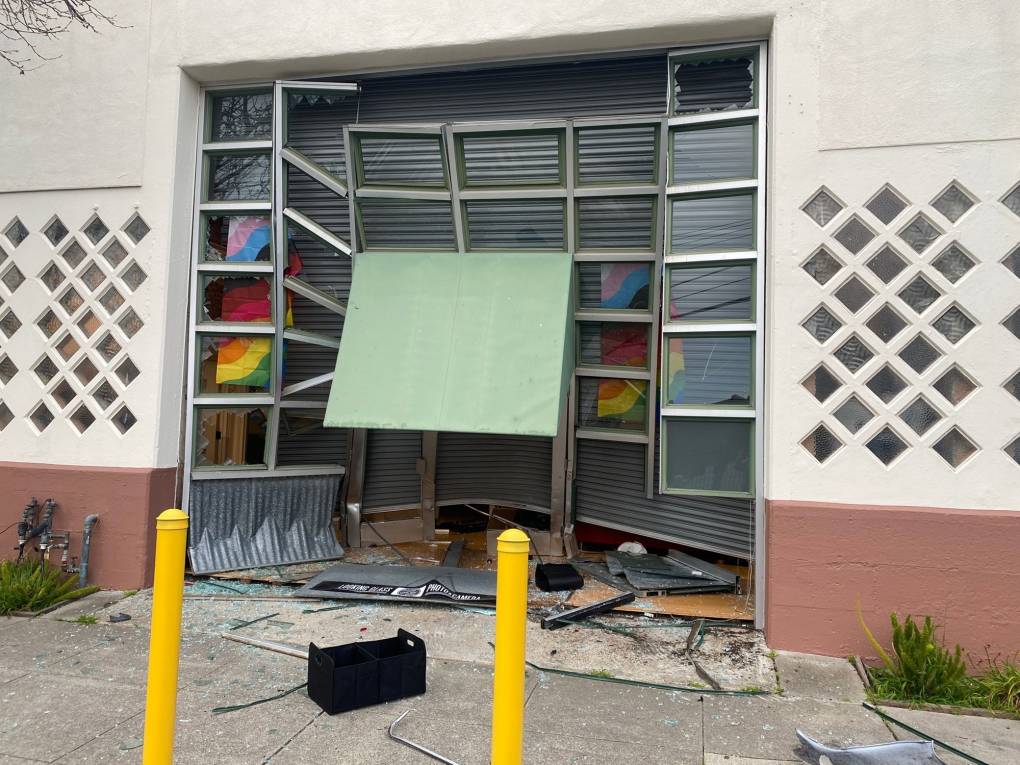
window.__INITIAL_STATE__={
"attachmentsReducer": {
"audio_0": {
"type": "attachments",
"id": "audio_0",
"imgSizes": {
"kqedFullSize": {
"file": "https://ww2.kqed.org/news/wp-content/themes/KQED-unified/img/audio_bgs/background0.jpg"
}
}
},
"audio_1": {
"type": "attachments",
"id": "audio_1",
"imgSizes": {
"kqedFullSize": {
"file": "https://ww2.kqed.org/news/wp-content/themes/KQED-unified/img/audio_bgs/background1.jpg"
}
}
},
"audio_2": {
"type": "attachments",
"id": "audio_2",
"imgSizes": {
"kqedFullSize": {
"file": "https://ww2.kqed.org/news/wp-content/themes/KQED-unified/img/audio_bgs/background2.jpg"
}
}
},
"audio_3": {
"type": "attachments",
"id": "audio_3",
"imgSizes": {
"kqedFullSize": {
"file": "https://ww2.kqed.org/news/wp-content/themes/KQED-unified/img/audio_bgs/background3.jpg"
}
}
},
"audio_4": {
"type": "attachments",
"id": "audio_4",
"imgSizes": {
"kqedFullSize": {
"file": "https://ww2.kqed.org/news/wp-content/themes/KQED-unified/img/audio_bgs/background4.jpg"
}
}
},
"placeholder": {
"type": "attachments",
"id": "placeholder",
"imgSizes": {
"thumbnail": {
"file": "https://cdn.kqed.org/wp-content/uploads/2024/12/KQED-Default-Image-816638274-2000x1333-1-160x107.jpg",
"width": 160,
"height": 107,
"mimeType": "image/jpeg"
},
"medium": {
"file": "https://cdn.kqed.org/wp-content/uploads/2024/12/KQED-Default-Image-816638274-2000x1333-1-800x533.jpg",
"width": 800,
"height": 533,
"mimeType": "image/jpeg"
},
"medium_large": {
"file": "https://cdn.kqed.org/wp-content/uploads/2024/12/KQED-Default-Image-816638274-2000x1333-1-768x512.jpg",
"width": 768,
"height": 512,
"mimeType": "image/jpeg"
},
"large": {
"file": "https://cdn.kqed.org/wp-content/uploads/2024/12/KQED-Default-Image-816638274-2000x1333-1-1020x680.jpg",
"width": 1020,
"height": 680,
"mimeType": "image/jpeg"
},
"1536x1536": {
"file": "https://cdn.kqed.org/wp-content/uploads/2024/12/KQED-Default-Image-816638274-2000x1333-1-1536x1024.jpg",
"width": 1536,
"height": 1024,
"mimeType": "image/jpeg"
},
"fd-lrg": {
"file": "https://cdn.kqed.org/wp-content/uploads/2024/12/KQED-Default-Image-816638274-2000x1333-1-1536x1024.jpg",
"width": 1536,
"height": 1024,
"mimeType": "image/jpeg"
},
"fd-med": {
"file": "https://cdn.kqed.org/wp-content/uploads/2024/12/KQED-Default-Image-816638274-2000x1333-1-1020x680.jpg",
"width": 1020,
"height": 680,
"mimeType": "image/jpeg"
},
"fd-sm": {
"file": "https://cdn.kqed.org/wp-content/uploads/2024/12/KQED-Default-Image-816638274-2000x1333-1-800x533.jpg",
"width": 800,
"height": 533,
"mimeType": "image/jpeg"
},
"post-thumbnail": {
"file": "https://cdn.kqed.org/wp-content/uploads/2024/12/KQED-Default-Image-816638274-2000x1333-1-672x372.jpg",
"width": 672,
"height": 372,
"mimeType": "image/jpeg"
},
"twentyfourteen-full-width": {
"file": "https://cdn.kqed.org/wp-content/uploads/2024/12/KQED-Default-Image-816638274-2000x1333-1-1038x576.jpg",
"width": 1038,
"height": 576,
"mimeType": "image/jpeg"
},
"xxsmall": {
"file": "https://cdn.kqed.org/wp-content/uploads/2024/12/KQED-Default-Image-816638274-2000x1333-1-160x107.jpg",
"width": 160,
"height": 107,
"mimeType": "image/jpeg"
},
"xsmall": {
"file": "https://cdn.kqed.org/wp-content/uploads/2024/12/KQED-Default-Image-816638274-2000x1333-1-672x372.jpg",
"width": 672,
"height": 372,
"mimeType": "image/jpeg"
},
"small": {
"file": "https://cdn.kqed.org/wp-content/uploads/2024/12/KQED-Default-Image-816638274-2000x1333-1-672x372.jpg",
"width": 672,
"height": 372,
"mimeType": "image/jpeg"
},
"xlarge": {
"file": "https://cdn.kqed.org/wp-content/uploads/2024/12/KQED-Default-Image-816638274-2000x1333-1-1020x680.jpg",
"width": 1020,
"height": 680,
"mimeType": "image/jpeg"
},
"full-width": {
"file": "https://cdn.kqed.org/wp-content/uploads/2024/12/KQED-Default-Image-816638274-2000x1333-1-1920x1280.jpg",
"width": 1920,
"height": 1280,
"mimeType": "image/jpeg"
},
"guest-author-32": {
"file": "https://cdn.kqed.org/wp-content/uploads/2025/01/KQED-Default-Image-816638274-1333x1333-1-160x160.jpg",
"width": 32,
"height": 32,
"mimeType": "image/jpeg"
},
"guest-author-50": {
"file": "https://cdn.kqed.org/wp-content/uploads/2025/01/KQED-Default-Image-816638274-1333x1333-1-160x160.jpg",
"width": 50,
"height": 50,
"mimeType": "image/jpeg"
},
"guest-author-64": {
"file": "https://cdn.kqed.org/wp-content/uploads/2025/01/KQED-Default-Image-816638274-1333x1333-1-160x160.jpg",
"width": 64,
"height": 64,
"mimeType": "image/jpeg"
},
"guest-author-96": {
"file": "https://cdn.kqed.org/wp-content/uploads/2025/01/KQED-Default-Image-816638274-1333x1333-1-160x160.jpg",
"width": 96,
"height": 96,
"mimeType": "image/jpeg"
},
"guest-author-128": {
"file": "https://cdn.kqed.org/wp-content/uploads/2025/01/KQED-Default-Image-816638274-1333x1333-1-160x160.jpg",
"width": 128,
"height": 128,
"mimeType": "image/jpeg"
},
"detail": {
"file": "https://cdn.kqed.org/wp-content/uploads/2025/01/KQED-Default-Image-816638274-1333x1333-1-160x160.jpg",
"width": 160,
"height": 160,
"mimeType": "image/jpeg"
},
"kqedFullSize": {
"file": "https://cdn.kqed.org/wp-content/uploads/2024/12/KQED-Default-Image-816638274-2000x1333-1.jpg",
"width": 2000,
"height": 1333
}
}
},
"news_12027614": {
"type": "attachments",
"id": "news_12027614",
"meta": {
"index": "attachments_1716263798",
"site": "news",
"id": "12027614",
"found": true
},
"title": "BerkeleyPhotoStore4",
"publishDate": 1739922278,
"status": "inherit",
"parent": 0,
"modified": 1739989683,
"caption": "Looking Glass Photo & Camera, a beloved business in Berkeley, was targeted by a smash-and-grab robbery early Sunday in which a vehicle rammed into the storefront multiple times. Looking Glass Photo continues to serve customers from its side entrance while it works on repairs.",
"credit": "Courtesy Looking Glass Photo & Camera",
"altTag": null,
"description": null,
"imgSizes": {
"medium": {
"file": "https://cdn.kqed.org/wp-content/uploads/sites/10/2025/02/BerkeleyPhotoStore4-800x600.jpg",
"width": 800,
"height": 600,
"mimeType": "image/jpeg"
},
"large": {
"file": "https://cdn.kqed.org/wp-content/uploads/sites/10/2025/02/BerkeleyPhotoStore4-1020x765.jpg",
"width": 1020,
"height": 765,
"mimeType": "image/jpeg"
},
"thumbnail": {
"file": "https://cdn.kqed.org/wp-content/uploads/sites/10/2025/02/BerkeleyPhotoStore4-160x120.jpg",
"width": 160,
"height": 120,
"mimeType": "image/jpeg"
},
"1536x1536": {
"file": "https://cdn.kqed.org/wp-content/uploads/sites/10/2025/02/BerkeleyPhotoStore4-1536x1152.jpg",
"width": 1536,
"height": 1152,
"mimeType": "image/jpeg"
},
"post-thumbnail": {
"file": "https://cdn.kqed.org/wp-content/uploads/sites/10/2025/02/BerkeleyPhotoStore4-672x372.jpg",
"width": 672,
"height": 372,
"mimeType": "image/jpeg"
},
"twentyfourteen-full-width": {
"file": "https://cdn.kqed.org/wp-content/uploads/sites/10/2025/02/BerkeleyPhotoStore4-1038x576.jpg",
"width": 1038,
"height": 576,
"mimeType": "image/jpeg"
},
"full-width": {
"file": "https://cdn.kqed.org/wp-content/uploads/sites/10/2025/02/BerkeleyPhotoStore4-1920x1440.jpg",
"width": 1920,
"height": 1440,
"mimeType": "image/jpeg"
},
"kqedFullSize": {
"file": "https://cdn.kqed.org/wp-content/uploads/sites/10/2025/02/BerkeleyPhotoStore4.jpg",
"width": 2000,
"height": 1500
}
},
"isLoading": false,
"fetchFailed": false
},
"news_12026949": {
"type": "attachments",
"id": "news_12026949",
"meta": {
"index": "attachments_1716263798",
"site": "news",
"id": "12026949",
"found": true
},
"title": "250212-ELKHORNSLOUGH-16-BL-KQED",
"publishDate": 1739477214,
"status": "inherit",
"parent": 12026477,
"modified": 1739491899,
"caption": "The Moss Landing Power Plant, the site of a battery fire on Jan. 16, in Moss Landing on Feb. 12, 2025. The power plant is a natural gas-fired power station with a large battery storage facility.",
"credit": "Beth LaBerge/KQED",
"altTag": null,
"description": null,
"imgSizes": {
"medium": {
"file": "https://cdn.kqed.org/wp-content/uploads/sites/10/2025/02/250212-ELKHORNSLOUGH-16-BL-KQED-800x533.jpg",
"width": 800,
"height": 533,
"mimeType": "image/jpeg"
},
"large": {
"file": "https://cdn.kqed.org/wp-content/uploads/sites/10/2025/02/250212-ELKHORNSLOUGH-16-BL-KQED-1020x680.jpg",
"width": 1020,
"height": 680,
"mimeType": "image/jpeg"
},
"thumbnail": {
"file": "https://cdn.kqed.org/wp-content/uploads/sites/10/2025/02/250212-ELKHORNSLOUGH-16-BL-KQED-160x107.jpg",
"width": 160,
"height": 107,
"mimeType": "image/jpeg"
},
"1536x1536": {
"file": "https://cdn.kqed.org/wp-content/uploads/sites/10/2025/02/250212-ELKHORNSLOUGH-16-BL-KQED-1536x1024.jpg",
"width": 1536,
"height": 1024,
"mimeType": "image/jpeg"
},
"post-thumbnail": {
"file": "https://cdn.kqed.org/wp-content/uploads/sites/10/2025/02/250212-ELKHORNSLOUGH-16-BL-KQED-672x372.jpg",
"width": 672,
"height": 372,
"mimeType": "image/jpeg"
},
"twentyfourteen-full-width": {
"file": "https://cdn.kqed.org/wp-content/uploads/sites/10/2025/02/250212-ELKHORNSLOUGH-16-BL-KQED-1038x576.jpg",
"width": 1038,
"height": 576,
"mimeType": "image/jpeg"
},
"full-width": {
"file": "https://cdn.kqed.org/wp-content/uploads/sites/10/2025/02/250212-ELKHORNSLOUGH-16-BL-KQED-1920x1280.jpg",
"width": 1920,
"height": 1280,
"mimeType": "image/jpeg"
},
"kqedFullSize": {
"file": "https://cdn.kqed.org/wp-content/uploads/sites/10/2025/02/250212-ELKHORNSLOUGH-16-BL-KQED.jpg",
"width": 2000,
"height": 1333
}
},
"isLoading": false,
"fetchFailed": false
},
"news_12027615": {
"type": "attachments",
"id": "news_12027615",
"meta": {
"index": "attachments_1716263798",
"site": "news",
"id": "12027615",
"found": true
},
"title": "250218-AlCoDASwornIn-11",
"publishDate": 1739922280,
"status": "inherit",
"parent": 12042693,
"modified": 1749077149,
"caption": "Alameda County District Attorney Ursula Jones Dickson speaks during a press conference at the René C. Davidson Courthouse in Oakland on Feb. 18, 2025.",
"credit": "Beth LaBerge/KQED",
"altTag": null,
"description": null,
"imgSizes": {
"medium": {
"file": "https://cdn.kqed.org/wp-content/uploads/sites/10/2025/02/250218-AlCoDASwornIn-11-800x533.jpg",
"width": 800,
"height": 533,
"mimeType": "image/jpeg"
},
"large": {
"file": "https://cdn.kqed.org/wp-content/uploads/sites/10/2025/02/250218-AlCoDASwornIn-11-1020x680.jpg",
"width": 1020,
"height": 680,
"mimeType": "image/jpeg"
},
"thumbnail": {
"file": "https://cdn.kqed.org/wp-content/uploads/sites/10/2025/02/250218-AlCoDASwornIn-11-160x107.jpg",
"width": 160,
"height": 107,
"mimeType": "image/jpeg"
},
"1536x1536": {
"file": "https://cdn.kqed.org/wp-content/uploads/sites/10/2025/02/250218-AlCoDASwornIn-11-1536x1024.jpg",
"width": 1536,
"height": 1024,
"mimeType": "image/jpeg"
},
"post-thumbnail": {
"file": "https://cdn.kqed.org/wp-content/uploads/sites/10/2025/02/250218-AlCoDASwornIn-11-672x372.jpg",
"width": 672,
"height": 372,
"mimeType": "image/jpeg"
},
"twentyfourteen-full-width": {
"file": "https://cdn.kqed.org/wp-content/uploads/sites/10/2025/02/250218-AlCoDASwornIn-11-1038x576.jpg",
"width": 1038,
"height": 576,
"mimeType": "image/jpeg"
},
"full-width": {
"file": "https://cdn.kqed.org/wp-content/uploads/sites/10/2025/02/250218-AlCoDASwornIn-11-1920x1280.jpg",
"width": 1920,
"height": 1280,
"mimeType": "image/jpeg"
},
"kqedFullSize": {
"file": "https://cdn.kqed.org/wp-content/uploads/sites/10/2025/02/250218-AlCoDASwornIn-11.jpg?ver=1739922689",
"width": 2000,
"height": 1333
}
},
"isLoading": false,
"fetchFailed": false
},
"news_11967918": {
"type": "attachments",
"id": "news_11967918",
"meta": {
"index": "attachments_1716263798",
"site": "news",
"id": "11967918",
"found": true
},
"parent": 11967917,
"imgSizes": {
"thumbnail": {
"file": "https://ww2.kqed.org/app/uploads/sites/10/2023/11/gettyimages-1245034839-4e70518b157c59982b247bd973771364284a3466-160x120.jpg",
"width": 160,
"mimeType": "image/jpeg",
"height": 120
},
"post-thumbnail": {
"file": "https://ww2.kqed.org/app/uploads/sites/10/2023/11/gettyimages-1245034839-4e70518b157c59982b247bd973771364284a3466-672x372.jpg",
"width": 672,
"mimeType": "image/jpeg",
"height": 372
},
"kqedFullSize": {
"file": "https://ww2.kqed.org/app/uploads/sites/10/2023/11/gettyimages-1245034839-4e70518b157c59982b247bd973771364284a3466.jpg",
"width": 756,
"height": 567
}
},
"publishDate": 1700511028,
"modified": 1700600976,
"caption": "United Air Lines planes are seen on the tarmac of Newark Liberty International Airport (EWR), New Jersey, on the eve of Thanksgiving on Nov. 23, 2022.",
"description": "United Air Lines planes are seen on the tarmac of Newark Liberty International Airport (EWR), New Jersey, on the eve of Thanksgiving on November 23, 2022.",
"title": "United Air Lines planes line up along the busy Newark Liberty International Airport, New Jersey, on the eve of Thanksgiving on November 23, 2022.",
"credit": "Daniel Slim/AFP via Getty Images",
"status": "inherit",
"altTag": "Airplanes are on a tarmac. A city skyline is seen in the background. One plane has the word United in blue on its side.",
"isLoading": false,
"fetchFailed": false
},
"news_11990744": {
"type": "attachments",
"id": "news_11990744",
"meta": {
"index": "attachments_1716263798",
"site": "news",
"id": "11990744",
"found": true
},
"title": "GettyImages-2153339140",
"publishDate": 1718655982,
"status": "inherit",
"parent": 11990735,
"modified": 1734114513,
"caption": "Jon Arizti Sanz, Ph.D., Postdoctoral Fellow preparing for the extraction protocol while in the lab. The Broad Institute, Sabeti Lab, is testing purchased milk at area grocery stores for the presence of bird flu. \n",
"credit": "David L. Ryan/The Boston Globe via Getty Images",
"altTag": null,
"description": null,
"imgSizes": {
"medium": {
"file": "https://cdn.kqed.org/wp-content/uploads/sites/10/2024/06/GettyImages-2153339140-800x533.jpg",
"width": 800,
"height": 533,
"mimeType": "image/jpeg"
},
"large": {
"file": "https://cdn.kqed.org/wp-content/uploads/sites/10/2024/06/GettyImages-2153339140-1020x680.jpg",
"width": 1020,
"height": 680,
"mimeType": "image/jpeg"
},
"thumbnail": {
"file": "https://cdn.kqed.org/wp-content/uploads/sites/10/2024/06/GettyImages-2153339140-160x107.jpg",
"width": 160,
"height": 107,
"mimeType": "image/jpeg"
},
"1536x1536": {
"file": "https://cdn.kqed.org/wp-content/uploads/sites/10/2024/06/GettyImages-2153339140-1536x1024.jpg",
"width": 1536,
"height": 1024,
"mimeType": "image/jpeg"
},
"post-thumbnail": {
"file": "https://cdn.kqed.org/wp-content/uploads/sites/10/2024/06/GettyImages-2153339140-672x372.jpg",
"width": 672,
"height": 372,
"mimeType": "image/jpeg"
},
"twentyfourteen-full-width": {
"file": "https://cdn.kqed.org/wp-content/uploads/sites/10/2024/06/GettyImages-2153339140-1038x576.jpg",
"width": 1038,
"height": 576,
"mimeType": "image/jpeg"
},
"kqedFullSize": {
"file": "https://cdn.kqed.org/wp-content/uploads/sites/10/2024/06/GettyImages-2153339140.jpg",
"width": 1920,
"height": 1280
}
},
"isLoading": false,
"fetchFailed": false
},
"news_12019753": {
"type": "attachments",
"id": "news_12019753",
"meta": {
"index": "attachments_1716263798",
"site": "news",
"id": "12019753",
"found": true
},
"title": "241218-DaylightingLaws-14-BL_qed",
"publishDate": 1735067650,
"status": "inherit",
"parent": 12019725,
"modified": 1735235815,
"caption": "Pedestrians walk past a bulb-out, or curb extension, at the intersection of 24th and Valencia streets in San Francisco on Dec. 18, 2024. A bulb-out extends the sidewalk into a parking lane to provide more space for pedestrians and visibility at an intersection.",
"credit": "Beth LaBerge/KQED",
"altTag": "A person walks across a yellow-lined crosswalk.",
"description": null,
"imgSizes": {
"medium": {
"file": "https://cdn.kqed.org/wp-content/uploads/sites/10/2024/12/241218-DaylightingLaws-14-BL_qed-800x533.jpg",
"width": 800,
"height": 533,
"mimeType": "image/jpeg"
},
"large": {
"file": "https://cdn.kqed.org/wp-content/uploads/sites/10/2024/12/241218-DaylightingLaws-14-BL_qed-1020x680.jpg",
"width": 1020,
"height": 680,
"mimeType": "image/jpeg"
},
"thumbnail": {
"file": "https://cdn.kqed.org/wp-content/uploads/sites/10/2024/12/241218-DaylightingLaws-14-BL_qed-160x107.jpg",
"width": 160,
"height": 107,
"mimeType": "image/jpeg"
},
"1536x1536": {
"file": "https://cdn.kqed.org/wp-content/uploads/sites/10/2024/12/241218-DaylightingLaws-14-BL_qed-1536x1024.jpg",
"width": 1536,
"height": 1024,
"mimeType": "image/jpeg"
},
"post-thumbnail": {
"file": "https://cdn.kqed.org/wp-content/uploads/sites/10/2024/12/241218-DaylightingLaws-14-BL_qed-672x372.jpg",
"width": 672,
"height": 372,
"mimeType": "image/jpeg"
},
"twentyfourteen-full-width": {
"file": "https://cdn.kqed.org/wp-content/uploads/sites/10/2024/12/241218-DaylightingLaws-14-BL_qed-1038x576.jpg",
"width": 1038,
"height": 576,
"mimeType": "image/jpeg"
},
"full-width": {
"file": "https://cdn.kqed.org/wp-content/uploads/sites/10/2024/12/241218-DaylightingLaws-14-BL_qed-1920x1280.jpg",
"width": 1920,
"height": 1280,
"mimeType": "image/jpeg"
},
"kqedFullSize": {
"file": "https://cdn.kqed.org/wp-content/uploads/sites/10/2024/12/241218-DaylightingLaws-14-BL_qed.jpg",
"width": 2000,
"height": 1333
}
},
"isLoading": false,
"fetchFailed": false
},
"news_11910896": {
"type": "attachments",
"id": "news_11910896",
"meta": {
"index": "attachments_1716263798",
"site": "news",
"id": "11910896",
"found": true
},
"parent": 11910890,
"imgSizes": {
"twentyfourteen-full-width": {
"file": "https://ww2.kqed.org/app/uploads/sites/10/2022/04/16thStreetStationOakland_02162022-qut-1038x576.jpg",
"width": 1038,
"mimeType": "image/jpeg",
"height": 576
},
"thumbnail": {
"file": "https://ww2.kqed.org/app/uploads/sites/10/2022/04/16thStreetStationOakland_02162022-qut-160x107.jpg",
"width": 160,
"mimeType": "image/jpeg",
"height": 107
},
"post-thumbnail": {
"file": "https://ww2.kqed.org/app/uploads/sites/10/2022/04/16thStreetStationOakland_02162022-qut-672x372.jpg",
"width": 672,
"mimeType": "image/jpeg",
"height": 372
},
"kqedFullSize": {
"file": "https://ww2.kqed.org/app/uploads/sites/10/2022/04/16thStreetStationOakland_02162022-qut.jpg",
"width": 1920,
"height": 1280
},
"large": {
"file": "https://ww2.kqed.org/app/uploads/sites/10/2022/04/16thStreetStationOakland_02162022-qut-1020x680.jpg",
"width": 1020,
"mimeType": "image/jpeg",
"height": 680
},
"1536x1536": {
"file": "https://ww2.kqed.org/app/uploads/sites/10/2022/04/16thStreetStationOakland_02162022-qut-1536x1024.jpg",
"width": 1536,
"mimeType": "image/jpeg",
"height": 1024
},
"medium": {
"file": "https://ww2.kqed.org/app/uploads/sites/10/2022/04/16thStreetStationOakland_02162022-qut-800x533.jpg",
"width": 800,
"mimeType": "image/jpeg",
"height": 533
}
},
"publishDate": 1649789007,
"modified": 1649789048,
"caption": "16th Street Station in West Oakland on Feb. 16, 2022.",
"description": null,
"title": "16th Street Station in West Oakland on Feb. 16, 2022.",
"credit": "Beth LaBerge/KQED",
"status": "inherit",
"altTag": "A huge, imposing stone building sits in a vacant lot. It has three massive arched windows and a terracotta roof.",
"isLoading": false,
"fetchFailed": false
},
"news_11957563": {
"type": "attachments",
"id": "news_11957563",
"meta": {
"index": "attachments_1716263798",
"site": "news",
"id": "11957563",
"found": true
},
"parent": 0,
"imgSizes": {
"twentyfourteen-full-width": {
"file": "https://ww2.kqed.org/app/uploads/sites/10/2023/08/RS67526_20230801-SJCityHall-01-JYKQED-1038x576.jpg",
"width": 1038,
"mimeType": "image/jpeg",
"height": 576
},
"thumbnail": {
"file": "https://ww2.kqed.org/app/uploads/sites/10/2023/08/RS67526_20230801-SJCityHall-01-JYKQED-160x107.jpg",
"width": 160,
"mimeType": "image/jpeg",
"height": 107
},
"post-thumbnail": {
"file": "https://ww2.kqed.org/app/uploads/sites/10/2023/08/RS67526_20230801-SJCityHall-01-JYKQED-672x372.jpg",
"width": 672,
"mimeType": "image/jpeg",
"height": 372
},
"kqedFullSize": {
"file": "https://ww2.kqed.org/app/uploads/sites/10/2023/08/RS67526_20230801-SJCityHall-01-JYKQED.jpg",
"width": 2000,
"height": 1333
},
"large": {
"file": "https://ww2.kqed.org/app/uploads/sites/10/2023/08/RS67526_20230801-SJCityHall-01-JYKQED-1020x680.jpg",
"width": 1020,
"mimeType": "image/jpeg",
"height": 680
},
"1536x1536": {
"file": "https://ww2.kqed.org/app/uploads/sites/10/2023/08/RS67526_20230801-SJCityHall-01-JYKQED-1536x1024.jpg",
"width": 1536,
"mimeType": "image/jpeg",
"height": 1024
},
"full-width": {
"file": "https://ww2.kqed.org/app/uploads/sites/10/2023/08/RS67526_20230801-SJCityHall-01-JYKQED-1920x1280.jpg",
"width": 1920,
"mimeType": "image/jpeg",
"height": 1280
},
"medium": {
"file": "https://ww2.kqed.org/app/uploads/sites/10/2023/08/RS67526_20230801-SJCityHall-01-JYKQED-800x533.jpg",
"width": 800,
"mimeType": "image/jpeg",
"height": 533
}
},
"publishDate": 1691431355,
"modified": 1692146238,
"caption": "City Hall in San José on Aug. 1, 2023.",
"description": null,
"title": "City Hall in San Jose, Calif., on Tuesday, August 1, 2023.",
"credit": "Juliana Yamada/KQED",
"status": "inherit",
"altTag": "A sign on a building reading \"San Jose City Hall.\"",
"isLoading": false,
"fetchFailed": false
},
"news_11621864": {
"type": "attachments",
"id": "news_11621864",
"meta": {
"index": "attachments_1716263798",
"site": "news",
"id": "11621864",
"found": true
},
"title": "Chimney",
"publishDate": 1507571472,
"status": "inherit",
"parent": 11621829,
"modified": 1739405839,
"caption": "Remains of destroyed homes smolder in Glen Ellen on Oct. 9, 2017. Tens of thousands of acres and dozens of homes and businesses have burned in a widespread wildfire that is burning in Napa and Sonoma counties.",
"credit": "Justin Sullivan/Getty Images",
"altTag": "The smouldering remains of a structure, with two brick parts of the structure still standing.",
"description": "Remains of destroyed homes smolder in Glen Ellen on October 9, 2017. Tens of thousands of acres and dozens of homes and businesses have burned in a widespread wildfire that is burning in Napa and Sonoma counties.",
"imgSizes": {
"thumbnail": {
"file": "https://cdn.kqed.org/wp-content/uploads/sites/10/2017/10/Chimney-160x107.jpg",
"width": 160,
"height": 107,
"mimeType": "image/jpeg"
},
"medium": {
"file": "https://cdn.kqed.org/wp-content/uploads/sites/10/2017/10/Chimney-800x533.jpg",
"width": 800,
"height": 533,
"mimeType": "image/jpeg"
},
"large": {
"file": "https://cdn.kqed.org/wp-content/uploads/sites/10/2017/10/Chimney-1020x680.jpg",
"width": 1020,
"height": 680,
"mimeType": "image/jpeg"
},
"fd-lrg": {
"file": "https://cdn.kqed.org/wp-content/uploads/sites/10/2017/10/Chimney-1920x1280.jpg",
"width": 1920,
"height": 1280,
"mimeType": "image/jpeg"
},
"fd-med": {
"file": "https://cdn.kqed.org/wp-content/uploads/sites/10/2017/10/Chimney-1180x787.jpg",
"width": 1180,
"height": 787,
"mimeType": "image/jpeg"
},
"fd-sm": {
"file": "https://cdn.kqed.org/wp-content/uploads/sites/10/2017/10/Chimney-960x640.jpg",
"width": 960,
"height": 640,
"mimeType": "image/jpeg"
},
"post-thumbnail": {
"file": "https://cdn.kqed.org/wp-content/uploads/sites/10/2017/10/Chimney-672x372.jpg",
"width": 672,
"height": 372,
"mimeType": "image/jpeg"
},
"twentyfourteen-full-width": {
"file": "https://cdn.kqed.org/wp-content/uploads/sites/10/2017/10/Chimney-1038x576.jpg",
"width": 1038,
"height": 576,
"mimeType": "image/jpeg"
},
"xxsmall": {
"file": "https://cdn.kqed.org/wp-content/uploads/sites/10/2017/10/Chimney-240x160.jpg",
"width": 240,
"height": 160,
"mimeType": "image/jpeg"
},
"xsmall": {
"file": "https://cdn.kqed.org/wp-content/uploads/sites/10/2017/10/Chimney-375x250.jpg",
"width": 375,
"height": 250,
"mimeType": "image/jpeg"
},
"small": {
"file": "https://cdn.kqed.org/wp-content/uploads/sites/10/2017/10/Chimney-520x347.jpg",
"width": 520,
"height": 347,
"mimeType": "image/jpeg"
},
"xlarge": {
"file": "https://cdn.kqed.org/wp-content/uploads/sites/10/2017/10/Chimney-1180x787.jpg",
"width": 1180,
"height": 787,
"mimeType": "image/jpeg"
},
"full-width": {
"file": "https://cdn.kqed.org/wp-content/uploads/sites/10/2017/10/Chimney-1920x1280.jpg",
"width": 1920,
"height": 1280,
"mimeType": "image/jpeg"
},
"guest-author-32": {
"file": "https://cdn.kqed.org/wp-content/uploads/sites/10/2017/10/Chimney-32x32.jpg",
"width": 32,
"height": 32,
"mimeType": "image/jpeg"
},
"guest-author-50": {
"file": "https://cdn.kqed.org/wp-content/uploads/sites/10/2017/10/Chimney-50x50.jpg",
"width": 50,
"height": 50,
"mimeType": "image/jpeg"
},
"guest-author-64": {
"file": "https://cdn.kqed.org/wp-content/uploads/sites/10/2017/10/Chimney-64x64.jpg",
"width": 64,
"height": 64,
"mimeType": "image/jpeg"
},
"guest-author-96": {
"file": "https://cdn.kqed.org/wp-content/uploads/sites/10/2017/10/Chimney-96x96.jpg",
"width": 96,
"height": 96,
"mimeType": "image/jpeg"
},
"guest-author-128": {
"file": "https://cdn.kqed.org/wp-content/uploads/sites/10/2017/10/Chimney-128x128.jpg",
"width": 128,
"height": 128,
"mimeType": "image/jpeg"
},
"detail": {
"file": "https://cdn.kqed.org/wp-content/uploads/sites/10/2017/10/Chimney-150x150.jpg",
"width": 150,
"height": 150,
"mimeType": "image/jpeg"
},
"kqedFullSize": {
"file": "https://cdn.kqed.org/wp-content/uploads/sites/10/2017/10/Chimney.jpg",
"width": 1920,
"height": 1280
}
},
"isLoading": false,
"fetchFailed": false
},
"news_12026672": {
"type": "attachments",
"id": "news_12026672",
"meta": {
"index": "attachments_1716263798",
"site": "news",
"id": "12026672",
"found": true
},
"title": "014_KQED_LagunaHondaHospital_01312023_qed",
"publishDate": 1739320054,
"status": "inherit",
"parent": 12026662,
"modified": 1739320078,
"caption": "San Francisco’s largest skilled nursing facility, Laguna Honda, has hundreds of beds available as the city scrambles to open various health care beds across the city. ",
"credit": "Beth LaBerge/KQED",
"altTag": null,
"description": null,
"imgSizes": {
"medium": {
"file": "https://cdn.kqed.org/wp-content/uploads/sites/10/2025/02/014_KQED_LagunaHondaHospital_01312023_qed-800x533.jpg",
"width": 800,
"height": 533,
"mimeType": "image/jpeg"
},
"large": {
"file": "https://cdn.kqed.org/wp-content/uploads/sites/10/2025/02/014_KQED_LagunaHondaHospital_01312023_qed-1020x680.jpg",
"width": 1020,
"height": 680,
"mimeType": "image/jpeg"
},
"thumbnail": {
"file": "https://cdn.kqed.org/wp-content/uploads/sites/10/2025/02/014_KQED_LagunaHondaHospital_01312023_qed-160x107.jpg",
"width": 160,
"height": 107,
"mimeType": "image/jpeg"
},
"1536x1536": {
"file": "https://cdn.kqed.org/wp-content/uploads/sites/10/2025/02/014_KQED_LagunaHondaHospital_01312023_qed-1536x1024.jpg",
"width": 1536,
"height": 1024,
"mimeType": "image/jpeg"
},
"post-thumbnail": {
"file": "https://cdn.kqed.org/wp-content/uploads/sites/10/2025/02/014_KQED_LagunaHondaHospital_01312023_qed-672x372.jpg",
"width": 672,
"height": 372,
"mimeType": "image/jpeg"
},
"twentyfourteen-full-width": {
"file": "https://cdn.kqed.org/wp-content/uploads/sites/10/2025/02/014_KQED_LagunaHondaHospital_01312023_qed-1038x576.jpg",
"width": 1038,
"height": 576,
"mimeType": "image/jpeg"
},
"full-width": {
"file": "https://cdn.kqed.org/wp-content/uploads/sites/10/2025/02/014_KQED_LagunaHondaHospital_01312023_qed-1920x1280.jpg",
"width": 1920,
"height": 1280,
"mimeType": "image/jpeg"
},
"kqedFullSize": {
"file": "https://cdn.kqed.org/wp-content/uploads/sites/10/2025/02/014_KQED_LagunaHondaHospital_01312023_qed.jpg",
"width": 2000,
"height": 1333
}
},
"isLoading": false,
"fetchFailed": false
},
"news_12026566": {
"type": "attachments",
"id": "news_12026566",
"meta": {
"index": "attachments_1716263798",
"site": "news",
"id": "12026566",
"found": true
},
"title": "The Napper Tandy bar in San Francisco on Feb. 10, 2025.",
"publishDate": 1739284790,
"status": "inherit",
"parent": 12026974,
"modified": 1739485222,
"caption": "The Napper Tandy bar in San Francisco on Feb. 10, 2025.",
"credit": "Martin do Nascimento/KQED",
"altTag": null,
"description": null,
"imgSizes": {
"medium": {
"file": "https://cdn.kqed.org/wp-content/uploads/sites/10/2025/02/250210_SF-Parklet-Crash_MD_04_qed-800x533.jpg",
"width": 800,
"height": 533,
"mimeType": "image/jpeg"
},
"large": {
"file": "https://cdn.kqed.org/wp-content/uploads/sites/10/2025/02/250210_SF-Parklet-Crash_MD_04_qed-1020x680.jpg",
"width": 1020,
"height": 680,
"mimeType": "image/jpeg"
},
"thumbnail": {
"file": "https://cdn.kqed.org/wp-content/uploads/sites/10/2025/02/250210_SF-Parklet-Crash_MD_04_qed-160x107.jpg",
"width": 160,
"height": 107,
"mimeType": "image/jpeg"
},
"1536x1536": {
"file": "https://cdn.kqed.org/wp-content/uploads/sites/10/2025/02/250210_SF-Parklet-Crash_MD_04_qed-1536x1024.jpg",
"width": 1536,
"height": 1024,
"mimeType": "image/jpeg"
},
"post-thumbnail": {
"file": "https://cdn.kqed.org/wp-content/uploads/sites/10/2025/02/250210_SF-Parklet-Crash_MD_04_qed-672x372.jpg",
"width": 672,
"height": 372,
"mimeType": "image/jpeg"
},
"twentyfourteen-full-width": {
"file": "https://cdn.kqed.org/wp-content/uploads/sites/10/2025/02/250210_SF-Parklet-Crash_MD_04_qed-1038x576.jpg",
"width": 1038,
"height": 576,
"mimeType": "image/jpeg"
},
"full-width": {
"file": "https://cdn.kqed.org/wp-content/uploads/sites/10/2025/02/250210_SF-Parklet-Crash_MD_04_qed-1920x1280.jpg",
"width": 1920,
"height": 1280,
"mimeType": "image/jpeg"
},
"kqedFullSize": {
"file": "https://cdn.kqed.org/wp-content/uploads/sites/10/2025/02/250210_SF-Parklet-Crash_MD_04_qed.jpg",
"width": 1999,
"height": 1333
}
},
"isLoading": false,
"fetchFailed": false
},
"news_12026493": {
"type": "attachments",
"id": "news_12026493",
"meta": {
"index": "attachments_1716263798",
"site": "news",
"id": "12026493",
"found": true
},
"title": "20250210_Unhoused-Ban_DMB_00117",
"publishDate": 1739225395,
"status": "inherit",
"parent": 12026580,
"modified": 1739385117,
"caption": "Jasmine Grijalva poses for a portrait near Quarry Lakes Drive in Fremont, California, on Monday, Feb. 10, 2025. Grijalva has been unhoused since moving from the Central Valley to the Bay Area in June 2020. On Feb. 11, 2025, Fremont city leaders are expected to vote on a proposed public camping ban that extends punishment beyond those living on the streets to people who facilitate or conceal encampments in what is described as a first-in-the-state ban.",
"credit": "David M. Barreda/KQED",
"altTag": null,
"description": null,
"imgSizes": {
"medium": {
"file": "https://cdn.kqed.org/wp-content/uploads/sites/10/2025/02/20250210_Unhoused-Ban_DMB_00117-800x533.jpg",
"width": 800,
"height": 533,
"mimeType": "image/jpeg"
},
"large": {
"file": "https://cdn.kqed.org/wp-content/uploads/sites/10/2025/02/20250210_Unhoused-Ban_DMB_00117-1020x680.jpg",
"width": 1020,
"height": 680,
"mimeType": "image/jpeg"
},
"thumbnail": {
"file": "https://cdn.kqed.org/wp-content/uploads/sites/10/2025/02/20250210_Unhoused-Ban_DMB_00117-160x107.jpg",
"width": 160,
"height": 107,
"mimeType": "image/jpeg"
},
"1536x1536": {
"file": "https://cdn.kqed.org/wp-content/uploads/sites/10/2025/02/20250210_Unhoused-Ban_DMB_00117-1536x1024.jpg",
"width": 1536,
"height": 1024,
"mimeType": "image/jpeg"
},
"post-thumbnail": {
"file": "https://cdn.kqed.org/wp-content/uploads/sites/10/2025/02/20250210_Unhoused-Ban_DMB_00117-672x372.jpg",
"width": 672,
"height": 372,
"mimeType": "image/jpeg"
},
"twentyfourteen-full-width": {
"file": "https://cdn.kqed.org/wp-content/uploads/sites/10/2025/02/20250210_Unhoused-Ban_DMB_00117-1038x576.jpg",
"width": 1038,
"height": 576,
"mimeType": "image/jpeg"
},
"full-width": {
"file": "https://cdn.kqed.org/wp-content/uploads/sites/10/2025/02/20250210_Unhoused-Ban_DMB_00117-1920x1280.jpg",
"width": 1920,
"height": 1280,
"mimeType": "image/jpeg"
},
"kqedFullSize": {
"file": "https://cdn.kqed.org/wp-content/uploads/sites/10/2025/02/20250210_Unhoused-Ban_DMB_00117.jpg",
"width": 2000,
"height": 1333
}
},
"isLoading": false,
"fetchFailed": false
}
},
"audioPlayerReducer": {
"postId": "stream_live",
"isPaused": true,
"isPlaying": false,
"pfsActive": false,
"pledgeModalIsOpen": true,
"playerDrawerIsOpen": false,
"liveAudioPlayStartedAt": 0,
"liveAudioPlayContext": ""
},
"authorsReducer": {
"byline_news_12027453": {
"type": "authors",
"id": "byline_news_12027453",
"meta": {
"override": true
},
"slug": "byline_news_12027453",
"name": "Tara Copp, Associated Press",
"isLoading": false
},
"byline_news_12027212": {
"type": "authors",
"id": "byline_news_12027212",
"meta": {
"override": true
},
"slug": "byline_news_12027212",
"name": "Amy Maxmen, KFF Health News",
"isLoading": false
},
"gmarzorati": {
"type": "authors",
"id": "227",
"meta": {
"index": "authors_1716337520",
"id": "227",
"found": true
},
"name": "Guy Marzorati",
"firstName": "Guy",
"lastName": "Marzorati",
"slug": "gmarzorati",
"email": "gmarzorati@KQED.org",
"display_author_email": true,
"staff_mastheads": [
"news"
],
"title": "Correspondent",
"bio": "Guy Marzorati is a correspondent on KQED's California Politics and Government Desk, based in San Jose. A graduate of Santa Clara University, Guy joined KQED in 2013. He reports on state and local politics and produces KQED's digital voter guide.",
"avatar": "https://secure.gravatar.com/avatar/e7038b8dbfd55b104369b76b1cd0b9de?s=600&d=blank&r=g",
"twitter": "guymarzorati",
"facebook": null,
"instagram": null,
"linkedin": null,
"sites": [
{
"site": "",
"roles": [
"editor"
]
},
{
"site": "news",
"roles": [
"editor"
]
},
{
"site": "science",
"roles": [
"editor"
]
},
{
"site": "forum",
"roles": [
"editor"
]
},
{
"site": "elections",
"roles": [
"editor"
]
},
{
"site": "liveblog",
"roles": [
"editor"
]
}
],
"headData": {
"title": "Guy Marzorati | KQED",
"description": "Correspondent",
"ogImgSrc": "https://secure.gravatar.com/avatar/e7038b8dbfd55b104369b76b1cd0b9de?s=600&d=blank&r=g",
"twImgSrc": "https://secure.gravatar.com/avatar/e7038b8dbfd55b104369b76b1cd0b9de?s=600&d=blank&r=g"
},
"isLoading": false,
"link": "/author/gmarzorati"
},
"carlysevern": {
"type": "authors",
"id": "3243",
"meta": {
"index": "authors_1716337520",
"id": "3243",
"found": true
},
"name": "Carly Severn",
"firstName": "Carly",
"lastName": "Severn",
"slug": "carlysevern",
"email": "csevern@kqed.org",
"display_author_email": false,
"staff_mastheads": [
"news"
],
"title": "Senior Editor, Audience News ",
"bio": "Carly is KQED's Senior Editor of Audience News on the Digital News team, and has reported for the California Report Magazine, Bay Curious and KQED Arts. She's formerly the host of \u003ca href=\"http://ww2.kqed.org/pop/category/the-cooler/\" rel=\"noopener noreferrer\">The Cooler\u003c/a> podcast.",
"avatar": "https://secure.gravatar.com/avatar/54037bf5c128fe678f0ef26cec97a93f2e7f220a22d7285703328f12c42c1b1d?s=600&d=blank&r=g",
"twitter": "teacupinthebay",
"bluesky": null,
"facebook": null,
"instagram": null,
"linkedin": null,
"sites": [
{
"site": "",
"roles": [
"editor"
]
},
{
"site": "arts",
"roles": [
"editor"
]
},
{
"site": "news",
"roles": [
"administrator"
]
},
{
"site": "pop",
"roles": [
"editor"
]
},
{
"site": "futureofyou",
"roles": [
"editor"
]
},
{
"site": "about",
"roles": [
"administrator"
]
},
{
"site": "mindshift",
"roles": [
"editor"
]
},
{
"site": "bayareabites",
"roles": [
"editor"
]
},
{
"site": "stateofhealth",
"roles": [
"editor"
]
},
{
"site": "science",
"roles": [
"editor"
]
},
{
"site": "food",
"roles": [
"contributor"
]
},
{
"site": "forum",
"roles": [
"editor"
]
},
{
"site": "perspectives",
"roles": [
"administrator"
]
},
{
"site": "liveblog",
"roles": [
"editor"
]
}
],
"headData": {
"title": "Carly Severn | KQED",
"description": "Senior Editor, Audience News ",
"ogImgSrc": "https://secure.gravatar.com/avatar/54037bf5c128fe678f0ef26cec97a93f2e7f220a22d7285703328f12c42c1b1d?s=600&d=blank&r=g",
"twImgSrc": "https://secure.gravatar.com/avatar/54037bf5c128fe678f0ef26cec97a93f2e7f220a22d7285703328f12c42c1b1d?s=600&d=blank&r=g"
},
"isLoading": false,
"link": "/author/carlysevern"
},
"vrancano": {
"type": "authors",
"id": "11276",
"meta": {
"index": "authors_1716337520",
"id": "11276",
"found": true
},
"name": "Vanessa Rancaño",
"firstName": "Vanessa",
"lastName": "Rancaño",
"slug": "vrancano",
"email": "vrancano@kqed.org",
"display_author_email": false,
"staff_mastheads": [
"news"
],
"title": "Reporter",
"bio": "Vanessa Rancaño is a features reporter for KQED. She’s also covered homelessness and education for the station and reported from the Central Valley. Her work has aired across public radio, from flagship national news shows to longform narrative podcasts. Before taking up a mic, she worked as a freelance print journalist. She’s been recognized with a number of national and regional awards. Vanessa grew up in California's Central Valley. She's a former NPR Kroc Fellow, and a graduate of the UC Berkeley Graduate School of Journalism.",
"avatar": "https://secure.gravatar.com/avatar/b3a383dfb0e7ee1c17568f2cf067904ab654d6e3de9743fc661f3c788ade1bed?s=600&d=blank&r=g",
"twitter": "vanessarancano",
"bluesky": null,
"facebook": null,
"instagram": null,
"linkedin": null,
"sites": [
{
"site": "arts",
"roles": [
"editor"
]
},
{
"site": "news",
"roles": [
"editor"
]
},
{
"site": "liveblog",
"roles": [
"contributor"
]
}
],
"headData": {
"title": "Vanessa Rancaño | KQED",
"description": "Reporter",
"ogImgSrc": "https://secure.gravatar.com/avatar/b3a383dfb0e7ee1c17568f2cf067904ab654d6e3de9743fc661f3c788ade1bed?s=600&d=blank&r=g",
"twImgSrc": "https://secure.gravatar.com/avatar/b3a383dfb0e7ee1c17568f2cf067904ab654d6e3de9743fc661f3c788ade1bed?s=600&d=blank&r=g"
},
"isLoading": false,
"link": "/author/vrancano"
},
"adahlstromeckman": {
"type": "authors",
"id": "11785",
"meta": {
"index": "authors_1716337520",
"id": "11785",
"found": true
},
"name": "Azul Dahlstrom-Eckman",
"firstName": "Azul",
"lastName": "Dahlstrom-Eckman",
"slug": "adahlstromeckman",
"email": "adahlstrom-eckman@kqed.org",
"display_author_email": true,
"staff_mastheads": [],
"title": "Reporter",
"bio": "Azul is a reporter for KQED focusing on transportation and features. He joined KQED in 2021 as an alumna of KALW's Audio Academy radio journalism training program.",
"avatar": "https://secure.gravatar.com/avatar/9cb750298435add7815a777f55bf1f46845c1386bb8452555c60a7b820b5aba3?s=600&d=blank&r=g",
"twitter": "@zuliemann",
"bluesky": "@azul415.bsky.social",
"facebook": null,
"instagram": null,
"linkedin": null,
"sites": [
{
"site": "arts",
"roles": [
"editor"
]
},
{
"site": "news",
"roles": [
"editor"
]
},
{
"site": "science",
"roles": [
"editor"
]
},
{
"site": "liveblog",
"roles": [
"author"
]
}
],
"headData": {
"title": "Azul Dahlstrom-Eckman | KQED",
"description": "Reporter",
"ogImgSrc": "https://secure.gravatar.com/avatar/9cb750298435add7815a777f55bf1f46845c1386bb8452555c60a7b820b5aba3?s=600&d=blank&r=g",
"twImgSrc": "https://secure.gravatar.com/avatar/9cb750298435add7815a777f55bf1f46845c1386bb8452555c60a7b820b5aba3?s=600&d=blank&r=g"
},
"isLoading": false,
"link": "/author/adahlstromeckman"
},
"sjohnson": {
"type": "authors",
"id": "11840",
"meta": {
"index": "authors_1716337520",
"id": "11840",
"found": true
},
"name": "Sydney Johnson",
"firstName": "Sydney",
"lastName": "Johnson",
"slug": "sjohnson",
"email": "sjohnson@kqed.org",
"display_author_email": false,
"staff_mastheads": [
"news"
],
"title": "KQED Reporter",
"bio": "Sydney Johnson is a general assignment reporter at KQED. She previously reported on public health and city government at the San Francisco Examiner, and before that, she covered statewide education policy for EdSource. Her reporting has won multiple local, state and national awards. Sydney is a graduate of the University of California, Berkeley and lives in San Francisco.",
"avatar": "https://secure.gravatar.com/avatar/97855f2719b72ad6190b7c535fe642c8?s=600&d=blank&r=g",
"twitter": "sydneyfjohnson",
"facebook": null,
"instagram": null,
"linkedin": null,
"sites": [
{
"site": "news",
"roles": [
"editor"
]
}
],
"headData": {
"title": "Sydney Johnson | KQED",
"description": "KQED Reporter",
"ogImgSrc": "https://secure.gravatar.com/avatar/97855f2719b72ad6190b7c535fe642c8?s=600&d=blank&r=g",
"twImgSrc": "https://secure.gravatar.com/avatar/97855f2719b72ad6190b7c535fe642c8?s=600&d=blank&r=g"
},
"isLoading": false,
"link": "/author/sjohnson"
},
"kdebenedetti": {
"type": "authors",
"id": "11913",
"meta": {
"index": "authors_1716337520",
"id": "11913",
"found": true
},
"name": "Katie DeBenedetti",
"firstName": "Katie",
"lastName": "DeBenedetti",
"slug": "kdebenedetti",
"email": "kdebenedetti@kqed.org",
"display_author_email": false,
"staff_mastheads": [
"news",
"science"
],
"title": "KQED Contributor",
"bio": "Katie DeBenedetti is a digital reporter covering daily news for the Express Desk. Prior to joining KQED as a culture reporting intern in January 2024, she covered education and city government for the Napa Valley Register.",
"avatar": "https://secure.gravatar.com/avatar/6e31073cb8f7e4214ab03f42771d0f45?s=600&d=blank&r=g",
"twitter": null,
"facebook": null,
"instagram": null,
"linkedin": null,
"sites": [
{
"site": "news",
"roles": [
"author"
]
},
{
"site": "science",
"roles": [
"author"
]
},
{
"site": "liveblog",
"roles": [
"author"
]
}
],
"headData": {
"title": "Katie DeBenedetti | KQED",
"description": "KQED Contributor",
"ogImgSrc": "https://secure.gravatar.com/avatar/6e31073cb8f7e4214ab03f42771d0f45?s=600&d=blank&r=g",
"twImgSrc": "https://secure.gravatar.com/avatar/6e31073cb8f7e4214ab03f42771d0f45?s=600&d=blank&r=g"
},
"isLoading": false,
"link": "/author/kdebenedetti"
},
"slim": {
"type": "authors",
"id": "11920",
"meta": {
"index": "authors_1716337520",
"id": "11920",
"found": true
},
"name": "Samantha Lim",
"firstName": "Samantha",
"lastName": "Lim",
"slug": "slim",
"email": "slim@KQED.org",
"display_author_email": false,
"staff_mastheads": [],
"title": "KQED Contributor",
"bio": null,
"avatar": "https://secure.gravatar.com/avatar/82e592e6c15fe1a04d385e8ad0fb0b4e?s=600&d=blank&r=g",
"twitter": null,
"facebook": null,
"instagram": null,
"linkedin": null,
"sites": [
{
"site": "news",
"roles": []
}
],
"headData": {
"title": "Samantha Lim | KQED",
"description": "KQED Contributor",
"ogImgSrc": "https://secure.gravatar.com/avatar/82e592e6c15fe1a04d385e8ad0fb0b4e?s=600&d=blank&r=g",
"twImgSrc": "https://secure.gravatar.com/avatar/82e592e6c15fe1a04d385e8ad0fb0b4e?s=600&d=blank&r=g"
},
"isLoading": false,
"link": "/author/slim"
},
"gzada": {
"type": "authors",
"id": "11929",
"meta": {
"index": "authors_1716337520",
"id": "11929",
"found": true
},
"name": "Gilare Zada",
"firstName": "Gilare",
"lastName": "Zada",
"slug": "gzada",
"email": "gzada@kqed.org",
"display_author_email": true,
"staff_mastheads": [
"news"
],
"title": null,
"bio": "Gilare Zada is a Kurdish-American from San Diego, CA. Storytelling, fitness, and binge reading are some of her passions outside of news reporting. Her work has appeared in Mission Local, the Peninsula Press, the San Francisco Press Club, and more. She also writes as a class correspondent for the Stanford Magazine - go Card!",
"avatar": "https://secure.gravatar.com/avatar/33a75f2b947669a488a805edec3fbf3838c1cedaedda710e983770633b4d6a75?s=600&d=blank&r=g",
"twitter": null,
"bluesky": null,
"facebook": null,
"instagram": null,
"linkedin": null,
"sites": [
{
"site": "",
"roles": [
"editor"
]
},
{
"site": "arts",
"roles": [
"editor"
]
},
{
"site": "news",
"roles": [
"administrator"
]
},
{
"site": "science",
"roles": [
"editor"
]
}
],
"headData": {
"title": "Gilare Zada | KQED",
"description": null,
"ogImgSrc": "https://secure.gravatar.com/avatar/33a75f2b947669a488a805edec3fbf3838c1cedaedda710e983770633b4d6a75?s=600&d=blank&r=g",
"twImgSrc": "https://secure.gravatar.com/avatar/33a75f2b947669a488a805edec3fbf3838c1cedaedda710e983770633b4d6a75?s=600&d=blank&r=g"
},
"isLoading": false,
"link": "/author/gzada"
}
},
"pagesReducer": {
"news_category_local": {
"type": "terms",
"id": "news_28250",
"meta": {
"index": "terms_1716263798",
"site": "news",
"id": "28250",
"score": 12.940577
},
"featImg": null,
"name": "Local",
"description": null,
"taxonomy": "category",
"headData": {
"twImgId": null,
"twTitle": null,
"ogTitle": null,
"ogImgId": null,
"twDescription": null,
"description": null,
"title": "Local Archives | KQED News",
"ogDescription": null
},
"ttid": 28267,
"slug": "local",
"isLoading": false,
"title": "Local",
"pageMeta": {
"site": "news",
"WpPageTemplate": "page-topic-editorial",
"currentPage": 125
},
"blocks": [
{
"blockName": "kqed/post-list",
"attrs": {
"layout": "cardArticle2",
"query": "posts/news?category=local",
"seeMore": false,
"paginated": true,
"page": 125
}
},
{
"blockName": "kqed/ad"
}
]
}
},
"pfsSessionReducer": {},
"postsReducer": {
"stream_live": {
"type": "live",
"id": "stream_live",
"audioUrl": "https://streams.kqed.org/kqedradio",
"title": "Live Stream",
"excerpt": "Live Stream information currently unavailable.",
"link": "/radio",
"featImg": "",
"label": {
"name": "KQED Live",
"link": "/"
}
},
"stream_kqedNewscast": {
"type": "posts",
"id": "stream_kqedNewscast",
"audioUrl": "https://www.kqed.org/.stream/anon/radio/RDnews/newscast.mp3?_=1",
"title": "KQED Newscast",
"featImg": "",
"label": {
"name": "88.5 FM",
"link": "/"
}
},
"news_12027533": {
"type": "posts",
"id": "news_12027533",
"meta": {
"index": "posts_1716263798",
"site": "news",
"id": "12027533",
"score": null,
"sort": [
1739992452000
]
},
"guestAuthors": [],
"slug": "bay-area-photo-community-rallies-around-beloved-berkeley-shop-after-smash-and-grab",
"title": "Bay Area Photo Community Rallies Around Beloved Berkeley Shop After Smash-and-Grab",
"publishDate": 1739992452,
"format": "standard",
"headTitle": "Bay Area Photo Community Rallies Around Beloved Berkeley Shop After Smash-and-Grab | KQED",
"labelTerm": {
"site": "news"
},
"content": "\u003cp>Jen Waicukauski’s phone blared just after 5:30 a.m. Sunday morning, warning of a break-in at their \u003ca href=\"https://www.kqed.org/news/tag/berkeley\">Berkeley\u003c/a> camera store. Waicukauski and their partner rushed out the door in pajamas, watching through Waicukauski’s phone as burglars hustled cameras, film and equipment out of the store.\u003c/p>\n\u003cp>An hour later, they arrived in front of Looking Glass Photo & Camera, a fixture of the \u003ca href=\"https://www.kqed.org/news/tag/east-bay\">East Bay\u003c/a>’s photography community for more than 50 years. Waicukauski said it looked “like a bomb went off.”\u003c/p>\n\u003cp>“To see [that] the entire front of the building ultimately had been completely destroyed, I burst into tears,” they told KQED.\u003c/p>\n\u003cp>[ad fullwidth]\u003c/p>\n\u003cp>Looking Glass’ dual glass doors, surrounded by a grid of windows, had been rammed in by a vehicle, which pounded into the storefront four times. Shards of glass showered the floor of the main showroom, and inventory left behind was rustled through and knocked off of shelves.\u003c/p>\n\u003cp>“I just wasn’t prepared for that level of damage and then to come in and then see just the sea of glass,” Waicukauski said. “There were just pieces of the building hanging. The glass was still falling.”\u003c/p>\n\u003cfigure id=\"attachment_12027612\" class=\"wp-caption aligncenter\" style=\"max-width: 2000px\">\u003cimg loading=\"lazy\" decoding=\"async\" class=\"size-full wp-image-12027612\" src=\"https://cdn.kqed.org/wp-content/uploads/sites/10/2025/02/BerkeleyPhotoStore3.jpg\" alt=\"\" width=\"2000\" height=\"1500\" srcset=\"https://cdn.kqed.org/wp-content/uploads/sites/10/2025/02/BerkeleyPhotoStore3.jpg 2000w, https://cdn.kqed.org/wp-content/uploads/sites/10/2025/02/BerkeleyPhotoStore3-800x600.jpg 800w, https://cdn.kqed.org/wp-content/uploads/sites/10/2025/02/BerkeleyPhotoStore3-1020x765.jpg 1020w, https://cdn.kqed.org/wp-content/uploads/sites/10/2025/02/BerkeleyPhotoStore3-160x120.jpg 160w, https://cdn.kqed.org/wp-content/uploads/sites/10/2025/02/BerkeleyPhotoStore3-1536x1152.jpg 1536w, https://cdn.kqed.org/wp-content/uploads/sites/10/2025/02/BerkeleyPhotoStore3-1920x1440.jpg 1920w\" sizes=\"auto, (max-width: 2000px) 100vw, 2000px\">\u003cfigcaption class=\"wp-caption-text\">Looking Glass Photo & Camera owner Jen Waicukauski said the store’s main showroom was a sea of glass when they arrived Sunday morning, just an hour after the break-in. \u003ccite>(Courtesy Looking Glass Photo & Camera)\u003c/cite>\u003c/figcaption>\u003c/figure>\n\u003cp>They said the moment was overwhelming — “I just didn’t quite know what to do,” Waicukauski recalled. But almost immediately, people started showing up to help.\u003c/p>\n\u003cp>The next day, the store reopened for business — operating mostly from a temporary back counter — and long-time customers and enthusiasts have raised more than $50,000 to go toward Looking Glass’ recovery.\u003c/p>\n\u003cp>Waicukauski said the support the store has received in the days since has been humbling.\u003c/p>\n\u003cp>“I guess I just never am sure if we deserve all the love that people have given us, so it just means so much to know that what we do actually matters,” Waicukauski said. “I like to think that it does, but when everybody shows up, it’s like, ‘OK, that’s cool, that’s amazing.’”\u003c/p>\n\u003ch2>A challenging path ahead\u003c/h2>\n\u003cp>As a construction crew and employees sifted through the damage on Sunday, the financial reality of the burglary began to set in.\u003c/p>\n\u003cp>“Everybody [was] just starting to calculate in their minds the actual cost of what this is going to take to get up and running again and how much we have lost,” Waicukauski told KQED. “Many of them also know what we’ve been through as a business over the years and just how hard our industry is.”\u003c/p>\n\u003cfigure id=\"attachment_12027569\" class=\"wp-caption aligncenter\" style=\"max-width: 2000px\">\u003cimg loading=\"lazy\" decoding=\"async\" class=\"wp-image-12027569 size-full\" src=\"https://cdn.kqed.org/wp-content/uploads/sites/10/2025/02/BerkeleyPhotoStore1.jpg\" alt=\"\" width=\"2000\" height=\"1500\" srcset=\"https://cdn.kqed.org/wp-content/uploads/sites/10/2025/02/BerkeleyPhotoStore1.jpg 2000w, https://cdn.kqed.org/wp-content/uploads/sites/10/2025/02/BerkeleyPhotoStore1-800x600.jpg 800w, https://cdn.kqed.org/wp-content/uploads/sites/10/2025/02/BerkeleyPhotoStore1-1020x765.jpg 1020w, https://cdn.kqed.org/wp-content/uploads/sites/10/2025/02/BerkeleyPhotoStore1-160x120.jpg 160w, https://cdn.kqed.org/wp-content/uploads/sites/10/2025/02/BerkeleyPhotoStore1-1536x1152.jpg 1536w, https://cdn.kqed.org/wp-content/uploads/sites/10/2025/02/BerkeleyPhotoStore1-1920x1440.jpg 1920w\" sizes=\"auto, (max-width: 2000px) 100vw, 2000px\">\u003cfigcaption class=\"wp-caption-text\">Looking Glass Photo & Camera on Tuesday, Feb. 18, 2025. Hundreds of people have raised more than $52,800 toward its extensive repairs. \u003ccite>(Katie DeBenedetti/KQED )\u003c/cite>\u003c/figcaption>\u003c/figure>\n\u003cp>Looking Glass is one of the only small camera stores still \u003ca href=\"https://www.kqed.org/arts/13970148/pamplemousse-magazine-analog-film-photography-san-francisco\">operating in the Bay Area\u003c/a>, in part because of the slim profit margins on selling cameras. And during the pandemic, other services such as rentals, classes and demos weren’t possible.\u003c/p>\n\u003cp>The store also just finished a move into a new Fifth Street location, which was expensive and interrupted business over the summer. On top of all that, it is in the midst of a transition in its operations, reviving rental services and moving away from demonstrations and displays — which Waicukauski said have gotten more dangerous because of smash-and-grabs like the one that happened Sunday.\u003c/p>\n\u003cp>Still, when workers cleaning the store floated the idea of a GoFundMe page to jumpstart recovery, Waicukauski said they were hesitant.\u003c/p>\n\u003cp>“It’s weird to ask for help. We’ve always asked for the support of our community,” they said. “But to literally go out and do a GoFundMe where you’re asking people for their hard-earned dollars to help us make it through a really tough time?\u003c/p>\n\u003cp>“My partner and I had this conversation where it was, ‘Are we prepared for nobody to really contribute?’ We can’t expect people to do anything, but we can’t not ask for help right now either.”\u003c/p>\n\u003ch2>‘The whole freaking planet is showing up’\u003c/h2>\n\u003cp>Since a fundraiser was started for the store, though, hundreds of people have raised more than $52,800 toward its extensive repairs. A social media page managed by the trust of famed Bay Area photographer \u003ca href=\"https://www.kqed.org/arts/13928843/ansel-adams-in-our-time-de-young-review\">Ansel Adams\u003c/a> amplified the effort, and Waicukauski said people have been showing up in person to place orders and volunteer their time.\u003c/p>\n\u003cp>“The whole freaking planet is showing up right now,” they said. “I cannot believe the way that it has been shared, the people that are just coming in, [asking] ‘What do you have that I can buy?’”\u003c/p>\n\u003cfigure id=\"attachment_12027616\" class=\"wp-caption aligncenter\" style=\"max-width: 2000px\">\u003cimg loading=\"lazy\" decoding=\"async\" class=\"size-full wp-image-12027616\" src=\"https://cdn.kqed.org/wp-content/uploads/sites/10/2025/02/BerkeleyPhotoStore6.jpg\" alt=\"\" width=\"2000\" height=\"1500\" srcset=\"https://cdn.kqed.org/wp-content/uploads/sites/10/2025/02/BerkeleyPhotoStore6.jpg 2000w, https://cdn.kqed.org/wp-content/uploads/sites/10/2025/02/BerkeleyPhotoStore6-800x600.jpg 800w, https://cdn.kqed.org/wp-content/uploads/sites/10/2025/02/BerkeleyPhotoStore6-1020x765.jpg 1020w, https://cdn.kqed.org/wp-content/uploads/sites/10/2025/02/BerkeleyPhotoStore6-160x120.jpg 160w, https://cdn.kqed.org/wp-content/uploads/sites/10/2025/02/BerkeleyPhotoStore6-1536x1152.jpg 1536w, https://cdn.kqed.org/wp-content/uploads/sites/10/2025/02/BerkeleyPhotoStore6-1920x1440.jpg 1920w\" sizes=\"auto, (max-width: 2000px) 100vw, 2000px\">\u003cfigcaption class=\"wp-caption-text\">The inside of Looking Glass Photo & Camera following Sunday morning’s break-in. \u003ccite>(Courtesy Looking Glass Photo & Camera)\u003c/cite>\u003c/figcaption>\u003c/figure>\n\u003cp>Ginger Fierstein, who works at Looking Glass’ film developing partner next door, said the store is a major part of the local photography network.\u003c/p>\n\u003cp>“Looking Glass has done so much to foster community and be this core hub,” she said. “I would see some people come in and just yap to some of the employees.”\u003c/p>\n\u003cp>Photo Lab, where she works, develops all of the film dropped off next door at Looking Glass. Even when the store was in its previous locations further away, Fierstein said people often took the extra step to take their film there.\u003c/p>\n\u003cp>[aside postID=news_12011111 hero='https://cdn.kqed.org/wp-content/uploads/sites/10/2024/10/Annies-Annuals-3-1020x765.jpg']\u003c/p>\n\u003cp>“You can come to the [Photo] Lab directly and get your film back a little faster or your digital scans developed by email instead of USB, but people still loved going to Looking Glass,” she said. “Despite the slight inconvenience, they would make it like a ritual to go there and really build that into a part of their art practice.”\u003c/p>\n\u003cp>Marin Stuart, who interned at the store in 2015, said the community made it worth getting caught in rush hour traffic from El Cerrito to go work at Looking Glass after long days in high school.\u003c/p>\n\u003cp>“I just loved the vibe of the store, a lot of people who came in were characters,” said Stuart, who still makes photographs as part of her job with the city of Eugene, Oregon.\u003c/p>\n\u003cp>“Having the ability to talk to other photographers, the other staff,” she continued. “They were all super kind and nice and all were really invested in my development, both for my career and as a photographer. And so, just getting to chat with them and talk photography with all these different people who were into different kinds of photography all over the place was super cool. And Jen was super pivotal in my growth.”\u003c/p>\n\u003ch2>What’s next\u003c/h2>\n\u003cp>While the first few months in the Fifth Street space have been challenging, Waicukauski said the smash-and-grab hasn’t changed their path for revamping Looking Glass.\u003c/p>\n\u003cp>“It was starting to make sense and starting to look like a sustainable plan moving forward,” they said of the time just before the break-in. “This is feeling like we’ve made the right choice, people are responding to it well, and we’re developing something really kind of cool. A new version of a camera store.”\u003c/p>\n\u003cfigure id=\"attachment_12027570\" class=\"wp-caption aligncenter\" style=\"max-width: 2000px\">\u003cimg loading=\"lazy\" decoding=\"async\" class=\"size-full wp-image-12027570\" src=\"https://cdn.kqed.org/wp-content/uploads/sites/10/2025/02/BerkeleyPhotoStore2.jpg\" alt=\"\" width=\"2000\" height=\"1500\" srcset=\"https://cdn.kqed.org/wp-content/uploads/sites/10/2025/02/BerkeleyPhotoStore2.jpg 2000w, https://cdn.kqed.org/wp-content/uploads/sites/10/2025/02/BerkeleyPhotoStore2-800x600.jpg 800w, https://cdn.kqed.org/wp-content/uploads/sites/10/2025/02/BerkeleyPhotoStore2-1020x765.jpg 1020w, https://cdn.kqed.org/wp-content/uploads/sites/10/2025/02/BerkeleyPhotoStore2-160x120.jpg 160w, https://cdn.kqed.org/wp-content/uploads/sites/10/2025/02/BerkeleyPhotoStore2-1536x1152.jpg 1536w, https://cdn.kqed.org/wp-content/uploads/sites/10/2025/02/BerkeleyPhotoStore2-1920x1440.jpg 1920w\" sizes=\"auto, (max-width: 2000px) 100vw, 2000px\">\u003cfigcaption class=\"wp-caption-text\">Construction workers installed a temporary wall at Looking Glass Photo & Camera after its dual front doors were smashed in during a smash-and-grab on Sunday. \u003ccite>(Katie DeBenedetti/KQED )\u003c/cite>\u003c/figcaption>\u003c/figure>\n\u003cp>That’s going to include a new website reviving Looking Glass’ rentals program, which Waicukauski said will be a top priority as they begin recovery efforts.\u003c/p>\n\u003cp>“Even though [rental equipment] is something that will likely be covered by insurance, I don’t know when that check is coming,” Waicukauski said. “Any money that comes in now will be going towards rebuilding that, which will then get funneled into the other costs that are coming.”\u003c/p>\n\u003cp>They also hope to lean into the relationships a camera store can foster, introducing a community platform meant to help local photographers connect in person. Some of Looking Glass’ classes and workshops have given rise to groups who now photograph together, Waicukauski said, and they hope to host more events like a \u003ca href=\"https://www.lookingglassphoto.com/womens-photo-walk-in-nature.html\">Women’s Photo Walk\u003c/a> in December.\u003c/p>\n\u003cp>“We are working on a way to help people find friends to just go out and take pictures with because it is not safe to do it by yourself — that’s part of it — and it’s also nice to have company and connect around a shared interest,” Waicukauski said.\u003c/p>\n\u003cp>“Having people to go out and do stuff with and having a reliable source to find those people, that’s one of the things that we want to do in a bigger and more meaningful way as we move forward.”\u003c/p>\n\u003cp>[ad floatright]\u003c/p>\n",
"blocks": [],
"excerpt": "Early Sunday, a car rammed through the front of Looking Glass Photo & Camera in a smash-and-grab robbery. Almost immediately, people started showing up to help.\r\n",
"status": "publish",
"parent": 0,
"modified": 1739995771,
"stats": {
"hasAudio": false,
"hasVideo": false,
"hasChartOrMap": false,
"iframeSrcs": [],
"hasGoogleForm": false,
"hasGallery": false,
"hasHearkenModule": false,
"hasPolis": false,
"paragraphCount": 35,
"wordCount": 1567
},
"headData": {
"title": "Bay Area Photo Community Rallies Around Beloved Berkeley Shop After Smash-and-Grab | KQED",
"description": "Early Sunday, a car rammed through the front of Looking Glass Photo & Camera in a smash-and-grab robbery. Almost immediately, people started showing up to help.\r\n",
"ogTitle": "",
"ogDescription": "",
"ogImgId": "",
"twTitle": "",
"twDescription": "",
"twImgId": "",
"schema": {
"@context": "https://schema.org",
"@type": "NewsArticle",
"headline": "Bay Area Photo Community Rallies Around Beloved Berkeley Shop After Smash-and-Grab",
"datePublished": "2025-02-19T11:14:12-08:00",
"dateModified": "2025-02-19T12:09:31-08:00",
"image": "https://cdn.kqed.org/wp-content/uploads/2020/02/KQED-OG-Image@1x.png",
"isAccessibleForFree": "True",
"publisher": {
"@type": "NewsMediaOrganization",
"@id": "https://www.kqed.org/#organization",
"name": "KQED",
"logo": "https://cdn.kqed.org/wp-content/uploads/2020/02/KQED-OG-Image@1x.png",
"url": "https://www.kqed.org",
"sameAs": [
"https://www.facebook.com/KQED",
"https://twitter.com/KQED",
"https://www.instagram.com/kqed/",
"https://www.tiktok.com/@kqedofficial",
"https://www.linkedin.com/company/kqed",
"https://www.youtube.com/channel/UCeC0IOo7i1P_61zVUWbJ4nw"
]
}
}
},
"sticky": false,
"nprStoryId": "kqed-12027533",
"excludeFromSiteSearch": "Include",
"articleAge": "0",
"path": "/news/12027533/bay-area-photo-community-rallies-around-beloved-berkeley-shop-after-smash-and-grab",
"audioTrackLength": null,
"parsedContent": [
{
"type": "contentString",
"content": "\u003cdiv class=\"post-body\">\u003cp>\u003cp>Jen Waicukauski’s phone blared just after 5:30 a.m. Sunday morning, warning of a break-in at their \u003ca href=\"https://www.kqed.org/news/tag/berkeley\">Berkeley\u003c/a> camera store. Waicukauski and their partner rushed out the door in pajamas, watching through Waicukauski’s phone as burglars hustled cameras, film and equipment out of the store.\u003c/p>\n\u003cp>An hour later, they arrived in front of Looking Glass Photo & Camera, a fixture of the \u003ca href=\"https://www.kqed.org/news/tag/east-bay\">East Bay\u003c/a>’s photography community for more than 50 years. Waicukauski said it looked “like a bomb went off.”\u003c/p>\n\u003cp>“To see [that] the entire front of the building ultimately had been completely destroyed, I burst into tears,” they told KQED.\u003c/p>\n\u003cp>\u003c/p>\u003c/div>",
"attributes": {
"named": {},
"numeric": []
}
},
{
"type": "component",
"content": "",
"name": "ad",
"attributes": {
"named": {
"label": "fullwidth"
},
"numeric": [
"fullwidth"
]
}
},
{
"type": "contentString",
"content": "\u003cdiv class=\"post-body\">\u003cp>\u003c/p>\n\u003cp>Looking Glass’ dual glass doors, surrounded by a grid of windows, had been rammed in by a vehicle, which pounded into the storefront four times. Shards of glass showered the floor of the main showroom, and inventory left behind was rustled through and knocked off of shelves.\u003c/p>\n\u003cp>“I just wasn’t prepared for that level of damage and then to come in and then see just the sea of glass,” Waicukauski said. “There were just pieces of the building hanging. The glass was still falling.”\u003c/p>\n\u003cfigure id=\"attachment_12027612\" class=\"wp-caption aligncenter\" style=\"max-width: 2000px\">\u003cimg loading=\"lazy\" decoding=\"async\" class=\"size-full wp-image-12027612\" src=\"https://cdn.kqed.org/wp-content/uploads/sites/10/2025/02/BerkeleyPhotoStore3.jpg\" alt=\"\" width=\"2000\" height=\"1500\" srcset=\"https://cdn.kqed.org/wp-content/uploads/sites/10/2025/02/BerkeleyPhotoStore3.jpg 2000w, https://cdn.kqed.org/wp-content/uploads/sites/10/2025/02/BerkeleyPhotoStore3-800x600.jpg 800w, https://cdn.kqed.org/wp-content/uploads/sites/10/2025/02/BerkeleyPhotoStore3-1020x765.jpg 1020w, https://cdn.kqed.org/wp-content/uploads/sites/10/2025/02/BerkeleyPhotoStore3-160x120.jpg 160w, https://cdn.kqed.org/wp-content/uploads/sites/10/2025/02/BerkeleyPhotoStore3-1536x1152.jpg 1536w, https://cdn.kqed.org/wp-content/uploads/sites/10/2025/02/BerkeleyPhotoStore3-1920x1440.jpg 1920w\" sizes=\"auto, (max-width: 2000px) 100vw, 2000px\">\u003cfigcaption class=\"wp-caption-text\">Looking Glass Photo & Camera owner Jen Waicukauski said the store’s main showroom was a sea of glass when they arrived Sunday morning, just an hour after the break-in. \u003ccite>(Courtesy Looking Glass Photo & Camera)\u003c/cite>\u003c/figcaption>\u003c/figure>\n\u003cp>They said the moment was overwhelming — “I just didn’t quite know what to do,” Waicukauski recalled. But almost immediately, people started showing up to help.\u003c/p>\n\u003cp>The next day, the store reopened for business — operating mostly from a temporary back counter — and long-time customers and enthusiasts have raised more than $50,000 to go toward Looking Glass’ recovery.\u003c/p>\n\u003cp>Waicukauski said the support the store has received in the days since has been humbling.\u003c/p>\n\u003cp>“I guess I just never am sure if we deserve all the love that people have given us, so it just means so much to know that what we do actually matters,” Waicukauski said. “I like to think that it does, but when everybody shows up, it’s like, ‘OK, that’s cool, that’s amazing.’”\u003c/p>\n\u003ch2>A challenging path ahead\u003c/h2>\n\u003cp>As a construction crew and employees sifted through the damage on Sunday, the financial reality of the burglary began to set in.\u003c/p>\n\u003cp>“Everybody [was] just starting to calculate in their minds the actual cost of what this is going to take to get up and running again and how much we have lost,” Waicukauski told KQED. “Many of them also know what we’ve been through as a business over the years and just how hard our industry is.”\u003c/p>\n\u003cfigure id=\"attachment_12027569\" class=\"wp-caption aligncenter\" style=\"max-width: 2000px\">\u003cimg loading=\"lazy\" decoding=\"async\" class=\"wp-image-12027569 size-full\" src=\"https://cdn.kqed.org/wp-content/uploads/sites/10/2025/02/BerkeleyPhotoStore1.jpg\" alt=\"\" width=\"2000\" height=\"1500\" srcset=\"https://cdn.kqed.org/wp-content/uploads/sites/10/2025/02/BerkeleyPhotoStore1.jpg 2000w, https://cdn.kqed.org/wp-content/uploads/sites/10/2025/02/BerkeleyPhotoStore1-800x600.jpg 800w, https://cdn.kqed.org/wp-content/uploads/sites/10/2025/02/BerkeleyPhotoStore1-1020x765.jpg 1020w, https://cdn.kqed.org/wp-content/uploads/sites/10/2025/02/BerkeleyPhotoStore1-160x120.jpg 160w, https://cdn.kqed.org/wp-content/uploads/sites/10/2025/02/BerkeleyPhotoStore1-1536x1152.jpg 1536w, https://cdn.kqed.org/wp-content/uploads/sites/10/2025/02/BerkeleyPhotoStore1-1920x1440.jpg 1920w\" sizes=\"auto, (max-width: 2000px) 100vw, 2000px\">\u003cfigcaption class=\"wp-caption-text\">Looking Glass Photo & Camera on Tuesday, Feb. 18, 2025. Hundreds of people have raised more than $52,800 toward its extensive repairs. \u003ccite>(Katie DeBenedetti/KQED )\u003c/cite>\u003c/figcaption>\u003c/figure>\n\u003cp>Looking Glass is one of the only small camera stores still \u003ca href=\"https://www.kqed.org/arts/13970148/pamplemousse-magazine-analog-film-photography-san-francisco\">operating in the Bay Area\u003c/a>, in part because of the slim profit margins on selling cameras. And during the pandemic, other services such as rentals, classes and demos weren’t possible.\u003c/p>\n\u003cp>The store also just finished a move into a new Fifth Street location, which was expensive and interrupted business over the summer. On top of all that, it is in the midst of a transition in its operations, reviving rental services and moving away from demonstrations and displays — which Waicukauski said have gotten more dangerous because of smash-and-grabs like the one that happened Sunday.\u003c/p>\n\u003cp>Still, when workers cleaning the store floated the idea of a GoFundMe page to jumpstart recovery, Waicukauski said they were hesitant.\u003c/p>\n\u003cp>“It’s weird to ask for help. We’ve always asked for the support of our community,” they said. “But to literally go out and do a GoFundMe where you’re asking people for their hard-earned dollars to help us make it through a really tough time?\u003c/p>\n\u003cp>“My partner and I had this conversation where it was, ‘Are we prepared for nobody to really contribute?’ We can’t expect people to do anything, but we can’t not ask for help right now either.”\u003c/p>\n\u003ch2>‘The whole freaking planet is showing up’\u003c/h2>\n\u003cp>Since a fundraiser was started for the store, though, hundreds of people have raised more than $52,800 toward its extensive repairs. A social media page managed by the trust of famed Bay Area photographer \u003ca href=\"https://www.kqed.org/arts/13928843/ansel-adams-in-our-time-de-young-review\">Ansel Adams\u003c/a> amplified the effort, and Waicukauski said people have been showing up in person to place orders and volunteer their time.\u003c/p>\n\u003cp>“The whole freaking planet is showing up right now,” they said. “I cannot believe the way that it has been shared, the people that are just coming in, [asking] ‘What do you have that I can buy?’”\u003c/p>\n\u003cfigure id=\"attachment_12027616\" class=\"wp-caption aligncenter\" style=\"max-width: 2000px\">\u003cimg loading=\"lazy\" decoding=\"async\" class=\"size-full wp-image-12027616\" src=\"https://cdn.kqed.org/wp-content/uploads/sites/10/2025/02/BerkeleyPhotoStore6.jpg\" alt=\"\" width=\"2000\" height=\"1500\" srcset=\"https://cdn.kqed.org/wp-content/uploads/sites/10/2025/02/BerkeleyPhotoStore6.jpg 2000w, https://cdn.kqed.org/wp-content/uploads/sites/10/2025/02/BerkeleyPhotoStore6-800x600.jpg 800w, https://cdn.kqed.org/wp-content/uploads/sites/10/2025/02/BerkeleyPhotoStore6-1020x765.jpg 1020w, https://cdn.kqed.org/wp-content/uploads/sites/10/2025/02/BerkeleyPhotoStore6-160x120.jpg 160w, https://cdn.kqed.org/wp-content/uploads/sites/10/2025/02/BerkeleyPhotoStore6-1536x1152.jpg 1536w, https://cdn.kqed.org/wp-content/uploads/sites/10/2025/02/BerkeleyPhotoStore6-1920x1440.jpg 1920w\" sizes=\"auto, (max-width: 2000px) 100vw, 2000px\">\u003cfigcaption class=\"wp-caption-text\">The inside of Looking Glass Photo & Camera following Sunday morning’s break-in. \u003ccite>(Courtesy Looking Glass Photo & Camera)\u003c/cite>\u003c/figcaption>\u003c/figure>\n\u003cp>Ginger Fierstein, who works at Looking Glass’ film developing partner next door, said the store is a major part of the local photography network.\u003c/p>\n\u003cp>“Looking Glass has done so much to foster community and be this core hub,” she said. “I would see some people come in and just yap to some of the employees.”\u003c/p>\n\u003cp>Photo Lab, where she works, develops all of the film dropped off next door at Looking Glass. Even when the store was in its previous locations further away, Fierstein said people often took the extra step to take their film there.\u003c/p>\n\u003cp>\u003c/p>\u003c/div>",
"attributes": {
"named": {},
"numeric": []
}
},
{
"type": "component",
"content": "",
"name": "aside",
"attributes": {
"named": {
"postid": "news_12011111",
"hero": "https://cdn.kqed.org/wp-content/uploads/sites/10/2024/10/Annies-Annuals-3-1020x765.jpg",
"label": ""
},
"numeric": []
}
},
{
"type": "contentString",
"content": "\u003cdiv class=\"post-body\">\u003cp>\u003c/p>\n\u003cp>“You can come to the [Photo] Lab directly and get your film back a little faster or your digital scans developed by email instead of USB, but people still loved going to Looking Glass,” she said. “Despite the slight inconvenience, they would make it like a ritual to go there and really build that into a part of their art practice.”\u003c/p>\n\u003cp>Marin Stuart, who interned at the store in 2015, said the community made it worth getting caught in rush hour traffic from El Cerrito to go work at Looking Glass after long days in high school.\u003c/p>\n\u003cp>“I just loved the vibe of the store, a lot of people who came in were characters,” said Stuart, who still makes photographs as part of her job with the city of Eugene, Oregon.\u003c/p>\n\u003cp>“Having the ability to talk to other photographers, the other staff,” she continued. “They were all super kind and nice and all were really invested in my development, both for my career and as a photographer. And so, just getting to chat with them and talk photography with all these different people who were into different kinds of photography all over the place was super cool. And Jen was super pivotal in my growth.”\u003c/p>\n\u003ch2>What’s next\u003c/h2>\n\u003cp>While the first few months in the Fifth Street space have been challenging, Waicukauski said the smash-and-grab hasn’t changed their path for revamping Looking Glass.\u003c/p>\n\u003cp>“It was starting to make sense and starting to look like a sustainable plan moving forward,” they said of the time just before the break-in. “This is feeling like we’ve made the right choice, people are responding to it well, and we’re developing something really kind of cool. A new version of a camera store.”\u003c/p>\n\u003cfigure id=\"attachment_12027570\" class=\"wp-caption aligncenter\" style=\"max-width: 2000px\">\u003cimg loading=\"lazy\" decoding=\"async\" class=\"size-full wp-image-12027570\" src=\"https://cdn.kqed.org/wp-content/uploads/sites/10/2025/02/BerkeleyPhotoStore2.jpg\" alt=\"\" width=\"2000\" height=\"1500\" srcset=\"https://cdn.kqed.org/wp-content/uploads/sites/10/2025/02/BerkeleyPhotoStore2.jpg 2000w, https://cdn.kqed.org/wp-content/uploads/sites/10/2025/02/BerkeleyPhotoStore2-800x600.jpg 800w, https://cdn.kqed.org/wp-content/uploads/sites/10/2025/02/BerkeleyPhotoStore2-1020x765.jpg 1020w, https://cdn.kqed.org/wp-content/uploads/sites/10/2025/02/BerkeleyPhotoStore2-160x120.jpg 160w, https://cdn.kqed.org/wp-content/uploads/sites/10/2025/02/BerkeleyPhotoStore2-1536x1152.jpg 1536w, https://cdn.kqed.org/wp-content/uploads/sites/10/2025/02/BerkeleyPhotoStore2-1920x1440.jpg 1920w\" sizes=\"auto, (max-width: 2000px) 100vw, 2000px\">\u003cfigcaption class=\"wp-caption-text\">Construction workers installed a temporary wall at Looking Glass Photo & Camera after its dual front doors were smashed in during a smash-and-grab on Sunday. \u003ccite>(Katie DeBenedetti/KQED )\u003c/cite>\u003c/figcaption>\u003c/figure>\n\u003cp>That’s going to include a new website reviving Looking Glass’ rentals program, which Waicukauski said will be a top priority as they begin recovery efforts.\u003c/p>\n\u003cp>“Even though [rental equipment] is something that will likely be covered by insurance, I don’t know when that check is coming,” Waicukauski said. “Any money that comes in now will be going towards rebuilding that, which will then get funneled into the other costs that are coming.”\u003c/p>\n\u003cp>They also hope to lean into the relationships a camera store can foster, introducing a community platform meant to help local photographers connect in person. Some of Looking Glass’ classes and workshops have given rise to groups who now photograph together, Waicukauski said, and they hope to host more events like a \u003ca href=\"https://www.lookingglassphoto.com/womens-photo-walk-in-nature.html\">Women’s Photo Walk\u003c/a> in December.\u003c/p>\n\u003cp>“We are working on a way to help people find friends to just go out and take pictures with because it is not safe to do it by yourself — that’s part of it — and it’s also nice to have company and connect around a shared interest,” Waicukauski said.\u003c/p>\n\u003cp>“Having people to go out and do stuff with and having a reliable source to find those people, that’s one of the things that we want to do in a bigger and more meaningful way as we move forward.”\u003c/p>\n\u003cp>\u003c/p>\u003c/div>",
"attributes": {
"named": {},
"numeric": []
}
},
{
"type": "component",
"content": "",
"name": "ad",
"attributes": {
"named": {
"label": "floatright"
},
"numeric": [
"floatright"
]
}
},
{
"type": "contentString",
"content": "\u003cdiv class=\"post-body\">\u003cp>\u003c/p>\n\u003c/div>\u003c/p>",
"attributes": {
"named": {},
"numeric": []
}
}
],
"link": "/news/12027533/bay-area-photo-community-rallies-around-beloved-berkeley-shop-after-smash-and-grab",
"authors": [
"11913"
],
"categories": [
"news_34167",
"news_28250",
"news_8"
],
"tags": [
"news_260",
"news_1386",
"news_129",
"news_22960",
"news_17626",
"news_17725",
"news_27626",
"news_2672",
"news_34195",
"news_27734"
],
"featImg": "news_12027614",
"label": "news"
},
"news_12027670": {
"type": "posts",
"id": "news_12027670",
"meta": {
"index": "posts_1716263798",
"site": "news",
"id": "12027670",
"score": null,
"sort": [
1739987745000
]
},
"guestAuthors": [],
"slug": "monterey-county-battery-fire-reignites-weeks-after-massive-blaze",
"title": "Monterey County Battery Fire Briefly Flares Up Weeks After Massive Blaze",
"publishDate": 1739987745,
"format": "standard",
"headTitle": "Monterey County Battery Fire Briefly Flares Up Weeks After Massive Blaze | KQED",
"labelTerm": {
"site": "news"
},
"content": "\u003cp>\u003cem>Updated 1:56 p.m. Wednesday\u003c/em>\u003c/p>\n\u003cp>A fire that flared up Tuesday night at the \u003ca href=\"https://www.kqed.org/news/12022725/massive-fire-monterey-county-battery-plant-spews-toxic-smoke-forces-evacuations\">Monterey County energy storage facility\u003c/a> that burned in January is under control, county officials said Wednesday afternoon. Still, the reignition renewed fears about the environmental and health effects of both blazes, and other flare-ups that could still be coming.\u003c/p>\n\u003cp>North County Fire Chief Joel Mendoza said that fire crews and the Monterey County Sheriff’s Office responded Tuesday evening to reports of light smoke coming from a building at the Vistra Energy Storage Facility that burned in last month’s massive fire in Moss Landing. By later that night, it had intensified and turned into flames.\u003c/p>\n\u003cp>The fire started under a pile of rubble in a section of the facility that had previously burned. There haven’t been any sustained periods of poor air quality or indications of danger to the public, U.S. Environmental Protection Agency coordinator Eric Sandusky said, but officials advised residents to close windows and doors Tuesday night.\u003c/p>\n\u003cp>[ad fullwidth]\u003c/p>\n\u003cp>Mendoza said the fire burned at “different intensities” throughout the night and burned out around 8 a.m. Wednesday.\u003c/p>\n\u003cp>More than 70% of the Vistra site, including some of the 100,000 lithium-ion batteries it uses to store energy, burned in the original fire, which scientists said could have dangerous health and environmental impacts.\u003c/p>\n\u003cfigure id=\"attachment_12022726\" class=\"wp-caption aligncenter\" style=\"max-width: 2000px\">\u003cimg loading=\"lazy\" decoding=\"async\" class=\"size-full wp-image-12022726\" src=\"https://cdn.kqed.org/wp-content/uploads/sites/10/2025/01/MossLandingFire1.jpg\" alt=\"\" width=\"2000\" height=\"1333\" srcset=\"https://cdn.kqed.org/wp-content/uploads/sites/10/2025/01/MossLandingFire1.jpg 2000w, https://cdn.kqed.org/wp-content/uploads/sites/10/2025/01/MossLandingFire1-800x533.jpg 800w, https://cdn.kqed.org/wp-content/uploads/sites/10/2025/01/MossLandingFire1-1020x680.jpg 1020w, https://cdn.kqed.org/wp-content/uploads/sites/10/2025/01/MossLandingFire1-160x107.jpg 160w, https://cdn.kqed.org/wp-content/uploads/sites/10/2025/01/MossLandingFire1-1536x1024.jpg 1536w, https://cdn.kqed.org/wp-content/uploads/sites/10/2025/01/MossLandingFire1-1920x1280.jpg 1920w\" sizes=\"auto, (max-width: 2000px) 100vw, 2000px\">\u003cfigcaption class=\"wp-caption-text\">A fire burns at Moss Landing Power Plant on Thursday, Jan. 16, 2025. Four Monterey County residents are suing PG&E and Vistra, alleging negligence in a battery storage fire that spread toxic chemicals and forced evacuations. \u003ccite>(Courtesy Iman-Floyd Carroll)\u003c/cite>\u003c/figcaption>\u003c/figure>\n\u003cp>Thousands of people joined a Facebook group to discuss symptoms like nausea, headaches and sore throats that they developed in the days after the fire started.\u003c/p>\n\u003cp>Four people are \u003ca href=\"https://www.kqed.org/news/12026172/lawsuit-blames-pge-vistra-for-toxic-fire-at-monterey-battery-storage-facility\">suing Texas-based Vistra Corp.\u003c/a> over the release of toxic chemicals, saying the company should have known the risks of operating such a facility and failed to take safety measures to prevent or contain the fire.\u003c/p>\n\u003cp>The suit also criticizes the use of indoor storage for some of the batteries and the site’s allegedly faulty and inadequate heat-suppression system. In addition, it names PG&E, which draws power from the energy storage facility, and LG Energy Solution, which installed the batteries.\u003c/p>\n\u003cp>[aside postID=news_12024233 hero='https://cdn.kqed.org/wp-content/uploads/sites/10/2025/01/ElkhornSlough-1020x765.jpg']\u003c/p>\n\u003cp>Scientists at San José State University also later found \u003ca href=\"https://www.kqed.org/news/12026477/after-toxic-monterey-battery-fire-scientists-keep-watch-over-sensitive-ecosystem\">heightened levels of dangerous heavy metals\u003c/a> in the nearby Elkhorn Slough. In some parts of the sensitive ecosystem’s soil, \u003ca href=\"https://www.kqed.org/news/12024233/monterey-county-battery-fire-linked-surge-heavy-metals-nature-reserves-soil\">nanoparticles of manganese, cobalt and nickel\u003c/a> were detected at levels 1,000 times greater than before the fire.\u003c/p>\n\u003cp>County agencies formed a unified command to respond to the reignited fire Tuesday night and monitor the situation. Heavy metal and air quality monitoring are ongoing, but county environmental health chief Ric Encarnacion said that it appears to be safe for people living near the site to proceed with normal activities. If they smell smoke or are concerned, they should continue to take precautions like closing windows and wearing masks outdoors, he added.\u003c/p>\n\u003cp>Mendoza said fire crews will remain on-site through Wednesday night to monitor the area where the flare-up occurred.\u003c/p>\n\u003cp>Because batteries were damaged in January’s fire, and Monterey County has been hit by recent storms, rekindlings like this are “very common,” Sandusky said.\u003c/p>\n\u003cp>“During the fire, you don’t get a complete burn of the battery, so there’s still some batteries in there that are damaged. And then, when water impacts the electrolytes or the electrodes in the batteries, that short-circuits and catches fire,” he said during a press conference Wednesday. “The goal here is to mitigate the possibility of a large fire and keep the fires as small as possible because unfortunately, during a lithium battery event, the rekindling is very, very likely — [it] is almost a certainty that it will happen at some point.”\u003c/p>\n\u003cp>\u003c/p>\n",
"blocks": [],
"excerpt": "The flare-up is under control after smoke and flames were reported coming from the Moss Landing energy storage facility, where a huge fire last month raised concerns about toxic heavy metals.",
"status": "publish",
"parent": 0,
"modified": 1740002457,
"stats": {
"hasAudio": false,
"hasVideo": false,
"hasChartOrMap": false,
"iframeSrcs": [],
"hasGoogleForm": false,
"hasGallery": false,
"hasHearkenModule": false,
"hasPolis": false,
"paragraphCount": 17,
"wordCount": 676
},
"headData": {
"title": "Monterey County Battery Fire Briefly Flares Up Weeks After Massive Blaze | KQED",
"description": "The flare-up is under control after smoke and flames were reported coming from the Moss Landing energy storage facility, where a huge fire last month raised concerns about toxic heavy metals.",
"ogTitle": "",
"ogDescription": "",
"ogImgId": "",
"twTitle": "",
"twDescription": "",
"twImgId": "",
"schema": {
"@context": "https://schema.org",
"@type": "NewsArticle",
"headline": "Monterey County Battery Fire Briefly Flares Up Weeks After Massive Blaze",
"datePublished": "2025-02-19T09:55:45-08:00",
"dateModified": "2025-02-19T14:00:57-08:00",
"image": "https://cdn.kqed.org/wp-content/uploads/2020/02/KQED-OG-Image@1x.png",
"isAccessibleForFree": "True",
"publisher": {
"@type": "NewsMediaOrganization",
"@id": "https://www.kqed.org/#organization",
"name": "KQED",
"logo": "https://cdn.kqed.org/wp-content/uploads/2020/02/KQED-OG-Image@1x.png",
"url": "https://www.kqed.org",
"sameAs": [
"https://www.facebook.com/KQED",
"https://twitter.com/KQED",
"https://www.instagram.com/kqed/",
"https://www.tiktok.com/@kqedofficial",
"https://www.linkedin.com/company/kqed",
"https://www.youtube.com/channel/UCeC0IOo7i1P_61zVUWbJ4nw"
]
}
}
},
"sticky": false,
"nprStoryId": "kqed-12027670",
"excludeFromSiteSearch": "Include",
"articleAge": "0",
"path": "/news/12027670/monterey-county-battery-fire-reignites-weeks-after-massive-blaze",
"audioTrackLength": null,
"parsedContent": [
{
"type": "contentString",
"content": "\u003cdiv class=\"post-body\">\u003cp>\u003cp>\u003cem>Updated 1:56 p.m. Wednesday\u003c/em>\u003c/p>\n\u003cp>A fire that flared up Tuesday night at the \u003ca href=\"https://www.kqed.org/news/12022725/massive-fire-monterey-county-battery-plant-spews-toxic-smoke-forces-evacuations\">Monterey County energy storage facility\u003c/a> that burned in January is under control, county officials said Wednesday afternoon. Still, the reignition renewed fears about the environmental and health effects of both blazes, and other flare-ups that could still be coming.\u003c/p>\n\u003cp>North County Fire Chief Joel Mendoza said that fire crews and the Monterey County Sheriff’s Office responded Tuesday evening to reports of light smoke coming from a building at the Vistra Energy Storage Facility that burned in last month’s massive fire in Moss Landing. By later that night, it had intensified and turned into flames.\u003c/p>\n\u003cp>The fire started under a pile of rubble in a section of the facility that had previously burned. There haven’t been any sustained periods of poor air quality or indications of danger to the public, U.S. Environmental Protection Agency coordinator Eric Sandusky said, but officials advised residents to close windows and doors Tuesday night.\u003c/p>\n\u003cp>\u003c/p>\u003c/div>",
"attributes": {
"named": {},
"numeric": []
}
},
{
"type": "component",
"content": "",
"name": "ad",
"attributes": {
"named": {
"label": "fullwidth"
},
"numeric": [
"fullwidth"
]
}
},
{
"type": "contentString",
"content": "\u003cdiv class=\"post-body\">\u003cp>\u003c/p>\n\u003cp>Mendoza said the fire burned at “different intensities” throughout the night and burned out around 8 a.m. Wednesday.\u003c/p>\n\u003cp>More than 70% of the Vistra site, including some of the 100,000 lithium-ion batteries it uses to store energy, burned in the original fire, which scientists said could have dangerous health and environmental impacts.\u003c/p>\n\u003cfigure id=\"attachment_12022726\" class=\"wp-caption aligncenter\" style=\"max-width: 2000px\">\u003cimg loading=\"lazy\" decoding=\"async\" class=\"size-full wp-image-12022726\" src=\"https://cdn.kqed.org/wp-content/uploads/sites/10/2025/01/MossLandingFire1.jpg\" alt=\"\" width=\"2000\" height=\"1333\" srcset=\"https://cdn.kqed.org/wp-content/uploads/sites/10/2025/01/MossLandingFire1.jpg 2000w, https://cdn.kqed.org/wp-content/uploads/sites/10/2025/01/MossLandingFire1-800x533.jpg 800w, https://cdn.kqed.org/wp-content/uploads/sites/10/2025/01/MossLandingFire1-1020x680.jpg 1020w, https://cdn.kqed.org/wp-content/uploads/sites/10/2025/01/MossLandingFire1-160x107.jpg 160w, https://cdn.kqed.org/wp-content/uploads/sites/10/2025/01/MossLandingFire1-1536x1024.jpg 1536w, https://cdn.kqed.org/wp-content/uploads/sites/10/2025/01/MossLandingFire1-1920x1280.jpg 1920w\" sizes=\"auto, (max-width: 2000px) 100vw, 2000px\">\u003cfigcaption class=\"wp-caption-text\">A fire burns at Moss Landing Power Plant on Thursday, Jan. 16, 2025. Four Monterey County residents are suing PG&E and Vistra, alleging negligence in a battery storage fire that spread toxic chemicals and forced evacuations. \u003ccite>(Courtesy Iman-Floyd Carroll)\u003c/cite>\u003c/figcaption>\u003c/figure>\n\u003cp>Thousands of people joined a Facebook group to discuss symptoms like nausea, headaches and sore throats that they developed in the days after the fire started.\u003c/p>\n\u003cp>Four people are \u003ca href=\"https://www.kqed.org/news/12026172/lawsuit-blames-pge-vistra-for-toxic-fire-at-monterey-battery-storage-facility\">suing Texas-based Vistra Corp.\u003c/a> over the release of toxic chemicals, saying the company should have known the risks of operating such a facility and failed to take safety measures to prevent or contain the fire.\u003c/p>\n\u003cp>The suit also criticizes the use of indoor storage for some of the batteries and the site’s allegedly faulty and inadequate heat-suppression system. In addition, it names PG&E, which draws power from the energy storage facility, and LG Energy Solution, which installed the batteries.\u003c/p>\n\u003cp>\u003c/p>\u003c/div>",
"attributes": {
"named": {},
"numeric": []
}
},
{
"type": "component",
"content": "",
"name": "aside",
"attributes": {
"named": {
"postid": "news_12024233",
"hero": "https://cdn.kqed.org/wp-content/uploads/sites/10/2025/01/ElkhornSlough-1020x765.jpg",
"label": ""
},
"numeric": []
}
},
{
"type": "contentString",
"content": "\u003cdiv class=\"post-body\">\u003cp>\u003c/p>\n\u003cp>Scientists at San José State University also later found \u003ca href=\"https://www.kqed.org/news/12026477/after-toxic-monterey-battery-fire-scientists-keep-watch-over-sensitive-ecosystem\">heightened levels of dangerous heavy metals\u003c/a> in the nearby Elkhorn Slough. In some parts of the sensitive ecosystem’s soil, \u003ca href=\"https://www.kqed.org/news/12024233/monterey-county-battery-fire-linked-surge-heavy-metals-nature-reserves-soil\">nanoparticles of manganese, cobalt and nickel\u003c/a> were detected at levels 1,000 times greater than before the fire.\u003c/p>\n\u003cp>County agencies formed a unified command to respond to the reignited fire Tuesday night and monitor the situation. Heavy metal and air quality monitoring are ongoing, but county environmental health chief Ric Encarnacion said that it appears to be safe for people living near the site to proceed with normal activities. If they smell smoke or are concerned, they should continue to take precautions like closing windows and wearing masks outdoors, he added.\u003c/p>\n\u003cp>Mendoza said fire crews will remain on-site through Wednesday night to monitor the area where the flare-up occurred.\u003c/p>\n\u003cp>Because batteries were damaged in January’s fire, and Monterey County has been hit by recent storms, rekindlings like this are “very common,” Sandusky said.\u003c/p>\n\u003cp>“During the fire, you don’t get a complete burn of the battery, so there’s still some batteries in there that are damaged. And then, when water impacts the electrolytes or the electrodes in the batteries, that short-circuits and catches fire,” he said during a press conference Wednesday. “The goal here is to mitigate the possibility of a large fire and keep the fires as small as possible because unfortunately, during a lithium battery event, the rekindling is very, very likely — [it] is almost a certainty that it will happen at some point.”\u003c/p>\n\u003cp>\u003c/p>\n\u003c/div>\u003c/p>",
"attributes": {
"named": {},
"numeric": []
}
}
],
"link": "/news/12027670/monterey-county-battery-fire-reignites-weeks-after-massive-blaze",
"authors": [
"11913"
],
"categories": [
"news_31795",
"news_28250",
"news_8"
],
"tags": [
"news_1386",
"news_18538",
"news_20023",
"news_31830",
"news_27626",
"news_4462",
"news_4084",
"news_35007",
"news_19960",
"news_22456"
],
"featImg": "news_12026949",
"label": "news"
},
"news_12027507": {
"type": "posts",
"id": "news_12027507",
"meta": {
"index": "posts_1716263798",
"site": "news",
"id": "12027507",
"score": null,
"sort": [
1739970057000
]
},
"guestAuthors": [],
"slug": "jones-dickson-takes-office-as-alameda-county-da-vows-to-prioritize-victims",
"title": "Jones Dickson Takes Office as Alameda County DA, Vows to Prioritize Victims",
"publishDate": 1739970057,
"format": "standard",
"headTitle": "Jones Dickson Takes Office as Alameda County DA, Vows to Prioritize Victims | KQED",
"labelTerm": {
"site": "news"
},
"content": "\u003cp>\u003ca href=\"https://www.kqed.org/news/tag/alameda-county\">Alameda County\u003c/a> residents gathered at the Board of Supervisors building on Tuesday to celebrate the swearing-in of new \u003ca href=\"https://www.kqed.org/news/12024318/alameda-countys-next-da-will-be-named-today-heres-what-to-know\">District Attorney Ursula Jones Dickson\u003c/a>, officially marking the end of a monthslong saga that began with the recall of progressive prosecutor \u003ca href=\"https://www.kqed.org/news/tag/pamela-price\">Pamela Price\u003c/a>.\u003c/p>\n\u003cp>During her campaign for the position, Jones Dickson emphasized her commitment to uplifting victims and increasing accountability and efficiency in the district attorney’s office. A former Superior Court judge and Alameda County deputy district attorney, Jones Dickson, said she plans on using her extensive prosecutorial experience to reshape the office so that it can better address the needs of the county moving forward.\u003c/p>\n\u003cp>“We’ll do the work of a district attorney,” Jones Dickson said during a press conference on Tuesday. “We’ll hopefully facilitate other good things in the community, but we have to do what the community is asking us to do first, so that’s really it for me.”\u003c/p>\n\u003cp>[ad fullwidth]\u003c/p>\n\u003cp>Many community members expressed frustration with Price for what they believed was a lackluster response to crime in cities such as Oakland and Alameda. Jones Dickson said improving public safety will be her top priority.\u003c/p>\n\u003cp>Her immediate goals are to retrain attorneys in the office — many with limited prosecutorial experience — and eliminate procedural directives established by Price that require prosecutors to get approval before filing certain charges, allowing the office to address its backlog more quickly.\u003c/p>\n\u003cp>“The goal is to make sure we have lawyers who can do the work and do it well and can serve the community that I love and live in,” she said during the press conference.\u003c/p>\n\u003cp>Jones Dickson said she also plans to rebuild the relationship between her office and county residents. She said she wants community members to feel comfortable coming to her with their concerns. It will be a “victim-centered process,” she said.[aside postID=news_12025628 hero='https://cdn.kqed.org/wp-content/uploads/sites/10/2025/01/20250121_DA-Finalists_DB_00823.jpg']\u003c/p>\n\u003cp>“It’s our job to make sure they are heard,” Jones Dickson added. “The expectation is that somebody’s hearing you, they’re listening to you, and they’re making sure that your needs are being met as best as we can.”\u003c/p>\n\u003cp>During the appointment process, some community organizers worried that the new district attorney would undo criminal justice reforms achieved under Price. Jones Dickson said she’s not opposed to finding alternatives to incarceration, such as diversion programs for people suffering from addiction or mental illness, but that her priority will be securing justice for victims.\u003c/p>\n\u003cp>“The DA’s job is to make sure — as the top law enforcement officer in the county — that we are tending to the public safety of the community in addition to keeping victims at the center of that process,” she said. “That’s the work of the DA.”\u003c/p>\n\u003cp>Jones Dickson will serve until the next general election in 2026, and she has plans to run then as well.\u003c/p>\n\u003cp>\u003cem>KQED’s \u003ca href=\"https://www.kqed.org/author/ahall\">Alex Hall\u003c/a> contributed to this report\u003c/em>.\u003c/p>\n\u003cp>\u003c/p>\n",
"blocks": [],
"excerpt": "Ursula Jones Dickson replaces Pamela Price, who was recalled amid voter frustration with crime in cities such as Oakland and Alameda.",
"status": "publish",
"parent": 0,
"modified": 1739992426,
"stats": {
"hasAudio": false,
"hasVideo": false,
"hasChartOrMap": false,
"iframeSrcs": [],
"hasGoogleForm": false,
"hasGallery": false,
"hasHearkenModule": false,
"hasPolis": false,
"paragraphCount": 14,
"wordCount": 531
},
"headData": {
"title": "Jones Dickson Takes Office as Alameda County DA, Vows to Prioritize Victims | KQED",
"description": "Ursula Jones Dickson replaces Pamela Price, who was recalled amid voter frustration with crime in cities such as Oakland and Alameda.",
"ogTitle": "",
"ogDescription": "",
"ogImgId": "",
"twTitle": "",
"twDescription": "",
"twImgId": "",
"schema": {
"@context": "https://schema.org",
"@type": "NewsArticle",
"headline": "Jones Dickson Takes Office as Alameda County DA, Vows to Prioritize Victims",
"datePublished": "2025-02-19T05:00:57-08:00",
"dateModified": "2025-02-19T11:13:46-08:00",
"image": "https://cdn.kqed.org/wp-content/uploads/2020/02/KQED-OG-Image@1x.png",
"isAccessibleForFree": "True",
"publisher": {
"@type": "NewsMediaOrganization",
"@id": "https://www.kqed.org/#organization",
"name": "KQED",
"logo": "https://cdn.kqed.org/wp-content/uploads/2020/02/KQED-OG-Image@1x.png",
"url": "https://www.kqed.org",
"sameAs": [
"https://www.facebook.com/KQED",
"https://twitter.com/KQED",
"https://www.instagram.com/kqed/",
"https://www.tiktok.com/@kqedofficial",
"https://www.linkedin.com/company/kqed",
"https://www.youtube.com/channel/UCeC0IOo7i1P_61zVUWbJ4nw"
]
}
}
},
"sticky": false,
"nprStoryId": "kqed-12027507",
"excludeFromSiteSearch": "Include",
"articleAge": "0",
"path": "/news/12027507/jones-dickson-takes-office-as-alameda-county-da-vows-to-prioritize-victims",
"audioTrackLength": null,
"parsedContent": [
{
"type": "contentString",
"content": "\u003cdiv class=\"post-body\">\u003cp>\u003cp>\u003ca href=\"https://www.kqed.org/news/tag/alameda-county\">Alameda County\u003c/a> residents gathered at the Board of Supervisors building on Tuesday to celebrate the swearing-in of new \u003ca href=\"https://www.kqed.org/news/12024318/alameda-countys-next-da-will-be-named-today-heres-what-to-know\">District Attorney Ursula Jones Dickson\u003c/a>, officially marking the end of a monthslong saga that began with the recall of progressive prosecutor \u003ca href=\"https://www.kqed.org/news/tag/pamela-price\">Pamela Price\u003c/a>.\u003c/p>\n\u003cp>During her campaign for the position, Jones Dickson emphasized her commitment to uplifting victims and increasing accountability and efficiency in the district attorney’s office. A former Superior Court judge and Alameda County deputy district attorney, Jones Dickson, said she plans on using her extensive prosecutorial experience to reshape the office so that it can better address the needs of the county moving forward.\u003c/p>\n\u003cp>“We’ll do the work of a district attorney,” Jones Dickson said during a press conference on Tuesday. “We’ll hopefully facilitate other good things in the community, but we have to do what the community is asking us to do first, so that’s really it for me.”\u003c/p>\n\u003cp>\u003c/p>\u003c/div>",
"attributes": {
"named": {},
"numeric": []
}
},
{
"type": "component",
"content": "",
"name": "ad",
"attributes": {
"named": {
"label": "fullwidth"
},
"numeric": [
"fullwidth"
]
}
},
{
"type": "contentString",
"content": "\u003cdiv class=\"post-body\">\u003cp>\u003c/p>\n\u003cp>Many community members expressed frustration with Price for what they believed was a lackluster response to crime in cities such as Oakland and Alameda. Jones Dickson said improving public safety will be her top priority.\u003c/p>\n\u003cp>Her immediate goals are to retrain attorneys in the office — many with limited prosecutorial experience — and eliminate procedural directives established by Price that require prosecutors to get approval before filing certain charges, allowing the office to address its backlog more quickly.\u003c/p>\n\u003cp>“The goal is to make sure we have lawyers who can do the work and do it well and can serve the community that I love and live in,” she said during the press conference.\u003c/p>\n\u003cp>Jones Dickson said she also plans to rebuild the relationship between her office and county residents. She said she wants community members to feel comfortable coming to her with their concerns. It will be a “victim-centered process,” she said.\u003c/p>\u003c/div>",
"attributes": {
"named": {},
"numeric": []
}
},
{
"type": "component",
"content": "",
"name": "aside",
"attributes": {
"named": {
"postid": "news_12025628",
"hero": "https://cdn.kqed.org/wp-content/uploads/sites/10/2025/01/20250121_DA-Finalists_DB_00823.jpg",
"label": ""
},
"numeric": []
}
},
{
"type": "contentString",
"content": "\u003cdiv class=\"post-body\">\u003cp>\u003c/p>\n\u003cp>“It’s our job to make sure they are heard,” Jones Dickson added. “The expectation is that somebody’s hearing you, they’re listening to you, and they’re making sure that your needs are being met as best as we can.”\u003c/p>\n\u003cp>During the appointment process, some community organizers worried that the new district attorney would undo criminal justice reforms achieved under Price. Jones Dickson said she’s not opposed to finding alternatives to incarceration, such as diversion programs for people suffering from addiction or mental illness, but that her priority will be securing justice for victims.\u003c/p>\n\u003cp>“The DA’s job is to make sure — as the top law enforcement officer in the county — that we are tending to the public safety of the community in addition to keeping victims at the center of that process,” she said. “That’s the work of the DA.”\u003c/p>\n\u003cp>Jones Dickson will serve until the next general election in 2026, and she has plans to run then as well.\u003c/p>\n\u003cp>\u003cem>KQED’s \u003ca href=\"https://www.kqed.org/author/ahall\">Alex Hall\u003c/a> contributed to this report\u003c/em>.\u003c/p>\n\u003cp>\u003c/p>\n\u003c/div>\u003c/p>",
"attributes": {
"named": {},
"numeric": []
}
}
],
"link": "/news/12027507/jones-dickson-takes-office-as-alameda-county-da-vows-to-prioritize-victims",
"authors": [
"11920"
],
"categories": [
"news_28250",
"news_8",
"news_13"
],
"tags": [
"news_260",
"news_23318",
"news_27626",
"news_34377",
"news_17968"
],
"featImg": "news_12027615",
"label": "news"
},
"news_12027453": {
"type": "posts",
"id": "news_12027453",
"meta": {
"index": "posts_1716263798",
"site": "news",
"id": "12027453",
"score": null,
"sort": [
1739818830000
]
},
"guestAuthors": [],
"slug": "trump-fires-hundreds-of-air-traffic-control-staff-ahead-of-busy-travel-weekend",
"title": "Trump Fires Hundreds of Air Traffic Control Staff Ahead of Busy Travel Weekend",
"publishDate": 1739818830,
"format": "standard",
"headTitle": "Trump Fires Hundreds of Air Traffic Control Staff Ahead of Busy Travel Weekend | KQED",
"labelTerm": {
"site": "news"
},
"content": "\u003cp>The Trump administration has begun firing several hundred Federal Aviation Administration employees, upending staff on a busy air travel weekend and just weeks after a January fatal mid-air collision at Ronald Reagan Washington National Airport.\u003c/p>\n\u003cp>Probationary workers were targeted in late night emails Friday notifying them they had been fired, David Spero, president of the Professional Aviation Safety Specialists union, said in a statement.\u003c/p>\n\u003cp>The impacted workers include personnel hired for FAA radar, landing and navigational aid maintenance, one air traffic controller told the Associated Press. The air traffic controller was not authorized to talk to the media and spoke on condition of anonymity.\u003c/p>\n\u003cp>The National Air Traffic Controllers Association said in a brief statement Monday it was “analyzing the effect of the reported federal employee terminations on aviation safety, the national airspace system and our members.”\u003c/p>\n\u003cp>Spero said messages began arriving after 7 p.m. on Friday and continued late into the night. More might be notified over the long weekend or barred from entering FAA buildings on Tuesday, he said.\u003c/p>\n\u003cp>[ad fullwidth]\u003c/p>\n\u003cp>The employees were fired “without cause nor based on performance or conduct,” Spero said, and the emails were “from an ‘exec order’ Microsoft email address” — not a government email address.\u003c/p>\n\u003cp>The firings hit the FAA when it faces a shortfall in controllers. Federal officials \u003ca href=\"https://apnews.com/article/airlines-faa-close-calls-senate-hearing-7309801ccbf64bcecfb0cf58e3e58498\">have been raising concerns\u003c/a> about an overtaxed and understaffed air traffic control system for years, especially after a series of close calls between planes at U.S. airports. Among the reasons they have cited for staffing shortages are uncompetitive pay, long shifts, intensive training and mandatory retirements.\u003c/p>\n\u003cp>In the Jan. 29 fatal crash between a U.S. Army Black Hawk helicopter and American Airlines passenger jet, which is still under investigation, one controller was handing \u003ca href=\"https://apnews.com/article/black-hawk-crash-night-faa-helicopter-286319ac01bee91e4992c95e7946063e\">both commercial airline and helicopter traffic\u003c/a> at the busy airport.\u003c/p>\n\u003cp>\u003cspan style=\"font-weight: 400\">[aside label='Related Coverage' tag='donald-trump']\u003c/span>\u003c/p>\n\u003cp>Just days before the collision, President Donald Trump had already \u003ca href=\"https://apnews.com/article/coast-guard-homeland-security-priorities-committees-trump-tsa-d3e4398c8871ada8d0590859442e092c\">fired all the members\u003c/a> of the Aviation Security Advisory Committee, a panel mandated by Congress after the 1988 PanAm 103 bombing over Lockerbie, Scotland. The committee is charged with examining safety issues at airlines and airports.\u003c/p>\n\u003cp>One FAA employee who was fired over the weekend suggested he was targeted for his views on Tesla and X, formerly Twitter, not as part of a general probationary-level sweep. Both are owned by Elon Musk, who is leading Trump’s effort to cut the federal government.\u003c/p>\n\u003cp>\u003ca href=\"https://www.linkedin.com/in/charles-spitzer-stadtlander-jd-mpa-9b018b25/\">Charles Spitzer-Stadtlander\u003c/a> posted on LinkedIn that he was fired just after midnight Saturday, days after he started getting harassing messages on Facebook.\u003c/p>\n\u003cp>“The official DOGE Facebook page started harassing me on my personal Facebook account after I criticized Tesla and Twitter,” Spitzer-Stadtlander wrote. “Less than a week later, I was fired, despite my position allegedly being exempted due to national security.”\u003c/p>\n\u003cp>He added: “When DOGE fired me, they turned off my computer and wiped all of my files without warning.”\u003c/p>\n\u003cp>Spitzer-Stadtlander said he was supposed to be exempted from the probationary firings because the FAA office he worked in focused on national security threats such as attacks on the national airspace by drones.\u003c/p>\n\u003cp>The Musk-led Department of Government Efficiency did not immediately respond to a request for comment. The firings were first reported by CNN.\u003c/p>\n\u003cp>\u003c/p>\n\u003cp>\u003cem>Associated Press writer Ellen Knickmeyer contributed from Washington.\u003c/em>\u003c/p>\n\n",
"blocks": [],
"excerpt": "The Trump administration has begun firing several hundred Federal Aviation Administration employees, upending staff on a busy air travel weekend and just weeks after a fatal mid-air collision in Washington.",
"status": "publish",
"parent": 0,
"modified": 1740701787,
"stats": {
"hasAudio": false,
"hasVideo": false,
"hasChartOrMap": false,
"iframeSrcs": [],
"hasGoogleForm": false,
"hasGallery": false,
"hasHearkenModule": false,
"hasPolis": false,
"paragraphCount": 19,
"wordCount": 568
},
"headData": {
"title": "Trump Fires Hundreds of Air Traffic Control Staff Ahead of Busy Travel Weekend | KQED",
"description": "The Trump administration has begun firing several hundred Federal Aviation Administration employees, upending staff on a busy air travel weekend and just weeks after a fatal mid-air collision in Washington.",
"ogTitle": "",
"ogDescription": "",
"ogImgId": "",
"twTitle": "",
"twDescription": "",
"twImgId": "",
"schema": {
"@context": "https://schema.org",
"@type": "NewsArticle",
"headline": "Trump Fires Hundreds of Air Traffic Control Staff Ahead of Busy Travel Weekend",
"datePublished": "2025-02-17T11:00:30-08:00",
"dateModified": "2025-02-27T16:16:27-08:00",
"image": "https://cdn.kqed.org/wp-content/uploads/2020/02/KQED-OG-Image@1x.png",
"isAccessibleForFree": "True",
"publisher": {
"@type": "NewsMediaOrganization",
"@id": "https://www.kqed.org/#organization",
"name": "KQED",
"logo": "https://cdn.kqed.org/wp-content/uploads/2020/02/KQED-OG-Image@1x.png",
"url": "https://www.kqed.org",
"sameAs": [
"https://www.facebook.com/KQED",
"https://twitter.com/KQED",
"https://www.instagram.com/kqed/",
"https://www.tiktok.com/@kqedofficial",
"https://www.linkedin.com/company/kqed",
"https://www.youtube.com/channel/UCeC0IOo7i1P_61zVUWbJ4nw"
]
}
}
},
"sticky": false,
"nprByline": "Tara Copp, Associated Press",
"excludeFromSiteSearch": "Include",
"showOnAuthorArchivePages": "No",
"articleAge": "0",
"path": "/news/12027453/trump-fires-hundreds-of-air-traffic-control-staff-ahead-of-busy-travel-weekend",
"audioTrackLength": null,
"parsedContent": [
{
"type": "contentString",
"content": "\u003cdiv class=\"post-body\">\u003cp>\u003cp>The Trump administration has begun firing several hundred Federal Aviation Administration employees, upending staff on a busy air travel weekend and just weeks after a January fatal mid-air collision at Ronald Reagan Washington National Airport.\u003c/p>\n\u003cp>Probationary workers were targeted in late night emails Friday notifying them they had been fired, David Spero, president of the Professional Aviation Safety Specialists union, said in a statement.\u003c/p>\n\u003cp>The impacted workers include personnel hired for FAA radar, landing and navigational aid maintenance, one air traffic controller told the Associated Press. The air traffic controller was not authorized to talk to the media and spoke on condition of anonymity.\u003c/p>\n\u003cp>The National Air Traffic Controllers Association said in a brief statement Monday it was “analyzing the effect of the reported federal employee terminations on aviation safety, the national airspace system and our members.”\u003c/p>\n\u003cp>Spero said messages began arriving after 7 p.m. on Friday and continued late into the night. More might be notified over the long weekend or barred from entering FAA buildings on Tuesday, he said.\u003c/p>\n\u003cp>\u003c/p>\u003c/div>",
"attributes": {
"named": {},
"numeric": []
}
},
{
"type": "component",
"content": "",
"name": "ad",
"attributes": {
"named": {
"label": "fullwidth"
},
"numeric": [
"fullwidth"
]
}
},
{
"type": "contentString",
"content": "\u003cdiv class=\"post-body\">\u003cp>\u003c/p>\n\u003cp>The employees were fired “without cause nor based on performance or conduct,” Spero said, and the emails were “from an ‘exec order’ Microsoft email address” — not a government email address.\u003c/p>\n\u003cp>The firings hit the FAA when it faces a shortfall in controllers. Federal officials \u003ca href=\"https://apnews.com/article/airlines-faa-close-calls-senate-hearing-7309801ccbf64bcecfb0cf58e3e58498\">have been raising concerns\u003c/a> about an overtaxed and understaffed air traffic control system for years, especially after a series of close calls between planes at U.S. airports. Among the reasons they have cited for staffing shortages are uncompetitive pay, long shifts, intensive training and mandatory retirements.\u003c/p>\n\u003cp>In the Jan. 29 fatal crash between a U.S. Army Black Hawk helicopter and American Airlines passenger jet, which is still under investigation, one controller was handing \u003ca href=\"https://apnews.com/article/black-hawk-crash-night-faa-helicopter-286319ac01bee91e4992c95e7946063e\">both commercial airline and helicopter traffic\u003c/a> at the busy airport.\u003c/p>\n\u003cp>\u003cspan style=\"font-weight: 400\">\u003c/p>\u003c/div>",
"attributes": {
"named": {},
"numeric": []
}
},
{
"type": "component",
"content": "",
"name": "aside",
"attributes": {
"named": {
"label": "Related Coverage ",
"tag": "donald-trump"
},
"numeric": []
}
},
{
"type": "contentString",
"content": "\u003cdiv class=\"post-body\">\u003cp>\u003c/span>\u003c/p>\n\u003cp>Just days before the collision, President Donald Trump had already \u003ca href=\"https://apnews.com/article/coast-guard-homeland-security-priorities-committees-trump-tsa-d3e4398c8871ada8d0590859442e092c\">fired all the members\u003c/a> of the Aviation Security Advisory Committee, a panel mandated by Congress after the 1988 PanAm 103 bombing over Lockerbie, Scotland. The committee is charged with examining safety issues at airlines and airports.\u003c/p>\n\u003cp>One FAA employee who was fired over the weekend suggested he was targeted for his views on Tesla and X, formerly Twitter, not as part of a general probationary-level sweep. Both are owned by Elon Musk, who is leading Trump’s effort to cut the federal government.\u003c/p>\n\u003cp>\u003ca href=\"https://www.linkedin.com/in/charles-spitzer-stadtlander-jd-mpa-9b018b25/\">Charles Spitzer-Stadtlander\u003c/a> posted on LinkedIn that he was fired just after midnight Saturday, days after he started getting harassing messages on Facebook.\u003c/p>\n\u003cp>“The official DOGE Facebook page started harassing me on my personal Facebook account after I criticized Tesla and Twitter,” Spitzer-Stadtlander wrote. “Less than a week later, I was fired, despite my position allegedly being exempted due to national security.”\u003c/p>\n\u003cp>He added: “When DOGE fired me, they turned off my computer and wiped all of my files without warning.”\u003c/p>\n\u003cp>Spitzer-Stadtlander said he was supposed to be exempted from the probationary firings because the FAA office he worked in focused on national security threats such as attacks on the national airspace by drones.\u003c/p>\n\u003cp>The Musk-led Department of Government Efficiency did not immediately respond to a request for comment. The firings were first reported by CNN.\u003c/p>\n\u003cp>\u003c/p>\n\u003cp>\u003cem>Associated Press writer Ellen Knickmeyer contributed from Washington.\u003c/em>\u003c/p>\n\n\u003c/div>\u003c/p>",
"attributes": {
"named": {},
"numeric": []
}
}
],
"link": "/news/12027453/trump-fires-hundreds-of-air-traffic-control-staff-ahead-of-busy-travel-weekend",
"authors": [
"byline_news_12027453"
],
"categories": [
"news_34551",
"news_28250",
"news_8",
"news_13",
"news_1397"
],
"tags": [
"news_20281",
"news_1323",
"news_5647",
"news_20517"
],
"featImg": "news_11967918",
"label": "news"
},
"news_12027212": {
"type": "posts",
"id": "news_12027212",
"meta": {
"index": "posts_1716263798",
"site": "news",
"id": "12027212",
"score": null,
"sort": [
1739574056000
]
},
"guestAuthors": [],
"slug": "missing-cdc-data-concerns-doctors-as-influenza-and-bird-flu-outbreaks-escalate",
"title": "Missing CDC Data Concerns Doctors as Influenza and Bird Flu Outbreaks Escalate",
"publishDate": 1739574056,
"format": "standard",
"headTitle": "Missing CDC Data Concerns Doctors as Influenza and Bird Flu Outbreaks Escalate | KQED",
"labelTerm": {},
"content": "\u003cp>Sonya Stokes, an emergency room physician in the Bay Area, braces herself for a daily deluge of patients sick with coughs, soreness, fevers, vomiting and other flu-like symptoms.\u003c/p>\n\u003cp>She’s desperate for information, but the Centers for Disease Control and Prevention, a critical source of urgent analyses of the flu and other public health threats, has gone quiet in the weeks since President Donald Trump took office.\u003c/p>\n\u003cp>“Without more information, we are blind,” she said.\u003c/p>\n\u003cp>[ad fullwidth]\u003c/p>\n\u003cp>Flu has been brutal this season. The \u003ca href=\"https://www.cdc.gov/fluview/surveillance/2025-week-05.html\">CDC estimates\u003c/a> at least 24 million illnesses, 310,000 hospitalizations, and 13,000 deaths from the flu since the start of October. At the same time, the bird flu outbreak continues to infect cattle and farmworkers. But CDC analyses that would inform people about these situations are delayed, and the CDC has cut off communication with doctors, researchers, and the World Health Organization, say doctors and public health experts.\u003c/p>\n\u003cp>“CDC right now is not reporting influenza data through the WHO global platforms, FluNet [and] FluID, that they’ve been providing information [on] for many, many years,” Maria Van Kerkhove, interim director of epidemic and pandemic preparedness at the WHO, said at a Feb. 12 \u003ca href=\"https://www.youtube.com/live/RGflJNNUR4E?\">press briefing\u003c/a>.\u003c/p>\n\u003cp>“We are communicating with them,” she added, “but we haven’t heard anything back.”\u003c/p>\n\u003ch2>Trump withdraws the US from WHO\u003c/h2>\n\u003cp>On his first day in office, President Donald Trump announced the U.S. would withdraw from the WHO.\u003c/p>\n\u003cp>A critical analysis of the seasonal flu selected for distribution through the CDC’s Health Alert Network has stalled, according to people close to the CDC. They asked not to be identified because of fears of retaliation. The network, abbreviated as HAN, is the CDC’s main method of sharing urgent public health information with health officials, doctors, and, sometimes, the public.\u003c/p>\n\u003cp>A chart from that analysis, reviewed by KFF Health News, suggests that flu may be at a record high. About 7.7% of patients who visited clinics and hospitals without being admitted had flu-like symptoms in early February, a ratio higher than in four other flu seasons depicted in the graph. That includes 2003-04, when an atypical strain of flu fueled a particularly treacherous season that killed \u003ca href=\"https://www.nejm.org/doi/full/10.1056/NEJMoa051721\">at least 153 children\u003c/a>.\u003c/p>\n\u003cp>Without a complete analysis, however, it’s unclear whether this tidal wave of sickness foreshadows a spike in hospitalizations and deaths that hospitals, pharmacies, and schools must prepare for. Specifically, other data could relay how many of the flu-like illnesses are caused by flu viruses — or which flu strain is infecting people. A deeper report might also reveal whether the flu is more severe or contagious than usual.\u003c/p>\n\u003cp>“I need to know if we are dealing with a more virulent strain or a coinfection with another virus that is making my patients sicker, and what to look for so that I know if my patients are in danger,” Stokes said. “Delays in data create dangerous situations on the front line.”\u003c/p>\n\u003cp>Although the CDC’s \u003ca href=\"https://www.cdc.gov/fluview/surveillance/2025-week-05.html\">flu dashboard\u003c/a> shows a surge of influenza, it doesn’t include all data needed to interpret the situation. Nor does it offer the tailored advice found in HAN alerts that tells health care workers how to protect patients and the public. In 2023, for example, a report urged clinics to test patients with respiratory symptoms rather than assume cases are the flu, since other viruses were causing similar issues that year.\u003c/p>\n\u003cp>“This is incredibly disturbing,” said Rachel Hardeman, a member of the Advisory Committee to the Director of the CDC. On Feb. 10, Hardeman and other committee members wrote to acting CDC Director Susan Monarez asking the agency to explain missing data, delayed studies, and potentially severe staff cuts. “The CDC is vital to our nation’s security,” the letter said.\u003c/p>\n\u003ch2>‘Not unexpected’\u003c/h2>\n\u003cp>Several studies have also been \u003ca href=\"https://kffhealthnews.org/news/article/cdc-trump-mmwr-bird-flu-studies-blocked-meddling/\">delayed or remain missing\u003c/a> from the CDC’s preeminent scientific publication, the Morbidity and Mortality Weekly Report. Anne Schuchat, a former principal deputy director at the CDC, said she would be concerned if there was political oversight of scientific material: “Suppressing information is potentially confusing, possibly dangerous, and it can backfire.”\u003c/p>\n\u003cp>CDC spokesperson Melissa Dibble declined to comment on delayed or missing analyses. “It is not unexpected to see flu activity elevated and increasing at this time of the year,” she said.\u003c/p>\n\u003cp>A draft of one unpublished study, reviewed by KFF Health News, that has been withheld from the MMWR for three weeks describes how a milk hauler and a dairy worker in Michigan may have spread bird flu to their pet cats. The indoor cats became severely sick and died. Although the workers weren’t tested, the study says that one of them had irritated eyes before the cat fell ill — a common bird flu symptom. That person told researchers that the pet “would roll in their work clothes.”\u003c/p>\n\u003cp>After one cat became sick, the investigation reports, an adolescent in the household developed a cough. But the report says this young person tested negative for the flu, and positive for a cold-causing virus.\u003c/p>\n\u003cp>\u003cspan style=\"font-weight: 400\">[aside label=’Related Coverage' tag='bird-flu']\u003c/span>\u003c/p>\n\u003cp>Corresponding CDC documents summarizing the cat study and another as-yet unpublished bird flu analysis said the reports were scheduled to be published Jan. 23. These were reviewed by KFF Health News. The briefing on cats advises dairy farmworkers to “remove clothing and footwear, and rinse off any animal biproduct residue before entering the household to protect others in the household, including potentially indoor-only cats.”\u003c/p>\n\u003cp>The second summary refers to “the most comprehensive” analysis of bird flu virus detected in wastewater in the United States.\u003c/p>\n\u003cp>Jennifer Nuzzo, director of the Pandemic Center at Brown University, said delays of bird flu reports are upsetting because they’re needed to inform the public about a worsening situation with many unknown elements. Citing “insufficient data” and “high uncertainty,” the United Kingdom raised \u003ca href=\"https://assets.publishing.service.gov.uk/media/66a0ff6dfc8e12ac3edb03e4/AH5N1-risk-assessment-july-2024.pdf\">its assessment of the risk\u003c/a> posed by the U.S. outbreak on dairies.\u003c/p>\n\u003cp>“Missing and delayed data causes uncertainty,” Nuzzo said. “It also potentially makes us react in ways that are counterproductive.”\u003c/p>\n\u003ch2>Another missing study\u003c/h2>\n\u003cp>Another bird flu study slated for January publication showed up in the MMWR on Feb. 13, \u003ca href=\"https://kffhealthnews.org/news/article/cdc-trump-mmwr-bird-flu-studies-blocked-meddling/\">three weeks after it was expected\u003c/a>. \u003ca href=\"https://www.cdc.gov/mmwr/volumes/74/wr/mm7404a2.htm?s_cid=mm7404a2_w\">It revealed\u003c/a> that three cattle veterinarians had been unknowingly infected last year, based on the discovery of antibodies against the bird flu virus in their blood. One of the veterinarians worked in Georgia and South Carolina, states that haven’t reported outbreaks on dairy farms.\u003c/p>\n\u003cp>The study provides further evidence that the United States is not adequately detecting cases in cows and people. Nuzzo said it also highlights how data can supply reassuring news. Only three of 150 cattle veterinarians had signs of prior infections, suggesting that the virus doesn’t easily spread from the animals into people. More than 40 dairy workers have been infected, but they generally have had more sustained contact with sick cattle and their virus-laden milk than veterinarians.\u003c/p>\n\u003cp>Instead, recently released reports have been about wildfires in California and Hawaii.\u003c/p>\n\u003cp>“Interesting but not urgent,” Nuzzo said, considering the acute fire emergencies have ended. The bird flu outbreak, she said, is an ongoing “urgent health threat for which we need up-to-the-minute information to know how to protect people.”\u003c/p>\n\u003cp>“The American public is at greater risk when we don’t have information on a timely basis,” Schuchat said.\u003c/p>\n\u003cp>This week, a federal judge ordered the CDC and other health agencies to “restore” datasets and websites that the organization Doctors for America had identified in a lawsuit as having been altered. Further, the judge ordered the agencies to “identify any other resources that DFA members rely on to provide medical care” and restore them by Feb. 14.\u003c/p>\n\u003cp>In their letter, CDC advisory committee members requested an investigation into missing data and delayed reports. Hardeman, an adviser who is a health policy expert at the University of Minnesota, said the group didn’t know why data and scientific findings were being withheld or removed. Still, she added, “I hold accountable the acting director of the CDC, the head of HHS, and the White House.”\u003c/p>\n\u003cp>Hardeman said the Trump administration has the power to disband the advisory committee. She said the group expects that to happen but proceeded with its demands regardless.\u003c/p>\n\u003cp>“We want to safeguard the rigor of the work at the CDC because we care deeply about public health,” she said. “We aren’t here to be silent.”\u003c/p>\n\u003cp>[ad floatright]\u003c/p>\n",
"blocks": [],
"excerpt": "Doctors and public health experts say CDC has cut off communication as influenza and bird flu cases rise across the nation.",
"status": "publish",
"parent": 0,
"modified": 1739567364,
"stats": {
"hasAudio": false,
"hasVideo": false,
"hasChartOrMap": false,
"iframeSrcs": [],
"hasGoogleForm": false,
"hasGallery": false,
"hasHearkenModule": false,
"hasPolis": false,
"paragraphCount": 33,
"wordCount": 1484
},
"headData": {
"title": "Missing CDC Data Concerns Doctors as Influenza and Bird Flu Outbreaks Escalate | KQED",
"description": "Doctors and public health experts say CDC has cut off communication as influenza and bird flu cases rise across the nation.",
"ogTitle": "",
"ogDescription": "",
"ogImgId": "",
"twTitle": "",
"twDescription": "",
"twImgId": "",
"schema": {
"@context": "https://schema.org",
"@type": "NewsArticle",
"headline": "Missing CDC Data Concerns Doctors as Influenza and Bird Flu Outbreaks Escalate",
"datePublished": "2025-02-14T15:00:56-08:00",
"dateModified": "2025-02-14T13:09:24-08:00",
"image": "https://cdn.kqed.org/wp-content/uploads/2020/02/KQED-OG-Image@1x.png",
"isAccessibleForFree": "True",
"publisher": {
"@type": "NewsMediaOrganization",
"@id": "https://www.kqed.org/#organization",
"name": "KQED",
"logo": "https://cdn.kqed.org/wp-content/uploads/2020/02/KQED-OG-Image@1x.png",
"url": "https://www.kqed.org",
"sameAs": [
"https://www.facebook.com/KQED",
"https://twitter.com/KQED",
"https://www.instagram.com/kqed/",
"https://www.tiktok.com/@kqedofficial",
"https://www.linkedin.com/company/kqed",
"https://www.youtube.com/channel/UCeC0IOo7i1P_61zVUWbJ4nw"
]
}
}
},
"source": "KFF Health News",
"sourceUrl": "https://kffhealthnews.org/",
"sticky": false,
"nprByline": "Amy Maxmen, KFF Health News",
"excludeFromSiteSearch": "Include",
"showOnAuthorArchivePages": "No",
"articleAge": "0",
"path": "/news/12027212/missing-cdc-data-concerns-doctors-as-influenza-and-bird-flu-outbreaks-escalate",
"audioTrackLength": null,
"parsedContent": [
{
"type": "contentString",
"content": "\u003cdiv class=\"post-body\">\u003cp>\u003cp>Sonya Stokes, an emergency room physician in the Bay Area, braces herself for a daily deluge of patients sick with coughs, soreness, fevers, vomiting and other flu-like symptoms.\u003c/p>\n\u003cp>She’s desperate for information, but the Centers for Disease Control and Prevention, a critical source of urgent analyses of the flu and other public health threats, has gone quiet in the weeks since President Donald Trump took office.\u003c/p>\n\u003cp>“Without more information, we are blind,” she said.\u003c/p>\n\u003cp>\u003c/p>\u003c/div>",
"attributes": {
"named": {},
"numeric": []
}
},
{
"type": "component",
"content": "",
"name": "ad",
"attributes": {
"named": {
"label": "fullwidth"
},
"numeric": [
"fullwidth"
]
}
},
{
"type": "contentString",
"content": "\u003cdiv class=\"post-body\">\u003cp>\u003c/p>\n\u003cp>Flu has been brutal this season. The \u003ca href=\"https://www.cdc.gov/fluview/surveillance/2025-week-05.html\">CDC estimates\u003c/a> at least 24 million illnesses, 310,000 hospitalizations, and 13,000 deaths from the flu since the start of October. At the same time, the bird flu outbreak continues to infect cattle and farmworkers. But CDC analyses that would inform people about these situations are delayed, and the CDC has cut off communication with doctors, researchers, and the World Health Organization, say doctors and public health experts.\u003c/p>\n\u003cp>“CDC right now is not reporting influenza data through the WHO global platforms, FluNet [and] FluID, that they’ve been providing information [on] for many, many years,” Maria Van Kerkhove, interim director of epidemic and pandemic preparedness at the WHO, said at a Feb. 12 \u003ca href=\"https://www.youtube.com/live/RGflJNNUR4E?\">press briefing\u003c/a>.\u003c/p>\n\u003cp>“We are communicating with them,” she added, “but we haven’t heard anything back.”\u003c/p>\n\u003ch2>Trump withdraws the US from WHO\u003c/h2>\n\u003cp>On his first day in office, President Donald Trump announced the U.S. would withdraw from the WHO.\u003c/p>\n\u003cp>A critical analysis of the seasonal flu selected for distribution through the CDC’s Health Alert Network has stalled, according to people close to the CDC. They asked not to be identified because of fears of retaliation. The network, abbreviated as HAN, is the CDC’s main method of sharing urgent public health information with health officials, doctors, and, sometimes, the public.\u003c/p>\n\u003cp>A chart from that analysis, reviewed by KFF Health News, suggests that flu may be at a record high. About 7.7% of patients who visited clinics and hospitals without being admitted had flu-like symptoms in early February, a ratio higher than in four other flu seasons depicted in the graph. That includes 2003-04, when an atypical strain of flu fueled a particularly treacherous season that killed \u003ca href=\"https://www.nejm.org/doi/full/10.1056/NEJMoa051721\">at least 153 children\u003c/a>.\u003c/p>\n\u003cp>Without a complete analysis, however, it’s unclear whether this tidal wave of sickness foreshadows a spike in hospitalizations and deaths that hospitals, pharmacies, and schools must prepare for. Specifically, other data could relay how many of the flu-like illnesses are caused by flu viruses — or which flu strain is infecting people. A deeper report might also reveal whether the flu is more severe or contagious than usual.\u003c/p>\n\u003cp>“I need to know if we are dealing with a more virulent strain or a coinfection with another virus that is making my patients sicker, and what to look for so that I know if my patients are in danger,” Stokes said. “Delays in data create dangerous situations on the front line.”\u003c/p>\n\u003cp>Although the CDC’s \u003ca href=\"https://www.cdc.gov/fluview/surveillance/2025-week-05.html\">flu dashboard\u003c/a> shows a surge of influenza, it doesn’t include all data needed to interpret the situation. Nor does it offer the tailored advice found in HAN alerts that tells health care workers how to protect patients and the public. In 2023, for example, a report urged clinics to test patients with respiratory symptoms rather than assume cases are the flu, since other viruses were causing similar issues that year.\u003c/p>\n\u003cp>“This is incredibly disturbing,” said Rachel Hardeman, a member of the Advisory Committee to the Director of the CDC. On Feb. 10, Hardeman and other committee members wrote to acting CDC Director Susan Monarez asking the agency to explain missing data, delayed studies, and potentially severe staff cuts. “The CDC is vital to our nation’s security,” the letter said.\u003c/p>\n\u003ch2>‘Not unexpected’\u003c/h2>\n\u003cp>Several studies have also been \u003ca href=\"https://kffhealthnews.org/news/article/cdc-trump-mmwr-bird-flu-studies-blocked-meddling/\">delayed or remain missing\u003c/a> from the CDC’s preeminent scientific publication, the Morbidity and Mortality Weekly Report. Anne Schuchat, a former principal deputy director at the CDC, said she would be concerned if there was political oversight of scientific material: “Suppressing information is potentially confusing, possibly dangerous, and it can backfire.”\u003c/p>\n\u003cp>CDC spokesperson Melissa Dibble declined to comment on delayed or missing analyses. “It is not unexpected to see flu activity elevated and increasing at this time of the year,” she said.\u003c/p>\n\u003cp>A draft of one unpublished study, reviewed by KFF Health News, that has been withheld from the MMWR for three weeks describes how a milk hauler and a dairy worker in Michigan may have spread bird flu to their pet cats. The indoor cats became severely sick and died. Although the workers weren’t tested, the study says that one of them had irritated eyes before the cat fell ill — a common bird flu symptom. That person told researchers that the pet “would roll in their work clothes.”\u003c/p>\n\u003cp>After one cat became sick, the investigation reports, an adolescent in the household developed a cough. But the report says this young person tested negative for the flu, and positive for a cold-causing virus.\u003c/p>\n\u003cp>\u003cspan style=\"font-weight: 400\">\u003c/p>\u003c/div>",
"attributes": {
"named": {},
"numeric": []
}
},
{
"type": "component",
"content": "",
"name": "aside",
"attributes": {
"named": {
"label": "Related Coverage'",
"tag": "bird-flu"
},
"numeric": [
"Coverage'"
]
}
},
{
"type": "contentString",
"content": "\u003cdiv class=\"post-body\">\u003cp>\u003c/span>\u003c/p>\n\u003cp>Corresponding CDC documents summarizing the cat study and another as-yet unpublished bird flu analysis said the reports were scheduled to be published Jan. 23. These were reviewed by KFF Health News. The briefing on cats advises dairy farmworkers to “remove clothing and footwear, and rinse off any animal biproduct residue before entering the household to protect others in the household, including potentially indoor-only cats.”\u003c/p>\n\u003cp>The second summary refers to “the most comprehensive” analysis of bird flu virus detected in wastewater in the United States.\u003c/p>\n\u003cp>Jennifer Nuzzo, director of the Pandemic Center at Brown University, said delays of bird flu reports are upsetting because they’re needed to inform the public about a worsening situation with many unknown elements. Citing “insufficient data” and “high uncertainty,” the United Kingdom raised \u003ca href=\"https://assets.publishing.service.gov.uk/media/66a0ff6dfc8e12ac3edb03e4/AH5N1-risk-assessment-july-2024.pdf\">its assessment of the risk\u003c/a> posed by the U.S. outbreak on dairies.\u003c/p>\n\u003cp>“Missing and delayed data causes uncertainty,” Nuzzo said. “It also potentially makes us react in ways that are counterproductive.”\u003c/p>\n\u003ch2>Another missing study\u003c/h2>\n\u003cp>Another bird flu study slated for January publication showed up in the MMWR on Feb. 13, \u003ca href=\"https://kffhealthnews.org/news/article/cdc-trump-mmwr-bird-flu-studies-blocked-meddling/\">three weeks after it was expected\u003c/a>. \u003ca href=\"https://www.cdc.gov/mmwr/volumes/74/wr/mm7404a2.htm?s_cid=mm7404a2_w\">It revealed\u003c/a> that three cattle veterinarians had been unknowingly infected last year, based on the discovery of antibodies against the bird flu virus in their blood. One of the veterinarians worked in Georgia and South Carolina, states that haven’t reported outbreaks on dairy farms.\u003c/p>\n\u003cp>The study provides further evidence that the United States is not adequately detecting cases in cows and people. Nuzzo said it also highlights how data can supply reassuring news. Only three of 150 cattle veterinarians had signs of prior infections, suggesting that the virus doesn’t easily spread from the animals into people. More than 40 dairy workers have been infected, but they generally have had more sustained contact with sick cattle and their virus-laden milk than veterinarians.\u003c/p>\n\u003cp>Instead, recently released reports have been about wildfires in California and Hawaii.\u003c/p>\n\u003cp>“Interesting but not urgent,” Nuzzo said, considering the acute fire emergencies have ended. The bird flu outbreak, she said, is an ongoing “urgent health threat for which we need up-to-the-minute information to know how to protect people.”\u003c/p>\n\u003cp>“The American public is at greater risk when we don’t have information on a timely basis,” Schuchat said.\u003c/p>\n\u003cp>This week, a federal judge ordered the CDC and other health agencies to “restore” datasets and websites that the organization Doctors for America had identified in a lawsuit as having been altered. Further, the judge ordered the agencies to “identify any other resources that DFA members rely on to provide medical care” and restore them by Feb. 14.\u003c/p>\n\u003cp>In their letter, CDC advisory committee members requested an investigation into missing data and delayed reports. Hardeman, an adviser who is a health policy expert at the University of Minnesota, said the group didn’t know why data and scientific findings were being withheld or removed. Still, she added, “I hold accountable the acting director of the CDC, the head of HHS, and the White House.”\u003c/p>\n\u003cp>Hardeman said the Trump administration has the power to disband the advisory committee. She said the group expects that to happen but proceeded with its demands regardless.\u003c/p>\n\u003cp>“We want to safeguard the rigor of the work at the CDC because we care deeply about public health,” she said. “We aren’t here to be silent.”\u003c/p>\n\u003cp>\u003c/p>\u003c/div>",
"attributes": {
"named": {},
"numeric": []
}
},
{
"type": "component",
"content": "",
"name": "ad",
"attributes": {
"named": {
"label": "floatright"
},
"numeric": [
"floatright"
]
}
},
{
"type": "contentString",
"content": "\u003cdiv class=\"post-body\">\u003cp>\u003c/p>\n\u003c/div>\u003c/p>",
"attributes": {
"named": {},
"numeric": []
}
}
],
"link": "/news/12027212/missing-cdc-data-concerns-doctors-as-influenza-and-bird-flu-outbreaks-escalate",
"authors": [
"byline_news_12027212"
],
"categories": [
"news_31795",
"news_24114",
"news_457",
"news_28250",
"news_8",
"news_356"
],
"tags": [
"news_33648",
"news_23099",
"news_1323",
"news_22327"
],
"featImg": "news_11990744",
"label": "source_news_12027212"
},
"news_12019725": {
"type": "posts",
"id": "news_12019725",
"meta": {
"index": "posts_1716263798",
"site": "news",
"id": "12019725",
"score": null,
"sort": [
1739547004000
]
},
"guestAuthors": [],
"slug": "daylighting-laws-will-be-enforced-in-the-bay-area-in-2025-heres-how-to-avoid-a-ticket",
"title": "What to Know About 'Daylighting' Parking Laws in 2025 (and How to Avoid a Ticket)",
"publishDate": 1739547004,
"format": "standard",
"headTitle": "What to Know About ‘Daylighting’ Parking Laws in 2025 (and How to Avoid a Ticket) | KQED",
"labelTerm": {
"site": "news"
},
"content": "\u003cp>In California, a new year brings a raft of new laws. And one of the most talked-about new laws in the state is Assembly Bill 413, which enforces something called “daylighting.”\u003c/p>\n\u003cp>In a nutshell, daylighting will now make it illegal to park a car within 20 feet of a pedestrian crosswalk. \u003ca href=\"https://leginfo.legislature.ca.gov/faces/billNavClient.xhtml?bill_id=202320240AB413\">AB 413 has already been in effect\u003c/a> for the last year, but the big difference for 2025 is that cities around the Bay Area and California will now start enforcing these new parking orders — complete with hefty fines for drivers.\u003c/p>\n\u003cp>That said, it turns out there’s actually quite a bit of difference in how that will look, depending on what city you live — or work — in. And the latest update: The San Francisco Municipal Transportation Agency (SFMTA) \u003ca href=\"https://www.sfmta.com/blog/making-enforcement-fair-our-new-plan-state-daylighting-law\">announced it’s walking back the city’s original plan\u003c/a> to enforce daylighting laws starting March 1 with tickets even for drivers who park in unmarked daylighted spots. (Jump to \u003ca href=\"#is-my-city-ticketing-for-daylighting\">more information about daylighting enforcement in San Francisco.\u003c/a>)\u003c/p>\n\u003cp>Keep reading for everything you need to know about daylighting, from how to make sure you avoid a pricey parking ticket to hopes for pedestrian safety around the region.\u003c/p>\n\u003cp>\u003cstrong>Jump straight to:\u003c/strong>\u003c/p>\n\u003cul>\n\u003cli>\u003cstrong>\u003ca href=\"#got-ticket-no-red-curb\">Why could I be ticketed even if the curb isn’t painted red?\u003c/a>\u003c/strong>\u003c/li>\n\u003cli>\u003cstrong>\u003ca href=\"#how-to-avoid-parking-ticket-daylighting\">How can I avoid getting a citation for daylighting in 2025?\u003c/a>\u003c/strong>\u003c/li>\n\u003cli>\u003cstrong>\u003ca href=\"#is-my-city-ticketing-for-daylighting\">Is my city enforcing daylighting with tickets?\u003c/a>\u003c/strong>\u003c/li>\n\u003c/ul>\n\u003ch2>How does daylighting work if I’m trying to park my car?\u003c/h2>\n\u003cp>Daylighting is the practice of preventing cars from parking near crosswalks in order to make people using crosswalks more visible to drivers — thereby reducing the chance a person gets hit by a car.\u003c/p>\n\u003cp>\u003ca href=\"https://leginfo.legislature.ca.gov/faces/billNavClient.xhtml?bill_id=202320240AB413\">California’s daylighting law\u003c/a> makes it illegal to “stop, stand or park” a vehicle within 20 feet of any unmarked or marked crosswalk or within 15 feet of any crosswalk where \u003ca href=\"https://nacto.org/publication/urban-street-design-guide/street-design-elements/curb-extensions/\">a curb extension\u003c/a> is present.\u003c/p>\n\u003cfigure id=\"attachment_12019728\" class=\"wp-caption alignnone\" style=\"max-width: 1970px\">\u003cimg loading=\"lazy\" decoding=\"async\" class=\"size-full wp-image-12019728\" src=\"https://cdn.kqed.org/wp-content/uploads/sites/10/2024/12/Screenshot-2024-12-23-at-8.26.19%E2%80%AFPM.png\" alt=\"A diagram with cars and a grey road.\" width=\"1970\" height=\"1570\" srcset=\"https://cdn.kqed.org/wp-content/uploads/sites/10/2024/12/Screenshot-2024-12-23-at-8.26.19 PM.png 1970w, https://cdn.kqed.org/wp-content/uploads/sites/10/2024/12/Screenshot-2024-12-23-at-8.26.19 PM-800x638.png 800w, https://cdn.kqed.org/wp-content/uploads/sites/10/2024/12/Screenshot-2024-12-23-at-8.26.19 PM-1020x813.png 1020w, https://cdn.kqed.org/wp-content/uploads/sites/10/2024/12/Screenshot-2024-12-23-at-8.26.19 PM-160x128.png 160w, https://cdn.kqed.org/wp-content/uploads/sites/10/2024/12/Screenshot-2024-12-23-at-8.26.19 PM-1536x1224.png 1536w, https://cdn.kqed.org/wp-content/uploads/sites/10/2024/12/Screenshot-2024-12-23-at-8.26.19 PM-1920x1530.png 1920w\" sizes=\"auto, (max-width: 1970px) 100vw, 1970px\">\u003cfigcaption class=\"wp-caption-text\">These diagrams show how the clearance of 20 feet can make a big difference in street safety at painted and unpainted crosswalks. \u003ccite>(SFMTA)\u003c/cite>\u003c/figcaption>\u003c/figure>\n\u003cp>Crucially, the daylighting law only prohibits parking next to a crosswalk on the “approach side” of an intersection. Confused? Imagine you’re driving a car down a regular two-way street. Daylighting would prohibit you from parking in the spot immediately before the crosswalk as you approach the intersection. But the law would not prevent you from parking in a spot directly after that crosswalk as you exit the intersection — because a car parked in such a spot doesn’t impair the ability of people crossing the street there to see a car coming towards them, and vice versa.\u003c/p>\n\u003cp>If you’re still having trouble picturing the kinds of parking spots that daylighting applies to, imagine yourself as a pedestrian trying to cross a super-busy street, taking your first nervous steps into a crosswalk that doesn’t have a traffic light. Is there a car parked directly on your left that you’re having to peek around to see if any drivers are racing up the street in your direction?\u003c/p>\n\u003cp>If so, that’s the exact parking spot that daylighting now makes illegal.\u003c/p>\n\u003ch2>\u003ca id=\"got-ticket-no-red-curb\">\u003c/a>So all of these now-illegal parking spots will be removed or clearly marked, right?\u003c/h2>\n\u003cp>No — and this is one of the more contentious aspects of California’s daylighting law.\u003c/p>\n\u003cp>While some cities have begun to remove parking spots, pull out meters, paint curbs red or otherwise fill daylighted spots, they don’t actually have to do so under the law. Which means it’s up to California drivers to recognize an illegal daylighted spot and stay out of it, even if the spot looks perfectly available, with no red curb.\u003c/p>\n\u003cp>So a driver can absolutely still get a warning or a citation for parking in a daylighted spot that has no such markings — and that’s what San Francisco had planned to do starting March 1 until “community members and district supervisors shared their concerns about fairness in enforcement,” according to SFMTA.\u003c/p>\n\u003cp>Now, \u003ca href=\"https://www.sfmta.com/blog/making-enforcement-fair-our-new-plan-state-daylighting-law\">the agency has announced it’s scrapping these plans \u003c/a>and will now only ticket drivers parked in daylighted spots that are painted with red curbs. SFMTA now also plans to \u003ca href=\"https://www.sfmta.com/getting-around/walk/pedestrian-toolkit/daylighting\">“fast-track” the painting of red curbs in daylighted spots around the city\u003c/a>, with school zones receiving priority.\u003c/p>\n\u003cp>“Many have raised concerns about our plans for the state’s daylighting law,” said Julie Kirschbaum, SFMTA’s acting director of transportation. “Daylighting is a crucial tool for street safety, but I want to ensure that we implement it fairly when we roll it out citywide.”\u003c/p>\n\u003cp>San Francisco’s change of plans notwithstanding, in principle, daylighting “functions a lot like the parking restrictions around a fire hydrant,” said Liza Lutzker, a research data analyst at UC Berkeley’s Safe Transportation Research and Education Center.\u003c/p>\n\u003cp>“It doesn’t have to be red curbed, but everyone knows you’re not supposed to park within 15 feet of it,”\u003c/p>\n\u003cfigure id=\"attachment_12019140\" class=\"wp-caption alignnone\" style=\"max-width: 2000px\">\u003cimg loading=\"lazy\" decoding=\"async\" class=\"size-full wp-image-12019140\" src=\"https://cdn.kqed.org/wp-content/uploads/sites/10/2024/12/241218-DaylightingLaws-22-BL.jpg\" alt=\"\" width=\"2000\" height=\"1332\" srcset=\"https://cdn.kqed.org/wp-content/uploads/sites/10/2024/12/241218-DaylightingLaws-22-BL.jpg 2000w, https://cdn.kqed.org/wp-content/uploads/sites/10/2024/12/241218-DaylightingLaws-22-BL-800x533.jpg 800w, https://cdn.kqed.org/wp-content/uploads/sites/10/2024/12/241218-DaylightingLaws-22-BL-1020x679.jpg 1020w, https://cdn.kqed.org/wp-content/uploads/sites/10/2024/12/241218-DaylightingLaws-22-BL-160x107.jpg 160w, https://cdn.kqed.org/wp-content/uploads/sites/10/2024/12/241218-DaylightingLaws-22-BL-1536x1023.jpg 1536w, https://cdn.kqed.org/wp-content/uploads/sites/10/2024/12/241218-DaylightingLaws-22-BL-1920x1279.jpg 1920w\" sizes=\"auto, (max-width: 2000px) 100vw, 2000px\">\u003cfigcaption class=\"wp-caption-text\">A red curb designates a no-parking area at the intersection of Sutter and Leavenworth streets in San Francisco on Dec. 18, 2024.\u003c/figcaption>\u003c/figure>\n\u003ch2>\u003ca id=\"how-to-avoid-parking-ticket-daylighting\">\u003c/a>So, how can I avoid getting a ticket for daylighting?\u003c/h2>\n\u003cp>Jump to: \u003cstrong>\u003ca href=\"#is-my-city-ticketing-for-daylighting\">How is my city enforcing daylighting with tickets?\u003c/a>\u003c/strong>\u003c/p>\n\u003cp>Here are some of the things to remember to lower your chances of being cited for parking in a daylighted spot:\u003c/p>\n\u003cp>\u003cstrong>Get to know what 20 feet looks like…\u003c/strong>\u003c/p>\n\u003cp>If you’re imagining Parking Control Officers patrolling the streets with ways to measure the curbs, it doesn’t sound like that’ll be the reality of daylighting enforcement — at least not in San Francisco. “Parking enforcement will not be out with measuring tape,” Michael Roccaforte, a spokesperson for the San Francisco Municipal Transportation Agency (SFMTA), told KQED in December.\u003c/p>\n\u003cp>But that means you’ll need a good handle on what 20 feet looks like — or 15 feet, in the case of daylighted spots next to a crosswalk with a curb extension. \u003ca href=\"https://www.sfmta.com/getting-around/walk/daylighting\">SFMTA characterizes 20 feet as “about one car length or the length of about one metered space,”\u003c/a> — so when you’re picturing that car in your mind, make it a larger SUV rather than a Mini Cooper to be on the safe side. (For scale, a Subaru Outback is almost 16 feet long.)\u003c/p>\n\u003cp>\u003cstrong>Daylighting applies on both sides of a one-way street\u003c/strong>\u003c/p>\n\u003cp>The space directly after a crosswalk isn’t a daylighted spot, but the space directly before it — as the driver approaches it — is. So, on a one-way street, it will be illegal to park in a spot immediately before a crosswalk on both sides of the street.\u003c/p>\n\u003cp>[ad fullwidth]\u003c/p>\n\u003cp>\u003cstrong>A warning isn’t a citation — but don’t assume you can get multiple warnings\u003c/strong>\u003c/p>\n\u003cp>In December, SFTMA’s Roccaforte said the city had been giving out roughly 60 warnings per day to people who park in daylighted spots. “In theory, you could pick up multiple warnings,” Roccaforte said.\u003c/p>\n\u003cp>However, other jurisdictions may indeed be limiting the amount of warnings a vehicle can get for daylighting. \u003ca href=\"https://www.ssf.net/News/AB-413-Daylighting-Law\">South San Francisco is one of them\u003c/a>, working on a two-strikes-and-you’re-out approach and warning drivers that “people who park in these areas will get one warning before a citation is issued.”\u003c/p>\n\u003cp>\u003cstrong>Daylighting applies to unmarked crosswalks, too\u003c/strong>\u003c/p>\n\u003cp>Even if a crosswalk isn’t marked on the pavement, you still have to avoid parking in daylighted spots. So assume every intersection is a crosswalk, even if there are no road markings, Roccaforte said.\u003c/p>\n\u003cp>\u003cstrong>Crosswalks aren’t just in intersections\u003c/strong>\u003c/p>\n\u003cp>Daylighting enforcement will also apply to the spot before a mid-street crosswalk, so be vigilant for them. “That said, most mid-block crosswalks are already red-curbed, so drivers won’t notice a change,” Roccaforte said.\u003c/p>\n\u003cfigure id=\"attachment_12019754\" class=\"wp-caption alignnone\" style=\"max-width: 2000px\">\u003cimg loading=\"lazy\" decoding=\"async\" class=\"size-full wp-image-12019754\" src=\"https://cdn.kqed.org/wp-content/uploads/sites/10/2024/12/241217-DaylightingLaws-11-BL_qed.jpg\" alt=\"A few people stand on one street at a person waits to cross.\" width=\"2000\" height=\"1333\" srcset=\"https://cdn.kqed.org/wp-content/uploads/sites/10/2024/12/241217-DaylightingLaws-11-BL_qed.jpg 2000w, https://cdn.kqed.org/wp-content/uploads/sites/10/2024/12/241217-DaylightingLaws-11-BL_qed-800x533.jpg 800w, https://cdn.kqed.org/wp-content/uploads/sites/10/2024/12/241217-DaylightingLaws-11-BL_qed-1020x680.jpg 1020w, https://cdn.kqed.org/wp-content/uploads/sites/10/2024/12/241217-DaylightingLaws-11-BL_qed-160x107.jpg 160w, https://cdn.kqed.org/wp-content/uploads/sites/10/2024/12/241217-DaylightingLaws-11-BL_qed-1536x1024.jpg 1536w, https://cdn.kqed.org/wp-content/uploads/sites/10/2024/12/241217-DaylightingLaws-11-BL_qed-1920x1280.jpg 1920w\" sizes=\"auto, (max-width: 2000px) 100vw, 2000px\">\u003cfigcaption class=\"wp-caption-text\">People wait to cross 18th Street at Dolores Street in San Francisco on Dec. 17, 2024. \u003ccite>(Beth LaBerge/KQED)\u003c/cite>\u003c/figcaption>\u003c/figure>\n\u003ch2>\u003cstrong>Why did California introduce daylighting?\u003c/strong>\u003c/h2>\n\u003cp>California Assemblymember Alex Lee, who authored the law, said it’s all about making streets safer and reducing collisions.\u003c/p>\n\u003cp>Lee, who represents a district in the South Bay, said he was motivated to work with advocates on the bill by what he saw as a rise in reckless driving after the outbreak of the COVID-19 pandemic.\u003c/p>\n\u003cp>“It was really to make sure that when someone is crossing the street or trying to make a turn that there is the maximum amount of visibility,” Lee said. “Because when there is that blind spot there, it can cause a lot of harm.”\u003c/p>\n\u003cul>\n\u003cli>\u003cstrong>Jump straight to: \u003c/strong>\u003cstrong>\u003ca href=\"#is-my-city-ticketing-for-daylighting\">Is my city enforcing daylighting with tickets?\u003c/a>\u003c/strong>\u003c/li>\n\u003c/ul>\n\u003cp>Lee cites some grim statistics, such as California’s pedestrian fatality rate being almost 25% higher than the national average and the fact that no state has more pedestrian deaths on its roadways than California.\u003c/p>\n\u003cp>Citing research from the Federal Highway Administration, a state assembly analysis highlighted that of the 38,824 traffic fatalities in the United States in 2020, 10,626 of them occurred at an intersection — and that 1,674 of those fatalities were pedestrians, representing nearly 25% of all pedestrian fatalities. “Nearly half of all traffic injuries occur at intersections,” the authors said.\u003c/p>\n\u003cp>California is also a latecomer compared to other states when it comes to daylighting. More than 40 other states have some kind of daylighting law on the books in an attempt to reduce pedestrian fatalities.\u003c/p>\n\u003cfigure id=\"attachment_12019138\" class=\"wp-caption alignnone\" style=\"max-width: 2000px\">\u003cimg loading=\"lazy\" decoding=\"async\" class=\"size-full wp-image-12019138\" src=\"https://cdn.kqed.org/wp-content/uploads/sites/10/2024/12/241218-DaylightingLaws-01-BL.jpg\" alt=\"\" width=\"2000\" height=\"1334\" srcset=\"https://cdn.kqed.org/wp-content/uploads/sites/10/2024/12/241218-DaylightingLaws-01-BL.jpg 2000w, https://cdn.kqed.org/wp-content/uploads/sites/10/2024/12/241218-DaylightingLaws-01-BL-800x534.jpg 800w, https://cdn.kqed.org/wp-content/uploads/sites/10/2024/12/241218-DaylightingLaws-01-BL-1020x680.jpg 1020w, https://cdn.kqed.org/wp-content/uploads/sites/10/2024/12/241218-DaylightingLaws-01-BL-160x107.jpg 160w, https://cdn.kqed.org/wp-content/uploads/sites/10/2024/12/241218-DaylightingLaws-01-BL-1536x1025.jpg 1536w, https://cdn.kqed.org/wp-content/uploads/sites/10/2024/12/241218-DaylightingLaws-01-BL-1920x1281.jpg 1920w\" sizes=\"auto, (max-width: 2000px) 100vw, 2000px\">\u003cfigcaption class=\"wp-caption-text\">Bulb-outs, or curb extensions, can be seen at the intersection of Cesar Chavez and Folsom streets in San Francisco on Dec. 18, 2024. A bulb-out extends the sidewalk into a parking lane to provide more space for pedestrians and visibility at an intersection. \u003ccite>(Beth LaBerge/KQED)\u003c/cite>\u003c/figcaption>\u003c/figure>\n\u003ch2>What do we know about daylighting’s effect on road safety?\u003c/h2>\n\u003cp>Restricting parking near intersections can reduce pedestrian crashes by 30%, \u003ca href=\"https://safety.fhwa.dot.gov/ped_bike/tools_solve/fhwasa18041/fhwasa18041.pdf\">according to the Federal Highway Administration (PDF)\u003c/a>. “This is a proven way to increase pedestrian safety,” said UC Berkeley’s Safe Transportation Research and Education Center’s Liza Lutzker. “It’s been really effective everywhere it has been implemented.”\u003c/p>\n\u003cp>Daylighting has already been implemented in parts of cities in the Bay Area. In 2015, SFMTA led a major daylighting effort in the city’s Tenderloin neighborhood by removing 180 parking spaces at 80 intersections. In 2018, the agency reported that there were 14% fewer reported collisions at those daylighted intersections, except for two intersections, which experienced an increase in collisions.\u003c/p>\n\u003cp>A daylighting effort in the city of Hoboken, New Jersey, is largely credited with the fact that the city \u003ca href=\"https://apnews.com/article/hoboken-zero-traffic-deaths-daylighting-pedestrian-safety-007dec67706c1c09129da1436a3d9762\">hasn’t had a traffic death in seven years\u003c/a>.\u003c/p>\n\u003cp>Advocates for daylighting are cheering on this law while pointing out ways that local governments could further increase its effectiveness. Luke Bornheimer, the executive director of Streets Forward, said the city of San Francisco should physically prevent people from parking in daylighted spaces by installing infrastructure like planters, bike corrals, large granite blocks or just plastic “soft-hit” posts.\u003c/p>\n\u003cp>“In addition to making it intuitive and physically impossible to stop/park a car there, most of these will also enhance intersections and streets for people in the neighborhood,” Bornheimer said.\u003c/p>\n\u003cp>Not everyone is in favor of daylighting, however. The California Contract Cities Association wrote an argument in opposition to the law before it was passed, saying:\u003c/p>\n\u003cp>“Our organization remains concerned about the added burden placed upon cities to mark their parking distance requirements should they decide to diverge from the statewide standard in their jurisdictions. If cities decide to decrease the amount of daylighting, the legislation requires cities to erect new signage and paint curbs, which will come at a cost and pull resources away from other community priorities.” The Association also wrote an \u003ca href=\"https://leginfo.legislature.ca.gov/faces/billAnalysisClient.xhtml?bill_id=202320240AB413\">assembly floor analysis\u003c/a>.\u003c/p>\n\u003ch2>\u003ca id=\"is-my-city-ticketing-for-daylighting\">\u003c/a>How do I know if my city is enforcing daylighting — and why \u003cem>wouldn’t\u003c/em> they enforce it?\u003c/h2>\n\u003cp>As a rule of thumb, you should expect the possibility of being issued a citation if you park in a daylighted zone — no matter where you are in California.\u003c/p>\n\u003cp>However, different municipalities are taking different approaches to how they are enforcing the law.\u003c/p>\n\u003cp>For instance, cities like Berkeley and San Francisco have announced the amount they intend to fine drivers for parking in daylighted zones, indicating that they do, in fact, intend to enforce the law.\u003c/p>\n\u003cp>Other cities, like San José, say that this new legislation is going to be “challenging to implement.”\u003c/p>\n\u003cp>“The legislation did not provide any funding for analysis, markings, signage, education or enforcement,” Colin Heyne, public information manager for the city of San José, told KQED in December. “Without any funding tied to the legislation, we cannot conduct a mass outreach and education campaign or enforce the daylighting rules citywide.”\u003c/p>\n\u003cp>Because of this, Heyne said San José would be implementing AB 413 in phases, with a focus on where daylighting will have the most benefit, like on the city’s high-injury network.\u003c/p>\n\u003cp>Heyne said San José has already removed 29 metered spaces in the greater downtown area due to AB 413 and has painted the curbs red in those places.\u003c/p>\n\u003cp>“In the locations where we have removed previously available parking spots and added a red curb, we are enforcing for red curb violation,” Heyne said.\u003c/p>\n\u003cp>However, he said the city has not yet set a fine amount for the specific AB 413 violation, so the city will not be issuing daylighting citations until that happens.\u003c/p>\n\u003cp>The bottom line: to be certain how your area is enforcing daylighting or handing out tickets, you’ll need to check your local government’s website. And because enforcement varies greatly even just within the Bay Area, it’s going to be simplest if you assume all daylighting spots everywhere are off-limits — and park accordingly.\u003c/p>\n\u003cfigure id=\"attachment_12019141\" class=\"wp-caption alignnone\" style=\"max-width: 2000px\">\u003cimg loading=\"lazy\" decoding=\"async\" class=\"size-full wp-image-12019141\" src=\"https://cdn.kqed.org/wp-content/uploads/sites/10/2024/12/241218-DaylightingLaws-35-BL.jpg\" alt=\"\" width=\"2000\" height=\"1332\" srcset=\"https://cdn.kqed.org/wp-content/uploads/sites/10/2024/12/241218-DaylightingLaws-35-BL.jpg 2000w, https://cdn.kqed.org/wp-content/uploads/sites/10/2024/12/241218-DaylightingLaws-35-BL-800x533.jpg 800w, https://cdn.kqed.org/wp-content/uploads/sites/10/2024/12/241218-DaylightingLaws-35-BL-1020x679.jpg 1020w, https://cdn.kqed.org/wp-content/uploads/sites/10/2024/12/241218-DaylightingLaws-35-BL-160x107.jpg 160w, https://cdn.kqed.org/wp-content/uploads/sites/10/2024/12/241218-DaylightingLaws-35-BL-1536x1023.jpg 1536w, https://cdn.kqed.org/wp-content/uploads/sites/10/2024/12/241218-DaylightingLaws-35-BL-1920x1279.jpg 1920w\" sizes=\"auto, (max-width: 2000px) 100vw, 2000px\">\u003cfigcaption class=\"wp-caption-text\">A car is parked in a red zone at the intersection of Golden Gate Avenue and Jones Street in San Francisco on Dec. 18, 2024. The red curb designates a no-parking area to create more visibility at the intersection. \u003ccite>(Beth LaBerge/KQED)\u003c/cite>\u003c/figcaption>\u003c/figure>\n\u003ch2>\u003ca id=\"“bay\">\u003c/a>How are some major Bay Area cities enforcing daylighting?\u003c/h2>\n\u003cp>\u003cstrong>San Francisco\u003c/strong>\u003c/p>\n\u003cp>Previously, SFMTA had planned to start issuing $40 citations to drivers parked in daylighted spots starting March 1, even in instances where the curbs were not marked with red paint.\u003c/p>\n\u003cp>But on Feb. 10, \u003ca href=\"https://www.sfmta.com/blog/making-enforcement-fair-our-new-plan-state-daylighting-law\">SFMTA announced they were revising these plans\u003c/a> and that effective immediately, drivers who park in a daylighted spot in San Francisco that \u003cem>isn’t\u003c/em> marked with a red curb will only be given warnings, not a ticket.\u003c/p>\n\u003cp>The agency also said it will now \u003ca href=\"https://www.sfmta.com/getting-around/walk/pedestrian-toolkit/daylighting\">“fast-track” painting red curbs in daylighted spots around the city\u003c/a>, with school zones receiving priority. Drivers who park in daylighted spots with red curbs will still receive a $108 fine as previously planned — as they would for parking in any other \u003ca href=\"https://www.sfmta.com/sites/default/files/reports-and-documents/2024/05/sfmta_fees_and_fines_for_posting_effective_april_16_2025.pdf\">Red Zone\u003c/a> in the city.\u003c/p>\n\u003cp>\u003ca href=\"https://www.sfmta.com/getting-around/walk/daylighting\">Read more about daylighting enforcement in San Francisco.\u003c/a>\u003c/p>\n\u003cp>\u003cstrong>Oakland\u003c/strong>\u003c/p>\n\u003cp>Oakland’s new webpage about daylighting states that the city has already been painting curbs red “to support daylighting whenever possible” since the law’s passage in 2023 — and they’ll “continue to do so going forward.”\u003c/p>\n\u003cp>As for enforcement, the Oakland Department of Transportation said that starting January, they’ll be distributing windshield flyers, “followed by a period of warnings.” After this, OakDOT will propose an amount for future daylighting fines to the Oakland City Council in the spring.\u003c/p>\n\u003cp>\u003ca href=\"https://www.oaklandca.gov/topics/daylighting\">Read more about daylighting enforcement in Oakland.\u003c/a>\u003c/p>\n\u003cp>\u003cstrong>Berkeley\u003c/strong>\u003c/p>\n\u003cp>Starting Jan. 1, Berkeley will be issuing citations of $64 for parking within 20 feet of a crosswalk or within 15 feet of a crosswalk with a curb extension — which goes up to $96 on game days. Fines unpaid after 28 days will be raised by $30 and again after 47 days by another $50.\u003c/p>\n\u003cp>\u003ca href=\"https://berkeleyca.gov/sites/default/files/documents/2024-12-10%20Item%2018%20Establishing%20a%20New%20Schedule%20of%20Fines.pdf\">Read more about daylighting citations in Berkeley (fee schedule is at the very bottom [PDF]).\u003c/a>\u003c/p>\n\u003cp>\u003cstrong>San José\u003c/strong>\u003c/p>\n\u003cp>San José will not be issuing citations — yet — to drivers parked in unmarked daylighted spots, said Colin Heyne from the San José Department of Transportation.\u003c/p>\n\u003cp>But in areas where the city has removed previously available spots and painted the curbs red, “we are enforcing for red curb violation,” Heyne said — although because the city has “not yet set a fine amount for the specific AB 413 violation,” they are “not able to issue citations or warnings for that specific infraction.”\u003c/p>\n\u003cp>“Our enforcement strategy will evolve as we make further decisions about when and where to add signs or red curbs, as well as how well we feel the public understands the new law,” Heyne said.\u003c/p>\n\u003cp>\u003cstrong>Other Bay Area cities that have released their plans for daylighting enforcement:\u003c/strong>\u003c/p>\n\u003cul>\n\u003cli>\u003ca href=\"https://www.livermoreca.gov/departments/community-development/engineering/transportation-traffic/california-s-daylighting-law-ab-413\">Daylighting in Livermore\u003c/a>\u003c/li>\n\u003cli>\u003ca href=\"https://www.ssf.net/News/AB-413-Daylighting-Law\">Daylighting in South San Francisco\u003c/a>\u003c/li>\n\u003cli>\u003ca href=\"https://www.pinole.gov/ab413-california-daylighting-law/\">Daylighting in Pinole\u003c/a>\u003c/li>\n\u003cli>\u003ca href=\"https://www.cityofsanrafael.org/california-daylighting-law/\">Daylighting in San Rafael\u003c/a>\u003c/li>\n\u003c/ul>\n\u003ch2>What are Bay Area cities doing with these new spaces?\u003c/h2>\n\u003cp>Instead of leaving a daylighted spot empty, some cities are working to activate the spaces once used for car parking in a way that maintains lines of sight for people in crosswalks.\u003c/p>\n\u003cp>Robert Prinz, the Advocacy Director of Bike East Bay, said the city of Emeryville is in the process of purchasing 100 new bike racks and that some of them will be placed on the street in newly daylighted areas.\u003c/p>\n\u003cp>“When placed at a street corner in place of a car parking spot, they can also help to enforce existing red curbs or the AB 413 “daylighting” rule by adding a physical impediment to drivers parking in those spaces, even when no bikes are parked there,” Prinz told KQED by email.\u003c/p>\n\u003cp>Some Bay Area cities like Oakland have already installed bike infrastructure in daylighted zones, \u003ca href=\"https://www.google.com/maps/@37.8351426,-122.2628981,3a,75y,305.14h,61.6t/data=!3m7!1e1!3m5!1s6SSWmuROW-JdZLEVkqB0iA!2e0!6shttps:%2F%2Fstreetviewpixels-pa.googleapis.com%2Fv1%2Fthumbnail%3Fcb_client%3Dmaps_sv.tactile%26w%3D900%26h%3D600%26pitch%3D28.4%26panoid%3D6SSWmuROW-JdZLEVkqB0iA%26yaw%3D305.14!7i16384!8i8192!5m1!1e3?entry=ttu&g_ep=EgoyMDI0MTIxMS4wIKXMDSoASAFQAw%3D%3D\">as this Google Maps view shows\u003c/a>.\u003c/p>\n\u003cp>Prinz said Bike East Bay is working with other local governments to encourage activating daylighted zones.\u003c/p>\n\u003cp>“Going forward, we hope many other cities will follow suit and start painting red curbs proactively despite not being required to under state law, in addition to adding bike racks, sidewalk extensions, rain gardens or many other reuse opportunities for these spaces to both increase safety and utility,” Prinz said.\u003c/p>\n\u003cp>\u003cem>A version of this story was originally published on Dec. 28, 2024.\u003c/em>\u003c/p>\n\u003cp>[ad floatright]\u003c/p>\n",
"blocks": [],
"excerpt": "A new law means you could get a citation for parking in a 'daylighted' spot — even if the curb isn’t painted red. Here’s how to understand the new rules.\r\n",
"status": "publish",
"parent": 0,
"modified": 1739561280,
"stats": {
"hasAudio": false,
"hasVideo": false,
"hasChartOrMap": false,
"iframeSrcs": [],
"hasGoogleForm": false,
"hasGallery": false,
"hasHearkenModule": false,
"hasPolis": false,
"paragraphCount": 80,
"wordCount": 3145
},
"headData": {
"title": "What to Know About 'Daylighting' Parking Laws in 2025 (and How to Avoid a Ticket) | KQED",
"description": "A new law means you could get a citation for parking in a 'daylighted' spot — even if the curb isn’t painted red. Here’s how to understand the new rules.\r\n",
"ogTitle": "",
"ogDescription": "",
"ogImgId": "",
"twTitle": "",
"twDescription": "",
"twImgId": "",
"schema": {
"@context": "https://schema.org",
"@type": "NewsArticle",
"headline": "What to Know About 'Daylighting' Parking Laws in 2025 (and How to Avoid a Ticket)",
"datePublished": "2025-02-14T07:30:04-08:00",
"dateModified": "2025-02-14T11:28:00-08:00",
"image": "https://cdn.kqed.org/wp-content/uploads/2020/02/KQED-OG-Image@1x.png",
"isAccessibleForFree": "True",
"publisher": {
"@type": "NewsMediaOrganization",
"@id": "https://www.kqed.org/#organization",
"name": "KQED",
"logo": "https://cdn.kqed.org/wp-content/uploads/2020/02/KQED-OG-Image@1x.png",
"url": "https://www.kqed.org",
"sameAs": [
"https://www.facebook.com/KQED",
"https://twitter.com/KQED",
"https://www.instagram.com/kqed/",
"https://www.tiktok.com/@kqedofficial",
"https://www.linkedin.com/company/kqed",
"https://www.youtube.com/channel/UCeC0IOo7i1P_61zVUWbJ4nw"
]
}
}
},
"audioUrl": "https://traffic.omny.fm/d/clips/0af137ef-751e-4b19-a055-aaef00d2d578/ffca7e9f-6831-41c5-bcaf-aaef00f5a073/cbb1fd91-d90b-4cca-939a-b2650118921b/audio.mp3",
"sticky": false,
"nprStoryId": "kqed-12019725",
"excludeFromSiteSearch": "Include",
"articleAge": "0",
"path": "/news/12019725/daylighting-laws-will-be-enforced-in-the-bay-area-in-2025-heres-how-to-avoid-a-ticket",
"audioTrackLength": null,
"parsedContent": [
{
"type": "contentString",
"content": "\u003cdiv class=\"post-body\">\u003cp>\u003cp>In California, a new year brings a raft of new laws. And one of the most talked-about new laws in the state is Assembly Bill 413, which enforces something called “daylighting.”\u003c/p>\n\u003cp>In a nutshell, daylighting will now make it illegal to park a car within 20 feet of a pedestrian crosswalk. \u003ca href=\"https://leginfo.legislature.ca.gov/faces/billNavClient.xhtml?bill_id=202320240AB413\">AB 413 has already been in effect\u003c/a> for the last year, but the big difference for 2025 is that cities around the Bay Area and California will now start enforcing these new parking orders — complete with hefty fines for drivers.\u003c/p>\n\u003cp>That said, it turns out there’s actually quite a bit of difference in how that will look, depending on what city you live — or work — in. And the latest update: The San Francisco Municipal Transportation Agency (SFMTA) \u003ca href=\"https://www.sfmta.com/blog/making-enforcement-fair-our-new-plan-state-daylighting-law\">announced it’s walking back the city’s original plan\u003c/a> to enforce daylighting laws starting March 1 with tickets even for drivers who park in unmarked daylighted spots. (Jump to \u003ca href=\"#is-my-city-ticketing-for-daylighting\">more information about daylighting enforcement in San Francisco.\u003c/a>)\u003c/p>\n\u003cp>Keep reading for everything you need to know about daylighting, from how to make sure you avoid a pricey parking ticket to hopes for pedestrian safety around the region.\u003c/p>\n\u003cp>\u003cstrong>Jump straight to:\u003c/strong>\u003c/p>\n\u003cul>\n\u003cli>\u003cstrong>\u003ca href=\"#got-ticket-no-red-curb\">Why could I be ticketed even if the curb isn’t painted red?\u003c/a>\u003c/strong>\u003c/li>\n\u003cli>\u003cstrong>\u003ca href=\"#how-to-avoid-parking-ticket-daylighting\">How can I avoid getting a citation for daylighting in 2025?\u003c/a>\u003c/strong>\u003c/li>\n\u003cli>\u003cstrong>\u003ca href=\"#is-my-city-ticketing-for-daylighting\">Is my city enforcing daylighting with tickets?\u003c/a>\u003c/strong>\u003c/li>\n\u003c/ul>\n\u003ch2>How does daylighting work if I’m trying to park my car?\u003c/h2>\n\u003cp>Daylighting is the practice of preventing cars from parking near crosswalks in order to make people using crosswalks more visible to drivers — thereby reducing the chance a person gets hit by a car.\u003c/p>\n\u003cp>\u003ca href=\"https://leginfo.legislature.ca.gov/faces/billNavClient.xhtml?bill_id=202320240AB413\">California’s daylighting law\u003c/a> makes it illegal to “stop, stand or park” a vehicle within 20 feet of any unmarked or marked crosswalk or within 15 feet of any crosswalk where \u003ca href=\"https://nacto.org/publication/urban-street-design-guide/street-design-elements/curb-extensions/\">a curb extension\u003c/a> is present.\u003c/p>\n\u003cfigure id=\"attachment_12019728\" class=\"wp-caption alignnone\" style=\"max-width: 1970px\">\u003cimg loading=\"lazy\" decoding=\"async\" class=\"size-full wp-image-12019728\" src=\"https://cdn.kqed.org/wp-content/uploads/sites/10/2024/12/Screenshot-2024-12-23-at-8.26.19%E2%80%AFPM.png\" alt=\"A diagram with cars and a grey road.\" width=\"1970\" height=\"1570\" srcset=\"https://cdn.kqed.org/wp-content/uploads/sites/10/2024/12/Screenshot-2024-12-23-at-8.26.19 PM.png 1970w, https://cdn.kqed.org/wp-content/uploads/sites/10/2024/12/Screenshot-2024-12-23-at-8.26.19 PM-800x638.png 800w, https://cdn.kqed.org/wp-content/uploads/sites/10/2024/12/Screenshot-2024-12-23-at-8.26.19 PM-1020x813.png 1020w, https://cdn.kqed.org/wp-content/uploads/sites/10/2024/12/Screenshot-2024-12-23-at-8.26.19 PM-160x128.png 160w, https://cdn.kqed.org/wp-content/uploads/sites/10/2024/12/Screenshot-2024-12-23-at-8.26.19 PM-1536x1224.png 1536w, https://cdn.kqed.org/wp-content/uploads/sites/10/2024/12/Screenshot-2024-12-23-at-8.26.19 PM-1920x1530.png 1920w\" sizes=\"auto, (max-width: 1970px) 100vw, 1970px\">\u003cfigcaption class=\"wp-caption-text\">These diagrams show how the clearance of 20 feet can make a big difference in street safety at painted and unpainted crosswalks. \u003ccite>(SFMTA)\u003c/cite>\u003c/figcaption>\u003c/figure>\n\u003cp>Crucially, the daylighting law only prohibits parking next to a crosswalk on the “approach side” of an intersection. Confused? Imagine you’re driving a car down a regular two-way street. Daylighting would prohibit you from parking in the spot immediately before the crosswalk as you approach the intersection. But the law would not prevent you from parking in a spot directly after that crosswalk as you exit the intersection — because a car parked in such a spot doesn’t impair the ability of people crossing the street there to see a car coming towards them, and vice versa.\u003c/p>\n\u003cp>If you’re still having trouble picturing the kinds of parking spots that daylighting applies to, imagine yourself as a pedestrian trying to cross a super-busy street, taking your first nervous steps into a crosswalk that doesn’t have a traffic light. Is there a car parked directly on your left that you’re having to peek around to see if any drivers are racing up the street in your direction?\u003c/p>\n\u003cp>If so, that’s the exact parking spot that daylighting now makes illegal.\u003c/p>\n\u003ch2>\u003ca id=\"got-ticket-no-red-curb\">\u003c/a>So all of these now-illegal parking spots will be removed or clearly marked, right?\u003c/h2>\n\u003cp>No — and this is one of the more contentious aspects of California’s daylighting law.\u003c/p>\n\u003cp>While some cities have begun to remove parking spots, pull out meters, paint curbs red or otherwise fill daylighted spots, they don’t actually have to do so under the law. Which means it’s up to California drivers to recognize an illegal daylighted spot and stay out of it, even if the spot looks perfectly available, with no red curb.\u003c/p>\n\u003cp>So a driver can absolutely still get a warning or a citation for parking in a daylighted spot that has no such markings — and that’s what San Francisco had planned to do starting March 1 until “community members and district supervisors shared their concerns about fairness in enforcement,” according to SFMTA.\u003c/p>\n\u003cp>Now, \u003ca href=\"https://www.sfmta.com/blog/making-enforcement-fair-our-new-plan-state-daylighting-law\">the agency has announced it’s scrapping these plans \u003c/a>and will now only ticket drivers parked in daylighted spots that are painted with red curbs. SFMTA now also plans to \u003ca href=\"https://www.sfmta.com/getting-around/walk/pedestrian-toolkit/daylighting\">“fast-track” the painting of red curbs in daylighted spots around the city\u003c/a>, with school zones receiving priority.\u003c/p>\n\u003cp>“Many have raised concerns about our plans for the state’s daylighting law,” said Julie Kirschbaum, SFMTA’s acting director of transportation. “Daylighting is a crucial tool for street safety, but I want to ensure that we implement it fairly when we roll it out citywide.”\u003c/p>\n\u003cp>San Francisco’s change of plans notwithstanding, in principle, daylighting “functions a lot like the parking restrictions around a fire hydrant,” said Liza Lutzker, a research data analyst at UC Berkeley’s Safe Transportation Research and Education Center.\u003c/p>\n\u003cp>“It doesn’t have to be red curbed, but everyone knows you’re not supposed to park within 15 feet of it,”\u003c/p>\n\u003cfigure id=\"attachment_12019140\" class=\"wp-caption alignnone\" style=\"max-width: 2000px\">\u003cimg loading=\"lazy\" decoding=\"async\" class=\"size-full wp-image-12019140\" src=\"https://cdn.kqed.org/wp-content/uploads/sites/10/2024/12/241218-DaylightingLaws-22-BL.jpg\" alt=\"\" width=\"2000\" height=\"1332\" srcset=\"https://cdn.kqed.org/wp-content/uploads/sites/10/2024/12/241218-DaylightingLaws-22-BL.jpg 2000w, https://cdn.kqed.org/wp-content/uploads/sites/10/2024/12/241218-DaylightingLaws-22-BL-800x533.jpg 800w, https://cdn.kqed.org/wp-content/uploads/sites/10/2024/12/241218-DaylightingLaws-22-BL-1020x679.jpg 1020w, https://cdn.kqed.org/wp-content/uploads/sites/10/2024/12/241218-DaylightingLaws-22-BL-160x107.jpg 160w, https://cdn.kqed.org/wp-content/uploads/sites/10/2024/12/241218-DaylightingLaws-22-BL-1536x1023.jpg 1536w, https://cdn.kqed.org/wp-content/uploads/sites/10/2024/12/241218-DaylightingLaws-22-BL-1920x1279.jpg 1920w\" sizes=\"auto, (max-width: 2000px) 100vw, 2000px\">\u003cfigcaption class=\"wp-caption-text\">A red curb designates a no-parking area at the intersection of Sutter and Leavenworth streets in San Francisco on Dec. 18, 2024.\u003c/figcaption>\u003c/figure>\n\u003ch2>\u003ca id=\"how-to-avoid-parking-ticket-daylighting\">\u003c/a>So, how can I avoid getting a ticket for daylighting?\u003c/h2>\n\u003cp>Jump to: \u003cstrong>\u003ca href=\"#is-my-city-ticketing-for-daylighting\">How is my city enforcing daylighting with tickets?\u003c/a>\u003c/strong>\u003c/p>\n\u003cp>Here are some of the things to remember to lower your chances of being cited for parking in a daylighted spot:\u003c/p>\n\u003cp>\u003cstrong>Get to know what 20 feet looks like…\u003c/strong>\u003c/p>\n\u003cp>If you’re imagining Parking Control Officers patrolling the streets with ways to measure the curbs, it doesn’t sound like that’ll be the reality of daylighting enforcement — at least not in San Francisco. “Parking enforcement will not be out with measuring tape,” Michael Roccaforte, a spokesperson for the San Francisco Municipal Transportation Agency (SFMTA), told KQED in December.\u003c/p>\n\u003cp>But that means you’ll need a good handle on what 20 feet looks like — or 15 feet, in the case of daylighted spots next to a crosswalk with a curb extension. \u003ca href=\"https://www.sfmta.com/getting-around/walk/daylighting\">SFMTA characterizes 20 feet as “about one car length or the length of about one metered space,”\u003c/a> — so when you’re picturing that car in your mind, make it a larger SUV rather than a Mini Cooper to be on the safe side. (For scale, a Subaru Outback is almost 16 feet long.)\u003c/p>\n\u003cp>\u003cstrong>Daylighting applies on both sides of a one-way street\u003c/strong>\u003c/p>\n\u003cp>The space directly after a crosswalk isn’t a daylighted spot, but the space directly before it — as the driver approaches it — is. So, on a one-way street, it will be illegal to park in a spot immediately before a crosswalk on both sides of the street.\u003c/p>\n\u003cp>\u003c/p>\u003c/div>",
"attributes": {
"named": {},
"numeric": []
}
},
{
"type": "component",
"content": "",
"name": "ad",
"attributes": {
"named": {
"label": "fullwidth"
},
"numeric": [
"fullwidth"
]
}
},
{
"type": "contentString",
"content": "\u003cdiv class=\"post-body\">\u003cp>\u003c/p>\n\u003cp>\u003cstrong>A warning isn’t a citation — but don’t assume you can get multiple warnings\u003c/strong>\u003c/p>\n\u003cp>In December, SFTMA’s Roccaforte said the city had been giving out roughly 60 warnings per day to people who park in daylighted spots. “In theory, you could pick up multiple warnings,” Roccaforte said.\u003c/p>\n\u003cp>However, other jurisdictions may indeed be limiting the amount of warnings a vehicle can get for daylighting. \u003ca href=\"https://www.ssf.net/News/AB-413-Daylighting-Law\">South San Francisco is one of them\u003c/a>, working on a two-strikes-and-you’re-out approach and warning drivers that “people who park in these areas will get one warning before a citation is issued.”\u003c/p>\n\u003cp>\u003cstrong>Daylighting applies to unmarked crosswalks, too\u003c/strong>\u003c/p>\n\u003cp>Even if a crosswalk isn’t marked on the pavement, you still have to avoid parking in daylighted spots. So assume every intersection is a crosswalk, even if there are no road markings, Roccaforte said.\u003c/p>\n\u003cp>\u003cstrong>Crosswalks aren’t just in intersections\u003c/strong>\u003c/p>\n\u003cp>Daylighting enforcement will also apply to the spot before a mid-street crosswalk, so be vigilant for them. “That said, most mid-block crosswalks are already red-curbed, so drivers won’t notice a change,” Roccaforte said.\u003c/p>\n\u003cfigure id=\"attachment_12019754\" class=\"wp-caption alignnone\" style=\"max-width: 2000px\">\u003cimg loading=\"lazy\" decoding=\"async\" class=\"size-full wp-image-12019754\" src=\"https://cdn.kqed.org/wp-content/uploads/sites/10/2024/12/241217-DaylightingLaws-11-BL_qed.jpg\" alt=\"A few people stand on one street at a person waits to cross.\" width=\"2000\" height=\"1333\" srcset=\"https://cdn.kqed.org/wp-content/uploads/sites/10/2024/12/241217-DaylightingLaws-11-BL_qed.jpg 2000w, https://cdn.kqed.org/wp-content/uploads/sites/10/2024/12/241217-DaylightingLaws-11-BL_qed-800x533.jpg 800w, https://cdn.kqed.org/wp-content/uploads/sites/10/2024/12/241217-DaylightingLaws-11-BL_qed-1020x680.jpg 1020w, https://cdn.kqed.org/wp-content/uploads/sites/10/2024/12/241217-DaylightingLaws-11-BL_qed-160x107.jpg 160w, https://cdn.kqed.org/wp-content/uploads/sites/10/2024/12/241217-DaylightingLaws-11-BL_qed-1536x1024.jpg 1536w, https://cdn.kqed.org/wp-content/uploads/sites/10/2024/12/241217-DaylightingLaws-11-BL_qed-1920x1280.jpg 1920w\" sizes=\"auto, (max-width: 2000px) 100vw, 2000px\">\u003cfigcaption class=\"wp-caption-text\">People wait to cross 18th Street at Dolores Street in San Francisco on Dec. 17, 2024. \u003ccite>(Beth LaBerge/KQED)\u003c/cite>\u003c/figcaption>\u003c/figure>\n\u003ch2>\u003cstrong>Why did California introduce daylighting?\u003c/strong>\u003c/h2>\n\u003cp>California Assemblymember Alex Lee, who authored the law, said it’s all about making streets safer and reducing collisions.\u003c/p>\n\u003cp>Lee, who represents a district in the South Bay, said he was motivated to work with advocates on the bill by what he saw as a rise in reckless driving after the outbreak of the COVID-19 pandemic.\u003c/p>\n\u003cp>“It was really to make sure that when someone is crossing the street or trying to make a turn that there is the maximum amount of visibility,” Lee said. “Because when there is that blind spot there, it can cause a lot of harm.”\u003c/p>\n\u003cul>\n\u003cli>\u003cstrong>Jump straight to: \u003c/strong>\u003cstrong>\u003ca href=\"#is-my-city-ticketing-for-daylighting\">Is my city enforcing daylighting with tickets?\u003c/a>\u003c/strong>\u003c/li>\n\u003c/ul>\n\u003cp>Lee cites some grim statistics, such as California’s pedestrian fatality rate being almost 25% higher than the national average and the fact that no state has more pedestrian deaths on its roadways than California.\u003c/p>\n\u003cp>Citing research from the Federal Highway Administration, a state assembly analysis highlighted that of the 38,824 traffic fatalities in the United States in 2020, 10,626 of them occurred at an intersection — and that 1,674 of those fatalities were pedestrians, representing nearly 25% of all pedestrian fatalities. “Nearly half of all traffic injuries occur at intersections,” the authors said.\u003c/p>\n\u003cp>California is also a latecomer compared to other states when it comes to daylighting. More than 40 other states have some kind of daylighting law on the books in an attempt to reduce pedestrian fatalities.\u003c/p>\n\u003cfigure id=\"attachment_12019138\" class=\"wp-caption alignnone\" style=\"max-width: 2000px\">\u003cimg loading=\"lazy\" decoding=\"async\" class=\"size-full wp-image-12019138\" src=\"https://cdn.kqed.org/wp-content/uploads/sites/10/2024/12/241218-DaylightingLaws-01-BL.jpg\" alt=\"\" width=\"2000\" height=\"1334\" srcset=\"https://cdn.kqed.org/wp-content/uploads/sites/10/2024/12/241218-DaylightingLaws-01-BL.jpg 2000w, https://cdn.kqed.org/wp-content/uploads/sites/10/2024/12/241218-DaylightingLaws-01-BL-800x534.jpg 800w, https://cdn.kqed.org/wp-content/uploads/sites/10/2024/12/241218-DaylightingLaws-01-BL-1020x680.jpg 1020w, https://cdn.kqed.org/wp-content/uploads/sites/10/2024/12/241218-DaylightingLaws-01-BL-160x107.jpg 160w, https://cdn.kqed.org/wp-content/uploads/sites/10/2024/12/241218-DaylightingLaws-01-BL-1536x1025.jpg 1536w, https://cdn.kqed.org/wp-content/uploads/sites/10/2024/12/241218-DaylightingLaws-01-BL-1920x1281.jpg 1920w\" sizes=\"auto, (max-width: 2000px) 100vw, 2000px\">\u003cfigcaption class=\"wp-caption-text\">Bulb-outs, or curb extensions, can be seen at the intersection of Cesar Chavez and Folsom streets in San Francisco on Dec. 18, 2024. A bulb-out extends the sidewalk into a parking lane to provide more space for pedestrians and visibility at an intersection. \u003ccite>(Beth LaBerge/KQED)\u003c/cite>\u003c/figcaption>\u003c/figure>\n\u003ch2>What do we know about daylighting’s effect on road safety?\u003c/h2>\n\u003cp>Restricting parking near intersections can reduce pedestrian crashes by 30%, \u003ca href=\"https://safety.fhwa.dot.gov/ped_bike/tools_solve/fhwasa18041/fhwasa18041.pdf\">according to the Federal Highway Administration (PDF)\u003c/a>. “This is a proven way to increase pedestrian safety,” said UC Berkeley’s Safe Transportation Research and Education Center’s Liza Lutzker. “It’s been really effective everywhere it has been implemented.”\u003c/p>\n\u003cp>Daylighting has already been implemented in parts of cities in the Bay Area. In 2015, SFMTA led a major daylighting effort in the city’s Tenderloin neighborhood by removing 180 parking spaces at 80 intersections. In 2018, the agency reported that there were 14% fewer reported collisions at those daylighted intersections, except for two intersections, which experienced an increase in collisions.\u003c/p>\n\u003cp>A daylighting effort in the city of Hoboken, New Jersey, is largely credited with the fact that the city \u003ca href=\"https://apnews.com/article/hoboken-zero-traffic-deaths-daylighting-pedestrian-safety-007dec67706c1c09129da1436a3d9762\">hasn’t had a traffic death in seven years\u003c/a>.\u003c/p>\n\u003cp>Advocates for daylighting are cheering on this law while pointing out ways that local governments could further increase its effectiveness. Luke Bornheimer, the executive director of Streets Forward, said the city of San Francisco should physically prevent people from parking in daylighted spaces by installing infrastructure like planters, bike corrals, large granite blocks or just plastic “soft-hit” posts.\u003c/p>\n\u003cp>“In addition to making it intuitive and physically impossible to stop/park a car there, most of these will also enhance intersections and streets for people in the neighborhood,” Bornheimer said.\u003c/p>\n\u003cp>Not everyone is in favor of daylighting, however. The California Contract Cities Association wrote an argument in opposition to the law before it was passed, saying:\u003c/p>\n\u003cp>“Our organization remains concerned about the added burden placed upon cities to mark their parking distance requirements should they decide to diverge from the statewide standard in their jurisdictions. If cities decide to decrease the amount of daylighting, the legislation requires cities to erect new signage and paint curbs, which will come at a cost and pull resources away from other community priorities.” The Association also wrote an \u003ca href=\"https://leginfo.legislature.ca.gov/faces/billAnalysisClient.xhtml?bill_id=202320240AB413\">assembly floor analysis\u003c/a>.\u003c/p>\n\u003ch2>\u003ca id=\"is-my-city-ticketing-for-daylighting\">\u003c/a>How do I know if my city is enforcing daylighting — and why \u003cem>wouldn’t\u003c/em> they enforce it?\u003c/h2>\n\u003cp>As a rule of thumb, you should expect the possibility of being issued a citation if you park in a daylighted zone — no matter where you are in California.\u003c/p>\n\u003cp>However, different municipalities are taking different approaches to how they are enforcing the law.\u003c/p>\n\u003cp>For instance, cities like Berkeley and San Francisco have announced the amount they intend to fine drivers for parking in daylighted zones, indicating that they do, in fact, intend to enforce the law.\u003c/p>\n\u003cp>Other cities, like San José, say that this new legislation is going to be “challenging to implement.”\u003c/p>\n\u003cp>“The legislation did not provide any funding for analysis, markings, signage, education or enforcement,” Colin Heyne, public information manager for the city of San José, told KQED in December. “Without any funding tied to the legislation, we cannot conduct a mass outreach and education campaign or enforce the daylighting rules citywide.”\u003c/p>\n\u003cp>Because of this, Heyne said San José would be implementing AB 413 in phases, with a focus on where daylighting will have the most benefit, like on the city’s high-injury network.\u003c/p>\n\u003cp>Heyne said San José has already removed 29 metered spaces in the greater downtown area due to AB 413 and has painted the curbs red in those places.\u003c/p>\n\u003cp>“In the locations where we have removed previously available parking spots and added a red curb, we are enforcing for red curb violation,” Heyne said.\u003c/p>\n\u003cp>However, he said the city has not yet set a fine amount for the specific AB 413 violation, so the city will not be issuing daylighting citations until that happens.\u003c/p>\n\u003cp>The bottom line: to be certain how your area is enforcing daylighting or handing out tickets, you’ll need to check your local government’s website. And because enforcement varies greatly even just within the Bay Area, it’s going to be simplest if you assume all daylighting spots everywhere are off-limits — and park accordingly.\u003c/p>\n\u003cfigure id=\"attachment_12019141\" class=\"wp-caption alignnone\" style=\"max-width: 2000px\">\u003cimg loading=\"lazy\" decoding=\"async\" class=\"size-full wp-image-12019141\" src=\"https://cdn.kqed.org/wp-content/uploads/sites/10/2024/12/241218-DaylightingLaws-35-BL.jpg\" alt=\"\" width=\"2000\" height=\"1332\" srcset=\"https://cdn.kqed.org/wp-content/uploads/sites/10/2024/12/241218-DaylightingLaws-35-BL.jpg 2000w, https://cdn.kqed.org/wp-content/uploads/sites/10/2024/12/241218-DaylightingLaws-35-BL-800x533.jpg 800w, https://cdn.kqed.org/wp-content/uploads/sites/10/2024/12/241218-DaylightingLaws-35-BL-1020x679.jpg 1020w, https://cdn.kqed.org/wp-content/uploads/sites/10/2024/12/241218-DaylightingLaws-35-BL-160x107.jpg 160w, https://cdn.kqed.org/wp-content/uploads/sites/10/2024/12/241218-DaylightingLaws-35-BL-1536x1023.jpg 1536w, https://cdn.kqed.org/wp-content/uploads/sites/10/2024/12/241218-DaylightingLaws-35-BL-1920x1279.jpg 1920w\" sizes=\"auto, (max-width: 2000px) 100vw, 2000px\">\u003cfigcaption class=\"wp-caption-text\">A car is parked in a red zone at the intersection of Golden Gate Avenue and Jones Street in San Francisco on Dec. 18, 2024. The red curb designates a no-parking area to create more visibility at the intersection. \u003ccite>(Beth LaBerge/KQED)\u003c/cite>\u003c/figcaption>\u003c/figure>\n\u003ch2>\u003ca id=\"“bay\">\u003c/a>How are some major Bay Area cities enforcing daylighting?\u003c/h2>\n\u003cp>\u003cstrong>San Francisco\u003c/strong>\u003c/p>\n\u003cp>Previously, SFMTA had planned to start issuing $40 citations to drivers parked in daylighted spots starting March 1, even in instances where the curbs were not marked with red paint.\u003c/p>\n\u003cp>But on Feb. 10, \u003ca href=\"https://www.sfmta.com/blog/making-enforcement-fair-our-new-plan-state-daylighting-law\">SFMTA announced they were revising these plans\u003c/a> and that effective immediately, drivers who park in a daylighted spot in San Francisco that \u003cem>isn’t\u003c/em> marked with a red curb will only be given warnings, not a ticket.\u003c/p>\n\u003cp>The agency also said it will now \u003ca href=\"https://www.sfmta.com/getting-around/walk/pedestrian-toolkit/daylighting\">“fast-track” painting red curbs in daylighted spots around the city\u003c/a>, with school zones receiving priority. Drivers who park in daylighted spots with red curbs will still receive a $108 fine as previously planned — as they would for parking in any other \u003ca href=\"https://www.sfmta.com/sites/default/files/reports-and-documents/2024/05/sfmta_fees_and_fines_for_posting_effective_april_16_2025.pdf\">Red Zone\u003c/a> in the city.\u003c/p>\n\u003cp>\u003ca href=\"https://www.sfmta.com/getting-around/walk/daylighting\">Read more about daylighting enforcement in San Francisco.\u003c/a>\u003c/p>\n\u003cp>\u003cstrong>Oakland\u003c/strong>\u003c/p>\n\u003cp>Oakland’s new webpage about daylighting states that the city has already been painting curbs red “to support daylighting whenever possible” since the law’s passage in 2023 — and they’ll “continue to do so going forward.”\u003c/p>\n\u003cp>As for enforcement, the Oakland Department of Transportation said that starting January, they’ll be distributing windshield flyers, “followed by a period of warnings.” After this, OakDOT will propose an amount for future daylighting fines to the Oakland City Council in the spring.\u003c/p>\n\u003cp>\u003ca href=\"https://www.oaklandca.gov/topics/daylighting\">Read more about daylighting enforcement in Oakland.\u003c/a>\u003c/p>\n\u003cp>\u003cstrong>Berkeley\u003c/strong>\u003c/p>\n\u003cp>Starting Jan. 1, Berkeley will be issuing citations of $64 for parking within 20 feet of a crosswalk or within 15 feet of a crosswalk with a curb extension — which goes up to $96 on game days. Fines unpaid after 28 days will be raised by $30 and again after 47 days by another $50.\u003c/p>\n\u003cp>\u003ca href=\"https://berkeleyca.gov/sites/default/files/documents/2024-12-10%20Item%2018%20Establishing%20a%20New%20Schedule%20of%20Fines.pdf\">Read more about daylighting citations in Berkeley (fee schedule is at the very bottom [PDF]).\u003c/a>\u003c/p>\n\u003cp>\u003cstrong>San José\u003c/strong>\u003c/p>\n\u003cp>San José will not be issuing citations — yet — to drivers parked in unmarked daylighted spots, said Colin Heyne from the San José Department of Transportation.\u003c/p>\n\u003cp>But in areas where the city has removed previously available spots and painted the curbs red, “we are enforcing for red curb violation,” Heyne said — although because the city has “not yet set a fine amount for the specific AB 413 violation,” they are “not able to issue citations or warnings for that specific infraction.”\u003c/p>\n\u003cp>“Our enforcement strategy will evolve as we make further decisions about when and where to add signs or red curbs, as well as how well we feel the public understands the new law,” Heyne said.\u003c/p>\n\u003cp>\u003cstrong>Other Bay Area cities that have released their plans for daylighting enforcement:\u003c/strong>\u003c/p>\n\u003cul>\n\u003cli>\u003ca href=\"https://www.livermoreca.gov/departments/community-development/engineering/transportation-traffic/california-s-daylighting-law-ab-413\">Daylighting in Livermore\u003c/a>\u003c/li>\n\u003cli>\u003ca href=\"https://www.ssf.net/News/AB-413-Daylighting-Law\">Daylighting in South San Francisco\u003c/a>\u003c/li>\n\u003cli>\u003ca href=\"https://www.pinole.gov/ab413-california-daylighting-law/\">Daylighting in Pinole\u003c/a>\u003c/li>\n\u003cli>\u003ca href=\"https://www.cityofsanrafael.org/california-daylighting-law/\">Daylighting in San Rafael\u003c/a>\u003c/li>\n\u003c/ul>\n\u003ch2>What are Bay Area cities doing with these new spaces?\u003c/h2>\n\u003cp>Instead of leaving a daylighted spot empty, some cities are working to activate the spaces once used for car parking in a way that maintains lines of sight for people in crosswalks.\u003c/p>\n\u003cp>Robert Prinz, the Advocacy Director of Bike East Bay, said the city of Emeryville is in the process of purchasing 100 new bike racks and that some of them will be placed on the street in newly daylighted areas.\u003c/p>\n\u003cp>“When placed at a street corner in place of a car parking spot, they can also help to enforce existing red curbs or the AB 413 “daylighting” rule by adding a physical impediment to drivers parking in those spaces, even when no bikes are parked there,” Prinz told KQED by email.\u003c/p>\n\u003cp>Some Bay Area cities like Oakland have already installed bike infrastructure in daylighted zones, \u003ca href=\"https://www.google.com/maps/@37.8351426,-122.2628981,3a,75y,305.14h,61.6t/data=!3m7!1e1!3m5!1s6SSWmuROW-JdZLEVkqB0iA!2e0!6shttps:%2F%2Fstreetviewpixels-pa.googleapis.com%2Fv1%2Fthumbnail%3Fcb_client%3Dmaps_sv.tactile%26w%3D900%26h%3D600%26pitch%3D28.4%26panoid%3D6SSWmuROW-JdZLEVkqB0iA%26yaw%3D305.14!7i16384!8i8192!5m1!1e3?entry=ttu&g_ep=EgoyMDI0MTIxMS4wIKXMDSoASAFQAw%3D%3D\">as this Google Maps view shows\u003c/a>.\u003c/p>\n\u003cp>Prinz said Bike East Bay is working with other local governments to encourage activating daylighted zones.\u003c/p>\n\u003cp>“Going forward, we hope many other cities will follow suit and start painting red curbs proactively despite not being required to under state law, in addition to adding bike racks, sidewalk extensions, rain gardens or many other reuse opportunities for these spaces to both increase safety and utility,” Prinz said.\u003c/p>\n\u003cp>\u003cem>A version of this story was originally published on Dec. 28, 2024.\u003c/em>\u003c/p>\n\u003cp>\u003c/p>\u003c/div>",
"attributes": {
"named": {},
"numeric": []
}
},
{
"type": "component",
"content": "",
"name": "ad",
"attributes": {
"named": {
"label": "floatright"
},
"numeric": [
"floatright"
]
}
},
{
"type": "contentString",
"content": "\u003cdiv class=\"post-body\">\u003cp>\u003c/p>\n\u003c/div>\u003c/p>",
"attributes": {
"named": {},
"numeric": []
}
}
],
"link": "/news/12019725/daylighting-laws-will-be-enforced-in-the-bay-area-in-2025-heres-how-to-avoid-a-ticket",
"authors": [
"11785",
"3243"
],
"categories": [
"news_31795",
"news_6188",
"news_28250",
"news_8"
],
"tags": [
"news_32707",
"news_30069",
"news_1159"
],
"featImg": "news_12019753",
"label": "news"
},
"news_11910890": {
"type": "posts",
"id": "news_11910890",
"meta": {
"index": "posts_1716263798",
"site": "news",
"id": "11910890",
"score": null,
"sort": [
1739444485000
]
},
"guestAuthors": [],
"slug": "how-oaklands-16th-street-train-station-helped-build-west-oakland-and-the-modern-civil-rights-movement",
"title": "How Oakland's 16th Street Train Station Helped Build West Oakland and the Modern Civil Rights Movement",
"publishDate": 1739444485,
"format": "image",
"headTitle": "How Oakland’s 16th Street Train Station Helped Build West Oakland and the Modern Civil Rights Movement | KQED",
"labelTerm": {},
"content": "\u003cp>\u003ca href=\"#episode-transcript\">\u003ci>View the full episode transcript. \u003c/i>\u003c/a>\u003cem>This story was first published on April 14, 2022, and updated on Feb. 13, 2025.\u003c/em>\u003c/p>\n\u003cp>If you’re in Oakland, take 16th Street west from downtown like you’re heading to the freeway. As you travel, single-family homes will give way to vacant lots, industrial warehouses and shiny new condominiums. Pretty soon you’ll see the 880 freeway roaring above you. You’ve hit a dead end, and you’ll be staring up at Oakland’s 16th Street Station.\u003c/p>\n\u003cp>It’s a massive, 40-foot-high stone structure covered in terra-cotta tiles. Designed in the Beaux Arts style, it’s elegant, with three large arched windows over the main door. There’s a wide parking lot, an old control tower and what looks like the skeleton of an elevated train line.\u003c/p>\n\u003cp>[baycuriouspodcastinfo]\u003c/p>\n\u003cp>For all its grandeur, it clearly has been left to the slow decay of time. Local graffiti artists have covered its once bright walls, the perimeter is encircled by cyclone fencing and weeds grow everywhere.\u003c/p>\n\u003cp>“It definitely could have been cared for better,” says Tadd Williams, our question asker. He drives by the station on 880 every day and often wonders about the lives it has lived. “What’s the deal with the 16th Street station?” he wanted to know.\u003c/p>\n\u003cp>[ad fullwidth]\u003c/p>\n\u003cp>As it happens, the 16th Street station played a crucial role in the Bay Area’s transportation infrastructure during the golden age of rail travel, helped establish a working-class Black community in West Oakland and was a major organizing force behind America’s first Black union.\u003c/p>\n\u003ch2>The golden age of rail travel\u003c/h2>\n\u003cp>The 16th Street station opened in 1912. Trains were the way to get around, and Oakland soon became a major hub for the Southern Pacific Railroad, which operated a rail yard there. In the decades following its opening, the station boomed.\u003c/p>\n\u003cfigure id=\"attachment_11910937\" class=\"wp-caption alignnone\" style=\"max-width: 800px\">\u003cimg loading=\"lazy\" decoding=\"async\" class=\"size-medium wp-image-11910937\" src=\"https://ww2.kqed.org/app/uploads/sites/10/2022/04/Busy_scene_on_the_Southern_Pacific_RR_Oakland_Pier_San_Francisco_CJ_Allen_Steel_Highway_1928-800x479.jpeg\" alt=\"Black and white photo of multiple rail lines and trains exiting a busy train station.\" width=\"800\" height=\"479\" srcset=\"https://cdn.kqed.org/wp-content/uploads/sites/10/2022/04/Busy_scene_on_the_Southern_Pacific_RR_Oakland_Pier_San_Francisco_CJ_Allen_Steel_Highway_1928-800x479.jpeg 800w, https://cdn.kqed.org/wp-content/uploads/sites/10/2022/04/Busy_scene_on_the_Southern_Pacific_RR_Oakland_Pier_San_Francisco_CJ_Allen_Steel_Highway_1928-160x96.jpeg 160w, https://cdn.kqed.org/wp-content/uploads/sites/10/2022/04/Busy_scene_on_the_Southern_Pacific_RR_Oakland_Pier_San_Francisco_CJ_Allen_Steel_Highway_1928.jpeg 803w\" sizes=\"auto, (max-width: 800px) 100vw, 800px\">\u003cfigcaption class=\"wp-caption-text\">Southern Pacific lines approaching Oakland Pier Terminal in 1928. \u003ccite>(\u003ca href=\"https://upload.wikimedia.org/wikipedia/commons/c/c6/Busy_scene_on_the_Southern_Pacific_RR%2C_Oakland_Pier%2C_San_Francisco_%28CJ_Allen%2C_Steel_Highway%2C_1928%29.jpg\">Wikimedia Commons\u003c/a>)\u003c/cite>\u003c/figcaption>\u003c/figure>\n\u003cp>“It was like an airport is today,” said Mitchell Schwarzer, a professor at California College of the Arts and author of the book “\u003ca href=\"https://www.ucpress.edu/book/9780520391536/hella-town\">Hella Town: Oakland’s History of Development and Disruption\u003c/a>.” “Back in the day, there would have been 50 or more trains coming into the station from long distances every day.”\u003c/p>\n\u003cp>Hundreds of interurban trains would pass through from all over the East Bay, as would hundreds more street cars. Some trains ran on the first elevated train tracks to be constructed west of the Mississippi.\u003c/p>\n\u003cp>The Bay Bridge wasn’t constructed until 1936, so for many years the 16th Street station was a passthrough for travelers headed to San Francisco. Trains took passengers out onto “\u003ca href=\"https://www.youtube.com/watch?v=zXbicSxD0_g\">moles\u003c/a>” — essentially, wooden piers built far out into the bay. Riders then would transfer to a ferry for the final leg of their journey.\u003c/p>\n\u003cfigure id=\"attachment_11910936\" class=\"wp-caption aligncenter\" style=\"max-width: 1600px\">\u003ca href=\"https://commons.wikimedia.org/wiki/File:Key_Route_Pier_postcard_(3).jpg\">\u003cimg loading=\"lazy\" decoding=\"async\" class=\"size-full wp-image-11910936\" src=\"https://ww2.kqed.org/app/uploads/sites/10/2022/04/Key_Route_Pier_postcard_3.jpeg\" alt=\"A color drawing shows ferries and other boats out in the Bay with a long stretch of rail tracks connecting back to the mainland.\" width=\"1600\" height=\"1002\" srcset=\"https://cdn.kqed.org/wp-content/uploads/sites/10/2022/04/Key_Route_Pier_postcard_3.jpeg 1600w, https://cdn.kqed.org/wp-content/uploads/sites/10/2022/04/Key_Route_Pier_postcard_3-800x501.jpeg 800w, https://cdn.kqed.org/wp-content/uploads/sites/10/2022/04/Key_Route_Pier_postcard_3-1020x639.jpeg 1020w, https://cdn.kqed.org/wp-content/uploads/sites/10/2022/04/Key_Route_Pier_postcard_3-160x100.jpeg 160w, https://cdn.kqed.org/wp-content/uploads/sites/10/2022/04/Key_Route_Pier_postcard_3-1536x962.jpeg 1536w\" sizes=\"auto, (max-width: 1600px) 100vw, 1600px\">\u003c/a>\u003cfigcaption class=\"wp-caption-text\">Postcard circa 1915-1930: “The Key Route Pier: San Francisco-Oakland-Berkeley, Cal.” \u003ccite>(\u003ca href=\"https://commons.wikimedia.org/wiki/File:Key_Route_Pier_postcard_(3).jpg\">Wikimedia Commons\u003c/a>)\u003c/cite>\u003c/figcaption>\u003c/figure>\n\u003cp>Perhaps even more surprising, two lanes of traffic on the lower deck of the Bay Bridge were once devoted to rail travel. From 1936, the year the Bay Bridge opened, until 1941, riders could board a train at 16th Street station and take it across the bridge into San Francisco.\u003c/p>\n\u003cp>The Southern Pacific Railroad was a major employer in Oakland, and workers migrated from all over the country to live and work in West Oakland near the station.\u003c/p>\n\u003cp>Levy Laird arrived in Oakland in the 1920s, and found a job working as a cook on trains. Like many Black people at the time, he was looking for a better life away from the Jim Crow South. The first steps of this new life were into Oakland’s 16th Street Station.\u003c/p>\n\u003cp>“Oakland was a golden doorway to a new life,” said Alan Laird, Levy’s son. “When the doors opened up, and the passengers were departing the train, the engine would let off this last blast of steam. It was like a sigh of relief, like hope is here, we made it, and now we are in a new home.”\u003c/p>\n\u003ch2>Pullman car porters make their mark on West Oakland\u003c/h2>\n\u003cp>Cross-country rail travel could be long, harsh and uncomfortable. So, it was only a matter of time until companies started catering to the wealthy who wanted to travel in style. The Pullman Palace Car Company was known for its luxury sleeping cars, like hotels on wheels.\u003c/p>\n\u003cfigure id=\"attachment_11910920\" class=\"wp-caption aligncenter\" style=\"max-width: 2288px\">\u003ca href=\"https://lccn.loc.gov/2012649450\">\u003cimg loading=\"lazy\" decoding=\"async\" class=\"size-full wp-image-11910920\" src=\"https://ww2.kqed.org/app/uploads/sites/10/2022/04/SleepingCar.png\" alt=\"Black and white photo of a woman in early 20th century clothing reading while lying down in a sleeping birth on a train. A small hammock for belongings hands abvoe her.\" width=\"2288\" height=\"858\" srcset=\"https://cdn.kqed.org/wp-content/uploads/sites/10/2022/04/SleepingCar.png 2288w, https://cdn.kqed.org/wp-content/uploads/sites/10/2022/04/SleepingCar-800x300.png 800w, https://cdn.kqed.org/wp-content/uploads/sites/10/2022/04/SleepingCar-1020x383.png 1020w, https://cdn.kqed.org/wp-content/uploads/sites/10/2022/04/SleepingCar-160x60.png 160w, https://cdn.kqed.org/wp-content/uploads/sites/10/2022/04/SleepingCar-1536x576.png 1536w, https://cdn.kqed.org/wp-content/uploads/sites/10/2022/04/SleepingCar-2048x768.png 2048w, https://cdn.kqed.org/wp-content/uploads/sites/10/2022/04/SleepingCar-1920x720.png 1920w\" sizes=\"auto, (max-width: 2288px) 100vw, 2288px\">\u003c/a>\u003cfigcaption class=\"wp-caption-text\">A woman reading in bed in a Pullman car berth with curtains up, circa 1905. \u003ccite>(\u003ca href=\"https://lccn.loc.gov/2012649450\">Geo. R. Lawrence Co./Library of Congress\u003c/a>)\u003c/cite>\u003c/figcaption>\u003c/figure>\n\u003cp>Imagine travelers sitting on plush seats, chandeliers hanging from ceilings, windows with silk curtains and dark walnut woodwork. Travelers could get almost anything on a Pullman car, and it took an army of employees to deliver that experience.\u003c/p>\n\u003cp>Pullman employed maids, waiters and cooks to provide top-quality service. But the porters were the most renowned part of the operation. They would carry luggage, shine shoes and wait on passengers’ every need. The Pullman Palace Car Company hired almost exclusively Black men for these jobs.\u003c/p>\n\u003cp>“There was this racist idea of Blacks serving whites in a subsidiary role,” Schwarzer said.\u003c/p>\n\u003cp>\u003ca href=\"https://interactive.wttw.com/a/chicago-stories-pullman-porters\">Pullman managers expected porters to work 20-hour shifts.\u003c/a> They were at the beck and call of passengers at any time, day or night. Many customers wouldn’t even call the porters by their given names, instead referring to them all as “George,” after the company’s founder, George Pullman.\u003c/p>\n\u003cp>Conditions didn’t improve over time. One report from 1935 found that the porters made just $0.278 per hour, whereas workers in manufacturing or federally funded New Deal projects made twice that. Yet despite the terrible working conditions, being a porter was considered a good job. It was one of the few opportunities Black people had to travel and earn a steady income.\u003c/p>\n\u003cfigure id=\"attachment_11911065\" class=\"wp-caption alignnone\" style=\"max-width: 800px\">\u003cimg loading=\"lazy\" decoding=\"async\" class=\"wp-image-11911065 size-medium\" src=\"https://ww2.kqed.org/app/uploads/sites/10/2022/04/MS189_1319-800x1073.jpg\" alt=\"A very old and poor quality image shows a man wearing a pullman porters uniform holding 2 pieces of luggage at a train station.\" width=\"800\" height=\"1073\" srcset=\"https://cdn.kqed.org/wp-content/uploads/sites/10/2022/04/MS189_1319-800x1073.jpg 800w, https://cdn.kqed.org/wp-content/uploads/sites/10/2022/04/MS189_1319-1020x1368.jpg 1020w, https://cdn.kqed.org/wp-content/uploads/sites/10/2022/04/MS189_1319-160x215.jpg 160w, https://cdn.kqed.org/wp-content/uploads/sites/10/2022/04/MS189_1319-1145x1536.jpg 1145w, https://cdn.kqed.org/wp-content/uploads/sites/10/2022/04/MS189_1319.jpg 1267w\" sizes=\"auto, (max-width: 800px) 100vw, 800px\">\u003cfigcaption class=\"wp-caption-text\">Clinton Jones stands at a railroad station wearing a porter’s uniform and holding two pieces of luggage, circa 1920. \u003ccite>(Cottrell Laurence Dellums papers/African American Museum and Library at Oakland)\u003c/cite>\u003c/figcaption>\u003c/figure>\n\u003cp>“It was a huge source of employment for Blacks around the country,” Schwarzer said. “The porters had a kind of role as ambassadors of information throughout the United States to Black communities.”\u003c/p>\n\u003cp>\u003ca href=\"https://www.pbs.org/blackpress/news_bios/defender.html\">Porters often distributed the Chicago Defender\u003c/a> — the largest Black newspaper at the time — across the country, including to the American South, where the paper was banned in some places. The Defender helped fuel the Great Migration out of the South by informing people of opportunities elsewhere.\u003c/p>\n\u003cp>The porters also were talking to each other on their long trips, and organizing to take on the systemic racism in the railroad business. In 1925, the porters announced they wanted to form a union. It would come to be known as the Brotherhood of Sleeping Car Porters — the first Black union in the country. It was based in Chicago.\u003c/p>\n\u003cp>“But the vice president, C.L. Dellums, was based in Oakland,” Schwarzer said. “So Oakland takes on a very large role within the brotherhood. It’s kind of the secondary headquarters of the brotherhood.”\u003c/p>\n\u003cp>\u003ca href=\"https://www.britannica.com/topic/Brotherhood-of-Sleeping-Car-Porters\">The struggle to unionize was a long one, taking 12 years.\u003c/a> The Pullman company fired workers who tried to organize, and did everything they could to discourage the union. But in the end, the porters were successful, and Oakland played no small part.\u003c/p>\n\u003cfigure id=\"attachment_11911063\" class=\"wp-caption alignnone\" style=\"max-width: 800px\">\u003cimg loading=\"lazy\" decoding=\"async\" class=\"size-medium wp-image-11911063\" src=\"https://ww2.kqed.org/app/uploads/sites/10/2022/04/MS014_B12_F11_048-800x654.jpg\" alt=\"A photo shows three black men in suits and ties standing in front of a banner for the Brotherhood of Sleeping Car Porters\" width=\"800\" height=\"654\" srcset=\"https://cdn.kqed.org/wp-content/uploads/sites/10/2022/04/MS014_B12_F11_048-800x654.jpg 800w, https://cdn.kqed.org/wp-content/uploads/sites/10/2022/04/MS014_B12_F11_048-1020x834.jpg 1020w, https://cdn.kqed.org/wp-content/uploads/sites/10/2022/04/MS014_B12_F11_048-160x131.jpg 160w, https://cdn.kqed.org/wp-content/uploads/sites/10/2022/04/MS014_B12_F11_048.jpg 1252w\" sizes=\"auto, (max-width: 800px) 100vw, 800px\">\u003cfigcaption class=\"wp-caption-text\">From left, C.L. Dellums, vice president of the Brotherhood of Sleeping Car Porters; A. Philip Randolph, president; and unidentified man, at the 28th anniversary of the union, in 1953. \u003ccite>(Cottrell Laurence Dellums papers/African American Museum and Library at Oakland)\u003c/cite>\u003c/figcaption>\u003c/figure>\n\u003cp>“It’s widely reported that the branch that was the most steadfast, that had the largest membership, who supported ongoing union efforts, was the Oakland branch under C.L. Dellums,” Schwarzer said.\u003c/p>\n\u003cp>The Brotherhood of Sleeping Car Porters is credited with helping to establish the Black middle class in America, as well as the modern civil rights movement. \u003ca href=\"https://www.zinnedproject.org/news/tdih/a-philip-randolph-first-call-mow/\">In 1941, the porters threatened to march on Washington to protest employment discrimination.\u003c/a> This was more than 20 years before the March on Washington where Martin Luther King Jr. made his “I Have a Dream” speech.\u003c/p>\n\u003cp>The \u003ca href=\"https://www.npr.org/templates/story/story.php?storyId=103880184#:~:text=Pullman%20Porters%20Helped%20Build%20Black%20Middle%20Class%20Porters%20combined%20their,for%20the%20civil%20rights%20movement.\">porter’s offspring\u003c/a> also made their mark on history. Former San Francisco Mayor Willie Brown and former Supreme Court Justice Thurgood Marshall both are descendants of Pullman porters. C.L. Dellums’s nephew, Ron Dellums, served both as the mayor of Oakland and a U.S. Representative of California in Congress.\u003c/p>\n\u003cp>“If you look at Oakland’s history of civil rights activism, this is really the start,” Schwarzer said. “If you think about the Occupy movement in the 2010s, the Black Panthers in the ’60s and ’70s, or \u003ca href=\"https://moms4housing.org/\">Moms 4 Housing\u003c/a> now, it all goes back to the Brotherhood of Sleeping Car Porters.”\u003c/p>\n\u003cp>The good railroad jobs offered at Oakland’s 16th Street Station, along with the nearby Army base, helped the community to thrive. West Oakland had a vibrant business district, swinging nightclubs and plenty of people who owned homes. Alan Laird remembers going to the porters’ union hall with his father. He looked up to the men there.\u003c/p>\n\u003cp>“It was a vibration there,” Laird said. “It felt like I was getting vitamins from them. It was like I was a sponge receiving it all.”\u003c/p>\n\u003ch2>Redevelopment guts West Oakland\u003c/h2>\n\u003cfigure id=\"attachment_11910898\" class=\"wp-caption aligncenter\" style=\"max-width: 1920px\">\u003cimg loading=\"lazy\" decoding=\"async\" class=\"size-full wp-image-11910898\" src=\"https://ww2.kqed.org/app/uploads/sites/10/2022/04/LamarMcDaniel_16thStreetStationOakland_02162022-qut.jpg\" alt=\"An older Black man wearing an athletic jacket, necklace and white hat stands in the hall of an old building. Sunlight pores through a window behind him, spotlighting the floor.\" width=\"1920\" height=\"1280\" srcset=\"https://cdn.kqed.org/wp-content/uploads/sites/10/2022/04/LamarMcDaniel_16thStreetStationOakland_02162022-qut.jpg 1920w, https://cdn.kqed.org/wp-content/uploads/sites/10/2022/04/LamarMcDaniel_16thStreetStationOakland_02162022-qut-800x533.jpg 800w, https://cdn.kqed.org/wp-content/uploads/sites/10/2022/04/LamarMcDaniel_16thStreetStationOakland_02162022-qut-1020x680.jpg 1020w, https://cdn.kqed.org/wp-content/uploads/sites/10/2022/04/LamarMcDaniel_16thStreetStationOakland_02162022-qut-160x107.jpg 160w, https://cdn.kqed.org/wp-content/uploads/sites/10/2022/04/LamarMcDaniel_16thStreetStationOakland_02162022-qut-1536x1024.jpg 1536w\" sizes=\"auto, (max-width: 1920px) 100vw, 1920px\">\u003cfigcaption class=\"wp-caption-text\">Former Amtrak employee Lamar McDaniel poses for a portrait in the Main Hall of the 16th Street station in West Oakland on Feb. 16, 2022. McDaniel toured the station with KQED’s Azul Dahlstrom-Eckman and shared his memories on the podcast. \u003ccite>(Beth LaBerge/KQED)\u003c/cite>\u003c/figcaption>\u003c/figure>\n\u003cp>In the 1950s, Oakland leaders approved two major infrastructure projects that leveled hundreds of homes and businesses, displacing thousands of mostly Black West Oakland residents. In little more than a decade, the neighborhood suffered the construction of the Cypress viaduct (part of the 880 freeway), a huge regional post office, a BART line and several other “\u003ca href=\"https://www.oaklandca.gov/topics/oaklands-history-of-resistance-to-racism\">urban renewal\u003c/a>” projects.\u003c/p>\n\u003cp>“There’s no place in the Bay Area that received more abuse than West Oakland,” Schwarzer said.\u003c/p>\n\u003cp>Without a business district, the economy of West Oakland began to decline. At the same time, the rising popularity of the automobile made the 16th Street station less relevant. By the late 1980s, just a few trains a day stopped there. In 1989, the Loma Prieta earthquake badly damaged the structure, forcing it to close. The last train rolled past it in 1994.\u003c/p>\n\u003cp>Without regular visitors, people squatted inside the building and stripped its once immaculate interior of anything useful. The tracks themselves disappeared, dug up and sold for scrap, leaving the station disconnected from the world.\u003c/p>\n\u003cp>Instead of fixing the station’s aging structure, Amtrak opened two new stations serving the Oakland area: the Jack London Square station in 1994, and the Emeryville station in 1993. The 16th Street station and West Oakland’s prosperous past became a distant memory.\u003c/p>\n\u003ch2>What’s next for the station?\u003c/h2>\n\u003cfigure id=\"attachment_11910935\" class=\"wp-caption aligncenter\" style=\"max-width: 1920px\">\u003cimg loading=\"lazy\" decoding=\"async\" class=\"size-full wp-image-11910935\" src=\"https://ww2.kqed.org/app/uploads/sites/10/2022/04/Hall_16thStreetStationOakland_02162022-qut.jpg\" alt=\"A once grand hall stands dilapidated and empty. A stairway leads up to the left and light streams in through huge windows.\" width=\"1920\" height=\"1280\" srcset=\"https://cdn.kqed.org/wp-content/uploads/sites/10/2022/04/Hall_16thStreetStationOakland_02162022-qut.jpg 1920w, https://cdn.kqed.org/wp-content/uploads/sites/10/2022/04/Hall_16thStreetStationOakland_02162022-qut-800x533.jpg 800w, https://cdn.kqed.org/wp-content/uploads/sites/10/2022/04/Hall_16thStreetStationOakland_02162022-qut-1020x680.jpg 1020w, https://cdn.kqed.org/wp-content/uploads/sites/10/2022/04/Hall_16thStreetStationOakland_02162022-qut-160x107.jpg 160w, https://cdn.kqed.org/wp-content/uploads/sites/10/2022/04/Hall_16thStreetStationOakland_02162022-qut-1536x1024.jpg 1536w\" sizes=\"auto, (max-width: 1920px) 100vw, 1920px\">\u003cfigcaption class=\"wp-caption-text\">Light shines through windows in the main hall of the now abandoned 16th Street station in West Oakland on Feb. 16, 2022. \u003ccite>(Beth LaBerge/KQED)\u003c/cite>\u003c/figcaption>\u003c/figure>\n\u003cp>Nowadays, the station stands in a strange limbo. BRIDGE Housing, a large affordable housing nonprofit, bought the station in 2005. But after nearly two decades in their care, the station still stands vacant and in disrepair.\u003c/p>\n\u003cp>“We’re not just a housing developer, we try to develop community,” said Jim Mather, chief investment officer for BRIDGE. “I think this was seen as something that could benefit the community and something that could help bring West Oakland back.”\u003c/p>\n\u003cp>But it hasn’t gone according to plan. The building needs over $50 million dollars worth of seismic retrofitting and historic restoration. BRIDGE hoped to get help footing that massive bill from local redevelopment agencies, but the 2008 recession dashed those dreams.\u003c/p>\n\u003cfigure id=\"attachment_11910897\" class=\"wp-caption aligncenter\" style=\"max-width: 1920px\">\u003cimg loading=\"lazy\" decoding=\"async\" class=\"size-full wp-image-11910897\" src=\"https://ww2.kqed.org/app/uploads/sites/10/2022/04/Disrepair_16thStreetStationOakland_02162022-qut.jpg\" alt=\"A close up of one wall shows the plaster is crumbling away and bricks can be seen underneath.\" width=\"1920\" height=\"1280\" srcset=\"https://cdn.kqed.org/wp-content/uploads/sites/10/2022/04/Disrepair_16thStreetStationOakland_02162022-qut.jpg 1920w, https://cdn.kqed.org/wp-content/uploads/sites/10/2022/04/Disrepair_16thStreetStationOakland_02162022-qut-800x533.jpg 800w, https://cdn.kqed.org/wp-content/uploads/sites/10/2022/04/Disrepair_16thStreetStationOakland_02162022-qut-1020x680.jpg 1020w, https://cdn.kqed.org/wp-content/uploads/sites/10/2022/04/Disrepair_16thStreetStationOakland_02162022-qut-160x107.jpg 160w, https://cdn.kqed.org/wp-content/uploads/sites/10/2022/04/Disrepair_16thStreetStationOakland_02162022-qut-1536x1024.jpg 1536w\" sizes=\"auto, (max-width: 1920px) 100vw, 1920px\">\u003cfigcaption class=\"wp-caption-text\">Plaster has crumbled to reveal brick in the Main Hall of 16th Street Station in West Oakland, Feb. 16, 2022. \u003ccite>(Beth LaBerge/KQED)\u003c/cite>\u003c/figcaption>\u003c/figure>\n\u003cp>“We’re on hold, trying to find the financing,” Mather said. “So if there are any billionaires listening who want a project, here it is.”\u003c/p>\n\u003cp>BRIDGE used to rent the station out for events. A few \u003ca href=\"https://www.youtube.com/watch?v=2GZbaXdK8Js\">music videos\u003c/a> were shot there. But even those uses are a thing of the past. Pieces of the ceiling can fall without warning, Mather said, and the city of Oakland won’t grant BRIDGE permits anymore.\u003c/p>\n\u003cp>“The liability is too high,” Mather said.\u003c/p>\n\u003cp>Some people want the station turned into a museum for the railroad and the porters; others want it to be an event space. Community advocates, historians and West Oaklanders who remember the building’s former glory don’t want any part of it torn down.\u003c/p>\n\u003cp>“Whatever happens here, BRIDGE is going to recognize and honor the history behind the station and its significance to the African American community of Oakland,” Mather said.\u003c/p>\n\u003cp>You may never hear a train pull into 16th Street Station again, but it’s possible the site could have a new beginning, just like the people who passed through it all those years ago.\u003c/p>\n\u003cp>\u003cstrong>Updates:\u003c/strong> The 16th Street Station was \u003ca href=\"https://www.kqed.org/news/12024819/historic-landmark-status-boosts-push-restore-iconic-west-oakland-train-station\">added to the National Register of Historic Places on Jan. 21.\u003c/a> BRIDGE Housing sold the property to City Ventures, a housing developer based in San Francisco and Irvine, in 2022.\u003c/p>\n\u003cp>[baycuriousquestion]\u003c/p>\n\u003ch2 id=\"episode-transcript\">Episode Transcript\u003c/h2>\n\u003cp>\u003cb>Olivia Allen-Price: \u003c/b>\u003cspan style=\"font-weight: 400\">Bay Curious listener Tadd Williams often finds himself driving on the 880 freeway in West Oakland. There’s this one building that’s visible from the road that he’s always wondered about…\u003c/span>\u003c/p>\n\u003cp>\u003cb>Tadd Williams:\u003c/b>\u003cspan style=\"font-weight: 400\"> It seemed like such a beautiful structure. I guess that was the first thing that kinda caught my eye. \u003c/span>\u003c/p>\n\u003cp>\u003cb>Olivia Allen-Price: \u003c/b>\u003cspan style=\"font-weight: 400\">It’s an impressive building, in a beaux arts style that looks stately and European. The front is dominated by three grand arched windows, positioned over the entrance. Everything is very symmetrical.\u003c/span>\u003c/p>\n\u003cp>\u003cspan style=\"font-weight: 400\">But the outside is routinely covered with graffiti, and this place is surrounded by a perimeter of chain link fencing … Because it’s been abandoned for more than 3 decades.\u003c/span>\u003c/p>\n\u003cp>\u003cb>Tadd Williams:\u003c/b>\u003cspan style=\"font-weight: 400\"> It’s something I’ve always seen from the freeway and I just wanted to understand more about its background, you know, its history, its purpose.\u003c/span>\u003c/p>\n\u003cp>\u003cb>Olivia Allen-Price: \u003c/b>\u003cspan style=\"font-weight: 400\">Turns out the building Tadd has been eyeing is the 16th street train station in West Oakland. It’s got a storied legacy that can hardly be overstated. It helped give rise to West Oakland’s Black community … and laid a foundation for activism in the town. But with all these accolades, why does it sit empty today? \u003c/span>\u003c/p>\n\u003cp>\u003cspan style=\"font-weight: 400\">On today’s show, we go inside the once grand, now derelict 16th Street Station.This episode first ran on Bay Curious in 2022, but there’s been an exciting update. So we’re bringing it back to refresh your memory. Hang out at the end for what’s new. That’s all just ahead on Bay Curious. I’m Olivia Allen-Price. \u003c/span>\u003c/p>\n\u003cp>\u003cb>SPONSOR MESSAGE\u003c/b>\u003c/p>\n\u003cp>\u003cb>Olivia Allen-Price: \u003c/b>\u003cspan style=\"font-weight: 400\">Question asker, Tadd Williams, sent us on a journey to learn about the impressive, and neglected, 16th Street Train Station in West Oakland. Reporter Azul Dahlstrom-Eckman found that for many coming to California, it was the end of the line. The opening scene in your next chapter …\u003c/span>\u003c/p>\n\u003cp>\u003cb>Alan Laird:\u003c/b>\u003cspan style=\"font-weight: 400\"> Oakland was a golden doorway to a new life \u003c/span>\u003c/p>\n\u003cp>\u003cb>Azul Dahlstrom-Eckman: \u003c/b>\u003cspan style=\"font-weight: 400\">This is Alan Laird, he was born in Oakland, but before he was born, his father made the journey from Mississippi to California.\u003c/span>\u003c/p>\n\u003cp>\u003cb>Alan Laird:\u003c/b>\u003cspan style=\"font-weight: 400\"> And leaving the south. Um, Uh, brown paper bags and baskets worth of fried chicken and things just to make the journey. And chairs, chair cars that would not give sometimes and your back would ache and your rock and you think, and all the time about making it to that place.\u003c/span>\u003c/p>\n\u003cp>\u003cb>Azul Dahlstrom-Eckman: \u003c/b>\u003cspan style=\"font-weight: 400\">It was an opportunity to start a\u003c/span> \u003cspan style=\"font-weight: 400\">life away from the Jim Crow South. \u003c/span>\u003c/p>\n\u003cp>\u003cb>Alan Laird:\u003c/b>\u003cspan style=\"font-weight: 400\"> When the doors opened up the engine led off this last blast of steam. Ahh. You almost hear a sigh of relief, like hope is here. We made it on time. We made it all the way through that. And now we are at home, a new home. \u003c/span>\u003c/p>\n\u003cp>\u003cb>Azul Dahlstrom-Eckman: \u003c/b>\u003cspan style=\"font-weight: 400\">For many people, the first steps of this new life would be into the 16th street station. \u003c/span>\u003c/p>\n\u003cp>\u003cb>Alan Laird:\u003c/b>\u003cspan style=\"font-weight: 400\"> And they stop and pause for a minute, getting off the train, gazing around, not knowing what to expect beyond those, uh, highly polished brass plated doors.\u003c/span>\u003c/p>\n\u003cp>\u003cb>Azul Dahlstrom-Eckman:\u003c/b>\u003cspan style=\"font-weight: 400\"> Laird’s father worked as a cook on the Southern Pacific Railroad. So Laird was there a lot in the 50’s when he was a boy.\u003c/span>\u003c/p>\n\u003cp>\u003cb>Alan Laird:\u003c/b>\u003cspan style=\"font-weight: 400\"> I remember the smell of the hot dogs and the hot peanuts and things from it, from the little snack shop there that had all the books that you could buy to read and…\u003c/span>\u003c/p>\n\u003cp>\u003cb>Azul Dahlstrom-Eckman: \u003c/b>\u003cspan style=\"font-weight: 400\">He says the marble floors were so polished, you could see the reflection of the chandeliers when you looked down. \u003c/span>\u003c/p>\n\u003cp>\u003cb>Alan Laird:\u003c/b>\u003cspan style=\"font-weight: 400\"> So I had a love affair with that station. \u003c/span>\u003c/p>\n\u003cp>\u003cspan style=\"font-weight: 400\">(music bridge)\u003c/span>\u003c/p>\n\u003cp>\u003cb>Azul Dahlstrom-Eckman:\u003c/b>\u003cspan style=\"font-weight: 400\"> It was built in 1912, during the golden age of rail travel. For decades, the station was as busy as an airport is today. There would be \u003c/span>\u003cspan style=\"font-weight: 400\">dozens of long distance trains\u003c/span>\u003cspan style=\"font-weight: 400\"> arriving every day.\u003c/span>\u003c/p>\n\u003cp>\u003cb>Alan Laird:\u003c/b>\u003cspan style=\"font-weight: 400\"> “Now on train number track 22. That Shasta Daylight coming in, now arriving.” And depending on what train my father was on, it was extra exciting.\u003c/span>\u003c/p>\n\u003cp>\u003cspan style=\"font-weight: 400\">(Music ends)\u003c/span>\u003c/p>\n\u003cp>\u003cb>Mitchell Schwarzer: \u003c/b>\u003cspan style=\"font-weight: 400\">It was the grandest railroad station ever designed in the San Francisco Bay Area. That includes San Francisco, Oakland, and all the cities around. This was the big station. \u003c/span>\u003c/p>\n\u003cp>\u003cb>Azul Dahlstrom-Eckman: \u003c/b>\u003cspan style=\"font-weight: 400\">That’s Mitchell Schwarzer, professor and author of the book \u003c/span>\u003ci>\u003cspan style=\"font-weight: 400\">“Hella Town: Oakland’s History of Development and Disruption.” \u003c/span>\u003c/i>\u003cspan style=\"font-weight: 400\">He says that the station was also home to a huge network of local trains and streetcars.\u003c/span>\u003c/p>\n\u003cp>\u003cb>Mitchell Schwarzer: T\u003c/b>\u003cspan style=\"font-weight: 400\">here would have been hundreds – 500 or more – electric interurban trains arriving from various parts of the East Bay. There would have been about 200 street cars arriving and departing every day as well.\u003c/span>\u003c/p>\n\u003cp>\u003cb>Azul Dahlstrom-Eckman: \u003c/b>\u003cspan style=\"font-weight: 400\">Before the Bay Bridge was built you could take a train from 16th street station to something called the Mole. Essentially a pier that took trains out into the bay, to a terminal where people transferred to a ferry to get to San Francisco. Later, for about five years, you could even take a train across the lower deck of the Bay Bridge into San Francisco. \u003c/span>\u003c/p>\n\u003cp>\u003cspan style=\"font-weight: 400\">(Music bridge)\u003c/span>\u003c/p>\n\u003cp>\u003cb>Azul Dahlstrom-Eckman: \u003c/b>\u003cspan style=\"font-weight: 400\">In the decades after the station was built, throughout the early 1900’s, you’d see all sorts of trains, but the most luxurious were Pullman Palace Cars. \u003c/span>\u003c/p>\n\u003cp>\u003cb>Archival tape: \u003c/b>\u003cspan style=\"font-weight: 400\">By day or by night, Pullman offers complete rest and relaxation cleanliness, safety, and comfortable transportation for the American public.\u003c/span>\u003c/p>\n\u003cp>\u003cb>Azul Dahlstrom-Eckman: \u003c/b>\u003cspan style=\"font-weight: 400\">These trains were \u003c/span>\u003ca href=\"https://www.smithsonianmag.com/arts-culture/traveling-style-and-comfort-pullman-sleeping-car-180949300/\">\u003cspan style=\"font-weight: 400\">luxury sleeping cars\u003c/span>\u003c/a>\u003cspan style=\"font-weight: 400\">, like hotels on wheels, designed for wealthy people to make the long transcontinental railroad trip in comfort. Imagine well-to-do travelers sitting on plush seats, chandeliers hanging from ceilings, windows with silk curtains and dark walnut woodwork. \u003c/span>\u003c/p>\n\u003cp>\u003cb>Archival tape: \u003c/b>\u003cspan style=\"font-weight: 400\">It takes a great army of men and women to maintain Pullman standards. The yards and shops storerooms and offices work smoothly day and night.\u003c/span>\u003c/p>\n\u003cp>\u003cb>Azul Dahlstrom-Eckman: \u003c/b>\u003cspan style=\"font-weight: 400\">It was an operation. Pullman employed maids, waiters, and cooks to provide top quality service. But the porters were the most renowned part of the operation. \u003c/span>\u003c/p>\n\u003cp>\u003cb>Archival tape: \u003c/b>\u003cspan style=\"font-weight: 400\">And electric bell with which to summon the porter at any hour. \u003c/span>\u003c/p>\n\u003cp>\u003cb>Azul Dahlstrom-Eckman: \u003c/b>\u003cspan style=\"font-weight: 400\">They would carry luggage, shine shoes, and basically wait on passengers every need. \u003c/span>\u003c/p>\n\u003cp>\u003cb>Archival tape: \u003c/b>\u003cspan style=\"font-weight: 400\">PORTER! PORTER!\u003c/span>\u003c/p>\n\u003cp>\u003cb>Azul Dahlstrom-Eckman: \u003c/b>\u003cspan style=\"font-weight: 400\">And the Pullman Palace Car company almost exclusively hired Black men for these jobs. \u003c/span>\u003c/p>\n\u003cp>\u003cb>Mitchell Schwarzer: \u003c/b>\u003cspan style=\"font-weight: 400\">So there was that kind of racist idea of Blacks serving whites in a subsidiary role. \u003c/span>\u003c/p>\n\u003cp>\u003cb>Azul Dahlstrom-Eckman: \u003c/b>\u003cspan style=\"font-weight: 400\">They were expected to work hard, 20 hour shifts. Many customers wouldn’t even call the porters by their name, they just referred to them as George, after the founder, George Pullman. Calling someone the name of their enslaver was a tradition carried over from slavery. \u003c/span>\u003c/p>\n\u003cp>\u003cb>Mitchell Schwarzer: \u003c/b>\u003cspan style=\"font-weight: 400\">But at the same time, it gave a great source of employment for Blacks around the country. \u003c/span>\u003c/p>\n\u003cp>\u003cb>Azul Dahlstrom-Eckman: \u003c/b>\u003cspan style=\"font-weight: 400\">The combination of a steady income and the ability to travel around the country was almost unheard of for Black people at the time.\u003c/span>\u003c/p>\n\u003cp>\u003cspan style=\"font-weight: 400\">(Music)\u003c/span>\u003c/p>\n\u003cp>\u003cb>Mitchell Schwarzer:\u003c/b>\u003cspan style=\"font-weight: 400\"> So the porters have a kind of role as ambassadors of information, right throughout the United States to Black communities.\u003c/span>\u003c/p>\n\u003cp>\u003cb>Azul Dahlstrom-Eckman: \u003c/b>\u003cspan style=\"font-weight: 400\">Porters were known for distributing the Chicago Defender, the largest Black newspaper at the time, across the country, including to the south, where the paper was banned in some places. The paper helped fuel The Great Migration out of the south by informing people of opportunities elsewhere.\u003c/span>\u003c/p>\n\u003cp>\u003cb>Mitchell Schwarzer: \u003c/b>\u003cspan style=\"font-weight: 400\">So they’re both, they have relatively well-paying jobs, stable jobs. They’re moving around the United States. And basically communicating to other Black communities cause they’re getting off and sleeping and then getting back on.\u003c/span>\u003c/p>\n\u003cp>\u003cb>Azul Dahlstrom-Eckman: \u003c/b>\u003cspan style=\"font-weight: 400\">Because of the hard working conditions and the systemic racism, in 1925, the Porters announced they wanted to form a union. The first Black union in the country, called the Brotherhood of Sleepingcar Porters. They were based in Chicago\u003c/span>\u003c/p>\n\u003cp>\u003cb>Mitchell Schwarzer: \u003c/b>\u003cspan style=\"font-weight: 400\">But the vice-president C.L. Dellums was based in Oakland. \u003c/span>\u003cspan style=\"font-weight: 400\">\u003cbr>\n\u003c/span>\u003cspan style=\"font-weight: 400\">\u003cbr>\n\u003c/span>\u003cspan style=\"font-weight: 400\">(Music)\u003c/span>\u003cspan style=\"font-weight: 400\">\u003cbr>\n\u003c/span>\u003cspan style=\"font-weight: 400\">\u003cbr>\n\u003c/span>\u003cb>Mitchell Schwarzer: \u003c/b>\u003cspan style=\"font-weight: 400\">So Oakland takes on a very large role within the brotherhood. You know, it’s kind of, it’s kind of what the secondary headquarters of the brotherhood.\u003c/span>\u003c/p>\n\u003cp>\u003cb>Azul Dahlstrom-Eckman: \u003c/b>\u003cspan style=\"font-weight: 400\">But the struggle to unionize was a long one. It took 12 years. The Pullman company fired workers who tried to organize, and did everything they could to discourage the union. But in the end, the porters were successful, and Oakland played no small part. \u003c/span>\u003c/p>\n\u003cp>\u003cb>Mitchell Schwarzer: \u003c/b>\u003cspan style=\"font-weight: 400\">The branch that was the most steadfast, that had the largest membership who supported ongoing union efforts was the Oakland branch under C.L. Dellums.\u003c/span>\u003c/p>\n\u003cp>\u003cb>Azul Dahlstrom-Eckman: \u003c/b>\u003cspan style=\"font-weight: 400\">The porters are credited with helping to found the Black middle class in America, as well as the modern civil rights movement. In 1941, they threaten a march on Washington to protest employment discrimination. This is more than 20 years before the March on Washington where Martin Luther King makes his “I have a dream” speech.\u003c/span>\u003c/p>\n\u003cp>\u003cb>Azul Dahlstrom-Eckman: \u003c/b>\u003cspan style=\"font-weight: 400\">Schwarzer says the community organizing that continues in West Oakland today, groups like Moms 4 Housing, are part of a legacy started by the Brotherhood. \u003c/span>\u003c/p>\n\u003cp>\u003cb>Mitchell Schwarzer: \u003c/b>\u003cspan style=\"font-weight: 400\">If you look at Oakland’s history of civil rights activism, this is really the kind of start, you know. You think about the occupy movement in the 2010s, and the Black panthers in the 60s and 70s. It all goes back to the brotherhood of sleeping car porters. \u003c/span>\u003c/p>\n\u003cp>\u003cb>Azul Dahlstrom-Eckman: \u003c/b>\u003cspan style=\"font-weight: 400\">These railroad jobs were the foundation for a neighborhood of black owned businesses, nightclubs, and homes in West Oakland. Alan Laird remembers going to the porters union hall with his father and seeing a flourishing community. \u003c/span>\u003c/p>\n\u003cp>\u003cb>Alan Laird: \u003c/b>\u003cspan style=\"font-weight: 400\">So in that community, we had all our own businesses and finances. I remember my barber shop, Stovall Barber Shop, was right there on Seventh Street. It was vibrant. It was people walking on both sides of the street going and coming with shopping bags and different things.\u003c/span>\u003c/p>\n\u003cp>\u003cb>Azul Dahlstrom-Eckman: \u003c/b>\u003cspan style=\"font-weight: 400\">West Oakland, and the 16th Street Station, were thriving. But all that starts to change in the late 1950s. The construction of the 880 freeway and later, the BART line, demolished a lot of those West Oakland businesses. And as the economy of West Oakland begins to decline, so does the 16th street station. The golden age of railroads comes to an end. Cars and airplanes become more popular and all those streetcars and suburban trains ceased to exist. By the late 80’s, just a few trains a day stopped at 16th Street Station. \u003c/span>\u003c/p>\n\u003cp>\u003cspan style=\"font-weight: 400\">Alan Laird remembers seeing the station in disrepair.\u003c/span>\u003c/p>\n\u003cp>\u003cb>Alan Laird: \u003c/b>\u003cspan style=\"font-weight: 400\">When I pass by and it’s just a hulk, with a million memories, you know, the windowpanes looked as though they’d been in steady tears. And say, “Won’t, they notice me can’t they see me don’t they know who I was,” you know?\u003c/span>\u003c/p>\n\u003cp>\u003cb>Azul Dahlstrom-Eckman: \u003c/b>\u003cspan style=\"font-weight: 400\">In 1989 the Loma Prieta Earthquake badly damaged the structure of the station, and it was closed. The last train rolled past it in 1994.\u003c/span>\u003c/p>\n\u003cp>\u003cspan style=\"font-weight: 400\">The station sat vacant and abandoned for 11 years. People squatted in it, covered it in graffiti, and stripped the interior. In 2005 it was bought by BRIDGE housing, an non-profit affordable housing developer. They wanted to turn the station into something the community could use, but like other redevelopment plans in West Oakland… \u003c/span>\u003c/p>\n\u003cp>\u003cb>Jim Mather: \u003c/b>\u003cspan style=\"font-weight: 400\">A lot of those plans have been derailed by at least two major recessions during that time. I mean, the dot com bust was one, then the big recession.\u003c/span>\u003c/p>\n\u003cp>\u003cb>Azul Dahlstrom-Eckman: \u003c/b>\u003cspan style=\"font-weight: 400\">That’s Jim Mather, the Chief Investment Officer for BRIDGE. I met him outside the station. He says those recessions dried up a lot of the funding that the station needed. And the price tag for the restoration and seismic retrofitting the station needs is at least $50 million dollars. So the station is in limbo.\u003c/span>\u003c/p>\n\u003cp>\u003cb>Jim Mather: \u003c/b>\u003cspan style=\"font-weight: 400\">We’re on hold. I mean, it’s really trying to find the financing. Any billionaires listening who want to want a project here, here it is. \u003c/span>\u003c/p>\n\u003cp>\u003cb>Frankie Whitman: \u003c/b>\u003cspan style=\"font-weight: 400\">I like to say we’re looking for, uh, somebody with deep pockets who says, this is my legacy to Oakland.\u003c/span>\u003c/p>\n\u003cp>\u003cb>Azul Dahlstrom-Eckman: \u003c/b>\u003cspan style=\"font-weight: 400\">Also here is, Frankie Whitman a consultant for BRIDGE.\u003c/span> \u003cspan style=\"font-weight: 400\">We’re going to go inside the station, for a chance to peek at some history most Oaklander’s never get to see. So I brought someone along who knows the station firsthand.\u003c/span>\u003c/p>\n\u003cp>\u003cem>\u003cspan style=\"font-weight: 400\">Recordings outside the station: \u003c/span>\u003c/em>\u003c/p>\n\u003cp>\u003cem>\u003cb>Azul Dahlstrom-Eckman: \u003c/b>\u003cspan style=\"font-weight: 400\">Hey, nice to meet you, man.\u003c/span>\u003c/em>\u003c/p>\n\u003cp>\u003cem>\u003cb>Lamar MacDaniel: \u003c/b>\u003cspan style=\"font-weight: 400\">Hey, Am I late?\u003c/span>\u003c/em>\u003c/p>\n\u003cp>\u003cem>\u003cb>Azul Dahlstrom-Eckman: \u003c/b>\u003cspan style=\"font-weight: 400\">No, you’re right on time. Perfect timing. So welcome back.\u003c/span>\u003c/em>\u003c/p>\n\u003cp>\u003cem>\u003cb>Lamar MacDaniel: \u003c/b>\u003cspan style=\"font-weight: 400\">Alright alright\u003c/span>\u003c/em>\u003c/p>\n\u003cp>\u003cem>\u003cb>Azul Dahlstrom-Eckman: \u003c/b>\u003cspan style=\"font-weight: 400\">How’s it feel to be back? \u003c/span>\u003c/em>\u003c/p>\n\u003cp>\u003cem>\u003cb>Lamar MacDaniel: \u003c/b>\u003cspan style=\"font-weight: 400\">Oh man, I just got a little chill.\u003c/span>\u003c/em>\u003c/p>\n\u003cp>\u003cb>Azul Dahlstrom-Eckman: \u003c/b>\u003cspan style=\"font-weight: 400\">This is Lamar MacDaniel. He started working out of the station in 1973. He’s 71 now. He walks a bit slowly, which he credits to working on the railroad.\u003c/span>\u003c/p>\n\u003cp>\u003cb>Lamar MacDaniel: \u003c/b>\u003cspan style=\"font-weight: 400\">By the time you leave the railroad, walking on the train, serving, waiting tables and taking all that rocking and rolling, You’d be wowed, you’ll feel like you’ve been in football game for the last 27 years. \u003c/span>\u003c/p>\n\u003cp>\u003cb>Azul Dahlstrom-Eckman: \u003c/b>\u003cspan style=\"font-weight: 400\">When he started, MacDaniel was trained by some of the last of the Pullman Porters to work on the railroads. He started as a waiter and worked his way up. \u003c/span>\u003c/p>\n\u003cp>\u003cb>Lamar MacDaniel: \u003c/b>\u003cspan style=\"font-weight: 400\">And I was the one that got, you know, I got taught a lot. That’s how I ended up being a maitre’d, which was the job that a Black guy didn’t have during the Pullman days. \u003c/span>\u003c/p>\n\u003cp>\u003cb>Azul Dahlstrom-Eckman: \u003c/b>\u003cspan style=\"font-weight: 400\">He hasn’t been inside since the station was closed.\u003c/span>\u003c/p>\n\u003cp>\u003ci>\u003cspan style=\"font-weight: 400\">Sound of door being unlocked\u003c/span>\u003c/i>\u003c/p>\n\u003cp>\u003cb>Azul Dahlstrom-Eckman: \u003c/b>\u003cspan style=\"font-weight: 400\">But today we get to go in.\u003c/span>\u003c/p>\n\u003cp>\u003ci>\u003cspan style=\"font-weight: 400\">Sound of everyone “wow” as they enter the station\u003c/span>\u003c/i>\u003c/p>\n\u003cp>\u003cb>Azul Dahlstrom-Eckman: \u003c/b>\u003cspan style=\"font-weight: 400\">The inside is jaw dropping. The ceilings are 40 feet high, adorned with intricate plaster work. Golden light filters in through arched windows. MacDaniel remembers some of the same things that made Alan Laird’s eyes big as a kid …\u003c/span>\u003c/p>\n\u003cp>\u003cb>Lamar MacDaniel: \u003c/b>\u003cspan style=\"font-weight: 400\">They used to have a guy over there that was shine shoes … and over in that corner was a snack stand. \u003c/span>\u003c/p>\n\u003cp>\u003cb>Azul Dahlstrom-Eckman: \u003c/b>\u003cspan style=\"font-weight: 400\">But the grand clocks and chandeliers that Alan Laird told me about are gone. Somethings off.\u003c/span>\u003c/p>\n\u003cp>\u003cb>Frankie Whitman: \u003c/b>\u003cspan style=\"font-weight: 400\">But you could even see here, even though it looks very distressed, it’s very evenly distressed.\u003c/span>\u003c/p>\n\u003cp>\u003cb>Azul Dahlstrom-Eckman: \u003c/b>\u003cspan style=\"font-weight: 400\">Since BRIDGE has owned the station, they’ve rented it out to companies like HBO and Netflix for TV and movies, and those companies have left a lot of their sets behind. \u003c/span>\u003c/p>\n\u003cp>\u003cb>Frankie Whitman: \u003c/b>\u003cspan style=\"font-weight: 400\">All the wainscoting, the door treatment, the window treatment, the valances … those are not elevators cause there’s no second floor. All movie set. \u003c/span>\u003c/p>\n\u003cp>\u003cb>Azul Dahlstrom-Eckman: \u003c/b>\u003cspan style=\"font-weight: 400\">More than one music video has been filmed here as well. So in the same spot where porters once carried luggage, E-40 told us how to go dumb in the Tell Me When To Go Music video.\u003c/span>\u003c/p>\n\u003cp>\u003ci>\u003cspan style=\"font-weight: 400\">Clip from “Tell Me When To Go”\u003c/span>\u003c/i>\u003c/p>\n\u003cp>\u003cb>Azul Dahlstrom-Eckman: \u003c/b>\u003cspan style=\"font-weight: 400\">Mumford and Son’s did a video here too, and it has hosted Burning Man inspired parties. But BRIDGE can’t even do that anymore. \u003c/span>\u003c/p>\n\u003cp>\u003cb>Frankie Whitman: \u003c/b>\u003cspan style=\"font-weight: 400\">This, this, this is new\u003c/span>\u003c/p>\n\u003cp>\u003cb>Azul Dahlstrom-Eckman: \u003c/b>\u003cspan style=\"font-weight: 400\">Back in the main hall, Whitman points to a pile of debris on the floor. \u003c/span>\u003c/p>\n\u003cp>\u003cem>In the train station:\u003c/em>\u003c/p>\n\u003cp>Azul Dahlstrom-Eckman: \u003cspan style=\"font-weight: 400\">Where do you think that fell from? \u003c/span>\u003c/p>\n\u003cp>\u003cem>Jim Mather: \u003cspan style=\"font-weight: 400\">Right up there. \u003c/span>\u003c/em>\u003c/p>\n\u003cp>\u003cem>Azul Dahlstrom-Eckman: \u003cspan style=\"font-weight: 400\">Wow. So the, the ceilings like actively crumbling, huh?\u003c/span>\u003c/em>\u003c/p>\n\u003cp>\u003cem>Jim Mather: \u003cspan style=\"font-weight: 400\">Yes. Another reason we don’t have, I mean, it’s part of the liability thing. Why we not having events in here anymore.\u003c/span>\u003c/em>\u003c/p>\n\u003cp>\u003cb>Azul Dahlstrom-Eckman: \u003c/b>\u003cspan style=\"font-weight: 400\">We walk out of the main hall, through a dark corridor, to the old baggage wing. \u003c/span>\u003c/p>\n\u003cp>\u003cb>Lamar MacDaniel:\u003c/b>\u003cspan style=\"font-weight: 400\"> I’m going to need my flashlight\u003c/span>\u003c/p>\n\u003cp>\u003cb>Azul Dahlstrom-Eckman: \u003c/b>\u003cspan style=\"font-weight: 400\">Yeah, it’s pretty dark here.\u003c/span>\u003c/p>\n\u003cp>\u003cb>Azul Dahlstrom-Eckman: \u003c/b>\u003cspan style=\"font-weight: 400\">The baggage wing is thick with history. There’s an old scale for weighing luggage, and a large rolling door where passengers used to wait for their things. The first elevated tracks west of the Mississippi are directly over our heads. I walk with Lamar over to another small room. It’s the utility room, where the porters would hang out between shifts.\u003c/span>\u003c/p>\n\u003cp>\u003cb>Lamar MacDaniel:\u003c/b>\u003cspan style=\"font-weight: 400\"> There would be luggage all over the place. Guys would be here, when there wasn’t a train to be ready to be serving. The red caps would just hang out, back here and shoot the breeze, tell jokes and all kinds of stuff. \u003c/span>\u003c/p>\n\u003cp>\u003cb>Azul Dahlstrom-Eckman: \u003c/b>\u003cspan style=\"font-weight: 400\">Some people want the station turned into a museum for the railroad and the porters, others want it to be an event space. Jim Mather from Bridge. \u003c/span>\u003c/p>\n\u003cp>\u003cb>Jim Mather: \u003c/b>\u003cspan style=\"font-weight: 400\">Whatever happens here, BRIDGE is going to recognize and honor the history behind the station and its significance to the African-American community of Oakland. \u003c/span>\u003c/p>\n\u003cp>\u003cb>Azul Dahlstrom-Eckman: \u003c/b>\u003cspan style=\"font-weight: 400\">Just When the doors of the 16th Street Station will reopen again is unclear. \u003c/span>\u003c/p>\n\u003cp>\u003ci>\u003cspan style=\"font-weight: 400\">Sound of freeway\u003c/span>\u003c/i>\u003c/p>\n\u003cp>\u003cb>Azul Dahlstrom-Eckman: \u003c/b>\u003cspan style=\"font-weight: 400\">To complete the tour we walk out to the back of the station. \u003c/span>\u003c/p>\n\u003cp>\u003cspan style=\"font-weight: 400\">Where once there was the shore of the bay, there’s the 880 freeway. Instead of trains, semi’s run in and out of the Port of Oakland. There are no tracks connected to 16th Street Station anymore. They’ve been dug up and taken away. It’s reminiscent of how this station has been disconnected from Oakland, the building neglected, the history obscured. Alan Laird again.\u003c/span>\u003c/p>\n\u003cp>\u003cb>Lamar MacDaniel:\u003c/b>\u003cspan style=\"font-weight: 400\"> It was like losing a friend, you know, but, you see the shadow of it right there and you want to run and tell people: “I remember when that was a palace! And that was filled with thriving hearts and minds and souls and energy and hope was waiting for you as you got off the train.”\u003c/span>\u003c/p>\n\u003cp>\u003cb>Azul Dahlstrom-Eckman: \u003c/b>\u003cspan style=\"font-weight: 400\">You’ll never hear a train pull into 16th Street Station again, but it’s still possible the station could have a new beginning, just like the people that passed through it all those years ago. \u003c/span>\u003cspan style=\"font-weight: 400\">\u003cbr>\n\u003c/span>\u003cspan style=\"font-weight: 400\">\u003cbr>\n\u003c/span>\u003cspan style=\"font-weight: 400\">(music bridge)\u003c/span>\u003c/p>\n\u003cp>\u003cb>Olivia Allen-Price:\u003c/b>\u003cspan style=\"font-weight: 400\"> So, Azul, as we mentioned earlier this story first aired in 2022, and there have been some recent developments. What’s happening now?\u003c/span>\u003c/p>\n\u003cp>\u003cb>Azul Dahlstrom-Eckman: \u003c/b>\u003cspan style=\"font-weight: 400\">So the big news is that the 16th Street Station has been added to the National Register of Historic Places. A non-profit group called the Oakland Heritage Alliance submitted the application for the station, which basically outlined the stations significance for three things; its importance to local transportation, its architectural significance, and its relation to C.L. Dellums, and that’s the labor organizer you heard about in this story. The station was one of the first places to be recognized for this newly created category within the register, that recognizes the history of African Americans in California. I spoke to Feleciai Favroth, whose the treasurer with the Oakland Heritage Alliance, about this, she said she was ecstatic.\u003c/span>\u003c/p>\n\u003cp>\u003cb>Feleciai Favroth:\u003c/b>\u003cspan style=\"font-weight: 400\"> This could be the key to make the station a viable rehab project. \u003c/span>\u003c/p>\n\u003cp>\u003cb>Azul Dahlstrom-Eckman: \u003c/b>\u003cspan style=\"font-weight: 400\">The Alliance is really hoping this will turn the tide in the battle to get the station repaired. \u003c/span>\u003c/p>\n\u003cp>\u003cb>Olivia Allen-Price: \u003c/b>\u003cspan style=\"font-weight: 400\">Historic sites make me think the building is like going to get a fancy plaque that has a little bit of history written on it. But what does historic designation mean practically?\u003c/span>\u003c/p>\n\u003cp>\u003cb>Azul Dahlstrom-Eckman: \u003c/b>\u003cspan style=\"font-weight: 400\">So yes there is a lot of notoriety and national recognition that comes with being added to the register, but a really big thing that’s tangible is that it also opens the station up to a 20% federal income tax credit. And a developer could use that towards restoration of the station. This has actually worked in the Bay Area before. Like say, have you ever been to the Fox Theater in Oakland?\u003c/span>\u003c/p>\n\u003cp>\u003cb>Olivia Allen-Price: \u003c/b>\u003cspan style=\"font-weight: 400\">Oh yeah, I’ve seen some great shows there and I always marvel at the ceiling in that place …\u003c/span>\u003c/p>\n\u003cp>\u003cb>Azul Dahlstrom-Eckman: \u003c/b>\u003cspan style=\"font-weight: 400\">Yeah, well the Fox is on the National Register, and received a federal tax credit toward its rehabilitation, including that really nice ceiling. So advocates are hoping this will happen to the 16th Street Station as well. But again this is all still just theoretical. There’s no money that has been committed yet. \u003c/span>\u003c/p>\n\u003cp>\u003cb>Olivia Allen-Price: \u003c/b>\u003cspan style=\"font-weight: 400\">So it’s not like the station is suddenly saved necessarily…\u003c/span>\u003c/p>\n\u003cp>\u003cb>Azul Dahlstrom-Eckman: \u003c/b>\u003cspan style=\"font-weight: 400\">No. There still aren’t any plans to restore the station itself. And another change is that BRIDGE Housing no longer owns the station, they sold it to City Ventures, a housing developer based in San Francisco and Irvine in 2022. \u003c/span>\u003c/p>\n\u003cp>\u003cspan style=\"font-weight: 400\">City Ventures has submitted plans to the city of Oakland to build a 77-unit townhome-style development — called “Signal House” — on the area around the station, but there’s no plan to rehabilitate the station itself.\u003c/span>\u003c/p>\n\u003cp>\u003cspan style=\"font-weight: 400\">To that end, City Ventures has hired a consulting group called OE Consulting to explore finding someone or some group to fund the rehabilitation of the station, separate from this housing project. They’re still trying to find someone to fund that. And even what the space could become is still open ended. Members of the Oakland Heritage Alliance have suggested a business incubator, or an events space, and something that highlights the history of the station, but as of now, those are all just ideas.\u003c/span>\u003c/p>\n\u003cp>\u003cb>Olivia Allen-Price: \u003c/b>\u003cspan style=\"font-weight: 400\">Alright. Azul Dahlstrom-Eckman, KQED Features Reporter – thank you.\u003c/span>\u003c/p>\n\u003cp>\u003cb>Azul Dahlstrom-Eckman: \u003c/b>\u003cspan style=\"font-weight: 400\">You’re welcome.\u003c/span>\u003c/p>\n\u003cp>\u003cspan style=\"font-weight: 400\">(Music bridge)\u003c/span>\u003c/p>\n\u003cp>\u003cb>Olivia Allen-Price:\u003c/b>\u003cspan style=\"font-weight: 400\"> If you want to see some pictures of 16th Street Station, including some from our tour inside, head to BayCurious.org. We’ll drop a link in the show notes too.\u003c/span>\u003c/p>\n\u003cp>\u003cspan style=\"font-weight: 400\">Special thanks to Dan Brekke and Paul Lancour for their help on this episode.\u003c/span>\u003c/p>\n\u003cp>\u003cspan style=\"font-weight: 400\">This episode was made by Katrina Schwartz, Sebastian Miño-Bucheli, Brendan Willard and me, Olivia Allen-Price. Additional engineering from Christopher Beale.\u003c/span>\u003c/p>\n\u003cp>\u003cspan style=\"font-weight: 400\">Bay Curious is produced at member-supported KQED in San Francisco.\u003c/span>\u003c/p>\n\u003cp>\u003cspan style=\"font-weight: 400\">I’m Olivia Allen-Price. Have a good one!\u003c/span>\u003c/p>\n\u003cp>[ad floatright]\u003c/p>\n",
"blocks": [],
"excerpt": "Oakland's 16th Street Station used to be a hub of transcontinental rail travel. Its presence in West Oakland helped build a thriving Black community and business district, before 1950s redevelopment, along with a new reliance on the automobile, disrupted everything.",
"status": "publish",
"parent": 0,
"modified": 1741118069,
"stats": {
"hasAudio": false,
"hasVideo": false,
"hasChartOrMap": false,
"iframeSrcs": [],
"hasGoogleForm": false,
"hasGallery": false,
"hasHearkenModule": true,
"hasPolis": false,
"paragraphCount": 179,
"wordCount": 6241
},
"headData": {
"title": "How Oakland's 16th Street Train Station Helped Build West Oakland and the Modern Civil Rights Movement | KQED",
"description": "Oakland's 16th Street Station used to be a hub of transcontinental rail travel. Its presence in West Oakland helped build a thriving Black community and business district, before 1950s redevelopment, along with a new reliance on the automobile, disrupted everything.",
"ogTitle": "",
"ogDescription": "",
"ogImgId": "",
"twTitle": "",
"twDescription": "",
"twImgId": "",
"schema": {
"@context": "https://schema.org",
"@type": "NewsArticle",
"headline": "How Oakland's 16th Street Train Station Helped Build West Oakland and the Modern Civil Rights Movement",
"datePublished": "2025-02-13T03:01:25-08:00",
"dateModified": "2025-03-04T11:54:29-08:00",
"image": "https://cdn.kqed.org/wp-content/uploads/2020/02/KQED-OG-Image@1x.png",
"isAccessibleForFree": "True",
"publisher": {
"@type": "NewsMediaOrganization",
"@id": "https://www.kqed.org/#organization",
"name": "KQED",
"logo": "https://cdn.kqed.org/wp-content/uploads/2020/02/KQED-OG-Image@1x.png",
"url": "https://www.kqed.org",
"sameAs": [
"https://www.facebook.com/KQED",
"https://twitter.com/KQED",
"https://www.instagram.com/kqed/",
"https://www.tiktok.com/@kqedofficial",
"https://www.linkedin.com/company/kqed",
"https://www.youtube.com/channel/UCeC0IOo7i1P_61zVUWbJ4nw"
]
}
}
},
"source": "Bay Curious",
"sourceUrl": "https://www.kqed.org/podcasts/baycurious",
"audioUrl": "https://www.podtrac.com/pts/redirect.mp3/pdst.fm/e/chrt.fm/track/G6C7C3/traffic.megaphone.fm/KQINC1944625343.mp3?updated=1739391716",
"sticky": false,
"templateType": "standard",
"featuredImageType": "standard",
"excludeFromSiteSearch": "Include",
"articleAge": "0",
"path": "/news/11910890/how-oaklands-16th-street-train-station-helped-build-west-oakland-and-the-modern-civil-rights-movement",
"audioTrackLength": null,
"parsedContent": [
{
"type": "contentString",
"content": "\u003cdiv class=\"post-body\">\u003cp>\u003cp>\u003ca href=\"#episode-transcript\">\u003ci>View the full episode transcript. \u003c/i>\u003c/a>\u003cem>This story was first published on April 14, 2022, and updated on Feb. 13, 2025.\u003c/em>\u003c/p>\n\u003cp>If you’re in Oakland, take 16th Street west from downtown like you’re heading to the freeway. As you travel, single-family homes will give way to vacant lots, industrial warehouses and shiny new condominiums. Pretty soon you’ll see the 880 freeway roaring above you. You’ve hit a dead end, and you’ll be staring up at Oakland’s 16th Street Station.\u003c/p>\n\u003cp>It’s a massive, 40-foot-high stone structure covered in terra-cotta tiles. Designed in the Beaux Arts style, it’s elegant, with three large arched windows over the main door. There’s a wide parking lot, an old control tower and what looks like the skeleton of an elevated train line.\u003c/p>\n\u003cp>\u003c/p>\u003cp>\u003caside class=\"alignleft utils-parseShortcode-shortcodes-__bayCuriousPodcastShortcode__bayCurious\">\u003cimg src=https://cdn.kqed.org/wp-content/uploads/2023/02/bayCuriousLogo.png alt=\"Bay Curious Podcast\" loading=\"lazy\" />\n \u003ca href=\"/news/series/baycurious\">Bay Curious\u003c/a> is a podcast that answers your questions about the Bay Area.\n Subscribe on \u003ca href=\"https://itunes.apple.com/us/podcast/bay-curious/id1172473406\" target=\"_blank\" rel=\"noopener noreferrer\">Apple Podcasts\u003c/a>,\n \u003ca href=\"http://www.npr.org/podcasts/500557090/bay-curious\" target=\"_blank\" rel=\"noopener noreferrer\">NPR One\u003c/a> or your favorite podcast platform.\u003c/aside>\u003c/p>\u003cp>\u003c/p>\n\u003cp>For all its grandeur, it clearly has been left to the slow decay of time. Local graffiti artists have covered its once bright walls, the perimeter is encircled by cyclone fencing and weeds grow everywhere.\u003c/p>\n\u003cp>“It definitely could have been cared for better,” says Tadd Williams, our question asker. He drives by the station on 880 every day and often wonders about the lives it has lived. “What’s the deal with the 16th Street station?” he wanted to know.\u003c/p>\n\u003cp>\u003c/p>\u003c/div>",
"attributes": {
"named": {},
"numeric": []
}
},
{
"type": "component",
"content": "",
"name": "ad",
"attributes": {
"named": {
"label": "fullwidth"
},
"numeric": [
"fullwidth"
]
}
},
{
"type": "contentString",
"content": "\u003cdiv class=\"post-body\">\u003cp>\u003c/p>\n\u003cp>As it happens, the 16th Street station played a crucial role in the Bay Area’s transportation infrastructure during the golden age of rail travel, helped establish a working-class Black community in West Oakland and was a major organizing force behind America’s first Black union.\u003c/p>\n\u003ch2>The golden age of rail travel\u003c/h2>\n\u003cp>The 16th Street station opened in 1912. Trains were the way to get around, and Oakland soon became a major hub for the Southern Pacific Railroad, which operated a rail yard there. In the decades following its opening, the station boomed.\u003c/p>\n\u003cfigure id=\"attachment_11910937\" class=\"wp-caption alignnone\" style=\"max-width: 800px\">\u003cimg loading=\"lazy\" decoding=\"async\" class=\"size-medium wp-image-11910937\" src=\"https://ww2.kqed.org/app/uploads/sites/10/2022/04/Busy_scene_on_the_Southern_Pacific_RR_Oakland_Pier_San_Francisco_CJ_Allen_Steel_Highway_1928-800x479.jpeg\" alt=\"Black and white photo of multiple rail lines and trains exiting a busy train station.\" width=\"800\" height=\"479\" srcset=\"https://cdn.kqed.org/wp-content/uploads/sites/10/2022/04/Busy_scene_on_the_Southern_Pacific_RR_Oakland_Pier_San_Francisco_CJ_Allen_Steel_Highway_1928-800x479.jpeg 800w, https://cdn.kqed.org/wp-content/uploads/sites/10/2022/04/Busy_scene_on_the_Southern_Pacific_RR_Oakland_Pier_San_Francisco_CJ_Allen_Steel_Highway_1928-160x96.jpeg 160w, https://cdn.kqed.org/wp-content/uploads/sites/10/2022/04/Busy_scene_on_the_Southern_Pacific_RR_Oakland_Pier_San_Francisco_CJ_Allen_Steel_Highway_1928.jpeg 803w\" sizes=\"auto, (max-width: 800px) 100vw, 800px\">\u003cfigcaption class=\"wp-caption-text\">Southern Pacific lines approaching Oakland Pier Terminal in 1928. \u003ccite>(\u003ca href=\"https://upload.wikimedia.org/wikipedia/commons/c/c6/Busy_scene_on_the_Southern_Pacific_RR%2C_Oakland_Pier%2C_San_Francisco_%28CJ_Allen%2C_Steel_Highway%2C_1928%29.jpg\">Wikimedia Commons\u003c/a>)\u003c/cite>\u003c/figcaption>\u003c/figure>\n\u003cp>“It was like an airport is today,” said Mitchell Schwarzer, a professor at California College of the Arts and author of the book “\u003ca href=\"https://www.ucpress.edu/book/9780520391536/hella-town\">Hella Town: Oakland’s History of Development and Disruption\u003c/a>.” “Back in the day, there would have been 50 or more trains coming into the station from long distances every day.”\u003c/p>\n\u003cp>Hundreds of interurban trains would pass through from all over the East Bay, as would hundreds more street cars. Some trains ran on the first elevated train tracks to be constructed west of the Mississippi.\u003c/p>\n\u003cp>The Bay Bridge wasn’t constructed until 1936, so for many years the 16th Street station was a passthrough for travelers headed to San Francisco. Trains took passengers out onto “\u003ca href=\"https://www.youtube.com/watch?v=zXbicSxD0_g\">moles\u003c/a>” — essentially, wooden piers built far out into the bay. Riders then would transfer to a ferry for the final leg of their journey.\u003c/p>\n\u003cfigure id=\"attachment_11910936\" class=\"wp-caption aligncenter\" style=\"max-width: 1600px\">\u003ca href=\"https://commons.wikimedia.org/wiki/File:Key_Route_Pier_postcard_(3).jpg\">\u003cimg loading=\"lazy\" decoding=\"async\" class=\"size-full wp-image-11910936\" src=\"https://ww2.kqed.org/app/uploads/sites/10/2022/04/Key_Route_Pier_postcard_3.jpeg\" alt=\"A color drawing shows ferries and other boats out in the Bay with a long stretch of rail tracks connecting back to the mainland.\" width=\"1600\" height=\"1002\" srcset=\"https://cdn.kqed.org/wp-content/uploads/sites/10/2022/04/Key_Route_Pier_postcard_3.jpeg 1600w, https://cdn.kqed.org/wp-content/uploads/sites/10/2022/04/Key_Route_Pier_postcard_3-800x501.jpeg 800w, https://cdn.kqed.org/wp-content/uploads/sites/10/2022/04/Key_Route_Pier_postcard_3-1020x639.jpeg 1020w, https://cdn.kqed.org/wp-content/uploads/sites/10/2022/04/Key_Route_Pier_postcard_3-160x100.jpeg 160w, https://cdn.kqed.org/wp-content/uploads/sites/10/2022/04/Key_Route_Pier_postcard_3-1536x962.jpeg 1536w\" sizes=\"auto, (max-width: 1600px) 100vw, 1600px\">\u003c/a>\u003cfigcaption class=\"wp-caption-text\">Postcard circa 1915-1930: “The Key Route Pier: San Francisco-Oakland-Berkeley, Cal.” \u003ccite>(\u003ca href=\"https://commons.wikimedia.org/wiki/File:Key_Route_Pier_postcard_(3).jpg\">Wikimedia Commons\u003c/a>)\u003c/cite>\u003c/figcaption>\u003c/figure>\n\u003cp>Perhaps even more surprising, two lanes of traffic on the lower deck of the Bay Bridge were once devoted to rail travel. From 1936, the year the Bay Bridge opened, until 1941, riders could board a train at 16th Street station and take it across the bridge into San Francisco.\u003c/p>\n\u003cp>The Southern Pacific Railroad was a major employer in Oakland, and workers migrated from all over the country to live and work in West Oakland near the station.\u003c/p>\n\u003cp>Levy Laird arrived in Oakland in the 1920s, and found a job working as a cook on trains. Like many Black people at the time, he was looking for a better life away from the Jim Crow South. The first steps of this new life were into Oakland’s 16th Street Station.\u003c/p>\n\u003cp>“Oakland was a golden doorway to a new life,” said Alan Laird, Levy’s son. “When the doors opened up, and the passengers were departing the train, the engine would let off this last blast of steam. It was like a sigh of relief, like hope is here, we made it, and now we are in a new home.”\u003c/p>\n\u003ch2>Pullman car porters make their mark on West Oakland\u003c/h2>\n\u003cp>Cross-country rail travel could be long, harsh and uncomfortable. So, it was only a matter of time until companies started catering to the wealthy who wanted to travel in style. The Pullman Palace Car Company was known for its luxury sleeping cars, like hotels on wheels.\u003c/p>\n\u003cfigure id=\"attachment_11910920\" class=\"wp-caption aligncenter\" style=\"max-width: 2288px\">\u003ca href=\"https://lccn.loc.gov/2012649450\">\u003cimg loading=\"lazy\" decoding=\"async\" class=\"size-full wp-image-11910920\" src=\"https://ww2.kqed.org/app/uploads/sites/10/2022/04/SleepingCar.png\" alt=\"Black and white photo of a woman in early 20th century clothing reading while lying down in a sleeping birth on a train. A small hammock for belongings hands abvoe her.\" width=\"2288\" height=\"858\" srcset=\"https://cdn.kqed.org/wp-content/uploads/sites/10/2022/04/SleepingCar.png 2288w, https://cdn.kqed.org/wp-content/uploads/sites/10/2022/04/SleepingCar-800x300.png 800w, https://cdn.kqed.org/wp-content/uploads/sites/10/2022/04/SleepingCar-1020x383.png 1020w, https://cdn.kqed.org/wp-content/uploads/sites/10/2022/04/SleepingCar-160x60.png 160w, https://cdn.kqed.org/wp-content/uploads/sites/10/2022/04/SleepingCar-1536x576.png 1536w, https://cdn.kqed.org/wp-content/uploads/sites/10/2022/04/SleepingCar-2048x768.png 2048w, https://cdn.kqed.org/wp-content/uploads/sites/10/2022/04/SleepingCar-1920x720.png 1920w\" sizes=\"auto, (max-width: 2288px) 100vw, 2288px\">\u003c/a>\u003cfigcaption class=\"wp-caption-text\">A woman reading in bed in a Pullman car berth with curtains up, circa 1905. \u003ccite>(\u003ca href=\"https://lccn.loc.gov/2012649450\">Geo. R. Lawrence Co./Library of Congress\u003c/a>)\u003c/cite>\u003c/figcaption>\u003c/figure>\n\u003cp>Imagine travelers sitting on plush seats, chandeliers hanging from ceilings, windows with silk curtains and dark walnut woodwork. Travelers could get almost anything on a Pullman car, and it took an army of employees to deliver that experience.\u003c/p>\n\u003cp>Pullman employed maids, waiters and cooks to provide top-quality service. But the porters were the most renowned part of the operation. They would carry luggage, shine shoes and wait on passengers’ every need. The Pullman Palace Car Company hired almost exclusively Black men for these jobs.\u003c/p>\n\u003cp>“There was this racist idea of Blacks serving whites in a subsidiary role,” Schwarzer said.\u003c/p>\n\u003cp>\u003ca href=\"https://interactive.wttw.com/a/chicago-stories-pullman-porters\">Pullman managers expected porters to work 20-hour shifts.\u003c/a> They were at the beck and call of passengers at any time, day or night. Many customers wouldn’t even call the porters by their given names, instead referring to them all as “George,” after the company’s founder, George Pullman.\u003c/p>\n\u003cp>Conditions didn’t improve over time. One report from 1935 found that the porters made just $0.278 per hour, whereas workers in manufacturing or federally funded New Deal projects made twice that. Yet despite the terrible working conditions, being a porter was considered a good job. It was one of the few opportunities Black people had to travel and earn a steady income.\u003c/p>\n\u003cfigure id=\"attachment_11911065\" class=\"wp-caption alignnone\" style=\"max-width: 800px\">\u003cimg loading=\"lazy\" decoding=\"async\" class=\"wp-image-11911065 size-medium\" src=\"https://ww2.kqed.org/app/uploads/sites/10/2022/04/MS189_1319-800x1073.jpg\" alt=\"A very old and poor quality image shows a man wearing a pullman porters uniform holding 2 pieces of luggage at a train station.\" width=\"800\" height=\"1073\" srcset=\"https://cdn.kqed.org/wp-content/uploads/sites/10/2022/04/MS189_1319-800x1073.jpg 800w, https://cdn.kqed.org/wp-content/uploads/sites/10/2022/04/MS189_1319-1020x1368.jpg 1020w, https://cdn.kqed.org/wp-content/uploads/sites/10/2022/04/MS189_1319-160x215.jpg 160w, https://cdn.kqed.org/wp-content/uploads/sites/10/2022/04/MS189_1319-1145x1536.jpg 1145w, https://cdn.kqed.org/wp-content/uploads/sites/10/2022/04/MS189_1319.jpg 1267w\" sizes=\"auto, (max-width: 800px) 100vw, 800px\">\u003cfigcaption class=\"wp-caption-text\">Clinton Jones stands at a railroad station wearing a porter’s uniform and holding two pieces of luggage, circa 1920. \u003ccite>(Cottrell Laurence Dellums papers/African American Museum and Library at Oakland)\u003c/cite>\u003c/figcaption>\u003c/figure>\n\u003cp>“It was a huge source of employment for Blacks around the country,” Schwarzer said. “The porters had a kind of role as ambassadors of information throughout the United States to Black communities.”\u003c/p>\n\u003cp>\u003ca href=\"https://www.pbs.org/blackpress/news_bios/defender.html\">Porters often distributed the Chicago Defender\u003c/a> — the largest Black newspaper at the time — across the country, including to the American South, where the paper was banned in some places. The Defender helped fuel the Great Migration out of the South by informing people of opportunities elsewhere.\u003c/p>\n\u003cp>The porters also were talking to each other on their long trips, and organizing to take on the systemic racism in the railroad business. In 1925, the porters announced they wanted to form a union. It would come to be known as the Brotherhood of Sleeping Car Porters — the first Black union in the country. It was based in Chicago.\u003c/p>\n\u003cp>“But the vice president, C.L. Dellums, was based in Oakland,” Schwarzer said. “So Oakland takes on a very large role within the brotherhood. It’s kind of the secondary headquarters of the brotherhood.”\u003c/p>\n\u003cp>\u003ca href=\"https://www.britannica.com/topic/Brotherhood-of-Sleeping-Car-Porters\">The struggle to unionize was a long one, taking 12 years.\u003c/a> The Pullman company fired workers who tried to organize, and did everything they could to discourage the union. But in the end, the porters were successful, and Oakland played no small part.\u003c/p>\n\u003cfigure id=\"attachment_11911063\" class=\"wp-caption alignnone\" style=\"max-width: 800px\">\u003cimg loading=\"lazy\" decoding=\"async\" class=\"size-medium wp-image-11911063\" src=\"https://ww2.kqed.org/app/uploads/sites/10/2022/04/MS014_B12_F11_048-800x654.jpg\" alt=\"A photo shows three black men in suits and ties standing in front of a banner for the Brotherhood of Sleeping Car Porters\" width=\"800\" height=\"654\" srcset=\"https://cdn.kqed.org/wp-content/uploads/sites/10/2022/04/MS014_B12_F11_048-800x654.jpg 800w, https://cdn.kqed.org/wp-content/uploads/sites/10/2022/04/MS014_B12_F11_048-1020x834.jpg 1020w, https://cdn.kqed.org/wp-content/uploads/sites/10/2022/04/MS014_B12_F11_048-160x131.jpg 160w, https://cdn.kqed.org/wp-content/uploads/sites/10/2022/04/MS014_B12_F11_048.jpg 1252w\" sizes=\"auto, (max-width: 800px) 100vw, 800px\">\u003cfigcaption class=\"wp-caption-text\">From left, C.L. Dellums, vice president of the Brotherhood of Sleeping Car Porters; A. Philip Randolph, president; and unidentified man, at the 28th anniversary of the union, in 1953. \u003ccite>(Cottrell Laurence Dellums papers/African American Museum and Library at Oakland)\u003c/cite>\u003c/figcaption>\u003c/figure>\n\u003cp>“It’s widely reported that the branch that was the most steadfast, that had the largest membership, who supported ongoing union efforts, was the Oakland branch under C.L. Dellums,” Schwarzer said.\u003c/p>\n\u003cp>The Brotherhood of Sleeping Car Porters is credited with helping to establish the Black middle class in America, as well as the modern civil rights movement. \u003ca href=\"https://www.zinnedproject.org/news/tdih/a-philip-randolph-first-call-mow/\">In 1941, the porters threatened to march on Washington to protest employment discrimination.\u003c/a> This was more than 20 years before the March on Washington where Martin Luther King Jr. made his “I Have a Dream” speech.\u003c/p>\n\u003cp>The \u003ca href=\"https://www.npr.org/templates/story/story.php?storyId=103880184#:~:text=Pullman%20Porters%20Helped%20Build%20Black%20Middle%20Class%20Porters%20combined%20their,for%20the%20civil%20rights%20movement.\">porter’s offspring\u003c/a> also made their mark on history. Former San Francisco Mayor Willie Brown and former Supreme Court Justice Thurgood Marshall both are descendants of Pullman porters. C.L. Dellums’s nephew, Ron Dellums, served both as the mayor of Oakland and a U.S. Representative of California in Congress.\u003c/p>\n\u003cp>“If you look at Oakland’s history of civil rights activism, this is really the start,” Schwarzer said. “If you think about the Occupy movement in the 2010s, the Black Panthers in the ’60s and ’70s, or \u003ca href=\"https://moms4housing.org/\">Moms 4 Housing\u003c/a> now, it all goes back to the Brotherhood of Sleeping Car Porters.”\u003c/p>\n\u003cp>The good railroad jobs offered at Oakland’s 16th Street Station, along with the nearby Army base, helped the community to thrive. West Oakland had a vibrant business district, swinging nightclubs and plenty of people who owned homes. Alan Laird remembers going to the porters’ union hall with his father. He looked up to the men there.\u003c/p>\n\u003cp>“It was a vibration there,” Laird said. “It felt like I was getting vitamins from them. It was like I was a sponge receiving it all.”\u003c/p>\n\u003ch2>Redevelopment guts West Oakland\u003c/h2>\n\u003cfigure id=\"attachment_11910898\" class=\"wp-caption aligncenter\" style=\"max-width: 1920px\">\u003cimg loading=\"lazy\" decoding=\"async\" class=\"size-full wp-image-11910898\" src=\"https://ww2.kqed.org/app/uploads/sites/10/2022/04/LamarMcDaniel_16thStreetStationOakland_02162022-qut.jpg\" alt=\"An older Black man wearing an athletic jacket, necklace and white hat stands in the hall of an old building. Sunlight pores through a window behind him, spotlighting the floor.\" width=\"1920\" height=\"1280\" srcset=\"https://cdn.kqed.org/wp-content/uploads/sites/10/2022/04/LamarMcDaniel_16thStreetStationOakland_02162022-qut.jpg 1920w, https://cdn.kqed.org/wp-content/uploads/sites/10/2022/04/LamarMcDaniel_16thStreetStationOakland_02162022-qut-800x533.jpg 800w, https://cdn.kqed.org/wp-content/uploads/sites/10/2022/04/LamarMcDaniel_16thStreetStationOakland_02162022-qut-1020x680.jpg 1020w, https://cdn.kqed.org/wp-content/uploads/sites/10/2022/04/LamarMcDaniel_16thStreetStationOakland_02162022-qut-160x107.jpg 160w, https://cdn.kqed.org/wp-content/uploads/sites/10/2022/04/LamarMcDaniel_16thStreetStationOakland_02162022-qut-1536x1024.jpg 1536w\" sizes=\"auto, (max-width: 1920px) 100vw, 1920px\">\u003cfigcaption class=\"wp-caption-text\">Former Amtrak employee Lamar McDaniel poses for a portrait in the Main Hall of the 16th Street station in West Oakland on Feb. 16, 2022. McDaniel toured the station with KQED’s Azul Dahlstrom-Eckman and shared his memories on the podcast. \u003ccite>(Beth LaBerge/KQED)\u003c/cite>\u003c/figcaption>\u003c/figure>\n\u003cp>In the 1950s, Oakland leaders approved two major infrastructure projects that leveled hundreds of homes and businesses, displacing thousands of mostly Black West Oakland residents. In little more than a decade, the neighborhood suffered the construction of the Cypress viaduct (part of the 880 freeway), a huge regional post office, a BART line and several other “\u003ca href=\"https://www.oaklandca.gov/topics/oaklands-history-of-resistance-to-racism\">urban renewal\u003c/a>” projects.\u003c/p>\n\u003cp>“There’s no place in the Bay Area that received more abuse than West Oakland,” Schwarzer said.\u003c/p>\n\u003cp>Without a business district, the economy of West Oakland began to decline. At the same time, the rising popularity of the automobile made the 16th Street station less relevant. By the late 1980s, just a few trains a day stopped there. In 1989, the Loma Prieta earthquake badly damaged the structure, forcing it to close. The last train rolled past it in 1994.\u003c/p>\n\u003cp>Without regular visitors, people squatted inside the building and stripped its once immaculate interior of anything useful. The tracks themselves disappeared, dug up and sold for scrap, leaving the station disconnected from the world.\u003c/p>\n\u003cp>Instead of fixing the station’s aging structure, Amtrak opened two new stations serving the Oakland area: the Jack London Square station in 1994, and the Emeryville station in 1993. The 16th Street station and West Oakland’s prosperous past became a distant memory.\u003c/p>\n\u003ch2>What’s next for the station?\u003c/h2>\n\u003cfigure id=\"attachment_11910935\" class=\"wp-caption aligncenter\" style=\"max-width: 1920px\">\u003cimg loading=\"lazy\" decoding=\"async\" class=\"size-full wp-image-11910935\" src=\"https://ww2.kqed.org/app/uploads/sites/10/2022/04/Hall_16thStreetStationOakland_02162022-qut.jpg\" alt=\"A once grand hall stands dilapidated and empty. A stairway leads up to the left and light streams in through huge windows.\" width=\"1920\" height=\"1280\" srcset=\"https://cdn.kqed.org/wp-content/uploads/sites/10/2022/04/Hall_16thStreetStationOakland_02162022-qut.jpg 1920w, https://cdn.kqed.org/wp-content/uploads/sites/10/2022/04/Hall_16thStreetStationOakland_02162022-qut-800x533.jpg 800w, https://cdn.kqed.org/wp-content/uploads/sites/10/2022/04/Hall_16thStreetStationOakland_02162022-qut-1020x680.jpg 1020w, https://cdn.kqed.org/wp-content/uploads/sites/10/2022/04/Hall_16thStreetStationOakland_02162022-qut-160x107.jpg 160w, https://cdn.kqed.org/wp-content/uploads/sites/10/2022/04/Hall_16thStreetStationOakland_02162022-qut-1536x1024.jpg 1536w\" sizes=\"auto, (max-width: 1920px) 100vw, 1920px\">\u003cfigcaption class=\"wp-caption-text\">Light shines through windows in the main hall of the now abandoned 16th Street station in West Oakland on Feb. 16, 2022. \u003ccite>(Beth LaBerge/KQED)\u003c/cite>\u003c/figcaption>\u003c/figure>\n\u003cp>Nowadays, the station stands in a strange limbo. BRIDGE Housing, a large affordable housing nonprofit, bought the station in 2005. But after nearly two decades in their care, the station still stands vacant and in disrepair.\u003c/p>\n\u003cp>“We’re not just a housing developer, we try to develop community,” said Jim Mather, chief investment officer for BRIDGE. “I think this was seen as something that could benefit the community and something that could help bring West Oakland back.”\u003c/p>\n\u003cp>But it hasn’t gone according to plan. The building needs over $50 million dollars worth of seismic retrofitting and historic restoration. BRIDGE hoped to get help footing that massive bill from local redevelopment agencies, but the 2008 recession dashed those dreams.\u003c/p>\n\u003cfigure id=\"attachment_11910897\" class=\"wp-caption aligncenter\" style=\"max-width: 1920px\">\u003cimg loading=\"lazy\" decoding=\"async\" class=\"size-full wp-image-11910897\" src=\"https://ww2.kqed.org/app/uploads/sites/10/2022/04/Disrepair_16thStreetStationOakland_02162022-qut.jpg\" alt=\"A close up of one wall shows the plaster is crumbling away and bricks can be seen underneath.\" width=\"1920\" height=\"1280\" srcset=\"https://cdn.kqed.org/wp-content/uploads/sites/10/2022/04/Disrepair_16thStreetStationOakland_02162022-qut.jpg 1920w, https://cdn.kqed.org/wp-content/uploads/sites/10/2022/04/Disrepair_16thStreetStationOakland_02162022-qut-800x533.jpg 800w, https://cdn.kqed.org/wp-content/uploads/sites/10/2022/04/Disrepair_16thStreetStationOakland_02162022-qut-1020x680.jpg 1020w, https://cdn.kqed.org/wp-content/uploads/sites/10/2022/04/Disrepair_16thStreetStationOakland_02162022-qut-160x107.jpg 160w, https://cdn.kqed.org/wp-content/uploads/sites/10/2022/04/Disrepair_16thStreetStationOakland_02162022-qut-1536x1024.jpg 1536w\" sizes=\"auto, (max-width: 1920px) 100vw, 1920px\">\u003cfigcaption class=\"wp-caption-text\">Plaster has crumbled to reveal brick in the Main Hall of 16th Street Station in West Oakland, Feb. 16, 2022. \u003ccite>(Beth LaBerge/KQED)\u003c/cite>\u003c/figcaption>\u003c/figure>\n\u003cp>“We’re on hold, trying to find the financing,” Mather said. “So if there are any billionaires listening who want a project, here it is.”\u003c/p>\n\u003cp>BRIDGE used to rent the station out for events. A few \u003ca href=\"https://www.youtube.com/watch?v=2GZbaXdK8Js\">music videos\u003c/a> were shot there. But even those uses are a thing of the past. Pieces of the ceiling can fall without warning, Mather said, and the city of Oakland won’t grant BRIDGE permits anymore.\u003c/p>\n\u003cp>“The liability is too high,” Mather said.\u003c/p>\n\u003cp>Some people want the station turned into a museum for the railroad and the porters; others want it to be an event space. Community advocates, historians and West Oaklanders who remember the building’s former glory don’t want any part of it torn down.\u003c/p>\n\u003cp>“Whatever happens here, BRIDGE is going to recognize and honor the history behind the station and its significance to the African American community of Oakland,” Mather said.\u003c/p>\n\u003cp>You may never hear a train pull into 16th Street Station again, but it’s possible the site could have a new beginning, just like the people who passed through it all those years ago.\u003c/p>\n\u003cp>\u003cstrong>Updates:\u003c/strong> The 16th Street Station was \u003ca href=\"https://www.kqed.org/news/12024819/historic-landmark-status-boosts-push-restore-iconic-west-oakland-train-station\">added to the National Register of Historic Places on Jan. 21.\u003c/a> BRIDGE Housing sold the property to City Ventures, a housing developer based in San Francisco and Irvine, in 2022.\u003c/p>\n\u003cp>\u003c/p>\u003c/div>",
"attributes": {
"named": {},
"numeric": []
}
},
{
"type": "component",
"content": "",
"name": "baycuriousquestion",
"attributes": {
"named": {
"label": ""
},
"numeric": []
}
},
{
"type": "contentString",
"content": "\u003cdiv class=\"post-body\">\u003c/div>",
"attributes": {
"named": {},
"numeric": []
}
},
{
"type": "contentString",
"content": "\u003cdiv class=\"post-content post-body\">\u003ch2 id=\"episode-transcript\">Episode Transcript\u003c/h2>\n\u003cp>\u003cb>Olivia Allen-Price: \u003c/b>\u003cspan style=\"font-weight: 400\">Bay Curious listener Tadd Williams often finds himself driving on the 880 freeway in West Oakland. There’s this one building that’s visible from the road that he’s always wondered about…\u003c/span>\u003c/p>\n\u003cp>\u003cb>Tadd Williams:\u003c/b>\u003cspan style=\"font-weight: 400\"> It seemed like such a beautiful structure. I guess that was the first thing that kinda caught my eye. \u003c/span>\u003c/p>\n\u003cp>\u003cb>Olivia Allen-Price: \u003c/b>\u003cspan style=\"font-weight: 400\">It’s an impressive building, in a beaux arts style that looks stately and European. The front is dominated by three grand arched windows, positioned over the entrance. Everything is very symmetrical.\u003c/span>\u003c/p>\n\u003cp>\u003cspan style=\"font-weight: 400\">But the outside is routinely covered with graffiti, and this place is surrounded by a perimeter of chain link fencing … Because it’s been abandoned for more than 3 decades.\u003c/span>\u003c/p>\n\u003cp>\u003cb>Tadd Williams:\u003c/b>\u003cspan style=\"font-weight: 400\"> It’s something I’ve always seen from the freeway and I just wanted to understand more about its background, you know, its history, its purpose.\u003c/span>\u003c/p>\n\u003cp>\u003cb>Olivia Allen-Price: \u003c/b>\u003cspan style=\"font-weight: 400\">Turns out the building Tadd has been eyeing is the 16th street train station in West Oakland. It’s got a storied legacy that can hardly be overstated. It helped give rise to West Oakland’s Black community … and laid a foundation for activism in the town. But with all these accolades, why does it sit empty today? \u003c/span>\u003c/p>\n\u003cp>\u003cspan style=\"font-weight: 400\">On today’s show, we go inside the once grand, now derelict 16th Street Station.This episode first ran on Bay Curious in 2022, but there’s been an exciting update. So we’re bringing it back to refresh your memory. Hang out at the end for what’s new. That’s all just ahead on Bay Curious. I’m Olivia Allen-Price. \u003c/span>\u003c/p>\n\u003cp>\u003cb>SPONSOR MESSAGE\u003c/b>\u003c/p>\n\u003cp>\u003cb>Olivia Allen-Price: \u003c/b>\u003cspan style=\"font-weight: 400\">Question asker, Tadd Williams, sent us on a journey to learn about the impressive, and neglected, 16th Street Train Station in West Oakland. Reporter Azul Dahlstrom-Eckman found that for many coming to California, it was the end of the line. The opening scene in your next chapter …\u003c/span>\u003c/p>\n\u003cp>\u003cb>Alan Laird:\u003c/b>\u003cspan style=\"font-weight: 400\"> Oakland was a golden doorway to a new life \u003c/span>\u003c/p>\n\u003cp>\u003cb>Azul Dahlstrom-Eckman: \u003c/b>\u003cspan style=\"font-weight: 400\">This is Alan Laird, he was born in Oakland, but before he was born, his father made the journey from Mississippi to California.\u003c/span>\u003c/p>\n\u003cp>\u003cb>Alan Laird:\u003c/b>\u003cspan style=\"font-weight: 400\"> And leaving the south. Um, Uh, brown paper bags and baskets worth of fried chicken and things just to make the journey. And chairs, chair cars that would not give sometimes and your back would ache and your rock and you think, and all the time about making it to that place.\u003c/span>\u003c/p>\n\u003cp>\u003cb>Azul Dahlstrom-Eckman: \u003c/b>\u003cspan style=\"font-weight: 400\">It was an opportunity to start a\u003c/span> \u003cspan style=\"font-weight: 400\">life away from the Jim Crow South. \u003c/span>\u003c/p>\n\u003cp>\u003cb>Alan Laird:\u003c/b>\u003cspan style=\"font-weight: 400\"> When the doors opened up the engine led off this last blast of steam. Ahh. You almost hear a sigh of relief, like hope is here. We made it on time. We made it all the way through that. And now we are at home, a new home. \u003c/span>\u003c/p>\n\u003cp>\u003cb>Azul Dahlstrom-Eckman: \u003c/b>\u003cspan style=\"font-weight: 400\">For many people, the first steps of this new life would be into the 16th street station. \u003c/span>\u003c/p>\n\u003cp>\u003cb>Alan Laird:\u003c/b>\u003cspan style=\"font-weight: 400\"> And they stop and pause for a minute, getting off the train, gazing around, not knowing what to expect beyond those, uh, highly polished brass plated doors.\u003c/span>\u003c/p>\n\u003cp>\u003cb>Azul Dahlstrom-Eckman:\u003c/b>\u003cspan style=\"font-weight: 400\"> Laird’s father worked as a cook on the Southern Pacific Railroad. So Laird was there a lot in the 50’s when he was a boy.\u003c/span>\u003c/p>\n\u003cp>\u003cb>Alan Laird:\u003c/b>\u003cspan style=\"font-weight: 400\"> I remember the smell of the hot dogs and the hot peanuts and things from it, from the little snack shop there that had all the books that you could buy to read and…\u003c/span>\u003c/p>\n\u003cp>\u003cb>Azul Dahlstrom-Eckman: \u003c/b>\u003cspan style=\"font-weight: 400\">He says the marble floors were so polished, you could see the reflection of the chandeliers when you looked down. \u003c/span>\u003c/p>\n\u003cp>\u003cb>Alan Laird:\u003c/b>\u003cspan style=\"font-weight: 400\"> So I had a love affair with that station. \u003c/span>\u003c/p>\n\u003cp>\u003cspan style=\"font-weight: 400\">(music bridge)\u003c/span>\u003c/p>\n\u003cp>\u003cb>Azul Dahlstrom-Eckman:\u003c/b>\u003cspan style=\"font-weight: 400\"> It was built in 1912, during the golden age of rail travel. For decades, the station was as busy as an airport is today. There would be \u003c/span>\u003cspan style=\"font-weight: 400\">dozens of long distance trains\u003c/span>\u003cspan style=\"font-weight: 400\"> arriving every day.\u003c/span>\u003c/p>\n\u003cp>\u003cb>Alan Laird:\u003c/b>\u003cspan style=\"font-weight: 400\"> “Now on train number track 22. That Shasta Daylight coming in, now arriving.” And depending on what train my father was on, it was extra exciting.\u003c/span>\u003c/p>\n\u003cp>\u003cspan style=\"font-weight: 400\">(Music ends)\u003c/span>\u003c/p>\n\u003cp>\u003cb>Mitchell Schwarzer: \u003c/b>\u003cspan style=\"font-weight: 400\">It was the grandest railroad station ever designed in the San Francisco Bay Area. That includes San Francisco, Oakland, and all the cities around. This was the big station. \u003c/span>\u003c/p>\n\u003cp>\u003cb>Azul Dahlstrom-Eckman: \u003c/b>\u003cspan style=\"font-weight: 400\">That’s Mitchell Schwarzer, professor and author of the book \u003c/span>\u003ci>\u003cspan style=\"font-weight: 400\">“Hella Town: Oakland’s History of Development and Disruption.” \u003c/span>\u003c/i>\u003cspan style=\"font-weight: 400\">He says that the station was also home to a huge network of local trains and streetcars.\u003c/span>\u003c/p>\n\u003cp>\u003cb>Mitchell Schwarzer: T\u003c/b>\u003cspan style=\"font-weight: 400\">here would have been hundreds – 500 or more – electric interurban trains arriving from various parts of the East Bay. There would have been about 200 street cars arriving and departing every day as well.\u003c/span>\u003c/p>\n\u003cp>\u003cb>Azul Dahlstrom-Eckman: \u003c/b>\u003cspan style=\"font-weight: 400\">Before the Bay Bridge was built you could take a train from 16th street station to something called the Mole. Essentially a pier that took trains out into the bay, to a terminal where people transferred to a ferry to get to San Francisco. Later, for about five years, you could even take a train across the lower deck of the Bay Bridge into San Francisco. \u003c/span>\u003c/p>\n\u003cp>\u003cspan style=\"font-weight: 400\">(Music bridge)\u003c/span>\u003c/p>\n\u003cp>\u003cb>Azul Dahlstrom-Eckman: \u003c/b>\u003cspan style=\"font-weight: 400\">In the decades after the station was built, throughout the early 1900’s, you’d see all sorts of trains, but the most luxurious were Pullman Palace Cars. \u003c/span>\u003c/p>\n\u003cp>\u003cb>Archival tape: \u003c/b>\u003cspan style=\"font-weight: 400\">By day or by night, Pullman offers complete rest and relaxation cleanliness, safety, and comfortable transportation for the American public.\u003c/span>\u003c/p>\n\u003cp>\u003cb>Azul Dahlstrom-Eckman: \u003c/b>\u003cspan style=\"font-weight: 400\">These trains were \u003c/span>\u003ca href=\"https://www.smithsonianmag.com/arts-culture/traveling-style-and-comfort-pullman-sleeping-car-180949300/\">\u003cspan style=\"font-weight: 400\">luxury sleeping cars\u003c/span>\u003c/a>\u003cspan style=\"font-weight: 400\">, like hotels on wheels, designed for wealthy people to make the long transcontinental railroad trip in comfort. Imagine well-to-do travelers sitting on plush seats, chandeliers hanging from ceilings, windows with silk curtains and dark walnut woodwork. \u003c/span>\u003c/p>\n\u003cp>\u003cb>Archival tape: \u003c/b>\u003cspan style=\"font-weight: 400\">It takes a great army of men and women to maintain Pullman standards. The yards and shops storerooms and offices work smoothly day and night.\u003c/span>\u003c/p>\n\u003cp>\u003cb>Azul Dahlstrom-Eckman: \u003c/b>\u003cspan style=\"font-weight: 400\">It was an operation. Pullman employed maids, waiters, and cooks to provide top quality service. But the porters were the most renowned part of the operation. \u003c/span>\u003c/p>\n\u003cp>\u003cb>Archival tape: \u003c/b>\u003cspan style=\"font-weight: 400\">And electric bell with which to summon the porter at any hour. \u003c/span>\u003c/p>\n\u003cp>\u003cb>Azul Dahlstrom-Eckman: \u003c/b>\u003cspan style=\"font-weight: 400\">They would carry luggage, shine shoes, and basically wait on passengers every need. \u003c/span>\u003c/p>\n\u003cp>\u003cb>Archival tape: \u003c/b>\u003cspan style=\"font-weight: 400\">PORTER! PORTER!\u003c/span>\u003c/p>\n\u003cp>\u003cb>Azul Dahlstrom-Eckman: \u003c/b>\u003cspan style=\"font-weight: 400\">And the Pullman Palace Car company almost exclusively hired Black men for these jobs. \u003c/span>\u003c/p>\n\u003cp>\u003cb>Mitchell Schwarzer: \u003c/b>\u003cspan style=\"font-weight: 400\">So there was that kind of racist idea of Blacks serving whites in a subsidiary role. \u003c/span>\u003c/p>\n\u003cp>\u003cb>Azul Dahlstrom-Eckman: \u003c/b>\u003cspan style=\"font-weight: 400\">They were expected to work hard, 20 hour shifts. Many customers wouldn’t even call the porters by their name, they just referred to them as George, after the founder, George Pullman. Calling someone the name of their enslaver was a tradition carried over from slavery. \u003c/span>\u003c/p>\n\u003cp>\u003cb>Mitchell Schwarzer: \u003c/b>\u003cspan style=\"font-weight: 400\">But at the same time, it gave a great source of employment for Blacks around the country. \u003c/span>\u003c/p>\n\u003cp>\u003cb>Azul Dahlstrom-Eckman: \u003c/b>\u003cspan style=\"font-weight: 400\">The combination of a steady income and the ability to travel around the country was almost unheard of for Black people at the time.\u003c/span>\u003c/p>\n\u003cp>\u003cspan style=\"font-weight: 400\">(Music)\u003c/span>\u003c/p>\n\u003cp>\u003cb>Mitchell Schwarzer:\u003c/b>\u003cspan style=\"font-weight: 400\"> So the porters have a kind of role as ambassadors of information, right throughout the United States to Black communities.\u003c/span>\u003c/p>\n\u003cp>\u003cb>Azul Dahlstrom-Eckman: \u003c/b>\u003cspan style=\"font-weight: 400\">Porters were known for distributing the Chicago Defender, the largest Black newspaper at the time, across the country, including to the south, where the paper was banned in some places. The paper helped fuel The Great Migration out of the south by informing people of opportunities elsewhere.\u003c/span>\u003c/p>\n\u003cp>\u003cb>Mitchell Schwarzer: \u003c/b>\u003cspan style=\"font-weight: 400\">So they’re both, they have relatively well-paying jobs, stable jobs. They’re moving around the United States. And basically communicating to other Black communities cause they’re getting off and sleeping and then getting back on.\u003c/span>\u003c/p>\n\u003cp>\u003cb>Azul Dahlstrom-Eckman: \u003c/b>\u003cspan style=\"font-weight: 400\">Because of the hard working conditions and the systemic racism, in 1925, the Porters announced they wanted to form a union. The first Black union in the country, called the Brotherhood of Sleepingcar Porters. They were based in Chicago\u003c/span>\u003c/p>\n\u003cp>\u003cb>Mitchell Schwarzer: \u003c/b>\u003cspan style=\"font-weight: 400\">But the vice-president C.L. Dellums was based in Oakland. \u003c/span>\u003cspan style=\"font-weight: 400\">\u003cbr>\n\u003c/span>\u003cspan style=\"font-weight: 400\">\u003cbr>\n\u003c/span>\u003cspan style=\"font-weight: 400\">(Music)\u003c/span>\u003cspan style=\"font-weight: 400\">\u003cbr>\n\u003c/span>\u003cspan style=\"font-weight: 400\">\u003cbr>\n\u003c/span>\u003cb>Mitchell Schwarzer: \u003c/b>\u003cspan style=\"font-weight: 400\">So Oakland takes on a very large role within the brotherhood. You know, it’s kind of, it’s kind of what the secondary headquarters of the brotherhood.\u003c/span>\u003c/p>\n\u003cp>\u003cb>Azul Dahlstrom-Eckman: \u003c/b>\u003cspan style=\"font-weight: 400\">But the struggle to unionize was a long one. It took 12 years. The Pullman company fired workers who tried to organize, and did everything they could to discourage the union. But in the end, the porters were successful, and Oakland played no small part. \u003c/span>\u003c/p>\n\u003cp>\u003cb>Mitchell Schwarzer: \u003c/b>\u003cspan style=\"font-weight: 400\">The branch that was the most steadfast, that had the largest membership who supported ongoing union efforts was the Oakland branch under C.L. Dellums.\u003c/span>\u003c/p>\n\u003cp>\u003cb>Azul Dahlstrom-Eckman: \u003c/b>\u003cspan style=\"font-weight: 400\">The porters are credited with helping to found the Black middle class in America, as well as the modern civil rights movement. In 1941, they threaten a march on Washington to protest employment discrimination. This is more than 20 years before the March on Washington where Martin Luther King makes his “I have a dream” speech.\u003c/span>\u003c/p>\n\u003cp>\u003cb>Azul Dahlstrom-Eckman: \u003c/b>\u003cspan style=\"font-weight: 400\">Schwarzer says the community organizing that continues in West Oakland today, groups like Moms 4 Housing, are part of a legacy started by the Brotherhood. \u003c/span>\u003c/p>\n\u003cp>\u003cb>Mitchell Schwarzer: \u003c/b>\u003cspan style=\"font-weight: 400\">If you look at Oakland’s history of civil rights activism, this is really the kind of start, you know. You think about the occupy movement in the 2010s, and the Black panthers in the 60s and 70s. It all goes back to the brotherhood of sleeping car porters. \u003c/span>\u003c/p>\n\u003cp>\u003cb>Azul Dahlstrom-Eckman: \u003c/b>\u003cspan style=\"font-weight: 400\">These railroad jobs were the foundation for a neighborhood of black owned businesses, nightclubs, and homes in West Oakland. Alan Laird remembers going to the porters union hall with his father and seeing a flourishing community. \u003c/span>\u003c/p>\n\u003cp>\u003cb>Alan Laird: \u003c/b>\u003cspan style=\"font-weight: 400\">So in that community, we had all our own businesses and finances. I remember my barber shop, Stovall Barber Shop, was right there on Seventh Street. It was vibrant. It was people walking on both sides of the street going and coming with shopping bags and different things.\u003c/span>\u003c/p>\n\u003cp>\u003cb>Azul Dahlstrom-Eckman: \u003c/b>\u003cspan style=\"font-weight: 400\">West Oakland, and the 16th Street Station, were thriving. But all that starts to change in the late 1950s. The construction of the 880 freeway and later, the BART line, demolished a lot of those West Oakland businesses. And as the economy of West Oakland begins to decline, so does the 16th street station. The golden age of railroads comes to an end. Cars and airplanes become more popular and all those streetcars and suburban trains ceased to exist. By the late 80’s, just a few trains a day stopped at 16th Street Station. \u003c/span>\u003c/p>\n\u003cp>\u003cspan style=\"font-weight: 400\">Alan Laird remembers seeing the station in disrepair.\u003c/span>\u003c/p>\n\u003cp>\u003cb>Alan Laird: \u003c/b>\u003cspan style=\"font-weight: 400\">When I pass by and it’s just a hulk, with a million memories, you know, the windowpanes looked as though they’d been in steady tears. And say, “Won’t, they notice me can’t they see me don’t they know who I was,” you know?\u003c/span>\u003c/p>\n\u003cp>\u003cb>Azul Dahlstrom-Eckman: \u003c/b>\u003cspan style=\"font-weight: 400\">In 1989 the Loma Prieta Earthquake badly damaged the structure of the station, and it was closed. The last train rolled past it in 1994.\u003c/span>\u003c/p>\n\u003cp>\u003cspan style=\"font-weight: 400\">The station sat vacant and abandoned for 11 years. People squatted in it, covered it in graffiti, and stripped the interior. In 2005 it was bought by BRIDGE housing, an non-profit affordable housing developer. They wanted to turn the station into something the community could use, but like other redevelopment plans in West Oakland… \u003c/span>\u003c/p>\n\u003cp>\u003cb>Jim Mather: \u003c/b>\u003cspan style=\"font-weight: 400\">A lot of those plans have been derailed by at least two major recessions during that time. I mean, the dot com bust was one, then the big recession.\u003c/span>\u003c/p>\n\u003cp>\u003cb>Azul Dahlstrom-Eckman: \u003c/b>\u003cspan style=\"font-weight: 400\">That’s Jim Mather, the Chief Investment Officer for BRIDGE. I met him outside the station. He says those recessions dried up a lot of the funding that the station needed. And the price tag for the restoration and seismic retrofitting the station needs is at least $50 million dollars. So the station is in limbo.\u003c/span>\u003c/p>\n\u003cp>\u003cb>Jim Mather: \u003c/b>\u003cspan style=\"font-weight: 400\">We’re on hold. I mean, it’s really trying to find the financing. Any billionaires listening who want to want a project here, here it is. \u003c/span>\u003c/p>\n\u003cp>\u003cb>Frankie Whitman: \u003c/b>\u003cspan style=\"font-weight: 400\">I like to say we’re looking for, uh, somebody with deep pockets who says, this is my legacy to Oakland.\u003c/span>\u003c/p>\n\u003cp>\u003cb>Azul Dahlstrom-Eckman: \u003c/b>\u003cspan style=\"font-weight: 400\">Also here is, Frankie Whitman a consultant for BRIDGE.\u003c/span> \u003cspan style=\"font-weight: 400\">We’re going to go inside the station, for a chance to peek at some history most Oaklander’s never get to see. So I brought someone along who knows the station firsthand.\u003c/span>\u003c/p>\n\u003cp>\u003cem>\u003cspan style=\"font-weight: 400\">Recordings outside the station: \u003c/span>\u003c/em>\u003c/p>\n\u003cp>\u003cem>\u003cb>Azul Dahlstrom-Eckman: \u003c/b>\u003cspan style=\"font-weight: 400\">Hey, nice to meet you, man.\u003c/span>\u003c/em>\u003c/p>\n\u003cp>\u003cem>\u003cb>Lamar MacDaniel: \u003c/b>\u003cspan style=\"font-weight: 400\">Hey, Am I late?\u003c/span>\u003c/em>\u003c/p>\n\u003cp>\u003cem>\u003cb>Azul Dahlstrom-Eckman: \u003c/b>\u003cspan style=\"font-weight: 400\">No, you’re right on time. Perfect timing. So welcome back.\u003c/span>\u003c/em>\u003c/p>\n\u003cp>\u003cem>\u003cb>Lamar MacDaniel: \u003c/b>\u003cspan style=\"font-weight: 400\">Alright alright\u003c/span>\u003c/em>\u003c/p>\n\u003cp>\u003cem>\u003cb>Azul Dahlstrom-Eckman: \u003c/b>\u003cspan style=\"font-weight: 400\">How’s it feel to be back? \u003c/span>\u003c/em>\u003c/p>\n\u003cp>\u003cem>\u003cb>Lamar MacDaniel: \u003c/b>\u003cspan style=\"font-weight: 400\">Oh man, I just got a little chill.\u003c/span>\u003c/em>\u003c/p>\n\u003cp>\u003cb>Azul Dahlstrom-Eckman: \u003c/b>\u003cspan style=\"font-weight: 400\">This is Lamar MacDaniel. He started working out of the station in 1973. He’s 71 now. He walks a bit slowly, which he credits to working on the railroad.\u003c/span>\u003c/p>\n\u003cp>\u003cb>Lamar MacDaniel: \u003c/b>\u003cspan style=\"font-weight: 400\">By the time you leave the railroad, walking on the train, serving, waiting tables and taking all that rocking and rolling, You’d be wowed, you’ll feel like you’ve been in football game for the last 27 years. \u003c/span>\u003c/p>\n\u003cp>\u003cb>Azul Dahlstrom-Eckman: \u003c/b>\u003cspan style=\"font-weight: 400\">When he started, MacDaniel was trained by some of the last of the Pullman Porters to work on the railroads. He started as a waiter and worked his way up. \u003c/span>\u003c/p>\n\u003cp>\u003cb>Lamar MacDaniel: \u003c/b>\u003cspan style=\"font-weight: 400\">And I was the one that got, you know, I got taught a lot. That’s how I ended up being a maitre’d, which was the job that a Black guy didn’t have during the Pullman days. \u003c/span>\u003c/p>\n\u003cp>\u003cb>Azul Dahlstrom-Eckman: \u003c/b>\u003cspan style=\"font-weight: 400\">He hasn’t been inside since the station was closed.\u003c/span>\u003c/p>\n\u003cp>\u003ci>\u003cspan style=\"font-weight: 400\">Sound of door being unlocked\u003c/span>\u003c/i>\u003c/p>\n\u003cp>\u003cb>Azul Dahlstrom-Eckman: \u003c/b>\u003cspan style=\"font-weight: 400\">But today we get to go in.\u003c/span>\u003c/p>\n\u003cp>\u003ci>\u003cspan style=\"font-weight: 400\">Sound of everyone “wow” as they enter the station\u003c/span>\u003c/i>\u003c/p>\n\u003cp>\u003cb>Azul Dahlstrom-Eckman: \u003c/b>\u003cspan style=\"font-weight: 400\">The inside is jaw dropping. The ceilings are 40 feet high, adorned with intricate plaster work. Golden light filters in through arched windows. MacDaniel remembers some of the same things that made Alan Laird’s eyes big as a kid …\u003c/span>\u003c/p>\n\u003cp>\u003cb>Lamar MacDaniel: \u003c/b>\u003cspan style=\"font-weight: 400\">They used to have a guy over there that was shine shoes … and over in that corner was a snack stand. \u003c/span>\u003c/p>\n\u003cp>\u003cb>Azul Dahlstrom-Eckman: \u003c/b>\u003cspan style=\"font-weight: 400\">But the grand clocks and chandeliers that Alan Laird told me about are gone. Somethings off.\u003c/span>\u003c/p>\n\u003cp>\u003cb>Frankie Whitman: \u003c/b>\u003cspan style=\"font-weight: 400\">But you could even see here, even though it looks very distressed, it’s very evenly distressed.\u003c/span>\u003c/p>\n\u003cp>\u003cb>Azul Dahlstrom-Eckman: \u003c/b>\u003cspan style=\"font-weight: 400\">Since BRIDGE has owned the station, they’ve rented it out to companies like HBO and Netflix for TV and movies, and those companies have left a lot of their sets behind. \u003c/span>\u003c/p>\n\u003cp>\u003cb>Frankie Whitman: \u003c/b>\u003cspan style=\"font-weight: 400\">All the wainscoting, the door treatment, the window treatment, the valances … those are not elevators cause there’s no second floor. All movie set. \u003c/span>\u003c/p>\n\u003cp>\u003cb>Azul Dahlstrom-Eckman: \u003c/b>\u003cspan style=\"font-weight: 400\">More than one music video has been filmed here as well. So in the same spot where porters once carried luggage, E-40 told us how to go dumb in the Tell Me When To Go Music video.\u003c/span>\u003c/p>\n\u003cp>\u003ci>\u003cspan style=\"font-weight: 400\">Clip from “Tell Me When To Go”\u003c/span>\u003c/i>\u003c/p>\n\u003cp>\u003cb>Azul Dahlstrom-Eckman: \u003c/b>\u003cspan style=\"font-weight: 400\">Mumford and Son’s did a video here too, and it has hosted Burning Man inspired parties. But BRIDGE can’t even do that anymore. \u003c/span>\u003c/p>\n\u003cp>\u003cb>Frankie Whitman: \u003c/b>\u003cspan style=\"font-weight: 400\">This, this, this is new\u003c/span>\u003c/p>\n\u003cp>\u003cb>Azul Dahlstrom-Eckman: \u003c/b>\u003cspan style=\"font-weight: 400\">Back in the main hall, Whitman points to a pile of debris on the floor. \u003c/span>\u003c/p>\n\u003cp>\u003cem>In the train station:\u003c/em>\u003c/p>\n\u003cp>Azul Dahlstrom-Eckman: \u003cspan style=\"font-weight: 400\">Where do you think that fell from? \u003c/span>\u003c/p>\n\u003cp>\u003cem>Jim Mather: \u003cspan style=\"font-weight: 400\">Right up there. \u003c/span>\u003c/em>\u003c/p>\n\u003cp>\u003cem>Azul Dahlstrom-Eckman: \u003cspan style=\"font-weight: 400\">Wow. So the, the ceilings like actively crumbling, huh?\u003c/span>\u003c/em>\u003c/p>\n\u003cp>\u003cem>Jim Mather: \u003cspan style=\"font-weight: 400\">Yes. Another reason we don’t have, I mean, it’s part of the liability thing. Why we not having events in here anymore.\u003c/span>\u003c/em>\u003c/p>\n\u003cp>\u003cb>Azul Dahlstrom-Eckman: \u003c/b>\u003cspan style=\"font-weight: 400\">We walk out of the main hall, through a dark corridor, to the old baggage wing. \u003c/span>\u003c/p>\n\u003cp>\u003cb>Lamar MacDaniel:\u003c/b>\u003cspan style=\"font-weight: 400\"> I’m going to need my flashlight\u003c/span>\u003c/p>\n\u003cp>\u003cb>Azul Dahlstrom-Eckman: \u003c/b>\u003cspan style=\"font-weight: 400\">Yeah, it’s pretty dark here.\u003c/span>\u003c/p>\n\u003cp>\u003cb>Azul Dahlstrom-Eckman: \u003c/b>\u003cspan style=\"font-weight: 400\">The baggage wing is thick with history. There’s an old scale for weighing luggage, and a large rolling door where passengers used to wait for their things. The first elevated tracks west of the Mississippi are directly over our heads. I walk with Lamar over to another small room. It’s the utility room, where the porters would hang out between shifts.\u003c/span>\u003c/p>\n\u003cp>\u003cb>Lamar MacDaniel:\u003c/b>\u003cspan style=\"font-weight: 400\"> There would be luggage all over the place. Guys would be here, when there wasn’t a train to be ready to be serving. The red caps would just hang out, back here and shoot the breeze, tell jokes and all kinds of stuff. \u003c/span>\u003c/p>\n\u003cp>\u003cb>Azul Dahlstrom-Eckman: \u003c/b>\u003cspan style=\"font-weight: 400\">Some people want the station turned into a museum for the railroad and the porters, others want it to be an event space. Jim Mather from Bridge. \u003c/span>\u003c/p>\n\u003cp>\u003cb>Jim Mather: \u003c/b>\u003cspan style=\"font-weight: 400\">Whatever happens here, BRIDGE is going to recognize and honor the history behind the station and its significance to the African-American community of Oakland. \u003c/span>\u003c/p>\n\u003cp>\u003cb>Azul Dahlstrom-Eckman: \u003c/b>\u003cspan style=\"font-weight: 400\">Just When the doors of the 16th Street Station will reopen again is unclear. \u003c/span>\u003c/p>\n\u003cp>\u003ci>\u003cspan style=\"font-weight: 400\">Sound of freeway\u003c/span>\u003c/i>\u003c/p>\n\u003cp>\u003cb>Azul Dahlstrom-Eckman: \u003c/b>\u003cspan style=\"font-weight: 400\">To complete the tour we walk out to the back of the station. \u003c/span>\u003c/p>\n\u003cp>\u003cspan style=\"font-weight: 400\">Where once there was the shore of the bay, there’s the 880 freeway. Instead of trains, semi’s run in and out of the Port of Oakland. There are no tracks connected to 16th Street Station anymore. They’ve been dug up and taken away. It’s reminiscent of how this station has been disconnected from Oakland, the building neglected, the history obscured. Alan Laird again.\u003c/span>\u003c/p>\n\u003cp>\u003cb>Lamar MacDaniel:\u003c/b>\u003cspan style=\"font-weight: 400\"> It was like losing a friend, you know, but, you see the shadow of it right there and you want to run and tell people: “I remember when that was a palace! And that was filled with thriving hearts and minds and souls and energy and hope was waiting for you as you got off the train.”\u003c/span>\u003c/p>\n\u003cp>\u003cb>Azul Dahlstrom-Eckman: \u003c/b>\u003cspan style=\"font-weight: 400\">You’ll never hear a train pull into 16th Street Station again, but it’s still possible the station could have a new beginning, just like the people that passed through it all those years ago. \u003c/span>\u003cspan style=\"font-weight: 400\">\u003cbr>\n\u003c/span>\u003cspan style=\"font-weight: 400\">\u003cbr>\n\u003c/span>\u003cspan style=\"font-weight: 400\">(music bridge)\u003c/span>\u003c/p>\n\u003cp>\u003cb>Olivia Allen-Price:\u003c/b>\u003cspan style=\"font-weight: 400\"> So, Azul, as we mentioned earlier this story first aired in 2022, and there have been some recent developments. What’s happening now?\u003c/span>\u003c/p>\n\u003cp>\u003cb>Azul Dahlstrom-Eckman: \u003c/b>\u003cspan style=\"font-weight: 400\">So the big news is that the 16th Street Station has been added to the National Register of Historic Places. A non-profit group called the Oakland Heritage Alliance submitted the application for the station, which basically outlined the stations significance for three things; its importance to local transportation, its architectural significance, and its relation to C.L. Dellums, and that’s the labor organizer you heard about in this story. The station was one of the first places to be recognized for this newly created category within the register, that recognizes the history of African Americans in California. I spoke to Feleciai Favroth, whose the treasurer with the Oakland Heritage Alliance, about this, she said she was ecstatic.\u003c/span>\u003c/p>\n\u003cp>\u003cb>Feleciai Favroth:\u003c/b>\u003cspan style=\"font-weight: 400\"> This could be the key to make the station a viable rehab project. \u003c/span>\u003c/p>\n\u003cp>\u003cb>Azul Dahlstrom-Eckman: \u003c/b>\u003cspan style=\"font-weight: 400\">The Alliance is really hoping this will turn the tide in the battle to get the station repaired. \u003c/span>\u003c/p>\n\u003cp>\u003cb>Olivia Allen-Price: \u003c/b>\u003cspan style=\"font-weight: 400\">Historic sites make me think the building is like going to get a fancy plaque that has a little bit of history written on it. But what does historic designation mean practically?\u003c/span>\u003c/p>\n\u003cp>\u003cb>Azul Dahlstrom-Eckman: \u003c/b>\u003cspan style=\"font-weight: 400\">So yes there is a lot of notoriety and national recognition that comes with being added to the register, but a really big thing that’s tangible is that it also opens the station up to a 20% federal income tax credit. And a developer could use that towards restoration of the station. This has actually worked in the Bay Area before. Like say, have you ever been to the Fox Theater in Oakland?\u003c/span>\u003c/p>\n\u003cp>\u003cb>Olivia Allen-Price: \u003c/b>\u003cspan style=\"font-weight: 400\">Oh yeah, I’ve seen some great shows there and I always marvel at the ceiling in that place …\u003c/span>\u003c/p>\n\u003cp>\u003cb>Azul Dahlstrom-Eckman: \u003c/b>\u003cspan style=\"font-weight: 400\">Yeah, well the Fox is on the National Register, and received a federal tax credit toward its rehabilitation, including that really nice ceiling. So advocates are hoping this will happen to the 16th Street Station as well. But again this is all still just theoretical. There’s no money that has been committed yet. \u003c/span>\u003c/p>\n\u003cp>\u003cb>Olivia Allen-Price: \u003c/b>\u003cspan style=\"font-weight: 400\">So it’s not like the station is suddenly saved necessarily…\u003c/span>\u003c/p>\n\u003cp>\u003cb>Azul Dahlstrom-Eckman: \u003c/b>\u003cspan style=\"font-weight: 400\">No. There still aren’t any plans to restore the station itself. And another change is that BRIDGE Housing no longer owns the station, they sold it to City Ventures, a housing developer based in San Francisco and Irvine in 2022. \u003c/span>\u003c/p>\n\u003cp>\u003cspan style=\"font-weight: 400\">City Ventures has submitted plans to the city of Oakland to build a 77-unit townhome-style development — called “Signal House” — on the area around the station, but there’s no plan to rehabilitate the station itself.\u003c/span>\u003c/p>\n\u003cp>\u003cspan style=\"font-weight: 400\">To that end, City Ventures has hired a consulting group called OE Consulting to explore finding someone or some group to fund the rehabilitation of the station, separate from this housing project. They’re still trying to find someone to fund that. And even what the space could become is still open ended. Members of the Oakland Heritage Alliance have suggested a business incubator, or an events space, and something that highlights the history of the station, but as of now, those are all just ideas.\u003c/span>\u003c/p>\n\u003cp>\u003cb>Olivia Allen-Price: \u003c/b>\u003cspan style=\"font-weight: 400\">Alright. Azul Dahlstrom-Eckman, KQED Features Reporter – thank you.\u003c/span>\u003c/p>\n\u003cp>\u003cb>Azul Dahlstrom-Eckman: \u003c/b>\u003cspan style=\"font-weight: 400\">You’re welcome.\u003c/span>\u003c/p>\n\u003cp>\u003cspan style=\"font-weight: 400\">(Music bridge)\u003c/span>\u003c/p>\n\u003cp>\u003cb>Olivia Allen-Price:\u003c/b>\u003cspan style=\"font-weight: 400\"> If you want to see some pictures of 16th Street Station, including some from our tour inside, head to BayCurious.org. We’ll drop a link in the show notes too.\u003c/span>\u003c/p>\n\u003cp>\u003cspan style=\"font-weight: 400\">Special thanks to Dan Brekke and Paul Lancour for their help on this episode.\u003c/span>\u003c/p>\n\u003cp>\u003cspan style=\"font-weight: 400\">This episode was made by Katrina Schwartz, Sebastian Miño-Bucheli, Brendan Willard and me, Olivia Allen-Price. Additional engineering from Christopher Beale.\u003c/span>\u003c/p>\n\u003cp>\u003cspan style=\"font-weight: 400\">Bay Curious is produced at member-supported KQED in San Francisco.\u003c/span>\u003c/p>\n\u003cp>\u003cspan style=\"font-weight: 400\">I’m Olivia Allen-Price. Have a good one!\u003c/span>\u003c/p>\n\u003cp>\u003c/p>\n\u003c/div>"
}
],
"link": "/news/11910890/how-oaklands-16th-street-train-station-helped-build-west-oakland-and-the-modern-civil-rights-movement",
"authors": [
"11785"
],
"programs": [
"news_33523",
"news_34552",
"news_28779"
],
"series": [
"news_17986"
],
"categories": [
"news_28250",
"news_8",
"news_33520"
],
"tags": [
"news_17657",
"news_27626",
"news_2266",
"news_20517",
"news_2318"
],
"featImg": "news_11910896",
"label": "source_news_11910890"
},
"news_12026772": {
"type": "posts",
"id": "news_12026772",
"meta": {
"index": "posts_1716263798",
"site": "news",
"id": "12026772",
"score": null,
"sort": [
1739404568000
]
},
"guestAuthors": [],
"slug": "san-jose-faces-60-million-budget-shortfall-as-negotiations-begin",
"title": "San José Faces $60 Million Budget Shortfall as Negotiations Begin",
"publishDate": 1739404568,
"format": "standard",
"headTitle": "San José Faces $60 Million Budget Shortfall as Negotiations Begin | KQED",
"labelTerm": {
"site": "news"
},
"content": "\u003cp>The San José City Council began negotiations to balance the city budget at an informational hearing on Tuesday amid financial headwinds and political uncertainty over federal funding brought on by the Trump administration.\u003c/p>\n\u003cp>The meeting offered an early look at spending priorities for the mayor and city council members as they began deliberations on the city’s budget for the 2025–26 fiscal year. City leaders will need to close a projected $60 million shortfall in the budget — \u003ca href=\"https://www.kqed.org/news/12018688/oakland-broad-cuts-public-safety-city-agencies-amid-massive-deficit\">a modest deficit compared to the fiscal woes of other large\u003c/a> Bay Area cities.\u003c/p>\n\u003cp>“We’ve got some relatively weak revenue growth, and we still have costs that are continuing to increase at the same pace,” said Jim Shannon, the city’s budget director.\u003c/p>\n\u003cp>[ad fullwidth]\u003c/p>\n\u003cp>Declining sales tax revenue, in particular, has had an impact on city coffers. Shannon said an initial burst of local consumer spending after the COVID-19 lockdowns has petered out. Sales tax receipts in the first quarter of the current fiscal year, from July through September, were down 10% from the previous year.\u003c/p>\n\u003cp>Among the rising costs are the city’s investments in short-term housing and shelter to reduce street homelessness, \u003ca href=\"https://www.kqed.org/news/11979482/san-jose-mayor-matt-mahan-calls-for-urgent-action-on-homelessness-in-city-budget-plan\">a top priority for Mayor Matt Mahan\u003c/a>.\u003c/p>\n\u003cfigure id=\"attachment_12026833\" class=\"wp-caption alignnone\" style=\"max-width: 1999px\">\u003ca href=\"https://cdn.kqed.org/wp-content/uploads/sites/10/2025/02/241029-SAN-JOSE%CC%81-SURVEILLANCE-CAMERAS-MD-02_qed.jpg\">\u003cimg loading=\"lazy\" decoding=\"async\" class=\"size-full wp-image-12026833\" src=\"https://cdn.kqed.org/wp-content/uploads/sites/10/2025/02/241029-SAN-JOSE%CC%81-SURVEILLANCE-CAMERAS-MD-02_qed.jpg\" alt=\"\" width=\"1999\" height=\"1333\" srcset=\"https://cdn.kqed.org/wp-content/uploads/sites/10/2025/02/241029-SAN-JOSÉ-SURVEILLANCE-CAMERAS-MD-02_qed.jpg 1999w, https://cdn.kqed.org/wp-content/uploads/sites/10/2025/02/241029-SAN-JOSÉ-SURVEILLANCE-CAMERAS-MD-02_qed-800x533.jpg 800w, https://cdn.kqed.org/wp-content/uploads/sites/10/2025/02/241029-SAN-JOSÉ-SURVEILLANCE-CAMERAS-MD-02_qed-1020x680.jpg 1020w, https://cdn.kqed.org/wp-content/uploads/sites/10/2025/02/241029-SAN-JOSÉ-SURVEILLANCE-CAMERAS-MD-02_qed-160x107.jpg 160w, https://cdn.kqed.org/wp-content/uploads/sites/10/2025/02/241029-SAN-JOSÉ-SURVEILLANCE-CAMERAS-MD-02_qed-1536x1024.jpg 1536w, https://cdn.kqed.org/wp-content/uploads/sites/10/2025/02/241029-SAN-JOSÉ-SURVEILLANCE-CAMERAS-MD-02_qed-1920x1280.jpg 1920w\" sizes=\"auto, (max-width: 1999px) 100vw, 1999px\">\u003c/a>\u003cfigcaption class=\"wp-caption-text\">San José City Councilmember Domingo Candelas speaks at a press event in Lion Plaza in San José on Oct. 29, 2024. \u003ccite>(Martin do Nascimento/KQED)\u003c/cite>\u003c/figcaption>\u003c/figure>\n\u003cp>Mahan \u003ca href=\"https://www.kqed.org/news/12026437/san-jose-mayor-proposes-permanent-shift-homeless-funding-from-housing-shelter\">has proposed paying for some of the interim housing costs by using voter-approved money currently slated \u003c/a>to build affordable housing — a move that would shave the budget shortfall from $60 million to $21 million.\u003c/p>\n\u003cp>Shannon said without changes to Measure E spending, up to 180 positions would need to be eliminated.\u003c/p>\n\u003cp>Riley Knight, an environmental services specialist who has worked for the city for eight years, urged the council to avoid cuts to municipal jobs.\u003c/p>\n\u003cp>“As a city worker, I’ve seen all too many times scenarios in which we are the last to be fully staffed and the first to be cut,” Knight said.\u003c/p>\n\u003cp>San José’s budget problem is much less severe than the Bay Area’s other large cities.\u003c/p>\n\u003cp>[aside postID=news_12017244 hero='https://cdn.kqed.org/wp-content/uploads/sites/10/2024/09/04052023_downtownoaklandreactivation-181_qed.jpg']\u003c/p>\n\u003cp>Oakland is facing a $280 million shortfall in its upcoming two-year budget cycle that begins on July 1, while San Francisco — which operates a larger budget as a city and a county — has a $876 million deficit over that same window.\u003c/p>\n\u003cp>Deep cuts in the wake of the Great Recession have left San José with minimal staff compared to neighboring big cities, with seven city positions for every 1,000 residents, compared to roughly 11 per 1,000 residents in Oakland.\u003c/p>\n\u003cp>“We’re already at a pretty limited capacity,” Shannon said. “Even the small reductions are sort of hard to come by because we don’t have a lot of room left in the budget without really impacting services.”\u003c/p>\n\u003cp>Recent moves from the Trump administration to expand immigration enforcement have created additional uncertainty in the budget process.\u003c/p>\n\u003cp>Councilmembers Peter Ortiz and Domingo Candelas said threats of immigration raids have frightened residents and depressed shopping in their Eastside districts. They called for the city to invest more money in Santa Clara County’s Rapid Response Network, a service that provides legal assistance to residents facing deportation.\u003c/p>\n\u003cp>“Many of our immigrant communities face significant disruption in this national political moment,” Ortiz said. “As a city, we already caught a glimpse of that kind of disruption, and we fear that if this takes hold in our community, we will never be able to reach them with the services that they desire.”\u003c/p>\n\u003cp>Mahan will submit his initial spending proposal in early March, kicking off months of debate and public meetings on the budget before the council approves a final plan in June.\u003c/p>\n\u003cp>\u003c/p>\n",
"blocks": [],
"excerpt": "Despite facing a smaller shortfall than San Francisco and Oakland, San José budget officials say cuts could be necessary to close a $60 million shortfall.",
"status": "publish",
"parent": 0,
"modified": 1743621999,
"stats": {
"hasAudio": false,
"hasVideo": false,
"hasChartOrMap": false,
"iframeSrcs": [],
"hasGoogleForm": false,
"hasGallery": false,
"hasHearkenModule": false,
"hasPolis": false,
"paragraphCount": 20,
"wordCount": 671
},
"headData": {
"title": "San José Faces $60 Million Budget Shortfall as Negotiations Begin | KQED",
"description": "Despite facing a smaller shortfall than San Francisco and Oakland, San José budget officials say cuts could be necessary to close a $60 million shortfall.",
"ogTitle": "",
"ogDescription": "",
"ogImgId": "",
"twTitle": "",
"twDescription": "",
"twImgId": "",
"schema": {
"@context": "https://schema.org",
"@type": "NewsArticle",
"headline": "San José Faces $60 Million Budget Shortfall as Negotiations Begin",
"datePublished": "2025-02-12T15:56:08-08:00",
"dateModified": "2025-04-02T12:26:39-07:00",
"image": "https://cdn.kqed.org/wp-content/uploads/2020/02/KQED-OG-Image@1x.png",
"isAccessibleForFree": "True",
"publisher": {
"@type": "NewsMediaOrganization",
"@id": "https://www.kqed.org/#organization",
"name": "KQED",
"logo": "https://cdn.kqed.org/wp-content/uploads/2020/02/KQED-OG-Image@1x.png",
"url": "https://www.kqed.org",
"sameAs": [
"https://www.facebook.com/KQED",
"https://twitter.com/KQED",
"https://www.instagram.com/kqed/",
"https://www.tiktok.com/@kqedofficial",
"https://www.linkedin.com/company/kqed",
"https://www.youtube.com/channel/UCeC0IOo7i1P_61zVUWbJ4nw"
]
}
}
},
"sticky": false,
"nprStoryId": "kqed-12026772",
"templateType": "standard",
"featuredImageType": "standard",
"excludeFromSiteSearch": "Include",
"articleAge": "0",
"path": "/news/12026772/san-jose-faces-60-million-budget-shortfall-as-negotiations-begin",
"audioTrackLength": null,
"parsedContent": [
{
"type": "contentString",
"content": "\u003cdiv class=\"post-body\">\u003cp>\u003cp>The San José City Council began negotiations to balance the city budget at an informational hearing on Tuesday amid financial headwinds and political uncertainty over federal funding brought on by the Trump administration.\u003c/p>\n\u003cp>The meeting offered an early look at spending priorities for the mayor and city council members as they began deliberations on the city’s budget for the 2025–26 fiscal year. City leaders will need to close a projected $60 million shortfall in the budget — \u003ca href=\"https://www.kqed.org/news/12018688/oakland-broad-cuts-public-safety-city-agencies-amid-massive-deficit\">a modest deficit compared to the fiscal woes of other large\u003c/a> Bay Area cities.\u003c/p>\n\u003cp>“We’ve got some relatively weak revenue growth, and we still have costs that are continuing to increase at the same pace,” said Jim Shannon, the city’s budget director.\u003c/p>\n\u003cp>\u003c/p>\u003c/div>",
"attributes": {
"named": {},
"numeric": []
}
},
{
"type": "component",
"content": "",
"name": "ad",
"attributes": {
"named": {
"label": "fullwidth"
},
"numeric": [
"fullwidth"
]
}
},
{
"type": "contentString",
"content": "\u003cdiv class=\"post-body\">\u003cp>\u003c/p>\n\u003cp>Declining sales tax revenue, in particular, has had an impact on city coffers. Shannon said an initial burst of local consumer spending after the COVID-19 lockdowns has petered out. Sales tax receipts in the first quarter of the current fiscal year, from July through September, were down 10% from the previous year.\u003c/p>\n\u003cp>Among the rising costs are the city’s investments in short-term housing and shelter to reduce street homelessness, \u003ca href=\"https://www.kqed.org/news/11979482/san-jose-mayor-matt-mahan-calls-for-urgent-action-on-homelessness-in-city-budget-plan\">a top priority for Mayor Matt Mahan\u003c/a>.\u003c/p>\n\u003cfigure id=\"attachment_12026833\" class=\"wp-caption alignnone\" style=\"max-width: 1999px\">\u003ca href=\"https://cdn.kqed.org/wp-content/uploads/sites/10/2025/02/241029-SAN-JOSE%CC%81-SURVEILLANCE-CAMERAS-MD-02_qed.jpg\">\u003cimg loading=\"lazy\" decoding=\"async\" class=\"size-full wp-image-12026833\" src=\"https://cdn.kqed.org/wp-content/uploads/sites/10/2025/02/241029-SAN-JOSE%CC%81-SURVEILLANCE-CAMERAS-MD-02_qed.jpg\" alt=\"\" width=\"1999\" height=\"1333\" srcset=\"https://cdn.kqed.org/wp-content/uploads/sites/10/2025/02/241029-SAN-JOSÉ-SURVEILLANCE-CAMERAS-MD-02_qed.jpg 1999w, https://cdn.kqed.org/wp-content/uploads/sites/10/2025/02/241029-SAN-JOSÉ-SURVEILLANCE-CAMERAS-MD-02_qed-800x533.jpg 800w, https://cdn.kqed.org/wp-content/uploads/sites/10/2025/02/241029-SAN-JOSÉ-SURVEILLANCE-CAMERAS-MD-02_qed-1020x680.jpg 1020w, https://cdn.kqed.org/wp-content/uploads/sites/10/2025/02/241029-SAN-JOSÉ-SURVEILLANCE-CAMERAS-MD-02_qed-160x107.jpg 160w, https://cdn.kqed.org/wp-content/uploads/sites/10/2025/02/241029-SAN-JOSÉ-SURVEILLANCE-CAMERAS-MD-02_qed-1536x1024.jpg 1536w, https://cdn.kqed.org/wp-content/uploads/sites/10/2025/02/241029-SAN-JOSÉ-SURVEILLANCE-CAMERAS-MD-02_qed-1920x1280.jpg 1920w\" sizes=\"auto, (max-width: 1999px) 100vw, 1999px\">\u003c/a>\u003cfigcaption class=\"wp-caption-text\">San José City Councilmember Domingo Candelas speaks at a press event in Lion Plaza in San José on Oct. 29, 2024. \u003ccite>(Martin do Nascimento/KQED)\u003c/cite>\u003c/figcaption>\u003c/figure>\n\u003cp>Mahan \u003ca href=\"https://www.kqed.org/news/12026437/san-jose-mayor-proposes-permanent-shift-homeless-funding-from-housing-shelter\">has proposed paying for some of the interim housing costs by using voter-approved money currently slated \u003c/a>to build affordable housing — a move that would shave the budget shortfall from $60 million to $21 million.\u003c/p>\n\u003cp>Shannon said without changes to Measure E spending, up to 180 positions would need to be eliminated.\u003c/p>\n\u003cp>Riley Knight, an environmental services specialist who has worked for the city for eight years, urged the council to avoid cuts to municipal jobs.\u003c/p>\n\u003cp>“As a city worker, I’ve seen all too many times scenarios in which we are the last to be fully staffed and the first to be cut,” Knight said.\u003c/p>\n\u003cp>San José’s budget problem is much less severe than the Bay Area’s other large cities.\u003c/p>\n\u003cp>\u003c/p>\u003c/div>",
"attributes": {
"named": {},
"numeric": []
}
},
{
"type": "component",
"content": "",
"name": "aside",
"attributes": {
"named": {
"postid": "news_12017244",
"hero": "https://cdn.kqed.org/wp-content/uploads/sites/10/2024/09/04052023_downtownoaklandreactivation-181_qed.jpg",
"label": ""
},
"numeric": []
}
},
{
"type": "contentString",
"content": "\u003cdiv class=\"post-body\">\u003cp>\u003c/p>\n\u003cp>Oakland is facing a $280 million shortfall in its upcoming two-year budget cycle that begins on July 1, while San Francisco — which operates a larger budget as a city and a county — has a $876 million deficit over that same window.\u003c/p>\n\u003cp>Deep cuts in the wake of the Great Recession have left San José with minimal staff compared to neighboring big cities, with seven city positions for every 1,000 residents, compared to roughly 11 per 1,000 residents in Oakland.\u003c/p>\n\u003cp>“We’re already at a pretty limited capacity,” Shannon said. “Even the small reductions are sort of hard to come by because we don’t have a lot of room left in the budget without really impacting services.”\u003c/p>\n\u003cp>Recent moves from the Trump administration to expand immigration enforcement have created additional uncertainty in the budget process.\u003c/p>\n\u003cp>Councilmembers Peter Ortiz and Domingo Candelas said threats of immigration raids have frightened residents and depressed shopping in their Eastside districts. They called for the city to invest more money in Santa Clara County’s Rapid Response Network, a service that provides legal assistance to residents facing deportation.\u003c/p>\n\u003cp>“Many of our immigrant communities face significant disruption in this national political moment,” Ortiz said. “As a city, we already caught a glimpse of that kind of disruption, and we fear that if this takes hold in our community, we will never be able to reach them with the services that they desire.”\u003c/p>\n\u003cp>Mahan will submit his initial spending proposal in early March, kicking off months of debate and public meetings on the budget before the council approves a final plan in June.\u003c/p>\n\u003cp>\u003c/p>\n\u003c/div>\u003c/p>",
"attributes": {
"named": {},
"numeric": []
}
}
],
"link": "/news/12026772/san-jose-faces-60-million-budget-shortfall-as-negotiations-begin",
"authors": [
"227"
],
"categories": [
"news_31795",
"news_28250",
"news_8",
"news_13"
],
"tags": [
"news_34377",
"news_31197",
"news_18541",
"news_667"
],
"featImg": "news_11957563",
"label": "news"
},
"news_12026776": {
"type": "posts",
"id": "news_12026776",
"meta": {
"index": "posts_1716263798",
"site": "news",
"id": "12026776",
"score": null,
"sort": [
1739404559000
]
},
"guestAuthors": [],
"slug": "sonoma-valley-roads-could-be-a-death-trap-in-wildfire-evacuation-report-says",
"title": "Sonoma Valley Roads Could Be a ‘Death Trap’ in Wildfire Evacuation, Report Says",
"publishDate": 1739404559,
"format": "standard",
"headTitle": "Sonoma Valley Roads Could Be a ‘Death Trap’ in Wildfire Evacuation, Report Says | KQED",
"labelTerm": {
"site": "news"
},
"content": "\u003cp>Sonoma Valley roads could turn into a “death trap” in a \u003ca href=\"https://www.kqed.org/news/12021444/many-communities-arent-ready-for-wildfire-evacuations-heres-what-they-can-do\">wildfire evacuation\u003c/a>, leaving residents stuck in up to nine hours of traffic, according to a recent study.\u003c/p>\n\u003cp>The 187-page \u003ca href=\"https://www.dropbox.com/scl/fi/uwgc0rw9ko6as04swc70y/KLD_TR_24-1462_Sonoma_Valley_Final_Report_01-28-25-v0.1.pdf?rlkey=h9fh5w7nd5y6221qxrotrfswp&e=1&st=k75olo3e&dl=0\">report\u003c/a>, released to the public on Monday, was commissioned by the local Valley of the Moon Alliance, or VOTMA, which plans to present it to the \u003ca href=\"https://www.kqed.org/news/tag/sonoma-county\">Sonoma County\u003c/a> Board of Supervisors.\u003c/p>\n\u003cp>“We really wanted to do something that would help make people aware of what some of the parameters are in trying to get out of the valley if it burns — and it’s going to burn again,” said Kevin Padian, who was an advisor on the study and part of a group that pushed for it.\u003c/p>\n\u003cp>[ad fullwidth]\u003c/p>\n\u003cp>The results of the study, although numerous, boil down to two concerning observations of the county’s current capacity for mass evacuations: it’s inadequate and severely outdated.\u003c/p>\n\u003cp>“The roads in the Sonoma Valley haven’t been improved in a major way for a century,” Padian said. “At present, they are not sufficient to service our present population in case of an evacuation.”\u003c/p>\n\u003cp>An evacuation of the valley would entail about 34,000 vehicles fleeing the area on two routes, which would cause traffic to move at 1–2 mph, according to the report.\u003c/p>\n\u003cp>Padian is a former member of the Kensington Fire Board near the Berkeley Hills, which conducted a similar study. He said he felt compelled to push for a Sonoma Valley traffic study after experiencing the \u003ca href=\"https://www.kqed.org/news/11621778/wind-whipped-wildfires-forcing-evacuations-in-napa-and-sonoma-counties\">2017 fires\u003c/a> that ripped through the valley and left residents trying to flee in gridlock.\u003c/p>\n\u003cp>The study simulated evacuations based on the outlined routes and current population and found that residents would spend hours in gridlock. Glen Ellen residents, notably, are projected to see up to nine hours of traffic congestion.\u003c/p>\n\u003cp>“Everything’s going to get choked in a fire,” Padian said. “They’ve [KLD Associates] got animations of what’s going to happen and how, and the results are really sobering.”\u003c/p>\n\u003cp>Rebecca Cohen, a program director who managed the study for Texas-based firm KLD Associates, said the results showed the valley’s roadway capacity would likely fall short of demand in an evacuation.\u003c/p>\n\u003cp>“I do have concerns as to whether or not they would be able to evacuate in sufficient time,” said Cohen, who is a traffic engineer by trade. “It’s tough to say because without knowing exactly where a fire is going to start and how quickly it’s going to spread, I cannot say for sure if there is sufficient time to evacuate.”\u003c/p>\n\u003cfigure id=\"attachment_11622102\" class=\"wp-caption aligncenter\" style=\"max-width: 1920px\">\u003cimg loading=\"lazy\" decoding=\"async\" class=\"size-full wp-image-11622102\" src=\"https://cdn.kqed.org/wp-content/uploads/sites/10/2017/10/RS27338_GettyImages-859542984-qut.jpg\" alt=\"\" width=\"1920\" height=\"1280\" srcset=\"https://cdn.kqed.org/wp-content/uploads/sites/10/2017/10/RS27338_GettyImages-859542984-qut.jpg 1920w, https://cdn.kqed.org/wp-content/uploads/sites/10/2017/10/RS27338_GettyImages-859542984-qut-160x107.jpg 160w, https://cdn.kqed.org/wp-content/uploads/sites/10/2017/10/RS27338_GettyImages-859542984-qut-800x533.jpg 800w, https://cdn.kqed.org/wp-content/uploads/sites/10/2017/10/RS27338_GettyImages-859542984-qut-1020x680.jpg 1020w, https://cdn.kqed.org/wp-content/uploads/sites/10/2017/10/RS27338_GettyImages-859542984-qut-1180x787.jpg 1180w, https://cdn.kqed.org/wp-content/uploads/sites/10/2017/10/RS27338_GettyImages-859542984-qut-960x640.jpg 960w, https://cdn.kqed.org/wp-content/uploads/sites/10/2017/10/RS27338_GettyImages-859542984-qut-240x160.jpg 240w, https://cdn.kqed.org/wp-content/uploads/sites/10/2017/10/RS27338_GettyImages-859542984-qut-375x250.jpg 375w, https://cdn.kqed.org/wp-content/uploads/sites/10/2017/10/RS27338_GettyImages-859542984-qut-520x347.jpg 520w\" sizes=\"auto, (max-width: 1920px) 100vw, 1920px\">\u003cfigcaption class=\"wp-caption-text\">An out-of-control wildfire approaches Gundlach Bundschu winery on Oct. 9, 2017, in Sonoma, California. (Justin Sullivan/Getty Images)\u003c/figcaption>\u003c/figure>\n\u003cp>VOTMA, a nonprofit grassroots organization founded in 2002 by Sonoma Valley residents, has been vocal in challenging various policy and development proposals in the county, specifically as they relate to wildlife and agriculture. Its organizers raised $90,000 to fund the Sonoma Area Fire Evacuation report.\u003c/p>\n\u003cp>Cohen said the firm is usually contracted by governmental municipalities or private utility nuclear plants, so it was a surprise when VOTMA reached out to them.\u003c/p>\n\u003cp>“It was actually really nice because there was a ton of community engagement, review, input and concern,” Cohen said.\u003c/p>\n\u003cp>Padian said that while KLD Associates compiled traffic and road data, VOTMA conducted a survey of evacuation behaviors and needs and gathered other demographic data.\u003c/p>\n\u003cp>“I really think that every municipality in the wildlife-urban interface should have something like this to guide them in how to plan to get people out,” Padian said.\u003c/p>\n\u003cp>Sonoma County Supervisor Lynda Hopkins acknowledged the concerns brought up by Padian and VOTMA, writing in a statement that “when Sonoma County’s infrastructure and communities were built decades ago, leaders weren’t planning for an era of catastrophic wildfire and mass evacuations.”[aside postID=news_12021444 hero='https://cdn.kqed.org/wp-content/uploads/sites/10/2025/01/GettyImages-2192874110_resize.jpg']\u003c/p>\n\u003cp>Hopkins also noted that the area is “seeing \u003ca href=\"https://www.kqed.org/news/12025777/north-bay-rivers-flood-after-storm-little-time-prepare-next-round-rain\">major landslides\u003c/a> that take out critical evacuation routes and require complicated engineering solutions and permitting processes to repair — projects that can take years and millions of dollars to complete.”\u003c/p>\n\u003cp>Supervisor Rebecca Hermosillo, whose district includes the Sonoma Valley, thanked VOTMA for their “initiative and leadership.”\u003c/p>\n\u003cp>“I look forward to reading the study and working through our county process that will also seek to address public safety,” she said in a statement.\u003c/p>\n\u003cp>VOTMA plans to hold a community meeting on Feb. 24 to present the study’s findings and rally other residents before taking the report to the Board of Supervisors.\u003c/p>\n\u003cp>\u003cem>Feb. 13: A previous version of this story incorrectly said Kevin Padian was a VOTMA founder and former member of the Sonoma County Fire Board. He advised on the study commissioned by VOTMA and served on a different fire board in the East Bay. It has been updated to correct the error.\u003c/em>\u003c/p>\n\u003cp>\u003c/p>\n",
"blocks": [],
"excerpt": "Residents in some parts of the Sonoma Valley could face up to nine hours of traffic trying to evacuate on limited, outdated routes, according to a new study.",
"status": "publish",
"parent": 0,
"modified": 1739473012,
"stats": {
"hasAudio": false,
"hasVideo": false,
"hasChartOrMap": false,
"iframeSrcs": [],
"hasGoogleForm": false,
"hasGallery": false,
"hasHearkenModule": false,
"hasPolis": false,
"paragraphCount": 24,
"wordCount": 857
},
"headData": {
"title": "Sonoma Valley Roads Could Be a ‘Death Trap’ in Wildfire Evacuation, Report Says | KQED",
"description": "Residents in some parts of the Sonoma Valley could face up to nine hours of traffic trying to evacuate on limited, outdated routes, according to a new study.",
"ogTitle": "",
"ogDescription": "",
"ogImgId": "",
"twTitle": "",
"twDescription": "",
"twImgId": "",
"schema": {
"@context": "https://schema.org",
"@type": "NewsArticle",
"headline": "Sonoma Valley Roads Could Be a ‘Death Trap’ in Wildfire Evacuation, Report Says",
"datePublished": "2025-02-12T15:55:59-08:00",
"dateModified": "2025-02-13T10:56:52-08:00",
"image": "https://cdn.kqed.org/wp-content/uploads/2020/02/KQED-OG-Image@1x.png",
"isAccessibleForFree": "True",
"publisher": {
"@type": "NewsMediaOrganization",
"@id": "https://www.kqed.org/#organization",
"name": "KQED",
"logo": "https://cdn.kqed.org/wp-content/uploads/2020/02/KQED-OG-Image@1x.png",
"url": "https://www.kqed.org",
"sameAs": [
"https://www.facebook.com/KQED",
"https://twitter.com/KQED",
"https://www.instagram.com/kqed/",
"https://www.tiktok.com/@kqedofficial",
"https://www.linkedin.com/company/kqed",
"https://www.youtube.com/channel/UCeC0IOo7i1P_61zVUWbJ4nw"
]
}
}
},
"sticky": false,
"nprStoryId": "kqed-12026776",
"excludeFromSiteSearch": "Include",
"articleAge": "0",
"path": "/news/12026776/sonoma-valley-roads-could-be-a-death-trap-in-wildfire-evacuation-report-says",
"audioTrackLength": null,
"parsedContent": [
{
"type": "contentString",
"content": "\u003cdiv class=\"post-body\">\u003cp>\u003cp>Sonoma Valley roads could turn into a “death trap” in a \u003ca href=\"https://www.kqed.org/news/12021444/many-communities-arent-ready-for-wildfire-evacuations-heres-what-they-can-do\">wildfire evacuation\u003c/a>, leaving residents stuck in up to nine hours of traffic, according to a recent study.\u003c/p>\n\u003cp>The 187-page \u003ca href=\"https://www.dropbox.com/scl/fi/uwgc0rw9ko6as04swc70y/KLD_TR_24-1462_Sonoma_Valley_Final_Report_01-28-25-v0.1.pdf?rlkey=h9fh5w7nd5y6221qxrotrfswp&e=1&st=k75olo3e&dl=0\">report\u003c/a>, released to the public on Monday, was commissioned by the local Valley of the Moon Alliance, or VOTMA, which plans to present it to the \u003ca href=\"https://www.kqed.org/news/tag/sonoma-county\">Sonoma County\u003c/a> Board of Supervisors.\u003c/p>\n\u003cp>“We really wanted to do something that would help make people aware of what some of the parameters are in trying to get out of the valley if it burns — and it’s going to burn again,” said Kevin Padian, who was an advisor on the study and part of a group that pushed for it.\u003c/p>\n\u003cp>\u003c/p>\u003c/div>",
"attributes": {
"named": {},
"numeric": []
}
},
{
"type": "component",
"content": "",
"name": "ad",
"attributes": {
"named": {
"label": "fullwidth"
},
"numeric": [
"fullwidth"
]
}
},
{
"type": "contentString",
"content": "\u003cdiv class=\"post-body\">\u003cp>\u003c/p>\n\u003cp>The results of the study, although numerous, boil down to two concerning observations of the county’s current capacity for mass evacuations: it’s inadequate and severely outdated.\u003c/p>\n\u003cp>“The roads in the Sonoma Valley haven’t been improved in a major way for a century,” Padian said. “At present, they are not sufficient to service our present population in case of an evacuation.”\u003c/p>\n\u003cp>An evacuation of the valley would entail about 34,000 vehicles fleeing the area on two routes, which would cause traffic to move at 1–2 mph, according to the report.\u003c/p>\n\u003cp>Padian is a former member of the Kensington Fire Board near the Berkeley Hills, which conducted a similar study. He said he felt compelled to push for a Sonoma Valley traffic study after experiencing the \u003ca href=\"https://www.kqed.org/news/11621778/wind-whipped-wildfires-forcing-evacuations-in-napa-and-sonoma-counties\">2017 fires\u003c/a> that ripped through the valley and left residents trying to flee in gridlock.\u003c/p>\n\u003cp>The study simulated evacuations based on the outlined routes and current population and found that residents would spend hours in gridlock. Glen Ellen residents, notably, are projected to see up to nine hours of traffic congestion.\u003c/p>\n\u003cp>“Everything’s going to get choked in a fire,” Padian said. “They’ve [KLD Associates] got animations of what’s going to happen and how, and the results are really sobering.”\u003c/p>\n\u003cp>Rebecca Cohen, a program director who managed the study for Texas-based firm KLD Associates, said the results showed the valley’s roadway capacity would likely fall short of demand in an evacuation.\u003c/p>\n\u003cp>“I do have concerns as to whether or not they would be able to evacuate in sufficient time,” said Cohen, who is a traffic engineer by trade. “It’s tough to say because without knowing exactly where a fire is going to start and how quickly it’s going to spread, I cannot say for sure if there is sufficient time to evacuate.”\u003c/p>\n\u003cfigure id=\"attachment_11622102\" class=\"wp-caption aligncenter\" style=\"max-width: 1920px\">\u003cimg loading=\"lazy\" decoding=\"async\" class=\"size-full wp-image-11622102\" src=\"https://cdn.kqed.org/wp-content/uploads/sites/10/2017/10/RS27338_GettyImages-859542984-qut.jpg\" alt=\"\" width=\"1920\" height=\"1280\" srcset=\"https://cdn.kqed.org/wp-content/uploads/sites/10/2017/10/RS27338_GettyImages-859542984-qut.jpg 1920w, https://cdn.kqed.org/wp-content/uploads/sites/10/2017/10/RS27338_GettyImages-859542984-qut-160x107.jpg 160w, https://cdn.kqed.org/wp-content/uploads/sites/10/2017/10/RS27338_GettyImages-859542984-qut-800x533.jpg 800w, https://cdn.kqed.org/wp-content/uploads/sites/10/2017/10/RS27338_GettyImages-859542984-qut-1020x680.jpg 1020w, https://cdn.kqed.org/wp-content/uploads/sites/10/2017/10/RS27338_GettyImages-859542984-qut-1180x787.jpg 1180w, https://cdn.kqed.org/wp-content/uploads/sites/10/2017/10/RS27338_GettyImages-859542984-qut-960x640.jpg 960w, https://cdn.kqed.org/wp-content/uploads/sites/10/2017/10/RS27338_GettyImages-859542984-qut-240x160.jpg 240w, https://cdn.kqed.org/wp-content/uploads/sites/10/2017/10/RS27338_GettyImages-859542984-qut-375x250.jpg 375w, https://cdn.kqed.org/wp-content/uploads/sites/10/2017/10/RS27338_GettyImages-859542984-qut-520x347.jpg 520w\" sizes=\"auto, (max-width: 1920px) 100vw, 1920px\">\u003cfigcaption class=\"wp-caption-text\">An out-of-control wildfire approaches Gundlach Bundschu winery on Oct. 9, 2017, in Sonoma, California. (Justin Sullivan/Getty Images)\u003c/figcaption>\u003c/figure>\n\u003cp>VOTMA, a nonprofit grassroots organization founded in 2002 by Sonoma Valley residents, has been vocal in challenging various policy and development proposals in the county, specifically as they relate to wildlife and agriculture. Its organizers raised $90,000 to fund the Sonoma Area Fire Evacuation report.\u003c/p>\n\u003cp>Cohen said the firm is usually contracted by governmental municipalities or private utility nuclear plants, so it was a surprise when VOTMA reached out to them.\u003c/p>\n\u003cp>“It was actually really nice because there was a ton of community engagement, review, input and concern,” Cohen said.\u003c/p>\n\u003cp>Padian said that while KLD Associates compiled traffic and road data, VOTMA conducted a survey of evacuation behaviors and needs and gathered other demographic data.\u003c/p>\n\u003cp>“I really think that every municipality in the wildlife-urban interface should have something like this to guide them in how to plan to get people out,” Padian said.\u003c/p>\n\u003cp>Sonoma County Supervisor Lynda Hopkins acknowledged the concerns brought up by Padian and VOTMA, writing in a statement that “when Sonoma County’s infrastructure and communities were built decades ago, leaders weren’t planning for an era of catastrophic wildfire and mass evacuations.”\u003c/p>\u003c/div>",
"attributes": {
"named": {},
"numeric": []
}
},
{
"type": "component",
"content": "",
"name": "aside",
"attributes": {
"named": {
"postid": "news_12021444",
"hero": "https://cdn.kqed.org/wp-content/uploads/sites/10/2025/01/GettyImages-2192874110_resize.jpg",
"label": ""
},
"numeric": []
}
},
{
"type": "contentString",
"content": "\u003cdiv class=\"post-body\">\u003cp>\u003c/p>\n\u003cp>Hopkins also noted that the area is “seeing \u003ca href=\"https://www.kqed.org/news/12025777/north-bay-rivers-flood-after-storm-little-time-prepare-next-round-rain\">major landslides\u003c/a> that take out critical evacuation routes and require complicated engineering solutions and permitting processes to repair — projects that can take years and millions of dollars to complete.”\u003c/p>\n\u003cp>Supervisor Rebecca Hermosillo, whose district includes the Sonoma Valley, thanked VOTMA for their “initiative and leadership.”\u003c/p>\n\u003cp>“I look forward to reading the study and working through our county process that will also seek to address public safety,” she said in a statement.\u003c/p>\n\u003cp>VOTMA plans to hold a community meeting on Feb. 24 to present the study’s findings and rally other residents before taking the report to the Board of Supervisors.\u003c/p>\n\u003cp>\u003cem>Feb. 13: A previous version of this story incorrectly said Kevin Padian was a VOTMA founder and former member of the Sonoma County Fire Board. He advised on the study commissioned by VOTMA and served on a different fire board in the East Bay. It has been updated to correct the error.\u003c/em>\u003c/p>\n\u003cp>\u003c/p>\n\u003c/div>\u003c/p>",
"attributes": {
"named": {},
"numeric": []
}
}
],
"link": "/news/12026776/sonoma-valley-roads-could-be-a-death-trap-in-wildfire-evacuation-report-says",
"authors": [
"11929"
],
"categories": [
"news_31795",
"news_34165",
"news_19906",
"news_28250",
"news_8"
],
"tags": [
"news_474",
"news_4981",
"news_21760"
],
"featImg": "news_11621864",
"label": "news"
},
"news_12026662": {
"type": "posts",
"id": "news_12026662",
"meta": {
"index": "posts_1716263798",
"site": "news",
"id": "12026662",
"score": null,
"sort": [
1739361604000
]
},
"guestAuthors": [],
"slug": "why-are-more-than-200-beds-empty-at-this-san-francisco-nursing-home",
"title": "Why Are More Than 200 Beds Empty at This San Francisco Nursing Home?",
"publishDate": 1739361604,
"format": "standard",
"headTitle": "Why Are More Than 200 Beds Empty at This San Francisco Nursing Home? | KQED",
"labelTerm": {
"site": "news"
},
"content": "\u003cp>As one of the city’s remaining nursing homes prepares to close in April, nearly 250 beds are currently sitting empty in San Francisco’s largest public skilled nursing facility.\u003c/p>\n\u003cp>Following a multi-year scandal that \u003ca href=\"https://www.kqed.org/forum/2010101889843/laguna-honda-hospital-has-60-days-to-move-over-600-patients-before-it-shuts-down-its-only-placed-58-so-far\">nearly shuttered the more than 150-year-old facility\u003c/a>, Laguna Honda Hospital and Rehabilitation Center resumed admitting new patients last July after two years of internal reforms and working with federal officials to make good on past infractions.\u003c/p>\n\u003cp>Now, the \u003ca href=\"https://www.kqed.org/news/11952012/san-francisco-to-pay-2-2-million-settlement-to-victims-in-laguna-honda-patient-abuse-scandal\">beleaguered\u003c/a> nursing home \u003ca href=\"https://www.kqed.org/news/11991292/laguna-honda-recertified-by-medicare-in-major-milestone-for-san-francisco-hospital\">is back open for new residents\u003c/a>. However, admissions are off to a slow pace as Laguna Honda remains under the microscope of state and federal regulators despite a growing need for skilled nursing care in San Francisco and across the region.\u003c/p>\n\u003cp>“It is a well-known fact that there is a dearth of nursing home beds in San Francisco,” said Tony Chicotel, an attorney with California Advocates for Nursing Home Reform. “It’s jarring that the facility is allowed to admit residents now and still has so many open beds when we hear from people all the time in the Bay Area that there is no nursing home space for people to go to.”\u003c/p>\n\u003cp>Nursing home experts say San Francisco has a large population of low-income seniors who need round-the-clock care in their community, and \u003ca href=\"https://www.sf.gov/sites/default/files/2024-06/Skilled%20Nursing%20Transfer%20Ordinance%20-%202023%20-%20HC%20Presentation.pdf\">many people have to move out of the county\u003c/a> away from loved ones due to the region’s scant affordable nursing home options.\u003c/p>\n\u003cp>[ad fullwidth]\u003c/p>\n\u003cp>The need is about to get compounded as dozens of elderly residents at St. Anne’s Home on Lake Street near the Presidio \u003ca href=\"https://sfstandard.com/2025/01/09/st-annes-home-little-sisters-poor-to-close-sf/\">will need to find new housing before the facility closes on April 8\u003c/a> due to staffing shortages.\u003c/p>\n\u003cp>Laguna Honda is working with St. Anne’s to bring over residents who are about to lose their homes and has offered beds to past residents who were discharged during Laguna Honda’s recertification process.\u003c/p>\n\u003cp>“I know this is a challenging time, and you have my commitment that the city will support you in this transition,” Mayor Daniel Lurie said at a recent Board of Supervisors meeting, addressing the closure of St. Anne’s. “We must have a broader strategy for seniors to live safely and actively engaged in their community.”\u003c/p>\n\u003cp>There are currently 435 residents at Laguna Honda, compared with the hospital’s licensed bed capacity of 649. The hospital previously had a capacity for nearly 800 residents. However, federal regulation changes after the pandemic required rooms to have no more than three residents, stripping the hospital of 120 beds. Officials at Laguna Honda said they are trying to recertify the 120 beds to bring capacity back up.\u003c/p>\n\u003cp>Laguna Honda has welcomed a total of 78 new residents out of 179 referrals since resuming admissions on July 31, 2024, according to San Francisco’s Department of Public Health.\u003c/p>\n\u003cp>The majority of denials were due to patients deemed to have “behavioral health needs too complex” for a nursing home, including substance use or mental disorders. Others were due to being “too medically complex” and for needing lower levels of care than residential skilled nursing, according to a \u003ca href=\"https://media.api.sf.gov/documents/02032025_LHH_JCC_Exec_Report_Presentation.pdf\">report\u003c/a> shared at the Health Commission meeting on February 3.\u003c/p>\n\u003cp>However, Laguna Honda officials say they are actively welcoming new residents and that there is no waitlist for those who meet its criteria, with a goal to fill the remaining beds by December 2025.\u003c/p>\n\u003cp>“We are admitting anybody who meets the criteria to be in a skilled nursing facility, and we are ramping up admissions,” Laguna Honda CEO Diltar Sidhu told KQED. “Laguna Honda is back.”\u003c/p>\n\u003cp>[aside postID=news_11991292]\u003c/p>\n\u003cp>New patients at Laguna Honda must meet industry-standard nursing home criteria, including being a resident of San Francisco whose primary diagnosis is a medical condition — not psychiatric — who requires nursing facility care, physical or cognitive impairment requiring higher attention than a lower-level board and care facility, or daily rehabilitation.\u003c/p>\n\u003cp>However, after several years of intense oversight, Laguna Honda is taking caution as it moves forward. Officials must walk a fine line to remain in good standing with regulators while responding to the community’s needs in a timely manner. Bringing on new patients is also necessary to receive federal dollars for patients, especially as the city faces a nearly $800 million budget shortfall.\u003c/p>\n\u003cp>“With every bed that sits empty, that’s also reimbursement we aren’t getting, so it’s also a financial issue during a tough budget season,” said Supervisor Myrna Melgar, whose district encompasses Laguna Honda. “I’m hoping the pace of admissions is at least maintained.”\u003c/p>\n\u003cp>Laguna Honda was already under intense scrutiny following a \u003ca href=\"https://www.kqed.org/news/11782161/newly-uncovered-cases-of-patient-abuse-at-laguna-honda-bring-incident-count-to-130\">massive abuse case\u003c/a> affecting nearly 130 patients from 2016 to 2019. Then, in 2022, after two nonfatal overdoses took place at Laguna Honda, the hospital failed to pass a series of inspections and \u003ca href=\"https://www.kqed.org/news/11958392/medi-cal-reinstates-laguna-honda-in-major-win-for-the-states-largest-public-nursing-home\">lost its standing with Medicare and Medi-Cal\u003c/a>, which covers the vast majority of patients at Laguna Honda.\u003c/p>\n\u003cp>“They have to be very careful about people who have behavioral problems,” said Teresa Palmer, a retired physician at Laguna Honda and nursing home advocate. “In a traditional nursing home with frail elders, you need to protect them.”\u003c/p>\n\u003cp>[aside postID=news_11952012]\u003c/p>\n\u003cp>A lawsuit against the hospital \u003ca href=\"https://www.kqed.org/news/11920121/sf-officials-outraged-over-laguna-honda-patient-deaths-following-federally-mandated-transfers\">over deaths and poorly managed discharges\u003c/a> during the recertification process is still active.\u003c/p>\n\u003cp>“The number one issue was that we were admitting dual-diagnosed patients and running Laguna Honda like a hospital instead of a nursing home, which is the license we have,” Melgar said. “So that got us into trouble in the first place. They dinged us.”\u003c/p>\n\u003cp>The empty beds sit at Laguna Honda as Lurie has vowed to open up more treatment facilities and various types of behavioral health and emergency shelter beds. But those efforts are separate from the skilled nursing beds available at Laguna Honda specifically for “traditional” nursing home patients — such as elderly people with chronic illness, dementia and other acute medical or rehabilitation needs.\u003c/p>\n\u003cp>Still, these are not mutually exclusive populations in need of round-the-clock care. Seniors make up the fastest-growing portion of the homeless population, and substance use disorder exists across age groups and other demographics.\u003c/p>\n\u003cp>People who primarily need medical skilled nursing care but also have behavioral or mental health challenges can be admitted, officials said.\u003c/p>\n\u003cp>[ad floatright]\u003c/p>\n\u003cp>“From the perspective of maintaining the federal certification and not creating any waves that could cause more regulatory scrutiny, it would be smart to admit a more traditional nursing home resident,” Chicotel said. “But from the perspective of an institution that is set up to care for the vulnerable residents of the community, I would think they would welcome residents who have skilled nursing needs and other needs as well.”\u003c/p>\n\n",
"blocks": [],
"excerpt": "San Francisco’s largest skilled nursing facility, Laguna Honda, has hundreds of beds available as the city scrambles to open various health care beds across the city. ",
"status": "publish",
"parent": 0,
"modified": 1739923063,
"stats": {
"hasAudio": false,
"hasVideo": false,
"hasChartOrMap": false,
"iframeSrcs": [],
"hasGoogleForm": false,
"hasGallery": false,
"hasHearkenModule": false,
"hasPolis": false,
"paragraphCount": 28,
"wordCount": 1167
},
"headData": {
"title": "Why Are More Than 200 Beds Empty at This San Francisco Nursing Home? | KQED",
"description": "San Francisco’s largest skilled nursing facility, Laguna Honda, has hundreds of beds available as the city scrambles to open various health care beds across the city. ",
"ogTitle": "",
"ogDescription": "",
"ogImgId": "",
"twTitle": "",
"twDescription": "",
"twImgId": "",
"schema": {
"@context": "https://schema.org",
"@type": "NewsArticle",
"headline": "Why Are More Than 200 Beds Empty at This San Francisco Nursing Home?",
"datePublished": "2025-02-12T04:00:04-08:00",
"dateModified": "2025-02-18T15:57:43-08:00",
"image": "https://cdn.kqed.org/wp-content/uploads/2020/02/KQED-OG-Image@1x.png",
"isAccessibleForFree": "True",
"publisher": {
"@type": "NewsMediaOrganization",
"@id": "https://www.kqed.org/#organization",
"name": "KQED",
"logo": "https://cdn.kqed.org/wp-content/uploads/2020/02/KQED-OG-Image@1x.png",
"url": "https://www.kqed.org",
"sameAs": [
"https://www.facebook.com/KQED",
"https://twitter.com/KQED",
"https://www.instagram.com/kqed/",
"https://www.tiktok.com/@kqedofficial",
"https://www.linkedin.com/company/kqed",
"https://www.youtube.com/channel/UCeC0IOo7i1P_61zVUWbJ4nw"
]
}
}
},
"audioUrl": "https://traffic.omny.fm/d/clips/0af137ef-751e-4b19-a055-aaef00d2d578/ffca7e9f-6831-41c5-bcaf-aaef00f5a073/1c212f46-e28d-414f-95d0-b28801176595/audio.mp3",
"sticky": false,
"nprStoryId": "kqed-12026662",
"excludeFromSiteSearch": "Include",
"articleAge": "0",
"path": "/news/12026662/why-are-more-than-200-beds-empty-at-this-san-francisco-nursing-home",
"audioTrackLength": null,
"parsedContent": [
{
"type": "contentString",
"content": "\u003cdiv class=\"post-body\">\u003cp>\u003cp>As one of the city’s remaining nursing homes prepares to close in April, nearly 250 beds are currently sitting empty in San Francisco’s largest public skilled nursing facility.\u003c/p>\n\u003cp>Following a multi-year scandal that \u003ca href=\"https://www.kqed.org/forum/2010101889843/laguna-honda-hospital-has-60-days-to-move-over-600-patients-before-it-shuts-down-its-only-placed-58-so-far\">nearly shuttered the more than 150-year-old facility\u003c/a>, Laguna Honda Hospital and Rehabilitation Center resumed admitting new patients last July after two years of internal reforms and working with federal officials to make good on past infractions.\u003c/p>\n\u003cp>Now, the \u003ca href=\"https://www.kqed.org/news/11952012/san-francisco-to-pay-2-2-million-settlement-to-victims-in-laguna-honda-patient-abuse-scandal\">beleaguered\u003c/a> nursing home \u003ca href=\"https://www.kqed.org/news/11991292/laguna-honda-recertified-by-medicare-in-major-milestone-for-san-francisco-hospital\">is back open for new residents\u003c/a>. However, admissions are off to a slow pace as Laguna Honda remains under the microscope of state and federal regulators despite a growing need for skilled nursing care in San Francisco and across the region.\u003c/p>\n\u003cp>“It is a well-known fact that there is a dearth of nursing home beds in San Francisco,” said Tony Chicotel, an attorney with California Advocates for Nursing Home Reform. “It’s jarring that the facility is allowed to admit residents now and still has so many open beds when we hear from people all the time in the Bay Area that there is no nursing home space for people to go to.”\u003c/p>\n\u003cp>Nursing home experts say San Francisco has a large population of low-income seniors who need round-the-clock care in their community, and \u003ca href=\"https://www.sf.gov/sites/default/files/2024-06/Skilled%20Nursing%20Transfer%20Ordinance%20-%202023%20-%20HC%20Presentation.pdf\">many people have to move out of the county\u003c/a> away from loved ones due to the region’s scant affordable nursing home options.\u003c/p>\n\u003cp>\u003c/p>\u003c/div>",
"attributes": {
"named": {},
"numeric": []
}
},
{
"type": "component",
"content": "",
"name": "ad",
"attributes": {
"named": {
"label": "fullwidth"
},
"numeric": [
"fullwidth"
]
}
},
{
"type": "contentString",
"content": "\u003cdiv class=\"post-body\">\u003cp>\u003c/p>\n\u003cp>The need is about to get compounded as dozens of elderly residents at St. Anne’s Home on Lake Street near the Presidio \u003ca href=\"https://sfstandard.com/2025/01/09/st-annes-home-little-sisters-poor-to-close-sf/\">will need to find new housing before the facility closes on April 8\u003c/a> due to staffing shortages.\u003c/p>\n\u003cp>Laguna Honda is working with St. Anne’s to bring over residents who are about to lose their homes and has offered beds to past residents who were discharged during Laguna Honda’s recertification process.\u003c/p>\n\u003cp>“I know this is a challenging time, and you have my commitment that the city will support you in this transition,” Mayor Daniel Lurie said at a recent Board of Supervisors meeting, addressing the closure of St. Anne’s. “We must have a broader strategy for seniors to live safely and actively engaged in their community.”\u003c/p>\n\u003cp>There are currently 435 residents at Laguna Honda, compared with the hospital’s licensed bed capacity of 649. The hospital previously had a capacity for nearly 800 residents. However, federal regulation changes after the pandemic required rooms to have no more than three residents, stripping the hospital of 120 beds. Officials at Laguna Honda said they are trying to recertify the 120 beds to bring capacity back up.\u003c/p>\n\u003cp>Laguna Honda has welcomed a total of 78 new residents out of 179 referrals since resuming admissions on July 31, 2024, according to San Francisco’s Department of Public Health.\u003c/p>\n\u003cp>The majority of denials were due to patients deemed to have “behavioral health needs too complex” for a nursing home, including substance use or mental disorders. Others were due to being “too medically complex” and for needing lower levels of care than residential skilled nursing, according to a \u003ca href=\"https://media.api.sf.gov/documents/02032025_LHH_JCC_Exec_Report_Presentation.pdf\">report\u003c/a> shared at the Health Commission meeting on February 3.\u003c/p>\n\u003cp>However, Laguna Honda officials say they are actively welcoming new residents and that there is no waitlist for those who meet its criteria, with a goal to fill the remaining beds by December 2025.\u003c/p>\n\u003cp>“We are admitting anybody who meets the criteria to be in a skilled nursing facility, and we are ramping up admissions,” Laguna Honda CEO Diltar Sidhu told KQED. “Laguna Honda is back.”\u003c/p>\n\u003cp>\u003c/p>\u003c/div>",
"attributes": {
"named": {},
"numeric": []
}
},
{
"type": "component",
"content": "",
"name": "aside",
"attributes": {
"named": {
"postid": "news_11991292",
"label": ""
},
"numeric": []
}
},
{
"type": "contentString",
"content": "\u003cdiv class=\"post-body\">\u003cp>\u003c/p>\n\u003cp>New patients at Laguna Honda must meet industry-standard nursing home criteria, including being a resident of San Francisco whose primary diagnosis is a medical condition — not psychiatric — who requires nursing facility care, physical or cognitive impairment requiring higher attention than a lower-level board and care facility, or daily rehabilitation.\u003c/p>\n\u003cp>However, after several years of intense oversight, Laguna Honda is taking caution as it moves forward. Officials must walk a fine line to remain in good standing with regulators while responding to the community’s needs in a timely manner. Bringing on new patients is also necessary to receive federal dollars for patients, especially as the city faces a nearly $800 million budget shortfall.\u003c/p>\n\u003cp>“With every bed that sits empty, that’s also reimbursement we aren’t getting, so it’s also a financial issue during a tough budget season,” said Supervisor Myrna Melgar, whose district encompasses Laguna Honda. “I’m hoping the pace of admissions is at least maintained.”\u003c/p>\n\u003cp>Laguna Honda was already under intense scrutiny following a \u003ca href=\"https://www.kqed.org/news/11782161/newly-uncovered-cases-of-patient-abuse-at-laguna-honda-bring-incident-count-to-130\">massive abuse case\u003c/a> affecting nearly 130 patients from 2016 to 2019. Then, in 2022, after two nonfatal overdoses took place at Laguna Honda, the hospital failed to pass a series of inspections and \u003ca href=\"https://www.kqed.org/news/11958392/medi-cal-reinstates-laguna-honda-in-major-win-for-the-states-largest-public-nursing-home\">lost its standing with Medicare and Medi-Cal\u003c/a>, which covers the vast majority of patients at Laguna Honda.\u003c/p>\n\u003cp>“They have to be very careful about people who have behavioral problems,” said Teresa Palmer, a retired physician at Laguna Honda and nursing home advocate. “In a traditional nursing home with frail elders, you need to protect them.”\u003c/p>\n\u003cp>\u003c/p>\u003c/div>",
"attributes": {
"named": {},
"numeric": []
}
},
{
"type": "component",
"content": "",
"name": "aside",
"attributes": {
"named": {
"postid": "news_11952012",
"label": ""
},
"numeric": []
}
},
{
"type": "contentString",
"content": "\u003cdiv class=\"post-body\">\u003cp>\u003c/p>\n\u003cp>A lawsuit against the hospital \u003ca href=\"https://www.kqed.org/news/11920121/sf-officials-outraged-over-laguna-honda-patient-deaths-following-federally-mandated-transfers\">over deaths and poorly managed discharges\u003c/a> during the recertification process is still active.\u003c/p>\n\u003cp>“The number one issue was that we were admitting dual-diagnosed patients and running Laguna Honda like a hospital instead of a nursing home, which is the license we have,” Melgar said. “So that got us into trouble in the first place. They dinged us.”\u003c/p>\n\u003cp>The empty beds sit at Laguna Honda as Lurie has vowed to open up more treatment facilities and various types of behavioral health and emergency shelter beds. But those efforts are separate from the skilled nursing beds available at Laguna Honda specifically for “traditional” nursing home patients — such as elderly people with chronic illness, dementia and other acute medical or rehabilitation needs.\u003c/p>\n\u003cp>Still, these are not mutually exclusive populations in need of round-the-clock care. Seniors make up the fastest-growing portion of the homeless population, and substance use disorder exists across age groups and other demographics.\u003c/p>\n\u003cp>People who primarily need medical skilled nursing care but also have behavioral or mental health challenges can be admitted, officials said.\u003c/p>\n\u003cp>\u003c/p>\u003c/div>",
"attributes": {
"named": {},
"numeric": []
}
},
{
"type": "component",
"content": "",
"name": "ad",
"attributes": {
"named": {
"label": "floatright"
},
"numeric": [
"floatright"
]
}
},
{
"type": "contentString",
"content": "\u003cdiv class=\"post-body\">\u003cp>\u003c/p>\n\u003cp>“From the perspective of maintaining the federal certification and not creating any waves that could cause more regulatory scrutiny, it would be smart to admit a more traditional nursing home resident,” Chicotel said. “But from the perspective of an institution that is set up to care for the vulnerable residents of the community, I would think they would welcome residents who have skilled nursing needs and other needs as well.”\u003c/p>\n\n\u003c/div>\u003c/p>",
"attributes": {
"named": {},
"numeric": []
}
}
],
"link": "/news/12026662/why-are-more-than-200-beds-empty-at-this-san-francisco-nursing-home",
"authors": [
"11840"
],
"categories": [
"news_457",
"news_6266",
"news_28250",
"news_8",
"news_13"
],
"tags": [
"news_34055",
"news_22072",
"news_18543",
"news_26092",
"news_2813",
"news_38"
],
"featImg": "news_12026672",
"label": "news"
},
"news_12026453": {
"type": "posts",
"id": "news_12026453",
"meta": {
"index": "posts_1716263798",
"site": "news",
"id": "12026453",
"score": null,
"sort": [
1739282417000
]
},
"guestAuthors": [],
"slug": "a-miracle-no-one-died-sf-bar-crash-that-draws-new-look-police-chase-rules",
"title": "‘A Miracle No One Died’ in SF Bar Crash That Draws New Look at Police Chase Rules",
"publishDate": 1739282417,
"format": "standard",
"headTitle": "‘A Miracle No One Died’ in SF Bar Crash That Draws New Look at Police Chase Rules | KQED",
"labelTerm": {
"site": "news"
},
"content": "\u003cp>A police chase that ended in a crash at a bar in San Francisco’s Mission District on Sunday was one of the first major incidents since voters passed a controversial ballot measure \u003ca href=\"https://www.kqed.org/news/11978236/propositions-e-and-f-in-san-francisco-appear-headed-for-victory\">to expand vehicle pursuits\u003c/a> in March and could serve as a warning about its impact on public safety.\u003c/p>\n\u003cp>Six people were injured when a silver SUV smashed into the outdoor parklet seating at the Napper Tandy’s Irish pub, where football fans were watching the Super Bowl. Police said the Audi crashed through the outdoor area after an attempted traffic stop escalated across the city.\u003c/p>\n\u003cp>[ad fullwidth]\u003c/p>\n\u003cp>Officers responded to a call of a wanted vehicle near Stonestown Galleria just after 3 p.m. on Sunday, according to spokesperson Allison Maxie. The department’s investigation has identified that the vehicle was reported stolen out of Richmond.\u003c/p>\n\u003cp>Maxie said the pursuit began when the driver “failed to yield” to officers’ attempt to pull over the car, fleeing east to the Mission before crashing into the parklet near 24th and South Van Ness streets.\u003c/p>\n\u003cp>“The entire structure, the parklet, collapsed on all the people who were within that structure itself,” said San Francisco Fire Department Lt. Mariano Elias.\u003c/p>\n\u003cdiv class=\"mceTemp\">\u003c/div>\n\u003cfigure id=\"attachment_12026617\" class=\"wp-caption alignright\" style=\"max-width: 800px\">\u003cimg loading=\"lazy\" decoding=\"async\" class=\"wp-image-12026617 size-medium\" src=\"https://cdn.kqed.org/wp-content/uploads/sites/10/2025/02/250209-SF-PARKLET-CRASH-NK-01-KQED-800x1200.jpg\" alt=\"\" width=\"800\" height=\"1200\" srcset=\"https://cdn.kqed.org/wp-content/uploads/sites/10/2025/02/250209-SF-PARKLET-CRASH-NK-01-KQED-800x1200.jpg 800w, https://cdn.kqed.org/wp-content/uploads/sites/10/2025/02/250209-SF-PARKLET-CRASH-NK-01-KQED-1020x1530.jpg 1020w, https://cdn.kqed.org/wp-content/uploads/sites/10/2025/02/250209-SF-PARKLET-CRASH-NK-01-KQED-160x240.jpg 160w, https://cdn.kqed.org/wp-content/uploads/sites/10/2025/02/250209-SF-PARKLET-CRASH-NK-01-KQED-1024x1536.jpg 1024w, https://cdn.kqed.org/wp-content/uploads/sites/10/2025/02/250209-SF-PARKLET-CRASH-NK-01-KQED.jpg 1333w\" sizes=\"auto, (max-width: 800px) 100vw, 800px\">\u003cfigcaption class=\"wp-caption-text\">The remains of the parklet at the Napper Tandy Irish bar in San Francisco on Feb. 9, 2025. \u003ccite>(Nisa Khan/KQED)\u003c/cite>\u003c/figcaption>\u003c/figure>\n\u003cp>Fire officials triaged everyone in the parklet and found that six people — including a child — had minor to moderate injuries. They were transferred to a nearby hospital and are all recovering.\u003c/p>\n\u003cp>“I saw footage of the crash, I’ve spoken to witnesses, and it is a miracle no one died yesterday,” Supervisor Jackie Fielder, who was on the scene following the incident in her district, wrote on X.\u003c/p>\n\u003cp>During her campaign last year, Fielder was a critic of San Francisco’s Proposition E, which expanded the police’s ability to chase vehicles when it passed in March after being put on the ballot by former Mayor London Breed. Previously, officers could only pursue the vehicle of suspects in violent felonies, but Proposition E enables them to chase a suspect in any felony or “violent” misdemeanor — a term not defined in the California penal code.\u003c/p>\n\u003cp>The ACLU of Northern California led the charge against the measure, saying more police chases would \u003ca href=\"https://www.kqed.org/news/11978236/propositions-e-and-f-in-san-francisco-appear-headed-for-victory\">endanger lives\u003c/a>.\u003c/p>\n\u003cp>In a 2024 presentation, Lt. Bassey Obot reported that between 2018 and 2022, under the stricter pursuit policy, the SFPD was involved in 20 to 40 pursuits per year. During that time, two people were killed and 34 were injured. In 2023, a May chase in the Mission killed one person and injured four others, and in October, another person died in a chase near the Highway 101 off-ramp at San Bruno Avenue.\u003c/p>\n\u003cp>In April, Fielder \u003ca href=\"https://missionlocal.org/2024/04/meet-the-district-9-candidates-best-and-worst-elements-of-prop-e/\">told \u003cem>Mission Local\u003c/em>\u003c/a> that Proposition E “expanded the language to give SFPD basically free reign to pursue anyone in a car chase, despite a \u003cem>Chronicle \u003c/em>investigation showing police pursuits frequently go wrong, killing an average of nearly two people a day.”\u003c/p>\n\u003cp>[aside postID=news_12024586 hero='https://cdn.kqed.org/wp-content/uploads/sites/10/2024/08/240823-VALENCIATELEGRAPHBIKELANES-36-BL-KQED-1020x680.jpg']\u003c/p>\n\u003cp>“I continue to have serious questions related to why SFPD needed to engage in a dangerous high speed chase in a residential neighborhood that sent six people to the hospital and could have killed someone,” she told KQED in a statement on Monday.\u003c/p>\n\u003cp>SFPD spokesperson Maxie said that the driver and a passenger of the SUV were arrested following the crash, and both had existing arrest warrants in other jurisdictions.\u003c/p>\n\u003cp>Taylor Ross, 32, of San Francisco, was arrested on five felony charges, including reckless evasion of a police officer, fleeing from the scene of an accident, and driving a stolen vehicle. She was also arrested on outstanding warrants — for assault with a deadly weapon, grand theft and carjacking, among other charges — in Alameda and Sacramento counties and San Pablo.\u003c/p>\n\u003cp>Eureeka Abrams, 29, of Bay Point. was arrested for resisting arrest, as well as an outstanding warrant in Los Angeles for grand theft.\u003c/p>\n\u003cfigure id=\"attachment_12026506\" class=\"wp-caption aligncenter\" style=\"max-width: 2000px\">\u003cimg loading=\"lazy\" decoding=\"async\" class=\"size-full wp-image-12026506\" src=\"https://cdn.kqed.org/wp-content/uploads/sites/10/2025/02/250210_SF-Parklet-Crash_MD_06.jpg\" alt=\"\" width=\"2000\" height=\"1333\" srcset=\"https://cdn.kqed.org/wp-content/uploads/sites/10/2025/02/250210_SF-Parklet-Crash_MD_06.jpg 2000w, https://cdn.kqed.org/wp-content/uploads/sites/10/2025/02/250210_SF-Parklet-Crash_MD_06-800x533.jpg 800w, https://cdn.kqed.org/wp-content/uploads/sites/10/2025/02/250210_SF-Parklet-Crash_MD_06-1020x680.jpg 1020w, https://cdn.kqed.org/wp-content/uploads/sites/10/2025/02/250210_SF-Parklet-Crash_MD_06-160x107.jpg 160w, https://cdn.kqed.org/wp-content/uploads/sites/10/2025/02/250210_SF-Parklet-Crash_MD_06-1536x1024.jpg 1536w, https://cdn.kqed.org/wp-content/uploads/sites/10/2025/02/250210_SF-Parklet-Crash_MD_06-1920x1280.jpg 1920w\" sizes=\"auto, (max-width: 2000px) 100vw, 2000px\">\u003cfigcaption class=\"wp-caption-text\">Pedestrians cross South Van Ness Avenue near The Napper Tandy bar in San Francisco on Feb. 10, 2025. \u003ccite>(Martin do Nascimento/KQED)\u003c/cite>\u003c/figcaption>\u003c/figure>\n\u003cp>This is the second time a vehicle has crashed into the parklet outside Napper Tandy’s, which sits near the corner of a bustling intersection. In April 2021, a red sedan crashed into the outdoor seating at the bar, hitting two people who were hospitalized with minor injuries.\u003c/p>\n\u003cp>An employee told KQED they did not want to speak about the incident, and owner Marissa McGarr did not respond to a request for comment. It’s unclear whether the parklet will be rebuilt.\u003c/p>\n\u003cp>\u003cem>KQED’s \u003c/em>\u003ca href=\"https://www.kqed.org/author/kmonahan\">\u003cem>Katherine Monahan\u003c/em>\u003c/a>\u003cem> contributed to this report.\u003c/em>\u003c/p>\n\u003cp>\u003c/p>\n",
"blocks": [],
"excerpt": "The crash at the Napper Tandy’s bar in San Francisco, which injured six people, was the first major incident since city voters expanded police pursuit powers with Proposition E.",
"status": "publish",
"parent": 0,
"modified": 1739310924,
"stats": {
"hasAudio": false,
"hasVideo": false,
"hasChartOrMap": false,
"iframeSrcs": [],
"hasGoogleForm": false,
"hasGallery": false,
"hasHearkenModule": false,
"hasPolis": false,
"paragraphCount": 21,
"wordCount": 813
},
"headData": {
"title": "‘A Miracle No One Died’ in SF Bar Crash That Draws New Look at Police Chase Rules | KQED",
"description": "The crash at the Napper Tandy’s bar in San Francisco, which injured six people, was the first major incident since city voters expanded police pursuit powers with Proposition E.",
"ogTitle": "",
"ogDescription": "",
"ogImgId": "",
"twTitle": "",
"twDescription": "",
"twImgId": "",
"schema": {
"@context": "https://schema.org",
"@type": "NewsArticle",
"headline": "‘A Miracle No One Died’ in SF Bar Crash That Draws New Look at Police Chase Rules",
"datePublished": "2025-02-11T06:00:17-08:00",
"dateModified": "2025-02-11T13:55:24-08:00",
"image": "https://cdn.kqed.org/wp-content/uploads/2020/02/KQED-OG-Image@1x.png",
"isAccessibleForFree": "True",
"publisher": {
"@type": "NewsMediaOrganization",
"@id": "https://www.kqed.org/#organization",
"name": "KQED",
"logo": "https://cdn.kqed.org/wp-content/uploads/2020/02/KQED-OG-Image@1x.png",
"url": "https://www.kqed.org",
"sameAs": [
"https://www.facebook.com/KQED",
"https://twitter.com/KQED",
"https://www.instagram.com/kqed/",
"https://www.tiktok.com/@kqedofficial",
"https://www.linkedin.com/company/kqed",
"https://www.youtube.com/channel/UCeC0IOo7i1P_61zVUWbJ4nw"
]
}
}
},
"sticky": false,
"nprStoryId": "kqed-12026453",
"excludeFromSiteSearch": "Include",
"articleAge": "0",
"path": "/news/12026453/a-miracle-no-one-died-sf-bar-crash-that-draws-new-look-police-chase-rules",
"audioTrackLength": null,
"parsedContent": [
{
"type": "contentString",
"content": "\u003cdiv class=\"post-body\">\u003cp>\u003cp>A police chase that ended in a crash at a bar in San Francisco’s Mission District on Sunday was one of the first major incidents since voters passed a controversial ballot measure \u003ca href=\"https://www.kqed.org/news/11978236/propositions-e-and-f-in-san-francisco-appear-headed-for-victory\">to expand vehicle pursuits\u003c/a> in March and could serve as a warning about its impact on public safety.\u003c/p>\n\u003cp>Six people were injured when a silver SUV smashed into the outdoor parklet seating at the Napper Tandy’s Irish pub, where football fans were watching the Super Bowl. Police said the Audi crashed through the outdoor area after an attempted traffic stop escalated across the city.\u003c/p>\n\u003cp>\u003c/p>\u003c/div>",
"attributes": {
"named": {},
"numeric": []
}
},
{
"type": "component",
"content": "",
"name": "ad",
"attributes": {
"named": {
"label": "fullwidth"
},
"numeric": [
"fullwidth"
]
}
},
{
"type": "contentString",
"content": "\u003cdiv class=\"post-body\">\u003cp>\u003c/p>\n\u003cp>Officers responded to a call of a wanted vehicle near Stonestown Galleria just after 3 p.m. on Sunday, according to spokesperson Allison Maxie. The department’s investigation has identified that the vehicle was reported stolen out of Richmond.\u003c/p>\n\u003cp>Maxie said the pursuit began when the driver “failed to yield” to officers’ attempt to pull over the car, fleeing east to the Mission before crashing into the parklet near 24th and South Van Ness streets.\u003c/p>\n\u003cp>“The entire structure, the parklet, collapsed on all the people who were within that structure itself,” said San Francisco Fire Department Lt. Mariano Elias.\u003c/p>\n\u003cdiv class=\"mceTemp\">\u003c/div>\n\u003cfigure id=\"attachment_12026617\" class=\"wp-caption alignright\" style=\"max-width: 800px\">\u003cimg loading=\"lazy\" decoding=\"async\" class=\"wp-image-12026617 size-medium\" src=\"https://cdn.kqed.org/wp-content/uploads/sites/10/2025/02/250209-SF-PARKLET-CRASH-NK-01-KQED-800x1200.jpg\" alt=\"\" width=\"800\" height=\"1200\" srcset=\"https://cdn.kqed.org/wp-content/uploads/sites/10/2025/02/250209-SF-PARKLET-CRASH-NK-01-KQED-800x1200.jpg 800w, https://cdn.kqed.org/wp-content/uploads/sites/10/2025/02/250209-SF-PARKLET-CRASH-NK-01-KQED-1020x1530.jpg 1020w, https://cdn.kqed.org/wp-content/uploads/sites/10/2025/02/250209-SF-PARKLET-CRASH-NK-01-KQED-160x240.jpg 160w, https://cdn.kqed.org/wp-content/uploads/sites/10/2025/02/250209-SF-PARKLET-CRASH-NK-01-KQED-1024x1536.jpg 1024w, https://cdn.kqed.org/wp-content/uploads/sites/10/2025/02/250209-SF-PARKLET-CRASH-NK-01-KQED.jpg 1333w\" sizes=\"auto, (max-width: 800px) 100vw, 800px\">\u003cfigcaption class=\"wp-caption-text\">The remains of the parklet at the Napper Tandy Irish bar in San Francisco on Feb. 9, 2025. \u003ccite>(Nisa Khan/KQED)\u003c/cite>\u003c/figcaption>\u003c/figure>\n\u003cp>Fire officials triaged everyone in the parklet and found that six people — including a child — had minor to moderate injuries. They were transferred to a nearby hospital and are all recovering.\u003c/p>\n\u003cp>“I saw footage of the crash, I’ve spoken to witnesses, and it is a miracle no one died yesterday,” Supervisor Jackie Fielder, who was on the scene following the incident in her district, wrote on X.\u003c/p>\n\u003cp>During her campaign last year, Fielder was a critic of San Francisco’s Proposition E, which expanded the police’s ability to chase vehicles when it passed in March after being put on the ballot by former Mayor London Breed. Previously, officers could only pursue the vehicle of suspects in violent felonies, but Proposition E enables them to chase a suspect in any felony or “violent” misdemeanor — a term not defined in the California penal code.\u003c/p>\n\u003cp>The ACLU of Northern California led the charge against the measure, saying more police chases would \u003ca href=\"https://www.kqed.org/news/11978236/propositions-e-and-f-in-san-francisco-appear-headed-for-victory\">endanger lives\u003c/a>.\u003c/p>\n\u003cp>In a 2024 presentation, Lt. Bassey Obot reported that between 2018 and 2022, under the stricter pursuit policy, the SFPD was involved in 20 to 40 pursuits per year. During that time, two people were killed and 34 were injured. In 2023, a May chase in the Mission killed one person and injured four others, and in October, another person died in a chase near the Highway 101 off-ramp at San Bruno Avenue.\u003c/p>\n\u003cp>In April, Fielder \u003ca href=\"https://missionlocal.org/2024/04/meet-the-district-9-candidates-best-and-worst-elements-of-prop-e/\">told \u003cem>Mission Local\u003c/em>\u003c/a> that Proposition E “expanded the language to give SFPD basically free reign to pursue anyone in a car chase, despite a \u003cem>Chronicle \u003c/em>investigation showing police pursuits frequently go wrong, killing an average of nearly two people a day.”\u003c/p>\n\u003cp>\u003c/p>\u003c/div>",
"attributes": {
"named": {},
"numeric": []
}
},
{
"type": "component",
"content": "",
"name": "aside",
"attributes": {
"named": {
"postid": "news_12024586",
"hero": "https://cdn.kqed.org/wp-content/uploads/sites/10/2024/08/240823-VALENCIATELEGRAPHBIKELANES-36-BL-KQED-1020x680.jpg",
"label": ""
},
"numeric": []
}
},
{
"type": "contentString",
"content": "\u003cdiv class=\"post-body\">\u003cp>\u003c/p>\n\u003cp>“I continue to have serious questions related to why SFPD needed to engage in a dangerous high speed chase in a residential neighborhood that sent six people to the hospital and could have killed someone,” she told KQED in a statement on Monday.\u003c/p>\n\u003cp>SFPD spokesperson Maxie said that the driver and a passenger of the SUV were arrested following the crash, and both had existing arrest warrants in other jurisdictions.\u003c/p>\n\u003cp>Taylor Ross, 32, of San Francisco, was arrested on five felony charges, including reckless evasion of a police officer, fleeing from the scene of an accident, and driving a stolen vehicle. She was also arrested on outstanding warrants — for assault with a deadly weapon, grand theft and carjacking, among other charges — in Alameda and Sacramento counties and San Pablo.\u003c/p>\n\u003cp>Eureeka Abrams, 29, of Bay Point. was arrested for resisting arrest, as well as an outstanding warrant in Los Angeles for grand theft.\u003c/p>\n\u003cfigure id=\"attachment_12026506\" class=\"wp-caption aligncenter\" style=\"max-width: 2000px\">\u003cimg loading=\"lazy\" decoding=\"async\" class=\"size-full wp-image-12026506\" src=\"https://cdn.kqed.org/wp-content/uploads/sites/10/2025/02/250210_SF-Parklet-Crash_MD_06.jpg\" alt=\"\" width=\"2000\" height=\"1333\" srcset=\"https://cdn.kqed.org/wp-content/uploads/sites/10/2025/02/250210_SF-Parklet-Crash_MD_06.jpg 2000w, https://cdn.kqed.org/wp-content/uploads/sites/10/2025/02/250210_SF-Parklet-Crash_MD_06-800x533.jpg 800w, https://cdn.kqed.org/wp-content/uploads/sites/10/2025/02/250210_SF-Parklet-Crash_MD_06-1020x680.jpg 1020w, https://cdn.kqed.org/wp-content/uploads/sites/10/2025/02/250210_SF-Parklet-Crash_MD_06-160x107.jpg 160w, https://cdn.kqed.org/wp-content/uploads/sites/10/2025/02/250210_SF-Parklet-Crash_MD_06-1536x1024.jpg 1536w, https://cdn.kqed.org/wp-content/uploads/sites/10/2025/02/250210_SF-Parklet-Crash_MD_06-1920x1280.jpg 1920w\" sizes=\"auto, (max-width: 2000px) 100vw, 2000px\">\u003cfigcaption class=\"wp-caption-text\">Pedestrians cross South Van Ness Avenue near The Napper Tandy bar in San Francisco on Feb. 10, 2025. \u003ccite>(Martin do Nascimento/KQED)\u003c/cite>\u003c/figcaption>\u003c/figure>\n\u003cp>This is the second time a vehicle has crashed into the parklet outside Napper Tandy’s, which sits near the corner of a bustling intersection. In April 2021, a red sedan crashed into the outdoor seating at the bar, hitting two people who were hospitalized with minor injuries.\u003c/p>\n\u003cp>An employee told KQED they did not want to speak about the incident, and owner Marissa McGarr did not respond to a request for comment. It’s unclear whether the parklet will be rebuilt.\u003c/p>\n\u003cp>\u003cem>KQED’s \u003c/em>\u003ca href=\"https://www.kqed.org/author/kmonahan\">\u003cem>Katherine Monahan\u003c/em>\u003c/a>\u003cem> contributed to this report.\u003c/em>\u003c/p>\n\u003cp>\u003c/p>\n\u003c/div>\u003c/p>",
"attributes": {
"named": {},
"numeric": []
}
}
],
"link": "/news/12026453/a-miracle-no-one-died-sf-bar-crash-that-draws-new-look-police-chase-rules",
"authors": [
"11913"
],
"categories": [
"news_31795",
"news_28250",
"news_8"
],
"tags": [
"news_27626",
"news_3691",
"news_23246",
"news_22456",
"news_38",
"news_545"
],
"featImg": "news_12026566",
"label": "news"
},
"news_12026508": {
"type": "posts",
"id": "news_12026508",
"meta": {
"index": "posts_1716263798",
"site": "news",
"id": "12026508",
"score": null,
"sort": [
1739278842000
]
},
"guestAuthors": [],
"slug": "this-bay-area-citys-encampment-ban-could-become-the-toughest-in-the-state",
"title": "This Bay Area City’s Encampment Ban Could Become the Toughest in the State",
"publishDate": 1739278842,
"format": "standard",
"headTitle": "This Bay Area City’s Encampment Ban Could Become the Toughest in the State | KQED",
"labelTerm": {
"site": "news"
},
"content": "\u003cp>Fremont city leaders are expected Tuesday to consider a \u003ca href=\"https://fremontcityca.iqm2.com/Citizens/Detail_LegiFile.aspx?Frame=&MeetingID=2006&MediaPosition=&ID=5341&CssClass=\">camping ban\u003c/a> that legal advocates say could be among the harshest in the state.\u003c/p>\n\u003cp>It would restrict camping on not only public property but also private property for more than three consecutive nights. And, it would prohibit anyone from “permitting, aiding, abetting or concealing” camping on those lands.\u003c/p>\n\u003cp>If the city council adopts the new rules on Tuesday, they would go into effect in 30 days.\u003c/p>\n\u003cp>Public frustration with widespread homelessness has led cities across California to \u003ca href=\"https://www.kqed.org/news/11997352/newsom-orders-state-agencies-to-dismantle-homeless-encampments-across-california\">crack down\u003c/a> on encampments. And, the Supreme Court last summer gave local officials \u003ca href=\"https://www.kqed.org/news/11991340/supreme-court-says-laws-criminalizing-homeless-camping-do-not-violate-constitution\">more power to do so\u003c/a>. However, advocates say Fremont’s proposed plan goes further than most.\u003c/p>\n\u003cp>Eric Tars, policy director for the National Homelessness Law Center, said that, while other cities may have general clauses in their municipal codes prohibiting “aiding and abetting” any violation, they aren’t generally enforced.\u003c/p>\n\u003cp>[ad fullwidth]\u003c/p>\n\u003cp>“So making it this clear and explicit around people needing to live outside can only mean Fremont is trying to do something different,” he wrote in an email.\u003c/p>\n\u003cp>Advocates for people experiencing homelessness say the proposed law would make it more difficult for them to do their jobs.\u003c/p>\n\u003cp>“If my staff gives someone a blanket so they don’t freeze at night or a bottle of water, that would be considered aiding, right?” said Vivian Wan, CEO of Abode Services, which runs a shelter and other housing programs in Fremont. “If we don’t disclose where someone is sleeping outside, would that be concealing?”\u003c/p>\n\u003cp>Fremont Mayor Raj Salwan refuted the characterization of the plan as uniquely harsh, pointing out that Fremont’s \u003ca href=\"https://www.codepublishing.com/CA/Fremont/html/Fremont01/Fremont0110.html\">existing law\u003c/a> is like other cities’ that prohibit people from aiding and abetting any code violation. He said the language was only restated in this ordinance for the \u003ca href=\"https://www.fremont.gov/home/showdocument?id=17280&t=638745346086012766\">sake of transparency\u003c/a> and dismissed concerns that advocates’ work would be impacted.\u003c/p>\n\u003cp>“The goal is not to penalize people for giving water or food or a tent or some support services,” he said. “Absolutely not.”\u003c/p>\n\u003cp>The aim, he said, is to give the city another tool to deal with the camps that have received the most complaints.\u003c/p>\n\u003cp>“If somebody is doing something that’s not safe, we can say, ‘Hey, you can’t do that.’ And at least they will have some concern that there may be some repercussions,” Salwan said.\u003c/p>\n\u003cfigure id=\"attachment_12026496\" class=\"wp-caption aligncenter\" style=\"max-width: 2000px\">\u003cimg loading=\"lazy\" decoding=\"async\" class=\"wp-image-12026496 size-full\" src=\"https://cdn.kqed.org/wp-content/uploads/sites/10/2025/02/20250210_Unhoused-Ban_DMB_00457.jpg\" alt=\"\" width=\"2000\" height=\"1333\" srcset=\"https://cdn.kqed.org/wp-content/uploads/sites/10/2025/02/20250210_Unhoused-Ban_DMB_00457.jpg 2000w, https://cdn.kqed.org/wp-content/uploads/sites/10/2025/02/20250210_Unhoused-Ban_DMB_00457-800x533.jpg 800w, https://cdn.kqed.org/wp-content/uploads/sites/10/2025/02/20250210_Unhoused-Ban_DMB_00457-1020x680.jpg 1020w, https://cdn.kqed.org/wp-content/uploads/sites/10/2025/02/20250210_Unhoused-Ban_DMB_00457-160x107.jpg 160w, https://cdn.kqed.org/wp-content/uploads/sites/10/2025/02/20250210_Unhoused-Ban_DMB_00457-1536x1024.jpg 1536w, https://cdn.kqed.org/wp-content/uploads/sites/10/2025/02/20250210_Unhoused-Ban_DMB_00457-1920x1280.jpg 1920w\" sizes=\"auto, (max-width: 2000px) 100vw, 2000px\">\u003cfigcaption class=\"wp-caption-text\">Devante Booth practices the acoustic guitar outside of his makeshift shelter near Quarry Lakes Drive in Fremont, California, on Monday, Feb. 10, 2025. In addition to playing the guitar, Booth collects Lego sets and repairs bicycles for others in the community. On Feb. 11, 2025, Fremont city leaders are expected to vote on a proposed public camping ban that extends punishment beyond those living on the streets to people who facilitate or conceal encampments in what is being described as a first-in-the-state ban. \u003ccite>(David M. Barreda/KQED)\u003c/cite>\u003c/figcaption>\u003c/figure>\n\u003cp>Sabyl Landrum, an attorney for the East Bay Community Law Center’s homelessness unit, argued that the ordinance is overly broad, especially with respect to the inclusion of aiding and abetting and private property. The plan bars camping on private property for more than three consecutive nights, so Landrum said residents could potentially be cited for letting a family member stay in an RV in their driveway or pitch a tent in their backyard.\u003c/p>\n\u003cp>\u003cspan style=\"font-weight: 400;\">[aside label=’More Housing Coverage' tag='housing']\u003c/span>\u003c/p>\n\u003cp>Even if that’s not officials’ intention, she said, “They are enacting an ordinance that can be used that way. Courts are going to interpret it based on the language of the ordinance, so they need to change the language.”\u003c/p>\n\u003cp>In \u003ca href=\"https://fremontcityca.iqm2.com/Citizens/Detail_LegiFile.aspx?Frame=&MeetingID=1987&MediaPosition=&ID=5308&CssClass=\">a December report\u003c/a> on the proposed ban, city staff estimated that implementing it would take over a million dollars in ongoing funding for law enforcement, waste management services and outreach.\u003c/p>\n\u003cp>Salwan said the city council will address community concerns before adopting the new rules, pointing out that Fremont has \u003ca href=\"https://homelessness.acgov.org/data_point_in_time.page?\">cut homelessness by more than 20% since 2022\u003c/a>.\u003c/p>\n\u003cp>“Our goal is always to lead with services and safety and to, again, help people get a permanent path to housing,” he said.\u003c/p>\n\u003cp>But right now, unhoused residents and their advocates say there just aren’t enough temporary or permanent placements.\u003c/p>\n\u003cp>Jasmine Grijalva, 33, lives along a creek on the outskirts of Fremont in one of the encampments city leaders are targeting for cleanup. She said she’s been trying to get housing for four years. After working with various services providers, she said she’s finally on the cusp of getting a subsidized apartment.\u003c/p>\n\u003cp>But that’s not the case for most of her neighbors in the camp, she said.\u003c/p>\n\u003cp>“We’re trying to figure out how we can just be corresponding with the world that’s out there. They don’t like looking at us. They don’t want to deal with us,” Grijalva said. “If you’re going to kick us out, give us somewhere else that we can be at. Give us something. Don’t just take it all away.”\u003c/p>\n\u003cp>\u003c/p>\n\u003cp>https://docs.google.com/forms/d/e/1FAIpQLSfZ-ZKtuSHdeWqxooQwfEcr-oiOpdpJcf2RLZInU7aqjjQlRQ/viewform?embedded=true\u003c/p>\n\n",
"blocks": [],
"excerpt": "Fremont’s proposed new law would restrict camping on public and private property and prohibit aiding, abetting and concealing it. Advocates warn of unintended consequences. ",
"status": "publish",
"parent": 0,
"modified": 1739474172,
"stats": {
"hasAudio": false,
"hasVideo": false,
"hasChartOrMap": false,
"iframeSrcs": [],
"hasGoogleForm": true,
"hasGallery": false,
"hasHearkenModule": false,
"hasPolis": false,
"paragraphCount": 24,
"wordCount": 897
},
"headData": {
"title": "This Bay Area City’s Encampment Ban Could Become the Toughest in the State | KQED",
"description": "Fremont’s proposed new law would restrict camping on public and private property and prohibit aiding, abetting and concealing it. Advocates warn of unintended consequences. ",
"ogTitle": "",
"ogDescription": "",
"ogImgId": "",
"twTitle": "",
"twDescription": "",
"twImgId": "",
"schema": {
"@context": "https://schema.org",
"@type": "NewsArticle",
"headline": "This Bay Area City’s Encampment Ban Could Become the Toughest in the State",
"datePublished": "2025-02-11T05:00:42-08:00",
"dateModified": "2025-02-13T11:16:12-08:00",
"image": "https://cdn.kqed.org/wp-content/uploads/2020/02/KQED-OG-Image@1x.png",
"isAccessibleForFree": "True",
"publisher": {
"@type": "NewsMediaOrganization",
"@id": "https://www.kqed.org/#organization",
"name": "KQED",
"logo": "https://cdn.kqed.org/wp-content/uploads/2020/02/KQED-OG-Image@1x.png",
"url": "https://www.kqed.org",
"sameAs": [
"https://www.facebook.com/KQED",
"https://twitter.com/KQED",
"https://www.instagram.com/kqed/",
"https://www.tiktok.com/@kqedofficial",
"https://www.linkedin.com/company/kqed",
"https://www.youtube.com/channel/UCeC0IOo7i1P_61zVUWbJ4nw"
]
}
}
},
"audioUrl": "https://traffic.omny.fm/d/clips/0af137ef-751e-4b19-a055-aaef00d2d578/ffca7e9f-6831-41c5-bcaf-aaef00f5a073/12f55219-f6a4-4e54-a6af-b2810115fa78/audio.mp3",
"sticky": false,
"nprStoryId": "kqed-12026508",
"excludeFromSiteSearch": "Include",
"articleAge": "0",
"path": "/news/12026508/this-bay-area-citys-encampment-ban-could-become-the-toughest-in-the-state",
"audioTrackLength": null,
"parsedContent": [
{
"type": "contentString",
"content": "\u003cdiv class=\"post-body\">\u003cp>\u003cp>Fremont city leaders are expected Tuesday to consider a \u003ca href=\"https://fremontcityca.iqm2.com/Citizens/Detail_LegiFile.aspx?Frame=&MeetingID=2006&MediaPosition=&ID=5341&CssClass=\">camping ban\u003c/a> that legal advocates say could be among the harshest in the state.\u003c/p>\n\u003cp>It would restrict camping on not only public property but also private property for more than three consecutive nights. And, it would prohibit anyone from “permitting, aiding, abetting or concealing” camping on those lands.\u003c/p>\n\u003cp>If the city council adopts the new rules on Tuesday, they would go into effect in 30 days.\u003c/p>\n\u003cp>Public frustration with widespread homelessness has led cities across California to \u003ca href=\"https://www.kqed.org/news/11997352/newsom-orders-state-agencies-to-dismantle-homeless-encampments-across-california\">crack down\u003c/a> on encampments. And, the Supreme Court last summer gave local officials \u003ca href=\"https://www.kqed.org/news/11991340/supreme-court-says-laws-criminalizing-homeless-camping-do-not-violate-constitution\">more power to do so\u003c/a>. However, advocates say Fremont’s proposed plan goes further than most.\u003c/p>\n\u003cp>Eric Tars, policy director for the National Homelessness Law Center, said that, while other cities may have general clauses in their municipal codes prohibiting “aiding and abetting” any violation, they aren’t generally enforced.\u003c/p>\n\u003cp>\u003c/p>\u003c/div>",
"attributes": {
"named": {},
"numeric": []
}
},
{
"type": "component",
"content": "",
"name": "ad",
"attributes": {
"named": {
"label": "fullwidth"
},
"numeric": [
"fullwidth"
]
}
},
{
"type": "contentString",
"content": "\u003cdiv class=\"post-body\">\u003cp>\u003c/p>\n\u003cp>“So making it this clear and explicit around people needing to live outside can only mean Fremont is trying to do something different,” he wrote in an email.\u003c/p>\n\u003cp>Advocates for people experiencing homelessness say the proposed law would make it more difficult for them to do their jobs.\u003c/p>\n\u003cp>“If my staff gives someone a blanket so they don’t freeze at night or a bottle of water, that would be considered aiding, right?” said Vivian Wan, CEO of Abode Services, which runs a shelter and other housing programs in Fremont. “If we don’t disclose where someone is sleeping outside, would that be concealing?”\u003c/p>\n\u003cp>Fremont Mayor Raj Salwan refuted the characterization of the plan as uniquely harsh, pointing out that Fremont’s \u003ca href=\"https://www.codepublishing.com/CA/Fremont/html/Fremont01/Fremont0110.html\">existing law\u003c/a> is like other cities’ that prohibit people from aiding and abetting any code violation. He said the language was only restated in this ordinance for the \u003ca href=\"https://www.fremont.gov/home/showdocument?id=17280&t=638745346086012766\">sake of transparency\u003c/a> and dismissed concerns that advocates’ work would be impacted.\u003c/p>\n\u003cp>“The goal is not to penalize people for giving water or food or a tent or some support services,” he said. “Absolutely not.”\u003c/p>\n\u003cp>The aim, he said, is to give the city another tool to deal with the camps that have received the most complaints.\u003c/p>\n\u003cp>“If somebody is doing something that’s not safe, we can say, ‘Hey, you can’t do that.’ And at least they will have some concern that there may be some repercussions,” Salwan said.\u003c/p>\n\u003cfigure id=\"attachment_12026496\" class=\"wp-caption aligncenter\" style=\"max-width: 2000px\">\u003cimg loading=\"lazy\" decoding=\"async\" class=\"wp-image-12026496 size-full\" src=\"https://cdn.kqed.org/wp-content/uploads/sites/10/2025/02/20250210_Unhoused-Ban_DMB_00457.jpg\" alt=\"\" width=\"2000\" height=\"1333\" srcset=\"https://cdn.kqed.org/wp-content/uploads/sites/10/2025/02/20250210_Unhoused-Ban_DMB_00457.jpg 2000w, https://cdn.kqed.org/wp-content/uploads/sites/10/2025/02/20250210_Unhoused-Ban_DMB_00457-800x533.jpg 800w, https://cdn.kqed.org/wp-content/uploads/sites/10/2025/02/20250210_Unhoused-Ban_DMB_00457-1020x680.jpg 1020w, https://cdn.kqed.org/wp-content/uploads/sites/10/2025/02/20250210_Unhoused-Ban_DMB_00457-160x107.jpg 160w, https://cdn.kqed.org/wp-content/uploads/sites/10/2025/02/20250210_Unhoused-Ban_DMB_00457-1536x1024.jpg 1536w, https://cdn.kqed.org/wp-content/uploads/sites/10/2025/02/20250210_Unhoused-Ban_DMB_00457-1920x1280.jpg 1920w\" sizes=\"auto, (max-width: 2000px) 100vw, 2000px\">\u003cfigcaption class=\"wp-caption-text\">Devante Booth practices the acoustic guitar outside of his makeshift shelter near Quarry Lakes Drive in Fremont, California, on Monday, Feb. 10, 2025. In addition to playing the guitar, Booth collects Lego sets and repairs bicycles for others in the community. On Feb. 11, 2025, Fremont city leaders are expected to vote on a proposed public camping ban that extends punishment beyond those living on the streets to people who facilitate or conceal encampments in what is being described as a first-in-the-state ban. \u003ccite>(David M. Barreda/KQED)\u003c/cite>\u003c/figcaption>\u003c/figure>\n\u003cp>Sabyl Landrum, an attorney for the East Bay Community Law Center’s homelessness unit, argued that the ordinance is overly broad, especially with respect to the inclusion of aiding and abetting and private property. The plan bars camping on private property for more than three consecutive nights, so Landrum said residents could potentially be cited for letting a family member stay in an RV in their driveway or pitch a tent in their backyard.\u003c/p>\n\u003cp>\u003cspan style=\"font-weight: 400;\">\u003c/p>\u003c/div>",
"attributes": {
"named": {},
"numeric": []
}
},
{
"type": "component",
"content": "",
"name": "aside",
"attributes": {
"named": {
"label": "More Housing Coverage'",
"tag": "housing"
},
"numeric": [
"Housing",
"Coverage'"
]
}
},
{
"type": "contentString",
"content": "\u003cdiv class=\"post-body\">\u003cp>\u003c/span>\u003c/p>\n\u003cp>Even if that’s not officials’ intention, she said, “They are enacting an ordinance that can be used that way. Courts are going to interpret it based on the language of the ordinance, so they need to change the language.”\u003c/p>\n\u003cp>In \u003ca href=\"https://fremontcityca.iqm2.com/Citizens/Detail_LegiFile.aspx?Frame=&MeetingID=1987&MediaPosition=&ID=5308&CssClass=\">a December report\u003c/a> on the proposed ban, city staff estimated that implementing it would take over a million dollars in ongoing funding for law enforcement, waste management services and outreach.\u003c/p>\n\u003cp>Salwan said the city council will address community concerns before adopting the new rules, pointing out that Fremont has \u003ca href=\"https://homelessness.acgov.org/data_point_in_time.page?\">cut homelessness by more than 20% since 2022\u003c/a>.\u003c/p>\n\u003cp>“Our goal is always to lead with services and safety and to, again, help people get a permanent path to housing,” he said.\u003c/p>\n\u003cp>But right now, unhoused residents and their advocates say there just aren’t enough temporary or permanent placements.\u003c/p>\n\u003cp>Jasmine Grijalva, 33, lives along a creek on the outskirts of Fremont in one of the encampments city leaders are targeting for cleanup. She said she’s been trying to get housing for four years. After working with various services providers, she said she’s finally on the cusp of getting a subsidized apartment.\u003c/p>\n\u003cp>But that’s not the case for most of her neighbors in the camp, she said.\u003c/p>\n\u003cp>“We’re trying to figure out how we can just be corresponding with the world that’s out there. They don’t like looking at us. They don’t want to deal with us,” Grijalva said. “If you’re going to kick us out, give us somewhere else that we can be at. Give us something. Don’t just take it all away.”\u003c/p>\n\u003cp>\u003c/p>\u003c/p>\u003cp>\u003cdiv class='utils-parseShortcode-shortcodes-__shortcodes__shortcodeWrapper'>\n \u003ciframe\n src='https://docs.google.com/forms/d/e/1FAIpQLSfZ-ZKtuSHdeWqxooQwfEcr-oiOpdpJcf2RLZInU7aqjjQlRQ/viewform?embedded=true?embedded=true'\n title='https://docs.google.com/forms/d/e/1FAIpQLSfZ-ZKtuSHdeWqxooQwfEcr-oiOpdpJcf2RLZInU7aqjjQlRQ/viewform?embedded=true'\n width='760' height='500'\n frameborder='0'\n marginheight='0' marginwidth='0'>\u003c/iframe>\u003c/div>\u003c/p>\u003cp>\n\u003c/div>\u003c/p>",
"attributes": {
"named": {},
"numeric": []
}
}
],
"link": "/news/12026508/this-bay-area-citys-encampment-ban-could-become-the-toughest-in-the-state",
"authors": [
"11276"
],
"categories": [
"news_31795",
"news_6266",
"news_28250",
"news_8",
"news_13"
],
"tags": [
"news_27626",
"news_66",
"news_4020",
"news_1775",
"news_35004"
],
"featImg": "news_12026493",
"label": "news"
}
},
"podcastsReducer": {
"isFetching": false,
"fetchFailed": false,
"hasFetched": false,
"podcasts": {}
},
"radioProgramsReducer": {
"isFetching": false,
"fetchFailed": false,
"hasFetched": false,
"radioPrograms": {}
},
"radioSearchSegmentsReducer": {},
"programsReducer": {
"all-things-considered": {
"id": "all-things-considered",
"title": "All Things Considered",
"info": "Every weekday, \u003cem>All Things Considered\u003c/em> hosts Robert Siegel, Audie Cornish, Ari Shapiro, and Kelly McEvers present the program's trademark mix of news, interviews, commentaries, reviews, and offbeat features. Michel Martin hosts on the weekends.",
"airtime": "MON-FRI 1pm-2pm, 4:30pm-6:30pm\u003cbr />SAT-SUN 5pm-6pm",
"imageSrc": "https://cdn.kqed.org/wp-content/uploads/2024/04/All-Things-Considered-Podcast-Tile-360x360-1.jpg",
"officialWebsiteLink": "https://www.npr.org/programs/all-things-considered/",
"meta": {
"site": "news",
"source": "npr"
},
"link": "/radio/program/all-things-considered"
},
"american-suburb-podcast": {
"id": "american-suburb-podcast",
"title": "American Suburb: The Podcast",
"tagline": "The flip side of gentrification, told through one town",
"info": "Gentrification is changing cities across America, forcing people from neighborhoods they have long called home. Call them the displaced. Now those priced out of the Bay Area are looking for a better life in an unlikely place. American Suburb follows this migration to one California town along the Delta, 45 miles from San Francisco. But is this once sleepy suburb ready for them?",
"imageSrc": "https://cdn.kqed.org/wp-content/uploads/2024/04/American-Suburb-Podcast-Tile-703x703-1.jpg",
"officialWebsiteLink": "/news/series/american-suburb-podcast",
"meta": {
"site": "news",
"source": "kqed",
"order": 19
},
"link": "/news/series/american-suburb-podcast/",
"subscribe": {
"npr": "https://rpb3r.app.goo.gl/RBrW",
"apple": "https://itunes.apple.com/WebObjects/MZStore.woa/wa/viewPodcast?mt=2&id=1287748328",
"tuneIn": "https://tunein.com/radio/American-Suburb-p1086805/",
"rss": "https://ww2.kqed.org/news/series/american-suburb-podcast/feed/podcast",
"google": "https://podcasts.google.com/feed/aHR0cHM6Ly9mZWVkcy5tZWdhcGhvbmUuZm0vS1FJTkMzMDExODgxNjA5"
}
},
"baycurious": {
"id": "baycurious",
"title": "Bay Curious",
"tagline": "Exploring the Bay Area, one question at a time",
"info": "KQED’s new podcast, Bay Curious, gets to the bottom of the mysteries — both profound and peculiar — that give the Bay Area its unique identity. And we’ll do it with your help! You ask the questions. You decide what Bay Curious investigates. And you join us on the journey to find the answers.",
"imageSrc": "https://cdn.kqed.org/wp-content/uploads/2024/04/Bay-Curious-Podcast-Tile-703x703-1.jpg",
"imageAlt": "KQED Bay Curious",
"officialWebsiteLink": "/news/series/baycurious",
"meta": {
"site": "news",
"source": "kqed",
"order": 3
},
"link": "/podcasts/baycurious",
"subscribe": {
"apple": "https://podcasts.apple.com/us/podcast/bay-curious/id1172473406",
"npr": "https://www.npr.org/podcasts/500557090/bay-curious",
"rss": "https://ww2.kqed.org/news/category/bay-curious-podcast/feed/podcast",
"amazon": "https://music.amazon.com/podcasts/9a90d476-aa04-455d-9a4c-0871ed6216d4/bay-curious",
"stitcher": "https://www.stitcher.com/podcast/kqed/bay-curious",
"spotify": "https://open.spotify.com/show/6O76IdmhixfijmhTZLIJ8k"
}
},
"bbc-world-service": {
"id": "bbc-world-service",
"title": "BBC World Service",
"info": "The day's top stories from BBC News compiled twice daily in the week, once at weekends.",
"airtime": "MON-FRI 9pm-10pm, TUE-FRI 1am-2am",
"imageSrc": "https://cdn.kqed.org/wp-content/uploads/2024/04/BBC-World-Service-Podcast-Tile-360x360-1.jpg",
"officialWebsiteLink": "https://www.bbc.co.uk/sounds/play/live:bbc_world_service",
"meta": {
"site": "news",
"source": "BBC World Service"
},
"link": "/radio/program/bbc-world-service",
"subscribe": {
"apple": "https://itunes.apple.com/us/podcast/global-news-podcast/id135067274?mt=2",
"tuneIn": "https://tunein.com/radio/BBC-World-Service-p455581/",
"rss": "https://podcasts.files.bbci.co.uk/p02nq0gn.rss"
}
},
"californiareport": {
"id": "californiareport",
"title": "The California Report",
"tagline": "California, day by day",
"info": "KQED’s statewide radio news program providing daily coverage of issues, trends and public policy decisions.",
"imageSrc": "https://cdn.kqed.org/wp-content/uploads/2024/04/The-California-Report-Podcast-Tile-703x703-1.jpg",
"imageAlt": "KQED The California Report",
"officialWebsiteLink": "/californiareport",
"meta": {
"site": "news",
"source": "kqed",
"order": 8
},
"link": "/californiareport",
"subscribe": {
"apple": "https://podcasts.apple.com/us/podcast/kqeds-the-california-report/id79681292",
"amazon": "https://music.amazon.com/podcasts/26099305-72af-4542-9dde-ac1807fe36d5/kqed-s-the-california-report",
"npr": "https://www.npr.org/podcasts/432285393/the-california-report",
"stitcher": "https://www.stitcher.com/podcast/kqedfm-kqeds-the-california-report-podcast-8838",
"rss": "https://ww2.kqed.org/news/tag/tcram/feed/podcast"
}
},
"californiareportmagazine": {
"id": "californiareportmagazine",
"title": "The California Report Magazine",
"tagline": "Your state, your stories",
"info": "Every week, The California Report Magazine takes you on a road trip for the ears: to visit the places and meet the people who make California unique. The in-depth storytelling podcast from the California Report.",
"airtime": "FRI 4:30pm-5pm, 6:30pm-7pm, 11pm-11:30pm",
"imageSrc": "https://cdn.kqed.org/wp-content/uploads/2024/04/The-California-Report-Magazine-Podcast-Tile-703x703-1.jpg",
"imageAlt": "KQED The California Report Magazine",
"officialWebsiteLink": "/californiareportmagazine",
"meta": {
"site": "news",
"source": "kqed",
"order": 10
},
"link": "/californiareportmagazine",
"subscribe": {
"apple": "https://podcasts.apple.com/us/podcast/the-california-report-magazine/id1314750545",
"google": "https://podcasts.google.com/feed/aHR0cHM6Ly9mZWVkcy5tZWdhcGhvbmUuZm0vS1FJTkM3NjkwNjk1OTAz",
"npr": "https://www.npr.org/podcasts/564733126/the-california-report-magazine",
"stitcher": "https://www.stitcher.com/podcast/kqed/the-california-report-magazine",
"rss": "https://ww2.kqed.org/news/tag/tcrmag/feed/podcast"
}
},
"city-arts": {
"id": "city-arts",
"title": "City Arts & Lectures",
"info": "A one-hour radio program to hear celebrated writers, artists and thinkers address contemporary ideas and values, often discussing the creative process. Please note: tapes or transcripts are not available",
"imageSrc": "https://ww2.kqed.org/radio/wp-content/uploads/sites/50/2018/05/cityartsandlecture-300x300.jpg",
"officialWebsiteLink": "https://www.cityarts.net/",
"airtime": "SUN 1pm-2pm, TUE 10pm, WED 1am",
"meta": {
"site": "news",
"source": "City Arts & Lectures"
},
"link": "https://www.cityarts.net",
"subscribe": {
"tuneIn": "https://tunein.com/radio/City-Arts-and-Lectures-p692/",
"rss": "https://www.cityarts.net/feed/"
}
},
"closealltabs": {
"id": "closealltabs",
"title": "Close All Tabs",
"tagline": "Your irreverent guide to the trends redefining our world",
"info": "Close All Tabs breaks down how digital culture shapes our world through thoughtful insights and irreverent humor.",
"imageSrc": "https://cdn.kqed.org/wp-content/uploads/2025/02/CAT_2_Tile-scaled.jpg",
"imageAlt": "KQED Close All Tabs",
"officialWebsiteLink": "/podcasts/closealltabs",
"meta": {
"site": "news",
"source": "kqed",
"order": 1
},
"link": "/podcasts/closealltabs",
"subscribe": {
"apple": "https://podcasts.apple.com/us/podcast/close-all-tabs/id214663465",
"rss": "https://feeds.megaphone.fm/KQINC6993880386",
"amazon": "https://music.amazon.com/podcasts/92d9d4ac-67a3-4eed-b10a-fb45d45b1ef2/close-all-tabs",
"spotify": "https://open.spotify.com/show/6LAJFHnGK1pYXYzv6SIol6?si=deb0cae19813417c"
}
},
"code-switch-life-kit": {
"id": "code-switch-life-kit",
"title": "Code Switch / Life Kit",
"info": "\u003cem>Code Switch\u003c/em>, which listeners will hear in the first part of the hour, has fearless and much-needed conversations about race. Hosted by journalists of color, the show tackles the subject of race head-on, exploring how it impacts every part of society — from politics and pop culture to history, sports and more.\u003cbr />\u003cbr />\u003cem>Life Kit\u003c/em>, which will be in the second part of the hour, guides you through spaces and feelings no one prepares you for — from finances to mental health, from workplace microaggressions to imposter syndrome, from relationships to parenting. The show features experts with real world experience and shares their knowledge. Because everyone needs a little help being human.\u003cbr />\u003cbr />\u003ca href=\"https://www.npr.org/podcasts/510312/codeswitch\">\u003cem>Code Switch\u003c/em> offical site and podcast\u003c/a>\u003cbr />\u003ca href=\"https://www.npr.org/lifekit\">\u003cem>Life Kit\u003c/em> offical site and podcast\u003c/a>\u003cbr />",
"airtime": "SUN 9pm-10pm",
"imageSrc": "https://cdn.kqed.org/wp-content/uploads/2024/04/Code-Switch-Life-Kit-Podcast-Tile-360x360-1.jpg",
"meta": {
"site": "radio",
"source": "npr"
},
"link": "/radio/program/code-switch-life-kit",
"subscribe": {
"apple": "https://podcasts.apple.com/podcast/1112190608?mt=2&at=11l79Y&ct=nprdirectory",
"google": "https://podcasts.google.com/feed/aHR0cHM6Ly93d3cubnByLm9yZy9yc3MvcG9kY2FzdC5waHA_aWQ9NTEwMzEy",
"spotify": "https://open.spotify.com/show/3bExJ9JQpkwNhoHvaIIuyV",
"rss": "https://feeds.npr.org/510312/podcast.xml"
}
},
"commonwealth-club": {
"id": "commonwealth-club",
"title": "Commonwealth Club of California Podcast",
"info": "The Commonwealth Club of California is the nation's oldest and largest public affairs forum. As a non-partisan forum, The Club brings to the public airwaves diverse viewpoints on important topics. The Club's weekly radio broadcast - the oldest in the U.S., dating back to 1924 - is carried across the nation on public radio stations and is now podcasting. Our website archive features audio of our recent programs, as well as selected speeches from our long and distinguished history. This podcast feed is usually updated twice a week and is always un-edited.",
"airtime": "THU 10pm, FRI 1am",
"imageSrc": "https://cdn.kqed.org/wp-content/uploads/2024/04/Commonwealth-Club-Podcast-Tile-360x360-1.jpg",
"officialWebsiteLink": "https://www.commonwealthclub.org/podcasts",
"meta": {
"site": "news",
"source": "Commonwealth Club of California"
},
"link": "/radio/program/commonwealth-club",
"subscribe": {
"apple": "https://itunes.apple.com/us/podcast/commonwealth-club-of-california-podcast/id976334034?mt=2",
"google": "https://podcasts.google.com/feed/aHR0cDovL3d3dy5jb21tb253ZWFsdGhjbHViLm9yZy9hdWRpby9wb2RjYXN0L3dlZWtseS54bWw",
"tuneIn": "https://tunein.com/radio/Commonwealth-Club-of-California-p1060/"
}
},
"forum": {
"id": "forum",
"title": "Forum",
"tagline": "The conversation starts here",
"info": "KQED’s live call-in program discussing local, state, national and international issues, as well as in-depth interviews.",
"airtime": "MON-FRI 9am-11am, 10pm-11pm",
"imageSrc": "https://cdn.kqed.org/wp-content/uploads/2024/04/Forum-Podcast-Tile-703x703-1.jpg",
"imageAlt": "KQED Forum with Mina Kim and Alexis Madrigal",
"officialWebsiteLink": "/forum",
"meta": {
"site": "news",
"source": "kqed",
"order": 9
},
"link": "/forum",
"subscribe": {
"apple": "https://podcasts.apple.com/us/podcast/kqeds-forum/id73329719",
"google": "https://podcasts.google.com/feed/aHR0cHM6Ly9mZWVkcy5tZWdhcGhvbmUuZm0vS1FJTkM5NTU3MzgxNjMz",
"npr": "https://www.npr.org/podcasts/432307980/forum",
"stitcher": "https://www.stitcher.com/podcast/kqedfm-kqeds-forum-podcast",
"rss": "https://feeds.megaphone.fm/KQINC9557381633"
}
},
"freakonomics-radio": {
"id": "freakonomics-radio",
"title": "Freakonomics Radio",
"info": "Freakonomics Radio is a one-hour award-winning podcast and public-radio project hosted by Stephen Dubner, with co-author Steve Levitt as a regular guest. It is produced in partnership with WNYC.",
"imageSrc": "https://ww2.kqed.org/news/wp-content/uploads/sites/10/2018/05/freakonomicsRadio.png",
"officialWebsiteLink": "http://freakonomics.com/",
"airtime": "SUN 1am-2am, SAT 3pm-4pm",
"meta": {
"site": "radio",
"source": "WNYC"
},
"link": "/radio/program/freakonomics-radio",
"subscribe": {
"npr": "https://rpb3r.app.goo.gl/4s8b",
"apple": "https://itunes.apple.com/us/podcast/freakonomics-radio/id354668519",
"tuneIn": "https://tunein.com/podcasts/WNYC-Podcasts/Freakonomics-Radio-p272293/",
"rss": "https://feeds.feedburner.com/freakonomicsradio"
}
},
"fresh-air": {
"id": "fresh-air",
"title": "Fresh Air",
"info": "Hosted by Terry Gross, \u003cem>Fresh Air from WHYY\u003c/em> is the Peabody Award-winning weekday magazine of contemporary arts and issues. One of public radio's most popular programs, Fresh Air features intimate conversations with today's biggest luminaries.",
"airtime": "MON-FRI 7pm-8pm",
"imageSrc": "https://cdn.kqed.org/wp-content/uploads/2024/04/Fresh-Air-Podcast-Tile-360x360-1.jpg",
"officialWebsiteLink": "https://www.npr.org/programs/fresh-air/",
"meta": {
"site": "radio",
"source": "npr"
},
"link": "/radio/program/fresh-air",
"subscribe": {
"npr": "https://rpb3r.app.goo.gl/4s8b",
"apple": "https://itunes.apple.com/WebObjects/MZStore.woa/wa/viewPodcast?s=143441&mt=2&id=214089682&at=11l79Y&ct=nprdirectory",
"tuneIn": "https://tunein.com/radio/Fresh-Air-p17/",
"rss": "https://feeds.npr.org/381444908/podcast.xml"
}
},
"here-and-now": {
"id": "here-and-now",
"title": "Here & Now",
"info": "A live production of NPR and WBUR Boston, in collaboration with stations across the country, Here & Now reflects the fluid world of news as it's happening in the middle of the day, with timely, in-depth news, interviews and conversation. Hosted by Robin Young, Jeremy Hobson and Tonya Mosley.",
"airtime": "MON-THU 11am-12pm",
"imageSrc": "https://cdn.kqed.org/wp-content/uploads/2024/04/Here-And-Now-Podcast-Tile-360x360-1.jpg",
"officialWebsiteLink": "http://www.wbur.org/hereandnow",
"meta": {
"site": "news",
"source": "npr"
},
"link": "/radio/program/here-and-now",
"subsdcribe": {
"apple": "https://itunes.apple.com/WebObjects/MZStore.woa/wa/viewPodcast?mt=2&id=426698661",
"tuneIn": "https://tunein.com/radio/Here--Now-p211/",
"rss": "https://feeds.npr.org/510051/podcast.xml"
}
},
"hidden-brain": {
"id": "hidden-brain",
"title": "Hidden Brain",
"info": "Shankar Vedantam uses science and storytelling to reveal the unconscious patterns that drive human behavior, shape our choices and direct our relationships.",
"imageSrc": "https://ww2.kqed.org/radio/wp-content/uploads/sites/50/2018/05/hiddenbrain.jpg",
"officialWebsiteLink": "https://www.npr.org/series/423302056/hidden-brain",
"airtime": "SUN 7pm-8pm",
"meta": {
"site": "news",
"source": "NPR"
},
"link": "/radio/program/hidden-brain",
"subscribe": {
"apple": "https://itunes.apple.com/us/podcast/hidden-brain/id1028908750?mt=2",
"tuneIn": "https://tunein.com/podcasts/Science-Podcasts/Hidden-Brain-p787503/",
"rss": "https://feeds.npr.org/510308/podcast.xml"
}
},
"how-i-built-this": {
"id": "how-i-built-this",
"title": "How I Built This with Guy Raz",
"info": "Guy Raz dives into the stories behind some of the world's best known companies. How I Built This weaves a narrative journey about innovators, entrepreneurs and idealists—and the movements they built.",
"imageSrc": "https://ww2.kqed.org/news/wp-content/uploads/sites/10/2018/05/howIBuiltThis.png",
"officialWebsiteLink": "https://www.npr.org/podcasts/510313/how-i-built-this",
"airtime": "SUN 7:30pm-8pm",
"meta": {
"site": "news",
"source": "npr"
},
"link": "/radio/program/how-i-built-this",
"subscribe": {
"npr": "https://rpb3r.app.goo.gl/3zxy",
"apple": "https://itunes.apple.com/us/podcast/how-i-built-this-with-guy-raz/id1150510297?mt=2",
"tuneIn": "https://tunein.com/podcasts/Arts--Culture-Podcasts/How-I-Built-This-p910896/",
"rss": "https://feeds.npr.org/510313/podcast.xml"
}
},
"hyphenacion": {
"id": "hyphenacion",
"title": "Hyphenación",
"tagline": "Where conversation and cultura meet",
"info": "What kind of no sabo word is Hyphenación? For us, it’s about living within a hyphenation. Like being a third-gen Mexican-American from the Texas border now living that Bay Area Chicano life. Like Xorje! Each week we bring together a couple of hyphenated Latinos to talk all about personal life choices: family, careers, relationships, belonging … everything is on the table. ",
"imageSrc": "https://cdn.kqed.org/wp-content/uploads/2025/03/Hyphenacion_FinalAssets_PodcastTile.png",
"imageAlt": "KQED Hyphenación",
"officialWebsiteLink": "/podcasts/hyphenacion",
"meta": {
"site": "news",
"source": "kqed",
"order": 15
},
"link": "/podcasts/hyphenacion",
"subscribe": {
"apple": "https://podcasts.apple.com/us/podcast/hyphenaci%C3%B3n/id1191591838",
"spotify": "https://open.spotify.com/show/2p3Fifq96nw9BPcmFdIq0o?si=39209f7b25774f38",
"youtube": "https://www.youtube.com/c/kqedarts",
"amazon": "https://music.amazon.com/podcasts/6c3dd23c-93fb-4aab-97ba-1725fa6315f1/hyphenaci%C3%B3n",
"rss": "https://feeds.megaphone.fm/KQINC2275451163"
}
},
"jerrybrown": {
"id": "jerrybrown",
"title": "The Political Mind of Jerry Brown",
"tagline": "Lessons from a lifetime in politics",
"info": "The Political Mind of Jerry Brown brings listeners the wisdom of the former Governor, Mayor, and presidential candidate. Scott Shafer interviewed Brown for more than 40 hours, covering the former governor's life and half-century in the political game – and Brown has some lessons he'd like to share. ",
"imageSrc": "https://cdn.kqed.org/wp-content/uploads/2024/04/The-Political-Mind-of-Jerry-Brown-Podcast-Tile-703x703-1.jpg",
"imageAlt": "KQED The Political Mind of Jerry Brown",
"officialWebsiteLink": "/podcasts/jerrybrown",
"meta": {
"site": "news",
"source": "kqed",
"order": 18
},
"link": "/podcasts/jerrybrown",
"subscribe": {
"npr": "https://www.npr.org/podcasts/790253322/the-political-mind-of-jerry-brown",
"apple": "https://itunes.apple.com/us/podcast/id1492194549",
"rss": "https://ww2.kqed.org/news/series/jerrybrown/feed/podcast/",
"tuneIn": "http://tun.in/pjGcK",
"stitcher": "https://www.stitcher.com/podcast/kqed/the-political-mind-of-jerry-brown",
"spotify": "https://open.spotify.com/show/54C1dmuyFyKMFttY6X2j6r?si=K8SgRCoISNK6ZbjpXrX5-w",
"amazon": "https://music.amazon.com/podcasts/44420f75-3b0e-4301-ab3b-16da6b09e543/the-political-mind-of-jerry-brown"
}
},
"latino-usa": {
"id": "latino-usa",
"title": "Latino USA",
"airtime": "MON 1am-2am, SUN 6pm-7pm",
"info": "Latino USA, the radio journal of news and culture, is the only national, English-language radio program produced from a Latino perspective.",
"imageSrc": "https://ww2.kqed.org/radio/wp-content/uploads/sites/50/2018/04/latinoUsa.jpg",
"officialWebsiteLink": "http://latinousa.org/",
"meta": {
"site": "news",
"source": "npr"
},
"link": "/radio/program/latino-usa",
"subscribe": {
"npr": "https://rpb3r.app.goo.gl/xtTd",
"apple": "https://itunes.apple.com/WebObjects/MZStore.woa/wa/viewPodcast?s=143441&mt=2&id=79681317&at=11l79Y&ct=nprdirectory",
"tuneIn": "https://tunein.com/radio/Latino-USA-p621/",
"rss": "https://feeds.npr.org/510016/podcast.xml"
}
},
"marketplace": {
"id": "marketplace",
"title": "Marketplace",
"info": "Our flagship program, helmed by Kai Ryssdal, examines what the day in money delivered, through stories, conversations, newsworthy numbers and more. Updated Monday through Friday at about 3:30 p.m. PT.",
"airtime": "MON-FRI 4pm-4:30pm, MON-WED 6:30pm-7pm",
"imageSrc": "https://cdn.kqed.org/wp-content/uploads/2024/04/Marketplace-Podcast-Tile-360x360-1.jpg",
"officialWebsiteLink": "https://www.marketplace.org/",
"meta": {
"site": "news",
"source": "American Public Media"
},
"link": "/radio/program/marketplace",
"subscribe": {
"apple": "https://itunes.apple.com/WebObjects/MZStore.woa/wa/viewPodcast?s=143441&mt=2&id=201853034&at=11l79Y&ct=nprdirectory",
"tuneIn": "https://tunein.com/radio/APM-Marketplace-p88/",
"rss": "https://feeds.publicradio.org/public_feeds/marketplace-pm/rss/rss"
}
},
"masters-of-scale": {
"id": "masters-of-scale",
"title": "Masters of Scale",
"info": "Masters of Scale is an original podcast in which LinkedIn co-founder and Greylock Partner Reid Hoffman sets out to describe and prove theories that explain how great entrepreneurs take their companies from zero to a gazillion in ingenious fashion.",
"airtime": "Every other Wednesday June 12 through October 16 at 8pm (repeats Thursdays at 2am)",
"imageSrc": "https://cdn.kqed.org/wp-content/uploads/2024/04/Masters-of-Scale-Podcast-Tile-360x360-1.jpg",
"officialWebsiteLink": "https://mastersofscale.com/",
"meta": {
"site": "radio",
"source": "WaitWhat"
},
"link": "/radio/program/masters-of-scale",
"subscribe": {
"apple": "http://mastersofscale.app.link/",
"rss": "https://rss.art19.com/masters-of-scale"
}
},
"mindshift": {
"id": "mindshift",
"title": "MindShift",
"tagline": "A podcast about the future of learning and how we raise our kids",
"info": "The MindShift podcast explores the innovations in education that are shaping how kids learn. Hosts Ki Sung and Katrina Schwartz introduce listeners to educators, researchers, parents and students who are developing effective ways to improve how kids learn. We cover topics like how fed-up administrators are developing surprising tactics to deal with classroom disruptions; how listening to podcasts are helping kids develop reading skills; the consequences of overparenting; and why interdisciplinary learning can engage students on all ends of the traditional achievement spectrum. This podcast is part of the MindShift education site, a division of KQED News. KQED is an NPR/PBS member station based in San Francisco. You can also visit the MindShift website for episodes and supplemental blog posts or tweet us \u003ca href=\"https://twitter.com/MindShiftKQED\">@MindShiftKQED\u003c/a> or visit us at \u003ca href=\"/mindshift\">MindShift.KQED.org\u003c/a>",
"imageSrc": "https://cdn.kqed.org/wp-content/uploads/2024/04/Mindshift-Podcast-Tile-703x703-1.jpg",
"imageAlt": "KQED MindShift: How We Will Learn",
"officialWebsiteLink": "/mindshift/",
"meta": {
"site": "news",
"source": "kqed",
"order": 12
},
"link": "/podcasts/mindshift",
"subscribe": {
"apple": "https://podcasts.apple.com/us/podcast/mindshift-podcast/id1078765985",
"google": "https://podcasts.google.com/feed/aHR0cHM6Ly9mZWVkcy5tZWdhcGhvbmUuZm0vS1FJTkM1NzY0NjAwNDI5",
"npr": "https://www.npr.org/podcasts/464615685/mind-shift-podcast",
"stitcher": "https://www.stitcher.com/podcast/kqed/stories-teachers-share",
"spotify": "https://open.spotify.com/show/0MxSpNYZKNprFLCl7eEtyx"
}
},
"morning-edition": {
"id": "morning-edition",
"title": "Morning Edition",
"info": "\u003cem>Morning Edition\u003c/em> takes listeners around the country and the world with multi-faceted stories and commentaries every weekday. Hosts Steve Inskeep, David Greene and Rachel Martin bring you the latest breaking news and features to prepare you for the day.",
"airtime": "MON-FRI 3am-9am",
"imageSrc": "https://cdn.kqed.org/wp-content/uploads/2024/04/Morning-Edition-Podcast-Tile-360x360-1.jpg",
"officialWebsiteLink": "https://www.npr.org/programs/morning-edition/",
"meta": {
"site": "news",
"source": "npr"
},
"link": "/radio/program/morning-edition"
},
"onourwatch": {
"id": "onourwatch",
"title": "On Our Watch",
"tagline": "Deeply-reported investigative journalism",
"info": "For decades, the process for how police police themselves has been inconsistent – if not opaque. In some states, like California, these proceedings were completely hidden. After a new police transparency law unsealed scores of internal affairs files, our reporters set out to examine these cases and the shadow world of police discipline. On Our Watch brings listeners into the rooms where officers are questioned and witnesses are interrogated to find out who this system is really protecting. Is it the officers, or the public they've sworn to serve?",
"imageSrc": "https://cdn.kqed.org/wp-content/uploads/2024/04/On-Our-Watch-Podcast-Tile-703x703-1.jpg",
"imageAlt": "On Our Watch from NPR and KQED",
"officialWebsiteLink": "/podcasts/onourwatch",
"meta": {
"site": "news",
"source": "kqed",
"order": 11
},
"link": "/podcasts/onourwatch",
"subscribe": {
"apple": "https://podcasts.apple.com/podcast/id1567098962",
"google": "https://podcasts.google.com/feed/aHR0cHM6Ly9mZWVkcy5ucHIub3JnLzUxMDM2MC9wb2RjYXN0LnhtbD9zYz1nb29nbGVwb2RjYXN0cw",
"npr": "https://rpb3r.app.goo.gl/onourwatch",
"spotify": "https://open.spotify.com/show/0OLWoyizopu6tY1XiuX70x",
"tuneIn": "https://tunein.com/radio/On-Our-Watch-p1436229/",
"stitcher": "https://www.stitcher.com/show/on-our-watch",
"rss": "https://feeds.npr.org/510360/podcast.xml"
}
},
"on-the-media": {
"id": "on-the-media",
"title": "On The Media",
"info": "Our weekly podcast explores how the media 'sausage' is made, casts an incisive eye on fluctuations in the marketplace of ideas, and examines threats to the freedom of information and expression in America and abroad. For one hour a week, the show tries to lift the veil from the process of \"making media,\" especially news media, because it's through that lens that we see the world and the world sees us",
"airtime": "SUN 2pm-3pm, MON 12am-1am",
"imageSrc": "https://ww2.kqed.org/radio/wp-content/uploads/sites/50/2018/04/onTheMedia.png",
"officialWebsiteLink": "https://www.wnycstudios.org/shows/otm",
"meta": {
"site": "news",
"source": "wnyc"
},
"link": "/radio/program/on-the-media",
"subscribe": {
"apple": "https://itunes.apple.com/us/podcast/on-the-media/id73330715?mt=2",
"tuneIn": "https://tunein.com/radio/On-the-Media-p69/",
"rss": "http://feeds.wnyc.org/onthemedia"
}
},
"pbs-newshour": {
"id": "pbs-newshour",
"title": "PBS NewsHour",
"info": "Analysis, background reports and updates from the PBS NewsHour putting today's news in context.",
"airtime": "MON-FRI 3pm-4pm",
"imageSrc": "https://cdn.kqed.org/wp-content/uploads/2024/04/PBS-News-Hour-Podcast-Tile-360x360-1.jpg",
"officialWebsiteLink": "https://www.pbs.org/newshour/",
"meta": {
"site": "news",
"source": "pbs"
},
"link": "/radio/program/pbs-newshour",
"subscribe": {
"apple": "https://itunes.apple.com/us/podcast/pbs-newshour-full-show/id394432287?mt=2",
"tuneIn": "https://tunein.com/radio/PBS-NewsHour---Full-Show-p425698/",
"rss": "https://www.pbs.org/newshour/feeds/rss/podcasts/show"
}
},
"perspectives": {
"id": "perspectives",
"title": "Perspectives",
"tagline": "KQED's series of daily listener commentaries since 1991",
"info": "KQED's series of daily listener commentaries since 1991.",
"imageSrc": "https://cdn.kqed.org/wp-content/uploads/2025/01/Perspectives_Tile_Final.jpg",
"imageAlt": "KQED Perspectives",
"officialWebsiteLink": "/perspectives/",
"meta": {
"site": "radio",
"source": "kqed",
"order": 14
},
"link": "/perspectives",
"subscribe": {
"apple": "https://podcasts.apple.com/us/podcast/id73801135",
"npr": "https://www.npr.org/podcasts/432309616/perspectives",
"rss": "https://ww2.kqed.org/perspectives/category/perspectives/feed/",
"google": "https://podcasts.google.com/feed/aHR0cHM6Ly93dzIua3FlZC5vcmcvcGVyc3BlY3RpdmVzL2NhdGVnb3J5L3BlcnNwZWN0aXZlcy9mZWVkLw"
}
},
"planet-money": {
"id": "planet-money",
"title": "Planet Money",
"info": "The economy explained. Imagine you could call up a friend and say, Meet me at the bar and tell me what's going on with the economy. Now imagine that's actually a fun evening.",
"airtime": "SUN 3pm-4pm",
"imageSrc": "https://ww2.kqed.org/radio/wp-content/uploads/sites/50/2018/04/planetmoney.jpg",
"officialWebsiteLink": "https://www.npr.org/sections/money/",
"meta": {
"site": "news",
"source": "npr"
},
"link": "/radio/program/planet-money",
"subscribe": {
"npr": "https://rpb3r.app.goo.gl/M4f5",
"apple": "https://itunes.apple.com/us/podcast/planet-money/id290783428?mt=2",
"tuneIn": "https://tunein.com/podcasts/Business--Economics-Podcasts/Planet-Money-p164680/",
"rss": "https://feeds.npr.org/510289/podcast.xml"
}
},
"politicalbreakdown": {
"id": "politicalbreakdown",
"title": "Political Breakdown",
"tagline": "Politics from a personal perspective",
"info": "Political Breakdown is a new series that explores the political intersection of California and the nation. Each week hosts Scott Shafer and Marisa Lagos are joined with a new special guest to unpack politics -- with personality — and offer an insider’s glimpse at how politics happens.",
"airtime": "THU 6:30pm-7pm",
"imageSrc": "https://cdn.kqed.org/wp-content/uploads/2024/04/Political-Breakdown-2024-Podcast-Tile-703x703-1.jpg",
"imageAlt": "KQED Political Breakdown",
"officialWebsiteLink": "/podcasts/politicalbreakdown",
"meta": {
"site": "radio",
"source": "kqed",
"order": 5
},
"link": "/podcasts/politicalbreakdown",
"subscribe": {
"apple": "https://podcasts.apple.com/us/podcast/political-breakdown/id1327641087",
"amazon": "https://music.amazon.com/podcasts/e0c2d153-ad36-4c8d-901d-f1da6a724824/political-breakdown",
"npr": "https://www.npr.org/podcasts/572155894/political-breakdown",
"stitcher": "https://www.stitcher.com/podcast/kqed/political-breakdown",
"spotify": "https://open.spotify.com/show/07RVyIjIdk2WDuVehvBMoN",
"rss": "https://ww2.kqed.org/news/tag/political-breakdown/feed/podcast"
}
},
"possible": {
"id": "possible",
"title": "Possible",
"info": "Possible is hosted by entrepreneur Reid Hoffman and writer Aria Finger. Together in Possible, Hoffman and Finger lead enlightening discussions about building a brighter collective future. The show features interviews with visionary guests like Trevor Noah, Sam Altman and Janette Sadik-Khan. Possible paints an optimistic portrait of the world we can create through science, policy, business, art and our shared humanity. It asks: What if everything goes right for once? How can we get there? Each episode also includes a short fiction story generated by advanced AI GPT-4, serving as a thought-provoking springboard to speculate how humanity could leverage technology for good.",
"airtime": "SUN 2pm",
"imageSrc": "https://cdn.kqed.org/wp-content/uploads/2024/04/Possible-Podcast-Tile-360x360-1.jpg",
"officialWebsiteLink": "https://www.possible.fm/",
"meta": {
"site": "news",
"source": "Possible"
},
"link": "/radio/program/possible",
"subscribe": {
"apple": "https://podcasts.apple.com/us/podcast/possible/id1677184070",
"spotify": "https://open.spotify.com/show/730YpdUSNlMyPQwNnyjp4k"
}
},
"pri-the-world": {
"id": "pri-the-world",
"title": "PRI's The World: Latest Edition",
"info": "Each weekday, host Marco Werman and his team of producers bring you the world's most interesting stories in an hour of radio that reminds us just how small our planet really is.",
"airtime": "MON-FRI 2pm-3pm",
"imageSrc": "https://cdn.kqed.org/wp-content/uploads/2024/04/The-World-Podcast-Tile-360x360-1.jpg",
"officialWebsiteLink": "https://www.pri.org/programs/the-world",
"meta": {
"site": "news",
"source": "PRI"
},
"link": "/radio/program/pri-the-world",
"subscribe": {
"apple": "https://itunes.apple.com/us/podcast/pris-the-world-latest-edition/id278196007?mt=2",
"tuneIn": "https://tunein.com/podcasts/News--Politics-Podcasts/PRIs-The-World-p24/",
"rss": "http://feeds.feedburner.com/pri/theworld"
}
},
"radiolab": {
"id": "radiolab",
"title": "Radiolab",
"info": "A two-time Peabody Award-winner, Radiolab is an investigation told through sounds and stories, and centered around one big idea. In the Radiolab world, information sounds like music and science and culture collide. Hosted by Jad Abumrad and Robert Krulwich, the show is designed for listeners who demand skepticism, but appreciate wonder. WNYC Studios is the producer of other leading podcasts including Freakonomics Radio, Death, Sex & Money, On the Media and many more.",
"airtime": "SUN 12am-1am, SAT 2pm-3pm",
"imageSrc": "https://ww2.kqed.org/radio/wp-content/uploads/sites/50/2018/04/radiolab1400.png",
"officialWebsiteLink": "https://www.wnycstudios.org/shows/radiolab/",
"meta": {
"site": "science",
"source": "WNYC"
},
"link": "/radio/program/radiolab",
"subscribe": {
"apple": "https://itunes.apple.com/us/podcast/radiolab/id152249110?mt=2",
"tuneIn": "https://tunein.com/radio/RadioLab-p68032/",
"rss": "https://feeds.wnyc.org/radiolab"
}
},
"reveal": {
"id": "reveal",
"title": "Reveal",
"info": "Created by The Center for Investigative Reporting and PRX, Reveal is public radios first one-hour weekly radio show and podcast dedicated to investigative reporting. Credible, fact based and without a partisan agenda, Reveal combines the power and artistry of driveway moment storytelling with data-rich reporting on critically important issues. The result is stories that inform and inspire, arming our listeners with information to right injustices, hold the powerful accountable and improve lives.Reveal is hosted by Al Letson and showcases the award-winning work of CIR and newsrooms large and small across the nation. In a radio and podcast market crowded with choices, Reveal focuses on important and often surprising stories that illuminate the world for our listeners.",
"airtime": "SAT 4pm-5pm",
"imageSrc": "https://ww2.kqed.org/radio/wp-content/uploads/sites/50/2018/04/reveal300px.png",
"officialWebsiteLink": "https://www.revealnews.org/episodes/",
"meta": {
"site": "news",
"source": "npr"
},
"link": "/radio/program/reveal",
"subscribe": {
"apple": "https://itunes.apple.com/us/podcast/reveal/id886009669",
"tuneIn": "https://tunein.com/radio/Reveal-p679597/",
"rss": "http://feeds.revealradio.org/revealpodcast"
}
},
"rightnowish": {
"id": "rightnowish",
"title": "Rightnowish",
"tagline": "Art is where you find it",
"info": "Rightnowish digs into life in the Bay Area right now… ish. Journalist Pendarvis Harshaw takes us to galleries painted on the sides of liquor stores in West Oakland. We'll dance in warehouses in the Bayview, make smoothies with kids in South Berkeley, and listen to classical music in a 1984 Cutlass Supreme in Richmond. Every week, Pen talks to movers and shakers about how the Bay Area shapes what they create, and how they shape the place we call home.",
"imageSrc": "https://cdn.kqed.org/wp-content/uploads/2024/04/Rightnowish-Podcast-Tile-500x500-1.jpg",
"imageAlt": "KQED Rightnowish with Pendarvis Harshaw",
"officialWebsiteLink": "/podcasts/rightnowish",
"meta": {
"site": "arts",
"source": "kqed",
"order": 16
},
"link": "/podcasts/rightnowish",
"subscribe": {
"npr": "https://www.npr.org/podcasts/721590300/rightnowish",
"rss": "https://ww2.kqed.org/arts/programs/rightnowish/feed/podcast",
"apple": "https://podcasts.apple.com/us/podcast/rightnowish/id1482187648",
"stitcher": "https://www.stitcher.com/podcast/kqed/rightnowish",
"google": "https://podcasts.google.com/feed/aHR0cHM6Ly9mZWVkcy5tZWdhcGhvbmUuZm0vS1FJTkMxMjU5MTY3NDc4",
"spotify": "https://open.spotify.com/show/7kEJuafTzTVan7B78ttz1I"
}
},
"science-friday": {
"id": "science-friday",
"title": "Science Friday",
"info": "Science Friday is a weekly science talk show, broadcast live over public radio stations nationwide. Each week, the show focuses on science topics that are in the news and tries to bring an educated, balanced discussion to bear on the scientific issues at hand. Panels of expert guests join host Ira Flatow, a veteran science journalist, to discuss science and to take questions from listeners during the call-in portion of the program.",
"airtime": "FRI 11am-1pm",
"imageSrc": "https://cdn.kqed.org/wp-content/uploads/2024/04/Science-Friday-Podcast-Tile-360x360-1.jpg",
"officialWebsiteLink": "https://www.wnycstudios.org/shows/science-friday",
"meta": {
"site": "news",
"source": "npr"
},
"link": "/radio/program/science-friday",
"subscribe": {
"apple": "https://itunes.apple.com/WebObjects/MZStore.woa/wa/viewPodcast?s=143441&mt=2&id=73329284&at=11l79Y&ct=nprdirectory",
"tuneIn": "https://tunein.com/radio/Science-Friday-p394/",
"rss": "http://feeds.wnyc.org/science-friday"
}
},
"snap-judgment": {
"id": "snap-judgment",
"title": "Snap Judgment",
"tagline": "Real stories with killer beats",
"info": "The Snap Judgment radio show and podcast mixes real stories with killer beats to produce cinematic, dramatic radio. Snap's musical brand of storytelling dares listeners to see the world through the eyes of another. This is storytelling... with a BEAT!! Snap first aired on public radio stations nationwide in July 2010. Today, Snap Judgment airs on over 450 public radio stations and is brought to the airwaves by KQED & PRX.",
"airtime": "SAT 1pm-2pm, 9pm-10pm",
"imageSrc": "https://cdn.kqed.org/wp-content/uploads/2024/05/Snap-Judgment-Podcast-Tile-703x703-1.jpg",
"imageAlt": "KQED Snap Judgment",
"officialWebsiteLink": "https://snapjudgment.org",
"meta": {
"site": "arts",
"source": "kqed",
"order": 4
},
"link": "https://snapjudgment.org",
"subscribe": {
"apple": "https://podcasts.apple.com/us/podcast/snap-judgment/id283657561",
"npr": "https://www.npr.org/podcasts/449018144/snap-judgment",
"stitcher": "https://www.pandora.com/podcast/snap-judgment/PC:241?source=stitcher-sunset",
"spotify": "https://open.spotify.com/show/3Cct7ZWmxHNAtLgBTqjC5v",
"rss": "https://snap.feed.snapjudgment.org/"
}
},
"soldout": {
"id": "soldout",
"title": "SOLD OUT: Rethinking Housing in America",
"tagline": "A new future for housing",
"info": "Sold Out: Rethinking Housing in America",
"imageSrc": "https://cdn.kqed.org/wp-content/uploads/2024/04/Sold-Out-Podcast-Tile-703x703-1.jpg",
"imageAlt": "KQED Sold Out: Rethinking Housing in America",
"officialWebsiteLink": "/podcasts/soldout",
"meta": {
"site": "news",
"source": "kqed",
"order": 13
},
"link": "/podcasts/soldout",
"subscribe": {
"npr": "https://www.npr.org/podcasts/911586047/s-o-l-d-o-u-t-a-new-future-for-housing",
"apple": "https://podcasts.apple.com/us/podcast/introducing-sold-out-rethinking-housing-in-america/id1531354937",
"rss": "https://feeds.megaphone.fm/soldout",
"spotify": "https://open.spotify.com/show/38dTBSk2ISFoPiyYNoKn1X",
"stitcher": "https://www.stitcher.com/podcast/kqed/sold-out-rethinking-housing-in-america",
"tunein": "https://tunein.com/radio/SOLD-OUT-Rethinking-Housing-in-America-p1365871/"
}
},
"spooked": {
"id": "spooked",
"title": "Spooked",
"tagline": "True-life supernatural stories",
"info": "",
"imageSrc": "https://cdn.kqed.org/wp-content/uploads/2024/10/Spooked-Podcast-Tile-703x703-1.jpg",
"imageAlt": "KQED Spooked",
"officialWebsiteLink": "https://spookedpodcast.org/",
"meta": {
"site": "news",
"source": "kqed",
"order": 7
},
"link": "https://spookedpodcast.org/",
"subscribe": {
"apple": "https://podcasts.apple.com/us/podcast/spooked/id1279361017",
"npr": "https://www.npr.org/podcasts/549547848/snap-judgment-presents-spooked",
"spotify": "https://open.spotify.com/show/76571Rfl3m7PLJQZKQIGCT",
"rss": "https://feeds.simplecast.com/TBotaapn"
}
},
"tech-nation": {
"id": "tech-nation",
"title": "Tech Nation Radio Podcast",
"info": "Tech Nation is a weekly public radio program, hosted by Dr. Moira Gunn. Founded in 1993, it has grown from a simple interview show to a multi-faceted production, featuring conversations with noted technology and science leaders, and a weekly science and technology-related commentary.",
"airtime": "FRI 10pm",
"imageSrc": "https://cdn.kqed.org/wp-content/uploads/2024/04/Tech-Nation-Radio-Podcast-Tile-360x360-1.jpg",
"officialWebsiteLink": "http://technation.podomatic.com/",
"meta": {
"site": "science",
"source": "Tech Nation Media"
},
"link": "/radio/program/tech-nation",
"subscribe": {
"rss": "https://technation.podomatic.com/rss2.xml"
}
},
"ted-radio-hour": {
"id": "ted-radio-hour",
"title": "TED Radio Hour",
"info": "The TED Radio Hour is a journey through fascinating ideas, astonishing inventions, fresh approaches to old problems, and new ways to think and create.",
"airtime": "SUN 3pm-4pm, SAT 10pm-11pm",
"imageSrc": "https://ww2.kqed.org/radio/wp-content/uploads/sites/50/2018/04/tedRadioHour.jpg",
"officialWebsiteLink": "https://www.npr.org/programs/ted-radio-hour/?showDate=2018-06-22",
"meta": {
"site": "news",
"source": "npr"
},
"link": "/radio/program/ted-radio-hour",
"subscribe": {
"npr": "https://rpb3r.app.goo.gl/8vsS",
"apple": "https://itunes.apple.com/WebObjects/MZStore.woa/wa/viewPodcast?s=143441&mt=2&id=523121474&at=11l79Y&ct=nprdirectory",
"tuneIn": "https://tunein.com/radio/TED-Radio-Hour-p418021/",
"rss": "https://feeds.npr.org/510298/podcast.xml"
}
},
"thebay": {
"id": "thebay",
"title": "The Bay",
"tagline": "Local news to keep you rooted",
"info": "Host Devin Katayama walks you through the biggest story of the day with reporters and newsmakers.",
"imageSrc": "https://cdn.kqed.org/wp-content/uploads/2024/04/The-Bay-Podcast-Tile-703x703-1.jpg",
"imageAlt": "KQED The Bay",
"officialWebsiteLink": "/podcasts/thebay",
"meta": {
"site": "radio",
"source": "kqed",
"order": 2
},
"link": "/podcasts/thebay",
"subscribe": {
"apple": "https://podcasts.apple.com/us/podcast/the-bay/id1350043452",
"amazon": "https://music.amazon.com/podcasts/d800ea4c-7a2c-42f2-b861-edaf78a5db0b/the-bay",
"npr": "https://www.npr.org/podcasts/586725995/the-bay",
"stitcher": "https://www.stitcher.com/podcast/kqed/the-bay",
"spotify": "https://open.spotify.com/show/4BIKBKIujizLHlIlBNaAqQ",
"rss": "https://feeds.megaphone.fm/KQINC8259786327"
}
},
"thelatest": {
"id": "thelatest",
"title": "The Latest",
"tagline": "Trusted local news in real time",
"info": "",
"imageSrc": "https://cdn.kqed.org/wp-content/uploads/2025/05/The-Latest-2025-Podcast-Tile-703x703-1.jpg",
"imageAlt": "KQED The Latest",
"officialWebsiteLink": "/thelatest",
"meta": {
"site": "news",
"source": "kqed",
"order": 6
},
"link": "/thelatest",
"subscribe": {
"apple": "https://podcasts.apple.com/us/podcast/the-latest-from-kqed/id1197721799",
"npr": "https://www.npr.org/podcasts/1257949365/the-latest-from-k-q-e-d",
"spotify": "https://open.spotify.com/show/5KIIXMgM9GTi5AepwOYvIZ?si=bd3053fec7244dba",
"rss": "https://feeds.megaphone.fm/KQINC9137121918"
}
},
"theleap": {
"id": "theleap",
"title": "The Leap",
"tagline": "What if you closed your eyes, and jumped?",
"info": "Stories about people making dramatic, risky changes, told by award-winning public radio reporter Judy Campbell.",
"imageSrc": "https://cdn.kqed.org/wp-content/uploads/2024/04/The-Leap-Podcast-Tile-703x703-1.jpg",
"imageAlt": "KQED The Leap",
"officialWebsiteLink": "/podcasts/theleap",
"meta": {
"site": "news",
"source": "kqed",
"order": 17
},
"link": "/podcasts/theleap",
"subscribe": {
"apple": "https://podcasts.apple.com/us/podcast/the-leap/id1046668171",
"npr": "https://www.npr.org/podcasts/447248267/the-leap",
"stitcher": "https://www.stitcher.com/podcast/kqed/the-leap",
"spotify": "https://open.spotify.com/show/3sSlVHHzU0ytLwuGs1SD1U",
"rss": "https://ww2.kqed.org/news/programs/the-leap/feed/podcast"
}
},
"the-moth-radio-hour": {
"id": "the-moth-radio-hour",
"title": "The Moth Radio Hour",
"info": "Since its launch in 1997, The Moth has presented thousands of true stories, told live and without notes, to standing-room-only crowds worldwide. Moth storytellers stand alone, under a spotlight, with only a microphone and a roomful of strangers. The storyteller and the audience embark on a high-wire act of shared experience which is both terrifying and exhilarating. Since 2008, The Moth podcast has featured many of our favorite stories told live on Moth stages around the country. For information on all of our programs and live events, visit themoth.org.",
"airtime": "SAT 8pm-9pm and SUN 11am-12pm",
"imageSrc": "https://ww2.kqed.org/radio/wp-content/uploads/sites/50/2018/04/theMoth.jpg",
"officialWebsiteLink": "https://themoth.org/",
"meta": {
"site": "arts",
"source": "prx"
},
"link": "/radio/program/the-moth-radio-hour",
"subscribe": {
"apple": "https://itunes.apple.com/us/podcast/the-moth-podcast/id275699983?mt=2",
"tuneIn": "https://tunein.com/radio/The-Moth-p273888/",
"rss": "http://feeds.themoth.org/themothpodcast"
}
},
"the-new-yorker-radio-hour": {
"id": "the-new-yorker-radio-hour",
"title": "The New Yorker Radio Hour",
"info": "The New Yorker Radio Hour is a weekly program presented by the magazine's editor, David Remnick, and produced by WNYC Studios and The New Yorker. Each episode features a diverse mix of interviews, profiles, storytelling, and an occasional burst of humor inspired by the magazine, and shaped by its writers, artists, and editors. This isn't a radio version of a magazine, but something all its own, reflecting the rich possibilities of audio storytelling and conversation. Theme music for the show was composed and performed by Merrill Garbus of tUnE-YArDs.",
"airtime": "SAT 10am-11am",
"imageSrc": "https://cdn.kqed.org/wp-content/uploads/2024/04/The-New-Yorker-Podcast-Tile-360x360-1.jpg",
"officialWebsiteLink": "https://www.wnycstudios.org/shows/tnyradiohour",
"meta": {
"site": "arts",
"source": "WNYC"
},
"link": "/radio/program/the-new-yorker-radio-hour",
"subscribe": {
"apple": "https://itunes.apple.com/us/podcast/id1050430296",
"tuneIn": "https://tunein.com/podcasts/WNYC-Podcasts/New-Yorker-Radio-Hour-p803804/",
"rss": "https://feeds.feedburner.com/newyorkerradiohour"
}
},
"the-sam-sanders-show": {
"id": "the-sam-sanders-show",
"title": "The Sam Sanders Show",
"info": "One of public radio's most dynamic voices, Sam Sanders helped launch The NPR Politics Podcast and hosted NPR's hit show It's Been A Minute. Now, the award-winning host returns with something brand new, The Sam Sanders Show. Every week, Sam Sanders and friends dig into the culture that shapes our lives: what's driving the biggest trends, how artists really think, and even the memes you can't stop scrolling past. Sam is beloved for his way of unpacking the world and bringing you up close to fresh currents and engaging conversations. The Sam Sanders Show is smart, funny and always a good time.",
"airtime": "FRI 12-1pm AND SAT 11am-12pm",
"imageSrc": "https://cdn.kqed.org/wp-content/uploads/2025/11/The-Sam-Sanders-Show-Podcast-Tile-400x400-1.jpg",
"officialWebsiteLink": "https://www.kcrw.com/shows/the-sam-sanders-show/latest",
"meta": {
"site": "arts",
"source": "KCRW"
},
"link": "https://www.kcrw.com/shows/the-sam-sanders-show/latest",
"subscribe": {
"rss": "https://feed.cdnstream1.com/zjb/feed/download/ac/28/59/ac28594c-e1d0-4231-8728-61865cdc80e8.xml"
}
},
"the-splendid-table": {
"id": "the-splendid-table",
"title": "The Splendid Table",
"info": "\u003cem>The Splendid Table\u003c/em> hosts our nation's conversations about cooking, sustainability and food culture.",
"imageSrc": "https://cdn.kqed.org/wp-content/uploads/2024/04/The-Splendid-Table-Podcast-Tile-360x360-1.jpg",
"officialWebsiteLink": "https://www.splendidtable.org/",
"airtime": "SUN 10-11 pm",
"meta": {
"site": "radio",
"source": "npr"
},
"link": "/radio/program/the-splendid-table"
},
"this-american-life": {
"id": "this-american-life",
"title": "This American Life",
"info": "This American Life is a weekly public radio show, heard by 2.2 million people on more than 500 stations. Another 2.5 million people download the weekly podcast. It is hosted by Ira Glass, produced in collaboration with Chicago Public Media, delivered to stations by PRX The Public Radio Exchange, and has won all of the major broadcasting awards.",
"airtime": "SAT 12pm-1pm, 7pm-8pm",
"imageSrc": "https://ww2.kqed.org/radio/wp-content/uploads/sites/50/2018/04/thisAmericanLife.png",
"officialWebsiteLink": "https://www.thisamericanlife.org/",
"meta": {
"site": "news",
"source": "wbez"
},
"link": "/radio/program/this-american-life",
"subscribe": {
"apple": "https://itunes.apple.com/WebObjects/MZStore.woa/wa/viewPodcast?s=143441&mt=2&id=201671138&at=11l79Y&ct=nprdirectory",
"rss": "https://www.thisamericanlife.org/podcast/rss.xml"
}
},
"tinydeskradio": {
"id": "tinydeskradio",
"title": "Tiny Desk Radio",
"info": "We're bringing the best of Tiny Desk to the airwaves, only on public radio.",
"airtime": "SUN 8pm and SAT 9pm",
"imageSrc": "https://cdn.kqed.org/wp-content/uploads/2025/04/300x300-For-Member-Station-Logo-Tiny-Desk-Radio-@2x.png",
"officialWebsiteLink": "https://www.npr.org/series/g-s1-52030/tiny-desk-radio",
"meta": {
"site": "news",
"source": "npr"
},
"link": "/radio/program/tinydeskradio",
"subscribe": {
"rss": "https://feeds.npr.org/g-s1-52030/rss.xml"
}
},
"wait-wait-dont-tell-me": {
"id": "wait-wait-dont-tell-me",
"title": "Wait Wait... Don't Tell Me!",
"info": "Peter Sagal and Bill Kurtis host the weekly NPR News quiz show alongside some of the best and brightest news and entertainment personalities.",
"airtime": "SUN 10am-11am, SAT 11am-12pm, SAT 6pm-7pm",
"imageSrc": "https://cdn.kqed.org/wp-content/uploads/2024/04/Wait-Wait-Podcast-Tile-300x300-1.jpg",
"officialWebsiteLink": "https://www.npr.org/programs/wait-wait-dont-tell-me/",
"meta": {
"site": "news",
"source": "npr"
},
"link": "/radio/program/wait-wait-dont-tell-me",
"subscribe": {
"npr": "https://rpb3r.app.goo.gl/Xogv",
"apple": "https://itunes.apple.com/WebObjects/MZStore.woa/wa/viewPodcast?s=143441&mt=2&id=121493804&at=11l79Y&ct=nprdirectory",
"tuneIn": "https://tunein.com/radio/Wait-Wait-Dont-Tell-Me-p46/",
"rss": "https://feeds.npr.org/344098539/podcast.xml"
}
},
"weekend-edition-saturday": {
"id": "weekend-edition-saturday",
"title": "Weekend Edition Saturday",
"info": "Weekend Edition Saturday wraps up the week's news and offers a mix of analysis and features on a wide range of topics, including arts, sports, entertainment, and human interest stories. The two-hour program is hosted by NPR's Peabody Award-winning Scott Simon.",
"airtime": "SAT 5am-10am",
"imageSrc": "https://cdn.kqed.org/wp-content/uploads/2024/04/Weekend-Edition-Podcast-Tile-360x360-1.jpg",
"officialWebsiteLink": "https://www.npr.org/programs/weekend-edition-saturday/",
"meta": {
"site": "news",
"source": "npr"
},
"link": "/radio/program/weekend-edition-saturday"
},
"weekend-edition-sunday": {
"id": "weekend-edition-sunday",
"title": "Weekend Edition Sunday",
"info": "Weekend Edition Sunday features interviews with newsmakers, artists, scientists, politicians, musicians, writers, theologians and historians. The program has covered news events from Nelson Mandela's 1990 release from a South African prison to the capture of Saddam Hussein.",
"airtime": "SUN 5am-10am",
"imageSrc": "https://cdn.kqed.org/wp-content/uploads/2024/04/Weekend-Edition-Podcast-Tile-360x360-1.jpg",
"officialWebsiteLink": "https://www.npr.org/programs/weekend-edition-sunday/",
"meta": {
"site": "news",
"source": "npr"
},
"link": "/radio/program/weekend-edition-sunday"
}
},
"racesReducer": {},
"racesGenElectionReducer": {},
"racesGenElection2026Reducer": {},
"racesGenElection2026PresidentialReducer": {},
"radioSchedulesReducer": {},
"listsReducer": {
"posts/news?category=local": {
"isFetching": false,
"latestQuery": {
"from": 1488,
"size": 12
},
"vitalsOnly": false,
"totalRequested": 12,
"isLoading": false,
"isLoadingMore": true,
"total": {
"value": 1987,
"relation": "eq"
},
"items": [
"news_12027533",
"news_12027670",
"news_12027507",
"news_12027453",
"news_12027212",
"news_12019725",
"news_11910890",
"news_12026772",
"news_12026776",
"news_12026662",
"news_12026453",
"news_12026508"
],
"complete": true
}
},
"recallGuideReducer": {
"intros": {},
"policy": {},
"candidates": {}
},
"savedArticleReducer": {
"articles": [],
"status": {}
},
"newslettersReducer": {
"isFetching": false,
"fetchFailed": false,
"hasFetched": false,
"newsletters": {},
"isSubscribing": false,
"isUnsubscribing": false,
"subscribedNewsletters": {}
},
"termsReducer": {
"about": {
"name": "About",
"type": "terms",
"id": "about",
"slug": "about",
"link": "/about",
"taxonomy": "site"
},
"arts": {
"name": "Arts & Culture",
"grouping": [
"arts",
"pop",
"trulyca"
],
"description": "KQED Arts provides daily in-depth coverage of the Bay Area's music, art, film, performing arts, literature and arts news, as well as cultural commentary and criticism.",
"type": "terms",
"id": "arts",
"slug": "arts",
"link": "/arts",
"taxonomy": "site"
},
"artschool": {
"name": "Art School",
"parent": "arts",
"type": "terms",
"id": "artschool",
"slug": "artschool",
"link": "/artschool",
"taxonomy": "site"
},
"bayareabites": {
"name": "KQED food",
"grouping": [
"food",
"bayareabites",
"checkplease"
],
"parent": "food",
"type": "terms",
"id": "bayareabites",
"slug": "bayareabites",
"link": "/food",
"taxonomy": "site"
},
"bayareahiphop": {
"name": "Bay Area Hiphop",
"type": "terms",
"id": "bayareahiphop",
"slug": "bayareahiphop",
"link": "/bayareahiphop",
"taxonomy": "site"
},
"campaign21": {
"name": "Campaign 21",
"type": "terms",
"id": "campaign21",
"slug": "campaign21",
"link": "/campaign21",
"taxonomy": "site"
},
"careers": {
"name": "Careers",
"type": "terms",
"id": "careers",
"slug": "careers",
"link": "/careers",
"taxonomy": "site"
},
"checkplease": {
"name": "KQED food",
"grouping": [
"food",
"bayareabites",
"checkplease"
],
"parent": "food",
"type": "terms",
"id": "checkplease",
"slug": "checkplease",
"link": "/food",
"taxonomy": "site"
},
"education": {
"name": "Education",
"grouping": [
"education"
],
"type": "terms",
"id": "education",
"slug": "education",
"link": "/education",
"taxonomy": "site"
},
"elections": {
"name": "Elections",
"type": "terms",
"id": "elections",
"slug": "elections",
"link": "/elections",
"taxonomy": "site"
},
"events": {
"name": "Events",
"type": "terms",
"id": "events",
"slug": "events",
"link": "/events",
"taxonomy": "site"
},
"event": {
"name": "Event",
"alias": "events",
"type": "terms",
"id": "event",
"slug": "event",
"link": "/event",
"taxonomy": "site"
},
"filmschoolshorts": {
"name": "Film School Shorts",
"type": "terms",
"id": "filmschoolshorts",
"slug": "filmschoolshorts",
"link": "/filmschoolshorts",
"taxonomy": "site"
},
"food": {
"name": "KQED food",
"grouping": [
"food",
"bayareabites",
"checkplease"
],
"type": "terms",
"id": "food",
"slug": "food",
"link": "/food",
"taxonomy": "site"
},
"forum": {
"name": "Forum",
"relatedContentQuery": "posts/forum?",
"parent": "news",
"type": "terms",
"id": "forum",
"slug": "forum",
"link": "/forum",
"taxonomy": "site"
},
"futureofyou": {
"name": "Future of You",
"grouping": [
"science",
"futureofyou"
],
"parent": "science",
"type": "terms",
"id": "futureofyou",
"slug": "futureofyou",
"link": "/futureofyou",
"taxonomy": "site"
},
"jpepinheart": {
"name": "KQED food",
"relatedContentQuery": "posts/food,bayareabites,checkplease",
"parent": "food",
"type": "terms",
"id": "jpepinheart",
"slug": "jpepinheart",
"link": "/food",
"taxonomy": "site"
},
"liveblog": {
"name": "Live Blog",
"type": "terms",
"id": "liveblog",
"slug": "liveblog",
"link": "/liveblog",
"taxonomy": "site"
},
"livetv": {
"name": "Live TV",
"parent": "tv",
"type": "terms",
"id": "livetv",
"slug": "livetv",
"link": "/livetv",
"taxonomy": "site"
},
"lowdown": {
"name": "The Lowdown",
"relatedContentQuery": "posts/lowdown?",
"parent": "news",
"type": "terms",
"id": "lowdown",
"slug": "lowdown",
"link": "/lowdown",
"taxonomy": "site"
},
"mindshift": {
"name": "Mindshift",
"parent": "news",
"description": "MindShift explores the future of education by highlighting the innovative – and sometimes counterintuitive – ways educators and parents are helping all children succeed.",
"type": "terms",
"id": "mindshift",
"slug": "mindshift",
"link": "/mindshift",
"taxonomy": "site"
},
"news": {
"name": "News",
"grouping": [
"news",
"forum"
],
"type": "terms",
"id": "news",
"slug": "news",
"link": "/news",
"taxonomy": "site"
},
"newsletters": {
"name": "newsletters",
"type": "terms",
"id": "newsletters",
"slug": "newsletters",
"link": "/newsletters",
"taxonomy": "site"
},
"perspectives": {
"name": "Perspectives",
"parent": "radio",
"type": "terms",
"id": "perspectives",
"slug": "perspectives",
"link": "/perspectives",
"taxonomy": "site"
},
"podcasts": {
"name": "Podcasts",
"type": "terms",
"id": "podcasts",
"slug": "podcasts",
"link": "/podcasts",
"taxonomy": "site"
},
"pop": {
"name": "Pop",
"parent": "arts",
"type": "terms",
"id": "pop",
"slug": "pop",
"link": "/pop",
"taxonomy": "site"
},
"pressroom": {
"name": "Pressroom",
"type": "terms",
"id": "pressroom",
"slug": "pressroom",
"link": "/pressroom",
"taxonomy": "site"
},
"quest": {
"name": "Quest",
"parent": "science",
"type": "terms",
"id": "quest",
"slug": "quest",
"link": "/quest",
"taxonomy": "site"
},
"radio": {
"name": "Radio",
"grouping": [
"forum",
"perspectives"
],
"description": "Listen to KQED Public Radio – home of Forum and The California Report – on 88.5 FM in San Francisco, 89.3 FM in Sacramento, 88.3 FM in Santa Rosa and 88.1 FM in Martinez.",
"type": "terms",
"id": "radio",
"slug": "radio",
"link": "/radio",
"taxonomy": "site"
},
"root": {
"name": "KQED",
"image": "https://ww2.kqed.org/app/uploads/2020/02/KQED-OG-Image@1x.png",
"imageWidth": 1200,
"imageHeight": 630,
"headData": {
"title": "KQED | News, Radio, Podcasts, TV | Public Media for Northern California",
"description": "KQED provides public radio, television, and independent reporting on issues that matter to the Bay Area. We’re the NPR and PBS member station for Northern California."
},
"type": "terms",
"id": "root",
"slug": "root",
"link": "/root",
"taxonomy": "site"
},
"science": {
"name": "Science",
"grouping": [
"science",
"futureofyou"
],
"description": "KQED Science brings you award-winning science and environment coverage from the Bay Area and beyond.",
"type": "terms",
"id": "science",
"slug": "science",
"link": "/science",
"taxonomy": "site"
},
"stateofhealth": {
"name": "State of Health",
"parent": "science",
"type": "terms",
"id": "stateofhealth",
"slug": "stateofhealth",
"link": "/stateofhealth",
"taxonomy": "site"
},
"support": {
"name": "Support",
"type": "terms",
"id": "support",
"slug": "support",
"link": "/support",
"taxonomy": "site"
},
"thedolist": {
"name": "The Do List",
"parent": "arts",
"type": "terms",
"id": "thedolist",
"slug": "thedolist",
"link": "/thedolist",
"taxonomy": "site"
},
"trulyca": {
"name": "Truly CA",
"grouping": [
"arts",
"pop",
"trulyca"
],
"parent": "arts",
"type": "terms",
"id": "trulyca",
"slug": "trulyca",
"link": "/trulyca",
"taxonomy": "site"
},
"tv": {
"name": "TV",
"type": "terms",
"id": "tv",
"slug": "tv",
"link": "/tv",
"taxonomy": "site"
},
"voterguide": {
"name": "Voter Guide",
"parent": "elections",
"alias": "elections",
"type": "terms",
"id": "voterguide",
"slug": "voterguide",
"link": "/voterguide",
"taxonomy": "site"
},
"guiaelectoral": {
"name": "Guia Electoral",
"parent": "elections",
"alias": "elections",
"type": "terms",
"id": "guiaelectoral",
"slug": "guiaelectoral",
"link": "/guiaelectoral",
"taxonomy": "site"
},
"news_category_local": {
"isLoading": true
},
"news_28250": {
"type": "terms",
"id": "news_28250",
"meta": {
"index": "terms_1716263798",
"site": "news",
"id": "28250",
"found": true
},
"relationships": {},
"featImg": null,
"name": "Local",
"description": null,
"taxonomy": "category",
"headData": {
"twImgId": null,
"twTitle": null,
"ogTitle": null,
"ogImgId": null,
"twDescription": null,
"description": null,
"title": "Local Archives | KQED News",
"ogDescription": null
},
"ttid": 28267,
"slug": "local",
"isLoading": false,
"link": "/news/category/local"
},
"source_news_12027212": {
"type": "terms",
"id": "source_news_12027212",
"meta": {
"override": true
},
"name": "KFF Health News",
"link": "https://kffhealthnews.org/",
"isLoading": false
},
"source_news_11910890": {
"type": "terms",
"id": "source_news_11910890",
"meta": {
"override": true
},
"name": "Bay Curious",
"link": "https://www.kqed.org/podcasts/baycurious",
"isLoading": false
},
"news_34167": {
"type": "terms",
"id": "news_34167",
"meta": {
"index": "terms_1716263798",
"site": "news",
"id": "34167",
"found": true
},
"relationships": {},
"name": "Criminal Justice",
"slug": "criminal-justice",
"taxonomy": "category",
"description": null,
"featImg": null,
"headData": {
"title": "Criminal Justice Archives | KQED News",
"description": null,
"ogTitle": null,
"ogDescription": null,
"ogImgId": null,
"twTitle": null,
"twDescription": null,
"twImgId": null
},
"ttid": 34184,
"isLoading": false,
"link": "/news/category/criminal-justice"
},
"news_8": {
"type": "terms",
"id": "news_8",
"meta": {
"index": "terms_1716263798",
"site": "news",
"id": "8",
"found": true
},
"relationships": {},
"featImg": null,
"name": "News",
"description": null,
"taxonomy": "category",
"headData": {
"twImgId": null,
"twTitle": null,
"ogTitle": null,
"ogImgId": null,
"twDescription": null,
"description": null,
"title": "News Archives | KQED News",
"ogDescription": null
},
"ttid": 8,
"slug": "news",
"isLoading": false,
"link": "/news/category/news"
},
"news_260": {
"type": "terms",
"id": "news_260",
"meta": {
"index": "terms_1716263798",
"site": "news",
"id": "260",
"found": true
},
"relationships": {},
"featImg": null,
"name": "Alameda County",
"description": null,
"taxonomy": "tag",
"headData": {
"twImgId": null,
"twTitle": null,
"ogTitle": null,
"ogImgId": null,
"twDescription": null,
"description": null,
"title": "Alameda County Archives | KQED News",
"ogDescription": null
},
"ttid": 268,
"slug": "alameda-county",
"isLoading": false,
"link": "/news/tag/alameda-county"
},
"news_1386": {
"type": "terms",
"id": "news_1386",
"meta": {
"index": "terms_1716263798",
"site": "news",
"id": "1386",
"found": true
},
"relationships": {},
"featImg": null,
"name": "Bay Area",
"description": null,
"taxonomy": "tag",
"headData": {
"twImgId": null,
"twTitle": null,
"ogTitle": null,
"ogImgId": null,
"twDescription": null,
"description": null,
"title": "Bay Area Archives | KQED News",
"ogDescription": null
},
"ttid": 1398,
"slug": "bay-area",
"isLoading": false,
"link": "/news/tag/bay-area"
},
"news_129": {
"type": "terms",
"id": "news_129",
"meta": {
"index": "terms_1716263798",
"site": "news",
"id": "129",
"found": true
},
"relationships": {},
"featImg": null,
"name": "Berkeley",
"description": null,
"taxonomy": "tag",
"headData": {
"twImgId": null,
"twTitle": null,
"ogTitle": null,
"ogImgId": null,
"twDescription": null,
"description": null,
"title": "Berkeley Archives | KQED News",
"ogDescription": null
},
"ttid": 133,
"slug": "berkeley",
"isLoading": false,
"link": "/news/tag/berkeley"
},
"news_22960": {
"type": "terms",
"id": "news_22960",
"meta": {
"index": "terms_1716263798",
"site": "news",
"id": "22960",
"found": true
},
"relationships": {},
"featImg": null,
"name": "community",
"description": null,
"taxonomy": "tag",
"headData": {
"twImgId": null,
"twTitle": null,
"ogTitle": null,
"ogImgId": null,
"twDescription": null,
"description": null,
"title": "community Archives | KQED News",
"ogDescription": null
},
"ttid": 22977,
"slug": "community",
"isLoading": false,
"link": "/news/tag/community"
},
"news_17626": {
"type": "terms",
"id": "news_17626",
"meta": {
"index": "terms_1716263798",
"site": "news",
"id": "17626",
"found": true
},
"relationships": {},
"featImg": null,
"name": "crime",
"description": null,
"taxonomy": "tag",
"headData": {
"twImgId": null,
"twTitle": null,
"ogTitle": null,
"ogImgId": null,
"twDescription": null,
"description": null,
"title": "crime Archives | KQED News",
"ogDescription": null
},
"ttid": 17660,
"slug": "crime",
"isLoading": false,
"link": "/news/tag/crime"
},
"news_17725": {
"type": "terms",
"id": "news_17725",
"meta": {
"index": "terms_1716263798",
"site": "news",
"id": "17725",
"found": true
},
"relationships": {},
"featImg": null,
"name": "criminal justice",
"description": null,
"taxonomy": "tag",
"headData": {
"twImgId": null,
"twTitle": null,
"ogTitle": null,
"ogImgId": null,
"twDescription": null,
"description": null,
"title": "criminal justice Archives | KQED News",
"ogDescription": null
},
"ttid": 17759,
"slug": "criminal-justice",
"isLoading": false,
"link": "/news/tag/criminal-justice"
},
"news_27626": {
"type": "terms",
"id": "news_27626",
"meta": {
"index": "terms_1716263798",
"site": "news",
"id": "27626",
"found": true
},
"relationships": {},
"featImg": null,
"name": "featured-news",
"description": null,
"taxonomy": "tag",
"headData": {
"twImgId": null,
"twTitle": null,
"ogTitle": null,
"ogImgId": null,
"twDescription": null,
"description": null,
"title": "featured-news Archives | KQED News",
"ogDescription": null
},
"ttid": 27643,
"slug": "featured-news",
"isLoading": false,
"link": "/news/tag/featured-news"
},
"news_2672": {
"type": "terms",
"id": "news_2672",
"meta": {
"index": "terms_1716263798",
"site": "news",
"id": "2672",
"found": true
},
"relationships": {},
"featImg": null,
"name": "Photography",
"description": "Witness the Bay Area through captivating images and compelling narratives. Explore the latest visually-driven storytelling by KQED and immerse yourself in the heart of our community.",
"taxonomy": "tag",
"headData": {
"twImgId": null,
"twTitle": null,
"ogTitle": null,
"ogImgId": null,
"twDescription": null,
"description": "Witness the Bay Area through captivating images and compelling narratives. Explore the latest visually-driven storytelling by KQED and immerse yourself in the heart of our community.",
"title": "Photography Archives | KQED News",
"ogDescription": null
},
"ttid": 2689,
"slug": "photography",
"isLoading": false,
"link": "/news/tag/photography"
},
"news_34195": {
"type": "terms",
"id": "news_34195",
"meta": {
"index": "terms_1716263798",
"site": "news",
"id": "34195",
"found": true
},
"relationships": {},
"name": "retail theft",
"slug": "retail-theft",
"taxonomy": "tag",
"description": null,
"featImg": null,
"headData": {
"title": "retail theft Archives | KQED News",
"description": null,
"ogTitle": null,
"ogDescription": null,
"ogImgId": null,
"twTitle": null,
"twDescription": null,
"twImgId": null
},
"ttid": 34212,
"isLoading": false,
"link": "/news/tag/retail-theft"
},
"news_27734": {
"type": "terms",
"id": "news_27734",
"meta": {
"index": "terms_1716263798",
"site": "news",
"id": "27734",
"found": true
},
"relationships": {},
"featImg": null,
"name": "small businesses",
"description": null,
"taxonomy": "tag",
"headData": {
"twImgId": null,
"twTitle": null,
"ogTitle": null,
"ogImgId": null,
"twDescription": null,
"description": null,
"title": "small businesses Archives | KQED News",
"ogDescription": null
},
"ttid": 27751,
"slug": "small-businesses",
"isLoading": false,
"link": "/news/tag/small-businesses"
},
"news_33742": {
"type": "terms",
"id": "news_33742",
"meta": {
"index": "terms_1716263798",
"site": "news",
"id": "33742",
"found": true
},
"relationships": {},
"featImg": null,
"name": "Berkeley",
"description": null,
"taxonomy": "interest",
"headData": {
"twImgId": null,
"twTitle": null,
"ogTitle": null,
"ogImgId": null,
"twDescription": null,
"description": null,
"title": "Berkeley Archives | KQED News",
"ogDescription": null
},
"ttid": 33759,
"slug": "berkeley",
"isLoading": false,
"link": "/news/interest/berkeley"
},
"news_33745": {
"type": "terms",
"id": "news_33745",
"meta": {
"index": "terms_1716263798",
"site": "news",
"id": "33745",
"found": true
},
"relationships": {},
"featImg": null,
"name": "Criminal Justice",
"description": null,
"taxonomy": "interest",
"headData": {
"twImgId": null,
"twTitle": null,
"ogTitle": null,
"ogImgId": null,
"twDescription": null,
"description": null,
"title": "Criminal Justice Archives | KQED News",
"ogDescription": null
},
"ttid": 33762,
"slug": "criminal-justice",
"isLoading": false,
"link": "/news/interest/criminal-justice"
},
"news_33733": {
"type": "terms",
"id": "news_33733",
"meta": {
"index": "terms_1716263798",
"site": "news",
"id": "33733",
"found": true
},
"relationships": {},
"featImg": null,
"name": "News",
"description": null,
"taxonomy": "interest",
"headData": {
"twImgId": null,
"twTitle": null,
"ogTitle": null,
"ogImgId": null,
"twDescription": null,
"description": null,
"title": "News Archives | KQED News",
"ogDescription": null
},
"ttid": 33750,
"slug": "news",
"isLoading": false,
"link": "/news/interest/news"
},
"news_31795": {
"type": "terms",
"id": "news_31795",
"meta": {
"index": "terms_1716263798",
"site": "news",
"id": "31795",
"found": true
},
"relationships": {},
"featImg": null,
"name": "California",
"description": null,
"taxonomy": "category",
"headData": {
"twImgId": null,
"twTitle": null,
"ogTitle": null,
"ogImgId": null,
"twDescription": null,
"description": null,
"title": "California Archives | KQED News",
"ogDescription": null
},
"ttid": 31812,
"slug": "california",
"isLoading": false,
"link": "/news/category/california"
},
"news_18538": {
"type": "terms",
"id": "news_18538",
"meta": {
"index": "terms_1716263798",
"site": "news",
"id": "18538",
"found": true
},
"relationships": {},
"featImg": null,
"name": "California",
"description": null,
"taxonomy": "tag",
"headData": {
"twImgId": null,
"twTitle": null,
"ogTitle": null,
"ogImgId": null,
"twDescription": null,
"description": null,
"title": "California Archives | KQED News",
"ogDescription": null
},
"ttid": 31,
"slug": "california",
"isLoading": false,
"link": "/news/tag/california"
},
"news_20023": {
"type": "terms",
"id": "news_20023",
"meta": {
"index": "terms_1716263798",
"site": "news",
"id": "20023",
"found": true
},
"relationships": {},
"featImg": null,
"name": "environment",
"description": null,
"taxonomy": "tag",
"headData": {
"twImgId": null,
"twTitle": null,
"ogTitle": null,
"ogImgId": null,
"twDescription": null,
"description": null,
"title": "environment Archives | KQED News",
"ogDescription": null
},
"ttid": 20040,
"slug": "environment",
"isLoading": false,
"link": "/news/tag/environment"
},
"news_31830": {
"type": "terms",
"id": "news_31830",
"meta": {
"index": "terms_1716263798",
"site": "news",
"id": "31830",
"found": true
},
"relationships": {},
"featImg": null,
"name": "environmental pollution",
"description": null,
"taxonomy": "tag",
"headData": {
"twImgId": null,
"twTitle": null,
"ogTitle": null,
"ogImgId": null,
"twDescription": null,
"description": null,
"title": "environmental pollution Archives | KQED News",
"ogDescription": null
},
"ttid": 31847,
"slug": "environmental-pollution",
"isLoading": false,
"link": "/news/tag/environmental-pollution"
},
"news_4462": {
"type": "terms",
"id": "news_4462",
"meta": {
"index": "terms_1716263798",
"site": "news",
"id": "4462",
"found": true
},
"relationships": {},
"featImg": null,
"name": "fires",
"description": null,
"taxonomy": "tag",
"headData": {
"twImgId": null,
"twTitle": null,
"ogTitle": null,
"ogImgId": null,
"twDescription": null,
"description": null,
"title": "fires Archives | KQED News",
"ogDescription": null
},
"ttid": 4481,
"slug": "fires",
"isLoading": false,
"link": "/news/tag/fires"
},
"news_4084": {
"type": "terms",
"id": "news_4084",
"meta": {
"index": "terms_1716263798",
"site": "news",
"id": "4084",
"found": true
},
"relationships": {},
"featImg": null,
"name": "Monterey County",
"description": null,
"taxonomy": "tag",
"headData": {
"twImgId": null,
"twTitle": null,
"ogTitle": null,
"ogImgId": null,
"twDescription": null,
"description": null,
"title": "Monterey County Archives | KQED News",
"ogDescription": null
},
"ttid": 4103,
"slug": "monterey-county",
"isLoading": false,
"link": "/news/tag/monterey-county"
},
"news_35007": {
"type": "terms",
"id": "news_35007",
"meta": {
"index": "terms_1716263798",
"site": "news",
"id": "35007",
"found": true
},
"relationships": {},
"name": "Moss Landing",
"slug": "moss-landing",
"taxonomy": "tag",
"description": null,
"featImg": null,
"headData": {
"title": "Moss Landing | KQED News",
"description": null,
"ogTitle": null,
"ogDescription": null,
"ogImgId": null,
"twTitle": null,
"twDescription": null,
"twImgId": null
},
"ttid": 35024,
"isLoading": false,
"link": "/news/tag/moss-landing"
},
"news_19960": {
"type": "terms",
"id": "news_19960",
"meta": {
"index": "terms_1716263798",
"site": "news",
"id": "19960",
"found": true
},
"relationships": {},
"featImg": null,
"name": "public health",
"description": null,
"taxonomy": "tag",
"headData": {
"twImgId": null,
"twTitle": null,
"ogTitle": null,
"ogImgId": null,
"twDescription": null,
"description": null,
"title": "public health Archives | KQED News",
"ogDescription": null
},
"ttid": 19977,
"slug": "public-health",
"isLoading": false,
"link": "/news/tag/public-health"
},
"news_22456": {
"type": "terms",
"id": "news_22456",
"meta": {
"index": "terms_1716263798",
"site": "news",
"id": "22456",
"found": true
},
"relationships": {},
"featImg": null,
"name": "public safety",
"description": null,
"taxonomy": "tag",
"headData": {
"twImgId": null,
"twTitle": null,
"ogTitle": null,
"ogImgId": null,
"twDescription": null,
"description": null,
"title": "public safety Archives | KQED News",
"ogDescription": null
},
"ttid": 22473,
"slug": "public-safety",
"isLoading": false,
"link": "/news/tag/public-safety"
},
"news_33738": {
"type": "terms",
"id": "news_33738",
"meta": {
"index": "terms_1716263798",
"site": "news",
"id": "33738",
"found": true
},
"relationships": {},
"featImg": null,
"name": "California",
"description": null,
"taxonomy": "interest",
"headData": {
"twImgId": null,
"twTitle": null,
"ogTitle": null,
"ogImgId": null,
"twDescription": null,
"description": null,
"title": "California Archives | KQED News",
"ogDescription": null
},
"ttid": 33755,
"slug": "california",
"isLoading": false,
"link": "/news/interest/california"
},
"news_33747": {
"type": "terms",
"id": "news_33747",
"meta": {
"index": "terms_1716263798",
"site": "news",
"id": "33747",
"found": true
},
"relationships": {},
"featImg": null,
"name": "Health",
"description": null,
"taxonomy": "interest",
"headData": {
"twImgId": null,
"twTitle": null,
"ogTitle": null,
"ogImgId": null,
"twDescription": null,
"description": null,
"title": "Health Archives | KQED News",
"ogDescription": null
},
"ttid": 33764,
"slug": "health",
"isLoading": false,
"link": "/news/interest/health"
},
"news_13": {
"type": "terms",
"id": "news_13",
"meta": {
"index": "terms_1716263798",
"site": "news",
"id": "13",
"found": true
},
"relationships": {},
"name": "Politics",
"slug": "politics",
"taxonomy": "category",
"description": null,
"featImg": null,
"headData": {
"title": "Politics | KQED News",
"description": null,
"ogTitle": null,
"ogDescription": null,
"ogImgId": null,
"twTitle": null,
"twDescription": null,
"twImgId": null
},
"ttid": 13,
"isLoading": false,
"link": "/news/category/politics"
},
"news_23318": {
"type": "terms",
"id": "news_23318",
"meta": {
"index": "terms_1716263798",
"site": "news",
"id": "23318",
"found": true
},
"relationships": {},
"featImg": null,
"name": "Alameda County District Attorney's Office",
"description": null,
"taxonomy": "tag",
"headData": {
"twImgId": null,
"twTitle": null,
"ogTitle": null,
"ogImgId": null,
"twDescription": null,
"description": null,
"title": "Alameda County District Attorney's Office Archives | KQED News",
"ogDescription": null
},
"ttid": 23335,
"slug": "alameda-county-district-attorneys-office",
"isLoading": false,
"link": "/news/tag/alameda-county-district-attorneys-office"
},
"news_34377": {
"type": "terms",
"id": "news_34377",
"meta": {
"index": "terms_1716263798",
"site": "news",
"id": "34377",
"found": true
},
"relationships": {},
"name": "featured-politics",
"slug": "featured-politics",
"taxonomy": "tag",
"description": null,
"featImg": null,
"headData": {
"title": "featured-politics Archives | KQED News",
"description": null,
"ogTitle": null,
"ogDescription": null,
"ogImgId": null,
"twTitle": null,
"twDescription": null,
"twImgId": null
},
"ttid": 34394,
"isLoading": false,
"link": "/news/tag/featured-politics"
},
"news_17968": {
"type": "terms",
"id": "news_17968",
"meta": {
"index": "terms_1716263798",
"site": "news",
"id": "17968",
"found": true
},
"relationships": {},
"name": "Politics",
"slug": "politics",
"taxonomy": "tag",
"description": null,
"featImg": null,
"headData": {
"title": "Politics | KQED News",
"description": null,
"ogTitle": null,
"ogDescription": null,
"ogImgId": null,
"twTitle": null,
"twDescription": null,
"twImgId": null
},
"ttid": 18002,
"isLoading": false,
"link": "/news/tag/politics"
},
"news_33741": {
"type": "terms",
"id": "news_33741",
"meta": {
"index": "terms_1716263798",
"site": "news",
"id": "33741",
"found": true
},
"relationships": {},
"featImg": null,
"name": "East Bay",
"description": null,
"taxonomy": "interest",
"headData": {
"twImgId": null,
"twTitle": null,
"ogTitle": null,
"ogImgId": null,
"twDescription": null,
"description": null,
"title": "East Bay Archives | KQED News",
"ogDescription": null
},
"ttid": 33758,
"slug": "east-bay",
"isLoading": false,
"link": "/news/interest/east-bay"
},
"news_33734": {
"type": "terms",
"id": "news_33734",
"meta": {
"index": "terms_1716263798",
"site": "news",
"id": "33734",
"found": true
},
"relationships": {},
"featImg": null,
"name": "Local Politics",
"description": null,
"taxonomy": "interest",
"headData": {
"twImgId": null,
"twTitle": null,
"ogTitle": null,
"ogImgId": null,
"twDescription": null,
"description": null,
"title": "Local Politics Archives | KQED News",
"ogDescription": null
},
"ttid": 33751,
"slug": "local-politics",
"isLoading": false,
"link": "/news/interest/local-politics"
},
"news_34551": {
"type": "terms",
"id": "news_34551",
"meta": {
"index": "terms_1716263798",
"site": "news",
"id": "34551",
"found": true
},
"relationships": {},
"name": "Labor",
"slug": "labor",
"taxonomy": "category",
"description": "We examine worker safety, workplace regulation, employment trends and union organizing.",
"featImg": null,
"headData": {
"title": "Labor | KQED News",
"description": "We examine worker safety, workplace regulation, employment trends and union organizing.",
"ogTitle": null,
"ogDescription": null,
"ogImgId": null,
"twTitle": null,
"twDescription": null,
"twImgId": null
},
"ttid": 34568,
"isLoading": false,
"link": "/news/category/labor"
},
"news_1397": {
"type": "terms",
"id": "news_1397",
"meta": {
"index": "terms_1716263798",
"site": "news",
"id": "1397",
"found": true
},
"relationships": {},
"featImg": null,
"name": "Transportation",
"description": null,
"taxonomy": "category",
"headData": {
"twImgId": null,
"twTitle": null,
"ogTitle": null,
"ogImgId": null,
"twDescription": null,
"description": null,
"title": "Transportation Archives | KQED News",
"ogDescription": null
},
"ttid": 1409,
"slug": "transportation",
"isLoading": false,
"link": "/news/category/transportation"
},
"news_20281": {
"type": "terms",
"id": "news_20281",
"meta": {
"index": "terms_1716263798",
"site": "news",
"id": "20281",
"found": true
},
"relationships": {},
"featImg": null,
"name": "air travel",
"description": null,
"taxonomy": "tag",
"headData": {
"twImgId": null,
"twTitle": null,
"ogTitle": null,
"ogImgId": null,
"twDescription": null,
"description": null,
"title": "air travel Archives | KQED News",
"ogDescription": null
},
"ttid": 20298,
"slug": "air-travel",
"isLoading": false,
"link": "/news/tag/air-travel"
},
"news_1323": {
"type": "terms",
"id": "news_1323",
"meta": {
"index": "terms_1716263798",
"site": "news",
"id": "1323",
"found": true
},
"relationships": {},
"featImg": null,
"name": "Donald Trump",
"description": null,
"taxonomy": "tag",
"headData": {
"twImgId": null,
"twTitle": null,
"ogTitle": null,
"ogImgId": null,
"twDescription": null,
"description": null,
"title": "Donald Trump Archives | KQED News",
"ogDescription": null
},
"ttid": 1335,
"slug": "donald-trump",
"isLoading": false,
"link": "/news/tag/donald-trump"
},
"news_5647": {
"type": "terms",
"id": "news_5647",
"meta": {
"index": "terms_1716263798",
"site": "news",
"id": "5647",
"found": true
},
"relationships": {},
"featImg": null,
"name": "FAA",
"description": null,
"taxonomy": "tag",
"headData": {
"twImgId": null,
"twTitle": null,
"ogTitle": null,
"ogImgId": null,
"twDescription": null,
"description": null,
"title": "FAA Archives | KQED News",
"ogDescription": null
},
"ttid": 5671,
"slug": "faa",
"isLoading": false,
"link": "/news/tag/faa"
},
"news_20517": {
"type": "terms",
"id": "news_20517",
"meta": {
"index": "terms_1716263798",
"site": "news",
"id": "20517",
"found": true
},
"relationships": {},
"featImg": null,
"name": "transportation",
"description": null,
"taxonomy": "tag",
"headData": {
"twImgId": null,
"twTitle": null,
"ogTitle": null,
"ogImgId": null,
"twDescription": null,
"description": null,
"title": "transportation Archives | KQED News",
"ogDescription": null
},
"ttid": 20534,
"slug": "transportation",
"isLoading": false,
"link": "/news/tag/transportation"
},
"news_24114": {
"type": "terms",
"id": "news_24114",
"meta": {
"index": "terms_1716263798",
"site": "news",
"id": "24114",
"found": true
},
"relationships": {},
"featImg": null,
"name": "Food",
"description": null,
"taxonomy": "category",
"headData": {
"twImgId": null,
"twTitle": null,
"ogTitle": null,
"ogImgId": null,
"twDescription": null,
"description": null,
"title": "Food Archives | KQED News",
"ogDescription": null
},
"ttid": 24131,
"slug": "food",
"isLoading": false,
"link": "/news/category/food"
},
"news_457": {
"type": "terms",
"id": "news_457",
"meta": {
"index": "terms_1716263798",
"site": "news",
"id": "457",
"found": true
},
"relationships": {},
"featImg": null,
"name": "Health",
"description": null,
"taxonomy": "category",
"headData": {
"twImgId": null,
"twTitle": null,
"ogTitle": null,
"ogImgId": null,
"twDescription": null,
"description": null,
"title": "Health Archives | KQED News",
"ogDescription": null
},
"ttid": 16998,
"slug": "health",
"isLoading": false,
"link": "/news/category/health"
},
"news_356": {
"type": "terms",
"id": "news_356",
"meta": {
"index": "terms_1716263798",
"site": "news",
"id": "356",
"found": true
},
"relationships": {},
"featImg": null,
"name": "Science",
"description": null,
"taxonomy": "category",
"headData": {
"twImgId": null,
"twTitle": null,
"ogTitle": null,
"ogImgId": null,
"twDescription": null,
"description": null,
"title": "Science Archives | KQED News",
"ogDescription": null
},
"ttid": 364,
"slug": "science",
"isLoading": false,
"link": "/news/category/science"
},
"news_33648": {
"type": "terms",
"id": "news_33648",
"meta": {
"index": "terms_1716263798",
"site": "news",
"id": "33648",
"found": true
},
"relationships": {},
"featImg": null,
"name": "bird flu",
"description": null,
"taxonomy": "tag",
"headData": {
"twImgId": null,
"twTitle": null,
"ogTitle": null,
"ogImgId": null,
"twDescription": null,
"description": null,
"title": "bird flu Archives | KQED News",
"ogDescription": null
},
"ttid": 33665,
"slug": "bird-flu",
"isLoading": false,
"link": "/news/tag/bird-flu"
},
"news_23099": {
"type": "terms",
"id": "news_23099",
"meta": {
"index": "terms_1716263798",
"site": "news",
"id": "23099",
"found": true
},
"relationships": {},
"featImg": null,
"name": "Centers for Disease Control and Prevention",
"description": null,
"taxonomy": "tag",
"headData": {
"twImgId": null,
"twTitle": null,
"ogTitle": null,
"ogImgId": null,
"twDescription": null,
"description": null,
"title": "Centers for Disease Control and Prevention Archives | KQED News",
"ogDescription": null
},
"ttid": 23116,
"slug": "centers-for-disease-control-and-prevention",
"isLoading": false,
"link": "/news/tag/centers-for-disease-control-and-prevention"
},
"news_22327": {
"type": "terms",
"id": "news_22327",
"meta": {
"index": "terms_1716263798",
"site": "news",
"id": "22327",
"found": true
},
"relationships": {},
"featImg": null,
"name": "influenza",
"description": null,
"taxonomy": "tag",
"headData": {
"twImgId": null,
"twTitle": null,
"ogTitle": null,
"ogImgId": null,
"twDescription": null,
"description": null,
"title": "influenza Archives | KQED News",
"ogDescription": null
},
"ttid": 22344,
"slug": "influenza",
"isLoading": false,
"link": "/news/tag/influenza"
},
"news_6188": {
"type": "terms",
"id": "news_6188",
"meta": {
"index": "terms_1716263798",
"site": "news",
"id": "6188",
"found": true
},
"relationships": {},
"featImg": null,
"name": "Law and Justice",
"description": null,
"taxonomy": "category",
"headData": {
"twImgId": null,
"twTitle": null,
"ogTitle": null,
"ogImgId": null,
"twDescription": null,
"description": null,
"title": "Law and Justice Archives | KQED News",
"ogDescription": null
},
"ttid": 6212,
"slug": "law-and-justice",
"isLoading": false,
"link": "/news/category/law-and-justice"
},
"news_32707": {
"type": "terms",
"id": "news_32707",
"meta": {
"index": "terms_1716263798",
"site": "news",
"id": "32707",
"found": true
},
"relationships": {},
"featImg": null,
"name": "audience-news",
"description": null,
"taxonomy": "tag",
"headData": {
"twImgId": null,
"twTitle": null,
"ogTitle": null,
"ogImgId": null,
"twDescription": null,
"description": null,
"title": "audience-news Archives | KQED News",
"ogDescription": null
},
"ttid": 32724,
"slug": "audience-news",
"isLoading": false,
"link": "/news/tag/audience-news"
},
"news_30069": {
"type": "terms",
"id": "news_30069",
"meta": {
"index": "terms_1716263798",
"site": "news",
"id": "30069",
"found": true
},
"relationships": {},
"featImg": null,
"name": "california law",
"description": null,
"taxonomy": "tag",
"headData": {
"twImgId": null,
"twTitle": null,
"ogTitle": null,
"ogImgId": null,
"twDescription": null,
"description": null,
"title": "california law Archives | KQED News",
"ogDescription": null
},
"ttid": 30086,
"slug": "california-law",
"isLoading": false,
"link": "/news/tag/california-law"
},
"news_1159": {
"type": "terms",
"id": "news_1159",
"meta": {
"index": "terms_1716263798",
"site": "news",
"id": "1159",
"found": true
},
"relationships": {},
"featImg": null,
"name": "Parking",
"description": null,
"taxonomy": "tag",
"headData": {
"twImgId": null,
"twTitle": null,
"ogTitle": null,
"ogImgId": null,
"twDescription": null,
"description": null,
"title": "Parking Archives | KQED News",
"ogDescription": null
},
"ttid": 1170,
"slug": "parking",
"isLoading": false,
"link": "/news/tag/parking"
},
"news_33523": {
"type": "terms",
"id": "news_33523",
"meta": {
"index": "terms_1716263798",
"site": "news",
"id": "33523",
"found": true
},
"relationships": {},
"featImg": null,
"name": "Bay Curious",
"description": null,
"taxonomy": "program",
"headData": {
"twImgId": null,
"twTitle": null,
"ogTitle": null,
"ogImgId": null,
"twDescription": null,
"description": null,
"title": "Bay Curious Archives | KQED News",
"ogDescription": null
},
"ttid": 33540,
"slug": "bay-curious",
"isLoading": false,
"link": "/news/program/bay-curious"
},
"news_34552": {
"type": "terms",
"id": "news_34552",
"meta": {
"index": "terms_1716263798",
"site": "news",
"id": "34552",
"found": true
},
"relationships": {},
"name": "baycurious",
"slug": "baycurious",
"taxonomy": "program",
"description": null,
"featImg": null,
"headData": {
"title": "baycurious | KQED News",
"description": null,
"ogTitle": null,
"ogDescription": null,
"ogImgId": null,
"twTitle": null,
"twDescription": null,
"twImgId": null
},
"ttid": 34569,
"isLoading": false,
"link": "/news/program/baycurious"
},
"news_28779": {
"type": "terms",
"id": "news_28779",
"meta": {
"index": "terms_1716263798",
"site": "news",
"id": "28779",
"found": true
},
"relationships": {},
"featImg": null,
"name": "The Bay",
"description": null,
"taxonomy": "program",
"headData": {
"twImgId": null,
"twTitle": null,
"ogTitle": null,
"ogImgId": null,
"twDescription": null,
"description": "The Bay is a daily news and culture program from KQED that covers the latest headlines, trends, and stories that matter to the Bay Area.",
"title": "The Bay Area Archives | KQED",
"ogDescription": null
},
"ttid": 28796,
"slug": "the-bay",
"isLoading": false,
"link": "/news/program/the-bay"
},
"news_17986": {
"type": "terms",
"id": "news_17986",
"meta": {
"index": "terms_1716263798",
"site": "news",
"id": "17986",
"found": true
},
"relationships": {},
"featImg": "https://ww2.kqed.org/app/uploads/sites/10/2016/11/BayCuriousLogoFinal01-e1493662037229.png",
"name": "Bay Curious",
"description": "\u003ch2>A podcast exploring the Bay Area one question at a time\u003c/h2>\r\n\r\n\u003caside>\r\n\u003cdiv style=\"width: 100%; padding-right: 20px;\">\r\n\r\nKQED’s \u003cstrong>Bay Curious\u003c/strong> gets to the bottom of the mysteries — both profound and peculiar — that give the Bay Area its unique identity. And we’ll do it with your help! You ask the questions. You decide what Bay Curious investigates. And you join us on the journey to find the answers.\r\n\u003cbr />\r\n\u003cspan class=\"alignleft\">\u003ca href=\"https://itunes.apple.com/us/podcast/id1172473406\">\u003cimg width=\"75px\" src=\"https://ww2.kqed.org/news/wp-content/uploads/sites/10/2016/11/DownloadOniTunes_100x100.png\">\u003c/a> \u003ca href=\"https://goo.gl/app/playmusic?ibi=com.google.PlayMusic&isi=691797987&ius=googleplaymusic&link=https://play.google.com/music/m/Ipi2mc5aqfen4nr2daayiziiyuy?t%3DBay_Curious\">\u003cimg width=\"75px\" src=\"https://ww2.kqed.org/news/wp-content/uploads/sites/10/2016/11/Google_Play_100x100.png\">\u003c/a>\u003c/span>\u003c/div>\r\n\u003c/aside> \r\n\u003ch2>What's your question?\u003c/h2>\r\n\u003cdiv id=\"huxq6\" class=\"curiosity-module\" data-pym-src=\"//modules.wearehearken.com/kqed/curiosity_modules/133\">\u003c/div>\r\n\u003cscript src=\"//assets.wearehearken.com/production/thirdparty/p.m.js\">\u003c/script>\r\n\u003ch2>Bay Curious monthly newsletter\u003c/h2>\r\nWe're launching it soon! \u003ca href=\"https://docs.google.com/forms/d/e/1FAIpQLSdEtzbyNbSQkRHCCAkKhoGiAl3Bd0zWxhk0ZseJ1KH_o_ZDjQ/viewform\" target=\"_blank\">Sign up\u003c/a> so you don't miss it when it drops.\r\n",
"taxonomy": "series",
"headData": {
"twImgId": null,
"twTitle": null,
"ogTitle": null,
"ogImgId": null,
"twDescription": null,
"description": "A podcast exploring the Bay Area one question at a time KQED’s Bay Curious gets to the bottom of the mysteries — both profound and peculiar — that give the Bay Area its unique identity. And we’ll do it with your help! You ask the questions. You decide what Bay Curious investigates. And you join us on the journey to find the answers. What's your question? Bay Curious monthly newsletter We're launching it soon! Sign up so you don't miss it when it drops.",
"title": "Bay Curious Archives | KQED News",
"ogDescription": null
},
"ttid": 18020,
"slug": "baycurious",
"isLoading": false,
"link": "/news/series/baycurious"
},
"news_33520": {
"type": "terms",
"id": "news_33520",
"meta": {
"index": "terms_1716263798",
"site": "news",
"id": "33520",
"found": true
},
"relationships": {},
"featImg": null,
"name": "Podcast",
"description": null,
"taxonomy": "category",
"headData": {
"twImgId": null,
"twTitle": null,
"ogTitle": null,
"ogImgId": null,
"twDescription": null,
"description": null,
"title": "Podcast Archives | KQED News",
"ogDescription": null
},
"ttid": 33537,
"slug": "podcast",
"isLoading": false,
"link": "/news/category/podcast"
},
"news_17657": {
"type": "terms",
"id": "news_17657",
"meta": {
"index": "terms_1716263798",
"site": "news",
"id": "17657",
"found": true
},
"relationships": {},
"featImg": null,
"name": "architecture",
"description": null,
"taxonomy": "tag",
"headData": {
"twImgId": null,
"twTitle": null,
"ogTitle": null,
"ogImgId": null,
"twDescription": null,
"description": null,
"title": "architecture Archives | KQED News",
"ogDescription": null
},
"ttid": 17691,
"slug": "architecture",
"isLoading": false,
"link": "/news/tag/architecture"
},
"news_2266": {
"type": "terms",
"id": "news_2266",
"meta": {
"index": "terms_1716263798",
"site": "news",
"id": "2266",
"found": true
},
"relationships": {},
"featImg": null,
"name": "Oakland history",
"description": null,
"taxonomy": "tag",
"headData": {
"twImgId": null,
"twTitle": null,
"ogTitle": null,
"ogImgId": null,
"twDescription": null,
"description": null,
"title": "Oakland history Archives | KQED News",
"ogDescription": null
},
"ttid": 2281,
"slug": "oakland-history",
"isLoading": false,
"link": "/news/tag/oakland-history"
},
"news_2318": {
"type": "terms",
"id": "news_2318",
"meta": {
"index": "terms_1716263798",
"site": "news",
"id": "2318",
"found": true
},
"relationships": {},
"featImg": null,
"name": "West Oakland",
"description": null,
"taxonomy": "tag",
"headData": {
"twImgId": null,
"twTitle": null,
"ogTitle": null,
"ogImgId": null,
"twDescription": null,
"description": null,
"title": "West Oakland Archives | KQED News",
"ogDescription": null
},
"ttid": 2333,
"slug": "west-oakland",
"isLoading": false,
"link": "/news/tag/west-oakland"
},
"news_31197": {
"type": "terms",
"id": "news_31197",
"meta": {
"index": "terms_1716263798",
"site": "news",
"id": "31197",
"found": true
},
"relationships": {},
"name": "Matt Mahan",
"slug": "matt-mahan",
"taxonomy": "tag",
"description": null,
"featImg": null,
"headData": {
"title": "Matt Mahan | KQED News",
"description": null,
"ogTitle": null,
"ogDescription": null,
"ogImgId": null,
"twTitle": null,
"twDescription": null,
"twImgId": null
},
"ttid": 31214,
"isLoading": false,
"link": "/news/tag/matt-mahan"
},
"news_18541": {
"type": "terms",
"id": "news_18541",
"meta": {
"index": "terms_1716263798",
"site": "news",
"id": "18541",
"found": true
},
"relationships": {},
"featImg": null,
"name": "San Jose",
"description": null,
"taxonomy": "tag",
"headData": {
"twImgId": null,
"twTitle": null,
"ogTitle": null,
"ogImgId": null,
"twDescription": null,
"description": null,
"title": "San Jose Archives | KQED News",
"ogDescription": null
},
"ttid": 91,
"slug": "san-jose",
"isLoading": false,
"link": "/news/tag/san-jose"
},
"news_667": {
"type": "terms",
"id": "news_667",
"meta": {
"index": "terms_1716263798",
"site": "news",
"id": "667",
"found": true
},
"relationships": {},
"featImg": null,
"name": "San Jose police",
"description": null,
"taxonomy": "tag",
"headData": {
"twImgId": null,
"twTitle": null,
"ogTitle": null,
"ogImgId": null,
"twDescription": null,
"description": null,
"title": "San Jose police Archives | KQED News",
"ogDescription": null
},
"ttid": 676,
"slug": "san-jose-police",
"isLoading": false,
"link": "/news/tag/san-jose-police"
},
"news_33731": {
"type": "terms",
"id": "news_33731",
"meta": {
"index": "terms_1716263798",
"site": "news",
"id": "33731",
"found": true
},
"relationships": {},
"featImg": null,
"name": "South Bay",
"description": null,
"taxonomy": "interest",
"headData": {
"twImgId": null,
"twTitle": null,
"ogTitle": null,
"ogImgId": null,
"twDescription": null,
"description": null,
"title": "South Bay Archives | KQED News",
"ogDescription": null
},
"ttid": 33748,
"slug": "south-bay",
"isLoading": false,
"link": "/news/interest/south-bay"
},
"news_34165": {
"type": "terms",
"id": "news_34165",
"meta": {
"index": "terms_1716263798",
"site": "news",
"id": "34165",
"found": true
},
"relationships": {},
"name": "Climate",
"slug": "climate",
"taxonomy": "category",
"description": null,
"featImg": null,
"headData": {
"title": "Climate Archives | KQED News",
"description": null,
"ogTitle": null,
"ogDescription": null,
"ogImgId": null,
"twTitle": null,
"twDescription": null,
"twImgId": null
},
"ttid": 34182,
"isLoading": false,
"link": "/news/category/climate"
},
"news_19906": {
"type": "terms",
"id": "news_19906",
"meta": {
"index": "terms_1716263798",
"site": "news",
"id": "19906",
"found": true
},
"relationships": {},
"featImg": null,
"name": "Environment",
"description": null,
"taxonomy": "category",
"headData": {
"twImgId": null,
"twTitle": null,
"ogTitle": null,
"ogImgId": null,
"twDescription": null,
"description": null,
"title": "Environment Archives | KQED News",
"ogDescription": null
},
"ttid": 19923,
"slug": "environment",
"isLoading": false,
"link": "/news/category/environment"
},
"news_474": {
"type": "terms",
"id": "news_474",
"meta": {
"index": "terms_1716263798",
"site": "news",
"id": "474",
"found": true
},
"relationships": {},
"featImg": null,
"name": "Santa Rosa",
"description": null,
"taxonomy": "tag",
"headData": {
"twImgId": null,
"twTitle": null,
"ogTitle": null,
"ogImgId": null,
"twDescription": null,
"description": null,
"title": "Santa Rosa Archives | KQED News",
"ogDescription": null
},
"ttid": 483,
"slug": "santa-rosa",
"isLoading": false,
"link": "/news/tag/santa-rosa"
},
"news_4981": {
"type": "terms",
"id": "news_4981",
"meta": {
"index": "terms_1716263798",
"site": "news",
"id": "4981",
"found": true
},
"relationships": {},
"featImg": null,
"name": "Sonoma County",
"description": null,
"taxonomy": "tag",
"headData": {
"twImgId": null,
"twTitle": null,
"ogTitle": null,
"ogImgId": null,
"twDescription": null,
"description": null,
"title": "Sonoma County Archives | KQED News",
"ogDescription": null
},
"ttid": 5000,
"slug": "sonoma-county",
"isLoading": false,
"link": "/news/tag/sonoma-county"
},
"news_21760": {
"type": "terms",
"id": "news_21760",
"meta": {
"index": "terms_1716263798",
"site": "news",
"id": "21760",
"found": true
},
"relationships": {},
"featImg": null,
"name": "Tubbs Fire",
"description": null,
"taxonomy": "tag",
"headData": {
"twImgId": null,
"twTitle": null,
"ogTitle": null,
"ogImgId": null,
"twDescription": null,
"description": null,
"title": "Tubbs Fire Archives | KQED News",
"ogDescription": null
},
"ttid": 21777,
"slug": "tubbs-fire",
"isLoading": false,
"link": "/news/tag/tubbs-fire"
},
"news_33750": {
"type": "terms",
"id": "news_33750",
"meta": {
"index": "terms_1716263798",
"site": "news",
"id": "33750",
"found": true
},
"relationships": {},
"featImg": null,
"name": "Climate",
"description": null,
"taxonomy": "interest",
"headData": {
"twImgId": null,
"twTitle": null,
"ogTitle": null,
"ogImgId": null,
"twDescription": null,
"description": null,
"title": "Climate Archives | KQED News",
"ogDescription": null
},
"ttid": 33767,
"slug": "climate",
"isLoading": false,
"link": "/news/interest/climate"
},
"news_33743": {
"type": "terms",
"id": "news_33743",
"meta": {
"index": "terms_1716263798",
"site": "news",
"id": "33743",
"found": true
},
"relationships": {},
"featImg": null,
"name": "North Bay",
"description": null,
"taxonomy": "interest",
"headData": {
"twImgId": null,
"twTitle": null,
"ogTitle": null,
"ogImgId": null,
"twDescription": null,
"description": null,
"title": "North Bay Archives | KQED News",
"ogDescription": null
},
"ttid": 33760,
"slug": "north-bay",
"isLoading": false,
"link": "/news/interest/north-bay"
},
"news_6266": {
"type": "terms",
"id": "news_6266",
"meta": {
"index": "terms_1716263798",
"site": "news",
"id": "6266",
"found": true
},
"relationships": {},
"featImg": null,
"name": "Housing",
"description": null,
"taxonomy": "category",
"headData": {
"twImgId": null,
"twTitle": null,
"ogTitle": null,
"ogImgId": null,
"twDescription": null,
"description": null,
"title": "Housing Archives | KQED News",
"ogDescription": null
},
"ttid": 6290,
"slug": "housing",
"isLoading": false,
"link": "/news/category/housing"
},
"news_34055": {
"type": "terms",
"id": "news_34055",
"meta": {
"index": "terms_1716263798",
"site": "news",
"id": "34055",
"found": true
},
"relationships": {},
"name": "Daniel Lurie",
"slug": "daniel-lurie",
"taxonomy": "tag",
"description": null,
"featImg": null,
"headData": {
"title": "Daniel Lurie | KQED News",
"description": null,
"ogTitle": null,
"ogDescription": null,
"ogImgId": null,
"twTitle": null,
"twDescription": null,
"twImgId": null
},
"ttid": 34072,
"isLoading": false,
"link": "/news/tag/daniel-lurie"
},
"news_22072": {
"type": "terms",
"id": "news_22072",
"meta": {
"index": "terms_1716263798",
"site": "news",
"id": "22072",
"found": true
},
"relationships": {},
"featImg": null,
"name": "elderly",
"description": null,
"taxonomy": "tag",
"headData": {
"twImgId": null,
"twTitle": null,
"ogTitle": null,
"ogImgId": null,
"twDescription": null,
"description": null,
"title": "elderly Archives | KQED News",
"ogDescription": null
},
"ttid": 22089,
"slug": "elderly",
"isLoading": false,
"link": "/news/tag/elderly"
},
"news_18543": {
"type": "terms",
"id": "news_18543",
"meta": {
"index": "terms_1716263798",
"site": "news",
"id": "18543",
"found": true
},
"relationships": {},
"featImg": null,
"name": "Health",
"description": null,
"taxonomy": "tag",
"headData": {
"twImgId": null,
"twTitle": null,
"ogTitle": null,
"ogImgId": null,
"twDescription": null,
"description": null,
"title": "Health Archives | KQED News",
"ogDescription": null
},
"ttid": 466,
"slug": "health",
"isLoading": false,
"link": "/news/tag/health"
},
"news_26092": {
"type": "terms",
"id": "news_26092",
"meta": {
"index": "terms_1716263798",
"site": "news",
"id": "26092",
"found": true
},
"relationships": {},
"featImg": null,
"name": "laguna honda hospital",
"description": null,
"taxonomy": "tag",
"headData": {
"twImgId": null,
"twTitle": null,
"ogTitle": null,
"ogImgId": null,
"twDescription": null,
"description": null,
"title": "laguna honda hospital Archives | KQED News",
"ogDescription": null
},
"ttid": 26109,
"slug": "laguna-honda-hospital",
"isLoading": false,
"link": "/news/tag/laguna-honda-hospital"
},
"news_2813": {
"type": "terms",
"id": "news_2813",
"meta": {
"index": "terms_1716263798",
"site": "news",
"id": "2813",
"found": true
},
"relationships": {},
"featImg": null,
"name": "nursing homes",
"description": null,
"taxonomy": "tag",
"headData": {
"twImgId": null,
"twTitle": null,
"ogTitle": null,
"ogImgId": null,
"twDescription": null,
"description": null,
"title": "nursing homes Archives | KQED News",
"ogDescription": null
},
"ttid": 2831,
"slug": "nursing-homes",
"isLoading": false,
"link": "/news/tag/nursing-homes"
},
"news_38": {
"type": "terms",
"id": "news_38",
"meta": {
"index": "terms_1716263798",
"site": "news",
"id": "38",
"found": true
},
"relationships": {},
"featImg": null,
"name": "San Francisco",
"description": null,
"taxonomy": "tag",
"headData": {
"twImgId": null,
"twTitle": null,
"ogTitle": null,
"ogImgId": null,
"twDescription": null,
"description": null,
"title": "San Francisco Archives | KQED News",
"ogDescription": null
},
"ttid": 58,
"slug": "san-francisco",
"isLoading": false,
"link": "/news/tag/san-francisco"
},
"news_33739": {
"type": "terms",
"id": "news_33739",
"meta": {
"index": "terms_1716263798",
"site": "news",
"id": "33739",
"found": true
},
"relationships": {},
"featImg": null,
"name": "Housing",
"description": null,
"taxonomy": "interest",
"headData": {
"twImgId": null,
"twTitle": null,
"ogTitle": null,
"ogImgId": null,
"twDescription": null,
"description": null,
"title": "Housing Archives | KQED News",
"ogDescription": null
},
"ttid": 33756,
"slug": "housing",
"isLoading": false,
"link": "/news/interest/housing"
},
"news_33729": {
"type": "terms",
"id": "news_33729",
"meta": {
"index": "terms_1716263798",
"site": "news",
"id": "33729",
"found": true
},
"relationships": {},
"featImg": null,
"name": "San Francisco",
"description": null,
"taxonomy": "interest",
"headData": {
"twImgId": null,
"twTitle": null,
"ogTitle": null,
"ogImgId": null,
"twDescription": null,
"description": null,
"title": "San Francisco Archives | KQED News",
"ogDescription": null
},
"ttid": 33746,
"slug": "san-francisco",
"isLoading": false,
"link": "/news/interest/san-francisco"
},
"news_3691": {
"type": "terms",
"id": "news_3691",
"meta": {
"index": "terms_1716263798",
"site": "news",
"id": "3691",
"found": true
},
"relationships": {},
"featImg": null,
"name": "parklets",
"description": null,
"taxonomy": "tag",
"headData": {
"twImgId": null,
"twTitle": null,
"ogTitle": null,
"ogImgId": null,
"twDescription": null,
"description": null,
"title": "parklets Archives | KQED News",
"ogDescription": null
},
"ttid": 3709,
"slug": "parklets",
"isLoading": false,
"link": "/news/tag/parklets"
},
"news_23246": {
"type": "terms",
"id": "news_23246",
"meta": {
"index": "terms_1716263798",
"site": "news",
"id": "23246",
"found": true
},
"relationships": {},
"featImg": null,
"name": "Proposition E",
"description": null,
"taxonomy": "tag",
"headData": {
"twImgId": null,
"twTitle": null,
"ogTitle": null,
"ogImgId": null,
"twDescription": null,
"description": null,
"title": "Proposition E Archives | KQED News",
"ogDescription": null
},
"ttid": 23263,
"slug": "proposition-e",
"isLoading": false,
"link": "/news/tag/proposition-e"
},
"news_545": {
"type": "terms",
"id": "news_545",
"meta": {
"index": "terms_1716263798",
"site": "news",
"id": "545",
"found": true
},
"relationships": {},
"featImg": null,
"name": "San Francisco Police Department",
"description": null,
"taxonomy": "tag",
"headData": {
"twImgId": null,
"twTitle": null,
"ogTitle": null,
"ogImgId": null,
"twDescription": null,
"description": null,
"title": "San Francisco Police Department Archives | KQED News",
"ogDescription": null
},
"ttid": 554,
"slug": "san-francisco-police-department",
"isLoading": false,
"link": "/news/tag/san-francisco-police-department"
},
"news_66": {
"type": "terms",
"id": "news_66",
"meta": {
"index": "terms_1716263798",
"site": "news",
"id": "66",
"found": true
},
"relationships": {},
"featImg": null,
"name": "Fremont",
"description": null,
"taxonomy": "tag",
"headData": {
"twImgId": null,
"twTitle": null,
"ogTitle": null,
"ogImgId": null,
"twDescription": null,
"description": null,
"title": "Fremont Archives | KQED News",
"ogDescription": null
},
"ttid": 67,
"slug": "fremont",
"isLoading": false,
"link": "/news/tag/fremont"
},
"news_4020": {
"type": "terms",
"id": "news_4020",
"meta": {
"index": "terms_1716263798",
"site": "news",
"id": "4020",
"found": true
},
"relationships": {},
"name": "Homelessness",
"slug": "homelessness",
"taxonomy": "tag",
"description": null,
"featImg": null,
"headData": {
"title": "Homelessness | KQED News",
"description": null,
"ogTitle": null,
"ogDescription": null,
"ogImgId": null,
"twTitle": null,
"twDescription": null,
"twImgId": null,
"metaRobotsNoIndex": "index"
},
"ttid": 4039,
"isLoading": false,
"link": "/news/tag/homelessness"
},
"news_1775": {
"type": "terms",
"id": "news_1775",
"meta": {
"index": "terms_1716263798",
"site": "news",
"id": "1775",
"found": true
},
"relationships": {},
"featImg": null,
"name": "housing",
"description": null,
"taxonomy": "tag",
"headData": {
"twImgId": null,
"twTitle": null,
"ogTitle": null,
"ogImgId": null,
"twDescription": null,
"description": null,
"title": "housing Archives | KQED News",
"ogDescription": null
},
"ttid": 1790,
"slug": "housing",
"isLoading": false,
"link": "/news/tag/housing"
},
"news_35004": {
"type": "terms",
"id": "news_35004",
"meta": {
"index": "terms_1716263798",
"site": "news",
"id": "35004",
"found": true
},
"relationships": {},
"name": "Raj Salwan",
"slug": "raj-salwan",
"taxonomy": "tag",
"description": null,
"featImg": null,
"headData": {
"title": "Raj Salwan | KQED News",
"description": null,
"ogTitle": null,
"ogDescription": null,
"ogImgId": null,
"twTitle": null,
"twDescription": null,
"twImgId": null
},
"ttid": 35021,
"isLoading": false,
"link": "/news/tag/raj-salwan"
}
},
"userPermissionsReducer": {
"wpLoggedIn": false
},
"eventsReducer": {},
"fssReducer": {},
"tvDailyScheduleReducer": {},
"tvWeeklyScheduleReducer": {},
"tvPrimetimeScheduleReducer": {},
"tvMonthlyScheduleReducer": {},
"userAccountReducer": {
"user": {
"email": null,
"emailStatus": "EMAIL_UNVALIDATED",
"loggedStatus": "LOGGED_OUT",
"loggingChecked": false,
"articles": [],
"firstName": null,
"lastName": null,
"phoneNumber": null,
"fetchingMembership": false,
"membershipError": false,
"memberships": [
{
"id": null,
"startDate": null,
"firstName": null,
"lastName": null,
"familyNumber": null,
"memberNumber": null,
"memberSince": null,
"expirationDate": null,
"pfsEligible": false,
"isSustaining": false,
"membershipLevel": "Prospect",
"membershipStatus": "Non Member",
"lastGiftDate": null,
"renewalDate": null,
"lastDonationAmount": null
}
]
},
"authModal": {
"isOpen": false,
"view": "LANDING_VIEW"
},
"error": null
},
"youthMediaReducer": {},
"checkPleaseReducer": {
"filterData": {
"region": {
"key": "Restaurant Region",
"filters": [
"Any Region"
]
},
"cuisine": {
"key": "Restaurant Cuisine",
"filters": [
"Any Cuisine"
]
}
},
"restaurantDataById": {},
"restaurantIdsSorted": [],
"error": null
},
"userAgentReducer": {
"userAgent": "Mozilla/5.0 AppleWebKit/537.36 (KHTML, like Gecko; compatible; ClaudeBot/1.0; +claudebot@anthropic.com)",
"isBot": true
},
"requestOutcomesReducer": {
"notFound": []
}
}