window.__IS_SSR__=true
window.__INITIAL_STATE__={
"attachmentsReducer": {
"audio_0": {
"type": "attachments",
"id": "audio_0",
"imgSizes": {
"kqedFullSize": {
"file": "https://ww2.kqed.org/news/wp-content/themes/KQED-unified/img/audio_bgs/background0.jpg"
}
}
},
"audio_1": {
"type": "attachments",
"id": "audio_1",
"imgSizes": {
"kqedFullSize": {
"file": "https://ww2.kqed.org/news/wp-content/themes/KQED-unified/img/audio_bgs/background1.jpg"
}
}
},
"audio_2": {
"type": "attachments",
"id": "audio_2",
"imgSizes": {
"kqedFullSize": {
"file": "https://ww2.kqed.org/news/wp-content/themes/KQED-unified/img/audio_bgs/background2.jpg"
}
}
},
"audio_3": {
"type": "attachments",
"id": "audio_3",
"imgSizes": {
"kqedFullSize": {
"file": "https://ww2.kqed.org/news/wp-content/themes/KQED-unified/img/audio_bgs/background3.jpg"
}
}
},
"audio_4": {
"type": "attachments",
"id": "audio_4",
"imgSizes": {
"kqedFullSize": {
"file": "https://ww2.kqed.org/news/wp-content/themes/KQED-unified/img/audio_bgs/background4.jpg"
}
}
},
"placeholder": {
"type": "attachments",
"id": "placeholder",
"imgSizes": {
"thumbnail": {
"file": "https://cdn.kqed.org/wp-content/uploads/2024/12/KQED-Default-Image-816638274-2000x1333-1-160x107.jpg",
"width": 160,
"height": 107,
"mimeType": "image/jpeg"
},
"medium": {
"file": "https://cdn.kqed.org/wp-content/uploads/2024/12/KQED-Default-Image-816638274-2000x1333-1-800x533.jpg",
"width": 800,
"height": 533,
"mimeType": "image/jpeg"
},
"medium_large": {
"file": "https://cdn.kqed.org/wp-content/uploads/2024/12/KQED-Default-Image-816638274-2000x1333-1-768x512.jpg",
"width": 768,
"height": 512,
"mimeType": "image/jpeg"
},
"large": {
"file": "https://cdn.kqed.org/wp-content/uploads/2024/12/KQED-Default-Image-816638274-2000x1333-1-1020x680.jpg",
"width": 1020,
"height": 680,
"mimeType": "image/jpeg"
},
"1536x1536": {
"file": "https://cdn.kqed.org/wp-content/uploads/2024/12/KQED-Default-Image-816638274-2000x1333-1-1536x1024.jpg",
"width": 1536,
"height": 1024,
"mimeType": "image/jpeg"
},
"fd-lrg": {
"file": "https://cdn.kqed.org/wp-content/uploads/2024/12/KQED-Default-Image-816638274-2000x1333-1-1536x1024.jpg",
"width": 1536,
"height": 1024,
"mimeType": "image/jpeg"
},
"fd-med": {
"file": "https://cdn.kqed.org/wp-content/uploads/2024/12/KQED-Default-Image-816638274-2000x1333-1-1020x680.jpg",
"width": 1020,
"height": 680,
"mimeType": "image/jpeg"
},
"fd-sm": {
"file": "https://cdn.kqed.org/wp-content/uploads/2024/12/KQED-Default-Image-816638274-2000x1333-1-800x533.jpg",
"width": 800,
"height": 533,
"mimeType": "image/jpeg"
},
"post-thumbnail": {
"file": "https://cdn.kqed.org/wp-content/uploads/2024/12/KQED-Default-Image-816638274-2000x1333-1-672x372.jpg",
"width": 672,
"height": 372,
"mimeType": "image/jpeg"
},
"twentyfourteen-full-width": {
"file": "https://cdn.kqed.org/wp-content/uploads/2024/12/KQED-Default-Image-816638274-2000x1333-1-1038x576.jpg",
"width": 1038,
"height": 576,
"mimeType": "image/jpeg"
},
"xxsmall": {
"file": "https://cdn.kqed.org/wp-content/uploads/2024/12/KQED-Default-Image-816638274-2000x1333-1-160x107.jpg",
"width": 160,
"height": 107,
"mimeType": "image/jpeg"
},
"xsmall": {
"file": "https://cdn.kqed.org/wp-content/uploads/2024/12/KQED-Default-Image-816638274-2000x1333-1-672x372.jpg",
"width": 672,
"height": 372,
"mimeType": "image/jpeg"
},
"small": {
"file": "https://cdn.kqed.org/wp-content/uploads/2024/12/KQED-Default-Image-816638274-2000x1333-1-672x372.jpg",
"width": 672,
"height": 372,
"mimeType": "image/jpeg"
},
"xlarge": {
"file": "https://cdn.kqed.org/wp-content/uploads/2024/12/KQED-Default-Image-816638274-2000x1333-1-1020x680.jpg",
"width": 1020,
"height": 680,
"mimeType": "image/jpeg"
},
"full-width": {
"file": "https://cdn.kqed.org/wp-content/uploads/2024/12/KQED-Default-Image-816638274-2000x1333-1-1920x1280.jpg",
"width": 1920,
"height": 1280,
"mimeType": "image/jpeg"
},
"guest-author-32": {
"file": "https://cdn.kqed.org/wp-content/uploads/2025/01/KQED-Default-Image-816638274-1333x1333-1-160x160.jpg",
"width": 32,
"height": 32,
"mimeType": "image/jpeg"
},
"guest-author-50": {
"file": "https://cdn.kqed.org/wp-content/uploads/2025/01/KQED-Default-Image-816638274-1333x1333-1-160x160.jpg",
"width": 50,
"height": 50,
"mimeType": "image/jpeg"
},
"guest-author-64": {
"file": "https://cdn.kqed.org/wp-content/uploads/2025/01/KQED-Default-Image-816638274-1333x1333-1-160x160.jpg",
"width": 64,
"height": 64,
"mimeType": "image/jpeg"
},
"guest-author-96": {
"file": "https://cdn.kqed.org/wp-content/uploads/2025/01/KQED-Default-Image-816638274-1333x1333-1-160x160.jpg",
"width": 96,
"height": 96,
"mimeType": "image/jpeg"
},
"guest-author-128": {
"file": "https://cdn.kqed.org/wp-content/uploads/2025/01/KQED-Default-Image-816638274-1333x1333-1-160x160.jpg",
"width": 128,
"height": 128,
"mimeType": "image/jpeg"
},
"detail": {
"file": "https://cdn.kqed.org/wp-content/uploads/2025/01/KQED-Default-Image-816638274-1333x1333-1-160x160.jpg",
"width": 160,
"height": 160,
"mimeType": "image/jpeg"
},
"kqedFullSize": {
"file": "https://cdn.kqed.org/wp-content/uploads/2024/12/KQED-Default-Image-816638274-2000x1333-1.jpg",
"width": 2000,
"height": 1333
}
}
},
"news_12026446": {
"type": "attachments",
"id": "news_12026446",
"meta": {
"index": "attachments_1716263798",
"site": "news",
"id": "12026446",
"found": true
},
"title": "020625-ICE-Arrest-AP-GB-01-CM",
"publishDate": 1739212388,
"status": "inherit",
"parent": 12026443,
"modified": 1739296136,
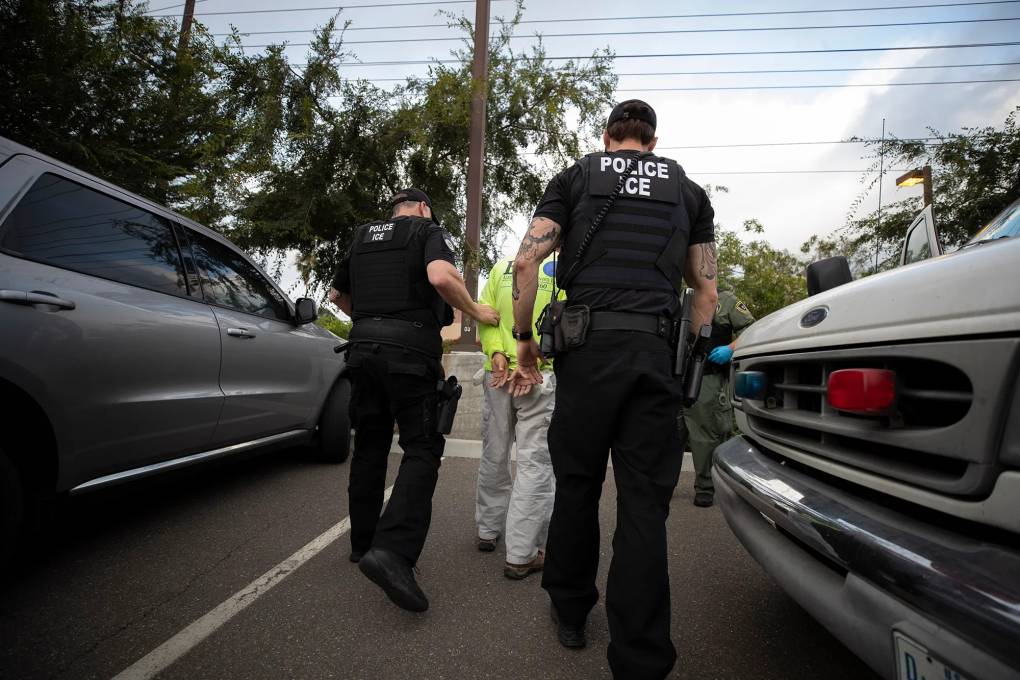
"caption": "A U.S. Immigration and Customs Enforcement (ICE) officer escorts a man in handcuffs during an operation in Escondido on July 8, 2019.",
"credit": "Gregory Bull/AP Photo",
"altTag": null,
"description": null,
"imgSizes": {
"medium": {
"file": "https://cdn.kqed.org/wp-content/uploads/sites/10/2025/02/020625-ICE-Arrest-AP-GB-01-CM-800x533.jpg",
"width": 800,
"height": 533,
"mimeType": "image/jpeg"
},
"large": {
"file": "https://cdn.kqed.org/wp-content/uploads/sites/10/2025/02/020625-ICE-Arrest-AP-GB-01-CM-1020x680.jpg",
"width": 1020,
"height": 680,
"mimeType": "image/jpeg"
},
"thumbnail": {
"file": "https://cdn.kqed.org/wp-content/uploads/sites/10/2025/02/020625-ICE-Arrest-AP-GB-01-CM-160x107.jpg",
"width": 160,
"height": 107,
"mimeType": "image/jpeg"
},
"1536x1536": {
"file": "https://cdn.kqed.org/wp-content/uploads/sites/10/2025/02/020625-ICE-Arrest-AP-GB-01-CM-1536x1024.jpg",
"width": 1536,
"height": 1024,
"mimeType": "image/jpeg"
},
"post-thumbnail": {
"file": "https://cdn.kqed.org/wp-content/uploads/sites/10/2025/02/020625-ICE-Arrest-AP-GB-01-CM-672x372.jpg",
"width": 672,
"height": 372,
"mimeType": "image/jpeg"
},
"twentyfourteen-full-width": {
"file": "https://cdn.kqed.org/wp-content/uploads/sites/10/2025/02/020625-ICE-Arrest-AP-GB-01-CM-1038x576.jpg",
"width": 1038,
"height": 576,
"mimeType": "image/jpeg"
},
"full-width": {
"file": "https://cdn.kqed.org/wp-content/uploads/sites/10/2025/02/020625-ICE-Arrest-AP-GB-01-CM-1920x1280.jpg",
"width": 1920,
"height": 1280,
"mimeType": "image/jpeg"
},
"kqedFullSize": {
"file": "https://cdn.kqed.org/wp-content/uploads/sites/10/2025/02/020625-ICE-Arrest-AP-GB-01-CM.jpg",
"width": 2000,
"height": 1333
}
},
"isLoading": false,
"fetchFailed": false
},
"news_12015445": {
"type": "attachments",
"id": "news_12015445",
"meta": {
"index": "attachments_1716263798",
"site": "news",
"id": "12015445",
"found": true
},
"title": "US-CALIFORNIA-CRIME-SHOOTING",
"publishDate": 1732233616,
"status": "inherit",
"parent": 12015360,
"modified": 1739063399,
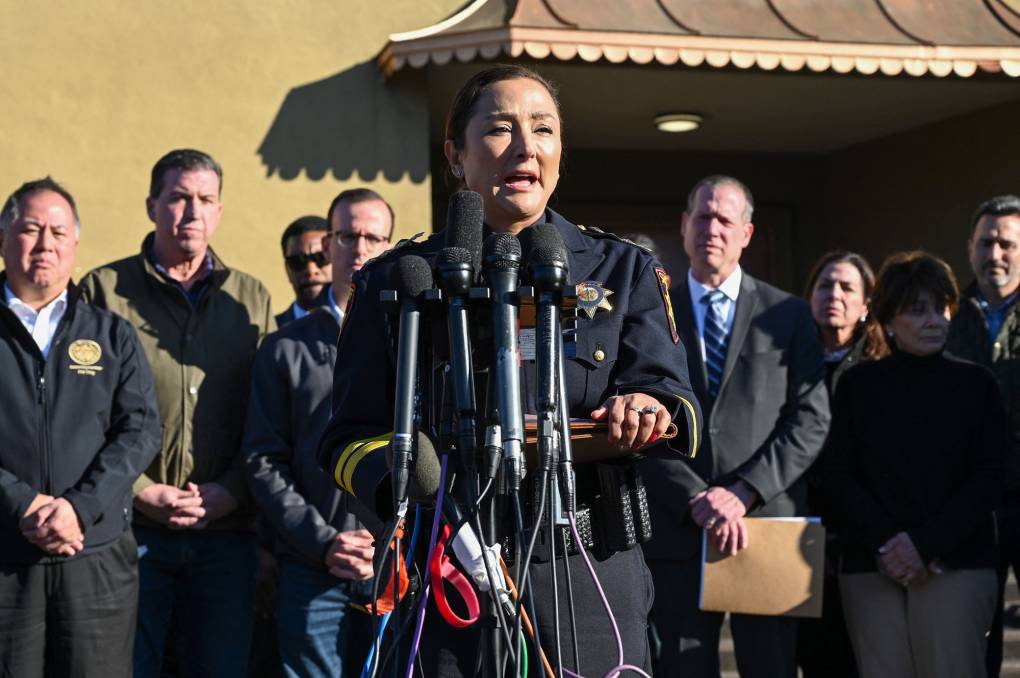
"caption": "Sheriff Christina Corpus (center) speaks about a shooting at the Half Moon Bay IDES Society in Half Moon Bay, San Mateo County, on Jan. 24, 2023. ",
"credit": "Samantha Laurey/AFP via Getty Images",
"altTag": null,
"description": null,
"imgSizes": {
"medium": {
"file": "https://cdn.kqed.org/wp-content/uploads/sites/10/2024/11/ChristinaCorpusGetty-800x532.jpg",
"width": 800,
"height": 532,
"mimeType": "image/jpeg"
},
"large": {
"file": "https://cdn.kqed.org/wp-content/uploads/sites/10/2024/11/ChristinaCorpusGetty-1020x678.jpg",
"width": 1020,
"height": 678,
"mimeType": "image/jpeg"
},
"thumbnail": {
"file": "https://cdn.kqed.org/wp-content/uploads/sites/10/2024/11/ChristinaCorpusGetty-160x106.jpg",
"width": 160,
"height": 106,
"mimeType": "image/jpeg"
},
"1536x1536": {
"file": "https://cdn.kqed.org/wp-content/uploads/sites/10/2024/11/ChristinaCorpusGetty-1536x1021.jpg",
"width": 1536,
"height": 1021,
"mimeType": "image/jpeg"
},
"post-thumbnail": {
"file": "https://cdn.kqed.org/wp-content/uploads/sites/10/2024/11/ChristinaCorpusGetty-672x372.jpg",
"width": 672,
"height": 372,
"mimeType": "image/jpeg"
},
"twentyfourteen-full-width": {
"file": "https://cdn.kqed.org/wp-content/uploads/sites/10/2024/11/ChristinaCorpusGetty-1038x576.jpg",
"width": 1038,
"height": 576,
"mimeType": "image/jpeg"
},
"full-width": {
"file": "https://cdn.kqed.org/wp-content/uploads/sites/10/2024/11/ChristinaCorpusGetty-1920x1277.jpg",
"width": 1920,
"height": 1277,
"mimeType": "image/jpeg"
},
"kqedFullSize": {
"file": "https://cdn.kqed.org/wp-content/uploads/sites/10/2024/11/ChristinaCorpusGetty.jpg",
"width": 2000,
"height": 1330
}
},
"isLoading": false,
"fetchFailed": false
},
"news_12006908": {
"type": "attachments",
"id": "news_12006908",
"meta": {
"index": "attachments_1716263798",
"site": "news",
"id": "12006908",
"found": true
},
"title": "Coyote (Canis latrans), Bernal Heights, San Francisco, California, United States, North America",
"publishDate": 1727470577,
"status": "inherit",
"parent": 12006902,
"modified": 1727470627,
"caption": "Parks officials with the Golden Gate National Recreation Area are warning dog owners to be careful after several reports of dogs being attacked by coyotes at Crissy Field, including three deaths in 10 days.",
"credit": "Jouko van der Kruijssen/Getty Images",
"altTag": null,
"description": null,
"imgSizes": {
"medium": {
"file": "https://cdn.kqed.org/wp-content/uploads/sites/10/2024/09/CoyoteGetty-800x640.jpg",
"width": 800,
"height": 640,
"mimeType": "image/jpeg"
},
"large": {
"file": "https://cdn.kqed.org/wp-content/uploads/sites/10/2024/09/CoyoteGetty-1020x816.jpg",
"width": 1020,
"height": 816,
"mimeType": "image/jpeg"
},
"thumbnail": {
"file": "https://cdn.kqed.org/wp-content/uploads/sites/10/2024/09/CoyoteGetty-160x128.jpg",
"width": 160,
"height": 128,
"mimeType": "image/jpeg"
},
"1536x1536": {
"file": "https://cdn.kqed.org/wp-content/uploads/sites/10/2024/09/CoyoteGetty-1536x1229.jpg",
"width": 1536,
"height": 1229,
"mimeType": "image/jpeg"
},
"post-thumbnail": {
"file": "https://cdn.kqed.org/wp-content/uploads/sites/10/2024/09/CoyoteGetty-672x372.jpg",
"width": 672,
"height": 372,
"mimeType": "image/jpeg"
},
"twentyfourteen-full-width": {
"file": "https://cdn.kqed.org/wp-content/uploads/sites/10/2024/09/CoyoteGetty-1038x576.jpg",
"width": 1038,
"height": 576,
"mimeType": "image/jpeg"
},
"full-width": {
"file": "https://cdn.kqed.org/wp-content/uploads/sites/10/2024/09/CoyoteGetty-1920x1536.jpg",
"width": 1920,
"height": 1536,
"mimeType": "image/jpeg"
},
"kqedFullSize": {
"file": "https://cdn.kqed.org/wp-content/uploads/sites/10/2024/09/CoyoteGetty.jpg",
"width": 2000,
"height": 1600
}
},
"isLoading": false,
"fetchFailed": false
},
"news_12023392": {
"type": "attachments",
"id": "news_12023392",
"meta": {
"index": "attachments_1716263798",
"site": "news",
"id": "12023392",
"found": true
},
"title": "20250121_DA-Finalists_DB_00867",
"publishDate": 1737507733,
"status": "inherit",
"parent": 0,
"modified": 1738193520,
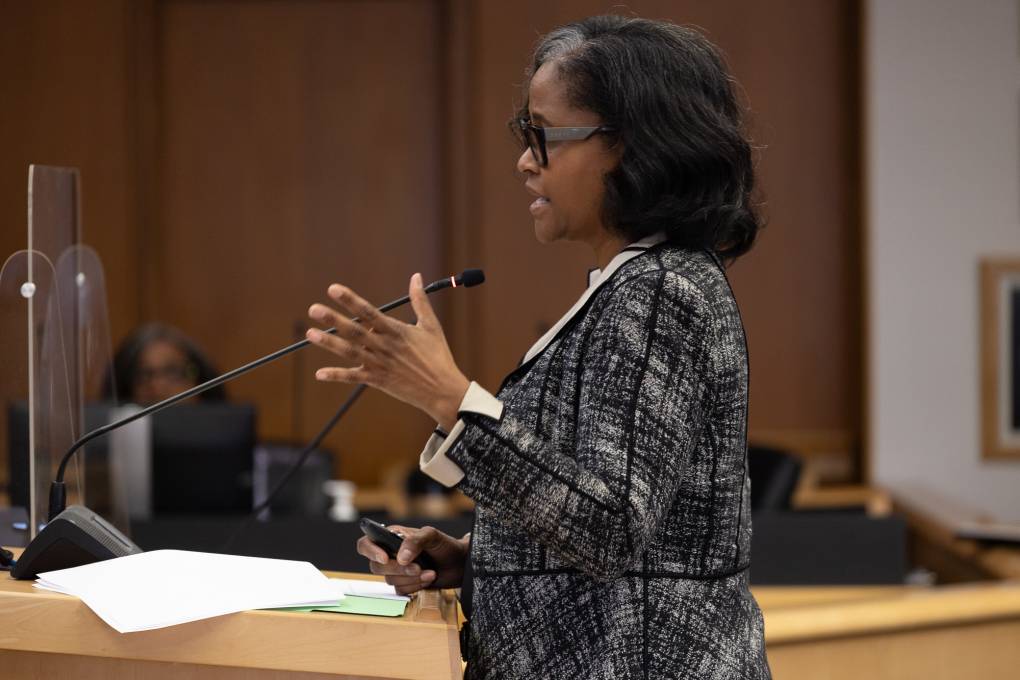
"caption": "Ursula Jones Dickson, Alameda County Superior Court judge and former deputy district attorney in Alameda County, addresses the Alameda County Board of Supervisors at the Alameda County Administration Building on Tuesday, Jan. 21, 2025. ",
"credit": "David M. Barreda/KQED",
"altTag": null,
"description": null,
"imgSizes": {
"medium": {
"file": "https://cdn.kqed.org/wp-content/uploads/sites/10/2025/01/20250121_DA-Finalists_DB_00867-800x533.jpg",
"width": 800,
"height": 533,
"mimeType": "image/jpeg"
},
"large": {
"file": "https://cdn.kqed.org/wp-content/uploads/sites/10/2025/01/20250121_DA-Finalists_DB_00867-1020x680.jpg",
"width": 1020,
"height": 680,
"mimeType": "image/jpeg"
},
"thumbnail": {
"file": "https://cdn.kqed.org/wp-content/uploads/sites/10/2025/01/20250121_DA-Finalists_DB_00867-160x107.jpg",
"width": 160,
"height": 107,
"mimeType": "image/jpeg"
},
"1536x1536": {
"file": "https://cdn.kqed.org/wp-content/uploads/sites/10/2025/01/20250121_DA-Finalists_DB_00867-1536x1024.jpg",
"width": 1536,
"height": 1024,
"mimeType": "image/jpeg"
},
"post-thumbnail": {
"file": "https://cdn.kqed.org/wp-content/uploads/sites/10/2025/01/20250121_DA-Finalists_DB_00867-672x372.jpg",
"width": 672,
"height": 372,
"mimeType": "image/jpeg"
},
"twentyfourteen-full-width": {
"file": "https://cdn.kqed.org/wp-content/uploads/sites/10/2025/01/20250121_DA-Finalists_DB_00867-1038x576.jpg",
"width": 1038,
"height": 576,
"mimeType": "image/jpeg"
},
"full-width": {
"file": "https://cdn.kqed.org/wp-content/uploads/sites/10/2025/01/20250121_DA-Finalists_DB_00867-1920x1280.jpg",
"width": 1920,
"height": 1280,
"mimeType": "image/jpeg"
},
"kqedFullSize": {
"file": "https://cdn.kqed.org/wp-content/uploads/sites/10/2025/01/20250121_DA-Finalists_DB_00867.jpg",
"width": 2000,
"height": 1333
}
},
"isLoading": false,
"fetchFailed": false
},
"news_12024437": {
"type": "attachments",
"id": "news_12024437",
"meta": {
"index": "attachments_1716263798",
"site": "news",
"id": "12024437",
"found": true
},
"title": "250128-SFImmigration-36-BL",
"publishDate": 1738105138,
"status": "inherit",
"parent": 0,
"modified": 1738105329,
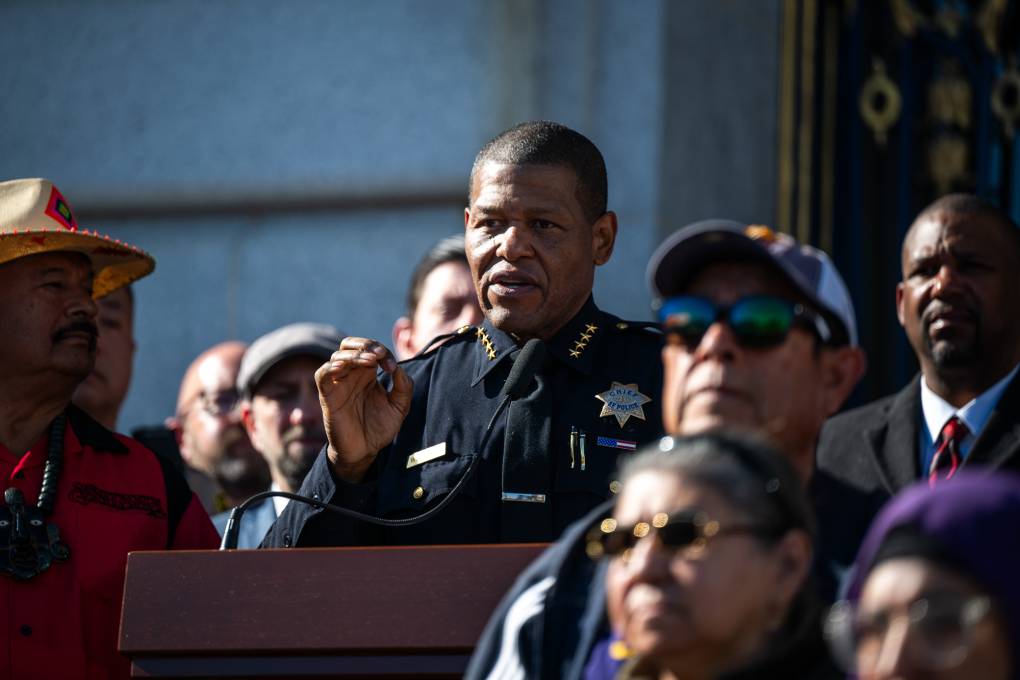
"caption": "Police Chief William Scott speaks during a press conference with elected and public safety officials and labor leaders in front of City Hall in San Francisco on Tuesday, Jan. 28, 2025, to reaffirm San Francisco’s commitment to being a Sanctuary City.",
"credit": "Beth LaBerge/KQED",
"altTag": null,
"description": null,
"imgSizes": {
"medium": {
"file": "https://cdn.kqed.org/wp-content/uploads/sites/10/2025/01/250128-SFImmigration-36-BL-800x533.jpg",
"width": 800,
"height": 533,
"mimeType": "image/jpeg"
},
"large": {
"file": "https://cdn.kqed.org/wp-content/uploads/sites/10/2025/01/250128-SFImmigration-36-BL-1020x680.jpg",
"width": 1020,
"height": 680,
"mimeType": "image/jpeg"
},
"thumbnail": {
"file": "https://cdn.kqed.org/wp-content/uploads/sites/10/2025/01/250128-SFImmigration-36-BL-160x107.jpg",
"width": 160,
"height": 107,
"mimeType": "image/jpeg"
},
"1536x1536": {
"file": "https://cdn.kqed.org/wp-content/uploads/sites/10/2025/01/250128-SFImmigration-36-BL-1536x1024.jpg",
"width": 1536,
"height": 1024,
"mimeType": "image/jpeg"
},
"post-thumbnail": {
"file": "https://cdn.kqed.org/wp-content/uploads/sites/10/2025/01/250128-SFImmigration-36-BL-672x372.jpg",
"width": 672,
"height": 372,
"mimeType": "image/jpeg"
},
"twentyfourteen-full-width": {
"file": "https://cdn.kqed.org/wp-content/uploads/sites/10/2025/01/250128-SFImmigration-36-BL-1038x576.jpg",
"width": 1038,
"height": 576,
"mimeType": "image/jpeg"
},
"full-width": {
"file": "https://cdn.kqed.org/wp-content/uploads/sites/10/2025/01/250128-SFImmigration-36-BL-1920x1280.jpg",
"width": 1920,
"height": 1280,
"mimeType": "image/jpeg"
},
"kqedFullSize": {
"file": "https://cdn.kqed.org/wp-content/uploads/sites/10/2025/01/250128-SFImmigration-36-BL.jpg",
"width": 2000,
"height": 1333
}
},
"isLoading": false,
"fetchFailed": false
},
"news_12025871": {
"type": "attachments",
"id": "news_12025871",
"meta": {
"index": "attachments_1716263798",
"site": "news",
"id": "12025871",
"found": true
},
"title": "dennis-richmond (1)",
"publishDate": 1738792938,
"status": "inherit",
"parent": 0,
"modified": 1738794691,
"caption": "Fond remembrances poured in Wednesday for Dennis Richmond, the storied KTVU journalist who was one of the nation’s first Black major-market news anchors and worked at the station for four decades.",
"credit": "Courtesy of KTVU",
"altTag": null,
"description": null,
"imgSizes": {
"medium": {
"file": "https://cdn.kqed.org/wp-content/uploads/sites/10/2025/02/dennis-richmond-1-800x573.jpg",
"width": 800,
"height": 573,
"mimeType": "image/jpeg"
},
"large": {
"file": "https://cdn.kqed.org/wp-content/uploads/sites/10/2025/02/dennis-richmond-1-1020x730.jpg",
"width": 1020,
"height": 730,
"mimeType": "image/jpeg"
},
"thumbnail": {
"file": "https://cdn.kqed.org/wp-content/uploads/sites/10/2025/02/dennis-richmond-1-160x115.jpg",
"width": 160,
"height": 115,
"mimeType": "image/jpeg"
},
"1536x1536": {
"file": "https://cdn.kqed.org/wp-content/uploads/sites/10/2025/02/dennis-richmond-1-1536x1100.jpg",
"width": 1536,
"height": 1100,
"mimeType": "image/jpeg"
},
"post-thumbnail": {
"file": "https://cdn.kqed.org/wp-content/uploads/sites/10/2025/02/dennis-richmond-1-672x372.jpg",
"width": 672,
"height": 372,
"mimeType": "image/jpeg"
},
"twentyfourteen-full-width": {
"file": "https://cdn.kqed.org/wp-content/uploads/sites/10/2025/02/dennis-richmond-1-1038x576.jpg",
"width": 1038,
"height": 576,
"mimeType": "image/jpeg"
},
"full-width": {
"file": "https://cdn.kqed.org/wp-content/uploads/sites/10/2025/02/dennis-richmond-1-1920x1375.jpg",
"width": 1920,
"height": 1375,
"mimeType": "image/jpeg"
},
"kqedFullSize": {
"file": "https://cdn.kqed.org/wp-content/uploads/sites/10/2025/02/dennis-richmond-1.jpg?ver=1738794063",
"width": 2000,
"height": 1432
}
},
"isLoading": false,
"fetchFailed": false
},
"news_11979165": {
"type": "attachments",
"id": "news_11979165",
"meta": {
"index": "attachments_1716263798",
"site": "news",
"id": "11979165",
"found": true
},
"title": "240312-MAX CARTER-OBERSTONE-MD-04-KQED",
"publishDate": 1710284366,
"status": "inherit",
"parent": 12026974,
"modified": 1739485162,
"caption": "Max Carter-Oberstone stands in front of the SFPD Northern District Police Station in the Fillmore District in San Francisco on Mar. 12, 2024.",
"credit": "Martin do Nascimento/KQED",
"altTag": null,
"description": null,
"imgSizes": {
"medium": {
"file": "https://cdn.kqed.org/wp-content/uploads/sites/10/2024/03/240312-MAX-CARTER-OBERSTONE-MD-04-KQED-800x533.jpg",
"width": 800,
"height": 533,
"mimeType": "image/jpeg"
},
"large": {
"file": "https://cdn.kqed.org/wp-content/uploads/sites/10/2024/03/240312-MAX-CARTER-OBERSTONE-MD-04-KQED-1020x680.jpg",
"width": 1020,
"height": 680,
"mimeType": "image/jpeg"
},
"thumbnail": {
"file": "https://cdn.kqed.org/wp-content/uploads/sites/10/2024/03/240312-MAX-CARTER-OBERSTONE-MD-04-KQED-160x107.jpg",
"width": 160,
"height": 107,
"mimeType": "image/jpeg"
},
"1536x1536": {
"file": "https://cdn.kqed.org/wp-content/uploads/sites/10/2024/03/240312-MAX-CARTER-OBERSTONE-MD-04-KQED-1536x1024.jpg",
"width": 1536,
"height": 1024,
"mimeType": "image/jpeg"
},
"post-thumbnail": {
"file": "https://cdn.kqed.org/wp-content/uploads/sites/10/2024/03/240312-MAX-CARTER-OBERSTONE-MD-04-KQED-672x372.jpg",
"width": 672,
"height": 372,
"mimeType": "image/jpeg"
},
"twentyfourteen-full-width": {
"file": "https://cdn.kqed.org/wp-content/uploads/sites/10/2024/03/240312-MAX-CARTER-OBERSTONE-MD-04-KQED-1038x576.jpg",
"width": 1038,
"height": 576,
"mimeType": "image/jpeg"
},
"full-width": {
"file": "https://cdn.kqed.org/wp-content/uploads/sites/10/2024/03/240312-MAX-CARTER-OBERSTONE-MD-04-KQED-1920x1280.jpg",
"width": 1920,
"height": 1280,
"mimeType": "image/jpeg"
},
"kqedFullSize": {
"file": "https://cdn.kqed.org/wp-content/uploads/sites/10/2024/03/240312-MAX-CARTER-OBERSTONE-MD-04-KQED.jpg?ver=1710347365",
"width": 2000,
"height": 1333
}
},
"isLoading": false,
"fetchFailed": false
},
"news_12020636": {
"type": "attachments",
"id": "news_12020636",
"meta": {
"index": "attachments_1716263798",
"site": "news",
"id": "12020636",
"found": true
},
"title": "Sally Gearhart (courtesy of Deborah Craig)",
"publishDate": 1736286053,
"status": "inherit",
"parent": 12020619,
"modified": 1736303989,
"caption": "Sally Gearhart, in 2024.",
"credit": "Courtesy of Deborah Craig",
"altTag": "An older woman smiles as she looks up in a color photo.",
"description": null,
"imgSizes": {
"medium": {
"file": "https://cdn.kqed.org/wp-content/uploads/sites/10/2025/01/Sally-Gearhart-courtesy-of-Deborah-Craig-800x523.png",
"width": 800,
"height": 523,
"mimeType": "image/png"
},
"large": {
"file": "https://cdn.kqed.org/wp-content/uploads/sites/10/2025/01/Sally-Gearhart-courtesy-of-Deborah-Craig-1020x667.png",
"width": 1020,
"height": 667,
"mimeType": "image/png"
},
"thumbnail": {
"file": "https://cdn.kqed.org/wp-content/uploads/sites/10/2025/01/Sally-Gearhart-courtesy-of-Deborah-Craig-160x105.png",
"width": 160,
"height": 105,
"mimeType": "image/png"
},
"1536x1536": {
"file": "https://cdn.kqed.org/wp-content/uploads/sites/10/2025/01/Sally-Gearhart-courtesy-of-Deborah-Craig-1536x1005.png",
"width": 1536,
"height": 1005,
"mimeType": "image/png"
},
"2048x2048": {
"file": "https://cdn.kqed.org/wp-content/uploads/sites/10/2025/01/Sally-Gearhart-courtesy-of-Deborah-Craig-2048x1340.png",
"width": 2048,
"height": 1340,
"mimeType": "image/png"
},
"post-thumbnail": {
"file": "https://cdn.kqed.org/wp-content/uploads/sites/10/2025/01/Sally-Gearhart-courtesy-of-Deborah-Craig-672x372.png",
"width": 672,
"height": 372,
"mimeType": "image/png"
},
"twentyfourteen-full-width": {
"file": "https://cdn.kqed.org/wp-content/uploads/sites/10/2025/01/Sally-Gearhart-courtesy-of-Deborah-Craig-1038x576.png",
"width": 1038,
"height": 576,
"mimeType": "image/png"
},
"full-width": {
"file": "https://cdn.kqed.org/wp-content/uploads/sites/10/2025/01/Sally-Gearhart-courtesy-of-Deborah-Craig-1920x1256.png",
"width": 1920,
"height": 1256,
"mimeType": "image/png"
},
"kqedFullSize": {
"file": "https://cdn.kqed.org/wp-content/uploads/sites/10/2025/01/Sally-Gearhart-courtesy-of-Deborah-Craig.png",
"width": 2858,
"height": 1870
}
},
"isLoading": false,
"fetchFailed": false
},
"news_12023391": {
"type": "attachments",
"id": "news_12023391",
"meta": {
"index": "attachments_1716263798",
"site": "news",
"id": "12023391",
"found": true
},
"title": "20250121_DA-Finalists_DB_00823",
"publishDate": 1737507726,
"status": "inherit",
"parent": 0,
"modified": 1738348640,
"caption": "Ursula Jones Dickson, Alameda County Superior Court judge and former deputy district attorney in Alameda County, addresses the Alameda County Board of Supervisors at the Alameda County Administration Building, Tuesday, Jan. 21, 2025. The board has named seven finalists who are in contention to be the next district attorney after Pamela Price's recall.",
"credit": "David M. Barreda/KQED",
"altTag": null,
"description": null,
"imgSizes": {
"medium": {
"file": "https://cdn.kqed.org/wp-content/uploads/sites/10/2025/01/20250121_DA-Finalists_DB_00823-800x533.jpg",
"width": 800,
"height": 533,
"mimeType": "image/jpeg"
},
"large": {
"file": "https://cdn.kqed.org/wp-content/uploads/sites/10/2025/01/20250121_DA-Finalists_DB_00823-1020x680.jpg",
"width": 1020,
"height": 680,
"mimeType": "image/jpeg"
},
"thumbnail": {
"file": "https://cdn.kqed.org/wp-content/uploads/sites/10/2025/01/20250121_DA-Finalists_DB_00823-160x107.jpg",
"width": 160,
"height": 107,
"mimeType": "image/jpeg"
},
"1536x1536": {
"file": "https://cdn.kqed.org/wp-content/uploads/sites/10/2025/01/20250121_DA-Finalists_DB_00823-1536x1024.jpg",
"width": 1536,
"height": 1024,
"mimeType": "image/jpeg"
},
"post-thumbnail": {
"file": "https://cdn.kqed.org/wp-content/uploads/sites/10/2025/01/20250121_DA-Finalists_DB_00823-672x372.jpg",
"width": 672,
"height": 372,
"mimeType": "image/jpeg"
},
"twentyfourteen-full-width": {
"file": "https://cdn.kqed.org/wp-content/uploads/sites/10/2025/01/20250121_DA-Finalists_DB_00823-1038x576.jpg",
"width": 1038,
"height": 576,
"mimeType": "image/jpeg"
},
"full-width": {
"file": "https://cdn.kqed.org/wp-content/uploads/sites/10/2025/01/20250121_DA-Finalists_DB_00823-1920x1280.jpg",
"width": 1920,
"height": 1280,
"mimeType": "image/jpeg"
},
"kqedFullSize": {
"file": "https://cdn.kqed.org/wp-content/uploads/sites/10/2025/01/20250121_DA-Finalists_DB_00823.jpg",
"width": 2000,
"height": 1333
}
},
"isLoading": false,
"fetchFailed": false
},
"news_11732008": {
"type": "attachments",
"id": "news_11732008",
"meta": {
"index": "attachments_1716263798",
"site": "news",
"id": "11732008",
"found": true
},
"title": "Six San Francisco Police Officers Indicted Multiple Corruption Charges",
"publishDate": 1552238711,
"status": "inherit",
"parent": 11732001,
"modified": 1552238753,
"caption": null,
"credit": "Justin Sullivan/Getty Images",
"altTag": null,
"description": null,
"imgSizes": {
"thumbnail": {
"file": "https://cdn.kqed.org/wp-content/uploads/sites/10/2019/03/RS9050_475371683-160x110.jpg",
"width": 160,
"height": 110,
"mimeType": "image/jpeg"
},
"medium": {
"file": "https://cdn.kqed.org/wp-content/uploads/sites/10/2019/03/RS9050_475371683-800x550.jpg",
"width": 800,
"height": 550,
"mimeType": "image/jpeg"
},
"large": {
"file": "https://cdn.kqed.org/wp-content/uploads/sites/10/2019/03/RS9050_475371683-1020x701.jpg",
"width": 1020,
"height": 701,
"mimeType": "image/jpeg"
},
"complete_open_graph": {
"file": "https://cdn.kqed.org/wp-content/uploads/sites/10/2019/03/RS9050_475371683-1200x825.jpg",
"width": 1200,
"height": 825,
"mimeType": "image/jpeg"
},
"post-thumbnail": {
"file": "https://cdn.kqed.org/wp-content/uploads/sites/10/2019/03/RS9050_475371683-672x372.jpg",
"width": 672,
"height": 372,
"mimeType": "image/jpeg"
},
"twentyfourteen-full-width": {
"file": "https://cdn.kqed.org/wp-content/uploads/sites/10/2019/03/RS9050_475371683-1038x576.jpg",
"width": 1038,
"height": 576,
"mimeType": "image/jpeg"
},
"full-width": {
"file": "https://cdn.kqed.org/wp-content/uploads/sites/10/2019/03/RS9050_475371683-1920x1320.jpg",
"width": 1920,
"height": 1320,
"mimeType": "image/jpeg"
},
"guest-author-32": {
"file": "https://cdn.kqed.org/wp-content/uploads/sites/10/2019/03/RS9050_475371683-32x32.jpg",
"width": 32,
"height": 32,
"mimeType": "image/jpeg"
},
"guest-author-50": {
"file": "https://cdn.kqed.org/wp-content/uploads/sites/10/2019/03/RS9050_475371683-50x50.jpg",
"width": 50,
"height": 50,
"mimeType": "image/jpeg"
},
"guest-author-64": {
"file": "https://cdn.kqed.org/wp-content/uploads/sites/10/2019/03/RS9050_475371683-64x64.jpg",
"width": 64,
"height": 64,
"mimeType": "image/jpeg"
},
"guest-author-96": {
"file": "https://cdn.kqed.org/wp-content/uploads/sites/10/2019/03/RS9050_475371683-96x96.jpg",
"width": 96,
"height": 96,
"mimeType": "image/jpeg"
},
"guest-author-128": {
"file": "https://cdn.kqed.org/wp-content/uploads/sites/10/2019/03/RS9050_475371683-128x128.jpg",
"width": 128,
"height": 128,
"mimeType": "image/jpeg"
},
"kqedFullSize": {
"file": "https://cdn.kqed.org/wp-content/uploads/sites/10/2019/03/RS9050_475371683-e1738084912875.jpg",
"width": 2000,
"height": 1375
}
},
"isLoading": false,
"fetchFailed": false
}
},
"audioPlayerReducer": {
"postId": "stream_live",
"isPaused": true,
"isPlaying": false,
"pfsActive": false,
"pledgeModalIsOpen": true,
"playerDrawerIsOpen": false,
"liveAudioPlayStartedAt": 0,
"liveAudioPlayContext": ""
},
"authorsReducer": {
"byline_news_12026443": {
"type": "authors",
"id": "byline_news_12026443",
"meta": {
"override": true
},
"slug": "byline_news_12026443",
"name": "Jeanne Kuang, CalMatters",
"isLoading": false
},
"danbrekke": {
"type": "authors",
"id": "222",
"meta": {
"index": "authors_1716337520",
"id": "222",
"found": true
},
"name": "Dan Brekke",
"firstName": "Dan",
"lastName": "Brekke",
"slug": "danbrekke",
"email": "dbrekke@kqed.org",
"display_author_email": true,
"staff_mastheads": [
"news",
"science"
],
"title": "KQED Editor and Reporter",
"bio": "Dan Brekke is a reporter and editor for KQED News, responsible for coverage of topics ranging from California water issues to the Bay Area's transportation challenges. In a newsroom career that began in Chicago in 1972, Dan has worked for \u003cem>The San Francisco Examiner,\u003c/em> Wired and TechTV and has been published in The New York Times, The New York Times Magazine, Business 2.0, Salon and elsewhere.\r\n\r\nSince joining KQED in 2007, Dan has reported, edited and produced both radio and online features and breaking news pieces. He has shared as both editor and reporter in four Society of Professional Journalists Norcal Excellence in Journalism awards and one Edward R. Murrow regional award. He was chosen for a spring 2017 residency at the Mesa Refuge to advance his research on California salmon.\r\n\r\nEmail Dan at: \u003ca href=\"mailto:dbrekke@kqed.org\">dbrekke@kqed.org\u003c/a>\r\n\r\n\u003cstrong>Twitter:\u003c/strong> \u003ca href=\"https://twitter.com/danbrekke\" rel=\"noopener noreferrer\">twitter.com/danbrekke\u003c/a>\r\n\u003cstrong>Facebook:\u003c/strong> \u003ca href=\"https://www.facebook.com/danbrekke\" rel=\"noopener noreferrer\">www.facebook.com/danbrekke\u003c/a>\r\n\u003cstrong>LinkedIn:\u003c/strong> \u003ca href=\"https://www.linkedin.com/in/danbrekke\" rel=\"noopener noreferrer\">www.linkedin.com/in/danbrekke\u003c/a>",
"avatar": "https://secure.gravatar.com/avatar/8f1f0d2a978fb3b23426c922c7e2af558fa36905b49c4ce76a97dc3c72d27226?s=600&d=mm&r=g",
"twitter": "danbrekke",
"bluesky": null,
"facebook": null,
"instagram": "https://www.instagram.com/dan.brekke/",
"linkedin": "https://www.linkedin.com/in/danbrekke/",
"sites": [
{
"site": "news",
"roles": [
"administrator",
"create_posts"
]
},
{
"site": "stateofhealth",
"roles": [
"editor"
]
},
{
"site": "science",
"roles": [
"editor"
]
},
{
"site": "quest",
"roles": [
"contributor"
]
},
{
"site": "food",
"roles": [
"contributor"
]
},
{
"site": "forum",
"roles": [
"contributor"
]
},
{
"site": "elections",
"roles": [
"editor"
]
},
{
"site": "liveblog",
"roles": [
"editor"
]
}
],
"headData": {
"title": "Dan Brekke | KQED",
"description": "KQED Editor and Reporter",
"ogImgSrc": "https://secure.gravatar.com/avatar/8f1f0d2a978fb3b23426c922c7e2af558fa36905b49c4ce76a97dc3c72d27226?s=600&d=mm&r=g",
"twImgSrc": "https://secure.gravatar.com/avatar/8f1f0d2a978fb3b23426c922c7e2af558fa36905b49c4ce76a97dc3c72d27226?s=600&d=mm&r=g"
},
"isLoading": false,
"link": "/author/danbrekke"
},
"btaylor": {
"type": "authors",
"id": "11365",
"meta": {
"index": "authors_1716337520",
"id": "11365",
"found": true
},
"name": "Bianca Taylor",
"firstName": "Bianca",
"lastName": "Taylor",
"slug": "btaylor",
"email": "btaylor@KQED.org",
"display_author_email": false,
"staff_mastheads": [
"news"
],
"title": "Host and Producer ",
"bio": "Bianca Taylor is a news producer and host of KQED's The Latest podcast.\r\n\r\nHer work with KQED has been honored by the Society of Professional Journalists NorCal, the Webby's, the Regional Murrow Awards, and ONA. She has also worked with NPR, the BBC World Service, and the Washington Post Creative Group.\r\n\r\nBianca is represented by SAG-AFTRA.",
"avatar": "https://secure.gravatar.com/avatar/6b9d3f6552dd10470c5d1c2e58cfe717?s=600&d=blank&r=g",
"twitter": "SoundsLkeBianca",
"facebook": null,
"instagram": null,
"linkedin": null,
"sites": [
{
"site": "arts",
"roles": [
"editor"
]
},
{
"site": "news",
"roles": [
"edit_others_posts",
"editor"
]
},
{
"site": "pop",
"roles": [
"editor"
]
},
{
"site": "bayareabites",
"roles": [
"author"
]
},
{
"site": "science",
"roles": [
"editor"
]
},
{
"site": "forum",
"roles": [
"editor"
]
},
{
"site": "radio",
"roles": [
"editor"
]
},
{
"site": "podcasts",
"roles": [
"editor"
]
}
],
"headData": {
"title": "Bianca Taylor | KQED",
"description": "Host and Producer ",
"ogImgSrc": "https://secure.gravatar.com/avatar/6b9d3f6552dd10470c5d1c2e58cfe717?s=600&d=blank&r=g",
"twImgSrc": "https://secure.gravatar.com/avatar/6b9d3f6552dd10470c5d1c2e58cfe717?s=600&d=blank&r=g"
},
"isLoading": false,
"link": "/author/btaylor"
},
"agonzalez": {
"type": "authors",
"id": "11724",
"meta": {
"index": "authors_1716337520",
"id": "11724",
"found": true
},
"name": "Alexander Gonzalez",
"firstName": "Alexander",
"lastName": "Gonzalez",
"slug": "agonzalez",
"email": "AlexanderGonzalez@KQED.org",
"display_author_email": false,
"staff_mastheads": [
"news"
],
"title": "KQED Contributor",
"bio": null,
"avatar": "https://secure.gravatar.com/avatar/9e291ed34e154df4c662edf858b641d70b4859939bfe40be478408f9dfd057d2?s=600&d=blank&r=g",
"twitter": null,
"bluesky": null,
"facebook": null,
"instagram": null,
"linkedin": null,
"sites": [
{
"site": "arts",
"roles": [
"editor"
]
},
{
"site": "news",
"roles": [
"editor"
]
},
{
"site": "science",
"roles": [
"editor"
]
}
],
"headData": {
"title": "Alexander Gonzalez | KQED",
"description": "KQED Contributor",
"ogImgSrc": "https://secure.gravatar.com/avatar/9e291ed34e154df4c662edf858b641d70b4859939bfe40be478408f9dfd057d2?s=600&d=blank&r=g",
"twImgSrc": "https://secure.gravatar.com/avatar/9e291ed34e154df4c662edf858b641d70b4859939bfe40be478408f9dfd057d2?s=600&d=blank&r=g"
},
"isLoading": false,
"link": "/author/agonzalez"
},
"jlara": {
"type": "authors",
"id": "11761",
"meta": {
"index": "authors_1716337520",
"id": "11761",
"found": true
},
"name": "Juan Carlos Lara",
"firstName": "Juan Carlos",
"lastName": "Lara",
"slug": "jlara",
"email": "jlara@kqed.org",
"display_author_email": false,
"staff_mastheads": [],
"title": "KQED Contributor",
"bio": null,
"avatar": "https://secure.gravatar.com/avatar/19e2052b9b05657c5ff2af2121846e9c?s=600&d=blank&r=g",
"twitter": null,
"facebook": null,
"instagram": null,
"linkedin": null,
"sites": [
{
"site": "arts",
"roles": [
"editor"
]
},
{
"site": "news",
"roles": [
"editor"
]
},
{
"site": "forum",
"roles": [
"editor"
]
},
{
"site": "liveblog",
"roles": [
"contributor"
]
}
],
"headData": {
"title": "Juan Carlos Lara | KQED",
"description": "KQED Contributor",
"ogImgSrc": "https://secure.gravatar.com/avatar/19e2052b9b05657c5ff2af2121846e9c?s=600&d=blank&r=g",
"twImgSrc": "https://secure.gravatar.com/avatar/19e2052b9b05657c5ff2af2121846e9c?s=600&d=blank&r=g"
},
"isLoading": false,
"link": "/author/jlara"
},
"adahlstromeckman": {
"type": "authors",
"id": "11785",
"meta": {
"index": "authors_1716337520",
"id": "11785",
"found": true
},
"name": "Azul Dahlstrom-Eckman",
"firstName": "Azul",
"lastName": "Dahlstrom-Eckman",
"slug": "adahlstromeckman",
"email": "adahlstrom-eckman@kqed.org",
"display_author_email": true,
"staff_mastheads": [],
"title": "Reporter",
"bio": "Azul is a reporter for KQED focusing on transportation and features. He joined KQED in 2021 as an alumna of KALW's Audio Academy radio journalism training program.",
"avatar": "https://secure.gravatar.com/avatar/9cb750298435add7815a777f55bf1f46845c1386bb8452555c60a7b820b5aba3?s=600&d=blank&r=g",
"twitter": "@zuliemann",
"bluesky": "@azul415.bsky.social",
"facebook": null,
"instagram": null,
"linkedin": null,
"sites": [
{
"site": "arts",
"roles": [
"editor"
]
},
{
"site": "news",
"roles": [
"editor"
]
},
{
"site": "science",
"roles": [
"editor"
]
},
{
"site": "liveblog",
"roles": [
"author"
]
}
],
"headData": {
"title": "Azul Dahlstrom-Eckman | KQED",
"description": "Reporter",
"ogImgSrc": "https://secure.gravatar.com/avatar/9cb750298435add7815a777f55bf1f46845c1386bb8452555c60a7b820b5aba3?s=600&d=blank&r=g",
"twImgSrc": "https://secure.gravatar.com/avatar/9cb750298435add7815a777f55bf1f46845c1386bb8452555c60a7b820b5aba3?s=600&d=blank&r=g"
},
"isLoading": false,
"link": "/author/adahlstromeckman"
},
"kdebenedetti": {
"type": "authors",
"id": "11913",
"meta": {
"index": "authors_1716337520",
"id": "11913",
"found": true
},
"name": "Katie DeBenedetti",
"firstName": "Katie",
"lastName": "DeBenedetti",
"slug": "kdebenedetti",
"email": "kdebenedetti@kqed.org",
"display_author_email": false,
"staff_mastheads": [
"news",
"science"
],
"title": "KQED Contributor",
"bio": "Katie DeBenedetti is a digital reporter covering daily news for the Express Desk. Prior to joining KQED as a culture reporting intern in January 2024, she covered education and city government for the Napa Valley Register.",
"avatar": "https://secure.gravatar.com/avatar/6e31073cb8f7e4214ab03f42771d0f45?s=600&d=blank&r=g",
"twitter": null,
"facebook": null,
"instagram": null,
"linkedin": null,
"sites": [
{
"site": "news",
"roles": [
"author"
]
},
{
"site": "science",
"roles": [
"author"
]
},
{
"site": "liveblog",
"roles": [
"author"
]
}
],
"headData": {
"title": "Katie DeBenedetti | KQED",
"description": "KQED Contributor",
"ogImgSrc": "https://secure.gravatar.com/avatar/6e31073cb8f7e4214ab03f42771d0f45?s=600&d=blank&r=g",
"twImgSrc": "https://secure.gravatar.com/avatar/6e31073cb8f7e4214ab03f42771d0f45?s=600&d=blank&r=g"
},
"isLoading": false,
"link": "/author/kdebenedetti"
},
"slim": {
"type": "authors",
"id": "11920",
"meta": {
"index": "authors_1716337520",
"id": "11920",
"found": true
},
"name": "Samantha Lim",
"firstName": "Samantha",
"lastName": "Lim",
"slug": "slim",
"email": "slim@KQED.org",
"display_author_email": false,
"staff_mastheads": [],
"title": "KQED Contributor",
"bio": null,
"avatar": "https://secure.gravatar.com/avatar/82e592e6c15fe1a04d385e8ad0fb0b4e?s=600&d=blank&r=g",
"twitter": null,
"facebook": null,
"instagram": null,
"linkedin": null,
"sites": [
{
"site": "news",
"roles": []
}
],
"headData": {
"title": "Samantha Lim | KQED",
"description": "KQED Contributor",
"ogImgSrc": "https://secure.gravatar.com/avatar/82e592e6c15fe1a04d385e8ad0fb0b4e?s=600&d=blank&r=g",
"twImgSrc": "https://secure.gravatar.com/avatar/82e592e6c15fe1a04d385e8ad0fb0b4e?s=600&d=blank&r=g"
},
"isLoading": false,
"link": "/author/slim"
},
"bkrans": {
"type": "authors",
"id": "11923",
"meta": {
"index": "authors_1716337520",
"id": "11923",
"found": true
},
"name": "Brian Krans",
"firstName": "Brian",
"lastName": "Krans",
"slug": "bkrans",
"email": "bkrans@kqed.org",
"display_author_email": false,
"staff_mastheads": [
"news"
],
"title": "KQED Contributing Reporter",
"bio": "Brian Krans is an award-winning local news and investigative reporter who has been proudly working as a general assignment reporter for KQED since August 2023. He lives in Richmond, where he also reports on air pollution for Richmondside. He is also a founding member of the Vallejo Sun.",
"avatar": "https://secure.gravatar.com/avatar/71fa91f931774612559f7640390b53d9c2840ff72b20f195a25239aab2d9fbb9?s=600&d=blank&r=g",
"twitter": "citizenkrans",
"bluesky": null,
"facebook": null,
"instagram": null,
"linkedin": null,
"sites": [
{
"site": "news",
"roles": [
"editor"
]
}
],
"headData": {
"title": "Brian Krans | KQED",
"description": "KQED Contributing Reporter",
"ogImgSrc": "https://secure.gravatar.com/avatar/71fa91f931774612559f7640390b53d9c2840ff72b20f195a25239aab2d9fbb9?s=600&d=blank&r=g",
"twImgSrc": "https://secure.gravatar.com/avatar/71fa91f931774612559f7640390b53d9c2840ff72b20f195a25239aab2d9fbb9?s=600&d=blank&r=g"
},
"isLoading": false,
"link": "/author/bkrans"
}
},
"pagesReducer": {
"news_category_local": {
"type": "terms",
"id": "news_28250",
"meta": {
"index": "terms_1716263798",
"site": "news",
"id": "28250",
"score": 12.940577
},
"featImg": null,
"name": "Local",
"description": null,
"taxonomy": "category",
"headData": {
"twImgId": null,
"twTitle": null,
"ogTitle": null,
"ogImgId": null,
"twDescription": null,
"description": null,
"title": "Local Archives | KQED News",
"ogDescription": null
},
"ttid": 28267,
"slug": "local",
"isLoading": false,
"title": "Local",
"pageMeta": {
"site": "news",
"WpPageTemplate": "page-topic-editorial",
"currentPage": 126
},
"blocks": [
{
"blockName": "kqed/post-list",
"attrs": {
"layout": "cardArticle2",
"query": "posts/news?category=local",
"seeMore": false,
"paginated": true,
"page": 126
}
},
{
"blockName": "kqed/ad"
}
]
}
},
"pfsSessionReducer": {},
"postsReducer": {
"stream_live": {
"type": "live",
"id": "stream_live",
"audioUrl": "https://streams.kqed.org/kqedradio",
"title": "Live Stream",
"excerpt": "Live Stream information currently unavailable.",
"link": "/radio",
"featImg": "",
"label": {
"name": "KQED Live",
"link": "/"
}
},
"stream_kqedNewscast": {
"type": "posts",
"id": "stream_kqedNewscast",
"audioUrl": "https://www.kqed.org/.stream/anon/radio/RDnews/newscast.mp3?_=1",
"title": "KQED Newscast",
"featImg": "",
"label": {
"name": "88.5 FM",
"link": "/"
}
},
"news_12026443": {
"type": "posts",
"id": "news_12026443",
"meta": {
"index": "posts_1716263798",
"site": "news",
"id": "12026443",
"score": null,
"sort": [
1739221243000
]
},
"guestAuthors": [],
"slug": "trumps-shock-and-awe-immigration-orders-are-creating-fear-experts-say-thats-the-point",
"title": "Trump’s Early Moves on Immigration Are Creating Fear. California Is Pushing Back",
"publishDate": 1739221243,
"format": "standard",
"headTitle": "Trump’s Early Moves on Immigration Are Creating Fear. California Is Pushing Back | KQED",
"labelTerm": {},
"content": "\u003cp>President Donald Trump returned to office last month with a major show of force on immigration, issuing numerous orders and directives to dramatically increase enforcement.\u003c/p>\n\u003cp>They’ve sparked glee from his supporters, condemnation from his opponents, fear from immigrant communities amid nationwide raids — and also \u003ca href=\"https://www.mynspr.org/news/2025-01-31/north-state-ice-sightings-circulating-on-social-media-likely-false-claims\">plenty of false alarms\u003c/a>.\u003c/p>\n\u003cp>The flurry of new policies — some pushing long-held legal boundaries — are part of a “shock and awe” strategy meant to amplify the promises of a military-assisted mass deportation, experts said. Among the administration’s goals is for fearful immigrants to “voluntarily depart.”\u003c/p>\n\u003cp>“The big issue is this basically full-court press (from the administration) on immigration enforcement and the fear it’s generated,” said UC Davis immigration law professor Kevin Johnson. “(The fear) probably is the biggest impact of all.”\u003c/p>\n\u003cp>The uncertainty over immigrants’ futures has led communities to question whether workers should continue to show up to businesses, children to school and patients to doctors’ offices — and whether there will be economic disruptions and school funding consequences as a result.\u003c/p>\n\u003cp>[ad fullwidth]\u003c/p>\n\u003cp>Many immigrants \u003ca href=\"https://www.nytimes.com/2025/01/30/us/immigrant-communities-hiding-ice.html\">are staying home\u003c/a>. Others have little choice but to continue their routines.\u003c/p>\n\u003cp>In Kern County, an immigrant citrus picker who spoke on the condition that her name not be used because she fears deportation said, like many of her coworkers, she stayed home for a day in the wake of \u003ca href=\"https://calmatters.org/economy/2025/01/kern-county-immigration-sweep/\">a Border Patrol operation last month\u003c/a> — conducted before Trump took office — that seemed to target farmworkers.\u003c/p>\n\u003cp>But she has bills to pay, so she’s continued going to work and sending her child to daycare. Rumors of immigration authority sightings have also continued to spread, including one that prompted the contractor she works for to keep her crew in the orange grove at the end of a recent workday. The contractor didn’t release them to go home until checking that the roads were clear, she said.\u003c/p>\n\u003cp>“Everybody goes out with fear,” she said. “But one has needs. And my needs are bigger than the fear.”\u003c/p>\n\u003cp>Trump’s actions have the potential to drastically remake the immigration landscape. Here’s what’s changed so far and how California is responding.\u003c/p>\n\u003cp>\u003cstrong>Targeting birthright citizenship\u003c/strong>\u003c/p>\n\u003cp>One of Trump’s first-day executive orders sought to end the century-plus-old practice of granting citizenship to all children born on U.S. soil, even if their parents are undocumented. Courts have affirmed the 14th Amendment’s guarantee of birthright citizenship since 1898, in the case of a San Francisco man whose parents were from China.\u003c/p>\n\u003cp>Two federal judges, responding to separate lawsuits, quickly halted the order.\u003c/p>\n\u003cp>A third lawsuit, brought by 18 states, including California and the city of San Francisco, was heard in a Massachusetts federal court last Friday. Attorney General Rob Bonta’s office says the executive order would strip citizenship rights from about 24,500 children who are born in California each year.\u003c/p>\n\u003cp>\u003cstrong>Expanding ICE’s reach\u003c/strong>\u003c/p>\n\u003cp>The administration has directed the Immigration and Customs Enforcement to \u003ca href=\"https://public-inspection.federalregister.gov/2025-01720.pdf\">expand\u003c/a> use of a process called “expedited removal”: deportations that are allowed to bypass immigration courts, where a judge would normally decide the merit of allowing someone to stay in the country. In the past, immigrants without legal status and who do not make an asylum claim can be placed in this process if they’re arrested within 14 days of entering the country and within 100 miles of the border.\u003c/p>\n\u003cp>That already covered most of California. The new order expands the process to the entire country and to immigrants arrested within two years of entering.\u003c/p>\n\u003cp>“That could have a huge effect” on the number of people authorities can arrest and put in the fast-tracked deportation process far from the border, said UCLA law professor Ahilan Arulanantham.\u003c/p>\n\u003cp>Immigration courts have a longstanding backlog that, in \u003ca href=\"https://crsreports.congress.gov/product/pdf/IN/IN12492\">late 2024, rose to 3.5 million cases\u003c/a>.\u003c/p>\n\u003cp>Other Trump actions could also dramatically increase those cases:\u003c/p>\n\u003cul>\n\u003cli>He revoked a policy prohibiting agents from making arrests in “sensitive locations” such as churches, schools and hospitals;\u003c/li>\n\u003cli>And he signed the Laken Riley Act, a GOP bill that had some Democratic support, directing ICE to detain and deport immigrants who are charged — not just convicted — with certain crimes.\u003c/li>\n\u003c/ul>\n\u003cp>Experts say much of how this is carried out still depends on how much Congress is willing to allow ICE to spend. The agency, which operates on about $9 billion a year, estimates it needs $27 billion to carry out the Laken Riley Act, \u003ca href=\"https://www.npr.org/2025/01/16/nx-s1-5262921/laken-riley-act-deportation-ice\">NPR has reported\u003c/a>.\u003c/p>\n\u003cp>The reach of ICE’s recent activity is also unclear. The agency in the last week of January posted daily arrest numbers on the social media platform X, showing nationwide an average of about 800 arrests a day. That’s far higher than daily arrests during the Biden administration, which \u003ca href=\"https://www.cbsnews.com/chicago/news/tracking-administrative-arrests-ice/\">averaged about 300 in 2024\u003c/a>, according to ICE.\u003c/p>\n\u003cp>But it’s not clear how many people have been held in detention, released with immigration court cases pending, or deported: ICE spokesperson Richard Beam said those figures aren’t available, nor was a state-by-state breakdown.\u003c/p>\n\u003cp>The agency also would not provide figures of how many of those arrested have the criminal convictions the administration says it’s targeting. An NBC News report in late January \u003ca href=\"https://www.nbcnews.com/news/latino/ice-trump-deportations-numbers-rcna188937\">found for one of the days\u003c/a>, nearly half of those arrested were nonviolent offenders or had no criminal record.\u003c/p>\n\u003ch2>Cancelling legal immigration paths\u003c/h2>\n\u003cp>In addition to targeting immigrants without legal status, Trump is revoking pathways for immigrants to arrive legally, often on humanitarian grounds.\u003c/p>\n\u003cp>Trump suspended refugee admissions in one Day-One order. In other actions, he’s gone after the temporary legal statuses of immigrants whom the Biden administration allowed to enter. Trump’s administration has called those statuses another way to allow illegal immigration under the guise of government support.\u003c/p>\n\u003cp>For example, his Homeland Security department canceled the temporary status of about 300,000 Venezuelans that had allowed them protections from deportation and work permits. That status, intended to protect people from tumultuous home countries, \u003ca href=\"https://www.npr.org/2025/02/04/nx-s1-5285470/venezuelans-florida-tps-immigration-trump\">expires in April\u003c/a>, and another 250,000 protected Venezuelans’ status expires in September.\u003c/p>\n\u003cp>The administration also is preparing, \u003ca href=\"https://www.nytimes.com/2025/01/23/us/politics/trump-immigrants-deportation.html\">according to the New York Times\u003c/a>, to strip the temporary legal status of immigrants from four countries (Cuba, Nicaragua, Venezuela and Haiti) that the Biden administration had allowed to enter — and gain work permits — if they found American sponsors, as a way to curb illegal border crossings.\u003c/p>\n\u003cp>Similarly, on Day One, Trump ended a Biden-era program allowing migrants at the border to schedule appointments to be temporarily allowed into the U.S. with work permits while they wait for immigration cases to be decided.\u003c/p>\n\u003cp>Because many of those immigrants are newer arrivals, Kathleen Bush-Joseph, policy analyst at the Migration Policy Institute, said, they’re particularly likely to be put in the fast-tracked deportation process.\u003c/p>\n\u003ch2>Trying to secure local cooperation\u003c/h2>\n\u003cp>The administration is again trying to overturn local and state sanctuary laws, meaning we’re likely to see a return to the California-versus-federal showdown from the first Trump administration on how much the state can be required to help immigration agents.\u003c/p>\n\u003cp>Those fights, Arulanantham said, “really are fundamental to balance of power between the federal government and states with respect to how immigration enforcement plays out on the ground.”\u003c/p>\n\u003cp>\u003cspan style=\"font-weight: 400\">[aside label=’Related Coverage' tag='immigration']\u003c/span>\u003c/p>\n\u003cp>From the arresting immigration agents to the detention bed space to the judges considering whether to order deportations, the Trump administration doesn’t have nearly the capacity to carry out the level of crackdown he vows.\u003c/p>\n\u003cp>So, his orders seek to sign on more local police as partners in the effort. The administration is also suing Chicago and Cook County over their non-cooperation policies, accusing the cities of “thwarting” enforcement, and has threatened to prosecute local officials who fail to cooperate with immigration agents.\u003c/p>\n\u003cp>On her first day as attorney general, Pam Bondi ordered the Justice Department to once again pause grants for sanctuary cities and states. That could include California, which in 2017 passed a law barring police and sheriffs from arresting or detaining immigrants on behalf of federal agents.\u003c/p>\n\u003cp>In the previous iteration of this standoff, California won in court when the federal government tried to withhold funding. On Friday, San Francisco and Santa Clara counties renewed the fight, suing Trump over his latest threats.\u003c/p>\n\u003cp>California Attorney General Rob Bonta on Friday said he hadn’t seen any interruptions to grants yet, but “if that happens, we will sue.”\u003c/p>\n\u003cp>California conservative sheriffs are now in an odd position between a blue state and a red federal administration. Riverside County Sheriff Chad Bianco, in a video Thursday, sought to quell fears and “misinformation” among constituents that his agency was involved in immigration enforcement. Yet, in the same video, he said he hoped to assist ICE “within the confines of the sanctuary state laws” with arresting undocumented immigrants who are being held in his jails.\u003c/p>\n\u003ch2>California’s response\u003c/h2>\n\u003cp>The Legislature this week passed $50 million in a special session Gov. Gavin Newsom called to help “Trump-proof” the state — $25 million for the state Department of Justice to sue the federal administration on a variety of matters, including immigration and $25 million toward legal aid to represent immigrants in deportation proceedings.\u003c/p>\n\u003cp>Democratic lawmakers have introduced a series of bills seeking to discourage the presence of immigration authorities near or at schools.\u003c/p>\n\u003cp>Newsom has scaled back his own criticisms of the president in recent weeks as he seeks to secure federal wildfire aid.\u003c/p>\n\u003cp>Bonta has continued to push back with a series of press statements encouraging immigrants to know their rights and advising school employees they don’t have to assist immigration agents in apprehending immigrant students.\u003c/p>\n\u003cp>California notched some big wins in court opposing many policies during the last Trump administration, including halting the Muslim ban and Trump’s efforts to undo temporary legal status for immigrants who were brought to the U.S. illegally as children.\u003c/p>\n\u003cp>But Bush-Joseph noted the Supreme Court in 2023 limited the states’ powers to challenge presidential immigration policies when Texas and other red states tried to sue Biden.\u003c/p>\n\u003cp>[ad floatright]\u003c/p>\n\u003cp>“The inverse can be true under the Trump administration if blue states try to bring lawsuits,” Bush-Joseph said.\u003c/p>\n\n",
"blocks": [],
"excerpt": "A flurry of changes on immigration promises a dramatic crackdown. California pushed back in court last time but may be in a tougher position now, experts say.",
"status": "publish",
"parent": 0,
"modified": 1742510737,
"stats": {
"hasAudio": false,
"hasVideo": false,
"hasChartOrMap": false,
"iframeSrcs": [],
"hasGoogleForm": false,
"hasGallery": false,
"hasHearkenModule": false,
"hasPolis": false,
"paragraphCount": 48,
"wordCount": 1774
},
"headData": {
"title": "Trump’s Early Moves on Immigration Are Creating Fear. California Is Pushing Back | KQED",
"description": "A flurry of changes on immigration promises a dramatic crackdown. California pushed back in court last time but may be in a tougher position now, experts say.",
"ogTitle": "",
"ogDescription": "",
"ogImgId": "",
"twTitle": "",
"twDescription": "",
"twImgId": "",
"schema": {
"@context": "https://schema.org",
"@type": "NewsArticle",
"headline": "Trump’s Early Moves on Immigration Are Creating Fear. California Is Pushing Back",
"datePublished": "2025-02-10T13:00:43-08:00",
"dateModified": "2025-03-20T15:45:37-07:00",
"image": "https://cdn.kqed.org/wp-content/uploads/2020/02/KQED-OG-Image@1x.png",
"isAccessibleForFree": "True",
"publisher": {
"@type": "NewsMediaOrganization",
"@id": "https://www.kqed.org/#organization",
"name": "KQED",
"logo": "https://cdn.kqed.org/wp-content/uploads/2020/02/KQED-OG-Image@1x.png",
"url": "https://www.kqed.org",
"sameAs": [
"https://www.facebook.com/KQED",
"https://twitter.com/KQED",
"https://www.instagram.com/kqed/",
"https://www.tiktok.com/@kqedofficial",
"https://www.linkedin.com/company/kqed",
"https://www.youtube.com/channel/UCeC0IOo7i1P_61zVUWbJ4nw"
]
}
}
},
"source": "CalMatters",
"sourceUrl": "https://calmatters.org/",
"sticky": false,
"nprByline": "Jeanne Kuang, CalMatters",
"nprStoryId": "kqed-12026443",
"templateType": "standard",
"featuredImageType": "standard",
"excludeFromSiteSearch": "Include",
"showOnAuthorArchivePages": "No",
"articleAge": "0",
"path": "/news/12026443/trumps-shock-and-awe-immigration-orders-are-creating-fear-experts-say-thats-the-point",
"audioTrackLength": null,
"parsedContent": [
{
"type": "contentString",
"content": "\u003cdiv class=\"post-body\">\u003cp>\u003cp>President Donald Trump returned to office last month with a major show of force on immigration, issuing numerous orders and directives to dramatically increase enforcement.\u003c/p>\n\u003cp>They’ve sparked glee from his supporters, condemnation from his opponents, fear from immigrant communities amid nationwide raids — and also \u003ca href=\"https://www.mynspr.org/news/2025-01-31/north-state-ice-sightings-circulating-on-social-media-likely-false-claims\">plenty of false alarms\u003c/a>.\u003c/p>\n\u003cp>The flurry of new policies — some pushing long-held legal boundaries — are part of a “shock and awe” strategy meant to amplify the promises of a military-assisted mass deportation, experts said. Among the administration’s goals is for fearful immigrants to “voluntarily depart.”\u003c/p>\n\u003cp>“The big issue is this basically full-court press (from the administration) on immigration enforcement and the fear it’s generated,” said UC Davis immigration law professor Kevin Johnson. “(The fear) probably is the biggest impact of all.”\u003c/p>\n\u003cp>The uncertainty over immigrants’ futures has led communities to question whether workers should continue to show up to businesses, children to school and patients to doctors’ offices — and whether there will be economic disruptions and school funding consequences as a result.\u003c/p>\n\u003cp>\u003c/p>\u003c/div>",
"attributes": {
"named": {},
"numeric": []
}
},
{
"type": "component",
"content": "",
"name": "ad",
"attributes": {
"named": {
"label": "fullwidth"
},
"numeric": [
"fullwidth"
]
}
},
{
"type": "contentString",
"content": "\u003cdiv class=\"post-body\">\u003cp>\u003c/p>\n\u003cp>Many immigrants \u003ca href=\"https://www.nytimes.com/2025/01/30/us/immigrant-communities-hiding-ice.html\">are staying home\u003c/a>. Others have little choice but to continue their routines.\u003c/p>\n\u003cp>In Kern County, an immigrant citrus picker who spoke on the condition that her name not be used because she fears deportation said, like many of her coworkers, she stayed home for a day in the wake of \u003ca href=\"https://calmatters.org/economy/2025/01/kern-county-immigration-sweep/\">a Border Patrol operation last month\u003c/a> — conducted before Trump took office — that seemed to target farmworkers.\u003c/p>\n\u003cp>But she has bills to pay, so she’s continued going to work and sending her child to daycare. Rumors of immigration authority sightings have also continued to spread, including one that prompted the contractor she works for to keep her crew in the orange grove at the end of a recent workday. The contractor didn’t release them to go home until checking that the roads were clear, she said.\u003c/p>\n\u003cp>“Everybody goes out with fear,” she said. “But one has needs. And my needs are bigger than the fear.”\u003c/p>\n\u003cp>Trump’s actions have the potential to drastically remake the immigration landscape. Here’s what’s changed so far and how California is responding.\u003c/p>\n\u003cp>\u003cstrong>Targeting birthright citizenship\u003c/strong>\u003c/p>\n\u003cp>One of Trump’s first-day executive orders sought to end the century-plus-old practice of granting citizenship to all children born on U.S. soil, even if their parents are undocumented. Courts have affirmed the 14th Amendment’s guarantee of birthright citizenship since 1898, in the case of a San Francisco man whose parents were from China.\u003c/p>\n\u003cp>Two federal judges, responding to separate lawsuits, quickly halted the order.\u003c/p>\n\u003cp>A third lawsuit, brought by 18 states, including California and the city of San Francisco, was heard in a Massachusetts federal court last Friday. Attorney General Rob Bonta’s office says the executive order would strip citizenship rights from about 24,500 children who are born in California each year.\u003c/p>\n\u003cp>\u003cstrong>Expanding ICE’s reach\u003c/strong>\u003c/p>\n\u003cp>The administration has directed the Immigration and Customs Enforcement to \u003ca href=\"https://public-inspection.federalregister.gov/2025-01720.pdf\">expand\u003c/a> use of a process called “expedited removal”: deportations that are allowed to bypass immigration courts, where a judge would normally decide the merit of allowing someone to stay in the country. In the past, immigrants without legal status and who do not make an asylum claim can be placed in this process if they’re arrested within 14 days of entering the country and within 100 miles of the border.\u003c/p>\n\u003cp>That already covered most of California. The new order expands the process to the entire country and to immigrants arrested within two years of entering.\u003c/p>\n\u003cp>“That could have a huge effect” on the number of people authorities can arrest and put in the fast-tracked deportation process far from the border, said UCLA law professor Ahilan Arulanantham.\u003c/p>\n\u003cp>Immigration courts have a longstanding backlog that, in \u003ca href=\"https://crsreports.congress.gov/product/pdf/IN/IN12492\">late 2024, rose to 3.5 million cases\u003c/a>.\u003c/p>\n\u003cp>Other Trump actions could also dramatically increase those cases:\u003c/p>\n\u003cul>\n\u003cli>He revoked a policy prohibiting agents from making arrests in “sensitive locations” such as churches, schools and hospitals;\u003c/li>\n\u003cli>And he signed the Laken Riley Act, a GOP bill that had some Democratic support, directing ICE to detain and deport immigrants who are charged — not just convicted — with certain crimes.\u003c/li>\n\u003c/ul>\n\u003cp>Experts say much of how this is carried out still depends on how much Congress is willing to allow ICE to spend. The agency, which operates on about $9 billion a year, estimates it needs $27 billion to carry out the Laken Riley Act, \u003ca href=\"https://www.npr.org/2025/01/16/nx-s1-5262921/laken-riley-act-deportation-ice\">NPR has reported\u003c/a>.\u003c/p>\n\u003cp>The reach of ICE’s recent activity is also unclear. The agency in the last week of January posted daily arrest numbers on the social media platform X, showing nationwide an average of about 800 arrests a day. That’s far higher than daily arrests during the Biden administration, which \u003ca href=\"https://www.cbsnews.com/chicago/news/tracking-administrative-arrests-ice/\">averaged about 300 in 2024\u003c/a>, according to ICE.\u003c/p>\n\u003cp>But it’s not clear how many people have been held in detention, released with immigration court cases pending, or deported: ICE spokesperson Richard Beam said those figures aren’t available, nor was a state-by-state breakdown.\u003c/p>\n\u003cp>The agency also would not provide figures of how many of those arrested have the criminal convictions the administration says it’s targeting. An NBC News report in late January \u003ca href=\"https://www.nbcnews.com/news/latino/ice-trump-deportations-numbers-rcna188937\">found for one of the days\u003c/a>, nearly half of those arrested were nonviolent offenders or had no criminal record.\u003c/p>\n\u003ch2>Cancelling legal immigration paths\u003c/h2>\n\u003cp>In addition to targeting immigrants without legal status, Trump is revoking pathways for immigrants to arrive legally, often on humanitarian grounds.\u003c/p>\n\u003cp>Trump suspended refugee admissions in one Day-One order. In other actions, he’s gone after the temporary legal statuses of immigrants whom the Biden administration allowed to enter. Trump’s administration has called those statuses another way to allow illegal immigration under the guise of government support.\u003c/p>\n\u003cp>For example, his Homeland Security department canceled the temporary status of about 300,000 Venezuelans that had allowed them protections from deportation and work permits. That status, intended to protect people from tumultuous home countries, \u003ca href=\"https://www.npr.org/2025/02/04/nx-s1-5285470/venezuelans-florida-tps-immigration-trump\">expires in April\u003c/a>, and another 250,000 protected Venezuelans’ status expires in September.\u003c/p>\n\u003cp>The administration also is preparing, \u003ca href=\"https://www.nytimes.com/2025/01/23/us/politics/trump-immigrants-deportation.html\">according to the New York Times\u003c/a>, to strip the temporary legal status of immigrants from four countries (Cuba, Nicaragua, Venezuela and Haiti) that the Biden administration had allowed to enter — and gain work permits — if they found American sponsors, as a way to curb illegal border crossings.\u003c/p>\n\u003cp>Similarly, on Day One, Trump ended a Biden-era program allowing migrants at the border to schedule appointments to be temporarily allowed into the U.S. with work permits while they wait for immigration cases to be decided.\u003c/p>\n\u003cp>Because many of those immigrants are newer arrivals, Kathleen Bush-Joseph, policy analyst at the Migration Policy Institute, said, they’re particularly likely to be put in the fast-tracked deportation process.\u003c/p>\n\u003ch2>Trying to secure local cooperation\u003c/h2>\n\u003cp>The administration is again trying to overturn local and state sanctuary laws, meaning we’re likely to see a return to the California-versus-federal showdown from the first Trump administration on how much the state can be required to help immigration agents.\u003c/p>\n\u003cp>Those fights, Arulanantham said, “really are fundamental to balance of power between the federal government and states with respect to how immigration enforcement plays out on the ground.”\u003c/p>\n\u003cp>\u003cspan style=\"font-weight: 400\">\u003c/p>\u003c/div>",
"attributes": {
"named": {},
"numeric": []
}
},
{
"type": "component",
"content": "",
"name": "aside",
"attributes": {
"named": {
"label": "Related Coverage'",
"tag": "immigration"
},
"numeric": [
"Coverage'"
]
}
},
{
"type": "contentString",
"content": "\u003cdiv class=\"post-body\">\u003cp>\u003c/span>\u003c/p>\n\u003cp>From the arresting immigration agents to the detention bed space to the judges considering whether to order deportations, the Trump administration doesn’t have nearly the capacity to carry out the level of crackdown he vows.\u003c/p>\n\u003cp>So, his orders seek to sign on more local police as partners in the effort. The administration is also suing Chicago and Cook County over their non-cooperation policies, accusing the cities of “thwarting” enforcement, and has threatened to prosecute local officials who fail to cooperate with immigration agents.\u003c/p>\n\u003cp>On her first day as attorney general, Pam Bondi ordered the Justice Department to once again pause grants for sanctuary cities and states. That could include California, which in 2017 passed a law barring police and sheriffs from arresting or detaining immigrants on behalf of federal agents.\u003c/p>\n\u003cp>In the previous iteration of this standoff, California won in court when the federal government tried to withhold funding. On Friday, San Francisco and Santa Clara counties renewed the fight, suing Trump over his latest threats.\u003c/p>\n\u003cp>California Attorney General Rob Bonta on Friday said he hadn’t seen any interruptions to grants yet, but “if that happens, we will sue.”\u003c/p>\n\u003cp>California conservative sheriffs are now in an odd position between a blue state and a red federal administration. Riverside County Sheriff Chad Bianco, in a video Thursday, sought to quell fears and “misinformation” among constituents that his agency was involved in immigration enforcement. Yet, in the same video, he said he hoped to assist ICE “within the confines of the sanctuary state laws” with arresting undocumented immigrants who are being held in his jails.\u003c/p>\n\u003ch2>California’s response\u003c/h2>\n\u003cp>The Legislature this week passed $50 million in a special session Gov. Gavin Newsom called to help “Trump-proof” the state — $25 million for the state Department of Justice to sue the federal administration on a variety of matters, including immigration and $25 million toward legal aid to represent immigrants in deportation proceedings.\u003c/p>\n\u003cp>Democratic lawmakers have introduced a series of bills seeking to discourage the presence of immigration authorities near or at schools.\u003c/p>\n\u003cp>Newsom has scaled back his own criticisms of the president in recent weeks as he seeks to secure federal wildfire aid.\u003c/p>\n\u003cp>Bonta has continued to push back with a series of press statements encouraging immigrants to know their rights and advising school employees they don’t have to assist immigration agents in apprehending immigrant students.\u003c/p>\n\u003cp>California notched some big wins in court opposing many policies during the last Trump administration, including halting the Muslim ban and Trump’s efforts to undo temporary legal status for immigrants who were brought to the U.S. illegally as children.\u003c/p>\n\u003cp>But Bush-Joseph noted the Supreme Court in 2023 limited the states’ powers to challenge presidential immigration policies when Texas and other red states tried to sue Biden.\u003c/p>\n\u003cp>\u003c/p>\u003c/div>",
"attributes": {
"named": {},
"numeric": []
}
},
{
"type": "component",
"content": "",
"name": "ad",
"attributes": {
"named": {
"label": "floatright"
},
"numeric": [
"floatright"
]
}
},
{
"type": "contentString",
"content": "\u003cdiv class=\"post-body\">\u003cp>\u003c/p>\n\u003cp>“The inverse can be true under the Trump administration if blue states try to bring lawsuits,” Bush-Joseph said.\u003c/p>\n\n\u003c/div>\u003c/p>",
"attributes": {
"named": {},
"numeric": []
}
}
],
"link": "/news/12026443/trumps-shock-and-awe-immigration-orders-are-creating-fear-experts-say-thats-the-point",
"authors": [
"byline_news_12026443"
],
"categories": [
"news_31795",
"news_34167",
"news_1169",
"news_28250",
"news_8",
"news_13"
],
"tags": [
"news_1323",
"news_17708",
"news_20202",
"news_24303",
"news_3674",
"news_20529"
],
"affiliates": [
"news_18481"
],
"featImg": "news_12026446",
"label": "source_news_12026443"
},
"news_12026356": {
"type": "posts",
"id": "news_12026356",
"meta": {
"index": "posts_1716263798",
"site": "news",
"id": "12026356",
"score": null,
"sort": [
1739140205000
]
},
"guestAuthors": [],
"slug": "lawsuit-alleges-continued-intimidation-retaliation-at-san-mateo-sheriffs-office",
"title": "Lawsuit Alleges Continued Intimidation, Retaliation at San Mateo Sheriff's Office",
"publishDate": 1739140205,
"format": "standard",
"headTitle": "Lawsuit Alleges Continued Intimidation, Retaliation at San Mateo Sheriff’s Office | KQED",
"labelTerm": {
"site": "news"
},
"content": "\u003cp>San Mateo County Sheriff Christina Corpus and her alleged boyfriend “continue to intimidate and retaliate against employees who spoke up against their illegal conduct,” according to \u003ca href=\"https://www.dropbox.com/scl/fi/cbsuhw98zmowgsg0tsziv/25.02.05-Philip-v.-San-Mateo-County-Complaint-Conformed-1.pdf?rlkey=6r190n92j2octf597pyaekzf7&e=1&st=h6gts20m&dl=0\">a lawsuit filed this week\u003c/a>.\u003c/p>\n\u003cp>On Jan. 23, Corpus allegedly brought Victor Aenlle — her office’s former executive director and her alleged lover — into parts of the sheriff’s department headquarters not accessible to the public, which a county order has banned him from since mid-November.\u003c/p>\n\u003cp>“Aenlle was visibly armed during this visit and encountered multiple employees who had participated in the independent investigation against Aenlle,” the lawsuit states. “Some of these employees were so distressed that they requested to leave the premises for their safety.”\u003c/p>\n\u003cp>[ad fullwidth]\u003c/p>\n\u003cp>Those are just a few of the allegations contained in a lawsuit filed on behalf of former San Mateo County Sheriff Captain Brian Philip. He resigned in November after refusing to arrest the head of the department’s deputy sheriffs union, which the \u003ca href=\"https://www.kqed.org/news/12018543/san-mateo-county-da-throws-out-charges-against-sheriffs-union-president\">district attorney determined\u003c/a> was done without any evidence of a crime being committed.\u003c/p>\n\u003cp>Philip is one of several leaders in the sheriff’s office who have been fired or quit since Corpus took office in 2023. The lawsuit alleges that several people face retribution after encouraging fellow employees to unionize.\u003c/p>\n\u003cp>Also this week, San Mateo city leaders unanimously cast a vote of no confidence in Corpus’ leadership, urging voters to pass an amendment to the county’s charter that would temporarily grant them the authority to \u003ca href=\"https://www.kqed.org/news/12018283/california-sheriffs-are-rarely-removed-from-office-san-mateo-is-trying-anyway\">vote Corpus out of office\u003c/a>, a move that has never been done in California before.\u003c/p>\n\u003cp>Corpus has repeatedly stated she will not bow to calls for her to resign. Others have \u003ca href=\"https://www.kqed.org/news/12015360/embattled-san-mateo-county-sheriff-faces-mounting-calls-resign\">urged Corpus to resign\u003c/a>, including state and federal lawmakers, command staff of the sheriff’s office and other municipalities in Corpus’ jurisdiction.\u003c/p>\n\u003cp>In a statement, the county said it had yet to be served with Philip’s lawsuit and would “review the allegations in detail and respond” when it does.\u003c/p>\n\u003cp>The county did, however, hire retired Judge Ladoris Cordell last year to \u003ca href=\"https://www.kqed.org/news/12015538/timeline-whats-going-on-with-the-san-mateo-county-sheriffs-office\">investigate an “unprecedented” number of complaints\u003c/a> against Corpus and her alleged boyfriend, Victor Aenlle, who Corpus appointed to “executive director” before supervisors terminated the unsworn position late last year. Cordell wrote that she found that Corpus and Aenlle’s leadership was rife with “lies, secrecy, intimidation, retaliation, conflicts of interest and abuses of authority,” including denying their relationship was anything more than professional.\u003c/p>\n\u003cp>Philip participated in Cordell’s investigation in September, telling her about “Aenlle’s aggressive behavior towards Captain Philip,” and requests to serve a sheriff’s office employee with an “illegal” notice that they were under an internal investigation. Shortly after, Corpus, Aenlle — “a real estate agent who failed the background check required to become a sworn officer at [the] San Mateo Police Department” — and other department leaders sought to retaliate against Philip, the lawsuit states.\u003c/p>\n\u003cp>They eventually called on Philip to arrest Carlos Tapia, the head of the sheriff’s deputies union, shortly after leading the union to cast a vote of no confidence in Corpus’ leadership.\u003c/p>\n\u003cp>Corpus accused Tapia of timecard fraud, which Philip’s lawsuit states is what “leadership of San Mateo County Sheriff’s Office [does] when it wants to retaliate against an employee.”\u003c/p>\n\u003cp>“Sheriff Corpus thought she would be killing two birds by throwing one stone, but she ended up tossing a boomerang that returned this lawsuit and Carlos Tapia being cleared,” Philip’s lawsuit states.\u003c/p>\n\u003cp>Instead of arresting Tapia, Philip resigned in protest, and in December, San Mateo County District Attorney Stephen Wagstaffe found “there was no basis to believe any violation of law had occurred” in Tapia’s case.\u003c/p>\n\u003cp>Philip was one of a handful of department leaders that Corpus brought into her office when her term began in January 2023. At the time, Philip had been with the Palo Alto Police Department for nearly two decades.\u003c/p>\n\u003cp>“Corpus was looking for a lackey. Instead, she found Captain Philip,” the lawsuit states.\u003c/p>\n\u003cp>Zak Franklin, an attorney representing Philip, said when Corpus recruited Philip, he soon found the sheriff wanted him not to serve the people of San Mateo County, but merely her own political interests.\u003c/p>\n\u003cp>“That’s not something he signed up for,” Franklin told KQED Saturday. “He took a stand against it, and he got retaliated against quite a bit, but kept trying until he really couldn’t do it anymore.”[aside label=\"Related Stories\" postID=\"news_12016445,news_12014310,news_12018283\"]Franklin also represented Carryn Barker, a former San Mateo County sheriff’s detective and only female member of the department’s SWAT team. Barker was repeatedly sexually harassed and assaulted by the team’s supervisor and other leaders in the department, which Barker confided to Corpus, then a captain, according to Philip’s lawsuit.\u003c/p>\n\u003cp>“While Corpus was legally required to report this harassment to others at San Mateo County, she failed to report the harassment or the assault, and she failed to do anything about it,” the lawsuit states. “Instead of helping Detective Barker, Corpus attempted to manipulate Deputy Barker into filing a lawsuit against San Mateo County because Corpus hoped the lawsuit would embarrass then-Sheriff Carlos Bolanos and help Corpus defeat Sheriff Bolanos in the upcoming election.”\u003c/p>\n\u003cp>When encouraging Barker to file the lawsuit, Corpus allegedly said she would testify on Barker’s behalf, which she later did not do, Philip’s lawsuit states.\u003c/p>\n\u003cp>Franklin said Corpus was involved in many of the key decisions against Philip and feels “very confident” that Corpus will have to sit for a sworn deposition.\u003c/p>\n\u003cp>“I’m looking forward to sitting down with Christina Corpus and Victor Aenlle across from me at a deposition and making them answer my questions and seeing what really happened and the decision-making to put Captain Philip through all this,” Franklin said.\u003c/p>\n\u003cp>Corpus declined to be interviewed for Cordell’s investigation and declined several invitations from county supervisors to give sworn statements in her own defense.\u003c/p>\n\u003cp>\u003cem>KQED’s Riley Cooke contributed to this report.\u003c/em>\u003c/p>\n\u003cp>\u003c/p>\n",
"blocks": [],
"excerpt": "A lawsuit filed against San Mateo County and its sheriff alleges Christina Corpus was looking for a ‘lackey’ in hiring Captain Brian Philip.",
"status": "publish",
"parent": 0,
"modified": 1739139595,
"stats": {
"hasAudio": false,
"hasVideo": false,
"hasChartOrMap": false,
"iframeSrcs": [],
"hasGoogleForm": false,
"hasGallery": false,
"hasHearkenModule": false,
"hasPolis": false,
"paragraphCount": 26,
"wordCount": 1067
},
"headData": {
"title": "Lawsuit Alleges Continued Intimidation, Retaliation at San Mateo Sheriff's Office | KQED",
"description": "A lawsuit filed against San Mateo County and its sheriff alleges Christina Corpus was looking for a ‘lackey’ in hiring Captain Brian Philip.",
"ogTitle": "",
"ogDescription": "",
"ogImgId": "",
"twTitle": "",
"twDescription": "",
"twImgId": "",
"schema": {
"@context": "https://schema.org",
"@type": "NewsArticle",
"headline": "Lawsuit Alleges Continued Intimidation, Retaliation at San Mateo Sheriff's Office",
"datePublished": "2025-02-09T14:30:05-08:00",
"dateModified": "2025-02-09T14:19:55-08:00",
"image": "https://cdn.kqed.org/wp-content/uploads/2020/02/KQED-OG-Image@1x.png",
"isAccessibleForFree": "True",
"publisher": {
"@type": "NewsMediaOrganization",
"@id": "https://www.kqed.org/#organization",
"name": "KQED",
"logo": "https://cdn.kqed.org/wp-content/uploads/2020/02/KQED-OG-Image@1x.png",
"url": "https://www.kqed.org",
"sameAs": [
"https://www.facebook.com/KQED",
"https://twitter.com/KQED",
"https://www.instagram.com/kqed/",
"https://www.tiktok.com/@kqedofficial",
"https://www.linkedin.com/company/kqed",
"https://www.youtube.com/channel/UCeC0IOo7i1P_61zVUWbJ4nw"
]
}
}
},
"sticky": false,
"excludeFromSiteSearch": "Include",
"articleAge": "0",
"path": "/news/12026356/lawsuit-alleges-continued-intimidation-retaliation-at-san-mateo-sheriffs-office",
"audioTrackLength": null,
"parsedContent": [
{
"type": "contentString",
"content": "\u003cdiv class=\"post-body\">\u003cp>\u003cp>San Mateo County Sheriff Christina Corpus and her alleged boyfriend “continue to intimidate and retaliate against employees who spoke up against their illegal conduct,” according to \u003ca href=\"https://www.dropbox.com/scl/fi/cbsuhw98zmowgsg0tsziv/25.02.05-Philip-v.-San-Mateo-County-Complaint-Conformed-1.pdf?rlkey=6r190n92j2octf597pyaekzf7&e=1&st=h6gts20m&dl=0\">a lawsuit filed this week\u003c/a>.\u003c/p>\n\u003cp>On Jan. 23, Corpus allegedly brought Victor Aenlle — her office’s former executive director and her alleged lover — into parts of the sheriff’s department headquarters not accessible to the public, which a county order has banned him from since mid-November.\u003c/p>\n\u003cp>“Aenlle was visibly armed during this visit and encountered multiple employees who had participated in the independent investigation against Aenlle,” the lawsuit states. “Some of these employees were so distressed that they requested to leave the premises for their safety.”\u003c/p>\n\u003cp>\u003c/p>\u003c/div>",
"attributes": {
"named": {},
"numeric": []
}
},
{
"type": "component",
"content": "",
"name": "ad",
"attributes": {
"named": {
"label": "fullwidth"
},
"numeric": [
"fullwidth"
]
}
},
{
"type": "contentString",
"content": "\u003cdiv class=\"post-body\">\u003cp>\u003c/p>\n\u003cp>Those are just a few of the allegations contained in a lawsuit filed on behalf of former San Mateo County Sheriff Captain Brian Philip. He resigned in November after refusing to arrest the head of the department’s deputy sheriffs union, which the \u003ca href=\"https://www.kqed.org/news/12018543/san-mateo-county-da-throws-out-charges-against-sheriffs-union-president\">district attorney determined\u003c/a> was done without any evidence of a crime being committed.\u003c/p>\n\u003cp>Philip is one of several leaders in the sheriff’s office who have been fired or quit since Corpus took office in 2023. The lawsuit alleges that several people face retribution after encouraging fellow employees to unionize.\u003c/p>\n\u003cp>Also this week, San Mateo city leaders unanimously cast a vote of no confidence in Corpus’ leadership, urging voters to pass an amendment to the county’s charter that would temporarily grant them the authority to \u003ca href=\"https://www.kqed.org/news/12018283/california-sheriffs-are-rarely-removed-from-office-san-mateo-is-trying-anyway\">vote Corpus out of office\u003c/a>, a move that has never been done in California before.\u003c/p>\n\u003cp>Corpus has repeatedly stated she will not bow to calls for her to resign. Others have \u003ca href=\"https://www.kqed.org/news/12015360/embattled-san-mateo-county-sheriff-faces-mounting-calls-resign\">urged Corpus to resign\u003c/a>, including state and federal lawmakers, command staff of the sheriff’s office and other municipalities in Corpus’ jurisdiction.\u003c/p>\n\u003cp>In a statement, the county said it had yet to be served with Philip’s lawsuit and would “review the allegations in detail and respond” when it does.\u003c/p>\n\u003cp>The county did, however, hire retired Judge Ladoris Cordell last year to \u003ca href=\"https://www.kqed.org/news/12015538/timeline-whats-going-on-with-the-san-mateo-county-sheriffs-office\">investigate an “unprecedented” number of complaints\u003c/a> against Corpus and her alleged boyfriend, Victor Aenlle, who Corpus appointed to “executive director” before supervisors terminated the unsworn position late last year. Cordell wrote that she found that Corpus and Aenlle’s leadership was rife with “lies, secrecy, intimidation, retaliation, conflicts of interest and abuses of authority,” including denying their relationship was anything more than professional.\u003c/p>\n\u003cp>Philip participated in Cordell’s investigation in September, telling her about “Aenlle’s aggressive behavior towards Captain Philip,” and requests to serve a sheriff’s office employee with an “illegal” notice that they were under an internal investigation. Shortly after, Corpus, Aenlle — “a real estate agent who failed the background check required to become a sworn officer at [the] San Mateo Police Department” — and other department leaders sought to retaliate against Philip, the lawsuit states.\u003c/p>\n\u003cp>They eventually called on Philip to arrest Carlos Tapia, the head of the sheriff’s deputies union, shortly after leading the union to cast a vote of no confidence in Corpus’ leadership.\u003c/p>\n\u003cp>Corpus accused Tapia of timecard fraud, which Philip’s lawsuit states is what “leadership of San Mateo County Sheriff’s Office [does] when it wants to retaliate against an employee.”\u003c/p>\n\u003cp>“Sheriff Corpus thought she would be killing two birds by throwing one stone, but she ended up tossing a boomerang that returned this lawsuit and Carlos Tapia being cleared,” Philip’s lawsuit states.\u003c/p>\n\u003cp>Instead of arresting Tapia, Philip resigned in protest, and in December, San Mateo County District Attorney Stephen Wagstaffe found “there was no basis to believe any violation of law had occurred” in Tapia’s case.\u003c/p>\n\u003cp>Philip was one of a handful of department leaders that Corpus brought into her office when her term began in January 2023. At the time, Philip had been with the Palo Alto Police Department for nearly two decades.\u003c/p>\n\u003cp>“Corpus was looking for a lackey. Instead, she found Captain Philip,” the lawsuit states.\u003c/p>\n\u003cp>Zak Franklin, an attorney representing Philip, said when Corpus recruited Philip, he soon found the sheriff wanted him not to serve the people of San Mateo County, but merely her own political interests.\u003c/p>\n\u003cp>“That’s not something he signed up for,” Franklin told KQED Saturday. “He took a stand against it, and he got retaliated against quite a bit, but kept trying until he really couldn’t do it anymore.”\u003c/p>\u003c/div>",
"attributes": {
"named": {},
"numeric": []
}
},
{
"type": "component",
"content": "",
"name": "aside",
"attributes": {
"named": {
"label": "Related Stories ",
"postid": "news_12016445,news_12014310,news_12018283"
},
"numeric": []
}
},
{
"type": "contentString",
"content": "\u003cdiv class=\"post-body\">\u003cp>Franklin also represented Carryn Barker, a former San Mateo County sheriff’s detective and only female member of the department’s SWAT team. Barker was repeatedly sexually harassed and assaulted by the team’s supervisor and other leaders in the department, which Barker confided to Corpus, then a captain, according to Philip’s lawsuit.\u003c/p>\n\u003cp>“While Corpus was legally required to report this harassment to others at San Mateo County, she failed to report the harassment or the assault, and she failed to do anything about it,” the lawsuit states. “Instead of helping Detective Barker, Corpus attempted to manipulate Deputy Barker into filing a lawsuit against San Mateo County because Corpus hoped the lawsuit would embarrass then-Sheriff Carlos Bolanos and help Corpus defeat Sheriff Bolanos in the upcoming election.”\u003c/p>\n\u003cp>When encouraging Barker to file the lawsuit, Corpus allegedly said she would testify on Barker’s behalf, which she later did not do, Philip’s lawsuit states.\u003c/p>\n\u003cp>Franklin said Corpus was involved in many of the key decisions against Philip and feels “very confident” that Corpus will have to sit for a sworn deposition.\u003c/p>\n\u003cp>“I’m looking forward to sitting down with Christina Corpus and Victor Aenlle across from me at a deposition and making them answer my questions and seeing what really happened and the decision-making to put Captain Philip through all this,” Franklin said.\u003c/p>\n\u003cp>Corpus declined to be interviewed for Cordell’s investigation and declined several invitations from county supervisors to give sworn statements in her own defense.\u003c/p>\n\u003cp>\u003cem>KQED’s Riley Cooke contributed to this report.\u003c/em>\u003c/p>\n\u003cp>\u003c/p>\n\u003c/div>\u003c/p>",
"attributes": {
"named": {},
"numeric": []
}
}
],
"link": "/news/12026356/lawsuit-alleges-continued-intimidation-retaliation-at-san-mateo-sheriffs-office",
"authors": [
"11923"
],
"categories": [
"news_34167",
"news_6188",
"news_28250",
"news_8"
],
"tags": [
"news_32354",
"news_19522",
"news_27626",
"news_20846",
"news_34995"
],
"featImg": "news_12015445",
"label": "news"
},
"news_12025959": {
"type": "posts",
"id": "news_12025959",
"meta": {
"index": "posts_1716263798",
"site": "news",
"id": "12025959",
"score": null,
"sort": [
1738868096000
]
},
"guestAuthors": [],
"slug": "san-francisco-coyotes-now-theyre-in-the-subway-too",
"title": "San Francisco Coyotes: Now They're in the Subway, Too",
"publishDate": 1738868096,
"format": "standard",
"headTitle": "San Francisco Coyotes: Now They’re in the Subway, Too | KQED",
"labelTerm": {
"site": "news"
},
"content": "\u003cp>Coyotes have been showing up \u003ca href=\"https://www.kqed.org/news/11799871/bay-curious-coyotes\">just about everywhere\u003c/a> in San Francisco, both in places you might expect them, like \u003ca href=\"https://www.reddit.com/r/sanfrancisco/comments/1cistgk/an_unexpected_first_encounter_of_a_coyote_roaming/\">Golden Gate Park\u003c/a> and \u003ca href=\"https://presidio.gov/about/sustainability/coyotes-in-the-presidio\">the Presidio\u003c/a>, and places where the only natural reaction is a double-take, like \u003ca href=\"https://www.instagram.com/san_francisco_now_/reel/DDq2LxrMDkP/?locale=fr_FR&hl=da\">Chinatown’s Portsmouth Square\u003c/a>.\u003c/p>\n\u003cp>Now, a pair of the bold canids have been spotted in a place where none of their kind had been seen before: exploring a Muni subway tunnel.\u003c/p>\n\u003cp>[ad fullwidth]\u003c/p>\n\u003cp>San Francisco Municipal Transportation Agency interim chief Julie Kirschbaum told the SFMTA board of directors on Tuesday that two northbound coyotes were observed entering the Central Subway tunnel near Fourth and Bryant streets before dawn on Jan. 27.\u003c/p>\n\u003cp>“Our sweeper train spotted the coyotes as part of the safety preparation to open the subway” for daily service, Kirschbaum said. The train followed the coyotes for more than a mile, all the way to the end of the line at Chinatown’s Rose Pak station. Then, the question was how to get them out of the tunnel.\u003c/p>\n\u003cp>“We contacted Animal Control, but it was a little too early for them” — before 6 a.m. — Kirschbaum said.\u003c/p>\n\u003cp>[aside postID=news_12025781 hero='https://cdn.kqed.org/wp-content/uploads/sites/10/2025/02/20231128-Muni-023-JY_qed-1020x680.jpg']\u003c/p>\n\u003cp>The coyotes solved the problem themselves, heading back south past the Union Square and Yerba Buena stops and back out of the tunnel on Fourth Street.\u003c/p>\n\u003cp>It was a happy ending, Kirschbaum said, with Central Subway service opening for the day without delays.\u003c/p>\n\u003cp>San Francisco Animal Care and Control logs hundreds of reports of coyote encounters every year, ranging from simple sightings to \u003ca href=\"https://www.kqed.org/news/12006902/sf-pet-owners-on-edge-after-3-dogs-killed-by-coyotes-crissy-field\" target=\"_blank\" rel=\"noopener\">attacks on pets\u003c/a> and, rarely, \u003ca href=\"https://www.sfchronicle.com/bayarea/article/coyote-attack-san-francisco-botanical-garden-19550535.php\">humans\u003c/a>.\u003c/p>\n\u003cp>Animal care officials have estimated there are 100 coyotes living within the city limits, and UC Berkeley researchers, who analyzed a decade’s worth of city data, \u003ca href=\"https://besjournals.onlinelibrary.wiley.com/doi/full/10.1002/pan3.10549\">have found \u003c/a>that dogs were involved in 79% of San Francisco residents’ reports of conflicts with the wild canids.\u003c/p>\n\u003cp>Animal Care and Control has \u003ca href=\"https://www.sfanimalcare.org/living-with-urban-wildlife/coyote-sightings/\">published advice \u003c/a>for residents on how to handle coyote encounters — starting with the recommendation to walk away from the animals when you see them. The department also encourages residents \u003ca href=\"https://www.sfanimalcare.org/report-a-coyote-sighting/\">to report their coyote sightings\u003c/a>.\u003c/p>\n\u003cp>\u003c/p>\n",
"blocks": [],
"excerpt": "An early morning Muni crew encountered a pair of the wild canids exploring the Central Subway tunnel all the way to Chinatown last week, the SFMTA chief said.",
"status": "publish",
"parent": 0,
"modified": 1738889564,
"stats": {
"hasAudio": false,
"hasVideo": false,
"hasChartOrMap": false,
"iframeSrcs": [],
"hasGoogleForm": false,
"hasGallery": false,
"hasHearkenModule": false,
"hasPolis": false,
"paragraphCount": 13,
"wordCount": 371
},
"headData": {
"title": "San Francisco Coyotes: Now They're in the Subway, Too | KQED",
"description": "An early morning Muni crew encountered a pair of the wild canids exploring the Central Subway tunnel all the way to Chinatown last week, the SFMTA chief said.",
"ogTitle": "",
"ogDescription": "",
"ogImgId": "",
"twTitle": "",
"twDescription": "",
"twImgId": "",
"schema": {
"@context": "https://schema.org",
"@type": "NewsArticle",
"headline": "San Francisco Coyotes: Now They're in the Subway, Too",
"datePublished": "2025-02-06T10:54:56-08:00",
"dateModified": "2025-02-06T16:52:44-08:00",
"image": "https://cdn.kqed.org/wp-content/uploads/2020/02/KQED-OG-Image@1x.png",
"isAccessibleForFree": "True",
"publisher": {
"@type": "NewsMediaOrganization",
"@id": "https://www.kqed.org/#organization",
"name": "KQED",
"logo": "https://cdn.kqed.org/wp-content/uploads/2020/02/KQED-OG-Image@1x.png",
"url": "https://www.kqed.org",
"sameAs": [
"https://www.facebook.com/KQED",
"https://twitter.com/KQED",
"https://www.instagram.com/kqed/",
"https://www.tiktok.com/@kqedofficial",
"https://www.linkedin.com/company/kqed",
"https://www.youtube.com/channel/UCeC0IOo7i1P_61zVUWbJ4nw"
]
}
}
},
"sticky": false,
"nprStoryId": "kqed-12025959",
"excludeFromSiteSearch": "Include",
"articleAge": "0",
"path": "/news/12025959/san-francisco-coyotes-now-theyre-in-the-subway-too",
"audioTrackLength": null,
"parsedContent": [
{
"type": "contentString",
"content": "\u003cdiv class=\"post-body\">\u003cp>\u003cp>Coyotes have been showing up \u003ca href=\"https://www.kqed.org/news/11799871/bay-curious-coyotes\">just about everywhere\u003c/a> in San Francisco, both in places you might expect them, like \u003ca href=\"https://www.reddit.com/r/sanfrancisco/comments/1cistgk/an_unexpected_first_encounter_of_a_coyote_roaming/\">Golden Gate Park\u003c/a> and \u003ca href=\"https://presidio.gov/about/sustainability/coyotes-in-the-presidio\">the Presidio\u003c/a>, and places where the only natural reaction is a double-take, like \u003ca href=\"https://www.instagram.com/san_francisco_now_/reel/DDq2LxrMDkP/?locale=fr_FR&hl=da\">Chinatown’s Portsmouth Square\u003c/a>.\u003c/p>\n\u003cp>Now, a pair of the bold canids have been spotted in a place where none of their kind had been seen before: exploring a Muni subway tunnel.\u003c/p>\n\u003cp>\u003c/p>\u003c/div>",
"attributes": {
"named": {},
"numeric": []
}
},
{
"type": "component",
"content": "",
"name": "ad",
"attributes": {
"named": {
"label": "fullwidth"
},
"numeric": [
"fullwidth"
]
}
},
{
"type": "contentString",
"content": "\u003cdiv class=\"post-body\">\u003cp>\u003c/p>\n\u003cp>San Francisco Municipal Transportation Agency interim chief Julie Kirschbaum told the SFMTA board of directors on Tuesday that two northbound coyotes were observed entering the Central Subway tunnel near Fourth and Bryant streets before dawn on Jan. 27.\u003c/p>\n\u003cp>“Our sweeper train spotted the coyotes as part of the safety preparation to open the subway” for daily service, Kirschbaum said. The train followed the coyotes for more than a mile, all the way to the end of the line at Chinatown’s Rose Pak station. Then, the question was how to get them out of the tunnel.\u003c/p>\n\u003cp>“We contacted Animal Control, but it was a little too early for them” — before 6 a.m. — Kirschbaum said.\u003c/p>\n\u003cp>\u003c/p>\u003c/div>",
"attributes": {
"named": {},
"numeric": []
}
},
{
"type": "component",
"content": "",
"name": "aside",
"attributes": {
"named": {
"postid": "news_12025781",
"hero": "https://cdn.kqed.org/wp-content/uploads/sites/10/2025/02/20231128-Muni-023-JY_qed-1020x680.jpg",
"label": ""
},
"numeric": []
}
},
{
"type": "contentString",
"content": "\u003cdiv class=\"post-body\">\u003cp>\u003c/p>\n\u003cp>The coyotes solved the problem themselves, heading back south past the Union Square and Yerba Buena stops and back out of the tunnel on Fourth Street.\u003c/p>\n\u003cp>It was a happy ending, Kirschbaum said, with Central Subway service opening for the day without delays.\u003c/p>\n\u003cp>San Francisco Animal Care and Control logs hundreds of reports of coyote encounters every year, ranging from simple sightings to \u003ca href=\"https://www.kqed.org/news/12006902/sf-pet-owners-on-edge-after-3-dogs-killed-by-coyotes-crissy-field\" target=\"_blank\" rel=\"noopener\">attacks on pets\u003c/a> and, rarely, \u003ca href=\"https://www.sfchronicle.com/bayarea/article/coyote-attack-san-francisco-botanical-garden-19550535.php\">humans\u003c/a>.\u003c/p>\n\u003cp>Animal care officials have estimated there are 100 coyotes living within the city limits, and UC Berkeley researchers, who analyzed a decade’s worth of city data, \u003ca href=\"https://besjournals.onlinelibrary.wiley.com/doi/full/10.1002/pan3.10549\">have found \u003c/a>that dogs were involved in 79% of San Francisco residents’ reports of conflicts with the wild canids.\u003c/p>\n\u003cp>Animal Care and Control has \u003ca href=\"https://www.sfanimalcare.org/living-with-urban-wildlife/coyote-sightings/\">published advice \u003c/a>for residents on how to handle coyote encounters — starting with the recommendation to walk away from the animals when you see them. The department also encourages residents \u003ca href=\"https://www.sfanimalcare.org/report-a-coyote-sighting/\">to report their coyote sightings\u003c/a>.\u003c/p>\n\u003cp>\u003c/p>\n\u003c/div>\u003c/p>",
"attributes": {
"named": {},
"numeric": []
}
}
],
"link": "/news/12025959/san-francisco-coyotes-now-theyre-in-the-subway-too",
"authors": [
"222"
],
"categories": [
"news_28250",
"news_8",
"news_1397"
],
"tags": [
"news_34985",
"news_320",
"news_38",
"news_319",
"news_20517"
],
"featImg": "news_12006908",
"label": "news"
},
"news_12025786": {
"type": "posts",
"id": "news_12025786",
"meta": {
"index": "posts_1716263798",
"site": "news",
"id": "12025786",
"score": null,
"sort": [
1738799002000
]
},
"guestAuthors": [],
"slug": "alameda-county-das-swearing-in-delayed-supporters-say-transition-underway",
"title": "Alameda County DA’s Swearing-In Is Delayed, But Supporters Say Transition Is Underway",
"publishDate": 1738799002,
"format": "standard",
"headTitle": "Alameda County DA’s Swearing-In Is Delayed, But Supporters Say Transition Is Underway | KQED",
"labelTerm": {
"site": "news"
},
"content": "\u003cp>The start date for \u003ca href=\"https://www.kqed.org/news/tag/alameda-county\">Alameda County\u003c/a>’s \u003ca href=\"https://www.kqed.org/news/12025628/alameda-countys-new-district-attorney\">next district attorney\u003c/a>, Ursula Jones Dickson, was pushed back two weeks because of her prior commitments as a Superior Court judge, according to organizers of the recall campaign that left the office vacant.\u003c/p>\n\u003cp>Jones Dickson, who previously served as an Alameda County deputy district attorney for more than a decade, was scheduled to be sworn in Tuesday but needed more time to reassign ongoing court cases to another judge. She was \u003ca href=\"https://www.kqed.org/news/12024318/alameda-countys-next-da-will-be-named-today-heres-what-to-know\">appointed last week\u003c/a> by the Board of Supervisors, three months after the recall of progressive prosecutor \u003ca href=\"https://www.kqed.org/news/tag/pamela-price\">Pamela Price\u003c/a>.\u003c/p>\n\u003cp>After the delay, her swearing-in ceremony is now scheduled for Feb. 18, according to the Board of Supervisors.\u003c/p>\n\u003cp>[ad fullwidth]\u003c/p>\n\u003cp>Jones Dickson will take the lead of an office that \u003ca href=\"https://www.kqed.org/news/12024972/how-alameda-countys-next-district-attorney-wants-shape-office\">faces many challenges\u003c/a> in the wake of Price’s recall. Supporters of the recall campaign applauded her appointment and said her extensive prosecutorial experience in Alameda County leaves them optimistic that she will be able to fix issues they say her predecessor left behind — namely, rising crime rates and a need to restructure the DA’s office to be more efficient and accountable to victims.\u003c/p>\n\u003cp>Brenda Grisham, a principal officer of Save Alameda For Everyone, or SAFE, which led the recall campaign, said she has no concerns over the slight delay in getting Jones Dickson into office. Organizers trust her to do a good job once she does enter office, and Jones Dickson already knows what the community needs, she said.\u003c/p>\n\u003cfigure id=\"attachment_11989842\" class=\"wp-caption aligncenter\" style=\"max-width: 1920px\">\u003cimg loading=\"lazy\" decoding=\"async\" class=\"size-full wp-image-11989842\" src=\"https://cdn.kqed.org/wp-content/uploads/sites/10/2024/06/20240608_PriceRecallKickoff_GC-25_qut.jpg\" alt=\"\" width=\"1920\" height=\"1280\" srcset=\"https://cdn.kqed.org/wp-content/uploads/sites/10/2024/06/20240608_PriceRecallKickoff_GC-25_qut.jpg 1920w, https://cdn.kqed.org/wp-content/uploads/sites/10/2024/06/20240608_PriceRecallKickoff_GC-25_qut-800x533.jpg 800w, https://cdn.kqed.org/wp-content/uploads/sites/10/2024/06/20240608_PriceRecallKickoff_GC-25_qut-1020x680.jpg 1020w, https://cdn.kqed.org/wp-content/uploads/sites/10/2024/06/20240608_PriceRecallKickoff_GC-25_qut-160x107.jpg 160w, https://cdn.kqed.org/wp-content/uploads/sites/10/2024/06/20240608_PriceRecallKickoff_GC-25_qut-1536x1024.jpg 1536w\" sizes=\"auto, (max-width: 1920px) 100vw, 1920px\">\u003cfigcaption class=\"wp-caption-text\">Brenda Grisham, a leader of the campaign to recall Alameda County District Attorney Pamela Price, speaks during a kickoff rally outside the René C. Davidson Courthouse in Oakland on June 8, 2024. Price was recalled in November. \u003ccite>(Gina Castro/KQED)\u003c/cite>\u003c/figcaption>\u003c/figure>\n\u003cp>“She’s the new DA, and her path forward is going to be her path forward,” Grisham said, adding that SAFE is shifting its focus toward public safety rather than the district attorney’s office.\u003c/p>\n\u003cp>SAFE was Jones Dickson’s biggest supporter during \u003ca href=\"https://www.kqed.org/news/12023243/alameda-county-heres-your-chance-to-hear-from-7-finalists-vacant-da-seat\">her candidacy for the opening\u003c/a>. Their recommendation to county supervisors, who were tasked with selecting the next district attorney, was also signed by the county’s police officer associations.\u003c/p>\n\u003cp>Chris Moore, who worked with recall organizers to decide which district attorney candidates they would recommend, said Jones Dickson was chosen because of her ability to balance public safety concerns with reformative justice efforts.\u003c/p>\n\u003cp>Several groups in support of criminal justice reforms, including the Care First, Jails Last coalition, have expressed concern that a new district attorney would reverse the progressive reforms they achieved under Price. During the supervisors’ meeting on Jan. 21, many community members came forward, urging them to select a district attorney who would support holistic and non-punitive responses to crime.\u003c/p>\n\u003cp>[aside postID=news_12024972 hero='https://cdn.kqed.org/wp-content/uploads/sites/10/2025/01/20250121_DA-Finalists_DB_00823-1020x680.jpg']\u003c/p>\n\u003cp>Jones Dickson said during her final speech to the supervisors last week that although she is not opposed to finding alternatives to incarceration that support offenders who are suffering from mental illness or substance addiction, her primary concern is \u003ca href=\"https://www.kqed.org/news/12024575/alameda-countys-new-da-says-people-are-a-little-tired-of-nothing-happening\">supporting victims and their families\u003c/a>.\u003c/p>\n\u003cp>Upon taking office, Jones Dickson’s first step will be to make sure that the office has what it needs to do its job of prosecuting and charging cases, Moore said.\u003c/p>\n\u003cp>“Jones Dickson is working to rebuild the team already,” said Moore, who also helped lead the recall campaign against Price. “She understands the urgency.”\u003c/p>\n\u003cp>“It’s really just understanding who’s in what position right now,” Moore continued. “She’s coming up with a plan to reorganize the office so that the people with the most experience can help the people with less experience train to properly charge cases.”\u003c/p>\n\u003cp>The district attorney’s office is facing a major backlog of cases, said Jason Quinn, president of the Alameda County Prosecutors’ Association. Prosecutors are five years behind, and Jones Dickson will need to bring the office up to speed, Quinn said. He said Jones Dickson will need to retain prosecutors and prepare them for the preliminary prosecutions they’ll need to do in the future.\u003c/p>\n\u003cp>“Judge Dickson has a lot of work to do, and we’re looking forward to helping her,” Quinn told KQED.\u003c/p>\n\u003cp>She will serve as district attorney until the next general election in 2026 and has plans to run then as well.\u003c/p>\n\u003cp>\u003c/p>\n",
"blocks": [],
"excerpt": "Ursula Jones Dickson was supposed to be sworn in as district attorney on Tuesday, but her start date was pushed back because of her prior commitments as a judge.",
"status": "publish",
"parent": 0,
"modified": 1738800208,
"stats": {
"hasAudio": false,
"hasVideo": false,
"hasChartOrMap": false,
"iframeSrcs": [],
"hasGoogleForm": false,
"hasGallery": false,
"hasHearkenModule": false,
"hasPolis": false,
"paragraphCount": 19,
"wordCount": 754
},
"headData": {
"title": "Alameda County DA’s Swearing-In Is Delayed, But Supporters Say Transition Is Underway | KQED",
"description": "Ursula Jones Dickson was supposed to be sworn in as district attorney on Tuesday, but her start date was pushed back because of her prior commitments as a judge.",
"ogTitle": "",
"ogDescription": "",
"ogImgId": "",
"twTitle": "",
"twDescription": "",
"twImgId": "",
"schema": {
"@context": "https://schema.org",
"@type": "NewsArticle",
"headline": "Alameda County DA’s Swearing-In Is Delayed, But Supporters Say Transition Is Underway",
"datePublished": "2025-02-05T15:43:22-08:00",
"dateModified": "2025-02-05T16:03:28-08:00",
"image": "https://cdn.kqed.org/wp-content/uploads/2020/02/KQED-OG-Image@1x.png",
"isAccessibleForFree": "True",
"publisher": {
"@type": "NewsMediaOrganization",
"@id": "https://www.kqed.org/#organization",
"name": "KQED",
"logo": "https://cdn.kqed.org/wp-content/uploads/2020/02/KQED-OG-Image@1x.png",
"url": "https://www.kqed.org",
"sameAs": [
"https://www.facebook.com/KQED",
"https://twitter.com/KQED",
"https://www.instagram.com/kqed/",
"https://www.tiktok.com/@kqedofficial",
"https://www.linkedin.com/company/kqed",
"https://www.youtube.com/channel/UCeC0IOo7i1P_61zVUWbJ4nw"
]
}
}
},
"sticky": false,
"nprStoryId": "kqed-12025786",
"excludeFromSiteSearch": "Include",
"articleAge": "0",
"path": "/news/12025786/alameda-county-das-swearing-in-delayed-supporters-say-transition-underway",
"audioTrackLength": null,
"parsedContent": [
{
"type": "contentString",
"content": "\u003cdiv class=\"post-body\">\u003cp>\u003cp>The start date for \u003ca href=\"https://www.kqed.org/news/tag/alameda-county\">Alameda County\u003c/a>’s \u003ca href=\"https://www.kqed.org/news/12025628/alameda-countys-new-district-attorney\">next district attorney\u003c/a>, Ursula Jones Dickson, was pushed back two weeks because of her prior commitments as a Superior Court judge, according to organizers of the recall campaign that left the office vacant.\u003c/p>\n\u003cp>Jones Dickson, who previously served as an Alameda County deputy district attorney for more than a decade, was scheduled to be sworn in Tuesday but needed more time to reassign ongoing court cases to another judge. She was \u003ca href=\"https://www.kqed.org/news/12024318/alameda-countys-next-da-will-be-named-today-heres-what-to-know\">appointed last week\u003c/a> by the Board of Supervisors, three months after the recall of progressive prosecutor \u003ca href=\"https://www.kqed.org/news/tag/pamela-price\">Pamela Price\u003c/a>.\u003c/p>\n\u003cp>After the delay, her swearing-in ceremony is now scheduled for Feb. 18, according to the Board of Supervisors.\u003c/p>\n\u003cp>\u003c/p>\u003c/div>",
"attributes": {
"named": {},
"numeric": []
}
},
{
"type": "component",
"content": "",
"name": "ad",
"attributes": {
"named": {
"label": "fullwidth"
},
"numeric": [
"fullwidth"
]
}
},
{
"type": "contentString",
"content": "\u003cdiv class=\"post-body\">\u003cp>\u003c/p>\n\u003cp>Jones Dickson will take the lead of an office that \u003ca href=\"https://www.kqed.org/news/12024972/how-alameda-countys-next-district-attorney-wants-shape-office\">faces many challenges\u003c/a> in the wake of Price’s recall. Supporters of the recall campaign applauded her appointment and said her extensive prosecutorial experience in Alameda County leaves them optimistic that she will be able to fix issues they say her predecessor left behind — namely, rising crime rates and a need to restructure the DA’s office to be more efficient and accountable to victims.\u003c/p>\n\u003cp>Brenda Grisham, a principal officer of Save Alameda For Everyone, or SAFE, which led the recall campaign, said she has no concerns over the slight delay in getting Jones Dickson into office. Organizers trust her to do a good job once she does enter office, and Jones Dickson already knows what the community needs, she said.\u003c/p>\n\u003cfigure id=\"attachment_11989842\" class=\"wp-caption aligncenter\" style=\"max-width: 1920px\">\u003cimg loading=\"lazy\" decoding=\"async\" class=\"size-full wp-image-11989842\" src=\"https://cdn.kqed.org/wp-content/uploads/sites/10/2024/06/20240608_PriceRecallKickoff_GC-25_qut.jpg\" alt=\"\" width=\"1920\" height=\"1280\" srcset=\"https://cdn.kqed.org/wp-content/uploads/sites/10/2024/06/20240608_PriceRecallKickoff_GC-25_qut.jpg 1920w, https://cdn.kqed.org/wp-content/uploads/sites/10/2024/06/20240608_PriceRecallKickoff_GC-25_qut-800x533.jpg 800w, https://cdn.kqed.org/wp-content/uploads/sites/10/2024/06/20240608_PriceRecallKickoff_GC-25_qut-1020x680.jpg 1020w, https://cdn.kqed.org/wp-content/uploads/sites/10/2024/06/20240608_PriceRecallKickoff_GC-25_qut-160x107.jpg 160w, https://cdn.kqed.org/wp-content/uploads/sites/10/2024/06/20240608_PriceRecallKickoff_GC-25_qut-1536x1024.jpg 1536w\" sizes=\"auto, (max-width: 1920px) 100vw, 1920px\">\u003cfigcaption class=\"wp-caption-text\">Brenda Grisham, a leader of the campaign to recall Alameda County District Attorney Pamela Price, speaks during a kickoff rally outside the René C. Davidson Courthouse in Oakland on June 8, 2024. Price was recalled in November. \u003ccite>(Gina Castro/KQED)\u003c/cite>\u003c/figcaption>\u003c/figure>\n\u003cp>“She’s the new DA, and her path forward is going to be her path forward,” Grisham said, adding that SAFE is shifting its focus toward public safety rather than the district attorney’s office.\u003c/p>\n\u003cp>SAFE was Jones Dickson’s biggest supporter during \u003ca href=\"https://www.kqed.org/news/12023243/alameda-county-heres-your-chance-to-hear-from-7-finalists-vacant-da-seat\">her candidacy for the opening\u003c/a>. Their recommendation to county supervisors, who were tasked with selecting the next district attorney, was also signed by the county’s police officer associations.\u003c/p>\n\u003cp>Chris Moore, who worked with recall organizers to decide which district attorney candidates they would recommend, said Jones Dickson was chosen because of her ability to balance public safety concerns with reformative justice efforts.\u003c/p>\n\u003cp>Several groups in support of criminal justice reforms, including the Care First, Jails Last coalition, have expressed concern that a new district attorney would reverse the progressive reforms they achieved under Price. During the supervisors’ meeting on Jan. 21, many community members came forward, urging them to select a district attorney who would support holistic and non-punitive responses to crime.\u003c/p>\n\u003cp>\u003c/p>\u003c/div>",
"attributes": {
"named": {},
"numeric": []
}
},
{
"type": "component",
"content": "",
"name": "aside",
"attributes": {
"named": {
"postid": "news_12024972",
"hero": "https://cdn.kqed.org/wp-content/uploads/sites/10/2025/01/20250121_DA-Finalists_DB_00823-1020x680.jpg",
"label": ""
},
"numeric": []
}
},
{
"type": "contentString",
"content": "\u003cdiv class=\"post-body\">\u003cp>\u003c/p>\n\u003cp>Jones Dickson said during her final speech to the supervisors last week that although she is not opposed to finding alternatives to incarceration that support offenders who are suffering from mental illness or substance addiction, her primary concern is \u003ca href=\"https://www.kqed.org/news/12024575/alameda-countys-new-da-says-people-are-a-little-tired-of-nothing-happening\">supporting victims and their families\u003c/a>.\u003c/p>\n\u003cp>Upon taking office, Jones Dickson’s first step will be to make sure that the office has what it needs to do its job of prosecuting and charging cases, Moore said.\u003c/p>\n\u003cp>“Jones Dickson is working to rebuild the team already,” said Moore, who also helped lead the recall campaign against Price. “She understands the urgency.”\u003c/p>\n\u003cp>“It’s really just understanding who’s in what position right now,” Moore continued. “She’s coming up with a plan to reorganize the office so that the people with the most experience can help the people with less experience train to properly charge cases.”\u003c/p>\n\u003cp>The district attorney’s office is facing a major backlog of cases, said Jason Quinn, president of the Alameda County Prosecutors’ Association. Prosecutors are five years behind, and Jones Dickson will need to bring the office up to speed, Quinn said. He said Jones Dickson will need to retain prosecutors and prepare them for the preliminary prosecutions they’ll need to do in the future.\u003c/p>\n\u003cp>“Judge Dickson has a lot of work to do, and we’re looking forward to helping her,” Quinn told KQED.\u003c/p>\n\u003cp>She will serve as district attorney until the next general election in 2026 and has plans to run then as well.\u003c/p>\n\u003cp>\u003c/p>\n\u003c/div>\u003c/p>",
"attributes": {
"named": {},
"numeric": []
}
}
],
"link": "/news/12025786/alameda-county-das-swearing-in-delayed-supporters-say-transition-underway",
"authors": [
"11920"
],
"categories": [
"news_28250",
"news_8",
"news_13"
],
"tags": [
"news_260",
"news_23318",
"news_18352",
"news_34377",
"news_24461",
"news_17968"
],
"featImg": "news_12023392",
"label": "news"
},
"news_12025611": {
"type": "posts",
"id": "news_12025611",
"meta": {
"index": "posts_1716263798",
"site": "news",
"id": "12025611",
"score": null,
"sort": [
1738796297000
]
},
"guestAuthors": [],
"slug": "sfpd-provides-details-fatal-police-shooting-following-soma-standoff",
"title": "SFPD Provides Details on Fatal Police Shooting Following SoMa Standoff",
"publishDate": 1738796297,
"format": "standard",
"headTitle": "SFPD Provides Details on Fatal Police Shooting Following SoMa Standoff | KQED",
"labelTerm": {
"site": "news"
},
"content": "\u003cp>The \u003ca href=\"https://www.kqed.org/news/tag/san-francisco-police-department\">San Francisco Police Department\u003c/a> provided more information Tuesday on a fatal police shooting that occurred in the South of Market area last week following an attack on a cannabis dispensary owner.\u003c/p>\n\u003cp>During a virtual town hall, acting Commander Mark Im said Officer David Egderson fatally shot Cheasarack Chong after Chong fired at officers during a standoff on Jan. 27. Chong, 34, was suspected of shooting Martin Olive, co-owner of the Vapor Room cannabis dispensary on Ninth Street, in what police described as an unprovoked incident earlier that day.\u003c/p>\n\u003cp>Olive collapsed and was seen by witnesses holding his head and crying out in pain. After the shooting, Chong was captured entering a nearby building by security cameras.\u003c/p>\n\u003cp>[ad fullwidth]\u003c/p>\n\u003cp>Video footage before the first shooting shows a man, allegedly Chong, riding up Ninth Street on an electric bicycle before coming to a stop and pulling out a handgun. Chong approached Olive on the sidewalk before firing multiple shots at him.\u003c/p>\n\u003cp>Several witnesses reported the incident, which occurred around 5 p.m., and waited with Olive until law enforcement and medical personnel arrived. Olive was struck several times, including in the face and chest, according to a \u003ca href=\"https://www.gofundme.com/f/help-martin-olive-heal-after-tragic-shooting?attribution_id=sl:ecdc908e-3861-4313-b7ec-9594f79322d3&lang=en_US&utm_campaign=pd_ss_icons&utm_medium=customer&utm_source=twitter\">GoFundMe\u003c/a> organized to help Olive pay for his medical bills.\u003c/p>\n\u003cp>Olive, 47, was released from the hospital after six days.\u003c/p>\n\u003cp>“My best friend and one of the most vibrant, hilarious, and greatest humans I know, Martin Olive, was shot while standing outside his business in San Francisco,” wrote Jason Tyler Grace. “Martin is not just a beloved friend — he’s an irreplaceable part of the Bay Area community.”\u003c/p>\n\u003cp>The suspect in the shooting of Olive was described by the victim as an Asian man wearing a baseball cap, black jacket and white shirt, according to Im. Recordings of emergency calls played during the town hall contained conflicting information, with some describing the suspect as Black and Latino.\u003c/p>\n\u003cp>[aside postID=news_12025784 hero='https://cdn.kqed.org/wp-content/uploads/sites/10/2024/03/240312-MAX-CARTER-OBERSTONE-MD-04-KQED-1020x680.jpg']\u003c/p>\n\u003cp>When police and medical responders arrived at the scene, officers from surrounding districts identified Chong as a suspect and were able to track him to his apartment near Mission and Ninth streets.\u003c/p>\n\u003cp>A tactical unit and hostage negotiation team were deployed to the apartment and surrounding buildings, and a perimeter was established in the area. Officers made contact with Chong, who barricaded the door to his apartment, ordering him to exit the building. Chong refused and told the officers to leave, according to Im.\u003c/p>\n\u003cp>A member of the tactical team shot two foam projectiles into a window in Chong’s apartment to gain a better visual, as shown by the officer’s body camera footage. Chong responded by firing shots at the officers stationed on the roof across from his building. Edgerson, who was on the roof, returned fire a few seconds later, according to Im.\u003c/p>\n\u003cp>Im said officers continued calling out to Chong but received no response. Live drone footage showed Chong unresponsive on his kitchen floor, and officers entered the apartment along with a paramedic. Chong was declared dead. Several weapons, including semiautomatic firearms and ammunition, were found in his apartment.\u003c/p>\n\u003cp>Investigations into the police shooting are being conducted by the San Francisco Police Department Internal Affairs Division, the Department of Police Accountability and the San Francisco District Attorney’s Office.\u003c/p>\n\u003cp>\u003c/p>\n",
"blocks": [],
"excerpt": "On Jan. 27, a San Francisco police officer fatally shot a man who was suspected of shooting another person in an unprovoked incident. ",
"status": "publish",
"parent": 0,
"modified": 1738798397,
"stats": {
"hasAudio": false,
"hasVideo": false,
"hasChartOrMap": false,
"iframeSrcs": [],
"hasGoogleForm": false,
"hasGallery": false,
"hasHearkenModule": false,
"hasPolis": false,
"paragraphCount": 16,
"wordCount": 570
},
"headData": {
"title": "SFPD Provides Details on Fatal Police Shooting Following SoMa Standoff | KQED",
"description": "On Jan. 27, a San Francisco police officer fatally shot a man who was suspected of shooting another person in an unprovoked incident. ",
"ogTitle": "",
"ogDescription": "",
"ogImgId": "",
"twTitle": "",
"twDescription": "",
"twImgId": "",
"schema": {
"@context": "https://schema.org",
"@type": "NewsArticle",
"headline": "SFPD Provides Details on Fatal Police Shooting Following SoMa Standoff",
"datePublished": "2025-02-05T14:58:17-08:00",
"dateModified": "2025-02-05T15:33:17-08:00",
"image": "https://cdn.kqed.org/wp-content/uploads/2020/02/KQED-OG-Image@1x.png",
"isAccessibleForFree": "True",
"publisher": {
"@type": "NewsMediaOrganization",
"@id": "https://www.kqed.org/#organization",
"name": "KQED",
"logo": "https://cdn.kqed.org/wp-content/uploads/2020/02/KQED-OG-Image@1x.png",
"url": "https://www.kqed.org",
"sameAs": [
"https://www.facebook.com/KQED",
"https://twitter.com/KQED",
"https://www.instagram.com/kqed/",
"https://www.tiktok.com/@kqedofficial",
"https://www.linkedin.com/company/kqed",
"https://www.youtube.com/channel/UCeC0IOo7i1P_61zVUWbJ4nw"
]
}
}
},
"sticky": false,
"nprStoryId": "kqed-12025611",
"excludeFromSiteSearch": "Include",
"articleAge": "0",
"path": "/news/12025611/sfpd-provides-details-fatal-police-shooting-following-soma-standoff",
"audioTrackLength": null,
"parsedContent": [
{
"type": "contentString",
"content": "\u003cdiv class=\"post-body\">\u003cp>\u003cp>The \u003ca href=\"https://www.kqed.org/news/tag/san-francisco-police-department\">San Francisco Police Department\u003c/a> provided more information Tuesday on a fatal police shooting that occurred in the South of Market area last week following an attack on a cannabis dispensary owner.\u003c/p>\n\u003cp>During a virtual town hall, acting Commander Mark Im said Officer David Egderson fatally shot Cheasarack Chong after Chong fired at officers during a standoff on Jan. 27. Chong, 34, was suspected of shooting Martin Olive, co-owner of the Vapor Room cannabis dispensary on Ninth Street, in what police described as an unprovoked incident earlier that day.\u003c/p>\n\u003cp>Olive collapsed and was seen by witnesses holding his head and crying out in pain. After the shooting, Chong was captured entering a nearby building by security cameras.\u003c/p>\n\u003cp>\u003c/p>\u003c/div>",
"attributes": {
"named": {},
"numeric": []
}
},
{
"type": "component",
"content": "",
"name": "ad",
"attributes": {
"named": {
"label": "fullwidth"
},
"numeric": [
"fullwidth"
]
}
},
{
"type": "contentString",
"content": "\u003cdiv class=\"post-body\">\u003cp>\u003c/p>\n\u003cp>Video footage before the first shooting shows a man, allegedly Chong, riding up Ninth Street on an electric bicycle before coming to a stop and pulling out a handgun. Chong approached Olive on the sidewalk before firing multiple shots at him.\u003c/p>\n\u003cp>Several witnesses reported the incident, which occurred around 5 p.m., and waited with Olive until law enforcement and medical personnel arrived. Olive was struck several times, including in the face and chest, according to a \u003ca href=\"https://www.gofundme.com/f/help-martin-olive-heal-after-tragic-shooting?attribution_id=sl:ecdc908e-3861-4313-b7ec-9594f79322d3&lang=en_US&utm_campaign=pd_ss_icons&utm_medium=customer&utm_source=twitter\">GoFundMe\u003c/a> organized to help Olive pay for his medical bills.\u003c/p>\n\u003cp>Olive, 47, was released from the hospital after six days.\u003c/p>\n\u003cp>“My best friend and one of the most vibrant, hilarious, and greatest humans I know, Martin Olive, was shot while standing outside his business in San Francisco,” wrote Jason Tyler Grace. “Martin is not just a beloved friend — he’s an irreplaceable part of the Bay Area community.”\u003c/p>\n\u003cp>The suspect in the shooting of Olive was described by the victim as an Asian man wearing a baseball cap, black jacket and white shirt, according to Im. Recordings of emergency calls played during the town hall contained conflicting information, with some describing the suspect as Black and Latino.\u003c/p>\n\u003cp>\u003c/p>\u003c/div>",
"attributes": {
"named": {},
"numeric": []
}
},
{
"type": "component",
"content": "",
"name": "aside",
"attributes": {
"named": {
"postid": "news_12025784",
"hero": "https://cdn.kqed.org/wp-content/uploads/sites/10/2024/03/240312-MAX-CARTER-OBERSTONE-MD-04-KQED-1020x680.jpg",
"label": ""
},
"numeric": []
}
},
{
"type": "contentString",
"content": "\u003cdiv class=\"post-body\">\u003cp>\u003c/p>\n\u003cp>When police and medical responders arrived at the scene, officers from surrounding districts identified Chong as a suspect and were able to track him to his apartment near Mission and Ninth streets.\u003c/p>\n\u003cp>A tactical unit and hostage negotiation team were deployed to the apartment and surrounding buildings, and a perimeter was established in the area. Officers made contact with Chong, who barricaded the door to his apartment, ordering him to exit the building. Chong refused and told the officers to leave, according to Im.\u003c/p>\n\u003cp>A member of the tactical team shot two foam projectiles into a window in Chong’s apartment to gain a better visual, as shown by the officer’s body camera footage. Chong responded by firing shots at the officers stationed on the roof across from his building. Edgerson, who was on the roof, returned fire a few seconds later, according to Im.\u003c/p>\n\u003cp>Im said officers continued calling out to Chong but received no response. Live drone footage showed Chong unresponsive on his kitchen floor, and officers entered the apartment along with a paramedic. Chong was declared dead. Several weapons, including semiautomatic firearms and ammunition, were found in his apartment.\u003c/p>\n\u003cp>Investigations into the police shooting are being conducted by the San Francisco Police Department Internal Affairs Division, the Department of Police Accountability and the San Francisco District Attorney’s Office.\u003c/p>\n\u003cp>\u003c/p>\n\u003c/div>\u003c/p>",
"attributes": {
"named": {},
"numeric": []
}
}
],
"link": "/news/12025611/sfpd-provides-details-fatal-police-shooting-following-soma-standoff",
"authors": [
"11920"
],
"categories": [
"news_34167",
"news_28250",
"news_8"
],
"tags": [
"news_19963",
"news_17626",
"news_17725",
"news_22434",
"news_4379",
"news_22456",
"news_38",
"news_545"
],
"featImg": "news_12024437",
"label": "news"
},
"news_12025865": {
"type": "posts",
"id": "news_12025865",
"meta": {
"index": "posts_1716263798",
"site": "news",
"id": "12025865",
"score": null,
"sort": [
1738795426000
]
},
"guestAuthors": [],
"slug": "dennis-richmond-beloved-former-bay-area-news-anchor-dies-at-81",
"title": "Dennis Richmond, Beloved Former Bay Area News Anchor, Dies at 81",
"publishDate": 1738795426,
"format": "standard",
"headTitle": "Dennis Richmond, Beloved Former Bay Area News Anchor, Dies at 81 | KQED",
"labelTerm": {
"site": "news"
},
"content": "\u003cp>Dennis Richmond, the storied journalist who anchored KTVU’s 10 o’clock news for over 30 years with his trademark thick dark mustache and no-nonsense news delivery, died Wednesday, \u003ca href=\"https://www.ktvu.com/news/legendary-ktvu-anchor-dennis-richmond-dies\">according to the station\u003c/a>. He was 81.\u003c/p>\n\u003cp>If you grew up in the \u003ca href=\"https://www.kqed.org/news/tag/bay-area\">Bay Area\u003c/a> or have lived here for a while, then you probably know Richmond. Watching him was a nightly ritual for many — this reporter included.\u003c/p>\n\u003cp>“ Like many of our viewers, I grew up watching Dennis. My whole family watched Dennis. So when I was brought into work here, it was an incredible honor,” KTVU reporter Amber Lee said.\u003c/p>\n\u003cp>[ad fullwidth]\u003c/p>\n\u003cp>After serving in the Army, Richmond started his career at KTVU as a part-time clerk and typist in 1968, eventually becoming one of the nation’s first Black anchors of a major market TV newscast in 1976 — a position he would hold until he retired in 2008.\u003c/p>\n\u003cp>“To the Black community, he was hope; they could turn on the TV, and there was someone who identified with us,” retired KTVU photographer Bill Moore said.\u003c/p>\n\u003cp>Richmond’s steady news delivery was one of his trademarks.\u003c/p>\n\u003cfigure id=\"attachment_12025872\" class=\"wp-caption alignleft\" style=\"max-width: 800px\">\u003cimg loading=\"lazy\" decoding=\"async\" class=\"size-medium wp-image-12025872\" src=\"https://cdn.kqed.org/wp-content/uploads/sites/10/2025/02/dennis-richmond-3-1-800x526.jpg\" alt=\"\" width=\"800\" height=\"526\" srcset=\"https://cdn.kqed.org/wp-content/uploads/sites/10/2025/02/dennis-richmond-3-1-800x526.jpg 800w, https://cdn.kqed.org/wp-content/uploads/sites/10/2025/02/dennis-richmond-3-1-160x105.jpg 160w, https://cdn.kqed.org/wp-content/uploads/sites/10/2025/02/dennis-richmond-3-1.jpg 871w\" sizes=\"auto, (max-width: 800px) 100vw, 800px\">\u003cfigcaption class=\"wp-caption-text\">Legendary KTVU anchor Dennis Richmond, the face of Bay Area journalism for four decades, remained synonymous with Channel 2 long after his retirement. \u003ccite>(Courtesy of KTVU)\u003c/cite>\u003c/figcaption>\u003c/figure>\n\u003cp>“ I initially searched for an anchor voice, and I quickly decided that the best direction was just to be me,” Richmond said in a 2008 interview with KQED. “ When I started, that was during an era where everyone was doing ‘happy talks,’ and I thought it was the goofiest thing in the world. I’m just telling you what’s going on. My opinion is not involved. You won’t see me raising an eyebrow or making any kind of ‘tsk tsk’ noise or anything.”\u003c/p>\n\u003cp>Richmond was the face and voice many Bay Area residents turned to during the region’s most pressing times, including the assassination of San Francisco Mayor George Moscone and Supervisor Harvey Milk in 1978, the Jonestown Massacre that followed later that year, and the Oakland Hills firestorm of 1991.\u003c/p>\n\u003cp>Former colleagues praised his commitment to the highest standards of journalism.\u003c/p>\n\u003cp>“He was a tough bird, man,” said CNN anchor Sara Sidner, who worked with Richmond at KTVU earlier in her career. “ He was a stickler for really sticking with the facts and telling the best story that you possibly could with emotion, with honesty, with integrity. He made me a better journalist.”\u003c/p>\n\u003cp>After San Francisco Supervisor Dan White shot and killed Moscone and Milk, Richmond pulled no punches when interviewing White’s attorney.\u003c/p>\n\u003cfigure id=\"attachment_12025873\" class=\"wp-caption alignright\" style=\"max-width: 800px\">\u003cimg loading=\"lazy\" decoding=\"async\" class=\"size-medium wp-image-12025873\" src=\"https://cdn.kqed.org/wp-content/uploads/sites/10/2025/02/dennis-richmond-10-800x556.jpg\" alt=\"\" width=\"800\" height=\"556\" srcset=\"https://cdn.kqed.org/wp-content/uploads/sites/10/2025/02/dennis-richmond-10-800x556.jpg 800w, https://cdn.kqed.org/wp-content/uploads/sites/10/2025/02/dennis-richmond-10-160x111.jpg 160w, https://cdn.kqed.org/wp-content/uploads/sites/10/2025/02/dennis-richmond-10.jpg 870w\" sizes=\"auto, (max-width: 800px) 100vw, 800px\">\u003cfigcaption class=\"wp-caption-text\">Dennis Richmond, a steadfast presence at KTVU for four decades, was known for his no-nonsense approach and commitment to journalistic integrity. \u003ccite>(Courtesy of KTVU)\u003c/cite>\u003c/figcaption>\u003c/figure>\n\u003cp>“Other supervisors and perhaps other City Hall personnel do carry firearms presently and have carried them in the past,” White’s attorney, Doug Schmidt, said in defense of his client.\u003c/p>\n\u003cp>“Do you know if the other people who carry weapons also carry 10 extra rounds in their pockets?” \u003ca href=\"https://www.youtube.com/watch?v=QB78JMdPK_c&t=138s\">Richmond quipped back without hesitation. \u003c/a>\u003c/p>\n\u003cp>Richmond said retiring from KTVU was one of the most difficult decisions he ever made. At the time, he \u003ca href=\"https://www.youtube.com/watch?v=W7yDF0V__RU\">told longtime co-anchor Julie Haener\u003c/a> he had a message for his fans.\u003c/p>\n\u003cp>“I appreciate every moment that they have spent with us, and I will cherish those moments,” Richmond said.\u003c/p>\n\u003cp>After retirement, he moved to the Sierra foothills town of Grass Valley, California, where he enjoyed playing golf and tennis and occasionally dropped by the KTVU studio for a visit.\u003c/p>\n\u003cp>Richmond suffered a heart attack and fall in December. KTVU reports that he died in Grass Valley with his wife, Deborah, at his side.\u003c/p>\n\u003cp>He leaves behind his wife, daughter, stepson and generations of adoring Bay Area fans who remember his calm, strong presence, which they welcomed into their homes for years.\u003c/p>\n\u003cp>\u003cem>KQED’s \u003c/em>\u003ca href=\"https://www.kqed.org/author/ninathorsen\">\u003cem>Nina Thorsen\u003c/em>\u003c/a>\u003cem> contributed to this report.\u003c/em>\u003c/p>\n\u003cp>\u003c/p>\n",
"blocks": [],
"excerpt": "Fond remembrances poured in Wednesday for the storied KTVU journalist, who was one of the nation’s first Black major-market news anchors and worked at the station for four decades.",
"status": "publish",
"parent": 0,
"modified": 1738797321,
"stats": {
"hasAudio": false,
"hasVideo": false,
"hasChartOrMap": false,
"iframeSrcs": [],
"hasGoogleForm": false,
"hasGallery": false,
"hasHearkenModule": false,
"hasPolis": false,
"paragraphCount": 21,
"wordCount": 691
},
"headData": {
"title": "Dennis Richmond, Beloved Former Bay Area News Anchor, Dies at 81 | KQED",
"description": "Fond remembrances poured in Wednesday for the storied KTVU journalist, who was one of the nation’s first Black major-market news anchors and worked at the station for four decades.",
"ogTitle": "",
"ogDescription": "",
"ogImgId": "",
"twTitle": "",
"twDescription": "",
"twImgId": "",
"schema": {
"@context": "https://schema.org",
"@type": "NewsArticle",
"headline": "Dennis Richmond, Beloved Former Bay Area News Anchor, Dies at 81",
"datePublished": "2025-02-05T14:43:46-08:00",
"dateModified": "2025-02-05T15:15:21-08:00",
"image": "https://cdn.kqed.org/wp-content/uploads/2020/02/KQED-OG-Image@1x.png",
"isAccessibleForFree": "True",
"publisher": {
"@type": "NewsMediaOrganization",
"@id": "https://www.kqed.org/#organization",
"name": "KQED",
"logo": "https://cdn.kqed.org/wp-content/uploads/2020/02/KQED-OG-Image@1x.png",
"url": "https://www.kqed.org",
"sameAs": [
"https://www.facebook.com/KQED",
"https://twitter.com/KQED",
"https://www.instagram.com/kqed/",
"https://www.tiktok.com/@kqedofficial",
"https://www.linkedin.com/company/kqed",
"https://www.youtube.com/channel/UCeC0IOo7i1P_61zVUWbJ4nw"
]
}
}
},
"sticky": false,
"nprStoryId": "kqed-12025865",
"excludeFromSiteSearch": "Include",
"articleAge": "0",
"path": "/news/12025865/dennis-richmond-beloved-former-bay-area-news-anchor-dies-at-81",
"audioTrackLength": null,
"parsedContent": [
{
"type": "contentString",
"content": "\u003cdiv class=\"post-body\">\u003cp>\u003cp>Dennis Richmond, the storied journalist who anchored KTVU’s 10 o’clock news for over 30 years with his trademark thick dark mustache and no-nonsense news delivery, died Wednesday, \u003ca href=\"https://www.ktvu.com/news/legendary-ktvu-anchor-dennis-richmond-dies\">according to the station\u003c/a>. He was 81.\u003c/p>\n\u003cp>If you grew up in the \u003ca href=\"https://www.kqed.org/news/tag/bay-area\">Bay Area\u003c/a> or have lived here for a while, then you probably know Richmond. Watching him was a nightly ritual for many — this reporter included.\u003c/p>\n\u003cp>“ Like many of our viewers, I grew up watching Dennis. My whole family watched Dennis. So when I was brought into work here, it was an incredible honor,” KTVU reporter Amber Lee said.\u003c/p>\n\u003cp>\u003c/p>\u003c/div>",
"attributes": {
"named": {},
"numeric": []
}
},
{
"type": "component",
"content": "",
"name": "ad",
"attributes": {
"named": {
"label": "fullwidth"
},
"numeric": [
"fullwidth"
]
}
},
{
"type": "contentString",
"content": "\u003cdiv class=\"post-body\">\u003cp>\u003c/p>\n\u003cp>After serving in the Army, Richmond started his career at KTVU as a part-time clerk and typist in 1968, eventually becoming one of the nation’s first Black anchors of a major market TV newscast in 1976 — a position he would hold until he retired in 2008.\u003c/p>\n\u003cp>“To the Black community, he was hope; they could turn on the TV, and there was someone who identified with us,” retired KTVU photographer Bill Moore said.\u003c/p>\n\u003cp>Richmond’s steady news delivery was one of his trademarks.\u003c/p>\n\u003cfigure id=\"attachment_12025872\" class=\"wp-caption alignleft\" style=\"max-width: 800px\">\u003cimg loading=\"lazy\" decoding=\"async\" class=\"size-medium wp-image-12025872\" src=\"https://cdn.kqed.org/wp-content/uploads/sites/10/2025/02/dennis-richmond-3-1-800x526.jpg\" alt=\"\" width=\"800\" height=\"526\" srcset=\"https://cdn.kqed.org/wp-content/uploads/sites/10/2025/02/dennis-richmond-3-1-800x526.jpg 800w, https://cdn.kqed.org/wp-content/uploads/sites/10/2025/02/dennis-richmond-3-1-160x105.jpg 160w, https://cdn.kqed.org/wp-content/uploads/sites/10/2025/02/dennis-richmond-3-1.jpg 871w\" sizes=\"auto, (max-width: 800px) 100vw, 800px\">\u003cfigcaption class=\"wp-caption-text\">Legendary KTVU anchor Dennis Richmond, the face of Bay Area journalism for four decades, remained synonymous with Channel 2 long after his retirement. \u003ccite>(Courtesy of KTVU)\u003c/cite>\u003c/figcaption>\u003c/figure>\n\u003cp>“ I initially searched for an anchor voice, and I quickly decided that the best direction was just to be me,” Richmond said in a 2008 interview with KQED. “ When I started, that was during an era where everyone was doing ‘happy talks,’ and I thought it was the goofiest thing in the world. I’m just telling you what’s going on. My opinion is not involved. You won’t see me raising an eyebrow or making any kind of ‘tsk tsk’ noise or anything.”\u003c/p>\n\u003cp>Richmond was the face and voice many Bay Area residents turned to during the region’s most pressing times, including the assassination of San Francisco Mayor George Moscone and Supervisor Harvey Milk in 1978, the Jonestown Massacre that followed later that year, and the Oakland Hills firestorm of 1991.\u003c/p>\n\u003cp>Former colleagues praised his commitment to the highest standards of journalism.\u003c/p>\n\u003cp>“He was a tough bird, man,” said CNN anchor Sara Sidner, who worked with Richmond at KTVU earlier in her career. “ He was a stickler for really sticking with the facts and telling the best story that you possibly could with emotion, with honesty, with integrity. He made me a better journalist.”\u003c/p>\n\u003cp>After San Francisco Supervisor Dan White shot and killed Moscone and Milk, Richmond pulled no punches when interviewing White’s attorney.\u003c/p>\n\u003cfigure id=\"attachment_12025873\" class=\"wp-caption alignright\" style=\"max-width: 800px\">\u003cimg loading=\"lazy\" decoding=\"async\" class=\"size-medium wp-image-12025873\" src=\"https://cdn.kqed.org/wp-content/uploads/sites/10/2025/02/dennis-richmond-10-800x556.jpg\" alt=\"\" width=\"800\" height=\"556\" srcset=\"https://cdn.kqed.org/wp-content/uploads/sites/10/2025/02/dennis-richmond-10-800x556.jpg 800w, https://cdn.kqed.org/wp-content/uploads/sites/10/2025/02/dennis-richmond-10-160x111.jpg 160w, https://cdn.kqed.org/wp-content/uploads/sites/10/2025/02/dennis-richmond-10.jpg 870w\" sizes=\"auto, (max-width: 800px) 100vw, 800px\">\u003cfigcaption class=\"wp-caption-text\">Dennis Richmond, a steadfast presence at KTVU for four decades, was known for his no-nonsense approach and commitment to journalistic integrity. \u003ccite>(Courtesy of KTVU)\u003c/cite>\u003c/figcaption>\u003c/figure>\n\u003cp>“Other supervisors and perhaps other City Hall personnel do carry firearms presently and have carried them in the past,” White’s attorney, Doug Schmidt, said in defense of his client.\u003c/p>\n\u003cp>“Do you know if the other people who carry weapons also carry 10 extra rounds in their pockets?” \u003ca href=\"https://www.youtube.com/watch?v=QB78JMdPK_c&t=138s\">Richmond quipped back without hesitation. \u003c/a>\u003c/p>\n\u003cp>Richmond said retiring from KTVU was one of the most difficult decisions he ever made. At the time, he \u003ca href=\"https://www.youtube.com/watch?v=W7yDF0V__RU\">told longtime co-anchor Julie Haener\u003c/a> he had a message for his fans.\u003c/p>\n\u003cp>“I appreciate every moment that they have spent with us, and I will cherish those moments,” Richmond said.\u003c/p>\n\u003cp>After retirement, he moved to the Sierra foothills town of Grass Valley, California, where he enjoyed playing golf and tennis and occasionally dropped by the KTVU studio for a visit.\u003c/p>\n\u003cp>Richmond suffered a heart attack and fall in December. KTVU reports that he died in Grass Valley with his wife, Deborah, at his side.\u003c/p>\n\u003cp>He leaves behind his wife, daughter, stepson and generations of adoring Bay Area fans who remember his calm, strong presence, which they welcomed into their homes for years.\u003c/p>\n\u003cp>\u003cem>KQED’s \u003c/em>\u003ca href=\"https://www.kqed.org/author/ninathorsen\">\u003cem>Nina Thorsen\u003c/em>\u003c/a>\u003cem> contributed to this report.\u003c/em>\u003c/p>\n\u003cp>\u003c/p>\n\u003c/div>\u003c/p>",
"attributes": {
"named": {},
"numeric": []
}
}
],
"link": "/news/12025865/dennis-richmond-beloved-former-bay-area-news-anchor-dies-at-81",
"authors": [
"11785"
],
"categories": [
"news_31795",
"news_28250",
"news_8"
],
"tags": [
"news_1386",
"news_2670",
"news_779",
"news_22012",
"news_1773"
],
"featImg": "news_12025871",
"label": "news"
},
"news_12025784": {
"type": "posts",
"id": "news_12025784",
"meta": {
"index": "posts_1716263798",
"site": "news",
"id": "12025784",
"score": null,
"sort": [
1738787401000
]
},
"guestAuthors": [],
"slug": "lurie-aims-oust-sf-police-commissioner-pushed-reforms-clashed-breed",
"title": "Lurie Aims to Oust SF Police Commissioner Who Pushed for Reforms, Clashed With Breed",
"publishDate": 1738787401,
"format": "standard",
"headTitle": "Lurie Aims to Oust SF Police Commissioner Who Pushed for Reforms, Clashed With Breed | KQED",
"labelTerm": {
"site": "news"
},
"content": "\u003cp>San Francisco Mayor \u003ca href=\"https://www.kqed.org/news/tag/daniel-lurie\">Daniel Lurie\u003c/a> is pushing to remove a member of the city’s Police Commission known for butting heads with his predecessor, London Breed.\u003c/p>\n\u003cp>Max Carter-Oberstone, an advocate for police reform on the civilian-led commission, said the mayor’s office asked him to resign in a meeting last week, but he refused. Breed appointed him but he publicly opposed several of her administration’s policy efforts, pushed for \u003ca href=\"https://www.kqed.org/news/11996060/san-francisco-police-are-now-restricted-from-certain-traffic-stops-heres-why\">limits on “pretextual stops” by police\u003c/a> and exposed a controversial practice by the former mayor to have commission appointees preemptively sign undated resignation letters.\u003c/p>\n\u003cp>“What I said in my meeting with [Lurie’s] staff on Friday is that I would be happy to work with and collaborate with the mayor’s office on any range of initiatives,” Carter-Oberstone said. “But that, at the end of the day, the charter of San Francisco makes the Police Commission an independent body for some very important reasons. And so, at the end of the day, I have to make a final decision about how I vote on a commission.”\u003c/p>\n\u003cp>[ad fullwidth]\u003c/p>\n\u003cp>That message was seemingly unsatisfactory for Lurie’s chief of staff, Staci Slaughter, who emailed Carter-Oberstone on Tuesday to say the mayor’s office planned to remove him. The move will require the Board of Supervisors to pass a motion approving it.\u003c/p>\n\u003cp>“During our meeting, you made clear that you would not resign at the mayor’s request,” Slaughter wrote in the email, which KQED obtained. “The Mayor appreciates your service over the last three years, but he hopes to appoint a commissioner who will collaborate to make our city safer.”\u003c/p>\n\u003cfigure id=\"attachment_12021431\" class=\"wp-caption aligncenter\" style=\"max-width: 2000px\">\u003cimg loading=\"lazy\" decoding=\"async\" class=\"size-full wp-image-12021431\" src=\"https://cdn.kqed.org/wp-content/uploads/sites/10/2025/01/240108-LurieInaugurationDay-49_qed.jpg\" alt=\"\" width=\"2000\" height=\"1333\" srcset=\"https://cdn.kqed.org/wp-content/uploads/sites/10/2025/01/240108-LurieInaugurationDay-49_qed.jpg 2000w, https://cdn.kqed.org/wp-content/uploads/sites/10/2025/01/240108-LurieInaugurationDay-49_qed-800x533.jpg 800w, https://cdn.kqed.org/wp-content/uploads/sites/10/2025/01/240108-LurieInaugurationDay-49_qed-1020x680.jpg 1020w, https://cdn.kqed.org/wp-content/uploads/sites/10/2025/01/240108-LurieInaugurationDay-49_qed-160x107.jpg 160w, https://cdn.kqed.org/wp-content/uploads/sites/10/2025/01/240108-LurieInaugurationDay-49_qed-1536x1024.jpg 1536w, https://cdn.kqed.org/wp-content/uploads/sites/10/2025/01/240108-LurieInaugurationDay-49_qed-1920x1280.jpg 1920w\" sizes=\"auto, (max-width: 2000px) 100vw, 2000px\">\u003cfigcaption class=\"wp-caption-text\">Mayor Daniel Lurie signs the oath of office at City Hall in San Francisco on Jan. 8, 2025. \u003ccite>(Beth LaBerge/KQED)\u003c/cite>\u003c/figcaption>\u003c/figure>\n\u003cp>Lurie has not publicly stated the reason he aims to remove Carter-Oberstone from the Police Commission, and his office declined a request for comment.\u003c/p>\n\u003cp>Several supervisors have already said they support the mayor’s push.\u003c/p>\n\u003cp>“The only thing unusual about this removal is that most conscientious commissioners would do the classy thing and offer to step aside under a newly elected mayor,” Supervisor Matt Dorsey, who previously worked as a spokesperson for the San Francisco Police Department, said in a social media post sharing a \u003ca href=\"https://sfstandard.com/2025/02/04/san-francisco-mayor-bold-play-remove-sfpd-commissioner/\">story from the \u003cem>San Francisco Standard\u003c/em>\u003c/a>, which first reported the move. “That Mr. Carter-Oberstone *won’t* tells me all I need to know about why he should go.”\u003c/p>\n\u003cp>Supervisor Stephen Sherrill said he supports Lurie “in building a police commission that aligns with our shared top priority: public safety.”\u003c/p>\n\u003cp>“We need Commissioners who support the best interest of San Francisco, and frankly, I think this is long overdue,” Sherrill said.\u003c/p>\n\u003cp>[aside postID=news_12020118 hero='https://cdn.kqed.org/wp-content/uploads/sites/10/2025/01/240819-DanielLuriePresser-03-BL_qed-1020x680.jpg']\u003c/p>\n\u003cp>Supervisor Rafael Mandelman also said he supports the mayor’s push to remove Carter-Oberstone and wasn’t surprised by it.\u003c/p>\n\u003cp>“Mayor Breed had tried to remove him and had been unsuccessful. You know, he’s a figure of considerable controversy and, by all accounts, very smart, but not in line with really the priorities of the Breed administration or the Lurie administration,” Mandelman said.\u003c/p>\n\u003cp>The motion to remove Carter-Oberstone would require six votes on the 11-member Board of Supervisors to pass.\u003c/p>\n\u003cp>“Mayor Lurie has said he’s very confident that he’s already locked up the votes,” Carter-Oberstone said. “But to me, this process is less about saving my job and more about defending the integrity and independence of the Police Commission.”\u003c/p>\n\u003cp>Breed appointed Carter-Oberstone to the commission in 2021, but the two had a public dispute in late 2022 when he sided with other commissioners in choosing a new commission president, foiling an attempt by the mayor to install her own choice.\u003c/p>\n\u003cp>In the wake of that clash, Carter-Oberstone revealed the mayor’s practice of having her appointees pre-sign undated resignation letters in an apparent attempt to hold some sway over them. The mayor later ended that practice.\u003c/p>\n\u003cp>Carter-Oberstone also \u003ca href=\"https://www.kqed.org/news/11978236/propositions-e-and-f-in-san-francisco-appear-headed-for-victory\">opposed Proposition E\u003c/a>, a measure backed by both Breed and Lurie that passed in March and reduced the Police Commission’s oversight powers over the SFPD, reduced use-of-force reporting requirements and allowed for more surveillance technology and police chases. Last year’s policy limiting pretextual stops was \u003ca href=\"https://www.kqed.org/news/11996060/san-francisco-police-are-now-restricted-from-certain-traffic-stops-heres-why\">one of the last the commission passed independently\u003c/a> before its power to do so was considerably reduced by Proposition E.\u003c/p>\n\u003cp>\u003c/p>\n",
"blocks": [],
"excerpt": "San Francisco Mayor Daniel Lurie’s office asked Max Carter-Oberstone to resign from the civilian-led Police Commission, but he refused. Lurie is now taking steps to remove him.",
"status": "publish",
"parent": 0,
"modified": 1739211749,
"stats": {
"hasAudio": false,
"hasVideo": false,
"hasChartOrMap": false,
"iframeSrcs": [],
"hasGoogleForm": false,
"hasGallery": false,
"hasHearkenModule": false,
"hasPolis": false,
"paragraphCount": 20,
"wordCount": 793
},
"headData": {
"title": "Lurie Aims to Oust SF Police Commissioner Who Pushed for Reforms, Clashed With Breed | KQED",
"description": "San Francisco Mayor Daniel Lurie’s office asked Max Carter-Oberstone to resign from the civilian-led Police Commission, but he refused. Lurie is now taking steps to remove him.",
"ogTitle": "",
"ogDescription": "",
"ogImgId": "",
"twTitle": "",
"twDescription": "",
"twImgId": "",
"schema": {
"@context": "https://schema.org",
"@type": "NewsArticle",
"headline": "Lurie Aims to Oust SF Police Commissioner Who Pushed for Reforms, Clashed With Breed",
"datePublished": "2025-02-05T12:30:01-08:00",
"dateModified": "2025-02-10T10:22:29-08:00",
"image": "https://cdn.kqed.org/wp-content/uploads/2020/02/KQED-OG-Image@1x.png",
"isAccessibleForFree": "True",
"publisher": {
"@type": "NewsMediaOrganization",
"@id": "https://www.kqed.org/#organization",
"name": "KQED",
"logo": "https://cdn.kqed.org/wp-content/uploads/2020/02/KQED-OG-Image@1x.png",
"url": "https://www.kqed.org",
"sameAs": [
"https://www.facebook.com/KQED",
"https://twitter.com/KQED",
"https://www.instagram.com/kqed/",
"https://www.tiktok.com/@kqedofficial",
"https://www.linkedin.com/company/kqed",
"https://www.youtube.com/channel/UCeC0IOo7i1P_61zVUWbJ4nw"
]
}
}
},
"sticky": false,
"nprStoryId": "kqed-12025784",
"excludeFromSiteSearch": "Include",
"articleAge": "0",
"path": "/news/12025784/lurie-aims-oust-sf-police-commissioner-pushed-reforms-clashed-breed",
"audioTrackLength": null,
"parsedContent": [
{
"type": "contentString",
"content": "\u003cdiv class=\"post-body\">\u003cp>\u003cp>San Francisco Mayor \u003ca href=\"https://www.kqed.org/news/tag/daniel-lurie\">Daniel Lurie\u003c/a> is pushing to remove a member of the city’s Police Commission known for butting heads with his predecessor, London Breed.\u003c/p>\n\u003cp>Max Carter-Oberstone, an advocate for police reform on the civilian-led commission, said the mayor’s office asked him to resign in a meeting last week, but he refused. Breed appointed him but he publicly opposed several of her administration’s policy efforts, pushed for \u003ca href=\"https://www.kqed.org/news/11996060/san-francisco-police-are-now-restricted-from-certain-traffic-stops-heres-why\">limits on “pretextual stops” by police\u003c/a> and exposed a controversial practice by the former mayor to have commission appointees preemptively sign undated resignation letters.\u003c/p>\n\u003cp>“What I said in my meeting with [Lurie’s] staff on Friday is that I would be happy to work with and collaborate with the mayor’s office on any range of initiatives,” Carter-Oberstone said. “But that, at the end of the day, the charter of San Francisco makes the Police Commission an independent body for some very important reasons. And so, at the end of the day, I have to make a final decision about how I vote on a commission.”\u003c/p>\n\u003cp>\u003c/p>\u003c/div>",
"attributes": {
"named": {},
"numeric": []
}
},
{
"type": "component",
"content": "",
"name": "ad",
"attributes": {
"named": {
"label": "fullwidth"
},
"numeric": [
"fullwidth"
]
}
},
{
"type": "contentString",
"content": "\u003cdiv class=\"post-body\">\u003cp>\u003c/p>\n\u003cp>That message was seemingly unsatisfactory for Lurie’s chief of staff, Staci Slaughter, who emailed Carter-Oberstone on Tuesday to say the mayor’s office planned to remove him. The move will require the Board of Supervisors to pass a motion approving it.\u003c/p>\n\u003cp>“During our meeting, you made clear that you would not resign at the mayor’s request,” Slaughter wrote in the email, which KQED obtained. “The Mayor appreciates your service over the last three years, but he hopes to appoint a commissioner who will collaborate to make our city safer.”\u003c/p>\n\u003cfigure id=\"attachment_12021431\" class=\"wp-caption aligncenter\" style=\"max-width: 2000px\">\u003cimg loading=\"lazy\" decoding=\"async\" class=\"size-full wp-image-12021431\" src=\"https://cdn.kqed.org/wp-content/uploads/sites/10/2025/01/240108-LurieInaugurationDay-49_qed.jpg\" alt=\"\" width=\"2000\" height=\"1333\" srcset=\"https://cdn.kqed.org/wp-content/uploads/sites/10/2025/01/240108-LurieInaugurationDay-49_qed.jpg 2000w, https://cdn.kqed.org/wp-content/uploads/sites/10/2025/01/240108-LurieInaugurationDay-49_qed-800x533.jpg 800w, https://cdn.kqed.org/wp-content/uploads/sites/10/2025/01/240108-LurieInaugurationDay-49_qed-1020x680.jpg 1020w, https://cdn.kqed.org/wp-content/uploads/sites/10/2025/01/240108-LurieInaugurationDay-49_qed-160x107.jpg 160w, https://cdn.kqed.org/wp-content/uploads/sites/10/2025/01/240108-LurieInaugurationDay-49_qed-1536x1024.jpg 1536w, https://cdn.kqed.org/wp-content/uploads/sites/10/2025/01/240108-LurieInaugurationDay-49_qed-1920x1280.jpg 1920w\" sizes=\"auto, (max-width: 2000px) 100vw, 2000px\">\u003cfigcaption class=\"wp-caption-text\">Mayor Daniel Lurie signs the oath of office at City Hall in San Francisco on Jan. 8, 2025. \u003ccite>(Beth LaBerge/KQED)\u003c/cite>\u003c/figcaption>\u003c/figure>\n\u003cp>Lurie has not publicly stated the reason he aims to remove Carter-Oberstone from the Police Commission, and his office declined a request for comment.\u003c/p>\n\u003cp>Several supervisors have already said they support the mayor’s push.\u003c/p>\n\u003cp>“The only thing unusual about this removal is that most conscientious commissioners would do the classy thing and offer to step aside under a newly elected mayor,” Supervisor Matt Dorsey, who previously worked as a spokesperson for the San Francisco Police Department, said in a social media post sharing a \u003ca href=\"https://sfstandard.com/2025/02/04/san-francisco-mayor-bold-play-remove-sfpd-commissioner/\">story from the \u003cem>San Francisco Standard\u003c/em>\u003c/a>, which first reported the move. “That Mr. Carter-Oberstone *won’t* tells me all I need to know about why he should go.”\u003c/p>\n\u003cp>Supervisor Stephen Sherrill said he supports Lurie “in building a police commission that aligns with our shared top priority: public safety.”\u003c/p>\n\u003cp>“We need Commissioners who support the best interest of San Francisco, and frankly, I think this is long overdue,” Sherrill said.\u003c/p>\n\u003cp>\u003c/p>\u003c/div>",
"attributes": {
"named": {},
"numeric": []
}
},
{
"type": "component",
"content": "",
"name": "aside",
"attributes": {
"named": {
"postid": "news_12020118",
"hero": "https://cdn.kqed.org/wp-content/uploads/sites/10/2025/01/240819-DanielLuriePresser-03-BL_qed-1020x680.jpg",
"label": ""
},
"numeric": []
}
},
{
"type": "contentString",
"content": "\u003cdiv class=\"post-body\">\u003cp>\u003c/p>\n\u003cp>Supervisor Rafael Mandelman also said he supports the mayor’s push to remove Carter-Oberstone and wasn’t surprised by it.\u003c/p>\n\u003cp>“Mayor Breed had tried to remove him and had been unsuccessful. You know, he’s a figure of considerable controversy and, by all accounts, very smart, but not in line with really the priorities of the Breed administration or the Lurie administration,” Mandelman said.\u003c/p>\n\u003cp>The motion to remove Carter-Oberstone would require six votes on the 11-member Board of Supervisors to pass.\u003c/p>\n\u003cp>“Mayor Lurie has said he’s very confident that he’s already locked up the votes,” Carter-Oberstone said. “But to me, this process is less about saving my job and more about defending the integrity and independence of the Police Commission.”\u003c/p>\n\u003cp>Breed appointed Carter-Oberstone to the commission in 2021, but the two had a public dispute in late 2022 when he sided with other commissioners in choosing a new commission president, foiling an attempt by the mayor to install her own choice.\u003c/p>\n\u003cp>In the wake of that clash, Carter-Oberstone revealed the mayor’s practice of having her appointees pre-sign undated resignation letters in an apparent attempt to hold some sway over them. The mayor later ended that practice.\u003c/p>\n\u003cp>Carter-Oberstone also \u003ca href=\"https://www.kqed.org/news/11978236/propositions-e-and-f-in-san-francisco-appear-headed-for-victory\">opposed Proposition E\u003c/a>, a measure backed by both Breed and Lurie that passed in March and reduced the Police Commission’s oversight powers over the SFPD, reduced use-of-force reporting requirements and allowed for more surveillance technology and police chases. Last year’s policy limiting pretextual stops was \u003ca href=\"https://www.kqed.org/news/11996060/san-francisco-police-are-now-restricted-from-certain-traffic-stops-heres-why\">one of the last the commission passed independently\u003c/a> before its power to do so was considerably reduced by Proposition E.\u003c/p>\n\u003cp>\u003c/p>\n\u003c/div>\u003c/p>",
"attributes": {
"named": {},
"numeric": []
}
}
],
"link": "/news/12025784/lurie-aims-oust-sf-police-commissioner-pushed-reforms-clashed-breed",
"authors": [
"11761"
],
"categories": [
"news_28250",
"news_8",
"news_13"
],
"tags": [
"news_34055",
"news_27626",
"news_34377",
"news_6931",
"news_17968",
"news_38",
"news_545"
],
"featImg": "news_11979165",
"label": "news"
},
"news_12020619": {
"type": "posts",
"id": "news_12020619",
"meta": {
"index": "posts_1716263798",
"site": "news",
"id": "12020619",
"score": null,
"sort": [
1738350041000
]
},
"guestAuthors": [],
"slug": "meet-sally-gearhart-the-most-famous-lgbtq-activist-youve-never-heard-of",
"title": "Meet Sally Gearhart, the Most Famous Bay Area LGBTQ Activist You've Never Heard Of",
"publishDate": 1738350041,
"format": "standard",
"headTitle": "Meet Sally Gearhart, the Most Famous Bay Area LGBTQ Activist You’ve Never Heard Of | KQED",
"labelTerm": {
"term": 26731,
"site": "news"
},
"content": "\u003cp>Sally Gearhart is one of the most important figures in LGBTQ history that you’ve probably never heard of. She was a radical lesbian feminist whose fight for equality and change sparked movements that still continue today.\u003c/p>\n\u003cp>But unlike her friend and contemporary, Harvey Milk, there are no airport terminals or schools named after Sally. Instead, she has largely been erased from history.\u003c/p>\n\u003cfigure id=\"attachment_12020640\" class=\"wp-caption alignnone\" style=\"max-width: 2560px\">\u003cimg loading=\"lazy\" decoding=\"async\" class=\"wp-image-12020640 size-full\" src=\"https://cdn.kqed.org/wp-content/uploads/sites/10/2025/01/Sally-Gearhart-and-Sally-Director-Deborah-Craig-courtesy-of-Deborah-Craig-scaled.jpg\" alt=\"\" width=\"2560\" height=\"1920\" srcset=\"https://cdn.kqed.org/wp-content/uploads/sites/10/2025/01/Sally-Gearhart-and-Sally-Director-Deborah-Craig-courtesy-of-Deborah-Craig-scaled.jpg 2560w, https://cdn.kqed.org/wp-content/uploads/sites/10/2025/01/Sally-Gearhart-and-Sally-Director-Deborah-Craig-courtesy-of-Deborah-Craig-800x600.jpg 800w, https://cdn.kqed.org/wp-content/uploads/sites/10/2025/01/Sally-Gearhart-and-Sally-Director-Deborah-Craig-courtesy-of-Deborah-Craig-1020x765.jpg 1020w, https://cdn.kqed.org/wp-content/uploads/sites/10/2025/01/Sally-Gearhart-and-Sally-Director-Deborah-Craig-courtesy-of-Deborah-Craig-160x120.jpg 160w, https://cdn.kqed.org/wp-content/uploads/sites/10/2025/01/Sally-Gearhart-and-Sally-Director-Deborah-Craig-courtesy-of-Deborah-Craig-1536x1152.jpg 1536w, https://cdn.kqed.org/wp-content/uploads/sites/10/2025/01/Sally-Gearhart-and-Sally-Director-Deborah-Craig-courtesy-of-Deborah-Craig-2048x1536.jpg 2048w, https://cdn.kqed.org/wp-content/uploads/sites/10/2025/01/Sally-Gearhart-and-Sally-Director-Deborah-Craig-courtesy-of-Deborah-Craig-1920x1440.jpg 1920w\" sizes=\"auto, (max-width: 2560px) 100vw, 2560px\">\u003cfigcaption class=\"wp-caption-text\">Sally Gearhart and ‘Sally!’ director Deborah Craig. \u003ccite>(Courtesy of Deborah Craig)\u003c/cite>\u003c/figcaption>\u003c/figure>\n\u003cp>Deborah Craig wanted to change that. Craig is a filmmaker and professor at San Francisco State University. Her latest film, \u003cem>Sally!\u003c/em>, is all about the life and work of Sally Gearhart. The documentary debuted in San Francisco this summer and since then has won four audience awards, one jury award, and one best director award. Craig spoke about the film in an interview with The California Report Magazine’s Bianca Taylor.\u003c/p>\n\u003cfigure id=\"attachment_12020641\" class=\"wp-caption alignright\" style=\"max-width: 600px\">\u003cimg loading=\"lazy\" decoding=\"async\" class=\"wp-image-12020641 size-full\" src=\"https://cdn.kqed.org/wp-content/uploads/sites/10/2025/01/Sally-Miller-Gearhart-Peter-Adair-Papers-James-C.-Hormel-LGBTQIA-Center-San-Francisco-Public-Library-e1736286917204.jpg\" alt=\"\" width=\"600\" height=\"431\" srcset=\"https://cdn.kqed.org/wp-content/uploads/sites/10/2025/01/Sally-Miller-Gearhart-Peter-Adair-Papers-James-C.-Hormel-LGBTQIA-Center-San-Francisco-Public-Library-e1736286917204.jpg 600w, https://cdn.kqed.org/wp-content/uploads/sites/10/2025/01/Sally-Miller-Gearhart-Peter-Adair-Papers-James-C.-Hormel-LGBTQIA-Center-San-Francisco-Public-Library-e1736286917204-160x115.jpg 160w\" sizes=\"auto, (max-width: 600px) 100vw, 600px\">\u003cfigcaption class=\"wp-caption-text\">Sally Miller Gearhart. \u003ccite>(Peter Adair Papers, James C. Hormel LGBTQIA Center, San Francisco Public Library)\u003c/cite>\u003c/figcaption>\u003c/figure>\n\u003cp>\u003cem>Below are excerpts from their conversation. For the full interview on The California Report Magazine, listen to the audio at the top of this story.\u003c/em>\u003c/p>\n\u003cp>\u003cstrong>Bianca Taylor: Who was Sally Gearhart? \u003c/strong>\u003c/p>\n\u003cp>\u003cstrong>Deborah Craig: \u003c/strong>To sum it up, Sally is complicated. Sally was this lesbian separatist [who] always had men in her life. She studied theater. She studied communication. She was a brilliant debater. She taught women’s studies and co-founded one of the first-ever women’s studies departments. She wrote fantasy novels. She moved full-time up to this women’s land community that she had co-created. She is extremely hard to pin down. The best way to say it is she’s really an amazing Renaissance woman who was always interested in everything and curious about everything and had very strong and radical opinions but also kept an open mind and was willing to change her mind.\u003c/p>\n\u003cfigure id=\"attachment_12020642\" class=\"wp-caption alignnone\" style=\"max-width: 2392px\">\u003cimg loading=\"lazy\" decoding=\"async\" class=\"wp-image-12020642 size-full\" src=\"https://cdn.kqed.org/wp-content/uploads/sites/10/2025/01/Harvey-Milk-and-Sally-Gearhart-Courtesy-of-Deborah-Craig.png\" alt=\"\" width=\"2392\" height=\"1890\" srcset=\"https://cdn.kqed.org/wp-content/uploads/sites/10/2025/01/Harvey-Milk-and-Sally-Gearhart-Courtesy-of-Deborah-Craig.png 2392w, https://cdn.kqed.org/wp-content/uploads/sites/10/2025/01/Harvey-Milk-and-Sally-Gearhart-Courtesy-of-Deborah-Craig-800x632.png 800w, https://cdn.kqed.org/wp-content/uploads/sites/10/2025/01/Harvey-Milk-and-Sally-Gearhart-Courtesy-of-Deborah-Craig-1020x806.png 1020w, https://cdn.kqed.org/wp-content/uploads/sites/10/2025/01/Harvey-Milk-and-Sally-Gearhart-Courtesy-of-Deborah-Craig-160x126.png 160w, https://cdn.kqed.org/wp-content/uploads/sites/10/2025/01/Harvey-Milk-and-Sally-Gearhart-Courtesy-of-Deborah-Craig-1536x1214.png 1536w, https://cdn.kqed.org/wp-content/uploads/sites/10/2025/01/Harvey-Milk-and-Sally-Gearhart-Courtesy-of-Deborah-Craig-2048x1618.png 2048w, https://cdn.kqed.org/wp-content/uploads/sites/10/2025/01/Harvey-Milk-and-Sally-Gearhart-Courtesy-of-Deborah-Craig-1920x1517.png 1920w\" sizes=\"auto, (max-width: 2392px) 100vw, 2392px\">\u003cfigcaption class=\"wp-caption-text\">Harvey Milk and Sally Gearhart. \u003ccite>(Courtesy of Deborah Craig)\u003c/cite>\u003c/figcaption>\u003c/figure>\n\u003cp>\u003cstrong>Why make this film now? \u003c/strong>\u003c/p>\n\u003cp>I felt a sense of urgency because, by the time I met Sally, she was either 83 or 84. She was living alone. She had health issues, she had memory decline. And it felt like if we want to do this story, we need to do it now. But the other thing we felt [was] that [her] story is relevant now because we’re fighting those same battles. And it’s even more relevant after the election. There’s so much pushback in this country against women’s rights, against gay rights, against trans rights, etc. So this is not just a story about what happened in the past, and acknowledging the part that Sally played back then. It’s a story about how to fight for social justice. And Sally, as imperfect as she is, is such a beautiful role model of how to do that. And in fact, her imperfection makes her a role model in my mind, because there are no perfect heroes.\u003c/p>\n\u003cfigure id=\"attachment_12020647\" class=\"wp-caption alignnone\" style=\"max-width: 1088px\">\u003cimg loading=\"lazy\" decoding=\"async\" class=\"wp-image-12020647 size-full\" src=\"https://cdn.kqed.org/wp-content/uploads/sites/10/2025/01/Harvey-Milk-and-Sally-Gearhart-Photo-Credit_-Steve-Savage.jpg\" alt=\"\" width=\"1088\" height=\"865\" srcset=\"https://cdn.kqed.org/wp-content/uploads/sites/10/2025/01/Harvey-Milk-and-Sally-Gearhart-Photo-Credit_-Steve-Savage.jpg 1088w, https://cdn.kqed.org/wp-content/uploads/sites/10/2025/01/Harvey-Milk-and-Sally-Gearhart-Photo-Credit_-Steve-Savage-800x636.jpg 800w, https://cdn.kqed.org/wp-content/uploads/sites/10/2025/01/Harvey-Milk-and-Sally-Gearhart-Photo-Credit_-Steve-Savage-1020x811.jpg 1020w, https://cdn.kqed.org/wp-content/uploads/sites/10/2025/01/Harvey-Milk-and-Sally-Gearhart-Photo-Credit_-Steve-Savage-160x127.jpg 160w\" sizes=\"auto, (max-width: 1088px) 100vw, 1088px\">\u003cfigcaption class=\"wp-caption-text\">Harvey Milk and Sally Gearhart. \u003ccite>(Courtesy of Steve Savage)\u003c/cite>\u003c/figcaption>\u003c/figure>\n\u003cp>\u003cstrong>Sally Gearhart was instrumental in working with Harvey Milk to defeat Proposition 6, which would have banned gay people from working in public schools. But in the feature film, \u003cem>MILK\u003c/em>, Sally is completely left out. What happened? \u003c/strong>\u003c/p>\n\u003cp>There are a lot of people who are incredibly angry that Sally was left out of the film. And I talked to a lot of them. And Sally, I think, was very hurt that she was left out of the film. What helps me understand it is this: The Milk film was made in 2008. Sally left San Francisco in 1991, and she was up in her little cabin in Willits. So, she was erased, \u003cem>and \u003c/em>she removed herself from the spotlight. … I think both of those things are true.\u003c/p>\n\u003cfigure id=\"attachment_12020733\" class=\"wp-caption aligncenter\" style=\"max-width: 2500px\">\u003cimg loading=\"lazy\" decoding=\"async\" class=\"size-full wp-image-12020733\" src=\"https://cdn.kqed.org/wp-content/uploads/sites/10/2025/01/Copy-of-KQED-side-by-side-downpage-image.jpg\" alt=\"A double image, on the left is a woman speaking into a microphone with the words 'No on 6' written behind her on a stage. On the right, the same woman but older is sitting and smoking a pipe by a window with trees outside, both photos are black and white.\" width=\"2500\" height=\"833\" srcset=\"https://cdn.kqed.org/wp-content/uploads/sites/10/2025/01/Copy-of-KQED-side-by-side-downpage-image.jpg 2500w, https://cdn.kqed.org/wp-content/uploads/sites/10/2025/01/Copy-of-KQED-side-by-side-downpage-image-800x267.jpg 800w, https://cdn.kqed.org/wp-content/uploads/sites/10/2025/01/Copy-of-KQED-side-by-side-downpage-image-1020x340.jpg 1020w, https://cdn.kqed.org/wp-content/uploads/sites/10/2025/01/Copy-of-KQED-side-by-side-downpage-image-160x53.jpg 160w, https://cdn.kqed.org/wp-content/uploads/sites/10/2025/01/Copy-of-KQED-side-by-side-downpage-image-1536x512.jpg 1536w, https://cdn.kqed.org/wp-content/uploads/sites/10/2025/01/Copy-of-KQED-side-by-side-downpage-image-2048x682.jpg 2048w, https://cdn.kqed.org/wp-content/uploads/sites/10/2025/01/Copy-of-KQED-side-by-side-downpage-image-1920x640.jpg 1920w\" sizes=\"auto, (max-width: 2500px) 100vw, 2500px\">\u003cfigcaption class=\"wp-caption-text\">Left: Sally Gearhart at a ‘No on 6’ rally. Right: A photograph of Sally Gearhart in Willits, Mendocino County. \u003ccite>(Left photo: Steve Savage. Right photo: Robert Giard Photographs Collection, James C. Hormel LGBTQIA Center, San Francisco Public Library)\u003c/cite>\u003c/figcaption>\u003c/figure>\n\u003cp>\u003cstrong>Sally did — and said — controversial things that were included in the film. Was there a worry this would put people off of Sally, especially men?\u003c/strong>\u003c/p>\n\u003cp>I don’t think you make a film about Sally Gearhart and worry about offending somebody. So I just really made a practice of listening to people when they got offended and tried to learn from it. But you know what? I never heard anybody get their feathers ruffled about that one, interestingly enough. And more often, I found myself in scenes like doing the sound mix in the booth with two straight men who were laughing their asses off at Sally because she’s so funny and she’s so charming. And that made me so happy because it made me feel like she’s reaching … a lot of people because she’s so smart and charming and funny. And I think that was her superpower: her humor and her charm and being self-deprecating and funny. She could say something really outrageous and then say it with a smile and a twinkle in her eye.\u003c/p>\n\u003cfigure id=\"attachment_12020655\" class=\"wp-caption alignnone\" style=\"max-width: 2560px\">\u003cimg loading=\"lazy\" decoding=\"async\" class=\"wp-image-12020655 size-full\" src=\"https://cdn.kqed.org/wp-content/uploads/sites/10/2025/01/Sally-Gearhart-with-activist-Cleve-Jones-Photo-Credit_-Daniel-Nicoletta-scaled.jpg\" alt=\"\" width=\"2560\" height=\"2012\" srcset=\"https://cdn.kqed.org/wp-content/uploads/sites/10/2025/01/Sally-Gearhart-with-activist-Cleve-Jones-Photo-Credit_-Daniel-Nicoletta-scaled.jpg 2560w, https://cdn.kqed.org/wp-content/uploads/sites/10/2025/01/Sally-Gearhart-with-activist-Cleve-Jones-Photo-Credit_-Daniel-Nicoletta-800x629.jpg 800w, https://cdn.kqed.org/wp-content/uploads/sites/10/2025/01/Sally-Gearhart-with-activist-Cleve-Jones-Photo-Credit_-Daniel-Nicoletta-1020x802.jpg 1020w, https://cdn.kqed.org/wp-content/uploads/sites/10/2025/01/Sally-Gearhart-with-activist-Cleve-Jones-Photo-Credit_-Daniel-Nicoletta-160x126.jpg 160w, https://cdn.kqed.org/wp-content/uploads/sites/10/2025/01/Sally-Gearhart-with-activist-Cleve-Jones-Photo-Credit_-Daniel-Nicoletta-1536x1207.jpg 1536w, https://cdn.kqed.org/wp-content/uploads/sites/10/2025/01/Sally-Gearhart-with-activist-Cleve-Jones-Photo-Credit_-Daniel-Nicoletta-2048x1609.jpg 2048w, https://cdn.kqed.org/wp-content/uploads/sites/10/2025/01/Sally-Gearhart-with-activist-Cleve-Jones-Photo-Credit_-Daniel-Nicoletta-1920x1509.jpg 1920w\" sizes=\"auto, (max-width: 2560px) 100vw, 2560px\">\u003cfigcaption class=\"wp-caption-text\">Sally Gearhart and Cleve Jones at Harvey Milk’s Birthday Street party — just one night after the White Night Riots — on May 22, 1979. \u003ccite>(Daniel Nicoletta)\u003c/cite>\u003c/figcaption>\u003c/figure>\n\u003cp>\u003cstrong>What would Sally think of the current moment we’re living in?\u003c/strong>\u003c/p>\n\u003cp>It’s sort of like deja vu all over again. There are so many battles that were fought that we need to re-fight. And Sally, I guess depending on whether we channeled Sally in her 40s or 50s or 60s or 80s, would be either ready to step up on the podium and speak up or would want other people to step up and take the baton. I really hope that this film makes young people motivated to step up and get involved, and fight the kind of fights that we’re going to need to fight. And realize that fighting for social justice can be not just a slog but an adventure. It can be fun and exciting, and [we] can approach it with a spirit of kind of can-do-ness and curiosity. And so I hope that people can channel that sort of Sally vibe and spirit to help us move forward.\u003c/p>\n\u003cp>[ad fullwidth]\u003c/p>\n\u003cp>[ad floatright]\u003c/p>\n",
"blocks": [],
"excerpt": "Sally Gearhart was an influential activist who shaped LGBTQ history and the women’s movement in the Bay Area. So why don’t more people know about her? ",
"status": "publish",
"parent": 0,
"modified": 1738369040,
"stats": {
"hasAudio": false,
"hasVideo": false,
"hasChartOrMap": false,
"iframeSrcs": [],
"hasGoogleForm": false,
"hasGallery": false,
"hasHearkenModule": false,
"hasPolis": false,
"paragraphCount": 16,
"wordCount": 1078
},
"headData": {
"title": "Meet Sally Gearhart, the Most Famous Bay Area LGBTQ Activist You've Never Heard Of | KQED",
"description": "Sally Gearhart was an influential activist who shaped LGBTQ history and the women’s movement in the Bay Area. So why don’t more people know about her? ",
"ogTitle": "",
"ogDescription": "",
"ogImgId": "",
"twTitle": "",
"twDescription": "",
"twImgId": "",
"schema": {
"@context": "https://schema.org",
"@type": "NewsArticle",
"headline": "Meet Sally Gearhart, the Most Famous Bay Area LGBTQ Activist You've Never Heard Of",
"datePublished": "2025-01-31T11:00:41-08:00",
"dateModified": "2025-01-31T16:17:20-08:00",
"image": "https://cdn.kqed.org/wp-content/uploads/2020/02/KQED-OG-Image@1x.png",
"isAccessibleForFree": "True",
"publisher": {
"@type": "NewsMediaOrganization",
"@id": "https://www.kqed.org/#organization",
"name": "KQED",
"logo": "https://cdn.kqed.org/wp-content/uploads/2020/02/KQED-OG-Image@1x.png",
"url": "https://www.kqed.org",
"sameAs": [
"https://www.facebook.com/KQED",
"https://twitter.com/KQED",
"https://www.instagram.com/kqed/",
"https://www.tiktok.com/@kqedofficial",
"https://www.linkedin.com/company/kqed",
"https://www.youtube.com/channel/UCeC0IOo7i1P_61zVUWbJ4nw"
]
}
}
},
"audioUrl": "https://traffic.omny.fm/d/clips/0af137ef-751e-4b19-a055-aaef00d2d578/ffca7e9f-6831-41c5-bcaf-aaef00f5a073/60dedfd4-c3ec-4f33-90bd-b273016e77b3/audio.mp3",
"sticky": false,
"nprStoryId": "kqed-12020619",
"excludeFromSiteSearch": "Include",
"articleAge": "0",
"path": "/news/12020619/meet-sally-gearhart-the-most-famous-lgbtq-activist-youve-never-heard-of",
"audioTrackLength": null,
"parsedContent": [
{
"type": "contentString",
"content": "\u003cdiv class=\"post-body\">\u003cp>\u003cp>Sally Gearhart is one of the most important figures in LGBTQ history that you’ve probably never heard of. She was a radical lesbian feminist whose fight for equality and change sparked movements that still continue today.\u003c/p>\n\u003cp>But unlike her friend and contemporary, Harvey Milk, there are no airport terminals or schools named after Sally. Instead, she has largely been erased from history.\u003c/p>\n\u003cfigure id=\"attachment_12020640\" class=\"wp-caption alignnone\" style=\"max-width: 2560px\">\u003cimg loading=\"lazy\" decoding=\"async\" class=\"wp-image-12020640 size-full\" src=\"https://cdn.kqed.org/wp-content/uploads/sites/10/2025/01/Sally-Gearhart-and-Sally-Director-Deborah-Craig-courtesy-of-Deborah-Craig-scaled.jpg\" alt=\"\" width=\"2560\" height=\"1920\" srcset=\"https://cdn.kqed.org/wp-content/uploads/sites/10/2025/01/Sally-Gearhart-and-Sally-Director-Deborah-Craig-courtesy-of-Deborah-Craig-scaled.jpg 2560w, https://cdn.kqed.org/wp-content/uploads/sites/10/2025/01/Sally-Gearhart-and-Sally-Director-Deborah-Craig-courtesy-of-Deborah-Craig-800x600.jpg 800w, https://cdn.kqed.org/wp-content/uploads/sites/10/2025/01/Sally-Gearhart-and-Sally-Director-Deborah-Craig-courtesy-of-Deborah-Craig-1020x765.jpg 1020w, https://cdn.kqed.org/wp-content/uploads/sites/10/2025/01/Sally-Gearhart-and-Sally-Director-Deborah-Craig-courtesy-of-Deborah-Craig-160x120.jpg 160w, https://cdn.kqed.org/wp-content/uploads/sites/10/2025/01/Sally-Gearhart-and-Sally-Director-Deborah-Craig-courtesy-of-Deborah-Craig-1536x1152.jpg 1536w, https://cdn.kqed.org/wp-content/uploads/sites/10/2025/01/Sally-Gearhart-and-Sally-Director-Deborah-Craig-courtesy-of-Deborah-Craig-2048x1536.jpg 2048w, https://cdn.kqed.org/wp-content/uploads/sites/10/2025/01/Sally-Gearhart-and-Sally-Director-Deborah-Craig-courtesy-of-Deborah-Craig-1920x1440.jpg 1920w\" sizes=\"auto, (max-width: 2560px) 100vw, 2560px\">\u003cfigcaption class=\"wp-caption-text\">Sally Gearhart and ‘Sally!’ director Deborah Craig. \u003ccite>(Courtesy of Deborah Craig)\u003c/cite>\u003c/figcaption>\u003c/figure>\n\u003cp>Deborah Craig wanted to change that. Craig is a filmmaker and professor at San Francisco State University. Her latest film, \u003cem>Sally!\u003c/em>, is all about the life and work of Sally Gearhart. The documentary debuted in San Francisco this summer and since then has won four audience awards, one jury award, and one best director award. Craig spoke about the film in an interview with The California Report Magazine’s Bianca Taylor.\u003c/p>\n\u003cfigure id=\"attachment_12020641\" class=\"wp-caption alignright\" style=\"max-width: 600px\">\u003cimg loading=\"lazy\" decoding=\"async\" class=\"wp-image-12020641 size-full\" src=\"https://cdn.kqed.org/wp-content/uploads/sites/10/2025/01/Sally-Miller-Gearhart-Peter-Adair-Papers-James-C.-Hormel-LGBTQIA-Center-San-Francisco-Public-Library-e1736286917204.jpg\" alt=\"\" width=\"600\" height=\"431\" srcset=\"https://cdn.kqed.org/wp-content/uploads/sites/10/2025/01/Sally-Miller-Gearhart-Peter-Adair-Papers-James-C.-Hormel-LGBTQIA-Center-San-Francisco-Public-Library-e1736286917204.jpg 600w, https://cdn.kqed.org/wp-content/uploads/sites/10/2025/01/Sally-Miller-Gearhart-Peter-Adair-Papers-James-C.-Hormel-LGBTQIA-Center-San-Francisco-Public-Library-e1736286917204-160x115.jpg 160w\" sizes=\"auto, (max-width: 600px) 100vw, 600px\">\u003cfigcaption class=\"wp-caption-text\">Sally Miller Gearhart. \u003ccite>(Peter Adair Papers, James C. Hormel LGBTQIA Center, San Francisco Public Library)\u003c/cite>\u003c/figcaption>\u003c/figure>\n\u003cp>\u003cem>Below are excerpts from their conversation. For the full interview on The California Report Magazine, listen to the audio at the top of this story.\u003c/em>\u003c/p>\n\u003cp>\u003cstrong>Bianca Taylor: Who was Sally Gearhart? \u003c/strong>\u003c/p>\n\u003cp>\u003cstrong>Deborah Craig: \u003c/strong>To sum it up, Sally is complicated. Sally was this lesbian separatist [who] always had men in her life. She studied theater. She studied communication. She was a brilliant debater. She taught women’s studies and co-founded one of the first-ever women’s studies departments. She wrote fantasy novels. She moved full-time up to this women’s land community that she had co-created. She is extremely hard to pin down. The best way to say it is she’s really an amazing Renaissance woman who was always interested in everything and curious about everything and had very strong and radical opinions but also kept an open mind and was willing to change her mind.\u003c/p>\n\u003cfigure id=\"attachment_12020642\" class=\"wp-caption alignnone\" style=\"max-width: 2392px\">\u003cimg loading=\"lazy\" decoding=\"async\" class=\"wp-image-12020642 size-full\" src=\"https://cdn.kqed.org/wp-content/uploads/sites/10/2025/01/Harvey-Milk-and-Sally-Gearhart-Courtesy-of-Deborah-Craig.png\" alt=\"\" width=\"2392\" height=\"1890\" srcset=\"https://cdn.kqed.org/wp-content/uploads/sites/10/2025/01/Harvey-Milk-and-Sally-Gearhart-Courtesy-of-Deborah-Craig.png 2392w, https://cdn.kqed.org/wp-content/uploads/sites/10/2025/01/Harvey-Milk-and-Sally-Gearhart-Courtesy-of-Deborah-Craig-800x632.png 800w, https://cdn.kqed.org/wp-content/uploads/sites/10/2025/01/Harvey-Milk-and-Sally-Gearhart-Courtesy-of-Deborah-Craig-1020x806.png 1020w, https://cdn.kqed.org/wp-content/uploads/sites/10/2025/01/Harvey-Milk-and-Sally-Gearhart-Courtesy-of-Deborah-Craig-160x126.png 160w, https://cdn.kqed.org/wp-content/uploads/sites/10/2025/01/Harvey-Milk-and-Sally-Gearhart-Courtesy-of-Deborah-Craig-1536x1214.png 1536w, https://cdn.kqed.org/wp-content/uploads/sites/10/2025/01/Harvey-Milk-and-Sally-Gearhart-Courtesy-of-Deborah-Craig-2048x1618.png 2048w, https://cdn.kqed.org/wp-content/uploads/sites/10/2025/01/Harvey-Milk-and-Sally-Gearhart-Courtesy-of-Deborah-Craig-1920x1517.png 1920w\" sizes=\"auto, (max-width: 2392px) 100vw, 2392px\">\u003cfigcaption class=\"wp-caption-text\">Harvey Milk and Sally Gearhart. \u003ccite>(Courtesy of Deborah Craig)\u003c/cite>\u003c/figcaption>\u003c/figure>\n\u003cp>\u003cstrong>Why make this film now? \u003c/strong>\u003c/p>\n\u003cp>I felt a sense of urgency because, by the time I met Sally, she was either 83 or 84. She was living alone. She had health issues, she had memory decline. And it felt like if we want to do this story, we need to do it now. But the other thing we felt [was] that [her] story is relevant now because we’re fighting those same battles. And it’s even more relevant after the election. There’s so much pushback in this country against women’s rights, against gay rights, against trans rights, etc. So this is not just a story about what happened in the past, and acknowledging the part that Sally played back then. It’s a story about how to fight for social justice. And Sally, as imperfect as she is, is such a beautiful role model of how to do that. And in fact, her imperfection makes her a role model in my mind, because there are no perfect heroes.\u003c/p>\n\u003cfigure id=\"attachment_12020647\" class=\"wp-caption alignnone\" style=\"max-width: 1088px\">\u003cimg loading=\"lazy\" decoding=\"async\" class=\"wp-image-12020647 size-full\" src=\"https://cdn.kqed.org/wp-content/uploads/sites/10/2025/01/Harvey-Milk-and-Sally-Gearhart-Photo-Credit_-Steve-Savage.jpg\" alt=\"\" width=\"1088\" height=\"865\" srcset=\"https://cdn.kqed.org/wp-content/uploads/sites/10/2025/01/Harvey-Milk-and-Sally-Gearhart-Photo-Credit_-Steve-Savage.jpg 1088w, https://cdn.kqed.org/wp-content/uploads/sites/10/2025/01/Harvey-Milk-and-Sally-Gearhart-Photo-Credit_-Steve-Savage-800x636.jpg 800w, https://cdn.kqed.org/wp-content/uploads/sites/10/2025/01/Harvey-Milk-and-Sally-Gearhart-Photo-Credit_-Steve-Savage-1020x811.jpg 1020w, https://cdn.kqed.org/wp-content/uploads/sites/10/2025/01/Harvey-Milk-and-Sally-Gearhart-Photo-Credit_-Steve-Savage-160x127.jpg 160w\" sizes=\"auto, (max-width: 1088px) 100vw, 1088px\">\u003cfigcaption class=\"wp-caption-text\">Harvey Milk and Sally Gearhart. \u003ccite>(Courtesy of Steve Savage)\u003c/cite>\u003c/figcaption>\u003c/figure>\n\u003cp>\u003cstrong>Sally Gearhart was instrumental in working with Harvey Milk to defeat Proposition 6, which would have banned gay people from working in public schools. But in the feature film, \u003cem>MILK\u003c/em>, Sally is completely left out. What happened? \u003c/strong>\u003c/p>\n\u003cp>There are a lot of people who are incredibly angry that Sally was left out of the film. And I talked to a lot of them. And Sally, I think, was very hurt that she was left out of the film. What helps me understand it is this: The Milk film was made in 2008. Sally left San Francisco in 1991, and she was up in her little cabin in Willits. So, she was erased, \u003cem>and \u003c/em>she removed herself from the spotlight. … I think both of those things are true.\u003c/p>\n\u003cfigure id=\"attachment_12020733\" class=\"wp-caption aligncenter\" style=\"max-width: 2500px\">\u003cimg loading=\"lazy\" decoding=\"async\" class=\"size-full wp-image-12020733\" src=\"https://cdn.kqed.org/wp-content/uploads/sites/10/2025/01/Copy-of-KQED-side-by-side-downpage-image.jpg\" alt=\"A double image, on the left is a woman speaking into a microphone with the words 'No on 6' written behind her on a stage. On the right, the same woman but older is sitting and smoking a pipe by a window with trees outside, both photos are black and white.\" width=\"2500\" height=\"833\" srcset=\"https://cdn.kqed.org/wp-content/uploads/sites/10/2025/01/Copy-of-KQED-side-by-side-downpage-image.jpg 2500w, https://cdn.kqed.org/wp-content/uploads/sites/10/2025/01/Copy-of-KQED-side-by-side-downpage-image-800x267.jpg 800w, https://cdn.kqed.org/wp-content/uploads/sites/10/2025/01/Copy-of-KQED-side-by-side-downpage-image-1020x340.jpg 1020w, https://cdn.kqed.org/wp-content/uploads/sites/10/2025/01/Copy-of-KQED-side-by-side-downpage-image-160x53.jpg 160w, https://cdn.kqed.org/wp-content/uploads/sites/10/2025/01/Copy-of-KQED-side-by-side-downpage-image-1536x512.jpg 1536w, https://cdn.kqed.org/wp-content/uploads/sites/10/2025/01/Copy-of-KQED-side-by-side-downpage-image-2048x682.jpg 2048w, https://cdn.kqed.org/wp-content/uploads/sites/10/2025/01/Copy-of-KQED-side-by-side-downpage-image-1920x640.jpg 1920w\" sizes=\"auto, (max-width: 2500px) 100vw, 2500px\">\u003cfigcaption class=\"wp-caption-text\">Left: Sally Gearhart at a ‘No on 6’ rally. Right: A photograph of Sally Gearhart in Willits, Mendocino County. \u003ccite>(Left photo: Steve Savage. Right photo: Robert Giard Photographs Collection, James C. Hormel LGBTQIA Center, San Francisco Public Library)\u003c/cite>\u003c/figcaption>\u003c/figure>\n\u003cp>\u003cstrong>Sally did — and said — controversial things that were included in the film. Was there a worry this would put people off of Sally, especially men?\u003c/strong>\u003c/p>\n\u003cp>I don’t think you make a film about Sally Gearhart and worry about offending somebody. So I just really made a practice of listening to people when they got offended and tried to learn from it. But you know what? I never heard anybody get their feathers ruffled about that one, interestingly enough. And more often, I found myself in scenes like doing the sound mix in the booth with two straight men who were laughing their asses off at Sally because she’s so funny and she’s so charming. And that made me so happy because it made me feel like she’s reaching … a lot of people because she’s so smart and charming and funny. And I think that was her superpower: her humor and her charm and being self-deprecating and funny. She could say something really outrageous and then say it with a smile and a twinkle in her eye.\u003c/p>\n\u003cfigure id=\"attachment_12020655\" class=\"wp-caption alignnone\" style=\"max-width: 2560px\">\u003cimg loading=\"lazy\" decoding=\"async\" class=\"wp-image-12020655 size-full\" src=\"https://cdn.kqed.org/wp-content/uploads/sites/10/2025/01/Sally-Gearhart-with-activist-Cleve-Jones-Photo-Credit_-Daniel-Nicoletta-scaled.jpg\" alt=\"\" width=\"2560\" height=\"2012\" srcset=\"https://cdn.kqed.org/wp-content/uploads/sites/10/2025/01/Sally-Gearhart-with-activist-Cleve-Jones-Photo-Credit_-Daniel-Nicoletta-scaled.jpg 2560w, https://cdn.kqed.org/wp-content/uploads/sites/10/2025/01/Sally-Gearhart-with-activist-Cleve-Jones-Photo-Credit_-Daniel-Nicoletta-800x629.jpg 800w, https://cdn.kqed.org/wp-content/uploads/sites/10/2025/01/Sally-Gearhart-with-activist-Cleve-Jones-Photo-Credit_-Daniel-Nicoletta-1020x802.jpg 1020w, https://cdn.kqed.org/wp-content/uploads/sites/10/2025/01/Sally-Gearhart-with-activist-Cleve-Jones-Photo-Credit_-Daniel-Nicoletta-160x126.jpg 160w, https://cdn.kqed.org/wp-content/uploads/sites/10/2025/01/Sally-Gearhart-with-activist-Cleve-Jones-Photo-Credit_-Daniel-Nicoletta-1536x1207.jpg 1536w, https://cdn.kqed.org/wp-content/uploads/sites/10/2025/01/Sally-Gearhart-with-activist-Cleve-Jones-Photo-Credit_-Daniel-Nicoletta-2048x1609.jpg 2048w, https://cdn.kqed.org/wp-content/uploads/sites/10/2025/01/Sally-Gearhart-with-activist-Cleve-Jones-Photo-Credit_-Daniel-Nicoletta-1920x1509.jpg 1920w\" sizes=\"auto, (max-width: 2560px) 100vw, 2560px\">\u003cfigcaption class=\"wp-caption-text\">Sally Gearhart and Cleve Jones at Harvey Milk’s Birthday Street party — just one night after the White Night Riots — on May 22, 1979. \u003ccite>(Daniel Nicoletta)\u003c/cite>\u003c/figcaption>\u003c/figure>\n\u003cp>\u003cstrong>What would Sally think of the current moment we’re living in?\u003c/strong>\u003c/p>\n\u003cp>It’s sort of like deja vu all over again. There are so many battles that were fought that we need to re-fight. And Sally, I guess depending on whether we channeled Sally in her 40s or 50s or 60s or 80s, would be either ready to step up on the podium and speak up or would want other people to step up and take the baton. I really hope that this film makes young people motivated to step up and get involved, and fight the kind of fights that we’re going to need to fight. And realize that fighting for social justice can be not just a slog but an adventure. It can be fun and exciting, and [we] can approach it with a spirit of kind of can-do-ness and curiosity. And so I hope that people can channel that sort of Sally vibe and spirit to help us move forward.\u003c/p>\n\u003cp>\u003c/p>\u003c/div>",
"attributes": {
"named": {},
"numeric": []
}
},
{
"type": "component",
"content": "",
"name": "ad",
"attributes": {
"named": {
"label": "fullwidth"
},
"numeric": [
"fullwidth"
]
}
},
{
"type": "contentString",
"content": "\u003cdiv class=\"post-body\">\u003cp>\u003c/p>\n\u003cp>\u003c/p>\u003c/div>",
"attributes": {
"named": {},
"numeric": []
}
},
{
"type": "component",
"content": "",
"name": "ad",
"attributes": {
"named": {
"label": "floatright"
},
"numeric": [
"floatright"
]
}
},
{
"type": "contentString",
"content": "\u003cdiv class=\"post-body\">\u003cp>\u003c/p>\n\u003c/div>\u003c/p>",
"attributes": {
"named": {},
"numeric": []
}
}
],
"link": "/news/12020619/meet-sally-gearhart-the-most-famous-lgbtq-activist-youve-never-heard-of",
"authors": [
"11365"
],
"programs": [
"news_26731"
],
"categories": [
"news_223",
"news_28250",
"news_8",
"news_13"
],
"tags": [
"news_27626",
"news_20004",
"news_22018"
],
"featImg": "news_12020636",
"label": "news_26731"
},
"news_12024972": {
"type": "posts",
"id": "news_12024972",
"meta": {
"index": "posts_1716263798",
"site": "news",
"id": "12024972",
"score": null,
"sort": [
1738346410000
]
},
"guestAuthors": [],
"slug": "how-alameda-countys-next-district-attorney-wants-shape-office",
"title": "Here’s How Alameda County’s Next District Attorney Wants to Shape the Office",
"publishDate": 1738346410,
"format": "standard",
"headTitle": "Here’s How Alameda County’s Next District Attorney Wants to Shape the Office | KQED",
"labelTerm": {
"site": "news"
},
"content": "\u003cp>While working for Alameda County District Attorney \u003ca href=\"https://oaklandside.org/2021/07/15/alameda-county-district-attorney-nancy-omalley-legacy-victims-rights-police-accountability/\">Nancy O’Malley\u003c/a>, who served from 2009 to 2023, Judge Ursula Jones Dickson said the office prioritized collaborations and partnerships, which she described as “a little more political” at the time.\u003c/p>\n\u003cp>“I like the fact that Nancy absolutely broadened the horizon for district attorneys. I think a lot of the programs that are in place now and a lot of the things that we saw from some of the community-based organizations that they wanted from a D.A., Nancy was already engaging in,” said Jones Dickson, who county supervisors \u003ca href=\"https://www.kqed.org/news/12024575/alameda-countys-new-da-says-people-are-a-little-tired-of-nothing-happening\">selected Tuesday\u003c/a> as Alameda County’s next district attorney. “So I think we’ll continue that work.”\u003c/p>\n\u003cp>[ad fullwidth]\u003c/p>\n\u003cp>Jones Dickson plans to leverage her experience as she takes charge following months of controversy under Pamela Price, the office’s former leader who was recalled in November’s election. O’Malley, who endorsed the recall, had a \u003ca href=\"https://www.kqed.org/news/12010885/bad-blood-between-alameda-county-das-boils-over-ahead-of-recall-vote\">fraught relationship with Price\u003c/a>.\u003c/p>\n\u003cp>Despite all the challenges, Jones Dickson was drawn to the role because she no longer wanted to remain on the sidelines, though she said she had enjoyed her nearly 12 years as a superior court judge, she told KQED on Thursday.\u003c/p>\n\u003cfigure id=\"attachment_12023401\" class=\"wp-caption aligncenter\" style=\"max-width: 2000px\">\u003cimg loading=\"lazy\" decoding=\"async\" class=\"size-full wp-image-12023401\" src=\"https://cdn.kqed.org/wp-content/uploads/sites/10/2025/01/20250121_DA-Finalists_DB_00518.jpg\" alt=\"\" width=\"2000\" height=\"1333\" srcset=\"https://cdn.kqed.org/wp-content/uploads/sites/10/2025/01/20250121_DA-Finalists_DB_00518.jpg 2000w, https://cdn.kqed.org/wp-content/uploads/sites/10/2025/01/20250121_DA-Finalists_DB_00518-800x533.jpg 800w, https://cdn.kqed.org/wp-content/uploads/sites/10/2025/01/20250121_DA-Finalists_DB_00518-1020x680.jpg 1020w, https://cdn.kqed.org/wp-content/uploads/sites/10/2025/01/20250121_DA-Finalists_DB_00518-160x107.jpg 160w, https://cdn.kqed.org/wp-content/uploads/sites/10/2025/01/20250121_DA-Finalists_DB_00518-1536x1024.jpg 1536w, https://cdn.kqed.org/wp-content/uploads/sites/10/2025/01/20250121_DA-Finalists_DB_00518-1920x1280.jpg 1920w\" sizes=\"auto, (max-width: 2000px) 100vw, 2000px\">\u003cfigcaption class=\"wp-caption-text\">(Left to right) Ursula Jones Dickson, Alameda County Superior Court judge and former deputy district attorney in Alameda County, Latricia Louis, deputy county counsel in Alameda County and former assistant district attorney in Alameda County, Yibin Shen, city attorney in the City of Alameda, and Venus Johnson, chief deputy attorney general in the California Department of Justice and former director of public safety in Oakland, wait for the Alameda County board of supervisors meting to start at the Alameda County Administration Building, on Tuesday, Jan. 21, 2025. \u003ccite>(David M. Barreda/KQED)\u003c/cite>\u003c/figcaption>\u003c/figure>\n\u003cp>“I think that the D.A. is to be fair and impartial and that you represent the people of the state of California, specifically here, Alameda County,” she said. “And that’s the one thing I always missed about leaving the D.A.’s office.”\u003c/p>\n\u003cp>The Alameda County District Attorney’s Office has been mired in controversies in recent years. A 2023 grand jury investigation found O’Malley violated multiple county policies during her 2018 reelection campaign.\u003c/p>\n\u003cp>[aside postID=news_12024776 hero='https://cdn.kqed.org/wp-content/uploads/sites/10/2025/01/05162019_Trump_qed-1020x671.jpg']\u003c/p>\n\u003cp>Meanwhile, recall supporters accused Price of fueling rising crime in Oakland and criticized her lack of experience, noting her background as a civil rights attorney with no prior district attorney experience.\u003c/p>\n\u003cp>Jones Dickson, who described Price more as an “activist,” said she plans to refocus on fundamentals, such as staff recruitment and training.\u003c/p>\n\u003cp>“Those individuals who have been hired, I’d say at least 40 or so, may not have ever had any real district attorney experience,” she said. “We need to go back to the drawing board and train them up.”\u003c/p>\n\u003cp>Jones Dickson aims to establish a “victim-centered system” that not only encourages crime reporting but ensures people feel heard and supported throughout the criminal justice process.\u003c/p>\n\u003cp>Jones Dickson is set to be sworn in at the next Board of Supervisors meeting on Feb. 4, serving until 2026, when voters will elect a district attorney to complete the remainder of the term that ends in 2028. She has said she plans to run.\u003c/p>\n\u003cp>\u003cem>KQED’s \u003c/em>\u003ca href=\"https://www.kqed.org/author/aemslie\">\u003cem>Alex Emslie\u003c/em>\u003c/a>\u003cem> contributed to this report.\u003c/em>\u003c/p>\n\u003cp>\u003c/p>\n",
"blocks": [],
"excerpt": "Judge Ursula Jones Dickson has experience working for Alameda County’s former district attorney — informing how she’ll lead the office.",
"status": "publish",
"parent": 0,
"modified": 1738365619,
"stats": {
"hasAudio": false,
"hasVideo": false,
"hasChartOrMap": false,
"iframeSrcs": [],
"hasGoogleForm": false,
"hasGallery": false,
"hasHearkenModule": false,
"hasPolis": false,
"paragraphCount": 15,
"wordCount": 588
},
"headData": {
"title": "Here’s How Alameda County’s Next District Attorney Wants to Shape the Office | KQED",
"description": "Judge Ursula Jones Dickson has experience working for Alameda County’s former district attorney — informing how she’ll lead the office.",
"ogTitle": "",
"ogDescription": "",
"ogImgId": "",
"twTitle": "",
"twDescription": "",
"twImgId": "",
"schema": {
"@context": "https://schema.org",
"@type": "NewsArticle",
"headline": "Here’s How Alameda County’s Next District Attorney Wants to Shape the Office",
"datePublished": "2025-01-31T10:00:10-08:00",
"dateModified": "2025-01-31T15:20:19-08:00",
"image": "https://cdn.kqed.org/wp-content/uploads/2020/02/KQED-OG-Image@1x.png",
"isAccessibleForFree": "True",
"publisher": {
"@type": "NewsMediaOrganization",
"@id": "https://www.kqed.org/#organization",
"name": "KQED",
"logo": "https://cdn.kqed.org/wp-content/uploads/2020/02/KQED-OG-Image@1x.png",
"url": "https://www.kqed.org",
"sameAs": [
"https://www.facebook.com/KQED",
"https://twitter.com/KQED",
"https://www.instagram.com/kqed/",
"https://www.tiktok.com/@kqedofficial",
"https://www.linkedin.com/company/kqed",
"https://www.youtube.com/channel/UCeC0IOo7i1P_61zVUWbJ4nw"
]
}
}
},
"audioUrl": "https://traffic.omny.fm/d/clips/0af137ef-751e-4b19-a055-aaef00d2d578/ffca7e9f-6831-41c5-bcaf-aaef00f5a073/68b8f71b-eae8-41c8-91e8-b27601197bbb/audio.mp3",
"sticky": false,
"nprStoryId": "kqed-12024972",
"excludeFromSiteSearch": "Include",
"articleAge": "0",
"path": "/news/12024972/how-alameda-countys-next-district-attorney-wants-shape-office",
"audioTrackLength": null,
"parsedContent": [
{
"type": "contentString",
"content": "\u003cdiv class=\"post-body\">\u003cp>\u003cp>While working for Alameda County District Attorney \u003ca href=\"https://oaklandside.org/2021/07/15/alameda-county-district-attorney-nancy-omalley-legacy-victims-rights-police-accountability/\">Nancy O’Malley\u003c/a>, who served from 2009 to 2023, Judge Ursula Jones Dickson said the office prioritized collaborations and partnerships, which she described as “a little more political” at the time.\u003c/p>\n\u003cp>“I like the fact that Nancy absolutely broadened the horizon for district attorneys. I think a lot of the programs that are in place now and a lot of the things that we saw from some of the community-based organizations that they wanted from a D.A., Nancy was already engaging in,” said Jones Dickson, who county supervisors \u003ca href=\"https://www.kqed.org/news/12024575/alameda-countys-new-da-says-people-are-a-little-tired-of-nothing-happening\">selected Tuesday\u003c/a> as Alameda County’s next district attorney. “So I think we’ll continue that work.”\u003c/p>\n\u003cp>\u003c/p>\u003c/div>",
"attributes": {
"named": {},
"numeric": []
}
},
{
"type": "component",
"content": "",
"name": "ad",
"attributes": {
"named": {
"label": "fullwidth"
},
"numeric": [
"fullwidth"
]
}
},
{
"type": "contentString",
"content": "\u003cdiv class=\"post-body\">\u003cp>\u003c/p>\n\u003cp>Jones Dickson plans to leverage her experience as she takes charge following months of controversy under Pamela Price, the office’s former leader who was recalled in November’s election. O’Malley, who endorsed the recall, had a \u003ca href=\"https://www.kqed.org/news/12010885/bad-blood-between-alameda-county-das-boils-over-ahead-of-recall-vote\">fraught relationship with Price\u003c/a>.\u003c/p>\n\u003cp>Despite all the challenges, Jones Dickson was drawn to the role because she no longer wanted to remain on the sidelines, though she said she had enjoyed her nearly 12 years as a superior court judge, she told KQED on Thursday.\u003c/p>\n\u003cfigure id=\"attachment_12023401\" class=\"wp-caption aligncenter\" style=\"max-width: 2000px\">\u003cimg loading=\"lazy\" decoding=\"async\" class=\"size-full wp-image-12023401\" src=\"https://cdn.kqed.org/wp-content/uploads/sites/10/2025/01/20250121_DA-Finalists_DB_00518.jpg\" alt=\"\" width=\"2000\" height=\"1333\" srcset=\"https://cdn.kqed.org/wp-content/uploads/sites/10/2025/01/20250121_DA-Finalists_DB_00518.jpg 2000w, https://cdn.kqed.org/wp-content/uploads/sites/10/2025/01/20250121_DA-Finalists_DB_00518-800x533.jpg 800w, https://cdn.kqed.org/wp-content/uploads/sites/10/2025/01/20250121_DA-Finalists_DB_00518-1020x680.jpg 1020w, https://cdn.kqed.org/wp-content/uploads/sites/10/2025/01/20250121_DA-Finalists_DB_00518-160x107.jpg 160w, https://cdn.kqed.org/wp-content/uploads/sites/10/2025/01/20250121_DA-Finalists_DB_00518-1536x1024.jpg 1536w, https://cdn.kqed.org/wp-content/uploads/sites/10/2025/01/20250121_DA-Finalists_DB_00518-1920x1280.jpg 1920w\" sizes=\"auto, (max-width: 2000px) 100vw, 2000px\">\u003cfigcaption class=\"wp-caption-text\">(Left to right) Ursula Jones Dickson, Alameda County Superior Court judge and former deputy district attorney in Alameda County, Latricia Louis, deputy county counsel in Alameda County and former assistant district attorney in Alameda County, Yibin Shen, city attorney in the City of Alameda, and Venus Johnson, chief deputy attorney general in the California Department of Justice and former director of public safety in Oakland, wait for the Alameda County board of supervisors meting to start at the Alameda County Administration Building, on Tuesday, Jan. 21, 2025. \u003ccite>(David M. Barreda/KQED)\u003c/cite>\u003c/figcaption>\u003c/figure>\n\u003cp>“I think that the D.A. is to be fair and impartial and that you represent the people of the state of California, specifically here, Alameda County,” she said. “And that’s the one thing I always missed about leaving the D.A.’s office.”\u003c/p>\n\u003cp>The Alameda County District Attorney’s Office has been mired in controversies in recent years. A 2023 grand jury investigation found O’Malley violated multiple county policies during her 2018 reelection campaign.\u003c/p>\n\u003cp>\u003c/p>\u003c/div>",
"attributes": {
"named": {},
"numeric": []
}
},
{
"type": "component",
"content": "",
"name": "aside",
"attributes": {
"named": {
"postid": "news_12024776",
"hero": "https://cdn.kqed.org/wp-content/uploads/sites/10/2025/01/05162019_Trump_qed-1020x671.jpg",
"label": ""
},
"numeric": []
}
},
{
"type": "contentString",
"content": "\u003cdiv class=\"post-body\">\u003cp>\u003c/p>\n\u003cp>Meanwhile, recall supporters accused Price of fueling rising crime in Oakland and criticized her lack of experience, noting her background as a civil rights attorney with no prior district attorney experience.\u003c/p>\n\u003cp>Jones Dickson, who described Price more as an “activist,” said she plans to refocus on fundamentals, such as staff recruitment and training.\u003c/p>\n\u003cp>“Those individuals who have been hired, I’d say at least 40 or so, may not have ever had any real district attorney experience,” she said. “We need to go back to the drawing board and train them up.”\u003c/p>\n\u003cp>Jones Dickson aims to establish a “victim-centered system” that not only encourages crime reporting but ensures people feel heard and supported throughout the criminal justice process.\u003c/p>\n\u003cp>Jones Dickson is set to be sworn in at the next Board of Supervisors meeting on Feb. 4, serving until 2026, when voters will elect a district attorney to complete the remainder of the term that ends in 2028. She has said she plans to run.\u003c/p>\n\u003cp>\u003cem>KQED’s \u003c/em>\u003ca href=\"https://www.kqed.org/author/aemslie\">\u003cem>Alex Emslie\u003c/em>\u003c/a>\u003cem> contributed to this report.\u003c/em>\u003c/p>\n\u003cp>\u003c/p>\n\u003c/div>\u003c/p>",
"attributes": {
"named": {},
"numeric": []
}
}
],
"link": "/news/12024972/how-alameda-countys-next-district-attorney-wants-shape-office",
"authors": [
"11724"
],
"categories": [
"news_31795",
"news_28250",
"news_8",
"news_13"
],
"tags": [
"news_18848",
"news_260",
"news_23318",
"news_18352",
"news_34377",
"news_29021",
"news_24461",
"news_17968"
],
"featImg": "news_12023391",
"label": "news"
},
"news_12024575": {
"type": "posts",
"id": "news_12024575",
"meta": {
"index": "posts_1716263798",
"site": "news",
"id": "12024575",
"score": null,
"sort": [
1738190502000
]
},
"guestAuthors": [],
"slug": "alameda-countys-new-da-says-people-are-a-little-tired-of-nothing-happening",
"title": "Alameda County’s New DA Says ‘People Are a Little Tired of Nothing Happening’",
"publishDate": 1738190502,
"format": "standard",
"headTitle": "Alameda County’s New DA Says ‘People Are a Little Tired of Nothing Happening’ | KQED",
"labelTerm": {
"site": "news"
},
"content": "\u003cp>\u003ca href=\"https://www.kqed.org/news/tag/alameda-county\">Alameda County\u003c/a>’s next district attorney, Superior Court Judge Ursula Jones Dickson, said she will prioritize supporting crime victims and charging a backlog of cases, drawing optimism from prosecutors and victims advocates. Still, the office will present significant challenges after months of controversy.\u003c/p>\n\u003cp>Jones Dickson, who was a deputy district attorney in Alameda County for nearly a decade, began to lay out her approach to leading the office after being \u003ca href=\"https://www.kqed.org/news/12024318/alameda-countys-next-da-will-be-named-today-heres-what-to-know\">voted in by the Board of Supervisors\u003c/a> on Tuesday afternoon.\u003c/p>\n\u003cp>“What the people in the courtroom will tell you is that I lift up the community at all times,” Jones Dickson said during the meeting. “The job at the beginning and the end, the alpha and the omega, is to do what’s right for the community, protect the public … and lift up the victims.”\u003c/p>\n\u003cp>[ad fullwidth]\u003c/p>\n\u003cp>Jones Dickson is scheduled to be sworn in next week, three months after the recall of \u003ca href=\"https://www.kqed.org/news/tag/pamela-price\">Pamela Price\u003c/a>. Community members, some of whom were frustrated with the former district attorney’s progressive policies, identified rising crime rates and disorganization within the office as major pain points that Jones Dickson will need to address during her first few months on the job.\u003c/p>\n\u003cp>There’s a lot of reparative work that needs to start immediately, Jones Dickson told KQED. Some prosecutors will need to be trained more vigorously, she said, adding that the office needs to be reorganized so that attorneys can begin charging the backlog of cases in Alameda County. Jones Dickson said she’s working to secure a strong team of prosecutors and advisers and plans on hiring Annie Esposito, a prosecutor in Contra Costa County who was \u003ca href=\"https://www.kqed.org/news/12023243/alameda-county-heres-your-chance-to-hear-from-7-finalists-vacant-da-seat\">also a finalist for the top job in Alameda County\u003c/a>, as her chief assistant.\u003c/p>\n\u003cfigure id=\"attachment_12023395\" class=\"wp-caption aligncenter\" style=\"max-width: 2000px\">\u003cimg loading=\"lazy\" decoding=\"async\" class=\"wp-image-12023395 size-full\" src=\"https://cdn.kqed.org/wp-content/uploads/sites/10/2025/01/20250121_DA-Finalists_DB_01064.jpg\" alt=\"\" width=\"2000\" height=\"1333\" srcset=\"https://cdn.kqed.org/wp-content/uploads/sites/10/2025/01/20250121_DA-Finalists_DB_01064.jpg 2000w, https://cdn.kqed.org/wp-content/uploads/sites/10/2025/01/20250121_DA-Finalists_DB_01064-800x533.jpg 800w, https://cdn.kqed.org/wp-content/uploads/sites/10/2025/01/20250121_DA-Finalists_DB_01064-1020x680.jpg 1020w, https://cdn.kqed.org/wp-content/uploads/sites/10/2025/01/20250121_DA-Finalists_DB_01064-160x107.jpg 160w, https://cdn.kqed.org/wp-content/uploads/sites/10/2025/01/20250121_DA-Finalists_DB_01064-1536x1024.jpg 1536w, https://cdn.kqed.org/wp-content/uploads/sites/10/2025/01/20250121_DA-Finalists_DB_01064-1920x1280.jpg 1920w\" sizes=\"auto, (max-width: 2000px) 100vw, 2000px\">\u003cfigcaption class=\"wp-caption-text\">Annie Esposito, assistant district attorney in Contra Costa County and former senior assistant district attorney in Alameda County, addresses the Alameda County Board of Supervisors at the Alameda County Administration Building on Tuesday, Jan. 21, 2025. \u003ccite>(David M. Barreda/KQED)\u003c/cite>\u003c/figcaption>\u003c/figure>\n\u003cp>Esposito has not confirmed whether she’ll accept the role.\u003c/p>\n\u003cp>“Ursula Dickson is the best choice,” Esposito said. “I’m thrilled for the county and for the office.”\u003c/p>\n\u003cp>Jones Dickson said during a Board of Supervisors’ meeting last week that she’s listening to the residents who are pushing for alternatives to mass incarceration, a key part of \u003ca href=\"https://www.kqed.org/news/12015912/2-california-prosecutors-promised-a-different-kind-of-justice-voters-turned-on-them\">Price’s progressive platform\u003c/a>. Representatives with the Care First, Jails Last coalition attended the meeting on Tuesday and urged supervisors to pick a candidate who would support rehabilitation for people suffering from substance addiction or mental illness.\u003c/p>\n\u003cp>Pamela Drake, an organizer with the progressive Wellstone Democratic Renewal Club, said she’s skeptical that Jones Dickson will uphold the restorative justice initiatives that advocates pushed for while Price was in office. Jones Dickson will be a polarizing figure for community activists seeking criminal justice reform, and her appointment could further divide Alameda County, Drake added.\u003c/p>\n\u003cp>“Prosecutors have generally seen it as their job to put as many usually young Black and Brown people away for as long as possible and to rarely challenge the police,” Drake said. “It has destroyed families and neighborhoods.”\u003c/p>\n\u003cp>Jones Dickson said she is not opposed to diverting people away from the criminal justice system when possible but added that her priority is making sure that the district attorney’s office addresses crime and supports victims and their families.\u003c/p>\n\u003cp>[aside postID=news_12023560 hero='https://cdn.kqed.org/wp-content/uploads/sites/10/2025/01/250122-OaklandImmigrants-28-BL-1020x680.jpg']\u003c/p>\n\u003cp>“I think people are a little tired of nothing happening, and that’s going to be a bit of a push on this DA’s office,” Jones Dickson told KQED. “We need to do things a little differently than we did before.”\u003c/p>\n\u003cp>Jason Quinn, president of the Alameda County Prosecutors’ Association, said prosecutors are excited to work with Jones Dickson, but a lot of work will need to be done to rebuild trust.\u003c/p>\n\u003cp>Many cases in the district attorney’s office have not been assigned or charged, Quinn said, adding that residents and prosecutors alike are frustrated with the disorganization and unnecessary delays. He said they need a district attorney who will improve workflow and help prosecutors do their job efficiently.\u003c/p>\n\u003cp>“We’re looking forward to having a leader that’s going to get us focused and back on track doing preliminary sort of prosecutions,” Quinn said. “That’s when you get to focus on the diversionary programs to help people who have issues that don’t need to go through jails … but you can’t get to that until you take care of the business that’s really hurting a lot of people.”\u003c/p>\n\u003cp>Jones Dickson received recommendations from law enforcement unions across the county as well as the organization Save Alameda For Everyone, which led the recall campaign against Price.\u003c/p>\n\u003cp>She said she’s eager to start as soon as possible and that she won’t be swayed by politics. Jones Dickson’s first commitment is to the people of Alameda County, she said.\u003c/p>\n\u003cp>“I love being a judge. I love the work that I do daily with individuals,” Jones Dickson said. “But I know I can do more work for the community this way, so I look forward to that.”\u003c/p>\n\u003cp>Jones Dickson will serve as district attorney until the next general election in 2026 and plans to run again. Whoever is elected in two years will finish the rest of Price’s term, which goes through 2028.\u003c/p>\n\u003cp>\u003cem>KQED’s \u003ca href=\"https://www.kqed.org/author/ahall\">Alex Hall\u003c/a> contributed to this report.\u003c/em>\u003c/p>\n\u003cp>\u003c/p>\n",
"blocks": [],
"excerpt": "Ursula Jones Dickson, newly chosen to lead the Alameda County district attorney’s office, said she will prioritize supporting crime victims and charging a backlog of cases.",
"status": "publish",
"parent": 0,
"modified": 1738521794,
"stats": {
"hasAudio": false,
"hasVideo": false,
"hasChartOrMap": false,
"iframeSrcs": [],
"hasGoogleForm": false,
"hasGallery": false,
"hasHearkenModule": false,
"hasPolis": false,
"paragraphCount": 23,
"wordCount": 970
},
"headData": {
"title": "Alameda County’s New DA Says ‘People Are a Little Tired of Nothing Happening’ | KQED",
"description": "Ursula Jones Dickson, newly chosen to lead the Alameda County district attorney’s office, said she will prioritize supporting crime victims and charging a backlog of cases.",
"ogTitle": "",
"ogDescription": "",
"ogImgId": "",
"twTitle": "",
"twDescription": "",
"twImgId": "",
"schema": {
"@context": "https://schema.org",
"@type": "NewsArticle",
"headline": "Alameda County’s New DA Says ‘People Are a Little Tired of Nothing Happening’",
"datePublished": "2025-01-29T14:41:42-08:00",
"dateModified": "2025-02-02T10:43:14-08:00",
"image": "https://cdn.kqed.org/wp-content/uploads/2020/02/KQED-OG-Image@1x.png",
"isAccessibleForFree": "True",
"publisher": {
"@type": "NewsMediaOrganization",
"@id": "https://www.kqed.org/#organization",
"name": "KQED",
"logo": "https://cdn.kqed.org/wp-content/uploads/2020/02/KQED-OG-Image@1x.png",
"url": "https://www.kqed.org",
"sameAs": [
"https://www.facebook.com/KQED",
"https://twitter.com/KQED",
"https://www.instagram.com/kqed/",
"https://www.tiktok.com/@kqedofficial",
"https://www.linkedin.com/company/kqed",
"https://www.youtube.com/channel/UCeC0IOo7i1P_61zVUWbJ4nw"
]
}
}
},
"sticky": false,
"nprStoryId": "kqed-12024575",
"excludeFromSiteSearch": "Include",
"articleAge": "0",
"path": "/news/12024575/alameda-countys-new-da-says-people-are-a-little-tired-of-nothing-happening",
"audioTrackLength": null,
"parsedContent": [
{
"type": "contentString",
"content": "\u003cdiv class=\"post-body\">\u003cp>\u003cp>\u003ca href=\"https://www.kqed.org/news/tag/alameda-county\">Alameda County\u003c/a>’s next district attorney, Superior Court Judge Ursula Jones Dickson, said she will prioritize supporting crime victims and charging a backlog of cases, drawing optimism from prosecutors and victims advocates. Still, the office will present significant challenges after months of controversy.\u003c/p>\n\u003cp>Jones Dickson, who was a deputy district attorney in Alameda County for nearly a decade, began to lay out her approach to leading the office after being \u003ca href=\"https://www.kqed.org/news/12024318/alameda-countys-next-da-will-be-named-today-heres-what-to-know\">voted in by the Board of Supervisors\u003c/a> on Tuesday afternoon.\u003c/p>\n\u003cp>“What the people in the courtroom will tell you is that I lift up the community at all times,” Jones Dickson said during the meeting. “The job at the beginning and the end, the alpha and the omega, is to do what’s right for the community, protect the public … and lift up the victims.”\u003c/p>\n\u003cp>\u003c/p>\u003c/div>",
"attributes": {
"named": {},
"numeric": []
}
},
{
"type": "component",
"content": "",
"name": "ad",
"attributes": {
"named": {
"label": "fullwidth"
},
"numeric": [
"fullwidth"
]
}
},
{
"type": "contentString",
"content": "\u003cdiv class=\"post-body\">\u003cp>\u003c/p>\n\u003cp>Jones Dickson is scheduled to be sworn in next week, three months after the recall of \u003ca href=\"https://www.kqed.org/news/tag/pamela-price\">Pamela Price\u003c/a>. Community members, some of whom were frustrated with the former district attorney’s progressive policies, identified rising crime rates and disorganization within the office as major pain points that Jones Dickson will need to address during her first few months on the job.\u003c/p>\n\u003cp>There’s a lot of reparative work that needs to start immediately, Jones Dickson told KQED. Some prosecutors will need to be trained more vigorously, she said, adding that the office needs to be reorganized so that attorneys can begin charging the backlog of cases in Alameda County. Jones Dickson said she’s working to secure a strong team of prosecutors and advisers and plans on hiring Annie Esposito, a prosecutor in Contra Costa County who was \u003ca href=\"https://www.kqed.org/news/12023243/alameda-county-heres-your-chance-to-hear-from-7-finalists-vacant-da-seat\">also a finalist for the top job in Alameda County\u003c/a>, as her chief assistant.\u003c/p>\n\u003cfigure id=\"attachment_12023395\" class=\"wp-caption aligncenter\" style=\"max-width: 2000px\">\u003cimg loading=\"lazy\" decoding=\"async\" class=\"wp-image-12023395 size-full\" src=\"https://cdn.kqed.org/wp-content/uploads/sites/10/2025/01/20250121_DA-Finalists_DB_01064.jpg\" alt=\"\" width=\"2000\" height=\"1333\" srcset=\"https://cdn.kqed.org/wp-content/uploads/sites/10/2025/01/20250121_DA-Finalists_DB_01064.jpg 2000w, https://cdn.kqed.org/wp-content/uploads/sites/10/2025/01/20250121_DA-Finalists_DB_01064-800x533.jpg 800w, https://cdn.kqed.org/wp-content/uploads/sites/10/2025/01/20250121_DA-Finalists_DB_01064-1020x680.jpg 1020w, https://cdn.kqed.org/wp-content/uploads/sites/10/2025/01/20250121_DA-Finalists_DB_01064-160x107.jpg 160w, https://cdn.kqed.org/wp-content/uploads/sites/10/2025/01/20250121_DA-Finalists_DB_01064-1536x1024.jpg 1536w, https://cdn.kqed.org/wp-content/uploads/sites/10/2025/01/20250121_DA-Finalists_DB_01064-1920x1280.jpg 1920w\" sizes=\"auto, (max-width: 2000px) 100vw, 2000px\">\u003cfigcaption class=\"wp-caption-text\">Annie Esposito, assistant district attorney in Contra Costa County and former senior assistant district attorney in Alameda County, addresses the Alameda County Board of Supervisors at the Alameda County Administration Building on Tuesday, Jan. 21, 2025. \u003ccite>(David M. Barreda/KQED)\u003c/cite>\u003c/figcaption>\u003c/figure>\n\u003cp>Esposito has not confirmed whether she’ll accept the role.\u003c/p>\n\u003cp>“Ursula Dickson is the best choice,” Esposito said. “I’m thrilled for the county and for the office.”\u003c/p>\n\u003cp>Jones Dickson said during a Board of Supervisors’ meeting last week that she’s listening to the residents who are pushing for alternatives to mass incarceration, a key part of \u003ca href=\"https://www.kqed.org/news/12015912/2-california-prosecutors-promised-a-different-kind-of-justice-voters-turned-on-them\">Price’s progressive platform\u003c/a>. Representatives with the Care First, Jails Last coalition attended the meeting on Tuesday and urged supervisors to pick a candidate who would support rehabilitation for people suffering from substance addiction or mental illness.\u003c/p>\n\u003cp>Pamela Drake, an organizer with the progressive Wellstone Democratic Renewal Club, said she’s skeptical that Jones Dickson will uphold the restorative justice initiatives that advocates pushed for while Price was in office. Jones Dickson will be a polarizing figure for community activists seeking criminal justice reform, and her appointment could further divide Alameda County, Drake added.\u003c/p>\n\u003cp>“Prosecutors have generally seen it as their job to put as many usually young Black and Brown people away for as long as possible and to rarely challenge the police,” Drake said. “It has destroyed families and neighborhoods.”\u003c/p>\n\u003cp>Jones Dickson said she is not opposed to diverting people away from the criminal justice system when possible but added that her priority is making sure that the district attorney’s office addresses crime and supports victims and their families.\u003c/p>\n\u003cp>\u003c/p>\u003c/div>",
"attributes": {
"named": {},
"numeric": []
}
},
{
"type": "component",
"content": "",
"name": "aside",
"attributes": {
"named": {
"postid": "news_12023560",
"hero": "https://cdn.kqed.org/wp-content/uploads/sites/10/2025/01/250122-OaklandImmigrants-28-BL-1020x680.jpg",
"label": ""
},
"numeric": []
}
},
{
"type": "contentString",
"content": "\u003cdiv class=\"post-body\">\u003cp>\u003c/p>\n\u003cp>“I think people are a little tired of nothing happening, and that’s going to be a bit of a push on this DA’s office,” Jones Dickson told KQED. “We need to do things a little differently than we did before.”\u003c/p>\n\u003cp>Jason Quinn, president of the Alameda County Prosecutors’ Association, said prosecutors are excited to work with Jones Dickson, but a lot of work will need to be done to rebuild trust.\u003c/p>\n\u003cp>Many cases in the district attorney’s office have not been assigned or charged, Quinn said, adding that residents and prosecutors alike are frustrated with the disorganization and unnecessary delays. He said they need a district attorney who will improve workflow and help prosecutors do their job efficiently.\u003c/p>\n\u003cp>“We’re looking forward to having a leader that’s going to get us focused and back on track doing preliminary sort of prosecutions,” Quinn said. “That’s when you get to focus on the diversionary programs to help people who have issues that don’t need to go through jails … but you can’t get to that until you take care of the business that’s really hurting a lot of people.”\u003c/p>\n\u003cp>Jones Dickson received recommendations from law enforcement unions across the county as well as the organization Save Alameda For Everyone, which led the recall campaign against Price.\u003c/p>\n\u003cp>She said she’s eager to start as soon as possible and that she won’t be swayed by politics. Jones Dickson’s first commitment is to the people of Alameda County, she said.\u003c/p>\n\u003cp>“I love being a judge. I love the work that I do daily with individuals,” Jones Dickson said. “But I know I can do more work for the community this way, so I look forward to that.”\u003c/p>\n\u003cp>Jones Dickson will serve as district attorney until the next general election in 2026 and plans to run again. Whoever is elected in two years will finish the rest of Price’s term, which goes through 2028.\u003c/p>\n\u003cp>\u003cem>KQED’s \u003ca href=\"https://www.kqed.org/author/ahall\">Alex Hall\u003c/a> contributed to this report.\u003c/em>\u003c/p>\n\u003cp>\u003c/p>\n\u003c/div>\u003c/p>",
"attributes": {
"named": {},
"numeric": []
}
}
],
"link": "/news/12024575/alameda-countys-new-da-says-people-are-a-little-tired-of-nothing-happening",
"authors": [
"11920"
],
"categories": [
"news_31795",
"news_28250",
"news_8",
"news_13"
],
"tags": [
"news_260",
"news_23318",
"news_27626",
"news_34377",
"news_24461",
"news_17968"
],
"featImg": "news_12023392",
"label": "news"
},
"news_12024318": {
"type": "posts",
"id": "news_12024318",
"meta": {
"index": "posts_1716263798",
"site": "news",
"id": "12024318",
"score": null,
"sort": [
1738122126000
]
},
"guestAuthors": [],
"slug": "alameda-countys-next-da-will-be-named-today-heres-what-to-know",
"title": "Supervisors Select Jones Dickson to Lead Alameda County DA’s Office",
"publishDate": 1738122126,
"format": "standard",
"headTitle": "Supervisors Select Jones Dickson to Lead Alameda County DA’s Office | KQED",
"labelTerm": {
"site": "news"
},
"content": "\u003cp>Alameda County supervisors appointed Superior Court Judge Ursula Jones Dickson to serve as the new district attorney Tuesday, two months after \u003ca href=\"https://www.kqed.org/news/tag/pamela-price\">Pamela Price was recalled\u003c/a> in a campaign that targeted her progressive policies and criticized her response to crime as lackluster.\u003c/p>\n\u003cp>Jones Dickson is scheduled to be sworn in on Feb. 4 and, according to the county charter, will serve as district attorney until the next general election in 2026. \u003ca href=\"https://www.kqed.org/news/12023243/alameda-county-heres-your-chance-to-hear-from-7-finalists-vacant-da-seat\">Other finalists\u003c/a> have already confirmed that they will be running in two years; whoever is elected will complete the rest of Price’s term, through 2028.\u003c/p>\n\u003cp>“I’m just happy to continue to work for folks in the community,” Jones Dickson said. “I’m just grateful to be the chosen one today… I gotta get to work, so I want to get in here as soon as possible and do the best we can to keep folks as safe as possible.”\u003c/p>\n\u003cp>[ad fullwidth]\u003c/p>\n\u003cp>The other candidates considered were:\u003c/p>\n\u003cul>\n\u003cli>Annie Esposito, assistant district attorney in Contra Costa County and former senior assistant district attorney in Alameda County.\u003c/li>\n\u003cli>Venus Johnson, chief deputy attorney general in the California Department of Justice and former director of public safety in Oakland.\u003c/li>\n\u003cli>Elgin Lowe, senior deputy district attorney in Alameda County.\u003c/li>\n\u003cli>Jimmie Wilson, deputy district attorney in Alameda County.\u003c/li>\n\u003cli>Yibin Shen, city attorney in the City of Alameda.\u003c/li>\n\u003cli>Latricia Louis, deputy county counsel in Alameda County and former assistant district attorney in Alameda County.\u003c/li>\n\u003c/ul>\n\u003cp>Jones Dickson, a former prosecutor for more than a decade before becoming an Alameda County Superior Court judge, told the supervisors she is committed to securing justice for victims and plans to restructure the district attorney’s office to streamline case filings. She said she will not allow politics to compromise her duties as DA.\u003c/p>\n\u003cp>Jones Dickinson will take over a prosecutor’s office that faces a mountain of challenges. Price was recalled less than two years into her term amid frustration over rising crime rates in cities such as Oakland. She was also heavily criticized for her office’s procedural disorganization, which ultimately resulted in the dismissal of charges last year against the Alameda police officers involved in the death of \u003ca href=\"https://www.kqed.org/news/tag/mario-gonzalez\">Mario Gonzalez\u003c/a> in 2021.\u003c/p>\n\u003cp>[aside postID=news_12023243 hero='https://cdn.kqed.org/wp-content/uploads/sites/10/2025/01/20250121_DA-Finalists_DB_00518-1020x680.jpg']\u003c/p>\n\u003cp>During a special meeting last week, members of the Board of Supervisors asked candidates about their stances on mental health care and rehabilitation as an alternative to mass incarceration, discriminatory practices in city government, equity and transparency.\u003c/p>\n\u003cp>Several of the finalists voiced their support for restorative justice policies, including Care First, Jails Last, which encourage holistic responses to crimes committed by minors and people suffering from mental illness or addiction. Many of the candidates also provided ideas for restoring public trust in the district attorney’s office, an issue that Price was unable to resolve before her recall.\u003c/p>\n\u003cp>Many of the finalists already have prior experience working in Alameda County and district attorney’s offices and have received support from leaders with East Bay affiliations. Johnson, considered to be one of the front runners, received recommendations from California Attorney General Rob Bonta — who previously served on the Alameda City Council — and several other high-profile representatives.\u003c/p>\n\u003cp>The organization that led the recall campaign against Price, Save Alameda For Everyone, rallied behind candidates Esposito and Jones Dickson, voicing praise for the candidates’ extensive experience and their plans to crack down on crime.\u003c/p>\n\u003cp>Other finalists received support from city council members, law enforcement officials, mayors, former district attorneys and members of the public who attended board meetings to voice their recommendations.\u003c/p>\n\u003cp>\u003cem>KQED’s \u003ca href=\"https://www.kqed.org/author/ahall\">Alex Hall\u003c/a> contributed.\u003c/em>\u003c/p>\n\u003cp>\u003cem>Jan. 28: A previous version of this story referred to the city charter where it should have said county charter.\u003c/em>\u003c/p>\n\u003cp>\u003c/p>\n",
"blocks": [],
"excerpt": "Two months after the recall of former District Attorney Pamela Price, Alameda County supervisors picked Superior Court Judge Ursula Jones Dickson as her successor.",
"status": "publish",
"parent": 0,
"modified": 1738521485,
"stats": {
"hasAudio": false,
"hasVideo": false,
"hasChartOrMap": false,
"iframeSrcs": [],
"hasGoogleForm": false,
"hasGallery": false,
"hasHearkenModule": false,
"hasPolis": false,
"paragraphCount": 16,
"wordCount": 644
},
"headData": {
"title": "Supervisors Select Jones Dickson to Lead Alameda County DA’s Office | KQED",
"description": "Two months after the recall of former District Attorney Pamela Price, Alameda County supervisors picked Superior Court Judge Ursula Jones Dickson as her successor.",
"ogTitle": "",
"ogDescription": "",
"ogImgId": "",
"twTitle": "",
"twDescription": "",
"twImgId": "",
"schema": {
"@context": "https://schema.org",
"@type": "NewsArticle",
"headline": "Supervisors Select Jones Dickson to Lead Alameda County DA’s Office",
"datePublished": "2025-01-28T19:42:06-08:00",
"dateModified": "2025-02-02T10:38:05-08:00",
"image": "https://cdn.kqed.org/wp-content/uploads/2020/02/KQED-OG-Image@1x.png",
"isAccessibleForFree": "True",
"publisher": {
"@type": "NewsMediaOrganization",
"@id": "https://www.kqed.org/#organization",
"name": "KQED",
"logo": "https://cdn.kqed.org/wp-content/uploads/2020/02/KQED-OG-Image@1x.png",
"url": "https://www.kqed.org",
"sameAs": [
"https://www.facebook.com/KQED",
"https://twitter.com/KQED",
"https://www.instagram.com/kqed/",
"https://www.tiktok.com/@kqedofficial",
"https://www.linkedin.com/company/kqed",
"https://www.youtube.com/channel/UCeC0IOo7i1P_61zVUWbJ4nw"
]
}
}
},
"sticky": false,
"nprStoryId": "kqed-12024318",
"excludeFromSiteSearch": "Include",
"articleAge": "0",
"path": "/news/12024318/alameda-countys-next-da-will-be-named-today-heres-what-to-know",
"audioTrackLength": null,
"parsedContent": [
{
"type": "contentString",
"content": "\u003cdiv class=\"post-body\">\u003cp>\u003cp>Alameda County supervisors appointed Superior Court Judge Ursula Jones Dickson to serve as the new district attorney Tuesday, two months after \u003ca href=\"https://www.kqed.org/news/tag/pamela-price\">Pamela Price was recalled\u003c/a> in a campaign that targeted her progressive policies and criticized her response to crime as lackluster.\u003c/p>\n\u003cp>Jones Dickson is scheduled to be sworn in on Feb. 4 and, according to the county charter, will serve as district attorney until the next general election in 2026. \u003ca href=\"https://www.kqed.org/news/12023243/alameda-county-heres-your-chance-to-hear-from-7-finalists-vacant-da-seat\">Other finalists\u003c/a> have already confirmed that they will be running in two years; whoever is elected will complete the rest of Price’s term, through 2028.\u003c/p>\n\u003cp>“I’m just happy to continue to work for folks in the community,” Jones Dickson said. “I’m just grateful to be the chosen one today… I gotta get to work, so I want to get in here as soon as possible and do the best we can to keep folks as safe as possible.”\u003c/p>\n\u003cp>\u003c/p>\u003c/div>",
"attributes": {
"named": {},
"numeric": []
}
},
{
"type": "component",
"content": "",
"name": "ad",
"attributes": {
"named": {
"label": "fullwidth"
},
"numeric": [
"fullwidth"
]
}
},
{
"type": "contentString",
"content": "\u003cdiv class=\"post-body\">\u003cp>\u003c/p>\n\u003cp>The other candidates considered were:\u003c/p>\n\u003cul>\n\u003cli>Annie Esposito, assistant district attorney in Contra Costa County and former senior assistant district attorney in Alameda County.\u003c/li>\n\u003cli>Venus Johnson, chief deputy attorney general in the California Department of Justice and former director of public safety in Oakland.\u003c/li>\n\u003cli>Elgin Lowe, senior deputy district attorney in Alameda County.\u003c/li>\n\u003cli>Jimmie Wilson, deputy district attorney in Alameda County.\u003c/li>\n\u003cli>Yibin Shen, city attorney in the City of Alameda.\u003c/li>\n\u003cli>Latricia Louis, deputy county counsel in Alameda County and former assistant district attorney in Alameda County.\u003c/li>\n\u003c/ul>\n\u003cp>Jones Dickson, a former prosecutor for more than a decade before becoming an Alameda County Superior Court judge, told the supervisors she is committed to securing justice for victims and plans to restructure the district attorney’s office to streamline case filings. She said she will not allow politics to compromise her duties as DA.\u003c/p>\n\u003cp>Jones Dickinson will take over a prosecutor’s office that faces a mountain of challenges. Price was recalled less than two years into her term amid frustration over rising crime rates in cities such as Oakland. She was also heavily criticized for her office’s procedural disorganization, which ultimately resulted in the dismissal of charges last year against the Alameda police officers involved in the death of \u003ca href=\"https://www.kqed.org/news/tag/mario-gonzalez\">Mario Gonzalez\u003c/a> in 2021.\u003c/p>\n\u003cp>\u003c/p>\u003c/div>",
"attributes": {
"named": {},
"numeric": []
}
},
{
"type": "component",
"content": "",
"name": "aside",
"attributes": {
"named": {
"postid": "news_12023243",
"hero": "https://cdn.kqed.org/wp-content/uploads/sites/10/2025/01/20250121_DA-Finalists_DB_00518-1020x680.jpg",
"label": ""
},
"numeric": []
}
},
{
"type": "contentString",
"content": "\u003cdiv class=\"post-body\">\u003cp>\u003c/p>\n\u003cp>During a special meeting last week, members of the Board of Supervisors asked candidates about their stances on mental health care and rehabilitation as an alternative to mass incarceration, discriminatory practices in city government, equity and transparency.\u003c/p>\n\u003cp>Several of the finalists voiced their support for restorative justice policies, including Care First, Jails Last, which encourage holistic responses to crimes committed by minors and people suffering from mental illness or addiction. Many of the candidates also provided ideas for restoring public trust in the district attorney’s office, an issue that Price was unable to resolve before her recall.\u003c/p>\n\u003cp>Many of the finalists already have prior experience working in Alameda County and district attorney’s offices and have received support from leaders with East Bay affiliations. Johnson, considered to be one of the front runners, received recommendations from California Attorney General Rob Bonta — who previously served on the Alameda City Council — and several other high-profile representatives.\u003c/p>\n\u003cp>The organization that led the recall campaign against Price, Save Alameda For Everyone, rallied behind candidates Esposito and Jones Dickson, voicing praise for the candidates’ extensive experience and their plans to crack down on crime.\u003c/p>\n\u003cp>Other finalists received support from city council members, law enforcement officials, mayors, former district attorneys and members of the public who attended board meetings to voice their recommendations.\u003c/p>\n\u003cp>\u003cem>KQED’s \u003ca href=\"https://www.kqed.org/author/ahall\">Alex Hall\u003c/a> contributed.\u003c/em>\u003c/p>\n\u003cp>\u003cem>Jan. 28: A previous version of this story referred to the city charter where it should have said county charter.\u003c/em>\u003c/p>\n\u003cp>\u003c/p>\n\u003c/div>\u003c/p>",
"attributes": {
"named": {},
"numeric": []
}
}
],
"link": "/news/12024318/alameda-countys-next-da-will-be-named-today-heres-what-to-know",
"authors": [
"11920"
],
"categories": [
"news_28250",
"news_8",
"news_13"
],
"tags": [
"news_260",
"news_23318",
"news_1386",
"news_27626",
"news_34377",
"news_34054",
"news_24461",
"news_17968"
],
"featImg": "news_12023391",
"label": "news"
},
"news_12024316": {
"type": "posts",
"id": "news_12024316",
"meta": {
"index": "posts_1716263798",
"site": "news",
"id": "12024316",
"score": null,
"sort": [
1738086786000
]
},
"guestAuthors": [],
"slug": "sf-police-kill-suspect-standoff-after-apparent-dispensary-shooting",
"title": "SF Police Kill Suspect in Standoff After Apparent Dispensary Shooting",
"publishDate": 1738086786,
"format": "standard",
"headTitle": "SF Police Kill Suspect in Standoff After Apparent Dispensary Shooting | KQED",
"labelTerm": {
"site": "news"
},
"content": "\u003cp>\u003ca href=\"https://www.kqed.org/news/tag/san-francisco-police-department\">San Francisco police\u003c/a> officers fatally shot a man who was suspected in an apparent dispensary shooting in the South of Market neighborhood late Monday afternoon, the department confirmed.\u003c/p>\n\u003cp>Officers responded to the area of Mission and Ninth streets just before 5 p.m. after reports of a shooting and found a man with apparent gunshot wounds being treated by paramedics. They were told that a suspect was possibly in a nearby building and set up a perimeter to try to apprehend him, according to a San Francisco Police Department statement.\u003c/p>\n\u003cp>[ad fullwidth]\u003c/p>\n\u003cp>An SFPD spokesperson said that after the man refused to comply with orders to exit the building during a standoff, police opened fire. Authorities did not specify how many officers fired their weapons or what exactly led to the shooting.\u003c/p>\n\u003cp>[aside postID=news_12020118 hero='https://cdn.kqed.org/wp-content/uploads/sites/10/2025/01/240819-DanielLuriePresser-03-BL_qed-1020x680.jpg']\u003c/p>\n\u003cp>Officers and paramedics entered the building after the shooting, where they rendered aid to the suspect before he was pronounced dead. The SFPD spokesperson said a firearm was recovered from the scene.\u003c/p>\n\u003cp>The victim of the initial shooting, \u003ca href=\"https://sfstandard.com/2025/01/27/soma-shooting-police-search-building-suspect/\">identified\u003c/a> by his family as Vapor Room dispensary owner Martin Olive, the \u003cem>San Francisco Standard\u003c/em> reported, was transported to a hospital with life-threatening injuries.\u003c/p>\n\u003cp>The police shooting is under investigation, and the SFPD will host a town hall meeting to provide more information within 10 days.\u003c/p>\n\u003cp>\u003c/p>\n",
"blocks": [],
"excerpt": "San Francisco police officers responding to reports of a shooting in SoMa were told a suspect was in a nearby building. Police opened fire after a standoff, according to the SFPD.",
"status": "publish",
"parent": 0,
"modified": 1738087743,
"stats": {
"hasAudio": false,
"hasVideo": false,
"hasChartOrMap": false,
"iframeSrcs": [],
"hasGoogleForm": false,
"hasGallery": false,
"hasHearkenModule": false,
"hasPolis": false,
"paragraphCount": 9,
"wordCount": 238
},
"headData": {
"title": "SF Police Kill Suspect in Standoff After Apparent Dispensary Shooting | KQED",
"description": "San Francisco police officers responding to reports of a shooting in SoMa were told a suspect was in a nearby building. Police opened fire after a standoff, according to the SFPD.",
"ogTitle": "",
"ogDescription": "",
"ogImgId": "",
"twTitle": "",
"twDescription": "",
"twImgId": "",
"schema": {
"@context": "https://schema.org",
"@type": "NewsArticle",
"headline": "SF Police Kill Suspect in Standoff After Apparent Dispensary Shooting",
"datePublished": "2025-01-28T09:53:06-08:00",
"dateModified": "2025-01-28T10:09:03-08:00",
"image": "https://cdn.kqed.org/wp-content/uploads/2020/02/KQED-OG-Image@1x.png",
"isAccessibleForFree": "True",
"publisher": {
"@type": "NewsMediaOrganization",
"@id": "https://www.kqed.org/#organization",
"name": "KQED",
"logo": "https://cdn.kqed.org/wp-content/uploads/2020/02/KQED-OG-Image@1x.png",
"url": "https://www.kqed.org",
"sameAs": [
"https://www.facebook.com/KQED",
"https://twitter.com/KQED",
"https://www.instagram.com/kqed/",
"https://www.tiktok.com/@kqedofficial",
"https://www.linkedin.com/company/kqed",
"https://www.youtube.com/channel/UCeC0IOo7i1P_61zVUWbJ4nw"
]
}
}
},
"sticky": false,
"nprStoryId": "kqed-12024316",
"excludeFromSiteSearch": "Include",
"articleAge": "0",
"path": "/news/12024316/sf-police-kill-suspect-standoff-after-apparent-dispensary-shooting",
"audioTrackLength": null,
"parsedContent": [
{
"type": "contentString",
"content": "\u003cdiv class=\"post-body\">\u003cp>\u003cp>\u003ca href=\"https://www.kqed.org/news/tag/san-francisco-police-department\">San Francisco police\u003c/a> officers fatally shot a man who was suspected in an apparent dispensary shooting in the South of Market neighborhood late Monday afternoon, the department confirmed.\u003c/p>\n\u003cp>Officers responded to the area of Mission and Ninth streets just before 5 p.m. after reports of a shooting and found a man with apparent gunshot wounds being treated by paramedics. They were told that a suspect was possibly in a nearby building and set up a perimeter to try to apprehend him, according to a San Francisco Police Department statement.\u003c/p>\n\u003cp>\u003c/p>\u003c/div>",
"attributes": {
"named": {},
"numeric": []
}
},
{
"type": "component",
"content": "",
"name": "ad",
"attributes": {
"named": {
"label": "fullwidth"
},
"numeric": [
"fullwidth"
]
}
},
{
"type": "contentString",
"content": "\u003cdiv class=\"post-body\">\u003cp>\u003c/p>\n\u003cp>An SFPD spokesperson said that after the man refused to comply with orders to exit the building during a standoff, police opened fire. Authorities did not specify how many officers fired their weapons or what exactly led to the shooting.\u003c/p>\n\u003cp>\u003c/p>\u003c/div>",
"attributes": {
"named": {},
"numeric": []
}
},
{
"type": "component",
"content": "",
"name": "aside",
"attributes": {
"named": {
"postid": "news_12020118",
"hero": "https://cdn.kqed.org/wp-content/uploads/sites/10/2025/01/240819-DanielLuriePresser-03-BL_qed-1020x680.jpg",
"label": ""
},
"numeric": []
}
},
{
"type": "contentString",
"content": "\u003cdiv class=\"post-body\">\u003cp>\u003c/p>\n\u003cp>Officers and paramedics entered the building after the shooting, where they rendered aid to the suspect before he was pronounced dead. The SFPD spokesperson said a firearm was recovered from the scene.\u003c/p>\n\u003cp>The victim of the initial shooting, \u003ca href=\"https://sfstandard.com/2025/01/27/soma-shooting-police-search-building-suspect/\">identified\u003c/a> by his family as Vapor Room dispensary owner Martin Olive, the \u003cem>San Francisco Standard\u003c/em> reported, was transported to a hospital with life-threatening injuries.\u003c/p>\n\u003cp>The police shooting is under investigation, and the SFPD will host a town hall meeting to provide more information within 10 days.\u003c/p>\n\u003cp>\u003c/p>\n\u003c/div>\u003c/p>",
"attributes": {
"named": {},
"numeric": []
}
}
],
"link": "/news/12024316/sf-police-kill-suspect-standoff-after-apparent-dispensary-shooting",
"authors": [
"11913"
],
"categories": [
"news_34167",
"news_28250",
"news_8"
],
"tags": [
"news_19963",
"news_17626",
"news_22434",
"news_5279",
"news_4379",
"news_38",
"news_545",
"news_20331",
"news_6544"
],
"featImg": "news_11732008",
"label": "news"
}
},
"podcastsReducer": {
"isFetching": false,
"fetchFailed": false,
"hasFetched": false,
"podcasts": {}
},
"radioProgramsReducer": {
"isFetching": false,
"fetchFailed": false,
"hasFetched": false,
"radioPrograms": {}
},
"radioSearchSegmentsReducer": {},
"programsReducer": {
"all-things-considered": {
"id": "all-things-considered",
"title": "All Things Considered",
"info": "Every weekday, \u003cem>All Things Considered\u003c/em> hosts Robert Siegel, Audie Cornish, Ari Shapiro, and Kelly McEvers present the program's trademark mix of news, interviews, commentaries, reviews, and offbeat features. Michel Martin hosts on the weekends.",
"airtime": "MON-FRI 1pm-2pm, 4:30pm-6:30pm\u003cbr />SAT-SUN 5pm-6pm",
"imageSrc": "https://cdn.kqed.org/wp-content/uploads/2024/04/All-Things-Considered-Podcast-Tile-360x360-1.jpg",
"officialWebsiteLink": "https://www.npr.org/programs/all-things-considered/",
"meta": {
"site": "news",
"source": "npr"
},
"link": "/radio/program/all-things-considered"
},
"american-suburb-podcast": {
"id": "american-suburb-podcast",
"title": "American Suburb: The Podcast",
"tagline": "The flip side of gentrification, told through one town",
"info": "Gentrification is changing cities across America, forcing people from neighborhoods they have long called home. Call them the displaced. Now those priced out of the Bay Area are looking for a better life in an unlikely place. American Suburb follows this migration to one California town along the Delta, 45 miles from San Francisco. But is this once sleepy suburb ready for them?",
"imageSrc": "https://cdn.kqed.org/wp-content/uploads/2024/04/American-Suburb-Podcast-Tile-703x703-1.jpg",
"officialWebsiteLink": "/news/series/american-suburb-podcast",
"meta": {
"site": "news",
"source": "kqed",
"order": 19
},
"link": "/news/series/american-suburb-podcast/",
"subscribe": {
"npr": "https://rpb3r.app.goo.gl/RBrW",
"apple": "https://itunes.apple.com/WebObjects/MZStore.woa/wa/viewPodcast?mt=2&id=1287748328",
"tuneIn": "https://tunein.com/radio/American-Suburb-p1086805/",
"rss": "https://ww2.kqed.org/news/series/american-suburb-podcast/feed/podcast",
"google": "https://podcasts.google.com/feed/aHR0cHM6Ly9mZWVkcy5tZWdhcGhvbmUuZm0vS1FJTkMzMDExODgxNjA5"
}
},
"baycurious": {
"id": "baycurious",
"title": "Bay Curious",
"tagline": "Exploring the Bay Area, one question at a time",
"info": "KQED’s new podcast, Bay Curious, gets to the bottom of the mysteries — both profound and peculiar — that give the Bay Area its unique identity. And we’ll do it with your help! You ask the questions. You decide what Bay Curious investigates. And you join us on the journey to find the answers.",
"imageSrc": "https://cdn.kqed.org/wp-content/uploads/2024/04/Bay-Curious-Podcast-Tile-703x703-1.jpg",
"imageAlt": "KQED Bay Curious",
"officialWebsiteLink": "/news/series/baycurious",
"meta": {
"site": "news",
"source": "kqed",
"order": 3
},
"link": "/podcasts/baycurious",
"subscribe": {
"apple": "https://podcasts.apple.com/us/podcast/bay-curious/id1172473406",
"npr": "https://www.npr.org/podcasts/500557090/bay-curious",
"rss": "https://ww2.kqed.org/news/category/bay-curious-podcast/feed/podcast",
"amazon": "https://music.amazon.com/podcasts/9a90d476-aa04-455d-9a4c-0871ed6216d4/bay-curious",
"stitcher": "https://www.stitcher.com/podcast/kqed/bay-curious",
"spotify": "https://open.spotify.com/show/6O76IdmhixfijmhTZLIJ8k"
}
},
"bbc-world-service": {
"id": "bbc-world-service",
"title": "BBC World Service",
"info": "The day's top stories from BBC News compiled twice daily in the week, once at weekends.",
"airtime": "MON-FRI 9pm-10pm, TUE-FRI 1am-2am",
"imageSrc": "https://cdn.kqed.org/wp-content/uploads/2024/04/BBC-World-Service-Podcast-Tile-360x360-1.jpg",
"officialWebsiteLink": "https://www.bbc.co.uk/sounds/play/live:bbc_world_service",
"meta": {
"site": "news",
"source": "BBC World Service"
},
"link": "/radio/program/bbc-world-service",
"subscribe": {
"apple": "https://itunes.apple.com/us/podcast/global-news-podcast/id135067274?mt=2",
"tuneIn": "https://tunein.com/radio/BBC-World-Service-p455581/",
"rss": "https://podcasts.files.bbci.co.uk/p02nq0gn.rss"
}
},
"californiareport": {
"id": "californiareport",
"title": "The California Report",
"tagline": "California, day by day",
"info": "KQED’s statewide radio news program providing daily coverage of issues, trends and public policy decisions.",
"imageSrc": "https://cdn.kqed.org/wp-content/uploads/2024/04/The-California-Report-Podcast-Tile-703x703-1.jpg",
"imageAlt": "KQED The California Report",
"officialWebsiteLink": "/californiareport",
"meta": {
"site": "news",
"source": "kqed",
"order": 8
},
"link": "/californiareport",
"subscribe": {
"apple": "https://podcasts.apple.com/us/podcast/kqeds-the-california-report/id79681292",
"amazon": "https://music.amazon.com/podcasts/26099305-72af-4542-9dde-ac1807fe36d5/kqed-s-the-california-report",
"npr": "https://www.npr.org/podcasts/432285393/the-california-report",
"stitcher": "https://www.stitcher.com/podcast/kqedfm-kqeds-the-california-report-podcast-8838",
"rss": "https://ww2.kqed.org/news/tag/tcram/feed/podcast"
}
},
"californiareportmagazine": {
"id": "californiareportmagazine",
"title": "The California Report Magazine",
"tagline": "Your state, your stories",
"info": "Every week, The California Report Magazine takes you on a road trip for the ears: to visit the places and meet the people who make California unique. The in-depth storytelling podcast from the California Report.",
"airtime": "FRI 4:30pm-5pm, 6:30pm-7pm, 11pm-11:30pm",
"imageSrc": "https://cdn.kqed.org/wp-content/uploads/2024/04/The-California-Report-Magazine-Podcast-Tile-703x703-1.jpg",
"imageAlt": "KQED The California Report Magazine",
"officialWebsiteLink": "/californiareportmagazine",
"meta": {
"site": "news",
"source": "kqed",
"order": 10
},
"link": "/californiareportmagazine",
"subscribe": {
"apple": "https://podcasts.apple.com/us/podcast/the-california-report-magazine/id1314750545",
"google": "https://podcasts.google.com/feed/aHR0cHM6Ly9mZWVkcy5tZWdhcGhvbmUuZm0vS1FJTkM3NjkwNjk1OTAz",
"npr": "https://www.npr.org/podcasts/564733126/the-california-report-magazine",
"stitcher": "https://www.stitcher.com/podcast/kqed/the-california-report-magazine",
"rss": "https://ww2.kqed.org/news/tag/tcrmag/feed/podcast"
}
},
"city-arts": {
"id": "city-arts",
"title": "City Arts & Lectures",
"info": "A one-hour radio program to hear celebrated writers, artists and thinkers address contemporary ideas and values, often discussing the creative process. Please note: tapes or transcripts are not available",
"imageSrc": "https://ww2.kqed.org/radio/wp-content/uploads/sites/50/2018/05/cityartsandlecture-300x300.jpg",
"officialWebsiteLink": "https://www.cityarts.net/",
"airtime": "SUN 1pm-2pm, TUE 10pm, WED 1am",
"meta": {
"site": "news",
"source": "City Arts & Lectures"
},
"link": "https://www.cityarts.net",
"subscribe": {
"tuneIn": "https://tunein.com/radio/City-Arts-and-Lectures-p692/",
"rss": "https://www.cityarts.net/feed/"
}
},
"closealltabs": {
"id": "closealltabs",
"title": "Close All Tabs",
"tagline": "Your irreverent guide to the trends redefining our world",
"info": "Close All Tabs breaks down how digital culture shapes our world through thoughtful insights and irreverent humor.",
"imageSrc": "https://cdn.kqed.org/wp-content/uploads/2025/02/CAT_2_Tile-scaled.jpg",
"imageAlt": "KQED Close All Tabs",
"officialWebsiteLink": "/podcasts/closealltabs",
"meta": {
"site": "news",
"source": "kqed",
"order": 1
},
"link": "/podcasts/closealltabs",
"subscribe": {
"apple": "https://podcasts.apple.com/us/podcast/close-all-tabs/id214663465",
"rss": "https://feeds.megaphone.fm/KQINC6993880386",
"amazon": "https://music.amazon.com/podcasts/92d9d4ac-67a3-4eed-b10a-fb45d45b1ef2/close-all-tabs",
"spotify": "https://open.spotify.com/show/6LAJFHnGK1pYXYzv6SIol6?si=deb0cae19813417c"
}
},
"code-switch-life-kit": {
"id": "code-switch-life-kit",
"title": "Code Switch / Life Kit",
"info": "\u003cem>Code Switch\u003c/em>, which listeners will hear in the first part of the hour, has fearless and much-needed conversations about race. Hosted by journalists of color, the show tackles the subject of race head-on, exploring how it impacts every part of society — from politics and pop culture to history, sports and more.\u003cbr />\u003cbr />\u003cem>Life Kit\u003c/em>, which will be in the second part of the hour, guides you through spaces and feelings no one prepares you for — from finances to mental health, from workplace microaggressions to imposter syndrome, from relationships to parenting. The show features experts with real world experience and shares their knowledge. Because everyone needs a little help being human.\u003cbr />\u003cbr />\u003ca href=\"https://www.npr.org/podcasts/510312/codeswitch\">\u003cem>Code Switch\u003c/em> offical site and podcast\u003c/a>\u003cbr />\u003ca href=\"https://www.npr.org/lifekit\">\u003cem>Life Kit\u003c/em> offical site and podcast\u003c/a>\u003cbr />",
"airtime": "SUN 9pm-10pm",
"imageSrc": "https://cdn.kqed.org/wp-content/uploads/2024/04/Code-Switch-Life-Kit-Podcast-Tile-360x360-1.jpg",
"meta": {
"site": "radio",
"source": "npr"
},
"link": "/radio/program/code-switch-life-kit",
"subscribe": {
"apple": "https://podcasts.apple.com/podcast/1112190608?mt=2&at=11l79Y&ct=nprdirectory",
"google": "https://podcasts.google.com/feed/aHR0cHM6Ly93d3cubnByLm9yZy9yc3MvcG9kY2FzdC5waHA_aWQ9NTEwMzEy",
"spotify": "https://open.spotify.com/show/3bExJ9JQpkwNhoHvaIIuyV",
"rss": "https://feeds.npr.org/510312/podcast.xml"
}
},
"commonwealth-club": {
"id": "commonwealth-club",
"title": "Commonwealth Club of California Podcast",
"info": "The Commonwealth Club of California is the nation's oldest and largest public affairs forum. As a non-partisan forum, The Club brings to the public airwaves diverse viewpoints on important topics. The Club's weekly radio broadcast - the oldest in the U.S., dating back to 1924 - is carried across the nation on public radio stations and is now podcasting. Our website archive features audio of our recent programs, as well as selected speeches from our long and distinguished history. This podcast feed is usually updated twice a week and is always un-edited.",
"airtime": "THU 10pm, FRI 1am",
"imageSrc": "https://cdn.kqed.org/wp-content/uploads/2024/04/Commonwealth-Club-Podcast-Tile-360x360-1.jpg",
"officialWebsiteLink": "https://www.commonwealthclub.org/podcasts",
"meta": {
"site": "news",
"source": "Commonwealth Club of California"
},
"link": "/radio/program/commonwealth-club",
"subscribe": {
"apple": "https://itunes.apple.com/us/podcast/commonwealth-club-of-california-podcast/id976334034?mt=2",
"google": "https://podcasts.google.com/feed/aHR0cDovL3d3dy5jb21tb253ZWFsdGhjbHViLm9yZy9hdWRpby9wb2RjYXN0L3dlZWtseS54bWw",
"tuneIn": "https://tunein.com/radio/Commonwealth-Club-of-California-p1060/"
}
},
"forum": {
"id": "forum",
"title": "Forum",
"tagline": "The conversation starts here",
"info": "KQED’s live call-in program discussing local, state, national and international issues, as well as in-depth interviews.",
"airtime": "MON-FRI 9am-11am, 10pm-11pm",
"imageSrc": "https://cdn.kqed.org/wp-content/uploads/2024/04/Forum-Podcast-Tile-703x703-1.jpg",
"imageAlt": "KQED Forum with Mina Kim and Alexis Madrigal",
"officialWebsiteLink": "/forum",
"meta": {
"site": "news",
"source": "kqed",
"order": 9
},
"link": "/forum",
"subscribe": {
"apple": "https://podcasts.apple.com/us/podcast/kqeds-forum/id73329719",
"google": "https://podcasts.google.com/feed/aHR0cHM6Ly9mZWVkcy5tZWdhcGhvbmUuZm0vS1FJTkM5NTU3MzgxNjMz",
"npr": "https://www.npr.org/podcasts/432307980/forum",
"stitcher": "https://www.stitcher.com/podcast/kqedfm-kqeds-forum-podcast",
"rss": "https://feeds.megaphone.fm/KQINC9557381633"
}
},
"freakonomics-radio": {
"id": "freakonomics-radio",
"title": "Freakonomics Radio",
"info": "Freakonomics Radio is a one-hour award-winning podcast and public-radio project hosted by Stephen Dubner, with co-author Steve Levitt as a regular guest. It is produced in partnership with WNYC.",
"imageSrc": "https://ww2.kqed.org/news/wp-content/uploads/sites/10/2018/05/freakonomicsRadio.png",
"officialWebsiteLink": "http://freakonomics.com/",
"airtime": "SUN 1am-2am, SAT 3pm-4pm",
"meta": {
"site": "radio",
"source": "WNYC"
},
"link": "/radio/program/freakonomics-radio",
"subscribe": {
"npr": "https://rpb3r.app.goo.gl/4s8b",
"apple": "https://itunes.apple.com/us/podcast/freakonomics-radio/id354668519",
"tuneIn": "https://tunein.com/podcasts/WNYC-Podcasts/Freakonomics-Radio-p272293/",
"rss": "https://feeds.feedburner.com/freakonomicsradio"
}
},
"fresh-air": {
"id": "fresh-air",
"title": "Fresh Air",
"info": "Hosted by Terry Gross, \u003cem>Fresh Air from WHYY\u003c/em> is the Peabody Award-winning weekday magazine of contemporary arts and issues. One of public radio's most popular programs, Fresh Air features intimate conversations with today's biggest luminaries.",
"airtime": "MON-FRI 7pm-8pm",
"imageSrc": "https://cdn.kqed.org/wp-content/uploads/2024/04/Fresh-Air-Podcast-Tile-360x360-1.jpg",
"officialWebsiteLink": "https://www.npr.org/programs/fresh-air/",
"meta": {
"site": "radio",
"source": "npr"
},
"link": "/radio/program/fresh-air",
"subscribe": {
"npr": "https://rpb3r.app.goo.gl/4s8b",
"apple": "https://itunes.apple.com/WebObjects/MZStore.woa/wa/viewPodcast?s=143441&mt=2&id=214089682&at=11l79Y&ct=nprdirectory",
"tuneIn": "https://tunein.com/radio/Fresh-Air-p17/",
"rss": "https://feeds.npr.org/381444908/podcast.xml"
}
},
"here-and-now": {
"id": "here-and-now",
"title": "Here & Now",
"info": "A live production of NPR and WBUR Boston, in collaboration with stations across the country, Here & Now reflects the fluid world of news as it's happening in the middle of the day, with timely, in-depth news, interviews and conversation. Hosted by Robin Young, Jeremy Hobson and Tonya Mosley.",
"airtime": "MON-THU 11am-12pm",
"imageSrc": "https://cdn.kqed.org/wp-content/uploads/2024/04/Here-And-Now-Podcast-Tile-360x360-1.jpg",
"officialWebsiteLink": "http://www.wbur.org/hereandnow",
"meta": {
"site": "news",
"source": "npr"
},
"link": "/radio/program/here-and-now",
"subsdcribe": {
"apple": "https://itunes.apple.com/WebObjects/MZStore.woa/wa/viewPodcast?mt=2&id=426698661",
"tuneIn": "https://tunein.com/radio/Here--Now-p211/",
"rss": "https://feeds.npr.org/510051/podcast.xml"
}
},
"hidden-brain": {
"id": "hidden-brain",
"title": "Hidden Brain",
"info": "Shankar Vedantam uses science and storytelling to reveal the unconscious patterns that drive human behavior, shape our choices and direct our relationships.",
"imageSrc": "https://ww2.kqed.org/radio/wp-content/uploads/sites/50/2018/05/hiddenbrain.jpg",
"officialWebsiteLink": "https://www.npr.org/series/423302056/hidden-brain",
"airtime": "SUN 7pm-8pm",
"meta": {
"site": "news",
"source": "NPR"
},
"link": "/radio/program/hidden-brain",
"subscribe": {
"apple": "https://itunes.apple.com/us/podcast/hidden-brain/id1028908750?mt=2",
"tuneIn": "https://tunein.com/podcasts/Science-Podcasts/Hidden-Brain-p787503/",
"rss": "https://feeds.npr.org/510308/podcast.xml"
}
},
"how-i-built-this": {
"id": "how-i-built-this",
"title": "How I Built This with Guy Raz",
"info": "Guy Raz dives into the stories behind some of the world's best known companies. How I Built This weaves a narrative journey about innovators, entrepreneurs and idealists—and the movements they built.",
"imageSrc": "https://ww2.kqed.org/news/wp-content/uploads/sites/10/2018/05/howIBuiltThis.png",
"officialWebsiteLink": "https://www.npr.org/podcasts/510313/how-i-built-this",
"airtime": "SUN 7:30pm-8pm",
"meta": {
"site": "news",
"source": "npr"
},
"link": "/radio/program/how-i-built-this",
"subscribe": {
"npr": "https://rpb3r.app.goo.gl/3zxy",
"apple": "https://itunes.apple.com/us/podcast/how-i-built-this-with-guy-raz/id1150510297?mt=2",
"tuneIn": "https://tunein.com/podcasts/Arts--Culture-Podcasts/How-I-Built-This-p910896/",
"rss": "https://feeds.npr.org/510313/podcast.xml"
}
},
"hyphenacion": {
"id": "hyphenacion",
"title": "Hyphenación",
"tagline": "Where conversation and cultura meet",
"info": "What kind of no sabo word is Hyphenación? For us, it’s about living within a hyphenation. Like being a third-gen Mexican-American from the Texas border now living that Bay Area Chicano life. Like Xorje! Each week we bring together a couple of hyphenated Latinos to talk all about personal life choices: family, careers, relationships, belonging … everything is on the table. ",
"imageSrc": "https://cdn.kqed.org/wp-content/uploads/2025/03/Hyphenacion_FinalAssets_PodcastTile.png",
"imageAlt": "KQED Hyphenación",
"officialWebsiteLink": "/podcasts/hyphenacion",
"meta": {
"site": "news",
"source": "kqed",
"order": 15
},
"link": "/podcasts/hyphenacion",
"subscribe": {
"apple": "https://podcasts.apple.com/us/podcast/hyphenaci%C3%B3n/id1191591838",
"spotify": "https://open.spotify.com/show/2p3Fifq96nw9BPcmFdIq0o?si=39209f7b25774f38",
"youtube": "https://www.youtube.com/c/kqedarts",
"amazon": "https://music.amazon.com/podcasts/6c3dd23c-93fb-4aab-97ba-1725fa6315f1/hyphenaci%C3%B3n",
"rss": "https://feeds.megaphone.fm/KQINC2275451163"
}
},
"jerrybrown": {
"id": "jerrybrown",
"title": "The Political Mind of Jerry Brown",
"tagline": "Lessons from a lifetime in politics",
"info": "The Political Mind of Jerry Brown brings listeners the wisdom of the former Governor, Mayor, and presidential candidate. Scott Shafer interviewed Brown for more than 40 hours, covering the former governor's life and half-century in the political game – and Brown has some lessons he'd like to share. ",
"imageSrc": "https://cdn.kqed.org/wp-content/uploads/2024/04/The-Political-Mind-of-Jerry-Brown-Podcast-Tile-703x703-1.jpg",
"imageAlt": "KQED The Political Mind of Jerry Brown",
"officialWebsiteLink": "/podcasts/jerrybrown",
"meta": {
"site": "news",
"source": "kqed",
"order": 18
},
"link": "/podcasts/jerrybrown",
"subscribe": {
"npr": "https://www.npr.org/podcasts/790253322/the-political-mind-of-jerry-brown",
"apple": "https://itunes.apple.com/us/podcast/id1492194549",
"rss": "https://ww2.kqed.org/news/series/jerrybrown/feed/podcast/",
"tuneIn": "http://tun.in/pjGcK",
"stitcher": "https://www.stitcher.com/podcast/kqed/the-political-mind-of-jerry-brown",
"spotify": "https://open.spotify.com/show/54C1dmuyFyKMFttY6X2j6r?si=K8SgRCoISNK6ZbjpXrX5-w",
"amazon": "https://music.amazon.com/podcasts/44420f75-3b0e-4301-ab3b-16da6b09e543/the-political-mind-of-jerry-brown"
}
},
"latino-usa": {
"id": "latino-usa",
"title": "Latino USA",
"airtime": "MON 1am-2am, SUN 6pm-7pm",
"info": "Latino USA, the radio journal of news and culture, is the only national, English-language radio program produced from a Latino perspective.",
"imageSrc": "https://ww2.kqed.org/radio/wp-content/uploads/sites/50/2018/04/latinoUsa.jpg",
"officialWebsiteLink": "http://latinousa.org/",
"meta": {
"site": "news",
"source": "npr"
},
"link": "/radio/program/latino-usa",
"subscribe": {
"npr": "https://rpb3r.app.goo.gl/xtTd",
"apple": "https://itunes.apple.com/WebObjects/MZStore.woa/wa/viewPodcast?s=143441&mt=2&id=79681317&at=11l79Y&ct=nprdirectory",
"tuneIn": "https://tunein.com/radio/Latino-USA-p621/",
"rss": "https://feeds.npr.org/510016/podcast.xml"
}
},
"marketplace": {
"id": "marketplace",
"title": "Marketplace",
"info": "Our flagship program, helmed by Kai Ryssdal, examines what the day in money delivered, through stories, conversations, newsworthy numbers and more. Updated Monday through Friday at about 3:30 p.m. PT.",
"airtime": "MON-FRI 4pm-4:30pm, MON-WED 6:30pm-7pm",
"imageSrc": "https://cdn.kqed.org/wp-content/uploads/2024/04/Marketplace-Podcast-Tile-360x360-1.jpg",
"officialWebsiteLink": "https://www.marketplace.org/",
"meta": {
"site": "news",
"source": "American Public Media"
},
"link": "/radio/program/marketplace",
"subscribe": {
"apple": "https://itunes.apple.com/WebObjects/MZStore.woa/wa/viewPodcast?s=143441&mt=2&id=201853034&at=11l79Y&ct=nprdirectory",
"tuneIn": "https://tunein.com/radio/APM-Marketplace-p88/",
"rss": "https://feeds.publicradio.org/public_feeds/marketplace-pm/rss/rss"
}
},
"masters-of-scale": {
"id": "masters-of-scale",
"title": "Masters of Scale",
"info": "Masters of Scale is an original podcast in which LinkedIn co-founder and Greylock Partner Reid Hoffman sets out to describe and prove theories that explain how great entrepreneurs take their companies from zero to a gazillion in ingenious fashion.",
"airtime": "Every other Wednesday June 12 through October 16 at 8pm (repeats Thursdays at 2am)",
"imageSrc": "https://cdn.kqed.org/wp-content/uploads/2024/04/Masters-of-Scale-Podcast-Tile-360x360-1.jpg",
"officialWebsiteLink": "https://mastersofscale.com/",
"meta": {
"site": "radio",
"source": "WaitWhat"
},
"link": "/radio/program/masters-of-scale",
"subscribe": {
"apple": "http://mastersofscale.app.link/",
"rss": "https://rss.art19.com/masters-of-scale"
}
},
"mindshift": {
"id": "mindshift",
"title": "MindShift",
"tagline": "A podcast about the future of learning and how we raise our kids",
"info": "The MindShift podcast explores the innovations in education that are shaping how kids learn. Hosts Ki Sung and Katrina Schwartz introduce listeners to educators, researchers, parents and students who are developing effective ways to improve how kids learn. We cover topics like how fed-up administrators are developing surprising tactics to deal with classroom disruptions; how listening to podcasts are helping kids develop reading skills; the consequences of overparenting; and why interdisciplinary learning can engage students on all ends of the traditional achievement spectrum. This podcast is part of the MindShift education site, a division of KQED News. KQED is an NPR/PBS member station based in San Francisco. You can also visit the MindShift website for episodes and supplemental blog posts or tweet us \u003ca href=\"https://twitter.com/MindShiftKQED\">@MindShiftKQED\u003c/a> or visit us at \u003ca href=\"/mindshift\">MindShift.KQED.org\u003c/a>",
"imageSrc": "https://cdn.kqed.org/wp-content/uploads/2024/04/Mindshift-Podcast-Tile-703x703-1.jpg",
"imageAlt": "KQED MindShift: How We Will Learn",
"officialWebsiteLink": "/mindshift/",
"meta": {
"site": "news",
"source": "kqed",
"order": 12
},
"link": "/podcasts/mindshift",
"subscribe": {
"apple": "https://podcasts.apple.com/us/podcast/mindshift-podcast/id1078765985",
"google": "https://podcasts.google.com/feed/aHR0cHM6Ly9mZWVkcy5tZWdhcGhvbmUuZm0vS1FJTkM1NzY0NjAwNDI5",
"npr": "https://www.npr.org/podcasts/464615685/mind-shift-podcast",
"stitcher": "https://www.stitcher.com/podcast/kqed/stories-teachers-share",
"spotify": "https://open.spotify.com/show/0MxSpNYZKNprFLCl7eEtyx"
}
},
"morning-edition": {
"id": "morning-edition",
"title": "Morning Edition",
"info": "\u003cem>Morning Edition\u003c/em> takes listeners around the country and the world with multi-faceted stories and commentaries every weekday. Hosts Steve Inskeep, David Greene and Rachel Martin bring you the latest breaking news and features to prepare you for the day.",
"airtime": "MON-FRI 3am-9am",
"imageSrc": "https://cdn.kqed.org/wp-content/uploads/2024/04/Morning-Edition-Podcast-Tile-360x360-1.jpg",
"officialWebsiteLink": "https://www.npr.org/programs/morning-edition/",
"meta": {
"site": "news",
"source": "npr"
},
"link": "/radio/program/morning-edition"
},
"onourwatch": {
"id": "onourwatch",
"title": "On Our Watch",
"tagline": "Deeply-reported investigative journalism",
"info": "For decades, the process for how police police themselves has been inconsistent – if not opaque. In some states, like California, these proceedings were completely hidden. After a new police transparency law unsealed scores of internal affairs files, our reporters set out to examine these cases and the shadow world of police discipline. On Our Watch brings listeners into the rooms where officers are questioned and witnesses are interrogated to find out who this system is really protecting. Is it the officers, or the public they've sworn to serve?",
"imageSrc": "https://cdn.kqed.org/wp-content/uploads/2024/04/On-Our-Watch-Podcast-Tile-703x703-1.jpg",
"imageAlt": "On Our Watch from NPR and KQED",
"officialWebsiteLink": "/podcasts/onourwatch",
"meta": {
"site": "news",
"source": "kqed",
"order": 11
},
"link": "/podcasts/onourwatch",
"subscribe": {
"apple": "https://podcasts.apple.com/podcast/id1567098962",
"google": "https://podcasts.google.com/feed/aHR0cHM6Ly9mZWVkcy5ucHIub3JnLzUxMDM2MC9wb2RjYXN0LnhtbD9zYz1nb29nbGVwb2RjYXN0cw",
"npr": "https://rpb3r.app.goo.gl/onourwatch",
"spotify": "https://open.spotify.com/show/0OLWoyizopu6tY1XiuX70x",
"tuneIn": "https://tunein.com/radio/On-Our-Watch-p1436229/",
"stitcher": "https://www.stitcher.com/show/on-our-watch",
"rss": "https://feeds.npr.org/510360/podcast.xml"
}
},
"on-the-media": {
"id": "on-the-media",
"title": "On The Media",
"info": "Our weekly podcast explores how the media 'sausage' is made, casts an incisive eye on fluctuations in the marketplace of ideas, and examines threats to the freedom of information and expression in America and abroad. For one hour a week, the show tries to lift the veil from the process of \"making media,\" especially news media, because it's through that lens that we see the world and the world sees us",
"airtime": "SUN 2pm-3pm, MON 12am-1am",
"imageSrc": "https://ww2.kqed.org/radio/wp-content/uploads/sites/50/2018/04/onTheMedia.png",
"officialWebsiteLink": "https://www.wnycstudios.org/shows/otm",
"meta": {
"site": "news",
"source": "wnyc"
},
"link": "/radio/program/on-the-media",
"subscribe": {
"apple": "https://itunes.apple.com/us/podcast/on-the-media/id73330715?mt=2",
"tuneIn": "https://tunein.com/radio/On-the-Media-p69/",
"rss": "http://feeds.wnyc.org/onthemedia"
}
},
"pbs-newshour": {
"id": "pbs-newshour",
"title": "PBS NewsHour",
"info": "Analysis, background reports and updates from the PBS NewsHour putting today's news in context.",
"airtime": "MON-FRI 3pm-4pm",
"imageSrc": "https://cdn.kqed.org/wp-content/uploads/2024/04/PBS-News-Hour-Podcast-Tile-360x360-1.jpg",
"officialWebsiteLink": "https://www.pbs.org/newshour/",
"meta": {
"site": "news",
"source": "pbs"
},
"link": "/radio/program/pbs-newshour",
"subscribe": {
"apple": "https://itunes.apple.com/us/podcast/pbs-newshour-full-show/id394432287?mt=2",
"tuneIn": "https://tunein.com/radio/PBS-NewsHour---Full-Show-p425698/",
"rss": "https://www.pbs.org/newshour/feeds/rss/podcasts/show"
}
},
"perspectives": {
"id": "perspectives",
"title": "Perspectives",
"tagline": "KQED's series of daily listener commentaries since 1991",
"info": "KQED's series of daily listener commentaries since 1991.",
"imageSrc": "https://cdn.kqed.org/wp-content/uploads/2025/01/Perspectives_Tile_Final.jpg",
"imageAlt": "KQED Perspectives",
"officialWebsiteLink": "/perspectives/",
"meta": {
"site": "radio",
"source": "kqed",
"order": 14
},
"link": "/perspectives",
"subscribe": {
"apple": "https://podcasts.apple.com/us/podcast/id73801135",
"npr": "https://www.npr.org/podcasts/432309616/perspectives",
"rss": "https://ww2.kqed.org/perspectives/category/perspectives/feed/",
"google": "https://podcasts.google.com/feed/aHR0cHM6Ly93dzIua3FlZC5vcmcvcGVyc3BlY3RpdmVzL2NhdGVnb3J5L3BlcnNwZWN0aXZlcy9mZWVkLw"
}
},
"planet-money": {
"id": "planet-money",
"title": "Planet Money",
"info": "The economy explained. Imagine you could call up a friend and say, Meet me at the bar and tell me what's going on with the economy. Now imagine that's actually a fun evening.",
"airtime": "SUN 3pm-4pm",
"imageSrc": "https://ww2.kqed.org/radio/wp-content/uploads/sites/50/2018/04/planetmoney.jpg",
"officialWebsiteLink": "https://www.npr.org/sections/money/",
"meta": {
"site": "news",
"source": "npr"
},
"link": "/radio/program/planet-money",
"subscribe": {
"npr": "https://rpb3r.app.goo.gl/M4f5",
"apple": "https://itunes.apple.com/us/podcast/planet-money/id290783428?mt=2",
"tuneIn": "https://tunein.com/podcasts/Business--Economics-Podcasts/Planet-Money-p164680/",
"rss": "https://feeds.npr.org/510289/podcast.xml"
}
},
"politicalbreakdown": {
"id": "politicalbreakdown",
"title": "Political Breakdown",
"tagline": "Politics from a personal perspective",
"info": "Political Breakdown is a new series that explores the political intersection of California and the nation. Each week hosts Scott Shafer and Marisa Lagos are joined with a new special guest to unpack politics -- with personality — and offer an insider’s glimpse at how politics happens.",
"airtime": "THU 6:30pm-7pm",
"imageSrc": "https://cdn.kqed.org/wp-content/uploads/2024/04/Political-Breakdown-2024-Podcast-Tile-703x703-1.jpg",
"imageAlt": "KQED Political Breakdown",
"officialWebsiteLink": "/podcasts/politicalbreakdown",
"meta": {
"site": "radio",
"source": "kqed",
"order": 5
},
"link": "/podcasts/politicalbreakdown",
"subscribe": {
"apple": "https://podcasts.apple.com/us/podcast/political-breakdown/id1327641087",
"amazon": "https://music.amazon.com/podcasts/e0c2d153-ad36-4c8d-901d-f1da6a724824/political-breakdown",
"npr": "https://www.npr.org/podcasts/572155894/political-breakdown",
"stitcher": "https://www.stitcher.com/podcast/kqed/political-breakdown",
"spotify": "https://open.spotify.com/show/07RVyIjIdk2WDuVehvBMoN",
"rss": "https://ww2.kqed.org/news/tag/political-breakdown/feed/podcast"
}
},
"possible": {
"id": "possible",
"title": "Possible",
"info": "Possible is hosted by entrepreneur Reid Hoffman and writer Aria Finger. Together in Possible, Hoffman and Finger lead enlightening discussions about building a brighter collective future. The show features interviews with visionary guests like Trevor Noah, Sam Altman and Janette Sadik-Khan. Possible paints an optimistic portrait of the world we can create through science, policy, business, art and our shared humanity. It asks: What if everything goes right for once? How can we get there? Each episode also includes a short fiction story generated by advanced AI GPT-4, serving as a thought-provoking springboard to speculate how humanity could leverage technology for good.",
"airtime": "SUN 2pm",
"imageSrc": "https://cdn.kqed.org/wp-content/uploads/2024/04/Possible-Podcast-Tile-360x360-1.jpg",
"officialWebsiteLink": "https://www.possible.fm/",
"meta": {
"site": "news",
"source": "Possible"
},
"link": "/radio/program/possible",
"subscribe": {
"apple": "https://podcasts.apple.com/us/podcast/possible/id1677184070",
"spotify": "https://open.spotify.com/show/730YpdUSNlMyPQwNnyjp4k"
}
},
"pri-the-world": {
"id": "pri-the-world",
"title": "PRI's The World: Latest Edition",
"info": "Each weekday, host Marco Werman and his team of producers bring you the world's most interesting stories in an hour of radio that reminds us just how small our planet really is.",
"airtime": "MON-FRI 2pm-3pm",
"imageSrc": "https://cdn.kqed.org/wp-content/uploads/2024/04/The-World-Podcast-Tile-360x360-1.jpg",
"officialWebsiteLink": "https://www.pri.org/programs/the-world",
"meta": {
"site": "news",
"source": "PRI"
},
"link": "/radio/program/pri-the-world",
"subscribe": {
"apple": "https://itunes.apple.com/us/podcast/pris-the-world-latest-edition/id278196007?mt=2",
"tuneIn": "https://tunein.com/podcasts/News--Politics-Podcasts/PRIs-The-World-p24/",
"rss": "http://feeds.feedburner.com/pri/theworld"
}
},
"radiolab": {
"id": "radiolab",
"title": "Radiolab",
"info": "A two-time Peabody Award-winner, Radiolab is an investigation told through sounds and stories, and centered around one big idea. In the Radiolab world, information sounds like music and science and culture collide. Hosted by Jad Abumrad and Robert Krulwich, the show is designed for listeners who demand skepticism, but appreciate wonder. WNYC Studios is the producer of other leading podcasts including Freakonomics Radio, Death, Sex & Money, On the Media and many more.",
"airtime": "SUN 12am-1am, SAT 2pm-3pm",
"imageSrc": "https://ww2.kqed.org/radio/wp-content/uploads/sites/50/2018/04/radiolab1400.png",
"officialWebsiteLink": "https://www.wnycstudios.org/shows/radiolab/",
"meta": {
"site": "science",
"source": "WNYC"
},
"link": "/radio/program/radiolab",
"subscribe": {
"apple": "https://itunes.apple.com/us/podcast/radiolab/id152249110?mt=2",
"tuneIn": "https://tunein.com/radio/RadioLab-p68032/",
"rss": "https://feeds.wnyc.org/radiolab"
}
},
"reveal": {
"id": "reveal",
"title": "Reveal",
"info": "Created by The Center for Investigative Reporting and PRX, Reveal is public radios first one-hour weekly radio show and podcast dedicated to investigative reporting. Credible, fact based and without a partisan agenda, Reveal combines the power and artistry of driveway moment storytelling with data-rich reporting on critically important issues. The result is stories that inform and inspire, arming our listeners with information to right injustices, hold the powerful accountable and improve lives.Reveal is hosted by Al Letson and showcases the award-winning work of CIR and newsrooms large and small across the nation. In a radio and podcast market crowded with choices, Reveal focuses on important and often surprising stories that illuminate the world for our listeners.",
"airtime": "SAT 4pm-5pm",
"imageSrc": "https://ww2.kqed.org/radio/wp-content/uploads/sites/50/2018/04/reveal300px.png",
"officialWebsiteLink": "https://www.revealnews.org/episodes/",
"meta": {
"site": "news",
"source": "npr"
},
"link": "/radio/program/reveal",
"subscribe": {
"apple": "https://itunes.apple.com/us/podcast/reveal/id886009669",
"tuneIn": "https://tunein.com/radio/Reveal-p679597/",
"rss": "http://feeds.revealradio.org/revealpodcast"
}
},
"rightnowish": {
"id": "rightnowish",
"title": "Rightnowish",
"tagline": "Art is where you find it",
"info": "Rightnowish digs into life in the Bay Area right now… ish. Journalist Pendarvis Harshaw takes us to galleries painted on the sides of liquor stores in West Oakland. We'll dance in warehouses in the Bayview, make smoothies with kids in South Berkeley, and listen to classical music in a 1984 Cutlass Supreme in Richmond. Every week, Pen talks to movers and shakers about how the Bay Area shapes what they create, and how they shape the place we call home.",
"imageSrc": "https://cdn.kqed.org/wp-content/uploads/2024/04/Rightnowish-Podcast-Tile-500x500-1.jpg",
"imageAlt": "KQED Rightnowish with Pendarvis Harshaw",
"officialWebsiteLink": "/podcasts/rightnowish",
"meta": {
"site": "arts",
"source": "kqed",
"order": 16
},
"link": "/podcasts/rightnowish",
"subscribe": {
"npr": "https://www.npr.org/podcasts/721590300/rightnowish",
"rss": "https://ww2.kqed.org/arts/programs/rightnowish/feed/podcast",
"apple": "https://podcasts.apple.com/us/podcast/rightnowish/id1482187648",
"stitcher": "https://www.stitcher.com/podcast/kqed/rightnowish",
"google": "https://podcasts.google.com/feed/aHR0cHM6Ly9mZWVkcy5tZWdhcGhvbmUuZm0vS1FJTkMxMjU5MTY3NDc4",
"spotify": "https://open.spotify.com/show/7kEJuafTzTVan7B78ttz1I"
}
},
"science-friday": {
"id": "science-friday",
"title": "Science Friday",
"info": "Science Friday is a weekly science talk show, broadcast live over public radio stations nationwide. Each week, the show focuses on science topics that are in the news and tries to bring an educated, balanced discussion to bear on the scientific issues at hand. Panels of expert guests join host Ira Flatow, a veteran science journalist, to discuss science and to take questions from listeners during the call-in portion of the program.",
"airtime": "FRI 11am-1pm",
"imageSrc": "https://cdn.kqed.org/wp-content/uploads/2024/04/Science-Friday-Podcast-Tile-360x360-1.jpg",
"officialWebsiteLink": "https://www.wnycstudios.org/shows/science-friday",
"meta": {
"site": "news",
"source": "npr"
},
"link": "/radio/program/science-friday",
"subscribe": {
"apple": "https://itunes.apple.com/WebObjects/MZStore.woa/wa/viewPodcast?s=143441&mt=2&id=73329284&at=11l79Y&ct=nprdirectory",
"tuneIn": "https://tunein.com/radio/Science-Friday-p394/",
"rss": "http://feeds.wnyc.org/science-friday"
}
},
"snap-judgment": {
"id": "snap-judgment",
"title": "Snap Judgment",
"tagline": "Real stories with killer beats",
"info": "The Snap Judgment radio show and podcast mixes real stories with killer beats to produce cinematic, dramatic radio. Snap's musical brand of storytelling dares listeners to see the world through the eyes of another. This is storytelling... with a BEAT!! Snap first aired on public radio stations nationwide in July 2010. Today, Snap Judgment airs on over 450 public radio stations and is brought to the airwaves by KQED & PRX.",
"airtime": "SAT 1pm-2pm, 9pm-10pm",
"imageSrc": "https://cdn.kqed.org/wp-content/uploads/2024/05/Snap-Judgment-Podcast-Tile-703x703-1.jpg",
"imageAlt": "KQED Snap Judgment",
"officialWebsiteLink": "https://snapjudgment.org",
"meta": {
"site": "arts",
"source": "kqed",
"order": 4
},
"link": "https://snapjudgment.org",
"subscribe": {
"apple": "https://podcasts.apple.com/us/podcast/snap-judgment/id283657561",
"npr": "https://www.npr.org/podcasts/449018144/snap-judgment",
"stitcher": "https://www.pandora.com/podcast/snap-judgment/PC:241?source=stitcher-sunset",
"spotify": "https://open.spotify.com/show/3Cct7ZWmxHNAtLgBTqjC5v",
"rss": "https://snap.feed.snapjudgment.org/"
}
},
"soldout": {
"id": "soldout",
"title": "SOLD OUT: Rethinking Housing in America",
"tagline": "A new future for housing",
"info": "Sold Out: Rethinking Housing in America",
"imageSrc": "https://cdn.kqed.org/wp-content/uploads/2024/04/Sold-Out-Podcast-Tile-703x703-1.jpg",
"imageAlt": "KQED Sold Out: Rethinking Housing in America",
"officialWebsiteLink": "/podcasts/soldout",
"meta": {
"site": "news",
"source": "kqed",
"order": 13
},
"link": "/podcasts/soldout",
"subscribe": {
"npr": "https://www.npr.org/podcasts/911586047/s-o-l-d-o-u-t-a-new-future-for-housing",
"apple": "https://podcasts.apple.com/us/podcast/introducing-sold-out-rethinking-housing-in-america/id1531354937",
"rss": "https://feeds.megaphone.fm/soldout",
"spotify": "https://open.spotify.com/show/38dTBSk2ISFoPiyYNoKn1X",
"stitcher": "https://www.stitcher.com/podcast/kqed/sold-out-rethinking-housing-in-america",
"tunein": "https://tunein.com/radio/SOLD-OUT-Rethinking-Housing-in-America-p1365871/"
}
},
"spooked": {
"id": "spooked",
"title": "Spooked",
"tagline": "True-life supernatural stories",
"info": "",
"imageSrc": "https://cdn.kqed.org/wp-content/uploads/2024/10/Spooked-Podcast-Tile-703x703-1.jpg",
"imageAlt": "KQED Spooked",
"officialWebsiteLink": "https://spookedpodcast.org/",
"meta": {
"site": "news",
"source": "kqed",
"order": 7
},
"link": "https://spookedpodcast.org/",
"subscribe": {
"apple": "https://podcasts.apple.com/us/podcast/spooked/id1279361017",
"npr": "https://www.npr.org/podcasts/549547848/snap-judgment-presents-spooked",
"spotify": "https://open.spotify.com/show/76571Rfl3m7PLJQZKQIGCT",
"rss": "https://feeds.simplecast.com/TBotaapn"
}
},
"tech-nation": {
"id": "tech-nation",
"title": "Tech Nation Radio Podcast",
"info": "Tech Nation is a weekly public radio program, hosted by Dr. Moira Gunn. Founded in 1993, it has grown from a simple interview show to a multi-faceted production, featuring conversations with noted technology and science leaders, and a weekly science and technology-related commentary.",
"airtime": "FRI 10pm",
"imageSrc": "https://cdn.kqed.org/wp-content/uploads/2024/04/Tech-Nation-Radio-Podcast-Tile-360x360-1.jpg",
"officialWebsiteLink": "http://technation.podomatic.com/",
"meta": {
"site": "science",
"source": "Tech Nation Media"
},
"link": "/radio/program/tech-nation",
"subscribe": {
"rss": "https://technation.podomatic.com/rss2.xml"
}
},
"ted-radio-hour": {
"id": "ted-radio-hour",
"title": "TED Radio Hour",
"info": "The TED Radio Hour is a journey through fascinating ideas, astonishing inventions, fresh approaches to old problems, and new ways to think and create.",
"airtime": "SUN 3pm-4pm, SAT 10pm-11pm",
"imageSrc": "https://ww2.kqed.org/radio/wp-content/uploads/sites/50/2018/04/tedRadioHour.jpg",
"officialWebsiteLink": "https://www.npr.org/programs/ted-radio-hour/?showDate=2018-06-22",
"meta": {
"site": "news",
"source": "npr"
},
"link": "/radio/program/ted-radio-hour",
"subscribe": {
"npr": "https://rpb3r.app.goo.gl/8vsS",
"apple": "https://itunes.apple.com/WebObjects/MZStore.woa/wa/viewPodcast?s=143441&mt=2&id=523121474&at=11l79Y&ct=nprdirectory",
"tuneIn": "https://tunein.com/radio/TED-Radio-Hour-p418021/",
"rss": "https://feeds.npr.org/510298/podcast.xml"
}
},
"thebay": {
"id": "thebay",
"title": "The Bay",
"tagline": "Local news to keep you rooted",
"info": "Host Devin Katayama walks you through the biggest story of the day with reporters and newsmakers.",
"imageSrc": "https://cdn.kqed.org/wp-content/uploads/2024/04/The-Bay-Podcast-Tile-703x703-1.jpg",
"imageAlt": "KQED The Bay",
"officialWebsiteLink": "/podcasts/thebay",
"meta": {
"site": "radio",
"source": "kqed",
"order": 2
},
"link": "/podcasts/thebay",
"subscribe": {
"apple": "https://podcasts.apple.com/us/podcast/the-bay/id1350043452",
"amazon": "https://music.amazon.com/podcasts/d800ea4c-7a2c-42f2-b861-edaf78a5db0b/the-bay",
"npr": "https://www.npr.org/podcasts/586725995/the-bay",
"stitcher": "https://www.stitcher.com/podcast/kqed/the-bay",
"spotify": "https://open.spotify.com/show/4BIKBKIujizLHlIlBNaAqQ",
"rss": "https://feeds.megaphone.fm/KQINC8259786327"
}
},
"thelatest": {
"id": "thelatest",
"title": "The Latest",
"tagline": "Trusted local news in real time",
"info": "",
"imageSrc": "https://cdn.kqed.org/wp-content/uploads/2025/05/The-Latest-2025-Podcast-Tile-703x703-1.jpg",
"imageAlt": "KQED The Latest",
"officialWebsiteLink": "/thelatest",
"meta": {
"site": "news",
"source": "kqed",
"order": 6
},
"link": "/thelatest",
"subscribe": {
"apple": "https://podcasts.apple.com/us/podcast/the-latest-from-kqed/id1197721799",
"npr": "https://www.npr.org/podcasts/1257949365/the-latest-from-k-q-e-d",
"spotify": "https://open.spotify.com/show/5KIIXMgM9GTi5AepwOYvIZ?si=bd3053fec7244dba",
"rss": "https://feeds.megaphone.fm/KQINC9137121918"
}
},
"theleap": {
"id": "theleap",
"title": "The Leap",
"tagline": "What if you closed your eyes, and jumped?",
"info": "Stories about people making dramatic, risky changes, told by award-winning public radio reporter Judy Campbell.",
"imageSrc": "https://cdn.kqed.org/wp-content/uploads/2024/04/The-Leap-Podcast-Tile-703x703-1.jpg",
"imageAlt": "KQED The Leap",
"officialWebsiteLink": "/podcasts/theleap",
"meta": {
"site": "news",
"source": "kqed",
"order": 17
},
"link": "/podcasts/theleap",
"subscribe": {
"apple": "https://podcasts.apple.com/us/podcast/the-leap/id1046668171",
"npr": "https://www.npr.org/podcasts/447248267/the-leap",
"stitcher": "https://www.stitcher.com/podcast/kqed/the-leap",
"spotify": "https://open.spotify.com/show/3sSlVHHzU0ytLwuGs1SD1U",
"rss": "https://ww2.kqed.org/news/programs/the-leap/feed/podcast"
}
},
"the-moth-radio-hour": {
"id": "the-moth-radio-hour",
"title": "The Moth Radio Hour",
"info": "Since its launch in 1997, The Moth has presented thousands of true stories, told live and without notes, to standing-room-only crowds worldwide. Moth storytellers stand alone, under a spotlight, with only a microphone and a roomful of strangers. The storyteller and the audience embark on a high-wire act of shared experience which is both terrifying and exhilarating. Since 2008, The Moth podcast has featured many of our favorite stories told live on Moth stages around the country. For information on all of our programs and live events, visit themoth.org.",
"airtime": "SAT 8pm-9pm and SUN 11am-12pm",
"imageSrc": "https://ww2.kqed.org/radio/wp-content/uploads/sites/50/2018/04/theMoth.jpg",
"officialWebsiteLink": "https://themoth.org/",
"meta": {
"site": "arts",
"source": "prx"
},
"link": "/radio/program/the-moth-radio-hour",
"subscribe": {
"apple": "https://itunes.apple.com/us/podcast/the-moth-podcast/id275699983?mt=2",
"tuneIn": "https://tunein.com/radio/The-Moth-p273888/",
"rss": "http://feeds.themoth.org/themothpodcast"
}
},
"the-new-yorker-radio-hour": {
"id": "the-new-yorker-radio-hour",
"title": "The New Yorker Radio Hour",
"info": "The New Yorker Radio Hour is a weekly program presented by the magazine's editor, David Remnick, and produced by WNYC Studios and The New Yorker. Each episode features a diverse mix of interviews, profiles, storytelling, and an occasional burst of humor inspired by the magazine, and shaped by its writers, artists, and editors. This isn't a radio version of a magazine, but something all its own, reflecting the rich possibilities of audio storytelling and conversation. Theme music for the show was composed and performed by Merrill Garbus of tUnE-YArDs.",
"airtime": "SAT 10am-11am",
"imageSrc": "https://cdn.kqed.org/wp-content/uploads/2024/04/The-New-Yorker-Podcast-Tile-360x360-1.jpg",
"officialWebsiteLink": "https://www.wnycstudios.org/shows/tnyradiohour",
"meta": {
"site": "arts",
"source": "WNYC"
},
"link": "/radio/program/the-new-yorker-radio-hour",
"subscribe": {
"apple": "https://itunes.apple.com/us/podcast/id1050430296",
"tuneIn": "https://tunein.com/podcasts/WNYC-Podcasts/New-Yorker-Radio-Hour-p803804/",
"rss": "https://feeds.feedburner.com/newyorkerradiohour"
}
},
"the-sam-sanders-show": {
"id": "the-sam-sanders-show",
"title": "The Sam Sanders Show",
"info": "One of public radio's most dynamic voices, Sam Sanders helped launch The NPR Politics Podcast and hosted NPR's hit show It's Been A Minute. Now, the award-winning host returns with something brand new, The Sam Sanders Show. Every week, Sam Sanders and friends dig into the culture that shapes our lives: what's driving the biggest trends, how artists really think, and even the memes you can't stop scrolling past. Sam is beloved for his way of unpacking the world and bringing you up close to fresh currents and engaging conversations. The Sam Sanders Show is smart, funny and always a good time.",
"airtime": "FRI 12-1pm AND SAT 11am-12pm",
"imageSrc": "https://cdn.kqed.org/wp-content/uploads/2025/11/The-Sam-Sanders-Show-Podcast-Tile-400x400-1.jpg",
"officialWebsiteLink": "https://www.kcrw.com/shows/the-sam-sanders-show/latest",
"meta": {
"site": "arts",
"source": "KCRW"
},
"link": "https://www.kcrw.com/shows/the-sam-sanders-show/latest",
"subscribe": {
"rss": "https://feed.cdnstream1.com/zjb/feed/download/ac/28/59/ac28594c-e1d0-4231-8728-61865cdc80e8.xml"
}
},
"the-splendid-table": {
"id": "the-splendid-table",
"title": "The Splendid Table",
"info": "\u003cem>The Splendid Table\u003c/em> hosts our nation's conversations about cooking, sustainability and food culture.",
"imageSrc": "https://cdn.kqed.org/wp-content/uploads/2024/04/The-Splendid-Table-Podcast-Tile-360x360-1.jpg",
"officialWebsiteLink": "https://www.splendidtable.org/",
"airtime": "SUN 10-11 pm",
"meta": {
"site": "radio",
"source": "npr"
},
"link": "/radio/program/the-splendid-table"
},
"this-american-life": {
"id": "this-american-life",
"title": "This American Life",
"info": "This American Life is a weekly public radio show, heard by 2.2 million people on more than 500 stations. Another 2.5 million people download the weekly podcast. It is hosted by Ira Glass, produced in collaboration with Chicago Public Media, delivered to stations by PRX The Public Radio Exchange, and has won all of the major broadcasting awards.",
"airtime": "SAT 12pm-1pm, 7pm-8pm",
"imageSrc": "https://ww2.kqed.org/radio/wp-content/uploads/sites/50/2018/04/thisAmericanLife.png",
"officialWebsiteLink": "https://www.thisamericanlife.org/",
"meta": {
"site": "news",
"source": "wbez"
},
"link": "/radio/program/this-american-life",
"subscribe": {
"apple": "https://itunes.apple.com/WebObjects/MZStore.woa/wa/viewPodcast?s=143441&mt=2&id=201671138&at=11l79Y&ct=nprdirectory",
"rss": "https://www.thisamericanlife.org/podcast/rss.xml"
}
},
"tinydeskradio": {
"id": "tinydeskradio",
"title": "Tiny Desk Radio",
"info": "We're bringing the best of Tiny Desk to the airwaves, only on public radio.",
"airtime": "SUN 8pm and SAT 9pm",
"imageSrc": "https://cdn.kqed.org/wp-content/uploads/2025/04/300x300-For-Member-Station-Logo-Tiny-Desk-Radio-@2x.png",
"officialWebsiteLink": "https://www.npr.org/series/g-s1-52030/tiny-desk-radio",
"meta": {
"site": "news",
"source": "npr"
},
"link": "/radio/program/tinydeskradio",
"subscribe": {
"rss": "https://feeds.npr.org/g-s1-52030/rss.xml"
}
},
"wait-wait-dont-tell-me": {
"id": "wait-wait-dont-tell-me",
"title": "Wait Wait... Don't Tell Me!",
"info": "Peter Sagal and Bill Kurtis host the weekly NPR News quiz show alongside some of the best and brightest news and entertainment personalities.",
"airtime": "SUN 10am-11am, SAT 11am-12pm, SAT 6pm-7pm",
"imageSrc": "https://cdn.kqed.org/wp-content/uploads/2024/04/Wait-Wait-Podcast-Tile-300x300-1.jpg",
"officialWebsiteLink": "https://www.npr.org/programs/wait-wait-dont-tell-me/",
"meta": {
"site": "news",
"source": "npr"
},
"link": "/radio/program/wait-wait-dont-tell-me",
"subscribe": {
"npr": "https://rpb3r.app.goo.gl/Xogv",
"apple": "https://itunes.apple.com/WebObjects/MZStore.woa/wa/viewPodcast?s=143441&mt=2&id=121493804&at=11l79Y&ct=nprdirectory",
"tuneIn": "https://tunein.com/radio/Wait-Wait-Dont-Tell-Me-p46/",
"rss": "https://feeds.npr.org/344098539/podcast.xml"
}
},
"weekend-edition-saturday": {
"id": "weekend-edition-saturday",
"title": "Weekend Edition Saturday",
"info": "Weekend Edition Saturday wraps up the week's news and offers a mix of analysis and features on a wide range of topics, including arts, sports, entertainment, and human interest stories. The two-hour program is hosted by NPR's Peabody Award-winning Scott Simon.",
"airtime": "SAT 5am-10am",
"imageSrc": "https://cdn.kqed.org/wp-content/uploads/2024/04/Weekend-Edition-Podcast-Tile-360x360-1.jpg",
"officialWebsiteLink": "https://www.npr.org/programs/weekend-edition-saturday/",
"meta": {
"site": "news",
"source": "npr"
},
"link": "/radio/program/weekend-edition-saturday"
},
"weekend-edition-sunday": {
"id": "weekend-edition-sunday",
"title": "Weekend Edition Sunday",
"info": "Weekend Edition Sunday features interviews with newsmakers, artists, scientists, politicians, musicians, writers, theologians and historians. The program has covered news events from Nelson Mandela's 1990 release from a South African prison to the capture of Saddam Hussein.",
"airtime": "SUN 5am-10am",
"imageSrc": "https://cdn.kqed.org/wp-content/uploads/2024/04/Weekend-Edition-Podcast-Tile-360x360-1.jpg",
"officialWebsiteLink": "https://www.npr.org/programs/weekend-edition-sunday/",
"meta": {
"site": "news",
"source": "npr"
},
"link": "/radio/program/weekend-edition-sunday"
}
},
"racesReducer": {},
"racesGenElectionReducer": {},
"racesGenElection2026Reducer": {},
"racesGenElection2026PresidentialReducer": {},
"radioSchedulesReducer": {},
"listsReducer": {
"posts/news?category=local": {
"isFetching": false,
"latestQuery": {
"from": 1500,
"size": 12
},
"vitalsOnly": false,
"totalRequested": 12,
"isLoading": false,
"isLoadingMore": true,
"total": {
"value": 1987,
"relation": "eq"
},
"items": [
"news_12026443",
"news_12026356",
"news_12025959",
"news_12025786",
"news_12025611",
"news_12025865",
"news_12025784",
"news_12020619",
"news_12024972",
"news_12024575",
"news_12024318",
"news_12024316"
],
"complete": true
}
},
"recallGuideReducer": {
"intros": {},
"policy": {},
"candidates": {}
},
"savedArticleReducer": {
"articles": [],
"status": {}
},
"newslettersReducer": {
"isFetching": false,
"fetchFailed": false,
"hasFetched": false,
"newsletters": {},
"isSubscribing": false,
"isUnsubscribing": false,
"subscribedNewsletters": {}
},
"termsReducer": {
"about": {
"name": "About",
"type": "terms",
"id": "about",
"slug": "about",
"link": "/about",
"taxonomy": "site"
},
"arts": {
"name": "Arts & Culture",
"grouping": [
"arts",
"pop",
"trulyca"
],
"description": "KQED Arts provides daily in-depth coverage of the Bay Area's music, art, film, performing arts, literature and arts news, as well as cultural commentary and criticism.",
"type": "terms",
"id": "arts",
"slug": "arts",
"link": "/arts",
"taxonomy": "site"
},
"artschool": {
"name": "Art School",
"parent": "arts",
"type": "terms",
"id": "artschool",
"slug": "artschool",
"link": "/artschool",
"taxonomy": "site"
},
"bayareabites": {
"name": "KQED food",
"grouping": [
"food",
"bayareabites",
"checkplease"
],
"parent": "food",
"type": "terms",
"id": "bayareabites",
"slug": "bayareabites",
"link": "/food",
"taxonomy": "site"
},
"bayareahiphop": {
"name": "Bay Area Hiphop",
"type": "terms",
"id": "bayareahiphop",
"slug": "bayareahiphop",
"link": "/bayareahiphop",
"taxonomy": "site"
},
"campaign21": {
"name": "Campaign 21",
"type": "terms",
"id": "campaign21",
"slug": "campaign21",
"link": "/campaign21",
"taxonomy": "site"
},
"careers": {
"name": "Careers",
"type": "terms",
"id": "careers",
"slug": "careers",
"link": "/careers",
"taxonomy": "site"
},
"checkplease": {
"name": "KQED food",
"grouping": [
"food",
"bayareabites",
"checkplease"
],
"parent": "food",
"type": "terms",
"id": "checkplease",
"slug": "checkplease",
"link": "/food",
"taxonomy": "site"
},
"education": {
"name": "Education",
"grouping": [
"education"
],
"type": "terms",
"id": "education",
"slug": "education",
"link": "/education",
"taxonomy": "site"
},
"elections": {
"name": "Elections",
"type": "terms",
"id": "elections",
"slug": "elections",
"link": "/elections",
"taxonomy": "site"
},
"events": {
"name": "Events",
"type": "terms",
"id": "events",
"slug": "events",
"link": "/events",
"taxonomy": "site"
},
"event": {
"name": "Event",
"alias": "events",
"type": "terms",
"id": "event",
"slug": "event",
"link": "/event",
"taxonomy": "site"
},
"filmschoolshorts": {
"name": "Film School Shorts",
"type": "terms",
"id": "filmschoolshorts",
"slug": "filmschoolshorts",
"link": "/filmschoolshorts",
"taxonomy": "site"
},
"food": {
"name": "KQED food",
"grouping": [
"food",
"bayareabites",
"checkplease"
],
"type": "terms",
"id": "food",
"slug": "food",
"link": "/food",
"taxonomy": "site"
},
"forum": {
"name": "Forum",
"relatedContentQuery": "posts/forum?",
"parent": "news",
"type": "terms",
"id": "forum",
"slug": "forum",
"link": "/forum",
"taxonomy": "site"
},
"futureofyou": {
"name": "Future of You",
"grouping": [
"science",
"futureofyou"
],
"parent": "science",
"type": "terms",
"id": "futureofyou",
"slug": "futureofyou",
"link": "/futureofyou",
"taxonomy": "site"
},
"jpepinheart": {
"name": "KQED food",
"relatedContentQuery": "posts/food,bayareabites,checkplease",
"parent": "food",
"type": "terms",
"id": "jpepinheart",
"slug": "jpepinheart",
"link": "/food",
"taxonomy": "site"
},
"liveblog": {
"name": "Live Blog",
"type": "terms",
"id": "liveblog",
"slug": "liveblog",
"link": "/liveblog",
"taxonomy": "site"
},
"livetv": {
"name": "Live TV",
"parent": "tv",
"type": "terms",
"id": "livetv",
"slug": "livetv",
"link": "/livetv",
"taxonomy": "site"
},
"lowdown": {
"name": "The Lowdown",
"relatedContentQuery": "posts/lowdown?",
"parent": "news",
"type": "terms",
"id": "lowdown",
"slug": "lowdown",
"link": "/lowdown",
"taxonomy": "site"
},
"mindshift": {
"name": "Mindshift",
"parent": "news",
"description": "MindShift explores the future of education by highlighting the innovative – and sometimes counterintuitive – ways educators and parents are helping all children succeed.",
"type": "terms",
"id": "mindshift",
"slug": "mindshift",
"link": "/mindshift",
"taxonomy": "site"
},
"news": {
"name": "News",
"grouping": [
"news",
"forum"
],
"type": "terms",
"id": "news",
"slug": "news",
"link": "/news",
"taxonomy": "site"
},
"newsletters": {
"name": "newsletters",
"type": "terms",
"id": "newsletters",
"slug": "newsletters",
"link": "/newsletters",
"taxonomy": "site"
},
"perspectives": {
"name": "Perspectives",
"parent": "radio",
"type": "terms",
"id": "perspectives",
"slug": "perspectives",
"link": "/perspectives",
"taxonomy": "site"
},
"podcasts": {
"name": "Podcasts",
"type": "terms",
"id": "podcasts",
"slug": "podcasts",
"link": "/podcasts",
"taxonomy": "site"
},
"pop": {
"name": "Pop",
"parent": "arts",
"type": "terms",
"id": "pop",
"slug": "pop",
"link": "/pop",
"taxonomy": "site"
},
"pressroom": {
"name": "Pressroom",
"type": "terms",
"id": "pressroom",
"slug": "pressroom",
"link": "/pressroom",
"taxonomy": "site"
},
"quest": {
"name": "Quest",
"parent": "science",
"type": "terms",
"id": "quest",
"slug": "quest",
"link": "/quest",
"taxonomy": "site"
},
"radio": {
"name": "Radio",
"grouping": [
"forum",
"perspectives"
],
"description": "Listen to KQED Public Radio – home of Forum and The California Report – on 88.5 FM in San Francisco, 89.3 FM in Sacramento, 88.3 FM in Santa Rosa and 88.1 FM in Martinez.",
"type": "terms",
"id": "radio",
"slug": "radio",
"link": "/radio",
"taxonomy": "site"
},
"root": {
"name": "KQED",
"image": "https://ww2.kqed.org/app/uploads/2020/02/KQED-OG-Image@1x.png",
"imageWidth": 1200,
"imageHeight": 630,
"headData": {
"title": "KQED | News, Radio, Podcasts, TV | Public Media for Northern California",
"description": "KQED provides public radio, television, and independent reporting on issues that matter to the Bay Area. We’re the NPR and PBS member station for Northern California."
},
"type": "terms",
"id": "root",
"slug": "root",
"link": "/root",
"taxonomy": "site"
},
"science": {
"name": "Science",
"grouping": [
"science",
"futureofyou"
],
"description": "KQED Science brings you award-winning science and environment coverage from the Bay Area and beyond.",
"type": "terms",
"id": "science",
"slug": "science",
"link": "/science",
"taxonomy": "site"
},
"stateofhealth": {
"name": "State of Health",
"parent": "science",
"type": "terms",
"id": "stateofhealth",
"slug": "stateofhealth",
"link": "/stateofhealth",
"taxonomy": "site"
},
"support": {
"name": "Support",
"type": "terms",
"id": "support",
"slug": "support",
"link": "/support",
"taxonomy": "site"
},
"thedolist": {
"name": "The Do List",
"parent": "arts",
"type": "terms",
"id": "thedolist",
"slug": "thedolist",
"link": "/thedolist",
"taxonomy": "site"
},
"trulyca": {
"name": "Truly CA",
"grouping": [
"arts",
"pop",
"trulyca"
],
"parent": "arts",
"type": "terms",
"id": "trulyca",
"slug": "trulyca",
"link": "/trulyca",
"taxonomy": "site"
},
"tv": {
"name": "TV",
"type": "terms",
"id": "tv",
"slug": "tv",
"link": "/tv",
"taxonomy": "site"
},
"voterguide": {
"name": "Voter Guide",
"parent": "elections",
"alias": "elections",
"type": "terms",
"id": "voterguide",
"slug": "voterguide",
"link": "/voterguide",
"taxonomy": "site"
},
"guiaelectoral": {
"name": "Guia Electoral",
"parent": "elections",
"alias": "elections",
"type": "terms",
"id": "guiaelectoral",
"slug": "guiaelectoral",
"link": "/guiaelectoral",
"taxonomy": "site"
},
"news_category_local": {
"isLoading": true
},
"news_28250": {
"type": "terms",
"id": "news_28250",
"meta": {
"index": "terms_1716263798",
"site": "news",
"id": "28250",
"found": true
},
"relationships": {},
"featImg": null,
"name": "Local",
"description": null,
"taxonomy": "category",
"headData": {
"twImgId": null,
"twTitle": null,
"ogTitle": null,
"ogImgId": null,
"twDescription": null,
"description": null,
"title": "Local Archives | KQED News",
"ogDescription": null
},
"ttid": 28267,
"slug": "local",
"isLoading": false,
"link": "/news/category/local"
},
"source_news_12026443": {
"type": "terms",
"id": "source_news_12026443",
"meta": {
"override": true
},
"name": "CalMatters",
"link": "https://calmatters.org/",
"isLoading": false
},
"news_31795": {
"type": "terms",
"id": "news_31795",
"meta": {
"index": "terms_1716263798",
"site": "news",
"id": "31795",
"found": true
},
"relationships": {},
"featImg": null,
"name": "California",
"description": null,
"taxonomy": "category",
"headData": {
"twImgId": null,
"twTitle": null,
"ogTitle": null,
"ogImgId": null,
"twDescription": null,
"description": null,
"title": "California Archives | KQED News",
"ogDescription": null
},
"ttid": 31812,
"slug": "california",
"isLoading": false,
"link": "/news/category/california"
},
"news_34167": {
"type": "terms",
"id": "news_34167",
"meta": {
"index": "terms_1716263798",
"site": "news",
"id": "34167",
"found": true
},
"relationships": {},
"name": "Criminal Justice",
"slug": "criminal-justice",
"taxonomy": "category",
"description": null,
"featImg": null,
"headData": {
"title": "Criminal Justice Archives | KQED News",
"description": null,
"ogTitle": null,
"ogDescription": null,
"ogImgId": null,
"twTitle": null,
"twDescription": null,
"twImgId": null
},
"ttid": 34184,
"isLoading": false,
"link": "/news/category/criminal-justice"
},
"news_1169": {
"type": "terms",
"id": "news_1169",
"meta": {
"index": "terms_1716263798",
"site": "news",
"id": "1169",
"found": true
},
"relationships": {},
"featImg": null,
"name": "Immigration",
"description": null,
"taxonomy": "category",
"headData": {
"twImgId": null,
"twTitle": null,
"ogTitle": null,
"ogImgId": null,
"twDescription": null,
"description": null,
"title": "Immigration Archives | KQED News",
"ogDescription": null
},
"ttid": 1180,
"slug": "immigration",
"isLoading": false,
"link": "/news/category/immigration"
},
"news_8": {
"type": "terms",
"id": "news_8",
"meta": {
"index": "terms_1716263798",
"site": "news",
"id": "8",
"found": true
},
"relationships": {},
"featImg": null,
"name": "News",
"description": null,
"taxonomy": "category",
"headData": {
"twImgId": null,
"twTitle": null,
"ogTitle": null,
"ogImgId": null,
"twDescription": null,
"description": null,
"title": "News Archives | KQED News",
"ogDescription": null
},
"ttid": 8,
"slug": "news",
"isLoading": false,
"link": "/news/category/news"
},
"news_13": {
"type": "terms",
"id": "news_13",
"meta": {
"index": "terms_1716263798",
"site": "news",
"id": "13",
"found": true
},
"relationships": {},
"name": "Politics",
"slug": "politics",
"taxonomy": "category",
"description": null,
"featImg": null,
"headData": {
"title": "Politics | KQED News",
"description": null,
"ogTitle": null,
"ogDescription": null,
"ogImgId": null,
"twTitle": null,
"twDescription": null,
"twImgId": null
},
"ttid": 13,
"isLoading": false,
"link": "/news/category/politics"
},
"news_1323": {
"type": "terms",
"id": "news_1323",
"meta": {
"index": "terms_1716263798",
"site": "news",
"id": "1323",
"found": true
},
"relationships": {},
"featImg": null,
"name": "Donald Trump",
"description": null,
"taxonomy": "tag",
"headData": {
"twImgId": null,
"twTitle": null,
"ogTitle": null,
"ogImgId": null,
"twDescription": null,
"description": null,
"title": "Donald Trump Archives | KQED News",
"ogDescription": null
},
"ttid": 1335,
"slug": "donald-trump",
"isLoading": false,
"link": "/news/tag/donald-trump"
},
"news_17708": {
"type": "terms",
"id": "news_17708",
"meta": {
"index": "terms_1716263798",
"site": "news",
"id": "17708",
"found": true
},
"relationships": {},
"featImg": null,
"name": "immigrants",
"description": null,
"taxonomy": "tag",
"headData": {
"twImgId": null,
"twTitle": null,
"ogTitle": null,
"ogImgId": null,
"twDescription": null,
"description": null,
"title": "immigrants Archives | KQED News",
"ogDescription": null
},
"ttid": 17742,
"slug": "immigrants",
"isLoading": false,
"link": "/news/tag/immigrants"
},
"news_20202": {
"type": "terms",
"id": "news_20202",
"meta": {
"index": "terms_1716263798",
"site": "news",
"id": "20202",
"found": true
},
"relationships": {},
"featImg": null,
"name": "immigration",
"description": null,
"taxonomy": "tag",
"headData": {
"twImgId": null,
"twTitle": null,
"ogTitle": null,
"ogImgId": null,
"twDescription": null,
"description": null,
"title": "immigration Archives | KQED News",
"ogDescription": null
},
"ttid": 20219,
"slug": "immigration",
"isLoading": false,
"link": "/news/tag/immigration"
},
"news_24303": {
"type": "terms",
"id": "news_24303",
"meta": {
"index": "terms_1716263798",
"site": "news",
"id": "24303",
"found": true
},
"relationships": {},
"featImg": null,
"name": "immigration policy",
"description": null,
"taxonomy": "tag",
"headData": {
"twImgId": null,
"twTitle": null,
"ogTitle": null,
"ogImgId": null,
"twDescription": null,
"description": null,
"title": "immigration policy Archives | KQED News",
"ogDescription": null
},
"ttid": 24320,
"slug": "immigration-policy",
"isLoading": false,
"link": "/news/tag/immigration-policy"
},
"news_3674": {
"type": "terms",
"id": "news_3674",
"meta": {
"index": "terms_1716263798",
"site": "news",
"id": "3674",
"found": true
},
"relationships": {},
"featImg": null,
"name": "Rob Bonta",
"description": null,
"taxonomy": "tag",
"headData": {
"twImgId": null,
"twTitle": null,
"ogTitle": null,
"ogImgId": null,
"twDescription": null,
"description": null,
"title": "Rob Bonta Archives | KQED News",
"ogDescription": null
},
"ttid": 3692,
"slug": "rob-bonta",
"isLoading": false,
"link": "/news/tag/rob-bonta"
},
"news_20529": {
"type": "terms",
"id": "news_20529",
"meta": {
"index": "terms_1716263798",
"site": "news",
"id": "20529",
"found": true
},
"relationships": {},
"featImg": null,
"name": "U.S. Immigration and Customs Enforcement",
"description": null,
"taxonomy": "tag",
"headData": {
"twImgId": null,
"twTitle": null,
"ogTitle": null,
"ogImgId": null,
"twDescription": null,
"description": null,
"title": "U.S. Immigration and Customs Enforcement Archives | KQED News",
"ogDescription": null
},
"ttid": 20546,
"slug": "u-s-immigration-and-customs-enforcement",
"isLoading": false,
"link": "/news/tag/u-s-immigration-and-customs-enforcement"
},
"news_18481": {
"type": "terms",
"id": "news_18481",
"meta": {
"index": "terms_1716263798",
"site": "news",
"id": "18481",
"found": true
},
"relationships": {},
"featImg": null,
"name": "CALmatters",
"description": null,
"taxonomy": "affiliate",
"headData": {
"twImgId": null,
"twTitle": null,
"ogTitle": null,
"ogImgId": null,
"twDescription": null,
"description": null,
"title": "CALmatters Archives | KQED Arts",
"ogDescription": null
},
"ttid": 18515,
"slug": "calmatters",
"isLoading": false,
"link": "/news/affiliate/calmatters"
},
"news_33738": {
"type": "terms",
"id": "news_33738",
"meta": {
"index": "terms_1716263798",
"site": "news",
"id": "33738",
"found": true
},
"relationships": {},
"featImg": null,
"name": "California",
"description": null,
"taxonomy": "interest",
"headData": {
"twImgId": null,
"twTitle": null,
"ogTitle": null,
"ogImgId": null,
"twDescription": null,
"description": null,
"title": "California Archives | KQED News",
"ogDescription": null
},
"ttid": 33755,
"slug": "california",
"isLoading": false,
"link": "/news/interest/california"
},
"news_33745": {
"type": "terms",
"id": "news_33745",
"meta": {
"index": "terms_1716263798",
"site": "news",
"id": "33745",
"found": true
},
"relationships": {},
"featImg": null,
"name": "Criminal Justice",
"description": null,
"taxonomy": "interest",
"headData": {
"twImgId": null,
"twTitle": null,
"ogTitle": null,
"ogImgId": null,
"twDescription": null,
"description": null,
"title": "Criminal Justice Archives | KQED News",
"ogDescription": null
},
"ttid": 33762,
"slug": "criminal-justice",
"isLoading": false,
"link": "/news/interest/criminal-justice"
},
"news_33748": {
"type": "terms",
"id": "news_33748",
"meta": {
"index": "terms_1716263798",
"site": "news",
"id": "33748",
"found": true
},
"relationships": {},
"featImg": null,
"name": "Immigration",
"description": null,
"taxonomy": "interest",
"headData": {
"twImgId": null,
"twTitle": null,
"ogTitle": null,
"ogImgId": null,
"twDescription": null,
"description": null,
"title": "Immigration Archives | KQED News",
"ogDescription": null
},
"ttid": 33765,
"slug": "immigration",
"isLoading": false,
"link": "/news/interest/immigration"
},
"news_33733": {
"type": "terms",
"id": "news_33733",
"meta": {
"index": "terms_1716263798",
"site": "news",
"id": "33733",
"found": true
},
"relationships": {},
"featImg": null,
"name": "News",
"description": null,
"taxonomy": "interest",
"headData": {
"twImgId": null,
"twTitle": null,
"ogTitle": null,
"ogImgId": null,
"twDescription": null,
"description": null,
"title": "News Archives | KQED News",
"ogDescription": null
},
"ttid": 33750,
"slug": "news",
"isLoading": false,
"link": "/news/interest/news"
},
"news_6188": {
"type": "terms",
"id": "news_6188",
"meta": {
"index": "terms_1716263798",
"site": "news",
"id": "6188",
"found": true
},
"relationships": {},
"featImg": null,
"name": "Law and Justice",
"description": null,
"taxonomy": "category",
"headData": {
"twImgId": null,
"twTitle": null,
"ogTitle": null,
"ogImgId": null,
"twDescription": null,
"description": null,
"title": "Law and Justice Archives | KQED News",
"ogDescription": null
},
"ttid": 6212,
"slug": "law-and-justice",
"isLoading": false,
"link": "/news/category/law-and-justice"
},
"news_32354": {
"type": "terms",
"id": "news_32354",
"meta": {
"index": "terms_1716263798",
"site": "news",
"id": "32354",
"found": true
},
"relationships": {},
"featImg": null,
"name": "christina corpus",
"description": null,
"taxonomy": "tag",
"headData": {
"twImgId": null,
"twTitle": null,
"ogTitle": null,
"ogImgId": null,
"twDescription": null,
"description": null,
"title": "christina corpus Archives | KQED News",
"ogDescription": null
},
"ttid": 32371,
"slug": "christina-corpus",
"isLoading": false,
"link": "/news/tag/christina-corpus"
},
"news_19522": {
"type": "terms",
"id": "news_19522",
"meta": {
"index": "terms_1716263798",
"site": "news",
"id": "19522",
"found": true
},
"relationships": {},
"featImg": null,
"name": "corruption",
"description": null,
"taxonomy": "tag",
"headData": {
"twImgId": null,
"twTitle": null,
"ogTitle": null,
"ogImgId": null,
"twDescription": null,
"description": null,
"title": "corruption Archives | KQED News",
"ogDescription": null
},
"ttid": 19539,
"slug": "corruption",
"isLoading": false,
"link": "/news/tag/corruption"
},
"news_27626": {
"type": "terms",
"id": "news_27626",
"meta": {
"index": "terms_1716263798",
"site": "news",
"id": "27626",
"found": true
},
"relationships": {},
"featImg": null,
"name": "featured-news",
"description": null,
"taxonomy": "tag",
"headData": {
"twImgId": null,
"twTitle": null,
"ogTitle": null,
"ogImgId": null,
"twDescription": null,
"description": null,
"title": "featured-news Archives | KQED News",
"ogDescription": null
},
"ttid": 27643,
"slug": "featured-news",
"isLoading": false,
"link": "/news/tag/featured-news"
},
"news_20846": {
"type": "terms",
"id": "news_20846",
"meta": {
"index": "terms_1716263798",
"site": "news",
"id": "20846",
"found": true
},
"relationships": {},
"featImg": null,
"name": "San Mateo County Sheriff's Office",
"description": null,
"taxonomy": "tag",
"headData": {
"twImgId": null,
"twTitle": null,
"ogTitle": null,
"ogImgId": null,
"twDescription": null,
"description": null,
"title": "San Mateo County Sheriff's Office Archives | KQED News",
"ogDescription": null
},
"ttid": 20863,
"slug": "san-mateo-county-sheriffs-office",
"isLoading": false,
"link": "/news/tag/san-mateo-county-sheriffs-office"
},
"news_34995": {
"type": "terms",
"id": "news_34995",
"meta": {
"index": "terms_1716263798",
"site": "news",
"id": "34995",
"found": true
},
"relationships": {},
"name": "sheriff",
"slug": "sheriff",
"taxonomy": "tag",
"description": null,
"featImg": null,
"headData": {
"title": "sheriff | KQED News",
"description": null,
"ogTitle": null,
"ogDescription": null,
"ogImgId": null,
"twTitle": null,
"twDescription": null,
"twImgId": null
},
"ttid": 35012,
"isLoading": false,
"link": "/news/tag/sheriff"
},
"news_33744": {
"type": "terms",
"id": "news_33744",
"meta": {
"index": "terms_1716263798",
"site": "news",
"id": "33744",
"found": true
},
"relationships": {},
"featImg": null,
"name": "Peninsula",
"description": null,
"taxonomy": "interest",
"headData": {
"twImgId": null,
"twTitle": null,
"ogTitle": null,
"ogImgId": null,
"twDescription": null,
"description": null,
"title": "Peninsula Archives | KQED News",
"ogDescription": null
},
"ttid": 33761,
"slug": "peninsula",
"isLoading": false,
"link": "/news/interest/peninsula"
},
"news_1397": {
"type": "terms",
"id": "news_1397",
"meta": {
"index": "terms_1716263798",
"site": "news",
"id": "1397",
"found": true
},
"relationships": {},
"featImg": null,
"name": "Transportation",
"description": null,
"taxonomy": "category",
"headData": {
"twImgId": null,
"twTitle": null,
"ogTitle": null,
"ogImgId": null,
"twDescription": null,
"description": null,
"title": "Transportation Archives | KQED News",
"ogDescription": null
},
"ttid": 1409,
"slug": "transportation",
"isLoading": false,
"link": "/news/category/transportation"
},
"news_34985": {
"type": "terms",
"id": "news_34985",
"meta": {
"index": "terms_1716263798",
"site": "news",
"id": "34985",
"found": true
},
"relationships": {},
"name": "coyotes",
"slug": "coyotes",
"taxonomy": "tag",
"description": null,
"featImg": null,
"headData": {
"title": "coyotes | KQED News",
"description": null,
"ogTitle": null,
"ogDescription": null,
"ogImgId": null,
"twTitle": null,
"twDescription": null,
"twImgId": null
},
"ttid": 35002,
"isLoading": false,
"link": "/news/tag/coyotes"
},
"news_320": {
"type": "terms",
"id": "news_320",
"meta": {
"index": "terms_1716263798",
"site": "news",
"id": "320",
"found": true
},
"relationships": {},
"featImg": null,
"name": "Muni",
"description": null,
"taxonomy": "tag",
"headData": {
"twImgId": null,
"twTitle": null,
"ogTitle": null,
"ogImgId": null,
"twDescription": null,
"description": null,
"title": "Muni Archives | KQED News",
"ogDescription": null
},
"ttid": 328,
"slug": "muni",
"isLoading": false,
"link": "/news/tag/muni"
},
"news_38": {
"type": "terms",
"id": "news_38",
"meta": {
"index": "terms_1716263798",
"site": "news",
"id": "38",
"found": true
},
"relationships": {},
"featImg": null,
"name": "San Francisco",
"description": null,
"taxonomy": "tag",
"headData": {
"twImgId": null,
"twTitle": null,
"ogTitle": null,
"ogImgId": null,
"twDescription": null,
"description": null,
"title": "San Francisco Archives | KQED News",
"ogDescription": null
},
"ttid": 58,
"slug": "san-francisco",
"isLoading": false,
"link": "/news/tag/san-francisco"
},
"news_319": {
"type": "terms",
"id": "news_319",
"meta": {
"index": "terms_1716263798",
"site": "news",
"id": "319",
"found": true
},
"relationships": {},
"featImg": null,
"name": "San Francisco Muni",
"description": null,
"taxonomy": "tag",
"headData": {
"twImgId": null,
"twTitle": null,
"ogTitle": null,
"ogImgId": null,
"twDescription": null,
"description": null,
"title": "San Francisco Muni Archives | KQED News",
"ogDescription": null
},
"ttid": 327,
"slug": "san-francisco-muni",
"isLoading": false,
"link": "/news/tag/san-francisco-muni"
},
"news_20517": {
"type": "terms",
"id": "news_20517",
"meta": {
"index": "terms_1716263798",
"site": "news",
"id": "20517",
"found": true
},
"relationships": {},
"featImg": null,
"name": "transportation",
"description": null,
"taxonomy": "tag",
"headData": {
"twImgId": null,
"twTitle": null,
"ogTitle": null,
"ogImgId": null,
"twDescription": null,
"description": null,
"title": "transportation Archives | KQED News",
"ogDescription": null
},
"ttid": 20534,
"slug": "transportation",
"isLoading": false,
"link": "/news/tag/transportation"
},
"news_33729": {
"type": "terms",
"id": "news_33729",
"meta": {
"index": "terms_1716263798",
"site": "news",
"id": "33729",
"found": true
},
"relationships": {},
"featImg": null,
"name": "San Francisco",
"description": null,
"taxonomy": "interest",
"headData": {
"twImgId": null,
"twTitle": null,
"ogTitle": null,
"ogImgId": null,
"twDescription": null,
"description": null,
"title": "San Francisco Archives | KQED News",
"ogDescription": null
},
"ttid": 33746,
"slug": "san-francisco",
"isLoading": false,
"link": "/news/interest/san-francisco"
},
"news_260": {
"type": "terms",
"id": "news_260",
"meta": {
"index": "terms_1716263798",
"site": "news",
"id": "260",
"found": true
},
"relationships": {},
"featImg": null,
"name": "Alameda County",
"description": null,
"taxonomy": "tag",
"headData": {
"twImgId": null,
"twTitle": null,
"ogTitle": null,
"ogImgId": null,
"twDescription": null,
"description": null,
"title": "Alameda County Archives | KQED News",
"ogDescription": null
},
"ttid": 268,
"slug": "alameda-county",
"isLoading": false,
"link": "/news/tag/alameda-county"
},
"news_23318": {
"type": "terms",
"id": "news_23318",
"meta": {
"index": "terms_1716263798",
"site": "news",
"id": "23318",
"found": true
},
"relationships": {},
"featImg": null,
"name": "Alameda County District Attorney's Office",
"description": null,
"taxonomy": "tag",
"headData": {
"twImgId": null,
"twTitle": null,
"ogTitle": null,
"ogImgId": null,
"twDescription": null,
"description": null,
"title": "Alameda County District Attorney's Office Archives | KQED News",
"ogDescription": null
},
"ttid": 23335,
"slug": "alameda-county-district-attorneys-office",
"isLoading": false,
"link": "/news/tag/alameda-county-district-attorneys-office"
},
"news_18352": {
"type": "terms",
"id": "news_18352",
"meta": {
"index": "terms_1716263798",
"site": "news",
"id": "18352",
"found": true
},
"relationships": {},
"featImg": null,
"name": "East Bay",
"description": null,
"taxonomy": "tag",
"headData": {
"twImgId": null,
"twTitle": null,
"ogTitle": null,
"ogImgId": null,
"twDescription": null,
"description": null,
"title": "East Bay Archives | KQED News",
"ogDescription": null
},
"ttid": 18386,
"slug": "east-bay",
"isLoading": false,
"link": "/news/tag/east-bay"
},
"news_34377": {
"type": "terms",
"id": "news_34377",
"meta": {
"index": "terms_1716263798",
"site": "news",
"id": "34377",
"found": true
},
"relationships": {},
"name": "featured-politics",
"slug": "featured-politics",
"taxonomy": "tag",
"description": null,
"featImg": null,
"headData": {
"title": "featured-politics Archives | KQED News",
"description": null,
"ogTitle": null,
"ogDescription": null,
"ogImgId": null,
"twTitle": null,
"twDescription": null,
"twImgId": null
},
"ttid": 34394,
"isLoading": false,
"link": "/news/tag/featured-politics"
},
"news_24461": {
"type": "terms",
"id": "news_24461",
"meta": {
"index": "terms_1716263798",
"site": "news",
"id": "24461",
"found": true
},
"relationships": {},
"name": "Pamela Price",
"slug": "pamela-price",
"taxonomy": "tag",
"description": null,
"featImg": null,
"headData": {
"title": "Pamela Price | KQED News",
"description": null,
"ogTitle": null,
"ogDescription": null,
"ogImgId": null,
"twTitle": null,
"twDescription": null,
"twImgId": null
},
"ttid": 24478,
"isLoading": false,
"link": "/news/tag/pamela-price"
},
"news_17968": {
"type": "terms",
"id": "news_17968",
"meta": {
"index": "terms_1716263798",
"site": "news",
"id": "17968",
"found": true
},
"relationships": {},
"name": "Politics",
"slug": "politics",
"taxonomy": "tag",
"description": null,
"featImg": null,
"headData": {
"title": "Politics | KQED News",
"description": null,
"ogTitle": null,
"ogDescription": null,
"ogImgId": null,
"twTitle": null,
"twDescription": null,
"twImgId": null
},
"ttid": 18002,
"isLoading": false,
"link": "/news/tag/politics"
},
"news_33741": {
"type": "terms",
"id": "news_33741",
"meta": {
"index": "terms_1716263798",
"site": "news",
"id": "33741",
"found": true
},
"relationships": {},
"featImg": null,
"name": "East Bay",
"description": null,
"taxonomy": "interest",
"headData": {
"twImgId": null,
"twTitle": null,
"ogTitle": null,
"ogImgId": null,
"twDescription": null,
"description": null,
"title": "East Bay Archives | KQED News",
"ogDescription": null
},
"ttid": 33758,
"slug": "east-bay",
"isLoading": false,
"link": "/news/interest/east-bay"
},
"news_33734": {
"type": "terms",
"id": "news_33734",
"meta": {
"index": "terms_1716263798",
"site": "news",
"id": "33734",
"found": true
},
"relationships": {},
"featImg": null,
"name": "Local Politics",
"description": null,
"taxonomy": "interest",
"headData": {
"twImgId": null,
"twTitle": null,
"ogTitle": null,
"ogImgId": null,
"twDescription": null,
"description": null,
"title": "Local Politics Archives | KQED News",
"ogDescription": null
},
"ttid": 33751,
"slug": "local-politics",
"isLoading": false,
"link": "/news/interest/local-politics"
},
"news_19963": {
"type": "terms",
"id": "news_19963",
"meta": {
"index": "terms_1716263798",
"site": "news",
"id": "19963",
"found": true
},
"relationships": {},
"featImg": null,
"name": "Cannabis",
"description": null,
"taxonomy": "tag",
"headData": {
"twImgId": null,
"twTitle": null,
"ogTitle": null,
"ogImgId": null,
"twDescription": null,
"description": null,
"title": "Cannabis Archives | KQED News",
"ogDescription": null
},
"ttid": 19980,
"slug": "cannabis",
"isLoading": false,
"link": "/news/tag/cannabis"
},
"news_17626": {
"type": "terms",
"id": "news_17626",
"meta": {
"index": "terms_1716263798",
"site": "news",
"id": "17626",
"found": true
},
"relationships": {},
"featImg": null,
"name": "crime",
"description": null,
"taxonomy": "tag",
"headData": {
"twImgId": null,
"twTitle": null,
"ogTitle": null,
"ogImgId": null,
"twDescription": null,
"description": null,
"title": "crime Archives | KQED News",
"ogDescription": null
},
"ttid": 17660,
"slug": "crime",
"isLoading": false,
"link": "/news/tag/crime"
},
"news_17725": {
"type": "terms",
"id": "news_17725",
"meta": {
"index": "terms_1716263798",
"site": "news",
"id": "17725",
"found": true
},
"relationships": {},
"featImg": null,
"name": "criminal justice",
"description": null,
"taxonomy": "tag",
"headData": {
"twImgId": null,
"twTitle": null,
"ogTitle": null,
"ogImgId": null,
"twDescription": null,
"description": null,
"title": "criminal justice Archives | KQED News",
"ogDescription": null
},
"ttid": 17759,
"slug": "criminal-justice",
"isLoading": false,
"link": "/news/tag/criminal-justice"
},
"news_22434": {
"type": "terms",
"id": "news_22434",
"meta": {
"index": "terms_1716263798",
"site": "news",
"id": "22434",
"found": true
},
"relationships": {},
"featImg": null,
"name": "death",
"description": null,
"taxonomy": "tag",
"headData": {
"twImgId": null,
"twTitle": null,
"ogTitle": null,
"ogImgId": null,
"twDescription": null,
"description": null,
"title": "death Archives | KQED News",
"ogDescription": null
},
"ttid": 22451,
"slug": "death",
"isLoading": false,
"link": "/news/tag/death"
},
"news_4379": {
"type": "terms",
"id": "news_4379",
"meta": {
"index": "terms_1716263798",
"site": "news",
"id": "4379",
"found": true
},
"relationships": {},
"featImg": null,
"name": "police shootings",
"description": null,
"taxonomy": "tag",
"headData": {
"twImgId": null,
"twTitle": null,
"ogTitle": null,
"ogImgId": null,
"twDescription": null,
"description": null,
"title": "police shootings Archives | KQED News",
"ogDescription": null
},
"ttid": 4398,
"slug": "police-shootings",
"isLoading": false,
"link": "/news/tag/police-shootings"
},
"news_22456": {
"type": "terms",
"id": "news_22456",
"meta": {
"index": "terms_1716263798",
"site": "news",
"id": "22456",
"found": true
},
"relationships": {},
"featImg": null,
"name": "public safety",
"description": null,
"taxonomy": "tag",
"headData": {
"twImgId": null,
"twTitle": null,
"ogTitle": null,
"ogImgId": null,
"twDescription": null,
"description": null,
"title": "public safety Archives | KQED News",
"ogDescription": null
},
"ttid": 22473,
"slug": "public-safety",
"isLoading": false,
"link": "/news/tag/public-safety"
},
"news_545": {
"type": "terms",
"id": "news_545",
"meta": {
"index": "terms_1716263798",
"site": "news",
"id": "545",
"found": true
},
"relationships": {},
"featImg": null,
"name": "San Francisco Police Department",
"description": null,
"taxonomy": "tag",
"headData": {
"twImgId": null,
"twTitle": null,
"ogTitle": null,
"ogImgId": null,
"twDescription": null,
"description": null,
"title": "San Francisco Police Department Archives | KQED News",
"ogDescription": null
},
"ttid": 554,
"slug": "san-francisco-police-department",
"isLoading": false,
"link": "/news/tag/san-francisco-police-department"
},
"news_1386": {
"type": "terms",
"id": "news_1386",
"meta": {
"index": "terms_1716263798",
"site": "news",
"id": "1386",
"found": true
},
"relationships": {},
"featImg": null,
"name": "Bay Area",
"description": null,
"taxonomy": "tag",
"headData": {
"twImgId": null,
"twTitle": null,
"ogTitle": null,
"ogImgId": null,
"twDescription": null,
"description": null,
"title": "Bay Area Archives | KQED News",
"ogDescription": null
},
"ttid": 1398,
"slug": "bay-area",
"isLoading": false,
"link": "/news/tag/bay-area"
},
"news_2670": {
"type": "terms",
"id": "news_2670",
"meta": {
"index": "terms_1716263798",
"site": "news",
"id": "2670",
"found": true
},
"relationships": {},
"featImg": null,
"name": "journalism",
"description": null,
"taxonomy": "tag",
"headData": {
"twImgId": null,
"twTitle": null,
"ogTitle": null,
"ogImgId": null,
"twDescription": null,
"description": null,
"title": "journalism Archives | KQED News",
"ogDescription": null
},
"ttid": 2687,
"slug": "journalism",
"isLoading": false,
"link": "/news/tag/journalism"
},
"news_779": {
"type": "terms",
"id": "news_779",
"meta": {
"index": "terms_1716263798",
"site": "news",
"id": "779",
"found": true
},
"relationships": {},
"featImg": null,
"name": "KTVU",
"description": null,
"taxonomy": "tag",
"headData": {
"twImgId": null,
"twTitle": null,
"ogTitle": null,
"ogImgId": null,
"twDescription": null,
"description": null,
"title": "KTVU Archives | KQED News",
"ogDescription": null
},
"ttid": 788,
"slug": "ktvu",
"isLoading": false,
"link": "/news/tag/ktvu"
},
"news_22012": {
"type": "terms",
"id": "news_22012",
"meta": {
"index": "terms_1716263798",
"site": "news",
"id": "22012",
"found": true
},
"relationships": {},
"featImg": null,
"name": "obituaries",
"description": null,
"taxonomy": "tag",
"headData": {
"twImgId": null,
"twTitle": null,
"ogTitle": null,
"ogImgId": null,
"twDescription": null,
"description": null,
"title": "obituaries Archives | KQED News",
"ogDescription": null
},
"ttid": 22029,
"slug": "obituaries",
"isLoading": false,
"link": "/news/tag/obituaries"
},
"news_1773": {
"type": "terms",
"id": "news_1773",
"meta": {
"index": "terms_1716263798",
"site": "news",
"id": "1773",
"found": true
},
"relationships": {},
"featImg": null,
"name": "obituary",
"description": null,
"taxonomy": "tag",
"headData": {
"twImgId": null,
"twTitle": null,
"ogTitle": null,
"ogImgId": null,
"twDescription": null,
"description": null,
"title": "obituary Archives | KQED News",
"ogDescription": null
},
"ttid": 1788,
"slug": "obituary",
"isLoading": false,
"link": "/news/tag/obituary"
},
"news_34055": {
"type": "terms",
"id": "news_34055",
"meta": {
"index": "terms_1716263798",
"site": "news",
"id": "34055",
"found": true
},
"relationships": {},
"name": "Daniel Lurie",
"slug": "daniel-lurie",
"taxonomy": "tag",
"description": null,
"featImg": null,
"headData": {
"title": "Daniel Lurie | KQED News",
"description": null,
"ogTitle": null,
"ogDescription": null,
"ogImgId": null,
"twTitle": null,
"twDescription": null,
"twImgId": null
},
"ttid": 34072,
"isLoading": false,
"link": "/news/tag/daniel-lurie"
},
"news_6931": {
"type": "terms",
"id": "news_6931",
"meta": {
"index": "terms_1716263798",
"site": "news",
"id": "6931",
"found": true
},
"relationships": {},
"featImg": null,
"name": "London Breed",
"description": null,
"taxonomy": "tag",
"headData": {
"twImgId": null,
"twTitle": null,
"ogTitle": null,
"ogImgId": null,
"twDescription": null,
"description": null,
"title": "London Breed Archives | KQED News",
"ogDescription": null
},
"ttid": 6955,
"slug": "london-breed",
"isLoading": false,
"link": "/news/tag/london-breed"
},
"news_26731": {
"type": "terms",
"id": "news_26731",
"meta": {
"index": "terms_1716263798",
"site": "news",
"id": "26731",
"found": true
},
"relationships": {},
"featImg": null,
"name": "The California Report Magazine",
"description": null,
"taxonomy": "program",
"headData": {
"twImgId": null,
"twTitle": null,
"ogTitle": null,
"ogImgId": null,
"twDescription": null,
"description": null,
"title": "The California Report Magazine Archives | KQED News",
"ogDescription": null
},
"ttid": 26748,
"slug": "the-california-report-magazine",
"isLoading": false,
"link": "/news/program/the-california-report-magazine"
},
"news_223": {
"type": "terms",
"id": "news_223",
"meta": {
"index": "terms_1716263798",
"site": "news",
"id": "223",
"found": true
},
"relationships": {},
"featImg": null,
"name": "Arts and Culture",
"description": null,
"taxonomy": "category",
"headData": {
"twImgId": null,
"twTitle": null,
"ogTitle": null,
"ogImgId": null,
"twDescription": null,
"description": null,
"title": "Arts and Culture Archives | KQED News",
"ogDescription": null
},
"ttid": 231,
"slug": "arts-and-culture",
"isLoading": false,
"link": "/news/category/arts-and-culture"
},
"news_20004": {
"type": "terms",
"id": "news_20004",
"meta": {
"index": "terms_1716263798",
"site": "news",
"id": "20004",
"found": true
},
"relationships": {},
"featImg": null,
"name": "LGBTQ",
"description": null,
"taxonomy": "tag",
"headData": {
"twImgId": null,
"twTitle": null,
"ogTitle": null,
"ogImgId": null,
"twDescription": null,
"description": null,
"title": "LGBTQ Archives | KQED News",
"ogDescription": null
},
"ttid": 20021,
"slug": "lgbtq",
"isLoading": false,
"link": "/news/tag/lgbtq"
},
"news_22018": {
"type": "terms",
"id": "news_22018",
"meta": {
"index": "terms_1716263798",
"site": "news",
"id": "22018",
"found": true
},
"relationships": {},
"featImg": null,
"name": "TCRMag",
"description": null,
"taxonomy": "tag",
"headData": {
"twImgId": null,
"twTitle": null,
"ogTitle": null,
"ogImgId": null,
"twDescription": null,
"description": null,
"title": "TCRMag Archives | KQED News",
"ogDescription": null
},
"ttid": 22035,
"slug": "tcrmag",
"isLoading": false,
"link": "/news/tag/tcrmag"
},
"news_33736": {
"type": "terms",
"id": "news_33736",
"meta": {
"index": "terms_1716263798",
"site": "news",
"id": "33736",
"found": true
},
"relationships": {},
"featImg": null,
"name": "Arts and Culture",
"description": null,
"taxonomy": "interest",
"headData": {
"twImgId": null,
"twTitle": null,
"ogTitle": null,
"ogImgId": null,
"twDescription": null,
"description": null,
"title": "Arts and Culture Archives | KQED News",
"ogDescription": null
},
"ttid": 33753,
"slug": "arts-and-culture",
"isLoading": false,
"link": "/news/interest/arts-and-culture"
},
"news_33749": {
"type": "terms",
"id": "news_33749",
"meta": {
"index": "terms_1716263798",
"site": "news",
"id": "33749",
"found": true
},
"relationships": {},
"featImg": null,
"name": "Entertainment",
"description": null,
"taxonomy": "interest",
"headData": {
"twImgId": null,
"twTitle": null,
"ogTitle": null,
"ogImgId": null,
"twDescription": null,
"description": null,
"title": "Entertainment Archives | KQED News",
"ogDescription": null
},
"ttid": 33766,
"slug": "entertainment",
"isLoading": false,
"link": "/news/interest/entertainment"
},
"news_18848": {
"type": "terms",
"id": "news_18848",
"meta": {
"index": "terms_1716263798",
"site": "news",
"id": "18848",
"found": true
},
"relationships": {},
"featImg": null,
"name": "Alameda",
"description": null,
"taxonomy": "tag",
"headData": {
"twImgId": null,
"twTitle": null,
"ogTitle": null,
"ogImgId": null,
"twDescription": null,
"description": null,
"title": "Alameda Archives | KQED News",
"ogDescription": null
},
"ttid": 18865,
"slug": "alameda",
"isLoading": false,
"link": "/news/tag/alameda"
},
"news_29021": {
"type": "terms",
"id": "news_29021",
"meta": {
"index": "terms_1716263798",
"site": "news",
"id": "29021",
"found": true
},
"relationships": {},
"featImg": null,
"name": "nancy o'malley",
"description": null,
"taxonomy": "tag",
"headData": {
"twImgId": null,
"twTitle": null,
"ogTitle": null,
"ogImgId": null,
"twDescription": null,
"description": null,
"title": "nancy o'malley Archives | KQED News",
"ogDescription": null
},
"ttid": 29038,
"slug": "nancy-omalley",
"isLoading": false,
"link": "/news/tag/nancy-omalley"
},
"news_33730": {
"type": "terms",
"id": "news_33730",
"meta": {
"index": "terms_1716263798",
"site": "news",
"id": "33730",
"found": true
},
"relationships": {},
"featImg": null,
"name": "Oakland",
"description": null,
"taxonomy": "interest",
"headData": {
"twImgId": null,
"twTitle": null,
"ogTitle": null,
"ogImgId": null,
"twDescription": null,
"description": null,
"title": "Oakland Archives | KQED News",
"ogDescription": null
},
"ttid": 33747,
"slug": "oakland",
"isLoading": false,
"link": "/news/interest/oakland"
},
"news_34054": {
"type": "terms",
"id": "news_34054",
"meta": {
"index": "terms_1716263798",
"site": "news",
"id": "34054",
"found": true
},
"relationships": {},
"featImg": null,
"name": "oakland",
"description": null,
"taxonomy": "tag",
"headData": {
"twImgId": null,
"twTitle": null,
"ogTitle": null,
"ogImgId": null,
"twDescription": null,
"description": null,
"title": "oakland Archives | KQED News",
"ogDescription": null
},
"ttid": 34071,
"slug": "oakland",
"isLoading": false,
"link": "/news/tag/oakland"
},
"news_5279": {
"type": "terms",
"id": "news_5279",
"meta": {
"index": "terms_1716263798",
"site": "news",
"id": "5279",
"found": true
},
"relationships": {},
"featImg": null,
"name": "marijuana dispensaries",
"description": null,
"taxonomy": "tag",
"headData": {
"twImgId": null,
"twTitle": null,
"ogTitle": null,
"ogImgId": null,
"twDescription": null,
"description": null,
"title": "marijuana dispensaries Archives | KQED News",
"ogDescription": null
},
"ttid": 5301,
"slug": "marijuana-dispensaries",
"isLoading": false,
"link": "/news/tag/marijuana-dispensaries"
},
"news_20331": {
"type": "terms",
"id": "news_20331",
"meta": {
"index": "terms_1716263798",
"site": "news",
"id": "20331",
"found": true
},
"relationships": {},
"featImg": null,
"name": "SFPD",
"description": null,
"taxonomy": "tag",
"headData": {
"twImgId": null,
"twTitle": null,
"ogTitle": null,
"ogImgId": null,
"twDescription": null,
"description": null,
"title": "SFPD Archives | KQED News",
"ogDescription": null
},
"ttid": 20348,
"slug": "sfpd",
"isLoading": false,
"link": "/news/tag/sfpd"
},
"news_6544": {
"type": "terms",
"id": "news_6544",
"meta": {
"index": "terms_1716263798",
"site": "news",
"id": "6544",
"found": true
},
"relationships": {},
"featImg": null,
"name": "SOMA",
"description": null,
"taxonomy": "tag",
"headData": {
"twImgId": null,
"twTitle": null,
"ogTitle": null,
"ogImgId": null,
"twDescription": null,
"description": null,
"title": "SOMA Archives | KQED News",
"ogDescription": null
},
"ttid": 6568,
"slug": "soma",
"isLoading": false,
"link": "/news/tag/soma"
}
},
"userPermissionsReducer": {
"wpLoggedIn": false
},
"eventsReducer": {},
"fssReducer": {},
"tvDailyScheduleReducer": {},
"tvWeeklyScheduleReducer": {},
"tvPrimetimeScheduleReducer": {},
"tvMonthlyScheduleReducer": {},
"userAccountReducer": {
"user": {
"email": null,
"emailStatus": "EMAIL_UNVALIDATED",
"loggedStatus": "LOGGED_OUT",
"loggingChecked": false,
"articles": [],
"firstName": null,
"lastName": null,
"phoneNumber": null,
"fetchingMembership": false,
"membershipError": false,
"memberships": [
{
"id": null,
"startDate": null,
"firstName": null,
"lastName": null,
"familyNumber": null,
"memberNumber": null,
"memberSince": null,
"expirationDate": null,
"pfsEligible": false,
"isSustaining": false,
"membershipLevel": "Prospect",
"membershipStatus": "Non Member",
"lastGiftDate": null,
"renewalDate": null,
"lastDonationAmount": null
}
]
},
"authModal": {
"isOpen": false,
"view": "LANDING_VIEW"
},
"error": null
},
"youthMediaReducer": {},
"checkPleaseReducer": {
"filterData": {
"region": {
"key": "Restaurant Region",
"filters": [
"Any Region"
]
},
"cuisine": {
"key": "Restaurant Cuisine",
"filters": [
"Any Cuisine"
]
}
},
"restaurantDataById": {},
"restaurantIdsSorted": [],
"error": null
},
"userAgentReducer": {
"userAgent": "Mozilla/5.0 AppleWebKit/537.36 (KHTML, like Gecko; compatible; ClaudeBot/1.0; +claudebot@anthropic.com)",
"isBot": true
},
"requestOutcomesReducer": {
"notFound": []
}
}