window.__IS_SSR__=true
window.__INITIAL_STATE__={
"attachmentsReducer": {
"audio_0": {
"type": "attachments",
"id": "audio_0",
"imgSizes": {
"kqedFullSize": {
"file": "https://ww2.kqed.org/news/wp-content/themes/KQED-unified/img/audio_bgs/background0.jpg"
}
}
},
"audio_1": {
"type": "attachments",
"id": "audio_1",
"imgSizes": {
"kqedFullSize": {
"file": "https://ww2.kqed.org/news/wp-content/themes/KQED-unified/img/audio_bgs/background1.jpg"
}
}
},
"audio_2": {
"type": "attachments",
"id": "audio_2",
"imgSizes": {
"kqedFullSize": {
"file": "https://ww2.kqed.org/news/wp-content/themes/KQED-unified/img/audio_bgs/background2.jpg"
}
}
},
"audio_3": {
"type": "attachments",
"id": "audio_3",
"imgSizes": {
"kqedFullSize": {
"file": "https://ww2.kqed.org/news/wp-content/themes/KQED-unified/img/audio_bgs/background3.jpg"
}
}
},
"audio_4": {
"type": "attachments",
"id": "audio_4",
"imgSizes": {
"kqedFullSize": {
"file": "https://ww2.kqed.org/news/wp-content/themes/KQED-unified/img/audio_bgs/background4.jpg"
}
}
},
"placeholder": {
"type": "attachments",
"id": "placeholder",
"imgSizes": {
"thumbnail": {
"file": "https://cdn.kqed.org/wp-content/uploads/2024/12/KQED-Default-Image-816638274-2000x1333-1-160x107.jpg",
"width": 160,
"height": 107,
"mimeType": "image/jpeg"
},
"medium": {
"file": "https://cdn.kqed.org/wp-content/uploads/2024/12/KQED-Default-Image-816638274-2000x1333-1-800x533.jpg",
"width": 800,
"height": 533,
"mimeType": "image/jpeg"
},
"medium_large": {
"file": "https://cdn.kqed.org/wp-content/uploads/2024/12/KQED-Default-Image-816638274-2000x1333-1-768x512.jpg",
"width": 768,
"height": 512,
"mimeType": "image/jpeg"
},
"large": {
"file": "https://cdn.kqed.org/wp-content/uploads/2024/12/KQED-Default-Image-816638274-2000x1333-1-1020x680.jpg",
"width": 1020,
"height": 680,
"mimeType": "image/jpeg"
},
"1536x1536": {
"file": "https://cdn.kqed.org/wp-content/uploads/2024/12/KQED-Default-Image-816638274-2000x1333-1-1536x1024.jpg",
"width": 1536,
"height": 1024,
"mimeType": "image/jpeg"
},
"fd-lrg": {
"file": "https://cdn.kqed.org/wp-content/uploads/2024/12/KQED-Default-Image-816638274-2000x1333-1-1536x1024.jpg",
"width": 1536,
"height": 1024,
"mimeType": "image/jpeg"
},
"fd-med": {
"file": "https://cdn.kqed.org/wp-content/uploads/2024/12/KQED-Default-Image-816638274-2000x1333-1-1020x680.jpg",
"width": 1020,
"height": 680,
"mimeType": "image/jpeg"
},
"fd-sm": {
"file": "https://cdn.kqed.org/wp-content/uploads/2024/12/KQED-Default-Image-816638274-2000x1333-1-800x533.jpg",
"width": 800,
"height": 533,
"mimeType": "image/jpeg"
},
"post-thumbnail": {
"file": "https://cdn.kqed.org/wp-content/uploads/2024/12/KQED-Default-Image-816638274-2000x1333-1-672x372.jpg",
"width": 672,
"height": 372,
"mimeType": "image/jpeg"
},
"twentyfourteen-full-width": {
"file": "https://cdn.kqed.org/wp-content/uploads/2024/12/KQED-Default-Image-816638274-2000x1333-1-1038x576.jpg",
"width": 1038,
"height": 576,
"mimeType": "image/jpeg"
},
"xxsmall": {
"file": "https://cdn.kqed.org/wp-content/uploads/2024/12/KQED-Default-Image-816638274-2000x1333-1-160x107.jpg",
"width": 160,
"height": 107,
"mimeType": "image/jpeg"
},
"xsmall": {
"file": "https://cdn.kqed.org/wp-content/uploads/2024/12/KQED-Default-Image-816638274-2000x1333-1-672x372.jpg",
"width": 672,
"height": 372,
"mimeType": "image/jpeg"
},
"small": {
"file": "https://cdn.kqed.org/wp-content/uploads/2024/12/KQED-Default-Image-816638274-2000x1333-1-672x372.jpg",
"width": 672,
"height": 372,
"mimeType": "image/jpeg"
},
"xlarge": {
"file": "https://cdn.kqed.org/wp-content/uploads/2024/12/KQED-Default-Image-816638274-2000x1333-1-1020x680.jpg",
"width": 1020,
"height": 680,
"mimeType": "image/jpeg"
},
"full-width": {
"file": "https://cdn.kqed.org/wp-content/uploads/2024/12/KQED-Default-Image-816638274-2000x1333-1-1920x1280.jpg",
"width": 1920,
"height": 1280,
"mimeType": "image/jpeg"
},
"guest-author-32": {
"file": "https://cdn.kqed.org/wp-content/uploads/2025/01/KQED-Default-Image-816638274-1333x1333-1-160x160.jpg",
"width": 32,
"height": 32,
"mimeType": "image/jpeg"
},
"guest-author-50": {
"file": "https://cdn.kqed.org/wp-content/uploads/2025/01/KQED-Default-Image-816638274-1333x1333-1-160x160.jpg",
"width": 50,
"height": 50,
"mimeType": "image/jpeg"
},
"guest-author-64": {
"file": "https://cdn.kqed.org/wp-content/uploads/2025/01/KQED-Default-Image-816638274-1333x1333-1-160x160.jpg",
"width": 64,
"height": 64,
"mimeType": "image/jpeg"
},
"guest-author-96": {
"file": "https://cdn.kqed.org/wp-content/uploads/2025/01/KQED-Default-Image-816638274-1333x1333-1-160x160.jpg",
"width": 96,
"height": 96,
"mimeType": "image/jpeg"
},
"guest-author-128": {
"file": "https://cdn.kqed.org/wp-content/uploads/2025/01/KQED-Default-Image-816638274-1333x1333-1-160x160.jpg",
"width": 128,
"height": 128,
"mimeType": "image/jpeg"
},
"detail": {
"file": "https://cdn.kqed.org/wp-content/uploads/2025/01/KQED-Default-Image-816638274-1333x1333-1-160x160.jpg",
"width": 160,
"height": 160,
"mimeType": "image/jpeg"
},
"kqedFullSize": {
"file": "https://cdn.kqed.org/wp-content/uploads/2024/12/KQED-Default-Image-816638274-2000x1333-1.jpg",
"width": 2000,
"height": 1333
}
}
},
"news_12024517": {
"type": "attachments",
"id": "news_12024517",
"meta": {
"index": "attachments_1716263798",
"site": "news",
"id": "12024517",
"found": true
},
"title": "President Donald Trump Signs More Executive Orders",
"publishDate": 1738124468,
"status": "inherit",
"parent": 12024454,
"modified": 1739562121,
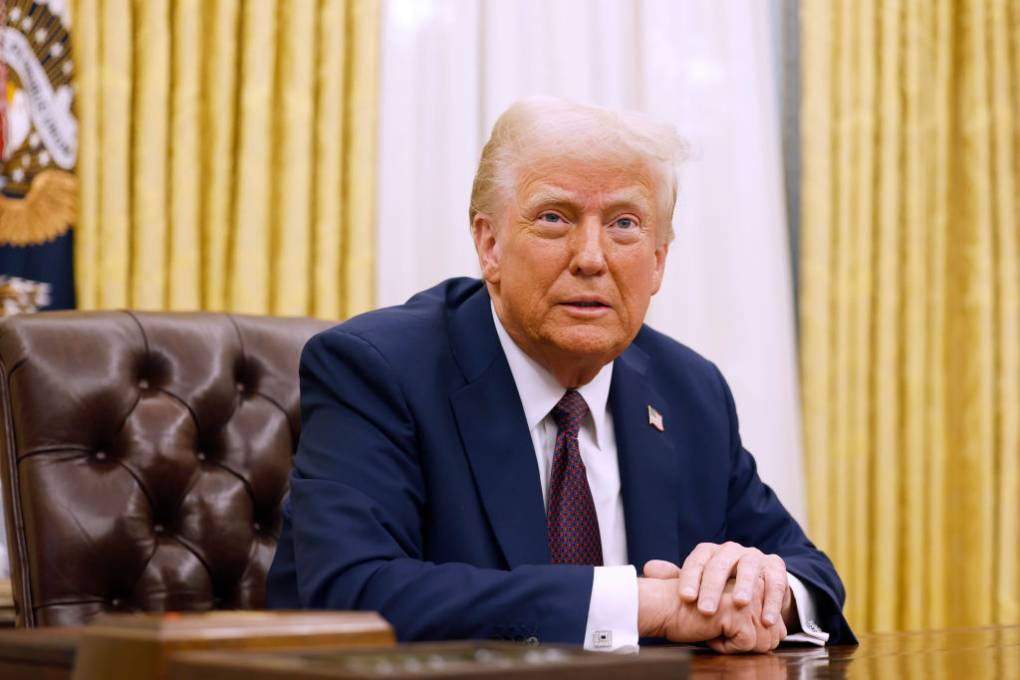
"caption": "U.S. President Donald Trump speaks to reporters after signing a series of executive orders in the Oval Office of the White House on Jan. 23, 2025, in Washington, D.C. ",
"credit": "Anna Moneymaker/Getty Images",
"altTag": null,
"description": null,
"imgSizes": {
"medium": {
"file": "https://cdn.kqed.org/wp-content/uploads/sites/10/2025/01/GettyImages-2195559727-800x534.jpg",
"width": 800,
"height": 534,
"mimeType": "image/jpeg"
},
"large": {
"file": "https://cdn.kqed.org/wp-content/uploads/sites/10/2025/01/GettyImages-2195559727-1020x680.jpg",
"width": 1020,
"height": 680,
"mimeType": "image/jpeg"
},
"thumbnail": {
"file": "https://cdn.kqed.org/wp-content/uploads/sites/10/2025/01/GettyImages-2195559727-160x107.jpg",
"width": 160,
"height": 107,
"mimeType": "image/jpeg"
},
"post-thumbnail": {
"file": "https://cdn.kqed.org/wp-content/uploads/sites/10/2025/01/GettyImages-2195559727-672x372.jpg",
"width": 672,
"height": 372,
"mimeType": "image/jpeg"
},
"twentyfourteen-full-width": {
"file": "https://cdn.kqed.org/wp-content/uploads/sites/10/2025/01/GettyImages-2195559727-1024x576.jpg",
"width": 1024,
"height": 576,
"mimeType": "image/jpeg"
},
"kqedFullSize": {
"file": "https://cdn.kqed.org/wp-content/uploads/sites/10/2025/01/GettyImages-2195559727.jpg",
"width": 1024,
"height": 683
}
},
"isLoading": false,
"fetchFailed": false
},
"news_12024428": {
"type": "attachments",
"id": "news_12024428",
"meta": {
"index": "attachments_1716263798",
"site": "news",
"id": "12024428",
"found": true
},
"title": "250128-SFImmigration-03-BL",
"publishDate": 1738105092,
"status": "inherit",
"parent": 0,
"modified": 1738105369,
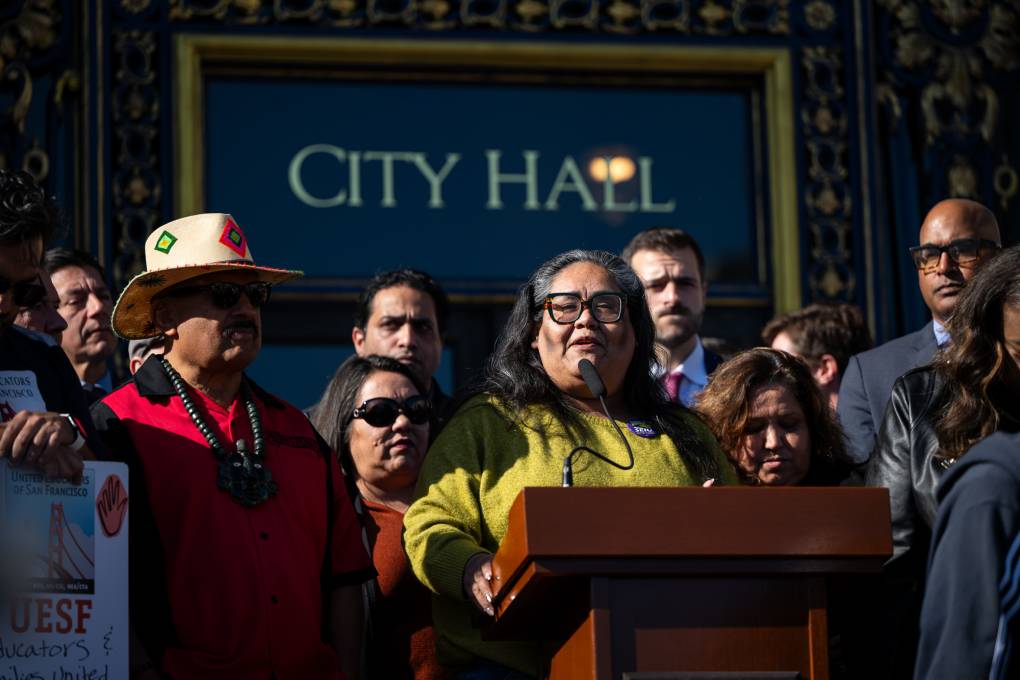
"caption": "SEIU Local 87 president Olga Miranda speaks during a press conference with elected and public safety officials and labor leaders in front of City Hall in San Francisco on Tuesday, Jan. 28, 2025, to reaffirm San Francisco’s commitment to being a Sanctuary City.",
"credit": "Beth LaBerge/KQED",
"altTag": null,
"description": null,
"imgSizes": {
"medium": {
"file": "https://cdn.kqed.org/wp-content/uploads/sites/10/2025/01/250128-SFImmigration-03-BL-800x533.jpg",
"width": 800,
"height": 533,
"mimeType": "image/jpeg"
},
"large": {
"file": "https://cdn.kqed.org/wp-content/uploads/sites/10/2025/01/250128-SFImmigration-03-BL-1020x680.jpg",
"width": 1020,
"height": 680,
"mimeType": "image/jpeg"
},
"thumbnail": {
"file": "https://cdn.kqed.org/wp-content/uploads/sites/10/2025/01/250128-SFImmigration-03-BL-160x107.jpg",
"width": 160,
"height": 107,
"mimeType": "image/jpeg"
},
"1536x1536": {
"file": "https://cdn.kqed.org/wp-content/uploads/sites/10/2025/01/250128-SFImmigration-03-BL-1536x1024.jpg",
"width": 1536,
"height": 1024,
"mimeType": "image/jpeg"
},
"post-thumbnail": {
"file": "https://cdn.kqed.org/wp-content/uploads/sites/10/2025/01/250128-SFImmigration-03-BL-672x372.jpg",
"width": 672,
"height": 372,
"mimeType": "image/jpeg"
},
"twentyfourteen-full-width": {
"file": "https://cdn.kqed.org/wp-content/uploads/sites/10/2025/01/250128-SFImmigration-03-BL-1038x576.jpg",
"width": 1038,
"height": 576,
"mimeType": "image/jpeg"
},
"full-width": {
"file": "https://cdn.kqed.org/wp-content/uploads/sites/10/2025/01/250128-SFImmigration-03-BL-1920x1280.jpg",
"width": 1920,
"height": 1280,
"mimeType": "image/jpeg"
},
"kqedFullSize": {
"file": "https://cdn.kqed.org/wp-content/uploads/sites/10/2025/01/250128-SFImmigration-03-BL.jpg",
"width": 2000,
"height": 1333
}
},
"isLoading": false,
"fetchFailed": false
},
"news_12024435": {
"type": "attachments",
"id": "news_12024435",
"meta": {
"index": "attachments_1716263798",
"site": "news",
"id": "12024435",
"found": true
},
"title": "250128-SFImmigration-30-BL",
"publishDate": 1738105128,
"status": "inherit",
"parent": 12028703,
"modified": 1740618033,
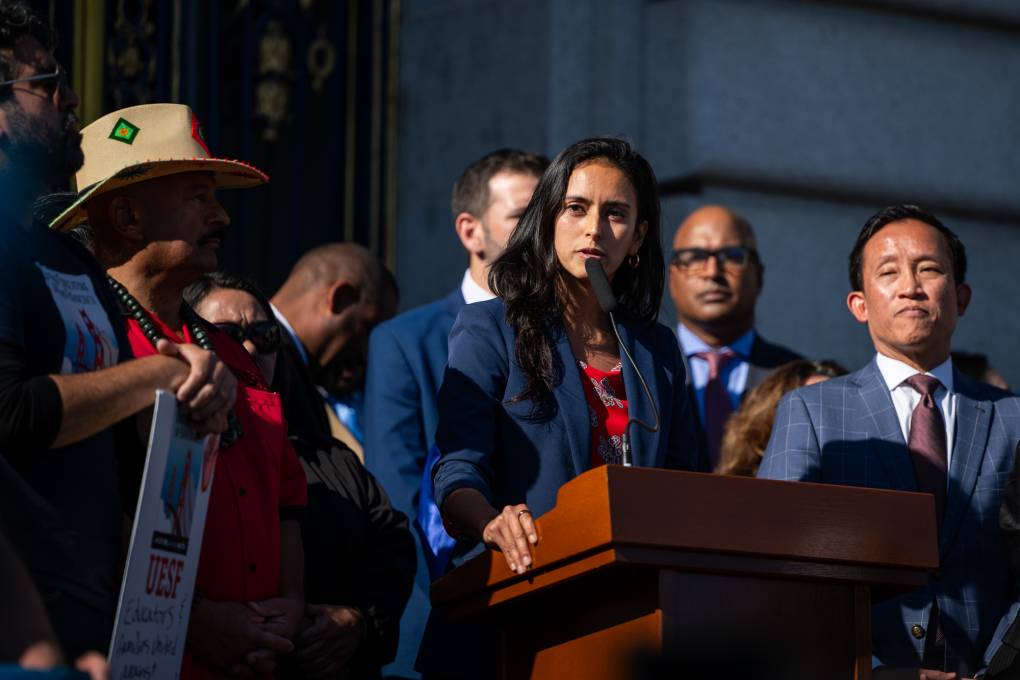
"caption": "San Francisco Supervisor Jackie Fielder speaks during a press conference with elected and public safety officials and labor leaders in front of City Hall in San Francisco on Tuesday, Jan. 28, 2025, to reaffirm San Francisco’s commitment to being a Sanctuary City.",
"credit": "Beth LaBerge/KQED",
"altTag": null,
"description": null,
"imgSizes": {
"medium": {
"file": "https://cdn.kqed.org/wp-content/uploads/sites/10/2025/01/250128-SFImmigration-30-BL-800x533.jpg",
"width": 800,
"height": 533,
"mimeType": "image/jpeg"
},
"large": {
"file": "https://cdn.kqed.org/wp-content/uploads/sites/10/2025/01/250128-SFImmigration-30-BL-1020x680.jpg",
"width": 1020,
"height": 680,
"mimeType": "image/jpeg"
},
"thumbnail": {
"file": "https://cdn.kqed.org/wp-content/uploads/sites/10/2025/01/250128-SFImmigration-30-BL-160x107.jpg",
"width": 160,
"height": 107,
"mimeType": "image/jpeg"
},
"1536x1536": {
"file": "https://cdn.kqed.org/wp-content/uploads/sites/10/2025/01/250128-SFImmigration-30-BL-1536x1024.jpg",
"width": 1536,
"height": 1024,
"mimeType": "image/jpeg"
},
"post-thumbnail": {
"file": "https://cdn.kqed.org/wp-content/uploads/sites/10/2025/01/250128-SFImmigration-30-BL-672x372.jpg",
"width": 672,
"height": 372,
"mimeType": "image/jpeg"
},
"twentyfourteen-full-width": {
"file": "https://cdn.kqed.org/wp-content/uploads/sites/10/2025/01/250128-SFImmigration-30-BL-1038x576.jpg",
"width": 1038,
"height": 576,
"mimeType": "image/jpeg"
},
"full-width": {
"file": "https://cdn.kqed.org/wp-content/uploads/sites/10/2025/01/250128-SFImmigration-30-BL-1920x1280.jpg",
"width": 1920,
"height": 1280,
"mimeType": "image/jpeg"
},
"kqedFullSize": {
"file": "https://cdn.kqed.org/wp-content/uploads/sites/10/2025/01/250128-SFImmigration-30-BL.jpg",
"width": 2000,
"height": 1333
}
},
"isLoading": false,
"fetchFailed": false
},
"news_12024404": {
"type": "attachments",
"id": "news_12024404",
"meta": {
"index": "attachments_1716263798",
"site": "news",
"id": "12024404",
"found": true
},
"title": "ice-raids-california",
"publishDate": 1738101120,
"status": "inherit",
"parent": 12024332,
"modified": 1738101189,
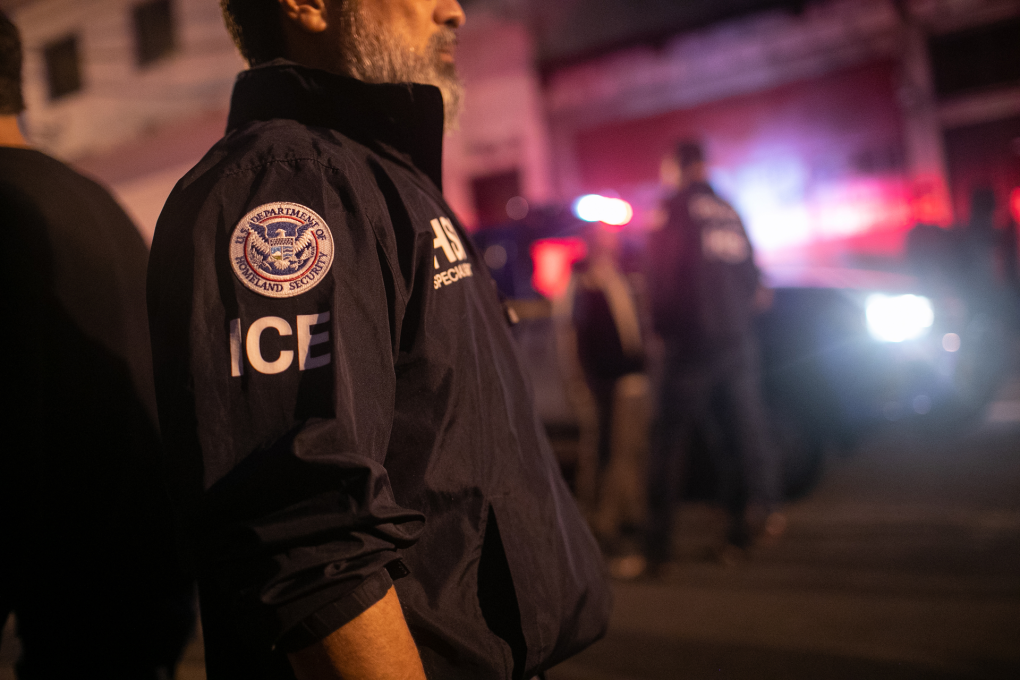
"caption": "Since the inauguration of President Donald Trump, fear and panic about possible ICE raids has spread in California.",
"credit": null,
"altTag": null,
"description": null,
"imgSizes": {
"medium": {
"file": "https://cdn.kqed.org/wp-content/uploads/sites/10/2025/01/GettyImages-2192874110-800x533.png",
"width": 800,
"height": 533,
"mimeType": "image/png"
},
"large": {
"file": "https://cdn.kqed.org/wp-content/uploads/sites/10/2025/01/GettyImages-2192874110-1020x680.png",
"width": 1020,
"height": 680,
"mimeType": "image/png"
},
"thumbnail": {
"file": "https://cdn.kqed.org/wp-content/uploads/sites/10/2025/01/GettyImages-2192874110-160x107.png",
"width": 160,
"height": 107,
"mimeType": "image/png"
},
"1536x1536": {
"file": "https://cdn.kqed.org/wp-content/uploads/sites/10/2025/01/GettyImages-2192874110-1536x1024.png",
"width": 1536,
"height": 1024,
"mimeType": "image/png"
},
"post-thumbnail": {
"file": "https://cdn.kqed.org/wp-content/uploads/sites/10/2025/01/GettyImages-2192874110-672x372.png",
"width": 672,
"height": 372,
"mimeType": "image/png"
},
"twentyfourteen-full-width": {
"file": "https://cdn.kqed.org/wp-content/uploads/sites/10/2025/01/GettyImages-2192874110-1038x576.png",
"width": 1038,
"height": 576,
"mimeType": "image/png"
},
"kqedFullSize": {
"file": "https://cdn.kqed.org/wp-content/uploads/sites/10/2025/01/GettyImages-2192874110.png",
"width": 1920,
"height": 1280
}
},
"isLoading": false,
"fetchFailed": false
},
"news_12024343": {
"type": "attachments",
"id": "news_12024343",
"meta": {
"index": "attachments_1716263798",
"site": "news",
"id": "12024343",
"found": true
},
"title": "060622_ICE-Arrest_AP_CM_01 copy",
"publishDate": 1738087587,
"status": "inherit",
"parent": 12024342,
"modified": 1738090904,
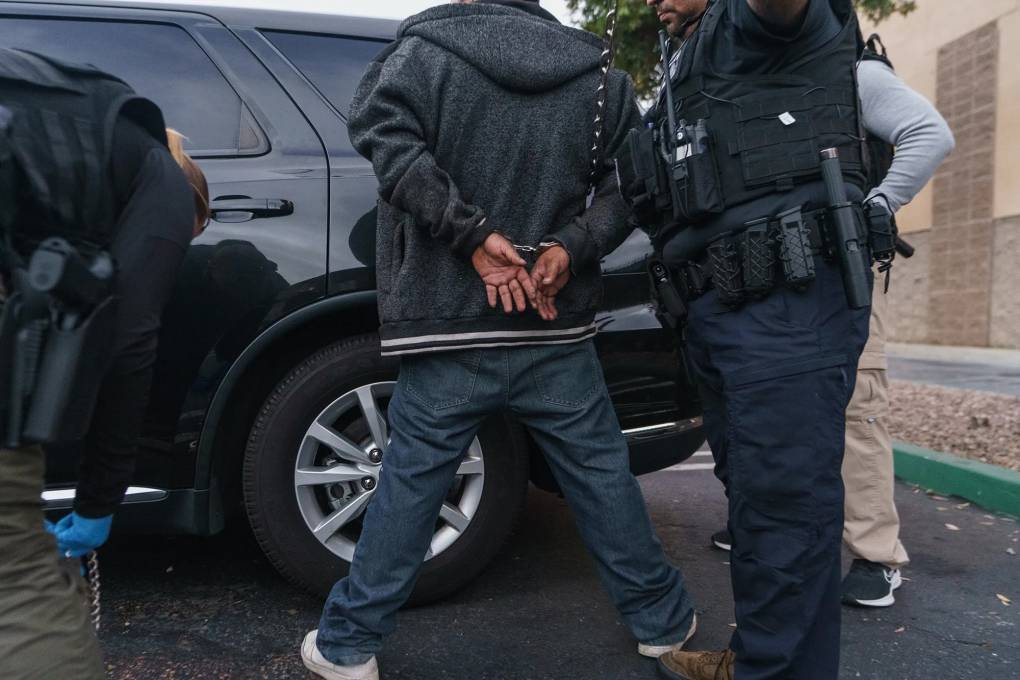
"caption": "U.S. Immigration and Customs Enforcement agents arrest an immigrant considered a threat to public safety and national security during an early morning raid in Compton on June 6, 2022. ",
"credit": "Damian Dovarganes/AP Photo",
"altTag": null,
"description": null,
"imgSizes": {
"medium": {
"file": "https://cdn.kqed.org/wp-content/uploads/sites/10/2025/01/060622_ICE-Arrest_AP_CM_01-copy-800x533.jpg",
"width": 800,
"height": 533,
"mimeType": "image/jpeg"
},
"large": {
"file": "https://cdn.kqed.org/wp-content/uploads/sites/10/2025/01/060622_ICE-Arrest_AP_CM_01-copy-1020x680.jpg",
"width": 1020,
"height": 680,
"mimeType": "image/jpeg"
},
"thumbnail": {
"file": "https://cdn.kqed.org/wp-content/uploads/sites/10/2025/01/060622_ICE-Arrest_AP_CM_01-copy-160x107.jpg",
"width": 160,
"height": 107,
"mimeType": "image/jpeg"
},
"1536x1536": {
"file": "https://cdn.kqed.org/wp-content/uploads/sites/10/2025/01/060622_ICE-Arrest_AP_CM_01-copy-1536x1024.jpg",
"width": 1536,
"height": 1024,
"mimeType": "image/jpeg"
},
"post-thumbnail": {
"file": "https://cdn.kqed.org/wp-content/uploads/sites/10/2025/01/060622_ICE-Arrest_AP_CM_01-copy-672x372.jpg",
"width": 672,
"height": 372,
"mimeType": "image/jpeg"
},
"twentyfourteen-full-width": {
"file": "https://cdn.kqed.org/wp-content/uploads/sites/10/2025/01/060622_ICE-Arrest_AP_CM_01-copy-1038x576.jpg",
"width": 1038,
"height": 576,
"mimeType": "image/jpeg"
},
"full-width": {
"file": "https://cdn.kqed.org/wp-content/uploads/sites/10/2025/01/060622_ICE-Arrest_AP_CM_01-copy-1920x1280.jpg",
"width": 1920,
"height": 1280,
"mimeType": "image/jpeg"
},
"kqedFullSize": {
"file": "https://cdn.kqed.org/wp-content/uploads/sites/10/2025/01/060622_ICE-Arrest_AP_CM_01-copy.jpg",
"width": 2000,
"height": 1333
}
},
"isLoading": false,
"fetchFailed": false
},
"news_12024138": {
"type": "attachments",
"id": "news_12024138",
"meta": {
"index": "attachments_1716263798",
"site": "news",
"id": "12024138",
"found": true
},
"title": "Unaccompanied Minor From Honduras Joins Extended Family In Indiana After 8 Weeks in US Govt Custody",
"publishDate": 1737770976,
"status": "inherit",
"parent": 12024082,
"modified": 1737771240,
"caption": "Trump's executive order states that only babies born 'within the United States after 30 days from the date of this order' will be affected — which would make Feb. 19, 2025, the official start date of the policy. However a federal judge has frozen the order, which the Justice Department will likely appeal.",
"credit": "John Moore/Getty Images",
"altTag": null,
"description": null,
"imgSizes": {
"medium": {
"file": "https://cdn.kqed.org/wp-content/uploads/sites/10/2030/01/GettyImages-1314541146-800x541.jpg",
"width": 800,
"height": 541,
"mimeType": "image/jpeg"
},
"large": {
"file": "https://cdn.kqed.org/wp-content/uploads/sites/10/2030/01/GettyImages-1314541146-1020x690.jpg",
"width": 1020,
"height": 690,
"mimeType": "image/jpeg"
},
"thumbnail": {
"file": "https://cdn.kqed.org/wp-content/uploads/sites/10/2030/01/GettyImages-1314541146-160x108.jpg",
"width": 160,
"height": 108,
"mimeType": "image/jpeg"
},
"post-thumbnail": {
"file": "https://cdn.kqed.org/wp-content/uploads/sites/10/2030/01/GettyImages-1314541146-672x372.jpg",
"width": 672,
"height": 372,
"mimeType": "image/jpeg"
},
"twentyfourteen-full-width": {
"file": "https://cdn.kqed.org/wp-content/uploads/sites/10/2030/01/GettyImages-1314541146-1024x576.jpg",
"width": 1024,
"height": 576,
"mimeType": "image/jpeg"
},
"kqedFullSize": {
"file": "https://cdn.kqed.org/wp-content/uploads/sites/10/2030/01/GettyImages-1314541146.jpg",
"width": 1024,
"height": 693
}
},
"isLoading": false,
"fetchFailed": false
},
"news_11973461": {
"type": "attachments",
"id": "news_11973461",
"meta": {
"index": "attachments_1716263798",
"site": "news",
"id": "11973461",
"found": true
},
"title": "240123-HMBShootingAnniversary-39-BL",
"publishDate": 1706051862,
"status": "inherit",
"parent": 12039333,
"modified": 1746748542,
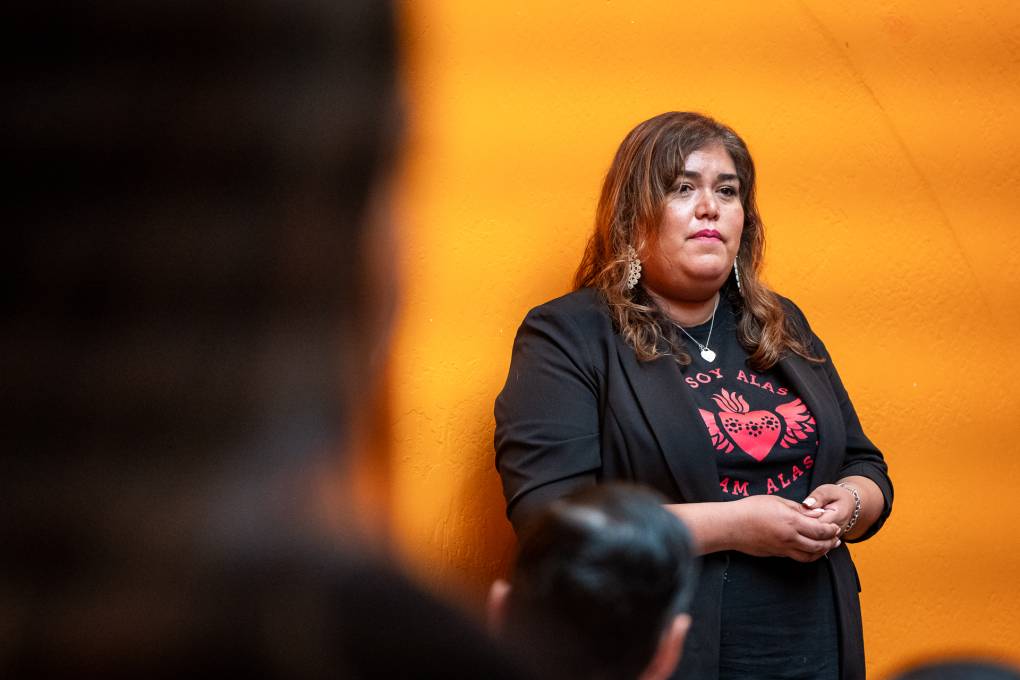
"caption": "Dr. Belinda Hernandez-Arriaga speaks during a roundtable discussion at the ALAS Sueño Center in Half Moon Bay on Jan. 23, 2024.",
"credit": "Beth LaBerge/KQED",
"altTag": "A person with long hair stands in front of a group of people in a room painted bright orange.",
"description": null,
"imgSizes": {
"medium": {
"file": "https://cdn.kqed.org/wp-content/uploads/sites/10/2024/01/240123-HMBShootingAnniversary-39-BL-800x533.jpg",
"width": 800,
"height": 533,
"mimeType": "image/jpeg"
},
"large": {
"file": "https://cdn.kqed.org/wp-content/uploads/sites/10/2024/01/240123-HMBShootingAnniversary-39-BL-1020x680.jpg",
"width": 1020,
"height": 680,
"mimeType": "image/jpeg"
},
"thumbnail": {
"file": "https://cdn.kqed.org/wp-content/uploads/sites/10/2024/01/240123-HMBShootingAnniversary-39-BL-160x107.jpg",
"width": 160,
"height": 107,
"mimeType": "image/jpeg"
},
"1536x1536": {
"file": "https://cdn.kqed.org/wp-content/uploads/sites/10/2024/01/240123-HMBShootingAnniversary-39-BL-1536x1024.jpg",
"width": 1536,
"height": 1024,
"mimeType": "image/jpeg"
},
"post-thumbnail": {
"file": "https://cdn.kqed.org/wp-content/uploads/sites/10/2024/01/240123-HMBShootingAnniversary-39-BL-672x372.jpg",
"width": 672,
"height": 372,
"mimeType": "image/jpeg"
},
"twentyfourteen-full-width": {
"file": "https://cdn.kqed.org/wp-content/uploads/sites/10/2024/01/240123-HMBShootingAnniversary-39-BL-1038x576.jpg",
"width": 1038,
"height": 576,
"mimeType": "image/jpeg"
},
"kqedFullSize": {
"file": "https://cdn.kqed.org/wp-content/uploads/sites/10/2024/01/240123-HMBShootingAnniversary-39-BL.jpg",
"width": 1920,
"height": 1280
}
},
"isLoading": false,
"fetchFailed": false
},
"news_12024043": {
"type": "attachments",
"id": "news_12024043",
"meta": {
"index": "attachments_1716263798",
"site": "news",
"id": "12024043",
"found": true
},
"title": "npr.brightspotcdn copy",
"publishDate": 1737752490,
"status": "inherit",
"parent": 12024040,
"modified": 1737752518,
"caption": "Minneapolis police chief Brian O'Hara speaks at a press conference on June 16, 2023 at the US District Court building in Minneapolis.",
"credit": "The Washington Post/Getty Images",
"altTag": null,
"description": null,
"imgSizes": {
"medium": {
"file": "https://cdn.kqed.org/wp-content/uploads/sites/10/2025/01/npr.brightspotcdn-copy-55-800x533.jpg",
"width": 800,
"height": 533,
"mimeType": "image/jpeg"
},
"large": {
"file": "https://cdn.kqed.org/wp-content/uploads/sites/10/2025/01/npr.brightspotcdn-copy-55-1020x680.jpg",
"width": 1020,
"height": 680,
"mimeType": "image/jpeg"
},
"thumbnail": {
"file": "https://cdn.kqed.org/wp-content/uploads/sites/10/2025/01/npr.brightspotcdn-copy-55-160x107.jpg",
"width": 160,
"height": 107,
"mimeType": "image/jpeg"
},
"post-thumbnail": {
"file": "https://cdn.kqed.org/wp-content/uploads/sites/10/2025/01/npr.brightspotcdn-copy-55-672x372.jpg",
"width": 672,
"height": 372,
"mimeType": "image/jpeg"
},
"twentyfourteen-full-width": {
"file": "https://cdn.kqed.org/wp-content/uploads/sites/10/2025/01/npr.brightspotcdn-copy-55-1038x576.jpg",
"width": 1038,
"height": 576,
"mimeType": "image/jpeg"
},
"kqedFullSize": {
"file": "https://cdn.kqed.org/wp-content/uploads/sites/10/2025/01/npr.brightspotcdn-copy-55.jpg",
"width": 1100,
"height": 733
}
},
"isLoading": false,
"fetchFailed": false
},
"news_12023747": {
"type": "attachments",
"id": "news_12023747",
"meta": {
"index": "attachments_1716263798",
"site": "news",
"id": "12023747",
"found": true
},
"title": "US-POLITICS-TRUMP-INAUGURATION",
"publishDate": 1737658482,
"status": "inherit",
"parent": 12023740,
"modified": 1737660022,
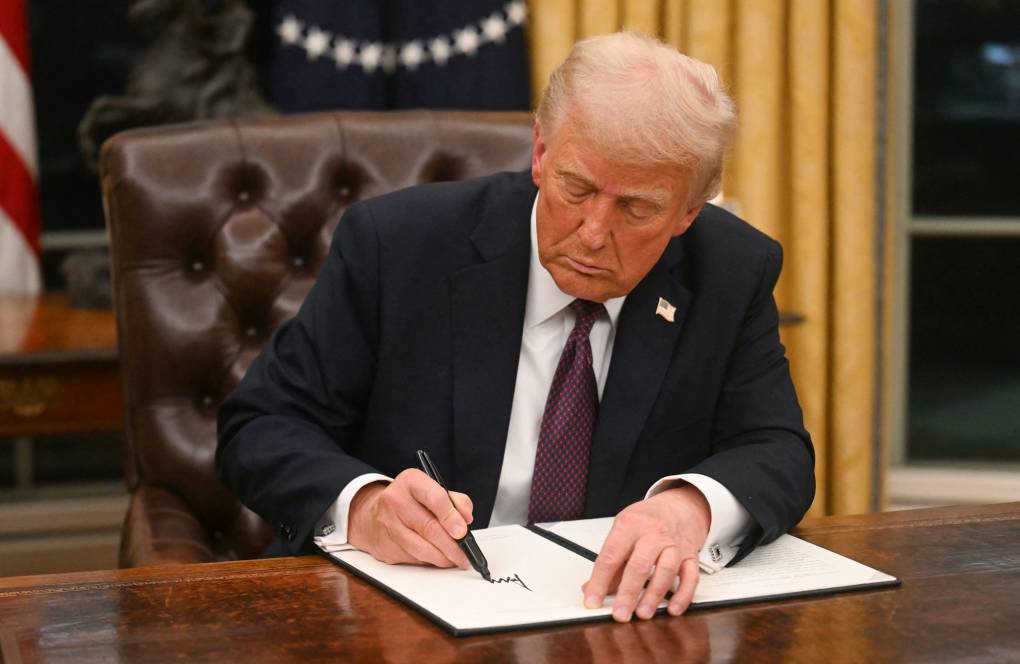
"caption": "U.S. President Donald Trump signs an executive order in the Oval Office of the White House in Washington, D.C., on Jan. 20, 2025.",
"credit": "Jim Watson/Pool/AFP via Getty Images",
"altTag": null,
"description": null,
"imgSizes": {
"medium": {
"file": "https://cdn.kqed.org/wp-content/uploads/sites/10/2025/01/DonaldTrumpEOGetty-800x521.jpg",
"width": 800,
"height": 521,
"mimeType": "image/jpeg"
},
"large": {
"file": "https://cdn.kqed.org/wp-content/uploads/sites/10/2025/01/DonaldTrumpEOGetty-1020x664.jpg",
"width": 1020,
"height": 664,
"mimeType": "image/jpeg"
},
"thumbnail": {
"file": "https://cdn.kqed.org/wp-content/uploads/sites/10/2025/01/DonaldTrumpEOGetty-160x104.jpg",
"width": 160,
"height": 104,
"mimeType": "image/jpeg"
},
"1536x1536": {
"file": "https://cdn.kqed.org/wp-content/uploads/sites/10/2025/01/DonaldTrumpEOGetty-1536x1000.jpg",
"width": 1536,
"height": 1000,
"mimeType": "image/jpeg"
},
"post-thumbnail": {
"file": "https://cdn.kqed.org/wp-content/uploads/sites/10/2025/01/DonaldTrumpEOGetty-672x372.jpg",
"width": 672,
"height": 372,
"mimeType": "image/jpeg"
},
"twentyfourteen-full-width": {
"file": "https://cdn.kqed.org/wp-content/uploads/sites/10/2025/01/DonaldTrumpEOGetty-1038x576.jpg",
"width": 1038,
"height": 576,
"mimeType": "image/jpeg"
},
"full-width": {
"file": "https://cdn.kqed.org/wp-content/uploads/sites/10/2025/01/DonaldTrumpEOGetty-1920x1250.jpg",
"width": 1920,
"height": 1250,
"mimeType": "image/jpeg"
},
"kqedFullSize": {
"file": "https://cdn.kqed.org/wp-content/uploads/sites/10/2025/01/DonaldTrumpEOGetty.jpg",
"width": 2000,
"height": 1302
}
},
"isLoading": false,
"fetchFailed": false
},
"news_12023317": {
"type": "attachments",
"id": "news_12023317",
"meta": {
"index": "attachments_1716263798",
"site": "news",
"id": "12023317",
"found": true
},
"title": "20250115_JapaneseAmericanActivism_GC-47",
"publishDate": 1737490923,
"status": "inherit",
"parent": 0,
"modified": 1737592311,
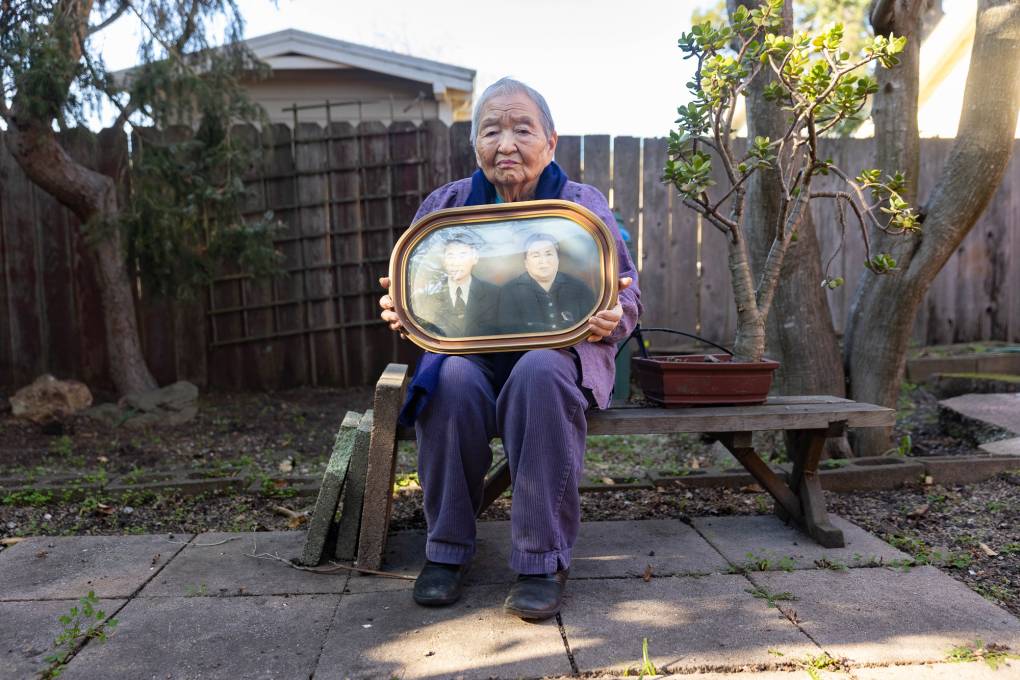
"caption": "Sadako Nimura Kashiwagi, 91, holds a photo of her parents, Juninhi Nimura and Shizuko Nimura, at her home in Berkeley on Jan. 15, 2025. Sadako was incarcerated at Tule Lake concentration camp at the age of 9, where she lived with her family for four years.",
"credit": "Gina Castro/KQED",
"altTag": null,
"description": null,
"imgSizes": {
"medium": {
"file": "https://cdn.kqed.org/wp-content/uploads/sites/10/2025/01/20250115_JapaneseAmericanActivism_GC-47-800x533.jpg",
"width": 800,
"height": 533,
"mimeType": "image/jpeg"
},
"large": {
"file": "https://cdn.kqed.org/wp-content/uploads/sites/10/2025/01/20250115_JapaneseAmericanActivism_GC-47-1020x680.jpg",
"width": 1020,
"height": 680,
"mimeType": "image/jpeg"
},
"thumbnail": {
"file": "https://cdn.kqed.org/wp-content/uploads/sites/10/2025/01/20250115_JapaneseAmericanActivism_GC-47-160x107.jpg",
"width": 160,
"height": 107,
"mimeType": "image/jpeg"
},
"1536x1536": {
"file": "https://cdn.kqed.org/wp-content/uploads/sites/10/2025/01/20250115_JapaneseAmericanActivism_GC-47-1536x1024.jpg",
"width": 1536,
"height": 1024,
"mimeType": "image/jpeg"
},
"post-thumbnail": {
"file": "https://cdn.kqed.org/wp-content/uploads/sites/10/2025/01/20250115_JapaneseAmericanActivism_GC-47-672x372.jpg",
"width": 672,
"height": 372,
"mimeType": "image/jpeg"
},
"twentyfourteen-full-width": {
"file": "https://cdn.kqed.org/wp-content/uploads/sites/10/2025/01/20250115_JapaneseAmericanActivism_GC-47-1038x576.jpg",
"width": 1038,
"height": 576,
"mimeType": "image/jpeg"
},
"full-width": {
"file": "https://cdn.kqed.org/wp-content/uploads/sites/10/2025/01/20250115_JapaneseAmericanActivism_GC-47-1920x1280.jpg",
"width": 1920,
"height": 1280,
"mimeType": "image/jpeg"
},
"kqedFullSize": {
"file": "https://cdn.kqed.org/wp-content/uploads/sites/10/2025/01/20250115_JapaneseAmericanActivism_GC-47.jpg",
"width": 2000,
"height": 1333
}
},
"isLoading": false,
"fetchFailed": false
},
"news_12023545": {
"type": "attachments",
"id": "news_12023545",
"meta": {
"index": "attachments_1716263798",
"site": "news",
"id": "12023545",
"found": true
},
"title": "250122-OaklandImmigrants-28-BL",
"publishDate": 1737580511,
"status": "inherit",
"parent": 12069782,
"modified": 1768439327,
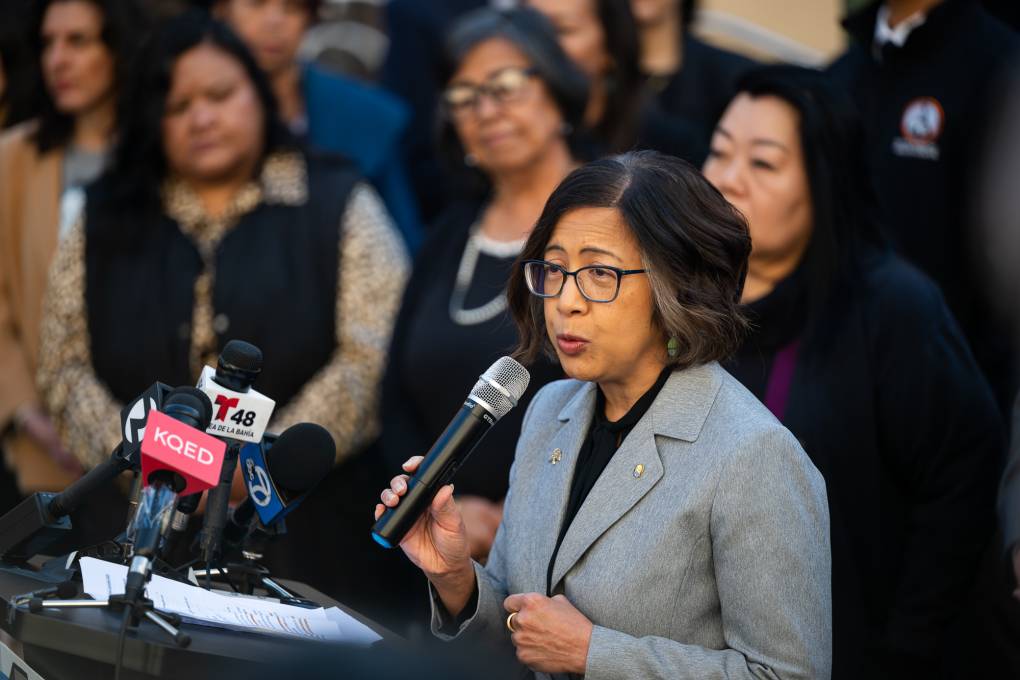
"caption": "Alameda County Supervisor Nikki Fortunato Bas speaks during a press conference with leaders from community groups throughout Alameda County in the Fruitvale neighborhood of Oakland on Jan. 22, 2025, to discuss support for immigrant families in the Bay Area after President Donald Trump promised mass deportations.",
"credit": "Beth LaBerge/KQED",
"altTag": null,
"description": null,
"imgSizes": {
"medium": {
"file": "https://cdn.kqed.org/wp-content/uploads/sites/10/2025/01/250122-OaklandImmigrants-28-BL-800x533.jpg",
"width": 800,
"height": 533,
"mimeType": "image/jpeg"
},
"large": {
"file": "https://cdn.kqed.org/wp-content/uploads/sites/10/2025/01/250122-OaklandImmigrants-28-BL-1020x680.jpg",
"width": 1020,
"height": 680,
"mimeType": "image/jpeg"
},
"thumbnail": {
"file": "https://cdn.kqed.org/wp-content/uploads/sites/10/2025/01/250122-OaklandImmigrants-28-BL-160x107.jpg",
"width": 160,
"height": 107,
"mimeType": "image/jpeg"
},
"1536x1536": {
"file": "https://cdn.kqed.org/wp-content/uploads/sites/10/2025/01/250122-OaklandImmigrants-28-BL-1536x1024.jpg",
"width": 1536,
"height": 1024,
"mimeType": "image/jpeg"
},
"post-thumbnail": {
"file": "https://cdn.kqed.org/wp-content/uploads/sites/10/2025/01/250122-OaklandImmigrants-28-BL-672x372.jpg",
"width": 672,
"height": 372,
"mimeType": "image/jpeg"
},
"twentyfourteen-full-width": {
"file": "https://cdn.kqed.org/wp-content/uploads/sites/10/2025/01/250122-OaklandImmigrants-28-BL-1038x576.jpg",
"width": 1038,
"height": 576,
"mimeType": "image/jpeg"
},
"full-width": {
"file": "https://cdn.kqed.org/wp-content/uploads/sites/10/2025/01/250122-OaklandImmigrants-28-BL-1920x1280.jpg",
"width": 1920,
"height": 1280,
"mimeType": "image/jpeg"
},
"kqedFullSize": {
"file": "https://cdn.kqed.org/wp-content/uploads/sites/10/2025/01/250122-OaklandImmigrants-28-BL.jpg",
"width": 2000,
"height": 1333
}
},
"isLoading": false,
"fetchFailed": false
},
"news_12023453": {
"type": "attachments",
"id": "news_12023453",
"meta": {
"index": "attachments_1716263798",
"site": "news",
"id": "12023453",
"found": true
},
"title": "National Walk and Roll to School Day",
"publishDate": 1737570313,
"status": "inherit",
"parent": 12023442,
"modified": 1737570385,
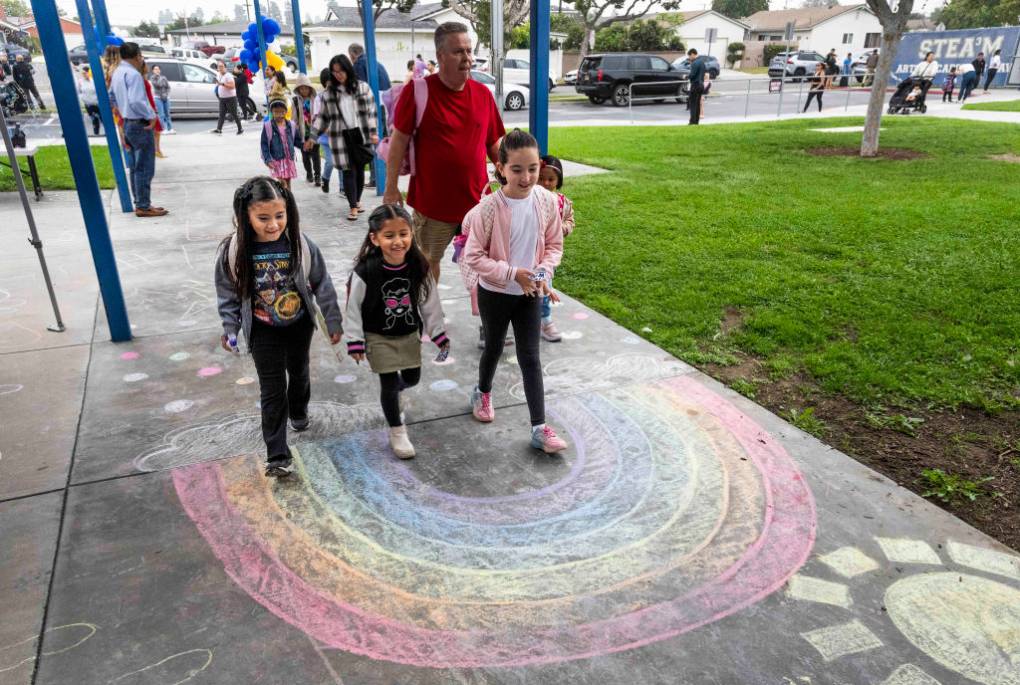
"caption": "Students pass chalk drawings on their way to class at Sequoia Academy in Westminster, Orange County, on Wednesday, Oct. 9, 2024.",
"credit": "Paul Bersebach/MediaNews Group/Orange County Register via Getty Images",
"altTag": null,
"description": null,
"imgSizes": {
"medium": {
"file": "https://cdn.kqed.org/wp-content/uploads/sites/10/2025/01/GettyImages-2177021825-800x538.jpg",
"width": 800,
"height": 538,
"mimeType": "image/jpeg"
},
"large": {
"file": "https://cdn.kqed.org/wp-content/uploads/sites/10/2025/01/GettyImages-2177021825-1020x685.jpg",
"width": 1020,
"height": 685,
"mimeType": "image/jpeg"
},
"thumbnail": {
"file": "https://cdn.kqed.org/wp-content/uploads/sites/10/2025/01/GettyImages-2177021825-160x108.jpg",
"width": 160,
"height": 108,
"mimeType": "image/jpeg"
},
"post-thumbnail": {
"file": "https://cdn.kqed.org/wp-content/uploads/sites/10/2025/01/GettyImages-2177021825-672x372.jpg",
"width": 672,
"height": 372,
"mimeType": "image/jpeg"
},
"twentyfourteen-full-width": {
"file": "https://cdn.kqed.org/wp-content/uploads/sites/10/2025/01/GettyImages-2177021825-1024x576.jpg",
"width": 1024,
"height": 576,
"mimeType": "image/jpeg"
},
"kqedFullSize": {
"file": "https://cdn.kqed.org/wp-content/uploads/sites/10/2025/01/GettyImages-2177021825.jpg",
"width": 1024,
"height": 688
}
},
"isLoading": false,
"fetchFailed": false
}
},
"audioPlayerReducer": {
"postId": "stream_live",
"isPaused": true,
"isPlaying": false,
"pfsActive": false,
"pledgeModalIsOpen": true,
"playerDrawerIsOpen": false,
"liveAudioPlayStartedAt": 0,
"liveAudioPlayContext": ""
},
"authorsReducer": {
"byline_news_12024342": {
"type": "authors",
"id": "byline_news_12024342",
"meta": {
"override": true
},
"slug": "byline_news_12024342",
"name": "\u003ca href=\"https://calmatters.org/author/anaibarra/\">Ana B. Ibarra\u003c/a>, CalMatters",
"isLoading": false
},
"byline_news_12024040": {
"type": "authors",
"id": "byline_news_12024040",
"meta": {
"override": true
},
"slug": "byline_news_12024040",
"name": "\u003ca href=\"https://www.npr.org/people/935764762/brian-mann\">Brian Mann\u003c/a>, NPR",
"isLoading": false
},
"byline_news_12023740": {
"type": "authors",
"id": "byline_news_12023740",
"meta": {
"override": true
},
"slug": "byline_news_12023740",
"name": "Eugene Johnson and Mike Catalini, Associated Press",
"isLoading": false
},
"byline_news_12023442": {
"type": "authors",
"id": "byline_news_12023442",
"meta": {
"override": true
},
"slug": "byline_news_12023442",
"name": "Olga R. Rodriguez, Moriah Balingit, Bianca Vázquez Toness and Jocelyn Gecker, Associated Press",
"isLoading": false
},
"carlysevern": {
"type": "authors",
"id": "3243",
"meta": {
"index": "authors_1716337520",
"id": "3243",
"found": true
},
"name": "Carly Severn",
"firstName": "Carly",
"lastName": "Severn",
"slug": "carlysevern",
"email": "csevern@kqed.org",
"display_author_email": false,
"staff_mastheads": [
"news"
],
"title": "Senior Editor, Audience News ",
"bio": "Carly is KQED's Senior Editor of Audience News on the Digital News team, and has reported for the California Report Magazine, Bay Curious and KQED Arts. She's formerly the host of \u003ca href=\"http://ww2.kqed.org/pop/category/the-cooler/\" rel=\"noopener noreferrer\">The Cooler\u003c/a> podcast.",
"avatar": "https://secure.gravatar.com/avatar/54037bf5c128fe678f0ef26cec97a93f2e7f220a22d7285703328f12c42c1b1d?s=600&d=blank&r=g",
"twitter": "teacupinthebay",
"bluesky": null,
"facebook": null,
"instagram": null,
"linkedin": null,
"sites": [
{
"site": "",
"roles": [
"editor"
]
},
{
"site": "arts",
"roles": [
"editor"
]
},
{
"site": "news",
"roles": [
"administrator"
]
},
{
"site": "pop",
"roles": [
"editor"
]
},
{
"site": "futureofyou",
"roles": [
"editor"
]
},
{
"site": "about",
"roles": [
"administrator"
]
},
{
"site": "mindshift",
"roles": [
"editor"
]
},
{
"site": "bayareabites",
"roles": [
"editor"
]
},
{
"site": "stateofhealth",
"roles": [
"editor"
]
},
{
"site": "science",
"roles": [
"editor"
]
},
{
"site": "food",
"roles": [
"contributor"
]
},
{
"site": "forum",
"roles": [
"editor"
]
},
{
"site": "perspectives",
"roles": [
"administrator"
]
},
{
"site": "liveblog",
"roles": [
"editor"
]
}
],
"headData": {
"title": "Carly Severn | KQED",
"description": "Senior Editor, Audience News ",
"ogImgSrc": "https://secure.gravatar.com/avatar/54037bf5c128fe678f0ef26cec97a93f2e7f220a22d7285703328f12c42c1b1d?s=600&d=blank&r=g",
"twImgSrc": "https://secure.gravatar.com/avatar/54037bf5c128fe678f0ef26cec97a93f2e7f220a22d7285703328f12c42c1b1d?s=600&d=blank&r=g"
},
"isLoading": false,
"link": "/author/carlysevern"
},
"clei": {
"type": "authors",
"id": "8617",
"meta": {
"index": "authors_1716337520",
"id": "8617",
"found": true
},
"name": "Cecilia Lei",
"firstName": "Cecilia",
"lastName": "Lei",
"slug": "clei",
"email": "clei@KQED.org",
"display_author_email": false,
"staff_mastheads": [],
"title": "KQED Contributor",
"bio": "Cecilia Lei is an on-call host and producer for KQED News and Podcasts. Previously, she was the executive producer and host of the San Francisco Chronicle's daily news podcast, 'Fifth and Mission'. Cecilia is a graduate of UC Berkeley’s Graduate School of Journalism and the former president of the Asian American Journalists Association San Francisco Bay Area chapter.",
"avatar": "https://secure.gravatar.com/avatar/40975f1f88fccf628ee537bf6ffc2af8?s=600&d=blank&r=g",
"twitter": null,
"facebook": null,
"instagram": null,
"linkedin": null,
"sites": [
{
"site": "arts",
"roles": [
"contributor"
]
},
{
"site": "news",
"roles": [
"author",
"read_private_posts"
]
},
{
"site": "about",
"roles": [
"editor"
]
}
],
"headData": {
"title": "Cecilia Lei | KQED",
"description": "KQED Contributor",
"ogImgSrc": "https://secure.gravatar.com/avatar/40975f1f88fccf628ee537bf6ffc2af8?s=600&d=blank&r=g",
"twImgSrc": "https://secure.gravatar.com/avatar/40975f1f88fccf628ee537bf6ffc2af8?s=600&d=blank&r=g"
},
"isLoading": false,
"link": "/author/clei"
},
"msolomon": {
"type": "authors",
"id": "11651",
"meta": {
"index": "authors_1716337520",
"id": "11651",
"found": true
},
"name": "Molly Solomon",
"firstName": "Molly",
"lastName": "Solomon",
"slug": "msolomon",
"email": "msolomon@KQED.org",
"display_author_email": false,
"staff_mastheads": [
"news"
],
"title": "Senior Editor",
"bio": "Molly Solomon is the senior editor of KQED's California Politics and Government Desk. Previously, she was the station's editor-at-large, with a focus on editing early childhood education, politics, and criminal justice. Before that, she managed and edited statewide election coverage for The California Newsroom, a collaboration of local public radio stations, CalMatters and NPR. Molly joined KQED in 2019 to launch the station’s housing affordability desk, where she reported on homelessness, evictions and is the co-host of KQED’s housing podcast, SOLD OUT: Rethinking Housing in America. Before that, she was the Southwest Washington Bureau Chief for Oregon Public Broadcasting and a reporter at Hawaii Public Radio. Her stories have aired on NPR’s \u003cem>Morning Edition\u003c/em>, \u003cem>All Things Considered\u003c/em>, \u003cem>Here & Now\u003c/em>, \u003cem>Science Friday\u003c/em> and \u003cem>Marketplace\u003c/em>. Molly's award-winning reporting has been honored by the Best of the West, Edward R. Murrow awards, Society of Professional Journalists, National Headliner Awards, and the Asian American Journalists Association. Born and raised in Berkeley, Molly is a big fan of burritos and her scruffy terrier, Ollie.",
"avatar": "https://secure.gravatar.com/avatar/9ad9794616923d81c9a79897161545bd?s=600&d=blank&r=g",
"twitter": "solomonout",
"facebook": null,
"instagram": null,
"linkedin": null,
"sites": [
{
"site": "news",
"roles": [
"editor"
]
},
{
"site": "science",
"roles": [
"editor"
]
}
],
"headData": {
"title": "Molly Solomon | KQED",
"description": "Senior Editor",
"ogImgSrc": "https://secure.gravatar.com/avatar/9ad9794616923d81c9a79897161545bd?s=600&d=blank&r=g",
"twImgSrc": "https://secure.gravatar.com/avatar/9ad9794616923d81c9a79897161545bd?s=600&d=blank&r=g"
},
"isLoading": false,
"link": "/author/msolomon"
},
"ccabreralomeli": {
"type": "authors",
"id": "11708",
"meta": {
"index": "authors_1716337520",
"id": "11708",
"found": true
},
"name": "Carlos Cabrera-Lomelí",
"firstName": "Carlos",
"lastName": "Cabrera-Lomelí",
"slug": "ccabreralomeli",
"email": "ccabreralomeli@KQED.org",
"display_author_email": true,
"staff_mastheads": [
"news"
],
"title": "Community Reporter",
"bio": "Carlos Cabrera-Lomelí is a community reporter with KQED's digital engagement team. He also reports and co-produces for KQED's bilingual news hub KQED en Español. He grew up in San Francisco's Mission District and has previously worked with Univision, 48 Hills and REFORMA in Mexico City.",
"avatar": "https://secure.gravatar.com/avatar/c309be9665e484f887b818c89e273ecc673004f426f36b24d00a4d813a2e0518?s=600&d=blank&r=g",
"twitter": "@LomeliCabrera",
"bluesky": null,
"facebook": null,
"instagram": null,
"linkedin": null,
"sites": [
{
"site": "arts",
"roles": [
"editor"
]
},
{
"site": "news",
"roles": [
"editor"
]
},
{
"site": "about",
"roles": [
"editor"
]
},
{
"site": "science",
"roles": [
"editor"
]
},
{
"site": "perspectives",
"roles": [
"editor"
]
},
{
"site": "elections",
"roles": [
"editor"
]
},
{
"site": "liveblog",
"roles": [
"contributor"
]
}
],
"headData": {
"title": "Carlos Cabrera-Lomelí | KQED",
"description": "Community Reporter",
"ogImgSrc": "https://secure.gravatar.com/avatar/c309be9665e484f887b818c89e273ecc673004f426f36b24d00a4d813a2e0518?s=600&d=blank&r=g",
"twImgSrc": "https://secure.gravatar.com/avatar/c309be9665e484f887b818c89e273ecc673004f426f36b24d00a4d813a2e0518?s=600&d=blank&r=g"
},
"isLoading": false,
"link": "/author/ccabreralomeli"
},
"nkhan": {
"type": "authors",
"id": "11867",
"meta": {
"index": "authors_1716337520",
"id": "11867",
"found": true
},
"name": "Nisa Khan",
"firstName": "Nisa",
"lastName": "Khan",
"slug": "nkhan",
"email": "nkhan@kqed.org",
"display_author_email": false,
"staff_mastheads": [],
"title": "KQED Contributor",
"bio": "Nisa Khan is a reporter for KQED's Audience News Desk. She was formerly a data reporter at Michigan Radio. She earned a Bachelor of Science in Information from the University of Michigan and a Master of Arts in Communication from Stanford University.",
"avatar": "https://secure.gravatar.com/avatar/8720459eef081ff64582b3506b124d58523e80e120704a0cbd9892533c914991?s=600&d=blank&r=g",
"twitter": "mnisakhan",
"bluesky": null,
"facebook": null,
"instagram": null,
"linkedin": null,
"sites": [
{
"site": "arts",
"roles": [
"editor"
]
},
{
"site": "news",
"roles": [
"editor"
]
},
{
"site": "science",
"roles": [
"editor",
"author"
]
},
{
"site": "forum",
"roles": [
"editor"
]
},
{
"site": "liveblog",
"roles": [
"contributor"
]
}
],
"headData": {
"title": "Nisa Khan | KQED",
"description": "KQED Contributor",
"ogImgSrc": "https://secure.gravatar.com/avatar/8720459eef081ff64582b3506b124d58523e80e120704a0cbd9892533c914991?s=600&d=blank&r=g",
"twImgSrc": "https://secure.gravatar.com/avatar/8720459eef081ff64582b3506b124d58523e80e120704a0cbd9892533c914991?s=600&d=blank&r=g"
},
"isLoading": false,
"link": "/author/nkhan"
},
"kdebenedetti": {
"type": "authors",
"id": "11913",
"meta": {
"index": "authors_1716337520",
"id": "11913",
"found": true
},
"name": "Katie DeBenedetti",
"firstName": "Katie",
"lastName": "DeBenedetti",
"slug": "kdebenedetti",
"email": "kdebenedetti@kqed.org",
"display_author_email": false,
"staff_mastheads": [
"news",
"science"
],
"title": "KQED Contributor",
"bio": "Katie DeBenedetti is a digital reporter covering daily news for the Express Desk. Prior to joining KQED as a culture reporting intern in January 2024, she covered education and city government for the Napa Valley Register.",
"avatar": "https://secure.gravatar.com/avatar/6e31073cb8f7e4214ab03f42771d0f45?s=600&d=blank&r=g",
"twitter": null,
"facebook": null,
"instagram": null,
"linkedin": null,
"sites": [
{
"site": "news",
"roles": [
"author"
]
},
{
"site": "science",
"roles": [
"author"
]
},
{
"site": "liveblog",
"roles": [
"author"
]
}
],
"headData": {
"title": "Katie DeBenedetti | KQED",
"description": "KQED Contributor",
"ogImgSrc": "https://secure.gravatar.com/avatar/6e31073cb8f7e4214ab03f42771d0f45?s=600&d=blank&r=g",
"twImgSrc": "https://secure.gravatar.com/avatar/6e31073cb8f7e4214ab03f42771d0f45?s=600&d=blank&r=g"
},
"isLoading": false,
"link": "/author/kdebenedetti"
},
"slim": {
"type": "authors",
"id": "11920",
"meta": {
"index": "authors_1716337520",
"id": "11920",
"found": true
},
"name": "Samantha Lim",
"firstName": "Samantha",
"lastName": "Lim",
"slug": "slim",
"email": "slim@KQED.org",
"display_author_email": false,
"staff_mastheads": [],
"title": "KQED Contributor",
"bio": null,
"avatar": "https://secure.gravatar.com/avatar/82e592e6c15fe1a04d385e8ad0fb0b4e?s=600&d=blank&r=g",
"twitter": null,
"facebook": null,
"instagram": null,
"linkedin": null,
"sites": [
{
"site": "news",
"roles": []
}
],
"headData": {
"title": "Samantha Lim | KQED",
"description": "KQED Contributor",
"ogImgSrc": "https://secure.gravatar.com/avatar/82e592e6c15fe1a04d385e8ad0fb0b4e?s=600&d=blank&r=g",
"twImgSrc": "https://secure.gravatar.com/avatar/82e592e6c15fe1a04d385e8ad0fb0b4e?s=600&d=blank&r=g"
},
"isLoading": false,
"link": "/author/slim"
}
},
"pagesReducer": {
"news_category_immigration": {
"type": "terms",
"id": "news_1169",
"meta": {
"index": "terms_1716263798",
"site": "news",
"id": "1169",
"score": 10.910236
},
"featImg": null,
"name": "Immigration",
"description": null,
"taxonomy": "category",
"headData": {
"twImgId": null,
"twTitle": null,
"ogTitle": null,
"ogImgId": null,
"twDescription": null,
"description": null,
"title": "Immigration Archives | KQED News",
"ogDescription": null
},
"ttid": 1180,
"slug": "immigration",
"isLoading": false,
"title": "Immigration",
"pageMeta": {
"site": "news",
"WpPageTemplate": "page-topic-editorial",
"currentPage": 37
},
"blocks": [
{
"blockName": "kqed/post-list",
"attrs": {
"layout": "cardArticle2",
"query": "posts/news?category=immigration",
"seeMore": false,
"paginated": true,
"page": 37
}
},
{
"blockName": "kqed/ad"
}
]
}
},
"pfsSessionReducer": {},
"postsReducer": {
"stream_live": {
"type": "live",
"id": "stream_live",
"audioUrl": "https://streams.kqed.org/kqedradio",
"title": "Live Stream",
"excerpt": "Live Stream information currently unavailable.",
"link": "/radio",
"featImg": "",
"label": {
"name": "KQED Live",
"link": "/"
}
},
"stream_kqedNewscast": {
"type": "posts",
"id": "stream_kqedNewscast",
"audioUrl": "https://www.kqed.org/.stream/anon/radio/RDnews/newscast.mp3?_=1",
"title": "KQED Newscast",
"featImg": "",
"label": {
"name": "88.5 FM",
"link": "/"
}
},
"news_12024454": {
"type": "posts",
"id": "news_12024454",
"meta": {
"index": "posts_1716263798",
"site": "news",
"id": "12024454",
"score": null,
"sort": [
1738164639000
]
},
"guestAuthors": [],
"slug": "how-will-this-second-trump-presidency-impact-different-parts-of-california-you-told-us",
"title": "How Will This Second Trump Presidency Impact Different Parts of California? You Told Us",
"publishDate": 1738164639,
"format": "standard",
"headTitle": "How Will This Second Trump Presidency Impact Different Parts of California? You Told Us | KQED",
"labelTerm": {
"site": "news"
},
"content": "\u003cp>How do you think the next four years under President Donald Trump will affect your daily life and community?\u003c/p>\n\u003cp>That’s \u003ca href=\"https://www.kqed.org/news/12022187/how-would-another-trump-term-impact-your-corner-of-california\">the question KQED and its California public radio partners in The California Newsroom posed\u003c/a> to our listeners and readers around the state as Trump returned to the White House for a second term. More than 150 of you shared your questions, hopes and fears about the coming years, from concerns about immigration, the economy to social services and the future of California under Trump 2.0.\u003c/p>\n\u003cp>We’ve gathered this selection of responses below from Californians across the state. If these comments strike a chord with you — or if you don’t see your particular issues or concerns reflected below — you can \u003ca href=\"#A\">submit your own thoughts using our Google Form below\u003c/a>. What you share with us could be shared on kqed.org, KQED Public Radio or KQED’s social media.\u003c/p>\n\u003cp>\u003cem>Responses have been lightly edited for brevity and clarity.\u003c/em>\u003c/p>\n\u003ch2>\u003cstrong>The future of California under Trump \u003c/strong>\u003c/h2>\n\u003cfigure id=\"attachment_12004715\" class=\"wp-caption aligncenter\" style=\"max-width: 2000px\">\u003cimg loading=\"lazy\" decoding=\"async\" class=\"size-full wp-image-12004715\" src=\"https://cdn.kqed.org/wp-content/uploads/sites/10/2024/09/240913-TRUMPRALLY-JG-1.jpg\" alt=\"\" width=\"2000\" height=\"1333\" srcset=\"https://cdn.kqed.org/wp-content/uploads/sites/10/2024/09/240913-TRUMPRALLY-JG-1.jpg 2000w, https://cdn.kqed.org/wp-content/uploads/sites/10/2024/09/240913-TRUMPRALLY-JG-1-800x533.jpg 800w, https://cdn.kqed.org/wp-content/uploads/sites/10/2024/09/240913-TRUMPRALLY-JG-1-1020x680.jpg 1020w, https://cdn.kqed.org/wp-content/uploads/sites/10/2024/09/240913-TRUMPRALLY-JG-1-160x107.jpg 160w, https://cdn.kqed.org/wp-content/uploads/sites/10/2024/09/240913-TRUMPRALLY-JG-1-1536x1024.jpg 1536w, https://cdn.kqed.org/wp-content/uploads/sites/10/2024/09/240913-TRUMPRALLY-JG-1-1920x1280.jpg 1920w\" sizes=\"auto, (max-width: 2000px) 100vw, 2000px\">\u003cfigcaption class=\"wp-caption-text\">Paul Nguyen of San José chants on the side of El Camino Real in Palo Alto during a rally supporting Donald Trump for President on Friday, Sept. 13, 2024. \u003ccite>(Joseph Geha/KQED)\u003c/cite>\u003c/figcaption>\u003c/figure>\n\u003cp>Being a California resident for all my life, I feel that Trump policies will have little effect on California residents other than costing taxpayers millions that our state will spend on lawsuits against the federal government. Just seeing California Trump-proof itself by using taxpayer funds to litigate all things Trump instead of looking at the future makes me want to leave this great state in search of a more pleasant and positive place in America. I hope there can be some kind of peaceful alternative to all the upcoming lawsuits.\u003c/p>\n\u003cp>\u003cstrong>– James, Shasta\u003c/strong>\u003c/p>\n\u003cp>Trump’s cabinet selections are to me the most troubling. There are none that aren’t willing to do his bidding, rather than what is in the best interest of the United States … Therefore, they will be willing to take hostages and make California pay for any slight they feel they have suffered. This time around, there will be very few people standing in his way when he wants to enact poor policies that further degrade the environment, the social safety net, and humanitarian relief.\u003c/p>\n\u003cp>\u003cstrong>– Ana, Contra Costa County\u003c/strong>\u003c/p>\n\u003cp>[ad fullwidth]\u003c/p>\n\u003cp>I think that I will benefit from the increased job possibilities from oil drilling and as a business owner I am glad to see limits on the EPA’s oversteps into our daily work. As a realtor I look forward to reduced regulations that will lead to more urgently needed housing being built.\u003c/p>\n\u003cp>\u003cstrong>– Shannon, San Luis Obispo County\u003c/strong>\u003c/p>\n\u003cp>It will be very disruptive. We have just suffered catastrophic wildfires that are still burning, and he doesn’t care. We are a region of immigrants proud of our diversity, and he wants to rip that apart with deportations. We are increasingly harmed by the climate crisis and he calls that a hoax. His tariffs will stop business at our ports. Congress under the Republicans will try to harm us and he will enjoy that.\u003c/p>\n\u003cp>\u003cstrong>– Sally, L.A.\u003c/strong>\u003c/p>\n\u003ch2>\u003cstrong>The economy\u003c/strong>\u003c/h2>\n\u003cfigure id=\"attachment_12024465\" class=\"wp-caption aligncenter\" style=\"max-width: 2000px\">\u003cimg loading=\"lazy\" decoding=\"async\" class=\"size-full wp-image-12024465\" src=\"https://cdn.kqed.org/wp-content/uploads/sites/10/2025/01/food-stamp-cuts-photo-1-_qed.jpg\" alt=\"\" width=\"2000\" height=\"1316\" srcset=\"https://cdn.kqed.org/wp-content/uploads/sites/10/2025/01/food-stamp-cuts-photo-1-_qed.jpg 2000w, https://cdn.kqed.org/wp-content/uploads/sites/10/2025/01/food-stamp-cuts-photo-1-_qed-800x526.jpg 800w, https://cdn.kqed.org/wp-content/uploads/sites/10/2025/01/food-stamp-cuts-photo-1-_qed-1020x671.jpg 1020w, https://cdn.kqed.org/wp-content/uploads/sites/10/2025/01/food-stamp-cuts-photo-1-_qed-160x105.jpg 160w, https://cdn.kqed.org/wp-content/uploads/sites/10/2025/01/food-stamp-cuts-photo-1-_qed-1536x1011.jpg 1536w, https://cdn.kqed.org/wp-content/uploads/sites/10/2025/01/food-stamp-cuts-photo-1-_qed-1920x1263.jpg 1920w\" sizes=\"auto, (max-width: 2000px) 100vw, 2000px\">\u003cfigcaption class=\"wp-caption-text\">Antoinette Martinez does her weekly grocery shopping at FoodMaxx on July 26, 2019. \u003ccite>(Anne Wernikoff/CalMatters)\u003c/cite>\u003c/figcaption>\u003c/figure>\n\u003cp>I can’t help but think his economic ideas will cause problematic inflationary issues. His threats to withhold federal emergency funds cause me to wonder if there’s a way we can “redirect” our federal tax payments to the state of California as a way to challenge his audacity. As he requires quid pro quo of other nations to receive our support, maybe we as a state should enact the same mentality.\u003c/p>\n\u003cp>\u003cstrong>– Carl, Manteca\u003c/strong>\u003c/p>\n\u003cp>I am hoping for lower taxes, cheaper gasoline and utilities, and streamlined regulation for small businesses. I am optimistic about better economic growth and the enforcement of law.\u003c/p>\n\u003cp>\u003cstrong>– Emerson, Pleasant Valley\u003c/strong>\u003c/p>\n\u003cp>I think I’ll be hurt. Silicon Valley has caved to this man and many within that community, while not supporting him philosophically, recognize that economically they will do well. For people like me, who have professional jobs but can’t compete with high tech and finance salaries, the struggle will drive me out or limit my lifestyle. Meanwhile, many of my more privileged friends just want to avoid the news for the next 4 years. That’s not an option. We need to know what is coming at us and our nation.\u003c/p>\n\u003cp>\u003cstrong>– Andria, San José\u003c/strong>\u003c/p>\n\u003cp>People have given up looking for jobs and everything is so expensive I’m going into credit debt. I think the economy will get better and I hope housing prices can go down decreasing the homeless here in CA.\u003c/p>\n\u003cp>\u003cstrong>– John, Folsom\u003c/strong>\u003c/p>\n\u003ch2>\u003cstrong>Discrimination and civil rights\u003c/strong>\u003c/h2>\n\u003cfigure id=\"attachment_12024467\" class=\"wp-caption aligncenter\" style=\"max-width: 1777px\">\u003cimg loading=\"lazy\" decoding=\"async\" class=\"size-full wp-image-12024467\" src=\"https://cdn.kqed.org/wp-content/uploads/sites/10/2025/01/IMG_1361_qed.jpg\" alt=\"\" width=\"1777\" height=\"1333\" srcset=\"https://cdn.kqed.org/wp-content/uploads/sites/10/2025/01/IMG_1361_qed.jpg 1777w, https://cdn.kqed.org/wp-content/uploads/sites/10/2025/01/IMG_1361_qed-800x600.jpg 800w, https://cdn.kqed.org/wp-content/uploads/sites/10/2025/01/IMG_1361_qed-1020x765.jpg 1020w, https://cdn.kqed.org/wp-content/uploads/sites/10/2025/01/IMG_1361_qed-160x120.jpg 160w, https://cdn.kqed.org/wp-content/uploads/sites/10/2025/01/IMG_1361_qed-1536x1152.jpg 1536w\" sizes=\"auto, (max-width: 1777px) 100vw, 1777px\">\u003cfigcaption class=\"wp-caption-text\">People protest President Donald Trump’s decision to bar transgender people from serving in the military, in a march through San Francisco’s Castro neighborhood on July 26, 2017. \u003ccite>(Polly Stryker/KQED)\u003c/cite>\u003c/figcaption>\u003c/figure>\n\u003cp>I am a transgender woman and my life is severely impacted. With the recent passing of executive orders on January 20. With changes like workplace protections and private spaces, I no longer have the safety and security of how I do trivial things like shop, go to a bathroom, workout in a gym, or even use the post office. … Right now my right to live as who I am is under siege, and I don’t see myself staying in the U.S. much longer.\u003c/p>\n\u003cp>\u003cstrong>– Kaedi, Tustin\u003c/strong>\u003c/p>\n\u003cp>Any online interactions have increased bigotry since the bigots feel protected now, which is unfortunate. I am an LGBTQ ally but I wouldn’t consider myself in that bracket. I get attacked online for mentioning that everyone has a right to their opinion and their identity. I’m also concerned for myself that we are regressing in terms of rights for minorities as I am a minority.\u003c/p>\n\u003cp>\u003cstrong>– Alexander, San Francisco\u003c/strong>\u003c/p>\n\u003cp>The media is making a lot of noise, but Trump’s tactics of shock and awe can be very effective. Some fights/policies will fail and some I’ll disagree with, but the nation requires a much needed kick in the ass, so we could lead again, instead of being the woke nation that’s more focused on gender equality and DEI initiatives than creating opportunities for all.\u003c/p>\n\u003cp>\u003cstrong>– Cindy, Encinitas\u003c/strong>\u003c/p>\n\u003cp>I live in East San José, a vibrant and ethnically diverse neighborhood. I also work for the UC system and was a community college counselor for years. I have seen first hand the long term/short term effects of the bigotry, blatant racism, and discrimination against undocumented Americans and folks who identify as LGBTQIA. Former students and their families living under intense fear is detrimental to their health and yet they all work here and pay taxes that they get zero benefits for.\u003c/p>\n\u003cp>\u003cstrong>– Nohemy, San José\u003c/strong>\u003c/p>\n\u003cp>I hope that I am not directly impacted, but I believe that Trump’s elitism and selfishness will empower the rich and the ignorant to treat perceived “others” with discrimination, contempt, or worse. As a white person, I am not that fearful; as a woman, I am extremely anxious and concerned. And for people of color, I am also very anxious and concerned.\u003c/p>\n\u003cp>\u003cstrong>– Sarah, Orange County\u003c/strong>\u003c/p>\n\u003cp>The impact of fear, preparation, and resolve has been felt by the trans community since he was nominated to run for the Republican Party. We began to save medications, learn self-defense, understand our fragile rights, and learn to read legislation and Supreme Court tea leaves. … My optimism comes from knowing my elders have fought this before. Trans people have always, and will always, exist. We find joy in small moments while rusting the gears of the hate machine.\u003c/p>\n\u003cp>\u003cstrong>Chloe, L.A.\u003c/strong>\u003c/p>\n\u003ch2>\u003cstrong>Housing and homelessness\u003c/strong>\u003c/h2>\n\u003cfigure id=\"attachment_12024498\" class=\"wp-caption aligncenter\" style=\"max-width: 2000px\">\u003cimg loading=\"lazy\" decoding=\"async\" class=\"size-full wp-image-12024498\" src=\"https://cdn.kqed.org/wp-content/uploads/sites/10/2025/01/027_KQED_WoodStreetEncampment_07192022_qed.jpg\" alt=\"\" width=\"2000\" height=\"1333\" srcset=\"https://cdn.kqed.org/wp-content/uploads/sites/10/2025/01/027_KQED_WoodStreetEncampment_07192022_qed.jpg 2000w, https://cdn.kqed.org/wp-content/uploads/sites/10/2025/01/027_KQED_WoodStreetEncampment_07192022_qed-800x533.jpg 800w, https://cdn.kqed.org/wp-content/uploads/sites/10/2025/01/027_KQED_WoodStreetEncampment_07192022_qed-1020x680.jpg 1020w, https://cdn.kqed.org/wp-content/uploads/sites/10/2025/01/027_KQED_WoodStreetEncampment_07192022_qed-160x107.jpg 160w, https://cdn.kqed.org/wp-content/uploads/sites/10/2025/01/027_KQED_WoodStreetEncampment_07192022_qed-1536x1024.jpg 1536w, https://cdn.kqed.org/wp-content/uploads/sites/10/2025/01/027_KQED_WoodStreetEncampment_07192022_qed-1920x1280.jpg 1920w\" sizes=\"auto, (max-width: 2000px) 100vw, 2000px\">\u003cfigcaption class=\"wp-caption-text\">A sign says, ‘Housing is a Human Right’ at the Cob on Wood Project at the Wood Street encampment in West Oakland on Tuesday, July 19, 2022. \u003ccite>(Beth LaBerge/KQED)\u003c/cite>\u003c/figcaption>\u003c/figure>\n\u003cp>I wish to see reduced homelessness, easier paths to home construction and easier agricultural access to water. Optimistic about the America First policies to focus on building more homes and propping up businesses by reducing the onerous regulatory state.\u003c/p>\n\u003cp>\u003cstrong>– Shannon, San Luis Obispo \u003c/strong>\u003c/p>\n\u003cp>We need to help the homeless more as well as build housing for them and also for people whose income is considered “extremely low” and “low” income. I live in Senior subsidized housing so I have the lowest rent I can find but I worry if Trump takes away housing subsidies, rent will go up and I’ll be on the street as will many other seniors who live here.I also worry that I won’t be able to afford food.\u003c/p>\n\u003cp>\u003cstrong>– Jody, Contra Costa County\u003c/strong>\u003c/p>\n\u003cp>By no means MAGA, I consider myself pretty moderate. But this state and much of the country needs a hard reboot. Voters feel overburdened with the cost of utilities, gas and housing. … Though Trump will not get some of his agenda accomplished, he’s going to shake things up.\u003c/p>\n\u003cp>\u003cstrong>– Cindy, Encinitas\u003c/strong>\u003c/p>\n\u003ch2>\u003cstrong>Immigration and border security \u003c/strong>\u003c/h2>\n\u003cfigure id=\"attachment_11971660\" class=\"wp-caption aligncenter\" style=\"max-width: 1568px\">\u003cimg loading=\"lazy\" decoding=\"async\" class=\"size-full wp-image-11971660\" src=\"https://cdn.kqed.org/wp-content/uploads/sites/10/2024/01/080923_Salinas-Farmworkers_SN_CM_16-copy.jpg\" alt=\"\" width=\"1568\" height=\"1045\" srcset=\"https://cdn.kqed.org/wp-content/uploads/sites/10/2024/01/080923_Salinas-Farmworkers_SN_CM_16-copy.jpg 1568w, https://cdn.kqed.org/wp-content/uploads/sites/10/2024/01/080923_Salinas-Farmworkers_SN_CM_16-copy-800x533.jpg 800w, https://cdn.kqed.org/wp-content/uploads/sites/10/2024/01/080923_Salinas-Farmworkers_SN_CM_16-copy-1020x680.jpg 1020w, https://cdn.kqed.org/wp-content/uploads/sites/10/2024/01/080923_Salinas-Farmworkers_SN_CM_16-copy-160x107.jpg 160w, https://cdn.kqed.org/wp-content/uploads/sites/10/2024/01/080923_Salinas-Farmworkers_SN_CM_16-copy-1536x1024.jpg 1536w\" sizes=\"auto, (max-width: 1568px) 100vw, 1568px\">\u003cfigcaption class=\"wp-caption-text\">Farmworkers harvest strawberries in Salinas on Aug. 9, 2023. \u003ccite>(Semantha Norris/CalMatters)\u003c/cite>\u003c/figcaption>\u003c/figure>\n\u003cp>I went to work yesterday, the first day of class; the first day since Trump’s executive orders. I am sitting in a circle with my students. These are first generation young adults from all over California and a few international students from Uganda, Nigeria and China. My heart stops. What can I say to them to reassure them? As I pass out markers and construction paper so they can place their names, I add that they can also write their preferred pronoun. “Oops,” I add, “I just broke an executive order.” I refrain from saying that I will defy the other orders. If ICE comes to remove them, they will have to remove me too.\u003c/p>\n\u003cp>\u003cstrong>– Susan, Merced\u003c/strong>\u003c/p>\n\u003cp>We need to prioritize fairness and justice. It’s unacceptable that illegal immigrants are often treated better than our Native American communities — this has to change, and I stand firmly for it. Ending birthright citizenship is a strong first step toward addressing these issues.\u003c/p>\n\u003cp>\u003cstrong>– Amanda, Crescent City\u003c/strong>\u003c/p>\n\u003cp>I live near the border and to see families separated from one another is heartbreaking. I’ve experienced immigration raids when I lived at the racetrack and the agents are completely lacking in compassion. My sister may have a harder time getting the medicine she needs. My adult children are half Mexican and already fear racist policies. I’m a bilingual teacher (white) and I worry for students. I work in minority communities. I’m afraid for the gardener here at the apartment complex where I live. And I’m angry at people who voted for Trump including my younger sister and brother.\u003c/p>\n\u003cp>\u003cstrong>– Stacey, La Mesa\u003c/strong>\u003c/p>\n\u003cp>I am very concerned that we have illegal immigrants, gang members in drug cartels in our community and the state is refusing to work with the Trump administration to clear criminals out. I am concerned that California has become a criminal enabling state.\u003c/p>\n\u003cp>\u003cstrong>– Kerry, Los Angeles\u003c/strong>\u003c/p>\n\u003cp>I am a teacher and I know there are several undocumented families in our community. I fear the day where I might not see my students anymore. I love my students and I will worry about them for the next four years. Also I have undocumented family members. I fear for their safety and whether the last day I saw them would have been my last.\u003c/p>\n\u003cp>\u003cstrong>– Cynthia, Santa Clara County\u003c/strong>\u003c/p>\n\u003cp>If this incoming administration deports undocumented Americans, imagine all the jobs that would be unfilled, education enrollments would continue to drop, tax revenue would decrease, but most tragic of all is that we would lose wonderful people who make our country better. In my 13 plus years of being in education, no one works harder and wants to be a contributor to our country than undocumented Americans.\u003c/p>\n\u003cp>\u003cstrong>– Nohemy, East San José\u003c/strong>\u003c/p>\n\u003ch2>\u003cstrong>Climate and the environment\u003c/strong>\u003c/h2>\n\u003cfigure id=\"attachment_12021737\" class=\"wp-caption aligncenter\" style=\"max-width: 1024px\">\u003cimg loading=\"lazy\" decoding=\"async\" class=\"size-full wp-image-12021737\" src=\"https://cdn.kqed.org/wp-content/uploads/sites/10/2025/01/GettyImages-2192687291.jpg\" alt=\"Firefighters look on as a big red smoky blaze comes over a hill.\" width=\"1024\" height=\"683\" srcset=\"https://cdn.kqed.org/wp-content/uploads/sites/10/2025/01/GettyImages-2192687291.jpg 1024w, https://cdn.kqed.org/wp-content/uploads/sites/10/2025/01/GettyImages-2192687291-800x534.jpg 800w, https://cdn.kqed.org/wp-content/uploads/sites/10/2025/01/GettyImages-2192687291-1020x680.jpg 1020w, https://cdn.kqed.org/wp-content/uploads/sites/10/2025/01/GettyImages-2192687291-160x107.jpg 160w\" sizes=\"auto, (max-width: 1024px) 100vw, 1024px\">\u003cfigcaption class=\"wp-caption-text\">A view of Palisades Fire as firefighting planes and helicopters drop water over flames in Mandeville Canyon in Los Angeles, on Jan. 10, 2025. \u003ccite>(Tayfun Coskun/Anadolu via Getty Images)\u003c/cite>\u003c/figcaption>\u003c/figure>\n\u003cp>I think that I will benefit from the increased job possibilities from oil drilling and as a business owner I am glad to see limits on the EPA’s oversteps into our daily work.\u003c/p>\n\u003cp>\u003cstrong>– Shannon, San Luis Obispo\u003c/strong>\u003c/p>\n\u003cp>I am worried about California receiving financial help for the L.A. fires. And I am afraid Trump will undo all climate change legislation, and as a result there will be more catastrophic weather events.\u003c/p>\n\u003cp>\u003cstrong>– Susan, San José\u003c/strong>\u003c/p>\n\u003cp>It will be very disruptive. We have just suffered catastrophic wildfires that are still burning, and he doesn’t care. We are increasingly harmed by the climate crisis and he calls that a hoax. Our recovery from the Palisades and Eaton fires is likely to be harder, slower and meaner with his administration.\u003c/p>\n\u003cp>\u003cstrong>– Sally, Los Angeles\u003c/strong>\u003c/p>\n\u003ch2>\u003cstrong>Division and anxiety \u003c/strong>\u003c/h2>\n\u003cfigure id=\"attachment_12007728\" class=\"wp-caption aligncenter\" style=\"max-width: 2000px\">\u003cimg loading=\"lazy\" decoding=\"async\" class=\"size-full wp-image-12007728\" src=\"https://cdn.kqed.org/wp-content/uploads/sites/10/2024/10/20240623_GAZAEVACUATION_GC-20-KQED.jpg\" alt=\"\" width=\"2000\" height=\"1333\" srcset=\"https://cdn.kqed.org/wp-content/uploads/sites/10/2024/10/20240623_GAZAEVACUATION_GC-20-KQED.jpg 2000w, https://cdn.kqed.org/wp-content/uploads/sites/10/2024/10/20240623_GAZAEVACUATION_GC-20-KQED-800x533.jpg 800w, https://cdn.kqed.org/wp-content/uploads/sites/10/2024/10/20240623_GAZAEVACUATION_GC-20-KQED-1020x680.jpg 1020w, https://cdn.kqed.org/wp-content/uploads/sites/10/2024/10/20240623_GAZAEVACUATION_GC-20-KQED-160x107.jpg 160w, https://cdn.kqed.org/wp-content/uploads/sites/10/2024/10/20240623_GAZAEVACUATION_GC-20-KQED-1536x1024.jpg 1536w, https://cdn.kqed.org/wp-content/uploads/sites/10/2024/10/20240623_GAZAEVACUATION_GC-20-KQED-1920x1280.jpg 1920w\" sizes=\"auto, (max-width: 2000px) 100vw, 2000px\">\u003cfigcaption class=\"wp-caption-text\">Angelica Davila (right) faces off with a counterprotester at Window on the Bay Park in Monterey on June 23, 2024. Ceasefire demonstrators and Former President Trump supporters rallied at the same park. \u003ccite>(Gina Castro/KQED)\u003c/cite>\u003c/figcaption>\u003c/figure>\n\u003cp>Trump’s presidency is intentionally designed to keep us in constant states of anxiety and depression so that we’ll be worried about what he intends to do next and depressed about what he has done already. He will lie constantly & convince us to mistrust reliable sources of news.\u003c/p>\n\u003cp>\u003cstrong>– Barbara, Newark\u003c/strong>\u003c/p>\n\u003cp>The lies and disinformation that Trump’s team will be spewing out will certainly cause me great emotional distress because I fear it will lead more and more people from factual information and therefore to actions threatening our democracy.\u003c/p>\n\u003cp>\u003cstrong>– Elli, Yolo County\u003c/strong>\u003c/p>\n\u003cp>It will make my life a living hell of chaos and confusion along with the never ending pack of lies that he tells … Why are there two systems of justice in this country? One for white males and the other for the rest of us.\u003c/p>\n\u003cp>\u003cstrong>– D.C., Fresno\u003c/strong>\u003c/p>\n\u003cp>There’s going to be more chaos and hate. Less facts. Unfortunately I live in a predominantly red area in SLO County … I’ve had to be very careful not to discuss politics in any way shape or form for fear of being bullied and insulted for not confirming to the MAGA way.\u003c/p>\n\u003cp>\u003cstrong>– Catherine, Atascadero\u003c/strong>\u003c/p>\n\u003cp>I won’t be decreasing my amitriptyline dose anytime soon.\u003c/p>\n\u003cp>\u003cstrong>– Charmaine, Walnut Creek\u003c/strong>\u003c/p>\n\u003ch2>\u003cstrong>Cuts to social services programs\u003c/strong>\u003c/h2>\n\u003cfigure id=\"attachment_12024503\" class=\"wp-caption aligncenter\" style=\"max-width: 2000px\">\u003cimg loading=\"lazy\" decoding=\"async\" class=\"size-full wp-image-12024503\" src=\"https://cdn.kqed.org/wp-content/uploads/sites/10/2025/01/240903-OverdoseResponse-56-BL_qed.jpg\" alt=\"\" width=\"2000\" height=\"1333\" srcset=\"https://cdn.kqed.org/wp-content/uploads/sites/10/2025/01/240903-OverdoseResponse-56-BL_qed.jpg 2000w, https://cdn.kqed.org/wp-content/uploads/sites/10/2025/01/240903-OverdoseResponse-56-BL_qed-800x533.jpg 800w, https://cdn.kqed.org/wp-content/uploads/sites/10/2025/01/240903-OverdoseResponse-56-BL_qed-1020x680.jpg 1020w, https://cdn.kqed.org/wp-content/uploads/sites/10/2025/01/240903-OverdoseResponse-56-BL_qed-160x107.jpg 160w, https://cdn.kqed.org/wp-content/uploads/sites/10/2025/01/240903-OverdoseResponse-56-BL_qed-1536x1024.jpg 1536w, https://cdn.kqed.org/wp-content/uploads/sites/10/2025/01/240903-OverdoseResponse-56-BL_qed-1920x1280.jpg 1920w\" sizes=\"auto, (max-width: 2000px) 100vw, 2000px\">\u003cfigcaption class=\"wp-caption-text\">Paramedic Isaac James (left) and counselor Chantel Hernandez-Coleman, members of the Street Overdose Response Team, speak with 2 people sitting on the street in the South of Market neighborhood in San Francisco on Sept. 3, 2024. \u003ccite>(Beth LaBerge/KQED)\u003c/cite>\u003c/figcaption>\u003c/figure>\n\u003cp>Since I am disabled & have Medicare & Medi-Cal I worry that funding for my healthcare will be cut. I worry that there may be reduced funding for Section 8 (subsidized housing) and that also will affect me directly.\u003c/p>\n\u003cp>\u003cstrong>– Delia, South San Francisco\u003c/strong>\u003c/p>\n\u003cp>I’m hoping the next four years under [Trump] will have little to no effect on my life or community, since the only effect we might see will be negative. Plans to cut social services, including Medicare and Social Security while cutting taxes for the oligarchs and increasing tariffs on foreign goods, including food, may bankrupt our family and put us out onto the street, worst case.\u003c/p>\n\u003cp>\u003cstrong>– Mike, Merced\u003c/strong>\u003c/p>\n\u003cp>I’m not optimistic that anything will get better. I think he’s out to dismantle health care, Medicare and social security. I’m concerned for the farm workers who are instrumental in our rural agricultural community. His rhetoric is mean spirited and negative.\u003c/p>\n\u003cp>– \u003cstrong>Claudia, Nicolaus\u003c/strong>\u003c/p>\n\u003cp>Prices are going to go crazy and those of us on programs like Medicare, Social Security etc. will shiver in our boots until Trump leaves office. It’s very difficult to live under these threats when you are old and barely getting by as it is.\u003c/p>\n\u003cp>\u003cstrong>– Jody, Contra Costa County\u003c/strong>\u003c/p>\n\u003cp>\u003ca id=\"A\">\u003c/a>\u003cstrong>Tell Us: How Will a Second Trump Presidency Impact Your Corner of California?\u003c/strong>\u003c/p>\n\u003cp>https://docs.google.com/forms/d/e/1FAIpQLSe-6Em0FA1xZECy5BUiL9ZpDYksuiNmoh2TaPYkoWn-fV9wlQ/viewform?usp=preview\u003c/p>\n\u003cp>[ad floatright]\u003c/p>\n",
"blocks": [],
"excerpt": null,
"status": "publish",
"parent": 0,
"modified": 1738179896,
"stats": {
"hasAudio": false,
"hasVideo": false,
"hasChartOrMap": false,
"iframeSrcs": [],
"hasGoogleForm": true,
"hasGallery": false,
"hasHearkenModule": false,
"hasPolis": false,
"paragraphCount": 77,
"wordCount": 2783
},
"headData": {
"title": "How Will This Second Trump Presidency Impact Different Parts of California? You Told Us | KQED",
"description": "How do you think the next four years under President Donald Trump will affect your daily life and community? That’s the question KQED and its California public radio partners in The California Newsroom posed to our listeners and readers around the state as Trump returned to the White House for a second term. More than 150 of you shared your questions, hopes and fears about the coming years, from concerns about immigration, the economy to social services and the future of California under Trump 2.0. We’ve gathered this selection of responses below from Californians across the state. If these comments",
"ogTitle": "",
"ogDescription": "",
"ogImgId": "",
"twTitle": "",
"twDescription": "",
"twImgId": "",
"schema": {
"@context": "https://schema.org",
"@type": "NewsArticle",
"headline": "How Will This Second Trump Presidency Impact Different Parts of California? You Told Us",
"datePublished": "2025-01-29T07:30:39-08:00",
"dateModified": "2025-01-29T11:44:56-08:00",
"image": "https://cdn.kqed.org/wp-content/uploads/2020/02/KQED-OG-Image@1x.png",
"isAccessibleForFree": "True",
"publisher": {
"@type": "NewsMediaOrganization",
"@id": "https://www.kqed.org/#organization",
"name": "KQED",
"logo": "https://cdn.kqed.org/wp-content/uploads/2020/02/KQED-OG-Image@1x.png",
"url": "https://www.kqed.org",
"sameAs": [
"https://www.facebook.com/KQED",
"https://twitter.com/KQED",
"https://www.instagram.com/kqed/",
"https://www.tiktok.com/@kqedofficial",
"https://www.linkedin.com/company/kqed",
"https://www.youtube.com/channel/UCeC0IOo7i1P_61zVUWbJ4nw"
]
}
}
},
"audioUrl": "https://cdn.kqed.org/wp-content/uploads/sites/10/2025/01/KQED-Inauguration-Special.mp3",
"sticky": false,
"nprStoryId": "kqed-12024454",
"excludeFromSiteSearch": "Include",
"articleAge": "0",
"path": "/news/12024454/how-will-this-second-trump-presidency-impact-different-parts-of-california-you-told-us",
"audioTrackLength": null,
"parsedContent": [
{
"type": "contentString",
"content": "\u003cdiv class=\"post-body\">\u003cp>\u003cp>How do you think the next four years under President Donald Trump will affect your daily life and community?\u003c/p>\n\u003cp>That’s \u003ca href=\"https://www.kqed.org/news/12022187/how-would-another-trump-term-impact-your-corner-of-california\">the question KQED and its California public radio partners in The California Newsroom posed\u003c/a> to our listeners and readers around the state as Trump returned to the White House for a second term. More than 150 of you shared your questions, hopes and fears about the coming years, from concerns about immigration, the economy to social services and the future of California under Trump 2.0.\u003c/p>\n\u003cp>We’ve gathered this selection of responses below from Californians across the state. If these comments strike a chord with you — or if you don’t see your particular issues or concerns reflected below — you can \u003ca href=\"#A\">submit your own thoughts using our Google Form below\u003c/a>. What you share with us could be shared on kqed.org, KQED Public Radio or KQED’s social media.\u003c/p>\n\u003cp>\u003cem>Responses have been lightly edited for brevity and clarity.\u003c/em>\u003c/p>\n\u003ch2>\u003cstrong>The future of California under Trump \u003c/strong>\u003c/h2>\n\u003cfigure id=\"attachment_12004715\" class=\"wp-caption aligncenter\" style=\"max-width: 2000px\">\u003cimg loading=\"lazy\" decoding=\"async\" class=\"size-full wp-image-12004715\" src=\"https://cdn.kqed.org/wp-content/uploads/sites/10/2024/09/240913-TRUMPRALLY-JG-1.jpg\" alt=\"\" width=\"2000\" height=\"1333\" srcset=\"https://cdn.kqed.org/wp-content/uploads/sites/10/2024/09/240913-TRUMPRALLY-JG-1.jpg 2000w, https://cdn.kqed.org/wp-content/uploads/sites/10/2024/09/240913-TRUMPRALLY-JG-1-800x533.jpg 800w, https://cdn.kqed.org/wp-content/uploads/sites/10/2024/09/240913-TRUMPRALLY-JG-1-1020x680.jpg 1020w, https://cdn.kqed.org/wp-content/uploads/sites/10/2024/09/240913-TRUMPRALLY-JG-1-160x107.jpg 160w, https://cdn.kqed.org/wp-content/uploads/sites/10/2024/09/240913-TRUMPRALLY-JG-1-1536x1024.jpg 1536w, https://cdn.kqed.org/wp-content/uploads/sites/10/2024/09/240913-TRUMPRALLY-JG-1-1920x1280.jpg 1920w\" sizes=\"auto, (max-width: 2000px) 100vw, 2000px\">\u003cfigcaption class=\"wp-caption-text\">Paul Nguyen of San José chants on the side of El Camino Real in Palo Alto during a rally supporting Donald Trump for President on Friday, Sept. 13, 2024. \u003ccite>(Joseph Geha/KQED)\u003c/cite>\u003c/figcaption>\u003c/figure>\n\u003cp>Being a California resident for all my life, I feel that Trump policies will have little effect on California residents other than costing taxpayers millions that our state will spend on lawsuits against the federal government. Just seeing California Trump-proof itself by using taxpayer funds to litigate all things Trump instead of looking at the future makes me want to leave this great state in search of a more pleasant and positive place in America. I hope there can be some kind of peaceful alternative to all the upcoming lawsuits.\u003c/p>\n\u003cp>\u003cstrong>– James, Shasta\u003c/strong>\u003c/p>\n\u003cp>Trump’s cabinet selections are to me the most troubling. There are none that aren’t willing to do his bidding, rather than what is in the best interest of the United States … Therefore, they will be willing to take hostages and make California pay for any slight they feel they have suffered. This time around, there will be very few people standing in his way when he wants to enact poor policies that further degrade the environment, the social safety net, and humanitarian relief.\u003c/p>\n\u003cp>\u003cstrong>– Ana, Contra Costa County\u003c/strong>\u003c/p>\n\u003cp>\u003c/p>\u003c/div>",
"attributes": {
"named": {},
"numeric": []
}
},
{
"type": "component",
"content": "",
"name": "ad",
"attributes": {
"named": {
"label": "fullwidth"
},
"numeric": [
"fullwidth"
]
}
},
{
"type": "contentString",
"content": "\u003cdiv class=\"post-body\">\u003cp>\u003c/p>\n\u003cp>I think that I will benefit from the increased job possibilities from oil drilling and as a business owner I am glad to see limits on the EPA’s oversteps into our daily work. As a realtor I look forward to reduced regulations that will lead to more urgently needed housing being built.\u003c/p>\n\u003cp>\u003cstrong>– Shannon, San Luis Obispo County\u003c/strong>\u003c/p>\n\u003cp>It will be very disruptive. We have just suffered catastrophic wildfires that are still burning, and he doesn’t care. We are a region of immigrants proud of our diversity, and he wants to rip that apart with deportations. We are increasingly harmed by the climate crisis and he calls that a hoax. His tariffs will stop business at our ports. Congress under the Republicans will try to harm us and he will enjoy that.\u003c/p>\n\u003cp>\u003cstrong>– Sally, L.A.\u003c/strong>\u003c/p>\n\u003ch2>\u003cstrong>The economy\u003c/strong>\u003c/h2>\n\u003cfigure id=\"attachment_12024465\" class=\"wp-caption aligncenter\" style=\"max-width: 2000px\">\u003cimg loading=\"lazy\" decoding=\"async\" class=\"size-full wp-image-12024465\" src=\"https://cdn.kqed.org/wp-content/uploads/sites/10/2025/01/food-stamp-cuts-photo-1-_qed.jpg\" alt=\"\" width=\"2000\" height=\"1316\" srcset=\"https://cdn.kqed.org/wp-content/uploads/sites/10/2025/01/food-stamp-cuts-photo-1-_qed.jpg 2000w, https://cdn.kqed.org/wp-content/uploads/sites/10/2025/01/food-stamp-cuts-photo-1-_qed-800x526.jpg 800w, https://cdn.kqed.org/wp-content/uploads/sites/10/2025/01/food-stamp-cuts-photo-1-_qed-1020x671.jpg 1020w, https://cdn.kqed.org/wp-content/uploads/sites/10/2025/01/food-stamp-cuts-photo-1-_qed-160x105.jpg 160w, https://cdn.kqed.org/wp-content/uploads/sites/10/2025/01/food-stamp-cuts-photo-1-_qed-1536x1011.jpg 1536w, https://cdn.kqed.org/wp-content/uploads/sites/10/2025/01/food-stamp-cuts-photo-1-_qed-1920x1263.jpg 1920w\" sizes=\"auto, (max-width: 2000px) 100vw, 2000px\">\u003cfigcaption class=\"wp-caption-text\">Antoinette Martinez does her weekly grocery shopping at FoodMaxx on July 26, 2019. \u003ccite>(Anne Wernikoff/CalMatters)\u003c/cite>\u003c/figcaption>\u003c/figure>\n\u003cp>I can’t help but think his economic ideas will cause problematic inflationary issues. His threats to withhold federal emergency funds cause me to wonder if there’s a way we can “redirect” our federal tax payments to the state of California as a way to challenge his audacity. As he requires quid pro quo of other nations to receive our support, maybe we as a state should enact the same mentality.\u003c/p>\n\u003cp>\u003cstrong>– Carl, Manteca\u003c/strong>\u003c/p>\n\u003cp>I am hoping for lower taxes, cheaper gasoline and utilities, and streamlined regulation for small businesses. I am optimistic about better economic growth and the enforcement of law.\u003c/p>\n\u003cp>\u003cstrong>– Emerson, Pleasant Valley\u003c/strong>\u003c/p>\n\u003cp>I think I’ll be hurt. Silicon Valley has caved to this man and many within that community, while not supporting him philosophically, recognize that economically they will do well. For people like me, who have professional jobs but can’t compete with high tech and finance salaries, the struggle will drive me out or limit my lifestyle. Meanwhile, many of my more privileged friends just want to avoid the news for the next 4 years. That’s not an option. We need to know what is coming at us and our nation.\u003c/p>\n\u003cp>\u003cstrong>– Andria, San José\u003c/strong>\u003c/p>\n\u003cp>People have given up looking for jobs and everything is so expensive I’m going into credit debt. I think the economy will get better and I hope housing prices can go down decreasing the homeless here in CA.\u003c/p>\n\u003cp>\u003cstrong>– John, Folsom\u003c/strong>\u003c/p>\n\u003ch2>\u003cstrong>Discrimination and civil rights\u003c/strong>\u003c/h2>\n\u003cfigure id=\"attachment_12024467\" class=\"wp-caption aligncenter\" style=\"max-width: 1777px\">\u003cimg loading=\"lazy\" decoding=\"async\" class=\"size-full wp-image-12024467\" src=\"https://cdn.kqed.org/wp-content/uploads/sites/10/2025/01/IMG_1361_qed.jpg\" alt=\"\" width=\"1777\" height=\"1333\" srcset=\"https://cdn.kqed.org/wp-content/uploads/sites/10/2025/01/IMG_1361_qed.jpg 1777w, https://cdn.kqed.org/wp-content/uploads/sites/10/2025/01/IMG_1361_qed-800x600.jpg 800w, https://cdn.kqed.org/wp-content/uploads/sites/10/2025/01/IMG_1361_qed-1020x765.jpg 1020w, https://cdn.kqed.org/wp-content/uploads/sites/10/2025/01/IMG_1361_qed-160x120.jpg 160w, https://cdn.kqed.org/wp-content/uploads/sites/10/2025/01/IMG_1361_qed-1536x1152.jpg 1536w\" sizes=\"auto, (max-width: 1777px) 100vw, 1777px\">\u003cfigcaption class=\"wp-caption-text\">People protest President Donald Trump’s decision to bar transgender people from serving in the military, in a march through San Francisco’s Castro neighborhood on July 26, 2017. \u003ccite>(Polly Stryker/KQED)\u003c/cite>\u003c/figcaption>\u003c/figure>\n\u003cp>I am a transgender woman and my life is severely impacted. With the recent passing of executive orders on January 20. With changes like workplace protections and private spaces, I no longer have the safety and security of how I do trivial things like shop, go to a bathroom, workout in a gym, or even use the post office. … Right now my right to live as who I am is under siege, and I don’t see myself staying in the U.S. much longer.\u003c/p>\n\u003cp>\u003cstrong>– Kaedi, Tustin\u003c/strong>\u003c/p>\n\u003cp>Any online interactions have increased bigotry since the bigots feel protected now, which is unfortunate. I am an LGBTQ ally but I wouldn’t consider myself in that bracket. I get attacked online for mentioning that everyone has a right to their opinion and their identity. I’m also concerned for myself that we are regressing in terms of rights for minorities as I am a minority.\u003c/p>\n\u003cp>\u003cstrong>– Alexander, San Francisco\u003c/strong>\u003c/p>\n\u003cp>The media is making a lot of noise, but Trump’s tactics of shock and awe can be very effective. Some fights/policies will fail and some I’ll disagree with, but the nation requires a much needed kick in the ass, so we could lead again, instead of being the woke nation that’s more focused on gender equality and DEI initiatives than creating opportunities for all.\u003c/p>\n\u003cp>\u003cstrong>– Cindy, Encinitas\u003c/strong>\u003c/p>\n\u003cp>I live in East San José, a vibrant and ethnically diverse neighborhood. I also work for the UC system and was a community college counselor for years. I have seen first hand the long term/short term effects of the bigotry, blatant racism, and discrimination against undocumented Americans and folks who identify as LGBTQIA. Former students and their families living under intense fear is detrimental to their health and yet they all work here and pay taxes that they get zero benefits for.\u003c/p>\n\u003cp>\u003cstrong>– Nohemy, San José\u003c/strong>\u003c/p>\n\u003cp>I hope that I am not directly impacted, but I believe that Trump’s elitism and selfishness will empower the rich and the ignorant to treat perceived “others” with discrimination, contempt, or worse. As a white person, I am not that fearful; as a woman, I am extremely anxious and concerned. And for people of color, I am also very anxious and concerned.\u003c/p>\n\u003cp>\u003cstrong>– Sarah, Orange County\u003c/strong>\u003c/p>\n\u003cp>The impact of fear, preparation, and resolve has been felt by the trans community since he was nominated to run for the Republican Party. We began to save medications, learn self-defense, understand our fragile rights, and learn to read legislation and Supreme Court tea leaves. … My optimism comes from knowing my elders have fought this before. Trans people have always, and will always, exist. We find joy in small moments while rusting the gears of the hate machine.\u003c/p>\n\u003cp>\u003cstrong>Chloe, L.A.\u003c/strong>\u003c/p>\n\u003ch2>\u003cstrong>Housing and homelessness\u003c/strong>\u003c/h2>\n\u003cfigure id=\"attachment_12024498\" class=\"wp-caption aligncenter\" style=\"max-width: 2000px\">\u003cimg loading=\"lazy\" decoding=\"async\" class=\"size-full wp-image-12024498\" src=\"https://cdn.kqed.org/wp-content/uploads/sites/10/2025/01/027_KQED_WoodStreetEncampment_07192022_qed.jpg\" alt=\"\" width=\"2000\" height=\"1333\" srcset=\"https://cdn.kqed.org/wp-content/uploads/sites/10/2025/01/027_KQED_WoodStreetEncampment_07192022_qed.jpg 2000w, https://cdn.kqed.org/wp-content/uploads/sites/10/2025/01/027_KQED_WoodStreetEncampment_07192022_qed-800x533.jpg 800w, https://cdn.kqed.org/wp-content/uploads/sites/10/2025/01/027_KQED_WoodStreetEncampment_07192022_qed-1020x680.jpg 1020w, https://cdn.kqed.org/wp-content/uploads/sites/10/2025/01/027_KQED_WoodStreetEncampment_07192022_qed-160x107.jpg 160w, https://cdn.kqed.org/wp-content/uploads/sites/10/2025/01/027_KQED_WoodStreetEncampment_07192022_qed-1536x1024.jpg 1536w, https://cdn.kqed.org/wp-content/uploads/sites/10/2025/01/027_KQED_WoodStreetEncampment_07192022_qed-1920x1280.jpg 1920w\" sizes=\"auto, (max-width: 2000px) 100vw, 2000px\">\u003cfigcaption class=\"wp-caption-text\">A sign says, ‘Housing is a Human Right’ at the Cob on Wood Project at the Wood Street encampment in West Oakland on Tuesday, July 19, 2022. \u003ccite>(Beth LaBerge/KQED)\u003c/cite>\u003c/figcaption>\u003c/figure>\n\u003cp>I wish to see reduced homelessness, easier paths to home construction and easier agricultural access to water. Optimistic about the America First policies to focus on building more homes and propping up businesses by reducing the onerous regulatory state.\u003c/p>\n\u003cp>\u003cstrong>– Shannon, San Luis Obispo \u003c/strong>\u003c/p>\n\u003cp>We need to help the homeless more as well as build housing for them and also for people whose income is considered “extremely low” and “low” income. I live in Senior subsidized housing so I have the lowest rent I can find but I worry if Trump takes away housing subsidies, rent will go up and I’ll be on the street as will many other seniors who live here.I also worry that I won’t be able to afford food.\u003c/p>\n\u003cp>\u003cstrong>– Jody, Contra Costa County\u003c/strong>\u003c/p>\n\u003cp>By no means MAGA, I consider myself pretty moderate. But this state and much of the country needs a hard reboot. Voters feel overburdened with the cost of utilities, gas and housing. … Though Trump will not get some of his agenda accomplished, he’s going to shake things up.\u003c/p>\n\u003cp>\u003cstrong>– Cindy, Encinitas\u003c/strong>\u003c/p>\n\u003ch2>\u003cstrong>Immigration and border security \u003c/strong>\u003c/h2>\n\u003cfigure id=\"attachment_11971660\" class=\"wp-caption aligncenter\" style=\"max-width: 1568px\">\u003cimg loading=\"lazy\" decoding=\"async\" class=\"size-full wp-image-11971660\" src=\"https://cdn.kqed.org/wp-content/uploads/sites/10/2024/01/080923_Salinas-Farmworkers_SN_CM_16-copy.jpg\" alt=\"\" width=\"1568\" height=\"1045\" srcset=\"https://cdn.kqed.org/wp-content/uploads/sites/10/2024/01/080923_Salinas-Farmworkers_SN_CM_16-copy.jpg 1568w, https://cdn.kqed.org/wp-content/uploads/sites/10/2024/01/080923_Salinas-Farmworkers_SN_CM_16-copy-800x533.jpg 800w, https://cdn.kqed.org/wp-content/uploads/sites/10/2024/01/080923_Salinas-Farmworkers_SN_CM_16-copy-1020x680.jpg 1020w, https://cdn.kqed.org/wp-content/uploads/sites/10/2024/01/080923_Salinas-Farmworkers_SN_CM_16-copy-160x107.jpg 160w, https://cdn.kqed.org/wp-content/uploads/sites/10/2024/01/080923_Salinas-Farmworkers_SN_CM_16-copy-1536x1024.jpg 1536w\" sizes=\"auto, (max-width: 1568px) 100vw, 1568px\">\u003cfigcaption class=\"wp-caption-text\">Farmworkers harvest strawberries in Salinas on Aug. 9, 2023. \u003ccite>(Semantha Norris/CalMatters)\u003c/cite>\u003c/figcaption>\u003c/figure>\n\u003cp>I went to work yesterday, the first day of class; the first day since Trump’s executive orders. I am sitting in a circle with my students. These are first generation young adults from all over California and a few international students from Uganda, Nigeria and China. My heart stops. What can I say to them to reassure them? As I pass out markers and construction paper so they can place their names, I add that they can also write their preferred pronoun. “Oops,” I add, “I just broke an executive order.” I refrain from saying that I will defy the other orders. If ICE comes to remove them, they will have to remove me too.\u003c/p>\n\u003cp>\u003cstrong>– Susan, Merced\u003c/strong>\u003c/p>\n\u003cp>We need to prioritize fairness and justice. It’s unacceptable that illegal immigrants are often treated better than our Native American communities — this has to change, and I stand firmly for it. Ending birthright citizenship is a strong first step toward addressing these issues.\u003c/p>\n\u003cp>\u003cstrong>– Amanda, Crescent City\u003c/strong>\u003c/p>\n\u003cp>I live near the border and to see families separated from one another is heartbreaking. I’ve experienced immigration raids when I lived at the racetrack and the agents are completely lacking in compassion. My sister may have a harder time getting the medicine she needs. My adult children are half Mexican and already fear racist policies. I’m a bilingual teacher (white) and I worry for students. I work in minority communities. I’m afraid for the gardener here at the apartment complex where I live. And I’m angry at people who voted for Trump including my younger sister and brother.\u003c/p>\n\u003cp>\u003cstrong>– Stacey, La Mesa\u003c/strong>\u003c/p>\n\u003cp>I am very concerned that we have illegal immigrants, gang members in drug cartels in our community and the state is refusing to work with the Trump administration to clear criminals out. I am concerned that California has become a criminal enabling state.\u003c/p>\n\u003cp>\u003cstrong>– Kerry, Los Angeles\u003c/strong>\u003c/p>\n\u003cp>I am a teacher and I know there are several undocumented families in our community. I fear the day where I might not see my students anymore. I love my students and I will worry about them for the next four years. Also I have undocumented family members. I fear for their safety and whether the last day I saw them would have been my last.\u003c/p>\n\u003cp>\u003cstrong>– Cynthia, Santa Clara County\u003c/strong>\u003c/p>\n\u003cp>If this incoming administration deports undocumented Americans, imagine all the jobs that would be unfilled, education enrollments would continue to drop, tax revenue would decrease, but most tragic of all is that we would lose wonderful people who make our country better. In my 13 plus years of being in education, no one works harder and wants to be a contributor to our country than undocumented Americans.\u003c/p>\n\u003cp>\u003cstrong>– Nohemy, East San José\u003c/strong>\u003c/p>\n\u003ch2>\u003cstrong>Climate and the environment\u003c/strong>\u003c/h2>\n\u003cfigure id=\"attachment_12021737\" class=\"wp-caption aligncenter\" style=\"max-width: 1024px\">\u003cimg loading=\"lazy\" decoding=\"async\" class=\"size-full wp-image-12021737\" src=\"https://cdn.kqed.org/wp-content/uploads/sites/10/2025/01/GettyImages-2192687291.jpg\" alt=\"Firefighters look on as a big red smoky blaze comes over a hill.\" width=\"1024\" height=\"683\" srcset=\"https://cdn.kqed.org/wp-content/uploads/sites/10/2025/01/GettyImages-2192687291.jpg 1024w, https://cdn.kqed.org/wp-content/uploads/sites/10/2025/01/GettyImages-2192687291-800x534.jpg 800w, https://cdn.kqed.org/wp-content/uploads/sites/10/2025/01/GettyImages-2192687291-1020x680.jpg 1020w, https://cdn.kqed.org/wp-content/uploads/sites/10/2025/01/GettyImages-2192687291-160x107.jpg 160w\" sizes=\"auto, (max-width: 1024px) 100vw, 1024px\">\u003cfigcaption class=\"wp-caption-text\">A view of Palisades Fire as firefighting planes and helicopters drop water over flames in Mandeville Canyon in Los Angeles, on Jan. 10, 2025. \u003ccite>(Tayfun Coskun/Anadolu via Getty Images)\u003c/cite>\u003c/figcaption>\u003c/figure>\n\u003cp>I think that I will benefit from the increased job possibilities from oil drilling and as a business owner I am glad to see limits on the EPA’s oversteps into our daily work.\u003c/p>\n\u003cp>\u003cstrong>– Shannon, San Luis Obispo\u003c/strong>\u003c/p>\n\u003cp>I am worried about California receiving financial help for the L.A. fires. And I am afraid Trump will undo all climate change legislation, and as a result there will be more catastrophic weather events.\u003c/p>\n\u003cp>\u003cstrong>– Susan, San José\u003c/strong>\u003c/p>\n\u003cp>It will be very disruptive. We have just suffered catastrophic wildfires that are still burning, and he doesn’t care. We are increasingly harmed by the climate crisis and he calls that a hoax. Our recovery from the Palisades and Eaton fires is likely to be harder, slower and meaner with his administration.\u003c/p>\n\u003cp>\u003cstrong>– Sally, Los Angeles\u003c/strong>\u003c/p>\n\u003ch2>\u003cstrong>Division and anxiety \u003c/strong>\u003c/h2>\n\u003cfigure id=\"attachment_12007728\" class=\"wp-caption aligncenter\" style=\"max-width: 2000px\">\u003cimg loading=\"lazy\" decoding=\"async\" class=\"size-full wp-image-12007728\" src=\"https://cdn.kqed.org/wp-content/uploads/sites/10/2024/10/20240623_GAZAEVACUATION_GC-20-KQED.jpg\" alt=\"\" width=\"2000\" height=\"1333\" srcset=\"https://cdn.kqed.org/wp-content/uploads/sites/10/2024/10/20240623_GAZAEVACUATION_GC-20-KQED.jpg 2000w, https://cdn.kqed.org/wp-content/uploads/sites/10/2024/10/20240623_GAZAEVACUATION_GC-20-KQED-800x533.jpg 800w, https://cdn.kqed.org/wp-content/uploads/sites/10/2024/10/20240623_GAZAEVACUATION_GC-20-KQED-1020x680.jpg 1020w, https://cdn.kqed.org/wp-content/uploads/sites/10/2024/10/20240623_GAZAEVACUATION_GC-20-KQED-160x107.jpg 160w, https://cdn.kqed.org/wp-content/uploads/sites/10/2024/10/20240623_GAZAEVACUATION_GC-20-KQED-1536x1024.jpg 1536w, https://cdn.kqed.org/wp-content/uploads/sites/10/2024/10/20240623_GAZAEVACUATION_GC-20-KQED-1920x1280.jpg 1920w\" sizes=\"auto, (max-width: 2000px) 100vw, 2000px\">\u003cfigcaption class=\"wp-caption-text\">Angelica Davila (right) faces off with a counterprotester at Window on the Bay Park in Monterey on June 23, 2024. Ceasefire demonstrators and Former President Trump supporters rallied at the same park. \u003ccite>(Gina Castro/KQED)\u003c/cite>\u003c/figcaption>\u003c/figure>\n\u003cp>Trump’s presidency is intentionally designed to keep us in constant states of anxiety and depression so that we’ll be worried about what he intends to do next and depressed about what he has done already. He will lie constantly & convince us to mistrust reliable sources of news.\u003c/p>\n\u003cp>\u003cstrong>– Barbara, Newark\u003c/strong>\u003c/p>\n\u003cp>The lies and disinformation that Trump’s team will be spewing out will certainly cause me great emotional distress because I fear it will lead more and more people from factual information and therefore to actions threatening our democracy.\u003c/p>\n\u003cp>\u003cstrong>– Elli, Yolo County\u003c/strong>\u003c/p>\n\u003cp>It will make my life a living hell of chaos and confusion along with the never ending pack of lies that he tells … Why are there two systems of justice in this country? One for white males and the other for the rest of us.\u003c/p>\n\u003cp>\u003cstrong>– D.C., Fresno\u003c/strong>\u003c/p>\n\u003cp>There’s going to be more chaos and hate. Less facts. Unfortunately I live in a predominantly red area in SLO County … I’ve had to be very careful not to discuss politics in any way shape or form for fear of being bullied and insulted for not confirming to the MAGA way.\u003c/p>\n\u003cp>\u003cstrong>– Catherine, Atascadero\u003c/strong>\u003c/p>\n\u003cp>I won’t be decreasing my amitriptyline dose anytime soon.\u003c/p>\n\u003cp>\u003cstrong>– Charmaine, Walnut Creek\u003c/strong>\u003c/p>\n\u003ch2>\u003cstrong>Cuts to social services programs\u003c/strong>\u003c/h2>\n\u003cfigure id=\"attachment_12024503\" class=\"wp-caption aligncenter\" style=\"max-width: 2000px\">\u003cimg loading=\"lazy\" decoding=\"async\" class=\"size-full wp-image-12024503\" src=\"https://cdn.kqed.org/wp-content/uploads/sites/10/2025/01/240903-OverdoseResponse-56-BL_qed.jpg\" alt=\"\" width=\"2000\" height=\"1333\" srcset=\"https://cdn.kqed.org/wp-content/uploads/sites/10/2025/01/240903-OverdoseResponse-56-BL_qed.jpg 2000w, https://cdn.kqed.org/wp-content/uploads/sites/10/2025/01/240903-OverdoseResponse-56-BL_qed-800x533.jpg 800w, https://cdn.kqed.org/wp-content/uploads/sites/10/2025/01/240903-OverdoseResponse-56-BL_qed-1020x680.jpg 1020w, https://cdn.kqed.org/wp-content/uploads/sites/10/2025/01/240903-OverdoseResponse-56-BL_qed-160x107.jpg 160w, https://cdn.kqed.org/wp-content/uploads/sites/10/2025/01/240903-OverdoseResponse-56-BL_qed-1536x1024.jpg 1536w, https://cdn.kqed.org/wp-content/uploads/sites/10/2025/01/240903-OverdoseResponse-56-BL_qed-1920x1280.jpg 1920w\" sizes=\"auto, (max-width: 2000px) 100vw, 2000px\">\u003cfigcaption class=\"wp-caption-text\">Paramedic Isaac James (left) and counselor Chantel Hernandez-Coleman, members of the Street Overdose Response Team, speak with 2 people sitting on the street in the South of Market neighborhood in San Francisco on Sept. 3, 2024. \u003ccite>(Beth LaBerge/KQED)\u003c/cite>\u003c/figcaption>\u003c/figure>\n\u003cp>Since I am disabled & have Medicare & Medi-Cal I worry that funding for my healthcare will be cut. I worry that there may be reduced funding for Section 8 (subsidized housing) and that also will affect me directly.\u003c/p>\n\u003cp>\u003cstrong>– Delia, South San Francisco\u003c/strong>\u003c/p>\n\u003cp>I’m hoping the next four years under [Trump] will have little to no effect on my life or community, since the only effect we might see will be negative. Plans to cut social services, including Medicare and Social Security while cutting taxes for the oligarchs and increasing tariffs on foreign goods, including food, may bankrupt our family and put us out onto the street, worst case.\u003c/p>\n\u003cp>\u003cstrong>– Mike, Merced\u003c/strong>\u003c/p>\n\u003cp>I’m not optimistic that anything will get better. I think he’s out to dismantle health care, Medicare and social security. I’m concerned for the farm workers who are instrumental in our rural agricultural community. His rhetoric is mean spirited and negative.\u003c/p>\n\u003cp>– \u003cstrong>Claudia, Nicolaus\u003c/strong>\u003c/p>\n\u003cp>Prices are going to go crazy and those of us on programs like Medicare, Social Security etc. will shiver in our boots until Trump leaves office. It’s very difficult to live under these threats when you are old and barely getting by as it is.\u003c/p>\n\u003cp>\u003cstrong>– Jody, Contra Costa County\u003c/strong>\u003c/p>\n\u003cp>\u003ca id=\"A\">\u003c/a>\u003cstrong>Tell Us: How Will a Second Trump Presidency Impact Your Corner of California?\u003c/strong>\u003c/p>\u003c/p>\u003cp>\u003cdiv class='utils-parseShortcode-shortcodes-__shortcodes__shortcodeWrapper'>\n \u003ciframe\n src='https://docs.google.com/forms/d/e/1FAIpQLSe-6Em0FA1xZECy5BUiL9ZpDYksuiNmoh2TaPYkoWn-fV9wlQ/viewform?usp=preview?embedded=true'\n title='https://docs.google.com/forms/d/e/1FAIpQLSe-6Em0FA1xZECy5BUiL9ZpDYksuiNmoh2TaPYkoWn-fV9wlQ/viewform?usp=preview'\n width='760' height='500'\n frameborder='0'\n marginheight='0' marginwidth='0'>\u003c/iframe>\u003c/div>\u003c/p>\u003cp>\u003cp>\u003c/p>\u003c/div>",
"attributes": {
"named": {},
"numeric": []
}
},
{
"type": "component",
"content": "",
"name": "ad",
"attributes": {
"named": {
"label": "floatright"
},
"numeric": [
"floatright"
]
}
},
{
"type": "contentString",
"content": "\u003cdiv class=\"post-body\">\u003cp>\u003c/p>\n\u003c/div>\u003c/p>",
"attributes": {
"named": {},
"numeric": []
}
}
],
"link": "/news/12024454/how-will-this-second-trump-presidency-impact-different-parts-of-california-you-told-us",
"authors": [
"3243",
"11651"
],
"categories": [
"news_31795",
"news_34165",
"news_1758",
"news_19906",
"news_34168",
"news_6266",
"news_1169",
"news_8",
"news_13"
],
"tags": [
"news_32707",
"news_18538",
"news_1323",
"news_18545",
"news_4020",
"news_1775",
"news_20202",
"news_17968"
],
"featImg": "news_12024517",
"label": "news"
},
"news_12024442": {
"type": "posts",
"id": "news_12024442",
"meta": {
"index": "posts_1716263798",
"site": "news",
"id": "12024442",
"score": null,
"sort": [
1738161133000
]
},
"guestAuthors": [],
"slug": "ice-agents-tried-to-enter-downtown-sf-office-buildings-janitors-union-says",
"title": "ICE Agents Tried to Enter Downtown SF Office Buildings, Janitors Union Says",
"publishDate": 1738161133,
"format": "standard",
"headTitle": "ICE Agents Tried to Enter Downtown SF Office Buildings, Janitors Union Says | KQED",
"labelTerm": {
"site": "news"
},
"content": "\u003cp>A union representing janitors in \u003ca href=\"https://www.kqed.org/news/tag/san-francisco\">San Francisco\u003c/a> claimed federal immigration agents entered office buildings last week, spreading concern that immigrant workers in the city may be at risk of being detained.\u003c/p>\n\u003cp>“The janitors who work in these buildings clean our city’s offices. They go to work each day, pay taxes & raise their kids,” state Sen. Scott Wiener (D–San Francisco) \u003ca href=\"https://x.com/Scott_Wiener/status/1883928916072751332\">said on social media platform X\u003c/a>. “Trump says he’s only targeting criminals. That’s a bald-faced lie.”\u003c/p>\n\u003cp>\u003ca href=\"https://www.kqed.org/news/tag/donald-trump\">President Donald Trump\u003c/a> has signed executive orders to strengthen border security and increase deportations since his inauguration. There have been two confirmed immigration enforcement actions in the Bay Area, as well as rumors of several more. Rumors of federal raids and mass deportations have instilled fear in the undocumented community.\u003c/p>\n\u003cp>[ad fullwidth]\u003c/p>\n\u003cp>There were reports of immigration agents entering five buildings in downtown San Francisco on Friday night, but SEIU Local 87 was only able to confirm two, according to union President Olga Miranda. Workers said plainclothes agents attempted to access the building, but they were stopped by security and asked to provide warrants.\u003c/p>\n\u003cp>No one was detained, Miranda said.\u003c/p>\n\u003cp>“This is the moment that private business in San Francisco can really speak up and say, ‘This is private property. You can’t come here’,” Miranda said.\u003c/p>\n\u003cp>She said it’s critical for employees to be educated on what to do if immigration officers show up at their workplace. Businesses also need to be ready to protect their workers by having established protocols, she added.[aside postID=news_12024332 hero='https://cdn.kqed.org/wp-content/uploads/sites/10/2025/01/GettyImages-1181956018-scaled.jpg']\u003c/p>\n\u003cp>Bay Area elected officials have pushed back against Trump’s anti-immigrant directives and his attacks on sanctuary cities. In San Francisco, officials reaffirmed a commitment to \u003ca href=\"https://www.kqed.org/news/12024325/sf-leaders-reaffirm-sanctuary-city-status-amid-trumps-immigration-crackdown\">not use city resources\u003c/a> for immigration enforcement on Tuesday.\u003c/p>\n\u003cp>In San Jose, Mayor Matt Mahan confirmed ICE agents were conducting operations over the weekend. In a statement, he said the San Jose Police Department will not participate in immigration enforcement.\u003c/p>\n\u003cp>Miranda said cities such as San Francisco were always going to be targets for the Trump administration. However, the community shouldn’t live in fear, according to Miranda. People should feel comfortable sending their children to school and going to work, and it shouldn’t be seen as an act of defiance by federal officials, she said.\u003c/p>\n\u003cp>“We will always be in the crosshairs of this administration… but we will not live in darkness, and we will not live in fear,” Miranda said.\u003c/p>\n\u003cp>\u003c/p>\n",
"blocks": [],
"excerpt": "A union representing San Francisco service workers confirmed two sightings last week but said no one was detained. The reports come amid heightened fears in the immigrant community.",
"status": "publish",
"parent": 0,
"modified": 1738968654,
"stats": {
"hasAudio": false,
"hasVideo": false,
"hasChartOrMap": false,
"iframeSrcs": [],
"hasGoogleForm": false,
"hasGallery": false,
"hasHearkenModule": false,
"hasPolis": false,
"paragraphCount": 13,
"wordCount": 445
},
"headData": {
"title": "ICE Agents Tried to Enter Downtown SF Office Buildings, Janitors Union Says | KQED",
"description": "A union representing San Francisco service workers confirmed two sightings last week but said no one was detained. The reports come amid heightened fears in the immigrant community.",
"ogTitle": "",
"ogDescription": "",
"ogImgId": "",
"twTitle": "",
"twDescription": "",
"twImgId": "",
"schema": {
"@context": "https://schema.org",
"@type": "NewsArticle",
"headline": "ICE Agents Tried to Enter Downtown SF Office Buildings, Janitors Union Says",
"datePublished": "2025-01-29T06:32:13-08:00",
"dateModified": "2025-02-07T14:50:54-08:00",
"image": "https://cdn.kqed.org/wp-content/uploads/2020/02/KQED-OG-Image@1x.png",
"isAccessibleForFree": "True",
"publisher": {
"@type": "NewsMediaOrganization",
"@id": "https://www.kqed.org/#organization",
"name": "KQED",
"logo": "https://cdn.kqed.org/wp-content/uploads/2020/02/KQED-OG-Image@1x.png",
"url": "https://www.kqed.org",
"sameAs": [
"https://www.facebook.com/KQED",
"https://twitter.com/KQED",
"https://www.instagram.com/kqed/",
"https://www.tiktok.com/@kqedofficial",
"https://www.linkedin.com/company/kqed",
"https://www.youtube.com/channel/UCeC0IOo7i1P_61zVUWbJ4nw"
]
}
}
},
"sticky": false,
"nprStoryId": "kqed-12024442",
"excludeFromSiteSearch": "Include",
"articleAge": "0",
"path": "/news/12024442/ice-agents-tried-to-enter-downtown-sf-office-buildings-janitors-union-says",
"audioTrackLength": null,
"parsedContent": [
{
"type": "contentString",
"content": "\u003cdiv class=\"post-body\">\u003cp>\u003cp>A union representing janitors in \u003ca href=\"https://www.kqed.org/news/tag/san-francisco\">San Francisco\u003c/a> claimed federal immigration agents entered office buildings last week, spreading concern that immigrant workers in the city may be at risk of being detained.\u003c/p>\n\u003cp>“The janitors who work in these buildings clean our city’s offices. They go to work each day, pay taxes & raise their kids,” state Sen. Scott Wiener (D–San Francisco) \u003ca href=\"https://x.com/Scott_Wiener/status/1883928916072751332\">said on social media platform X\u003c/a>. “Trump says he’s only targeting criminals. That’s a bald-faced lie.”\u003c/p>\n\u003cp>\u003ca href=\"https://www.kqed.org/news/tag/donald-trump\">President Donald Trump\u003c/a> has signed executive orders to strengthen border security and increase deportations since his inauguration. There have been two confirmed immigration enforcement actions in the Bay Area, as well as rumors of several more. Rumors of federal raids and mass deportations have instilled fear in the undocumented community.\u003c/p>\n\u003cp>\u003c/p>\u003c/div>",
"attributes": {
"named": {},
"numeric": []
}
},
{
"type": "component",
"content": "",
"name": "ad",
"attributes": {
"named": {
"label": "fullwidth"
},
"numeric": [
"fullwidth"
]
}
},
{
"type": "contentString",
"content": "\u003cdiv class=\"post-body\">\u003cp>\u003c/p>\n\u003cp>There were reports of immigration agents entering five buildings in downtown San Francisco on Friday night, but SEIU Local 87 was only able to confirm two, according to union President Olga Miranda. Workers said plainclothes agents attempted to access the building, but they were stopped by security and asked to provide warrants.\u003c/p>\n\u003cp>No one was detained, Miranda said.\u003c/p>\n\u003cp>“This is the moment that private business in San Francisco can really speak up and say, ‘This is private property. You can’t come here’,” Miranda said.\u003c/p>\n\u003cp>She said it’s critical for employees to be educated on what to do if immigration officers show up at their workplace. Businesses also need to be ready to protect their workers by having established protocols, she added.\u003c/p>\u003c/div>",
"attributes": {
"named": {},
"numeric": []
}
},
{
"type": "component",
"content": "",
"name": "aside",
"attributes": {
"named": {
"postid": "news_12024332",
"hero": "https://cdn.kqed.org/wp-content/uploads/sites/10/2025/01/GettyImages-1181956018-scaled.jpg",
"label": ""
},
"numeric": []
}
},
{
"type": "contentString",
"content": "\u003cdiv class=\"post-body\">\u003cp>\u003c/p>\n\u003cp>Bay Area elected officials have pushed back against Trump’s anti-immigrant directives and his attacks on sanctuary cities. In San Francisco, officials reaffirmed a commitment to \u003ca href=\"https://www.kqed.org/news/12024325/sf-leaders-reaffirm-sanctuary-city-status-amid-trumps-immigration-crackdown\">not use city resources\u003c/a> for immigration enforcement on Tuesday.\u003c/p>\n\u003cp>In San Jose, Mayor Matt Mahan confirmed ICE agents were conducting operations over the weekend. In a statement, he said the San Jose Police Department will not participate in immigration enforcement.\u003c/p>\n\u003cp>Miranda said cities such as San Francisco were always going to be targets for the Trump administration. However, the community shouldn’t live in fear, according to Miranda. People should feel comfortable sending their children to school and going to work, and it shouldn’t be seen as an act of defiance by federal officials, she said.\u003c/p>\n\u003cp>“We will always be in the crosshairs of this administration… but we will not live in darkness, and we will not live in fear,” Miranda said.\u003c/p>\n\u003cp>\u003c/p>\n\u003c/div>\u003c/p>",
"attributes": {
"named": {},
"numeric": []
}
}
],
"link": "/news/12024442/ice-agents-tried-to-enter-downtown-sf-office-buildings-janitors-union-says",
"authors": [
"11920"
],
"categories": [
"news_31795",
"news_1169",
"news_8",
"news_13"
],
"tags": [
"news_18538",
"news_167",
"news_27626",
"news_34377",
"news_21027",
"news_20579",
"news_20202",
"news_17968",
"news_38",
"news_20445",
"news_20529"
],
"featImg": "news_12024428",
"label": "news"
},
"news_12024325": {
"type": "posts",
"id": "news_12024325",
"meta": {
"index": "posts_1716263798",
"site": "news",
"id": "12024325",
"score": null,
"sort": [
1738107015000
]
},
"guestAuthors": [],
"slug": "sf-leaders-reaffirm-sanctuary-city-status-amid-trumps-immigration-crackdown",
"title": "SF Leaders Reaffirm ‘Sanctuary City’ Status Amid Trump’s Immigration Crackdown",
"publishDate": 1738107015,
"format": "standard",
"headTitle": "SF Leaders Reaffirm ‘Sanctuary City’ Status Amid Trump’s Immigration Crackdown | KQED",
"labelTerm": {
"site": "news"
},
"content": "\u003cp>\u003ca href=\"https://www.kqed.org/news/tag/san-francisco\">San Francisco\u003c/a> officials gathered Tuesday on the steps of City Hall to send a message to President Trump, reaffirming the city’s pledge not to use local resources to support his \u003ca href=\"https://www.kqed.org/news/12023991/republicans-target-sfs-presidio-for-tax-cuts-immigration-crackdown\">immigration enforcement efforts\u003c/a>.\u003c/p>\n\u003cp>The press conference came ahead of a Board of Supervisors meeting where members unanimously passed a resolution upholding San Francisco’s long-standing \u003ca href=\"https://www.kqed.org/news/12023560/bay-area-officials-vow-uphold-sanctuary-immigrants-despite-threats-from-trump\">sanctuary city ordinance\u003c/a>, which prevents city agencies from aiding federal immigration enforcement.\u003c/p>\n\u003cp>“There are factions of this city and this country that want to see cities like San Francisco roll back their sanctuary policies,” Supervisor Jackie Fielder said at the press conference, which was well attended by the city’s local political figures, from Mayor Daniel Lurie to state Sen. Scott Wiener and San Francisco Unified School District Superintendent Maria Su.\u003c/p>\n\u003cp>[ad fullwidth]\u003c/p>\n\u003cp>“What [this] should communicate to Trump, to anyone that wants to see us roll back, is we are not going back,” Fielder said.\u003c/p>\n\u003cp>The ordinance promises to provide resources and tools to the city’s immigrant community, which it says is “an essential part of ensuring public safety, public health, and community integrity.”\u003c/p>\n\u003cfigure id=\"attachment_12024430\" class=\"wp-caption aligncenter\" style=\"max-width: 2000px\">\u003cimg loading=\"lazy\" decoding=\"async\" class=\"size-full wp-image-12024430\" src=\"https://cdn.kqed.org/wp-content/uploads/sites/10/2025/01/250128-SFImmigration-08-BL.jpg\" alt=\"\" width=\"2000\" height=\"1333\" srcset=\"https://cdn.kqed.org/wp-content/uploads/sites/10/2025/01/250128-SFImmigration-08-BL.jpg 2000w, https://cdn.kqed.org/wp-content/uploads/sites/10/2025/01/250128-SFImmigration-08-BL-800x533.jpg 800w, https://cdn.kqed.org/wp-content/uploads/sites/10/2025/01/250128-SFImmigration-08-BL-1020x680.jpg 1020w, https://cdn.kqed.org/wp-content/uploads/sites/10/2025/01/250128-SFImmigration-08-BL-160x107.jpg 160w, https://cdn.kqed.org/wp-content/uploads/sites/10/2025/01/250128-SFImmigration-08-BL-1536x1024.jpg 1536w, https://cdn.kqed.org/wp-content/uploads/sites/10/2025/01/250128-SFImmigration-08-BL-1920x1280.jpg 1920w\" sizes=\"auto, (max-width: 2000px) 100vw, 2000px\">\u003cfigcaption class=\"wp-caption-text\">A group of elected and public safety officials, labor leaders, and community members fill the steps in front of City Hall in San Francisco on Tuesday, Jan. 28, 2025, during a press conference to reaffirm San Francisco’s commitment to being a Sanctuary City. \u003ccite>(Beth LaBerge/KQED)\u003c/cite>\u003c/figcaption>\u003c/figure>\n\u003cp>The Board of Supervisors’ vote comes just over a week after Trump took office, intensifying \u003ca href=\"https://www.kqed.org/news/12024332/ice-raids-in-california-how-to-sort-fact-from-rumor-online\">fears over local Immigration and Customs Enforcement raids\u003c/a>. Fielder said she proposed the resolution reaffirming San Francisco’s sanctuary status after hearing from residents who felt unsafe seeking city services for fear that they could be reported to immigration officials.\u003c/p>\n\u003cp>“We are here with our immigrant neighbors,” said Fielder, who newly represents the Mission District, where about half of the residents identify as Latinx. “We will be here whether you are a tech CEO, a tech worker, a student, a janitor — no matter your status, you deserve to feel safe.”\u003c/p>\n\u003cp>[aside postID=news_12024332 hero='https://cdn.kqed.org/wp-content/uploads/sites/10/2025/01/GettyImages-2192874110-1020x680.png']\u003c/p>\n\u003cp>Last week, a now-disproven email from SFUSD said a student reported seeing immigration officials on a Muni bus, sending panic through many school communities. But there have been immigration enforcement operations in the Bay Area.\u003c/p>\n\u003cp>At Tuesday’s press conference, SEIU Local 87 President Olga Miranda confirmed that ICE agents entered two locations downtown last week, and immigration officials carried out searches at two locations in San José over the weekend, according to the nonprofit Rapid Response Network of Santa Clara County.\u003c/p>\n\u003cp>The reports follow a \u003ca href=\"https://www.dhs.gov/news/2025/01/21/statement-dhs-spokesperson-directives-expanding-law-enforcement-and-ending-abuse\">directive from the Department of Homeland Security\u003c/a> to rescind President Obama’s guidelines for ICE enforcement actions, which barred the officers from acting in “sensitive areas,” such as schools and churches.\u003c/p>\n\u003cp>City Attorney David Chiu, whose office joined a federal lawsuit to \u003ca href=\"https://www.kqed.org/news/12023333/san-francisco-takes-on-trumps-birthright-citizenship-ban\">block Trump’s order to curtail birthright citizenship\u003c/a> the day after he reentered the White House, said the city’s sanctuary status keeps residents safe.\u003c/p>\n\u003cp>“When immigrant families trust law enforcement, victims and witnesses come forward, criminals are arrested, crimes are solved,” he said at Tuesday’s press conference. “We know that effective law enforcement requires community trust. To be safe, our immigrant families and workers must trust. Our victims and witnesses need to know that our police officers are not ICE agents.”\u003c/p>\n\u003cfigure id=\"attachment_12024429\" class=\"wp-caption aligncenter\" style=\"max-width: 2000px\">\u003cimg loading=\"lazy\" decoding=\"async\" class=\"size-full wp-image-12024429\" src=\"https://cdn.kqed.org/wp-content/uploads/sites/10/2025/01/250128-SFImmigration-05-BL.jpg\" alt=\"\" width=\"2000\" height=\"1333\" srcset=\"https://cdn.kqed.org/wp-content/uploads/sites/10/2025/01/250128-SFImmigration-05-BL.jpg 2000w, https://cdn.kqed.org/wp-content/uploads/sites/10/2025/01/250128-SFImmigration-05-BL-800x533.jpg 800w, https://cdn.kqed.org/wp-content/uploads/sites/10/2025/01/250128-SFImmigration-05-BL-1020x680.jpg 1020w, https://cdn.kqed.org/wp-content/uploads/sites/10/2025/01/250128-SFImmigration-05-BL-160x107.jpg 160w, https://cdn.kqed.org/wp-content/uploads/sites/10/2025/01/250128-SFImmigration-05-BL-1536x1024.jpg 1536w, https://cdn.kqed.org/wp-content/uploads/sites/10/2025/01/250128-SFImmigration-05-BL-1920x1280.jpg 1920w\" sizes=\"auto, (max-width: 2000px) 100vw, 2000px\">\u003cfigcaption class=\"wp-caption-text\">San Francisco City Attorney David Chiu speaks during a press conference with elected and public safety officials and labor leaders in front of City Hall in San Francisco on Tuesday, Jan. 28, 2025. \u003ccite>(Beth LaBerge/KQED)\u003c/cite>\u003c/figcaption>\u003c/figure>\n\u003cp>A federal judge has\u003ca href=\"https://www.kqed.org/news/12023740/federal-judge-temporarily-blocks-trumps-executive-order-ending-birthright-citizenship\"> temporarily blocked\u003c/a> the birthright citizenship order.\u003c/p>\n\u003cp>Lurie — who has mostly \u003ca href=\"https://www.kqed.org/news/12023569/lurie-tiptoes-around-trump-as-sf-leaders-challenge-executive-orders\">avoided going toe-to-toe\u003c/a> with Trump since his inauguration — alluded to the president’s slew of immigration policies as stoking “uncertainty and fear throughout our immigrant communities right now.”\u003c/p>\n\u003cp>“I’ve always said that public safety is my first priority,” he said. “That means everyone in our city should feel comfortable interacting with local law enforcement and accessing city services. For decades, we have had policies that do that. These policies make us all safer, and you have my commitment to uphold them.”\u003c/p>\n\u003cp>According to his press secretary, Charles Lutvak, Lurie does not plan to comment or act on the resolution that supervisors passed.\u003c/p>\n\u003cp>\u003c/p>\n",
"blocks": [],
"excerpt": "San Francisco supervisors passed a resolution upholding the sanctuary city ordinance as officials promised not to use local resources to support federal immigration enforcement.",
"status": "publish",
"parent": 0,
"modified": 1738109740,
"stats": {
"hasAudio": false,
"hasVideo": false,
"hasChartOrMap": false,
"iframeSrcs": [],
"hasGoogleForm": false,
"hasGallery": false,
"hasHearkenModule": false,
"hasPolis": false,
"paragraphCount": 19,
"wordCount": 761
},
"headData": {
"title": "SF Leaders Reaffirm ‘Sanctuary City’ Status Amid Trump’s Immigration Crackdown | KQED",
"description": "San Francisco supervisors passed a resolution upholding the sanctuary city ordinance as officials promised not to use local resources to support federal immigration enforcement.",
"ogTitle": "",
"ogDescription": "",
"ogImgId": "",
"twTitle": "",
"twDescription": "",
"twImgId": "",
"schema": {
"@context": "https://schema.org",
"@type": "NewsArticle",
"headline": "SF Leaders Reaffirm ‘Sanctuary City’ Status Amid Trump’s Immigration Crackdown",
"datePublished": "2025-01-28T15:30:15-08:00",
"dateModified": "2025-01-28T16:15:40-08:00",
"image": "https://cdn.kqed.org/wp-content/uploads/2020/02/KQED-OG-Image@1x.png",
"isAccessibleForFree": "True",
"publisher": {
"@type": "NewsMediaOrganization",
"@id": "https://www.kqed.org/#organization",
"name": "KQED",
"logo": "https://cdn.kqed.org/wp-content/uploads/2020/02/KQED-OG-Image@1x.png",
"url": "https://www.kqed.org",
"sameAs": [
"https://www.facebook.com/KQED",
"https://twitter.com/KQED",
"https://www.instagram.com/kqed/",
"https://www.tiktok.com/@kqedofficial",
"https://www.linkedin.com/company/kqed",
"https://www.youtube.com/channel/UCeC0IOo7i1P_61zVUWbJ4nw"
]
}
}
},
"sticky": false,
"nprStoryId": "kqed-12024325",
"excludeFromSiteSearch": "Include",
"articleAge": "0",
"path": "/news/12024325/sf-leaders-reaffirm-sanctuary-city-status-amid-trumps-immigration-crackdown",
"audioTrackLength": null,
"parsedContent": [
{
"type": "contentString",
"content": "\u003cdiv class=\"post-body\">\u003cp>\u003cp>\u003ca href=\"https://www.kqed.org/news/tag/san-francisco\">San Francisco\u003c/a> officials gathered Tuesday on the steps of City Hall to send a message to President Trump, reaffirming the city’s pledge not to use local resources to support his \u003ca href=\"https://www.kqed.org/news/12023991/republicans-target-sfs-presidio-for-tax-cuts-immigration-crackdown\">immigration enforcement efforts\u003c/a>.\u003c/p>\n\u003cp>The press conference came ahead of a Board of Supervisors meeting where members unanimously passed a resolution upholding San Francisco’s long-standing \u003ca href=\"https://www.kqed.org/news/12023560/bay-area-officials-vow-uphold-sanctuary-immigrants-despite-threats-from-trump\">sanctuary city ordinance\u003c/a>, which prevents city agencies from aiding federal immigration enforcement.\u003c/p>\n\u003cp>“There are factions of this city and this country that want to see cities like San Francisco roll back their sanctuary policies,” Supervisor Jackie Fielder said at the press conference, which was well attended by the city’s local political figures, from Mayor Daniel Lurie to state Sen. Scott Wiener and San Francisco Unified School District Superintendent Maria Su.\u003c/p>\n\u003cp>\u003c/p>\u003c/div>",
"attributes": {
"named": {},
"numeric": []
}
},
{
"type": "component",
"content": "",
"name": "ad",
"attributes": {
"named": {
"label": "fullwidth"
},
"numeric": [
"fullwidth"
]
}
},
{
"type": "contentString",
"content": "\u003cdiv class=\"post-body\">\u003cp>\u003c/p>\n\u003cp>“What [this] should communicate to Trump, to anyone that wants to see us roll back, is we are not going back,” Fielder said.\u003c/p>\n\u003cp>The ordinance promises to provide resources and tools to the city’s immigrant community, which it says is “an essential part of ensuring public safety, public health, and community integrity.”\u003c/p>\n\u003cfigure id=\"attachment_12024430\" class=\"wp-caption aligncenter\" style=\"max-width: 2000px\">\u003cimg loading=\"lazy\" decoding=\"async\" class=\"size-full wp-image-12024430\" src=\"https://cdn.kqed.org/wp-content/uploads/sites/10/2025/01/250128-SFImmigration-08-BL.jpg\" alt=\"\" width=\"2000\" height=\"1333\" srcset=\"https://cdn.kqed.org/wp-content/uploads/sites/10/2025/01/250128-SFImmigration-08-BL.jpg 2000w, https://cdn.kqed.org/wp-content/uploads/sites/10/2025/01/250128-SFImmigration-08-BL-800x533.jpg 800w, https://cdn.kqed.org/wp-content/uploads/sites/10/2025/01/250128-SFImmigration-08-BL-1020x680.jpg 1020w, https://cdn.kqed.org/wp-content/uploads/sites/10/2025/01/250128-SFImmigration-08-BL-160x107.jpg 160w, https://cdn.kqed.org/wp-content/uploads/sites/10/2025/01/250128-SFImmigration-08-BL-1536x1024.jpg 1536w, https://cdn.kqed.org/wp-content/uploads/sites/10/2025/01/250128-SFImmigration-08-BL-1920x1280.jpg 1920w\" sizes=\"auto, (max-width: 2000px) 100vw, 2000px\">\u003cfigcaption class=\"wp-caption-text\">A group of elected and public safety officials, labor leaders, and community members fill the steps in front of City Hall in San Francisco on Tuesday, Jan. 28, 2025, during a press conference to reaffirm San Francisco’s commitment to being a Sanctuary City. \u003ccite>(Beth LaBerge/KQED)\u003c/cite>\u003c/figcaption>\u003c/figure>\n\u003cp>The Board of Supervisors’ vote comes just over a week after Trump took office, intensifying \u003ca href=\"https://www.kqed.org/news/12024332/ice-raids-in-california-how-to-sort-fact-from-rumor-online\">fears over local Immigration and Customs Enforcement raids\u003c/a>. Fielder said she proposed the resolution reaffirming San Francisco’s sanctuary status after hearing from residents who felt unsafe seeking city services for fear that they could be reported to immigration officials.\u003c/p>\n\u003cp>“We are here with our immigrant neighbors,” said Fielder, who newly represents the Mission District, where about half of the residents identify as Latinx. “We will be here whether you are a tech CEO, a tech worker, a student, a janitor — no matter your status, you deserve to feel safe.”\u003c/p>\n\u003cp>\u003c/p>\u003c/div>",
"attributes": {
"named": {},
"numeric": []
}
},
{
"type": "component",
"content": "",
"name": "aside",
"attributes": {
"named": {
"postid": "news_12024332",
"hero": "https://cdn.kqed.org/wp-content/uploads/sites/10/2025/01/GettyImages-2192874110-1020x680.png",
"label": ""
},
"numeric": []
}
},
{
"type": "contentString",
"content": "\u003cdiv class=\"post-body\">\u003cp>\u003c/p>\n\u003cp>Last week, a now-disproven email from SFUSD said a student reported seeing immigration officials on a Muni bus, sending panic through many school communities. But there have been immigration enforcement operations in the Bay Area.\u003c/p>\n\u003cp>At Tuesday’s press conference, SEIU Local 87 President Olga Miranda confirmed that ICE agents entered two locations downtown last week, and immigration officials carried out searches at two locations in San José over the weekend, according to the nonprofit Rapid Response Network of Santa Clara County.\u003c/p>\n\u003cp>The reports follow a \u003ca href=\"https://www.dhs.gov/news/2025/01/21/statement-dhs-spokesperson-directives-expanding-law-enforcement-and-ending-abuse\">directive from the Department of Homeland Security\u003c/a> to rescind President Obama’s guidelines for ICE enforcement actions, which barred the officers from acting in “sensitive areas,” such as schools and churches.\u003c/p>\n\u003cp>City Attorney David Chiu, whose office joined a federal lawsuit to \u003ca href=\"https://www.kqed.org/news/12023333/san-francisco-takes-on-trumps-birthright-citizenship-ban\">block Trump’s order to curtail birthright citizenship\u003c/a> the day after he reentered the White House, said the city’s sanctuary status keeps residents safe.\u003c/p>\n\u003cp>“When immigrant families trust law enforcement, victims and witnesses come forward, criminals are arrested, crimes are solved,” he said at Tuesday’s press conference. “We know that effective law enforcement requires community trust. To be safe, our immigrant families and workers must trust. Our victims and witnesses need to know that our police officers are not ICE agents.”\u003c/p>\n\u003cfigure id=\"attachment_12024429\" class=\"wp-caption aligncenter\" style=\"max-width: 2000px\">\u003cimg loading=\"lazy\" decoding=\"async\" class=\"size-full wp-image-12024429\" src=\"https://cdn.kqed.org/wp-content/uploads/sites/10/2025/01/250128-SFImmigration-05-BL.jpg\" alt=\"\" width=\"2000\" height=\"1333\" srcset=\"https://cdn.kqed.org/wp-content/uploads/sites/10/2025/01/250128-SFImmigration-05-BL.jpg 2000w, https://cdn.kqed.org/wp-content/uploads/sites/10/2025/01/250128-SFImmigration-05-BL-800x533.jpg 800w, https://cdn.kqed.org/wp-content/uploads/sites/10/2025/01/250128-SFImmigration-05-BL-1020x680.jpg 1020w, https://cdn.kqed.org/wp-content/uploads/sites/10/2025/01/250128-SFImmigration-05-BL-160x107.jpg 160w, https://cdn.kqed.org/wp-content/uploads/sites/10/2025/01/250128-SFImmigration-05-BL-1536x1024.jpg 1536w, https://cdn.kqed.org/wp-content/uploads/sites/10/2025/01/250128-SFImmigration-05-BL-1920x1280.jpg 1920w\" sizes=\"auto, (max-width: 2000px) 100vw, 2000px\">\u003cfigcaption class=\"wp-caption-text\">San Francisco City Attorney David Chiu speaks during a press conference with elected and public safety officials and labor leaders in front of City Hall in San Francisco on Tuesday, Jan. 28, 2025. \u003ccite>(Beth LaBerge/KQED)\u003c/cite>\u003c/figcaption>\u003c/figure>\n\u003cp>A federal judge has\u003ca href=\"https://www.kqed.org/news/12023740/federal-judge-temporarily-blocks-trumps-executive-order-ending-birthright-citizenship\"> temporarily blocked\u003c/a> the birthright citizenship order.\u003c/p>\n\u003cp>Lurie — who has mostly \u003ca href=\"https://www.kqed.org/news/12023569/lurie-tiptoes-around-trump-as-sf-leaders-challenge-executive-orders\">avoided going toe-to-toe\u003c/a> with Trump since his inauguration — alluded to the president’s slew of immigration policies as stoking “uncertainty and fear throughout our immigrant communities right now.”\u003c/p>\n\u003cp>“I’ve always said that public safety is my first priority,” he said. “That means everyone in our city should feel comfortable interacting with local law enforcement and accessing city services. For decades, we have had policies that do that. These policies make us all safer, and you have my commitment to uphold them.”\u003c/p>\n\u003cp>According to his press secretary, Charles Lutvak, Lurie does not plan to comment or act on the resolution that supervisors passed.\u003c/p>\n\u003cp>\u003c/p>\n\u003c/div>\u003c/p>",
"attributes": {
"named": {},
"numeric": []
}
}
],
"link": "/news/12024325/sf-leaders-reaffirm-sanctuary-city-status-amid-trumps-immigration-crackdown",
"authors": [
"11913"
],
"categories": [
"news_31795",
"news_1169",
"news_8"
],
"tags": [
"news_18538",
"news_20226",
"news_1323",
"news_27626",
"news_34377",
"news_20579",
"news_20202",
"news_19904",
"news_17968",
"news_25305"
],
"featImg": "news_12024435",
"label": "news"
},
"news_12024332": {
"type": "posts",
"id": "news_12024332",
"meta": {
"index": "posts_1716263798",
"site": "news",
"id": "12024332",
"score": null,
"sort": [
1738101030000
]
},
"guestAuthors": [],
"slug": "ice-raids-in-california-how-to-sort-fact-from-rumor-online",
"title": "How to Verify ICE Raid Rumors in California",
"publishDate": 1738101030,
"format": "standard",
"headTitle": "How to Verify ICE Raid Rumors in California | KQED",
"labelTerm": {
"site": "news"
},
"content": "\u003cp>\u003cem>Updated 8:11 a.m. Friday, Feb. 7\u003c/em>\u003c/p>\n\u003cp>\u003cem>\u003ca href=\"https://www.kqed.org/news/12025026/ice-redadas-desinformacion\">Leer en español\u003c/a>\u003c/em>\u003c/p>\n\u003cp>Even before President Donald Trump took office for a second time, \u003ca href=\"https://www.kqed.org/news/12023560/bay-area-officials-vow-uphold-sanctuary-immigrants-despite-threats-from-trump\">panic about his promised “mass deportations”\u003c/a> — and raids by U.S. Immigration and Customs Enforcement (ICE) — was already spreading throughout California.\u003c/p>\n\u003cp>For example, in an early January operation unrelated to ICE, the Santa Clara County Sheriff’s Office \u003ca href=\"https://sheriff.santaclaracounty.gov/misinformation-about-raids-triggers-panic-among-immigrant-communities\">served two search warrants related to retail theft\u003c/a>. But photos of the vans used by the sheriff’s office began spreading on social media, accompanied by messages claiming that ICE was present and detaining people in East San José, where thousands of immigrant families live.\u003c/p>\n\u003cp>“People in the community were reaching out to me to ask me if this was true,” said Huy Tran, executive director of Services, Immigrant Rights and Education Network (SIREN), an organization with offices in San José and Fresno that offers legal aid, trainings and leadership development to immigrant communities.\u003c/p>\n\u003cp>Throughout California, there are networks of dedicated volunteers and attorneys who are responding to possible ICE activity around the clock — called \u003ca href=\"https://podersf.org/wp-content/uploads/2023/11/Northern-California-Rapid-Response-Network.pdf\">Rapid Response Networks\u003c/a>. SIREN, for example, forms part of Santa Clara County Rapid Response Network, which, on Jan. 26, responded to reports from neighbors about ICE sightings in East San José. This time around, the Rapid Response Network \u003ca href=\"https://www.facebook.com/photo/?fbid=641298691891287&set=pcb.641298741891282\">confirmed that the rumors were true\u003c/a>: ICE agents were indeed transferring individuals who had received deportation orders.\u003c/p>\n\u003cp>https://www.instagram.com/reel/DFgRPYWzrAD/\u003c/p>\n\u003cp>Since the inauguration, \u003ca href=\"https://www.cbsnews.com/minnesota/news/immigration-advocates-ice-raids-deportation-social/\"> social media posts about apparent ICE sightings in the Bay Area’s immigrant communities have ramped up\u003c/a> — bringing understandable concern and panic with them. Last week, a San Francisco middle student’s report that \u003ca href=\"https://www.kron4.com/news/bay-area/student-reports-ice-agent-asked-for-id-on-muni-bus-sfusd/\">they were questioned by an immigration agent on a city Muni bus\u003c/a> prompted \u003ca href=\"https://missionlocal.org/2025/01/sfpd-confirms-no-ice-activity-on-muni-but-sfusd-helped-to-spread-rumor/\">SFUSD officials to send emails to local families warning them about the alleged incident\u003c/a> — even though representatives for both ICE and the San Francisco Sheriff’s Office ultimately denied any involvement in the incident.\u003c/p>\n\u003cp>But it \u003cem>can \u003c/em>be difficult to distinguish fact from rumor while you’re scrolling, especially when the news is concerning. We spoke to immigration experts and advocates about what to know about current ICE operations in California and how to avoid sharing misinformation about ICE raids yourself — even with the best of intentions.\u003c/p>\n\u003cp>\u003cstrong>Jump straight to:\u003c/strong>\u003c/p>\n\u003cul>\n\u003cli>\u003cstrong>\u003ca href=\"#ice-raids-on-social-media\">How can I verify an ICE sighting before sharing on social media?\u003c/a>\u003c/strong>\u003c/li>\n\u003cli>\u003cstrong>\u003ca href=\"#what-does-ice-look-like\">How can I recognize an ICE agent in a video?\u003c/a>\u003c/strong>\u003c/li>\n\u003c/ul>\n\u003ch2>\u003cstrong>ICE, fear and perception\u003c/strong>\u003c/h2>\n\u003cp>In California, a state with roughly 2 million undocumented individuals, according to \u003ca href=\"https://www.pewresearch.org/short-reads/2024/07/22/what-we-know-about-unauthorized-immigrants-living-in-the-us/\">the Pew Research Center\u003c/a>, advocates say Trump has been weaponizing fear, along with harsher enforcement of immigration policies.\u003c/p>\n\u003cp>“The federal government is more likely going to do the things that can get the Trump administration visibility,” said Lourdes Martínez, who helps lead the immigrants’ rights practice at Oakland legal services nonprofit \u003ca href=\"https://www.centrolegal.org/\">Centro Legal de la Raza\u003c/a>. “They only have to detain a few people for the fear to really reverberate.”\u003c/p>\n\u003cp>It’s normal to feel scared about ICE showing up in your community, said Tran from SIREN. “I understand the desire to want to do something, to share information right away,” he added.\u003c/p>\n\u003cp>But fear also makes it hard for people to sort bad information from good, and panic can lead folks to quickly share online posts without checking them out further. “Anxiety, fear, it spreads incredibly quickly,” Tran said. “When people send information out to these huge networks, it spreads far, wide and fast.”\u003c/p>\n\u003cfigure id=\"attachment_12024338\" class=\"wp-caption aligncenter\" style=\"max-width: 2560px\">\u003cimg loading=\"lazy\" decoding=\"async\" class=\"size-full wp-image-12024338\" src=\"https://cdn.kqed.org/wp-content/uploads/sites/10/2025/01/GettyImages-1181956018-scaled.jpg\" alt=\"\" width=\"2560\" height=\"1582\" srcset=\"https://cdn.kqed.org/wp-content/uploads/sites/10/2025/01/GettyImages-1181956018-scaled.jpg 2560w, https://cdn.kqed.org/wp-content/uploads/sites/10/2025/01/GettyImages-1181956018-800x494.jpg 800w, https://cdn.kqed.org/wp-content/uploads/sites/10/2025/01/GettyImages-1181956018-1020x630.jpg 1020w, https://cdn.kqed.org/wp-content/uploads/sites/10/2025/01/GettyImages-1181956018-160x99.jpg 160w, https://cdn.kqed.org/wp-content/uploads/sites/10/2025/01/GettyImages-1181956018-1536x949.jpg 1536w, https://cdn.kqed.org/wp-content/uploads/sites/10/2025/01/GettyImages-1181956018-2048x1265.jpg 2048w, https://cdn.kqed.org/wp-content/uploads/sites/10/2025/01/GettyImages-1181956018-1920x1186.jpg 1920w\" sizes=\"auto, (max-width: 2560px) 100vw, 2560px\">\u003cfigcaption class=\"wp-caption-text\">Students and supporters of DACA (Deferred Action for Childhood Arrivals) rally in downtown Los Angeles on Nov. 12, 2019. \u003ccite>(Frederic J. BrownAFP via Getty Images)\u003c/cite>\u003c/figcaption>\u003c/figure>\n\u003ch2>Q. What have ICE arrests looked like in Trump’s first days, and what is the focus?\u003c/h2>\n\u003cp>During his 2024 campaign, Trump promised his administration would launch “\u003ca href=\"https://www.opb.org/article/2024/11/15/trump-mass-deportation-immigration-border/\">the largest deportation program of criminals in the history of America.\u003c/a>” He even \u003ca href=\"https://www.politico.com/live-updates/2024/11/18/congress/donald-trump-military-deportation-plan-00190168\">promised to deploy the military for deportations\u003c/a>.\u003c/p>\n\u003cp>In his first week back as president, Trump signed both an executive order declaring “\u003ca href=\"https://www.whitehouse.gov/presidential-actions/2025/01/declaring-a-national-emergency-at-the-southern-border-of-the-united-states/\">an invasion” at the southern border\u003c/a> and ended a \u003ca href=\"https://www.dhs.gov/sites/default/files/publications/21_1027_opa_guidelines-enforcement-actions-in-near-protected-areas.pdf\">2011 Homeland Security policy\u003c/a> that restricted immigration officers from \u003ca href=\"https://www.pbs.org/newshour/politics/migrants-can-now-be-arrested-at-churches-and-schools-after-trump-administration-throws-out-policies\">detaining people at “sensitive locations” like schools, churches and hospitals\u003c/a>. ICE detentions have also \u003ca href=\"https://blockclubchicago.org/2025/01/27/ice-arrests-dozens-in-chicago-as-part-of-targeted-operation-with-dr-phil-broadcasting-live/\">intensified in Chicago\u003c/a> since the inauguration, where officials said they have launched “enhanced targeted operations.”\u003c/p>\n\u003cp>But while Trump still said his administration would go ahead with mass deportations, officials appointed by him are being more careful with their words — laying emphasis, for now, on people with criminal convictions. “If you’re in the country illegally, ICE can visit you,” said Tom Homan, who Trump designated as “border czar.” “But right now … we’re concentrating on the worst first,” he clarified during an interview with Fox News on Wednesday. “The public safety threats.”\u003cbr>\n[ad fullwidth]\u003cbr>\nIn the same interview, Homan said that ICE had arrested 308 undocumented individuals with criminal convictions the previous day alone. For context, that’s still way below \u003ca href=\"https://www.migrationpolicy.org/article/obama-record-deportations-deporter-chief-or-not\">the average daily number of arrests and deportations during the Obama administration\u003c/a>.\u003c/p>\n\u003cp>As for Trump’s promise of using the military for deportations, the only evidence of the administration doing this is \u003ca href=\"https://www.reuters.com/world/americas/us-military-aircraft-deport-migrants-pentagon-readies-more-troops-border-2025-01-24/\">using military aircraft to fly migrants detained by ICE to their countries of origin\u003c/a>. Additional troops have \u003ca href=\"https://www.kpbs.org/news/border-immigration/2025/01/24/camp-pendleton-troops-arrive-at-us-mexico-border\">arrived in San Diego\u003c/a>, but the Pentagon said \u003ca href=\"https://www.cbsnews.com/news/trump-troops-us-mexico-border/\">these troops will not be involved in law enforcement\u003c/a>.\u003c/p>\n\u003ch2>\u003ca id=\"ice-raids-on-social-media\">\u003c/a>Q. What should I do if I see an online post about ICE in the community?\u003c/h2>\n\u003cp>The major takeaway: If you think you see ICE in your neighborhood or see ICE reported nearby on social media, \u003cstrong>advocates advise that you call them \u003cem>instead \u003c/em>of circulating anything online.\u003c/strong>\u003c/p>\n\u003cp>Tran of SIREN explained further: Before posting anything, you should first reach out to your local Rapid Response Network — a coalition of volunteers, organizations and attorneys that work together to confirm ICE sightings and connect people who have been detained by ICE to legal representation.\u003c/p>\n\u003cp>https://twitter.com/BarrioDrive/status/1882505353289769141\u003c/p>\n\u003cp>\u003ca href=\"https://www.ccijustice.org/find-your-local-rr-hotline\">Find the Rapid Response Network that serves your community.\u003c/a>\u003c/p>\n\u003cp>It’s possible that the Rapid Response Network in your city has already checked out the reported ICE sighting you’re seeing on your feed — so by calling them, you can get information from folks who are at the scene. You could also be \u003ca href=\"https://library.witness.org/product/verify-ice-raids/\">alerting them to an ICE sighting\u003c/a> that isn’t already on their radar.\u003c/p>\n\u003cp>San Francisco community organization \u003ca href=\"https://www.missionaction.org/\">Mission Action\u003c/a> urged people to avoid sharing unverified information, with Executive Director Laura Valdez saying that such rumors “can unnecessarily heighten fear and confusion” and that communities should trust Rapid Response Networks to “verify reports and share clear, actionable updates.”\u003c/p>\n\u003cp>The organization said that anyone directly witnessing ICE activity can contact the 24-hour San Francisco hotline at 415-200-1548. (\u003ca href=\"https://www.ccijustice.org/find-your-local-rr-hotline\">Find other hotlines available in Northern California.\u003c/a>)\u003c/p>\n\u003cp>As a general rule, to be wary of misinformation online, check which organization is posting about apparent ICE sightings, and look for \u003ca href=\"https://guides.law.stanford.edu/c.php?g=1255722&p=9200578\">any sources for their information\u003c/a>. Keep in mind that \u003ca href=\"https://www.cnn.com/2023/04/24/tech/musk-twitter-blue-check-mark/index.html\">users of social media platform X can purchase “blue check marks\u003c/a>,” so a blue check alone isn’t proof of reliability.\u003c/p>\n\u003cp>\u003ca href=\"https://sites.google.com/view/reverse-images/home\">Google’s reverse image search\u003c/a> can be a \u003ca href=\"https://firstdraftnews.org/long-form-article/too-much-information/\">quick way\u003c/a> to see where a photo has been used on the internet. For example, an image purporting to show a recent “ICE raid” could be, in fact, an archive image from another year entirely. However, keep in mind that Google prioritizes its own AI results at the top of the page. Those results have been proven to sometimes be \u003ca href=\"https://apnews.com/article/google-ai-overviews-96e763ea2a6203978f581ca9c10f1b07\">unreliable, inconsistent\u003c/a> and \u003ca href=\"https://www.404media.co/google-ai-overview-search-magic-wand/\">even inappropriate\u003c/a>, so it’s best if you actually visit the source through the links provided.\u003c/p>\n\u003cp>\u003ca href=\"https://www.kqed.org/news/12021954/misinformation-about-the-la-fires-spreads-fast-heres-how-to-spot-it#how-to-spot-ai-and-misinformation\">Read more tips for spotting misinformation online.\u003c/a>\u003c/p>\n\u003ch2>\u003ca id=\"what-does-ice-look-like\">\u003c/a>Q. How can I recognize an ICE agent in real life or in a video?\u003c/h2>\n\u003cp>ICE agents can sometimes wear uniforms or gear that \u003cem>suggests \u003c/em>they are police officers or probation officers, according to \u003ca href=\"https://www.aclusocal.org/en/icenotwelcome\">the American Civil Liberties Union Southern California\u003c/a>.\u003c/p>\n\u003cp>This can sometimes convince people to let \u003ca href=\"https://www.npr.org/2017/02/21/516488396/without-warrants-immigration-agents-often-pose-as-police-officers\">agents enter a home without a warrant\u003c/a>. In 2018, several San Francisco police commissioners \u003ca href=\"https://www.kqed.org/news/11642905/s-f-police-commissioners-want-ice-agents-to-stop-impersonating-police\">called on ICE\u003c/a> to stop \u003ca href=\"https://www.immigrantdefenseproject.org/raids-foia/\">these practices\u003c/a>, saying it interfered with local policing.\u003c/p>\n\u003cp>ICE agents can also wear civilian clothes or plain dark clothing with a bulletproof vest.\u003c/p>\n\u003cp>Police officers, however, usually wear a more specific-looking uniform “\u003ca href=\"https://www.aclusocal.org/en/icenotwelcome\">with identifying insignias,\u003c/a>” ACLU SoCal said.[aside label=\"Related Stories\" postID=\"news_12019638,news_12024082,forum_2010101908578\"]\u003c/p>\n\u003ch2>Q. What is the difference between ICE and CBP?\u003c/h2>\n\u003cp>U.S. Immigration and Customs Enforcement, or ICE, and Customs and Border Protection, CBP, are both immigration enforcement agencies within the Department of Homeland Security. \u003ca href=\"https://crsreports.congress.gov/product/pdf/LSB/LSB10362\">ICE conducts enforcement within the U.S.\u003c/a> and manages detention and deportation operations. CBP conducts inspections at all U.S. “ports of entry” – at land borders, seaports, and airports. And the Border Patrol, which is part of CBP, polices the land borders in between the official ports of entry.\u003c/p>\n\u003cp>ICE and CBP officers generally need an administrative warrant (signed by an ICE or CBP supervisor) in order to arrest a person. However they can make an arrest without a warrant if they see a person illegally entering the country, or they have “reason to believe” a person is here illegally and likely to escape before they can get a warrant.\u003c/p>\n\u003cp>You have more protections if the encounter happens when you are in your home. Under the Fourth Amendment, if ICE or CBP agents (or any law enforcement officer) comes to your door and wants to enter your home, they either need to present a warrant signed by a judge (not just an administrative warrant from their agency) – or they need your consent. \u003ca href=\"https://www.axios.com/2025/01/27/ice-warrants-undocumented-immigrants-raids-arrests\">Agents could also technically enter without permission if they report hearing an emergency\u003c/a> happening inside the home.\u003c/p>\n\u003cp>If you don’t want the agent to come in, legal advocates say, you don’t have to open the door unless the agent shows you a judicial warrant. (Advocates suggest asking the agent to slide the warrant under the door or hold it up to a window where you can read it.)\u003c/p>\n\u003cp>Similar to ICE, CBP officers \u003ca href=\"https://careers.cbp.gov/s/career-paths/ofo/cbpo\">may have “police” written prominently on their uniform\u003c/a>. “U.S. Customs and Border Protection” may be written on their sleeve or on their back.\u003c/p>\n\u003cp>Federal law grants additional powers to CBP within \u003ca href=\"https://www.aclu.org/know-your-rights/border-zone\">a wide border zone\u003c/a> that the government has defined as 100 air miles from an “external boundary” of the U.S. Within that zone – which covers most coastal cities in the country, including \u003ca href=\"https://www.kqed.org/news/11801962/immigration-advocates-call-sending-border-patrol-agents-to-sanctuary-cities-a-scare-tactic\">San Francisco\u003c/a> – \u003ca href=\"https://crsreports.congress.gov/product/pdf/LSB/LSB10559\">CBP agents can stop and question people\u003c/a>, and board vessels, buses and trains to search for unauthorized immigrants without a warrant.\u003c/p>\n\u003cp>That said, you do still have constitutional protections, including the right to remain silent so you don’t say something that could incriminate you. Immigration officers cannot detain you without “reasonable suspicion” of a crime, and they cannot search you or your belongings without “probable cause” – unless you give your consent.\u003c/p>\n\u003cp>\u003ca href=\"https://www.axios.com/2025/01/27/ice-warrants-undocumented-immigrants-raids-arrests\">Read more from Axios on how ICE agents apply warrants to entering a home and making arrests\u003c/a>.\u003c/p>\n\u003ch2>\u003cstrong>Hotlines for ICE encounters and sightings:\u003c/strong>\u003c/h2>\n\u003cul>\n\u003cli>\u003ca href=\"https://immigrants.sf.gov/help/rapid-response\">San Francisco’s 24-hour hotline\u003c/a> to either report ICE sightings or get legal assistance: \u003cstrong>415-200-1548\u003c/strong>. This is run by the \u003ca href=\"https://sfilen.org/\">San Francisco Immigrant Legal & Education Network\u003c/a>.\u003c/li>\n\u003cli>In Alameda County, local organizations \u003ca href=\"https://www.acilep.org/\">are working to establish a hotline that will be operational on Feb. 17\u003c/a>. In the meantime, folks can call \u003ca href=\"https://www.centrolegal.org/\">Centro Legal de la Raza\u003c/a> from 9 a.m. to 5 p.m. at \u003cstrong>510-437-1554\u003c/strong>.\u003c/li>\n\u003cli>\u003ca href=\"https://pactsj.org/\">Santa Clara County’s\u003c/a> hotline: \u003cstrong>408-290-1144\u003c/strong>\u003c/li>\n\u003cli>\u003ca href=\"https://montereycountyrrn.com/\">Monterey County’s\u003c/a> hotline: \u003cstrong>831-643-5225\u003c/strong>\u003c/li>\n\u003cli>\u003ca href=\"https://www.facebook.com/YARRsantacruz/\">Santa Cruz County’s\u003c/a> hotline:\u003cstrong> 831-239-4289\u003c/strong>\u003c/li>\n\u003cli>\u003ca href=\"https://www.marinrrn.org/\">Marin County’s\u003c/a> hotline: \u003cstrong>415-991-4545\u003c/strong>\u003c/li>\n\u003cli>\u003ca href=\"https://podersf.org/wp-content/uploads/2023/11/Northern-California-Rapid-Response-Network.pdf\">San Mateo County’s\u003c/a> hotline: \u003cstrong>203-666-4472\u003c/strong>\u003c/li>\n\u003cli>Fresno County’s hotline: \u003cstrong>559-206-0151\u003c/strong>\u003c/li>\n\u003cli>Sacramento County’s hotline: \u003cstrong>916-245-6773\u003c/strong>\u003c/li>\n\u003cli>\u003ca href=\"http://northbayop.org/rapidresponse/\">Sonoma, Solano and Napa counties’\u003c/a> hotline: \u003cstrong>707-800-4544\u003c/strong>\u003c/li>\n\u003cli>Central Valley (Fresno, San Joaquin, Merced, Stanislaus, and Kern counties) hotline: \u003cstrong>559-206-0151\u003c/strong>\u003c/li>\n\u003cli>Los Angeles County’s hotline: \u003cstrong>888-624-4752\u003c/strong>\u003c/li>\n\u003cli>\u003ca href=\"https://www.aclusocal.org/en/mobilejustice\">Mobile Justice\u003c/a>, which sends information, incident reporting and more to the ACLU.\u003c/li>\n\u003cli>If someone is inside a detention facility, they can dial \u003cstrong>9233# from a facility phone\u003c/strong> on Tuesdays, Wednesdays and Thursdays to reach the \u003ca href=\"https://www.freedomforimmigrants.org/resources\">National Immigration Detention Hotline\u003c/a>.\u003c/li>\n\u003c/ul>\n\u003ch2>\u003cstrong>Selected resources:\u003c/strong>\u003c/h2>\n\u003cul>\n\u003cli>\u003ca href=\"https://www.centrolegal.org/\">Centro Legal de la Raza\u003c/a>\u003c/li>\n\u003cli>\u003ca href=\"https://www.larazacrc.org/\">La Raza Community\u003c/a>\u003c/li>\n\u003cli>\u003ca href=\"https://www.missionaction.org/find-services/\">Mission Action\u003c/a>\u003c/li>\n\u003cli>\u003ca href=\"https://mujeresunidas.net/en/programas/\">Mujeres Unidas y Activas \u003c/a>\u003c/li>\n\u003cli>\u003ca href=\"https://www.asianlawcaucus.org/\">Asian Law Caucus\u003c/a>\u003c/li>\n\u003cli>\u003ca href=\"https://immigrantsrising.org/\">Immigrants Rising\u003c/a>\u003c/li>\n\u003cli>\u003ca href=\"https://unitedwedream.org/our-work/undocuhealth-wellness/\">UndocuHealth\u003c/a>\u003c/li>\n\u003cli>\u003ca href=\"https://iibayarea.org/get-involved/\">Immigration Institute of the Bay Area\u003c/a>\u003c/li>\n\u003cli>\u003ca href=\"https://www.chirla.org/\">Coalition for Humane Immigrant Rights\u003c/a>\u003c/li>\n\u003cli>\u003ca href=\"https://www.sfbar.org/jdc/immigrant-legal-defense/attorney-of-the-day-resources-for-our-immigrant-community/\">Bar Association of San Francisco\u003c/a>\u003c/li>\n\u003cli>\u003ca href=\"https://www.immigrationadvocates.org/nonprofit/legaldirectory/search?state=CA\">National Immigration Legal Services Directory for California\u003c/a>\u003c/li>\n\u003cli>\u003ca href=\"https://www.informedimmigrant.com/help/\">Informed Immigrant\u003c/a>\u003c/li>\n\u003cli>\u003ca href=\"https://help.asylumadvocacy.org/private-attorneys/\">Private immigration lawyer lookup\u003c/a>\u003c/li>\n\u003c/ul>\n\u003cp>\u003cem>KQED’s Tyche Hendricks and Samantha Lim contributed to this article.\u003c/em>\u003c/p>\n\u003cp>\u003cem>Correction: A previous version of this story stated that the policy preventing ICE from operating in schools and churches was President Biden-era guidance. This was in fact\u003ca href=\"https://www.dhs.gov/sites/default/files/publications/21_1027_opa_guidelines-enforcement-actions-in-near-protected-areas.pdf\"> guidance from 2011,\u003c/a> which Biden had \u003ca href=\"https://www.pbs.org/newshour/politics/migrants-can-now-be-arrested-at-churches-and-schools-after-trump-administration-throws-out-policies\">expanded\u003c/a> upon during his term. \u003c/em>\u003c/p>\n\u003cp>[ad floatright]\u003c/p>\n",
"blocks": [],
"excerpt": "Since President Trump's inauguration, social media posts about apparent ICE sightings in the Bay Area have ramped up, causing fear and panic in immigrant communities. Immigration experts say it's important to avoid sharing misinformation.",
"status": "publish",
"parent": 0,
"modified": 1749136732,
"stats": {
"hasAudio": false,
"hasVideo": false,
"hasChartOrMap": false,
"iframeSrcs": [],
"hasGoogleForm": false,
"hasGallery": false,
"hasHearkenModule": false,
"hasPolis": false,
"paragraphCount": 41,
"wordCount": 2221
},
"headData": {
"title": "Verifying ICE Raid Rumors in California: A Guide | KQED",
"description": "Learn how to identify reliable information about ICE raids in California & avoid spreading rumors. Tips on staying informed and protecting your community.",
"ogTitle": "",
"ogDescription": "",
"ogImgId": "",
"twTitle": "",
"twDescription": "",
"twImgId": "",
"socialTitle": "Verifying ICE Raid Rumors in California: A Guide | KQED",
"socialDescription": "Learn how to identify reliable information about ICE raids in California & avoid spreading rumors. Tips on staying informed and protecting your community.",
"schema": {
"@context": "https://schema.org",
"@type": "NewsArticle",
"headline": "How to Verify ICE Raid Rumors in California",
"datePublished": "2025-01-28T13:50:30-08:00",
"dateModified": "2025-06-05T08:18:52-07:00",
"image": "https://cdn.kqed.org/wp-content/uploads/2020/02/KQED-OG-Image@1x.png",
"isAccessibleForFree": "True",
"publisher": {
"@type": "NewsMediaOrganization",
"@id": "https://www.kqed.org/#organization",
"name": "KQED",
"logo": "https://cdn.kqed.org/wp-content/uploads/2020/02/KQED-OG-Image@1x.png",
"url": "https://www.kqed.org",
"sameAs": [
"https://www.facebook.com/KQED",
"https://twitter.com/KQED",
"https://www.instagram.com/kqed/",
"https://www.tiktok.com/@kqedofficial",
"https://www.linkedin.com/company/kqed",
"https://www.youtube.com/channel/UCeC0IOo7i1P_61zVUWbJ4nw"
]
}
}
},
"sticky": false,
"nprStoryId": "kqed-12024332",
"templateType": "standard",
"featuredImageType": "standard",
"excludeFromSiteSearch": "Include",
"articleAge": "0",
"path": "/news/12024332/ice-raids-in-california-how-to-sort-fact-from-rumor-online",
"audioTrackLength": null,
"parsedContent": [
{
"type": "contentString",
"content": "\u003cdiv class=\"post-body\">\u003cp>\u003cp>\u003cem>Updated 8:11 a.m. Friday, Feb. 7\u003c/em>\u003c/p>\n\u003cp>\u003cem>\u003ca href=\"https://www.kqed.org/news/12025026/ice-redadas-desinformacion\">Leer en español\u003c/a>\u003c/em>\u003c/p>\n\u003cp>Even before President Donald Trump took office for a second time, \u003ca href=\"https://www.kqed.org/news/12023560/bay-area-officials-vow-uphold-sanctuary-immigrants-despite-threats-from-trump\">panic about his promised “mass deportations”\u003c/a> — and raids by U.S. Immigration and Customs Enforcement (ICE) — was already spreading throughout California.\u003c/p>\n\u003cp>For example, in an early January operation unrelated to ICE, the Santa Clara County Sheriff’s Office \u003ca href=\"https://sheriff.santaclaracounty.gov/misinformation-about-raids-triggers-panic-among-immigrant-communities\">served two search warrants related to retail theft\u003c/a>. But photos of the vans used by the sheriff’s office began spreading on social media, accompanied by messages claiming that ICE was present and detaining people in East San José, where thousands of immigrant families live.\u003c/p>\n\u003cp>“People in the community were reaching out to me to ask me if this was true,” said Huy Tran, executive director of Services, Immigrant Rights and Education Network (SIREN), an organization with offices in San José and Fresno that offers legal aid, trainings and leadership development to immigrant communities.\u003c/p>\n\u003cp>Throughout California, there are networks of dedicated volunteers and attorneys who are responding to possible ICE activity around the clock — called \u003ca href=\"https://podersf.org/wp-content/uploads/2023/11/Northern-California-Rapid-Response-Network.pdf\">Rapid Response Networks\u003c/a>. SIREN, for example, forms part of Santa Clara County Rapid Response Network, which, on Jan. 26, responded to reports from neighbors about ICE sightings in East San José. This time around, the Rapid Response Network \u003ca href=\"https://www.facebook.com/photo/?fbid=641298691891287&set=pcb.641298741891282\">confirmed that the rumors were true\u003c/a>: ICE agents were indeed transferring individuals who had received deportation orders.\u003c/p>\u003c/p>\u003c/div>",
"attributes": {
"named": {},
"numeric": []
}
},
{
"type": "component",
"content": "",
"name": "instagramLink",
"attributes": {
"named": {
"instagramUrl": "https://www.instagram.com/reel/DFgRPYWzrAD/"
},
"numeric": []
}
},
{
"type": "contentString",
"content": "\u003cdiv class=\"post-body\">\u003cp>\u003cp>Since the inauguration, \u003ca href=\"https://www.cbsnews.com/minnesota/news/immigration-advocates-ice-raids-deportation-social/\"> social media posts about apparent ICE sightings in the Bay Area’s immigrant communities have ramped up\u003c/a> — bringing understandable concern and panic with them. Last week, a San Francisco middle student’s report that \u003ca href=\"https://www.kron4.com/news/bay-area/student-reports-ice-agent-asked-for-id-on-muni-bus-sfusd/\">they were questioned by an immigration agent on a city Muni bus\u003c/a> prompted \u003ca href=\"https://missionlocal.org/2025/01/sfpd-confirms-no-ice-activity-on-muni-but-sfusd-helped-to-spread-rumor/\">SFUSD officials to send emails to local families warning them about the alleged incident\u003c/a> — even though representatives for both ICE and the San Francisco Sheriff’s Office ultimately denied any involvement in the incident.\u003c/p>\n\u003cp>But it \u003cem>can \u003c/em>be difficult to distinguish fact from rumor while you’re scrolling, especially when the news is concerning. We spoke to immigration experts and advocates about what to know about current ICE operations in California and how to avoid sharing misinformation about ICE raids yourself — even with the best of intentions.\u003c/p>\n\u003cp>\u003cstrong>Jump straight to:\u003c/strong>\u003c/p>\n\u003cul>\n\u003cli>\u003cstrong>\u003ca href=\"#ice-raids-on-social-media\">How can I verify an ICE sighting before sharing on social media?\u003c/a>\u003c/strong>\u003c/li>\n\u003cli>\u003cstrong>\u003ca href=\"#what-does-ice-look-like\">How can I recognize an ICE agent in a video?\u003c/a>\u003c/strong>\u003c/li>\n\u003c/ul>\n\u003ch2>\u003cstrong>ICE, fear and perception\u003c/strong>\u003c/h2>\n\u003cp>In California, a state with roughly 2 million undocumented individuals, according to \u003ca href=\"https://www.pewresearch.org/short-reads/2024/07/22/what-we-know-about-unauthorized-immigrants-living-in-the-us/\">the Pew Research Center\u003c/a>, advocates say Trump has been weaponizing fear, along with harsher enforcement of immigration policies.\u003c/p>\n\u003cp>“The federal government is more likely going to do the things that can get the Trump administration visibility,” said Lourdes Martínez, who helps lead the immigrants’ rights practice at Oakland legal services nonprofit \u003ca href=\"https://www.centrolegal.org/\">Centro Legal de la Raza\u003c/a>. “They only have to detain a few people for the fear to really reverberate.”\u003c/p>\n\u003cp>It’s normal to feel scared about ICE showing up in your community, said Tran from SIREN. “I understand the desire to want to do something, to share information right away,” he added.\u003c/p>\n\u003cp>But fear also makes it hard for people to sort bad information from good, and panic can lead folks to quickly share online posts without checking them out further. “Anxiety, fear, it spreads incredibly quickly,” Tran said. “When people send information out to these huge networks, it spreads far, wide and fast.”\u003c/p>\n\u003cfigure id=\"attachment_12024338\" class=\"wp-caption aligncenter\" style=\"max-width: 2560px\">\u003cimg loading=\"lazy\" decoding=\"async\" class=\"size-full wp-image-12024338\" src=\"https://cdn.kqed.org/wp-content/uploads/sites/10/2025/01/GettyImages-1181956018-scaled.jpg\" alt=\"\" width=\"2560\" height=\"1582\" srcset=\"https://cdn.kqed.org/wp-content/uploads/sites/10/2025/01/GettyImages-1181956018-scaled.jpg 2560w, https://cdn.kqed.org/wp-content/uploads/sites/10/2025/01/GettyImages-1181956018-800x494.jpg 800w, https://cdn.kqed.org/wp-content/uploads/sites/10/2025/01/GettyImages-1181956018-1020x630.jpg 1020w, https://cdn.kqed.org/wp-content/uploads/sites/10/2025/01/GettyImages-1181956018-160x99.jpg 160w, https://cdn.kqed.org/wp-content/uploads/sites/10/2025/01/GettyImages-1181956018-1536x949.jpg 1536w, https://cdn.kqed.org/wp-content/uploads/sites/10/2025/01/GettyImages-1181956018-2048x1265.jpg 2048w, https://cdn.kqed.org/wp-content/uploads/sites/10/2025/01/GettyImages-1181956018-1920x1186.jpg 1920w\" sizes=\"auto, (max-width: 2560px) 100vw, 2560px\">\u003cfigcaption class=\"wp-caption-text\">Students and supporters of DACA (Deferred Action for Childhood Arrivals) rally in downtown Los Angeles on Nov. 12, 2019. \u003ccite>(Frederic J. BrownAFP via Getty Images)\u003c/cite>\u003c/figcaption>\u003c/figure>\n\u003ch2>Q. What have ICE arrests looked like in Trump’s first days, and what is the focus?\u003c/h2>\n\u003cp>During his 2024 campaign, Trump promised his administration would launch “\u003ca href=\"https://www.opb.org/article/2024/11/15/trump-mass-deportation-immigration-border/\">the largest deportation program of criminals in the history of America.\u003c/a>” He even \u003ca href=\"https://www.politico.com/live-updates/2024/11/18/congress/donald-trump-military-deportation-plan-00190168\">promised to deploy the military for deportations\u003c/a>.\u003c/p>\n\u003cp>In his first week back as president, Trump signed both an executive order declaring “\u003ca href=\"https://www.whitehouse.gov/presidential-actions/2025/01/declaring-a-national-emergency-at-the-southern-border-of-the-united-states/\">an invasion” at the southern border\u003c/a> and ended a \u003ca href=\"https://www.dhs.gov/sites/default/files/publications/21_1027_opa_guidelines-enforcement-actions-in-near-protected-areas.pdf\">2011 Homeland Security policy\u003c/a> that restricted immigration officers from \u003ca href=\"https://www.pbs.org/newshour/politics/migrants-can-now-be-arrested-at-churches-and-schools-after-trump-administration-throws-out-policies\">detaining people at “sensitive locations” like schools, churches and hospitals\u003c/a>. ICE detentions have also \u003ca href=\"https://blockclubchicago.org/2025/01/27/ice-arrests-dozens-in-chicago-as-part-of-targeted-operation-with-dr-phil-broadcasting-live/\">intensified in Chicago\u003c/a> since the inauguration, where officials said they have launched “enhanced targeted operations.”\u003c/p>\n\u003cp>But while Trump still said his administration would go ahead with mass deportations, officials appointed by him are being more careful with their words — laying emphasis, for now, on people with criminal convictions. “If you’re in the country illegally, ICE can visit you,” said Tom Homan, who Trump designated as “border czar.” “But right now … we’re concentrating on the worst first,” he clarified during an interview with Fox News on Wednesday. “The public safety threats.”\u003cbr>\n\u003c/p>\u003c/div>",
"attributes": {
"named": {},
"numeric": []
}
},
{
"type": "component",
"content": "",
"name": "ad",
"attributes": {
"named": {
"label": "fullwidth"
},
"numeric": [
"fullwidth"
]
}
},
{
"type": "contentString",
"content": "\u003cdiv class=\"post-body\">\u003cp>\u003cbr>\nIn the same interview, Homan said that ICE had arrested 308 undocumented individuals with criminal convictions the previous day alone. For context, that’s still way below \u003ca href=\"https://www.migrationpolicy.org/article/obama-record-deportations-deporter-chief-or-not\">the average daily number of arrests and deportations during the Obama administration\u003c/a>.\u003c/p>\n\u003cp>As for Trump’s promise of using the military for deportations, the only evidence of the administration doing this is \u003ca href=\"https://www.reuters.com/world/americas/us-military-aircraft-deport-migrants-pentagon-readies-more-troops-border-2025-01-24/\">using military aircraft to fly migrants detained by ICE to their countries of origin\u003c/a>. Additional troops have \u003ca href=\"https://www.kpbs.org/news/border-immigration/2025/01/24/camp-pendleton-troops-arrive-at-us-mexico-border\">arrived in San Diego\u003c/a>, but the Pentagon said \u003ca href=\"https://www.cbsnews.com/news/trump-troops-us-mexico-border/\">these troops will not be involved in law enforcement\u003c/a>.\u003c/p>\n\u003ch2>\u003ca id=\"ice-raids-on-social-media\">\u003c/a>Q. What should I do if I see an online post about ICE in the community?\u003c/h2>\n\u003cp>The major takeaway: If you think you see ICE in your neighborhood or see ICE reported nearby on social media, \u003cstrong>advocates advise that you call them \u003cem>instead \u003c/em>of circulating anything online.\u003c/strong>\u003c/p>\n\u003cp>Tran of SIREN explained further: Before posting anything, you should first reach out to your local Rapid Response Network — a coalition of volunteers, organizations and attorneys that work together to confirm ICE sightings and connect people who have been detained by ICE to legal representation.\u003c/p>\u003c/p>\u003c/div>",
"attributes": {
"named": {},
"numeric": []
}
},
{
"type": "component",
"content": "",
"name": "singleTwitterStatus",
"attributes": {
"named": {
"id": "1882505353289769141"
},
"numeric": []
}
},
{
"type": "contentString",
"content": "\u003cdiv class=\"post-body\">\u003cp>\n\u003cp>\u003ca href=\"https://www.ccijustice.org/find-your-local-rr-hotline\">Find the Rapid Response Network that serves your community.\u003c/a>\u003c/p>\n\u003cp>It’s possible that the Rapid Response Network in your city has already checked out the reported ICE sighting you’re seeing on your feed — so by calling them, you can get information from folks who are at the scene. You could also be \u003ca href=\"https://library.witness.org/product/verify-ice-raids/\">alerting them to an ICE sighting\u003c/a> that isn’t already on their radar.\u003c/p>\n\u003cp>San Francisco community organization \u003ca href=\"https://www.missionaction.org/\">Mission Action\u003c/a> urged people to avoid sharing unverified information, with Executive Director Laura Valdez saying that such rumors “can unnecessarily heighten fear and confusion” and that communities should trust Rapid Response Networks to “verify reports and share clear, actionable updates.”\u003c/p>\n\u003cp>The organization said that anyone directly witnessing ICE activity can contact the 24-hour San Francisco hotline at 415-200-1548. (\u003ca href=\"https://www.ccijustice.org/find-your-local-rr-hotline\">Find other hotlines available in Northern California.\u003c/a>)\u003c/p>\n\u003cp>As a general rule, to be wary of misinformation online, check which organization is posting about apparent ICE sightings, and look for \u003ca href=\"https://guides.law.stanford.edu/c.php?g=1255722&p=9200578\">any sources for their information\u003c/a>. Keep in mind that \u003ca href=\"https://www.cnn.com/2023/04/24/tech/musk-twitter-blue-check-mark/index.html\">users of social media platform X can purchase “blue check marks\u003c/a>,” so a blue check alone isn’t proof of reliability.\u003c/p>\n\u003cp>\u003ca href=\"https://sites.google.com/view/reverse-images/home\">Google’s reverse image search\u003c/a> can be a \u003ca href=\"https://firstdraftnews.org/long-form-article/too-much-information/\">quick way\u003c/a> to see where a photo has been used on the internet. For example, an image purporting to show a recent “ICE raid” could be, in fact, an archive image from another year entirely. However, keep in mind that Google prioritizes its own AI results at the top of the page. Those results have been proven to sometimes be \u003ca href=\"https://apnews.com/article/google-ai-overviews-96e763ea2a6203978f581ca9c10f1b07\">unreliable, inconsistent\u003c/a> and \u003ca href=\"https://www.404media.co/google-ai-overview-search-magic-wand/\">even inappropriate\u003c/a>, so it’s best if you actually visit the source through the links provided.\u003c/p>\n\u003cp>\u003ca href=\"https://www.kqed.org/news/12021954/misinformation-about-the-la-fires-spreads-fast-heres-how-to-spot-it#how-to-spot-ai-and-misinformation\">Read more tips for spotting misinformation online.\u003c/a>\u003c/p>\n\u003ch2>\u003ca id=\"what-does-ice-look-like\">\u003c/a>Q. How can I recognize an ICE agent in real life or in a video?\u003c/h2>\n\u003cp>ICE agents can sometimes wear uniforms or gear that \u003cem>suggests \u003c/em>they are police officers or probation officers, according to \u003ca href=\"https://www.aclusocal.org/en/icenotwelcome\">the American Civil Liberties Union Southern California\u003c/a>.\u003c/p>\n\u003cp>This can sometimes convince people to let \u003ca href=\"https://www.npr.org/2017/02/21/516488396/without-warrants-immigration-agents-often-pose-as-police-officers\">agents enter a home without a warrant\u003c/a>. In 2018, several San Francisco police commissioners \u003ca href=\"https://www.kqed.org/news/11642905/s-f-police-commissioners-want-ice-agents-to-stop-impersonating-police\">called on ICE\u003c/a> to stop \u003ca href=\"https://www.immigrantdefenseproject.org/raids-foia/\">these practices\u003c/a>, saying it interfered with local policing.\u003c/p>\n\u003cp>ICE agents can also wear civilian clothes or plain dark clothing with a bulletproof vest.\u003c/p>\n\u003cp>Police officers, however, usually wear a more specific-looking uniform “\u003ca href=\"https://www.aclusocal.org/en/icenotwelcome\">with identifying insignias,\u003c/a>” ACLU SoCal said.\u003c/p>\u003c/div>",
"attributes": {
"named": {},
"numeric": []
}
},
{
"type": "component",
"content": "",
"name": "aside",
"attributes": {
"named": {
"label": "Related Stories ",
"postid": "news_12019638,news_12024082,forum_2010101908578"
},
"numeric": []
}
},
{
"type": "contentString",
"content": "\u003cdiv class=\"post-body\">\u003cp>\u003c/p>\n\u003ch2>Q. What is the difference between ICE and CBP?\u003c/h2>\n\u003cp>U.S. Immigration and Customs Enforcement, or ICE, and Customs and Border Protection, CBP, are both immigration enforcement agencies within the Department of Homeland Security. \u003ca href=\"https://crsreports.congress.gov/product/pdf/LSB/LSB10362\">ICE conducts enforcement within the U.S.\u003c/a> and manages detention and deportation operations. CBP conducts inspections at all U.S. “ports of entry” – at land borders, seaports, and airports. And the Border Patrol, which is part of CBP, polices the land borders in between the official ports of entry.\u003c/p>\n\u003cp>ICE and CBP officers generally need an administrative warrant (signed by an ICE or CBP supervisor) in order to arrest a person. However they can make an arrest without a warrant if they see a person illegally entering the country, or they have “reason to believe” a person is here illegally and likely to escape before they can get a warrant.\u003c/p>\n\u003cp>You have more protections if the encounter happens when you are in your home. Under the Fourth Amendment, if ICE or CBP agents (or any law enforcement officer) comes to your door and wants to enter your home, they either need to present a warrant signed by a judge (not just an administrative warrant from their agency) – or they need your consent. \u003ca href=\"https://www.axios.com/2025/01/27/ice-warrants-undocumented-immigrants-raids-arrests\">Agents could also technically enter without permission if they report hearing an emergency\u003c/a> happening inside the home.\u003c/p>\n\u003cp>If you don’t want the agent to come in, legal advocates say, you don’t have to open the door unless the agent shows you a judicial warrant. (Advocates suggest asking the agent to slide the warrant under the door or hold it up to a window where you can read it.)\u003c/p>\n\u003cp>Similar to ICE, CBP officers \u003ca href=\"https://careers.cbp.gov/s/career-paths/ofo/cbpo\">may have “police” written prominently on their uniform\u003c/a>. “U.S. Customs and Border Protection” may be written on their sleeve or on their back.\u003c/p>\n\u003cp>Federal law grants additional powers to CBP within \u003ca href=\"https://www.aclu.org/know-your-rights/border-zone\">a wide border zone\u003c/a> that the government has defined as 100 air miles from an “external boundary” of the U.S. Within that zone – which covers most coastal cities in the country, including \u003ca href=\"https://www.kqed.org/news/11801962/immigration-advocates-call-sending-border-patrol-agents-to-sanctuary-cities-a-scare-tactic\">San Francisco\u003c/a> – \u003ca href=\"https://crsreports.congress.gov/product/pdf/LSB/LSB10559\">CBP agents can stop and question people\u003c/a>, and board vessels, buses and trains to search for unauthorized immigrants without a warrant.\u003c/p>\n\u003cp>That said, you do still have constitutional protections, including the right to remain silent so you don’t say something that could incriminate you. Immigration officers cannot detain you without “reasonable suspicion” of a crime, and they cannot search you or your belongings without “probable cause” – unless you give your consent.\u003c/p>\n\u003cp>\u003ca href=\"https://www.axios.com/2025/01/27/ice-warrants-undocumented-immigrants-raids-arrests\">Read more from Axios on how ICE agents apply warrants to entering a home and making arrests\u003c/a>.\u003c/p>\n\u003ch2>\u003cstrong>Hotlines for ICE encounters and sightings:\u003c/strong>\u003c/h2>\n\u003cul>\n\u003cli>\u003ca href=\"https://immigrants.sf.gov/help/rapid-response\">San Francisco’s 24-hour hotline\u003c/a> to either report ICE sightings or get legal assistance: \u003cstrong>415-200-1548\u003c/strong>. This is run by the \u003ca href=\"https://sfilen.org/\">San Francisco Immigrant Legal & Education Network\u003c/a>.\u003c/li>\n\u003cli>In Alameda County, local organizations \u003ca href=\"https://www.acilep.org/\">are working to establish a hotline that will be operational on Feb. 17\u003c/a>. In the meantime, folks can call \u003ca href=\"https://www.centrolegal.org/\">Centro Legal de la Raza\u003c/a> from 9 a.m. to 5 p.m. at \u003cstrong>510-437-1554\u003c/strong>.\u003c/li>\n\u003cli>\u003ca href=\"https://pactsj.org/\">Santa Clara County’s\u003c/a> hotline: \u003cstrong>408-290-1144\u003c/strong>\u003c/li>\n\u003cli>\u003ca href=\"https://montereycountyrrn.com/\">Monterey County’s\u003c/a> hotline: \u003cstrong>831-643-5225\u003c/strong>\u003c/li>\n\u003cli>\u003ca href=\"https://www.facebook.com/YARRsantacruz/\">Santa Cruz County’s\u003c/a> hotline:\u003cstrong> 831-239-4289\u003c/strong>\u003c/li>\n\u003cli>\u003ca href=\"https://www.marinrrn.org/\">Marin County’s\u003c/a> hotline: \u003cstrong>415-991-4545\u003c/strong>\u003c/li>\n\u003cli>\u003ca href=\"https://podersf.org/wp-content/uploads/2023/11/Northern-California-Rapid-Response-Network.pdf\">San Mateo County’s\u003c/a> hotline: \u003cstrong>203-666-4472\u003c/strong>\u003c/li>\n\u003cli>Fresno County’s hotline: \u003cstrong>559-206-0151\u003c/strong>\u003c/li>\n\u003cli>Sacramento County’s hotline: \u003cstrong>916-245-6773\u003c/strong>\u003c/li>\n\u003cli>\u003ca href=\"http://northbayop.org/rapidresponse/\">Sonoma, Solano and Napa counties’\u003c/a> hotline: \u003cstrong>707-800-4544\u003c/strong>\u003c/li>\n\u003cli>Central Valley (Fresno, San Joaquin, Merced, Stanislaus, and Kern counties) hotline: \u003cstrong>559-206-0151\u003c/strong>\u003c/li>\n\u003cli>Los Angeles County’s hotline: \u003cstrong>888-624-4752\u003c/strong>\u003c/li>\n\u003cli>\u003ca href=\"https://www.aclusocal.org/en/mobilejustice\">Mobile Justice\u003c/a>, which sends information, incident reporting and more to the ACLU.\u003c/li>\n\u003cli>If someone is inside a detention facility, they can dial \u003cstrong>9233# from a facility phone\u003c/strong> on Tuesdays, Wednesdays and Thursdays to reach the \u003ca href=\"https://www.freedomforimmigrants.org/resources\">National Immigration Detention Hotline\u003c/a>.\u003c/li>\n\u003c/ul>\n\u003ch2>\u003cstrong>Selected resources:\u003c/strong>\u003c/h2>\n\u003cul>\n\u003cli>\u003ca href=\"https://www.centrolegal.org/\">Centro Legal de la Raza\u003c/a>\u003c/li>\n\u003cli>\u003ca href=\"https://www.larazacrc.org/\">La Raza Community\u003c/a>\u003c/li>\n\u003cli>\u003ca href=\"https://www.missionaction.org/find-services/\">Mission Action\u003c/a>\u003c/li>\n\u003cli>\u003ca href=\"https://mujeresunidas.net/en/programas/\">Mujeres Unidas y Activas \u003c/a>\u003c/li>\n\u003cli>\u003ca href=\"https://www.asianlawcaucus.org/\">Asian Law Caucus\u003c/a>\u003c/li>\n\u003cli>\u003ca href=\"https://immigrantsrising.org/\">Immigrants Rising\u003c/a>\u003c/li>\n\u003cli>\u003ca href=\"https://unitedwedream.org/our-work/undocuhealth-wellness/\">UndocuHealth\u003c/a>\u003c/li>\n\u003cli>\u003ca href=\"https://iibayarea.org/get-involved/\">Immigration Institute of the Bay Area\u003c/a>\u003c/li>\n\u003cli>\u003ca href=\"https://www.chirla.org/\">Coalition for Humane Immigrant Rights\u003c/a>\u003c/li>\n\u003cli>\u003ca href=\"https://www.sfbar.org/jdc/immigrant-legal-defense/attorney-of-the-day-resources-for-our-immigrant-community/\">Bar Association of San Francisco\u003c/a>\u003c/li>\n\u003cli>\u003ca href=\"https://www.immigrationadvocates.org/nonprofit/legaldirectory/search?state=CA\">National Immigration Legal Services Directory for California\u003c/a>\u003c/li>\n\u003cli>\u003ca href=\"https://www.informedimmigrant.com/help/\">Informed Immigrant\u003c/a>\u003c/li>\n\u003cli>\u003ca href=\"https://help.asylumadvocacy.org/private-attorneys/\">Private immigration lawyer lookup\u003c/a>\u003c/li>\n\u003c/ul>\n\u003cp>\u003cem>KQED’s Tyche Hendricks and Samantha Lim contributed to this article.\u003c/em>\u003c/p>\n\u003cp>\u003cem>Correction: A previous version of this story stated that the policy preventing ICE from operating in schools and churches was President Biden-era guidance. This was in fact\u003ca href=\"https://www.dhs.gov/sites/default/files/publications/21_1027_opa_guidelines-enforcement-actions-in-near-protected-areas.pdf\"> guidance from 2011,\u003c/a> which Biden had \u003ca href=\"https://www.pbs.org/newshour/politics/migrants-can-now-be-arrested-at-churches-and-schools-after-trump-administration-throws-out-policies\">expanded\u003c/a> upon during his term. \u003c/em>\u003c/p>\n\u003cp>\u003c/p>\u003c/div>",
"attributes": {
"named": {},
"numeric": []
}
},
{
"type": "component",
"content": "",
"name": "ad",
"attributes": {
"named": {
"label": "floatright"
},
"numeric": [
"floatright"
]
}
},
{
"type": "contentString",
"content": "\u003cdiv class=\"post-body\">\u003cp>\u003c/p>\n\u003c/div>\u003c/p>",
"attributes": {
"named": {},
"numeric": []
}
}
],
"link": "/news/12024332/ice-raids-in-california-how-to-sort-fact-from-rumor-online",
"authors": [
"11867",
"11708"
],
"categories": [
"news_31795",
"news_34168",
"news_1169",
"news_8",
"news_13"
],
"tags": [
"news_32707",
"news_18538",
"news_1323",
"news_21027",
"news_20202"
],
"featImg": "news_12024404",
"label": "news"
},
"news_12024342": {
"type": "posts",
"id": "news_12024342",
"meta": {
"index": "posts_1716263798",
"site": "news",
"id": "12024342",
"score": null,
"sort": [
1738098008000
]
},
"guestAuthors": [],
"slug": "trump-wants-to-break-californias-sanctuary-state-law-5-things-to-know",
"title": "Trump Wants to Break California’s Sanctuary State Law: 5 Things to Know",
"publishDate": 1738098008,
"format": "standard",
"headTitle": "Trump Wants to Break California’s Sanctuary State Law: 5 Things to Know | KQED",
"labelTerm": {
"term": 18481,
"site": "news"
},
"content": "\u003cp>Back in the Oval Office, President Donald Trump is once again trying to break a policy California Democrats adopted during his first term to protect certain undocumented immigrants from being deported.\u003c/p>\n\u003cp>One of his first executive orders targets the state’s so-called sanctuary law, which generally limits how local cops interact with federal immigration officers. Trump’s \u003ca href=\"https://www.whitehouse.gov/presidential-actions/2025/01/protecting-the-american-people-against-invasion/\">order\u003c/a>, titled “Protecting the American People Against Invasion,” would deny federal funds to sanctuary jurisdictions across the country.\u003c/p>\n\u003cp>It’s not clear yet what kind of federal funds the Trump administration would withhold. But, for a state of 39 million people that relies heavily on federal dollars for its public programs and currently for its wildfire recovery, withholding money could be a crippling blow.\u003c/p>\n\u003cp>It’s worth noting that \u003ca href=\"https://calmatters.org/politics/2025/01/california-lawsuits-against-donald-trump/\">Trump attempted something similar\u003c/a> during his first term. California sued, and the courts sided with the state.\u003c/p>\n\u003cp>Before Trump took office, a nonprofit led by his policy adviser Stephen Miller \u003ca href=\"https://calmatters.org/justice/2024/12/sanctuary-cities-san-diego-letter/\">sent letters to hundreds of local elected officials\u003c/a> around the country warning them they faced “legal consequences” if their sanctuary policies interfered with immigration enforcement.\u003c/p>\n\u003cp>So what does the state’s sanctuary law do exactly, and what does it mean for Trump’s mass deportation plans?\u003c/p>\n\u003cp>Here are five things to know about the California Values Act.\u003c/p>\n\u003cp>[ad fullwidth]\u003c/p>\n\u003ch2>It’s about what California cops can do\u003c/h2>\n\u003cp>In October 2017, \u003ca href=\"https://apnews.com/general-news-5b325d95a9c548e29b887de8b2303b76\">Gov. Jerry Brown\u003c/a> signed into law Senate Bill 54, the California Values Act, commonly referred to as the state’s sanctuary law. That law bars state and local police from investigating, interrogating, or arresting people for immigration enforcement purposes and limits — but does not entirely prohibit — police cooperation with federal immigration officials.\u003c/p>\n\u003cp>Kevin De Leon, the former state Senate leader who authored the law, \u003ca href=\"https://www.npr.org/2017/09/17/551670840/california-state-senator-speaks-on-recently-approved-sanctuary-state-bill\">told NPR in 2017\u003c/a> that the point of the law was to make clear that the feds cannot enlist local police “as a cog in the Trump deportation machine.”\u003c/p>\n\u003cp>The “sanctuary” movement goes back to the 1980s when Central American refugees fled civil war and immigrated to the U.S. When they were denied asylum, they sought protection from deportation in churches and other places of worship.\u003c/p>\n\u003cp>Today, the sanctuary law does not actually refer to a place or territory where immigrants can seek protection. Living in California alone does not shield someone from deportation.\u003c/p>\n\u003cp>Instead, the law clarifies what state and local law enforcement in California can and cannot do with regard to immigration. For example, the law says that local police cannot detain or keep someone in custody more than 48 hours past their release date just for immigration officials to pick them up.\u003c/p>\n\u003cp>The law does not restrict what the federal government can do in the state. To be clear, that means U.S Immigration Customs and Enforcement (ICE) can still arrest and deport undocumented people living in California and other sanctuary jurisdictions.\u003c/p>\n\u003cp>“The federal government has a lane that they are entitled to move in, they can enforce immigration law,” California Attorney General Rob Bonta said last week during a press conference in San Diego. But “They can’t conscript or force the city or the county or the state law enforcement entities to do their job for them.”\u003c/p>\n\u003ch2>Who isn’t protected by sanctuary law\u003c/h2>\n\u003cp>\u003ca href=\"https://calmatters.org/justice/2024/12/sanctuary-cities-san-diego-letter/\">President Trump and his allies\u003c/a> have repeatedly argued that sanctuary laws shield dangerous criminals. They have, at times, pointed to specific crimes committed by undocumented immigrants to argue the sanctuary law puts the greater public at risk. In 2019, for example, Trump pointed to the slaying of a \u003ca href=\"https://www.modbee.com/news/article224103155.html\">police officer in Stanislaus County\u003c/a> to criticize the sanctuary law and demand more funding for border protection.\u003c/p>\n\u003cp>But that’s not the whole story. The law says police can tell immigration authorities about an inmate’s upcoming release if that person has been convicted of \u003ca href=\"https://leginfo.legislature.ca.gov/faces/codes_displaySection.xhtml?lawCode=PEN§ionNum=1192.7\">a serious crime or felony, such as\u003c/a>: murder, rape, kidnapping, robbery and arson, among many others.\u003c/p>\n\u003cp>And as some \u003ca href=\"https://calmatters.org/justice/2025/01/california-sheriffs-sanctuary-law/\">sheriffs have noted\u003c/a>, there is nothing that stops immigration officials from using jail websites and fingerprints databases to identify people of interest.\u003c/p>\n\u003cp>It is up to ICE to pick up individuals on their release. Between 2018 and 2023, California jails \u003ca href=\"https://calmatters.org/justice/2025/01/california-sheriffs-sanctuary-law/\">transferred more than 4,000 individuals\u003c/a> to immigration authorities. At the same time, ICE doesn’t always show up when someone is released from jail or prison. For example, ICE picked up about 80% of undocumented immigrants released from state prisons between 2017 and 2020, according to a 2022 \u003ca href=\"https://leginfo.legislature.ca.gov/faces/billAnalysisClient.xhtml?bill_id=202120220AB937\">Senate legislative analysis\u003c/a>.\u003c/p>\n\u003cp>“It is an absurdity to be talking about SB 54 as preventing bad, noncitizens with serious criminal convictions from being turned over to (the Department of Homeland Security), it doesn’t do that,” said Niels Frenzen, a professor at USC’s Gould School of Law and codirector of the school’s immigration clinic. “But those facts are just not part of the political debate.”\u003c/p>\n\u003cp>Immigrants who are protected by the sanctuary state law are usually those who are arrested for less serious offenses, such as traffic violations and driving without a license or insurance, Frenzen said.\u003c/p>\n\u003ch2>Courts upheld California’s sanctuary state law\u003c/h2>\n\u003cp>After California enacted its Values Act, Trump’s Justice Department took the state to court, \u003ca href=\"https://www.justice.gov/opa/pr/justice-department-files-preemption-lawsuit-against-state-california-stop-interference\">arguing that the state law\u003c/a> “interferes with federal immigration authorities’ ability to carry out their responsibilities under federal law.”\u003c/p>\n\u003cp>Some immigration attorneys, however, have pointed out that the state law seemed to have little impact on ICE’s ability to do its job.\u003c/p>\n\u003cp>For example, \u003ca href=\"https://www.justice.gov/opa/press-release/file/1041431/dl\">the Justice Department, in its 2018 lawsuit,\u003c/a> said that in 2017, ICE apprehended 20,201 unlawfully present people in California, which represented about 14% of all ICE arrests made that year.\u003c/p>\n\u003cp>ICE was on track to exceed that number in the following year. In the first two months of 2018, after the sanctuary law took effect, it arrested 8,588 people in California, or about 14% of all arrests nationwide, according to a filing in the lawsuit by Trump’s Justice Department.\u003c/p>\n\u003cp>In 2019, \u003ca href=\"https://www.npr.org/2019/04/18/714882333/federal-appeals-panel-upholds-california-sanctuary-state-law\">the U.S. 9th Circuit Court of Appeals ruled\u003c/a> that the California Values Act did not impede enforcement of federal immigration law. When the Trump administration \u003ca href=\"https://www.vox.com/policy-and-politics/2020/6/16/21291797/supreme-court-trump-immigration-sanctuary-california-values-act\">asked the Supreme Court to review the case\u003c/a>, it refused to do so, leaving the law as is.\u003c/p>\n\u003cp>In a separate fight, California sued the Trump administration for its policy to withhold federal law enforcement grants from jurisdictions with sanctuary policies. A federal judge sided with California.\u003c/p>\n\u003ch2>Studies show no effect on crime\u003c/h2>\n\u003cp>Critics of the law have long claimed that the sanctuary state law harms public safety. The Hoover Institution, a conservative think tank at Stanford, for example, \u003ca href=\"https://www.hoover.org/research/different-perspective-governor-newsom-californias-state-state\">has linked the law to the fentanyl epidemic\u003c/a>, noting that a spike in fentanyl-related deaths started happening around 2018, soon after the sanctuary policy went into effect. Whether causation or coincidence, there isn’t much in the way of official research that proves this.[aside label=\"Related Stories\" postID=\"news_12023560,news_12024082,news_12016037\"]To prove such a claim, one would have to isolate the sanctuary state law’s specific impact on crime, researchers say.\u003c/p>\n\u003cp>A \u003ca href=\"https://news.uci.edu/2020/03/05/no-increase-in-crime-under-californias-sanctuary-state-status-uci-study-finds/\">2020 analysis of California’s law\u003c/a> by researchers at UC Irvine examined the state’s 2018 violent and property crime rates and compared them to estimated crime rates had Gov. Brown not signed the sanctuary policy. The study found that the law did not have a significant impact on either violent crime or property crime.\u003c/p>\n\u003cp>Charis Kubrin, who authored the study, said the takeaway of her research was that changing the state’s sanctuary status is not likely to result in major reductions in crime. “Getting rid of SB 54, for example, is not going to make crime go down because it didn’t cause crime to go up in the first place,” Kubrin said.\u003c/p>\n\u003cp>\u003ca href=\"https://www.pnas.org/doi/full/10.1073/pnas.2014673117\">A separate study\u003c/a> by researchers at Stanford and Princeton looked at sanctuary policies across the country and found that these measures reduced the overall number of deportations by one-third, but they did not reduce the number of deportations of people with violent criminal convictions.\u003c/p>\n\u003cp>That study also found that these policies don’t have much of a direct effect on crime.\u003c/p>\n\u003ch2>Conflict expected in ‘sensitive areas’\u003c/h2>\n\u003cp>During the Biden administration, the federal government had in place a “sensitive areas” order, which discouraged immigration agents from making arrests in places like schools, hospitals, churches and courthouses. Last week, the Trump administration rescinded that order.\u003c/p>\n\u003cp>“When ICE engages in civil immigration enforcement actions in or near courthouses it can reduce safety risks to the public,” reads a Jan. 21 memo to staff from ICE Acting Director Caleb Vitello.\u003c/p>\n\u003cp>The sanctuary state law asks officials at the same places to adopt policies to limit public participation with immigration enforcement, such as requesting a warrant from ICE agents before they attempt to arrest anyone. That could create a conflict for local officials if the immigration crackdown in the new administration hits their venue, said Alvaro Huerta, director of litigation and advocacy at Immigrant Defenders Law Center.\u003c/p>\n\u003cp>Given Trump’s recent rule reversal, Huerta said, “The federal government may attempt some (immigration) enforcement in those spaces, but the state government is asking those spaces to require warrants.”\u003c/p>\n\u003cp>[ad floatright]\u003c/p>\n",
"blocks": [],
"excerpt": "One of President Trump’s first executive orders threatened to withhold federal funding from so-called sanctuary jurisdictions, including California.",
"status": "publish",
"parent": 0,
"modified": 1738715673,
"stats": {
"hasAudio": false,
"hasVideo": false,
"hasChartOrMap": false,
"iframeSrcs": [],
"hasGoogleForm": false,
"hasGallery": false,
"hasHearkenModule": false,
"hasPolis": false,
"paragraphCount": 37,
"wordCount": 1602
},
"headData": {
"title": "Trump Wants to Break California’s Sanctuary State Law: 5 Things to Know | KQED",
"description": "One of President Trump’s first executive orders threatened to withhold federal funding from so-called sanctuary jurisdictions, including California.",
"ogTitle": "",
"ogDescription": "",
"ogImgId": "",
"twTitle": "",
"twDescription": "",
"twImgId": "",
"schema": {
"@context": "https://schema.org",
"@type": "NewsArticle",
"headline": "Trump Wants to Break California’s Sanctuary State Law: 5 Things to Know",
"datePublished": "2025-01-28T13:00:08-08:00",
"dateModified": "2025-02-04T16:34:33-08:00",
"image": "https://cdn.kqed.org/wp-content/uploads/2020/02/KQED-OG-Image@1x.png",
"isAccessibleForFree": "True",
"publisher": {
"@type": "NewsMediaOrganization",
"@id": "https://www.kqed.org/#organization",
"name": "KQED",
"logo": "https://cdn.kqed.org/wp-content/uploads/2020/02/KQED-OG-Image@1x.png",
"url": "https://www.kqed.org",
"sameAs": [
"https://www.facebook.com/KQED",
"https://twitter.com/KQED",
"https://www.instagram.com/kqed/",
"https://www.tiktok.com/@kqedofficial",
"https://www.linkedin.com/company/kqed",
"https://www.youtube.com/channel/UCeC0IOo7i1P_61zVUWbJ4nw"
]
}
}
},
"sticky": false,
"nprByline": "\u003ca href=\"https://calmatters.org/author/anaibarra/\">Ana B. Ibarra\u003c/a>, CalMatters",
"excludeFromSiteSearch": "Include",
"showOnAuthorArchivePages": "No",
"articleAge": "0",
"path": "/news/12024342/trump-wants-to-break-californias-sanctuary-state-law-5-things-to-know",
"audioTrackLength": null,
"parsedContent": [
{
"type": "contentString",
"content": "\u003cdiv class=\"post-body\">\u003cp>\u003cp>Back in the Oval Office, President Donald Trump is once again trying to break a policy California Democrats adopted during his first term to protect certain undocumented immigrants from being deported.\u003c/p>\n\u003cp>One of his first executive orders targets the state’s so-called sanctuary law, which generally limits how local cops interact with federal immigration officers. Trump’s \u003ca href=\"https://www.whitehouse.gov/presidential-actions/2025/01/protecting-the-american-people-against-invasion/\">order\u003c/a>, titled “Protecting the American People Against Invasion,” would deny federal funds to sanctuary jurisdictions across the country.\u003c/p>\n\u003cp>It’s not clear yet what kind of federal funds the Trump administration would withhold. But, for a state of 39 million people that relies heavily on federal dollars for its public programs and currently for its wildfire recovery, withholding money could be a crippling blow.\u003c/p>\n\u003cp>It’s worth noting that \u003ca href=\"https://calmatters.org/politics/2025/01/california-lawsuits-against-donald-trump/\">Trump attempted something similar\u003c/a> during his first term. California sued, and the courts sided with the state.\u003c/p>\n\u003cp>Before Trump took office, a nonprofit led by his policy adviser Stephen Miller \u003ca href=\"https://calmatters.org/justice/2024/12/sanctuary-cities-san-diego-letter/\">sent letters to hundreds of local elected officials\u003c/a> around the country warning them they faced “legal consequences” if their sanctuary policies interfered with immigration enforcement.\u003c/p>\n\u003cp>So what does the state’s sanctuary law do exactly, and what does it mean for Trump’s mass deportation plans?\u003c/p>\n\u003cp>Here are five things to know about the California Values Act.\u003c/p>\n\u003cp>\u003c/p>\u003c/div>",
"attributes": {
"named": {},
"numeric": []
}
},
{
"type": "component",
"content": "",
"name": "ad",
"attributes": {
"named": {
"label": "fullwidth"
},
"numeric": [
"fullwidth"
]
}
},
{
"type": "contentString",
"content": "\u003cdiv class=\"post-body\">\u003cp>\u003c/p>\n\u003ch2>It’s about what California cops can do\u003c/h2>\n\u003cp>In October 2017, \u003ca href=\"https://apnews.com/general-news-5b325d95a9c548e29b887de8b2303b76\">Gov. Jerry Brown\u003c/a> signed into law Senate Bill 54, the California Values Act, commonly referred to as the state’s sanctuary law. That law bars state and local police from investigating, interrogating, or arresting people for immigration enforcement purposes and limits — but does not entirely prohibit — police cooperation with federal immigration officials.\u003c/p>\n\u003cp>Kevin De Leon, the former state Senate leader who authored the law, \u003ca href=\"https://www.npr.org/2017/09/17/551670840/california-state-senator-speaks-on-recently-approved-sanctuary-state-bill\">told NPR in 2017\u003c/a> that the point of the law was to make clear that the feds cannot enlist local police “as a cog in the Trump deportation machine.”\u003c/p>\n\u003cp>The “sanctuary” movement goes back to the 1980s when Central American refugees fled civil war and immigrated to the U.S. When they were denied asylum, they sought protection from deportation in churches and other places of worship.\u003c/p>\n\u003cp>Today, the sanctuary law does not actually refer to a place or territory where immigrants can seek protection. Living in California alone does not shield someone from deportation.\u003c/p>\n\u003cp>Instead, the law clarifies what state and local law enforcement in California can and cannot do with regard to immigration. For example, the law says that local police cannot detain or keep someone in custody more than 48 hours past their release date just for immigration officials to pick them up.\u003c/p>\n\u003cp>The law does not restrict what the federal government can do in the state. To be clear, that means U.S Immigration Customs and Enforcement (ICE) can still arrest and deport undocumented people living in California and other sanctuary jurisdictions.\u003c/p>\n\u003cp>“The federal government has a lane that they are entitled to move in, they can enforce immigration law,” California Attorney General Rob Bonta said last week during a press conference in San Diego. But “They can’t conscript or force the city or the county or the state law enforcement entities to do their job for them.”\u003c/p>\n\u003ch2>Who isn’t protected by sanctuary law\u003c/h2>\n\u003cp>\u003ca href=\"https://calmatters.org/justice/2024/12/sanctuary-cities-san-diego-letter/\">President Trump and his allies\u003c/a> have repeatedly argued that sanctuary laws shield dangerous criminals. They have, at times, pointed to specific crimes committed by undocumented immigrants to argue the sanctuary law puts the greater public at risk. In 2019, for example, Trump pointed to the slaying of a \u003ca href=\"https://www.modbee.com/news/article224103155.html\">police officer in Stanislaus County\u003c/a> to criticize the sanctuary law and demand more funding for border protection.\u003c/p>\n\u003cp>But that’s not the whole story. The law says police can tell immigration authorities about an inmate’s upcoming release if that person has been convicted of \u003ca href=\"https://leginfo.legislature.ca.gov/faces/codes_displaySection.xhtml?lawCode=PEN§ionNum=1192.7\">a serious crime or felony, such as\u003c/a>: murder, rape, kidnapping, robbery and arson, among many others.\u003c/p>\n\u003cp>And as some \u003ca href=\"https://calmatters.org/justice/2025/01/california-sheriffs-sanctuary-law/\">sheriffs have noted\u003c/a>, there is nothing that stops immigration officials from using jail websites and fingerprints databases to identify people of interest.\u003c/p>\n\u003cp>It is up to ICE to pick up individuals on their release. Between 2018 and 2023, California jails \u003ca href=\"https://calmatters.org/justice/2025/01/california-sheriffs-sanctuary-law/\">transferred more than 4,000 individuals\u003c/a> to immigration authorities. At the same time, ICE doesn’t always show up when someone is released from jail or prison. For example, ICE picked up about 80% of undocumented immigrants released from state prisons between 2017 and 2020, according to a 2022 \u003ca href=\"https://leginfo.legislature.ca.gov/faces/billAnalysisClient.xhtml?bill_id=202120220AB937\">Senate legislative analysis\u003c/a>.\u003c/p>\n\u003cp>“It is an absurdity to be talking about SB 54 as preventing bad, noncitizens with serious criminal convictions from being turned over to (the Department of Homeland Security), it doesn’t do that,” said Niels Frenzen, a professor at USC’s Gould School of Law and codirector of the school’s immigration clinic. “But those facts are just not part of the political debate.”\u003c/p>\n\u003cp>Immigrants who are protected by the sanctuary state law are usually those who are arrested for less serious offenses, such as traffic violations and driving without a license or insurance, Frenzen said.\u003c/p>\n\u003ch2>Courts upheld California’s sanctuary state law\u003c/h2>\n\u003cp>After California enacted its Values Act, Trump’s Justice Department took the state to court, \u003ca href=\"https://www.justice.gov/opa/pr/justice-department-files-preemption-lawsuit-against-state-california-stop-interference\">arguing that the state law\u003c/a> “interferes with federal immigration authorities’ ability to carry out their responsibilities under federal law.”\u003c/p>\n\u003cp>Some immigration attorneys, however, have pointed out that the state law seemed to have little impact on ICE’s ability to do its job.\u003c/p>\n\u003cp>For example, \u003ca href=\"https://www.justice.gov/opa/press-release/file/1041431/dl\">the Justice Department, in its 2018 lawsuit,\u003c/a> said that in 2017, ICE apprehended 20,201 unlawfully present people in California, which represented about 14% of all ICE arrests made that year.\u003c/p>\n\u003cp>ICE was on track to exceed that number in the following year. In the first two months of 2018, after the sanctuary law took effect, it arrested 8,588 people in California, or about 14% of all arrests nationwide, according to a filing in the lawsuit by Trump’s Justice Department.\u003c/p>\n\u003cp>In 2019, \u003ca href=\"https://www.npr.org/2019/04/18/714882333/federal-appeals-panel-upholds-california-sanctuary-state-law\">the U.S. 9th Circuit Court of Appeals ruled\u003c/a> that the California Values Act did not impede enforcement of federal immigration law. When the Trump administration \u003ca href=\"https://www.vox.com/policy-and-politics/2020/6/16/21291797/supreme-court-trump-immigration-sanctuary-california-values-act\">asked the Supreme Court to review the case\u003c/a>, it refused to do so, leaving the law as is.\u003c/p>\n\u003cp>In a separate fight, California sued the Trump administration for its policy to withhold federal law enforcement grants from jurisdictions with sanctuary policies. A federal judge sided with California.\u003c/p>\n\u003ch2>Studies show no effect on crime\u003c/h2>\n\u003cp>Critics of the law have long claimed that the sanctuary state law harms public safety. The Hoover Institution, a conservative think tank at Stanford, for example, \u003ca href=\"https://www.hoover.org/research/different-perspective-governor-newsom-californias-state-state\">has linked the law to the fentanyl epidemic\u003c/a>, noting that a spike in fentanyl-related deaths started happening around 2018, soon after the sanctuary policy went into effect. Whether causation or coincidence, there isn’t much in the way of official research that proves this.\u003c/p>\u003c/div>",
"attributes": {
"named": {},
"numeric": []
}
},
{
"type": "component",
"content": "",
"name": "aside",
"attributes": {
"named": {
"label": "Related Stories ",
"postid": "news_12023560,news_12024082,news_12016037"
},
"numeric": []
}
},
{
"type": "contentString",
"content": "\u003cdiv class=\"post-body\">\u003cp>To prove such a claim, one would have to isolate the sanctuary state law’s specific impact on crime, researchers say.\u003c/p>\n\u003cp>A \u003ca href=\"https://news.uci.edu/2020/03/05/no-increase-in-crime-under-californias-sanctuary-state-status-uci-study-finds/\">2020 analysis of California’s law\u003c/a> by researchers at UC Irvine examined the state’s 2018 violent and property crime rates and compared them to estimated crime rates had Gov. Brown not signed the sanctuary policy. The study found that the law did not have a significant impact on either violent crime or property crime.\u003c/p>\n\u003cp>Charis Kubrin, who authored the study, said the takeaway of her research was that changing the state’s sanctuary status is not likely to result in major reductions in crime. “Getting rid of SB 54, for example, is not going to make crime go down because it didn’t cause crime to go up in the first place,” Kubrin said.\u003c/p>\n\u003cp>\u003ca href=\"https://www.pnas.org/doi/full/10.1073/pnas.2014673117\">A separate study\u003c/a> by researchers at Stanford and Princeton looked at sanctuary policies across the country and found that these measures reduced the overall number of deportations by one-third, but they did not reduce the number of deportations of people with violent criminal convictions.\u003c/p>\n\u003cp>That study also found that these policies don’t have much of a direct effect on crime.\u003c/p>\n\u003ch2>Conflict expected in ‘sensitive areas’\u003c/h2>\n\u003cp>During the Biden administration, the federal government had in place a “sensitive areas” order, which discouraged immigration agents from making arrests in places like schools, hospitals, churches and courthouses. Last week, the Trump administration rescinded that order.\u003c/p>\n\u003cp>“When ICE engages in civil immigration enforcement actions in or near courthouses it can reduce safety risks to the public,” reads a Jan. 21 memo to staff from ICE Acting Director Caleb Vitello.\u003c/p>\n\u003cp>The sanctuary state law asks officials at the same places to adopt policies to limit public participation with immigration enforcement, such as requesting a warrant from ICE agents before they attempt to arrest anyone. That could create a conflict for local officials if the immigration crackdown in the new administration hits their venue, said Alvaro Huerta, director of litigation and advocacy at Immigrant Defenders Law Center.\u003c/p>\n\u003cp>Given Trump’s recent rule reversal, Huerta said, “The federal government may attempt some (immigration) enforcement in those spaces, but the state government is asking those spaces to require warrants.”\u003c/p>\n\u003cp>\u003c/p>\u003c/div>",
"attributes": {
"named": {},
"numeric": []
}
},
{
"type": "component",
"content": "",
"name": "ad",
"attributes": {
"named": {
"label": "floatright"
},
"numeric": [
"floatright"
]
}
},
{
"type": "contentString",
"content": "\u003cdiv class=\"post-body\">\u003cp>\u003c/p>\n\u003c/div>\u003c/p>",
"attributes": {
"named": {},
"numeric": []
}
}
],
"link": "/news/12024342/trump-wants-to-break-californias-sanctuary-state-law-5-things-to-know",
"authors": [
"byline_news_12024342"
],
"categories": [
"news_31795",
"news_34168",
"news_1169",
"news_6188",
"news_8",
"news_13"
],
"tags": [
"news_18538",
"news_33136",
"news_21027",
"news_20202",
"news_19903",
"news_22719",
"news_23272"
],
"affiliates": [
"news_18481"
],
"featImg": "news_12024343",
"label": "news_18481"
},
"news_12024082": {
"type": "posts",
"id": "news_12024082",
"meta": {
"index": "posts_1716263798",
"site": "news",
"id": "12024082",
"score": null,
"sort": [
1737838813000
]
},
"guestAuthors": [],
"slug": "qa-what-to-know-about-birthright-citizenship",
"title": "What Is Birthright Citizenship and Who Could Trump’s Executive Order Affect?",
"publishDate": 1737838813,
"format": "standard",
"headTitle": "What Is Birthright Citizenship and Who Could Trump’s Executive Order Affect? | KQED",
"labelTerm": {
"site": "news"
},
"content": "\u003cp>\u003ca href=\"https://www.kqed.org/news/12025342/ciudadania-por-nacimiento-trump\">Leer en español\u003c/a>\u003c/p>\n\u003cp>\u003cem>This story is from January. Looking for the latest updates on the rules for U.S. birthright citizenship? \u003ca href=\"https://www.kqed.org/news/12046217/what-the-supreme-courts-latest-ruling-means-for-birthright-citizenship\">Find them in our latest guide.\u003c/a>\u003c/em>\u003c/p>\n\u003cp>On Day One back in The White House, President Donald Trump signed \u003ca href=\"https://www.kqed.org/news/12023126/california-leaders-to-sue-trump-over-birthright-citizenship-border-policies\">an executive order that seeks to transform who gets to be a United States citizen at birth\u003c/a>.\u003c/p>\n\u003cp>During his 2024 campaign, Trump \u003ca href=\"https://x.com/TrumpWarRoom/status/1663537082633953282\">promised to end birthright citizenship for children born in the U.S. to parents who are undocumented\u003c/a>.\u003c/p>\n\u003cp>But his Jan. 20 executive order, titled “\u003ca href=\"https://www.whitehouse.gov/presidential-actions/2025/01/protecting-the-meaning-and-value-of-american-citizenship/\">Protecting the Meaning and Value of American Citizenship\u003c/a>,” goes even further: It denies birthright citizenship to babies born on or after Feb. 19, 2025, who don’t have at least one parent who is a citizen or a lawful permanent resident.\u003c/p>\n\u003cp>Federal judges, however, have pushed back against Trump’s plans. On Feb. 6, U.S. District Judge John Coughenour of Washington State \u003ca href=\"https://www.nytimes.com/2025/02/06/us/federal-judge-trump-birthright-citizenship.html\">issued a preliminary injunction against the executive order\u003c/a>, which means the order is frozen until the courts reach a final decision — which could take weeks or even months. Coughenour had previously blocked the order for a period of 14 days back in January, \u003ca href=\"https://www.kqed.org/news/12023740/federal-judge-temporarily-blocks-trumps-executive-order-ending-birthright-citizenship\">after declaring that the order is “blatantly unconstitutional.”\u003c/a>\u003c/p>\n\u003cp>This is the \u003ca href=\"https://abcnews.go.com/US/judge-future-trumps-order-blocking-birthright-citizenship/story?id=118460936\">second preliminary injunction a federal judge has issued\u003c/a> against the executive order and the Trump administration could soon face more legal obstacles, as more than 22 states — \u003ca href=\"https://www.kqed.org/news/12023126/california-leaders-to-sue-trump-over-birthright-citizenship-border-policies\">including California\u003c/a> — have filed different lawsuits against the order in order to overturn it completely.\u003c/p>\n\u003cp>\u003cstrong>Jump straight to:\u003c/strong>\u003c/p>\n\u003cul>\n\u003cli>\u003cstrong>\u003ca href=\"#A\">What is birthright citizenship?\u003c/a>\u003c/strong>\u003c/li>\n\u003cli>\u003cstrong>\u003ca href=\"#B\">Who is affected by Trump’s executive order?\u003c/a>\u003c/strong>\u003c/li>\n\u003cli>\u003cstrong>\u003ca href=\"#C\">Will this order strip anyone of their existing American citizenship?\u003c/a>\u003c/strong>\u003c/li>\n\u003cli>\u003cstrong>\u003ca href=\"#D\">I’m having a baby soon. What do I need to know?\u003c/a>\u003c/strong>\u003c/li>\n\u003c/ul>\n\u003cp>This executive order has created \u003ca href=\"https://www.nytimes.com/2025/01/21/us/birthright-citizen-children-migrant.html\">a great deal of confusion and even panic\u003c/a> — especially among parents who worry if their kids and future children will lose their right to citizenship.\u003c/p>\n\u003cp>Keep reading for a breakdown of what birthright citizenship really means, who would actually be impacted by this executive order and the latest on the legal battle that could put a stop to Trump’s plans.\u003c/p>\n\u003cp>[ad fullwidth]\u003c/p>\n\u003ch2>\u003ca id=\"A\">\u003c/a>What is birthright citizenship?\u003c/h2>\n\u003cp>If you’ve been hearing the term “birthright citizenship” repeated over and over on the news and you’re feeling a bit confused about what this actually means, here’s the breakdown: Under law and the U.S. Constitution, \u003ca href=\"https://crsreports.congress.gov/product/pdf/LSB/LSB10214/2\">people born on American soil are automatically recognized as American citizens\u003c/a> at the time of their birth.\u003c/p>\n\u003cp>The 14th Amendment in the Constitution — a document which is more powerful than any branch of government — \u003ca href=\"https://www.kqed.org/news/12015449/a-129-year-old-san-francisco-lawsuit-could-stop-trump-from-ending-birthright-citizenship\">established birthright citizenship in 1868\u003c/a>. The amendment’s first clause states:\u003c/p>\n\u003cp>\u003cem>All persons born or naturalized in the United States, and subject to the jurisdiction thereof, are citizens of the United States and of the State wherein they reside.\u003c/em>\u003c/p>\n\u003cp>When Congress first proposed adding the 14th Amendment to the Constitution, it was in response to laws passed by many Southern states after the Civil War that severely restricted the rights of formerly enslaved Black Americans and their children.\u003c/p>\n\u003cp>And while lawmakers who wrote the amendment were responding to the needs of Black Americans, the Supreme Court — which has the responsibility to interpret what the Constitution actually \u003cem>means \u003c/em>— declared in 1898 that birthright citizenship \u003ca href=\"https://www.law.cornell.edu/supremecourt/text/169/649\">also includes children born to immigrant parents who are not citizens of the United States\u003c/a>.\u003c/p>\n\u003cp>The Supreme Court established this precedent in the landmark case \u003ca href=\"https://www.kqed.org/news/12015449/a-129-year-old-san-francisco-lawsuit-could-stop-trump-from-ending-birthright-citizenship\">\u003cem>United States v. Wong Kim Ark\u003c/em>, named for a man born in San Francisco in the 1870s to Chinese immigrant parents\u003c/a>. Wong was denied re-entry into the U.S. after travelling to China to visit his family. Officials insisted that he was not an American citizen but rather a Chinese national — a group essentially banned from coming into the country, due to the \u003ca href=\"https://www.britannica.com/question/What-is-the-Chinese-Exclusion-Act\">Chinese Exclusion Act of 1882\u003c/a>.\u003c/p>\n\u003cp>During the legal battle that followed, the government argued that Wong’s citizenship depended not on where he was born but rather on the nationality of his parents. But the Supreme Court didn’t buy that argument and ruled that Wong was a citizen due to the fact that he was born in San Francisco — and added that the 14th Amendment “in clear words and in manifest intent, includes the children born within the territory of the United States of all other persons, of whatever race or color, domiciled within the United States.” \u003ca href=\"https://www.kqed.org/news/12015449/a-129-year-old-san-francisco-lawsuit-could-stop-trump-from-ending-birthright-citizenship\">Read more about this landmark birthright citizenship case.\u003c/a>\u003c/p>\n\u003ch2>Are there exceptions to birthright citizenship?\u003c/h2>\n\u003cp>Yes, but they only apply in very specific circumstances.\u003c/p>\n\u003cp>Since the \u003cem>Wong Kim Ark\u003c/em> case, the Supreme Court \u003ca href=\"https://sgp.fas.org/crs/misc/LSB10214.pdf\">has provided three exceptions to the 14th Amendment\u003c/a>:\u003c/p>\n\u003cul>\n\u003cli>If, at the time of your birth, your parents are in the U.S. as high-ranking foreign diplomats who are subject to the jurisdiction of the United States. This could include the ambassador of a foreign country who has diplomatic immunity and is exempt from following certain U.S. laws and taxes.\u003c/li>\n\u003cli>If, at the time of your birth, your parents are in the U.S. as part of an invading army.\u003c/li>\n\u003cli>Children born into Native American tribes with a specific autonomy from the federal government — but this exception was later eliminated when Congress passed the \u003ca href=\"https://www.loc.gov/item/today-in-history/june-02/#:~:text=to%20this%20page-,Indian%20Citizenship%20Act,barred%20Native%20Americans%20from%20voting.\">Indian Citizenship Act of 1924, granting citizenship to all Native people born in the U.S.\u003c/a>\u003c/li>\n\u003c/ul>\n\u003cp>Throughout the 20th century, Congress passed a series of laws that also granted birthright citizenship to people born in certain U.S. territories, including \u003ca href=\"https://www.cga.ct.gov/PS97/rpt/olr/htm/97-R-0359.htm#:~:text=The%20Nationality%20Act%20of%201940,1187%2C%201139).\">Puerto Rico\u003c/a> and \u003ca href=\"https://uscode.house.gov/view.xhtml?path=/prelim@title48/chapter8A&edition=prelim\">Guam\u003c/a>.\u003c/p>\n\u003cfigure id=\"attachment_12024134\" class=\"wp-caption aligncenter\" style=\"max-width: 1024px\">\u003cimg loading=\"lazy\" decoding=\"async\" class=\"size-full wp-image-12024134\" src=\"https://cdn.kqed.org/wp-content/uploads/sites/10/2030/01/GettyImages-2194985045.jpg\" alt=\"\" width=\"1024\" height=\"683\" srcset=\"https://cdn.kqed.org/wp-content/uploads/sites/10/2030/01/GettyImages-2194985045.jpg 1024w, https://cdn.kqed.org/wp-content/uploads/sites/10/2030/01/GettyImages-2194985045-800x534.jpg 800w, https://cdn.kqed.org/wp-content/uploads/sites/10/2030/01/GettyImages-2194985045-1020x680.jpg 1020w, https://cdn.kqed.org/wp-content/uploads/sites/10/2030/01/GettyImages-2194985045-160x107.jpg 160w\" sizes=\"auto, (max-width: 1024px) 100vw, 1024px\">\u003cfigcaption class=\"wp-caption-text\">President Donald Trump signs executive orders in the Oval Office on Jan. 20, 2025 in Washington, DC. \u003ccite>(Anna Moneymaker/Getty Images)\u003c/cite>\u003c/figcaption>\u003c/figure>\n\u003ch2>\u003cstrong>\u003ca id=\"B\">\u003c/a>Who does Trump’s birthright citizenship order affect?\u003c/strong>\u003c/h2>\n\u003cp>The order declares that American citizenship “\u003ca href=\"https://www.whitehouse.gov/presidential-actions/2025/01/protecting-the-meaning-and-value-of-american-citizenship/\">is a priceless and profound gift\u003c/a>” and then goes on to argue that the 14th Amendment “has never been interpreted to extend citizenship universally to everyone born within the United States.”\u003c/p>\n\u003cp>If the courts were to decide in favor of the Trump administration in the ongoing legal battles and allow the executive order to move forward, the federal government will no longer grant documents that confirm citizenship, like a Social Security Number or passport, to children born on or after Feb. 19, who are in the following situations:\u003c/p>\n\u003cul>\n\u003cli>At the time of birth, the baby’s biological mother is “unlawfully present” (with no legal status) in the U.S. and the biological father was not a U.S. citizen or lawful permanent resident.\u003c/li>\n\u003cli>At the time of birth, the baby’s biological mother was in the U.S. with a temporary visa or permit, and the biological father was not a U.S. citizen or lawful permanent resident.\u003c/li>\n\u003c/ul>\n\u003cp>If an individual state or local government provides documents that state a child in this situation is an American citizen, the federal government will not recognize that documentation.\u003c/p>\n\u003cp>The text of the executive order can be confusing for many to read, as it’s meant to be read primarily by lawmakers and attorneys. But based on the circumstances the order describes, these are families that could be affected by Trump’s birthright citizenship executive order:\u003c/p>\n\u003cul>\n\u003cli>Families where both parents have no legal immigration documents at the time of their baby’s birth.\u003c/li>\n\u003cli>Families where both parents only have a temporary legal status, which could include: \u003ca href=\"https://www.uscis.gov/humanitarian/temporary-protected-status\">Temporary Protected Status (TPS)\u003c/a>, \u003ca href=\"https://www.uscis.gov/DACA\">Deferred Action for Childhood Arrivals\u003c/a> (DACA), H1-B holders, a student J-1 visa or an H-2A visa for agricultural workers, another temporary visa or humanitarian parole. Their baby would not have birthright citizenship.\u003c/li>\n\u003cli>If one parent has no legal status and the other only has a temporary legal status, which could include: \u003ca href=\"https://www.uscis.gov/humanitarian/temporary-protected-status\">Temporary Protected Status (TPS)\u003c/a>, \u003ca href=\"https://www.uscis.gov/DACA\">Deferred Action for Childhood Arrivals\u003c/a> (DACA), H1-B holders, a student J-1 visa or an H-2A visa for agricultural workers, another temporary visa or humanitarian parole. Their baby would not have birthright citizenship.\u003c/li>\n\u003c/ul>\n\u003cp>But it’s very important to remember that on Feb. 6, a federal judge \u003ca href=\"https://www.nytimes.com/2025/02/06/us/federal-judge-trump-birthright-citizenship.html\">froze this executive order\u003c/a> and the federal government cannot enforce it until the courts have reached a final decision — which could happen at the Supreme Court or at a federal court of appeals.\u003c/p>\n\u003ch2>\u003ca id=\"C\">\u003c/a>I’m worried: Is my baby still a US citizen?\u003c/h2>\n\u003cp>As the executive order was written, only babies born “within the United States after 30 days from the date of this order” will be affected — which would make Feb. 19, 2025, the official start date of this policy.\u003c/p>\n\u003cp>If your baby is born any time before that date, the federal government will still recognize them as a U.S. citizen, regardless of your immigration status.\u003c/p>\n\u003ch2>\u003cstrong>I’m seeing that Trump’s executive order ‘repealed the 14th Amendment.’ Is that true?\u003c/strong>\u003c/h2>\n\u003cp>No, Trump’s executive order did not repeal the 14th Amendment — as doing so would require a complicated process in Congress, and at least 37 out of the 50 states would need to vote in favor of the change.\u003c/p>\n\u003ch2>\u003cstrong>Would anyone be stripped of their existing American citizenship with this order?\u003c/strong>\u003c/h2>\n\u003cp>Trump’s executive order will only move forward if the courts end up ruling in his favor. If that were to happen, and the order is enforced on Feb. 19, no one born before that date will lose their U.S. citizenship.\u003c/p>\n\u003cp>The executive order says nothing about taking away the citizenship of people already born in the U.S. before Feb. 19, regardless of the immigration status of their parents.\u003c/p>\n\u003ch2>\u003cstrong>\u003ca id=\"D\">\u003c/a>I’m expecting a baby that could be born after Feb. 19. Will they still become a US citizen automatically?\u003c/strong>\u003c/h2>\n\u003cp>This one’s complicated, as this depends entirely on what the courts decide.\u003c/p>\n\u003cp>Two federal judges — Coughenour in Washington state and Deborah Boardman in Maryland — have already issued preliminary injunctions against Trump’s birthright citizenship executive order. These injunctions come from separate lawsuits against the federal government and they prevent the administration from enforcing the order until the courts reach a decision in the respective cases.\u003c/p>\n\u003cp>As long as these preliminary injunctions stays in place, the Trump administration cannot enforce the executive order and deny birthright citizenship to children born after Feb. 19 who don’t have at least one parent who is a citizen or a lawful permanent resident. And more preliminary injunctions could be announced in the coming weeks as there’s dozens of other lawsuits from states and civil rights groups seeking to overturn the order.\u003c/p>\n\u003cp>The Department of Justice, which is representing the federal government has repeatedly stated that \u003ca href=\"https://apnews.com/article/birthright-citizenship-donald-trump-lawsuit-immigration-9ac27b234c854a68a9b9f8c0d6cd8a1c\">it will “vigorously defend” Trump’s order\u003c/a>, and is expected to appeal any decision that tries to stop the order. A case would have to make it up the different levels in the judicial system before reaching the Supreme Court, which would then make a binding, permanent decision.\u003c/p>\n\u003cp>We will be updating this section to include the latest information from the courts.\u003c/p>\n\u003cp>[ad floatright]\u003c/p>\n",
"blocks": [],
"excerpt": "Trump's executive order on birthright citizenship would only affect babies born after Feb. 19, 2025. But the legal future of this order is uncertain.",
"status": "publish",
"parent": 0,
"modified": 1752278729,
"stats": {
"hasAudio": false,
"hasVideo": false,
"hasChartOrMap": false,
"iframeSrcs": [],
"hasGoogleForm": false,
"hasGallery": false,
"hasHearkenModule": false,
"hasPolis": false,
"paragraphCount": 37,
"wordCount": 1867
},
"headData": {
"title": "What Is Birthright Citizenship and Who Could Trump’s Executive Order Affect? | KQED",
"description": "Trump's executive order on birthright citizenship would only affect babies born after Feb. 19, 2025. But the legal future of this order is uncertain.",
"ogTitle": "",
"ogDescription": "",
"ogImgId": "",
"twTitle": "",
"twDescription": "",
"twImgId": "",
"schema": {
"@context": "https://schema.org",
"@type": "NewsArticle",
"headline": "What Is Birthright Citizenship and Who Could Trump’s Executive Order Affect?",
"datePublished": "2025-01-25T13:00:13-08:00",
"dateModified": "2025-07-11T17:05:29-07:00",
"image": "https://cdn.kqed.org/wp-content/uploads/2020/02/KQED-OG-Image@1x.png",
"isAccessibleForFree": "True",
"publisher": {
"@type": "NewsMediaOrganization",
"@id": "https://www.kqed.org/#organization",
"name": "KQED",
"logo": "https://cdn.kqed.org/wp-content/uploads/2020/02/KQED-OG-Image@1x.png",
"url": "https://www.kqed.org",
"sameAs": [
"https://www.facebook.com/KQED",
"https://twitter.com/KQED",
"https://www.instagram.com/kqed/",
"https://www.tiktok.com/@kqedofficial",
"https://www.linkedin.com/company/kqed",
"https://www.youtube.com/channel/UCeC0IOo7i1P_61zVUWbJ4nw"
]
}
}
},
"primaryCategory": {
"termId": 8,
"slug": "news",
"name": "News"
},
"audioUrl": "https://cdn.kqed.org/wp-content/uploads/sites/10/2025/01/A-129-Year-Old-San-Francisco-Lawsuit-Could-Stop-Trump-From-Ending-Birthright-Cit.mp3",
"sticky": false,
"nprStoryId": "kqed-12024082",
"templateType": "standard",
"featuredImageType": "standard",
"excludeFromSiteSearch": "Include",
"articleAge": "0",
"path": "/news/12024082/qa-what-to-know-about-birthright-citizenship",
"audioTrackLength": null,
"parsedContent": [
{
"type": "contentString",
"content": "\u003cdiv class=\"post-body\">\u003cp>\u003cp>\u003ca href=\"https://www.kqed.org/news/12025342/ciudadania-por-nacimiento-trump\">Leer en español\u003c/a>\u003c/p>\n\u003cp>\u003cem>This story is from January. Looking for the latest updates on the rules for U.S. birthright citizenship? \u003ca href=\"https://www.kqed.org/news/12046217/what-the-supreme-courts-latest-ruling-means-for-birthright-citizenship\">Find them in our latest guide.\u003c/a>\u003c/em>\u003c/p>\n\u003cp>On Day One back in The White House, President Donald Trump signed \u003ca href=\"https://www.kqed.org/news/12023126/california-leaders-to-sue-trump-over-birthright-citizenship-border-policies\">an executive order that seeks to transform who gets to be a United States citizen at birth\u003c/a>.\u003c/p>\n\u003cp>During his 2024 campaign, Trump \u003ca href=\"https://x.com/TrumpWarRoom/status/1663537082633953282\">promised to end birthright citizenship for children born in the U.S. to parents who are undocumented\u003c/a>.\u003c/p>\n\u003cp>But his Jan. 20 executive order, titled “\u003ca href=\"https://www.whitehouse.gov/presidential-actions/2025/01/protecting-the-meaning-and-value-of-american-citizenship/\">Protecting the Meaning and Value of American Citizenship\u003c/a>,” goes even further: It denies birthright citizenship to babies born on or after Feb. 19, 2025, who don’t have at least one parent who is a citizen or a lawful permanent resident.\u003c/p>\n\u003cp>Federal judges, however, have pushed back against Trump’s plans. On Feb. 6, U.S. District Judge John Coughenour of Washington State \u003ca href=\"https://www.nytimes.com/2025/02/06/us/federal-judge-trump-birthright-citizenship.html\">issued a preliminary injunction against the executive order\u003c/a>, which means the order is frozen until the courts reach a final decision — which could take weeks or even months. Coughenour had previously blocked the order for a period of 14 days back in January, \u003ca href=\"https://www.kqed.org/news/12023740/federal-judge-temporarily-blocks-trumps-executive-order-ending-birthright-citizenship\">after declaring that the order is “blatantly unconstitutional.”\u003c/a>\u003c/p>\n\u003cp>This is the \u003ca href=\"https://abcnews.go.com/US/judge-future-trumps-order-blocking-birthright-citizenship/story?id=118460936\">second preliminary injunction a federal judge has issued\u003c/a> against the executive order and the Trump administration could soon face more legal obstacles, as more than 22 states — \u003ca href=\"https://www.kqed.org/news/12023126/california-leaders-to-sue-trump-over-birthright-citizenship-border-policies\">including California\u003c/a> — have filed different lawsuits against the order in order to overturn it completely.\u003c/p>\n\u003cp>\u003cstrong>Jump straight to:\u003c/strong>\u003c/p>\n\u003cul>\n\u003cli>\u003cstrong>\u003ca href=\"#A\">What is birthright citizenship?\u003c/a>\u003c/strong>\u003c/li>\n\u003cli>\u003cstrong>\u003ca href=\"#B\">Who is affected by Trump’s executive order?\u003c/a>\u003c/strong>\u003c/li>\n\u003cli>\u003cstrong>\u003ca href=\"#C\">Will this order strip anyone of their existing American citizenship?\u003c/a>\u003c/strong>\u003c/li>\n\u003cli>\u003cstrong>\u003ca href=\"#D\">I’m having a baby soon. What do I need to know?\u003c/a>\u003c/strong>\u003c/li>\n\u003c/ul>\n\u003cp>This executive order has created \u003ca href=\"https://www.nytimes.com/2025/01/21/us/birthright-citizen-children-migrant.html\">a great deal of confusion and even panic\u003c/a> — especially among parents who worry if their kids and future children will lose their right to citizenship.\u003c/p>\n\u003cp>Keep reading for a breakdown of what birthright citizenship really means, who would actually be impacted by this executive order and the latest on the legal battle that could put a stop to Trump’s plans.\u003c/p>\n\u003cp>\u003c/p>\u003c/div>",
"attributes": {
"named": {},
"numeric": []
}
},
{
"type": "component",
"content": "",
"name": "ad",
"attributes": {
"named": {
"label": "fullwidth"
},
"numeric": [
"fullwidth"
]
}
},
{
"type": "contentString",
"content": "\u003cdiv class=\"post-body\">\u003cp>\u003c/p>\n\u003ch2>\u003ca id=\"A\">\u003c/a>What is birthright citizenship?\u003c/h2>\n\u003cp>If you’ve been hearing the term “birthright citizenship” repeated over and over on the news and you’re feeling a bit confused about what this actually means, here’s the breakdown: Under law and the U.S. Constitution, \u003ca href=\"https://crsreports.congress.gov/product/pdf/LSB/LSB10214/2\">people born on American soil are automatically recognized as American citizens\u003c/a> at the time of their birth.\u003c/p>\n\u003cp>The 14th Amendment in the Constitution — a document which is more powerful than any branch of government — \u003ca href=\"https://www.kqed.org/news/12015449/a-129-year-old-san-francisco-lawsuit-could-stop-trump-from-ending-birthright-citizenship\">established birthright citizenship in 1868\u003c/a>. The amendment’s first clause states:\u003c/p>\n\u003cp>\u003cem>All persons born or naturalized in the United States, and subject to the jurisdiction thereof, are citizens of the United States and of the State wherein they reside.\u003c/em>\u003c/p>\n\u003cp>When Congress first proposed adding the 14th Amendment to the Constitution, it was in response to laws passed by many Southern states after the Civil War that severely restricted the rights of formerly enslaved Black Americans and their children.\u003c/p>\n\u003cp>And while lawmakers who wrote the amendment were responding to the needs of Black Americans, the Supreme Court — which has the responsibility to interpret what the Constitution actually \u003cem>means \u003c/em>— declared in 1898 that birthright citizenship \u003ca href=\"https://www.law.cornell.edu/supremecourt/text/169/649\">also includes children born to immigrant parents who are not citizens of the United States\u003c/a>.\u003c/p>\n\u003cp>The Supreme Court established this precedent in the landmark case \u003ca href=\"https://www.kqed.org/news/12015449/a-129-year-old-san-francisco-lawsuit-could-stop-trump-from-ending-birthright-citizenship\">\u003cem>United States v. Wong Kim Ark\u003c/em>, named for a man born in San Francisco in the 1870s to Chinese immigrant parents\u003c/a>. Wong was denied re-entry into the U.S. after travelling to China to visit his family. Officials insisted that he was not an American citizen but rather a Chinese national — a group essentially banned from coming into the country, due to the \u003ca href=\"https://www.britannica.com/question/What-is-the-Chinese-Exclusion-Act\">Chinese Exclusion Act of 1882\u003c/a>.\u003c/p>\n\u003cp>During the legal battle that followed, the government argued that Wong’s citizenship depended not on where he was born but rather on the nationality of his parents. But the Supreme Court didn’t buy that argument and ruled that Wong was a citizen due to the fact that he was born in San Francisco — and added that the 14th Amendment “in clear words and in manifest intent, includes the children born within the territory of the United States of all other persons, of whatever race or color, domiciled within the United States.” \u003ca href=\"https://www.kqed.org/news/12015449/a-129-year-old-san-francisco-lawsuit-could-stop-trump-from-ending-birthright-citizenship\">Read more about this landmark birthright citizenship case.\u003c/a>\u003c/p>\n\u003ch2>Are there exceptions to birthright citizenship?\u003c/h2>\n\u003cp>Yes, but they only apply in very specific circumstances.\u003c/p>\n\u003cp>Since the \u003cem>Wong Kim Ark\u003c/em> case, the Supreme Court \u003ca href=\"https://sgp.fas.org/crs/misc/LSB10214.pdf\">has provided three exceptions to the 14th Amendment\u003c/a>:\u003c/p>\n\u003cul>\n\u003cli>If, at the time of your birth, your parents are in the U.S. as high-ranking foreign diplomats who are subject to the jurisdiction of the United States. This could include the ambassador of a foreign country who has diplomatic immunity and is exempt from following certain U.S. laws and taxes.\u003c/li>\n\u003cli>If, at the time of your birth, your parents are in the U.S. as part of an invading army.\u003c/li>\n\u003cli>Children born into Native American tribes with a specific autonomy from the federal government — but this exception was later eliminated when Congress passed the \u003ca href=\"https://www.loc.gov/item/today-in-history/june-02/#:~:text=to%20this%20page-,Indian%20Citizenship%20Act,barred%20Native%20Americans%20from%20voting.\">Indian Citizenship Act of 1924, granting citizenship to all Native people born in the U.S.\u003c/a>\u003c/li>\n\u003c/ul>\n\u003cp>Throughout the 20th century, Congress passed a series of laws that also granted birthright citizenship to people born in certain U.S. territories, including \u003ca href=\"https://www.cga.ct.gov/PS97/rpt/olr/htm/97-R-0359.htm#:~:text=The%20Nationality%20Act%20of%201940,1187%2C%201139).\">Puerto Rico\u003c/a> and \u003ca href=\"https://uscode.house.gov/view.xhtml?path=/prelim@title48/chapter8A&edition=prelim\">Guam\u003c/a>.\u003c/p>\n\u003cfigure id=\"attachment_12024134\" class=\"wp-caption aligncenter\" style=\"max-width: 1024px\">\u003cimg loading=\"lazy\" decoding=\"async\" class=\"size-full wp-image-12024134\" src=\"https://cdn.kqed.org/wp-content/uploads/sites/10/2030/01/GettyImages-2194985045.jpg\" alt=\"\" width=\"1024\" height=\"683\" srcset=\"https://cdn.kqed.org/wp-content/uploads/sites/10/2030/01/GettyImages-2194985045.jpg 1024w, https://cdn.kqed.org/wp-content/uploads/sites/10/2030/01/GettyImages-2194985045-800x534.jpg 800w, https://cdn.kqed.org/wp-content/uploads/sites/10/2030/01/GettyImages-2194985045-1020x680.jpg 1020w, https://cdn.kqed.org/wp-content/uploads/sites/10/2030/01/GettyImages-2194985045-160x107.jpg 160w\" sizes=\"auto, (max-width: 1024px) 100vw, 1024px\">\u003cfigcaption class=\"wp-caption-text\">President Donald Trump signs executive orders in the Oval Office on Jan. 20, 2025 in Washington, DC. \u003ccite>(Anna Moneymaker/Getty Images)\u003c/cite>\u003c/figcaption>\u003c/figure>\n\u003ch2>\u003cstrong>\u003ca id=\"B\">\u003c/a>Who does Trump’s birthright citizenship order affect?\u003c/strong>\u003c/h2>\n\u003cp>The order declares that American citizenship “\u003ca href=\"https://www.whitehouse.gov/presidential-actions/2025/01/protecting-the-meaning-and-value-of-american-citizenship/\">is a priceless and profound gift\u003c/a>” and then goes on to argue that the 14th Amendment “has never been interpreted to extend citizenship universally to everyone born within the United States.”\u003c/p>\n\u003cp>If the courts were to decide in favor of the Trump administration in the ongoing legal battles and allow the executive order to move forward, the federal government will no longer grant documents that confirm citizenship, like a Social Security Number or passport, to children born on or after Feb. 19, who are in the following situations:\u003c/p>\n\u003cul>\n\u003cli>At the time of birth, the baby’s biological mother is “unlawfully present” (with no legal status) in the U.S. and the biological father was not a U.S. citizen or lawful permanent resident.\u003c/li>\n\u003cli>At the time of birth, the baby’s biological mother was in the U.S. with a temporary visa or permit, and the biological father was not a U.S. citizen or lawful permanent resident.\u003c/li>\n\u003c/ul>\n\u003cp>If an individual state or local government provides documents that state a child in this situation is an American citizen, the federal government will not recognize that documentation.\u003c/p>\n\u003cp>The text of the executive order can be confusing for many to read, as it’s meant to be read primarily by lawmakers and attorneys. But based on the circumstances the order describes, these are families that could be affected by Trump’s birthright citizenship executive order:\u003c/p>\n\u003cul>\n\u003cli>Families where both parents have no legal immigration documents at the time of their baby’s birth.\u003c/li>\n\u003cli>Families where both parents only have a temporary legal status, which could include: \u003ca href=\"https://www.uscis.gov/humanitarian/temporary-protected-status\">Temporary Protected Status (TPS)\u003c/a>, \u003ca href=\"https://www.uscis.gov/DACA\">Deferred Action for Childhood Arrivals\u003c/a> (DACA), H1-B holders, a student J-1 visa or an H-2A visa for agricultural workers, another temporary visa or humanitarian parole. Their baby would not have birthright citizenship.\u003c/li>\n\u003cli>If one parent has no legal status and the other only has a temporary legal status, which could include: \u003ca href=\"https://www.uscis.gov/humanitarian/temporary-protected-status\">Temporary Protected Status (TPS)\u003c/a>, \u003ca href=\"https://www.uscis.gov/DACA\">Deferred Action for Childhood Arrivals\u003c/a> (DACA), H1-B holders, a student J-1 visa or an H-2A visa for agricultural workers, another temporary visa or humanitarian parole. Their baby would not have birthright citizenship.\u003c/li>\n\u003c/ul>\n\u003cp>But it’s very important to remember that on Feb. 6, a federal judge \u003ca href=\"https://www.nytimes.com/2025/02/06/us/federal-judge-trump-birthright-citizenship.html\">froze this executive order\u003c/a> and the federal government cannot enforce it until the courts have reached a final decision — which could happen at the Supreme Court or at a federal court of appeals.\u003c/p>\n\u003ch2>\u003ca id=\"C\">\u003c/a>I’m worried: Is my baby still a US citizen?\u003c/h2>\n\u003cp>As the executive order was written, only babies born “within the United States after 30 days from the date of this order” will be affected — which would make Feb. 19, 2025, the official start date of this policy.\u003c/p>\n\u003cp>If your baby is born any time before that date, the federal government will still recognize them as a U.S. citizen, regardless of your immigration status.\u003c/p>\n\u003ch2>\u003cstrong>I’m seeing that Trump’s executive order ‘repealed the 14th Amendment.’ Is that true?\u003c/strong>\u003c/h2>\n\u003cp>No, Trump’s executive order did not repeal the 14th Amendment — as doing so would require a complicated process in Congress, and at least 37 out of the 50 states would need to vote in favor of the change.\u003c/p>\n\u003ch2>\u003cstrong>Would anyone be stripped of their existing American citizenship with this order?\u003c/strong>\u003c/h2>\n\u003cp>Trump’s executive order will only move forward if the courts end up ruling in his favor. If that were to happen, and the order is enforced on Feb. 19, no one born before that date will lose their U.S. citizenship.\u003c/p>\n\u003cp>The executive order says nothing about taking away the citizenship of people already born in the U.S. before Feb. 19, regardless of the immigration status of their parents.\u003c/p>\n\u003ch2>\u003cstrong>\u003ca id=\"D\">\u003c/a>I’m expecting a baby that could be born after Feb. 19. Will they still become a US citizen automatically?\u003c/strong>\u003c/h2>\n\u003cp>This one’s complicated, as this depends entirely on what the courts decide.\u003c/p>\n\u003cp>Two federal judges — Coughenour in Washington state and Deborah Boardman in Maryland — have already issued preliminary injunctions against Trump’s birthright citizenship executive order. These injunctions come from separate lawsuits against the federal government and they prevent the administration from enforcing the order until the courts reach a decision in the respective cases.\u003c/p>\n\u003cp>As long as these preliminary injunctions stays in place, the Trump administration cannot enforce the executive order and deny birthright citizenship to children born after Feb. 19 who don’t have at least one parent who is a citizen or a lawful permanent resident. And more preliminary injunctions could be announced in the coming weeks as there’s dozens of other lawsuits from states and civil rights groups seeking to overturn the order.\u003c/p>\n\u003cp>The Department of Justice, which is representing the federal government has repeatedly stated that \u003ca href=\"https://apnews.com/article/birthright-citizenship-donald-trump-lawsuit-immigration-9ac27b234c854a68a9b9f8c0d6cd8a1c\">it will “vigorously defend” Trump’s order\u003c/a>, and is expected to appeal any decision that tries to stop the order. A case would have to make it up the different levels in the judicial system before reaching the Supreme Court, which would then make a binding, permanent decision.\u003c/p>\n\u003cp>We will be updating this section to include the latest information from the courts.\u003c/p>\n\u003cp>\u003c/p>\u003c/div>",
"attributes": {
"named": {},
"numeric": []
}
},
{
"type": "component",
"content": "",
"name": "ad",
"attributes": {
"named": {
"label": "floatright"
},
"numeric": [
"floatright"
]
}
},
{
"type": "contentString",
"content": "\u003cdiv class=\"post-body\">\u003cp>\u003c/p>\n\u003c/div>\u003c/p>",
"attributes": {
"named": {},
"numeric": []
}
}
],
"link": "/news/12024082/qa-what-to-know-about-birthright-citizenship",
"authors": [
"11708"
],
"categories": [
"news_34168",
"news_1169",
"news_6188",
"news_8",
"news_13"
],
"tags": [
"news_22880",
"news_32707",
"news_1323",
"news_27626",
"news_20202"
],
"featImg": "news_12024138",
"label": "news"
},
"news_12024013": {
"type": "posts",
"id": "news_12024013",
"meta": {
"index": "posts_1716263798",
"site": "news",
"id": "12024013",
"score": null,
"sort": [
1737813602000
]
},
"guestAuthors": [],
"slug": "trump-is-coming-california-farmworker-groups-rattled-by-threatening-postcards",
"title": "‘Trump's Coming’: California Farmworker Groups Rattled by Threatening Postcards",
"publishDate": 1737813602,
"format": "standard",
"headTitle": "‘Trump’s Coming’: California Farmworker Groups Rattled by Threatening Postcards | KQED",
"labelTerm": {
"site": "news"
},
"content": "\u003cp>Belinda Hernandez-Arriaga, the executive director of Ayudando Latinos A Soñar, had just returned to work after a long weekend when she was notified that an anonymous postcard threatening\u003ca href=\"https://www.kqed.org/news/tag/immigration\"> immigrant workers\u003c/a> had been sent to the nonprofit.\u003c/p>\n\u003cp>The postcard sent to ALAS, which was discovered Tuesday, told workers to pack their bags because “Trump’s coming.” It also included contact information for Homeland Security and immigration enforcement, as well as a list of where undocumented persons could be found — schools, work, church, restaurants and “in your neighborhood.”\u003c/p>\n\u003cp>Hernandez-Arriaga, whose organization works to \u003ca href=\"https://www.kqed.org/news/12021877/california-nonprofit-empowers-half-moon-bay-farmworkers-healing-resources\">empower Latino farmworkers\u003c/a> in Half Moon Bay, said her initial reaction was shock and fear.\u003c/p>\n\u003cp>[ad fullwidth]\u003c/p>\n\u003cp>Since his inauguration this week, President Trump has moved to reshape immigration enforcement, taking the first steps toward following through on his campaign pledge of mass deportations and increased border security. In California, \u003ca href=\"https://www.kqed.org/news/12021487/an-immigration-raid-in-kern-county-foreshadows-what-awaits-farmworkers-and-the-economy\">reports of federal raids and deportations\u003c/a> in cities including Bakersfield have left many in the immigrant community scared to leave their homes.\u003c/p>\n\u003cp>“A mom called me this morning and said her son doesn’t want to go to school. He’s crying. He’s very upset,” Hernandez-Arriaga said. “This is trauma. … It’s not just threats. It’s not only political. This is a medical crisis. People are suffering because of this.”\u003c/p>\n\u003cp>Three offices owned by the United Farm Workers, the largest union of its kind, also received postcards that read “report illegal aliens” and “there is nowhere to hide,” a threat aimed at the union’s undocumented laborers, KVPR reported. The same messages appeared on the postcard sent to ALAS, and they were all reportedly postmarked in Oakland.\u003c/p>\n\u003cp>ALAS said it reported the postcard to the San Mateo County Sheriff’s Office, Supervisor Ray Mueller and U.S. Sen. Adam Schiff (D–Calif.).\u003c/p>\n\u003cp>“Hate has no place in our community. Threats and intimidation will not be tolerated,” said Supervisor Ray Mueller. “I fully denounce this unacceptable act and expect it to be met with the full weight of justice.”\u003c/p>\n\u003cfigure id=\"attachment_12024121\" class=\"wp-caption alignnone\" style=\"max-width: 1239px\">\u003ca href=\"https://cdn.kqed.org/wp-content/uploads/sites/10/2025/01/IMG_9893_duo.jpg\">\u003cimg loading=\"lazy\" decoding=\"async\" class=\"size-full wp-image-12024121\" src=\"https://cdn.kqed.org/wp-content/uploads/sites/10/2025/01/IMG_9893_duo.jpg\" alt=\"\" width=\"1239\" height=\"467\" srcset=\"https://cdn.kqed.org/wp-content/uploads/sites/10/2025/01/IMG_9893_duo.jpg 1239w, https://cdn.kqed.org/wp-content/uploads/sites/10/2025/01/IMG_9893_duo-800x302.jpg 800w, https://cdn.kqed.org/wp-content/uploads/sites/10/2025/01/IMG_9893_duo-1020x384.jpg 1020w, https://cdn.kqed.org/wp-content/uploads/sites/10/2025/01/IMG_9893_duo-160x60.jpg 160w\" sizes=\"auto, (max-width: 1239px) 100vw, 1239px\">\u003c/a>\u003cfigcaption class=\"wp-caption-text\">Anonymous postcards containing threatening messages were sent to Ayudando Latinos A Soñar (ALAS) and other immigrant worker organizations on Jan. 21, 2025. \u003ccite>(Belinda Hernandez-Arriaga)\u003c/cite>\u003c/figcaption>\u003c/figure>\n\u003cp>For Hernandez-Arriaga, the postcard serves as a devastating reminder of the \u003ca href=\"https://www.kqed.org/news/11973730/how-a-mass-shooting-changed-half-moon-bay-one-year-later\">obstacles facing her community\u003c/a>. Wednesday marked the second anniversary of \u003ca href=\"https://www.kqed.org/news/11973071/survivors-of-half-moon-bay-mass-shooting-struggle-to-rebuild-1-year-later\">a mass shooting\u003c/a> in Half Moon Bay that left seven farmworkers dead, an alleged act of workplace violence that exposed laborers’ poor living conditions and low pay.\u003c/p>\n\u003cp>“We started the week so emotional, and we knew that this was coming,” Hernandez-Arriaga said. “We cannot lose sight of the pain and the tragedy but also the tremendous contributions that our farmworkers make to all of us. Whether it’s seen or unseen, whether we see them or do not see them, everyday when we sit down to eat, our food comes from them.”\u003c/p>\n\u003cp>Hernandez-Arriaga said she sees this as the moment to effect change and to remind people of the important role that farmers and farm laborers play in the community and the state.\u003c/p>\n\u003cp>Despite producing much of California’s agricultural product, many farmworkers in San Mateo County suffer from extremely poor housing conditions and low wages. An investigation by the U.S. Department of Labor in 2024 found that workers employed by the two Half Moon Bay mushroom farms where the 2023 shootings took place were being forced to sleep in cramped spaces infested by rodents and garbage.\u003c/p>\n\u003cp>ALAS, which Hernandez-Arriaga founded more than a decade ago, works to provide basic resources and immigration services to farmworkers, many of whom are migrants living in the U.S. without permanent legal status. In 2022, ALAS partnered with a nonprofit developer to build affordable housing for senior farmworkers in Half Moon Bay’s downtown area.[aside postID=news_12021877 hero='https://cdn.kqed.org/wp-content/uploads/sites/10/2024/12/20241216-KOndaJanuary-JY-009.jpg']\u003c/p>\n\u003cp>The project was finally approved last year after considerable pushback from community members.\u003c/p>\n\u003cp>“As a community, we need to remember all the sentiments and feelings after what we saw two years ago and not lose sight of the commitment and the resolve that we all made to champion our farmworkers,” Hernandez-Arriaga said. “We really need to make laws that protect our workers, our farmworkers.”\u003c/p>\n\u003cp>ALAS is working with other groups and state officials to prepare for the new Trump administration. Hernandez-Arriaga said the nonprofit is hiring an immigration attorney, and organizations are also banding together to create a safety team that can provide information on potential raids and deportations to community members.\u003c/p>\n\u003cp>They are also starting a “Know Your Rights” campaign to educate farmworkers who are undocumented on what they should do if they are confronted by immigration enforcement officials.\u003c/p>\n\u003cp>In the Bay Area, elected officials \u003ca href=\"https://www.kqed.org/news/12023126/california-leaders-to-sue-trump-over-birthright-citizenship-border-policies\">are pushing back against \u003c/a>the Trump administration’s attacks on sanctuary cities and immigrant communities. Emergency hotlines are available for undocumented residents who need legal assistance, and the state Senate recently approved $50 million for litigation against the federal government and legal aid for Californians at risk of deportation or detention.\u003c/p>\n\u003cp>Attorney General Rob Bonta has already filed a lawsuit against Trump’s executive order to end birthright citizenship for children born in the U.S. whose parents are not citizens or legal permanent residents. The order was temporarily halted Thursday by a federal judge in a separate lawsuit.\u003c/p>\n\u003cp>Hernandez-Arriaga continued: “We have to be united in this effort, in this process and in standing in solidarity with one another to do everything we can.”\u003c/p>\n\u003cp>\u003cem>KQED’s \u003ca href=\"https://www.kqed.org/author/daisynguyen\">Daisy Nguyen\u003c/a> contributed to this report.\u003c/em>\u003c/p>\n\u003cp>\u003c/p>\n",
"blocks": [],
"excerpt": "A postcard sent to a Half Moon Bay nonprofit told workers to pack their bags. Similar messages were sent to United Farm Workers offices. ",
"status": "publish",
"parent": 0,
"modified": 1738109810,
"stats": {
"hasAudio": false,
"hasVideo": false,
"hasChartOrMap": false,
"iframeSrcs": [],
"hasGoogleForm": false,
"hasGallery": false,
"hasHearkenModule": false,
"hasPolis": false,
"paragraphCount": 23,
"wordCount": 979
},
"headData": {
"title": "‘Trump's Coming’: California Farmworker Groups Rattled by Threatening Postcards | KQED",
"description": "A postcard sent to a Half Moon Bay nonprofit told workers to pack their bags. Similar messages were sent to United Farm Workers offices. ",
"ogTitle": "",
"ogDescription": "",
"ogImgId": "",
"twTitle": "",
"twDescription": "",
"twImgId": "",
"schema": {
"@context": "https://schema.org",
"@type": "NewsArticle",
"headline": "‘Trump's Coming’: California Farmworker Groups Rattled by Threatening Postcards",
"datePublished": "2025-01-25T06:00:02-08:00",
"dateModified": "2025-01-28T16:16:50-08:00",
"image": "https://cdn.kqed.org/wp-content/uploads/2020/02/KQED-OG-Image@1x.png",
"isAccessibleForFree": "True",
"publisher": {
"@type": "NewsMediaOrganization",
"@id": "https://www.kqed.org/#organization",
"name": "KQED",
"logo": "https://cdn.kqed.org/wp-content/uploads/2020/02/KQED-OG-Image@1x.png",
"url": "https://www.kqed.org",
"sameAs": [
"https://www.facebook.com/KQED",
"https://twitter.com/KQED",
"https://www.instagram.com/kqed/",
"https://www.tiktok.com/@kqedofficial",
"https://www.linkedin.com/company/kqed",
"https://www.youtube.com/channel/UCeC0IOo7i1P_61zVUWbJ4nw"
]
}
}
},
"sticky": false,
"nprStoryId": "kqed-12024013",
"excludeFromSiteSearch": "Include",
"articleAge": "0",
"path": "/news/12024013/trump-is-coming-california-farmworker-groups-rattled-by-threatening-postcards",
"audioTrackLength": null,
"parsedContent": [
{
"type": "contentString",
"content": "\u003cdiv class=\"post-body\">\u003cp>\u003cp>Belinda Hernandez-Arriaga, the executive director of Ayudando Latinos A Soñar, had just returned to work after a long weekend when she was notified that an anonymous postcard threatening\u003ca href=\"https://www.kqed.org/news/tag/immigration\"> immigrant workers\u003c/a> had been sent to the nonprofit.\u003c/p>\n\u003cp>The postcard sent to ALAS, which was discovered Tuesday, told workers to pack their bags because “Trump’s coming.” It also included contact information for Homeland Security and immigration enforcement, as well as a list of where undocumented persons could be found — schools, work, church, restaurants and “in your neighborhood.”\u003c/p>\n\u003cp>Hernandez-Arriaga, whose organization works to \u003ca href=\"https://www.kqed.org/news/12021877/california-nonprofit-empowers-half-moon-bay-farmworkers-healing-resources\">empower Latino farmworkers\u003c/a> in Half Moon Bay, said her initial reaction was shock and fear.\u003c/p>\n\u003cp>\u003c/p>\u003c/div>",
"attributes": {
"named": {},
"numeric": []
}
},
{
"type": "component",
"content": "",
"name": "ad",
"attributes": {
"named": {
"label": "fullwidth"
},
"numeric": [
"fullwidth"
]
}
},
{
"type": "contentString",
"content": "\u003cdiv class=\"post-body\">\u003cp>\u003c/p>\n\u003cp>Since his inauguration this week, President Trump has moved to reshape immigration enforcement, taking the first steps toward following through on his campaign pledge of mass deportations and increased border security. In California, \u003ca href=\"https://www.kqed.org/news/12021487/an-immigration-raid-in-kern-county-foreshadows-what-awaits-farmworkers-and-the-economy\">reports of federal raids and deportations\u003c/a> in cities including Bakersfield have left many in the immigrant community scared to leave their homes.\u003c/p>\n\u003cp>“A mom called me this morning and said her son doesn’t want to go to school. He’s crying. He’s very upset,” Hernandez-Arriaga said. “This is trauma. … It’s not just threats. It’s not only political. This is a medical crisis. People are suffering because of this.”\u003c/p>\n\u003cp>Three offices owned by the United Farm Workers, the largest union of its kind, also received postcards that read “report illegal aliens” and “there is nowhere to hide,” a threat aimed at the union’s undocumented laborers, KVPR reported. The same messages appeared on the postcard sent to ALAS, and they were all reportedly postmarked in Oakland.\u003c/p>\n\u003cp>ALAS said it reported the postcard to the San Mateo County Sheriff’s Office, Supervisor Ray Mueller and U.S. Sen. Adam Schiff (D–Calif.).\u003c/p>\n\u003cp>“Hate has no place in our community. Threats and intimidation will not be tolerated,” said Supervisor Ray Mueller. “I fully denounce this unacceptable act and expect it to be met with the full weight of justice.”\u003c/p>\n\u003cfigure id=\"attachment_12024121\" class=\"wp-caption alignnone\" style=\"max-width: 1239px\">\u003ca href=\"https://cdn.kqed.org/wp-content/uploads/sites/10/2025/01/IMG_9893_duo.jpg\">\u003cimg loading=\"lazy\" decoding=\"async\" class=\"size-full wp-image-12024121\" src=\"https://cdn.kqed.org/wp-content/uploads/sites/10/2025/01/IMG_9893_duo.jpg\" alt=\"\" width=\"1239\" height=\"467\" srcset=\"https://cdn.kqed.org/wp-content/uploads/sites/10/2025/01/IMG_9893_duo.jpg 1239w, https://cdn.kqed.org/wp-content/uploads/sites/10/2025/01/IMG_9893_duo-800x302.jpg 800w, https://cdn.kqed.org/wp-content/uploads/sites/10/2025/01/IMG_9893_duo-1020x384.jpg 1020w, https://cdn.kqed.org/wp-content/uploads/sites/10/2025/01/IMG_9893_duo-160x60.jpg 160w\" sizes=\"auto, (max-width: 1239px) 100vw, 1239px\">\u003c/a>\u003cfigcaption class=\"wp-caption-text\">Anonymous postcards containing threatening messages were sent to Ayudando Latinos A Soñar (ALAS) and other immigrant worker organizations on Jan. 21, 2025. \u003ccite>(Belinda Hernandez-Arriaga)\u003c/cite>\u003c/figcaption>\u003c/figure>\n\u003cp>For Hernandez-Arriaga, the postcard serves as a devastating reminder of the \u003ca href=\"https://www.kqed.org/news/11973730/how-a-mass-shooting-changed-half-moon-bay-one-year-later\">obstacles facing her community\u003c/a>. Wednesday marked the second anniversary of \u003ca href=\"https://www.kqed.org/news/11973071/survivors-of-half-moon-bay-mass-shooting-struggle-to-rebuild-1-year-later\">a mass shooting\u003c/a> in Half Moon Bay that left seven farmworkers dead, an alleged act of workplace violence that exposed laborers’ poor living conditions and low pay.\u003c/p>\n\u003cp>“We started the week so emotional, and we knew that this was coming,” Hernandez-Arriaga said. “We cannot lose sight of the pain and the tragedy but also the tremendous contributions that our farmworkers make to all of us. Whether it’s seen or unseen, whether we see them or do not see them, everyday when we sit down to eat, our food comes from them.”\u003c/p>\n\u003cp>Hernandez-Arriaga said she sees this as the moment to effect change and to remind people of the important role that farmers and farm laborers play in the community and the state.\u003c/p>\n\u003cp>Despite producing much of California’s agricultural product, many farmworkers in San Mateo County suffer from extremely poor housing conditions and low wages. An investigation by the U.S. Department of Labor in 2024 found that workers employed by the two Half Moon Bay mushroom farms where the 2023 shootings took place were being forced to sleep in cramped spaces infested by rodents and garbage.\u003c/p>\n\u003cp>ALAS, which Hernandez-Arriaga founded more than a decade ago, works to provide basic resources and immigration services to farmworkers, many of whom are migrants living in the U.S. without permanent legal status. In 2022, ALAS partnered with a nonprofit developer to build affordable housing for senior farmworkers in Half Moon Bay’s downtown area.\u003c/p>\u003c/div>",
"attributes": {
"named": {},
"numeric": []
}
},
{
"type": "component",
"content": "",
"name": "aside",
"attributes": {
"named": {
"postid": "news_12021877",
"hero": "https://cdn.kqed.org/wp-content/uploads/sites/10/2024/12/20241216-KOndaJanuary-JY-009.jpg",
"label": ""
},
"numeric": []
}
},
{
"type": "contentString",
"content": "\u003cdiv class=\"post-body\">\u003cp>\u003c/p>\n\u003cp>The project was finally approved last year after considerable pushback from community members.\u003c/p>\n\u003cp>“As a community, we need to remember all the sentiments and feelings after what we saw two years ago and not lose sight of the commitment and the resolve that we all made to champion our farmworkers,” Hernandez-Arriaga said. “We really need to make laws that protect our workers, our farmworkers.”\u003c/p>\n\u003cp>ALAS is working with other groups and state officials to prepare for the new Trump administration. Hernandez-Arriaga said the nonprofit is hiring an immigration attorney, and organizations are also banding together to create a safety team that can provide information on potential raids and deportations to community members.\u003c/p>\n\u003cp>They are also starting a “Know Your Rights” campaign to educate farmworkers who are undocumented on what they should do if they are confronted by immigration enforcement officials.\u003c/p>\n\u003cp>In the Bay Area, elected officials \u003ca href=\"https://www.kqed.org/news/12023126/california-leaders-to-sue-trump-over-birthright-citizenship-border-policies\">are pushing back against \u003c/a>the Trump administration’s attacks on sanctuary cities and immigrant communities. Emergency hotlines are available for undocumented residents who need legal assistance, and the state Senate recently approved $50 million for litigation against the federal government and legal aid for Californians at risk of deportation or detention.\u003c/p>\n\u003cp>Attorney General Rob Bonta has already filed a lawsuit against Trump’s executive order to end birthright citizenship for children born in the U.S. whose parents are not citizens or legal permanent residents. The order was temporarily halted Thursday by a federal judge in a separate lawsuit.\u003c/p>\n\u003cp>Hernandez-Arriaga continued: “We have to be united in this effort, in this process and in standing in solidarity with one another to do everything we can.”\u003c/p>\n\u003cp>\u003cem>KQED’s \u003ca href=\"https://www.kqed.org/author/daisynguyen\">Daisy Nguyen\u003c/a> contributed to this report.\u003c/em>\u003c/p>\n\u003cp>\u003c/p>\n\u003c/div>\u003c/p>",
"attributes": {
"named": {},
"numeric": []
}
}
],
"link": "/news/12024013/trump-is-coming-california-farmworker-groups-rattled-by-threatening-postcards",
"authors": [
"11920"
],
"categories": [
"news_31795",
"news_19906",
"news_1169",
"news_8",
"news_13"
],
"tags": [
"news_4092",
"news_18538",
"news_1323",
"news_27626",
"news_1164",
"news_32889",
"news_20202",
"news_1102"
],
"featImg": "news_11973461",
"label": "news"
},
"news_12024040": {
"type": "posts",
"id": "news_12024040",
"meta": {
"index": "posts_1716263798",
"site": "news",
"id": "12024040",
"score": null,
"sort": [
1737759653000
]
},
"guestAuthors": [],
"slug": "local-governments-across-us-signal-they-wont-aid-trump-migrant-crackdown",
"title": "Local Governments Across US Signal They Won't Aid Trump Migrant Crackdown",
"publishDate": 1737759653,
"format": "standard",
"headTitle": "Local Governments Across US Signal They Won’t Aid Trump Migrant Crackdown | KQED",
"labelTerm": {
"term": 253,
"site": "news"
},
"content": "\u003cp>A growing number of cities, states, police departments, school districts and other local governments are signaling they won’t cooperate with what Trump administration officials are describing as the largest migrant deportation effort in U.S. history.\u003c/p>\n\u003cp>“The Omaha police department has no plans to participate in any raids,” said Chief Todd Schmaderer, who heads the Omaha, Nebraska police department\u003ca href=\"https://www.youtube.com/watch?v=XBHJUXlMIdE\"> in a video posted on Youtube\u003c/a>. He added that local officers “do not and will not” stop people to check their legal status.\u003c/p>\n\u003cp>Officials with the Department of Homeland Security say they’ve launched efforts nationally to identify, detain and deport far more migrants without legal status, including some allowed into the U.S. by the Biden administration. DHS officials also say their agents are now free to conduct raids at churches and schools, canceling guidelines that made “sensitive” areas off-limits.\u003c/p>\n\u003cp>[ad fullwidth]\u003c/p>\n\u003cp>Appearing in the same video, Omaha’s Republican Mayor Jean Stothert said threats of a nationwide immigration crackdown are causing “concern and fear” in her community. “Enforcing immigration law is the responsibility of federal law enforcement agencies, not the Omaha police department,” she said.\u003c/p>\n\u003cp>Omaha officials aren’t alone. Leaders in Chicago, Denver, Los Angeles, Minneapolis, New York City and other communities have made it clear they’ll \u003ca href=\"https://www.npr.org/2025/01/21/nx-s1-5269899/trump-immigration-enforcement-schools-churches\">play no role aiding any round-ups\u003c/a> of migrants without legal status — and may actively oppose them with lawsuits and other efforts.\u003c/p>\n\u003cp>“It would have a very chilling effect on our ability to provide public safety in the city if people were afraid to call the Minneapolis police because they think we’re going to call Immigration on them,” said Minneapolis police Chief Brian O’Hara in an \u003ca href=\"https://www.mprnews.org/story/2025/01/17/minneapolis-police-chief-reiterates-policy-prohibiting-officers-enforcing-immigration-law\">interview with MPR News\u003c/a>.\u003c/p>\n\u003cp>At an event last week in Grand Prairie, Texas, police Chief Daniel Scesney said his department also won’t support immigration sweeps. “My officers would not be using their time efficiently if they were driving around trying to find people who might have been born in another place,”\u003ca href=\"https://www.keranews.org/news/2025-01-17/grand-prairie-police-chief-immigration-status-deportations\"> Scesney said\u003c/a>.\u003c/p>\n\u003cp>Other cities publicly opposed some or all of the federal crackdown:\u003c/p>\n\u003cul class=\"edTag\">\n\u003cli>Denver’s city government \u003ca href=\"https://denvergov.org/Government/Agencies-Departments-Offices/Agencies-Departments-Offices-Directory/Mayors-Office/News/ICYMI-Denver-Takes-Commonsense-Approach-to-Trump-Mass-Deportation-Plans\">posted an editorial this week on its official website\u003c/a> describing the federal immigration crackdown as “a calamity.” Mayor Mike Johnson, a Democrat, said it’s likely the city will join lawsuits aimed at protecting migrant rights.\u003c/li>\n\u003cli>The school district in Bridgeport, Connecticut issued a statement saying U.S. Immigration and Customs Enforcement agents will be denied access to school buildings, buses or events without permission from officials. “Every student … regardless of their immigration status has the right to feel secure and supported,” said interim Superintendent Royce Avery.\u003c/li>\n\u003cli>In November, the city of Los Angeles \u003ca href=\"https://cd4.lacity.gov/press-releases/city-council-votes-to-establish-los-angeles-as-a-sanctuary-city/\">passed an ordinance\u003c/a> that prohibited use of city resources in immigration enforcement efforts while limiting information sharing with federal immigration authorities.\u003c/li>\n\u003cli>At a \u003ca href=\"https://x.com/NYCMayor/status/1882217228424081889\">gathering Wednesday in New York City\u003c/a>, Mayor Eric Adams, a former police officer, said city officials would “stand up for all New Yorkers, documented or undocumented” and “make sure you get the services you deserve.”\u003c/li>\n\u003cli>In El Paso, Texas, Mayor Renard Johnson, who describes himself as nonpartisan, criticized Trump’s immigration plans to deploy U.S. troops along the southern border, which he described as “very safe.” At a public meeting this week, Renard spoke to migrant families: “You can live in peace in our communities, you can go to the schools, you can go to the churches, and you’re going to be okay.”\u003c/li>\n\u003c/ul>\n\u003cp>Before President Trump took office, many local jurisdictions around the U.S. passed measures strictly limiting cooperation with U.S. immigration authorities. The Center for Immigration Studies, which advocates for tighter restrictions on migrants entering the U.S., identified \u003ca href=\"https://cis.org/Map-Sanctuary-Cities-Counties-and-States\">13 states and more than 200 cities and counties\u003c/a> with some form of “sanctuary” law or ordinance protecting migrants.[aside label=\"Related Stories\" postID=\"forum_2010101908578,news_12023442,news_12021487\"]Some cities have embraced Trump’s migrant deportation plan. Huntington Beach, California, passed a measure this week declaring the community a “non-sanctuary city.”\u003ca href=\"https://www.huntingtonbeachca.gov/news_detail_T4_R263.php\"> In a statement, Mayor Pat Burns\u003c/a>, a Republican, blasted other California officials for “subverting our federal government’s enforcement of our immigration laws.”\u003c/p>\n\u003cp>Trump administration officials have made it clear they plan to pressure local governments that don’t cooperate. A \u003ca href=\"https://www.npr.org/2025/01/22/nx-s1-5271541/doj-immigration-trump-memo-prosecution\">Justice Department memo\u003c/a> distributed this week said state and local officials could face prosecution if they fail to aid enforcement efforts.\u003c/p>\n\u003cp>“Federal law prohibits state and local actors from resisting, obstructing, and otherwise failing to comply with lawful immigration-related commands or requests,” the memo states, raising the possibility of charges for harboring immigrants without legal status or for failing to share information with immigration authorities.\u003c/p>\n\u003cp>\u003c/p>\n",
"blocks": [],
"excerpt": "Trump administration officials have made it clear they plan to pressure local governments that don't cooperate, with the Justice Department saying state and local officials could face prosecution.",
"status": "publish",
"parent": 0,
"modified": 1738715681,
"stats": {
"hasAudio": false,
"hasVideo": false,
"hasChartOrMap": false,
"iframeSrcs": [],
"hasGoogleForm": false,
"hasGallery": false,
"hasHearkenModule": false,
"hasPolis": false,
"paragraphCount": 13,
"wordCount": 833
},
"headData": {
"title": "Local Governments Across US Signal They Won't Aid Trump Migrant Crackdown | KQED",
"description": "Trump administration officials have made it clear they plan to pressure local governments that don't cooperate, with the Justice Department saying state and local officials could face prosecution.",
"ogTitle": "",
"ogDescription": "",
"ogImgId": "",
"twTitle": "",
"twDescription": "",
"twImgId": "",
"schema": {
"@context": "https://schema.org",
"@type": "NewsArticle",
"headline": "Local Governments Across US Signal They Won't Aid Trump Migrant Crackdown",
"datePublished": "2025-01-24T15:00:53-08:00",
"dateModified": "2025-02-04T16:34:41-08:00",
"image": "https://cdn.kqed.org/wp-content/uploads/2020/02/KQED-OG-Image@1x.png",
"isAccessibleForFree": "True",
"publisher": {
"@type": "NewsMediaOrganization",
"@id": "https://www.kqed.org/#organization",
"name": "KQED",
"logo": "https://cdn.kqed.org/wp-content/uploads/2020/02/KQED-OG-Image@1x.png",
"url": "https://www.kqed.org",
"sameAs": [
"https://www.facebook.com/KQED",
"https://twitter.com/KQED",
"https://www.instagram.com/kqed/",
"https://www.tiktok.com/@kqedofficial",
"https://www.linkedin.com/company/kqed",
"https://www.youtube.com/channel/UCeC0IOo7i1P_61zVUWbJ4nw"
]
}
}
},
"sticky": false,
"nprByline": "\u003ca href=\"https://www.npr.org/people/935764762/brian-mann\">Brian Mann\u003c/a>, NPR",
"excludeFromSiteSearch": "Include",
"showOnAuthorArchivePages": "No",
"articleAge": "0",
"path": "/news/12024040/local-governments-across-us-signal-they-wont-aid-trump-migrant-crackdown",
"audioTrackLength": null,
"parsedContent": [
{
"type": "contentString",
"content": "\u003cdiv class=\"post-body\">\u003cp>\u003cp>A growing number of cities, states, police departments, school districts and other local governments are signaling they won’t cooperate with what Trump administration officials are describing as the largest migrant deportation effort in U.S. history.\u003c/p>\n\u003cp>“The Omaha police department has no plans to participate in any raids,” said Chief Todd Schmaderer, who heads the Omaha, Nebraska police department\u003ca href=\"https://www.youtube.com/watch?v=XBHJUXlMIdE\"> in a video posted on Youtube\u003c/a>. He added that local officers “do not and will not” stop people to check their legal status.\u003c/p>\n\u003cp>Officials with the Department of Homeland Security say they’ve launched efforts nationally to identify, detain and deport far more migrants without legal status, including some allowed into the U.S. by the Biden administration. DHS officials also say their agents are now free to conduct raids at churches and schools, canceling guidelines that made “sensitive” areas off-limits.\u003c/p>\n\u003cp>\u003c/p>\u003c/div>",
"attributes": {
"named": {},
"numeric": []
}
},
{
"type": "component",
"content": "",
"name": "ad",
"attributes": {
"named": {
"label": "fullwidth"
},
"numeric": [
"fullwidth"
]
}
},
{
"type": "contentString",
"content": "\u003cdiv class=\"post-body\">\u003cp>\u003c/p>\n\u003cp>Appearing in the same video, Omaha’s Republican Mayor Jean Stothert said threats of a nationwide immigration crackdown are causing “concern and fear” in her community. “Enforcing immigration law is the responsibility of federal law enforcement agencies, not the Omaha police department,” she said.\u003c/p>\n\u003cp>Omaha officials aren’t alone. Leaders in Chicago, Denver, Los Angeles, Minneapolis, New York City and other communities have made it clear they’ll \u003ca href=\"https://www.npr.org/2025/01/21/nx-s1-5269899/trump-immigration-enforcement-schools-churches\">play no role aiding any round-ups\u003c/a> of migrants without legal status — and may actively oppose them with lawsuits and other efforts.\u003c/p>\n\u003cp>“It would have a very chilling effect on our ability to provide public safety in the city if people were afraid to call the Minneapolis police because they think we’re going to call Immigration on them,” said Minneapolis police Chief Brian O’Hara in an \u003ca href=\"https://www.mprnews.org/story/2025/01/17/minneapolis-police-chief-reiterates-policy-prohibiting-officers-enforcing-immigration-law\">interview with MPR News\u003c/a>.\u003c/p>\n\u003cp>At an event last week in Grand Prairie, Texas, police Chief Daniel Scesney said his department also won’t support immigration sweeps. “My officers would not be using their time efficiently if they were driving around trying to find people who might have been born in another place,”\u003ca href=\"https://www.keranews.org/news/2025-01-17/grand-prairie-police-chief-immigration-status-deportations\"> Scesney said\u003c/a>.\u003c/p>\n\u003cp>Other cities publicly opposed some or all of the federal crackdown:\u003c/p>\n\u003cul class=\"edTag\">\n\u003cli>Denver’s city government \u003ca href=\"https://denvergov.org/Government/Agencies-Departments-Offices/Agencies-Departments-Offices-Directory/Mayors-Office/News/ICYMI-Denver-Takes-Commonsense-Approach-to-Trump-Mass-Deportation-Plans\">posted an editorial this week on its official website\u003c/a> describing the federal immigration crackdown as “a calamity.” Mayor Mike Johnson, a Democrat, said it’s likely the city will join lawsuits aimed at protecting migrant rights.\u003c/li>\n\u003cli>The school district in Bridgeport, Connecticut issued a statement saying U.S. Immigration and Customs Enforcement agents will be denied access to school buildings, buses or events without permission from officials. “Every student … regardless of their immigration status has the right to feel secure and supported,” said interim Superintendent Royce Avery.\u003c/li>\n\u003cli>In November, the city of Los Angeles \u003ca href=\"https://cd4.lacity.gov/press-releases/city-council-votes-to-establish-los-angeles-as-a-sanctuary-city/\">passed an ordinance\u003c/a> that prohibited use of city resources in immigration enforcement efforts while limiting information sharing with federal immigration authorities.\u003c/li>\n\u003cli>At a \u003ca href=\"https://x.com/NYCMayor/status/1882217228424081889\">gathering Wednesday in New York City\u003c/a>, Mayor Eric Adams, a former police officer, said city officials would “stand up for all New Yorkers, documented or undocumented” and “make sure you get the services you deserve.”\u003c/li>\n\u003cli>In El Paso, Texas, Mayor Renard Johnson, who describes himself as nonpartisan, criticized Trump’s immigration plans to deploy U.S. troops along the southern border, which he described as “very safe.” At a public meeting this week, Renard spoke to migrant families: “You can live in peace in our communities, you can go to the schools, you can go to the churches, and you’re going to be okay.”\u003c/li>\n\u003c/ul>\n\u003cp>Before President Trump took office, many local jurisdictions around the U.S. passed measures strictly limiting cooperation with U.S. immigration authorities. The Center for Immigration Studies, which advocates for tighter restrictions on migrants entering the U.S., identified \u003ca href=\"https://cis.org/Map-Sanctuary-Cities-Counties-and-States\">13 states and more than 200 cities and counties\u003c/a> with some form of “sanctuary” law or ordinance protecting migrants.\u003c/p>\u003c/div>",
"attributes": {
"named": {},
"numeric": []
}
},
{
"type": "component",
"content": "",
"name": "aside",
"attributes": {
"named": {
"label": "Related Stories ",
"postid": "forum_2010101908578,news_12023442,news_12021487"
},
"numeric": []
}
},
{
"type": "contentString",
"content": "\u003cdiv class=\"post-body\">\u003cp>Some cities have embraced Trump’s migrant deportation plan. Huntington Beach, California, passed a measure this week declaring the community a “non-sanctuary city.”\u003ca href=\"https://www.huntingtonbeachca.gov/news_detail_T4_R263.php\"> In a statement, Mayor Pat Burns\u003c/a>, a Republican, blasted other California officials for “subverting our federal government’s enforcement of our immigration laws.”\u003c/p>\n\u003cp>Trump administration officials have made it clear they plan to pressure local governments that don’t cooperate. A \u003ca href=\"https://www.npr.org/2025/01/22/nx-s1-5271541/doj-immigration-trump-memo-prosecution\">Justice Department memo\u003c/a> distributed this week said state and local officials could face prosecution if they fail to aid enforcement efforts.\u003c/p>\n\u003cp>“Federal law prohibits state and local actors from resisting, obstructing, and otherwise failing to comply with lawful immigration-related commands or requests,” the memo states, raising the possibility of charges for harboring immigrants without legal status or for failing to share information with immigration authorities.\u003c/p>\n\u003cp>\u003c/p>\n\u003c/div>\u003c/p>",
"attributes": {
"named": {},
"numeric": []
}
}
],
"link": "/news/12024040/local-governments-across-us-signal-they-wont-aid-trump-migrant-crackdown",
"authors": [
"byline_news_12024040"
],
"categories": [
"news_1169",
"news_6188",
"news_8",
"news_13"
],
"tags": [
"news_21027",
"news_6904",
"news_23687",
"news_20202",
"news_21791",
"news_22719",
"news_25305",
"news_32380"
],
"affiliates": [
"news_253"
],
"featImg": "news_12024043",
"label": "news_253"
},
"news_12023740": {
"type": "posts",
"id": "news_12023740",
"meta": {
"index": "posts_1716263798",
"site": "news",
"id": "12023740",
"score": null,
"sort": [
1737659213000
]
},
"guestAuthors": [],
"slug": "federal-judge-temporarily-blocks-trumps-executive-order-ending-birthright-citizenship",
"title": "Federal Judge Temporarily Blocks Trump’s Executive Order Ending Birthright Citizenship",
"publishDate": 1737659213,
"format": "standard",
"headTitle": "Federal Judge Temporarily Blocks Trump’s Executive Order Ending Birthright Citizenship | KQED",
"labelTerm": {
"site": "news"
},
"content": "\u003cp>A federal judge on Thursday temporarily blocked President Donald Trump’s executive order \u003ca style=\"font-weight: var(--font-weight-reg)\" href=\"https://apnews.com/article/birthright-citizenship-immigration-trump-20919d26029cf0f98ecb0dc7f90a066b\">ending the constitutional guarantee of birthright citizenship\u003c/a> regardless of the parent’s immigration status.\u003c/p>\n\u003cp>U.S. District Judge John C. Coughenour ruled in the case brought by the states of Washington, Arizona, Illinois and Oregon, which argue the 14th Amendment and Supreme Court case law have cemented birthright citizenship.\u003c/p>\n\u003cp>The case is one of \u003ca style=\"font-weight: var(--font-weight-reg)\" href=\"https://apnews.com/article/birthright-citizenship-trump-executive-order-immigrants-fc7dd75ba1fb0a10f56b2a85b92dbe53\">five lawsuits being brought by 22 states\u003c/a> and a number of immigrant rights groups across the country. The suits include personal testimonies from attorneys general who are U.S. citizens by birthright and names of pregnant women who are afraid their children won’t become U.S. citizens.\u003c/p>\n\u003cp>[ad fullwidth]\u003c/p>\n\u003cp>California Attorney General \u003ca href=\"https://www.kqed.org/news/12023126/california-leaders-to-sue-trump-over-birthright-citizenship-border-policies\">Rob Bonta is co-leading one of those other lawsuits\u003c/a>, which is joined by the city of San Francisco.\u003c/p>\n\u003cp>“Our North Star is the rule of law. And the question we ask ourselves is, ‘Is he violating the law?’” Bonta told KQED this week. “To undermine birthright citizenship without going through the process … to amend the Constitution? We will take him to court, and we believe very strongly that we will prevail. The president cannot amend the Constitution unilaterally.”\u003c/p>\n\u003cp>\u003ca href=\"https://apnews.com/article/what-has-trump-done-trump-executive-orders-f061fbe7f08c08d81509a6af20ef8fc0\">Signed by Trump on Inauguration Day\u003c/a>, the order is slated to take effect on Feb. 19. It could impact hundreds of thousands of people born in the country, according to one of the lawsuits. In 2022, there were about 255,000 births of citizen children to mothers living in the country illegally and about 153,000 births to two such parents, according to the four-state suit filed in Seattle.\u003c/p>\n\u003cp>[aside postID=news_12021919 hero='https://cdn.kqed.org/wp-content/uploads/sites/10/2025/01/20250115_JapaneseAmericanActivism_GC-47-1020x680.jpg']\u003c/p>\n\u003cp>The U.S. is among about 30 countries where birthright citizenship — the principle of jus soli or “right of the soil” — is applied. Most are in the Americas, and Canada and Mexico are among them.\u003c/p>\n\u003cp>The lawsuits argue that the 14th Amendment to the U.S. Constitution guarantees citizenship for people born and naturalized in the U.S., and states have been interpreting the amendment that way for a century.\u003c/p>\n\u003cp>Ratified in 1868 in the aftermath of the Civil War, the amendment says: “All persons born or naturalized in the United States and subject to the jurisdiction thereof, are citizens of the United States and of the State wherein they reside.”\u003c/p>\n\u003cp>Trump’s order asserts that the children of noncitizens are not subject to the jurisdiction of the United States and orders federal agencies not to recognize citizenship for children who don’t have at least one parent who is a citizen.\u003c/p>\n\u003cp>A \u003ca href=\"https://www.kqed.org/news/12015449/a-129-year-old-san-francisco-lawsuit-could-stop-trump-from-ending-birthright-citizenship\">key case involving birthright citizenship unfolded in 1898\u003c/a>. The Supreme Court held that Wong Kim Ark, who was born in San Francisco to Chinese immigrants, was a U.S. citizen because he was born in the country. After a trip abroad, he faced being denied reentry by the federal government because he wasn’t a citizen under the Chinese Exclusion Act.\u003c/p>\n\u003cp>However, some advocates of immigration restrictions have argued that the case clearly applied to children born to parents who were both legal immigrants. They say it’s less clear whether it applies to children born to parents living in the country illegally.\u003c/p>\n\u003cp>Trump’s executive order prompted attorneys general to share their personal connections to birthright citizenship. Connecticut Attorney General William Tong, for instance, a U.S. citizen by birthright and the nation’s first Chinese American elected attorney general, said the lawsuit was personal to him.\u003c/p>\n\u003cp>“There is no legitimate legal debate on this question. But the fact that Trump is dead wrong will not prevent him from inflicting serious harm right now on American families like my own,” Tong said this week.\u003c/p>\n\u003cp>One of the lawsuits aimed at blocking the executive order includes the case of a pregnant woman, identified as “Carmen,” who is not a citizen but has lived in the United States for more than 15 years and has a pending visa application that could lead to permanent residency status.\u003c/p>\n\u003cp>“Stripping children of the ‘priceless treasure’ of citizenship is a grave injury,” the suit said. “It denies them the full membership in U.S. society to which they are entitled.”\u003c/p>\n\u003cp>\u003cem>KQED’s \u003ca href=\"https://www.kqed.org/author/tychehendricks\">Tyche Hendricks\u003c/a> contributed to this report.\u003c/em>\u003c/p>\n\u003cp>\u003c/p>\n",
"blocks": [],
"excerpt": "A federal judge has temporarily blocked President Donald Trump’s executive order ending the constitutional guarantee of birthright citizenship regardless of the parents’ immigration status.",
"status": "publish",
"parent": 0,
"modified": 1737660871,
"stats": {
"hasAudio": false,
"hasVideo": false,
"hasChartOrMap": false,
"iframeSrcs": [],
"hasGoogleForm": false,
"hasGallery": false,
"hasHearkenModule": false,
"hasPolis": false,
"paragraphCount": 20,
"wordCount": 750
},
"headData": {
"title": "Federal Judge Temporarily Blocks Trump’s Executive Order Ending Birthright Citizenship | KQED",
"description": "A federal judge has temporarily blocked President Donald Trump’s executive order ending the constitutional guarantee of birthright citizenship regardless of the parents’ immigration status.",
"ogTitle": "",
"ogDescription": "",
"ogImgId": "",
"twTitle": "",
"twDescription": "",
"twImgId": "",
"schema": {
"@context": "https://schema.org",
"@type": "NewsArticle",
"headline": "Federal Judge Temporarily Blocks Trump’s Executive Order Ending Birthright Citizenship",
"datePublished": "2025-01-23T11:06:53-08:00",
"dateModified": "2025-01-23T11:34:31-08:00",
"image": "https://cdn.kqed.org/wp-content/uploads/2020/02/KQED-OG-Image@1x.png",
"isAccessibleForFree": "True",
"publisher": {
"@type": "NewsMediaOrganization",
"@id": "https://www.kqed.org/#organization",
"name": "KQED",
"logo": "https://cdn.kqed.org/wp-content/uploads/2020/02/KQED-OG-Image@1x.png",
"url": "https://www.kqed.org",
"sameAs": [
"https://www.facebook.com/KQED",
"https://twitter.com/KQED",
"https://www.instagram.com/kqed/",
"https://www.tiktok.com/@kqedofficial",
"https://www.linkedin.com/company/kqed",
"https://www.youtube.com/channel/UCeC0IOo7i1P_61zVUWbJ4nw"
]
}
}
},
"sticky": false,
"nprByline": "Eugene Johnson and Mike Catalini, Associated Press",
"nprStoryId": "kqed-12023740",
"excludeFromSiteSearch": "Include",
"showOnAuthorArchivePages": "No",
"articleAge": "0",
"path": "/news/12023740/federal-judge-temporarily-blocks-trumps-executive-order-ending-birthright-citizenship",
"audioTrackLength": null,
"parsedContent": [
{
"type": "contentString",
"content": "\u003cdiv class=\"post-body\">\u003cp>\u003cp>A federal judge on Thursday temporarily blocked President Donald Trump’s executive order \u003ca style=\"font-weight: var(--font-weight-reg)\" href=\"https://apnews.com/article/birthright-citizenship-immigration-trump-20919d26029cf0f98ecb0dc7f90a066b\">ending the constitutional guarantee of birthright citizenship\u003c/a> regardless of the parent’s immigration status.\u003c/p>\n\u003cp>U.S. District Judge John C. Coughenour ruled in the case brought by the states of Washington, Arizona, Illinois and Oregon, which argue the 14th Amendment and Supreme Court case law have cemented birthright citizenship.\u003c/p>\n\u003cp>The case is one of \u003ca style=\"font-weight: var(--font-weight-reg)\" href=\"https://apnews.com/article/birthright-citizenship-trump-executive-order-immigrants-fc7dd75ba1fb0a10f56b2a85b92dbe53\">five lawsuits being brought by 22 states\u003c/a> and a number of immigrant rights groups across the country. The suits include personal testimonies from attorneys general who are U.S. citizens by birthright and names of pregnant women who are afraid their children won’t become U.S. citizens.\u003c/p>\n\u003cp>\u003c/p>\u003c/div>",
"attributes": {
"named": {},
"numeric": []
}
},
{
"type": "component",
"content": "",
"name": "ad",
"attributes": {
"named": {
"label": "fullwidth"
},
"numeric": [
"fullwidth"
]
}
},
{
"type": "contentString",
"content": "\u003cdiv class=\"post-body\">\u003cp>\u003c/p>\n\u003cp>California Attorney General \u003ca href=\"https://www.kqed.org/news/12023126/california-leaders-to-sue-trump-over-birthright-citizenship-border-policies\">Rob Bonta is co-leading one of those other lawsuits\u003c/a>, which is joined by the city of San Francisco.\u003c/p>\n\u003cp>“Our North Star is the rule of law. And the question we ask ourselves is, ‘Is he violating the law?’” Bonta told KQED this week. “To undermine birthright citizenship without going through the process … to amend the Constitution? We will take him to court, and we believe very strongly that we will prevail. The president cannot amend the Constitution unilaterally.”\u003c/p>\n\u003cp>\u003ca href=\"https://apnews.com/article/what-has-trump-done-trump-executive-orders-f061fbe7f08c08d81509a6af20ef8fc0\">Signed by Trump on Inauguration Day\u003c/a>, the order is slated to take effect on Feb. 19. It could impact hundreds of thousands of people born in the country, according to one of the lawsuits. In 2022, there were about 255,000 births of citizen children to mothers living in the country illegally and about 153,000 births to two such parents, according to the four-state suit filed in Seattle.\u003c/p>\n\u003cp>\u003c/p>\u003c/div>",
"attributes": {
"named": {},
"numeric": []
}
},
{
"type": "component",
"content": "",
"name": "aside",
"attributes": {
"named": {
"postid": "news_12021919",
"hero": "https://cdn.kqed.org/wp-content/uploads/sites/10/2025/01/20250115_JapaneseAmericanActivism_GC-47-1020x680.jpg",
"label": ""
},
"numeric": []
}
},
{
"type": "contentString",
"content": "\u003cdiv class=\"post-body\">\u003cp>\u003c/p>\n\u003cp>The U.S. is among about 30 countries where birthright citizenship — the principle of jus soli or “right of the soil” — is applied. Most are in the Americas, and Canada and Mexico are among them.\u003c/p>\n\u003cp>The lawsuits argue that the 14th Amendment to the U.S. Constitution guarantees citizenship for people born and naturalized in the U.S., and states have been interpreting the amendment that way for a century.\u003c/p>\n\u003cp>Ratified in 1868 in the aftermath of the Civil War, the amendment says: “All persons born or naturalized in the United States and subject to the jurisdiction thereof, are citizens of the United States and of the State wherein they reside.”\u003c/p>\n\u003cp>Trump’s order asserts that the children of noncitizens are not subject to the jurisdiction of the United States and orders federal agencies not to recognize citizenship for children who don’t have at least one parent who is a citizen.\u003c/p>\n\u003cp>A \u003ca href=\"https://www.kqed.org/news/12015449/a-129-year-old-san-francisco-lawsuit-could-stop-trump-from-ending-birthright-citizenship\">key case involving birthright citizenship unfolded in 1898\u003c/a>. The Supreme Court held that Wong Kim Ark, who was born in San Francisco to Chinese immigrants, was a U.S. citizen because he was born in the country. After a trip abroad, he faced being denied reentry by the federal government because he wasn’t a citizen under the Chinese Exclusion Act.\u003c/p>\n\u003cp>However, some advocates of immigration restrictions have argued that the case clearly applied to children born to parents who were both legal immigrants. They say it’s less clear whether it applies to children born to parents living in the country illegally.\u003c/p>\n\u003cp>Trump’s executive order prompted attorneys general to share their personal connections to birthright citizenship. Connecticut Attorney General William Tong, for instance, a U.S. citizen by birthright and the nation’s first Chinese American elected attorney general, said the lawsuit was personal to him.\u003c/p>\n\u003cp>“There is no legitimate legal debate on this question. But the fact that Trump is dead wrong will not prevent him from inflicting serious harm right now on American families like my own,” Tong said this week.\u003c/p>\n\u003cp>One of the lawsuits aimed at blocking the executive order includes the case of a pregnant woman, identified as “Carmen,” who is not a citizen but has lived in the United States for more than 15 years and has a pending visa application that could lead to permanent residency status.\u003c/p>\n\u003cp>“Stripping children of the ‘priceless treasure’ of citizenship is a grave injury,” the suit said. “It denies them the full membership in U.S. society to which they are entitled.”\u003c/p>\n\u003cp>\u003cem>KQED’s \u003ca href=\"https://www.kqed.org/author/tychehendricks\">Tyche Hendricks\u003c/a> contributed to this report.\u003c/em>\u003c/p>\n\u003cp>\u003c/p>\n\u003c/div>\u003c/p>",
"attributes": {
"named": {},
"numeric": []
}
}
],
"link": "/news/12023740/federal-judge-temporarily-blocks-trumps-executive-order-ending-birthright-citizenship",
"authors": [
"byline_news_12023740"
],
"categories": [
"news_1169",
"news_8",
"news_13"
],
"tags": [
"news_34903",
"news_1323",
"news_34377",
"news_20202",
"news_17968"
],
"featImg": "news_12023747",
"label": "news"
},
"news_12021919": {
"type": "posts",
"id": "news_12021919",
"meta": {
"index": "posts_1716263798",
"site": "news",
"id": "12021919",
"score": null,
"sort": [
1737640907000
]
},
"guestAuthors": [],
"slug": "bay-area-japanese-americans-draw-on-wwii-trauma-resist-deportation-threats",
"title": "Bay Area Japanese Americans Draw on WWII Trauma to Resist Deportation Threats",
"publishDate": 1737640907,
"format": "standard",
"headTitle": "Bay Area Japanese Americans Draw on WWII Trauma to Resist Deportation Threats | KQED",
"labelTerm": {
"site": "news"
},
"content": "\u003cp>Sadako Kashiwagi is haunted by the memory of her family scrambling to leave their home as her father discarded books.\u003c/p>\n\u003cp>“We could take only what we could carry. And I remember him pitching his books — he loved his books — into the fireplace because it had Japanese written on it,” said Kashiwagi, who was 8 when the Imperial Japanese Navy Air Service attacked Pearl Harbor.\u003c/p>\n\u003cp>The surprise bombing launched the United States into World War II. Beginning in December 1941, the U.S. government used the Alien Enemies Act of 1798 to authorize the immediate imprisonment of Japanese nationals, claiming that wartime incarceration was necessary to prevent sabotage and spying.\u003c/p>\n\u003cp>[ad fullwidth]\u003c/p>\n\u003cp>The law was used alongside \u003ca href=\"https://www.archives.gov/milestone-documents/executive-order-9066\">Executive Order 9066\u003c/a> to force the removal and relocation of an \u003ca href=\"https://www.kqed.org/news/11906015/how-japanese-americans-in-the-bay-area-are-carrying-forward-the-legacy-of-reparations\">estimated 120,000 people of Japanese descent\u003c/a>. Most of those incarcerated under the executive order were American citizens.\u003c/p>\n\u003cp>Under the Alien Enemies Act, a president can authorize the arrest, relocation or deportation of any citizen of a foreign country deemed an enemy. In addition to World War II, it has been used two other times in American history: the War of 1812 and World War I.\u003c/p>\n\u003cp>It could soon be used for massive deportation operations.\u003c/p>\n\u003cfigure id=\"attachment_12023316\" class=\"wp-caption aligncenter\" style=\"max-width: 2000px\">\u003cimg loading=\"lazy\" decoding=\"async\" class=\"size-full wp-image-12023316\" src=\"https://cdn.kqed.org/wp-content/uploads/sites/10/2025/01/20250115_JapaneseAmericanActivism_GC-30.jpg\" alt=\"\" width=\"2000\" height=\"1333\" srcset=\"https://cdn.kqed.org/wp-content/uploads/sites/10/2025/01/20250115_JapaneseAmericanActivism_GC-30.jpg 2000w, https://cdn.kqed.org/wp-content/uploads/sites/10/2025/01/20250115_JapaneseAmericanActivism_GC-30-800x533.jpg 800w, https://cdn.kqed.org/wp-content/uploads/sites/10/2025/01/20250115_JapaneseAmericanActivism_GC-30-1020x680.jpg 1020w, https://cdn.kqed.org/wp-content/uploads/sites/10/2025/01/20250115_JapaneseAmericanActivism_GC-30-160x107.jpg 160w, https://cdn.kqed.org/wp-content/uploads/sites/10/2025/01/20250115_JapaneseAmericanActivism_GC-30-1536x1024.jpg 1536w, https://cdn.kqed.org/wp-content/uploads/sites/10/2025/01/20250115_JapaneseAmericanActivism_GC-30-1920x1280.jpg 1920w\" sizes=\"auto, (max-width: 2000px) 100vw, 2000px\">\u003cfigcaption class=\"wp-caption-text\">A drawing of Tule Lake concentration camp, made by artist Jimmy Tsutomu Mirikitani, who was also incarcerated at Tule Lake, is displayed at Sadako Nimura Kashiwagi’s home in Berkeley on Jan. 15, 2025. \u003ccite>(Gina Castro/KQED)\u003c/cite>\u003c/figcaption>\u003c/figure>\n\u003cp>On the campaign trail, \u003ca href=\"https://www.kqed.org/news/tag/donald-trump\">President Donald Trump\u003c/a> vowed to use the centuries-old law to expedite the removal of undocumented migrants. During his inaugural speech on Monday, he said the obscure law would be used to target drug cartels.\u003c/p>\n\u003cp>“And by invoking the Alien Enemies Act of 1798, I will direct our government to use the full and immense power of federal and state law enforcement to eliminate the presence of all foreign gang criminal networks, bringing devastating crime to U.S. soil, including our cities and inner cities,” he said.\u003c/p>\n\u003cp>Trump’s anti-immigrant rhetoric has mobilized Japanese Americans in the Bay Area. They are forming a multigenerational resistance effort that includes building solidarity efforts with ally organizations, planning rapid response teams and doubling down on a campaign to educate the public about their community’s incarceration history.\u003c/p>\n\u003cp>“This brings back all kinds of memories, even tears,” said Kashiwagi, a 91-year-old Berkeley resident. “You don’t think I’d remember much, but it’s amazing how much I do remember.”\u003c/p>\n\u003cfigure id=\"attachment_12023312\" class=\"wp-caption aligncenter\" style=\"max-width: 2000px\">\u003cimg loading=\"lazy\" decoding=\"async\" class=\"size-full wp-image-12023312\" src=\"https://cdn.kqed.org/wp-content/uploads/sites/10/2025/01/20250115_JapaneseAmericanActivism_GC-1.jpg\" alt=\"\" width=\"2000\" height=\"1333\" srcset=\"https://cdn.kqed.org/wp-content/uploads/sites/10/2025/01/20250115_JapaneseAmericanActivism_GC-1.jpg 2000w, https://cdn.kqed.org/wp-content/uploads/sites/10/2025/01/20250115_JapaneseAmericanActivism_GC-1-800x533.jpg 800w, https://cdn.kqed.org/wp-content/uploads/sites/10/2025/01/20250115_JapaneseAmericanActivism_GC-1-1020x680.jpg 1020w, https://cdn.kqed.org/wp-content/uploads/sites/10/2025/01/20250115_JapaneseAmericanActivism_GC-1-160x107.jpg 160w, https://cdn.kqed.org/wp-content/uploads/sites/10/2025/01/20250115_JapaneseAmericanActivism_GC-1-1536x1024.jpg 1536w, https://cdn.kqed.org/wp-content/uploads/sites/10/2025/01/20250115_JapaneseAmericanActivism_GC-1-1920x1280.jpg 1920w\" sizes=\"auto, (max-width: 2000px) 100vw, 2000px\">\u003cfigcaption class=\"wp-caption-text\">Sadako Nimura Kashiwagi, 91, points to the bunker that her and her family lived in, at Tule Lake concentration camp, for four years, at her home in Berkeley on Jan. 15, 2025. Tule Lake became the largest of the 10 War Relocation Authority (WRA) camps. \u003ccite>(Gina Castro/KQED)\u003c/cite>\u003c/figcaption>\u003c/figure>\n\u003cp>One week before Inauguration Day, Kashiwagi and a group of Japanese American seniors gathered at J-Sei, a cultural center in Emeryville, to share musubis, baked goods and fruit — and discuss ways to prevent history from repeating. Since 2017, the group, mostly in their 80s and 90s, has met monthly as part of Let’s Talk.\u003c/p>\n\u003cp>Many, like Kashiwagi, are survivors of World War II incarceration.\u003c/p>\n\u003cp>As usual, they shared their families’ prison camp stories and the lasting impacts of family separations and detention.\u003c/p>\n\u003cp>Albany resident Geri Handa’s family, like many other families of Japanese ancestry, was separated during the war. She said family separation is relatable.\u003c/p>\n\u003cp>“That parents will be separated from their children, or they have to make the difficult decision of having to leave here and go back to Mexico, or wherever it may be, and start again,” Handa, 76, said.\u003c/p>\n\u003cfigure id=\"attachment_12023318\" class=\"wp-caption aligncenter\" style=\"max-width: 2000px\">\u003cimg loading=\"lazy\" decoding=\"async\" class=\"size-full wp-image-12023318\" src=\"https://cdn.kqed.org/wp-content/uploads/sites/10/2025/01/20250115_JapaneseAmericanActivism_GC-10.jpg\" alt=\"\" width=\"2000\" height=\"1333\" srcset=\"https://cdn.kqed.org/wp-content/uploads/sites/10/2025/01/20250115_JapaneseAmericanActivism_GC-10.jpg 2000w, https://cdn.kqed.org/wp-content/uploads/sites/10/2025/01/20250115_JapaneseAmericanActivism_GC-10-800x533.jpg 800w, https://cdn.kqed.org/wp-content/uploads/sites/10/2025/01/20250115_JapaneseAmericanActivism_GC-10-1020x680.jpg 1020w, https://cdn.kqed.org/wp-content/uploads/sites/10/2025/01/20250115_JapaneseAmericanActivism_GC-10-160x107.jpg 160w, https://cdn.kqed.org/wp-content/uploads/sites/10/2025/01/20250115_JapaneseAmericanActivism_GC-10-1536x1024.jpg 1536w, https://cdn.kqed.org/wp-content/uploads/sites/10/2025/01/20250115_JapaneseAmericanActivism_GC-10-1920x1280.jpg 1920w\" sizes=\"auto, (max-width: 2000px) 100vw, 2000px\">\u003cfigcaption class=\"wp-caption-text\">An altar of Sadako Nimura Kashiwagi’s family members at her home in Berkeley on Jan. 15, 2025. \u003ccite>(Gina Castro/KQED)\u003c/cite>\u003c/figcaption>\u003c/figure>\n\u003cp>Let’s Talk is led by Satsuki Ina, who was born at the Tule Lake Segregation Center, which was near the Oregon border and the largest of the 10 relocation camps.\u003c/p>\n\u003cp>In 2019, she co-founded \u003ca href=\"https://tsuruforsolidarity.org/\">Tsuru for Solidarity\u003c/a>, a Japanese American social justice advocacy group that works to end immigrant detention sites and support communities targeted by anti-immigration policies. The group started holding protests outside of immigrant detention centers during Trump’s first term.\u003c/p>\n\u003cp>The group, along with other Japanese American community advocates and organizers, has been vocal about the parallels between current-day anti-immigration rhetoric and wartime incarceration.\u003c/p>\n\u003cp>According to Ina, the incarceration of Japanese families burdened the community with long-lasting intergenerational trauma, something she specializes in as a licensed psychotherapist. A central part of her community work is helping Japanese American elders feel safe enough to unearth their family’s stories of detention, long a source of quiet shame.\u003c/p>\n\u003cfigure id=\"attachment_12023571\" class=\"wp-caption aligncenter\" style=\"max-width: 1024px\">\u003cimg loading=\"lazy\" decoding=\"async\" class=\"size-full wp-image-12023571\" src=\"https://cdn.kqed.org/wp-content/uploads/sites/10/2025/01/JapaneseActivism.jpg\" alt=\"\" width=\"1024\" height=\"848\" srcset=\"https://cdn.kqed.org/wp-content/uploads/sites/10/2025/01/JapaneseActivism.jpg 1024w, https://cdn.kqed.org/wp-content/uploads/sites/10/2025/01/JapaneseActivism-800x663.jpg 800w, https://cdn.kqed.org/wp-content/uploads/sites/10/2025/01/JapaneseActivism-1020x845.jpg 1020w, https://cdn.kqed.org/wp-content/uploads/sites/10/2025/01/JapaneseActivism-160x133.jpg 160w\" sizes=\"auto, (max-width: 1024px) 100vw, 1024px\">\u003cfigcaption class=\"wp-caption-text\">Shizuko Ina and others wait in line to register for relocation in April 1942 in San Francisco, California. Shizuko Ina is the mother of Bay Area resident Satsuki Ina, who was born in an incarceration camp. \u003ccite>(Dorothea Lange/Library of Congress 1942)\u003c/cite>\u003c/figcaption>\u003c/figure>\n\u003cp>Ina has \u003ca href=\"https://www.kqed.org/news/11979430/the-poet-and-the-silk-girl-a-japanese-american-story-of-love-imprisonment-and-protest\">published a memoir about her family’s survival\u003c/a>. Her mother was \u003ca href=\"https://blogs.loc.gov/picturethis/2021/05/her-name-is-shizuko-a-mothers-influence/\">photographed waiting in line\u003c/a> for a registration number by the famous documentary photographer Dorothea Lange.\u003c/p>\n\u003cp>“We’ve done many things to now get the fourth and fifth generation [of Japanese Americans] to recognize that there have been long-term impacts and that they have a stake in stopping the same injustice that was perpetrated against us back then,” said Ina, 80.\u003c/p>\n\u003cp>Carl Takei, a lawyer and program director of civil liberties and community safety at the Asian Law Caucus, a San Francisco-based legal nonprofit organization, said the Alien Enemies Act spurred the vilification of Japanese immigrants like his great-grandfather.\u003c/p>\n\u003cp>[aside postID=news_12015449 hero='https://cdn.kqed.org/wp-content/uploads/sites/10/2024/11/20241119_BirthrightCitizenshipExplainer_GC-16_qed-1020x680.jpg']\u003c/p>\n\u003cp>“The Alien Enemies Act was used to target the\u003cem> Issei \u003c/em>generation, the immigrant generation, who had come to the United States and raised families here,” Takei said. “It creates specific authority, under certain circumstances, to detain and deport people who are designated alien enemies based purely on their ancestry in the country that they were born in.”\u003c/p>\n\u003cp>A \u003ca href=\"https://www.brennancenter.org/our-work/policy-solutions/alien-enemies-act\">paper published in October\u003c/a> by the Brennan Center for Justice, a law and policy institute in New York, warned that the Alien Enemies Act is “an authority that permits summarily detaining and deporting civilians merely on the basis of their ancestry.” The paper argues that repealing the act “is crucial to preventing presidential overreach” and “ancestry-based internment and expulsion in the future.”\u003c/p>\n\u003cp>Repeated attempts to repeal it by civil rights groups and Democratic politicians have been unsuccessful. South Bay congressman Mike Honda introduced a bill in 2010 that stalled. In recent years, he has supported efforts by Rep. Ilhan Omar (D–Minnesota) and Sen. Mazie Hirano (D–Hawaii), though their bill hasn’t gained traction.\u003c/p>\n\u003cp>The Alien Enemies Act has only been used in the context of declared wars, but Takei said it is also permissible to use in the event of “any invasion or predatory incursion” against the United States. Legal experts told KQED that if it is invoked, it would be challenged in court.\u003c/p>\n\u003cfigure id=\"attachment_12023314\" class=\"wp-caption aligncenter\" style=\"max-width: 2000px\">\u003cimg loading=\"lazy\" decoding=\"async\" class=\"size-full wp-image-12023314\" src=\"https://cdn.kqed.org/wp-content/uploads/sites/10/2025/01/20250115_JapaneseAmericanActivism_GC-16.jpg\" alt=\"\" width=\"2000\" height=\"1333\" srcset=\"https://cdn.kqed.org/wp-content/uploads/sites/10/2025/01/20250115_JapaneseAmericanActivism_GC-16.jpg 2000w, https://cdn.kqed.org/wp-content/uploads/sites/10/2025/01/20250115_JapaneseAmericanActivism_GC-16-800x533.jpg 800w, https://cdn.kqed.org/wp-content/uploads/sites/10/2025/01/20250115_JapaneseAmericanActivism_GC-16-1020x680.jpg 1020w, https://cdn.kqed.org/wp-content/uploads/sites/10/2025/01/20250115_JapaneseAmericanActivism_GC-16-160x107.jpg 160w, https://cdn.kqed.org/wp-content/uploads/sites/10/2025/01/20250115_JapaneseAmericanActivism_GC-16-1536x1024.jpg 1536w, https://cdn.kqed.org/wp-content/uploads/sites/10/2025/01/20250115_JapaneseAmericanActivism_GC-16-1920x1280.jpg 1920w\" sizes=\"auto, (max-width: 2000px) 100vw, 2000px\">\u003cfigcaption class=\"wp-caption-text\">Hiroshi Kashiwagi, Sadako Nimura Kashiwagi’s husband’s ashes rest at her home in Berkeley on Jan. 15, 2025.\u003cbr>Hiroshi was also incarcerated at Tule Lake. \u003ccite>(Gina Castro/KQED)\u003c/cite>\u003c/figcaption>\u003c/figure>\n\u003cp>“A lot of this is centered around [Trump’s] rhetoric, where he talks about people coming to the United States — to build a better life here — as being invaders,” Takei said. “Whether or not it is a legally valid way of invoking the act, it certainly relies on the language of the Alien Enemy Act.”\u003c/p>\n\u003cp>Gabriel “Jack” Chin, a law professor at UC Davis, believes Trump’s reference to the Alien Enemies Act is a strategic move to rally his anti-immigration supporters.\u003c/p>\n\u003cp>“If you are trying to sell the message that immigrants are coming here and stealing your jobs or immigrants are coming here and eating your pets — if you’re trying to wave the bloody shirt, then it’s a good title to get people riled up,” he said. “The argument that we’re being invaded and we need to take war-like measures to respond seems to be the point.”\u003c/p>\n\u003cp>The inflammatory rhetoric has stirred strong emotions among many Japanese Americans, including Berkeley resident Alan Maeda. At Let’s Talk, he shared that learning more than half the country voted for such divisiveness left him fearful.\u003c/p>\n\u003cp>“I feel unsafe with people that don’t look like me,” Maeda, 77, said, as tears formed at the corner of his eyes.\u003c/p>\n\u003cp>Maeda’s grandfather was relocated because he was a religious leader. During his incarceration, his son — Maeda’s father — fought in the 100th Infantry Battalion, the first Japanese American soldiers to fight in World War II.\u003c/p>\n\u003cp>“It’s like dad had to prove himself, but that’s not enough,” Maeda said.\u003c/p>\n\u003cp>Japanese elders, who have stepped out of their comfort zones to speak up and protest during the late stages of their lives, have inspired young people such as KC Mukai, a Yonsei or fourth-generation Japanese American. Mukai, a volunteer with Tsuru for Solidarity, is also co-chair of the Japanese American Youth Alliance, which works to empower and unite young Japanese Americans in Northern California.\u003c/p>\n\u003cfigure id=\"attachment_12023190\" class=\"wp-caption aligncenter\" style=\"max-width: 2000px\">\u003cimg loading=\"lazy\" decoding=\"async\" class=\"size-full wp-image-12023190\" src=\"https://cdn.kqed.org/wp-content/uploads/sites/10/2025/01/20250118_Japanese-American-Activist_DMB_00535.jpg\" alt=\"\" width=\"2000\" height=\"1333\" srcset=\"https://cdn.kqed.org/wp-content/uploads/sites/10/2025/01/20250118_Japanese-American-Activist_DMB_00535.jpg 2000w, https://cdn.kqed.org/wp-content/uploads/sites/10/2025/01/20250118_Japanese-American-Activist_DMB_00535-800x533.jpg 800w, https://cdn.kqed.org/wp-content/uploads/sites/10/2025/01/20250118_Japanese-American-Activist_DMB_00535-1020x680.jpg 1020w, https://cdn.kqed.org/wp-content/uploads/sites/10/2025/01/20250118_Japanese-American-Activist_DMB_00535-160x107.jpg 160w, https://cdn.kqed.org/wp-content/uploads/sites/10/2025/01/20250118_Japanese-American-Activist_DMB_00535-1536x1024.jpg 1536w, https://cdn.kqed.org/wp-content/uploads/sites/10/2025/01/20250118_Japanese-American-Activist_DMB_00535-1920x1280.jpg 1920w\" sizes=\"auto, (max-width: 2000px) 100vw, 2000px\">\u003cfigcaption class=\"wp-caption-text\">KC Mukai, of Berkeley, a young Japanese American activist and organizer, poses at the Japan Center Malls in San Francisco’s Japantown on Jan. 18, 2025. \u003ccite>(David M. Barreda/KQED)\u003c/cite>\u003c/figcaption>\u003c/figure>\n\u003cp>“Our Bay Area hub has been hard at work, leaning into education and activation of our community here,” Mukai said. “We really want to rally all Japanese Americans to come together and educate themselves on know-your-rights training, how to be a sanctuary people or a sanctuary organization, and start really thinking about our role in this.”\u003c/p>\n\u003cp>Mukai is helping plan the National Japanese American Historical Society’s \u003ca href=\"https://www.njahs.org/events/dor25\">2025 Bay Area Day of Remembrance\u003c/a> event, the annual commemoration of World War II incarceration. Each year, the event takes place at the AMC Kabuki 8 theater in San Francisco’s Japantown, and this year’s theme is “Carrying the Light for Justice: Neighbors Not Enemies.”\u003c/p>\n\u003cp>Jeffery Matsuoka, chair of the event’s organizing committee, said the theme is a direct response to Trump’s threat to invoke the Alien Enemies Act.\u003c/p>\n\u003cp>“We wanted to play off of that, to indicate that immigrants are not our enemies … they’re our neighbors who are embedded throughout our society,” Matsuoka said. “The great majority of immigrants are trying to seek a better life, as did our ancestors who came from Japan.”\u003c/p>\n\u003cfigure id=\"attachment_12023193\" class=\"wp-caption aligncenter\" style=\"max-width: 2000px\">\u003cimg loading=\"lazy\" decoding=\"async\" class=\"size-full wp-image-12023193\" src=\"https://cdn.kqed.org/wp-content/uploads/sites/10/2025/01/20250118_Japanese-American-Activist_DMB_00664.jpg\" alt=\"\" width=\"2000\" height=\"1333\" srcset=\"https://cdn.kqed.org/wp-content/uploads/sites/10/2025/01/20250118_Japanese-American-Activist_DMB_00664.jpg 2000w, https://cdn.kqed.org/wp-content/uploads/sites/10/2025/01/20250118_Japanese-American-Activist_DMB_00664-800x533.jpg 800w, https://cdn.kqed.org/wp-content/uploads/sites/10/2025/01/20250118_Japanese-American-Activist_DMB_00664-1020x680.jpg 1020w, https://cdn.kqed.org/wp-content/uploads/sites/10/2025/01/20250118_Japanese-American-Activist_DMB_00664-160x107.jpg 160w, https://cdn.kqed.org/wp-content/uploads/sites/10/2025/01/20250118_Japanese-American-Activist_DMB_00664-1536x1024.jpg 1536w, https://cdn.kqed.org/wp-content/uploads/sites/10/2025/01/20250118_Japanese-American-Activist_DMB_00664-1920x1280.jpg 1920w\" sizes=\"auto, (max-width: 2000px) 100vw, 2000px\">\u003cfigcaption class=\"wp-caption-text\">KC Mukai, of Berkeley, organizes a Japanese American Youth Alliance conference at the Japan Center Malls in San Francisco’s Japantown, Jan. 18, 2025. \u003ccite>(David M. Barreda/KQED)\u003c/cite>\u003c/figcaption>\u003c/figure>\n\u003cp>Takei believes the demonization of immigrants is an American tradition that needs to be challenged.\u003c/p>\n\u003cp>“If we bend to this kind of xenophobic rhetoric — if we accept it — then it means that any ethnic group is at risk,” he said.\u003c/p>\n\u003cp>Tsuru for Solidarity is working with Latinx, Black and Indigenous community groups to prepare in case there’s an immediate call to action. In response to Trump’s day-one executive orders, group members are coordinating with local counties to ensure rapid response systems are in place. They are also offering their homes as safe spaces for undocumented immigrants during ICE raids and holding resiliency training to provide mental health strategies for activists and organizers.\u003c/p>\n\u003cp>[aside postID=news_12023560 hero='https://cdn.kqed.org/wp-content/uploads/sites/10/2025/01/250122-OaklandImmigrants-28-BL-1020x680.jpg']\u003c/p>\n\u003cp>In March, Tsuru for Solidarity and the Japanese Community Youth Council will host a gathering in San Francisco’s Japantown to equip Japanese Americans with concrete strategies to protect vulnerable immigrants.\u003c/p>\n\u003cp>“We’re talking about connecting with people ahead of time so that …if we need a rapid response, we already have an established communication process,” Ina said. “What often happens is the administration makes efforts to divide us and to work against each other.”\u003c/p>\n\u003cp>Tsuru for Solidarity is also working with other Bay Area organizations, including the Interfaith Movement for Human Integrity, the Center for Empowering Refugees and Immigrants and New Light Wellness.\u003c/p>\n\u003cp>“When we started, we lit the flame, and the flame’s been burning since,” Ina said, recalling Trump’s first administration when many Japanese Americans were reluctant to protest because of cultural taboos. “When us old folk showed up with our canes and hearing aids and walkers and all of our necessary equipment that drew the press, it gave us an opportunity to say why this is so important.”\u003c/p>\n\u003cp>For the past couple of years, Kashiwagi, a former librarian, has visited students at Oakland’s Roosevelt Middle School to share her family’s history. She told KQED that being vulnerable and telling her family’s incarceration story in public isn’t easy, but she wants to continue her family’s legacy of activism.\u003c/p>\n\u003cfigure id=\"attachment_12023315\" class=\"wp-caption aligncenter\" style=\"max-width: 2000px\">\u003cimg loading=\"lazy\" decoding=\"async\" class=\"size-full wp-image-12023315\" src=\"https://cdn.kqed.org/wp-content/uploads/sites/10/2025/01/20250115_JapaneseAmericanActivism_GC-28.jpg\" alt=\"\" width=\"2000\" height=\"1333\" srcset=\"https://cdn.kqed.org/wp-content/uploads/sites/10/2025/01/20250115_JapaneseAmericanActivism_GC-28.jpg 2000w, https://cdn.kqed.org/wp-content/uploads/sites/10/2025/01/20250115_JapaneseAmericanActivism_GC-28-800x533.jpg 800w, https://cdn.kqed.org/wp-content/uploads/sites/10/2025/01/20250115_JapaneseAmericanActivism_GC-28-1020x680.jpg 1020w, https://cdn.kqed.org/wp-content/uploads/sites/10/2025/01/20250115_JapaneseAmericanActivism_GC-28-160x107.jpg 160w, https://cdn.kqed.org/wp-content/uploads/sites/10/2025/01/20250115_JapaneseAmericanActivism_GC-28-1536x1024.jpg 1536w, https://cdn.kqed.org/wp-content/uploads/sites/10/2025/01/20250115_JapaneseAmericanActivism_GC-28-1920x1280.jpg 1920w\" sizes=\"auto, (max-width: 2000px) 100vw, 2000px\">\u003cfigcaption class=\"wp-caption-text\">Sadako Nimura Kashiwagi, 91, poses for a photo at her home in Berkeley on Jan. 15, 2025. \u003ccite>(Gina Castro/KQED)\u003c/cite>\u003c/figcaption>\u003c/figure>\n\u003cp>During a recent visit to her Berkeley home, Kashiwagi walked carefully with a cane. She carries emotional and physical scars from being incarcerated. To prove it, she pulled up her shirt sleeve, revealing a scar on her wrist. It’s a reminder of when her hand accidentally went through a window while she played with her brothers during recess at Tule Lake.\u003c/p>\n\u003cp>She received 20 stitches.\u003c/p>\n\u003cp>“I look at it and I say, ‘Well, you know, don’t tell me I didn’t go to camp. I have proof that I did,’” she said.\u003c/p>\n\u003cp>Kashiwagi said it didn’t hurt much when she injured her wrist as a child but that her scar has become oddly sensitive.\u003c/p>\n\u003cp>“It’s starting to itch, and it just hurts through here,” she said, tracing the white lines against the paper-thin skin of her wrist.\u003c/p>\n\u003cp>“Here we go again,” she muttered. “Here we go again.”\u003c/p>\n\u003cp>[ad floatright]\u003c/p>\n",
"blocks": [],
"excerpt": "President Donald Trump’s campaign pledge to use the Alien Enemies Act of 1798 to expedite deportations has rekindled trauma for Japanese Americans who were relocated and imprisoned during World War II.",
"status": "publish",
"parent": 0,
"modified": 1739900310,
"stats": {
"hasAudio": false,
"hasVideo": false,
"hasChartOrMap": false,
"iframeSrcs": [],
"hasGoogleForm": false,
"hasGallery": false,
"hasHearkenModule": false,
"hasPolis": false,
"paragraphCount": 56,
"wordCount": 2457
},
"headData": {
"title": "Bay Area Japanese Americans Draw on WWII Trauma to Resist Deportation Threats | KQED",
"description": "President Donald Trump’s campaign pledge to use the Alien Enemies Act of 1798 to expedite deportations has rekindled trauma for Japanese Americans who were relocated and imprisoned during World War II.",
"ogTitle": "",
"ogDescription": "",
"ogImgId": "",
"twTitle": "",
"twDescription": "",
"twImgId": "",
"schema": {
"@context": "https://schema.org",
"@type": "NewsArticle",
"headline": "Bay Area Japanese Americans Draw on WWII Trauma to Resist Deportation Threats",
"datePublished": "2025-01-23T06:01:47-08:00",
"dateModified": "2025-02-18T09:38:30-08:00",
"image": "https://cdn.kqed.org/wp-content/uploads/2020/02/KQED-OG-Image@1x.png",
"isAccessibleForFree": "True",
"publisher": {
"@type": "NewsMediaOrganization",
"@id": "https://www.kqed.org/#organization",
"name": "KQED",
"logo": "https://cdn.kqed.org/wp-content/uploads/2020/02/KQED-OG-Image@1x.png",
"url": "https://www.kqed.org",
"sameAs": [
"https://www.facebook.com/KQED",
"https://twitter.com/KQED",
"https://www.instagram.com/kqed/",
"https://www.tiktok.com/@kqedofficial",
"https://www.linkedin.com/company/kqed",
"https://www.youtube.com/channel/UCeC0IOo7i1P_61zVUWbJ4nw"
]
}
}
},
"audioUrl": "https://traffic.omny.fm/d/clips/0af137ef-751e-4b19-a055-aaef00d2d578/ffca7e9f-6831-41c5-bcaf-aaef00f5a073/13615e1a-f347-4e3a-bb88-b26e011a3058/audio.mp3",
"sticky": false,
"nprStoryId": "kqed-12021919",
"excludeFromSiteSearch": "Include",
"showOnAuthorArchivePages": "No",
"articleAge": "0",
"path": "/news/12021919/bay-area-japanese-americans-draw-on-wwii-trauma-resist-deportation-threats",
"audioTrackLength": null,
"parsedContent": [
{
"type": "contentString",
"content": "\u003cdiv class=\"post-body\">\u003cp>\u003cp>Sadako Kashiwagi is haunted by the memory of her family scrambling to leave their home as her father discarded books.\u003c/p>\n\u003cp>“We could take only what we could carry. And I remember him pitching his books — he loved his books — into the fireplace because it had Japanese written on it,” said Kashiwagi, who was 8 when the Imperial Japanese Navy Air Service attacked Pearl Harbor.\u003c/p>\n\u003cp>The surprise bombing launched the United States into World War II. Beginning in December 1941, the U.S. government used the Alien Enemies Act of 1798 to authorize the immediate imprisonment of Japanese nationals, claiming that wartime incarceration was necessary to prevent sabotage and spying.\u003c/p>\n\u003cp>\u003c/p>\u003c/div>",
"attributes": {
"named": {},
"numeric": []
}
},
{
"type": "component",
"content": "",
"name": "ad",
"attributes": {
"named": {
"label": "fullwidth"
},
"numeric": [
"fullwidth"
]
}
},
{
"type": "contentString",
"content": "\u003cdiv class=\"post-body\">\u003cp>\u003c/p>\n\u003cp>The law was used alongside \u003ca href=\"https://www.archives.gov/milestone-documents/executive-order-9066\">Executive Order 9066\u003c/a> to force the removal and relocation of an \u003ca href=\"https://www.kqed.org/news/11906015/how-japanese-americans-in-the-bay-area-are-carrying-forward-the-legacy-of-reparations\">estimated 120,000 people of Japanese descent\u003c/a>. Most of those incarcerated under the executive order were American citizens.\u003c/p>\n\u003cp>Under the Alien Enemies Act, a president can authorize the arrest, relocation or deportation of any citizen of a foreign country deemed an enemy. In addition to World War II, it has been used two other times in American history: the War of 1812 and World War I.\u003c/p>\n\u003cp>It could soon be used for massive deportation operations.\u003c/p>\n\u003cfigure id=\"attachment_12023316\" class=\"wp-caption aligncenter\" style=\"max-width: 2000px\">\u003cimg loading=\"lazy\" decoding=\"async\" class=\"size-full wp-image-12023316\" src=\"https://cdn.kqed.org/wp-content/uploads/sites/10/2025/01/20250115_JapaneseAmericanActivism_GC-30.jpg\" alt=\"\" width=\"2000\" height=\"1333\" srcset=\"https://cdn.kqed.org/wp-content/uploads/sites/10/2025/01/20250115_JapaneseAmericanActivism_GC-30.jpg 2000w, https://cdn.kqed.org/wp-content/uploads/sites/10/2025/01/20250115_JapaneseAmericanActivism_GC-30-800x533.jpg 800w, https://cdn.kqed.org/wp-content/uploads/sites/10/2025/01/20250115_JapaneseAmericanActivism_GC-30-1020x680.jpg 1020w, https://cdn.kqed.org/wp-content/uploads/sites/10/2025/01/20250115_JapaneseAmericanActivism_GC-30-160x107.jpg 160w, https://cdn.kqed.org/wp-content/uploads/sites/10/2025/01/20250115_JapaneseAmericanActivism_GC-30-1536x1024.jpg 1536w, https://cdn.kqed.org/wp-content/uploads/sites/10/2025/01/20250115_JapaneseAmericanActivism_GC-30-1920x1280.jpg 1920w\" sizes=\"auto, (max-width: 2000px) 100vw, 2000px\">\u003cfigcaption class=\"wp-caption-text\">A drawing of Tule Lake concentration camp, made by artist Jimmy Tsutomu Mirikitani, who was also incarcerated at Tule Lake, is displayed at Sadako Nimura Kashiwagi’s home in Berkeley on Jan. 15, 2025. \u003ccite>(Gina Castro/KQED)\u003c/cite>\u003c/figcaption>\u003c/figure>\n\u003cp>On the campaign trail, \u003ca href=\"https://www.kqed.org/news/tag/donald-trump\">President Donald Trump\u003c/a> vowed to use the centuries-old law to expedite the removal of undocumented migrants. During his inaugural speech on Monday, he said the obscure law would be used to target drug cartels.\u003c/p>\n\u003cp>“And by invoking the Alien Enemies Act of 1798, I will direct our government to use the full and immense power of federal and state law enforcement to eliminate the presence of all foreign gang criminal networks, bringing devastating crime to U.S. soil, including our cities and inner cities,” he said.\u003c/p>\n\u003cp>Trump’s anti-immigrant rhetoric has mobilized Japanese Americans in the Bay Area. They are forming a multigenerational resistance effort that includes building solidarity efforts with ally organizations, planning rapid response teams and doubling down on a campaign to educate the public about their community’s incarceration history.\u003c/p>\n\u003cp>“This brings back all kinds of memories, even tears,” said Kashiwagi, a 91-year-old Berkeley resident. “You don’t think I’d remember much, but it’s amazing how much I do remember.”\u003c/p>\n\u003cfigure id=\"attachment_12023312\" class=\"wp-caption aligncenter\" style=\"max-width: 2000px\">\u003cimg loading=\"lazy\" decoding=\"async\" class=\"size-full wp-image-12023312\" src=\"https://cdn.kqed.org/wp-content/uploads/sites/10/2025/01/20250115_JapaneseAmericanActivism_GC-1.jpg\" alt=\"\" width=\"2000\" height=\"1333\" srcset=\"https://cdn.kqed.org/wp-content/uploads/sites/10/2025/01/20250115_JapaneseAmericanActivism_GC-1.jpg 2000w, https://cdn.kqed.org/wp-content/uploads/sites/10/2025/01/20250115_JapaneseAmericanActivism_GC-1-800x533.jpg 800w, https://cdn.kqed.org/wp-content/uploads/sites/10/2025/01/20250115_JapaneseAmericanActivism_GC-1-1020x680.jpg 1020w, https://cdn.kqed.org/wp-content/uploads/sites/10/2025/01/20250115_JapaneseAmericanActivism_GC-1-160x107.jpg 160w, https://cdn.kqed.org/wp-content/uploads/sites/10/2025/01/20250115_JapaneseAmericanActivism_GC-1-1536x1024.jpg 1536w, https://cdn.kqed.org/wp-content/uploads/sites/10/2025/01/20250115_JapaneseAmericanActivism_GC-1-1920x1280.jpg 1920w\" sizes=\"auto, (max-width: 2000px) 100vw, 2000px\">\u003cfigcaption class=\"wp-caption-text\">Sadako Nimura Kashiwagi, 91, points to the bunker that her and her family lived in, at Tule Lake concentration camp, for four years, at her home in Berkeley on Jan. 15, 2025. Tule Lake became the largest of the 10 War Relocation Authority (WRA) camps. \u003ccite>(Gina Castro/KQED)\u003c/cite>\u003c/figcaption>\u003c/figure>\n\u003cp>One week before Inauguration Day, Kashiwagi and a group of Japanese American seniors gathered at J-Sei, a cultural center in Emeryville, to share musubis, baked goods and fruit — and discuss ways to prevent history from repeating. Since 2017, the group, mostly in their 80s and 90s, has met monthly as part of Let’s Talk.\u003c/p>\n\u003cp>Many, like Kashiwagi, are survivors of World War II incarceration.\u003c/p>\n\u003cp>As usual, they shared their families’ prison camp stories and the lasting impacts of family separations and detention.\u003c/p>\n\u003cp>Albany resident Geri Handa’s family, like many other families of Japanese ancestry, was separated during the war. She said family separation is relatable.\u003c/p>\n\u003cp>“That parents will be separated from their children, or they have to make the difficult decision of having to leave here and go back to Mexico, or wherever it may be, and start again,” Handa, 76, said.\u003c/p>\n\u003cfigure id=\"attachment_12023318\" class=\"wp-caption aligncenter\" style=\"max-width: 2000px\">\u003cimg loading=\"lazy\" decoding=\"async\" class=\"size-full wp-image-12023318\" src=\"https://cdn.kqed.org/wp-content/uploads/sites/10/2025/01/20250115_JapaneseAmericanActivism_GC-10.jpg\" alt=\"\" width=\"2000\" height=\"1333\" srcset=\"https://cdn.kqed.org/wp-content/uploads/sites/10/2025/01/20250115_JapaneseAmericanActivism_GC-10.jpg 2000w, https://cdn.kqed.org/wp-content/uploads/sites/10/2025/01/20250115_JapaneseAmericanActivism_GC-10-800x533.jpg 800w, https://cdn.kqed.org/wp-content/uploads/sites/10/2025/01/20250115_JapaneseAmericanActivism_GC-10-1020x680.jpg 1020w, https://cdn.kqed.org/wp-content/uploads/sites/10/2025/01/20250115_JapaneseAmericanActivism_GC-10-160x107.jpg 160w, https://cdn.kqed.org/wp-content/uploads/sites/10/2025/01/20250115_JapaneseAmericanActivism_GC-10-1536x1024.jpg 1536w, https://cdn.kqed.org/wp-content/uploads/sites/10/2025/01/20250115_JapaneseAmericanActivism_GC-10-1920x1280.jpg 1920w\" sizes=\"auto, (max-width: 2000px) 100vw, 2000px\">\u003cfigcaption class=\"wp-caption-text\">An altar of Sadako Nimura Kashiwagi’s family members at her home in Berkeley on Jan. 15, 2025. \u003ccite>(Gina Castro/KQED)\u003c/cite>\u003c/figcaption>\u003c/figure>\n\u003cp>Let’s Talk is led by Satsuki Ina, who was born at the Tule Lake Segregation Center, which was near the Oregon border and the largest of the 10 relocation camps.\u003c/p>\n\u003cp>In 2019, she co-founded \u003ca href=\"https://tsuruforsolidarity.org/\">Tsuru for Solidarity\u003c/a>, a Japanese American social justice advocacy group that works to end immigrant detention sites and support communities targeted by anti-immigration policies. The group started holding protests outside of immigrant detention centers during Trump’s first term.\u003c/p>\n\u003cp>The group, along with other Japanese American community advocates and organizers, has been vocal about the parallels between current-day anti-immigration rhetoric and wartime incarceration.\u003c/p>\n\u003cp>According to Ina, the incarceration of Japanese families burdened the community with long-lasting intergenerational trauma, something she specializes in as a licensed psychotherapist. A central part of her community work is helping Japanese American elders feel safe enough to unearth their family’s stories of detention, long a source of quiet shame.\u003c/p>\n\u003cfigure id=\"attachment_12023571\" class=\"wp-caption aligncenter\" style=\"max-width: 1024px\">\u003cimg loading=\"lazy\" decoding=\"async\" class=\"size-full wp-image-12023571\" src=\"https://cdn.kqed.org/wp-content/uploads/sites/10/2025/01/JapaneseActivism.jpg\" alt=\"\" width=\"1024\" height=\"848\" srcset=\"https://cdn.kqed.org/wp-content/uploads/sites/10/2025/01/JapaneseActivism.jpg 1024w, https://cdn.kqed.org/wp-content/uploads/sites/10/2025/01/JapaneseActivism-800x663.jpg 800w, https://cdn.kqed.org/wp-content/uploads/sites/10/2025/01/JapaneseActivism-1020x845.jpg 1020w, https://cdn.kqed.org/wp-content/uploads/sites/10/2025/01/JapaneseActivism-160x133.jpg 160w\" sizes=\"auto, (max-width: 1024px) 100vw, 1024px\">\u003cfigcaption class=\"wp-caption-text\">Shizuko Ina and others wait in line to register for relocation in April 1942 in San Francisco, California. Shizuko Ina is the mother of Bay Area resident Satsuki Ina, who was born in an incarceration camp. \u003ccite>(Dorothea Lange/Library of Congress 1942)\u003c/cite>\u003c/figcaption>\u003c/figure>\n\u003cp>Ina has \u003ca href=\"https://www.kqed.org/news/11979430/the-poet-and-the-silk-girl-a-japanese-american-story-of-love-imprisonment-and-protest\">published a memoir about her family’s survival\u003c/a>. Her mother was \u003ca href=\"https://blogs.loc.gov/picturethis/2021/05/her-name-is-shizuko-a-mothers-influence/\">photographed waiting in line\u003c/a> for a registration number by the famous documentary photographer Dorothea Lange.\u003c/p>\n\u003cp>“We’ve done many things to now get the fourth and fifth generation [of Japanese Americans] to recognize that there have been long-term impacts and that they have a stake in stopping the same injustice that was perpetrated against us back then,” said Ina, 80.\u003c/p>\n\u003cp>Carl Takei, a lawyer and program director of civil liberties and community safety at the Asian Law Caucus, a San Francisco-based legal nonprofit organization, said the Alien Enemies Act spurred the vilification of Japanese immigrants like his great-grandfather.\u003c/p>\n\u003cp>\u003c/p>\u003c/div>",
"attributes": {
"named": {},
"numeric": []
}
},
{
"type": "component",
"content": "",
"name": "aside",
"attributes": {
"named": {
"postid": "news_12015449",
"hero": "https://cdn.kqed.org/wp-content/uploads/sites/10/2024/11/20241119_BirthrightCitizenshipExplainer_GC-16_qed-1020x680.jpg",
"label": ""
},
"numeric": []
}
},
{
"type": "contentString",
"content": "\u003cdiv class=\"post-body\">\u003cp>\u003c/p>\n\u003cp>“The Alien Enemies Act was used to target the\u003cem> Issei \u003c/em>generation, the immigrant generation, who had come to the United States and raised families here,” Takei said. “It creates specific authority, under certain circumstances, to detain and deport people who are designated alien enemies based purely on their ancestry in the country that they were born in.”\u003c/p>\n\u003cp>A \u003ca href=\"https://www.brennancenter.org/our-work/policy-solutions/alien-enemies-act\">paper published in October\u003c/a> by the Brennan Center for Justice, a law and policy institute in New York, warned that the Alien Enemies Act is “an authority that permits summarily detaining and deporting civilians merely on the basis of their ancestry.” The paper argues that repealing the act “is crucial to preventing presidential overreach” and “ancestry-based internment and expulsion in the future.”\u003c/p>\n\u003cp>Repeated attempts to repeal it by civil rights groups and Democratic politicians have been unsuccessful. South Bay congressman Mike Honda introduced a bill in 2010 that stalled. In recent years, he has supported efforts by Rep. Ilhan Omar (D–Minnesota) and Sen. Mazie Hirano (D–Hawaii), though their bill hasn’t gained traction.\u003c/p>\n\u003cp>The Alien Enemies Act has only been used in the context of declared wars, but Takei said it is also permissible to use in the event of “any invasion or predatory incursion” against the United States. Legal experts told KQED that if it is invoked, it would be challenged in court.\u003c/p>\n\u003cfigure id=\"attachment_12023314\" class=\"wp-caption aligncenter\" style=\"max-width: 2000px\">\u003cimg loading=\"lazy\" decoding=\"async\" class=\"size-full wp-image-12023314\" src=\"https://cdn.kqed.org/wp-content/uploads/sites/10/2025/01/20250115_JapaneseAmericanActivism_GC-16.jpg\" alt=\"\" width=\"2000\" height=\"1333\" srcset=\"https://cdn.kqed.org/wp-content/uploads/sites/10/2025/01/20250115_JapaneseAmericanActivism_GC-16.jpg 2000w, https://cdn.kqed.org/wp-content/uploads/sites/10/2025/01/20250115_JapaneseAmericanActivism_GC-16-800x533.jpg 800w, https://cdn.kqed.org/wp-content/uploads/sites/10/2025/01/20250115_JapaneseAmericanActivism_GC-16-1020x680.jpg 1020w, https://cdn.kqed.org/wp-content/uploads/sites/10/2025/01/20250115_JapaneseAmericanActivism_GC-16-160x107.jpg 160w, https://cdn.kqed.org/wp-content/uploads/sites/10/2025/01/20250115_JapaneseAmericanActivism_GC-16-1536x1024.jpg 1536w, https://cdn.kqed.org/wp-content/uploads/sites/10/2025/01/20250115_JapaneseAmericanActivism_GC-16-1920x1280.jpg 1920w\" sizes=\"auto, (max-width: 2000px) 100vw, 2000px\">\u003cfigcaption class=\"wp-caption-text\">Hiroshi Kashiwagi, Sadako Nimura Kashiwagi’s husband’s ashes rest at her home in Berkeley on Jan. 15, 2025.\u003cbr>Hiroshi was also incarcerated at Tule Lake. \u003ccite>(Gina Castro/KQED)\u003c/cite>\u003c/figcaption>\u003c/figure>\n\u003cp>“A lot of this is centered around [Trump’s] rhetoric, where he talks about people coming to the United States — to build a better life here — as being invaders,” Takei said. “Whether or not it is a legally valid way of invoking the act, it certainly relies on the language of the Alien Enemy Act.”\u003c/p>\n\u003cp>Gabriel “Jack” Chin, a law professor at UC Davis, believes Trump’s reference to the Alien Enemies Act is a strategic move to rally his anti-immigration supporters.\u003c/p>\n\u003cp>“If you are trying to sell the message that immigrants are coming here and stealing your jobs or immigrants are coming here and eating your pets — if you’re trying to wave the bloody shirt, then it’s a good title to get people riled up,” he said. “The argument that we’re being invaded and we need to take war-like measures to respond seems to be the point.”\u003c/p>\n\u003cp>The inflammatory rhetoric has stirred strong emotions among many Japanese Americans, including Berkeley resident Alan Maeda. At Let’s Talk, he shared that learning more than half the country voted for such divisiveness left him fearful.\u003c/p>\n\u003cp>“I feel unsafe with people that don’t look like me,” Maeda, 77, said, as tears formed at the corner of his eyes.\u003c/p>\n\u003cp>Maeda’s grandfather was relocated because he was a religious leader. During his incarceration, his son — Maeda’s father — fought in the 100th Infantry Battalion, the first Japanese American soldiers to fight in World War II.\u003c/p>\n\u003cp>“It’s like dad had to prove himself, but that’s not enough,” Maeda said.\u003c/p>\n\u003cp>Japanese elders, who have stepped out of their comfort zones to speak up and protest during the late stages of their lives, have inspired young people such as KC Mukai, a Yonsei or fourth-generation Japanese American. Mukai, a volunteer with Tsuru for Solidarity, is also co-chair of the Japanese American Youth Alliance, which works to empower and unite young Japanese Americans in Northern California.\u003c/p>\n\u003cfigure id=\"attachment_12023190\" class=\"wp-caption aligncenter\" style=\"max-width: 2000px\">\u003cimg loading=\"lazy\" decoding=\"async\" class=\"size-full wp-image-12023190\" src=\"https://cdn.kqed.org/wp-content/uploads/sites/10/2025/01/20250118_Japanese-American-Activist_DMB_00535.jpg\" alt=\"\" width=\"2000\" height=\"1333\" srcset=\"https://cdn.kqed.org/wp-content/uploads/sites/10/2025/01/20250118_Japanese-American-Activist_DMB_00535.jpg 2000w, https://cdn.kqed.org/wp-content/uploads/sites/10/2025/01/20250118_Japanese-American-Activist_DMB_00535-800x533.jpg 800w, https://cdn.kqed.org/wp-content/uploads/sites/10/2025/01/20250118_Japanese-American-Activist_DMB_00535-1020x680.jpg 1020w, https://cdn.kqed.org/wp-content/uploads/sites/10/2025/01/20250118_Japanese-American-Activist_DMB_00535-160x107.jpg 160w, https://cdn.kqed.org/wp-content/uploads/sites/10/2025/01/20250118_Japanese-American-Activist_DMB_00535-1536x1024.jpg 1536w, https://cdn.kqed.org/wp-content/uploads/sites/10/2025/01/20250118_Japanese-American-Activist_DMB_00535-1920x1280.jpg 1920w\" sizes=\"auto, (max-width: 2000px) 100vw, 2000px\">\u003cfigcaption class=\"wp-caption-text\">KC Mukai, of Berkeley, a young Japanese American activist and organizer, poses at the Japan Center Malls in San Francisco’s Japantown on Jan. 18, 2025. \u003ccite>(David M. Barreda/KQED)\u003c/cite>\u003c/figcaption>\u003c/figure>\n\u003cp>“Our Bay Area hub has been hard at work, leaning into education and activation of our community here,” Mukai said. “We really want to rally all Japanese Americans to come together and educate themselves on know-your-rights training, how to be a sanctuary people or a sanctuary organization, and start really thinking about our role in this.”\u003c/p>\n\u003cp>Mukai is helping plan the National Japanese American Historical Society’s \u003ca href=\"https://www.njahs.org/events/dor25\">2025 Bay Area Day of Remembrance\u003c/a> event, the annual commemoration of World War II incarceration. Each year, the event takes place at the AMC Kabuki 8 theater in San Francisco’s Japantown, and this year’s theme is “Carrying the Light for Justice: Neighbors Not Enemies.”\u003c/p>\n\u003cp>Jeffery Matsuoka, chair of the event’s organizing committee, said the theme is a direct response to Trump’s threat to invoke the Alien Enemies Act.\u003c/p>\n\u003cp>“We wanted to play off of that, to indicate that immigrants are not our enemies … they’re our neighbors who are embedded throughout our society,” Matsuoka said. “The great majority of immigrants are trying to seek a better life, as did our ancestors who came from Japan.”\u003c/p>\n\u003cfigure id=\"attachment_12023193\" class=\"wp-caption aligncenter\" style=\"max-width: 2000px\">\u003cimg loading=\"lazy\" decoding=\"async\" class=\"size-full wp-image-12023193\" src=\"https://cdn.kqed.org/wp-content/uploads/sites/10/2025/01/20250118_Japanese-American-Activist_DMB_00664.jpg\" alt=\"\" width=\"2000\" height=\"1333\" srcset=\"https://cdn.kqed.org/wp-content/uploads/sites/10/2025/01/20250118_Japanese-American-Activist_DMB_00664.jpg 2000w, https://cdn.kqed.org/wp-content/uploads/sites/10/2025/01/20250118_Japanese-American-Activist_DMB_00664-800x533.jpg 800w, https://cdn.kqed.org/wp-content/uploads/sites/10/2025/01/20250118_Japanese-American-Activist_DMB_00664-1020x680.jpg 1020w, https://cdn.kqed.org/wp-content/uploads/sites/10/2025/01/20250118_Japanese-American-Activist_DMB_00664-160x107.jpg 160w, https://cdn.kqed.org/wp-content/uploads/sites/10/2025/01/20250118_Japanese-American-Activist_DMB_00664-1536x1024.jpg 1536w, https://cdn.kqed.org/wp-content/uploads/sites/10/2025/01/20250118_Japanese-American-Activist_DMB_00664-1920x1280.jpg 1920w\" sizes=\"auto, (max-width: 2000px) 100vw, 2000px\">\u003cfigcaption class=\"wp-caption-text\">KC Mukai, of Berkeley, organizes a Japanese American Youth Alliance conference at the Japan Center Malls in San Francisco’s Japantown, Jan. 18, 2025. \u003ccite>(David M. Barreda/KQED)\u003c/cite>\u003c/figcaption>\u003c/figure>\n\u003cp>Takei believes the demonization of immigrants is an American tradition that needs to be challenged.\u003c/p>\n\u003cp>“If we bend to this kind of xenophobic rhetoric — if we accept it — then it means that any ethnic group is at risk,” he said.\u003c/p>\n\u003cp>Tsuru for Solidarity is working with Latinx, Black and Indigenous community groups to prepare in case there’s an immediate call to action. In response to Trump’s day-one executive orders, group members are coordinating with local counties to ensure rapid response systems are in place. They are also offering their homes as safe spaces for undocumented immigrants during ICE raids and holding resiliency training to provide mental health strategies for activists and organizers.\u003c/p>\n\u003cp>\u003c/p>\u003c/div>",
"attributes": {
"named": {},
"numeric": []
}
},
{
"type": "component",
"content": "",
"name": "aside",
"attributes": {
"named": {
"postid": "news_12023560",
"hero": "https://cdn.kqed.org/wp-content/uploads/sites/10/2025/01/250122-OaklandImmigrants-28-BL-1020x680.jpg",
"label": ""
},
"numeric": []
}
},
{
"type": "contentString",
"content": "\u003cdiv class=\"post-body\">\u003cp>\u003c/p>\n\u003cp>In March, Tsuru for Solidarity and the Japanese Community Youth Council will host a gathering in San Francisco’s Japantown to equip Japanese Americans with concrete strategies to protect vulnerable immigrants.\u003c/p>\n\u003cp>“We’re talking about connecting with people ahead of time so that …if we need a rapid response, we already have an established communication process,” Ina said. “What often happens is the administration makes efforts to divide us and to work against each other.”\u003c/p>\n\u003cp>Tsuru for Solidarity is also working with other Bay Area organizations, including the Interfaith Movement for Human Integrity, the Center for Empowering Refugees and Immigrants and New Light Wellness.\u003c/p>\n\u003cp>“When we started, we lit the flame, and the flame’s been burning since,” Ina said, recalling Trump’s first administration when many Japanese Americans were reluctant to protest because of cultural taboos. “When us old folk showed up with our canes and hearing aids and walkers and all of our necessary equipment that drew the press, it gave us an opportunity to say why this is so important.”\u003c/p>\n\u003cp>For the past couple of years, Kashiwagi, a former librarian, has visited students at Oakland’s Roosevelt Middle School to share her family’s history. She told KQED that being vulnerable and telling her family’s incarceration story in public isn’t easy, but she wants to continue her family’s legacy of activism.\u003c/p>\n\u003cfigure id=\"attachment_12023315\" class=\"wp-caption aligncenter\" style=\"max-width: 2000px\">\u003cimg loading=\"lazy\" decoding=\"async\" class=\"size-full wp-image-12023315\" src=\"https://cdn.kqed.org/wp-content/uploads/sites/10/2025/01/20250115_JapaneseAmericanActivism_GC-28.jpg\" alt=\"\" width=\"2000\" height=\"1333\" srcset=\"https://cdn.kqed.org/wp-content/uploads/sites/10/2025/01/20250115_JapaneseAmericanActivism_GC-28.jpg 2000w, https://cdn.kqed.org/wp-content/uploads/sites/10/2025/01/20250115_JapaneseAmericanActivism_GC-28-800x533.jpg 800w, https://cdn.kqed.org/wp-content/uploads/sites/10/2025/01/20250115_JapaneseAmericanActivism_GC-28-1020x680.jpg 1020w, https://cdn.kqed.org/wp-content/uploads/sites/10/2025/01/20250115_JapaneseAmericanActivism_GC-28-160x107.jpg 160w, https://cdn.kqed.org/wp-content/uploads/sites/10/2025/01/20250115_JapaneseAmericanActivism_GC-28-1536x1024.jpg 1536w, https://cdn.kqed.org/wp-content/uploads/sites/10/2025/01/20250115_JapaneseAmericanActivism_GC-28-1920x1280.jpg 1920w\" sizes=\"auto, (max-width: 2000px) 100vw, 2000px\">\u003cfigcaption class=\"wp-caption-text\">Sadako Nimura Kashiwagi, 91, poses for a photo at her home in Berkeley on Jan. 15, 2025. \u003ccite>(Gina Castro/KQED)\u003c/cite>\u003c/figcaption>\u003c/figure>\n\u003cp>During a recent visit to her Berkeley home, Kashiwagi walked carefully with a cane. She carries emotional and physical scars from being incarcerated. To prove it, she pulled up her shirt sleeve, revealing a scar on her wrist. It’s a reminder of when her hand accidentally went through a window while she played with her brothers during recess at Tule Lake.\u003c/p>\n\u003cp>She received 20 stitches.\u003c/p>\n\u003cp>“I look at it and I say, ‘Well, you know, don’t tell me I didn’t go to camp. I have proof that I did,’” she said.\u003c/p>\n\u003cp>Kashiwagi said it didn’t hurt much when she injured her wrist as a child but that her scar has become oddly sensitive.\u003c/p>\n\u003cp>“It’s starting to itch, and it just hurts through here,” she said, tracing the white lines against the paper-thin skin of her wrist.\u003c/p>\n\u003cp>“Here we go again,” she muttered. “Here we go again.”\u003c/p>\n\u003cp>\u003c/p>\u003c/div>",
"attributes": {
"named": {},
"numeric": []
}
},
{
"type": "component",
"content": "",
"name": "ad",
"attributes": {
"named": {
"label": "floatright"
},
"numeric": [
"floatright"
]
}
},
{
"type": "contentString",
"content": "\u003cdiv class=\"post-body\">\u003cp>\u003c/p>\n\u003c/div>\u003c/p>",
"attributes": {
"named": {},
"numeric": []
}
}
],
"link": "/news/12021919/bay-area-japanese-americans-draw-on-wwii-trauma-resist-deportation-threats",
"authors": [
"8617"
],
"categories": [
"news_31795",
"news_1169",
"news_8",
"news_13"
],
"tags": [
"news_30652",
"news_1323",
"news_32839",
"news_34377",
"news_20202",
"news_6431",
"news_17856",
"news_2267",
"news_17968",
"news_29111",
"news_6501",
"news_19216",
"news_236"
],
"featImg": "news_12023317",
"label": "news"
},
"news_12023560": {
"type": "posts",
"id": "news_12023560",
"meta": {
"index": "posts_1716263798",
"site": "news",
"id": "12023560",
"score": null,
"sort": [
1737587062000
]
},
"guestAuthors": [],
"slug": "bay-area-officials-vow-uphold-sanctuary-immigrants-despite-threats-from-trump",
"title": "Bay Area Officials Vow to Uphold Sanctuary for Immigrants Despite Threats From Trump",
"publishDate": 1737587062,
"format": "standard",
"headTitle": "Bay Area Officials Vow to Uphold Sanctuary for Immigrants Despite Threats From Trump | KQED",
"labelTerm": {
"site": "news"
},
"content": "\u003cp>With \u003ca href=\"https://www.kqed.org/news/tag/donald-trump\">President Donald Trump\u003c/a> continuing to call for mass deportations and his administration threatening recalcitrant state and local leaders with federal prosecution, officials in sanctuary cities like Oakland and San Francisco are preparing for the worst.\u003c/p>\n\u003cp>Only a few hours after entering the Oval Office on Monday, Trump signed several executive orders on immigration, including one that \u003ca href=\"https://www.kqed.org/news/12023126/california-leaders-to-sue-trump-over-birthright-citizenship-border-policies\">threatens to end birthright citizenship\u003c/a> for children whose parents are living in the U.S. without permanent legal status. Meanwhile, fears of federal raids and deportations have gripped immigrant communities.\u003c/p>\n\u003cp>Despite pressure from the Trump administration, officials in Oakland and San Francisco said they are committed to shielding members of the immigrant community, including those without legal status.\u003c/p>\n\u003cp>[ad fullwidth]\u003c/p>\n\u003cp>“Whatever Trump says or threatens, we are a sanctuary city, and we are a sanctuary state,” state Sen. Jesse Arreguín (D–Berkeley) said Wednesday in Oakland, where officials discussed new initiatives and protections for immigrant families. “We are ready to protect our immigrant families. That’s what Oakland does as a proud sanctuary city and a place of refuge for decades, and the state of California is a committed partner in this work.”\u003c/p>\n\u003cp>Arreguín pointed to bills being \u003ca href=\"https://www.kqed.org/news/12023345/california-legislatures-special-session-fire-aid-trump-lawsuits-faces-1st-test\">considered in a special legislative session\u003c/a> to allocate $25 million to funding litigation against the Trump administration and another $25 million for nonprofit legal aid providers assisting Californians at risk of deportation or detention.\u003c/p>\n\u003cfigure id=\"attachment_12023544\" class=\"wp-caption aligncenter\" style=\"max-width: 2000px\">\u003cimg loading=\"lazy\" decoding=\"async\" class=\"wp-image-12023544 size-full\" src=\"https://cdn.kqed.org/wp-content/uploads/sites/10/2025/01/250122-OaklandImmigrants-22-BL.jpg\" alt=\"\" width=\"2000\" height=\"1333\" srcset=\"https://cdn.kqed.org/wp-content/uploads/sites/10/2025/01/250122-OaklandImmigrants-22-BL.jpg 2000w, https://cdn.kqed.org/wp-content/uploads/sites/10/2025/01/250122-OaklandImmigrants-22-BL-800x533.jpg 800w, https://cdn.kqed.org/wp-content/uploads/sites/10/2025/01/250122-OaklandImmigrants-22-BL-1020x680.jpg 1020w, https://cdn.kqed.org/wp-content/uploads/sites/10/2025/01/250122-OaklandImmigrants-22-BL-160x107.jpg 160w, https://cdn.kqed.org/wp-content/uploads/sites/10/2025/01/250122-OaklandImmigrants-22-BL-1536x1024.jpg 1536w, https://cdn.kqed.org/wp-content/uploads/sites/10/2025/01/250122-OaklandImmigrants-22-BL-1920x1280.jpg 1920w\" sizes=\"auto, (max-width: 2000px) 100vw, 2000px\">\u003cfigcaption class=\"wp-caption-text\">Sen. Jesse Arreguín speaks during a press conference with leaders from community groups throughout Alameda County in the Fruitvale neighborhood of Oakland on Jan. 22, 2025. \u003ccite>(Beth LaBerge/KQED)\u003c/cite>\u003c/figcaption>\u003c/figure>\n\u003cp>The efforts come amid reports of \u003ca href=\"https://www.documentcloud.org/documents/25501043-memorandum-from-the-acting-deputy-attorney-general-01/?mode=document\">a Justice Department memorandum\u003c/a> sent Tuesday directing the FBI’s Joint Terrorism Task Forces to take part in the enforcement of the president’s directives and instructing U.S. attorneys to \u003ca href=\"https://www.politico.com/news/2025/01/22/donald-trump-justice-department-immigration-005783\">pursue prosecutions and legal action\u003c/a> against state and local officials who resist the beefed-up immigration protocol — a veiled threat against states such as California.\u003c/p>\n\u003cp>State officials passed several sanctuary laws during Trump’s first administration and frequently \u003ca href=\"https://kqed.org/news/12023094/california-has-sued-trump-123-times-heres-where-it-won-and-lost\">pushed back\u003c/a> against the president’s anti-immigrant policies.\u003c/p>\n\u003cp>[aside postID=news_12023252 hero='https://cdn.kqed.org/wp-content/uploads/sites/10/2025/01/DonaldTrumpJanuary6PardonsGetty-1020x686.jpg']\u003c/p>\n\u003cp>Joaquín Torres, the elected assessor-recorder in San Francisco, said city officials there are also prepared to defend undocumented residents against the Trump administration’s hostile policies regardless of what federal officials threaten to do.\u003c/p>\n\u003cp>San Francisco is working with community organizations to educate people on their rights and the protections they’re guaranteed through the city’s sanctuary laws, Torres said. He noted that San Francisco County has an \u003ca href=\"https://immigrants.sf.gov/help/rapid-response\">emergency hotline for immigrants\u003c/a> that is monitored 24/7.\u003c/p>\n\u003cp>“We have been preparing and getting information out to communities so that they can know their rights no matter what actions are taken by the federal government,” Torres said.\u003c/p>\n\u003cp>He continued: “We’re not going to fall prey to scare tactics. We are not going to allow fear to divide our communities.”\u003c/p>\n\u003cfigure id=\"attachment_12023542\" class=\"wp-caption aligncenter\" style=\"max-width: 2000px\">\u003cimg loading=\"lazy\" decoding=\"async\" class=\"size-full wp-image-12023542\" src=\"https://cdn.kqed.org/wp-content/uploads/sites/10/2025/01/250122-OaklandImmigrants-13-BL.jpg\" alt=\"\" width=\"2000\" height=\"1333\" srcset=\"https://cdn.kqed.org/wp-content/uploads/sites/10/2025/01/250122-OaklandImmigrants-13-BL.jpg 2000w, https://cdn.kqed.org/wp-content/uploads/sites/10/2025/01/250122-OaklandImmigrants-13-BL-800x533.jpg 800w, https://cdn.kqed.org/wp-content/uploads/sites/10/2025/01/250122-OaklandImmigrants-13-BL-1020x680.jpg 1020w, https://cdn.kqed.org/wp-content/uploads/sites/10/2025/01/250122-OaklandImmigrants-13-BL-160x107.jpg 160w, https://cdn.kqed.org/wp-content/uploads/sites/10/2025/01/250122-OaklandImmigrants-13-BL-1536x1024.jpg 1536w, https://cdn.kqed.org/wp-content/uploads/sites/10/2025/01/250122-OaklandImmigrants-13-BL-1920x1280.jpg 1920w\" sizes=\"auto, (max-width: 2000px) 100vw, 2000px\">\u003cfigcaption class=\"wp-caption-text\">Monique Berlanga, Executive Director for Centro Legal de La Raza, speaks during a press conference with leaders from community groups throughout Alameda County in the Fruitvale neighborhood of Oakland on Jan. 22, 2025. \u003ccite>(Beth LaBerge/KQED)\u003c/cite>\u003c/figcaption>\u003c/figure>\n\u003cp>East Bay officials will also revive a rapid response hotline that residents can use to report Immigration and Customs Enforcement activity or to access legal assistance, they said at Wednesday’s press conference.\u003c/p>\n\u003cp>The hotline will be run by a coalition of community organizations headed by the legal nonprofit Centro Legal de la Raza. According to Monique Berlanga, executive director of the group, the emergency line will be active for the next three years and will cost around $4.5 million.\u003c/p>\n\u003cp>Alameda County Supervisor Nikki Fortunato Bas said at the press conference that the Board of Supervisors has created a committee that specifically focuses on protecting immigrant communities in the county.\u003c/p>\n\u003cp>“We want to make sure that we uphold our collective vision to ensure that everyone, whether you are an immigrant, a resident, undocumented or not, that you are able to go to school safely, able to seek health care services safely and able to go about your daily routine without fear,” Bas said.\u003c/p>\n\u003cp>\u003cem>KQED’s \u003ca href=\"https://www.kqed.org/author/rcooke\">Riley Cooke\u003c/a> contributed to this report.\u003c/em>\u003c/p>\n\u003cp>\u003c/p>\n",
"blocks": [],
"excerpt": "Leaders in sanctuary cities like Oakland and San Francisco outlined efforts to protect immigrant communities, even as they could draw legal action from Trump’s Justice Department.",
"status": "publish",
"parent": 0,
"modified": 1738715688,
"stats": {
"hasAudio": false,
"hasVideo": false,
"hasChartOrMap": false,
"iframeSrcs": [],
"hasGoogleForm": false,
"hasGallery": false,
"hasHearkenModule": false,
"hasPolis": false,
"paragraphCount": 19,
"wordCount": 730
},
"headData": {
"title": "Bay Area Officials Vow to Uphold Sanctuary for Immigrants Despite Threats From Trump | KQED",
"description": "Leaders in sanctuary cities like Oakland and San Francisco outlined efforts to protect immigrant communities, even as they could draw legal action from Trump’s Justice Department.",
"ogTitle": "",
"ogDescription": "",
"ogImgId": "",
"twTitle": "",
"twDescription": "",
"twImgId": "",
"schema": {
"@context": "https://schema.org",
"@type": "NewsArticle",
"headline": "Bay Area Officials Vow to Uphold Sanctuary for Immigrants Despite Threats From Trump",
"datePublished": "2025-01-22T15:04:22-08:00",
"dateModified": "2025-02-04T16:34:48-08:00",
"image": "https://cdn.kqed.org/wp-content/uploads/2020/02/KQED-OG-Image@1x.png",
"isAccessibleForFree": "True",
"publisher": {
"@type": "NewsMediaOrganization",
"@id": "https://www.kqed.org/#organization",
"name": "KQED",
"logo": "https://cdn.kqed.org/wp-content/uploads/2020/02/KQED-OG-Image@1x.png",
"url": "https://www.kqed.org",
"sameAs": [
"https://www.facebook.com/KQED",
"https://twitter.com/KQED",
"https://www.instagram.com/kqed/",
"https://www.tiktok.com/@kqedofficial",
"https://www.linkedin.com/company/kqed",
"https://www.youtube.com/channel/UCeC0IOo7i1P_61zVUWbJ4nw"
]
}
}
},
"sticky": false,
"nprStoryId": "kqed-12023560",
"excludeFromSiteSearch": "Include",
"articleAge": "0",
"path": "/news/12023560/bay-area-officials-vow-uphold-sanctuary-immigrants-despite-threats-from-trump",
"audioTrackLength": null,
"parsedContent": [
{
"type": "contentString",
"content": "\u003cdiv class=\"post-body\">\u003cp>\u003cp>With \u003ca href=\"https://www.kqed.org/news/tag/donald-trump\">President Donald Trump\u003c/a> continuing to call for mass deportations and his administration threatening recalcitrant state and local leaders with federal prosecution, officials in sanctuary cities like Oakland and San Francisco are preparing for the worst.\u003c/p>\n\u003cp>Only a few hours after entering the Oval Office on Monday, Trump signed several executive orders on immigration, including one that \u003ca href=\"https://www.kqed.org/news/12023126/california-leaders-to-sue-trump-over-birthright-citizenship-border-policies\">threatens to end birthright citizenship\u003c/a> for children whose parents are living in the U.S. without permanent legal status. Meanwhile, fears of federal raids and deportations have gripped immigrant communities.\u003c/p>\n\u003cp>Despite pressure from the Trump administration, officials in Oakland and San Francisco said they are committed to shielding members of the immigrant community, including those without legal status.\u003c/p>\n\u003cp>\u003c/p>\u003c/div>",
"attributes": {
"named": {},
"numeric": []
}
},
{
"type": "component",
"content": "",
"name": "ad",
"attributes": {
"named": {
"label": "fullwidth"
},
"numeric": [
"fullwidth"
]
}
},
{
"type": "contentString",
"content": "\u003cdiv class=\"post-body\">\u003cp>\u003c/p>\n\u003cp>“Whatever Trump says or threatens, we are a sanctuary city, and we are a sanctuary state,” state Sen. Jesse Arreguín (D–Berkeley) said Wednesday in Oakland, where officials discussed new initiatives and protections for immigrant families. “We are ready to protect our immigrant families. That’s what Oakland does as a proud sanctuary city and a place of refuge for decades, and the state of California is a committed partner in this work.”\u003c/p>\n\u003cp>Arreguín pointed to bills being \u003ca href=\"https://www.kqed.org/news/12023345/california-legislatures-special-session-fire-aid-trump-lawsuits-faces-1st-test\">considered in a special legislative session\u003c/a> to allocate $25 million to funding litigation against the Trump administration and another $25 million for nonprofit legal aid providers assisting Californians at risk of deportation or detention.\u003c/p>\n\u003cfigure id=\"attachment_12023544\" class=\"wp-caption aligncenter\" style=\"max-width: 2000px\">\u003cimg loading=\"lazy\" decoding=\"async\" class=\"wp-image-12023544 size-full\" src=\"https://cdn.kqed.org/wp-content/uploads/sites/10/2025/01/250122-OaklandImmigrants-22-BL.jpg\" alt=\"\" width=\"2000\" height=\"1333\" srcset=\"https://cdn.kqed.org/wp-content/uploads/sites/10/2025/01/250122-OaklandImmigrants-22-BL.jpg 2000w, https://cdn.kqed.org/wp-content/uploads/sites/10/2025/01/250122-OaklandImmigrants-22-BL-800x533.jpg 800w, https://cdn.kqed.org/wp-content/uploads/sites/10/2025/01/250122-OaklandImmigrants-22-BL-1020x680.jpg 1020w, https://cdn.kqed.org/wp-content/uploads/sites/10/2025/01/250122-OaklandImmigrants-22-BL-160x107.jpg 160w, https://cdn.kqed.org/wp-content/uploads/sites/10/2025/01/250122-OaklandImmigrants-22-BL-1536x1024.jpg 1536w, https://cdn.kqed.org/wp-content/uploads/sites/10/2025/01/250122-OaklandImmigrants-22-BL-1920x1280.jpg 1920w\" sizes=\"auto, (max-width: 2000px) 100vw, 2000px\">\u003cfigcaption class=\"wp-caption-text\">Sen. Jesse Arreguín speaks during a press conference with leaders from community groups throughout Alameda County in the Fruitvale neighborhood of Oakland on Jan. 22, 2025. \u003ccite>(Beth LaBerge/KQED)\u003c/cite>\u003c/figcaption>\u003c/figure>\n\u003cp>The efforts come amid reports of \u003ca href=\"https://www.documentcloud.org/documents/25501043-memorandum-from-the-acting-deputy-attorney-general-01/?mode=document\">a Justice Department memorandum\u003c/a> sent Tuesday directing the FBI’s Joint Terrorism Task Forces to take part in the enforcement of the president’s directives and instructing U.S. attorneys to \u003ca href=\"https://www.politico.com/news/2025/01/22/donald-trump-justice-department-immigration-005783\">pursue prosecutions and legal action\u003c/a> against state and local officials who resist the beefed-up immigration protocol — a veiled threat against states such as California.\u003c/p>\n\u003cp>State officials passed several sanctuary laws during Trump’s first administration and frequently \u003ca href=\"https://kqed.org/news/12023094/california-has-sued-trump-123-times-heres-where-it-won-and-lost\">pushed back\u003c/a> against the president’s anti-immigrant policies.\u003c/p>\n\u003cp>\u003c/p>\u003c/div>",
"attributes": {
"named": {},
"numeric": []
}
},
{
"type": "component",
"content": "",
"name": "aside",
"attributes": {
"named": {
"postid": "news_12023252",
"hero": "https://cdn.kqed.org/wp-content/uploads/sites/10/2025/01/DonaldTrumpJanuary6PardonsGetty-1020x686.jpg",
"label": ""
},
"numeric": []
}
},
{
"type": "contentString",
"content": "\u003cdiv class=\"post-body\">\u003cp>\u003c/p>\n\u003cp>Joaquín Torres, the elected assessor-recorder in San Francisco, said city officials there are also prepared to defend undocumented residents against the Trump administration’s hostile policies regardless of what federal officials threaten to do.\u003c/p>\n\u003cp>San Francisco is working with community organizations to educate people on their rights and the protections they’re guaranteed through the city’s sanctuary laws, Torres said. He noted that San Francisco County has an \u003ca href=\"https://immigrants.sf.gov/help/rapid-response\">emergency hotline for immigrants\u003c/a> that is monitored 24/7.\u003c/p>\n\u003cp>“We have been preparing and getting information out to communities so that they can know their rights no matter what actions are taken by the federal government,” Torres said.\u003c/p>\n\u003cp>He continued: “We’re not going to fall prey to scare tactics. We are not going to allow fear to divide our communities.”\u003c/p>\n\u003cfigure id=\"attachment_12023542\" class=\"wp-caption aligncenter\" style=\"max-width: 2000px\">\u003cimg loading=\"lazy\" decoding=\"async\" class=\"size-full wp-image-12023542\" src=\"https://cdn.kqed.org/wp-content/uploads/sites/10/2025/01/250122-OaklandImmigrants-13-BL.jpg\" alt=\"\" width=\"2000\" height=\"1333\" srcset=\"https://cdn.kqed.org/wp-content/uploads/sites/10/2025/01/250122-OaklandImmigrants-13-BL.jpg 2000w, https://cdn.kqed.org/wp-content/uploads/sites/10/2025/01/250122-OaklandImmigrants-13-BL-800x533.jpg 800w, https://cdn.kqed.org/wp-content/uploads/sites/10/2025/01/250122-OaklandImmigrants-13-BL-1020x680.jpg 1020w, https://cdn.kqed.org/wp-content/uploads/sites/10/2025/01/250122-OaklandImmigrants-13-BL-160x107.jpg 160w, https://cdn.kqed.org/wp-content/uploads/sites/10/2025/01/250122-OaklandImmigrants-13-BL-1536x1024.jpg 1536w, https://cdn.kqed.org/wp-content/uploads/sites/10/2025/01/250122-OaklandImmigrants-13-BL-1920x1280.jpg 1920w\" sizes=\"auto, (max-width: 2000px) 100vw, 2000px\">\u003cfigcaption class=\"wp-caption-text\">Monique Berlanga, Executive Director for Centro Legal de La Raza, speaks during a press conference with leaders from community groups throughout Alameda County in the Fruitvale neighborhood of Oakland on Jan. 22, 2025. \u003ccite>(Beth LaBerge/KQED)\u003c/cite>\u003c/figcaption>\u003c/figure>\n\u003cp>East Bay officials will also revive a rapid response hotline that residents can use to report Immigration and Customs Enforcement activity or to access legal assistance, they said at Wednesday’s press conference.\u003c/p>\n\u003cp>The hotline will be run by a coalition of community organizations headed by the legal nonprofit Centro Legal de la Raza. According to Monique Berlanga, executive director of the group, the emergency line will be active for the next three years and will cost around $4.5 million.\u003c/p>\n\u003cp>Alameda County Supervisor Nikki Fortunato Bas said at the press conference that the Board of Supervisors has created a committee that specifically focuses on protecting immigrant communities in the county.\u003c/p>\n\u003cp>“We want to make sure that we uphold our collective vision to ensure that everyone, whether you are an immigrant, a resident, undocumented or not, that you are able to go to school safely, able to seek health care services safely and able to go about your daily routine without fear,” Bas said.\u003c/p>\n\u003cp>\u003cem>KQED’s \u003ca href=\"https://www.kqed.org/author/rcooke\">Riley Cooke\u003c/a> contributed to this report.\u003c/em>\u003c/p>\n\u003cp>\u003c/p>\n\u003c/div>\u003c/p>",
"attributes": {
"named": {},
"numeric": []
}
}
],
"link": "/news/12023560/bay-area-officials-vow-uphold-sanctuary-immigrants-despite-threats-from-trump",
"authors": [
"11920"
],
"categories": [
"news_31795",
"news_1169",
"news_8",
"news_13"
],
"tags": [
"news_260",
"news_18538",
"news_1323",
"news_27626",
"news_34377",
"news_16",
"news_21027",
"news_20202",
"news_34468",
"news_34054",
"news_17968",
"news_38",
"news_20445"
],
"featImg": "news_12023545",
"label": "news"
},
"news_12023442": {
"type": "posts",
"id": "news_12023442",
"meta": {
"index": "posts_1716263798",
"site": "news",
"id": "12023442",
"score": null,
"sort": [
1737576001000
]
},
"guestAuthors": [],
"slug": "some-parents-weigh-school-attendance-amid-fear-of-immigration-arrests",
"title": "Some Parents Weigh School Attendance Amid Fear of Immigration Arrests",
"publishDate": 1737576001,
"format": "standard",
"headTitle": "Some Parents Weigh School Attendance Amid Fear of Immigration Arrests | KQED",
"labelTerm": {
"site": "news"
},
"content": "\u003cp>As President Donald Trump \u003ca href=\"https://apnews.com/article/trump-deportation-immigration-homan-asylum-inauguration-ac10480dc636b758ab3c435b974aeb19\">cracks down on immigrants\u003c/a> in the U.S. illegally, some families are wondering if it is safe to send their children to school.\u003c/p>\n\u003cp>In many districts, educators have sought to reassure immigrant parents that schools are safe places for their kids, despite the president’s campaign pledge to carry out mass deportations. But fears intensified for some when the Trump administration announced Tuesday it would allow federal immigration agencies to \u003ca href=\"https://apnews.com/article/immigration-enforcement-sensitive-locations-trump-ab0d2d2652e9df696f14410ebb52a1fc\">make arrests at schools\u003c/a>, churches and hospitals, ending a policy that had been in effect since 2011.\u003c/p>\n\u003cp>“Oh, dear God! I can’t imagine why they would do that,” said Carmen, an immigrant from Mexico, after hearing that the Trump administration had rescinded the policy against arrests in “sensitive locations.”\u003c/p>\n\u003cp>[ad fullwidth]\u003c/p>\n\u003cp>She took her two grandchildren, ages 6 and 4, to their school Wednesday in the San Francisco Bay Area after school officials assured her it is safe.\u003c/p>\n\u003cp>“What has helped calm my nerves is knowing that the school stands with us and promised to inform us if it’s not safe at school,” said Carmen, who spoke on condition that only her first name be used, out of fear she could be targeted by immigration officials.\u003c/p>\n\u003cp>Immigrants across the country have been anxious about Trump’s pledge to \u003ca href=\"https://apnews.com/article/trump-immigration-mass-deportations-kobach-kansas-1918efac421cf5772a932917757a4642\">deport millions of people\u003c/a>. While fears of raids did not come to pass on the administration’s first day, rapid changes on immigration policy have left many confused and uncertain about their future.\u003c/p>\n\u003cp>At a time when many migrant families — even those in the country legally — are assessing whether and how to go about in public, many school systems are watching for effects on \u003ca href=\"https://apnews.com/article/immigration-school-deportation-9747be35d2eb109693930f114f148b94\">student attendance\u003c/a>. Several schools said they were fielding calls from worried parents about rumors that immigration agents would try to enter schools, but it was too early to tell whether large numbers of families are keeping their children home.\u003c/p>\n\u003cp>Missing school can deprive students of more than learning. For students from low-income families, including many immigrants, schools are a primary way to access \u003ca href=\"https://apnews.com/article/school-lunch-fees-usda-bbe8dcf809018369e561613585c18a43\">food\u003c/a>, mental health services and other support.\u003c/p>\n\u003cp>Tuesday’s move to clear the way for arrests at schools reverses guidance that restricted two federal agencies — Immigration and Customs Enforcement and Customs and Border Protection — from carrying out enforcement in sensitive locations. In a statement, the Department of Homeland Security said: “Criminals will no longer be able to hide in America’s schools and churches to avoid arrest.”\u003c/p>\n\u003cp>Daniela Anello, who heads D.C. Bilingual Public Charter School in the nation’s capital, said she was shocked by the announcement.\u003c/p>\n\u003cp>“It’s horrific,” Anello said. “There’s no such thing as hiding anyone. It doesn’t happen, hasn’t happened. … It’s ridiculous.”\u003c/p>\n\u003cp>An estimated \u003ca href=\"https://www.migrationpolicy.org/data/unauthorized-immigrant-population/state/US\">733,000 school-aged children\u003c/a> are in the U.S. illegally, according to the Migration Policy Institute. Many more have U.S. citizenship but have parents who are in the country illegally.\u003c/p>\n\u003ch2 class=\"mb-0 pb-2 ap-font-bold\">Schools work to reassure parents\u003c/h2>\n\u003cp>Education officials in some states and districts have vowed to stand up for immigrant students, including their \u003ca href=\"https://apnews.com/article/immigration-students-education-plyler-d16e72263e68fd7fa12991ae5057897d\">right to a public education\u003c/a>. In California, for one, officials have offered guidance to schools on state law limiting local participation in immigration enforcement.\u003c/p>\n\u003cp>A \u003ca href=\"https://www.cpsboe.org/content/actions/2024_11s/24-1114-RS2.pdf\">resolution (PDF)\u003c/a> passed by Chicago Public Schools’ Board of Education in November said schools would not assist ICE in enforcing immigration law. Agents would not be allowed into schools without a criminal warrant, it said. And New York City principals last month were reminded by the district of policies including one against collecting information on a student’s immigration status.\u003c/p>\n\u003cp>That’s not the case everywhere. Many districts have not offered any reassurances for immigrant families.\u003c/p>\n\u003cp>Educators at Georgia Fugees Academy Charter School have learned even students and families in the country legally are intimidated by Trump’s wide-ranging proposals to deport millions of immigrants and roll back non-citizens’ rights.\u003c/p>\n\u003cp>“They’re not even at risk of deportation and they’re still scared,” Chief Operating Officer Luma Mufleh said. Officials at the small Atlanta charter school focused on serving refugees and immigrants expected so many students to miss school the day after Trump took office that educators accelerated the school’s exam schedule so students wouldn’t miss important tests.\u003c/p>\n\u003cp>Asked on Tuesday for attendance data, school officials did not feel comfortable sharing it. “We don’t want our school to be targeted,“ Mufleh said.\u003c/p>\n\u003cp>The new policy on immigration enforcement at schools likely will prompt some immigrant parents who fear deportation to keep their children home, even if they face little risk, said Michael Lukens, executive director for the Amica Center for Immigrant Rights. He said he believes it’s part of the administration’s goal to make life so untenable that immigrants eventually leave the United States on their own.\u003c/p>\n\u003cp>While many U.S. adults are on board with the idea of undertaking some targeted deportations, a shift toward arresting people in the country illegally at places like schools would be \u003ca href=\"https://apnews.com/article/immigration-poll-deportation-trump-border-security-40b2a28e34f8d0c76b4a6589f3db1ba3\">highly unpopular\u003c/a>, according to a survey from The Associated Press-NORC Center for Public Affairs Research. It found only about 2 in 10 U.S. adults somewhat or strongly favor arresting children who are in the country illegally while they are at school.\u003c/p>\n\u003ch2 class=\"mb-0 pb-2 ap-font-bold\">Some parents see school as one of the last safe places\u003c/h2>\n\u003cp>For Iris Gonzalez in Boston, schools seem like just about the only safe place for her to go as someone in the country illegally. She’s had children in Boston schools for nearly a decade and she doesn’t expect anyone there to bother her or her daughters for proof they’re here legally. So her children will keep going to school. “Education is important,” she said in Spanish.[aside label=\"Related Stories\" postID=\"news_12020308,news_12023167,forum_2010101908347\"]Gonzalez, who came to the U.S. from Guatemala illegally 14 years ago, does worry about entering a courthouse or driving, even though she has a license. “What if they stop me?” she wonders.\u003c/p>\n\u003cp>“I don’t sleep,” she said. “There’s a lot of uncertainty about how to look for work, whether to keep driving and what’s going to change.”\u003c/p>\n\u003cp>Carmen, the Mexican grandmother who now lives in California, said returning home is not an option for her family, which faced threats after her son-in-law was kidnapped two years from their home in Michoacan state, an area overrun with drug trafficking gangs.\u003c/p>\n\u003cp>Her family arrived two years ago under former President Joe Biden’s program allowing asylum-seekers to enter the U.S. and then apply for permission to stay. Following his inauguration Monday, Trump promptly \u003ca href=\"https://apnews.com/article/trump-deportation-immigration-homan-asylum-inauguration-ac10480dc636b758ab3c435b974aeb19\">shut down the CBP One app\u003c/a> that processed these and other arrivals and has promised to “end asylum” during his presidency.\u003c/p>\n\u003cp>Carmen has had several hearings on her asylum request, which has not yet been granted.\u003c/p>\n\u003cp>“My biggest fear is that we don’t have anywhere to go back to,” she said. “It’s about saving our lives. And protecting our children.”\u003c/p>\n\u003cp>[ad floatright]\u003c/p>\n",
"blocks": [],
"excerpt": "Many migrants’ fears intensified when the Trump administration announced Tuesday it would allow federal immigration agencies to make arrests at schools, churches and hospitals, ending a policy that had been in effect since 2011.",
"status": "publish",
"parent": 0,
"modified": 1737571060,
"stats": {
"hasAudio": false,
"hasVideo": false,
"hasChartOrMap": false,
"iframeSrcs": [],
"hasGoogleForm": false,
"hasGallery": false,
"hasHearkenModule": false,
"hasPolis": false,
"paragraphCount": 28,
"wordCount": 1248
},
"headData": {
"title": "Some Parents Weigh School Attendance Amid Fear of Immigration Arrests | KQED",
"description": "Many migrants’ fears intensified when the Trump administration announced Tuesday it would allow federal immigration agencies to make arrests at schools, churches and hospitals, ending a policy that had been in effect since 2011.",
"ogTitle": "",
"ogDescription": "",
"ogImgId": "",
"twTitle": "",
"twDescription": "",
"twImgId": "",
"schema": {
"@context": "https://schema.org",
"@type": "NewsArticle",
"headline": "Some Parents Weigh School Attendance Amid Fear of Immigration Arrests",
"datePublished": "2025-01-22T12:00:01-08:00",
"dateModified": "2025-01-22T10:37:40-08:00",
"image": "https://cdn.kqed.org/wp-content/uploads/2020/02/KQED-OG-Image@1x.png",
"isAccessibleForFree": "True",
"publisher": {
"@type": "NewsMediaOrganization",
"@id": "https://www.kqed.org/#organization",
"name": "KQED",
"logo": "https://cdn.kqed.org/wp-content/uploads/2020/02/KQED-OG-Image@1x.png",
"url": "https://www.kqed.org",
"sameAs": [
"https://www.facebook.com/KQED",
"https://twitter.com/KQED",
"https://www.instagram.com/kqed/",
"https://www.tiktok.com/@kqedofficial",
"https://www.linkedin.com/company/kqed",
"https://www.youtube.com/channel/UCeC0IOo7i1P_61zVUWbJ4nw"
]
}
}
},
"sticky": false,
"nprByline": "Olga R. Rodriguez, Moriah Balingit, Bianca Vázquez Toness and Jocelyn Gecker, Associated Press",
"excludeFromSiteSearch": "Include",
"showOnAuthorArchivePages": "No",
"articleAge": "0",
"path": "/news/12023442/some-parents-weigh-school-attendance-amid-fear-of-immigration-arrests",
"audioTrackLength": null,
"parsedContent": [
{
"type": "contentString",
"content": "\u003cdiv class=\"post-body\">\u003cp>\u003cp>As President Donald Trump \u003ca href=\"https://apnews.com/article/trump-deportation-immigration-homan-asylum-inauguration-ac10480dc636b758ab3c435b974aeb19\">cracks down on immigrants\u003c/a> in the U.S. illegally, some families are wondering if it is safe to send their children to school.\u003c/p>\n\u003cp>In many districts, educators have sought to reassure immigrant parents that schools are safe places for their kids, despite the president’s campaign pledge to carry out mass deportations. But fears intensified for some when the Trump administration announced Tuesday it would allow federal immigration agencies to \u003ca href=\"https://apnews.com/article/immigration-enforcement-sensitive-locations-trump-ab0d2d2652e9df696f14410ebb52a1fc\">make arrests at schools\u003c/a>, churches and hospitals, ending a policy that had been in effect since 2011.\u003c/p>\n\u003cp>“Oh, dear God! I can’t imagine why they would do that,” said Carmen, an immigrant from Mexico, after hearing that the Trump administration had rescinded the policy against arrests in “sensitive locations.”\u003c/p>\n\u003cp>\u003c/p>\u003c/div>",
"attributes": {
"named": {},
"numeric": []
}
},
{
"type": "component",
"content": "",
"name": "ad",
"attributes": {
"named": {
"label": "fullwidth"
},
"numeric": [
"fullwidth"
]
}
},
{
"type": "contentString",
"content": "\u003cdiv class=\"post-body\">\u003cp>\u003c/p>\n\u003cp>She took her two grandchildren, ages 6 and 4, to their school Wednesday in the San Francisco Bay Area after school officials assured her it is safe.\u003c/p>\n\u003cp>“What has helped calm my nerves is knowing that the school stands with us and promised to inform us if it’s not safe at school,” said Carmen, who spoke on condition that only her first name be used, out of fear she could be targeted by immigration officials.\u003c/p>\n\u003cp>Immigrants across the country have been anxious about Trump’s pledge to \u003ca href=\"https://apnews.com/article/trump-immigration-mass-deportations-kobach-kansas-1918efac421cf5772a932917757a4642\">deport millions of people\u003c/a>. While fears of raids did not come to pass on the administration’s first day, rapid changes on immigration policy have left many confused and uncertain about their future.\u003c/p>\n\u003cp>At a time when many migrant families — even those in the country legally — are assessing whether and how to go about in public, many school systems are watching for effects on \u003ca href=\"https://apnews.com/article/immigration-school-deportation-9747be35d2eb109693930f114f148b94\">student attendance\u003c/a>. Several schools said they were fielding calls from worried parents about rumors that immigration agents would try to enter schools, but it was too early to tell whether large numbers of families are keeping their children home.\u003c/p>\n\u003cp>Missing school can deprive students of more than learning. For students from low-income families, including many immigrants, schools are a primary way to access \u003ca href=\"https://apnews.com/article/school-lunch-fees-usda-bbe8dcf809018369e561613585c18a43\">food\u003c/a>, mental health services and other support.\u003c/p>\n\u003cp>Tuesday’s move to clear the way for arrests at schools reverses guidance that restricted two federal agencies — Immigration and Customs Enforcement and Customs and Border Protection — from carrying out enforcement in sensitive locations. In a statement, the Department of Homeland Security said: “Criminals will no longer be able to hide in America’s schools and churches to avoid arrest.”\u003c/p>\n\u003cp>Daniela Anello, who heads D.C. Bilingual Public Charter School in the nation’s capital, said she was shocked by the announcement.\u003c/p>\n\u003cp>“It’s horrific,” Anello said. “There’s no such thing as hiding anyone. It doesn’t happen, hasn’t happened. … It’s ridiculous.”\u003c/p>\n\u003cp>An estimated \u003ca href=\"https://www.migrationpolicy.org/data/unauthorized-immigrant-population/state/US\">733,000 school-aged children\u003c/a> are in the U.S. illegally, according to the Migration Policy Institute. Many more have U.S. citizenship but have parents who are in the country illegally.\u003c/p>\n\u003ch2 class=\"mb-0 pb-2 ap-font-bold\">Schools work to reassure parents\u003c/h2>\n\u003cp>Education officials in some states and districts have vowed to stand up for immigrant students, including their \u003ca href=\"https://apnews.com/article/immigration-students-education-plyler-d16e72263e68fd7fa12991ae5057897d\">right to a public education\u003c/a>. In California, for one, officials have offered guidance to schools on state law limiting local participation in immigration enforcement.\u003c/p>\n\u003cp>A \u003ca href=\"https://www.cpsboe.org/content/actions/2024_11s/24-1114-RS2.pdf\">resolution (PDF)\u003c/a> passed by Chicago Public Schools’ Board of Education in November said schools would not assist ICE in enforcing immigration law. Agents would not be allowed into schools without a criminal warrant, it said. And New York City principals last month were reminded by the district of policies including one against collecting information on a student’s immigration status.\u003c/p>\n\u003cp>That’s not the case everywhere. Many districts have not offered any reassurances for immigrant families.\u003c/p>\n\u003cp>Educators at Georgia Fugees Academy Charter School have learned even students and families in the country legally are intimidated by Trump’s wide-ranging proposals to deport millions of immigrants and roll back non-citizens’ rights.\u003c/p>\n\u003cp>“They’re not even at risk of deportation and they’re still scared,” Chief Operating Officer Luma Mufleh said. Officials at the small Atlanta charter school focused on serving refugees and immigrants expected so many students to miss school the day after Trump took office that educators accelerated the school’s exam schedule so students wouldn’t miss important tests.\u003c/p>\n\u003cp>Asked on Tuesday for attendance data, school officials did not feel comfortable sharing it. “We don’t want our school to be targeted,“ Mufleh said.\u003c/p>\n\u003cp>The new policy on immigration enforcement at schools likely will prompt some immigrant parents who fear deportation to keep their children home, even if they face little risk, said Michael Lukens, executive director for the Amica Center for Immigrant Rights. He said he believes it’s part of the administration’s goal to make life so untenable that immigrants eventually leave the United States on their own.\u003c/p>\n\u003cp>While many U.S. adults are on board with the idea of undertaking some targeted deportations, a shift toward arresting people in the country illegally at places like schools would be \u003ca href=\"https://apnews.com/article/immigration-poll-deportation-trump-border-security-40b2a28e34f8d0c76b4a6589f3db1ba3\">highly unpopular\u003c/a>, according to a survey from The Associated Press-NORC Center for Public Affairs Research. It found only about 2 in 10 U.S. adults somewhat or strongly favor arresting children who are in the country illegally while they are at school.\u003c/p>\n\u003ch2 class=\"mb-0 pb-2 ap-font-bold\">Some parents see school as one of the last safe places\u003c/h2>\n\u003cp>For Iris Gonzalez in Boston, schools seem like just about the only safe place for her to go as someone in the country illegally. She’s had children in Boston schools for nearly a decade and she doesn’t expect anyone there to bother her or her daughters for proof they’re here legally. So her children will keep going to school. “Education is important,” she said in Spanish.\u003c/p>\u003c/div>",
"attributes": {
"named": {},
"numeric": []
}
},
{
"type": "component",
"content": "",
"name": "aside",
"attributes": {
"named": {
"label": "Related Stories ",
"postid": "news_12020308,news_12023167,forum_2010101908347"
},
"numeric": []
}
},
{
"type": "contentString",
"content": "\u003cdiv class=\"post-body\">\u003cp>Gonzalez, who came to the U.S. from Guatemala illegally 14 years ago, does worry about entering a courthouse or driving, even though she has a license. “What if they stop me?” she wonders.\u003c/p>\n\u003cp>“I don’t sleep,” she said. “There’s a lot of uncertainty about how to look for work, whether to keep driving and what’s going to change.”\u003c/p>\n\u003cp>Carmen, the Mexican grandmother who now lives in California, said returning home is not an option for her family, which faced threats after her son-in-law was kidnapped two years from their home in Michoacan state, an area overrun with drug trafficking gangs.\u003c/p>\n\u003cp>Her family arrived two years ago under former President Joe Biden’s program allowing asylum-seekers to enter the U.S. and then apply for permission to stay. Following his inauguration Monday, Trump promptly \u003ca href=\"https://apnews.com/article/trump-deportation-immigration-homan-asylum-inauguration-ac10480dc636b758ab3c435b974aeb19\">shut down the CBP One app\u003c/a> that processed these and other arrivals and has promised to “end asylum” during his presidency.\u003c/p>\n\u003cp>Carmen has had several hearings on her asylum request, which has not yet been granted.\u003c/p>\n\u003cp>“My biggest fear is that we don’t have anywhere to go back to,” she said. “It’s about saving our lives. And protecting our children.”\u003c/p>\n\u003cp>\u003c/p>\u003c/div>",
"attributes": {
"named": {},
"numeric": []
}
},
{
"type": "component",
"content": "",
"name": "ad",
"attributes": {
"named": {
"label": "floatright"
},
"numeric": [
"floatright"
]
}
},
{
"type": "contentString",
"content": "\u003cdiv class=\"post-body\">\u003cp>\u003c/p>\n\u003c/div>\u003c/p>",
"attributes": {
"named": {},
"numeric": []
}
}
],
"link": "/news/12023442/some-parents-weigh-school-attendance-amid-fear-of-immigration-arrests",
"authors": [
"byline_news_12023442"
],
"categories": [
"news_18540",
"news_1169",
"news_8",
"news_13"
],
"tags": [
"news_1323",
"news_20013",
"news_20202",
"news_17968",
"news_244"
],
"featImg": "news_12023453",
"label": "news"
}
},
"podcastsReducer": {
"isFetching": false,
"fetchFailed": false,
"hasFetched": false,
"podcasts": {}
},
"radioProgramsReducer": {
"isFetching": false,
"fetchFailed": false,
"hasFetched": false,
"radioPrograms": {}
},
"radioSearchSegmentsReducer": {},
"programsReducer": {
"all-things-considered": {
"id": "all-things-considered",
"title": "All Things Considered",
"info": "Every weekday, \u003cem>All Things Considered\u003c/em> hosts Robert Siegel, Audie Cornish, Ari Shapiro, and Kelly McEvers present the program's trademark mix of news, interviews, commentaries, reviews, and offbeat features. Michel Martin hosts on the weekends.",
"airtime": "MON-FRI 1pm-2pm, 4:30pm-6:30pm\u003cbr />SAT-SUN 5pm-6pm",
"imageSrc": "https://cdn.kqed.org/wp-content/uploads/2024/04/All-Things-Considered-Podcast-Tile-360x360-1.jpg",
"officialWebsiteLink": "https://www.npr.org/programs/all-things-considered/",
"meta": {
"site": "news",
"source": "npr"
},
"link": "/radio/program/all-things-considered"
},
"american-suburb-podcast": {
"id": "american-suburb-podcast",
"title": "American Suburb: The Podcast",
"tagline": "The flip side of gentrification, told through one town",
"info": "Gentrification is changing cities across America, forcing people from neighborhoods they have long called home. Call them the displaced. Now those priced out of the Bay Area are looking for a better life in an unlikely place. American Suburb follows this migration to one California town along the Delta, 45 miles from San Francisco. But is this once sleepy suburb ready for them?",
"imageSrc": "https://cdn.kqed.org/wp-content/uploads/2024/04/American-Suburb-Podcast-Tile-703x703-1.jpg",
"officialWebsiteLink": "/news/series/american-suburb-podcast",
"meta": {
"site": "news",
"source": "kqed",
"order": 19
},
"link": "/news/series/american-suburb-podcast/",
"subscribe": {
"npr": "https://rpb3r.app.goo.gl/RBrW",
"apple": "https://itunes.apple.com/WebObjects/MZStore.woa/wa/viewPodcast?mt=2&id=1287748328",
"tuneIn": "https://tunein.com/radio/American-Suburb-p1086805/",
"rss": "https://ww2.kqed.org/news/series/american-suburb-podcast/feed/podcast",
"google": "https://podcasts.google.com/feed/aHR0cHM6Ly9mZWVkcy5tZWdhcGhvbmUuZm0vS1FJTkMzMDExODgxNjA5"
}
},
"baycurious": {
"id": "baycurious",
"title": "Bay Curious",
"tagline": "Exploring the Bay Area, one question at a time",
"info": "KQED’s new podcast, Bay Curious, gets to the bottom of the mysteries — both profound and peculiar — that give the Bay Area its unique identity. And we’ll do it with your help! You ask the questions. You decide what Bay Curious investigates. And you join us on the journey to find the answers.",
"imageSrc": "https://cdn.kqed.org/wp-content/uploads/2024/04/Bay-Curious-Podcast-Tile-703x703-1.jpg",
"imageAlt": "KQED Bay Curious",
"officialWebsiteLink": "/news/series/baycurious",
"meta": {
"site": "news",
"source": "kqed",
"order": 3
},
"link": "/podcasts/baycurious",
"subscribe": {
"apple": "https://podcasts.apple.com/us/podcast/bay-curious/id1172473406",
"npr": "https://www.npr.org/podcasts/500557090/bay-curious",
"rss": "https://ww2.kqed.org/news/category/bay-curious-podcast/feed/podcast",
"amazon": "https://music.amazon.com/podcasts/9a90d476-aa04-455d-9a4c-0871ed6216d4/bay-curious",
"stitcher": "https://www.stitcher.com/podcast/kqed/bay-curious",
"spotify": "https://open.spotify.com/show/6O76IdmhixfijmhTZLIJ8k"
}
},
"bbc-world-service": {
"id": "bbc-world-service",
"title": "BBC World Service",
"info": "The day's top stories from BBC News compiled twice daily in the week, once at weekends.",
"airtime": "MON-FRI 9pm-10pm, TUE-FRI 1am-2am",
"imageSrc": "https://cdn.kqed.org/wp-content/uploads/2024/04/BBC-World-Service-Podcast-Tile-360x360-1.jpg",
"officialWebsiteLink": "https://www.bbc.co.uk/sounds/play/live:bbc_world_service",
"meta": {
"site": "news",
"source": "BBC World Service"
},
"link": "/radio/program/bbc-world-service",
"subscribe": {
"apple": "https://itunes.apple.com/us/podcast/global-news-podcast/id135067274?mt=2",
"tuneIn": "https://tunein.com/radio/BBC-World-Service-p455581/",
"rss": "https://podcasts.files.bbci.co.uk/p02nq0gn.rss"
}
},
"californiareport": {
"id": "californiareport",
"title": "The California Report",
"tagline": "California, day by day",
"info": "KQED’s statewide radio news program providing daily coverage of issues, trends and public policy decisions.",
"imageSrc": "https://cdn.kqed.org/wp-content/uploads/2024/04/The-California-Report-Podcast-Tile-703x703-1.jpg",
"imageAlt": "KQED The California Report",
"officialWebsiteLink": "/californiareport",
"meta": {
"site": "news",
"source": "kqed",
"order": 8
},
"link": "/californiareport",
"subscribe": {
"apple": "https://podcasts.apple.com/us/podcast/kqeds-the-california-report/id79681292",
"amazon": "https://music.amazon.com/podcasts/26099305-72af-4542-9dde-ac1807fe36d5/kqed-s-the-california-report",
"npr": "https://www.npr.org/podcasts/432285393/the-california-report",
"stitcher": "https://www.stitcher.com/podcast/kqedfm-kqeds-the-california-report-podcast-8838",
"rss": "https://ww2.kqed.org/news/tag/tcram/feed/podcast"
}
},
"californiareportmagazine": {
"id": "californiareportmagazine",
"title": "The California Report Magazine",
"tagline": "Your state, your stories",
"info": "Every week, The California Report Magazine takes you on a road trip for the ears: to visit the places and meet the people who make California unique. The in-depth storytelling podcast from the California Report.",
"airtime": "FRI 4:30pm-5pm, 6:30pm-7pm, 11pm-11:30pm",
"imageSrc": "https://cdn.kqed.org/wp-content/uploads/2024/04/The-California-Report-Magazine-Podcast-Tile-703x703-1.jpg",
"imageAlt": "KQED The California Report Magazine",
"officialWebsiteLink": "/californiareportmagazine",
"meta": {
"site": "news",
"source": "kqed",
"order": 10
},
"link": "/californiareportmagazine",
"subscribe": {
"apple": "https://podcasts.apple.com/us/podcast/the-california-report-magazine/id1314750545",
"google": "https://podcasts.google.com/feed/aHR0cHM6Ly9mZWVkcy5tZWdhcGhvbmUuZm0vS1FJTkM3NjkwNjk1OTAz",
"npr": "https://www.npr.org/podcasts/564733126/the-california-report-magazine",
"stitcher": "https://www.stitcher.com/podcast/kqed/the-california-report-magazine",
"rss": "https://ww2.kqed.org/news/tag/tcrmag/feed/podcast"
}
},
"city-arts": {
"id": "city-arts",
"title": "City Arts & Lectures",
"info": "A one-hour radio program to hear celebrated writers, artists and thinkers address contemporary ideas and values, often discussing the creative process. Please note: tapes or transcripts are not available",
"imageSrc": "https://ww2.kqed.org/radio/wp-content/uploads/sites/50/2018/05/cityartsandlecture-300x300.jpg",
"officialWebsiteLink": "https://www.cityarts.net/",
"airtime": "SUN 1pm-2pm, TUE 10pm, WED 1am",
"meta": {
"site": "news",
"source": "City Arts & Lectures"
},
"link": "https://www.cityarts.net",
"subscribe": {
"tuneIn": "https://tunein.com/radio/City-Arts-and-Lectures-p692/",
"rss": "https://www.cityarts.net/feed/"
}
},
"closealltabs": {
"id": "closealltabs",
"title": "Close All Tabs",
"tagline": "Your irreverent guide to the trends redefining our world",
"info": "Close All Tabs breaks down how digital culture shapes our world through thoughtful insights and irreverent humor.",
"imageSrc": "https://cdn.kqed.org/wp-content/uploads/2025/02/CAT_2_Tile-scaled.jpg",
"imageAlt": "KQED Close All Tabs",
"officialWebsiteLink": "/podcasts/closealltabs",
"meta": {
"site": "news",
"source": "kqed",
"order": 1
},
"link": "/podcasts/closealltabs",
"subscribe": {
"apple": "https://podcasts.apple.com/us/podcast/close-all-tabs/id214663465",
"rss": "https://feeds.megaphone.fm/KQINC6993880386",
"amazon": "https://music.amazon.com/podcasts/92d9d4ac-67a3-4eed-b10a-fb45d45b1ef2/close-all-tabs",
"spotify": "https://open.spotify.com/show/6LAJFHnGK1pYXYzv6SIol6?si=deb0cae19813417c"
}
},
"code-switch-life-kit": {
"id": "code-switch-life-kit",
"title": "Code Switch / Life Kit",
"info": "\u003cem>Code Switch\u003c/em>, which listeners will hear in the first part of the hour, has fearless and much-needed conversations about race. Hosted by journalists of color, the show tackles the subject of race head-on, exploring how it impacts every part of society — from politics and pop culture to history, sports and more.\u003cbr />\u003cbr />\u003cem>Life Kit\u003c/em>, which will be in the second part of the hour, guides you through spaces and feelings no one prepares you for — from finances to mental health, from workplace microaggressions to imposter syndrome, from relationships to parenting. The show features experts with real world experience and shares their knowledge. Because everyone needs a little help being human.\u003cbr />\u003cbr />\u003ca href=\"https://www.npr.org/podcasts/510312/codeswitch\">\u003cem>Code Switch\u003c/em> offical site and podcast\u003c/a>\u003cbr />\u003ca href=\"https://www.npr.org/lifekit\">\u003cem>Life Kit\u003c/em> offical site and podcast\u003c/a>\u003cbr />",
"airtime": "SUN 9pm-10pm",
"imageSrc": "https://cdn.kqed.org/wp-content/uploads/2024/04/Code-Switch-Life-Kit-Podcast-Tile-360x360-1.jpg",
"meta": {
"site": "radio",
"source": "npr"
},
"link": "/radio/program/code-switch-life-kit",
"subscribe": {
"apple": "https://podcasts.apple.com/podcast/1112190608?mt=2&at=11l79Y&ct=nprdirectory",
"google": "https://podcasts.google.com/feed/aHR0cHM6Ly93d3cubnByLm9yZy9yc3MvcG9kY2FzdC5waHA_aWQ9NTEwMzEy",
"spotify": "https://open.spotify.com/show/3bExJ9JQpkwNhoHvaIIuyV",
"rss": "https://feeds.npr.org/510312/podcast.xml"
}
},
"commonwealth-club": {
"id": "commonwealth-club",
"title": "Commonwealth Club of California Podcast",
"info": "The Commonwealth Club of California is the nation's oldest and largest public affairs forum. As a non-partisan forum, The Club brings to the public airwaves diverse viewpoints on important topics. The Club's weekly radio broadcast - the oldest in the U.S., dating back to 1924 - is carried across the nation on public radio stations and is now podcasting. Our website archive features audio of our recent programs, as well as selected speeches from our long and distinguished history. This podcast feed is usually updated twice a week and is always un-edited.",
"airtime": "THU 10pm, FRI 1am",
"imageSrc": "https://cdn.kqed.org/wp-content/uploads/2024/04/Commonwealth-Club-Podcast-Tile-360x360-1.jpg",
"officialWebsiteLink": "https://www.commonwealthclub.org/podcasts",
"meta": {
"site": "news",
"source": "Commonwealth Club of California"
},
"link": "/radio/program/commonwealth-club",
"subscribe": {
"apple": "https://itunes.apple.com/us/podcast/commonwealth-club-of-california-podcast/id976334034?mt=2",
"google": "https://podcasts.google.com/feed/aHR0cDovL3d3dy5jb21tb253ZWFsdGhjbHViLm9yZy9hdWRpby9wb2RjYXN0L3dlZWtseS54bWw",
"tuneIn": "https://tunein.com/radio/Commonwealth-Club-of-California-p1060/"
}
},
"forum": {
"id": "forum",
"title": "Forum",
"tagline": "The conversation starts here",
"info": "KQED’s live call-in program discussing local, state, national and international issues, as well as in-depth interviews.",
"airtime": "MON-FRI 9am-11am, 10pm-11pm",
"imageSrc": "https://cdn.kqed.org/wp-content/uploads/2024/04/Forum-Podcast-Tile-703x703-1.jpg",
"imageAlt": "KQED Forum with Mina Kim and Alexis Madrigal",
"officialWebsiteLink": "/forum",
"meta": {
"site": "news",
"source": "kqed",
"order": 9
},
"link": "/forum",
"subscribe": {
"apple": "https://podcasts.apple.com/us/podcast/kqeds-forum/id73329719",
"google": "https://podcasts.google.com/feed/aHR0cHM6Ly9mZWVkcy5tZWdhcGhvbmUuZm0vS1FJTkM5NTU3MzgxNjMz",
"npr": "https://www.npr.org/podcasts/432307980/forum",
"stitcher": "https://www.stitcher.com/podcast/kqedfm-kqeds-forum-podcast",
"rss": "https://feeds.megaphone.fm/KQINC9557381633"
}
},
"freakonomics-radio": {
"id": "freakonomics-radio",
"title": "Freakonomics Radio",
"info": "Freakonomics Radio is a one-hour award-winning podcast and public-radio project hosted by Stephen Dubner, with co-author Steve Levitt as a regular guest. It is produced in partnership with WNYC.",
"imageSrc": "https://ww2.kqed.org/news/wp-content/uploads/sites/10/2018/05/freakonomicsRadio.png",
"officialWebsiteLink": "http://freakonomics.com/",
"airtime": "SUN 1am-2am, SAT 3pm-4pm",
"meta": {
"site": "radio",
"source": "WNYC"
},
"link": "/radio/program/freakonomics-radio",
"subscribe": {
"npr": "https://rpb3r.app.goo.gl/4s8b",
"apple": "https://itunes.apple.com/us/podcast/freakonomics-radio/id354668519",
"tuneIn": "https://tunein.com/podcasts/WNYC-Podcasts/Freakonomics-Radio-p272293/",
"rss": "https://feeds.feedburner.com/freakonomicsradio"
}
},
"fresh-air": {
"id": "fresh-air",
"title": "Fresh Air",
"info": "Hosted by Terry Gross, \u003cem>Fresh Air from WHYY\u003c/em> is the Peabody Award-winning weekday magazine of contemporary arts and issues. One of public radio's most popular programs, Fresh Air features intimate conversations with today's biggest luminaries.",
"airtime": "MON-FRI 7pm-8pm",
"imageSrc": "https://cdn.kqed.org/wp-content/uploads/2024/04/Fresh-Air-Podcast-Tile-360x360-1.jpg",
"officialWebsiteLink": "https://www.npr.org/programs/fresh-air/",
"meta": {
"site": "radio",
"source": "npr"
},
"link": "/radio/program/fresh-air",
"subscribe": {
"npr": "https://rpb3r.app.goo.gl/4s8b",
"apple": "https://itunes.apple.com/WebObjects/MZStore.woa/wa/viewPodcast?s=143441&mt=2&id=214089682&at=11l79Y&ct=nprdirectory",
"tuneIn": "https://tunein.com/radio/Fresh-Air-p17/",
"rss": "https://feeds.npr.org/381444908/podcast.xml"
}
},
"here-and-now": {
"id": "here-and-now",
"title": "Here & Now",
"info": "A live production of NPR and WBUR Boston, in collaboration with stations across the country, Here & Now reflects the fluid world of news as it's happening in the middle of the day, with timely, in-depth news, interviews and conversation. Hosted by Robin Young, Jeremy Hobson and Tonya Mosley.",
"airtime": "MON-THU 11am-12pm",
"imageSrc": "https://cdn.kqed.org/wp-content/uploads/2024/04/Here-And-Now-Podcast-Tile-360x360-1.jpg",
"officialWebsiteLink": "http://www.wbur.org/hereandnow",
"meta": {
"site": "news",
"source": "npr"
},
"link": "/radio/program/here-and-now",
"subsdcribe": {
"apple": "https://itunes.apple.com/WebObjects/MZStore.woa/wa/viewPodcast?mt=2&id=426698661",
"tuneIn": "https://tunein.com/radio/Here--Now-p211/",
"rss": "https://feeds.npr.org/510051/podcast.xml"
}
},
"hidden-brain": {
"id": "hidden-brain",
"title": "Hidden Brain",
"info": "Shankar Vedantam uses science and storytelling to reveal the unconscious patterns that drive human behavior, shape our choices and direct our relationships.",
"imageSrc": "https://ww2.kqed.org/radio/wp-content/uploads/sites/50/2018/05/hiddenbrain.jpg",
"officialWebsiteLink": "https://www.npr.org/series/423302056/hidden-brain",
"airtime": "SUN 7pm-8pm",
"meta": {
"site": "news",
"source": "NPR"
},
"link": "/radio/program/hidden-brain",
"subscribe": {
"apple": "https://itunes.apple.com/us/podcast/hidden-brain/id1028908750?mt=2",
"tuneIn": "https://tunein.com/podcasts/Science-Podcasts/Hidden-Brain-p787503/",
"rss": "https://feeds.npr.org/510308/podcast.xml"
}
},
"how-i-built-this": {
"id": "how-i-built-this",
"title": "How I Built This with Guy Raz",
"info": "Guy Raz dives into the stories behind some of the world's best known companies. How I Built This weaves a narrative journey about innovators, entrepreneurs and idealists—and the movements they built.",
"imageSrc": "https://ww2.kqed.org/news/wp-content/uploads/sites/10/2018/05/howIBuiltThis.png",
"officialWebsiteLink": "https://www.npr.org/podcasts/510313/how-i-built-this",
"airtime": "SUN 7:30pm-8pm",
"meta": {
"site": "news",
"source": "npr"
},
"link": "/radio/program/how-i-built-this",
"subscribe": {
"npr": "https://rpb3r.app.goo.gl/3zxy",
"apple": "https://itunes.apple.com/us/podcast/how-i-built-this-with-guy-raz/id1150510297?mt=2",
"tuneIn": "https://tunein.com/podcasts/Arts--Culture-Podcasts/How-I-Built-This-p910896/",
"rss": "https://feeds.npr.org/510313/podcast.xml"
}
},
"hyphenacion": {
"id": "hyphenacion",
"title": "Hyphenación",
"tagline": "Where conversation and cultura meet",
"info": "What kind of no sabo word is Hyphenación? For us, it’s about living within a hyphenation. Like being a third-gen Mexican-American from the Texas border now living that Bay Area Chicano life. Like Xorje! Each week we bring together a couple of hyphenated Latinos to talk all about personal life choices: family, careers, relationships, belonging … everything is on the table. ",
"imageSrc": "https://cdn.kqed.org/wp-content/uploads/2025/03/Hyphenacion_FinalAssets_PodcastTile.png",
"imageAlt": "KQED Hyphenación",
"officialWebsiteLink": "/podcasts/hyphenacion",
"meta": {
"site": "news",
"source": "kqed",
"order": 15
},
"link": "/podcasts/hyphenacion",
"subscribe": {
"apple": "https://podcasts.apple.com/us/podcast/hyphenaci%C3%B3n/id1191591838",
"spotify": "https://open.spotify.com/show/2p3Fifq96nw9BPcmFdIq0o?si=39209f7b25774f38",
"youtube": "https://www.youtube.com/c/kqedarts",
"amazon": "https://music.amazon.com/podcasts/6c3dd23c-93fb-4aab-97ba-1725fa6315f1/hyphenaci%C3%B3n",
"rss": "https://feeds.megaphone.fm/KQINC2275451163"
}
},
"jerrybrown": {
"id": "jerrybrown",
"title": "The Political Mind of Jerry Brown",
"tagline": "Lessons from a lifetime in politics",
"info": "The Political Mind of Jerry Brown brings listeners the wisdom of the former Governor, Mayor, and presidential candidate. Scott Shafer interviewed Brown for more than 40 hours, covering the former governor's life and half-century in the political game – and Brown has some lessons he'd like to share. ",
"imageSrc": "https://cdn.kqed.org/wp-content/uploads/2024/04/The-Political-Mind-of-Jerry-Brown-Podcast-Tile-703x703-1.jpg",
"imageAlt": "KQED The Political Mind of Jerry Brown",
"officialWebsiteLink": "/podcasts/jerrybrown",
"meta": {
"site": "news",
"source": "kqed",
"order": 18
},
"link": "/podcasts/jerrybrown",
"subscribe": {
"npr": "https://www.npr.org/podcasts/790253322/the-political-mind-of-jerry-brown",
"apple": "https://itunes.apple.com/us/podcast/id1492194549",
"rss": "https://ww2.kqed.org/news/series/jerrybrown/feed/podcast/",
"tuneIn": "http://tun.in/pjGcK",
"stitcher": "https://www.stitcher.com/podcast/kqed/the-political-mind-of-jerry-brown",
"spotify": "https://open.spotify.com/show/54C1dmuyFyKMFttY6X2j6r?si=K8SgRCoISNK6ZbjpXrX5-w",
"amazon": "https://music.amazon.com/podcasts/44420f75-3b0e-4301-ab3b-16da6b09e543/the-political-mind-of-jerry-brown"
}
},
"latino-usa": {
"id": "latino-usa",
"title": "Latino USA",
"airtime": "MON 1am-2am, SUN 6pm-7pm",
"info": "Latino USA, the radio journal of news and culture, is the only national, English-language radio program produced from a Latino perspective.",
"imageSrc": "https://ww2.kqed.org/radio/wp-content/uploads/sites/50/2018/04/latinoUsa.jpg",
"officialWebsiteLink": "http://latinousa.org/",
"meta": {
"site": "news",
"source": "npr"
},
"link": "/radio/program/latino-usa",
"subscribe": {
"npr": "https://rpb3r.app.goo.gl/xtTd",
"apple": "https://itunes.apple.com/WebObjects/MZStore.woa/wa/viewPodcast?s=143441&mt=2&id=79681317&at=11l79Y&ct=nprdirectory",
"tuneIn": "https://tunein.com/radio/Latino-USA-p621/",
"rss": "https://feeds.npr.org/510016/podcast.xml"
}
},
"marketplace": {
"id": "marketplace",
"title": "Marketplace",
"info": "Our flagship program, helmed by Kai Ryssdal, examines what the day in money delivered, through stories, conversations, newsworthy numbers and more. Updated Monday through Friday at about 3:30 p.m. PT.",
"airtime": "MON-FRI 4pm-4:30pm, MON-WED 6:30pm-7pm",
"imageSrc": "https://cdn.kqed.org/wp-content/uploads/2024/04/Marketplace-Podcast-Tile-360x360-1.jpg",
"officialWebsiteLink": "https://www.marketplace.org/",
"meta": {
"site": "news",
"source": "American Public Media"
},
"link": "/radio/program/marketplace",
"subscribe": {
"apple": "https://itunes.apple.com/WebObjects/MZStore.woa/wa/viewPodcast?s=143441&mt=2&id=201853034&at=11l79Y&ct=nprdirectory",
"tuneIn": "https://tunein.com/radio/APM-Marketplace-p88/",
"rss": "https://feeds.publicradio.org/public_feeds/marketplace-pm/rss/rss"
}
},
"masters-of-scale": {
"id": "masters-of-scale",
"title": "Masters of Scale",
"info": "Masters of Scale is an original podcast in which LinkedIn co-founder and Greylock Partner Reid Hoffman sets out to describe and prove theories that explain how great entrepreneurs take their companies from zero to a gazillion in ingenious fashion.",
"airtime": "Every other Wednesday June 12 through October 16 at 8pm (repeats Thursdays at 2am)",
"imageSrc": "https://cdn.kqed.org/wp-content/uploads/2024/04/Masters-of-Scale-Podcast-Tile-360x360-1.jpg",
"officialWebsiteLink": "https://mastersofscale.com/",
"meta": {
"site": "radio",
"source": "WaitWhat"
},
"link": "/radio/program/masters-of-scale",
"subscribe": {
"apple": "http://mastersofscale.app.link/",
"rss": "https://rss.art19.com/masters-of-scale"
}
},
"mindshift": {
"id": "mindshift",
"title": "MindShift",
"tagline": "A podcast about the future of learning and how we raise our kids",
"info": "The MindShift podcast explores the innovations in education that are shaping how kids learn. Hosts Ki Sung and Katrina Schwartz introduce listeners to educators, researchers, parents and students who are developing effective ways to improve how kids learn. We cover topics like how fed-up administrators are developing surprising tactics to deal with classroom disruptions; how listening to podcasts are helping kids develop reading skills; the consequences of overparenting; and why interdisciplinary learning can engage students on all ends of the traditional achievement spectrum. This podcast is part of the MindShift education site, a division of KQED News. KQED is an NPR/PBS member station based in San Francisco. You can also visit the MindShift website for episodes and supplemental blog posts or tweet us \u003ca href=\"https://twitter.com/MindShiftKQED\">@MindShiftKQED\u003c/a> or visit us at \u003ca href=\"/mindshift\">MindShift.KQED.org\u003c/a>",
"imageSrc": "https://cdn.kqed.org/wp-content/uploads/2024/04/Mindshift-Podcast-Tile-703x703-1.jpg",
"imageAlt": "KQED MindShift: How We Will Learn",
"officialWebsiteLink": "/mindshift/",
"meta": {
"site": "news",
"source": "kqed",
"order": 12
},
"link": "/podcasts/mindshift",
"subscribe": {
"apple": "https://podcasts.apple.com/us/podcast/mindshift-podcast/id1078765985",
"google": "https://podcasts.google.com/feed/aHR0cHM6Ly9mZWVkcy5tZWdhcGhvbmUuZm0vS1FJTkM1NzY0NjAwNDI5",
"npr": "https://www.npr.org/podcasts/464615685/mind-shift-podcast",
"stitcher": "https://www.stitcher.com/podcast/kqed/stories-teachers-share",
"spotify": "https://open.spotify.com/show/0MxSpNYZKNprFLCl7eEtyx"
}
},
"morning-edition": {
"id": "morning-edition",
"title": "Morning Edition",
"info": "\u003cem>Morning Edition\u003c/em> takes listeners around the country and the world with multi-faceted stories and commentaries every weekday. Hosts Steve Inskeep, David Greene and Rachel Martin bring you the latest breaking news and features to prepare you for the day.",
"airtime": "MON-FRI 3am-9am",
"imageSrc": "https://cdn.kqed.org/wp-content/uploads/2024/04/Morning-Edition-Podcast-Tile-360x360-1.jpg",
"officialWebsiteLink": "https://www.npr.org/programs/morning-edition/",
"meta": {
"site": "news",
"source": "npr"
},
"link": "/radio/program/morning-edition"
},
"onourwatch": {
"id": "onourwatch",
"title": "On Our Watch",
"tagline": "Deeply-reported investigative journalism",
"info": "For decades, the process for how police police themselves has been inconsistent – if not opaque. In some states, like California, these proceedings were completely hidden. After a new police transparency law unsealed scores of internal affairs files, our reporters set out to examine these cases and the shadow world of police discipline. On Our Watch brings listeners into the rooms where officers are questioned and witnesses are interrogated to find out who this system is really protecting. Is it the officers, or the public they've sworn to serve?",
"imageSrc": "https://cdn.kqed.org/wp-content/uploads/2024/04/On-Our-Watch-Podcast-Tile-703x703-1.jpg",
"imageAlt": "On Our Watch from NPR and KQED",
"officialWebsiteLink": "/podcasts/onourwatch",
"meta": {
"site": "news",
"source": "kqed",
"order": 11
},
"link": "/podcasts/onourwatch",
"subscribe": {
"apple": "https://podcasts.apple.com/podcast/id1567098962",
"google": "https://podcasts.google.com/feed/aHR0cHM6Ly9mZWVkcy5ucHIub3JnLzUxMDM2MC9wb2RjYXN0LnhtbD9zYz1nb29nbGVwb2RjYXN0cw",
"npr": "https://rpb3r.app.goo.gl/onourwatch",
"spotify": "https://open.spotify.com/show/0OLWoyizopu6tY1XiuX70x",
"tuneIn": "https://tunein.com/radio/On-Our-Watch-p1436229/",
"stitcher": "https://www.stitcher.com/show/on-our-watch",
"rss": "https://feeds.npr.org/510360/podcast.xml"
}
},
"on-the-media": {
"id": "on-the-media",
"title": "On The Media",
"info": "Our weekly podcast explores how the media 'sausage' is made, casts an incisive eye on fluctuations in the marketplace of ideas, and examines threats to the freedom of information and expression in America and abroad. For one hour a week, the show tries to lift the veil from the process of \"making media,\" especially news media, because it's through that lens that we see the world and the world sees us",
"airtime": "SUN 2pm-3pm, MON 12am-1am",
"imageSrc": "https://ww2.kqed.org/radio/wp-content/uploads/sites/50/2018/04/onTheMedia.png",
"officialWebsiteLink": "https://www.wnycstudios.org/shows/otm",
"meta": {
"site": "news",
"source": "wnyc"
},
"link": "/radio/program/on-the-media",
"subscribe": {
"apple": "https://itunes.apple.com/us/podcast/on-the-media/id73330715?mt=2",
"tuneIn": "https://tunein.com/radio/On-the-Media-p69/",
"rss": "http://feeds.wnyc.org/onthemedia"
}
},
"pbs-newshour": {
"id": "pbs-newshour",
"title": "PBS NewsHour",
"info": "Analysis, background reports and updates from the PBS NewsHour putting today's news in context.",
"airtime": "MON-FRI 3pm-4pm",
"imageSrc": "https://cdn.kqed.org/wp-content/uploads/2024/04/PBS-News-Hour-Podcast-Tile-360x360-1.jpg",
"officialWebsiteLink": "https://www.pbs.org/newshour/",
"meta": {
"site": "news",
"source": "pbs"
},
"link": "/radio/program/pbs-newshour",
"subscribe": {
"apple": "https://itunes.apple.com/us/podcast/pbs-newshour-full-show/id394432287?mt=2",
"tuneIn": "https://tunein.com/radio/PBS-NewsHour---Full-Show-p425698/",
"rss": "https://www.pbs.org/newshour/feeds/rss/podcasts/show"
}
},
"perspectives": {
"id": "perspectives",
"title": "Perspectives",
"tagline": "KQED's series of daily listener commentaries since 1991",
"info": "KQED's series of daily listener commentaries since 1991.",
"imageSrc": "https://cdn.kqed.org/wp-content/uploads/2025/01/Perspectives_Tile_Final.jpg",
"imageAlt": "KQED Perspectives",
"officialWebsiteLink": "/perspectives/",
"meta": {
"site": "radio",
"source": "kqed",
"order": 14
},
"link": "/perspectives",
"subscribe": {
"apple": "https://podcasts.apple.com/us/podcast/id73801135",
"npr": "https://www.npr.org/podcasts/432309616/perspectives",
"rss": "https://ww2.kqed.org/perspectives/category/perspectives/feed/",
"google": "https://podcasts.google.com/feed/aHR0cHM6Ly93dzIua3FlZC5vcmcvcGVyc3BlY3RpdmVzL2NhdGVnb3J5L3BlcnNwZWN0aXZlcy9mZWVkLw"
}
},
"planet-money": {
"id": "planet-money",
"title": "Planet Money",
"info": "The economy explained. Imagine you could call up a friend and say, Meet me at the bar and tell me what's going on with the economy. Now imagine that's actually a fun evening.",
"airtime": "SUN 3pm-4pm",
"imageSrc": "https://ww2.kqed.org/radio/wp-content/uploads/sites/50/2018/04/planetmoney.jpg",
"officialWebsiteLink": "https://www.npr.org/sections/money/",
"meta": {
"site": "news",
"source": "npr"
},
"link": "/radio/program/planet-money",
"subscribe": {
"npr": "https://rpb3r.app.goo.gl/M4f5",
"apple": "https://itunes.apple.com/us/podcast/planet-money/id290783428?mt=2",
"tuneIn": "https://tunein.com/podcasts/Business--Economics-Podcasts/Planet-Money-p164680/",
"rss": "https://feeds.npr.org/510289/podcast.xml"
}
},
"politicalbreakdown": {
"id": "politicalbreakdown",
"title": "Political Breakdown",
"tagline": "Politics from a personal perspective",
"info": "Political Breakdown is a new series that explores the political intersection of California and the nation. Each week hosts Scott Shafer and Marisa Lagos are joined with a new special guest to unpack politics -- with personality — and offer an insider’s glimpse at how politics happens.",
"airtime": "THU 6:30pm-7pm",
"imageSrc": "https://cdn.kqed.org/wp-content/uploads/2024/04/Political-Breakdown-2024-Podcast-Tile-703x703-1.jpg",
"imageAlt": "KQED Political Breakdown",
"officialWebsiteLink": "/podcasts/politicalbreakdown",
"meta": {
"site": "radio",
"source": "kqed",
"order": 5
},
"link": "/podcasts/politicalbreakdown",
"subscribe": {
"apple": "https://podcasts.apple.com/us/podcast/political-breakdown/id1327641087",
"amazon": "https://music.amazon.com/podcasts/e0c2d153-ad36-4c8d-901d-f1da6a724824/political-breakdown",
"npr": "https://www.npr.org/podcasts/572155894/political-breakdown",
"stitcher": "https://www.stitcher.com/podcast/kqed/political-breakdown",
"spotify": "https://open.spotify.com/show/07RVyIjIdk2WDuVehvBMoN",
"rss": "https://ww2.kqed.org/news/tag/political-breakdown/feed/podcast"
}
},
"possible": {
"id": "possible",
"title": "Possible",
"info": "Possible is hosted by entrepreneur Reid Hoffman and writer Aria Finger. Together in Possible, Hoffman and Finger lead enlightening discussions about building a brighter collective future. The show features interviews with visionary guests like Trevor Noah, Sam Altman and Janette Sadik-Khan. Possible paints an optimistic portrait of the world we can create through science, policy, business, art and our shared humanity. It asks: What if everything goes right for once? How can we get there? Each episode also includes a short fiction story generated by advanced AI GPT-4, serving as a thought-provoking springboard to speculate how humanity could leverage technology for good.",
"airtime": "SUN 2pm",
"imageSrc": "https://cdn.kqed.org/wp-content/uploads/2024/04/Possible-Podcast-Tile-360x360-1.jpg",
"officialWebsiteLink": "https://www.possible.fm/",
"meta": {
"site": "news",
"source": "Possible"
},
"link": "/radio/program/possible",
"subscribe": {
"apple": "https://podcasts.apple.com/us/podcast/possible/id1677184070",
"spotify": "https://open.spotify.com/show/730YpdUSNlMyPQwNnyjp4k"
}
},
"pri-the-world": {
"id": "pri-the-world",
"title": "PRI's The World: Latest Edition",
"info": "Each weekday, host Marco Werman and his team of producers bring you the world's most interesting stories in an hour of radio that reminds us just how small our planet really is.",
"airtime": "MON-FRI 2pm-3pm",
"imageSrc": "https://cdn.kqed.org/wp-content/uploads/2024/04/The-World-Podcast-Tile-360x360-1.jpg",
"officialWebsiteLink": "https://www.pri.org/programs/the-world",
"meta": {
"site": "news",
"source": "PRI"
},
"link": "/radio/program/pri-the-world",
"subscribe": {
"apple": "https://itunes.apple.com/us/podcast/pris-the-world-latest-edition/id278196007?mt=2",
"tuneIn": "https://tunein.com/podcasts/News--Politics-Podcasts/PRIs-The-World-p24/",
"rss": "http://feeds.feedburner.com/pri/theworld"
}
},
"radiolab": {
"id": "radiolab",
"title": "Radiolab",
"info": "A two-time Peabody Award-winner, Radiolab is an investigation told through sounds and stories, and centered around one big idea. In the Radiolab world, information sounds like music and science and culture collide. Hosted by Jad Abumrad and Robert Krulwich, the show is designed for listeners who demand skepticism, but appreciate wonder. WNYC Studios is the producer of other leading podcasts including Freakonomics Radio, Death, Sex & Money, On the Media and many more.",
"airtime": "SUN 12am-1am, SAT 2pm-3pm",
"imageSrc": "https://ww2.kqed.org/radio/wp-content/uploads/sites/50/2018/04/radiolab1400.png",
"officialWebsiteLink": "https://www.wnycstudios.org/shows/radiolab/",
"meta": {
"site": "science",
"source": "WNYC"
},
"link": "/radio/program/radiolab",
"subscribe": {
"apple": "https://itunes.apple.com/us/podcast/radiolab/id152249110?mt=2",
"tuneIn": "https://tunein.com/radio/RadioLab-p68032/",
"rss": "https://feeds.wnyc.org/radiolab"
}
},
"reveal": {
"id": "reveal",
"title": "Reveal",
"info": "Created by The Center for Investigative Reporting and PRX, Reveal is public radios first one-hour weekly radio show and podcast dedicated to investigative reporting. Credible, fact based and without a partisan agenda, Reveal combines the power and artistry of driveway moment storytelling with data-rich reporting on critically important issues. The result is stories that inform and inspire, arming our listeners with information to right injustices, hold the powerful accountable and improve lives.Reveal is hosted by Al Letson and showcases the award-winning work of CIR and newsrooms large and small across the nation. In a radio and podcast market crowded with choices, Reveal focuses on important and often surprising stories that illuminate the world for our listeners.",
"airtime": "SAT 4pm-5pm",
"imageSrc": "https://ww2.kqed.org/radio/wp-content/uploads/sites/50/2018/04/reveal300px.png",
"officialWebsiteLink": "https://www.revealnews.org/episodes/",
"meta": {
"site": "news",
"source": "npr"
},
"link": "/radio/program/reveal",
"subscribe": {
"apple": "https://itunes.apple.com/us/podcast/reveal/id886009669",
"tuneIn": "https://tunein.com/radio/Reveal-p679597/",
"rss": "http://feeds.revealradio.org/revealpodcast"
}
},
"rightnowish": {
"id": "rightnowish",
"title": "Rightnowish",
"tagline": "Art is where you find it",
"info": "Rightnowish digs into life in the Bay Area right now… ish. Journalist Pendarvis Harshaw takes us to galleries painted on the sides of liquor stores in West Oakland. We'll dance in warehouses in the Bayview, make smoothies with kids in South Berkeley, and listen to classical music in a 1984 Cutlass Supreme in Richmond. Every week, Pen talks to movers and shakers about how the Bay Area shapes what they create, and how they shape the place we call home.",
"imageSrc": "https://cdn.kqed.org/wp-content/uploads/2024/04/Rightnowish-Podcast-Tile-500x500-1.jpg",
"imageAlt": "KQED Rightnowish with Pendarvis Harshaw",
"officialWebsiteLink": "/podcasts/rightnowish",
"meta": {
"site": "arts",
"source": "kqed",
"order": 16
},
"link": "/podcasts/rightnowish",
"subscribe": {
"npr": "https://www.npr.org/podcasts/721590300/rightnowish",
"rss": "https://ww2.kqed.org/arts/programs/rightnowish/feed/podcast",
"apple": "https://podcasts.apple.com/us/podcast/rightnowish/id1482187648",
"stitcher": "https://www.stitcher.com/podcast/kqed/rightnowish",
"google": "https://podcasts.google.com/feed/aHR0cHM6Ly9mZWVkcy5tZWdhcGhvbmUuZm0vS1FJTkMxMjU5MTY3NDc4",
"spotify": "https://open.spotify.com/show/7kEJuafTzTVan7B78ttz1I"
}
},
"science-friday": {
"id": "science-friday",
"title": "Science Friday",
"info": "Science Friday is a weekly science talk show, broadcast live over public radio stations nationwide. Each week, the show focuses on science topics that are in the news and tries to bring an educated, balanced discussion to bear on the scientific issues at hand. Panels of expert guests join host Ira Flatow, a veteran science journalist, to discuss science and to take questions from listeners during the call-in portion of the program.",
"airtime": "FRI 11am-1pm",
"imageSrc": "https://cdn.kqed.org/wp-content/uploads/2024/04/Science-Friday-Podcast-Tile-360x360-1.jpg",
"officialWebsiteLink": "https://www.wnycstudios.org/shows/science-friday",
"meta": {
"site": "news",
"source": "npr"
},
"link": "/radio/program/science-friday",
"subscribe": {
"apple": "https://itunes.apple.com/WebObjects/MZStore.woa/wa/viewPodcast?s=143441&mt=2&id=73329284&at=11l79Y&ct=nprdirectory",
"tuneIn": "https://tunein.com/radio/Science-Friday-p394/",
"rss": "http://feeds.wnyc.org/science-friday"
}
},
"snap-judgment": {
"id": "snap-judgment",
"title": "Snap Judgment",
"tagline": "Real stories with killer beats",
"info": "The Snap Judgment radio show and podcast mixes real stories with killer beats to produce cinematic, dramatic radio. Snap's musical brand of storytelling dares listeners to see the world through the eyes of another. This is storytelling... with a BEAT!! Snap first aired on public radio stations nationwide in July 2010. Today, Snap Judgment airs on over 450 public radio stations and is brought to the airwaves by KQED & PRX.",
"airtime": "SAT 1pm-2pm, 9pm-10pm",
"imageSrc": "https://cdn.kqed.org/wp-content/uploads/2024/05/Snap-Judgment-Podcast-Tile-703x703-1.jpg",
"imageAlt": "KQED Snap Judgment",
"officialWebsiteLink": "https://snapjudgment.org",
"meta": {
"site": "arts",
"source": "kqed",
"order": 4
},
"link": "https://snapjudgment.org",
"subscribe": {
"apple": "https://podcasts.apple.com/us/podcast/snap-judgment/id283657561",
"npr": "https://www.npr.org/podcasts/449018144/snap-judgment",
"stitcher": "https://www.pandora.com/podcast/snap-judgment/PC:241?source=stitcher-sunset",
"spotify": "https://open.spotify.com/show/3Cct7ZWmxHNAtLgBTqjC5v",
"rss": "https://snap.feed.snapjudgment.org/"
}
},
"soldout": {
"id": "soldout",
"title": "SOLD OUT: Rethinking Housing in America",
"tagline": "A new future for housing",
"info": "Sold Out: Rethinking Housing in America",
"imageSrc": "https://cdn.kqed.org/wp-content/uploads/2024/04/Sold-Out-Podcast-Tile-703x703-1.jpg",
"imageAlt": "KQED Sold Out: Rethinking Housing in America",
"officialWebsiteLink": "/podcasts/soldout",
"meta": {
"site": "news",
"source": "kqed",
"order": 13
},
"link": "/podcasts/soldout",
"subscribe": {
"npr": "https://www.npr.org/podcasts/911586047/s-o-l-d-o-u-t-a-new-future-for-housing",
"apple": "https://podcasts.apple.com/us/podcast/introducing-sold-out-rethinking-housing-in-america/id1531354937",
"rss": "https://feeds.megaphone.fm/soldout",
"spotify": "https://open.spotify.com/show/38dTBSk2ISFoPiyYNoKn1X",
"stitcher": "https://www.stitcher.com/podcast/kqed/sold-out-rethinking-housing-in-america",
"tunein": "https://tunein.com/radio/SOLD-OUT-Rethinking-Housing-in-America-p1365871/"
}
},
"spooked": {
"id": "spooked",
"title": "Spooked",
"tagline": "True-life supernatural stories",
"info": "",
"imageSrc": "https://cdn.kqed.org/wp-content/uploads/2024/10/Spooked-Podcast-Tile-703x703-1.jpg",
"imageAlt": "KQED Spooked",
"officialWebsiteLink": "https://spookedpodcast.org/",
"meta": {
"site": "news",
"source": "kqed",
"order": 7
},
"link": "https://spookedpodcast.org/",
"subscribe": {
"apple": "https://podcasts.apple.com/us/podcast/spooked/id1279361017",
"npr": "https://www.npr.org/podcasts/549547848/snap-judgment-presents-spooked",
"spotify": "https://open.spotify.com/show/76571Rfl3m7PLJQZKQIGCT",
"rss": "https://feeds.simplecast.com/TBotaapn"
}
},
"tech-nation": {
"id": "tech-nation",
"title": "Tech Nation Radio Podcast",
"info": "Tech Nation is a weekly public radio program, hosted by Dr. Moira Gunn. Founded in 1993, it has grown from a simple interview show to a multi-faceted production, featuring conversations with noted technology and science leaders, and a weekly science and technology-related commentary.",
"airtime": "FRI 10pm",
"imageSrc": "https://cdn.kqed.org/wp-content/uploads/2024/04/Tech-Nation-Radio-Podcast-Tile-360x360-1.jpg",
"officialWebsiteLink": "http://technation.podomatic.com/",
"meta": {
"site": "science",
"source": "Tech Nation Media"
},
"link": "/radio/program/tech-nation",
"subscribe": {
"rss": "https://technation.podomatic.com/rss2.xml"
}
},
"ted-radio-hour": {
"id": "ted-radio-hour",
"title": "TED Radio Hour",
"info": "The TED Radio Hour is a journey through fascinating ideas, astonishing inventions, fresh approaches to old problems, and new ways to think and create.",
"airtime": "SUN 3pm-4pm, SAT 10pm-11pm",
"imageSrc": "https://ww2.kqed.org/radio/wp-content/uploads/sites/50/2018/04/tedRadioHour.jpg",
"officialWebsiteLink": "https://www.npr.org/programs/ted-radio-hour/?showDate=2018-06-22",
"meta": {
"site": "news",
"source": "npr"
},
"link": "/radio/program/ted-radio-hour",
"subscribe": {
"npr": "https://rpb3r.app.goo.gl/8vsS",
"apple": "https://itunes.apple.com/WebObjects/MZStore.woa/wa/viewPodcast?s=143441&mt=2&id=523121474&at=11l79Y&ct=nprdirectory",
"tuneIn": "https://tunein.com/radio/TED-Radio-Hour-p418021/",
"rss": "https://feeds.npr.org/510298/podcast.xml"
}
},
"thebay": {
"id": "thebay",
"title": "The Bay",
"tagline": "Local news to keep you rooted",
"info": "Host Devin Katayama walks you through the biggest story of the day with reporters and newsmakers.",
"imageSrc": "https://cdn.kqed.org/wp-content/uploads/2024/04/The-Bay-Podcast-Tile-703x703-1.jpg",
"imageAlt": "KQED The Bay",
"officialWebsiteLink": "/podcasts/thebay",
"meta": {
"site": "radio",
"source": "kqed",
"order": 2
},
"link": "/podcasts/thebay",
"subscribe": {
"apple": "https://podcasts.apple.com/us/podcast/the-bay/id1350043452",
"amazon": "https://music.amazon.com/podcasts/d800ea4c-7a2c-42f2-b861-edaf78a5db0b/the-bay",
"npr": "https://www.npr.org/podcasts/586725995/the-bay",
"stitcher": "https://www.stitcher.com/podcast/kqed/the-bay",
"spotify": "https://open.spotify.com/show/4BIKBKIujizLHlIlBNaAqQ",
"rss": "https://feeds.megaphone.fm/KQINC8259786327"
}
},
"thelatest": {
"id": "thelatest",
"title": "The Latest",
"tagline": "Trusted local news in real time",
"info": "",
"imageSrc": "https://cdn.kqed.org/wp-content/uploads/2025/05/The-Latest-2025-Podcast-Tile-703x703-1.jpg",
"imageAlt": "KQED The Latest",
"officialWebsiteLink": "/thelatest",
"meta": {
"site": "news",
"source": "kqed",
"order": 6
},
"link": "/thelatest",
"subscribe": {
"apple": "https://podcasts.apple.com/us/podcast/the-latest-from-kqed/id1197721799",
"npr": "https://www.npr.org/podcasts/1257949365/the-latest-from-k-q-e-d",
"spotify": "https://open.spotify.com/show/5KIIXMgM9GTi5AepwOYvIZ?si=bd3053fec7244dba",
"rss": "https://feeds.megaphone.fm/KQINC9137121918"
}
},
"theleap": {
"id": "theleap",
"title": "The Leap",
"tagline": "What if you closed your eyes, and jumped?",
"info": "Stories about people making dramatic, risky changes, told by award-winning public radio reporter Judy Campbell.",
"imageSrc": "https://cdn.kqed.org/wp-content/uploads/2024/04/The-Leap-Podcast-Tile-703x703-1.jpg",
"imageAlt": "KQED The Leap",
"officialWebsiteLink": "/podcasts/theleap",
"meta": {
"site": "news",
"source": "kqed",
"order": 17
},
"link": "/podcasts/theleap",
"subscribe": {
"apple": "https://podcasts.apple.com/us/podcast/the-leap/id1046668171",
"npr": "https://www.npr.org/podcasts/447248267/the-leap",
"stitcher": "https://www.stitcher.com/podcast/kqed/the-leap",
"spotify": "https://open.spotify.com/show/3sSlVHHzU0ytLwuGs1SD1U",
"rss": "https://ww2.kqed.org/news/programs/the-leap/feed/podcast"
}
},
"the-moth-radio-hour": {
"id": "the-moth-radio-hour",
"title": "The Moth Radio Hour",
"info": "Since its launch in 1997, The Moth has presented thousands of true stories, told live and without notes, to standing-room-only crowds worldwide. Moth storytellers stand alone, under a spotlight, with only a microphone and a roomful of strangers. The storyteller and the audience embark on a high-wire act of shared experience which is both terrifying and exhilarating. Since 2008, The Moth podcast has featured many of our favorite stories told live on Moth stages around the country. For information on all of our programs and live events, visit themoth.org.",
"airtime": "SAT 8pm-9pm and SUN 11am-12pm",
"imageSrc": "https://ww2.kqed.org/radio/wp-content/uploads/sites/50/2018/04/theMoth.jpg",
"officialWebsiteLink": "https://themoth.org/",
"meta": {
"site": "arts",
"source": "prx"
},
"link": "/radio/program/the-moth-radio-hour",
"subscribe": {
"apple": "https://itunes.apple.com/us/podcast/the-moth-podcast/id275699983?mt=2",
"tuneIn": "https://tunein.com/radio/The-Moth-p273888/",
"rss": "http://feeds.themoth.org/themothpodcast"
}
},
"the-new-yorker-radio-hour": {
"id": "the-new-yorker-radio-hour",
"title": "The New Yorker Radio Hour",
"info": "The New Yorker Radio Hour is a weekly program presented by the magazine's editor, David Remnick, and produced by WNYC Studios and The New Yorker. Each episode features a diverse mix of interviews, profiles, storytelling, and an occasional burst of humor inspired by the magazine, and shaped by its writers, artists, and editors. This isn't a radio version of a magazine, but something all its own, reflecting the rich possibilities of audio storytelling and conversation. Theme music for the show was composed and performed by Merrill Garbus of tUnE-YArDs.",
"airtime": "SAT 10am-11am",
"imageSrc": "https://cdn.kqed.org/wp-content/uploads/2024/04/The-New-Yorker-Podcast-Tile-360x360-1.jpg",
"officialWebsiteLink": "https://www.wnycstudios.org/shows/tnyradiohour",
"meta": {
"site": "arts",
"source": "WNYC"
},
"link": "/radio/program/the-new-yorker-radio-hour",
"subscribe": {
"apple": "https://itunes.apple.com/us/podcast/id1050430296",
"tuneIn": "https://tunein.com/podcasts/WNYC-Podcasts/New-Yorker-Radio-Hour-p803804/",
"rss": "https://feeds.feedburner.com/newyorkerradiohour"
}
},
"the-sam-sanders-show": {
"id": "the-sam-sanders-show",
"title": "The Sam Sanders Show",
"info": "One of public radio's most dynamic voices, Sam Sanders helped launch The NPR Politics Podcast and hosted NPR's hit show It's Been A Minute. Now, the award-winning host returns with something brand new, The Sam Sanders Show. Every week, Sam Sanders and friends dig into the culture that shapes our lives: what's driving the biggest trends, how artists really think, and even the memes you can't stop scrolling past. Sam is beloved for his way of unpacking the world and bringing you up close to fresh currents and engaging conversations. The Sam Sanders Show is smart, funny and always a good time.",
"airtime": "FRI 12-1pm AND SAT 11am-12pm",
"imageSrc": "https://cdn.kqed.org/wp-content/uploads/2025/11/The-Sam-Sanders-Show-Podcast-Tile-400x400-1.jpg",
"officialWebsiteLink": "https://www.kcrw.com/shows/the-sam-sanders-show/latest",
"meta": {
"site": "arts",
"source": "KCRW"
},
"link": "https://www.kcrw.com/shows/the-sam-sanders-show/latest",
"subscribe": {
"rss": "https://feed.cdnstream1.com/zjb/feed/download/ac/28/59/ac28594c-e1d0-4231-8728-61865cdc80e8.xml"
}
},
"the-splendid-table": {
"id": "the-splendid-table",
"title": "The Splendid Table",
"info": "\u003cem>The Splendid Table\u003c/em> hosts our nation's conversations about cooking, sustainability and food culture.",
"imageSrc": "https://cdn.kqed.org/wp-content/uploads/2024/04/The-Splendid-Table-Podcast-Tile-360x360-1.jpg",
"officialWebsiteLink": "https://www.splendidtable.org/",
"airtime": "SUN 10-11 pm",
"meta": {
"site": "radio",
"source": "npr"
},
"link": "/radio/program/the-splendid-table"
},
"this-american-life": {
"id": "this-american-life",
"title": "This American Life",
"info": "This American Life is a weekly public radio show, heard by 2.2 million people on more than 500 stations. Another 2.5 million people download the weekly podcast. It is hosted by Ira Glass, produced in collaboration with Chicago Public Media, delivered to stations by PRX The Public Radio Exchange, and has won all of the major broadcasting awards.",
"airtime": "SAT 12pm-1pm, 7pm-8pm",
"imageSrc": "https://ww2.kqed.org/radio/wp-content/uploads/sites/50/2018/04/thisAmericanLife.png",
"officialWebsiteLink": "https://www.thisamericanlife.org/",
"meta": {
"site": "news",
"source": "wbez"
},
"link": "/radio/program/this-american-life",
"subscribe": {
"apple": "https://itunes.apple.com/WebObjects/MZStore.woa/wa/viewPodcast?s=143441&mt=2&id=201671138&at=11l79Y&ct=nprdirectory",
"rss": "https://www.thisamericanlife.org/podcast/rss.xml"
}
},
"tinydeskradio": {
"id": "tinydeskradio",
"title": "Tiny Desk Radio",
"info": "We're bringing the best of Tiny Desk to the airwaves, only on public radio.",
"airtime": "SUN 8pm and SAT 9pm",
"imageSrc": "https://cdn.kqed.org/wp-content/uploads/2025/04/300x300-For-Member-Station-Logo-Tiny-Desk-Radio-@2x.png",
"officialWebsiteLink": "https://www.npr.org/series/g-s1-52030/tiny-desk-radio",
"meta": {
"site": "news",
"source": "npr"
},
"link": "/radio/program/tinydeskradio",
"subscribe": {
"rss": "https://feeds.npr.org/g-s1-52030/rss.xml"
}
},
"wait-wait-dont-tell-me": {
"id": "wait-wait-dont-tell-me",
"title": "Wait Wait... Don't Tell Me!",
"info": "Peter Sagal and Bill Kurtis host the weekly NPR News quiz show alongside some of the best and brightest news and entertainment personalities.",
"airtime": "SUN 10am-11am, SAT 11am-12pm, SAT 6pm-7pm",
"imageSrc": "https://cdn.kqed.org/wp-content/uploads/2024/04/Wait-Wait-Podcast-Tile-300x300-1.jpg",
"officialWebsiteLink": "https://www.npr.org/programs/wait-wait-dont-tell-me/",
"meta": {
"site": "news",
"source": "npr"
},
"link": "/radio/program/wait-wait-dont-tell-me",
"subscribe": {
"npr": "https://rpb3r.app.goo.gl/Xogv",
"apple": "https://itunes.apple.com/WebObjects/MZStore.woa/wa/viewPodcast?s=143441&mt=2&id=121493804&at=11l79Y&ct=nprdirectory",
"tuneIn": "https://tunein.com/radio/Wait-Wait-Dont-Tell-Me-p46/",
"rss": "https://feeds.npr.org/344098539/podcast.xml"
}
},
"weekend-edition-saturday": {
"id": "weekend-edition-saturday",
"title": "Weekend Edition Saturday",
"info": "Weekend Edition Saturday wraps up the week's news and offers a mix of analysis and features on a wide range of topics, including arts, sports, entertainment, and human interest stories. The two-hour program is hosted by NPR's Peabody Award-winning Scott Simon.",
"airtime": "SAT 5am-10am",
"imageSrc": "https://cdn.kqed.org/wp-content/uploads/2024/04/Weekend-Edition-Podcast-Tile-360x360-1.jpg",
"officialWebsiteLink": "https://www.npr.org/programs/weekend-edition-saturday/",
"meta": {
"site": "news",
"source": "npr"
},
"link": "/radio/program/weekend-edition-saturday"
},
"weekend-edition-sunday": {
"id": "weekend-edition-sunday",
"title": "Weekend Edition Sunday",
"info": "Weekend Edition Sunday features interviews with newsmakers, artists, scientists, politicians, musicians, writers, theologians and historians. The program has covered news events from Nelson Mandela's 1990 release from a South African prison to the capture of Saddam Hussein.",
"airtime": "SUN 5am-10am",
"imageSrc": "https://cdn.kqed.org/wp-content/uploads/2024/04/Weekend-Edition-Podcast-Tile-360x360-1.jpg",
"officialWebsiteLink": "https://www.npr.org/programs/weekend-edition-sunday/",
"meta": {
"site": "news",
"source": "npr"
},
"link": "/radio/program/weekend-edition-sunday"
}
},
"racesReducer": {},
"racesGenElectionReducer": {},
"racesGenElection2026Reducer": {},
"racesGenElection2026PresidentialReducer": {},
"radioSchedulesReducer": {},
"listsReducer": {
"posts/news?category=immigration": {
"isFetching": false,
"latestQuery": {
"from": 432,
"size": 12
},
"vitalsOnly": false,
"totalRequested": 12,
"isLoading": false,
"isLoadingMore": true,
"total": {
"value": 2387,
"relation": "eq"
},
"items": [
"news_12024454",
"news_12024442",
"news_12024325",
"news_12024332",
"news_12024342",
"news_12024082",
"news_12024013",
"news_12024040",
"news_12023740",
"news_12021919",
"news_12023560",
"news_12023442"
],
"complete": true
}
},
"recallGuideReducer": {
"intros": {},
"policy": {},
"candidates": {}
},
"savedArticleReducer": {
"articles": [],
"status": {}
},
"newslettersReducer": {
"isFetching": false,
"fetchFailed": false,
"hasFetched": false,
"newsletters": {},
"isSubscribing": false,
"isUnsubscribing": false,
"subscribedNewsletters": {}
},
"termsReducer": {
"about": {
"name": "About",
"type": "terms",
"id": "about",
"slug": "about",
"link": "/about",
"taxonomy": "site"
},
"arts": {
"name": "Arts & Culture",
"grouping": [
"arts",
"pop",
"trulyca"
],
"description": "KQED Arts provides daily in-depth coverage of the Bay Area's music, art, film, performing arts, literature and arts news, as well as cultural commentary and criticism.",
"type": "terms",
"id": "arts",
"slug": "arts",
"link": "/arts",
"taxonomy": "site"
},
"artschool": {
"name": "Art School",
"parent": "arts",
"type": "terms",
"id": "artschool",
"slug": "artschool",
"link": "/artschool",
"taxonomy": "site"
},
"bayareabites": {
"name": "KQED food",
"grouping": [
"food",
"bayareabites",
"checkplease"
],
"parent": "food",
"type": "terms",
"id": "bayareabites",
"slug": "bayareabites",
"link": "/food",
"taxonomy": "site"
},
"bayareahiphop": {
"name": "Bay Area Hiphop",
"type": "terms",
"id": "bayareahiphop",
"slug": "bayareahiphop",
"link": "/bayareahiphop",
"taxonomy": "site"
},
"campaign21": {
"name": "Campaign 21",
"type": "terms",
"id": "campaign21",
"slug": "campaign21",
"link": "/campaign21",
"taxonomy": "site"
},
"careers": {
"name": "Careers",
"type": "terms",
"id": "careers",
"slug": "careers",
"link": "/careers",
"taxonomy": "site"
},
"checkplease": {
"name": "KQED food",
"grouping": [
"food",
"bayareabites",
"checkplease"
],
"parent": "food",
"type": "terms",
"id": "checkplease",
"slug": "checkplease",
"link": "/food",
"taxonomy": "site"
},
"education": {
"name": "Education",
"grouping": [
"education"
],
"type": "terms",
"id": "education",
"slug": "education",
"link": "/education",
"taxonomy": "site"
},
"elections": {
"name": "Elections",
"type": "terms",
"id": "elections",
"slug": "elections",
"link": "/elections",
"taxonomy": "site"
},
"events": {
"name": "Events",
"type": "terms",
"id": "events",
"slug": "events",
"link": "/events",
"taxonomy": "site"
},
"event": {
"name": "Event",
"alias": "events",
"type": "terms",
"id": "event",
"slug": "event",
"link": "/event",
"taxonomy": "site"
},
"filmschoolshorts": {
"name": "Film School Shorts",
"type": "terms",
"id": "filmschoolshorts",
"slug": "filmschoolshorts",
"link": "/filmschoolshorts",
"taxonomy": "site"
},
"food": {
"name": "KQED food",
"grouping": [
"food",
"bayareabites",
"checkplease"
],
"type": "terms",
"id": "food",
"slug": "food",
"link": "/food",
"taxonomy": "site"
},
"forum": {
"name": "Forum",
"relatedContentQuery": "posts/forum?",
"parent": "news",
"type": "terms",
"id": "forum",
"slug": "forum",
"link": "/forum",
"taxonomy": "site"
},
"futureofyou": {
"name": "Future of You",
"grouping": [
"science",
"futureofyou"
],
"parent": "science",
"type": "terms",
"id": "futureofyou",
"slug": "futureofyou",
"link": "/futureofyou",
"taxonomy": "site"
},
"jpepinheart": {
"name": "KQED food",
"relatedContentQuery": "posts/food,bayareabites,checkplease",
"parent": "food",
"type": "terms",
"id": "jpepinheart",
"slug": "jpepinheart",
"link": "/food",
"taxonomy": "site"
},
"liveblog": {
"name": "Live Blog",
"type": "terms",
"id": "liveblog",
"slug": "liveblog",
"link": "/liveblog",
"taxonomy": "site"
},
"livetv": {
"name": "Live TV",
"parent": "tv",
"type": "terms",
"id": "livetv",
"slug": "livetv",
"link": "/livetv",
"taxonomy": "site"
},
"lowdown": {
"name": "The Lowdown",
"relatedContentQuery": "posts/lowdown?",
"parent": "news",
"type": "terms",
"id": "lowdown",
"slug": "lowdown",
"link": "/lowdown",
"taxonomy": "site"
},
"mindshift": {
"name": "Mindshift",
"parent": "news",
"description": "MindShift explores the future of education by highlighting the innovative – and sometimes counterintuitive – ways educators and parents are helping all children succeed.",
"type": "terms",
"id": "mindshift",
"slug": "mindshift",
"link": "/mindshift",
"taxonomy": "site"
},
"news": {
"name": "News",
"grouping": [
"news",
"forum"
],
"type": "terms",
"id": "news",
"slug": "news",
"link": "/news",
"taxonomy": "site"
},
"newsletters": {
"name": "newsletters",
"type": "terms",
"id": "newsletters",
"slug": "newsletters",
"link": "/newsletters",
"taxonomy": "site"
},
"perspectives": {
"name": "Perspectives",
"parent": "radio",
"type": "terms",
"id": "perspectives",
"slug": "perspectives",
"link": "/perspectives",
"taxonomy": "site"
},
"podcasts": {
"name": "Podcasts",
"type": "terms",
"id": "podcasts",
"slug": "podcasts",
"link": "/podcasts",
"taxonomy": "site"
},
"pop": {
"name": "Pop",
"parent": "arts",
"type": "terms",
"id": "pop",
"slug": "pop",
"link": "/pop",
"taxonomy": "site"
},
"pressroom": {
"name": "Pressroom",
"type": "terms",
"id": "pressroom",
"slug": "pressroom",
"link": "/pressroom",
"taxonomy": "site"
},
"quest": {
"name": "Quest",
"parent": "science",
"type": "terms",
"id": "quest",
"slug": "quest",
"link": "/quest",
"taxonomy": "site"
},
"radio": {
"name": "Radio",
"grouping": [
"forum",
"perspectives"
],
"description": "Listen to KQED Public Radio – home of Forum and The California Report – on 88.5 FM in San Francisco, 89.3 FM in Sacramento, 88.3 FM in Santa Rosa and 88.1 FM in Martinez.",
"type": "terms",
"id": "radio",
"slug": "radio",
"link": "/radio",
"taxonomy": "site"
},
"root": {
"name": "KQED",
"image": "https://ww2.kqed.org/app/uploads/2020/02/KQED-OG-Image@1x.png",
"imageWidth": 1200,
"imageHeight": 630,
"headData": {
"title": "KQED | News, Radio, Podcasts, TV | Public Media for Northern California",
"description": "KQED provides public radio, television, and independent reporting on issues that matter to the Bay Area. We’re the NPR and PBS member station for Northern California."
},
"type": "terms",
"id": "root",
"slug": "root",
"link": "/root",
"taxonomy": "site"
},
"science": {
"name": "Science",
"grouping": [
"science",
"futureofyou"
],
"description": "KQED Science brings you award-winning science and environment coverage from the Bay Area and beyond.",
"type": "terms",
"id": "science",
"slug": "science",
"link": "/science",
"taxonomy": "site"
},
"stateofhealth": {
"name": "State of Health",
"parent": "science",
"type": "terms",
"id": "stateofhealth",
"slug": "stateofhealth",
"link": "/stateofhealth",
"taxonomy": "site"
},
"support": {
"name": "Support",
"type": "terms",
"id": "support",
"slug": "support",
"link": "/support",
"taxonomy": "site"
},
"thedolist": {
"name": "The Do List",
"parent": "arts",
"type": "terms",
"id": "thedolist",
"slug": "thedolist",
"link": "/thedolist",
"taxonomy": "site"
},
"trulyca": {
"name": "Truly CA",
"grouping": [
"arts",
"pop",
"trulyca"
],
"parent": "arts",
"type": "terms",
"id": "trulyca",
"slug": "trulyca",
"link": "/trulyca",
"taxonomy": "site"
},
"tv": {
"name": "TV",
"type": "terms",
"id": "tv",
"slug": "tv",
"link": "/tv",
"taxonomy": "site"
},
"voterguide": {
"name": "Voter Guide",
"parent": "elections",
"alias": "elections",
"type": "terms",
"id": "voterguide",
"slug": "voterguide",
"link": "/voterguide",
"taxonomy": "site"
},
"guiaelectoral": {
"name": "Guia Electoral",
"parent": "elections",
"alias": "elections",
"type": "terms",
"id": "guiaelectoral",
"slug": "guiaelectoral",
"link": "/guiaelectoral",
"taxonomy": "site"
},
"news_category_immigration": {
"isLoading": true
},
"news_1169": {
"type": "terms",
"id": "news_1169",
"meta": {
"index": "terms_1716263798",
"site": "news",
"id": "1169",
"found": true
},
"relationships": {},
"featImg": null,
"name": "Immigration",
"description": null,
"taxonomy": "category",
"headData": {
"twImgId": null,
"twTitle": null,
"ogTitle": null,
"ogImgId": null,
"twDescription": null,
"description": null,
"title": "Immigration Archives | KQED News",
"ogDescription": null
},
"ttid": 1180,
"slug": "immigration",
"isLoading": false,
"link": "/news/category/immigration"
},
"news_31795": {
"type": "terms",
"id": "news_31795",
"meta": {
"index": "terms_1716263798",
"site": "news",
"id": "31795",
"found": true
},
"relationships": {},
"featImg": null,
"name": "California",
"description": null,
"taxonomy": "category",
"headData": {
"twImgId": null,
"twTitle": null,
"ogTitle": null,
"ogImgId": null,
"twDescription": null,
"description": null,
"title": "California Archives | KQED News",
"ogDescription": null
},
"ttid": 31812,
"slug": "california",
"isLoading": false,
"link": "/news/category/california"
},
"news_34165": {
"type": "terms",
"id": "news_34165",
"meta": {
"index": "terms_1716263798",
"site": "news",
"id": "34165",
"found": true
},
"relationships": {},
"name": "Climate",
"slug": "climate",
"taxonomy": "category",
"description": null,
"featImg": null,
"headData": {
"title": "Climate Archives | KQED News",
"description": null,
"ogTitle": null,
"ogDescription": null,
"ogImgId": null,
"twTitle": null,
"twDescription": null,
"twImgId": null
},
"ttid": 34182,
"isLoading": false,
"link": "/news/category/climate"
},
"news_1758": {
"type": "terms",
"id": "news_1758",
"meta": {
"index": "terms_1716263798",
"site": "news",
"id": "1758",
"found": true
},
"relationships": {},
"featImg": null,
"name": "Economy",
"description": null,
"taxonomy": "category",
"headData": {
"twImgId": null,
"twTitle": null,
"ogTitle": null,
"ogImgId": null,
"twDescription": null,
"description": "Full coverage of the economy",
"title": "Economy Archives | KQED News",
"ogDescription": null
},
"ttid": 2648,
"slug": "economy",
"isLoading": false,
"link": "/news/category/economy"
},
"news_19906": {
"type": "terms",
"id": "news_19906",
"meta": {
"index": "terms_1716263798",
"site": "news",
"id": "19906",
"found": true
},
"relationships": {},
"featImg": null,
"name": "Environment",
"description": null,
"taxonomy": "category",
"headData": {
"twImgId": null,
"twTitle": null,
"ogTitle": null,
"ogImgId": null,
"twDescription": null,
"description": null,
"title": "Environment Archives | KQED News",
"ogDescription": null
},
"ttid": 19923,
"slug": "environment",
"isLoading": false,
"link": "/news/category/environment"
},
"news_34168": {
"type": "terms",
"id": "news_34168",
"meta": {
"index": "terms_1716263798",
"site": "news",
"id": "34168",
"found": true
},
"relationships": {},
"name": "Guides and Explainers",
"slug": "guides-and-explainers",
"taxonomy": "category",
"description": null,
"featImg": null,
"headData": {
"title": "Guides and Explainers Archives | KQED News",
"description": null,
"ogTitle": null,
"ogDescription": null,
"ogImgId": null,
"twTitle": null,
"twDescription": null,
"twImgId": null
},
"ttid": 34185,
"isLoading": false,
"link": "/news/category/guides-and-explainers"
},
"news_6266": {
"type": "terms",
"id": "news_6266",
"meta": {
"index": "terms_1716263798",
"site": "news",
"id": "6266",
"found": true
},
"relationships": {},
"featImg": null,
"name": "Housing",
"description": null,
"taxonomy": "category",
"headData": {
"twImgId": null,
"twTitle": null,
"ogTitle": null,
"ogImgId": null,
"twDescription": null,
"description": null,
"title": "Housing Archives | KQED News",
"ogDescription": null
},
"ttid": 6290,
"slug": "housing",
"isLoading": false,
"link": "/news/category/housing"
},
"news_8": {
"type": "terms",
"id": "news_8",
"meta": {
"index": "terms_1716263798",
"site": "news",
"id": "8",
"found": true
},
"relationships": {},
"featImg": null,
"name": "News",
"description": null,
"taxonomy": "category",
"headData": {
"twImgId": null,
"twTitle": null,
"ogTitle": null,
"ogImgId": null,
"twDescription": null,
"description": null,
"title": "News Archives | KQED News",
"ogDescription": null
},
"ttid": 8,
"slug": "news",
"isLoading": false,
"link": "/news/category/news"
},
"news_13": {
"type": "terms",
"id": "news_13",
"meta": {
"index": "terms_1716263798",
"site": "news",
"id": "13",
"found": true
},
"relationships": {},
"name": "Politics",
"slug": "politics",
"taxonomy": "category",
"description": null,
"featImg": null,
"headData": {
"title": "Politics | KQED News",
"description": null,
"ogTitle": null,
"ogDescription": null,
"ogImgId": null,
"twTitle": null,
"twDescription": null,
"twImgId": null
},
"ttid": 13,
"isLoading": false,
"link": "/news/category/politics"
},
"news_32707": {
"type": "terms",
"id": "news_32707",
"meta": {
"index": "terms_1716263798",
"site": "news",
"id": "32707",
"found": true
},
"relationships": {},
"featImg": null,
"name": "audience-news",
"description": null,
"taxonomy": "tag",
"headData": {
"twImgId": null,
"twTitle": null,
"ogTitle": null,
"ogImgId": null,
"twDescription": null,
"description": null,
"title": "audience-news Archives | KQED News",
"ogDescription": null
},
"ttid": 32724,
"slug": "audience-news",
"isLoading": false,
"link": "/news/tag/audience-news"
},
"news_18538": {
"type": "terms",
"id": "news_18538",
"meta": {
"index": "terms_1716263798",
"site": "news",
"id": "18538",
"found": true
},
"relationships": {},
"featImg": null,
"name": "California",
"description": null,
"taxonomy": "tag",
"headData": {
"twImgId": null,
"twTitle": null,
"ogTitle": null,
"ogImgId": null,
"twDescription": null,
"description": null,
"title": "California Archives | KQED News",
"ogDescription": null
},
"ttid": 31,
"slug": "california",
"isLoading": false,
"link": "/news/tag/california"
},
"news_1323": {
"type": "terms",
"id": "news_1323",
"meta": {
"index": "terms_1716263798",
"site": "news",
"id": "1323",
"found": true
},
"relationships": {},
"featImg": null,
"name": "Donald Trump",
"description": null,
"taxonomy": "tag",
"headData": {
"twImgId": null,
"twTitle": null,
"ogTitle": null,
"ogImgId": null,
"twDescription": null,
"description": null,
"title": "Donald Trump Archives | KQED News",
"ogDescription": null
},
"ttid": 1335,
"slug": "donald-trump",
"isLoading": false,
"link": "/news/tag/donald-trump"
},
"news_18545": {
"type": "terms",
"id": "news_18545",
"meta": {
"index": "terms_1716263798",
"site": "news",
"id": "18545",
"found": true
},
"relationships": {},
"featImg": null,
"name": "Economy",
"description": null,
"taxonomy": "tag",
"headData": {
"twImgId": null,
"twTitle": null,
"ogTitle": null,
"ogImgId": null,
"twDescription": null,
"description": null,
"title": "Economy Archives | KQED News",
"ogDescription": null
},
"ttid": 1771,
"slug": "economy",
"isLoading": false,
"link": "/news/tag/economy"
},
"news_4020": {
"type": "terms",
"id": "news_4020",
"meta": {
"index": "terms_1716263798",
"site": "news",
"id": "4020",
"found": true
},
"relationships": {},
"name": "Homelessness",
"slug": "homelessness",
"taxonomy": "tag",
"description": null,
"featImg": null,
"headData": {
"title": "Homelessness | KQED News",
"description": null,
"ogTitle": null,
"ogDescription": null,
"ogImgId": null,
"twTitle": null,
"twDescription": null,
"twImgId": null,
"metaRobotsNoIndex": "index"
},
"ttid": 4039,
"isLoading": false,
"link": "/news/tag/homelessness"
},
"news_1775": {
"type": "terms",
"id": "news_1775",
"meta": {
"index": "terms_1716263798",
"site": "news",
"id": "1775",
"found": true
},
"relationships": {},
"featImg": null,
"name": "housing",
"description": null,
"taxonomy": "tag",
"headData": {
"twImgId": null,
"twTitle": null,
"ogTitle": null,
"ogImgId": null,
"twDescription": null,
"description": null,
"title": "housing Archives | KQED News",
"ogDescription": null
},
"ttid": 1790,
"slug": "housing",
"isLoading": false,
"link": "/news/tag/housing"
},
"news_20202": {
"type": "terms",
"id": "news_20202",
"meta": {
"index": "terms_1716263798",
"site": "news",
"id": "20202",
"found": true
},
"relationships": {},
"featImg": null,
"name": "immigration",
"description": null,
"taxonomy": "tag",
"headData": {
"twImgId": null,
"twTitle": null,
"ogTitle": null,
"ogImgId": null,
"twDescription": null,
"description": null,
"title": "immigration Archives | KQED News",
"ogDescription": null
},
"ttid": 20219,
"slug": "immigration",
"isLoading": false,
"link": "/news/tag/immigration"
},
"news_17968": {
"type": "terms",
"id": "news_17968",
"meta": {
"index": "terms_1716263798",
"site": "news",
"id": "17968",
"found": true
},
"relationships": {},
"name": "Politics",
"slug": "politics",
"taxonomy": "tag",
"description": null,
"featImg": null,
"headData": {
"title": "Politics | KQED News",
"description": null,
"ogTitle": null,
"ogDescription": null,
"ogImgId": null,
"twTitle": null,
"twDescription": null,
"twImgId": null
},
"ttid": 18002,
"isLoading": false,
"link": "/news/tag/politics"
},
"news_33738": {
"type": "terms",
"id": "news_33738",
"meta": {
"index": "terms_1716263798",
"site": "news",
"id": "33738",
"found": true
},
"relationships": {},
"featImg": null,
"name": "California",
"description": null,
"taxonomy": "interest",
"headData": {
"twImgId": null,
"twTitle": null,
"ogTitle": null,
"ogImgId": null,
"twDescription": null,
"description": null,
"title": "California Archives | KQED News",
"ogDescription": null
},
"ttid": 33755,
"slug": "california",
"isLoading": false,
"link": "/news/interest/california"
},
"news_33750": {
"type": "terms",
"id": "news_33750",
"meta": {
"index": "terms_1716263798",
"site": "news",
"id": "33750",
"found": true
},
"relationships": {},
"featImg": null,
"name": "Climate",
"description": null,
"taxonomy": "interest",
"headData": {
"twImgId": null,
"twTitle": null,
"ogTitle": null,
"ogImgId": null,
"twDescription": null,
"description": null,
"title": "Climate Archives | KQED News",
"ogDescription": null
},
"ttid": 33767,
"slug": "climate",
"isLoading": false,
"link": "/news/interest/climate"
},
"news_33739": {
"type": "terms",
"id": "news_33739",
"meta": {
"index": "terms_1716263798",
"site": "news",
"id": "33739",
"found": true
},
"relationships": {},
"featImg": null,
"name": "Housing",
"description": null,
"taxonomy": "interest",
"headData": {
"twImgId": null,
"twTitle": null,
"ogTitle": null,
"ogImgId": null,
"twDescription": null,
"description": null,
"title": "Housing Archives | KQED News",
"ogDescription": null
},
"ttid": 33756,
"slug": "housing",
"isLoading": false,
"link": "/news/interest/housing"
},
"news_33748": {
"type": "terms",
"id": "news_33748",
"meta": {
"index": "terms_1716263798",
"site": "news",
"id": "33748",
"found": true
},
"relationships": {},
"featImg": null,
"name": "Immigration",
"description": null,
"taxonomy": "interest",
"headData": {
"twImgId": null,
"twTitle": null,
"ogTitle": null,
"ogImgId": null,
"twDescription": null,
"description": null,
"title": "Immigration Archives | KQED News",
"ogDescription": null
},
"ttid": 33765,
"slug": "immigration",
"isLoading": false,
"link": "/news/interest/immigration"
},
"news_33733": {
"type": "terms",
"id": "news_33733",
"meta": {
"index": "terms_1716263798",
"site": "news",
"id": "33733",
"found": true
},
"relationships": {},
"featImg": null,
"name": "News",
"description": null,
"taxonomy": "interest",
"headData": {
"twImgId": null,
"twTitle": null,
"ogTitle": null,
"ogImgId": null,
"twDescription": null,
"description": null,
"title": "News Archives | KQED News",
"ogDescription": null
},
"ttid": 33750,
"slug": "news",
"isLoading": false,
"link": "/news/interest/news"
},
"news_167": {
"type": "terms",
"id": "news_167",
"meta": {
"index": "terms_1716263798",
"site": "news",
"id": "167",
"found": true
},
"relationships": {},
"featImg": null,
"name": "David Chiu",
"description": null,
"taxonomy": "tag",
"headData": {
"twImgId": null,
"twTitle": null,
"ogTitle": null,
"ogImgId": null,
"twDescription": null,
"description": null,
"title": "David Chiu Archives | KQED News",
"ogDescription": null
},
"ttid": 174,
"slug": "david-chiu",
"isLoading": false,
"link": "/news/tag/david-chiu"
},
"news_27626": {
"type": "terms",
"id": "news_27626",
"meta": {
"index": "terms_1716263798",
"site": "news",
"id": "27626",
"found": true
},
"relationships": {},
"featImg": null,
"name": "featured-news",
"description": null,
"taxonomy": "tag",
"headData": {
"twImgId": null,
"twTitle": null,
"ogTitle": null,
"ogImgId": null,
"twDescription": null,
"description": null,
"title": "featured-news Archives | KQED News",
"ogDescription": null
},
"ttid": 27643,
"slug": "featured-news",
"isLoading": false,
"link": "/news/tag/featured-news"
},
"news_34377": {
"type": "terms",
"id": "news_34377",
"meta": {
"index": "terms_1716263798",
"site": "news",
"id": "34377",
"found": true
},
"relationships": {},
"name": "featured-politics",
"slug": "featured-politics",
"taxonomy": "tag",
"description": null,
"featImg": null,
"headData": {
"title": "featured-politics Archives | KQED News",
"description": null,
"ogTitle": null,
"ogDescription": null,
"ogImgId": null,
"twTitle": null,
"twDescription": null,
"twImgId": null
},
"ttid": 34394,
"isLoading": false,
"link": "/news/tag/featured-politics"
},
"news_21027": {
"type": "terms",
"id": "news_21027",
"meta": {
"index": "terms_1716263798",
"site": "news",
"id": "21027",
"found": true
},
"relationships": {},
"featImg": null,
"name": "ICE",
"description": null,
"taxonomy": "tag",
"headData": {
"twImgId": null,
"twTitle": null,
"ogTitle": null,
"ogImgId": null,
"twDescription": null,
"description": null,
"title": "ICE Archives | KQED News",
"ogDescription": null
},
"ttid": 21044,
"slug": "ice",
"isLoading": false,
"link": "/news/tag/ice"
},
"news_20579": {
"type": "terms",
"id": "news_20579",
"meta": {
"index": "terms_1716263798",
"site": "news",
"id": "20579",
"found": true
},
"relationships": {},
"featImg": null,
"name": "immigrant rights",
"description": null,
"taxonomy": "tag",
"headData": {
"twImgId": null,
"twTitle": null,
"ogTitle": null,
"ogImgId": null,
"twDescription": null,
"description": null,
"title": "immigrant rights Archives | KQED News",
"ogDescription": null
},
"ttid": 20596,
"slug": "immigrant-rights",
"isLoading": false,
"link": "/news/tag/immigrant-rights"
},
"news_38": {
"type": "terms",
"id": "news_38",
"meta": {
"index": "terms_1716263798",
"site": "news",
"id": "38",
"found": true
},
"relationships": {},
"featImg": null,
"name": "San Francisco",
"description": null,
"taxonomy": "tag",
"headData": {
"twImgId": null,
"twTitle": null,
"ogTitle": null,
"ogImgId": null,
"twDescription": null,
"description": null,
"title": "San Francisco Archives | KQED News",
"ogDescription": null
},
"ttid": 58,
"slug": "san-francisco",
"isLoading": false,
"link": "/news/tag/san-francisco"
},
"news_20445": {
"type": "terms",
"id": "news_20445",
"meta": {
"index": "terms_1716263798",
"site": "news",
"id": "20445",
"found": true
},
"relationships": {},
"featImg": null,
"name": "Sanctuary Cities",
"description": null,
"taxonomy": "tag",
"headData": {
"twImgId": null,
"twTitle": null,
"ogTitle": null,
"ogImgId": null,
"twDescription": null,
"description": null,
"title": "Sanctuary Cities Archives | KQED News",
"ogDescription": null
},
"ttid": 20462,
"slug": "sanctuary-cities",
"isLoading": false,
"link": "/news/tag/sanctuary-cities"
},
"news_20529": {
"type": "terms",
"id": "news_20529",
"meta": {
"index": "terms_1716263798",
"site": "news",
"id": "20529",
"found": true
},
"relationships": {},
"featImg": null,
"name": "U.S. Immigration and Customs Enforcement",
"description": null,
"taxonomy": "tag",
"headData": {
"twImgId": null,
"twTitle": null,
"ogTitle": null,
"ogImgId": null,
"twDescription": null,
"description": null,
"title": "U.S. Immigration and Customs Enforcement Archives | KQED News",
"ogDescription": null
},
"ttid": 20546,
"slug": "u-s-immigration-and-customs-enforcement",
"isLoading": false,
"link": "/news/tag/u-s-immigration-and-customs-enforcement"
},
"news_33734": {
"type": "terms",
"id": "news_33734",
"meta": {
"index": "terms_1716263798",
"site": "news",
"id": "33734",
"found": true
},
"relationships": {},
"featImg": null,
"name": "Local Politics",
"description": null,
"taxonomy": "interest",
"headData": {
"twImgId": null,
"twTitle": null,
"ogTitle": null,
"ogImgId": null,
"twDescription": null,
"description": null,
"title": "Local Politics Archives | KQED News",
"ogDescription": null
},
"ttid": 33751,
"slug": "local-politics",
"isLoading": false,
"link": "/news/interest/local-politics"
},
"news_33729": {
"type": "terms",
"id": "news_33729",
"meta": {
"index": "terms_1716263798",
"site": "news",
"id": "33729",
"found": true
},
"relationships": {},
"featImg": null,
"name": "San Francisco",
"description": null,
"taxonomy": "interest",
"headData": {
"twImgId": null,
"twTitle": null,
"ogTitle": null,
"ogImgId": null,
"twDescription": null,
"description": null,
"title": "San Francisco Archives | KQED News",
"ogDescription": null
},
"ttid": 33746,
"slug": "san-francisco",
"isLoading": false,
"link": "/news/interest/san-francisco"
},
"news_20226": {
"type": "terms",
"id": "news_20226",
"meta": {
"index": "terms_1716263798",
"site": "news",
"id": "20226",
"found": true
},
"relationships": {},
"featImg": null,
"name": "DACA",
"description": null,
"taxonomy": "tag",
"headData": {
"twImgId": null,
"twTitle": null,
"ogTitle": null,
"ogImgId": null,
"twDescription": null,
"description": null,
"title": "DACA Archives | KQED News",
"ogDescription": null
},
"ttid": 20243,
"slug": "daca",
"isLoading": false,
"link": "/news/tag/daca"
},
"news_19904": {
"type": "terms",
"id": "news_19904",
"meta": {
"index": "terms_1716263798",
"site": "news",
"id": "19904",
"found": true
},
"relationships": {},
"name": "Labor",
"slug": "labor",
"taxonomy": "tag",
"description": null,
"featImg": null,
"headData": {
"title": "Labor | KQED News",
"description": null,
"ogTitle": null,
"ogDescription": null,
"ogImgId": null,
"twTitle": null,
"twDescription": null,
"twImgId": null
},
"ttid": 19921,
"isLoading": false,
"link": "/news/tag/labor"
},
"news_25305": {
"type": "terms",
"id": "news_25305",
"meta": {
"index": "terms_1716263798",
"site": "news",
"id": "25305",
"found": true
},
"relationships": {},
"featImg": null,
"name": "undocumented immigrant",
"description": null,
"taxonomy": "tag",
"headData": {
"twImgId": null,
"twTitle": null,
"ogTitle": null,
"ogImgId": null,
"twDescription": null,
"description": null,
"title": "undocumented immigrant Archives | KQED News",
"ogDescription": null
},
"ttid": 25322,
"slug": "undocumented-immigrant",
"isLoading": false,
"link": "/news/tag/undocumented-immigrant"
},
"news_6188": {
"type": "terms",
"id": "news_6188",
"meta": {
"index": "terms_1716263798",
"site": "news",
"id": "6188",
"found": true
},
"relationships": {},
"featImg": null,
"name": "Law and Justice",
"description": null,
"taxonomy": "category",
"headData": {
"twImgId": null,
"twTitle": null,
"ogTitle": null,
"ogImgId": null,
"twDescription": null,
"description": null,
"title": "Law and Justice Archives | KQED News",
"ogDescription": null
},
"ttid": 6212,
"slug": "law-and-justice",
"isLoading": false,
"link": "/news/category/law-and-justice"
},
"news_33136": {
"type": "terms",
"id": "news_33136",
"meta": {
"index": "terms_1716263798",
"site": "news",
"id": "33136",
"found": true
},
"relationships": {},
"featImg": null,
"name": "california police",
"description": null,
"taxonomy": "tag",
"headData": {
"twImgId": null,
"twTitle": null,
"ogTitle": null,
"ogImgId": null,
"twDescription": null,
"description": null,
"title": "california police Archives | KQED News",
"ogDescription": null
},
"ttid": 33153,
"slug": "california-police",
"isLoading": false,
"link": "/news/tag/california-police"
},
"news_19903": {
"type": "terms",
"id": "news_19903",
"meta": {
"index": "terms_1716263798",
"site": "news",
"id": "19903",
"found": true
},
"relationships": {},
"featImg": null,
"name": "law enforcement",
"description": null,
"taxonomy": "tag",
"headData": {
"twImgId": null,
"twTitle": null,
"ogTitle": null,
"ogImgId": null,
"twDescription": null,
"description": null,
"title": "law enforcement Archives | KQED News",
"ogDescription": null
},
"ttid": 19920,
"slug": "law-enforcement",
"isLoading": false,
"link": "/news/tag/law-enforcement"
},
"news_22719": {
"type": "terms",
"id": "news_22719",
"meta": {
"index": "terms_1716263798",
"site": "news",
"id": "22719",
"found": true
},
"relationships": {},
"featImg": null,
"name": "Sanctuary Policy",
"description": null,
"taxonomy": "tag",
"headData": {
"twImgId": null,
"twTitle": null,
"ogTitle": null,
"ogImgId": null,
"twDescription": null,
"description": null,
"title": "Sanctuary Policy Archives | KQED News",
"ogDescription": null
},
"ttid": 22736,
"slug": "sanctuary-policy",
"isLoading": false,
"link": "/news/tag/sanctuary-policy"
},
"news_23272": {
"type": "terms",
"id": "news_23272",
"meta": {
"index": "terms_1716263798",
"site": "news",
"id": "23272",
"found": true
},
"relationships": {},
"featImg": null,
"name": "Sanctuary State",
"description": null,
"taxonomy": "tag",
"headData": {
"twImgId": null,
"twTitle": null,
"ogTitle": null,
"ogImgId": null,
"twDescription": null,
"description": null,
"title": "Sanctuary State Archives | KQED News",
"ogDescription": null
},
"ttid": 23289,
"slug": "sanctuary-state",
"isLoading": false,
"link": "/news/tag/sanctuary-state"
},
"news_18481": {
"type": "terms",
"id": "news_18481",
"meta": {
"index": "terms_1716263798",
"site": "news",
"id": "18481",
"found": true
},
"relationships": {},
"featImg": null,
"name": "CALmatters",
"description": null,
"taxonomy": "affiliate",
"headData": {
"twImgId": null,
"twTitle": null,
"ogTitle": null,
"ogImgId": null,
"twDescription": null,
"description": null,
"title": "CALmatters Archives | KQED Arts",
"ogDescription": null
},
"ttid": 18515,
"slug": "calmatters",
"isLoading": false,
"link": "/news/affiliate/calmatters"
},
"news_22880": {
"type": "terms",
"id": "news_22880",
"meta": {
"index": "terms_1716263798",
"site": "news",
"id": "22880",
"found": true
},
"relationships": {},
"featImg": null,
"name": "abortion rights",
"description": null,
"taxonomy": "tag",
"headData": {
"twImgId": null,
"twTitle": null,
"ogTitle": null,
"ogImgId": null,
"twDescription": null,
"description": null,
"title": "abortion rights Archives | KQED News",
"ogDescription": null
},
"ttid": 22897,
"slug": "abortion-rights",
"isLoading": false,
"link": "/news/tag/abortion-rights"
},
"news_4092": {
"type": "terms",
"id": "news_4092",
"meta": {
"index": "terms_1716263798",
"site": "news",
"id": "4092",
"found": true
},
"relationships": {},
"featImg": null,
"name": "agriculture",
"description": null,
"taxonomy": "tag",
"headData": {
"twImgId": null,
"twTitle": null,
"ogTitle": null,
"ogImgId": null,
"twDescription": null,
"description": null,
"title": "agriculture Archives | KQED News",
"ogDescription": null
},
"ttid": 4111,
"slug": "agriculture-2",
"isLoading": false,
"link": "/news/tag/agriculture-2"
},
"news_1164": {
"type": "terms",
"id": "news_1164",
"meta": {
"index": "terms_1716263798",
"site": "news",
"id": "1164",
"found": true
},
"relationships": {},
"featImg": null,
"name": "Half Moon Bay",
"description": null,
"taxonomy": "tag",
"headData": {
"twImgId": null,
"twTitle": null,
"ogTitle": null,
"ogImgId": null,
"twDescription": null,
"description": null,
"title": "Half Moon Bay Archives | KQED News",
"ogDescription": null
},
"ttid": 1175,
"slug": "half-moon-bay",
"isLoading": false,
"link": "/news/tag/half-moon-bay"
},
"news_32889": {
"type": "terms",
"id": "news_32889",
"meta": {
"index": "terms_1716263798",
"site": "news",
"id": "32889",
"found": true
},
"relationships": {},
"featImg": null,
"name": "immigrant farmworkers",
"description": null,
"taxonomy": "tag",
"headData": {
"twImgId": null,
"twTitle": null,
"ogTitle": null,
"ogImgId": null,
"twDescription": null,
"description": null,
"title": "immigrant farmworkers Archives | KQED News",
"ogDescription": null
},
"ttid": 32906,
"slug": "immigrant-farmworkers",
"isLoading": false,
"link": "/news/tag/immigrant-farmworkers"
},
"news_1102": {
"type": "terms",
"id": "news_1102",
"meta": {
"index": "terms_1716263798",
"site": "news",
"id": "1102",
"found": true
},
"relationships": {},
"featImg": null,
"name": "shooting",
"description": null,
"taxonomy": "tag",
"headData": {
"twImgId": null,
"twTitle": null,
"ogTitle": null,
"ogImgId": null,
"twDescription": null,
"description": null,
"title": "shooting Archives | KQED News",
"ogDescription": null
},
"ttid": 1113,
"slug": "shooting",
"isLoading": false,
"link": "/news/tag/shooting"
},
"news_33731": {
"type": "terms",
"id": "news_33731",
"meta": {
"index": "terms_1716263798",
"site": "news",
"id": "33731",
"found": true
},
"relationships": {},
"featImg": null,
"name": "South Bay",
"description": null,
"taxonomy": "interest",
"headData": {
"twImgId": null,
"twTitle": null,
"ogTitle": null,
"ogImgId": null,
"twDescription": null,
"description": null,
"title": "South Bay Archives | KQED News",
"ogDescription": null
},
"ttid": 33748,
"slug": "south-bay",
"isLoading": false,
"link": "/news/interest/south-bay"
},
"news_6904": {
"type": "terms",
"id": "news_6904",
"meta": {
"index": "terms_1716263798",
"site": "news",
"id": "6904",
"found": true
},
"relationships": {},
"featImg": null,
"name": "immigrant children",
"description": null,
"taxonomy": "tag",
"headData": {
"twImgId": null,
"twTitle": null,
"ogTitle": null,
"ogImgId": null,
"twDescription": null,
"description": null,
"title": "immigrant children Archives | KQED News",
"ogDescription": null
},
"ttid": 6928,
"slug": "immigrant-children",
"isLoading": false,
"link": "/news/tag/immigrant-children"
},
"news_23687": {
"type": "terms",
"id": "news_23687",
"meta": {
"index": "terms_1716263798",
"site": "news",
"id": "23687",
"found": true
},
"relationships": {},
"featImg": null,
"name": "immigrant detention",
"description": null,
"taxonomy": "tag",
"headData": {
"twImgId": null,
"twTitle": null,
"ogTitle": null,
"ogImgId": null,
"twDescription": null,
"description": null,
"title": "immigrant detention Archives | KQED News",
"ogDescription": null
},
"ttid": 23704,
"slug": "immigrant-detention",
"isLoading": false,
"link": "/news/tag/immigrant-detention"
},
"news_21791": {
"type": "terms",
"id": "news_21791",
"meta": {
"index": "terms_1716263798",
"site": "news",
"id": "21791",
"found": true
},
"relationships": {},
"featImg": null,
"name": "immigration enforcement",
"description": null,
"taxonomy": "tag",
"headData": {
"twImgId": null,
"twTitle": null,
"ogTitle": null,
"ogImgId": null,
"twDescription": null,
"description": null,
"title": "immigration enforcement Archives | KQED News",
"ogDescription": null
},
"ttid": 21808,
"slug": "immigration-enforcement",
"isLoading": false,
"link": "/news/tag/immigration-enforcement"
},
"news_32380": {
"type": "terms",
"id": "news_32380",
"meta": {
"index": "terms_1716263798",
"site": "news",
"id": "32380",
"found": true
},
"relationships": {},
"featImg": null,
"name": "undocumented workers",
"description": null,
"taxonomy": "tag",
"headData": {
"twImgId": null,
"twTitle": null,
"ogTitle": null,
"ogImgId": null,
"twDescription": null,
"description": null,
"title": "undocumented workers Archives | KQED News",
"ogDescription": null
},
"ttid": 32397,
"slug": "undocumented-workers",
"isLoading": false,
"link": "/news/tag/undocumented-workers"
},
"news_253": {
"type": "terms",
"id": "news_253",
"meta": {
"index": "terms_1716263798",
"site": "news",
"id": "253",
"found": true
},
"relationships": {},
"featImg": null,
"name": "NPR",
"description": null,
"taxonomy": "affiliate",
"headData": {
"twImgId": null,
"twTitle": null,
"ogTitle": null,
"ogImgId": null,
"twDescription": null,
"description": "KQED is the NPR station for the Bay Area, providing award-winning news, programming, and community engagement.",
"title": "NPR Archives - Get the Latest News and Reports from California | KQED",
"ogDescription": null
},
"ttid": 7083,
"slug": "npr",
"isLoading": false,
"link": "/news/affiliate/npr"
},
"news_34903": {
"type": "terms",
"id": "news_34903",
"meta": {
"index": "terms_1716263798",
"site": "news",
"id": "34903",
"found": true
},
"relationships": {},
"name": "birthright citizenship",
"slug": "birthright-citizenship",
"taxonomy": "tag",
"description": null,
"featImg": null,
"headData": {
"title": "birthright citizenship | KQED News",
"description": null,
"ogTitle": null,
"ogDescription": null,
"ogImgId": null,
"twTitle": null,
"twDescription": null,
"twImgId": null
},
"ttid": 34920,
"isLoading": false,
"link": "/news/tag/birthright-citizenship"
},
"news_30652": {
"type": "terms",
"id": "news_30652",
"meta": {
"index": "terms_1716263798",
"site": "news",
"id": "30652",
"found": true
},
"relationships": {},
"featImg": null,
"name": "california-reparations",
"description": null,
"taxonomy": "tag",
"headData": {
"twImgId": null,
"twTitle": null,
"ogTitle": null,
"ogImgId": null,
"twDescription": null,
"description": null,
"title": "california-reparations Archives | KQED News",
"ogDescription": null
},
"ttid": 30669,
"slug": "california-reparations",
"isLoading": false,
"link": "/news/tag/california-reparations"
},
"news_32839": {
"type": "terms",
"id": "news_32839",
"meta": {
"index": "terms_1716263798",
"site": "news",
"id": "32839",
"found": true
},
"relationships": {},
"featImg": null,
"name": "Election 2024",
"description": null,
"taxonomy": "tag",
"headData": {
"twImgId": null,
"twTitle": null,
"ogTitle": null,
"ogImgId": null,
"twDescription": null,
"description": null,
"title": "Election 2024 Archives | KQED News",
"ogDescription": null
},
"ttid": 32856,
"slug": "election-2024",
"isLoading": false,
"link": "/news/tag/election-2024"
},
"news_6431": {
"type": "terms",
"id": "news_6431",
"meta": {
"index": "terms_1716263798",
"site": "news",
"id": "6431",
"found": true
},
"relationships": {},
"featImg": null,
"name": "Japanese American internment",
"description": null,
"taxonomy": "tag",
"headData": {
"twImgId": null,
"twTitle": null,
"ogTitle": null,
"ogImgId": null,
"twDescription": null,
"description": null,
"title": "Japanese American internment Archives | KQED News",
"ogDescription": null
},
"ttid": 6455,
"slug": "japanese-american-internment",
"isLoading": false,
"link": "/news/tag/japanese-american-internment"
},
"news_17856": {
"type": "terms",
"id": "news_17856",
"meta": {
"index": "terms_1716263798",
"site": "news",
"id": "17856",
"found": true
},
"relationships": {},
"featImg": null,
"name": "Japanese Americans",
"description": null,
"taxonomy": "tag",
"headData": {
"twImgId": null,
"twTitle": null,
"ogTitle": null,
"ogImgId": null,
"twDescription": null,
"description": null,
"title": "Japanese Americans Archives | KQED News",
"ogDescription": null
},
"ttid": 17890,
"slug": "japanese-americans",
"isLoading": false,
"link": "/news/tag/japanese-americans"
},
"news_2267": {
"type": "terms",
"id": "news_2267",
"meta": {
"index": "terms_1716263798",
"site": "news",
"id": "2267",
"found": true
},
"relationships": {},
"featImg": null,
"name": "Japanese internment",
"description": null,
"taxonomy": "tag",
"headData": {
"twImgId": null,
"twTitle": null,
"ogTitle": null,
"ogImgId": null,
"twDescription": null,
"description": null,
"title": "Japanese internment Archives | KQED News",
"ogDescription": null
},
"ttid": 2282,
"slug": "japanese-internment",
"isLoading": false,
"link": "/news/tag/japanese-internment"
},
"news_29111": {
"type": "terms",
"id": "news_29111",
"meta": {
"index": "terms_1716263798",
"site": "news",
"id": "29111",
"found": true
},
"relationships": {},
"name": "Presidential Election",
"slug": "presidential-election",
"taxonomy": "tag",
"description": null,
"featImg": null,
"headData": {
"title": "Presidential Election Archives | KQED News",
"description": null,
"ogTitle": null,
"ogDescription": null,
"ogImgId": null,
"twTitle": null,
"twDescription": null,
"twImgId": null
},
"ttid": 29128,
"isLoading": false,
"link": "/news/tag/presidential-election"
},
"news_6501": {
"type": "terms",
"id": "news_6501",
"meta": {
"index": "terms_1716263798",
"site": "news",
"id": "6501",
"found": true
},
"relationships": {},
"featImg": null,
"name": "racial profiling",
"description": null,
"taxonomy": "tag",
"headData": {
"twImgId": null,
"twTitle": null,
"ogTitle": null,
"ogImgId": null,
"twDescription": null,
"description": null,
"title": "racial profiling Archives | KQED News",
"ogDescription": null
},
"ttid": 6525,
"slug": "racial-profiling",
"isLoading": false,
"link": "/news/tag/racial-profiling"
},
"news_19216": {
"type": "terms",
"id": "news_19216",
"meta": {
"index": "terms_1716263798",
"site": "news",
"id": "19216",
"found": true
},
"relationships": {},
"featImg": null,
"name": "racism",
"description": null,
"taxonomy": "tag",
"headData": {
"twImgId": null,
"twTitle": null,
"ogTitle": null,
"ogImgId": null,
"twDescription": null,
"description": null,
"title": "racism Archives | KQED News",
"ogDescription": null
},
"ttid": 19233,
"slug": "racism",
"isLoading": false,
"link": "/news/tag/racism"
},
"news_236": {
"type": "terms",
"id": "news_236",
"meta": {
"index": "terms_1716263798",
"site": "news",
"id": "236",
"found": true
},
"relationships": {},
"featImg": null,
"name": "World War II",
"description": null,
"taxonomy": "tag",
"headData": {
"twImgId": null,
"twTitle": null,
"ogTitle": null,
"ogImgId": null,
"twDescription": null,
"description": null,
"title": "World War II Archives | KQED News",
"ogDescription": null
},
"ttid": 244,
"slug": "world-war-ii",
"isLoading": false,
"link": "/news/tag/world-war-ii"
},
"news_260": {
"type": "terms",
"id": "news_260",
"meta": {
"index": "terms_1716263798",
"site": "news",
"id": "260",
"found": true
},
"relationships": {},
"featImg": null,
"name": "Alameda County",
"description": null,
"taxonomy": "tag",
"headData": {
"twImgId": null,
"twTitle": null,
"ogTitle": null,
"ogImgId": null,
"twDescription": null,
"description": null,
"title": "Alameda County Archives | KQED News",
"ogDescription": null
},
"ttid": 268,
"slug": "alameda-county",
"isLoading": false,
"link": "/news/tag/alameda-county"
},
"news_16": {
"type": "terms",
"id": "news_16",
"meta": {
"index": "terms_1716263798",
"site": "news",
"id": "16",
"found": true
},
"relationships": {},
"featImg": null,
"name": "Gavin Newsom",
"description": null,
"taxonomy": "tag",
"headData": {
"twImgId": null,
"twTitle": null,
"ogTitle": null,
"ogImgId": null,
"twDescription": null,
"description": null,
"title": "Gavin Newsom Archives | KQED News",
"ogDescription": null
},
"ttid": 16,
"slug": "gavin-newsom",
"isLoading": false,
"link": "/news/tag/gavin-newsom"
},
"news_34468": {
"type": "terms",
"id": "news_34468",
"meta": {
"index": "terms_1716263798",
"site": "news",
"id": "34468",
"found": true
},
"relationships": {},
"name": "mass deportations",
"slug": "mass-deportations",
"taxonomy": "tag",
"description": null,
"featImg": null,
"headData": {
"title": "mass deportations | KQED News",
"description": null,
"ogTitle": null,
"ogDescription": null,
"ogImgId": null,
"twTitle": null,
"twDescription": null,
"twImgId": null
},
"ttid": 34485,
"isLoading": false,
"link": "/news/tag/mass-deportations"
},
"news_34054": {
"type": "terms",
"id": "news_34054",
"meta": {
"index": "terms_1716263798",
"site": "news",
"id": "34054",
"found": true
},
"relationships": {},
"featImg": null,
"name": "oakland",
"description": null,
"taxonomy": "tag",
"headData": {
"twImgId": null,
"twTitle": null,
"ogTitle": null,
"ogImgId": null,
"twDescription": null,
"description": null,
"title": "oakland Archives | KQED News",
"ogDescription": null
},
"ttid": 34071,
"slug": "oakland",
"isLoading": false,
"link": "/news/tag/oakland"
},
"news_33730": {
"type": "terms",
"id": "news_33730",
"meta": {
"index": "terms_1716263798",
"site": "news",
"id": "33730",
"found": true
},
"relationships": {},
"featImg": null,
"name": "Oakland",
"description": null,
"taxonomy": "interest",
"headData": {
"twImgId": null,
"twTitle": null,
"ogTitle": null,
"ogImgId": null,
"twDescription": null,
"description": null,
"title": "Oakland Archives | KQED News",
"ogDescription": null
},
"ttid": 33747,
"slug": "oakland",
"isLoading": false,
"link": "/news/interest/oakland"
},
"news_18540": {
"type": "terms",
"id": "news_18540",
"meta": {
"index": "terms_1716263798",
"site": "news",
"id": "18540",
"found": true
},
"relationships": {},
"featImg": null,
"name": "Education",
"description": null,
"taxonomy": "category",
"headData": {
"twImgId": null,
"twTitle": null,
"ogTitle": null,
"ogImgId": null,
"twDescription": null,
"description": null,
"title": "Education Archives | KQED News",
"ogDescription": null
},
"ttid": 2595,
"slug": "education",
"isLoading": false,
"link": "/news/category/education"
},
"news_20013": {
"type": "terms",
"id": "news_20013",
"meta": {
"index": "terms_1716263798",
"site": "news",
"id": "20013",
"found": true
},
"relationships": {},
"featImg": null,
"name": "education",
"description": null,
"taxonomy": "tag",
"headData": {
"twImgId": null,
"twTitle": null,
"ogTitle": null,
"ogImgId": null,
"twDescription": null,
"description": null,
"title": "education Archives | KQED News",
"ogDescription": null
},
"ttid": 20030,
"slug": "education",
"isLoading": false,
"link": "/news/tag/education"
},
"news_244": {
"type": "terms",
"id": "news_244",
"meta": {
"index": "terms_1716263798",
"site": "news",
"id": "244",
"found": true
},
"relationships": {},
"featImg": null,
"name": "undocumented immigrants",
"description": null,
"taxonomy": "tag",
"headData": {
"twImgId": null,
"twTitle": null,
"ogTitle": null,
"ogImgId": null,
"twDescription": null,
"description": null,
"title": "undocumented immigrants Archives | KQED News",
"ogDescription": null
},
"ttid": 252,
"slug": "undocumented-immigrants",
"isLoading": false,
"link": "/news/tag/undocumented-immigrants"
},
"news_33746": {
"type": "terms",
"id": "news_33746",
"meta": {
"index": "terms_1716263798",
"site": "news",
"id": "33746",
"found": true
},
"relationships": {},
"featImg": null,
"name": "Education",
"description": null,
"taxonomy": "interest",
"headData": {
"twImgId": null,
"twTitle": null,
"ogTitle": null,
"ogImgId": null,
"twDescription": null,
"description": null,
"title": "Education Archives | KQED News",
"ogDescription": null
},
"ttid": 33763,
"slug": "education",
"isLoading": false,
"link": "/news/interest/education"
}
},
"userPermissionsReducer": {
"wpLoggedIn": false
},
"eventsReducer": {},
"fssReducer": {},
"tvDailyScheduleReducer": {},
"tvWeeklyScheduleReducer": {},
"tvPrimetimeScheduleReducer": {},
"tvMonthlyScheduleReducer": {},
"userAccountReducer": {
"user": {
"email": null,
"emailStatus": "EMAIL_UNVALIDATED",
"loggedStatus": "LOGGED_OUT",
"loggingChecked": false,
"articles": [],
"firstName": null,
"lastName": null,
"phoneNumber": null,
"fetchingMembership": false,
"membershipError": false,
"memberships": [
{
"id": null,
"startDate": null,
"firstName": null,
"lastName": null,
"familyNumber": null,
"memberNumber": null,
"memberSince": null,
"expirationDate": null,
"pfsEligible": false,
"isSustaining": false,
"membershipLevel": "Prospect",
"membershipStatus": "Non Member",
"lastGiftDate": null,
"renewalDate": null,
"lastDonationAmount": null
}
]
},
"authModal": {
"isOpen": false,
"view": "LANDING_VIEW"
},
"error": null
},
"youthMediaReducer": {},
"checkPleaseReducer": {
"filterData": {
"region": {
"key": "Restaurant Region",
"filters": [
"Any Region"
]
},
"cuisine": {
"key": "Restaurant Cuisine",
"filters": [
"Any Cuisine"
]
}
},
"restaurantDataById": {},
"restaurantIdsSorted": [],
"error": null
},
"userAgentReducer": {
"userAgent": "Mozilla/5.0 AppleWebKit/537.36 (KHTML, like Gecko; compatible; ClaudeBot/1.0; +claudebot@anthropic.com)",
"isBot": true
},
"requestOutcomesReducer": {
"notFound": []
}
}