window.__IS_SSR__=true
window.__INITIAL_STATE__={
"attachmentsReducer": {
"audio_0": {
"type": "attachments",
"id": "audio_0",
"imgSizes": {
"kqedFullSize": {
"file": "https://ww2.kqed.org/news/wp-content/themes/KQED-unified/img/audio_bgs/background0.jpg"
}
}
},
"audio_1": {
"type": "attachments",
"id": "audio_1",
"imgSizes": {
"kqedFullSize": {
"file": "https://ww2.kqed.org/news/wp-content/themes/KQED-unified/img/audio_bgs/background1.jpg"
}
}
},
"audio_2": {
"type": "attachments",
"id": "audio_2",
"imgSizes": {
"kqedFullSize": {
"file": "https://ww2.kqed.org/news/wp-content/themes/KQED-unified/img/audio_bgs/background2.jpg"
}
}
},
"audio_3": {
"type": "attachments",
"id": "audio_3",
"imgSizes": {
"kqedFullSize": {
"file": "https://ww2.kqed.org/news/wp-content/themes/KQED-unified/img/audio_bgs/background3.jpg"
}
}
},
"audio_4": {
"type": "attachments",
"id": "audio_4",
"imgSizes": {
"kqedFullSize": {
"file": "https://ww2.kqed.org/news/wp-content/themes/KQED-unified/img/audio_bgs/background4.jpg"
}
}
},
"placeholder": {
"type": "attachments",
"id": "placeholder",
"imgSizes": {
"thumbnail": {
"file": "https://cdn.kqed.org/wp-content/uploads/2024/12/KQED-Default-Image-816638274-2000x1333-1-160x107.jpg",
"width": 160,
"height": 107,
"mimeType": "image/jpeg"
},
"medium": {
"file": "https://cdn.kqed.org/wp-content/uploads/2024/12/KQED-Default-Image-816638274-2000x1333-1-800x533.jpg",
"width": 800,
"height": 533,
"mimeType": "image/jpeg"
},
"medium_large": {
"file": "https://cdn.kqed.org/wp-content/uploads/2024/12/KQED-Default-Image-816638274-2000x1333-1-768x512.jpg",
"width": 768,
"height": 512,
"mimeType": "image/jpeg"
},
"large": {
"file": "https://cdn.kqed.org/wp-content/uploads/2024/12/KQED-Default-Image-816638274-2000x1333-1-1020x680.jpg",
"width": 1020,
"height": 680,
"mimeType": "image/jpeg"
},
"1536x1536": {
"file": "https://cdn.kqed.org/wp-content/uploads/2024/12/KQED-Default-Image-816638274-2000x1333-1-1536x1024.jpg",
"width": 1536,
"height": 1024,
"mimeType": "image/jpeg"
},
"fd-lrg": {
"file": "https://cdn.kqed.org/wp-content/uploads/2024/12/KQED-Default-Image-816638274-2000x1333-1-1536x1024.jpg",
"width": 1536,
"height": 1024,
"mimeType": "image/jpeg"
},
"fd-med": {
"file": "https://cdn.kqed.org/wp-content/uploads/2024/12/KQED-Default-Image-816638274-2000x1333-1-1020x680.jpg",
"width": 1020,
"height": 680,
"mimeType": "image/jpeg"
},
"fd-sm": {
"file": "https://cdn.kqed.org/wp-content/uploads/2024/12/KQED-Default-Image-816638274-2000x1333-1-800x533.jpg",
"width": 800,
"height": 533,
"mimeType": "image/jpeg"
},
"post-thumbnail": {
"file": "https://cdn.kqed.org/wp-content/uploads/2024/12/KQED-Default-Image-816638274-2000x1333-1-672x372.jpg",
"width": 672,
"height": 372,
"mimeType": "image/jpeg"
},
"twentyfourteen-full-width": {
"file": "https://cdn.kqed.org/wp-content/uploads/2024/12/KQED-Default-Image-816638274-2000x1333-1-1038x576.jpg",
"width": 1038,
"height": 576,
"mimeType": "image/jpeg"
},
"xxsmall": {
"file": "https://cdn.kqed.org/wp-content/uploads/2024/12/KQED-Default-Image-816638274-2000x1333-1-160x107.jpg",
"width": 160,
"height": 107,
"mimeType": "image/jpeg"
},
"xsmall": {
"file": "https://cdn.kqed.org/wp-content/uploads/2024/12/KQED-Default-Image-816638274-2000x1333-1-672x372.jpg",
"width": 672,
"height": 372,
"mimeType": "image/jpeg"
},
"small": {
"file": "https://cdn.kqed.org/wp-content/uploads/2024/12/KQED-Default-Image-816638274-2000x1333-1-672x372.jpg",
"width": 672,
"height": 372,
"mimeType": "image/jpeg"
},
"xlarge": {
"file": "https://cdn.kqed.org/wp-content/uploads/2024/12/KQED-Default-Image-816638274-2000x1333-1-1020x680.jpg",
"width": 1020,
"height": 680,
"mimeType": "image/jpeg"
},
"full-width": {
"file": "https://cdn.kqed.org/wp-content/uploads/2024/12/KQED-Default-Image-816638274-2000x1333-1-1920x1280.jpg",
"width": 1920,
"height": 1280,
"mimeType": "image/jpeg"
},
"guest-author-32": {
"file": "https://cdn.kqed.org/wp-content/uploads/2025/01/KQED-Default-Image-816638274-1333x1333-1-160x160.jpg",
"width": 32,
"height": 32,
"mimeType": "image/jpeg"
},
"guest-author-50": {
"file": "https://cdn.kqed.org/wp-content/uploads/2025/01/KQED-Default-Image-816638274-1333x1333-1-160x160.jpg",
"width": 50,
"height": 50,
"mimeType": "image/jpeg"
},
"guest-author-64": {
"file": "https://cdn.kqed.org/wp-content/uploads/2025/01/KQED-Default-Image-816638274-1333x1333-1-160x160.jpg",
"width": 64,
"height": 64,
"mimeType": "image/jpeg"
},
"guest-author-96": {
"file": "https://cdn.kqed.org/wp-content/uploads/2025/01/KQED-Default-Image-816638274-1333x1333-1-160x160.jpg",
"width": 96,
"height": 96,
"mimeType": "image/jpeg"
},
"guest-author-128": {
"file": "https://cdn.kqed.org/wp-content/uploads/2025/01/KQED-Default-Image-816638274-1333x1333-1-160x160.jpg",
"width": 128,
"height": 128,
"mimeType": "image/jpeg"
},
"detail": {
"file": "https://cdn.kqed.org/wp-content/uploads/2025/01/KQED-Default-Image-816638274-1333x1333-1-160x160.jpg",
"width": 160,
"height": 160,
"mimeType": "image/jpeg"
},
"kqedFullSize": {
"file": "https://cdn.kqed.org/wp-content/uploads/2024/12/KQED-Default-Image-816638274-2000x1333-1.jpg",
"width": 2000,
"height": 1333
}
}
},
"news_12048135": {
"type": "attachments",
"id": "news_12048135",
"meta": {
"index": "attachments_1716263798",
"site": "news",
"id": "12048135",
"found": true
},
"title": "Protests Erupt In L.A. County Sparked By Federal Immigration Raids",
"publishDate": 1752605450,
"status": "inherit",
"parent": 12048121,
"modified": 1779816898,
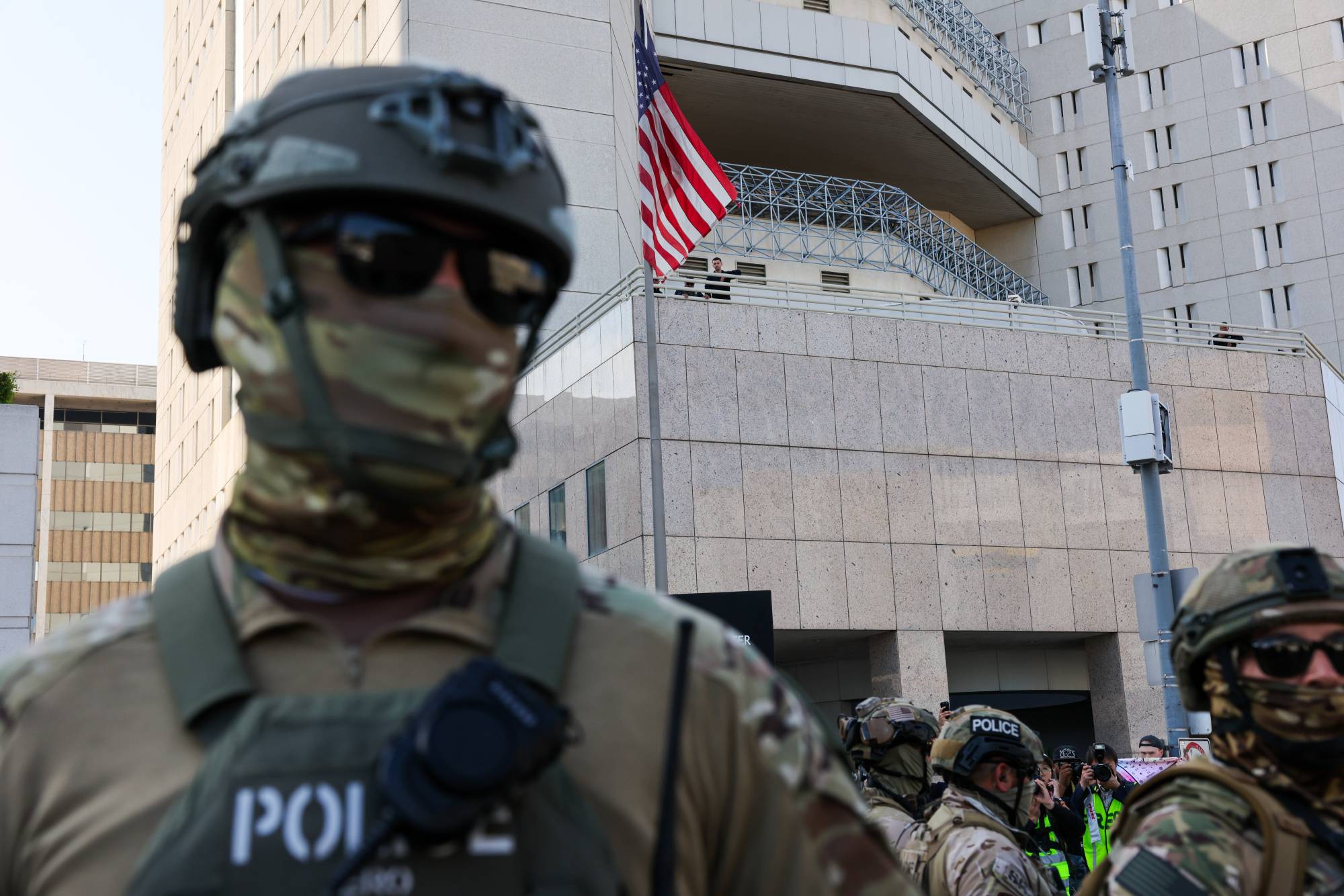
"caption": "Federal agents stand guard outside a federal building and Immigration and Customs Enforcement (ICE) detention center in downtown Los Angeles on June 13, 2025. The San José City Council showed strong support for a new policy that would prohibit federal officers from hiding their identity while working in the city.",
"credit": "Spencer Platt/Getty Images",
"altTag": null,
"description": null,
"imgSizes": {
"medium": {
"file": "https://cdn.kqed.org/wp-content/uploads/sites/10/2025/07/GettyImages-2220045842-2000x1334.jpg",
"width": 2000,
"height": 1334,
"mimeType": "image/jpeg"
},
"large": {
"file": "https://cdn.kqed.org/wp-content/uploads/sites/10/2025/07/GettyImages-2220045842-2000x1334.jpg",
"width": 2000,
"height": 1334,
"mimeType": "image/jpeg"
},
"thumbnail": {
"file": "https://cdn.kqed.org/wp-content/uploads/sites/10/2025/07/GettyImages-2220045842-160x107.jpg",
"width": 160,
"height": 107,
"mimeType": "image/jpeg"
},
"1536x1536": {
"file": "https://cdn.kqed.org/wp-content/uploads/sites/10/2025/07/GettyImages-2220045842-1536x1025.jpg",
"width": 1536,
"height": 1025,
"mimeType": "image/jpeg"
},
"2048x2048": {
"file": "https://cdn.kqed.org/wp-content/uploads/sites/10/2025/07/GettyImages-2220045842-2048x1366.jpg",
"width": 2048,
"height": 1366,
"mimeType": "image/jpeg"
},
"post-thumbnail": {
"file": "https://cdn.kqed.org/wp-content/uploads/sites/10/2025/07/GettyImages-2220045842-672x372.jpg",
"width": 672,
"height": 372,
"mimeType": "image/jpeg"
},
"twentyfourteen-full-width": {
"file": "https://cdn.kqed.org/wp-content/uploads/sites/10/2025/07/GettyImages-2220045842-1038x576.jpg",
"width": 1038,
"height": 576,
"mimeType": "image/jpeg"
},
"full-width": {
"file": "https://cdn.kqed.org/wp-content/uploads/sites/10/2025/07/GettyImages-2220045842-2000x1334.jpg",
"width": 2000,
"height": 1334,
"mimeType": "image/jpeg"
},
"kqedFullSize": {
"file": "https://cdn.kqed.org/wp-content/uploads/sites/10/2025/07/GettyImages-2220045842-scaled-e1752857672682.jpg",
"width": 2000,
"height": 1334
}
},
"isLoading": false,
"fetchFailed": false
},
"news_12058166": {
"type": "attachments",
"id": "news_12058166",
"meta": {
"index": "attachments_1716263798",
"site": "news",
"id": "12058166",
"found": true
},
"title": "President Trump And Pete Hegseth Address U.S. Senior Military Leaders At Quantico",
"publishDate": 1759276159,
"status": "inherit",
"parent": 12058130,
"modified": 1759276199,
"caption": "U.S. President Donald Trump speaks to senior military leaders at Marine Corps Base Quantico on Sept. 30, 2025, in Quantico, Virginia. In an unprecedented gathering, almost 800 generals, admirals and their senior enlisted leaders have been ordered into one location from around the world on short notice. ",
"credit": "Andrew Harnik/Getty Images",
"altTag": null,
"description": null,
"imgSizes": {
"thumbnail": {
"file": "https://cdn.kqed.org/wp-content/uploads/sites/10/2025/09/DonaldTrumpVirginaGetty-160x107.jpg",
"width": 160,
"height": 107,
"mimeType": "image/jpeg"
},
"1536x1536": {
"file": "https://cdn.kqed.org/wp-content/uploads/sites/10/2025/09/DonaldTrumpVirginaGetty-1536x1024.jpg",
"width": 1536,
"height": 1024,
"mimeType": "image/jpeg"
},
"post-thumbnail": {
"file": "https://cdn.kqed.org/wp-content/uploads/sites/10/2025/09/DonaldTrumpVirginaGetty-672x372.jpg",
"width": 672,
"height": 372,
"mimeType": "image/jpeg"
},
"twentyfourteen-full-width": {
"file": "https://cdn.kqed.org/wp-content/uploads/sites/10/2025/09/DonaldTrumpVirginaGetty-1038x576.jpg",
"width": 1038,
"height": 576,
"mimeType": "image/jpeg"
},
"kqedFullSize": {
"file": "https://cdn.kqed.org/wp-content/uploads/sites/10/2025/09/DonaldTrumpVirginaGetty.jpg",
"width": 2000,
"height": 1333
}
},
"isLoading": false,
"fetchFailed": false
},
"news_12057746": {
"type": "attachments",
"id": "news_12057746",
"meta": {
"index": "attachments_1716263798",
"site": "news",
"id": "12057746",
"found": true
},
"title": "President Trump Signs Executive Order At The White House",
"publishDate": 1758907661,
"status": "inherit",
"parent": 12057742,
"modified": 1758917101,
"caption": "A poster of the \"Trump Gold Card\" is seen as President Donald Trump signs an executive order in the Oval Office at the White House on Sept. 19, 2025 in Washington, DC. KQED’s Forum spoke to experts about how H-1B visa holders in the Bay Area are reacting to the latest White House order.",
"credit": "Andrew Harnik/Getty Images",
"altTag": null,
"description": null,
"imgSizes": {
"medium": {
"file": "https://cdn.kqed.org/wp-content/uploads/sites/10/2025/09/GettyImages-2236329361-2000x1333.jpg",
"width": 2000,
"height": 1333,
"mimeType": "image/jpeg"
},
"large": {
"file": "https://cdn.kqed.org/wp-content/uploads/sites/10/2025/09/GettyImages-2236329361-2000x1333.jpg",
"width": 2000,
"height": 1333,
"mimeType": "image/jpeg"
},
"thumbnail": {
"file": "https://cdn.kqed.org/wp-content/uploads/sites/10/2025/09/GettyImages-2236329361-160x107.jpg",
"width": 160,
"height": 107,
"mimeType": "image/jpeg"
},
"1536x1536": {
"file": "https://cdn.kqed.org/wp-content/uploads/sites/10/2025/09/GettyImages-2236329361-1536x1024.jpg",
"width": 1536,
"height": 1024,
"mimeType": "image/jpeg"
},
"2048x2048": {
"file": "https://cdn.kqed.org/wp-content/uploads/sites/10/2025/09/GettyImages-2236329361-2048x1365.jpg",
"width": 2048,
"height": 1365,
"mimeType": "image/jpeg"
},
"post-thumbnail": {
"file": "https://cdn.kqed.org/wp-content/uploads/sites/10/2025/09/GettyImages-2236329361-672x372.jpg",
"width": 672,
"height": 372,
"mimeType": "image/jpeg"
},
"twentyfourteen-full-width": {
"file": "https://cdn.kqed.org/wp-content/uploads/sites/10/2025/09/GettyImages-2236329361-1038x576.jpg",
"width": 1038,
"height": 576,
"mimeType": "image/jpeg"
},
"full-width": {
"file": "https://cdn.kqed.org/wp-content/uploads/sites/10/2025/09/GettyImages-2236329361-2000x1333.jpg",
"width": 2000,
"height": 1333,
"mimeType": "image/jpeg"
},
"kqedFullSize": {
"file": "https://cdn.kqed.org/wp-content/uploads/sites/10/2025/09/GettyImages-2236329361-scaled-e1760568167148.jpg",
"width": 2000,
"height": 1333
}
},
"isLoading": false,
"fetchFailed": false
},
"news_12055077": {
"type": "attachments",
"id": "news_12055077",
"meta": {
"index": "attachments_1716263798",
"site": "news",
"id": "12055077",
"found": true
},
"title": "250905-ADOPTACORNER_00805_TV-KQED",
"publishDate": 1757337325,
"status": "inherit",
"parent": 12055084,
"modified": 1757352537,
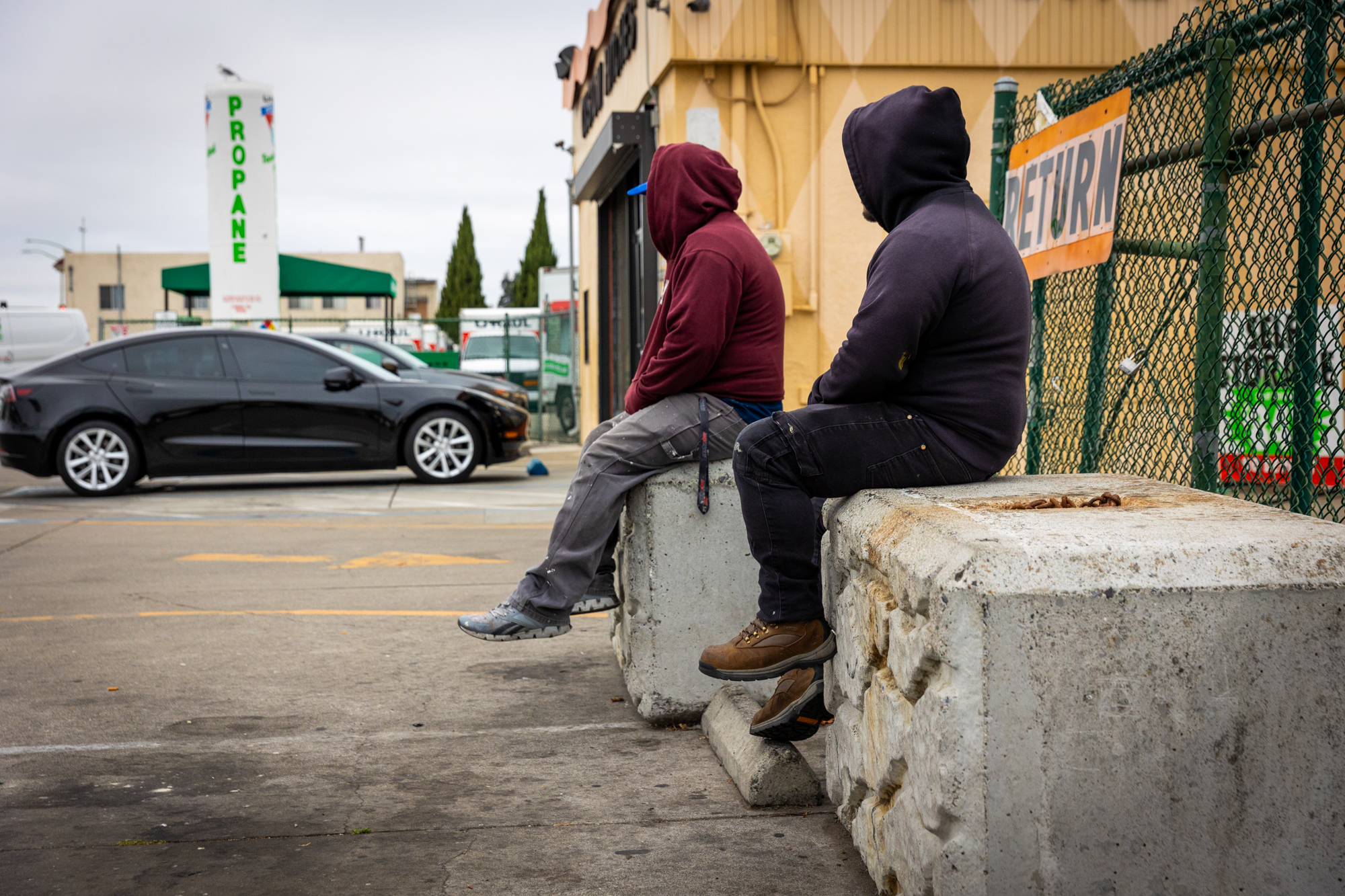
"caption": "Day laborers wait for work on International Boulevard at a U-Haul in Oakland on Sept. 5, 2025.",
"credit": "Tâm Vũ/KQED",
"altTag": null,
"description": null,
"imgSizes": {
"thumbnail": {
"file": "https://cdn.kqed.org/wp-content/uploads/sites/10/2025/09/250905-ADOPTACORNER_00805_TV-KQED-160x107.jpg",
"width": 160,
"height": 107,
"mimeType": "image/jpeg"
},
"1536x1536": {
"file": "https://cdn.kqed.org/wp-content/uploads/sites/10/2025/09/250905-ADOPTACORNER_00805_TV-KQED-1536x1024.jpg",
"width": 1536,
"height": 1024,
"mimeType": "image/jpeg"
},
"post-thumbnail": {
"file": "https://cdn.kqed.org/wp-content/uploads/sites/10/2025/09/250905-ADOPTACORNER_00805_TV-KQED-672x372.jpg",
"width": 672,
"height": 372,
"mimeType": "image/jpeg"
},
"twentyfourteen-full-width": {
"file": "https://cdn.kqed.org/wp-content/uploads/sites/10/2025/09/250905-ADOPTACORNER_00805_TV-KQED-1038x576.jpg",
"width": 1038,
"height": 576,
"mimeType": "image/jpeg"
},
"kqedFullSize": {
"file": "https://cdn.kqed.org/wp-content/uploads/sites/10/2025/09/250905-ADOPTACORNER_00805_TV-KQED.jpg",
"width": 2000,
"height": 1333
}
},
"isLoading": false,
"fetchFailed": false
},
"news_11688236": {
"type": "attachments",
"id": "news_11688236",
"meta": {
"index": "attachments_1716263798",
"site": "news",
"id": "11688236",
"found": true
},
"title": "RS24077_Courthouse closeup-qut",
"publishDate": 1534965497,
"status": "inherit",
"parent": 11688225,
"modified": 1758739783,
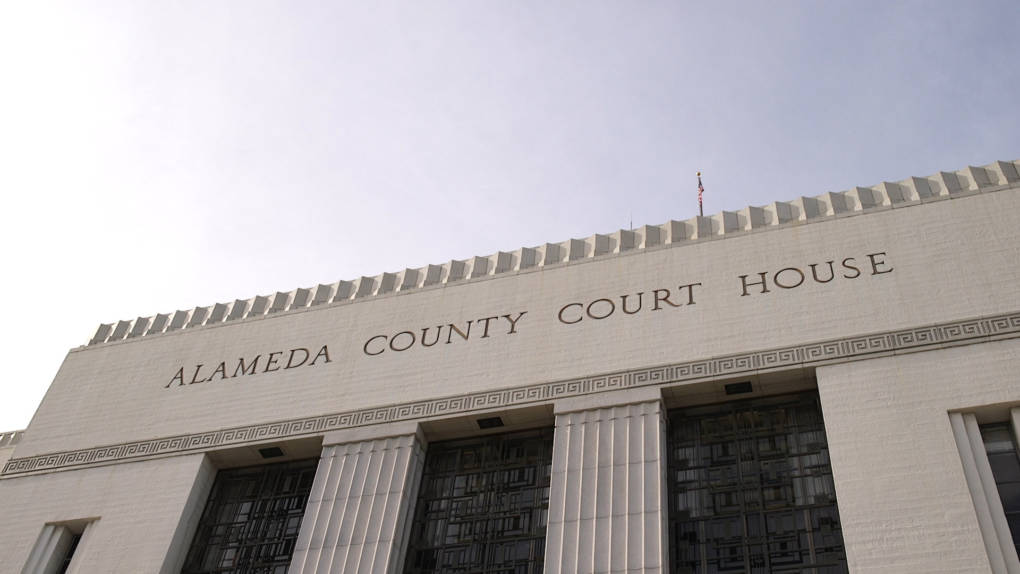
"caption": "Immigration officers detained a man inside an Alameda County courthouse for the first time last week, according to the public defender — a move that would appear to break California law.",
"credit": "Adam Grossberg/KQED",
"altTag": "An image of a courthouse's facade.",
"description": null,
"imgSizes": {
"thumbnail": {
"file": "https://cdn.kqed.org/wp-content/uploads/sites/10/2018/08/RS24077_Courthouse-closeup-qut-160x90.jpg",
"width": 160,
"height": 90,
"mimeType": "image/jpeg"
},
"medium": {
"file": "https://cdn.kqed.org/wp-content/uploads/sites/10/2018/08/RS24077_Courthouse-closeup-qut-800x450.jpg",
"width": 800,
"height": 450,
"mimeType": "image/jpeg"
},
"large": {
"file": "https://cdn.kqed.org/wp-content/uploads/sites/10/2018/08/RS24077_Courthouse-closeup-qut-1020x574.jpg",
"width": 1020,
"height": 574,
"mimeType": "image/jpeg"
},
"complete_open_graph": {
"file": "https://cdn.kqed.org/wp-content/uploads/sites/10/2018/08/RS24077_Courthouse-closeup-qut-1200x675.jpg",
"width": 1200,
"height": 675,
"mimeType": "image/jpeg"
},
"fd-lrg": {
"file": "https://cdn.kqed.org/wp-content/uploads/sites/10/2018/08/RS24077_Courthouse-closeup-qut-1920x1080.jpg",
"width": 1920,
"height": 1080,
"mimeType": "image/jpeg"
},
"fd-med": {
"file": "https://cdn.kqed.org/wp-content/uploads/sites/10/2018/08/RS24077_Courthouse-closeup-qut-1180x664.jpg",
"width": 1180,
"height": 664,
"mimeType": "image/jpeg"
},
"fd-sm": {
"file": "https://cdn.kqed.org/wp-content/uploads/sites/10/2018/08/RS24077_Courthouse-closeup-qut-960x540.jpg",
"width": 960,
"height": 540,
"mimeType": "image/jpeg"
},
"post-thumbnail": {
"file": "https://cdn.kqed.org/wp-content/uploads/sites/10/2018/08/RS24077_Courthouse-closeup-qut-672x372.jpg",
"width": 672,
"height": 372,
"mimeType": "image/jpeg"
},
"twentyfourteen-full-width": {
"file": "https://cdn.kqed.org/wp-content/uploads/sites/10/2018/08/RS24077_Courthouse-closeup-qut-1038x576.jpg",
"width": 1038,
"height": 576,
"mimeType": "image/jpeg"
},
"xxsmall": {
"file": "https://cdn.kqed.org/wp-content/uploads/sites/10/2018/08/RS24077_Courthouse-closeup-qut-240x135.jpg",
"width": 240,
"height": 135,
"mimeType": "image/jpeg"
},
"xsmall": {
"file": "https://cdn.kqed.org/wp-content/uploads/sites/10/2018/08/RS24077_Courthouse-closeup-qut-375x211.jpg",
"width": 375,
"height": 211,
"mimeType": "image/jpeg"
},
"small": {
"file": "https://cdn.kqed.org/wp-content/uploads/sites/10/2018/08/RS24077_Courthouse-closeup-qut-520x293.jpg",
"width": 520,
"height": 293,
"mimeType": "image/jpeg"
},
"xlarge": {
"file": "https://cdn.kqed.org/wp-content/uploads/sites/10/2018/08/RS24077_Courthouse-closeup-qut-1180x664.jpg",
"width": 1180,
"height": 664,
"mimeType": "image/jpeg"
},
"full-width": {
"file": "https://cdn.kqed.org/wp-content/uploads/sites/10/2018/08/RS24077_Courthouse-closeup-qut-1920x1080.jpg",
"width": 1920,
"height": 1080,
"mimeType": "image/jpeg"
},
"guest-author-32": {
"file": "https://cdn.kqed.org/wp-content/uploads/sites/10/2018/08/RS24077_Courthouse-closeup-qut-32x32.jpg",
"width": 32,
"height": 32,
"mimeType": "image/jpeg"
},
"guest-author-50": {
"file": "https://cdn.kqed.org/wp-content/uploads/sites/10/2018/08/RS24077_Courthouse-closeup-qut-50x50.jpg",
"width": 50,
"height": 50,
"mimeType": "image/jpeg"
},
"guest-author-64": {
"file": "https://cdn.kqed.org/wp-content/uploads/sites/10/2018/08/RS24077_Courthouse-closeup-qut-64x64.jpg",
"width": 64,
"height": 64,
"mimeType": "image/jpeg"
},
"guest-author-96": {
"file": "https://cdn.kqed.org/wp-content/uploads/sites/10/2018/08/RS24077_Courthouse-closeup-qut-96x96.jpg",
"width": 96,
"height": 96,
"mimeType": "image/jpeg"
},
"guest-author-128": {
"file": "https://cdn.kqed.org/wp-content/uploads/sites/10/2018/08/RS24077_Courthouse-closeup-qut-128x128.jpg",
"width": 128,
"height": 128,
"mimeType": "image/jpeg"
},
"detail": {
"file": "https://cdn.kqed.org/wp-content/uploads/sites/10/2018/08/RS24077_Courthouse-closeup-qut-150x150.jpg",
"width": 150,
"height": 150,
"mimeType": "image/jpeg"
},
"kqedFullSize": {
"file": "https://cdn.kqed.org/wp-content/uploads/sites/10/2018/08/RS24077_Courthouse-closeup-qut.jpg",
"width": 1920,
"height": 1080
}
},
"isLoading": false,
"fetchFailed": false
},
"news_12057283": {
"type": "attachments",
"id": "news_12057283",
"meta": {
"index": "attachments_1716263798",
"site": "news",
"id": "12057283",
"found": true
},
"title": "calmatters_091825_Fresno-Courthouse_LV_10",
"publishDate": 1758654977,
"status": "inherit",
"parent": 12057278,
"modified": 1758655019,
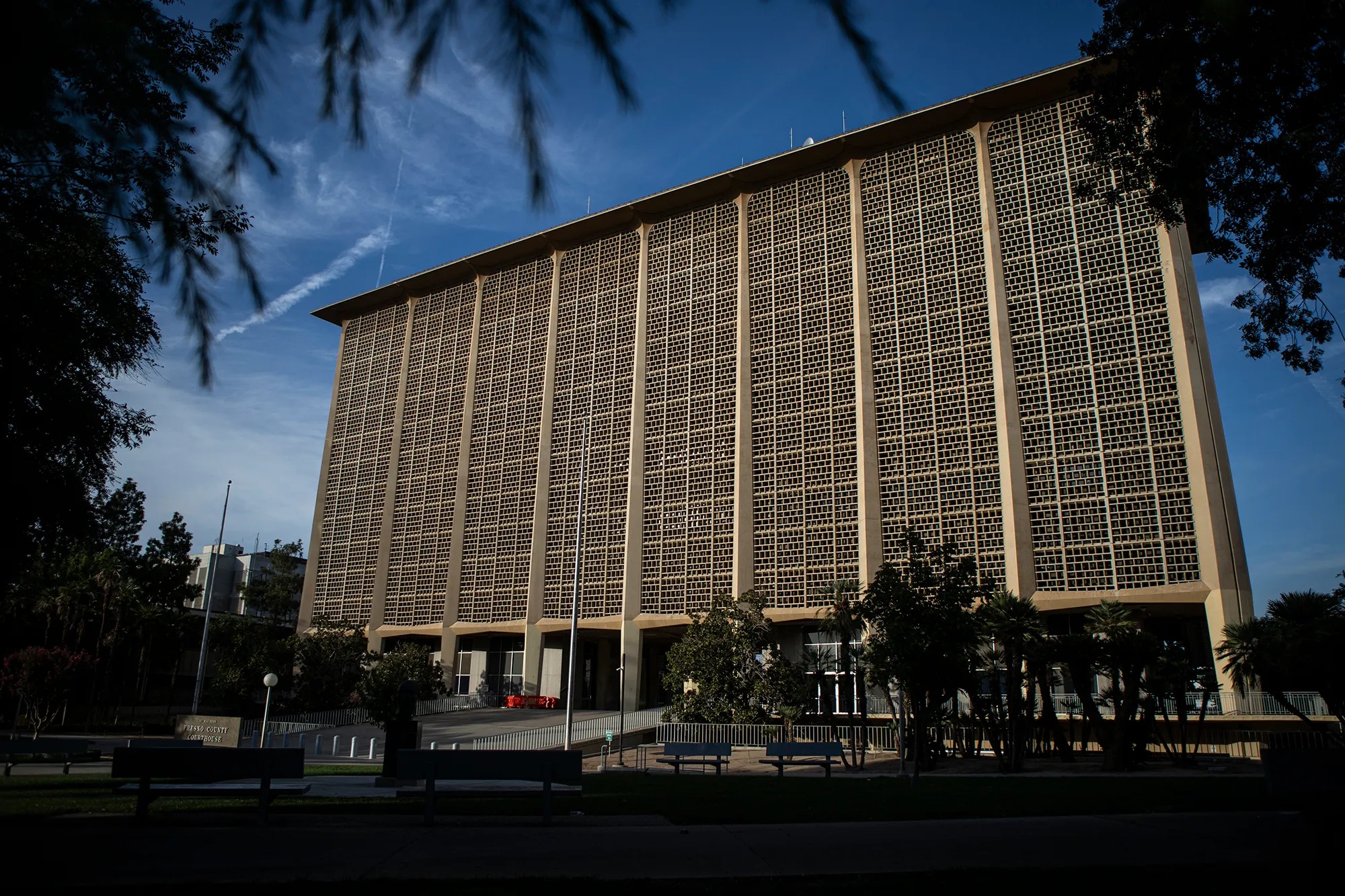
"caption": "The Fresno County Courthouse on Sept. 17, 2025.",
"credit": "Larry Valenzuela, CalMatters/CatchLight Local",
"altTag": null,
"description": null,
"imgSizes": {
"thumbnail": {
"file": "https://cdn.kqed.org/wp-content/uploads/sites/10/2025/09/calmatters_091825_Fresno-Courthouse_LV_10-160x107.jpg",
"width": 160,
"height": 107,
"mimeType": "image/jpeg"
},
"1536x1536": {
"file": "https://cdn.kqed.org/wp-content/uploads/sites/10/2025/09/calmatters_091825_Fresno-Courthouse_LV_10-1536x1024.jpg",
"width": 1536,
"height": 1024,
"mimeType": "image/jpeg"
},
"post-thumbnail": {
"file": "https://cdn.kqed.org/wp-content/uploads/sites/10/2025/09/calmatters_091825_Fresno-Courthouse_LV_10-672x372.jpg",
"width": 672,
"height": 372,
"mimeType": "image/jpeg"
},
"twentyfourteen-full-width": {
"file": "https://cdn.kqed.org/wp-content/uploads/sites/10/2025/09/calmatters_091825_Fresno-Courthouse_LV_10-1038x576.jpg",
"width": 1038,
"height": 576,
"mimeType": "image/jpeg"
},
"kqedFullSize": {
"file": "https://cdn.kqed.org/wp-content/uploads/sites/10/2025/09/calmatters_091825_Fresno-Courthouse_LV_10.jpg",
"width": 2000,
"height": 1333
}
},
"isLoading": false,
"fetchFailed": false
},
"news_12057112": {
"type": "attachments",
"id": "news_12057112",
"meta": {
"index": "attachments_1716263798",
"site": "news",
"id": "12057112",
"found": true
},
"title": "Background Checks",
"publishDate": 1758571460,
"status": "inherit",
"parent": 12057093,
"modified": 1758662735,
"caption": "North Bay Rep. Mike Thompson participates in a news conference outside the Capitol on Feb. 1, 2023. ",
"credit": "Bill Clark/CQ-Roll Call, Inc via Getty Images",
"altTag": null,
"description": null,
"imgSizes": {
"thumbnail": {
"file": "https://cdn.kqed.org/wp-content/uploads/sites/10/2025/09/MikeThompson_ICE-1-160x107.jpg",
"width": 160,
"height": 107,
"mimeType": "image/jpeg"
},
"1536x1536": {
"file": "https://cdn.kqed.org/wp-content/uploads/sites/10/2025/09/MikeThompson_ICE-1-1536x1024.jpg",
"width": 1536,
"height": 1024,
"mimeType": "image/jpeg"
},
"post-thumbnail": {
"file": "https://cdn.kqed.org/wp-content/uploads/sites/10/2025/09/MikeThompson_ICE-1-672x372.jpg",
"width": 672,
"height": 372,
"mimeType": "image/jpeg"
},
"twentyfourteen-full-width": {
"file": "https://cdn.kqed.org/wp-content/uploads/sites/10/2025/09/MikeThompson_ICE-1-1038x576.jpg",
"width": 1038,
"height": 576,
"mimeType": "image/jpeg"
},
"kqedFullSize": {
"file": "https://cdn.kqed.org/wp-content/uploads/sites/10/2025/09/MikeThompson_ICE-1.jpg",
"width": 1998,
"height": 1332
}
},
"isLoading": false,
"fetchFailed": false
},
"news_12056974": {
"type": "attachments",
"id": "news_12056974",
"meta": {
"index": "attachments_1716263798",
"site": "news",
"id": "12056974",
"found": true
},
"title": "071625_Newsom-ICE-Raids_CM_36 copy",
"publishDate": 1758399342,
"status": "inherit",
"parent": 12056972,
"modified": 1758399371,
"caption": "Gov. Gavin Newsom speaks to the media at Downey Memorial Christian Church after visiting Los Angeles communities affected by immigration raids, in Downey on July 16, 2025. ",
"credit": "Ted Soqui for CalMatters",
"altTag": null,
"description": null,
"imgSizes": {
"thumbnail": {
"file": "https://cdn.kqed.org/wp-content/uploads/sites/10/2025/09/071625_Newsom-ICE-Raids_CM_36-copy-160x107.jpg",
"width": 160,
"height": 107,
"mimeType": "image/jpeg"
},
"1536x1536": {
"file": "https://cdn.kqed.org/wp-content/uploads/sites/10/2025/09/071625_Newsom-ICE-Raids_CM_36-copy-1536x1025.jpg",
"width": 1536,
"height": 1025,
"mimeType": "image/jpeg"
},
"post-thumbnail": {
"file": "https://cdn.kqed.org/wp-content/uploads/sites/10/2025/09/071625_Newsom-ICE-Raids_CM_36-copy-672x372.jpg",
"width": 672,
"height": 372,
"mimeType": "image/jpeg"
},
"twentyfourteen-full-width": {
"file": "https://cdn.kqed.org/wp-content/uploads/sites/10/2025/09/071625_Newsom-ICE-Raids_CM_36-copy-1038x576.jpg",
"width": 1038,
"height": 576,
"mimeType": "image/jpeg"
},
"kqedFullSize": {
"file": "https://cdn.kqed.org/wp-content/uploads/sites/10/2025/09/071625_Newsom-ICE-Raids_CM_36-copy.jpg",
"width": 2000,
"height": 1334
}
},
"isLoading": false,
"fetchFailed": false
},
"news_12056765": {
"type": "attachments",
"id": "news_12056765",
"meta": {
"index": "attachments_1716263798",
"site": "news",
"id": "12056765",
"found": true
},
"title": "250715-ImmigrationCourtProtests-16-BL_qed",
"publishDate": 1758299414,
"status": "inherit",
"parent": 12056762,
"modified": 1758299424,
"caption": "Supporters rally outside the U.S. District Court in San Francisco on July 15, 2025, calling on ICE to release Guillermo Medina Reyes ahead of his preliminary injunction hearing.",
"credit": "Beth LaBerge/KQED",
"altTag": null,
"description": null,
"imgSizes": {
"thumbnail": {
"file": "https://cdn.kqed.org/wp-content/uploads/sites/10/2025/09/250715-ImmigrationCourtProtests-16-BL_qed-160x107.jpg",
"width": 160,
"height": 107,
"mimeType": "image/jpeg"
},
"1536x1536": {
"file": "https://cdn.kqed.org/wp-content/uploads/sites/10/2025/09/250715-ImmigrationCourtProtests-16-BL_qed-1536x1024.jpg",
"width": 1536,
"height": 1024,
"mimeType": "image/jpeg"
},
"post-thumbnail": {
"file": "https://cdn.kqed.org/wp-content/uploads/sites/10/2025/09/250715-ImmigrationCourtProtests-16-BL_qed-672x372.jpg",
"width": 672,
"height": 372,
"mimeType": "image/jpeg"
},
"twentyfourteen-full-width": {
"file": "https://cdn.kqed.org/wp-content/uploads/sites/10/2025/09/250715-ImmigrationCourtProtests-16-BL_qed-1038x576.jpg",
"width": 1038,
"height": 576,
"mimeType": "image/jpeg"
},
"kqedFullSize": {
"file": "https://cdn.kqed.org/wp-content/uploads/sites/10/2025/09/250715-ImmigrationCourtProtests-16-BL_qed.jpg",
"width": 2000,
"height": 1333
}
},
"isLoading": false,
"fetchFailed": false
},
"news_12037937": {
"type": "attachments",
"id": "news_12037937",
"meta": {
"index": "attachments_1716263798",
"site": "news",
"id": "12037937",
"found": true
},
"title": "A US Air Force C-5 Galaxy and a C-17 Glo",
"publishDate": 1745868783,
"status": "inherit",
"parent": 12037889,
"modified": 1745880938,
"caption": "A U.S. Air Force C-5 Galaxy and a C-17 Globemaster sit on the tarmac at Travis Air Force Base in Fairfield, California, on July 17, 2008. ",
"credit": "Saul Loeb/AFP via Getty Images",
"altTag": null,
"description": null,
"imgSizes": {
"medium": {
"file": "https://cdn.kqed.org/wp-content/uploads/sites/10/2025/04/TravisAirForceBaseGetty3-800x473.jpg",
"width": 800,
"height": 473,
"mimeType": "image/jpeg"
},
"large": {
"file": "https://cdn.kqed.org/wp-content/uploads/sites/10/2025/04/TravisAirForceBaseGetty3-1020x603.jpg",
"width": 1020,
"height": 603,
"mimeType": "image/jpeg"
},
"thumbnail": {
"file": "https://cdn.kqed.org/wp-content/uploads/sites/10/2025/04/TravisAirForceBaseGetty3-160x95.jpg",
"width": 160,
"height": 95,
"mimeType": "image/jpeg"
},
"1536x1536": {
"file": "https://cdn.kqed.org/wp-content/uploads/sites/10/2025/04/TravisAirForceBaseGetty3-1536x908.jpg",
"width": 1536,
"height": 908,
"mimeType": "image/jpeg"
},
"post-thumbnail": {
"file": "https://cdn.kqed.org/wp-content/uploads/sites/10/2025/04/TravisAirForceBaseGetty3-672x372.jpg",
"width": 672,
"height": 372,
"mimeType": "image/jpeg"
},
"twentyfourteen-full-width": {
"file": "https://cdn.kqed.org/wp-content/uploads/sites/10/2025/04/TravisAirForceBaseGetty3-1038x576.jpg",
"width": 1038,
"height": 576,
"mimeType": "image/jpeg"
},
"full-width": {
"file": "https://cdn.kqed.org/wp-content/uploads/sites/10/2025/04/TravisAirForceBaseGetty3-1920x1135.jpg",
"width": 1920,
"height": 1135,
"mimeType": "image/jpeg"
},
"kqedFullSize": {
"file": "https://cdn.kqed.org/wp-content/uploads/sites/10/2025/04/TravisAirForceBaseGetty3.jpg",
"width": 2000,
"height": 1182
}
},
"isLoading": false,
"fetchFailed": false
},
"news_12055636": {
"type": "attachments",
"id": "news_12055636",
"meta": {
"index": "attachments_1716263798",
"site": "news",
"id": "12055636",
"found": true
},
"title": "ICE Protest",
"publishDate": 1757617766,
"status": "inherit",
"parent": 12055606,
"modified": 1757617873,
"caption": "The U.S. Immigration and Customs Enforcement (ICE) headquarters on April 14, 2025, in Washington, D.C. ",
"credit": "Pete Kiehart/The Washington Post via Getty Images",
"altTag": null,
"description": null,
"imgSizes": {
"thumbnail": {
"file": "https://cdn.kqed.org/wp-content/uploads/sites/10/2025/09/USImmigrationCustomsEnforcementHQGetty-160x107.jpg",
"width": 160,
"height": 107,
"mimeType": "image/jpeg"
},
"1536x1536": {
"file": "https://cdn.kqed.org/wp-content/uploads/sites/10/2025/09/USImmigrationCustomsEnforcementHQGetty-1536x1024.jpg",
"width": 1536,
"height": 1024,
"mimeType": "image/jpeg"
},
"post-thumbnail": {
"file": "https://cdn.kqed.org/wp-content/uploads/sites/10/2025/09/USImmigrationCustomsEnforcementHQGetty-672x372.jpg",
"width": 672,
"height": 372,
"mimeType": "image/jpeg"
},
"twentyfourteen-full-width": {
"file": "https://cdn.kqed.org/wp-content/uploads/sites/10/2025/09/USImmigrationCustomsEnforcementHQGetty-1038x576.jpg",
"width": 1038,
"height": 576,
"mimeType": "image/jpeg"
},
"kqedFullSize": {
"file": "https://cdn.kqed.org/wp-content/uploads/sites/10/2025/09/USImmigrationCustomsEnforcementHQGetty.jpg",
"width": 2000,
"height": 1333
}
},
"isLoading": false,
"fetchFailed": false
},
"news_12055530": {
"type": "attachments",
"id": "news_12055530",
"meta": {
"index": "attachments_1716263798",
"site": "news",
"id": "12055530",
"found": true
},
"title": "ImmigrationCoverageCM1",
"publishDate": 1757546413,
"status": "inherit",
"parent": 12055528,
"modified": 1757546450,
"caption": "Tebh Altawil, teacher apprentice at the Ralph Hawley Head Start Center at the YMCA of the East Bay, blows bubbles with her infant and toddler class during their outdoor time in Emeryville on Dec. 9, 2024. ",
"credit": "Florence Middleton/CalMatters",
"altTag": null,
"description": null,
"imgSizes": {
"thumbnail": {
"file": "https://cdn.kqed.org/wp-content/uploads/sites/10/2025/09/ImmigrationCoverageCM1-160x107.jpg",
"width": 160,
"height": 107,
"mimeType": "image/jpeg"
},
"1536x1536": {
"file": "https://cdn.kqed.org/wp-content/uploads/sites/10/2025/09/ImmigrationCoverageCM1-1536x1024.jpg",
"width": 1536,
"height": 1024,
"mimeType": "image/jpeg"
},
"post-thumbnail": {
"file": "https://cdn.kqed.org/wp-content/uploads/sites/10/2025/09/ImmigrationCoverageCM1-672x372.jpg",
"width": 672,
"height": 372,
"mimeType": "image/jpeg"
},
"twentyfourteen-full-width": {
"file": "https://cdn.kqed.org/wp-content/uploads/sites/10/2025/09/ImmigrationCoverageCM1-1038x576.jpg",
"width": 1038,
"height": 576,
"mimeType": "image/jpeg"
},
"kqedFullSize": {
"file": "https://cdn.kqed.org/wp-content/uploads/sites/10/2025/09/ImmigrationCoverageCM1.jpg",
"width": 2000,
"height": 1333
}
},
"isLoading": false,
"fetchFailed": false
}
},
"audioPlayerReducer": {
"postId": "stream_live",
"isPaused": true,
"isPlaying": false,
"pfsActive": false,
"pledgeModalIsOpen": true,
"playerDrawerIsOpen": false,
"liveAudioPlayStartedAt": 0,
"liveAudioPlayContext": ""
},
"authorsReducer": {
"byline_news_12057278": {
"type": "authors",
"id": "byline_news_12057278",
"meta": {
"override": true
},
"slug": "byline_news_12057278",
"name": "Nigel Duara, CalMatters",
"isLoading": false
},
"byline_news_12056972": {
"type": "authors",
"id": "byline_news_12056972",
"meta": {
"override": true
},
"slug": "byline_news_12056972",
"name": "Cayla Mihalovich and Jeanne Kuang, CalMatters",
"isLoading": false
},
"byline_news_12055528": {
"type": "authors",
"id": "byline_news_12055528",
"meta": {
"override": true
},
"slug": "byline_news_12055528",
"name": "Adam Echelman, CalMatters",
"isLoading": false
},
"tychehendricks": {
"type": "authors",
"id": "259",
"meta": {
"index": "authors_1716337520",
"id": "259",
"found": true
},
"name": "Tyche Hendricks",
"firstName": "Tyche",
"lastName": "Hendricks",
"slug": "tychehendricks",
"email": "thendricks@kqed.org",
"display_author_email": true,
"staff_mastheads": [
"news"
],
"title": "KQED Senior Editor, Immigration",
"bio": "\u003cspan style=\"font-weight: 400;\">Tyche Hendricks is KQED’s senior editor for immigration, leading coverage of the policy and politics that affect California’s immigrant communities. Her work for KQED’s radio and online audiences is also carried on NPR and other national outlets. She has been recognized with awards from the Radio and Television News Directors Association, the Society for Professional Journalists; the Education Writers Association; the Best of the West and the National Federation of Community Broadcasters. Before joining KQED in 2010, Tyche spent more than a dozen years as a newspaper reporter, notably at the \u003c/span>\u003ci>\u003cspan style=\"font-weight: 400;\">San Francisco Chronicle\u003c/span>\u003c/i>\u003cspan style=\"font-weight: 400;\">. At different times she has covered criminal justice, government and politics and urban planning. Tyche has taught in the MFA Creative Writing program at the University of San Francisco and at UC Berkeley’s Graduate School of Journalism, where she was co-director of a national immigration symposium for professional journalists. She is the author of \u003c/span>\u003ci>\u003cspan style=\"font-weight: 400;\">The Wind Doesn't Need a Passport: Stories from the U.S.-Mexico Borderlands\u003c/span>\u003c/i>\u003cspan style=\"font-weight: 400;\"> (University of California Press). \u003c/span>",
"avatar": "https://secure.gravatar.com/avatar/b8ee458e2731c2d43df86882ce17267e?s=600&d=blank&r=g",
"twitter": "tychehendricks",
"facebook": null,
"instagram": null,
"linkedin": null,
"sites": [
{
"site": "news",
"roles": [
"editor"
]
},
{
"site": "stateofhealth",
"roles": [
"editor"
]
}
],
"headData": {
"title": "Tyche Hendricks | KQED",
"description": "KQED Senior Editor, Immigration",
"ogImgSrc": "https://secure.gravatar.com/avatar/b8ee458e2731c2d43df86882ce17267e?s=600&d=blank&r=g",
"twImgSrc": "https://secure.gravatar.com/avatar/b8ee458e2731c2d43df86882ce17267e?s=600&d=blank&r=g"
},
"isLoading": false,
"link": "/author/tychehendricks"
},
"amadrigal": {
"type": "authors",
"id": "11757",
"meta": {
"index": "authors_1716337520",
"id": "11757",
"found": true
},
"name": "Alexis Madrigal",
"firstName": "Alexis",
"lastName": "Madrigal",
"slug": "amadrigal",
"email": "amadrigal@kqed.org",
"display_author_email": true,
"staff_mastheads": [],
"title": "Co-Host Forum",
"bio": "Alexis Madrigal is the co-host of Forum. He is also a contributing writer at \u003cem>The Atlantic \u003c/em>and the co-founder of the COVID Tracking Project. He's the creator of the podcast, \u003cem>Containers\u003c/em>, and has been a staff writer at \u003cem>Wired. \u003c/em>He was a visiting scholar at UC Berkeley's Information School, and is working on a book about Oakland and the Bay Area's revolutionary ideas.",
"avatar": "https://secure.gravatar.com/avatar/ffeee1fe99a3e31957381f377ca63502bdcc0c3dbccaaa701e579a10aa0c5e1f?s=600&d=blank&r=g",
"twitter": "alexismadrigal",
"bluesky": null,
"facebook": null,
"instagram": null,
"linkedin": null,
"sites": [
{
"site": "arts",
"roles": [
"editor"
]
},
{
"site": "news",
"roles": [
"editor"
]
},
{
"site": "forum",
"roles": [
"editor"
]
}
],
"headData": {
"title": "Alexis Madrigal | KQED",
"description": "Co-Host Forum",
"ogImgSrc": "https://secure.gravatar.com/avatar/ffeee1fe99a3e31957381f377ca63502bdcc0c3dbccaaa701e579a10aa0c5e1f?s=600&d=blank&r=g",
"twImgSrc": "https://secure.gravatar.com/avatar/ffeee1fe99a3e31957381f377ca63502bdcc0c3dbccaaa701e579a10aa0c5e1f?s=600&d=blank&r=g"
},
"isLoading": false,
"link": "/author/amadrigal"
},
"sjohnson": {
"type": "authors",
"id": "11840",
"meta": {
"index": "authors_1716337520",
"id": "11840",
"found": true
},
"name": "Sydney Johnson",
"firstName": "Sydney",
"lastName": "Johnson",
"slug": "sjohnson",
"email": "sjohnson@kqed.org",
"display_author_email": false,
"staff_mastheads": [
"news"
],
"title": "KQED Reporter",
"bio": "Sydney Johnson is a general assignment reporter at KQED. She previously reported on public health and city government at the San Francisco Examiner, and before that, she covered statewide education policy for EdSource. Her reporting has won multiple local, state and national awards. Sydney is a graduate of the University of California, Berkeley and lives in San Francisco.",
"avatar": "https://secure.gravatar.com/avatar/97855f2719b72ad6190b7c535fe642c8?s=600&d=blank&r=g",
"twitter": "sydneyfjohnson",
"facebook": null,
"instagram": null,
"linkedin": null,
"sites": [
{
"site": "news",
"roles": [
"editor"
]
}
],
"headData": {
"title": "Sydney Johnson | KQED",
"description": "KQED Reporter",
"ogImgSrc": "https://secure.gravatar.com/avatar/97855f2719b72ad6190b7c535fe642c8?s=600&d=blank&r=g",
"twImgSrc": "https://secure.gravatar.com/avatar/97855f2719b72ad6190b7c535fe642c8?s=600&d=blank&r=g"
},
"isLoading": false,
"link": "/author/sjohnson"
},
"nkhan": {
"type": "authors",
"id": "11867",
"meta": {
"index": "authors_1716337520",
"id": "11867",
"found": true
},
"name": "Nisa Khan",
"firstName": "Nisa",
"lastName": "Khan",
"slug": "nkhan",
"email": "nkhan@kqed.org",
"display_author_email": false,
"staff_mastheads": [],
"title": "KQED Contributor",
"bio": "Nisa Khan is a reporter for KQED's Audience News Desk. She was formerly a data reporter at Michigan Radio. She earned a Bachelor of Science in Information from the University of Michigan and a Master of Arts in Communication from Stanford University.",
"avatar": "https://secure.gravatar.com/avatar/8720459eef081ff64582b3506b124d58523e80e120704a0cbd9892533c914991?s=600&d=blank&r=g",
"twitter": "mnisakhan",
"bluesky": null,
"facebook": null,
"instagram": null,
"linkedin": null,
"sites": [
{
"site": "arts",
"roles": [
"editor"
]
},
{
"site": "news",
"roles": [
"editor"
]
},
{
"site": "science",
"roles": [
"editor",
"author"
]
},
{
"site": "forum",
"roles": [
"editor"
]
},
{
"site": "liveblog",
"roles": [
"contributor"
]
}
],
"headData": {
"title": "Nisa Khan | KQED",
"description": "KQED Contributor",
"ogImgSrc": "https://secure.gravatar.com/avatar/8720459eef081ff64582b3506b124d58523e80e120704a0cbd9892533c914991?s=600&d=blank&r=g",
"twImgSrc": "https://secure.gravatar.com/avatar/8720459eef081ff64582b3506b124d58523e80e120704a0cbd9892533c914991?s=600&d=blank&r=g"
},
"isLoading": false,
"link": "/author/nkhan"
},
"jgeha": {
"type": "authors",
"id": "11906",
"meta": {
"index": "authors_1716337520",
"id": "11906",
"found": true
},
"name": "Joseph Geha",
"firstName": "Joseph",
"lastName": "Geha",
"slug": "jgeha",
"email": "jgeha@kqed.org",
"display_author_email": false,
"staff_mastheads": [
"news",
"science"
],
"title": "KQED Contributor",
"bio": null,
"avatar": "https://secure.gravatar.com/avatar/ea84d2b6dd93d6369d453edf19dd583f117cd1759d2d9c9c92f9de77017354fe?s=600&d=blank&r=g",
"twitter": null,
"bluesky": null,
"facebook": null,
"instagram": null,
"linkedin": null,
"sites": [
{
"site": "news",
"roles": [
"editor"
]
},
{
"site": "liveblog",
"roles": [
"author"
]
}
],
"headData": {
"title": "Joseph Geha | KQED",
"description": "KQED Contributor",
"ogImgSrc": "https://secure.gravatar.com/avatar/ea84d2b6dd93d6369d453edf19dd583f117cd1759d2d9c9c92f9de77017354fe?s=600&d=blank&r=g",
"twImgSrc": "https://secure.gravatar.com/avatar/ea84d2b6dd93d6369d453edf19dd583f117cd1759d2d9c9c92f9de77017354fe?s=600&d=blank&r=g"
},
"isLoading": false,
"link": "/author/jgeha"
},
"kdebenedetti": {
"type": "authors",
"id": "11913",
"meta": {
"index": "authors_1716337520",
"id": "11913",
"found": true
},
"name": "Katie DeBenedetti",
"firstName": "Katie",
"lastName": "DeBenedetti",
"slug": "kdebenedetti",
"email": "kdebenedetti@kqed.org",
"display_author_email": false,
"staff_mastheads": [
"news",
"science"
],
"title": "KQED Contributor",
"bio": "Katie DeBenedetti is a digital reporter covering daily news for the Express Desk. Prior to joining KQED as a culture reporting intern in January 2024, she covered education and city government for the Napa Valley Register.",
"avatar": "https://secure.gravatar.com/avatar/6e31073cb8f7e4214ab03f42771d0f45?s=600&d=blank&r=g",
"twitter": null,
"facebook": null,
"instagram": null,
"linkedin": null,
"sites": [
{
"site": "news",
"roles": [
"author"
]
},
{
"site": "science",
"roles": [
"author"
]
},
{
"site": "liveblog",
"roles": [
"author"
]
}
],
"headData": {
"title": "Katie DeBenedetti | KQED",
"description": "KQED Contributor",
"ogImgSrc": "https://secure.gravatar.com/avatar/6e31073cb8f7e4214ab03f42771d0f45?s=600&d=blank&r=g",
"twImgSrc": "https://secure.gravatar.com/avatar/6e31073cb8f7e4214ab03f42771d0f45?s=600&d=blank&r=g"
},
"isLoading": false,
"link": "/author/kdebenedetti"
}
},
"pagesReducer": {
"news_category_immigration": {
"type": "terms",
"id": "news_1169",
"meta": {
"index": "terms_1716263798",
"site": "news",
"id": "1169",
"score": 10.909731
},
"featImg": null,
"name": "Immigration",
"description": null,
"taxonomy": "category",
"headData": {
"twImgId": null,
"twTitle": null,
"ogTitle": null,
"ogImgId": null,
"twDescription": null,
"description": null,
"title": "Immigration Archives | KQED News",
"ogDescription": null
},
"ttid": 1180,
"slug": "immigration",
"isLoading": false,
"title": "Immigration",
"pageMeta": {
"site": "news",
"WpPageTemplate": "page-topic-editorial",
"currentPage": 20
},
"blocks": [
{
"blockName": "kqed/post-list",
"attrs": {
"layout": "cardArticle2",
"query": "posts/news?category=immigration",
"seeMore": false,
"paginated": true,
"page": 20
}
},
{
"blockName": "kqed/ad"
}
]
}
},
"pfsSessionReducer": {},
"postsReducer": {
"stream_live": {
"type": "live",
"id": "stream_live",
"audioUrl": "https://streams.kqed.org/kqedradio",
"title": "Live Stream",
"excerpt": "Live Stream information currently unavailable.",
"link": "/radio",
"featImg": "",
"label": {
"name": "KQED Live",
"link": "/"
}
},
"stream_kqedNewscast": {
"type": "posts",
"id": "stream_kqedNewscast",
"audioUrl": "https://www.kqed.org/.stream/anon/radio/RDnews/newscast.mp3?_=1",
"title": "KQED Newscast",
"featImg": "",
"label": {
"name": "88.5 FM",
"link": "/"
}
},
"news_12058155": {
"type": "posts",
"id": "news_12058155",
"meta": {
"index": "posts_1716263798",
"site": "news",
"id": "12058155",
"score": null,
"sort": [
1759337822000
]
},
"guestAuthors": [],
"slug": "san-jose-city-council-supports-ice-mask-ban-after-plainclothes-arrest",
"title": "San José City Council Supports ICE Mask Ban After Plainclothes Arrest",
"publishDate": 1759337822,
"format": "standard",
"headTitle": "San José City Council Supports ICE Mask Ban After Plainclothes Arrest | KQED",
"labelTerm": {
"site": "news"
},
"content": "\u003cp>The San José City Council advanced a policy that would make it unlawful for federal immigration officers to \u003ca href=\"https://www.kqed.org/news/12054798/san-jose-joins-the-growing-call-to-unmask-ice-agents\">conceal their identities while working in the city\u003c/a>, moving toward enacting it as law and teeing up a potential legal showdown with the Trump administration.\u003c/p>\n\u003cp>In a unanimous vote on Tuesday, the council directed the city attorney to draft an ordinance that would bar all law enforcement officers, including federal agents, from “wearing any mask or personal disguise” while on duty within San José’s borders, with limited exceptions. Mayor Matt Mahan was absent.\u003c/p>\n\u003cp>[ad fullwidth]\u003c/p>\n\u003cp>The ordinance would also require that all law enforcement officers “wear visible identification and clear agency affiliation while interacting with the public” in the city.\u003c/p>\n\u003cp>The city attorney is expected to return to the council with the draft within 60 days.\u003c/p>\n\u003cp>“These protections are not just about procedure. They are about dignity, fairness and public trust,” District 5 Councilmember Peter Ortiz, who has spearheaded the proposal since introducing it earlier this month, said during the meeting.\u003c/p>\n\u003cfigure id=\"attachment_12057528\" class=\"wp-caption aligncenter\" style=\"max-width: 2000px\">\u003ca href=\"https://cdn.kqed.org/wp-content/uploads/sites/10/2025/09/250924-SJICE-JG-3_qed.jpg\">\u003cimg loading=\"lazy\" decoding=\"async\" class=\"size-full wp-image-12057528\" src=\"https://cdn.kqed.org/wp-content/uploads/sites/10/2025/09/250924-SJICE-JG-3_qed.jpg\" alt=\"\" width=\"2000\" height=\"1333\" srcset=\"https://cdn.kqed.org/wp-content/uploads/sites/10/2025/09/250924-SJICE-JG-3_qed.jpg 2000w, https://cdn.kqed.org/wp-content/uploads/sites/10/2025/09/250924-SJICE-JG-3_qed-160x107.jpg 160w, https://cdn.kqed.org/wp-content/uploads/sites/10/2025/09/250924-SJICE-JG-3_qed-1536x1024.jpg 1536w\" sizes=\"auto, (max-width: 2000px) 100vw, 2000px\">\u003c/a>\u003cfigcaption class=\"wp-caption-text\">San José District 5 City Councilmember Peter Ortiz speaks during a Sept. 24, 2025, press conference about an immigration arrest at a local nonprofit.\u003c/figcaption>\u003c/figure>\n\u003cp>The vote comes amid months of escalating immigration enforcement tactics in cities around the nation, with federal agents often making arrests while wearing plain clothing or generic uniforms with the word “police” printed on them, without clear indication of their agency affiliation.\u003c/p>\n\u003cp>The council’s full-throated support of the proposed policy brings San José in league with the state legislature, which passed SB 627, called the “No Secret Police Act,” from Sen. Scott Wiener, D-San Francisco, earlier this month. Gov. Gavin Newsom \u003ca href=\"https://www.gov.ca.gov/wp-content/uploads/2025/09/SB-627-Signing-Message.pdf\">signed\u003c/a> the bill into law on Sept. 20, though he asked lawmakers to bring back follow-up legislation next year to further clarify the scope of the law.\u003c/p>\n\u003cp>Dozens of other governments across cities, counties and states are pushing similar laws, including in Los Angeles, New York and Pennsylvania. However, it remains unclear whether any state or local law could — or would — compel federal officers to change their tactics to comply.\u003c/p>\n\u003cp>“By doing this, we put ourselves on record as standing with other agencies and the state of California that are calling for federal agents to display visible identification and the prohibition of the use of face coverings unless necessary,” Ortiz said.\u003c/p>\n\u003cp>Even as the authority of such laws is to be determined, several council members said at the meeting, it’s important to back the proposal to address the growing distress in a city where roughly 40% of residents are foreign-born, as the Trump administration’s aggressive immigration enforcement campaign continues.[aside postID=news_12057384 hero='https://cdn.kqed.org/wp-content/uploads/sites/10/2025/09/250905-ADOPTACORNER_00805_TV-KQED.jpg']“During a time where our families continue to live in fear, we need to do everything in our power to protect our community, not just folks who are citizens or folks who have their immigration papers,” District 8 Councilmember Domingo Candelas said.\u003c/p>\n\u003cp>“If you have your papers or your legal ability to be here, but you speak with an accent, you may be targeted,” he said. “We’re showing our neighbors, our community members, where we as leaders stand with what’s going on at the federal level.”\u003c/p>\n\u003cp>Similar to the state bill, San José’s law would include exemptions for officers for health and safety reasons, “including the use of gas masks, fire/smoke protection masks, or medical grade masks, when necessary,” according to city staff reports.\u003c/p>\n\u003cp>City officials and political analysts have suggested the laws are likely to end up the subject of a court fight against the Trump administration, as have many other challenges President Donald Trump has made to states’ rights and the authority of governors or mayors, such as when he sent Marines into Southern California and National Guard troops into other cities like Portland, Oregon and Washington, D.C.\u003c/p>\n\u003cp>“So this, too, will trickle up the judicial system and at some point get some sort of clarity by the Supreme Court,” Larry Gerston, a professor emeritus of political science at San José State University, told KQED. “In the meantime, the states and local governments are fighting tooth and nail to make their case.”\u003c/p>\n\u003cp>Gerston said it could be tough for states and cities that are fighting to win a case on the issue of how police should identify themselves, if a case were to make it to the highest court.\u003c/p>\n\u003cp>“We know that the Supreme Court has been extremely generous with President Trump in terms of allowing him and, by extension, agencies such as ICE to use their powers in ways that other courts would not have allowed,” Gerston said.[aside postID=news_12057368 hero='https://cdn.kqed.org/wp-content/uploads/sites/10/2018/08/RS24077_Courthouse-closeup-qut-1180x664.jpg']The U.S. Department of Homeland Security’s Assistant Secretary Tricia McLaughlin, in a statement earlier this month, called California’s bill “despicable,” and condemned the term secret police, which she said wrongfully likened federal agents to the Gestapo of Nazi Germany.\u003c/p>\n\u003cp>She said federal officers are facing “a 1000% increase” in assaults against them, and said they use masks to “protect themselves from being doxed and targeted by known and suspected terrorist sympathizers.”\u003c/p>\n\u003cp>During the meeting on Tuesday, Ortiz invoked an incident last week at ConXión to Community, a community resource hub and day laborer center in San José’s Little Saigon neighborhood, where a man was taken out of the building by a federal immigration officer in plain clothes before \u003ca href=\"https://www.kqed.org/news/12057384/south-bay-day-laborer-center-staff-devastated-over-immigration-arrest\">being arrested\u003c/a>, causing panic among staff and other clients of the center.\u003c/p>\n\u003cp>“They didn’t know who these individuals were or whether they had any authority to be there. That moment of confusion and fear illustrates exactly why this ordinance is necessary,” Ortiz said.\u003c/p>\n\u003cp>Misrayn Mendoza, the organizing manager for community nonprofit Amigos de Guadalupe, told the council he’s proud of the work the council is doing, but they need to step up further.\u003c/p>\n\u003cp>“Our people, especially our Mexican people, are getting wiped out. We need to do something,” he said, asking all council members to show their faces at protests against federal immigration enforcement. “I also hope when these creeps come to our city, I want to see every one of you shoulder to shoulder with us.”\u003c/p>\n\u003cp>Gerston said while the courts may have the final say on the issue, local and state elected officials passing laws around the expectations of federal law enforcement is still a valuable step, even if it has little tangible effect on the ground in the meantime.\u003c/p>\n\u003cp>“They’re drawing the line in the sand. ‘And maybe we can’t stop it,’ they’re saying. ‘Maybe we can’t stop it, but we can let people, whether it’s the president, the press, other states, or other cities, know that this is something too far, beyond the pale.’”\u003c/p>\n\u003cp>[ad floatright]\u003c/p>\n",
"blocks": [],
"excerpt": "The San José City Council showed strong support for a new policy that would prohibit federal officers from hiding their identity while working in the city.",
"status": "publish",
"parent": 0,
"modified": 1759344594,
"stats": {
"hasAudio": false,
"hasVideo": false,
"hasChartOrMap": false,
"iframeSrcs": [],
"hasGoogleForm": false,
"hasGallery": false,
"hasHearkenModule": false,
"hasPolis": false,
"paragraphCount": 25,
"wordCount": 1228
},
"headData": {
"title": "San José City Council Supports ICE Mask Ban After Plainclothes Arrest | KQED",
"description": "The San José City Council showed strong support for a new policy that would prohibit federal officers from hiding their identity while working in the city.",
"ogTitle": "",
"ogDescription": "",
"ogImgId": "",
"twTitle": "",
"twDescription": "",
"twImgId": "",
"schema": {
"@context": "https://schema.org",
"@type": "NewsArticle",
"headline": "San José City Council Supports ICE Mask Ban After Plainclothes Arrest",
"datePublished": "2025-10-01T09:57:02-07:00",
"dateModified": "2025-10-01T11:49:54-07:00",
"image": "https://cdn.kqed.org/wp-content/uploads/2020/02/KQED-OG-Image@1x.png",
"isAccessibleForFree": "True",
"publisher": {
"@type": "NewsMediaOrganization",
"@id": "https://www.kqed.org/#organization",
"name": "KQED",
"logo": "https://cdn.kqed.org/wp-content/uploads/2020/02/KQED-OG-Image@1x.png",
"url": "https://www.kqed.org",
"sameAs": [
"https://www.facebook.com/KQED",
"https://twitter.com/KQED",
"https://www.instagram.com/kqed/",
"https://www.tiktok.com/@kqedofficial",
"https://www.linkedin.com/company/kqed",
"https://www.youtube.com/channel/UCeC0IOo7i1P_61zVUWbJ4nw"
]
}
}
},
"primaryCategory": {
"termId": 1169,
"slug": "immigration",
"name": "Immigration"
},
"sticky": false,
"nprStoryId": "kqed-12058155",
"templateType": "standard",
"featuredImageType": "standard",
"excludeFromSiteSearch": "Include",
"articleAge": "0",
"path": "/news/12058155/san-jose-city-council-supports-ice-mask-ban-after-plainclothes-arrest",
"audioTrackLength": null,
"parsedContent": [
{
"type": "contentString",
"content": "\u003cdiv class=\"post-body\">\u003cp>\u003cp>The San José City Council advanced a policy that would make it unlawful for federal immigration officers to \u003ca href=\"https://www.kqed.org/news/12054798/san-jose-joins-the-growing-call-to-unmask-ice-agents\">conceal their identities while working in the city\u003c/a>, moving toward enacting it as law and teeing up a potential legal showdown with the Trump administration.\u003c/p>\n\u003cp>In a unanimous vote on Tuesday, the council directed the city attorney to draft an ordinance that would bar all law enforcement officers, including federal agents, from “wearing any mask or personal disguise” while on duty within San José’s borders, with limited exceptions. Mayor Matt Mahan was absent.\u003c/p>\n\u003cp>\u003c/p>\u003c/div>",
"attributes": {
"named": {},
"numeric": []
}
},
{
"type": "component",
"content": "",
"name": "ad",
"attributes": {
"named": {
"label": "fullwidth"
},
"numeric": [
"fullwidth"
]
}
},
{
"type": "contentString",
"content": "\u003cdiv class=\"post-body\">\u003cp>\u003c/p>\n\u003cp>The ordinance would also require that all law enforcement officers “wear visible identification and clear agency affiliation while interacting with the public” in the city.\u003c/p>\n\u003cp>The city attorney is expected to return to the council with the draft within 60 days.\u003c/p>\n\u003cp>“These protections are not just about procedure. They are about dignity, fairness and public trust,” District 5 Councilmember Peter Ortiz, who has spearheaded the proposal since introducing it earlier this month, said during the meeting.\u003c/p>\n\u003cfigure id=\"attachment_12057528\" class=\"wp-caption aligncenter\" style=\"max-width: 2000px\">\u003ca href=\"https://cdn.kqed.org/wp-content/uploads/sites/10/2025/09/250924-SJICE-JG-3_qed.jpg\">\u003cimg loading=\"lazy\" decoding=\"async\" class=\"size-full wp-image-12057528\" src=\"https://cdn.kqed.org/wp-content/uploads/sites/10/2025/09/250924-SJICE-JG-3_qed.jpg\" alt=\"\" width=\"2000\" height=\"1333\" srcset=\"https://cdn.kqed.org/wp-content/uploads/sites/10/2025/09/250924-SJICE-JG-3_qed.jpg 2000w, https://cdn.kqed.org/wp-content/uploads/sites/10/2025/09/250924-SJICE-JG-3_qed-160x107.jpg 160w, https://cdn.kqed.org/wp-content/uploads/sites/10/2025/09/250924-SJICE-JG-3_qed-1536x1024.jpg 1536w\" sizes=\"auto, (max-width: 2000px) 100vw, 2000px\">\u003c/a>\u003cfigcaption class=\"wp-caption-text\">San José District 5 City Councilmember Peter Ortiz speaks during a Sept. 24, 2025, press conference about an immigration arrest at a local nonprofit.\u003c/figcaption>\u003c/figure>\n\u003cp>The vote comes amid months of escalating immigration enforcement tactics in cities around the nation, with federal agents often making arrests while wearing plain clothing or generic uniforms with the word “police” printed on them, without clear indication of their agency affiliation.\u003c/p>\n\u003cp>The council’s full-throated support of the proposed policy brings San José in league with the state legislature, which passed SB 627, called the “No Secret Police Act,” from Sen. Scott Wiener, D-San Francisco, earlier this month. Gov. Gavin Newsom \u003ca href=\"https://www.gov.ca.gov/wp-content/uploads/2025/09/SB-627-Signing-Message.pdf\">signed\u003c/a> the bill into law on Sept. 20, though he asked lawmakers to bring back follow-up legislation next year to further clarify the scope of the law.\u003c/p>\n\u003cp>Dozens of other governments across cities, counties and states are pushing similar laws, including in Los Angeles, New York and Pennsylvania. However, it remains unclear whether any state or local law could — or would — compel federal officers to change their tactics to comply.\u003c/p>\n\u003cp>“By doing this, we put ourselves on record as standing with other agencies and the state of California that are calling for federal agents to display visible identification and the prohibition of the use of face coverings unless necessary,” Ortiz said.\u003c/p>\n\u003cp>Even as the authority of such laws is to be determined, several council members said at the meeting, it’s important to back the proposal to address the growing distress in a city where roughly 40% of residents are foreign-born, as the Trump administration’s aggressive immigration enforcement campaign continues.\u003c/p>\u003c/div>",
"attributes": {
"named": {},
"numeric": []
}
},
{
"type": "component",
"content": "",
"name": "aside",
"attributes": {
"named": {
"postid": "news_12057384",
"hero": "https://cdn.kqed.org/wp-content/uploads/sites/10/2025/09/250905-ADOPTACORNER_00805_TV-KQED.jpg",
"label": ""
},
"numeric": []
}
},
{
"type": "contentString",
"content": "\u003cdiv class=\"post-body\">\u003cp>“During a time where our families continue to live in fear, we need to do everything in our power to protect our community, not just folks who are citizens or folks who have their immigration papers,” District 8 Councilmember Domingo Candelas said.\u003c/p>\n\u003cp>“If you have your papers or your legal ability to be here, but you speak with an accent, you may be targeted,” he said. “We’re showing our neighbors, our community members, where we as leaders stand with what’s going on at the federal level.”\u003c/p>\n\u003cp>Similar to the state bill, San José’s law would include exemptions for officers for health and safety reasons, “including the use of gas masks, fire/smoke protection masks, or medical grade masks, when necessary,” according to city staff reports.\u003c/p>\n\u003cp>City officials and political analysts have suggested the laws are likely to end up the subject of a court fight against the Trump administration, as have many other challenges President Donald Trump has made to states’ rights and the authority of governors or mayors, such as when he sent Marines into Southern California and National Guard troops into other cities like Portland, Oregon and Washington, D.C.\u003c/p>\n\u003cp>“So this, too, will trickle up the judicial system and at some point get some sort of clarity by the Supreme Court,” Larry Gerston, a professor emeritus of political science at San José State University, told KQED. “In the meantime, the states and local governments are fighting tooth and nail to make their case.”\u003c/p>\n\u003cp>Gerston said it could be tough for states and cities that are fighting to win a case on the issue of how police should identify themselves, if a case were to make it to the highest court.\u003c/p>\n\u003cp>“We know that the Supreme Court has been extremely generous with President Trump in terms of allowing him and, by extension, agencies such as ICE to use their powers in ways that other courts would not have allowed,” Gerston said.\u003c/p>\u003c/div>",
"attributes": {
"named": {},
"numeric": []
}
},
{
"type": "component",
"content": "",
"name": "aside",
"attributes": {
"named": {
"postid": "news_12057368",
"hero": "https://cdn.kqed.org/wp-content/uploads/sites/10/2018/08/RS24077_Courthouse-closeup-qut-1180x664.jpg",
"label": ""
},
"numeric": []
}
},
{
"type": "contentString",
"content": "\u003cdiv class=\"post-body\">\u003cp>The U.S. Department of Homeland Security’s Assistant Secretary Tricia McLaughlin, in a statement earlier this month, called California’s bill “despicable,” and condemned the term secret police, which she said wrongfully likened federal agents to the Gestapo of Nazi Germany.\u003c/p>\n\u003cp>She said federal officers are facing “a 1000% increase” in assaults against them, and said they use masks to “protect themselves from being doxed and targeted by known and suspected terrorist sympathizers.”\u003c/p>\n\u003cp>During the meeting on Tuesday, Ortiz invoked an incident last week at ConXión to Community, a community resource hub and day laborer center in San José’s Little Saigon neighborhood, where a man was taken out of the building by a federal immigration officer in plain clothes before \u003ca href=\"https://www.kqed.org/news/12057384/south-bay-day-laborer-center-staff-devastated-over-immigration-arrest\">being arrested\u003c/a>, causing panic among staff and other clients of the center.\u003c/p>\n\u003cp>“They didn’t know who these individuals were or whether they had any authority to be there. That moment of confusion and fear illustrates exactly why this ordinance is necessary,” Ortiz said.\u003c/p>\n\u003cp>Misrayn Mendoza, the organizing manager for community nonprofit Amigos de Guadalupe, told the council he’s proud of the work the council is doing, but they need to step up further.\u003c/p>\n\u003cp>“Our people, especially our Mexican people, are getting wiped out. We need to do something,” he said, asking all council members to show their faces at protests against federal immigration enforcement. “I also hope when these creeps come to our city, I want to see every one of you shoulder to shoulder with us.”\u003c/p>\n\u003cp>Gerston said while the courts may have the final say on the issue, local and state elected officials passing laws around the expectations of federal law enforcement is still a valuable step, even if it has little tangible effect on the ground in the meantime.\u003c/p>\n\u003cp>“They’re drawing the line in the sand. ‘And maybe we can’t stop it,’ they’re saying. ‘Maybe we can’t stop it, but we can let people, whether it’s the president, the press, other states, or other cities, know that this is something too far, beyond the pale.’”\u003c/p>\n\u003cp>\u003c/p>\u003c/div>",
"attributes": {
"named": {},
"numeric": []
}
},
{
"type": "component",
"content": "",
"name": "ad",
"attributes": {
"named": {
"label": "floatright"
},
"numeric": [
"floatright"
]
}
},
{
"type": "contentString",
"content": "\u003cdiv class=\"post-body\">\u003cp>\u003c/p>\n\u003c/div>\u003c/p>",
"attributes": {
"named": {},
"numeric": []
}
}
],
"link": "/news/12058155/san-jose-city-council-supports-ice-mask-ban-after-plainclothes-arrest",
"authors": [
"11906"
],
"categories": [
"news_1169",
"news_28250",
"news_8",
"news_13"
],
"tags": [
"news_35606",
"news_20202",
"news_17968",
"news_18541",
"news_21285",
"news_20529"
],
"featImg": "news_12048135",
"label": "news"
},
"news_12058130": {
"type": "posts",
"id": "news_12058130",
"meta": {
"index": "posts_1716263798",
"site": "news",
"id": "12058130",
"score": null,
"sort": [
1759276516000
]
},
"guestAuthors": [],
"slug": "san-francisco-officials-respond-to-trump-telling-us-generals-were-under-invasion-from-within",
"title": "San Francisco Officials Respond to Trump Telling US Generals: ‘We're Under Invasion From Within’",
"publishDate": 1759276516,
"format": "standard",
"headTitle": "San Francisco Officials Respond to Trump Telling US Generals: ‘We’re Under Invasion From Within’ | KQED",
"labelTerm": {
"site": "news"
},
"content": "\u003cp>California elected officials reacted with concern on Tuesday to President \u003ca href=\"https://www.kqed.org/news/tag/donald-trump\">Donald Trump\u003c/a>’s threat to send troops to Democratic strongholds like \u003ca href=\"https://www.kqed.org/news/tag/san-francisco\">San Francisco\u003c/a> and other major cities to fight what the commander-in-chief called a “war from within.”\u003c/p>\n\u003cp>Speaking to a highly unusual gathering of top U.S. military officials in Virginia, Trump called on generals to defend the country against an internal invasion. He suggested using Democratic-led cities as “training grounds” for the National Guard.\u003c/p>\n\u003cp>The president’s comments quickly drew condemnation from Democratic leaders, including Gov. Gavin Newsom and state Sen. Scott Wiener, as well as immigration advocates across California.\u003c/p>\n\u003cp>[ad fullwidth]\u003c/p>\n\u003cp>“Training the military to ‘quell civil disturbances’ is another step toward authoritarianism,” Wiener posted on social media platform X. “Linking it to ‘the enemy from within’ is absolutely terrifying since that was the phrase Hitler used for Jews & others considered undesirable. He doesn’t even hide what he’s doing.”\u003c/p>\n\u003cp>Trump’s remarks come amid \u003ca href=\"https://www.kqed.org/news/12054322/judge-rules-trump-violated-law-by-sending-troops-to-los-angeles\">an ongoing court battle over his decision\u003c/a> to deploy the National Guard and military to Los Angeles in June in the wake of protests against raids by U.S. Immigration and Customs Enforcement. A federal judge later ruled that deployment violated federal law, and the Trump administration has appealed.\u003c/p>\n\u003cfigure id=\"attachment_12010450\" class=\"wp-caption aligncenter\" style=\"max-width: 2000px\">\u003cimg loading=\"lazy\" decoding=\"async\" class=\"size-full wp-image-12010450\" src=\"https://cdn.kqed.org/wp-content/uploads/sites/10/2024/10/241021-SFUSD-BREED-STATE-PRESSER-MD-09-KQED.jpg\" alt=\"\" width=\"2000\" height=\"1333\" srcset=\"https://cdn.kqed.org/wp-content/uploads/sites/10/2024/10/241021-SFUSD-BREED-STATE-PRESSER-MD-09-KQED.jpg 2000w, https://cdn.kqed.org/wp-content/uploads/sites/10/2024/10/241021-SFUSD-BREED-STATE-PRESSER-MD-09-KQED-800x533.jpg 800w, https://cdn.kqed.org/wp-content/uploads/sites/10/2024/10/241021-SFUSD-BREED-STATE-PRESSER-MD-09-KQED-1020x680.jpg 1020w, https://cdn.kqed.org/wp-content/uploads/sites/10/2024/10/241021-SFUSD-BREED-STATE-PRESSER-MD-09-KQED-160x107.jpg 160w, https://cdn.kqed.org/wp-content/uploads/sites/10/2024/10/241021-SFUSD-BREED-STATE-PRESSER-MD-09-KQED-1536x1024.jpg 1536w, https://cdn.kqed.org/wp-content/uploads/sites/10/2024/10/241021-SFUSD-BREED-STATE-PRESSER-MD-09-KQED-1920x1280.jpg 1920w\" sizes=\"auto, (max-width: 2000px) 100vw, 2000px\">\u003cfigcaption class=\"wp-caption-text\">State Sen. Scott Wiener speaks at a press event in front of the SFUSD offices in San Francisco on Oct. 21, 2024. \u003ccite>(Martin do Nascimento/KQED)\u003c/cite>\u003c/figcaption>\u003c/figure>\n\u003cp>He has repeatedly targeted cities with sanctuary policies, which prohibit local law enforcement from aiding ICE. Federal officers can still carry out immigration enforcement in these cities.\u003c/p>\n\u003cp>In August, Trump called out San Francisco as one of the \u003ca href=\"https://www.sfchronicle.com/politics/article/trump-san-francisco-troops-20883072.php\">cities he’d like to “clean up”\u003c/a> by sending in the National Guard. This week, the president said he would deploy troops to Portland, Oregon, to protect immigration enforcement officials. The city of Portland and the state of Oregon have since sued the Trump administration to stop the deployment.\u003c/p>\n\u003cp>The president’s speech on Tuesday, however, was the first time Trump publicly alluded to cities such as San Francisco, Chicago, New York and Los Angeles as war zones, according to the \u003cem>Washington Post\u003c/em>, and directed military officials to be “a major part” in fighting on the ground.[aside postID=news_12057742 hero='https://cdn.kqed.org/wp-content/uploads/sites/10/2025/09/GettyImages-2236329361-2000x1333.jpg']“San Francisco and Chicago, New York, Los Angeles. They’re very unsafe places,” Trump said. “We’re gonna straighten them out one by one.”\u003c/p>\n\u003cp>An operation is currently underway in Memphis, Tennessee, where 219 officers have been “special deputized,” according to a \u003ca href=\"https://x.com/AGPamBondi/status/1973000379185938582\">post on X\u003c/a> from Attorney General Pamela Bondi. Nine arrests were made on Monday, she said.\u003c/p>\n\u003cp>When asked by reporters for a response at a press conference on Tuesday, San Francisco Mayor Daniel Lurie said crime rates are falling and general welfare in the city is rebounding.\u003c/p>\n\u003cp>“Crime in San Francisco is down 30%, it’s down 40% in our financial district, and we are continuing to drive those numbers down,” Lurie said. “People are feeling better here in San Francisco. And that’s what I can control.”\u003c/p>\n\u003cp>Lurie has largely \u003ca href=\"https://www.kqed.org/news/12023569/lurie-tiptoes-around-trump-as-sf-leaders-challenge-executive-orders\">avoided uttering Trump’s name\u003c/a> and repeatedly said he can only focus on San Francisco, not what happens in Washington, D.C. The mayor’s approach has marked a stark contrast to that of other Democratic leaders, \u003ca href=\"https://www.kqed.org/news/12054630/in-picking-a-fight-with-trump-newsom-gambles-on-his-own-political-future\">like Newsom\u003c/a>, who has staked out a position as a leader of the Trump resistance movement and sought opportunities to spar with the president.\u003c/p>\n\u003cp>“This speech should terrify anyone who cares about our country. Declaring war on our nation’s cities and using our troops as political pawns is what dictators do,” Newsom posted on X on Tuesday. “This man cares about nothing but his own ego and power.”\u003c/p>\n\u003cfigure id=\"attachment_12054634\" class=\"wp-caption aligncenter\" style=\"max-width: 2000px\">\u003cimg loading=\"lazy\" decoding=\"async\" class=\"size-full wp-image-12054634\" src=\"https://cdn.kqed.org/wp-content/uploads/sites/10/2025/09/GavinNewsomAP.jpg\" alt=\"\" width=\"2000\" height=\"1333\" srcset=\"https://cdn.kqed.org/wp-content/uploads/sites/10/2025/09/GavinNewsomAP.jpg 2000w, https://cdn.kqed.org/wp-content/uploads/sites/10/2025/09/GavinNewsomAP-160x107.jpg 160w, https://cdn.kqed.org/wp-content/uploads/sites/10/2025/09/GavinNewsomAP-1536x1024.jpg 1536w\" sizes=\"auto, (max-width: 2000px) 100vw, 2000px\">\u003cfigcaption class=\"wp-caption-text\">Gov. Gavin Newsom at a press conference to discuss the measures to redraw the state’s Congressional districts and put new maps before voters in a special election, in Sacramento, California, on Aug. 21, 2025. \u003ccite>(Rich Pedroncelli/AP Photo)\u003c/cite>\u003c/figcaption>\u003c/figure>\n\u003cp>Trump, known for his off-the-cuff remarks, has previously made threats that don’t transpire and his comments on Tuesday were met with lackluster applause from military leaders. But arrests by ICE outside San Francisco’s immigration court have increased this year already and his comments on Tuesday appear to mark an escalation in his fight against Democrats.\u003c/p>\n\u003cp>Immigration advocates across the state said the president’s words amplify fear in communities and should be taken seriously.\u003c/p>\n\u003cp>“Far from making our neighborhoods safer, the militarization of our streets brought fear, violence and separation of families,” said Masih Fouladi, executive director of the California Immigration Policy Center.\u003c/p>\n\u003cp>Fouladi pointed to events such as the National Guard rolling military vehicles through MacArthur Park in Los Angeles in July in a dramatic show of force.\u003c/p>\n\u003cp>“The deployment led to the detention and deportation of permanent residents … including family members of military veterans. This is not public safety. It is state-sponsored violence and harm.”\u003c/p>\n\u003cp>Several local leaders in Los Angeles, including Mayor Karen Bass, fired back at the president at the time, saying local police were capable of keeping peace in protests and that federal law enforcement was overreaching and stirring fear.\u003c/p>\n\u003cp>“Localities and the state should not take this passively,” Fouladi said. “They should be thinking proactively about how to prepare so that if what happened in L.A. happens in our region, that we protect those who are going to be most vulnerable.”\u003c/p>\n\u003cp>\u003c/p>\n",
"blocks": [],
"excerpt": "The president’s remarks quickly drew criticism from local Democratic leaders and were met with lackluster applause from military officials.",
"status": "publish",
"parent": 0,
"modified": 1759278341,
"stats": {
"hasAudio": false,
"hasVideo": false,
"hasChartOrMap": false,
"iframeSrcs": [],
"hasGoogleForm": false,
"hasGallery": false,
"hasHearkenModule": false,
"hasPolis": false,
"paragraphCount": 22,
"wordCount": 969
},
"headData": {
"title": "San Francisco Officials Respond to Trump Telling US Generals: ‘We're Under Invasion From Within’ | KQED",
"description": "The president’s remarks quickly drew criticism from local Democratic leaders and were met with lackluster applause from military officials.",
"ogTitle": "",
"ogDescription": "",
"ogImgId": "",
"twTitle": "",
"twDescription": "",
"twImgId": "",
"schema": {
"@context": "https://schema.org",
"@type": "NewsArticle",
"headline": "San Francisco Officials Respond to Trump Telling US Generals: ‘We're Under Invasion From Within’",
"datePublished": "2025-09-30T16:55:16-07:00",
"dateModified": "2025-09-30T17:25:41-07:00",
"image": "https://cdn.kqed.org/wp-content/uploads/2020/02/KQED-OG-Image@1x.png",
"isAccessibleForFree": "True",
"publisher": {
"@type": "NewsMediaOrganization",
"@id": "https://www.kqed.org/#organization",
"name": "KQED",
"logo": "https://cdn.kqed.org/wp-content/uploads/2020/02/KQED-OG-Image@1x.png",
"url": "https://www.kqed.org",
"sameAs": [
"https://www.facebook.com/KQED",
"https://twitter.com/KQED",
"https://www.instagram.com/kqed/",
"https://www.tiktok.com/@kqedofficial",
"https://www.linkedin.com/company/kqed",
"https://www.youtube.com/channel/UCeC0IOo7i1P_61zVUWbJ4nw"
]
}
}
},
"primaryCategory": {
"termId": 13,
"slug": "politics",
"name": "Politics"
},
"sticky": false,
"nprStoryId": "kqed-12058130",
"templateType": "standard",
"featuredImageType": "standard",
"excludeFromSiteSearch": "Include",
"articleAge": "0",
"path": "/news/12058130/san-francisco-officials-respond-to-trump-telling-us-generals-were-under-invasion-from-within",
"audioTrackLength": null,
"parsedContent": [
{
"type": "contentString",
"content": "\u003cdiv class=\"post-body\">\u003cp>\u003cp>California elected officials reacted with concern on Tuesday to President \u003ca href=\"https://www.kqed.org/news/tag/donald-trump\">Donald Trump\u003c/a>’s threat to send troops to Democratic strongholds like \u003ca href=\"https://www.kqed.org/news/tag/san-francisco\">San Francisco\u003c/a> and other major cities to fight what the commander-in-chief called a “war from within.”\u003c/p>\n\u003cp>Speaking to a highly unusual gathering of top U.S. military officials in Virginia, Trump called on generals to defend the country against an internal invasion. He suggested using Democratic-led cities as “training grounds” for the National Guard.\u003c/p>\n\u003cp>The president’s comments quickly drew condemnation from Democratic leaders, including Gov. Gavin Newsom and state Sen. Scott Wiener, as well as immigration advocates across California.\u003c/p>\n\u003cp>\u003c/p>\u003c/div>",
"attributes": {
"named": {},
"numeric": []
}
},
{
"type": "component",
"content": "",
"name": "ad",
"attributes": {
"named": {
"label": "fullwidth"
},
"numeric": [
"fullwidth"
]
}
},
{
"type": "contentString",
"content": "\u003cdiv class=\"post-body\">\u003cp>\u003c/p>\n\u003cp>“Training the military to ‘quell civil disturbances’ is another step toward authoritarianism,” Wiener posted on social media platform X. “Linking it to ‘the enemy from within’ is absolutely terrifying since that was the phrase Hitler used for Jews & others considered undesirable. He doesn’t even hide what he’s doing.”\u003c/p>\n\u003cp>Trump’s remarks come amid \u003ca href=\"https://www.kqed.org/news/12054322/judge-rules-trump-violated-law-by-sending-troops-to-los-angeles\">an ongoing court battle over his decision\u003c/a> to deploy the National Guard and military to Los Angeles in June in the wake of protests against raids by U.S. Immigration and Customs Enforcement. A federal judge later ruled that deployment violated federal law, and the Trump administration has appealed.\u003c/p>\n\u003cfigure id=\"attachment_12010450\" class=\"wp-caption aligncenter\" style=\"max-width: 2000px\">\u003cimg loading=\"lazy\" decoding=\"async\" class=\"size-full wp-image-12010450\" src=\"https://cdn.kqed.org/wp-content/uploads/sites/10/2024/10/241021-SFUSD-BREED-STATE-PRESSER-MD-09-KQED.jpg\" alt=\"\" width=\"2000\" height=\"1333\" srcset=\"https://cdn.kqed.org/wp-content/uploads/sites/10/2024/10/241021-SFUSD-BREED-STATE-PRESSER-MD-09-KQED.jpg 2000w, https://cdn.kqed.org/wp-content/uploads/sites/10/2024/10/241021-SFUSD-BREED-STATE-PRESSER-MD-09-KQED-800x533.jpg 800w, https://cdn.kqed.org/wp-content/uploads/sites/10/2024/10/241021-SFUSD-BREED-STATE-PRESSER-MD-09-KQED-1020x680.jpg 1020w, https://cdn.kqed.org/wp-content/uploads/sites/10/2024/10/241021-SFUSD-BREED-STATE-PRESSER-MD-09-KQED-160x107.jpg 160w, https://cdn.kqed.org/wp-content/uploads/sites/10/2024/10/241021-SFUSD-BREED-STATE-PRESSER-MD-09-KQED-1536x1024.jpg 1536w, https://cdn.kqed.org/wp-content/uploads/sites/10/2024/10/241021-SFUSD-BREED-STATE-PRESSER-MD-09-KQED-1920x1280.jpg 1920w\" sizes=\"auto, (max-width: 2000px) 100vw, 2000px\">\u003cfigcaption class=\"wp-caption-text\">State Sen. Scott Wiener speaks at a press event in front of the SFUSD offices in San Francisco on Oct. 21, 2024. \u003ccite>(Martin do Nascimento/KQED)\u003c/cite>\u003c/figcaption>\u003c/figure>\n\u003cp>He has repeatedly targeted cities with sanctuary policies, which prohibit local law enforcement from aiding ICE. Federal officers can still carry out immigration enforcement in these cities.\u003c/p>\n\u003cp>In August, Trump called out San Francisco as one of the \u003ca href=\"https://www.sfchronicle.com/politics/article/trump-san-francisco-troops-20883072.php\">cities he’d like to “clean up”\u003c/a> by sending in the National Guard. This week, the president said he would deploy troops to Portland, Oregon, to protect immigration enforcement officials. The city of Portland and the state of Oregon have since sued the Trump administration to stop the deployment.\u003c/p>\n\u003cp>The president’s speech on Tuesday, however, was the first time Trump publicly alluded to cities such as San Francisco, Chicago, New York and Los Angeles as war zones, according to the \u003cem>Washington Post\u003c/em>, and directed military officials to be “a major part” in fighting on the ground.\u003c/p>\u003c/div>",
"attributes": {
"named": {},
"numeric": []
}
},
{
"type": "component",
"content": "",
"name": "aside",
"attributes": {
"named": {
"postid": "news_12057742",
"hero": "https://cdn.kqed.org/wp-content/uploads/sites/10/2025/09/GettyImages-2236329361-2000x1333.jpg",
"label": ""
},
"numeric": []
}
},
{
"type": "contentString",
"content": "\u003cdiv class=\"post-body\">\u003cp>“San Francisco and Chicago, New York, Los Angeles. They’re very unsafe places,” Trump said. “We’re gonna straighten them out one by one.”\u003c/p>\n\u003cp>An operation is currently underway in Memphis, Tennessee, where 219 officers have been “special deputized,” according to a \u003ca href=\"https://x.com/AGPamBondi/status/1973000379185938582\">post on X\u003c/a> from Attorney General Pamela Bondi. Nine arrests were made on Monday, she said.\u003c/p>\n\u003cp>When asked by reporters for a response at a press conference on Tuesday, San Francisco Mayor Daniel Lurie said crime rates are falling and general welfare in the city is rebounding.\u003c/p>\n\u003cp>“Crime in San Francisco is down 30%, it’s down 40% in our financial district, and we are continuing to drive those numbers down,” Lurie said. “People are feeling better here in San Francisco. And that’s what I can control.”\u003c/p>\n\u003cp>Lurie has largely \u003ca href=\"https://www.kqed.org/news/12023569/lurie-tiptoes-around-trump-as-sf-leaders-challenge-executive-orders\">avoided uttering Trump’s name\u003c/a> and repeatedly said he can only focus on San Francisco, not what happens in Washington, D.C. The mayor’s approach has marked a stark contrast to that of other Democratic leaders, \u003ca href=\"https://www.kqed.org/news/12054630/in-picking-a-fight-with-trump-newsom-gambles-on-his-own-political-future\">like Newsom\u003c/a>, who has staked out a position as a leader of the Trump resistance movement and sought opportunities to spar with the president.\u003c/p>\n\u003cp>“This speech should terrify anyone who cares about our country. Declaring war on our nation’s cities and using our troops as political pawns is what dictators do,” Newsom posted on X on Tuesday. “This man cares about nothing but his own ego and power.”\u003c/p>\n\u003cfigure id=\"attachment_12054634\" class=\"wp-caption aligncenter\" style=\"max-width: 2000px\">\u003cimg loading=\"lazy\" decoding=\"async\" class=\"size-full wp-image-12054634\" src=\"https://cdn.kqed.org/wp-content/uploads/sites/10/2025/09/GavinNewsomAP.jpg\" alt=\"\" width=\"2000\" height=\"1333\" srcset=\"https://cdn.kqed.org/wp-content/uploads/sites/10/2025/09/GavinNewsomAP.jpg 2000w, https://cdn.kqed.org/wp-content/uploads/sites/10/2025/09/GavinNewsomAP-160x107.jpg 160w, https://cdn.kqed.org/wp-content/uploads/sites/10/2025/09/GavinNewsomAP-1536x1024.jpg 1536w\" sizes=\"auto, (max-width: 2000px) 100vw, 2000px\">\u003cfigcaption class=\"wp-caption-text\">Gov. Gavin Newsom at a press conference to discuss the measures to redraw the state’s Congressional districts and put new maps before voters in a special election, in Sacramento, California, on Aug. 21, 2025. \u003ccite>(Rich Pedroncelli/AP Photo)\u003c/cite>\u003c/figcaption>\u003c/figure>\n\u003cp>Trump, known for his off-the-cuff remarks, has previously made threats that don’t transpire and his comments on Tuesday were met with lackluster applause from military leaders. But arrests by ICE outside San Francisco’s immigration court have increased this year already and his comments on Tuesday appear to mark an escalation in his fight against Democrats.\u003c/p>\n\u003cp>Immigration advocates across the state said the president’s words amplify fear in communities and should be taken seriously.\u003c/p>\n\u003cp>“Far from making our neighborhoods safer, the militarization of our streets brought fear, violence and separation of families,” said Masih Fouladi, executive director of the California Immigration Policy Center.\u003c/p>\n\u003cp>Fouladi pointed to events such as the National Guard rolling military vehicles through MacArthur Park in Los Angeles in July in a dramatic show of force.\u003c/p>\n\u003cp>“The deployment led to the detention and deportation of permanent residents … including family members of military veterans. This is not public safety. It is state-sponsored violence and harm.”\u003c/p>\n\u003cp>Several local leaders in Los Angeles, including Mayor Karen Bass, fired back at the president at the time, saying local police were capable of keeping peace in protests and that federal law enforcement was overreaching and stirring fear.\u003c/p>\n\u003cp>“Localities and the state should not take this passively,” Fouladi said. “They should be thinking proactively about how to prepare so that if what happened in L.A. happens in our region, that we protect those who are going to be most vulnerable.”\u003c/p>\n\u003cp>\u003c/p>\n\u003c/div>\u003c/p>",
"attributes": {
"named": {},
"numeric": []
}
}
],
"link": "/news/12058130/san-francisco-officials-respond-to-trump-telling-us-generals-were-under-invasion-from-within",
"authors": [
"11840"
],
"categories": [
"news_31795",
"news_1169",
"news_6188",
"news_28250",
"news_8",
"news_13"
],
"tags": [
"news_20098",
"news_34055",
"news_1323",
"news_34377",
"news_20202",
"news_79",
"news_17968",
"news_38"
],
"featImg": "news_12058166",
"label": "news"
},
"news_12057742": {
"type": "posts",
"id": "news_12057742",
"meta": {
"index": "posts_1716263798",
"site": "news",
"id": "12057742",
"score": null,
"sort": [
1758910468000
]
},
"guestAuthors": [],
"slug": "h1b-visa-executive-order-trump-green-card-citizenship-september-19",
"title": "‘A Big Shock’: How Trump’s $100,000 H-1B Executive Order Unfolded — and What Might Be Next",
"publishDate": 1758910468,
"format": "standard",
"headTitle": "‘A Big Shock’: How Trump’s $100,000 H-1B Executive Order Unfolded — and What Might Be Next | KQED",
"labelTerm": {
"site": "news"
},
"content": "\u003cp>On Sept. 19, panic struck an evening Emirates flight on the runway at SFO International Airport that was about to depart for India — as news spread in the cabin of \u003ca href=\"https://www.kqed.org/forum/2010101911349/trump-dropped-a-100000-fee-on-h-1b-visas-and-sent-silicon-valley-spinning\">President Donald Trump’s executive order concerning H-1B visas.\u003c/a>\u003c/p>\n\u003cp>According to \u003ca href=\"https://www.businessinsider.com/trump-h-1b-visa-fee-silicon-valley-tech-hiring-2025-9\">Business Insider\u003c/a>, \u003ca href=\"https://x.com/fl360aero/status/1969474540674720093?s=46&t=7BBzFwo6eYLzJIVfAlumEQ\">passengers began to stand up\u003c/a> and leave the plane after receiving alerts and calls on their phones. Zarna Joshi, a U.S. citizen on the flight, said passengers had “already been onboard for two hours, and there were no updates — just more people leaving.”\u003c/p>\n\u003cp>[ad fullwidth]\u003c/p>\n\u003cp>\u003ca href=\"https://www.whitehouse.gov/presidential-actions/2025/09/restriction-on-entry-of-certain-nonimmigrant-workers/\">Trump’s executive order \u003c/a>had demanded companies pay $100,000 to supplement a single H-1B visa — a type of temporary visa category that allows employers to hire foreign workers in \u003ca href=\"https://www.americanimmigrationcouncil.org/fact-sheet/h1b-visa-program-fact-sheet/\">“specialty occupations”\u003c/a> that usually require at least a bachelor’s degree. Previously, companies usually paid around \u003ca href=\"https://www.americanimmigrationcouncil.org/blog/trump-100000-fee-h1b-visa/\">$2,000 to $5,000\u003c/a> per H-1B visa.\u003c/p>\n\u003cp>Companies like Microsoft began \u003ca href=\"https://www.businessinsider.com/read-memos-sent-big-tech-trump-h-1b-changes-2025-9\">sending urgent memos to their employees\u003c/a>, recommending H-1B visa holders cancel any upcoming international travel and remain in the United States, or return immediately if they were currently abroad.\u003c/p>\n\u003cp>It took a day for \u003ca href=\"https://www.npr.org/2025/09/20/nx-s1-5548568/h1b-visa-fee-trump-tech\">the White House to clarify\u003c/a> that the $100,000 fee only applied to new visas, and would not actually affect current visa holders or renewals.\u003c/p>\n\u003ch2>Confusion, concern and $100,000\u003c/h2>\n\u003cp>The White House claimed the measures would address what it called a “large-scale replacement of American workers through systemic abuse” of the H-1B program, which “has undermined both our economic and national security.” Many economists have historically pushed back on this claim, emphasizing that visa restrictions actually encourage companies to \u003ca href=\"https://www.americanimmigrationcouncil.org/fact-sheet/h1b-visa-program-fact-sheet/\">expand operations\u003c/a> in other countries.\u003c/p>\n\u003cp>Nevertheless, Trump’s order is another part of the \u003ca href=\"https://www.kqed.org/immigration\">anti-immigration policies\u003c/a> enacted since his inauguration in January.[aside postID=news_12057638 hero='https://cdn.kqed.org/wp-content/uploads/sites/10/2025/03/AP25069706250720-1020x680.jpg']The H-1B visa system is \u003ca href=\"https://www.boundless.com/immigration-resources/the-h-1b-visa-explained/\">notoriously difficult\u003c/a> for applicants to navigate. There is also a limit to the number of visas given out in a year, resulting in long waits and a major backlog.\u003c/p>\n\u003cp>The executive order has already had a major impact in California, a state with the most visa approvals at nearly \u003ca href=\"https://www.uscis.gov/tools/reports-and-studies/h-1b-employer-data-hub\">62,000 visa beneficiaries\u003c/a> in the current fiscal year. According to the \u003cem>Wall Street Journal, \u003c/em>nearly \u003ca href=\"https://www.wsj.com/economy/jobs/h1b-visas-workers-charts-cb81493c\">two-thirds of visa holders\u003c/a> work in tech companies like Amazon and Google — with Amazon alone approving over \u003ca href=\"https://www.uscis.gov/tools/reports-and-studies/h-1b-employer-data-hub\">10,000 visa beneficiaries\u003c/a> in the current fiscal year.\u003c/p>\n\u003cp>A vast majority of visa holders also come from India. In 2024, \u003ca href=\"https://www.wsj.com/economy/jobs/h1b-visas-workers-charts-cb81493c\">71% of approved H-1B visa petitions\u003c/a> were for people born in India. In comparison, people from China made up almost 12% of approved applicants.\u003c/p>\n\u003cp>To understand how communities in the Bay are reacting, \u003ca href=\"https://www.kqed.org/forum/2010101911349/trump-dropped-a-100000-fee-on-h-1b-visas-and-sent-silicon-valley-spinning\">KQED \u003cem>Forum\u003c/em>\u003c/a> spoke with lawyer Emily Neumann and journalists Pranav Dixit and Tanay Gokhale.\u003c/p>\n\u003cp>\u003cem>This interview has been edited for brevity and clarity.\u003c/em>\u003c/p>\n\u003ch2>The scale and scope of the H-1B program\u003c/h2>\n\u003cp>\u003cstrong>Emily Neumann:\u003c/strong> We’re talking about 85,000 visas per year. Every year, that’s the cap: We have 65,000 for regular or bachelor’s degree holders and an extra 20,000 for master’s degree holders.\u003c/p>\n\u003cp>Now, we do have a larger population than that, because these visas are granted for three-year increments and can be extended for a total of six years. So we have six years’ worth of people in the country on this visa.[aside postID=news_12057368 hero='https://cdn.kqed.org/wp-content/uploads/sites/10/2018/08/RS24077_Courthouse-closeup-qut-1180x664.jpg']On top of that, because of green card problems [and] backlogs, because there’s a \u003cem>per-country\u003c/em> cap, we have certain countries where H-1B holders can extend beyond that six-year limit because they’re waiting for their green card. And that is a very large population. There are hundreds of thousands of people in that situation.\u003c/p>\n\u003cp>That’s where it seems like there are so many H-1B holders out there, even though we only give out 85,000 a year.\u003c/p>\n\u003cp>\u003cstrong>Pranav Dixit:\u003c/strong> There are certain rules that even the H-1Bs are subject to. It’s not just “hire whoever you want on an H-1B.”\u003c/p>\n\u003cp>H-1B workers still have to be paid what is known as a prevailing wage. They can’t be paid way less than anybody else in that field makes. So there are already checks and balances in the system.\u003c/p>\n\u003cp>The central argument that tech companies have always made is: “This kind of visa gives us the freedom to hire for roles that we just cannot find American workers for.” Some of that has been challenged in the last couple of years with the thousands of layoffs across the tech industry. There are certainly lots of Americans who are out of jobs in the tech industry. But [there] has always been the central argument that these visas are used to fill roles that there’s just not enough STEM talent in this country for.\u003c/p>\n\u003cp>\u003cstrong>Tanay Gokhale\u003c/strong>: There \u003cem>are \u003c/em>legitimate problems with the H-1B visa system: the way the lottery is run, the way outsourcing has become a bigger problem over the past few years. In fact, before the current administration’s attack on H-1B started, Bernie Sanders wrote about it in \u003ca href=\"https://x.com/sensanders/status/1874918027982172626?s=46\">a Senate report\u003c/a> in February, speaking about the same issues that the current administration is speaking about.\u003c/p>\n\u003cfigure id=\"attachment_11848802\" class=\"wp-caption aligncenter\" style=\"max-width: 1920px\">\u003ca href=\"https://cdn.kqed.org/wp-content/uploads/sites/10/2020/11/iStock-1130785257_1_1920x.jpg\">\u003cimg loading=\"lazy\" decoding=\"async\" class=\"size-full wp-image-11848802\" src=\"https://cdn.kqed.org/wp-content/uploads/sites/10/2020/11/iStock-1130785257_1_1920x.jpg\" alt=\"Biometric passport with visa stamp for United States\" width=\"1920\" height=\"1281\" srcset=\"https://cdn.kqed.org/wp-content/uploads/sites/10/2020/11/iStock-1130785257_1_1920x.jpg 1920w, https://cdn.kqed.org/wp-content/uploads/sites/10/2020/11/iStock-1130785257_1_1920x-800x534.jpg 800w, https://cdn.kqed.org/wp-content/uploads/sites/10/2020/11/iStock-1130785257_1_1920x-1020x681.jpg 1020w, https://cdn.kqed.org/wp-content/uploads/sites/10/2020/11/iStock-1130785257_1_1920x-160x107.jpg 160w, https://cdn.kqed.org/wp-content/uploads/sites/10/2020/11/iStock-1130785257_1_1920x-1536x1025.jpg 1536w\" sizes=\"auto, (max-width: 1920px) 100vw, 1920px\">\u003c/a>\u003cfigcaption class=\"wp-caption-text\">An H-1B visa issued Nov. 30, 2010. KQED’s Forum spoke to experts about how H-1B visa holders in the Bay Area are reacting to the latest White House order. \u003ccite>(iStock)\u003c/cite>\u003c/figcaption>\u003c/figure>\n\u003cp>But on the flip side … if there really is a shortage of domestic workers — and I’ve been hearing that in some cases there is — [it’s] really a sort of supply issue. [If] tomorrow, you just cut off all foreign workers [from] being able to work in these tech companies, these companies will have a hard time. It is really a bigger issue for firms that do not have the resources of the really big tech companies.\u003c/p>\n\u003cp>I understand that there are legitimate concerns. But the sheer volume of workers that are staffing firms in the US, the volume of foreign workers … it just demands a little more thought and a little bit more concerted policy changes.\u003c/p>\n\u003ch2>How the H-1B executive order unfolded\u003c/h2>\n\u003cp>\u003cstrong>Dixit:\u003c/strong> It definitely came as a big shock, right when everyone was trying to wrap up their week and get ready for the weekend. I think the initial chaos stemmed from the way the proclamation was written originally. Everyone felt that even current visa holders might be banned from reentry unless their employers paid $100,000. It was effectively a travel ban for anybody on an H-1B.\u003c/p>\n\u003cp>\u003ca href=\"https://www.pbs.org/newshour/politics/white-house-clarifies-100k-h-1b-visa-fee-wont-apply-to-existing-holders-as-trump-stirs-anxiety\">Within a day\u003c/a>, the White House clarified that the fee doesn’t apply to anyone with an existing visa or anybody who’s renewing a visa, and then things calmed down a little.[aside postID=news_12055606 hero='https://cdn.kqed.org/wp-content/uploads/sites/10/2025/09/USImmigrationCustomsEnforcementHQGetty.jpg']\u003cstrong>Neumann:\u003c/strong> The first email I got was from an HR director saying, “Hey, our CEO is hearing something about a $100,000 fee. How is this going to impact us? Is this true?”\u003c/p>\n\u003cp>And so then we’re scrambling to find out what is going to be in this executive order. We’re listening live, as he’s signing this order, and we have someone saying that this is going to apply to everyone, every H-1B, every year. And \u003cem>then \u003c/em>a few minutes later, we get the actual text of it, which sounds quite different, but also sounds like it applies to everyone. And \u003cem>then \u003c/em>we start getting these clarifications, coming on Twitter of all places, rather than anything official.\u003c/p>\n\u003cp>But \u003cem>then \u003c/em>we have three different agencies posting fact sheets and FAQs, and still we have questions. But at least we know: People who are outside the U.S. could still travel back in. And those that were in the U.S., leaving, were still safe to go out and come back in.\u003c/p>\n\u003cp>In my mind, what [Trump’s] done just now is just the beginning. This is not the only restriction they have planned. We’ve got more coming.\u003c/p>\n\u003ch2>Silicon Valley’s reaction\u003c/h2>\n\u003cp>\u003cstrong>Dixit:\u003c/strong> I thought that \u003ca href=\"https://x.com/reedhastings/status/1969828972688248953\">Reed Hastings’ comment\u003c/a> was really interesting, but I feel like he may also have been a bit of an outlier. [The Netflix chairman and co-founder called the $100,000 fee \u003ca href=\"https://x.com/reedhastings/status/1969828972688248953\">“a great solution”\u003c/a> and said that H-1B will be “used just for very high value jobs.”]\u003c/p>\n\u003cp>H-1B visas are central to the way that most tech companies have hired international workers for more than three decades at this point, for roles that they say they just can’t fill with American workers alone.[aside postID=news_12056762 hero='https://cdn.kqed.org/wp-content/uploads/sites/10/2025/09/250715-ImmigrationCourtProtests-16-BL_qed.jpg']Most H-1B visas are used by the big tech companies: the Microsofts, the Googles, the Apples, and the Amazons. But also a large chunk of them go to the IT consulting and outsourcing firms.\u003c/p>\n\u003cp>There’s a lot of sentiment in the Valley that, “Hey, there are genuine problems with this program right now.” But in the long term, if this fee sticks, it is going to impact the ability of almost everyone to hire for roles that they may not find American workers for.\u003c/p>\n\u003cp>\u003cstrong>Neumann:\u003c/strong> The companies I work with constantly talk about how we have these positions that are going unfilled. Not necessarily the big tech companies, but small, mid-sized companies. They do hire engineers, not just in tech, and all the time we hear about, “We can’t find someone to do this work.”\u003c/p>\n\u003cp>The process itself, the fact that we’re choosing people based on a lottery … because we have these caps that were set before the internet even existed. We also have this green card backlog that impacts the H-1B, because people are stuck on an H-1B for years and years and years based on their country of birth. There are a lot of problems with the program, but I think companies are not happy about this $100,000 fee for sure. I don’t know of any company I’ve come across that is willing to pay it. I think they will hopefully be looking for an exemption.\u003c/p>\n\u003cp>Otherwise, they will look at only sponsoring individuals who are in the U.S., who we think would not be subject to this fee.\u003c/p>\n\u003ch2>The H-1B impact on health care in the US — and who might be exempt\u003c/h2>\n\u003cp>\u003cstrong>Neumann:\u003c/strong> \u003ca href=\"https://www.reuters.com/business/healthcare-pharmaceuticals/trumps-h-1b-visa-fee-increase-raises-us-doctor-shortage-concerns-2025-09-24/\">Universities, hospitals, medical facilities tend to sponsor people\u003c/a> who are outside the U.S. Because most of these are cap-exempt institutions, they can file all year round. They don’t have to worry about this lottery in March and filing in April. And so they do bring a lot of people in [who] are outside the country.[aside postID=news_12055552 hero='https://cdn.kqed.org/wp-content/uploads/sites/10/2025/09/kvcr-mental-health-68c2d0da5f736.jpg']This $100,000 fee applies to \u003cem>any \u003c/em>petition being filed for someone who’s outside the county. The only filings happening right now are going to be these cap-exempt institutions. Which are for our doctors, for our nurses, for our researchers. So it’s really shooting us in the foot.\u003c/p>\n\u003cp>\u003cstrong>Dixit:\u003c/strong> I did hear about an exemption for people like doctors. I think this stuff is changing so rapidly at this point that it’s really hard to tell. I think it’s a wait-and-watch at this time.\u003c/p>\n\u003cp>\u003cstrong>Neumann:\u003c/strong> The Secretary of Homeland Security will get to decide whether an individual is going to be in the national interest, or a particular company, or a particular industry. We have zero information on what factors they will consider.\u003c/p>\n\u003cp>We have a little bit of prior experience with these national interest exemptions from the previous travel ban, but we don’t know if they’re going to be the same. We don’t know if maybe the companies that are liking this provision have already been told behind the scenes that they’re going to get an exemption. We don’t know what the factors are going to be, and there’s no guidance yet.\u003c/p>\n\u003ch2>The legalities — and possible long-term impacts — of the executive order\u003c/h2>\n\u003cp>\u003cstrong>Neumann:\u003c/strong> [Trump’s] authority comes from \u003ca href=\"https://www.americanimmigrationcouncil.org/fact-sheet/understanding-ina-section-212f-president-authority-suspend-entry-migrants/\">the Immigration and Nationality Act, Section 212F\u003c/a>. That’s an entry ban. He can block anyone from entering if he feels it’s in the national interest.\u003c/p>\n\u003cp>He does \u003cem>not \u003c/em>have the ability to impose a $100,000 fee. Fees are set by Congress. And they can be adjusted based on inflation through the regulatory process, but it’s not something the president can unilaterally impose. There’s going to be litigation on that for sure.[aside postID=news_12057569 hero='https://cdn.kqed.org/wp-content/uploads/sites/10/2025/09/healthcare-68d54870be6a1.jpg']We’re also going to have to see how these exemptions work. If they allow for a lot of exemptions where this isn’t that big of an issue for most U.S. companies, it might be workable. But it definitely impacts the overall path for people who are currently in the U.S., as well as those who might be considering the U.S. as a destination. We saw, during the previous Trump administration, that people were looking to Canada, looking to other countries to make their home because of such uncertainty with the H-1B and the path to the green card. So I think we’re going to see that again, we’re going to start losing talent if we continue these types of restrictions.\u003c/p>\n\u003cp>\u003cstrong>Dixit:\u003c/strong> I think people who would have looked at immigrating as a complete no-brainer are increasingly rethinking that decision. They’re increasingly choosing to spend their lives in Canada or Mexico or India.\u003c/p>\n\u003cp>Tech companies are responding to that. We’ve seen lots of offshoring to these countries in the last few years. I remember it was 2023, when Canada opened a special visa for 10,000 U.S. H-1B workers, and \u003ca href=\"https://www.bbc.com/news/articles/cx27lj39e99o\">it filled up in [24] hours\u003c/a>. People are increasingly getting tired of the constant instability.\u003c/p>\n\u003cp>If this sticks — and I think there is a big “if” [around] this $100,000 fee, with litigation and everything — I think companies are going to rethink hiring in the U.S. More than hiring locally, it’s going to lead to an offshoring of jobs to Canada, Mexico, India and maybe other places around the world.\u003c/p>\n\u003ch2>The effect on Bay Area communities\u003c/h2>\n\u003cp>\u003cstrong>Gokhale: \u003c/strong>In the short term, there was obviously panic among visa holders who are outside the country or planning to travel outside the country. And even after the clarification — though there was some amount of relief that “we are not in immediate danger” — the big emotion that has emerged from this is uncertainty and confusion among international workers, [and also] international students, many of whom hope to apply next year for the H-1B.[aside postID=news_12057384 hero='https://cdn.kqed.org/wp-content/uploads/sites/10/2025/09/250905-ADOPTACORNER_00805_TV-KQED.jpg']There is definitely concern about, “Even if they haven’t come for us right now, will they eventually come for us in the next few months, in the next year?” It’s thrown a lot of things into a tailspin for a lot of people who have planned to live their life here, to set up a family, to set up a career in this country.\u003c/p>\n\u003cp>I’ve had conversations in the past few days that signaled to me that there’s a sense of disillusionment with the “H-1B, green card, citizenship” pipeline of the American dream. There just seems to be a massive reevaluation of whether the United States is still a good option to invest your future.\u003c/p>\n\u003cp>I definitely see a lot of anti-Indian hate in general on social media. Reddit, Instagram, TikTok, any social media channel of your choice. There’s a lot of new, sometimes really wild, disturbing stuff coming out about Indians, Indian stereotypes — which I thought were on the way out — are suddenly making a resurgence.\u003c/p>\n\u003cp>I’ve personally covered hate crimes where there’s some \u003ca href=\"https://indiacurrents.com/ca-v-hate-crime-racism-islamophobia-homphobia/\">pretty graphic anti-H-1B graffiti on a public park bathroom\u003c/a>, which is something that I think can only happen in Silicon Valley or in the Bay Area.\u003c/p>\n\u003cp>I don’t think the U.S. is the only place where this is happening. We’re seeing an anti-immigrant sort of sentiment in Australia, specifically targeted toward South Asians, in \u003ca href=\"https://www.newstatesman.com/politics/northern-ireland/2025/06/irelands-anti-immigrant-rage-will-not-go-away\">Ireland\u003c/a>, in \u003ca href=\"https://www.latimes.com/world-nation/story/2024-12-12/housing-crisis-economic-woes-and-trump-how-canada-turned-against-immigrants\">Canada\u003c/a>.\u003c/p>\n\u003cp>It’s a global trend that we’re seeing: \u003ca href=\"https://www.theguardian.com/world/2024/sep/27/anti-immigration-mood-sweeping-eu-capitals-puts-strain-on-blocs-unity\">anti-immigrant sentiment\u003c/a> in general.\u003c/p>\n\u003cp>[ad floatright]\u003c/p>\n",
"blocks": [],
"excerpt": "KQED’s Forum spoke to experts about how H-1B visa holders in the Bay Area are reacting to the latest White House order.",
"status": "publish",
"parent": 0,
"modified": 1758918851,
"stats": {
"hasAudio": false,
"hasVideo": false,
"hasChartOrMap": false,
"iframeSrcs": [],
"hasGoogleForm": false,
"hasGallery": false,
"hasHearkenModule": false,
"hasPolis": false,
"paragraphCount": 48,
"wordCount": 2918
},
"headData": {
"title": "‘A Big Shock’: How Trump’s $100,000 H-1B Executive Order Unfolded — and What Might Be Next | KQED",
"description": "KQED’s Forum spoke to experts about how H-1B visa holders in the Bay Area are reacting to the latest White House order.",
"ogTitle": "",
"ogDescription": "",
"ogImgId": "",
"twTitle": "",
"twDescription": "",
"twImgId": "",
"schema": {
"@context": "https://schema.org",
"@type": "NewsArticle",
"headline": "‘A Big Shock’: How Trump’s $100,000 H-1B Executive Order Unfolded — and What Might Be Next",
"datePublished": "2025-09-26T11:14:28-07:00",
"dateModified": "2025-09-26T13:34:11-07:00",
"image": "https://cdn.kqed.org/wp-content/uploads/2020/02/KQED-OG-Image@1x.png",
"isAccessibleForFree": "True",
"publisher": {
"@type": "NewsMediaOrganization",
"@id": "https://www.kqed.org/#organization",
"name": "KQED",
"logo": "https://cdn.kqed.org/wp-content/uploads/2020/02/KQED-OG-Image@1x.png",
"url": "https://www.kqed.org",
"sameAs": [
"https://www.facebook.com/KQED",
"https://twitter.com/KQED",
"https://www.instagram.com/kqed/",
"https://www.tiktok.com/@kqedofficial",
"https://www.linkedin.com/company/kqed",
"https://www.youtube.com/channel/UCeC0IOo7i1P_61zVUWbJ4nw"
]
}
}
},
"primaryCategory": {
"termId": 1169,
"slug": "immigration",
"name": "Immigration"
},
"sticky": false,
"nprStoryId": "kqed-12057742",
"templateType": "standard",
"featuredImageType": "standard",
"excludeFromSiteSearch": "Include",
"articleAge": "0",
"path": "/news/12057742/h1b-visa-executive-order-trump-green-card-citizenship-september-19",
"audioTrackLength": null,
"parsedContent": [
{
"type": "contentString",
"content": "\u003cdiv class=\"post-body\">\u003cp>\u003cp>On Sept. 19, panic struck an evening Emirates flight on the runway at SFO International Airport that was about to depart for India — as news spread in the cabin of \u003ca href=\"https://www.kqed.org/forum/2010101911349/trump-dropped-a-100000-fee-on-h-1b-visas-and-sent-silicon-valley-spinning\">President Donald Trump’s executive order concerning H-1B visas.\u003c/a>\u003c/p>\n\u003cp>According to \u003ca href=\"https://www.businessinsider.com/trump-h-1b-visa-fee-silicon-valley-tech-hiring-2025-9\">Business Insider\u003c/a>, \u003ca href=\"https://x.com/fl360aero/status/1969474540674720093?s=46&t=7BBzFwo6eYLzJIVfAlumEQ\">passengers began to stand up\u003c/a> and leave the plane after receiving alerts and calls on their phones. Zarna Joshi, a U.S. citizen on the flight, said passengers had “already been onboard for two hours, and there were no updates — just more people leaving.”\u003c/p>\n\u003cp>\u003c/p>\u003c/div>",
"attributes": {
"named": {},
"numeric": []
}
},
{
"type": "component",
"content": "",
"name": "ad",
"attributes": {
"named": {
"label": "fullwidth"
},
"numeric": [
"fullwidth"
]
}
},
{
"type": "contentString",
"content": "\u003cdiv class=\"post-body\">\u003cp>\u003c/p>\n\u003cp>\u003ca href=\"https://www.whitehouse.gov/presidential-actions/2025/09/restriction-on-entry-of-certain-nonimmigrant-workers/\">Trump’s executive order \u003c/a>had demanded companies pay $100,000 to supplement a single H-1B visa — a type of temporary visa category that allows employers to hire foreign workers in \u003ca href=\"https://www.americanimmigrationcouncil.org/fact-sheet/h1b-visa-program-fact-sheet/\">“specialty occupations”\u003c/a> that usually require at least a bachelor’s degree. Previously, companies usually paid around \u003ca href=\"https://www.americanimmigrationcouncil.org/blog/trump-100000-fee-h1b-visa/\">$2,000 to $5,000\u003c/a> per H-1B visa.\u003c/p>\n\u003cp>Companies like Microsoft began \u003ca href=\"https://www.businessinsider.com/read-memos-sent-big-tech-trump-h-1b-changes-2025-9\">sending urgent memos to their employees\u003c/a>, recommending H-1B visa holders cancel any upcoming international travel and remain in the United States, or return immediately if they were currently abroad.\u003c/p>\n\u003cp>It took a day for \u003ca href=\"https://www.npr.org/2025/09/20/nx-s1-5548568/h1b-visa-fee-trump-tech\">the White House to clarify\u003c/a> that the $100,000 fee only applied to new visas, and would not actually affect current visa holders or renewals.\u003c/p>\n\u003ch2>Confusion, concern and $100,000\u003c/h2>\n\u003cp>The White House claimed the measures would address what it called a “large-scale replacement of American workers through systemic abuse” of the H-1B program, which “has undermined both our economic and national security.” Many economists have historically pushed back on this claim, emphasizing that visa restrictions actually encourage companies to \u003ca href=\"https://www.americanimmigrationcouncil.org/fact-sheet/h1b-visa-program-fact-sheet/\">expand operations\u003c/a> in other countries.\u003c/p>\n\u003cp>Nevertheless, Trump’s order is another part of the \u003ca href=\"https://www.kqed.org/immigration\">anti-immigration policies\u003c/a> enacted since his inauguration in January.\u003c/p>\u003c/div>",
"attributes": {
"named": {},
"numeric": []
}
},
{
"type": "component",
"content": "",
"name": "aside",
"attributes": {
"named": {
"postid": "news_12057638",
"hero": "https://cdn.kqed.org/wp-content/uploads/sites/10/2025/03/AP25069706250720-1020x680.jpg",
"label": ""
},
"numeric": []
}
},
{
"type": "contentString",
"content": "\u003cdiv class=\"post-body\">\u003cp>The H-1B visa system is \u003ca href=\"https://www.boundless.com/immigration-resources/the-h-1b-visa-explained/\">notoriously difficult\u003c/a> for applicants to navigate. There is also a limit to the number of visas given out in a year, resulting in long waits and a major backlog.\u003c/p>\n\u003cp>The executive order has already had a major impact in California, a state with the most visa approvals at nearly \u003ca href=\"https://www.uscis.gov/tools/reports-and-studies/h-1b-employer-data-hub\">62,000 visa beneficiaries\u003c/a> in the current fiscal year. According to the \u003cem>Wall Street Journal, \u003c/em>nearly \u003ca href=\"https://www.wsj.com/economy/jobs/h1b-visas-workers-charts-cb81493c\">two-thirds of visa holders\u003c/a> work in tech companies like Amazon and Google — with Amazon alone approving over \u003ca href=\"https://www.uscis.gov/tools/reports-and-studies/h-1b-employer-data-hub\">10,000 visa beneficiaries\u003c/a> in the current fiscal year.\u003c/p>\n\u003cp>A vast majority of visa holders also come from India. In 2024, \u003ca href=\"https://www.wsj.com/economy/jobs/h1b-visas-workers-charts-cb81493c\">71% of approved H-1B visa petitions\u003c/a> were for people born in India. In comparison, people from China made up almost 12% of approved applicants.\u003c/p>\n\u003cp>To understand how communities in the Bay are reacting, \u003ca href=\"https://www.kqed.org/forum/2010101911349/trump-dropped-a-100000-fee-on-h-1b-visas-and-sent-silicon-valley-spinning\">KQED \u003cem>Forum\u003c/em>\u003c/a> spoke with lawyer Emily Neumann and journalists Pranav Dixit and Tanay Gokhale.\u003c/p>\n\u003cp>\u003cem>This interview has been edited for brevity and clarity.\u003c/em>\u003c/p>\n\u003ch2>The scale and scope of the H-1B program\u003c/h2>\n\u003cp>\u003cstrong>Emily Neumann:\u003c/strong> We’re talking about 85,000 visas per year. Every year, that’s the cap: We have 65,000 for regular or bachelor’s degree holders and an extra 20,000 for master’s degree holders.\u003c/p>\n\u003cp>Now, we do have a larger population than that, because these visas are granted for three-year increments and can be extended for a total of six years. So we have six years’ worth of people in the country on this visa.\u003c/p>\u003c/div>",
"attributes": {
"named": {},
"numeric": []
}
},
{
"type": "component",
"content": "",
"name": "aside",
"attributes": {
"named": {
"postid": "news_12057368",
"hero": "https://cdn.kqed.org/wp-content/uploads/sites/10/2018/08/RS24077_Courthouse-closeup-qut-1180x664.jpg",
"label": ""
},
"numeric": []
}
},
{
"type": "contentString",
"content": "\u003cdiv class=\"post-body\">\u003cp>On top of that, because of green card problems [and] backlogs, because there’s a \u003cem>per-country\u003c/em> cap, we have certain countries where H-1B holders can extend beyond that six-year limit because they’re waiting for their green card. And that is a very large population. There are hundreds of thousands of people in that situation.\u003c/p>\n\u003cp>That’s where it seems like there are so many H-1B holders out there, even though we only give out 85,000 a year.\u003c/p>\n\u003cp>\u003cstrong>Pranav Dixit:\u003c/strong> There are certain rules that even the H-1Bs are subject to. It’s not just “hire whoever you want on an H-1B.”\u003c/p>\n\u003cp>H-1B workers still have to be paid what is known as a prevailing wage. They can’t be paid way less than anybody else in that field makes. So there are already checks and balances in the system.\u003c/p>\n\u003cp>The central argument that tech companies have always made is: “This kind of visa gives us the freedom to hire for roles that we just cannot find American workers for.” Some of that has been challenged in the last couple of years with the thousands of layoffs across the tech industry. There are certainly lots of Americans who are out of jobs in the tech industry. But [there] has always been the central argument that these visas are used to fill roles that there’s just not enough STEM talent in this country for.\u003c/p>\n\u003cp>\u003cstrong>Tanay Gokhale\u003c/strong>: There \u003cem>are \u003c/em>legitimate problems with the H-1B visa system: the way the lottery is run, the way outsourcing has become a bigger problem over the past few years. In fact, before the current administration’s attack on H-1B started, Bernie Sanders wrote about it in \u003ca href=\"https://x.com/sensanders/status/1874918027982172626?s=46\">a Senate report\u003c/a> in February, speaking about the same issues that the current administration is speaking about.\u003c/p>\n\u003cfigure id=\"attachment_11848802\" class=\"wp-caption aligncenter\" style=\"max-width: 1920px\">\u003ca href=\"https://cdn.kqed.org/wp-content/uploads/sites/10/2020/11/iStock-1130785257_1_1920x.jpg\">\u003cimg loading=\"lazy\" decoding=\"async\" class=\"size-full wp-image-11848802\" src=\"https://cdn.kqed.org/wp-content/uploads/sites/10/2020/11/iStock-1130785257_1_1920x.jpg\" alt=\"Biometric passport with visa stamp for United States\" width=\"1920\" height=\"1281\" srcset=\"https://cdn.kqed.org/wp-content/uploads/sites/10/2020/11/iStock-1130785257_1_1920x.jpg 1920w, https://cdn.kqed.org/wp-content/uploads/sites/10/2020/11/iStock-1130785257_1_1920x-800x534.jpg 800w, https://cdn.kqed.org/wp-content/uploads/sites/10/2020/11/iStock-1130785257_1_1920x-1020x681.jpg 1020w, https://cdn.kqed.org/wp-content/uploads/sites/10/2020/11/iStock-1130785257_1_1920x-160x107.jpg 160w, https://cdn.kqed.org/wp-content/uploads/sites/10/2020/11/iStock-1130785257_1_1920x-1536x1025.jpg 1536w\" sizes=\"auto, (max-width: 1920px) 100vw, 1920px\">\u003c/a>\u003cfigcaption class=\"wp-caption-text\">An H-1B visa issued Nov. 30, 2010. KQED’s Forum spoke to experts about how H-1B visa holders in the Bay Area are reacting to the latest White House order. \u003ccite>(iStock)\u003c/cite>\u003c/figcaption>\u003c/figure>\n\u003cp>But on the flip side … if there really is a shortage of domestic workers — and I’ve been hearing that in some cases there is — [it’s] really a sort of supply issue. [If] tomorrow, you just cut off all foreign workers [from] being able to work in these tech companies, these companies will have a hard time. It is really a bigger issue for firms that do not have the resources of the really big tech companies.\u003c/p>\n\u003cp>I understand that there are legitimate concerns. But the sheer volume of workers that are staffing firms in the US, the volume of foreign workers … it just demands a little more thought and a little bit more concerted policy changes.\u003c/p>\n\u003ch2>How the H-1B executive order unfolded\u003c/h2>\n\u003cp>\u003cstrong>Dixit:\u003c/strong> It definitely came as a big shock, right when everyone was trying to wrap up their week and get ready for the weekend. I think the initial chaos stemmed from the way the proclamation was written originally. Everyone felt that even current visa holders might be banned from reentry unless their employers paid $100,000. It was effectively a travel ban for anybody on an H-1B.\u003c/p>\n\u003cp>\u003ca href=\"https://www.pbs.org/newshour/politics/white-house-clarifies-100k-h-1b-visa-fee-wont-apply-to-existing-holders-as-trump-stirs-anxiety\">Within a day\u003c/a>, the White House clarified that the fee doesn’t apply to anyone with an existing visa or anybody who’s renewing a visa, and then things calmed down a little.\u003c/p>\u003c/div>",
"attributes": {
"named": {},
"numeric": []
}
},
{
"type": "component",
"content": "",
"name": "aside",
"attributes": {
"named": {
"postid": "news_12055606",
"hero": "https://cdn.kqed.org/wp-content/uploads/sites/10/2025/09/USImmigrationCustomsEnforcementHQGetty.jpg",
"label": ""
},
"numeric": []
}
},
{
"type": "contentString",
"content": "\u003cdiv class=\"post-body\">\u003cp>\u003cstrong>Neumann:\u003c/strong> The first email I got was from an HR director saying, “Hey, our CEO is hearing something about a $100,000 fee. How is this going to impact us? Is this true?”\u003c/p>\n\u003cp>And so then we’re scrambling to find out what is going to be in this executive order. We’re listening live, as he’s signing this order, and we have someone saying that this is going to apply to everyone, every H-1B, every year. And \u003cem>then \u003c/em>a few minutes later, we get the actual text of it, which sounds quite different, but also sounds like it applies to everyone. And \u003cem>then \u003c/em>we start getting these clarifications, coming on Twitter of all places, rather than anything official.\u003c/p>\n\u003cp>But \u003cem>then \u003c/em>we have three different agencies posting fact sheets and FAQs, and still we have questions. But at least we know: People who are outside the U.S. could still travel back in. And those that were in the U.S., leaving, were still safe to go out and come back in.\u003c/p>\n\u003cp>In my mind, what [Trump’s] done just now is just the beginning. This is not the only restriction they have planned. We’ve got more coming.\u003c/p>\n\u003ch2>Silicon Valley’s reaction\u003c/h2>\n\u003cp>\u003cstrong>Dixit:\u003c/strong> I thought that \u003ca href=\"https://x.com/reedhastings/status/1969828972688248953\">Reed Hastings’ comment\u003c/a> was really interesting, but I feel like he may also have been a bit of an outlier. [The Netflix chairman and co-founder called the $100,000 fee \u003ca href=\"https://x.com/reedhastings/status/1969828972688248953\">“a great solution”\u003c/a> and said that H-1B will be “used just for very high value jobs.”]\u003c/p>\n\u003cp>H-1B visas are central to the way that most tech companies have hired international workers for more than three decades at this point, for roles that they say they just can’t fill with American workers alone.\u003c/p>\u003c/div>",
"attributes": {
"named": {},
"numeric": []
}
},
{
"type": "component",
"content": "",
"name": "aside",
"attributes": {
"named": {
"postid": "news_12056762",
"hero": "https://cdn.kqed.org/wp-content/uploads/sites/10/2025/09/250715-ImmigrationCourtProtests-16-BL_qed.jpg",
"label": ""
},
"numeric": []
}
},
{
"type": "contentString",
"content": "\u003cdiv class=\"post-body\">\u003cp>Most H-1B visas are used by the big tech companies: the Microsofts, the Googles, the Apples, and the Amazons. But also a large chunk of them go to the IT consulting and outsourcing firms.\u003c/p>\n\u003cp>There’s a lot of sentiment in the Valley that, “Hey, there are genuine problems with this program right now.” But in the long term, if this fee sticks, it is going to impact the ability of almost everyone to hire for roles that they may not find American workers for.\u003c/p>\n\u003cp>\u003cstrong>Neumann:\u003c/strong> The companies I work with constantly talk about how we have these positions that are going unfilled. Not necessarily the big tech companies, but small, mid-sized companies. They do hire engineers, not just in tech, and all the time we hear about, “We can’t find someone to do this work.”\u003c/p>\n\u003cp>The process itself, the fact that we’re choosing people based on a lottery … because we have these caps that were set before the internet even existed. We also have this green card backlog that impacts the H-1B, because people are stuck on an H-1B for years and years and years based on their country of birth. There are a lot of problems with the program, but I think companies are not happy about this $100,000 fee for sure. I don’t know of any company I’ve come across that is willing to pay it. I think they will hopefully be looking for an exemption.\u003c/p>\n\u003cp>Otherwise, they will look at only sponsoring individuals who are in the U.S., who we think would not be subject to this fee.\u003c/p>\n\u003ch2>The H-1B impact on health care in the US — and who might be exempt\u003c/h2>\n\u003cp>\u003cstrong>Neumann:\u003c/strong> \u003ca href=\"https://www.reuters.com/business/healthcare-pharmaceuticals/trumps-h-1b-visa-fee-increase-raises-us-doctor-shortage-concerns-2025-09-24/\">Universities, hospitals, medical facilities tend to sponsor people\u003c/a> who are outside the U.S. Because most of these are cap-exempt institutions, they can file all year round. They don’t have to worry about this lottery in March and filing in April. And so they do bring a lot of people in [who] are outside the country.\u003c/p>\u003c/div>",
"attributes": {
"named": {},
"numeric": []
}
},
{
"type": "component",
"content": "",
"name": "aside",
"attributes": {
"named": {
"postid": "news_12055552",
"hero": "https://cdn.kqed.org/wp-content/uploads/sites/10/2025/09/kvcr-mental-health-68c2d0da5f736.jpg",
"label": ""
},
"numeric": []
}
},
{
"type": "contentString",
"content": "\u003cdiv class=\"post-body\">\u003cp>This $100,000 fee applies to \u003cem>any \u003c/em>petition being filed for someone who’s outside the county. The only filings happening right now are going to be these cap-exempt institutions. Which are for our doctors, for our nurses, for our researchers. So it’s really shooting us in the foot.\u003c/p>\n\u003cp>\u003cstrong>Dixit:\u003c/strong> I did hear about an exemption for people like doctors. I think this stuff is changing so rapidly at this point that it’s really hard to tell. I think it’s a wait-and-watch at this time.\u003c/p>\n\u003cp>\u003cstrong>Neumann:\u003c/strong> The Secretary of Homeland Security will get to decide whether an individual is going to be in the national interest, or a particular company, or a particular industry. We have zero information on what factors they will consider.\u003c/p>\n\u003cp>We have a little bit of prior experience with these national interest exemptions from the previous travel ban, but we don’t know if they’re going to be the same. We don’t know if maybe the companies that are liking this provision have already been told behind the scenes that they’re going to get an exemption. We don’t know what the factors are going to be, and there’s no guidance yet.\u003c/p>\n\u003ch2>The legalities — and possible long-term impacts — of the executive order\u003c/h2>\n\u003cp>\u003cstrong>Neumann:\u003c/strong> [Trump’s] authority comes from \u003ca href=\"https://www.americanimmigrationcouncil.org/fact-sheet/understanding-ina-section-212f-president-authority-suspend-entry-migrants/\">the Immigration and Nationality Act, Section 212F\u003c/a>. That’s an entry ban. He can block anyone from entering if he feels it’s in the national interest.\u003c/p>\n\u003cp>He does \u003cem>not \u003c/em>have the ability to impose a $100,000 fee. Fees are set by Congress. And they can be adjusted based on inflation through the regulatory process, but it’s not something the president can unilaterally impose. There’s going to be litigation on that for sure.\u003c/p>\u003c/div>",
"attributes": {
"named": {},
"numeric": []
}
},
{
"type": "component",
"content": "",
"name": "aside",
"attributes": {
"named": {
"postid": "news_12057569",
"hero": "https://cdn.kqed.org/wp-content/uploads/sites/10/2025/09/healthcare-68d54870be6a1.jpg",
"label": ""
},
"numeric": []
}
},
{
"type": "contentString",
"content": "\u003cdiv class=\"post-body\">\u003cp>We’re also going to have to see how these exemptions work. If they allow for a lot of exemptions where this isn’t that big of an issue for most U.S. companies, it might be workable. But it definitely impacts the overall path for people who are currently in the U.S., as well as those who might be considering the U.S. as a destination. We saw, during the previous Trump administration, that people were looking to Canada, looking to other countries to make their home because of such uncertainty with the H-1B and the path to the green card. So I think we’re going to see that again, we’re going to start losing talent if we continue these types of restrictions.\u003c/p>\n\u003cp>\u003cstrong>Dixit:\u003c/strong> I think people who would have looked at immigrating as a complete no-brainer are increasingly rethinking that decision. They’re increasingly choosing to spend their lives in Canada or Mexico or India.\u003c/p>\n\u003cp>Tech companies are responding to that. We’ve seen lots of offshoring to these countries in the last few years. I remember it was 2023, when Canada opened a special visa for 10,000 U.S. H-1B workers, and \u003ca href=\"https://www.bbc.com/news/articles/cx27lj39e99o\">it filled up in [24] hours\u003c/a>. People are increasingly getting tired of the constant instability.\u003c/p>\n\u003cp>If this sticks — and I think there is a big “if” [around] this $100,000 fee, with litigation and everything — I think companies are going to rethink hiring in the U.S. More than hiring locally, it’s going to lead to an offshoring of jobs to Canada, Mexico, India and maybe other places around the world.\u003c/p>\n\u003ch2>The effect on Bay Area communities\u003c/h2>\n\u003cp>\u003cstrong>Gokhale: \u003c/strong>In the short term, there was obviously panic among visa holders who are outside the country or planning to travel outside the country. And even after the clarification — though there was some amount of relief that “we are not in immediate danger” — the big emotion that has emerged from this is uncertainty and confusion among international workers, [and also] international students, many of whom hope to apply next year for the H-1B.\u003c/p>\u003c/div>",
"attributes": {
"named": {},
"numeric": []
}
},
{
"type": "component",
"content": "",
"name": "aside",
"attributes": {
"named": {
"postid": "news_12057384",
"hero": "https://cdn.kqed.org/wp-content/uploads/sites/10/2025/09/250905-ADOPTACORNER_00805_TV-KQED.jpg",
"label": ""
},
"numeric": []
}
},
{
"type": "contentString",
"content": "\u003cdiv class=\"post-body\">\u003cp>There is definitely concern about, “Even if they haven’t come for us right now, will they eventually come for us in the next few months, in the next year?” It’s thrown a lot of things into a tailspin for a lot of people who have planned to live their life here, to set up a family, to set up a career in this country.\u003c/p>\n\u003cp>I’ve had conversations in the past few days that signaled to me that there’s a sense of disillusionment with the “H-1B, green card, citizenship” pipeline of the American dream. There just seems to be a massive reevaluation of whether the United States is still a good option to invest your future.\u003c/p>\n\u003cp>I definitely see a lot of anti-Indian hate in general on social media. Reddit, Instagram, TikTok, any social media channel of your choice. There’s a lot of new, sometimes really wild, disturbing stuff coming out about Indians, Indian stereotypes — which I thought were on the way out — are suddenly making a resurgence.\u003c/p>\n\u003cp>I’ve personally covered hate crimes where there’s some \u003ca href=\"https://indiacurrents.com/ca-v-hate-crime-racism-islamophobia-homphobia/\">pretty graphic anti-H-1B graffiti on a public park bathroom\u003c/a>, which is something that I think can only happen in Silicon Valley or in the Bay Area.\u003c/p>\n\u003cp>I don’t think the U.S. is the only place where this is happening. We’re seeing an anti-immigrant sort of sentiment in Australia, specifically targeted toward South Asians, in \u003ca href=\"https://www.newstatesman.com/politics/northern-ireland/2025/06/irelands-anti-immigrant-rage-will-not-go-away\">Ireland\u003c/a>, in \u003ca href=\"https://www.latimes.com/world-nation/story/2024-12-12/housing-crisis-economic-woes-and-trump-how-canada-turned-against-immigrants\">Canada\u003c/a>.\u003c/p>\n\u003cp>It’s a global trend that we’re seeing: \u003ca href=\"https://www.theguardian.com/world/2024/sep/27/anti-immigration-mood-sweeping-eu-capitals-puts-strain-on-blocs-unity\">anti-immigrant sentiment\u003c/a> in general.\u003c/p>\n\u003cp>\u003c/p>\u003c/div>",
"attributes": {
"named": {},
"numeric": []
}
},
{
"type": "component",
"content": "",
"name": "ad",
"attributes": {
"named": {
"label": "floatright"
},
"numeric": [
"floatright"
]
}
},
{
"type": "contentString",
"content": "\u003cdiv class=\"post-body\">\u003cp>\u003c/p>\n\u003c/div>\u003c/p>",
"attributes": {
"named": {},
"numeric": []
}
}
],
"link": "/news/12057742/h1b-visa-executive-order-trump-green-card-citizenship-september-19",
"authors": [
"11867",
"11757"
],
"categories": [
"news_31795",
"news_34168",
"news_1169",
"news_34551",
"news_28250",
"news_8"
],
"tags": [
"news_1386",
"news_1323",
"news_35888",
"news_28145",
"news_20202",
"news_19904",
"news_17996"
],
"featImg": "news_12057746",
"label": "news"
},
"news_12057384": {
"type": "posts",
"id": "news_12057384",
"meta": {
"index": "posts_1716263798",
"site": "news",
"id": "12057384",
"score": null,
"sort": [
1758756189000
]
},
"guestAuthors": [],
"slug": "south-bay-day-laborer-center-staff-devastated-over-immigration-arrest",
"title": "South Bay Day Laborer Center Staff ‘Devastated’ Over Immigration Arrest",
"publishDate": 1758756189,
"format": "standard",
"headTitle": "South Bay Day Laborer Center Staff ‘Devastated’ Over Immigration Arrest | KQED",
"labelTerm": {
"site": "news"
},
"content": "\u003cp>South Bay officials are working to reassure immigrant communities they are supported following the startling arrest of a man by a plainclothes federal immigration officer at a day laborer center in San José on Tuesday and condemning what they say is a departure from the way detentions have typically been carried out.\u003c/p>\n\u003cp>Leaders from the city of San José, Santa Clara County and a host of local immigrant rights organizations and nonprofits on Wednesday decried the arrest as a violation of the trust they have built with local immigrant communities, and said it could spread more fear throughout the region.\u003c/p>\n\u003cp>“San José will not tolerate tactics that endanger or intimidate our immigrant neighbors,” District 5 Councilmember Peter Ortiz said during a press conference on Wednesday morning.\u003c/p>\n\u003cp>[ad fullwidth]\u003c/p>\n\u003cp>Ortiz said he and other council members are working on a memo that asks the city of San José, Santa Clara County and community-based organizations to work together “to create a comprehensive immigrant support plan.”\u003c/p>\n\u003cp>Ortiz said the plan would be aimed at boosting local coordination and response around targeted arrests like those seen in the city throughout the year, or potential raids like those playing out in Los Angeles and elsewhere.\u003c/p>\n\u003cp>The move comes as the Trump administration ramps up mass immigration enforcement efforts against people in the U.S. who lack permanent legal status. Immigration and border authorities are using increasingly aggressive tactics, such as targeting locations that have previously been off limits, including immigration courts, check-in centers and state courthouses. Last week, officers \u003ca href=\"https://www.kqed.org/news/12057368/unprecedented-ice-arrest-inside-oakland-courthouse-draws-backlash\">detained a man\u003c/a> at an Alameda County courthouse in apparent violation of California law.\u003c/p>\n\u003cfigure id=\"attachment_12057528\" class=\"wp-caption aligncenter\" style=\"max-width: 2000px\">\u003cimg loading=\"lazy\" decoding=\"async\" class=\"size-full wp-image-12057528\" src=\"https://cdn.kqed.org/wp-content/uploads/sites/10/2025/09/250924-SJICE-JG-3_qed.jpg\" alt=\"\" width=\"2000\" height=\"1333\" srcset=\"https://cdn.kqed.org/wp-content/uploads/sites/10/2025/09/250924-SJICE-JG-3_qed.jpg 2000w, https://cdn.kqed.org/wp-content/uploads/sites/10/2025/09/250924-SJICE-JG-3_qed-160x107.jpg 160w, https://cdn.kqed.org/wp-content/uploads/sites/10/2025/09/250924-SJICE-JG-3_qed-1536x1024.jpg 1536w\" sizes=\"auto, (max-width: 2000px) 100vw, 2000px\">\u003cfigcaption class=\"wp-caption-text\">San José District 5 City Councilmember Peter Ortiz speaks during a Sept. 24, 2025, press conference about an immigration arrest at a local nonprofit.\u003c/figcaption>\u003c/figure>\n\u003cp>Around 9:15 a.m. Tuesday, city officials said a federal immigration officer wearing street clothes came into the open side door of ConXión to Community, a nearly 50-year-old nonprofit resource center in the city’s Little Saigon neighborhood, near East San José.\u003c/p>\n\u003cp>The officer said he was “police” and there to arrest a man who was a “fugitive,” according to Rose Amador, the retiring president and CEO of the center, who talked with her staff about the incident.\u003c/p>\n\u003cp>But the organization said he didn’t identify himself as a federal agent, and only after he took the other man outside did he handcuff him with the support of other officers who were in the parking lot, some wearing uniforms.[aside postID=news_12054668 hero='https://cdn.kqed.org/wp-content/uploads/sites/10/2025/09/GettyImages-2220320695-2000x1334.jpg']A spokesperson for U.S. Immigration and Customs Enforcement did not respond to a request for comment on Wednesday.\u003c/p>\n\u003cp>Amador said that in her 43 years at the nonprofit, she has never heard of an immigration arrest being made on the property, and said it was shocking to everyone there.\u003c/p>\n\u003cp>“It was startling. It was devastating to our staff to have one of our clients taken like that,” Amador told KQED. “We’re a big family with all of our clients and our programs.”\u003c/p>\n\u003cp>Amador said the center has served as a deeply trusted community resource for decades, offering help to people in need of work, along with other programs for people seeking food assistance, classes and job training, laundry services, showers and other necessities.\u003c/p>\n\u003cp>Ortiz called the arrest a “disturbing event” for the area.\u003c/p>\n\u003cp>“When federal officers conceal their identity or impersonate local law enforcement, it spreads fear, it spreads confusion and it spreads distrust across our neighborhoods. That is unacceptable in our city,” he said.\u003c/p>\n\u003cp>Ortiz, with the support of other council members, is pushing to enact a local law that would require federal agents to \u003ca href=\"https://www.kqed.org/news/12054798/san-jose-joins-the-growing-call-to-unmask-ice-agents\">clearly identify\u003c/a> themselves and ban them from wearing masks or face coverings in most instances, similar to a state bill that was \u003ca href=\"https://www.kqed.org/news/12056972/newsom-signs-laws-to-resist-trumps-immigration-crackdown-including-ban-on-masks-for-ice-agents\">signed into law\u003c/a> by Gov. Newsom just days ago. It’s unclear whether immigration agents would abide by the law.\u003c/p>\n\u003cfigure id=\"attachment_12057530\" class=\"wp-caption aligncenter\" style=\"max-width: 1999px\">\u003cimg loading=\"lazy\" decoding=\"async\" class=\"size-full wp-image-12057530\" src=\"https://cdn.kqed.org/wp-content/uploads/sites/10/2025/09/250924-SJICE-JG-2_qed.jpg\" alt=\"\" width=\"1999\" height=\"1333\" srcset=\"https://cdn.kqed.org/wp-content/uploads/sites/10/2025/09/250924-SJICE-JG-2_qed.jpg 1999w, https://cdn.kqed.org/wp-content/uploads/sites/10/2025/09/250924-SJICE-JG-2_qed-160x107.jpg 160w, https://cdn.kqed.org/wp-content/uploads/sites/10/2025/09/250924-SJICE-JG-2_qed-1536x1024.jpg 1536w\" sizes=\"auto, (max-width: 1999px) 100vw, 1999px\">\u003cfigcaption class=\"wp-caption-text\">Rose Amador, the retiring president and CEO of nonprofit ConXión to Community, speaks during a Sept. 24, 2025, press conference about an immigration arrest at the organization’s building. \u003ccite>(Joseph Geha/KQED)\u003c/cite>\u003c/figcaption>\u003c/figure>\n\u003cp>Ortiz and other local leaders hope to ensure residents don’t recede further from public life out of concern about immigration enforcement, noting the arrest appeared to be a targeted one, and that the day laborer center was not raided.\u003c/p>\n\u003cp>Socorro Montaño, a co-director of the nonprofit Latinos United for New America, and a lead dispatcher with the \u003ca href=\"https://www.kqed.org/news/12050993/a-day-in-the-life-of-san-joses-rapid-response-network-built-to-resist-ice-fear\">Rapid Response Network\u003c/a> of Santa Clara County — a coalition that works to verify reports of ICE in cities and provide legal support to people who are arrested — said the community is better protected when it’s organized.\u003c/p>\n\u003cp>“This is a critical moment for all local businesses and organizations to review their safety protocol. Employees should be trained to identify ICE agents, know when to call the Rapid Response Network, demand warrants and exercise their rights,” Montaño said during the press conference.\u003c/p>\n\u003cp>The man who was arrested and his family are being assisted by an attorney and the staff of the Rapid Response Network, Montaño said.\u003c/p>\n\u003cp>Ortiz said he hopes the latest memo he and his colleagues are working on for immigrant support plans, in addition to past efforts to allocate \u003ca href=\"https://www.kqed.org/news/12043787/as-ice-fears-grow-san-jose-approves-1-5-million-to-support-immigrants\">more city money\u003c/a> for legal aid and other services, along with the de-masking law, will help residents see their local officials are working to protect them.\u003c/p>\n\u003cp>“San José has always been a city of immigrants. Our immigrant neighbors built this city, they keep our economy moving…and they enrich every part of our culture,” Ortiz said.\u003c/p>\n\u003cp>“If our residents are not safe, our entire city suffers. We cannot allow this fear to define our city.”\u003c/p>\n\u003cp>\u003c/p>\n",
"blocks": [],
"excerpt": "South Bay leaders and organizations are coming together to show support for immigrant communities following a startling arrest at a San José nonprofit. ",
"status": "publish",
"parent": 0,
"modified": 1758767488,
"stats": {
"hasAudio": false,
"hasVideo": false,
"hasChartOrMap": false,
"iframeSrcs": [],
"hasGoogleForm": false,
"hasGallery": false,
"hasHearkenModule": false,
"hasPolis": false,
"paragraphCount": 24,
"wordCount": 1011
},
"headData": {
"title": "South Bay Day Laborer Center Staff ‘Devastated’ Over Immigration Arrest | KQED",
"description": "South Bay leaders and organizations are coming together to show support for immigrant communities following a startling arrest at a San José nonprofit. ",
"ogTitle": "",
"ogDescription": "",
"ogImgId": "",
"twTitle": "",
"twDescription": "",
"twImgId": "",
"schema": {
"@context": "https://schema.org",
"@type": "NewsArticle",
"headline": "South Bay Day Laborer Center Staff ‘Devastated’ Over Immigration Arrest",
"datePublished": "2025-09-24T16:23:09-07:00",
"dateModified": "2025-09-24T19:31:28-07:00",
"image": "https://cdn.kqed.org/wp-content/uploads/2020/02/KQED-OG-Image@1x.png",
"isAccessibleForFree": "True",
"publisher": {
"@type": "NewsMediaOrganization",
"@id": "https://www.kqed.org/#organization",
"name": "KQED",
"logo": "https://cdn.kqed.org/wp-content/uploads/2020/02/KQED-OG-Image@1x.png",
"url": "https://www.kqed.org",
"sameAs": [
"https://www.facebook.com/KQED",
"https://twitter.com/KQED",
"https://www.instagram.com/kqed/",
"https://www.tiktok.com/@kqedofficial",
"https://www.linkedin.com/company/kqed",
"https://www.youtube.com/channel/UCeC0IOo7i1P_61zVUWbJ4nw"
]
}
}
},
"primaryCategory": {
"termId": 1169,
"slug": "immigration",
"name": "Immigration"
},
"sticky": false,
"nprStoryId": "kqed-12057384",
"templateType": "standard",
"featuredImageType": "standard",
"excludeFromSiteSearch": "Include",
"articleAge": "0",
"path": "/news/12057384/south-bay-day-laborer-center-staff-devastated-over-immigration-arrest",
"audioTrackLength": null,
"parsedContent": [
{
"type": "contentString",
"content": "\u003cdiv class=\"post-body\">\u003cp>\u003cp>South Bay officials are working to reassure immigrant communities they are supported following the startling arrest of a man by a plainclothes federal immigration officer at a day laborer center in San José on Tuesday and condemning what they say is a departure from the way detentions have typically been carried out.\u003c/p>\n\u003cp>Leaders from the city of San José, Santa Clara County and a host of local immigrant rights organizations and nonprofits on Wednesday decried the arrest as a violation of the trust they have built with local immigrant communities, and said it could spread more fear throughout the region.\u003c/p>\n\u003cp>“San José will not tolerate tactics that endanger or intimidate our immigrant neighbors,” District 5 Councilmember Peter Ortiz said during a press conference on Wednesday morning.\u003c/p>\n\u003cp>\u003c/p>\u003c/div>",
"attributes": {
"named": {},
"numeric": []
}
},
{
"type": "component",
"content": "",
"name": "ad",
"attributes": {
"named": {
"label": "fullwidth"
},
"numeric": [
"fullwidth"
]
}
},
{
"type": "contentString",
"content": "\u003cdiv class=\"post-body\">\u003cp>\u003c/p>\n\u003cp>Ortiz said he and other council members are working on a memo that asks the city of San José, Santa Clara County and community-based organizations to work together “to create a comprehensive immigrant support plan.”\u003c/p>\n\u003cp>Ortiz said the plan would be aimed at boosting local coordination and response around targeted arrests like those seen in the city throughout the year, or potential raids like those playing out in Los Angeles and elsewhere.\u003c/p>\n\u003cp>The move comes as the Trump administration ramps up mass immigration enforcement efforts against people in the U.S. who lack permanent legal status. Immigration and border authorities are using increasingly aggressive tactics, such as targeting locations that have previously been off limits, including immigration courts, check-in centers and state courthouses. Last week, officers \u003ca href=\"https://www.kqed.org/news/12057368/unprecedented-ice-arrest-inside-oakland-courthouse-draws-backlash\">detained a man\u003c/a> at an Alameda County courthouse in apparent violation of California law.\u003c/p>\n\u003cfigure id=\"attachment_12057528\" class=\"wp-caption aligncenter\" style=\"max-width: 2000px\">\u003cimg loading=\"lazy\" decoding=\"async\" class=\"size-full wp-image-12057528\" src=\"https://cdn.kqed.org/wp-content/uploads/sites/10/2025/09/250924-SJICE-JG-3_qed.jpg\" alt=\"\" width=\"2000\" height=\"1333\" srcset=\"https://cdn.kqed.org/wp-content/uploads/sites/10/2025/09/250924-SJICE-JG-3_qed.jpg 2000w, https://cdn.kqed.org/wp-content/uploads/sites/10/2025/09/250924-SJICE-JG-3_qed-160x107.jpg 160w, https://cdn.kqed.org/wp-content/uploads/sites/10/2025/09/250924-SJICE-JG-3_qed-1536x1024.jpg 1536w\" sizes=\"auto, (max-width: 2000px) 100vw, 2000px\">\u003cfigcaption class=\"wp-caption-text\">San José District 5 City Councilmember Peter Ortiz speaks during a Sept. 24, 2025, press conference about an immigration arrest at a local nonprofit.\u003c/figcaption>\u003c/figure>\n\u003cp>Around 9:15 a.m. Tuesday, city officials said a federal immigration officer wearing street clothes came into the open side door of ConXión to Community, a nearly 50-year-old nonprofit resource center in the city’s Little Saigon neighborhood, near East San José.\u003c/p>\n\u003cp>The officer said he was “police” and there to arrest a man who was a “fugitive,” according to Rose Amador, the retiring president and CEO of the center, who talked with her staff about the incident.\u003c/p>\n\u003cp>But the organization said he didn’t identify himself as a federal agent, and only after he took the other man outside did he handcuff him with the support of other officers who were in the parking lot, some wearing uniforms.\u003c/p>\u003c/div>",
"attributes": {
"named": {},
"numeric": []
}
},
{
"type": "component",
"content": "",
"name": "aside",
"attributes": {
"named": {
"postid": "news_12054668",
"hero": "https://cdn.kqed.org/wp-content/uploads/sites/10/2025/09/GettyImages-2220320695-2000x1334.jpg",
"label": ""
},
"numeric": []
}
},
{
"type": "contentString",
"content": "\u003cdiv class=\"post-body\">\u003cp>A spokesperson for U.S. Immigration and Customs Enforcement did not respond to a request for comment on Wednesday.\u003c/p>\n\u003cp>Amador said that in her 43 years at the nonprofit, she has never heard of an immigration arrest being made on the property, and said it was shocking to everyone there.\u003c/p>\n\u003cp>“It was startling. It was devastating to our staff to have one of our clients taken like that,” Amador told KQED. “We’re a big family with all of our clients and our programs.”\u003c/p>\n\u003cp>Amador said the center has served as a deeply trusted community resource for decades, offering help to people in need of work, along with other programs for people seeking food assistance, classes and job training, laundry services, showers and other necessities.\u003c/p>\n\u003cp>Ortiz called the arrest a “disturbing event” for the area.\u003c/p>\n\u003cp>“When federal officers conceal their identity or impersonate local law enforcement, it spreads fear, it spreads confusion and it spreads distrust across our neighborhoods. That is unacceptable in our city,” he said.\u003c/p>\n\u003cp>Ortiz, with the support of other council members, is pushing to enact a local law that would require federal agents to \u003ca href=\"https://www.kqed.org/news/12054798/san-jose-joins-the-growing-call-to-unmask-ice-agents\">clearly identify\u003c/a> themselves and ban them from wearing masks or face coverings in most instances, similar to a state bill that was \u003ca href=\"https://www.kqed.org/news/12056972/newsom-signs-laws-to-resist-trumps-immigration-crackdown-including-ban-on-masks-for-ice-agents\">signed into law\u003c/a> by Gov. Newsom just days ago. It’s unclear whether immigration agents would abide by the law.\u003c/p>\n\u003cfigure id=\"attachment_12057530\" class=\"wp-caption aligncenter\" style=\"max-width: 1999px\">\u003cimg loading=\"lazy\" decoding=\"async\" class=\"size-full wp-image-12057530\" src=\"https://cdn.kqed.org/wp-content/uploads/sites/10/2025/09/250924-SJICE-JG-2_qed.jpg\" alt=\"\" width=\"1999\" height=\"1333\" srcset=\"https://cdn.kqed.org/wp-content/uploads/sites/10/2025/09/250924-SJICE-JG-2_qed.jpg 1999w, https://cdn.kqed.org/wp-content/uploads/sites/10/2025/09/250924-SJICE-JG-2_qed-160x107.jpg 160w, https://cdn.kqed.org/wp-content/uploads/sites/10/2025/09/250924-SJICE-JG-2_qed-1536x1024.jpg 1536w\" sizes=\"auto, (max-width: 1999px) 100vw, 1999px\">\u003cfigcaption class=\"wp-caption-text\">Rose Amador, the retiring president and CEO of nonprofit ConXión to Community, speaks during a Sept. 24, 2025, press conference about an immigration arrest at the organization’s building. \u003ccite>(Joseph Geha/KQED)\u003c/cite>\u003c/figcaption>\u003c/figure>\n\u003cp>Ortiz and other local leaders hope to ensure residents don’t recede further from public life out of concern about immigration enforcement, noting the arrest appeared to be a targeted one, and that the day laborer center was not raided.\u003c/p>\n\u003cp>Socorro Montaño, a co-director of the nonprofit Latinos United for New America, and a lead dispatcher with the \u003ca href=\"https://www.kqed.org/news/12050993/a-day-in-the-life-of-san-joses-rapid-response-network-built-to-resist-ice-fear\">Rapid Response Network\u003c/a> of Santa Clara County — a coalition that works to verify reports of ICE in cities and provide legal support to people who are arrested — said the community is better protected when it’s organized.\u003c/p>\n\u003cp>“This is a critical moment for all local businesses and organizations to review their safety protocol. Employees should be trained to identify ICE agents, know when to call the Rapid Response Network, demand warrants and exercise their rights,” Montaño said during the press conference.\u003c/p>\n\u003cp>The man who was arrested and his family are being assisted by an attorney and the staff of the Rapid Response Network, Montaño said.\u003c/p>\n\u003cp>Ortiz said he hopes the latest memo he and his colleagues are working on for immigrant support plans, in addition to past efforts to allocate \u003ca href=\"https://www.kqed.org/news/12043787/as-ice-fears-grow-san-jose-approves-1-5-million-to-support-immigrants\">more city money\u003c/a> for legal aid and other services, along with the de-masking law, will help residents see their local officials are working to protect them.\u003c/p>\n\u003cp>“San José has always been a city of immigrants. Our immigrant neighbors built this city, they keep our economy moving…and they enrich every part of our culture,” Ortiz said.\u003c/p>\n\u003cp>“If our residents are not safe, our entire city suffers. We cannot allow this fear to define our city.”\u003c/p>\n\u003cp>\u003c/p>\n\u003c/div>\u003c/p>",
"attributes": {
"named": {},
"numeric": []
}
}
],
"link": "/news/12057384/south-bay-day-laborer-center-staff-devastated-over-immigration-arrest",
"authors": [
"11906"
],
"categories": [
"news_1169",
"news_34551",
"news_28250",
"news_8"
],
"tags": [
"news_35134",
"news_35766",
"news_20857",
"news_19904",
"news_17996",
"news_18541",
"news_21285"
],
"featImg": "news_12055077",
"label": "news"
},
"news_12057368": {
"type": "posts",
"id": "news_12057368",
"meta": {
"index": "posts_1716263798",
"site": "news",
"id": "12057368",
"score": null,
"sort": [
1758739365000
]
},
"guestAuthors": [],
"slug": "unprecedented-ice-arrest-inside-oakland-courthouse-draws-backlash",
"title": "Unprecedented ICE Arrest Inside Oakland Courthouse Draws Backlash",
"publishDate": 1758739365,
"format": "standard",
"headTitle": "Unprecedented ICE Arrest Inside Oakland Courthouse Draws Backlash | KQED",
"labelTerm": {
"site": "news"
},
"content": "\u003cp>Officials are raising dire concerns after federal \u003ca href=\"https://www.kqed.org/immigration\">immigration\u003c/a> officers detained a man inside an Alameda County courthouse for the first time last week, according to the public defender’s office.\u003c/p>\n\u003cp>The arrest would appear to be illegal under a California law passed during President Trump’s first term. It marks the latest in a series of escalations by an emboldened Immigration and Customs Enforcement as the agency aims to carry out Trump’s mass deportation agenda.\u003c/p>\n\u003cp>“ICE raids at our courthouses must stop immediately,” Public Defender Brendon Woods said in a statement. “People who follow a judge’s orders to attend court should not have to fear federal agents kidnapping them and dragging them away to detention centers. Our democracy cannot function if this continues.”\u003c/p>\n\u003cp>[ad fullwidth]\u003c/p>\n\u003cp>A client of the public defender’s office was detained in the hallways of Wiley Manuel Courthouse in Oakland on Sept. 15, Woods said Monday. Two plainclothes agents who said they worked for ICE reportedly ushered him into an unmarked vehicle and took him to a detention center, where he remains.\u003c/p>\n\u003cp>The public defender’s office did not disclose any details of the client’s pending case or say whether or not the man had legal status in the U.S. He does not appear to have any criminal convictions, according to the office.\u003c/p>\n\u003cfigure id=\"attachment_11357784\" class=\"wp-caption aligncenter\" style=\"max-width: 1920px\">\u003cimg loading=\"lazy\" decoding=\"async\" class=\"size-full wp-image-11357784\" src=\"https://cdn.kqed.org/wp-content/uploads/sites/10/2017/03/RS24598_GettyImages-492659324-qut.jpg\" alt=\"\" width=\"1920\" height=\"1280\" srcset=\"https://cdn.kqed.org/wp-content/uploads/sites/10/2017/03/RS24598_GettyImages-492659324-qut.jpg 1920w, https://cdn.kqed.org/wp-content/uploads/sites/10/2017/03/RS24598_GettyImages-492659324-qut-160x107.jpg 160w, https://cdn.kqed.org/wp-content/uploads/sites/10/2017/03/RS24598_GettyImages-492659324-qut-800x533.jpg 800w, https://cdn.kqed.org/wp-content/uploads/sites/10/2017/03/RS24598_GettyImages-492659324-qut-1020x680.jpg 1020w, https://cdn.kqed.org/wp-content/uploads/sites/10/2017/03/RS24598_GettyImages-492659324-qut-1180x787.jpg 1180w, https://cdn.kqed.org/wp-content/uploads/sites/10/2017/03/RS24598_GettyImages-492659324-qut-960x640.jpg 960w, https://cdn.kqed.org/wp-content/uploads/sites/10/2017/03/RS24598_GettyImages-492659324-qut-240x160.jpg 240w, https://cdn.kqed.org/wp-content/uploads/sites/10/2017/03/RS24598_GettyImages-492659324-qut-375x250.jpg 375w, https://cdn.kqed.org/wp-content/uploads/sites/10/2017/03/RS24598_GettyImages-492659324-qut-520x347.jpg 520w\" sizes=\"auto, (max-width: 1920px) 100vw, 1920px\">\u003cfigcaption class=\"wp-caption-text\">A man is detained by Immigration and Customs Enforcement (ICE) agents early on Oct. 14, 2015, in Los Angeles. \u003ccite>(John Moore/Getty Images)\u003c/cite>\u003c/figcaption>\u003c/figure>\n\u003cp>ICE has been making \u003ca href=\"https://www.kqed.org/news/12041473/unprecedented-ice-officers-operating-inside-bay-area-immigration-courts-lawyers-say\">previously unprecedented arrests\u003c/a> at California’s immigration courthouses — controlled by the federal government — since the spring, but arrests in state courts are still much more rare and, in most cases, illegal.\u003c/p>\n\u003cp>California legislators barred immigration enforcement officers from conducting arrests inside state courthouses in most cases in 2019.\u003c/p>\n\u003cp>A \u003ca href=\"https://www.kqed.org/news/12057278/california-law-forbids-ice-from-making-arrests-at-courthouses-officers-are-showing-up-anyway\">\u003cem>CalMatters\u003c/em> report\u003c/a> found that in some jurisdictions, ICE has been skirting these rules in recent months by waiting just outside the buildings, where the legality of conducting an arrest is more hazy. But Tuesday’s arrest inside the Alameda County Superior Court building is a clearer violation.\u003c/p>\n\u003cp>After a judge called the man’s case and issued him a new court date, he reportedly stepped into the hall while his public defender remained inside the courtroom. He was arrested in the hallway, according to the public defender’s office.[aside postID=news_12057278 hero='https://cdn.kqed.org/wp-content/uploads/sites/10/2025/09/calmatters_091825_Fresno-Courthouse_LV_10.jpg']There’s only been one other known instance of an arrest inside a courthouse in California this year, according to the \u003cem>CalMatters \u003c/em>report. ICE agents arrested a person inside the Oroville courthouse in Butte County on July 28.\u003c/p>\n\u003cp>Both actions appear to directly violate the 2019 law, which says that if people fear they will be arrested while attending judicial proceedings, they will be less likely to show up, threatening the function of California’s government and Californians’ rights.\u003c/p>\n\u003cp>During the immigration crackdown of Trump’s first term, the state prohibited law enforcement agencies from making civil arrests, including immigration arrests, in courthouses when people are attending a court proceeding or conducting other legal business.\u003c/p>\n\u003cp>“No one should be punished for obeying a court’s request for a personal appearance,” said Alameda County deputy public defender Raha Jorjani, who supervises the office’s immigration unit. “By appearing before the criminal court, our client was obeying the rules. This is about more than one arrest. It’s about whether we are building a system rooted in justice — or one rooted in fear.”\u003c/p>\n\u003cp>It wasn’t immediately clear what legal action the state or county could take over the apparent violation of California law, but Woods said he would work with the sheriff, district attorney and local judges to protect the county’s courts from future ICE action.\u003c/p>\n\u003cp>He called on the agencies to commit to not cooperating with ICE and notifying each other if they learn of planned enforcement near a courthouse or jail in the county — policies included in many local sanctuary ordinances.\u003c/p>\n\u003cp>While Alameda County does not have a countywide ordinance, it adheres to California’s sanctuary state law, and multiple cities, including Oakland, have their own sanctuary ordinances.\u003c/p>\n\u003cp>Woods also asked that the county post signage requiring ICE and law enforcement officers to identify themselves upon entering courthouses.\u003c/p>\n\u003cp>“We cannot allow a racist, authoritarian regime to interfere with our local courts like this,” he said. “It’s time to pick a side. Either you allow this to happen to members of our community, or you take action to prevent it.”\u003c/p>\n\u003cp>\u003c/p>\n",
"blocks": [],
"excerpt": "Immigration officers detained a man inside an Alameda County courthouse for the first time last week, according to the public defender — a move that would appear to break California law.",
"status": "publish",
"parent": 0,
"modified": 1758740444,
"stats": {
"hasAudio": false,
"hasVideo": false,
"hasChartOrMap": false,
"iframeSrcs": [],
"hasGoogleForm": false,
"hasGallery": false,
"hasHearkenModule": false,
"hasPolis": false,
"paragraphCount": 19,
"wordCount": 794
},
"headData": {
"title": "Unprecedented ICE Arrest Inside Oakland Courthouse Draws Backlash | KQED",
"description": "Immigration officers detained a man inside an Alameda County courthouse for the first time last week, according to the public defender — a move that would appear to break California law.",
"ogTitle": "",
"ogDescription": "",
"ogImgId": "",
"twTitle": "",
"twDescription": "",
"twImgId": "",
"schema": {
"@context": "https://schema.org",
"@type": "NewsArticle",
"headline": "Unprecedented ICE Arrest Inside Oakland Courthouse Draws Backlash",
"datePublished": "2025-09-24T11:42:45-07:00",
"dateModified": "2025-09-24T12:00:44-07:00",
"image": "https://cdn.kqed.org/wp-content/uploads/2020/02/KQED-OG-Image@1x.png",
"isAccessibleForFree": "True",
"publisher": {
"@type": "NewsMediaOrganization",
"@id": "https://www.kqed.org/#organization",
"name": "KQED",
"logo": "https://cdn.kqed.org/wp-content/uploads/2020/02/KQED-OG-Image@1x.png",
"url": "https://www.kqed.org",
"sameAs": [
"https://www.facebook.com/KQED",
"https://twitter.com/KQED",
"https://www.instagram.com/kqed/",
"https://www.tiktok.com/@kqedofficial",
"https://www.linkedin.com/company/kqed",
"https://www.youtube.com/channel/UCeC0IOo7i1P_61zVUWbJ4nw"
]
}
}
},
"primaryCategory": {
"termId": 1169,
"slug": "immigration",
"name": "Immigration"
},
"sticky": false,
"nprStoryId": "kqed-12057368",
"templateType": "standard",
"featuredImageType": "standard",
"excludeFromSiteSearch": "Include",
"articleAge": "0",
"path": "/news/12057368/unprecedented-ice-arrest-inside-oakland-courthouse-draws-backlash",
"audioTrackLength": null,
"parsedContent": [
{
"type": "contentString",
"content": "\u003cdiv class=\"post-body\">\u003cp>\u003cp>Officials are raising dire concerns after federal \u003ca href=\"https://www.kqed.org/immigration\">immigration\u003c/a> officers detained a man inside an Alameda County courthouse for the first time last week, according to the public defender’s office.\u003c/p>\n\u003cp>The arrest would appear to be illegal under a California law passed during President Trump’s first term. It marks the latest in a series of escalations by an emboldened Immigration and Customs Enforcement as the agency aims to carry out Trump’s mass deportation agenda.\u003c/p>\n\u003cp>“ICE raids at our courthouses must stop immediately,” Public Defender Brendon Woods said in a statement. “People who follow a judge’s orders to attend court should not have to fear federal agents kidnapping them and dragging them away to detention centers. Our democracy cannot function if this continues.”\u003c/p>\n\u003cp>\u003c/p>\u003c/div>",
"attributes": {
"named": {},
"numeric": []
}
},
{
"type": "component",
"content": "",
"name": "ad",
"attributes": {
"named": {
"label": "fullwidth"
},
"numeric": [
"fullwidth"
]
}
},
{
"type": "contentString",
"content": "\u003cdiv class=\"post-body\">\u003cp>\u003c/p>\n\u003cp>A client of the public defender’s office was detained in the hallways of Wiley Manuel Courthouse in Oakland on Sept. 15, Woods said Monday. Two plainclothes agents who said they worked for ICE reportedly ushered him into an unmarked vehicle and took him to a detention center, where he remains.\u003c/p>\n\u003cp>The public defender’s office did not disclose any details of the client’s pending case or say whether or not the man had legal status in the U.S. He does not appear to have any criminal convictions, according to the office.\u003c/p>\n\u003cfigure id=\"attachment_11357784\" class=\"wp-caption aligncenter\" style=\"max-width: 1920px\">\u003cimg loading=\"lazy\" decoding=\"async\" class=\"size-full wp-image-11357784\" src=\"https://cdn.kqed.org/wp-content/uploads/sites/10/2017/03/RS24598_GettyImages-492659324-qut.jpg\" alt=\"\" width=\"1920\" height=\"1280\" srcset=\"https://cdn.kqed.org/wp-content/uploads/sites/10/2017/03/RS24598_GettyImages-492659324-qut.jpg 1920w, https://cdn.kqed.org/wp-content/uploads/sites/10/2017/03/RS24598_GettyImages-492659324-qut-160x107.jpg 160w, https://cdn.kqed.org/wp-content/uploads/sites/10/2017/03/RS24598_GettyImages-492659324-qut-800x533.jpg 800w, https://cdn.kqed.org/wp-content/uploads/sites/10/2017/03/RS24598_GettyImages-492659324-qut-1020x680.jpg 1020w, https://cdn.kqed.org/wp-content/uploads/sites/10/2017/03/RS24598_GettyImages-492659324-qut-1180x787.jpg 1180w, https://cdn.kqed.org/wp-content/uploads/sites/10/2017/03/RS24598_GettyImages-492659324-qut-960x640.jpg 960w, https://cdn.kqed.org/wp-content/uploads/sites/10/2017/03/RS24598_GettyImages-492659324-qut-240x160.jpg 240w, https://cdn.kqed.org/wp-content/uploads/sites/10/2017/03/RS24598_GettyImages-492659324-qut-375x250.jpg 375w, https://cdn.kqed.org/wp-content/uploads/sites/10/2017/03/RS24598_GettyImages-492659324-qut-520x347.jpg 520w\" sizes=\"auto, (max-width: 1920px) 100vw, 1920px\">\u003cfigcaption class=\"wp-caption-text\">A man is detained by Immigration and Customs Enforcement (ICE) agents early on Oct. 14, 2015, in Los Angeles. \u003ccite>(John Moore/Getty Images)\u003c/cite>\u003c/figcaption>\u003c/figure>\n\u003cp>ICE has been making \u003ca href=\"https://www.kqed.org/news/12041473/unprecedented-ice-officers-operating-inside-bay-area-immigration-courts-lawyers-say\">previously unprecedented arrests\u003c/a> at California’s immigration courthouses — controlled by the federal government — since the spring, but arrests in state courts are still much more rare and, in most cases, illegal.\u003c/p>\n\u003cp>California legislators barred immigration enforcement officers from conducting arrests inside state courthouses in most cases in 2019.\u003c/p>\n\u003cp>A \u003ca href=\"https://www.kqed.org/news/12057278/california-law-forbids-ice-from-making-arrests-at-courthouses-officers-are-showing-up-anyway\">\u003cem>CalMatters\u003c/em> report\u003c/a> found that in some jurisdictions, ICE has been skirting these rules in recent months by waiting just outside the buildings, where the legality of conducting an arrest is more hazy. But Tuesday’s arrest inside the Alameda County Superior Court building is a clearer violation.\u003c/p>\n\u003cp>After a judge called the man’s case and issued him a new court date, he reportedly stepped into the hall while his public defender remained inside the courtroom. He was arrested in the hallway, according to the public defender’s office.\u003c/p>\u003c/div>",
"attributes": {
"named": {},
"numeric": []
}
},
{
"type": "component",
"content": "",
"name": "aside",
"attributes": {
"named": {
"postid": "news_12057278",
"hero": "https://cdn.kqed.org/wp-content/uploads/sites/10/2025/09/calmatters_091825_Fresno-Courthouse_LV_10.jpg",
"label": ""
},
"numeric": []
}
},
{
"type": "contentString",
"content": "\u003cdiv class=\"post-body\">\u003cp>There’s only been one other known instance of an arrest inside a courthouse in California this year, according to the \u003cem>CalMatters \u003c/em>report. ICE agents arrested a person inside the Oroville courthouse in Butte County on July 28.\u003c/p>\n\u003cp>Both actions appear to directly violate the 2019 law, which says that if people fear they will be arrested while attending judicial proceedings, they will be less likely to show up, threatening the function of California’s government and Californians’ rights.\u003c/p>\n\u003cp>During the immigration crackdown of Trump’s first term, the state prohibited law enforcement agencies from making civil arrests, including immigration arrests, in courthouses when people are attending a court proceeding or conducting other legal business.\u003c/p>\n\u003cp>“No one should be punished for obeying a court’s request for a personal appearance,” said Alameda County deputy public defender Raha Jorjani, who supervises the office’s immigration unit. “By appearing before the criminal court, our client was obeying the rules. This is about more than one arrest. It’s about whether we are building a system rooted in justice — or one rooted in fear.”\u003c/p>\n\u003cp>It wasn’t immediately clear what legal action the state or county could take over the apparent violation of California law, but Woods said he would work with the sheriff, district attorney and local judges to protect the county’s courts from future ICE action.\u003c/p>\n\u003cp>He called on the agencies to commit to not cooperating with ICE and notifying each other if they learn of planned enforcement near a courthouse or jail in the county — policies included in many local sanctuary ordinances.\u003c/p>\n\u003cp>While Alameda County does not have a countywide ordinance, it adheres to California’s sanctuary state law, and multiple cities, including Oakland, have their own sanctuary ordinances.\u003c/p>\n\u003cp>Woods also asked that the county post signage requiring ICE and law enforcement officers to identify themselves upon entering courthouses.\u003c/p>\n\u003cp>“We cannot allow a racist, authoritarian regime to interfere with our local courts like this,” he said. “It’s time to pick a side. Either you allow this to happen to members of our community, or you take action to prevent it.”\u003c/p>\n\u003cp>\u003c/p>\n\u003c/div>\u003c/p>",
"attributes": {
"named": {},
"numeric": []
}
}
],
"link": "/news/12057368/unprecedented-ice-arrest-inside-oakland-courthouse-draws-backlash",
"authors": [
"11913"
],
"categories": [
"news_1169",
"news_6188",
"news_8"
],
"tags": [
"news_260",
"news_20202",
"news_35766",
"news_6883",
"news_20857"
],
"featImg": "news_11688236",
"label": "news"
},
"news_12057278": {
"type": "posts",
"id": "news_12057278",
"meta": {
"index": "posts_1716263798",
"site": "news",
"id": "12057278",
"score": null,
"sort": [
1758733252000
]
},
"guestAuthors": [],
"slug": "california-law-forbids-ice-from-making-arrests-at-courthouses-officers-are-showing-up-anyway",
"title": "California Law Forbids ICE From Making Arrests at Courthouses. Officers are Showing Up Anyway",
"publishDate": 1758733252,
"format": "standard",
"headTitle": "California Law Forbids ICE From Making Arrests at Courthouses. Officers are Showing Up Anyway | KQED",
"labelTerm": {},
"content": "\u003cp>\u003cem>This story was originally published by \u003ca href=\"https://calmatters.org/\">CalMatters\u003c/a>. \u003ca href=\"https://calmatters.org/subscribe-to-calmatters/\">Sign up\u003c/a> for their newsletters.\u003c/em>\u003c/p>\n\u003cp>Jennifer isn’t saying her brother is a saint. Far from it. He was convicted of domestic violence last year and entered a one-year intervention program. He graduated on July 23 in a \u003ca href=\"https://www.kqed.org/news/tag/fresno\">Fresno\u003c/a> County courtroom, where a judge told him he had done a good job.\u003c/p>\n\u003cp>Minutes later, while leaving the courthouse, five men and one woman in plain clothes approached him.\u003c/p>\n\u003cp>“Someone came up to him, got in his face and said his name,” said Jennifer, who did not want CalMatters to use her last name because she was concerned about immigration enforcement agents targeting other relatives. “And they grabbed him, and I tried to get between them.”\u003c/p>\n\u003cp>[ad fullwidth]\u003c/p>\n\u003cp>Her brother, who is undocumented, didn’t provide them with an identification.\u003c/p>\n\u003cp>“They shoved him in this car, which was a plain, beat-up van,” Jennifer said. “Then one of them asked if they should wait for ‘the other guy,’ and a different person said ‘we’re good with this one,’ like he was just part of their quota that day.”\u003c/p>\n\u003cp>Her brother is already back in Mexico.\u003c/p>\n\u003cfigure id=\"attachment_11658200\" class=\"wp-caption aligncenter\" style=\"max-width: 1920px\">\u003cimg loading=\"lazy\" decoding=\"async\" class=\"wp-image-11658200 size-full\" src=\"https://cdn.kqed.org/wp-content/uploads/sites/10/2018/03/RS24379_GettyImages-492659304-qut.jpg\" alt=\"A man is detained by Immigration and Customs Enforcement (ICE), agents early on October 14, 2015 in Los Angeles, California.\" width=\"1920\" height=\"1280\" srcset=\"https://cdn.kqed.org/wp-content/uploads/sites/10/2018/03/RS24379_GettyImages-492659304-qut.jpg 1920w, https://cdn.kqed.org/wp-content/uploads/sites/10/2018/03/RS24379_GettyImages-492659304-qut-160x107.jpg 160w, https://cdn.kqed.org/wp-content/uploads/sites/10/2018/03/RS24379_GettyImages-492659304-qut-800x533.jpg 800w, https://cdn.kqed.org/wp-content/uploads/sites/10/2018/03/RS24379_GettyImages-492659304-qut-1020x680.jpg 1020w, https://cdn.kqed.org/wp-content/uploads/sites/10/2018/03/RS24379_GettyImages-492659304-qut-1180x787.jpg 1180w, https://cdn.kqed.org/wp-content/uploads/sites/10/2018/03/RS24379_GettyImages-492659304-qut-960x640.jpg 960w, https://cdn.kqed.org/wp-content/uploads/sites/10/2018/03/RS24379_GettyImages-492659304-qut-240x160.jpg 240w, https://cdn.kqed.org/wp-content/uploads/sites/10/2018/03/RS24379_GettyImages-492659304-qut-375x250.jpg 375w, https://cdn.kqed.org/wp-content/uploads/sites/10/2018/03/RS24379_GettyImages-492659304-qut-520x347.jpg 520w\" sizes=\"auto, (max-width: 1920px) 100vw, 1920px\">\u003cfigcaption class=\"wp-caption-text\">A man is detained by Immigration and Customs Enforcement (ICE) agents early on Oct. 14, 2015, in Los Angeles, California. \u003ccite>(John Moore/Getty Images)\u003c/cite>\u003c/figcaption>\u003c/figure>\n\u003cp>Social media is awash with videos of federal agents making arrests at immigration court hearings, which are on federal property, inside federal courthouses.\u003c/p>\n\u003cp>What’s different about the detention of Jennifer’s brother is that it took place on the grounds of a state courthouse. Local media have reported the detention of at least two dozen other people on the grounds of California court buildings in \u003ca href=\"https://www.modbee.com/news/local/article311886762.html\">Stanislaus\u003c/a>, \u003ca href=\"https://www.sacbee.com/news/politics-government/capitol-alert/article311556058.html\">Glenn\u003c/a>, \u003ca href=\"https://www.cbsnews.com/losangeles/news/la-county-judge-denounces-ice-arrest-outside-downtown-courthouse/\">Los Angeles\u003c/a> and Fresno counties, and \u003ca href=\"https://www.npr.org/2025/08/08/nx-s1-5496530/legal-experts-ice-criminal-courts-a-slower-path-to-justice\">NPR reports\u003c/a> federal immigration detentions in state courthouses across the country, from the Chicago suburbs to a county south of Boston.\u003c/p>\n\u003cp>During the last Trump administration, California Democrats were so concerned about ICE making arrests at superior court buildings and potentially discouraging witnesses from testifying that they \u003ca href=\"https://leginfo.legislature.ca.gov/faces/billTextClient.xhtml?bill_id=201920200AB668\">passed a law to forbid that kind of enforcement\u003c/a>.[aside postID=news_12055651 hero='https://cdn.kqed.org/wp-content/uploads/sites/10/2025/04/TravisAirForceBaseGetty3-1020x603.jpg']Picking people up at a courthouse can have a “potential chilling effect” on witnesses, victims and even suspects who are afraid to show up for court, California Supreme Court Chief Justice Patricia Guerrero \u003ca href=\"https://newsroom.courts.ca.gov/news/california-chief-justice-issues-statement-immigration-enforcement-california-courthouses\">said earlier this summer.\u003c/a>\u003c/p>\n\u003cp>“Making courthouses a focus of immigration enforcement hinders, rather than helps, the administration of justice by deterring witnesses and victims from coming forward and discouraging individuals from asserting their rights,” Guerrero said.\u003c/p>\n\u003cp>By waiting outside the courthouse, immigration agents appear to be complying with California law, though it’s unclear whether the word “courthouse” in the law includes the grounds outside the courthouse. Attorney General Rob Bonta’s office wouldn’t provide what it a spokesperson called “legal analysis” of those actions when CalMatters asked about them.\u003c/p>\n\u003cp>But at least one immigration enforcement action was a clear violation of state law.\u003c/p>\n\u003cp>In Butte County, immigration enforcement agents conducted an operation inside the county’s Oroville courthouse on July 28. State law forbids civil arrests “in a courthouse while attending a court proceeding or having legal business in the courthouse.”\u003c/p>\n\u003cfigure id=\"attachment_12056765\" class=\"wp-caption aligncenter\" style=\"max-width: 2000px\">\u003cimg loading=\"lazy\" decoding=\"async\" class=\"wp-image-12056765 size-full\" src=\"https://cdn.kqed.org/wp-content/uploads/sites/10/2025/09/250715-ImmigrationCourtProtests-16-BL_qed.jpg\" alt=\"\" width=\"2000\" height=\"1333\" srcset=\"https://cdn.kqed.org/wp-content/uploads/sites/10/2025/09/250715-ImmigrationCourtProtests-16-BL_qed.jpg 2000w, https://cdn.kqed.org/wp-content/uploads/sites/10/2025/09/250715-ImmigrationCourtProtests-16-BL_qed-160x107.jpg 160w, https://cdn.kqed.org/wp-content/uploads/sites/10/2025/09/250715-ImmigrationCourtProtests-16-BL_qed-1536x1024.jpg 1536w\" sizes=\"auto, (max-width: 2000px) 100vw, 2000px\">\u003cfigcaption class=\"wp-caption-text\">Supporters rally outside the U.S. District Court in San Francisco on July 15, 2025, calling on ICE to release a person ahead of a preliminary injunction hearing. \u003ccite>(Beth LaBerge/KQED)\u003c/cite>\u003c/figcaption>\u003c/figure>\n\u003cp>“As far as the court is aware, ICE had not conducted enforcement actions inside one of its courthouses prior to Monday, July 28th,” Butte County Superior Court executive officer Sharif Elmallah said in a statement.\u003c/p>\n\u003cp>“The court is concerned by the potential chilling effect and other potential adverse impacts on participation in the legal system that may occur due to these enforcement actions being conducted in and around courthouses.”\u003c/p>\n\u003cp>As with the \u003ca href=\"https://calmatters.org/justice/2025/09/newsom-new-immigration-laws/\">package of bills\u003c/a> Gov. Gavin Newsom signed Saturday meant to keep immigration enforcement agents out of schools and hospitals, it’s unclear what California law enforcement can actually do to enforce the law forbidding immigration agents from making arrests inside courthouses.\u003c/p>\n\u003cp>The state Justice Department’s \u003ca href=\"https://oag.ca.gov/immigrant#resources\">guidance to state courthouses\u003c/a> provides some latitude to immigration enforcement agents. They may make arrests inside a courthouse if the case involves a national security threat, someone’s life is in danger, evidence is in danger or agents are in “hot pursuit.”\u003c/p>\n\u003cp>Failing all of that, under California law, immigration agents can enter a courthouse to detain someone whom they believe poses a danger to public safety if they can’t find an alternate location and they have the approval of a federal immigration enforcement supervisor.\u003c/p>\n\u003ch2>ICE defends courthouse arrests\u003c/h2>\n\u003cp>Jennifer believes immigration agents ran her brother’s name through their own database when it was posted on the Fresno County Superior Court’s public online court docket, then waited for him to appear.\u003c/p>\n\u003cp>In response to questions from CalMatters, U.S. Immigration and Customs Enforcement responded with a July quote from a Department of Homeland Security spokesperson, which asserted the agency’s right to make arrests of “a lawbreaker where you find them.” The spokesperson also said the arrests are safer for immigration agents, since the people they’re arresting have been through security.\u003c/p>\n\u003cfigure id=\"attachment_12046907\" class=\"wp-caption aligncenter\" style=\"max-width: 2560px\">\u003cimg loading=\"lazy\" decoding=\"async\" class=\"wp-image-12046907 size-full\" src=\"https://cdn.kqed.org/wp-content/uploads/sites/10/2025/07/IMG_1067.jpg\" alt=\"\" width=\"2560\" height=\"1920\" srcset=\"https://cdn.kqed.org/wp-content/uploads/sites/10/2025/07/IMG_1067.jpg 2560w, https://cdn.kqed.org/wp-content/uploads/sites/10/2025/07/IMG_1067-2000x1500.jpg 2000w, https://cdn.kqed.org/wp-content/uploads/sites/10/2025/07/IMG_1067-160x120.jpg 160w, https://cdn.kqed.org/wp-content/uploads/sites/10/2025/07/IMG_1067-1536x1152.jpg 1536w, https://cdn.kqed.org/wp-content/uploads/sites/10/2025/07/IMG_1067-2048x1536.jpg 2048w\" sizes=\"auto, (max-width: 2560px) 100vw, 2560px\">\u003cfigcaption class=\"wp-caption-text\">ICE presence in immigration courts. \u003ccite>(Anna Vignet/KQED)\u003c/cite>\u003c/figcaption>\u003c/figure>\n\u003cp>Policies on courthouse arrests have seesawed through Democratic and Republican administrations.\u003c/p>\n\u003cp>The Obama administration in 2011 \u003ca href=\"https://www.ice.gov/doclib/ero-outreach/pdf/10029.2-policy.pdf\">designated schools, hospitals and religious buildings\u003c/a> as “sensitive locations” where immigration agents need permission to operate. ICE at the time said the list of sensitive locations was longer than those three types of places and urged agents to get permission from higher-ups before making arrests at any organization assisting “victims of crime.”\u003c/p>\n\u003cp>Trump undid that policy in 2018 with a directive instructing ICE agents to make arrests at state and local courthouses. They proceeded to do so, \u003ca href=\"https://apnews.com/56303dd4fea7b23d9375c1400d997364\">even in California\u003c/a>. In 2021, the Biden administration \u003ca href=\"https://www.dhs.gov/archive/news/2021/04/27/dhs-announces-new-guidance-limit-ice-and-cbp-civil-enforcement-actions-or-near\">reversed that guidance\u003c/a>, putting courthouses mostly off-limits. In May, Wired reported that the new Trump administration went even further than its 2018 directive, \u003ca href=\"https://www.wired.com/story/ice-quietly-scales-back-rules-for-courthouse-raids/\">explicitly removing instructions\u003c/a> to agents that they should respect local laws that would prevent them from arresting people.\u003c/p>\n\u003ch2>Are immigrants avoiding court?\u003c/h2>\n\u003cp>Jennifer said word has already gotten out among the immigrant community in Fresno to stop attending court. Family members even tried to discourage her brother from appearing on the day he was detained.\u003c/p>\n\u003cp>“In general, people are just avoiding going to the courthouse, even after meeting with groups who inform them that there’s consequences to not showing up,” said Nora Zaragoza-Yáñez, a program manager for the Valley Watch Network, an immigrant rights group.\u003c/p>\n\u003cfigure id=\"attachment_12043437\" class=\"wp-caption aligncenter\" style=\"max-width: 2000px\">\u003cimg loading=\"lazy\" decoding=\"async\" class=\"wp-image-12043437 size-full\" src=\"https://cdn.kqed.org/wp-content/uploads/sites/10/2025/06/250609-SEIUPROTESTS-22-BL-KQED.jpg\" alt=\"\" width=\"2000\" height=\"1333\" srcset=\"https://cdn.kqed.org/wp-content/uploads/sites/10/2025/06/250609-SEIUPROTESTS-22-BL-KQED.jpg 2000w, https://cdn.kqed.org/wp-content/uploads/sites/10/2025/06/250609-SEIUPROTESTS-22-BL-KQED-160x107.jpg 160w, https://cdn.kqed.org/wp-content/uploads/sites/10/2025/06/250609-SEIUPROTESTS-22-BL-KQED-1536x1024.jpg 1536w\" sizes=\"auto, (max-width: 2000px) 100vw, 2000px\">\u003cfigcaption class=\"wp-caption-text\">Demonstrators rally outside the California State Building in San Francisco on June 9, 2025. \u003ccite>(Beth LaBerge/KQED)\u003c/cite>\u003c/figcaption>\u003c/figure>\n\u003cp>A Fresno County Superior Court spokesperson said the court hasn’t seen a change in the number of people appearing, but noted that in a county of 1 million people, such shifts among a relatively small population would be hard to notice.\u003c/p>\n\u003cp>The state Department of Justice said it’s aware of the courthouse arrests. As a former member of the Assembly, Bonta, now the state attorney general, was a co-author of the law that was meant to deter immigration enforcement at California courthouses.\u003c/p>\n\u003cp>“We are very concerned with the Trump administration’s actions, which make our communities less safe by deterring victims or witnesses of crimes from coming forward out of fear of getting caught up in the President’s mass deportation dragnet,” the California Department of Justice said in an unsigned statement to CalMatters.\u003c/p>\n\u003cp>\u003cem>This article was \u003ca href=\"https://calmatters.org/justice/2025/09/ice-courthouse-arrests/\">originally published on CalMatters\u003c/a> and was republished under the \u003ca href=\"https://creativecommons.org/licenses/by-nc-nd/4.0/\">Creative Commons Attribution-NonCommercial-NoDerivatives\u003c/a> license.\u003c/em>\u003c/p>\n\u003cp>[ad floatright]\u003c/p>\n",
"blocks": [],
"excerpt": "A California law bans immigration enforcement at courthouses. ICE under the Trump administration is detaining people there, anyway, arguing it’s a safe place to apprehend someone.",
"status": "publish",
"parent": 0,
"modified": 1758733557,
"stats": {
"hasAudio": false,
"hasVideo": false,
"hasChartOrMap": false,
"iframeSrcs": [],
"hasGoogleForm": false,
"hasGallery": false,
"hasHearkenModule": false,
"hasPolis": false,
"paragraphCount": 32,
"wordCount": 1343
},
"headData": {
"title": "California Law Forbids ICE From Making Arrests at Courthouses. Officers are Showing Up Anyway | KQED",
"description": "A California law bans immigration enforcement at courthouses. ICE under the Trump administration is detaining people there, anyway, arguing it’s a safe place to apprehend someone.",
"ogTitle": "",
"ogDescription": "",
"ogImgId": "",
"twTitle": "",
"twDescription": "",
"twImgId": "",
"schema": {
"@context": "https://schema.org",
"@type": "NewsArticle",
"headline": "California Law Forbids ICE From Making Arrests at Courthouses. Officers are Showing Up Anyway",
"datePublished": "2025-09-24T10:00:52-07:00",
"dateModified": "2025-09-24T10:05:57-07:00",
"image": "https://cdn.kqed.org/wp-content/uploads/2020/02/KQED-OG-Image@1x.png",
"isAccessibleForFree": "True",
"publisher": {
"@type": "NewsMediaOrganization",
"@id": "https://www.kqed.org/#organization",
"name": "KQED",
"logo": "https://cdn.kqed.org/wp-content/uploads/2020/02/KQED-OG-Image@1x.png",
"url": "https://www.kqed.org",
"sameAs": [
"https://www.facebook.com/KQED",
"https://twitter.com/KQED",
"https://www.instagram.com/kqed/",
"https://www.tiktok.com/@kqedofficial",
"https://www.linkedin.com/company/kqed",
"https://www.youtube.com/channel/UCeC0IOo7i1P_61zVUWbJ4nw"
]
}
}
},
"primaryCategory": {
"termId": 1169,
"slug": "immigration",
"name": "Immigration"
},
"source": "CalMatters",
"sourceUrl": "http://calmatters.org",
"sticky": false,
"nprByline": "Nigel Duara, CalMatters",
"nprStoryId": "kqed-12057278",
"templateType": "standard",
"featuredImageType": "standard",
"excludeFromSiteSearch": "Include",
"showOnAuthorArchivePages": "No",
"articleAge": "0",
"path": "/news/12057278/california-law-forbids-ice-from-making-arrests-at-courthouses-officers-are-showing-up-anyway",
"audioTrackLength": null,
"parsedContent": [
{
"type": "contentString",
"content": "\u003cdiv class=\"post-body\">\u003cp>\u003cp>\u003cem>This story was originally published by \u003ca href=\"https://calmatters.org/\">CalMatters\u003c/a>. \u003ca href=\"https://calmatters.org/subscribe-to-calmatters/\">Sign up\u003c/a> for their newsletters.\u003c/em>\u003c/p>\n\u003cp>Jennifer isn’t saying her brother is a saint. Far from it. He was convicted of domestic violence last year and entered a one-year intervention program. He graduated on July 23 in a \u003ca href=\"https://www.kqed.org/news/tag/fresno\">Fresno\u003c/a> County courtroom, where a judge told him he had done a good job.\u003c/p>\n\u003cp>Minutes later, while leaving the courthouse, five men and one woman in plain clothes approached him.\u003c/p>\n\u003cp>“Someone came up to him, got in his face and said his name,” said Jennifer, who did not want CalMatters to use her last name because she was concerned about immigration enforcement agents targeting other relatives. “And they grabbed him, and I tried to get between them.”\u003c/p>\n\u003cp>\u003c/p>\u003c/div>",
"attributes": {
"named": {},
"numeric": []
}
},
{
"type": "component",
"content": "",
"name": "ad",
"attributes": {
"named": {
"label": "fullwidth"
},
"numeric": [
"fullwidth"
]
}
},
{
"type": "contentString",
"content": "\u003cdiv class=\"post-body\">\u003cp>\u003c/p>\n\u003cp>Her brother, who is undocumented, didn’t provide them with an identification.\u003c/p>\n\u003cp>“They shoved him in this car, which was a plain, beat-up van,” Jennifer said. “Then one of them asked if they should wait for ‘the other guy,’ and a different person said ‘we’re good with this one,’ like he was just part of their quota that day.”\u003c/p>\n\u003cp>Her brother is already back in Mexico.\u003c/p>\n\u003cfigure id=\"attachment_11658200\" class=\"wp-caption aligncenter\" style=\"max-width: 1920px\">\u003cimg loading=\"lazy\" decoding=\"async\" class=\"wp-image-11658200 size-full\" src=\"https://cdn.kqed.org/wp-content/uploads/sites/10/2018/03/RS24379_GettyImages-492659304-qut.jpg\" alt=\"A man is detained by Immigration and Customs Enforcement (ICE), agents early on October 14, 2015 in Los Angeles, California.\" width=\"1920\" height=\"1280\" srcset=\"https://cdn.kqed.org/wp-content/uploads/sites/10/2018/03/RS24379_GettyImages-492659304-qut.jpg 1920w, https://cdn.kqed.org/wp-content/uploads/sites/10/2018/03/RS24379_GettyImages-492659304-qut-160x107.jpg 160w, https://cdn.kqed.org/wp-content/uploads/sites/10/2018/03/RS24379_GettyImages-492659304-qut-800x533.jpg 800w, https://cdn.kqed.org/wp-content/uploads/sites/10/2018/03/RS24379_GettyImages-492659304-qut-1020x680.jpg 1020w, https://cdn.kqed.org/wp-content/uploads/sites/10/2018/03/RS24379_GettyImages-492659304-qut-1180x787.jpg 1180w, https://cdn.kqed.org/wp-content/uploads/sites/10/2018/03/RS24379_GettyImages-492659304-qut-960x640.jpg 960w, https://cdn.kqed.org/wp-content/uploads/sites/10/2018/03/RS24379_GettyImages-492659304-qut-240x160.jpg 240w, https://cdn.kqed.org/wp-content/uploads/sites/10/2018/03/RS24379_GettyImages-492659304-qut-375x250.jpg 375w, https://cdn.kqed.org/wp-content/uploads/sites/10/2018/03/RS24379_GettyImages-492659304-qut-520x347.jpg 520w\" sizes=\"auto, (max-width: 1920px) 100vw, 1920px\">\u003cfigcaption class=\"wp-caption-text\">A man is detained by Immigration and Customs Enforcement (ICE) agents early on Oct. 14, 2015, in Los Angeles, California. \u003ccite>(John Moore/Getty Images)\u003c/cite>\u003c/figcaption>\u003c/figure>\n\u003cp>Social media is awash with videos of federal agents making arrests at immigration court hearings, which are on federal property, inside federal courthouses.\u003c/p>\n\u003cp>What’s different about the detention of Jennifer’s brother is that it took place on the grounds of a state courthouse. Local media have reported the detention of at least two dozen other people on the grounds of California court buildings in \u003ca href=\"https://www.modbee.com/news/local/article311886762.html\">Stanislaus\u003c/a>, \u003ca href=\"https://www.sacbee.com/news/politics-government/capitol-alert/article311556058.html\">Glenn\u003c/a>, \u003ca href=\"https://www.cbsnews.com/losangeles/news/la-county-judge-denounces-ice-arrest-outside-downtown-courthouse/\">Los Angeles\u003c/a> and Fresno counties, and \u003ca href=\"https://www.npr.org/2025/08/08/nx-s1-5496530/legal-experts-ice-criminal-courts-a-slower-path-to-justice\">NPR reports\u003c/a> federal immigration detentions in state courthouses across the country, from the Chicago suburbs to a county south of Boston.\u003c/p>\n\u003cp>During the last Trump administration, California Democrats were so concerned about ICE making arrests at superior court buildings and potentially discouraging witnesses from testifying that they \u003ca href=\"https://leginfo.legislature.ca.gov/faces/billTextClient.xhtml?bill_id=201920200AB668\">passed a law to forbid that kind of enforcement\u003c/a>.\u003c/p>\u003c/div>",
"attributes": {
"named": {},
"numeric": []
}
},
{
"type": "component",
"content": "",
"name": "aside",
"attributes": {
"named": {
"postid": "news_12055651",
"hero": "https://cdn.kqed.org/wp-content/uploads/sites/10/2025/04/TravisAirForceBaseGetty3-1020x603.jpg",
"label": ""
},
"numeric": []
}
},
{
"type": "contentString",
"content": "\u003cdiv class=\"post-body\">\u003cp>Picking people up at a courthouse can have a “potential chilling effect” on witnesses, victims and even suspects who are afraid to show up for court, California Supreme Court Chief Justice Patricia Guerrero \u003ca href=\"https://newsroom.courts.ca.gov/news/california-chief-justice-issues-statement-immigration-enforcement-california-courthouses\">said earlier this summer.\u003c/a>\u003c/p>\n\u003cp>“Making courthouses a focus of immigration enforcement hinders, rather than helps, the administration of justice by deterring witnesses and victims from coming forward and discouraging individuals from asserting their rights,” Guerrero said.\u003c/p>\n\u003cp>By waiting outside the courthouse, immigration agents appear to be complying with California law, though it’s unclear whether the word “courthouse” in the law includes the grounds outside the courthouse. Attorney General Rob Bonta’s office wouldn’t provide what it a spokesperson called “legal analysis” of those actions when CalMatters asked about them.\u003c/p>\n\u003cp>But at least one immigration enforcement action was a clear violation of state law.\u003c/p>\n\u003cp>In Butte County, immigration enforcement agents conducted an operation inside the county’s Oroville courthouse on July 28. State law forbids civil arrests “in a courthouse while attending a court proceeding or having legal business in the courthouse.”\u003c/p>\n\u003cfigure id=\"attachment_12056765\" class=\"wp-caption aligncenter\" style=\"max-width: 2000px\">\u003cimg loading=\"lazy\" decoding=\"async\" class=\"wp-image-12056765 size-full\" src=\"https://cdn.kqed.org/wp-content/uploads/sites/10/2025/09/250715-ImmigrationCourtProtests-16-BL_qed.jpg\" alt=\"\" width=\"2000\" height=\"1333\" srcset=\"https://cdn.kqed.org/wp-content/uploads/sites/10/2025/09/250715-ImmigrationCourtProtests-16-BL_qed.jpg 2000w, https://cdn.kqed.org/wp-content/uploads/sites/10/2025/09/250715-ImmigrationCourtProtests-16-BL_qed-160x107.jpg 160w, https://cdn.kqed.org/wp-content/uploads/sites/10/2025/09/250715-ImmigrationCourtProtests-16-BL_qed-1536x1024.jpg 1536w\" sizes=\"auto, (max-width: 2000px) 100vw, 2000px\">\u003cfigcaption class=\"wp-caption-text\">Supporters rally outside the U.S. District Court in San Francisco on July 15, 2025, calling on ICE to release a person ahead of a preliminary injunction hearing. \u003ccite>(Beth LaBerge/KQED)\u003c/cite>\u003c/figcaption>\u003c/figure>\n\u003cp>“As far as the court is aware, ICE had not conducted enforcement actions inside one of its courthouses prior to Monday, July 28th,” Butte County Superior Court executive officer Sharif Elmallah said in a statement.\u003c/p>\n\u003cp>“The court is concerned by the potential chilling effect and other potential adverse impacts on participation in the legal system that may occur due to these enforcement actions being conducted in and around courthouses.”\u003c/p>\n\u003cp>As with the \u003ca href=\"https://calmatters.org/justice/2025/09/newsom-new-immigration-laws/\">package of bills\u003c/a> Gov. Gavin Newsom signed Saturday meant to keep immigration enforcement agents out of schools and hospitals, it’s unclear what California law enforcement can actually do to enforce the law forbidding immigration agents from making arrests inside courthouses.\u003c/p>\n\u003cp>The state Justice Department’s \u003ca href=\"https://oag.ca.gov/immigrant#resources\">guidance to state courthouses\u003c/a> provides some latitude to immigration enforcement agents. They may make arrests inside a courthouse if the case involves a national security threat, someone’s life is in danger, evidence is in danger or agents are in “hot pursuit.”\u003c/p>\n\u003cp>Failing all of that, under California law, immigration agents can enter a courthouse to detain someone whom they believe poses a danger to public safety if they can’t find an alternate location and they have the approval of a federal immigration enforcement supervisor.\u003c/p>\n\u003ch2>ICE defends courthouse arrests\u003c/h2>\n\u003cp>Jennifer believes immigration agents ran her brother’s name through their own database when it was posted on the Fresno County Superior Court’s public online court docket, then waited for him to appear.\u003c/p>\n\u003cp>In response to questions from CalMatters, U.S. Immigration and Customs Enforcement responded with a July quote from a Department of Homeland Security spokesperson, which asserted the agency’s right to make arrests of “a lawbreaker where you find them.” The spokesperson also said the arrests are safer for immigration agents, since the people they’re arresting have been through security.\u003c/p>\n\u003cfigure id=\"attachment_12046907\" class=\"wp-caption aligncenter\" style=\"max-width: 2560px\">\u003cimg loading=\"lazy\" decoding=\"async\" class=\"wp-image-12046907 size-full\" src=\"https://cdn.kqed.org/wp-content/uploads/sites/10/2025/07/IMG_1067.jpg\" alt=\"\" width=\"2560\" height=\"1920\" srcset=\"https://cdn.kqed.org/wp-content/uploads/sites/10/2025/07/IMG_1067.jpg 2560w, https://cdn.kqed.org/wp-content/uploads/sites/10/2025/07/IMG_1067-2000x1500.jpg 2000w, https://cdn.kqed.org/wp-content/uploads/sites/10/2025/07/IMG_1067-160x120.jpg 160w, https://cdn.kqed.org/wp-content/uploads/sites/10/2025/07/IMG_1067-1536x1152.jpg 1536w, https://cdn.kqed.org/wp-content/uploads/sites/10/2025/07/IMG_1067-2048x1536.jpg 2048w\" sizes=\"auto, (max-width: 2560px) 100vw, 2560px\">\u003cfigcaption class=\"wp-caption-text\">ICE presence in immigration courts. \u003ccite>(Anna Vignet/KQED)\u003c/cite>\u003c/figcaption>\u003c/figure>\n\u003cp>Policies on courthouse arrests have seesawed through Democratic and Republican administrations.\u003c/p>\n\u003cp>The Obama administration in 2011 \u003ca href=\"https://www.ice.gov/doclib/ero-outreach/pdf/10029.2-policy.pdf\">designated schools, hospitals and religious buildings\u003c/a> as “sensitive locations” where immigration agents need permission to operate. ICE at the time said the list of sensitive locations was longer than those three types of places and urged agents to get permission from higher-ups before making arrests at any organization assisting “victims of crime.”\u003c/p>\n\u003cp>Trump undid that policy in 2018 with a directive instructing ICE agents to make arrests at state and local courthouses. They proceeded to do so, \u003ca href=\"https://apnews.com/56303dd4fea7b23d9375c1400d997364\">even in California\u003c/a>. In 2021, the Biden administration \u003ca href=\"https://www.dhs.gov/archive/news/2021/04/27/dhs-announces-new-guidance-limit-ice-and-cbp-civil-enforcement-actions-or-near\">reversed that guidance\u003c/a>, putting courthouses mostly off-limits. In May, Wired reported that the new Trump administration went even further than its 2018 directive, \u003ca href=\"https://www.wired.com/story/ice-quietly-scales-back-rules-for-courthouse-raids/\">explicitly removing instructions\u003c/a> to agents that they should respect local laws that would prevent them from arresting people.\u003c/p>\n\u003ch2>Are immigrants avoiding court?\u003c/h2>\n\u003cp>Jennifer said word has already gotten out among the immigrant community in Fresno to stop attending court. Family members even tried to discourage her brother from appearing on the day he was detained.\u003c/p>\n\u003cp>“In general, people are just avoiding going to the courthouse, even after meeting with groups who inform them that there’s consequences to not showing up,” said Nora Zaragoza-Yáñez, a program manager for the Valley Watch Network, an immigrant rights group.\u003c/p>\n\u003cfigure id=\"attachment_12043437\" class=\"wp-caption aligncenter\" style=\"max-width: 2000px\">\u003cimg loading=\"lazy\" decoding=\"async\" class=\"wp-image-12043437 size-full\" src=\"https://cdn.kqed.org/wp-content/uploads/sites/10/2025/06/250609-SEIUPROTESTS-22-BL-KQED.jpg\" alt=\"\" width=\"2000\" height=\"1333\" srcset=\"https://cdn.kqed.org/wp-content/uploads/sites/10/2025/06/250609-SEIUPROTESTS-22-BL-KQED.jpg 2000w, https://cdn.kqed.org/wp-content/uploads/sites/10/2025/06/250609-SEIUPROTESTS-22-BL-KQED-160x107.jpg 160w, https://cdn.kqed.org/wp-content/uploads/sites/10/2025/06/250609-SEIUPROTESTS-22-BL-KQED-1536x1024.jpg 1536w\" sizes=\"auto, (max-width: 2000px) 100vw, 2000px\">\u003cfigcaption class=\"wp-caption-text\">Demonstrators rally outside the California State Building in San Francisco on June 9, 2025. \u003ccite>(Beth LaBerge/KQED)\u003c/cite>\u003c/figcaption>\u003c/figure>\n\u003cp>A Fresno County Superior Court spokesperson said the court hasn’t seen a change in the number of people appearing, but noted that in a county of 1 million people, such shifts among a relatively small population would be hard to notice.\u003c/p>\n\u003cp>The state Department of Justice said it’s aware of the courthouse arrests. As a former member of the Assembly, Bonta, now the state attorney general, was a co-author of the law that was meant to deter immigration enforcement at California courthouses.\u003c/p>\n\u003cp>“We are very concerned with the Trump administration’s actions, which make our communities less safe by deterring victims or witnesses of crimes from coming forward out of fear of getting caught up in the President’s mass deportation dragnet,” the California Department of Justice said in an unsigned statement to CalMatters.\u003c/p>\n\u003cp>\u003cem>This article was \u003ca href=\"https://calmatters.org/justice/2025/09/ice-courthouse-arrests/\">originally published on CalMatters\u003c/a> and was republished under the \u003ca href=\"https://creativecommons.org/licenses/by-nc-nd/4.0/\">Creative Commons Attribution-NonCommercial-NoDerivatives\u003c/a> license.\u003c/em>\u003c/p>\n\u003cp>\u003c/p>\u003c/div>",
"attributes": {
"named": {},
"numeric": []
}
},
{
"type": "component",
"content": "",
"name": "ad",
"attributes": {
"named": {
"label": "floatright"
},
"numeric": [
"floatright"
]
}
},
{
"type": "contentString",
"content": "\u003cdiv class=\"post-body\">\u003cp>\u003c/p>\n\u003c/div>\u003c/p>",
"attributes": {
"named": {},
"numeric": []
}
}
],
"link": "/news/12057278/california-law-forbids-ice-from-making-arrests-at-courthouses-officers-are-showing-up-anyway",
"authors": [
"byline_news_12057278"
],
"categories": [
"news_31795",
"news_1169",
"news_34551",
"news_6188",
"news_8"
],
"tags": [
"news_18538",
"news_21216",
"news_20202",
"news_35766",
"news_6883",
"news_20857",
"news_21791"
],
"affiliates": [
"news_18481"
],
"featImg": "news_12057283",
"label": "source_news_12057278"
},
"news_12057093": {
"type": "posts",
"id": "news_12057093",
"meta": {
"index": "posts_1716263798",
"site": "news",
"id": "12057093",
"score": null,
"sort": [
1758661674000
]
},
"guestAuthors": [],
"slug": "bay-area-lawmaker-inspects-ice-detention-facility-in-sf-after-reports-of-mistreatment",
"title": "Bay Area Lawmaker Inspects ICE Detention Facility in SF After Reports of Mistreatment",
"publishDate": 1758661674,
"format": "standard",
"headTitle": "Bay Area Lawmaker Inspects ICE Detention Facility in SF After Reports of Mistreatment | KQED",
"labelTerm": {
"site": "news"
},
"content": "\u003cp>A Bay Area congressperson said he remains deeply concerned over possible mistreatment of detained immigrants after a visit to \u003ca href=\"https://www.kqed.org/news/12056762/bay-area-immigrant-advocates-sue-the-trump-administration-to-end-courthouse-arrests\">an immigration holding facility in San Francisco\u003c/a> on Monday.\u003c/p>\n\u003cp>Rep. Mike Thompson, a North Bay Democrat, said he scheduled the visit to the U.S. Immigration and Customs Enforcement field office at 630 Sansome St. in San Francisco after getting reports that detainees were mistreated there.\u003c/p>\n\u003cp>His inspection comes on the heels of a class action \u003ca href=\"https://lccrsf.org/wp-content/uploads/2025/09/32.pdf\">lawsuit\u003c/a>, filed last week, that alleged conditions at the facility are so inhumane they violate the U.S. Constitution. The suit accused ICE of turning 12-hour holding cells in the downtown office building into a jail where people are detained for days with no beds, hygiene or medical care.\u003c/p>\n\u003cp>[ad fullwidth]\u003c/p>\n\u003cp>Thompson said he did not observe egregious conditions on Monday, but he noted that his visit was planned in advance. It was not a response to the lawsuit.\u003c/p>\n\u003cp>“While the conditions shown to me appeared orderly and maintained, leadership at the facility was given prior notice of my visit,” he told KQED in a statement. “I will continue to closely monitor reports of undue detainments and improper conditions at the immigration facilities near our community.”\u003c/p>\n\u003cfigure id=\"attachment_12042200\" class=\"wp-caption aligncenter\" style=\"max-width: 1999px\">\u003cimg loading=\"lazy\" decoding=\"async\" class=\"size-full wp-image-12042200\" src=\"https://cdn.kqed.org/wp-content/uploads/sites/10/2025/05/008_KQED_630Sansome_02052020_1470_qed.jpg\" alt=\"\" width=\"1999\" height=\"1333\" srcset=\"https://cdn.kqed.org/wp-content/uploads/sites/10/2025/05/008_KQED_630Sansome_02052020_1470_qed.jpg 1999w, https://cdn.kqed.org/wp-content/uploads/sites/10/2025/05/008_KQED_630Sansome_02052020_1470_qed-800x533.jpg 800w, https://cdn.kqed.org/wp-content/uploads/sites/10/2025/05/008_KQED_630Sansome_02052020_1470_qed-1020x680.jpg 1020w, https://cdn.kqed.org/wp-content/uploads/sites/10/2025/05/008_KQED_630Sansome_02052020_1470_qed-160x107.jpg 160w, https://cdn.kqed.org/wp-content/uploads/sites/10/2025/05/008_KQED_630Sansome_02052020_1470_qed-1536x1024.jpg 1536w, https://cdn.kqed.org/wp-content/uploads/sites/10/2025/05/008_KQED_630Sansome_02052020_1470_qed-1920x1280.jpg 1920w\" sizes=\"auto, (max-width: 1999px) 100vw, 1999px\">\u003cfigcaption class=\"wp-caption-text\">The U.S. Immigration & Customs Enforcement building at 630 Sansome St. in San Francisco, California, on Feb. 5, 2020. \u003ccite>(Beth LaBerge/KQED)\u003c/cite>\u003c/figcaption>\u003c/figure>\n\u003cp>Under federal \u003ca href=\"https://www.congress.gov/118/plaws/publ47/PLAW-118publ47.pdf\">law\u003c/a>, members of Congress have the right to conduct inspections of immigration detention facilities without providing advance notice. However, in recent months, ICE has repeatedly\u003ca href=\"https://www.pogo.org/analysis/ice-barring-congress-from-detention-facilities-is-illegal\"> blocked \u003c/a>members of \u003ca href=\"https://www.pogo.org/analysis/ice-barring-congress-from-detention-facilities-is-illegal\">Congress \u003c/a>from entering detention facilities. In July, a dozen lawmakers who were denied access \u003ca href=\"https://democracyforward.org/wp-content/uploads/2025/07/1-Neguse-v.-ICE-Complaint.pdf\">sued\u003c/a> the Trump administration.\u003c/p>\n\u003cp>Until recently, the sixth-floor cells at the Sansome Street ICE office were intended for temporary custody while immigrants awaited transfer or processing for release, according to the lawsuit. But in January, ICE rescinded a national policy that limited the use of such temporary “hold rooms” to a maximum of 12 hours.[aside postID=news_12056762 hero='https://cdn.kqed.org/wp-content/uploads/sites/10/2025/09/250715-ImmigrationCourtProtests-16-BL_qed.jpg']Since then, people arrested at Northern California immigration courts, at ICE check-in appointments and elsewhere have been locked up overnight — some as long as six days — and have nowhere to sleep but a metal bench or the floor, with the lights on around the clock, the suit alleged. They must share a toilet with no privacy, have nowhere to bathe and are denied soap and toothpaste, according to the lawsuit, which was filed on behalf of several people who were held there.\u003c/p>\n\u003cp>“Defendants do not conduct a medical intake or use a medical questionnaire to identify the needs of people being detained in the hold rooms,” the suit said. “Defendants routinely fail to provide for the proper administration of prescription medications, and they do not allow detained people to make arrangements to access their prescription medications or keep medication with them.”\u003c/p>\n\u003cp>ICE spokesperson Tricia McLaughlin denied the charges in a statement to KQED.\u003c/p>\n\u003cp>“Any claim that there are subprime conditions at ICE detention centers are false,” she wrote. “In fact, ICE has higher detention standards than most US prisons that hold actual US citizens. All detainees are provided with proper meals, medical treatment, and have opportunities to communicate with lawyers and their family members. It is a longstanding practice to provide comprehensive medical care from the moment an alien enters ICE custody.”\u003c/p>\n\u003cp>The lawsuit, which also challenged ICE’s recent practice of arresting people at immigration courthouses, was brought by the Lawyers’ Committee for Civil Rights of the San Francisco Bay Area, the Central American Resource Center of San Francisco and the American Civil Liberties Union of Northern California, as well as attorneys with the firm Coblentz, Patch, Duffy & Bass.\u003c/p>\n\u003cfigure id=\"attachment_12024499\" class=\"wp-caption aligncenter\" style=\"max-width: 2000px\">\u003cimg loading=\"lazy\" decoding=\"async\" class=\"size-full wp-image-12024499\" src=\"https://cdn.kqed.org/wp-content/uploads/sites/10/2025/01/240828-ICEDetainees-04-BL_qed.jpg\" alt=\"\" width=\"2000\" height=\"1333\" srcset=\"https://cdn.kqed.org/wp-content/uploads/sites/10/2025/01/240828-ICEDetainees-04-BL_qed.jpg 2000w, https://cdn.kqed.org/wp-content/uploads/sites/10/2025/01/240828-ICEDetainees-04-BL_qed-800x533.jpg 800w, https://cdn.kqed.org/wp-content/uploads/sites/10/2025/01/240828-ICEDetainees-04-BL_qed-1020x680.jpg 1020w, https://cdn.kqed.org/wp-content/uploads/sites/10/2025/01/240828-ICEDetainees-04-BL_qed-160x107.jpg 160w, https://cdn.kqed.org/wp-content/uploads/sites/10/2025/01/240828-ICEDetainees-04-BL_qed-1536x1024.jpg 1536w, https://cdn.kqed.org/wp-content/uploads/sites/10/2025/01/240828-ICEDetainees-04-BL_qed-1920x1280.jpg 1920w\" sizes=\"auto, (max-width: 2000px) 100vw, 2000px\">\u003cfigcaption class=\"wp-caption-text\">Jesse Lucas rallies outside the U.S. Customs and Immigration Enforcement offices in San Francisco on Aug. 28, 2024, in support of labor and hunger strikers inside two detention centers in Kern County. \u003ccite>(Beth LaBerge/KQED)\u003c/cite>\u003c/figcaption>\u003c/figure>\n\u003cp>In her statement, ICE’s McLaughlin wrote: “The ACLU should just change its name. It’s clear they only care about illegal aliens—not Americans.”\u003c/p>\n\u003cp>Thompson said he would continue to work with immigrant service organizations “to ensure members of our immigrant community know their rights and are treated with dignity.”\u003c/p>\n\u003cp>He urged anyone in his 4th Congressional District who has faced inhumane treatment in ICE custody to contact his office.\u003c/p>\n\u003cp>\u003c/p>\n",
"blocks": [],
"excerpt": "The visit by Rep. Mike Thompson coincided with a class-action lawsuit alleging inhumane and unconstitutional conditions at ICE’s temporary holding facility in downtown San Francisco. ",
"status": "publish",
"parent": 0,
"modified": 1758667893,
"stats": {
"hasAudio": false,
"hasVideo": false,
"hasChartOrMap": false,
"iframeSrcs": [],
"hasGoogleForm": false,
"hasGallery": false,
"hasHearkenModule": false,
"hasPolis": false,
"paragraphCount": 16,
"wordCount": 759
},
"headData": {
"title": "Bay Area Lawmaker Inspects ICE Detention Facility in SF After Reports of Mistreatment | KQED",
"description": "The visit by Rep. Mike Thompson coincided with a class-action lawsuit alleging inhumane and unconstitutional conditions at ICE’s temporary holding facility in downtown San Francisco. ",
"ogTitle": "",
"ogDescription": "",
"ogImgId": "",
"twTitle": "",
"twDescription": "",
"twImgId": "",
"schema": {
"@context": "https://schema.org",
"@type": "NewsArticle",
"headline": "Bay Area Lawmaker Inspects ICE Detention Facility in SF After Reports of Mistreatment",
"datePublished": "2025-09-23T14:07:54-07:00",
"dateModified": "2025-09-23T15:51:33-07:00",
"image": "https://cdn.kqed.org/wp-content/uploads/2020/02/KQED-OG-Image@1x.png",
"isAccessibleForFree": "True",
"publisher": {
"@type": "NewsMediaOrganization",
"@id": "https://www.kqed.org/#organization",
"name": "KQED",
"logo": "https://cdn.kqed.org/wp-content/uploads/2020/02/KQED-OG-Image@1x.png",
"url": "https://www.kqed.org",
"sameAs": [
"https://www.facebook.com/KQED",
"https://twitter.com/KQED",
"https://www.instagram.com/kqed/",
"https://www.tiktok.com/@kqedofficial",
"https://www.linkedin.com/company/kqed",
"https://www.youtube.com/channel/UCeC0IOo7i1P_61zVUWbJ4nw"
]
}
}
},
"primaryCategory": {
"termId": 1169,
"slug": "immigration",
"name": "Immigration"
},
"sticky": false,
"nprStoryId": "kqed-12057093",
"templateType": "standard",
"featuredImageType": "standard",
"excludeFromSiteSearch": "Include",
"articleAge": "0",
"path": "/news/12057093/bay-area-lawmaker-inspects-ice-detention-facility-in-sf-after-reports-of-mistreatment",
"audioTrackLength": null,
"parsedContent": [
{
"type": "contentString",
"content": "\u003cdiv class=\"post-body\">\u003cp>\u003cp>A Bay Area congressperson said he remains deeply concerned over possible mistreatment of detained immigrants after a visit to \u003ca href=\"https://www.kqed.org/news/12056762/bay-area-immigrant-advocates-sue-the-trump-administration-to-end-courthouse-arrests\">an immigration holding facility in San Francisco\u003c/a> on Monday.\u003c/p>\n\u003cp>Rep. Mike Thompson, a North Bay Democrat, said he scheduled the visit to the U.S. Immigration and Customs Enforcement field office at 630 Sansome St. in San Francisco after getting reports that detainees were mistreated there.\u003c/p>\n\u003cp>His inspection comes on the heels of a class action \u003ca href=\"https://lccrsf.org/wp-content/uploads/2025/09/32.pdf\">lawsuit\u003c/a>, filed last week, that alleged conditions at the facility are so inhumane they violate the U.S. Constitution. The suit accused ICE of turning 12-hour holding cells in the downtown office building into a jail where people are detained for days with no beds, hygiene or medical care.\u003c/p>\n\u003cp>\u003c/p>\u003c/div>",
"attributes": {
"named": {},
"numeric": []
}
},
{
"type": "component",
"content": "",
"name": "ad",
"attributes": {
"named": {
"label": "fullwidth"
},
"numeric": [
"fullwidth"
]
}
},
{
"type": "contentString",
"content": "\u003cdiv class=\"post-body\">\u003cp>\u003c/p>\n\u003cp>Thompson said he did not observe egregious conditions on Monday, but he noted that his visit was planned in advance. It was not a response to the lawsuit.\u003c/p>\n\u003cp>“While the conditions shown to me appeared orderly and maintained, leadership at the facility was given prior notice of my visit,” he told KQED in a statement. “I will continue to closely monitor reports of undue detainments and improper conditions at the immigration facilities near our community.”\u003c/p>\n\u003cfigure id=\"attachment_12042200\" class=\"wp-caption aligncenter\" style=\"max-width: 1999px\">\u003cimg loading=\"lazy\" decoding=\"async\" class=\"size-full wp-image-12042200\" src=\"https://cdn.kqed.org/wp-content/uploads/sites/10/2025/05/008_KQED_630Sansome_02052020_1470_qed.jpg\" alt=\"\" width=\"1999\" height=\"1333\" srcset=\"https://cdn.kqed.org/wp-content/uploads/sites/10/2025/05/008_KQED_630Sansome_02052020_1470_qed.jpg 1999w, https://cdn.kqed.org/wp-content/uploads/sites/10/2025/05/008_KQED_630Sansome_02052020_1470_qed-800x533.jpg 800w, https://cdn.kqed.org/wp-content/uploads/sites/10/2025/05/008_KQED_630Sansome_02052020_1470_qed-1020x680.jpg 1020w, https://cdn.kqed.org/wp-content/uploads/sites/10/2025/05/008_KQED_630Sansome_02052020_1470_qed-160x107.jpg 160w, https://cdn.kqed.org/wp-content/uploads/sites/10/2025/05/008_KQED_630Sansome_02052020_1470_qed-1536x1024.jpg 1536w, https://cdn.kqed.org/wp-content/uploads/sites/10/2025/05/008_KQED_630Sansome_02052020_1470_qed-1920x1280.jpg 1920w\" sizes=\"auto, (max-width: 1999px) 100vw, 1999px\">\u003cfigcaption class=\"wp-caption-text\">The U.S. Immigration & Customs Enforcement building at 630 Sansome St. in San Francisco, California, on Feb. 5, 2020. \u003ccite>(Beth LaBerge/KQED)\u003c/cite>\u003c/figcaption>\u003c/figure>\n\u003cp>Under federal \u003ca href=\"https://www.congress.gov/118/plaws/publ47/PLAW-118publ47.pdf\">law\u003c/a>, members of Congress have the right to conduct inspections of immigration detention facilities without providing advance notice. However, in recent months, ICE has repeatedly\u003ca href=\"https://www.pogo.org/analysis/ice-barring-congress-from-detention-facilities-is-illegal\"> blocked \u003c/a>members of \u003ca href=\"https://www.pogo.org/analysis/ice-barring-congress-from-detention-facilities-is-illegal\">Congress \u003c/a>from entering detention facilities. In July, a dozen lawmakers who were denied access \u003ca href=\"https://democracyforward.org/wp-content/uploads/2025/07/1-Neguse-v.-ICE-Complaint.pdf\">sued\u003c/a> the Trump administration.\u003c/p>\n\u003cp>Until recently, the sixth-floor cells at the Sansome Street ICE office were intended for temporary custody while immigrants awaited transfer or processing for release, according to the lawsuit. But in January, ICE rescinded a national policy that limited the use of such temporary “hold rooms” to a maximum of 12 hours.\u003c/p>\u003c/div>",
"attributes": {
"named": {},
"numeric": []
}
},
{
"type": "component",
"content": "",
"name": "aside",
"attributes": {
"named": {
"postid": "news_12056762",
"hero": "https://cdn.kqed.org/wp-content/uploads/sites/10/2025/09/250715-ImmigrationCourtProtests-16-BL_qed.jpg",
"label": ""
},
"numeric": []
}
},
{
"type": "contentString",
"content": "\u003cdiv class=\"post-body\">\u003cp>Since then, people arrested at Northern California immigration courts, at ICE check-in appointments and elsewhere have been locked up overnight — some as long as six days — and have nowhere to sleep but a metal bench or the floor, with the lights on around the clock, the suit alleged. They must share a toilet with no privacy, have nowhere to bathe and are denied soap and toothpaste, according to the lawsuit, which was filed on behalf of several people who were held there.\u003c/p>\n\u003cp>“Defendants do not conduct a medical intake or use a medical questionnaire to identify the needs of people being detained in the hold rooms,” the suit said. “Defendants routinely fail to provide for the proper administration of prescription medications, and they do not allow detained people to make arrangements to access their prescription medications or keep medication with them.”\u003c/p>\n\u003cp>ICE spokesperson Tricia McLaughlin denied the charges in a statement to KQED.\u003c/p>\n\u003cp>“Any claim that there are subprime conditions at ICE detention centers are false,” she wrote. “In fact, ICE has higher detention standards than most US prisons that hold actual US citizens. All detainees are provided with proper meals, medical treatment, and have opportunities to communicate with lawyers and their family members. It is a longstanding practice to provide comprehensive medical care from the moment an alien enters ICE custody.”\u003c/p>\n\u003cp>The lawsuit, which also challenged ICE’s recent practice of arresting people at immigration courthouses, was brought by the Lawyers’ Committee for Civil Rights of the San Francisco Bay Area, the Central American Resource Center of San Francisco and the American Civil Liberties Union of Northern California, as well as attorneys with the firm Coblentz, Patch, Duffy & Bass.\u003c/p>\n\u003cfigure id=\"attachment_12024499\" class=\"wp-caption aligncenter\" style=\"max-width: 2000px\">\u003cimg loading=\"lazy\" decoding=\"async\" class=\"size-full wp-image-12024499\" src=\"https://cdn.kqed.org/wp-content/uploads/sites/10/2025/01/240828-ICEDetainees-04-BL_qed.jpg\" alt=\"\" width=\"2000\" height=\"1333\" srcset=\"https://cdn.kqed.org/wp-content/uploads/sites/10/2025/01/240828-ICEDetainees-04-BL_qed.jpg 2000w, https://cdn.kqed.org/wp-content/uploads/sites/10/2025/01/240828-ICEDetainees-04-BL_qed-800x533.jpg 800w, https://cdn.kqed.org/wp-content/uploads/sites/10/2025/01/240828-ICEDetainees-04-BL_qed-1020x680.jpg 1020w, https://cdn.kqed.org/wp-content/uploads/sites/10/2025/01/240828-ICEDetainees-04-BL_qed-160x107.jpg 160w, https://cdn.kqed.org/wp-content/uploads/sites/10/2025/01/240828-ICEDetainees-04-BL_qed-1536x1024.jpg 1536w, https://cdn.kqed.org/wp-content/uploads/sites/10/2025/01/240828-ICEDetainees-04-BL_qed-1920x1280.jpg 1920w\" sizes=\"auto, (max-width: 2000px) 100vw, 2000px\">\u003cfigcaption class=\"wp-caption-text\">Jesse Lucas rallies outside the U.S. Customs and Immigration Enforcement offices in San Francisco on Aug. 28, 2024, in support of labor and hunger strikers inside two detention centers in Kern County. \u003ccite>(Beth LaBerge/KQED)\u003c/cite>\u003c/figcaption>\u003c/figure>\n\u003cp>In her statement, ICE’s McLaughlin wrote: “The ACLU should just change its name. It’s clear they only care about illegal aliens—not Americans.”\u003c/p>\n\u003cp>Thompson said he would continue to work with immigrant service organizations “to ensure members of our immigrant community know their rights and are treated with dignity.”\u003c/p>\n\u003cp>He urged anyone in his 4th Congressional District who has faced inhumane treatment in ICE custody to contact his office.\u003c/p>\n\u003cp>\u003c/p>\n\u003c/div>\u003c/p>",
"attributes": {
"named": {},
"numeric": []
}
}
],
"link": "/news/12057093/bay-area-lawmaker-inspects-ice-detention-facility-in-sf-after-reports-of-mistreatment",
"authors": [
"259"
],
"categories": [
"news_1169",
"news_6188",
"news_28250",
"news_8"
],
"tags": [
"news_1323",
"news_21027",
"news_20606",
"news_20579",
"news_20199",
"news_24484",
"news_17996",
"news_38"
],
"featImg": "news_12057112",
"label": "news"
},
"news_12056972": {
"type": "posts",
"id": "news_12056972",
"meta": {
"index": "posts_1716263798",
"site": "news",
"id": "12056972",
"score": null,
"sort": [
1758399726000
]
},
"guestAuthors": [],
"slug": "newsom-signs-laws-to-resist-trumps-immigration-crackdown-including-ban-on-masks-for-ice-agents",
"title": "Newsom Signs Laws to Resist Trump’s Immigration Crackdown, Including Ban on Masks for ICE Agents",
"publishDate": 1758399726,
"format": "standard",
"headTitle": "Newsom Signs Laws to Resist Trump’s Immigration Crackdown, Including Ban on Masks for ICE Agents | KQED",
"labelTerm": {
"term": 18481,
"site": "news"
},
"content": "\u003cp>\u003c!-- Creative Commons Attribution-NonCommercial-NoDerivatives https://creativecommons.org/licenses/by-nc-nd/4.0/ -->\u003c/p>\n\u003cp>\u003cem>This story was originally published by \u003ca href=\"https://calmatters.org/\">CalMatters\u003c/a>. \u003ca href=\"https://calmatters.org/subscribe-to-calmatters/\">Sign up\u003c/a> for their newsletters.\u003c/em>\u003c/p>\n\u003cp>Gov. \u003ca href=\"https://calmatters.org/tag/gavin-newsom/\">Gavin Newsom\u003c/a> today signed a set of bills meant to check the Trump administration’s aggressive immigration crackdown in California, including a first-in-the nation measure to prohibit officers from wearing masks and others that limit their access to schools and hospitals.\u003c/p>\n\u003cp>The new laws echo the “resistance” measures California adopted during the first administration, when it passed a \u003ca href=\"https://calmatters.org/justice/2025/01/california-sanctuary-state/\">so-called sanctuary law\u003c/a> to limit local law enforcement from cooperating with immigration agents, among other policies.\u003c/p>\n\u003cp>“Immigrants have rights and we have the right to stand up and push back,” Newsom said at an event in Los Angeles where he signed the legislation.\u003c/p>\n\u003cp>[ad fullwidth]\u003c/p>\n\u003cp>\u003ca href=\"https://calmatters.org/tag/donald-trump/\">President Trump\u003c/a> promised a historic deportation effort and assault on \u003ca href=\"https://calmatters.org/justice/2024/12/sanctuary-cities-san-diego-letter/\">sanctuary-style policies\u003c/a> when he took office for the second time. His administration criticized the state’s new immigration laws even before Newsom signed them.\u003c/p>\n\u003cp>The Department of Homeland Security earlier this week \u003ca href=\"https://www.dhs.gov/news/2025/09/16/dhs-calls-governor-newsom-veto-californias-no-secret-police-act#:~:text=WASHINGTON%20%E2%80%94%20The%20Department%20of%20Homeland,coverings%20to%20conceal%20their%20identities.\">called on Newsom to veto the mask bill\u003c/a> — one of the more contentious pieces of immigration legislation — calling it “despicable.”\u003c/p>\n\u003cp>“Once again sanctuary politicians are trying to outlaw officers wearing masks to protect themselves from being doxed and targeted by known and suspected terrorist sympathizers,” said Assistant Secretary Tricia McLaughlin in a Sept. 16 press release.\u003c/p>\n\u003cp>[aside postID=forum_2010101911301 hero='https://cdn.kqed.org/wp-content/uploads/sites/43/2025/09/Cali-vs-Florida.png']\u003c/p>\n\u003cp>California may struggle to enforce the new laws, some of which have already raised constitutional questions around the state’s role in federal operations, but lawmakers maintain that they are legally defensible.\u003c/p>\n\u003cp>California political consultant Mike Madrid said in signing the laws Newsom is showing that he can stand up and fight, whether or not he has a chance of winning.\u003c/p>\n\u003cp>“In this moment, when there are very few cards to play for state governments and state legislatures, California has done what no other state has done: establish itself as the tip of the spear on resisting a lot of these efforts that are an affront to its values,” said Madrid, a longtime Republican consultant who co-founded the anti-Trump Lincoln Project.\u003c/p>\n\u003cp>“99% of this is the purview of the federal government. So a lot of it is just symbolic, but symbolism matters. It’s both politically astute but also morally right,” he said.\u003c/p>\n\u003cp>The package of bills Newsom signed included:\u003c/p>\n\u003cul>\n\u003cli>\u003ca href=\"https://calmatters.digitaldemocracy.org/bills/ca_202520260ab49\">Assembly Bill 49\u003c/a> prohibits schools from allowing immigration enforcement officers on campus without a warrant.\u003c/li>\n\u003cli>\u003ca href=\"https://calmatters.digitaldemocracy.org/bills/ca_202520260sb627\">Senate Bill 627\u003c/a> widely prohibits federal and local law enforcement officers from wearing face masks while conducting their duties.\u003c/li>\n\u003cli>\u003ca href=\"https://calmatters.digitaldemocracy.org/bills/ca_202520260sb805\">Senate Bill 805\u003c/a> requires that law enforcement officers identify themselves while conducting their duties, with some exceptions.\u003c/li>\n\u003cli>\u003ca href=\"https://calmatters.digitaldemocracy.org/bills/ca_202520260sb81\">Senate Bill 81\u003c/a> prohibits immigration enforcement from entering restricted areas of a health facility without a judicial warrant or court order.\u003c/li>\n\u003cli>\u003ca href=\"https://calmatters.digitaldemocracy.org/bills/ca_202520260sb98\">Senate Bill 98\u003c/a> requires schools and higher education institutions to send community notifications when immigration enforcement is on campus, and prohibits immigration enforcement from entering certain areas without a judicial warrant or court order.\u003c/li>\n\u003c/ul>\n\u003cp>California Democrats began drafting immigration-related bills almost as soon Trump took office in January. Those efforts accelerated after the Trump administration launched \u003ca href=\"https://calmatters.org/investigation/2025/06/taken-la-immigration-raids/\">aggressive immigration sweeps\u003c/a> throughout Los Angeles, which led to weeks of protests and a subsequent \u003ca href=\"https://calmatters.org/justice/2025/09/trump-national-guard-posse-comitatus/\">National Guard deployment\u003c/a>.\u003c/p>\n\u003cp>“All of this legislative resistance is to protect Angelenos from their own federal government. That is profound,” Los Angeles Mayor Karen Bass said at a news conference with Newsom and other Democratic leaders.\u003c/p>\n\u003ch2>Will the laws make a difference?\u003c/h2>\n\u003cp>Kevin Johnson, an immigration law professor and former dean of the UC Davis School of Law, said the legislation may have a marginal impact on federal immigration enforcement operations.\u003c/p>\n\u003cp>In 2018, for instance, California passed a law to restrict \u003ca href=\"https://leginfo.legislature.ca.gov/faces/billTextClient.xhtml?bill_id=201920200AB668\">immigration arrests at superior court buildings\u003c/a>. That hasn’t stopped the Trump administration from \u003ca href=\"https://www.dailyjournal.com/articles/386953-california-chief-justice-condemns-immigration-enforcement-at-courthouses\">detaining people at those courts\u003c/a> this year.\u003c/p>\n\u003cp>“The federal government is going to continue doing what it’s doing, in one form or another,” he said. “I do think the legislation gives some hope and optimism to communities that feel under fire, vulnerable and basically hated by the federal government.”\u003c/p>\n\u003cp>Shiu-Ming Cheer, deputy director at California Immigrant Policy Center, remains hopeful that the package of bills will ensure safety for people attending school and accessing health care.\u003c/p>\n\u003cp>“With most laws, there has to be really vigorous monitoring, both by the state as well as by advocates to ensure that it’s truly being implemented and followed,” she said.\u003c/p>\n\u003ch2>California police opposed mask ban\u003c/h2>\n\u003cp>The most controversial bill in the package was Democratic Sen. Scott Wiener’s proposal to widely ban federal and local law enforcement officers from \u003ca href=\"https://calmatters.org/justice/2025/07/immigration-raids-who/\">wearing face masks while conducting their duties\u003c/a>. The law, also known as the “No Secret Police Act,” does not apply to certain forms of face coverings, such as face shields, and it exempts some officers, including those who are undercover. Officers who violate the law will face an infraction or misdemeanor.\u003c/p>\n\u003cp>Wiener and Democratic Sens. Jesse Arreguín, Sasha Pérez and Aisha Wahab championed the legislation after seeing footage of \u003ca href=\"https://calmatters.org/justice/2025/07/immigration-raids-who/\">masked and unidentifiable agents\u003c/a> carrying out operations.[aside postID=news_12055416 hero='https://cdn.kqed.org/wp-content/uploads/sites/10/2025/07/250715-ImmigrationCourtProtests-16-BL_qed.jpg']“ICE’s recklessness creates chaos as agents run around with what are effectively ski masks and no identification, grabbing people, throwing them in unmarked vehicles, and disappearing them,” Wiener of San Francisco said at a legislative hearing in August. “When law enforcement officers hide their identities, it destroys community trust.”\u003c/p>\n\u003cp>California’s law enforcement groups widely opposed the bill, arguing it will largely apply to local police, rather than federal agents, because the federal government is likely to sue on constitutional grounds.\u003c/p>\n\u003cp>“It’s using an emotionally charged issue on a federal level to pass a bill that will only affect local peace officers,” said Brian Marvel, president of the Peace Officers Research Association of California, an umbrella labor organization that lobbies on behalf of police unions. “You’re upset with the feds, but you’re going to punish us.”\u003c/p>\n\u003cp>Other law enforcement experts echoed those concerns, arguing that it’s illegal to interfere with federal operations.\u003c/p>\n\u003cp>“California cops are not going to enforce this law,” said Ed Obayashi, a longtime California police officer who now is a special prosecutor and policy adviser to the Modoc County Sheriff’s Office. “You cannot regulate lawful federal conduct, whether the Legislature likes it or not.”\u003c/p>\n\u003cp>The law allows officers to be sued personally for “tortious conduct,” including if they assault or falsely arrest someone while masked.\u003c/p>\n\u003cp>“Private enforcement could be the avenue where enforcement is the likeliest,” said Johnson.\u003c/p>\n\u003cp>The bill caused hours of contentious debate on the Senate and Assembly floors, with many Republicans calling it misguided.\u003c/p>\n\u003cp>“My immigrant family is not afraid” of ramped-up immigration enforcement, Fresno Republican Assemblymember David Tangipa said, “because we did not break the law.”\u003c/p>\n\u003cp>But Democrats were animated because just days before, the U.S. Supreme Court had sided with the Trump administration and ICE for \u003ca href=\"https://calmatters.org/justice/2025/09/la-immigration-sweeps-supreme-court/\">conducting roving sweeps through Los Angeles\u003c/a>, apparently catching bystander day laborers or anyone who appeared Latino in their dragnet. The bill, they said, was their way of pushing back.\u003c/p>\n\u003cp>“We need a full front defense for the violence that is coming from this regime,” said Hector Pereyra, policy manager for the nonprofit Inland Coalition for Immigrant Justice, which co-sponsored the mask bill and another bill \u003ca href=\"https://calmatters.digitaldemocracy.org/bills/ca_202520260sb635\">to protect the private data of street vendors\u003c/a>. “We have to respond with a united front of strength and aggressiveness, not of passiveness.”\u003c/p>\n\u003cp>\u003cem>Cayla Mihalovich is a California Local News fellow.\u003c/em>\u003c/p>\n\u003cp>\u003cem>This article was \u003ca href=\"https://calmatters.org/justice/2025/09/newsom-new-immigration-laws/\">originally published on CalMatters\u003c/a> and was republished under the \u003ca href=\"https://creativecommons.org/licenses/by-nc-nd/4.0/\">Creative Commons Attribution-NonCommercial-NoDerivatives\u003c/a> license.\u003c/em>\u003c/p>\n\u003cp>[ad floatright]\u003c/p>\n",
"blocks": [],
"excerpt": "Gov. Newsom signed laws meant to protect immigrants during President Trump’s extensive deportation program. Some of the measures raise constitutional questions and likely will be challenged.",
"status": "publish",
"parent": 0,
"modified": 1758399726,
"stats": {
"hasAudio": false,
"hasVideo": false,
"hasChartOrMap": false,
"iframeSrcs": [],
"hasGoogleForm": false,
"hasGallery": false,
"hasHearkenModule": false,
"hasPolis": false,
"paragraphCount": 37,
"wordCount": 1358
},
"headData": {
"title": "Newsom Signs Laws to Resist Trump’s Immigration Crackdown, Including Ban on Masks for ICE Agents | KQED",
"description": "Gov. Newsom signed laws meant to protect immigrants during President Trump’s extensive deportation program. Some of the measures raise constitutional questions and likely will be challenged.",
"ogTitle": "",
"ogDescription": "",
"ogImgId": "",
"twTitle": "",
"twDescription": "",
"twImgId": "",
"schema": {
"@context": "https://schema.org",
"@type": "NewsArticle",
"headline": "Newsom Signs Laws to Resist Trump’s Immigration Crackdown, Including Ban on Masks for ICE Agents",
"datePublished": "2025-09-20T13:22:06-07:00",
"dateModified": "2025-09-20T13:22:06-07:00",
"image": "https://cdn.kqed.org/wp-content/uploads/2020/02/KQED-OG-Image@1x.png",
"isAccessibleForFree": "True",
"publisher": {
"@type": "NewsMediaOrganization",
"@id": "https://www.kqed.org/#organization",
"name": "KQED",
"logo": "https://cdn.kqed.org/wp-content/uploads/2020/02/KQED-OG-Image@1x.png",
"url": "https://www.kqed.org",
"sameAs": [
"https://www.facebook.com/KQED",
"https://twitter.com/KQED",
"https://www.instagram.com/kqed/",
"https://www.tiktok.com/@kqedofficial",
"https://www.linkedin.com/company/kqed",
"https://www.youtube.com/channel/UCeC0IOo7i1P_61zVUWbJ4nw"
]
}
}
},
"primaryCategory": {
"termId": 8,
"slug": "news",
"name": "News"
},
"sticky": false,
"nprByline": "Cayla Mihalovich and Jeanne Kuang, CalMatters",
"nprStoryId": "kqed-12056972",
"templateType": "standard",
"featuredImageType": "standard",
"excludeFromSiteSearch": "Include",
"showOnAuthorArchivePages": "No",
"articleAge": "0",
"path": "/news/12056972/newsom-signs-laws-to-resist-trumps-immigration-crackdown-including-ban-on-masks-for-ice-agents",
"audioTrackLength": null,
"parsedContent": [
{
"type": "contentString",
"content": "\u003cdiv class=\"post-body\">\u003cp>\u003cp>\u003c!-- Creative Commons Attribution-NonCommercial-NoDerivatives https://creativecommons.org/licenses/by-nc-nd/4.0/ -->\u003c/p>\n\u003cp>\u003cem>This story was originally published by \u003ca href=\"https://calmatters.org/\">CalMatters\u003c/a>. \u003ca href=\"https://calmatters.org/subscribe-to-calmatters/\">Sign up\u003c/a> for their newsletters.\u003c/em>\u003c/p>\n\u003cp>Gov. \u003ca href=\"https://calmatters.org/tag/gavin-newsom/\">Gavin Newsom\u003c/a> today signed a set of bills meant to check the Trump administration’s aggressive immigration crackdown in California, including a first-in-the nation measure to prohibit officers from wearing masks and others that limit their access to schools and hospitals.\u003c/p>\n\u003cp>The new laws echo the “resistance” measures California adopted during the first administration, when it passed a \u003ca href=\"https://calmatters.org/justice/2025/01/california-sanctuary-state/\">so-called sanctuary law\u003c/a> to limit local law enforcement from cooperating with immigration agents, among other policies.\u003c/p>\n\u003cp>“Immigrants have rights and we have the right to stand up and push back,” Newsom said at an event in Los Angeles where he signed the legislation.\u003c/p>\n\u003cp>\u003c/p>\u003c/div>",
"attributes": {
"named": {},
"numeric": []
}
},
{
"type": "component",
"content": "",
"name": "ad",
"attributes": {
"named": {
"label": "fullwidth"
},
"numeric": [
"fullwidth"
]
}
},
{
"type": "contentString",
"content": "\u003cdiv class=\"post-body\">\u003cp>\u003c/p>\n\u003cp>\u003ca href=\"https://calmatters.org/tag/donald-trump/\">President Trump\u003c/a> promised a historic deportation effort and assault on \u003ca href=\"https://calmatters.org/justice/2024/12/sanctuary-cities-san-diego-letter/\">sanctuary-style policies\u003c/a> when he took office for the second time. His administration criticized the state’s new immigration laws even before Newsom signed them.\u003c/p>\n\u003cp>The Department of Homeland Security earlier this week \u003ca href=\"https://www.dhs.gov/news/2025/09/16/dhs-calls-governor-newsom-veto-californias-no-secret-police-act#:~:text=WASHINGTON%20%E2%80%94%20The%20Department%20of%20Homeland,coverings%20to%20conceal%20their%20identities.\">called on Newsom to veto the mask bill\u003c/a> — one of the more contentious pieces of immigration legislation — calling it “despicable.”\u003c/p>\n\u003cp>“Once again sanctuary politicians are trying to outlaw officers wearing masks to protect themselves from being doxed and targeted by known and suspected terrorist sympathizers,” said Assistant Secretary Tricia McLaughlin in a Sept. 16 press release.\u003c/p>\n\u003cp>\u003c/p>\u003c/div>",
"attributes": {
"named": {},
"numeric": []
}
},
{
"type": "component",
"content": "",
"name": "aside",
"attributes": {
"named": {
"postid": "forum_2010101911301",
"hero": "https://cdn.kqed.org/wp-content/uploads/sites/43/2025/09/Cali-vs-Florida.png",
"label": ""
},
"numeric": []
}
},
{
"type": "contentString",
"content": "\u003cdiv class=\"post-body\">\u003cp>\u003c/p>\n\u003cp>California may struggle to enforce the new laws, some of which have already raised constitutional questions around the state’s role in federal operations, but lawmakers maintain that they are legally defensible.\u003c/p>\n\u003cp>California political consultant Mike Madrid said in signing the laws Newsom is showing that he can stand up and fight, whether or not he has a chance of winning.\u003c/p>\n\u003cp>“In this moment, when there are very few cards to play for state governments and state legislatures, California has done what no other state has done: establish itself as the tip of the spear on resisting a lot of these efforts that are an affront to its values,” said Madrid, a longtime Republican consultant who co-founded the anti-Trump Lincoln Project.\u003c/p>\n\u003cp>“99% of this is the purview of the federal government. So a lot of it is just symbolic, but symbolism matters. It’s both politically astute but also morally right,” he said.\u003c/p>\n\u003cp>The package of bills Newsom signed included:\u003c/p>\n\u003cul>\n\u003cli>\u003ca href=\"https://calmatters.digitaldemocracy.org/bills/ca_202520260ab49\">Assembly Bill 49\u003c/a> prohibits schools from allowing immigration enforcement officers on campus without a warrant.\u003c/li>\n\u003cli>\u003ca href=\"https://calmatters.digitaldemocracy.org/bills/ca_202520260sb627\">Senate Bill 627\u003c/a> widely prohibits federal and local law enforcement officers from wearing face masks while conducting their duties.\u003c/li>\n\u003cli>\u003ca href=\"https://calmatters.digitaldemocracy.org/bills/ca_202520260sb805\">Senate Bill 805\u003c/a> requires that law enforcement officers identify themselves while conducting their duties, with some exceptions.\u003c/li>\n\u003cli>\u003ca href=\"https://calmatters.digitaldemocracy.org/bills/ca_202520260sb81\">Senate Bill 81\u003c/a> prohibits immigration enforcement from entering restricted areas of a health facility without a judicial warrant or court order.\u003c/li>\n\u003cli>\u003ca href=\"https://calmatters.digitaldemocracy.org/bills/ca_202520260sb98\">Senate Bill 98\u003c/a> requires schools and higher education institutions to send community notifications when immigration enforcement is on campus, and prohibits immigration enforcement from entering certain areas without a judicial warrant or court order.\u003c/li>\n\u003c/ul>\n\u003cp>California Democrats began drafting immigration-related bills almost as soon Trump took office in January. Those efforts accelerated after the Trump administration launched \u003ca href=\"https://calmatters.org/investigation/2025/06/taken-la-immigration-raids/\">aggressive immigration sweeps\u003c/a> throughout Los Angeles, which led to weeks of protests and a subsequent \u003ca href=\"https://calmatters.org/justice/2025/09/trump-national-guard-posse-comitatus/\">National Guard deployment\u003c/a>.\u003c/p>\n\u003cp>“All of this legislative resistance is to protect Angelenos from their own federal government. That is profound,” Los Angeles Mayor Karen Bass said at a news conference with Newsom and other Democratic leaders.\u003c/p>\n\u003ch2>Will the laws make a difference?\u003c/h2>\n\u003cp>Kevin Johnson, an immigration law professor and former dean of the UC Davis School of Law, said the legislation may have a marginal impact on federal immigration enforcement operations.\u003c/p>\n\u003cp>In 2018, for instance, California passed a law to restrict \u003ca href=\"https://leginfo.legislature.ca.gov/faces/billTextClient.xhtml?bill_id=201920200AB668\">immigration arrests at superior court buildings\u003c/a>. That hasn’t stopped the Trump administration from \u003ca href=\"https://www.dailyjournal.com/articles/386953-california-chief-justice-condemns-immigration-enforcement-at-courthouses\">detaining people at those courts\u003c/a> this year.\u003c/p>\n\u003cp>“The federal government is going to continue doing what it’s doing, in one form or another,” he said. “I do think the legislation gives some hope and optimism to communities that feel under fire, vulnerable and basically hated by the federal government.”\u003c/p>\n\u003cp>Shiu-Ming Cheer, deputy director at California Immigrant Policy Center, remains hopeful that the package of bills will ensure safety for people attending school and accessing health care.\u003c/p>\n\u003cp>“With most laws, there has to be really vigorous monitoring, both by the state as well as by advocates to ensure that it’s truly being implemented and followed,” she said.\u003c/p>\n\u003ch2>California police opposed mask ban\u003c/h2>\n\u003cp>The most controversial bill in the package was Democratic Sen. Scott Wiener’s proposal to widely ban federal and local law enforcement officers from \u003ca href=\"https://calmatters.org/justice/2025/07/immigration-raids-who/\">wearing face masks while conducting their duties\u003c/a>. The law, also known as the “No Secret Police Act,” does not apply to certain forms of face coverings, such as face shields, and it exempts some officers, including those who are undercover. Officers who violate the law will face an infraction or misdemeanor.\u003c/p>\n\u003cp>Wiener and Democratic Sens. Jesse Arreguín, Sasha Pérez and Aisha Wahab championed the legislation after seeing footage of \u003ca href=\"https://calmatters.org/justice/2025/07/immigration-raids-who/\">masked and unidentifiable agents\u003c/a> carrying out operations.\u003c/p>\u003c/div>",
"attributes": {
"named": {},
"numeric": []
}
},
{
"type": "component",
"content": "",
"name": "aside",
"attributes": {
"named": {
"postid": "news_12055416",
"hero": "https://cdn.kqed.org/wp-content/uploads/sites/10/2025/07/250715-ImmigrationCourtProtests-16-BL_qed.jpg",
"label": ""
},
"numeric": []
}
},
{
"type": "contentString",
"content": "\u003cdiv class=\"post-body\">\u003cp>“ICE’s recklessness creates chaos as agents run around with what are effectively ski masks and no identification, grabbing people, throwing them in unmarked vehicles, and disappearing them,” Wiener of San Francisco said at a legislative hearing in August. “When law enforcement officers hide their identities, it destroys community trust.”\u003c/p>\n\u003cp>California’s law enforcement groups widely opposed the bill, arguing it will largely apply to local police, rather than federal agents, because the federal government is likely to sue on constitutional grounds.\u003c/p>\n\u003cp>“It’s using an emotionally charged issue on a federal level to pass a bill that will only affect local peace officers,” said Brian Marvel, president of the Peace Officers Research Association of California, an umbrella labor organization that lobbies on behalf of police unions. “You’re upset with the feds, but you’re going to punish us.”\u003c/p>\n\u003cp>Other law enforcement experts echoed those concerns, arguing that it’s illegal to interfere with federal operations.\u003c/p>\n\u003cp>“California cops are not going to enforce this law,” said Ed Obayashi, a longtime California police officer who now is a special prosecutor and policy adviser to the Modoc County Sheriff’s Office. “You cannot regulate lawful federal conduct, whether the Legislature likes it or not.”\u003c/p>\n\u003cp>The law allows officers to be sued personally for “tortious conduct,” including if they assault or falsely arrest someone while masked.\u003c/p>\n\u003cp>“Private enforcement could be the avenue where enforcement is the likeliest,” said Johnson.\u003c/p>\n\u003cp>The bill caused hours of contentious debate on the Senate and Assembly floors, with many Republicans calling it misguided.\u003c/p>\n\u003cp>“My immigrant family is not afraid” of ramped-up immigration enforcement, Fresno Republican Assemblymember David Tangipa said, “because we did not break the law.”\u003c/p>\n\u003cp>But Democrats were animated because just days before, the U.S. Supreme Court had sided with the Trump administration and ICE for \u003ca href=\"https://calmatters.org/justice/2025/09/la-immigration-sweeps-supreme-court/\">conducting roving sweeps through Los Angeles\u003c/a>, apparently catching bystander day laborers or anyone who appeared Latino in their dragnet. The bill, they said, was their way of pushing back.\u003c/p>\n\u003cp>“We need a full front defense for the violence that is coming from this regime,” said Hector Pereyra, policy manager for the nonprofit Inland Coalition for Immigrant Justice, which co-sponsored the mask bill and another bill \u003ca href=\"https://calmatters.digitaldemocracy.org/bills/ca_202520260sb635\">to protect the private data of street vendors\u003c/a>. “We have to respond with a united front of strength and aggressiveness, not of passiveness.”\u003c/p>\n\u003cp>\u003cem>Cayla Mihalovich is a California Local News fellow.\u003c/em>\u003c/p>\n\u003cp>\u003cem>This article was \u003ca href=\"https://calmatters.org/justice/2025/09/newsom-new-immigration-laws/\">originally published on CalMatters\u003c/a> and was republished under the \u003ca href=\"https://creativecommons.org/licenses/by-nc-nd/4.0/\">Creative Commons Attribution-NonCommercial-NoDerivatives\u003c/a> license.\u003c/em>\u003c/p>\n\u003cp>\u003c/p>\u003c/div>",
"attributes": {
"named": {},
"numeric": []
}
},
{
"type": "component",
"content": "",
"name": "ad",
"attributes": {
"named": {
"label": "floatright"
},
"numeric": [
"floatright"
]
}
},
{
"type": "contentString",
"content": "\u003cdiv class=\"post-body\">\u003cp>\u003c/p>\n\u003c/div>\u003c/p>",
"attributes": {
"named": {},
"numeric": []
}
}
],
"link": "/news/12056972/newsom-signs-laws-to-resist-trumps-immigration-crackdown-including-ban-on-masks-for-ice-agents",
"authors": [
"byline_news_12056972"
],
"categories": [
"news_31795",
"news_1169",
"news_8",
"news_13"
],
"tags": [
"news_18538",
"news_16",
"news_20202",
"news_20529"
],
"affiliates": [
"news_18481"
],
"featImg": "news_12056974",
"label": "news_18481"
},
"news_12056762": {
"type": "posts",
"id": "news_12056762",
"meta": {
"index": "posts_1716263798",
"site": "news",
"id": "12056762",
"score": null,
"sort": [
1758303963000
]
},
"guestAuthors": [],
"slug": "bay-area-immigrant-advocates-sue-the-trump-administration-to-end-courthouse-arrests",
"title": "Bay Area Immigrant Advocates Sue the Trump Administration to End Courthouse Arrests",
"publishDate": 1758303963,
"format": "standard",
"headTitle": "Bay Area Immigrant Advocates Sue the Trump Administration to End Courthouse Arrests | KQED",
"labelTerm": {
"site": "news"
},
"content": "\u003cp>Bay Area immigrant rights advocates have filed a federal lawsuit against the Trump administration to end its \u003ca href=\"https://www.kqed.org/news/12041473/unprecedented-ice-officers-operating-inside-bay-area-immigration-courts-lawyers-say\">controversial immigration courthouse arrests\u003c/a> and stop federal officers from detaining people for days in a San Francisco holding facility not meant for overnight use.\u003c/p>\n\u003cp>Since late May, U.S. Immigration and Customs Enforcement officers have been arresting asylum seekers and others in the halls of immigration courts in San Francisco, Concord and Sacramento. Lawyers say at least 85 people have been detained.\u003c/p>\n\u003cp>“These arrests are often traumatic and needlessly violent,” the complaint said. “Immigrants leaving court are shackled and thrown to the floor while their families watch helplessly.”\u003c/p>\n\u003cp>[ad fullwidth]\u003c/p>\n\u003cp>The unprecedented tactic has \u003ca href=\"https://www.kqed.org/news/12043596/protesters-swarm-sf-immigration-court-after-more-ice-arrests\">triggered heated protests\u003c/a>, with some activists attempting to block arrests and \u003ca href=\"https://www.kqed.org/news/12052975/federal-officers-detain-protester-after-clash-outside-san-francisco-ice-office\">getting into clashes\u003c/a> with ICE officers.\u003c/p>\n\u003cp>The class action \u003ca href=\"https://lccrsf.org/wp-content/uploads/2025/09/32.pdf\">lawsuit\u003c/a>, filed late Thursday, challenges ICE and the Executive Office of Immigration Review, which runs the courts, for abruptly reversing longstanding policies that had protected immigration hearings to ensure people fighting to stay in the U.S. got their day in court.\u003c/p>\n\u003cp>“It’s really turned our immigration courts into a trap,” said Nisha Kashyap, an attorney with the Lawyers Committee for Civil Rights of the San Francisco Bay Area, one of the groups suing.\u003c/p>\n\u003cfigure id=\"attachment_12044758\" class=\"wp-caption aligncenter\" style=\"max-width: 2000px\">\u003cimg loading=\"lazy\" decoding=\"async\" class=\"size-full wp-image-12044758\" src=\"https://cdn.kqed.org/wp-content/uploads/sites/10/2025/06/250609-SEIUProtests-05-BL_qed.jpg\" alt=\"\" width=\"2000\" height=\"1333\" srcset=\"https://cdn.kqed.org/wp-content/uploads/sites/10/2025/06/250609-SEIUProtests-05-BL_qed.jpg 2000w, https://cdn.kqed.org/wp-content/uploads/sites/10/2025/06/250609-SEIUProtests-05-BL_qed-160x107.jpg 160w, https://cdn.kqed.org/wp-content/uploads/sites/10/2025/06/250609-SEIUProtests-05-BL_qed-1536x1024.jpg 1536w\" sizes=\"auto, (max-width: 2000px) 100vw, 2000px\">\u003cfigcaption class=\"wp-caption-text\">Susan Solomon, with the Labor Council, rallies outside the California State Building in San Francisco on June 9, 2025, calling for the release of SEIU California President David Huerta. Huerta was arrested by federal agents on June 6 in Los Angeles while serving as a community observer during a workplace Immigration and Customs Enforcement (ICE) raid. \u003ccite>(Beth LaBerge/KQED)\u003c/cite>\u003c/figcaption>\u003c/figure>\n\u003cp>“If they miss court, they automatically receive an \u003cem>in absentia \u003c/em>order ordering their deportation,” she said. “On the other hand, folks who do come to court are now at risk of being arrested.”\u003c/p>\n\u003cp>Kashyap said the arrests are taking place in other cities, including New York, “but San Francisco, which has one of the busiest immigration courts in the country, is one of the places where the pattern has been most pronounced.”\u003c/p>\n\u003cp>The lawsuit also calls out ICE for holding detained immigrants for days at a time in a short-term processing center at ICE’s field office at 630 Sansome St. — a federal government office building in San Francisco. In January, ICE rescinded a policy that said people must not be kept in such temporary “hold rooms” for longer than 12 hours.[aside postID=news_12055651 hero='https://cdn.kqed.org/wp-content/uploads/sites/10/2025/04/TravisAirForceBaseGetty3-1020x603.jpg']Now, people arrested at immigration court, at ICE check-in appointments and elsewhere are locked up overnight — some as long as six days — without bedding, hygiene products or access to prescribed medication, according to the lawsuit.\u003c/p>\n\u003cp>“There’s a single, shared toilet in the room that everyone has to use in front of each other,” Kashyap said. “The rooms are often very cold and so people who are kept there overnight are forced to try and sleep in a freezing cold metal box with no bed, where the lights are on all the time. The conditions are really punitive and punishing in a way that our lawsuit contends is unconstitutional.”\u003c/p>\n\u003cp>Officials with ICE and the Executive Office of Immigration Review said their agencies do not comment on pending litigation.\u003c/p>\n\u003cp>The lawsuit was filed on behalf of two asylum seekers arrested at immigration court, a third asylum seeker who narrowly avoided arrest at court because she was with her 9-month-old baby, and a man who’s lived in the U.S. for three decades and was arrested at a scheduled interview with an asylum officer — as well as others who’ve faced similar treatment.\u003c/p>\n\u003cp>The suit alleges that the courthouse arrests and the extended use of the short-term holding cells are a consequence of the Trump administration’s sweeping mass deportation campaign and its \u003ca href=\"https://www.foxnews.com/video/6373591405112\">stated goal\u003c/a> of arresting at least 3,000 immigrants a day.\u003c/p>\n\u003cp>\u003c/p>\n",
"blocks": [],
"excerpt": "The suit also calls on U.S. Immigration and Customs Enforcement to stop detaining people for days in temporary holding rooms without beds and proper hygiene.",
"status": "publish",
"parent": 0,
"modified": 1758307367,
"stats": {
"hasAudio": false,
"hasVideo": false,
"hasChartOrMap": false,
"iframeSrcs": [],
"hasGoogleForm": false,
"hasGallery": false,
"hasHearkenModule": false,
"hasPolis": false,
"paragraphCount": 15,
"wordCount": 681
},
"headData": {
"title": "Bay Area Immigrant Advocates Sue the Trump Administration to End Courthouse Arrests | KQED",
"description": "The suit also calls on U.S. Immigration and Customs Enforcement to stop detaining people for days in temporary holding rooms without beds and proper hygiene.",
"ogTitle": "",
"ogDescription": "",
"ogImgId": "",
"twTitle": "",
"twDescription": "",
"twImgId": "",
"schema": {
"@context": "https://schema.org",
"@type": "NewsArticle",
"headline": "Bay Area Immigrant Advocates Sue the Trump Administration to End Courthouse Arrests",
"datePublished": "2025-09-19T10:46:03-07:00",
"dateModified": "2025-09-19T11:42:47-07:00",
"image": "https://cdn.kqed.org/wp-content/uploads/2020/02/KQED-OG-Image@1x.png",
"isAccessibleForFree": "True",
"publisher": {
"@type": "NewsMediaOrganization",
"@id": "https://www.kqed.org/#organization",
"name": "KQED",
"logo": "https://cdn.kqed.org/wp-content/uploads/2020/02/KQED-OG-Image@1x.png",
"url": "https://www.kqed.org",
"sameAs": [
"https://www.facebook.com/KQED",
"https://twitter.com/KQED",
"https://www.instagram.com/kqed/",
"https://www.tiktok.com/@kqedofficial",
"https://www.linkedin.com/company/kqed",
"https://www.youtube.com/channel/UCeC0IOo7i1P_61zVUWbJ4nw"
]
}
}
},
"primaryCategory": {
"termId": 1169,
"slug": "immigration",
"name": "Immigration"
},
"audioUrl": "https://traffic.omny.fm/d/clips/0af137ef-751e-4b19-a055-aaef00d2d578/ffca7e9f-6831-4[…]f-aaef00f5a073/1d4630a1-d10f-4d48-8ea5-b35d010d3c8f/audio.mp3",
"sticky": false,
"nprStoryId": "kqed-12056762",
"templateType": "standard",
"featuredImageType": "standard",
"excludeFromSiteSearch": "Include",
"articleAge": "0",
"path": "/news/12056762/bay-area-immigrant-advocates-sue-the-trump-administration-to-end-courthouse-arrests",
"audioTrackLength": null,
"parsedContent": [
{
"type": "contentString",
"content": "\u003cdiv class=\"post-body\">\u003cp>\u003cp>Bay Area immigrant rights advocates have filed a federal lawsuit against the Trump administration to end its \u003ca href=\"https://www.kqed.org/news/12041473/unprecedented-ice-officers-operating-inside-bay-area-immigration-courts-lawyers-say\">controversial immigration courthouse arrests\u003c/a> and stop federal officers from detaining people for days in a San Francisco holding facility not meant for overnight use.\u003c/p>\n\u003cp>Since late May, U.S. Immigration and Customs Enforcement officers have been arresting asylum seekers and others in the halls of immigration courts in San Francisco, Concord and Sacramento. Lawyers say at least 85 people have been detained.\u003c/p>\n\u003cp>“These arrests are often traumatic and needlessly violent,” the complaint said. “Immigrants leaving court are shackled and thrown to the floor while their families watch helplessly.”\u003c/p>\n\u003cp>\u003c/p>\u003c/div>",
"attributes": {
"named": {},
"numeric": []
}
},
{
"type": "component",
"content": "",
"name": "ad",
"attributes": {
"named": {
"label": "fullwidth"
},
"numeric": [
"fullwidth"
]
}
},
{
"type": "contentString",
"content": "\u003cdiv class=\"post-body\">\u003cp>\u003c/p>\n\u003cp>The unprecedented tactic has \u003ca href=\"https://www.kqed.org/news/12043596/protesters-swarm-sf-immigration-court-after-more-ice-arrests\">triggered heated protests\u003c/a>, with some activists attempting to block arrests and \u003ca href=\"https://www.kqed.org/news/12052975/federal-officers-detain-protester-after-clash-outside-san-francisco-ice-office\">getting into clashes\u003c/a> with ICE officers.\u003c/p>\n\u003cp>The class action \u003ca href=\"https://lccrsf.org/wp-content/uploads/2025/09/32.pdf\">lawsuit\u003c/a>, filed late Thursday, challenges ICE and the Executive Office of Immigration Review, which runs the courts, for abruptly reversing longstanding policies that had protected immigration hearings to ensure people fighting to stay in the U.S. got their day in court.\u003c/p>\n\u003cp>“It’s really turned our immigration courts into a trap,” said Nisha Kashyap, an attorney with the Lawyers Committee for Civil Rights of the San Francisco Bay Area, one of the groups suing.\u003c/p>\n\u003cfigure id=\"attachment_12044758\" class=\"wp-caption aligncenter\" style=\"max-width: 2000px\">\u003cimg loading=\"lazy\" decoding=\"async\" class=\"size-full wp-image-12044758\" src=\"https://cdn.kqed.org/wp-content/uploads/sites/10/2025/06/250609-SEIUProtests-05-BL_qed.jpg\" alt=\"\" width=\"2000\" height=\"1333\" srcset=\"https://cdn.kqed.org/wp-content/uploads/sites/10/2025/06/250609-SEIUProtests-05-BL_qed.jpg 2000w, https://cdn.kqed.org/wp-content/uploads/sites/10/2025/06/250609-SEIUProtests-05-BL_qed-160x107.jpg 160w, https://cdn.kqed.org/wp-content/uploads/sites/10/2025/06/250609-SEIUProtests-05-BL_qed-1536x1024.jpg 1536w\" sizes=\"auto, (max-width: 2000px) 100vw, 2000px\">\u003cfigcaption class=\"wp-caption-text\">Susan Solomon, with the Labor Council, rallies outside the California State Building in San Francisco on June 9, 2025, calling for the release of SEIU California President David Huerta. Huerta was arrested by federal agents on June 6 in Los Angeles while serving as a community observer during a workplace Immigration and Customs Enforcement (ICE) raid. \u003ccite>(Beth LaBerge/KQED)\u003c/cite>\u003c/figcaption>\u003c/figure>\n\u003cp>“If they miss court, they automatically receive an \u003cem>in absentia \u003c/em>order ordering their deportation,” she said. “On the other hand, folks who do come to court are now at risk of being arrested.”\u003c/p>\n\u003cp>Kashyap said the arrests are taking place in other cities, including New York, “but San Francisco, which has one of the busiest immigration courts in the country, is one of the places where the pattern has been most pronounced.”\u003c/p>\n\u003cp>The lawsuit also calls out ICE for holding detained immigrants for days at a time in a short-term processing center at ICE’s field office at 630 Sansome St. — a federal government office building in San Francisco. In January, ICE rescinded a policy that said people must not be kept in such temporary “hold rooms” for longer than 12 hours.\u003c/p>\u003c/div>",
"attributes": {
"named": {},
"numeric": []
}
},
{
"type": "component",
"content": "",
"name": "aside",
"attributes": {
"named": {
"postid": "news_12055651",
"hero": "https://cdn.kqed.org/wp-content/uploads/sites/10/2025/04/TravisAirForceBaseGetty3-1020x603.jpg",
"label": ""
},
"numeric": []
}
},
{
"type": "contentString",
"content": "\u003cdiv class=\"post-body\">\u003cp>Now, people arrested at immigration court, at ICE check-in appointments and elsewhere are locked up overnight — some as long as six days — without bedding, hygiene products or access to prescribed medication, according to the lawsuit.\u003c/p>\n\u003cp>“There’s a single, shared toilet in the room that everyone has to use in front of each other,” Kashyap said. “The rooms are often very cold and so people who are kept there overnight are forced to try and sleep in a freezing cold metal box with no bed, where the lights are on all the time. The conditions are really punitive and punishing in a way that our lawsuit contends is unconstitutional.”\u003c/p>\n\u003cp>Officials with ICE and the Executive Office of Immigration Review said their agencies do not comment on pending litigation.\u003c/p>\n\u003cp>The lawsuit was filed on behalf of two asylum seekers arrested at immigration court, a third asylum seeker who narrowly avoided arrest at court because she was with her 9-month-old baby, and a man who’s lived in the U.S. for three decades and was arrested at a scheduled interview with an asylum officer — as well as others who’ve faced similar treatment.\u003c/p>\n\u003cp>The suit alleges that the courthouse arrests and the extended use of the short-term holding cells are a consequence of the Trump administration’s sweeping mass deportation campaign and its \u003ca href=\"https://www.foxnews.com/video/6373591405112\">stated goal\u003c/a> of arresting at least 3,000 immigrants a day.\u003c/p>\n\u003cp>\u003c/p>\n\u003c/div>\u003c/p>",
"attributes": {
"named": {},
"numeric": []
}
}
],
"link": "/news/12056762/bay-area-immigrant-advocates-sue-the-trump-administration-to-end-courthouse-arrests",
"authors": [
"259"
],
"categories": [
"news_1169",
"news_6188",
"news_28250",
"news_8"
],
"tags": [
"news_1323",
"news_20606",
"news_20579",
"news_20202",
"news_20199",
"news_17996",
"news_38"
],
"featImg": "news_12056765",
"label": "news"
},
"news_12055651": {
"type": "posts",
"id": "news_12055651",
"meta": {
"index": "posts_1716263798",
"site": "news",
"id": "12055651",
"score": null,
"sort": [
1757711233000
]
},
"guestAuthors": [],
"slug": "trump-administrations-plans-for-ice-detention-on-bay-area-military-base-are-on-hold",
"title": "Trump Administration’s Plans for ICE Detention on Bay Area Military Base Are On Hold",
"publishDate": 1757711233,
"format": "standard",
"headTitle": "Trump Administration’s Plans for ICE Detention on Bay Area Military Base Are On Hold | KQED",
"labelTerm": {
"site": "news"
},
"content": "\u003cp>While the Trump administration aggressively expands immigration detention nationwide, including a \u003ca href=\"https://www.kqed.org/news/12054544/californias-newest-immigration-facility-is-also-its-biggest-is-it-operating-legally\">2,500-bed private prison\u003c/a> just opened in California’s Mojave Desert, a controversial plan to build an immigration jail at Travis Air Force Base in Fairfield is now on hold.\u003c/p>\n\u003cp>Rep. Mike Thompson, whose district surrounds the base on three sides, said he was relieved to get a letter last month from the Department of Defense confirming the proposal has been taken off the table, following strenuous opposition.\u003c/p>\n\u003cp>“I’m pleased, as is Travis, that they decided not to move forward with the detention center on the base. Nobody wanted it,” the North Bay Democrat said. “The base was against it, the community was against it, two members of Congress from there were against it.”\u003c/p>\n\u003cp>[ad fullwidth]\u003c/p>\n\u003cp>The push to build a U.S. Immigration and Customs Enforcement detention center on the air base \u003ca href=\"https://www.kqed.org/news/12037889/trump-administration-considers-immigration-detention-bay-area-military-base-records-show\">came to light\u003c/a> in April through internal federal emails obtained by KQED. The emails showed significant coordination among Department of Defense and Homeland Security officials to expedite the plans and tee them up for approval by Defense Secretary Pete Hegseth.\u003c/p>\n\u003cp>The plan came as a shock to Thompson and Rep. John Garamendi, another Democrat whose district includes the base. They \u003ca href=\"https://www.kqed.org/news/12039137/bay-area-democrats-decry-trump-administrations-outrageous-plan-to-use-military-base-for-immigration-detention\">expressed outrage\u003c/a> that the Trump administration had not informed them of the plan and concern that using military resources for civilian law enforcement could violate the Posse Comitatus Act and divert from missions such as supplying weapons to Ukraine and allies in the Pacific.\u003c/p>\n\u003cfigure id=\"attachment_12037935\" class=\"wp-caption aligncenter\" style=\"max-width: 2000px\">\u003ca href=\"https://cdn.kqed.org/wp-content/uploads/sites/10/2025/04/TravisAirForceBaseGetty.jpg\">\u003cimg loading=\"lazy\" decoding=\"async\" class=\"size-full wp-image-12037935\" src=\"https://cdn.kqed.org/wp-content/uploads/sites/10/2025/04/TravisAirForceBaseGetty.jpg\" alt=\"\" width=\"2000\" height=\"1181\" srcset=\"https://cdn.kqed.org/wp-content/uploads/sites/10/2025/04/TravisAirForceBaseGetty.jpg 2000w, https://cdn.kqed.org/wp-content/uploads/sites/10/2025/04/TravisAirForceBaseGetty-800x472.jpg 800w, https://cdn.kqed.org/wp-content/uploads/sites/10/2025/04/TravisAirForceBaseGetty-1020x602.jpg 1020w, https://cdn.kqed.org/wp-content/uploads/sites/10/2025/04/TravisAirForceBaseGetty-160x94.jpg 160w, https://cdn.kqed.org/wp-content/uploads/sites/10/2025/04/TravisAirForceBaseGetty-1536x907.jpg 1536w, https://cdn.kqed.org/wp-content/uploads/sites/10/2025/04/TravisAirForceBaseGetty-1920x1134.jpg 1920w\" sizes=\"auto, (max-width: 2000px) 100vw, 2000px\">\u003c/a>\u003cfigcaption class=\"wp-caption-text\">Travis Air Force Base in Fairfield on Sept. 15, 2023. Rep. John Garamendi said he has “serious opposition” to using Travis Air Force base to lock up immigrants for deportation, a move he says would compromise military readiness and national security. \u003ccite>(Josh Edelson/AFP via Getty Images)\u003c/cite>\u003c/figcaption>\u003c/figure>\n\u003cp>On May 5, the pair fired off a \u003ca href=\"https://garamendi.house.gov/media/press-releases/reps-garamendi-thompson-demand-answers-pentagon-over-plans-use-travis-afb#:~:text=Additionally%2C%20military%20personnel's%20involvement%20in,and%20maintain%20this%20detention%20center?\">letter\u003c/a> to Hegseth saying: “The decision to use Travis AFB as a migrant detention center would both constitute a dangerous militarization of immigration enforcement and unnecessarily degrade military readiness.”\u003c/p>\n\u003cp>For weeks, opposition mounted, with protests outside the base, constituents calling the congressmen and many local elected officials speaking out, \u003ca href=\"https://www.youtube.com/watch?v=qjSHHfObknQ\">including the mayor\u003c/a> of Fairfield.\u003c/p>\n\u003cp>At a May 29 meeting of the Travis Community Consortium, Travis’ commanding officer, then-Col. Jay Johnson, reported that there had been talks about establishing an ICE facility on the base, but he said that plan had been taken off the table, at least for the time being, according to Garamendi staff who attended the meeting.\u003c/p>\n\u003cp>Finally, on Aug. 6, the congressmen received an official reply from Assistant Secretary of Defense M. Roosevelt Ditlevson that read, in part: “While DoD remains committed to supporting the Department of Homeland Security within the framework of applicable legal authorities and through approved requests for assistance, Travis AFB will not be designated for migrant detention-related activities at this time.”[aside postID=news_12039137 hero='https://cdn.kqed.org/wp-content/uploads/sites/10/2025/04/TravisAirForceBaseGetty2-1020x680.jpg']Garamendi and Thompson spoke about the shift in plans to KQED this week.\u003c/p>\n\u003cp>“The argument that Mike Thompson and I made carried the day. Travis is a critical element in our national security,” Garamendi said. “The role that Travis has as an international distribution center for military supplies, equipment, and personnel is critical to everything the military must do. And a detention facility would degrade that mission.”\u003c/p>\n\u003cp>Garamendi and Thompson called it a win but said they would remain vigilant, as defense officials have approved immigration jails on military bases in other states, \u003ca href=\"https://www.npr.org/2025/07/21/nx-s1-5475109/immigrant-detention-military-bases\">including New Jersey and Indiana\u003c/a> and a 5,000-bed installation \u003ca href=\"https://www.ice.gov/detain/detention-facilities/dod-detention-facility-fort-bliss\">at Fort Bliss\u003c/a> in El Paso, Texas.\u003c/p>\n\u003cp>“With this administration, you don’t really have a clear understanding of what is going to change from one moment to the next,” Thompson said. “So we’re watching it. We’re in constant communication with the base personnel.”\u003c/p>\n\u003cp>Situating ICE jails on military bases can facilitate the swift removal of immigrants from the country. Although most deportation flights are conducted with ICE Air charter planes, the administration has also conducted at least 85 removal flights on military cargo planes, a \u003ca href=\"https://humanrightsfirst.org/library/ice-flight-monitor-august-2025-report/\">new report\u003c/a> from Human Rights First found.\u003c/p>\n\u003cp>Over the last year in California, ICE has held an average of roughly 3,600 people a day across six facilities, all of them private prison operations in Southern California.\u003c/p>\n\u003cp>ICE officials \u003ca href=\"https://calmatters.org/justice/2024/12/ice-detention-center-plan-northern-california/\">have been seeking\u003c/a> a detention center in Northern California, which has a major ICE field office and three immigration courts — in San Francisco, Concord and Sacramento.\u003c/p>\n\u003cp>“ICE is exploring all options in California to meet its current and future detention requirements, which include new detention facilities and possible support from partner agencies,” an ICE official \u003ca href=\"https://www.kqed.org/news/12037889/trump-administration-considers-immigration-detention-bay-area-military-base-records-show\">told KQED\u003c/a> in a written statement in April.\u003c/p>\n\u003cp>\u003c/p>\n",
"blocks": [],
"excerpt": "Two Bay Area congressmen who opposed the plans to build an immigration jail at Travis Air Force Base said the Department of Defense confirmed the proposal is off the table for now.",
"status": "publish",
"parent": 0,
"modified": 1757714717,
"stats": {
"hasAudio": false,
"hasVideo": false,
"hasChartOrMap": false,
"iframeSrcs": [],
"hasGoogleForm": false,
"hasGallery": false,
"hasHearkenModule": false,
"hasPolis": false,
"paragraphCount": 18,
"wordCount": 814
},
"headData": {
"title": "Trump Administration’s Plans for ICE Detention on Bay Area Military Base Are On Hold | KQED",
"description": "Two Bay Area congressmen who opposed the plans to build an immigration jail at Travis Air Force Base said the Department of Defense confirmed the proposal is off the table for now.",
"ogTitle": "",
"ogDescription": "",
"ogImgId": "",
"twTitle": "",
"twDescription": "",
"twImgId": "",
"schema": {
"@context": "https://schema.org",
"@type": "NewsArticle",
"headline": "Trump Administration’s Plans for ICE Detention on Bay Area Military Base Are On Hold",
"datePublished": "2025-09-12T14:07:13-07:00",
"dateModified": "2025-09-12T15:05:17-07:00",
"image": "https://cdn.kqed.org/wp-content/uploads/2020/02/KQED-OG-Image@1x.png",
"isAccessibleForFree": "True",
"publisher": {
"@type": "NewsMediaOrganization",
"@id": "https://www.kqed.org/#organization",
"name": "KQED",
"logo": "https://cdn.kqed.org/wp-content/uploads/2020/02/KQED-OG-Image@1x.png",
"url": "https://www.kqed.org",
"sameAs": [
"https://www.facebook.com/KQED",
"https://twitter.com/KQED",
"https://www.instagram.com/kqed/",
"https://www.tiktok.com/@kqedofficial",
"https://www.linkedin.com/company/kqed",
"https://www.youtube.com/channel/UCeC0IOo7i1P_61zVUWbJ4nw"
]
}
}
},
"primaryCategory": {
"termId": 13,
"slug": "politics",
"name": "Politics"
},
"audioUrl": "https://traffic.omny.fm/d/clips/0af137ef-751e-4b19-a055-aaef00d2d578/ffca7e9f-6831-4[…]f-aaef00f5a073/6c7edac1-fc73-414e-a2e4-b35601150661/audio.mp3",
"sticky": false,
"nprStoryId": "kqed-12055651",
"templateType": "standard",
"featuredImageType": "standard",
"excludeFromSiteSearch": "Include",
"articleAge": "0",
"path": "/news/12055651/trump-administrations-plans-for-ice-detention-on-bay-area-military-base-are-on-hold",
"audioTrackLength": null,
"parsedContent": [
{
"type": "contentString",
"content": "\u003cdiv class=\"post-body\">\u003cp>\u003cp>While the Trump administration aggressively expands immigration detention nationwide, including a \u003ca href=\"https://www.kqed.org/news/12054544/californias-newest-immigration-facility-is-also-its-biggest-is-it-operating-legally\">2,500-bed private prison\u003c/a> just opened in California’s Mojave Desert, a controversial plan to build an immigration jail at Travis Air Force Base in Fairfield is now on hold.\u003c/p>\n\u003cp>Rep. Mike Thompson, whose district surrounds the base on three sides, said he was relieved to get a letter last month from the Department of Defense confirming the proposal has been taken off the table, following strenuous opposition.\u003c/p>\n\u003cp>“I’m pleased, as is Travis, that they decided not to move forward with the detention center on the base. Nobody wanted it,” the North Bay Democrat said. “The base was against it, the community was against it, two members of Congress from there were against it.”\u003c/p>\n\u003cp>\u003c/p>\u003c/div>",
"attributes": {
"named": {},
"numeric": []
}
},
{
"type": "component",
"content": "",
"name": "ad",
"attributes": {
"named": {
"label": "fullwidth"
},
"numeric": [
"fullwidth"
]
}
},
{
"type": "contentString",
"content": "\u003cdiv class=\"post-body\">\u003cp>\u003c/p>\n\u003cp>The push to build a U.S. Immigration and Customs Enforcement detention center on the air base \u003ca href=\"https://www.kqed.org/news/12037889/trump-administration-considers-immigration-detention-bay-area-military-base-records-show\">came to light\u003c/a> in April through internal federal emails obtained by KQED. The emails showed significant coordination among Department of Defense and Homeland Security officials to expedite the plans and tee them up for approval by Defense Secretary Pete Hegseth.\u003c/p>\n\u003cp>The plan came as a shock to Thompson and Rep. John Garamendi, another Democrat whose district includes the base. They \u003ca href=\"https://www.kqed.org/news/12039137/bay-area-democrats-decry-trump-administrations-outrageous-plan-to-use-military-base-for-immigration-detention\">expressed outrage\u003c/a> that the Trump administration had not informed them of the plan and concern that using military resources for civilian law enforcement could violate the Posse Comitatus Act and divert from missions such as supplying weapons to Ukraine and allies in the Pacific.\u003c/p>\n\u003cfigure id=\"attachment_12037935\" class=\"wp-caption aligncenter\" style=\"max-width: 2000px\">\u003ca href=\"https://cdn.kqed.org/wp-content/uploads/sites/10/2025/04/TravisAirForceBaseGetty.jpg\">\u003cimg loading=\"lazy\" decoding=\"async\" class=\"size-full wp-image-12037935\" src=\"https://cdn.kqed.org/wp-content/uploads/sites/10/2025/04/TravisAirForceBaseGetty.jpg\" alt=\"\" width=\"2000\" height=\"1181\" srcset=\"https://cdn.kqed.org/wp-content/uploads/sites/10/2025/04/TravisAirForceBaseGetty.jpg 2000w, https://cdn.kqed.org/wp-content/uploads/sites/10/2025/04/TravisAirForceBaseGetty-800x472.jpg 800w, https://cdn.kqed.org/wp-content/uploads/sites/10/2025/04/TravisAirForceBaseGetty-1020x602.jpg 1020w, https://cdn.kqed.org/wp-content/uploads/sites/10/2025/04/TravisAirForceBaseGetty-160x94.jpg 160w, https://cdn.kqed.org/wp-content/uploads/sites/10/2025/04/TravisAirForceBaseGetty-1536x907.jpg 1536w, https://cdn.kqed.org/wp-content/uploads/sites/10/2025/04/TravisAirForceBaseGetty-1920x1134.jpg 1920w\" sizes=\"auto, (max-width: 2000px) 100vw, 2000px\">\u003c/a>\u003cfigcaption class=\"wp-caption-text\">Travis Air Force Base in Fairfield on Sept. 15, 2023. Rep. John Garamendi said he has “serious opposition” to using Travis Air Force base to lock up immigrants for deportation, a move he says would compromise military readiness and national security. \u003ccite>(Josh Edelson/AFP via Getty Images)\u003c/cite>\u003c/figcaption>\u003c/figure>\n\u003cp>On May 5, the pair fired off a \u003ca href=\"https://garamendi.house.gov/media/press-releases/reps-garamendi-thompson-demand-answers-pentagon-over-plans-use-travis-afb#:~:text=Additionally%2C%20military%20personnel's%20involvement%20in,and%20maintain%20this%20detention%20center?\">letter\u003c/a> to Hegseth saying: “The decision to use Travis AFB as a migrant detention center would both constitute a dangerous militarization of immigration enforcement and unnecessarily degrade military readiness.”\u003c/p>\n\u003cp>For weeks, opposition mounted, with protests outside the base, constituents calling the congressmen and many local elected officials speaking out, \u003ca href=\"https://www.youtube.com/watch?v=qjSHHfObknQ\">including the mayor\u003c/a> of Fairfield.\u003c/p>\n\u003cp>At a May 29 meeting of the Travis Community Consortium, Travis’ commanding officer, then-Col. Jay Johnson, reported that there had been talks about establishing an ICE facility on the base, but he said that plan had been taken off the table, at least for the time being, according to Garamendi staff who attended the meeting.\u003c/p>\n\u003cp>Finally, on Aug. 6, the congressmen received an official reply from Assistant Secretary of Defense M. Roosevelt Ditlevson that read, in part: “While DoD remains committed to supporting the Department of Homeland Security within the framework of applicable legal authorities and through approved requests for assistance, Travis AFB will not be designated for migrant detention-related activities at this time.”\u003c/p>\u003c/div>",
"attributes": {
"named": {},
"numeric": []
}
},
{
"type": "component",
"content": "",
"name": "aside",
"attributes": {
"named": {
"postid": "news_12039137",
"hero": "https://cdn.kqed.org/wp-content/uploads/sites/10/2025/04/TravisAirForceBaseGetty2-1020x680.jpg",
"label": ""
},
"numeric": []
}
},
{
"type": "contentString",
"content": "\u003cdiv class=\"post-body\">\u003cp>Garamendi and Thompson spoke about the shift in plans to KQED this week.\u003c/p>\n\u003cp>“The argument that Mike Thompson and I made carried the day. Travis is a critical element in our national security,” Garamendi said. “The role that Travis has as an international distribution center for military supplies, equipment, and personnel is critical to everything the military must do. And a detention facility would degrade that mission.”\u003c/p>\n\u003cp>Garamendi and Thompson called it a win but said they would remain vigilant, as defense officials have approved immigration jails on military bases in other states, \u003ca href=\"https://www.npr.org/2025/07/21/nx-s1-5475109/immigrant-detention-military-bases\">including New Jersey and Indiana\u003c/a> and a 5,000-bed installation \u003ca href=\"https://www.ice.gov/detain/detention-facilities/dod-detention-facility-fort-bliss\">at Fort Bliss\u003c/a> in El Paso, Texas.\u003c/p>\n\u003cp>“With this administration, you don’t really have a clear understanding of what is going to change from one moment to the next,” Thompson said. “So we’re watching it. We’re in constant communication with the base personnel.”\u003c/p>\n\u003cp>Situating ICE jails on military bases can facilitate the swift removal of immigrants from the country. Although most deportation flights are conducted with ICE Air charter planes, the administration has also conducted at least 85 removal flights on military cargo planes, a \u003ca href=\"https://humanrightsfirst.org/library/ice-flight-monitor-august-2025-report/\">new report\u003c/a> from Human Rights First found.\u003c/p>\n\u003cp>Over the last year in California, ICE has held an average of roughly 3,600 people a day across six facilities, all of them private prison operations in Southern California.\u003c/p>\n\u003cp>ICE officials \u003ca href=\"https://calmatters.org/justice/2024/12/ice-detention-center-plan-northern-california/\">have been seeking\u003c/a> a detention center in Northern California, which has a major ICE field office and three immigration courts — in San Francisco, Concord and Sacramento.\u003c/p>\n\u003cp>“ICE is exploring all options in California to meet its current and future detention requirements, which include new detention facilities and possible support from partner agencies,” an ICE official \u003ca href=\"https://www.kqed.org/news/12037889/trump-administration-considers-immigration-detention-bay-area-military-base-records-show\">told KQED\u003c/a> in a written statement in April.\u003c/p>\n\u003cp>\u003c/p>\n\u003c/div>\u003c/p>",
"attributes": {
"named": {},
"numeric": []
}
}
],
"link": "/news/12055651/trump-administrations-plans-for-ice-detention-on-bay-area-military-base-are-on-hold",
"authors": [
"259"
],
"categories": [
"news_31795",
"news_1169",
"news_8",
"news_13"
],
"tags": [
"news_18538",
"news_1323",
"news_27626",
"news_20202",
"news_21140",
"news_20529"
],
"featImg": "news_12037937",
"label": "news"
},
"news_12055606": {
"type": "posts",
"id": "news_12055606",
"meta": {
"index": "posts_1716263798",
"site": "news",
"id": "12055606",
"score": null,
"sort": [
1757674829000
]
},
"guestAuthors": [],
"slug": "how-ice-is-using-your-data-and-what-you-can-do-about-it",
"title": "How ICE Is Using Your Data — and What You Can Do About It",
"publishDate": 1757674829,
"format": "standard",
"headTitle": "How ICE Is Using Your Data — and What You Can Do About It | KQED",
"labelTerm": {
"site": "news"
},
"content": "\u003cp>Halfway through the first year of\u003ca href=\"https://www.kqed.org/news/tag/donald-trump\"> President Donald Trump’s second administration\u003c/a>, an expansion in operations by Immigration and Customs Enforcement agents has led to \u003ca href=\"https://www.nytimes.com/interactive/2025/06/27/us/ice-arrests-trump.html?smid=url-share&rsrc=deeplink#ice_arrests_California\">a 123% increase\u003c/a> from 2024 in immigrant arrests in California alone. According to the same June numbers from a UC Berkeley law professor’s study called the \u003ca href=\"https://deportationdata.org/index.html\">Deportation Data Project, \u003c/a>there have been over 94,000 arrests nationwide since the inauguration.\u003c/p>\n\u003cp>And for many immigrants, anxiety about in-person and online surveillance by ICE will have been stoked by several new developments.\u003c/p>\n\u003cp>An \u003ca href=\"https://sfstandard.com/2025/09/08/sfpd-flock-alpr-ice-data-sharing/\">\u003cem>SF Standard\u003c/em> investigation\u003c/a> found that in San Francisco, law enforcement allowed out-of-state police officers to search through the city’s license-plate reader data on behalf of ICE — a move that is likely illegal. And \u003ca href=\"https://www.theguardian.com/us-news/2025/sep/02/trump-immigration-ice-israeli-spyware\">\u003cem>The Guardian\u003c/em> reported \u003c/a>that ICE also now has access to tools made by Paragon Solutions: an Israeli developer of spyware which can hack into any mobile phone — including encrypted apps — and look at messages, photos and location data.\u003c/p>\n\u003cp>[ad fullwidth]\u003c/p>\n\u003ch2>‘Extremely troubling’\u003c/h2>\n\u003cp>Paragon’s software, called Graphite, uses a \u003ca href=\"https://x.com/ronanfarrow/status/1963734651408728092?s=46&t=7BBzFwo6eYLzJIVfAlumEQ\">“zero clicks exploit”\u003c/a> — meaning that someone could use Graphite to access another person’s phone simply by sending it a message, even if that person does not click or download anything contained within.\u003c/p>\n\u003cp>“It’s an incredibly powerful tool,” said Turner Willman, a Bay Area resident who leads digital security workshops for the national progressive Asian American organization \u003ca href=\"https://www.18millionrising.org/\">18 Million Rising\u003c/a>. “In the hands of ICE, I have serious concerns about what the impacts would be on not only immigrants but advocates for immigrant rights.”\u003c/p>\n\u003cp>https://twitter.com/ronanfarrow/status/1963734651408728092?s=46&t=7BBzFwo6eYLzJIVfAlumEQ\u003c/p>\n\u003cp>The Biden administration put ICE’s original contract with Paragon — reported to be worth $2 million according to \u003ca href=\"https://www.theguardian.com/us-news/2025/sep/02/trump-immigration-ice-israeli-spyware?CMP=Share_iOSApp_Other\">\u003cem>The Guardian\u003c/em> —\u003c/a> under review, to make sure the partnership complied with an executive order that essentially prevents government agencies from using spyware that infringes on \u003ca href=\"https://www.federalregister.gov/documents/2023/03/30/2023-06730/prohibition-on-use-by-the-united-states-government-of-commercial-spyware-that-poses-risks-to\">“forms of human rights abuses or suppression of civil liberties.”\u003c/a>\u003c/p>\n\u003cp>The Trump administration lifted that pause, in a move that the Electronic Frontier Foundation’s Cooper Quintin described as \u003ca href=\"https://www.eff.org/deeplinks/2025/09/eff-statement-ice-use-paragon-solutions-malware\">“extremely troubling”\u003c/a> — citing \u003ca href=\"https://citizenlab.ca/2025/06/first-forensic-confirmation-of-paragons-ios-mercenary-spyware-finds-journalists-targeted/\">research\u003c/a> that found that the hacking software was used in Italy to spy on journalists and humanitarian workers.\u003c/p>\n\u003cp>ICE’s access to the software — and to San Francisco’s license plate data — comes at a time when the agency’s budget has \u003ca href=\"https://www.americanimmigrationcouncil.org/press-release/congress-approves-unprecedented-funding-mass-detention-deportation-2025/\">expanded significantly\u003c/a>, as part of the Trump administration’s \u003ca href=\"https://www.kqed.org/immigration\">immigration enforcement agenda\u003c/a>. KQED spoke to Quintin and other Bay Area technologists focused on public privacy about what people, especially immigrants, should know about the access ICE potentially has to your data.\u003c/p>\n\u003ch2>What \u003cem>are \u003c/em>the digital tools ICE is using?\u003c/h2>\n\u003cp>As you might expect, your online activity generates multiple sources of information that immigration officials can use, like social media accounts, which the Trump administration now requires that \u003ca href=\"https://www.state.gov/releases/office-of-the-spokesperson/2025/06/announcement-of-expanded-screening-and-vetting-for-visa-applicants\">people seeking a U.S. visa make public.\u003c/a>\u003c/p>\n\u003cp>But not all of the data ICE uses is collected through your phone.\u003c/p>\n\u003cp>\u003cstrong>Those license plate readers can track your movements\u003c/strong>\u003c/p>\n\u003cp>Cities around the Bay Area, including San Francisco and \u003ca href=\"https://www.kqed.org/news/11983813/san-jose-adding-hundreds-of-license-plate-readers-amid-privacy-and-efficacy-concerns\">San José\u003c/a>, have installed numerous automated license plate readers: devices that are \u003ca href=\"https://www.kqed.org/news/11989977/san-franciscos-new-license-plate-readers-are-leading-to-arrests-and-concerns-about-privacy\">placed at traffic intersections\u003c/a>, which take pictures of every passing car.\u003c/p>\n\u003cp>For example, “every single entrance and exit in the city of Piedmont” has an automated license plate reader, said Sam Smith, a Bay Area co-founder of \u003ca href=\"https://convocation.design/\">Convocation Research and Design\u003c/a>, a think-tank that focuses on cybersecurity and human rights. This means, Smith said, that “no one can come or go in a car in Piedmont without it being logged.”\u003c/p>\n\u003cfigure id=\"attachment_11984097\" class=\"wp-caption aligncenter\" style=\"max-width: 2000px\">\u003cimg loading=\"lazy\" decoding=\"async\" class=\"size-full wp-image-11984097\" src=\"https://cdn.kqed.org/wp-content/uploads/sites/10/2024/04/SAN-JOSE-LICENSE-PLATE-READERS-11-KQED.jpg\" alt=\"A man with a fluorescent yellow coat holds a black machine.\" width=\"2000\" height=\"1333\" srcset=\"https://cdn.kqed.org/wp-content/uploads/sites/10/2024/04/SAN-JOSE-LICENSE-PLATE-READERS-11-KQED.jpg 2000w, https://cdn.kqed.org/wp-content/uploads/sites/10/2024/04/SAN-JOSE-LICENSE-PLATE-READERS-11-KQED-800x533.jpg 800w, https://cdn.kqed.org/wp-content/uploads/sites/10/2024/04/SAN-JOSE-LICENSE-PLATE-READERS-11-KQED-1020x680.jpg 1020w, https://cdn.kqed.org/wp-content/uploads/sites/10/2024/04/SAN-JOSE-LICENSE-PLATE-READERS-11-KQED-160x107.jpg 160w, https://cdn.kqed.org/wp-content/uploads/sites/10/2024/04/SAN-JOSE-LICENSE-PLATE-READERS-11-KQED-1536x1024.jpg 1536w, https://cdn.kqed.org/wp-content/uploads/sites/10/2024/04/SAN-JOSE-LICENSE-PLATE-READERS-11-KQED-1920x1280.jpg 1920w\" sizes=\"auto, (max-width: 2000px) 100vw, 2000px\">\u003cfigcaption class=\"wp-caption-text\">A Flock Safety worker holds up a new Automated License Plate Reader that was being installed in East San José on Tuesday, April 23, 2024. \u003ccite>(Joseph Geha/KQED)\u003c/cite>\u003c/figcaption>\u003c/figure>\n\u003cp>Afterwards, the license plate numbers are run against a database of reported stolen vehicles or vehicles linked to suspected crimes. But using a license plate reader is also a simple way to establish someone’s patterns, like where they live, where they go to work and where they like to eat, Quintin said. This could make it easier to predict where someone will be at a certain time of the day.\u003c/p>\n\u003cp>\u003ca href=\"https://www.flocksafety.com/\">Flock\u003c/a>, a major license plate reader software used in local government, \u003ca href=\"https://www.404media.co/ice-taps-into-nationwide-ai-enabled-camera-network-data-shows/\">does not\u003c/a> have a formal contract with ICE. However, \u003ca href=\"https://www.404media.co/ice-taps-into-nationwide-ai-enabled-camera-network-data-shows/\">a May investigation\u003c/a> by tech outlet 404 Media found instances where local law enforcement in places like \u003ca href=\"https://www.404media.co/flock-removes-states-from-national-lookup-tool-after-ice-and-abortion-searches-revealed/\">Illinois\u003c/a> had looked up individuals in the company’s automated license plate reader system — to then pass on to ICE.\u003c/p>\n\u003cp>Despite California law barring local law enforcement from cooperating with ICE investigations except in cases of serious crimes, CalMatters reported that local authorities in Southern California \u003ca href=\"https://calmatters.org/economy/technology/2025/06/california-police-sharing-license-plate-reader-data/\">shared license plate information\u003c/a> with ICE more than 100 times. According to the \u003cem>SF Standard\u003c/em>, San Francisco officers have allowed out-of-state law enforcement to run more than 1.6 million searches of the city’s license plate reader database — and at least 19 of those searches were related to ICE.\u003c/p>\n\u003cp>Flock \u003ca href=\"https://www.flocksafety.com/blog/statement-network-sharing-use-cases-federal-cooperation?ref=404media.co\">disabled their national search tool\u003c/a>, with the CEO Garrett Langley noting that “Some states, like California, do not allow any sharing across state borders,” and that for those states, Flock has disabled National Lookup “to make compliance easier.” The company is also currently \u003ca href=\"https://abc7.com/post/flock-safety-license-plate-camera-company-halts-cooperation-federal-agencies-among-investigation-concerns-including-il/17653876/\">facing scrutiny\u003c/a> from Illinois’ state attorney general and has paused its cooperation with federal agencies.\u003c/p>\n\u003cp>\u003cstrong>Partnerships with federal agencies that already hold your data\u003c/strong>\u003c/p>\n\u003cp>In March, the Trump administration took steps to remove what it calls “unnecessary barriers” to \u003ca href=\"https://www.whitehouse.gov/presidential-actions/2025/03/stopping-waste-fraud-and-abuse-by-eliminating-information-silos/\">inter-agency data sharing\u003c/a> and expand the use of \u003ca href=\"https://one.npr.org/?sharedMediaId=nx-s1-5372776:nx-s1-5443914-1\">Palantir\u003c/a>, a data analysis technology company, across the government.[aside postID=news_12038914 hero='https://cdn.kqed.org/wp-content/uploads/sites/10/2025/02/ICE-three-agents.jpg']In May, an \u003ca href=\"https://immigrationforum.org/article/irs-ice-immigration-data-sharing-agreement-explainer/\">agreement\u003c/a> between the Internal Revenue Service and ICE was officialized, \u003ca href=\"https://www.kqed.org/news/12035735/what-we-now-know-about-the-irs-ice-tax-data-deal\">allowing immigration officials to receive sensitive information\u003c/a> like names, addresses and tax data that can aid deportation efforts. Advocates like the National Immigration Forum called the agreement \u003ca href=\"https://immigrationforum.org/article/irs-ice-immigration-data-sharing-agreement-explainer/\">“unprecedented”\u003c/a> and said that it threatened the IRS’s “longstanding commitment to taxpayer privacy.”\u003c/p>\n\u003cp>“What we are seeing is a huge increase of different federal agencies willfully sharing data, even when they’re not supposed to,” Quintin said. “Even if you personally are not concerned about ICE, I think it should be concerning to anybody. This is going to be used to further \u003ca href=\"https://academic.oup.com/book/33466/chapter-abstract/287744917?redirectedFrom=fulltext\">dragnet surveillance\u003c/a>.”\u003c/p>\n\u003cp>KQED has several explainers sharing guidance for undocumented immigrants and mixed-status students filling out government forms like \u003ca href=\"https://www.kqed.org/news/12035735/what-we-now-know-about-the-irs-ice-tax-data-deal\">tax filings\u003c/a> and \u003ca href=\"https://www.kqed.org/news/12033573/fafsa-2025-california-priority-deadline-student-aid-department-of-education\">student loan\u003c/a> applications. Experts have stressed that people should always consult with an attorney who is familiar with their situation and immigration status before applying or filing for anything.\u003c/p>\n\u003cp>\u003cstrong>Data brokers who collect and sell your personal details\u003c/strong>\u003c/p>\n\u003cp>Data brokers collect your data, sell it and even create an individual profile of you that includes information that comes from public records, like marriage licenses, home purchases, even travelers’ \u003ca href=\"https://www.eff.org/deeplinks/2025/07/data-brokers-are-selling-your-flight-information-cbp-and-ice\">domestic flight records\u003c/a>.\u003c/p>\n\u003cp>Turner Willman’s digital security workshop demonstrates how even interacting with a weather app can lead to your information being stored with Venntel, \u003ca href=\"https://www.vice.com/en/article/cbp-dhs-location-data-venntel-apps/\">a company that sold data to U.S. government\u003c/a> agencies for \u003ca href=\"https://www.wsj.com/articles/federal-agencies-use-cellphone-location-data-for-immigration-enforcement-11581078600\">immigration enforcement\u003c/a> during the first Trump administration. (In 2024, Venntel was under investigation by the \u003ca href=\"https://jackpoulson.substack.com/p/ftc-opened-investigation-into-commercial\">Federal Trade Commission\u003c/a> under President Joe Biden.)\u003c/p>\n\u003cfigure id=\"attachment_11671250\" class=\"wp-caption aligncenter\" style=\"max-width: 1920px\">\u003cimg loading=\"lazy\" decoding=\"async\" class=\"wp-image-11671250 size-full\" src=\"https://cdn.kqed.org/wp-content/uploads/sites/10/2018/05/gettyimages-482560856_slide-0eb858cc20a7268075b700f441db64e8eadc3fce-e1527620398586.jpg\" alt=\"In California, an initiative expected on November's ballot would be one of the broadest online privacy regulations in the U.S.\" width=\"1920\" height=\"1280\">\u003cfigcaption class=\"wp-caption-text\">Under current U.S. privacy laws, people’s sensitive data, such as marriage licenses, home purchases and even travelers’ domestic flight records, are not as protected as one might think. \u003ccite>(traffic_analyzer/Getty Images)\u003c/cite>\u003c/figcaption>\u003c/figure>\n\u003cp>“[ICE has] \u003ca href=\"https://epic.org/documents/how-data-brokers-harm-immigrants/\">contracts\u003c/a> with data brokers and with tech companies to gain access to our personal data,” Willman said. “Some of that is more obvious stuff, like our contact info, our addresses. But it’s also our social media accounts and our online activity. It’s our location data that’s coming from our cell phones.”\u003c/p>\n\u003cp>“Typically, we’re supposed to have constitutional protections around our privacy. There are legal steps to gain access to us, to search us, to surveil us,” Willman said. But through what they call the U.S.’s “unregulated and weak”\u003ca href=\"https://www.security.org/resources/digital-privacy-legislation-by-state/\"> data privacy laws\u003c/a>, “we don’t have those same kind of protections,” Willman said.\u003c/p>\n\u003cp>\u003cstrong>Facial recognition software that can recognize and track you \u003c/strong>\u003c/p>\n\u003cp>Facial recognition software, which often scrapes information from public sources like social media accounts, is also a commonly used tool by local law enforcement to \u003ca href=\"https://contracosta.news/2025/02/15/el-cerrito-police-announces-use-of-facial-recognition-software/\">identify possible suspects\u003c/a>. Software like Clearview AI is used by hundreds of police departments across the country, like \u003ca href=\"https://contracosta.news/2025/02/15/el-cerrito-police-announces-use-of-facial-recognition-software/#google_vignette\">the El Cerrito Police Department\u003c/a> in Contra Costa County. Clearview AI is expected to engage in \u003ca href=\"https://www.biometricupdate.com/202508/ice-prepares-sole-source-facial-recognition-deal-with-clearview-ai\">a deeper collaboration with ICE\u003c/a> in the future.\u003c/p>\n\u003cp>Advocates have long expressed concerns about the use of facial recognition by law enforcement, citing privacy concerns and the documented inaccuracies this technology generates when \u003ca href=\"https://amnesty.ca/features/racial-bias-in-facial-recognition-algorithms/\">identifying people with darker skin\u003c/a> and \u003ca href=\"https://www.aclunc.org/news/aclu-comment-ice-and-california-law-enforcement-use-clearview-ai-s-face-surveillance-system\">women\u003c/a>.\u003c/p>\n\u003cp>California has more robust legal protections around this technology than other states. Police officers in the state are \u003ca href=\"https://www.aclu.org/news/privacy-technology/california-just-blocked-police-body-cam-use-face\">prohibited from pairing footage\u003c/a> from their body cameras with facial recognition technology, and\u003ca href=\"https://www.kqed.org/news/11747249/san-francisco-bans-municipal-agencies-from-using-facial-recognition-technology\"> cities like San Francisco\u003c/a>, Oakland and Berkeley have also \u003ca href=\"https://www.wired.com/story/san-francisco-bans-use-facial-recognition-tech/\">banned\u003c/a> the use of facial recognition technology by city agencies. San Francisco’s police department has nonetheless attempted to \u003ca href=\"https://www.washingtonpost.com/business/2024/05/18/facial-recognition-law-enforcement-austin-san-francisco/\">circumvent the ban\u003c/a>, according to an investigation by \u003cem>The Washington Post\u003c/em>.\u003c/p>\n\u003cp>404 Media has also reported that ICE \u003ca href=\"https://www.404media.co/ice-is-using-a-new-facial-recognition-app-to-identify-people-leaked-emails-show/\">is using\u003c/a> a mobile app called Mobile Fortify, which can identify someone by pointing a camera at their face — similar to the type of technology used at airports and borders.\u003c/p>\n\u003cp>“That’s very dangerous for people who are maybe out in the street or \u003ca href=\"https://www.kqed.org/news/12049326/as-ice-operations-expand-how-are-immigrant-allies-responding\">bystanders\u003c/a> to \u003ca href=\"https://www.kqed.org/news/12054798/san-jose-joins-the-growing-call-to-unmask-ice-agents\">ICE kidnapping\u003c/a>s,” Willman said.\u003c/p>\n\u003ch2>So what steps can you take for better privacy?\u003c/h2>\n\u003cp>Willman admits that even digital security experts like them are overwhelmed by news like ICE’s partnership with the IRS.\u003c/p>\n\u003cp>It’s why it’s important to focus on guidance that can feel achievable and within someone’s grasp, Willman said — while acknowledging that “there’s no such thing as being 100% secure or safe.” Rather, “when we use digital security, we are reducing harm and risk,” they said.\u003c/p>\n\u003cfigure id=\"attachment_11746095\" class=\"wp-caption aligncenter\" style=\"max-width: 1920px\">\u003cimg loading=\"lazy\" decoding=\"async\" class=\"size-full wp-image-11746095\" src=\"https://cdn.kqed.org/wp-content/uploads/sites/10/2019/05/RS8886_facebook-whatsapp-e1557416960993.jpg\" alt=\"The Facebook and WhatsApp applications' icons. Facebook purchase WhatsApp in 2014.\" width=\"1920\" height=\"1278\">\u003cfigcaption class=\"wp-caption-text\">The Facebook and WhatsApp applications’ icons. Facebook purchased WhatsApp in 2014. \u003ccite>(Gabriel BouysAFP/Getty Images)\u003c/cite>\u003c/figcaption>\u003c/figure>\n\u003cp>\u003cstrong>Start with small steps\u003c/strong>\u003c/p>\n\u003cp>One example Willman gave: People could move their conversations from WhatsApp — a messaging platform that “is very popular in diasporic communities and immigrant communities,” but may be vulnerable to spyware — to Signal, “which has a much better track record and collects way, way less data on us.”\u003c/p>\n\u003cp>It’s also worth noting that each person’s situation is different — and avoiding technology is almost impossible for daily life, Quintin said.\u003c/p>\n\u003cp>At Willman’s workshop, attendees are asked to pose a series of questions to themselves to assess their own risks and figure out how best to perceive with their own digital hygiene practices:\u003c/p>\n\u003cul>\n\u003cli>“What or who do I want to protect?”\u003c/li>\n\u003cli>“Who do I want to protect it from? Who are my adversaries?”\u003c/li>\n\u003cli>“How motivated and capable are they to get it?”\u003c/li>\n\u003cli>“What happens if they do get it?”\u003c/li>\n\u003cli>“What am I willing to do to prevent that?”\u003c/li>\n\u003c/ul>\n\u003cp>\u003cstrong>Consider removing your information from data brokers\u003c/strong>\u003c/p>\n\u003cp>CalMatters has \u003ca href=\"https://calmatters.org/economy/technology/2024/04/data-broker-registry/\">a guide on deleting your information\u003c/a> from data broker websites or “opting out.”\u003c/p>\n\u003cp>A data broker’s opt-out link tends to be at the bottom of the page, and the process can look something like filling out a form or emailing the company.\u003c/p>\n\u003cp>It may be hard to even find this opt-out information, though, and many data brokers are \u003ca href=\"https://themarkup.org/privacy/2025/08/18/data-brokers-face-new-pressure-for-hiding-opt-out-pages-from-google\">facing criticism\u003c/a> from elected officials for hiding their opt-out pages from Google search to purposely make it harder for users to find them.\u003c/p>\n\u003cfigure id=\"attachment_11744516\" class=\"wp-caption aligncenter\" style=\"max-width: 1920px\">\u003cimg loading=\"lazy\" decoding=\"async\" class=\"size-full wp-image-11744516\" src=\"https://cdn.kqed.org/wp-content/uploads/sites/10/2019/05/ap_17049076292456-98ef10b0a38140d3e3616319050b387595d13762-e1556823156400.jpg\" alt=\"In this 2016 photo, a man holds up his iPhone during a rally in support of data privacy outside the Apple store in San Francisco. Watchdog groups that keep tabs on digital privacy rights are concerned that U.S. Customs and Border Protection agents are searching the phones and other digital devices of international travelers at border checkpoints in U.S. airports.\" width=\"1920\" height=\"1440\">\u003cfigcaption class=\"wp-caption-text\">In this 2016 photo, a man holds up his iPhone during a rally in support of data privacy outside the Apple store in San Francisco. \u003ccite>(Eric Risberg/AP)\u003c/cite>\u003c/figcaption>\u003c/figure>\n\u003cp>You can also use a third-party app such as \u003ca href=\"https://permissionslipcr.com/\">Permission Slip\u003c/a> to help you or paid services like \u003ca href=\"https://joindeleteme.com/\">DeleteMe\u003c/a> or \u003ca href=\"https://www.nytimes.com/wirecutter/reviews/best-data-removal-services/\">EasyOptOuts\u003c/a>.\u003c/p>\n\u003cp>While opting out can also be a lengthy process, the broker must respond within \u003ca href=\"https://calmatters.org/economy/technology/2024/04/data-broker-registry/\">90 days\u003c/a> according to California law.\u003c/p>\n\u003cp>For preventive measures, both Quintin and Willman said you should visit your phone’s settings to see which apps you’re already allowing to access your data, under “Permissions.”\u003c/p>\n\u003cp>Quintin said that it can also be helpful to outright minimize the number of apps on your phone, including restaurant apps. “Deleting a lot of those will help reduce your \u003ca href=\"https://www.fortinet.com/resources/cyberglossary/attack-surface\">attack surface\u003c/a>,” he said.\u003c/p>\n\u003cp>The \u003ca href=\"https://oag.ca.gov/privacy/ccpa\">California Consumer Privacy Act\u003c/a> will allow you to request a report of all your data that any company has and delete it, Quintin said.\u003c/p>\n\u003cp>“I definitely recommend that people exercise their California consumer privacy rights,” he said.\u003c/p>\n\u003cp>\u003cstrong>Keep your phone’s software up to date \u003c/strong>\u003c/p>\n\u003cp>In the\u003ca href=\"https://www.eff.org/deeplinks/2025/09/eff-statement-ice-use-paragon-solutions-malware\"> EFF statement\u003c/a> regarding Paragon, Quintin states that the company’s spyware “isn’t magical — it’s still just malware.”[aside postID=news_12044323 hero='https://cdn.kqed.org/wp-content/uploads/sites/10/2024/10/240923-AI-IN-POLICING-MD-13_qed-1020x680.jpg']“The best thing you can do to protect yourself against Graphite is to keep your phone up to date,” he said, meaning allowing software updates whenever they’re offered. You can also turn on \u003ca href=\"https://faq.whatsapp.com/673193694148537\">“disappearing messages”\u003c/a> on apps like WhatsApp so that their last few texts are not saved. On \u003ca href=\"https://support.apple.com/guide/iphone/delete-messages-and-attachments-iph2c9c4bfcb/ios\">an iPhone\u003c/a> or \u003ca href=\"https://www.samsung.com/us/support/answer/ANS10001923/\">Android\u003c/a>, you can go to your settings and automatically delete old messages.\u003c/p>\n\u003cp>If you suspect you are being targeted in a cyberattack, you can enable \u003ca href=\"https://support.apple.com/en-us/105120\">Lockdown Mode\u003c/a> (on an iPhone) or \u003ca href=\"https://support.google.com/accounts/answer/9764949?hl=en\">Advanced Protection Mode\u003c/a> (on an Android), limiting some functionality of your phone.\u003c/p>\n\u003cp>\u003cstrong>Advocate for better protections\u003c/strong>\u003c/p>\n\u003cp>Individual action can only go so far when faced with a systematic issue, Quintin said.\u003c/p>\n\u003cp>He said it’s why people also need to \u003ca href=\"https://www.kqed.org/news/12049326/as-ice-operations-expand-how-are-immigrant-allies-responding\">work with their community\u003c/a> and \u003ca href=\"https://www.kqed.org/news/11967439/how-can-i-call-my-representative-a-step-by-step-guide-to-the-process\">call their elected representative\u003c/a> to advocate for better laws around surveillance tech like Flock.\u003c/p>\n\u003cp>“Any one of these things individually isn’t going to do anything,” he said. “When we do all of these things together, that’s really how we protect our communities.”\u003c/p>\n\u003cp>\u003cstrong>Start using apps and browsers that offer higher degrees of privacy\u003c/strong>\u003c/p>\n\u003cul>\n\u003cli>\u003ca href=\"https://signal.org/\">Signal\u003c/a> (an encrypted messaging app)\u003c/li>\n\u003cli>\u003ca href=\"https://brave.com/\">Brave\u003c/a> (a browser)\u003c/li>\n\u003cli>\u003ca href=\"https://www.firefox.com/en-US/landing/get/?gad_source=1&gad_campaignid=21953014515&gbraid=0AAAAAD-k1GoU5cx3InnRFVnrEWj-o_BBZ&gclid=CjwKCAjwlOrFBhBaEiwAw4bYDXtvyTTZsS7iPAQI-hYp092tbIUPuooqx_4TaQCunanjFqmDhRl9vxoCIb0QAvD_BwE&utm_campaign=SET_DEFAULT_BROWSER\">Firefox\u003c/a> (a browser)\u003c/li>\n\u003cli>\u003ca href=\"https://mullvad.net/en\">Mullvad\u003c/a> (a VPN)\u003c/li>\n\u003cli>\u003ca href=\"https://privacybadger.org/\">Privacy Badger\u003c/a> (an ad and trackers blocker)\u003c/li>\n\u003cli>\u003ca href=\"https://ublockorigin.com/\">uBlock Origin\u003c/a> (an ad blocker)\u003c/li>\n\u003cli>\u003ca href=\"https://duckduckgo.com/\">Duck Duck Go\u003c/a> (a search engine)\u003c/li>\n\u003c/ul>\n\u003cp>\u003cstrong>More resources to better your digital privacy:\u003c/strong>\u003c/p>\n\u003cul>\n\u003cli>\u003ca href=\"https://ssd.eff.org/\">Surveillance Self-Defense\u003c/a>\u003c/li>\n\u003cli>More tools from the \u003ca href=\"https://www.eff.org/pages/tools\">Electronic Frontier Foundation\u003c/a>\u003c/li>\n\u003cli>\u003ca href=\"https://www.privacyguides.org/en/\">Privacy Guides\u003c/a>\u003c/li>\n\u003cli>\u003ca href=\"https://libguides.rutgers.edu/digitalprivacy\">Rutgers University\u003c/a>\u003c/li>\n\u003cli>\u003ca href=\"https://themarkup.org/gentle-january/2024/01/31/overwhelmed-by-digital-privacy-reset-with-these-practical-tips\">The Markup\u003c/a>\u003c/li>\n\u003cli>\u003ca href=\"https://www.propublica.org/article/a-former-hackers-guide-to-boosting-your-online-security\">ProPublica\u003c/a>\u003c/li>\n\u003cli>\u003ca href=\"https://digitaldefensefund.org/\">Digital Defense Fund\u003c/a>\u003c/li>\n\u003c/ul>\n\u003cp>[ad floatright]\u003c/p>\n",
"blocks": [],
"excerpt": "ICE’s reach may get even wider due to a new partnership with a spyware company. But there have always been tools at the immigration agency’s disposal. KQED speaks to privacy advocates on what people should know about ICE’s access to their personal data.",
"status": "publish",
"parent": 0,
"modified": 1757697443,
"stats": {
"hasAudio": false,
"hasVideo": false,
"hasChartOrMap": false,
"iframeSrcs": [],
"hasGoogleForm": false,
"hasGallery": false,
"hasHearkenModule": false,
"hasPolis": false,
"paragraphCount": 59,
"wordCount": 2528
},
"headData": {
"title": "How ICE Is Using Your Data — and What You Can Do About It | KQED",
"description": "ICE’s reach may get even wider due to a new partnership with a spyware company. But there have always been tools at the immigration agency’s disposal. KQED speaks to privacy advocates on what people should know about ICE’s access to their personal data.",
"ogTitle": "",
"ogDescription": "",
"ogImgId": "",
"twTitle": "",
"twDescription": "",
"twImgId": "",
"schema": {
"@context": "https://schema.org",
"@type": "NewsArticle",
"headline": "How ICE Is Using Your Data — and What You Can Do About It",
"datePublished": "2025-09-12T04:00:29-07:00",
"dateModified": "2025-09-12T10:17:23-07:00",
"image": "https://cdn.kqed.org/wp-content/uploads/2020/02/KQED-OG-Image@1x.png",
"isAccessibleForFree": "True",
"publisher": {
"@type": "NewsMediaOrganization",
"@id": "https://www.kqed.org/#organization",
"name": "KQED",
"logo": "https://cdn.kqed.org/wp-content/uploads/2020/02/KQED-OG-Image@1x.png",
"url": "https://www.kqed.org",
"sameAs": [
"https://www.facebook.com/KQED",
"https://twitter.com/KQED",
"https://www.instagram.com/kqed/",
"https://www.tiktok.com/@kqedofficial",
"https://www.linkedin.com/company/kqed",
"https://www.youtube.com/channel/UCeC0IOo7i1P_61zVUWbJ4nw"
]
}
}
},
"primaryCategory": {
"termId": 1169,
"slug": "immigration",
"name": "Immigration"
},
"sticky": false,
"nprStoryId": "kqed-12055606",
"templateType": "standard",
"featuredImageType": "standard",
"excludeFromSiteSearch": "Include",
"articleAge": "0",
"path": "/news/12055606/how-ice-is-using-your-data-and-what-you-can-do-about-it",
"audioTrackLength": null,
"parsedContent": [
{
"type": "contentString",
"content": "\u003cdiv class=\"post-body\">\u003cp>\u003cp>Halfway through the first year of\u003ca href=\"https://www.kqed.org/news/tag/donald-trump\"> President Donald Trump’s second administration\u003c/a>, an expansion in operations by Immigration and Customs Enforcement agents has led to \u003ca href=\"https://www.nytimes.com/interactive/2025/06/27/us/ice-arrests-trump.html?smid=url-share&rsrc=deeplink#ice_arrests_California\">a 123% increase\u003c/a> from 2024 in immigrant arrests in California alone. According to the same June numbers from a UC Berkeley law professor’s study called the \u003ca href=\"https://deportationdata.org/index.html\">Deportation Data Project, \u003c/a>there have been over 94,000 arrests nationwide since the inauguration.\u003c/p>\n\u003cp>And for many immigrants, anxiety about in-person and online surveillance by ICE will have been stoked by several new developments.\u003c/p>\n\u003cp>An \u003ca href=\"https://sfstandard.com/2025/09/08/sfpd-flock-alpr-ice-data-sharing/\">\u003cem>SF Standard\u003c/em> investigation\u003c/a> found that in San Francisco, law enforcement allowed out-of-state police officers to search through the city’s license-plate reader data on behalf of ICE — a move that is likely illegal. And \u003ca href=\"https://www.theguardian.com/us-news/2025/sep/02/trump-immigration-ice-israeli-spyware\">\u003cem>The Guardian\u003c/em> reported \u003c/a>that ICE also now has access to tools made by Paragon Solutions: an Israeli developer of spyware which can hack into any mobile phone — including encrypted apps — and look at messages, photos and location data.\u003c/p>\n\u003cp>\u003c/p>\u003c/div>",
"attributes": {
"named": {},
"numeric": []
}
},
{
"type": "component",
"content": "",
"name": "ad",
"attributes": {
"named": {
"label": "fullwidth"
},
"numeric": [
"fullwidth"
]
}
},
{
"type": "contentString",
"content": "\u003cdiv class=\"post-body\">\u003cp>\u003c/p>\n\u003ch2>‘Extremely troubling’\u003c/h2>\n\u003cp>Paragon’s software, called Graphite, uses a \u003ca href=\"https://x.com/ronanfarrow/status/1963734651408728092?s=46&t=7BBzFwo6eYLzJIVfAlumEQ\">“zero clicks exploit”\u003c/a> — meaning that someone could use Graphite to access another person’s phone simply by sending it a message, even if that person does not click or download anything contained within.\u003c/p>\n\u003cp>“It’s an incredibly powerful tool,” said Turner Willman, a Bay Area resident who leads digital security workshops for the national progressive Asian American organization \u003ca href=\"https://www.18millionrising.org/\">18 Million Rising\u003c/a>. “In the hands of ICE, I have serious concerns about what the impacts would be on not only immigrants but advocates for immigrant rights.”\u003c/p>\u003c/p>\u003c/div>",
"attributes": {
"named": {},
"numeric": []
}
},
{
"type": "component",
"content": "",
"name": "singleTwitterStatus",
"attributes": {
"named": {
"id": "1963734651408728092"
},
"numeric": []
}
},
{
"type": "contentString",
"content": "\u003cdiv class=\"post-body\">\u003cp>\n\u003cp>The Biden administration put ICE’s original contract with Paragon — reported to be worth $2 million according to \u003ca href=\"https://www.theguardian.com/us-news/2025/sep/02/trump-immigration-ice-israeli-spyware?CMP=Share_iOSApp_Other\">\u003cem>The Guardian\u003c/em> —\u003c/a> under review, to make sure the partnership complied with an executive order that essentially prevents government agencies from using spyware that infringes on \u003ca href=\"https://www.federalregister.gov/documents/2023/03/30/2023-06730/prohibition-on-use-by-the-united-states-government-of-commercial-spyware-that-poses-risks-to\">“forms of human rights abuses or suppression of civil liberties.”\u003c/a>\u003c/p>\n\u003cp>The Trump administration lifted that pause, in a move that the Electronic Frontier Foundation’s Cooper Quintin described as \u003ca href=\"https://www.eff.org/deeplinks/2025/09/eff-statement-ice-use-paragon-solutions-malware\">“extremely troubling”\u003c/a> — citing \u003ca href=\"https://citizenlab.ca/2025/06/first-forensic-confirmation-of-paragons-ios-mercenary-spyware-finds-journalists-targeted/\">research\u003c/a> that found that the hacking software was used in Italy to spy on journalists and humanitarian workers.\u003c/p>\n\u003cp>ICE’s access to the software — and to San Francisco’s license plate data — comes at a time when the agency’s budget has \u003ca href=\"https://www.americanimmigrationcouncil.org/press-release/congress-approves-unprecedented-funding-mass-detention-deportation-2025/\">expanded significantly\u003c/a>, as part of the Trump administration’s \u003ca href=\"https://www.kqed.org/immigration\">immigration enforcement agenda\u003c/a>. KQED spoke to Quintin and other Bay Area technologists focused on public privacy about what people, especially immigrants, should know about the access ICE potentially has to your data.\u003c/p>\n\u003ch2>What \u003cem>are \u003c/em>the digital tools ICE is using?\u003c/h2>\n\u003cp>As you might expect, your online activity generates multiple sources of information that immigration officials can use, like social media accounts, which the Trump administration now requires that \u003ca href=\"https://www.state.gov/releases/office-of-the-spokesperson/2025/06/announcement-of-expanded-screening-and-vetting-for-visa-applicants\">people seeking a U.S. visa make public.\u003c/a>\u003c/p>\n\u003cp>But not all of the data ICE uses is collected through your phone.\u003c/p>\n\u003cp>\u003cstrong>Those license plate readers can track your movements\u003c/strong>\u003c/p>\n\u003cp>Cities around the Bay Area, including San Francisco and \u003ca href=\"https://www.kqed.org/news/11983813/san-jose-adding-hundreds-of-license-plate-readers-amid-privacy-and-efficacy-concerns\">San José\u003c/a>, have installed numerous automated license plate readers: devices that are \u003ca href=\"https://www.kqed.org/news/11989977/san-franciscos-new-license-plate-readers-are-leading-to-arrests-and-concerns-about-privacy\">placed at traffic intersections\u003c/a>, which take pictures of every passing car.\u003c/p>\n\u003cp>For example, “every single entrance and exit in the city of Piedmont” has an automated license plate reader, said Sam Smith, a Bay Area co-founder of \u003ca href=\"https://convocation.design/\">Convocation Research and Design\u003c/a>, a think-tank that focuses on cybersecurity and human rights. This means, Smith said, that “no one can come or go in a car in Piedmont without it being logged.”\u003c/p>\n\u003cfigure id=\"attachment_11984097\" class=\"wp-caption aligncenter\" style=\"max-width: 2000px\">\u003cimg loading=\"lazy\" decoding=\"async\" class=\"size-full wp-image-11984097\" src=\"https://cdn.kqed.org/wp-content/uploads/sites/10/2024/04/SAN-JOSE-LICENSE-PLATE-READERS-11-KQED.jpg\" alt=\"A man with a fluorescent yellow coat holds a black machine.\" width=\"2000\" height=\"1333\" srcset=\"https://cdn.kqed.org/wp-content/uploads/sites/10/2024/04/SAN-JOSE-LICENSE-PLATE-READERS-11-KQED.jpg 2000w, https://cdn.kqed.org/wp-content/uploads/sites/10/2024/04/SAN-JOSE-LICENSE-PLATE-READERS-11-KQED-800x533.jpg 800w, https://cdn.kqed.org/wp-content/uploads/sites/10/2024/04/SAN-JOSE-LICENSE-PLATE-READERS-11-KQED-1020x680.jpg 1020w, https://cdn.kqed.org/wp-content/uploads/sites/10/2024/04/SAN-JOSE-LICENSE-PLATE-READERS-11-KQED-160x107.jpg 160w, https://cdn.kqed.org/wp-content/uploads/sites/10/2024/04/SAN-JOSE-LICENSE-PLATE-READERS-11-KQED-1536x1024.jpg 1536w, https://cdn.kqed.org/wp-content/uploads/sites/10/2024/04/SAN-JOSE-LICENSE-PLATE-READERS-11-KQED-1920x1280.jpg 1920w\" sizes=\"auto, (max-width: 2000px) 100vw, 2000px\">\u003cfigcaption class=\"wp-caption-text\">A Flock Safety worker holds up a new Automated License Plate Reader that was being installed in East San José on Tuesday, April 23, 2024. \u003ccite>(Joseph Geha/KQED)\u003c/cite>\u003c/figcaption>\u003c/figure>\n\u003cp>Afterwards, the license plate numbers are run against a database of reported stolen vehicles or vehicles linked to suspected crimes. But using a license plate reader is also a simple way to establish someone’s patterns, like where they live, where they go to work and where they like to eat, Quintin said. This could make it easier to predict where someone will be at a certain time of the day.\u003c/p>\n\u003cp>\u003ca href=\"https://www.flocksafety.com/\">Flock\u003c/a>, a major license plate reader software used in local government, \u003ca href=\"https://www.404media.co/ice-taps-into-nationwide-ai-enabled-camera-network-data-shows/\">does not\u003c/a> have a formal contract with ICE. However, \u003ca href=\"https://www.404media.co/ice-taps-into-nationwide-ai-enabled-camera-network-data-shows/\">a May investigation\u003c/a> by tech outlet 404 Media found instances where local law enforcement in places like \u003ca href=\"https://www.404media.co/flock-removes-states-from-national-lookup-tool-after-ice-and-abortion-searches-revealed/\">Illinois\u003c/a> had looked up individuals in the company’s automated license plate reader system — to then pass on to ICE.\u003c/p>\n\u003cp>Despite California law barring local law enforcement from cooperating with ICE investigations except in cases of serious crimes, CalMatters reported that local authorities in Southern California \u003ca href=\"https://calmatters.org/economy/technology/2025/06/california-police-sharing-license-plate-reader-data/\">shared license plate information\u003c/a> with ICE more than 100 times. According to the \u003cem>SF Standard\u003c/em>, San Francisco officers have allowed out-of-state law enforcement to run more than 1.6 million searches of the city’s license plate reader database — and at least 19 of those searches were related to ICE.\u003c/p>\n\u003cp>Flock \u003ca href=\"https://www.flocksafety.com/blog/statement-network-sharing-use-cases-federal-cooperation?ref=404media.co\">disabled their national search tool\u003c/a>, with the CEO Garrett Langley noting that “Some states, like California, do not allow any sharing across state borders,” and that for those states, Flock has disabled National Lookup “to make compliance easier.” The company is also currently \u003ca href=\"https://abc7.com/post/flock-safety-license-plate-camera-company-halts-cooperation-federal-agencies-among-investigation-concerns-including-il/17653876/\">facing scrutiny\u003c/a> from Illinois’ state attorney general and has paused its cooperation with federal agencies.\u003c/p>\n\u003cp>\u003cstrong>Partnerships with federal agencies that already hold your data\u003c/strong>\u003c/p>\n\u003cp>In March, the Trump administration took steps to remove what it calls “unnecessary barriers” to \u003ca href=\"https://www.whitehouse.gov/presidential-actions/2025/03/stopping-waste-fraud-and-abuse-by-eliminating-information-silos/\">inter-agency data sharing\u003c/a> and expand the use of \u003ca href=\"https://one.npr.org/?sharedMediaId=nx-s1-5372776:nx-s1-5443914-1\">Palantir\u003c/a>, a data analysis technology company, across the government.\u003c/p>\u003c/div>",
"attributes": {
"named": {},
"numeric": []
}
},
{
"type": "component",
"content": "",
"name": "aside",
"attributes": {
"named": {
"postid": "news_12038914",
"hero": "https://cdn.kqed.org/wp-content/uploads/sites/10/2025/02/ICE-three-agents.jpg",
"label": ""
},
"numeric": []
}
},
{
"type": "contentString",
"content": "\u003cdiv class=\"post-body\">\u003cp>In May, an \u003ca href=\"https://immigrationforum.org/article/irs-ice-immigration-data-sharing-agreement-explainer/\">agreement\u003c/a> between the Internal Revenue Service and ICE was officialized, \u003ca href=\"https://www.kqed.org/news/12035735/what-we-now-know-about-the-irs-ice-tax-data-deal\">allowing immigration officials to receive sensitive information\u003c/a> like names, addresses and tax data that can aid deportation efforts. Advocates like the National Immigration Forum called the agreement \u003ca href=\"https://immigrationforum.org/article/irs-ice-immigration-data-sharing-agreement-explainer/\">“unprecedented”\u003c/a> and said that it threatened the IRS’s “longstanding commitment to taxpayer privacy.”\u003c/p>\n\u003cp>“What we are seeing is a huge increase of different federal agencies willfully sharing data, even when they’re not supposed to,” Quintin said. “Even if you personally are not concerned about ICE, I think it should be concerning to anybody. This is going to be used to further \u003ca href=\"https://academic.oup.com/book/33466/chapter-abstract/287744917?redirectedFrom=fulltext\">dragnet surveillance\u003c/a>.”\u003c/p>\n\u003cp>KQED has several explainers sharing guidance for undocumented immigrants and mixed-status students filling out government forms like \u003ca href=\"https://www.kqed.org/news/12035735/what-we-now-know-about-the-irs-ice-tax-data-deal\">tax filings\u003c/a> and \u003ca href=\"https://www.kqed.org/news/12033573/fafsa-2025-california-priority-deadline-student-aid-department-of-education\">student loan\u003c/a> applications. Experts have stressed that people should always consult with an attorney who is familiar with their situation and immigration status before applying or filing for anything.\u003c/p>\n\u003cp>\u003cstrong>Data brokers who collect and sell your personal details\u003c/strong>\u003c/p>\n\u003cp>Data brokers collect your data, sell it and even create an individual profile of you that includes information that comes from public records, like marriage licenses, home purchases, even travelers’ \u003ca href=\"https://www.eff.org/deeplinks/2025/07/data-brokers-are-selling-your-flight-information-cbp-and-ice\">domestic flight records\u003c/a>.\u003c/p>\n\u003cp>Turner Willman’s digital security workshop demonstrates how even interacting with a weather app can lead to your information being stored with Venntel, \u003ca href=\"https://www.vice.com/en/article/cbp-dhs-location-data-venntel-apps/\">a company that sold data to U.S. government\u003c/a> agencies for \u003ca href=\"https://www.wsj.com/articles/federal-agencies-use-cellphone-location-data-for-immigration-enforcement-11581078600\">immigration enforcement\u003c/a> during the first Trump administration. (In 2024, Venntel was under investigation by the \u003ca href=\"https://jackpoulson.substack.com/p/ftc-opened-investigation-into-commercial\">Federal Trade Commission\u003c/a> under President Joe Biden.)\u003c/p>\n\u003cfigure id=\"attachment_11671250\" class=\"wp-caption aligncenter\" style=\"max-width: 1920px\">\u003cimg loading=\"lazy\" decoding=\"async\" class=\"wp-image-11671250 size-full\" src=\"https://cdn.kqed.org/wp-content/uploads/sites/10/2018/05/gettyimages-482560856_slide-0eb858cc20a7268075b700f441db64e8eadc3fce-e1527620398586.jpg\" alt=\"In California, an initiative expected on November's ballot would be one of the broadest online privacy regulations in the U.S.\" width=\"1920\" height=\"1280\">\u003cfigcaption class=\"wp-caption-text\">Under current U.S. privacy laws, people’s sensitive data, such as marriage licenses, home purchases and even travelers’ domestic flight records, are not as protected as one might think. \u003ccite>(traffic_analyzer/Getty Images)\u003c/cite>\u003c/figcaption>\u003c/figure>\n\u003cp>“[ICE has] \u003ca href=\"https://epic.org/documents/how-data-brokers-harm-immigrants/\">contracts\u003c/a> with data brokers and with tech companies to gain access to our personal data,” Willman said. “Some of that is more obvious stuff, like our contact info, our addresses. But it’s also our social media accounts and our online activity. It’s our location data that’s coming from our cell phones.”\u003c/p>\n\u003cp>“Typically, we’re supposed to have constitutional protections around our privacy. There are legal steps to gain access to us, to search us, to surveil us,” Willman said. But through what they call the U.S.’s “unregulated and weak”\u003ca href=\"https://www.security.org/resources/digital-privacy-legislation-by-state/\"> data privacy laws\u003c/a>, “we don’t have those same kind of protections,” Willman said.\u003c/p>\n\u003cp>\u003cstrong>Facial recognition software that can recognize and track you \u003c/strong>\u003c/p>\n\u003cp>Facial recognition software, which often scrapes information from public sources like social media accounts, is also a commonly used tool by local law enforcement to \u003ca href=\"https://contracosta.news/2025/02/15/el-cerrito-police-announces-use-of-facial-recognition-software/\">identify possible suspects\u003c/a>. Software like Clearview AI is used by hundreds of police departments across the country, like \u003ca href=\"https://contracosta.news/2025/02/15/el-cerrito-police-announces-use-of-facial-recognition-software/#google_vignette\">the El Cerrito Police Department\u003c/a> in Contra Costa County. Clearview AI is expected to engage in \u003ca href=\"https://www.biometricupdate.com/202508/ice-prepares-sole-source-facial-recognition-deal-with-clearview-ai\">a deeper collaboration with ICE\u003c/a> in the future.\u003c/p>\n\u003cp>Advocates have long expressed concerns about the use of facial recognition by law enforcement, citing privacy concerns and the documented inaccuracies this technology generates when \u003ca href=\"https://amnesty.ca/features/racial-bias-in-facial-recognition-algorithms/\">identifying people with darker skin\u003c/a> and \u003ca href=\"https://www.aclunc.org/news/aclu-comment-ice-and-california-law-enforcement-use-clearview-ai-s-face-surveillance-system\">women\u003c/a>.\u003c/p>\n\u003cp>California has more robust legal protections around this technology than other states. Police officers in the state are \u003ca href=\"https://www.aclu.org/news/privacy-technology/california-just-blocked-police-body-cam-use-face\">prohibited from pairing footage\u003c/a> from their body cameras with facial recognition technology, and\u003ca href=\"https://www.kqed.org/news/11747249/san-francisco-bans-municipal-agencies-from-using-facial-recognition-technology\"> cities like San Francisco\u003c/a>, Oakland and Berkeley have also \u003ca href=\"https://www.wired.com/story/san-francisco-bans-use-facial-recognition-tech/\">banned\u003c/a> the use of facial recognition technology by city agencies. San Francisco’s police department has nonetheless attempted to \u003ca href=\"https://www.washingtonpost.com/business/2024/05/18/facial-recognition-law-enforcement-austin-san-francisco/\">circumvent the ban\u003c/a>, according to an investigation by \u003cem>The Washington Post\u003c/em>.\u003c/p>\n\u003cp>404 Media has also reported that ICE \u003ca href=\"https://www.404media.co/ice-is-using-a-new-facial-recognition-app-to-identify-people-leaked-emails-show/\">is using\u003c/a> a mobile app called Mobile Fortify, which can identify someone by pointing a camera at their face — similar to the type of technology used at airports and borders.\u003c/p>\n\u003cp>“That’s very dangerous for people who are maybe out in the street or \u003ca href=\"https://www.kqed.org/news/12049326/as-ice-operations-expand-how-are-immigrant-allies-responding\">bystanders\u003c/a> to \u003ca href=\"https://www.kqed.org/news/12054798/san-jose-joins-the-growing-call-to-unmask-ice-agents\">ICE kidnapping\u003c/a>s,” Willman said.\u003c/p>\n\u003ch2>So what steps can you take for better privacy?\u003c/h2>\n\u003cp>Willman admits that even digital security experts like them are overwhelmed by news like ICE’s partnership with the IRS.\u003c/p>\n\u003cp>It’s why it’s important to focus on guidance that can feel achievable and within someone’s grasp, Willman said — while acknowledging that “there’s no such thing as being 100% secure or safe.” Rather, “when we use digital security, we are reducing harm and risk,” they said.\u003c/p>\n\u003cfigure id=\"attachment_11746095\" class=\"wp-caption aligncenter\" style=\"max-width: 1920px\">\u003cimg loading=\"lazy\" decoding=\"async\" class=\"size-full wp-image-11746095\" src=\"https://cdn.kqed.org/wp-content/uploads/sites/10/2019/05/RS8886_facebook-whatsapp-e1557416960993.jpg\" alt=\"The Facebook and WhatsApp applications' icons. Facebook purchase WhatsApp in 2014.\" width=\"1920\" height=\"1278\">\u003cfigcaption class=\"wp-caption-text\">The Facebook and WhatsApp applications’ icons. Facebook purchased WhatsApp in 2014. \u003ccite>(Gabriel BouysAFP/Getty Images)\u003c/cite>\u003c/figcaption>\u003c/figure>\n\u003cp>\u003cstrong>Start with small steps\u003c/strong>\u003c/p>\n\u003cp>One example Willman gave: People could move their conversations from WhatsApp — a messaging platform that “is very popular in diasporic communities and immigrant communities,” but may be vulnerable to spyware — to Signal, “which has a much better track record and collects way, way less data on us.”\u003c/p>\n\u003cp>It’s also worth noting that each person’s situation is different — and avoiding technology is almost impossible for daily life, Quintin said.\u003c/p>\n\u003cp>At Willman’s workshop, attendees are asked to pose a series of questions to themselves to assess their own risks and figure out how best to perceive with their own digital hygiene practices:\u003c/p>\n\u003cul>\n\u003cli>“What or who do I want to protect?”\u003c/li>\n\u003cli>“Who do I want to protect it from? Who are my adversaries?”\u003c/li>\n\u003cli>“How motivated and capable are they to get it?”\u003c/li>\n\u003cli>“What happens if they do get it?”\u003c/li>\n\u003cli>“What am I willing to do to prevent that?”\u003c/li>\n\u003c/ul>\n\u003cp>\u003cstrong>Consider removing your information from data brokers\u003c/strong>\u003c/p>\n\u003cp>CalMatters has \u003ca href=\"https://calmatters.org/economy/technology/2024/04/data-broker-registry/\">a guide on deleting your information\u003c/a> from data broker websites or “opting out.”\u003c/p>\n\u003cp>A data broker’s opt-out link tends to be at the bottom of the page, and the process can look something like filling out a form or emailing the company.\u003c/p>\n\u003cp>It may be hard to even find this opt-out information, though, and many data brokers are \u003ca href=\"https://themarkup.org/privacy/2025/08/18/data-brokers-face-new-pressure-for-hiding-opt-out-pages-from-google\">facing criticism\u003c/a> from elected officials for hiding their opt-out pages from Google search to purposely make it harder for users to find them.\u003c/p>\n\u003cfigure id=\"attachment_11744516\" class=\"wp-caption aligncenter\" style=\"max-width: 1920px\">\u003cimg loading=\"lazy\" decoding=\"async\" class=\"size-full wp-image-11744516\" src=\"https://cdn.kqed.org/wp-content/uploads/sites/10/2019/05/ap_17049076292456-98ef10b0a38140d3e3616319050b387595d13762-e1556823156400.jpg\" alt=\"In this 2016 photo, a man holds up his iPhone during a rally in support of data privacy outside the Apple store in San Francisco. Watchdog groups that keep tabs on digital privacy rights are concerned that U.S. Customs and Border Protection agents are searching the phones and other digital devices of international travelers at border checkpoints in U.S. airports.\" width=\"1920\" height=\"1440\">\u003cfigcaption class=\"wp-caption-text\">In this 2016 photo, a man holds up his iPhone during a rally in support of data privacy outside the Apple store in San Francisco. \u003ccite>(Eric Risberg/AP)\u003c/cite>\u003c/figcaption>\u003c/figure>\n\u003cp>You can also use a third-party app such as \u003ca href=\"https://permissionslipcr.com/\">Permission Slip\u003c/a> to help you or paid services like \u003ca href=\"https://joindeleteme.com/\">DeleteMe\u003c/a> or \u003ca href=\"https://www.nytimes.com/wirecutter/reviews/best-data-removal-services/\">EasyOptOuts\u003c/a>.\u003c/p>\n\u003cp>While opting out can also be a lengthy process, the broker must respond within \u003ca href=\"https://calmatters.org/economy/technology/2024/04/data-broker-registry/\">90 days\u003c/a> according to California law.\u003c/p>\n\u003cp>For preventive measures, both Quintin and Willman said you should visit your phone’s settings to see which apps you’re already allowing to access your data, under “Permissions.”\u003c/p>\n\u003cp>Quintin said that it can also be helpful to outright minimize the number of apps on your phone, including restaurant apps. “Deleting a lot of those will help reduce your \u003ca href=\"https://www.fortinet.com/resources/cyberglossary/attack-surface\">attack surface\u003c/a>,” he said.\u003c/p>\n\u003cp>The \u003ca href=\"https://oag.ca.gov/privacy/ccpa\">California Consumer Privacy Act\u003c/a> will allow you to request a report of all your data that any company has and delete it, Quintin said.\u003c/p>\n\u003cp>“I definitely recommend that people exercise their California consumer privacy rights,” he said.\u003c/p>\n\u003cp>\u003cstrong>Keep your phone’s software up to date \u003c/strong>\u003c/p>\n\u003cp>In the\u003ca href=\"https://www.eff.org/deeplinks/2025/09/eff-statement-ice-use-paragon-solutions-malware\"> EFF statement\u003c/a> regarding Paragon, Quintin states that the company’s spyware “isn’t magical — it’s still just malware.”\u003c/p>\u003c/div>",
"attributes": {
"named": {},
"numeric": []
}
},
{
"type": "component",
"content": "",
"name": "aside",
"attributes": {
"named": {
"postid": "news_12044323",
"hero": "https://cdn.kqed.org/wp-content/uploads/sites/10/2024/10/240923-AI-IN-POLICING-MD-13_qed-1020x680.jpg",
"label": ""
},
"numeric": []
}
},
{
"type": "contentString",
"content": "\u003cdiv class=\"post-body\">\u003cp>“The best thing you can do to protect yourself against Graphite is to keep your phone up to date,” he said, meaning allowing software updates whenever they’re offered. You can also turn on \u003ca href=\"https://faq.whatsapp.com/673193694148537\">“disappearing messages”\u003c/a> on apps like WhatsApp so that their last few texts are not saved. On \u003ca href=\"https://support.apple.com/guide/iphone/delete-messages-and-attachments-iph2c9c4bfcb/ios\">an iPhone\u003c/a> or \u003ca href=\"https://www.samsung.com/us/support/answer/ANS10001923/\">Android\u003c/a>, you can go to your settings and automatically delete old messages.\u003c/p>\n\u003cp>If you suspect you are being targeted in a cyberattack, you can enable \u003ca href=\"https://support.apple.com/en-us/105120\">Lockdown Mode\u003c/a> (on an iPhone) or \u003ca href=\"https://support.google.com/accounts/answer/9764949?hl=en\">Advanced Protection Mode\u003c/a> (on an Android), limiting some functionality of your phone.\u003c/p>\n\u003cp>\u003cstrong>Advocate for better protections\u003c/strong>\u003c/p>\n\u003cp>Individual action can only go so far when faced with a systematic issue, Quintin said.\u003c/p>\n\u003cp>He said it’s why people also need to \u003ca href=\"https://www.kqed.org/news/12049326/as-ice-operations-expand-how-are-immigrant-allies-responding\">work with their community\u003c/a> and \u003ca href=\"https://www.kqed.org/news/11967439/how-can-i-call-my-representative-a-step-by-step-guide-to-the-process\">call their elected representative\u003c/a> to advocate for better laws around surveillance tech like Flock.\u003c/p>\n\u003cp>“Any one of these things individually isn’t going to do anything,” he said. “When we do all of these things together, that’s really how we protect our communities.”\u003c/p>\n\u003cp>\u003cstrong>Start using apps and browsers that offer higher degrees of privacy\u003c/strong>\u003c/p>\n\u003cul>\n\u003cli>\u003ca href=\"https://signal.org/\">Signal\u003c/a> (an encrypted messaging app)\u003c/li>\n\u003cli>\u003ca href=\"https://brave.com/\">Brave\u003c/a> (a browser)\u003c/li>\n\u003cli>\u003ca href=\"https://www.firefox.com/en-US/landing/get/?gad_source=1&gad_campaignid=21953014515&gbraid=0AAAAAD-k1GoU5cx3InnRFVnrEWj-o_BBZ&gclid=CjwKCAjwlOrFBhBaEiwAw4bYDXtvyTTZsS7iPAQI-hYp092tbIUPuooqx_4TaQCunanjFqmDhRl9vxoCIb0QAvD_BwE&utm_campaign=SET_DEFAULT_BROWSER\">Firefox\u003c/a> (a browser)\u003c/li>\n\u003cli>\u003ca href=\"https://mullvad.net/en\">Mullvad\u003c/a> (a VPN)\u003c/li>\n\u003cli>\u003ca href=\"https://privacybadger.org/\">Privacy Badger\u003c/a> (an ad and trackers blocker)\u003c/li>\n\u003cli>\u003ca href=\"https://ublockorigin.com/\">uBlock Origin\u003c/a> (an ad blocker)\u003c/li>\n\u003cli>\u003ca href=\"https://duckduckgo.com/\">Duck Duck Go\u003c/a> (a search engine)\u003c/li>\n\u003c/ul>\n\u003cp>\u003cstrong>More resources to better your digital privacy:\u003c/strong>\u003c/p>\n\u003cul>\n\u003cli>\u003ca href=\"https://ssd.eff.org/\">Surveillance Self-Defense\u003c/a>\u003c/li>\n\u003cli>More tools from the \u003ca href=\"https://www.eff.org/pages/tools\">Electronic Frontier Foundation\u003c/a>\u003c/li>\n\u003cli>\u003ca href=\"https://www.privacyguides.org/en/\">Privacy Guides\u003c/a>\u003c/li>\n\u003cli>\u003ca href=\"https://libguides.rutgers.edu/digitalprivacy\">Rutgers University\u003c/a>\u003c/li>\n\u003cli>\u003ca href=\"https://themarkup.org/gentle-january/2024/01/31/overwhelmed-by-digital-privacy-reset-with-these-practical-tips\">The Markup\u003c/a>\u003c/li>\n\u003cli>\u003ca href=\"https://www.propublica.org/article/a-former-hackers-guide-to-boosting-your-online-security\">ProPublica\u003c/a>\u003c/li>\n\u003cli>\u003ca href=\"https://digitaldefensefund.org/\">Digital Defense Fund\u003c/a>\u003c/li>\n\u003c/ul>\n\u003cp>\u003c/p>\u003c/div>",
"attributes": {
"named": {},
"numeric": []
}
},
{
"type": "component",
"content": "",
"name": "ad",
"attributes": {
"named": {
"label": "floatright"
},
"numeric": [
"floatright"
]
}
},
{
"type": "contentString",
"content": "\u003cdiv class=\"post-body\">\u003cp>\u003c/p>\n\u003c/div>\u003c/p>",
"attributes": {
"named": {},
"numeric": []
}
}
],
"link": "/news/12055606/how-ice-is-using-your-data-and-what-you-can-do-about-it",
"authors": [
"11867"
],
"categories": [
"news_31795",
"news_1169",
"news_28250",
"news_8",
"news_13"
],
"tags": [
"news_32707",
"news_18538",
"news_1323",
"news_27626",
"news_35606",
"news_20202",
"news_20529"
],
"featImg": "news_12055636",
"label": "news"
},
"news_12055528": {
"type": "posts",
"id": "news_12055528",
"meta": {
"index": "posts_1716263798",
"site": "news",
"id": "12055528",
"score": null,
"sort": [
1757588440000
]
},
"guestAuthors": [],
"slug": "judge-halts-trump-policy-denying-schools-shelters-to-certain-immigrants",
"title": "Judge Halts Trump Policy Denying Schools, Shelters to Certain Immigrants",
"publishDate": 1757588440,
"format": "standard",
"headTitle": "Judge Halts Trump Policy Denying Schools, Shelters to Certain Immigrants | KQED",
"labelTerm": {},
"content": "\u003cp>\u003c!-- Creative Commons Attribution-NonCommercial-NoDerivatives https://creativecommons.org/licenses/by-nc-nd/4.0/ -->\u003c/p>\n\u003cp>\u003cem>This story was originally published by \u003ca href=\"https://calmatters.org/\">CalMatters\u003c/a>. \u003ca href=\"https://calmatters.org/subscribe-to-calmatters/\">Sign up\u003c/a> for their newsletters.\u003c/em>\u003c/p>\n\u003cp>\u003ca href=\"https://www.kqed.org/news/tag/california\">California\u003c/a>’s soup kitchens, homeless shelters and preschools can continue to serve those without legal status, at least temporarily, according to a decision on Wednesday by a U.S. district court judge in Rhode Island.\u003c/p>\n\u003cp>In July, four federal departments — Education, Justice, Health and Human Services and Labor — directed California to deny many immigrants access to federally funded public services, including health care, \u003ca href=\"https://www.kqed.org/news/tag/education\">education\u003c/a> and job training. The new policies apply to certain classes of immigrants, including those without legal status as well as those who have it, such as asylum seekers or those with student visas.\u003c/p>\n\u003cp>California quickly joined 20 other states and the District of Columbia in \u003ca href=\"https://www.courtlistener.com/docket/70869382/state-of-new-york-v-us-department-of-justice/\">a lawsuit\u003c/a>, arguing that the policy changes were illegal. The ruling today, which is a preliminary injunction, means that the federal government can’t enforce the new policies in these states until the lawsuit is decided, which could take months or years to resolve.\u003c/p>\n\u003cp>[ad fullwidth]\u003c/p>\n\u003cp>The four federal departments said in July that the new policies were an effort to fulfill one of Trump’s \u003ca href=\"https://www.whitehouse.gov/presidential-actions/2025/02/ending-taxpayer-subsidization-of-open-borders/\">executive orders\u003c/a>, which claims that public benefits fuel “illegal immigration.” The executive order asks federal departments to ensure that “no taxpayer-funded benefits go to unqualified aliens.”\u003c/p>\n\u003cp>A lawyer for the Justice Department, Sean Skedzielewski, said the new policies also reflect the proper interpretation of federal law, despite the fact that the Justice Department has used a different interpretation for nearly 30 years.\u003c/p>\n\u003cfigure id=\"attachment_12026832\" class=\"wp-caption aligncenter\" style=\"max-width: 2000px\">\u003cimg loading=\"lazy\" decoding=\"async\" class=\"size-full wp-image-12026832\" src=\"https://cdn.kqed.org/wp-content/uploads/sites/10/2025/02/GettyImages-2197914000-scaled-e1740613370625.jpg\" alt=\"\" width=\"2000\" height=\"1334\">\u003cfigcaption class=\"wp-caption-text\">A protester waves the national flags of Mexico during a demonstration for immigrants’ rights outside of Los Angeles City Hall on Feb. 5, 2025. \u003ccite>(Qian Weizhong/VCG via Getty Images)\u003c/cite>\u003c/figcaption>\u003c/figure>\n\u003cp>In \u003ca href=\"https://calmatters.org/wp-content/uploads/2025/09/c8da6d92-c0d0-4a14-a4a1-6c6c94d48b8b.pdf\">her written decision\u003c/a> issuing the preliminary injunction, U.S. District Judge Mary McElroy said she’s skeptical of Skedzielewski’s legal argument. “The [federal] Government argues that it has somehow interpreted this statute incorrectly for the nearly thirty years that it has been the law. In its view, everyone [from every past administration] has misunderstood it from the start — at least until last month, when the right way to read it became clear to the [federal] Government.”\u003c/p>\n\u003cp>McElroy wrote that the new policies, which are now paused, would mean that “fewer people will get critical antipoverty resources due to immigrant communities avoiding services but also because, generally, people living in poverty at times lack government identification.”\u003c/p>\n\u003ch2>Who qualifies for public benefits?\u003c/h2>\n\u003cp>In 1996, Congress passed a law restricting most federally funded public benefits to U.S. citizens or those with certain legal statuses, such as a green card. Later, when clarifying the law, the federal government carved out certain exceptions.\u003c/p>\n\u003cp>Any person, regardless of their legal status, can access a crisis call center and any neglected or abused child can receive public assistance because these services are “necessary for the protection of life and safety,” according to \u003ca href=\"https://www.govinfo.gov/content/pkg/FR-1996-08-30/pdf/96-22233.pdf\">federal guidance from 1996\u003c/a>, which clarified the meaning of that year’s law. Homeless and domestic violence shelters, public hospitals and programs that support mental health or substance use recovery are also available to all.\u003c/p>\n\u003cfigure id=\"attachment_11707712\" class=\"wp-caption aligncenter\" style=\"max-width: 1920px\">\u003cimg loading=\"lazy\" decoding=\"async\" class=\"size-full wp-image-11707712\" src=\"https://cdn.kqed.org/wp-content/uploads/sites/10/2018/11/RS33989_111918_AW_SoupKitchen_03-qut.jpg\" alt=\"\" width=\"1920\" height=\"1280\" srcset=\"https://cdn.kqed.org/wp-content/uploads/sites/10/2018/11/RS33989_111918_AW_SoupKitchen_03-qut.jpg 1920w, https://cdn.kqed.org/wp-content/uploads/sites/10/2018/11/RS33989_111918_AW_SoupKitchen_03-qut-160x107.jpg 160w, https://cdn.kqed.org/wp-content/uploads/sites/10/2018/11/RS33989_111918_AW_SoupKitchen_03-qut-800x533.jpg 800w, https://cdn.kqed.org/wp-content/uploads/sites/10/2018/11/RS33989_111918_AW_SoupKitchen_03-qut-1020x680.jpg 1020w, https://cdn.kqed.org/wp-content/uploads/sites/10/2018/11/RS33989_111918_AW_SoupKitchen_03-qut-1200x800.jpg 1200w\" sizes=\"auto, (max-width: 1920px) 100vw, 1920px\">\u003cfigcaption class=\"wp-caption-text\">Volunteers pass trays down the cafeteria line at St. Anthony’s. \u003ccite>(Anne Wernikoff/KQED)\u003c/cite>\u003c/figcaption>\u003c/figure>\n\u003cp>As a result of a 1982 \u003ca href=\"https://calmatters.org/education/k-12-education/2025/08/immigrants-california/\">Supreme Court decision\u003c/a>, the federal government allows all students under 18 years old, regardless of legal status, to attend public school. Immigrants without legal status are also able to access Head Start and to enroll in adult education classes, which include English as a second language and high school equivalency programs.\u003c/p>\n\u003cp>In Santa Clara County, which encompasses San Jose, roughly 40% of residents are foreign-born and more than half of all children in the county have a foreign-born parent. The county receives about $3.7 billion in federal funding each year, most of which supports its public hospital system, according to a court declaration by Greta Hanson, the chief operating officer of the county.\u003c/p>\n\u003cp>Verifying patients’ legal status isn’t feasible, she said, but even if it were, it would “have extremely detrimental impacts and deter individuals from seeking much-needed care.” If an individual has a contagious disease but avoids seeking care, for example, they could jeopardize the health of their entire community.\u003c/p>\n\u003cp>Although the new policies went into effect in July, the health system has yet to turn away any patients. The states in the lawsuit and the four federal departments came to an agreement that they would delay enforcing the new policies until Sept. 11. Because of today’s preliminary injunction, it will now take months or years before the policies are enacted, and if the judge ultimately rules in favor of California, the policies may never take effect at all.[aside postID=news_12055279 hero='https://cdn.kqed.org/wp-content/uploads/sites/10/2025/09/250903-ICETRAINING_01023_TV-KQED.jpg']It’s just one of many lawsuits California has filed against the Trump administration regarding the treatment of immigrants. In an attempt to implement a different presidential executive order, which asked federal departments to stop “\u003ca href=\"https://www.federalregister.gov/documents/2025/03/25/2025-05214/stopping-waste-fraud-and-abuse-by-eliminating-information-silos\">waste, fraud and abuse\u003c/a>,” the U.S. Department of Agriculture (USDA) asked California to share private data about people who receive food stamps.\u003c/p>\n\u003cp>In July, Democratic attorneys general, including California Attorney General Rob Bonta, sued the USDA, saying it’s an attempt to target \u003ca href=\"https://www.kqed.org/news/12052815/oakland-attorneys-say-immigrant-children-are-being-held-in-prison-like-conditions\">mixed-status families\u003c/a>, where U.S. citizens may have a non-citizen relative. California has also sued the Trump Administration over its \u003ca href=\"https://www.kqed.org/news/12054700/newsom-trump-troop-stunt-cost-taxpayers-nearly-120-million\">deployment of the National Guard\u003c/a> after federal immigration raids led to protests in Los Angeles this summer.\u003c/p>\n\u003cp>All told, California has sued or joined other states in suing the federal government \u003ca href=\"https://www.kqed.org/news/12047925/california-sues-trump-administration-again-this-time-over-withheld-school-funds\">roughly 40 times\u003c/a> since the president’s inauguration. During the first Trump administration, California sued the president 123 times and won about two-thirds of those cases.\u003c/p>\n\u003cp>Many of the lawsuits filed this year have already led to preliminary injunctions, temporarily halting the Trump administration’s new policies, but advocates for immigrants say the president’s actions have had an impact nonetheless.\u003c/p>\n\u003cp>Many Californians, including those with legal status, are shying away from public services out of fear. Some are \u003ca href=\"https://calmatters.org/justice/2025/08/la-immigration-raids-empty-spaces/\">afraid to leave their house\u003c/a> at all.\u003c/p>\n\u003cp>At an adult school in Huntington Beach, principal Steve Curiel said few immigrants are showing up for English-language classes this summer. He said he’s heard that other schools across the state are seeing the same trend.\u003c/p>\n\u003cp>\u003cem>Education reporter Carolyn Jones contributed to this story\u003c/em>\u003c/p>\n\u003cp>\u003cem>This article was \u003ca href=\"https://calmatters.org/education/2025/09/public-benefits-california/\">originally published on CalMatters\u003c/a> and was republished under the \u003ca href=\"https://creativecommons.org/licenses/by-nc-nd/4.0/\">Creative Commons Attribution-NonCommercial-NoDerivatives\u003c/a> license.\u003c/em>\u003c/p>\n\u003cp>[ad floatright]\u003c/p>\n",
"blocks": [],
"excerpt": "A U.S. district judge issued a preliminary injunction, temporarily pausing a series of federal policies aimed at restricting certain immigrants’ access to public benefits and programs.",
"status": "publish",
"parent": 0,
"modified": 1757547846,
"stats": {
"hasAudio": false,
"hasVideo": false,
"hasChartOrMap": false,
"iframeSrcs": [],
"hasGoogleForm": false,
"hasGallery": false,
"hasHearkenModule": false,
"hasPolis": false,
"paragraphCount": 24,
"wordCount": 1117
},
"headData": {
"title": "Judge Halts Trump Policy Denying Schools, Shelters to Certain Immigrants | KQED",
"description": "A U.S. district judge issued a preliminary injunction, temporarily pausing a series of federal policies aimed at restricting certain immigrants’ access to public benefits and programs.",
"ogTitle": "",
"ogDescription": "",
"ogImgId": "",
"twTitle": "",
"twDescription": "",
"twImgId": "",
"schema": {
"@context": "https://schema.org",
"@type": "NewsArticle",
"headline": "Judge Halts Trump Policy Denying Schools, Shelters to Certain Immigrants",
"datePublished": "2025-09-11T04:00:40-07:00",
"dateModified": "2025-09-10T16:44:06-07:00",
"image": "https://cdn.kqed.org/wp-content/uploads/2020/02/KQED-OG-Image@1x.png",
"isAccessibleForFree": "True",
"publisher": {
"@type": "NewsMediaOrganization",
"@id": "https://www.kqed.org/#organization",
"name": "KQED",
"logo": "https://cdn.kqed.org/wp-content/uploads/2020/02/KQED-OG-Image@1x.png",
"url": "https://www.kqed.org",
"sameAs": [
"https://www.facebook.com/KQED",
"https://twitter.com/KQED",
"https://www.instagram.com/kqed/",
"https://www.tiktok.com/@kqedofficial",
"https://www.linkedin.com/company/kqed",
"https://www.youtube.com/channel/UCeC0IOo7i1P_61zVUWbJ4nw"
]
}
}
},
"primaryCategory": {
"termId": 1169,
"slug": "immigration",
"name": "Immigration"
},
"source": "CalMatters",
"sourceUrl": "https://calmatters.org/",
"sticky": false,
"nprByline": "Adam Echelman, CalMatters",
"templateType": "standard",
"featuredImageType": "standard",
"excludeFromSiteSearch": "Include",
"showOnAuthorArchivePages": "No",
"articleAge": "0",
"path": "/news/12055528/judge-halts-trump-policy-denying-schools-shelters-to-certain-immigrants",
"audioTrackLength": null,
"parsedContent": [
{
"type": "contentString",
"content": "\u003cdiv class=\"post-body\">\u003cp>\u003cp>\u003c!-- Creative Commons Attribution-NonCommercial-NoDerivatives https://creativecommons.org/licenses/by-nc-nd/4.0/ -->\u003c/p>\n\u003cp>\u003cem>This story was originally published by \u003ca href=\"https://calmatters.org/\">CalMatters\u003c/a>. \u003ca href=\"https://calmatters.org/subscribe-to-calmatters/\">Sign up\u003c/a> for their newsletters.\u003c/em>\u003c/p>\n\u003cp>\u003ca href=\"https://www.kqed.org/news/tag/california\">California\u003c/a>’s soup kitchens, homeless shelters and preschools can continue to serve those without legal status, at least temporarily, according to a decision on Wednesday by a U.S. district court judge in Rhode Island.\u003c/p>\n\u003cp>In July, four federal departments — Education, Justice, Health and Human Services and Labor — directed California to deny many immigrants access to federally funded public services, including health care, \u003ca href=\"https://www.kqed.org/news/tag/education\">education\u003c/a> and job training. The new policies apply to certain classes of immigrants, including those without legal status as well as those who have it, such as asylum seekers or those with student visas.\u003c/p>\n\u003cp>California quickly joined 20 other states and the District of Columbia in \u003ca href=\"https://www.courtlistener.com/docket/70869382/state-of-new-york-v-us-department-of-justice/\">a lawsuit\u003c/a>, arguing that the policy changes were illegal. The ruling today, which is a preliminary injunction, means that the federal government can’t enforce the new policies in these states until the lawsuit is decided, which could take months or years to resolve.\u003c/p>\n\u003cp>\u003c/p>\u003c/div>",
"attributes": {
"named": {},
"numeric": []
}
},
{
"type": "component",
"content": "",
"name": "ad",
"attributes": {
"named": {
"label": "fullwidth"
},
"numeric": [
"fullwidth"
]
}
},
{
"type": "contentString",
"content": "\u003cdiv class=\"post-body\">\u003cp>\u003c/p>\n\u003cp>The four federal departments said in July that the new policies were an effort to fulfill one of Trump’s \u003ca href=\"https://www.whitehouse.gov/presidential-actions/2025/02/ending-taxpayer-subsidization-of-open-borders/\">executive orders\u003c/a>, which claims that public benefits fuel “illegal immigration.” The executive order asks federal departments to ensure that “no taxpayer-funded benefits go to unqualified aliens.”\u003c/p>\n\u003cp>A lawyer for the Justice Department, Sean Skedzielewski, said the new policies also reflect the proper interpretation of federal law, despite the fact that the Justice Department has used a different interpretation for nearly 30 years.\u003c/p>\n\u003cfigure id=\"attachment_12026832\" class=\"wp-caption aligncenter\" style=\"max-width: 2000px\">\u003cimg loading=\"lazy\" decoding=\"async\" class=\"size-full wp-image-12026832\" src=\"https://cdn.kqed.org/wp-content/uploads/sites/10/2025/02/GettyImages-2197914000-scaled-e1740613370625.jpg\" alt=\"\" width=\"2000\" height=\"1334\">\u003cfigcaption class=\"wp-caption-text\">A protester waves the national flags of Mexico during a demonstration for immigrants’ rights outside of Los Angeles City Hall on Feb. 5, 2025. \u003ccite>(Qian Weizhong/VCG via Getty Images)\u003c/cite>\u003c/figcaption>\u003c/figure>\n\u003cp>In \u003ca href=\"https://calmatters.org/wp-content/uploads/2025/09/c8da6d92-c0d0-4a14-a4a1-6c6c94d48b8b.pdf\">her written decision\u003c/a> issuing the preliminary injunction, U.S. District Judge Mary McElroy said she’s skeptical of Skedzielewski’s legal argument. “The [federal] Government argues that it has somehow interpreted this statute incorrectly for the nearly thirty years that it has been the law. In its view, everyone [from every past administration] has misunderstood it from the start — at least until last month, when the right way to read it became clear to the [federal] Government.”\u003c/p>\n\u003cp>McElroy wrote that the new policies, which are now paused, would mean that “fewer people will get critical antipoverty resources due to immigrant communities avoiding services but also because, generally, people living in poverty at times lack government identification.”\u003c/p>\n\u003ch2>Who qualifies for public benefits?\u003c/h2>\n\u003cp>In 1996, Congress passed a law restricting most federally funded public benefits to U.S. citizens or those with certain legal statuses, such as a green card. Later, when clarifying the law, the federal government carved out certain exceptions.\u003c/p>\n\u003cp>Any person, regardless of their legal status, can access a crisis call center and any neglected or abused child can receive public assistance because these services are “necessary for the protection of life and safety,” according to \u003ca href=\"https://www.govinfo.gov/content/pkg/FR-1996-08-30/pdf/96-22233.pdf\">federal guidance from 1996\u003c/a>, which clarified the meaning of that year’s law. Homeless and domestic violence shelters, public hospitals and programs that support mental health or substance use recovery are also available to all.\u003c/p>\n\u003cfigure id=\"attachment_11707712\" class=\"wp-caption aligncenter\" style=\"max-width: 1920px\">\u003cimg loading=\"lazy\" decoding=\"async\" class=\"size-full wp-image-11707712\" src=\"https://cdn.kqed.org/wp-content/uploads/sites/10/2018/11/RS33989_111918_AW_SoupKitchen_03-qut.jpg\" alt=\"\" width=\"1920\" height=\"1280\" srcset=\"https://cdn.kqed.org/wp-content/uploads/sites/10/2018/11/RS33989_111918_AW_SoupKitchen_03-qut.jpg 1920w, https://cdn.kqed.org/wp-content/uploads/sites/10/2018/11/RS33989_111918_AW_SoupKitchen_03-qut-160x107.jpg 160w, https://cdn.kqed.org/wp-content/uploads/sites/10/2018/11/RS33989_111918_AW_SoupKitchen_03-qut-800x533.jpg 800w, https://cdn.kqed.org/wp-content/uploads/sites/10/2018/11/RS33989_111918_AW_SoupKitchen_03-qut-1020x680.jpg 1020w, https://cdn.kqed.org/wp-content/uploads/sites/10/2018/11/RS33989_111918_AW_SoupKitchen_03-qut-1200x800.jpg 1200w\" sizes=\"auto, (max-width: 1920px) 100vw, 1920px\">\u003cfigcaption class=\"wp-caption-text\">Volunteers pass trays down the cafeteria line at St. Anthony’s. \u003ccite>(Anne Wernikoff/KQED)\u003c/cite>\u003c/figcaption>\u003c/figure>\n\u003cp>As a result of a 1982 \u003ca href=\"https://calmatters.org/education/k-12-education/2025/08/immigrants-california/\">Supreme Court decision\u003c/a>, the federal government allows all students under 18 years old, regardless of legal status, to attend public school. Immigrants without legal status are also able to access Head Start and to enroll in adult education classes, which include English as a second language and high school equivalency programs.\u003c/p>\n\u003cp>In Santa Clara County, which encompasses San Jose, roughly 40% of residents are foreign-born and more than half of all children in the county have a foreign-born parent. The county receives about $3.7 billion in federal funding each year, most of which supports its public hospital system, according to a court declaration by Greta Hanson, the chief operating officer of the county.\u003c/p>\n\u003cp>Verifying patients’ legal status isn’t feasible, she said, but even if it were, it would “have extremely detrimental impacts and deter individuals from seeking much-needed care.” If an individual has a contagious disease but avoids seeking care, for example, they could jeopardize the health of their entire community.\u003c/p>\n\u003cp>Although the new policies went into effect in July, the health system has yet to turn away any patients. The states in the lawsuit and the four federal departments came to an agreement that they would delay enforcing the new policies until Sept. 11. Because of today’s preliminary injunction, it will now take months or years before the policies are enacted, and if the judge ultimately rules in favor of California, the policies may never take effect at all.\u003c/p>\u003c/div>",
"attributes": {
"named": {},
"numeric": []
}
},
{
"type": "component",
"content": "",
"name": "aside",
"attributes": {
"named": {
"postid": "news_12055279",
"hero": "https://cdn.kqed.org/wp-content/uploads/sites/10/2025/09/250903-ICETRAINING_01023_TV-KQED.jpg",
"label": ""
},
"numeric": []
}
},
{
"type": "contentString",
"content": "\u003cdiv class=\"post-body\">\u003cp>It’s just one of many lawsuits California has filed against the Trump administration regarding the treatment of immigrants. In an attempt to implement a different presidential executive order, which asked federal departments to stop “\u003ca href=\"https://www.federalregister.gov/documents/2025/03/25/2025-05214/stopping-waste-fraud-and-abuse-by-eliminating-information-silos\">waste, fraud and abuse\u003c/a>,” the U.S. Department of Agriculture (USDA) asked California to share private data about people who receive food stamps.\u003c/p>\n\u003cp>In July, Democratic attorneys general, including California Attorney General Rob Bonta, sued the USDA, saying it’s an attempt to target \u003ca href=\"https://www.kqed.org/news/12052815/oakland-attorneys-say-immigrant-children-are-being-held-in-prison-like-conditions\">mixed-status families\u003c/a>, where U.S. citizens may have a non-citizen relative. California has also sued the Trump Administration over its \u003ca href=\"https://www.kqed.org/news/12054700/newsom-trump-troop-stunt-cost-taxpayers-nearly-120-million\">deployment of the National Guard\u003c/a> after federal immigration raids led to protests in Los Angeles this summer.\u003c/p>\n\u003cp>All told, California has sued or joined other states in suing the federal government \u003ca href=\"https://www.kqed.org/news/12047925/california-sues-trump-administration-again-this-time-over-withheld-school-funds\">roughly 40 times\u003c/a> since the president’s inauguration. During the first Trump administration, California sued the president 123 times and won about two-thirds of those cases.\u003c/p>\n\u003cp>Many of the lawsuits filed this year have already led to preliminary injunctions, temporarily halting the Trump administration’s new policies, but advocates for immigrants say the president’s actions have had an impact nonetheless.\u003c/p>\n\u003cp>Many Californians, including those with legal status, are shying away from public services out of fear. Some are \u003ca href=\"https://calmatters.org/justice/2025/08/la-immigration-raids-empty-spaces/\">afraid to leave their house\u003c/a> at all.\u003c/p>\n\u003cp>At an adult school in Huntington Beach, principal Steve Curiel said few immigrants are showing up for English-language classes this summer. He said he’s heard that other schools across the state are seeing the same trend.\u003c/p>\n\u003cp>\u003cem>Education reporter Carolyn Jones contributed to this story\u003c/em>\u003c/p>\n\u003cp>\u003cem>This article was \u003ca href=\"https://calmatters.org/education/2025/09/public-benefits-california/\">originally published on CalMatters\u003c/a> and was republished under the \u003ca href=\"https://creativecommons.org/licenses/by-nc-nd/4.0/\">Creative Commons Attribution-NonCommercial-NoDerivatives\u003c/a> license.\u003c/em>\u003c/p>\n\u003cp>\u003c/p>\u003c/div>",
"attributes": {
"named": {},
"numeric": []
}
},
{
"type": "component",
"content": "",
"name": "ad",
"attributes": {
"named": {
"label": "floatright"
},
"numeric": [
"floatright"
]
}
},
{
"type": "contentString",
"content": "\u003cdiv class=\"post-body\">\u003cp>\u003c/p>\n\u003c/div>\u003c/p>",
"attributes": {
"named": {},
"numeric": []
}
}
],
"link": "/news/12055528/judge-halts-trump-policy-denying-schools-shelters-to-certain-immigrants",
"authors": [
"byline_news_12055528"
],
"categories": [
"news_31795",
"news_1169",
"news_8",
"news_13"
],
"tags": [
"news_18538",
"news_1323",
"news_20013",
"news_35213",
"news_20202",
"news_17968",
"news_244"
],
"affiliates": [
"news_18481"
],
"featImg": "news_12055530",
"label": "source_news_12055528"
}
},
"podcastsReducer": {
"isFetching": false,
"fetchFailed": false,
"hasFetched": false,
"podcasts": {}
},
"radioProgramsReducer": {
"isFetching": false,
"fetchFailed": false,
"hasFetched": false,
"radioPrograms": {}
},
"radioSearchSegmentsReducer": {},
"programsReducer": {
"all-things-considered": {
"id": "all-things-considered",
"title": "All Things Considered",
"info": "Every weekday, \u003cem>All Things Considered\u003c/em> hosts Robert Siegel, Audie Cornish, Ari Shapiro, and Kelly McEvers present the program's trademark mix of news, interviews, commentaries, reviews, and offbeat features. Michel Martin hosts on the weekends.",
"airtime": "MON-FRI 1pm-2pm, 4:30pm-6:30pm\u003cbr />SAT-SUN 5pm-6pm",
"imageSrc": "https://cdn.kqed.org/wp-content/uploads/2024/04/All-Things-Considered-Podcast-Tile-360x360-1.jpg",
"officialWebsiteLink": "https://www.npr.org/programs/all-things-considered/",
"meta": {
"site": "news",
"source": "npr"
},
"link": "/radio/program/all-things-considered"
},
"american-suburb-podcast": {
"id": "american-suburb-podcast",
"title": "American Suburb: The Podcast",
"tagline": "The flip side of gentrification, told through one town",
"info": "Gentrification is changing cities across America, forcing people from neighborhoods they have long called home. Call them the displaced. Now those priced out of the Bay Area are looking for a better life in an unlikely place. American Suburb follows this migration to one California town along the Delta, 45 miles from San Francisco. But is this once sleepy suburb ready for them?",
"imageSrc": "https://cdn.kqed.org/wp-content/uploads/2024/04/American-Suburb-Podcast-Tile-703x703-1.jpg",
"officialWebsiteLink": "/news/series/american-suburb-podcast",
"meta": {
"site": "news",
"source": "kqed",
"order": 19
},
"link": "/news/series/american-suburb-podcast/",
"subscribe": {
"npr": "https://rpb3r.app.goo.gl/RBrW",
"apple": "https://itunes.apple.com/WebObjects/MZStore.woa/wa/viewPodcast?mt=2&id=1287748328",
"tuneIn": "https://tunein.com/radio/American-Suburb-p1086805/",
"rss": "https://ww2.kqed.org/news/series/american-suburb-podcast/feed/podcast",
"google": "https://podcasts.google.com/feed/aHR0cHM6Ly9mZWVkcy5tZWdhcGhvbmUuZm0vS1FJTkMzMDExODgxNjA5"
}
},
"baycurious": {
"id": "baycurious",
"title": "Bay Curious",
"tagline": "Exploring the Bay Area, one question at a time",
"info": "KQED’s new podcast, Bay Curious, gets to the bottom of the mysteries — both profound and peculiar — that give the Bay Area its unique identity. And we’ll do it with your help! You ask the questions. You decide what Bay Curious investigates. And you join us on the journey to find the answers.",
"imageSrc": "https://cdn.kqed.org/wp-content/uploads/2024/04/Bay-Curious-Podcast-Tile-703x703-1.jpg",
"imageAlt": "KQED Bay Curious",
"officialWebsiteLink": "/news/series/baycurious",
"meta": {
"site": "news",
"source": "kqed",
"order": 3
},
"link": "/podcasts/baycurious",
"subscribe": {
"apple": "https://podcasts.apple.com/us/podcast/bay-curious/id1172473406",
"npr": "https://www.npr.org/podcasts/500557090/bay-curious",
"rss": "https://ww2.kqed.org/news/category/bay-curious-podcast/feed/podcast",
"amazon": "https://music.amazon.com/podcasts/9a90d476-aa04-455d-9a4c-0871ed6216d4/bay-curious",
"stitcher": "https://www.stitcher.com/podcast/kqed/bay-curious",
"spotify": "https://open.spotify.com/show/6O76IdmhixfijmhTZLIJ8k"
}
},
"bbc-world-service": {
"id": "bbc-world-service",
"title": "BBC World Service",
"info": "The day's top stories from BBC News compiled twice daily in the week, once at weekends.",
"airtime": "MON-FRI 9pm-10pm, TUE-FRI 1am-2am",
"imageSrc": "https://cdn.kqed.org/wp-content/uploads/2024/04/BBC-World-Service-Podcast-Tile-360x360-1.jpg",
"officialWebsiteLink": "https://www.bbc.co.uk/sounds/play/live:bbc_world_service",
"meta": {
"site": "news",
"source": "BBC World Service"
},
"link": "/radio/program/bbc-world-service",
"subscribe": {
"apple": "https://itunes.apple.com/us/podcast/global-news-podcast/id135067274?mt=2",
"tuneIn": "https://tunein.com/radio/BBC-World-Service-p455581/",
"rss": "https://podcasts.files.bbci.co.uk/p02nq0gn.rss"
}
},
"californiareport": {
"id": "californiareport",
"title": "The California Report",
"tagline": "California, day by day",
"info": "KQED’s statewide radio news program providing daily coverage of issues, trends and public policy decisions.",
"imageSrc": "https://cdn.kqed.org/wp-content/uploads/2024/04/The-California-Report-Podcast-Tile-703x703-1.jpg",
"imageAlt": "KQED The California Report",
"officialWebsiteLink": "/californiareport",
"meta": {
"site": "news",
"source": "kqed",
"order": 8
},
"link": "/californiareport",
"subscribe": {
"apple": "https://podcasts.apple.com/us/podcast/kqeds-the-california-report/id79681292",
"amazon": "https://music.amazon.com/podcasts/26099305-72af-4542-9dde-ac1807fe36d5/kqed-s-the-california-report",
"npr": "https://www.npr.org/podcasts/432285393/the-california-report",
"stitcher": "https://www.stitcher.com/podcast/kqedfm-kqeds-the-california-report-podcast-8838",
"rss": "https://ww2.kqed.org/news/tag/tcram/feed/podcast"
}
},
"californiareportmagazine": {
"id": "californiareportmagazine",
"title": "The California Report Magazine",
"tagline": "Your state, your stories",
"info": "Every week, The California Report Magazine takes you on a road trip for the ears: to visit the places and meet the people who make California unique. The in-depth storytelling podcast from the California Report.",
"airtime": "FRI 4:30pm-5pm, 6:30pm-7pm, 11pm-11:30pm",
"imageSrc": "https://cdn.kqed.org/wp-content/uploads/2024/04/The-California-Report-Magazine-Podcast-Tile-703x703-1.jpg",
"imageAlt": "KQED The California Report Magazine",
"officialWebsiteLink": "/californiareportmagazine",
"meta": {
"site": "news",
"source": "kqed",
"order": 10
},
"link": "/californiareportmagazine",
"subscribe": {
"apple": "https://podcasts.apple.com/us/podcast/the-california-report-magazine/id1314750545",
"google": "https://podcasts.google.com/feed/aHR0cHM6Ly9mZWVkcy5tZWdhcGhvbmUuZm0vS1FJTkM3NjkwNjk1OTAz",
"npr": "https://www.npr.org/podcasts/564733126/the-california-report-magazine",
"stitcher": "https://www.stitcher.com/podcast/kqed/the-california-report-magazine",
"rss": "https://ww2.kqed.org/news/tag/tcrmag/feed/podcast"
}
},
"city-arts": {
"id": "city-arts",
"title": "City Arts & Lectures",
"info": "A one-hour radio program to hear celebrated writers, artists and thinkers address contemporary ideas and values, often discussing the creative process. Please note: tapes or transcripts are not available",
"imageSrc": "https://ww2.kqed.org/radio/wp-content/uploads/sites/50/2018/05/cityartsandlecture-300x300.jpg",
"officialWebsiteLink": "https://www.cityarts.net/",
"airtime": "SUN 1pm-2pm, TUE 10pm, WED 1am",
"meta": {
"site": "news",
"source": "City Arts & Lectures"
},
"link": "https://www.cityarts.net",
"subscribe": {
"tuneIn": "https://tunein.com/radio/City-Arts-and-Lectures-p692/",
"rss": "https://www.cityarts.net/feed/"
}
},
"closealltabs": {
"id": "closealltabs",
"title": "Close All Tabs",
"tagline": "Your irreverent guide to the trends redefining our world",
"info": "Close All Tabs breaks down how digital culture shapes our world through thoughtful insights and irreverent humor.",
"imageSrc": "https://cdn.kqed.org/wp-content/uploads/2025/02/CAT_2_Tile-scaled.jpg",
"imageAlt": "KQED Close All Tabs",
"officialWebsiteLink": "/podcasts/closealltabs",
"meta": {
"site": "news",
"source": "kqed",
"order": 1
},
"link": "/podcasts/closealltabs",
"subscribe": {
"apple": "https://podcasts.apple.com/us/podcast/close-all-tabs/id214663465",
"rss": "https://feeds.megaphone.fm/KQINC6993880386",
"amazon": "https://music.amazon.com/podcasts/92d9d4ac-67a3-4eed-b10a-fb45d45b1ef2/close-all-tabs",
"spotify": "https://open.spotify.com/show/6LAJFHnGK1pYXYzv6SIol6?si=deb0cae19813417c"
}
},
"code-switch-life-kit": {
"id": "code-switch-life-kit",
"title": "Code Switch / Life Kit",
"info": "\u003cem>Code Switch\u003c/em>, which listeners will hear in the first part of the hour, has fearless and much-needed conversations about race. Hosted by journalists of color, the show tackles the subject of race head-on, exploring how it impacts every part of society — from politics and pop culture to history, sports and more.\u003cbr />\u003cbr />\u003cem>Life Kit\u003c/em>, which will be in the second part of the hour, guides you through spaces and feelings no one prepares you for — from finances to mental health, from workplace microaggressions to imposter syndrome, from relationships to parenting. The show features experts with real world experience and shares their knowledge. Because everyone needs a little help being human.\u003cbr />\u003cbr />\u003ca href=\"https://www.npr.org/podcasts/510312/codeswitch\">\u003cem>Code Switch\u003c/em> offical site and podcast\u003c/a>\u003cbr />\u003ca href=\"https://www.npr.org/lifekit\">\u003cem>Life Kit\u003c/em> offical site and podcast\u003c/a>\u003cbr />",
"airtime": "SUN 9pm-10pm",
"imageSrc": "https://cdn.kqed.org/wp-content/uploads/2024/04/Code-Switch-Life-Kit-Podcast-Tile-360x360-1.jpg",
"meta": {
"site": "radio",
"source": "npr"
},
"link": "/radio/program/code-switch-life-kit",
"subscribe": {
"apple": "https://podcasts.apple.com/podcast/1112190608?mt=2&at=11l79Y&ct=nprdirectory",
"google": "https://podcasts.google.com/feed/aHR0cHM6Ly93d3cubnByLm9yZy9yc3MvcG9kY2FzdC5waHA_aWQ9NTEwMzEy",
"spotify": "https://open.spotify.com/show/3bExJ9JQpkwNhoHvaIIuyV",
"rss": "https://feeds.npr.org/510312/podcast.xml"
}
},
"commonwealth-club": {
"id": "commonwealth-club",
"title": "Commonwealth Club of California Podcast",
"info": "The Commonwealth Club of California is the nation's oldest and largest public affairs forum. As a non-partisan forum, The Club brings to the public airwaves diverse viewpoints on important topics. The Club's weekly radio broadcast - the oldest in the U.S., dating back to 1924 - is carried across the nation on public radio stations and is now podcasting. Our website archive features audio of our recent programs, as well as selected speeches from our long and distinguished history. This podcast feed is usually updated twice a week and is always un-edited.",
"airtime": "THU 10pm, FRI 1am",
"imageSrc": "https://cdn.kqed.org/wp-content/uploads/2024/04/Commonwealth-Club-Podcast-Tile-360x360-1.jpg",
"officialWebsiteLink": "https://www.commonwealthclub.org/podcasts",
"meta": {
"site": "news",
"source": "Commonwealth Club of California"
},
"link": "/radio/program/commonwealth-club",
"subscribe": {
"apple": "https://itunes.apple.com/us/podcast/commonwealth-club-of-california-podcast/id976334034?mt=2",
"google": "https://podcasts.google.com/feed/aHR0cDovL3d3dy5jb21tb253ZWFsdGhjbHViLm9yZy9hdWRpby9wb2RjYXN0L3dlZWtseS54bWw",
"tuneIn": "https://tunein.com/radio/Commonwealth-Club-of-California-p1060/"
}
},
"forum": {
"id": "forum",
"title": "Forum",
"tagline": "The conversation starts here",
"info": "KQED’s live call-in program discussing local, state, national and international issues, as well as in-depth interviews.",
"airtime": "MON-FRI 9am-11am, 10pm-11pm",
"imageSrc": "https://cdn.kqed.org/wp-content/uploads/2024/04/Forum-Podcast-Tile-703x703-1.jpg",
"imageAlt": "KQED Forum with Mina Kim and Alexis Madrigal",
"officialWebsiteLink": "/forum",
"meta": {
"site": "news",
"source": "kqed",
"order": 9
},
"link": "/forum",
"subscribe": {
"apple": "https://podcasts.apple.com/us/podcast/kqeds-forum/id73329719",
"google": "https://podcasts.google.com/feed/aHR0cHM6Ly9mZWVkcy5tZWdhcGhvbmUuZm0vS1FJTkM5NTU3MzgxNjMz",
"npr": "https://www.npr.org/podcasts/432307980/forum",
"stitcher": "https://www.stitcher.com/podcast/kqedfm-kqeds-forum-podcast",
"rss": "https://feeds.megaphone.fm/KQINC9557381633"
}
},
"freakonomics-radio": {
"id": "freakonomics-radio",
"title": "Freakonomics Radio",
"info": "Freakonomics Radio is a one-hour award-winning podcast and public-radio project hosted by Stephen Dubner, with co-author Steve Levitt as a regular guest. It is produced in partnership with WNYC.",
"imageSrc": "https://ww2.kqed.org/news/wp-content/uploads/sites/10/2018/05/freakonomicsRadio.png",
"officialWebsiteLink": "http://freakonomics.com/",
"airtime": "SUN 1am-2am, SAT 3pm-4pm",
"meta": {
"site": "radio",
"source": "WNYC"
},
"link": "/radio/program/freakonomics-radio",
"subscribe": {
"npr": "https://rpb3r.app.goo.gl/4s8b",
"apple": "https://itunes.apple.com/us/podcast/freakonomics-radio/id354668519",
"tuneIn": "https://tunein.com/podcasts/WNYC-Podcasts/Freakonomics-Radio-p272293/",
"rss": "https://feeds.feedburner.com/freakonomicsradio"
}
},
"fresh-air": {
"id": "fresh-air",
"title": "Fresh Air",
"info": "Hosted by Terry Gross, \u003cem>Fresh Air from WHYY\u003c/em> is the Peabody Award-winning weekday magazine of contemporary arts and issues. One of public radio's most popular programs, Fresh Air features intimate conversations with today's biggest luminaries.",
"airtime": "MON-FRI 7pm-8pm",
"imageSrc": "https://cdn.kqed.org/wp-content/uploads/2024/04/Fresh-Air-Podcast-Tile-360x360-1.jpg",
"officialWebsiteLink": "https://www.npr.org/programs/fresh-air/",
"meta": {
"site": "radio",
"source": "npr"
},
"link": "/radio/program/fresh-air",
"subscribe": {
"npr": "https://rpb3r.app.goo.gl/4s8b",
"apple": "https://itunes.apple.com/WebObjects/MZStore.woa/wa/viewPodcast?s=143441&mt=2&id=214089682&at=11l79Y&ct=nprdirectory",
"tuneIn": "https://tunein.com/radio/Fresh-Air-p17/",
"rss": "https://feeds.npr.org/381444908/podcast.xml"
}
},
"here-and-now": {
"id": "here-and-now",
"title": "Here & Now",
"info": "A live production of NPR and WBUR Boston, in collaboration with stations across the country, Here & Now reflects the fluid world of news as it's happening in the middle of the day, with timely, in-depth news, interviews and conversation. Hosted by Robin Young, Jeremy Hobson and Tonya Mosley.",
"airtime": "MON-THU 11am-12pm",
"imageSrc": "https://cdn.kqed.org/wp-content/uploads/2024/04/Here-And-Now-Podcast-Tile-360x360-1.jpg",
"officialWebsiteLink": "http://www.wbur.org/hereandnow",
"meta": {
"site": "news",
"source": "npr"
},
"link": "/radio/program/here-and-now",
"subsdcribe": {
"apple": "https://itunes.apple.com/WebObjects/MZStore.woa/wa/viewPodcast?mt=2&id=426698661",
"tuneIn": "https://tunein.com/radio/Here--Now-p211/",
"rss": "https://feeds.npr.org/510051/podcast.xml"
}
},
"hidden-brain": {
"id": "hidden-brain",
"title": "Hidden Brain",
"info": "Shankar Vedantam uses science and storytelling to reveal the unconscious patterns that drive human behavior, shape our choices and direct our relationships.",
"imageSrc": "https://ww2.kqed.org/radio/wp-content/uploads/sites/50/2018/05/hiddenbrain.jpg",
"officialWebsiteLink": "https://www.npr.org/series/423302056/hidden-brain",
"airtime": "SUN 7pm-8pm",
"meta": {
"site": "news",
"source": "NPR"
},
"link": "/radio/program/hidden-brain",
"subscribe": {
"apple": "https://itunes.apple.com/us/podcast/hidden-brain/id1028908750?mt=2",
"tuneIn": "https://tunein.com/podcasts/Science-Podcasts/Hidden-Brain-p787503/",
"rss": "https://feeds.npr.org/510308/podcast.xml"
}
},
"how-i-built-this": {
"id": "how-i-built-this",
"title": "How I Built This with Guy Raz",
"info": "Guy Raz dives into the stories behind some of the world's best known companies. How I Built This weaves a narrative journey about innovators, entrepreneurs and idealists—and the movements they built.",
"imageSrc": "https://ww2.kqed.org/news/wp-content/uploads/sites/10/2018/05/howIBuiltThis.png",
"officialWebsiteLink": "https://www.npr.org/podcasts/510313/how-i-built-this",
"airtime": "SUN 7:30pm-8pm",
"meta": {
"site": "news",
"source": "npr"
},
"link": "/radio/program/how-i-built-this",
"subscribe": {
"npr": "https://rpb3r.app.goo.gl/3zxy",
"apple": "https://itunes.apple.com/us/podcast/how-i-built-this-with-guy-raz/id1150510297?mt=2",
"tuneIn": "https://tunein.com/podcasts/Arts--Culture-Podcasts/How-I-Built-This-p910896/",
"rss": "https://feeds.npr.org/510313/podcast.xml"
}
},
"hyphenacion": {
"id": "hyphenacion",
"title": "Hyphenación",
"tagline": "Where conversation and cultura meet",
"info": "What kind of no sabo word is Hyphenación? For us, it’s about living within a hyphenation. Like being a third-gen Mexican-American from the Texas border now living that Bay Area Chicano life. Like Xorje! Each week we bring together a couple of hyphenated Latinos to talk all about personal life choices: family, careers, relationships, belonging … everything is on the table. ",
"imageSrc": "https://cdn.kqed.org/wp-content/uploads/2025/03/Hyphenacion_FinalAssets_PodcastTile.png",
"imageAlt": "KQED Hyphenación",
"officialWebsiteLink": "/podcasts/hyphenacion",
"meta": {
"site": "news",
"source": "kqed",
"order": 15
},
"link": "/podcasts/hyphenacion",
"subscribe": {
"apple": "https://podcasts.apple.com/us/podcast/hyphenaci%C3%B3n/id1191591838",
"spotify": "https://open.spotify.com/show/2p3Fifq96nw9BPcmFdIq0o?si=39209f7b25774f38",
"youtube": "https://www.youtube.com/c/kqedarts",
"amazon": "https://music.amazon.com/podcasts/6c3dd23c-93fb-4aab-97ba-1725fa6315f1/hyphenaci%C3%B3n",
"rss": "https://feeds.megaphone.fm/KQINC2275451163"
}
},
"jerrybrown": {
"id": "jerrybrown",
"title": "The Political Mind of Jerry Brown",
"tagline": "Lessons from a lifetime in politics",
"info": "The Political Mind of Jerry Brown brings listeners the wisdom of the former Governor, Mayor, and presidential candidate. Scott Shafer interviewed Brown for more than 40 hours, covering the former governor's life and half-century in the political game – and Brown has some lessons he'd like to share. ",
"imageSrc": "https://cdn.kqed.org/wp-content/uploads/2024/04/The-Political-Mind-of-Jerry-Brown-Podcast-Tile-703x703-1.jpg",
"imageAlt": "KQED The Political Mind of Jerry Brown",
"officialWebsiteLink": "/podcasts/jerrybrown",
"meta": {
"site": "news",
"source": "kqed",
"order": 18
},
"link": "/podcasts/jerrybrown",
"subscribe": {
"npr": "https://www.npr.org/podcasts/790253322/the-political-mind-of-jerry-brown",
"apple": "https://itunes.apple.com/us/podcast/id1492194549",
"rss": "https://ww2.kqed.org/news/series/jerrybrown/feed/podcast/",
"tuneIn": "http://tun.in/pjGcK",
"stitcher": "https://www.stitcher.com/podcast/kqed/the-political-mind-of-jerry-brown",
"spotify": "https://open.spotify.com/show/54C1dmuyFyKMFttY6X2j6r?si=K8SgRCoISNK6ZbjpXrX5-w",
"amazon": "https://music.amazon.com/podcasts/44420f75-3b0e-4301-ab3b-16da6b09e543/the-political-mind-of-jerry-brown"
}
},
"latino-usa": {
"id": "latino-usa",
"title": "Latino USA",
"airtime": "MON 1am-2am, SUN 6pm-7pm",
"info": "Latino USA, the radio journal of news and culture, is the only national, English-language radio program produced from a Latino perspective.",
"imageSrc": "https://ww2.kqed.org/radio/wp-content/uploads/sites/50/2018/04/latinoUsa.jpg",
"officialWebsiteLink": "http://latinousa.org/",
"meta": {
"site": "news",
"source": "npr"
},
"link": "/radio/program/latino-usa",
"subscribe": {
"npr": "https://rpb3r.app.goo.gl/xtTd",
"apple": "https://itunes.apple.com/WebObjects/MZStore.woa/wa/viewPodcast?s=143441&mt=2&id=79681317&at=11l79Y&ct=nprdirectory",
"tuneIn": "https://tunein.com/radio/Latino-USA-p621/",
"rss": "https://feeds.npr.org/510016/podcast.xml"
}
},
"marketplace": {
"id": "marketplace",
"title": "Marketplace",
"info": "Our flagship program, helmed by Kai Ryssdal, examines what the day in money delivered, through stories, conversations, newsworthy numbers and more. Updated Monday through Friday at about 3:30 p.m. PT.",
"airtime": "MON-FRI 4pm-4:30pm, MON-WED 6:30pm-7pm",
"imageSrc": "https://cdn.kqed.org/wp-content/uploads/2024/04/Marketplace-Podcast-Tile-360x360-1.jpg",
"officialWebsiteLink": "https://www.marketplace.org/",
"meta": {
"site": "news",
"source": "American Public Media"
},
"link": "/radio/program/marketplace",
"subscribe": {
"apple": "https://itunes.apple.com/WebObjects/MZStore.woa/wa/viewPodcast?s=143441&mt=2&id=201853034&at=11l79Y&ct=nprdirectory",
"tuneIn": "https://tunein.com/radio/APM-Marketplace-p88/",
"rss": "https://feeds.publicradio.org/public_feeds/marketplace-pm/rss/rss"
}
},
"masters-of-scale": {
"id": "masters-of-scale",
"title": "Masters of Scale",
"info": "Masters of Scale is an original podcast in which LinkedIn co-founder and Greylock Partner Reid Hoffman sets out to describe and prove theories that explain how great entrepreneurs take their companies from zero to a gazillion in ingenious fashion.",
"airtime": "Every other Wednesday June 12 through October 16 at 8pm (repeats Thursdays at 2am)",
"imageSrc": "https://cdn.kqed.org/wp-content/uploads/2024/04/Masters-of-Scale-Podcast-Tile-360x360-1.jpg",
"officialWebsiteLink": "https://mastersofscale.com/",
"meta": {
"site": "radio",
"source": "WaitWhat"
},
"link": "/radio/program/masters-of-scale",
"subscribe": {
"apple": "http://mastersofscale.app.link/",
"rss": "https://rss.art19.com/masters-of-scale"
}
},
"mindshift": {
"id": "mindshift",
"title": "MindShift",
"tagline": "A podcast about the future of learning and how we raise our kids",
"info": "The MindShift podcast explores the innovations in education that are shaping how kids learn. Hosts Ki Sung and Katrina Schwartz introduce listeners to educators, researchers, parents and students who are developing effective ways to improve how kids learn. We cover topics like how fed-up administrators are developing surprising tactics to deal with classroom disruptions; how listening to podcasts are helping kids develop reading skills; the consequences of overparenting; and why interdisciplinary learning can engage students on all ends of the traditional achievement spectrum. This podcast is part of the MindShift education site, a division of KQED News. KQED is an NPR/PBS member station based in San Francisco. You can also visit the MindShift website for episodes and supplemental blog posts or tweet us \u003ca href=\"https://twitter.com/MindShiftKQED\">@MindShiftKQED\u003c/a> or visit us at \u003ca href=\"/mindshift\">MindShift.KQED.org\u003c/a>",
"imageSrc": "https://cdn.kqed.org/wp-content/uploads/2024/04/Mindshift-Podcast-Tile-703x703-1.jpg",
"imageAlt": "KQED MindShift: How We Will Learn",
"officialWebsiteLink": "/mindshift/",
"meta": {
"site": "news",
"source": "kqed",
"order": 12
},
"link": "/podcasts/mindshift",
"subscribe": {
"apple": "https://podcasts.apple.com/us/podcast/mindshift-podcast/id1078765985",
"google": "https://podcasts.google.com/feed/aHR0cHM6Ly9mZWVkcy5tZWdhcGhvbmUuZm0vS1FJTkM1NzY0NjAwNDI5",
"npr": "https://www.npr.org/podcasts/464615685/mind-shift-podcast",
"stitcher": "https://www.stitcher.com/podcast/kqed/stories-teachers-share",
"spotify": "https://open.spotify.com/show/0MxSpNYZKNprFLCl7eEtyx"
}
},
"morning-edition": {
"id": "morning-edition",
"title": "Morning Edition",
"info": "\u003cem>Morning Edition\u003c/em> takes listeners around the country and the world with multi-faceted stories and commentaries every weekday. Hosts Steve Inskeep, David Greene and Rachel Martin bring you the latest breaking news and features to prepare you for the day.",
"airtime": "MON-FRI 3am-9am",
"imageSrc": "https://cdn.kqed.org/wp-content/uploads/2024/04/Morning-Edition-Podcast-Tile-360x360-1.jpg",
"officialWebsiteLink": "https://www.npr.org/programs/morning-edition/",
"meta": {
"site": "news",
"source": "npr"
},
"link": "/radio/program/morning-edition"
},
"onourwatch": {
"id": "onourwatch",
"title": "On Our Watch",
"tagline": "Deeply-reported investigative journalism",
"info": "For decades, the process for how police police themselves has been inconsistent – if not opaque. In some states, like California, these proceedings were completely hidden. After a new police transparency law unsealed scores of internal affairs files, our reporters set out to examine these cases and the shadow world of police discipline. On Our Watch brings listeners into the rooms where officers are questioned and witnesses are interrogated to find out who this system is really protecting. Is it the officers, or the public they've sworn to serve?",
"imageSrc": "https://cdn.kqed.org/wp-content/uploads/2024/04/On-Our-Watch-Podcast-Tile-703x703-1.jpg",
"imageAlt": "On Our Watch from NPR and KQED",
"officialWebsiteLink": "/podcasts/onourwatch",
"meta": {
"site": "news",
"source": "kqed",
"order": 11
},
"link": "/podcasts/onourwatch",
"subscribe": {
"apple": "https://podcasts.apple.com/podcast/id1567098962",
"google": "https://podcasts.google.com/feed/aHR0cHM6Ly9mZWVkcy5ucHIub3JnLzUxMDM2MC9wb2RjYXN0LnhtbD9zYz1nb29nbGVwb2RjYXN0cw",
"npr": "https://rpb3r.app.goo.gl/onourwatch",
"spotify": "https://open.spotify.com/show/0OLWoyizopu6tY1XiuX70x",
"tuneIn": "https://tunein.com/radio/On-Our-Watch-p1436229/",
"stitcher": "https://www.stitcher.com/show/on-our-watch",
"rss": "https://feeds.npr.org/510360/podcast.xml"
}
},
"on-the-media": {
"id": "on-the-media",
"title": "On The Media",
"info": "Our weekly podcast explores how the media 'sausage' is made, casts an incisive eye on fluctuations in the marketplace of ideas, and examines threats to the freedom of information and expression in America and abroad. For one hour a week, the show tries to lift the veil from the process of \"making media,\" especially news media, because it's through that lens that we see the world and the world sees us",
"airtime": "SUN 2pm-3pm, MON 12am-1am",
"imageSrc": "https://ww2.kqed.org/radio/wp-content/uploads/sites/50/2018/04/onTheMedia.png",
"officialWebsiteLink": "https://www.wnycstudios.org/shows/otm",
"meta": {
"site": "news",
"source": "wnyc"
},
"link": "/radio/program/on-the-media",
"subscribe": {
"apple": "https://itunes.apple.com/us/podcast/on-the-media/id73330715?mt=2",
"tuneIn": "https://tunein.com/radio/On-the-Media-p69/",
"rss": "http://feeds.wnyc.org/onthemedia"
}
},
"pbs-newshour": {
"id": "pbs-newshour",
"title": "PBS NewsHour",
"info": "Analysis, background reports and updates from the PBS NewsHour putting today's news in context.",
"airtime": "MON-FRI 3pm-4pm",
"imageSrc": "https://cdn.kqed.org/wp-content/uploads/2024/04/PBS-News-Hour-Podcast-Tile-360x360-1.jpg",
"officialWebsiteLink": "https://www.pbs.org/newshour/",
"meta": {
"site": "news",
"source": "pbs"
},
"link": "/radio/program/pbs-newshour",
"subscribe": {
"apple": "https://itunes.apple.com/us/podcast/pbs-newshour-full-show/id394432287?mt=2",
"tuneIn": "https://tunein.com/radio/PBS-NewsHour---Full-Show-p425698/",
"rss": "https://www.pbs.org/newshour/feeds/rss/podcasts/show"
}
},
"perspectives": {
"id": "perspectives",
"title": "Perspectives",
"tagline": "KQED's series of daily listener commentaries since 1991",
"info": "KQED's series of daily listener commentaries since 1991.",
"imageSrc": "https://cdn.kqed.org/wp-content/uploads/2025/01/Perspectives_Tile_Final.jpg",
"imageAlt": "KQED Perspectives",
"officialWebsiteLink": "/perspectives/",
"meta": {
"site": "radio",
"source": "kqed",
"order": 14
},
"link": "/perspectives",
"subscribe": {
"apple": "https://podcasts.apple.com/us/podcast/id73801135",
"npr": "https://www.npr.org/podcasts/432309616/perspectives",
"rss": "https://ww2.kqed.org/perspectives/category/perspectives/feed/",
"google": "https://podcasts.google.com/feed/aHR0cHM6Ly93dzIua3FlZC5vcmcvcGVyc3BlY3RpdmVzL2NhdGVnb3J5L3BlcnNwZWN0aXZlcy9mZWVkLw"
}
},
"planet-money": {
"id": "planet-money",
"title": "Planet Money",
"info": "The economy explained. Imagine you could call up a friend and say, Meet me at the bar and tell me what's going on with the economy. Now imagine that's actually a fun evening.",
"airtime": "SUN 3pm-4pm",
"imageSrc": "https://ww2.kqed.org/radio/wp-content/uploads/sites/50/2018/04/planetmoney.jpg",
"officialWebsiteLink": "https://www.npr.org/sections/money/",
"meta": {
"site": "news",
"source": "npr"
},
"link": "/radio/program/planet-money",
"subscribe": {
"npr": "https://rpb3r.app.goo.gl/M4f5",
"apple": "https://itunes.apple.com/us/podcast/planet-money/id290783428?mt=2",
"tuneIn": "https://tunein.com/podcasts/Business--Economics-Podcasts/Planet-Money-p164680/",
"rss": "https://feeds.npr.org/510289/podcast.xml"
}
},
"politicalbreakdown": {
"id": "politicalbreakdown",
"title": "Political Breakdown",
"tagline": "Politics from a personal perspective",
"info": "Political Breakdown is a new series that explores the political intersection of California and the nation. Each week hosts Scott Shafer and Marisa Lagos are joined with a new special guest to unpack politics -- with personality — and offer an insider’s glimpse at how politics happens.",
"airtime": "THU 6:30pm-7pm",
"imageSrc": "https://cdn.kqed.org/wp-content/uploads/2024/04/Political-Breakdown-2024-Podcast-Tile-703x703-1.jpg",
"imageAlt": "KQED Political Breakdown",
"officialWebsiteLink": "/podcasts/politicalbreakdown",
"meta": {
"site": "radio",
"source": "kqed",
"order": 5
},
"link": "/podcasts/politicalbreakdown",
"subscribe": {
"apple": "https://podcasts.apple.com/us/podcast/political-breakdown/id1327641087",
"amazon": "https://music.amazon.com/podcasts/e0c2d153-ad36-4c8d-901d-f1da6a724824/political-breakdown",
"npr": "https://www.npr.org/podcasts/572155894/political-breakdown",
"stitcher": "https://www.stitcher.com/podcast/kqed/political-breakdown",
"spotify": "https://open.spotify.com/show/07RVyIjIdk2WDuVehvBMoN",
"rss": "https://ww2.kqed.org/news/tag/political-breakdown/feed/podcast"
}
},
"possible": {
"id": "possible",
"title": "Possible",
"info": "Possible is hosted by entrepreneur Reid Hoffman and writer Aria Finger. Together in Possible, Hoffman and Finger lead enlightening discussions about building a brighter collective future. The show features interviews with visionary guests like Trevor Noah, Sam Altman and Janette Sadik-Khan. Possible paints an optimistic portrait of the world we can create through science, policy, business, art and our shared humanity. It asks: What if everything goes right for once? How can we get there? Each episode also includes a short fiction story generated by advanced AI GPT-4, serving as a thought-provoking springboard to speculate how humanity could leverage technology for good.",
"airtime": "SUN 2pm",
"imageSrc": "https://cdn.kqed.org/wp-content/uploads/2024/04/Possible-Podcast-Tile-360x360-1.jpg",
"officialWebsiteLink": "https://www.possible.fm/",
"meta": {
"site": "news",
"source": "Possible"
},
"link": "/radio/program/possible",
"subscribe": {
"apple": "https://podcasts.apple.com/us/podcast/possible/id1677184070",
"spotify": "https://open.spotify.com/show/730YpdUSNlMyPQwNnyjp4k"
}
},
"pri-the-world": {
"id": "pri-the-world",
"title": "PRI's The World: Latest Edition",
"info": "Each weekday, host Marco Werman and his team of producers bring you the world's most interesting stories in an hour of radio that reminds us just how small our planet really is.",
"airtime": "MON-FRI 2pm-3pm",
"imageSrc": "https://cdn.kqed.org/wp-content/uploads/2024/04/The-World-Podcast-Tile-360x360-1.jpg",
"officialWebsiteLink": "https://www.pri.org/programs/the-world",
"meta": {
"site": "news",
"source": "PRI"
},
"link": "/radio/program/pri-the-world",
"subscribe": {
"apple": "https://itunes.apple.com/us/podcast/pris-the-world-latest-edition/id278196007?mt=2",
"tuneIn": "https://tunein.com/podcasts/News--Politics-Podcasts/PRIs-The-World-p24/",
"rss": "http://feeds.feedburner.com/pri/theworld"
}
},
"radiolab": {
"id": "radiolab",
"title": "Radiolab",
"info": "A two-time Peabody Award-winner, Radiolab is an investigation told through sounds and stories, and centered around one big idea. In the Radiolab world, information sounds like music and science and culture collide. Hosted by Jad Abumrad and Robert Krulwich, the show is designed for listeners who demand skepticism, but appreciate wonder. WNYC Studios is the producer of other leading podcasts including Freakonomics Radio, Death, Sex & Money, On the Media and many more.",
"airtime": "SUN 12am-1am, SAT 2pm-3pm",
"imageSrc": "https://ww2.kqed.org/radio/wp-content/uploads/sites/50/2018/04/radiolab1400.png",
"officialWebsiteLink": "https://www.wnycstudios.org/shows/radiolab/",
"meta": {
"site": "science",
"source": "WNYC"
},
"link": "/radio/program/radiolab",
"subscribe": {
"apple": "https://itunes.apple.com/us/podcast/radiolab/id152249110?mt=2",
"tuneIn": "https://tunein.com/radio/RadioLab-p68032/",
"rss": "https://feeds.wnyc.org/radiolab"
}
},
"reveal": {
"id": "reveal",
"title": "Reveal",
"info": "Created by The Center for Investigative Reporting and PRX, Reveal is public radios first one-hour weekly radio show and podcast dedicated to investigative reporting. Credible, fact based and without a partisan agenda, Reveal combines the power and artistry of driveway moment storytelling with data-rich reporting on critically important issues. The result is stories that inform and inspire, arming our listeners with information to right injustices, hold the powerful accountable and improve lives.Reveal is hosted by Al Letson and showcases the award-winning work of CIR and newsrooms large and small across the nation. In a radio and podcast market crowded with choices, Reveal focuses on important and often surprising stories that illuminate the world for our listeners.",
"airtime": "SAT 4pm-5pm",
"imageSrc": "https://ww2.kqed.org/radio/wp-content/uploads/sites/50/2018/04/reveal300px.png",
"officialWebsiteLink": "https://www.revealnews.org/episodes/",
"meta": {
"site": "news",
"source": "npr"
},
"link": "/radio/program/reveal",
"subscribe": {
"apple": "https://itunes.apple.com/us/podcast/reveal/id886009669",
"tuneIn": "https://tunein.com/radio/Reveal-p679597/",
"rss": "http://feeds.revealradio.org/revealpodcast"
}
},
"rightnowish": {
"id": "rightnowish",
"title": "Rightnowish",
"tagline": "Art is where you find it",
"info": "Rightnowish digs into life in the Bay Area right now… ish. Journalist Pendarvis Harshaw takes us to galleries painted on the sides of liquor stores in West Oakland. We'll dance in warehouses in the Bayview, make smoothies with kids in South Berkeley, and listen to classical music in a 1984 Cutlass Supreme in Richmond. Every week, Pen talks to movers and shakers about how the Bay Area shapes what they create, and how they shape the place we call home.",
"imageSrc": "https://cdn.kqed.org/wp-content/uploads/2024/04/Rightnowish-Podcast-Tile-500x500-1.jpg",
"imageAlt": "KQED Rightnowish with Pendarvis Harshaw",
"officialWebsiteLink": "/podcasts/rightnowish",
"meta": {
"site": "arts",
"source": "kqed",
"order": 16
},
"link": "/podcasts/rightnowish",
"subscribe": {
"npr": "https://www.npr.org/podcasts/721590300/rightnowish",
"rss": "https://ww2.kqed.org/arts/programs/rightnowish/feed/podcast",
"apple": "https://podcasts.apple.com/us/podcast/rightnowish/id1482187648",
"stitcher": "https://www.stitcher.com/podcast/kqed/rightnowish",
"google": "https://podcasts.google.com/feed/aHR0cHM6Ly9mZWVkcy5tZWdhcGhvbmUuZm0vS1FJTkMxMjU5MTY3NDc4",
"spotify": "https://open.spotify.com/show/7kEJuafTzTVan7B78ttz1I"
}
},
"science-friday": {
"id": "science-friday",
"title": "Science Friday",
"info": "Science Friday is a weekly science talk show, broadcast live over public radio stations nationwide. Each week, the show focuses on science topics that are in the news and tries to bring an educated, balanced discussion to bear on the scientific issues at hand. Panels of expert guests join host Ira Flatow, a veteran science journalist, to discuss science and to take questions from listeners during the call-in portion of the program.",
"airtime": "FRI 11am-1pm",
"imageSrc": "https://cdn.kqed.org/wp-content/uploads/2024/04/Science-Friday-Podcast-Tile-360x360-1.jpg",
"officialWebsiteLink": "https://www.wnycstudios.org/shows/science-friday",
"meta": {
"site": "news",
"source": "npr"
},
"link": "/radio/program/science-friday",
"subscribe": {
"apple": "https://itunes.apple.com/WebObjects/MZStore.woa/wa/viewPodcast?s=143441&mt=2&id=73329284&at=11l79Y&ct=nprdirectory",
"tuneIn": "https://tunein.com/radio/Science-Friday-p394/",
"rss": "http://feeds.wnyc.org/science-friday"
}
},
"snap-judgment": {
"id": "snap-judgment",
"title": "Snap Judgment",
"tagline": "Real stories with killer beats",
"info": "The Snap Judgment radio show and podcast mixes real stories with killer beats to produce cinematic, dramatic radio. Snap's musical brand of storytelling dares listeners to see the world through the eyes of another. This is storytelling... with a BEAT!! Snap first aired on public radio stations nationwide in July 2010. Today, Snap Judgment airs on over 450 public radio stations and is brought to the airwaves by KQED & PRX.",
"airtime": "SAT 1pm-2pm, 9pm-10pm",
"imageSrc": "https://cdn.kqed.org/wp-content/uploads/2024/05/Snap-Judgment-Podcast-Tile-703x703-1.jpg",
"imageAlt": "KQED Snap Judgment",
"officialWebsiteLink": "https://snapjudgment.org",
"meta": {
"site": "arts",
"source": "kqed",
"order": 4
},
"link": "https://snapjudgment.org",
"subscribe": {
"apple": "https://podcasts.apple.com/us/podcast/snap-judgment/id283657561",
"npr": "https://www.npr.org/podcasts/449018144/snap-judgment",
"stitcher": "https://www.pandora.com/podcast/snap-judgment/PC:241?source=stitcher-sunset",
"spotify": "https://open.spotify.com/show/3Cct7ZWmxHNAtLgBTqjC5v",
"rss": "https://snap.feed.snapjudgment.org/"
}
},
"soldout": {
"id": "soldout",
"title": "SOLD OUT: Rethinking Housing in America",
"tagline": "A new future for housing",
"info": "Sold Out: Rethinking Housing in America",
"imageSrc": "https://cdn.kqed.org/wp-content/uploads/2024/04/Sold-Out-Podcast-Tile-703x703-1.jpg",
"imageAlt": "KQED Sold Out: Rethinking Housing in America",
"officialWebsiteLink": "/podcasts/soldout",
"meta": {
"site": "news",
"source": "kqed",
"order": 13
},
"link": "/podcasts/soldout",
"subscribe": {
"npr": "https://www.npr.org/podcasts/911586047/s-o-l-d-o-u-t-a-new-future-for-housing",
"apple": "https://podcasts.apple.com/us/podcast/introducing-sold-out-rethinking-housing-in-america/id1531354937",
"rss": "https://feeds.megaphone.fm/soldout",
"spotify": "https://open.spotify.com/show/38dTBSk2ISFoPiyYNoKn1X",
"stitcher": "https://www.stitcher.com/podcast/kqed/sold-out-rethinking-housing-in-america",
"tunein": "https://tunein.com/radio/SOLD-OUT-Rethinking-Housing-in-America-p1365871/"
}
},
"spooked": {
"id": "spooked",
"title": "Spooked",
"tagline": "True-life supernatural stories",
"info": "",
"imageSrc": "https://cdn.kqed.org/wp-content/uploads/2024/10/Spooked-Podcast-Tile-703x703-1.jpg",
"imageAlt": "KQED Spooked",
"officialWebsiteLink": "https://spookedpodcast.org/",
"meta": {
"site": "news",
"source": "kqed",
"order": 7
},
"link": "https://spookedpodcast.org/",
"subscribe": {
"apple": "https://podcasts.apple.com/us/podcast/spooked/id1279361017",
"npr": "https://www.npr.org/podcasts/549547848/snap-judgment-presents-spooked",
"spotify": "https://open.spotify.com/show/76571Rfl3m7PLJQZKQIGCT",
"rss": "https://feeds.simplecast.com/TBotaapn"
}
},
"tech-nation": {
"id": "tech-nation",
"title": "Tech Nation Radio Podcast",
"info": "Tech Nation is a weekly public radio program, hosted by Dr. Moira Gunn. Founded in 1993, it has grown from a simple interview show to a multi-faceted production, featuring conversations with noted technology and science leaders, and a weekly science and technology-related commentary.",
"airtime": "FRI 10pm",
"imageSrc": "https://cdn.kqed.org/wp-content/uploads/2024/04/Tech-Nation-Radio-Podcast-Tile-360x360-1.jpg",
"officialWebsiteLink": "http://technation.podomatic.com/",
"meta": {
"site": "science",
"source": "Tech Nation Media"
},
"link": "/radio/program/tech-nation",
"subscribe": {
"rss": "https://technation.podomatic.com/rss2.xml"
}
},
"ted-radio-hour": {
"id": "ted-radio-hour",
"title": "TED Radio Hour",
"info": "The TED Radio Hour is a journey through fascinating ideas, astonishing inventions, fresh approaches to old problems, and new ways to think and create.",
"airtime": "SUN 3pm-4pm, SAT 10pm-11pm",
"imageSrc": "https://ww2.kqed.org/radio/wp-content/uploads/sites/50/2018/04/tedRadioHour.jpg",
"officialWebsiteLink": "https://www.npr.org/programs/ted-radio-hour/?showDate=2018-06-22",
"meta": {
"site": "news",
"source": "npr"
},
"link": "/radio/program/ted-radio-hour",
"subscribe": {
"npr": "https://rpb3r.app.goo.gl/8vsS",
"apple": "https://itunes.apple.com/WebObjects/MZStore.woa/wa/viewPodcast?s=143441&mt=2&id=523121474&at=11l79Y&ct=nprdirectory",
"tuneIn": "https://tunein.com/radio/TED-Radio-Hour-p418021/",
"rss": "https://feeds.npr.org/510298/podcast.xml"
}
},
"thebay": {
"id": "thebay",
"title": "The Bay",
"tagline": "Local news to keep you rooted",
"info": "Host Devin Katayama walks you through the biggest story of the day with reporters and newsmakers.",
"imageSrc": "https://cdn.kqed.org/wp-content/uploads/2024/04/The-Bay-Podcast-Tile-703x703-1.jpg",
"imageAlt": "KQED The Bay",
"officialWebsiteLink": "/podcasts/thebay",
"meta": {
"site": "radio",
"source": "kqed",
"order": 2
},
"link": "/podcasts/thebay",
"subscribe": {
"apple": "https://podcasts.apple.com/us/podcast/the-bay/id1350043452",
"amazon": "https://music.amazon.com/podcasts/d800ea4c-7a2c-42f2-b861-edaf78a5db0b/the-bay",
"npr": "https://www.npr.org/podcasts/586725995/the-bay",
"stitcher": "https://www.stitcher.com/podcast/kqed/the-bay",
"spotify": "https://open.spotify.com/show/4BIKBKIujizLHlIlBNaAqQ",
"rss": "https://feeds.megaphone.fm/KQINC8259786327"
}
},
"thelatest": {
"id": "thelatest",
"title": "The Latest",
"tagline": "Trusted local news in real time",
"info": "",
"imageSrc": "https://cdn.kqed.org/wp-content/uploads/2025/05/The-Latest-2025-Podcast-Tile-703x703-1.jpg",
"imageAlt": "KQED The Latest",
"officialWebsiteLink": "/thelatest",
"meta": {
"site": "news",
"source": "kqed",
"order": 6
},
"link": "/thelatest",
"subscribe": {
"apple": "https://podcasts.apple.com/us/podcast/the-latest-from-kqed/id1197721799",
"npr": "https://www.npr.org/podcasts/1257949365/the-latest-from-k-q-e-d",
"spotify": "https://open.spotify.com/show/5KIIXMgM9GTi5AepwOYvIZ?si=bd3053fec7244dba",
"rss": "https://feeds.megaphone.fm/KQINC9137121918"
}
},
"theleap": {
"id": "theleap",
"title": "The Leap",
"tagline": "What if you closed your eyes, and jumped?",
"info": "Stories about people making dramatic, risky changes, told by award-winning public radio reporter Judy Campbell.",
"imageSrc": "https://cdn.kqed.org/wp-content/uploads/2024/04/The-Leap-Podcast-Tile-703x703-1.jpg",
"imageAlt": "KQED The Leap",
"officialWebsiteLink": "/podcasts/theleap",
"meta": {
"site": "news",
"source": "kqed",
"order": 17
},
"link": "/podcasts/theleap",
"subscribe": {
"apple": "https://podcasts.apple.com/us/podcast/the-leap/id1046668171",
"npr": "https://www.npr.org/podcasts/447248267/the-leap",
"stitcher": "https://www.stitcher.com/podcast/kqed/the-leap",
"spotify": "https://open.spotify.com/show/3sSlVHHzU0ytLwuGs1SD1U",
"rss": "https://ww2.kqed.org/news/programs/the-leap/feed/podcast"
}
},
"the-moth-radio-hour": {
"id": "the-moth-radio-hour",
"title": "The Moth Radio Hour",
"info": "Since its launch in 1997, The Moth has presented thousands of true stories, told live and without notes, to standing-room-only crowds worldwide. Moth storytellers stand alone, under a spotlight, with only a microphone and a roomful of strangers. The storyteller and the audience embark on a high-wire act of shared experience which is both terrifying and exhilarating. Since 2008, The Moth podcast has featured many of our favorite stories told live on Moth stages around the country. For information on all of our programs and live events, visit themoth.org.",
"airtime": "SAT 8pm-9pm and SUN 11am-12pm",
"imageSrc": "https://ww2.kqed.org/radio/wp-content/uploads/sites/50/2018/04/theMoth.jpg",
"officialWebsiteLink": "https://themoth.org/",
"meta": {
"site": "arts",
"source": "prx"
},
"link": "/radio/program/the-moth-radio-hour",
"subscribe": {
"apple": "https://itunes.apple.com/us/podcast/the-moth-podcast/id275699983?mt=2",
"tuneIn": "https://tunein.com/radio/The-Moth-p273888/",
"rss": "http://feeds.themoth.org/themothpodcast"
}
},
"the-new-yorker-radio-hour": {
"id": "the-new-yorker-radio-hour",
"title": "The New Yorker Radio Hour",
"info": "The New Yorker Radio Hour is a weekly program presented by the magazine's editor, David Remnick, and produced by WNYC Studios and The New Yorker. Each episode features a diverse mix of interviews, profiles, storytelling, and an occasional burst of humor inspired by the magazine, and shaped by its writers, artists, and editors. This isn't a radio version of a magazine, but something all its own, reflecting the rich possibilities of audio storytelling and conversation. Theme music for the show was composed and performed by Merrill Garbus of tUnE-YArDs.",
"airtime": "SAT 10am-11am",
"imageSrc": "https://cdn.kqed.org/wp-content/uploads/2024/04/The-New-Yorker-Podcast-Tile-360x360-1.jpg",
"officialWebsiteLink": "https://www.wnycstudios.org/shows/tnyradiohour",
"meta": {
"site": "arts",
"source": "WNYC"
},
"link": "/radio/program/the-new-yorker-radio-hour",
"subscribe": {
"apple": "https://itunes.apple.com/us/podcast/id1050430296",
"tuneIn": "https://tunein.com/podcasts/WNYC-Podcasts/New-Yorker-Radio-Hour-p803804/",
"rss": "https://feeds.feedburner.com/newyorkerradiohour"
}
},
"the-sam-sanders-show": {
"id": "the-sam-sanders-show",
"title": "The Sam Sanders Show",
"info": "One of public radio's most dynamic voices, Sam Sanders helped launch The NPR Politics Podcast and hosted NPR's hit show It's Been A Minute. Now, the award-winning host returns with something brand new, The Sam Sanders Show. Every week, Sam Sanders and friends dig into the culture that shapes our lives: what's driving the biggest trends, how artists really think, and even the memes you can't stop scrolling past. Sam is beloved for his way of unpacking the world and bringing you up close to fresh currents and engaging conversations. The Sam Sanders Show is smart, funny and always a good time.",
"airtime": "FRI 12-1pm AND SAT 11am-12pm",
"imageSrc": "https://cdn.kqed.org/wp-content/uploads/2025/11/The-Sam-Sanders-Show-Podcast-Tile-400x400-1.jpg",
"officialWebsiteLink": "https://www.kcrw.com/shows/the-sam-sanders-show/latest",
"meta": {
"site": "arts",
"source": "KCRW"
},
"link": "https://www.kcrw.com/shows/the-sam-sanders-show/latest",
"subscribe": {
"rss": "https://feed.cdnstream1.com/zjb/feed/download/ac/28/59/ac28594c-e1d0-4231-8728-61865cdc80e8.xml"
}
},
"the-splendid-table": {
"id": "the-splendid-table",
"title": "The Splendid Table",
"info": "\u003cem>The Splendid Table\u003c/em> hosts our nation's conversations about cooking, sustainability and food culture.",
"imageSrc": "https://cdn.kqed.org/wp-content/uploads/2024/04/The-Splendid-Table-Podcast-Tile-360x360-1.jpg",
"officialWebsiteLink": "https://www.splendidtable.org/",
"airtime": "SUN 10-11 pm",
"meta": {
"site": "radio",
"source": "npr"
},
"link": "/radio/program/the-splendid-table"
},
"this-american-life": {
"id": "this-american-life",
"title": "This American Life",
"info": "This American Life is a weekly public radio show, heard by 2.2 million people on more than 500 stations. Another 2.5 million people download the weekly podcast. It is hosted by Ira Glass, produced in collaboration with Chicago Public Media, delivered to stations by PRX The Public Radio Exchange, and has won all of the major broadcasting awards.",
"airtime": "SAT 12pm-1pm, 7pm-8pm",
"imageSrc": "https://ww2.kqed.org/radio/wp-content/uploads/sites/50/2018/04/thisAmericanLife.png",
"officialWebsiteLink": "https://www.thisamericanlife.org/",
"meta": {
"site": "news",
"source": "wbez"
},
"link": "/radio/program/this-american-life",
"subscribe": {
"apple": "https://itunes.apple.com/WebObjects/MZStore.woa/wa/viewPodcast?s=143441&mt=2&id=201671138&at=11l79Y&ct=nprdirectory",
"rss": "https://www.thisamericanlife.org/podcast/rss.xml"
}
},
"tinydeskradio": {
"id": "tinydeskradio",
"title": "Tiny Desk Radio",
"info": "We're bringing the best of Tiny Desk to the airwaves, only on public radio.",
"airtime": "SUN 8pm and SAT 9pm",
"imageSrc": "https://cdn.kqed.org/wp-content/uploads/2025/04/300x300-For-Member-Station-Logo-Tiny-Desk-Radio-@2x.png",
"officialWebsiteLink": "https://www.npr.org/series/g-s1-52030/tiny-desk-radio",
"meta": {
"site": "news",
"source": "npr"
},
"link": "/radio/program/tinydeskradio",
"subscribe": {
"rss": "https://feeds.npr.org/g-s1-52030/rss.xml"
}
},
"wait-wait-dont-tell-me": {
"id": "wait-wait-dont-tell-me",
"title": "Wait Wait... Don't Tell Me!",
"info": "Peter Sagal and Bill Kurtis host the weekly NPR News quiz show alongside some of the best and brightest news and entertainment personalities.",
"airtime": "SUN 10am-11am, SAT 11am-12pm, SAT 6pm-7pm",
"imageSrc": "https://cdn.kqed.org/wp-content/uploads/2024/04/Wait-Wait-Podcast-Tile-300x300-1.jpg",
"officialWebsiteLink": "https://www.npr.org/programs/wait-wait-dont-tell-me/",
"meta": {
"site": "news",
"source": "npr"
},
"link": "/radio/program/wait-wait-dont-tell-me",
"subscribe": {
"npr": "https://rpb3r.app.goo.gl/Xogv",
"apple": "https://itunes.apple.com/WebObjects/MZStore.woa/wa/viewPodcast?s=143441&mt=2&id=121493804&at=11l79Y&ct=nprdirectory",
"tuneIn": "https://tunein.com/radio/Wait-Wait-Dont-Tell-Me-p46/",
"rss": "https://feeds.npr.org/344098539/podcast.xml"
}
},
"weekend-edition-saturday": {
"id": "weekend-edition-saturday",
"title": "Weekend Edition Saturday",
"info": "Weekend Edition Saturday wraps up the week's news and offers a mix of analysis and features on a wide range of topics, including arts, sports, entertainment, and human interest stories. The two-hour program is hosted by NPR's Peabody Award-winning Scott Simon.",
"airtime": "SAT 5am-10am",
"imageSrc": "https://cdn.kqed.org/wp-content/uploads/2024/04/Weekend-Edition-Podcast-Tile-360x360-1.jpg",
"officialWebsiteLink": "https://www.npr.org/programs/weekend-edition-saturday/",
"meta": {
"site": "news",
"source": "npr"
},
"link": "/radio/program/weekend-edition-saturday"
},
"weekend-edition-sunday": {
"id": "weekend-edition-sunday",
"title": "Weekend Edition Sunday",
"info": "Weekend Edition Sunday features interviews with newsmakers, artists, scientists, politicians, musicians, writers, theologians and historians. The program has covered news events from Nelson Mandela's 1990 release from a South African prison to the capture of Saddam Hussein.",
"airtime": "SUN 5am-10am",
"imageSrc": "https://cdn.kqed.org/wp-content/uploads/2024/04/Weekend-Edition-Podcast-Tile-360x360-1.jpg",
"officialWebsiteLink": "https://www.npr.org/programs/weekend-edition-sunday/",
"meta": {
"site": "news",
"source": "npr"
},
"link": "/radio/program/weekend-edition-sunday"
}
},
"racesReducer": {},
"racesGenElectionReducer": {},
"racesGenElection2026Reducer": {},
"racesGenElection2026PresidentialReducer": {},
"radioSchedulesReducer": {},
"listsReducer": {
"posts/news?category=immigration": {
"isFetching": false,
"latestQuery": {
"from": 228,
"size": 12
},
"vitalsOnly": false,
"totalRequested": 12,
"isLoading": false,
"isLoadingMore": true,
"total": {
"value": 2387,
"relation": "eq"
},
"items": [
"news_12058155",
"news_12058130",
"news_12057742",
"news_12057384",
"news_12057368",
"news_12057278",
"news_12057093",
"news_12056972",
"news_12056762",
"news_12055651",
"news_12055606",
"news_12055528"
],
"complete": true
}
},
"recallGuideReducer": {
"intros": {},
"policy": {},
"candidates": {}
},
"savedArticleReducer": {
"articles": [],
"status": {}
},
"newslettersReducer": {
"isFetching": false,
"fetchFailed": false,
"hasFetched": false,
"newsletters": {},
"isSubscribing": false,
"isUnsubscribing": false,
"subscribedNewsletters": {}
},
"termsReducer": {
"about": {
"name": "About",
"type": "terms",
"id": "about",
"slug": "about",
"link": "/about",
"taxonomy": "site"
},
"arts": {
"name": "Arts & Culture",
"grouping": [
"arts",
"pop",
"trulyca"
],
"description": "KQED Arts provides daily in-depth coverage of the Bay Area's music, art, film, performing arts, literature and arts news, as well as cultural commentary and criticism.",
"type": "terms",
"id": "arts",
"slug": "arts",
"link": "/arts",
"taxonomy": "site"
},
"artschool": {
"name": "Art School",
"parent": "arts",
"type": "terms",
"id": "artschool",
"slug": "artschool",
"link": "/artschool",
"taxonomy": "site"
},
"bayareabites": {
"name": "KQED food",
"grouping": [
"food",
"bayareabites",
"checkplease"
],
"parent": "food",
"type": "terms",
"id": "bayareabites",
"slug": "bayareabites",
"link": "/food",
"taxonomy": "site"
},
"bayareahiphop": {
"name": "Bay Area Hiphop",
"type": "terms",
"id": "bayareahiphop",
"slug": "bayareahiphop",
"link": "/bayareahiphop",
"taxonomy": "site"
},
"campaign21": {
"name": "Campaign 21",
"type": "terms",
"id": "campaign21",
"slug": "campaign21",
"link": "/campaign21",
"taxonomy": "site"
},
"careers": {
"name": "Careers",
"type": "terms",
"id": "careers",
"slug": "careers",
"link": "/careers",
"taxonomy": "site"
},
"checkplease": {
"name": "KQED food",
"grouping": [
"food",
"bayareabites",
"checkplease"
],
"parent": "food",
"type": "terms",
"id": "checkplease",
"slug": "checkplease",
"link": "/food",
"taxonomy": "site"
},
"education": {
"name": "Education",
"grouping": [
"education"
],
"type": "terms",
"id": "education",
"slug": "education",
"link": "/education",
"taxonomy": "site"
},
"elections": {
"name": "Elections",
"type": "terms",
"id": "elections",
"slug": "elections",
"link": "/elections",
"taxonomy": "site"
},
"events": {
"name": "Events",
"type": "terms",
"id": "events",
"slug": "events",
"link": "/events",
"taxonomy": "site"
},
"event": {
"name": "Event",
"alias": "events",
"type": "terms",
"id": "event",
"slug": "event",
"link": "/event",
"taxonomy": "site"
},
"filmschoolshorts": {
"name": "Film School Shorts",
"type": "terms",
"id": "filmschoolshorts",
"slug": "filmschoolshorts",
"link": "/filmschoolshorts",
"taxonomy": "site"
},
"food": {
"name": "KQED food",
"grouping": [
"food",
"bayareabites",
"checkplease"
],
"type": "terms",
"id": "food",
"slug": "food",
"link": "/food",
"taxonomy": "site"
},
"forum": {
"name": "Forum",
"relatedContentQuery": "posts/forum?",
"parent": "news",
"type": "terms",
"id": "forum",
"slug": "forum",
"link": "/forum",
"taxonomy": "site"
},
"futureofyou": {
"name": "Future of You",
"grouping": [
"science",
"futureofyou"
],
"parent": "science",
"type": "terms",
"id": "futureofyou",
"slug": "futureofyou",
"link": "/futureofyou",
"taxonomy": "site"
},
"jpepinheart": {
"name": "KQED food",
"relatedContentQuery": "posts/food,bayareabites,checkplease",
"parent": "food",
"type": "terms",
"id": "jpepinheart",
"slug": "jpepinheart",
"link": "/food",
"taxonomy": "site"
},
"liveblog": {
"name": "Live Blog",
"type": "terms",
"id": "liveblog",
"slug": "liveblog",
"link": "/liveblog",
"taxonomy": "site"
},
"livetv": {
"name": "Live TV",
"parent": "tv",
"type": "terms",
"id": "livetv",
"slug": "livetv",
"link": "/livetv",
"taxonomy": "site"
},
"lowdown": {
"name": "The Lowdown",
"relatedContentQuery": "posts/lowdown?",
"parent": "news",
"type": "terms",
"id": "lowdown",
"slug": "lowdown",
"link": "/lowdown",
"taxonomy": "site"
},
"mindshift": {
"name": "Mindshift",
"parent": "news",
"description": "MindShift explores the future of education by highlighting the innovative – and sometimes counterintuitive – ways educators and parents are helping all children succeed.",
"type": "terms",
"id": "mindshift",
"slug": "mindshift",
"link": "/mindshift",
"taxonomy": "site"
},
"news": {
"name": "News",
"grouping": [
"news",
"forum"
],
"type": "terms",
"id": "news",
"slug": "news",
"link": "/news",
"taxonomy": "site"
},
"newsletters": {
"name": "newsletters",
"type": "terms",
"id": "newsletters",
"slug": "newsletters",
"link": "/newsletters",
"taxonomy": "site"
},
"perspectives": {
"name": "Perspectives",
"parent": "radio",
"type": "terms",
"id": "perspectives",
"slug": "perspectives",
"link": "/perspectives",
"taxonomy": "site"
},
"podcasts": {
"name": "Podcasts",
"type": "terms",
"id": "podcasts",
"slug": "podcasts",
"link": "/podcasts",
"taxonomy": "site"
},
"pop": {
"name": "Pop",
"parent": "arts",
"type": "terms",
"id": "pop",
"slug": "pop",
"link": "/pop",
"taxonomy": "site"
},
"pressroom": {
"name": "Pressroom",
"type": "terms",
"id": "pressroom",
"slug": "pressroom",
"link": "/pressroom",
"taxonomy": "site"
},
"quest": {
"name": "Quest",
"parent": "science",
"type": "terms",
"id": "quest",
"slug": "quest",
"link": "/quest",
"taxonomy": "site"
},
"radio": {
"name": "Radio",
"grouping": [
"forum",
"perspectives"
],
"description": "Listen to KQED Public Radio – home of Forum and The California Report – on 88.5 FM in San Francisco, 89.3 FM in Sacramento, 88.3 FM in Santa Rosa and 88.1 FM in Martinez.",
"type": "terms",
"id": "radio",
"slug": "radio",
"link": "/radio",
"taxonomy": "site"
},
"root": {
"name": "KQED",
"image": "https://ww2.kqed.org/app/uploads/2020/02/KQED-OG-Image@1x.png",
"imageWidth": 1200,
"imageHeight": 630,
"headData": {
"title": "KQED | News, Radio, Podcasts, TV | Public Media for Northern California",
"description": "KQED provides public radio, television, and independent reporting on issues that matter to the Bay Area. We’re the NPR and PBS member station for Northern California."
},
"type": "terms",
"id": "root",
"slug": "root",
"link": "/root",
"taxonomy": "site"
},
"science": {
"name": "Science",
"grouping": [
"science",
"futureofyou"
],
"description": "KQED Science brings you award-winning science and environment coverage from the Bay Area and beyond.",
"type": "terms",
"id": "science",
"slug": "science",
"link": "/science",
"taxonomy": "site"
},
"stateofhealth": {
"name": "State of Health",
"parent": "science",
"type": "terms",
"id": "stateofhealth",
"slug": "stateofhealth",
"link": "/stateofhealth",
"taxonomy": "site"
},
"support": {
"name": "Support",
"type": "terms",
"id": "support",
"slug": "support",
"link": "/support",
"taxonomy": "site"
},
"thedolist": {
"name": "The Do List",
"parent": "arts",
"type": "terms",
"id": "thedolist",
"slug": "thedolist",
"link": "/thedolist",
"taxonomy": "site"
},
"trulyca": {
"name": "Truly CA",
"grouping": [
"arts",
"pop",
"trulyca"
],
"parent": "arts",
"type": "terms",
"id": "trulyca",
"slug": "trulyca",
"link": "/trulyca",
"taxonomy": "site"
},
"tv": {
"name": "TV",
"type": "terms",
"id": "tv",
"slug": "tv",
"link": "/tv",
"taxonomy": "site"
},
"voterguide": {
"name": "Voter Guide",
"parent": "elections",
"alias": "elections",
"type": "terms",
"id": "voterguide",
"slug": "voterguide",
"link": "/voterguide",
"taxonomy": "site"
},
"guiaelectoral": {
"name": "Guia Electoral",
"parent": "elections",
"alias": "elections",
"type": "terms",
"id": "guiaelectoral",
"slug": "guiaelectoral",
"link": "/guiaelectoral",
"taxonomy": "site"
},
"news_category_immigration": {
"isLoading": true
},
"news_1169": {
"type": "terms",
"id": "news_1169",
"meta": {
"index": "terms_1716263798",
"site": "news",
"id": "1169",
"found": true
},
"relationships": {},
"featImg": null,
"name": "Immigration",
"description": null,
"taxonomy": "category",
"headData": {
"twImgId": null,
"twTitle": null,
"ogTitle": null,
"ogImgId": null,
"twDescription": null,
"description": null,
"title": "Immigration Archives | KQED News",
"ogDescription": null
},
"ttid": 1180,
"slug": "immigration",
"isLoading": false,
"link": "/news/category/immigration"
},
"source_news_12057278": {
"type": "terms",
"id": "source_news_12057278",
"meta": {
"override": true
},
"name": "CalMatters",
"link": "http://calmatters.org",
"isLoading": false
},
"source_news_12055528": {
"type": "terms",
"id": "source_news_12055528",
"meta": {
"override": true
},
"name": "CalMatters",
"link": "https://calmatters.org/",
"isLoading": false
},
"news_28250": {
"type": "terms",
"id": "news_28250",
"meta": {
"index": "terms_1716263798",
"site": "news",
"id": "28250",
"found": true
},
"relationships": {},
"featImg": null,
"name": "Local",
"description": null,
"taxonomy": "category",
"headData": {
"twImgId": null,
"twTitle": null,
"ogTitle": null,
"ogImgId": null,
"twDescription": null,
"description": null,
"title": "Local Archives | KQED News",
"ogDescription": null
},
"ttid": 28267,
"slug": "local",
"isLoading": false,
"link": "/news/category/local"
},
"news_8": {
"type": "terms",
"id": "news_8",
"meta": {
"index": "terms_1716263798",
"site": "news",
"id": "8",
"found": true
},
"relationships": {},
"featImg": null,
"name": "News",
"description": null,
"taxonomy": "category",
"headData": {
"twImgId": null,
"twTitle": null,
"ogTitle": null,
"ogImgId": null,
"twDescription": null,
"description": null,
"title": "News Archives | KQED News",
"ogDescription": null
},
"ttid": 8,
"slug": "news",
"isLoading": false,
"link": "/news/category/news"
},
"news_13": {
"type": "terms",
"id": "news_13",
"meta": {
"index": "terms_1716263798",
"site": "news",
"id": "13",
"found": true
},
"relationships": {},
"name": "Politics",
"slug": "politics",
"taxonomy": "category",
"description": null,
"featImg": null,
"headData": {
"title": "Politics | KQED News",
"description": null,
"ogTitle": null,
"ogDescription": null,
"ogImgId": null,
"twTitle": null,
"twDescription": null,
"twImgId": null
},
"ttid": 13,
"isLoading": false,
"link": "/news/category/politics"
},
"news_35606": {
"type": "terms",
"id": "news_35606",
"meta": {
"index": "terms_1716263798",
"site": "news",
"id": "35606",
"found": true
},
"relationships": {},
"name": "ICE raids",
"slug": "ice-raids",
"taxonomy": "tag",
"description": null,
"featImg": null,
"headData": {
"title": "ICE raids | KQED News",
"description": null,
"ogTitle": null,
"ogDescription": null,
"ogImgId": null,
"twTitle": null,
"twDescription": null,
"twImgId": null
},
"ttid": 35623,
"isLoading": false,
"link": "/news/tag/ice-raids"
},
"news_20202": {
"type": "terms",
"id": "news_20202",
"meta": {
"index": "terms_1716263798",
"site": "news",
"id": "20202",
"found": true
},
"relationships": {},
"featImg": null,
"name": "immigration",
"description": null,
"taxonomy": "tag",
"headData": {
"twImgId": null,
"twTitle": null,
"ogTitle": null,
"ogImgId": null,
"twDescription": null,
"description": null,
"title": "immigration Archives | KQED News",
"ogDescription": null
},
"ttid": 20219,
"slug": "immigration",
"isLoading": false,
"link": "/news/tag/immigration"
},
"news_17968": {
"type": "terms",
"id": "news_17968",
"meta": {
"index": "terms_1716263798",
"site": "news",
"id": "17968",
"found": true
},
"relationships": {},
"name": "Politics",
"slug": "politics",
"taxonomy": "tag",
"description": null,
"featImg": null,
"headData": {
"title": "Politics | KQED News",
"description": null,
"ogTitle": null,
"ogDescription": null,
"ogImgId": null,
"twTitle": null,
"twDescription": null,
"twImgId": null
},
"ttid": 18002,
"isLoading": false,
"link": "/news/tag/politics"
},
"news_18541": {
"type": "terms",
"id": "news_18541",
"meta": {
"index": "terms_1716263798",
"site": "news",
"id": "18541",
"found": true
},
"relationships": {},
"featImg": null,
"name": "San Jose",
"description": null,
"taxonomy": "tag",
"headData": {
"twImgId": null,
"twTitle": null,
"ogTitle": null,
"ogImgId": null,
"twDescription": null,
"description": null,
"title": "San Jose Archives | KQED News",
"ogDescription": null
},
"ttid": 91,
"slug": "san-jose",
"isLoading": false,
"link": "/news/tag/san-jose"
},
"news_21285": {
"type": "terms",
"id": "news_21285",
"meta": {
"index": "terms_1716263798",
"site": "news",
"id": "21285",
"found": true
},
"relationships": {},
"featImg": null,
"name": "South Bay",
"description": null,
"taxonomy": "tag",
"headData": {
"twImgId": null,
"twTitle": null,
"ogTitle": null,
"ogImgId": null,
"twDescription": null,
"description": null,
"title": "South Bay Archives | KQED News",
"ogDescription": null
},
"ttid": 21302,
"slug": "south-bay",
"isLoading": false,
"link": "/news/tag/south-bay"
},
"news_20529": {
"type": "terms",
"id": "news_20529",
"meta": {
"index": "terms_1716263798",
"site": "news",
"id": "20529",
"found": true
},
"relationships": {},
"featImg": null,
"name": "U.S. Immigration and Customs Enforcement",
"description": null,
"taxonomy": "tag",
"headData": {
"twImgId": null,
"twTitle": null,
"ogTitle": null,
"ogImgId": null,
"twDescription": null,
"description": null,
"title": "U.S. Immigration and Customs Enforcement Archives | KQED News",
"ogDescription": null
},
"ttid": 20546,
"slug": "u-s-immigration-and-customs-enforcement",
"isLoading": false,
"link": "/news/tag/u-s-immigration-and-customs-enforcement"
},
"news_33748": {
"type": "terms",
"id": "news_33748",
"meta": {
"index": "terms_1716263798",
"site": "news",
"id": "33748",
"found": true
},
"relationships": {},
"featImg": null,
"name": "Immigration",
"description": null,
"taxonomy": "interest",
"headData": {
"twImgId": null,
"twTitle": null,
"ogTitle": null,
"ogImgId": null,
"twDescription": null,
"description": null,
"title": "Immigration Archives | KQED News",
"ogDescription": null
},
"ttid": 33765,
"slug": "immigration",
"isLoading": false,
"link": "/news/interest/immigration"
},
"news_33733": {
"type": "terms",
"id": "news_33733",
"meta": {
"index": "terms_1716263798",
"site": "news",
"id": "33733",
"found": true
},
"relationships": {},
"featImg": null,
"name": "News",
"description": null,
"taxonomy": "interest",
"headData": {
"twImgId": null,
"twTitle": null,
"ogTitle": null,
"ogImgId": null,
"twDescription": null,
"description": null,
"title": "News Archives | KQED News",
"ogDescription": null
},
"ttid": 33750,
"slug": "news",
"isLoading": false,
"link": "/news/interest/news"
},
"news_33731": {
"type": "terms",
"id": "news_33731",
"meta": {
"index": "terms_1716263798",
"site": "news",
"id": "33731",
"found": true
},
"relationships": {},
"featImg": null,
"name": "South Bay",
"description": null,
"taxonomy": "interest",
"headData": {
"twImgId": null,
"twTitle": null,
"ogTitle": null,
"ogImgId": null,
"twDescription": null,
"description": null,
"title": "South Bay Archives | KQED News",
"ogDescription": null
},
"ttid": 33748,
"slug": "south-bay",
"isLoading": false,
"link": "/news/interest/south-bay"
},
"news_31795": {
"type": "terms",
"id": "news_31795",
"meta": {
"index": "terms_1716263798",
"site": "news",
"id": "31795",
"found": true
},
"relationships": {},
"featImg": null,
"name": "California",
"description": null,
"taxonomy": "category",
"headData": {
"twImgId": null,
"twTitle": null,
"ogTitle": null,
"ogImgId": null,
"twDescription": null,
"description": null,
"title": "California Archives | KQED News",
"ogDescription": null
},
"ttid": 31812,
"slug": "california",
"isLoading": false,
"link": "/news/category/california"
},
"news_6188": {
"type": "terms",
"id": "news_6188",
"meta": {
"index": "terms_1716263798",
"site": "news",
"id": "6188",
"found": true
},
"relationships": {},
"featImg": null,
"name": "Law and Justice",
"description": null,
"taxonomy": "category",
"headData": {
"twImgId": null,
"twTitle": null,
"ogTitle": null,
"ogImgId": null,
"twDescription": null,
"description": null,
"title": "Law and Justice Archives | KQED News",
"ogDescription": null
},
"ttid": 6212,
"slug": "law-and-justice",
"isLoading": false,
"link": "/news/category/law-and-justice"
},
"news_20098": {
"type": "terms",
"id": "news_20098",
"meta": {
"index": "terms_1716263798",
"site": "news",
"id": "20098",
"found": true
},
"relationships": {},
"featImg": null,
"name": "California National Guard",
"description": null,
"taxonomy": "tag",
"headData": {
"twImgId": null,
"twTitle": null,
"ogTitle": null,
"ogImgId": null,
"twDescription": null,
"description": null,
"title": "California National Guard Archives | KQED News",
"ogDescription": null
},
"ttid": 20115,
"slug": "california-national-guard",
"isLoading": false,
"link": "/news/tag/california-national-guard"
},
"news_34055": {
"type": "terms",
"id": "news_34055",
"meta": {
"index": "terms_1716263798",
"site": "news",
"id": "34055",
"found": true
},
"relationships": {},
"name": "Daniel Lurie",
"slug": "daniel-lurie",
"taxonomy": "tag",
"description": null,
"featImg": null,
"headData": {
"title": "Daniel Lurie | KQED News",
"description": null,
"ogTitle": null,
"ogDescription": null,
"ogImgId": null,
"twTitle": null,
"twDescription": null,
"twImgId": null
},
"ttid": 34072,
"isLoading": false,
"link": "/news/tag/daniel-lurie"
},
"news_1323": {
"type": "terms",
"id": "news_1323",
"meta": {
"index": "terms_1716263798",
"site": "news",
"id": "1323",
"found": true
},
"relationships": {},
"featImg": null,
"name": "Donald Trump",
"description": null,
"taxonomy": "tag",
"headData": {
"twImgId": null,
"twTitle": null,
"ogTitle": null,
"ogImgId": null,
"twDescription": null,
"description": null,
"title": "Donald Trump Archives | KQED News",
"ogDescription": null
},
"ttid": 1335,
"slug": "donald-trump",
"isLoading": false,
"link": "/news/tag/donald-trump"
},
"news_34377": {
"type": "terms",
"id": "news_34377",
"meta": {
"index": "terms_1716263798",
"site": "news",
"id": "34377",
"found": true
},
"relationships": {},
"name": "featured-politics",
"slug": "featured-politics",
"taxonomy": "tag",
"description": null,
"featImg": null,
"headData": {
"title": "featured-politics Archives | KQED News",
"description": null,
"ogTitle": null,
"ogDescription": null,
"ogImgId": null,
"twTitle": null,
"twDescription": null,
"twImgId": null
},
"ttid": 34394,
"isLoading": false,
"link": "/news/tag/featured-politics"
},
"news_79": {
"type": "terms",
"id": "news_79",
"meta": {
"index": "terms_1716263798",
"site": "news",
"id": "79",
"found": true
},
"relationships": {},
"featImg": null,
"name": "National Guard",
"description": null,
"taxonomy": "tag",
"headData": {
"twImgId": null,
"twTitle": null,
"ogTitle": null,
"ogImgId": null,
"twDescription": null,
"description": null,
"title": "National Guard Archives | KQED News",
"ogDescription": null
},
"ttid": 80,
"slug": "national-guard",
"isLoading": false,
"link": "/news/tag/national-guard"
},
"news_38": {
"type": "terms",
"id": "news_38",
"meta": {
"index": "terms_1716263798",
"site": "news",
"id": "38",
"found": true
},
"relationships": {},
"featImg": null,
"name": "San Francisco",
"description": null,
"taxonomy": "tag",
"headData": {
"twImgId": null,
"twTitle": null,
"ogTitle": null,
"ogImgId": null,
"twDescription": null,
"description": null,
"title": "San Francisco Archives | KQED News",
"ogDescription": null
},
"ttid": 58,
"slug": "san-francisco",
"isLoading": false,
"link": "/news/tag/san-francisco"
},
"news_33734": {
"type": "terms",
"id": "news_33734",
"meta": {
"index": "terms_1716263798",
"site": "news",
"id": "33734",
"found": true
},
"relationships": {},
"featImg": null,
"name": "Local Politics",
"description": null,
"taxonomy": "interest",
"headData": {
"twImgId": null,
"twTitle": null,
"ogTitle": null,
"ogImgId": null,
"twDescription": null,
"description": null,
"title": "Local Politics Archives | KQED News",
"ogDescription": null
},
"ttid": 33751,
"slug": "local-politics",
"isLoading": false,
"link": "/news/interest/local-politics"
},
"news_33729": {
"type": "terms",
"id": "news_33729",
"meta": {
"index": "terms_1716263798",
"site": "news",
"id": "33729",
"found": true
},
"relationships": {},
"featImg": null,
"name": "San Francisco",
"description": null,
"taxonomy": "interest",
"headData": {
"twImgId": null,
"twTitle": null,
"ogTitle": null,
"ogImgId": null,
"twDescription": null,
"description": null,
"title": "San Francisco Archives | KQED News",
"ogDescription": null
},
"ttid": 33746,
"slug": "san-francisco",
"isLoading": false,
"link": "/news/interest/san-francisco"
},
"news_34168": {
"type": "terms",
"id": "news_34168",
"meta": {
"index": "terms_1716263798",
"site": "news",
"id": "34168",
"found": true
},
"relationships": {},
"name": "Guides and Explainers",
"slug": "guides-and-explainers",
"taxonomy": "category",
"description": null,
"featImg": null,
"headData": {
"title": "Guides and Explainers Archives | KQED News",
"description": null,
"ogTitle": null,
"ogDescription": null,
"ogImgId": null,
"twTitle": null,
"twDescription": null,
"twImgId": null
},
"ttid": 34185,
"isLoading": false,
"link": "/news/category/guides-and-explainers"
},
"news_34551": {
"type": "terms",
"id": "news_34551",
"meta": {
"index": "terms_1716263798",
"site": "news",
"id": "34551",
"found": true
},
"relationships": {},
"name": "Labor",
"slug": "labor",
"taxonomy": "category",
"description": "We examine worker safety, workplace regulation, employment trends and union organizing.",
"featImg": null,
"headData": {
"title": "Labor | KQED News",
"description": "We examine worker safety, workplace regulation, employment trends and union organizing.",
"ogTitle": null,
"ogDescription": null,
"ogImgId": null,
"twTitle": null,
"twDescription": null,
"twImgId": null
},
"ttid": 34568,
"isLoading": false,
"link": "/news/category/labor"
},
"news_1386": {
"type": "terms",
"id": "news_1386",
"meta": {
"index": "terms_1716263798",
"site": "news",
"id": "1386",
"found": true
},
"relationships": {},
"featImg": null,
"name": "Bay Area",
"description": null,
"taxonomy": "tag",
"headData": {
"twImgId": null,
"twTitle": null,
"ogTitle": null,
"ogImgId": null,
"twDescription": null,
"description": null,
"title": "Bay Area Archives | KQED News",
"ogDescription": null
},
"ttid": 1398,
"slug": "bay-area",
"isLoading": false,
"link": "/news/tag/bay-area"
},
"news_35888": {
"type": "terms",
"id": "news_35888",
"meta": {
"index": "terms_1716263798",
"site": "news",
"id": "35888",
"found": true
},
"relationships": {},
"name": "featured-audience-news",
"slug": "featured-audience-news",
"taxonomy": "tag",
"description": null,
"featImg": null,
"headData": {
"title": "featured-audience-news | KQED News",
"description": null,
"ogTitle": null,
"ogDescription": null,
"ogImgId": null,
"twTitle": null,
"twDescription": null,
"twImgId": null
},
"ttid": 35905,
"isLoading": false,
"link": "/news/tag/featured-audience-news"
},
"news_28145": {
"type": "terms",
"id": "news_28145",
"meta": {
"index": "terms_1716263798",
"site": "news",
"id": "28145",
"found": true
},
"relationships": {},
"featImg": null,
"name": "H1B visas",
"description": null,
"taxonomy": "tag",
"headData": {
"twImgId": null,
"twTitle": null,
"ogTitle": null,
"ogImgId": null,
"twDescription": null,
"description": null,
"title": "H1B visas Archives | KQED News",
"ogDescription": null
},
"ttid": 28162,
"slug": "h1b-visas",
"isLoading": false,
"link": "/news/tag/h1b-visas"
},
"news_19904": {
"type": "terms",
"id": "news_19904",
"meta": {
"index": "terms_1716263798",
"site": "news",
"id": "19904",
"found": true
},
"relationships": {},
"name": "Labor",
"slug": "labor",
"taxonomy": "tag",
"description": null,
"featImg": null,
"headData": {
"title": "Labor | KQED News",
"description": null,
"ogTitle": null,
"ogDescription": null,
"ogImgId": null,
"twTitle": null,
"twDescription": null,
"twImgId": null
},
"ttid": 19921,
"isLoading": false,
"link": "/news/tag/labor"
},
"news_17996": {
"type": "terms",
"id": "news_17996",
"meta": {
"index": "terms_1716263798",
"site": "news",
"id": "17996",
"found": true
},
"relationships": {},
"featImg": null,
"name": "News",
"description": null,
"taxonomy": "tag",
"headData": {
"twImgId": null,
"twTitle": null,
"ogTitle": null,
"ogImgId": null,
"twDescription": null,
"description": null,
"title": "News Archives | KQED News",
"ogDescription": null
},
"ttid": 18030,
"slug": "news",
"isLoading": false,
"link": "/news/tag/news"
},
"news_33738": {
"type": "terms",
"id": "news_33738",
"meta": {
"index": "terms_1716263798",
"site": "news",
"id": "33738",
"found": true
},
"relationships": {},
"featImg": null,
"name": "California",
"description": null,
"taxonomy": "interest",
"headData": {
"twImgId": null,
"twTitle": null,
"ogTitle": null,
"ogImgId": null,
"twDescription": null,
"description": null,
"title": "California Archives | KQED News",
"ogDescription": null
},
"ttid": 33755,
"slug": "california",
"isLoading": false,
"link": "/news/interest/california"
},
"news_35134": {
"type": "terms",
"id": "news_35134",
"meta": {
"index": "terms_1716263798",
"site": "news",
"id": "35134",
"found": true
},
"relationships": {},
"name": "day laborers",
"slug": "day-laborers",
"taxonomy": "tag",
"description": null,
"featImg": null,
"headData": {
"title": "day laborers | KQED News",
"description": null,
"ogTitle": null,
"ogDescription": null,
"ogImgId": null,
"twTitle": null,
"twDescription": null,
"twImgId": null
},
"ttid": 35151,
"isLoading": false,
"link": "/news/tag/day-laborers"
},
"news_35766": {
"type": "terms",
"id": "news_35766",
"meta": {
"index": "terms_1716263798",
"site": "news",
"id": "35766",
"found": true
},
"relationships": {},
"name": "immigration arrest",
"slug": "immigration-arrest",
"taxonomy": "tag",
"description": null,
"featImg": null,
"headData": {
"title": "immigration arrest | KQED News",
"description": null,
"ogTitle": null,
"ogDescription": null,
"ogImgId": null,
"twTitle": null,
"twDescription": null,
"twImgId": null
},
"ttid": 35783,
"isLoading": false,
"link": "/news/tag/immigration-arrest"
},
"news_20857": {
"type": "terms",
"id": "news_20857",
"meta": {
"index": "terms_1716263798",
"site": "news",
"id": "20857",
"found": true
},
"relationships": {},
"featImg": null,
"name": "Immigration Customs and Enforcement",
"description": null,
"taxonomy": "tag",
"headData": {
"twImgId": null,
"twTitle": null,
"ogTitle": null,
"ogImgId": null,
"twDescription": null,
"description": null,
"title": "Immigration Customs and Enforcement Archives | KQED News",
"ogDescription": null
},
"ttid": 20874,
"slug": "immigration-customs-and-enforcement",
"isLoading": false,
"link": "/news/tag/immigration-customs-and-enforcement"
},
"news_260": {
"type": "terms",
"id": "news_260",
"meta": {
"index": "terms_1716263798",
"site": "news",
"id": "260",
"found": true
},
"relationships": {},
"featImg": null,
"name": "Alameda County",
"description": null,
"taxonomy": "tag",
"headData": {
"twImgId": null,
"twTitle": null,
"ogTitle": null,
"ogImgId": null,
"twDescription": null,
"description": null,
"title": "Alameda County Archives | KQED News",
"ogDescription": null
},
"ttid": 268,
"slug": "alameda-county",
"isLoading": false,
"link": "/news/tag/alameda-county"
},
"news_6883": {
"type": "terms",
"id": "news_6883",
"meta": {
"index": "terms_1716263798",
"site": "news",
"id": "6883",
"found": true
},
"relationships": {},
"featImg": null,
"name": "immigration courts",
"description": null,
"taxonomy": "tag",
"headData": {
"twImgId": null,
"twTitle": null,
"ogTitle": null,
"ogImgId": null,
"twDescription": null,
"description": null,
"title": "immigration courts Archives | KQED News",
"ogDescription": null
},
"ttid": 6907,
"slug": "immigration-courts",
"isLoading": false,
"link": "/news/tag/immigration-courts"
},
"news_33745": {
"type": "terms",
"id": "news_33745",
"meta": {
"index": "terms_1716263798",
"site": "news",
"id": "33745",
"found": true
},
"relationships": {},
"featImg": null,
"name": "Criminal Justice",
"description": null,
"taxonomy": "interest",
"headData": {
"twImgId": null,
"twTitle": null,
"ogTitle": null,
"ogImgId": null,
"twDescription": null,
"description": null,
"title": "Criminal Justice Archives | KQED News",
"ogDescription": null
},
"ttid": 33762,
"slug": "criminal-justice",
"isLoading": false,
"link": "/news/interest/criminal-justice"
},
"news_18538": {
"type": "terms",
"id": "news_18538",
"meta": {
"index": "terms_1716263798",
"site": "news",
"id": "18538",
"found": true
},
"relationships": {},
"featImg": null,
"name": "California",
"description": null,
"taxonomy": "tag",
"headData": {
"twImgId": null,
"twTitle": null,
"ogTitle": null,
"ogImgId": null,
"twDescription": null,
"description": null,
"title": "California Archives | KQED News",
"ogDescription": null
},
"ttid": 31,
"slug": "california",
"isLoading": false,
"link": "/news/tag/california"
},
"news_21216": {
"type": "terms",
"id": "news_21216",
"meta": {
"index": "terms_1716263798",
"site": "news",
"id": "21216",
"found": true
},
"relationships": {},
"featImg": null,
"name": "Fresno County",
"description": null,
"taxonomy": "tag",
"headData": {
"twImgId": null,
"twTitle": null,
"ogTitle": null,
"ogImgId": null,
"twDescription": null,
"description": null,
"title": "Fresno County Archives | KQED News",
"ogDescription": null
},
"ttid": 21233,
"slug": "fresno-county",
"isLoading": false,
"link": "/news/tag/fresno-county"
},
"news_21791": {
"type": "terms",
"id": "news_21791",
"meta": {
"index": "terms_1716263798",
"site": "news",
"id": "21791",
"found": true
},
"relationships": {},
"featImg": null,
"name": "immigration enforcement",
"description": null,
"taxonomy": "tag",
"headData": {
"twImgId": null,
"twTitle": null,
"ogTitle": null,
"ogImgId": null,
"twDescription": null,
"description": null,
"title": "immigration enforcement Archives | KQED News",
"ogDescription": null
},
"ttid": 21808,
"slug": "immigration-enforcement",
"isLoading": false,
"link": "/news/tag/immigration-enforcement"
},
"news_18481": {
"type": "terms",
"id": "news_18481",
"meta": {
"index": "terms_1716263798",
"site": "news",
"id": "18481",
"found": true
},
"relationships": {},
"featImg": null,
"name": "CALmatters",
"description": null,
"taxonomy": "affiliate",
"headData": {
"twImgId": null,
"twTitle": null,
"ogTitle": null,
"ogImgId": null,
"twDescription": null,
"description": null,
"title": "CALmatters Archives | KQED Arts",
"ogDescription": null
},
"ttid": 18515,
"slug": "calmatters",
"isLoading": false,
"link": "/news/affiliate/calmatters"
},
"news_21027": {
"type": "terms",
"id": "news_21027",
"meta": {
"index": "terms_1716263798",
"site": "news",
"id": "21027",
"found": true
},
"relationships": {},
"featImg": null,
"name": "ICE",
"description": null,
"taxonomy": "tag",
"headData": {
"twImgId": null,
"twTitle": null,
"ogTitle": null,
"ogImgId": null,
"twDescription": null,
"description": null,
"title": "ICE Archives | KQED News",
"ogDescription": null
},
"ttid": 21044,
"slug": "ice",
"isLoading": false,
"link": "/news/tag/ice"
},
"news_20606": {
"type": "terms",
"id": "news_20606",
"meta": {
"index": "terms_1716263798",
"site": "news",
"id": "20606",
"found": true
},
"relationships": {},
"featImg": null,
"name": "immigrant detainees",
"description": null,
"taxonomy": "tag",
"headData": {
"twImgId": null,
"twTitle": null,
"ogTitle": null,
"ogImgId": null,
"twDescription": null,
"description": null,
"title": "immigrant detainees Archives | KQED News",
"ogDescription": null
},
"ttid": 20623,
"slug": "immigrant-detainees",
"isLoading": false,
"link": "/news/tag/immigrant-detainees"
},
"news_20579": {
"type": "terms",
"id": "news_20579",
"meta": {
"index": "terms_1716263798",
"site": "news",
"id": "20579",
"found": true
},
"relationships": {},
"featImg": null,
"name": "immigrant rights",
"description": null,
"taxonomy": "tag",
"headData": {
"twImgId": null,
"twTitle": null,
"ogTitle": null,
"ogImgId": null,
"twDescription": null,
"description": null,
"title": "immigrant rights Archives | KQED News",
"ogDescription": null
},
"ttid": 20596,
"slug": "immigrant-rights",
"isLoading": false,
"link": "/news/tag/immigrant-rights"
},
"news_20199": {
"type": "terms",
"id": "news_20199",
"meta": {
"index": "terms_1716263798",
"site": "news",
"id": "20199",
"found": true
},
"relationships": {},
"featImg": null,
"name": "lawsuit",
"description": null,
"taxonomy": "tag",
"headData": {
"twImgId": null,
"twTitle": null,
"ogTitle": null,
"ogImgId": null,
"twDescription": null,
"description": null,
"title": "lawsuit Archives | KQED News",
"ogDescription": null
},
"ttid": 20216,
"slug": "lawsuit",
"isLoading": false,
"link": "/news/tag/lawsuit"
},
"news_24484": {
"type": "terms",
"id": "news_24484",
"meta": {
"index": "terms_1716263798",
"site": "news",
"id": "24484",
"found": true
},
"relationships": {},
"featImg": null,
"name": "mike thompson",
"description": null,
"taxonomy": "tag",
"headData": {
"twImgId": null,
"twTitle": null,
"ogTitle": null,
"ogImgId": null,
"twDescription": null,
"description": null,
"title": "mike thompson Archives | KQED News",
"ogDescription": null
},
"ttid": 24501,
"slug": "mike-thompson",
"isLoading": false,
"link": "/news/tag/mike-thompson"
},
"news_16": {
"type": "terms",
"id": "news_16",
"meta": {
"index": "terms_1716263798",
"site": "news",
"id": "16",
"found": true
},
"relationships": {},
"featImg": null,
"name": "Gavin Newsom",
"description": null,
"taxonomy": "tag",
"headData": {
"twImgId": null,
"twTitle": null,
"ogTitle": null,
"ogImgId": null,
"twDescription": null,
"description": null,
"title": "Gavin Newsom Archives | KQED News",
"ogDescription": null
},
"ttid": 16,
"slug": "gavin-newsom",
"isLoading": false,
"link": "/news/tag/gavin-newsom"
},
"news_27626": {
"type": "terms",
"id": "news_27626",
"meta": {
"index": "terms_1716263798",
"site": "news",
"id": "27626",
"found": true
},
"relationships": {},
"featImg": null,
"name": "featured-news",
"description": null,
"taxonomy": "tag",
"headData": {
"twImgId": null,
"twTitle": null,
"ogTitle": null,
"ogImgId": null,
"twDescription": null,
"description": null,
"title": "featured-news Archives | KQED News",
"ogDescription": null
},
"ttid": 27643,
"slug": "featured-news",
"isLoading": false,
"link": "/news/tag/featured-news"
},
"news_21140": {
"type": "terms",
"id": "news_21140",
"meta": {
"index": "terms_1716263798",
"site": "news",
"id": "21140",
"found": true
},
"relationships": {},
"featImg": null,
"name": "Travis Air Force Base",
"description": null,
"taxonomy": "tag",
"headData": {
"twImgId": null,
"twTitle": null,
"ogTitle": null,
"ogImgId": null,
"twDescription": null,
"description": null,
"title": "Travis Air Force Base Archives | KQED News",
"ogDescription": null
},
"ttid": 21157,
"slug": "travis-air-force-base",
"isLoading": false,
"link": "/news/tag/travis-air-force-base"
},
"news_32707": {
"type": "terms",
"id": "news_32707",
"meta": {
"index": "terms_1716263798",
"site": "news",
"id": "32707",
"found": true
},
"relationships": {},
"featImg": null,
"name": "audience-news",
"description": null,
"taxonomy": "tag",
"headData": {
"twImgId": null,
"twTitle": null,
"ogTitle": null,
"ogImgId": null,
"twDescription": null,
"description": null,
"title": "audience-news Archives | KQED News",
"ogDescription": null
},
"ttid": 32724,
"slug": "audience-news",
"isLoading": false,
"link": "/news/tag/audience-news"
},
"news_20013": {
"type": "terms",
"id": "news_20013",
"meta": {
"index": "terms_1716263798",
"site": "news",
"id": "20013",
"found": true
},
"relationships": {},
"featImg": null,
"name": "education",
"description": null,
"taxonomy": "tag",
"headData": {
"twImgId": null,
"twTitle": null,
"ogTitle": null,
"ogImgId": null,
"twDescription": null,
"description": null,
"title": "education Archives | KQED News",
"ogDescription": null
},
"ttid": 20030,
"slug": "education",
"isLoading": false,
"link": "/news/tag/education"
},
"news_35213": {
"type": "terms",
"id": "news_35213",
"meta": {
"index": "terms_1716263798",
"site": "news",
"id": "35213",
"found": true
},
"relationships": {},
"name": "homeless shelters",
"slug": "homeless-shelters",
"taxonomy": "tag",
"description": null,
"featImg": null,
"headData": {
"title": "homeless shelters | KQED News",
"description": null,
"ogTitle": null,
"ogDescription": null,
"ogImgId": null,
"twTitle": null,
"twDescription": null,
"twImgId": null
},
"ttid": 35230,
"isLoading": false,
"link": "/news/tag/homeless-shelters"
},
"news_244": {
"type": "terms",
"id": "news_244",
"meta": {
"index": "terms_1716263798",
"site": "news",
"id": "244",
"found": true
},
"relationships": {},
"featImg": null,
"name": "undocumented immigrants",
"description": null,
"taxonomy": "tag",
"headData": {
"twImgId": null,
"twTitle": null,
"ogTitle": null,
"ogImgId": null,
"twDescription": null,
"description": null,
"title": "undocumented immigrants Archives | KQED News",
"ogDescription": null
},
"ttid": 252,
"slug": "undocumented-immigrants",
"isLoading": false,
"link": "/news/tag/undocumented-immigrants"
}
},
"userPermissionsReducer": {
"wpLoggedIn": false
},
"eventsReducer": {},
"fssReducer": {},
"tvDailyScheduleReducer": {},
"tvWeeklyScheduleReducer": {},
"tvPrimetimeScheduleReducer": {},
"tvMonthlyScheduleReducer": {},
"userAccountReducer": {
"user": {
"email": null,
"emailStatus": "EMAIL_UNVALIDATED",
"loggedStatus": "LOGGED_OUT",
"loggingChecked": false,
"articles": [],
"firstName": null,
"lastName": null,
"phoneNumber": null,
"fetchingMembership": false,
"membershipError": false,
"memberships": [
{
"id": null,
"startDate": null,
"firstName": null,
"lastName": null,
"familyNumber": null,
"memberNumber": null,
"memberSince": null,
"expirationDate": null,
"pfsEligible": false,
"isSustaining": false,
"membershipLevel": "Prospect",
"membershipStatus": "Non Member",
"lastGiftDate": null,
"renewalDate": null,
"lastDonationAmount": null
}
]
},
"authModal": {
"isOpen": false,
"view": "LANDING_VIEW"
},
"error": null
},
"youthMediaReducer": {},
"checkPleaseReducer": {
"filterData": {
"region": {
"key": "Restaurant Region",
"filters": [
"Any Region"
]
},
"cuisine": {
"key": "Restaurant Cuisine",
"filters": [
"Any Cuisine"
]
}
},
"restaurantDataById": {},
"restaurantIdsSorted": [],
"error": null
},
"userAgentReducer": {
"userAgent": "Mozilla/5.0 AppleWebKit/537.36 (KHTML, like Gecko; compatible; ClaudeBot/1.0; +claudebot@anthropic.com)",
"isBot": true
},
"requestOutcomesReducer": {
"notFound": []
}
}