window.__IS_SSR__=true
window.__INITIAL_STATE__={
"attachmentsReducer": {
"audio_0": {
"type": "attachments",
"id": "audio_0",
"imgSizes": {
"kqedFullSize": {
"file": "https://ww2.kqed.org/news/wp-content/themes/KQED-unified/img/audio_bgs/background0.jpg"
}
}
},
"audio_1": {
"type": "attachments",
"id": "audio_1",
"imgSizes": {
"kqedFullSize": {
"file": "https://ww2.kqed.org/news/wp-content/themes/KQED-unified/img/audio_bgs/background1.jpg"
}
}
},
"audio_2": {
"type": "attachments",
"id": "audio_2",
"imgSizes": {
"kqedFullSize": {
"file": "https://ww2.kqed.org/news/wp-content/themes/KQED-unified/img/audio_bgs/background2.jpg"
}
}
},
"audio_3": {
"type": "attachments",
"id": "audio_3",
"imgSizes": {
"kqedFullSize": {
"file": "https://ww2.kqed.org/news/wp-content/themes/KQED-unified/img/audio_bgs/background3.jpg"
}
}
},
"audio_4": {
"type": "attachments",
"id": "audio_4",
"imgSizes": {
"kqedFullSize": {
"file": "https://ww2.kqed.org/news/wp-content/themes/KQED-unified/img/audio_bgs/background4.jpg"
}
}
},
"placeholder": {
"type": "attachments",
"id": "placeholder",
"imgSizes": {
"thumbnail": {
"file": "https://cdn.kqed.org/wp-content/uploads/2024/12/KQED-Default-Image-816638274-2000x1333-1-160x107.jpg",
"width": 160,
"height": 107,
"mimeType": "image/jpeg"
},
"medium": {
"file": "https://cdn.kqed.org/wp-content/uploads/2024/12/KQED-Default-Image-816638274-2000x1333-1-800x533.jpg",
"width": 800,
"height": 533,
"mimeType": "image/jpeg"
},
"medium_large": {
"file": "https://cdn.kqed.org/wp-content/uploads/2024/12/KQED-Default-Image-816638274-2000x1333-1-768x512.jpg",
"width": 768,
"height": 512,
"mimeType": "image/jpeg"
},
"large": {
"file": "https://cdn.kqed.org/wp-content/uploads/2024/12/KQED-Default-Image-816638274-2000x1333-1-1020x680.jpg",
"width": 1020,
"height": 680,
"mimeType": "image/jpeg"
},
"1536x1536": {
"file": "https://cdn.kqed.org/wp-content/uploads/2024/12/KQED-Default-Image-816638274-2000x1333-1-1536x1024.jpg",
"width": 1536,
"height": 1024,
"mimeType": "image/jpeg"
},
"fd-lrg": {
"file": "https://cdn.kqed.org/wp-content/uploads/2024/12/KQED-Default-Image-816638274-2000x1333-1-1536x1024.jpg",
"width": 1536,
"height": 1024,
"mimeType": "image/jpeg"
},
"fd-med": {
"file": "https://cdn.kqed.org/wp-content/uploads/2024/12/KQED-Default-Image-816638274-2000x1333-1-1020x680.jpg",
"width": 1020,
"height": 680,
"mimeType": "image/jpeg"
},
"fd-sm": {
"file": "https://cdn.kqed.org/wp-content/uploads/2024/12/KQED-Default-Image-816638274-2000x1333-1-800x533.jpg",
"width": 800,
"height": 533,
"mimeType": "image/jpeg"
},
"post-thumbnail": {
"file": "https://cdn.kqed.org/wp-content/uploads/2024/12/KQED-Default-Image-816638274-2000x1333-1-672x372.jpg",
"width": 672,
"height": 372,
"mimeType": "image/jpeg"
},
"twentyfourteen-full-width": {
"file": "https://cdn.kqed.org/wp-content/uploads/2024/12/KQED-Default-Image-816638274-2000x1333-1-1038x576.jpg",
"width": 1038,
"height": 576,
"mimeType": "image/jpeg"
},
"xxsmall": {
"file": "https://cdn.kqed.org/wp-content/uploads/2024/12/KQED-Default-Image-816638274-2000x1333-1-160x107.jpg",
"width": 160,
"height": 107,
"mimeType": "image/jpeg"
},
"xsmall": {
"file": "https://cdn.kqed.org/wp-content/uploads/2024/12/KQED-Default-Image-816638274-2000x1333-1-672x372.jpg",
"width": 672,
"height": 372,
"mimeType": "image/jpeg"
},
"small": {
"file": "https://cdn.kqed.org/wp-content/uploads/2024/12/KQED-Default-Image-816638274-2000x1333-1-672x372.jpg",
"width": 672,
"height": 372,
"mimeType": "image/jpeg"
},
"xlarge": {
"file": "https://cdn.kqed.org/wp-content/uploads/2024/12/KQED-Default-Image-816638274-2000x1333-1-1020x680.jpg",
"width": 1020,
"height": 680,
"mimeType": "image/jpeg"
},
"full-width": {
"file": "https://cdn.kqed.org/wp-content/uploads/2024/12/KQED-Default-Image-816638274-2000x1333-1-1920x1280.jpg",
"width": 1920,
"height": 1280,
"mimeType": "image/jpeg"
},
"guest-author-32": {
"file": "https://cdn.kqed.org/wp-content/uploads/2025/01/KQED-Default-Image-816638274-1333x1333-1-160x160.jpg",
"width": 32,
"height": 32,
"mimeType": "image/jpeg"
},
"guest-author-50": {
"file": "https://cdn.kqed.org/wp-content/uploads/2025/01/KQED-Default-Image-816638274-1333x1333-1-160x160.jpg",
"width": 50,
"height": 50,
"mimeType": "image/jpeg"
},
"guest-author-64": {
"file": "https://cdn.kqed.org/wp-content/uploads/2025/01/KQED-Default-Image-816638274-1333x1333-1-160x160.jpg",
"width": 64,
"height": 64,
"mimeType": "image/jpeg"
},
"guest-author-96": {
"file": "https://cdn.kqed.org/wp-content/uploads/2025/01/KQED-Default-Image-816638274-1333x1333-1-160x160.jpg",
"width": 96,
"height": 96,
"mimeType": "image/jpeg"
},
"guest-author-128": {
"file": "https://cdn.kqed.org/wp-content/uploads/2025/01/KQED-Default-Image-816638274-1333x1333-1-160x160.jpg",
"width": 128,
"height": 128,
"mimeType": "image/jpeg"
},
"detail": {
"file": "https://cdn.kqed.org/wp-content/uploads/2025/01/KQED-Default-Image-816638274-1333x1333-1-160x160.jpg",
"width": 160,
"height": 160,
"mimeType": "image/jpeg"
},
"kqedFullSize": {
"file": "https://cdn.kqed.org/wp-content/uploads/2024/12/KQED-Default-Image-816638274-2000x1333-1.jpg",
"width": 2000,
"height": 1333
}
}
},
"news_11629651": {
"type": "attachments",
"id": "news_11629651",
"meta": {
"index": "attachments_1716263798",
"site": "news",
"id": "11629651",
"found": true
},
"parent": 11628908,
"imgSizes": {
"small": {
"file": "https://ww2.kqed.org/app/uploads/sites/10/2017/11/DeLeon-520x342.jpg",
"width": 520,
"mimeType": "image/jpeg",
"height": 342
},
"twentyfourteen-full-width": {
"file": "https://ww2.kqed.org/app/uploads/sites/10/2017/11/DeLeon-1038x576.jpg",
"width": 1038,
"mimeType": "image/jpeg",
"height": 576
},
"thumbnail": {
"file": "https://ww2.kqed.org/app/uploads/sites/10/2017/11/DeLeon-160x105.jpg",
"width": 160,
"mimeType": "image/jpeg",
"height": 105
},
"fd-sm": {
"file": "https://ww2.kqed.org/app/uploads/sites/10/2017/11/DeLeon-960x631.jpg",
"width": 960,
"mimeType": "image/jpeg",
"height": 631
},
"post-thumbnail": {
"file": "https://ww2.kqed.org/app/uploads/sites/10/2017/11/DeLeon-672x372.jpg",
"width": 672,
"mimeType": "image/jpeg",
"height": 372
},
"xsmall": {
"file": "https://ww2.kqed.org/app/uploads/sites/10/2017/11/DeLeon-375x246.jpg",
"width": 375,
"mimeType": "image/jpeg",
"height": 246
},
"kqedFullSize": {
"file": "https://ww2.kqed.org/app/uploads/sites/10/2017/11/DeLeon.jpg",
"width": 1920,
"height": 1262
},
"large": {
"file": "https://ww2.kqed.org/app/uploads/sites/10/2017/11/DeLeon-1020x670.jpg",
"width": 1020,
"mimeType": "image/jpeg",
"height": 670
},
"xlarge": {
"file": "https://ww2.kqed.org/app/uploads/sites/10/2017/11/DeLeon-1180x776.jpg",
"width": 1180,
"mimeType": "image/jpeg",
"height": 776
},
"guest-author-50": {
"file": "https://ww2.kqed.org/app/uploads/sites/10/2017/11/DeLeon-50x50.jpg",
"width": 50,
"mimeType": "image/jpeg",
"height": 50
},
"guest-author-96": {
"file": "https://ww2.kqed.org/app/uploads/sites/10/2017/11/DeLeon-96x96.jpg",
"width": 96,
"mimeType": "image/jpeg",
"height": 96
},
"medium": {
"file": "https://ww2.kqed.org/app/uploads/sites/10/2017/11/DeLeon-800x526.jpg",
"width": 800,
"mimeType": "image/jpeg",
"height": 526
},
"guest-author-64": {
"file": "https://ww2.kqed.org/app/uploads/sites/10/2017/11/DeLeon-64x64.jpg",
"width": 64,
"mimeType": "image/jpeg",
"height": 64
},
"guest-author-32": {
"file": "https://ww2.kqed.org/app/uploads/sites/10/2017/11/DeLeon-32x32.jpg",
"width": 32,
"mimeType": "image/jpeg",
"height": 32
},
"fd-lrg": {
"file": "https://ww2.kqed.org/app/uploads/sites/10/2017/11/DeLeon-1920x1262.jpg",
"width": 1920,
"mimeType": "image/jpeg",
"height": 1262
},
"fd-med": {
"file": "https://ww2.kqed.org/app/uploads/sites/10/2017/11/DeLeon-1180x776.jpg",
"width": 1180,
"mimeType": "image/jpeg",
"height": 776
},
"full-width": {
"file": "https://ww2.kqed.org/app/uploads/sites/10/2017/11/DeLeon-1920x1262.jpg",
"width": 1920,
"mimeType": "image/jpeg",
"height": 1262
},
"detail": {
"file": "https://ww2.kqed.org/app/uploads/sites/10/2017/11/DeLeon-150x150.jpg",
"width": 150,
"mimeType": "image/jpeg",
"height": 150
},
"guest-author-128": {
"file": "https://ww2.kqed.org/app/uploads/sites/10/2017/11/DeLeon-128x128.jpg",
"width": 128,
"mimeType": "image/jpeg",
"height": 128
},
"xxsmall": {
"file": "https://ww2.kqed.org/app/uploads/sites/10/2017/11/DeLeon-240x158.jpg",
"width": 240,
"mimeType": "image/jpeg",
"height": 158
}
},
"publishDate": 1510266252,
"modified": 1510266464,
"caption": "California State Sen. Kevin De León addresses the first day of the Democratic National Convention on July 25, 2016.",
"description": "California State Sen. Kevin De León addresses the first day of the Democratic National Convention on July 25, 2016.",
"title": "DeLeon",
"credit": "Jessica Kourkounis/Getty Images",
"status": "inherit",
"isLoading": false,
"fetchFailed": false
},
"news_11629217": {
"type": "attachments",
"id": "news_11629217",
"meta": {
"index": "attachments_1716263798",
"site": "news",
"id": "11629217",
"found": true
},
"parent": 11628872,
"imgSizes": {
"small": {
"file": "https://ww2.kqed.org/app/uploads/sites/10/2017/11/SonnyP-520x334.jpg",
"width": 520,
"mimeType": "image/jpeg",
"height": 334
},
"twentyfourteen-full-width": {
"file": "https://ww2.kqed.org/app/uploads/sites/10/2017/11/SonnyP-1038x576.jpg",
"width": 1038,
"mimeType": "image/jpeg",
"height": 576
},
"thumbnail": {
"file": "https://ww2.kqed.org/app/uploads/sites/10/2017/11/SonnyP-160x103.jpg",
"width": 160,
"mimeType": "image/jpeg",
"height": 103
},
"fd-sm": {
"file": "https://ww2.kqed.org/app/uploads/sites/10/2017/11/SonnyP-960x617.jpg",
"width": 960,
"mimeType": "image/jpeg",
"height": 617
},
"post-thumbnail": {
"file": "https://ww2.kqed.org/app/uploads/sites/10/2017/11/SonnyP-672x372.jpg",
"width": 672,
"mimeType": "image/jpeg",
"height": 372
},
"xsmall": {
"file": "https://ww2.kqed.org/app/uploads/sites/10/2017/11/SonnyP-375x241.jpg",
"width": 375,
"mimeType": "image/jpeg",
"height": 241
},
"kqedFullSize": {
"file": "https://ww2.kqed.org/app/uploads/sites/10/2017/11/SonnyP.jpg",
"width": 1920,
"height": 1233
},
"large": {
"file": "https://ww2.kqed.org/app/uploads/sites/10/2017/11/SonnyP-1020x655.jpg",
"width": 1020,
"mimeType": "image/jpeg",
"height": 655
},
"xlarge": {
"file": "https://ww2.kqed.org/app/uploads/sites/10/2017/11/SonnyP-1180x758.jpg",
"width": 1180,
"mimeType": "image/jpeg",
"height": 758
},
"guest-author-50": {
"file": "https://ww2.kqed.org/app/uploads/sites/10/2017/11/SonnyP-50x50.jpg",
"width": 50,
"mimeType": "image/jpeg",
"height": 50
},
"guest-author-96": {
"file": "https://ww2.kqed.org/app/uploads/sites/10/2017/11/SonnyP-96x96.jpg",
"width": 96,
"mimeType": "image/jpeg",
"height": 96
},
"medium": {
"file": "https://ww2.kqed.org/app/uploads/sites/10/2017/11/SonnyP-800x514.jpg",
"width": 800,
"mimeType": "image/jpeg",
"height": 514
},
"guest-author-64": {
"file": "https://ww2.kqed.org/app/uploads/sites/10/2017/11/SonnyP-64x64.jpg",
"width": 64,
"mimeType": "image/jpeg",
"height": 64
},
"guest-author-32": {
"file": "https://ww2.kqed.org/app/uploads/sites/10/2017/11/SonnyP-32x32.jpg",
"width": 32,
"mimeType": "image/jpeg",
"height": 32
},
"fd-lrg": {
"file": "https://ww2.kqed.org/app/uploads/sites/10/2017/11/SonnyP-1920x1233.jpg",
"width": 1920,
"mimeType": "image/jpeg",
"height": 1233
},
"fd-med": {
"file": "https://ww2.kqed.org/app/uploads/sites/10/2017/11/SonnyP-1180x758.jpg",
"width": 1180,
"mimeType": "image/jpeg",
"height": 758
},
"full-width": {
"file": "https://ww2.kqed.org/app/uploads/sites/10/2017/11/SonnyP-1920x1233.jpg",
"width": 1920,
"mimeType": "image/jpeg",
"height": 1233
},
"detail": {
"file": "https://ww2.kqed.org/app/uploads/sites/10/2017/11/SonnyP-150x150.jpg",
"width": 150,
"mimeType": "image/jpeg",
"height": 150
},
"guest-author-128": {
"file": "https://ww2.kqed.org/app/uploads/sites/10/2017/11/SonnyP-128x128.jpg",
"width": 128,
"mimeType": "image/jpeg",
"height": 128
},
"xxsmall": {
"file": "https://ww2.kqed.org/app/uploads/sites/10/2017/11/SonnyP-240x154.jpg",
"width": 240,
"mimeType": "image/jpeg",
"height": 154
}
},
"publishDate": 1510178210,
"modified": 1510178277,
"caption": "Agriculture Secretary Sonny Perdue listens as President Trump speaks during a roundtable with farmers on April 25, 2017.",
"description": "Agriculture Secretary Sonny Perdue listens as President Trump speaks during a roundtable with farmers on April 25, 2017.",
"title": "SonnyP",
"credit": "Olivier Douliery-Pool/Getty Images",
"status": "inherit",
"isLoading": false,
"fetchFailed": false
},
"news_11628894": {
"type": "attachments",
"id": "news_11628894",
"meta": {
"index": "attachments_1716263798",
"site": "news",
"id": "11628894",
"found": true
},
"parent": 11628885,
"imgSizes": {
"small": {
"file": "https://ww2.kqed.org/app/uploads/sites/10/2017/11/TPSblue-520x379.jpg",
"width": 520,
"mimeType": "image/jpeg",
"height": 379
},
"twentyfourteen-full-width": {
"file": "https://ww2.kqed.org/app/uploads/sites/10/2017/11/TPSblue-1038x576.jpg",
"width": 1038,
"mimeType": "image/jpeg",
"height": 576
},
"thumbnail": {
"file": "https://ww2.kqed.org/app/uploads/sites/10/2017/11/TPSblue-160x117.jpg",
"width": 160,
"mimeType": "image/jpeg",
"height": 117
},
"fd-sm": {
"file": "https://ww2.kqed.org/app/uploads/sites/10/2017/11/TPSblue-960x700.jpg",
"width": 960,
"mimeType": "image/jpeg",
"height": 700
},
"post-thumbnail": {
"file": "https://ww2.kqed.org/app/uploads/sites/10/2017/11/TPSblue-672x372.jpg",
"width": 672,
"mimeType": "image/jpeg",
"height": 372
},
"xsmall": {
"file": "https://ww2.kqed.org/app/uploads/sites/10/2017/11/TPSblue-375x273.jpg",
"width": 375,
"mimeType": "image/jpeg",
"height": 273
},
"kqedFullSize": {
"file": "https://ww2.kqed.org/app/uploads/sites/10/2017/11/TPSblue.jpg",
"width": 1920,
"height": 1399
},
"large": {
"file": "https://ww2.kqed.org/app/uploads/sites/10/2017/11/TPSblue-1020x743.jpg",
"width": 1020,
"mimeType": "image/jpeg",
"height": 743
},
"xlarge": {
"file": "https://ww2.kqed.org/app/uploads/sites/10/2017/11/TPSblue-1180x860.jpg",
"width": 1180,
"mimeType": "image/jpeg",
"height": 860
},
"guest-author-50": {
"file": "https://ww2.kqed.org/app/uploads/sites/10/2017/11/TPSblue-50x50.jpg",
"width": 50,
"mimeType": "image/jpeg",
"height": 50
},
"guest-author-96": {
"file": "https://ww2.kqed.org/app/uploads/sites/10/2017/11/TPSblue-96x96.jpg",
"width": 96,
"mimeType": "image/jpeg",
"height": 96
},
"medium": {
"file": "https://ww2.kqed.org/app/uploads/sites/10/2017/11/TPSblue-800x583.jpg",
"width": 800,
"mimeType": "image/jpeg",
"height": 583
},
"guest-author-64": {
"file": "https://ww2.kqed.org/app/uploads/sites/10/2017/11/TPSblue-64x64.jpg",
"width": 64,
"mimeType": "image/jpeg",
"height": 64
},
"guest-author-32": {
"file": "https://ww2.kqed.org/app/uploads/sites/10/2017/11/TPSblue-32x32.jpg",
"width": 32,
"mimeType": "image/jpeg",
"height": 32
},
"fd-lrg": {
"file": "https://ww2.kqed.org/app/uploads/sites/10/2017/11/TPSblue-1920x1399.jpg",
"width": 1920,
"mimeType": "image/jpeg",
"height": 1399
},
"fd-med": {
"file": "https://ww2.kqed.org/app/uploads/sites/10/2017/11/TPSblue-1180x860.jpg",
"width": 1180,
"mimeType": "image/jpeg",
"height": 860
},
"full-width": {
"file": "https://ww2.kqed.org/app/uploads/sites/10/2017/11/TPSblue-1920x1399.jpg",
"width": 1920,
"mimeType": "image/jpeg",
"height": 1399
},
"detail": {
"file": "https://ww2.kqed.org/app/uploads/sites/10/2017/11/TPSblue-150x150.jpg",
"width": 150,
"mimeType": "image/jpeg",
"height": 150
},
"guest-author-128": {
"file": "https://ww2.kqed.org/app/uploads/sites/10/2017/11/TPSblue-128x128.jpg",
"width": 128,
"mimeType": "image/jpeg",
"height": 128
},
"xxsmall": {
"file": "https://ww2.kqed.org/app/uploads/sites/10/2017/11/TPSblue-240x175.jpg",
"width": 240,
"mimeType": "image/jpeg",
"height": 175
}
},
"publishDate": 1510086914,
"modified": 1510086966,
"caption": "Immigrant rights campaigners march during a 'National Day of Action' to defend Temporary Protected Status (TPS) migrant beneficiaries in Los Angeles on July 22, 2017.",
"description": "Immigrant rights campaigners march during a 'National Day of Action' to defend Temporary Protected Status (TPS) migrant beneficiaries in Los Angeles on July 22, 2017.",
"title": "TPSblue",
"credit": "MARK RALSTON/AFP/Getty Images",
"status": "inherit",
"isLoading": false,
"fetchFailed": false
},
"news_11628174": {
"type": "attachments",
"id": "news_11628174",
"meta": {
"index": "attachments_1716263798",
"site": "news",
"id": "11628174",
"found": true
},
"parent": 11628166,
"imgSizes": {
"small": {
"file": "https://ww2.kqed.org/app/uploads/sites/10/2017/11/MARQUEE_WEB_NR505-520x293.jpg",
"width": 520,
"mimeType": "image/jpeg",
"height": 293
},
"twentyfourteen-full-width": {
"file": "https://ww2.kqed.org/app/uploads/sites/10/2017/11/MARQUEE_WEB_NR505-1038x576.jpg",
"width": 1038,
"mimeType": "image/jpeg",
"height": 576
},
"thumbnail": {
"file": "https://ww2.kqed.org/app/uploads/sites/10/2017/11/MARQUEE_WEB_NR505-160x90.jpg",
"width": 160,
"mimeType": "image/jpeg",
"height": 90
},
"fd-sm": {
"file": "https://ww2.kqed.org/app/uploads/sites/10/2017/11/MARQUEE_WEB_NR505-960x540.jpg",
"width": 960,
"mimeType": "image/jpeg",
"height": 540
},
"post-thumbnail": {
"file": "https://ww2.kqed.org/app/uploads/sites/10/2017/11/MARQUEE_WEB_NR505-672x372.jpg",
"width": 672,
"mimeType": "image/jpeg",
"height": 372
},
"xsmall": {
"file": "https://ww2.kqed.org/app/uploads/sites/10/2017/11/MARQUEE_WEB_NR505-375x211.jpg",
"width": 375,
"mimeType": "image/jpeg",
"height": 211
},
"kqedFullSize": {
"file": "https://ww2.kqed.org/app/uploads/sites/10/2017/11/MARQUEE_WEB_NR505.jpg",
"width": 1280,
"height": 720
},
"large": {
"file": "https://ww2.kqed.org/app/uploads/sites/10/2017/11/MARQUEE_WEB_NR505-1020x574.jpg",
"width": 1020,
"mimeType": "image/jpeg",
"height": 574
},
"xlarge": {
"file": "https://ww2.kqed.org/app/uploads/sites/10/2017/11/MARQUEE_WEB_NR505-1180x664.jpg",
"width": 1180,
"mimeType": "image/jpeg",
"height": 664
},
"guest-author-50": {
"file": "https://ww2.kqed.org/app/uploads/sites/10/2017/11/MARQUEE_WEB_NR505-50x50.jpg",
"width": 50,
"mimeType": "image/jpeg",
"height": 50
},
"guest-author-96": {
"file": "https://ww2.kqed.org/app/uploads/sites/10/2017/11/MARQUEE_WEB_NR505-96x96.jpg",
"width": 96,
"mimeType": "image/jpeg",
"height": 96
},
"medium": {
"file": "https://ww2.kqed.org/app/uploads/sites/10/2017/11/MARQUEE_WEB_NR505-800x450.jpg",
"width": 800,
"mimeType": "image/jpeg",
"height": 450
},
"guest-author-64": {
"file": "https://ww2.kqed.org/app/uploads/sites/10/2017/11/MARQUEE_WEB_NR505-64x64.jpg",
"width": 64,
"mimeType": "image/jpeg",
"height": 64
},
"guest-author-32": {
"file": "https://ww2.kqed.org/app/uploads/sites/10/2017/11/MARQUEE_WEB_NR505-32x32.jpg",
"width": 32,
"mimeType": "image/jpeg",
"height": 32
},
"fd-med": {
"file": "https://ww2.kqed.org/app/uploads/sites/10/2017/11/MARQUEE_WEB_NR505-1180x664.jpg",
"width": 1180,
"mimeType": "image/jpeg",
"height": 664
},
"detail": {
"file": "https://ww2.kqed.org/app/uploads/sites/10/2017/11/MARQUEE_WEB_NR505-150x150.jpg",
"width": 150,
"mimeType": "image/jpeg",
"height": 150
},
"guest-author-128": {
"file": "https://ww2.kqed.org/app/uploads/sites/10/2017/11/MARQUEE_WEB_NR505-128x128.jpg",
"width": 128,
"mimeType": "image/jpeg",
"height": 128
},
"xxsmall": {
"file": "https://ww2.kqed.org/app/uploads/sites/10/2017/11/MARQUEE_WEB_NR505-240x135.jpg",
"width": 240,
"mimeType": "image/jpeg",
"height": 135
}
},
"publishDate": 1509754190,
"modified": 1509754190,
"caption": null,
"description": null,
"title": "MARQUEE_WEB_NR505",
"credit": null,
"status": "inherit",
"isLoading": false,
"fetchFailed": false
},
"news_11626907": {
"type": "attachments",
"id": "news_11626907",
"meta": {
"index": "attachments_1716263798",
"site": "news",
"id": "11626907",
"found": true
},
"parent": 11626850,
"imgSizes": {
"small": {
"file": "https://ww2.kqed.org/app/uploads/sites/10/2017/10/RS27805_IMG_3754-2-qut-520x293.jpg",
"width": 520,
"mimeType": "image/jpeg",
"height": 293
},
"twentyfourteen-full-width": {
"file": "https://ww2.kqed.org/app/uploads/sites/10/2017/10/RS27805_IMG_3754-2-qut-1038x576.jpg",
"width": 1038,
"mimeType": "image/jpeg",
"height": 576
},
"thumbnail": {
"file": "https://ww2.kqed.org/app/uploads/sites/10/2017/10/RS27805_IMG_3754-2-qut-160x90.jpg",
"width": 160,
"mimeType": "image/jpeg",
"height": 90
},
"fd-sm": {
"file": "https://ww2.kqed.org/app/uploads/sites/10/2017/10/RS27805_IMG_3754-2-qut-960x540.jpg",
"width": 960,
"mimeType": "image/jpeg",
"height": 540
},
"post-thumbnail": {
"file": "https://ww2.kqed.org/app/uploads/sites/10/2017/10/RS27805_IMG_3754-2-qut-672x372.jpg",
"width": 672,
"mimeType": "image/jpeg",
"height": 372
},
"xsmall": {
"file": "https://ww2.kqed.org/app/uploads/sites/10/2017/10/RS27805_IMG_3754-2-qut-375x211.jpg",
"width": 375,
"mimeType": "image/jpeg",
"height": 211
},
"kqedFullSize": {
"file": "https://ww2.kqed.org/app/uploads/sites/10/2017/10/RS27805_IMG_3754-2-qut.jpg",
"width": 1920,
"height": 1080
},
"large": {
"file": "https://ww2.kqed.org/app/uploads/sites/10/2017/10/RS27805_IMG_3754-2-qut-1020x574.jpg",
"width": 1020,
"mimeType": "image/jpeg",
"height": 574
},
"xlarge": {
"file": "https://ww2.kqed.org/app/uploads/sites/10/2017/10/RS27805_IMG_3754-2-qut-1180x664.jpg",
"width": 1180,
"mimeType": "image/jpeg",
"height": 664
},
"guest-author-50": {
"file": "https://ww2.kqed.org/app/uploads/sites/10/2017/10/RS27805_IMG_3754-2-qut-50x50.jpg",
"width": 50,
"mimeType": "image/jpeg",
"height": 50
},
"guest-author-96": {
"file": "https://ww2.kqed.org/app/uploads/sites/10/2017/10/RS27805_IMG_3754-2-qut-96x96.jpg",
"width": 96,
"mimeType": "image/jpeg",
"height": 96
},
"medium": {
"file": "https://ww2.kqed.org/app/uploads/sites/10/2017/10/RS27805_IMG_3754-2-qut-800x450.jpg",
"width": 800,
"mimeType": "image/jpeg",
"height": 450
},
"guest-author-64": {
"file": "https://ww2.kqed.org/app/uploads/sites/10/2017/10/RS27805_IMG_3754-2-qut-64x64.jpg",
"width": 64,
"mimeType": "image/jpeg",
"height": 64
},
"guest-author-32": {
"file": "https://ww2.kqed.org/app/uploads/sites/10/2017/10/RS27805_IMG_3754-2-qut-32x32.jpg",
"width": 32,
"mimeType": "image/jpeg",
"height": 32
},
"fd-lrg": {
"file": "https://ww2.kqed.org/app/uploads/sites/10/2017/10/RS27805_IMG_3754-2-qut-1920x1080.jpg",
"width": 1920,
"mimeType": "image/jpeg",
"height": 1080
},
"fd-med": {
"file": "https://ww2.kqed.org/app/uploads/sites/10/2017/10/RS27805_IMG_3754-2-qut-1180x664.jpg",
"width": 1180,
"mimeType": "image/jpeg",
"height": 664
},
"full-width": {
"file": "https://ww2.kqed.org/app/uploads/sites/10/2017/10/RS27805_IMG_3754-2-qut-1920x1080.jpg",
"width": 1920,
"mimeType": "image/jpeg",
"height": 1080
},
"detail": {
"file": "https://ww2.kqed.org/app/uploads/sites/10/2017/10/RS27805_IMG_3754-2-qut-150x150.jpg",
"width": 150,
"mimeType": "image/jpeg",
"height": 150
},
"guest-author-128": {
"file": "https://ww2.kqed.org/app/uploads/sites/10/2017/10/RS27805_IMG_3754-2-qut-128x128.jpg",
"width": 128,
"mimeType": "image/jpeg",
"height": 128
},
"xxsmall": {
"file": "https://ww2.kqed.org/app/uploads/sites/10/2017/10/RS27805_IMG_3754-2-qut-240x135.jpg",
"width": 240,
"mimeType": "image/jpeg",
"height": 135
}
},
"publishDate": 1509400884,
"modified": 1509412616,
"caption": "Richard Yue's ancestors came to California seeking a better life. At first, they may have intended to make their fortune and return to China. But over time, they set down roots and helped establish a Chinese community in the foothills of the Sierra Nevada.",
"description": "Richard Yue's ancestors came to California seeking a better life. At first, they may have intended to make their fortune and return to China. But over time, they set down roots and helped establish a Chinese community in the foothills of the Sierra Nevada.",
"title": "RS27805_IMG_3754 2-qut",
"credit": "Rachael Myrow/KQED",
"status": "inherit",
"isLoading": false,
"fetchFailed": false
},
"news_11626504": {
"type": "attachments",
"id": "news_11626504",
"meta": {
"index": "attachments_1716263798",
"site": "news",
"id": "11626504",
"found": true
},
"parent": 11626474,
"imgSizes": {
"small": {
"file": "https://ww2.kqed.org/app/uploads/sites/10/2017/10/Antonio-4-e1509139212405-520x382.jpg",
"width": 520,
"mimeType": "image/jpeg",
"height": 382
},
"twentyfourteen-full-width": {
"file": "https://ww2.kqed.org/app/uploads/sites/10/2017/10/Antonio-4-e1509139212405-1038x576.jpg",
"width": 1038,
"mimeType": "image/jpeg",
"height": 576
},
"thumbnail": {
"file": "https://ww2.kqed.org/app/uploads/sites/10/2017/10/Antonio-4-e1509139212405-160x118.jpg",
"width": 160,
"mimeType": "image/jpeg",
"height": 118
},
"fd-sm": {
"file": "https://ww2.kqed.org/app/uploads/sites/10/2017/10/Antonio-4-e1509139212405-960x705.jpg",
"width": 960,
"mimeType": "image/jpeg",
"height": 705
},
"post-thumbnail": {
"file": "https://ww2.kqed.org/app/uploads/sites/10/2017/10/Antonio-4-e1509139212405-672x372.jpg",
"width": 672,
"mimeType": "image/jpeg",
"height": 372
},
"xsmall": {
"file": "https://ww2.kqed.org/app/uploads/sites/10/2017/10/Antonio-4-e1509139212405-375x275.jpg",
"width": 375,
"mimeType": "image/jpeg",
"height": 275
},
"kqedFullSize": {
"file": "https://ww2.kqed.org/app/uploads/sites/10/2017/10/Antonio-4-e1509139212405.jpg",
"width": 1536,
"height": 1128
},
"large": {
"file": "https://ww2.kqed.org/app/uploads/sites/10/2017/10/Antonio-4-e1509139212405-1020x749.jpg",
"width": 1020,
"mimeType": "image/jpeg",
"height": 749
},
"xlarge": {
"file": "https://ww2.kqed.org/app/uploads/sites/10/2017/10/Antonio-4-e1509139212405-1180x867.jpg",
"width": 1180,
"mimeType": "image/jpeg",
"height": 867
},
"guest-author-50": {
"file": "https://ww2.kqed.org/app/uploads/sites/10/2017/10/Antonio-4-e1509139212405-50x50.jpg",
"width": 50,
"mimeType": "image/jpeg",
"height": 50
},
"guest-author-96": {
"file": "https://ww2.kqed.org/app/uploads/sites/10/2017/10/Antonio-4-e1509139212405-96x96.jpg",
"width": 96,
"mimeType": "image/jpeg",
"height": 96
},
"medium": {
"file": "https://ww2.kqed.org/app/uploads/sites/10/2017/10/Antonio-4-e1509139212405-800x588.jpg",
"width": 800,
"mimeType": "image/jpeg",
"height": 588
},
"guest-author-64": {
"file": "https://ww2.kqed.org/app/uploads/sites/10/2017/10/Antonio-4-e1509139212405-64x64.jpg",
"width": 64,
"mimeType": "image/jpeg",
"height": 64
},
"guest-author-32": {
"file": "https://ww2.kqed.org/app/uploads/sites/10/2017/10/Antonio-4-e1509139212405-32x32.jpg",
"width": 32,
"mimeType": "image/jpeg",
"height": 32
},
"fd-lrg": {
"file": "https://ww2.kqed.org/app/uploads/sites/10/2017/10/Antonio-4-1920x1280.jpg",
"width": 1920,
"mimeType": "image/jpeg",
"height": 1280
},
"fd-med": {
"file": "https://ww2.kqed.org/app/uploads/sites/10/2017/10/Antonio-4-e1509139212405-1180x867.jpg",
"width": 1180,
"mimeType": "image/jpeg",
"height": 867
},
"full-width": {
"file": "https://ww2.kqed.org/app/uploads/sites/10/2017/10/Antonio-4-1920x1280.jpg",
"width": 1920,
"mimeType": "image/jpeg",
"height": 1280
},
"detail": {
"file": "https://ww2.kqed.org/app/uploads/sites/10/2017/10/Antonio-4-e1509139212405-150x150.jpg",
"width": 150,
"mimeType": "image/jpeg",
"height": 150
},
"guest-author-128": {
"file": "https://ww2.kqed.org/app/uploads/sites/10/2017/10/Antonio-4-e1509139212405-128x128.jpg",
"width": 128,
"mimeType": "image/jpeg",
"height": 128
},
"xxsmall": {
"file": "https://ww2.kqed.org/app/uploads/sites/10/2017/10/Antonio-4-e1509139212405-240x176.jpg",
"width": 240,
"mimeType": "image/jpeg",
"height": 176
}
},
"publishDate": 1509137171,
"modified": 1509666400,
"caption": "Antonio Chavez leases a 7-acre farm from a family friend to grow what he grew in Oaxaca: squash, chilies and marigolds. ",
"description": "Antionio Chavez leases a 7-acre farm from a family friend to grow what he grew in Oaxaca: squash, chilies and marigolds. ",
"title": "Antonio 4",
"credit": "Vanessa Rancano/KQED",
"status": "inherit",
"isLoading": false,
"fetchFailed": false
},
"news_11626271": {
"type": "attachments",
"id": "news_11626271",
"meta": {
"index": "attachments_1716263798",
"site": "news",
"id": "11626271",
"found": true
},
"parent": 11624675,
"imgSizes": {
"small": {
"file": "https://ww2.kqed.org/app/uploads/sites/10/2017/10/IMG_5792-520x390.jpg",
"width": 520,
"mimeType": "image/jpeg",
"height": 390
},
"twentyfourteen-full-width": {
"file": "https://ww2.kqed.org/app/uploads/sites/10/2017/10/IMG_5792-1038x576.jpg",
"width": 1038,
"mimeType": "image/jpeg",
"height": 576
},
"thumbnail": {
"file": "https://ww2.kqed.org/app/uploads/sites/10/2017/10/IMG_5792-160x120.jpg",
"width": 160,
"mimeType": "image/jpeg",
"height": 120
},
"fd-sm": {
"file": "https://ww2.kqed.org/app/uploads/sites/10/2017/10/IMG_5792-960x720.jpg",
"width": 960,
"mimeType": "image/jpeg",
"height": 720
},
"post-thumbnail": {
"file": "https://ww2.kqed.org/app/uploads/sites/10/2017/10/IMG_5792-672x372.jpg",
"width": 672,
"mimeType": "image/jpeg",
"height": 372
},
"xsmall": {
"file": "https://ww2.kqed.org/app/uploads/sites/10/2017/10/IMG_5792-375x281.jpg",
"width": 375,
"mimeType": "image/jpeg",
"height": 281
},
"kqedFullSize": {
"file": "https://ww2.kqed.org/app/uploads/sites/10/2017/10/IMG_5792-e1509127646763.jpg",
"width": 1920,
"height": 1440
},
"large": {
"file": "https://ww2.kqed.org/app/uploads/sites/10/2017/10/IMG_5792-1020x765.jpg",
"width": 1020,
"mimeType": "image/jpeg",
"height": 765
},
"xlarge": {
"file": "https://ww2.kqed.org/app/uploads/sites/10/2017/10/IMG_5792-1180x885.jpg",
"width": 1180,
"mimeType": "image/jpeg",
"height": 885
},
"guest-author-50": {
"file": "https://ww2.kqed.org/app/uploads/sites/10/2017/10/IMG_5792-50x50.jpg",
"width": 50,
"mimeType": "image/jpeg",
"height": 50
},
"guest-author-96": {
"file": "https://ww2.kqed.org/app/uploads/sites/10/2017/10/IMG_5792-96x96.jpg",
"width": 96,
"mimeType": "image/jpeg",
"height": 96
},
"medium": {
"file": "https://ww2.kqed.org/app/uploads/sites/10/2017/10/IMG_5792-800x600.jpg",
"width": 800,
"mimeType": "image/jpeg",
"height": 600
},
"guest-author-64": {
"file": "https://ww2.kqed.org/app/uploads/sites/10/2017/10/IMG_5792-64x64.jpg",
"width": 64,
"mimeType": "image/jpeg",
"height": 64
},
"guest-author-32": {
"file": "https://ww2.kqed.org/app/uploads/sites/10/2017/10/IMG_5792-32x32.jpg",
"width": 32,
"mimeType": "image/jpeg",
"height": 32
},
"fd-lrg": {
"file": "https://ww2.kqed.org/app/uploads/sites/10/2017/10/IMG_5792-1920x1440.jpg",
"width": 1920,
"mimeType": "image/jpeg",
"height": 1440
},
"fd-med": {
"file": "https://ww2.kqed.org/app/uploads/sites/10/2017/10/IMG_5792-1180x885.jpg",
"width": 1180,
"mimeType": "image/jpeg",
"height": 885
},
"full-width": {
"file": "https://ww2.kqed.org/app/uploads/sites/10/2017/10/IMG_5792-1920x1440.jpg",
"width": 1920,
"mimeType": "image/jpeg",
"height": 1440
},
"detail": {
"file": "https://ww2.kqed.org/app/uploads/sites/10/2017/10/IMG_5792-150x150.jpg",
"width": 150,
"mimeType": "image/jpeg",
"height": 150
},
"guest-author-128": {
"file": "https://ww2.kqed.org/app/uploads/sites/10/2017/10/IMG_5792-128x128.jpg",
"width": 128,
"mimeType": "image/jpeg",
"height": 128
},
"xxsmall": {
"file": "https://ww2.kqed.org/app/uploads/sites/10/2017/10/IMG_5792-240x180.jpg",
"width": 240,
"mimeType": "image/jpeg",
"height": 180
}
},
"publishDate": 1509051146,
"modified": 1576884178,
"caption": "Maguiber cradles his newborn daughter, born just days after his release from ICE detention.",
"description": "Maguiber, Guatemalan immigrant from Oakland who spent 7 months in ICE detention",
"title": "ICE detention",
"credit": "Tyche Hendricks/KQED",
"status": "inherit",
"isLoading": false,
"fetchFailed": false
},
"news_11626216": {
"type": "attachments",
"id": "news_11626216",
"meta": {
"index": "attachments_1716263798",
"site": "news",
"id": "11626216",
"found": true
},
"parent": 11626206,
"imgSizes": {
"small": {
"file": "https://ww2.kqed.org/app/uploads/sites/10/2017/10/RS18012_GettyImages-492659230-520x347.jpg",
"width": 520,
"mimeType": "image/jpeg",
"height": 347
},
"twentyfourteen-full-width": {
"file": "https://ww2.kqed.org/app/uploads/sites/10/2017/10/RS18012_GettyImages-492659230-1038x576.jpg",
"width": 1038,
"mimeType": "image/jpeg",
"height": 576
},
"thumbnail": {
"file": "https://ww2.kqed.org/app/uploads/sites/10/2017/10/RS18012_GettyImages-492659230-160x107.jpg",
"width": 160,
"mimeType": "image/jpeg",
"height": 107
},
"fd-sm": {
"file": "https://ww2.kqed.org/app/uploads/sites/10/2017/10/RS18012_GettyImages-492659230-960x640.jpg",
"width": 960,
"mimeType": "image/jpeg",
"height": 640
},
"post-thumbnail": {
"file": "https://ww2.kqed.org/app/uploads/sites/10/2017/10/RS18012_GettyImages-492659230-672x372.jpg",
"width": 672,
"mimeType": "image/jpeg",
"height": 372
},
"xsmall": {
"file": "https://ww2.kqed.org/app/uploads/sites/10/2017/10/RS18012_GettyImages-492659230-375x250.jpg",
"width": 375,
"mimeType": "image/jpeg",
"height": 250
},
"kqedFullSize": {
"file": "https://ww2.kqed.org/app/uploads/sites/10/2017/10/RS18012_GettyImages-492659230-e1509046076403.jpg",
"width": 1920,
"height": 1280
},
"large": {
"file": "https://ww2.kqed.org/app/uploads/sites/10/2017/10/RS18012_GettyImages-492659230-1020x680.jpg",
"width": 1020,
"mimeType": "image/jpeg",
"height": 680
},
"xlarge": {
"file": "https://ww2.kqed.org/app/uploads/sites/10/2017/10/RS18012_GettyImages-492659230-1180x787.jpg",
"width": 1180,
"mimeType": "image/jpeg",
"height": 787
},
"guest-author-50": {
"file": "https://ww2.kqed.org/app/uploads/sites/10/2017/10/RS18012_GettyImages-492659230-50x50.jpg",
"width": 50,
"mimeType": "image/jpeg",
"height": 50
},
"guest-author-96": {
"file": "https://ww2.kqed.org/app/uploads/sites/10/2017/10/RS18012_GettyImages-492659230-96x96.jpg",
"width": 96,
"mimeType": "image/jpeg",
"height": 96
},
"medium": {
"file": "https://ww2.kqed.org/app/uploads/sites/10/2017/10/RS18012_GettyImages-492659230-800x533.jpg",
"width": 800,
"mimeType": "image/jpeg",
"height": 533
},
"guest-author-64": {
"file": "https://ww2.kqed.org/app/uploads/sites/10/2017/10/RS18012_GettyImages-492659230-64x64.jpg",
"width": 64,
"mimeType": "image/jpeg",
"height": 64
},
"guest-author-32": {
"file": "https://ww2.kqed.org/app/uploads/sites/10/2017/10/RS18012_GettyImages-492659230-32x32.jpg",
"width": 32,
"mimeType": "image/jpeg",
"height": 32
},
"fd-lrg": {
"file": "https://ww2.kqed.org/app/uploads/sites/10/2017/10/RS18012_GettyImages-492659230-1920x1280.jpg",
"width": 1920,
"mimeType": "image/jpeg",
"height": 1280
},
"fd-med": {
"file": "https://ww2.kqed.org/app/uploads/sites/10/2017/10/RS18012_GettyImages-492659230-1180x787.jpg",
"width": 1180,
"mimeType": "image/jpeg",
"height": 787
},
"full-width": {
"file": "https://ww2.kqed.org/app/uploads/sites/10/2017/10/RS18012_GettyImages-492659230-1920x1280.jpg",
"width": 1920,
"mimeType": "image/jpeg",
"height": 1280
},
"detail": {
"file": "https://ww2.kqed.org/app/uploads/sites/10/2017/10/RS18012_GettyImages-492659230-150x150.jpg",
"width": 150,
"mimeType": "image/jpeg",
"height": 150
},
"guest-author-128": {
"file": "https://ww2.kqed.org/app/uploads/sites/10/2017/10/RS18012_GettyImages-492659230-128x128.jpg",
"width": 128,
"mimeType": "image/jpeg",
"height": 128
},
"xxsmall": {
"file": "https://ww2.kqed.org/app/uploads/sites/10/2017/10/RS18012_GettyImages-492659230-240x160.jpg",
"width": 240,
"mimeType": "image/jpeg",
"height": 160
}
},
"publishDate": 1509045956,
"modified": 1509046055,
"caption": "A U.S. Immigration and Customs Enforcement (ICE) agent detains an immigrant in Los Angeles in 2015.",
"description": "A U.S. Immigration and Customs Enforcement (ICE) agent detains an immigrant in Los Angeles in 2015.",
"title": "ICE Agents Detain Suspected Undocumented Immigrants In Raids",
"credit": "John Moore/Getty Images",
"status": "inherit",
"isLoading": false,
"fetchFailed": false
},
"news_11624522": {
"type": "attachments",
"id": "news_11624522",
"meta": {
"index": "attachments_1716263798",
"site": "news",
"id": "11624522",
"found": true
},
"parent": 11624387,
"imgSizes": {
"small": {
"file": "https://ww2.kqed.org/app/uploads/sites/10/2017/10/SteinleMemorial-520x391.jpg",
"width": 520,
"mimeType": "image/jpeg",
"height": 391
},
"twentyfourteen-full-width": {
"file": "https://ww2.kqed.org/app/uploads/sites/10/2017/10/SteinleMemorial-1038x576.jpg",
"width": 1038,
"mimeType": "image/jpeg",
"height": 576
},
"thumbnail": {
"file": "https://ww2.kqed.org/app/uploads/sites/10/2017/10/SteinleMemorial-160x120.jpg",
"width": 160,
"mimeType": "image/jpeg",
"height": 120
},
"fd-sm": {
"file": "https://ww2.kqed.org/app/uploads/sites/10/2017/10/SteinleMemorial-960x723.jpg",
"width": 960,
"mimeType": "image/jpeg",
"height": 723
},
"post-thumbnail": {
"file": "https://ww2.kqed.org/app/uploads/sites/10/2017/10/SteinleMemorial-672x372.jpg",
"width": 672,
"mimeType": "image/jpeg",
"height": 372
},
"xsmall": {
"file": "https://ww2.kqed.org/app/uploads/sites/10/2017/10/SteinleMemorial-375x282.jpg",
"width": 375,
"mimeType": "image/jpeg",
"height": 282
},
"kqedFullSize": {
"file": "https://ww2.kqed.org/app/uploads/sites/10/2017/10/SteinleMemorial.jpg",
"width": 1920,
"height": 1445
},
"large": {
"file": "https://ww2.kqed.org/app/uploads/sites/10/2017/10/SteinleMemorial-1020x768.jpg",
"width": 1020,
"mimeType": "image/jpeg",
"height": 768
},
"xlarge": {
"file": "https://ww2.kqed.org/app/uploads/sites/10/2017/10/SteinleMemorial-1180x888.jpg",
"width": 1180,
"mimeType": "image/jpeg",
"height": 888
},
"guest-author-50": {
"file": "https://ww2.kqed.org/app/uploads/sites/10/2017/10/SteinleMemorial-50x50.jpg",
"width": 50,
"mimeType": "image/jpeg",
"height": 50
},
"guest-author-96": {
"file": "https://ww2.kqed.org/app/uploads/sites/10/2017/10/SteinleMemorial-96x96.jpg",
"width": 96,
"mimeType": "image/jpeg",
"height": 96
},
"medium": {
"file": "https://ww2.kqed.org/app/uploads/sites/10/2017/10/SteinleMemorial-800x602.jpg",
"width": 800,
"mimeType": "image/jpeg",
"height": 602
},
"guest-author-64": {
"file": "https://ww2.kqed.org/app/uploads/sites/10/2017/10/SteinleMemorial-64x64.jpg",
"width": 64,
"mimeType": "image/jpeg",
"height": 64
},
"guest-author-32": {
"file": "https://ww2.kqed.org/app/uploads/sites/10/2017/10/SteinleMemorial-32x32.jpg",
"width": 32,
"mimeType": "image/jpeg",
"height": 32
},
"fd-lrg": {
"file": "https://ww2.kqed.org/app/uploads/sites/10/2017/10/SteinleMemorial-1920x1445.jpg",
"width": 1920,
"mimeType": "image/jpeg",
"height": 1445
},
"fd-med": {
"file": "https://ww2.kqed.org/app/uploads/sites/10/2017/10/SteinleMemorial-1180x888.jpg",
"width": 1180,
"mimeType": "image/jpeg",
"height": 888
},
"full-width": {
"file": "https://ww2.kqed.org/app/uploads/sites/10/2017/10/SteinleMemorial-1920x1445.jpg",
"width": 1920,
"mimeType": "image/jpeg",
"height": 1445
},
"detail": {
"file": "https://ww2.kqed.org/app/uploads/sites/10/2017/10/SteinleMemorial-150x150.jpg",
"width": 150,
"mimeType": "image/jpeg",
"height": 150
},
"guest-author-128": {
"file": "https://ww2.kqed.org/app/uploads/sites/10/2017/10/SteinleMemorial-128x128.jpg",
"width": 128,
"mimeType": "image/jpeg",
"height": 128
},
"xxsmall": {
"file": "https://ww2.kqed.org/app/uploads/sites/10/2017/10/SteinleMemorial-240x181.jpg",
"width": 240,
"mimeType": "image/jpeg",
"height": 181
}
},
"publishDate": 1508379857,
"modified": 1553621940,
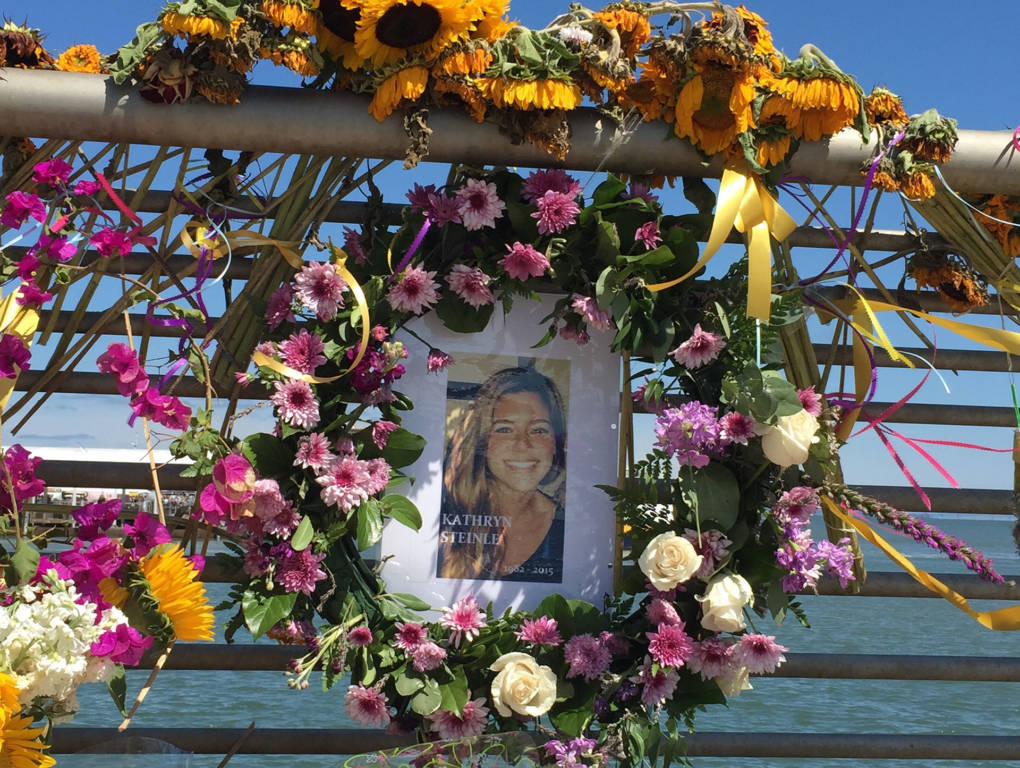
"caption": "A memorial for Kate Steinle on San Francisco's Pier 14 in July 2015.",
"description": "A memorial for Kate Steinle on San Francisco's Pier 14 in July 2015.",
"title": "SteinleMemorial",
"credit": "Erika Kelly/KQED",
"status": "inherit",
"isLoading": false,
"fetchFailed": false
},
"news_11625923": {
"type": "attachments",
"id": "news_11625923",
"meta": {
"index": "attachments_1716263798",
"site": "news",
"id": "11625923",
"found": true
},
"parent": 11625912,
"imgSizes": {
"small": {
"file": "https://ww2.kqed.org/app/uploads/sites/10/2017/10/RefugeeArrives-520x347.jpg",
"width": 520,
"mimeType": "image/jpeg",
"height": 347
},
"twentyfourteen-full-width": {
"file": "https://ww2.kqed.org/app/uploads/sites/10/2017/10/RefugeeArrives-1038x576.jpg",
"width": 1038,
"mimeType": "image/jpeg",
"height": 576
},
"thumbnail": {
"file": "https://ww2.kqed.org/app/uploads/sites/10/2017/10/RefugeeArrives-160x107.jpg",
"width": 160,
"mimeType": "image/jpeg",
"height": 107
},
"fd-sm": {
"file": "https://ww2.kqed.org/app/uploads/sites/10/2017/10/RefugeeArrives-960x640.jpg",
"width": 960,
"mimeType": "image/jpeg",
"height": 640
},
"post-thumbnail": {
"file": "https://ww2.kqed.org/app/uploads/sites/10/2017/10/RefugeeArrives-672x372.jpg",
"width": 672,
"mimeType": "image/jpeg",
"height": 372
},
"xsmall": {
"file": "https://ww2.kqed.org/app/uploads/sites/10/2017/10/RefugeeArrives-375x250.jpg",
"width": 375,
"mimeType": "image/jpeg",
"height": 250
},
"kqedFullSize": {
"file": "https://ww2.kqed.org/app/uploads/sites/10/2017/10/RefugeeArrives.jpg",
"width": 1920,
"height": 1280
},
"large": {
"file": "https://ww2.kqed.org/app/uploads/sites/10/2017/10/RefugeeArrives-1020x680.jpg",
"width": 1020,
"mimeType": "image/jpeg",
"height": 680
},
"xlarge": {
"file": "https://ww2.kqed.org/app/uploads/sites/10/2017/10/RefugeeArrives-1180x787.jpg",
"width": 1180,
"mimeType": "image/jpeg",
"height": 787
},
"guest-author-50": {
"file": "https://ww2.kqed.org/app/uploads/sites/10/2017/10/RefugeeArrives-50x50.jpg",
"width": 50,
"mimeType": "image/jpeg",
"height": 50
},
"guest-author-96": {
"file": "https://ww2.kqed.org/app/uploads/sites/10/2017/10/RefugeeArrives-96x96.jpg",
"width": 96,
"mimeType": "image/jpeg",
"height": 96
},
"medium": {
"file": "https://ww2.kqed.org/app/uploads/sites/10/2017/10/RefugeeArrives-800x533.jpg",
"width": 800,
"mimeType": "image/jpeg",
"height": 533
},
"guest-author-64": {
"file": "https://ww2.kqed.org/app/uploads/sites/10/2017/10/RefugeeArrives-64x64.jpg",
"width": 64,
"mimeType": "image/jpeg",
"height": 64
},
"guest-author-32": {
"file": "https://ww2.kqed.org/app/uploads/sites/10/2017/10/RefugeeArrives-32x32.jpg",
"width": 32,
"mimeType": "image/jpeg",
"height": 32
},
"fd-lrg": {
"file": "https://ww2.kqed.org/app/uploads/sites/10/2017/10/RefugeeArrives-1920x1280.jpg",
"width": 1920,
"mimeType": "image/jpeg",
"height": 1280
},
"fd-med": {
"file": "https://ww2.kqed.org/app/uploads/sites/10/2017/10/RefugeeArrives-1180x787.jpg",
"width": 1180,
"mimeType": "image/jpeg",
"height": 787
},
"full-width": {
"file": "https://ww2.kqed.org/app/uploads/sites/10/2017/10/RefugeeArrives-1920x1280.jpg",
"width": 1920,
"mimeType": "image/jpeg",
"height": 1280
},
"detail": {
"file": "https://ww2.kqed.org/app/uploads/sites/10/2017/10/RefugeeArrives-150x150.jpg",
"width": 150,
"mimeType": "image/jpeg",
"height": 150
},
"guest-author-128": {
"file": "https://ww2.kqed.org/app/uploads/sites/10/2017/10/RefugeeArrives-128x128.jpg",
"width": 128,
"mimeType": "image/jpeg",
"height": 128
},
"xxsmall": {
"file": "https://ww2.kqed.org/app/uploads/sites/10/2017/10/RefugeeArrives-240x160.jpg",
"width": 240,
"mimeType": "image/jpeg",
"height": 160
}
},
"publishDate": 1508958265,
"modified": 1508972956,
"caption": "Syrian refugee Baraa Haj Khalaf (L) receives a kiss from her mother. Fattoum Haj Khalaf as she arrives in the United States on Feb. 7, 2017.",
"description": "Syrian refugee Baraa Haj Khalaf (L), receives a kiss from her mother Fattoum Haj Khalaf as she arrives in the United States on February 7, 2017.",
"title": "RefugeeArrives",
"credit": "JOSHUA LOTT/AFP/Getty Images",
"status": "inherit",
"isLoading": false,
"fetchFailed": false
},
"news_11625280": {
"type": "attachments",
"id": "news_11625280",
"meta": {
"index": "attachments_1716263798",
"site": "news",
"id": "11625280",
"found": true
},
"parent": 11625276,
"imgSizes": {
"small": {
"file": "https://ww2.kqed.org/app/uploads/sites/10/2017/10/croppedcourt-520x355.jpg",
"width": 520,
"mimeType": "image/jpeg",
"height": 355
},
"twentyfourteen-full-width": {
"file": "https://ww2.kqed.org/app/uploads/sites/10/2017/10/croppedcourt-1038x576.jpg",
"width": 1038,
"mimeType": "image/jpeg",
"height": 576
},
"thumbnail": {
"file": "https://ww2.kqed.org/app/uploads/sites/10/2017/10/croppedcourt-160x109.jpg",
"width": 160,
"mimeType": "image/jpeg",
"height": 109
},
"fd-sm": {
"file": "https://ww2.kqed.org/app/uploads/sites/10/2017/10/croppedcourt-960x655.jpg",
"width": 960,
"mimeType": "image/jpeg",
"height": 655
},
"post-thumbnail": {
"file": "https://ww2.kqed.org/app/uploads/sites/10/2017/10/croppedcourt-672x372.jpg",
"width": 672,
"mimeType": "image/jpeg",
"height": 372
},
"xsmall": {
"file": "https://ww2.kqed.org/app/uploads/sites/10/2017/10/croppedcourt-375x256.jpg",
"width": 375,
"mimeType": "image/jpeg",
"height": 256
},
"kqedFullSize": {
"file": "https://ww2.kqed.org/app/uploads/sites/10/2017/10/croppedcourt.jpg",
"width": 1920,
"height": 1309
},
"large": {
"file": "https://ww2.kqed.org/app/uploads/sites/10/2017/10/croppedcourt-1020x695.jpg",
"width": 1020,
"mimeType": "image/jpeg",
"height": 695
},
"xlarge": {
"file": "https://ww2.kqed.org/app/uploads/sites/10/2017/10/croppedcourt-1180x804.jpg",
"width": 1180,
"mimeType": "image/jpeg",
"height": 804
},
"guest-author-50": {
"file": "https://ww2.kqed.org/app/uploads/sites/10/2017/10/croppedcourt-50x50.jpg",
"width": 50,
"mimeType": "image/jpeg",
"height": 50
},
"guest-author-96": {
"file": "https://ww2.kqed.org/app/uploads/sites/10/2017/10/croppedcourt-96x96.jpg",
"width": 96,
"mimeType": "image/jpeg",
"height": 96
},
"medium": {
"file": "https://ww2.kqed.org/app/uploads/sites/10/2017/10/croppedcourt-800x545.jpg",
"width": 800,
"mimeType": "image/jpeg",
"height": 545
},
"guest-author-64": {
"file": "https://ww2.kqed.org/app/uploads/sites/10/2017/10/croppedcourt-64x64.jpg",
"width": 64,
"mimeType": "image/jpeg",
"height": 64
},
"guest-author-32": {
"file": "https://ww2.kqed.org/app/uploads/sites/10/2017/10/croppedcourt-32x32.jpg",
"width": 32,
"mimeType": "image/jpeg",
"height": 32
},
"fd-lrg": {
"file": "https://ww2.kqed.org/app/uploads/sites/10/2017/10/croppedcourt-1920x1309.jpg",
"width": 1920,
"mimeType": "image/jpeg",
"height": 1309
},
"fd-med": {
"file": "https://ww2.kqed.org/app/uploads/sites/10/2017/10/croppedcourt-1180x804.jpg",
"width": 1180,
"mimeType": "image/jpeg",
"height": 804
},
"full-width": {
"file": "https://ww2.kqed.org/app/uploads/sites/10/2017/10/croppedcourt-1920x1309.jpg",
"width": 1920,
"mimeType": "image/jpeg",
"height": 1309
},
"detail": {
"file": "https://ww2.kqed.org/app/uploads/sites/10/2017/10/croppedcourt-150x150.jpg",
"width": 150,
"mimeType": "image/jpeg",
"height": 150
},
"guest-author-128": {
"file": "https://ww2.kqed.org/app/uploads/sites/10/2017/10/croppedcourt-128x128.jpg",
"width": 128,
"mimeType": "image/jpeg",
"height": 128
},
"xxsmall": {
"file": "https://ww2.kqed.org/app/uploads/sites/10/2017/10/croppedcourt-240x164.jpg",
"width": 240,
"mimeType": "image/jpeg",
"height": 164
}
},
"publishDate": 1508621984,
"modified": 1508622017,
"caption": "The federal appeals court for the District of Columbia has ruled that a teen who is detained because she is in the country illegally can transferred to the custody of a sponsor and then have an abortion if she chooses.",
"description": "The federal appeals court for the District of Columbia has ruled that a teen who is detained because she is in the country illegally can transferred to the custody of a sponsor and then have an abortion if she chooses.",
"title": "croppedcourt",
"credit": "Getty Images",
"status": "inherit",
"isLoading": false,
"fetchFailed": false
},
"news_11620942": {
"type": "attachments",
"id": "news_11620942",
"meta": {
"index": "attachments_1716263798",
"site": "news",
"id": "11620942",
"found": true
},
"parent": 11620897,
"imgSizes": {
"small": {
"file": "https://ww2.kqed.org/app/uploads/sites/10/2017/10/RS26713_P1050570-qut-520x390.jpg",
"width": 520,
"mimeType": "image/jpeg",
"height": 390
},
"twentyfourteen-full-width": {
"file": "https://ww2.kqed.org/app/uploads/sites/10/2017/10/RS26713_P1050570-qut-1038x576.jpg",
"width": 1038,
"mimeType": "image/jpeg",
"height": 576
},
"thumbnail": {
"file": "https://ww2.kqed.org/app/uploads/sites/10/2017/10/RS26713_P1050570-qut-160x120.jpg",
"width": 160,
"mimeType": "image/jpeg",
"height": 120
},
"fd-sm": {
"file": "https://ww2.kqed.org/app/uploads/sites/10/2017/10/RS26713_P1050570-qut-960x720.jpg",
"width": 960,
"mimeType": "image/jpeg",
"height": 720
},
"post-thumbnail": {
"file": "https://ww2.kqed.org/app/uploads/sites/10/2017/10/RS26713_P1050570-qut-672x372.jpg",
"width": 672,
"mimeType": "image/jpeg",
"height": 372
},
"xsmall": {
"file": "https://ww2.kqed.org/app/uploads/sites/10/2017/10/RS26713_P1050570-qut-375x281.jpg",
"width": 375,
"mimeType": "image/jpeg",
"height": 281
},
"kqedFullSize": {
"file": "https://ww2.kqed.org/app/uploads/sites/10/2017/10/RS26713_P1050570-qut.jpg",
"width": 1920,
"height": 1440
},
"large": {
"file": "https://ww2.kqed.org/app/uploads/sites/10/2017/10/RS26713_P1050570-qut-1020x765.jpg",
"width": 1020,
"mimeType": "image/jpeg",
"height": 765
},
"xlarge": {
"file": "https://ww2.kqed.org/app/uploads/sites/10/2017/10/RS26713_P1050570-qut-1180x885.jpg",
"width": 1180,
"mimeType": "image/jpeg",
"height": 885
},
"guest-author-50": {
"file": "https://ww2.kqed.org/app/uploads/sites/10/2017/10/RS26713_P1050570-qut-50x50.jpg",
"width": 50,
"mimeType": "image/jpeg",
"height": 50
},
"guest-author-96": {
"file": "https://ww2.kqed.org/app/uploads/sites/10/2017/10/RS26713_P1050570-qut-96x96.jpg",
"width": 96,
"mimeType": "image/jpeg",
"height": 96
},
"medium": {
"file": "https://ww2.kqed.org/app/uploads/sites/10/2017/10/RS26713_P1050570-qut-800x600.jpg",
"width": 800,
"mimeType": "image/jpeg",
"height": 600
},
"guest-author-64": {
"file": "https://ww2.kqed.org/app/uploads/sites/10/2017/10/RS26713_P1050570-qut-64x64.jpg",
"width": 64,
"mimeType": "image/jpeg",
"height": 64
},
"guest-author-32": {
"file": "https://ww2.kqed.org/app/uploads/sites/10/2017/10/RS26713_P1050570-qut-32x32.jpg",
"width": 32,
"mimeType": "image/jpeg",
"height": 32
},
"fd-lrg": {
"file": "https://ww2.kqed.org/app/uploads/sites/10/2017/10/RS26713_P1050570-qut-1920x1440.jpg",
"width": 1920,
"mimeType": "image/jpeg",
"height": 1440
},
"fd-med": {
"file": "https://ww2.kqed.org/app/uploads/sites/10/2017/10/RS26713_P1050570-qut-1180x885.jpg",
"width": 1180,
"mimeType": "image/jpeg",
"height": 885
},
"full-width": {
"file": "https://ww2.kqed.org/app/uploads/sites/10/2017/10/RS26713_P1050570-qut-1920x1440.jpg",
"width": 1920,
"mimeType": "image/jpeg",
"height": 1440
},
"detail": {
"file": "https://ww2.kqed.org/app/uploads/sites/10/2017/10/RS26713_P1050570-qut-150x150.jpg",
"width": 150,
"mimeType": "image/jpeg",
"height": 150
},
"guest-author-128": {
"file": "https://ww2.kqed.org/app/uploads/sites/10/2017/10/RS26713_P1050570-qut-128x128.jpg",
"width": 128,
"mimeType": "image/jpeg",
"height": 128
},
"xxsmall": {
"file": "https://ww2.kqed.org/app/uploads/sites/10/2017/10/RS26713_P1050570-qut-240x180.jpg",
"width": 240,
"mimeType": "image/jpeg",
"height": 180
}
},
"publishDate": 1507144230,
"modified": 1508535314,
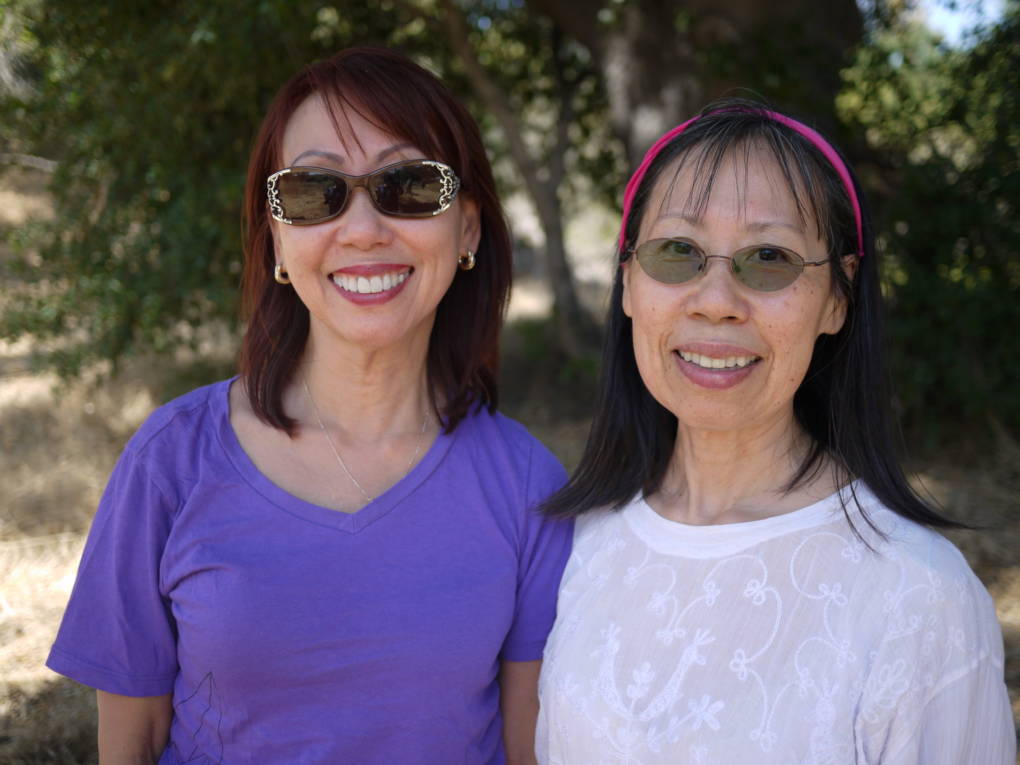
"caption": "Sisters Evelyn and Jessica Kheo arrived at Camp Pendleton from Vietnam when they were teenagers.",
"description": "Sisters Evelyn and Jessica Kheo arrived at Camp Pendleton from Vietnam when they were teenagers.",
"title": "RS26713_P1050570-qut",
"credit": "Suzie Racho/KQED",
"status": "inherit",
"isLoading": false,
"fetchFailed": false
}
},
"audioPlayerReducer": {
"postId": "stream_live",
"isPaused": true,
"isPlaying": false,
"pfsActive": false,
"pledgeModalIsOpen": true,
"playerDrawerIsOpen": false,
"liveAudioPlayStartedAt": 0,
"liveAudioPlayContext": ""
},
"authorsReducer": {
"byline_news_11628908": {
"type": "authors",
"id": "byline_news_11628908",
"meta": {
"override": true
},
"slug": "byline_news_11628908",
"name": "\u003cstrong>\u003ca href=\"https://theconversation.com/profiles/jody-agius-vallejo-249830\">Jody Agius Vallejo\u003c/a>\u003c/strong>\u003cbr>University of Southern California for \u003cstrong>\u003ca href=\"https://theconversation.com/us\">The Conversation\u003c/a>\u003c/strong>",
"isLoading": false
},
"byline_news_11628885": {
"type": "authors",
"id": "byline_news_11628885",
"meta": {
"override": true
},
"slug": "byline_news_11628885",
"name": "\u003cstrong>\u003ca href=\"https://www.scpr.org/about/people/staff/leslie-berestein-rojas\">Leslie Berestein Rojas\u003c/a>\u003c/strong>",
"isLoading": false
},
"byline_news_11626206": {
"type": "authors",
"id": "byline_news_11626206",
"meta": {
"override": true
},
"slug": "byline_news_11626206",
"name": "\u003cstrong>\u003ca href=\"https://www.scpr.org/about/people/staff/leslie-berestein-rojas\">Leslie Berestein Rojas\u003c/a>\u003c/strong>",
"isLoading": false
},
"byline_news_11625912": {
"type": "authors",
"id": "byline_news_11625912",
"meta": {
"override": true
},
"slug": "byline_news_11625912",
"name": "\u003cstrong>\u003ca href=\"http://www.scpr.org/about/people/staff/leslie-berestein-rojas\">Leslie Berestein Rojas\u003c/a>\u003c/strong>",
"isLoading": false
},
"byline_news_11625276": {
"type": "authors",
"id": "byline_news_11625276",
"meta": {
"override": true
},
"slug": "byline_news_11625276",
"name": "\u003cstrong>Richard Gonzales\u003c/strong>",
"isLoading": false
},
"byline_news_11620897": {
"type": "authors",
"id": "byline_news_11620897",
"meta": {
"override": true
},
"slug": "byline_news_11620897",
"name": "\u003cstrong>Sasha Khokha\u003c/strong>",
"isLoading": false
},
"kqed": {
"type": "authors",
"id": "236",
"meta": {
"index": "authors_1716337520",
"id": "236",
"found": true
},
"name": "KQED News Staff",
"firstName": "KQED News Staff",
"lastName": null,
"slug": "kqed",
"email": "faq@kqed.org",
"display_author_email": false,
"staff_mastheads": [],
"title": null,
"bio": null,
"avatar": "https://secure.gravatar.com/avatar/ef0e801a68c4c54afa9180db14084167?s=600&d=blank&r=g",
"twitter": null,
"facebook": null,
"instagram": null,
"linkedin": null,
"sites": [
{
"site": "arts",
"roles": [
"contributor"
]
},
{
"site": "news",
"roles": [
"editor"
]
},
{
"site": "futureofyou",
"roles": [
"author"
]
}
],
"headData": {
"title": "KQED News Staff | KQED",
"description": null,
"ogImgSrc": "https://secure.gravatar.com/avatar/ef0e801a68c4c54afa9180db14084167?s=600&d=blank&r=g",
"twImgSrc": "https://secure.gravatar.com/avatar/ef0e801a68c4c54afa9180db14084167?s=600&d=blank&r=g"
},
"isLoading": false,
"link": "/author/kqed"
},
"rachael-myrow": {
"type": "authors",
"id": "251",
"meta": {
"index": "authors_1716337520",
"id": "251",
"found": true
},
"name": "Rachael Myrow",
"firstName": "Rachael",
"lastName": "Myrow",
"slug": "rachael-myrow",
"email": "rmyrow@kqed.org",
"display_author_email": true,
"staff_mastheads": [
"news"
],
"title": "Senior Editor of KQED's Silicon Valley News Desk",
"bio": "• I write and edit stories about how Silicon Valley power and policies shape everyday life in California. I’m also passionate about making Bay Area history and culture more accessible to a broad public. • I’ve been a journalist for most of my life, starting in high school with The Franklin Press in Los Angeles, where I grew up. While earning my first degree in English at UC Berkeley, I got my start in public radio at KALX-FM. After completing a second degree in journalism at Cal, I landed my first professional job at Marketplace, then moved on to KPCC (now LAist), and then KQED, where I hosted The California Report for more than seven years. • My reporting has appeared on NPR, The World, WBUR’s \u003ci>Here & Now\u003c/i>, and the BBC. I also guest host for KQED’s \u003ci>Forum\u003c/i>, as well as the Commonwealth Club in San Francisco. • I speak periodically on media, democracy and technology issues, and do voiceover work for documentaries and educational video projects. • Outside of the studio, you'll find me hiking Bay Area trails and whipping up Insta-ready meals in my kitchen. • I do not accept gifts, money, or favors from anyone connected to my reporting, I don't pay people for information, and I do not support or donate to political causes. • I strive to treat the people I report on with fairness, honesty, and respect. I also recognize there are often multiple sides to a story and work to verify information through multiple sources and documentation. If I get something wrong, I correct it.",
"avatar": "https://secure.gravatar.com/avatar/3ed8a3c5f26025e4a805ba634cda8cd764906b97438a6d9ce216b044e340da4e?s=600&d=blank&r=g",
"twitter": "rachaelmyrow",
"bluesky": null,
"facebook": null,
"instagram": null,
"linkedin": "https://www.linkedin.com/in/rachaelmyrow/",
"sites": [
{
"site": "arts",
"roles": [
"administrator"
]
},
{
"site": "news",
"roles": [
"edit_others_posts",
"editor"
]
},
{
"site": "futureofyou",
"roles": [
"editor"
]
},
{
"site": "bayareabites",
"roles": [
"editor"
]
},
{
"site": "stateofhealth",
"roles": [
"editor"
]
},
{
"site": "science",
"roles": [
"editor"
]
},
{
"site": "food",
"roles": [
"editor"
]
},
{
"site": "forum",
"roles": [
"editor"
]
},
{
"site": "liveblog",
"roles": [
"author"
]
}
],
"headData": {
"title": "Rachael Myrow | KQED",
"description": "Senior Editor of KQED's Silicon Valley News Desk",
"ogImgSrc": "https://secure.gravatar.com/avatar/3ed8a3c5f26025e4a805ba634cda8cd764906b97438a6d9ce216b044e340da4e?s=600&d=blank&r=g",
"twImgSrc": "https://secure.gravatar.com/avatar/3ed8a3c5f26025e4a805ba634cda8cd764906b97438a6d9ce216b044e340da4e?s=600&d=blank&r=g"
},
"isLoading": false,
"link": "/author/rachael-myrow"
},
"aemslie": {
"type": "authors",
"id": "3206",
"meta": {
"index": "authors_1716337520",
"id": "3206",
"found": true
},
"name": "Alex Emslie",
"firstName": "Alex",
"lastName": "Emslie",
"slug": "aemslie",
"email": "aemslie@kqed.org",
"display_author_email": true,
"staff_mastheads": [
"news"
],
"title": "KQED Senior Editor",
"bio": "Alex Emslie is senior editor of talent and development at KQED, where he manages dozens of early career journalists and oversees news department internships.\r\n\r\nHe is a former carpenter and proud graduate of City College of San Francisco and San Francisco State University, where he studied journalism and criminal justice before joining KQED in 2013.\r\n\r\nAlex produced investigative journalism focused on \u003ca href=\"https://www.kqed.org/news/11667594/the-trials-of-marvin-mutch-video\">criminal justice\u003c/a> and policing for most of a decade. He has broken major stories about \u003ca href=\"https://www.kqed.org/news/135682/amid-a-series-of-vallejo-police-shootings-one-officers-name-stands-out\">police use of deadly force\u003c/a>, \u003ca href=\"https://www.kqed.org/news/10454955/racist-texts-prompt-sfpd-internal-investigation\">officer misconduct\u003c/a> and \u003ca href=\"https://www.kqed.org/news/11712239/terrorist-or-troll-judge-to-weigh-whether-oakland-man-really-intended-to-attack-bay-area\">other\u003c/a> \u003ca href=\"https://www.kqed.org/news/11221414/hayward-paid-159000-to-husband-of-retired-police-chief-documents-show\">high\u003c/a>-\u003ca href=\"https://www.kqed.org/news/10622762/the-forgotten-tracking-two-homicides-in-san-francisco-public-housing\">profile\u003c/a> \u003ca href=\"https://www.kqed.org/news/11624516/federal-agency-promoted-ranger-just-months-after-his-gun-was-stolen-and-used-in-steinle-killing\">cases\u003c/a>. He co-founded the \u003ca href=\"https://projects.scpr.org/california-reporting-project/\">California Reporting Project\u003c/a> in 2019 to obtain and report on previously confidential police internal investigations. The effort produced well over 100 original stories and changed the course of multiple criminal cases.\r\n\r\nHis work has been recognized with numerous journalism awards, including a national Edward R. Murrow award for several years of \u003ca href=\"https://www.kqed.org/news/11688481/sfpd-officers-in-mario-woods-case-recount-shooting-in-newly-filed-depositions\">reporting\u003c/a> on the San Francisco Police shooting of Mario Woods. His \u003ca href=\"https://www.kqed.org/news/147854/half-of-those-killed-by-san-francisco-police-are-mentally-ill\">reporting\u003c/a> on police killings of people in psychiatric crisis was cited in amicus briefs before the U.S. Supreme Court.\r\n\r\nAlex now enjoys mentoring the next generation of journalists at KQED.",
"avatar": "https://secure.gravatar.com/avatar/e691e65209f20e9da202bd730ead5663?s=600&d=blank&r=g",
"twitter": "SFNewsReporter",
"facebook": null,
"instagram": null,
"linkedin": null,
"sites": [
{
"site": "arts",
"roles": [
"editor"
]
},
{
"site": "news",
"roles": [
"editor"
]
},
{
"site": "mindshift",
"roles": [
"editor"
]
},
{
"site": "stateofhealth",
"roles": [
"editor"
]
},
{
"site": "science",
"roles": [
"administrator"
]
}
],
"headData": {
"title": "Alex Emslie | KQED",
"description": "KQED Senior Editor",
"ogImgSrc": "https://secure.gravatar.com/avatar/e691e65209f20e9da202bd730ead5663?s=600&d=blank&r=g",
"twImgSrc": "https://secure.gravatar.com/avatar/e691e65209f20e9da202bd730ead5663?s=600&d=blank&r=g"
},
"isLoading": false,
"link": "/author/aemslie"
},
"mlagos": {
"type": "authors",
"id": "3239",
"meta": {
"index": "authors_1716337520",
"id": "3239",
"found": true
},
"name": "Marisa Lagos",
"firstName": "Marisa",
"lastName": "Lagos",
"slug": "mlagos",
"email": "mlagos@kqed.org",
"display_author_email": false,
"staff_mastheads": [
"news"
],
"title": "KQED Contributor",
"bio": "Marisa Lagos is a correspondent for KQED’s California Politics and Government Desk and co-hosts the award-winning show and podcast, Political Breakdown. At KQED, Lagos also conducts reporting, analysis and investigations into state, local and national politics for radio, TV, online and onstage. In 2022, she and co-host, Scott Shafer, moderated the only gubernatorial debate in California. In 2020, the \u003ci>Washington Post\u003c/i> named her one of the top political journalists in California; she was nominated for a Peabody and won several other awards for her work investigating the 2017 California wildfires. She has worked at the \u003ci>San Francisco Chronicle\u003c/i>, \u003ci>San Francisco Examiner\u003c/i> and \u003ci>Los Angeles Times\u003c/i>. A UC Santa Barbara graduate, she lives in San Francisco with her two sons and husband.",
"avatar": "https://secure.gravatar.com/avatar/a261a0d3696fc066871ef96b85b5e7d2?s=600&d=blank&r=g",
"twitter": "@mlagos",
"facebook": null,
"instagram": null,
"linkedin": null,
"sites": [
{
"site": "arts",
"roles": [
"author"
]
},
{
"site": "news",
"roles": [
"editor"
]
},
{
"site": "science",
"roles": [
"editor"
]
},
{
"site": "forum",
"roles": [
"author"
]
},
{
"site": "liveblog",
"roles": [
"author"
]
}
],
"headData": {
"title": "Marisa Lagos | KQED",
"description": "KQED Contributor",
"ogImgSrc": "https://secure.gravatar.com/avatar/a261a0d3696fc066871ef96b85b5e7d2?s=600&d=blank&r=g",
"twImgSrc": "https://secure.gravatar.com/avatar/a261a0d3696fc066871ef96b85b5e7d2?s=600&d=blank&r=g"
},
"isLoading": false,
"link": "/author/mlagos"
},
"jsmall": {
"type": "authors",
"id": "6625",
"meta": {
"index": "authors_1716337520",
"id": "6625",
"found": true
},
"name": "Julie Small",
"firstName": "Julie",
"lastName": "Small",
"slug": "jsmall",
"email": "jsmall@kqed.org",
"display_author_email": true,
"staff_mastheads": [
"news"
],
"title": "KQED Contributor",
"bio": "Julie Small reports on criminal justice and immigration.\r\n\r\nShe was part of a team at KQED awarded a regional 2019 Edward R. Murrow award for continuing coverage of the Trump Administration's family separation policy.\r\n\r\nThe Society for Professional Journalists recognized Julie's 2018 \u003ca href=\"https://www.kqed.org/news/11636262/the-officer-tased-him-31-times-the-sheriff-called-his-death-an-accident\">reporting\u003c/a> on the San Joaquin County Sheriff's \u003ca href=\"https://www.kqed.org/news/11634689/autopsy-doctors-sheriff-overrode-death-findings-to-protect-law-enforcement\">interference\u003c/a> in death investigations with an Excellence in Journalism Award for Ongoing Coverage.\r\n\r\nJulie's\u003ca href=\"https://www.kqed.org/news/11039666/two-mentally-ill-inmates-died-one-month-in-santa-clara\"> reporting\u003c/a> with Lisa Pickoff-White on the treatment of mentally ill offenders in California jails earned a 2017 regional Edward R. Murrow Award for news reporting and an investigative reporting award from the SPJ of Northern California.\r\n\r\nBefore joining KQED, Julie covered government and politics in Sacramento for Southern California Public Radio (SCPR). Her 2010 \u003ca href=\"https://www.scpr.org/specials/prisonmedical/\">series\u003c/a> on lapses in California’s prison medical care also won a regional Edward R. Murrow Award for investigative reporting and a Golden Mic Award from the RTNDA of Southern California.\r\n\r\nJulie began her career in journalism in 2000 as the deputy foreign editor for public radio's \u003cem>Marketplace, \u003c/em>while earning her master's degree in journalism from USC’s Annenberg School of Communication.",
"avatar": "https://secure.gravatar.com/avatar/4baedf201468df97be97c2a9dd7585d0?s=600&d=blank&r=g",
"twitter": "@SmallRadio2",
"facebook": null,
"instagram": null,
"linkedin": null,
"sites": [
{
"site": "news",
"roles": [
"editor"
]
},
{
"site": "stateofhealth",
"roles": [
"author"
]
},
{
"site": "science",
"roles": [
"author"
]
}
],
"headData": {
"title": "Julie Small | KQED",
"description": "KQED Contributor",
"ogImgSrc": "https://secure.gravatar.com/avatar/4baedf201468df97be97c2a9dd7585d0?s=600&d=blank&r=g",
"twImgSrc": "https://secure.gravatar.com/avatar/4baedf201468df97be97c2a9dd7585d0?s=600&d=blank&r=g"
},
"isLoading": false,
"link": "/author/jsmall"
},
"sdirks": {
"type": "authors",
"id": "7239",
"meta": {
"index": "authors_1716337520",
"id": "7239",
"found": true
},
"name": "Sandhya Dirks",
"firstName": "Sandhya",
"lastName": "Dirks",
"slug": "sdirks",
"email": "sdirks@kqed.org",
"display_author_email": true,
"staff_mastheads": [],
"title": null,
"bio": "Sandhya Dirks was the race and equity reporter at KQED. She approaches race and equity not as a beat, but as a fundamental lens for all investigative and explanatory reporting.\r\n\r\nSandhya covered policing, housing, social justice movements, and the shifting demographics of cities and suburbs.\r\n\r\nShe was the creator and co-host of the podcast American Suburb, about the transformation of suburbia into the most diverse space in American life. She was the editor for Truth Be Told, an advice show for and by people of color. \r\n\r\nHer stories about race, space, and belonging were part of KQED's So Well Spoken project, which won RNDTA's Kaleidoscope award, honoring outstanding achievements in the coverage of diversity.\r\n\r\nPrior to joining KQED in 2015, Sandhya covered the 2012 presidential election from the swing state of Iowa for Iowa Public Radio. At KPBS in San Diego, she broke the story of a sexual harassment scandal that led to the mayor's resignation.\r\n\r\nShe got her start in radio working on documentaries about Oakland that investigated the high drop-out rate in public schools and mistrust between the police and the community.\r\n\r\nSandhya lives in Oakland and believes all stories are stories about power.",
"avatar": "https://secure.gravatar.com/avatar/c0247cb15929cd4c197672fd73d45300?s=600&d=blank&r=g",
"twitter": "audiosand",
"facebook": null,
"instagram": null,
"linkedin": null,
"sites": [
{
"site": "news",
"roles": [
"subscriber"
]
},
{
"site": "stateofhealth",
"roles": [
"author"
]
}
],
"headData": {
"title": "Sandhya Dirks | KQED",
"description": null,
"ogImgSrc": "https://secure.gravatar.com/avatar/c0247cb15929cd4c197672fd73d45300?s=600&d=blank&r=g",
"twImgSrc": "https://secure.gravatar.com/avatar/c0247cb15929cd4c197672fd73d45300?s=600&d=blank&r=g"
},
"isLoading": false,
"link": "/author/sdirks"
},
"vrancano": {
"type": "authors",
"id": "11276",
"meta": {
"index": "authors_1716337520",
"id": "11276",
"found": true
},
"name": "Vanessa Rancaño",
"firstName": "Vanessa",
"lastName": "Rancaño",
"slug": "vrancano",
"email": "vrancano@kqed.org",
"display_author_email": false,
"staff_mastheads": [
"news"
],
"title": "Reporter",
"bio": "Vanessa Rancaño is a features reporter for KQED. She’s also covered homelessness and education for the station and reported from the Central Valley. Her work has aired across public radio, from flagship national news shows to longform narrative podcasts. Before taking up a mic, she worked as a freelance print journalist. She’s been recognized with a number of national and regional awards. Vanessa grew up in California's Central Valley. She's a former NPR Kroc Fellow, and a graduate of the UC Berkeley Graduate School of Journalism.",
"avatar": "https://secure.gravatar.com/avatar/b3a383dfb0e7ee1c17568f2cf067904ab654d6e3de9743fc661f3c788ade1bed?s=600&d=blank&r=g",
"twitter": "vanessarancano",
"bluesky": null,
"facebook": null,
"instagram": null,
"linkedin": null,
"sites": [
{
"site": "arts",
"roles": [
"editor"
]
},
{
"site": "news",
"roles": [
"editor"
]
},
{
"site": "liveblog",
"roles": [
"contributor"
]
}
],
"headData": {
"title": "Vanessa Rancaño | KQED",
"description": "Reporter",
"ogImgSrc": "https://secure.gravatar.com/avatar/b3a383dfb0e7ee1c17568f2cf067904ab654d6e3de9743fc661f3c788ade1bed?s=600&d=blank&r=g",
"twImgSrc": "https://secure.gravatar.com/avatar/b3a383dfb0e7ee1c17568f2cf067904ab654d6e3de9743fc661f3c788ade1bed?s=600&d=blank&r=g"
},
"isLoading": false,
"link": "/author/vrancano"
}
},
"pagesReducer": {
"news_category_immigration": {
"type": "terms",
"id": "news_1169",
"meta": {
"index": "terms_1716263798",
"site": "news",
"id": "1169",
"score": 10.910406
},
"featImg": null,
"name": "Immigration",
"description": null,
"taxonomy": "category",
"headData": {
"twImgId": null,
"twTitle": null,
"ogTitle": null,
"ogImgId": null,
"twDescription": null,
"description": null,
"title": "Immigration Archives | KQED News",
"ogDescription": null
},
"ttid": 1180,
"slug": "immigration",
"isLoading": false,
"title": "Immigration",
"pageMeta": {
"site": "news",
"WpPageTemplate": "page-topic-editorial",
"currentPage": 150
},
"blocks": [
{
"blockName": "kqed/post-list",
"attrs": {
"layout": "cardArticle2",
"query": "posts/news?category=immigration",
"seeMore": false,
"paginated": true,
"page": 150
}
},
{
"blockName": "kqed/ad"
}
]
}
},
"pfsSessionReducer": {},
"postsReducer": {
"stream_live": {
"type": "live",
"id": "stream_live",
"audioUrl": "https://streams.kqed.org/kqedradio",
"title": "Live Stream",
"excerpt": "Live Stream information currently unavailable.",
"link": "/radio",
"featImg": "",
"label": {
"name": "KQED Live",
"link": "/"
}
},
"stream_kqedNewscast": {
"type": "posts",
"id": "stream_kqedNewscast",
"audioUrl": "https://www.kqed.org/.stream/anon/radio/RDnews/newscast.mp3?_=1",
"title": "KQED Newscast",
"featImg": "",
"label": {
"name": "88.5 FM",
"link": "/"
}
},
"news_11628908": {
"type": "posts",
"id": "news_11628908",
"meta": {
"index": "posts_1716263798",
"site": "news",
"id": "11628908",
"score": null,
"sort": [
1510268398000
]
},
"parent": 0,
"labelTerm": {
"site": "news",
"term": 72
},
"blocks": [],
"publishDate": 1510268398,
"format": "image",
"disqusTitle": "How Latino Elites Are Paying the California Dream Forward",
"title": "How Latino Elites Are Paying the California Dream Forward",
"headTitle": "The California Dream | The California Report | KQED News",
"content": "\u003cp>\u003cem>\u003ca href=\"https://theconversation.com/profiles/jody-agius-vallejo-249830\">Jody Agius Vallejo\u003c/a> is associate professor of sociology and American studies and associate director of the Center for the Study of Immigrant Integration at the \u003ca href=\"http://theconversation.com/institutions/university-of-southern-california-dornsife-college-of-letters-arts-and-sciences-2669\">University of Southern California – Dornsife College of Letters, Arts and Sciences\u003c/a>.\u003c/em>\u003c/p>\n\u003cp>American Latino economic elites have incomes and wealth in the top 5 percent of earners. Some own multi-million-dollar companies or work as corporate executives. Latino politicians -- like Kevin De León, who is serving as California Senate president while running for U.S. Senate, and California’s Attorney General Xavier Becerra -- are especially visible in the state.\u003c/p>\n\u003cp>What role do these successful men and women play in the wider Latino community?\u003c/p>\n\u003cp>It’s an important question because \u003ca href=\"http://newdiversities.mmg.mpg.de/wp-content/uploads/2014/11/2014_16-01_02_Lee.pdf\">scholars view\u003c/a> elites of color as critical to the creation of educational, financial and social resources that help ethnic communities thrive.\u003c/p>\n\u003ch2>Sharing Resources\u003c/h2>\n\u003cp>California is at the vanguard of racial and ethnic demographic change in the United States.\u003c/p>\n\u003cp>[ad fullwidth]\u003c/p>\n\u003cp>In 1980, \u003ca href=\"http://nationalequityatlas.org/indicators/Race%7Eethnicity/Racial_and_ethnic_composition:32756/California/false/\">two-thirds of California’s population was white\u003c/a> and 19 percent was Latino. By 2015, Latinos had edged just past whites to become the state’s largest ethnic group at 39 percent of the population. By 2050, Latinos are projected to make up 51 percent of California’s population. Whites are projected to decrease to 24 percent.\u003c/p>\n\u003cp>Births are fueling this population growth, not immigration. In fact, \u003ca href=\"http://www.pewhispanic.org/states/state/ca/\">two-thirds of Latinos in California\u003c/a> -- and the U.S. more generally -- are born on American soil. The Golden State’s future is linked to the social and economic integration of Latino Californians.\u003c/p>\n\u003cp>In contrast to the \u003ca href=\"http://time.com/4473972/donald-trump-mexico-meeting-insult/\">criminal\u003c/a> and \u003ca href=\"https://www.washingtonpost.com/news/fact-checker/wp/2016/08/31/trumps-repeated-claim-that-more-hispanics-are-in-poverty-under-obama/?utm_term=.81e5d0eb2b86\">poverty narratives\u003c/a> so often told by President Donald Trump, \u003ca href=\"http://www.sup.org/books/title/?id=21566\">I study\u003c/a> the Latino middle class. Currently, I’m looking into the rise of a small but powerful class of Latino economic and political elites.\u003c/p>\n\u003cp>\u003ca href=\"https://global.oup.com/academic/product/handbook-of-family-diversity-9780195120394?cc=us&lang=en&\">Latino communities are often viewed\u003c/a> as lacking ethnic elites who can infuse communities with educational and financial resources. \u003ca href=\"http://press.uchicago.edu/ucp/books/book/chicago/T/bo13375722.html\">Scholars also question\u003c/a> whether those who enter the middle and upper class abandon lower-income neighborhoods and the people who live there, taking with them networks and financial resources that can support mobility.\u003c/p>\n\u003cp>[contextly_sidebar id=\"j5tNdlnFvFxA3zuSH9jbmoZTpTSYycFp\"]\u003c/p>\n\u003cp>Who is correct? Interviews I’ve conducted in California’s Latino community as research for a book suggests that a small well-heeled group is actively involved in growing a Latino middle class. They are using their social, economic and political resources to help others attain college degrees, start small businesses and build wealth.\u003c/p>\n\u003cp>Their desire to work for change is rooted in optimism for the future based on their own success, as many are the children of immigrants. They also say they were politicized by key moments when politicians targeted Latinos with nativist anti-immigrant rhetoric and punitive legislation. These positive and negative experiences have instilled in them a sense of responsibility for the community.\u003c/p>\n\u003cp>Some trace their ethnic solidarity to California’s anti-immigrant era in the 1990s.\u003c/p>\n\u003cp>Pete Wilson, then governor of California, ran his reelection campaign on a \u003ca href=\"http://www.latinamericanstudies.org/latinos/rise-nativism.pdf\">nativist platform\u003c/a>. Some people I interviewed who were in college during this period participated in actions against laws like \u003ca href=\"https://ballotpedia.org/California_Proposition_187,_Illegal_Aliens_Ineligible_for_Public_Benefits_(1994)\">Proposition 187\u003c/a>, an anti-immigrant initiative that sought to deny benefits to unauthorized immigrants. Others have been pushed into action by more recent threats to the Latino population, such as \u003ca href=\"http://www.everydaysociologyblog.com/2010/05/arizona-immigration-law-and-racial-profiling.html\">SB 1070\u003c/a>, Arizona’s harsh 2010 immigration law that institutionalized racial profiling. Their desire to combat negative stereotypes and infuse their communities with resources has only grown more urgent in the Trump era, a time when many feel once again under attack.\u003c/p>\n\u003ch2>What matters to Latino economic and political elites?\u003c/h2>\n\u003cp>Latino economic elites are overseeing and funding Latino institutions centered on two key social issues. One issue is Latino youths’ access to higher education and college degree completion. The second is economic empowerment through the financial sector.\u003c/p>\n\u003cp>\"We are on the verge of a major demographic shift, a power shift,\" one person I interviewed told me. “It’s already happening in politics. The idea is to create our own opportunities and open up access to these areas. To grow the Latino middle class, we have to give back by providing access.\"\u003c/p>\n\u003cp>They approach these concerns in different ways.\u003c/p>\n\u003cp>Despite \u003ca href=\"http://www.pewresearch.org/fact-tank/2017/09/29/hispanic-dropout-rate-hits-new-low-college-enrollment-at-new-high/\">record levels of college enrollments nationwide\u003c/a>, Latino educational attainment remains relatively low. Latino elites are organizing around this issue through what I call “ethno-racial philanthropy.” This is the practice of creating, or giving to, Latino nonprofit organizations that focus on alleviating social and economic inequalities. They give to Latino-led organizations that facilitate college prep programs in low-income communities with the goal of increasing the number of Latinos going to college. They spearhead charter schools in Latino communities. They collectively give millions to local and national Latino scholarship funds. They attempt to establish pipelines into careers in which Latinos are severely underrepresented, such as media and STEM.\u003c/p>\n\u003cp>[contextly_sidebar id=\"qIEisjL50Wuqpv3qPYjWa5al4Vz95H2l\"]\u003c/p>\n\u003cp>Others, like Gil and Jacki Cisneros, start their own educational \u003ca href=\"http://cisnerosfoundation.org/\">philanthropic organizations\u003c/a>. The Cisneroses won the Mega Millions jackpot in 2010 and are \u003ca href=\"https://www.insidephilanthropy.com/home/2015/6/24/lucky-and-focused-a-lottery-winner-uses-his-millions-to-boos.html\">focusing their giving on Latino educational access and attainment\u003c/a>. The Cisneros’ have endowed a scholarship at USC Annenberg and established the Cisneros Hispanic Leadership Institute at George Washington University.\u003c/p>\n\u003cp>Gil Cisneros told me, “To me, education is the biggest issue. It really is a game changer. It has the potential to change the trajectory of your life... As the Latino population grows, we need to talk about how we will elevate this community.”\u003c/p>\n\u003cp>Gil Cisneros is now one of several candidates of color running for Congress in the primaries in \u003ca href=\"https://ballotpedia.org/California%27s_39th_Congressional_District_election,_2018\">California’s 39th Congressional District\u003c/a>, a battleground in Orange County and my hometown district.\u003c/p>\n\u003cp>Similarly, Latino elites are concerned about \u003ca href=\"http://www.pewsocialtrends.org/2016/06/27/1-demographic-trends-and-economic-well-being/\">the persistent Latino wealth gap\u003c/a>. White households hold 10 times the wealth of Latino households. Some Latino elites have started Latino banks or are engaging in other efforts to connect Latinos to sources of financial capital from which they’ve traditionally been excluded. They believe that these efforts will help Latinos build assets and wealth.\u003c/p>\n\u003cp>While these actions may be profit-driven, those involved also see a broader mission of \"creating economic stability in the community\" by helping unbanked low-income Latinos open bank accounts and build credit scores.\u003c/p>\n\u003cp>Other efforts concentrate on providing access to loans to Latino entrepreneurs, who are growing at a rate \u003ca href=\"https://www.gsb.stanford.edu/faculty-research/publications/state-latino-entrepreneurship-2016\">faster than any other group\u003c/a> and \u003ca href=\"http://soba.ucr.edu/centers/carousel/Minority_Business_Owner_Report_Hispanic_4_13_2016.pdf\">who own a quarter of all businesses in California\u003c/a>.\u003c/p>\n\u003cp>\"The bank is a critical component of a successful community,\" one wealthy business owner told me. \"Banks can play a vital role for communities and groups. It is not just about the bottom line for us, but more about how do we build a sound and total community.\"\u003c/p>\n\u003cp>[contextly_sidebar id=\"5Ep43TXEGoxBjJMp8PRbrLPXhSpAplOl\"]\u003c/p>\n\u003cp>Latino political leaders in California are also working to help Latinos attain the California dream.\u003c/p>\n\u003cp>Most, like Kevin de León and \u003ca href=\"http://www.latimes.com/local/la-me-ricardo-lara-20130728-dto-htmlstory.html\">Sen. Ricardo Lara\u003c/a>, are the upwardly mobile children of immigrants.\u003c/p>\n\u003cp>These elected officials -- along with others like Sen. Tony Mendoza, Assembly Speaker Anthony Rendon, Assemblywoman Lorena Gonzalez-Fletcher and L.A. City Council member Gil Cedillo -- are proposing and passing progressive immigrant integration legislation at all levels of \u003ca href=\"http://policymatters.ucr.edu/vol6-3-immigration/\">California state government\u003c/a>.\u003c/p>\n\u003cp>Who should bear the responsibility of relieving inequalities in an era where the federal and \u003ca href=\"https://ww2.kqed.org/news/2017/11/01/after-tax-cuts-derailed-the-california-dream-can-the-state-get-back-on-track/\">state government\u003c/a> has continuously moved away from funding basic services to the poor and middle class? And in a period where the current president constantly makes villains of Latinos?\u003c/p>\n\u003cp>Latino elites’ efforts to infuse their communities with resources are important, but they alone cannot solve widespread social and economic inequalities.\u003c/p>\n\u003cp>These economic elites have not amassed enough wealth to generate resources on a scale that can adequately address growing income and wealth inequality in California. Creating and supporting pathways to the California dream is the responsibility of us all.\u003cimg src=\"https://counter.theconversation.com/content/80871/count.gif?distributor=republish-lightbox-advanced\" alt=\"The Conversation\" width=\"1\" height=\"1\">\u003c/p>\n\u003cp>\u003cem>This article originally appeared in \u003ca href=\"http://theconversation.com\" target=\"_blank\" rel=\"noopener\">The Conversation\u003c/a>, a publication that features academics writing about their research and ideas for the public. KQED and The Conversation are partners in the \u003ca href=\"https://ww2.kqed.org/news/series/californiadream/\" target=\"_blank\" rel=\"noopener\">California Dream\u003c/a> project, a collaboration looking at the Golden State's promise, whether we are achieving it, and the future of California.\u003c/em>\u003c/p>\n\u003cp>\u003cem>\u003ca href=\"https://www.kqed.org/news/series/californiadream/\" target=\"_blank\" rel=\"noopener\">The California Dream series\u003c/a> is a statewide media collaboration of CALmatters, KPBS, KPCC, KQED and Capital Public Radio with support from the Corporation for Public Broadcasting, the James Irvine Foundation and the College Futures Foundation.\u003c/em>\u003c/p>\n\u003cp>\u003cimg class=\"aligncenter size-medium wp-image-11660142\" src=\"https://ww2.kqed.org/news/wp-content/uploads/sites/10/2018/04/CADreamBanner-800x219.jpg\" alt=\"\" width=\"800\" height=\"219\" srcset=\"https://ww2.kqed.org/app/uploads/sites/10/2018/04/CADreamBanner-800x219.jpg 800w, https://ww2.kqed.org/app/uploads/sites/10/2018/04/CADreamBanner-160x44.jpg 160w, https://ww2.kqed.org/app/uploads/sites/10/2018/04/CADreamBanner-1020x280.jpg 1020w, https://ww2.kqed.org/app/uploads/sites/10/2018/04/CADreamBanner-1180x324.jpg 1180w, https://ww2.kqed.org/app/uploads/sites/10/2018/04/CADreamBanner-960x263.jpg 960w, https://ww2.kqed.org/app/uploads/sites/10/2018/04/CADreamBanner-240x66.jpg 240w, https://ww2.kqed.org/app/uploads/sites/10/2018/04/CADreamBanner-375x103.jpg 375w, https://ww2.kqed.org/app/uploads/sites/10/2018/04/CADreamBanner-520x143.jpg 520w, https://ww2.kqed.org/app/uploads/sites/10/2018/04/CADreamBanner.jpg 1867w\" sizes=\"(max-width: 800px) 100vw, 800px\">\u003c/p>\n\u003cp>[ad floatright]\u003c/p>\n\u003cp>http://bit.ly/kqedcadream\u003c/p>\n\n",
"disqusIdentifier": "11628908 https://ww2.kqed.org/news/?p=11628908",
"disqusUrl": "https://ww2.kqed.org/news/2017/11/09/how-latino-elites-are-paying-the-california-dream-forward/",
"stats": {
"hasVideo": false,
"hasChartOrMap": false,
"hasAudio": false,
"hasPolis": false,
"wordCount": 1402,
"hasGoogleForm": false,
"hasGallery": false,
"hasHearkenModule": false,
"iframeSrcs": [],
"paragraphCount": 38
},
"modified": 1523647526,
"excerpt": "USC sociology professor Jody Agius Vallejo says elites of color are critical to the creation of educational, financial and social resources that help ethnic communities thrive.",
"headData": {
"twImgId": "",
"twTitle": "",
"ogTitle": "",
"ogImgId": "",
"twDescription": "",
"description": "USC sociology professor Jody Agius Vallejo says elites of color are critical to the creation of educational, financial and social resources that help ethnic communities thrive.",
"title": "How Latino Elites Are Paying the California Dream Forward | KQED",
"ogDescription": "",
"schema": {
"@context": "https://schema.org",
"@type": "NewsArticle",
"headline": "How Latino Elites Are Paying the California Dream Forward",
"datePublished": "2017-11-09T14:59:58-08:00",
"dateModified": "2018-04-13T12:25:26-07:00",
"image": "https://cdn.kqed.org/wp-content/uploads/2020/02/KQED-OG-Image@1x.png",
"isAccessibleForFree": "True",
"publisher": {
"@type": "NewsMediaOrganization",
"@id": "https://www.kqed.org/#organization",
"name": "KQED",
"logo": "https://cdn.kqed.org/wp-content/uploads/2020/02/KQED-OG-Image@1x.png",
"url": "https://www.kqed.org",
"sameAs": [
"https://www.facebook.com/KQED",
"https://twitter.com/KQED",
"https://www.instagram.com/kqed/",
"https://www.tiktok.com/@kqedofficial",
"https://www.linkedin.com/company/kqed",
"https://www.youtube.com/channel/UCeC0IOo7i1P_61zVUWbJ4nw"
]
}
}
},
"guestAuthors": [],
"slug": "how-latino-elites-are-paying-the-california-dream-forward",
"status": "publish",
"nprByline": "\u003cstrong>\u003ca href=\"https://theconversation.com/profiles/jody-agius-vallejo-249830\">Jody Agius Vallejo\u003c/a>\u003c/strong>\u003cbr>University of Southern California for \u003cstrong>\u003ca href=\"https://theconversation.com/us\">The Conversation\u003c/a>\u003c/strong>",
"path": "/news/11628908/how-latino-elites-are-paying-the-california-dream-forward",
"audioTrackLength": null,
"parsedContent": [
{
"type": "contentString",
"content": "\u003cdiv class=\"post-body\">\u003cp>\u003cp>\u003cem>\u003ca href=\"https://theconversation.com/profiles/jody-agius-vallejo-249830\">Jody Agius Vallejo\u003c/a> is associate professor of sociology and American studies and associate director of the Center for the Study of Immigrant Integration at the \u003ca href=\"http://theconversation.com/institutions/university-of-southern-california-dornsife-college-of-letters-arts-and-sciences-2669\">University of Southern California – Dornsife College of Letters, Arts and Sciences\u003c/a>.\u003c/em>\u003c/p>\n\u003cp>American Latino economic elites have incomes and wealth in the top 5 percent of earners. Some own multi-million-dollar companies or work as corporate executives. Latino politicians -- like Kevin De León, who is serving as California Senate president while running for U.S. Senate, and California’s Attorney General Xavier Becerra -- are especially visible in the state.\u003c/p>\n\u003cp>What role do these successful men and women play in the wider Latino community?\u003c/p>\n\u003cp>It’s an important question because \u003ca href=\"http://newdiversities.mmg.mpg.de/wp-content/uploads/2014/11/2014_16-01_02_Lee.pdf\">scholars view\u003c/a> elites of color as critical to the creation of educational, financial and social resources that help ethnic communities thrive.\u003c/p>\n\u003ch2>Sharing Resources\u003c/h2>\n\u003cp>California is at the vanguard of racial and ethnic demographic change in the United States.\u003c/p>\n\u003cp>\u003c/p>\u003c/div>",
"attributes": {
"named": {},
"numeric": []
}
},
{
"type": "component",
"content": "",
"name": "ad",
"attributes": {
"named": {
"label": "fullwidth"
},
"numeric": [
"fullwidth"
]
}
},
{
"type": "contentString",
"content": "\u003cdiv class=\"post-body\">\u003cp>\u003c/p>\n\u003cp>In 1980, \u003ca href=\"http://nationalequityatlas.org/indicators/Race%7Eethnicity/Racial_and_ethnic_composition:32756/California/false/\">two-thirds of California’s population was white\u003c/a> and 19 percent was Latino. By 2015, Latinos had edged just past whites to become the state’s largest ethnic group at 39 percent of the population. By 2050, Latinos are projected to make up 51 percent of California’s population. Whites are projected to decrease to 24 percent.\u003c/p>\n\u003cp>Births are fueling this population growth, not immigration. In fact, \u003ca href=\"http://www.pewhispanic.org/states/state/ca/\">two-thirds of Latinos in California\u003c/a> -- and the U.S. more generally -- are born on American soil. The Golden State’s future is linked to the social and economic integration of Latino Californians.\u003c/p>\n\u003cp>In contrast to the \u003ca href=\"http://time.com/4473972/donald-trump-mexico-meeting-insult/\">criminal\u003c/a> and \u003ca href=\"https://www.washingtonpost.com/news/fact-checker/wp/2016/08/31/trumps-repeated-claim-that-more-hispanics-are-in-poverty-under-obama/?utm_term=.81e5d0eb2b86\">poverty narratives\u003c/a> so often told by President Donald Trump, \u003ca href=\"http://www.sup.org/books/title/?id=21566\">I study\u003c/a> the Latino middle class. Currently, I’m looking into the rise of a small but powerful class of Latino economic and political elites.\u003c/p>\n\u003cp>\u003ca href=\"https://global.oup.com/academic/product/handbook-of-family-diversity-9780195120394?cc=us&lang=en&\">Latino communities are often viewed\u003c/a> as lacking ethnic elites who can infuse communities with educational and financial resources. \u003ca href=\"http://press.uchicago.edu/ucp/books/book/chicago/T/bo13375722.html\">Scholars also question\u003c/a> whether those who enter the middle and upper class abandon lower-income neighborhoods and the people who live there, taking with them networks and financial resources that can support mobility.\u003c/p>\n\u003cp>\u003c/p>\u003cp>\u003c/p>\u003cp>\u003c/p>\n\u003cp>Who is correct? Interviews I’ve conducted in California’s Latino community as research for a book suggests that a small well-heeled group is actively involved in growing a Latino middle class. They are using their social, economic and political resources to help others attain college degrees, start small businesses and build wealth.\u003c/p>\n\u003cp>Their desire to work for change is rooted in optimism for the future based on their own success, as many are the children of immigrants. They also say they were politicized by key moments when politicians targeted Latinos with nativist anti-immigrant rhetoric and punitive legislation. These positive and negative experiences have instilled in them a sense of responsibility for the community.\u003c/p>\n\u003cp>Some trace their ethnic solidarity to California’s anti-immigrant era in the 1990s.\u003c/p>\n\u003cp>Pete Wilson, then governor of California, ran his reelection campaign on a \u003ca href=\"http://www.latinamericanstudies.org/latinos/rise-nativism.pdf\">nativist platform\u003c/a>. Some people I interviewed who were in college during this period participated in actions against laws like \u003ca href=\"https://ballotpedia.org/California_Proposition_187,_Illegal_Aliens_Ineligible_for_Public_Benefits_(1994)\">Proposition 187\u003c/a>, an anti-immigrant initiative that sought to deny benefits to unauthorized immigrants. Others have been pushed into action by more recent threats to the Latino population, such as \u003ca href=\"http://www.everydaysociologyblog.com/2010/05/arizona-immigration-law-and-racial-profiling.html\">SB 1070\u003c/a>, Arizona’s harsh 2010 immigration law that institutionalized racial profiling. Their desire to combat negative stereotypes and infuse their communities with resources has only grown more urgent in the Trump era, a time when many feel once again under attack.\u003c/p>\n\u003ch2>What matters to Latino economic and political elites?\u003c/h2>\n\u003cp>Latino economic elites are overseeing and funding Latino institutions centered on two key social issues. One issue is Latino youths’ access to higher education and college degree completion. The second is economic empowerment through the financial sector.\u003c/p>\n\u003cp>\"We are on the verge of a major demographic shift, a power shift,\" one person I interviewed told me. “It’s already happening in politics. The idea is to create our own opportunities and open up access to these areas. To grow the Latino middle class, we have to give back by providing access.\"\u003c/p>\n\u003cp>They approach these concerns in different ways.\u003c/p>\n\u003cp>Despite \u003ca href=\"http://www.pewresearch.org/fact-tank/2017/09/29/hispanic-dropout-rate-hits-new-low-college-enrollment-at-new-high/\">record levels of college enrollments nationwide\u003c/a>, Latino educational attainment remains relatively low. Latino elites are organizing around this issue through what I call “ethno-racial philanthropy.” This is the practice of creating, or giving to, Latino nonprofit organizations that focus on alleviating social and economic inequalities. They give to Latino-led organizations that facilitate college prep programs in low-income communities with the goal of increasing the number of Latinos going to college. They spearhead charter schools in Latino communities. They collectively give millions to local and national Latino scholarship funds. They attempt to establish pipelines into careers in which Latinos are severely underrepresented, such as media and STEM.\u003c/p>\n\u003cp>\u003c/p>\u003cp>\u003c/p>\u003cp>\u003c/p>\n\u003cp>Others, like Gil and Jacki Cisneros, start their own educational \u003ca href=\"http://cisnerosfoundation.org/\">philanthropic organizations\u003c/a>. The Cisneroses won the Mega Millions jackpot in 2010 and are \u003ca href=\"https://www.insidephilanthropy.com/home/2015/6/24/lucky-and-focused-a-lottery-winner-uses-his-millions-to-boos.html\">focusing their giving on Latino educational access and attainment\u003c/a>. The Cisneros’ have endowed a scholarship at USC Annenberg and established the Cisneros Hispanic Leadership Institute at George Washington University.\u003c/p>\n\u003cp>Gil Cisneros told me, “To me, education is the biggest issue. It really is a game changer. It has the potential to change the trajectory of your life... As the Latino population grows, we need to talk about how we will elevate this community.”\u003c/p>\n\u003cp>Gil Cisneros is now one of several candidates of color running for Congress in the primaries in \u003ca href=\"https://ballotpedia.org/California%27s_39th_Congressional_District_election,_2018\">California’s 39th Congressional District\u003c/a>, a battleground in Orange County and my hometown district.\u003c/p>\n\u003cp>Similarly, Latino elites are concerned about \u003ca href=\"http://www.pewsocialtrends.org/2016/06/27/1-demographic-trends-and-economic-well-being/\">the persistent Latino wealth gap\u003c/a>. White households hold 10 times the wealth of Latino households. Some Latino elites have started Latino banks or are engaging in other efforts to connect Latinos to sources of financial capital from which they’ve traditionally been excluded. They believe that these efforts will help Latinos build assets and wealth.\u003c/p>\n\u003cp>While these actions may be profit-driven, those involved also see a broader mission of \"creating economic stability in the community\" by helping unbanked low-income Latinos open bank accounts and build credit scores.\u003c/p>\n\u003cp>Other efforts concentrate on providing access to loans to Latino entrepreneurs, who are growing at a rate \u003ca href=\"https://www.gsb.stanford.edu/faculty-research/publications/state-latino-entrepreneurship-2016\">faster than any other group\u003c/a> and \u003ca href=\"http://soba.ucr.edu/centers/carousel/Minority_Business_Owner_Report_Hispanic_4_13_2016.pdf\">who own a quarter of all businesses in California\u003c/a>.\u003c/p>\n\u003cp>\"The bank is a critical component of a successful community,\" one wealthy business owner told me. \"Banks can play a vital role for communities and groups. It is not just about the bottom line for us, but more about how do we build a sound and total community.\"\u003c/p>\n\u003cp>\u003c/p>\u003cp>\u003c/p>\u003cp>\u003c/p>\n\u003cp>Latino political leaders in California are also working to help Latinos attain the California dream.\u003c/p>\n\u003cp>Most, like Kevin de León and \u003ca href=\"http://www.latimes.com/local/la-me-ricardo-lara-20130728-dto-htmlstory.html\">Sen. Ricardo Lara\u003c/a>, are the upwardly mobile children of immigrants.\u003c/p>\n\u003cp>These elected officials -- along with others like Sen. Tony Mendoza, Assembly Speaker Anthony Rendon, Assemblywoman Lorena Gonzalez-Fletcher and L.A. City Council member Gil Cedillo -- are proposing and passing progressive immigrant integration legislation at all levels of \u003ca href=\"http://policymatters.ucr.edu/vol6-3-immigration/\">California state government\u003c/a>.\u003c/p>\n\u003cp>Who should bear the responsibility of relieving inequalities in an era where the federal and \u003ca href=\"https://ww2.kqed.org/news/2017/11/01/after-tax-cuts-derailed-the-california-dream-can-the-state-get-back-on-track/\">state government\u003c/a> has continuously moved away from funding basic services to the poor and middle class? And in a period where the current president constantly makes villains of Latinos?\u003c/p>\n\u003cp>Latino elites’ efforts to infuse their communities with resources are important, but they alone cannot solve widespread social and economic inequalities.\u003c/p>\n\u003cp>These economic elites have not amassed enough wealth to generate resources on a scale that can adequately address growing income and wealth inequality in California. Creating and supporting pathways to the California dream is the responsibility of us all.\u003cimg src=\"https://counter.theconversation.com/content/80871/count.gif?distributor=republish-lightbox-advanced\" alt=\"The Conversation\" width=\"1\" height=\"1\">\u003c/p>\n\u003cp>\u003cem>This article originally appeared in \u003ca href=\"http://theconversation.com\" target=\"_blank\" rel=\"noopener\">The Conversation\u003c/a>, a publication that features academics writing about their research and ideas for the public. KQED and The Conversation are partners in the \u003ca href=\"https://ww2.kqed.org/news/series/californiadream/\" target=\"_blank\" rel=\"noopener\">California Dream\u003c/a> project, a collaboration looking at the Golden State's promise, whether we are achieving it, and the future of California.\u003c/em>\u003c/p>\n\u003cp>\u003cem>\u003ca href=\"https://www.kqed.org/news/series/californiadream/\" target=\"_blank\" rel=\"noopener\">The California Dream series\u003c/a> is a statewide media collaboration of CALmatters, KPBS, KPCC, KQED and Capital Public Radio with support from the Corporation for Public Broadcasting, the James Irvine Foundation and the College Futures Foundation.\u003c/em>\u003c/p>\n\u003cp>\u003cimg class=\"aligncenter size-medium wp-image-11660142\" src=\"https://ww2.kqed.org/news/wp-content/uploads/sites/10/2018/04/CADreamBanner-800x219.jpg\" alt=\"\" width=\"800\" height=\"219\" srcset=\"https://ww2.kqed.org/app/uploads/sites/10/2018/04/CADreamBanner-800x219.jpg 800w, https://ww2.kqed.org/app/uploads/sites/10/2018/04/CADreamBanner-160x44.jpg 160w, https://ww2.kqed.org/app/uploads/sites/10/2018/04/CADreamBanner-1020x280.jpg 1020w, https://ww2.kqed.org/app/uploads/sites/10/2018/04/CADreamBanner-1180x324.jpg 1180w, https://ww2.kqed.org/app/uploads/sites/10/2018/04/CADreamBanner-960x263.jpg 960w, https://ww2.kqed.org/app/uploads/sites/10/2018/04/CADreamBanner-240x66.jpg 240w, https://ww2.kqed.org/app/uploads/sites/10/2018/04/CADreamBanner-375x103.jpg 375w, https://ww2.kqed.org/app/uploads/sites/10/2018/04/CADreamBanner-520x143.jpg 520w, https://ww2.kqed.org/app/uploads/sites/10/2018/04/CADreamBanner.jpg 1867w\" sizes=\"(max-width: 800px) 100vw, 800px\">\u003c/p>\n\u003cp>\u003c/p>\u003c/div>",
"attributes": {
"named": {},
"numeric": []
}
},
{
"type": "component",
"content": "",
"name": "ad",
"attributes": {
"named": {
"label": "floatright"
},
"numeric": [
"floatright"
]
}
},
{
"type": "contentString",
"content": "\u003cdiv class=\"post-body\">\u003cp>\u003c/p>\n\u003cp>http://bit.ly/kqedcadream\u003c/p>\n\n\u003c/div>\u003c/p>",
"attributes": {
"named": {},
"numeric": []
}
}
],
"link": "/news/11628908/how-latino-elites-are-paying-the-california-dream-forward",
"authors": [
"byline_news_11628908"
],
"programs": [
"news_6944",
"news_72"
],
"series": [
"news_21879"
],
"categories": [
"news_1169",
"news_8",
"news_13"
],
"tags": [
"news_18391",
"news_18142",
"news_17286",
"news_20378"
],
"featImg": "news_11629651",
"label": "news_72"
},
"news_11628872": {
"type": "posts",
"id": "news_11628872",
"meta": {
"index": "posts_1716263798",
"site": "news",
"id": "11628872",
"score": null,
"sort": [
1510179605000
]
},
"guestAuthors": [],
"slug": "ag-secretary-shows-a-softer-side-on-immigration-in-talks-with-california-farmers",
"title": "Ag Secretary Shows a Softer Side on Immigration in Talks With California Farmers",
"publishDate": 1510179605,
"format": "audio",
"headTitle": "Ag Secretary Shows a Softer Side on Immigration in Talks With California Farmers | KQED",
"labelTerm": {
"term": 72,
"site": "news"
},
"content": "\u003cp>When Agriculture Secretary Sonny Perdue was governor of Georgia, he \u003ca href=\"http://www.nytimes.com/2006/04/18/us/18georgia.html\" target=\"_blank\" rel=\"noopener\">enacted one of the harshest immigration laws in the nation\u003c/a>.\u003c/p>\n\u003cp>The crackdown on undocumented immigrants worked so well to drive them from the state that Georgia farmers had nobody to pick their crops come harvest. Fruits and vegetables \u003ca href=\"https://www.theatlantic.com/business/archive/2011/06/georgias-harsh-immigration-law-costs-millions-in-unharvested-crops/240774/\" target=\"_blank\" rel=\"noopener\">rotted in fields and farmers lost millions\u003c/a>.\u003c/p>\n\u003cp>But on his first visit to California since joining the Trump administration, Perdue indicated a different approach to immigration.\u003c/p>\n\u003cp>In meetings with Central Valley congressmen and farmers, Perdue heard about growing difficulties finding enough workers to harvest crops. He said part of the answer is a new guestworker program, but that’s not enough.\u003c/p>\n\u003cp>[contextly_sidebar id=”IIdmkvLVjnK6wMuDr1XsCuQeKS4EACHW”]\u003c/p>\n\u003cp>Perdue pointed to Rep. Bob Goodlatte’s (R-Va.) \u003ca href=\"https://judiciary.house.gov/wp-content/uploads/2017/10/Ag-Act-Bill-text.pdf\" target=\"_blank\" rel=\"noopener\">Agricultural Guestworker Act\u003c/a>, saying, “It really doesn’t address the real needs of California farmers because many of these undocumented workers have been here for years and they’ve become part of the operation, sometimes farm managers, and they don’t really have a home to go back to right now.”\u003c/p>\n\u003cp>[ad fullwidth]\u003c/p>\n\u003cp>Under Perdue’s leadership, the U.S. Department of Agriculture \u003ca href=\"https://www.usda.gov/media/press-releases/2017/06/15/secretary-perdue-hosts-inaugural-rural-prosperity-task-force\" target=\"_blank\" rel=\"noopener\">is taking part in a task force working on rural issues\u003c/a>, including immigration policies that affect agriculture.\u003c/p>\n\u003cp>“We have to address this transition area at some point,” he said. “Not that they want citizenship necessarily; they want legal status.”\u003c/p>\n\u003cp>Perdue also had some words of comfort for farmers worried about \u003ca href=\"https://www.bloomberg.com/news/articles/2017-10-11/u-s-partners-ponder-life-after-nafta-as-talks-hail-chapter-deal\" target=\"_blank\" rel=\"noopener\">President Trump’s threats to pull the U.S. out of NAFTA\u003c/a>.\u003c/p>\n\u003cp>“I think there may be some bumpy anxious moments in between, but I believe the president is absolutely committed to getting the best NAFTA deal for the United States as well as our other trade partners.”\u003c/p>\n\u003cp>\u003c/p>\n\u003cp>Perdue held a town hall in Modesto on Sunday and met with Democratic Reps. Jimmy Panetta and Jim Costa. On Monday, he sat down with Republican Rep. David Valadao and a small group of farmers in the town of Arvin, south of Bakersfield.\u003c/p>\n\n",
"blocks": [],
"excerpt": "'[Undocumented farmworkers] have become part of the operation, sometimes farm managers, and they don’t really have a home to go back to right now,' says Sonny Perdue.",
"status": "publish",
"parent": 0,
"modified": 1721152529,
"stats": {
"hasAudio": false,
"hasVideo": false,
"hasChartOrMap": false,
"iframeSrcs": [],
"hasGoogleForm": false,
"hasGallery": false,
"hasHearkenModule": false,
"hasPolis": false,
"paragraphCount": 13,
"wordCount": 346
},
"headData": {
"title": "Ag Secretary Shows a Softer Side on Immigration in Talks With California Farmers | KQED",
"description": "' have become part of the operation, sometimes farm managers, and they don’t really have a home to go back to right now,' says Sonny Perdue.",
"ogTitle": "",
"ogDescription": "",
"ogImgId": "",
"twTitle": "",
"twDescription": "",
"twImgId": "",
"schema": {
"@context": "https://schema.org",
"@type": "NewsArticle",
"headline": "Ag Secretary Shows a Softer Side on Immigration in Talks With California Farmers",
"datePublished": "2017-11-08T14:20:05-08:00",
"dateModified": "2024-07-16T10:55:29-07:00",
"image": "https://cdn.kqed.org/wp-content/uploads/2020/02/KQED-OG-Image@1x.png",
"isAccessibleForFree": "True",
"publisher": {
"@type": "NewsMediaOrganization",
"@id": "https://www.kqed.org/#organization",
"name": "KQED",
"logo": "https://cdn.kqed.org/wp-content/uploads/2020/02/KQED-OG-Image@1x.png",
"url": "https://www.kqed.org",
"sameAs": [
"https://www.facebook.com/KQED",
"https://twitter.com/KQED",
"https://www.instagram.com/kqed/",
"https://www.tiktok.com/@kqedofficial",
"https://www.linkedin.com/company/kqed",
"https://www.youtube.com/channel/UCeC0IOo7i1P_61zVUWbJ4nw"
]
}
}
},
"audioUrl": "https://www.kqed.org/.stream/anon/radio/tcr/2017/11/PerdueinCARancano.mp3",
"sticky": false,
"path": "/news/11628872/ag-secretary-shows-a-softer-side-on-immigration-in-talks-with-california-farmers",
"audioDuration": 100000,
"audioTrackLength": null,
"parsedContent": [
{
"type": "contentString",
"content": "\u003cdiv class=\"post-body\">\u003cp>\u003cp>When Agriculture Secretary Sonny Perdue was governor of Georgia, he \u003ca href=\"http://www.nytimes.com/2006/04/18/us/18georgia.html\" target=\"_blank\" rel=\"noopener\">enacted one of the harshest immigration laws in the nation\u003c/a>.\u003c/p>\n\u003cp>The crackdown on undocumented immigrants worked so well to drive them from the state that Georgia farmers had nobody to pick their crops come harvest. Fruits and vegetables \u003ca href=\"https://www.theatlantic.com/business/archive/2011/06/georgias-harsh-immigration-law-costs-millions-in-unharvested-crops/240774/\" target=\"_blank\" rel=\"noopener\">rotted in fields and farmers lost millions\u003c/a>.\u003c/p>\n\u003cp>But on his first visit to California since joining the Trump administration, Perdue indicated a different approach to immigration.\u003c/p>\n\u003cp>In meetings with Central Valley congressmen and farmers, Perdue heard about growing difficulties finding enough workers to harvest crops. He said part of the answer is a new guestworker program, but that’s not enough.\u003c/p>\n\u003cp>\u003c/p>\u003cp>\u003c/p>\u003cp>\u003c/p>\n\u003cp>Perdue pointed to Rep. Bob Goodlatte’s (R-Va.) \u003ca href=\"https://judiciary.house.gov/wp-content/uploads/2017/10/Ag-Act-Bill-text.pdf\" target=\"_blank\" rel=\"noopener\">Agricultural Guestworker Act\u003c/a>, saying, “It really doesn’t address the real needs of California farmers because many of these undocumented workers have been here for years and they’ve become part of the operation, sometimes farm managers, and they don’t really have a home to go back to right now.”\u003c/p>\n\u003cp>\u003c/p>\u003c/div>",
"attributes": {
"named": {},
"numeric": []
}
},
{
"type": "component",
"content": "",
"name": "ad",
"attributes": {
"named": {
"label": "fullwidth"
},
"numeric": [
"fullwidth"
]
}
},
{
"type": "contentString",
"content": "\u003cdiv class=\"post-body\">\u003cp>\u003c/p>\n\u003cp>Under Perdue’s leadership, the U.S. Department of Agriculture \u003ca href=\"https://www.usda.gov/media/press-releases/2017/06/15/secretary-perdue-hosts-inaugural-rural-prosperity-task-force\" target=\"_blank\" rel=\"noopener\">is taking part in a task force working on rural issues\u003c/a>, including immigration policies that affect agriculture.\u003c/p>\n\u003cp>“We have to address this transition area at some point,” he said. “Not that they want citizenship necessarily; they want legal status.”\u003c/p>\n\u003cp>Perdue also had some words of comfort for farmers worried about \u003ca href=\"https://www.bloomberg.com/news/articles/2017-10-11/u-s-partners-ponder-life-after-nafta-as-talks-hail-chapter-deal\" target=\"_blank\" rel=\"noopener\">President Trump’s threats to pull the U.S. out of NAFTA\u003c/a>.\u003c/p>\n\u003cp>“I think there may be some bumpy anxious moments in between, but I believe the president is absolutely committed to getting the best NAFTA deal for the United States as well as our other trade partners.”\u003c/p>\n\u003cp>\u003c/p>\n\u003cp>Perdue held a town hall in Modesto on Sunday and met with Democratic Reps. Jimmy Panetta and Jim Costa. On Monday, he sat down with Republican Rep. David Valadao and a small group of farmers in the town of Arvin, south of Bakersfield.\u003c/p>\n\n\u003c/div>\u003c/p>",
"attributes": {
"named": {},
"numeric": []
}
}
],
"link": "/news/11628872/ag-secretary-shows-a-softer-side-on-immigration-in-talks-with-california-farmers",
"authors": [
"11276"
],
"programs": [
"news_72"
],
"categories": [
"news_1169",
"news_8",
"news_13"
],
"tags": [
"news_4092",
"news_311",
"news_18269",
"news_17286",
"news_244"
],
"featImg": "news_11629217",
"label": "news_72"
},
"news_11628885": {
"type": "posts",
"id": "news_11628885",
"meta": {
"index": "posts_1716263798",
"site": "news",
"id": "11628885",
"score": null,
"sort": [
1510087158000
]
},
"guestAuthors": [],
"slug": "temporary-protected-status-for-nicaraguan-immigrants-to-end-in-january-2019",
"title": "Temporary Protected Status for Nicaraguan Immigrants to End in January 2019",
"publishDate": 1510087158,
"format": "audio",
"headTitle": "Temporary Protected Status for Nicaraguan Immigrants to End in January 2019 | KQED",
"labelTerm": {},
"content": "\u003cp>The Trump administration has announced it will end Temporary Protected Status — known as TPS — for more than 5,000 Nicaraguan immigrants in the U.S. But Homeland Security officials said they have yet to decide the fate of three much larger groups of TPS holders: Hondurans, Salvadorans and Haitians.\u003c/p>\n\u003cp>TPS is granted to immigrants from a handful of countries that have been beset by crises like war or natural disaster. It’s typically renewed every 18 months.\u003c/p>\n\u003cp>The status was granted to Nicaraguans in the U.S. following Hurricane Mitch in 1998. Their protection was set to expire Jan. 5. Officials said Monday that Nicaraguans will get only one more year, until January 2019.\u003c/p>\n\u003cp>TPS for about 86,000 Hondurans was also set to expire Jan. 5, but officials said they haven’t made a decision yet. Instead, they’re getting a six-month extension, with a decision at a later date.\u003c/p>\n\u003cp>[contextly_sidebar id=”aCu9IIrKBugBDe8NGcl8snmxeZ6TnIsl”]\u003c/p>\n\u003cp>Gladys Nunez, from Honduras, has had TPS for many years. She breathed a sigh of relief Monday evening.\u003c/p>\n\u003cp>[ad fullwidth]\u003c/p>\n\u003cp>“It’s good news, even if it’s six months, we’ll keep waiting and asking God for this country to give us more time, so we can stay here,” Nunez said in Spanish.\u003c/p>\n\u003cp>Critics say “temporary” should mean “temporary.” Washington, D.C., think tank the Center for Immigration Studies wants more restrictions on immigration.\u003c/p>\n\u003cp>“The only rationale for something like this is if people can’t be sent back physically,” the center’s Mark Krikorian said.\u003c/p>\n\u003cp>\u003c/p>\n\u003cp>Officials did not announce a decision for TPS holders from El Salvador or Haiti.\u003c/p>\n\n",
"blocks": [],
"excerpt": "Homeland Security officials said they have yet to decide the fate of three much larger groups of TPS holders: Hondurans, Salvadorans and Haitians.",
"status": "publish",
"parent": 0,
"modified": 1721153354,
"stats": {
"hasAudio": false,
"hasVideo": false,
"hasChartOrMap": false,
"iframeSrcs": [],
"hasGoogleForm": false,
"hasGallery": false,
"hasHearkenModule": false,
"hasPolis": false,
"paragraphCount": 12,
"wordCount": 286
},
"headData": {
"title": "Temporary Protected Status for Nicaraguan Immigrants to End in January 2019 | KQED",
"description": "Homeland Security officials said they have yet to decide the fate of three much larger groups of TPS holders: Hondurans, Salvadorans and Haitians.",
"ogTitle": "",
"ogDescription": "",
"ogImgId": "",
"twTitle": "",
"twDescription": "",
"twImgId": "",
"schema": {
"@context": "https://schema.org",
"@type": "NewsArticle",
"headline": "Temporary Protected Status for Nicaraguan Immigrants to End in January 2019",
"datePublished": "2017-11-07T12:39:18-08:00",
"dateModified": "2024-07-16T11:09:14-07:00",
"image": "https://cdn.kqed.org/wp-content/uploads/2020/02/KQED-OG-Image@1x.png",
"isAccessibleForFree": "True",
"publisher": {
"@type": "NewsMediaOrganization",
"@id": "https://www.kqed.org/#organization",
"name": "KQED",
"logo": "https://cdn.kqed.org/wp-content/uploads/2020/02/KQED-OG-Image@1x.png",
"url": "https://www.kqed.org",
"sameAs": [
"https://www.facebook.com/KQED",
"https://twitter.com/KQED",
"https://www.instagram.com/kqed/",
"https://www.tiktok.com/@kqedofficial",
"https://www.linkedin.com/company/kqed",
"https://www.youtube.com/channel/UCeC0IOo7i1P_61zVUWbJ4nw"
]
}
}
},
"source": "KPCC",
"sourceUrl": "http://www.scpr.org/",
"audioUrl": "https://www.kqed.org/.stream/anon/radio/tcr/2017/11/TemporaryProtectedStatusBeresteinRojas.mp3",
"sticky": false,
"nprByline": "\u003cstrong>\u003ca href=\"https://www.scpr.org/about/people/staff/leslie-berestein-rojas\">Leslie Berestein Rojas\u003c/a>\u003c/strong>",
"path": "/news/11628885/temporary-protected-status-for-nicaraguan-immigrants-to-end-in-january-2019",
"audioDuration": 79000,
"audioTrackLength": null,
"parsedContent": [
{
"type": "contentString",
"content": "\u003cdiv class=\"post-body\">\u003cp>\u003cp>The Trump administration has announced it will end Temporary Protected Status — known as TPS — for more than 5,000 Nicaraguan immigrants in the U.S. But Homeland Security officials said they have yet to decide the fate of three much larger groups of TPS holders: Hondurans, Salvadorans and Haitians.\u003c/p>\n\u003cp>TPS is granted to immigrants from a handful of countries that have been beset by crises like war or natural disaster. It’s typically renewed every 18 months.\u003c/p>\n\u003cp>The status was granted to Nicaraguans in the U.S. following Hurricane Mitch in 1998. Their protection was set to expire Jan. 5. Officials said Monday that Nicaraguans will get only one more year, until January 2019.\u003c/p>\n\u003cp>TPS for about 86,000 Hondurans was also set to expire Jan. 5, but officials said they haven’t made a decision yet. Instead, they’re getting a six-month extension, with a decision at a later date.\u003c/p>\n\u003cp>\u003c/p>\u003cp>\u003c/p>\u003cp>\u003c/p>\n\u003cp>Gladys Nunez, from Honduras, has had TPS for many years. She breathed a sigh of relief Monday evening.\u003c/p>\n\u003cp>\u003c/p>\u003c/div>",
"attributes": {
"named": {},
"numeric": []
}
},
{
"type": "component",
"content": "",
"name": "ad",
"attributes": {
"named": {
"label": "fullwidth"
},
"numeric": [
"fullwidth"
]
}
},
{
"type": "contentString",
"content": "\u003cdiv class=\"post-body\">\u003cp>\u003c/p>\n\u003cp>“It’s good news, even if it’s six months, we’ll keep waiting and asking God for this country to give us more time, so we can stay here,” Nunez said in Spanish.\u003c/p>\n\u003cp>Critics say “temporary” should mean “temporary.” Washington, D.C., think tank the Center for Immigration Studies wants more restrictions on immigration.\u003c/p>\n\u003cp>“The only rationale for something like this is if people can’t be sent back physically,” the center’s Mark Krikorian said.\u003c/p>\n\u003cp>\u003c/p>\n\u003cp>Officials did not announce a decision for TPS holders from El Salvador or Haiti.\u003c/p>\n\n\u003c/div>\u003c/p>",
"attributes": {
"named": {},
"numeric": []
}
}
],
"link": "/news/11628885/temporary-protected-status-for-nicaraguan-immigrants-to-end-in-january-2019",
"authors": [
"byline_news_11628885"
],
"programs": [
"news_72"
],
"categories": [
"news_1169",
"news_8",
"news_13"
],
"tags": [
"news_17286"
],
"affiliates": [
"news_7055"
],
"featImg": "news_11628894",
"label": "source_news_11628885"
},
"news_11628166": {
"type": "posts",
"id": "news_11628166",
"meta": {
"index": "posts_1716263798",
"site": "news",
"id": "11628166",
"score": null,
"sort": [
1509755808000
]
},
"guestAuthors": [],
"slug": "tech-giants-testify-in-russian-hearings-muellers-indictments-gop-tax-reform-helping-puerto-rico",
"title": "Tech Giants Testify in Russian Hearings, Mueller's Indictments, GOP Tax Reform, Helping Puerto Rico",
"publishDate": 1509755808,
"format": "video",
"headTitle": "Tech Giants Testify in Russian Hearings, Mueller’s Indictments, GOP Tax Reform, Helping Puerto Rico | KQED",
"labelTerm": {
"term": 7052,
"site": "news"
},
"content": "\u003cp>\u003cb>Tech giants testify in Russian hearings\u003cbr>\n\u003c/b>\u003cspan style=\"font-weight: 400\">Silicon Valley executives testified before Congress this week about the role their companies played in allowing Russian misinformation to spread in the run-up to the presidential election. Congressman Adam Schiff (D-Calif.), who led the hearings, says many questions continue to revolve around how Russian operatives were able to pose as Americans and spread content through Facebook, Google and Twitter on divisive issues such as immigration and race relations.\u003c/span>\u003c/p>\n\u003cp>\u003cb>Political Analysis: Mueller’s indictments and GOP tax reform\u003cbr>\n\u003c/b>\u003cspan style=\"font-weight: 400\">Our political experts analyze the week’s key developments, from indictments handed down by special counsel Bob Mueller in the investigation into alleged Russian meddling in U.S. politics to the GOP’s tax reform proposal. \u003c/span>\u003c/p>\n\u003cp>\u003cspan style=\"font-weight: 400\">Guests:\u003c/span>\u003c/p>\n\u003cul>\n\u003cli style=\"font-weight: 400\">\u003cspan style=\"font-weight: 400\">Lanhee Chen, Hoover Institution fellow\u003c/span>\u003c/li>\n\u003cli style=\"font-weight: 400\">\u003cspan style=\"font-weight: 400\">Carla Marinucci, POLITICO senior writer \u003c/span>\u003c/li>\n\u003cli style=\"font-weight: 400\">\u003cspan style=\"font-weight: 400\">Tim Miller, Definers Public Affairs partner\u003c/span>\u003c/li>\n\u003c/ul>\n\u003cp>\u003cb>Helping Puerto Rico\u003cbr>\n\u003c/b>\u003cspan style=\"font-weight: 400\">Six weeks after Hurricane Maria tore through Puerto Rico, roughly 70 percent of the U.S. territory remains without power. Last month the Registered Nurse Response Network sent 50 volunteer nurses on a two-week relief mission. We hear from two California nurses about what they witnessed and why residents are still desperate for assistance.\u003cbr>\n\u003c/span>\u003cspan style=\"font-weight: 400\">\u003cbr>\n\u003c/span>\u003cspan style=\"font-weight: 400\">Guests:\u003c/span>\u003c/p>\n\u003cul>\n\u003cli style=\"font-weight: 400\">\u003cspan style=\"font-weight: 400\">Sandy Adler Killen, Registered Nurse Response Network\u003c/span>\u003c/li>\n\u003cli style=\"font-weight: 400\">\u003cspan style=\"font-weight: 400\">Randee Litten, Registered Nurse Response Network\u003c/span>\u003c/li>\n\u003c/ul>\n\u003cp>\u003cem>\u003cspan style=\"font-weight: 400\">To contribute to Randee Litten’s Go Fund Me page, visit: \u003c/span>\u003ca href=\"https://www.gofundme.com/hurricanemarianurserelief\">\u003cspan style=\"font-weight: 400\">https://www.gofundme.com/hurricanemarianurserelief\u003c/span>\u003c/a>\u003c/em>\u003c/p>\n\u003cp>[ad fullwidth]\u003c/p>\u003cp>\u003c/p>\n",
"blocks": [],
"excerpt": "Silicon Valley executives testified before Congress this week about the role their companies played in allowing Russian misinformation to spread.",
"status": "publish",
"parent": 0,
"modified": 1729029460,
"stats": {
"hasAudio": false,
"hasVideo": false,
"hasChartOrMap": false,
"iframeSrcs": [],
"hasGoogleForm": false,
"hasGallery": false,
"hasHearkenModule": false,
"hasPolis": false,
"paragraphCount": 7,
"wordCount": 233
},
"headData": {
"title": "Tech Giants Testify in Russian Hearings, Mueller's Indictments, GOP Tax Reform, Helping Puerto Rico | KQED",
"description": "Silicon Valley executives testified before Congress this week about the role their companies played in allowing Russian misinformation to spread.",
"ogTitle": "",
"ogDescription": "",
"ogImgId": "",
"twTitle": "",
"twDescription": "",
"twImgId": "",
"schema": {
"@context": "https://schema.org",
"@type": "NewsArticle",
"headline": "Tech Giants Testify in Russian Hearings, Mueller's Indictments, GOP Tax Reform, Helping Puerto Rico",
"datePublished": "2017-11-03T17:36:48-07:00",
"dateModified": "2024-10-15T14:57:40-07:00",
"image": "https://cdn.kqed.org/wp-content/uploads/2020/02/KQED-OG-Image@1x.png",
"isAccessibleForFree": "True",
"publisher": {
"@type": "NewsMediaOrganization",
"@id": "https://www.kqed.org/#organization",
"name": "KQED",
"logo": "https://cdn.kqed.org/wp-content/uploads/2020/02/KQED-OG-Image@1x.png",
"url": "https://www.kqed.org",
"sameAs": [
"https://www.facebook.com/KQED",
"https://twitter.com/KQED",
"https://www.instagram.com/kqed/",
"https://www.tiktok.com/@kqedofficial",
"https://www.linkedin.com/company/kqed",
"https://www.youtube.com/channel/UCeC0IOo7i1P_61zVUWbJ4nw"
]
}
}
},
"videoEmbed": "https://youtu.be/CRI1T9JwrOQ",
"sticky": false,
"path": "/news/11628166/tech-giants-testify-in-russian-hearings-muellers-indictments-gop-tax-reform-helping-puerto-rico",
"audioTrackLength": null,
"parsedContent": [
{
"type": "contentString",
"content": "\u003cdiv class=\"post-body\">\u003cp>\u003cp>\u003cb>Tech giants testify in Russian hearings\u003cbr>\n\u003c/b>\u003cspan style=\"font-weight: 400\">Silicon Valley executives testified before Congress this week about the role their companies played in allowing Russian misinformation to spread in the run-up to the presidential election. Congressman Adam Schiff (D-Calif.), who led the hearings, says many questions continue to revolve around how Russian operatives were able to pose as Americans and spread content through Facebook, Google and Twitter on divisive issues such as immigration and race relations.\u003c/span>\u003c/p>\n\u003cp>\u003cb>Political Analysis: Mueller’s indictments and GOP tax reform\u003cbr>\n\u003c/b>\u003cspan style=\"font-weight: 400\">Our political experts analyze the week’s key developments, from indictments handed down by special counsel Bob Mueller in the investigation into alleged Russian meddling in U.S. politics to the GOP’s tax reform proposal. \u003c/span>\u003c/p>\n\u003cp>\u003cspan style=\"font-weight: 400\">Guests:\u003c/span>\u003c/p>\n\u003cul>\n\u003cli style=\"font-weight: 400\">\u003cspan style=\"font-weight: 400\">Lanhee Chen, Hoover Institution fellow\u003c/span>\u003c/li>\n\u003cli style=\"font-weight: 400\">\u003cspan style=\"font-weight: 400\">Carla Marinucci, POLITICO senior writer \u003c/span>\u003c/li>\n\u003cli style=\"font-weight: 400\">\u003cspan style=\"font-weight: 400\">Tim Miller, Definers Public Affairs partner\u003c/span>\u003c/li>\n\u003c/ul>\n\u003cp>\u003cb>Helping Puerto Rico\u003cbr>\n\u003c/b>\u003cspan style=\"font-weight: 400\">Six weeks after Hurricane Maria tore through Puerto Rico, roughly 70 percent of the U.S. territory remains without power. Last month the Registered Nurse Response Network sent 50 volunteer nurses on a two-week relief mission. We hear from two California nurses about what they witnessed and why residents are still desperate for assistance.\u003cbr>\n\u003c/span>\u003cspan style=\"font-weight: 400\">\u003cbr>\n\u003c/span>\u003cspan style=\"font-weight: 400\">Guests:\u003c/span>\u003c/p>\n\u003cul>\n\u003cli style=\"font-weight: 400\">\u003cspan style=\"font-weight: 400\">Sandy Adler Killen, Registered Nurse Response Network\u003c/span>\u003c/li>\n\u003cli style=\"font-weight: 400\">\u003cspan style=\"font-weight: 400\">Randee Litten, Registered Nurse Response Network\u003c/span>\u003c/li>\n\u003c/ul>\n\u003cp>\u003cem>\u003cspan style=\"font-weight: 400\">To contribute to Randee Litten’s Go Fund Me page, visit: \u003c/span>\u003ca href=\"https://www.gofundme.com/hurricanemarianurserelief\">\u003cspan style=\"font-weight: 400\">https://www.gofundme.com/hurricanemarianurserelief\u003c/span>\u003c/a>\u003c/em>\u003c/p>\n\u003cp>\u003c/p>\u003c/div>",
"attributes": {
"named": {},
"numeric": []
}
},
{
"type": "component",
"content": "",
"name": "ad",
"attributes": {
"named": {
"label": "fullwidth"
},
"numeric": [
"fullwidth"
]
}
},
{
"type": "contentString",
"content": "\u003cdiv class=\"post-body\">\u003cp>\u003c/p>\u003cp>\u003c/p>\n\u003c/div>\u003c/p>",
"attributes": {
"named": {},
"numeric": []
}
}
],
"link": "/news/11628166/tech-giants-testify-in-russian-hearings-muellers-indictments-gop-tax-reform-helping-puerto-rico",
"authors": [
"236"
],
"programs": [
"news_7052"
],
"categories": [
"news_1758",
"news_457",
"news_1169",
"news_6188",
"news_8",
"news_13",
"news_248"
],
"tags": [
"news_20716",
"news_262",
"news_249",
"news_20261",
"news_93",
"news_18543",
"news_20297",
"news_20052",
"news_19177",
"news_21899",
"news_20696",
"news_17968",
"news_20963",
"news_21120",
"news_21254",
"news_21900",
"news_1631",
"news_346"
],
"featImg": "news_11628174",
"label": "news_7052"
},
"news_11626850": {
"type": "posts",
"id": "news_11626850",
"meta": {
"index": "posts_1716263798",
"site": "news",
"id": "11626850",
"score": null,
"sort": [
1509454811000
]
},
"guestAuthors": [],
"slug": "for-chinas-gold-rush-prospectors-bone-scraping-was-the-last-way-home",
"title": "For China’s Gold Rush Prospectors, ‘Bone Scraping’ Was the Last Way Home",
"publishDate": 1509454811,
"format": "audio",
"headTitle": "For China’s Gold Rush Prospectors, ‘Bone Scraping’ Was the Last Way Home | KQED",
"labelTerm": {
"term": 72,
"site": "news"
},
"content": "\u003cp>During the Gold Rush, thousands of Chinese prospectors came to California looking to “hit pay dirt,” and then head home rich. But like so many miners with the same ambition, most Chinese immigrants ended up in less shiny pursuits — like railroads, restaurants and retail. They sent money back to the home country when they could, and planned to return eventually.\u003c/p>\n\u003cp>So what happened when they died in California?\u003c/p>\n\u003cp>Richard Yue owns the Chinese cemetery in Auburn, where his great-grandfather’s bones still lie buried in a terra-cotta pot.\u003c/p>\n\u003cp>“Unfortunately, somebody popped open the lid of it and stole the skull out of it, but the bones are in there,” Yue says.\u003c/p>\n\u003cp>His ancestors didn’t expect their remains to stay in California. But given the long, expensive boat trip between San Francisco and China in the 19th century, it made more sense to bury the bodies in shallow graves for approximately seven years, and let the perishable flesh decompose first.\u003c/p>\n\u003cfigure id=\"attachment_11626909\" class=\"wp-caption aligncenter\" style=\"max-width: 800px\">\u003cimg loading=\"lazy\" decoding=\"async\" class=\"wp-image-11626909 size-medium\" src=\"https://ww2.kqed.org/news/wp-content/uploads/sites/10/2017/10/RS27806_IMG_9671-1-qut-800x450.jpg\" alt=\"You'd have to go looking for Auburn's Chinese cemetery, located as it far off the main drag. Many Chinese communities during the Gold Rush did not have their own cemeteries. Others had several, each dedication to different families coming from different regions of China.\" width=\"800\" height=\"450\" srcset=\"https://cdn.kqed.org/wp-content/uploads/sites/10/2017/10/RS27806_IMG_9671-1-qut-800x450.jpg 800w, https://cdn.kqed.org/wp-content/uploads/sites/10/2017/10/RS27806_IMG_9671-1-qut-160x90.jpg 160w, https://cdn.kqed.org/wp-content/uploads/sites/10/2017/10/RS27806_IMG_9671-1-qut-1020x574.jpg 1020w, https://cdn.kqed.org/wp-content/uploads/sites/10/2017/10/RS27806_IMG_9671-1-qut-1180x664.jpg 1180w, https://cdn.kqed.org/wp-content/uploads/sites/10/2017/10/RS27806_IMG_9671-1-qut-960x540.jpg 960w, https://cdn.kqed.org/wp-content/uploads/sites/10/2017/10/RS27806_IMG_9671-1-qut-240x135.jpg 240w, https://cdn.kqed.org/wp-content/uploads/sites/10/2017/10/RS27806_IMG_9671-1-qut-375x211.jpg 375w, https://cdn.kqed.org/wp-content/uploads/sites/10/2017/10/RS27806_IMG_9671-1-qut-520x293.jpg 520w, https://cdn.kqed.org/wp-content/uploads/sites/10/2017/10/RS27806_IMG_9671-1-qut.jpg 1280w\" sizes=\"(max-width: 800px) 100vw, 800px\">\u003cfigcaption class=\"wp-caption-text\">Many Chinese communities during the Gold Rush did not have their own cemeteries. Others had several, each dedication to different families coming from different regions of China. \u003ccite>(Photo: Rachael Myrow/KQED)\u003c/cite>\u003c/figcaption>\u003c/figure>\n\u003cp>In the case of those buried in Auburn, most of the bones were headed back to a particular region of southwestern Guangdong known as Toishan, or Taishan today.\u003c/p>\n\u003cp>[ad fullwidth]\u003c/p>\n\u003cp>Yue explains that when enough time had passed, the deceased’s relatives would contact one of a handful of companies in San Francisco that did bone scraping.\u003c/p>\n\u003cp>“[They] would come here and exhume the bones and clean them and arrange them very carefully into tin boxes or into crocks. Then they would take them to San Francisco and have them shipped back to their home village to be buried with their ancestors,” Yue says.\u003c/p>\n\u003cfigure id=\"attachment_11626922\" class=\"wp-caption aligncenter\" style=\"max-width: 800px\">\u003cimg loading=\"lazy\" decoding=\"async\" class=\"size-medium wp-image-11626922\" src=\"https://ww2.kqed.org/news/wp-content/uploads/sites/10/2017/10/RS27808_IMG_9684-qut-800x600.jpg\" alt=\"What remains of the remains of Richard Yue's great-grandfather, Chong You. Under this cap lies a terra cotta jar with Chong You's bones, minus the skull (stolen by vandals).\" width=\"800\" height=\"600\" srcset=\"https://cdn.kqed.org/wp-content/uploads/sites/10/2017/10/RS27808_IMG_9684-qut-800x600.jpg 800w, https://cdn.kqed.org/wp-content/uploads/sites/10/2017/10/RS27808_IMG_9684-qut-160x120.jpg 160w, https://cdn.kqed.org/wp-content/uploads/sites/10/2017/10/RS27808_IMG_9684-qut-1020x765.jpg 1020w, https://cdn.kqed.org/wp-content/uploads/sites/10/2017/10/RS27808_IMG_9684-qut.jpg 1920w, https://cdn.kqed.org/wp-content/uploads/sites/10/2017/10/RS27808_IMG_9684-qut-1180x885.jpg 1180w, https://cdn.kqed.org/wp-content/uploads/sites/10/2017/10/RS27808_IMG_9684-qut-960x720.jpg 960w, https://cdn.kqed.org/wp-content/uploads/sites/10/2017/10/RS27808_IMG_9684-qut-240x180.jpg 240w, https://cdn.kqed.org/wp-content/uploads/sites/10/2017/10/RS27808_IMG_9684-qut-375x281.jpg 375w, https://cdn.kqed.org/wp-content/uploads/sites/10/2017/10/RS27808_IMG_9684-qut-520x390.jpg 520w\" sizes=\"(max-width: 800px) 100vw, 800px\">\u003cfigcaption class=\"wp-caption-text\">What remains of the remains of Richard Yue’s great-grandfather, Chong You. Under this cap lies a terra cotta jar with Chong You’s bones, minus the skull (stolen by vandals). \u003ccite>(Photo: Rachael Myrow/KQED)\u003c/cite>\u003c/figcaption>\u003c/figure>\n\u003cp>“Funerary rites are a wonderful lens to understand and view a culture,” says Linda Sun Crowder. A cultural anthropologist who teaches at Cal State Fullerton, she’s also one of the state’s foremost experts on the practice of Chinese “bone scraping.”\u003c/p>\n\u003cp>Crowder says the bones are believed to harness powerful energy. “Every Chinese wants to be buried together with their ancestors, so that all the combined energy from these bones will help to fortify the family and bring good fortune.”\u003c/p>\n\u003cp>Even the lowliest laborer would contract — or his family association would contract for him — bone scraping in the event of his death. While it was common for many fortune hunters to presume their stay in California would be temporary, the Chinese had strong reasons to doubt they could set down roots.\u003c/p>\n\u003cp>Anti-Chinese sentiment was rife in 19th century America, peaking in 1882 with the federal establishment of the Chinese Exclusion Act, suspending all immigration of Chinese laborers. The Chinese Exclusion Act was the first law implemented to prevent a specific ethnic group from immigrating to the United States. It would not be repealed until 1943.\u003c/p>\n\u003cfigure id=\"attachment_11626923\" class=\"wp-caption aligncenter\" style=\"max-width: 800px\">\u003cimg loading=\"lazy\" decoding=\"async\" class=\"size-medium wp-image-11626923\" src=\"https://ww2.kqed.org/news/wp-content/uploads/sites/10/2017/10/RS27804_Chong-You-1894-qut-800x727.jpg\" alt=\"Richard Yue's ancestors came to California seeking a better life. At first, they may have intended to make their fortune and return to China. But over time, they set down roots and helped establish a Chinese community in the foothills of the Sierra Nevada.\" width=\"800\" height=\"727\" srcset=\"https://cdn.kqed.org/wp-content/uploads/sites/10/2017/10/RS27804_Chong-You-1894-qut-800x727.jpg 800w, https://cdn.kqed.org/wp-content/uploads/sites/10/2017/10/RS27804_Chong-You-1894-qut-160x145.jpg 160w, https://cdn.kqed.org/wp-content/uploads/sites/10/2017/10/RS27804_Chong-You-1894-qut-1020x926.jpg 1020w, https://cdn.kqed.org/wp-content/uploads/sites/10/2017/10/RS27804_Chong-You-1894-qut-1180x1072.jpg 1180w, https://cdn.kqed.org/wp-content/uploads/sites/10/2017/10/RS27804_Chong-You-1894-qut-960x872.jpg 960w, https://cdn.kqed.org/wp-content/uploads/sites/10/2017/10/RS27804_Chong-You-1894-qut-240x218.jpg 240w, https://cdn.kqed.org/wp-content/uploads/sites/10/2017/10/RS27804_Chong-You-1894-qut-375x341.jpg 375w, https://cdn.kqed.org/wp-content/uploads/sites/10/2017/10/RS27804_Chong-You-1894-qut-520x472.jpg 520w, https://cdn.kqed.org/wp-content/uploads/sites/10/2017/10/RS27804_Chong-You-1894-qut.jpg 1843w\" sizes=\"(max-width: 800px) 100vw, 800px\">\u003cfigcaption class=\"wp-caption-text\">Richard Yue’s ancestors came to California seeking a better life. At first, they may have intended to make their fortune and return to China. But over time, they set down roots and helped establish a Chinese community in the foothills of the Sierra Nevada. \u003ccite>(Photo: Courtesy of Richard Yue)\u003c/cite>\u003c/figcaption>\u003c/figure>\n\u003cp>Bone scraping in the U.S. lasted until the 1950s, in large part because Communist China then was closed off from the rest of the world.\u003c/p>\n\u003cp>Nowadays, Crowder says, there’s a reverse trend in effect.\u003c/p>\n\u003cp>“Since many Chinese are now living overseas, they want to, again, keep their family together, and they are bringing remains out of China over to America … wherever they are making their new home,” Crowder says.\u003c/p>\n\u003cp>“Wherever” means all over the world.\u003c/p>\n\u003cp>Terry Abraham of the University of Idaho has compiled an impressively long list of \u003ca href=\"http://webpages.uidaho.edu/special-collections/papers/ch_cem.htm\" target=\"_blank\" rel=\"noopener\">Chinese cemeteries outside China\u003c/a>.\u003c/p>\n\u003cp>\u003c/p>\n\u003cp>Today, you can still find Gold Rush-era Chinese cemeteries, or Chinese sections of cemeteries, all over California. Among the altars and stone grave markers you’ll find a number of shallow depressions in the grass-covered earth: the last evidence here of the Chinese whose bones made it back to China.\u003c/p>\n\u003cfigure id=\"attachment_11626927\" class=\"wp-caption aligncenter\" style=\"max-width: 800px\">\u003cimg loading=\"lazy\" decoding=\"async\" class=\"size-medium wp-image-11626927\" src=\"https://ww2.kqed.org/news/wp-content/uploads/sites/10/2017/10/RS27807_IMG_9675-1-qut-800x600.jpg\" alt=\"Many of California's historic Chinese cemeteries are in need of restoration. History buff groups like E Clampus Vitus are working to support that effort, providing clean up crews and plaques explaining the importance of these sites for all. \" width=\"800\" height=\"600\" srcset=\"https://cdn.kqed.org/wp-content/uploads/sites/10/2017/10/RS27807_IMG_9675-1-qut-800x600.jpg 800w, https://cdn.kqed.org/wp-content/uploads/sites/10/2017/10/RS27807_IMG_9675-1-qut-160x120.jpg 160w, https://cdn.kqed.org/wp-content/uploads/sites/10/2017/10/RS27807_IMG_9675-1-qut-1020x765.jpg 1020w, https://cdn.kqed.org/wp-content/uploads/sites/10/2017/10/RS27807_IMG_9675-1-qut.jpg 1920w, https://cdn.kqed.org/wp-content/uploads/sites/10/2017/10/RS27807_IMG_9675-1-qut-1180x885.jpg 1180w, https://cdn.kqed.org/wp-content/uploads/sites/10/2017/10/RS27807_IMG_9675-1-qut-960x720.jpg 960w, https://cdn.kqed.org/wp-content/uploads/sites/10/2017/10/RS27807_IMG_9675-1-qut-240x180.jpg 240w, https://cdn.kqed.org/wp-content/uploads/sites/10/2017/10/RS27807_IMG_9675-1-qut-375x281.jpg 375w, https://cdn.kqed.org/wp-content/uploads/sites/10/2017/10/RS27807_IMG_9675-1-qut-520x390.jpg 520w\" sizes=\"(max-width: 800px) 100vw, 800px\">\u003cfigcaption class=\"wp-caption-text\">Many of California’s historic Chinese cemeteries are in need of restoration. History buff groups like E Clampus Vitus are working to support that effort, providing cleanup crews and plaques explaining the importance of these sites for all. \u003ccite>(Photo: Rachael Myrow/KQED)\u003c/cite>\u003c/figcaption>\u003c/figure>\n\n",
"blocks": [],
"excerpt": "For many in 1800s California, the long passage back home was prohibitively expensive -- and this all-but-forgotten practice was the only way to be buried with their ancestors.",
"status": "publish",
"parent": 0,
"modified": 1721147550,
"stats": {
"hasAudio": false,
"hasVideo": false,
"hasChartOrMap": false,
"iframeSrcs": [],
"hasGoogleForm": false,
"hasGallery": false,
"hasHearkenModule": false,
"hasPolis": false,
"paragraphCount": 20,
"wordCount": 795
},
"headData": {
"title": "For China’s Gold Rush Prospectors, ‘Bone Scraping’ Was the Last Way Home | KQED",
"description": "For many in 1800s California, the long passage back home was prohibitively expensive -- and this all-but-forgotten practice was the only way to be buried with their ancestors.",
"ogTitle": "",
"ogDescription": "",
"ogImgId": "",
"twTitle": "",
"twDescription": "",
"twImgId": "",
"schema": {
"@context": "https://schema.org",
"@type": "NewsArticle",
"headline": "For China’s Gold Rush Prospectors, ‘Bone Scraping’ Was the Last Way Home",
"datePublished": "2017-10-31T06:00:11-07:00",
"dateModified": "2024-07-16T09:32:30-07:00",
"image": "https://cdn.kqed.org/wp-content/uploads/2020/02/KQED-OG-Image@1x.png",
"isAccessibleForFree": "True",
"publisher": {
"@type": "NewsMediaOrganization",
"@id": "https://www.kqed.org/#organization",
"name": "KQED",
"logo": "https://cdn.kqed.org/wp-content/uploads/2020/02/KQED-OG-Image@1x.png",
"url": "https://www.kqed.org",
"sameAs": [
"https://www.facebook.com/KQED",
"https://twitter.com/KQED",
"https://www.instagram.com/kqed/",
"https://www.tiktok.com/@kqedofficial",
"https://www.linkedin.com/company/kqed",
"https://www.youtube.com/channel/UCeC0IOo7i1P_61zVUWbJ4nw"
]
}
}
},
"audioUrl": "https://www.kqed.org/.stream/anon/radio/tcr/2017/10/ChineseGraveyardAuburnMyrow.mp3",
"sticky": false,
"path": "/news/11626850/for-chinas-gold-rush-prospectors-bone-scraping-was-the-last-way-home",
"audioTrackLength": null,
"parsedContent": [
{
"type": "contentString",
"content": "\u003cdiv class=\"post-body\">\u003cp>\u003cp>During the Gold Rush, thousands of Chinese prospectors came to California looking to “hit pay dirt,” and then head home rich. But like so many miners with the same ambition, most Chinese immigrants ended up in less shiny pursuits — like railroads, restaurants and retail. They sent money back to the home country when they could, and planned to return eventually.\u003c/p>\n\u003cp>So what happened when they died in California?\u003c/p>\n\u003cp>Richard Yue owns the Chinese cemetery in Auburn, where his great-grandfather’s bones still lie buried in a terra-cotta pot.\u003c/p>\n\u003cp>“Unfortunately, somebody popped open the lid of it and stole the skull out of it, but the bones are in there,” Yue says.\u003c/p>\n\u003cp>His ancestors didn’t expect their remains to stay in California. But given the long, expensive boat trip between San Francisco and China in the 19th century, it made more sense to bury the bodies in shallow graves for approximately seven years, and let the perishable flesh decompose first.\u003c/p>\n\u003cfigure id=\"attachment_11626909\" class=\"wp-caption aligncenter\" style=\"max-width: 800px\">\u003cimg loading=\"lazy\" decoding=\"async\" class=\"wp-image-11626909 size-medium\" src=\"https://ww2.kqed.org/news/wp-content/uploads/sites/10/2017/10/RS27806_IMG_9671-1-qut-800x450.jpg\" alt=\"You'd have to go looking for Auburn's Chinese cemetery, located as it far off the main drag. Many Chinese communities during the Gold Rush did not have their own cemeteries. Others had several, each dedication to different families coming from different regions of China.\" width=\"800\" height=\"450\" srcset=\"https://cdn.kqed.org/wp-content/uploads/sites/10/2017/10/RS27806_IMG_9671-1-qut-800x450.jpg 800w, https://cdn.kqed.org/wp-content/uploads/sites/10/2017/10/RS27806_IMG_9671-1-qut-160x90.jpg 160w, https://cdn.kqed.org/wp-content/uploads/sites/10/2017/10/RS27806_IMG_9671-1-qut-1020x574.jpg 1020w, https://cdn.kqed.org/wp-content/uploads/sites/10/2017/10/RS27806_IMG_9671-1-qut-1180x664.jpg 1180w, https://cdn.kqed.org/wp-content/uploads/sites/10/2017/10/RS27806_IMG_9671-1-qut-960x540.jpg 960w, https://cdn.kqed.org/wp-content/uploads/sites/10/2017/10/RS27806_IMG_9671-1-qut-240x135.jpg 240w, https://cdn.kqed.org/wp-content/uploads/sites/10/2017/10/RS27806_IMG_9671-1-qut-375x211.jpg 375w, https://cdn.kqed.org/wp-content/uploads/sites/10/2017/10/RS27806_IMG_9671-1-qut-520x293.jpg 520w, https://cdn.kqed.org/wp-content/uploads/sites/10/2017/10/RS27806_IMG_9671-1-qut.jpg 1280w\" sizes=\"(max-width: 800px) 100vw, 800px\">\u003cfigcaption class=\"wp-caption-text\">Many Chinese communities during the Gold Rush did not have their own cemeteries. Others had several, each dedication to different families coming from different regions of China. \u003ccite>(Photo: Rachael Myrow/KQED)\u003c/cite>\u003c/figcaption>\u003c/figure>\n\u003cp>In the case of those buried in Auburn, most of the bones were headed back to a particular region of southwestern Guangdong known as Toishan, or Taishan today.\u003c/p>\n\u003cp>\u003c/p>\u003c/div>",
"attributes": {
"named": {},
"numeric": []
}
},
{
"type": "component",
"content": "",
"name": "ad",
"attributes": {
"named": {
"label": "fullwidth"
},
"numeric": [
"fullwidth"
]
}
},
{
"type": "contentString",
"content": "\u003cdiv class=\"post-body\">\u003cp>\u003c/p>\n\u003cp>Yue explains that when enough time had passed, the deceased’s relatives would contact one of a handful of companies in San Francisco that did bone scraping.\u003c/p>\n\u003cp>“[They] would come here and exhume the bones and clean them and arrange them very carefully into tin boxes or into crocks. Then they would take them to San Francisco and have them shipped back to their home village to be buried with their ancestors,” Yue says.\u003c/p>\n\u003cfigure id=\"attachment_11626922\" class=\"wp-caption aligncenter\" style=\"max-width: 800px\">\u003cimg loading=\"lazy\" decoding=\"async\" class=\"size-medium wp-image-11626922\" src=\"https://ww2.kqed.org/news/wp-content/uploads/sites/10/2017/10/RS27808_IMG_9684-qut-800x600.jpg\" alt=\"What remains of the remains of Richard Yue's great-grandfather, Chong You. Under this cap lies a terra cotta jar with Chong You's bones, minus the skull (stolen by vandals).\" width=\"800\" height=\"600\" srcset=\"https://cdn.kqed.org/wp-content/uploads/sites/10/2017/10/RS27808_IMG_9684-qut-800x600.jpg 800w, https://cdn.kqed.org/wp-content/uploads/sites/10/2017/10/RS27808_IMG_9684-qut-160x120.jpg 160w, https://cdn.kqed.org/wp-content/uploads/sites/10/2017/10/RS27808_IMG_9684-qut-1020x765.jpg 1020w, https://cdn.kqed.org/wp-content/uploads/sites/10/2017/10/RS27808_IMG_9684-qut.jpg 1920w, https://cdn.kqed.org/wp-content/uploads/sites/10/2017/10/RS27808_IMG_9684-qut-1180x885.jpg 1180w, https://cdn.kqed.org/wp-content/uploads/sites/10/2017/10/RS27808_IMG_9684-qut-960x720.jpg 960w, https://cdn.kqed.org/wp-content/uploads/sites/10/2017/10/RS27808_IMG_9684-qut-240x180.jpg 240w, https://cdn.kqed.org/wp-content/uploads/sites/10/2017/10/RS27808_IMG_9684-qut-375x281.jpg 375w, https://cdn.kqed.org/wp-content/uploads/sites/10/2017/10/RS27808_IMG_9684-qut-520x390.jpg 520w\" sizes=\"(max-width: 800px) 100vw, 800px\">\u003cfigcaption class=\"wp-caption-text\">What remains of the remains of Richard Yue’s great-grandfather, Chong You. Under this cap lies a terra cotta jar with Chong You’s bones, minus the skull (stolen by vandals). \u003ccite>(Photo: Rachael Myrow/KQED)\u003c/cite>\u003c/figcaption>\u003c/figure>\n\u003cp>“Funerary rites are a wonderful lens to understand and view a culture,” says Linda Sun Crowder. A cultural anthropologist who teaches at Cal State Fullerton, she’s also one of the state’s foremost experts on the practice of Chinese “bone scraping.”\u003c/p>\n\u003cp>Crowder says the bones are believed to harness powerful energy. “Every Chinese wants to be buried together with their ancestors, so that all the combined energy from these bones will help to fortify the family and bring good fortune.”\u003c/p>\n\u003cp>Even the lowliest laborer would contract — or his family association would contract for him — bone scraping in the event of his death. While it was common for many fortune hunters to presume their stay in California would be temporary, the Chinese had strong reasons to doubt they could set down roots.\u003c/p>\n\u003cp>Anti-Chinese sentiment was rife in 19th century America, peaking in 1882 with the federal establishment of the Chinese Exclusion Act, suspending all immigration of Chinese laborers. The Chinese Exclusion Act was the first law implemented to prevent a specific ethnic group from immigrating to the United States. It would not be repealed until 1943.\u003c/p>\n\u003cfigure id=\"attachment_11626923\" class=\"wp-caption aligncenter\" style=\"max-width: 800px\">\u003cimg loading=\"lazy\" decoding=\"async\" class=\"size-medium wp-image-11626923\" src=\"https://ww2.kqed.org/news/wp-content/uploads/sites/10/2017/10/RS27804_Chong-You-1894-qut-800x727.jpg\" alt=\"Richard Yue's ancestors came to California seeking a better life. At first, they may have intended to make their fortune and return to China. But over time, they set down roots and helped establish a Chinese community in the foothills of the Sierra Nevada.\" width=\"800\" height=\"727\" srcset=\"https://cdn.kqed.org/wp-content/uploads/sites/10/2017/10/RS27804_Chong-You-1894-qut-800x727.jpg 800w, https://cdn.kqed.org/wp-content/uploads/sites/10/2017/10/RS27804_Chong-You-1894-qut-160x145.jpg 160w, https://cdn.kqed.org/wp-content/uploads/sites/10/2017/10/RS27804_Chong-You-1894-qut-1020x926.jpg 1020w, https://cdn.kqed.org/wp-content/uploads/sites/10/2017/10/RS27804_Chong-You-1894-qut-1180x1072.jpg 1180w, https://cdn.kqed.org/wp-content/uploads/sites/10/2017/10/RS27804_Chong-You-1894-qut-960x872.jpg 960w, https://cdn.kqed.org/wp-content/uploads/sites/10/2017/10/RS27804_Chong-You-1894-qut-240x218.jpg 240w, https://cdn.kqed.org/wp-content/uploads/sites/10/2017/10/RS27804_Chong-You-1894-qut-375x341.jpg 375w, https://cdn.kqed.org/wp-content/uploads/sites/10/2017/10/RS27804_Chong-You-1894-qut-520x472.jpg 520w, https://cdn.kqed.org/wp-content/uploads/sites/10/2017/10/RS27804_Chong-You-1894-qut.jpg 1843w\" sizes=\"(max-width: 800px) 100vw, 800px\">\u003cfigcaption class=\"wp-caption-text\">Richard Yue’s ancestors came to California seeking a better life. At first, they may have intended to make their fortune and return to China. But over time, they set down roots and helped establish a Chinese community in the foothills of the Sierra Nevada. \u003ccite>(Photo: Courtesy of Richard Yue)\u003c/cite>\u003c/figcaption>\u003c/figure>\n\u003cp>Bone scraping in the U.S. lasted until the 1950s, in large part because Communist China then was closed off from the rest of the world.\u003c/p>\n\u003cp>Nowadays, Crowder says, there’s a reverse trend in effect.\u003c/p>\n\u003cp>“Since many Chinese are now living overseas, they want to, again, keep their family together, and they are bringing remains out of China over to America … wherever they are making their new home,” Crowder says.\u003c/p>\n\u003cp>“Wherever” means all over the world.\u003c/p>\n\u003cp>Terry Abraham of the University of Idaho has compiled an impressively long list of \u003ca href=\"http://webpages.uidaho.edu/special-collections/papers/ch_cem.htm\" target=\"_blank\" rel=\"noopener\">Chinese cemeteries outside China\u003c/a>.\u003c/p>\n\u003cp>\u003c/p>\n\u003cp>Today, you can still find Gold Rush-era Chinese cemeteries, or Chinese sections of cemeteries, all over California. Among the altars and stone grave markers you’ll find a number of shallow depressions in the grass-covered earth: the last evidence here of the Chinese whose bones made it back to China.\u003c/p>\n\u003cfigure id=\"attachment_11626927\" class=\"wp-caption aligncenter\" style=\"max-width: 800px\">\u003cimg loading=\"lazy\" decoding=\"async\" class=\"size-medium wp-image-11626927\" src=\"https://ww2.kqed.org/news/wp-content/uploads/sites/10/2017/10/RS27807_IMG_9675-1-qut-800x600.jpg\" alt=\"Many of California's historic Chinese cemeteries are in need of restoration. History buff groups like E Clampus Vitus are working to support that effort, providing clean up crews and plaques explaining the importance of these sites for all. \" width=\"800\" height=\"600\" srcset=\"https://cdn.kqed.org/wp-content/uploads/sites/10/2017/10/RS27807_IMG_9675-1-qut-800x600.jpg 800w, https://cdn.kqed.org/wp-content/uploads/sites/10/2017/10/RS27807_IMG_9675-1-qut-160x120.jpg 160w, https://cdn.kqed.org/wp-content/uploads/sites/10/2017/10/RS27807_IMG_9675-1-qut-1020x765.jpg 1020w, https://cdn.kqed.org/wp-content/uploads/sites/10/2017/10/RS27807_IMG_9675-1-qut.jpg 1920w, https://cdn.kqed.org/wp-content/uploads/sites/10/2017/10/RS27807_IMG_9675-1-qut-1180x885.jpg 1180w, https://cdn.kqed.org/wp-content/uploads/sites/10/2017/10/RS27807_IMG_9675-1-qut-960x720.jpg 960w, https://cdn.kqed.org/wp-content/uploads/sites/10/2017/10/RS27807_IMG_9675-1-qut-240x180.jpg 240w, https://cdn.kqed.org/wp-content/uploads/sites/10/2017/10/RS27807_IMG_9675-1-qut-375x281.jpg 375w, https://cdn.kqed.org/wp-content/uploads/sites/10/2017/10/RS27807_IMG_9675-1-qut-520x390.jpg 520w\" sizes=\"(max-width: 800px) 100vw, 800px\">\u003cfigcaption class=\"wp-caption-text\">Many of California’s historic Chinese cemeteries are in need of restoration. History buff groups like E Clampus Vitus are working to support that effort, providing cleanup crews and plaques explaining the importance of these sites for all. \u003ccite>(Photo: Rachael Myrow/KQED)\u003c/cite>\u003c/figcaption>\u003c/figure>\n\n\u003c/div>\u003c/p>",
"attributes": {
"named": {},
"numeric": []
}
}
],
"link": "/news/11626850/for-chinas-gold-rush-prospectors-bone-scraping-was-the-last-way-home",
"authors": [
"251"
],
"programs": [
"news_6944",
"news_72"
],
"categories": [
"news_223",
"news_1169",
"news_8"
],
"tags": [
"news_20397",
"news_17653",
"news_23078",
"news_20023",
"news_18607",
"news_2011",
"news_17286",
"news_17041"
],
"featImg": "news_11626907",
"label": "news_72"
},
"news_11626474": {
"type": "posts",
"id": "news_11626474",
"meta": {
"index": "posts_1716263798",
"site": "news",
"id": "11626474",
"score": null,
"sort": [
1509147655000
]
},
"parent": 0,
"labelTerm": {
"site": "news",
"term": 72
},
"blocks": [],
"publishDate": 1509147655,
"format": "standard",
"disqusTitle": "A Day of the Dead Tradition Blooms in the Central Valley",
"title": "A Day of the Dead Tradition Blooms in the Central Valley",
"headTitle": "The California Report | KQED News",
"content": "\u003cp>In some California communities with roots in Latin America, especially Mexico, the last days of October are spent getting ready for \u003ca href=\"https://www.nationalgeographic.org/media/dia-de-los-muertos/\" target=\"_blank\" rel=\"noopener\">Day of the Dead\u003c/a>. That means making altars for loved ones and covering them with marigolds.\u003c/p>\n\u003cp>With their flashy color and strong perfume, marigolds help spirits find their way back to their families. At least that’s one theory about why they’re the \u003cem>flor de muerto\u003c/em> -- the flower of the dead.\u003c/p>\n\u003cp>[audio src=\"https://www.kqed.org/.stream/anon/radio/tcrmag/2017/10/Marigolds.mp3\" Image=\"https://ww2.kqed.org/news/wp-content/uploads/sites/10/2017/10/Antonio-2-1180x787.jpg\" Title=\"A Day of the Dead Tradition Blooms in the Central Valley\" program=\"The California Report\"]\u003c/p>\n\u003cp>These bright orange blooms aren’t always easy to find, and Central Valley farmer Antonio Chavez is trying to change that. He's growing them for people like him, who are longing for a piece of home.\u003c/p>\n\u003cp>For Chavez these aren't marigolds, they're \u003ca href=\"http://www.gdn.unam.mx/termino/search?queryCreiterio=cempohualxochitl&modulo=termino&action=search&queryEnDiccionarios%5B%5D=15&queryPartePalabra=inic\" target=\"_blank\" rel=\"noopener\">\u003cem>cempasuchils\u003c/em>, a word with Nahuatl origins. \u003c/a> He never thought much about why cempasuchils are so important, he just knew they were. \"It’s the tradition our grandparents handed down,\" he says. \"The flowers are sacred. They’re essential for Day of the Dead.\"\u003c/p>\n\u003cp>[ad fullwidth]\u003c/p>\n\u003cp>Chavez and his parents left Oaxaca, Mexico, a decade ago, and missed celebrating like they did back home. So a couple of years ago they started growing marigolds in Kerman, a small town outside Fresno.\u003c/p>\n\u003cp>They farm a few acres along a country road; mostly squash and chilies with a few rows of fiery flowers mixed in.\u003c/p>\n\u003cp>\"The first year we just planted a small amount for ourselves,\" Chavez says, \"but then people started coming by saying 'Sell us some.' \"\u003c/p>\n\u003cp>So many people bought flowers that the family ran out. This year Chavez planted more. His family still gets first dibs.\u003c/p>\n\u003cfigure id=\"attachment_11626500\" class=\"wp-caption aligncenter\" style=\"max-width: 800px\">\u003cimg class=\"size-medium wp-image-11626500\" src=\"https://ww2.kqed.org/news/wp-content/uploads/sites/10/2017/10/Antonio-1-800x533.jpg\" alt=\"\" width=\"800\" height=\"533\" srcset=\"https://ww2.kqed.org/app/uploads/sites/10/2017/10/Antonio-1-800x533.jpg 800w, https://ww2.kqed.org/app/uploads/sites/10/2017/10/Antonio-1-160x107.jpg 160w, https://ww2.kqed.org/app/uploads/sites/10/2017/10/Antonio-1-1020x680.jpg 1020w, https://ww2.kqed.org/app/uploads/sites/10/2017/10/Antonio-1.jpg 1920w, https://ww2.kqed.org/app/uploads/sites/10/2017/10/Antonio-1-1180x787.jpg 1180w, https://ww2.kqed.org/app/uploads/sites/10/2017/10/Antonio-1-960x640.jpg 960w, https://ww2.kqed.org/app/uploads/sites/10/2017/10/Antonio-1-240x160.jpg 240w, https://ww2.kqed.org/app/uploads/sites/10/2017/10/Antonio-1-375x250.jpg 375w, https://ww2.kqed.org/app/uploads/sites/10/2017/10/Antonio-1-520x347.jpg 520w\" sizes=\"(max-width: 800px) 100vw, 800px\">\u003cfigcaption class=\"wp-caption-text\">Antonio Chavez picks out a few especially beautiful flowers, like the ones he'll use for his family's Day of the Dead altar. \u003ccite>(Vanessa Rancano/KQED)\u003c/cite>\u003c/figcaption>\u003c/figure>\n\u003cp>On the last day of October they’ll pick the flowers and make big arches out of them to place over the altar. They'll arrange others in the shape of a cross. Then they’ll set out fruits and sweets for Chavez's sister, who died as a child, and tamales and mole for the grandparents who once taught him these traditions.\u003c/p>\n\u003cp>For Chavez these rituals are especially important now that his hometown in Oaxaca has been abandoned.\u003c/p>\n\u003cp>Life was hard there, he says: no TV, no phones, no money. But he describes it as a beautiful place tucked into a green mountain valley.\u003c/p>\n\u003cp>When he was young there was a school there, and lots of kids. Now, he says, \"there's nothing.\"\u003c/p>\n\u003cp>Only the elderly are left, because they couldn’t make the trip across the border to the U.S. \"Sometimes it makes me sad to know that in a few years there won't be anyone left in the town.\"\u003c/p>\n\u003cp>But Chavez says growing these marigolds makes him feel like at least he’s sharing the spirit of the place with his fellow immigrants.\u003c/p>\n\u003cp>\u003c/p>\n\u003cp>\"Everything has changed,\" he says, \"but we haven’t. We haven’t changed who we are.\"\u003c/p>\n\n",
"disqusIdentifier": "11626474 https://ww2.kqed.org/news/?p=11626474",
"disqusUrl": "https://ww2.kqed.org/news/2017/10/27/a-day-of-the-dead-tradition-blooms-in-the-central-valley/",
"stats": {
"hasVideo": false,
"hasChartOrMap": false,
"hasAudio": true,
"hasPolis": false,
"wordCount": 558,
"hasGoogleForm": false,
"hasGallery": false,
"hasHearkenModule": false,
"iframeSrcs": [],
"paragraphCount": 17
},
"modified": 1509666406,
"excerpt": "This farmer is growing marigolds in the Central Valley for people like him, who long for a piece of home.",
"headData": {
"twImgId": "",
"twTitle": "",
"ogTitle": "",
"ogImgId": "",
"twDescription": "",
"description": "This farmer is growing marigolds in the Central Valley for people like him, who long for a piece of home.",
"title": "A Day of the Dead Tradition Blooms in the Central Valley | KQED",
"ogDescription": "",
"schema": {
"@context": "https://schema.org",
"@type": "NewsArticle",
"headline": "A Day of the Dead Tradition Blooms in the Central Valley",
"datePublished": "2017-10-27T16:40:55-07:00",
"dateModified": "2017-11-02T16:46:46-07:00",
"image": "https://cdn.kqed.org/wp-content/uploads/2020/02/KQED-OG-Image@1x.png",
"isAccessibleForFree": "True",
"publisher": {
"@type": "NewsMediaOrganization",
"@id": "https://www.kqed.org/#organization",
"name": "KQED",
"logo": "https://cdn.kqed.org/wp-content/uploads/2020/02/KQED-OG-Image@1x.png",
"url": "https://www.kqed.org",
"sameAs": [
"https://www.facebook.com/KQED",
"https://twitter.com/KQED",
"https://www.instagram.com/kqed/",
"https://www.tiktok.com/@kqedofficial",
"https://www.linkedin.com/company/kqed",
"https://www.youtube.com/channel/UCeC0IOo7i1P_61zVUWbJ4nw"
]
}
}
},
"guestAuthors": [],
"slug": "a-day-of-the-dead-tradition-blooms-in-the-central-valley",
"status": "publish",
"path": "/news/11626474/a-day-of-the-dead-tradition-blooms-in-the-central-valley",
"audioUrl": "https://www.kqed.org/.stream/anon/radio/tcrmag/2017/10/Marigolds.mp3",
"audioDuration": 199000,
"audioTrackLength": null,
"parsedContent": [
{
"type": "contentString",
"content": "\u003cdiv class=\"post-body\">\u003cp>\u003cp>In some California communities with roots in Latin America, especially Mexico, the last days of October are spent getting ready for \u003ca href=\"https://www.nationalgeographic.org/media/dia-de-los-muertos/\" target=\"_blank\" rel=\"noopener\">Day of the Dead\u003c/a>. That means making altars for loved ones and covering them with marigolds.\u003c/p>\n\u003cp>With their flashy color and strong perfume, marigolds help spirits find their way back to their families. At least that’s one theory about why they’re the \u003cem>flor de muerto\u003c/em> -- the flower of the dead.\u003c/p>\n\u003cp>\u003c/p>\u003c/div>",
"attributes": {
"named": {},
"numeric": []
}
},
{
"type": "component",
"content": "",
"name": "audio",
"attributes": {
"named": {
"src": "https://www.kqed.org/.stream/anon/radio/tcrmag/2017/10/Marigolds.mp3",
"image": "https://ww2.kqed.org/news/wp-content/uploads/sites/10/2017/10/Antonio-2-1180x787.jpg",
"title": "A Day of the Dead Tradition Blooms in the Central Valley",
"program": "The California Report",
"label": ""
},
"numeric": []
}
},
{
"type": "contentString",
"content": "\u003cdiv class=\"post-body\">\u003cp>\u003c/p>\n\u003cp>These bright orange blooms aren’t always easy to find, and Central Valley farmer Antonio Chavez is trying to change that. He's growing them for people like him, who are longing for a piece of home.\u003c/p>\n\u003cp>For Chavez these aren't marigolds, they're \u003ca href=\"http://www.gdn.unam.mx/termino/search?queryCreiterio=cempohualxochitl&modulo=termino&action=search&queryEnDiccionarios%5B%5D=15&queryPartePalabra=inic\" target=\"_blank\" rel=\"noopener\">\u003cem>cempasuchils\u003c/em>, a word with Nahuatl origins. \u003c/a> He never thought much about why cempasuchils are so important, he just knew they were. \"It’s the tradition our grandparents handed down,\" he says. \"The flowers are sacred. They’re essential for Day of the Dead.\"\u003c/p>\n\u003cp>\u003c/p>\u003c/div>",
"attributes": {
"named": {},
"numeric": []
}
},
{
"type": "component",
"content": "",
"name": "ad",
"attributes": {
"named": {
"label": "fullwidth"
},
"numeric": [
"fullwidth"
]
}
},
{
"type": "contentString",
"content": "\u003cdiv class=\"post-body\">\u003cp>\u003c/p>\n\u003cp>Chavez and his parents left Oaxaca, Mexico, a decade ago, and missed celebrating like they did back home. So a couple of years ago they started growing marigolds in Kerman, a small town outside Fresno.\u003c/p>\n\u003cp>They farm a few acres along a country road; mostly squash and chilies with a few rows of fiery flowers mixed in.\u003c/p>\n\u003cp>\"The first year we just planted a small amount for ourselves,\" Chavez says, \"but then people started coming by saying 'Sell us some.' \"\u003c/p>\n\u003cp>So many people bought flowers that the family ran out. This year Chavez planted more. His family still gets first dibs.\u003c/p>\n\u003cfigure id=\"attachment_11626500\" class=\"wp-caption aligncenter\" style=\"max-width: 800px\">\u003cimg class=\"size-medium wp-image-11626500\" src=\"https://ww2.kqed.org/news/wp-content/uploads/sites/10/2017/10/Antonio-1-800x533.jpg\" alt=\"\" width=\"800\" height=\"533\" srcset=\"https://ww2.kqed.org/app/uploads/sites/10/2017/10/Antonio-1-800x533.jpg 800w, https://ww2.kqed.org/app/uploads/sites/10/2017/10/Antonio-1-160x107.jpg 160w, https://ww2.kqed.org/app/uploads/sites/10/2017/10/Antonio-1-1020x680.jpg 1020w, https://ww2.kqed.org/app/uploads/sites/10/2017/10/Antonio-1.jpg 1920w, https://ww2.kqed.org/app/uploads/sites/10/2017/10/Antonio-1-1180x787.jpg 1180w, https://ww2.kqed.org/app/uploads/sites/10/2017/10/Antonio-1-960x640.jpg 960w, https://ww2.kqed.org/app/uploads/sites/10/2017/10/Antonio-1-240x160.jpg 240w, https://ww2.kqed.org/app/uploads/sites/10/2017/10/Antonio-1-375x250.jpg 375w, https://ww2.kqed.org/app/uploads/sites/10/2017/10/Antonio-1-520x347.jpg 520w\" sizes=\"(max-width: 800px) 100vw, 800px\">\u003cfigcaption class=\"wp-caption-text\">Antonio Chavez picks out a few especially beautiful flowers, like the ones he'll use for his family's Day of the Dead altar. \u003ccite>(Vanessa Rancano/KQED)\u003c/cite>\u003c/figcaption>\u003c/figure>\n\u003cp>On the last day of October they’ll pick the flowers and make big arches out of them to place over the altar. They'll arrange others in the shape of a cross. Then they’ll set out fruits and sweets for Chavez's sister, who died as a child, and tamales and mole for the grandparents who once taught him these traditions.\u003c/p>\n\u003cp>For Chavez these rituals are especially important now that his hometown in Oaxaca has been abandoned.\u003c/p>\n\u003cp>Life was hard there, he says: no TV, no phones, no money. But he describes it as a beautiful place tucked into a green mountain valley.\u003c/p>\n\u003cp>When he was young there was a school there, and lots of kids. Now, he says, \"there's nothing.\"\u003c/p>\n\u003cp>Only the elderly are left, because they couldn’t make the trip across the border to the U.S. \"Sometimes it makes me sad to know that in a few years there won't be anyone left in the town.\"\u003c/p>\n\u003cp>But Chavez says growing these marigolds makes him feel like at least he’s sharing the spirit of the place with his fellow immigrants.\u003c/p>\n\u003cp>\u003c/p>\n\u003cp>\"Everything has changed,\" he says, \"but we haven’t. We haven’t changed who we are.\"\u003c/p>\n\n\u003c/div>\u003c/p>",
"attributes": {
"named": {},
"numeric": []
}
}
],
"link": "/news/11626474/a-day-of-the-dead-tradition-blooms-in-the-central-valley",
"authors": [
"11276"
],
"programs": [
"news_6944",
"news_72"
],
"categories": [
"news_223",
"news_1169",
"news_8"
],
"tags": [
"news_311",
"news_20131",
"news_20132",
"news_17286"
],
"featImg": "news_11626504",
"label": "news_72"
},
"news_11624675": {
"type": "posts",
"id": "news_11624675",
"meta": {
"index": "posts_1716263798",
"site": "news",
"id": "11624675",
"score": null,
"sort": [
1509141209000
]
},
"parent": 0,
"labelTerm": {
"site": "news",
"term": 72
},
"blocks": [],
"publishDate": 1509141209,
"format": "audio",
"disqusTitle": "Oakland Dad Reunites With Family After Lengthy ICE Detention",
"title": "Oakland Dad Reunites With Family After Lengthy ICE Detention",
"headTitle": "The California Report | KQED News",
"content": "\u003cp>Yibi Heras stood on the sidewalk outside San Francisco's immigration court. She had not seen \u003ca href=\"https://ww2.kqed.org/news/2017/03/08/how-trump-could-detain-more-immigrants-in-california/\" target=\"_blank\" rel=\"noopener\">her husband\u003c/a> in the seven months since U.S. Immigration and Customs Enforcement agents had whisked him away to a jail in Richmond.\u003c/p>\n\u003cp>That was in February. By the time the undocumented immigrant got his August court hearing to consider his release, Heras was 8½ months pregnant and was caring for their three young children on her own. She had next to no income because she had to quit work to care for her older son, who has cerebral palsy.\u003c/p>\n\u003cp>That all weighed on Heras as she stood outside the courthouse, holding the hands of her two younger children, with 9-year-old Kevin in his wheelchair by her side. She hoped the judge would see how much she and the children need her husband, Maguiber, and release him. (We are using only his first name while his immigration case is pending.)\u003c/p>\n\u003cp>“I feel anxious and nervous,\" Heras said, \"but I have faith that everything will come out OK.”\u003c/p>\n\u003cfigure id=\"attachment_11626350\" class=\"wp-caption alignnone\" style=\"max-width: 800px\">\u003cimg class=\"wp-image-11626350 size-medium\" src=\"https://ww2.kqed.org/news/wp-content/uploads/sites/10/2017/10/IMG_5562-800x600.jpg\" alt=\"\" width=\"800\" height=\"600\">\u003cfigcaption class=\"wp-caption-text\">Yibi Heras (in white) and her children rally with supporters outside San Francisco's immigration court, calling for the release of her husband from ICE detention. \u003ccite>(Tyche Hendricks/KQED)\u003c/cite>\u003c/figcaption>\u003c/figure>\n\u003cp>She had come to court with backup.\u003c/p>\n\u003cp>[ad fullwidth]\u003c/p>\n\u003cp>On the sidewalk, about 40 people gathered around her and the children, chanting \"Free Maguiber!”\u003c/p>\n\u003cp>Some were friends, many were advocates, and they would help Heras manage the children during the three-hour hearing. A number of them risked arrest by entering the courthouse because they lack legal immigration status, and the same building also houses the regional headquarters for ICE.\u003c/p>\n\u003cp>Maguiber wasn't in the courtroom. His image appeared on a television screen connected by video feed to a cinderblock holding cell in a Richmond jail across the bay.\u003c/p>\n\u003cp>While he waited to learn his fate, Maguiber sighed deeply and shifted uncomfortably in his yellow jumpsuit.\u003c/p>\n\u003cp>The younger kids, Christopher, 3, and Gabriela, 4, waved and called out to their daddy. But he couldn't hear or see them.\u003c/p>\n\u003cp>They didn't understand why he wouldn't answer.\u003c/p>\n\u003cp>[contextly_sidebar id=\"kbXU5WAWZilS9V9M7NM1QCkg9OoIdssu\"]\u003c/p>\n\u003cp>About an hour into the hearing, Judge Valerie Burch asked her clerk to pan the courtroom camera over to the children. Then Maguiber's face lit up, and he greeted them.\u003c/p>\n\u003cp>That was more than Kevin could take; he buried his face in his sweatshirt, crying.\u003c/p>\n\u003cp>Back in February, the children had been asleep when ICE agents came to the family's Oakland home before dawn and took their father away. The kids talked to Maguiber by phone most days, but they had not laid eyes on him since his arrest.\u003c/p>\n\u003cp>The 27-year-old from Guatemala had been deported once before, after he was convicted for using cocaine at age 18. He later returned to the Bay Area, and he and Heras began raising a family. Last year he had a misdemeanor conviction for reckless driving, which may have brought him to ICE's attention.\u003c/p>\n\u003cp>As recently as a year ago, someone like Maguiber, with no serious criminal record, would not have been a target for arrest and deportation.\u003c/p>\n\u003cp>But that changed in January when President Trump issued a pair of \u003ca href=\"https://www.whitehouse.gov/the-press-office/2017/01/25/executive-order-border-security-and-immigration-enforcement-improvements\" target=\"_blank\" rel=\"noopener\">executive orders \u003c/a>tightening immigration enforcement.\u003c/p>\n\u003cp>\u003ca href=\"https://ww2.kqed.org/news/2017/08/16/immigration-arrests-increase-in-northern-california/\" target=\"_blank\" rel=\"noopener\">Arrests\u003c/a> of people with no violent criminal history shot up this year -- and, with few exceptions, ICE has followed orders to detain people until they can be deported.\u003c/p>\n\u003cp>In fact, the government tried to stop the hearing for Maguiber's release.\u003c/p>\n\u003cp>“They say someone in his situation -- who’s already been removed -- doesn’t ever have a right to a bond hearing,\" said attorney Lisa Knox.\u003c/p>\n\u003cp>But Knox said the judge knew that wasn't true in the case of her client.\u003c/p>\n\u003cp>Under a \u003ca href=\"http://www.scotusblog.com/wp-content/uploads/2016/04/jennings-op-below.pdf\" target=\"_blank\" rel=\"noopener\">decision \u003c/a>by the 9th U.S. Circuit Court of Appeals, which covers nine Western states and two territories, anyone ICE locks up for longer than six months has a constitutional right to a bond hearing and cannot be held longer unless the government can prove the person is a threat or flight risk.\u003c/p>\n\u003cp>Knox told immigration Judge Valerie Burch that her client was neither. She argued he should be allowed to return to his family until his immigration status is resolved in the courts.\u003c/p>\n\u003cp>Knox said Maguiber's detention had caused undue hardship. While he was in jail, Heras struggled to pay rent. And Knox said Kevin's cerebral palsy had worsened because he wasn't able to get to as many physical therapy appointments without his father's help.\u003c/p>\n\u003cp>And she said with a newborn on the way and a child in a wheelchair, Maguiber clearly wasn't a flight risk.\u003c/p>\n\u003cp>\"This is not a man who is going anywhere,\" Knox told the judge. \"His family needs him.\"\u003c/p>\n\u003cp>Judge Burch hesitated, noting that Maguiber's case to remain in the U.S. permanently seemed \"weak.\"\u003c/p>\n\u003cp>Even so, Burch found the government had \"not met its burden of responsibility\" to continue to detain him. She set Maguiber's bail at $3,500.\u003c/p>\n\u003cp>After the hearing, Heras and her children and supporters found a nearby restaurant to get a bite to eat and celebrate. She was exhausted but relieved.\u003c/p>\n\u003cp>\"We got what we wanted,\" she said. \"And now Maguiber is going to be able to meet the new baby.\"\u003c/p>\n\u003cp>\u003cstrong>Reunited\u003c/strong>\u003c/p>\n\u003cp>Advocates posted Maguiber's bond the very next day, and he returned home just days before Heras gave birth to a baby girl.\u003c/p>\n\u003cp>They named her Yareli Esperanza. Her middle name means “hope.”\u003c/p>\n\u003cfigure id=\"attachment_11626376\" class=\"wp-caption alignright\" style=\"max-width: 800px\">\u003cimg class=\"wp-image-11626376 size-medium\" src=\"https://ww2.kqed.org/news/wp-content/uploads/sites/10/2017/10/IMG_5839-1-800x600.jpg\" alt=\"\" width=\"800\" height=\"600\" srcset=\"https://ww2.kqed.org/app/uploads/sites/10/2017/10/IMG_5839-1-800x600.jpg 800w, https://ww2.kqed.org/app/uploads/sites/10/2017/10/IMG_5839-1-160x120.jpg 160w, https://ww2.kqed.org/app/uploads/sites/10/2017/10/IMG_5839-1-1020x765.jpg 1020w, https://ww2.kqed.org/app/uploads/sites/10/2017/10/IMG_5839-1-1920x1440.jpg 1920w, https://ww2.kqed.org/app/uploads/sites/10/2017/10/IMG_5839-1-1180x885.jpg 1180w, https://ww2.kqed.org/app/uploads/sites/10/2017/10/IMG_5839-1-960x720.jpg 960w, https://ww2.kqed.org/app/uploads/sites/10/2017/10/IMG_5839-1-240x180.jpg 240w, https://ww2.kqed.org/app/uploads/sites/10/2017/10/IMG_5839-1-375x281.jpg 375w, https://ww2.kqed.org/app/uploads/sites/10/2017/10/IMG_5839-1-520x390.jpg 520w\" sizes=\"(max-width: 800px) 100vw, 800px\">\u003cfigcaption class=\"wp-caption-text\">Yibi Heras cradles her newborn daughter, Yareli Esperanza, who was born just days after the baby's father was released on bond, following seven months in immigration detention. \u003ccite>(Julie Small/KQED)\u003c/cite>\u003c/figcaption>\u003c/figure>\n\u003cp>On a sunny Sunday morning a few weeks after the birth, Maguiber sat in the family's small Oakland kitchen, cradling Yareli in her white cotton onesie and feeding her a bottle. He said when he was in jail he had feared he would miss her birth.\u003c/p>\n\u003cp>\"I was scared,\" Maguiber said. \"Because I saw a lot of people deported from jail. I thought they could come and deport me at any moment, and I’d never see my family again.\"\u003c/p>\n\u003cp>Maguiber says conditions in the \u003ca href=\"https://www.ice.gov/detention-facility/contra-costa-west-county-detention-facility\" target=\"_blank\" rel=\"noopener\">West County Detention Center\u003c/a> in Richmond were tough. He got sick with allergies and his throat was closing up and his eyes were red and watering. But it took three days to see medical staff, and then they refused to give him medicine.\u003c/p>\n\u003cp>He says the immigrant detainees had to take care of each other -- and became like a family. They talked about their cases and how they had been arrested.\u003c/p>\n\u003cp>The day the jail released Maguiber, the others gathered around him.\u003c/p>\n\u003cp>“Everyone was sad, but at the same time, they were happy,\" he remembered. \"They came and hugged me. Some were crying, others were laughing.\"\u003c/p>\n\u003cp>Watching her kids scamper in and out of the kitchen, Heras said hers isn't the only family that has been separated by immigration enforcement. She said the father of a girl at Kevin’s school is also being detained in that same Richmond jail.\u003c/p>\n\u003cp>“It’s sad,\" Heras said. \"When you go through something like this, you don’t want other people to have to go through it.”\u003c/p>\n\u003cp>But taking care of the children got easier after Maguiber came home.\u003c/p>\n\u003cp>\"He can watch two, and I can watch two,\" she said.\u003c/p>\n\u003cp>Also, \"Kevin’s getting out more now. That was a little hard for me when I was alone.\"\u003c/p>\n\u003cp>Since Maguiber returned, Kevin's legs have gotten stronger. Kevin was able to get to more physical therapy, and he used his walker more often.\u003c/p>\n\u003cp>“Sometimes he takes us to the park or to the store or to walk for a little bit,\" Kevin said.\u003c/p>\n\u003cp>Maguiber passed the sleeping baby to his wife and accepted a large plastic piggy bank from Gabriela, who needed help to open it. Detention hurts children, he said, but that gets lost in the fight over immigration.\u003c/p>\n\u003cp>“There are a lot of children living without their dad or their mom, because they’re deporting a lot of people\" he said. \"It’s painful, because your child isn’t to blame for any of it. It’s not their fault that you don’t have papers.\"\u003c/p>\n\u003cp>Maguiber still faces the threat of deportation, but his lawyer says immigration courts are so backed up that he probably won’t get a final hearing on his case for two to three years.\u003c/p>\n\u003cp>[ad floatright]\u003c/p>\n\u003cp>Judge Burch warned Maguiber that any criminal convictions would violate the conditions of his bail and could land him back in jail.\u003c/p>\n\n",
"disqusIdentifier": "11624675 https://ww2.kqed.org/news/?p=11624675",
"disqusUrl": "https://ww2.kqed.org/news/2017/10/27/oakland-dad-reunites-with-family-after-lengthy-ice-detention/",
"stats": {
"hasVideo": false,
"hasChartOrMap": false,
"hasAudio": false,
"hasPolis": false,
"wordCount": 1480,
"hasGoogleForm": false,
"hasGallery": false,
"hasHearkenModule": false,
"iframeSrcs": [],
"paragraphCount": 53
},
"modified": 1509151422,
"excerpt": "An immigrant father with four U.S.-born children says locking up undocumented parents unfairly hurts their kids. ",
"headData": {
"twImgId": "",
"twTitle": "",
"ogTitle": "",
"ogImgId": "",
"twDescription": "",
"description": "An immigrant father with four U.S.-born children says locking up undocumented parents unfairly hurts their kids. ",
"title": "Oakland Dad Reunites With Family After Lengthy ICE Detention | KQED",
"ogDescription": "",
"schema": {
"@context": "https://schema.org",
"@type": "NewsArticle",
"headline": "Oakland Dad Reunites With Family After Lengthy ICE Detention",
"datePublished": "2017-10-27T14:53:29-07:00",
"dateModified": "2017-10-27T17:43:42-07:00",
"image": "https://cdn.kqed.org/wp-content/uploads/2020/02/KQED-OG-Image@1x.png",
"isAccessibleForFree": "True",
"publisher": {
"@type": "NewsMediaOrganization",
"@id": "https://www.kqed.org/#organization",
"name": "KQED",
"logo": "https://cdn.kqed.org/wp-content/uploads/2020/02/KQED-OG-Image@1x.png",
"url": "https://www.kqed.org",
"sameAs": [
"https://www.facebook.com/KQED",
"https://twitter.com/KQED",
"https://www.instagram.com/kqed/",
"https://www.tiktok.com/@kqedofficial",
"https://www.linkedin.com/company/kqed",
"https://www.youtube.com/channel/UCeC0IOo7i1P_61zVUWbJ4nw"
]
}
}
},
"guestAuthors": [],
"slug": "oakland-dad-reunites-with-family-after-lengthy-ice-detention",
"status": "publish",
"audioUrl": "https://www.kqed.org/.stream/anon/radio/tcrmag/2017/10/MaguiberUpdate.mp3",
"path": "/news/11624675/oakland-dad-reunites-with-family-after-lengthy-ice-detention",
"audioDuration": 421000,
"audioTrackLength": null,
"parsedContent": [
{
"type": "contentString",
"content": "\u003cdiv class=\"post-body\">\u003cp>\u003cp>Yibi Heras stood on the sidewalk outside San Francisco's immigration court. She had not seen \u003ca href=\"https://ww2.kqed.org/news/2017/03/08/how-trump-could-detain-more-immigrants-in-california/\" target=\"_blank\" rel=\"noopener\">her husband\u003c/a> in the seven months since U.S. Immigration and Customs Enforcement agents had whisked him away to a jail in Richmond.\u003c/p>\n\u003cp>That was in February. By the time the undocumented immigrant got his August court hearing to consider his release, Heras was 8½ months pregnant and was caring for their three young children on her own. She had next to no income because she had to quit work to care for her older son, who has cerebral palsy.\u003c/p>\n\u003cp>That all weighed on Heras as she stood outside the courthouse, holding the hands of her two younger children, with 9-year-old Kevin in his wheelchair by her side. She hoped the judge would see how much she and the children need her husband, Maguiber, and release him. (We are using only his first name while his immigration case is pending.)\u003c/p>\n\u003cp>“I feel anxious and nervous,\" Heras said, \"but I have faith that everything will come out OK.”\u003c/p>\n\u003cfigure id=\"attachment_11626350\" class=\"wp-caption alignnone\" style=\"max-width: 800px\">\u003cimg class=\"wp-image-11626350 size-medium\" src=\"https://ww2.kqed.org/news/wp-content/uploads/sites/10/2017/10/IMG_5562-800x600.jpg\" alt=\"\" width=\"800\" height=\"600\">\u003cfigcaption class=\"wp-caption-text\">Yibi Heras (in white) and her children rally with supporters outside San Francisco's immigration court, calling for the release of her husband from ICE detention. \u003ccite>(Tyche Hendricks/KQED)\u003c/cite>\u003c/figcaption>\u003c/figure>\n\u003cp>She had come to court with backup.\u003c/p>\n\u003cp>\u003c/p>\u003c/div>",
"attributes": {
"named": {},
"numeric": []
}
},
{
"type": "component",
"content": "",
"name": "ad",
"attributes": {
"named": {
"label": "fullwidth"
},
"numeric": [
"fullwidth"
]
}
},
{
"type": "contentString",
"content": "\u003cdiv class=\"post-body\">\u003cp>\u003c/p>\n\u003cp>On the sidewalk, about 40 people gathered around her and the children, chanting \"Free Maguiber!”\u003c/p>\n\u003cp>Some were friends, many were advocates, and they would help Heras manage the children during the three-hour hearing. A number of them risked arrest by entering the courthouse because they lack legal immigration status, and the same building also houses the regional headquarters for ICE.\u003c/p>\n\u003cp>Maguiber wasn't in the courtroom. His image appeared on a television screen connected by video feed to a cinderblock holding cell in a Richmond jail across the bay.\u003c/p>\n\u003cp>While he waited to learn his fate, Maguiber sighed deeply and shifted uncomfortably in his yellow jumpsuit.\u003c/p>\n\u003cp>The younger kids, Christopher, 3, and Gabriela, 4, waved and called out to their daddy. But he couldn't hear or see them.\u003c/p>\n\u003cp>They didn't understand why he wouldn't answer.\u003c/p>\n\u003cp>\u003c/p>\u003cp>\u003c/p>\u003cp>\u003c/p>\n\u003cp>About an hour into the hearing, Judge Valerie Burch asked her clerk to pan the courtroom camera over to the children. Then Maguiber's face lit up, and he greeted them.\u003c/p>\n\u003cp>That was more than Kevin could take; he buried his face in his sweatshirt, crying.\u003c/p>\n\u003cp>Back in February, the children had been asleep when ICE agents came to the family's Oakland home before dawn and took their father away. The kids talked to Maguiber by phone most days, but they had not laid eyes on him since his arrest.\u003c/p>\n\u003cp>The 27-year-old from Guatemala had been deported once before, after he was convicted for using cocaine at age 18. He later returned to the Bay Area, and he and Heras began raising a family. Last year he had a misdemeanor conviction for reckless driving, which may have brought him to ICE's attention.\u003c/p>\n\u003cp>As recently as a year ago, someone like Maguiber, with no serious criminal record, would not have been a target for arrest and deportation.\u003c/p>\n\u003cp>But that changed in January when President Trump issued a pair of \u003ca href=\"https://www.whitehouse.gov/the-press-office/2017/01/25/executive-order-border-security-and-immigration-enforcement-improvements\" target=\"_blank\" rel=\"noopener\">executive orders \u003c/a>tightening immigration enforcement.\u003c/p>\n\u003cp>\u003ca href=\"https://ww2.kqed.org/news/2017/08/16/immigration-arrests-increase-in-northern-california/\" target=\"_blank\" rel=\"noopener\">Arrests\u003c/a> of people with no violent criminal history shot up this year -- and, with few exceptions, ICE has followed orders to detain people until they can be deported.\u003c/p>\n\u003cp>In fact, the government tried to stop the hearing for Maguiber's release.\u003c/p>\n\u003cp>“They say someone in his situation -- who’s already been removed -- doesn’t ever have a right to a bond hearing,\" said attorney Lisa Knox.\u003c/p>\n\u003cp>But Knox said the judge knew that wasn't true in the case of her client.\u003c/p>\n\u003cp>Under a \u003ca href=\"http://www.scotusblog.com/wp-content/uploads/2016/04/jennings-op-below.pdf\" target=\"_blank\" rel=\"noopener\">decision \u003c/a>by the 9th U.S. Circuit Court of Appeals, which covers nine Western states and two territories, anyone ICE locks up for longer than six months has a constitutional right to a bond hearing and cannot be held longer unless the government can prove the person is a threat or flight risk.\u003c/p>\n\u003cp>Knox told immigration Judge Valerie Burch that her client was neither. She argued he should be allowed to return to his family until his immigration status is resolved in the courts.\u003c/p>\n\u003cp>Knox said Maguiber's detention had caused undue hardship. While he was in jail, Heras struggled to pay rent. And Knox said Kevin's cerebral palsy had worsened because he wasn't able to get to as many physical therapy appointments without his father's help.\u003c/p>\n\u003cp>And she said with a newborn on the way and a child in a wheelchair, Maguiber clearly wasn't a flight risk.\u003c/p>\n\u003cp>\"This is not a man who is going anywhere,\" Knox told the judge. \"His family needs him.\"\u003c/p>\n\u003cp>Judge Burch hesitated, noting that Maguiber's case to remain in the U.S. permanently seemed \"weak.\"\u003c/p>\n\u003cp>Even so, Burch found the government had \"not met its burden of responsibility\" to continue to detain him. She set Maguiber's bail at $3,500.\u003c/p>\n\u003cp>After the hearing, Heras and her children and supporters found a nearby restaurant to get a bite to eat and celebrate. She was exhausted but relieved.\u003c/p>\n\u003cp>\"We got what we wanted,\" she said. \"And now Maguiber is going to be able to meet the new baby.\"\u003c/p>\n\u003cp>\u003cstrong>Reunited\u003c/strong>\u003c/p>\n\u003cp>Advocates posted Maguiber's bond the very next day, and he returned home just days before Heras gave birth to a baby girl.\u003c/p>\n\u003cp>They named her Yareli Esperanza. Her middle name means “hope.”\u003c/p>\n\u003cfigure id=\"attachment_11626376\" class=\"wp-caption alignright\" style=\"max-width: 800px\">\u003cimg class=\"wp-image-11626376 size-medium\" src=\"https://ww2.kqed.org/news/wp-content/uploads/sites/10/2017/10/IMG_5839-1-800x600.jpg\" alt=\"\" width=\"800\" height=\"600\" srcset=\"https://ww2.kqed.org/app/uploads/sites/10/2017/10/IMG_5839-1-800x600.jpg 800w, https://ww2.kqed.org/app/uploads/sites/10/2017/10/IMG_5839-1-160x120.jpg 160w, https://ww2.kqed.org/app/uploads/sites/10/2017/10/IMG_5839-1-1020x765.jpg 1020w, https://ww2.kqed.org/app/uploads/sites/10/2017/10/IMG_5839-1-1920x1440.jpg 1920w, https://ww2.kqed.org/app/uploads/sites/10/2017/10/IMG_5839-1-1180x885.jpg 1180w, https://ww2.kqed.org/app/uploads/sites/10/2017/10/IMG_5839-1-960x720.jpg 960w, https://ww2.kqed.org/app/uploads/sites/10/2017/10/IMG_5839-1-240x180.jpg 240w, https://ww2.kqed.org/app/uploads/sites/10/2017/10/IMG_5839-1-375x281.jpg 375w, https://ww2.kqed.org/app/uploads/sites/10/2017/10/IMG_5839-1-520x390.jpg 520w\" sizes=\"(max-width: 800px) 100vw, 800px\">\u003cfigcaption class=\"wp-caption-text\">Yibi Heras cradles her newborn daughter, Yareli Esperanza, who was born just days after the baby's father was released on bond, following seven months in immigration detention. \u003ccite>(Julie Small/KQED)\u003c/cite>\u003c/figcaption>\u003c/figure>\n\u003cp>On a sunny Sunday morning a few weeks after the birth, Maguiber sat in the family's small Oakland kitchen, cradling Yareli in her white cotton onesie and feeding her a bottle. He said when he was in jail he had feared he would miss her birth.\u003c/p>\n\u003cp>\"I was scared,\" Maguiber said. \"Because I saw a lot of people deported from jail. I thought they could come and deport me at any moment, and I’d never see my family again.\"\u003c/p>\n\u003cp>Maguiber says conditions in the \u003ca href=\"https://www.ice.gov/detention-facility/contra-costa-west-county-detention-facility\" target=\"_blank\" rel=\"noopener\">West County Detention Center\u003c/a> in Richmond were tough. He got sick with allergies and his throat was closing up and his eyes were red and watering. But it took three days to see medical staff, and then they refused to give him medicine.\u003c/p>\n\u003cp>He says the immigrant detainees had to take care of each other -- and became like a family. They talked about their cases and how they had been arrested.\u003c/p>\n\u003cp>The day the jail released Maguiber, the others gathered around him.\u003c/p>\n\u003cp>“Everyone was sad, but at the same time, they were happy,\" he remembered. \"They came and hugged me. Some were crying, others were laughing.\"\u003c/p>\n\u003cp>Watching her kids scamper in and out of the kitchen, Heras said hers isn't the only family that has been separated by immigration enforcement. She said the father of a girl at Kevin’s school is also being detained in that same Richmond jail.\u003c/p>\n\u003cp>“It’s sad,\" Heras said. \"When you go through something like this, you don’t want other people to have to go through it.”\u003c/p>\n\u003cp>But taking care of the children got easier after Maguiber came home.\u003c/p>\n\u003cp>\"He can watch two, and I can watch two,\" she said.\u003c/p>\n\u003cp>Also, \"Kevin’s getting out more now. That was a little hard for me when I was alone.\"\u003c/p>\n\u003cp>Since Maguiber returned, Kevin's legs have gotten stronger. Kevin was able to get to more physical therapy, and he used his walker more often.\u003c/p>\n\u003cp>“Sometimes he takes us to the park or to the store or to walk for a little bit,\" Kevin said.\u003c/p>\n\u003cp>Maguiber passed the sleeping baby to his wife and accepted a large plastic piggy bank from Gabriela, who needed help to open it. Detention hurts children, he said, but that gets lost in the fight over immigration.\u003c/p>\n\u003cp>“There are a lot of children living without their dad or their mom, because they’re deporting a lot of people\" he said. \"It’s painful, because your child isn’t to blame for any of it. It’s not their fault that you don’t have papers.\"\u003c/p>\n\u003cp>Maguiber still faces the threat of deportation, but his lawyer says immigration courts are so backed up that he probably won’t get a final hearing on his case for two to three years.\u003c/p>\n\u003cp>\u003c/p>\u003c/div>",
"attributes": {
"named": {},
"numeric": []
}
},
{
"type": "component",
"content": "",
"name": "ad",
"attributes": {
"named": {
"label": "floatright"
},
"numeric": [
"floatright"
]
}
},
{
"type": "contentString",
"content": "\u003cdiv class=\"post-body\">\u003cp>\u003c/p>\n\u003cp>Judge Burch warned Maguiber that any criminal convictions would violate the conditions of his bail and could land him back in jail.\u003c/p>\n\n\u003c/div>\u003c/p>",
"attributes": {
"named": {},
"numeric": []
}
}
],
"link": "/news/11624675/oakland-dad-reunites-with-family-after-lengthy-ice-detention",
"authors": [
"6625"
],
"programs": [
"news_6944",
"news_72"
],
"categories": [
"news_1169",
"news_6188",
"news_13"
],
"tags": [
"news_17286"
],
"featImg": "news_11626271",
"label": "news_72"
},
"news_11626206": {
"type": "posts",
"id": "news_11626206",
"meta": {
"index": "posts_1716263798",
"site": "news",
"id": "11626206",
"score": null,
"sort": [
1509046671000
]
},
"parent": 0,
"labelTerm": {},
"blocks": [],
"publishDate": 1509046671,
"format": "audio",
"disqusTitle": "ICE Arrests Cambodians Who Have Deportation Orders",
"title": "ICE Arrests Cambodians Who Have Deportation Orders",
"headTitle": "The California Report | KQED News",
"content": "\u003cp>Immigration officials have been arresting Cambodian nationals in California in recent weeks as the Trump administration moves to send back those with deportation orders.\u003c/p>\n\u003cp>As many as 100 Cambodians nationwide may have been detained, according to community advocates, some in the Long Beach area where the immigrants have settled as part of a tight community and busy business district.\u003c/p>\n\u003cp>Last Friday, Posda Tuot said he took his cousin, Nak Kim Chhouen, to his scheduled check-in with immigration officials. Chhouen, known by friends and family as Rickie, had been attending the appointments for years but this time, things were different.\u003c/p>\n\u003cp>\"I dropped him off at the federal building Friday morning, and he just never walked out,” Tuot said.\u003c/p>\n\u003cp>Chhouen, a 42-year-old refugee who lives in Long Beach, was detained by immigration officials. Now he's in a local detention center awaiting deportation. \u003c/p>\n\u003cp>[ad fullwidth]\u003c/p>\n\u003cp>[contextly_sidebar id=\"6b0BYBPlQN1uRw4fZUPK5x78zEeBBpgq\"]\u003c/p>\n\u003cp>Immigration officials said Chhouen was ordered deported in 2001 after a criminal conviction, which officials only described as an \"aggravated felony, among other convictions, in 1999.\" He remained in the U.S. on supervised release, which allowed him to live and work here legally so long as he checked in.\u003c/p>\n\u003cp>Officials said Chhouen's arrest is part of an ongoing effort to repatriate Cambodian nationals with deportation orders. Last month, the Trump administration \u003ca href=\"https://www.dhs.gov/news/2017/09/13/dhs-announces-implementation-visa-sanctions-four-countries\" rel=\"noopener\" target=\"_blank\">imposed visa sanctions\u003c/a> on Cambodia and three other countries for not accepting deportees.\u003c/p>\n\u003cp>“The United States continues to work with the Government of Cambodia to establish a reliable processes for the issuance of travel documents and their acceptance of the prompt, lawful return of Cambodian nationals who are subject to removal from the United States,\" ICE spokeswoman Lauren Mack said in an email.\u003c/p>\n\u003cp>According to his family, Chhouen arrived in the United States when he was a child, and is unfamiliar with Cambodia.\u003c/p>\n\u003cp>ICE would not confirm how many Cambodians have been arrested in recent weeks, but community groups say there are many.\u003c/p>\n\u003cp>“There has been a lot of fear in the community because there have been so many people rounded up, over a hundred,\" said Katrina Dizon, immigration policy manager with the Southeast Asia Resource Action Center, an advocacy group with offices in Sacramento and Washington, D.C.\u003c/p>\n\u003cp>Dizon said her group has fielded calls over a couple of weeks about Cambodian immigrants arrested nationwide, mostly in California. \u003c/p>\n\u003cp>\"I have folks from Fresno, Monterey Park, Anaheim, Stockton, Orange, Long Beach, Oakland,\" Dizon said.\u003c/p>\n\u003cp>[contextly_sidebar id=\"A7tF1jOimRgHQZpJoTOoOqlQiHIJKvgu\"]\u003c/p>\n\u003cp>Davisna Oum with United Cambodian Community of Long Beach, a community group in the city's Cambodia Town neighborhood, said his group has also received calls from family members about arrests of relatives over the past two weeks.\u003c/p>\n\u003cp>In a letter this week, Los Angeles County Supervisor Janice Hahn urged U.S. Department of Homeland Security officials to not use the arrested immigrants as \"bargaining chips\" in negotiations with the Cambodian government.\u003c/p>\n\u003cp>Cambodia has long been considered among so-called \u003ca href=\"https://oversight.house.gov/hearing/recalcitrant-countries-denying-visas-to-countries-that-refuse-to-take-back-their-deported-nationals/\" rel=\"noopener\" target=\"_blank\">\"recalcitrant\" nations\u003c/a> that do not fully cooperate with U.S. officials in accepting back deported nationals. While Cambodians have been deported over the years, U.S. officials have had problems getting that country's officials to issue travel documents, which are needed to repatriate deportees.\u003c/p>\n\u003cp>In September, the Trump administration announced visa sanctions against Cambodia, Eritra, Guinea, and Sierra Leone \"due to lack of cooperation in accepting their nationals ordered removed from the United States.\" Temporary visitor visas for traveling Cambodians were discontinued as a result. \u003c/p>\n\u003cp>ICE spokeswoman Mack said the U.S. has more than 500 travel document requests pending with the Cambodian government, some dating back nearly a decade. She said there are more than 1,900 Cambodian nationals in the U.S. who have final deportation orders, and that the majority of these have criminal convictions.\u003c/p>\n\u003cp>Tuot said that his cousin, Chhouen, served his time many years ago but has led a stable life since then, working for a telephone company and staying out of trouble.\u003c/p>\n\u003cp>\"He's been a changed man since he came out, trying to stay positive, trying to keep his life on track,\" according to Tuot.\u003c/p>\n\u003cp>\u003c/p>\n\u003cp>Tuot, who lives in Philadelphia, was visiting his cousin in Long Beach last week when Chhouen was detained. He said the family has hired an attorney in hopes of keeping Chhouen in the country.\u003c/p>\n\n",
"disqusIdentifier": "11626206 https://ww2.kqed.org/news/?p=11626206",
"disqusUrl": "https://ww2.kqed.org/news/2017/10/26/ice-arrests-cambodians-who-have-deportation-orders/",
"stats": {
"hasVideo": false,
"hasChartOrMap": false,
"hasAudio": false,
"hasPolis": false,
"wordCount": 719,
"hasGoogleForm": false,
"hasGallery": false,
"hasHearkenModule": false,
"iframeSrcs": [],
"paragraphCount": 25
},
"modified": 1509047351,
"excerpt": "As many as 100 Cambodians nationwide may have been detained, most of them in California, according to community advocates.",
"headData": {
"twImgId": "",
"twTitle": "",
"ogTitle": "",
"ogImgId": "",
"twDescription": "",
"description": "As many as 100 Cambodians nationwide may have been detained, most of them in California, according to community advocates.",
"title": "ICE Arrests Cambodians Who Have Deportation Orders | KQED",
"ogDescription": "",
"schema": {
"@context": "https://schema.org",
"@type": "NewsArticle",
"headline": "ICE Arrests Cambodians Who Have Deportation Orders",
"datePublished": "2017-10-26T12:37:51-07:00",
"dateModified": "2017-10-26T12:49:11-07:00",
"image": "https://cdn.kqed.org/wp-content/uploads/2020/02/KQED-OG-Image@1x.png",
"isAccessibleForFree": "True",
"publisher": {
"@type": "NewsMediaOrganization",
"@id": "https://www.kqed.org/#organization",
"name": "KQED",
"logo": "https://cdn.kqed.org/wp-content/uploads/2020/02/KQED-OG-Image@1x.png",
"url": "https://www.kqed.org",
"sameAs": [
"https://www.facebook.com/KQED",
"https://twitter.com/KQED",
"https://www.instagram.com/kqed/",
"https://www.tiktok.com/@kqedofficial",
"https://www.linkedin.com/company/kqed",
"https://www.youtube.com/channel/UCeC0IOo7i1P_61zVUWbJ4nw"
]
}
}
},
"guestAuthors": [],
"slug": "ice-arrests-cambodians-who-have-deportation-orders",
"status": "publish",
"sourceUrl": "https://www.scpr.org/",
"audioUrl": "https://www.kqed.org/.stream/anon/radio/tcr/2017/10/CambodiaICEBeresteinRojasREV171026.mp3",
"nprByline": "\u003cstrong>\u003ca href=\"https://www.scpr.org/about/people/staff/leslie-berestein-rojas\">Leslie Berestein Rojas\u003c/a>\u003c/strong>",
"source": "KPCC",
"path": "/news/11626206/ice-arrests-cambodians-who-have-deportation-orders",
"audioDuration": 97000,
"audioTrackLength": null,
"parsedContent": [
{
"type": "contentString",
"content": "\u003cdiv class=\"post-body\">\u003cp>\u003cp>Immigration officials have been arresting Cambodian nationals in California in recent weeks as the Trump administration moves to send back those with deportation orders.\u003c/p>\n\u003cp>As many as 100 Cambodians nationwide may have been detained, according to community advocates, some in the Long Beach area where the immigrants have settled as part of a tight community and busy business district.\u003c/p>\n\u003cp>Last Friday, Posda Tuot said he took his cousin, Nak Kim Chhouen, to his scheduled check-in with immigration officials. Chhouen, known by friends and family as Rickie, had been attending the appointments for years but this time, things were different.\u003c/p>\n\u003cp>\"I dropped him off at the federal building Friday morning, and he just never walked out,” Tuot said.\u003c/p>\n\u003cp>Chhouen, a 42-year-old refugee who lives in Long Beach, was detained by immigration officials. Now he's in a local detention center awaiting deportation. \u003c/p>\n\u003cp>\u003c/p>\u003c/div>",
"attributes": {
"named": {},
"numeric": []
}
},
{
"type": "component",
"content": "",
"name": "ad",
"attributes": {
"named": {
"label": "fullwidth"
},
"numeric": [
"fullwidth"
]
}
},
{
"type": "contentString",
"content": "\u003cdiv class=\"post-body\">\u003cp>\u003c/p>\n\u003cp>\u003c/p>\u003cp>\u003c/p>\u003cp>\u003c/p>\n\u003cp>Immigration officials said Chhouen was ordered deported in 2001 after a criminal conviction, which officials only described as an \"aggravated felony, among other convictions, in 1999.\" He remained in the U.S. on supervised release, which allowed him to live and work here legally so long as he checked in.\u003c/p>\n\u003cp>Officials said Chhouen's arrest is part of an ongoing effort to repatriate Cambodian nationals with deportation orders. Last month, the Trump administration \u003ca href=\"https://www.dhs.gov/news/2017/09/13/dhs-announces-implementation-visa-sanctions-four-countries\" rel=\"noopener\" target=\"_blank\">imposed visa sanctions\u003c/a> on Cambodia and three other countries for not accepting deportees.\u003c/p>\n\u003cp>“The United States continues to work with the Government of Cambodia to establish a reliable processes for the issuance of travel documents and their acceptance of the prompt, lawful return of Cambodian nationals who are subject to removal from the United States,\" ICE spokeswoman Lauren Mack said in an email.\u003c/p>\n\u003cp>According to his family, Chhouen arrived in the United States when he was a child, and is unfamiliar with Cambodia.\u003c/p>\n\u003cp>ICE would not confirm how many Cambodians have been arrested in recent weeks, but community groups say there are many.\u003c/p>\n\u003cp>“There has been a lot of fear in the community because there have been so many people rounded up, over a hundred,\" said Katrina Dizon, immigration policy manager with the Southeast Asia Resource Action Center, an advocacy group with offices in Sacramento and Washington, D.C.\u003c/p>\n\u003cp>Dizon said her group has fielded calls over a couple of weeks about Cambodian immigrants arrested nationwide, mostly in California. \u003c/p>\n\u003cp>\"I have folks from Fresno, Monterey Park, Anaheim, Stockton, Orange, Long Beach, Oakland,\" Dizon said.\u003c/p>\n\u003cp>\u003c/p>\u003cp>\u003c/p>\u003cp>\u003c/p>\n\u003cp>Davisna Oum with United Cambodian Community of Long Beach, a community group in the city's Cambodia Town neighborhood, said his group has also received calls from family members about arrests of relatives over the past two weeks.\u003c/p>\n\u003cp>In a letter this week, Los Angeles County Supervisor Janice Hahn urged U.S. Department of Homeland Security officials to not use the arrested immigrants as \"bargaining chips\" in negotiations with the Cambodian government.\u003c/p>\n\u003cp>Cambodia has long been considered among so-called \u003ca href=\"https://oversight.house.gov/hearing/recalcitrant-countries-denying-visas-to-countries-that-refuse-to-take-back-their-deported-nationals/\" rel=\"noopener\" target=\"_blank\">\"recalcitrant\" nations\u003c/a> that do not fully cooperate with U.S. officials in accepting back deported nationals. While Cambodians have been deported over the years, U.S. officials have had problems getting that country's officials to issue travel documents, which are needed to repatriate deportees.\u003c/p>\n\u003cp>In September, the Trump administration announced visa sanctions against Cambodia, Eritra, Guinea, and Sierra Leone \"due to lack of cooperation in accepting their nationals ordered removed from the United States.\" Temporary visitor visas for traveling Cambodians were discontinued as a result. \u003c/p>\n\u003cp>ICE spokeswoman Mack said the U.S. has more than 500 travel document requests pending with the Cambodian government, some dating back nearly a decade. She said there are more than 1,900 Cambodian nationals in the U.S. who have final deportation orders, and that the majority of these have criminal convictions.\u003c/p>\n\u003cp>Tuot said that his cousin, Chhouen, served his time many years ago but has led a stable life since then, working for a telephone company and staying out of trouble.\u003c/p>\n\u003cp>\"He's been a changed man since he came out, trying to stay positive, trying to keep his life on track,\" according to Tuot.\u003c/p>\n\u003cp>\u003c/p>\n\u003cp>Tuot, who lives in Philadelphia, was visiting his cousin in Long Beach last week when Chhouen was detained. He said the family has hired an attorney in hopes of keeping Chhouen in the country.\u003c/p>\n\n\u003c/div>\u003c/p>",
"attributes": {
"named": {},
"numeric": []
}
}
],
"link": "/news/11626206/ice-arrests-cambodians-who-have-deportation-orders",
"authors": [
"byline_news_11626206"
],
"programs": [
"news_6944",
"news_72"
],
"categories": [
"news_1169",
"news_6188",
"news_8",
"news_13"
],
"tags": [
"news_4",
"news_17286",
"news_20529"
],
"affiliates": [
"news_7055"
],
"featImg": "news_11626216",
"label": "source_news_11626206"
},
"news_11625863": {
"type": "posts",
"id": "news_11625863",
"meta": {
"index": "posts_1716263798",
"site": "news",
"id": "11625863",
"score": null,
"sort": [
1508969077000
]
},
"guestAuthors": [],
"slug": "struggle-over-sanctuary-the-kate-steinle-murder-trial",
"title": "Struggle over Sanctuary: The Kate Steinle Murder Trial",
"publishDate": 1508969077,
"format": "audio",
"headTitle": "Struggle over Sanctuary: The Kate Steinle Murder Trial | KQED",
"labelTerm": {
"term": 20407,
"site": "news"
},
"content": "\u003cp>President Donald J. Trump rose to power on a wave of anti-immigrant, nationalist sentiment. He wove a narrative of “bad” Mexicans, immigrants flooding over the border, bringing with them drugs and guns. And he used the case of Kate Steinle — a 32-year-old white woman shot and killed on a San Francisco pier by a Mexican National — to help sell the story. As the Kate Steinle murder trial begins in San Francisco, KQED reporters unpack the facts and falsehoods surrounding her tragic death.\u003c/p>\n\u003cp>[ad fullwidth]\u003c/p>\u003cp>\u003c/p>\n",
"blocks": [],
"excerpt": null,
"status": "publish",
"parent": 0,
"modified": 1738715442,
"stats": {
"hasAudio": false,
"hasVideo": false,
"hasChartOrMap": false,
"iframeSrcs": [],
"hasGoogleForm": false,
"hasGallery": false,
"hasHearkenModule": false,
"hasPolis": false,
"paragraphCount": 3,
"wordCount": 92
},
"headData": {
"title": "Struggle over Sanctuary: The Kate Steinle Murder Trial | KQED",
"description": "President Donald J. Trump rose to power on a wave of anti-immigrant, nationalist sentiment. He wove a narrative of "bad" Mexicans, immigrants flooding over the border, bringing with them drugs and guns. And he used the case of Kate Steinle -- a 32-year-old white woman shot and killed on a San Francisco pier by a Mexican National -- to help sell the story. As the Kate Steinle murder trial begins in San Francisco, KQED reporters unpack the facts and falsehoods surrounding her tragic death.",
"ogTitle": "",
"ogDescription": "",
"ogImgId": "",
"twTitle": "",
"twDescription": "",
"twImgId": "",
"schema": {
"@context": "https://schema.org",
"@type": "NewsArticle",
"headline": "Struggle over Sanctuary: The Kate Steinle Murder Trial",
"datePublished": "2017-10-25T15:04:37-07:00",
"dateModified": "2025-02-04T16:30:42-08:00",
"image": "https://cdn.kqed.org/wp-content/uploads/2020/02/KQED-OG-Image@1x.png",
"isAccessibleForFree": "True",
"publisher": {
"@type": "NewsMediaOrganization",
"@id": "https://www.kqed.org/#organization",
"name": "KQED",
"logo": "https://cdn.kqed.org/wp-content/uploads/2020/02/KQED-OG-Image@1x.png",
"url": "https://www.kqed.org",
"sameAs": [
"https://www.facebook.com/KQED",
"https://twitter.com/KQED",
"https://www.instagram.com/kqed/",
"https://www.tiktok.com/@kqedofficial",
"https://www.linkedin.com/company/kqed",
"https://www.youtube.com/channel/UCeC0IOo7i1P_61zVUWbJ4nw"
]
}
}
},
"audioUrl": "https://www.kqed.org/.stream/mp3splice/radio/qed-up/2017/10/SteinleQedUpMix1.mp3",
"sticky": false,
"audioTrackLength": 526,
"path": "/news/11625863/struggle-over-sanctuary-the-kate-steinle-murder-trial",
"parsedContent": [
{
"type": "contentString",
"content": "\u003cdiv class=\"post-body\">\u003cp>\u003cp>President Donald J. Trump rose to power on a wave of anti-immigrant, nationalist sentiment. He wove a narrative of “bad” Mexicans, immigrants flooding over the border, bringing with them drugs and guns. And he used the case of Kate Steinle — a 32-year-old white woman shot and killed on a San Francisco pier by a Mexican National — to help sell the story. As the Kate Steinle murder trial begins in San Francisco, KQED reporters unpack the facts and falsehoods surrounding her tragic death.\u003c/p>\n\u003cp>\u003c/p>\u003c/div>",
"attributes": {
"named": {},
"numeric": []
}
},
{
"type": "component",
"content": "",
"name": "ad",
"attributes": {
"named": {
"label": "fullwidth"
},
"numeric": [
"fullwidth"
]
}
},
{
"type": "contentString",
"content": "\u003cdiv class=\"post-body\">\u003cp>\u003c/p>\u003cp>\u003c/p>\n\u003c/div>\u003c/p>",
"attributes": {
"named": {},
"numeric": []
}
}
],
"link": "/news/11625863/struggle-over-sanctuary-the-kate-steinle-murder-trial",
"authors": [
"3239",
"3206",
"7239"
],
"programs": [
"news_20407"
],
"categories": [
"news_1169",
"news_8"
],
"tags": [
"news_1323",
"news_20202"
],
"featImg": "news_11624522",
"label": "news_20407"
},
"news_11625912": {
"type": "posts",
"id": "news_11625912",
"meta": {
"index": "posts_1716263798",
"site": "news",
"id": "11625912",
"score": null,
"sort": [
1508959098000
]
},
"parent": 0,
"labelTerm": {},
"blocks": [],
"publishDate": 1508959098,
"format": "audio",
"disqusTitle": "Trump Administration Imposes New Restrictions on Refugee Entries",
"title": "Trump Administration Imposes New Restrictions on Refugee Entries",
"headTitle": "The California Report | KQED News",
"content": "\u003cp>The Trump administration put into place new restrictions on refugee admissions Tuesday after a 120-day suspension of entries came to an end.\u003c/p>\n\u003cp>President Trump's \u003ca href=\"https://www.whitehouse.gov/the-press-office/2017/10/24/presidential-executive-order-resuming-united-states-refugee-admissions\">new executive order\u003c/a> resumes the refugee resettlements but with additional vetting procedures for applicants.\u003c/p>\n\u003cp>Officials from the Department of Homeland Security and other federal agencies said during a press call that the extra review will include officers assigned to help detect fraud and an expansion of the classes of refugees who are subject to higher levels of scrutiny.\u003c/p>\n\u003cp>In addition, nationals of 11 countries -- which the officials declined to name -- will be subject to additional restrictions during a 90-day review period and will have their cases reviewed on a \"case-by-case basis.\"\u003c/p>\n\u003cp>\"The security of the American people is our highest priority,\" one official said.\u003c/p>\n\u003cp>[ad fullwidth]\u003c/p>\n\u003cp>[contextly_sidebar id=\"b8vGaN36lqZYFVgV1QHltcU8C6sg7B2G\"]\u003c/p>\n\u003cp>Trump's executive order does not list the 11 countries.\u003c/p>\n\u003cp>U.S. State Department officials said in an emailed statement earlier Tuesday that federal agencies had “conducted a review to further intensify the screening process of individuals seeking admission as refugees to uphold the safety of the American people.”\u003c/p>\n\u003cp>Trump's order reiterated this theme, stating it is the policy of the United States to protect its people from terrorism and other public safety threats and that screening and vetting of foreigners entering the country \"play a critical role in implementing that policy.\"\u003c/p>\n\u003cp>The suspension of refugee entries was originally part of Trump’s travel ban first announced in January, and revised in March following legal challenges. The revised ban, which targeted travelers from six Muslim-majority countries along with refugees, was also challenged.\u003c/p>\n\u003cp>In June, the U.S. Supreme Court allowed the travel ban \u003ca href=\"http://www.scpr.org/news/2017/06/29/73355/trump-travel-ban-could-be-implemented-thursday/\">to move forward\u003c/a> but said that it could not be applied to people who had “a credible claim of bona fide relationship\" with a person or entity in the United States, like immediate family or a job. An appeals court \u003ca href=\"https://www.scpr.org/news/2017/09/07/75398/appeals-court-grandparents-not-part-of-trump-s-tra/\">ruled in September\u003c/a> that ties to family members like grandparents or cousins would also count as qualifying relationships.\u003c/p>\n\u003cp>[contextly_sidebar id=\"JX6OUIvr68JrTjNniCXUyDfyOypLlgeF\"]\u003c/p>\n\u003cp>The rules \u003ca href=\"http://www.scpr.org/news/2017/07/11/73656/trump-travel-ban-to-hit-refugees-seeking-entry-thi/\">were applied this summer to refugees\u003c/a>, who were not allowed to use their relationship with a U.S. resettlement agency as a qualifying U.S. tie.\u003c/p>\n\u003cp>Under the travel ban, those from the six Muslim-majority countries -- Iran, Libya, Somalia, Sudan, Syria and Yemen -- were also required to prove close family or other U.S. ties. Those rules expired late last month, when the Trump administration announced a similar set of country-specific restrictions. These were set to take effect last week, but were blocked by two federal courts and are now on hold.\u003c/p>\n\u003cp>One part of the latest travel ban affecting North Korea and Venezuela remains in effect.\u003c/p>\n\u003cp>On Tuesday, refugee resettlement agencies said the vetting process for refugees is already stringent, and can take from a year and a half to several years, depending on the case.\u003c/p>\n\u003cp>[contextly_sidebar id=\"MBvEdOae5EQpyZ6SYvVzgh8jgiRGirz7\"]\u003c/p>\n\u003cp>\"The vetting process for refugee resettlement involves up to, like, six different agencies,\" said Jose Serrano with World Relief, a refugee resettlement agency with offices in Garden Grove. \"Counter-terrorism organizations, Department of Homeland Security, CBP, FBI, Department of Justice. And even Syrians go through a sixth one. So the truth is refugees already go through a very in-depth screening.\"\u003c/p>\n\u003cp>But those who don't want more refugees in the United States support the idea of longer wait times and more background checks for applicants.\u003c/p>\n\u003cp>\"The waits are long, but if they turn out to be slightly longer, well then, that's just something that will have to happen in exchange for the more secure processing of refugees,\" said Joe Guzzardi with Californians for Population Stabilization, an immigration restriction group.\u003c/p>\n\u003cp>\u003c/p>\n\u003cp>The Trump administration recently announced that the fiscal year 2018 ceiling for refugee admissions to the U.S. has been set at 45,000, the lowest number in years. The Obama administration set a cap of 110,000 last year, a number that was halved after Trump took office.\u003c/p>\n\n",
"disqusIdentifier": "11625912 https://ww2.kqed.org/news/?p=11625912",
"disqusUrl": "https://ww2.kqed.org/news/2017/10/25/trump-administration-imposes-new-restrictions-on-refugee-entries/",
"stats": {
"hasVideo": false,
"hasChartOrMap": false,
"hasAudio": false,
"hasPolis": false,
"wordCount": 682,
"hasGoogleForm": false,
"hasGallery": false,
"hasHearkenModule": false,
"iframeSrcs": [],
"paragraphCount": 23
},
"modified": 1508972981,
"excerpt": "After a 120-day suspension of refugee entries came to an end, a new order resumes resettlements but with additional vetting procedures for applicants.",
"headData": {
"twImgId": "",
"twTitle": "",
"ogTitle": "",
"ogImgId": "",
"twDescription": "",
"description": "After a 120-day suspension of refugee entries came to an end, a new order resumes resettlements but with additional vetting procedures for applicants.",
"title": "Trump Administration Imposes New Restrictions on Refugee Entries | KQED",
"ogDescription": "",
"schema": {
"@context": "https://schema.org",
"@type": "NewsArticle",
"headline": "Trump Administration Imposes New Restrictions on Refugee Entries",
"datePublished": "2017-10-25T12:18:18-07:00",
"dateModified": "2017-10-25T16:09:41-07:00",
"image": "https://cdn.kqed.org/wp-content/uploads/2020/02/KQED-OG-Image@1x.png",
"isAccessibleForFree": "True",
"publisher": {
"@type": "NewsMediaOrganization",
"@id": "https://www.kqed.org/#organization",
"name": "KQED",
"logo": "https://cdn.kqed.org/wp-content/uploads/2020/02/KQED-OG-Image@1x.png",
"url": "https://www.kqed.org",
"sameAs": [
"https://www.facebook.com/KQED",
"https://twitter.com/KQED",
"https://www.instagram.com/kqed/",
"https://www.tiktok.com/@kqedofficial",
"https://www.linkedin.com/company/kqed",
"https://www.youtube.com/channel/UCeC0IOo7i1P_61zVUWbJ4nw"
]
}
}
},
"guestAuthors": [],
"slug": "trump-administration-imposes-new-restrictions-on-refugee-entries",
"status": "publish",
"sourceUrl": "http://www.scpr.org/",
"audioUrl": "https://www.kqed.org/.stream/anon/radio/tcr/2017/10/NewRefugeeRestrictionsBeresteinRojas.mp3",
"nprByline": "\u003cstrong>\u003ca href=\"http://www.scpr.org/about/people/staff/leslie-berestein-rojas\">Leslie Berestein Rojas\u003c/a>\u003c/strong>",
"source": "KPCC",
"path": "/news/11625912/trump-administration-imposes-new-restrictions-on-refugee-entries",
"audioDuration": 92000,
"audioTrackLength": null,
"parsedContent": [
{
"type": "contentString",
"content": "\u003cdiv class=\"post-body\">\u003cp>\u003cp>The Trump administration put into place new restrictions on refugee admissions Tuesday after a 120-day suspension of entries came to an end.\u003c/p>\n\u003cp>President Trump's \u003ca href=\"https://www.whitehouse.gov/the-press-office/2017/10/24/presidential-executive-order-resuming-united-states-refugee-admissions\">new executive order\u003c/a> resumes the refugee resettlements but with additional vetting procedures for applicants.\u003c/p>\n\u003cp>Officials from the Department of Homeland Security and other federal agencies said during a press call that the extra review will include officers assigned to help detect fraud and an expansion of the classes of refugees who are subject to higher levels of scrutiny.\u003c/p>\n\u003cp>In addition, nationals of 11 countries -- which the officials declined to name -- will be subject to additional restrictions during a 90-day review period and will have their cases reviewed on a \"case-by-case basis.\"\u003c/p>\n\u003cp>\"The security of the American people is our highest priority,\" one official said.\u003c/p>\n\u003cp>\u003c/p>\u003c/div>",
"attributes": {
"named": {},
"numeric": []
}
},
{
"type": "component",
"content": "",
"name": "ad",
"attributes": {
"named": {
"label": "fullwidth"
},
"numeric": [
"fullwidth"
]
}
},
{
"type": "contentString",
"content": "\u003cdiv class=\"post-body\">\u003cp>\u003c/p>\n\u003cp>\u003c/p>\u003cp>\u003c/p>\u003cp>\u003c/p>\n\u003cp>Trump's executive order does not list the 11 countries.\u003c/p>\n\u003cp>U.S. State Department officials said in an emailed statement earlier Tuesday that federal agencies had “conducted a review to further intensify the screening process of individuals seeking admission as refugees to uphold the safety of the American people.”\u003c/p>\n\u003cp>Trump's order reiterated this theme, stating it is the policy of the United States to protect its people from terrorism and other public safety threats and that screening and vetting of foreigners entering the country \"play a critical role in implementing that policy.\"\u003c/p>\n\u003cp>The suspension of refugee entries was originally part of Trump’s travel ban first announced in January, and revised in March following legal challenges. The revised ban, which targeted travelers from six Muslim-majority countries along with refugees, was also challenged.\u003c/p>\n\u003cp>In June, the U.S. Supreme Court allowed the travel ban \u003ca href=\"http://www.scpr.org/news/2017/06/29/73355/trump-travel-ban-could-be-implemented-thursday/\">to move forward\u003c/a> but said that it could not be applied to people who had “a credible claim of bona fide relationship\" with a person or entity in the United States, like immediate family or a job. An appeals court \u003ca href=\"https://www.scpr.org/news/2017/09/07/75398/appeals-court-grandparents-not-part-of-trump-s-tra/\">ruled in September\u003c/a> that ties to family members like grandparents or cousins would also count as qualifying relationships.\u003c/p>\n\u003cp>\u003c/p>\u003cp>\u003c/p>\u003cp>\u003c/p>\n\u003cp>The rules \u003ca href=\"http://www.scpr.org/news/2017/07/11/73656/trump-travel-ban-to-hit-refugees-seeking-entry-thi/\">were applied this summer to refugees\u003c/a>, who were not allowed to use their relationship with a U.S. resettlement agency as a qualifying U.S. tie.\u003c/p>\n\u003cp>Under the travel ban, those from the six Muslim-majority countries -- Iran, Libya, Somalia, Sudan, Syria and Yemen -- were also required to prove close family or other U.S. ties. Those rules expired late last month, when the Trump administration announced a similar set of country-specific restrictions. These were set to take effect last week, but were blocked by two federal courts and are now on hold.\u003c/p>\n\u003cp>One part of the latest travel ban affecting North Korea and Venezuela remains in effect.\u003c/p>\n\u003cp>On Tuesday, refugee resettlement agencies said the vetting process for refugees is already stringent, and can take from a year and a half to several years, depending on the case.\u003c/p>\n\u003cp>\u003c/p>\u003cp>\u003c/p>\u003cp>\u003c/p>\n\u003cp>\"The vetting process for refugee resettlement involves up to, like, six different agencies,\" said Jose Serrano with World Relief, a refugee resettlement agency with offices in Garden Grove. \"Counter-terrorism organizations, Department of Homeland Security, CBP, FBI, Department of Justice. And even Syrians go through a sixth one. So the truth is refugees already go through a very in-depth screening.\"\u003c/p>\n\u003cp>But those who don't want more refugees in the United States support the idea of longer wait times and more background checks for applicants.\u003c/p>\n\u003cp>\"The waits are long, but if they turn out to be slightly longer, well then, that's just something that will have to happen in exchange for the more secure processing of refugees,\" said Joe Guzzardi with Californians for Population Stabilization, an immigration restriction group.\u003c/p>\n\u003cp>\u003c/p>\n\u003cp>The Trump administration recently announced that the fiscal year 2018 ceiling for refugee admissions to the U.S. has been set at 45,000, the lowest number in years. The Obama administration set a cap of 110,000 last year, a number that was halved after Trump took office.\u003c/p>\n\n\u003c/div>\u003c/p>",
"attributes": {
"named": {},
"numeric": []
}
}
],
"link": "/news/11625912/trump-administration-imposes-new-restrictions-on-refugee-entries",
"authors": [
"byline_news_11625912"
],
"programs": [
"news_6944",
"news_72"
],
"categories": [
"news_1169",
"news_8",
"news_13"
],
"tags": [
"news_1323",
"news_19006",
"news_17286",
"news_20467"
],
"affiliates": [
"news_7055"
],
"featImg": "news_11625923",
"label": "source_news_11625912"
},
"news_11625276": {
"type": "posts",
"id": "news_11625276",
"meta": {
"index": "posts_1716263798",
"site": "news",
"id": "11625276",
"score": null,
"sort": [
1508622053000
]
},
"parent": 0,
"labelTerm": {},
"blocks": [],
"publishDate": 1508622053,
"format": "standard",
"disqusTitle": "Appeals Court Sets Terms for Abortion for Teen Immigrant",
"title": "Appeals Court Sets Terms for Abortion for Teen Immigrant",
"headTitle": "News Fix | KQED News",
"content": "\u003cp>\u003cstrong>Updated at 10:15 p.m. ET\u003c/strong>\u003c/p>\n\u003cp>A federal appeals court in Washington, D.C., has ruled that a detained teenage immigrant may not obtain an abortion until a government-approved sponsor can be secured by the end of the month.\u003c/p>\n\u003cp>A three-judge panel of the U.S. Court of Appeals for the D.C. Circuit split 2-1 on the \u003ca href=\"https://www.aclu.org/legal-document/garza-v-hargan-order-0\">ruling\u003c/a>.\u003c/p>\n\u003cp>The case involves a 17-year-old who is referred to in court documents only as \"Jane Doe.\" She came to this country illegally, discovered she was pregnant, and is seeking to terminate her pregnancy while she is detained in Texas in a private facility for unaccompanied minors supervised by the Department of Health and Human Services' Office of Refugee Resettlement.\u003c/p>\n\u003cp>Lawyers for the government argue that it isn't obligated to help her get an abortion because the administration wants to promote child birth and fetal life.\u003c/p>\n\u003cp>[ad fullwidth]\u003c/p>\n\u003cp>The attorneys told the court that the government isn't interfering with the minor's right to obtain an abortion which is guaranteed by the 1973 Supreme Court ruling \u003cem>Roe v. Wade\u003c/em>. But HHS officials have refused to transport her or release her into the custody of her guardian to obtain the abortion.\u003c/p>\n\u003cp>The federal appeals court has indicated that the young woman has a right to get an abortion and the court is giving the Department of Health and Human Services until October 31 to approve a sponsor so that the government need not facilitate the procedure.\u003c/p>\n\u003cp>\"If a sponsor is secured and J.D. is released from HHS custody to the sponsor, HHS agrees that J.D. then will be lawfully able, if she chooses, to obtain an abortion on her own pursuant to the relevant state law,\" the judges wrote.\u003c/p>\n\u003cp>But they added if a sponsor is not secured and the minor is not released to a sponsor by Oct. 31, then the matter will return to the courts.\u003c/p>\n\u003cp>\"There are no winners in cases like these,\" said Judge Patricia Millet in a 10-page dissenting \u003ca href=\"https://assets.documentcloud.org/documents/4114096/Millett-Dissent-HHS-20171020.pdf\">opinion\u003c/a>. \"But there sure are losers. As of today, J.D. has already been forced by the government to continue an unwanted pregnancy for almost four weeks, and now, as a result of this order, must continue to carry that pregnancy for multiple more weeks,\" she added.\u003c/p>\n\u003cp>In a statement, American Civil Liberties lawyer Brigitte Amiri said, \"Justice is delayed yet again for this courageous and persistent young woman. She continues to be held hostage and prevented from getting an abortion because the Trump administration disagrees with her personal decision.\"\u003c/p>\n\u003cp>The ruling comes after the appeals panel temporarily \u003ca href=\"http://www.npr.org/sections/thetwo-way/2017/10/19/558771914/court-puts-a-hold-on-order-that-approved-undocumented-teens-abortion\">blocked\u003c/a> a lower court ruling allowing the minor to seek an abortion \"\u003ca href=\"http://www.npr.org/sections/thetwo-way/2017/10/18/558663416/federal-judge-orders-government-to-allow-abortion-for-teenager-in-the-u-s-illega\">without delay\u003c/a>.\"\u003c/p>\n\u003cp>The lower court ruling basically endorsed a Texas state judge's decision to allow the minor to seek an abortion. The procedure is to be paid for by the minor or her supporters.\u003c/p>\n\u003cp>\u003c/p>\n\u003cp>The Administration for Children and Families at the U.S. Department of Health and Human Services released this statement:\u003c/p>\n\u003cblockquote>\n\u003cp>\"For however much time we are given, the Office of Refugee Resettlement and HHS will protect the well-being of this minor and all children and their babies in our facilities, and we will defend human dignity for all in our care.\"\u003c/p>\n\u003c/blockquote>\n\u003cdiv class=\"fullattribution\">Copyright 2017 NPR. To see more, visit http://www.npr.org/.\u003cimg src=\"https://www.google-analytics.com/__utm.gif?utmac=UA-5828686-4&utmdt=Appeals+Court+Sets+Terms+For+Abortion+For+Teen+Immigrant+&utme=8(APIKey)9(MDAxOTAwOTE4MDEyMTkxMDAzNjczZDljZA004)\">\u003c/div>\n\n",
"disqusIdentifier": "11625276 https://ww2.kqed.org/news/?p=11625276",
"disqusUrl": "https://ww2.kqed.org/news/2017/10/21/appeals-court-sets-terms-for-abortion-for-teen-immigrant/",
"stats": {
"hasVideo": false,
"hasChartOrMap": false,
"hasAudio": false,
"hasPolis": false,
"wordCount": 559,
"hasGoogleForm": false,
"hasGallery": false,
"hasHearkenModule": false,
"iframeSrcs": [],
"paragraphCount": 17
},
"modified": 1508622279,
"excerpt": "A lower court had ordered the government to allow the minor who is in the U.S. without permission to seek an abortion \"without delay.\" The appeals judges say first she needs a sponsor.",
"headData": {
"twImgId": "",
"twTitle": "",
"ogTitle": "",
"ogImgId": "",
"twDescription": "",
"description": "A lower court had ordered the government to allow the minor who is in the U.S. without permission to seek an abortion "without delay." The appeals judges say first she needs a sponsor.",
"title": "Appeals Court Sets Terms for Abortion for Teen Immigrant | KQED",
"ogDescription": "",
"schema": {
"@context": "https://schema.org",
"@type": "NewsArticle",
"headline": "Appeals Court Sets Terms for Abortion for Teen Immigrant",
"datePublished": "2017-10-21T14:40:53-07:00",
"dateModified": "2017-10-21T14:44:39-07:00",
"image": "https://cdn.kqed.org/wp-content/uploads/2020/02/KQED-OG-Image@1x.png",
"isAccessibleForFree": "True",
"publisher": {
"@type": "NewsMediaOrganization",
"@id": "https://www.kqed.org/#organization",
"name": "KQED",
"logo": "https://cdn.kqed.org/wp-content/uploads/2020/02/KQED-OG-Image@1x.png",
"url": "https://www.kqed.org",
"sameAs": [
"https://www.facebook.com/KQED",
"https://twitter.com/KQED",
"https://www.instagram.com/kqed/",
"https://www.tiktok.com/@kqedofficial",
"https://www.linkedin.com/company/kqed",
"https://www.youtube.com/channel/UCeC0IOo7i1P_61zVUWbJ4nw"
]
}
}
},
"guestAuthors": [],
"slug": "appeals-court-sets-terms-for-abortion-for-teen-immigrant",
"status": "publish",
"nprApiLink": "http://api.npr.org/query?id=559152061&apiKey=MDAxOTAwOTE4MDEyMTkxMDAzNjczZDljZA004",
"nprByline": "\u003cstrong>Richard Gonzales\u003c/strong>",
"nprStoryDate": "Fri, 20 Oct 2017 19:43:00 -0400",
"nprLastModifiedDate": "Fri, 20 Oct 2017 22:14:31 -0400",
"nprHtmlLink": "http://www.npr.org/sections/thetwo-way/2017/10/20/559152061/appeals-court-sets-terms-for-abortion-for-teen-immigrant?ft=nprml&f=559152061",
"nprImageAgency": "AP",
"nprImageCredit": "Susan Walsh",
"source": "NPR",
"nprStoryId": "559152061",
"nprRetrievedStory": "1",
"nprPubDate": "Fri, 20 Oct 2017 22:14:00 -0400",
"path": "/news/11625276/appeals-court-sets-terms-for-abortion-for-teen-immigrant",
"audioTrackLength": null,
"parsedContent": [
{
"type": "contentString",
"content": "\u003cdiv class=\"post-body\">\u003cp>\u003cp>\u003cstrong>Updated at 10:15 p.m. ET\u003c/strong>\u003c/p>\n\u003cp>A federal appeals court in Washington, D.C., has ruled that a detained teenage immigrant may not obtain an abortion until a government-approved sponsor can be secured by the end of the month.\u003c/p>\n\u003cp>A three-judge panel of the U.S. Court of Appeals for the D.C. Circuit split 2-1 on the \u003ca href=\"https://www.aclu.org/legal-document/garza-v-hargan-order-0\">ruling\u003c/a>.\u003c/p>\n\u003cp>The case involves a 17-year-old who is referred to in court documents only as \"Jane Doe.\" She came to this country illegally, discovered she was pregnant, and is seeking to terminate her pregnancy while she is detained in Texas in a private facility for unaccompanied minors supervised by the Department of Health and Human Services' Office of Refugee Resettlement.\u003c/p>\n\u003cp>Lawyers for the government argue that it isn't obligated to help her get an abortion because the administration wants to promote child birth and fetal life.\u003c/p>\n\u003cp>\u003c/p>\u003c/div>",
"attributes": {
"named": {},
"numeric": []
}
},
{
"type": "component",
"content": "",
"name": "ad",
"attributes": {
"named": {
"label": "fullwidth"
},
"numeric": [
"fullwidth"
]
}
},
{
"type": "contentString",
"content": "\u003cdiv class=\"post-body\">\u003cp>\u003c/p>\n\u003cp>The attorneys told the court that the government isn't interfering with the minor's right to obtain an abortion which is guaranteed by the 1973 Supreme Court ruling \u003cem>Roe v. Wade\u003c/em>. But HHS officials have refused to transport her or release her into the custody of her guardian to obtain the abortion.\u003c/p>\n\u003cp>The federal appeals court has indicated that the young woman has a right to get an abortion and the court is giving the Department of Health and Human Services until October 31 to approve a sponsor so that the government need not facilitate the procedure.\u003c/p>\n\u003cp>\"If a sponsor is secured and J.D. is released from HHS custody to the sponsor, HHS agrees that J.D. then will be lawfully able, if she chooses, to obtain an abortion on her own pursuant to the relevant state law,\" the judges wrote.\u003c/p>\n\u003cp>But they added if a sponsor is not secured and the minor is not released to a sponsor by Oct. 31, then the matter will return to the courts.\u003c/p>\n\u003cp>\"There are no winners in cases like these,\" said Judge Patricia Millet in a 10-page dissenting \u003ca href=\"https://assets.documentcloud.org/documents/4114096/Millett-Dissent-HHS-20171020.pdf\">opinion\u003c/a>. \"But there sure are losers. As of today, J.D. has already been forced by the government to continue an unwanted pregnancy for almost four weeks, and now, as a result of this order, must continue to carry that pregnancy for multiple more weeks,\" she added.\u003c/p>\n\u003cp>In a statement, American Civil Liberties lawyer Brigitte Amiri said, \"Justice is delayed yet again for this courageous and persistent young woman. She continues to be held hostage and prevented from getting an abortion because the Trump administration disagrees with her personal decision.\"\u003c/p>\n\u003cp>The ruling comes after the appeals panel temporarily \u003ca href=\"http://www.npr.org/sections/thetwo-way/2017/10/19/558771914/court-puts-a-hold-on-order-that-approved-undocumented-teens-abortion\">blocked\u003c/a> a lower court ruling allowing the minor to seek an abortion \"\u003ca href=\"http://www.npr.org/sections/thetwo-way/2017/10/18/558663416/federal-judge-orders-government-to-allow-abortion-for-teenager-in-the-u-s-illega\">without delay\u003c/a>.\"\u003c/p>\n\u003cp>The lower court ruling basically endorsed a Texas state judge's decision to allow the minor to seek an abortion. The procedure is to be paid for by the minor or her supporters.\u003c/p>\n\u003cp>\u003c/p>\n\u003cp>The Administration for Children and Families at the U.S. Department of Health and Human Services released this statement:\u003c/p>\n\u003cblockquote>\n\u003cp>\"For however much time we are given, the Office of Refugee Resettlement and HHS will protect the well-being of this minor and all children and their babies in our facilities, and we will defend human dignity for all in our care.\"\u003c/p>\n\u003c/blockquote>\n\u003cdiv class=\"fullattribution\">Copyright 2017 NPR. To see more, visit http://www.npr.org/.\u003cimg src=\"https://www.google-analytics.com/__utm.gif?utmac=UA-5828686-4&utmdt=Appeals+Court+Sets+Terms+For+Abortion+For+Teen+Immigrant+&utme=8(APIKey)9(MDAxOTAwOTE4MDEyMTkxMDAzNjczZDljZA004)\">\u003c/div>\n\n\u003c/div>\u003c/p>",
"attributes": {
"named": {},
"numeric": []
}
}
],
"link": "/news/11625276/appeals-court-sets-terms-for-abortion-for-teen-immigrant",
"authors": [
"byline_news_11625276"
],
"programs": [
"news_6944"
],
"categories": [
"news_1169",
"news_6188",
"news_8"
],
"tags": [
"news_866",
"news_20202"
],
"featImg": "news_11625280",
"label": "source_news_11625276"
},
"news_11620897": {
"type": "posts",
"id": "news_11620897",
"meta": {
"index": "posts_1716263798",
"site": "news",
"id": "11620897",
"score": null,
"sort": [
1508535332000
]
},
"parent": 0,
"labelTerm": {
"site": "news",
"term": 72
},
"blocks": [],
"publishDate": 1508535332,
"format": "image",
"disqusTitle": "Remember When Camp Pendleton Was a Refugee Camp? These Vietnamese Sisters Do",
"title": "Remember When Camp Pendleton Was a Refugee Camp? These Vietnamese Sisters Do",
"headTitle": "The California Report | KQED News",
"content": "\u003cp>In the spring of 1975, the North Vietnamese took control of Saigon and the United States began frantically evacuating tens of thousands of South Vietnamese. Overnight, Camp Pendleton in Southern California was transformed into a makeshift refugee camp. The Marines had 36 hours to set up tents, toilets and showers before refugees started arriving.\u003c/p>\n\u003cp>That first wave included two teenage sisters, Evelyn and Jessica Kheo. They settled in nearby San Diego, but hadn’t been back to the base in 42 years. I got a chance to take a tour with them.\u003c/p>\n\u003cp>Driving through the gate of the base, nothing looks very familiar to Jessica and Evelyn. We’re at the northernmost part of Camp Pendleton, miles from the beach. It’s dry and hot. There's scrubby grass and dusty canyons.\u003c/p>\n\u003cp>Evelyn was just 14 when her family arrived here. Jessica, who was 16, remembers being nervous when their plane landed at the military airport.\u003c/p>\n\u003cp>https://www.youtube.com/watch?v=TgkU4KOvIas\u003c/p>\n\u003cp>[ad fullwidth]\u003c/p>\n\u003cp>“We were kind of scared -- worried how people would treat us outside, because we knew about the anti-war movement,” Jessica said. “We were walking into a situation where people have protested before and you didn’t know what was going to happen.”\u003c/p>\n\u003cp>But they got on a bus from the airport, and she remembers civilians in the streets waving at them, smiling.\u003c/p>\n\u003cp>There’s a lot of nervous laughter as these two women -- now in their 50s -- try to remember what it was like to be vulnerable teenagers leaving their comfortable home in Saigon to start over in a new country.\u003c/p>\n\u003cp>[audio src=\"https://www.kqed.org/.stream/anon/radio/tcrmag/2017/09/TCRMag20170929bSVietRefSis.mp3\" Image=\"https://ww2.kqed.org/news/wp-content/uploads/sites/10/2017/10/Untitled-1-1020x680.jpg\" Title=\"Remember When Camp Pendleton Was a Refugee Camp? These Vietnamese Sisters Do\" program=\"The California Report\"]\u003c/p>\n\u003cp>Jessica and Evelyn came from a well-to-do family in Vietnam. They spoke French and wore fashionable dresses and barrettes in their hair. They were sheltered teenagers -- their mother hardly let them out of her sight. So coming to Camp Pendleton felt like an adventure.\u003c/p>\n\u003cp>“It looked pretty to me,” Jessica said. “I never camped before so it was kind of like camping. I'm sure my mom was not happy, but for me it was fun.”\u003c/p>\n\u003cp>Their mother was nervous about having her young daughters around so many military men in uniform. But Jessica and Evelyn remember the Marines as kind and gentle young men working to help the refugees. A base nurse treated their sister for asthma with great tenderness. The Marines shared scratchy blankets and clothes.\u003c/p>\n\u003cp>“It was May, but it was cold for us, coming from Vietnam,” Evelyn said.\u003c/p>\n\u003cp>“Yeah, we had to wear the army jacket. If you’re a kid, it’s all the way down to your ankles,” Jessica said.\u003c/p>\n\u003cp>[contextly_sidebar id=\"ApAJoZ2KWVfFI5lpzigjaJNB4GUCr4ux\"]\u003c/p>\n\u003cp>One time, Evelyn said, a Marine even came running out of the base health clinic to give her and her friend a box of maxi-pads. They were mortified, but touched by the gesture.\u003c/p>\n\u003cp>“Actually, it was a pretty good gift at the time,” she said.\u003c/p>\n\u003cp>“There was one Marine guy,” she said. “I think he served in Vietnam and then he learned how to eat fish sauce. So, in a way for him to connect with the refugees, he would walk around in his pocket with this little fish sauce. And then whenever he wanted to maybe flirt with some young lady, or be friendly with the kids, he would pull it out. ‘I got the fish sauce!’ He would even say that in Vietnamese!”\u003c/p>\n\u003cp>But for all their funny stories about their teenage adventures, Jessica also recalls the pain of watching adults in the camp traumatized by the war.\u003c/p>\n\u003cp>\"There was a woman who saved the (leftover) rice. She would spread out a newspaper and dry the rice out outside of her tent every day. And I saw some GI walk by and he made a face like, ‘What's going on?’ But because we went through the war, we still have worries about not having food.\"\u003c/p>\n\u003ch2>Meeting a Marine Who Helped Evacuate Refugees\u003c/h2>\n\u003cp>Camp Talega, the section of Camp Pendleton that once housed the refugees, is dusty and hot. Helicopters hover above, and Marines in fatigues walk past metal quonset huts. It’s hard to tell there was once a refugee camp here. There are few signs or placards.\u003c/p>\n\u003cfigure id=\"attachment_11620955\" class=\"wp-caption aligncenter\" style=\"max-width: 800px\">\u003cimg class=\"size-medium wp-image-11620955\" src=\"https://ww2.kqed.org/news/wp-content/uploads/sites/10/2017/10/RS26690_P1050547-qut-800x600.jpg\" alt=\"\" width=\"800\" height=\"600\" srcset=\"https://ww2.kqed.org/app/uploads/sites/10/2017/10/RS26690_P1050547-qut-800x600.jpg 800w, https://ww2.kqed.org/app/uploads/sites/10/2017/10/RS26690_P1050547-qut-160x120.jpg 160w, https://ww2.kqed.org/app/uploads/sites/10/2017/10/RS26690_P1050547-qut-1020x765.jpg 1020w, https://ww2.kqed.org/app/uploads/sites/10/2017/10/RS26690_P1050547-qut.jpg 1920w, https://ww2.kqed.org/app/uploads/sites/10/2017/10/RS26690_P1050547-qut-1180x885.jpg 1180w, https://ww2.kqed.org/app/uploads/sites/10/2017/10/RS26690_P1050547-qut-960x720.jpg 960w, https://ww2.kqed.org/app/uploads/sites/10/2017/10/RS26690_P1050547-qut-240x180.jpg 240w, https://ww2.kqed.org/app/uploads/sites/10/2017/10/RS26690_P1050547-qut-375x281.jpg 375w, https://ww2.kqed.org/app/uploads/sites/10/2017/10/RS26690_P1050547-qut-520x390.jpg 520w\" sizes=\"(max-width: 800px) 100vw, 800px\">\u003cfigcaption class=\"wp-caption-text\">Jessica Kheo points out sites she remembers at Camp Pendleton. \u003ccite>(Suzie Racho/KQED)\u003c/cite>\u003c/figcaption>\u003c/figure>\n\u003cp>But we’re given a tour by Phillip Nguyen, a civilian who works on the base maintaining many of the facilities. He, too, first came through Camp Pendleton as a refugee. Turns out, he stayed in the same section as the Kheo sisters: Camp 5.\u003c/p>\n\u003cp>Nguyen introduces us to a retired Marine, Michael Duren, who helped maintain the refugee camp during the war. He was also in Saigon helping refugees onto helicopters back in 1975.\u003c/p>\n\u003cp>\"If you got out before Saigon, you got out before the rush,” he tells the sisters, who left a week before the city fell to Communist forces.\u003c/p>\n\u003cp>“It was still a war going on,” Duren recalls, explaining that North Vietnamese troops were firing on fleeing South Vietnamese and on the U.S. troops trying to get them out of the country. \u003c/p>\n\u003cp>“We were still being assaulted. So just pack them into helicopters was our main concern. We weren’t thinking how many we could get in; just get them in. It was a fast-moving operation. You didn’t have a lot of time to think. You just had to move. Get them in, get the helicopters out.\"\u003c/p>\n\u003cfigure id=\"attachment_11625059\" class=\"wp-caption aligncenter\" style=\"max-width: 800px\">\u003cimg src=\"https://ww2.kqed.org/news/wp-content/uploads/sites/10/2017/10/ArchivePhoto-800x548.jpg\" alt=\"Jessica (far left) and Evelyn (far right) with their family before they left Vietnam.\" width=\"800\" height=\"548\" class=\"size-medium wp-image-11625059\" srcset=\"https://ww2.kqed.org/app/uploads/sites/10/2017/10/ArchivePhoto-800x548.jpg 800w, https://ww2.kqed.org/app/uploads/sites/10/2017/10/ArchivePhoto-160x110.jpg 160w, https://ww2.kqed.org/app/uploads/sites/10/2017/10/ArchivePhoto-960x657.jpg 960w, https://ww2.kqed.org/app/uploads/sites/10/2017/10/ArchivePhoto-240x164.jpg 240w, https://ww2.kqed.org/app/uploads/sites/10/2017/10/ArchivePhoto-375x257.jpg 375w, https://ww2.kqed.org/app/uploads/sites/10/2017/10/ArchivePhoto-520x356.jpg 520w, https://ww2.kqed.org/app/uploads/sites/10/2017/10/ArchivePhoto.jpg 977w\" sizes=\"(max-width: 800px) 100vw, 800px\">\u003cfigcaption class=\"wp-caption-text\">Jessica (far left) and Evelyn (far right) with their family before they left Vietnam. \u003ccite>(Courtesy Jessica Kheo)\u003c/cite>\u003c/figcaption>\u003c/figure>\n\u003cp>“There is trauma in the whole experience of being evacuated from Vietnam,” says Evelyn. “I think that's why it was very hard for us, and for the longest time we never talked much about the experience.”\u003c/p>\n\u003cp>There was also a sense of guilt, she says, that her family had the means to get out by airplane, and get out early, compared to the “boat people” who came from Vietnam later, risking drowning and an uncertain future on rickety vessels.\u003c/p>\n\u003ch2>Hopscotch and Daydreams\u003c/h2>\n\u003cp>We wander for a while among World War II quonset huts, which also served as the mess hall and medical clinic for the refugees. Then, we finally reach Camp 5, one of eight clusters of tents on the northern part of the base. This was the place the Kheo family called home in 1975. Today, it’s just a dry meadow at the bottom of a steep hill.\u003c/p>\n\u003cp>Evelyn ambles through the dry grass and looks around thoughtfully.\u003c/p>\n\u003cp>\"If this is truly Camp 5, then I'm pretty sure that we're right around this bend. Because I remember that's where our tent was and that's where I played hopscotch every day in front of the tent,” she says.\u003c/p>\n\u003cp>She also remembers a giant tree, where she used to lie down and stare up at the sky, daydreaming.\u003c/p>\n\u003cfigure id=\"attachment_11620948\" class=\"wp-caption aligncenter\" style=\"max-width: 800px\">\u003cimg class=\"size-medium wp-image-11620948\" src=\"https://ww2.kqed.org/news/wp-content/uploads/sites/10/2017/10/RS26737_P1050594-qut-800x600.jpg\" alt=\"\" width=\"800\" height=\"600\" srcset=\"https://ww2.kqed.org/app/uploads/sites/10/2017/10/RS26737_P1050594-qut-800x600.jpg 800w, https://ww2.kqed.org/app/uploads/sites/10/2017/10/RS26737_P1050594-qut-160x120.jpg 160w, https://ww2.kqed.org/app/uploads/sites/10/2017/10/RS26737_P1050594-qut-1020x765.jpg 1020w, https://ww2.kqed.org/app/uploads/sites/10/2017/10/RS26737_P1050594-qut.jpg 1920w, https://ww2.kqed.org/app/uploads/sites/10/2017/10/RS26737_P1050594-qut-1180x885.jpg 1180w, https://ww2.kqed.org/app/uploads/sites/10/2017/10/RS26737_P1050594-qut-960x720.jpg 960w, https://ww2.kqed.org/app/uploads/sites/10/2017/10/RS26737_P1050594-qut-240x180.jpg 240w, https://ww2.kqed.org/app/uploads/sites/10/2017/10/RS26737_P1050594-qut-375x281.jpg 375w, https://ww2.kqed.org/app/uploads/sites/10/2017/10/RS26737_P1050594-qut-520x390.jpg 520w\" sizes=\"(max-width: 800px) 100vw, 800px\">\u003cfigcaption class=\"wp-caption-text\">Letters the Kheo sisters’ father wrote to another sister in France while they were awaiting a sponsor at Camp Pendleton. \u003ccite>(Suzie Racho/KQED)\u003c/cite>\u003c/figcaption>\u003c/figure>\n\u003cp>She can’t find that exact tree, but she and her sister head to the shade of another massive oak, and take out a scrapbook. Photos and letters as thin as onion skin are carefully pasted to the pages. Some show the return address, in graceful handwriting: Camp Talega, Camp 5, Section 6, Tent 4. These are letters the Kheo sisters’ father wrote to another sister in France, explaining that they had arrived at Camp Pendleton and were waiting for a sponsor.\u003c/p>\n\u003cp>On one page of the scrapbook, there’s a photograph of their family -- in a newspaper article about how churches in the U.S. were helping the new refugees.\u003c/p>\n\u003cfigure id=\"attachment_11620950\" class=\"wp-caption alignright\" style=\"max-width: 640px\">\u003cimg class=\"wp-image-11620950 size-large\" src=\"https://ww2.kqed.org/news/wp-content/uploads/sites/10/2017/10/RS27174_Newspaper-qut-1020x788.jpg\" alt=\"\" width=\"640\" height=\"494\" srcset=\"https://ww2.kqed.org/app/uploads/sites/10/2017/10/RS27174_Newspaper-qut-1020x788.jpg 1020w, https://ww2.kqed.org/app/uploads/sites/10/2017/10/RS27174_Newspaper-qut-160x124.jpg 160w, https://ww2.kqed.org/app/uploads/sites/10/2017/10/RS27174_Newspaper-qut-800x618.jpg 800w, https://ww2.kqed.org/app/uploads/sites/10/2017/10/RS27174_Newspaper-qut.jpg 1920w, https://ww2.kqed.org/app/uploads/sites/10/2017/10/RS27174_Newspaper-qut-1180x912.jpg 1180w, https://ww2.kqed.org/app/uploads/sites/10/2017/10/RS27174_Newspaper-qut-960x742.jpg 960w, https://ww2.kqed.org/app/uploads/sites/10/2017/10/RS27174_Newspaper-qut-240x186.jpg 240w, https://ww2.kqed.org/app/uploads/sites/10/2017/10/RS27174_Newspaper-qut-375x290.jpg 375w, https://ww2.kqed.org/app/uploads/sites/10/2017/10/RS27174_Newspaper-qut-520x402.jpg 520w\" sizes=\"(max-width: 640px) 100vw, 640px\">\u003cfigcaption class=\"wp-caption-text\">A newspaper article about Vietnamese refugees shows the Kheo family on the front page. \u003ccite>(Courtesy of Evelyn Kheo)\u003c/cite>\u003c/figcaption>\u003c/figure>\n\u003cp>The nervous laughter has waned, and I ask these two sisters how they feel, standing in this overgrown meadow that once served as their home, at the beginning of their new life in California.\u003c/p>\n\u003cp>“I think this is truly a land of opportunity,” Evelyn says. “Every country has its good and bad. But I think this country is very paradoxical. We create war with everybody. But then we also help people the most. So it's such a conflicting thing, in a way. But I am grateful for my experience for being evacuated to this country.\"\u003c/p>\n\u003cp>For Jessica, it ultimately meant she was allowed to live a life of her own creation.\u003c/p>\n\u003cp>“I felt bad that the war had to end with us losing,” she says. “But in the meantime, I couldn't wait to get out of the country [Vietnam] because that was always my dream. I did not like being submissive. I had a problem with that. Because I was a tomboy. Here, they would call me a feminist. I did not like the culture over there. So when I got here, yes, I did have cultural shock, but I accepted it. Without the war, I don't think I would be able to come to the U.S.”\u003c/p>\n\u003cfigure id=\"attachment_11620939\" class=\"wp-caption aligncenter\" style=\"max-width: 800px\">\u003cimg class=\"size-medium wp-image-11620939\" src=\"https://ww2.kqed.org/news/wp-content/uploads/sites/10/2017/10/RS27173_family-qut-800x535.jpg\" alt=\"\" width=\"800\" height=\"535\" srcset=\"https://ww2.kqed.org/app/uploads/sites/10/2017/10/RS27173_family-qut-800x535.jpg 800w, https://ww2.kqed.org/app/uploads/sites/10/2017/10/RS27173_family-qut-160x107.jpg 160w, https://ww2.kqed.org/app/uploads/sites/10/2017/10/RS27173_family-qut-1020x682.jpg 1020w, https://ww2.kqed.org/app/uploads/sites/10/2017/10/RS27173_family-qut-1180x789.jpg 1180w, https://ww2.kqed.org/app/uploads/sites/10/2017/10/RS27173_family-qut-960x642.jpg 960w, https://ww2.kqed.org/app/uploads/sites/10/2017/10/RS27173_family-qut-240x160.jpg 240w, https://ww2.kqed.org/app/uploads/sites/10/2017/10/RS27173_family-qut-375x251.jpg 375w, https://ww2.kqed.org/app/uploads/sites/10/2017/10/RS27173_family-qut-520x348.jpg 520w, https://ww2.kqed.org/app/uploads/sites/10/2017/10/RS27173_family-qut.jpg 1523w\" sizes=\"(max-width: 800px) 100vw, 800px\">\u003cfigcaption class=\"wp-caption-text\">The Kheo family when they first got out of Camp Pendleton and stayed in an apartment in San Diego. Jessica and Evelyn's mother is in white. Their father is behind her, wearing dark glasses. Next to him in the black T-shirt is Jessica and Evelyn is next to her. \u003ccite>(Courtesy of Evelyn Kheo)\u003c/cite>\u003c/figcaption>\u003c/figure>\n\u003cp>Jessica and Evelyn’s family stayed at Camp Pendleton for about a month. They left when a San Diego family agreed to sponsor them. They’ve made their home here -- Evelyn\u003cspan style=\"font-weight: 400\"> became a school guidance counselor and Jessica a first-grade teacher.\u003c/span>\u003c/p>\n\u003cp>Hearing that, Duren's face erupts into a huge smile. He’s thrilled that refugees like the ones he helped load onto helicopters 42 years ago have gone on to become successful, like Evelyn and Jessica.\u003c/p>\n\u003cp>“I’m elated,” he says. “I mean they came over here and they made best of the best. They had an attitude of, 'I have\u003cspan style=\"font-weight: 400\"> an opportunity to do something and I’m gonna do something'\u003c/span>\u003cspan style=\"font-weight: 400\">. And they did. And they started a great career, a career that helps others. It's like they were helped. So they’re paying it forward now.”\u003c/span>\u003c/p>\n\u003cp>[ad floatright]\u003c/p>\n\u003cp>“We were very fortunate to get to Camp Pendleton,” says Jessica. “And still have time to play hopscotch and just lie down under a tree and dream.”\u003c/p>\n\n",
"disqusIdentifier": "11620897 https://ww2.kqed.org/news/?p=11620897",
"disqusUrl": "https://ww2.kqed.org/news/2017/10/20/remember-when-camp-pendleton-was-a-refugee-camp-these-vietnamese-sisters-do/",
"stats": {
"hasVideo": true,
"hasChartOrMap": false,
"hasAudio": true,
"hasPolis": false,
"wordCount": 1858,
"hasGoogleForm": false,
"hasGallery": false,
"hasHearkenModule": false,
"iframeSrcs": [],
"paragraphCount": 42
},
"modified": 1508535735,
"excerpt": "Evelyn and Jessica Kheo came to Camp Pendleton as refugees during the Vietnam War. Forty-two years later, they went back.",
"headData": {
"twImgId": "",
"twTitle": "",
"ogTitle": "",
"ogImgId": "",
"twDescription": "",
"description": "Evelyn and Jessica Kheo came to Camp Pendleton as refugees during the Vietnam War. Forty-two years later, they went back.",
"title": "Remember When Camp Pendleton Was a Refugee Camp? These Vietnamese Sisters Do | KQED",
"ogDescription": "",
"schema": {
"@context": "https://schema.org",
"@type": "NewsArticle",
"headline": "Remember When Camp Pendleton Was a Refugee Camp? These Vietnamese Sisters Do",
"datePublished": "2017-10-20T14:35:32-07:00",
"dateModified": "2017-10-20T14:42:15-07:00",
"image": "https://cdn.kqed.org/wp-content/uploads/2020/02/KQED-OG-Image@1x.png",
"isAccessibleForFree": "True",
"publisher": {
"@type": "NewsMediaOrganization",
"@id": "https://www.kqed.org/#organization",
"name": "KQED",
"logo": "https://cdn.kqed.org/wp-content/uploads/2020/02/KQED-OG-Image@1x.png",
"url": "https://www.kqed.org",
"sameAs": [
"https://www.facebook.com/KQED",
"https://twitter.com/KQED",
"https://www.instagram.com/kqed/",
"https://www.tiktok.com/@kqedofficial",
"https://www.linkedin.com/company/kqed",
"https://www.youtube.com/channel/UCeC0IOo7i1P_61zVUWbJ4nw"
]
}
}
},
"guestAuthors": [],
"slug": "remember-when-camp-pendleton-was-a-refugee-camp-these-vietnamese-sisters-do",
"status": "publish",
"nprByline": "\u003cstrong>Sasha Khokha\u003c/strong>",
"path": "/news/11620897/remember-when-camp-pendleton-was-a-refugee-camp-these-vietnamese-sisters-do",
"audioUrl": "https://www.kqed.org/.stream/anon/radio/tcrmag/2017/09/TCRMag20170929bSVietRefSis.mp3",
"audioDuration": 442000,
"audioTrackLength": null,
"parsedContent": [
{
"type": "contentString",
"content": "\u003cdiv class=\"post-body\">\u003cp>\u003cp>In the spring of 1975, the North Vietnamese took control of Saigon and the United States began frantically evacuating tens of thousands of South Vietnamese. Overnight, Camp Pendleton in Southern California was transformed into a makeshift refugee camp. The Marines had 36 hours to set up tents, toilets and showers before refugees started arriving.\u003c/p>\n\u003cp>That first wave included two teenage sisters, Evelyn and Jessica Kheo. They settled in nearby San Diego, but hadn’t been back to the base in 42 years. I got a chance to take a tour with them.\u003c/p>\n\u003cp>Driving through the gate of the base, nothing looks very familiar to Jessica and Evelyn. We’re at the northernmost part of Camp Pendleton, miles from the beach. It’s dry and hot. There's scrubby grass and dusty canyons.\u003c/p>\n\u003cp>Evelyn was just 14 when her family arrived here. Jessica, who was 16, remembers being nervous when their plane landed at the military airport.\u003c/p>\u003c/p>\u003cp>\u003cspan class='utils-parseShortcode-shortcodes-__youtubeShortcode__embedYoutube'>\n \u003cspan class='utils-parseShortcode-shortcodes-__youtubeShortcode__embedYoutubeInside'>\n \u003ciframe\n loading='lazy'\n class='utils-parseShortcode-shortcodes-__youtubeShortcode__youtubePlayer'\n type='text/html'\n src='//www.youtube.com/embed/TgkU4KOvIas'\n title='//www.youtube.com/embed/TgkU4KOvIas'\n allowfullscreen='true'\n style='border:0;'>\u003c/iframe>\n \u003c/span>\n \u003c/span>\u003c/p>\u003cp>\u003cp>\u003c/p>\u003c/div>",
"attributes": {
"named": {},
"numeric": []
}
},
{
"type": "component",
"content": "",
"name": "ad",
"attributes": {
"named": {
"label": "fullwidth"
},
"numeric": [
"fullwidth"
]
}
},
{
"type": "contentString",
"content": "\u003cdiv class=\"post-body\">\u003cp>\u003c/p>\n\u003cp>“We were kind of scared -- worried how people would treat us outside, because we knew about the anti-war movement,” Jessica said. “We were walking into a situation where people have protested before and you didn’t know what was going to happen.”\u003c/p>\n\u003cp>But they got on a bus from the airport, and she remembers civilians in the streets waving at them, smiling.\u003c/p>\n\u003cp>There’s a lot of nervous laughter as these two women -- now in their 50s -- try to remember what it was like to be vulnerable teenagers leaving their comfortable home in Saigon to start over in a new country.\u003c/p>\n\u003cp>\u003c/p>\u003c/div>",
"attributes": {
"named": {},
"numeric": []
}
},
{
"type": "component",
"content": "",
"name": "audio",
"attributes": {
"named": {
"src": "https://www.kqed.org/.stream/anon/radio/tcrmag/2017/09/TCRMag20170929bSVietRefSis.mp3",
"image": "https://ww2.kqed.org/news/wp-content/uploads/sites/10/2017/10/Untitled-1-1020x680.jpg",
"title": "Remember When Camp Pendleton Was a Refugee Camp? These Vietnamese Sisters Do",
"program": "The California Report",
"label": ""
},
"numeric": []
}
},
{
"type": "contentString",
"content": "\u003cdiv class=\"post-body\">\u003cp>\u003c/p>\n\u003cp>Jessica and Evelyn came from a well-to-do family in Vietnam. They spoke French and wore fashionable dresses and barrettes in their hair. They were sheltered teenagers -- their mother hardly let them out of her sight. So coming to Camp Pendleton felt like an adventure.\u003c/p>\n\u003cp>“It looked pretty to me,” Jessica said. “I never camped before so it was kind of like camping. I'm sure my mom was not happy, but for me it was fun.”\u003c/p>\n\u003cp>Their mother was nervous about having her young daughters around so many military men in uniform. But Jessica and Evelyn remember the Marines as kind and gentle young men working to help the refugees. A base nurse treated their sister for asthma with great tenderness. The Marines shared scratchy blankets and clothes.\u003c/p>\n\u003cp>“It was May, but it was cold for us, coming from Vietnam,” Evelyn said.\u003c/p>\n\u003cp>“Yeah, we had to wear the army jacket. If you’re a kid, it’s all the way down to your ankles,” Jessica said.\u003c/p>\n\u003cp>\u003c/p>\u003cp>\u003c/p>\u003cp>\u003c/p>\n\u003cp>One time, Evelyn said, a Marine even came running out of the base health clinic to give her and her friend a box of maxi-pads. They were mortified, but touched by the gesture.\u003c/p>\n\u003cp>“Actually, it was a pretty good gift at the time,” she said.\u003c/p>\n\u003cp>“There was one Marine guy,” she said. “I think he served in Vietnam and then he learned how to eat fish sauce. So, in a way for him to connect with the refugees, he would walk around in his pocket with this little fish sauce. And then whenever he wanted to maybe flirt with some young lady, or be friendly with the kids, he would pull it out. ‘I got the fish sauce!’ He would even say that in Vietnamese!”\u003c/p>\n\u003cp>But for all their funny stories about their teenage adventures, Jessica also recalls the pain of watching adults in the camp traumatized by the war.\u003c/p>\n\u003cp>\"There was a woman who saved the (leftover) rice. She would spread out a newspaper and dry the rice out outside of her tent every day. And I saw some GI walk by and he made a face like, ‘What's going on?’ But because we went through the war, we still have worries about not having food.\"\u003c/p>\n\u003ch2>Meeting a Marine Who Helped Evacuate Refugees\u003c/h2>\n\u003cp>Camp Talega, the section of Camp Pendleton that once housed the refugees, is dusty and hot. Helicopters hover above, and Marines in fatigues walk past metal quonset huts. It’s hard to tell there was once a refugee camp here. There are few signs or placards.\u003c/p>\n\u003cfigure id=\"attachment_11620955\" class=\"wp-caption aligncenter\" style=\"max-width: 800px\">\u003cimg class=\"size-medium wp-image-11620955\" src=\"https://ww2.kqed.org/news/wp-content/uploads/sites/10/2017/10/RS26690_P1050547-qut-800x600.jpg\" alt=\"\" width=\"800\" height=\"600\" srcset=\"https://ww2.kqed.org/app/uploads/sites/10/2017/10/RS26690_P1050547-qut-800x600.jpg 800w, https://ww2.kqed.org/app/uploads/sites/10/2017/10/RS26690_P1050547-qut-160x120.jpg 160w, https://ww2.kqed.org/app/uploads/sites/10/2017/10/RS26690_P1050547-qut-1020x765.jpg 1020w, https://ww2.kqed.org/app/uploads/sites/10/2017/10/RS26690_P1050547-qut.jpg 1920w, https://ww2.kqed.org/app/uploads/sites/10/2017/10/RS26690_P1050547-qut-1180x885.jpg 1180w, https://ww2.kqed.org/app/uploads/sites/10/2017/10/RS26690_P1050547-qut-960x720.jpg 960w, https://ww2.kqed.org/app/uploads/sites/10/2017/10/RS26690_P1050547-qut-240x180.jpg 240w, https://ww2.kqed.org/app/uploads/sites/10/2017/10/RS26690_P1050547-qut-375x281.jpg 375w, https://ww2.kqed.org/app/uploads/sites/10/2017/10/RS26690_P1050547-qut-520x390.jpg 520w\" sizes=\"(max-width: 800px) 100vw, 800px\">\u003cfigcaption class=\"wp-caption-text\">Jessica Kheo points out sites she remembers at Camp Pendleton. \u003ccite>(Suzie Racho/KQED)\u003c/cite>\u003c/figcaption>\u003c/figure>\n\u003cp>But we’re given a tour by Phillip Nguyen, a civilian who works on the base maintaining many of the facilities. He, too, first came through Camp Pendleton as a refugee. Turns out, he stayed in the same section as the Kheo sisters: Camp 5.\u003c/p>\n\u003cp>Nguyen introduces us to a retired Marine, Michael Duren, who helped maintain the refugee camp during the war. He was also in Saigon helping refugees onto helicopters back in 1975.\u003c/p>\n\u003cp>\"If you got out before Saigon, you got out before the rush,” he tells the sisters, who left a week before the city fell to Communist forces.\u003c/p>\n\u003cp>“It was still a war going on,” Duren recalls, explaining that North Vietnamese troops were firing on fleeing South Vietnamese and on the U.S. troops trying to get them out of the country. \u003c/p>\n\u003cp>“We were still being assaulted. So just pack them into helicopters was our main concern. We weren’t thinking how many we could get in; just get them in. It was a fast-moving operation. You didn’t have a lot of time to think. You just had to move. Get them in, get the helicopters out.\"\u003c/p>\n\u003cfigure id=\"attachment_11625059\" class=\"wp-caption aligncenter\" style=\"max-width: 800px\">\u003cimg src=\"https://ww2.kqed.org/news/wp-content/uploads/sites/10/2017/10/ArchivePhoto-800x548.jpg\" alt=\"Jessica (far left) and Evelyn (far right) with their family before they left Vietnam.\" width=\"800\" height=\"548\" class=\"size-medium wp-image-11625059\" srcset=\"https://ww2.kqed.org/app/uploads/sites/10/2017/10/ArchivePhoto-800x548.jpg 800w, https://ww2.kqed.org/app/uploads/sites/10/2017/10/ArchivePhoto-160x110.jpg 160w, https://ww2.kqed.org/app/uploads/sites/10/2017/10/ArchivePhoto-960x657.jpg 960w, https://ww2.kqed.org/app/uploads/sites/10/2017/10/ArchivePhoto-240x164.jpg 240w, https://ww2.kqed.org/app/uploads/sites/10/2017/10/ArchivePhoto-375x257.jpg 375w, https://ww2.kqed.org/app/uploads/sites/10/2017/10/ArchivePhoto-520x356.jpg 520w, https://ww2.kqed.org/app/uploads/sites/10/2017/10/ArchivePhoto.jpg 977w\" sizes=\"(max-width: 800px) 100vw, 800px\">\u003cfigcaption class=\"wp-caption-text\">Jessica (far left) and Evelyn (far right) with their family before they left Vietnam. \u003ccite>(Courtesy Jessica Kheo)\u003c/cite>\u003c/figcaption>\u003c/figure>\n\u003cp>“There is trauma in the whole experience of being evacuated from Vietnam,” says Evelyn. “I think that's why it was very hard for us, and for the longest time we never talked much about the experience.”\u003c/p>\n\u003cp>There was also a sense of guilt, she says, that her family had the means to get out by airplane, and get out early, compared to the “boat people” who came from Vietnam later, risking drowning and an uncertain future on rickety vessels.\u003c/p>\n\u003ch2>Hopscotch and Daydreams\u003c/h2>\n\u003cp>We wander for a while among World War II quonset huts, which also served as the mess hall and medical clinic for the refugees. Then, we finally reach Camp 5, one of eight clusters of tents on the northern part of the base. This was the place the Kheo family called home in 1975. Today, it’s just a dry meadow at the bottom of a steep hill.\u003c/p>\n\u003cp>Evelyn ambles through the dry grass and looks around thoughtfully.\u003c/p>\n\u003cp>\"If this is truly Camp 5, then I'm pretty sure that we're right around this bend. Because I remember that's where our tent was and that's where I played hopscotch every day in front of the tent,” she says.\u003c/p>\n\u003cp>She also remembers a giant tree, where she used to lie down and stare up at the sky, daydreaming.\u003c/p>\n\u003cfigure id=\"attachment_11620948\" class=\"wp-caption aligncenter\" style=\"max-width: 800px\">\u003cimg class=\"size-medium wp-image-11620948\" src=\"https://ww2.kqed.org/news/wp-content/uploads/sites/10/2017/10/RS26737_P1050594-qut-800x600.jpg\" alt=\"\" width=\"800\" height=\"600\" srcset=\"https://ww2.kqed.org/app/uploads/sites/10/2017/10/RS26737_P1050594-qut-800x600.jpg 800w, https://ww2.kqed.org/app/uploads/sites/10/2017/10/RS26737_P1050594-qut-160x120.jpg 160w, https://ww2.kqed.org/app/uploads/sites/10/2017/10/RS26737_P1050594-qut-1020x765.jpg 1020w, https://ww2.kqed.org/app/uploads/sites/10/2017/10/RS26737_P1050594-qut.jpg 1920w, https://ww2.kqed.org/app/uploads/sites/10/2017/10/RS26737_P1050594-qut-1180x885.jpg 1180w, https://ww2.kqed.org/app/uploads/sites/10/2017/10/RS26737_P1050594-qut-960x720.jpg 960w, https://ww2.kqed.org/app/uploads/sites/10/2017/10/RS26737_P1050594-qut-240x180.jpg 240w, https://ww2.kqed.org/app/uploads/sites/10/2017/10/RS26737_P1050594-qut-375x281.jpg 375w, https://ww2.kqed.org/app/uploads/sites/10/2017/10/RS26737_P1050594-qut-520x390.jpg 520w\" sizes=\"(max-width: 800px) 100vw, 800px\">\u003cfigcaption class=\"wp-caption-text\">Letters the Kheo sisters’ father wrote to another sister in France while they were awaiting a sponsor at Camp Pendleton. \u003ccite>(Suzie Racho/KQED)\u003c/cite>\u003c/figcaption>\u003c/figure>\n\u003cp>She can’t find that exact tree, but she and her sister head to the shade of another massive oak, and take out a scrapbook. Photos and letters as thin as onion skin are carefully pasted to the pages. Some show the return address, in graceful handwriting: Camp Talega, Camp 5, Section 6, Tent 4. These are letters the Kheo sisters’ father wrote to another sister in France, explaining that they had arrived at Camp Pendleton and were waiting for a sponsor.\u003c/p>\n\u003cp>On one page of the scrapbook, there’s a photograph of their family -- in a newspaper article about how churches in the U.S. were helping the new refugees.\u003c/p>\n\u003cfigure id=\"attachment_11620950\" class=\"wp-caption alignright\" style=\"max-width: 640px\">\u003cimg class=\"wp-image-11620950 size-large\" src=\"https://ww2.kqed.org/news/wp-content/uploads/sites/10/2017/10/RS27174_Newspaper-qut-1020x788.jpg\" alt=\"\" width=\"640\" height=\"494\" srcset=\"https://ww2.kqed.org/app/uploads/sites/10/2017/10/RS27174_Newspaper-qut-1020x788.jpg 1020w, https://ww2.kqed.org/app/uploads/sites/10/2017/10/RS27174_Newspaper-qut-160x124.jpg 160w, https://ww2.kqed.org/app/uploads/sites/10/2017/10/RS27174_Newspaper-qut-800x618.jpg 800w, https://ww2.kqed.org/app/uploads/sites/10/2017/10/RS27174_Newspaper-qut.jpg 1920w, https://ww2.kqed.org/app/uploads/sites/10/2017/10/RS27174_Newspaper-qut-1180x912.jpg 1180w, https://ww2.kqed.org/app/uploads/sites/10/2017/10/RS27174_Newspaper-qut-960x742.jpg 960w, https://ww2.kqed.org/app/uploads/sites/10/2017/10/RS27174_Newspaper-qut-240x186.jpg 240w, https://ww2.kqed.org/app/uploads/sites/10/2017/10/RS27174_Newspaper-qut-375x290.jpg 375w, https://ww2.kqed.org/app/uploads/sites/10/2017/10/RS27174_Newspaper-qut-520x402.jpg 520w\" sizes=\"(max-width: 640px) 100vw, 640px\">\u003cfigcaption class=\"wp-caption-text\">A newspaper article about Vietnamese refugees shows the Kheo family on the front page. \u003ccite>(Courtesy of Evelyn Kheo)\u003c/cite>\u003c/figcaption>\u003c/figure>\n\u003cp>The nervous laughter has waned, and I ask these two sisters how they feel, standing in this overgrown meadow that once served as their home, at the beginning of their new life in California.\u003c/p>\n\u003cp>“I think this is truly a land of opportunity,” Evelyn says. “Every country has its good and bad. But I think this country is very paradoxical. We create war with everybody. But then we also help people the most. So it's such a conflicting thing, in a way. But I am grateful for my experience for being evacuated to this country.\"\u003c/p>\n\u003cp>For Jessica, it ultimately meant she was allowed to live a life of her own creation.\u003c/p>\n\u003cp>“I felt bad that the war had to end with us losing,” she says. “But in the meantime, I couldn't wait to get out of the country [Vietnam] because that was always my dream. I did not like being submissive. I had a problem with that. Because I was a tomboy. Here, they would call me a feminist. I did not like the culture over there. So when I got here, yes, I did have cultural shock, but I accepted it. Without the war, I don't think I would be able to come to the U.S.”\u003c/p>\n\u003cfigure id=\"attachment_11620939\" class=\"wp-caption aligncenter\" style=\"max-width: 800px\">\u003cimg class=\"size-medium wp-image-11620939\" src=\"https://ww2.kqed.org/news/wp-content/uploads/sites/10/2017/10/RS27173_family-qut-800x535.jpg\" alt=\"\" width=\"800\" height=\"535\" srcset=\"https://ww2.kqed.org/app/uploads/sites/10/2017/10/RS27173_family-qut-800x535.jpg 800w, https://ww2.kqed.org/app/uploads/sites/10/2017/10/RS27173_family-qut-160x107.jpg 160w, https://ww2.kqed.org/app/uploads/sites/10/2017/10/RS27173_family-qut-1020x682.jpg 1020w, https://ww2.kqed.org/app/uploads/sites/10/2017/10/RS27173_family-qut-1180x789.jpg 1180w, https://ww2.kqed.org/app/uploads/sites/10/2017/10/RS27173_family-qut-960x642.jpg 960w, https://ww2.kqed.org/app/uploads/sites/10/2017/10/RS27173_family-qut-240x160.jpg 240w, https://ww2.kqed.org/app/uploads/sites/10/2017/10/RS27173_family-qut-375x251.jpg 375w, https://ww2.kqed.org/app/uploads/sites/10/2017/10/RS27173_family-qut-520x348.jpg 520w, https://ww2.kqed.org/app/uploads/sites/10/2017/10/RS27173_family-qut.jpg 1523w\" sizes=\"(max-width: 800px) 100vw, 800px\">\u003cfigcaption class=\"wp-caption-text\">The Kheo family when they first got out of Camp Pendleton and stayed in an apartment in San Diego. Jessica and Evelyn's mother is in white. Their father is behind her, wearing dark glasses. Next to him in the black T-shirt is Jessica and Evelyn is next to her. \u003ccite>(Courtesy of Evelyn Kheo)\u003c/cite>\u003c/figcaption>\u003c/figure>\n\u003cp>Jessica and Evelyn’s family stayed at Camp Pendleton for about a month. They left when a San Diego family agreed to sponsor them. They’ve made their home here -- Evelyn\u003cspan style=\"font-weight: 400\"> became a school guidance counselor and Jessica a first-grade teacher.\u003c/span>\u003c/p>\n\u003cp>Hearing that, Duren's face erupts into a huge smile. He’s thrilled that refugees like the ones he helped load onto helicopters 42 years ago have gone on to become successful, like Evelyn and Jessica.\u003c/p>\n\u003cp>“I’m elated,” he says. “I mean they came over here and they made best of the best. They had an attitude of, 'I have\u003cspan style=\"font-weight: 400\"> an opportunity to do something and I’m gonna do something'\u003c/span>\u003cspan style=\"font-weight: 400\">. And they did. And they started a great career, a career that helps others. It's like they were helped. So they’re paying it forward now.”\u003c/span>\u003c/p>\n\u003cp>\u003c/p>\u003c/div>",
"attributes": {
"named": {},
"numeric": []
}
},
{
"type": "component",
"content": "",
"name": "ad",
"attributes": {
"named": {
"label": "floatright"
},
"numeric": [
"floatright"
]
}
},
{
"type": "contentString",
"content": "\u003cdiv class=\"post-body\">\u003cp>\u003c/p>\n\u003cp>“We were very fortunate to get to Camp Pendleton,” says Jessica. “And still have time to play hopscotch and just lie down under a tree and dream.”\u003c/p>\n\n\u003c/div>\u003c/p>",
"attributes": {
"named": {},
"numeric": []
}
}
],
"link": "/news/11620897/remember-when-camp-pendleton-was-a-refugee-camp-these-vietnamese-sisters-do",
"authors": [
"byline_news_11620897"
],
"programs": [
"news_6944",
"news_72"
],
"categories": [
"news_1169",
"news_8",
"news_13"
],
"tags": [
"news_21710",
"news_19006",
"news_4486",
"news_17286",
"news_5067"
],
"featImg": "news_11620942",
"label": "news_72"
}
},
"podcastsReducer": {
"isFetching": false,
"fetchFailed": false,
"hasFetched": false,
"podcasts": {}
},
"radioProgramsReducer": {
"isFetching": false,
"fetchFailed": false,
"hasFetched": false,
"radioPrograms": {}
},
"radioSearchSegmentsReducer": {},
"programsReducer": {
"all-things-considered": {
"id": "all-things-considered",
"title": "All Things Considered",
"info": "Every weekday, \u003cem>All Things Considered\u003c/em> hosts Robert Siegel, Audie Cornish, Ari Shapiro, and Kelly McEvers present the program's trademark mix of news, interviews, commentaries, reviews, and offbeat features. Michel Martin hosts on the weekends.",
"airtime": "MON-FRI 1pm-2pm, 4:30pm-6:30pm\u003cbr />SAT-SUN 5pm-6pm",
"imageSrc": "https://cdn.kqed.org/wp-content/uploads/2024/04/All-Things-Considered-Podcast-Tile-360x360-1.jpg",
"officialWebsiteLink": "https://www.npr.org/programs/all-things-considered/",
"meta": {
"site": "news",
"source": "npr"
},
"link": "/radio/program/all-things-considered"
},
"american-suburb-podcast": {
"id": "american-suburb-podcast",
"title": "American Suburb: The Podcast",
"tagline": "The flip side of gentrification, told through one town",
"info": "Gentrification is changing cities across America, forcing people from neighborhoods they have long called home. Call them the displaced. Now those priced out of the Bay Area are looking for a better life in an unlikely place. American Suburb follows this migration to one California town along the Delta, 45 miles from San Francisco. But is this once sleepy suburb ready for them?",
"imageSrc": "https://cdn.kqed.org/wp-content/uploads/2024/04/American-Suburb-Podcast-Tile-703x703-1.jpg",
"officialWebsiteLink": "/news/series/american-suburb-podcast",
"meta": {
"site": "news",
"source": "kqed",
"order": 19
},
"link": "/news/series/american-suburb-podcast/",
"subscribe": {
"npr": "https://rpb3r.app.goo.gl/RBrW",
"apple": "https://itunes.apple.com/WebObjects/MZStore.woa/wa/viewPodcast?mt=2&id=1287748328",
"tuneIn": "https://tunein.com/radio/American-Suburb-p1086805/",
"rss": "https://ww2.kqed.org/news/series/american-suburb-podcast/feed/podcast",
"google": "https://podcasts.google.com/feed/aHR0cHM6Ly9mZWVkcy5tZWdhcGhvbmUuZm0vS1FJTkMzMDExODgxNjA5"
}
},
"baycurious": {
"id": "baycurious",
"title": "Bay Curious",
"tagline": "Exploring the Bay Area, one question at a time",
"info": "KQED’s new podcast, Bay Curious, gets to the bottom of the mysteries — both profound and peculiar — that give the Bay Area its unique identity. And we’ll do it with your help! You ask the questions. You decide what Bay Curious investigates. And you join us on the journey to find the answers.",
"imageSrc": "https://cdn.kqed.org/wp-content/uploads/2024/04/Bay-Curious-Podcast-Tile-703x703-1.jpg",
"imageAlt": "KQED Bay Curious",
"officialWebsiteLink": "/news/series/baycurious",
"meta": {
"site": "news",
"source": "kqed",
"order": 3
},
"link": "/podcasts/baycurious",
"subscribe": {
"apple": "https://podcasts.apple.com/us/podcast/bay-curious/id1172473406",
"npr": "https://www.npr.org/podcasts/500557090/bay-curious",
"rss": "https://ww2.kqed.org/news/category/bay-curious-podcast/feed/podcast",
"amazon": "https://music.amazon.com/podcasts/9a90d476-aa04-455d-9a4c-0871ed6216d4/bay-curious",
"stitcher": "https://www.stitcher.com/podcast/kqed/bay-curious",
"spotify": "https://open.spotify.com/show/6O76IdmhixfijmhTZLIJ8k"
}
},
"bbc-world-service": {
"id": "bbc-world-service",
"title": "BBC World Service",
"info": "The day's top stories from BBC News compiled twice daily in the week, once at weekends.",
"airtime": "MON-FRI 9pm-10pm, TUE-FRI 1am-2am",
"imageSrc": "https://cdn.kqed.org/wp-content/uploads/2024/04/BBC-World-Service-Podcast-Tile-360x360-1.jpg",
"officialWebsiteLink": "https://www.bbc.co.uk/sounds/play/live:bbc_world_service",
"meta": {
"site": "news",
"source": "BBC World Service"
},
"link": "/radio/program/bbc-world-service",
"subscribe": {
"apple": "https://itunes.apple.com/us/podcast/global-news-podcast/id135067274?mt=2",
"tuneIn": "https://tunein.com/radio/BBC-World-Service-p455581/",
"rss": "https://podcasts.files.bbci.co.uk/p02nq0gn.rss"
}
},
"californiareport": {
"id": "californiareport",
"title": "The California Report",
"tagline": "California, day by day",
"info": "KQED’s statewide radio news program providing daily coverage of issues, trends and public policy decisions.",
"imageSrc": "https://cdn.kqed.org/wp-content/uploads/2024/04/The-California-Report-Podcast-Tile-703x703-1.jpg",
"imageAlt": "KQED The California Report",
"officialWebsiteLink": "/californiareport",
"meta": {
"site": "news",
"source": "kqed",
"order": 8
},
"link": "/californiareport",
"subscribe": {
"apple": "https://podcasts.apple.com/us/podcast/kqeds-the-california-report/id79681292",
"amazon": "https://music.amazon.com/podcasts/26099305-72af-4542-9dde-ac1807fe36d5/kqed-s-the-california-report",
"npr": "https://www.npr.org/podcasts/432285393/the-california-report",
"stitcher": "https://www.stitcher.com/podcast/kqedfm-kqeds-the-california-report-podcast-8838",
"rss": "https://ww2.kqed.org/news/tag/tcram/feed/podcast"
}
},
"californiareportmagazine": {
"id": "californiareportmagazine",
"title": "The California Report Magazine",
"tagline": "Your state, your stories",
"info": "Every week, The California Report Magazine takes you on a road trip for the ears: to visit the places and meet the people who make California unique. The in-depth storytelling podcast from the California Report.",
"airtime": "FRI 4:30pm-5pm, 6:30pm-7pm, 11pm-11:30pm",
"imageSrc": "https://cdn.kqed.org/wp-content/uploads/2024/04/The-California-Report-Magazine-Podcast-Tile-703x703-1.jpg",
"imageAlt": "KQED The California Report Magazine",
"officialWebsiteLink": "/californiareportmagazine",
"meta": {
"site": "news",
"source": "kqed",
"order": 10
},
"link": "/californiareportmagazine",
"subscribe": {
"apple": "https://podcasts.apple.com/us/podcast/the-california-report-magazine/id1314750545",
"google": "https://podcasts.google.com/feed/aHR0cHM6Ly9mZWVkcy5tZWdhcGhvbmUuZm0vS1FJTkM3NjkwNjk1OTAz",
"npr": "https://www.npr.org/podcasts/564733126/the-california-report-magazine",
"stitcher": "https://www.stitcher.com/podcast/kqed/the-california-report-magazine",
"rss": "https://ww2.kqed.org/news/tag/tcrmag/feed/podcast"
}
},
"city-arts": {
"id": "city-arts",
"title": "City Arts & Lectures",
"info": "A one-hour radio program to hear celebrated writers, artists and thinkers address contemporary ideas and values, often discussing the creative process. Please note: tapes or transcripts are not available",
"imageSrc": "https://ww2.kqed.org/radio/wp-content/uploads/sites/50/2018/05/cityartsandlecture-300x300.jpg",
"officialWebsiteLink": "https://www.cityarts.net/",
"airtime": "SUN 1pm-2pm, TUE 10pm, WED 1am",
"meta": {
"site": "news",
"source": "City Arts & Lectures"
},
"link": "https://www.cityarts.net",
"subscribe": {
"tuneIn": "https://tunein.com/radio/City-Arts-and-Lectures-p692/",
"rss": "https://www.cityarts.net/feed/"
}
},
"closealltabs": {
"id": "closealltabs",
"title": "Close All Tabs",
"tagline": "Your irreverent guide to the trends redefining our world",
"info": "Close All Tabs breaks down how digital culture shapes our world through thoughtful insights and irreverent humor.",
"imageSrc": "https://cdn.kqed.org/wp-content/uploads/2025/02/CAT_2_Tile-scaled.jpg",
"imageAlt": "KQED Close All Tabs",
"officialWebsiteLink": "/podcasts/closealltabs",
"meta": {
"site": "news",
"source": "kqed",
"order": 1
},
"link": "/podcasts/closealltabs",
"subscribe": {
"apple": "https://podcasts.apple.com/us/podcast/close-all-tabs/id214663465",
"rss": "https://feeds.megaphone.fm/KQINC6993880386",
"amazon": "https://music.amazon.com/podcasts/92d9d4ac-67a3-4eed-b10a-fb45d45b1ef2/close-all-tabs",
"spotify": "https://open.spotify.com/show/6LAJFHnGK1pYXYzv6SIol6?si=deb0cae19813417c"
}
},
"code-switch-life-kit": {
"id": "code-switch-life-kit",
"title": "Code Switch / Life Kit",
"info": "\u003cem>Code Switch\u003c/em>, which listeners will hear in the first part of the hour, has fearless and much-needed conversations about race. Hosted by journalists of color, the show tackles the subject of race head-on, exploring how it impacts every part of society — from politics and pop culture to history, sports and more.\u003cbr />\u003cbr />\u003cem>Life Kit\u003c/em>, which will be in the second part of the hour, guides you through spaces and feelings no one prepares you for — from finances to mental health, from workplace microaggressions to imposter syndrome, from relationships to parenting. The show features experts with real world experience and shares their knowledge. Because everyone needs a little help being human.\u003cbr />\u003cbr />\u003ca href=\"https://www.npr.org/podcasts/510312/codeswitch\">\u003cem>Code Switch\u003c/em> offical site and podcast\u003c/a>\u003cbr />\u003ca href=\"https://www.npr.org/lifekit\">\u003cem>Life Kit\u003c/em> offical site and podcast\u003c/a>\u003cbr />",
"airtime": "SUN 9pm-10pm",
"imageSrc": "https://cdn.kqed.org/wp-content/uploads/2024/04/Code-Switch-Life-Kit-Podcast-Tile-360x360-1.jpg",
"meta": {
"site": "radio",
"source": "npr"
},
"link": "/radio/program/code-switch-life-kit",
"subscribe": {
"apple": "https://podcasts.apple.com/podcast/1112190608?mt=2&at=11l79Y&ct=nprdirectory",
"google": "https://podcasts.google.com/feed/aHR0cHM6Ly93d3cubnByLm9yZy9yc3MvcG9kY2FzdC5waHA_aWQ9NTEwMzEy",
"spotify": "https://open.spotify.com/show/3bExJ9JQpkwNhoHvaIIuyV",
"rss": "https://feeds.npr.org/510312/podcast.xml"
}
},
"commonwealth-club": {
"id": "commonwealth-club",
"title": "Commonwealth Club of California Podcast",
"info": "The Commonwealth Club of California is the nation's oldest and largest public affairs forum. As a non-partisan forum, The Club brings to the public airwaves diverse viewpoints on important topics. The Club's weekly radio broadcast - the oldest in the U.S., dating back to 1924 - is carried across the nation on public radio stations and is now podcasting. Our website archive features audio of our recent programs, as well as selected speeches from our long and distinguished history. This podcast feed is usually updated twice a week and is always un-edited.",
"airtime": "THU 10pm, FRI 1am",
"imageSrc": "https://cdn.kqed.org/wp-content/uploads/2024/04/Commonwealth-Club-Podcast-Tile-360x360-1.jpg",
"officialWebsiteLink": "https://www.commonwealthclub.org/podcasts",
"meta": {
"site": "news",
"source": "Commonwealth Club of California"
},
"link": "/radio/program/commonwealth-club",
"subscribe": {
"apple": "https://itunes.apple.com/us/podcast/commonwealth-club-of-california-podcast/id976334034?mt=2",
"google": "https://podcasts.google.com/feed/aHR0cDovL3d3dy5jb21tb253ZWFsdGhjbHViLm9yZy9hdWRpby9wb2RjYXN0L3dlZWtseS54bWw",
"tuneIn": "https://tunein.com/radio/Commonwealth-Club-of-California-p1060/"
}
},
"forum": {
"id": "forum",
"title": "Forum",
"tagline": "The conversation starts here",
"info": "KQED’s live call-in program discussing local, state, national and international issues, as well as in-depth interviews.",
"airtime": "MON-FRI 9am-11am, 10pm-11pm",
"imageSrc": "https://cdn.kqed.org/wp-content/uploads/2024/04/Forum-Podcast-Tile-703x703-1.jpg",
"imageAlt": "KQED Forum with Mina Kim and Alexis Madrigal",
"officialWebsiteLink": "/forum",
"meta": {
"site": "news",
"source": "kqed",
"order": 9
},
"link": "/forum",
"subscribe": {
"apple": "https://podcasts.apple.com/us/podcast/kqeds-forum/id73329719",
"google": "https://podcasts.google.com/feed/aHR0cHM6Ly9mZWVkcy5tZWdhcGhvbmUuZm0vS1FJTkM5NTU3MzgxNjMz",
"npr": "https://www.npr.org/podcasts/432307980/forum",
"stitcher": "https://www.stitcher.com/podcast/kqedfm-kqeds-forum-podcast",
"rss": "https://feeds.megaphone.fm/KQINC9557381633"
}
},
"freakonomics-radio": {
"id": "freakonomics-radio",
"title": "Freakonomics Radio",
"info": "Freakonomics Radio is a one-hour award-winning podcast and public-radio project hosted by Stephen Dubner, with co-author Steve Levitt as a regular guest. It is produced in partnership with WNYC.",
"imageSrc": "https://ww2.kqed.org/news/wp-content/uploads/sites/10/2018/05/freakonomicsRadio.png",
"officialWebsiteLink": "http://freakonomics.com/",
"airtime": "SUN 1am-2am, SAT 3pm-4pm",
"meta": {
"site": "radio",
"source": "WNYC"
},
"link": "/radio/program/freakonomics-radio",
"subscribe": {
"npr": "https://rpb3r.app.goo.gl/4s8b",
"apple": "https://itunes.apple.com/us/podcast/freakonomics-radio/id354668519",
"tuneIn": "https://tunein.com/podcasts/WNYC-Podcasts/Freakonomics-Radio-p272293/",
"rss": "https://feeds.feedburner.com/freakonomicsradio"
}
},
"fresh-air": {
"id": "fresh-air",
"title": "Fresh Air",
"info": "Hosted by Terry Gross, \u003cem>Fresh Air from WHYY\u003c/em> is the Peabody Award-winning weekday magazine of contemporary arts and issues. One of public radio's most popular programs, Fresh Air features intimate conversations with today's biggest luminaries.",
"airtime": "MON-FRI 7pm-8pm",
"imageSrc": "https://cdn.kqed.org/wp-content/uploads/2024/04/Fresh-Air-Podcast-Tile-360x360-1.jpg",
"officialWebsiteLink": "https://www.npr.org/programs/fresh-air/",
"meta": {
"site": "radio",
"source": "npr"
},
"link": "/radio/program/fresh-air",
"subscribe": {
"npr": "https://rpb3r.app.goo.gl/4s8b",
"apple": "https://itunes.apple.com/WebObjects/MZStore.woa/wa/viewPodcast?s=143441&mt=2&id=214089682&at=11l79Y&ct=nprdirectory",
"tuneIn": "https://tunein.com/radio/Fresh-Air-p17/",
"rss": "https://feeds.npr.org/381444908/podcast.xml"
}
},
"here-and-now": {
"id": "here-and-now",
"title": "Here & Now",
"info": "A live production of NPR and WBUR Boston, in collaboration with stations across the country, Here & Now reflects the fluid world of news as it's happening in the middle of the day, with timely, in-depth news, interviews and conversation. Hosted by Robin Young, Jeremy Hobson and Tonya Mosley.",
"airtime": "MON-THU 11am-12pm",
"imageSrc": "https://cdn.kqed.org/wp-content/uploads/2024/04/Here-And-Now-Podcast-Tile-360x360-1.jpg",
"officialWebsiteLink": "http://www.wbur.org/hereandnow",
"meta": {
"site": "news",
"source": "npr"
},
"link": "/radio/program/here-and-now",
"subsdcribe": {
"apple": "https://itunes.apple.com/WebObjects/MZStore.woa/wa/viewPodcast?mt=2&id=426698661",
"tuneIn": "https://tunein.com/radio/Here--Now-p211/",
"rss": "https://feeds.npr.org/510051/podcast.xml"
}
},
"hidden-brain": {
"id": "hidden-brain",
"title": "Hidden Brain",
"info": "Shankar Vedantam uses science and storytelling to reveal the unconscious patterns that drive human behavior, shape our choices and direct our relationships.",
"imageSrc": "https://ww2.kqed.org/radio/wp-content/uploads/sites/50/2018/05/hiddenbrain.jpg",
"officialWebsiteLink": "https://www.npr.org/series/423302056/hidden-brain",
"airtime": "SUN 7pm-8pm",
"meta": {
"site": "news",
"source": "NPR"
},
"link": "/radio/program/hidden-brain",
"subscribe": {
"apple": "https://itunes.apple.com/us/podcast/hidden-brain/id1028908750?mt=2",
"tuneIn": "https://tunein.com/podcasts/Science-Podcasts/Hidden-Brain-p787503/",
"rss": "https://feeds.npr.org/510308/podcast.xml"
}
},
"how-i-built-this": {
"id": "how-i-built-this",
"title": "How I Built This with Guy Raz",
"info": "Guy Raz dives into the stories behind some of the world's best known companies. How I Built This weaves a narrative journey about innovators, entrepreneurs and idealists—and the movements they built.",
"imageSrc": "https://ww2.kqed.org/news/wp-content/uploads/sites/10/2018/05/howIBuiltThis.png",
"officialWebsiteLink": "https://www.npr.org/podcasts/510313/how-i-built-this",
"airtime": "SUN 7:30pm-8pm",
"meta": {
"site": "news",
"source": "npr"
},
"link": "/radio/program/how-i-built-this",
"subscribe": {
"npr": "https://rpb3r.app.goo.gl/3zxy",
"apple": "https://itunes.apple.com/us/podcast/how-i-built-this-with-guy-raz/id1150510297?mt=2",
"tuneIn": "https://tunein.com/podcasts/Arts--Culture-Podcasts/How-I-Built-This-p910896/",
"rss": "https://feeds.npr.org/510313/podcast.xml"
}
},
"hyphenacion": {
"id": "hyphenacion",
"title": "Hyphenación",
"tagline": "Where conversation and cultura meet",
"info": "What kind of no sabo word is Hyphenación? For us, it’s about living within a hyphenation. Like being a third-gen Mexican-American from the Texas border now living that Bay Area Chicano life. Like Xorje! Each week we bring together a couple of hyphenated Latinos to talk all about personal life choices: family, careers, relationships, belonging … everything is on the table. ",
"imageSrc": "https://cdn.kqed.org/wp-content/uploads/2025/03/Hyphenacion_FinalAssets_PodcastTile.png",
"imageAlt": "KQED Hyphenación",
"officialWebsiteLink": "/podcasts/hyphenacion",
"meta": {
"site": "news",
"source": "kqed",
"order": 15
},
"link": "/podcasts/hyphenacion",
"subscribe": {
"apple": "https://podcasts.apple.com/us/podcast/hyphenaci%C3%B3n/id1191591838",
"spotify": "https://open.spotify.com/show/2p3Fifq96nw9BPcmFdIq0o?si=39209f7b25774f38",
"youtube": "https://www.youtube.com/c/kqedarts",
"amazon": "https://music.amazon.com/podcasts/6c3dd23c-93fb-4aab-97ba-1725fa6315f1/hyphenaci%C3%B3n",
"rss": "https://feeds.megaphone.fm/KQINC2275451163"
}
},
"jerrybrown": {
"id": "jerrybrown",
"title": "The Political Mind of Jerry Brown",
"tagline": "Lessons from a lifetime in politics",
"info": "The Political Mind of Jerry Brown brings listeners the wisdom of the former Governor, Mayor, and presidential candidate. Scott Shafer interviewed Brown for more than 40 hours, covering the former governor's life and half-century in the political game – and Brown has some lessons he'd like to share. ",
"imageSrc": "https://cdn.kqed.org/wp-content/uploads/2024/04/The-Political-Mind-of-Jerry-Brown-Podcast-Tile-703x703-1.jpg",
"imageAlt": "KQED The Political Mind of Jerry Brown",
"officialWebsiteLink": "/podcasts/jerrybrown",
"meta": {
"site": "news",
"source": "kqed",
"order": 18
},
"link": "/podcasts/jerrybrown",
"subscribe": {
"npr": "https://www.npr.org/podcasts/790253322/the-political-mind-of-jerry-brown",
"apple": "https://itunes.apple.com/us/podcast/id1492194549",
"rss": "https://ww2.kqed.org/news/series/jerrybrown/feed/podcast/",
"tuneIn": "http://tun.in/pjGcK",
"stitcher": "https://www.stitcher.com/podcast/kqed/the-political-mind-of-jerry-brown",
"spotify": "https://open.spotify.com/show/54C1dmuyFyKMFttY6X2j6r?si=K8SgRCoISNK6ZbjpXrX5-w",
"amazon": "https://music.amazon.com/podcasts/44420f75-3b0e-4301-ab3b-16da6b09e543/the-political-mind-of-jerry-brown"
}
},
"latino-usa": {
"id": "latino-usa",
"title": "Latino USA",
"airtime": "MON 1am-2am, SUN 6pm-7pm",
"info": "Latino USA, the radio journal of news and culture, is the only national, English-language radio program produced from a Latino perspective.",
"imageSrc": "https://ww2.kqed.org/radio/wp-content/uploads/sites/50/2018/04/latinoUsa.jpg",
"officialWebsiteLink": "http://latinousa.org/",
"meta": {
"site": "news",
"source": "npr"
},
"link": "/radio/program/latino-usa",
"subscribe": {
"npr": "https://rpb3r.app.goo.gl/xtTd",
"apple": "https://itunes.apple.com/WebObjects/MZStore.woa/wa/viewPodcast?s=143441&mt=2&id=79681317&at=11l79Y&ct=nprdirectory",
"tuneIn": "https://tunein.com/radio/Latino-USA-p621/",
"rss": "https://feeds.npr.org/510016/podcast.xml"
}
},
"marketplace": {
"id": "marketplace",
"title": "Marketplace",
"info": "Our flagship program, helmed by Kai Ryssdal, examines what the day in money delivered, through stories, conversations, newsworthy numbers and more. Updated Monday through Friday at about 3:30 p.m. PT.",
"airtime": "MON-FRI 4pm-4:30pm, MON-WED 6:30pm-7pm",
"imageSrc": "https://cdn.kqed.org/wp-content/uploads/2024/04/Marketplace-Podcast-Tile-360x360-1.jpg",
"officialWebsiteLink": "https://www.marketplace.org/",
"meta": {
"site": "news",
"source": "American Public Media"
},
"link": "/radio/program/marketplace",
"subscribe": {
"apple": "https://itunes.apple.com/WebObjects/MZStore.woa/wa/viewPodcast?s=143441&mt=2&id=201853034&at=11l79Y&ct=nprdirectory",
"tuneIn": "https://tunein.com/radio/APM-Marketplace-p88/",
"rss": "https://feeds.publicradio.org/public_feeds/marketplace-pm/rss/rss"
}
},
"masters-of-scale": {
"id": "masters-of-scale",
"title": "Masters of Scale",
"info": "Masters of Scale is an original podcast in which LinkedIn co-founder and Greylock Partner Reid Hoffman sets out to describe and prove theories that explain how great entrepreneurs take their companies from zero to a gazillion in ingenious fashion.",
"airtime": "Every other Wednesday June 12 through October 16 at 8pm (repeats Thursdays at 2am)",
"imageSrc": "https://cdn.kqed.org/wp-content/uploads/2024/04/Masters-of-Scale-Podcast-Tile-360x360-1.jpg",
"officialWebsiteLink": "https://mastersofscale.com/",
"meta": {
"site": "radio",
"source": "WaitWhat"
},
"link": "/radio/program/masters-of-scale",
"subscribe": {
"apple": "http://mastersofscale.app.link/",
"rss": "https://rss.art19.com/masters-of-scale"
}
},
"mindshift": {
"id": "mindshift",
"title": "MindShift",
"tagline": "A podcast about the future of learning and how we raise our kids",
"info": "The MindShift podcast explores the innovations in education that are shaping how kids learn. Hosts Ki Sung and Katrina Schwartz introduce listeners to educators, researchers, parents and students who are developing effective ways to improve how kids learn. We cover topics like how fed-up administrators are developing surprising tactics to deal with classroom disruptions; how listening to podcasts are helping kids develop reading skills; the consequences of overparenting; and why interdisciplinary learning can engage students on all ends of the traditional achievement spectrum. This podcast is part of the MindShift education site, a division of KQED News. KQED is an NPR/PBS member station based in San Francisco. You can also visit the MindShift website for episodes and supplemental blog posts or tweet us \u003ca href=\"https://twitter.com/MindShiftKQED\">@MindShiftKQED\u003c/a> or visit us at \u003ca href=\"/mindshift\">MindShift.KQED.org\u003c/a>",
"imageSrc": "https://cdn.kqed.org/wp-content/uploads/2024/04/Mindshift-Podcast-Tile-703x703-1.jpg",
"imageAlt": "KQED MindShift: How We Will Learn",
"officialWebsiteLink": "/mindshift/",
"meta": {
"site": "news",
"source": "kqed",
"order": 12
},
"link": "/podcasts/mindshift",
"subscribe": {
"apple": "https://podcasts.apple.com/us/podcast/mindshift-podcast/id1078765985",
"google": "https://podcasts.google.com/feed/aHR0cHM6Ly9mZWVkcy5tZWdhcGhvbmUuZm0vS1FJTkM1NzY0NjAwNDI5",
"npr": "https://www.npr.org/podcasts/464615685/mind-shift-podcast",
"stitcher": "https://www.stitcher.com/podcast/kqed/stories-teachers-share",
"spotify": "https://open.spotify.com/show/0MxSpNYZKNprFLCl7eEtyx"
}
},
"morning-edition": {
"id": "morning-edition",
"title": "Morning Edition",
"info": "\u003cem>Morning Edition\u003c/em> takes listeners around the country and the world with multi-faceted stories and commentaries every weekday. Hosts Steve Inskeep, David Greene and Rachel Martin bring you the latest breaking news and features to prepare you for the day.",
"airtime": "MON-FRI 3am-9am",
"imageSrc": "https://cdn.kqed.org/wp-content/uploads/2024/04/Morning-Edition-Podcast-Tile-360x360-1.jpg",
"officialWebsiteLink": "https://www.npr.org/programs/morning-edition/",
"meta": {
"site": "news",
"source": "npr"
},
"link": "/radio/program/morning-edition"
},
"onourwatch": {
"id": "onourwatch",
"title": "On Our Watch",
"tagline": "Deeply-reported investigative journalism",
"info": "For decades, the process for how police police themselves has been inconsistent – if not opaque. In some states, like California, these proceedings were completely hidden. After a new police transparency law unsealed scores of internal affairs files, our reporters set out to examine these cases and the shadow world of police discipline. On Our Watch brings listeners into the rooms where officers are questioned and witnesses are interrogated to find out who this system is really protecting. Is it the officers, or the public they've sworn to serve?",
"imageSrc": "https://cdn.kqed.org/wp-content/uploads/2024/04/On-Our-Watch-Podcast-Tile-703x703-1.jpg",
"imageAlt": "On Our Watch from NPR and KQED",
"officialWebsiteLink": "/podcasts/onourwatch",
"meta": {
"site": "news",
"source": "kqed",
"order": 11
},
"link": "/podcasts/onourwatch",
"subscribe": {
"apple": "https://podcasts.apple.com/podcast/id1567098962",
"google": "https://podcasts.google.com/feed/aHR0cHM6Ly9mZWVkcy5ucHIub3JnLzUxMDM2MC9wb2RjYXN0LnhtbD9zYz1nb29nbGVwb2RjYXN0cw",
"npr": "https://rpb3r.app.goo.gl/onourwatch",
"spotify": "https://open.spotify.com/show/0OLWoyizopu6tY1XiuX70x",
"tuneIn": "https://tunein.com/radio/On-Our-Watch-p1436229/",
"stitcher": "https://www.stitcher.com/show/on-our-watch",
"rss": "https://feeds.npr.org/510360/podcast.xml"
}
},
"on-the-media": {
"id": "on-the-media",
"title": "On The Media",
"info": "Our weekly podcast explores how the media 'sausage' is made, casts an incisive eye on fluctuations in the marketplace of ideas, and examines threats to the freedom of information and expression in America and abroad. For one hour a week, the show tries to lift the veil from the process of \"making media,\" especially news media, because it's through that lens that we see the world and the world sees us",
"airtime": "SUN 2pm-3pm, MON 12am-1am",
"imageSrc": "https://ww2.kqed.org/radio/wp-content/uploads/sites/50/2018/04/onTheMedia.png",
"officialWebsiteLink": "https://www.wnycstudios.org/shows/otm",
"meta": {
"site": "news",
"source": "wnyc"
},
"link": "/radio/program/on-the-media",
"subscribe": {
"apple": "https://itunes.apple.com/us/podcast/on-the-media/id73330715?mt=2",
"tuneIn": "https://tunein.com/radio/On-the-Media-p69/",
"rss": "http://feeds.wnyc.org/onthemedia"
}
},
"pbs-newshour": {
"id": "pbs-newshour",
"title": "PBS NewsHour",
"info": "Analysis, background reports and updates from the PBS NewsHour putting today's news in context.",
"airtime": "MON-FRI 3pm-4pm",
"imageSrc": "https://cdn.kqed.org/wp-content/uploads/2024/04/PBS-News-Hour-Podcast-Tile-360x360-1.jpg",
"officialWebsiteLink": "https://www.pbs.org/newshour/",
"meta": {
"site": "news",
"source": "pbs"
},
"link": "/radio/program/pbs-newshour",
"subscribe": {
"apple": "https://itunes.apple.com/us/podcast/pbs-newshour-full-show/id394432287?mt=2",
"tuneIn": "https://tunein.com/radio/PBS-NewsHour---Full-Show-p425698/",
"rss": "https://www.pbs.org/newshour/feeds/rss/podcasts/show"
}
},
"perspectives": {
"id": "perspectives",
"title": "Perspectives",
"tagline": "KQED's series of daily listener commentaries since 1991",
"info": "KQED's series of daily listener commentaries since 1991.",
"imageSrc": "https://cdn.kqed.org/wp-content/uploads/2025/01/Perspectives_Tile_Final.jpg",
"imageAlt": "KQED Perspectives",
"officialWebsiteLink": "/perspectives/",
"meta": {
"site": "radio",
"source": "kqed",
"order": 14
},
"link": "/perspectives",
"subscribe": {
"apple": "https://podcasts.apple.com/us/podcast/id73801135",
"npr": "https://www.npr.org/podcasts/432309616/perspectives",
"rss": "https://ww2.kqed.org/perspectives/category/perspectives/feed/",
"google": "https://podcasts.google.com/feed/aHR0cHM6Ly93dzIua3FlZC5vcmcvcGVyc3BlY3RpdmVzL2NhdGVnb3J5L3BlcnNwZWN0aXZlcy9mZWVkLw"
}
},
"planet-money": {
"id": "planet-money",
"title": "Planet Money",
"info": "The economy explained. Imagine you could call up a friend and say, Meet me at the bar and tell me what's going on with the economy. Now imagine that's actually a fun evening.",
"airtime": "SUN 3pm-4pm",
"imageSrc": "https://ww2.kqed.org/radio/wp-content/uploads/sites/50/2018/04/planetmoney.jpg",
"officialWebsiteLink": "https://www.npr.org/sections/money/",
"meta": {
"site": "news",
"source": "npr"
},
"link": "/radio/program/planet-money",
"subscribe": {
"npr": "https://rpb3r.app.goo.gl/M4f5",
"apple": "https://itunes.apple.com/us/podcast/planet-money/id290783428?mt=2",
"tuneIn": "https://tunein.com/podcasts/Business--Economics-Podcasts/Planet-Money-p164680/",
"rss": "https://feeds.npr.org/510289/podcast.xml"
}
},
"politicalbreakdown": {
"id": "politicalbreakdown",
"title": "Political Breakdown",
"tagline": "Politics from a personal perspective",
"info": "Political Breakdown is a new series that explores the political intersection of California and the nation. Each week hosts Scott Shafer and Marisa Lagos are joined with a new special guest to unpack politics -- with personality — and offer an insider’s glimpse at how politics happens.",
"airtime": "THU 6:30pm-7pm",
"imageSrc": "https://cdn.kqed.org/wp-content/uploads/2024/04/Political-Breakdown-2024-Podcast-Tile-703x703-1.jpg",
"imageAlt": "KQED Political Breakdown",
"officialWebsiteLink": "/podcasts/politicalbreakdown",
"meta": {
"site": "radio",
"source": "kqed",
"order": 5
},
"link": "/podcasts/politicalbreakdown",
"subscribe": {
"apple": "https://podcasts.apple.com/us/podcast/political-breakdown/id1327641087",
"amazon": "https://music.amazon.com/podcasts/e0c2d153-ad36-4c8d-901d-f1da6a724824/political-breakdown",
"npr": "https://www.npr.org/podcasts/572155894/political-breakdown",
"stitcher": "https://www.stitcher.com/podcast/kqed/political-breakdown",
"spotify": "https://open.spotify.com/show/07RVyIjIdk2WDuVehvBMoN",
"rss": "https://ww2.kqed.org/news/tag/political-breakdown/feed/podcast"
}
},
"possible": {
"id": "possible",
"title": "Possible",
"info": "Possible is hosted by entrepreneur Reid Hoffman and writer Aria Finger. Together in Possible, Hoffman and Finger lead enlightening discussions about building a brighter collective future. The show features interviews with visionary guests like Trevor Noah, Sam Altman and Janette Sadik-Khan. Possible paints an optimistic portrait of the world we can create through science, policy, business, art and our shared humanity. It asks: What if everything goes right for once? How can we get there? Each episode also includes a short fiction story generated by advanced AI GPT-4, serving as a thought-provoking springboard to speculate how humanity could leverage technology for good.",
"airtime": "SUN 2pm",
"imageSrc": "https://cdn.kqed.org/wp-content/uploads/2024/04/Possible-Podcast-Tile-360x360-1.jpg",
"officialWebsiteLink": "https://www.possible.fm/",
"meta": {
"site": "news",
"source": "Possible"
},
"link": "/radio/program/possible",
"subscribe": {
"apple": "https://podcasts.apple.com/us/podcast/possible/id1677184070",
"spotify": "https://open.spotify.com/show/730YpdUSNlMyPQwNnyjp4k"
}
},
"pri-the-world": {
"id": "pri-the-world",
"title": "PRI's The World: Latest Edition",
"info": "Each weekday, host Marco Werman and his team of producers bring you the world's most interesting stories in an hour of radio that reminds us just how small our planet really is.",
"airtime": "MON-FRI 2pm-3pm",
"imageSrc": "https://cdn.kqed.org/wp-content/uploads/2024/04/The-World-Podcast-Tile-360x360-1.jpg",
"officialWebsiteLink": "https://www.pri.org/programs/the-world",
"meta": {
"site": "news",
"source": "PRI"
},
"link": "/radio/program/pri-the-world",
"subscribe": {
"apple": "https://itunes.apple.com/us/podcast/pris-the-world-latest-edition/id278196007?mt=2",
"tuneIn": "https://tunein.com/podcasts/News--Politics-Podcasts/PRIs-The-World-p24/",
"rss": "http://feeds.feedburner.com/pri/theworld"
}
},
"radiolab": {
"id": "radiolab",
"title": "Radiolab",
"info": "A two-time Peabody Award-winner, Radiolab is an investigation told through sounds and stories, and centered around one big idea. In the Radiolab world, information sounds like music and science and culture collide. Hosted by Jad Abumrad and Robert Krulwich, the show is designed for listeners who demand skepticism, but appreciate wonder. WNYC Studios is the producer of other leading podcasts including Freakonomics Radio, Death, Sex & Money, On the Media and many more.",
"airtime": "SUN 12am-1am, SAT 2pm-3pm",
"imageSrc": "https://ww2.kqed.org/radio/wp-content/uploads/sites/50/2018/04/radiolab1400.png",
"officialWebsiteLink": "https://www.wnycstudios.org/shows/radiolab/",
"meta": {
"site": "science",
"source": "WNYC"
},
"link": "/radio/program/radiolab",
"subscribe": {
"apple": "https://itunes.apple.com/us/podcast/radiolab/id152249110?mt=2",
"tuneIn": "https://tunein.com/radio/RadioLab-p68032/",
"rss": "https://feeds.wnyc.org/radiolab"
}
},
"reveal": {
"id": "reveal",
"title": "Reveal",
"info": "Created by The Center for Investigative Reporting and PRX, Reveal is public radios first one-hour weekly radio show and podcast dedicated to investigative reporting. Credible, fact based and without a partisan agenda, Reveal combines the power and artistry of driveway moment storytelling with data-rich reporting on critically important issues. The result is stories that inform and inspire, arming our listeners with information to right injustices, hold the powerful accountable and improve lives.Reveal is hosted by Al Letson and showcases the award-winning work of CIR and newsrooms large and small across the nation. In a radio and podcast market crowded with choices, Reveal focuses on important and often surprising stories that illuminate the world for our listeners.",
"airtime": "SAT 4pm-5pm",
"imageSrc": "https://ww2.kqed.org/radio/wp-content/uploads/sites/50/2018/04/reveal300px.png",
"officialWebsiteLink": "https://www.revealnews.org/episodes/",
"meta": {
"site": "news",
"source": "npr"
},
"link": "/radio/program/reveal",
"subscribe": {
"apple": "https://itunes.apple.com/us/podcast/reveal/id886009669",
"tuneIn": "https://tunein.com/radio/Reveal-p679597/",
"rss": "http://feeds.revealradio.org/revealpodcast"
}
},
"rightnowish": {
"id": "rightnowish",
"title": "Rightnowish",
"tagline": "Art is where you find it",
"info": "Rightnowish digs into life in the Bay Area right now… ish. Journalist Pendarvis Harshaw takes us to galleries painted on the sides of liquor stores in West Oakland. We'll dance in warehouses in the Bayview, make smoothies with kids in South Berkeley, and listen to classical music in a 1984 Cutlass Supreme in Richmond. Every week, Pen talks to movers and shakers about how the Bay Area shapes what they create, and how they shape the place we call home.",
"imageSrc": "https://cdn.kqed.org/wp-content/uploads/2024/04/Rightnowish-Podcast-Tile-500x500-1.jpg",
"imageAlt": "KQED Rightnowish with Pendarvis Harshaw",
"officialWebsiteLink": "/podcasts/rightnowish",
"meta": {
"site": "arts",
"source": "kqed",
"order": 16
},
"link": "/podcasts/rightnowish",
"subscribe": {
"npr": "https://www.npr.org/podcasts/721590300/rightnowish",
"rss": "https://ww2.kqed.org/arts/programs/rightnowish/feed/podcast",
"apple": "https://podcasts.apple.com/us/podcast/rightnowish/id1482187648",
"stitcher": "https://www.stitcher.com/podcast/kqed/rightnowish",
"google": "https://podcasts.google.com/feed/aHR0cHM6Ly9mZWVkcy5tZWdhcGhvbmUuZm0vS1FJTkMxMjU5MTY3NDc4",
"spotify": "https://open.spotify.com/show/7kEJuafTzTVan7B78ttz1I"
}
},
"science-friday": {
"id": "science-friday",
"title": "Science Friday",
"info": "Science Friday is a weekly science talk show, broadcast live over public radio stations nationwide. Each week, the show focuses on science topics that are in the news and tries to bring an educated, balanced discussion to bear on the scientific issues at hand. Panels of expert guests join host Ira Flatow, a veteran science journalist, to discuss science and to take questions from listeners during the call-in portion of the program.",
"airtime": "FRI 11am-1pm",
"imageSrc": "https://cdn.kqed.org/wp-content/uploads/2024/04/Science-Friday-Podcast-Tile-360x360-1.jpg",
"officialWebsiteLink": "https://www.wnycstudios.org/shows/science-friday",
"meta": {
"site": "news",
"source": "npr"
},
"link": "/radio/program/science-friday",
"subscribe": {
"apple": "https://itunes.apple.com/WebObjects/MZStore.woa/wa/viewPodcast?s=143441&mt=2&id=73329284&at=11l79Y&ct=nprdirectory",
"tuneIn": "https://tunein.com/radio/Science-Friday-p394/",
"rss": "http://feeds.wnyc.org/science-friday"
}
},
"snap-judgment": {
"id": "snap-judgment",
"title": "Snap Judgment",
"tagline": "Real stories with killer beats",
"info": "The Snap Judgment radio show and podcast mixes real stories with killer beats to produce cinematic, dramatic radio. Snap's musical brand of storytelling dares listeners to see the world through the eyes of another. This is storytelling... with a BEAT!! Snap first aired on public radio stations nationwide in July 2010. Today, Snap Judgment airs on over 450 public radio stations and is brought to the airwaves by KQED & PRX.",
"airtime": "SAT 1pm-2pm, 9pm-10pm",
"imageSrc": "https://cdn.kqed.org/wp-content/uploads/2024/05/Snap-Judgment-Podcast-Tile-703x703-1.jpg",
"imageAlt": "KQED Snap Judgment",
"officialWebsiteLink": "https://snapjudgment.org",
"meta": {
"site": "arts",
"source": "kqed",
"order": 4
},
"link": "https://snapjudgment.org",
"subscribe": {
"apple": "https://podcasts.apple.com/us/podcast/snap-judgment/id283657561",
"npr": "https://www.npr.org/podcasts/449018144/snap-judgment",
"stitcher": "https://www.pandora.com/podcast/snap-judgment/PC:241?source=stitcher-sunset",
"spotify": "https://open.spotify.com/show/3Cct7ZWmxHNAtLgBTqjC5v",
"rss": "https://snap.feed.snapjudgment.org/"
}
},
"soldout": {
"id": "soldout",
"title": "SOLD OUT: Rethinking Housing in America",
"tagline": "A new future for housing",
"info": "Sold Out: Rethinking Housing in America",
"imageSrc": "https://cdn.kqed.org/wp-content/uploads/2024/04/Sold-Out-Podcast-Tile-703x703-1.jpg",
"imageAlt": "KQED Sold Out: Rethinking Housing in America",
"officialWebsiteLink": "/podcasts/soldout",
"meta": {
"site": "news",
"source": "kqed",
"order": 13
},
"link": "/podcasts/soldout",
"subscribe": {
"npr": "https://www.npr.org/podcasts/911586047/s-o-l-d-o-u-t-a-new-future-for-housing",
"apple": "https://podcasts.apple.com/us/podcast/introducing-sold-out-rethinking-housing-in-america/id1531354937",
"rss": "https://feeds.megaphone.fm/soldout",
"spotify": "https://open.spotify.com/show/38dTBSk2ISFoPiyYNoKn1X",
"stitcher": "https://www.stitcher.com/podcast/kqed/sold-out-rethinking-housing-in-america",
"tunein": "https://tunein.com/radio/SOLD-OUT-Rethinking-Housing-in-America-p1365871/"
}
},
"spooked": {
"id": "spooked",
"title": "Spooked",
"tagline": "True-life supernatural stories",
"info": "",
"imageSrc": "https://cdn.kqed.org/wp-content/uploads/2024/10/Spooked-Podcast-Tile-703x703-1.jpg",
"imageAlt": "KQED Spooked",
"officialWebsiteLink": "https://spookedpodcast.org/",
"meta": {
"site": "news",
"source": "kqed",
"order": 7
},
"link": "https://spookedpodcast.org/",
"subscribe": {
"apple": "https://podcasts.apple.com/us/podcast/spooked/id1279361017",
"npr": "https://www.npr.org/podcasts/549547848/snap-judgment-presents-spooked",
"spotify": "https://open.spotify.com/show/76571Rfl3m7PLJQZKQIGCT",
"rss": "https://feeds.simplecast.com/TBotaapn"
}
},
"tech-nation": {
"id": "tech-nation",
"title": "Tech Nation Radio Podcast",
"info": "Tech Nation is a weekly public radio program, hosted by Dr. Moira Gunn. Founded in 1993, it has grown from a simple interview show to a multi-faceted production, featuring conversations with noted technology and science leaders, and a weekly science and technology-related commentary.",
"airtime": "FRI 10pm",
"imageSrc": "https://cdn.kqed.org/wp-content/uploads/2024/04/Tech-Nation-Radio-Podcast-Tile-360x360-1.jpg",
"officialWebsiteLink": "http://technation.podomatic.com/",
"meta": {
"site": "science",
"source": "Tech Nation Media"
},
"link": "/radio/program/tech-nation",
"subscribe": {
"rss": "https://technation.podomatic.com/rss2.xml"
}
},
"ted-radio-hour": {
"id": "ted-radio-hour",
"title": "TED Radio Hour",
"info": "The TED Radio Hour is a journey through fascinating ideas, astonishing inventions, fresh approaches to old problems, and new ways to think and create.",
"airtime": "SUN 3pm-4pm, SAT 10pm-11pm",
"imageSrc": "https://ww2.kqed.org/radio/wp-content/uploads/sites/50/2018/04/tedRadioHour.jpg",
"officialWebsiteLink": "https://www.npr.org/programs/ted-radio-hour/?showDate=2018-06-22",
"meta": {
"site": "news",
"source": "npr"
},
"link": "/radio/program/ted-radio-hour",
"subscribe": {
"npr": "https://rpb3r.app.goo.gl/8vsS",
"apple": "https://itunes.apple.com/WebObjects/MZStore.woa/wa/viewPodcast?s=143441&mt=2&id=523121474&at=11l79Y&ct=nprdirectory",
"tuneIn": "https://tunein.com/radio/TED-Radio-Hour-p418021/",
"rss": "https://feeds.npr.org/510298/podcast.xml"
}
},
"thebay": {
"id": "thebay",
"title": "The Bay",
"tagline": "Local news to keep you rooted",
"info": "Host Devin Katayama walks you through the biggest story of the day with reporters and newsmakers.",
"imageSrc": "https://cdn.kqed.org/wp-content/uploads/2024/04/The-Bay-Podcast-Tile-703x703-1.jpg",
"imageAlt": "KQED The Bay",
"officialWebsiteLink": "/podcasts/thebay",
"meta": {
"site": "radio",
"source": "kqed",
"order": 2
},
"link": "/podcasts/thebay",
"subscribe": {
"apple": "https://podcasts.apple.com/us/podcast/the-bay/id1350043452",
"amazon": "https://music.amazon.com/podcasts/d800ea4c-7a2c-42f2-b861-edaf78a5db0b/the-bay",
"npr": "https://www.npr.org/podcasts/586725995/the-bay",
"stitcher": "https://www.stitcher.com/podcast/kqed/the-bay",
"spotify": "https://open.spotify.com/show/4BIKBKIujizLHlIlBNaAqQ",
"rss": "https://feeds.megaphone.fm/KQINC8259786327"
}
},
"thelatest": {
"id": "thelatest",
"title": "The Latest",
"tagline": "Trusted local news in real time",
"info": "",
"imageSrc": "https://cdn.kqed.org/wp-content/uploads/2025/05/The-Latest-2025-Podcast-Tile-703x703-1.jpg",
"imageAlt": "KQED The Latest",
"officialWebsiteLink": "/thelatest",
"meta": {
"site": "news",
"source": "kqed",
"order": 6
},
"link": "/thelatest",
"subscribe": {
"apple": "https://podcasts.apple.com/us/podcast/the-latest-from-kqed/id1197721799",
"npr": "https://www.npr.org/podcasts/1257949365/the-latest-from-k-q-e-d",
"spotify": "https://open.spotify.com/show/5KIIXMgM9GTi5AepwOYvIZ?si=bd3053fec7244dba",
"rss": "https://feeds.megaphone.fm/KQINC9137121918"
}
},
"theleap": {
"id": "theleap",
"title": "The Leap",
"tagline": "What if you closed your eyes, and jumped?",
"info": "Stories about people making dramatic, risky changes, told by award-winning public radio reporter Judy Campbell.",
"imageSrc": "https://cdn.kqed.org/wp-content/uploads/2024/04/The-Leap-Podcast-Tile-703x703-1.jpg",
"imageAlt": "KQED The Leap",
"officialWebsiteLink": "/podcasts/theleap",
"meta": {
"site": "news",
"source": "kqed",
"order": 17
},
"link": "/podcasts/theleap",
"subscribe": {
"apple": "https://podcasts.apple.com/us/podcast/the-leap/id1046668171",
"npr": "https://www.npr.org/podcasts/447248267/the-leap",
"stitcher": "https://www.stitcher.com/podcast/kqed/the-leap",
"spotify": "https://open.spotify.com/show/3sSlVHHzU0ytLwuGs1SD1U",
"rss": "https://ww2.kqed.org/news/programs/the-leap/feed/podcast"
}
},
"the-moth-radio-hour": {
"id": "the-moth-radio-hour",
"title": "The Moth Radio Hour",
"info": "Since its launch in 1997, The Moth has presented thousands of true stories, told live and without notes, to standing-room-only crowds worldwide. Moth storytellers stand alone, under a spotlight, with only a microphone and a roomful of strangers. The storyteller and the audience embark on a high-wire act of shared experience which is both terrifying and exhilarating. Since 2008, The Moth podcast has featured many of our favorite stories told live on Moth stages around the country. For information on all of our programs and live events, visit themoth.org.",
"airtime": "SAT 8pm-9pm and SUN 11am-12pm",
"imageSrc": "https://ww2.kqed.org/radio/wp-content/uploads/sites/50/2018/04/theMoth.jpg",
"officialWebsiteLink": "https://themoth.org/",
"meta": {
"site": "arts",
"source": "prx"
},
"link": "/radio/program/the-moth-radio-hour",
"subscribe": {
"apple": "https://itunes.apple.com/us/podcast/the-moth-podcast/id275699983?mt=2",
"tuneIn": "https://tunein.com/radio/The-Moth-p273888/",
"rss": "http://feeds.themoth.org/themothpodcast"
}
},
"the-new-yorker-radio-hour": {
"id": "the-new-yorker-radio-hour",
"title": "The New Yorker Radio Hour",
"info": "The New Yorker Radio Hour is a weekly program presented by the magazine's editor, David Remnick, and produced by WNYC Studios and The New Yorker. Each episode features a diverse mix of interviews, profiles, storytelling, and an occasional burst of humor inspired by the magazine, and shaped by its writers, artists, and editors. This isn't a radio version of a magazine, but something all its own, reflecting the rich possibilities of audio storytelling and conversation. Theme music for the show was composed and performed by Merrill Garbus of tUnE-YArDs.",
"airtime": "SAT 10am-11am",
"imageSrc": "https://cdn.kqed.org/wp-content/uploads/2024/04/The-New-Yorker-Podcast-Tile-360x360-1.jpg",
"officialWebsiteLink": "https://www.wnycstudios.org/shows/tnyradiohour",
"meta": {
"site": "arts",
"source": "WNYC"
},
"link": "/radio/program/the-new-yorker-radio-hour",
"subscribe": {
"apple": "https://itunes.apple.com/us/podcast/id1050430296",
"tuneIn": "https://tunein.com/podcasts/WNYC-Podcasts/New-Yorker-Radio-Hour-p803804/",
"rss": "https://feeds.feedburner.com/newyorkerradiohour"
}
},
"the-sam-sanders-show": {
"id": "the-sam-sanders-show",
"title": "The Sam Sanders Show",
"info": "One of public radio's most dynamic voices, Sam Sanders helped launch The NPR Politics Podcast and hosted NPR's hit show It's Been A Minute. Now, the award-winning host returns with something brand new, The Sam Sanders Show. Every week, Sam Sanders and friends dig into the culture that shapes our lives: what's driving the biggest trends, how artists really think, and even the memes you can't stop scrolling past. Sam is beloved for his way of unpacking the world and bringing you up close to fresh currents and engaging conversations. The Sam Sanders Show is smart, funny and always a good time.",
"airtime": "FRI 12-1pm AND SAT 11am-12pm",
"imageSrc": "https://cdn.kqed.org/wp-content/uploads/2025/11/The-Sam-Sanders-Show-Podcast-Tile-400x400-1.jpg",
"officialWebsiteLink": "https://www.kcrw.com/shows/the-sam-sanders-show/latest",
"meta": {
"site": "arts",
"source": "KCRW"
},
"link": "https://www.kcrw.com/shows/the-sam-sanders-show/latest",
"subscribe": {
"rss": "https://feed.cdnstream1.com/zjb/feed/download/ac/28/59/ac28594c-e1d0-4231-8728-61865cdc80e8.xml"
}
},
"the-splendid-table": {
"id": "the-splendid-table",
"title": "The Splendid Table",
"info": "\u003cem>The Splendid Table\u003c/em> hosts our nation's conversations about cooking, sustainability and food culture.",
"imageSrc": "https://cdn.kqed.org/wp-content/uploads/2024/04/The-Splendid-Table-Podcast-Tile-360x360-1.jpg",
"officialWebsiteLink": "https://www.splendidtable.org/",
"airtime": "SUN 10-11 pm",
"meta": {
"site": "radio",
"source": "npr"
},
"link": "/radio/program/the-splendid-table"
},
"this-american-life": {
"id": "this-american-life",
"title": "This American Life",
"info": "This American Life is a weekly public radio show, heard by 2.2 million people on more than 500 stations. Another 2.5 million people download the weekly podcast. It is hosted by Ira Glass, produced in collaboration with Chicago Public Media, delivered to stations by PRX The Public Radio Exchange, and has won all of the major broadcasting awards.",
"airtime": "SAT 12pm-1pm, 7pm-8pm",
"imageSrc": "https://ww2.kqed.org/radio/wp-content/uploads/sites/50/2018/04/thisAmericanLife.png",
"officialWebsiteLink": "https://www.thisamericanlife.org/",
"meta": {
"site": "news",
"source": "wbez"
},
"link": "/radio/program/this-american-life",
"subscribe": {
"apple": "https://itunes.apple.com/WebObjects/MZStore.woa/wa/viewPodcast?s=143441&mt=2&id=201671138&at=11l79Y&ct=nprdirectory",
"rss": "https://www.thisamericanlife.org/podcast/rss.xml"
}
},
"tinydeskradio": {
"id": "tinydeskradio",
"title": "Tiny Desk Radio",
"info": "We're bringing the best of Tiny Desk to the airwaves, only on public radio.",
"airtime": "SUN 8pm and SAT 9pm",
"imageSrc": "https://cdn.kqed.org/wp-content/uploads/2025/04/300x300-For-Member-Station-Logo-Tiny-Desk-Radio-@2x.png",
"officialWebsiteLink": "https://www.npr.org/series/g-s1-52030/tiny-desk-radio",
"meta": {
"site": "news",
"source": "npr"
},
"link": "/radio/program/tinydeskradio",
"subscribe": {
"rss": "https://feeds.npr.org/g-s1-52030/rss.xml"
}
},
"wait-wait-dont-tell-me": {
"id": "wait-wait-dont-tell-me",
"title": "Wait Wait... Don't Tell Me!",
"info": "Peter Sagal and Bill Kurtis host the weekly NPR News quiz show alongside some of the best and brightest news and entertainment personalities.",
"airtime": "SUN 10am-11am, SAT 11am-12pm, SAT 6pm-7pm",
"imageSrc": "https://cdn.kqed.org/wp-content/uploads/2024/04/Wait-Wait-Podcast-Tile-300x300-1.jpg",
"officialWebsiteLink": "https://www.npr.org/programs/wait-wait-dont-tell-me/",
"meta": {
"site": "news",
"source": "npr"
},
"link": "/radio/program/wait-wait-dont-tell-me",
"subscribe": {
"npr": "https://rpb3r.app.goo.gl/Xogv",
"apple": "https://itunes.apple.com/WebObjects/MZStore.woa/wa/viewPodcast?s=143441&mt=2&id=121493804&at=11l79Y&ct=nprdirectory",
"tuneIn": "https://tunein.com/radio/Wait-Wait-Dont-Tell-Me-p46/",
"rss": "https://feeds.npr.org/344098539/podcast.xml"
}
},
"weekend-edition-saturday": {
"id": "weekend-edition-saturday",
"title": "Weekend Edition Saturday",
"info": "Weekend Edition Saturday wraps up the week's news and offers a mix of analysis and features on a wide range of topics, including arts, sports, entertainment, and human interest stories. The two-hour program is hosted by NPR's Peabody Award-winning Scott Simon.",
"airtime": "SAT 5am-10am",
"imageSrc": "https://cdn.kqed.org/wp-content/uploads/2024/04/Weekend-Edition-Podcast-Tile-360x360-1.jpg",
"officialWebsiteLink": "https://www.npr.org/programs/weekend-edition-saturday/",
"meta": {
"site": "news",
"source": "npr"
},
"link": "/radio/program/weekend-edition-saturday"
},
"weekend-edition-sunday": {
"id": "weekend-edition-sunday",
"title": "Weekend Edition Sunday",
"info": "Weekend Edition Sunday features interviews with newsmakers, artists, scientists, politicians, musicians, writers, theologians and historians. The program has covered news events from Nelson Mandela's 1990 release from a South African prison to the capture of Saddam Hussein.",
"airtime": "SUN 5am-10am",
"imageSrc": "https://cdn.kqed.org/wp-content/uploads/2024/04/Weekend-Edition-Podcast-Tile-360x360-1.jpg",
"officialWebsiteLink": "https://www.npr.org/programs/weekend-edition-sunday/",
"meta": {
"site": "news",
"source": "npr"
},
"link": "/radio/program/weekend-edition-sunday"
}
},
"racesReducer": {},
"racesGenElectionReducer": {},
"racesGenElection2026Reducer": {},
"racesGenElection2026PresidentialReducer": {},
"radioSchedulesReducer": {},
"listsReducer": {
"posts/news?category=immigration": {
"isFetching": false,
"latestQuery": {
"from": 1788,
"size": 12
},
"vitalsOnly": false,
"totalRequested": 12,
"isLoading": false,
"isLoadingMore": true,
"total": {
"value": 2388,
"relation": "eq"
},
"items": [
"news_11628908",
"news_11628872",
"news_11628885",
"news_11628166",
"news_11626850",
"news_11626474",
"news_11624675",
"news_11626206",
"news_11625863",
"news_11625912",
"news_11625276",
"news_11620897"
],
"complete": true
}
},
"recallGuideReducer": {
"intros": {},
"policy": {},
"candidates": {}
},
"savedArticleReducer": {
"articles": [],
"status": {}
},
"newslettersReducer": {
"isFetching": false,
"fetchFailed": false,
"hasFetched": false,
"newsletters": {},
"isSubscribing": false,
"isUnsubscribing": false,
"subscribedNewsletters": {}
},
"termsReducer": {
"about": {
"name": "About",
"type": "terms",
"id": "about",
"slug": "about",
"link": "/about",
"taxonomy": "site"
},
"arts": {
"name": "Arts & Culture",
"grouping": [
"arts",
"pop",
"trulyca"
],
"description": "KQED Arts provides daily in-depth coverage of the Bay Area's music, art, film, performing arts, literature and arts news, as well as cultural commentary and criticism.",
"type": "terms",
"id": "arts",
"slug": "arts",
"link": "/arts",
"taxonomy": "site"
},
"artschool": {
"name": "Art School",
"parent": "arts",
"type": "terms",
"id": "artschool",
"slug": "artschool",
"link": "/artschool",
"taxonomy": "site"
},
"bayareabites": {
"name": "KQED food",
"grouping": [
"food",
"bayareabites",
"checkplease"
],
"parent": "food",
"type": "terms",
"id": "bayareabites",
"slug": "bayareabites",
"link": "/food",
"taxonomy": "site"
},
"bayareahiphop": {
"name": "Bay Area Hiphop",
"type": "terms",
"id": "bayareahiphop",
"slug": "bayareahiphop",
"link": "/bayareahiphop",
"taxonomy": "site"
},
"campaign21": {
"name": "Campaign 21",
"type": "terms",
"id": "campaign21",
"slug": "campaign21",
"link": "/campaign21",
"taxonomy": "site"
},
"careers": {
"name": "Careers",
"type": "terms",
"id": "careers",
"slug": "careers",
"link": "/careers",
"taxonomy": "site"
},
"checkplease": {
"name": "KQED food",
"grouping": [
"food",
"bayareabites",
"checkplease"
],
"parent": "food",
"type": "terms",
"id": "checkplease",
"slug": "checkplease",
"link": "/food",
"taxonomy": "site"
},
"education": {
"name": "Education",
"grouping": [
"education"
],
"type": "terms",
"id": "education",
"slug": "education",
"link": "/education",
"taxonomy": "site"
},
"elections": {
"name": "Elections",
"type": "terms",
"id": "elections",
"slug": "elections",
"link": "/elections",
"taxonomy": "site"
},
"events": {
"name": "Events",
"type": "terms",
"id": "events",
"slug": "events",
"link": "/events",
"taxonomy": "site"
},
"event": {
"name": "Event",
"alias": "events",
"type": "terms",
"id": "event",
"slug": "event",
"link": "/event",
"taxonomy": "site"
},
"filmschoolshorts": {
"name": "Film School Shorts",
"type": "terms",
"id": "filmschoolshorts",
"slug": "filmschoolshorts",
"link": "/filmschoolshorts",
"taxonomy": "site"
},
"food": {
"name": "KQED food",
"grouping": [
"food",
"bayareabites",
"checkplease"
],
"type": "terms",
"id": "food",
"slug": "food",
"link": "/food",
"taxonomy": "site"
},
"forum": {
"name": "Forum",
"relatedContentQuery": "posts/forum?",
"parent": "news",
"type": "terms",
"id": "forum",
"slug": "forum",
"link": "/forum",
"taxonomy": "site"
},
"futureofyou": {
"name": "Future of You",
"grouping": [
"science",
"futureofyou"
],
"parent": "science",
"type": "terms",
"id": "futureofyou",
"slug": "futureofyou",
"link": "/futureofyou",
"taxonomy": "site"
},
"jpepinheart": {
"name": "KQED food",
"relatedContentQuery": "posts/food,bayareabites,checkplease",
"parent": "food",
"type": "terms",
"id": "jpepinheart",
"slug": "jpepinheart",
"link": "/food",
"taxonomy": "site"
},
"liveblog": {
"name": "Live Blog",
"type": "terms",
"id": "liveblog",
"slug": "liveblog",
"link": "/liveblog",
"taxonomy": "site"
},
"livetv": {
"name": "Live TV",
"parent": "tv",
"type": "terms",
"id": "livetv",
"slug": "livetv",
"link": "/livetv",
"taxonomy": "site"
},
"lowdown": {
"name": "The Lowdown",
"relatedContentQuery": "posts/lowdown?",
"parent": "news",
"type": "terms",
"id": "lowdown",
"slug": "lowdown",
"link": "/lowdown",
"taxonomy": "site"
},
"mindshift": {
"name": "Mindshift",
"parent": "news",
"description": "MindShift explores the future of education by highlighting the innovative – and sometimes counterintuitive – ways educators and parents are helping all children succeed.",
"type": "terms",
"id": "mindshift",
"slug": "mindshift",
"link": "/mindshift",
"taxonomy": "site"
},
"news": {
"name": "News",
"grouping": [
"news",
"forum"
],
"type": "terms",
"id": "news",
"slug": "news",
"link": "/news",
"taxonomy": "site"
},
"newsletters": {
"name": "newsletters",
"type": "terms",
"id": "newsletters",
"slug": "newsletters",
"link": "/newsletters",
"taxonomy": "site"
},
"perspectives": {
"name": "Perspectives",
"parent": "radio",
"type": "terms",
"id": "perspectives",
"slug": "perspectives",
"link": "/perspectives",
"taxonomy": "site"
},
"podcasts": {
"name": "Podcasts",
"type": "terms",
"id": "podcasts",
"slug": "podcasts",
"link": "/podcasts",
"taxonomy": "site"
},
"pop": {
"name": "Pop",
"parent": "arts",
"type": "terms",
"id": "pop",
"slug": "pop",
"link": "/pop",
"taxonomy": "site"
},
"pressroom": {
"name": "Pressroom",
"type": "terms",
"id": "pressroom",
"slug": "pressroom",
"link": "/pressroom",
"taxonomy": "site"
},
"quest": {
"name": "Quest",
"parent": "science",
"type": "terms",
"id": "quest",
"slug": "quest",
"link": "/quest",
"taxonomy": "site"
},
"radio": {
"name": "Radio",
"grouping": [
"forum",
"perspectives"
],
"description": "Listen to KQED Public Radio – home of Forum and The California Report – on 88.5 FM in San Francisco, 89.3 FM in Sacramento, 88.3 FM in Santa Rosa and 88.1 FM in Martinez.",
"type": "terms",
"id": "radio",
"slug": "radio",
"link": "/radio",
"taxonomy": "site"
},
"root": {
"name": "KQED",
"image": "https://ww2.kqed.org/app/uploads/2020/02/KQED-OG-Image@1x.png",
"imageWidth": 1200,
"imageHeight": 630,
"headData": {
"title": "KQED | News, Radio, Podcasts, TV | Public Media for Northern California",
"description": "KQED provides public radio, television, and independent reporting on issues that matter to the Bay Area. We’re the NPR and PBS member station for Northern California."
},
"type": "terms",
"id": "root",
"slug": "root",
"link": "/root",
"taxonomy": "site"
},
"science": {
"name": "Science",
"grouping": [
"science",
"futureofyou"
],
"description": "KQED Science brings you award-winning science and environment coverage from the Bay Area and beyond.",
"type": "terms",
"id": "science",
"slug": "science",
"link": "/science",
"taxonomy": "site"
},
"stateofhealth": {
"name": "State of Health",
"parent": "science",
"type": "terms",
"id": "stateofhealth",
"slug": "stateofhealth",
"link": "/stateofhealth",
"taxonomy": "site"
},
"support": {
"name": "Support",
"type": "terms",
"id": "support",
"slug": "support",
"link": "/support",
"taxonomy": "site"
},
"thedolist": {
"name": "The Do List",
"parent": "arts",
"type": "terms",
"id": "thedolist",
"slug": "thedolist",
"link": "/thedolist",
"taxonomy": "site"
},
"trulyca": {
"name": "Truly CA",
"grouping": [
"arts",
"pop",
"trulyca"
],
"parent": "arts",
"type": "terms",
"id": "trulyca",
"slug": "trulyca",
"link": "/trulyca",
"taxonomy": "site"
},
"tv": {
"name": "TV",
"type": "terms",
"id": "tv",
"slug": "tv",
"link": "/tv",
"taxonomy": "site"
},
"voterguide": {
"name": "Voter Guide",
"parent": "elections",
"alias": "elections",
"type": "terms",
"id": "voterguide",
"slug": "voterguide",
"link": "/voterguide",
"taxonomy": "site"
},
"guiaelectoral": {
"name": "Guia Electoral",
"parent": "elections",
"alias": "elections",
"type": "terms",
"id": "guiaelectoral",
"slug": "guiaelectoral",
"link": "/guiaelectoral",
"taxonomy": "site"
},
"news_category_immigration": {
"isLoading": true
},
"news_1169": {
"type": "terms",
"id": "news_1169",
"meta": {
"index": "terms_1716263798",
"site": "news",
"id": "1169",
"found": true
},
"relationships": {},
"featImg": null,
"name": "Immigration",
"description": null,
"taxonomy": "category",
"headData": {
"twImgId": null,
"twTitle": null,
"ogTitle": null,
"ogImgId": null,
"twDescription": null,
"description": null,
"title": "Immigration Archives | KQED News",
"ogDescription": null
},
"ttid": 1180,
"slug": "immigration",
"isLoading": false,
"link": "/news/category/immigration"
},
"source_news_11628885": {
"type": "terms",
"id": "source_news_11628885",
"meta": {
"override": true
},
"name": "KPCC",
"link": "http://www.scpr.org/",
"isLoading": false
},
"source_news_11626206": {
"type": "terms",
"id": "source_news_11626206",
"meta": {
"override": true
},
"name": "KPCC",
"link": "https://www.scpr.org/",
"isLoading": false
},
"source_news_11625912": {
"type": "terms",
"id": "source_news_11625912",
"meta": {
"override": true
},
"name": "KPCC",
"link": "http://www.scpr.org/",
"isLoading": false
},
"source_news_11625276": {
"type": "terms",
"id": "source_news_11625276",
"meta": {
"override": true
},
"name": "NPR",
"isLoading": false
},
"news_6944": {
"type": "terms",
"id": "news_6944",
"meta": {
"index": "terms_1716263798",
"site": "news",
"id": "6944",
"found": true
},
"relationships": {},
"featImg": "https://ww2.kqed.org/app/uploads/sites/10/2014/10/News-Fix-Logo-Web-Banners-04.png",
"name": "News Fix",
"description": null,
"taxonomy": "program",
"headData": {
"twImgId": null,
"twTitle": null,
"ogTitle": null,
"ogImgId": null,
"twDescription": null,
"description": "The News Fix is a daily news podcast from KQED that breaks down the latest headlines and provides in-depth analysis of the stories that matter to the Bay Area.",
"title": "News Fix - Daily Dose of Bay Area News | KQED",
"ogDescription": null
},
"ttid": 6968,
"slug": "news-fix",
"isLoading": false,
"link": "/news/program/news-fix"
},
"news_72": {
"type": "terms",
"id": "news_72",
"meta": {
"index": "terms_1716263798",
"site": "news",
"id": "72",
"found": true
},
"relationships": {},
"featImg": "https://ww2.kqed.org/app/uploads/sites/10/2014/10/TCR-2-Logo-Web-Banners-03.png",
"name": "The California Report",
"description": null,
"taxonomy": "program",
"headData": {
"twImgId": null,
"twTitle": null,
"ogTitle": null,
"ogImgId": null,
"twDescription": null,
"description": null,
"title": "The California Report Archives | KQED News",
"ogDescription": null
},
"ttid": 6969,
"slug": "the-california-report",
"isLoading": false,
"link": "/news/program/the-california-report"
},
"news_21879": {
"type": "terms",
"id": "news_21879",
"meta": {
"index": "terms_1716263798",
"site": "news",
"id": "21879",
"found": true
},
"relationships": {},
"featImg": "https://ww2.kqed.org/app/uploads/sites/10/2017/10/interstate-1920x1080-tight-crop.jpg",
"name": "The California Dream",
"description": "\u003ch1>The California Dream\u003c/h1>\r\nYou became a Californian because someone in your family believed in a dream. A strong public education. The promise of a job. The weather. (Ahhh, the weather.) In its long history, the California Dream has meant different things to different people. Today, the state’s identity is in marked contrast to the rest of the country. The dream may still be alive, but it’s challenged at every corner.\r\n\r\nWhat does it mean today?\r\n\r\nKQED and mission-driven media organizations around the state will explore the California Dream starting this year. Reporters and producers will tell the personal stories and discuss the ideas that make up the history, future and current state of the California Dream.\r\n\r\nIs the dream still attainable for most people who live here? \u003ca href=\"https://www.kqed.org/news/11671006/what-was-your-familys-california-dream\">\u003cstrong>Tell us your California Dream story\u003c/strong>\u003c/a>.\r\n\r\n\u003ca href=\"https://www.kqed.org/news/11671006/what-was-your-familys-california-dream\">\u003cimg class=\"aligncenter size-medium wp-image-11660152\" src=\"https://ww2.kqed.org/news/wp-content/uploads/sites/10/2018/04/CADreamBanner-1-800x219.jpg\" alt=\"\" width=\"800\" height=\"219\" />\u003c/a>",
"taxonomy": "series",
"headData": {
"twImgId": null,
"twTitle": null,
"ogTitle": null,
"ogImgId": null,
"twDescription": null,
"description": "The California Dream You became a Californian because someone in your family believed in a dream. A strong public education. The promise of a job. The weather. (Ahhh, the weather.) In its long history, the California Dream has meant different things to different people. Today, the state’s identity is in marked contrast to the rest of the country. The dream may still be alive, but it’s challenged at every corner. What does it mean today? KQED and mission-driven media organizations around the state will explore the California Dream starting this year. Reporters and producers will tell the personal stories and discuss the ideas that make up the history, future and current state of the California Dream. Is the dream still attainable for most people who live here? Tell us your California Dream story.",
"title": "The California Dream Archives | KQED News",
"ogDescription": null
},
"ttid": 21896,
"slug": "californiadream",
"isLoading": false,
"link": "/news/series/californiadream"
},
"news_8": {
"type": "terms",
"id": "news_8",
"meta": {
"index": "terms_1716263798",
"site": "news",
"id": "8",
"found": true
},
"relationships": {},
"featImg": null,
"name": "News",
"description": null,
"taxonomy": "category",
"headData": {
"twImgId": null,
"twTitle": null,
"ogTitle": null,
"ogImgId": null,
"twDescription": null,
"description": null,
"title": "News Archives | KQED News",
"ogDescription": null
},
"ttid": 8,
"slug": "news",
"isLoading": false,
"link": "/news/category/news"
},
"news_13": {
"type": "terms",
"id": "news_13",
"meta": {
"index": "terms_1716263798",
"site": "news",
"id": "13",
"found": true
},
"relationships": {},
"name": "Politics",
"slug": "politics",
"taxonomy": "category",
"description": null,
"featImg": null,
"headData": {
"title": "Politics | KQED News",
"description": null,
"ogTitle": null,
"ogDescription": null,
"ogImgId": null,
"twTitle": null,
"twDescription": null,
"twImgId": null
},
"ttid": 13,
"isLoading": false,
"link": "/news/category/politics"
},
"news_18391": {
"type": "terms",
"id": "news_18391",
"meta": {
"index": "terms_1716263798",
"site": "news",
"id": "18391",
"found": true
},
"relationships": {},
"featImg": null,
"name": "Kevin de Leon",
"description": null,
"taxonomy": "tag",
"headData": {
"twImgId": null,
"twTitle": null,
"ogTitle": null,
"ogImgId": null,
"twDescription": null,
"description": null,
"title": "Kevin de Leon Archives | KQED News",
"ogDescription": null
},
"ttid": 18425,
"slug": "kevin-de-leon",
"isLoading": false,
"link": "/news/tag/kevin-de-leon"
},
"news_18142": {
"type": "terms",
"id": "news_18142",
"meta": {
"index": "terms_1716263798",
"site": "news",
"id": "18142",
"found": true
},
"relationships": {},
"featImg": null,
"name": "Latinos",
"description": null,
"taxonomy": "tag",
"headData": {
"twImgId": null,
"twTitle": null,
"ogTitle": null,
"ogImgId": null,
"twDescription": null,
"description": null,
"title": "Latinos Archives | KQED News",
"ogDescription": null
},
"ttid": 18176,
"slug": "latinos",
"isLoading": false,
"link": "/news/tag/latinos"
},
"news_17286": {
"type": "terms",
"id": "news_17286",
"meta": {
"index": "terms_1716263798",
"site": "news",
"id": "17286",
"found": true
},
"relationships": {},
"featImg": null,
"name": "tcr",
"description": null,
"taxonomy": "tag",
"headData": {
"twImgId": null,
"twTitle": null,
"ogTitle": null,
"ogImgId": null,
"twDescription": null,
"description": null,
"title": "tcr Archives | KQED News",
"ogDescription": null
},
"ttid": 17318,
"slug": "tcr",
"isLoading": false,
"link": "/news/tag/tcr"
},
"news_20378": {
"type": "terms",
"id": "news_20378",
"meta": {
"index": "terms_1716263798",
"site": "news",
"id": "20378",
"found": true
},
"relationships": {},
"featImg": null,
"name": "Xavier Becerra",
"description": null,
"taxonomy": "tag",
"headData": {
"twImgId": null,
"twTitle": null,
"ogTitle": null,
"ogImgId": null,
"twDescription": null,
"description": null,
"title": "Xavier Becerra Archives | KQED News",
"ogDescription": null
},
"ttid": 20395,
"slug": "xavier-becerra",
"isLoading": false,
"link": "/news/tag/xavier-becerra"
},
"news_4092": {
"type": "terms",
"id": "news_4092",
"meta": {
"index": "terms_1716263798",
"site": "news",
"id": "4092",
"found": true
},
"relationships": {},
"featImg": null,
"name": "agriculture",
"description": null,
"taxonomy": "tag",
"headData": {
"twImgId": null,
"twTitle": null,
"ogTitle": null,
"ogImgId": null,
"twDescription": null,
"description": null,
"title": "agriculture Archives | KQED News",
"ogDescription": null
},
"ttid": 4111,
"slug": "agriculture-2",
"isLoading": false,
"link": "/news/tag/agriculture-2"
},
"news_311": {
"type": "terms",
"id": "news_311",
"meta": {
"index": "terms_1716263798",
"site": "news",
"id": "311",
"found": true
},
"relationships": {},
"featImg": null,
"name": "Central Valley",
"description": null,
"taxonomy": "tag",
"headData": {
"twImgId": null,
"twTitle": null,
"ogTitle": null,
"ogImgId": null,
"twDescription": null,
"description": null,
"title": "Central Valley Archives | KQED News",
"ogDescription": null
},
"ttid": 319,
"slug": "central-valley",
"isLoading": false,
"link": "/news/tag/central-valley"
},
"news_18269": {
"type": "terms",
"id": "news_18269",
"meta": {
"index": "terms_1716263798",
"site": "news",
"id": "18269",
"found": true
},
"relationships": {},
"featImg": null,
"name": "farmworkers",
"description": null,
"taxonomy": "tag",
"headData": {
"twImgId": null,
"twTitle": null,
"ogTitle": null,
"ogImgId": null,
"twDescription": null,
"description": null,
"title": "farmworkers Archives | KQED News",
"ogDescription": null
},
"ttid": 18303,
"slug": "farmworkers",
"isLoading": false,
"link": "/news/tag/farmworkers"
},
"news_244": {
"type": "terms",
"id": "news_244",
"meta": {
"index": "terms_1716263798",
"site": "news",
"id": "244",
"found": true
},
"relationships": {},
"featImg": null,
"name": "undocumented immigrants",
"description": null,
"taxonomy": "tag",
"headData": {
"twImgId": null,
"twTitle": null,
"ogTitle": null,
"ogImgId": null,
"twDescription": null,
"description": null,
"title": "undocumented immigrants Archives | KQED News",
"ogDescription": null
},
"ttid": 252,
"slug": "undocumented-immigrants",
"isLoading": false,
"link": "/news/tag/undocumented-immigrants"
},
"news_7055": {
"type": "terms",
"id": "news_7055",
"meta": {
"index": "terms_1716263798",
"site": "news",
"id": "7055",
"found": true
},
"relationships": {},
"featImg": null,
"name": "KPCC",
"description": null,
"taxonomy": "affiliate",
"headData": {
"twImgId": null,
"twTitle": null,
"ogTitle": null,
"ogImgId": null,
"twDescription": null,
"description": null,
"title": "KPCC Archives | KQED Arts",
"ogDescription": null
},
"ttid": 7082,
"slug": "kpcc",
"isLoading": false,
"link": "/news/affiliate/kpcc"
},
"news_7052": {
"type": "terms",
"id": "news_7052",
"meta": {
"index": "terms_1716263798",
"site": "news",
"id": "7052",
"found": true
},
"relationships": {
"ogImgId": {
"data": {
"type": "attachments",
"id": "news_117396"
}
}
},
"featImg": "https://ww2.kqed.org/app/uploads/sites/10/2014/10/KQED-Newsroom-Logo-Web-Banners-051.png",
"name": "KQED Newsroom",
"description": null,
"taxonomy": "program",
"headData": {
"twImgId": null,
"twTitle": null,
"ogTitle": "KQED Newsroom",
"ogImgId": "news_117396",
"twDescription": null,
"description": "KQED Newsroom airs every Friday on KQED-9",
"title": "KQED Newsroom | KQED Arts",
"ogDescription": "KQED Newsroom is our weekly show highlighting the issues that matter most to the people of Northern California."
},
"ttid": 7078,
"slug": "kqed-newsroom",
"isLoading": false,
"link": "/news/program/kqed-newsroom"
},
"news_1758": {
"type": "terms",
"id": "news_1758",
"meta": {
"index": "terms_1716263798",
"site": "news",
"id": "1758",
"found": true
},
"relationships": {},
"featImg": null,
"name": "Economy",
"description": null,
"taxonomy": "category",
"headData": {
"twImgId": null,
"twTitle": null,
"ogTitle": null,
"ogImgId": null,
"twDescription": null,
"description": "Full coverage of the economy",
"title": "Economy Archives | KQED News",
"ogDescription": null
},
"ttid": 2648,
"slug": "economy",
"isLoading": false,
"link": "/news/category/economy"
},
"news_457": {
"type": "terms",
"id": "news_457",
"meta": {
"index": "terms_1716263798",
"site": "news",
"id": "457",
"found": true
},
"relationships": {},
"featImg": null,
"name": "Health",
"description": null,
"taxonomy": "category",
"headData": {
"twImgId": null,
"twTitle": null,
"ogTitle": null,
"ogImgId": null,
"twDescription": null,
"description": null,
"title": "Health Archives | KQED News",
"ogDescription": null
},
"ttid": 16998,
"slug": "health",
"isLoading": false,
"link": "/news/category/health"
},
"news_6188": {
"type": "terms",
"id": "news_6188",
"meta": {
"index": "terms_1716263798",
"site": "news",
"id": "6188",
"found": true
},
"relationships": {},
"featImg": null,
"name": "Law and Justice",
"description": null,
"taxonomy": "category",
"headData": {
"twImgId": null,
"twTitle": null,
"ogTitle": null,
"ogImgId": null,
"twDescription": null,
"description": null,
"title": "Law and Justice Archives | KQED News",
"ogDescription": null
},
"ttid": 6212,
"slug": "law-and-justice",
"isLoading": false,
"link": "/news/category/law-and-justice"
},
"news_248": {
"type": "terms",
"id": "news_248",
"meta": {
"index": "terms_1716263798",
"site": "news",
"id": "248",
"found": true
},
"relationships": {},
"featImg": null,
"name": "Technology",
"description": null,
"taxonomy": "category",
"headData": {
"twImgId": null,
"twTitle": null,
"ogTitle": null,
"ogImgId": null,
"twDescription": null,
"description": null,
"title": "Technology Archives | KQED News",
"ogDescription": null
},
"ttid": 256,
"slug": "technology",
"isLoading": false,
"link": "/news/category/technology"
},
"news_20716": {
"type": "terms",
"id": "news_20716",
"meta": {
"index": "terms_1716263798",
"site": "news",
"id": "20716",
"found": true
},
"relationships": {},
"featImg": null,
"name": "Adam Schiff",
"description": null,
"taxonomy": "tag",
"headData": {
"twImgId": null,
"twTitle": null,
"ogTitle": null,
"ogImgId": null,
"twDescription": null,
"description": null,
"title": "Adam Schiff Archives | KQED News",
"ogDescription": null
},
"ttid": 20733,
"slug": "adam-schiff",
"isLoading": false,
"link": "/news/tag/adam-schiff"
},
"news_262": {
"type": "terms",
"id": "news_262",
"meta": {
"index": "terms_1716263798",
"site": "news",
"id": "262",
"found": true
},
"relationships": {},
"featImg": null,
"name": "Carla Marinucci",
"description": null,
"taxonomy": "tag",
"headData": {
"twImgId": null,
"twTitle": null,
"ogTitle": null,
"ogImgId": null,
"twDescription": null,
"description": null,
"title": "Carla Marinucci Archives | KQED News",
"ogDescription": null
},
"ttid": 270,
"slug": "carla-marinucci",
"isLoading": false,
"link": "/news/tag/carla-marinucci"
},
"news_249": {
"type": "terms",
"id": "news_249",
"meta": {
"index": "terms_1716263798",
"site": "news",
"id": "249",
"found": true
},
"relationships": {},
"featImg": null,
"name": "Facebook",
"description": null,
"taxonomy": "tag",
"headData": {
"twImgId": null,
"twTitle": null,
"ogTitle": null,
"ogImgId": null,
"twDescription": null,
"description": null,
"title": "Facebook Archives | KQED News",
"ogDescription": null
},
"ttid": 257,
"slug": "facebook",
"isLoading": false,
"link": "/news/tag/facebook"
},
"news_20261": {
"type": "terms",
"id": "news_20261",
"meta": {
"index": "terms_1716263798",
"site": "news",
"id": "20261",
"found": true
},
"relationships": {},
"featImg": null,
"name": "fake news",
"description": null,
"taxonomy": "tag",
"headData": {
"twImgId": null,
"twTitle": null,
"ogTitle": null,
"ogImgId": null,
"twDescription": null,
"description": null,
"title": "fake news Archives | KQED News",
"ogDescription": null
},
"ttid": 20278,
"slug": "fake-news",
"isLoading": false,
"link": "/news/tag/fake-news"
},
"news_93": {
"type": "terms",
"id": "news_93",
"meta": {
"index": "terms_1716263798",
"site": "news",
"id": "93",
"found": true
},
"relationships": {},
"featImg": null,
"name": "Google",
"description": null,
"taxonomy": "tag",
"headData": {
"twImgId": null,
"twTitle": null,
"ogTitle": null,
"ogImgId": null,
"twDescription": null,
"description": null,
"title": "Google Archives | KQED News",
"ogDescription": null
},
"ttid": 96,
"slug": "google",
"isLoading": false,
"link": "/news/tag/google"
},
"news_18543": {
"type": "terms",
"id": "news_18543",
"meta": {
"index": "terms_1716263798",
"site": "news",
"id": "18543",
"found": true
},
"relationships": {},
"featImg": null,
"name": "Health",
"description": null,
"taxonomy": "tag",
"headData": {
"twImgId": null,
"twTitle": null,
"ogTitle": null,
"ogImgId": null,
"twDescription": null,
"description": null,
"title": "Health Archives | KQED News",
"ogDescription": null
},
"ttid": 466,
"slug": "health",
"isLoading": false,
"link": "/news/tag/health"
},
"news_20297": {
"type": "terms",
"id": "news_20297",
"meta": {
"index": "terms_1716263798",
"site": "news",
"id": "20297",
"found": true
},
"relationships": {},
"featImg": "https://ww2.kqed.org/app/uploads/sites/10/2014/10/KQED-Newsroom-Logo-Web-Banners-051.png",
"name": "KQED Newsroom Full Episodes",
"description": null,
"taxonomy": "tag",
"headData": {
"twImgId": null,
"twTitle": null,
"ogTitle": null,
"ogImgId": null,
"twDescription": null,
"description": null,
"title": "KQED Newsroom Full Episodes Archives | KQED News",
"ogDescription": null
},
"ttid": 20314,
"slug": "kqed-newsroom-episode",
"isLoading": false,
"link": "/news/tag/kqed-newsroom-episode"
},
"news_20052": {
"type": "terms",
"id": "news_20052",
"meta": {
"index": "terms_1716263798",
"site": "news",
"id": "20052",
"found": true
},
"relationships": {},
"featImg": null,
"name": "KQED Newsroom Segments",
"description": null,
"taxonomy": "tag",
"headData": {
"twImgId": null,
"twTitle": null,
"ogTitle": null,
"ogImgId": null,
"twDescription": null,
"description": null,
"title": "KQED Newsroom Segments Archives | KQED News",
"ogDescription": null
},
"ttid": 20069,
"slug": "kqed-newsroom-video",
"isLoading": false,
"link": "/news/tag/kqed-newsroom-video"
},
"news_19177": {
"type": "terms",
"id": "news_19177",
"meta": {
"index": "terms_1716263798",
"site": "news",
"id": "19177",
"found": true
},
"relationships": {},
"featImg": null,
"name": "kqed-newsroom-featured",
"description": null,
"taxonomy": "tag",
"headData": {
"twImgId": null,
"twTitle": null,
"ogTitle": null,
"ogImgId": null,
"twDescription": null,
"description": null,
"title": "kqed-newsroom-featured Archives | KQED News",
"ogDescription": null
},
"ttid": 19194,
"slug": "kqed-newsroom-featured",
"isLoading": false,
"link": "/news/tag/kqed-newsroom-featured"
},
"news_21899": {
"type": "terms",
"id": "news_21899",
"meta": {
"index": "terms_1716263798",
"site": "news",
"id": "21899",
"found": true
},
"relationships": {},
"featImg": null,
"name": "Lanhee Chen",
"description": null,
"taxonomy": "tag",
"headData": {
"twImgId": null,
"twTitle": null,
"ogTitle": null,
"ogImgId": null,
"twDescription": null,
"description": null,
"title": "Lanhee Chen Archives | KQED News",
"ogDescription": null
},
"ttid": 21916,
"slug": "lanhee-chen",
"isLoading": false,
"link": "/news/tag/lanhee-chen"
},
"news_20696": {
"type": "terms",
"id": "news_20696",
"meta": {
"index": "terms_1716263798",
"site": "news",
"id": "20696",
"found": true
},
"relationships": {},
"featImg": null,
"name": "Paul Manafort",
"description": null,
"taxonomy": "tag",
"headData": {
"twImgId": null,
"twTitle": null,
"ogTitle": null,
"ogImgId": null,
"twDescription": null,
"description": null,
"title": "Paul Manafort Archives | KQED News",
"ogDescription": null
},
"ttid": 20713,
"slug": "paul-manafort",
"isLoading": false,
"link": "/news/tag/paul-manafort"
},
"news_17968": {
"type": "terms",
"id": "news_17968",
"meta": {
"index": "terms_1716263798",
"site": "news",
"id": "17968",
"found": true
},
"relationships": {},
"name": "Politics",
"slug": "politics",
"taxonomy": "tag",
"description": null,
"featImg": null,
"headData": {
"title": "Politics | KQED News",
"description": null,
"ogTitle": null,
"ogDescription": null,
"ogImgId": null,
"twTitle": null,
"twDescription": null,
"twImgId": null
},
"ttid": 18002,
"isLoading": false,
"link": "/news/tag/politics"
},
"news_20963": {
"type": "terms",
"id": "news_20963",
"meta": {
"index": "terms_1716263798",
"site": "news",
"id": "20963",
"found": true
},
"relationships": {},
"featImg": null,
"name": "Robert Mueller",
"description": null,
"taxonomy": "tag",
"headData": {
"twImgId": null,
"twTitle": null,
"ogTitle": null,
"ogImgId": null,
"twDescription": null,
"description": null,
"title": "Robert Mueller Archives | KQED News",
"ogDescription": null
},
"ttid": 20980,
"slug": "robert-mueller",
"isLoading": false,
"link": "/news/tag/robert-mueller"
},
"news_21120": {
"type": "terms",
"id": "news_21120",
"meta": {
"index": "terms_1716263798",
"site": "news",
"id": "21120",
"found": true
},
"relationships": {},
"featImg": null,
"name": "Russia investigation",
"description": null,
"taxonomy": "tag",
"headData": {
"twImgId": null,
"twTitle": null,
"ogTitle": null,
"ogImgId": null,
"twDescription": null,
"description": null,
"title": "Russia investigation Archives | KQED News",
"ogDescription": null
},
"ttid": 21137,
"slug": "russia-investigation",
"isLoading": false,
"link": "/news/tag/russia-investigation"
},
"news_21254": {
"type": "terms",
"id": "news_21254",
"meta": {
"index": "terms_1716263798",
"site": "news",
"id": "21254",
"found": true
},
"relationships": {},
"featImg": null,
"name": "Russian meddling",
"description": null,
"taxonomy": "tag",
"headData": {
"twImgId": null,
"twTitle": null,
"ogTitle": null,
"ogImgId": null,
"twDescription": null,
"description": null,
"title": "Russian meddling Archives | KQED News",
"ogDescription": null
},
"ttid": 21271,
"slug": "russian-meddling",
"isLoading": false,
"link": "/news/tag/russian-meddling"
},
"news_21900": {
"type": "terms",
"id": "news_21900",
"meta": {
"index": "terms_1716263798",
"site": "news",
"id": "21900",
"found": true
},
"relationships": {},
"name": "Sandy Adler Killen",
"slug": "sandy-adler-killen",
"taxonomy": "tag",
"description": null,
"featImg": null,
"headData": {
"title": "Sandy Adler Killen | KQED News",
"description": null,
"ogTitle": null,
"ogDescription": null,
"ogImgId": null,
"twTitle": null,
"twDescription": null,
"twImgId": null,
"metaRobotsNoIndex": "noindex"
},
"ttid": 21917,
"isLoading": false,
"link": "/news/tag/sandy-adler-killen"
},
"news_1631": {
"type": "terms",
"id": "news_1631",
"meta": {
"index": "terms_1716263798",
"site": "news",
"id": "1631",
"found": true
},
"relationships": {},
"name": "Technology",
"slug": "technology",
"taxonomy": "tag",
"description": null,
"featImg": null,
"headData": {
"title": "Technology | KQED News",
"description": null,
"ogTitle": null,
"ogDescription": null,
"ogImgId": null,
"twTitle": null,
"twDescription": null,
"twImgId": null
},
"ttid": 1643,
"isLoading": false,
"link": "/news/tag/technology"
},
"news_346": {
"type": "terms",
"id": "news_346",
"meta": {
"index": "terms_1716263798",
"site": "news",
"id": "346",
"found": true
},
"relationships": {},
"featImg": null,
"name": "Twitter",
"description": null,
"taxonomy": "tag",
"headData": {
"twImgId": null,
"twTitle": null,
"ogTitle": null,
"ogImgId": null,
"twDescription": null,
"description": null,
"title": "Twitter Archives | KQED News",
"ogDescription": null
},
"ttid": 354,
"slug": "twitter",
"isLoading": false,
"link": "/news/tag/twitter"
},
"news_223": {
"type": "terms",
"id": "news_223",
"meta": {
"index": "terms_1716263798",
"site": "news",
"id": "223",
"found": true
},
"relationships": {},
"featImg": null,
"name": "Arts and Culture",
"description": null,
"taxonomy": "category",
"headData": {
"twImgId": null,
"twTitle": null,
"ogTitle": null,
"ogImgId": null,
"twDescription": null,
"description": null,
"title": "Arts and Culture Archives | KQED News",
"ogDescription": null
},
"ttid": 231,
"slug": "arts-and-culture",
"isLoading": false,
"link": "/news/category/arts-and-culture"
},
"news_20397": {
"type": "terms",
"id": "news_20397",
"meta": {
"index": "terms_1716263798",
"site": "news",
"id": "20397",
"found": true
},
"relationships": {},
"featImg": null,
"name": "California history",
"description": null,
"taxonomy": "tag",
"headData": {
"twImgId": null,
"twTitle": null,
"ogTitle": null,
"ogImgId": null,
"twDescription": null,
"description": null,
"title": "California history Archives | KQED News",
"ogDescription": null
},
"ttid": 20414,
"slug": "california-history",
"isLoading": false,
"link": "/news/tag/california-history"
},
"news_17653": {
"type": "terms",
"id": "news_17653",
"meta": {
"index": "terms_1716263798",
"site": "news",
"id": "17653",
"found": true
},
"relationships": {},
"featImg": null,
"name": "Chinese",
"description": null,
"taxonomy": "tag",
"headData": {
"twImgId": null,
"twTitle": null,
"ogTitle": null,
"ogImgId": null,
"twDescription": null,
"description": null,
"title": "Chinese Archives | KQED News",
"ogDescription": null
},
"ttid": 17687,
"slug": "chinese",
"isLoading": false,
"link": "/news/tag/chinese"
},
"news_23078": {
"type": "terms",
"id": "news_23078",
"meta": {
"index": "terms_1716263798",
"site": "news",
"id": "23078",
"found": true
},
"relationships": {},
"featImg": null,
"name": "Chinese Americans",
"description": null,
"taxonomy": "tag",
"headData": {
"twImgId": null,
"twTitle": null,
"ogTitle": null,
"ogImgId": null,
"twDescription": null,
"description": null,
"title": "Chinese Americans Archives | KQED News",
"ogDescription": null
},
"ttid": 23095,
"slug": "chinese-americans",
"isLoading": false,
"link": "/news/tag/chinese-americans"
},
"news_20023": {
"type": "terms",
"id": "news_20023",
"meta": {
"index": "terms_1716263798",
"site": "news",
"id": "20023",
"found": true
},
"relationships": {},
"featImg": null,
"name": "environment",
"description": null,
"taxonomy": "tag",
"headData": {
"twImgId": null,
"twTitle": null,
"ogTitle": null,
"ogImgId": null,
"twDescription": null,
"description": null,
"title": "environment Archives | KQED News",
"ogDescription": null
},
"ttid": 20040,
"slug": "environment",
"isLoading": false,
"link": "/news/tag/environment"
},
"news_18607": {
"type": "terms",
"id": "news_18607",
"meta": {
"index": "terms_1716263798",
"site": "news",
"id": "18607",
"found": true
},
"relationships": {},
"featImg": null,
"name": "Gold rush",
"description": null,
"taxonomy": "tag",
"headData": {
"twImgId": null,
"twTitle": null,
"ogTitle": null,
"ogImgId": null,
"twDescription": null,
"description": null,
"title": "Gold rush Archives | KQED News",
"ogDescription": null
},
"ttid": 18624,
"slug": "gold-rush",
"isLoading": false,
"link": "/news/tag/gold-rush"
},
"news_2011": {
"type": "terms",
"id": "news_2011",
"meta": {
"index": "terms_1716263798",
"site": "news",
"id": "2011",
"found": true
},
"relationships": {},
"featImg": null,
"name": "Rachael Myrow",
"description": null,
"taxonomy": "tag",
"headData": {
"twImgId": null,
"twTitle": null,
"ogTitle": null,
"ogImgId": null,
"twDescription": null,
"description": null,
"title": "Rachael Myrow Archives | KQED News",
"ogDescription": null
},
"ttid": 2026,
"slug": "rachael-myrow-2",
"isLoading": false,
"link": "/news/tag/rachael-myrow-2"
},
"news_17041": {
"type": "terms",
"id": "news_17041",
"meta": {
"index": "terms_1716263798",
"site": "news",
"id": "17041",
"found": true
},
"relationships": {},
"featImg": null,
"name": "the-california-report-featured",
"description": null,
"taxonomy": "tag",
"headData": {
"twImgId": null,
"twTitle": null,
"ogTitle": null,
"ogImgId": null,
"twDescription": null,
"description": null,
"title": "the-california-report-featured Archives | KQED News",
"ogDescription": null
},
"ttid": 17067,
"slug": "the-california-report-featured",
"isLoading": false,
"link": "/news/tag/the-california-report-featured"
},
"news_20131": {
"type": "terms",
"id": "news_20131",
"meta": {
"index": "terms_1716263798",
"site": "news",
"id": "20131",
"found": true
},
"relationships": {},
"featImg": null,
"name": "Day of the Dead",
"description": null,
"taxonomy": "tag",
"headData": {
"twImgId": null,
"twTitle": null,
"ogTitle": null,
"ogImgId": null,
"twDescription": null,
"description": null,
"title": "Day of the Dead Archives | KQED News",
"ogDescription": null
},
"ttid": 20148,
"slug": "day-of-the-dead",
"isLoading": false,
"link": "/news/tag/day-of-the-dead"
},
"news_20132": {
"type": "terms",
"id": "news_20132",
"meta": {
"index": "terms_1716263798",
"site": "news",
"id": "20132",
"found": true
},
"relationships": {},
"featImg": null,
"name": "Dia de Los Muertos",
"description": null,
"taxonomy": "tag",
"headData": {
"twImgId": null,
"twTitle": null,
"ogTitle": null,
"ogImgId": null,
"twDescription": null,
"description": null,
"title": "Dia de Los Muertos Archives | KQED News",
"ogDescription": null
},
"ttid": 20149,
"slug": "dia-de-los-muertos",
"isLoading": false,
"link": "/news/tag/dia-de-los-muertos"
},
"news_4": {
"type": "terms",
"id": "news_4",
"meta": {
"index": "terms_1716263798",
"site": "news",
"id": "4",
"found": true
},
"relationships": {},
"featImg": null,
"name": "los angeles",
"description": null,
"taxonomy": "tag",
"headData": {
"twImgId": null,
"twTitle": null,
"ogTitle": null,
"ogImgId": null,
"twDescription": null,
"description": null,
"title": "los angeles Archives | KQED News",
"ogDescription": null
},
"ttid": 4,
"slug": "los-angeles",
"isLoading": false,
"link": "/news/tag/los-angeles"
},
"news_20529": {
"type": "terms",
"id": "news_20529",
"meta": {
"index": "terms_1716263798",
"site": "news",
"id": "20529",
"found": true
},
"relationships": {},
"featImg": null,
"name": "U.S. Immigration and Customs Enforcement",
"description": null,
"taxonomy": "tag",
"headData": {
"twImgId": null,
"twTitle": null,
"ogTitle": null,
"ogImgId": null,
"twDescription": null,
"description": null,
"title": "U.S. Immigration and Customs Enforcement Archives | KQED News",
"ogDescription": null
},
"ttid": 20546,
"slug": "u-s-immigration-and-customs-enforcement",
"isLoading": false,
"link": "/news/tag/u-s-immigration-and-customs-enforcement"
},
"news_20407": {
"type": "terms",
"id": "news_20407",
"meta": {
"index": "terms_1716263798",
"site": "news",
"id": "20407",
"found": true
},
"relationships": {},
"featImg": "https://ww2.kqed.org/app/uploads/sites/10/2017/01/QedUp_HorizontalEdit_014.png",
"name": "Q'ed Up",
"description": "\u003caside>\r\n\u003cdiv style=\"width: 100%;padding-right: 20px\">\r\n\r\nQ’ed Up is a weekly podcast that delivers the best local news stories from KQED News directly to your ears. There’s a lot of news happening, and it can be easy to tune out or miss what’s going on outside of Washington D.C. Make sure you don’t miss the voices and stories that are important to your community by listening to Q’ed Up every week.\r\n\r\n\u003cspan class=\"alignleft\">\u003ca href=\"https://itunes.apple.com/us/podcast/id1197721799\">\u003cimg src=\"https://ww2.kqed.org/news/wp-content/uploads/sites/10/2016/11/DownloadOniTunes_100x100.png\" width=\"75px\" />\u003c/a> \u003ca href=\"https://play.google.com/music/m/Izrkn6uu75zcpstnzechu2pnqzu?t=Qed_Up\">\u003cimg src=\"https://ww2.kqed.org/news/wp-content/uploads/sites/10/2016/11/Google_Play_100x100.png\" width=\"75px\" />\u003c/a>\u003c/span>\r\n\r\n\u003c/div>\r\n\u003c/aside>",
"taxonomy": "program",
"headData": {
"twImgId": null,
"twTitle": null,
"ogTitle": null,
"ogImgId": null,
"twDescription": null,
"description": "Q'ed Up is a weekly podcast that delivers a comprehensive look at the week's local news and provides insights to break down what's happening in your community.",
"title": "Q'ed Up - Bay Area's Most Important Issues | KQED",
"ogDescription": null
},
"ttid": 20424,
"slug": "qedup",
"isLoading": false,
"link": "/news/program/qedup"
},
"news_1323": {
"type": "terms",
"id": "news_1323",
"meta": {
"index": "terms_1716263798",
"site": "news",
"id": "1323",
"found": true
},
"relationships": {},
"featImg": null,
"name": "Donald Trump",
"description": null,
"taxonomy": "tag",
"headData": {
"twImgId": null,
"twTitle": null,
"ogTitle": null,
"ogImgId": null,
"twDescription": null,
"description": null,
"title": "Donald Trump Archives | KQED News",
"ogDescription": null
},
"ttid": 1335,
"slug": "donald-trump",
"isLoading": false,
"link": "/news/tag/donald-trump"
},
"news_20202": {
"type": "terms",
"id": "news_20202",
"meta": {
"index": "terms_1716263798",
"site": "news",
"id": "20202",
"found": true
},
"relationships": {},
"featImg": null,
"name": "immigration",
"description": null,
"taxonomy": "tag",
"headData": {
"twImgId": null,
"twTitle": null,
"ogTitle": null,
"ogImgId": null,
"twDescription": null,
"description": null,
"title": "immigration Archives | KQED News",
"ogDescription": null
},
"ttid": 20219,
"slug": "immigration",
"isLoading": false,
"link": "/news/tag/immigration"
},
"news_19006": {
"type": "terms",
"id": "news_19006",
"meta": {
"index": "terms_1716263798",
"site": "news",
"id": "19006",
"found": true
},
"relationships": {},
"featImg": null,
"name": "refugees",
"description": null,
"taxonomy": "tag",
"headData": {
"twImgId": null,
"twTitle": null,
"ogTitle": null,
"ogImgId": null,
"twDescription": null,
"description": null,
"title": "refugees Archives | KQED News",
"ogDescription": null
},
"ttid": 19023,
"slug": "refugees",
"isLoading": false,
"link": "/news/tag/refugees"
},
"news_20467": {
"type": "terms",
"id": "news_20467",
"meta": {
"index": "terms_1716263798",
"site": "news",
"id": "20467",
"found": true
},
"relationships": {},
"featImg": null,
"name": "Travel Ban",
"description": null,
"taxonomy": "tag",
"headData": {
"twImgId": null,
"twTitle": null,
"ogTitle": null,
"ogImgId": null,
"twDescription": null,
"description": null,
"title": "Travel Ban Archives | KQED News",
"ogDescription": null
},
"ttid": 20484,
"slug": "travel-ban",
"isLoading": false,
"link": "/news/tag/travel-ban"
},
"news_866": {
"type": "terms",
"id": "news_866",
"meta": {
"index": "terms_1716263798",
"site": "news",
"id": "866",
"found": true
},
"relationships": {},
"featImg": null,
"name": "abortion",
"description": null,
"taxonomy": "tag",
"headData": {
"twImgId": null,
"twTitle": null,
"ogTitle": null,
"ogImgId": null,
"twDescription": null,
"description": null,
"title": "abortion Archives | KQED News",
"ogDescription": null
},
"ttid": 876,
"slug": "abortion",
"isLoading": false,
"link": "/news/tag/abortion"
},
"news_21710": {
"type": "terms",
"id": "news_21710",
"meta": {
"index": "terms_1716263798",
"site": "news",
"id": "21710",
"found": true
},
"relationships": {},
"featImg": null,
"name": "Camp Pendleton",
"description": null,
"taxonomy": "tag",
"headData": {
"twImgId": null,
"twTitle": null,
"ogTitle": null,
"ogImgId": null,
"twDescription": null,
"description": null,
"title": "Camp Pendleton Archives | KQED News",
"ogDescription": null
},
"ttid": 21727,
"slug": "camp-pendleton",
"isLoading": false,
"link": "/news/tag/camp-pendleton"
},
"news_4486": {
"type": "terms",
"id": "news_4486",
"meta": {
"index": "terms_1716263798",
"site": "news",
"id": "4486",
"found": true
},
"relationships": {},
"featImg": null,
"name": "San Diego",
"description": null,
"taxonomy": "tag",
"headData": {
"twImgId": null,
"twTitle": null,
"ogTitle": null,
"ogImgId": null,
"twDescription": null,
"description": null,
"title": "San Diego Archives | KQED News",
"ogDescription": null
},
"ttid": 4505,
"slug": "san-diego",
"isLoading": false,
"link": "/news/tag/san-diego"
},
"news_5067": {
"type": "terms",
"id": "news_5067",
"meta": {
"index": "terms_1716263798",
"site": "news",
"id": "5067",
"found": true
},
"relationships": {},
"featImg": null,
"name": "Vietnam War",
"description": null,
"taxonomy": "tag",
"headData": {
"twImgId": null,
"twTitle": null,
"ogTitle": null,
"ogImgId": null,
"twDescription": null,
"description": null,
"title": "Vietnam War Archives | KQED News",
"ogDescription": null
},
"ttid": 5088,
"slug": "vietnam-war",
"isLoading": false,
"link": "/news/tag/vietnam-war"
}
},
"userPermissionsReducer": {
"wpLoggedIn": false
},
"eventsReducer": {},
"fssReducer": {},
"tvDailyScheduleReducer": {},
"tvWeeklyScheduleReducer": {},
"tvPrimetimeScheduleReducer": {},
"tvMonthlyScheduleReducer": {},
"userAccountReducer": {
"user": {
"email": null,
"emailStatus": "EMAIL_UNVALIDATED",
"loggedStatus": "LOGGED_OUT",
"loggingChecked": false,
"articles": [],
"firstName": null,
"lastName": null,
"phoneNumber": null,
"fetchingMembership": false,
"membershipError": false,
"memberships": [
{
"id": null,
"startDate": null,
"firstName": null,
"lastName": null,
"familyNumber": null,
"memberNumber": null,
"memberSince": null,
"expirationDate": null,
"pfsEligible": false,
"isSustaining": false,
"membershipLevel": "Prospect",
"membershipStatus": "Non Member",
"lastGiftDate": null,
"renewalDate": null,
"lastDonationAmount": null
}
]
},
"authModal": {
"isOpen": false,
"view": "LANDING_VIEW"
},
"error": null
},
"youthMediaReducer": {},
"checkPleaseReducer": {
"filterData": {
"region": {
"key": "Restaurant Region",
"filters": [
"Any Region"
]
},
"cuisine": {
"key": "Restaurant Cuisine",
"filters": [
"Any Cuisine"
]
}
},
"restaurantDataById": {},
"restaurantIdsSorted": [],
"error": null
},
"userAgentReducer": {
"userAgent": "Mozilla/5.0 AppleWebKit/537.36 (KHTML, like Gecko; compatible; ClaudeBot/1.0; +claudebot@anthropic.com)",
"isBot": true
},
"requestOutcomesReducer": {
"notFound": []
}
}