window.__IS_SSR__=true
window.__INITIAL_STATE__={
"attachmentsReducer": {
"audio_0": {
"type": "attachments",
"id": "audio_0",
"imgSizes": {
"kqedFullSize": {
"file": "https://ww2.kqed.org/news/wp-content/themes/KQED-unified/img/audio_bgs/background0.jpg"
}
}
},
"audio_1": {
"type": "attachments",
"id": "audio_1",
"imgSizes": {
"kqedFullSize": {
"file": "https://ww2.kqed.org/news/wp-content/themes/KQED-unified/img/audio_bgs/background1.jpg"
}
}
},
"audio_2": {
"type": "attachments",
"id": "audio_2",
"imgSizes": {
"kqedFullSize": {
"file": "https://ww2.kqed.org/news/wp-content/themes/KQED-unified/img/audio_bgs/background2.jpg"
}
}
},
"audio_3": {
"type": "attachments",
"id": "audio_3",
"imgSizes": {
"kqedFullSize": {
"file": "https://ww2.kqed.org/news/wp-content/themes/KQED-unified/img/audio_bgs/background3.jpg"
}
}
},
"audio_4": {
"type": "attachments",
"id": "audio_4",
"imgSizes": {
"kqedFullSize": {
"file": "https://ww2.kqed.org/news/wp-content/themes/KQED-unified/img/audio_bgs/background4.jpg"
}
}
},
"placeholder": {
"type": "attachments",
"id": "placeholder",
"imgSizes": {
"thumbnail": {
"file": "https://cdn.kqed.org/wp-content/uploads/2024/12/KQED-Default-Image-816638274-2000x1333-1-160x107.jpg",
"width": 160,
"height": 107,
"mimeType": "image/jpeg"
},
"medium": {
"file": "https://cdn.kqed.org/wp-content/uploads/2024/12/KQED-Default-Image-816638274-2000x1333-1-800x533.jpg",
"width": 800,
"height": 533,
"mimeType": "image/jpeg"
},
"medium_large": {
"file": "https://cdn.kqed.org/wp-content/uploads/2024/12/KQED-Default-Image-816638274-2000x1333-1-768x512.jpg",
"width": 768,
"height": 512,
"mimeType": "image/jpeg"
},
"large": {
"file": "https://cdn.kqed.org/wp-content/uploads/2024/12/KQED-Default-Image-816638274-2000x1333-1-1020x680.jpg",
"width": 1020,
"height": 680,
"mimeType": "image/jpeg"
},
"1536x1536": {
"file": "https://cdn.kqed.org/wp-content/uploads/2024/12/KQED-Default-Image-816638274-2000x1333-1-1536x1024.jpg",
"width": 1536,
"height": 1024,
"mimeType": "image/jpeg"
},
"fd-lrg": {
"file": "https://cdn.kqed.org/wp-content/uploads/2024/12/KQED-Default-Image-816638274-2000x1333-1-1536x1024.jpg",
"width": 1536,
"height": 1024,
"mimeType": "image/jpeg"
},
"fd-med": {
"file": "https://cdn.kqed.org/wp-content/uploads/2024/12/KQED-Default-Image-816638274-2000x1333-1-1020x680.jpg",
"width": 1020,
"height": 680,
"mimeType": "image/jpeg"
},
"fd-sm": {
"file": "https://cdn.kqed.org/wp-content/uploads/2024/12/KQED-Default-Image-816638274-2000x1333-1-800x533.jpg",
"width": 800,
"height": 533,
"mimeType": "image/jpeg"
},
"post-thumbnail": {
"file": "https://cdn.kqed.org/wp-content/uploads/2024/12/KQED-Default-Image-816638274-2000x1333-1-672x372.jpg",
"width": 672,
"height": 372,
"mimeType": "image/jpeg"
},
"twentyfourteen-full-width": {
"file": "https://cdn.kqed.org/wp-content/uploads/2024/12/KQED-Default-Image-816638274-2000x1333-1-1038x576.jpg",
"width": 1038,
"height": 576,
"mimeType": "image/jpeg"
},
"xxsmall": {
"file": "https://cdn.kqed.org/wp-content/uploads/2024/12/KQED-Default-Image-816638274-2000x1333-1-160x107.jpg",
"width": 160,
"height": 107,
"mimeType": "image/jpeg"
},
"xsmall": {
"file": "https://cdn.kqed.org/wp-content/uploads/2024/12/KQED-Default-Image-816638274-2000x1333-1-672x372.jpg",
"width": 672,
"height": 372,
"mimeType": "image/jpeg"
},
"small": {
"file": "https://cdn.kqed.org/wp-content/uploads/2024/12/KQED-Default-Image-816638274-2000x1333-1-672x372.jpg",
"width": 672,
"height": 372,
"mimeType": "image/jpeg"
},
"xlarge": {
"file": "https://cdn.kqed.org/wp-content/uploads/2024/12/KQED-Default-Image-816638274-2000x1333-1-1020x680.jpg",
"width": 1020,
"height": 680,
"mimeType": "image/jpeg"
},
"full-width": {
"file": "https://cdn.kqed.org/wp-content/uploads/2024/12/KQED-Default-Image-816638274-2000x1333-1-1920x1280.jpg",
"width": 1920,
"height": 1280,
"mimeType": "image/jpeg"
},
"guest-author-32": {
"file": "https://cdn.kqed.org/wp-content/uploads/2025/01/KQED-Default-Image-816638274-1333x1333-1-160x160.jpg",
"width": 32,
"height": 32,
"mimeType": "image/jpeg"
},
"guest-author-50": {
"file": "https://cdn.kqed.org/wp-content/uploads/2025/01/KQED-Default-Image-816638274-1333x1333-1-160x160.jpg",
"width": 50,
"height": 50,
"mimeType": "image/jpeg"
},
"guest-author-64": {
"file": "https://cdn.kqed.org/wp-content/uploads/2025/01/KQED-Default-Image-816638274-1333x1333-1-160x160.jpg",
"width": 64,
"height": 64,
"mimeType": "image/jpeg"
},
"guest-author-96": {
"file": "https://cdn.kqed.org/wp-content/uploads/2025/01/KQED-Default-Image-816638274-1333x1333-1-160x160.jpg",
"width": 96,
"height": 96,
"mimeType": "image/jpeg"
},
"guest-author-128": {
"file": "https://cdn.kqed.org/wp-content/uploads/2025/01/KQED-Default-Image-816638274-1333x1333-1-160x160.jpg",
"width": 128,
"height": 128,
"mimeType": "image/jpeg"
},
"detail": {
"file": "https://cdn.kqed.org/wp-content/uploads/2025/01/KQED-Default-Image-816638274-1333x1333-1-160x160.jpg",
"width": 160,
"height": 160,
"mimeType": "image/jpeg"
},
"kqedFullSize": {
"file": "https://cdn.kqed.org/wp-content/uploads/2024/12/KQED-Default-Image-816638274-2000x1333-1.jpg",
"width": 2000,
"height": 1333
}
}
},
"news_12039371": {
"type": "attachments",
"id": "news_12039371",
"meta": {
"index": "attachments_1716263798",
"site": "news",
"id": "12039371",
"found": true
},
"title": "CA-TRUMP-VOTERS-4-KQED",
"publishDate": 1746731373,
"status": "inherit",
"parent": 0,
"modified": 1746820125,
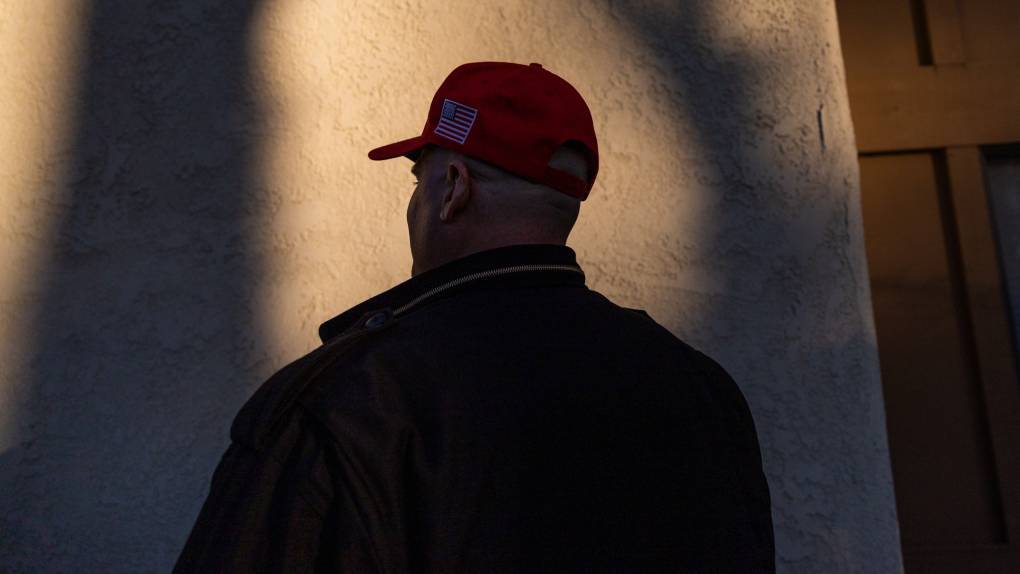
"caption": "Ben Pino in his neighborhood in Los Angeles County on May 7, 2025. A year into President Donald Trump’s second term, Californians who supported him offer a mixed verdict — from staunch approval to sharp disappointment. ",
"credit": "Julie Leopo for LAist",
"altTag": null,
"description": null,
"imgSizes": {
"medium": {
"file": "https://cdn.kqed.org/wp-content/uploads/sites/10/2025/05/CA-TRUMP-VOTERS-4-KQED-800x450.jpg",
"width": 800,
"height": 450,
"mimeType": "image/jpeg"
},
"large": {
"file": "https://cdn.kqed.org/wp-content/uploads/sites/10/2025/05/CA-TRUMP-VOTERS-4-KQED-1020x574.jpg",
"width": 1020,
"height": 574,
"mimeType": "image/jpeg"
},
"thumbnail": {
"file": "https://cdn.kqed.org/wp-content/uploads/sites/10/2025/05/CA-TRUMP-VOTERS-4-KQED-160x90.jpg",
"width": 160,
"height": 90,
"mimeType": "image/jpeg"
},
"1536x1536": {
"file": "https://cdn.kqed.org/wp-content/uploads/sites/10/2025/05/CA-TRUMP-VOTERS-4-KQED-1536x864.jpg",
"width": 1536,
"height": 864,
"mimeType": "image/jpeg"
},
"post-thumbnail": {
"file": "https://cdn.kqed.org/wp-content/uploads/sites/10/2025/05/CA-TRUMP-VOTERS-4-KQED-672x372.jpg",
"width": 672,
"height": 372,
"mimeType": "image/jpeg"
},
"twentyfourteen-full-width": {
"file": "https://cdn.kqed.org/wp-content/uploads/sites/10/2025/05/CA-TRUMP-VOTERS-4-KQED-1038x576.jpg",
"width": 1038,
"height": 576,
"mimeType": "image/jpeg"
},
"full-width": {
"file": "https://cdn.kqed.org/wp-content/uploads/sites/10/2025/05/CA-TRUMP-VOTERS-4-KQED-1920x1080.jpg",
"width": 1920,
"height": 1080,
"mimeType": "image/jpeg"
},
"kqedFullSize": {
"file": "https://cdn.kqed.org/wp-content/uploads/sites/10/2025/05/CA-TRUMP-VOTERS-4-KQED.jpg",
"width": 2000,
"height": 1125
}
},
"isLoading": false,
"fetchFailed": false
},
"news_12070605": {
"type": "attachments",
"id": "news_12070605",
"meta": {
"index": "attachments_1716263798",
"site": "news",
"id": "12070605",
"found": true
},
"title": "Orphans Evacuate From Zaporizhzhia To Western Ukraine",
"publishDate": 1769024061,
"status": "inherit",
"parent": 12070573,
"modified": 1769026246,
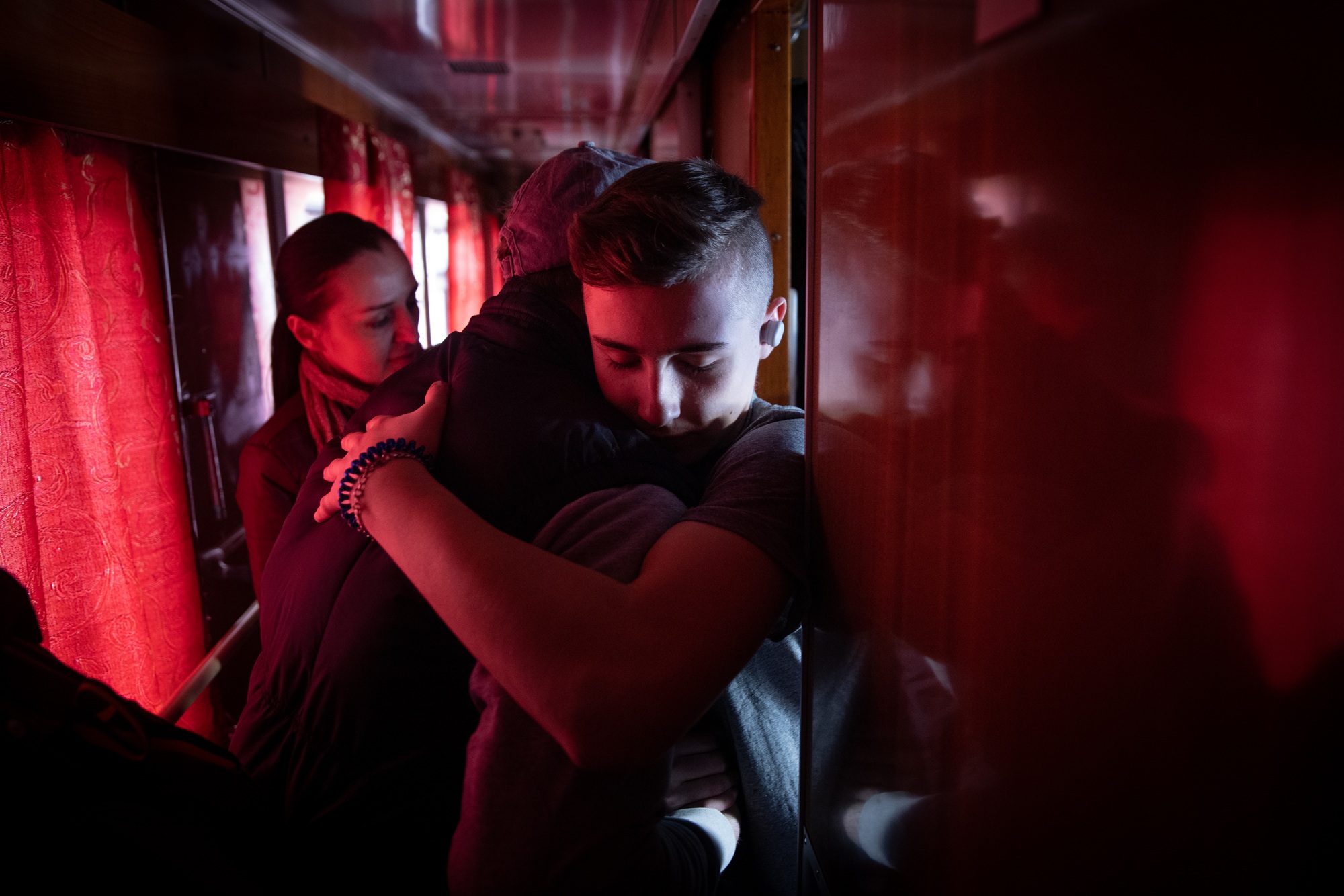
"caption": "An orphan boy hugs a volunteer goodbye after fleeing the town of Polohy, which has come under Russian control, before evacuating on a train from Zaporizhzhia to western Ukraine on March 26, 2022, in Zaporizhzhia, Ukraine. Tens of thousands of people remain trapped in Mariupol, a port city that has faced weeks of heavy bombardment by Russian forces. Civilians from Mariupol and the surrounding areas have fled to evacuation points in towns like Zaporizhzhia in Ukrainian-controlled territory, before moving on to safer areas in the western part of the country. ",
"credit": "Chris McGrath/Getty Images",
"altTag": null,
"description": null,
"imgSizes": {
"thumbnail": {
"file": "https://cdn.kqed.org/wp-content/uploads/sites/10/2026/01/Ukraine1-160x107.jpg",
"width": 160,
"height": 107,
"mimeType": "image/jpeg"
},
"1536x1536": {
"file": "https://cdn.kqed.org/wp-content/uploads/sites/10/2026/01/Ukraine1-1536x1025.jpg",
"width": 1536,
"height": 1025,
"mimeType": "image/jpeg"
},
"post-thumbnail": {
"file": "https://cdn.kqed.org/wp-content/uploads/sites/10/2026/01/Ukraine1-672x372.jpg",
"width": 672,
"height": 372,
"mimeType": "image/jpeg"
},
"twentyfourteen-full-width": {
"file": "https://cdn.kqed.org/wp-content/uploads/sites/10/2026/01/Ukraine1-1038x576.jpg",
"width": 1038,
"height": 576,
"mimeType": "image/jpeg"
},
"npr-cds-wide": {
"file": "https://cdn.kqed.org/wp-content/uploads/sites/10/2026/01/Ukraine1-1200x675.jpg",
"width": 1200,
"height": 675,
"mimeType": "image/jpeg"
},
"kqedFullSize": {
"file": "https://cdn.kqed.org/wp-content/uploads/sites/10/2026/01/Ukraine1.jpg",
"width": 2000,
"height": 1334
}
},
"isLoading": false,
"fetchFailed": false
},
"news_12070527": {
"type": "attachments",
"id": "news_12070527",
"meta": {
"index": "attachments_1716263798",
"site": "news",
"id": "12070527",
"found": true
},
"title": "Immigration California Senators",
"publishDate": 1768956943,
"status": "inherit",
"parent": 12070519,
"modified": 1768956998,
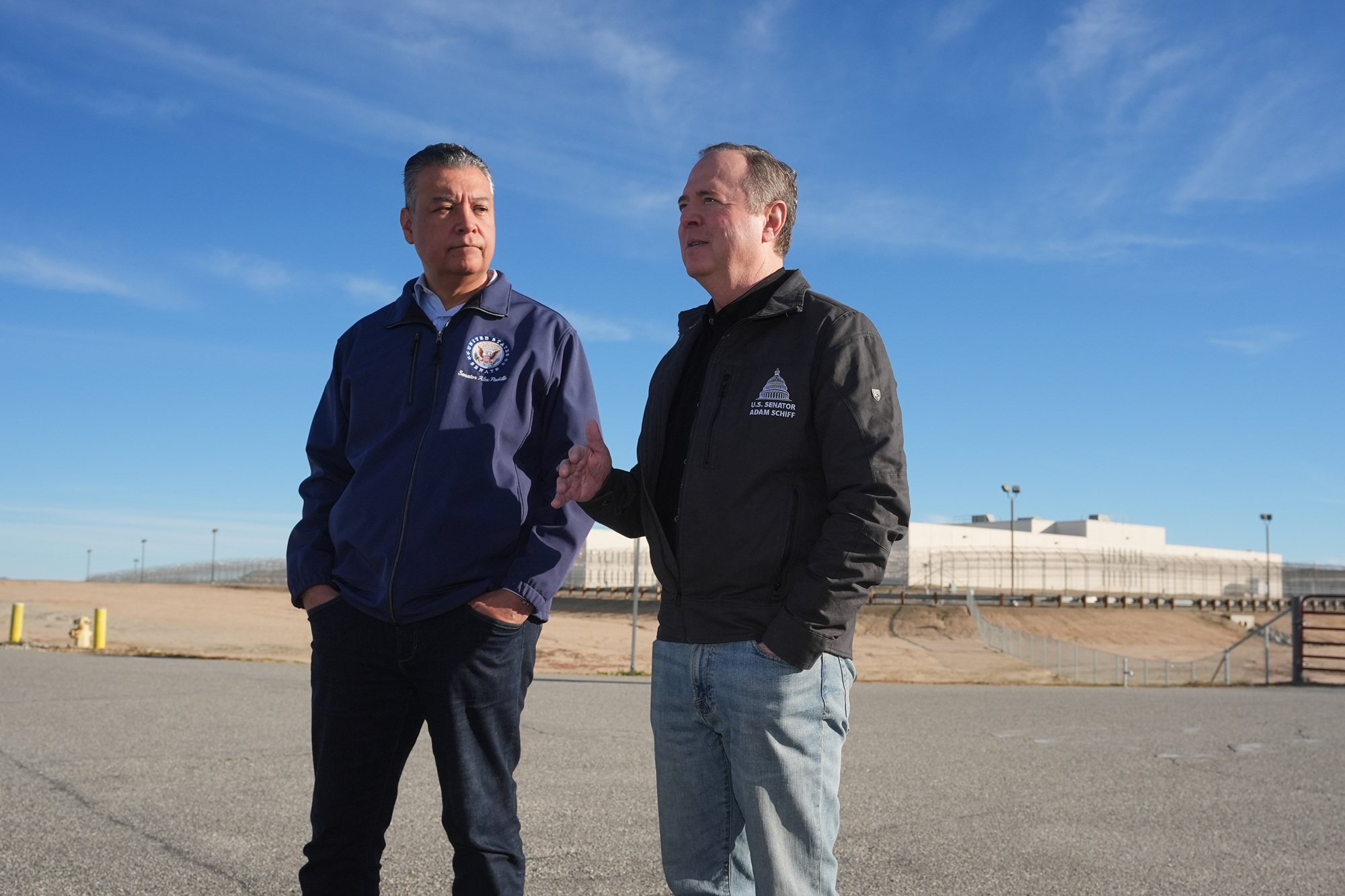
"caption": "Sen. Adam Schiff, D-California, right, and Sen. Alex Padilla, D-California, make a press statement during a visit to an immigration detention center on Tuesday, Jan. 20, 2026, in California City, California.",
"credit": "Marcio Jose Sanchez/AP Photo",
"altTag": null,
"description": null,
"imgSizes": {
"thumbnail": {
"file": "https://cdn.kqed.org/wp-content/uploads/sites/10/2026/01/AlexPadillaAdamSchiffAP-160x107.jpg",
"width": 160,
"height": 107,
"mimeType": "image/jpeg"
},
"1536x1536": {
"file": "https://cdn.kqed.org/wp-content/uploads/sites/10/2026/01/AlexPadillaAdamSchiffAP-1536x1024.jpg",
"width": 1536,
"height": 1024,
"mimeType": "image/jpeg"
},
"post-thumbnail": {
"file": "https://cdn.kqed.org/wp-content/uploads/sites/10/2026/01/AlexPadillaAdamSchiffAP-672x372.jpg",
"width": 672,
"height": 372,
"mimeType": "image/jpeg"
},
"twentyfourteen-full-width": {
"file": "https://cdn.kqed.org/wp-content/uploads/sites/10/2026/01/AlexPadillaAdamSchiffAP-1038x576.jpg",
"width": 1038,
"height": 576,
"mimeType": "image/jpeg"
},
"npr-cds-wide": {
"file": "https://cdn.kqed.org/wp-content/uploads/sites/10/2026/01/AlexPadillaAdamSchiffAP-1200x675.jpg",
"width": 1200,
"height": 675,
"mimeType": "image/jpeg"
},
"kqedFullSize": {
"file": "https://cdn.kqed.org/wp-content/uploads/sites/10/2026/01/AlexPadillaAdamSchiffAP.jpg",
"width": 2000,
"height": 1333
}
},
"isLoading": false,
"fetchFailed": false
},
"news_12070547": {
"type": "attachments",
"id": "news_12070547",
"meta": {
"index": "attachments_1716263798",
"site": "news",
"id": "12070547",
"found": true
},
"title": "260120-SFPROTEST00401_TV-KQED",
"publishDate": 1768964372,
"status": "inherit",
"parent": 0,
"modified": 1768964404,
"caption": "Protesters march against ICE in front of City Hall at Civic Center Plaza in San Francisco on January 20, 2026.",
"credit": "Tâm Vũ/KQED",
"altTag": null,
"description": null,
"imgSizes": {
"thumbnail": {
"file": "https://cdn.kqed.org/wp-content/uploads/sites/10/2026/01/260120-SFPROTEST00401_TV-KQED-160x107.jpg",
"width": 160,
"height": 107,
"mimeType": "image/jpeg"
},
"1536x1536": {
"file": "https://cdn.kqed.org/wp-content/uploads/sites/10/2026/01/260120-SFPROTEST00401_TV-KQED-1536x1024.jpg",
"width": 1536,
"height": 1024,
"mimeType": "image/jpeg"
},
"post-thumbnail": {
"file": "https://cdn.kqed.org/wp-content/uploads/sites/10/2026/01/260120-SFPROTEST00401_TV-KQED-672x372.jpg",
"width": 672,
"height": 372,
"mimeType": "image/jpeg"
},
"twentyfourteen-full-width": {
"file": "https://cdn.kqed.org/wp-content/uploads/sites/10/2026/01/260120-SFPROTEST00401_TV-KQED-1038x576.jpg",
"width": 1038,
"height": 576,
"mimeType": "image/jpeg"
},
"npr-cds-wide": {
"file": "https://cdn.kqed.org/wp-content/uploads/sites/10/2026/01/260120-SFPROTEST00401_TV-KQED-1200x675.jpg",
"width": 1200,
"height": 675,
"mimeType": "image/jpeg"
},
"kqedFullSize": {
"file": "https://cdn.kqed.org/wp-content/uploads/sites/10/2026/01/260120-SFPROTEST00401_TV-KQED.jpg",
"width": 2000,
"height": 1333
}
},
"isLoading": false,
"fetchFailed": false
},
"news_12070091": {
"type": "attachments",
"id": "news_12070091",
"meta": {
"index": "attachments_1716263798",
"site": "news",
"id": "12070091",
"found": true
},
"title": "260115-JAMES COOK-EF-01-KQED",
"publishDate": 1768518412,
"status": "inherit",
"parent": 0,
"modified": 1768607000,
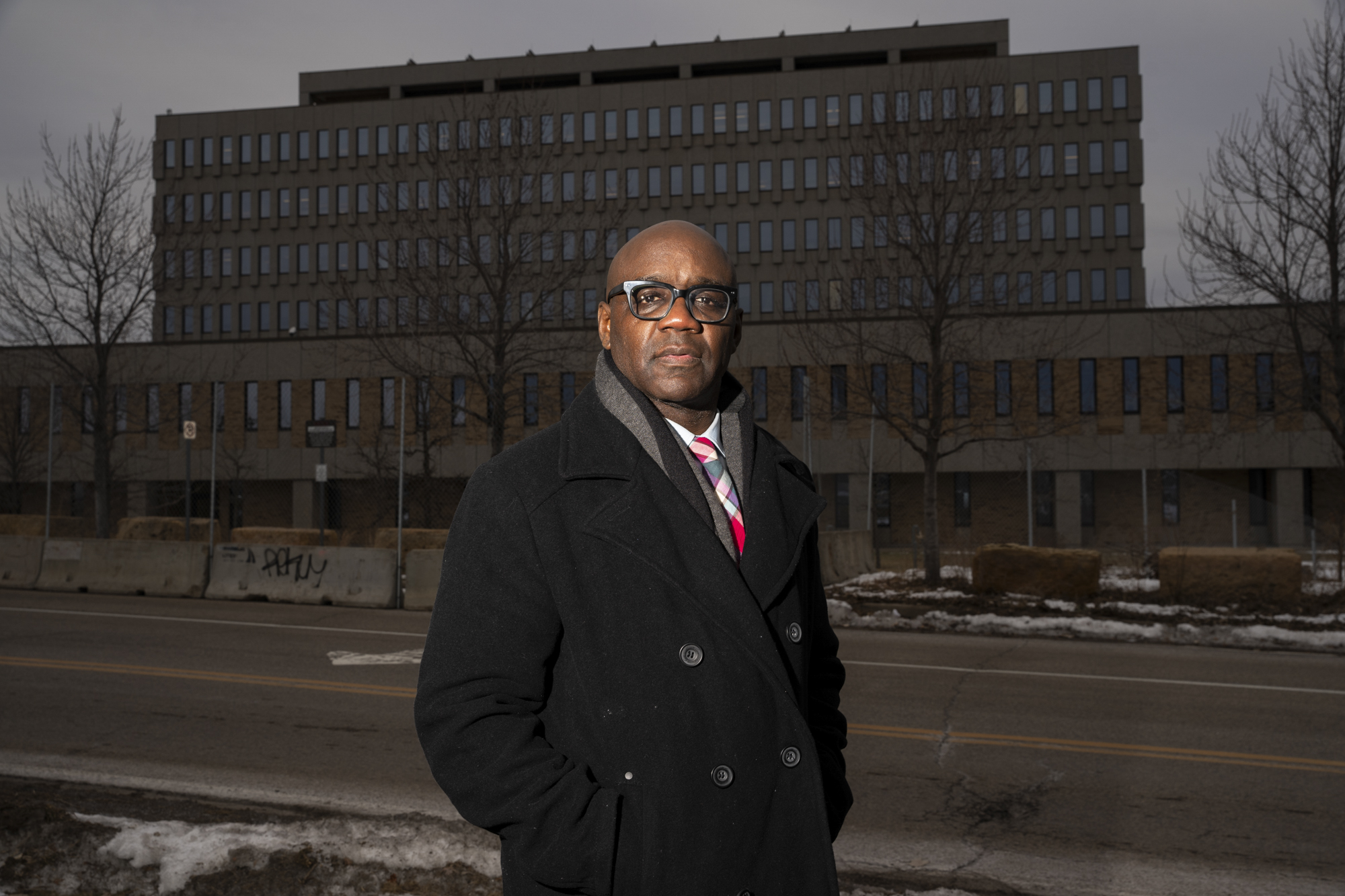
"caption": "Attorney James Cook stands for a portrait outside the Bishop Henry Whipple Federal Building in Minneapolis, Minnesota, on Thursday, Jan. 15, 2026. Evan Frost for KQED.",
"credit": "Evan Frost for KQED",
"altTag": null,
"description": null,
"imgSizes": {
"thumbnail": {
"file": "https://cdn.kqed.org/wp-content/uploads/sites/10/2026/01/260115-JAMES-COOK-EF-01-KQED-160x107.jpg",
"width": 160,
"height": 107,
"mimeType": "image/jpeg"
},
"1536x1536": {
"file": "https://cdn.kqed.org/wp-content/uploads/sites/10/2026/01/260115-JAMES-COOK-EF-01-KQED-1536x1024.jpg",
"width": 1536,
"height": 1024,
"mimeType": "image/jpeg"
},
"post-thumbnail": {
"file": "https://cdn.kqed.org/wp-content/uploads/sites/10/2026/01/260115-JAMES-COOK-EF-01-KQED-672x372.jpg",
"width": 672,
"height": 372,
"mimeType": "image/jpeg"
},
"twentyfourteen-full-width": {
"file": "https://cdn.kqed.org/wp-content/uploads/sites/10/2026/01/260115-JAMES-COOK-EF-01-KQED-1038x576.jpg",
"width": 1038,
"height": 576,
"mimeType": "image/jpeg"
},
"npr-cds-wide": {
"file": "https://cdn.kqed.org/wp-content/uploads/sites/10/2026/01/260115-JAMES-COOK-EF-01-KQED-1200x675.jpg",
"width": 1200,
"height": 675,
"mimeType": "image/jpeg"
},
"kqedFullSize": {
"file": "https://cdn.kqed.org/wp-content/uploads/sites/10/2026/01/260115-JAMES-COOK-EF-01-KQED.jpg",
"width": 2000,
"height": 1333
}
},
"isLoading": false,
"fetchFailed": false
},
"news_12055636": {
"type": "attachments",
"id": "news_12055636",
"meta": {
"index": "attachments_1716263798",
"site": "news",
"id": "12055636",
"found": true
},
"title": "ICE Protest",
"publishDate": 1757617766,
"status": "inherit",
"parent": 12055606,
"modified": 1757617873,
"caption": "The U.S. Immigration and Customs Enforcement (ICE) headquarters on April 14, 2025, in Washington, D.C. ",
"credit": "Pete Kiehart/The Washington Post via Getty Images",
"altTag": null,
"description": null,
"imgSizes": {
"thumbnail": {
"file": "https://cdn.kqed.org/wp-content/uploads/sites/10/2025/09/USImmigrationCustomsEnforcementHQGetty-160x107.jpg",
"width": 160,
"height": 107,
"mimeType": "image/jpeg"
},
"1536x1536": {
"file": "https://cdn.kqed.org/wp-content/uploads/sites/10/2025/09/USImmigrationCustomsEnforcementHQGetty-1536x1024.jpg",
"width": 1536,
"height": 1024,
"mimeType": "image/jpeg"
},
"post-thumbnail": {
"file": "https://cdn.kqed.org/wp-content/uploads/sites/10/2025/09/USImmigrationCustomsEnforcementHQGetty-672x372.jpg",
"width": 672,
"height": 372,
"mimeType": "image/jpeg"
},
"twentyfourteen-full-width": {
"file": "https://cdn.kqed.org/wp-content/uploads/sites/10/2025/09/USImmigrationCustomsEnforcementHQGetty-1038x576.jpg",
"width": 1038,
"height": 576,
"mimeType": "image/jpeg"
},
"kqedFullSize": {
"file": "https://cdn.kqed.org/wp-content/uploads/sites/10/2025/09/USImmigrationCustomsEnforcementHQGetty.jpg",
"width": 2000,
"height": 1333
}
},
"isLoading": false,
"fetchFailed": false
},
"news_12037387": {
"type": "attachments",
"id": "news_12037387",
"meta": {
"index": "attachments_1716263798",
"site": "news",
"id": "12037387",
"found": true
},
"title": "May Day Protests",
"publishDate": 1745447079,
"status": "inherit",
"parent": 12037376,
"modified": 1765486756,
"caption": "Protesters walk during a march in San Francisco on May 1, 2017. ",
"credit": "Jeff Chiu/AP Photo",
"altTag": null,
"description": "Protesters walk during a march in San Francisco on May 1, 2017. Immigrant groups and their allies have joined forces to carry out marches, rallies and protests in cities nationwide to mark May Day, saying there's renewed momentum to fight back against Trump administration policies. ",
"imgSizes": {
"medium": {
"file": "https://cdn.kqed.org/wp-content/uploads/sites/10/2025/04/SanctuaryCitySFTrumpAP-800x569.jpg",
"width": 800,
"height": 569,
"mimeType": "image/jpeg"
},
"large": {
"file": "https://cdn.kqed.org/wp-content/uploads/sites/10/2025/04/SanctuaryCitySFTrumpAP-1020x725.jpg",
"width": 1020,
"height": 725,
"mimeType": "image/jpeg"
},
"thumbnail": {
"file": "https://cdn.kqed.org/wp-content/uploads/sites/10/2025/04/SanctuaryCitySFTrumpAP-160x114.jpg",
"width": 160,
"height": 114,
"mimeType": "image/jpeg"
},
"1536x1536": {
"file": "https://cdn.kqed.org/wp-content/uploads/sites/10/2025/04/SanctuaryCitySFTrumpAP-1536x1092.jpg",
"width": 1536,
"height": 1092,
"mimeType": "image/jpeg"
},
"post-thumbnail": {
"file": "https://cdn.kqed.org/wp-content/uploads/sites/10/2025/04/SanctuaryCitySFTrumpAP-672x372.jpg",
"width": 672,
"height": 372,
"mimeType": "image/jpeg"
},
"twentyfourteen-full-width": {
"file": "https://cdn.kqed.org/wp-content/uploads/sites/10/2025/04/SanctuaryCitySFTrumpAP-1038x576.jpg",
"width": 1038,
"height": 576,
"mimeType": "image/jpeg"
},
"full-width": {
"file": "https://cdn.kqed.org/wp-content/uploads/sites/10/2025/04/SanctuaryCitySFTrumpAP-1920x1365.jpg",
"width": 1920,
"height": 1365,
"mimeType": "image/jpeg"
},
"kqedFullSize": {
"file": "https://cdn.kqed.org/wp-content/uploads/sites/10/2025/04/SanctuaryCitySFTrumpAP.jpg",
"width": 2000,
"height": 1422
}
},
"isLoading": false,
"fetchFailed": false
},
"news_12068661": {
"type": "attachments",
"id": "news_12068661",
"meta": {
"index": "attachments_1716263798",
"site": "news",
"id": "12068661",
"found": true
},
"title": "Nicolas Maduro Transported To Court Hearing",
"publishDate": 1767645947,
"status": "inherit",
"parent": 12068657,
"modified": 1780338615,
"caption": "Nicolas Maduro and his wife, Cilia Flores, are seen in handcuffs after landing at a Manhattan helipad, escorted by heavily armed Federal agents as they make their way into an armored car en route to a Federal courthouse in Manhattan on Jan. 5, 2026, in New York City. ",
"credit": "XNY/Star Max via GC Images",
"altTag": null,
"description": null,
"imgSizes": {
"thumbnail": {
"file": "https://cdn.kqed.org/wp-content/uploads/sites/10/2026/01/NicolasMaduroGetty-160x119.jpg",
"width": 160,
"height": 119,
"mimeType": "image/jpeg"
},
"1536x1536": {
"file": "https://cdn.kqed.org/wp-content/uploads/sites/10/2026/01/NicolasMaduroGetty-1536x1140.jpg",
"width": 1536,
"height": 1140,
"mimeType": "image/jpeg"
},
"post-thumbnail": {
"file": "https://cdn.kqed.org/wp-content/uploads/sites/10/2026/01/NicolasMaduroGetty-672x372.jpg",
"width": 672,
"height": 372,
"mimeType": "image/jpeg"
},
"twentyfourteen-full-width": {
"file": "https://cdn.kqed.org/wp-content/uploads/sites/10/2026/01/NicolasMaduroGetty-1038x576.jpg",
"width": 1038,
"height": 576,
"mimeType": "image/jpeg"
},
"npr-cds-wide": {
"file": "https://cdn.kqed.org/wp-content/uploads/sites/10/2026/01/NicolasMaduroGetty-1200x675.jpg",
"width": 1200,
"height": 675,
"mimeType": "image/jpeg"
},
"kqedFullSize": {
"file": "https://cdn.kqed.org/wp-content/uploads/sites/10/2026/01/NicolasMaduroGetty.jpg",
"width": 2000,
"height": 1485
}
},
"isLoading": false,
"fetchFailed": false
},
"news_12054567": {
"type": "attachments",
"id": "news_12054567",
"meta": {
"index": "attachments_1716263798",
"site": "news",
"id": "12054567",
"found": true
},
"title": "US-POLITICS-IMMIGRATION",
"publishDate": 1756941444,
"status": "inherit",
"parent": 12054544,
"modified": 1769006278,
"caption": "The CoreCivic, Inc. California City Immigration Processing Center stands in the Kern County desert on July 10, 2025.",
"credit": "Patrick T. Fallon/AFP via Getty Images",
"altTag": null,
"description": null,
"imgSizes": {
"thumbnail": {
"file": "https://cdn.kqed.org/wp-content/uploads/sites/10/2025/09/KernCountyICEDetentionGetty-160x107.jpg",
"width": 160,
"height": 107,
"mimeType": "image/jpeg"
},
"1536x1536": {
"file": "https://cdn.kqed.org/wp-content/uploads/sites/10/2025/09/KernCountyICEDetentionGetty-1536x1024.jpg",
"width": 1536,
"height": 1024,
"mimeType": "image/jpeg"
},
"post-thumbnail": {
"file": "https://cdn.kqed.org/wp-content/uploads/sites/10/2025/09/KernCountyICEDetentionGetty-672x372.jpg",
"width": 672,
"height": 372,
"mimeType": "image/jpeg"
},
"twentyfourteen-full-width": {
"file": "https://cdn.kqed.org/wp-content/uploads/sites/10/2025/09/KernCountyICEDetentionGetty-1038x576.jpg",
"width": 1038,
"height": 576,
"mimeType": "image/jpeg"
},
"kqedFullSize": {
"file": "https://cdn.kqed.org/wp-content/uploads/sites/10/2025/09/KernCountyICEDetentionGetty.jpg",
"width": 2000,
"height": 1333
}
},
"isLoading": false,
"fetchFailed": false
},
"news_12069121": {
"type": "attachments",
"id": "news_12069121",
"meta": {
"index": "attachments_1716263798",
"site": "news",
"id": "12069121",
"found": true
},
"title": "Renee Nicole Good Killing Protest",
"publishDate": 1767905302,
"status": "inherit",
"parent": 12069104,
"modified": 1768001664,
"caption": "Protesters take part in a vigil for Renee Nicole Good at Fruitvale Plaza Park in Oakland, California, on Wednesday, Jan. 7, 2025. Good, a legal observer, was fatally shot by an ICE agent in Minneapolis on Wednesday. ",
"credit": "Jane Tyska/Digital First Media/East Bay Times via Getty Images",
"altTag": null,
"description": null,
"imgSizes": {
"thumbnail": {
"file": "https://cdn.kqed.org/wp-content/uploads/sites/10/2026/01/ReneeGoodProtestOaklandGetty-160x114.jpg",
"width": 160,
"height": 114,
"mimeType": "image/jpeg"
},
"1536x1536": {
"file": "https://cdn.kqed.org/wp-content/uploads/sites/10/2026/01/ReneeGoodProtestOaklandGetty-1536x1096.jpg",
"width": 1536,
"height": 1096,
"mimeType": "image/jpeg"
},
"post-thumbnail": {
"file": "https://cdn.kqed.org/wp-content/uploads/sites/10/2026/01/ReneeGoodProtestOaklandGetty-672x372.jpg",
"width": 672,
"height": 372,
"mimeType": "image/jpeg"
},
"twentyfourteen-full-width": {
"file": "https://cdn.kqed.org/wp-content/uploads/sites/10/2026/01/ReneeGoodProtestOaklandGetty-1038x576.jpg",
"width": 1038,
"height": 576,
"mimeType": "image/jpeg"
},
"npr-cds-wide": {
"file": "https://cdn.kqed.org/wp-content/uploads/sites/10/2026/01/ReneeGoodProtestOaklandGetty-1200x675.jpg",
"width": 1200,
"height": 675,
"mimeType": "image/jpeg"
},
"kqedFullSize": {
"file": "https://cdn.kqed.org/wp-content/uploads/sites/10/2026/01/ReneeGoodProtestOaklandGetty.jpg",
"width": 2000,
"height": 1427
}
},
"isLoading": false,
"fetchFailed": false
},
"news_12068971": {
"type": "attachments",
"id": "news_12068971",
"meta": {
"index": "attachments_1716263798",
"site": "news",
"id": "12068971",
"found": true
},
"title": "250820-ICEActivity-05_qed",
"publishDate": 1767820146,
"status": "inherit",
"parent": 12068969,
"modified": 1767829411,
"caption": "100 Montgomery St., the location of the San Francisco Immigration Court, on Aug. 20, 2025.",
"credit": "Beth LaBerge/KQED",
"altTag": null,
"description": null,
"imgSizes": {
"thumbnail": {
"file": "https://cdn.kqed.org/wp-content/uploads/sites/10/2026/01/250820-ICEActivity-05_qed-160x107.jpg",
"width": 160,
"height": 107,
"mimeType": "image/jpeg"
},
"1536x1536": {
"file": "https://cdn.kqed.org/wp-content/uploads/sites/10/2026/01/250820-ICEActivity-05_qed-1536x1024.jpg",
"width": 1536,
"height": 1024,
"mimeType": "image/jpeg"
},
"post-thumbnail": {
"file": "https://cdn.kqed.org/wp-content/uploads/sites/10/2026/01/250820-ICEActivity-05_qed-672x372.jpg",
"width": 672,
"height": 372,
"mimeType": "image/jpeg"
},
"twentyfourteen-full-width": {
"file": "https://cdn.kqed.org/wp-content/uploads/sites/10/2026/01/250820-ICEActivity-05_qed-1038x576.jpg",
"width": 1038,
"height": 576,
"mimeType": "image/jpeg"
},
"npr-cds-wide": {
"file": "https://cdn.kqed.org/wp-content/uploads/sites/10/2026/01/250820-ICEActivity-05_qed-1200x675.jpg",
"width": 1200,
"height": 675,
"mimeType": "image/jpeg"
},
"kqedFullSize": {
"file": "https://cdn.kqed.org/wp-content/uploads/sites/10/2026/01/250820-ICEActivity-05_qed.jpg",
"width": 1999,
"height": 1333
}
},
"isLoading": false,
"fetchFailed": false
},
"news_12058519": {
"type": "attachments",
"id": "news_12058519",
"meta": {
"index": "attachments_1716263798",
"site": "news",
"id": "12058519",
"found": true
},
"title": "Yosemite National Park To Begin Reservations",
"publishDate": 1759449230,
"status": "inherit",
"parent": 12058508,
"modified": 1759449259,
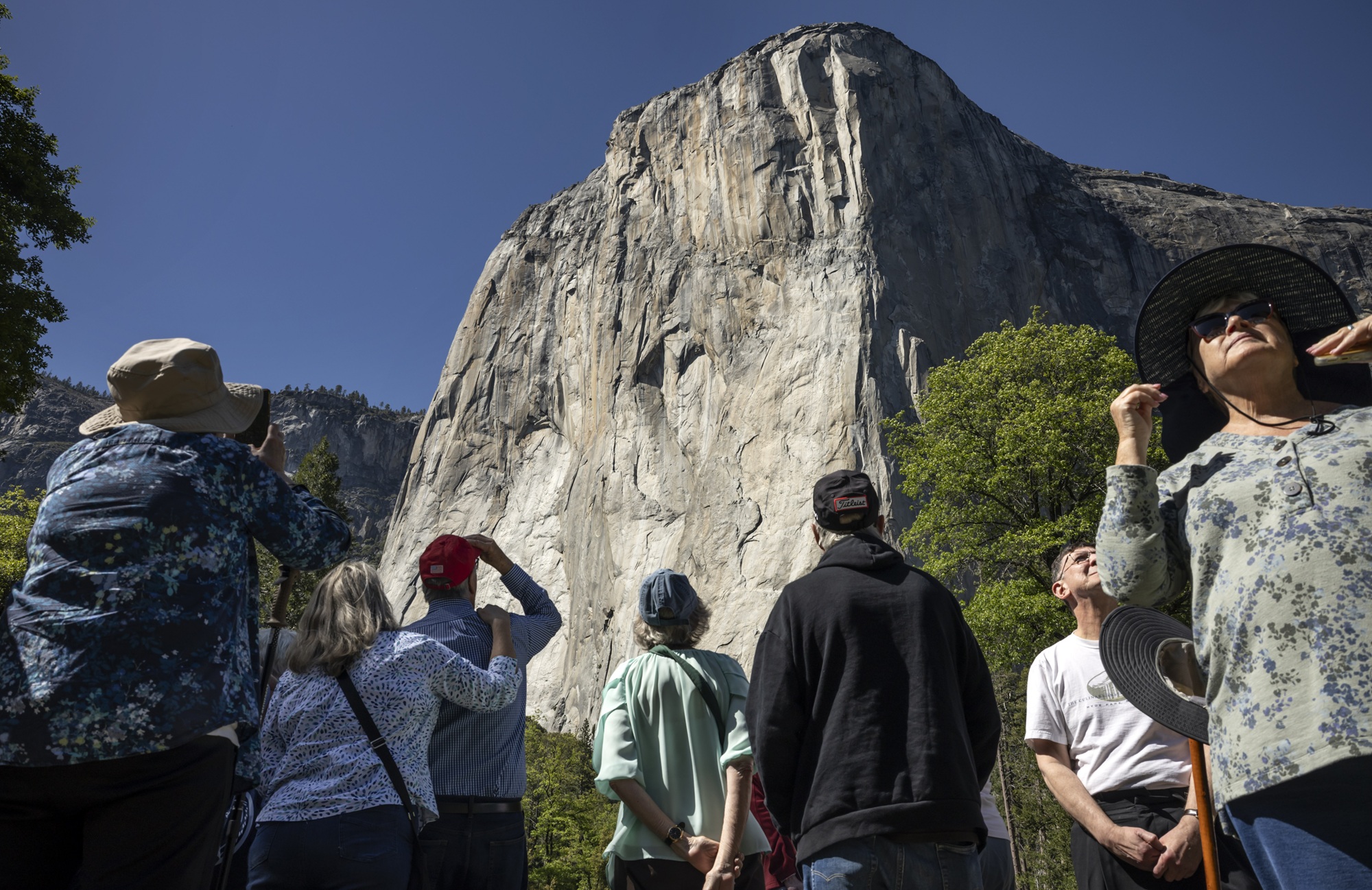
"caption": "Visitors look up at El Capitan from El Capitan Meadow in Yosemite National Park, California, on May 20, 2025. ",
"credit": "Carlos Avila Gonzalez/San Francisco Chronicle via Getty Images",
"altTag": null,
"description": null,
"imgSizes": {
"thumbnail": {
"file": "https://cdn.kqed.org/wp-content/uploads/sites/10/2025/10/YosemiteGetty-160x104.jpg",
"width": 160,
"height": 104,
"mimeType": "image/jpeg"
},
"1536x1536": {
"file": "https://cdn.kqed.org/wp-content/uploads/sites/10/2025/10/YosemiteGetty-1536x997.jpg",
"width": 1536,
"height": 997,
"mimeType": "image/jpeg"
},
"post-thumbnail": {
"file": "https://cdn.kqed.org/wp-content/uploads/sites/10/2025/10/YosemiteGetty-672x372.jpg",
"width": 672,
"height": 372,
"mimeType": "image/jpeg"
},
"twentyfourteen-full-width": {
"file": "https://cdn.kqed.org/wp-content/uploads/sites/10/2025/10/YosemiteGetty-1038x576.jpg",
"width": 1038,
"height": 576,
"mimeType": "image/jpeg"
},
"kqedFullSize": {
"file": "https://cdn.kqed.org/wp-content/uploads/sites/10/2025/10/YosemiteGetty.jpg",
"width": 2000,
"height": 1298
}
},
"isLoading": false,
"fetchFailed": false
}
},
"audioPlayerReducer": {
"postId": "stream_live",
"isPaused": true,
"isPlaying": false,
"pfsActive": false,
"pledgeModalIsOpen": true,
"playerDrawerIsOpen": false,
"liveAudioPlayStartedAt": 0,
"liveAudioPlayContext": ""
},
"authorsReducer": {
"byline_news_12070573": {
"type": "authors",
"id": "byline_news_12070573",
"meta": {
"override": true
},
"slug": "byline_news_12070573",
"name": "Maria Kostenko and Anna Nemtsova",
"isLoading": false
},
"tychehendricks": {
"type": "authors",
"id": "259",
"meta": {
"index": "authors_1716337520",
"id": "259",
"found": true
},
"name": "Tyche Hendricks",
"firstName": "Tyche",
"lastName": "Hendricks",
"slug": "tychehendricks",
"email": "thendricks@kqed.org",
"display_author_email": true,
"staff_mastheads": [
"news"
],
"title": "KQED Senior Editor, Immigration",
"bio": "\u003cspan style=\"font-weight: 400;\">Tyche Hendricks is KQED’s senior editor for immigration, leading coverage of the policy and politics that affect California’s immigrant communities. Her work for KQED’s radio and online audiences is also carried on NPR and other national outlets. She has been recognized with awards from the Radio and Television News Directors Association, the Society for Professional Journalists; the Education Writers Association; the Best of the West and the National Federation of Community Broadcasters. Before joining KQED in 2010, Tyche spent more than a dozen years as a newspaper reporter, notably at the \u003c/span>\u003ci>\u003cspan style=\"font-weight: 400;\">San Francisco Chronicle\u003c/span>\u003c/i>\u003cspan style=\"font-weight: 400;\">. At different times she has covered criminal justice, government and politics and urban planning. Tyche has taught in the MFA Creative Writing program at the University of San Francisco and at UC Berkeley’s Graduate School of Journalism, where she was co-director of a national immigration symposium for professional journalists. She is the author of \u003c/span>\u003ci>\u003cspan style=\"font-weight: 400;\">The Wind Doesn't Need a Passport: Stories from the U.S.-Mexico Borderlands\u003c/span>\u003c/i>\u003cspan style=\"font-weight: 400;\"> (University of California Press). \u003c/span>",
"avatar": "https://secure.gravatar.com/avatar/b8ee458e2731c2d43df86882ce17267e?s=600&d=blank&r=g",
"twitter": "tychehendricks",
"facebook": null,
"instagram": null,
"linkedin": null,
"sites": [
{
"site": "news",
"roles": [
"editor"
]
},
{
"site": "stateofhealth",
"roles": [
"editor"
]
}
],
"headData": {
"title": "Tyche Hendricks | KQED",
"description": "KQED Senior Editor, Immigration",
"ogImgSrc": "https://secure.gravatar.com/avatar/b8ee458e2731c2d43df86882ce17267e?s=600&d=blank&r=g",
"twImgSrc": "https://secure.gravatar.com/avatar/b8ee458e2731c2d43df86882ce17267e?s=600&d=blank&r=g"
},
"isLoading": false,
"link": "/author/tychehendricks"
},
"btorres": {
"type": "authors",
"id": "11666",
"meta": {
"index": "authors_1716337520",
"id": "11666",
"found": true
},
"name": "Blanca Torres",
"firstName": "Blanca",
"lastName": "Torres",
"slug": "btorres",
"email": "btorres@kqed.org",
"display_author_email": true,
"staff_mastheads": [
"news"
],
"title": "Producer, Forum",
"bio": "Blanca Torres brings sharp news judgement and keen sense of lively conversation to her work as producer for Forum. She loves producing shows that leave listeners feeling like they heard distinctive voices, learned something new and gained a fresh perspective.\r\n\r\nShe joined KQED in January of 2020 after 16 years of working as a newspaper reporter most recently at the \u003cem>San Francisco Business Times,\u003c/em> where she wrote about real estate and economic development. Before that, she covered a variety of beats including crime, education, retail, workplace, the economy, consumer issues, and small business for the \u003cem>Contra Costa Times, Baltimore Sun\u003c/em> and\u003cem> The Seattle Times\u003c/em>. In addition to reporting, she worked as an editorial writer and columnist for the \u003cem>Seattle Times\u003c/em>. From 2017 to 2020, Blanca won a total of ten awards from the National Association of Real Estate Editors and won first place for land use reporting from the California News Publishers Association two years in a row. She is also a member and former board member for the National Association of Hispanic Journalists.\r\n\r\nA native of the Pacific Northwest, Blanca earned her bachelor's degree from Vanderbilt University in Nashville and a master's in fine arts in creative writing at Mills College. She lives in the East Bay with her family.",
"avatar": "https://secure.gravatar.com/avatar/50b49d19b14a1eed34f26ebf4681152cdd81574ed21851100871ccd29e578cdc?s=600&d=blank&r=g",
"twitter": "@blancawrites",
"bluesky": null,
"facebook": null,
"instagram": null,
"linkedin": null,
"sites": [
{
"site": "arts",
"roles": [
"editor"
]
},
{
"site": "news",
"roles": [
"editor"
]
},
{
"site": "forum",
"roles": [
"editor"
]
}
],
"headData": {
"title": "Blanca Torres | KQED",
"description": "Producer, Forum",
"ogImgSrc": "https://secure.gravatar.com/avatar/50b49d19b14a1eed34f26ebf4681152cdd81574ed21851100871ccd29e578cdc?s=600&d=blank&r=g",
"twImgSrc": "https://secure.gravatar.com/avatar/50b49d19b14a1eed34f26ebf4681152cdd81574ed21851100871ccd29e578cdc?s=600&d=blank&r=g"
},
"isLoading": false,
"link": "/author/btorres"
},
"jlara": {
"type": "authors",
"id": "11761",
"meta": {
"index": "authors_1716337520",
"id": "11761",
"found": true
},
"name": "Juan Carlos Lara",
"firstName": "Juan Carlos",
"lastName": "Lara",
"slug": "jlara",
"email": "jlara@kqed.org",
"display_author_email": false,
"staff_mastheads": [],
"title": "KQED Contributor",
"bio": null,
"avatar": "https://secure.gravatar.com/avatar/19e2052b9b05657c5ff2af2121846e9c?s=600&d=blank&r=g",
"twitter": null,
"facebook": null,
"instagram": null,
"linkedin": null,
"sites": [
{
"site": "arts",
"roles": [
"editor"
]
},
{
"site": "news",
"roles": [
"editor"
]
},
{
"site": "forum",
"roles": [
"editor"
]
},
{
"site": "liveblog",
"roles": [
"contributor"
]
}
],
"headData": {
"title": "Juan Carlos Lara | KQED",
"description": "KQED Contributor",
"ogImgSrc": "https://secure.gravatar.com/avatar/19e2052b9b05657c5ff2af2121846e9c?s=600&d=blank&r=g",
"twImgSrc": "https://secure.gravatar.com/avatar/19e2052b9b05657c5ff2af2121846e9c?s=600&d=blank&r=g"
},
"isLoading": false,
"link": "/author/jlara"
},
"adahlstromeckman": {
"type": "authors",
"id": "11785",
"meta": {
"index": "authors_1716337520",
"id": "11785",
"found": true
},
"name": "Azul Dahlstrom-Eckman",
"firstName": "Azul",
"lastName": "Dahlstrom-Eckman",
"slug": "adahlstromeckman",
"email": "adahlstrom-eckman@kqed.org",
"display_author_email": true,
"staff_mastheads": [],
"title": "Reporter",
"bio": "Azul is a reporter for KQED focusing on transportation and features. He joined KQED in 2021 as an alumna of KALW's Audio Academy radio journalism training program.",
"avatar": "https://secure.gravatar.com/avatar/9cb750298435add7815a777f55bf1f46845c1386bb8452555c60a7b820b5aba3?s=600&d=blank&r=g",
"twitter": "@zuliemann",
"bluesky": "@azul415.bsky.social",
"facebook": null,
"instagram": null,
"linkedin": null,
"sites": [
{
"site": "arts",
"roles": [
"editor"
]
},
{
"site": "news",
"roles": [
"editor"
]
},
{
"site": "science",
"roles": [
"editor"
]
},
{
"site": "liveblog",
"roles": [
"author"
]
}
],
"headData": {
"title": "Azul Dahlstrom-Eckman | KQED",
"description": "Reporter",
"ogImgSrc": "https://secure.gravatar.com/avatar/9cb750298435add7815a777f55bf1f46845c1386bb8452555c60a7b820b5aba3?s=600&d=blank&r=g",
"twImgSrc": "https://secure.gravatar.com/avatar/9cb750298435add7815a777f55bf1f46845c1386bb8452555c60a7b820b5aba3?s=600&d=blank&r=g"
},
"isLoading": false,
"link": "/author/adahlstromeckman"
},
"ibloom": {
"type": "authors",
"id": "11805",
"meta": {
"index": "authors_1716337520",
"id": "11805",
"found": true
},
"name": "Izzy Bloom",
"firstName": "Izzy",
"lastName": "Bloom",
"slug": "ibloom",
"email": "ibloom@kqed.org",
"display_author_email": false,
"staff_mastheads": [],
"title": "KQED Reporter & Producer",
"bio": "Izzy is a reporter and producer on KQED's California Politics & Government Desk. She joined the desk in 2024 to produce Political Breakdown, covering local and national elections and attending the RNC and DNC in Milwaukee and Chicago. \r\n\r\nBefore that, Izzy was a producer on The California Report and reported long-form stories for The California Report Magazine. She was a finalist for the Third Coast/Richard H. Driehaus Foundation Competition and was awarded for her reporting on indigenous land back by the Society of Professional Journalists. Izzy received her master's in journalism from the University of California, Berkeley.",
"avatar": "https://secure.gravatar.com/avatar/cc4d272ca430783ee1a8efac470a6b1e0fdd082c3beb61da019801d0ff751c8c?s=600&d=blank&r=g",
"twitter": null,
"bluesky": null,
"facebook": null,
"instagram": null,
"linkedin": null,
"sites": [
{
"site": "news",
"roles": [
"editor"
]
},
{
"site": "perspectives",
"roles": [
"editor"
]
}
],
"headData": {
"title": "Izzy Bloom | KQED",
"description": "KQED Reporter & Producer",
"ogImgSrc": "https://secure.gravatar.com/avatar/cc4d272ca430783ee1a8efac470a6b1e0fdd082c3beb61da019801d0ff751c8c?s=600&d=blank&r=g",
"twImgSrc": "https://secure.gravatar.com/avatar/cc4d272ca430783ee1a8efac470a6b1e0fdd082c3beb61da019801d0ff751c8c?s=600&d=blank&r=g"
},
"isLoading": false,
"link": "/author/ibloom"
},
"kdebenedetti": {
"type": "authors",
"id": "11913",
"meta": {
"index": "authors_1716337520",
"id": "11913",
"found": true
},
"name": "Katie DeBenedetti",
"firstName": "Katie",
"lastName": "DeBenedetti",
"slug": "kdebenedetti",
"email": "kdebenedetti@kqed.org",
"display_author_email": false,
"staff_mastheads": [
"news",
"science"
],
"title": "KQED Contributor",
"bio": "Katie DeBenedetti is a digital reporter covering daily news for the Express Desk. Prior to joining KQED as a culture reporting intern in January 2024, she covered education and city government for the Napa Valley Register.",
"avatar": "https://secure.gravatar.com/avatar/6e31073cb8f7e4214ab03f42771d0f45?s=600&d=blank&r=g",
"twitter": null,
"facebook": null,
"instagram": null,
"linkedin": null,
"sites": [
{
"site": "news",
"roles": [
"author"
]
},
{
"site": "science",
"roles": [
"author"
]
},
{
"site": "liveblog",
"roles": [
"author"
]
}
],
"headData": {
"title": "Katie DeBenedetti | KQED",
"description": "KQED Contributor",
"ogImgSrc": "https://secure.gravatar.com/avatar/6e31073cb8f7e4214ab03f42771d0f45?s=600&d=blank&r=g",
"twImgSrc": "https://secure.gravatar.com/avatar/6e31073cb8f7e4214ab03f42771d0f45?s=600&d=blank&r=g"
},
"isLoading": false,
"link": "/author/kdebenedetti"
},
"sarahwright": {
"type": "authors",
"id": "11956",
"meta": {
"index": "authors_1716337520",
"id": "11956",
"found": true
},
"name": "Sarah Wright",
"firstName": "Sarah",
"lastName": "Wright",
"slug": "sarahwright",
"email": "swright@kqed.org",
"display_author_email": true,
"staff_mastheads": [],
"title": "Outdoors Engagement Reporter",
"bio": "Sarah Wright is KQED's Outdoors Engagement Reporter. Originally from Lake Tahoe, she completed a thru-hike of the Pacific Crest Trail in 2019 and was a U.S. Fulbright Program grantee to Argentina in 2023. Her journalism has appeared in The Guardian, The San Francisco Standard, The Palo Alto Weekly and the Half Moon Bay Review.",
"avatar": "https://secure.gravatar.com/avatar/c161a3d6441865cba25e6db4fa561099ad665799e9432e34da2b84d7e371524c?s=600&d=blank&r=g",
"twitter": null,
"bluesky": null,
"facebook": null,
"instagram": null,
"linkedin": null,
"sites": [
{
"site": "arts",
"roles": [
"editor"
]
},
{
"site": "news",
"roles": [
"editor"
]
},
{
"site": "science",
"roles": [
"contributor",
"author"
]
},
{
"site": "forum",
"roles": [
"editor"
]
}
],
"headData": {
"title": "Sarah Wright | KQED",
"description": "Outdoors Engagement Reporter",
"ogImgSrc": "https://secure.gravatar.com/avatar/c161a3d6441865cba25e6db4fa561099ad665799e9432e34da2b84d7e371524c?s=600&d=blank&r=g",
"twImgSrc": "https://secure.gravatar.com/avatar/c161a3d6441865cba25e6db4fa561099ad665799e9432e34da2b84d7e371524c?s=600&d=blank&r=g"
},
"isLoading": false,
"link": "/author/sarahwright"
}
},
"pagesReducer": {
"news_category_immigration": {
"type": "terms",
"id": "news_1169",
"meta": {
"index": "terms_1716263798",
"site": "news",
"id": "1169",
"score": 10.909687
},
"featImg": null,
"name": "Immigration",
"description": null,
"taxonomy": "category",
"headData": {
"twImgId": null,
"twTitle": null,
"ogTitle": null,
"ogImgId": null,
"twDescription": null,
"description": null,
"title": "Immigration Archives | KQED News",
"ogDescription": null
},
"ttid": 1180,
"slug": "immigration",
"isLoading": false,
"title": "Immigration",
"pageMeta": {
"site": "news",
"WpPageTemplate": "page-topic-editorial",
"currentPage": 13
},
"blocks": [
{
"blockName": "kqed/post-list",
"attrs": {
"layout": "cardArticle2",
"query": "posts/news?category=immigration",
"seeMore": false,
"paginated": true,
"page": 13
}
},
{
"blockName": "kqed/ad"
}
]
}
},
"pfsSessionReducer": {},
"postsReducer": {
"stream_live": {
"type": "live",
"id": "stream_live",
"audioUrl": "https://streams.kqed.org/kqedradio",
"title": "Live Stream",
"excerpt": "Live Stream information currently unavailable.",
"link": "/radio",
"featImg": "",
"label": {
"name": "KQED Live",
"link": "/"
}
},
"stream_kqedNewscast": {
"type": "posts",
"id": "stream_kqedNewscast",
"audioUrl": "https://www.kqed.org/.stream/anon/radio/RDnews/newscast.mp3?_=1",
"title": "KQED Newscast",
"featImg": "",
"label": {
"name": "88.5 FM",
"link": "/"
}
},
"news_12070480": {
"type": "posts",
"id": "news_12070480",
"meta": {
"index": "posts_1716263798",
"site": "news",
"id": "12070480",
"score": null,
"sort": [
1769526044000
]
},
"guestAuthors": [],
"slug": "one-year-in-california-trump-voters-take-stock-of-his-second-term",
"title": "1 Year in, California Trump Voters Take Stock of His Second Term",
"publishDate": 1769526044,
"format": "standard",
"headTitle": "1 Year in, California Trump Voters Take Stock of His Second Term | KQED",
"labelTerm": {
"site": "news"
},
"content": "\u003cp>One year into President \u003ca href=\"https://www.kqed.org/news/tag/donald-trump\">Donald Trump\u003c/a>’s second term, Californians who voted for him are mostly happy with how his policies have played out so far.\u003c/p>\n\u003cp>Trump’s support among California Republicans has slipped to 79%, down from 84% near the start of his term, according to a Public Policy Institute of California\u003ca href=\"https://www.ppic.org/publication/ppic-statewide-survey-californians-and-their-government-december-2025/\"> poll\u003c/a> released last month.\u003c/p>\n\u003cp>The survey found that Californians name the cost of living and the economy as the most important issues facing the state today. Those concerns also dominated follow-up conversations KQED had with voters first interviewed \u003ca href=\"https://www.kqed.org/news/12039390/do-california-trump-supporters-have-buyers-remorse-not-so-far\">100 days\u003c/a> into Trump’s second administration.\u003c/p>\n\u003cp>[ad fullwidth]\u003c/p>\n\u003cp>From Southern California and the Central Valley to the North Coast, seven voters offer a mixed review of Trump’s performance. They weigh in on a range of issues, including sweeping tariffs, immigration raids, National Guard deployments and a redistricting battle.\u003c/p>\n\u003cp>While there is general support for his “America First” platform, they are divided on whether the president’s actions fulfill that mandate. Several also criticized Trump’s rhetoric and tone.\u003c/p>\n\u003ch2>\u003cstrong>Emerson Green, 26, El Dorado County\u003c/strong>\u003c/h2>\n\u003cp>Of all of his expectations for Trump’s second term, Emerson Green had been most optimistic that the president would improve the economy. Instead, he said he’s deeply disappointed and believes Trump let him down.\u003c/p>\n\u003cp>“I wish I never voted for him,” Green said. “It’s not that he lied or he didn’t hold up his promise. It is that he did the exact opposite, with intent, of what he promised he was going to do.”\u003c/p>\n\u003cp>Since Trump returned to the White House, Green got engaged and is expecting a baby in May. The 26-year-old now works at O’Reilly Auto Parts after changing jobs twice last year. He said he’s noticed the cost of some car parts rising because of tariffs, though not as dramatically as he expected when Trump announced his \u003ca href=\"https://www.kqed.org/news/12033974/trumps-april-2nd-liberation-day\">“Liberation Day” tariffs\u003c/a> last April.\u003c/p>\n\u003cfigure id=\"attachment_12039098\" class=\"wp-caption aligncenter\" style=\"max-width: 1489px\">\u003ca href=\"https://cdn.kqed.org/wp-content/uploads/sites/10/2025/05/250505-EMERSON-02-BL-KQED.jpg\">\u003cimg loading=\"lazy\" decoding=\"async\" class=\"size-full wp-image-12039098\" src=\"https://cdn.kqed.org/wp-content/uploads/sites/10/2025/05/250505-EMERSON-02-BL-KQED.jpg\" alt=\"\" width=\"1489\" height=\"993\" srcset=\"https://cdn.kqed.org/wp-content/uploads/sites/10/2025/05/250505-EMERSON-02-BL-KQED.jpg 1489w, https://cdn.kqed.org/wp-content/uploads/sites/10/2025/05/250505-EMERSON-02-BL-KQED-800x534.jpg 800w, https://cdn.kqed.org/wp-content/uploads/sites/10/2025/05/250505-EMERSON-02-BL-KQED-1020x680.jpg 1020w, https://cdn.kqed.org/wp-content/uploads/sites/10/2025/05/250505-EMERSON-02-BL-KQED-160x107.jpg 160w\" sizes=\"auto, (max-width: 1489px) 100vw, 1489px\">\u003c/a>\u003cfigcaption class=\"wp-caption-text\">Emerson Green sits during a hike in Adams Canyon, Utah, on May 4, 2025. \u003ccite>(Courtesy of Emerson Green)\u003c/cite>\u003c/figcaption>\u003c/figure>\n\u003cp>He’s also noticed everyday expenses like groceries and medication becoming more expensive and has begun to see home ownership as nearly unattainable.\u003c/p>\n\u003cp>“The idea of owning a house at this point in my life seems like something that is, if I even do it, it might be 30 years out at this point,” Green said. “It’s probably as bleak as it gets for young people these days … and [Trump] has done nothing to improve that.”\u003c/p>\n\u003cp>Last year, Green’s mom received an offer letter for a job with the Internal Revenue Service, but when Trump issued a government hiring freeze, her offer was rescinded. It took her a couple of months to find another job, and she now works in funeral insurance sales.\u003c/p>\n\u003cp>“She is really struggling to make ends meet,” Green said.\u003c/p>\n\u003cp>Beyond his dissatisfaction with the economy, Green is most critical of Trump’s \u003ca href=\"https://www.kqed.org/news/12069211/after-maduros-capture-venezuela-faces-old-u-s-shadows-and-uncertain-future\">military intervention in Venezuela\u003c/a>, which he sees as veering away from the president’s pledge to prioritize America first. On Jan. 3, Trump ordered U.S. forces to seize President Nicolás Maduro in a stunning extraction that resulted in Venezuela’s leader facing federal charges in New York.\u003c/p>\n\u003cp>“I can’t see a strategic benefit to it at all,” Green said. “I do think he did it as, like, a stunt to boost his approval ratings.”\u003c/p>\n\u003cp>Green also faults Trump for repeatedly delaying the release of the \u003ca href=\"https://www.kqed.org/forum/2010101910661/president-trump-tries-fails-to-stem-epstein-files-controversy\">Epstein files\u003c/a>, then issuing heavily redacted documents despite vows on the campaign trail to declassify them.\u003c/p>\n\u003cp>“You may as well have red hands,” he said.\u003c/p>\n\u003ch2>\u003cstrong>Ben Pino, 56, Los Angeles County\u003c/strong>\u003c/h2>\n\u003cp>Following the fatal shooting of 37-year-old Alex Pretti by federal immigration agents in Minneapolis over the weekend, Ben Pino still stands behind the administration’s immigration tactics. The shooting marks the second killing this month of a Minneapolis resident during an operation after 37-year-old Renee Good was fatally shot in her car by a U.S. Immigration and Customs Enforcement officer earlier in January.\u003c/p>\n\u003cp>Pino believes Pretti and Good were “antagonizing the feds,” echoing \u003ca href=\"https://x.com/DHSgov/status/2015188497003319557\">statements\u003c/a> made by Secretary of Homeland Security Kristi Noem, who said Pretti approached U.S. Border Patrol officers with a 9 mm semiautomatic handgun and claimed, without evidence, that he attacked officers with the intent to harm them.\u003c/p>\n\u003cfigure id=\"attachment_12039370\" class=\"wp-caption aligncenter\" style=\"max-width: 2000px\">\u003ca href=\"https://cdn.kqed.org/wp-content/uploads/sites/10/2025/05/CA-TRUMP-VOTERS-1-KQED.jpg\">\u003cimg loading=\"lazy\" decoding=\"async\" class=\"size-full wp-image-12039370\" src=\"https://cdn.kqed.org/wp-content/uploads/sites/10/2025/05/CA-TRUMP-VOTERS-1-KQED.jpg\" alt=\"\" width=\"2000\" height=\"1334\" srcset=\"https://cdn.kqed.org/wp-content/uploads/sites/10/2025/05/CA-TRUMP-VOTERS-1-KQED.jpg 2000w, https://cdn.kqed.org/wp-content/uploads/sites/10/2025/05/CA-TRUMP-VOTERS-1-KQED-800x534.jpg 800w, https://cdn.kqed.org/wp-content/uploads/sites/10/2025/05/CA-TRUMP-VOTERS-1-KQED-1020x680.jpg 1020w, https://cdn.kqed.org/wp-content/uploads/sites/10/2025/05/CA-TRUMP-VOTERS-1-KQED-160x107.jpg 160w, https://cdn.kqed.org/wp-content/uploads/sites/10/2025/05/CA-TRUMP-VOTERS-1-KQED-1536x1025.jpg 1536w, https://cdn.kqed.org/wp-content/uploads/sites/10/2025/05/CA-TRUMP-VOTERS-1-KQED-1920x1281.jpg 1920w\" sizes=\"auto, (max-width: 2000px) 100vw, 2000px\">\u003c/a>\u003cfigcaption class=\"wp-caption-text\">Ben Pino in his neighborhood in Los Angeles County on May 7, 2025. \u003ccite>(Julie Leopo for LAist)\u003c/cite>\u003c/figcaption>\u003c/figure>\n\u003cp>Video footage shows Pretti holding a phone, with his concealed gun removed from his waistband by an agent, before he was shot.\u003c/p>\n\u003cp>“I think the loss of life is tragic. I think that those young people used poor judgment and got themselves killed,” Pino said. “I don’t understand the outrage, to be quite honest with you.”\u003c/p>\n\u003cp>Pino lives in the Diamond District in Los Angeles and works in Carson. He supported Trump’s decision to deploy thousands of \u003ca href=\"https://www.kqed.org/news/12043314/california-to-sue-trump-for-sending-national-guard-troops-into-la-after-ice-protests\">California National Guard\u003c/a> troops to Southern California, without the governor’s approval, to quell anti-ICE protests last summer.\u003c/p>\n\u003cp>“If you ask me, ICE needed some kind of protection because people were going nuts,” he said.[aside postID=news_12039390 hero='https://cdn.kqed.org/wp-content/uploads/sites/10/2025/05/IMG_1018-1020x765.jpg']In December, the U.S. Supreme Court upheld \u003ca href=\"https://www.kqed.org/news/12068845/trump-returns-control-of-california-national-guard-after-rare-supreme-court-loss\">a lower-court ruling\u003c/a> barring Trump from deploying National Guard troops to Chicago without Illinois Gov. JB Pritzker’s permission.\u003c/p>\n\u003cp>“I’m a little bit surprised that they can take that kind of power away from the president of the United States. He is the ultimate leader of our country,” Pino said.\u003c/p>\n\u003cp>While he bristled at limits on the president’s authority at home, Pino praised Trump for exercising that power abroad by ordering a military incursion into Venezuela.\u003c/p>\n\u003cp>“I’ve never seen a president take an action like going into a foreign country, grabbing its Communist criminal leader and bringing them back to face trial,” Pino said. “It’s one of the most spectacular foreign policy events that I’ve seen any American president make in my lifetime.”\u003c/p>\n\u003cp>Pino, whose parents immigrated to the U.S. from Cuba, hopes Trump will intervene there, too.\u003c/p>\n\u003cp>“As a Cuban American, I feel that direct U.S. intervention should happen if you want to protect something that’s that close to your shores,” he said.\u003c/p>\n\u003cp>One year in, Pino remains fully on board with the administration.\u003c/p>\n\u003cp>“I approve of everything he’s done so far,” he said. “I’m a bigger fan now than you found me last year.”\u003c/p>\n\u003ch2>\u003cstrong>Kim Durham, 68, Sacramento County\u003c/strong>\u003c/h2>\n\u003cp>Kim Durham is thankful to have Trump in office, but wants to see him temper his rhetoric.\u003c/p>\n\u003cp>“I think he shoots himself in the foot by saying things he doesn’t need to say,” she said. “Decorum could be utilized a little bit in public speaking.”\u003c/p>\n\u003cp>Immigration ranks among Durham’s top policy concerns, and she supports Trump’s rapid push to secure the southern border as well as his \u003ca href=\"https://www.kqed.org/news/12060821/bay-area-advocates-head-to-court-to-halt-trump-administrations-immigration-policies\">aggressive approach to deportations\u003c/a>. Her daughter is a police officer, and Durham believes national media coverage has fueled hostility toward ICE that has spilled over to local law enforcement.\u003c/p>\n\u003cfigure id=\"attachment_12039089\" class=\"wp-caption aligncenter\" style=\"max-width: 2000px\">\u003ca href=\"https://cdn.kqed.org/wp-content/uploads/sites/10/2025/05/250506-TRUMP100DAYS-10-BL-KQED.jpg\">\u003cimg loading=\"lazy\" decoding=\"async\" class=\"size-full wp-image-12039089\" src=\"https://cdn.kqed.org/wp-content/uploads/sites/10/2025/05/250506-TRUMP100DAYS-10-BL-KQED.jpg\" alt=\"\" width=\"2000\" height=\"1333\" srcset=\"https://cdn.kqed.org/wp-content/uploads/sites/10/2025/05/250506-TRUMP100DAYS-10-BL-KQED.jpg 2000w, https://cdn.kqed.org/wp-content/uploads/sites/10/2025/05/250506-TRUMP100DAYS-10-BL-KQED-800x533.jpg 800w, https://cdn.kqed.org/wp-content/uploads/sites/10/2025/05/250506-TRUMP100DAYS-10-BL-KQED-1020x680.jpg 1020w, https://cdn.kqed.org/wp-content/uploads/sites/10/2025/05/250506-TRUMP100DAYS-10-BL-KQED-160x107.jpg 160w, https://cdn.kqed.org/wp-content/uploads/sites/10/2025/05/250506-TRUMP100DAYS-10-BL-KQED-1536x1024.jpg 1536w, https://cdn.kqed.org/wp-content/uploads/sites/10/2025/05/250506-TRUMP100DAYS-10-BL-KQED-1920x1280.jpg 1920w\" sizes=\"auto, (max-width: 2000px) 100vw, 2000px\">\u003c/a>\u003cfigcaption class=\"wp-caption-text\">Kim Durham sits outside of an apartment she rents outside of Sacramento on May 6, 2025. \u003ccite>(Beth LaBerge/KQED)\u003c/cite>\u003c/figcaption>\u003c/figure>\n\u003cp>“It’s just infuriating to watch just regular people in uniforms … have to fight through angry mobs of cars,” she said.\u003c/p>\n\u003cp>In response to the killing of Pretti, Durham repeated Noem’s rhetoric, blaming Minnesota Gov. Tim Walz and Minneapolis Mayor Jacob Frey for not coordinating with ICE.\u003c/p>\n\u003cp>“If they’ve let ICE do the job that they’ve been called to do, this wouldn’t be happening,” she said.\u003c/p>\n\u003cp>Durham would not condemn the individual officers involved, saying that a final judgment should come from the courts.\u003c/p>\n\u003cp>“There’s no guarantee that individually every ICE agent is gonna act perfect,” she said. “So, I don’t believe as a whole ICE is wrong. Or even necessarily overreaching.”[aside postID=news_12070426 hero='https://cdn.kqed.org/wp-content/uploads/sites/10/2025/11/251120-robbontapb-05-bl-KQED.jpg']Durham also backs Trump’s decision to deploy the National Guard in Los Angeles, and said she wishes state leaders would cooperate with the president.\u003c/p>\n\u003cp>“There are some that say he’s a dictator. Well, no, he’s not a dictator — we voted him in,” she said. “I think it would all be a lot better if we didn’t resist the federal government and instead just got together and said, ‘Hey, I’m with you … Let’s sit down, work together and clean it up instead of fight it.’”\u003c/p>\n\u003cp>On health care, Durham said she’s glad to see the administration target Medicaid fraud. In July, Trump signed into law his sweeping policy bill, including an estimated $1 trillion in Medicaid cuts. Much of that reduction would come from \u003ca href=\"https://www.kqed.org/news/12047647/trumps-health-law-spurs-big-medi-cal-changes-what-californians-need-to-know\">new work requirements\u003c/a> and additional paperwork demands that would shrink enrollment.\u003c/p>\n\u003cp>“I honestly believe if all the fraud could be cut out of Medicaid and Medicare, we would be in a surplus of money,” she said.\u003c/p>\n\u003cp>Durham also praised Health Secretary Robert F. Kennedy Jr.’s Make America Healthy Again \u003ca href=\"https://www.kff.org/other-health/tracking-key-hhs-public-health-policy-actions-under-the-trump-administration/\">initiatives\u003c/a>, especially efforts to \u003ca href=\"https://www.kqed.org/news/12037182/rfk-jr-announced-phase-out-poisonous-food-dyes-critics-say-plan-lacks-teeth\">remove synthetic dyes\u003c/a> from the food supply and curb ultra-processed foods, raising concerns about what her grandchild eats. She’s also in favor of his updated childhood vaccine schedule, calling the previous standard “ridiculous” and saying families need choices.\u003c/p>\n\u003ch2>\u003cstrong>Cindy Cremona, 66, formerly San Diego County\u003c/strong>\u003c/h2>\n\u003cp>When Cindy Cremona heard about \u003ca href=\"https://www.kqed.org/proposition-50\">Proposition 50\u003c/a>, the November 2025 ballot measure approved by voters that redraws California’s congressional maps, she felt Republicans would never have a voice in the state.\u003c/p>\n\u003cp>“I think for many, people just felt that it was going to lock in California as a blue state forever and ever,” she said.\u003c/p>\n\u003cp>In September, Cremona moved from Encinitas, a coastal city in northern San Diego County, to Wellington, Florida. She had been considering the move since Gov. Gavin Newsom took office in 2019 and was even more compelled to leave during the pandemic, when she felt the state went too far with vaccine and mask mandates and lockdowns.\u003c/p>\n\u003cfigure id=\"attachment_12039413\" class=\"wp-caption aligncenter\" style=\"max-width: 2000px\">\u003ca href=\"https://cdn.kqed.org/wp-content/uploads/sites/10/2025/05/250508-Trump-100-Days-San-Diego-CC-03.jpg\">\u003cimg loading=\"lazy\" decoding=\"async\" class=\"size-full wp-image-12039413\" src=\"https://cdn.kqed.org/wp-content/uploads/sites/10/2025/05/250508-Trump-100-Days-San-Diego-CC-03.jpg\" alt=\"\" width=\"2000\" height=\"1335\" srcset=\"https://cdn.kqed.org/wp-content/uploads/sites/10/2025/05/250508-Trump-100-Days-San-Diego-CC-03.jpg 2000w, https://cdn.kqed.org/wp-content/uploads/sites/10/2025/05/250508-Trump-100-Days-San-Diego-CC-03-800x534.jpg 800w, https://cdn.kqed.org/wp-content/uploads/sites/10/2025/05/250508-Trump-100-Days-San-Diego-CC-03-1020x681.jpg 1020w, https://cdn.kqed.org/wp-content/uploads/sites/10/2025/05/250508-Trump-100-Days-San-Diego-CC-03-160x107.jpg 160w, https://cdn.kqed.org/wp-content/uploads/sites/10/2025/05/250508-Trump-100-Days-San-Diego-CC-03-1536x1025.jpg 1536w, https://cdn.kqed.org/wp-content/uploads/sites/10/2025/05/250508-Trump-100-Days-San-Diego-CC-03-1920x1282.jpg 1920w\" sizes=\"auto, (max-width: 2000px) 100vw, 2000px\">\u003c/a>\u003cfigcaption class=\"wp-caption-text\">Cindy Cremona and her 12-year-old Andalusian horse, Durango, in San Marcos, California, on May 8, 2025. \u003ccite>(Carolyne Corelis/KPBS)\u003c/cite>\u003c/figcaption>\u003c/figure>\n\u003cp>Last year, she reached her breaking point and decided to move, citing “the politics, the taxes, the over-regulation, the traffic, the overdevelopment.”\u003c/p>\n\u003cp>Cremona finds Florida’s housing costs and policies preferable to California’s. For instance, she took issue with last year’s passing of \u003ca href=\"https://www.kqed.org/news/12059533/newsom-signs-ambitious-bill-to-boost-housing-density-near-public-transit\">SB 79\u003c/a>, which makes it easier to build apartment buildings near major public transit stops.\u003c/p>\n\u003cp>She’s optimistic about Trump’s housing proposals, including a recent pledge to target institutional investors who buy up single-family homes. Newsom \u003ca href=\"https://www.kqed.org/news/12069094/in-final-state-of-state-speech-gov-newsom-says-california-offers-model-for-the-nation\">echoed a similar stance\u003c/a> toward corporate landlords in his State of the State address, a rare instance of political overlap between the Democratic governor and the president.\u003c/p>\n\u003cp>Looking ahead, Cremona expressed confidence in the president’s ability to deliver on other economic promises, like lower food and energy costs.\u003c/p>\n\u003cp>“I think 2026 is the year where we’ll see some of those policies borne out,” she said.\u003c/p>\n\u003ch2>\u003cstrong>Debbie Pope, 60, Long Beach\u003c/strong>\u003c/h2>\n\u003cp>Debbie Pope is deeply disillusioned with Trump’s first year back in office. At the beginning of 2025, she welcomed what she described as Trump’s “guns-a-blazing” return.\u003c/p>\n\u003cfigure id=\"attachment_12071090\" class=\"wp-caption alignleft\" style=\"max-width: 900px\">\u003ca href=\"https://cdn.kqed.org/wp-content/uploads/sites/10/2026/01/260126-Trump-100-Days-DEBBIE-POPE-1-KQED.jpg\">\u003cimg loading=\"lazy\" decoding=\"async\" class=\"wp-image-12071090\" src=\"https://cdn.kqed.org/wp-content/uploads/sites/10/2026/01/260126-Trump-100-Days-DEBBIE-POPE-1-KQED.jpg\" alt=\"\" width=\"900\" height=\"1200\" srcset=\"https://cdn.kqed.org/wp-content/uploads/sites/10/2026/01/260126-Trump-100-Days-DEBBIE-POPE-1-KQED.jpg 1500w, https://cdn.kqed.org/wp-content/uploads/sites/10/2026/01/260126-Trump-100-Days-DEBBIE-POPE-1-KQED-160x213.jpg 160w, https://cdn.kqed.org/wp-content/uploads/sites/10/2026/01/260126-Trump-100-Days-DEBBIE-POPE-1-KQED-1152x1536.jpg 1152w\" sizes=\"auto, (max-width: 900px) 100vw, 900px\">\u003c/a>\u003cfigcaption class=\"wp-caption-text\">Debbie Pope in her Long Beach home on May 10, 2024. \u003ccite>(Courtesy of Debbie Pope)\u003c/cite>\u003c/figcaption>\u003c/figure>\n\u003cp>But her view shifted in the second half of the year, following the \u003ca href=\"https://www.kqed.org/news/12055470/conservative-activist-charlie-kirk-in-critical-condition-after-being-shot-during-utah-college-event\">assassination of conservative activist Charlie Kirk\u003c/a> and repeated delays in releasing the Epstein files.\u003c/p>\n\u003cp>“I saw a whole different view of Trump after that for some reason,” she said. “The biggest disappointment is the Epstein files. It’s just like, Trump, you’re in them. You’re in it.”\u003c/p>\n\u003cp>Pope voted for Trump in 2016, 2020 and 2024, but before that, she was a Democrat and voted for Barack Obama in 2008 and 2012. Her party switch was driven by a distaste for Hillary Clinton and Trump’s hardline stance on immigration, one of her top policy concerns.\u003c/p>\n\u003cp>The daughter of a Nicaraguan immigrant, Pope supports stricter border enforcement — and thinks Trump has failed to deliver on promises of mass deportations.\u003c/p>\n\u003cp>She wants to see the president focus on domestic issues, like ramping up deportations even more, rather than foreign military interventions in Venezuela and Iran.\u003c/p>\n\u003cp>“He’s veered off the America First train, I think,” she said. “So yeah, I’m a little disappointed in him.”\u003c/p>\n\u003cp>These days, Pope sees Trump as prioritizing the interests of billionaires over those of his constituents. She also points to his \u003ca href=\"https://www.kqed.org/forum/2010101912301/whats-behind-president-trumps-aesthetic\">massive ballroom renovations\u003c/a> and putting his name on the Kennedy Center as diversions from America First.\u003c/p>\n\u003cp>“Dude, we know you’re a narcissist, but really, you’re getting carried away,” she said.\u003c/p>\n\u003ch2>\u003cstrong>Ron Dawson, 68, Eureka\u003c/strong>\u003c/h2>\n\u003cp>Ron Dawson said he would give Trump’s performance in 2025 a B+. He feels his cost of living has improved since Trump took office, noting lower grocery and fuel prices. He still wants to see the president lower the federal deficit.\u003c/p>\n\u003cp>Dawson voted for Trump in 2024, but his preferred presidential candidate was Nikki Haley. He still favors the president over Kamala Harris.\u003c/p>\n\u003cfigure id=\"attachment_12068699\" class=\"wp-caption aligncenter\" style=\"max-width: 1024px\">\u003ca href=\"https://cdn.kqed.org/wp-content/uploads/sites/10/2026/01/gettyimages-2253884717.jpeg\">\u003cimg loading=\"lazy\" decoding=\"async\" class=\"size-full wp-image-12068699\" src=\"https://cdn.kqed.org/wp-content/uploads/sites/10/2026/01/gettyimages-2253884717.jpeg\" alt=\"President Trump, alongside Secretary of State Marco Rubio and Secretary of Defense Pete Hegseth, speaks to the press at his Mar-a-Lago residence.\" width=\"1024\" height=\"683\" srcset=\"https://cdn.kqed.org/wp-content/uploads/sites/10/2026/01/gettyimages-2253884717.jpeg 1024w, https://cdn.kqed.org/wp-content/uploads/sites/10/2026/01/gettyimages-2253884717-160x107.jpeg 160w\" sizes=\"auto, (max-width: 1024px) 100vw, 1024px\">\u003c/a>\u003cfigcaption class=\"wp-caption-text\">President Trump, alongside Secretary of State Marco Rubio and Secretary of Defense Pete Hegseth, speaks to the press at his Mar-a-Lago residence in Palm Beach, Florida, on Saturday following U.S. military actions in Venezuela. \u003ccite>(Jim Watson | AFP via Getty Images)\u003c/cite>\u003c/figcaption>\u003c/figure>\n\u003cp>Once a Democrat like his parents, Dawson said the last time he voted blue was for Bill Clinton in 1996. Since then, he’s felt like the Democratic \u003ca href=\"https://www.kqed.org/forum/2010101910306/can-the-left-win-back-working-class-voters\">Party has become elitist\u003c/a>, prioritizing identity politics and social justice issues, which he said have “nothing to do with running a country.”\u003c/p>\n\u003cp>Before settling in Eureka six years ago, Dawson spent almost five decades in Southern California. He recalls working as a machinist in 1980 and losing the job to an immigrant.\u003c/p>\n\u003cp>“He could work cheaper than I would accept,” he said. “I have a problem with the system. The system I recognized way back then is really broken.”\u003c/p>\n\u003cp>Today, Dawson approves of Trump’s secure border platform.\u003c/p>\n\u003cp>Now living in far Northern California, Dawson is critical of Proposition 50 and the \u003ca href=\"https://www.kqed.org/news/12061715/california-divided-heres-whats-at-stake-for-californians-whose-districts-could-get-rewritten-by-prop-50\">newly redrawn\u003c/a> 2nd Congressional District. Previously stretching from Marin County to the Oregon border, the new boundaries push further inland to the Nevada border, pulling in Siskiyou, Modoc and Shasta counties.\u003c/p>\n\u003cp>“Our congressional representative, Jared Huffman — he already has a very, very large district and a lot of people say, like, you never see him, never hear from him,” Dawson said. “They didn’t stop and think, how does this one guy represent such a large area?”\u003c/p>\n\u003cp>Those concerns deepened following the recent death of \u003ca href=\"https://www.kqed.org/news/12068742/northern-california-republican-congressman-doug-lamalfa-dies-at-65\">Rep. Doug LaMalfa\u003c/a>, a Republican who represented rural Northern California for more than a decade.\u003c/p>\n\u003ch2>\u003cstrong>Mari Barke, Orange County\u003c/strong>\u003c/h2>\n\u003cp>Mari Barke, president of the Orange County Board of Education, has mostly positive things to say about the president.\u003c/p>\n\u003cp>“He puts our country first, which to me is critically important of somebody who is president,” she said.\u003c/p>\n\u003cfigure id=\"attachment_12071083\" class=\"wp-caption alignleft\" style=\"max-width: 864px\">\u003ca href=\"https://cdn.kqed.org/wp-content/uploads/sites/10/2026/01/260126-Trump-100-Days-MARIBARKE-KQED.jpg\">\u003cimg loading=\"lazy\" decoding=\"async\" class=\"wp-image-12071083 size-full\" src=\"https://cdn.kqed.org/wp-content/uploads/sites/10/2026/01/260126-Trump-100-Days-MARIBARKE-KQED.jpg\" alt=\"\" width=\"864\" height=\"819\" srcset=\"https://cdn.kqed.org/wp-content/uploads/sites/10/2026/01/260126-Trump-100-Days-MARIBARKE-KQED.jpg 864w, https://cdn.kqed.org/wp-content/uploads/sites/10/2026/01/260126-Trump-100-Days-MARIBARKE-KQED-160x152.jpg 160w\" sizes=\"auto, (max-width: 864px) 100vw, 864px\">\u003c/a>\u003cfigcaption class=\"wp-caption-text\">Mari Barke, photographed at the California Policy Center in Irvine in 2024. \u003ccite>(Courtesy of Mari Barke)\u003c/cite>\u003c/figcaption>\u003c/figure>\n\u003cp>Above all, she aligns with Trump’s education agenda, like his \u003ca href=\"https://www.whitehouse.gov/presidential-actions/2025/02/keeping-men-out-of-womens-sports/\">executive order\u003c/a> banning transgender athletes\u003ca href=\"https://www.kqed.org/news/12069570/california-advocates-fearful-as-supreme-court-weighs-bans-of-trans-student-athletes\"> from participating in girls’\u003c/a> and women’s sports and his push to \u003ca href=\"https://www.whitehouse.gov/presidential-actions/2025/01/ending-radical-indoctrination-in-k-12-schooling/\">eliminate \u003c/a>\u003ca href=\"https://www.kqed.org/news/12065920/trump-orders-dei-out-of-national-park-bookstores\">diversity, equity and inclusion programs\u003c/a>. The administration has threatened to \u003ca href=\"https://www.kqed.org/news/12030028/trump-cut-education-grants-over-dei-it-will-worsen-teacher-shortages-lawsuit-says\">withhold federal funding\u003c/a> from schools with DEI initiatives.\u003c/p>\n\u003cp>“I think it’s important to get rid of all the biases and just let people enter higher education based on merit,” Barke said, arguing that merit incentivizes students to work hard and reduces the likelihood of academic failure.\u003c/p>\n\u003cp>Barke is a staunch advocate for \u003ca href=\"https://www.kqed.org/news/12019618/california-bans-schools-from-forcing-teachers-to-out-lgbtq-students\">parental notification policies\u003c/a>, which require school teachers and staff to notify parents if their child identifies as a gender other than what they were assigned at birth.\u003c/p>\n\u003cp>“I never think it’s a good idea to teach children to lie to their parents,” she said. “I think if a child is going through something like that, nothing is more important than having your parents’ love. I have a gay son who has a husband, and I love him to death, no matter who he is or what he decides.”\u003c/p>\n\u003cp>Despite her alignment with the administration, Barke occasionally finds fault with Trump’s delivery, suggesting he could behave “more presidential” so as not to offend people.\u003c/p>\n\u003cp>[ad floatright]\u003c/p>\n",
"blocks": [],
"excerpt": "A year into President Donald Trump’s second term, Californians who supported him offer a mixed verdict — from staunch approval to sharp disappointment. ",
"status": "publish",
"parent": 0,
"modified": 1769558163,
"stats": {
"hasAudio": false,
"hasVideo": false,
"hasChartOrMap": false,
"iframeSrcs": [],
"hasGoogleForm": false,
"hasGallery": false,
"hasHearkenModule": false,
"hasPolis": false,
"paragraphCount": 76,
"wordCount": 2942
},
"headData": {
"title": "1 Year in, California Trump Voters Take Stock of His Second Term | KQED",
"description": "A year into President Donald Trump’s second term, Californians who supported him offer a mixed verdict — from staunch approval to sharp disappointment. ",
"ogTitle": "",
"ogDescription": "",
"ogImgId": "",
"twTitle": "",
"twDescription": "",
"twImgId": "",
"schema": {
"@context": "https://schema.org",
"@type": "NewsArticle",
"headline": "1 Year in, California Trump Voters Take Stock of His Second Term",
"datePublished": "2026-01-27T07:00:44-08:00",
"dateModified": "2026-01-27T15:56:03-08:00",
"image": "https://cdn.kqed.org/wp-content/uploads/2020/02/KQED-OG-Image@1x.png",
"isAccessibleForFree": "True",
"publisher": {
"@type": "NewsMediaOrganization",
"@id": "https://www.kqed.org/#organization",
"name": "KQED",
"logo": "https://cdn.kqed.org/wp-content/uploads/2020/02/KQED-OG-Image@1x.png",
"url": "https://www.kqed.org",
"sameAs": [
"https://www.facebook.com/KQED",
"https://twitter.com/KQED",
"https://www.instagram.com/kqed/",
"https://www.tiktok.com/@kqedofficial",
"https://www.linkedin.com/company/kqed",
"https://www.youtube.com/channel/UCeC0IOo7i1P_61zVUWbJ4nw"
]
}
}
},
"primaryCategory": {
"termId": 13,
"slug": "politics",
"name": "Politics"
},
"audioUrl": "https://traffic.omny.fm/d/clips/0af137ef-751e-4b19-a055-aaef00d2d578/ffca7e9f-6831-41c5-bcaf-aaef00f5a073/05ceb8dd-f6bc-4c47-b1ae-b3de012167ff/audio.mp3",
"sticky": false,
"nprStoryId": "kqed-12070480",
"templateType": "standard",
"featuredImageType": "standard",
"excludeFromSiteSearch": "Include",
"articleAge": "0",
"path": "/news/12070480/one-year-in-california-trump-voters-take-stock-of-his-second-term",
"audioTrackLength": null,
"parsedContent": [
{
"type": "contentString",
"content": "\u003cdiv class=\"post-body\">\u003cp>\u003cp>One year into President \u003ca href=\"https://www.kqed.org/news/tag/donald-trump\">Donald Trump\u003c/a>’s second term, Californians who voted for him are mostly happy with how his policies have played out so far.\u003c/p>\n\u003cp>Trump’s support among California Republicans has slipped to 79%, down from 84% near the start of his term, according to a Public Policy Institute of California\u003ca href=\"https://www.ppic.org/publication/ppic-statewide-survey-californians-and-their-government-december-2025/\"> poll\u003c/a> released last month.\u003c/p>\n\u003cp>The survey found that Californians name the cost of living and the economy as the most important issues facing the state today. Those concerns also dominated follow-up conversations KQED had with voters first interviewed \u003ca href=\"https://www.kqed.org/news/12039390/do-california-trump-supporters-have-buyers-remorse-not-so-far\">100 days\u003c/a> into Trump’s second administration.\u003c/p>\n\u003cp>\u003c/p>\u003c/div>",
"attributes": {
"named": {},
"numeric": []
}
},
{
"type": "component",
"content": "",
"name": "ad",
"attributes": {
"named": {
"label": "fullwidth"
},
"numeric": [
"fullwidth"
]
}
},
{
"type": "contentString",
"content": "\u003cdiv class=\"post-body\">\u003cp>\u003c/p>\n\u003cp>From Southern California and the Central Valley to the North Coast, seven voters offer a mixed review of Trump’s performance. They weigh in on a range of issues, including sweeping tariffs, immigration raids, National Guard deployments and a redistricting battle.\u003c/p>\n\u003cp>While there is general support for his “America First” platform, they are divided on whether the president’s actions fulfill that mandate. Several also criticized Trump’s rhetoric and tone.\u003c/p>\n\u003ch2>\u003cstrong>Emerson Green, 26, El Dorado County\u003c/strong>\u003c/h2>\n\u003cp>Of all of his expectations for Trump’s second term, Emerson Green had been most optimistic that the president would improve the economy. Instead, he said he’s deeply disappointed and believes Trump let him down.\u003c/p>\n\u003cp>“I wish I never voted for him,” Green said. “It’s not that he lied or he didn’t hold up his promise. It is that he did the exact opposite, with intent, of what he promised he was going to do.”\u003c/p>\n\u003cp>Since Trump returned to the White House, Green got engaged and is expecting a baby in May. The 26-year-old now works at O’Reilly Auto Parts after changing jobs twice last year. He said he’s noticed the cost of some car parts rising because of tariffs, though not as dramatically as he expected when Trump announced his \u003ca href=\"https://www.kqed.org/news/12033974/trumps-april-2nd-liberation-day\">“Liberation Day” tariffs\u003c/a> last April.\u003c/p>\n\u003cfigure id=\"attachment_12039098\" class=\"wp-caption aligncenter\" style=\"max-width: 1489px\">\u003ca href=\"https://cdn.kqed.org/wp-content/uploads/sites/10/2025/05/250505-EMERSON-02-BL-KQED.jpg\">\u003cimg loading=\"lazy\" decoding=\"async\" class=\"size-full wp-image-12039098\" src=\"https://cdn.kqed.org/wp-content/uploads/sites/10/2025/05/250505-EMERSON-02-BL-KQED.jpg\" alt=\"\" width=\"1489\" height=\"993\" srcset=\"https://cdn.kqed.org/wp-content/uploads/sites/10/2025/05/250505-EMERSON-02-BL-KQED.jpg 1489w, https://cdn.kqed.org/wp-content/uploads/sites/10/2025/05/250505-EMERSON-02-BL-KQED-800x534.jpg 800w, https://cdn.kqed.org/wp-content/uploads/sites/10/2025/05/250505-EMERSON-02-BL-KQED-1020x680.jpg 1020w, https://cdn.kqed.org/wp-content/uploads/sites/10/2025/05/250505-EMERSON-02-BL-KQED-160x107.jpg 160w\" sizes=\"auto, (max-width: 1489px) 100vw, 1489px\">\u003c/a>\u003cfigcaption class=\"wp-caption-text\">Emerson Green sits during a hike in Adams Canyon, Utah, on May 4, 2025. \u003ccite>(Courtesy of Emerson Green)\u003c/cite>\u003c/figcaption>\u003c/figure>\n\u003cp>He’s also noticed everyday expenses like groceries and medication becoming more expensive and has begun to see home ownership as nearly unattainable.\u003c/p>\n\u003cp>“The idea of owning a house at this point in my life seems like something that is, if I even do it, it might be 30 years out at this point,” Green said. “It’s probably as bleak as it gets for young people these days … and [Trump] has done nothing to improve that.”\u003c/p>\n\u003cp>Last year, Green’s mom received an offer letter for a job with the Internal Revenue Service, but when Trump issued a government hiring freeze, her offer was rescinded. It took her a couple of months to find another job, and she now works in funeral insurance sales.\u003c/p>\n\u003cp>“She is really struggling to make ends meet,” Green said.\u003c/p>\n\u003cp>Beyond his dissatisfaction with the economy, Green is most critical of Trump’s \u003ca href=\"https://www.kqed.org/news/12069211/after-maduros-capture-venezuela-faces-old-u-s-shadows-and-uncertain-future\">military intervention in Venezuela\u003c/a>, which he sees as veering away from the president’s pledge to prioritize America first. On Jan. 3, Trump ordered U.S. forces to seize President Nicolás Maduro in a stunning extraction that resulted in Venezuela’s leader facing federal charges in New York.\u003c/p>\n\u003cp>“I can’t see a strategic benefit to it at all,” Green said. “I do think he did it as, like, a stunt to boost his approval ratings.”\u003c/p>\n\u003cp>Green also faults Trump for repeatedly delaying the release of the \u003ca href=\"https://www.kqed.org/forum/2010101910661/president-trump-tries-fails-to-stem-epstein-files-controversy\">Epstein files\u003c/a>, then issuing heavily redacted documents despite vows on the campaign trail to declassify them.\u003c/p>\n\u003cp>“You may as well have red hands,” he said.\u003c/p>\n\u003ch2>\u003cstrong>Ben Pino, 56, Los Angeles County\u003c/strong>\u003c/h2>\n\u003cp>Following the fatal shooting of 37-year-old Alex Pretti by federal immigration agents in Minneapolis over the weekend, Ben Pino still stands behind the administration’s immigration tactics. The shooting marks the second killing this month of a Minneapolis resident during an operation after 37-year-old Renee Good was fatally shot in her car by a U.S. Immigration and Customs Enforcement officer earlier in January.\u003c/p>\n\u003cp>Pino believes Pretti and Good were “antagonizing the feds,” echoing \u003ca href=\"https://x.com/DHSgov/status/2015188497003319557\">statements\u003c/a> made by Secretary of Homeland Security Kristi Noem, who said Pretti approached U.S. Border Patrol officers with a 9 mm semiautomatic handgun and claimed, without evidence, that he attacked officers with the intent to harm them.\u003c/p>\n\u003cfigure id=\"attachment_12039370\" class=\"wp-caption aligncenter\" style=\"max-width: 2000px\">\u003ca href=\"https://cdn.kqed.org/wp-content/uploads/sites/10/2025/05/CA-TRUMP-VOTERS-1-KQED.jpg\">\u003cimg loading=\"lazy\" decoding=\"async\" class=\"size-full wp-image-12039370\" src=\"https://cdn.kqed.org/wp-content/uploads/sites/10/2025/05/CA-TRUMP-VOTERS-1-KQED.jpg\" alt=\"\" width=\"2000\" height=\"1334\" srcset=\"https://cdn.kqed.org/wp-content/uploads/sites/10/2025/05/CA-TRUMP-VOTERS-1-KQED.jpg 2000w, https://cdn.kqed.org/wp-content/uploads/sites/10/2025/05/CA-TRUMP-VOTERS-1-KQED-800x534.jpg 800w, https://cdn.kqed.org/wp-content/uploads/sites/10/2025/05/CA-TRUMP-VOTERS-1-KQED-1020x680.jpg 1020w, https://cdn.kqed.org/wp-content/uploads/sites/10/2025/05/CA-TRUMP-VOTERS-1-KQED-160x107.jpg 160w, https://cdn.kqed.org/wp-content/uploads/sites/10/2025/05/CA-TRUMP-VOTERS-1-KQED-1536x1025.jpg 1536w, https://cdn.kqed.org/wp-content/uploads/sites/10/2025/05/CA-TRUMP-VOTERS-1-KQED-1920x1281.jpg 1920w\" sizes=\"auto, (max-width: 2000px) 100vw, 2000px\">\u003c/a>\u003cfigcaption class=\"wp-caption-text\">Ben Pino in his neighborhood in Los Angeles County on May 7, 2025. \u003ccite>(Julie Leopo for LAist)\u003c/cite>\u003c/figcaption>\u003c/figure>\n\u003cp>Video footage shows Pretti holding a phone, with his concealed gun removed from his waistband by an agent, before he was shot.\u003c/p>\n\u003cp>“I think the loss of life is tragic. I think that those young people used poor judgment and got themselves killed,” Pino said. “I don’t understand the outrage, to be quite honest with you.”\u003c/p>\n\u003cp>Pino lives in the Diamond District in Los Angeles and works in Carson. He supported Trump’s decision to deploy thousands of \u003ca href=\"https://www.kqed.org/news/12043314/california-to-sue-trump-for-sending-national-guard-troops-into-la-after-ice-protests\">California National Guard\u003c/a> troops to Southern California, without the governor’s approval, to quell anti-ICE protests last summer.\u003c/p>\n\u003cp>“If you ask me, ICE needed some kind of protection because people were going nuts,” he said.\u003c/p>\u003c/div>",
"attributes": {
"named": {},
"numeric": []
}
},
{
"type": "component",
"content": "",
"name": "aside",
"attributes": {
"named": {
"postid": "news_12039390",
"hero": "https://cdn.kqed.org/wp-content/uploads/sites/10/2025/05/IMG_1018-1020x765.jpg",
"label": ""
},
"numeric": []
}
},
{
"type": "contentString",
"content": "\u003cdiv class=\"post-body\">\u003cp>In December, the U.S. Supreme Court upheld \u003ca href=\"https://www.kqed.org/news/12068845/trump-returns-control-of-california-national-guard-after-rare-supreme-court-loss\">a lower-court ruling\u003c/a> barring Trump from deploying National Guard troops to Chicago without Illinois Gov. JB Pritzker’s permission.\u003c/p>\n\u003cp>“I’m a little bit surprised that they can take that kind of power away from the president of the United States. He is the ultimate leader of our country,” Pino said.\u003c/p>\n\u003cp>While he bristled at limits on the president’s authority at home, Pino praised Trump for exercising that power abroad by ordering a military incursion into Venezuela.\u003c/p>\n\u003cp>“I’ve never seen a president take an action like going into a foreign country, grabbing its Communist criminal leader and bringing them back to face trial,” Pino said. “It’s one of the most spectacular foreign policy events that I’ve seen any American president make in my lifetime.”\u003c/p>\n\u003cp>Pino, whose parents immigrated to the U.S. from Cuba, hopes Trump will intervene there, too.\u003c/p>\n\u003cp>“As a Cuban American, I feel that direct U.S. intervention should happen if you want to protect something that’s that close to your shores,” he said.\u003c/p>\n\u003cp>One year in, Pino remains fully on board with the administration.\u003c/p>\n\u003cp>“I approve of everything he’s done so far,” he said. “I’m a bigger fan now than you found me last year.”\u003c/p>\n\u003ch2>\u003cstrong>Kim Durham, 68, Sacramento County\u003c/strong>\u003c/h2>\n\u003cp>Kim Durham is thankful to have Trump in office, but wants to see him temper his rhetoric.\u003c/p>\n\u003cp>“I think he shoots himself in the foot by saying things he doesn’t need to say,” she said. “Decorum could be utilized a little bit in public speaking.”\u003c/p>\n\u003cp>Immigration ranks among Durham’s top policy concerns, and she supports Trump’s rapid push to secure the southern border as well as his \u003ca href=\"https://www.kqed.org/news/12060821/bay-area-advocates-head-to-court-to-halt-trump-administrations-immigration-policies\">aggressive approach to deportations\u003c/a>. Her daughter is a police officer, and Durham believes national media coverage has fueled hostility toward ICE that has spilled over to local law enforcement.\u003c/p>\n\u003cfigure id=\"attachment_12039089\" class=\"wp-caption aligncenter\" style=\"max-width: 2000px\">\u003ca href=\"https://cdn.kqed.org/wp-content/uploads/sites/10/2025/05/250506-TRUMP100DAYS-10-BL-KQED.jpg\">\u003cimg loading=\"lazy\" decoding=\"async\" class=\"size-full wp-image-12039089\" src=\"https://cdn.kqed.org/wp-content/uploads/sites/10/2025/05/250506-TRUMP100DAYS-10-BL-KQED.jpg\" alt=\"\" width=\"2000\" height=\"1333\" srcset=\"https://cdn.kqed.org/wp-content/uploads/sites/10/2025/05/250506-TRUMP100DAYS-10-BL-KQED.jpg 2000w, https://cdn.kqed.org/wp-content/uploads/sites/10/2025/05/250506-TRUMP100DAYS-10-BL-KQED-800x533.jpg 800w, https://cdn.kqed.org/wp-content/uploads/sites/10/2025/05/250506-TRUMP100DAYS-10-BL-KQED-1020x680.jpg 1020w, https://cdn.kqed.org/wp-content/uploads/sites/10/2025/05/250506-TRUMP100DAYS-10-BL-KQED-160x107.jpg 160w, https://cdn.kqed.org/wp-content/uploads/sites/10/2025/05/250506-TRUMP100DAYS-10-BL-KQED-1536x1024.jpg 1536w, https://cdn.kqed.org/wp-content/uploads/sites/10/2025/05/250506-TRUMP100DAYS-10-BL-KQED-1920x1280.jpg 1920w\" sizes=\"auto, (max-width: 2000px) 100vw, 2000px\">\u003c/a>\u003cfigcaption class=\"wp-caption-text\">Kim Durham sits outside of an apartment she rents outside of Sacramento on May 6, 2025. \u003ccite>(Beth LaBerge/KQED)\u003c/cite>\u003c/figcaption>\u003c/figure>\n\u003cp>“It’s just infuriating to watch just regular people in uniforms … have to fight through angry mobs of cars,” she said.\u003c/p>\n\u003cp>In response to the killing of Pretti, Durham repeated Noem’s rhetoric, blaming Minnesota Gov. Tim Walz and Minneapolis Mayor Jacob Frey for not coordinating with ICE.\u003c/p>\n\u003cp>“If they’ve let ICE do the job that they’ve been called to do, this wouldn’t be happening,” she said.\u003c/p>\n\u003cp>Durham would not condemn the individual officers involved, saying that a final judgment should come from the courts.\u003c/p>\n\u003cp>“There’s no guarantee that individually every ICE agent is gonna act perfect,” she said. “So, I don’t believe as a whole ICE is wrong. Or even necessarily overreaching.”\u003c/p>\u003c/div>",
"attributes": {
"named": {},
"numeric": []
}
},
{
"type": "component",
"content": "",
"name": "aside",
"attributes": {
"named": {
"postid": "news_12070426",
"hero": "https://cdn.kqed.org/wp-content/uploads/sites/10/2025/11/251120-robbontapb-05-bl-KQED.jpg",
"label": ""
},
"numeric": []
}
},
{
"type": "contentString",
"content": "\u003cdiv class=\"post-body\">\u003cp>Durham also backs Trump’s decision to deploy the National Guard in Los Angeles, and said she wishes state leaders would cooperate with the president.\u003c/p>\n\u003cp>“There are some that say he’s a dictator. Well, no, he’s not a dictator — we voted him in,” she said. “I think it would all be a lot better if we didn’t resist the federal government and instead just got together and said, ‘Hey, I’m with you … Let’s sit down, work together and clean it up instead of fight it.’”\u003c/p>\n\u003cp>On health care, Durham said she’s glad to see the administration target Medicaid fraud. In July, Trump signed into law his sweeping policy bill, including an estimated $1 trillion in Medicaid cuts. Much of that reduction would come from \u003ca href=\"https://www.kqed.org/news/12047647/trumps-health-law-spurs-big-medi-cal-changes-what-californians-need-to-know\">new work requirements\u003c/a> and additional paperwork demands that would shrink enrollment.\u003c/p>\n\u003cp>“I honestly believe if all the fraud could be cut out of Medicaid and Medicare, we would be in a surplus of money,” she said.\u003c/p>\n\u003cp>Durham also praised Health Secretary Robert F. Kennedy Jr.’s Make America Healthy Again \u003ca href=\"https://www.kff.org/other-health/tracking-key-hhs-public-health-policy-actions-under-the-trump-administration/\">initiatives\u003c/a>, especially efforts to \u003ca href=\"https://www.kqed.org/news/12037182/rfk-jr-announced-phase-out-poisonous-food-dyes-critics-say-plan-lacks-teeth\">remove synthetic dyes\u003c/a> from the food supply and curb ultra-processed foods, raising concerns about what her grandchild eats. She’s also in favor of his updated childhood vaccine schedule, calling the previous standard “ridiculous” and saying families need choices.\u003c/p>\n\u003ch2>\u003cstrong>Cindy Cremona, 66, formerly San Diego County\u003c/strong>\u003c/h2>\n\u003cp>When Cindy Cremona heard about \u003ca href=\"https://www.kqed.org/proposition-50\">Proposition 50\u003c/a>, the November 2025 ballot measure approved by voters that redraws California’s congressional maps, she felt Republicans would never have a voice in the state.\u003c/p>\n\u003cp>“I think for many, people just felt that it was going to lock in California as a blue state forever and ever,” she said.\u003c/p>\n\u003cp>In September, Cremona moved from Encinitas, a coastal city in northern San Diego County, to Wellington, Florida. She had been considering the move since Gov. Gavin Newsom took office in 2019 and was even more compelled to leave during the pandemic, when she felt the state went too far with vaccine and mask mandates and lockdowns.\u003c/p>\n\u003cfigure id=\"attachment_12039413\" class=\"wp-caption aligncenter\" style=\"max-width: 2000px\">\u003ca href=\"https://cdn.kqed.org/wp-content/uploads/sites/10/2025/05/250508-Trump-100-Days-San-Diego-CC-03.jpg\">\u003cimg loading=\"lazy\" decoding=\"async\" class=\"size-full wp-image-12039413\" src=\"https://cdn.kqed.org/wp-content/uploads/sites/10/2025/05/250508-Trump-100-Days-San-Diego-CC-03.jpg\" alt=\"\" width=\"2000\" height=\"1335\" srcset=\"https://cdn.kqed.org/wp-content/uploads/sites/10/2025/05/250508-Trump-100-Days-San-Diego-CC-03.jpg 2000w, https://cdn.kqed.org/wp-content/uploads/sites/10/2025/05/250508-Trump-100-Days-San-Diego-CC-03-800x534.jpg 800w, https://cdn.kqed.org/wp-content/uploads/sites/10/2025/05/250508-Trump-100-Days-San-Diego-CC-03-1020x681.jpg 1020w, https://cdn.kqed.org/wp-content/uploads/sites/10/2025/05/250508-Trump-100-Days-San-Diego-CC-03-160x107.jpg 160w, https://cdn.kqed.org/wp-content/uploads/sites/10/2025/05/250508-Trump-100-Days-San-Diego-CC-03-1536x1025.jpg 1536w, https://cdn.kqed.org/wp-content/uploads/sites/10/2025/05/250508-Trump-100-Days-San-Diego-CC-03-1920x1282.jpg 1920w\" sizes=\"auto, (max-width: 2000px) 100vw, 2000px\">\u003c/a>\u003cfigcaption class=\"wp-caption-text\">Cindy Cremona and her 12-year-old Andalusian horse, Durango, in San Marcos, California, on May 8, 2025. \u003ccite>(Carolyne Corelis/KPBS)\u003c/cite>\u003c/figcaption>\u003c/figure>\n\u003cp>Last year, she reached her breaking point and decided to move, citing “the politics, the taxes, the over-regulation, the traffic, the overdevelopment.”\u003c/p>\n\u003cp>Cremona finds Florida’s housing costs and policies preferable to California’s. For instance, she took issue with last year’s passing of \u003ca href=\"https://www.kqed.org/news/12059533/newsom-signs-ambitious-bill-to-boost-housing-density-near-public-transit\">SB 79\u003c/a>, which makes it easier to build apartment buildings near major public transit stops.\u003c/p>\n\u003cp>She’s optimistic about Trump’s housing proposals, including a recent pledge to target institutional investors who buy up single-family homes. Newsom \u003ca href=\"https://www.kqed.org/news/12069094/in-final-state-of-state-speech-gov-newsom-says-california-offers-model-for-the-nation\">echoed a similar stance\u003c/a> toward corporate landlords in his State of the State address, a rare instance of political overlap between the Democratic governor and the president.\u003c/p>\n\u003cp>Looking ahead, Cremona expressed confidence in the president’s ability to deliver on other economic promises, like lower food and energy costs.\u003c/p>\n\u003cp>“I think 2026 is the year where we’ll see some of those policies borne out,” she said.\u003c/p>\n\u003ch2>\u003cstrong>Debbie Pope, 60, Long Beach\u003c/strong>\u003c/h2>\n\u003cp>Debbie Pope is deeply disillusioned with Trump’s first year back in office. At the beginning of 2025, she welcomed what she described as Trump’s “guns-a-blazing” return.\u003c/p>\n\u003cfigure id=\"attachment_12071090\" class=\"wp-caption alignleft\" style=\"max-width: 900px\">\u003ca href=\"https://cdn.kqed.org/wp-content/uploads/sites/10/2026/01/260126-Trump-100-Days-DEBBIE-POPE-1-KQED.jpg\">\u003cimg loading=\"lazy\" decoding=\"async\" class=\"wp-image-12071090\" src=\"https://cdn.kqed.org/wp-content/uploads/sites/10/2026/01/260126-Trump-100-Days-DEBBIE-POPE-1-KQED.jpg\" alt=\"\" width=\"900\" height=\"1200\" srcset=\"https://cdn.kqed.org/wp-content/uploads/sites/10/2026/01/260126-Trump-100-Days-DEBBIE-POPE-1-KQED.jpg 1500w, https://cdn.kqed.org/wp-content/uploads/sites/10/2026/01/260126-Trump-100-Days-DEBBIE-POPE-1-KQED-160x213.jpg 160w, https://cdn.kqed.org/wp-content/uploads/sites/10/2026/01/260126-Trump-100-Days-DEBBIE-POPE-1-KQED-1152x1536.jpg 1152w\" sizes=\"auto, (max-width: 900px) 100vw, 900px\">\u003c/a>\u003cfigcaption class=\"wp-caption-text\">Debbie Pope in her Long Beach home on May 10, 2024. \u003ccite>(Courtesy of Debbie Pope)\u003c/cite>\u003c/figcaption>\u003c/figure>\n\u003cp>But her view shifted in the second half of the year, following the \u003ca href=\"https://www.kqed.org/news/12055470/conservative-activist-charlie-kirk-in-critical-condition-after-being-shot-during-utah-college-event\">assassination of conservative activist Charlie Kirk\u003c/a> and repeated delays in releasing the Epstein files.\u003c/p>\n\u003cp>“I saw a whole different view of Trump after that for some reason,” she said. “The biggest disappointment is the Epstein files. It’s just like, Trump, you’re in them. You’re in it.”\u003c/p>\n\u003cp>Pope voted for Trump in 2016, 2020 and 2024, but before that, she was a Democrat and voted for Barack Obama in 2008 and 2012. Her party switch was driven by a distaste for Hillary Clinton and Trump’s hardline stance on immigration, one of her top policy concerns.\u003c/p>\n\u003cp>The daughter of a Nicaraguan immigrant, Pope supports stricter border enforcement — and thinks Trump has failed to deliver on promises of mass deportations.\u003c/p>\n\u003cp>She wants to see the president focus on domestic issues, like ramping up deportations even more, rather than foreign military interventions in Venezuela and Iran.\u003c/p>\n\u003cp>“He’s veered off the America First train, I think,” she said. “So yeah, I’m a little disappointed in him.”\u003c/p>\n\u003cp>These days, Pope sees Trump as prioritizing the interests of billionaires over those of his constituents. She also points to his \u003ca href=\"https://www.kqed.org/forum/2010101912301/whats-behind-president-trumps-aesthetic\">massive ballroom renovations\u003c/a> and putting his name on the Kennedy Center as diversions from America First.\u003c/p>\n\u003cp>“Dude, we know you’re a narcissist, but really, you’re getting carried away,” she said.\u003c/p>\n\u003ch2>\u003cstrong>Ron Dawson, 68, Eureka\u003c/strong>\u003c/h2>\n\u003cp>Ron Dawson said he would give Trump’s performance in 2025 a B+. He feels his cost of living has improved since Trump took office, noting lower grocery and fuel prices. He still wants to see the president lower the federal deficit.\u003c/p>\n\u003cp>Dawson voted for Trump in 2024, but his preferred presidential candidate was Nikki Haley. He still favors the president over Kamala Harris.\u003c/p>\n\u003cfigure id=\"attachment_12068699\" class=\"wp-caption aligncenter\" style=\"max-width: 1024px\">\u003ca href=\"https://cdn.kqed.org/wp-content/uploads/sites/10/2026/01/gettyimages-2253884717.jpeg\">\u003cimg loading=\"lazy\" decoding=\"async\" class=\"size-full wp-image-12068699\" src=\"https://cdn.kqed.org/wp-content/uploads/sites/10/2026/01/gettyimages-2253884717.jpeg\" alt=\"President Trump, alongside Secretary of State Marco Rubio and Secretary of Defense Pete Hegseth, speaks to the press at his Mar-a-Lago residence.\" width=\"1024\" height=\"683\" srcset=\"https://cdn.kqed.org/wp-content/uploads/sites/10/2026/01/gettyimages-2253884717.jpeg 1024w, https://cdn.kqed.org/wp-content/uploads/sites/10/2026/01/gettyimages-2253884717-160x107.jpeg 160w\" sizes=\"auto, (max-width: 1024px) 100vw, 1024px\">\u003c/a>\u003cfigcaption class=\"wp-caption-text\">President Trump, alongside Secretary of State Marco Rubio and Secretary of Defense Pete Hegseth, speaks to the press at his Mar-a-Lago residence in Palm Beach, Florida, on Saturday following U.S. military actions in Venezuela. \u003ccite>(Jim Watson | AFP via Getty Images)\u003c/cite>\u003c/figcaption>\u003c/figure>\n\u003cp>Once a Democrat like his parents, Dawson said the last time he voted blue was for Bill Clinton in 1996. Since then, he’s felt like the Democratic \u003ca href=\"https://www.kqed.org/forum/2010101910306/can-the-left-win-back-working-class-voters\">Party has become elitist\u003c/a>, prioritizing identity politics and social justice issues, which he said have “nothing to do with running a country.”\u003c/p>\n\u003cp>Before settling in Eureka six years ago, Dawson spent almost five decades in Southern California. He recalls working as a machinist in 1980 and losing the job to an immigrant.\u003c/p>\n\u003cp>“He could work cheaper than I would accept,” he said. “I have a problem with the system. The system I recognized way back then is really broken.”\u003c/p>\n\u003cp>Today, Dawson approves of Trump’s secure border platform.\u003c/p>\n\u003cp>Now living in far Northern California, Dawson is critical of Proposition 50 and the \u003ca href=\"https://www.kqed.org/news/12061715/california-divided-heres-whats-at-stake-for-californians-whose-districts-could-get-rewritten-by-prop-50\">newly redrawn\u003c/a> 2nd Congressional District. Previously stretching from Marin County to the Oregon border, the new boundaries push further inland to the Nevada border, pulling in Siskiyou, Modoc and Shasta counties.\u003c/p>\n\u003cp>“Our congressional representative, Jared Huffman — he already has a very, very large district and a lot of people say, like, you never see him, never hear from him,” Dawson said. “They didn’t stop and think, how does this one guy represent such a large area?”\u003c/p>\n\u003cp>Those concerns deepened following the recent death of \u003ca href=\"https://www.kqed.org/news/12068742/northern-california-republican-congressman-doug-lamalfa-dies-at-65\">Rep. Doug LaMalfa\u003c/a>, a Republican who represented rural Northern California for more than a decade.\u003c/p>\n\u003ch2>\u003cstrong>Mari Barke, Orange County\u003c/strong>\u003c/h2>\n\u003cp>Mari Barke, president of the Orange County Board of Education, has mostly positive things to say about the president.\u003c/p>\n\u003cp>“He puts our country first, which to me is critically important of somebody who is president,” she said.\u003c/p>\n\u003cfigure id=\"attachment_12071083\" class=\"wp-caption alignleft\" style=\"max-width: 864px\">\u003ca href=\"https://cdn.kqed.org/wp-content/uploads/sites/10/2026/01/260126-Trump-100-Days-MARIBARKE-KQED.jpg\">\u003cimg loading=\"lazy\" decoding=\"async\" class=\"wp-image-12071083 size-full\" src=\"https://cdn.kqed.org/wp-content/uploads/sites/10/2026/01/260126-Trump-100-Days-MARIBARKE-KQED.jpg\" alt=\"\" width=\"864\" height=\"819\" srcset=\"https://cdn.kqed.org/wp-content/uploads/sites/10/2026/01/260126-Trump-100-Days-MARIBARKE-KQED.jpg 864w, https://cdn.kqed.org/wp-content/uploads/sites/10/2026/01/260126-Trump-100-Days-MARIBARKE-KQED-160x152.jpg 160w\" sizes=\"auto, (max-width: 864px) 100vw, 864px\">\u003c/a>\u003cfigcaption class=\"wp-caption-text\">Mari Barke, photographed at the California Policy Center in Irvine in 2024. \u003ccite>(Courtesy of Mari Barke)\u003c/cite>\u003c/figcaption>\u003c/figure>\n\u003cp>Above all, she aligns with Trump’s education agenda, like his \u003ca href=\"https://www.whitehouse.gov/presidential-actions/2025/02/keeping-men-out-of-womens-sports/\">executive order\u003c/a> banning transgender athletes\u003ca href=\"https://www.kqed.org/news/12069570/california-advocates-fearful-as-supreme-court-weighs-bans-of-trans-student-athletes\"> from participating in girls’\u003c/a> and women’s sports and his push to \u003ca href=\"https://www.whitehouse.gov/presidential-actions/2025/01/ending-radical-indoctrination-in-k-12-schooling/\">eliminate \u003c/a>\u003ca href=\"https://www.kqed.org/news/12065920/trump-orders-dei-out-of-national-park-bookstores\">diversity, equity and inclusion programs\u003c/a>. The administration has threatened to \u003ca href=\"https://www.kqed.org/news/12030028/trump-cut-education-grants-over-dei-it-will-worsen-teacher-shortages-lawsuit-says\">withhold federal funding\u003c/a> from schools with DEI initiatives.\u003c/p>\n\u003cp>“I think it’s important to get rid of all the biases and just let people enter higher education based on merit,” Barke said, arguing that merit incentivizes students to work hard and reduces the likelihood of academic failure.\u003c/p>\n\u003cp>Barke is a staunch advocate for \u003ca href=\"https://www.kqed.org/news/12019618/california-bans-schools-from-forcing-teachers-to-out-lgbtq-students\">parental notification policies\u003c/a>, which require school teachers and staff to notify parents if their child identifies as a gender other than what they were assigned at birth.\u003c/p>\n\u003cp>“I never think it’s a good idea to teach children to lie to their parents,” she said. “I think if a child is going through something like that, nothing is more important than having your parents’ love. I have a gay son who has a husband, and I love him to death, no matter who he is or what he decides.”\u003c/p>\n\u003cp>Despite her alignment with the administration, Barke occasionally finds fault with Trump’s delivery, suggesting he could behave “more presidential” so as not to offend people.\u003c/p>\n\u003cp>\u003c/p>\u003c/div>",
"attributes": {
"named": {},
"numeric": []
}
},
{
"type": "component",
"content": "",
"name": "ad",
"attributes": {
"named": {
"label": "floatright"
},
"numeric": [
"floatright"
]
}
},
{
"type": "contentString",
"content": "\u003cdiv class=\"post-body\">\u003cp>\u003c/p>\n\u003c/div>\u003c/p>",
"attributes": {
"named": {},
"numeric": []
}
}
],
"link": "/news/12070480/one-year-in-california-trump-voters-take-stock-of-his-second-term",
"authors": [
"11805"
],
"categories": [
"news_1169",
"news_8",
"news_13"
],
"tags": [
"news_1323",
"news_27626",
"news_34377",
"news_17968"
],
"featImg": "news_12039371",
"label": "news"
},
"news_12070573": {
"type": "posts",
"id": "news_12070573",
"meta": {
"index": "posts_1716263798",
"site": "news",
"id": "12070573",
"score": null,
"sort": [
1769094035000
]
},
"guestAuthors": [],
"slug": "a-generation-orphaned-by-war-ukrainian-children-grow-up-amid-loss-and-recovery",
"title": "A Generation Orphaned by War: Ukrainian Children Grow Up Amid Loss and Recovery",
"publishDate": 1769094035,
"format": "standard",
"headTitle": "A Generation Orphaned by War: Ukrainian Children Grow Up Amid Loss and Recovery | KQED",
"labelTerm": {
"site": "news"
},
"content": "\u003cp>\u003ca href=\"http://Tune%20in%20to%20Forum%20to%20understand%20how%20the%20war%20in%20Ukraine%20is%20shaping%20lives%20%E2%80%94%20and%20the%20future.\">\u003cem>Listen to the Jan. 22 edition of Forum to understand how the war in Ukraine is shaping lives — and the future\u003c/em>\u003c/a>.\u003c/p>\n\u003cp>Kyiv, Ukraine — They say time helps to heal, but months have passed, and Alina Skytsko still struggles to talk about Nov. 2, 2024 — the day her mother was killed in the Russian shelling of Kherson.\u003c/p>\n\u003cp>There were nine explosions that night. Alina, her two cousins and her mother were hiding in a bathroom in Alina’s grandmother’s house when, in a flash, everything was covered in dirt and dust. Wounded in both legs, the 16-year-old shielded her mother, not realizing she had already died.\u003c/p>\n\u003cp>Nearly four years after Russia’s invasion, which reached its anniversary in February, thousands of children in Ukraine have been orphaned, many wounded, displaced or thrust into adult roles as caregivers and witnesses. As the fighting drags on, their lives unfold across hospitals, courtrooms and temporary homes, revealing the long-term human cost of the conflict far from the front lines.\u003c/p>\n\u003cp>[ad fullwidth]\u003c/p>\n\u003cp>This reporting draws on interviews with orphaned Ukrainian children in Kyiv, Odesa and Uzhhorod, many of whom witnessed their mothers being killed by Russian forces. From Kherson to Kramatorsk to Mariupol, their lives trace the war’s long aftershocks — a generation forced to recover, testify and raise siblings long before adulthood.\u003c/p>\n\u003cp>Russian forces have also been accused of forcibly removing Ukrainian children from occupied territories and transferring them to Russia or Russia-controlled areas. Researchers at the Yale School of Medicine’s Humanitarian Research Lab say more than 19,000 Ukrainian children have been deported, with just over 1,200 returned, and warn the true number may be higher. The lab has documented thousands of children placed in institutions, foster care or adoptive families, often cut off from Ukrainian language and identity, as relatives search for them across borders and through courts.\u003c/p>\n\u003cfigure id=\"attachment_12070607\" class=\"wp-caption aligncenter\" style=\"max-width: 2000px\">\u003cimg loading=\"lazy\" decoding=\"async\" class=\"wp-image-12070607 size-full\" src=\"https://cdn.kqed.org/wp-content/uploads/sites/10/2026/01/Ukraine2.jpg\" alt=\"\" width=\"2000\" height=\"1334\" srcset=\"https://cdn.kqed.org/wp-content/uploads/sites/10/2026/01/Ukraine2.jpg 2000w, https://cdn.kqed.org/wp-content/uploads/sites/10/2026/01/Ukraine2-160x107.jpg 160w, https://cdn.kqed.org/wp-content/uploads/sites/10/2026/01/Ukraine2-1536x1025.jpg 1536w\" sizes=\"auto, (max-width: 2000px) 100vw, 2000px\">\u003cfigcaption class=\"wp-caption-text\">An orphan boy hugs a soft toy as he waits on a train after fleeing the town of Polohy, which has come under Russian control, before evacuating on a train from Zaporizhzhia to western Ukraine, on March 26, 2022, in Zaporizhzhia, Ukraine. \u003ccite>(Chris McGrath/Getty Images)\u003c/cite>\u003c/figcaption>\u003c/figure>\n\u003cp>Alina is one of about 2,000 Ukrainian children orphaned by the war, according to SOS Children’s Villages, a Vienna-based nongovernmental nonprofit that supports children without parental care.\u003c/p>\n\u003cp>Alina’s recovery and rehabilitation remain long and difficult. Books and online school classes no longer interest her. Both of her legs are skin and bones from the injuries. Another surgery is scheduled soon at Ukraine’s largest children’s hospital, Okhmatdyt. On New Year’s Eve, she wished the war would end, that she would walk again and maybe return to her war-torn hometown on the Black Sea.\u003c/p>\n\u003cp>We met Alina on her hospital ward in September. The night before the interview, she said she woke to the howling air-raid sirens. Her father helped her into a wheelchair, and they took the elevator to the basement. Hospital staff treat air alerts seriously, after the Russian missile strike in July 2024 destroyed several Okhmatdyt buildings, killing two people and injuring 16.\u003c/p>\n\u003cp>Alina said her wounds were painful. A nerve was damaged in her right leg, and shrapnel tore a piece of muscle from it. Her shoulder was still sore and might also require surgery. A metal plate had been removed from her right arm. She had dyed her hair purple.[aside postID=news_12066997 hero='https://cdn.kqed.org/wp-content/uploads/sites/10/2025/12/UkraineGetty1.jpg']“That is life now. It’s hard to think of the future,” Alina said, shaking her head. She is relearning to walk on her thin, wounded legs, one step at a time. She wrote “loser” on her cast, then corrected “s” to “v.”\u003c/p>\n\u003cp>Questions about the future annoy her. There was only one thing that clearly made her happy, she said: music. “I am a music lover. Music helps. I prefer rap — the heavier the better,” she told us with a modest smile.\u003c/p>\n\u003cp>In November, hospital volunteer Natalia Zabolotna helped arrange Alina’s monthlong rehabilitation at the Koziavkin center in Truskavets, where Alina took her first steps. Wearing a hat with two furry ears, she likes to sit outside in her wheelchair, scrolling through social media or enjoying the rare sunshine.\u003c/p>\n\u003cp>“Alina hopes she will be able to walk better after the next surgery,” Zabolotna said in an interview. “We offered Alina psychological aid, but she firmly rejected it. For now, Alina sees the world mostly out of the hospital window.”\u003c/p>\n\u003cp>Sixteen-year-old Kateryna Iorhu knows what Alina is going through. She was wounded in a Russian bombing and witnessed her mother’s death on April 8, 2022, when a ballistic missile with a cluster munition warhead exploded over a train station in Kramatorsk, according to a Human Rights Watch report.\u003c/p>\n\u003cp>Kateryna, who goes by Katia, and her sister, Yulia, keep a picture of their smiling mother holding a plastic cup of tea, taken minutes before the blast as they waited for an evacuation train. The explosion killed and wounded dozens. Katia tried to crawl to her mother across ground covered with victims’ bodies, but could not — she was badly wounded.\u003c/p>\n\u003cp>For weeks, Katia would not talk to anybody.\u003c/p>\n\u003cfigure id=\"attachment_12070589\" class=\"wp-caption aligncenter\" style=\"max-width: 2000px\">\u003cimg loading=\"lazy\" decoding=\"async\" class=\"size-full wp-image-12070589\" src=\"https://cdn.kqed.org/wp-content/uploads/sites/10/2026/01/KatiaUkraineGetty.jpg\" alt=\"\" width=\"2000\" height=\"1444\" srcset=\"https://cdn.kqed.org/wp-content/uploads/sites/10/2026/01/KatiaUkraineGetty.jpg 2000w, https://cdn.kqed.org/wp-content/uploads/sites/10/2026/01/KatiaUkraineGetty-160x116.jpg 160w, https://cdn.kqed.org/wp-content/uploads/sites/10/2026/01/KatiaUkraineGetty-1536x1109.jpg 1536w\" sizes=\"auto, (max-width: 2000px) 100vw, 2000px\">\u003cfigcaption class=\"wp-caption-text\">Hospital patient Kateryna Iorhu from Druzhkivka, Donetsk region, during the celebration of the 130th anniversary of the National Children’s Specialized Hospital “Okhmatdyt,” Kyiv. \u003ccite>(Volodymyr Tarasov/Ukrinform/Future Publishing via Getty Images)\u003c/cite>\u003c/figcaption>\u003c/figure>\n\u003cp>“I totally understand Alina not wanting to talk to a psychologist about her loss, her wounds,” she said. “But she should know that at some point it helps to make friends with the right psychologist, who she’d be able to watch animations with or discuss books, or play and chat about everything.”\u003c/p>\n\u003cp>Specialists said the details of such tragedies may fade over time. “We try not to bother the orphans until they are willing to speak with us,” said Valentyna Lutsenko, a senior doctor at Okhmatdyt.\u003c/p>\n\u003cp>Lutsenko met Katia and Yulia in 2022, months after their mother was killed. Katia did not speak then. She moved through the hospital in a wheelchair or sat in her ward making bracelets of beads for doctors and nurses.\u003c/p>\n\u003cp>We later met with the sisters in Kyiv’s Botanical Garden with their aunt and grandmother. With help from volunteers and private donors, Katia and Yulia, 11, live in a rented three-room apartment. Katia attends a design college in Kyiv, where she studies composition and painting and she ranks at the top of her class. Painting calms her, she said.[aside postID=news_12047685 hero='https://cdn.kqed.org/wp-content/uploads/sites/10/2025/07/UkraineMahjong1.jpg']But fear returns at night. “We don’t have a bomb shelter near our house, so we were just sitting on the floor in the corridor all night,” Katia said.\u003c/p>\n\u003cp>Since losing their mother, Yulia has spent hours online playing Roblox. To get Yulia away from screens, the family enrolled her in aikido classes. “Right now, it’s too slippery to go out — the roads are covered in ice — and we also have bad nights of shelling,” Katia said in an interview earlier this month.\u003c/p>\n\u003cp>Programs and safe spaces outside the home, such as those offered by the Chabad Orphanage in Odesa, provide support for children coping with trauma. When we visited the Mishpacha Children’s Home, a Chabad-run institution that provides care for Jewish orphans in late September, Chaya Wolff, Mishpacha’s director, was playing with children on the playground, then mediated a dispute among teenagers.\u003c/p>\n\u003cp>Children from across Ukraine come to the orphanage to learn Hebrew, observe Shabbat customs and live as siblings. Two children, ages 2 and 4, chased each other on the playground. According to Wolff, their father had nearly killed their mother after returning from the front.\u003c/p>\n\u003cp>Their sister Sarah left this month to attend school in Israel. “Hopefully, the war in Israel is over soon,” Sarah, 16, said. “My parents abandoned me when I was 5. I feel for the children who lost their parents in this war in Ukraine. One day, I hope to become a teacher here and help Ukrainian children learn.”\u003c/p>\n\u003cp>For some Ukrainian children, the war has meant not only the loss of parents, but also being uprooted and taken far from home by Russian forces. Ilya Matviyenko was 10 when his mother, Natalia, was mortally wounded during shelling in Mariupol in southeastern Ukraine on March 20, 2022.\u003c/p>\n\u003cfigure id=\"attachment_12070612\" class=\"wp-caption aligncenter\" style=\"max-width: 2000px\">\u003cimg loading=\"lazy\" decoding=\"async\" class=\"size-full wp-image-12070612\" src=\"https://cdn.kqed.org/wp-content/uploads/sites/10/2026/01/Ukraine4.jpg\" alt=\"\" width=\"2000\" height=\"1333\" srcset=\"https://cdn.kqed.org/wp-content/uploads/sites/10/2026/01/Ukraine4.jpg 2000w, https://cdn.kqed.org/wp-content/uploads/sites/10/2026/01/Ukraine4-160x107.jpg 160w, https://cdn.kqed.org/wp-content/uploads/sites/10/2026/01/Ukraine4-1536x1024.jpg 1536w\" sizes=\"auto, (max-width: 2000px) 100vw, 2000px\">\u003cfigcaption class=\"wp-caption-text\">Civilians gather at the train station to be evacuated from combat zones in Kramatorsk, Donetsk Oblast, in eastern Ukraine on April 6, 2022. Civilians search to board the first available train headed west. \u003ccite>(Andrea Carrubba/Anadolu Agency via Getty Images)\u003c/cite>\u003c/figcaption>\u003c/figure>\n\u003cp>“We were walking across our courtyard when a missile blew up nearby. We were both badly wounded,” Ilya told us during a September interview in Uzhhorod in Western Ukraine, the city he now calls home. “I believe that many more people should know what happened to us.”\u003c/p>\n\u003cp>His mother pulled him into a neighbor’s house. There was no hospital or doctor nearby. Ilya held his mother, listening to her hoarse breathing. She died in his arms and was buried in the yard the next morning.\u003c/p>\n\u003cp>Ilya suffered wounds to his hip and legs. Russian forces took him across the front line to Russia-occupied Donetsk, where he spent nearly a month alone in a hospital. His grandmother, Olena, traveled through four countries to bring Ilya to Kyiv, carrying him out because he was too weak to walk.\u003c/p>\n\u003cp>Weeks later, Ukrainian President Volodymyr Zelensky visited Ilya at Okhmatdyt and gave him an iPad. His case drew attention as one of the first Ukrainian children to be returned from occupied territory after Russia’s full-scale invasion.\u003c/p>\n\u003cfigure id=\"attachment_12070609\" class=\"wp-caption aligncenter\" style=\"max-width: 2000px\">\u003cimg loading=\"lazy\" decoding=\"async\" class=\"size-full wp-image-12070609\" src=\"https://cdn.kqed.org/wp-content/uploads/sites/10/2026/01/Ukraine3.jpg\" alt=\"\" width=\"2000\" height=\"1333\" srcset=\"https://cdn.kqed.org/wp-content/uploads/sites/10/2026/01/Ukraine3.jpg 2000w, https://cdn.kqed.org/wp-content/uploads/sites/10/2026/01/Ukraine3-160x107.jpg 160w, https://cdn.kqed.org/wp-content/uploads/sites/10/2026/01/Ukraine3-1536x1024.jpg 1536w\" sizes=\"auto, (max-width: 2000px) 100vw, 2000px\">\u003cfigcaption class=\"wp-caption-text\">A view of the scene after over 30 people were killed and more than 100 injured in a Russian attack on a railway station in eastern Ukraine on April 8, 2022. Two rockets hit a station in Kramatorsk, a city in the Donetsk region, where scores of people were waiting to be evacuated to safer areas, according to Ukrainian Railways. \u003ccite>(Andrea Carrubba/Anadolu Agency via Getty Images)\u003c/cite>\u003c/figcaption>\u003c/figure>\n\u003cp>Ilya now calls his new role “diplomatic.” He and his grandmother have traveled across Europe and to the United States. The war, his loss and his wounds have made him seem older than his years. Now 13, Ilya has new friends in Uzhhorod. They play in the courtyard, and Ilya likes football.\u003c/p>\n\u003cp>“My friend Eldar already has a mustache — me too. I’m 5 feet tall, already taller than my grandmother,” he said proudly.\u003c/p>\n\u003cp>Ilya was among the orphans who testified at the International Court of Justice in The Hague, telling the world about atrocities in Ukraine. He told us he hoped to meet with President Donald Trump later this year. He sees his role as an “ambassador for Ukrainian children” wounded or orphaned in the war.\u003c/p>\n\u003cp>“It’s a major mission, but I’m not getting carried away,” he said. “I’m just doing what needs to be done. I think it’s important to share this.”\u003c/p>\n\u003cp>Elsewhere in Uzhhorod, near the banks of the Tysa River, there is a popular cafe called Lypa. We met there with Viacheslav Yalov, 21, and his three siblings in September.\u003c/p>\n\u003cfigure id=\"attachment_12067007\" class=\"wp-caption aligncenter\" style=\"max-width: 2000px\">\u003cimg loading=\"lazy\" decoding=\"async\" class=\"size-full wp-image-12067007\" src=\"https://cdn.kqed.org/wp-content/uploads/sites/10/2025/12/Viacheslav_Yalov_2.jpg\" alt=\"\" width=\"2000\" height=\"1333\" srcset=\"https://cdn.kqed.org/wp-content/uploads/sites/10/2025/12/Viacheslav_Yalov_2.jpg 2000w, https://cdn.kqed.org/wp-content/uploads/sites/10/2025/12/Viacheslav_Yalov_2-160x107.jpg 160w, https://cdn.kqed.org/wp-content/uploads/sites/10/2025/12/Viacheslav_Yalov_2-1536x1024.jpg 1536w\" sizes=\"auto, (max-width: 2000px) 100vw, 2000px\">\u003cfigcaption class=\"wp-caption-text\">Viacheslav Yalov, second from left, poses with three of his siblings — from left, Olivia, Nicole and Tymur. After losing their mother to a Russian shelling in Donetsk when he was 18, Viacheslav became the legal guardian of his four younger siblings. \u003ccite>(Courtesy of Mykhailo Melnychenko)\u003c/cite>\u003c/figcaption>\u003c/figure>\n\u003cp>Viacheslav’smother died from injuries sustained during shelling in the town of Verkhniotoretske in the Donetsk region in March 2022. She was 37. Viacheslav, who was 18 at the time, was left to care for his four younger brothers and sisters. He managed to evacuate himself and the children as the town came under attack.\u003c/p>\n\u003cp>His struggle did not end there. Viacheslav went through several court proceedings to win custody of his siblings. “Because the most important thing for me was to keep my family together. I’m doing this for our mother. She always did everything and anything for us,” he said.\u003c/p>\n\u003cp>After fleeing the Donetsk region, the family moved through Lviv, Kyiv and Dnipro, and finally Uzhhorod. For now, it is the safest place in the country, and Viacheslav works to protect his siblings’ sense of peace.\u003c/p>\n\u003cp>His brother, Danil, is now over 18 and studies in Kyiv. Viacheslav cares for the younger three: sisters Nicole and Olivia and brother Timur.\u003c/p>\n\u003cfigure id=\"attachment_12067008\" class=\"wp-caption aligncenter\" style=\"max-width: 2000px\">\u003cimg loading=\"lazy\" decoding=\"async\" class=\"size-full wp-image-12067008\" src=\"https://cdn.kqed.org/wp-content/uploads/sites/10/2025/12/Viacheslav_Yalov_1-scaled-e1765582964804.jpg\" alt=\"\" width=\"2000\" height=\"1334\">\u003cfigcaption class=\"wp-caption-text\">Viacheslav Yalov hugs his sister, Olivia, one of the four siblings he has cared for since their mother was killed in a Russian shelling in Donetsk. \u003ccite>(Courtesy of Mykhailo Melnychenko)\u003c/cite>\u003c/figcaption>\u003c/figure>\n\u003cp>Nicole loves dancing, especially jazz and funk, but said she wants to become a lawyer. Olivia plays the piano and has learned \u003cem>The Pink Panther\u003c/em> and several Michael Jackson songs. Viacheslav plans to enroll Timur in robotics classes.[aside postID=forum_2010101912711 hero='https://cdn.kqed.org/wp-content/uploads/sites/10/2022/02/Image-from-iOS-16.jpg']Before the invasion, Viacheslav studied medicine and completed two of three years of training to become a paramedic. He now works several jobs to support his family and volunteers with a charity, but his focus remains on his siblings. They have lunch together once a week. On Sundays, they share what they didn’t have time to talk about during the week.\u003c/p>\n\u003cp>“They are all I have, and they are my motivation to keep going,” he said, gesturing to his siblings as they ate pastries and fruit tea. “Times are tough for everyone right now. There’s no time to sit around and complain.”\u003c/p>\n\u003cp>“I want the best not only for myself, but also for others,” he continued. “Ukraine will need to be rebuilt. The country will need young people who want to do something.”\u003c/p>\n\u003cp>\u003cem>Maria Kostenko is a freelance journalist who has worked with CNN since the early days of Russia’s full-scale invasion of Ukraine, researching and reporting on the war. She and the CNN Worldwide Ukraine team received the Dupont Columbia Award for broadcast, documentary and online journalism. She is an \u003c/em>\u003cem>International Women’s Media Foundation\u003c/em>\u003cem> grantee this year.\u003c/em>\u003c/p>\n\u003cp>\u003cem>Anna Nemtsova is The Daily Beast’s Eastern Europe correspondent and a contributing writer for The Atlantic. Her Ukraine reporting has also appeared in The Washington Post, Newsweek, Rolling Stone, USA Today and Politico. She is a recipient of the Persephone Miel Fellowship and the International Women’s Media Foundation’s Courage in Journalism Award, and is an IWMF grantee this year.\u003c/em>\u003c/p>\n\u003cp>[ad floatright]\u003c/p>\n",
"blocks": [],
"excerpt": "As Russia’s war in Ukraine nears its fourth year, children orphaned by Russian shelling describe surviving injuries, displacement and loss while growing up in hospitals, courtrooms and makeshift homes across the country.",
"status": "publish",
"parent": 0,
"modified": 1771357025,
"stats": {
"hasAudio": false,
"hasVideo": false,
"hasChartOrMap": false,
"iframeSrcs": [],
"hasGoogleForm": false,
"hasGallery": false,
"hasHearkenModule": false,
"hasPolis": false,
"paragraphCount": 45,
"wordCount": 2539
},
"headData": {
"title": "A Generation Orphaned by War: Ukrainian Children Grow Up Amid Loss and Recovery | KQED",
"description": "As Russia’s war in Ukraine nears its fourth year, children orphaned by Russian shelling describe surviving injuries, displacement and loss while growing up in hospitals, courtrooms and makeshift homes across the country.",
"ogTitle": "",
"ogDescription": "",
"ogImgId": "",
"twTitle": "",
"twDescription": "",
"twImgId": "",
"schema": {
"@context": "https://schema.org",
"@type": "NewsArticle",
"headline": "A Generation Orphaned by War: Ukrainian Children Grow Up Amid Loss and Recovery",
"datePublished": "2026-01-22T07:00:35-08:00",
"dateModified": "2026-02-17T11:37:05-08:00",
"image": "https://cdn.kqed.org/wp-content/uploads/2020/02/KQED-OG-Image@1x.png",
"isAccessibleForFree": "True",
"publisher": {
"@type": "NewsMediaOrganization",
"@id": "https://www.kqed.org/#organization",
"name": "KQED",
"logo": "https://cdn.kqed.org/wp-content/uploads/2020/02/KQED-OG-Image@1x.png",
"url": "https://www.kqed.org",
"sameAs": [
"https://www.facebook.com/KQED",
"https://twitter.com/KQED",
"https://www.instagram.com/kqed/",
"https://www.tiktok.com/@kqedofficial",
"https://www.linkedin.com/company/kqed",
"https://www.youtube.com/channel/UCeC0IOo7i1P_61zVUWbJ4nw"
]
}
}
},
"primaryCategory": {
"termId": 8,
"slug": "news",
"name": "News"
},
"sticky": false,
"nprByline": "Maria Kostenko and Anna Nemtsova",
"nprStoryId": "kqed-12070573",
"templateType": "standard",
"featuredImageType": "standard",
"excludeFromSiteSearch": "Include",
"showOnAuthorArchivePages": "No",
"articleAge": "0",
"path": "/news/12070573/a-generation-orphaned-by-war-ukrainian-children-grow-up-amid-loss-and-recovery",
"audioTrackLength": null,
"parsedContent": [
{
"type": "contentString",
"content": "\u003cdiv class=\"post-body\">\u003cp>\u003cp>\u003ca href=\"http://Tune%20in%20to%20Forum%20to%20understand%20how%20the%20war%20in%20Ukraine%20is%20shaping%20lives%20%E2%80%94%20and%20the%20future.\">\u003cem>Listen to the Jan. 22 edition of Forum to understand how the war in Ukraine is shaping lives — and the future\u003c/em>\u003c/a>.\u003c/p>\n\u003cp>Kyiv, Ukraine — They say time helps to heal, but months have passed, and Alina Skytsko still struggles to talk about Nov. 2, 2024 — the day her mother was killed in the Russian shelling of Kherson.\u003c/p>\n\u003cp>There were nine explosions that night. Alina, her two cousins and her mother were hiding in a bathroom in Alina’s grandmother’s house when, in a flash, everything was covered in dirt and dust. Wounded in both legs, the 16-year-old shielded her mother, not realizing she had already died.\u003c/p>\n\u003cp>Nearly four years after Russia’s invasion, which reached its anniversary in February, thousands of children in Ukraine have been orphaned, many wounded, displaced or thrust into adult roles as caregivers and witnesses. As the fighting drags on, their lives unfold across hospitals, courtrooms and temporary homes, revealing the long-term human cost of the conflict far from the front lines.\u003c/p>\n\u003cp>\u003c/p>\u003c/div>",
"attributes": {
"named": {},
"numeric": []
}
},
{
"type": "component",
"content": "",
"name": "ad",
"attributes": {
"named": {
"label": "fullwidth"
},
"numeric": [
"fullwidth"
]
}
},
{
"type": "contentString",
"content": "\u003cdiv class=\"post-body\">\u003cp>\u003c/p>\n\u003cp>This reporting draws on interviews with orphaned Ukrainian children in Kyiv, Odesa and Uzhhorod, many of whom witnessed their mothers being killed by Russian forces. From Kherson to Kramatorsk to Mariupol, their lives trace the war’s long aftershocks — a generation forced to recover, testify and raise siblings long before adulthood.\u003c/p>\n\u003cp>Russian forces have also been accused of forcibly removing Ukrainian children from occupied territories and transferring them to Russia or Russia-controlled areas. Researchers at the Yale School of Medicine’s Humanitarian Research Lab say more than 19,000 Ukrainian children have been deported, with just over 1,200 returned, and warn the true number may be higher. The lab has documented thousands of children placed in institutions, foster care or adoptive families, often cut off from Ukrainian language and identity, as relatives search for them across borders and through courts.\u003c/p>\n\u003cfigure id=\"attachment_12070607\" class=\"wp-caption aligncenter\" style=\"max-width: 2000px\">\u003cimg loading=\"lazy\" decoding=\"async\" class=\"wp-image-12070607 size-full\" src=\"https://cdn.kqed.org/wp-content/uploads/sites/10/2026/01/Ukraine2.jpg\" alt=\"\" width=\"2000\" height=\"1334\" srcset=\"https://cdn.kqed.org/wp-content/uploads/sites/10/2026/01/Ukraine2.jpg 2000w, https://cdn.kqed.org/wp-content/uploads/sites/10/2026/01/Ukraine2-160x107.jpg 160w, https://cdn.kqed.org/wp-content/uploads/sites/10/2026/01/Ukraine2-1536x1025.jpg 1536w\" sizes=\"auto, (max-width: 2000px) 100vw, 2000px\">\u003cfigcaption class=\"wp-caption-text\">An orphan boy hugs a soft toy as he waits on a train after fleeing the town of Polohy, which has come under Russian control, before evacuating on a train from Zaporizhzhia to western Ukraine, on March 26, 2022, in Zaporizhzhia, Ukraine. \u003ccite>(Chris McGrath/Getty Images)\u003c/cite>\u003c/figcaption>\u003c/figure>\n\u003cp>Alina is one of about 2,000 Ukrainian children orphaned by the war, according to SOS Children’s Villages, a Vienna-based nongovernmental nonprofit that supports children without parental care.\u003c/p>\n\u003cp>Alina’s recovery and rehabilitation remain long and difficult. Books and online school classes no longer interest her. Both of her legs are skin and bones from the injuries. Another surgery is scheduled soon at Ukraine’s largest children’s hospital, Okhmatdyt. On New Year’s Eve, she wished the war would end, that she would walk again and maybe return to her war-torn hometown on the Black Sea.\u003c/p>\n\u003cp>We met Alina on her hospital ward in September. The night before the interview, she said she woke to the howling air-raid sirens. Her father helped her into a wheelchair, and they took the elevator to the basement. Hospital staff treat air alerts seriously, after the Russian missile strike in July 2024 destroyed several Okhmatdyt buildings, killing two people and injuring 16.\u003c/p>\n\u003cp>Alina said her wounds were painful. A nerve was damaged in her right leg, and shrapnel tore a piece of muscle from it. Her shoulder was still sore and might also require surgery. A metal plate had been removed from her right arm. She had dyed her hair purple.\u003c/p>\u003c/div>",
"attributes": {
"named": {},
"numeric": []
}
},
{
"type": "component",
"content": "",
"name": "aside",
"attributes": {
"named": {
"postid": "news_12066997",
"hero": "https://cdn.kqed.org/wp-content/uploads/sites/10/2025/12/UkraineGetty1.jpg",
"label": ""
},
"numeric": []
}
},
{
"type": "contentString",
"content": "\u003cdiv class=\"post-body\">\u003cp>“That is life now. It’s hard to think of the future,” Alina said, shaking her head. She is relearning to walk on her thin, wounded legs, one step at a time. She wrote “loser” on her cast, then corrected “s” to “v.”\u003c/p>\n\u003cp>Questions about the future annoy her. There was only one thing that clearly made her happy, she said: music. “I am a music lover. Music helps. I prefer rap — the heavier the better,” she told us with a modest smile.\u003c/p>\n\u003cp>In November, hospital volunteer Natalia Zabolotna helped arrange Alina’s monthlong rehabilitation at the Koziavkin center in Truskavets, where Alina took her first steps. Wearing a hat with two furry ears, she likes to sit outside in her wheelchair, scrolling through social media or enjoying the rare sunshine.\u003c/p>\n\u003cp>“Alina hopes she will be able to walk better after the next surgery,” Zabolotna said in an interview. “We offered Alina psychological aid, but she firmly rejected it. For now, Alina sees the world mostly out of the hospital window.”\u003c/p>\n\u003cp>Sixteen-year-old Kateryna Iorhu knows what Alina is going through. She was wounded in a Russian bombing and witnessed her mother’s death on April 8, 2022, when a ballistic missile with a cluster munition warhead exploded over a train station in Kramatorsk, according to a Human Rights Watch report.\u003c/p>\n\u003cp>Kateryna, who goes by Katia, and her sister, Yulia, keep a picture of their smiling mother holding a plastic cup of tea, taken minutes before the blast as they waited for an evacuation train. The explosion killed and wounded dozens. Katia tried to crawl to her mother across ground covered with victims’ bodies, but could not — she was badly wounded.\u003c/p>\n\u003cp>For weeks, Katia would not talk to anybody.\u003c/p>\n\u003cfigure id=\"attachment_12070589\" class=\"wp-caption aligncenter\" style=\"max-width: 2000px\">\u003cimg loading=\"lazy\" decoding=\"async\" class=\"size-full wp-image-12070589\" src=\"https://cdn.kqed.org/wp-content/uploads/sites/10/2026/01/KatiaUkraineGetty.jpg\" alt=\"\" width=\"2000\" height=\"1444\" srcset=\"https://cdn.kqed.org/wp-content/uploads/sites/10/2026/01/KatiaUkraineGetty.jpg 2000w, https://cdn.kqed.org/wp-content/uploads/sites/10/2026/01/KatiaUkraineGetty-160x116.jpg 160w, https://cdn.kqed.org/wp-content/uploads/sites/10/2026/01/KatiaUkraineGetty-1536x1109.jpg 1536w\" sizes=\"auto, (max-width: 2000px) 100vw, 2000px\">\u003cfigcaption class=\"wp-caption-text\">Hospital patient Kateryna Iorhu from Druzhkivka, Donetsk region, during the celebration of the 130th anniversary of the National Children’s Specialized Hospital “Okhmatdyt,” Kyiv. \u003ccite>(Volodymyr Tarasov/Ukrinform/Future Publishing via Getty Images)\u003c/cite>\u003c/figcaption>\u003c/figure>\n\u003cp>“I totally understand Alina not wanting to talk to a psychologist about her loss, her wounds,” she said. “But she should know that at some point it helps to make friends with the right psychologist, who she’d be able to watch animations with or discuss books, or play and chat about everything.”\u003c/p>\n\u003cp>Specialists said the details of such tragedies may fade over time. “We try not to bother the orphans until they are willing to speak with us,” said Valentyna Lutsenko, a senior doctor at Okhmatdyt.\u003c/p>\n\u003cp>Lutsenko met Katia and Yulia in 2022, months after their mother was killed. Katia did not speak then. She moved through the hospital in a wheelchair or sat in her ward making bracelets of beads for doctors and nurses.\u003c/p>\n\u003cp>We later met with the sisters in Kyiv’s Botanical Garden with their aunt and grandmother. With help from volunteers and private donors, Katia and Yulia, 11, live in a rented three-room apartment. Katia attends a design college in Kyiv, where she studies composition and painting and she ranks at the top of her class. Painting calms her, she said.\u003c/p>\u003c/div>",
"attributes": {
"named": {},
"numeric": []
}
},
{
"type": "component",
"content": "",
"name": "aside",
"attributes": {
"named": {
"postid": "news_12047685",
"hero": "https://cdn.kqed.org/wp-content/uploads/sites/10/2025/07/UkraineMahjong1.jpg",
"label": ""
},
"numeric": []
}
},
{
"type": "contentString",
"content": "\u003cdiv class=\"post-body\">\u003cp>But fear returns at night. “We don’t have a bomb shelter near our house, so we were just sitting on the floor in the corridor all night,” Katia said.\u003c/p>\n\u003cp>Since losing their mother, Yulia has spent hours online playing Roblox. To get Yulia away from screens, the family enrolled her in aikido classes. “Right now, it’s too slippery to go out — the roads are covered in ice — and we also have bad nights of shelling,” Katia said in an interview earlier this month.\u003c/p>\n\u003cp>Programs and safe spaces outside the home, such as those offered by the Chabad Orphanage in Odesa, provide support for children coping with trauma. When we visited the Mishpacha Children’s Home, a Chabad-run institution that provides care for Jewish orphans in late September, Chaya Wolff, Mishpacha’s director, was playing with children on the playground, then mediated a dispute among teenagers.\u003c/p>\n\u003cp>Children from across Ukraine come to the orphanage to learn Hebrew, observe Shabbat customs and live as siblings. Two children, ages 2 and 4, chased each other on the playground. According to Wolff, their father had nearly killed their mother after returning from the front.\u003c/p>\n\u003cp>Their sister Sarah left this month to attend school in Israel. “Hopefully, the war in Israel is over soon,” Sarah, 16, said. “My parents abandoned me when I was 5. I feel for the children who lost their parents in this war in Ukraine. One day, I hope to become a teacher here and help Ukrainian children learn.”\u003c/p>\n\u003cp>For some Ukrainian children, the war has meant not only the loss of parents, but also being uprooted and taken far from home by Russian forces. Ilya Matviyenko was 10 when his mother, Natalia, was mortally wounded during shelling in Mariupol in southeastern Ukraine on March 20, 2022.\u003c/p>\n\u003cfigure id=\"attachment_12070612\" class=\"wp-caption aligncenter\" style=\"max-width: 2000px\">\u003cimg loading=\"lazy\" decoding=\"async\" class=\"size-full wp-image-12070612\" src=\"https://cdn.kqed.org/wp-content/uploads/sites/10/2026/01/Ukraine4.jpg\" alt=\"\" width=\"2000\" height=\"1333\" srcset=\"https://cdn.kqed.org/wp-content/uploads/sites/10/2026/01/Ukraine4.jpg 2000w, https://cdn.kqed.org/wp-content/uploads/sites/10/2026/01/Ukraine4-160x107.jpg 160w, https://cdn.kqed.org/wp-content/uploads/sites/10/2026/01/Ukraine4-1536x1024.jpg 1536w\" sizes=\"auto, (max-width: 2000px) 100vw, 2000px\">\u003cfigcaption class=\"wp-caption-text\">Civilians gather at the train station to be evacuated from combat zones in Kramatorsk, Donetsk Oblast, in eastern Ukraine on April 6, 2022. Civilians search to board the first available train headed west. \u003ccite>(Andrea Carrubba/Anadolu Agency via Getty Images)\u003c/cite>\u003c/figcaption>\u003c/figure>\n\u003cp>“We were walking across our courtyard when a missile blew up nearby. We were both badly wounded,” Ilya told us during a September interview in Uzhhorod in Western Ukraine, the city he now calls home. “I believe that many more people should know what happened to us.”\u003c/p>\n\u003cp>His mother pulled him into a neighbor’s house. There was no hospital or doctor nearby. Ilya held his mother, listening to her hoarse breathing. She died in his arms and was buried in the yard the next morning.\u003c/p>\n\u003cp>Ilya suffered wounds to his hip and legs. Russian forces took him across the front line to Russia-occupied Donetsk, where he spent nearly a month alone in a hospital. His grandmother, Olena, traveled through four countries to bring Ilya to Kyiv, carrying him out because he was too weak to walk.\u003c/p>\n\u003cp>Weeks later, Ukrainian President Volodymyr Zelensky visited Ilya at Okhmatdyt and gave him an iPad. His case drew attention as one of the first Ukrainian children to be returned from occupied territory after Russia’s full-scale invasion.\u003c/p>\n\u003cfigure id=\"attachment_12070609\" class=\"wp-caption aligncenter\" style=\"max-width: 2000px\">\u003cimg loading=\"lazy\" decoding=\"async\" class=\"size-full wp-image-12070609\" src=\"https://cdn.kqed.org/wp-content/uploads/sites/10/2026/01/Ukraine3.jpg\" alt=\"\" width=\"2000\" height=\"1333\" srcset=\"https://cdn.kqed.org/wp-content/uploads/sites/10/2026/01/Ukraine3.jpg 2000w, https://cdn.kqed.org/wp-content/uploads/sites/10/2026/01/Ukraine3-160x107.jpg 160w, https://cdn.kqed.org/wp-content/uploads/sites/10/2026/01/Ukraine3-1536x1024.jpg 1536w\" sizes=\"auto, (max-width: 2000px) 100vw, 2000px\">\u003cfigcaption class=\"wp-caption-text\">A view of the scene after over 30 people were killed and more than 100 injured in a Russian attack on a railway station in eastern Ukraine on April 8, 2022. Two rockets hit a station in Kramatorsk, a city in the Donetsk region, where scores of people were waiting to be evacuated to safer areas, according to Ukrainian Railways. \u003ccite>(Andrea Carrubba/Anadolu Agency via Getty Images)\u003c/cite>\u003c/figcaption>\u003c/figure>\n\u003cp>Ilya now calls his new role “diplomatic.” He and his grandmother have traveled across Europe and to the United States. The war, his loss and his wounds have made him seem older than his years. Now 13, Ilya has new friends in Uzhhorod. They play in the courtyard, and Ilya likes football.\u003c/p>\n\u003cp>“My friend Eldar already has a mustache — me too. I’m 5 feet tall, already taller than my grandmother,” he said proudly.\u003c/p>\n\u003cp>Ilya was among the orphans who testified at the International Court of Justice in The Hague, telling the world about atrocities in Ukraine. He told us he hoped to meet with President Donald Trump later this year. He sees his role as an “ambassador for Ukrainian children” wounded or orphaned in the war.\u003c/p>\n\u003cp>“It’s a major mission, but I’m not getting carried away,” he said. “I’m just doing what needs to be done. I think it’s important to share this.”\u003c/p>\n\u003cp>Elsewhere in Uzhhorod, near the banks of the Tysa River, there is a popular cafe called Lypa. We met there with Viacheslav Yalov, 21, and his three siblings in September.\u003c/p>\n\u003cfigure id=\"attachment_12067007\" class=\"wp-caption aligncenter\" style=\"max-width: 2000px\">\u003cimg loading=\"lazy\" decoding=\"async\" class=\"size-full wp-image-12067007\" src=\"https://cdn.kqed.org/wp-content/uploads/sites/10/2025/12/Viacheslav_Yalov_2.jpg\" alt=\"\" width=\"2000\" height=\"1333\" srcset=\"https://cdn.kqed.org/wp-content/uploads/sites/10/2025/12/Viacheslav_Yalov_2.jpg 2000w, https://cdn.kqed.org/wp-content/uploads/sites/10/2025/12/Viacheslav_Yalov_2-160x107.jpg 160w, https://cdn.kqed.org/wp-content/uploads/sites/10/2025/12/Viacheslav_Yalov_2-1536x1024.jpg 1536w\" sizes=\"auto, (max-width: 2000px) 100vw, 2000px\">\u003cfigcaption class=\"wp-caption-text\">Viacheslav Yalov, second from left, poses with three of his siblings — from left, Olivia, Nicole and Tymur. After losing their mother to a Russian shelling in Donetsk when he was 18, Viacheslav became the legal guardian of his four younger siblings. \u003ccite>(Courtesy of Mykhailo Melnychenko)\u003c/cite>\u003c/figcaption>\u003c/figure>\n\u003cp>Viacheslav’smother died from injuries sustained during shelling in the town of Verkhniotoretske in the Donetsk region in March 2022. She was 37. Viacheslav, who was 18 at the time, was left to care for his four younger brothers and sisters. He managed to evacuate himself and the children as the town came under attack.\u003c/p>\n\u003cp>His struggle did not end there. Viacheslav went through several court proceedings to win custody of his siblings. “Because the most important thing for me was to keep my family together. I’m doing this for our mother. She always did everything and anything for us,” he said.\u003c/p>\n\u003cp>After fleeing the Donetsk region, the family moved through Lviv, Kyiv and Dnipro, and finally Uzhhorod. For now, it is the safest place in the country, and Viacheslav works to protect his siblings’ sense of peace.\u003c/p>\n\u003cp>His brother, Danil, is now over 18 and studies in Kyiv. Viacheslav cares for the younger three: sisters Nicole and Olivia and brother Timur.\u003c/p>\n\u003cfigure id=\"attachment_12067008\" class=\"wp-caption aligncenter\" style=\"max-width: 2000px\">\u003cimg loading=\"lazy\" decoding=\"async\" class=\"size-full wp-image-12067008\" src=\"https://cdn.kqed.org/wp-content/uploads/sites/10/2025/12/Viacheslav_Yalov_1-scaled-e1765582964804.jpg\" alt=\"\" width=\"2000\" height=\"1334\">\u003cfigcaption class=\"wp-caption-text\">Viacheslav Yalov hugs his sister, Olivia, one of the four siblings he has cared for since their mother was killed in a Russian shelling in Donetsk. \u003ccite>(Courtesy of Mykhailo Melnychenko)\u003c/cite>\u003c/figcaption>\u003c/figure>\n\u003cp>Nicole loves dancing, especially jazz and funk, but said she wants to become a lawyer. Olivia plays the piano and has learned \u003cem>The Pink Panther\u003c/em> and several Michael Jackson songs. Viacheslav plans to enroll Timur in robotics classes.\u003c/p>\u003c/div>",
"attributes": {
"named": {},
"numeric": []
}
},
{
"type": "component",
"content": "",
"name": "aside",
"attributes": {
"named": {
"postid": "forum_2010101912711",
"hero": "https://cdn.kqed.org/wp-content/uploads/sites/10/2022/02/Image-from-iOS-16.jpg",
"label": ""
},
"numeric": []
}
},
{
"type": "contentString",
"content": "\u003cdiv class=\"post-body\">\u003cp>Before the invasion, Viacheslav studied medicine and completed two of three years of training to become a paramedic. He now works several jobs to support his family and volunteers with a charity, but his focus remains on his siblings. They have lunch together once a week. On Sundays, they share what they didn’t have time to talk about during the week.\u003c/p>\n\u003cp>“They are all I have, and they are my motivation to keep going,” he said, gesturing to his siblings as they ate pastries and fruit tea. “Times are tough for everyone right now. There’s no time to sit around and complain.”\u003c/p>\n\u003cp>“I want the best not only for myself, but also for others,” he continued. “Ukraine will need to be rebuilt. The country will need young people who want to do something.”\u003c/p>\n\u003cp>\u003cem>Maria Kostenko is a freelance journalist who has worked with CNN since the early days of Russia’s full-scale invasion of Ukraine, researching and reporting on the war. She and the CNN Worldwide Ukraine team received the Dupont Columbia Award for broadcast, documentary and online journalism. She is an \u003c/em>\u003cem>International Women’s Media Foundation\u003c/em>\u003cem> grantee this year.\u003c/em>\u003c/p>\n\u003cp>\u003cem>Anna Nemtsova is The Daily Beast’s Eastern Europe correspondent and a contributing writer for The Atlantic. Her Ukraine reporting has also appeared in The Washington Post, Newsweek, Rolling Stone, USA Today and Politico. She is a recipient of the Persephone Miel Fellowship and the International Women’s Media Foundation’s Courage in Journalism Award, and is an IWMF grantee this year.\u003c/em>\u003c/p>\n\u003cp>\u003c/p>\u003c/div>",
"attributes": {
"named": {},
"numeric": []
}
},
{
"type": "component",
"content": "",
"name": "ad",
"attributes": {
"named": {
"label": "floatright"
},
"numeric": [
"floatright"
]
}
},
{
"type": "contentString",
"content": "\u003cdiv class=\"post-body\">\u003cp>\u003c/p>\n\u003c/div>\u003c/p>",
"attributes": {
"named": {},
"numeric": []
}
}
],
"link": "/news/12070573/a-generation-orphaned-by-war-ukrainian-children-grow-up-amid-loss-and-recovery",
"authors": [
"byline_news_12070573"
],
"categories": [
"news_1169",
"news_8",
"news_13"
],
"tags": [
"news_2043",
"news_23333",
"news_27626",
"news_20202",
"news_17968",
"news_20279",
"news_26723",
"news_30818"
],
"featImg": "news_12070605",
"label": "news"
},
"news_12070519": {
"type": "posts",
"id": "news_12070519",
"meta": {
"index": "posts_1716263798",
"site": "news",
"id": "12070519",
"score": null,
"sort": [
1769083225000
]
},
"guestAuthors": [],
"slug": "california-senators-visit-immigration-jail-ahead-of-looming-ice-funding-bill-deadline",
"title": "California Senators Visit Immigration Jail Ahead of Looming ICE Funding Bill Deadline",
"publishDate": 1769083225,
"format": "standard",
"headTitle": "California Senators Visit Immigration Jail Ahead of Looming ICE Funding Bill Deadline | KQED",
"labelTerm": {
"site": "news"
},
"content": "\u003cp>California’s U.S. senators expressed grave concerns about conditions at the state’s newest and \u003ca href=\"https://www.kqed.org/news/12054544/californias-newest-immigration-facility-is-also-its-biggest-is-it-operating-legally\">largest immigration jail\u003c/a>, and said they will not support an upcoming bill to further increase funding for immigration enforcement, after a visit on Tuesday.\u003c/p>\n\u003cp>Sens. Alex Padilla and Adam Schiff spent four hours inside the California City Detention Facility, a privately-owned former prison about 100 miles north of Los Angeles, where they met with the warden and spoke with a number of detained immigrants.\u003c/p>\n\u003cp>They came away with stories of people in detention struggling to access health care for serious conditions — including a diabetic woman who was denied her medication for two months, Schiff said.\u003c/p>\n\u003cp>[ad fullwidth]\u003c/p>\n\u003cp>“The most frequent feedback we got was the inadequacy of the medical care they are receiving,” he added. “That’s frightening.”\u003c/p>\n\u003cp>The immigration detention facility, owned and operated by the private, for-profit prison company CoreCivic, currently holds about 1,400 people, the senators said, but it has a capacity for 2,560 detainees. It opened in late August, under a two-year, $130 million contract with U.S. Immigration and Customs Enforcement. The detainee population has grown steadily, and \u003ca href=\"https://ir.corecivic.com/node/24926/pdf\">CoreCivic has said \u003c/a>it expects to fill the place early this year.\u003c/p>\n\u003cfigure id=\"attachment_12070623\" class=\"wp-caption aligncenter\" style=\"max-width: 2000px\">\u003cimg loading=\"lazy\" decoding=\"async\" class=\"size-full wp-image-12070623\" src=\"https://cdn.kqed.org/wp-content/uploads/sites/10/2026/01/AP26020826398216-KQED.jpg\" alt=\"\" width=\"2000\" height=\"1333\" srcset=\"https://cdn.kqed.org/wp-content/uploads/sites/10/2026/01/AP26020826398216-KQED.jpg 2000w, https://cdn.kqed.org/wp-content/uploads/sites/10/2026/01/AP26020826398216-KQED-160x107.jpg 160w, https://cdn.kqed.org/wp-content/uploads/sites/10/2026/01/AP26020826398216-KQED-1536x1024.jpg 1536w\" sizes=\"auto, (max-width: 2000px) 100vw, 2000px\">\u003cfigcaption class=\"wp-caption-text\">A guard walks to the entrance of an immigration detention center during a visit by California Democrats Sen. Adam Schiff and Sen. Alex Padilla, on Jan. 20, 2026, in California City, California. \u003ccite>(Marcio Jose Sanchez/AP Photo)\u003c/cite>\u003c/figcaption>\u003c/figure>\n\u003cp>Previously, California leased the facility for use as a state prison, until ending its contract in 2024 as state efforts reduced the incarcerated population.\u003c/p>\n\u003cp>While much attention has been focused on the Trump administration’s increasingly violent deployment of ICE officers in American cities, the conditions inside ICE detention facilities are a hidden side of the immigration crackdown, Schiff said.\u003c/p>\n\u003cp>“These indiscriminate immigration raids — the heartbreak, the families separated from one another, the loss of life, as we saw in Minneapolis — that’s one trauma. When you walk inside these walls, you experience a different trauma,” he said. “I am most particularly concerned about the medical issue, because that can be life or death.”[aside postID=news_12069782 hero='https://cdn.kqed.org/wp-content/uploads/sites/10/2025/09/USImmigrationCustomsEnforcementHQGetty.jpg']Deaths in detention continue to rise. Last year, \u003ca href=\"https://www.theguardian.com/us-news/ng-interactive/2026/jan/04/ice-2025-deaths-timeline\">32 people \u003c/a>died in ICE facilities, a level not seen in more than two decades. And in just the first three weeks of 2026, ICE has reported that six more people have died.\u003c/p>\n\u003cp>Padilla noted that immigration detention is a form of civil detention, typically used to hold people while their deportation cases play out in immigration court. It is not intended as a punishment for a crime and \u003ca href=\"https://www.ice.gov/detain/detention-management\">ICE itself defines \u003c/a>the custody as “non-punitive.”\u003c/p>\n\u003cp>However, the deficient conditions — including adequate nutrition, medical attention and mental health care — add up to a punishing environment, the senator said.\u003c/p>\n\u003cp>“I’m leaving here even more concerned than I was when I arrived,” Padilla said.\u003c/p>\n\u003cp>Brian Todd, a spokesman for CoreCivic, rejected charges of inadequate food, water, blankets and other basics. And he insisted that health care access is not a problem for detainees.\u003c/p>\n\u003cp>“Our clinic is staffed with licensed, credentialed doctors, nurses and mental health professionals who meet the highest standards of care,” he said. “All detainees have daily access to sign up for medical care and mental health services.”\u003c/p>\n\u003cp>ICE did not respond to a request for comment.\u003c/p>\n\u003ch2>Democratic lawmakers want to visit ICE facilities\u003c/h2>\n\u003cp>California’s attorney general and a state watchdog group, Disability Rights California, have both issued reports calling conditions at the California City facility “dangerous.” Earlier this month, Bay Area Rep. \u003ca href=\"https://www.kqed.org/news/12069220/south-bay-rep-ro-khanna-horrified-after-visit-to-california-city-ice-detention-center\">Ro Khanna made his own oversight visit\u003c/a> and announced he was “horrified” by what he found.\u003c/p>\n\u003cp>Like Khanna, the senators scheduled the visit more than a week in advance, following a recent requirement imposed by ICE. By law, members of Congress have a right to conduct oversight of immigration facilities unannounced.\u003c/p>\n\u003cp>https://twitter.com/RepRoKhanna/status/2008574388585578626\u003c/p>\n\u003cp>However, representatives have repeatedly been turned away from visiting detention centers over the past year, including \u003ca href=\"https://www.npr.org/2026/01/11/nx-s1-5673949/dhs-restricts-congressional-visits-to-ice-facilities-in-minneapolis-with-new-policy\">three Minnesota representatives\u003c/a> earlier this month. A challenge brought by several Democratic lawmakers in July is currently making its way through the courts.\u003c/p>\n\u003cp>Padilla said Democrats shouldn’t be the only ones taking a hard look at U.S. Immigration and Customs Enforcement, especially given the rise in in-custody deaths.\u003c/p>\n\u003cp>“The Republican majority in Congress, in the House and the Senate, is failing, absolutely failing — or refusing — to live up to their oversight responsibility to hold a separate but co-equal branch of government accountable,” he said.\u003c/p>\n\u003ch2>ICE funding clash looms over massive spending bill\u003c/h2>\n\u003cp>In July, as part of a reconciliation package known as the One Big Beautiful Bill Act, Congress gave ICE an unprecedented $45 billion to expand detention over the next four years, \u003ca href=\"https://www.americanimmigrationcouncil.org/fact-sheet/big-beautiful-bill-immigration-border-security/\">effectively quadrupling\u003c/a> ICE’s annual detention budget.\u003c/p>\n\u003cp>Those funds facilitated a swift expansion from 39,000 people in detention a year ago to roughly 70,000 today. They could potentially enable ICE to scale up to as many as 135,000 detention beds, \u003ca href=\"https://www.americanimmigrationcouncil.org/report/immigration-detention/\">analysts say\u003c/a>.\u003c/p>\n\u003cfigure id=\"attachment_12069309\" class=\"wp-caption aligncenter\" style=\"max-width: 2000px\">\u003cimg loading=\"lazy\" decoding=\"async\" class=\"wp-image-12069309 size-full\" src=\"https://cdn.kqed.org/wp-content/uploads/sites/10/2026/01/KristiNoemGetty.jpg\" alt=\"\" width=\"2000\" height=\"1333\" srcset=\"https://cdn.kqed.org/wp-content/uploads/sites/10/2026/01/KristiNoemGetty.jpg 2000w, https://cdn.kqed.org/wp-content/uploads/sites/10/2026/01/KristiNoemGetty-160x107.jpg 160w, https://cdn.kqed.org/wp-content/uploads/sites/10/2026/01/KristiNoemGetty-1536x1024.jpg 1536w\" sizes=\"auto, (max-width: 2000px) 100vw, 2000px\">\u003cfigcaption class=\"wp-caption-text\">Secretary of Homeland Security Kristi Noem speaks at a news conference on Jan. 7, 2026, in Brownsville, Texas. Secretary Noem announced that the federal government would be deploying 500 miles of water barriers in the Rio Grande River. \u003ccite>(Michael Gonzalez/Getty Images)\u003c/cite>\u003c/figcaption>\u003c/figure>\n\u003cp>In the coming days, Congress is poised to take up a massive appropriations bill that includes additional resources for the Department of Homeland Security, as well as funding for other agencies.\u003c/p>\n\u003cp>The bill is aimed at averting a funding lapse by a Jan. 30 deadline, months after the longest government shutdown in U.S. history last fall.\u003c/p>\n\u003cp>Many Democrats have stated that they would reject any funding bill without restrictions for ICE, after an officer shot and killed Minneapolis protester Renee Macklin Good on Jan. 7. After their visit, Padilla and Schiff said they also opposed additional funding for DHS without restraints.\u003c/p>\n\u003cfigure id=\"attachment_12070624\" class=\"wp-caption aligncenter\" style=\"max-width: 2000px\">\u003cimg loading=\"lazy\" decoding=\"async\" class=\"wp-image-12070624 size-full\" src=\"https://cdn.kqed.org/wp-content/uploads/sites/10/2026/01/AP26020827442794-KQED.jpg\" alt=\"\" width=\"2000\" height=\"1333\" srcset=\"https://cdn.kqed.org/wp-content/uploads/sites/10/2026/01/AP26020827442794-KQED.jpg 2000w, https://cdn.kqed.org/wp-content/uploads/sites/10/2026/01/AP26020827442794-KQED-160x107.jpg 160w, https://cdn.kqed.org/wp-content/uploads/sites/10/2026/01/AP26020827442794-KQED-1536x1024.jpg 1536w\" sizes=\"auto, (max-width: 2000px) 100vw, 2000px\">\u003cfigcaption class=\"wp-caption-text\">Sen. Adam Schiff, right, walks with Sen. Alex Padilla during a visit to an immigration detention center on Jan. 20, 2026, in California City, California. \u003ccite>(Marcio Jose Sanchez/AP Photo)\u003c/cite>\u003c/figcaption>\u003c/figure>\n\u003cp>“I don’t plan on supporting it because … I have yet to see any additional guardrails or protections [on] all the DHS activity that I’ve seen [is] out of control,” Padilla said. “We want to rein it in, and I haven’t seen that yet.”\u003c/p>\n\u003cp>Schiff added that the agency needs more oversight, not more money.\u003c/p>\n\u003cp>“ICE has been given, in that reconciliation bill, tens of billions of dollars,” he said. “They have more money than the militaries of a lot of countries around the world.”\u003c/p>\n\u003cp>[ad floatright]\u003c/p>\n",
"blocks": [],
"excerpt": "The Democrats said restricting Department of Homeland Security spending was essential to securing their votes, after their visit to the ICE facility. ",
"status": "publish",
"parent": 0,
"modified": 1769106474,
"stats": {
"hasAudio": false,
"hasVideo": false,
"hasChartOrMap": false,
"iframeSrcs": [],
"hasGoogleForm": false,
"hasGallery": false,
"hasHearkenModule": false,
"hasPolis": false,
"paragraphCount": 29,
"wordCount": 1168
},
"headData": {
"title": "California Senators Visit Immigration Jail Ahead of Looming ICE Funding Bill Deadline | KQED",
"description": "The Democrats said restricting Department of Homeland Security spending was essential to securing their votes, after their visit to the ICE facility. ",
"ogTitle": "",
"ogDescription": "",
"ogImgId": "",
"twTitle": "",
"twDescription": "",
"twImgId": "",
"schema": {
"@context": "https://schema.org",
"@type": "NewsArticle",
"headline": "California Senators Visit Immigration Jail Ahead of Looming ICE Funding Bill Deadline",
"datePublished": "2026-01-22T04:00:25-08:00",
"dateModified": "2026-01-22T10:27:54-08:00",
"image": "https://cdn.kqed.org/wp-content/uploads/2020/02/KQED-OG-Image@1x.png",
"isAccessibleForFree": "True",
"publisher": {
"@type": "NewsMediaOrganization",
"@id": "https://www.kqed.org/#organization",
"name": "KQED",
"logo": "https://cdn.kqed.org/wp-content/uploads/2020/02/KQED-OG-Image@1x.png",
"url": "https://www.kqed.org",
"sameAs": [
"https://www.facebook.com/KQED",
"https://twitter.com/KQED",
"https://www.instagram.com/kqed/",
"https://www.tiktok.com/@kqedofficial",
"https://www.linkedin.com/company/kqed",
"https://www.youtube.com/channel/UCeC0IOo7i1P_61zVUWbJ4nw"
]
}
}
},
"primaryCategory": {
"termId": 1169,
"slug": "immigration",
"name": "Immigration"
},
"audioUrl": "https://traffic.omny.fm/d/clips/0af137ef-751e-4b19-a055-aaef00d2d578/ffca7e9f-6831-41c5-bcaf-aaef00f5a073/d56d1d09-85a0-463a-82a9-b3d9011f1cc5/audio.mp3",
"sticky": false,
"nprStoryId": "kqed-12070519",
"templateType": "standard",
"featuredImageType": "standard",
"excludeFromSiteSearch": "Include",
"articleAge": "0",
"path": "/news/12070519/california-senators-visit-immigration-jail-ahead-of-looming-ice-funding-bill-deadline",
"audioTrackLength": null,
"parsedContent": [
{
"type": "contentString",
"content": "\u003cdiv class=\"post-body\">\u003cp>\u003cp>California’s U.S. senators expressed grave concerns about conditions at the state’s newest and \u003ca href=\"https://www.kqed.org/news/12054544/californias-newest-immigration-facility-is-also-its-biggest-is-it-operating-legally\">largest immigration jail\u003c/a>, and said they will not support an upcoming bill to further increase funding for immigration enforcement, after a visit on Tuesday.\u003c/p>\n\u003cp>Sens. Alex Padilla and Adam Schiff spent four hours inside the California City Detention Facility, a privately-owned former prison about 100 miles north of Los Angeles, where they met with the warden and spoke with a number of detained immigrants.\u003c/p>\n\u003cp>They came away with stories of people in detention struggling to access health care for serious conditions — including a diabetic woman who was denied her medication for two months, Schiff said.\u003c/p>\n\u003cp>\u003c/p>\u003c/div>",
"attributes": {
"named": {},
"numeric": []
}
},
{
"type": "component",
"content": "",
"name": "ad",
"attributes": {
"named": {
"label": "fullwidth"
},
"numeric": [
"fullwidth"
]
}
},
{
"type": "contentString",
"content": "\u003cdiv class=\"post-body\">\u003cp>\u003c/p>\n\u003cp>“The most frequent feedback we got was the inadequacy of the medical care they are receiving,” he added. “That’s frightening.”\u003c/p>\n\u003cp>The immigration detention facility, owned and operated by the private, for-profit prison company CoreCivic, currently holds about 1,400 people, the senators said, but it has a capacity for 2,560 detainees. It opened in late August, under a two-year, $130 million contract with U.S. Immigration and Customs Enforcement. The detainee population has grown steadily, and \u003ca href=\"https://ir.corecivic.com/node/24926/pdf\">CoreCivic has said \u003c/a>it expects to fill the place early this year.\u003c/p>\n\u003cfigure id=\"attachment_12070623\" class=\"wp-caption aligncenter\" style=\"max-width: 2000px\">\u003cimg loading=\"lazy\" decoding=\"async\" class=\"size-full wp-image-12070623\" src=\"https://cdn.kqed.org/wp-content/uploads/sites/10/2026/01/AP26020826398216-KQED.jpg\" alt=\"\" width=\"2000\" height=\"1333\" srcset=\"https://cdn.kqed.org/wp-content/uploads/sites/10/2026/01/AP26020826398216-KQED.jpg 2000w, https://cdn.kqed.org/wp-content/uploads/sites/10/2026/01/AP26020826398216-KQED-160x107.jpg 160w, https://cdn.kqed.org/wp-content/uploads/sites/10/2026/01/AP26020826398216-KQED-1536x1024.jpg 1536w\" sizes=\"auto, (max-width: 2000px) 100vw, 2000px\">\u003cfigcaption class=\"wp-caption-text\">A guard walks to the entrance of an immigration detention center during a visit by California Democrats Sen. Adam Schiff and Sen. Alex Padilla, on Jan. 20, 2026, in California City, California. \u003ccite>(Marcio Jose Sanchez/AP Photo)\u003c/cite>\u003c/figcaption>\u003c/figure>\n\u003cp>Previously, California leased the facility for use as a state prison, until ending its contract in 2024 as state efforts reduced the incarcerated population.\u003c/p>\n\u003cp>While much attention has been focused on the Trump administration’s increasingly violent deployment of ICE officers in American cities, the conditions inside ICE detention facilities are a hidden side of the immigration crackdown, Schiff said.\u003c/p>\n\u003cp>“These indiscriminate immigration raids — the heartbreak, the families separated from one another, the loss of life, as we saw in Minneapolis — that’s one trauma. When you walk inside these walls, you experience a different trauma,” he said. “I am most particularly concerned about the medical issue, because that can be life or death.”\u003c/p>\u003c/div>",
"attributes": {
"named": {},
"numeric": []
}
},
{
"type": "component",
"content": "",
"name": "aside",
"attributes": {
"named": {
"postid": "news_12069782",
"hero": "https://cdn.kqed.org/wp-content/uploads/sites/10/2025/09/USImmigrationCustomsEnforcementHQGetty.jpg",
"label": ""
},
"numeric": []
}
},
{
"type": "contentString",
"content": "\u003cdiv class=\"post-body\">\u003cp>Deaths in detention continue to rise. Last year, \u003ca href=\"https://www.theguardian.com/us-news/ng-interactive/2026/jan/04/ice-2025-deaths-timeline\">32 people \u003c/a>died in ICE facilities, a level not seen in more than two decades. And in just the first three weeks of 2026, ICE has reported that six more people have died.\u003c/p>\n\u003cp>Padilla noted that immigration detention is a form of civil detention, typically used to hold people while their deportation cases play out in immigration court. It is not intended as a punishment for a crime and \u003ca href=\"https://www.ice.gov/detain/detention-management\">ICE itself defines \u003c/a>the custody as “non-punitive.”\u003c/p>\n\u003cp>However, the deficient conditions — including adequate nutrition, medical attention and mental health care — add up to a punishing environment, the senator said.\u003c/p>\n\u003cp>“I’m leaving here even more concerned than I was when I arrived,” Padilla said.\u003c/p>\n\u003cp>Brian Todd, a spokesman for CoreCivic, rejected charges of inadequate food, water, blankets and other basics. And he insisted that health care access is not a problem for detainees.\u003c/p>\n\u003cp>“Our clinic is staffed with licensed, credentialed doctors, nurses and mental health professionals who meet the highest standards of care,” he said. “All detainees have daily access to sign up for medical care and mental health services.”\u003c/p>\n\u003cp>ICE did not respond to a request for comment.\u003c/p>\n\u003ch2>Democratic lawmakers want to visit ICE facilities\u003c/h2>\n\u003cp>California’s attorney general and a state watchdog group, Disability Rights California, have both issued reports calling conditions at the California City facility “dangerous.” Earlier this month, Bay Area Rep. \u003ca href=\"https://www.kqed.org/news/12069220/south-bay-rep-ro-khanna-horrified-after-visit-to-california-city-ice-detention-center\">Ro Khanna made his own oversight visit\u003c/a> and announced he was “horrified” by what he found.\u003c/p>\n\u003cp>Like Khanna, the senators scheduled the visit more than a week in advance, following a recent requirement imposed by ICE. By law, members of Congress have a right to conduct oversight of immigration facilities unannounced.\u003c/p>\u003c/p>\u003c/div>",
"attributes": {
"named": {},
"numeric": []
}
},
{
"type": "component",
"content": "",
"name": "singleTwitterStatus",
"attributes": {
"named": {
"id": "2008574388585578626"
},
"numeric": []
}
},
{
"type": "contentString",
"content": "\u003cdiv class=\"post-body\">\u003cp>\n\u003cp>However, representatives have repeatedly been turned away from visiting detention centers over the past year, including \u003ca href=\"https://www.npr.org/2026/01/11/nx-s1-5673949/dhs-restricts-congressional-visits-to-ice-facilities-in-minneapolis-with-new-policy\">three Minnesota representatives\u003c/a> earlier this month. A challenge brought by several Democratic lawmakers in July is currently making its way through the courts.\u003c/p>\n\u003cp>Padilla said Democrats shouldn’t be the only ones taking a hard look at U.S. Immigration and Customs Enforcement, especially given the rise in in-custody deaths.\u003c/p>\n\u003cp>“The Republican majority in Congress, in the House and the Senate, is failing, absolutely failing — or refusing — to live up to their oversight responsibility to hold a separate but co-equal branch of government accountable,” he said.\u003c/p>\n\u003ch2>ICE funding clash looms over massive spending bill\u003c/h2>\n\u003cp>In July, as part of a reconciliation package known as the One Big Beautiful Bill Act, Congress gave ICE an unprecedented $45 billion to expand detention over the next four years, \u003ca href=\"https://www.americanimmigrationcouncil.org/fact-sheet/big-beautiful-bill-immigration-border-security/\">effectively quadrupling\u003c/a> ICE’s annual detention budget.\u003c/p>\n\u003cp>Those funds facilitated a swift expansion from 39,000 people in detention a year ago to roughly 70,000 today. They could potentially enable ICE to scale up to as many as 135,000 detention beds, \u003ca href=\"https://www.americanimmigrationcouncil.org/report/immigration-detention/\">analysts say\u003c/a>.\u003c/p>\n\u003cfigure id=\"attachment_12069309\" class=\"wp-caption aligncenter\" style=\"max-width: 2000px\">\u003cimg loading=\"lazy\" decoding=\"async\" class=\"wp-image-12069309 size-full\" src=\"https://cdn.kqed.org/wp-content/uploads/sites/10/2026/01/KristiNoemGetty.jpg\" alt=\"\" width=\"2000\" height=\"1333\" srcset=\"https://cdn.kqed.org/wp-content/uploads/sites/10/2026/01/KristiNoemGetty.jpg 2000w, https://cdn.kqed.org/wp-content/uploads/sites/10/2026/01/KristiNoemGetty-160x107.jpg 160w, https://cdn.kqed.org/wp-content/uploads/sites/10/2026/01/KristiNoemGetty-1536x1024.jpg 1536w\" sizes=\"auto, (max-width: 2000px) 100vw, 2000px\">\u003cfigcaption class=\"wp-caption-text\">Secretary of Homeland Security Kristi Noem speaks at a news conference on Jan. 7, 2026, in Brownsville, Texas. Secretary Noem announced that the federal government would be deploying 500 miles of water barriers in the Rio Grande River. \u003ccite>(Michael Gonzalez/Getty Images)\u003c/cite>\u003c/figcaption>\u003c/figure>\n\u003cp>In the coming days, Congress is poised to take up a massive appropriations bill that includes additional resources for the Department of Homeland Security, as well as funding for other agencies.\u003c/p>\n\u003cp>The bill is aimed at averting a funding lapse by a Jan. 30 deadline, months after the longest government shutdown in U.S. history last fall.\u003c/p>\n\u003cp>Many Democrats have stated that they would reject any funding bill without restrictions for ICE, after an officer shot and killed Minneapolis protester Renee Macklin Good on Jan. 7. After their visit, Padilla and Schiff said they also opposed additional funding for DHS without restraints.\u003c/p>\n\u003cfigure id=\"attachment_12070624\" class=\"wp-caption aligncenter\" style=\"max-width: 2000px\">\u003cimg loading=\"lazy\" decoding=\"async\" class=\"wp-image-12070624 size-full\" src=\"https://cdn.kqed.org/wp-content/uploads/sites/10/2026/01/AP26020827442794-KQED.jpg\" alt=\"\" width=\"2000\" height=\"1333\" srcset=\"https://cdn.kqed.org/wp-content/uploads/sites/10/2026/01/AP26020827442794-KQED.jpg 2000w, https://cdn.kqed.org/wp-content/uploads/sites/10/2026/01/AP26020827442794-KQED-160x107.jpg 160w, https://cdn.kqed.org/wp-content/uploads/sites/10/2026/01/AP26020827442794-KQED-1536x1024.jpg 1536w\" sizes=\"auto, (max-width: 2000px) 100vw, 2000px\">\u003cfigcaption class=\"wp-caption-text\">Sen. Adam Schiff, right, walks with Sen. Alex Padilla during a visit to an immigration detention center on Jan. 20, 2026, in California City, California. \u003ccite>(Marcio Jose Sanchez/AP Photo)\u003c/cite>\u003c/figcaption>\u003c/figure>\n\u003cp>“I don’t plan on supporting it because … I have yet to see any additional guardrails or protections [on] all the DHS activity that I’ve seen [is] out of control,” Padilla said. “We want to rein it in, and I haven’t seen that yet.”\u003c/p>\n\u003cp>Schiff added that the agency needs more oversight, not more money.\u003c/p>\n\u003cp>“ICE has been given, in that reconciliation bill, tens of billions of dollars,” he said. “They have more money than the militaries of a lot of countries around the world.”\u003c/p>\n\u003cp>\u003c/p>\u003c/div>",
"attributes": {
"named": {},
"numeric": []
}
},
{
"type": "component",
"content": "",
"name": "ad",
"attributes": {
"named": {
"label": "floatright"
},
"numeric": [
"floatright"
]
}
},
{
"type": "contentString",
"content": "\u003cdiv class=\"post-body\">\u003cp>\u003c/p>\n\u003c/div>\u003c/p>",
"attributes": {
"named": {},
"numeric": []
}
}
],
"link": "/news/12070519/california-senators-visit-immigration-jail-ahead-of-looming-ice-funding-bill-deadline",
"authors": [
"259"
],
"categories": [
"news_31795",
"news_1169",
"news_8",
"news_13"
],
"tags": [
"news_20716",
"news_19112",
"news_18538",
"news_35600",
"news_22883",
"news_27240",
"news_1323",
"news_6884",
"news_34944",
"news_22215",
"news_17708",
"news_20202",
"news_244"
],
"featImg": "news_12070527",
"label": "news"
},
"news_12070474": {
"type": "posts",
"id": "news_12070474",
"meta": {
"index": "posts_1716263798",
"site": "news",
"id": "12070474",
"score": null,
"sort": [
1768952368000
]
},
"guestAuthors": [],
"slug": "bay-area-free-america-protests-mark-first-year-of-trump-2-0",
"title": "Bay Area ‘Free America’ Protests Mark First Year of Trump 2.0",
"publishDate": 1768952368,
"format": "standard",
"headTitle": "Bay Area ‘Free America’ Protests Mark First Year of Trump 2.0 | KQED",
"labelTerm": {
"site": "news"
},
"content": "\u003cp>It’s been one year since \u003ca href=\"https://www.kqed.org/news/tag/donald-trump\">President Donald Trump’s\u003c/a> second term began.\u003c/p>\n\u003cp>In the Bay Area, those 12 months have brought \u003ca href=\"https://www.kqed.org/news/12061191/activists-federal-agents-clash-at-coast-guard-base-during-immigration-crackdown\">clashes with federal officers\u003c/a>, threats to local landmarks like \u003ca href=\"https://www.kqed.org/news/12048367/can-trump-really-reopen-alcatraz-delegation-heads-to-island-to-make-case\">Alcatraz \u003c/a>and the \u003ca href=\"https://www.kqed.org/news/12027864/trump-moves-slash-presidio-trust-agency-runs-historic-sf-park\">Presidio\u003c/a>, \u003ca href=\"https://www.kqed.org/news/12052452/you-cant-trust-anyone-in-oakland-fear-of-ice-raids-grips-day-laborers\">fear of deportation\u003c/a> to many immigrant communities and \u003ca href=\"https://www.kqed.org/news/12060511/massive-no-kings-crowds-return-to-bay-area-streets-rebuking-trump\">plenty of protests\u003c/a> here in the Bay Area.\u003c/p>\n\u003cp>On the anniversary of Trump’s second inauguration, people across the Bay Area joined \u003ca href=\"https://action.womensmarch.com/calendars/free-america-weekend?page=4\">hundreds of walkouts\u003c/a> nationwide organized by Women’s March — a movement that began with the feminist protests in 2017.\u003c/p>\n\u003cp>[ad fullwidth]\u003c/p>\n\u003cp>Hundreds gathered Tuesday afternoon at Civic Center Plaza in downtown San Francisco to protest what organizers described as the administration’s violent actions in Venezuela, harsh immigration enforcement and authoritarian rule.\u003c/p>\n\u003cp>Karen Brooks came with more than a dozen members of her church, the First Unitarian Universalist Fellowship of San Francisco, each wearing a photo of a person who recently died in ICE custody around their necks.\u003c/p>\n\u003cp>“It’s just a really sad story that people are being picked up and they’re not taken care of correctly and they’re dying in ICE custody,” Brooks said, adding that she “just wants the Trump administration to follow the law.”\u003c/p>\n\u003cfigure id=\"attachment_12070541\" class=\"wp-caption aligncenter\" style=\"max-width: 2000px\">\u003cimg loading=\"lazy\" decoding=\"async\" class=\"size-full wp-image-12070541\" src=\"https://cdn.kqed.org/wp-content/uploads/sites/10/2026/01/260120-SFPROTEST00101_TV-KQED.jpg\" alt=\"\" width=\"2000\" height=\"1333\" srcset=\"https://cdn.kqed.org/wp-content/uploads/sites/10/2026/01/260120-SFPROTEST00101_TV-KQED.jpg 2000w, https://cdn.kqed.org/wp-content/uploads/sites/10/2026/01/260120-SFPROTEST00101_TV-KQED-160x107.jpg 160w, https://cdn.kqed.org/wp-content/uploads/sites/10/2026/01/260120-SFPROTEST00101_TV-KQED-1536x1024.jpg 1536w\" sizes=\"auto, (max-width: 2000px) 100vw, 2000px\">\u003cfigcaption class=\"wp-caption-text\">Ryan Van Soelen (left) and Tamika Bowman (right) chant against ICE in front of City Hall at Civic Center Plaza on Jan. 20, 2026. \u003ccite>(Tâm Vũ/KQED)\u003c/cite>\u003c/figcaption>\u003c/figure>\n\u003cp>Thirty-two people \u003ca href=\"https://www.theguardian.com/us-news/ng-interactive/2026/jan/04/ice-2025-deaths-timeline\">died in ICE custody in 2025\u003c/a>, the most in two decades, according to an analysis by \u003cem>The Guardian\u003c/em>.\u003c/p>\n\u003cp>Dressed in an inflatable frog costume — a symbol of resistance to immigration agents \u003ca href=\"https://www.bbc.com/news/articles/cn987yqnee9o\">popularized at protests\u003c/a> in Portland, Oregon, last year — Judy Wedekind carried a sign that read, “ICE are the domestic terrorists.”\u003c/p>\n\u003cp>“I’m very inspired by the Portland frog. I think he deserves the Nobel Peace Prize,” Wedekind said.\u003c/p>\n\u003cp>She said attending the rally was her way of “doing her part to support the resistance.”\u003c/p>\n\u003cp>Participants said the rally was part of a broader effort to show solidarity and take action on issues related to immigration enforcement.\u003c/p>\n\u003cp>“We want to make sure that folks from Venezuela to Minnesota know that they’re not alone,” said Jane Martin, organizing director at Bay Resistance, one of the groups organizing the San Francisco rally. “We want to give folks here in the Bay who are outraged and upset about what’s happening a place to come and take action.”\u003c/p>\n\u003cfigure id=\"attachment_12070546\" class=\"wp-caption aligncenter\" style=\"max-width: 2000px\">\u003cimg loading=\"lazy\" decoding=\"async\" class=\"size-full wp-image-12070546\" src=\"https://cdn.kqed.org/wp-content/uploads/sites/10/2026/01/260120-SFPROTEST00355_TV-KQED.jpg\" alt=\"\" width=\"2000\" height=\"1333\" srcset=\"https://cdn.kqed.org/wp-content/uploads/sites/10/2026/01/260120-SFPROTEST00355_TV-KQED.jpg 2000w, https://cdn.kqed.org/wp-content/uploads/sites/10/2026/01/260120-SFPROTEST00355_TV-KQED-160x107.jpg 160w, https://cdn.kqed.org/wp-content/uploads/sites/10/2026/01/260120-SFPROTEST00355_TV-KQED-1536x1024.jpg 1536w\" sizes=\"auto, (max-width: 2000px) 100vw, 2000px\">\u003cfigcaption class=\"wp-caption-text\">A crowd protests against ICE in front of City Hall at Civic Center Plaza on Jan. 20, 2026, calling attention to immigration enforcement, U.S. actions in Venezuela, and what organizers described as authoritarian rule. \u003ccite>(Tâm Vũ/KQED)\u003c/cite>\u003c/figcaption>\u003c/figure>\n\u003cp>Martin said Tuesday’s march represents a new strategy in resisting the Trump administration, beyond marching and “symbolic action.”\u003c/p>\n\u003cp>“ What we’re trying to move towards now is actually more non-cooperation and disruptive action that can actually prevent this regime from continuing to attack our communities,” Martin said.\u003c/p>\n\u003cp>Martin pointed to a planned \u003ca href=\"https://www.iceoutnowmn.com/\">general strike \u003c/a>in Minneapolis on Friday, in protest of the ongoing \u003ca href=\"https://www.kqed.org/news/12070016/why-a-bay-area-attorney-says-immigrants-rights-are-being-violated-in-minneapolis\">immigration enforcement crackdown\u003c/a> by the Trump administration there, as an example. She said Tuesday’s walkout was part of “building up and flexing those muscles,” with a goal of organizing “as big of an action as we can this May Day.”[aside postID=news_12070016 hero='https://cdn.kqed.org/wp-content/uploads/sites/10/2026/01/260115-JAMES-COOK-EF-01-KQED.jpg']Recent polling indicates that a majority of Americans disapprove of how U.S. Immigration and Customs Enforcement operates.\u003c/p>\n\u003cp>A recent \u003ca href=\"https://d3nkl3psvxxpe9.cloudfront.net/documents/econTabReport_qsNv5iE.pdf\">poll\u003c/a> of U.S. adults by The Economist and YouGov showed that 47% of respondents said they believed ICE was making Americans less safe, as opposed to 34% who said ICE made Americans safer. In a recent Quinnipiac University National \u003ca href=\"https://poll.qu.edu/poll-release?releaseid=3944\">poll\u003c/a>, 53% of U.S. voters said they thought the fatal shooting of Renee Good by ICE officers in Minneapolis earlier this month was not justified, while 35% thought it was justified.\u003c/p>\n\u003cp>Good’s death led to \u003ca href=\"https://www.kqed.org/news/12069104/bay-area-immigrant-defense-groups-report-surge-in-support-after-minneapolis-ice-killing\">surges in support and interest\u003c/a> in rapid response and immigration enforcement legal observer training in the Bay Area.\u003c/p>\n\u003cp>Francisco Herrera, the co-director of the Nuevo Sol Day Labor and Domestic Workers Center in San Francisco — which is co-organizing Tuesday’s march — called the killing a “public execution,” and a “deliberate attack to intimidate our communities right out of the workbook for dictators in Latin America.”\u003c/p>\n\u003cfigure id=\"attachment_12070545\" class=\"wp-caption aligncenter\" style=\"max-width: 2000px\">\u003cimg loading=\"lazy\" decoding=\"async\" class=\"size-full wp-image-12070545\" src=\"https://cdn.kqed.org/wp-content/uploads/sites/10/2026/01/260120-SFPROTEST00340_TV-KQED.jpg\" alt=\"\" width=\"2000\" height=\"1333\" srcset=\"https://cdn.kqed.org/wp-content/uploads/sites/10/2026/01/260120-SFPROTEST00340_TV-KQED.jpg 2000w, https://cdn.kqed.org/wp-content/uploads/sites/10/2026/01/260120-SFPROTEST00340_TV-KQED-160x107.jpg 160w, https://cdn.kqed.org/wp-content/uploads/sites/10/2026/01/260120-SFPROTEST00340_TV-KQED-1536x1024.jpg 1536w\" sizes=\"auto, (max-width: 2000px) 100vw, 2000px\">\u003cfigcaption class=\"wp-caption-text\">Francisco Xavier Martín del Campo wears a pin that says “No to Empire” at an ICE protest in front of City Hall on Jan. 20, 2026. \u003ccite>(Tâm Vũ/KQED)\u003c/cite>\u003c/figcaption>\u003c/figure>\n\u003cp>Although Trump called off a \u003ca href=\"https://www.kqed.org/news/12061209/lurie-trump-is-calling-off-plans-to-send-federal-troops-to-san-francisco\">planned immigration enforcement surge\u003c/a> in the Bay Area last October after San Francisco Mayor Daniel Lurie urged him to “rethink” the plan, Herrera said immigrant communities here are still living in fear.\u003c/p>\n\u003cp>“ What we’re seeing is people not willing to go out in the neighborhood because now you just need to be brown and you’re going to be picked up,” Herrera said. “ There’s a tremendous drop in the local economy because people are afraid to go to a restaurant or go shopping. So, it’s having a ripple effect that is harshly damaging our community.”\u003c/p>\n\u003cp>Herrera said he is grateful for the wider community that has stepped up to support immigrant communities through programs like\u003ca href=\"https://www.kqed.org/news/12055084/california-volunteers-stand-guard-at-day-laborer-corners-amid-ice-sweeps\"> Adopt-A-Corner\u003c/a>, which help protect day laborers from immigration enforcement.\u003c/p>\n\u003cp>“More than a resistance, I think we are moving forward and pressing for democracy,” Herrera said.\u003c/p>\n\u003cp>Sanika Mahajan, a co-organizer of the rally, said activists across the country are looking to places like the Bay Area and Minneapolis to see how they respond to the Trump administration.\u003c/p>\n\u003cp>“So I think it’s really about learning from each other. Right now, we’re all looking to Minneapolis and how they’re calling for a general strike on Friday,” Mahajan said. “We’re going to see what happens and how that might even have the potential to spread across the country.”\u003c/p>\n\u003cp>\u003c/p>\n",
"blocks": [],
"excerpt": "Demonstrators in San Francisco and other cities join a national walkout to speak out against the administration’s immigration agenda and assault on Venezuela.",
"status": "publish",
"parent": 0,
"modified": 1769027681,
"stats": {
"hasAudio": false,
"hasVideo": false,
"hasChartOrMap": false,
"iframeSrcs": [],
"hasGoogleForm": false,
"hasGallery": false,
"hasHearkenModule": false,
"hasPolis": false,
"paragraphCount": 26,
"wordCount": 1067
},
"headData": {
"title": "Bay Area ‘Free America’ Protests Mark First Year of Trump 2.0 | KQED",
"description": "Demonstrators in San Francisco and other cities join a national walkout to speak out against the administration’s immigration agenda and assault on Venezuela.",
"ogTitle": "",
"ogDescription": "",
"ogImgId": "",
"twTitle": "",
"twDescription": "",
"twImgId": "",
"schema": {
"@context": "https://schema.org",
"@type": "NewsArticle",
"headline": "Bay Area ‘Free America’ Protests Mark First Year of Trump 2.0",
"datePublished": "2026-01-20T15:39:28-08:00",
"dateModified": "2026-01-21T12:34:41-08:00",
"image": "https://cdn.kqed.org/wp-content/uploads/2020/02/KQED-OG-Image@1x.png",
"isAccessibleForFree": "True",
"publisher": {
"@type": "NewsMediaOrganization",
"@id": "https://www.kqed.org/#organization",
"name": "KQED",
"logo": "https://cdn.kqed.org/wp-content/uploads/2020/02/KQED-OG-Image@1x.png",
"url": "https://www.kqed.org",
"sameAs": [
"https://www.facebook.com/KQED",
"https://twitter.com/KQED",
"https://www.instagram.com/kqed/",
"https://www.tiktok.com/@kqedofficial",
"https://www.linkedin.com/company/kqed",
"https://www.youtube.com/channel/UCeC0IOo7i1P_61zVUWbJ4nw"
]
}
}
},
"primaryCategory": {
"termId": 1169,
"slug": "immigration",
"name": "Immigration"
},
"audioUrl": "https://traffic.omny.fm/d/clips/0af137ef-751e-4b19-a055-aaef00d2d578/ffca7e9f-6831-41c5-bcaf-aaef00f5a073/c6625f84-cacd-4ffe-a894-b3d90127c21a/audio.mp3",
"sticky": false,
"nprStoryId": "kqed-12070474",
"templateType": "standard",
"featuredImageType": "standard",
"excludeFromSiteSearch": "Include",
"articleAge": "0",
"path": "/news/12070474/bay-area-free-america-protests-mark-first-year-of-trump-2-0",
"audioTrackLength": null,
"parsedContent": [
{
"type": "contentString",
"content": "\u003cdiv class=\"post-body\">\u003cp>\u003cp>It’s been one year since \u003ca href=\"https://www.kqed.org/news/tag/donald-trump\">President Donald Trump’s\u003c/a> second term began.\u003c/p>\n\u003cp>In the Bay Area, those 12 months have brought \u003ca href=\"https://www.kqed.org/news/12061191/activists-federal-agents-clash-at-coast-guard-base-during-immigration-crackdown\">clashes with federal officers\u003c/a>, threats to local landmarks like \u003ca href=\"https://www.kqed.org/news/12048367/can-trump-really-reopen-alcatraz-delegation-heads-to-island-to-make-case\">Alcatraz \u003c/a>and the \u003ca href=\"https://www.kqed.org/news/12027864/trump-moves-slash-presidio-trust-agency-runs-historic-sf-park\">Presidio\u003c/a>, \u003ca href=\"https://www.kqed.org/news/12052452/you-cant-trust-anyone-in-oakland-fear-of-ice-raids-grips-day-laborers\">fear of deportation\u003c/a> to many immigrant communities and \u003ca href=\"https://www.kqed.org/news/12060511/massive-no-kings-crowds-return-to-bay-area-streets-rebuking-trump\">plenty of protests\u003c/a> here in the Bay Area.\u003c/p>\n\u003cp>On the anniversary of Trump’s second inauguration, people across the Bay Area joined \u003ca href=\"https://action.womensmarch.com/calendars/free-america-weekend?page=4\">hundreds of walkouts\u003c/a> nationwide organized by Women’s March — a movement that began with the feminist protests in 2017.\u003c/p>\n\u003cp>\u003c/p>\u003c/div>",
"attributes": {
"named": {},
"numeric": []
}
},
{
"type": "component",
"content": "",
"name": "ad",
"attributes": {
"named": {
"label": "fullwidth"
},
"numeric": [
"fullwidth"
]
}
},
{
"type": "contentString",
"content": "\u003cdiv class=\"post-body\">\u003cp>\u003c/p>\n\u003cp>Hundreds gathered Tuesday afternoon at Civic Center Plaza in downtown San Francisco to protest what organizers described as the administration’s violent actions in Venezuela, harsh immigration enforcement and authoritarian rule.\u003c/p>\n\u003cp>Karen Brooks came with more than a dozen members of her church, the First Unitarian Universalist Fellowship of San Francisco, each wearing a photo of a person who recently died in ICE custody around their necks.\u003c/p>\n\u003cp>“It’s just a really sad story that people are being picked up and they’re not taken care of correctly and they’re dying in ICE custody,” Brooks said, adding that she “just wants the Trump administration to follow the law.”\u003c/p>\n\u003cfigure id=\"attachment_12070541\" class=\"wp-caption aligncenter\" style=\"max-width: 2000px\">\u003cimg loading=\"lazy\" decoding=\"async\" class=\"size-full wp-image-12070541\" src=\"https://cdn.kqed.org/wp-content/uploads/sites/10/2026/01/260120-SFPROTEST00101_TV-KQED.jpg\" alt=\"\" width=\"2000\" height=\"1333\" srcset=\"https://cdn.kqed.org/wp-content/uploads/sites/10/2026/01/260120-SFPROTEST00101_TV-KQED.jpg 2000w, https://cdn.kqed.org/wp-content/uploads/sites/10/2026/01/260120-SFPROTEST00101_TV-KQED-160x107.jpg 160w, https://cdn.kqed.org/wp-content/uploads/sites/10/2026/01/260120-SFPROTEST00101_TV-KQED-1536x1024.jpg 1536w\" sizes=\"auto, (max-width: 2000px) 100vw, 2000px\">\u003cfigcaption class=\"wp-caption-text\">Ryan Van Soelen (left) and Tamika Bowman (right) chant against ICE in front of City Hall at Civic Center Plaza on Jan. 20, 2026. \u003ccite>(Tâm Vũ/KQED)\u003c/cite>\u003c/figcaption>\u003c/figure>\n\u003cp>Thirty-two people \u003ca href=\"https://www.theguardian.com/us-news/ng-interactive/2026/jan/04/ice-2025-deaths-timeline\">died in ICE custody in 2025\u003c/a>, the most in two decades, according to an analysis by \u003cem>The Guardian\u003c/em>.\u003c/p>\n\u003cp>Dressed in an inflatable frog costume — a symbol of resistance to immigration agents \u003ca href=\"https://www.bbc.com/news/articles/cn987yqnee9o\">popularized at protests\u003c/a> in Portland, Oregon, last year — Judy Wedekind carried a sign that read, “ICE are the domestic terrorists.”\u003c/p>\n\u003cp>“I’m very inspired by the Portland frog. I think he deserves the Nobel Peace Prize,” Wedekind said.\u003c/p>\n\u003cp>She said attending the rally was her way of “doing her part to support the resistance.”\u003c/p>\n\u003cp>Participants said the rally was part of a broader effort to show solidarity and take action on issues related to immigration enforcement.\u003c/p>\n\u003cp>“We want to make sure that folks from Venezuela to Minnesota know that they’re not alone,” said Jane Martin, organizing director at Bay Resistance, one of the groups organizing the San Francisco rally. “We want to give folks here in the Bay who are outraged and upset about what’s happening a place to come and take action.”\u003c/p>\n\u003cfigure id=\"attachment_12070546\" class=\"wp-caption aligncenter\" style=\"max-width: 2000px\">\u003cimg loading=\"lazy\" decoding=\"async\" class=\"size-full wp-image-12070546\" src=\"https://cdn.kqed.org/wp-content/uploads/sites/10/2026/01/260120-SFPROTEST00355_TV-KQED.jpg\" alt=\"\" width=\"2000\" height=\"1333\" srcset=\"https://cdn.kqed.org/wp-content/uploads/sites/10/2026/01/260120-SFPROTEST00355_TV-KQED.jpg 2000w, https://cdn.kqed.org/wp-content/uploads/sites/10/2026/01/260120-SFPROTEST00355_TV-KQED-160x107.jpg 160w, https://cdn.kqed.org/wp-content/uploads/sites/10/2026/01/260120-SFPROTEST00355_TV-KQED-1536x1024.jpg 1536w\" sizes=\"auto, (max-width: 2000px) 100vw, 2000px\">\u003cfigcaption class=\"wp-caption-text\">A crowd protests against ICE in front of City Hall at Civic Center Plaza on Jan. 20, 2026, calling attention to immigration enforcement, U.S. actions in Venezuela, and what organizers described as authoritarian rule. \u003ccite>(Tâm Vũ/KQED)\u003c/cite>\u003c/figcaption>\u003c/figure>\n\u003cp>Martin said Tuesday’s march represents a new strategy in resisting the Trump administration, beyond marching and “symbolic action.”\u003c/p>\n\u003cp>“ What we’re trying to move towards now is actually more non-cooperation and disruptive action that can actually prevent this regime from continuing to attack our communities,” Martin said.\u003c/p>\n\u003cp>Martin pointed to a planned \u003ca href=\"https://www.iceoutnowmn.com/\">general strike \u003c/a>in Minneapolis on Friday, in protest of the ongoing \u003ca href=\"https://www.kqed.org/news/12070016/why-a-bay-area-attorney-says-immigrants-rights-are-being-violated-in-minneapolis\">immigration enforcement crackdown\u003c/a> by the Trump administration there, as an example. She said Tuesday’s walkout was part of “building up and flexing those muscles,” with a goal of organizing “as big of an action as we can this May Day.”\u003c/p>\u003c/div>",
"attributes": {
"named": {},
"numeric": []
}
},
{
"type": "component",
"content": "",
"name": "aside",
"attributes": {
"named": {
"postid": "news_12070016",
"hero": "https://cdn.kqed.org/wp-content/uploads/sites/10/2026/01/260115-JAMES-COOK-EF-01-KQED.jpg",
"label": ""
},
"numeric": []
}
},
{
"type": "contentString",
"content": "\u003cdiv class=\"post-body\">\u003cp>Recent polling indicates that a majority of Americans disapprove of how U.S. Immigration and Customs Enforcement operates.\u003c/p>\n\u003cp>A recent \u003ca href=\"https://d3nkl3psvxxpe9.cloudfront.net/documents/econTabReport_qsNv5iE.pdf\">poll\u003c/a> of U.S. adults by The Economist and YouGov showed that 47% of respondents said they believed ICE was making Americans less safe, as opposed to 34% who said ICE made Americans safer. In a recent Quinnipiac University National \u003ca href=\"https://poll.qu.edu/poll-release?releaseid=3944\">poll\u003c/a>, 53% of U.S. voters said they thought the fatal shooting of Renee Good by ICE officers in Minneapolis earlier this month was not justified, while 35% thought it was justified.\u003c/p>\n\u003cp>Good’s death led to \u003ca href=\"https://www.kqed.org/news/12069104/bay-area-immigrant-defense-groups-report-surge-in-support-after-minneapolis-ice-killing\">surges in support and interest\u003c/a> in rapid response and immigration enforcement legal observer training in the Bay Area.\u003c/p>\n\u003cp>Francisco Herrera, the co-director of the Nuevo Sol Day Labor and Domestic Workers Center in San Francisco — which is co-organizing Tuesday’s march — called the killing a “public execution,” and a “deliberate attack to intimidate our communities right out of the workbook for dictators in Latin America.”\u003c/p>\n\u003cfigure id=\"attachment_12070545\" class=\"wp-caption aligncenter\" style=\"max-width: 2000px\">\u003cimg loading=\"lazy\" decoding=\"async\" class=\"size-full wp-image-12070545\" src=\"https://cdn.kqed.org/wp-content/uploads/sites/10/2026/01/260120-SFPROTEST00340_TV-KQED.jpg\" alt=\"\" width=\"2000\" height=\"1333\" srcset=\"https://cdn.kqed.org/wp-content/uploads/sites/10/2026/01/260120-SFPROTEST00340_TV-KQED.jpg 2000w, https://cdn.kqed.org/wp-content/uploads/sites/10/2026/01/260120-SFPROTEST00340_TV-KQED-160x107.jpg 160w, https://cdn.kqed.org/wp-content/uploads/sites/10/2026/01/260120-SFPROTEST00340_TV-KQED-1536x1024.jpg 1536w\" sizes=\"auto, (max-width: 2000px) 100vw, 2000px\">\u003cfigcaption class=\"wp-caption-text\">Francisco Xavier Martín del Campo wears a pin that says “No to Empire” at an ICE protest in front of City Hall on Jan. 20, 2026. \u003ccite>(Tâm Vũ/KQED)\u003c/cite>\u003c/figcaption>\u003c/figure>\n\u003cp>Although Trump called off a \u003ca href=\"https://www.kqed.org/news/12061209/lurie-trump-is-calling-off-plans-to-send-federal-troops-to-san-francisco\">planned immigration enforcement surge\u003c/a> in the Bay Area last October after San Francisco Mayor Daniel Lurie urged him to “rethink” the plan, Herrera said immigrant communities here are still living in fear.\u003c/p>\n\u003cp>“ What we’re seeing is people not willing to go out in the neighborhood because now you just need to be brown and you’re going to be picked up,” Herrera said. “ There’s a tremendous drop in the local economy because people are afraid to go to a restaurant or go shopping. So, it’s having a ripple effect that is harshly damaging our community.”\u003c/p>\n\u003cp>Herrera said he is grateful for the wider community that has stepped up to support immigrant communities through programs like\u003ca href=\"https://www.kqed.org/news/12055084/california-volunteers-stand-guard-at-day-laborer-corners-amid-ice-sweeps\"> Adopt-A-Corner\u003c/a>, which help protect day laborers from immigration enforcement.\u003c/p>\n\u003cp>“More than a resistance, I think we are moving forward and pressing for democracy,” Herrera said.\u003c/p>\n\u003cp>Sanika Mahajan, a co-organizer of the rally, said activists across the country are looking to places like the Bay Area and Minneapolis to see how they respond to the Trump administration.\u003c/p>\n\u003cp>“So I think it’s really about learning from each other. Right now, we’re all looking to Minneapolis and how they’re calling for a general strike on Friday,” Mahajan said. “We’re going to see what happens and how that might even have the potential to spread across the country.”\u003c/p>\n\u003cp>\u003c/p>\n\u003c/div>\u003c/p>",
"attributes": {
"named": {},
"numeric": []
}
}
],
"link": "/news/12070474/bay-area-free-america-protests-mark-first-year-of-trump-2-0",
"authors": [
"11785"
],
"categories": [
"news_31795",
"news_1169",
"news_8",
"news_13"
],
"tags": [
"news_1386",
"news_1323",
"news_27626",
"news_34377",
"news_35606",
"news_20202",
"news_17968",
"news_745",
"news_38",
"news_20529"
],
"featImg": "news_12070547",
"label": "news"
},
"news_12070016": {
"type": "posts",
"id": "news_12070016",
"meta": {
"index": "posts_1716263798",
"site": "news",
"id": "12070016",
"score": null,
"sort": [
1768606657000
]
},
"guestAuthors": [],
"slug": "why-a-bay-area-attorney-says-immigrants-rights-are-being-violated-in-minneapolis",
"title": "Why a Bay Area Attorney Says Immigrants’ Rights Are Being Violated in Minneapolis",
"publishDate": 1768606657,
"format": "standard",
"headTitle": "Why a Bay Area Attorney Says Immigrants’ Rights Are Being Violated in Minneapolis | KQED",
"labelTerm": {
"site": "news"
},
"content": "\u003cp>In late November, Bay Area criminal defense attorney James Cook began offering his legal services free of charge to residents of Minneapolis — the latest American city to be embroiled in the \u003ca href=\"https://www.kqed.org/news/tag/donald-trump\">Trump\u003c/a> administration’s escalating immigration crackdown and ensuing protests from residents opposed to sweeping enforcement operations.\u003c/p>\n\u003cp>His days often start before dawn, with an early morning text or call from distressed residents who report having seen their friends or family be taken away by masked agents.\u003c/p>\n\u003cp>“A lot of people have my information, that’s been texted far and wide throughout Minneapolis by protesters and ICE watchers and other people, and they send me the information,” Cook said.\u003c/p>\n\u003cp>[ad fullwidth]\u003c/p>\n\u003cp>Armed with a list of names of detained or missing residents, Cook will head to the local ICE detention facility to confirm whether those people are being held there and plan next steps to prevent their deportation and, if possible, win their release.\u003c/p>\n\u003cp>Cook, who grew up in Minneapolis and has homes there and in San Francisco, admitted that — in general — he hasn’t found much success. Of the hundreds of names he’s been given, he said he’s only successfully argued for somebody’s release from detention a couple of times.\u003c/p>\n\u003cp>“My thing has been to try to get a suspension or something so that the person can get proper counsel and do the nuanced work that needs to be done,” Cook said. “Just to stop it or delay it and since the efforts have really been ramped up, I haven’t been able to do any of it.”\u003c/p>\n\u003cfigure id=\"attachment_12070315\" class=\"wp-caption aligncenter\" style=\"max-width: 1980px\">\u003cimg loading=\"lazy\" decoding=\"async\" class=\"size-full wp-image-12070315\" src=\"https://cdn.kqed.org/wp-content/uploads/sites/10/2026/01/GettyImages-2255813342.jpg\" alt=\"\" width=\"1980\" height=\"1320\" srcset=\"https://cdn.kqed.org/wp-content/uploads/sites/10/2026/01/GettyImages-2255813342.jpg 1980w, https://cdn.kqed.org/wp-content/uploads/sites/10/2026/01/GettyImages-2255813342-160x107.jpg 160w, https://cdn.kqed.org/wp-content/uploads/sites/10/2026/01/GettyImages-2255813342-1536x1024.jpg 1536w\" sizes=\"auto, (max-width: 1980px) 100vw, 1980px\">\u003cfigcaption class=\"wp-caption-text\">Protesters are confronted by an ICE supporter during a demonstration outside the Bishop Whipple Federal Building in Minneapolis, Minnesota, on Jan. 15, 2026. \u003ccite>(Octavio JONES/AFP)\u003c/cite>\u003c/figcaption>\u003c/figure>\n\u003cp>The Trump administration’s Operation Metro Surge has led to the arrival of as many as 2,000 federal officers operating in Minnesota, many in the Minneapolis area — with up to a \u003ca href=\"https://www.startribune.com/how-ice-numbers-compare-to-twin-cities-largest-police-forces/601562617\">thousand\u003c/a> more on their way, according to Department of Homeland Security Secretary Kristi Noem. While some agents are from Customs and Border Patrol, the bulk of the presence is from U.S. Immigration and Customs Enforcement.\u003c/p>\n\u003cp>The operation, which the DHS called the largest in the agency’s history, has led to the arrests of more than 4,500 immigrants, according to the \u003cem>\u003ca href=\"https://www.startribune.com/operation-metro-surge-when-will-it-end-chicago/601564603\">Minnesota Star-Tribune\u003c/a>\u003c/em>.\u003c/p>\n\u003cp>Residents like Cook have expressed their opposition to what they see as an incursion of hostile, anonymous and unaccountable agents and that opposition has only intensified since ICE agents killed Renee Good earlier this month and shot and wounded another person this week.[aside postID=news_12069782 hero='https://cdn.kqed.org/wp-content/uploads/sites/10/2025/09/USImmigrationCustomsEnforcementHQGetty.jpg']Cook, who has been on the ground, said he’s worried that the rights of those arrested are not being protected. “When they pluck people off the street for simply exercising their First Amendment rights, that’s a constitutional violation,” Cook said.\u003c/p>\n\u003cp>Cook said he also believes the rights of citizens monitoring or protesting federal officers are also being violated, pointing to examples of people detained seemingly without cause other than shouting at federal agents.\u003c/p>\n\u003cp>Cook is not an immigration attorney. His area of expertise is in criminal defense law and mostly in state courts, not federal.\u003c/p>\n\u003cp>“In criminal defense, you have one prime directive,” Cook said. “Your mission is to get people out of custody and … in doing so, make sure the government fully follows the Constitution.”\u003c/p>\n\u003cp>Cook works for Burris, Nisenbaum, Curry & Lacy, an Oakland-based law firm with a history of taking on high-profile cases of police or government misconduct. Partner John Burris represented Rodney King — whose videotaped beating at the hands of multiple Los Angeles police officers in 1991 sparked large-scale unrest in the city— and the family of Oscar Grant, an unarmed Black man killed by a BART police officer on New Year’s Day 2009.\u003c/p>\n\u003cp>It was partially that history, Cook said, that caused people in the Twin Cities to begin reaching out to him for help and compelled him to begin offering his services pro bono.\u003c/p>\n\u003cfigure id=\"attachment_12070092\" class=\"wp-caption aligncenter\" style=\"max-width: 2000px\">\u003cimg loading=\"lazy\" decoding=\"async\" class=\"size-full wp-image-12070092\" src=\"https://cdn.kqed.org/wp-content/uploads/sites/10/2026/01/260115-JAMES-COOK-EF-02-KQED.jpg\" alt=\"\" width=\"2000\" height=\"1333\" srcset=\"https://cdn.kqed.org/wp-content/uploads/sites/10/2026/01/260115-JAMES-COOK-EF-02-KQED.jpg 2000w, https://cdn.kqed.org/wp-content/uploads/sites/10/2026/01/260115-JAMES-COOK-EF-02-KQED-160x107.jpg 160w, https://cdn.kqed.org/wp-content/uploads/sites/10/2026/01/260115-JAMES-COOK-EF-02-KQED-1536x1024.jpg 1536w\" sizes=\"auto, (max-width: 2000px) 100vw, 2000px\">\u003cfigcaption class=\"wp-caption-text\">Attorney James Cook stands for a portrait outside of the Bishop Henry Whipple Federal Building in Minneapolis on, Jan. 15, 2026. \u003ccite>(Evan Frost for KQED)\u003c/cite>\u003c/figcaption>\u003c/figure>\n\u003cp>One major obstacle Cook said he’s facing is the fact that detainees are often transferred out of the state very quickly after they’re detained, often to facilities in Texas where they are prepared for deportation.\u003c/p>\n\u003cp>“By the time I get there, even if it’s just a few hours later, if they’re in El Paso or they’re on a plane on the way, I can’t do anything,” Cook said. “All I can do is give the family, you know, some of the referrals that I have in El Paso.”\u003c/p>\n\u003cp>Cook recalled being contacted by the family of a man who had been detained one day around 8 a.m.\u003c/p>\n\u003cp>“I got over to the detention facility at noon and confirmed that he was there … I filed a notice of suspension and then, I went back later that day just before they closed and they’d already sent him to Texas,” Cook said. Cook said the client had called his family before noon the following day to say he was back in Durango, a state in northern Mexico.\u003c/p>\n\u003cp>Conversations like these are why Cook reminds his clients and their families that they still have constitutional rights — which should legally be upheld.\u003c/p>\n\u003cfigure id=\"attachment_12069308\" class=\"wp-caption aligncenter\" style=\"max-width: 2000px\">\u003ca href=\"https://cdn.kqed.org/wp-content/uploads/sites/10/2026/01/ReneeGoodProtestOaklandGetty3.jpg\">\u003cimg loading=\"lazy\" decoding=\"async\" class=\"size-full wp-image-12069308\" src=\"https://cdn.kqed.org/wp-content/uploads/sites/10/2026/01/ReneeGoodProtestOaklandGetty3.jpg\" alt=\"\" width=\"2000\" height=\"1341\" srcset=\"https://cdn.kqed.org/wp-content/uploads/sites/10/2026/01/ReneeGoodProtestOaklandGetty3.jpg 2000w, https://cdn.kqed.org/wp-content/uploads/sites/10/2026/01/ReneeGoodProtestOaklandGetty3-160x107.jpg 160w, https://cdn.kqed.org/wp-content/uploads/sites/10/2026/01/ReneeGoodProtestOaklandGetty3-1536x1030.jpg 1536w\" sizes=\"auto, (max-width: 2000px) 100vw, 2000px\">\u003c/a>\u003cfigcaption class=\"wp-caption-text\">Protesters take part in a vigil for Renee Nicole Good at Fruitvale Plaza Park in Oakland, California, on Jan. 7, 2026. \u003ccite>(Jane Tyska/Digital First Media/East Bay Times via Getty Images)\u003c/cite>\u003c/figcaption>\u003c/figure>\n\u003cp>“There’s no way, based on what I’m seeing anecdotally, that people are being treated properly as pre-trial detainees, if they’re doing the deportations that quick,” Cook said.\u003c/p>\n\u003cp>“Whatever way they’re wording it, they’re not giving them the proper information. That is where I think that real research — where the questions need to be asked and where the government needs to be held accountable.”\u003c/p>\n\u003cp>The Department of Homeland Security did not return a request for comment. Cook also didn’t mince words about the stakes he believes are involved.\u003c/p>\n\u003cp>“In high school, you learn about Nazi Germany, and you think like well, ‘I’d want to try to stop it back then’ or the Japanese internment camps. Well, this is the time, we’re living that right now,” Cook said. “In fact, that’s what I would say to any attorney, if you ever thought like … ‘I would do things to stop it.’ Well, this is it. This is what you can do.”\u003c/p>\n\u003cp>[ad floatright]\u003c/p>\n",
"blocks": [],
"excerpt": "James Cook has been offering pro-bono legal services to the immigrants and anti-ICE protesters swept up in the Trump administration’s massive law enforcement operation in Minnesota.",
"status": "publish",
"parent": 0,
"modified": 1768610956,
"stats": {
"hasAudio": false,
"hasVideo": false,
"hasChartOrMap": false,
"iframeSrcs": [],
"hasGoogleForm": false,
"hasGallery": false,
"hasHearkenModule": false,
"hasPolis": false,
"paragraphCount": 25,
"wordCount": 1184
},
"headData": {
"title": "Why a Bay Area Attorney Says Immigrants’ Rights Are Being Violated in Minneapolis | KQED",
"description": "James Cook has been offering pro-bono legal services to the immigrants and anti-ICE protesters swept up in the Trump administration’s massive law enforcement operation in Minnesota.",
"ogTitle": "",
"ogDescription": "",
"ogImgId": "",
"twTitle": "",
"twDescription": "",
"twImgId": "",
"schema": {
"@context": "https://schema.org",
"@type": "NewsArticle",
"headline": "Why a Bay Area Attorney Says Immigrants’ Rights Are Being Violated in Minneapolis",
"datePublished": "2026-01-16T15:37:37-08:00",
"dateModified": "2026-01-16T16:49:16-08:00",
"image": "https://cdn.kqed.org/wp-content/uploads/2020/02/KQED-OG-Image@1x.png",
"isAccessibleForFree": "True",
"publisher": {
"@type": "NewsMediaOrganization",
"@id": "https://www.kqed.org/#organization",
"name": "KQED",
"logo": "https://cdn.kqed.org/wp-content/uploads/2020/02/KQED-OG-Image@1x.png",
"url": "https://www.kqed.org",
"sameAs": [
"https://www.facebook.com/KQED",
"https://twitter.com/KQED",
"https://www.instagram.com/kqed/",
"https://www.tiktok.com/@kqedofficial",
"https://www.linkedin.com/company/kqed",
"https://www.youtube.com/channel/UCeC0IOo7i1P_61zVUWbJ4nw"
]
}
}
},
"primaryCategory": {
"termId": 1169,
"slug": "immigration",
"name": "Immigration"
},
"sticky": false,
"nprStoryId": "kqed-12070016",
"templateType": "standard",
"featuredImageType": "standard",
"excludeFromSiteSearch": "Include",
"articleAge": "0",
"path": "/news/12070016/why-a-bay-area-attorney-says-immigrants-rights-are-being-violated-in-minneapolis",
"audioTrackLength": null,
"parsedContent": [
{
"type": "contentString",
"content": "\u003cdiv class=\"post-body\">\u003cp>\u003cp>In late November, Bay Area criminal defense attorney James Cook began offering his legal services free of charge to residents of Minneapolis — the latest American city to be embroiled in the \u003ca href=\"https://www.kqed.org/news/tag/donald-trump\">Trump\u003c/a> administration’s escalating immigration crackdown and ensuing protests from residents opposed to sweeping enforcement operations.\u003c/p>\n\u003cp>His days often start before dawn, with an early morning text or call from distressed residents who report having seen their friends or family be taken away by masked agents.\u003c/p>\n\u003cp>“A lot of people have my information, that’s been texted far and wide throughout Minneapolis by protesters and ICE watchers and other people, and they send me the information,” Cook said.\u003c/p>\n\u003cp>\u003c/p>\u003c/div>",
"attributes": {
"named": {},
"numeric": []
}
},
{
"type": "component",
"content": "",
"name": "ad",
"attributes": {
"named": {
"label": "fullwidth"
},
"numeric": [
"fullwidth"
]
}
},
{
"type": "contentString",
"content": "\u003cdiv class=\"post-body\">\u003cp>\u003c/p>\n\u003cp>Armed with a list of names of detained or missing residents, Cook will head to the local ICE detention facility to confirm whether those people are being held there and plan next steps to prevent their deportation and, if possible, win their release.\u003c/p>\n\u003cp>Cook, who grew up in Minneapolis and has homes there and in San Francisco, admitted that — in general — he hasn’t found much success. Of the hundreds of names he’s been given, he said he’s only successfully argued for somebody’s release from detention a couple of times.\u003c/p>\n\u003cp>“My thing has been to try to get a suspension or something so that the person can get proper counsel and do the nuanced work that needs to be done,” Cook said. “Just to stop it or delay it and since the efforts have really been ramped up, I haven’t been able to do any of it.”\u003c/p>\n\u003cfigure id=\"attachment_12070315\" class=\"wp-caption aligncenter\" style=\"max-width: 1980px\">\u003cimg loading=\"lazy\" decoding=\"async\" class=\"size-full wp-image-12070315\" src=\"https://cdn.kqed.org/wp-content/uploads/sites/10/2026/01/GettyImages-2255813342.jpg\" alt=\"\" width=\"1980\" height=\"1320\" srcset=\"https://cdn.kqed.org/wp-content/uploads/sites/10/2026/01/GettyImages-2255813342.jpg 1980w, https://cdn.kqed.org/wp-content/uploads/sites/10/2026/01/GettyImages-2255813342-160x107.jpg 160w, https://cdn.kqed.org/wp-content/uploads/sites/10/2026/01/GettyImages-2255813342-1536x1024.jpg 1536w\" sizes=\"auto, (max-width: 1980px) 100vw, 1980px\">\u003cfigcaption class=\"wp-caption-text\">Protesters are confronted by an ICE supporter during a demonstration outside the Bishop Whipple Federal Building in Minneapolis, Minnesota, on Jan. 15, 2026. \u003ccite>(Octavio JONES/AFP)\u003c/cite>\u003c/figcaption>\u003c/figure>\n\u003cp>The Trump administration’s Operation Metro Surge has led to the arrival of as many as 2,000 federal officers operating in Minnesota, many in the Minneapolis area — with up to a \u003ca href=\"https://www.startribune.com/how-ice-numbers-compare-to-twin-cities-largest-police-forces/601562617\">thousand\u003c/a> more on their way, according to Department of Homeland Security Secretary Kristi Noem. While some agents are from Customs and Border Patrol, the bulk of the presence is from U.S. Immigration and Customs Enforcement.\u003c/p>\n\u003cp>The operation, which the DHS called the largest in the agency’s history, has led to the arrests of more than 4,500 immigrants, according to the \u003cem>\u003ca href=\"https://www.startribune.com/operation-metro-surge-when-will-it-end-chicago/601564603\">Minnesota Star-Tribune\u003c/a>\u003c/em>.\u003c/p>\n\u003cp>Residents like Cook have expressed their opposition to what they see as an incursion of hostile, anonymous and unaccountable agents and that opposition has only intensified since ICE agents killed Renee Good earlier this month and shot and wounded another person this week.\u003c/p>\u003c/div>",
"attributes": {
"named": {},
"numeric": []
}
},
{
"type": "component",
"content": "",
"name": "aside",
"attributes": {
"named": {
"postid": "news_12069782",
"hero": "https://cdn.kqed.org/wp-content/uploads/sites/10/2025/09/USImmigrationCustomsEnforcementHQGetty.jpg",
"label": ""
},
"numeric": []
}
},
{
"type": "contentString",
"content": "\u003cdiv class=\"post-body\">\u003cp>Cook, who has been on the ground, said he’s worried that the rights of those arrested are not being protected. “When they pluck people off the street for simply exercising their First Amendment rights, that’s a constitutional violation,” Cook said.\u003c/p>\n\u003cp>Cook said he also believes the rights of citizens monitoring or protesting federal officers are also being violated, pointing to examples of people detained seemingly without cause other than shouting at federal agents.\u003c/p>\n\u003cp>Cook is not an immigration attorney. His area of expertise is in criminal defense law and mostly in state courts, not federal.\u003c/p>\n\u003cp>“In criminal defense, you have one prime directive,” Cook said. “Your mission is to get people out of custody and … in doing so, make sure the government fully follows the Constitution.”\u003c/p>\n\u003cp>Cook works for Burris, Nisenbaum, Curry & Lacy, an Oakland-based law firm with a history of taking on high-profile cases of police or government misconduct. Partner John Burris represented Rodney King — whose videotaped beating at the hands of multiple Los Angeles police officers in 1991 sparked large-scale unrest in the city— and the family of Oscar Grant, an unarmed Black man killed by a BART police officer on New Year’s Day 2009.\u003c/p>\n\u003cp>It was partially that history, Cook said, that caused people in the Twin Cities to begin reaching out to him for help and compelled him to begin offering his services pro bono.\u003c/p>\n\u003cfigure id=\"attachment_12070092\" class=\"wp-caption aligncenter\" style=\"max-width: 2000px\">\u003cimg loading=\"lazy\" decoding=\"async\" class=\"size-full wp-image-12070092\" src=\"https://cdn.kqed.org/wp-content/uploads/sites/10/2026/01/260115-JAMES-COOK-EF-02-KQED.jpg\" alt=\"\" width=\"2000\" height=\"1333\" srcset=\"https://cdn.kqed.org/wp-content/uploads/sites/10/2026/01/260115-JAMES-COOK-EF-02-KQED.jpg 2000w, https://cdn.kqed.org/wp-content/uploads/sites/10/2026/01/260115-JAMES-COOK-EF-02-KQED-160x107.jpg 160w, https://cdn.kqed.org/wp-content/uploads/sites/10/2026/01/260115-JAMES-COOK-EF-02-KQED-1536x1024.jpg 1536w\" sizes=\"auto, (max-width: 2000px) 100vw, 2000px\">\u003cfigcaption class=\"wp-caption-text\">Attorney James Cook stands for a portrait outside of the Bishop Henry Whipple Federal Building in Minneapolis on, Jan. 15, 2026. \u003ccite>(Evan Frost for KQED)\u003c/cite>\u003c/figcaption>\u003c/figure>\n\u003cp>One major obstacle Cook said he’s facing is the fact that detainees are often transferred out of the state very quickly after they’re detained, often to facilities in Texas where they are prepared for deportation.\u003c/p>\n\u003cp>“By the time I get there, even if it’s just a few hours later, if they’re in El Paso or they’re on a plane on the way, I can’t do anything,” Cook said. “All I can do is give the family, you know, some of the referrals that I have in El Paso.”\u003c/p>\n\u003cp>Cook recalled being contacted by the family of a man who had been detained one day around 8 a.m.\u003c/p>\n\u003cp>“I got over to the detention facility at noon and confirmed that he was there … I filed a notice of suspension and then, I went back later that day just before they closed and they’d already sent him to Texas,” Cook said. Cook said the client had called his family before noon the following day to say he was back in Durango, a state in northern Mexico.\u003c/p>\n\u003cp>Conversations like these are why Cook reminds his clients and their families that they still have constitutional rights — which should legally be upheld.\u003c/p>\n\u003cfigure id=\"attachment_12069308\" class=\"wp-caption aligncenter\" style=\"max-width: 2000px\">\u003ca href=\"https://cdn.kqed.org/wp-content/uploads/sites/10/2026/01/ReneeGoodProtestOaklandGetty3.jpg\">\u003cimg loading=\"lazy\" decoding=\"async\" class=\"size-full wp-image-12069308\" src=\"https://cdn.kqed.org/wp-content/uploads/sites/10/2026/01/ReneeGoodProtestOaklandGetty3.jpg\" alt=\"\" width=\"2000\" height=\"1341\" srcset=\"https://cdn.kqed.org/wp-content/uploads/sites/10/2026/01/ReneeGoodProtestOaklandGetty3.jpg 2000w, https://cdn.kqed.org/wp-content/uploads/sites/10/2026/01/ReneeGoodProtestOaklandGetty3-160x107.jpg 160w, https://cdn.kqed.org/wp-content/uploads/sites/10/2026/01/ReneeGoodProtestOaklandGetty3-1536x1030.jpg 1536w\" sizes=\"auto, (max-width: 2000px) 100vw, 2000px\">\u003c/a>\u003cfigcaption class=\"wp-caption-text\">Protesters take part in a vigil for Renee Nicole Good at Fruitvale Plaza Park in Oakland, California, on Jan. 7, 2026. \u003ccite>(Jane Tyska/Digital First Media/East Bay Times via Getty Images)\u003c/cite>\u003c/figcaption>\u003c/figure>\n\u003cp>“There’s no way, based on what I’m seeing anecdotally, that people are being treated properly as pre-trial detainees, if they’re doing the deportations that quick,” Cook said.\u003c/p>\n\u003cp>“Whatever way they’re wording it, they’re not giving them the proper information. That is where I think that real research — where the questions need to be asked and where the government needs to be held accountable.”\u003c/p>\n\u003cp>The Department of Homeland Security did not return a request for comment. Cook also didn’t mince words about the stakes he believes are involved.\u003c/p>\n\u003cp>“In high school, you learn about Nazi Germany, and you think like well, ‘I’d want to try to stop it back then’ or the Japanese internment camps. Well, this is the time, we’re living that right now,” Cook said. “In fact, that’s what I would say to any attorney, if you ever thought like … ‘I would do things to stop it.’ Well, this is it. This is what you can do.”\u003c/p>\n\u003cp>\u003c/p>\u003c/div>",
"attributes": {
"named": {},
"numeric": []
}
},
{
"type": "component",
"content": "",
"name": "ad",
"attributes": {
"named": {
"label": "floatright"
},
"numeric": [
"floatright"
]
}
},
{
"type": "contentString",
"content": "\u003cdiv class=\"post-body\">\u003cp>\u003c/p>\n\u003c/div>\u003c/p>",
"attributes": {
"named": {},
"numeric": []
}
}
],
"link": "/news/12070016/why-a-bay-area-attorney-says-immigrants-rights-are-being-violated-in-minneapolis",
"authors": [
"11761"
],
"categories": [
"news_31795",
"news_1169",
"news_8",
"news_13"
],
"tags": [
"news_18538",
"news_4750",
"news_1323",
"news_35606",
"news_20202",
"news_34380",
"news_17968",
"news_20529"
],
"featImg": "news_12070091",
"label": "news"
},
"news_12069782": {
"type": "posts",
"id": "news_12069782",
"meta": {
"index": "posts_1716263798",
"site": "news",
"id": "12069782",
"score": null,
"sort": [
1768485606000
]
},
"guestAuthors": [],
"slug": "alameda-county-considers-ice-free-zones-amid-trump-immigration-crackdown",
"title": "Alameda County Considers ICE-Free Zones Amid Trump Immigration Crackdown",
"publishDate": 1768485606,
"format": "standard",
"headTitle": "Alameda County Considers ICE-Free Zones Amid Trump Immigration Crackdown | KQED",
"labelTerm": {
"site": "news"
},
"content": "\u003cp>\u003ca href=\"https://www.kqed.org/news/tag/alameda-county\">Alameda County\u003c/a> leaders are set to discuss two proposals on Thursday meant to bolster the county against federal enforcement activity amid the Trump administration’s ongoing immigration crackdown in Minneapolis.\u003c/p>\n\u003cp>The proposals outline steps that county officials can take to prepare employees, residents, nonprofit partners and properties for a possible surge in the area.\u003c/p>\n\u003cp>One of the resolutions, which would establish county-owned or county-operated properties as “ICE-free zones,” was inspired by similar moves in\u003ca href=\"https://www.kqed.org/news/12060893/south-bay-leaders-aim-to-create-ice-free-zones\"> Santa Clara County\u003c/a> and in Chicago, according to County Supervisor Nikki Fortunato Bas, the proposal’s author.\u003c/p>\n\u003cp>[ad fullwidth]\u003c/p>\n\u003cp>Fortunato Bas said she also hopes the county can learn from the experiences of cities like Chicago, along with Portland, Los Angeles and now Minneapolis, that have seen significant influxes of U.S Immigration and Customs Enforcement agents and other federal officers over the last year.\u003c/p>\n\u003cp>“We’re really trying to take those lessons and look at what’s happening on the ground with the incredible work of our community partners and do our best to ensure we’re as prepared as possible,” Fortunato Bas said.\u003c/p>\n\u003cfigure id=\"attachment_12023545\" class=\"wp-caption aligncenter\" style=\"max-width: 2000px\">\u003cimg loading=\"lazy\" decoding=\"async\" class=\"size-full wp-image-12023545\" src=\"https://cdn.kqed.org/wp-content/uploads/sites/10/2025/01/250122-OaklandImmigrants-28-BL.jpg\" alt=\"\" width=\"2000\" height=\"1333\" srcset=\"https://cdn.kqed.org/wp-content/uploads/sites/10/2025/01/250122-OaklandImmigrants-28-BL.jpg 2000w, https://cdn.kqed.org/wp-content/uploads/sites/10/2025/01/250122-OaklandImmigrants-28-BL-800x533.jpg 800w, https://cdn.kqed.org/wp-content/uploads/sites/10/2025/01/250122-OaklandImmigrants-28-BL-1020x680.jpg 1020w, https://cdn.kqed.org/wp-content/uploads/sites/10/2025/01/250122-OaklandImmigrants-28-BL-160x107.jpg 160w, https://cdn.kqed.org/wp-content/uploads/sites/10/2025/01/250122-OaklandImmigrants-28-BL-1536x1024.jpg 1536w, https://cdn.kqed.org/wp-content/uploads/sites/10/2025/01/250122-OaklandImmigrants-28-BL-1920x1280.jpg 1920w\" sizes=\"auto, (max-width: 2000px) 100vw, 2000px\">\u003cfigcaption class=\"wp-caption-text\">Alameda County Supervisor Nikki Fortunato Bas speaks during a press conference with leaders from community groups throughout Alameda County in the Fruitvale neighborhood of Oakland on Jan. 22, 2025, to discuss support for immigrant families in the Bay Area after President Donald Trump promised mass deportations. \u003ccite>(Beth LaBerge/KQED)\u003c/cite>\u003c/figcaption>\u003c/figure>\n\u003cp>Fortunato Bas said the county had a trial run in October, after President Donald Trump announced that federal officers were \u003ca href=\"https://www.kqed.org/news/12061080/federal-border-agents-to-arrive-in-bay-area-as-cities-brace-for-enforcement-surge\">coming to the Bay Area\u003c/a>, prompting \u003ca href=\"https://www.kqed.org/news/12061191/activists-federal-agents-clash-at-coast-guard-base-during-immigration-crackdown\">protests outside of the Coast Guard Base\u003c/a> in Alameda, where the Customs and Border Patrol agents were reportedly going to be stationed. The president ultimately called off the operation.\u003c/p>\n\u003cp>The resolution to designate ICE-free zones would involve identifying all properties that could potentially be used for immigration enforcement staging, processing or surveillance, then installing signage announcing that the property is restricted from that use.\u003c/p>\n\u003cp>The county would also use locked gates and other physical barriers where possible, and would create a procedure requiring county staff to report any attempts by federal officers to use the property for those purposes.\u003c/p>\n\u003cp>The push mirrors similar policies enacted this week in\u003ca href=\"https://www.latimes.com/california/story/2026-01-13/la-county-ice-free-zones-immigration-enforcement-violence\"> Los Angeles County\u003c/a> and \u003ca href=\"https://www.mercurynews.com/2026/01/14/with-tensions-high-san-jose-enacts-ice-free-zones-on-city-owned-property/\">San José\u003c/a> and comes amid\u003ca href=\"https://thehill.com/policy/national-security/5687621-quinnipiac-poll-ice-enforcement/\"> heightened opposition\u003c/a> to the presence of immigration enforcement officials in American cities, particularly after an ICE officer fatally shot Renee Good in Minneapolis.[aside postID=news_12069688 hero='https://cdn.kqed.org/wp-content/uploads/sites/10/2025/09/KernCountyICEDetentionGetty.jpg']“We’re making it very clear that our government resources are really about providing services and protection to the community, not about causing fear or havoc and what we are seeing some of these ICE operations do in other places,” Fortunato Bas said.\u003c/p>\n\u003cp>Fortunato Bas added that officials are exploring authorizing county lawyers to sue the federal government if officers violate the policy, though that provision was not included in the proposal that the committee voted on.\u003c/p>\n\u003cp>A second, more sweeping proposal also set to be discussed during Thursday’s meeting would call for the development of a coordinated county-wide response plan in the event of a large-scale federal incursion.\u003c/p>\n\u003cp>Under the policy, county employees would be trained in proactive measures like learning about their rights, installing signage declaring certain areas as restricted and ensuring they conduct client business in private areas.\u003c/p>\n\u003cp>If enforcement actions ever take place in county workplaces, employees would also be encouraged to document encounters with federal agents, including video recording where possible — and workers would be directed to report the incidents to the county’s rapid response network.\u003c/p>\n\u003cp>Agencies that provide crucial county services would also be directed to find alternative ways to deliver those services that minimize risk to community members.\u003c/p>\n\u003cfigure id=\"attachment_12064446\" class=\"wp-caption aligncenter\" style=\"max-width: 2000px\">\u003cimg loading=\"lazy\" decoding=\"async\" class=\"size-full wp-image-12064446\" src=\"https://cdn.kqed.org/wp-content/uploads/sites/10/2025/11/251113-SNAPDELAYSFEATURE00936_TV-KQED.jpg\" alt=\"\" width=\"2000\" height=\"1333\" srcset=\"https://cdn.kqed.org/wp-content/uploads/sites/10/2025/11/251113-SNAPDELAYSFEATURE00936_TV-KQED.jpg 2000w, https://cdn.kqed.org/wp-content/uploads/sites/10/2025/11/251113-SNAPDELAYSFEATURE00936_TV-KQED-160x107.jpg 160w, https://cdn.kqed.org/wp-content/uploads/sites/10/2025/11/251113-SNAPDELAYSFEATURE00936_TV-KQED-1536x1024.jpg 1536w\" sizes=\"auto, (max-width: 2000px) 100vw, 2000px\">\u003cfigcaption class=\"wp-caption-text\">Shopping carts are parked around the Alameda Food Bank on Nov. 14, 2025. \u003ccite>(Tâm Vũ/KQED)\u003c/cite>\u003c/figcaption>\u003c/figure>\n\u003cp>“Around October, there was a higher level of fear about going to food distribution sites and so we were able — not only with our social services agency but also with our community partners and the food bank — to ramp up very quickly more home delivery,” Fortunato Bas said.\u003c/p>\n\u003cp>Alameda County Public Defender Brendon Woods, whose immigration unit represents residents facing removal proceedings, said his office is also preparing.\u003c/p>\n\u003cp>“If there is a surge, our office has been on the front lines and will continue to be on the front line of representing people who are being, in so many ways, unfairly persecuted by this administration,” Woods said.\u003c/p>\n\u003cp>If passed during Thursday’s meeting, the proposals would then move to the full board of supervisors, who could enact them as soon as later this month.\u003c/p>\n\u003cp>\u003c/p>\n",
"blocks": [],
"excerpt": "County Supervisor Nikki Fortunato Bas said she also hopes the county can learn from Los Angeles and other cities with significant ICE presence over the past year. ",
"status": "publish",
"parent": 0,
"modified": 1768678688,
"stats": {
"hasAudio": false,
"hasVideo": false,
"hasChartOrMap": false,
"iframeSrcs": [],
"hasGoogleForm": false,
"hasGallery": false,
"hasHearkenModule": false,
"hasPolis": false,
"paragraphCount": 20,
"wordCount": 802
},
"headData": {
"title": "Alameda County Considers ICE-Free Zones Amid Trump Immigration Crackdown | KQED",
"description": "County Supervisor Nikki Fortunato Bas said she also hopes the county can learn from Los Angeles and other cities with significant ICE presence over the past year. ",
"ogTitle": "",
"ogDescription": "",
"ogImgId": "",
"twTitle": "",
"twDescription": "",
"twImgId": "",
"schema": {
"@context": "https://schema.org",
"@type": "NewsArticle",
"headline": "Alameda County Considers ICE-Free Zones Amid Trump Immigration Crackdown",
"datePublished": "2026-01-15T06:00:06-08:00",
"dateModified": "2026-01-17T11:38:08-08:00",
"image": "https://cdn.kqed.org/wp-content/uploads/2020/02/KQED-OG-Image@1x.png",
"isAccessibleForFree": "True",
"publisher": {
"@type": "NewsMediaOrganization",
"@id": "https://www.kqed.org/#organization",
"name": "KQED",
"logo": "https://cdn.kqed.org/wp-content/uploads/2020/02/KQED-OG-Image@1x.png",
"url": "https://www.kqed.org",
"sameAs": [
"https://www.facebook.com/KQED",
"https://twitter.com/KQED",
"https://www.instagram.com/kqed/",
"https://www.tiktok.com/@kqedofficial",
"https://www.linkedin.com/company/kqed",
"https://www.youtube.com/channel/UCeC0IOo7i1P_61zVUWbJ4nw"
]
}
}
},
"primaryCategory": {
"termId": 1169,
"slug": "immigration",
"name": "Immigration"
},
"sticky": false,
"nprStoryId": "kqed-12069782",
"templateType": "standard",
"featuredImageType": "standard",
"excludeFromSiteSearch": "Include",
"articleAge": "0",
"path": "/news/12069782/alameda-county-considers-ice-free-zones-amid-trump-immigration-crackdown",
"audioTrackLength": null,
"parsedContent": [
{
"type": "contentString",
"content": "\u003cdiv class=\"post-body\">\u003cp>\u003cp>\u003ca href=\"https://www.kqed.org/news/tag/alameda-county\">Alameda County\u003c/a> leaders are set to discuss two proposals on Thursday meant to bolster the county against federal enforcement activity amid the Trump administration’s ongoing immigration crackdown in Minneapolis.\u003c/p>\n\u003cp>The proposals outline steps that county officials can take to prepare employees, residents, nonprofit partners and properties for a possible surge in the area.\u003c/p>\n\u003cp>One of the resolutions, which would establish county-owned or county-operated properties as “ICE-free zones,” was inspired by similar moves in\u003ca href=\"https://www.kqed.org/news/12060893/south-bay-leaders-aim-to-create-ice-free-zones\"> Santa Clara County\u003c/a> and in Chicago, according to County Supervisor Nikki Fortunato Bas, the proposal’s author.\u003c/p>\n\u003cp>\u003c/p>\u003c/div>",
"attributes": {
"named": {},
"numeric": []
}
},
{
"type": "component",
"content": "",
"name": "ad",
"attributes": {
"named": {
"label": "fullwidth"
},
"numeric": [
"fullwidth"
]
}
},
{
"type": "contentString",
"content": "\u003cdiv class=\"post-body\">\u003cp>\u003c/p>\n\u003cp>Fortunato Bas said she also hopes the county can learn from the experiences of cities like Chicago, along with Portland, Los Angeles and now Minneapolis, that have seen significant influxes of U.S Immigration and Customs Enforcement agents and other federal officers over the last year.\u003c/p>\n\u003cp>“We’re really trying to take those lessons and look at what’s happening on the ground with the incredible work of our community partners and do our best to ensure we’re as prepared as possible,” Fortunato Bas said.\u003c/p>\n\u003cfigure id=\"attachment_12023545\" class=\"wp-caption aligncenter\" style=\"max-width: 2000px\">\u003cimg loading=\"lazy\" decoding=\"async\" class=\"size-full wp-image-12023545\" src=\"https://cdn.kqed.org/wp-content/uploads/sites/10/2025/01/250122-OaklandImmigrants-28-BL.jpg\" alt=\"\" width=\"2000\" height=\"1333\" srcset=\"https://cdn.kqed.org/wp-content/uploads/sites/10/2025/01/250122-OaklandImmigrants-28-BL.jpg 2000w, https://cdn.kqed.org/wp-content/uploads/sites/10/2025/01/250122-OaklandImmigrants-28-BL-800x533.jpg 800w, https://cdn.kqed.org/wp-content/uploads/sites/10/2025/01/250122-OaklandImmigrants-28-BL-1020x680.jpg 1020w, https://cdn.kqed.org/wp-content/uploads/sites/10/2025/01/250122-OaklandImmigrants-28-BL-160x107.jpg 160w, https://cdn.kqed.org/wp-content/uploads/sites/10/2025/01/250122-OaklandImmigrants-28-BL-1536x1024.jpg 1536w, https://cdn.kqed.org/wp-content/uploads/sites/10/2025/01/250122-OaklandImmigrants-28-BL-1920x1280.jpg 1920w\" sizes=\"auto, (max-width: 2000px) 100vw, 2000px\">\u003cfigcaption class=\"wp-caption-text\">Alameda County Supervisor Nikki Fortunato Bas speaks during a press conference with leaders from community groups throughout Alameda County in the Fruitvale neighborhood of Oakland on Jan. 22, 2025, to discuss support for immigrant families in the Bay Area after President Donald Trump promised mass deportations. \u003ccite>(Beth LaBerge/KQED)\u003c/cite>\u003c/figcaption>\u003c/figure>\n\u003cp>Fortunato Bas said the county had a trial run in October, after President Donald Trump announced that federal officers were \u003ca href=\"https://www.kqed.org/news/12061080/federal-border-agents-to-arrive-in-bay-area-as-cities-brace-for-enforcement-surge\">coming to the Bay Area\u003c/a>, prompting \u003ca href=\"https://www.kqed.org/news/12061191/activists-federal-agents-clash-at-coast-guard-base-during-immigration-crackdown\">protests outside of the Coast Guard Base\u003c/a> in Alameda, where the Customs and Border Patrol agents were reportedly going to be stationed. The president ultimately called off the operation.\u003c/p>\n\u003cp>The resolution to designate ICE-free zones would involve identifying all properties that could potentially be used for immigration enforcement staging, processing or surveillance, then installing signage announcing that the property is restricted from that use.\u003c/p>\n\u003cp>The county would also use locked gates and other physical barriers where possible, and would create a procedure requiring county staff to report any attempts by federal officers to use the property for those purposes.\u003c/p>\n\u003cp>The push mirrors similar policies enacted this week in\u003ca href=\"https://www.latimes.com/california/story/2026-01-13/la-county-ice-free-zones-immigration-enforcement-violence\"> Los Angeles County\u003c/a> and \u003ca href=\"https://www.mercurynews.com/2026/01/14/with-tensions-high-san-jose-enacts-ice-free-zones-on-city-owned-property/\">San José\u003c/a> and comes amid\u003ca href=\"https://thehill.com/policy/national-security/5687621-quinnipiac-poll-ice-enforcement/\"> heightened opposition\u003c/a> to the presence of immigration enforcement officials in American cities, particularly after an ICE officer fatally shot Renee Good in Minneapolis.\u003c/p>\u003c/div>",
"attributes": {
"named": {},
"numeric": []
}
},
{
"type": "component",
"content": "",
"name": "aside",
"attributes": {
"named": {
"postid": "news_12069688",
"hero": "https://cdn.kqed.org/wp-content/uploads/sites/10/2025/09/KernCountyICEDetentionGetty.jpg",
"label": ""
},
"numeric": []
}
},
{
"type": "contentString",
"content": "\u003cdiv class=\"post-body\">\u003cp>“We’re making it very clear that our government resources are really about providing services and protection to the community, not about causing fear or havoc and what we are seeing some of these ICE operations do in other places,” Fortunato Bas said.\u003c/p>\n\u003cp>Fortunato Bas added that officials are exploring authorizing county lawyers to sue the federal government if officers violate the policy, though that provision was not included in the proposal that the committee voted on.\u003c/p>\n\u003cp>A second, more sweeping proposal also set to be discussed during Thursday’s meeting would call for the development of a coordinated county-wide response plan in the event of a large-scale federal incursion.\u003c/p>\n\u003cp>Under the policy, county employees would be trained in proactive measures like learning about their rights, installing signage declaring certain areas as restricted and ensuring they conduct client business in private areas.\u003c/p>\n\u003cp>If enforcement actions ever take place in county workplaces, employees would also be encouraged to document encounters with federal agents, including video recording where possible — and workers would be directed to report the incidents to the county’s rapid response network.\u003c/p>\n\u003cp>Agencies that provide crucial county services would also be directed to find alternative ways to deliver those services that minimize risk to community members.\u003c/p>\n\u003cfigure id=\"attachment_12064446\" class=\"wp-caption aligncenter\" style=\"max-width: 2000px\">\u003cimg loading=\"lazy\" decoding=\"async\" class=\"size-full wp-image-12064446\" src=\"https://cdn.kqed.org/wp-content/uploads/sites/10/2025/11/251113-SNAPDELAYSFEATURE00936_TV-KQED.jpg\" alt=\"\" width=\"2000\" height=\"1333\" srcset=\"https://cdn.kqed.org/wp-content/uploads/sites/10/2025/11/251113-SNAPDELAYSFEATURE00936_TV-KQED.jpg 2000w, https://cdn.kqed.org/wp-content/uploads/sites/10/2025/11/251113-SNAPDELAYSFEATURE00936_TV-KQED-160x107.jpg 160w, https://cdn.kqed.org/wp-content/uploads/sites/10/2025/11/251113-SNAPDELAYSFEATURE00936_TV-KQED-1536x1024.jpg 1536w\" sizes=\"auto, (max-width: 2000px) 100vw, 2000px\">\u003cfigcaption class=\"wp-caption-text\">Shopping carts are parked around the Alameda Food Bank on Nov. 14, 2025. \u003ccite>(Tâm Vũ/KQED)\u003c/cite>\u003c/figcaption>\u003c/figure>\n\u003cp>“Around October, there was a higher level of fear about going to food distribution sites and so we were able — not only with our social services agency but also with our community partners and the food bank — to ramp up very quickly more home delivery,” Fortunato Bas said.\u003c/p>\n\u003cp>Alameda County Public Defender Brendon Woods, whose immigration unit represents residents facing removal proceedings, said his office is also preparing.\u003c/p>\n\u003cp>“If there is a surge, our office has been on the front lines and will continue to be on the front line of representing people who are being, in so many ways, unfairly persecuted by this administration,” Woods said.\u003c/p>\n\u003cp>If passed during Thursday’s meeting, the proposals would then move to the full board of supervisors, who could enact them as soon as later this month.\u003c/p>\n\u003cp>\u003c/p>\n\u003c/div>\u003c/p>",
"attributes": {
"named": {},
"numeric": []
}
}
],
"link": "/news/12069782/alameda-county-considers-ice-free-zones-amid-trump-immigration-crackdown",
"authors": [
"11761"
],
"categories": [
"news_1169",
"news_6188",
"news_28250",
"news_8"
],
"tags": [
"news_260",
"news_34150",
"news_1323",
"news_20202",
"news_20857",
"news_17996",
"news_20529"
],
"featImg": "news_12055636",
"label": "news"
},
"news_12069724": {
"type": "posts",
"id": "news_12069724",
"meta": {
"index": "posts_1716263798",
"site": "news",
"id": "12069724",
"score": null,
"sort": [
1768433334000
]
},
"guestAuthors": [],
"slug": "attorney-general-rob-bonta-says-if-trump-ends-sanctuary-city-funding-he-will-lose",
"title": "Attorney General Rob Bonta Says if Trump Ends Sanctuary City Funding, He Will Lose",
"publishDate": 1768433334,
"format": "standard",
"headTitle": "Attorney General Rob Bonta Says if Trump Ends Sanctuary City Funding, He Will Lose | KQED",
"labelTerm": {
"site": "news"
},
"content": "\u003cp>After \u003ca href=\"https://www.kqed.org/news/tag/donald-trump\">President Donald Trump\u003c/a> announced this week that he plans to withhold funding from cities and states that have “sanctuary” immigration policies beginning next month, Attorney General \u003ca href=\"https://www.kqed.org/news/tag/rob-bonta\">Rob Bonta\u003c/a> and Bay Area cities are promising to take legal action should payments stop.\u003c/p>\n\u003cp>Bonta and Bay Area prosecutors said Wednesday that California has repeatedly won legal battles to block similar threats by the president during both of his administrations, and would do so again.\u003c/p>\n\u003cp>“This is a lawless repeat offender president who has lost on this issue multiple times already and will lose again,” he told KQED.\u003c/p>\n\u003cp>[ad fullwidth]\u003c/p>\n\u003cp>Trump made the threat on Tuesday amid escalating immigration crackdowns in Democrat-led cities, where three people have been shot by federal officials this month. In an address to the Detroit Economic Club, he said that beginning Feb. 1, his administration would withhold all payments to sanctuary cities and their states, which he said “protect criminals.”\u003c/p>\n\u003cp>“No more payments will be made by the federal government to states for their corrupt criminal protection centers known as sanctuary cities,” he reiterated in a post on social media on Wednesday. “All they do is breed crime and violence.”\u003c/p>\n\u003cfigure id=\"attachment_12045683\" class=\"wp-caption aligncenter\" style=\"max-width: 2560px\">\u003cimg loading=\"lazy\" decoding=\"async\" class=\"size-full wp-image-12045683\" src=\"https://cdn.kqed.org/wp-content/uploads/sites/10/2025/06/GettyImages-2220642625-scaled.jpg\" alt=\"\" width=\"2560\" height=\"1707\" srcset=\"https://cdn.kqed.org/wp-content/uploads/sites/10/2025/06/GettyImages-2220642625-scaled.jpg 2560w, https://cdn.kqed.org/wp-content/uploads/sites/10/2025/06/GettyImages-2220642625-2000x1333.jpg 2000w, https://cdn.kqed.org/wp-content/uploads/sites/10/2025/06/GettyImages-2220642625-160x107.jpg 160w, https://cdn.kqed.org/wp-content/uploads/sites/10/2025/06/GettyImages-2220642625-1536x1024.jpg 1536w, https://cdn.kqed.org/wp-content/uploads/sites/10/2025/06/GettyImages-2220642625-2048x1365.jpg 2048w\" sizes=\"auto, (max-width: 2560px) 100vw, 2560px\">\u003cfigcaption class=\"wp-caption-text\">President Donald Trump addresses the nation, alongside Vice President JD Vance (left), Secretary of State Marco Rubio (second, right) and Secretary of Defense Pete Hegseth (right), from the White House in Washington, D.C. on June 21, 2025. \u003ccite>(Carlos Barria/Pool/AFP via Getty Images )\u003c/cite>\u003c/figcaption>\u003c/figure>\n\u003cp>The announcement echoes a pair of executive orders from last January, which said that the administration would take action to ensure that jurisdictions with sanctuary policies do not receive federal funding. A memorandum by Attorney General Pam Bondi in February reiterated that sentiment.\u003c/p>\n\u003cp>A San Francisco federal judge in April \u003ca href=\"https://www.kqed.org/news/12037376/sf-santa-clara-counties-ask-us-court-halt-trumps-sanctuary-city-funding-freeze\">granted a preliminary injunction \u003c/a>halting those orders, which was \u003ca href=\"https://www.kqed.org/news/12053486/judge-blocks-trump-from-cutting-money-to-la-chicago-and-bay-area-cities-over-sanctuary-policies\">extended in August\u003c/a> and expanded to more than 30 cities and counties.\u003c/p>\n\u003cp>The same judge in 2017 ruled that a similar Trump executive order was “\u003ca href=\"https://www.npr.org/sections/thetwo-way/2017/11/21/565678707/enter-title#:~:text=Sullivan/Getty%20Images-,Protesters%20stand%20arm%2Din%2Darm%20as%20they%20block%20an%20entrance,cooperate%20with%20federal%20immigration%20authorities.&text=The%20Trump%20administration%20cannot%20withhold,the%20previous%20ones%2C%20is%20permanent.\">unduly coercive\u003c/a>” and violated the separation of powers, and permanently blocked him from withholding funds over cities’ sanctuary policies.[aside postID=news_12069540 hero='https://cdn.kqed.org/wp-content/uploads/sites/10/2026/01/260113-BROOKE-JENKINS-ON-PB-MD-04-KQED-1.jpg']“Federal courts have held a number of times that our sanctuary policies are lawful,” said San Francisco City Attorney David Chiu, whose office is party to the suit filed earlier this year. “This administration has repeatedly tried to withhold funding or impose illegal funding conditions on our city and many others. We’ve already taken legal action to protect our federal funding, and we’re going to continue to do so.”\u003c/p>\n\u003cp>Chiu said the move feels like an attempt by the president to distract from “horrific actions” in Minneapolis, where 37-year-old Renee Good was shot and killed by an ICE agent earlier this month while acting as a \u003ca href=\"https://www.kqed.org/news/12069104/bay-area-immigrant-defense-groups-report-surge-in-support-after-minneapolis-ice-killing\">legal observer for immigrants\u003c/a> in the city, according to Minnesota’s Attorney General.\u003c/p>\n\u003cp>Attorney General Kristi Noem, meanwhile, has said Good was carrying out actions that amounted to an “act of domestic terrorism” before she was shot, and Trump has made false claims about the events that led up to the incident.\u003c/p>\n\u003cp>Two others were shot by Border Patrol agents in Portland, Oregon, the following day, on Jan. 8, during an attempt to pull over their vehicle.\u003c/p>\n\u003cfigure id=\"attachment_12024429\" class=\"wp-caption aligncenter\" style=\"max-width: 2000px\">\u003cimg loading=\"lazy\" decoding=\"async\" class=\"size-full wp-image-12024429\" src=\"https://cdn.kqed.org/wp-content/uploads/sites/10/2025/01/250128-SFImmigration-05-BL.jpg\" alt=\"\" width=\"2000\" height=\"1333\" srcset=\"https://cdn.kqed.org/wp-content/uploads/sites/10/2025/01/250128-SFImmigration-05-BL.jpg 2000w, https://cdn.kqed.org/wp-content/uploads/sites/10/2025/01/250128-SFImmigration-05-BL-800x533.jpg 800w, https://cdn.kqed.org/wp-content/uploads/sites/10/2025/01/250128-SFImmigration-05-BL-1020x680.jpg 1020w, https://cdn.kqed.org/wp-content/uploads/sites/10/2025/01/250128-SFImmigration-05-BL-160x107.jpg 160w, https://cdn.kqed.org/wp-content/uploads/sites/10/2025/01/250128-SFImmigration-05-BL-1536x1024.jpg 1536w, https://cdn.kqed.org/wp-content/uploads/sites/10/2025/01/250128-SFImmigration-05-BL-1920x1280.jpg 1920w\" sizes=\"auto, (max-width: 2000px) 100vw, 2000px\">\u003cfigcaption class=\"wp-caption-text\">San Francisco City Attorney David Chiu speaks during a press conference with elected and public safety officials and labor leaders in front of City Hall in San Francisco on Jan. 28, 2025, to reaffirm San Francisco’s commitment to being a Sanctuary City. \u003ccite>(Beth LaBerge/KQED)\u003c/cite>\u003c/figcaption>\u003c/figure>\n\u003cp>Chiu and Tony LoPresti, county counsel for Santa Clara County, both said that whether the cities launch further legal action will depend on whether Trump follows through on this week’s threats, and in what form.\u003c/p>\n\u003cp>While Santa Clara County doesn’t use “sanctuary” language specifically, it also has policies that assert its right not to use local resources to aid federal immigration enforcement.\u003c/p>\n\u003cp>“We are certainly going to ensure that we’re enforcing the injunctions that we have in place, and that we will continue as a county … to litigate our constitutional rights not to cooperate with the federal government and their immigration enforcement campaign,” LoPresti said.\u003c/p>\n\u003cp>Oakland Mayor Barbara Lee called Trump’s announcement an attempt to “bully” sanctuary cities, and said that threats from Washington would not be effective.\u003c/p>\n\u003cp>Should the Trump administration begin withholding funds next month, Bonta said, the state is prepared to take legal action “within minutes.”\u003c/p>\n\u003cp>“We’ve got the arguments, we have the briefs, we have a legal strategy,” he said. “We just need to see how his general statements manifest into a specific action — what funding to what city for what issue.”\u003c/p>\n\u003cp>“Maybe it’ll be nothing, but we’re not counting on that. We believe he’s gonna do something, and whatever it is, we’ll be ready,” he continued.\u003c/p>\n\u003cp>\u003cem>KQED’s \u003c/em>\u003ca href=\"https://www.kqed.org/author/tychehendricks\">\u003cem>Tyche Hendricks\u003c/em>\u003c/a>\u003cem> contributed to this report. \u003c/em>\u003c/p>\n\u003cp>\u003c/p>\n",
"blocks": [],
"excerpt": "California has repeatedly won legal battles to block similar threats by the president, Bay Area prosecutors added, and the state would win again.",
"status": "publish",
"parent": 0,
"modified": 1768437024,
"stats": {
"hasAudio": false,
"hasVideo": false,
"hasChartOrMap": false,
"iframeSrcs": [],
"hasGoogleForm": false,
"hasGallery": false,
"hasHearkenModule": false,
"hasPolis": false,
"paragraphCount": 21,
"wordCount": 880
},
"headData": {
"title": "Attorney General Rob Bonta Says if Trump Ends Sanctuary City Funding, He Will Lose | KQED",
"description": "California has repeatedly won legal battles to block similar threats by the president, Bay Area prosecutors added, and the state would win again.",
"ogTitle": "",
"ogDescription": "",
"ogImgId": "",
"twTitle": "",
"twDescription": "",
"twImgId": "",
"schema": {
"@context": "https://schema.org",
"@type": "NewsArticle",
"headline": "Attorney General Rob Bonta Says if Trump Ends Sanctuary City Funding, He Will Lose",
"datePublished": "2026-01-14T15:28:54-08:00",
"dateModified": "2026-01-14T16:30:24-08:00",
"image": "https://cdn.kqed.org/wp-content/uploads/2020/02/KQED-OG-Image@1x.png",
"isAccessibleForFree": "True",
"publisher": {
"@type": "NewsMediaOrganization",
"@id": "https://www.kqed.org/#organization",
"name": "KQED",
"logo": "https://cdn.kqed.org/wp-content/uploads/2020/02/KQED-OG-Image@1x.png",
"url": "https://www.kqed.org",
"sameAs": [
"https://www.facebook.com/KQED",
"https://twitter.com/KQED",
"https://www.instagram.com/kqed/",
"https://www.tiktok.com/@kqedofficial",
"https://www.linkedin.com/company/kqed",
"https://www.youtube.com/channel/UCeC0IOo7i1P_61zVUWbJ4nw"
]
}
}
},
"primaryCategory": {
"termId": 13,
"slug": "politics",
"name": "Politics"
},
"sticky": false,
"nprStoryId": "kqed-12069724",
"templateType": "standard",
"featuredImageType": "standard",
"excludeFromSiteSearch": "Include",
"articleAge": "0",
"path": "/news/12069724/attorney-general-rob-bonta-says-if-trump-ends-sanctuary-city-funding-he-will-lose",
"audioTrackLength": null,
"parsedContent": [
{
"type": "contentString",
"content": "\u003cdiv class=\"post-body\">\u003cp>\u003cp>After \u003ca href=\"https://www.kqed.org/news/tag/donald-trump\">President Donald Trump\u003c/a> announced this week that he plans to withhold funding from cities and states that have “sanctuary” immigration policies beginning next month, Attorney General \u003ca href=\"https://www.kqed.org/news/tag/rob-bonta\">Rob Bonta\u003c/a> and Bay Area cities are promising to take legal action should payments stop.\u003c/p>\n\u003cp>Bonta and Bay Area prosecutors said Wednesday that California has repeatedly won legal battles to block similar threats by the president during both of his administrations, and would do so again.\u003c/p>\n\u003cp>“This is a lawless repeat offender president who has lost on this issue multiple times already and will lose again,” he told KQED.\u003c/p>\n\u003cp>\u003c/p>\u003c/div>",
"attributes": {
"named": {},
"numeric": []
}
},
{
"type": "component",
"content": "",
"name": "ad",
"attributes": {
"named": {
"label": "fullwidth"
},
"numeric": [
"fullwidth"
]
}
},
{
"type": "contentString",
"content": "\u003cdiv class=\"post-body\">\u003cp>\u003c/p>\n\u003cp>Trump made the threat on Tuesday amid escalating immigration crackdowns in Democrat-led cities, where three people have been shot by federal officials this month. In an address to the Detroit Economic Club, he said that beginning Feb. 1, his administration would withhold all payments to sanctuary cities and their states, which he said “protect criminals.”\u003c/p>\n\u003cp>“No more payments will be made by the federal government to states for their corrupt criminal protection centers known as sanctuary cities,” he reiterated in a post on social media on Wednesday. “All they do is breed crime and violence.”\u003c/p>\n\u003cfigure id=\"attachment_12045683\" class=\"wp-caption aligncenter\" style=\"max-width: 2560px\">\u003cimg loading=\"lazy\" decoding=\"async\" class=\"size-full wp-image-12045683\" src=\"https://cdn.kqed.org/wp-content/uploads/sites/10/2025/06/GettyImages-2220642625-scaled.jpg\" alt=\"\" width=\"2560\" height=\"1707\" srcset=\"https://cdn.kqed.org/wp-content/uploads/sites/10/2025/06/GettyImages-2220642625-scaled.jpg 2560w, https://cdn.kqed.org/wp-content/uploads/sites/10/2025/06/GettyImages-2220642625-2000x1333.jpg 2000w, https://cdn.kqed.org/wp-content/uploads/sites/10/2025/06/GettyImages-2220642625-160x107.jpg 160w, https://cdn.kqed.org/wp-content/uploads/sites/10/2025/06/GettyImages-2220642625-1536x1024.jpg 1536w, https://cdn.kqed.org/wp-content/uploads/sites/10/2025/06/GettyImages-2220642625-2048x1365.jpg 2048w\" sizes=\"auto, (max-width: 2560px) 100vw, 2560px\">\u003cfigcaption class=\"wp-caption-text\">President Donald Trump addresses the nation, alongside Vice President JD Vance (left), Secretary of State Marco Rubio (second, right) and Secretary of Defense Pete Hegseth (right), from the White House in Washington, D.C. on June 21, 2025. \u003ccite>(Carlos Barria/Pool/AFP via Getty Images )\u003c/cite>\u003c/figcaption>\u003c/figure>\n\u003cp>The announcement echoes a pair of executive orders from last January, which said that the administration would take action to ensure that jurisdictions with sanctuary policies do not receive federal funding. A memorandum by Attorney General Pam Bondi in February reiterated that sentiment.\u003c/p>\n\u003cp>A San Francisco federal judge in April \u003ca href=\"https://www.kqed.org/news/12037376/sf-santa-clara-counties-ask-us-court-halt-trumps-sanctuary-city-funding-freeze\">granted a preliminary injunction \u003c/a>halting those orders, which was \u003ca href=\"https://www.kqed.org/news/12053486/judge-blocks-trump-from-cutting-money-to-la-chicago-and-bay-area-cities-over-sanctuary-policies\">extended in August\u003c/a> and expanded to more than 30 cities and counties.\u003c/p>\n\u003cp>The same judge in 2017 ruled that a similar Trump executive order was “\u003ca href=\"https://www.npr.org/sections/thetwo-way/2017/11/21/565678707/enter-title#:~:text=Sullivan/Getty%20Images-,Protesters%20stand%20arm%2Din%2Darm%20as%20they%20block%20an%20entrance,cooperate%20with%20federal%20immigration%20authorities.&text=The%20Trump%20administration%20cannot%20withhold,the%20previous%20ones%2C%20is%20permanent.\">unduly coercive\u003c/a>” and violated the separation of powers, and permanently blocked him from withholding funds over cities’ sanctuary policies.\u003c/p>\u003c/div>",
"attributes": {
"named": {},
"numeric": []
}
},
{
"type": "component",
"content": "",
"name": "aside",
"attributes": {
"named": {
"postid": "news_12069540",
"hero": "https://cdn.kqed.org/wp-content/uploads/sites/10/2026/01/260113-BROOKE-JENKINS-ON-PB-MD-04-KQED-1.jpg",
"label": ""
},
"numeric": []
}
},
{
"type": "contentString",
"content": "\u003cdiv class=\"post-body\">\u003cp>“Federal courts have held a number of times that our sanctuary policies are lawful,” said San Francisco City Attorney David Chiu, whose office is party to the suit filed earlier this year. “This administration has repeatedly tried to withhold funding or impose illegal funding conditions on our city and many others. We’ve already taken legal action to protect our federal funding, and we’re going to continue to do so.”\u003c/p>\n\u003cp>Chiu said the move feels like an attempt by the president to distract from “horrific actions” in Minneapolis, where 37-year-old Renee Good was shot and killed by an ICE agent earlier this month while acting as a \u003ca href=\"https://www.kqed.org/news/12069104/bay-area-immigrant-defense-groups-report-surge-in-support-after-minneapolis-ice-killing\">legal observer for immigrants\u003c/a> in the city, according to Minnesota’s Attorney General.\u003c/p>\n\u003cp>Attorney General Kristi Noem, meanwhile, has said Good was carrying out actions that amounted to an “act of domestic terrorism” before she was shot, and Trump has made false claims about the events that led up to the incident.\u003c/p>\n\u003cp>Two others were shot by Border Patrol agents in Portland, Oregon, the following day, on Jan. 8, during an attempt to pull over their vehicle.\u003c/p>\n\u003cfigure id=\"attachment_12024429\" class=\"wp-caption aligncenter\" style=\"max-width: 2000px\">\u003cimg loading=\"lazy\" decoding=\"async\" class=\"size-full wp-image-12024429\" src=\"https://cdn.kqed.org/wp-content/uploads/sites/10/2025/01/250128-SFImmigration-05-BL.jpg\" alt=\"\" width=\"2000\" height=\"1333\" srcset=\"https://cdn.kqed.org/wp-content/uploads/sites/10/2025/01/250128-SFImmigration-05-BL.jpg 2000w, https://cdn.kqed.org/wp-content/uploads/sites/10/2025/01/250128-SFImmigration-05-BL-800x533.jpg 800w, https://cdn.kqed.org/wp-content/uploads/sites/10/2025/01/250128-SFImmigration-05-BL-1020x680.jpg 1020w, https://cdn.kqed.org/wp-content/uploads/sites/10/2025/01/250128-SFImmigration-05-BL-160x107.jpg 160w, https://cdn.kqed.org/wp-content/uploads/sites/10/2025/01/250128-SFImmigration-05-BL-1536x1024.jpg 1536w, https://cdn.kqed.org/wp-content/uploads/sites/10/2025/01/250128-SFImmigration-05-BL-1920x1280.jpg 1920w\" sizes=\"auto, (max-width: 2000px) 100vw, 2000px\">\u003cfigcaption class=\"wp-caption-text\">San Francisco City Attorney David Chiu speaks during a press conference with elected and public safety officials and labor leaders in front of City Hall in San Francisco on Jan. 28, 2025, to reaffirm San Francisco’s commitment to being a Sanctuary City. \u003ccite>(Beth LaBerge/KQED)\u003c/cite>\u003c/figcaption>\u003c/figure>\n\u003cp>Chiu and Tony LoPresti, county counsel for Santa Clara County, both said that whether the cities launch further legal action will depend on whether Trump follows through on this week’s threats, and in what form.\u003c/p>\n\u003cp>While Santa Clara County doesn’t use “sanctuary” language specifically, it also has policies that assert its right not to use local resources to aid federal immigration enforcement.\u003c/p>\n\u003cp>“We are certainly going to ensure that we’re enforcing the injunctions that we have in place, and that we will continue as a county … to litigate our constitutional rights not to cooperate with the federal government and their immigration enforcement campaign,” LoPresti said.\u003c/p>\n\u003cp>Oakland Mayor Barbara Lee called Trump’s announcement an attempt to “bully” sanctuary cities, and said that threats from Washington would not be effective.\u003c/p>\n\u003cp>Should the Trump administration begin withholding funds next month, Bonta said, the state is prepared to take legal action “within minutes.”\u003c/p>\n\u003cp>“We’ve got the arguments, we have the briefs, we have a legal strategy,” he said. “We just need to see how his general statements manifest into a specific action — what funding to what city for what issue.”\u003c/p>\n\u003cp>“Maybe it’ll be nothing, but we’re not counting on that. We believe he’s gonna do something, and whatever it is, we’ll be ready,” he continued.\u003c/p>\n\u003cp>\u003cem>KQED’s \u003c/em>\u003ca href=\"https://www.kqed.org/author/tychehendricks\">\u003cem>Tyche Hendricks\u003c/em>\u003c/a>\u003cem> contributed to this report. \u003c/em>\u003c/p>\n\u003cp>\u003c/p>\n\u003c/div>\u003c/p>",
"attributes": {
"named": {},
"numeric": []
}
}
],
"link": "/news/12069724/attorney-general-rob-bonta-says-if-trump-ends-sanctuary-city-funding-he-will-lose",
"authors": [
"11913"
],
"categories": [
"news_31795",
"news_1169",
"news_28250",
"news_8",
"news_13"
],
"tags": [
"news_1386",
"news_129",
"news_18538",
"news_1323",
"news_34377",
"news_35063",
"news_34927",
"news_16",
"news_21891",
"news_17968",
"news_3674",
"news_38",
"news_20445",
"news_18775"
],
"featImg": "news_12037387",
"label": "news"
},
"news_12069211": {
"type": "posts",
"id": "news_12069211",
"meta": {
"index": "posts_1716263798",
"site": "news",
"id": "12069211",
"score": null,
"sort": [
1768312803000
]
},
"guestAuthors": [],
"slug": "after-maduros-capture-venezuela-faces-old-u-s-shadows-and-uncertain-future",
"title": "After Maduro’s Capture, Venezuela Faces Old US Shadows and Uncertain Future",
"publishDate": 1768312803,
"format": "standard",
"headTitle": "After Maduro’s Capture, Venezuela Faces Old US Shadows and Uncertain Future | KQED",
"labelTerm": {},
"content": "\u003cp>\u003cstrong>\u003cem>This story was reported for K Onda KQED, a monthly newsletter focused on the Bay Area’s Latinx community. \u003ca href=\"https://www.kqed.org/newsletters/k-onda\">Click here to subscribe\u003c/a>.\u003c/em>\u003c/strong>\u003c/p>\n\u003cp>When Stanford professor Alberto Díaz-Cayeros heard about the Jan. 3 capture of Venezuelan leader Nicolás Maduro, he knew it would \u003ca href=\"https://www.kqed.org/news/12068663/a-really-confusing-moment-bay-area-venezuelans-struggle-to-make-sense-of-us-attack\">strike a deep chord\u003c/a> in the Latin American psyche.\u003c/p>\n\u003cp>That chord, he said, is rooted in recognition of the United States’ long history of intervening in Latin America, often destabilizing the governments and economies and leaving millions impoverished, exploited and desperate.\u003c/p>\n\u003cp>I spoke with Díaz-Cayeros, a political scientist and former director of Stanford’s Center for Latin American Studies, on Jan. 7 after he \u003ca href=\"https://cddrl.fsi.stanford.edu/events/venezuela-after-maduro-democracy-authoritarian-rebalancing-or-chaos\">moderated a panel\u003c/a> titled, “Venezuela After Maduro: Democracy, Authoritarian Rebalancing, or Chaos.”\u003c/p>\n\u003cp>“What really struck me, at least about what happened on the night of [the Maduro raid], is less that something radical changed in Venezuela. It’s not obvious what will happen,” Díaz-Cayeros said. “But it’s more that the U.S. displayed this force and was able to say, ‘I can make things go one way or another if I so wish.’”\u003c/p>\n\u003cp>[ad fullwidth]\u003c/p>\n\u003cp>I heard the news about Maduro’s capture on KQED when I was driving to the gym. My first thought was: Have the Venezuelan people not suffered enough?\u003c/p>\n\u003cp>Then I thought about bananas — specifically those imported by the United Fruit Company, the storied American corporation that, over the course of several decades and across multiple countries, extracted resources, oppressed workers and helped remove democratically elected leaders from office. As many scholars have documented, the result has been a pattern in which U.S. interests in Latin America have prioritized profits over people.\u003c/p>\n\u003cp>Díaz-Cayeros said it may seem like a stretch to compare current to those of a century ago, but it’s not. President Donald Trump invoked the Monroe Doctrine, an early 19th-century foreign policy, to justify U.S. actions in Venezuela.\u003c/p>\n\u003cp>“U.S. exploits in the Western Hemisphere have routinely caused devastating economic displacement, and that has, in turn, led to the northward migration of mostly poor, often Indigenous or mestizo (racially mixed) people from Latin America.,” wrote Laura E. Gomez, a legal scholar and author of \u003cem>Inventing Latinos: A New Story of American Racism\u003c/em>, in a LinkedIn post. “In other words, we are here because the U.S. was there.”[aside postID=forum_2010101912502 hero='https://cdn.kqed.org/wp-content/uploads/sites/10/2025/05/NicolasMaduroAP.jpg']For a deeper history of the United Fruit and similar interventions, check out Gomez’s book, as well as \u003cem>\u003ca href=\"https://bookshop.org/p/books/harvest-of-empire-a-history-of-latinos-in-america-second-revised-and-updated-edition-juan-gonzalez/6159d8f69124dfb2?ean=9780143137436&next=t\">Harvest of Empire\u003c/a>\u003c/em> by Juan Gonzalez.\u003c/p>\n\u003cp>Gomez lays bare a dynamic U.S. officials often avoid acknowledging: When the United States asserts dominance in Latin America, the consequences reverberate at home. Yet instead of reckoning with that reality, we have built an immigration enforcement apparatus that dehumanizes migrants and routinely violates basic rights — including those of people who defend them.\u003c/p>\n\u003cp>What is notably different now is that in the past, U.S. companies and investors often led the push into Latin America and then lobbied Washington to intervene. Under the Trump administration, those roles appear reversed. The administration is using military force to secure American interests, said Miguel Tinker Salas, professor emeritus of Latin American History at Pomona College and author of \u003cem>Venezuela: What Everyone Needs to Know and The Enduring Legacy: Oil, Culture and Society in Venezuela\u003c/em>.\u003c/p>\n\u003cp>Rebuilding Venezuela’s oil infrastructure could take years, even a decade. The United States now produces more oil than it consumes and is a net exporter.\u003c/p>\n\u003cp>“This is about power, this is about regime change, this is about access to oil, this about reestablishing U.S. hegemony in the Caribbean and Central America,” Tinker Salas told me.\u003c/p>\n\u003cfigure id=\"attachment_12069390\" class=\"wp-caption aligncenter\" style=\"max-width: 1024px\">\u003cimg loading=\"lazy\" decoding=\"async\" class=\"size-full wp-image-12069390\" src=\"https://cdn.kqed.org/wp-content/uploads/sites/10/2026/01/GettyImages-2254673550.jpg\" alt=\"\" width=\"1024\" height=\"683\" srcset=\"https://cdn.kqed.org/wp-content/uploads/sites/10/2026/01/GettyImages-2254673550.jpg 1024w, https://cdn.kqed.org/wp-content/uploads/sites/10/2026/01/GettyImages-2254673550-160x107.jpg 160w\" sizes=\"auto, (max-width: 1024px) 100vw, 1024px\">\u003cfigcaption class=\"wp-caption-text\">Government supporters wave a Venezuelan flag during a demonstration on Jan. 8 in Caracas, Venezuela, five days after the United States had launched a large-scale military operation in Venezuela that resulted in the capture of President Nicolás Maduro and his wife, Cilia Flores. \u003ccite>((Carlos Becerra/Getty Images))\u003c/cite>\u003c/figcaption>\u003c/figure>\n\u003cp>It can be easy to dismiss what is happening in Latin America as something happening in a distant place with little personal relevance, especially for Americans without family ties there. But the connections are real — and consequential.\u003c/p>\n\u003cp>The question is not whether the U.S. will see an influx of Venezuelan migrants. Roughly one in four Venezuelans — about 8 million people — have left the country over the past decade, most settling in other Latin American countries, primarily Colombia.\u003c/p>\n\u003cp>About 770,000 Venezuelan immigrants lived in the United States in 2023, making up less than 2% of the nation’s 47.8 million immigrants, \u003ca href=\"https://www.migrationpolicy.org/article/venezuelan-immigrants-united-states\">according to the Migration Policy Institute\u003c/a>. An estimated 3% of Venezuelan immigrants lived in California. Trump had called for \u003ca href=\"https://www.axios.com/2026/01/06/venezuelan-immigrants-tps-maduro-deportations\">deporting 600,000 Venezuelans\u003c/a> who lived in the U.S. under Temporary Protected Status.\u003c/p>\n\u003cp>The larger question is whether U.S. involvement will help create conditions that allow Venezuelans to return home to stability, prosperity and economic growth — or whether the country’s vast wealth will primarily benefit American corporations.\u003c/p>\n\u003cp>Venezuela’s economy has been so severely damaged that even modest foreign investment could generate growth, making it attractive to investors, Díaz-Cayeros said.\u003c/p>\n\u003cp>“It’s not just about the oil. It’s about all the business opportunities that open up,” he said.\u003c/p>\n\u003cp>During the Stanford panel, Hector Fuentes, a visiting scholar at Stanford’s Center on Democracy, Development and the Rule of Law, said that Venezuela is not profiting off its oil reserves, raising the question of what the country stands to lose if the United States takes its oil, as Trump has promised.\u003c/p>\n\u003cp>So far, the Trump administration has framed its actions as benefiting the U.S., with little emphasis on ensuring Venezuela becomes a stable, prosperous democracy. The outcome appears more like a hoped-for byproduct than a central goal.\u003c/p>\n\u003cp>“People are celebrating because there’s a sense of relief. They think the page has been turned, but the page has not been turned,” Tinker Salas said. “I’m Venezuelan-American. I don’t see huge numbers of Venezuelans returning to Venezuela in the short run.”\u003c/p>\n\u003cp>Many hope Maduro’s exit marks a turning point that bucks history. It’s possible, but we won’t know for years or decades.\u003c/p>\n\u003cp>In the meantime, I suggest reading up on U.S. political and economic interventions in Latin America. It’s a history that has shaped many of our lives and one that all Americans should understand.\u003c/p>\n\u003cp>[ad floatright]\u003c/p>\n",
"blocks": [],
"excerpt": "After Nicolás Maduro’s capture, scholars warn U.S. intervention in Venezuela could repeat historic patterns of regime change, oil exploitation and economic instability shaping migration across Latin America.",
"status": "publish",
"parent": 0,
"modified": 1768323848,
"stats": {
"hasAudio": false,
"hasVideo": false,
"hasChartOrMap": false,
"iframeSrcs": [],
"hasGoogleForm": false,
"hasGallery": false,
"hasHearkenModule": false,
"hasPolis": false,
"paragraphCount": 26,
"wordCount": 1143
},
"headData": {
"title": "After Maduro’s Capture, Venezuela Faces Old US Shadows and Uncertain Future | KQED",
"description": "After Nicolás Maduro’s capture, scholars warn U.S. intervention in Venezuela could repeat historic patterns of regime change, oil exploitation and economic instability shaping migration across Latin America.",
"ogTitle": "",
"ogDescription": "",
"ogImgId": "",
"twTitle": "",
"twDescription": "",
"twImgId": "",
"schema": {
"@context": "https://schema.org",
"@type": "NewsArticle",
"headline": "After Maduro’s Capture, Venezuela Faces Old US Shadows and Uncertain Future",
"datePublished": "2026-01-13T06:00:03-08:00",
"dateModified": "2026-01-13T09:04:08-08:00",
"image": "https://cdn.kqed.org/wp-content/uploads/2020/02/KQED-OG-Image@1x.png",
"isAccessibleForFree": "True",
"publisher": {
"@type": "NewsMediaOrganization",
"@id": "https://www.kqed.org/#organization",
"name": "KQED",
"logo": "https://cdn.kqed.org/wp-content/uploads/2020/02/KQED-OG-Image@1x.png",
"url": "https://www.kqed.org",
"sameAs": [
"https://www.facebook.com/KQED",
"https://twitter.com/KQED",
"https://www.instagram.com/kqed/",
"https://www.tiktok.com/@kqedofficial",
"https://www.linkedin.com/company/kqed",
"https://www.youtube.com/channel/UCeC0IOo7i1P_61zVUWbJ4nw"
]
}
}
},
"primaryCategory": {
"termId": 13,
"slug": "politics",
"name": "Politics"
},
"source": "COMMENTARY",
"sticky": false,
"nprStoryId": "kqed-12069211",
"templateType": "standard",
"featuredImageType": "standard",
"excludeFromSiteSearch": "Include",
"articleAge": "0",
"path": "/news/12069211/after-maduros-capture-venezuela-faces-old-u-s-shadows-and-uncertain-future",
"audioTrackLength": null,
"parsedContent": [
{
"type": "contentString",
"content": "\u003cdiv class=\"post-body\">\u003cp>\u003cp>\u003cstrong>\u003cem>This story was reported for K Onda KQED, a monthly newsletter focused on the Bay Area’s Latinx community. \u003ca href=\"https://www.kqed.org/newsletters/k-onda\">Click here to subscribe\u003c/a>.\u003c/em>\u003c/strong>\u003c/p>\n\u003cp>When Stanford professor Alberto Díaz-Cayeros heard about the Jan. 3 capture of Venezuelan leader Nicolás Maduro, he knew it would \u003ca href=\"https://www.kqed.org/news/12068663/a-really-confusing-moment-bay-area-venezuelans-struggle-to-make-sense-of-us-attack\">strike a deep chord\u003c/a> in the Latin American psyche.\u003c/p>\n\u003cp>That chord, he said, is rooted in recognition of the United States’ long history of intervening in Latin America, often destabilizing the governments and economies and leaving millions impoverished, exploited and desperate.\u003c/p>\n\u003cp>I spoke with Díaz-Cayeros, a political scientist and former director of Stanford’s Center for Latin American Studies, on Jan. 7 after he \u003ca href=\"https://cddrl.fsi.stanford.edu/events/venezuela-after-maduro-democracy-authoritarian-rebalancing-or-chaos\">moderated a panel\u003c/a> titled, “Venezuela After Maduro: Democracy, Authoritarian Rebalancing, or Chaos.”\u003c/p>\n\u003cp>“What really struck me, at least about what happened on the night of [the Maduro raid], is less that something radical changed in Venezuela. It’s not obvious what will happen,” Díaz-Cayeros said. “But it’s more that the U.S. displayed this force and was able to say, ‘I can make things go one way or another if I so wish.’”\u003c/p>\n\u003cp>\u003c/p>\u003c/div>",
"attributes": {
"named": {},
"numeric": []
}
},
{
"type": "component",
"content": "",
"name": "ad",
"attributes": {
"named": {
"label": "fullwidth"
},
"numeric": [
"fullwidth"
]
}
},
{
"type": "contentString",
"content": "\u003cdiv class=\"post-body\">\u003cp>\u003c/p>\n\u003cp>I heard the news about Maduro’s capture on KQED when I was driving to the gym. My first thought was: Have the Venezuelan people not suffered enough?\u003c/p>\n\u003cp>Then I thought about bananas — specifically those imported by the United Fruit Company, the storied American corporation that, over the course of several decades and across multiple countries, extracted resources, oppressed workers and helped remove democratically elected leaders from office. As many scholars have documented, the result has been a pattern in which U.S. interests in Latin America have prioritized profits over people.\u003c/p>\n\u003cp>Díaz-Cayeros said it may seem like a stretch to compare current to those of a century ago, but it’s not. President Donald Trump invoked the Monroe Doctrine, an early 19th-century foreign policy, to justify U.S. actions in Venezuela.\u003c/p>\n\u003cp>“U.S. exploits in the Western Hemisphere have routinely caused devastating economic displacement, and that has, in turn, led to the northward migration of mostly poor, often Indigenous or mestizo (racially mixed) people from Latin America.,” wrote Laura E. Gomez, a legal scholar and author of \u003cem>Inventing Latinos: A New Story of American Racism\u003c/em>, in a LinkedIn post. “In other words, we are here because the U.S. was there.”\u003c/p>\u003c/div>",
"attributes": {
"named": {},
"numeric": []
}
},
{
"type": "component",
"content": "",
"name": "aside",
"attributes": {
"named": {
"postid": "forum_2010101912502",
"hero": "https://cdn.kqed.org/wp-content/uploads/sites/10/2025/05/NicolasMaduroAP.jpg",
"label": ""
},
"numeric": []
}
},
{
"type": "contentString",
"content": "\u003cdiv class=\"post-body\">\u003cp>For a deeper history of the United Fruit and similar interventions, check out Gomez’s book, as well as \u003cem>\u003ca href=\"https://bookshop.org/p/books/harvest-of-empire-a-history-of-latinos-in-america-second-revised-and-updated-edition-juan-gonzalez/6159d8f69124dfb2?ean=9780143137436&next=t\">Harvest of Empire\u003c/a>\u003c/em> by Juan Gonzalez.\u003c/p>\n\u003cp>Gomez lays bare a dynamic U.S. officials often avoid acknowledging: When the United States asserts dominance in Latin America, the consequences reverberate at home. Yet instead of reckoning with that reality, we have built an immigration enforcement apparatus that dehumanizes migrants and routinely violates basic rights — including those of people who defend them.\u003c/p>\n\u003cp>What is notably different now is that in the past, U.S. companies and investors often led the push into Latin America and then lobbied Washington to intervene. Under the Trump administration, those roles appear reversed. The administration is using military force to secure American interests, said Miguel Tinker Salas, professor emeritus of Latin American History at Pomona College and author of \u003cem>Venezuela: What Everyone Needs to Know and The Enduring Legacy: Oil, Culture and Society in Venezuela\u003c/em>.\u003c/p>\n\u003cp>Rebuilding Venezuela’s oil infrastructure could take years, even a decade. The United States now produces more oil than it consumes and is a net exporter.\u003c/p>\n\u003cp>“This is about power, this is about regime change, this is about access to oil, this about reestablishing U.S. hegemony in the Caribbean and Central America,” Tinker Salas told me.\u003c/p>\n\u003cfigure id=\"attachment_12069390\" class=\"wp-caption aligncenter\" style=\"max-width: 1024px\">\u003cimg loading=\"lazy\" decoding=\"async\" class=\"size-full wp-image-12069390\" src=\"https://cdn.kqed.org/wp-content/uploads/sites/10/2026/01/GettyImages-2254673550.jpg\" alt=\"\" width=\"1024\" height=\"683\" srcset=\"https://cdn.kqed.org/wp-content/uploads/sites/10/2026/01/GettyImages-2254673550.jpg 1024w, https://cdn.kqed.org/wp-content/uploads/sites/10/2026/01/GettyImages-2254673550-160x107.jpg 160w\" sizes=\"auto, (max-width: 1024px) 100vw, 1024px\">\u003cfigcaption class=\"wp-caption-text\">Government supporters wave a Venezuelan flag during a demonstration on Jan. 8 in Caracas, Venezuela, five days after the United States had launched a large-scale military operation in Venezuela that resulted in the capture of President Nicolás Maduro and his wife, Cilia Flores. \u003ccite>((Carlos Becerra/Getty Images))\u003c/cite>\u003c/figcaption>\u003c/figure>\n\u003cp>It can be easy to dismiss what is happening in Latin America as something happening in a distant place with little personal relevance, especially for Americans without family ties there. But the connections are real — and consequential.\u003c/p>\n\u003cp>The question is not whether the U.S. will see an influx of Venezuelan migrants. Roughly one in four Venezuelans — about 8 million people — have left the country over the past decade, most settling in other Latin American countries, primarily Colombia.\u003c/p>\n\u003cp>About 770,000 Venezuelan immigrants lived in the United States in 2023, making up less than 2% of the nation’s 47.8 million immigrants, \u003ca href=\"https://www.migrationpolicy.org/article/venezuelan-immigrants-united-states\">according to the Migration Policy Institute\u003c/a>. An estimated 3% of Venezuelan immigrants lived in California. Trump had called for \u003ca href=\"https://www.axios.com/2026/01/06/venezuelan-immigrants-tps-maduro-deportations\">deporting 600,000 Venezuelans\u003c/a> who lived in the U.S. under Temporary Protected Status.\u003c/p>\n\u003cp>The larger question is whether U.S. involvement will help create conditions that allow Venezuelans to return home to stability, prosperity and economic growth — or whether the country’s vast wealth will primarily benefit American corporations.\u003c/p>\n\u003cp>Venezuela’s economy has been so severely damaged that even modest foreign investment could generate growth, making it attractive to investors, Díaz-Cayeros said.\u003c/p>\n\u003cp>“It’s not just about the oil. It’s about all the business opportunities that open up,” he said.\u003c/p>\n\u003cp>During the Stanford panel, Hector Fuentes, a visiting scholar at Stanford’s Center on Democracy, Development and the Rule of Law, said that Venezuela is not profiting off its oil reserves, raising the question of what the country stands to lose if the United States takes its oil, as Trump has promised.\u003c/p>\n\u003cp>So far, the Trump administration has framed its actions as benefiting the U.S., with little emphasis on ensuring Venezuela becomes a stable, prosperous democracy. The outcome appears more like a hoped-for byproduct than a central goal.\u003c/p>\n\u003cp>“People are celebrating because there’s a sense of relief. They think the page has been turned, but the page has not been turned,” Tinker Salas said. “I’m Venezuelan-American. I don’t see huge numbers of Venezuelans returning to Venezuela in the short run.”\u003c/p>\n\u003cp>Many hope Maduro’s exit marks a turning point that bucks history. It’s possible, but we won’t know for years or decades.\u003c/p>\n\u003cp>In the meantime, I suggest reading up on U.S. political and economic interventions in Latin America. It’s a history that has shaped many of our lives and one that all Americans should understand.\u003c/p>\n\u003cp>\u003c/p>\u003c/div>",
"attributes": {
"named": {},
"numeric": []
}
},
{
"type": "component",
"content": "",
"name": "ad",
"attributes": {
"named": {
"label": "floatright"
},
"numeric": [
"floatright"
]
}
},
{
"type": "contentString",
"content": "\u003cdiv class=\"post-body\">\u003cp>\u003c/p>\n\u003c/div>\u003c/p>",
"attributes": {
"named": {},
"numeric": []
}
}
],
"link": "/news/12069211/after-maduros-capture-venezuela-faces-old-u-s-shadows-and-uncertain-future",
"authors": [
"11666"
],
"categories": [
"news_31795",
"news_1169",
"news_8",
"news_13"
],
"tags": [
"news_1323",
"news_20202",
"news_20605",
"news_36321"
],
"featImg": "news_12068661",
"label": "source_news_12069211"
},
"news_12069220": {
"type": "posts",
"id": "news_12069220",
"meta": {
"index": "posts_1716263798",
"site": "news",
"id": "12069220",
"score": null,
"sort": [
1768046454000
]
},
"guestAuthors": [],
"slug": "south-bay-rep-ro-khanna-horrified-after-visit-to-california-city-ice-detention-center",
"title": "South Bay Rep. Ro Khanna ‘Horrified’ After Visit to California City ICE Detention Center",
"publishDate": 1768046454,
"format": "standard",
"headTitle": "South Bay Rep. Ro Khanna ‘Horrified’ After Visit to California City ICE Detention Center | KQED",
"labelTerm": {
"site": "news"
},
"content": "\u003cp>A Bay Area lawmaker said conditions at the \u003ca href=\"https://www.kqed.org/news/12054544/californias-newest-immigration-facility-is-also-its-biggest-is-it-operating-legally\">newest immigration jail\u003c/a> in California amounted to “a violation of human rights” after an oversight visit this week.\u003c/p>\n\u003cp>South Bay Rep. Ro Khanna described what he called the “systemic neglect” of more than 900 people currently held at the California City Detention Facility, a private prison in the Mojave Desert, which opened in late August under a contract with U.S. Immigration and Customs Enforcement.\u003c/p>\n\u003cp>“We’re treating these people like animals, not like human beings … It’s an embarrassment for the country,” he told KQED. “Whatever you think about the consequences for people who are undocumented, we should all agree that you treat people with dignity.”\u003c/p>\n\u003cp>[ad fullwidth]\u003c/p>\n\u003cp>Khanna’s visit comes at a time when ICE is locking up more people than ever in its history — roughly 69,000 as of late December — as the Trump administration continues its massive ramp-up in immigration enforcement as part of an aggressive campaign to deport millions of non-citizens.\u003c/p>\n\u003cp>Advocates have raised alarms over poor conditions in ICE detention as the number of in-custody deaths\u003ca href=\"https://www.theguardian.com/us-news/ng-interactive/2026/jan/04/ice-2025-deaths-timeline\"> surged\u003c/a> to its highest level in more than 20 years, with 32 people dying in 2025.\u003c/p>\n\u003cp>Congress has a legal right to inspect immigration detention centers, even unannounced. But over the past year, ICE has repeatedly denied access to politicians who have tried to exercise their power of oversight. Last July, several House \u003ca href=\"https://www.texasobserver.org/dems-congress-ice-detention-oversight-lawsuit/\">Democrats sued\u003c/a> the Trump administration after ICE issued a policy requiring seven days advance notice to schedule a visit. Last month, a federal judge \u003ca href=\"https://www.politico.com/news/2025/12/17/ice-lawmaker-visits-policy-ruling-00695801\">blocked \u003c/a>that policy while the case unfolded.\u003c/p>\n\u003cfigure id=\"attachment_12069262\" class=\"wp-caption aligncenter\" style=\"max-width: 1500px\">\u003cimg loading=\"lazy\" decoding=\"async\" class=\"size-full wp-image-12069262\" src=\"https://cdn.kqed.org/wp-content/uploads/sites/10/2026/01/G9_jv3KW0AMIDK3_a.jpg\" alt=\"\" width=\"1500\" height=\"1000\" srcset=\"https://cdn.kqed.org/wp-content/uploads/sites/10/2026/01/G9_jv3KW0AMIDK3_a.jpg 1500w, https://cdn.kqed.org/wp-content/uploads/sites/10/2026/01/G9_jv3KW0AMIDK3_a-160x107.jpg 160w\" sizes=\"auto, (max-width: 1500px) 100vw, 1500px\">\u003cfigcaption class=\"wp-caption-text\">South Bay Democrat Rep. Ro Khanna and his staff member, Yvonne Inciarte, stand outside of the ICE California City Detention Center on Jan. 5, 2025. \u003ccite>(Courtesy Ro Khanna's office)\u003c/cite>\u003c/figcaption>\u003c/figure>\n\u003cp>Khanna’s visit to the California City facility was pre-arranged. His office first reached out to ICE on Dec. 4 to set up the visit, which took place Jan. 5, a staff member said.\u003c/p>\n\u003cp>Khanna said he and an aide spent about three hours there, and took an official tour of the facility — which is set to become ICE’s largest in the state, with capacity for nearly 2,600 detainees. Khanna was reportedly told there were 1,428 detainees, including 215 women. The most recently available ICE data available, from Dec. 26, shows 922 detainees — although that number could have increased over the past two weeks.\u003c/p>\n\u003cp>The lawmaker said he also had two group sessions where he was able to talk with 47 detained people who had signed up to meet him. No prison staff was present in the meetings, he said.\u003c/p>\n\u003cp>“During the tour, [the warden and other prison officials] were showing us they were going by the book, and they took standards really seriously,” he said. “Then when we met the detainees, I was just floored.”[aside postID=news_12068663 hero='https://cdn.kqed.org/wp-content/uploads/sites/10/2026/01/260105-VenezuelaCalifornia-06-BL_qed.jpg']Khanna said he spoke with a man who said he had blood in his urine and was still waiting for medical care after seven days. He said people described rocks in their food, undrinkable water, punishing lockdowns four times a day and no-contact visits with family members.\u003c/p>\n\u003cp>“It was really dehumanizing, and many of them were in tears,” he said. “Some of them had been in this country for over a decade, paying taxes, and they’re just shocked that they had been sent to this facility.”\u003c/p>\n\u003cp>Khanna said he was particularly alarmed by the lack of medical care. On the day he visited, he said, he saw only one doctor handling a clinic waiting room filled with roughly 40 patients.\u003c/p>\n\u003cp>CoreCivic, the company that owns and operates the facility, said the safety and health of people in its custody is its top priority.\u003c/p>\n\u003cp>The facility employs licensed health care providers, who “[take] seriously their role and responsibility to provide high-quality healthcare, available 24/7, to the individuals in our care,” said CoreCivic public affairs director Ryan Gustin, in a statement emailed to KQED. “Our health services teams follow both CoreCivic’s standards for medical care and the standards set forth by our government partners. All individuals have daily access to sign up for medical care, including mental health services.”\u003c/p>\n\u003cp>Gustin added that the company’s immigration facilities are closely monitored by ICE and required to undergo regular reviews and audits “to ensure an appropriate standard of living and care for all detainees.”\u003c/p>\n\u003cfigure id=\"attachment_12054617\" class=\"wp-caption aligncenter\" style=\"max-width: 2000px\">\u003cimg loading=\"lazy\" decoding=\"async\" class=\"size-full wp-image-12054617\" src=\"https://cdn.kqed.org/wp-content/uploads/sites/10/2025/09/CoreCivicKQED3.jpg\" alt=\"\" width=\"2000\" height=\"1125\" srcset=\"https://cdn.kqed.org/wp-content/uploads/sites/10/2025/09/CoreCivicKQED3.jpg 2000w, https://cdn.kqed.org/wp-content/uploads/sites/10/2025/09/CoreCivicKQED3-160x90.jpg 160w, https://cdn.kqed.org/wp-content/uploads/sites/10/2025/09/CoreCivicKQED3-1536x864.jpg 1536w\" sizes=\"auto, (max-width: 2000px) 100vw, 2000px\">\u003cfigcaption class=\"wp-caption-text\">The CoreCivic Inc. California City Immigration Processing Center in California City, California, in June 2025. \u003ccite>(Saul Gonzalez/KQED)\u003c/cite>\u003c/figcaption>\u003c/figure>\n\u003cp>ICE did not respond to repeated requests for comment. But information the agency is legally required to make public indicates that, as of Dec. 26, 2025, the most recent inspection of the California City facility took place “pre-occupancy,” with another inspection due at an unspecified date in 2026.\u003c/p>\n\u003cp>A state-authorized \u003ca href=\"https://www.kqed.org/news/12062774/conditions-at-massive-new-california-immigration-facility-are-alarming-report-finds\">inspection was conducted\u003c/a> in September by Disability Rights California, a nonprofit watchdog organization with \u003ca href=\"https://www.disabilityrightsca.org/publications/summary-of-disability-rights-californias-authority-under-state-and-federal-law\">investigative powers\u003c/a> under state and federal law to protect the rights of people with physical, developmental and psychiatric disabilities. The group found that conditions at the detention center were dangerous for disabled people and that health care access was broadly lacking.\u003c/p>\n\u003cp>In October, immigrant rights organizations filed a lawsuit alleging that CoreCivic began operating the ICE facility without first obtaining state and local permits. Then, in November, detainees at the facility\u003ca href=\"https://calmatters.org/justice/2025/11/ice-california-city-detainee-lawsuit/\"> sued\u003c/a>, alleging the place is polluted by sewage leaks and insect infestations, and that detainees can’t get proper medical attention for life-threatening conditions.[aside postID=news_12069104 hero='https://cdn.kqed.org/wp-content/uploads/sites/10/2026/01/ReneeGoodProtestOaklandGetty.jpg']Last month, the California Attorney General’s office sent out its own inspection team, as mandated under state law, and then \u003ca href=\"https://oag.ca.gov/news/press-releases/attorney-general-bonta-warns-dangerous-conditions-california-city-detention\">issued \u003c/a>a sharply worded letter to Homeland Security Secretary Kristi Noem, calling out “dangerous and inadequate living conditions.”\u003c/p>\n\u003cp>Attorney General Rob Bonta said the facility had “opened prematurely and was not prepared to handle the needs of the incoming population.”\u003c/p>\n\u003cp>ICE’s $130 million two-year contract with CoreCivic for the California City facility — formerly used as a state prison but vacant since 2023 — was enabled by Congress’s passage last summer of a budget bill that included $170 billion for President Donald Trump’s immigration enforcement priorities — including $45 billion specifically for detention facilities. Analysts estimate the money could allow for as many as 116,000 detention beds. By comparison, ICE held about 39,000 people in the final days of the Biden administration.\u003c/p>\n\u003cp>Khanna said he decided to see the inside of the facility for himself after residents in his Santa Clara County district expressed concern for loved ones who were held there. The lawmaker said he wants more of Congress to visit detention centers and hold ICE accountable.\u003c/p>\n\u003cp>“I think more members need to go in,” he said. “Get access to these facilities and talk to the detainees. And then we need to tell their stories. That’s our job in oversight. I did it because my constituents faced it, and I’m really glad I did and horrified to see what I discovered.”\u003c/p>\n\u003cp>[ad floatright]\u003c/p>\n",
"blocks": [],
"excerpt": "The Trump administration is holding a record number of people in immigration jails — 69,000 as of December 2025.",
"status": "publish",
"parent": 0,
"modified": 1768868659,
"stats": {
"hasAudio": false,
"hasVideo": false,
"hasChartOrMap": false,
"iframeSrcs": [],
"hasGoogleForm": false,
"hasGallery": false,
"hasHearkenModule": false,
"hasPolis": false,
"paragraphCount": 24,
"wordCount": 1255
},
"headData": {
"title": "South Bay Rep. Ro Khanna ‘Horrified’ After Visit to California City ICE Detention Center | KQED",
"description": "The Trump administration is holding a record number of people in immigration jails — 69,000 as of December 2025.",
"ogTitle": "",
"ogDescription": "",
"ogImgId": "",
"twTitle": "",
"twDescription": "",
"twImgId": "",
"schema": {
"@context": "https://schema.org",
"@type": "NewsArticle",
"headline": "South Bay Rep. Ro Khanna ‘Horrified’ After Visit to California City ICE Detention Center",
"datePublished": "2026-01-10T04:00:54-08:00",
"dateModified": "2026-01-19T16:24:19-08:00",
"image": "https://cdn.kqed.org/wp-content/uploads/2020/02/KQED-OG-Image@1x.png",
"isAccessibleForFree": "True",
"publisher": {
"@type": "NewsMediaOrganization",
"@id": "https://www.kqed.org/#organization",
"name": "KQED",
"logo": "https://cdn.kqed.org/wp-content/uploads/2020/02/KQED-OG-Image@1x.png",
"url": "https://www.kqed.org",
"sameAs": [
"https://www.facebook.com/KQED",
"https://twitter.com/KQED",
"https://www.instagram.com/kqed/",
"https://www.tiktok.com/@kqedofficial",
"https://www.linkedin.com/company/kqed",
"https://www.youtube.com/channel/UCeC0IOo7i1P_61zVUWbJ4nw"
]
}
}
},
"primaryCategory": {
"termId": 1169,
"slug": "immigration",
"name": "Immigration"
},
"audioUrl": "https://traffic.omny.fm/d/clips/0af137ef-751e-4b19-a055-aaef00d2d578/ffca7e9f-6831-41c5-bcaf-aaef00f5a073/ff7b4c58-eed4-4c19-8c43-b3d2011f73b4/audio.mp3",
"sticky": false,
"nprStoryId": "kqed-12069220",
"templateType": "standard",
"featuredImageType": "standard",
"excludeFromSiteSearch": "Include",
"articleAge": "0",
"path": "/news/12069220/south-bay-rep-ro-khanna-horrified-after-visit-to-california-city-ice-detention-center",
"audioTrackLength": null,
"parsedContent": [
{
"type": "contentString",
"content": "\u003cdiv class=\"post-body\">\u003cp>\u003cp>A Bay Area lawmaker said conditions at the \u003ca href=\"https://www.kqed.org/news/12054544/californias-newest-immigration-facility-is-also-its-biggest-is-it-operating-legally\">newest immigration jail\u003c/a> in California amounted to “a violation of human rights” after an oversight visit this week.\u003c/p>\n\u003cp>South Bay Rep. Ro Khanna described what he called the “systemic neglect” of more than 900 people currently held at the California City Detention Facility, a private prison in the Mojave Desert, which opened in late August under a contract with U.S. Immigration and Customs Enforcement.\u003c/p>\n\u003cp>“We’re treating these people like animals, not like human beings … It’s an embarrassment for the country,” he told KQED. “Whatever you think about the consequences for people who are undocumented, we should all agree that you treat people with dignity.”\u003c/p>\n\u003cp>\u003c/p>\u003c/div>",
"attributes": {
"named": {},
"numeric": []
}
},
{
"type": "component",
"content": "",
"name": "ad",
"attributes": {
"named": {
"label": "fullwidth"
},
"numeric": [
"fullwidth"
]
}
},
{
"type": "contentString",
"content": "\u003cdiv class=\"post-body\">\u003cp>\u003c/p>\n\u003cp>Khanna’s visit comes at a time when ICE is locking up more people than ever in its history — roughly 69,000 as of late December — as the Trump administration continues its massive ramp-up in immigration enforcement as part of an aggressive campaign to deport millions of non-citizens.\u003c/p>\n\u003cp>Advocates have raised alarms over poor conditions in ICE detention as the number of in-custody deaths\u003ca href=\"https://www.theguardian.com/us-news/ng-interactive/2026/jan/04/ice-2025-deaths-timeline\"> surged\u003c/a> to its highest level in more than 20 years, with 32 people dying in 2025.\u003c/p>\n\u003cp>Congress has a legal right to inspect immigration detention centers, even unannounced. But over the past year, ICE has repeatedly denied access to politicians who have tried to exercise their power of oversight. Last July, several House \u003ca href=\"https://www.texasobserver.org/dems-congress-ice-detention-oversight-lawsuit/\">Democrats sued\u003c/a> the Trump administration after ICE issued a policy requiring seven days advance notice to schedule a visit. Last month, a federal judge \u003ca href=\"https://www.politico.com/news/2025/12/17/ice-lawmaker-visits-policy-ruling-00695801\">blocked \u003c/a>that policy while the case unfolded.\u003c/p>\n\u003cfigure id=\"attachment_12069262\" class=\"wp-caption aligncenter\" style=\"max-width: 1500px\">\u003cimg loading=\"lazy\" decoding=\"async\" class=\"size-full wp-image-12069262\" src=\"https://cdn.kqed.org/wp-content/uploads/sites/10/2026/01/G9_jv3KW0AMIDK3_a.jpg\" alt=\"\" width=\"1500\" height=\"1000\" srcset=\"https://cdn.kqed.org/wp-content/uploads/sites/10/2026/01/G9_jv3KW0AMIDK3_a.jpg 1500w, https://cdn.kqed.org/wp-content/uploads/sites/10/2026/01/G9_jv3KW0AMIDK3_a-160x107.jpg 160w\" sizes=\"auto, (max-width: 1500px) 100vw, 1500px\">\u003cfigcaption class=\"wp-caption-text\">South Bay Democrat Rep. Ro Khanna and his staff member, Yvonne Inciarte, stand outside of the ICE California City Detention Center on Jan. 5, 2025. \u003ccite>(Courtesy Ro Khanna's office)\u003c/cite>\u003c/figcaption>\u003c/figure>\n\u003cp>Khanna’s visit to the California City facility was pre-arranged. His office first reached out to ICE on Dec. 4 to set up the visit, which took place Jan. 5, a staff member said.\u003c/p>\n\u003cp>Khanna said he and an aide spent about three hours there, and took an official tour of the facility — which is set to become ICE’s largest in the state, with capacity for nearly 2,600 detainees. Khanna was reportedly told there were 1,428 detainees, including 215 women. The most recently available ICE data available, from Dec. 26, shows 922 detainees — although that number could have increased over the past two weeks.\u003c/p>\n\u003cp>The lawmaker said he also had two group sessions where he was able to talk with 47 detained people who had signed up to meet him. No prison staff was present in the meetings, he said.\u003c/p>\n\u003cp>“During the tour, [the warden and other prison officials] were showing us they were going by the book, and they took standards really seriously,” he said. “Then when we met the detainees, I was just floored.”\u003c/p>\u003c/div>",
"attributes": {
"named": {},
"numeric": []
}
},
{
"type": "component",
"content": "",
"name": "aside",
"attributes": {
"named": {
"postid": "news_12068663",
"hero": "https://cdn.kqed.org/wp-content/uploads/sites/10/2026/01/260105-VenezuelaCalifornia-06-BL_qed.jpg",
"label": ""
},
"numeric": []
}
},
{
"type": "contentString",
"content": "\u003cdiv class=\"post-body\">\u003cp>Khanna said he spoke with a man who said he had blood in his urine and was still waiting for medical care after seven days. He said people described rocks in their food, undrinkable water, punishing lockdowns four times a day and no-contact visits with family members.\u003c/p>\n\u003cp>“It was really dehumanizing, and many of them were in tears,” he said. “Some of them had been in this country for over a decade, paying taxes, and they’re just shocked that they had been sent to this facility.”\u003c/p>\n\u003cp>Khanna said he was particularly alarmed by the lack of medical care. On the day he visited, he said, he saw only one doctor handling a clinic waiting room filled with roughly 40 patients.\u003c/p>\n\u003cp>CoreCivic, the company that owns and operates the facility, said the safety and health of people in its custody is its top priority.\u003c/p>\n\u003cp>The facility employs licensed health care providers, who “[take] seriously their role and responsibility to provide high-quality healthcare, available 24/7, to the individuals in our care,” said CoreCivic public affairs director Ryan Gustin, in a statement emailed to KQED. “Our health services teams follow both CoreCivic’s standards for medical care and the standards set forth by our government partners. All individuals have daily access to sign up for medical care, including mental health services.”\u003c/p>\n\u003cp>Gustin added that the company’s immigration facilities are closely monitored by ICE and required to undergo regular reviews and audits “to ensure an appropriate standard of living and care for all detainees.”\u003c/p>\n\u003cfigure id=\"attachment_12054617\" class=\"wp-caption aligncenter\" style=\"max-width: 2000px\">\u003cimg loading=\"lazy\" decoding=\"async\" class=\"size-full wp-image-12054617\" src=\"https://cdn.kqed.org/wp-content/uploads/sites/10/2025/09/CoreCivicKQED3.jpg\" alt=\"\" width=\"2000\" height=\"1125\" srcset=\"https://cdn.kqed.org/wp-content/uploads/sites/10/2025/09/CoreCivicKQED3.jpg 2000w, https://cdn.kqed.org/wp-content/uploads/sites/10/2025/09/CoreCivicKQED3-160x90.jpg 160w, https://cdn.kqed.org/wp-content/uploads/sites/10/2025/09/CoreCivicKQED3-1536x864.jpg 1536w\" sizes=\"auto, (max-width: 2000px) 100vw, 2000px\">\u003cfigcaption class=\"wp-caption-text\">The CoreCivic Inc. California City Immigration Processing Center in California City, California, in June 2025. \u003ccite>(Saul Gonzalez/KQED)\u003c/cite>\u003c/figcaption>\u003c/figure>\n\u003cp>ICE did not respond to repeated requests for comment. But information the agency is legally required to make public indicates that, as of Dec. 26, 2025, the most recent inspection of the California City facility took place “pre-occupancy,” with another inspection due at an unspecified date in 2026.\u003c/p>\n\u003cp>A state-authorized \u003ca href=\"https://www.kqed.org/news/12062774/conditions-at-massive-new-california-immigration-facility-are-alarming-report-finds\">inspection was conducted\u003c/a> in September by Disability Rights California, a nonprofit watchdog organization with \u003ca href=\"https://www.disabilityrightsca.org/publications/summary-of-disability-rights-californias-authority-under-state-and-federal-law\">investigative powers\u003c/a> under state and federal law to protect the rights of people with physical, developmental and psychiatric disabilities. The group found that conditions at the detention center were dangerous for disabled people and that health care access was broadly lacking.\u003c/p>\n\u003cp>In October, immigrant rights organizations filed a lawsuit alleging that CoreCivic began operating the ICE facility without first obtaining state and local permits. Then, in November, detainees at the facility\u003ca href=\"https://calmatters.org/justice/2025/11/ice-california-city-detainee-lawsuit/\"> sued\u003c/a>, alleging the place is polluted by sewage leaks and insect infestations, and that detainees can’t get proper medical attention for life-threatening conditions.\u003c/p>\u003c/div>",
"attributes": {
"named": {},
"numeric": []
}
},
{
"type": "component",
"content": "",
"name": "aside",
"attributes": {
"named": {
"postid": "news_12069104",
"hero": "https://cdn.kqed.org/wp-content/uploads/sites/10/2026/01/ReneeGoodProtestOaklandGetty.jpg",
"label": ""
},
"numeric": []
}
},
{
"type": "contentString",
"content": "\u003cdiv class=\"post-body\">\u003cp>Last month, the California Attorney General’s office sent out its own inspection team, as mandated under state law, and then \u003ca href=\"https://oag.ca.gov/news/press-releases/attorney-general-bonta-warns-dangerous-conditions-california-city-detention\">issued \u003c/a>a sharply worded letter to Homeland Security Secretary Kristi Noem, calling out “dangerous and inadequate living conditions.”\u003c/p>\n\u003cp>Attorney General Rob Bonta said the facility had “opened prematurely and was not prepared to handle the needs of the incoming population.”\u003c/p>\n\u003cp>ICE’s $130 million two-year contract with CoreCivic for the California City facility — formerly used as a state prison but vacant since 2023 — was enabled by Congress’s passage last summer of a budget bill that included $170 billion for President Donald Trump’s immigration enforcement priorities — including $45 billion specifically for detention facilities. Analysts estimate the money could allow for as many as 116,000 detention beds. By comparison, ICE held about 39,000 people in the final days of the Biden administration.\u003c/p>\n\u003cp>Khanna said he decided to see the inside of the facility for himself after residents in his Santa Clara County district expressed concern for loved ones who were held there. The lawmaker said he wants more of Congress to visit detention centers and hold ICE accountable.\u003c/p>\n\u003cp>“I think more members need to go in,” he said. “Get access to these facilities and talk to the detainees. And then we need to tell their stories. That’s our job in oversight. I did it because my constituents faced it, and I’m really glad I did and horrified to see what I discovered.”\u003c/p>\n\u003cp>\u003c/p>\u003c/div>",
"attributes": {
"named": {},
"numeric": []
}
},
{
"type": "component",
"content": "",
"name": "ad",
"attributes": {
"named": {
"label": "floatright"
},
"numeric": [
"floatright"
]
}
},
{
"type": "contentString",
"content": "\u003cdiv class=\"post-body\">\u003cp>\u003c/p>\n\u003c/div>\u003c/p>",
"attributes": {
"named": {},
"numeric": []
}
}
],
"link": "/news/12069220/south-bay-rep-ro-khanna-horrified-after-visit-to-california-city-ice-detention-center",
"authors": [
"259"
],
"categories": [
"news_1169",
"news_6188",
"news_28250",
"news_8"
],
"tags": [
"news_18538",
"news_35600",
"news_27240",
"news_1323",
"news_27626",
"news_21027",
"news_20606",
"news_22215",
"news_20579",
"news_20202",
"news_17996",
"news_6238",
"news_38",
"news_23744",
"news_20529"
],
"featImg": "news_12054567",
"label": "news"
},
"news_12069104": {
"type": "posts",
"id": "news_12069104",
"meta": {
"index": "posts_1716263798",
"site": "news",
"id": "12069104",
"score": null,
"sort": [
1768001364000
]
},
"guestAuthors": [],
"slug": "bay-area-immigrant-defense-groups-report-surge-in-support-after-minneapolis-ice-killing",
"title": "Bay Area Immigrant Defense Groups Report Surge in Support After Minneapolis ICE Killing",
"publishDate": 1768001364,
"format": "standard",
"headTitle": "Bay Area Immigrant Defense Groups Report Surge in Support After Minneapolis ICE Killing | KQED",
"labelTerm": {
"site": "news"
},
"content": "\u003cp>Local rapid response networks are reporting an increased interest in volunteer training after an \u003ca href=\"https://www.kqed.org/news/tag/immigration\">Immigration\u003c/a> and Customs Enforcement officer fatally shot a Minneapolis woman on Wednesday.\u003c/p>\n\u003cp>Within 48 hours of the shooting of Renee Nicole Good, 37, officials with the North Bay Rapid Response Network said 30 individuals reached out to request legal observer training — the biggest surge they’ve seen since the last presidential election.\u003c/p>\n\u003cp>Local and Minnesota state leaders said Good was on the scene as a legal observer or a volunteer who monitors law enforcement operations during intensifying protests against ICE enforcement in Minneapolis.\u003c/p>\n\u003cp>[ad fullwidth]\u003c/p>\n\u003cp>Angel Ibarra, a co-director of the Alameda County Immigration Legal and Education Partnership, which serves as Alameda’s rapid response network, said the East Bay organization has similarly received a flood of messages expressing interest in volunteer training. The networks provide resources for immigrant communities, including confirming immigration enforcement activity in real time.\u003c/p>\n\u003cp>“That just speaks to the resilience of our communities and how willing they are to put themselves out there to support and be allies,” Ibarra said. “We are already updating our trainings to include stronger guidance on situational awareness, legal observation, de-escalation and how volunteers can protect one another when they’re out in the community.”\u003c/p>\n\u003cp>Engels Garcia, a steering committee member for the Rapid Response Network in Santa Clara, said the network is also updating its training and procedures, adding that the group is committed to continuing its work.\u003c/p>\n\u003cfigure id=\"attachment_12069305\" class=\"wp-caption aligncenter\" style=\"max-width: 2000px\">\u003cimg loading=\"lazy\" decoding=\"async\" class=\"size-full wp-image-12069305\" src=\"https://cdn.kqed.org/wp-content/uploads/sites/10/2026/01/ReneeGoodProtestOaklandGetty2.jpg\" alt=\"\" width=\"2000\" height=\"1433\" srcset=\"https://cdn.kqed.org/wp-content/uploads/sites/10/2026/01/ReneeGoodProtestOaklandGetty2.jpg 2000w, https://cdn.kqed.org/wp-content/uploads/sites/10/2026/01/ReneeGoodProtestOaklandGetty2-160x115.jpg 160w, https://cdn.kqed.org/wp-content/uploads/sites/10/2026/01/ReneeGoodProtestOaklandGetty2-1536x1101.jpg 1536w\" sizes=\"auto, (max-width: 2000px) 100vw, 2000px\">\u003cfigcaption class=\"wp-caption-text\">Protesters take part in a vigil for Renee Nicole Good at Fruitvale Plaza in Oakland, California, on Wednesday, Jan. 7, 2026. \u003ccite>(Jane Tyska/Digital First Media/East Bay Times via Getty Images)\u003c/cite>\u003c/figcaption>\u003c/figure>\n\u003cp>“We know that this is intimidation not only to our legal observers and to the Rapid Response Network, but to the community in general, and we’re not going to be intimidated,” Garcia said. “Regardless of what transpired, no one should lose their life from recording ICE activity in our communities.”\u003c/p>\n\u003cp>Ibarra said Alameda’s rapid response network is also hearing from current volunteers in response to the shooting.\u003c/p>\n\u003cp>“This is what we do, this is our bread and butter,” Ibarra said. “The fact that now, you need to take this extra level of precaution to make sure that folks are being not just effective but safe in the face of federal law enforcement is something that, you know, we didn’t expect originally, but we are in that sad reality now.”\u003c/p>\n\u003cp>Within 36 hours of the high-profile killing, local advocates held a handful of marches and vigils across the Bay Area — and organizers said more are coming this weekend.[aside postID=news_11821950 hero='https://ww2.kqed.org/app/uploads/sites/10/2023/04/RS64575_022_KQED_AntiochPoliceRacistTextProtest_04182023-qut-1020x680.jpg']Demonstrations are already planned for Saturday in several cities, including Dublin, Livermore, Concord and San Francisco.\u003c/p>\n\u003cp>The night of the shooting, a group gathered outside of ICE offices in San Francisco.\u003c/p>\n\u003cp>“We saw what was happening in Minneapolis, and we said we couldn’t wait another day to actually get our voices out there and the community’s voices out there,” Adam Sheehan, an event producer with Indivisible SF, a group behind last year’s \u003ca href=\"https://www.kqed.org/news/12060511/massive-no-kings-crowds-return-to-bay-area-streets-rebuking-trump\">No Kings protest\u003c/a>, told KQED.\u003c/p>\n\u003cp>Indivisible SF is also organizing a protest on Saturday, with other Bay Area \u003ca href=\"https://www.mobilize.us/?tag_ids=29132\">chapters\u003c/a> holding their own demonstrations and vigils.\u003c/p>\n\u003cp>Sheehan criticized the federal response to the shooting, citing comments made by Homeland Security Secretary Kristi Noem, who initially described Good’s actions in the moments leading up to her death as domestic terrorism. Noem also accused Good of attempting to weaponize her vehicle against agents on the scene.\u003c/p>\n\u003cp>“[Noem] came out in the cowboy hat and said it was domestic terrorism, trying to run over an officer, and then the footage came out and didn’t speak to that at all,” Sheehan said.\u003c/p>\n\u003cp>At a press conference on Wednesday after the shooting, Noem said immigration officers were “carrying out lawful operations” in Minneapolis, and protesters gathered around an ICE vehicle that was stuck in the snow that morning.\u003c/p>\n\u003cfigure id=\"attachment_12069309\" class=\"wp-caption aligncenter\" style=\"max-width: 2000px\">\u003cimg loading=\"lazy\" decoding=\"async\" class=\"wp-image-12069309 size-full\" src=\"https://cdn.kqed.org/wp-content/uploads/sites/10/2026/01/KristiNoemGetty.jpg\" alt=\"\" width=\"2000\" height=\"1333\" srcset=\"https://cdn.kqed.org/wp-content/uploads/sites/10/2026/01/KristiNoemGetty.jpg 2000w, https://cdn.kqed.org/wp-content/uploads/sites/10/2026/01/KristiNoemGetty-160x107.jpg 160w, https://cdn.kqed.org/wp-content/uploads/sites/10/2026/01/KristiNoemGetty-1536x1024.jpg 1536w\" sizes=\"auto, (max-width: 2000px) 100vw, 2000px\">\u003cfigcaption class=\"wp-caption-text\">Secretary of Homeland Security Kristi Noem speaks at a news conference on Jan. 7, 2026, in Brownsville, Texas. Secretary Noem announced that the federal government would be deploying 500 miles of water barriers in the Rio Grande River. \u003ccite>(Michael Gonzalez/Getty Images)\u003c/cite>\u003c/figcaption>\u003c/figure>\n\u003cp>“Law enforcement were attempting to push out this vehicle … when a mob of agitators that were harassing them all day began blocking them in, shouting and impeding law enforcement operations,” Noem said, referring to Good’s vehicle.\u003c/p>\n\u003cp>\u003ca href=\"https://www.nytimes.com/video/us/100000010631041/minneapolis-ice-shooting-video.html\">Footage\u003c/a> from multiple angles sourced by the \u003cem>New York Times\u003c/em> shows Good in a car nearby as officers begin advancing towards her maroon SUV. Good, the driver, appeared to try to turn right to leave the scene, but can first be seen appearing to wave the cars by, indicating for them to pass in front of her.\u003c/p>\n\u003cp>That’s when she was approached by immigration officers and ordered to exit the vehicle. Footage shows Good back the car up, then turn as if to evade the officers. As she began to pull forward, one officer fired three shots into the vehicle, shooting Good in the head. The FBI is currently investigating the shooting.\u003c/p>\n\u003cp>A day later, Customs and Border Patrol agents also \u003ca href=\"https://www.kgou.org/2026-01-09/border-patrol-shooting-in-portland-raises-questions-about-law-enforcement-training\">shot and wounded two people\u003c/a> in Portland.\u003c/p>\n\u003cp>“It was a completely unconscionable and lawless act — the murder of an innocent woman who was doing nothing illegal, simply legally observing ICE actions in Minneapolis,” Sanika Mahajan, an organizer with the Party for Socialism and Liberation, one of the groups behind another San Francisco demonstration the night of Good’s death, said.\u003c/p>\n\u003cp>Rev. Deborah Lee is the co-executive director of the Interfaith Movement for Human Integrity, a group that has organized recent protests against ICE actions and holds vigils outside of San Francisco ICE offices multiple times per week. Lee said the news of Good’s death was devastating and noted that it’s not the first time ICE has employed violence against people observing or protesting immigration enforcement activity.\u003c/p>\n\u003cfigure id=\"attachment_12069308\" class=\"wp-caption aligncenter\" style=\"max-width: 2000px\">\u003cimg loading=\"lazy\" decoding=\"async\" class=\"size-full wp-image-12069308\" src=\"https://cdn.kqed.org/wp-content/uploads/sites/10/2026/01/ReneeGoodProtestOaklandGetty3.jpg\" alt=\"\" width=\"2000\" height=\"1341\" srcset=\"https://cdn.kqed.org/wp-content/uploads/sites/10/2026/01/ReneeGoodProtestOaklandGetty3.jpg 2000w, https://cdn.kqed.org/wp-content/uploads/sites/10/2026/01/ReneeGoodProtestOaklandGetty3-160x107.jpg 160w, https://cdn.kqed.org/wp-content/uploads/sites/10/2026/01/ReneeGoodProtestOaklandGetty3-1536x1030.jpg 1536w\" sizes=\"auto, (max-width: 2000px) 100vw, 2000px\">\u003cfigcaption class=\"wp-caption-text\">Protesters take part in a vigil for Renee Nicole Good at Fruitvale Plaza Park in Oakland, California, on Wednesday, Jan. 7, 2026. \u003ccite>(Jane Tyska/Digital First Media/East Bay Times via Getty Images)\u003c/cite>\u003c/figcaption>\u003c/figure>\n\u003cp>“Even here in Oakland, right? They shot a pepper ball right into the face of one of our faith colleagues,” Lee said, referring to an October protest against \u003ca href=\"https://www.kqed.org/news/12061545/bay-area-spared-from-federal-immigration-enforcement-surge-officials-say\">potential ICE-enforcement escalation\u003c/a> in the Bay Area, where a federal agent shot \u003ca href=\"https://www.kqed.org/news/12061191/activists-federal-agents-clash-at-coast-guard-base-during-immigration-crackdown\">San Mateo pastor Jorge Bautista\u003c/a> in the face with some kind of pepper powder \u003ca href=\"https://oaklandside.org/2025/10/23/live-report-cbp-staging-area-coast-guard-island-oakland-alameda/\">at point-blank range.\u003c/a>\u003c/p>\n\u003cp>Lee said this moment is also an opportunity to remember other deaths resulting from ICE actions, like Jaime Alanís, a farmworker in Ventura who \u003ca href=\"https://www.kqed.org/news/12047860/california-farmworker-dies-after-falling-from-greenhouse-roof-during-ice-raid\">fell off a greenhouse roof \u003c/a>during an ICE raid in July and died of his injuries a day later.\u003c/p>\n\u003cp>2025 was also the \u003ca href=\"https://www.npr.org/2025/10/23/nx-s1-5538090/ice-detention-custody-immigration-arrest-enforcement-dhs-trump\">deadliest\u003c/a> year for people in ICE custody in more than 20 years. A total of \u003ca href=\"https://www.theguardian.com/us-news/ng-interactive/2026/jan/04/ice-2025-deaths-timeline\">32 people\u003c/a> died in ICE custody last year.\u003c/p>\n\u003cp>Limei Chen, an activist with the interfaith movement, regularly participates in those vigils. Last month, Chen, Lee and dozens of others were handcuffed and cited after they chained themselves to the doors of those offices to demand an end to ICE detentions of people showing up for court hearings or mandated check-ins.\u003c/p>\n\u003cp>“Our main goal is to let the folks there who are there for their ICE check-ins know that they are not alone. We are there. We are witnessing, and we are supporting them,” Chen said.\u003c/p>\n\u003cp>Chen said they were still processing the news of Good’s death and what it means for people like them who regularly encounter federal immigration enforcement.\u003c/p>\n\u003cp>“I was having this conversation with my mom about the action that we did a few weeks back, and she said to me, ‘I don’t want you to die.’ And I was thinking, well, that wouldn’t happen in the U.S.,” Chen said. “I’m sitting with my mom’s words. I’m sitting with the recent news. And I’m not quite sure how that might change my calculus.”\u003c/p>\n\u003cp>[ad floatright]\u003c/p>\n",
"blocks": [],
"excerpt": "Within 36 hours of Wednesday’s shooting, local advocates held marches and vigils — with more planned across the Bay Area this weekend.",
"status": "publish",
"parent": 0,
"modified": 1768004961,
"stats": {
"hasAudio": false,
"hasVideo": false,
"hasChartOrMap": false,
"iframeSrcs": [],
"hasGoogleForm": false,
"hasGallery": false,
"hasHearkenModule": false,
"hasPolis": false,
"paragraphCount": 31,
"wordCount": 1416
},
"headData": {
"title": "Bay Area Immigrant Defense Groups Report Surge in Support After Minneapolis ICE Killing | KQED",
"description": "Within 36 hours of Wednesday’s shooting, local advocates held marches and vigils — with more planned across the Bay Area this weekend.",
"ogTitle": "",
"ogDescription": "",
"ogImgId": "",
"twTitle": "",
"twDescription": "",
"twImgId": "",
"schema": {
"@context": "https://schema.org",
"@type": "NewsArticle",
"headline": "Bay Area Immigrant Defense Groups Report Surge in Support After Minneapolis ICE Killing",
"datePublished": "2026-01-09T15:29:24-08:00",
"dateModified": "2026-01-09T16:29:21-08:00",
"image": "https://cdn.kqed.org/wp-content/uploads/2020/02/KQED-OG-Image@1x.png",
"isAccessibleForFree": "True",
"publisher": {
"@type": "NewsMediaOrganization",
"@id": "https://www.kqed.org/#organization",
"name": "KQED",
"logo": "https://cdn.kqed.org/wp-content/uploads/2020/02/KQED-OG-Image@1x.png",
"url": "https://www.kqed.org",
"sameAs": [
"https://www.facebook.com/KQED",
"https://twitter.com/KQED",
"https://www.instagram.com/kqed/",
"https://www.tiktok.com/@kqedofficial",
"https://www.linkedin.com/company/kqed",
"https://www.youtube.com/channel/UCeC0IOo7i1P_61zVUWbJ4nw"
]
}
}
},
"primaryCategory": {
"termId": 13,
"slug": "politics",
"name": "Politics"
},
"sticky": false,
"nprStoryId": "kqed-12069104",
"templateType": "standard",
"featuredImageType": "standard",
"excludeFromSiteSearch": "Include",
"articleAge": "0",
"path": "/news/12069104/bay-area-immigrant-defense-groups-report-surge-in-support-after-minneapolis-ice-killing",
"audioTrackLength": null,
"parsedContent": [
{
"type": "contentString",
"content": "\u003cdiv class=\"post-body\">\u003cp>\u003cp>Local rapid response networks are reporting an increased interest in volunteer training after an \u003ca href=\"https://www.kqed.org/news/tag/immigration\">Immigration\u003c/a> and Customs Enforcement officer fatally shot a Minneapolis woman on Wednesday.\u003c/p>\n\u003cp>Within 48 hours of the shooting of Renee Nicole Good, 37, officials with the North Bay Rapid Response Network said 30 individuals reached out to request legal observer training — the biggest surge they’ve seen since the last presidential election.\u003c/p>\n\u003cp>Local and Minnesota state leaders said Good was on the scene as a legal observer or a volunteer who monitors law enforcement operations during intensifying protests against ICE enforcement in Minneapolis.\u003c/p>\n\u003cp>\u003c/p>\u003c/div>",
"attributes": {
"named": {},
"numeric": []
}
},
{
"type": "component",
"content": "",
"name": "ad",
"attributes": {
"named": {
"label": "fullwidth"
},
"numeric": [
"fullwidth"
]
}
},
{
"type": "contentString",
"content": "\u003cdiv class=\"post-body\">\u003cp>\u003c/p>\n\u003cp>Angel Ibarra, a co-director of the Alameda County Immigration Legal and Education Partnership, which serves as Alameda’s rapid response network, said the East Bay organization has similarly received a flood of messages expressing interest in volunteer training. The networks provide resources for immigrant communities, including confirming immigration enforcement activity in real time.\u003c/p>\n\u003cp>“That just speaks to the resilience of our communities and how willing they are to put themselves out there to support and be allies,” Ibarra said. “We are already updating our trainings to include stronger guidance on situational awareness, legal observation, de-escalation and how volunteers can protect one another when they’re out in the community.”\u003c/p>\n\u003cp>Engels Garcia, a steering committee member for the Rapid Response Network in Santa Clara, said the network is also updating its training and procedures, adding that the group is committed to continuing its work.\u003c/p>\n\u003cfigure id=\"attachment_12069305\" class=\"wp-caption aligncenter\" style=\"max-width: 2000px\">\u003cimg loading=\"lazy\" decoding=\"async\" class=\"size-full wp-image-12069305\" src=\"https://cdn.kqed.org/wp-content/uploads/sites/10/2026/01/ReneeGoodProtestOaklandGetty2.jpg\" alt=\"\" width=\"2000\" height=\"1433\" srcset=\"https://cdn.kqed.org/wp-content/uploads/sites/10/2026/01/ReneeGoodProtestOaklandGetty2.jpg 2000w, https://cdn.kqed.org/wp-content/uploads/sites/10/2026/01/ReneeGoodProtestOaklandGetty2-160x115.jpg 160w, https://cdn.kqed.org/wp-content/uploads/sites/10/2026/01/ReneeGoodProtestOaklandGetty2-1536x1101.jpg 1536w\" sizes=\"auto, (max-width: 2000px) 100vw, 2000px\">\u003cfigcaption class=\"wp-caption-text\">Protesters take part in a vigil for Renee Nicole Good at Fruitvale Plaza in Oakland, California, on Wednesday, Jan. 7, 2026. \u003ccite>(Jane Tyska/Digital First Media/East Bay Times via Getty Images)\u003c/cite>\u003c/figcaption>\u003c/figure>\n\u003cp>“We know that this is intimidation not only to our legal observers and to the Rapid Response Network, but to the community in general, and we’re not going to be intimidated,” Garcia said. “Regardless of what transpired, no one should lose their life from recording ICE activity in our communities.”\u003c/p>\n\u003cp>Ibarra said Alameda’s rapid response network is also hearing from current volunteers in response to the shooting.\u003c/p>\n\u003cp>“This is what we do, this is our bread and butter,” Ibarra said. “The fact that now, you need to take this extra level of precaution to make sure that folks are being not just effective but safe in the face of federal law enforcement is something that, you know, we didn’t expect originally, but we are in that sad reality now.”\u003c/p>\n\u003cp>Within 36 hours of the high-profile killing, local advocates held a handful of marches and vigils across the Bay Area — and organizers said more are coming this weekend.\u003c/p>\u003c/div>",
"attributes": {
"named": {},
"numeric": []
}
},
{
"type": "component",
"content": "",
"name": "aside",
"attributes": {
"named": {
"postid": "news_11821950",
"hero": "https://ww2.kqed.org/app/uploads/sites/10/2023/04/RS64575_022_KQED_AntiochPoliceRacistTextProtest_04182023-qut-1020x680.jpg",
"label": ""
},
"numeric": []
}
},
{
"type": "contentString",
"content": "\u003cdiv class=\"post-body\">\u003cp>Demonstrations are already planned for Saturday in several cities, including Dublin, Livermore, Concord and San Francisco.\u003c/p>\n\u003cp>The night of the shooting, a group gathered outside of ICE offices in San Francisco.\u003c/p>\n\u003cp>“We saw what was happening in Minneapolis, and we said we couldn’t wait another day to actually get our voices out there and the community’s voices out there,” Adam Sheehan, an event producer with Indivisible SF, a group behind last year’s \u003ca href=\"https://www.kqed.org/news/12060511/massive-no-kings-crowds-return-to-bay-area-streets-rebuking-trump\">No Kings protest\u003c/a>, told KQED.\u003c/p>\n\u003cp>Indivisible SF is also organizing a protest on Saturday, with other Bay Area \u003ca href=\"https://www.mobilize.us/?tag_ids=29132\">chapters\u003c/a> holding their own demonstrations and vigils.\u003c/p>\n\u003cp>Sheehan criticized the federal response to the shooting, citing comments made by Homeland Security Secretary Kristi Noem, who initially described Good’s actions in the moments leading up to her death as domestic terrorism. Noem also accused Good of attempting to weaponize her vehicle against agents on the scene.\u003c/p>\n\u003cp>“[Noem] came out in the cowboy hat and said it was domestic terrorism, trying to run over an officer, and then the footage came out and didn’t speak to that at all,” Sheehan said.\u003c/p>\n\u003cp>At a press conference on Wednesday after the shooting, Noem said immigration officers were “carrying out lawful operations” in Minneapolis, and protesters gathered around an ICE vehicle that was stuck in the snow that morning.\u003c/p>\n\u003cfigure id=\"attachment_12069309\" class=\"wp-caption aligncenter\" style=\"max-width: 2000px\">\u003cimg loading=\"lazy\" decoding=\"async\" class=\"wp-image-12069309 size-full\" src=\"https://cdn.kqed.org/wp-content/uploads/sites/10/2026/01/KristiNoemGetty.jpg\" alt=\"\" width=\"2000\" height=\"1333\" srcset=\"https://cdn.kqed.org/wp-content/uploads/sites/10/2026/01/KristiNoemGetty.jpg 2000w, https://cdn.kqed.org/wp-content/uploads/sites/10/2026/01/KristiNoemGetty-160x107.jpg 160w, https://cdn.kqed.org/wp-content/uploads/sites/10/2026/01/KristiNoemGetty-1536x1024.jpg 1536w\" sizes=\"auto, (max-width: 2000px) 100vw, 2000px\">\u003cfigcaption class=\"wp-caption-text\">Secretary of Homeland Security Kristi Noem speaks at a news conference on Jan. 7, 2026, in Brownsville, Texas. Secretary Noem announced that the federal government would be deploying 500 miles of water barriers in the Rio Grande River. \u003ccite>(Michael Gonzalez/Getty Images)\u003c/cite>\u003c/figcaption>\u003c/figure>\n\u003cp>“Law enforcement were attempting to push out this vehicle … when a mob of agitators that were harassing them all day began blocking them in, shouting and impeding law enforcement operations,” Noem said, referring to Good’s vehicle.\u003c/p>\n\u003cp>\u003ca href=\"https://www.nytimes.com/video/us/100000010631041/minneapolis-ice-shooting-video.html\">Footage\u003c/a> from multiple angles sourced by the \u003cem>New York Times\u003c/em> shows Good in a car nearby as officers begin advancing towards her maroon SUV. Good, the driver, appeared to try to turn right to leave the scene, but can first be seen appearing to wave the cars by, indicating for them to pass in front of her.\u003c/p>\n\u003cp>That’s when she was approached by immigration officers and ordered to exit the vehicle. Footage shows Good back the car up, then turn as if to evade the officers. As she began to pull forward, one officer fired three shots into the vehicle, shooting Good in the head. The FBI is currently investigating the shooting.\u003c/p>\n\u003cp>A day later, Customs and Border Patrol agents also \u003ca href=\"https://www.kgou.org/2026-01-09/border-patrol-shooting-in-portland-raises-questions-about-law-enforcement-training\">shot and wounded two people\u003c/a> in Portland.\u003c/p>\n\u003cp>“It was a completely unconscionable and lawless act — the murder of an innocent woman who was doing nothing illegal, simply legally observing ICE actions in Minneapolis,” Sanika Mahajan, an organizer with the Party for Socialism and Liberation, one of the groups behind another San Francisco demonstration the night of Good’s death, said.\u003c/p>\n\u003cp>Rev. Deborah Lee is the co-executive director of the Interfaith Movement for Human Integrity, a group that has organized recent protests against ICE actions and holds vigils outside of San Francisco ICE offices multiple times per week. Lee said the news of Good’s death was devastating and noted that it’s not the first time ICE has employed violence against people observing or protesting immigration enforcement activity.\u003c/p>\n\u003cfigure id=\"attachment_12069308\" class=\"wp-caption aligncenter\" style=\"max-width: 2000px\">\u003cimg loading=\"lazy\" decoding=\"async\" class=\"size-full wp-image-12069308\" src=\"https://cdn.kqed.org/wp-content/uploads/sites/10/2026/01/ReneeGoodProtestOaklandGetty3.jpg\" alt=\"\" width=\"2000\" height=\"1341\" srcset=\"https://cdn.kqed.org/wp-content/uploads/sites/10/2026/01/ReneeGoodProtestOaklandGetty3.jpg 2000w, https://cdn.kqed.org/wp-content/uploads/sites/10/2026/01/ReneeGoodProtestOaklandGetty3-160x107.jpg 160w, https://cdn.kqed.org/wp-content/uploads/sites/10/2026/01/ReneeGoodProtestOaklandGetty3-1536x1030.jpg 1536w\" sizes=\"auto, (max-width: 2000px) 100vw, 2000px\">\u003cfigcaption class=\"wp-caption-text\">Protesters take part in a vigil for Renee Nicole Good at Fruitvale Plaza Park in Oakland, California, on Wednesday, Jan. 7, 2026. \u003ccite>(Jane Tyska/Digital First Media/East Bay Times via Getty Images)\u003c/cite>\u003c/figcaption>\u003c/figure>\n\u003cp>“Even here in Oakland, right? They shot a pepper ball right into the face of one of our faith colleagues,” Lee said, referring to an October protest against \u003ca href=\"https://www.kqed.org/news/12061545/bay-area-spared-from-federal-immigration-enforcement-surge-officials-say\">potential ICE-enforcement escalation\u003c/a> in the Bay Area, where a federal agent shot \u003ca href=\"https://www.kqed.org/news/12061191/activists-federal-agents-clash-at-coast-guard-base-during-immigration-crackdown\">San Mateo pastor Jorge Bautista\u003c/a> in the face with some kind of pepper powder \u003ca href=\"https://oaklandside.org/2025/10/23/live-report-cbp-staging-area-coast-guard-island-oakland-alameda/\">at point-blank range.\u003c/a>\u003c/p>\n\u003cp>Lee said this moment is also an opportunity to remember other deaths resulting from ICE actions, like Jaime Alanís, a farmworker in Ventura who \u003ca href=\"https://www.kqed.org/news/12047860/california-farmworker-dies-after-falling-from-greenhouse-roof-during-ice-raid\">fell off a greenhouse roof \u003c/a>during an ICE raid in July and died of his injuries a day later.\u003c/p>\n\u003cp>2025 was also the \u003ca href=\"https://www.npr.org/2025/10/23/nx-s1-5538090/ice-detention-custody-immigration-arrest-enforcement-dhs-trump\">deadliest\u003c/a> year for people in ICE custody in more than 20 years. A total of \u003ca href=\"https://www.theguardian.com/us-news/ng-interactive/2026/jan/04/ice-2025-deaths-timeline\">32 people\u003c/a> died in ICE custody last year.\u003c/p>\n\u003cp>Limei Chen, an activist with the interfaith movement, regularly participates in those vigils. Last month, Chen, Lee and dozens of others were handcuffed and cited after they chained themselves to the doors of those offices to demand an end to ICE detentions of people showing up for court hearings or mandated check-ins.\u003c/p>\n\u003cp>“Our main goal is to let the folks there who are there for their ICE check-ins know that they are not alone. We are there. We are witnessing, and we are supporting them,” Chen said.\u003c/p>\n\u003cp>Chen said they were still processing the news of Good’s death and what it means for people like them who regularly encounter federal immigration enforcement.\u003c/p>\n\u003cp>“I was having this conversation with my mom about the action that we did a few weeks back, and she said to me, ‘I don’t want you to die.’ And I was thinking, well, that wouldn’t happen in the U.S.,” Chen said. “I’m sitting with my mom’s words. I’m sitting with the recent news. And I’m not quite sure how that might change my calculus.”\u003c/p>\n\u003cp>\u003c/p>\u003c/div>",
"attributes": {
"named": {},
"numeric": []
}
},
{
"type": "component",
"content": "",
"name": "ad",
"attributes": {
"named": {
"label": "floatright"
},
"numeric": [
"floatright"
]
}
},
{
"type": "contentString",
"content": "\u003cdiv class=\"post-body\">\u003cp>\u003c/p>\n\u003c/div>\u003c/p>",
"attributes": {
"named": {},
"numeric": []
}
}
],
"link": "/news/12069104/bay-area-immigrant-defense-groups-report-surge-in-support-after-minneapolis-ice-killing",
"authors": [
"11761"
],
"categories": [
"news_31795",
"news_1169",
"news_28250",
"news_8",
"news_13"
],
"tags": [
"news_1386",
"news_1323",
"news_27626",
"news_20202",
"news_34380",
"news_17968",
"news_745",
"news_38",
"news_20529"
],
"featImg": "news_12069121",
"label": "news"
},
"news_12068969": {
"type": "posts",
"id": "news_12068969",
"meta": {
"index": "posts_1716263798",
"site": "news",
"id": "12068969",
"score": null,
"sort": [
1767828350000
]
},
"guestAuthors": [],
"slug": "sf-immigration-courts-looming-closure-raises-concerns-about-path-to-asylum",
"title": "SF Immigration Court’s Looming Closure Raises Concerns About Path to Asylum",
"publishDate": 1767828350,
"format": "standard",
"headTitle": "SF Immigration Court’s Looming Closure Raises Concerns About Path to Asylum | KQED",
"labelTerm": {
"site": "news"
},
"content": "\u003cp>San Francisco’s \u003ca href=\"https://www.kqed.org/news/12068148/san-francisco-immigration-court-down-to-four-judges-after-new-departures\">main immigration court\u003c/a> is set to close by the end of the year, driving former judges and advocates to worry that it’s part of an effort by the Trump administration to drastically remake and shrink the overburdened immigration system in the Bay Area and beyond.\u003c/p>\n\u003cp>Former judges told KQED that staffers were informed Tuesday that the court would not renew its lease at 100 Montgomery St., where the majority of the Bay Area’s asylum cases are heard.\u003c/p>\n\u003cp>The court, which began 2025 with 21 judges, now has just four remaining after 13 were fired and four more retired at the end of the year, which some attorneys told KQED they were pressured into. Nationwide, more than 100 immigration judges have been fired since last January.\u003c/p>\n\u003cp>[ad fullwidth]\u003c/p>\n\u003cp>Former San Francisco Judge Dana Leigh Marks said the move to shutter the largest of three immigration courts serving Northern California feels like a step toward dismantling the path to asylum entirely.\u003c/p>\n\u003cp>“The system is bleeding from 1,000 small cuts,” she said. “It seems to me like what the current administration is trying to do is maximize the dysfunction in order to allow a change in the law by Congress. To eventually eliminate the system and eliminate the due process that immigrants get.”\u003c/p>\n\u003cp>Marks said she’s heard from current immigration attorneys that when the judge presiding over their client’s cases has been fired, their court dates have been removed from the docket and pushed back by up to three or four years.\u003c/p>\n\u003cfigure id=\"attachment_11975030\" class=\"wp-caption aligncenter\" style=\"max-width: 2000px\">\u003cimg loading=\"lazy\" decoding=\"async\" class=\"size-full wp-image-11975030\" src=\"https://cdn.kqed.org/wp-content/uploads/sites/10/2024/02/240206-IMMIGRATIONCOURT-26-BL-KQED.jpg\" alt=\"A view looking up at a building.\" width=\"2000\" height=\"1333\" srcset=\"https://cdn.kqed.org/wp-content/uploads/sites/10/2024/02/240206-IMMIGRATIONCOURT-26-BL-KQED.jpg 2000w, https://cdn.kqed.org/wp-content/uploads/sites/10/2024/02/240206-IMMIGRATIONCOURT-26-BL-KQED-800x533.jpg 800w, https://cdn.kqed.org/wp-content/uploads/sites/10/2024/02/240206-IMMIGRATIONCOURT-26-BL-KQED-1020x680.jpg 1020w, https://cdn.kqed.org/wp-content/uploads/sites/10/2024/02/240206-IMMIGRATIONCOURT-26-BL-KQED-160x107.jpg 160w, https://cdn.kqed.org/wp-content/uploads/sites/10/2024/02/240206-IMMIGRATIONCOURT-26-BL-KQED-1536x1024.jpg 1536w, https://cdn.kqed.org/wp-content/uploads/sites/10/2024/02/240206-IMMIGRATIONCOURT-26-BL-KQED-1920x1280.jpg 1920w\" sizes=\"auto, (max-width: 2000px) 100vw, 2000px\">\u003cfigcaption class=\"wp-caption-text\">The site of a new immigration court at 1855 Concord Gateway in Concord on Feb. 6, 2024. \u003ccite>(Beth LaBerge/KQED)\u003c/cite>\u003c/figcaption>\u003c/figure>\n\u003cp>Former Judge Arwen Swink, who was \u003ca href=\"https://www.kqed.org/news/12068148/san-francisco-immigration-court-down-to-four-judges-after-new-departures\">fired from San Francisco’s bench last month\u003c/a>, told KQED that current staffers got an email confirming that the Montgomery Street court would shutter by January 2027, when the court’s current lease ends. She and three other former judges, who spoke with KQED on the condition of anonymity to protect their sources from retaliation, said the court is aiming to end operations at the site as soon as the summer and plans to consolidate remaining staff in the Bay Area’s other immigration courthouse in Concord.\u003c/p>\n\u003cp>The Rev. Leah Martens, who has been attending \u003ca href=\"https://www.kqed.org/news/12063228/bay-area-religious-leaders-hold-interfaith-vigil-outside-of-ice-office-in-san-francisco\">vigils outside the nearby Immigration and Customs Enforcement field office\u003c/a> in recent months as part of the Interfaith Movement for Human Integrity, said the news on Tuesday felt like “a gut punch.”\u003c/p>\n\u003cp>“It feels like this administration is continuing to make moves that make it harder for people to find legal pathways to be secure,” she told KQED. “It feels like that’s not the goal anymore.”\u003c/p>\n\u003cp>Martens said the immigration system is already backlogged, and she worries that shutting down the city’s main court will only further slow immigrants’ cases.[aside postID=news_12068148 hero='https://cdn.kqed.org/wp-content/uploads/sites/10/2025/05/008_KQED_630Sansome_02052020_1470_qed-1020x680.jpg']The San Francisco court, which is the largest of three that hear cases from the Central Valley to the Oregon border, has a \u003ca href=\"https://www.kqed.org/news/12068148/san-francisco-immigration-court-down-to-four-judges-after-new-departures\">backlog of 120,000 cases\u003c/a>.\u003c/p>\n\u003cp>Another in Concord, which opened in 2024 and was expected to grow to a similar size, has just seven judges. Sacramento’s smaller court shrunk from six to three judges last year. The two locations are responsible for around 90,000 more cases.\u003c/p>\n\u003cp>On Wednesday morning, the line of people waiting for check-in appointments outside the ICE field office on Sansome Street, about half a mile from the court, extended down the block and around the corner. Martens said some of the people standing outside the federal building, holding folders of legal paperwork and bundled against the early morning cold, had also been lined up Monday or Tuesday but hadn’t made it through the long, slow-moving queue.\u003c/p>\n\u003cp>The Rev. Deborah Lee, who heads the Interfaith Movement for Human Integrity, said she sees the closure of San Francisco’s court as part of a series of moves by the Trump administration to dismantle the immigration judicial system.\u003c/p>\n\u003cp>Last spring, ICE officers began \u003ca href=\"https://www.kqed.org/news/12057368/unprecedented-ice-arrest-inside-oakland-courthouse-draws-backlash\">arresting immigrants outside courtrooms\u003c/a> where they had mandatory hearings, a tactic that was previously unprecedented. DOJ attorneys would move to have asylum-seekers’ cases dismissed, while officers waited in courtroom hallways to take them into detention if they were. The DOJ used similar tactics to detain immigrants who reported to ICE check-in appointments like those held at 630 Sansome St.\u003c/p>\n\u003cp>If asylum-seekers fail to appear for a mandatory hearing or appointment, their case can be dropped altogether.\u003c/p>\n\u003cfigure id=\"attachment_12063685\" class=\"wp-caption aligncenter\" style=\"max-width: 2000px\">\u003cimg loading=\"lazy\" decoding=\"async\" class=\"size-full wp-image-12063685\" src=\"https://cdn.kqed.org/wp-content/uploads/sites/10/2025/11/20251106_ICE-Vigil_GH-15_qed.jpg\" alt=\"\" width=\"2000\" height=\"1333\" srcset=\"https://cdn.kqed.org/wp-content/uploads/sites/10/2025/11/20251106_ICE-Vigil_GH-15_qed.jpg 2000w, https://cdn.kqed.org/wp-content/uploads/sites/10/2025/11/20251106_ICE-Vigil_GH-15_qed-160x107.jpg 160w, https://cdn.kqed.org/wp-content/uploads/sites/10/2025/11/20251106_ICE-Vigil_GH-15_qed-1536x1024.jpg 1536w\" sizes=\"auto, (max-width: 2000px) 100vw, 2000px\">\u003cfigcaption class=\"wp-caption-text\">A demonstrator holds a sign reading “Santuario: Manteniendo Familias Unidas” (“Sanctuary: Keeping Families United”) during the Faith in Action “Walking Our Faith” vigil outside the San Francisco Immigration Court on Nov. 6, 2025. The multi-faith gathering called for compassion and protection for immigrant families. \u003ccite>(Gustavo Hernandez/KQED)\u003c/cite>\u003c/figcaption>\u003c/figure>\n\u003cp>Marks said prosecutors have also increasingly moved to deny cases before immigrants have a hearing and offer asylum cooperation agreements, under which people can go to a country other than their home country if they agree to leave the U.S., without taking the necessary legal steps.\u003c/p>\n\u003cp>“What this current administration has been doing is almost like a smash-and-grab robbery. They’re not following any of the established rules … providing flimsy and transparent justifications, or just disregarding the rules,” Marks said. “Some might not hold up with litigation, but they aren’t waiting.”\u003c/p>\n\u003cp>Milli Atkinson, who directs the Immigrant Legal Defense Program at the Bar Association of San Francisco, said it is possible that the DOJ could shift some hearings in the city to three courtrooms in the Sansome Street building, which is federally owned and not expected to close. But no judges are located at the site, and the communication sent to Montgomery Street staff suggests that operations will be consolidated to Concord.\u003c/p>\n\u003cp>“Logistically, it’s just going to be a nightmare,” she said. “It is going to be chaotic for several months, where people are not going to know if they have a hearing scheduled, where the hearing is scheduled, who their judge is, if their case is going to be moved.”\u003c/p>\n\u003cp>Amanda Maya, the asylum program director at the Lawyers’ Committee for Civil Rights, said the move also backpedals on the goal of opening Concord’s court: easing access for immigrants in the East Bay and Central Valley.\u003c/p>\n\u003cp>“It was an incredible development for people who were already in the East Bay and were having to travel to San Francisco, where it didn’t make sense, or people in the Central Valley who unfortunately don’t have an immigration courthouse,” Maya said. “But now we’ve created the problem that existed, but for people on the Peninsula or people who live in the South Bay.”\u003c/p>\n\u003cp>Maya also said that many of the Bay Area’s legal resource centers and nonprofits are based in San Francisco because of its proximity to the court. Programs like the Bar Association of San Francisco’s Federal Pro Bono Project, through which immigrants can get legal advice from attorneys, have spent years building relationships with the city’s judges and court staff.\u003c/p>\n\u003cp>Marks said it’s not unheard of for the immigration court to move to a new location when its lease expires, but she said eliminating what has been perceived as one of the most liberal courts nationwide feels calculated.\u003c/p>\n\u003cp>“For a long time, it has been seen as a thorn in the side of more restrictive immigration policies,” Marks said. “The only rationale I can find to justify closing the San Francisco court instead of relocating it in the close area … is that it’s an effective way to close down a more liberal court.”\u003c/p>\n\u003cp>\u003cem>KQED’s \u003c/em>\u003ca href=\"https://www.kqed.org/author/tychehendricks\">\u003cem>Tyche Hendricks\u003c/em>\u003c/a>\u003cem> contributed to this report.\u003c/em>\u003c/p>\n\u003cp>[ad floatright]\u003c/p>\n",
"blocks": [],
"excerpt": "San Francisco’s decimated main immigration court is set to close by the end of the year. Some worry the Trump administration is trying to disrupt the entire system.",
"status": "publish",
"parent": 0,
"modified": 1768507654,
"stats": {
"hasAudio": false,
"hasVideo": false,
"hasChartOrMap": false,
"iframeSrcs": [],
"hasGoogleForm": false,
"hasGallery": false,
"hasHearkenModule": false,
"hasPolis": false,
"paragraphCount": 27,
"wordCount": 1357
},
"headData": {
"title": "SF Immigration Court’s Looming Closure Raises Concerns About Path to Asylum | KQED",
"description": "San Francisco’s decimated main immigration court is set to close by the end of the year. Some worry the Trump administration is trying to disrupt the entire system.",
"ogTitle": "",
"ogDescription": "",
"ogImgId": "",
"twTitle": "",
"twDescription": "",
"twImgId": "",
"schema": {
"@context": "https://schema.org",
"@type": "NewsArticle",
"headline": "SF Immigration Court’s Looming Closure Raises Concerns About Path to Asylum",
"datePublished": "2026-01-07T15:25:50-08:00",
"dateModified": "2026-01-15T12:07:34-08:00",
"image": "https://cdn.kqed.org/wp-content/uploads/2020/02/KQED-OG-Image@1x.png",
"isAccessibleForFree": "True",
"publisher": {
"@type": "NewsMediaOrganization",
"@id": "https://www.kqed.org/#organization",
"name": "KQED",
"logo": "https://cdn.kqed.org/wp-content/uploads/2020/02/KQED-OG-Image@1x.png",
"url": "https://www.kqed.org",
"sameAs": [
"https://www.facebook.com/KQED",
"https://twitter.com/KQED",
"https://www.instagram.com/kqed/",
"https://www.tiktok.com/@kqedofficial",
"https://www.linkedin.com/company/kqed",
"https://www.youtube.com/channel/UCeC0IOo7i1P_61zVUWbJ4nw"
]
}
}
},
"primaryCategory": {
"termId": 1169,
"slug": "immigration",
"name": "Immigration"
},
"audioUrl": "https://traffic.omny.fm/d/clips/0af137ef-751e-4b19-a055-aaef00d2d578/ffca7e9f-6831-41c5-bcaf-aaef00f5a073/6555cb7e-5589-41cb-9d9e-b3d1012203be/audio.mp3",
"sticky": false,
"nprStoryId": "kqed-12068969",
"templateType": "standard",
"featuredImageType": "standard",
"excludeFromSiteSearch": "Include",
"articleAge": "0",
"path": "/news/12068969/sf-immigration-courts-looming-closure-raises-concerns-about-path-to-asylum",
"audioTrackLength": null,
"parsedContent": [
{
"type": "contentString",
"content": "\u003cdiv class=\"post-body\">\u003cp>\u003cp>San Francisco’s \u003ca href=\"https://www.kqed.org/news/12068148/san-francisco-immigration-court-down-to-four-judges-after-new-departures\">main immigration court\u003c/a> is set to close by the end of the year, driving former judges and advocates to worry that it’s part of an effort by the Trump administration to drastically remake and shrink the overburdened immigration system in the Bay Area and beyond.\u003c/p>\n\u003cp>Former judges told KQED that staffers were informed Tuesday that the court would not renew its lease at 100 Montgomery St., where the majority of the Bay Area’s asylum cases are heard.\u003c/p>\n\u003cp>The court, which began 2025 with 21 judges, now has just four remaining after 13 were fired and four more retired at the end of the year, which some attorneys told KQED they were pressured into. Nationwide, more than 100 immigration judges have been fired since last January.\u003c/p>\n\u003cp>\u003c/p>\u003c/div>",
"attributes": {
"named": {},
"numeric": []
}
},
{
"type": "component",
"content": "",
"name": "ad",
"attributes": {
"named": {
"label": "fullwidth"
},
"numeric": [
"fullwidth"
]
}
},
{
"type": "contentString",
"content": "\u003cdiv class=\"post-body\">\u003cp>\u003c/p>\n\u003cp>Former San Francisco Judge Dana Leigh Marks said the move to shutter the largest of three immigration courts serving Northern California feels like a step toward dismantling the path to asylum entirely.\u003c/p>\n\u003cp>“The system is bleeding from 1,000 small cuts,” she said. “It seems to me like what the current administration is trying to do is maximize the dysfunction in order to allow a change in the law by Congress. To eventually eliminate the system and eliminate the due process that immigrants get.”\u003c/p>\n\u003cp>Marks said she’s heard from current immigration attorneys that when the judge presiding over their client’s cases has been fired, their court dates have been removed from the docket and pushed back by up to three or four years.\u003c/p>\n\u003cfigure id=\"attachment_11975030\" class=\"wp-caption aligncenter\" style=\"max-width: 2000px\">\u003cimg loading=\"lazy\" decoding=\"async\" class=\"size-full wp-image-11975030\" src=\"https://cdn.kqed.org/wp-content/uploads/sites/10/2024/02/240206-IMMIGRATIONCOURT-26-BL-KQED.jpg\" alt=\"A view looking up at a building.\" width=\"2000\" height=\"1333\" srcset=\"https://cdn.kqed.org/wp-content/uploads/sites/10/2024/02/240206-IMMIGRATIONCOURT-26-BL-KQED.jpg 2000w, https://cdn.kqed.org/wp-content/uploads/sites/10/2024/02/240206-IMMIGRATIONCOURT-26-BL-KQED-800x533.jpg 800w, https://cdn.kqed.org/wp-content/uploads/sites/10/2024/02/240206-IMMIGRATIONCOURT-26-BL-KQED-1020x680.jpg 1020w, https://cdn.kqed.org/wp-content/uploads/sites/10/2024/02/240206-IMMIGRATIONCOURT-26-BL-KQED-160x107.jpg 160w, https://cdn.kqed.org/wp-content/uploads/sites/10/2024/02/240206-IMMIGRATIONCOURT-26-BL-KQED-1536x1024.jpg 1536w, https://cdn.kqed.org/wp-content/uploads/sites/10/2024/02/240206-IMMIGRATIONCOURT-26-BL-KQED-1920x1280.jpg 1920w\" sizes=\"auto, (max-width: 2000px) 100vw, 2000px\">\u003cfigcaption class=\"wp-caption-text\">The site of a new immigration court at 1855 Concord Gateway in Concord on Feb. 6, 2024. \u003ccite>(Beth LaBerge/KQED)\u003c/cite>\u003c/figcaption>\u003c/figure>\n\u003cp>Former Judge Arwen Swink, who was \u003ca href=\"https://www.kqed.org/news/12068148/san-francisco-immigration-court-down-to-four-judges-after-new-departures\">fired from San Francisco’s bench last month\u003c/a>, told KQED that current staffers got an email confirming that the Montgomery Street court would shutter by January 2027, when the court’s current lease ends. She and three other former judges, who spoke with KQED on the condition of anonymity to protect their sources from retaliation, said the court is aiming to end operations at the site as soon as the summer and plans to consolidate remaining staff in the Bay Area’s other immigration courthouse in Concord.\u003c/p>\n\u003cp>The Rev. Leah Martens, who has been attending \u003ca href=\"https://www.kqed.org/news/12063228/bay-area-religious-leaders-hold-interfaith-vigil-outside-of-ice-office-in-san-francisco\">vigils outside the nearby Immigration and Customs Enforcement field office\u003c/a> in recent months as part of the Interfaith Movement for Human Integrity, said the news on Tuesday felt like “a gut punch.”\u003c/p>\n\u003cp>“It feels like this administration is continuing to make moves that make it harder for people to find legal pathways to be secure,” she told KQED. “It feels like that’s not the goal anymore.”\u003c/p>\n\u003cp>Martens said the immigration system is already backlogged, and she worries that shutting down the city’s main court will only further slow immigrants’ cases.\u003c/p>\u003c/div>",
"attributes": {
"named": {},
"numeric": []
}
},
{
"type": "component",
"content": "",
"name": "aside",
"attributes": {
"named": {
"postid": "news_12068148",
"hero": "https://cdn.kqed.org/wp-content/uploads/sites/10/2025/05/008_KQED_630Sansome_02052020_1470_qed-1020x680.jpg",
"label": ""
},
"numeric": []
}
},
{
"type": "contentString",
"content": "\u003cdiv class=\"post-body\">\u003cp>The San Francisco court, which is the largest of three that hear cases from the Central Valley to the Oregon border, has a \u003ca href=\"https://www.kqed.org/news/12068148/san-francisco-immigration-court-down-to-four-judges-after-new-departures\">backlog of 120,000 cases\u003c/a>.\u003c/p>\n\u003cp>Another in Concord, which opened in 2024 and was expected to grow to a similar size, has just seven judges. Sacramento’s smaller court shrunk from six to three judges last year. The two locations are responsible for around 90,000 more cases.\u003c/p>\n\u003cp>On Wednesday morning, the line of people waiting for check-in appointments outside the ICE field office on Sansome Street, about half a mile from the court, extended down the block and around the corner. Martens said some of the people standing outside the federal building, holding folders of legal paperwork and bundled against the early morning cold, had also been lined up Monday or Tuesday but hadn’t made it through the long, slow-moving queue.\u003c/p>\n\u003cp>The Rev. Deborah Lee, who heads the Interfaith Movement for Human Integrity, said she sees the closure of San Francisco’s court as part of a series of moves by the Trump administration to dismantle the immigration judicial system.\u003c/p>\n\u003cp>Last spring, ICE officers began \u003ca href=\"https://www.kqed.org/news/12057368/unprecedented-ice-arrest-inside-oakland-courthouse-draws-backlash\">arresting immigrants outside courtrooms\u003c/a> where they had mandatory hearings, a tactic that was previously unprecedented. DOJ attorneys would move to have asylum-seekers’ cases dismissed, while officers waited in courtroom hallways to take them into detention if they were. The DOJ used similar tactics to detain immigrants who reported to ICE check-in appointments like those held at 630 Sansome St.\u003c/p>\n\u003cp>If asylum-seekers fail to appear for a mandatory hearing or appointment, their case can be dropped altogether.\u003c/p>\n\u003cfigure id=\"attachment_12063685\" class=\"wp-caption aligncenter\" style=\"max-width: 2000px\">\u003cimg loading=\"lazy\" decoding=\"async\" class=\"size-full wp-image-12063685\" src=\"https://cdn.kqed.org/wp-content/uploads/sites/10/2025/11/20251106_ICE-Vigil_GH-15_qed.jpg\" alt=\"\" width=\"2000\" height=\"1333\" srcset=\"https://cdn.kqed.org/wp-content/uploads/sites/10/2025/11/20251106_ICE-Vigil_GH-15_qed.jpg 2000w, https://cdn.kqed.org/wp-content/uploads/sites/10/2025/11/20251106_ICE-Vigil_GH-15_qed-160x107.jpg 160w, https://cdn.kqed.org/wp-content/uploads/sites/10/2025/11/20251106_ICE-Vigil_GH-15_qed-1536x1024.jpg 1536w\" sizes=\"auto, (max-width: 2000px) 100vw, 2000px\">\u003cfigcaption class=\"wp-caption-text\">A demonstrator holds a sign reading “Santuario: Manteniendo Familias Unidas” (“Sanctuary: Keeping Families United”) during the Faith in Action “Walking Our Faith” vigil outside the San Francisco Immigration Court on Nov. 6, 2025. The multi-faith gathering called for compassion and protection for immigrant families. \u003ccite>(Gustavo Hernandez/KQED)\u003c/cite>\u003c/figcaption>\u003c/figure>\n\u003cp>Marks said prosecutors have also increasingly moved to deny cases before immigrants have a hearing and offer asylum cooperation agreements, under which people can go to a country other than their home country if they agree to leave the U.S., without taking the necessary legal steps.\u003c/p>\n\u003cp>“What this current administration has been doing is almost like a smash-and-grab robbery. They’re not following any of the established rules … providing flimsy and transparent justifications, or just disregarding the rules,” Marks said. “Some might not hold up with litigation, but they aren’t waiting.”\u003c/p>\n\u003cp>Milli Atkinson, who directs the Immigrant Legal Defense Program at the Bar Association of San Francisco, said it is possible that the DOJ could shift some hearings in the city to three courtrooms in the Sansome Street building, which is federally owned and not expected to close. But no judges are located at the site, and the communication sent to Montgomery Street staff suggests that operations will be consolidated to Concord.\u003c/p>\n\u003cp>“Logistically, it’s just going to be a nightmare,” she said. “It is going to be chaotic for several months, where people are not going to know if they have a hearing scheduled, where the hearing is scheduled, who their judge is, if their case is going to be moved.”\u003c/p>\n\u003cp>Amanda Maya, the asylum program director at the Lawyers’ Committee for Civil Rights, said the move also backpedals on the goal of opening Concord’s court: easing access for immigrants in the East Bay and Central Valley.\u003c/p>\n\u003cp>“It was an incredible development for people who were already in the East Bay and were having to travel to San Francisco, where it didn’t make sense, or people in the Central Valley who unfortunately don’t have an immigration courthouse,” Maya said. “But now we’ve created the problem that existed, but for people on the Peninsula or people who live in the South Bay.”\u003c/p>\n\u003cp>Maya also said that many of the Bay Area’s legal resource centers and nonprofits are based in San Francisco because of its proximity to the court. Programs like the Bar Association of San Francisco’s Federal Pro Bono Project, through which immigrants can get legal advice from attorneys, have spent years building relationships with the city’s judges and court staff.\u003c/p>\n\u003cp>Marks said it’s not unheard of for the immigration court to move to a new location when its lease expires, but she said eliminating what has been perceived as one of the most liberal courts nationwide feels calculated.\u003c/p>\n\u003cp>“For a long time, it has been seen as a thorn in the side of more restrictive immigration policies,” Marks said. “The only rationale I can find to justify closing the San Francisco court instead of relocating it in the close area … is that it’s an effective way to close down a more liberal court.”\u003c/p>\n\u003cp>\u003cem>KQED’s \u003c/em>\u003ca href=\"https://www.kqed.org/author/tychehendricks\">\u003cem>Tyche Hendricks\u003c/em>\u003c/a>\u003cem> contributed to this report.\u003c/em>\u003c/p>\n\u003cp>\u003c/p>\u003c/div>",
"attributes": {
"named": {},
"numeric": []
}
},
{
"type": "component",
"content": "",
"name": "ad",
"attributes": {
"named": {
"label": "floatright"
},
"numeric": [
"floatright"
]
}
},
{
"type": "contentString",
"content": "\u003cdiv class=\"post-body\">\u003cp>\u003c/p>\n\u003c/div>\u003c/p>",
"attributes": {
"named": {},
"numeric": []
}
}
],
"link": "/news/12068969/sf-immigration-courts-looming-closure-raises-concerns-about-path-to-asylum",
"authors": [
"11913"
],
"categories": [
"news_31795",
"news_1169",
"news_28250",
"news_8",
"news_13"
],
"tags": [
"news_1386",
"news_18053",
"news_1323",
"news_27626",
"news_20579",
"news_20202",
"news_6883",
"news_17968",
"news_38"
],
"featImg": "news_12068971",
"label": "news"
},
"news_12065737": {
"type": "posts",
"id": "news_12065737",
"meta": {
"index": "posts_1716263798",
"site": "news",
"id": "12065737",
"score": null,
"sort": [
1767822020000
]
},
"guestAuthors": [],
"slug": "yosemite-national-park-new-fees-international-tourists-foreigners-annual-pass-2026",
"title": "Trump’s $100 National Park Fee for International Tourists is Now in Effect. What to Know",
"publishDate": 1767822020,
"format": "standard",
"headTitle": "Trump’s $100 National Park Fee for International Tourists is Now in Effect. What to Know | KQED",
"labelTerm": {
"site": "news"
},
"content": "\u003cp>As of Jan. 1, visitors to the United States will have to pay $100 each to enter some of the country’s most popular \u003ca href=\"https://www.kqed.org/news/tag/national-parks\">national parks\u003c/a> — on top of existing entry fees.\u003c/p>\n\u003cp>U.S. Department of the Interior Secretary Doug Burgum \u003ca href=\"https://www.doi.gov/pressreleases/department-interior-announces-modernized-more-affordable-national-park-access\">announced\u003c/a> late last year that entry fees for 11 national parks — including Yosemite National Park — were going up for foreign visitors only in 2026.\u003c/p>\n\u003cp>And while park entry fees for U.S. residents will remain the same, typically $35 per vehicle or $80 for an annual pass, as of Jan. 1, anyone who can’t prove their U.S. residency with a government-issued ID will have to pay the additional $100 at major national parks.\u003c/p>\n\u003cp>[ad fullwidth]\u003c/p>\n\u003cp>The announcement means a steep increase in national park fees for tourists to the U.S., who will also see the cost of buying an annual pass for themselves rise. So, if you’re a U.S. resident who’s planning on welcoming family or friends from abroad, and were hoping to take them to Yosemite, what should you know about these latest costs?\u003c/p>\n\u003cp>Keep reading for what we know about the new national park fees for 2026.\u003c/p>\n\u003cp>\u003cstrong>Jump straight to:\u003c/strong>\u003c/p>\n\u003cul>\n\u003cli>\u003cstrong>\u003ca href=\"#Howwillfeesforinternationaltravelersbeenforced\">How will fees for international travelers be enforced?\u003c/a>\u003c/strong>\u003c/li>\n\u003cli>\u003cstrong>\u003ca href=\"#WhatshouldUSresidentsknowaboutenteringnationalparksin2026\">What should U.S. residents know about entering national parks in 2026? \u003c/a>\u003c/strong>\u003c/li>\n\u003c/ul>\n\u003ch2>At which national parks do non-U.S. residents have to pay higher fees?\u003c/h2>\n\u003cp>Starting Jan. 1, 2026, a $100 per-person fee — charged on top of the typical fee of $35 per vehicle — will apply to entry for foreigners ages 16 and older at 11 of the country’s most-visited national parks (see below).\u003c/p>\n\u003cp>A spokesperson for the Department of the Interior confirmed in an email to KQED that the new fees will apply for the amount of time the entry ticket is valid. For Yosemite, for example, the $100 per-person fee would be valid for seven days of entry to the park, just like the $35 vehicle fee.\u003c/p>\n\u003cfigure id=\"attachment_12062225\" class=\"wp-caption aligncenter\" style=\"max-width: 2000px\">\u003cimg loading=\"lazy\" decoding=\"async\" class=\"wp-image-12062225 size-full\" src=\"https://cdn.kqed.org/wp-content/uploads/sites/10/2025/10/251028-YOSEMITESHUTDOWN-114-BL_QED-KQED.jpg\" alt=\"\" width=\"2000\" height=\"1333\" srcset=\"https://cdn.kqed.org/wp-content/uploads/sites/10/2025/10/251028-YOSEMITESHUTDOWN-114-BL_QED-KQED.jpg 2000w, https://cdn.kqed.org/wp-content/uploads/sites/10/2025/10/251028-YOSEMITESHUTDOWN-114-BL_QED-KQED-160x107.jpg 160w, https://cdn.kqed.org/wp-content/uploads/sites/10/2025/10/251028-YOSEMITESHUTDOWN-114-BL_QED-KQED-1536x1024.jpg 1536w\" sizes=\"auto, (max-width: 2000px) 100vw, 2000px\">\u003cfigcaption class=\"wp-caption-text\">Visitors stand at Tunnel View overlook in Yosemite National Park in the Sierra Nevada Mountains on Oct. 28, 2025. \u003ccite>(Beth LaBerge/KQED)\u003c/cite>\u003c/figcaption>\u003c/figure>\n\u003cp>In California, Yosemite National Park and Sequoia & Kings Canyon National Parks will be affected.\u003c/p>\n\u003cp>Elsewhere, other national parks where non U.S. residents will have to pay the extra fees are:\u003c/p>\n\u003cul>\n\u003cli>Acadia National Park, Maine\u003c/li>\n\u003cli>Bryce Canyon National Park, Utah\u003c/li>\n\u003cli>Everglades National Park, Florida\u003c/li>\n\u003cli>Glacier National Park, Montana\u003c/li>\n\u003cli>Grand Canyon National Park, Arizona\u003c/li>\n\u003cli>Grand Teton National Park, Wyoming\u003c/li>\n\u003cli>Rocky Mountain National Park, Colorado\u003c/li>\n\u003cli>Yellowstone National Park, Wyoming\u003c/li>\n\u003cli>Zion National Park, Utah\u003c/li>\n\u003c/ul>\n\u003cp>Last year, these 11 parks have seen around a combined 23 million visitors. The National Park Service doesn’t currently track the proportion of visitors coming to parks from outside the U.S.\u003c/p>\n\u003ch2>How much will an annual pass be for tourists to the U.S.?\u003c/h2>\n\u003cp>Before these recent changes, \u003ca href=\"https://www.nps.gov/planyourvisit/passes.htm\">an $80 annual National Park Service pass\u003c/a> was available to all, with no residency requirements.\u003cbr>\nBut as of Jan. 1, an annual national parks pass for non U.S. residents, which allows free entry at any national park, is $250 per passholder.\u003c/p>\n\u003cfigure id=\"attachment_12062211\" class=\"wp-caption aligncenter\" style=\"max-width: 1999px\">\u003cimg loading=\"lazy\" decoding=\"async\" class=\"size-full wp-image-12062211\" src=\"https://cdn.kqed.org/wp-content/uploads/sites/10/2025/10/251027-YOSEMITESHUTDOWN-18-BL_QED-KQED.jpg\" alt=\"\" width=\"1999\" height=\"1333\" srcset=\"https://cdn.kqed.org/wp-content/uploads/sites/10/2025/10/251027-YOSEMITESHUTDOWN-18-BL_QED-KQED.jpg 1999w, https://cdn.kqed.org/wp-content/uploads/sites/10/2025/10/251027-YOSEMITESHUTDOWN-18-BL_QED-KQED-160x107.jpg 160w, https://cdn.kqed.org/wp-content/uploads/sites/10/2025/10/251027-YOSEMITESHUTDOWN-18-BL_QED-KQED-1536x1024.jpg 1536w\" sizes=\"auto, (max-width: 1999px) 100vw, 1999px\">\u003cfigcaption class=\"wp-caption-text\">Visitors look at a welcome at the entrance to Yosemite National Park in the Sierra Nevada Mountains on Oct. 27, 2025. \u003ccite>(Beth LaBerge/KQED)\u003c/cite>\u003c/figcaption>\u003c/figure>\n\u003ch2>\u003ca id=\"Howwillfeesforinternationaltravelersbeenforced\">\u003c/a>How are these fees for international travelers be enforced?\u003c/h2>\n\u003cp>According to the Department of the Interior, all visitors age 16 and older with annual passes are asked to present a U.S. government-issued photo ID at the entrance of every national park, such as a passport or state driver’s license.\u003c/p>\n\u003cp>Those who don’t have a U.S. ID to present “will be asked to upgrade to the nonresident annual pass,” a DOI spokesperson told KQED by email.\u003c/p>\n\u003cp>“Visitors will confirm their residency by providing a ZIP code when purchasing a pass online and must present a U.S. government-issued photo ID when using it,” the DOI spokesperson said.\u003c/p>\n\u003cp>The new fees also apply to visitors taking YARTS, the public Yosemite Area Regional Transportation System, the Department of the Interior confirmed to KQED.\u003c/p>\n\u003cp>A spokesperson for YARTS said it’s too early to know if the fee is changing ridership on its service — but declined to comment on how fees and bus passengers’ IDs are being collected.\u003c/p>\n\u003ch2>\u003ca id=\"WhatshouldUSresidentsknowaboutenteringnationalparksin2026\">\u003c/a>What should U.S. residents know about changes to national parks entry this year?\u003c/h2>\n\u003cp>To enforce annual pass compliance for non-U.S. residents, starting Jan. 1, all visitors age 16 and older with annual passes are now asked to present a U.S. government-issued photo ID to prove their U.S. residency. Currently, a national parks annual pass bears a message requiring the pass to be signed by the passholder, who must be present and provide “Valid Photo ID.”\u003c/p>\n\u003cp>Last year’s DOI announcement also included the launch of \u003ca href=\"https://www.doi.gov/video/digital-park-passes\">digital annual passes\u003c/a> for national parks, which can be bought and accessed online.\u003c/p>\n\u003cfigure id=\"attachment_12062221\" class=\"wp-caption aligncenter\" style=\"max-width: 2000px\">\u003cimg loading=\"lazy\" decoding=\"async\" class=\"wp-image-12062221 size-full\" src=\"https://cdn.kqed.org/wp-content/uploads/sites/10/2025/10/251028-YOSEMITESHUTDOWN-61-BL_QED-KQED.jpg\" alt=\"\" width=\"2000\" height=\"1333\" srcset=\"https://cdn.kqed.org/wp-content/uploads/sites/10/2025/10/251028-YOSEMITESHUTDOWN-61-BL_QED-KQED.jpg 2000w, https://cdn.kqed.org/wp-content/uploads/sites/10/2025/10/251028-YOSEMITESHUTDOWN-61-BL_QED-KQED-160x107.jpg 160w, https://cdn.kqed.org/wp-content/uploads/sites/10/2025/10/251028-YOSEMITESHUTDOWN-61-BL_QED-KQED-1536x1024.jpg 1536w\" sizes=\"auto, (max-width: 2000px) 100vw, 2000px\">\u003cfigcaption class=\"wp-caption-text\">Visitors stand at Tunnel View overlook in Yosemite National Park in the Sierra Nevada Mountains on Oct. 28, 2025. \u003ccite>(Beth LaBerge/KQED)\u003c/cite>\u003c/figcaption>\u003c/figure>\n\u003cp>The new entry policies will also allow two motorcycles, rather than just one, to enter under a single annual park pass in 2026.\u003c/p>\n\u003cp>The lineup of the national parks’ fee-free days has also been altered. The lineup of the national parks’ fee-free days has also been altered. Martin Luther King Jr. Day and Juneteenth have been removed from the list of days on which visitors can enter the park for free — a move condemned by organizations including the NAACP and the Sierra Club.\u003cbr>\nFlag Day on June 16, which is also President Trump’s birthday, has been added, as has Constitution Day on Sept. 17. The fee-free days, \u003ca href=\"https://www.nps.gov/planyourvisit/passes.htm\">listed here\u003c/a>, do not apply to non-U.S. residents.\u003c/p>\n\u003cp>This year’s annual passes now also feature new graphics on the cards to commemorate the 250th anniversary of U.S. independence, featuring the faces of former President George Washington and President Trump.\u003c/p>\n\u003ch2>Is there any way for international visitors to avoid the higher fees?\u003c/h2>\n\u003cp>The new fees go into effect Jan. 1, 2026. But because annual passes are punched on the date of purchase and are valid for 12 months on a rolling basis, any annual pass that was already purchased before the new year will be exempt from the new fee.\u003c/p>\n\u003cp>A spokesperson for the DOI confirmed to KQED by email that “international visitors with a valid 2025 pass can use that pass until it expires.”\u003c/p>\n\u003cfigure id=\"attachment_12062224\" class=\"wp-caption aligncenter\" style=\"max-width: 1999px\">\u003cimg loading=\"lazy\" decoding=\"async\" class=\"wp-image-12062224 size-full\" src=\"https://cdn.kqed.org/wp-content/uploads/sites/10/2025/10/251028-YOSEMITESHUTDOWN-112-BL_QED-KQED.jpg\" alt=\"\" width=\"1999\" height=\"1333\" srcset=\"https://cdn.kqed.org/wp-content/uploads/sites/10/2025/10/251028-YOSEMITESHUTDOWN-112-BL_QED-KQED.jpg 1999w, https://cdn.kqed.org/wp-content/uploads/sites/10/2025/10/251028-YOSEMITESHUTDOWN-112-BL_QED-KQED-160x107.jpg 160w, https://cdn.kqed.org/wp-content/uploads/sites/10/2025/10/251028-YOSEMITESHUTDOWN-112-BL_QED-KQED-1536x1024.jpg 1536w\" sizes=\"auto, (max-width: 1999px) 100vw, 1999px\">\u003cfigcaption class=\"wp-caption-text\">A person fishes in the Yosemite Valley in Yosemite National Park in the Sierra Nevada Mountains on Oct. 28, 2025. \u003ccite>(Beth LaBerge/KQED)\u003c/cite>\u003c/figcaption>\u003c/figure>\n\u003cp>In response to the announcement, the Mariposa County Tourism Bureau published \u003ca href=\"https://www.yosemite.com/nonresident-and-international-fees/\">a guide to help foreign travelers navigate the new fee structure\u003c/a>. In it, the organization recommends that most groups of international visitors who plan to visit more than one national park in 2026 purchase the $250 annual pass for non U.S. residents — but that solo travelers or couples who are only planning to visit one park, like Yosemite, should probably swallow the $100 per-person fee.\u003c/p>\n\u003cp>Elisabeth Barton, founding member and CEO of tour company Echo Adventure Cooperative, which operates guided tours in and around Yosemite and Stanislaus National Forest, said tour groups like hers are already facing confusion and longer wait times at entrances due to the changes.\u003c/p>\n\u003cp>Her group normally prefers to take care of entrance fees on the backend, but Barton said the groups of visitors they’ve led into the park so far this year have had to pony up the extra money at the gate themselves in addition to their IDs if they are U.S. residents — spending a lengthy 10 minutes sorting through who pays what.\u003c/p>\n\u003cp>“The whole situation just feels very haphazard and like they don’t quite know how to handle it,” Barton said. “You can tell too that all the rangers were really uncomfortable and they were already very brow beaten.”\u003c/p>\n\u003cp>The rules for tour groups like hers have also changed, upping the usual $20-per person entrance fee to $100 per person for international travelers.\u003c/p>\n\u003cp>Plus non-residents can no longer purchase annual Yosemite-only passes, which are $70 for the whole year.\u003c/p>\n\u003cp>Barton said communication from the park to the general public and tour groups has been slow and even conflicting at times — so much so that international tourists are arriving completely unaware of the quadrupled fee.\u003c/p>\n\u003cp>“They won’t know until they arrive – and I have a feeling that’s going to happen a lot,” she said.\u003c/p>\n\u003ch2>Why is the U.S. government increasing national park fees for international travelers?\u003c/h2>\n\u003cp>According to a DOI spokesperson, the fee increase is a direct response to President Donald Trump’s \u003ca href=\"https://www.whitehouse.gov/presidential-actions/2025/07/making-america-beautiful-again-by-improving-our-national-parks/\">July 3 executive order\u003c/a> that instructed the Interior Secretary to increase park pass rates for nonresidents.\u003c/p>\n\u003cp>Revenue from the increased fees is slated to go to park facility upgrades, maintenance and services, according to the Department of the Interior’s \u003ca href=\"https://www.doi.gov/pressreleases/department-interior-announces-modernized-more-affordable-national-park-access\">press release\u003c/a>.\u003c/p>\n\u003cp>https://twitter.com/SecretaryBurgum/status/1993381881380061610\u003c/p>\n\u003cp>In their email to KQED, a DOI spokesperson argued that revenue from passes sold will “help keep our parks beautiful and running well, including for … \u003ca href=\"https://www.nps.gov/subjects/infrastructure/deferred-maintenance.htm\">the deferred maintenance backlog\u003c/a>.”\u003c/p>\n\u003cp>“The nonresident surcharge is a small fraction of total trip costs (airfare, lodging, transport) for foreign tourists,” the statement read.\u003c/p>\n\u003ch2>What concerns are already being raised about levying higher fees for parks on international tourists?\u003c/h2>\n\u003cp>In response to the announcement, parks advocacy groups, including the \u003ca href=\"https://www.sierraclub.org/press-releases/2025/11/sierra-club-statement-trump-administration-hike-nps-entrance-fees\">Sierra Club\u003c/a> and the Coalition to Protect National Parks, released statements condemning the coming changes.\u003c/p>\n\u003cp>In particular, these groups raised concerns about the burden of checking IDs on already overworked parks staff — as well as the potential that increased fees for foreigners could deter international travel to parks.\u003c/p>\n\u003cfigure id=\"attachment_11997996\" class=\"wp-caption aligncenter\" style=\"max-width: 2000px\">\u003cimg loading=\"lazy\" decoding=\"async\" class=\"size-full wp-image-11997996\" src=\"https://cdn.kqed.org/wp-content/uploads/sites/10/2024/07/GETTYIMAGES-2021284785-KQED.jpg\" alt=\"\" width=\"2000\" height=\"1333\" srcset=\"https://cdn.kqed.org/wp-content/uploads/sites/10/2024/07/GETTYIMAGES-2021284785-KQED.jpg 2000w, https://cdn.kqed.org/wp-content/uploads/sites/10/2024/07/GETTYIMAGES-2021284785-KQED-800x533.jpg 800w, https://cdn.kqed.org/wp-content/uploads/sites/10/2024/07/GETTYIMAGES-2021284785-KQED-1020x680.jpg 1020w, https://cdn.kqed.org/wp-content/uploads/sites/10/2024/07/GETTYIMAGES-2021284785-KQED-160x107.jpg 160w, https://cdn.kqed.org/wp-content/uploads/sites/10/2024/07/GETTYIMAGES-2021284785-KQED-1536x1024.jpg 1536w, https://cdn.kqed.org/wp-content/uploads/sites/10/2024/07/GETTYIMAGES-2021284785-KQED-1920x1280.jpg 1920w\" sizes=\"auto, (max-width: 2000px) 100vw, 2000px\">\u003cfigcaption class=\"wp-caption-text\">Upper Yosemite Fall is reflected in the Merced River at Swinging Bridge in Yosemite National Park on June 13, 2023. \u003ccite>(Tracy Barbutes/The Washington Post via Getty Images)\u003c/cite>\u003c/figcaption>\u003c/figure>\n\u003cp>“If the administration wants to support the National Park System, we urge them to help ensure our national parks are fully funded and fully staffed,” Coalition to Protect National Parks Executive Director Emily Thompson said in an emailed statement to KQED. “That’s the answer rather than focusing on complicated directives that will only increase the workload for park staff already overstretched to keep everything running.”\u003c/p>\n\u003cp>The Center for Biological Diversity has also pushed back, \u003ca href=\"https://biologicaldiversity.org/w/news/press-releases/lawsuit-challenges-trump-use-of-headshot-on-national-parks-pass-2025-12-10/\">filing a lawsuit on Dec. 10 \u003c/a>that argues that both the America the Beautiful pass’s new graphics bearing President Trump’s face and the creation of a new non-resident pass option violate the Federal Lands Recreation Enhancement Act of 2004. \u003cspan style=\"font-weight: 400;\">While \u003c/span>\u003ca href=\"https://www.sfgate.com/national-parks/article/sticker-covering-trump-void-national-park-pass-21278091.php\">\u003cspan style=\"font-weight: 400;\">some artists have begun selling stickers to cover the new graphics\u003c/span>\u003c/a>\u003cspan style=\"font-weight: 400;\">, the National Park Service confirmed in an email to KQED that altered passes are void.\u003c/span>\u003c/p>\n\u003cp>Yosemite-based tour guides have also expressed concern that the new policy could create long wait times at park gates while IDs are being checked.\u003c/p>\n\u003cp>John DeGrazio, owner of Yosemite tour provider YExplore, said the rules may put park rangers — and even guiding businesses like his — in the uncomfortable position of asking for identification to determine U.S. residency, calling it “a stripping away of freedoms.”[aside postID=news_12062476 hero='https://cdn.kqed.org/wp-content/uploads/sites/10/2025/10/251028-YOSEMITESHUTDOWN-93-BL_QED-KQED-1536x1024.jpg']The policy, fears DeGrazio, “could be a gateway: Are they gonna now position ICE agents at the entrance of national parks?”\u003c/p>\n\u003cp>“It kind of goes against the whole idea of going out and visiting our national parks,” he said.\u003c/p>\n\u003cp>The new policies could also put a deeper dent in the \u003ca href=\"https://www.kqed.org/news/12040535/canadians-tourists-say-they-are-avoiding-the-united-states-due-to-fear\">already precipitous drop in international tourism \u003c/a>reported this year — with \u003ca href=\"https://www.forbes.com/sites/suzannerowankelleher/2025/07/03/us-tourism-lose-29-billion-trump-policies/\">estimates as high as $30 billion lost\u003c/a> this year due to fewer international visitors.\u003c/p>\n\u003cp>DeGrazio said he’s worried the parks fee increase will be an even further “inhibitor of visitation” to parks nationwide, shrinking demand for businesses like his.\u003c/p>\n\u003cp>And Echo Adventure Cooperative’s Barton said she’d already fielded a cancellation following the announcement, from an international tourist who’d planned to visit Yosemite in March.\u003c/p>\n\u003cp>Quoting the visitor, she said, “‘The cost is one thing, but just feeling that we get that we’re not wanted in the United States was enough for us to cancel our visit,’” Barton said. “And that broke my heart.”\u003c/p>\n\u003ch2>How many foreigners typically visit these U.S. National Parks?\u003c/h2>\n\u003cp>While the DOI doesn’t collect statistics on international parks visitorship, a spokesperson told KQED by email that the agency plans to begin doing so next year.\u003c/p>\n\u003cp>According to \u003ca href=\"https://www.ustravel.org/sites/default/files/media_root/document/NPS_Overseas_Highlights_V1%20%281%29.pdf\">estimates\u003c/a> from the U.S. Travel Association, around 35% of international travelers visited national parks as part of their trips in 2016 — and more than 14 million foreigners visited national parks in 2018.\u003c/p>\n\u003cfigure id=\"attachment_12059389\" class=\"wp-caption aligncenter\" style=\"max-width: 2000px\">\u003cimg loading=\"lazy\" decoding=\"async\" class=\"size-full wp-image-12059389\" src=\"https://cdn.kqed.org/wp-content/uploads/sites/10/2025/10/YosemiteGetty2.jpg\" alt=\"\" width=\"2000\" height=\"1333\" srcset=\"https://cdn.kqed.org/wp-content/uploads/sites/10/2025/10/YosemiteGetty2.jpg 2000w, https://cdn.kqed.org/wp-content/uploads/sites/10/2025/10/YosemiteGetty2-160x107.jpg 160w, https://cdn.kqed.org/wp-content/uploads/sites/10/2025/10/YosemiteGetty2-1536x1024.jpg 1536w\" sizes=\"auto, (max-width: 2000px) 100vw, 2000px\">\u003cfigcaption class=\"wp-caption-text\">Visitors hike the Mist Trail toward Vernal Falls on Aug. 31, 2025, in the Yosemite National Park, California. \u003ccite>(Apu Gomes/Getty Images)\u003c/cite>\u003c/figcaption>\u003c/figure>\n\u003cp>DeGrazio said the number of international customers his Yosemite tour company sees has been going down steadily, from around 30% “a couple of years ago” to less than 10% this year — and is worried it could decrease even more as a result of the new fees.\u003c/p>\n\u003cp>“This is a terrible, short-sighted idea that will damage local businesses in and around the national parks,” he said. “Everyone believes that there is no positive outcome for a move like this.”\u003c/p>\n\u003cp>Barton said that changes to travel and immigration policies under President Trump had even left one family who had reserved cabins in the Yosemite area through her company with half their group unable to get into the country.\u003c/p>\n\u003cp>“We’re already seeing these policies affect our gateway communities, and this is just going to take it another step forward,” she said.\u003c/p>\n\u003cp>She also fears that \u003ca href=\"https://www.kqed.org/immigration\">Trump’s rhetoric around immigration \u003c/a>has fueled what she calls “us versus them” conversations happening in rural communities where these national parks are located.\u003c/p>\n\u003cp>“What permission does that give folks, and how will that change the visitor experience?” she said. “I think that’s my biggest concern.”\u003c/p>\n\u003cp>[ad floatright]\u003c/p>\n",
"blocks": [],
"excerpt": "Starting this year, international visitors to U.S. parks like Yosemite will face steeper-than-ever fees.",
"status": "publish",
"parent": 0,
"modified": 1767822397,
"stats": {
"hasAudio": false,
"hasVideo": false,
"hasChartOrMap": false,
"iframeSrcs": [],
"hasGoogleForm": false,
"hasGallery": false,
"hasHearkenModule": false,
"hasPolis": false,
"paragraphCount": 57,
"wordCount": 2437
},
"headData": {
"title": "Trump’s $100 National Park Fee for International Tourists is Now in Effect. What to Know | KQED",
"description": "Starting this year, international visitors to U.S. parks like Yosemite will face steeper-than-ever fees.",
"ogTitle": "",
"ogDescription": "",
"ogImgId": "",
"twTitle": "",
"twDescription": "",
"twImgId": "",
"schema": {
"@context": "https://schema.org",
"@type": "NewsArticle",
"headline": "Trump’s $100 National Park Fee for International Tourists is Now in Effect. What to Know",
"datePublished": "2026-01-07T13:40:20-08:00",
"dateModified": "2026-01-07T13:46:37-08:00",
"image": "https://cdn.kqed.org/wp-content/uploads/2020/02/KQED-OG-Image@1x.png",
"isAccessibleForFree": "True",
"publisher": {
"@type": "NewsMediaOrganization",
"@id": "https://www.kqed.org/#organization",
"name": "KQED",
"logo": "https://cdn.kqed.org/wp-content/uploads/2020/02/KQED-OG-Image@1x.png",
"url": "https://www.kqed.org",
"sameAs": [
"https://www.facebook.com/KQED",
"https://twitter.com/KQED",
"https://www.instagram.com/kqed/",
"https://www.tiktok.com/@kqedofficial",
"https://www.linkedin.com/company/kqed",
"https://www.youtube.com/channel/UCeC0IOo7i1P_61zVUWbJ4nw"
]
}
}
},
"primaryCategory": {
"termId": 34168,
"slug": "guides-and-explainers",
"name": "Guides and Explainers"
},
"sticky": false,
"nprStoryId": "kqed-12065737",
"templateType": "standard",
"featuredImageType": "standard",
"excludeFromSiteSearch": "Include",
"articleAge": "0",
"path": "/news/12065737/yosemite-national-park-new-fees-international-tourists-foreigners-annual-pass-2026",
"audioTrackLength": null,
"parsedContent": [
{
"type": "contentString",
"content": "\u003cdiv class=\"post-body\">\u003cp>\u003cp>As of Jan. 1, visitors to the United States will have to pay $100 each to enter some of the country’s most popular \u003ca href=\"https://www.kqed.org/news/tag/national-parks\">national parks\u003c/a> — on top of existing entry fees.\u003c/p>\n\u003cp>U.S. Department of the Interior Secretary Doug Burgum \u003ca href=\"https://www.doi.gov/pressreleases/department-interior-announces-modernized-more-affordable-national-park-access\">announced\u003c/a> late last year that entry fees for 11 national parks — including Yosemite National Park — were going up for foreign visitors only in 2026.\u003c/p>\n\u003cp>And while park entry fees for U.S. residents will remain the same, typically $35 per vehicle or $80 for an annual pass, as of Jan. 1, anyone who can’t prove their U.S. residency with a government-issued ID will have to pay the additional $100 at major national parks.\u003c/p>\n\u003cp>\u003c/p>\u003c/div>",
"attributes": {
"named": {},
"numeric": []
}
},
{
"type": "component",
"content": "",
"name": "ad",
"attributes": {
"named": {
"label": "fullwidth"
},
"numeric": [
"fullwidth"
]
}
},
{
"type": "contentString",
"content": "\u003cdiv class=\"post-body\">\u003cp>\u003c/p>\n\u003cp>The announcement means a steep increase in national park fees for tourists to the U.S., who will also see the cost of buying an annual pass for themselves rise. So, if you’re a U.S. resident who’s planning on welcoming family or friends from abroad, and were hoping to take them to Yosemite, what should you know about these latest costs?\u003c/p>\n\u003cp>Keep reading for what we know about the new national park fees for 2026.\u003c/p>\n\u003cp>\u003cstrong>Jump straight to:\u003c/strong>\u003c/p>\n\u003cul>\n\u003cli>\u003cstrong>\u003ca href=\"#Howwillfeesforinternationaltravelersbeenforced\">How will fees for international travelers be enforced?\u003c/a>\u003c/strong>\u003c/li>\n\u003cli>\u003cstrong>\u003ca href=\"#WhatshouldUSresidentsknowaboutenteringnationalparksin2026\">What should U.S. residents know about entering national parks in 2026? \u003c/a>\u003c/strong>\u003c/li>\n\u003c/ul>\n\u003ch2>At which national parks do non-U.S. residents have to pay higher fees?\u003c/h2>\n\u003cp>Starting Jan. 1, 2026, a $100 per-person fee — charged on top of the typical fee of $35 per vehicle — will apply to entry for foreigners ages 16 and older at 11 of the country’s most-visited national parks (see below).\u003c/p>\n\u003cp>A spokesperson for the Department of the Interior confirmed in an email to KQED that the new fees will apply for the amount of time the entry ticket is valid. For Yosemite, for example, the $100 per-person fee would be valid for seven days of entry to the park, just like the $35 vehicle fee.\u003c/p>\n\u003cfigure id=\"attachment_12062225\" class=\"wp-caption aligncenter\" style=\"max-width: 2000px\">\u003cimg loading=\"lazy\" decoding=\"async\" class=\"wp-image-12062225 size-full\" src=\"https://cdn.kqed.org/wp-content/uploads/sites/10/2025/10/251028-YOSEMITESHUTDOWN-114-BL_QED-KQED.jpg\" alt=\"\" width=\"2000\" height=\"1333\" srcset=\"https://cdn.kqed.org/wp-content/uploads/sites/10/2025/10/251028-YOSEMITESHUTDOWN-114-BL_QED-KQED.jpg 2000w, https://cdn.kqed.org/wp-content/uploads/sites/10/2025/10/251028-YOSEMITESHUTDOWN-114-BL_QED-KQED-160x107.jpg 160w, https://cdn.kqed.org/wp-content/uploads/sites/10/2025/10/251028-YOSEMITESHUTDOWN-114-BL_QED-KQED-1536x1024.jpg 1536w\" sizes=\"auto, (max-width: 2000px) 100vw, 2000px\">\u003cfigcaption class=\"wp-caption-text\">Visitors stand at Tunnel View overlook in Yosemite National Park in the Sierra Nevada Mountains on Oct. 28, 2025. \u003ccite>(Beth LaBerge/KQED)\u003c/cite>\u003c/figcaption>\u003c/figure>\n\u003cp>In California, Yosemite National Park and Sequoia & Kings Canyon National Parks will be affected.\u003c/p>\n\u003cp>Elsewhere, other national parks where non U.S. residents will have to pay the extra fees are:\u003c/p>\n\u003cul>\n\u003cli>Acadia National Park, Maine\u003c/li>\n\u003cli>Bryce Canyon National Park, Utah\u003c/li>\n\u003cli>Everglades National Park, Florida\u003c/li>\n\u003cli>Glacier National Park, Montana\u003c/li>\n\u003cli>Grand Canyon National Park, Arizona\u003c/li>\n\u003cli>Grand Teton National Park, Wyoming\u003c/li>\n\u003cli>Rocky Mountain National Park, Colorado\u003c/li>\n\u003cli>Yellowstone National Park, Wyoming\u003c/li>\n\u003cli>Zion National Park, Utah\u003c/li>\n\u003c/ul>\n\u003cp>Last year, these 11 parks have seen around a combined 23 million visitors. The National Park Service doesn’t currently track the proportion of visitors coming to parks from outside the U.S.\u003c/p>\n\u003ch2>How much will an annual pass be for tourists to the U.S.?\u003c/h2>\n\u003cp>Before these recent changes, \u003ca href=\"https://www.nps.gov/planyourvisit/passes.htm\">an $80 annual National Park Service pass\u003c/a> was available to all, with no residency requirements.\u003cbr>\nBut as of Jan. 1, an annual national parks pass for non U.S. residents, which allows free entry at any national park, is $250 per passholder.\u003c/p>\n\u003cfigure id=\"attachment_12062211\" class=\"wp-caption aligncenter\" style=\"max-width: 1999px\">\u003cimg loading=\"lazy\" decoding=\"async\" class=\"size-full wp-image-12062211\" src=\"https://cdn.kqed.org/wp-content/uploads/sites/10/2025/10/251027-YOSEMITESHUTDOWN-18-BL_QED-KQED.jpg\" alt=\"\" width=\"1999\" height=\"1333\" srcset=\"https://cdn.kqed.org/wp-content/uploads/sites/10/2025/10/251027-YOSEMITESHUTDOWN-18-BL_QED-KQED.jpg 1999w, https://cdn.kqed.org/wp-content/uploads/sites/10/2025/10/251027-YOSEMITESHUTDOWN-18-BL_QED-KQED-160x107.jpg 160w, https://cdn.kqed.org/wp-content/uploads/sites/10/2025/10/251027-YOSEMITESHUTDOWN-18-BL_QED-KQED-1536x1024.jpg 1536w\" sizes=\"auto, (max-width: 1999px) 100vw, 1999px\">\u003cfigcaption class=\"wp-caption-text\">Visitors look at a welcome at the entrance to Yosemite National Park in the Sierra Nevada Mountains on Oct. 27, 2025. \u003ccite>(Beth LaBerge/KQED)\u003c/cite>\u003c/figcaption>\u003c/figure>\n\u003ch2>\u003ca id=\"Howwillfeesforinternationaltravelersbeenforced\">\u003c/a>How are these fees for international travelers be enforced?\u003c/h2>\n\u003cp>According to the Department of the Interior, all visitors age 16 and older with annual passes are asked to present a U.S. government-issued photo ID at the entrance of every national park, such as a passport or state driver’s license.\u003c/p>\n\u003cp>Those who don’t have a U.S. ID to present “will be asked to upgrade to the nonresident annual pass,” a DOI spokesperson told KQED by email.\u003c/p>\n\u003cp>“Visitors will confirm their residency by providing a ZIP code when purchasing a pass online and must present a U.S. government-issued photo ID when using it,” the DOI spokesperson said.\u003c/p>\n\u003cp>The new fees also apply to visitors taking YARTS, the public Yosemite Area Regional Transportation System, the Department of the Interior confirmed to KQED.\u003c/p>\n\u003cp>A spokesperson for YARTS said it’s too early to know if the fee is changing ridership on its service — but declined to comment on how fees and bus passengers’ IDs are being collected.\u003c/p>\n\u003ch2>\u003ca id=\"WhatshouldUSresidentsknowaboutenteringnationalparksin2026\">\u003c/a>What should U.S. residents know about changes to national parks entry this year?\u003c/h2>\n\u003cp>To enforce annual pass compliance for non-U.S. residents, starting Jan. 1, all visitors age 16 and older with annual passes are now asked to present a U.S. government-issued photo ID to prove their U.S. residency. Currently, a national parks annual pass bears a message requiring the pass to be signed by the passholder, who must be present and provide “Valid Photo ID.”\u003c/p>\n\u003cp>Last year’s DOI announcement also included the launch of \u003ca href=\"https://www.doi.gov/video/digital-park-passes\">digital annual passes\u003c/a> for national parks, which can be bought and accessed online.\u003c/p>\n\u003cfigure id=\"attachment_12062221\" class=\"wp-caption aligncenter\" style=\"max-width: 2000px\">\u003cimg loading=\"lazy\" decoding=\"async\" class=\"wp-image-12062221 size-full\" src=\"https://cdn.kqed.org/wp-content/uploads/sites/10/2025/10/251028-YOSEMITESHUTDOWN-61-BL_QED-KQED.jpg\" alt=\"\" width=\"2000\" height=\"1333\" srcset=\"https://cdn.kqed.org/wp-content/uploads/sites/10/2025/10/251028-YOSEMITESHUTDOWN-61-BL_QED-KQED.jpg 2000w, https://cdn.kqed.org/wp-content/uploads/sites/10/2025/10/251028-YOSEMITESHUTDOWN-61-BL_QED-KQED-160x107.jpg 160w, https://cdn.kqed.org/wp-content/uploads/sites/10/2025/10/251028-YOSEMITESHUTDOWN-61-BL_QED-KQED-1536x1024.jpg 1536w\" sizes=\"auto, (max-width: 2000px) 100vw, 2000px\">\u003cfigcaption class=\"wp-caption-text\">Visitors stand at Tunnel View overlook in Yosemite National Park in the Sierra Nevada Mountains on Oct. 28, 2025. \u003ccite>(Beth LaBerge/KQED)\u003c/cite>\u003c/figcaption>\u003c/figure>\n\u003cp>The new entry policies will also allow two motorcycles, rather than just one, to enter under a single annual park pass in 2026.\u003c/p>\n\u003cp>The lineup of the national parks’ fee-free days has also been altered. The lineup of the national parks’ fee-free days has also been altered. Martin Luther King Jr. Day and Juneteenth have been removed from the list of days on which visitors can enter the park for free — a move condemned by organizations including the NAACP and the Sierra Club.\u003cbr>\nFlag Day on June 16, which is also President Trump’s birthday, has been added, as has Constitution Day on Sept. 17. The fee-free days, \u003ca href=\"https://www.nps.gov/planyourvisit/passes.htm\">listed here\u003c/a>, do not apply to non-U.S. residents.\u003c/p>\n\u003cp>This year’s annual passes now also feature new graphics on the cards to commemorate the 250th anniversary of U.S. independence, featuring the faces of former President George Washington and President Trump.\u003c/p>\n\u003ch2>Is there any way for international visitors to avoid the higher fees?\u003c/h2>\n\u003cp>The new fees go into effect Jan. 1, 2026. But because annual passes are punched on the date of purchase and are valid for 12 months on a rolling basis, any annual pass that was already purchased before the new year will be exempt from the new fee.\u003c/p>\n\u003cp>A spokesperson for the DOI confirmed to KQED by email that “international visitors with a valid 2025 pass can use that pass until it expires.”\u003c/p>\n\u003cfigure id=\"attachment_12062224\" class=\"wp-caption aligncenter\" style=\"max-width: 1999px\">\u003cimg loading=\"lazy\" decoding=\"async\" class=\"wp-image-12062224 size-full\" src=\"https://cdn.kqed.org/wp-content/uploads/sites/10/2025/10/251028-YOSEMITESHUTDOWN-112-BL_QED-KQED.jpg\" alt=\"\" width=\"1999\" height=\"1333\" srcset=\"https://cdn.kqed.org/wp-content/uploads/sites/10/2025/10/251028-YOSEMITESHUTDOWN-112-BL_QED-KQED.jpg 1999w, https://cdn.kqed.org/wp-content/uploads/sites/10/2025/10/251028-YOSEMITESHUTDOWN-112-BL_QED-KQED-160x107.jpg 160w, https://cdn.kqed.org/wp-content/uploads/sites/10/2025/10/251028-YOSEMITESHUTDOWN-112-BL_QED-KQED-1536x1024.jpg 1536w\" sizes=\"auto, (max-width: 1999px) 100vw, 1999px\">\u003cfigcaption class=\"wp-caption-text\">A person fishes in the Yosemite Valley in Yosemite National Park in the Sierra Nevada Mountains on Oct. 28, 2025. \u003ccite>(Beth LaBerge/KQED)\u003c/cite>\u003c/figcaption>\u003c/figure>\n\u003cp>In response to the announcement, the Mariposa County Tourism Bureau published \u003ca href=\"https://www.yosemite.com/nonresident-and-international-fees/\">a guide to help foreign travelers navigate the new fee structure\u003c/a>. In it, the organization recommends that most groups of international visitors who plan to visit more than one national park in 2026 purchase the $250 annual pass for non U.S. residents — but that solo travelers or couples who are only planning to visit one park, like Yosemite, should probably swallow the $100 per-person fee.\u003c/p>\n\u003cp>Elisabeth Barton, founding member and CEO of tour company Echo Adventure Cooperative, which operates guided tours in and around Yosemite and Stanislaus National Forest, said tour groups like hers are already facing confusion and longer wait times at entrances due to the changes.\u003c/p>\n\u003cp>Her group normally prefers to take care of entrance fees on the backend, but Barton said the groups of visitors they’ve led into the park so far this year have had to pony up the extra money at the gate themselves in addition to their IDs if they are U.S. residents — spending a lengthy 10 minutes sorting through who pays what.\u003c/p>\n\u003cp>“The whole situation just feels very haphazard and like they don’t quite know how to handle it,” Barton said. “You can tell too that all the rangers were really uncomfortable and they were already very brow beaten.”\u003c/p>\n\u003cp>The rules for tour groups like hers have also changed, upping the usual $20-per person entrance fee to $100 per person for international travelers.\u003c/p>\n\u003cp>Plus non-residents can no longer purchase annual Yosemite-only passes, which are $70 for the whole year.\u003c/p>\n\u003cp>Barton said communication from the park to the general public and tour groups has been slow and even conflicting at times — so much so that international tourists are arriving completely unaware of the quadrupled fee.\u003c/p>\n\u003cp>“They won’t know until they arrive – and I have a feeling that’s going to happen a lot,” she said.\u003c/p>\n\u003ch2>Why is the U.S. government increasing national park fees for international travelers?\u003c/h2>\n\u003cp>According to a DOI spokesperson, the fee increase is a direct response to President Donald Trump’s \u003ca href=\"https://www.whitehouse.gov/presidential-actions/2025/07/making-america-beautiful-again-by-improving-our-national-parks/\">July 3 executive order\u003c/a> that instructed the Interior Secretary to increase park pass rates for nonresidents.\u003c/p>\n\u003cp>Revenue from the increased fees is slated to go to park facility upgrades, maintenance and services, according to the Department of the Interior’s \u003ca href=\"https://www.doi.gov/pressreleases/department-interior-announces-modernized-more-affordable-national-park-access\">press release\u003c/a>.\u003c/p>\u003c/p>\u003c/div>",
"attributes": {
"named": {},
"numeric": []
}
},
{
"type": "component",
"content": "",
"name": "singleTwitterStatus",
"attributes": {
"named": {
"id": "1993381881380061610"
},
"numeric": []
}
},
{
"type": "contentString",
"content": "\u003cdiv class=\"post-body\">\u003cp>\n\u003cp>In their email to KQED, a DOI spokesperson argued that revenue from passes sold will “help keep our parks beautiful and running well, including for … \u003ca href=\"https://www.nps.gov/subjects/infrastructure/deferred-maintenance.htm\">the deferred maintenance backlog\u003c/a>.”\u003c/p>\n\u003cp>“The nonresident surcharge is a small fraction of total trip costs (airfare, lodging, transport) for foreign tourists,” the statement read.\u003c/p>\n\u003ch2>What concerns are already being raised about levying higher fees for parks on international tourists?\u003c/h2>\n\u003cp>In response to the announcement, parks advocacy groups, including the \u003ca href=\"https://www.sierraclub.org/press-releases/2025/11/sierra-club-statement-trump-administration-hike-nps-entrance-fees\">Sierra Club\u003c/a> and the Coalition to Protect National Parks, released statements condemning the coming changes.\u003c/p>\n\u003cp>In particular, these groups raised concerns about the burden of checking IDs on already overworked parks staff — as well as the potential that increased fees for foreigners could deter international travel to parks.\u003c/p>\n\u003cfigure id=\"attachment_11997996\" class=\"wp-caption aligncenter\" style=\"max-width: 2000px\">\u003cimg loading=\"lazy\" decoding=\"async\" class=\"size-full wp-image-11997996\" src=\"https://cdn.kqed.org/wp-content/uploads/sites/10/2024/07/GETTYIMAGES-2021284785-KQED.jpg\" alt=\"\" width=\"2000\" height=\"1333\" srcset=\"https://cdn.kqed.org/wp-content/uploads/sites/10/2024/07/GETTYIMAGES-2021284785-KQED.jpg 2000w, https://cdn.kqed.org/wp-content/uploads/sites/10/2024/07/GETTYIMAGES-2021284785-KQED-800x533.jpg 800w, https://cdn.kqed.org/wp-content/uploads/sites/10/2024/07/GETTYIMAGES-2021284785-KQED-1020x680.jpg 1020w, https://cdn.kqed.org/wp-content/uploads/sites/10/2024/07/GETTYIMAGES-2021284785-KQED-160x107.jpg 160w, https://cdn.kqed.org/wp-content/uploads/sites/10/2024/07/GETTYIMAGES-2021284785-KQED-1536x1024.jpg 1536w, https://cdn.kqed.org/wp-content/uploads/sites/10/2024/07/GETTYIMAGES-2021284785-KQED-1920x1280.jpg 1920w\" sizes=\"auto, (max-width: 2000px) 100vw, 2000px\">\u003cfigcaption class=\"wp-caption-text\">Upper Yosemite Fall is reflected in the Merced River at Swinging Bridge in Yosemite National Park on June 13, 2023. \u003ccite>(Tracy Barbutes/The Washington Post via Getty Images)\u003c/cite>\u003c/figcaption>\u003c/figure>\n\u003cp>“If the administration wants to support the National Park System, we urge them to help ensure our national parks are fully funded and fully staffed,” Coalition to Protect National Parks Executive Director Emily Thompson said in an emailed statement to KQED. “That’s the answer rather than focusing on complicated directives that will only increase the workload for park staff already overstretched to keep everything running.”\u003c/p>\n\u003cp>The Center for Biological Diversity has also pushed back, \u003ca href=\"https://biologicaldiversity.org/w/news/press-releases/lawsuit-challenges-trump-use-of-headshot-on-national-parks-pass-2025-12-10/\">filing a lawsuit on Dec. 10 \u003c/a>that argues that both the America the Beautiful pass’s new graphics bearing President Trump’s face and the creation of a new non-resident pass option violate the Federal Lands Recreation Enhancement Act of 2004. \u003cspan style=\"font-weight: 400;\">While \u003c/span>\u003ca href=\"https://www.sfgate.com/national-parks/article/sticker-covering-trump-void-national-park-pass-21278091.php\">\u003cspan style=\"font-weight: 400;\">some artists have begun selling stickers to cover the new graphics\u003c/span>\u003c/a>\u003cspan style=\"font-weight: 400;\">, the National Park Service confirmed in an email to KQED that altered passes are void.\u003c/span>\u003c/p>\n\u003cp>Yosemite-based tour guides have also expressed concern that the new policy could create long wait times at park gates while IDs are being checked.\u003c/p>\n\u003cp>John DeGrazio, owner of Yosemite tour provider YExplore, said the rules may put park rangers — and even guiding businesses like his — in the uncomfortable position of asking for identification to determine U.S. residency, calling it “a stripping away of freedoms.”\u003c/p>\u003c/div>",
"attributes": {
"named": {},
"numeric": []
}
},
{
"type": "component",
"content": "",
"name": "aside",
"attributes": {
"named": {
"postid": "news_12062476",
"hero": "https://cdn.kqed.org/wp-content/uploads/sites/10/2025/10/251028-YOSEMITESHUTDOWN-93-BL_QED-KQED-1536x1024.jpg",
"label": ""
},
"numeric": []
}
},
{
"type": "contentString",
"content": "\u003cdiv class=\"post-body\">\u003cp>The policy, fears DeGrazio, “could be a gateway: Are they gonna now position ICE agents at the entrance of national parks?”\u003c/p>\n\u003cp>“It kind of goes against the whole idea of going out and visiting our national parks,” he said.\u003c/p>\n\u003cp>The new policies could also put a deeper dent in the \u003ca href=\"https://www.kqed.org/news/12040535/canadians-tourists-say-they-are-avoiding-the-united-states-due-to-fear\">already precipitous drop in international tourism \u003c/a>reported this year — with \u003ca href=\"https://www.forbes.com/sites/suzannerowankelleher/2025/07/03/us-tourism-lose-29-billion-trump-policies/\">estimates as high as $30 billion lost\u003c/a> this year due to fewer international visitors.\u003c/p>\n\u003cp>DeGrazio said he’s worried the parks fee increase will be an even further “inhibitor of visitation” to parks nationwide, shrinking demand for businesses like his.\u003c/p>\n\u003cp>And Echo Adventure Cooperative’s Barton said she’d already fielded a cancellation following the announcement, from an international tourist who’d planned to visit Yosemite in March.\u003c/p>\n\u003cp>Quoting the visitor, she said, “‘The cost is one thing, but just feeling that we get that we’re not wanted in the United States was enough for us to cancel our visit,’” Barton said. “And that broke my heart.”\u003c/p>\n\u003ch2>How many foreigners typically visit these U.S. National Parks?\u003c/h2>\n\u003cp>While the DOI doesn’t collect statistics on international parks visitorship, a spokesperson told KQED by email that the agency plans to begin doing so next year.\u003c/p>\n\u003cp>According to \u003ca href=\"https://www.ustravel.org/sites/default/files/media_root/document/NPS_Overseas_Highlights_V1%20%281%29.pdf\">estimates\u003c/a> from the U.S. Travel Association, around 35% of international travelers visited national parks as part of their trips in 2016 — and more than 14 million foreigners visited national parks in 2018.\u003c/p>\n\u003cfigure id=\"attachment_12059389\" class=\"wp-caption aligncenter\" style=\"max-width: 2000px\">\u003cimg loading=\"lazy\" decoding=\"async\" class=\"size-full wp-image-12059389\" src=\"https://cdn.kqed.org/wp-content/uploads/sites/10/2025/10/YosemiteGetty2.jpg\" alt=\"\" width=\"2000\" height=\"1333\" srcset=\"https://cdn.kqed.org/wp-content/uploads/sites/10/2025/10/YosemiteGetty2.jpg 2000w, https://cdn.kqed.org/wp-content/uploads/sites/10/2025/10/YosemiteGetty2-160x107.jpg 160w, https://cdn.kqed.org/wp-content/uploads/sites/10/2025/10/YosemiteGetty2-1536x1024.jpg 1536w\" sizes=\"auto, (max-width: 2000px) 100vw, 2000px\">\u003cfigcaption class=\"wp-caption-text\">Visitors hike the Mist Trail toward Vernal Falls on Aug. 31, 2025, in the Yosemite National Park, California. \u003ccite>(Apu Gomes/Getty Images)\u003c/cite>\u003c/figcaption>\u003c/figure>\n\u003cp>DeGrazio said the number of international customers his Yosemite tour company sees has been going down steadily, from around 30% “a couple of years ago” to less than 10% this year — and is worried it could decrease even more as a result of the new fees.\u003c/p>\n\u003cp>“This is a terrible, short-sighted idea that will damage local businesses in and around the national parks,” he said. “Everyone believes that there is no positive outcome for a move like this.”\u003c/p>\n\u003cp>Barton said that changes to travel and immigration policies under President Trump had even left one family who had reserved cabins in the Yosemite area through her company with half their group unable to get into the country.\u003c/p>\n\u003cp>“We’re already seeing these policies affect our gateway communities, and this is just going to take it another step forward,” she said.\u003c/p>\n\u003cp>She also fears that \u003ca href=\"https://www.kqed.org/immigration\">Trump’s rhetoric around immigration \u003c/a>has fueled what she calls “us versus them” conversations happening in rural communities where these national parks are located.\u003c/p>\n\u003cp>“What permission does that give folks, and how will that change the visitor experience?” she said. “I think that’s my biggest concern.”\u003c/p>\n\u003cp>\u003c/p>\u003c/div>",
"attributes": {
"named": {},
"numeric": []
}
},
{
"type": "component",
"content": "",
"name": "ad",
"attributes": {
"named": {
"label": "floatright"
},
"numeric": [
"floatright"
]
}
},
{
"type": "contentString",
"content": "\u003cdiv class=\"post-body\">\u003cp>\u003c/p>\n\u003c/div>\u003c/p>",
"attributes": {
"named": {},
"numeric": []
}
}
],
"link": "/news/12065737/yosemite-national-park-new-fees-international-tourists-foreigners-annual-pass-2026",
"authors": [
"11956"
],
"categories": [
"news_31795",
"news_34168",
"news_1169",
"news_8",
"news_13"
],
"tags": [
"news_32707",
"news_18538",
"news_1323",
"news_35888",
"news_20202",
"news_2715",
"news_21950",
"news_2905",
"news_17968",
"news_1855"
],
"featImg": "news_12058519",
"label": "news"
}
},
"podcastsReducer": {
"isFetching": false,
"fetchFailed": false,
"hasFetched": false,
"podcasts": {}
},
"radioProgramsReducer": {
"isFetching": false,
"fetchFailed": false,
"hasFetched": false,
"radioPrograms": {}
},
"radioSearchSegmentsReducer": {},
"programsReducer": {
"all-things-considered": {
"id": "all-things-considered",
"title": "All Things Considered",
"info": "Every weekday, \u003cem>All Things Considered\u003c/em> hosts Robert Siegel, Audie Cornish, Ari Shapiro, and Kelly McEvers present the program's trademark mix of news, interviews, commentaries, reviews, and offbeat features. Michel Martin hosts on the weekends.",
"airtime": "MON-FRI 1pm-2pm, 4:30pm-6:30pm\u003cbr />SAT-SUN 5pm-6pm",
"imageSrc": "https://cdn.kqed.org/wp-content/uploads/2024/04/All-Things-Considered-Podcast-Tile-360x360-1.jpg",
"officialWebsiteLink": "https://www.npr.org/programs/all-things-considered/",
"meta": {
"site": "news",
"source": "npr"
},
"link": "/radio/program/all-things-considered"
},
"american-suburb-podcast": {
"id": "american-suburb-podcast",
"title": "American Suburb: The Podcast",
"tagline": "The flip side of gentrification, told through one town",
"info": "Gentrification is changing cities across America, forcing people from neighborhoods they have long called home. Call them the displaced. Now those priced out of the Bay Area are looking for a better life in an unlikely place. American Suburb follows this migration to one California town along the Delta, 45 miles from San Francisco. But is this once sleepy suburb ready for them?",
"imageSrc": "https://cdn.kqed.org/wp-content/uploads/2024/04/American-Suburb-Podcast-Tile-703x703-1.jpg",
"officialWebsiteLink": "/news/series/american-suburb-podcast",
"meta": {
"site": "news",
"source": "kqed",
"order": 19
},
"link": "/news/series/american-suburb-podcast/",
"subscribe": {
"npr": "https://rpb3r.app.goo.gl/RBrW",
"apple": "https://itunes.apple.com/WebObjects/MZStore.woa/wa/viewPodcast?mt=2&id=1287748328",
"tuneIn": "https://tunein.com/radio/American-Suburb-p1086805/",
"rss": "https://ww2.kqed.org/news/series/american-suburb-podcast/feed/podcast",
"google": "https://podcasts.google.com/feed/aHR0cHM6Ly9mZWVkcy5tZWdhcGhvbmUuZm0vS1FJTkMzMDExODgxNjA5"
}
},
"baycurious": {
"id": "baycurious",
"title": "Bay Curious",
"tagline": "Exploring the Bay Area, one question at a time",
"info": "KQED’s new podcast, Bay Curious, gets to the bottom of the mysteries — both profound and peculiar — that give the Bay Area its unique identity. And we’ll do it with your help! You ask the questions. You decide what Bay Curious investigates. And you join us on the journey to find the answers.",
"imageSrc": "https://cdn.kqed.org/wp-content/uploads/2024/04/Bay-Curious-Podcast-Tile-703x703-1.jpg",
"imageAlt": "KQED Bay Curious",
"officialWebsiteLink": "/news/series/baycurious",
"meta": {
"site": "news",
"source": "kqed",
"order": 3
},
"link": "/podcasts/baycurious",
"subscribe": {
"apple": "https://podcasts.apple.com/us/podcast/bay-curious/id1172473406",
"npr": "https://www.npr.org/podcasts/500557090/bay-curious",
"rss": "https://ww2.kqed.org/news/category/bay-curious-podcast/feed/podcast",
"amazon": "https://music.amazon.com/podcasts/9a90d476-aa04-455d-9a4c-0871ed6216d4/bay-curious",
"stitcher": "https://www.stitcher.com/podcast/kqed/bay-curious",
"spotify": "https://open.spotify.com/show/6O76IdmhixfijmhTZLIJ8k"
}
},
"bbc-world-service": {
"id": "bbc-world-service",
"title": "BBC World Service",
"info": "The day's top stories from BBC News compiled twice daily in the week, once at weekends.",
"airtime": "MON-FRI 9pm-10pm, TUE-FRI 1am-2am",
"imageSrc": "https://cdn.kqed.org/wp-content/uploads/2024/04/BBC-World-Service-Podcast-Tile-360x360-1.jpg",
"officialWebsiteLink": "https://www.bbc.co.uk/sounds/play/live:bbc_world_service",
"meta": {
"site": "news",
"source": "BBC World Service"
},
"link": "/radio/program/bbc-world-service",
"subscribe": {
"apple": "https://itunes.apple.com/us/podcast/global-news-podcast/id135067274?mt=2",
"tuneIn": "https://tunein.com/radio/BBC-World-Service-p455581/",
"rss": "https://podcasts.files.bbci.co.uk/p02nq0gn.rss"
}
},
"californiareport": {
"id": "californiareport",
"title": "The California Report",
"tagline": "California, day by day",
"info": "KQED’s statewide radio news program providing daily coverage of issues, trends and public policy decisions.",
"imageSrc": "https://cdn.kqed.org/wp-content/uploads/2024/04/The-California-Report-Podcast-Tile-703x703-1.jpg",
"imageAlt": "KQED The California Report",
"officialWebsiteLink": "/californiareport",
"meta": {
"site": "news",
"source": "kqed",
"order": 8
},
"link": "/californiareport",
"subscribe": {
"apple": "https://podcasts.apple.com/us/podcast/kqeds-the-california-report/id79681292",
"amazon": "https://music.amazon.com/podcasts/26099305-72af-4542-9dde-ac1807fe36d5/kqed-s-the-california-report",
"npr": "https://www.npr.org/podcasts/432285393/the-california-report",
"stitcher": "https://www.stitcher.com/podcast/kqedfm-kqeds-the-california-report-podcast-8838",
"rss": "https://ww2.kqed.org/news/tag/tcram/feed/podcast"
}
},
"californiareportmagazine": {
"id": "californiareportmagazine",
"title": "The California Report Magazine",
"tagline": "Your state, your stories",
"info": "Every week, The California Report Magazine takes you on a road trip for the ears: to visit the places and meet the people who make California unique. The in-depth storytelling podcast from the California Report.",
"airtime": "FRI 4:30pm-5pm, 6:30pm-7pm, 11pm-11:30pm",
"imageSrc": "https://cdn.kqed.org/wp-content/uploads/2024/04/The-California-Report-Magazine-Podcast-Tile-703x703-1.jpg",
"imageAlt": "KQED The California Report Magazine",
"officialWebsiteLink": "/californiareportmagazine",
"meta": {
"site": "news",
"source": "kqed",
"order": 10
},
"link": "/californiareportmagazine",
"subscribe": {
"apple": "https://podcasts.apple.com/us/podcast/the-california-report-magazine/id1314750545",
"google": "https://podcasts.google.com/feed/aHR0cHM6Ly9mZWVkcy5tZWdhcGhvbmUuZm0vS1FJTkM3NjkwNjk1OTAz",
"npr": "https://www.npr.org/podcasts/564733126/the-california-report-magazine",
"stitcher": "https://www.stitcher.com/podcast/kqed/the-california-report-magazine",
"rss": "https://ww2.kqed.org/news/tag/tcrmag/feed/podcast"
}
},
"city-arts": {
"id": "city-arts",
"title": "City Arts & Lectures",
"info": "A one-hour radio program to hear celebrated writers, artists and thinkers address contemporary ideas and values, often discussing the creative process. Please note: tapes or transcripts are not available",
"imageSrc": "https://ww2.kqed.org/radio/wp-content/uploads/sites/50/2018/05/cityartsandlecture-300x300.jpg",
"officialWebsiteLink": "https://www.cityarts.net/",
"airtime": "SUN 1pm-2pm, TUE 10pm, WED 1am",
"meta": {
"site": "news",
"source": "City Arts & Lectures"
},
"link": "https://www.cityarts.net",
"subscribe": {
"tuneIn": "https://tunein.com/radio/City-Arts-and-Lectures-p692/",
"rss": "https://www.cityarts.net/feed/"
}
},
"closealltabs": {
"id": "closealltabs",
"title": "Close All Tabs",
"tagline": "Your irreverent guide to the trends redefining our world",
"info": "Close All Tabs breaks down how digital culture shapes our world through thoughtful insights and irreverent humor.",
"imageSrc": "https://cdn.kqed.org/wp-content/uploads/2025/02/CAT_2_Tile-scaled.jpg",
"imageAlt": "KQED Close All Tabs",
"officialWebsiteLink": "/podcasts/closealltabs",
"meta": {
"site": "news",
"source": "kqed",
"order": 1
},
"link": "/podcasts/closealltabs",
"subscribe": {
"apple": "https://podcasts.apple.com/us/podcast/close-all-tabs/id214663465",
"rss": "https://feeds.megaphone.fm/KQINC6993880386",
"amazon": "https://music.amazon.com/podcasts/92d9d4ac-67a3-4eed-b10a-fb45d45b1ef2/close-all-tabs",
"spotify": "https://open.spotify.com/show/6LAJFHnGK1pYXYzv6SIol6?si=deb0cae19813417c"
}
},
"code-switch-life-kit": {
"id": "code-switch-life-kit",
"title": "Code Switch / Life Kit",
"info": "\u003cem>Code Switch\u003c/em>, which listeners will hear in the first part of the hour, has fearless and much-needed conversations about race. Hosted by journalists of color, the show tackles the subject of race head-on, exploring how it impacts every part of society — from politics and pop culture to history, sports and more.\u003cbr />\u003cbr />\u003cem>Life Kit\u003c/em>, which will be in the second part of the hour, guides you through spaces and feelings no one prepares you for — from finances to mental health, from workplace microaggressions to imposter syndrome, from relationships to parenting. The show features experts with real world experience and shares their knowledge. Because everyone needs a little help being human.\u003cbr />\u003cbr />\u003ca href=\"https://www.npr.org/podcasts/510312/codeswitch\">\u003cem>Code Switch\u003c/em> offical site and podcast\u003c/a>\u003cbr />\u003ca href=\"https://www.npr.org/lifekit\">\u003cem>Life Kit\u003c/em> offical site and podcast\u003c/a>\u003cbr />",
"airtime": "SUN 9pm-10pm",
"imageSrc": "https://cdn.kqed.org/wp-content/uploads/2024/04/Code-Switch-Life-Kit-Podcast-Tile-360x360-1.jpg",
"meta": {
"site": "radio",
"source": "npr"
},
"link": "/radio/program/code-switch-life-kit",
"subscribe": {
"apple": "https://podcasts.apple.com/podcast/1112190608?mt=2&at=11l79Y&ct=nprdirectory",
"google": "https://podcasts.google.com/feed/aHR0cHM6Ly93d3cubnByLm9yZy9yc3MvcG9kY2FzdC5waHA_aWQ9NTEwMzEy",
"spotify": "https://open.spotify.com/show/3bExJ9JQpkwNhoHvaIIuyV",
"rss": "https://feeds.npr.org/510312/podcast.xml"
}
},
"commonwealth-club": {
"id": "commonwealth-club",
"title": "Commonwealth Club of California Podcast",
"info": "The Commonwealth Club of California is the nation's oldest and largest public affairs forum. As a non-partisan forum, The Club brings to the public airwaves diverse viewpoints on important topics. The Club's weekly radio broadcast - the oldest in the U.S., dating back to 1924 - is carried across the nation on public radio stations and is now podcasting. Our website archive features audio of our recent programs, as well as selected speeches from our long and distinguished history. This podcast feed is usually updated twice a week and is always un-edited.",
"airtime": "THU 10pm, FRI 1am",
"imageSrc": "https://cdn.kqed.org/wp-content/uploads/2024/04/Commonwealth-Club-Podcast-Tile-360x360-1.jpg",
"officialWebsiteLink": "https://www.commonwealthclub.org/podcasts",
"meta": {
"site": "news",
"source": "Commonwealth Club of California"
},
"link": "/radio/program/commonwealth-club",
"subscribe": {
"apple": "https://itunes.apple.com/us/podcast/commonwealth-club-of-california-podcast/id976334034?mt=2",
"google": "https://podcasts.google.com/feed/aHR0cDovL3d3dy5jb21tb253ZWFsdGhjbHViLm9yZy9hdWRpby9wb2RjYXN0L3dlZWtseS54bWw",
"tuneIn": "https://tunein.com/radio/Commonwealth-Club-of-California-p1060/"
}
},
"forum": {
"id": "forum",
"title": "Forum",
"tagline": "The conversation starts here",
"info": "KQED’s live call-in program discussing local, state, national and international issues, as well as in-depth interviews.",
"airtime": "MON-FRI 9am-11am, 10pm-11pm",
"imageSrc": "https://cdn.kqed.org/wp-content/uploads/2024/04/Forum-Podcast-Tile-703x703-1.jpg",
"imageAlt": "KQED Forum with Mina Kim and Alexis Madrigal",
"officialWebsiteLink": "/forum",
"meta": {
"site": "news",
"source": "kqed",
"order": 9
},
"link": "/forum",
"subscribe": {
"apple": "https://podcasts.apple.com/us/podcast/kqeds-forum/id73329719",
"google": "https://podcasts.google.com/feed/aHR0cHM6Ly9mZWVkcy5tZWdhcGhvbmUuZm0vS1FJTkM5NTU3MzgxNjMz",
"npr": "https://www.npr.org/podcasts/432307980/forum",
"stitcher": "https://www.stitcher.com/podcast/kqedfm-kqeds-forum-podcast",
"rss": "https://feeds.megaphone.fm/KQINC9557381633"
}
},
"freakonomics-radio": {
"id": "freakonomics-radio",
"title": "Freakonomics Radio",
"info": "Freakonomics Radio is a one-hour award-winning podcast and public-radio project hosted by Stephen Dubner, with co-author Steve Levitt as a regular guest. It is produced in partnership with WNYC.",
"imageSrc": "https://ww2.kqed.org/news/wp-content/uploads/sites/10/2018/05/freakonomicsRadio.png",
"officialWebsiteLink": "http://freakonomics.com/",
"airtime": "SUN 1am-2am, SAT 3pm-4pm",
"meta": {
"site": "radio",
"source": "WNYC"
},
"link": "/radio/program/freakonomics-radio",
"subscribe": {
"npr": "https://rpb3r.app.goo.gl/4s8b",
"apple": "https://itunes.apple.com/us/podcast/freakonomics-radio/id354668519",
"tuneIn": "https://tunein.com/podcasts/WNYC-Podcasts/Freakonomics-Radio-p272293/",
"rss": "https://feeds.feedburner.com/freakonomicsradio"
}
},
"fresh-air": {
"id": "fresh-air",
"title": "Fresh Air",
"info": "Hosted by Terry Gross, \u003cem>Fresh Air from WHYY\u003c/em> is the Peabody Award-winning weekday magazine of contemporary arts and issues. One of public radio's most popular programs, Fresh Air features intimate conversations with today's biggest luminaries.",
"airtime": "MON-FRI 7pm-8pm",
"imageSrc": "https://cdn.kqed.org/wp-content/uploads/2024/04/Fresh-Air-Podcast-Tile-360x360-1.jpg",
"officialWebsiteLink": "https://www.npr.org/programs/fresh-air/",
"meta": {
"site": "radio",
"source": "npr"
},
"link": "/radio/program/fresh-air",
"subscribe": {
"npr": "https://rpb3r.app.goo.gl/4s8b",
"apple": "https://itunes.apple.com/WebObjects/MZStore.woa/wa/viewPodcast?s=143441&mt=2&id=214089682&at=11l79Y&ct=nprdirectory",
"tuneIn": "https://tunein.com/radio/Fresh-Air-p17/",
"rss": "https://feeds.npr.org/381444908/podcast.xml"
}
},
"here-and-now": {
"id": "here-and-now",
"title": "Here & Now",
"info": "A live production of NPR and WBUR Boston, in collaboration with stations across the country, Here & Now reflects the fluid world of news as it's happening in the middle of the day, with timely, in-depth news, interviews and conversation. Hosted by Robin Young, Jeremy Hobson and Tonya Mosley.",
"airtime": "MON-THU 11am-12pm",
"imageSrc": "https://cdn.kqed.org/wp-content/uploads/2024/04/Here-And-Now-Podcast-Tile-360x360-1.jpg",
"officialWebsiteLink": "http://www.wbur.org/hereandnow",
"meta": {
"site": "news",
"source": "npr"
},
"link": "/radio/program/here-and-now",
"subsdcribe": {
"apple": "https://itunes.apple.com/WebObjects/MZStore.woa/wa/viewPodcast?mt=2&id=426698661",
"tuneIn": "https://tunein.com/radio/Here--Now-p211/",
"rss": "https://feeds.npr.org/510051/podcast.xml"
}
},
"hidden-brain": {
"id": "hidden-brain",
"title": "Hidden Brain",
"info": "Shankar Vedantam uses science and storytelling to reveal the unconscious patterns that drive human behavior, shape our choices and direct our relationships.",
"imageSrc": "https://ww2.kqed.org/radio/wp-content/uploads/sites/50/2018/05/hiddenbrain.jpg",
"officialWebsiteLink": "https://www.npr.org/series/423302056/hidden-brain",
"airtime": "SUN 7pm-8pm",
"meta": {
"site": "news",
"source": "NPR"
},
"link": "/radio/program/hidden-brain",
"subscribe": {
"apple": "https://itunes.apple.com/us/podcast/hidden-brain/id1028908750?mt=2",
"tuneIn": "https://tunein.com/podcasts/Science-Podcasts/Hidden-Brain-p787503/",
"rss": "https://feeds.npr.org/510308/podcast.xml"
}
},
"how-i-built-this": {
"id": "how-i-built-this",
"title": "How I Built This with Guy Raz",
"info": "Guy Raz dives into the stories behind some of the world's best known companies. How I Built This weaves a narrative journey about innovators, entrepreneurs and idealists—and the movements they built.",
"imageSrc": "https://ww2.kqed.org/news/wp-content/uploads/sites/10/2018/05/howIBuiltThis.png",
"officialWebsiteLink": "https://www.npr.org/podcasts/510313/how-i-built-this",
"airtime": "SUN 7:30pm-8pm",
"meta": {
"site": "news",
"source": "npr"
},
"link": "/radio/program/how-i-built-this",
"subscribe": {
"npr": "https://rpb3r.app.goo.gl/3zxy",
"apple": "https://itunes.apple.com/us/podcast/how-i-built-this-with-guy-raz/id1150510297?mt=2",
"tuneIn": "https://tunein.com/podcasts/Arts--Culture-Podcasts/How-I-Built-This-p910896/",
"rss": "https://feeds.npr.org/510313/podcast.xml"
}
},
"hyphenacion": {
"id": "hyphenacion",
"title": "Hyphenación",
"tagline": "Where conversation and cultura meet",
"info": "What kind of no sabo word is Hyphenación? For us, it’s about living within a hyphenation. Like being a third-gen Mexican-American from the Texas border now living that Bay Area Chicano life. Like Xorje! Each week we bring together a couple of hyphenated Latinos to talk all about personal life choices: family, careers, relationships, belonging … everything is on the table. ",
"imageSrc": "https://cdn.kqed.org/wp-content/uploads/2025/03/Hyphenacion_FinalAssets_PodcastTile.png",
"imageAlt": "KQED Hyphenación",
"officialWebsiteLink": "/podcasts/hyphenacion",
"meta": {
"site": "news",
"source": "kqed",
"order": 15
},
"link": "/podcasts/hyphenacion",
"subscribe": {
"apple": "https://podcasts.apple.com/us/podcast/hyphenaci%C3%B3n/id1191591838",
"spotify": "https://open.spotify.com/show/2p3Fifq96nw9BPcmFdIq0o?si=39209f7b25774f38",
"youtube": "https://www.youtube.com/c/kqedarts",
"amazon": "https://music.amazon.com/podcasts/6c3dd23c-93fb-4aab-97ba-1725fa6315f1/hyphenaci%C3%B3n",
"rss": "https://feeds.megaphone.fm/KQINC2275451163"
}
},
"jerrybrown": {
"id": "jerrybrown",
"title": "The Political Mind of Jerry Brown",
"tagline": "Lessons from a lifetime in politics",
"info": "The Political Mind of Jerry Brown brings listeners the wisdom of the former Governor, Mayor, and presidential candidate. Scott Shafer interviewed Brown for more than 40 hours, covering the former governor's life and half-century in the political game – and Brown has some lessons he'd like to share. ",
"imageSrc": "https://cdn.kqed.org/wp-content/uploads/2024/04/The-Political-Mind-of-Jerry-Brown-Podcast-Tile-703x703-1.jpg",
"imageAlt": "KQED The Political Mind of Jerry Brown",
"officialWebsiteLink": "/podcasts/jerrybrown",
"meta": {
"site": "news",
"source": "kqed",
"order": 18
},
"link": "/podcasts/jerrybrown",
"subscribe": {
"npr": "https://www.npr.org/podcasts/790253322/the-political-mind-of-jerry-brown",
"apple": "https://itunes.apple.com/us/podcast/id1492194549",
"rss": "https://ww2.kqed.org/news/series/jerrybrown/feed/podcast/",
"tuneIn": "http://tun.in/pjGcK",
"stitcher": "https://www.stitcher.com/podcast/kqed/the-political-mind-of-jerry-brown",
"spotify": "https://open.spotify.com/show/54C1dmuyFyKMFttY6X2j6r?si=K8SgRCoISNK6ZbjpXrX5-w",
"amazon": "https://music.amazon.com/podcasts/44420f75-3b0e-4301-ab3b-16da6b09e543/the-political-mind-of-jerry-brown"
}
},
"latino-usa": {
"id": "latino-usa",
"title": "Latino USA",
"airtime": "MON 1am-2am, SUN 6pm-7pm",
"info": "Latino USA, the radio journal of news and culture, is the only national, English-language radio program produced from a Latino perspective.",
"imageSrc": "https://ww2.kqed.org/radio/wp-content/uploads/sites/50/2018/04/latinoUsa.jpg",
"officialWebsiteLink": "http://latinousa.org/",
"meta": {
"site": "news",
"source": "npr"
},
"link": "/radio/program/latino-usa",
"subscribe": {
"npr": "https://rpb3r.app.goo.gl/xtTd",
"apple": "https://itunes.apple.com/WebObjects/MZStore.woa/wa/viewPodcast?s=143441&mt=2&id=79681317&at=11l79Y&ct=nprdirectory",
"tuneIn": "https://tunein.com/radio/Latino-USA-p621/",
"rss": "https://feeds.npr.org/510016/podcast.xml"
}
},
"marketplace": {
"id": "marketplace",
"title": "Marketplace",
"info": "Our flagship program, helmed by Kai Ryssdal, examines what the day in money delivered, through stories, conversations, newsworthy numbers and more. Updated Monday through Friday at about 3:30 p.m. PT.",
"airtime": "MON-FRI 4pm-4:30pm, MON-WED 6:30pm-7pm",
"imageSrc": "https://cdn.kqed.org/wp-content/uploads/2024/04/Marketplace-Podcast-Tile-360x360-1.jpg",
"officialWebsiteLink": "https://www.marketplace.org/",
"meta": {
"site": "news",
"source": "American Public Media"
},
"link": "/radio/program/marketplace",
"subscribe": {
"apple": "https://itunes.apple.com/WebObjects/MZStore.woa/wa/viewPodcast?s=143441&mt=2&id=201853034&at=11l79Y&ct=nprdirectory",
"tuneIn": "https://tunein.com/radio/APM-Marketplace-p88/",
"rss": "https://feeds.publicradio.org/public_feeds/marketplace-pm/rss/rss"
}
},
"masters-of-scale": {
"id": "masters-of-scale",
"title": "Masters of Scale",
"info": "Masters of Scale is an original podcast in which LinkedIn co-founder and Greylock Partner Reid Hoffman sets out to describe and prove theories that explain how great entrepreneurs take their companies from zero to a gazillion in ingenious fashion.",
"airtime": "Every other Wednesday June 12 through October 16 at 8pm (repeats Thursdays at 2am)",
"imageSrc": "https://cdn.kqed.org/wp-content/uploads/2024/04/Masters-of-Scale-Podcast-Tile-360x360-1.jpg",
"officialWebsiteLink": "https://mastersofscale.com/",
"meta": {
"site": "radio",
"source": "WaitWhat"
},
"link": "/radio/program/masters-of-scale",
"subscribe": {
"apple": "http://mastersofscale.app.link/",
"rss": "https://rss.art19.com/masters-of-scale"
}
},
"mindshift": {
"id": "mindshift",
"title": "MindShift",
"tagline": "A podcast about the future of learning and how we raise our kids",
"info": "The MindShift podcast explores the innovations in education that are shaping how kids learn. Hosts Ki Sung and Katrina Schwartz introduce listeners to educators, researchers, parents and students who are developing effective ways to improve how kids learn. We cover topics like how fed-up administrators are developing surprising tactics to deal with classroom disruptions; how listening to podcasts are helping kids develop reading skills; the consequences of overparenting; and why interdisciplinary learning can engage students on all ends of the traditional achievement spectrum. This podcast is part of the MindShift education site, a division of KQED News. KQED is an NPR/PBS member station based in San Francisco. You can also visit the MindShift website for episodes and supplemental blog posts or tweet us \u003ca href=\"https://twitter.com/MindShiftKQED\">@MindShiftKQED\u003c/a> or visit us at \u003ca href=\"/mindshift\">MindShift.KQED.org\u003c/a>",
"imageSrc": "https://cdn.kqed.org/wp-content/uploads/2024/04/Mindshift-Podcast-Tile-703x703-1.jpg",
"imageAlt": "KQED MindShift: How We Will Learn",
"officialWebsiteLink": "/mindshift/",
"meta": {
"site": "news",
"source": "kqed",
"order": 12
},
"link": "/podcasts/mindshift",
"subscribe": {
"apple": "https://podcasts.apple.com/us/podcast/mindshift-podcast/id1078765985",
"google": "https://podcasts.google.com/feed/aHR0cHM6Ly9mZWVkcy5tZWdhcGhvbmUuZm0vS1FJTkM1NzY0NjAwNDI5",
"npr": "https://www.npr.org/podcasts/464615685/mind-shift-podcast",
"stitcher": "https://www.stitcher.com/podcast/kqed/stories-teachers-share",
"spotify": "https://open.spotify.com/show/0MxSpNYZKNprFLCl7eEtyx"
}
},
"morning-edition": {
"id": "morning-edition",
"title": "Morning Edition",
"info": "\u003cem>Morning Edition\u003c/em> takes listeners around the country and the world with multi-faceted stories and commentaries every weekday. Hosts Steve Inskeep, David Greene and Rachel Martin bring you the latest breaking news and features to prepare you for the day.",
"airtime": "MON-FRI 3am-9am",
"imageSrc": "https://cdn.kqed.org/wp-content/uploads/2024/04/Morning-Edition-Podcast-Tile-360x360-1.jpg",
"officialWebsiteLink": "https://www.npr.org/programs/morning-edition/",
"meta": {
"site": "news",
"source": "npr"
},
"link": "/radio/program/morning-edition"
},
"onourwatch": {
"id": "onourwatch",
"title": "On Our Watch",
"tagline": "Deeply-reported investigative journalism",
"info": "For decades, the process for how police police themselves has been inconsistent – if not opaque. In some states, like California, these proceedings were completely hidden. After a new police transparency law unsealed scores of internal affairs files, our reporters set out to examine these cases and the shadow world of police discipline. On Our Watch brings listeners into the rooms where officers are questioned and witnesses are interrogated to find out who this system is really protecting. Is it the officers, or the public they've sworn to serve?",
"imageSrc": "https://cdn.kqed.org/wp-content/uploads/2024/04/On-Our-Watch-Podcast-Tile-703x703-1.jpg",
"imageAlt": "On Our Watch from NPR and KQED",
"officialWebsiteLink": "/podcasts/onourwatch",
"meta": {
"site": "news",
"source": "kqed",
"order": 11
},
"link": "/podcasts/onourwatch",
"subscribe": {
"apple": "https://podcasts.apple.com/podcast/id1567098962",
"google": "https://podcasts.google.com/feed/aHR0cHM6Ly9mZWVkcy5ucHIub3JnLzUxMDM2MC9wb2RjYXN0LnhtbD9zYz1nb29nbGVwb2RjYXN0cw",
"npr": "https://rpb3r.app.goo.gl/onourwatch",
"spotify": "https://open.spotify.com/show/0OLWoyizopu6tY1XiuX70x",
"tuneIn": "https://tunein.com/radio/On-Our-Watch-p1436229/",
"stitcher": "https://www.stitcher.com/show/on-our-watch",
"rss": "https://feeds.npr.org/510360/podcast.xml"
}
},
"on-the-media": {
"id": "on-the-media",
"title": "On The Media",
"info": "Our weekly podcast explores how the media 'sausage' is made, casts an incisive eye on fluctuations in the marketplace of ideas, and examines threats to the freedom of information and expression in America and abroad. For one hour a week, the show tries to lift the veil from the process of \"making media,\" especially news media, because it's through that lens that we see the world and the world sees us",
"airtime": "SUN 2pm-3pm, MON 12am-1am",
"imageSrc": "https://ww2.kqed.org/radio/wp-content/uploads/sites/50/2018/04/onTheMedia.png",
"officialWebsiteLink": "https://www.wnycstudios.org/shows/otm",
"meta": {
"site": "news",
"source": "wnyc"
},
"link": "/radio/program/on-the-media",
"subscribe": {
"apple": "https://itunes.apple.com/us/podcast/on-the-media/id73330715?mt=2",
"tuneIn": "https://tunein.com/radio/On-the-Media-p69/",
"rss": "http://feeds.wnyc.org/onthemedia"
}
},
"pbs-newshour": {
"id": "pbs-newshour",
"title": "PBS NewsHour",
"info": "Analysis, background reports and updates from the PBS NewsHour putting today's news in context.",
"airtime": "MON-FRI 3pm-4pm",
"imageSrc": "https://cdn.kqed.org/wp-content/uploads/2024/04/PBS-News-Hour-Podcast-Tile-360x360-1.jpg",
"officialWebsiteLink": "https://www.pbs.org/newshour/",
"meta": {
"site": "news",
"source": "pbs"
},
"link": "/radio/program/pbs-newshour",
"subscribe": {
"apple": "https://itunes.apple.com/us/podcast/pbs-newshour-full-show/id394432287?mt=2",
"tuneIn": "https://tunein.com/radio/PBS-NewsHour---Full-Show-p425698/",
"rss": "https://www.pbs.org/newshour/feeds/rss/podcasts/show"
}
},
"perspectives": {
"id": "perspectives",
"title": "Perspectives",
"tagline": "KQED's series of daily listener commentaries since 1991",
"info": "KQED's series of daily listener commentaries since 1991.",
"imageSrc": "https://cdn.kqed.org/wp-content/uploads/2025/01/Perspectives_Tile_Final.jpg",
"imageAlt": "KQED Perspectives",
"officialWebsiteLink": "/perspectives/",
"meta": {
"site": "radio",
"source": "kqed",
"order": 14
},
"link": "/perspectives",
"subscribe": {
"apple": "https://podcasts.apple.com/us/podcast/id73801135",
"npr": "https://www.npr.org/podcasts/432309616/perspectives",
"rss": "https://ww2.kqed.org/perspectives/category/perspectives/feed/",
"google": "https://podcasts.google.com/feed/aHR0cHM6Ly93dzIua3FlZC5vcmcvcGVyc3BlY3RpdmVzL2NhdGVnb3J5L3BlcnNwZWN0aXZlcy9mZWVkLw"
}
},
"planet-money": {
"id": "planet-money",
"title": "Planet Money",
"info": "The economy explained. Imagine you could call up a friend and say, Meet me at the bar and tell me what's going on with the economy. Now imagine that's actually a fun evening.",
"airtime": "SUN 3pm-4pm",
"imageSrc": "https://ww2.kqed.org/radio/wp-content/uploads/sites/50/2018/04/planetmoney.jpg",
"officialWebsiteLink": "https://www.npr.org/sections/money/",
"meta": {
"site": "news",
"source": "npr"
},
"link": "/radio/program/planet-money",
"subscribe": {
"npr": "https://rpb3r.app.goo.gl/M4f5",
"apple": "https://itunes.apple.com/us/podcast/planet-money/id290783428?mt=2",
"tuneIn": "https://tunein.com/podcasts/Business--Economics-Podcasts/Planet-Money-p164680/",
"rss": "https://feeds.npr.org/510289/podcast.xml"
}
},
"politicalbreakdown": {
"id": "politicalbreakdown",
"title": "Political Breakdown",
"tagline": "Politics from a personal perspective",
"info": "Political Breakdown is a new series that explores the political intersection of California and the nation. Each week hosts Scott Shafer and Marisa Lagos are joined with a new special guest to unpack politics -- with personality — and offer an insider’s glimpse at how politics happens.",
"airtime": "THU 6:30pm-7pm",
"imageSrc": "https://cdn.kqed.org/wp-content/uploads/2024/04/Political-Breakdown-2024-Podcast-Tile-703x703-1.jpg",
"imageAlt": "KQED Political Breakdown",
"officialWebsiteLink": "/podcasts/politicalbreakdown",
"meta": {
"site": "radio",
"source": "kqed",
"order": 5
},
"link": "/podcasts/politicalbreakdown",
"subscribe": {
"apple": "https://podcasts.apple.com/us/podcast/political-breakdown/id1327641087",
"amazon": "https://music.amazon.com/podcasts/e0c2d153-ad36-4c8d-901d-f1da6a724824/political-breakdown",
"npr": "https://www.npr.org/podcasts/572155894/political-breakdown",
"stitcher": "https://www.stitcher.com/podcast/kqed/political-breakdown",
"spotify": "https://open.spotify.com/show/07RVyIjIdk2WDuVehvBMoN",
"rss": "https://ww2.kqed.org/news/tag/political-breakdown/feed/podcast"
}
},
"possible": {
"id": "possible",
"title": "Possible",
"info": "Possible is hosted by entrepreneur Reid Hoffman and writer Aria Finger. Together in Possible, Hoffman and Finger lead enlightening discussions about building a brighter collective future. The show features interviews with visionary guests like Trevor Noah, Sam Altman and Janette Sadik-Khan. Possible paints an optimistic portrait of the world we can create through science, policy, business, art and our shared humanity. It asks: What if everything goes right for once? How can we get there? Each episode also includes a short fiction story generated by advanced AI GPT-4, serving as a thought-provoking springboard to speculate how humanity could leverage technology for good.",
"airtime": "SUN 2pm",
"imageSrc": "https://cdn.kqed.org/wp-content/uploads/2024/04/Possible-Podcast-Tile-360x360-1.jpg",
"officialWebsiteLink": "https://www.possible.fm/",
"meta": {
"site": "news",
"source": "Possible"
},
"link": "/radio/program/possible",
"subscribe": {
"apple": "https://podcasts.apple.com/us/podcast/possible/id1677184070",
"spotify": "https://open.spotify.com/show/730YpdUSNlMyPQwNnyjp4k"
}
},
"pri-the-world": {
"id": "pri-the-world",
"title": "PRI's The World: Latest Edition",
"info": "Each weekday, host Marco Werman and his team of producers bring you the world's most interesting stories in an hour of radio that reminds us just how small our planet really is.",
"airtime": "MON-FRI 2pm-3pm",
"imageSrc": "https://cdn.kqed.org/wp-content/uploads/2024/04/The-World-Podcast-Tile-360x360-1.jpg",
"officialWebsiteLink": "https://www.pri.org/programs/the-world",
"meta": {
"site": "news",
"source": "PRI"
},
"link": "/radio/program/pri-the-world",
"subscribe": {
"apple": "https://itunes.apple.com/us/podcast/pris-the-world-latest-edition/id278196007?mt=2",
"tuneIn": "https://tunein.com/podcasts/News--Politics-Podcasts/PRIs-The-World-p24/",
"rss": "http://feeds.feedburner.com/pri/theworld"
}
},
"radiolab": {
"id": "radiolab",
"title": "Radiolab",
"info": "A two-time Peabody Award-winner, Radiolab is an investigation told through sounds and stories, and centered around one big idea. In the Radiolab world, information sounds like music and science and culture collide. Hosted by Jad Abumrad and Robert Krulwich, the show is designed for listeners who demand skepticism, but appreciate wonder. WNYC Studios is the producer of other leading podcasts including Freakonomics Radio, Death, Sex & Money, On the Media and many more.",
"airtime": "SUN 12am-1am, SAT 2pm-3pm",
"imageSrc": "https://ww2.kqed.org/radio/wp-content/uploads/sites/50/2018/04/radiolab1400.png",
"officialWebsiteLink": "https://www.wnycstudios.org/shows/radiolab/",
"meta": {
"site": "science",
"source": "WNYC"
},
"link": "/radio/program/radiolab",
"subscribe": {
"apple": "https://itunes.apple.com/us/podcast/radiolab/id152249110?mt=2",
"tuneIn": "https://tunein.com/radio/RadioLab-p68032/",
"rss": "https://feeds.wnyc.org/radiolab"
}
},
"reveal": {
"id": "reveal",
"title": "Reveal",
"info": "Created by The Center for Investigative Reporting and PRX, Reveal is public radios first one-hour weekly radio show and podcast dedicated to investigative reporting. Credible, fact based and without a partisan agenda, Reveal combines the power and artistry of driveway moment storytelling with data-rich reporting on critically important issues. The result is stories that inform and inspire, arming our listeners with information to right injustices, hold the powerful accountable and improve lives.Reveal is hosted by Al Letson and showcases the award-winning work of CIR and newsrooms large and small across the nation. In a radio and podcast market crowded with choices, Reveal focuses on important and often surprising stories that illuminate the world for our listeners.",
"airtime": "SAT 4pm-5pm",
"imageSrc": "https://ww2.kqed.org/radio/wp-content/uploads/sites/50/2018/04/reveal300px.png",
"officialWebsiteLink": "https://www.revealnews.org/episodes/",
"meta": {
"site": "news",
"source": "npr"
},
"link": "/radio/program/reveal",
"subscribe": {
"apple": "https://itunes.apple.com/us/podcast/reveal/id886009669",
"tuneIn": "https://tunein.com/radio/Reveal-p679597/",
"rss": "http://feeds.revealradio.org/revealpodcast"
}
},
"rightnowish": {
"id": "rightnowish",
"title": "Rightnowish",
"tagline": "Art is where you find it",
"info": "Rightnowish digs into life in the Bay Area right now… ish. Journalist Pendarvis Harshaw takes us to galleries painted on the sides of liquor stores in West Oakland. We'll dance in warehouses in the Bayview, make smoothies with kids in South Berkeley, and listen to classical music in a 1984 Cutlass Supreme in Richmond. Every week, Pen talks to movers and shakers about how the Bay Area shapes what they create, and how they shape the place we call home.",
"imageSrc": "https://cdn.kqed.org/wp-content/uploads/2024/04/Rightnowish-Podcast-Tile-500x500-1.jpg",
"imageAlt": "KQED Rightnowish with Pendarvis Harshaw",
"officialWebsiteLink": "/podcasts/rightnowish",
"meta": {
"site": "arts",
"source": "kqed",
"order": 16
},
"link": "/podcasts/rightnowish",
"subscribe": {
"npr": "https://www.npr.org/podcasts/721590300/rightnowish",
"rss": "https://ww2.kqed.org/arts/programs/rightnowish/feed/podcast",
"apple": "https://podcasts.apple.com/us/podcast/rightnowish/id1482187648",
"stitcher": "https://www.stitcher.com/podcast/kqed/rightnowish",
"google": "https://podcasts.google.com/feed/aHR0cHM6Ly9mZWVkcy5tZWdhcGhvbmUuZm0vS1FJTkMxMjU5MTY3NDc4",
"spotify": "https://open.spotify.com/show/7kEJuafTzTVan7B78ttz1I"
}
},
"science-friday": {
"id": "science-friday",
"title": "Science Friday",
"info": "Science Friday is a weekly science talk show, broadcast live over public radio stations nationwide. Each week, the show focuses on science topics that are in the news and tries to bring an educated, balanced discussion to bear on the scientific issues at hand. Panels of expert guests join host Ira Flatow, a veteran science journalist, to discuss science and to take questions from listeners during the call-in portion of the program.",
"airtime": "FRI 11am-1pm",
"imageSrc": "https://cdn.kqed.org/wp-content/uploads/2024/04/Science-Friday-Podcast-Tile-360x360-1.jpg",
"officialWebsiteLink": "https://www.wnycstudios.org/shows/science-friday",
"meta": {
"site": "news",
"source": "npr"
},
"link": "/radio/program/science-friday",
"subscribe": {
"apple": "https://itunes.apple.com/WebObjects/MZStore.woa/wa/viewPodcast?s=143441&mt=2&id=73329284&at=11l79Y&ct=nprdirectory",
"tuneIn": "https://tunein.com/radio/Science-Friday-p394/",
"rss": "http://feeds.wnyc.org/science-friday"
}
},
"snap-judgment": {
"id": "snap-judgment",
"title": "Snap Judgment",
"tagline": "Real stories with killer beats",
"info": "The Snap Judgment radio show and podcast mixes real stories with killer beats to produce cinematic, dramatic radio. Snap's musical brand of storytelling dares listeners to see the world through the eyes of another. This is storytelling... with a BEAT!! Snap first aired on public radio stations nationwide in July 2010. Today, Snap Judgment airs on over 450 public radio stations and is brought to the airwaves by KQED & PRX.",
"airtime": "SAT 1pm-2pm, 9pm-10pm",
"imageSrc": "https://cdn.kqed.org/wp-content/uploads/2024/05/Snap-Judgment-Podcast-Tile-703x703-1.jpg",
"imageAlt": "KQED Snap Judgment",
"officialWebsiteLink": "https://snapjudgment.org",
"meta": {
"site": "arts",
"source": "kqed",
"order": 4
},
"link": "https://snapjudgment.org",
"subscribe": {
"apple": "https://podcasts.apple.com/us/podcast/snap-judgment/id283657561",
"npr": "https://www.npr.org/podcasts/449018144/snap-judgment",
"stitcher": "https://www.pandora.com/podcast/snap-judgment/PC:241?source=stitcher-sunset",
"spotify": "https://open.spotify.com/show/3Cct7ZWmxHNAtLgBTqjC5v",
"rss": "https://snap.feed.snapjudgment.org/"
}
},
"soldout": {
"id": "soldout",
"title": "SOLD OUT: Rethinking Housing in America",
"tagline": "A new future for housing",
"info": "Sold Out: Rethinking Housing in America",
"imageSrc": "https://cdn.kqed.org/wp-content/uploads/2024/04/Sold-Out-Podcast-Tile-703x703-1.jpg",
"imageAlt": "KQED Sold Out: Rethinking Housing in America",
"officialWebsiteLink": "/podcasts/soldout",
"meta": {
"site": "news",
"source": "kqed",
"order": 13
},
"link": "/podcasts/soldout",
"subscribe": {
"npr": "https://www.npr.org/podcasts/911586047/s-o-l-d-o-u-t-a-new-future-for-housing",
"apple": "https://podcasts.apple.com/us/podcast/introducing-sold-out-rethinking-housing-in-america/id1531354937",
"rss": "https://feeds.megaphone.fm/soldout",
"spotify": "https://open.spotify.com/show/38dTBSk2ISFoPiyYNoKn1X",
"stitcher": "https://www.stitcher.com/podcast/kqed/sold-out-rethinking-housing-in-america",
"tunein": "https://tunein.com/radio/SOLD-OUT-Rethinking-Housing-in-America-p1365871/"
}
},
"spooked": {
"id": "spooked",
"title": "Spooked",
"tagline": "True-life supernatural stories",
"info": "",
"imageSrc": "https://cdn.kqed.org/wp-content/uploads/2024/10/Spooked-Podcast-Tile-703x703-1.jpg",
"imageAlt": "KQED Spooked",
"officialWebsiteLink": "https://spookedpodcast.org/",
"meta": {
"site": "news",
"source": "kqed",
"order": 7
},
"link": "https://spookedpodcast.org/",
"subscribe": {
"apple": "https://podcasts.apple.com/us/podcast/spooked/id1279361017",
"npr": "https://www.npr.org/podcasts/549547848/snap-judgment-presents-spooked",
"spotify": "https://open.spotify.com/show/76571Rfl3m7PLJQZKQIGCT",
"rss": "https://feeds.simplecast.com/TBotaapn"
}
},
"tech-nation": {
"id": "tech-nation",
"title": "Tech Nation Radio Podcast",
"info": "Tech Nation is a weekly public radio program, hosted by Dr. Moira Gunn. Founded in 1993, it has grown from a simple interview show to a multi-faceted production, featuring conversations with noted technology and science leaders, and a weekly science and technology-related commentary.",
"airtime": "FRI 10pm",
"imageSrc": "https://cdn.kqed.org/wp-content/uploads/2024/04/Tech-Nation-Radio-Podcast-Tile-360x360-1.jpg",
"officialWebsiteLink": "http://technation.podomatic.com/",
"meta": {
"site": "science",
"source": "Tech Nation Media"
},
"link": "/radio/program/tech-nation",
"subscribe": {
"rss": "https://technation.podomatic.com/rss2.xml"
}
},
"ted-radio-hour": {
"id": "ted-radio-hour",
"title": "TED Radio Hour",
"info": "The TED Radio Hour is a journey through fascinating ideas, astonishing inventions, fresh approaches to old problems, and new ways to think and create.",
"airtime": "SUN 3pm-4pm, SAT 10pm-11pm",
"imageSrc": "https://ww2.kqed.org/radio/wp-content/uploads/sites/50/2018/04/tedRadioHour.jpg",
"officialWebsiteLink": "https://www.npr.org/programs/ted-radio-hour/?showDate=2018-06-22",
"meta": {
"site": "news",
"source": "npr"
},
"link": "/radio/program/ted-radio-hour",
"subscribe": {
"npr": "https://rpb3r.app.goo.gl/8vsS",
"apple": "https://itunes.apple.com/WebObjects/MZStore.woa/wa/viewPodcast?s=143441&mt=2&id=523121474&at=11l79Y&ct=nprdirectory",
"tuneIn": "https://tunein.com/radio/TED-Radio-Hour-p418021/",
"rss": "https://feeds.npr.org/510298/podcast.xml"
}
},
"thebay": {
"id": "thebay",
"title": "The Bay",
"tagline": "Local news to keep you rooted",
"info": "Host Devin Katayama walks you through the biggest story of the day with reporters and newsmakers.",
"imageSrc": "https://cdn.kqed.org/wp-content/uploads/2024/04/The-Bay-Podcast-Tile-703x703-1.jpg",
"imageAlt": "KQED The Bay",
"officialWebsiteLink": "/podcasts/thebay",
"meta": {
"site": "radio",
"source": "kqed",
"order": 2
},
"link": "/podcasts/thebay",
"subscribe": {
"apple": "https://podcasts.apple.com/us/podcast/the-bay/id1350043452",
"amazon": "https://music.amazon.com/podcasts/d800ea4c-7a2c-42f2-b861-edaf78a5db0b/the-bay",
"npr": "https://www.npr.org/podcasts/586725995/the-bay",
"stitcher": "https://www.stitcher.com/podcast/kqed/the-bay",
"spotify": "https://open.spotify.com/show/4BIKBKIujizLHlIlBNaAqQ",
"rss": "https://feeds.megaphone.fm/KQINC8259786327"
}
},
"thelatest": {
"id": "thelatest",
"title": "The Latest",
"tagline": "Trusted local news in real time",
"info": "",
"imageSrc": "https://cdn.kqed.org/wp-content/uploads/2025/05/The-Latest-2025-Podcast-Tile-703x703-1.jpg",
"imageAlt": "KQED The Latest",
"officialWebsiteLink": "/thelatest",
"meta": {
"site": "news",
"source": "kqed",
"order": 6
},
"link": "/thelatest",
"subscribe": {
"apple": "https://podcasts.apple.com/us/podcast/the-latest-from-kqed/id1197721799",
"npr": "https://www.npr.org/podcasts/1257949365/the-latest-from-k-q-e-d",
"spotify": "https://open.spotify.com/show/5KIIXMgM9GTi5AepwOYvIZ?si=bd3053fec7244dba",
"rss": "https://feeds.megaphone.fm/KQINC9137121918"
}
},
"theleap": {
"id": "theleap",
"title": "The Leap",
"tagline": "What if you closed your eyes, and jumped?",
"info": "Stories about people making dramatic, risky changes, told by award-winning public radio reporter Judy Campbell.",
"imageSrc": "https://cdn.kqed.org/wp-content/uploads/2024/04/The-Leap-Podcast-Tile-703x703-1.jpg",
"imageAlt": "KQED The Leap",
"officialWebsiteLink": "/podcasts/theleap",
"meta": {
"site": "news",
"source": "kqed",
"order": 17
},
"link": "/podcasts/theleap",
"subscribe": {
"apple": "https://podcasts.apple.com/us/podcast/the-leap/id1046668171",
"npr": "https://www.npr.org/podcasts/447248267/the-leap",
"stitcher": "https://www.stitcher.com/podcast/kqed/the-leap",
"spotify": "https://open.spotify.com/show/3sSlVHHzU0ytLwuGs1SD1U",
"rss": "https://ww2.kqed.org/news/programs/the-leap/feed/podcast"
}
},
"the-moth-radio-hour": {
"id": "the-moth-radio-hour",
"title": "The Moth Radio Hour",
"info": "Since its launch in 1997, The Moth has presented thousands of true stories, told live and without notes, to standing-room-only crowds worldwide. Moth storytellers stand alone, under a spotlight, with only a microphone and a roomful of strangers. The storyteller and the audience embark on a high-wire act of shared experience which is both terrifying and exhilarating. Since 2008, The Moth podcast has featured many of our favorite stories told live on Moth stages around the country. For information on all of our programs and live events, visit themoth.org.",
"airtime": "SAT 8pm-9pm and SUN 11am-12pm",
"imageSrc": "https://ww2.kqed.org/radio/wp-content/uploads/sites/50/2018/04/theMoth.jpg",
"officialWebsiteLink": "https://themoth.org/",
"meta": {
"site": "arts",
"source": "prx"
},
"link": "/radio/program/the-moth-radio-hour",
"subscribe": {
"apple": "https://itunes.apple.com/us/podcast/the-moth-podcast/id275699983?mt=2",
"tuneIn": "https://tunein.com/radio/The-Moth-p273888/",
"rss": "http://feeds.themoth.org/themothpodcast"
}
},
"the-new-yorker-radio-hour": {
"id": "the-new-yorker-radio-hour",
"title": "The New Yorker Radio Hour",
"info": "The New Yorker Radio Hour is a weekly program presented by the magazine's editor, David Remnick, and produced by WNYC Studios and The New Yorker. Each episode features a diverse mix of interviews, profiles, storytelling, and an occasional burst of humor inspired by the magazine, and shaped by its writers, artists, and editors. This isn't a radio version of a magazine, but something all its own, reflecting the rich possibilities of audio storytelling and conversation. Theme music for the show was composed and performed by Merrill Garbus of tUnE-YArDs.",
"airtime": "SAT 10am-11am",
"imageSrc": "https://cdn.kqed.org/wp-content/uploads/2024/04/The-New-Yorker-Podcast-Tile-360x360-1.jpg",
"officialWebsiteLink": "https://www.wnycstudios.org/shows/tnyradiohour",
"meta": {
"site": "arts",
"source": "WNYC"
},
"link": "/radio/program/the-new-yorker-radio-hour",
"subscribe": {
"apple": "https://itunes.apple.com/us/podcast/id1050430296",
"tuneIn": "https://tunein.com/podcasts/WNYC-Podcasts/New-Yorker-Radio-Hour-p803804/",
"rss": "https://feeds.feedburner.com/newyorkerradiohour"
}
},
"the-sam-sanders-show": {
"id": "the-sam-sanders-show",
"title": "The Sam Sanders Show",
"info": "One of public radio's most dynamic voices, Sam Sanders helped launch The NPR Politics Podcast and hosted NPR's hit show It's Been A Minute. Now, the award-winning host returns with something brand new, The Sam Sanders Show. Every week, Sam Sanders and friends dig into the culture that shapes our lives: what's driving the biggest trends, how artists really think, and even the memes you can't stop scrolling past. Sam is beloved for his way of unpacking the world and bringing you up close to fresh currents and engaging conversations. The Sam Sanders Show is smart, funny and always a good time.",
"airtime": "FRI 12-1pm AND SAT 11am-12pm",
"imageSrc": "https://cdn.kqed.org/wp-content/uploads/2025/11/The-Sam-Sanders-Show-Podcast-Tile-400x400-1.jpg",
"officialWebsiteLink": "https://www.kcrw.com/shows/the-sam-sanders-show/latest",
"meta": {
"site": "arts",
"source": "KCRW"
},
"link": "https://www.kcrw.com/shows/the-sam-sanders-show/latest",
"subscribe": {
"rss": "https://feed.cdnstream1.com/zjb/feed/download/ac/28/59/ac28594c-e1d0-4231-8728-61865cdc80e8.xml"
}
},
"the-splendid-table": {
"id": "the-splendid-table",
"title": "The Splendid Table",
"info": "\u003cem>The Splendid Table\u003c/em> hosts our nation's conversations about cooking, sustainability and food culture.",
"imageSrc": "https://cdn.kqed.org/wp-content/uploads/2024/04/The-Splendid-Table-Podcast-Tile-360x360-1.jpg",
"officialWebsiteLink": "https://www.splendidtable.org/",
"airtime": "SUN 10-11 pm",
"meta": {
"site": "radio",
"source": "npr"
},
"link": "/radio/program/the-splendid-table"
},
"this-american-life": {
"id": "this-american-life",
"title": "This American Life",
"info": "This American Life is a weekly public radio show, heard by 2.2 million people on more than 500 stations. Another 2.5 million people download the weekly podcast. It is hosted by Ira Glass, produced in collaboration with Chicago Public Media, delivered to stations by PRX The Public Radio Exchange, and has won all of the major broadcasting awards.",
"airtime": "SAT 12pm-1pm, 7pm-8pm",
"imageSrc": "https://ww2.kqed.org/radio/wp-content/uploads/sites/50/2018/04/thisAmericanLife.png",
"officialWebsiteLink": "https://www.thisamericanlife.org/",
"meta": {
"site": "news",
"source": "wbez"
},
"link": "/radio/program/this-american-life",
"subscribe": {
"apple": "https://itunes.apple.com/WebObjects/MZStore.woa/wa/viewPodcast?s=143441&mt=2&id=201671138&at=11l79Y&ct=nprdirectory",
"rss": "https://www.thisamericanlife.org/podcast/rss.xml"
}
},
"tinydeskradio": {
"id": "tinydeskradio",
"title": "Tiny Desk Radio",
"info": "We're bringing the best of Tiny Desk to the airwaves, only on public radio.",
"airtime": "SUN 8pm and SAT 9pm",
"imageSrc": "https://cdn.kqed.org/wp-content/uploads/2025/04/300x300-For-Member-Station-Logo-Tiny-Desk-Radio-@2x.png",
"officialWebsiteLink": "https://www.npr.org/series/g-s1-52030/tiny-desk-radio",
"meta": {
"site": "news",
"source": "npr"
},
"link": "/radio/program/tinydeskradio",
"subscribe": {
"rss": "https://feeds.npr.org/g-s1-52030/rss.xml"
}
},
"wait-wait-dont-tell-me": {
"id": "wait-wait-dont-tell-me",
"title": "Wait Wait... Don't Tell Me!",
"info": "Peter Sagal and Bill Kurtis host the weekly NPR News quiz show alongside some of the best and brightest news and entertainment personalities.",
"airtime": "SUN 10am-11am, SAT 11am-12pm, SAT 6pm-7pm",
"imageSrc": "https://cdn.kqed.org/wp-content/uploads/2024/04/Wait-Wait-Podcast-Tile-300x300-1.jpg",
"officialWebsiteLink": "https://www.npr.org/programs/wait-wait-dont-tell-me/",
"meta": {
"site": "news",
"source": "npr"
},
"link": "/radio/program/wait-wait-dont-tell-me",
"subscribe": {
"npr": "https://rpb3r.app.goo.gl/Xogv",
"apple": "https://itunes.apple.com/WebObjects/MZStore.woa/wa/viewPodcast?s=143441&mt=2&id=121493804&at=11l79Y&ct=nprdirectory",
"tuneIn": "https://tunein.com/radio/Wait-Wait-Dont-Tell-Me-p46/",
"rss": "https://feeds.npr.org/344098539/podcast.xml"
}
},
"weekend-edition-saturday": {
"id": "weekend-edition-saturday",
"title": "Weekend Edition Saturday",
"info": "Weekend Edition Saturday wraps up the week's news and offers a mix of analysis and features on a wide range of topics, including arts, sports, entertainment, and human interest stories. The two-hour program is hosted by NPR's Peabody Award-winning Scott Simon.",
"airtime": "SAT 5am-10am",
"imageSrc": "https://cdn.kqed.org/wp-content/uploads/2024/04/Weekend-Edition-Podcast-Tile-360x360-1.jpg",
"officialWebsiteLink": "https://www.npr.org/programs/weekend-edition-saturday/",
"meta": {
"site": "news",
"source": "npr"
},
"link": "/radio/program/weekend-edition-saturday"
},
"weekend-edition-sunday": {
"id": "weekend-edition-sunday",
"title": "Weekend Edition Sunday",
"info": "Weekend Edition Sunday features interviews with newsmakers, artists, scientists, politicians, musicians, writers, theologians and historians. The program has covered news events from Nelson Mandela's 1990 release from a South African prison to the capture of Saddam Hussein.",
"airtime": "SUN 5am-10am",
"imageSrc": "https://cdn.kqed.org/wp-content/uploads/2024/04/Weekend-Edition-Podcast-Tile-360x360-1.jpg",
"officialWebsiteLink": "https://www.npr.org/programs/weekend-edition-sunday/",
"meta": {
"site": "news",
"source": "npr"
},
"link": "/radio/program/weekend-edition-sunday"
}
},
"racesReducer": {},
"racesGenElectionReducer": {},
"racesGenElection2026Reducer": {},
"racesGenElection2026PresidentialReducer": {},
"radioSchedulesReducer": {},
"listsReducer": {
"posts/news?category=immigration": {
"isFetching": false,
"latestQuery": {
"from": 144,
"size": 12
},
"vitalsOnly": false,
"totalRequested": 12,
"isLoading": false,
"isLoadingMore": true,
"total": {
"value": 2386,
"relation": "eq"
},
"items": [
"news_12070480",
"news_12070573",
"news_12070519",
"news_12070474",
"news_12070016",
"news_12069782",
"news_12069724",
"news_12069211",
"news_12069220",
"news_12069104",
"news_12068969",
"news_12065737"
],
"complete": true
}
},
"recallGuideReducer": {
"intros": {},
"policy": {},
"candidates": {}
},
"savedArticleReducer": {
"articles": [],
"status": {}
},
"newslettersReducer": {
"isFetching": false,
"fetchFailed": false,
"hasFetched": false,
"newsletters": {},
"isSubscribing": false,
"isUnsubscribing": false,
"subscribedNewsletters": {}
},
"termsReducer": {
"about": {
"name": "About",
"type": "terms",
"id": "about",
"slug": "about",
"link": "/about",
"taxonomy": "site"
},
"arts": {
"name": "Arts & Culture",
"grouping": [
"arts",
"pop",
"trulyca"
],
"description": "KQED Arts provides daily in-depth coverage of the Bay Area's music, art, film, performing arts, literature and arts news, as well as cultural commentary and criticism.",
"type": "terms",
"id": "arts",
"slug": "arts",
"link": "/arts",
"taxonomy": "site"
},
"artschool": {
"name": "Art School",
"parent": "arts",
"type": "terms",
"id": "artschool",
"slug": "artschool",
"link": "/artschool",
"taxonomy": "site"
},
"bayareabites": {
"name": "KQED food",
"grouping": [
"food",
"bayareabites",
"checkplease"
],
"parent": "food",
"type": "terms",
"id": "bayareabites",
"slug": "bayareabites",
"link": "/food",
"taxonomy": "site"
},
"bayareahiphop": {
"name": "Bay Area Hiphop",
"type": "terms",
"id": "bayareahiphop",
"slug": "bayareahiphop",
"link": "/bayareahiphop",
"taxonomy": "site"
},
"campaign21": {
"name": "Campaign 21",
"type": "terms",
"id": "campaign21",
"slug": "campaign21",
"link": "/campaign21",
"taxonomy": "site"
},
"careers": {
"name": "Careers",
"type": "terms",
"id": "careers",
"slug": "careers",
"link": "/careers",
"taxonomy": "site"
},
"checkplease": {
"name": "KQED food",
"grouping": [
"food",
"bayareabites",
"checkplease"
],
"parent": "food",
"type": "terms",
"id": "checkplease",
"slug": "checkplease",
"link": "/food",
"taxonomy": "site"
},
"education": {
"name": "Education",
"grouping": [
"education"
],
"type": "terms",
"id": "education",
"slug": "education",
"link": "/education",
"taxonomy": "site"
},
"elections": {
"name": "Elections",
"type": "terms",
"id": "elections",
"slug": "elections",
"link": "/elections",
"taxonomy": "site"
},
"events": {
"name": "Events",
"type": "terms",
"id": "events",
"slug": "events",
"link": "/events",
"taxonomy": "site"
},
"event": {
"name": "Event",
"alias": "events",
"type": "terms",
"id": "event",
"slug": "event",
"link": "/event",
"taxonomy": "site"
},
"filmschoolshorts": {
"name": "Film School Shorts",
"type": "terms",
"id": "filmschoolshorts",
"slug": "filmschoolshorts",
"link": "/filmschoolshorts",
"taxonomy": "site"
},
"food": {
"name": "KQED food",
"grouping": [
"food",
"bayareabites",
"checkplease"
],
"type": "terms",
"id": "food",
"slug": "food",
"link": "/food",
"taxonomy": "site"
},
"forum": {
"name": "Forum",
"relatedContentQuery": "posts/forum?",
"parent": "news",
"type": "terms",
"id": "forum",
"slug": "forum",
"link": "/forum",
"taxonomy": "site"
},
"futureofyou": {
"name": "Future of You",
"grouping": [
"science",
"futureofyou"
],
"parent": "science",
"type": "terms",
"id": "futureofyou",
"slug": "futureofyou",
"link": "/futureofyou",
"taxonomy": "site"
},
"jpepinheart": {
"name": "KQED food",
"relatedContentQuery": "posts/food,bayareabites,checkplease",
"parent": "food",
"type": "terms",
"id": "jpepinheart",
"slug": "jpepinheart",
"link": "/food",
"taxonomy": "site"
},
"liveblog": {
"name": "Live Blog",
"type": "terms",
"id": "liveblog",
"slug": "liveblog",
"link": "/liveblog",
"taxonomy": "site"
},
"livetv": {
"name": "Live TV",
"parent": "tv",
"type": "terms",
"id": "livetv",
"slug": "livetv",
"link": "/livetv",
"taxonomy": "site"
},
"lowdown": {
"name": "The Lowdown",
"relatedContentQuery": "posts/lowdown?",
"parent": "news",
"type": "terms",
"id": "lowdown",
"slug": "lowdown",
"link": "/lowdown",
"taxonomy": "site"
},
"mindshift": {
"name": "Mindshift",
"parent": "news",
"description": "MindShift explores the future of education by highlighting the innovative – and sometimes counterintuitive – ways educators and parents are helping all children succeed.",
"type": "terms",
"id": "mindshift",
"slug": "mindshift",
"link": "/mindshift",
"taxonomy": "site"
},
"news": {
"name": "News",
"grouping": [
"news",
"forum"
],
"type": "terms",
"id": "news",
"slug": "news",
"link": "/news",
"taxonomy": "site"
},
"newsletters": {
"name": "newsletters",
"type": "terms",
"id": "newsletters",
"slug": "newsletters",
"link": "/newsletters",
"taxonomy": "site"
},
"perspectives": {
"name": "Perspectives",
"parent": "radio",
"type": "terms",
"id": "perspectives",
"slug": "perspectives",
"link": "/perspectives",
"taxonomy": "site"
},
"podcasts": {
"name": "Podcasts",
"type": "terms",
"id": "podcasts",
"slug": "podcasts",
"link": "/podcasts",
"taxonomy": "site"
},
"pop": {
"name": "Pop",
"parent": "arts",
"type": "terms",
"id": "pop",
"slug": "pop",
"link": "/pop",
"taxonomy": "site"
},
"pressroom": {
"name": "Pressroom",
"type": "terms",
"id": "pressroom",
"slug": "pressroom",
"link": "/pressroom",
"taxonomy": "site"
},
"quest": {
"name": "Quest",
"parent": "science",
"type": "terms",
"id": "quest",
"slug": "quest",
"link": "/quest",
"taxonomy": "site"
},
"radio": {
"name": "Radio",
"grouping": [
"forum",
"perspectives"
],
"description": "Listen to KQED Public Radio – home of Forum and The California Report – on 88.5 FM in San Francisco, 89.3 FM in Sacramento, 88.3 FM in Santa Rosa and 88.1 FM in Martinez.",
"type": "terms",
"id": "radio",
"slug": "radio",
"link": "/radio",
"taxonomy": "site"
},
"root": {
"name": "KQED",
"image": "https://ww2.kqed.org/app/uploads/2020/02/KQED-OG-Image@1x.png",
"imageWidth": 1200,
"imageHeight": 630,
"headData": {
"title": "KQED | News, Radio, Podcasts, TV | Public Media for Northern California",
"description": "KQED provides public radio, television, and independent reporting on issues that matter to the Bay Area. We’re the NPR and PBS member station for Northern California."
},
"type": "terms",
"id": "root",
"slug": "root",
"link": "/root",
"taxonomy": "site"
},
"science": {
"name": "Science",
"grouping": [
"science",
"futureofyou"
],
"description": "KQED Science brings you award-winning science and environment coverage from the Bay Area and beyond.",
"type": "terms",
"id": "science",
"slug": "science",
"link": "/science",
"taxonomy": "site"
},
"stateofhealth": {
"name": "State of Health",
"parent": "science",
"type": "terms",
"id": "stateofhealth",
"slug": "stateofhealth",
"link": "/stateofhealth",
"taxonomy": "site"
},
"support": {
"name": "Support",
"type": "terms",
"id": "support",
"slug": "support",
"link": "/support",
"taxonomy": "site"
},
"thedolist": {
"name": "The Do List",
"parent": "arts",
"type": "terms",
"id": "thedolist",
"slug": "thedolist",
"link": "/thedolist",
"taxonomy": "site"
},
"trulyca": {
"name": "Truly CA",
"grouping": [
"arts",
"pop",
"trulyca"
],
"parent": "arts",
"type": "terms",
"id": "trulyca",
"slug": "trulyca",
"link": "/trulyca",
"taxonomy": "site"
},
"tv": {
"name": "TV",
"type": "terms",
"id": "tv",
"slug": "tv",
"link": "/tv",
"taxonomy": "site"
},
"voterguide": {
"name": "Voter Guide",
"parent": "elections",
"alias": "elections",
"type": "terms",
"id": "voterguide",
"slug": "voterguide",
"link": "/voterguide",
"taxonomy": "site"
},
"guiaelectoral": {
"name": "Guia Electoral",
"parent": "elections",
"alias": "elections",
"type": "terms",
"id": "guiaelectoral",
"slug": "guiaelectoral",
"link": "/guiaelectoral",
"taxonomy": "site"
},
"news_category_immigration": {
"isLoading": true
},
"news_1169": {
"type": "terms",
"id": "news_1169",
"meta": {
"index": "terms_1716263798",
"site": "news",
"id": "1169",
"found": true
},
"relationships": {},
"featImg": null,
"name": "Immigration",
"description": null,
"taxonomy": "category",
"headData": {
"twImgId": null,
"twTitle": null,
"ogTitle": null,
"ogImgId": null,
"twDescription": null,
"description": null,
"title": "Immigration Archives | KQED News",
"ogDescription": null
},
"ttid": 1180,
"slug": "immigration",
"isLoading": false,
"link": "/news/category/immigration"
},
"source_news_12069211": {
"type": "terms",
"id": "source_news_12069211",
"meta": {
"override": true
},
"name": "COMMENTARY",
"isLoading": false
},
"news_8": {
"type": "terms",
"id": "news_8",
"meta": {
"index": "terms_1716263798",
"site": "news",
"id": "8",
"found": true
},
"relationships": {},
"featImg": null,
"name": "News",
"description": null,
"taxonomy": "category",
"headData": {
"twImgId": null,
"twTitle": null,
"ogTitle": null,
"ogImgId": null,
"twDescription": null,
"description": null,
"title": "News Archives | KQED News",
"ogDescription": null
},
"ttid": 8,
"slug": "news",
"isLoading": false,
"link": "/news/category/news"
},
"news_13": {
"type": "terms",
"id": "news_13",
"meta": {
"index": "terms_1716263798",
"site": "news",
"id": "13",
"found": true
},
"relationships": {},
"name": "Politics",
"slug": "politics",
"taxonomy": "category",
"description": null,
"featImg": null,
"headData": {
"title": "Politics | KQED News",
"description": null,
"ogTitle": null,
"ogDescription": null,
"ogImgId": null,
"twTitle": null,
"twDescription": null,
"twImgId": null
},
"ttid": 13,
"isLoading": false,
"link": "/news/category/politics"
},
"news_1323": {
"type": "terms",
"id": "news_1323",
"meta": {
"index": "terms_1716263798",
"site": "news",
"id": "1323",
"found": true
},
"relationships": {},
"featImg": null,
"name": "Donald Trump",
"description": null,
"taxonomy": "tag",
"headData": {
"twImgId": null,
"twTitle": null,
"ogTitle": null,
"ogImgId": null,
"twDescription": null,
"description": null,
"title": "Donald Trump Archives | KQED News",
"ogDescription": null
},
"ttid": 1335,
"slug": "donald-trump",
"isLoading": false,
"link": "/news/tag/donald-trump"
},
"news_27626": {
"type": "terms",
"id": "news_27626",
"meta": {
"index": "terms_1716263798",
"site": "news",
"id": "27626",
"found": true
},
"relationships": {},
"featImg": null,
"name": "featured-news",
"description": null,
"taxonomy": "tag",
"headData": {
"twImgId": null,
"twTitle": null,
"ogTitle": null,
"ogImgId": null,
"twDescription": null,
"description": null,
"title": "featured-news Archives | KQED News",
"ogDescription": null
},
"ttid": 27643,
"slug": "featured-news",
"isLoading": false,
"link": "/news/tag/featured-news"
},
"news_34377": {
"type": "terms",
"id": "news_34377",
"meta": {
"index": "terms_1716263798",
"site": "news",
"id": "34377",
"found": true
},
"relationships": {},
"name": "featured-politics",
"slug": "featured-politics",
"taxonomy": "tag",
"description": null,
"featImg": null,
"headData": {
"title": "featured-politics Archives | KQED News",
"description": null,
"ogTitle": null,
"ogDescription": null,
"ogImgId": null,
"twTitle": null,
"twDescription": null,
"twImgId": null
},
"ttid": 34394,
"isLoading": false,
"link": "/news/tag/featured-politics"
},
"news_17968": {
"type": "terms",
"id": "news_17968",
"meta": {
"index": "terms_1716263798",
"site": "news",
"id": "17968",
"found": true
},
"relationships": {},
"name": "Politics",
"slug": "politics",
"taxonomy": "tag",
"description": null,
"featImg": null,
"headData": {
"title": "Politics | KQED News",
"description": null,
"ogTitle": null,
"ogDescription": null,
"ogImgId": null,
"twTitle": null,
"twDescription": null,
"twImgId": null
},
"ttid": 18002,
"isLoading": false,
"link": "/news/tag/politics"
},
"news_33748": {
"type": "terms",
"id": "news_33748",
"meta": {
"index": "terms_1716263798",
"site": "news",
"id": "33748",
"found": true
},
"relationships": {},
"featImg": null,
"name": "Immigration",
"description": null,
"taxonomy": "interest",
"headData": {
"twImgId": null,
"twTitle": null,
"ogTitle": null,
"ogImgId": null,
"twDescription": null,
"description": null,
"title": "Immigration Archives | KQED News",
"ogDescription": null
},
"ttid": 33765,
"slug": "immigration",
"isLoading": false,
"link": "/news/interest/immigration"
},
"news_33734": {
"type": "terms",
"id": "news_33734",
"meta": {
"index": "terms_1716263798",
"site": "news",
"id": "33734",
"found": true
},
"relationships": {},
"featImg": null,
"name": "Local Politics",
"description": null,
"taxonomy": "interest",
"headData": {
"twImgId": null,
"twTitle": null,
"ogTitle": null,
"ogImgId": null,
"twDescription": null,
"description": null,
"title": "Local Politics Archives | KQED News",
"ogDescription": null
},
"ttid": 33751,
"slug": "local-politics",
"isLoading": false,
"link": "/news/interest/local-politics"
},
"news_33733": {
"type": "terms",
"id": "news_33733",
"meta": {
"index": "terms_1716263798",
"site": "news",
"id": "33733",
"found": true
},
"relationships": {},
"featImg": null,
"name": "News",
"description": null,
"taxonomy": "interest",
"headData": {
"twImgId": null,
"twTitle": null,
"ogTitle": null,
"ogImgId": null,
"twDescription": null,
"description": null,
"title": "News Archives | KQED News",
"ogDescription": null
},
"ttid": 33750,
"slug": "news",
"isLoading": false,
"link": "/news/interest/news"
},
"news_2043": {
"type": "terms",
"id": "news_2043",
"meta": {
"index": "terms_1716263798",
"site": "news",
"id": "2043",
"found": true
},
"relationships": {},
"featImg": null,
"name": "children",
"description": null,
"taxonomy": "tag",
"headData": {
"twImgId": null,
"twTitle": null,
"ogTitle": null,
"ogImgId": null,
"twDescription": null,
"description": null,
"title": "children Archives | KQED News",
"ogDescription": null
},
"ttid": 2058,
"slug": "children",
"isLoading": false,
"link": "/news/tag/children"
},
"news_23333": {
"type": "terms",
"id": "news_23333",
"meta": {
"index": "terms_1716263798",
"site": "news",
"id": "23333",
"found": true
},
"relationships": {},
"featImg": null,
"name": "families",
"description": null,
"taxonomy": "tag",
"headData": {
"twImgId": null,
"twTitle": null,
"ogTitle": null,
"ogImgId": null,
"twDescription": null,
"description": null,
"title": "families Archives | KQED News",
"ogDescription": null
},
"ttid": 23350,
"slug": "families",
"isLoading": false,
"link": "/news/tag/families"
},
"news_20202": {
"type": "terms",
"id": "news_20202",
"meta": {
"index": "terms_1716263798",
"site": "news",
"id": "20202",
"found": true
},
"relationships": {},
"featImg": null,
"name": "immigration",
"description": null,
"taxonomy": "tag",
"headData": {
"twImgId": null,
"twTitle": null,
"ogTitle": null,
"ogImgId": null,
"twDescription": null,
"description": null,
"title": "immigration Archives | KQED News",
"ogDescription": null
},
"ttid": 20219,
"slug": "immigration",
"isLoading": false,
"link": "/news/tag/immigration"
},
"news_20279": {
"type": "terms",
"id": "news_20279",
"meta": {
"index": "terms_1716263798",
"site": "news",
"id": "20279",
"found": true
},
"relationships": {},
"featImg": null,
"name": "Russia",
"description": null,
"taxonomy": "tag",
"headData": {
"twImgId": null,
"twTitle": null,
"ogTitle": null,
"ogImgId": null,
"twDescription": null,
"description": null,
"title": "Russia Archives | KQED News",
"ogDescription": null
},
"ttid": 20296,
"slug": "russia",
"isLoading": false,
"link": "/news/tag/russia"
},
"news_26723": {
"type": "terms",
"id": "news_26723",
"meta": {
"index": "terms_1716263798",
"site": "news",
"id": "26723",
"found": true
},
"relationships": {},
"featImg": null,
"name": "ukraine",
"description": null,
"taxonomy": "tag",
"headData": {
"twImgId": null,
"twTitle": null,
"ogTitle": null,
"ogImgId": null,
"twDescription": null,
"description": null,
"title": "ukraine Archives | KQED News",
"ogDescription": null
},
"ttid": 26740,
"slug": "ukraine",
"isLoading": false,
"link": "/news/tag/ukraine"
},
"news_30818": {
"type": "terms",
"id": "news_30818",
"meta": {
"index": "terms_1716263798",
"site": "news",
"id": "30818",
"found": true
},
"relationships": {},
"featImg": null,
"name": "war in ukraine",
"description": null,
"taxonomy": "tag",
"headData": {
"twImgId": null,
"twTitle": null,
"ogTitle": null,
"ogImgId": null,
"twDescription": null,
"description": null,
"title": "war in ukraine Archives | KQED News",
"ogDescription": null
},
"ttid": 30835,
"slug": "war-in-ukraine",
"isLoading": false,
"link": "/news/tag/war-in-ukraine"
},
"news_31795": {
"type": "terms",
"id": "news_31795",
"meta": {
"index": "terms_1716263798",
"site": "news",
"id": "31795",
"found": true
},
"relationships": {},
"featImg": null,
"name": "California",
"description": null,
"taxonomy": "category",
"headData": {
"twImgId": null,
"twTitle": null,
"ogTitle": null,
"ogImgId": null,
"twDescription": null,
"description": null,
"title": "California Archives | KQED News",
"ogDescription": null
},
"ttid": 31812,
"slug": "california",
"isLoading": false,
"link": "/news/category/california"
},
"news_20716": {
"type": "terms",
"id": "news_20716",
"meta": {
"index": "terms_1716263798",
"site": "news",
"id": "20716",
"found": true
},
"relationships": {},
"featImg": null,
"name": "Adam Schiff",
"description": null,
"taxonomy": "tag",
"headData": {
"twImgId": null,
"twTitle": null,
"ogTitle": null,
"ogImgId": null,
"twDescription": null,
"description": null,
"title": "Adam Schiff Archives | KQED News",
"ogDescription": null
},
"ttid": 20733,
"slug": "adam-schiff",
"isLoading": false,
"link": "/news/tag/adam-schiff"
},
"news_19112": {
"type": "terms",
"id": "news_19112",
"meta": {
"index": "terms_1716263798",
"site": "news",
"id": "19112",
"found": true
},
"relationships": {},
"featImg": null,
"name": "Alex Padilla",
"description": null,
"taxonomy": "tag",
"headData": {
"twImgId": null,
"twTitle": null,
"ogTitle": null,
"ogImgId": null,
"twDescription": null,
"description": null,
"title": "Alex Padilla Archives | KQED News",
"ogDescription": null
},
"ttid": 19129,
"slug": "alex-padilla",
"isLoading": false,
"link": "/news/tag/alex-padilla"
},
"news_18538": {
"type": "terms",
"id": "news_18538",
"meta": {
"index": "terms_1716263798",
"site": "news",
"id": "18538",
"found": true
},
"relationships": {},
"featImg": null,
"name": "California",
"description": null,
"taxonomy": "tag",
"headData": {
"twImgId": null,
"twTitle": null,
"ogTitle": null,
"ogImgId": null,
"twDescription": null,
"description": null,
"title": "California Archives | KQED News",
"ogDescription": null
},
"ttid": 31,
"slug": "california",
"isLoading": false,
"link": "/news/tag/california"
},
"news_35600": {
"type": "terms",
"id": "news_35600",
"meta": {
"index": "terms_1716263798",
"site": "news",
"id": "35600",
"found": true
},
"relationships": {},
"name": "California City",
"slug": "california-city",
"taxonomy": "tag",
"description": null,
"featImg": null,
"headData": {
"title": "California City | KQED News",
"description": null,
"ogTitle": null,
"ogDescription": null,
"ogImgId": null,
"twTitle": null,
"twDescription": null,
"twImgId": null
},
"ttid": 35617,
"isLoading": false,
"link": "/news/tag/california-city"
},
"news_22883": {
"type": "terms",
"id": "news_22883",
"meta": {
"index": "terms_1716263798",
"site": "news",
"id": "22883",
"found": true
},
"relationships": {},
"featImg": null,
"name": "citizenship",
"description": null,
"taxonomy": "tag",
"headData": {
"twImgId": null,
"twTitle": null,
"ogTitle": null,
"ogImgId": null,
"twDescription": null,
"description": null,
"title": "citizenship Archives | KQED News",
"ogDescription": null
},
"ttid": 22900,
"slug": "citizenship",
"isLoading": false,
"link": "/news/tag/citizenship"
},
"news_27240": {
"type": "terms",
"id": "news_27240",
"meta": {
"index": "terms_1716263798",
"site": "news",
"id": "27240",
"found": true
},
"relationships": {},
"featImg": null,
"name": "detention centers",
"description": null,
"taxonomy": "tag",
"headData": {
"twImgId": null,
"twTitle": null,
"ogTitle": null,
"ogImgId": null,
"twDescription": null,
"description": null,
"title": "detention centers Archives | KQED News",
"ogDescription": null
},
"ttid": 27257,
"slug": "detention-centers",
"isLoading": false,
"link": "/news/tag/detention-centers"
},
"news_6884": {
"type": "terms",
"id": "news_6884",
"meta": {
"index": "terms_1716263798",
"site": "news",
"id": "6884",
"found": true
},
"relationships": {},
"featImg": null,
"name": "ICE detention",
"description": null,
"taxonomy": "tag",
"headData": {
"twImgId": null,
"twTitle": null,
"ogTitle": null,
"ogImgId": null,
"twDescription": null,
"description": null,
"title": "ICE detention Archives | KQED News",
"ogDescription": null
},
"ttid": 6908,
"slug": "ice-detention",
"isLoading": false,
"link": "/news/tag/ice-detention"
},
"news_34944": {
"type": "terms",
"id": "news_34944",
"meta": {
"index": "terms_1716263798",
"site": "news",
"id": "34944",
"found": true
},
"relationships": {},
"name": "ICE detention facility",
"slug": "ice-detention-facility",
"taxonomy": "tag",
"description": null,
"featImg": null,
"headData": {
"title": "ICE detention facility | KQED News",
"description": null,
"ogTitle": null,
"ogDescription": null,
"ogImgId": null,
"twTitle": null,
"twDescription": null,
"twImgId": null
},
"ttid": 34961,
"isLoading": false,
"link": "/news/tag/ice-detention-facility"
},
"news_22215": {
"type": "terms",
"id": "news_22215",
"meta": {
"index": "terms_1716263798",
"site": "news",
"id": "22215",
"found": true
},
"relationships": {},
"featImg": null,
"name": "immigrant detention centers",
"description": null,
"taxonomy": "tag",
"headData": {
"twImgId": null,
"twTitle": null,
"ogTitle": null,
"ogImgId": null,
"twDescription": null,
"description": null,
"title": "immigrant detention centers Archives | KQED News",
"ogDescription": null
},
"ttid": 22232,
"slug": "immigrant-detention-centers",
"isLoading": false,
"link": "/news/tag/immigrant-detention-centers"
},
"news_17708": {
"type": "terms",
"id": "news_17708",
"meta": {
"index": "terms_1716263798",
"site": "news",
"id": "17708",
"found": true
},
"relationships": {},
"featImg": null,
"name": "immigrants",
"description": null,
"taxonomy": "tag",
"headData": {
"twImgId": null,
"twTitle": null,
"ogTitle": null,
"ogImgId": null,
"twDescription": null,
"description": null,
"title": "immigrants Archives | KQED News",
"ogDescription": null
},
"ttid": 17742,
"slug": "immigrants",
"isLoading": false,
"link": "/news/tag/immigrants"
},
"news_244": {
"type": "terms",
"id": "news_244",
"meta": {
"index": "terms_1716263798",
"site": "news",
"id": "244",
"found": true
},
"relationships": {},
"featImg": null,
"name": "undocumented immigrants",
"description": null,
"taxonomy": "tag",
"headData": {
"twImgId": null,
"twTitle": null,
"ogTitle": null,
"ogImgId": null,
"twDescription": null,
"description": null,
"title": "undocumented immigrants Archives | KQED News",
"ogDescription": null
},
"ttid": 252,
"slug": "undocumented-immigrants",
"isLoading": false,
"link": "/news/tag/undocumented-immigrants"
},
"news_33738": {
"type": "terms",
"id": "news_33738",
"meta": {
"index": "terms_1716263798",
"site": "news",
"id": "33738",
"found": true
},
"relationships": {},
"featImg": null,
"name": "California",
"description": null,
"taxonomy": "interest",
"headData": {
"twImgId": null,
"twTitle": null,
"ogTitle": null,
"ogImgId": null,
"twDescription": null,
"description": null,
"title": "California Archives | KQED News",
"ogDescription": null
},
"ttid": 33755,
"slug": "california",
"isLoading": false,
"link": "/news/interest/california"
},
"news_1386": {
"type": "terms",
"id": "news_1386",
"meta": {
"index": "terms_1716263798",
"site": "news",
"id": "1386",
"found": true
},
"relationships": {},
"featImg": null,
"name": "Bay Area",
"description": null,
"taxonomy": "tag",
"headData": {
"twImgId": null,
"twTitle": null,
"ogTitle": null,
"ogImgId": null,
"twDescription": null,
"description": null,
"title": "Bay Area Archives | KQED News",
"ogDescription": null
},
"ttid": 1398,
"slug": "bay-area",
"isLoading": false,
"link": "/news/tag/bay-area"
},
"news_35606": {
"type": "terms",
"id": "news_35606",
"meta": {
"index": "terms_1716263798",
"site": "news",
"id": "35606",
"found": true
},
"relationships": {},
"name": "ICE raids",
"slug": "ice-raids",
"taxonomy": "tag",
"description": null,
"featImg": null,
"headData": {
"title": "ICE raids | KQED News",
"description": null,
"ogTitle": null,
"ogDescription": null,
"ogImgId": null,
"twTitle": null,
"twDescription": null,
"twImgId": null
},
"ttid": 35623,
"isLoading": false,
"link": "/news/tag/ice-raids"
},
"news_745": {
"type": "terms",
"id": "news_745",
"meta": {
"index": "terms_1716263798",
"site": "news",
"id": "745",
"found": true
},
"relationships": {},
"featImg": null,
"name": "protests",
"description": null,
"taxonomy": "tag",
"headData": {
"twImgId": null,
"twTitle": null,
"ogTitle": null,
"ogImgId": null,
"twDescription": null,
"description": null,
"title": "protests Archives | KQED News",
"ogDescription": null
},
"ttid": 754,
"slug": "protests",
"isLoading": false,
"link": "/news/tag/protests"
},
"news_38": {
"type": "terms",
"id": "news_38",
"meta": {
"index": "terms_1716263798",
"site": "news",
"id": "38",
"found": true
},
"relationships": {},
"featImg": null,
"name": "San Francisco",
"description": null,
"taxonomy": "tag",
"headData": {
"twImgId": null,
"twTitle": null,
"ogTitle": null,
"ogImgId": null,
"twDescription": null,
"description": null,
"title": "San Francisco Archives | KQED News",
"ogDescription": null
},
"ttid": 58,
"slug": "san-francisco",
"isLoading": false,
"link": "/news/tag/san-francisco"
},
"news_20529": {
"type": "terms",
"id": "news_20529",
"meta": {
"index": "terms_1716263798",
"site": "news",
"id": "20529",
"found": true
},
"relationships": {},
"featImg": null,
"name": "U.S. Immigration and Customs Enforcement",
"description": null,
"taxonomy": "tag",
"headData": {
"twImgId": null,
"twTitle": null,
"ogTitle": null,
"ogImgId": null,
"twDescription": null,
"description": null,
"title": "U.S. Immigration and Customs Enforcement Archives | KQED News",
"ogDescription": null
},
"ttid": 20546,
"slug": "u-s-immigration-and-customs-enforcement",
"isLoading": false,
"link": "/news/tag/u-s-immigration-and-customs-enforcement"
},
"news_33729": {
"type": "terms",
"id": "news_33729",
"meta": {
"index": "terms_1716263798",
"site": "news",
"id": "33729",
"found": true
},
"relationships": {},
"featImg": null,
"name": "San Francisco",
"description": null,
"taxonomy": "interest",
"headData": {
"twImgId": null,
"twTitle": null,
"ogTitle": null,
"ogImgId": null,
"twDescription": null,
"description": null,
"title": "San Francisco Archives | KQED News",
"ogDescription": null
},
"ttid": 33746,
"slug": "san-francisco",
"isLoading": false,
"link": "/news/interest/san-francisco"
},
"news_4750": {
"type": "terms",
"id": "news_4750",
"meta": {
"index": "terms_1716263798",
"site": "news",
"id": "4750",
"found": true
},
"relationships": {},
"featImg": null,
"name": "civil rights",
"description": null,
"taxonomy": "tag",
"headData": {
"twImgId": null,
"twTitle": null,
"ogTitle": null,
"ogImgId": null,
"twDescription": null,
"description": null,
"title": "civil rights Archives | KQED News",
"ogDescription": null
},
"ttid": 4769,
"slug": "civil-rights",
"isLoading": false,
"link": "/news/tag/civil-rights"
},
"news_34380": {
"type": "terms",
"id": "news_34380",
"meta": {
"index": "terms_1716263798",
"site": "news",
"id": "34380",
"found": true
},
"relationships": {},
"name": "minnesota",
"slug": "minnesota",
"taxonomy": "tag",
"description": null,
"featImg": null,
"headData": {
"title": "minnesota | KQED News",
"description": null,
"ogTitle": null,
"ogDescription": null,
"ogImgId": null,
"twTitle": null,
"twDescription": null,
"twImgId": null,
"metaRobotsNoIndex": "noindex"
},
"ttid": 34397,
"isLoading": false,
"link": "/news/tag/minnesota"
},
"news_6188": {
"type": "terms",
"id": "news_6188",
"meta": {
"index": "terms_1716263798",
"site": "news",
"id": "6188",
"found": true
},
"relationships": {},
"featImg": null,
"name": "Law and Justice",
"description": null,
"taxonomy": "category",
"headData": {
"twImgId": null,
"twTitle": null,
"ogTitle": null,
"ogImgId": null,
"twDescription": null,
"description": null,
"title": "Law and Justice Archives | KQED News",
"ogDescription": null
},
"ttid": 6212,
"slug": "law-and-justice",
"isLoading": false,
"link": "/news/category/law-and-justice"
},
"news_28250": {
"type": "terms",
"id": "news_28250",
"meta": {
"index": "terms_1716263798",
"site": "news",
"id": "28250",
"found": true
},
"relationships": {},
"featImg": null,
"name": "Local",
"description": null,
"taxonomy": "category",
"headData": {
"twImgId": null,
"twTitle": null,
"ogTitle": null,
"ogImgId": null,
"twDescription": null,
"description": null,
"title": "Local Archives | KQED News",
"ogDescription": null
},
"ttid": 28267,
"slug": "local",
"isLoading": false,
"link": "/news/category/local"
},
"news_260": {
"type": "terms",
"id": "news_260",
"meta": {
"index": "terms_1716263798",
"site": "news",
"id": "260",
"found": true
},
"relationships": {},
"featImg": null,
"name": "Alameda County",
"description": null,
"taxonomy": "tag",
"headData": {
"twImgId": null,
"twTitle": null,
"ogTitle": null,
"ogImgId": null,
"twDescription": null,
"description": null,
"title": "Alameda County Archives | KQED News",
"ogDescription": null
},
"ttid": 268,
"slug": "alameda-county",
"isLoading": false,
"link": "/news/tag/alameda-county"
},
"news_34150": {
"type": "terms",
"id": "news_34150",
"meta": {
"index": "terms_1716263798",
"site": "news",
"id": "34150",
"found": true
},
"relationships": {},
"name": "Alameda County Supervisors",
"slug": "alameda-county-supervisors",
"taxonomy": "tag",
"description": null,
"featImg": null,
"headData": {
"title": "Alameda County Supervisors | KQED News",
"description": null,
"ogTitle": null,
"ogDescription": null,
"ogImgId": null,
"twTitle": null,
"twDescription": null,
"twImgId": null,
"metaRobotsNoIndex": "noindex"
},
"ttid": 34167,
"isLoading": false,
"link": "/news/tag/alameda-county-supervisors"
},
"news_20857": {
"type": "terms",
"id": "news_20857",
"meta": {
"index": "terms_1716263798",
"site": "news",
"id": "20857",
"found": true
},
"relationships": {},
"featImg": null,
"name": "Immigration Customs and Enforcement",
"description": null,
"taxonomy": "tag",
"headData": {
"twImgId": null,
"twTitle": null,
"ogTitle": null,
"ogImgId": null,
"twDescription": null,
"description": null,
"title": "Immigration Customs and Enforcement Archives | KQED News",
"ogDescription": null
},
"ttid": 20874,
"slug": "immigration-customs-and-enforcement",
"isLoading": false,
"link": "/news/tag/immigration-customs-and-enforcement"
},
"news_17996": {
"type": "terms",
"id": "news_17996",
"meta": {
"index": "terms_1716263798",
"site": "news",
"id": "17996",
"found": true
},
"relationships": {},
"featImg": null,
"name": "News",
"description": null,
"taxonomy": "tag",
"headData": {
"twImgId": null,
"twTitle": null,
"ogTitle": null,
"ogImgId": null,
"twDescription": null,
"description": null,
"title": "News Archives | KQED News",
"ogDescription": null
},
"ttid": 18030,
"slug": "news",
"isLoading": false,
"link": "/news/tag/news"
},
"news_33741": {
"type": "terms",
"id": "news_33741",
"meta": {
"index": "terms_1716263798",
"site": "news",
"id": "33741",
"found": true
},
"relationships": {},
"featImg": null,
"name": "East Bay",
"description": null,
"taxonomy": "interest",
"headData": {
"twImgId": null,
"twTitle": null,
"ogTitle": null,
"ogImgId": null,
"twDescription": null,
"description": null,
"title": "East Bay Archives | KQED News",
"ogDescription": null
},
"ttid": 33758,
"slug": "east-bay",
"isLoading": false,
"link": "/news/interest/east-bay"
},
"news_129": {
"type": "terms",
"id": "news_129",
"meta": {
"index": "terms_1716263798",
"site": "news",
"id": "129",
"found": true
},
"relationships": {},
"featImg": null,
"name": "Berkeley",
"description": null,
"taxonomy": "tag",
"headData": {
"twImgId": null,
"twTitle": null,
"ogTitle": null,
"ogImgId": null,
"twDescription": null,
"description": null,
"title": "Berkeley Archives | KQED News",
"ogDescription": null
},
"ttid": 133,
"slug": "berkeley",
"isLoading": false,
"link": "/news/tag/berkeley"
},
"news_35063": {
"type": "terms",
"id": "news_35063",
"meta": {
"index": "terms_1716263798",
"site": "news",
"id": "35063",
"found": true
},
"relationships": {},
"name": "federal funding",
"slug": "federal-funding",
"taxonomy": "tag",
"description": null,
"featImg": null,
"headData": {
"title": "federal funding | KQED News",
"description": null,
"ogTitle": null,
"ogDescription": null,
"ogImgId": null,
"twTitle": null,
"twDescription": null,
"twImgId": null
},
"ttid": 35080,
"isLoading": false,
"link": "/news/tag/federal-funding"
},
"news_34927": {
"type": "terms",
"id": "news_34927",
"meta": {
"index": "terms_1716263798",
"site": "news",
"id": "34927",
"found": true
},
"relationships": {},
"name": "federal funds",
"slug": "federal-funds",
"taxonomy": "tag",
"description": null,
"featImg": null,
"headData": {
"title": "federal funds | KQED News",
"description": null,
"ogTitle": null,
"ogDescription": null,
"ogImgId": null,
"twTitle": null,
"twDescription": null,
"twImgId": null
},
"ttid": 34944,
"isLoading": false,
"link": "/news/tag/federal-funds"
},
"news_16": {
"type": "terms",
"id": "news_16",
"meta": {
"index": "terms_1716263798",
"site": "news",
"id": "16",
"found": true
},
"relationships": {},
"featImg": null,
"name": "Gavin Newsom",
"description": null,
"taxonomy": "tag",
"headData": {
"twImgId": null,
"twTitle": null,
"ogTitle": null,
"ogImgId": null,
"twDescription": null,
"description": null,
"title": "Gavin Newsom Archives | KQED News",
"ogDescription": null
},
"ttid": 16,
"slug": "gavin-newsom",
"isLoading": false,
"link": "/news/tag/gavin-newsom"
},
"news_21891": {
"type": "terms",
"id": "news_21891",
"meta": {
"index": "terms_1716263798",
"site": "news",
"id": "21891",
"found": true
},
"relationships": {},
"featImg": null,
"name": "lawsuits",
"description": null,
"taxonomy": "tag",
"headData": {
"twImgId": null,
"twTitle": null,
"ogTitle": null,
"ogImgId": null,
"twDescription": null,
"description": null,
"title": "lawsuits Archives | KQED News",
"ogDescription": null
},
"ttid": 21908,
"slug": "lawsuits",
"isLoading": false,
"link": "/news/tag/lawsuits"
},
"news_3674": {
"type": "terms",
"id": "news_3674",
"meta": {
"index": "terms_1716263798",
"site": "news",
"id": "3674",
"found": true
},
"relationships": {},
"featImg": null,
"name": "Rob Bonta",
"description": null,
"taxonomy": "tag",
"headData": {
"twImgId": null,
"twTitle": null,
"ogTitle": null,
"ogImgId": null,
"twDescription": null,
"description": null,
"title": "Rob Bonta Archives | KQED News",
"ogDescription": null
},
"ttid": 3692,
"slug": "rob-bonta",
"isLoading": false,
"link": "/news/tag/rob-bonta"
},
"news_20445": {
"type": "terms",
"id": "news_20445",
"meta": {
"index": "terms_1716263798",
"site": "news",
"id": "20445",
"found": true
},
"relationships": {},
"featImg": null,
"name": "Sanctuary Cities",
"description": null,
"taxonomy": "tag",
"headData": {
"twImgId": null,
"twTitle": null,
"ogTitle": null,
"ogImgId": null,
"twDescription": null,
"description": null,
"title": "Sanctuary Cities Archives | KQED News",
"ogDescription": null
},
"ttid": 20462,
"slug": "sanctuary-cities",
"isLoading": false,
"link": "/news/tag/sanctuary-cities"
},
"news_18775": {
"type": "terms",
"id": "news_18775",
"meta": {
"index": "terms_1716263798",
"site": "news",
"id": "18775",
"found": true
},
"relationships": {},
"featImg": null,
"name": "sanctuary city",
"description": null,
"taxonomy": "tag",
"headData": {
"twImgId": null,
"twTitle": null,
"ogTitle": null,
"ogImgId": null,
"twDescription": null,
"description": null,
"title": "sanctuary city Archives | KQED News",
"ogDescription": null
},
"ttid": 18792,
"slug": "sanctuary-city",
"isLoading": false,
"link": "/news/tag/sanctuary-city"
},
"news_20605": {
"type": "terms",
"id": "news_20605",
"meta": {
"index": "terms_1716263798",
"site": "news",
"id": "20605",
"found": true
},
"relationships": {},
"featImg": null,
"name": "Latino",
"description": null,
"taxonomy": "tag",
"headData": {
"twImgId": null,
"twTitle": null,
"ogTitle": null,
"ogImgId": null,
"twDescription": null,
"description": null,
"title": "Latino Archives | KQED News",
"ogDescription": null
},
"ttid": 20622,
"slug": "latino",
"isLoading": false,
"link": "/news/tag/latino"
},
"news_36321": {
"type": "terms",
"id": "news_36321",
"meta": {
"index": "terms_1716263798",
"site": "news",
"id": "36321",
"found": true
},
"relationships": {},
"name": "venezuela",
"slug": "venezuela",
"taxonomy": "tag",
"description": null,
"featImg": null,
"headData": {
"title": "venezuela | KQED News",
"description": null,
"ogTitle": null,
"ogDescription": null,
"ogImgId": null,
"twTitle": null,
"twDescription": null,
"twImgId": null
},
"ttid": 36338,
"isLoading": false,
"link": "/news/tag/venezuela"
},
"news_21027": {
"type": "terms",
"id": "news_21027",
"meta": {
"index": "terms_1716263798",
"site": "news",
"id": "21027",
"found": true
},
"relationships": {},
"featImg": null,
"name": "ICE",
"description": null,
"taxonomy": "tag",
"headData": {
"twImgId": null,
"twTitle": null,
"ogTitle": null,
"ogImgId": null,
"twDescription": null,
"description": null,
"title": "ICE Archives | KQED News",
"ogDescription": null
},
"ttid": 21044,
"slug": "ice",
"isLoading": false,
"link": "/news/tag/ice"
},
"news_20606": {
"type": "terms",
"id": "news_20606",
"meta": {
"index": "terms_1716263798",
"site": "news",
"id": "20606",
"found": true
},
"relationships": {},
"featImg": null,
"name": "immigrant detainees",
"description": null,
"taxonomy": "tag",
"headData": {
"twImgId": null,
"twTitle": null,
"ogTitle": null,
"ogImgId": null,
"twDescription": null,
"description": null,
"title": "immigrant detainees Archives | KQED News",
"ogDescription": null
},
"ttid": 20623,
"slug": "immigrant-detainees",
"isLoading": false,
"link": "/news/tag/immigrant-detainees"
},
"news_20579": {
"type": "terms",
"id": "news_20579",
"meta": {
"index": "terms_1716263798",
"site": "news",
"id": "20579",
"found": true
},
"relationships": {},
"featImg": null,
"name": "immigrant rights",
"description": null,
"taxonomy": "tag",
"headData": {
"twImgId": null,
"twTitle": null,
"ogTitle": null,
"ogImgId": null,
"twDescription": null,
"description": null,
"title": "immigrant rights Archives | KQED News",
"ogDescription": null
},
"ttid": 20596,
"slug": "immigrant-rights",
"isLoading": false,
"link": "/news/tag/immigrant-rights"
},
"news_6238": {
"type": "terms",
"id": "news_6238",
"meta": {
"index": "terms_1716263798",
"site": "news",
"id": "6238",
"found": true
},
"relationships": {},
"featImg": null,
"name": "Ro Khanna",
"description": null,
"taxonomy": "tag",
"headData": {
"twImgId": null,
"twTitle": null,
"ogTitle": null,
"ogImgId": null,
"twDescription": null,
"description": null,
"title": "Ro Khanna Archives | KQED News",
"ogDescription": null
},
"ttid": 6262,
"slug": "ro-khanna",
"isLoading": false,
"link": "/news/tag/ro-khanna"
},
"news_23744": {
"type": "terms",
"id": "news_23744",
"meta": {
"index": "terms_1716263798",
"site": "news",
"id": "23744",
"found": true
},
"relationships": {},
"featImg": null,
"name": "U.S. Customs and Border Enforcement",
"description": null,
"taxonomy": "tag",
"headData": {
"twImgId": null,
"twTitle": null,
"ogTitle": null,
"ogImgId": null,
"twDescription": null,
"description": null,
"title": "U.S. Customs and Border Enforcement Archives | KQED News",
"ogDescription": null
},
"ttid": 23761,
"slug": "u-s-customs-and-border-enforcement",
"isLoading": false,
"link": "/news/tag/u-s-customs-and-border-enforcement"
},
"news_18053": {
"type": "terms",
"id": "news_18053",
"meta": {
"index": "terms_1716263798",
"site": "news",
"id": "18053",
"found": true
},
"relationships": {},
"featImg": null,
"name": "Concord",
"description": null,
"taxonomy": "tag",
"headData": {
"twImgId": null,
"twTitle": null,
"ogTitle": null,
"ogImgId": null,
"twDescription": null,
"description": null,
"title": "Concord Archives | KQED News",
"ogDescription": null
},
"ttid": 18087,
"slug": "concord",
"isLoading": false,
"link": "/news/tag/concord"
},
"news_6883": {
"type": "terms",
"id": "news_6883",
"meta": {
"index": "terms_1716263798",
"site": "news",
"id": "6883",
"found": true
},
"relationships": {},
"featImg": null,
"name": "immigration courts",
"description": null,
"taxonomy": "tag",
"headData": {
"twImgId": null,
"twTitle": null,
"ogTitle": null,
"ogImgId": null,
"twDescription": null,
"description": null,
"title": "immigration courts Archives | KQED News",
"ogDescription": null
},
"ttid": 6907,
"slug": "immigration-courts",
"isLoading": false,
"link": "/news/tag/immigration-courts"
},
"news_34168": {
"type": "terms",
"id": "news_34168",
"meta": {
"index": "terms_1716263798",
"site": "news",
"id": "34168",
"found": true
},
"relationships": {},
"name": "Guides and Explainers",
"slug": "guides-and-explainers",
"taxonomy": "category",
"description": null,
"featImg": null,
"headData": {
"title": "Guides and Explainers Archives | KQED News",
"description": null,
"ogTitle": null,
"ogDescription": null,
"ogImgId": null,
"twTitle": null,
"twDescription": null,
"twImgId": null
},
"ttid": 34185,
"isLoading": false,
"link": "/news/category/guides-and-explainers"
},
"news_32707": {
"type": "terms",
"id": "news_32707",
"meta": {
"index": "terms_1716263798",
"site": "news",
"id": "32707",
"found": true
},
"relationships": {},
"featImg": null,
"name": "audience-news",
"description": null,
"taxonomy": "tag",
"headData": {
"twImgId": null,
"twTitle": null,
"ogTitle": null,
"ogImgId": null,
"twDescription": null,
"description": null,
"title": "audience-news Archives | KQED News",
"ogDescription": null
},
"ttid": 32724,
"slug": "audience-news",
"isLoading": false,
"link": "/news/tag/audience-news"
},
"news_35888": {
"type": "terms",
"id": "news_35888",
"meta": {
"index": "terms_1716263798",
"site": "news",
"id": "35888",
"found": true
},
"relationships": {},
"name": "featured-audience-news",
"slug": "featured-audience-news",
"taxonomy": "tag",
"description": null,
"featImg": null,
"headData": {
"title": "featured-audience-news | KQED News",
"description": null,
"ogTitle": null,
"ogDescription": null,
"ogImgId": null,
"twTitle": null,
"twDescription": null,
"twImgId": null
},
"ttid": 35905,
"isLoading": false,
"link": "/news/tag/featured-audience-news"
},
"news_2715": {
"type": "terms",
"id": "news_2715",
"meta": {
"index": "terms_1716263798",
"site": "news",
"id": "2715",
"found": true
},
"relationships": {},
"featImg": null,
"name": "national parks",
"description": null,
"taxonomy": "tag",
"headData": {
"twImgId": null,
"twTitle": null,
"ogTitle": null,
"ogImgId": null,
"twDescription": null,
"description": null,
"title": "national parks Archives | KQED News",
"ogDescription": null
},
"ttid": 2733,
"slug": "national-parks",
"isLoading": false,
"link": "/news/tag/national-parks"
},
"news_21950": {
"type": "terms",
"id": "news_21950",
"meta": {
"index": "terms_1716263798",
"site": "news",
"id": "21950",
"found": true
},
"relationships": {},
"featImg": null,
"name": "nature",
"description": null,
"taxonomy": "tag",
"headData": {
"twImgId": null,
"twTitle": null,
"ogTitle": null,
"ogImgId": null,
"twDescription": null,
"description": null,
"title": "nature Archives | KQED News",
"ogDescription": null
},
"ttid": 21967,
"slug": "nature",
"isLoading": false,
"link": "/news/tag/nature"
},
"news_2905": {
"type": "terms",
"id": "news_2905",
"meta": {
"index": "terms_1716263798",
"site": "news",
"id": "2905",
"found": true
},
"relationships": {},
"featImg": null,
"name": "parks",
"description": null,
"taxonomy": "tag",
"headData": {
"twImgId": null,
"twTitle": null,
"ogTitle": null,
"ogImgId": null,
"twDescription": null,
"description": null,
"title": "parks Archives | KQED News",
"ogDescription": null
},
"ttid": 2923,
"slug": "parks",
"isLoading": false,
"link": "/news/tag/parks"
},
"news_1855": {
"type": "terms",
"id": "news_1855",
"meta": {
"index": "terms_1716263798",
"site": "news",
"id": "1855",
"found": true
},
"relationships": {},
"featImg": null,
"name": "travel",
"description": null,
"taxonomy": "tag",
"headData": {
"twImgId": null,
"twTitle": null,
"ogTitle": null,
"ogImgId": null,
"twDescription": null,
"description": null,
"title": "travel Archives | KQED News",
"ogDescription": null
},
"ttid": 1870,
"slug": "travel",
"isLoading": false,
"link": "/news/tag/travel"
}
},
"userPermissionsReducer": {
"wpLoggedIn": false
},
"eventsReducer": {},
"fssReducer": {},
"tvDailyScheduleReducer": {},
"tvWeeklyScheduleReducer": {},
"tvPrimetimeScheduleReducer": {},
"tvMonthlyScheduleReducer": {},
"userAccountReducer": {
"user": {
"email": null,
"emailStatus": "EMAIL_UNVALIDATED",
"loggedStatus": "LOGGED_OUT",
"loggingChecked": false,
"articles": [],
"firstName": null,
"lastName": null,
"phoneNumber": null,
"fetchingMembership": false,
"membershipError": false,
"memberships": [
{
"id": null,
"startDate": null,
"firstName": null,
"lastName": null,
"familyNumber": null,
"memberNumber": null,
"memberSince": null,
"expirationDate": null,
"pfsEligible": false,
"isSustaining": false,
"membershipLevel": "Prospect",
"membershipStatus": "Non Member",
"lastGiftDate": null,
"renewalDate": null,
"lastDonationAmount": null
}
]
},
"authModal": {
"isOpen": false,
"view": "LANDING_VIEW"
},
"error": null
},
"youthMediaReducer": {},
"checkPleaseReducer": {
"filterData": {
"region": {
"key": "Restaurant Region",
"filters": [
"Any Region"
]
},
"cuisine": {
"key": "Restaurant Cuisine",
"filters": [
"Any Cuisine"
]
}
},
"restaurantDataById": {},
"restaurantIdsSorted": [],
"error": null
},
"userAgentReducer": {
"userAgent": "Mozilla/5.0 AppleWebKit/537.36 (KHTML, like Gecko; compatible; ClaudeBot/1.0; +claudebot@anthropic.com)",
"isBot": true
},
"requestOutcomesReducer": {
"notFound": []
}
}