window.__IS_SSR__=true
window.__INITIAL_STATE__={
"attachmentsReducer": {
"audio_0": {
"type": "attachments",
"id": "audio_0",
"imgSizes": {
"kqedFullSize": {
"file": "https://ww2.kqed.org/news/wp-content/themes/KQED-unified/img/audio_bgs/background0.jpg"
}
}
},
"audio_1": {
"type": "attachments",
"id": "audio_1",
"imgSizes": {
"kqedFullSize": {
"file": "https://ww2.kqed.org/news/wp-content/themes/KQED-unified/img/audio_bgs/background1.jpg"
}
}
},
"audio_2": {
"type": "attachments",
"id": "audio_2",
"imgSizes": {
"kqedFullSize": {
"file": "https://ww2.kqed.org/news/wp-content/themes/KQED-unified/img/audio_bgs/background2.jpg"
}
}
},
"audio_3": {
"type": "attachments",
"id": "audio_3",
"imgSizes": {
"kqedFullSize": {
"file": "https://ww2.kqed.org/news/wp-content/themes/KQED-unified/img/audio_bgs/background3.jpg"
}
}
},
"audio_4": {
"type": "attachments",
"id": "audio_4",
"imgSizes": {
"kqedFullSize": {
"file": "https://ww2.kqed.org/news/wp-content/themes/KQED-unified/img/audio_bgs/background4.jpg"
}
}
},
"placeholder": {
"type": "attachments",
"id": "placeholder",
"imgSizes": {
"thumbnail": {
"file": "https://cdn.kqed.org/wp-content/uploads/2024/12/KQED-Default-Image-816638274-2000x1333-1-160x107.jpg",
"width": 160,
"height": 107,
"mimeType": "image/jpeg"
},
"medium": {
"file": "https://cdn.kqed.org/wp-content/uploads/2024/12/KQED-Default-Image-816638274-2000x1333-1-800x533.jpg",
"width": 800,
"height": 533,
"mimeType": "image/jpeg"
},
"medium_large": {
"file": "https://cdn.kqed.org/wp-content/uploads/2024/12/KQED-Default-Image-816638274-2000x1333-1-768x512.jpg",
"width": 768,
"height": 512,
"mimeType": "image/jpeg"
},
"large": {
"file": "https://cdn.kqed.org/wp-content/uploads/2024/12/KQED-Default-Image-816638274-2000x1333-1-1020x680.jpg",
"width": 1020,
"height": 680,
"mimeType": "image/jpeg"
},
"1536x1536": {
"file": "https://cdn.kqed.org/wp-content/uploads/2024/12/KQED-Default-Image-816638274-2000x1333-1-1536x1024.jpg",
"width": 1536,
"height": 1024,
"mimeType": "image/jpeg"
},
"fd-lrg": {
"file": "https://cdn.kqed.org/wp-content/uploads/2024/12/KQED-Default-Image-816638274-2000x1333-1-1536x1024.jpg",
"width": 1536,
"height": 1024,
"mimeType": "image/jpeg"
},
"fd-med": {
"file": "https://cdn.kqed.org/wp-content/uploads/2024/12/KQED-Default-Image-816638274-2000x1333-1-1020x680.jpg",
"width": 1020,
"height": 680,
"mimeType": "image/jpeg"
},
"fd-sm": {
"file": "https://cdn.kqed.org/wp-content/uploads/2024/12/KQED-Default-Image-816638274-2000x1333-1-800x533.jpg",
"width": 800,
"height": 533,
"mimeType": "image/jpeg"
},
"post-thumbnail": {
"file": "https://cdn.kqed.org/wp-content/uploads/2024/12/KQED-Default-Image-816638274-2000x1333-1-672x372.jpg",
"width": 672,
"height": 372,
"mimeType": "image/jpeg"
},
"twentyfourteen-full-width": {
"file": "https://cdn.kqed.org/wp-content/uploads/2024/12/KQED-Default-Image-816638274-2000x1333-1-1038x576.jpg",
"width": 1038,
"height": 576,
"mimeType": "image/jpeg"
},
"xxsmall": {
"file": "https://cdn.kqed.org/wp-content/uploads/2024/12/KQED-Default-Image-816638274-2000x1333-1-160x107.jpg",
"width": 160,
"height": 107,
"mimeType": "image/jpeg"
},
"xsmall": {
"file": "https://cdn.kqed.org/wp-content/uploads/2024/12/KQED-Default-Image-816638274-2000x1333-1-672x372.jpg",
"width": 672,
"height": 372,
"mimeType": "image/jpeg"
},
"small": {
"file": "https://cdn.kqed.org/wp-content/uploads/2024/12/KQED-Default-Image-816638274-2000x1333-1-672x372.jpg",
"width": 672,
"height": 372,
"mimeType": "image/jpeg"
},
"xlarge": {
"file": "https://cdn.kqed.org/wp-content/uploads/2024/12/KQED-Default-Image-816638274-2000x1333-1-1020x680.jpg",
"width": 1020,
"height": 680,
"mimeType": "image/jpeg"
},
"full-width": {
"file": "https://cdn.kqed.org/wp-content/uploads/2024/12/KQED-Default-Image-816638274-2000x1333-1-1920x1280.jpg",
"width": 1920,
"height": 1280,
"mimeType": "image/jpeg"
},
"guest-author-32": {
"file": "https://cdn.kqed.org/wp-content/uploads/2025/01/KQED-Default-Image-816638274-1333x1333-1-160x160.jpg",
"width": 32,
"height": 32,
"mimeType": "image/jpeg"
},
"guest-author-50": {
"file": "https://cdn.kqed.org/wp-content/uploads/2025/01/KQED-Default-Image-816638274-1333x1333-1-160x160.jpg",
"width": 50,
"height": 50,
"mimeType": "image/jpeg"
},
"guest-author-64": {
"file": "https://cdn.kqed.org/wp-content/uploads/2025/01/KQED-Default-Image-816638274-1333x1333-1-160x160.jpg",
"width": 64,
"height": 64,
"mimeType": "image/jpeg"
},
"guest-author-96": {
"file": "https://cdn.kqed.org/wp-content/uploads/2025/01/KQED-Default-Image-816638274-1333x1333-1-160x160.jpg",
"width": 96,
"height": 96,
"mimeType": "image/jpeg"
},
"guest-author-128": {
"file": "https://cdn.kqed.org/wp-content/uploads/2025/01/KQED-Default-Image-816638274-1333x1333-1-160x160.jpg",
"width": 128,
"height": 128,
"mimeType": "image/jpeg"
},
"detail": {
"file": "https://cdn.kqed.org/wp-content/uploads/2025/01/KQED-Default-Image-816638274-1333x1333-1-160x160.jpg",
"width": 160,
"height": 160,
"mimeType": "image/jpeg"
},
"kqedFullSize": {
"file": "https://cdn.kqed.org/wp-content/uploads/2024/12/KQED-Default-Image-816638274-2000x1333-1.jpg",
"width": 2000,
"height": 1333
}
}
},
"news_11987238": {
"type": "attachments",
"id": "news_11987238",
"meta": {
"index": "attachments_1716263798",
"site": "news",
"id": "11987238",
"found": true
},
"title": "230713-PAMELA PRICE-JY-08_qut",
"publishDate": 1716336013,
"status": "inherit",
"parent": 11987227,
"modified": 1716336067,
"caption": "Alameda County District Attorney Pamela Price at her office in Oakland on July 16, 2023.",
"credit": "Juliana Yamada/KQED",
"altTag": null,
"description": null,
"imgSizes": {
"medium": {
"file": "https://cdn.kqed.org/wp-content/uploads/sites/10/2024/05/230713-PAMELA-PRICE-JY-08_qut-800x533.jpg",
"width": 800,
"height": 533,
"mimeType": "image/jpeg"
},
"large": {
"file": "https://cdn.kqed.org/wp-content/uploads/sites/10/2024/05/230713-PAMELA-PRICE-JY-08_qut-1020x680.jpg",
"width": 1020,
"height": 680,
"mimeType": "image/jpeg"
},
"thumbnail": {
"file": "https://cdn.kqed.org/wp-content/uploads/sites/10/2024/05/230713-PAMELA-PRICE-JY-08_qut-160x107.jpg",
"width": 160,
"height": 107,
"mimeType": "image/jpeg"
},
"1536x1536": {
"file": "https://cdn.kqed.org/wp-content/uploads/sites/10/2024/05/230713-PAMELA-PRICE-JY-08_qut-1536x1024.jpg",
"width": 1536,
"height": 1024,
"mimeType": "image/jpeg"
},
"post-thumbnail": {
"file": "https://cdn.kqed.org/wp-content/uploads/sites/10/2024/05/230713-PAMELA-PRICE-JY-08_qut-672x372.jpg",
"width": 672,
"height": 372,
"mimeType": "image/jpeg"
},
"twentyfourteen-full-width": {
"file": "https://cdn.kqed.org/wp-content/uploads/sites/10/2024/05/230713-PAMELA-PRICE-JY-08_qut-1038x576.jpg",
"width": 1038,
"height": 576,
"mimeType": "image/jpeg"
},
"kqedFullSize": {
"file": "https://cdn.kqed.org/wp-content/uploads/sites/10/2024/05/230713-PAMELA-PRICE-JY-08_qut.jpg",
"width": 1920,
"height": 1280
}
},
"isLoading": false,
"fetchFailed": false
},
"news_11987149": {
"type": "attachments",
"id": "news_11987149",
"meta": {
"index": "attachments_1716263798",
"site": "news",
"id": "11987149",
"found": true
},
"title": "240502-CaliforniaForever-10-BL_qut",
"publishDate": 1716317398,
"status": "inherit",
"parent": 11987138,
"modified": 1716318447,
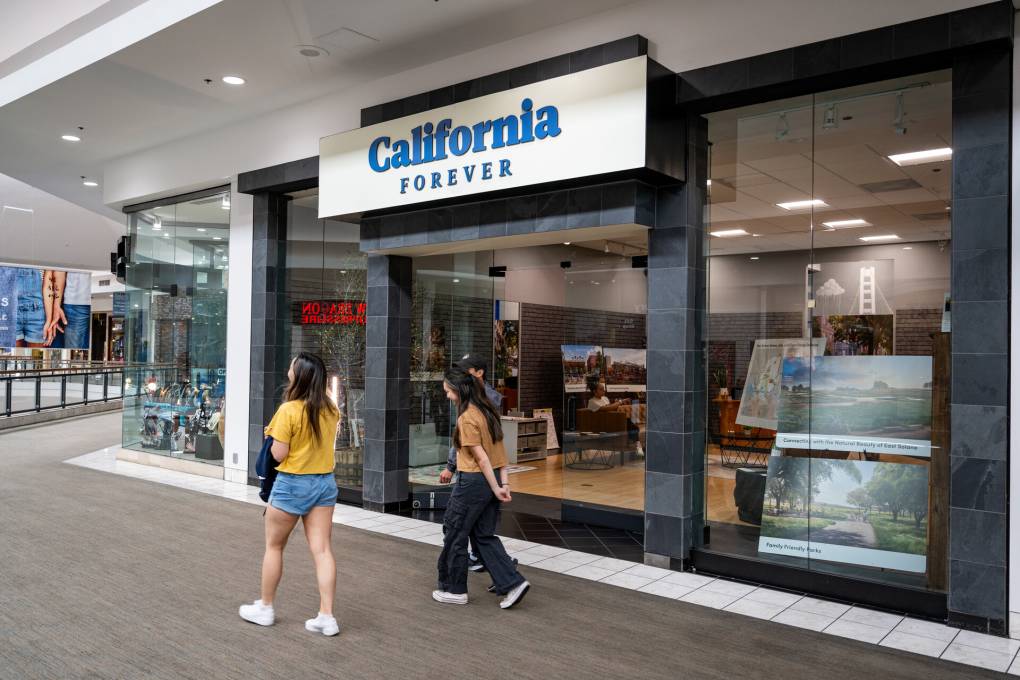
"caption": "A California Forever office in the Solano Town Center mall in Fairfield on April 2, 2024.",
"credit": "Beth LaBerge/KQED",
"altTag": "Two people walk past a sign that says 'California Forever.'",
"description": null,
"imgSizes": {
"medium": {
"file": "https://cdn.kqed.org/wp-content/uploads/sites/10/2024/05/240502-CaliforniaForever-10-BL_qut-800x533.jpg",
"width": 800,
"height": 533,
"mimeType": "image/jpeg"
},
"large": {
"file": "https://cdn.kqed.org/wp-content/uploads/sites/10/2024/05/240502-CaliforniaForever-10-BL_qut-1020x680.jpg",
"width": 1020,
"height": 680,
"mimeType": "image/jpeg"
},
"thumbnail": {
"file": "https://cdn.kqed.org/wp-content/uploads/sites/10/2024/05/240502-CaliforniaForever-10-BL_qut-160x107.jpg",
"width": 160,
"height": 107,
"mimeType": "image/jpeg"
},
"1536x1536": {
"file": "https://cdn.kqed.org/wp-content/uploads/sites/10/2024/05/240502-CaliforniaForever-10-BL_qut-1536x1024.jpg",
"width": 1536,
"height": 1024,
"mimeType": "image/jpeg"
},
"post-thumbnail": {
"file": "https://cdn.kqed.org/wp-content/uploads/sites/10/2024/05/240502-CaliforniaForever-10-BL_qut-672x372.jpg",
"width": 672,
"height": 372,
"mimeType": "image/jpeg"
},
"twentyfourteen-full-width": {
"file": "https://cdn.kqed.org/wp-content/uploads/sites/10/2024/05/240502-CaliforniaForever-10-BL_qut-1038x576.jpg",
"width": 1038,
"height": 576,
"mimeType": "image/jpeg"
},
"kqedFullSize": {
"file": "https://cdn.kqed.org/wp-content/uploads/sites/10/2024/05/240502-CaliforniaForever-10-BL_qut.jpg",
"width": 1920,
"height": 1280
}
},
"isLoading": false,
"fetchFailed": false
},
"news_11986980": {
"type": "attachments",
"id": "news_11986980",
"meta": {
"index": "attachments_1716263798",
"site": "news",
"id": "11986980",
"found": true
},
"title": "PXL_20240520_185856861_qut",
"publishDate": 1716238332,
"status": "inherit",
"parent": 12084761,
"modified": 1779404907,
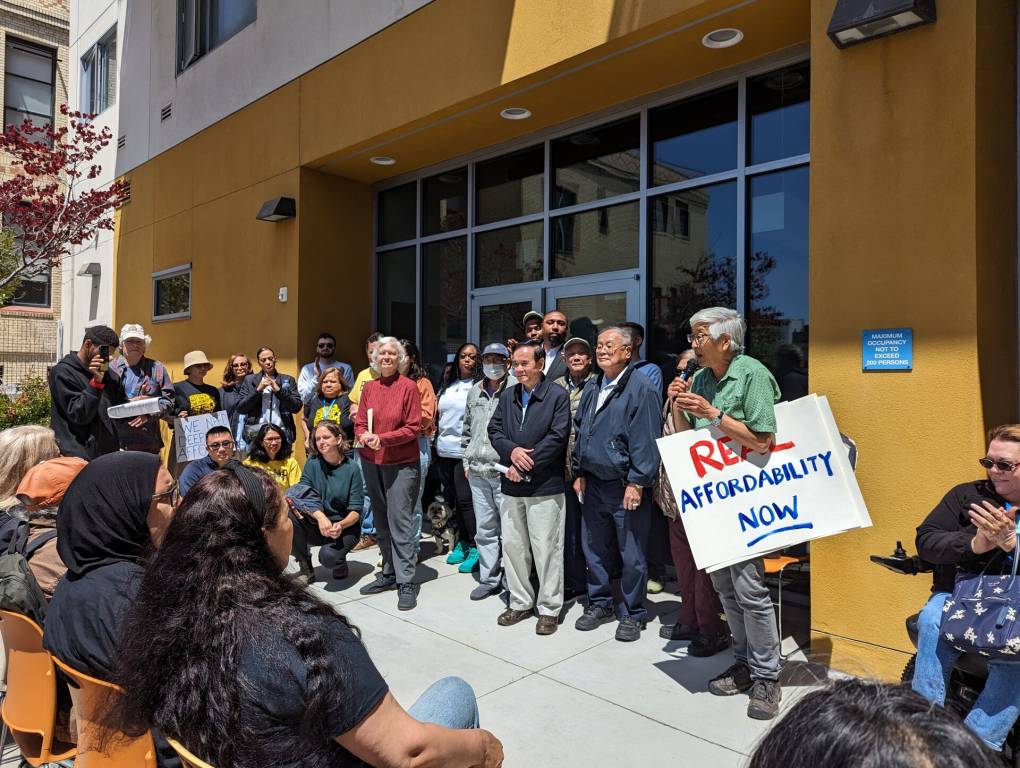
"caption": "Gen Fujioka, policy director for the Chinatown Community Development Center, speaks at a rally on May 20, 2024, in support of a San Francisco proposal to expand funding for affordable housing for seniors and others with low incomes.",
"credit": "Joe Fitzgerald Rodriguez/KQED",
"altTag": null,
"description": null,
"imgSizes": {
"medium": {
"file": "https://cdn.kqed.org/wp-content/uploads/sites/10/2024/05/PXL_20240520_185856861_qut-800x603.jpg",
"width": 800,
"height": 603,
"mimeType": "image/jpeg"
},
"large": {
"file": "https://cdn.kqed.org/wp-content/uploads/sites/10/2024/05/PXL_20240520_185856861_qut-1020x768.jpg",
"width": 1020,
"height": 768,
"mimeType": "image/jpeg"
},
"thumbnail": {
"file": "https://cdn.kqed.org/wp-content/uploads/sites/10/2024/05/PXL_20240520_185856861_qut-160x121.jpg",
"width": 160,
"height": 121,
"mimeType": "image/jpeg"
},
"1536x1536": {
"file": "https://cdn.kqed.org/wp-content/uploads/sites/10/2024/05/PXL_20240520_185856861_qut-1536x1157.jpg",
"width": 1536,
"height": 1157,
"mimeType": "image/jpeg"
},
"post-thumbnail": {
"file": "https://cdn.kqed.org/wp-content/uploads/sites/10/2024/05/PXL_20240520_185856861_qut-672x372.jpg",
"width": 672,
"height": 372,
"mimeType": "image/jpeg"
},
"twentyfourteen-full-width": {
"file": "https://cdn.kqed.org/wp-content/uploads/sites/10/2024/05/PXL_20240520_185856861_qut-1038x576.jpg",
"width": 1038,
"height": 576,
"mimeType": "image/jpeg"
},
"kqedFullSize": {
"file": "https://cdn.kqed.org/wp-content/uploads/sites/10/2024/05/PXL_20240520_185856861_qut.jpg",
"width": 1920,
"height": 1446
}
},
"isLoading": false,
"fetchFailed": false
},
"news_11805277": {
"type": "attachments",
"id": "news_11805277",
"meta": {
"index": "attachments_1716263798",
"site": "news",
"id": "11805277",
"found": true
},
"parent": 11805237,
"imgSizes": {
"apple_news_ca_landscape_5_5": {
"file": "https://ww2.kqed.org/app/uploads/sites/10/2020/03/RS41395_002_KQED_Housing_MountainView_02192020_3308-qut-1044x783.jpg",
"width": 1044,
"mimeType": "image/jpeg",
"height": 783
},
"apple_news_ca_square_4_0": {
"file": "https://ww2.kqed.org/app/uploads/sites/10/2020/03/RS41395_002_KQED_Housing_MountainView_02192020_3308-qut-470x470.jpg",
"width": 470,
"mimeType": "image/jpeg",
"height": 470
},
"twentyfourteen-full-width": {
"file": "https://ww2.kqed.org/app/uploads/sites/10/2020/03/RS41395_002_KQED_Housing_MountainView_02192020_3308-qut-1038x576.jpg",
"width": 1038,
"mimeType": "image/jpeg",
"height": 576
},
"thumbnail": {
"file": "https://ww2.kqed.org/app/uploads/sites/10/2020/03/RS41395_002_KQED_Housing_MountainView_02192020_3308-qut-160x107.jpg",
"width": 160,
"mimeType": "image/jpeg",
"height": 107
},
"post-thumbnail": {
"file": "https://ww2.kqed.org/app/uploads/sites/10/2020/03/RS41395_002_KQED_Housing_MountainView_02192020_3308-qut-672x372.jpg",
"width": 672,
"mimeType": "image/jpeg",
"height": 372
},
"kqedFullSize": {
"file": "https://ww2.kqed.org/app/uploads/sites/10/2020/03/RS41395_002_KQED_Housing_MountainView_02192020_3308-qut.jpg",
"width": 1920,
"height": 1280
},
"apple_news_ca_landscape_4_7": {
"file": "https://ww2.kqed.org/app/uploads/sites/10/2020/03/RS41395_002_KQED_Housing_MountainView_02192020_3308-qut-632x474.jpg",
"width": 632,
"mimeType": "image/jpeg",
"height": 474
},
"large": {
"file": "https://ww2.kqed.org/app/uploads/sites/10/2020/03/RS41395_002_KQED_Housing_MountainView_02192020_3308-qut-1020x680.jpg",
"width": 1020,
"mimeType": "image/jpeg",
"height": 680
},
"apple_news_ca_landscape_4_0": {
"file": "https://ww2.kqed.org/app/uploads/sites/10/2020/03/RS41395_002_KQED_Housing_MountainView_02192020_3308-qut-536x402.jpg",
"width": 536,
"mimeType": "image/jpeg",
"height": 402
},
"apple_news_ca_portrait_12_9": {
"file": "https://ww2.kqed.org/app/uploads/sites/10/2020/03/RS41395_002_KQED_Housing_MountainView_02192020_3308-qut-1122x1280.jpg",
"width": 1122,
"mimeType": "image/jpeg",
"height": 1280
},
"medium": {
"file": "https://ww2.kqed.org/app/uploads/sites/10/2020/03/RS41395_002_KQED_Housing_MountainView_02192020_3308-qut-800x533.jpg",
"width": 800,
"mimeType": "image/jpeg",
"height": 533
},
"apple_news_ca_portrait_4_0": {
"file": "https://ww2.kqed.org/app/uploads/sites/10/2020/03/RS41395_002_KQED_Housing_MountainView_02192020_3308-qut-354x472.jpg",
"width": 354,
"mimeType": "image/jpeg",
"height": 472
},
"apple_news_ca_portrait_9_7": {
"file": "https://ww2.kqed.org/app/uploads/sites/10/2020/03/RS41395_002_KQED_Housing_MountainView_02192020_3308-qut-840x1120.jpg",
"width": 840,
"mimeType": "image/jpeg",
"height": 1120
},
"apple_news_ca_landscape_12_9": {
"file": "https://ww2.kqed.org/app/uploads/sites/10/2020/03/RS41395_002_KQED_Housing_MountainView_02192020_3308-qut-1832x1280.jpg",
"width": 1832,
"mimeType": "image/jpeg",
"height": 1280
},
"apple_news_ca_square_9_7": {
"file": "https://ww2.kqed.org/app/uploads/sites/10/2020/03/RS41395_002_KQED_Housing_MountainView_02192020_3308-qut-1104x1104.jpg",
"width": 1104,
"mimeType": "image/jpeg",
"height": 1104
},
"apple_news_ca_portrait_4_7": {
"file": "https://ww2.kqed.org/app/uploads/sites/10/2020/03/RS41395_002_KQED_Housing_MountainView_02192020_3308-qut-414x552.jpg",
"width": 414,
"mimeType": "image/jpeg",
"height": 552
},
"apple_news_ca_square_12_9": {
"file": "https://ww2.kqed.org/app/uploads/sites/10/2020/03/RS41395_002_KQED_Housing_MountainView_02192020_3308-qut-1472x1280.jpg",
"width": 1472,
"mimeType": "image/jpeg",
"height": 1280
},
"apple_news_ca_portrait_5_5": {
"file": "https://ww2.kqed.org/app/uploads/sites/10/2020/03/RS41395_002_KQED_Housing_MountainView_02192020_3308-qut-687x916.jpg",
"width": 687,
"mimeType": "image/jpeg",
"height": 916
},
"full-width": {
"file": "https://ww2.kqed.org/app/uploads/sites/10/2020/03/RS41395_002_KQED_Housing_MountainView_02192020_3308-qut-1920x1280.jpg",
"width": 1920,
"mimeType": "image/jpeg",
"height": 1280
},
"apple_news_ca_square_4_7": {
"file": "https://ww2.kqed.org/app/uploads/sites/10/2020/03/RS41395_002_KQED_Housing_MountainView_02192020_3308-qut-550x550.jpg",
"width": 550,
"mimeType": "image/jpeg",
"height": 550
},
"apple_news_ca_landscape_9_7": {
"file": "https://ww2.kqed.org/app/uploads/sites/10/2020/03/RS41395_002_KQED_Housing_MountainView_02192020_3308-qut-1376x1032.jpg",
"width": 1376,
"mimeType": "image/jpeg",
"height": 1032
},
"apple_news_ca_square_5_5": {
"file": "https://ww2.kqed.org/app/uploads/sites/10/2020/03/RS41395_002_KQED_Housing_MountainView_02192020_3308-qut-912x912.jpg",
"width": 912,
"mimeType": "image/jpeg",
"height": 912
}
},
"publishDate": 1583350992,
"modified": 1600908772,
"caption": "Apartment construction in Mountain View.",
"description": "Apartment construction in Mountain View, California on Feb. 19, 2020.",
"title": "RS41395_002_KQED_Housing_MountainView_02192020_3308-qut",
"credit": "Beth LaBerge/KQED",
"status": "inherit",
"isLoading": false,
"fetchFailed": false
},
"news_11986231": {
"type": "attachments",
"id": "news_11986231",
"meta": {
"index": "attachments_1716263798",
"site": "news",
"id": "11986231",
"found": true
},
"parent": 11986396,
"imgSizes": {
"twentyfourteen-full-width": {
"file": "https://cdn.kqed.org/wp-content/uploads/sites/10/2024/05/240514-EMINENTDOMAIN-25-BL-KQED-1038x576.jpg",
"width": 1038,
"mimeType": "image/jpeg",
"height": 576
},
"thumbnail": {
"file": "https://cdn.kqed.org/wp-content/uploads/sites/10/2024/05/240514-EMINENTDOMAIN-25-BL-KQED-160x107.jpg",
"width": 160,
"mimeType": "image/jpeg",
"height": 107
},
"post-thumbnail": {
"file": "https://cdn.kqed.org/wp-content/uploads/sites/10/2024/05/240514-EMINENTDOMAIN-25-BL-KQED-672x372.jpg",
"width": 672,
"mimeType": "image/jpeg",
"height": 372
},
"kqedFullSize": {
"file": "https://cdn.kqed.org/wp-content/uploads/sites/10/2024/05/240514-EMINENTDOMAIN-25-BL-KQED.jpg",
"width": 2000,
"height": 1333
},
"large": {
"file": "https://cdn.kqed.org/wp-content/uploads/sites/10/2024/05/240514-EMINENTDOMAIN-25-BL-KQED-1020x680.jpg",
"width": 1020,
"mimeType": "image/jpeg",
"height": 680
},
"1536x1536": {
"file": "https://cdn.kqed.org/wp-content/uploads/sites/10/2024/05/240514-EMINENTDOMAIN-25-BL-KQED-1536x1024.jpg",
"width": 1536,
"mimeType": "image/jpeg",
"height": 1024
},
"full-width": {
"file": "https://cdn.kqed.org/wp-content/uploads/sites/10/2024/05/240514-EMINENTDOMAIN-25-BL-KQED-1920x1280.jpg",
"width": 1920,
"mimeType": "image/jpeg",
"height": 1280
},
"medium": {
"file": "https://cdn.kqed.org/wp-content/uploads/sites/10/2024/05/240514-EMINENTDOMAIN-25-BL-KQED-800x533.jpg",
"width": 800,
"mimeType": "image/jpeg",
"height": 533
}
},
"publishDate": 1715730719,
"modified": 1715811820,
"caption": "A BART train runs along the tracks at 59th Street and Martin Luther King Jr Way in Oakland on May 14, 2024.",
"description": null,
"title": "240514-EMINENTDOMAIN-25-BL-KQED",
"credit": "Beth LaBerge/KQED",
"status": "inherit",
"altTag": "A BART train above two streets intersecting",
"isLoading": false,
"fetchFailed": false
},
"news_11986623": {
"type": "attachments",
"id": "news_11986623",
"meta": {
"index": "attachments_1716263798",
"site": "news",
"id": "11986623",
"found": true
},
"parent": 11986620,
"imgSizes": {
"twentyfourteen-full-width": {
"file": "https://cdn.kqed.org/wp-content/uploads/sites/10/2024/05/011_KQED_SanFrancisco_TentEncampments_05052020_qut-1038x576.jpg",
"width": 1038,
"mimeType": "image/jpeg",
"height": 576
},
"thumbnail": {
"file": "https://cdn.kqed.org/wp-content/uploads/sites/10/2024/05/011_KQED_SanFrancisco_TentEncampments_05052020_qut-160x107.jpg",
"width": 160,
"mimeType": "image/jpeg",
"height": 107
},
"post-thumbnail": {
"file": "https://cdn.kqed.org/wp-content/uploads/sites/10/2024/05/011_KQED_SanFrancisco_TentEncampments_05052020_qut-672x372.jpg",
"width": 672,
"mimeType": "image/jpeg",
"height": 372
},
"kqedFullSize": {
"file": "https://cdn.kqed.org/wp-content/uploads/sites/10/2024/05/011_KQED_SanFrancisco_TentEncampments_05052020_qut.jpg",
"width": 1920,
"height": 1280
},
"large": {
"file": "https://cdn.kqed.org/wp-content/uploads/sites/10/2024/05/011_KQED_SanFrancisco_TentEncampments_05052020_qut-1020x680.jpg",
"width": 1020,
"mimeType": "image/jpeg",
"height": 680
},
"1536x1536": {
"file": "https://cdn.kqed.org/wp-content/uploads/sites/10/2024/05/011_KQED_SanFrancisco_TentEncampments_05052020_qut-1536x1024.jpg",
"width": 1536,
"mimeType": "image/jpeg",
"height": 1024
},
"medium": {
"file": "https://cdn.kqed.org/wp-content/uploads/sites/10/2024/05/011_KQED_SanFrancisco_TentEncampments_05052020_qut-800x533.jpg",
"width": 800,
"mimeType": "image/jpeg",
"height": 533
}
},
"publishDate": 1715902127,
"modified": 1715902152,
"caption": "Tents line Fulton Street near City Hall on April 5, 2020.",
"description": null,
"title": "Tents line Fulton Street near City Hall on April 5, 2020.",
"credit": "Beth LaBerge/KQED",
"status": "inherit",
"altTag": null,
"isLoading": false,
"fetchFailed": false
},
"news_11986599": {
"type": "attachments",
"id": "news_11986599",
"meta": {
"index": "attachments_1716263798",
"site": "news",
"id": "11986599",
"found": true
},
"parent": 11986574,
"imgSizes": {
"twentyfourteen-full-width": {
"file": "https://cdn.kqed.org/wp-content/uploads/sites/10/2024/05/20240429_SSUGaza-5_qut-1038x576.jpg",
"width": 1038,
"mimeType": "image/jpeg",
"height": 576
},
"thumbnail": {
"file": "https://cdn.kqed.org/wp-content/uploads/sites/10/2024/05/20240429_SSUGaza-5_qut-160x107.jpg",
"width": 160,
"mimeType": "image/jpeg",
"height": 107
},
"post-thumbnail": {
"file": "https://cdn.kqed.org/wp-content/uploads/sites/10/2024/05/20240429_SSUGaza-5_qut-672x372.jpg",
"width": 672,
"mimeType": "image/jpeg",
"height": 372
},
"kqedFullSize": {
"file": "https://cdn.kqed.org/wp-content/uploads/sites/10/2024/05/20240429_SSUGaza-5_qut.jpg",
"width": 1920,
"height": 1280
},
"large": {
"file": "https://cdn.kqed.org/wp-content/uploads/sites/10/2024/05/20240429_SSUGaza-5_qut-1020x680.jpg",
"width": 1020,
"mimeType": "image/jpeg",
"height": 680
},
"1536x1536": {
"file": "https://cdn.kqed.org/wp-content/uploads/sites/10/2024/05/20240429_SSUGaza-5_qut-1536x1024.jpg",
"width": 1536,
"mimeType": "image/jpeg",
"height": 1024
},
"medium": {
"file": "https://cdn.kqed.org/wp-content/uploads/sites/10/2024/05/20240429_SSUGaza-5_qut-800x533.jpg",
"width": 800,
"mimeType": "image/jpeg",
"height": 533
}
},
"publishDate": 1715898689,
"modified": 1715898781,
"caption": "Students walk past a Palestinian flag displayed at Sonoma State University in Rohnert Park on Monday, April 29, 2024. Sonoma State students set up a tent encampment on Friday. Colleges across the nation have set up tent encampments to show support and solidarity for Palestine.",
"description": null,
"title": "20240429_SSUGaza-5_qut",
"credit": "Gina Castro/KQED",
"status": "inherit",
"altTag": "Two women walk past a Palestinian flag hanging from a tree outdoors.",
"isLoading": false,
"fetchFailed": false
},
"news_11984981": {
"type": "attachments",
"id": "news_11984981",
"meta": {
"index": "attachments_1716263798",
"site": "news",
"id": "11984981",
"found": true
},
"parent": 11984830,
"imgSizes": {
"twentyfourteen-full-width": {
"file": "https://cdn.kqed.org/wp-content/uploads/sites/10/2024/05/240502-CaliforniaForever-01-BL_qut-1038x576.jpg",
"width": 1038,
"mimeType": "image/jpeg",
"height": 576
},
"thumbnail": {
"file": "https://cdn.kqed.org/wp-content/uploads/sites/10/2024/05/240502-CaliforniaForever-01-BL_qut-160x107.jpg",
"width": 160,
"mimeType": "image/jpeg",
"height": 107
},
"post-thumbnail": {
"file": "https://cdn.kqed.org/wp-content/uploads/sites/10/2024/05/240502-CaliforniaForever-01-BL_qut-672x372.jpg",
"width": 672,
"mimeType": "image/jpeg",
"height": 372
},
"kqedFullSize": {
"file": "https://cdn.kqed.org/wp-content/uploads/sites/10/2024/05/240502-CaliforniaForever-01-BL_qut.jpg",
"width": 1920,
"height": 1280
},
"large": {
"file": "https://cdn.kqed.org/wp-content/uploads/sites/10/2024/05/240502-CaliforniaForever-01-BL_qut-1020x680.jpg",
"width": 1020,
"mimeType": "image/jpeg",
"height": 680
},
"1536x1536": {
"file": "https://cdn.kqed.org/wp-content/uploads/sites/10/2024/05/240502-CaliforniaForever-01-BL_qut-1536x1024.jpg",
"width": 1536,
"mimeType": "image/jpeg",
"height": 1024
},
"medium": {
"file": "https://cdn.kqed.org/wp-content/uploads/sites/10/2024/05/240502-CaliforniaForever-01-BL_qut-800x533.jpg",
"width": 800,
"mimeType": "image/jpeg",
"height": 533
}
},
"publishDate": 1714755761,
"modified": 1714755991,
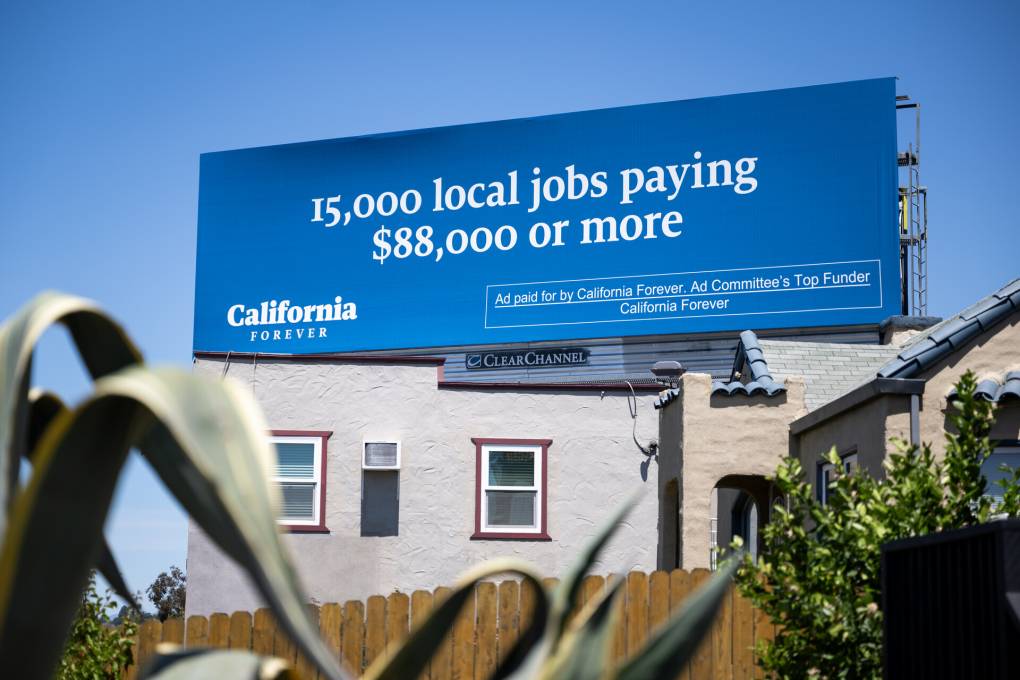
"caption": "A billboard for California Forever sits on top of an apartment building along I-80 in Vallejo on May 2, 2024.",
"description": null,
"title": "240502-CaliforniaForever-01-BL_qut",
"credit": "Beth LaBerge/KQED",
"status": "inherit",
"altTag": null,
"isLoading": false,
"fetchFailed": false
},
"news_11986416": {
"type": "attachments",
"id": "news_11986416",
"meta": {
"index": "attachments_1716263798",
"site": "news",
"id": "11986416",
"found": true
},
"parent": 11986380,
"imgSizes": {
"twentyfourteen-full-width": {
"file": "https://cdn.kqed.org/wp-content/uploads/sites/10/2024/05/CEO-STORY-15-ZS-KQED-1-1038x576.jpg",
"width": 1038,
"mimeType": "image/jpeg",
"height": 576
},
"thumbnail": {
"file": "https://cdn.kqed.org/wp-content/uploads/sites/10/2024/05/CEO-STORY-15-ZS-KQED-1-160x107.jpg",
"width": 160,
"mimeType": "image/jpeg",
"height": 107
},
"post-thumbnail": {
"file": "https://cdn.kqed.org/wp-content/uploads/sites/10/2024/05/CEO-STORY-15-ZS-KQED-1-672x372.jpg",
"width": 672,
"mimeType": "image/jpeg",
"height": 372
},
"kqedFullSize": {
"file": "https://cdn.kqed.org/wp-content/uploads/sites/10/2024/05/CEO-STORY-15-ZS-KQED-1.jpg",
"width": 2000,
"height": 1333
},
"large": {
"file": "https://cdn.kqed.org/wp-content/uploads/sites/10/2024/05/CEO-STORY-15-ZS-KQED-1-1020x680.jpg",
"width": 1020,
"mimeType": "image/jpeg",
"height": 680
},
"1536x1536": {
"file": "https://cdn.kqed.org/wp-content/uploads/sites/10/2024/05/CEO-STORY-15-ZS-KQED-1-1536x1024.jpg",
"width": 1536,
"mimeType": "image/jpeg",
"height": 1024
},
"full-width": {
"file": "https://cdn.kqed.org/wp-content/uploads/sites/10/2024/05/CEO-STORY-15-ZS-KQED-1-1920x1280.jpg",
"width": 1920,
"mimeType": "image/jpeg",
"height": 1280
},
"medium": {
"file": "https://cdn.kqed.org/wp-content/uploads/sites/10/2024/05/CEO-STORY-15-ZS-KQED-1-800x533.jpg",
"width": 800,
"mimeType": "image/jpeg",
"height": 533
}
},
"publishDate": 1715812828,
"modified": 1715816432,
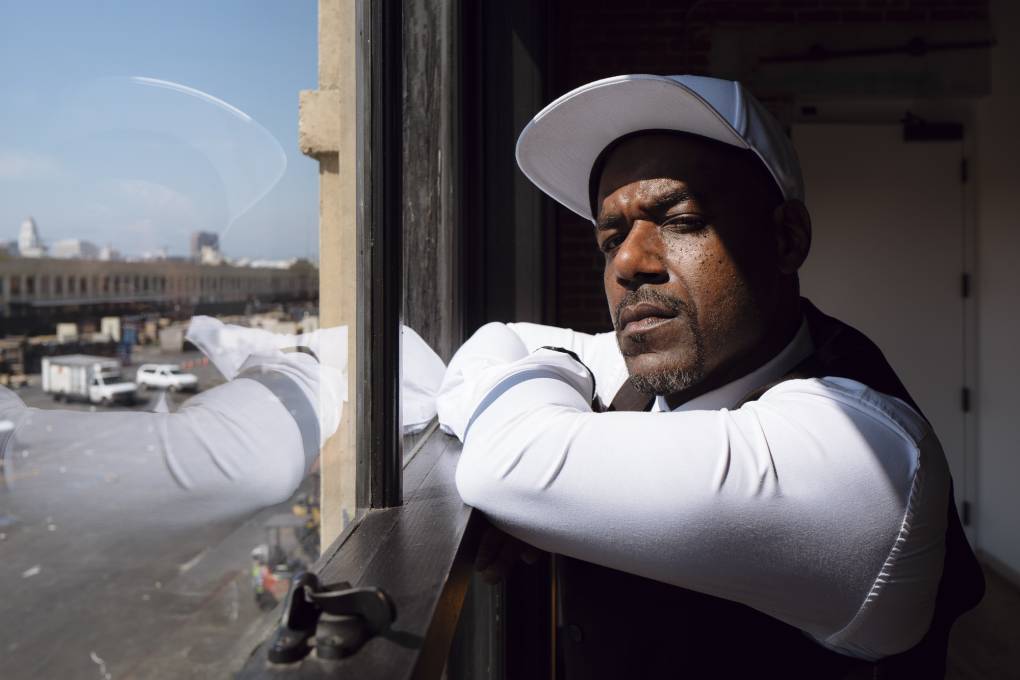
"caption": "Tommy Eugene Lewis III, peer navigator at CEO on May 14, 2024.",
"description": null,
"title": "Tommy Eugene Lewis peer navigator at CEO. Zaydee Sanchez for KQED",
"credit": "Zaydee Sanchez for KQED",
"status": "inherit",
"altTag": "A Black man wearing a cap and white shirt rests his arms and looks out a window.",
"isLoading": false,
"fetchFailed": false
},
"news_11986458": {
"type": "attachments",
"id": "news_11986458",
"meta": {
"index": "attachments_1716263798",
"site": "news",
"id": "11986458",
"found": true
},
"title": "Oakland federal judge rules city can clear Wood St.'s huge homeless camp",
"publishDate": 1715815949,
"status": "inherit",
"parent": 11986443,
"modified": 1776275241,
"caption": "A large tent encampment where people live in West Oakland in February 2023. ",
"credit": "Tayfun CoÅkun/Anadolu Agency via Getty Images",
"altTag": "Tents line a city street.",
"description": null,
"imgSizes": {
"medium": {
"file": "https://cdn.kqed.org/wp-content/uploads/sites/10/2024/05/GettyImages-1247572601-800x533.jpg",
"width": 800,
"height": 533,
"mimeType": "image/jpeg"
},
"large": {
"file": "https://cdn.kqed.org/wp-content/uploads/sites/10/2024/05/GettyImages-1247572601-1020x680.jpg",
"width": 1020,
"height": 680,
"mimeType": "image/jpeg"
},
"thumbnail": {
"file": "https://cdn.kqed.org/wp-content/uploads/sites/10/2024/05/GettyImages-1247572601-160x107.jpg",
"width": 160,
"height": 107,
"mimeType": "image/jpeg"
},
"1536x1536": {
"file": "https://cdn.kqed.org/wp-content/uploads/sites/10/2024/05/GettyImages-1247572601-1536x1024.jpg",
"width": 1536,
"height": 1024,
"mimeType": "image/jpeg"
},
"2048x2048": {
"file": "https://cdn.kqed.org/wp-content/uploads/sites/10/2024/05/GettyImages-1247572601-2048x1365.jpg",
"width": 2048,
"height": 1365,
"mimeType": "image/jpeg"
},
"post-thumbnail": {
"file": "https://cdn.kqed.org/wp-content/uploads/sites/10/2024/05/GettyImages-1247572601-672x372.jpg",
"width": 672,
"height": 372,
"mimeType": "image/jpeg"
},
"twentyfourteen-full-width": {
"file": "https://cdn.kqed.org/wp-content/uploads/sites/10/2024/05/GettyImages-1247572601-1038x576.jpg",
"width": 1038,
"height": 576,
"mimeType": "image/jpeg"
},
"full-width": {
"file": "https://cdn.kqed.org/wp-content/uploads/sites/10/2024/05/GettyImages-1247572601-1920x1280.jpg",
"width": 1920,
"height": 1280,
"mimeType": "image/jpeg"
},
"kqedFullSize": {
"file": "https://cdn.kqed.org/wp-content/uploads/sites/10/2024/05/GettyImages-1247572601-scaled-e1760372488675.jpg",
"width": 2000,
"height": 1334
}
},
"isLoading": false,
"fetchFailed": false
},
"news_11986221": {
"type": "attachments",
"id": "news_11986221",
"meta": {
"index": "attachments_1716263798",
"site": "news",
"id": "11986221",
"found": true
},
"parent": 0,
"imgSizes": {
"twentyfourteen-full-width": {
"file": "https://cdn.kqed.org/wp-content/uploads/sites/10/2024/05/ALAS_1_WEB-KQED-1038x576.jpg",
"width": 1038,
"mimeType": "image/jpeg",
"height": 576
},
"thumbnail": {
"file": "https://cdn.kqed.org/wp-content/uploads/sites/10/2024/05/ALAS_1_WEB-KQED-160x106.jpg",
"width": 160,
"mimeType": "image/jpeg",
"height": 106
},
"post-thumbnail": {
"file": "https://cdn.kqed.org/wp-content/uploads/sites/10/2024/05/ALAS_1_WEB-KQED-672x372.jpg",
"width": 672,
"mimeType": "image/jpeg",
"height": 372
},
"kqedFullSize": {
"file": "https://cdn.kqed.org/wp-content/uploads/sites/10/2024/05/ALAS_1_WEB-KQED.jpg",
"width": 2000,
"height": 1323
},
"large": {
"file": "https://cdn.kqed.org/wp-content/uploads/sites/10/2024/05/ALAS_1_WEB-KQED-1020x675.jpg",
"width": 1020,
"mimeType": "image/jpeg",
"height": 675
},
"1536x1536": {
"file": "https://cdn.kqed.org/wp-content/uploads/sites/10/2024/05/ALAS_1_WEB-KQED-1536x1016.jpg",
"width": 1536,
"mimeType": "image/jpeg",
"height": 1016
},
"full-width": {
"file": "https://cdn.kqed.org/wp-content/uploads/sites/10/2024/05/ALAS_1_WEB-KQED-1920x1270.jpg",
"width": 1920,
"mimeType": "image/jpeg",
"height": 1270
},
"medium": {
"file": "https://cdn.kqed.org/wp-content/uploads/sites/10/2024/05/ALAS_1_WEB-KQED-800x529.jpg",
"width": 800,
"mimeType": "image/jpeg",
"height": 529
}
},
"publishDate": 1715729214,
"modified": 1715794828,
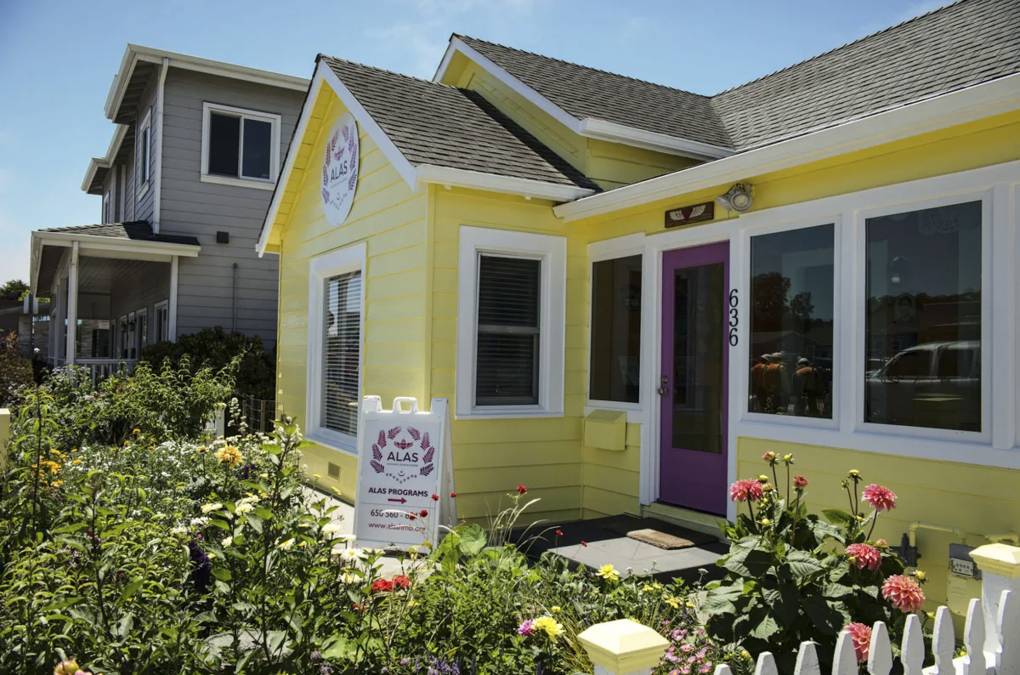
"caption": "Ayudando Latinos A Soñar headquarters in Half Moon Bay July 25, 2023.",
"description": "Ayudando Latinos A Soñar (ALAS) headquarters in Half Moon Bay July 25, 2023.",
"title": "ALAS_1_WEB-KQED",
"credit": "Pablo Unzueta for El Tecolote/CatchLight Local",
"status": "inherit",
"altTag": null,
"isLoading": false,
"fetchFailed": false
},
"news_11985594": {
"type": "attachments",
"id": "news_11985594",
"meta": {
"index": "attachments_1716263798",
"site": "news",
"id": "11985594",
"found": true
},
"parent": 11985525,
"imgSizes": {
"twentyfourteen-full-width": {
"file": "https://cdn.kqed.org/wp-content/uploads/sites/10/2024/05/231122-MissionStVendors-04-BL_qut-1038x576.jpg",
"width": 1038,
"mimeType": "image/jpeg",
"height": 576
},
"thumbnail": {
"file": "https://cdn.kqed.org/wp-content/uploads/sites/10/2024/05/231122-MissionStVendors-04-BL_qut-160x107.jpg",
"width": 160,
"mimeType": "image/jpeg",
"height": 107
},
"post-thumbnail": {
"file": "https://cdn.kqed.org/wp-content/uploads/sites/10/2024/05/231122-MissionStVendors-04-BL_qut-672x372.jpg",
"width": 672,
"mimeType": "image/jpeg",
"height": 372
},
"kqedFullSize": {
"file": "https://cdn.kqed.org/wp-content/uploads/sites/10/2024/05/231122-MissionStVendors-04-BL_qut.jpg",
"width": 1920,
"height": 1280
},
"large": {
"file": "https://cdn.kqed.org/wp-content/uploads/sites/10/2024/05/231122-MissionStVendors-04-BL_qut-1020x680.jpg",
"width": 1020,
"mimeType": "image/jpeg",
"height": 680
},
"1536x1536": {
"file": "https://cdn.kqed.org/wp-content/uploads/sites/10/2024/05/231122-MissionStVendors-04-BL_qut-1536x1024.jpg",
"width": 1536,
"mimeType": "image/jpeg",
"height": 1024
},
"medium": {
"file": "https://cdn.kqed.org/wp-content/uploads/sites/10/2024/05/231122-MissionStVendors-04-BL_qut-800x533.jpg",
"width": 800,
"mimeType": "image/jpeg",
"height": 533
}
},
"publishDate": 1715292159,
"modified": 1715292196,
"caption": "Jon Jacobo speaks alongside members of the recently formed Mission Vendor Association at the 24th Street BART plaza during a press conference in San Francisco on Nov. 22, 2023, condemning an upcoming rule banning vending on Mission Street.",
"description": null,
"title": "231122-MissionStVendors-04-BL_qut",
"credit": "Beth LaBerge/KQED",
"status": "inherit",
"altTag": null,
"isLoading": false,
"fetchFailed": false
}
},
"audioPlayerReducer": {
"postId": "stream_live",
"isPaused": true,
"isPlaying": false,
"pfsActive": false,
"pledgeModalIsOpen": true,
"playerDrawerIsOpen": false,
"liveAudioPlayStartedAt": 0,
"liveAudioPlayContext": ""
},
"authorsReducer": {
"ohubertallen": {
"type": "authors",
"id": "102",
"meta": {
"index": "authors_1716337520",
"id": "102",
"found": true
},
"name": "Olivia Allen-Price",
"firstName": "Olivia",
"lastName": "Allen-Price",
"slug": "ohubertallen",
"email": "oallenprice@kqed.org",
"display_author_email": false,
"staff_mastheads": [
"news"
],
"title": "Senior Editor",
"bio": "Olivia Allen-Price is senior editor and host of the award-winning Bay Curious podcast. Prior to joining KQED in 2013, Olivia worked at The Baltimore Sun and The Virginian-Pilot in Norfolk, Va. She holds degrees in journalism and political science from Elon University. Her work has earned awards from the Society of Professional Journalists, the Hearst Foundation and Hearken. She loves to talk about running and curly hair.\r\n\r\nFollow: \u003ca href=\"https://twitter.com/oallenprice\">@oallenprice\u003c/a>\r\nEmail: \u003ca href=\"mailto:oallenprice@kqed.org\">oallenprice@kqed.org\u003c/a>",
"avatar": "https://secure.gravatar.com/avatar/07f7803c1f6be56f3be58ef276dfa64dce898502e0554408ef4858451a8294f7?s=600&d=blank&r=g",
"twitter": "oallenprice",
"bluesky": null,
"facebook": null,
"instagram": null,
"linkedin": null,
"sites": [
{
"site": "",
"roles": [
"editor"
]
},
{
"site": "arts",
"roles": [
"subscriber"
]
},
{
"site": "news",
"roles": [
"administrator"
]
},
{
"site": "pop",
"roles": [
"administrator"
]
},
{
"site": "bayareabites",
"roles": [
"contributor"
]
},
{
"site": "stateofhealth",
"roles": [
"administrator"
]
},
{
"site": "science",
"roles": [
"editor"
]
}
],
"headData": {
"title": "Olivia Allen-Price | KQED",
"description": "Senior Editor",
"ogImgSrc": "https://secure.gravatar.com/avatar/07f7803c1f6be56f3be58ef276dfa64dce898502e0554408ef4858451a8294f7?s=600&d=blank&r=g",
"twImgSrc": "https://secure.gravatar.com/avatar/07f7803c1f6be56f3be58ef276dfa64dce898502e0554408ef4858451a8294f7?s=600&d=blank&r=g"
},
"isLoading": false,
"link": "/author/ohubertallen"
},
"katrinaschwartz": {
"type": "authors",
"id": "234",
"meta": {
"index": "authors_1716337520",
"id": "234",
"found": true
},
"name": "Katrina Schwartz",
"firstName": "Katrina",
"lastName": "Schwartz",
"slug": "katrinaschwartz",
"email": "kschwartz@kqed.org",
"display_author_email": false,
"staff_mastheads": [
"news"
],
"title": "Producer",
"bio": "Katrina Schwartz is a journalist based in San Francisco. She's worked at KPCC public radio in LA and has reported on air and online for KQED since 2010. She covered how teaching and learning is changing for MindShift between 2012 and 2020. She is the co-host of the MindShift podcast and now produces KQED's Bay Curious podcast.",
"avatar": "https://secure.gravatar.com/avatar/edb4ee79070447a018538c9aae6eeecf28786515b8a0c30e43b6b7dce5aa44c8?s=600&d=blank&r=g",
"twitter": "kschwart",
"bluesky": null,
"facebook": null,
"instagram": null,
"linkedin": null,
"sites": [
{
"site": "",
"roles": [
"editor"
]
},
{
"site": "news",
"roles": [
"editor"
]
},
{
"site": "mindshift",
"roles": [
"administrator"
]
},
{
"site": "stateofhealth",
"roles": [
"author"
]
},
{
"site": "science",
"roles": [
"editor"
]
}
],
"headData": {
"title": "Katrina Schwartz | KQED",
"description": "Producer",
"ogImgSrc": "https://secure.gravatar.com/avatar/edb4ee79070447a018538c9aae6eeecf28786515b8a0c30e43b6b7dce5aa44c8?s=600&d=blank&r=g",
"twImgSrc": "https://secure.gravatar.com/avatar/edb4ee79070447a018538c9aae6eeecf28786515b8a0c30e43b6b7dce5aa44c8?s=600&d=blank&r=g"
},
"isLoading": false,
"link": "/author/katrinaschwartz"
},
"tychehendricks": {
"type": "authors",
"id": "259",
"meta": {
"index": "authors_1716337520",
"id": "259",
"found": true
},
"name": "Tyche Hendricks",
"firstName": "Tyche",
"lastName": "Hendricks",
"slug": "tychehendricks",
"email": "thendricks@kqed.org",
"display_author_email": true,
"staff_mastheads": [
"news"
],
"title": "KQED Senior Editor, Immigration",
"bio": "\u003cspan style=\"font-weight: 400;\">Tyche Hendricks is KQED’s senior editor for immigration, leading coverage of the policy and politics that affect California’s immigrant communities. Her work for KQED’s radio and online audiences is also carried on NPR and other national outlets. She has been recognized with awards from the Radio and Television News Directors Association, the Society for Professional Journalists; the Education Writers Association; the Best of the West and the National Federation of Community Broadcasters. Before joining KQED in 2010, Tyche spent more than a dozen years as a newspaper reporter, notably at the \u003c/span>\u003ci>\u003cspan style=\"font-weight: 400;\">San Francisco Chronicle\u003c/span>\u003c/i>\u003cspan style=\"font-weight: 400;\">. At different times she has covered criminal justice, government and politics and urban planning. Tyche has taught in the MFA Creative Writing program at the University of San Francisco and at UC Berkeley’s Graduate School of Journalism, where she was co-director of a national immigration symposium for professional journalists. She is the author of \u003c/span>\u003ci>\u003cspan style=\"font-weight: 400;\">The Wind Doesn't Need a Passport: Stories from the U.S.-Mexico Borderlands\u003c/span>\u003c/i>\u003cspan style=\"font-weight: 400;\"> (University of California Press). \u003c/span>",
"avatar": "https://secure.gravatar.com/avatar/b8ee458e2731c2d43df86882ce17267e?s=600&d=blank&r=g",
"twitter": "tychehendricks",
"facebook": null,
"instagram": null,
"linkedin": null,
"sites": [
{
"site": "news",
"roles": [
"editor"
]
},
{
"site": "stateofhealth",
"roles": [
"editor"
]
}
],
"headData": {
"title": "Tyche Hendricks | KQED",
"description": "KQED Senior Editor, Immigration",
"ogImgSrc": "https://secure.gravatar.com/avatar/b8ee458e2731c2d43df86882ce17267e?s=600&d=blank&r=g",
"twImgSrc": "https://secure.gravatar.com/avatar/b8ee458e2731c2d43df86882ce17267e?s=600&d=blank&r=g"
},
"isLoading": false,
"link": "/author/tychehendricks"
},
"mlagos": {
"type": "authors",
"id": "3239",
"meta": {
"index": "authors_1716337520",
"id": "3239",
"found": true
},
"name": "Marisa Lagos",
"firstName": "Marisa",
"lastName": "Lagos",
"slug": "mlagos",
"email": "mlagos@kqed.org",
"display_author_email": false,
"staff_mastheads": [
"news"
],
"title": "KQED Contributor",
"bio": "Marisa Lagos is a correspondent for KQED’s California Politics and Government Desk and co-hosts the award-winning show and podcast, Political Breakdown. At KQED, Lagos also conducts reporting, analysis and investigations into state, local and national politics for radio, TV, online and onstage. In 2022, she and co-host, Scott Shafer, moderated the only gubernatorial debate in California. In 2020, the \u003ci>Washington Post\u003c/i> named her one of the top political journalists in California; she was nominated for a Peabody and won several other awards for her work investigating the 2017 California wildfires. She has worked at the \u003ci>San Francisco Chronicle\u003c/i>, \u003ci>San Francisco Examiner\u003c/i> and \u003ci>Los Angeles Times\u003c/i>. A UC Santa Barbara graduate, she lives in San Francisco with her two sons and husband.",
"avatar": "https://secure.gravatar.com/avatar/a261a0d3696fc066871ef96b85b5e7d2?s=600&d=blank&r=g",
"twitter": "@mlagos",
"facebook": null,
"instagram": null,
"linkedin": null,
"sites": [
{
"site": "arts",
"roles": [
"author"
]
},
{
"site": "news",
"roles": [
"editor"
]
},
{
"site": "science",
"roles": [
"editor"
]
},
{
"site": "forum",
"roles": [
"author"
]
},
{
"site": "liveblog",
"roles": [
"author"
]
}
],
"headData": {
"title": "Marisa Lagos | KQED",
"description": "KQED Contributor",
"ogImgSrc": "https://secure.gravatar.com/avatar/a261a0d3696fc066871ef96b85b5e7d2?s=600&d=blank&r=g",
"twImgSrc": "https://secure.gravatar.com/avatar/a261a0d3696fc066871ef96b85b5e7d2?s=600&d=blank&r=g"
},
"isLoading": false,
"link": "/author/mlagos"
},
"ecruzguevarra": {
"type": "authors",
"id": "8654",
"meta": {
"index": "authors_1716337520",
"id": "8654",
"found": true
},
"name": "Ericka Cruz Guevarra",
"firstName": "Ericka",
"lastName": "Cruz Guevarra",
"slug": "ecruzguevarra",
"email": "ecruzguevarra@kqed.org",
"display_author_email": true,
"staff_mastheads": [
"news"
],
"title": "Producer, The Bay Podcast",
"bio": "Ericka Cruz Guevarra is host of \u003ca href=\"https://www.kqed.org/podcasts/thebay\">\u003cem>The Bay\u003c/em>\u003c/a> podcast at KQED. Before host, she was the show’s producer. Her work in that capacity includes a three-part reported series on policing in Vallejo, which won a 2020 excellence in journalism award from the Society of Professional Journalists. Ericka has worked as a breaking news reporter at Oregon Public Broadcasting, helped produce the Code Switch podcast, and was KQED’s inaugural Raul Ramirez Diversity Fund intern. She’s also an alumna of NPR’s Next Generation Radio program. Send her an email if you have strong feelings about whether Fairfield and Suisun City are the Bay. Ericka is represented by SAG-AFTRA.",
"avatar": "https://secure.gravatar.com/avatar/accefc1de4bafc7e234b69bcb9b6f6536c130fd84709bc3069ef11a78787e1bb?s=600&d=blank&r=g",
"twitter": "NotoriousECG",
"bluesky": null,
"facebook": null,
"instagram": null,
"linkedin": null,
"sites": [
{
"site": "arts",
"roles": [
"subscriber"
]
},
{
"site": "news",
"roles": [
"editor",
"manage_categories"
]
},
{
"site": "futureofyou",
"roles": [
"subscriber"
]
},
{
"site": "stateofhealth",
"roles": [
"subscriber"
]
},
{
"site": "science",
"roles": [
"editor"
]
},
{
"site": "forum",
"roles": [
"subscriber"
]
}
],
"headData": {
"title": "Ericka Cruz Guevarra | KQED",
"description": "Producer, The Bay Podcast",
"ogImgSrc": "https://secure.gravatar.com/avatar/accefc1de4bafc7e234b69bcb9b6f6536c130fd84709bc3069ef11a78787e1bb?s=600&d=blank&r=g",
"twImgSrc": "https://secure.gravatar.com/avatar/accefc1de4bafc7e234b69bcb9b6f6536c130fd84709bc3069ef11a78787e1bb?s=600&d=blank&r=g"
},
"isLoading": false,
"link": "/author/ecruzguevarra"
},
"vrancano": {
"type": "authors",
"id": "11276",
"meta": {
"index": "authors_1716337520",
"id": "11276",
"found": true
},
"name": "Vanessa Rancaño",
"firstName": "Vanessa",
"lastName": "Rancaño",
"slug": "vrancano",
"email": "vrancano@kqed.org",
"display_author_email": false,
"staff_mastheads": [
"news"
],
"title": "Reporter",
"bio": "Vanessa Rancaño is a features reporter for KQED. She’s also covered homelessness and education for the station and reported from the Central Valley. Her work has aired across public radio, from flagship national news shows to longform narrative podcasts. Before taking up a mic, she worked as a freelance print journalist. She’s been recognized with a number of national and regional awards. Vanessa grew up in California's Central Valley. She's a former NPR Kroc Fellow, and a graduate of the UC Berkeley Graduate School of Journalism.",
"avatar": "https://secure.gravatar.com/avatar/b3a383dfb0e7ee1c17568f2cf067904ab654d6e3de9743fc661f3c788ade1bed?s=600&d=blank&r=g",
"twitter": "vanessarancano",
"bluesky": null,
"facebook": null,
"instagram": null,
"linkedin": null,
"sites": [
{
"site": "arts",
"roles": [
"editor"
]
},
{
"site": "news",
"roles": [
"editor"
]
},
{
"site": "liveblog",
"roles": [
"contributor"
]
}
],
"headData": {
"title": "Vanessa Rancaño | KQED",
"description": "Reporter",
"ogImgSrc": "https://secure.gravatar.com/avatar/b3a383dfb0e7ee1c17568f2cf067904ab654d6e3de9743fc661f3c788ade1bed?s=600&d=blank&r=g",
"twImgSrc": "https://secure.gravatar.com/avatar/b3a383dfb0e7ee1c17568f2cf067904ab654d6e3de9743fc661f3c788ade1bed?s=600&d=blank&r=g"
},
"isLoading": false,
"link": "/author/vrancano"
},
"amontecillo": {
"type": "authors",
"id": "11649",
"meta": {
"index": "authors_1716337520",
"id": "11649",
"found": true
},
"name": "Alan Montecillo",
"firstName": "Alan",
"lastName": "Montecillo",
"slug": "amontecillo",
"email": "amontecillo@kqed.org",
"display_author_email": false,
"staff_mastheads": [
"news"
],
"title": "KQED Contributor",
"bio": "Alan Montecillo is the senior editor of \u003cem>\u003ca href=\"http://kqed.org/thebay\">The Bay\u003c/a>, \u003c/em> KQED's local news podcast. Before moving to the Bay Area, he worked as a senior talk show producer for WILL in Champaign-Urbana, Illinois and at Oregon Public Broadcasting in Portland, Oregon. He has won journalism awards from the Society of Professional Journalists Northern California, the Public Media Journalists Association, The Signal Awards, and has also received a regional Edward R. Murrow award. Alan is a Filipino American from Hong Kong and a graduate of Reed College.",
"avatar": "https://secure.gravatar.com/avatar/268f53a2066899ea9efdd8a5900218b17c822d9862cbc9326cccec53ef41d349?s=600&d=blank&r=g",
"twitter": "alanmontecillo",
"bluesky": null,
"facebook": null,
"instagram": null,
"linkedin": null,
"sites": [
{
"site": "",
"roles": [
"editor"
]
},
{
"site": "news",
"roles": [
"editor",
"manage_categories"
]
}
],
"headData": {
"title": "Alan Montecillo | KQED",
"description": "KQED Contributor",
"ogImgSrc": "https://secure.gravatar.com/avatar/268f53a2066899ea9efdd8a5900218b17c822d9862cbc9326cccec53ef41d349?s=600&d=blank&r=g",
"twImgSrc": "https://secure.gravatar.com/avatar/268f53a2066899ea9efdd8a5900218b17c822d9862cbc9326cccec53ef41d349?s=600&d=blank&r=g"
},
"isLoading": false,
"link": "/author/amontecillo"
},
"abandlamudi": {
"type": "authors",
"id": "11672",
"meta": {
"index": "authors_1716337520",
"id": "11672",
"found": true
},
"name": "Adhiti Bandlamudi",
"firstName": "Adhiti",
"lastName": "Bandlamudi",
"slug": "abandlamudi",
"email": "abandlamudi@kqed.org",
"display_author_email": false,
"staff_mastheads": [
"news"
],
"title": "KQED Housing Reporter",
"bio": "Adhiti Bandlamudi reports for KQED's Housing desk. She focuses on how housing gets built across the Bay Area. Before joining KQED in 2020, she reported for WUNC in Durham, North Carolina, WABE in Atlanta, Georgia and Capital Public Radio in Sacramento. In 2017, she was awarded a Kroc Fellowship at NPR where she reported on everything from sprinkles to the Golden State Killer's arrest. When she's not reporting, she's baking new recipes in her kitchen or watching movies with friends and family. She's originally from Georgia and has strong opinions about Great British Bake Off.",
"avatar": "https://secure.gravatar.com/avatar/868129c8b257bb99a3500e2c86a65400?s=600&d=mm&r=g",
"twitter": "oddity_adhiti",
"facebook": null,
"instagram": null,
"linkedin": null,
"sites": [
{
"site": "arts",
"roles": [
"author"
]
},
{
"site": "news",
"roles": [
"editor"
]
},
{
"site": "liveblog",
"roles": [
"author"
]
}
],
"headData": {
"title": "Adhiti Bandlamudi | KQED",
"description": "KQED Housing Reporter",
"ogImgSrc": "https://secure.gravatar.com/avatar/868129c8b257bb99a3500e2c86a65400?s=600&d=mm&r=g",
"twImgSrc": "https://secure.gravatar.com/avatar/868129c8b257bb99a3500e2c86a65400?s=600&d=mm&r=g"
},
"isLoading": false,
"link": "/author/abandlamudi"
},
"jrodriguez": {
"type": "authors",
"id": "11690",
"meta": {
"index": "authors_1716337520",
"id": "11690",
"found": true
},
"name": "Joe Fitzgerald Rodriguez",
"firstName": "Joe",
"lastName": "Fitzgerald Rodriguez",
"slug": "jrodriguez",
"email": "jrodriguez@kqed.org",
"display_author_email": true,
"staff_mastheads": [
"news"
],
"title": "Reporter and Producer",
"bio": "Joe Fitzgerald Rodriguez is a reporter and digital producer for KQED covering politics. Joe most recently wrote for the \u003cem>San Francisco Examiner\u003c/em> as a political columnist covering The City. He was raised in San Francisco and has spent his reporting career in his beloved, foggy, city by the bay. Joe was 12-years-old when he conducted his first interview in journalism, grilling former San Francisco Mayor Willie Brown for the Marina Middle School newspaper, \u003cem>The Penguin Press, \u003c/em>and he continues to report on the San Francisco Bay Area to this day.",
"avatar": "https://secure.gravatar.com/avatar/2247beb0564c1e9c62228d5649d2edac?s=600&d=blank&r=g",
"twitter": "FitztheReporter",
"facebook": null,
"instagram": "https://www.instagram.com/fitzthereporter/",
"linkedin": null,
"sites": [
{
"site": "",
"roles": [
"editor"
]
},
{
"site": "arts",
"roles": [
"editor"
]
},
{
"site": "news",
"roles": [
"editor"
]
},
{
"site": "science",
"roles": [
"editor"
]
},
{
"site": "elections",
"roles": [
"editor"
]
},
{
"site": "liveblog",
"roles": [
"editor"
]
}
],
"headData": {
"title": "Joe Fitzgerald Rodriguez | KQED",
"description": "Reporter and Producer",
"ogImgSrc": "https://secure.gravatar.com/avatar/2247beb0564c1e9c62228d5649d2edac?s=600&d=blank&r=g",
"twImgSrc": "https://secure.gravatar.com/avatar/2247beb0564c1e9c62228d5649d2edac?s=600&d=blank&r=g"
},
"isLoading": false,
"link": "/author/jrodriguez"
},
"jlara": {
"type": "authors",
"id": "11761",
"meta": {
"index": "authors_1716337520",
"id": "11761",
"found": true
},
"name": "Juan Carlos Lara",
"firstName": "Juan Carlos",
"lastName": "Lara",
"slug": "jlara",
"email": "jlara@kqed.org",
"display_author_email": false,
"staff_mastheads": [],
"title": "KQED Contributor",
"bio": null,
"avatar": "https://secure.gravatar.com/avatar/19e2052b9b05657c5ff2af2121846e9c?s=600&d=blank&r=g",
"twitter": null,
"facebook": null,
"instagram": null,
"linkedin": null,
"sites": [
{
"site": "arts",
"roles": [
"editor"
]
},
{
"site": "news",
"roles": [
"editor"
]
},
{
"site": "forum",
"roles": [
"editor"
]
},
{
"site": "liveblog",
"roles": [
"contributor"
]
}
],
"headData": {
"title": "Juan Carlos Lara | KQED",
"description": "KQED Contributor",
"ogImgSrc": "https://secure.gravatar.com/avatar/19e2052b9b05657c5ff2af2121846e9c?s=600&d=blank&r=g",
"twImgSrc": "https://secure.gravatar.com/avatar/19e2052b9b05657c5ff2af2121846e9c?s=600&d=blank&r=g"
},
"isLoading": false,
"link": "/author/jlara"
},
"afinney": {
"type": "authors",
"id": "11772",
"meta": {
"index": "authors_1716337520",
"id": "11772",
"found": true
},
"name": "Annelise Finney",
"firstName": "Annelise",
"lastName": "Finney",
"slug": "afinney",
"email": "afinney@kqed.org",
"display_author_email": false,
"staff_mastheads": [],
"title": "Reporter",
"bio": "Annelise reports on reparations in California and East Bay politics. She co-produced the Sunday Music Drop, a limited-term radio series featuring Bay Area musicians that aired between Sept 2022 and Oct 2024. She joined KQED in 2021 as a general assignment reporter and is an alumna of KALW's Audio Academy. She was born and raised in the East Bay. She is currently away from KQED completing a year-long reporting project in Berlin, Germany as a Alexander Von Humboldt German Chancellor Fellow.",
"avatar": "https://secure.gravatar.com/avatar/b439010ea6540bec1060ee74b3c94314480991106a4a84e774fe5a0fd6605878?s=600&d=mm&r=g",
"twitter": null,
"bluesky": null,
"facebook": null,
"instagram": null,
"linkedin": null,
"sites": [
{
"site": "news",
"roles": [
"subscriber"
]
},
{
"site": "liveblog",
"roles": [
"subscriber"
]
}
],
"headData": {
"title": "Annelise Finney | KQED",
"description": "Reporter",
"ogImgSrc": "https://secure.gravatar.com/avatar/b439010ea6540bec1060ee74b3c94314480991106a4a84e774fe5a0fd6605878?s=600&d=mm&r=g",
"twImgSrc": "https://secure.gravatar.com/avatar/b439010ea6540bec1060ee74b3c94314480991106a4a84e774fe5a0fd6605878?s=600&d=mm&r=g"
},
"isLoading": false,
"link": "/author/afinney"
},
"adahlstromeckman": {
"type": "authors",
"id": "11785",
"meta": {
"index": "authors_1716337520",
"id": "11785",
"found": true
},
"name": "Azul Dahlstrom-Eckman",
"firstName": "Azul",
"lastName": "Dahlstrom-Eckman",
"slug": "adahlstromeckman",
"email": "adahlstrom-eckman@kqed.org",
"display_author_email": true,
"staff_mastheads": [],
"title": "Reporter",
"bio": "Azul is a reporter for KQED focusing on transportation and features. He joined KQED in 2021 as an alumna of KALW's Audio Academy radio journalism training program.",
"avatar": "https://secure.gravatar.com/avatar/9cb750298435add7815a777f55bf1f46845c1386bb8452555c60a7b820b5aba3?s=600&d=blank&r=g",
"twitter": "@zuliemann",
"bluesky": "@azul415.bsky.social",
"facebook": null,
"instagram": null,
"linkedin": null,
"sites": [
{
"site": "arts",
"roles": [
"editor"
]
},
{
"site": "news",
"roles": [
"editor"
]
},
{
"site": "science",
"roles": [
"editor"
]
},
{
"site": "liveblog",
"roles": [
"author"
]
}
],
"headData": {
"title": "Azul Dahlstrom-Eckman | KQED",
"description": "Reporter",
"ogImgSrc": "https://secure.gravatar.com/avatar/9cb750298435add7815a777f55bf1f46845c1386bb8452555c60a7b820b5aba3?s=600&d=blank&r=g",
"twImgSrc": "https://secure.gravatar.com/avatar/9cb750298435add7815a777f55bf1f46845c1386bb8452555c60a7b820b5aba3?s=600&d=blank&r=g"
},
"isLoading": false,
"link": "/author/adahlstromeckman"
},
"mesquinca": {
"type": "authors",
"id": "11802",
"meta": {
"index": "authors_1716337520",
"id": "11802",
"found": true
},
"name": "Maria Esquinca",
"firstName": "Maria",
"lastName": "Esquinca",
"slug": "mesquinca",
"email": "mesquinca@kqed.org",
"display_author_email": false,
"staff_mastheads": [],
"title": "Producer, The Bay",
"bio": "María Esquinca is a producer of The Bay. Before that, she was a New York Women’s Foundation IGNITE Fellow at Latino USA. She worked at Radio Bilingue where she covered the San Joaquin Valley. Maria has interned at WLRN, News 21, The New York Times Student Journalism Institute and at Crain’s Detroit Business as a Dow Jones News Fund Business Reporting Intern. She is an MFA graduate from the University of Miami. In 2017, she graduated from the Walter Cronkite School of Journalism and Mass Communication with a Master of Mass Communication. A fronteriza, she was born in Ciudad Juárez, Chihuahua, Mexico and grew up in El Paso, Texas.",
"avatar": "https://secure.gravatar.com/avatar/77cedba18aae91da775038ba06dcd8d0?s=600&d=blank&r=g",
"twitter": "@m_esquinca",
"facebook": null,
"instagram": null,
"linkedin": null,
"sites": [
{
"site": "news",
"roles": []
}
],
"headData": {
"title": "Maria Esquinca | KQED",
"description": "Producer, The Bay",
"ogImgSrc": "https://secure.gravatar.com/avatar/77cedba18aae91da775038ba06dcd8d0?s=600&d=blank&r=g",
"twImgSrc": "https://secure.gravatar.com/avatar/77cedba18aae91da775038ba06dcd8d0?s=600&d=blank&r=g"
},
"isLoading": false,
"link": "/author/mesquinca"
},
"sjohnson": {
"type": "authors",
"id": "11840",
"meta": {
"index": "authors_1716337520",
"id": "11840",
"found": true
},
"name": "Sydney Johnson",
"firstName": "Sydney",
"lastName": "Johnson",
"slug": "sjohnson",
"email": "sjohnson@kqed.org",
"display_author_email": false,
"staff_mastheads": [
"news"
],
"title": "KQED Reporter",
"bio": "Sydney Johnson is a general assignment reporter at KQED. She previously reported on public health and city government at the San Francisco Examiner, and before that, she covered statewide education policy for EdSource. Her reporting has won multiple local, state and national awards. Sydney is a graduate of the University of California, Berkeley and lives in San Francisco.",
"avatar": "https://secure.gravatar.com/avatar/97855f2719b72ad6190b7c535fe642c8?s=600&d=blank&r=g",
"twitter": "sydneyfjohnson",
"facebook": null,
"instagram": null,
"linkedin": null,
"sites": [
{
"site": "news",
"roles": [
"editor"
]
}
],
"headData": {
"title": "Sydney Johnson | KQED",
"description": "KQED Reporter",
"ogImgSrc": "https://secure.gravatar.com/avatar/97855f2719b72ad6190b7c535fe642c8?s=600&d=blank&r=g",
"twImgSrc": "https://secure.gravatar.com/avatar/97855f2719b72ad6190b7c535fe642c8?s=600&d=blank&r=g"
},
"isLoading": false,
"link": "/author/sjohnson"
},
"naltenberg": {
"type": "authors",
"id": "11896",
"meta": {
"index": "authors_1716337520",
"id": "11896",
"found": true
},
"name": "Nik Altenberg",
"firstName": "Nik",
"lastName": "Altenberg",
"slug": "naltenberg",
"email": "naltenberg@kqed.org",
"display_author_email": false,
"staff_mastheads": [],
"title": "KQED Contributor",
"bio": "Nik Altenberg is an on-call reporter for KQED and a copy editor and fact checker for Santa Cruz Local. Nik’s reporting interests include policing, public health, environment, immigration, housing and the places where these issues intersect.",
"avatar": "https://secure.gravatar.com/avatar/e391b3a18ce4a53a7ca3f3065c74418b?s=600&d=blank&r=g",
"twitter": null,
"facebook": null,
"instagram": "https://www.instagram.com/nikaltenberg/",
"linkedin": null,
"sites": [
{
"site": "news",
"roles": []
}
],
"headData": {
"title": "Nik Altenberg | KQED",
"description": "KQED Contributor",
"ogImgSrc": "https://secure.gravatar.com/avatar/e391b3a18ce4a53a7ca3f3065c74418b?s=600&d=blank&r=g",
"twImgSrc": "https://secure.gravatar.com/avatar/e391b3a18ce4a53a7ca3f3065c74418b?s=600&d=blank&r=g"
},
"isLoading": false,
"link": "/author/naltenberg"
},
"eprickettmorgan": {
"type": "authors",
"id": "11898",
"meta": {
"index": "authors_1716337520",
"id": "11898",
"found": true
},
"name": "Ellie Prickett-Morgan",
"firstName": "Ellie",
"lastName": "Prickett-Morgan",
"slug": "eprickettmorgan",
"email": "eprickettmorgan@kqed.org",
"display_author_email": false,
"staff_mastheads": [],
"title": "KQED Contributor",
"bio": null,
"avatar": "https://secure.gravatar.com/avatar/fb236cba85704b1a64dc213889cd2886?s=600&d=blank&r=g",
"twitter": null,
"facebook": null,
"instagram": null,
"linkedin": null,
"sites": [
{
"site": "news",
"roles": []
}
],
"headData": {
"title": "Ellie Prickett-Morgan | KQED",
"description": "KQED Contributor",
"ogImgSrc": "https://secure.gravatar.com/avatar/fb236cba85704b1a64dc213889cd2886?s=600&d=blank&r=g",
"twImgSrc": "https://secure.gravatar.com/avatar/fb236cba85704b1a64dc213889cd2886?s=600&d=blank&r=g"
},
"isLoading": false,
"link": "/author/eprickettmorgan"
}
},
"pagesReducer": {
"news_category_housing": {
"type": "terms",
"id": "news_6266",
"meta": {
"index": "terms_1716263798",
"site": "news",
"id": "6266",
"score": 11.039913
},
"featImg": null,
"name": "Housing",
"description": null,
"taxonomy": "category",
"headData": {
"twImgId": null,
"twTitle": null,
"ogTitle": null,
"ogImgId": null,
"twDescription": null,
"description": null,
"title": "Housing Archives | KQED News",
"ogDescription": null
},
"ttid": 6290,
"slug": "housing",
"isLoading": false,
"title": "Housing",
"pageMeta": {
"site": "news",
"WpPageTemplate": "page-topic-editorial",
"currentPage": 38
},
"blocks": [
{
"blockName": "kqed/post-list",
"attrs": {
"layout": "cardArticle2",
"query": "posts/news?category=housing",
"seeMore": false,
"paginated": true,
"page": 38
}
},
{
"blockName": "kqed/ad"
}
]
}
},
"pfsSessionReducer": {},
"postsReducer": {
"stream_live": {
"type": "live",
"id": "stream_live",
"audioUrl": "https://streams.kqed.org/kqedradio",
"title": "Live Stream",
"excerpt": "Live Stream information currently unavailable.",
"link": "/radio",
"featImg": "",
"label": {
"name": "KQED Live",
"link": "/"
}
},
"stream_kqedNewscast": {
"type": "posts",
"id": "stream_kqedNewscast",
"audioUrl": "https://www.kqed.org/.stream/anon/radio/RDnews/newscast.mp3?_=1",
"title": "KQED Newscast",
"featImg": "",
"label": {
"name": "88.5 FM",
"link": "/"
}
},
"news_11987227": {
"type": "posts",
"id": "news_11987227",
"meta": {
"index": "posts_1716263798",
"site": "news",
"id": "11987227",
"score": null,
"sort": [
1716336390000
]
},
"guestAuthors": [],
"slug": "alameda-county-district-attorney-sues-farmers-insurance-alleging-unfair-practices",
"title": "Alameda County District Attorney Sues Farmers Insurance Alleging Unfair Practices",
"publishDate": 1716336390,
"format": "standard",
"headTitle": "Alameda County District Attorney Sues Farmers Insurance Alleging Unfair Practices | KQED",
"labelTerm": {
"site": "news"
},
"content": "\u003cp>Alameda County District Attorney Pamela Price is suing several related home insurance companies, alleging they rely on an algorithm that systemically undervalues the homes they insure.\u003c/p>\n\u003cp>The complaint — filed in Alameda County Superior Court last month — said the Farmers Insurance Group uses a third-party software that generates the replacement value of homes using generalized information about the properties, like their zip code, rather than gathering individualized data. As a result, customers may end up underinsured and unable to rebuild.\u003c/p>\n\u003cp>“Insurance companies have a duty of good faith and fair dealing, and that includes providing accurate replacement costs, estimates for insured property, and charging premiums that actually reflect the value of what the homeowner is entitled to receive,” Price said at a press conference on Tuesday.\u003c/p>\n\u003cp>[ad fullwidth]\u003c/p>\n\u003cp>The defendants include the Farmers Group Inc., Fire Underwriters Association and Mid-Century Insurance Company Co., which cover approximately 15% of the state’s home insurance market, according to the complaint.\u003c/p>\n\u003cp>In a statement, Farmers Insurance Group said the allegations in the complaint are incorrect. “We do not seek to provide low replacement cost estimates. We intend to discuss this with the DA’s office,” said Luis Sahagun, a spokesperson for Farmers Insurance.[aside postID=news_11986400 hero='https://ww2.kqed.org/app/uploads/sites/10/2022/11/DSC06373-1020x682.jpg']Deputy District Attorney Alexandra Grayner, one of the attorneys on the case, said the rising rate of natural disasters in the state caused by climate change — and the subsequent influx of insurance claims — brought the issue to the attention of the office’s Consumer Justice Bureau.\u003c/p>\n\u003cp>The lawsuit comes on the heels of \u003ca href=\"https://www.sfchronicle.com/crime/article/pamela-price-vehicle-insurance-19453912.php\">another suit\u003c/a> from the office that makes similar allegations against auto insurers, including Progressive and the United Services Automobile Association.\u003c/p>\n\u003cp>“We know that the insurance industry — whether it’s auto or homeowners — their primary focus is to make money at the expense of homeowners and to pay out as little compensation as they can,” Price said. “Until district attorneys and other law enforcement agencies take affirmative action to address the way in which consumers are being treated by insurance companies, we will continue to have problems.”\u003c/p>\n\u003cp>In California, \u003ca href=\"https://www.kqed.org/science/1992401/homeowners-insurance-market-stretched-even-thinner-as-2-more-companies-leave-california\">some insurance companies choose not to offer homeowners insurance\u003c/a> at all, and climate change increases the likelihood that homes will be damaged or destroyed in natural disasters.\u003c/p>\n\u003cp>“We certainly don’t want to encourage anyone to leave the state of California,” Price said. “But we absolutely have a duty to protect our residents, and we do not want insurance companies in California who essentially are not willing to comply with the law or who engage in fraudulent practices.”\u003c/p>\n\u003cp>The DA is seeking damages for Alameda County residents and injunctive relief that would require the companies to change how they calculate and communicate the value of the homes they insure.\u003c/p>\n\u003cp>\u003c/p>\n",
"blocks": [],
"excerpt": "For the second time this year, Pamela Price’s office is taking insurance companies to court for allegedly undervaluing property.",
"status": "publish",
"parent": 0,
"modified": 1727476917,
"stats": {
"hasAudio": false,
"hasVideo": false,
"hasChartOrMap": false,
"iframeSrcs": [],
"hasGoogleForm": false,
"hasGallery": false,
"hasHearkenModule": false,
"hasPolis": false,
"paragraphCount": 12,
"wordCount": 491
},
"headData": {
"title": "Alameda County District Attorney Sues Farmers Insurance Alleging Unfair Practices | KQED",
"description": "For the second time this year, Pamela Price’s office is taking insurance companies to court for allegedly undervaluing property.",
"ogTitle": "",
"ogDescription": "",
"ogImgId": "",
"twTitle": "",
"twDescription": "",
"twImgId": "",
"schema": {
"@context": "https://schema.org",
"@type": "NewsArticle",
"headline": "Alameda County District Attorney Sues Farmers Insurance Alleging Unfair Practices",
"datePublished": "2024-05-21T17:06:30-07:00",
"dateModified": "2024-09-27T15:41:57-07:00",
"image": "https://cdn.kqed.org/wp-content/uploads/2020/02/KQED-OG-Image@1x.png",
"isAccessibleForFree": "True",
"publisher": {
"@type": "NewsMediaOrganization",
"@id": "https://www.kqed.org/#organization",
"name": "KQED",
"logo": "https://cdn.kqed.org/wp-content/uploads/2020/02/KQED-OG-Image@1x.png",
"url": "https://www.kqed.org",
"sameAs": [
"https://www.facebook.com/KQED",
"https://twitter.com/KQED",
"https://www.instagram.com/kqed/",
"https://www.tiktok.com/@kqedofficial",
"https://www.linkedin.com/company/kqed",
"https://www.youtube.com/channel/UCeC0IOo7i1P_61zVUWbJ4nw"
]
}
}
},
"sticky": false,
"nprStoryId": "kqed-11987227",
"excludeFromSiteSearch": "Include",
"articleAge": "0",
"path": "/news/11987227/alameda-county-district-attorney-sues-farmers-insurance-alleging-unfair-practices",
"audioTrackLength": null,
"parsedContent": [
{
"type": "contentString",
"content": "\u003cdiv class=\"post-body\">\u003cp>\u003cp>Alameda County District Attorney Pamela Price is suing several related home insurance companies, alleging they rely on an algorithm that systemically undervalues the homes they insure.\u003c/p>\n\u003cp>The complaint — filed in Alameda County Superior Court last month — said the Farmers Insurance Group uses a third-party software that generates the replacement value of homes using generalized information about the properties, like their zip code, rather than gathering individualized data. As a result, customers may end up underinsured and unable to rebuild.\u003c/p>\n\u003cp>“Insurance companies have a duty of good faith and fair dealing, and that includes providing accurate replacement costs, estimates for insured property, and charging premiums that actually reflect the value of what the homeowner is entitled to receive,” Price said at a press conference on Tuesday.\u003c/p>\n\u003cp>\u003c/p>\u003c/div>",
"attributes": {
"named": {},
"numeric": []
}
},
{
"type": "component",
"content": "",
"name": "ad",
"attributes": {
"named": {
"label": "fullwidth"
},
"numeric": [
"fullwidth"
]
}
},
{
"type": "contentString",
"content": "\u003cdiv class=\"post-body\">\u003cp>\u003c/p>\n\u003cp>The defendants include the Farmers Group Inc., Fire Underwriters Association and Mid-Century Insurance Company Co., which cover approximately 15% of the state’s home insurance market, according to the complaint.\u003c/p>\n\u003cp>In a statement, Farmers Insurance Group said the allegations in the complaint are incorrect. “We do not seek to provide low replacement cost estimates. We intend to discuss this with the DA’s office,” said Luis Sahagun, a spokesperson for Farmers Insurance.\u003c/p>\u003c/div>",
"attributes": {
"named": {},
"numeric": []
}
},
{
"type": "component",
"content": "",
"name": "aside",
"attributes": {
"named": {
"postid": "news_11986400",
"hero": "https://ww2.kqed.org/app/uploads/sites/10/2022/11/DSC06373-1020x682.jpg",
"label": ""
},
"numeric": []
}
},
{
"type": "contentString",
"content": "\u003cdiv class=\"post-body\">\u003cp>Deputy District Attorney Alexandra Grayner, one of the attorneys on the case, said the rising rate of natural disasters in the state caused by climate change — and the subsequent influx of insurance claims — brought the issue to the attention of the office’s Consumer Justice Bureau.\u003c/p>\n\u003cp>The lawsuit comes on the heels of \u003ca href=\"https://www.sfchronicle.com/crime/article/pamela-price-vehicle-insurance-19453912.php\">another suit\u003c/a> from the office that makes similar allegations against auto insurers, including Progressive and the United Services Automobile Association.\u003c/p>\n\u003cp>“We know that the insurance industry — whether it’s auto or homeowners — their primary focus is to make money at the expense of homeowners and to pay out as little compensation as they can,” Price said. “Until district attorneys and other law enforcement agencies take affirmative action to address the way in which consumers are being treated by insurance companies, we will continue to have problems.”\u003c/p>\n\u003cp>In California, \u003ca href=\"https://www.kqed.org/science/1992401/homeowners-insurance-market-stretched-even-thinner-as-2-more-companies-leave-california\">some insurance companies choose not to offer homeowners insurance\u003c/a> at all, and climate change increases the likelihood that homes will be damaged or destroyed in natural disasters.\u003c/p>\n\u003cp>“We certainly don’t want to encourage anyone to leave the state of California,” Price said. “But we absolutely have a duty to protect our residents, and we do not want insurance companies in California who essentially are not willing to comply with the law or who engage in fraudulent practices.”\u003c/p>\n\u003cp>The DA is seeking damages for Alameda County residents and injunctive relief that would require the companies to change how they calculate and communicate the value of the homes they insure.\u003c/p>\n\u003cp>\u003c/p>\n\u003c/div>\u003c/p>",
"attributes": {
"named": {},
"numeric": []
}
}
],
"link": "/news/11987227/alameda-county-district-attorney-sues-farmers-insurance-alleging-unfair-practices",
"authors": [
"11772"
],
"categories": [
"news_6266",
"news_8",
"news_13"
],
"tags": [
"news_18848",
"news_23318",
"news_1775",
"news_18159",
"news_24461",
"news_17968"
],
"featImg": "news_11987238",
"label": "news"
},
"news_11987138": {
"type": "posts",
"id": "news_11987138",
"meta": {
"index": "posts_1716263798",
"site": "news",
"id": "11987138",
"score": null,
"sort": [
1716318992000
]
},
"guestAuthors": [],
"slug": "california-forever-hands-out-500k-to-solano-nonprofits-ahead-of-november-election",
"title": "California Forever Hands Out $500K to Solano Nonprofits Ahead of November Election",
"publishDate": 1716318992,
"format": "standard",
"headTitle": "California Forever Hands Out $500K to Solano Nonprofits Ahead of November Election | KQED",
"labelTerm": {
"site": "news"
},
"content": "\u003cp>As California Forever continues its campaign to build a new city in Solano County, the billionaire-backed company announced on Tuesday that it had paid $500,000 in grants to 45 nonprofits working within the county.\u003c/p>\n\u003cp>The awardees include Dixon Family Services, the Food Bank of Contra Costa and Solano, Journey Downtown Theater and the Boys & Girls Empowerment Group in Vallejo. A representative from California Forever said the money has already been distributed, though they did not disclose how much each organization received.\u003c/p>\n\u003cp>Before announcing the grant program in December, company representatives “listened to what the community wanted and needed,” said Michael Fortney, who was part of California Forever’s citizens advisory committee last year and later became the company’s director of partnerships.\u003c/p>\n\u003cp>“And the team heard over and over, ‘We need nonprofit money,’” he said. “And a lot of people came back and said, ‘We don’t want [the money] to be tied to the ballot initiative. You need to prove to us that you’re willing to come in and be a good partner and a good stakeholder in the community.’”\u003c/p>\n\u003cp>Although the grants announced Tuesday are only the first round of community funding, according to California Forever, all future money is tied to the November ballot initiative that would clear the way for the new city. That includes $500 million in what the company is calling “community benefits commitments” that would go toward housing, education, parks and family farms, and $200 million that would go toward investing in and renovating homes, offices and shops in downtown Benicia, Dixon, Fairfield, Rio Vista, Suisun City, Vacaville and Vallejo.\u003c/p>\n\u003cp>This initial round of funding comes with no strings attached, Fortney said, and some of the organizations have not publicly expressed their support for the ballot initiative yet. Others offered their thanks to the company.\u003c/p>\n\u003cp>“There are so few direct services available for unhoused transitional-aged youth in Vallejo,” said Adjoa McDonald, the founder of the youth services organization Vallejo Project. “[California Forever]’s resources will ensure that a handful of the many vulnerable youth in our community have the skills and mentors needed to establish gainful employment.”[aside tag=\"california-forever\" label=\"More Related Stories\"]\u003c/p>\n\u003cp>Last week, \u003ca href=\"https://www.kqed.org/news/11986569/california-forever-says-12-start-ups-will-open-workplaces-in-its-new-city\">California Forever announced a partnership with 12 companies\u003c/a> that promised to open factories, farms and offices in the new town if approved. Representatives also announced plans to build one of the largest solar farms in the state, using local labor to construct and operate it.\u003c/p>\n\u003cp>While many of the companies are based in California, some are start-ups, and some skeptics of the plan wonder whether those companies will still be able to fulfill their promise after a decade, when the town will potentially be built and ready to move in.\u003c/p>\n\u003cp>In the coming weeks, company representatives have said California Forever will announce another round of employer partnerships and more details about its promises of increased recreation and entertainment opportunities.\u003c/p>\n\u003cp>[ad fullwidth]\u003c/p>\n\u003cp>\u003c/p>\n",
"blocks": [],
"excerpt": "The billionaire-backed company is handing out thousands of dollars in funding to 45 Solano County nonprofits. California Forever says the money comes with 'no strings attached.'\r\n",
"status": "publish",
"parent": 0,
"modified": 1729027196,
"stats": {
"hasAudio": false,
"hasVideo": false,
"hasChartOrMap": false,
"iframeSrcs": [],
"hasGoogleForm": false,
"hasGallery": false,
"hasHearkenModule": false,
"hasPolis": false,
"paragraphCount": 12,
"wordCount": 512
},
"headData": {
"title": "California Forever Hands Out $500K to Solano Nonprofits Ahead of November Election | KQED",
"description": "The billionaire-backed company is handing out thousands of dollars in funding to 45 Solano County nonprofits. California Forever says the money comes with 'no strings attached.'\r\n",
"ogTitle": "",
"ogDescription": "",
"ogImgId": "",
"twTitle": "",
"twDescription": "",
"twImgId": "",
"schema": {
"@context": "https://schema.org",
"@type": "NewsArticle",
"headline": "California Forever Hands Out $500K to Solano Nonprofits Ahead of November Election",
"datePublished": "2024-05-21T12:16:32-07:00",
"dateModified": "2024-10-15T14:19:56-07:00",
"image": "https://cdn.kqed.org/wp-content/uploads/2020/02/KQED-OG-Image@1x.png",
"isAccessibleForFree": "True",
"publisher": {
"@type": "NewsMediaOrganization",
"@id": "https://www.kqed.org/#organization",
"name": "KQED",
"logo": "https://cdn.kqed.org/wp-content/uploads/2020/02/KQED-OG-Image@1x.png",
"url": "https://www.kqed.org",
"sameAs": [
"https://www.facebook.com/KQED",
"https://twitter.com/KQED",
"https://www.instagram.com/kqed/",
"https://www.tiktok.com/@kqedofficial",
"https://www.linkedin.com/company/kqed",
"https://www.youtube.com/channel/UCeC0IOo7i1P_61zVUWbJ4nw"
]
}
}
},
"sticky": false,
"nprStoryId": "kqed-11987138",
"excludeFromSiteSearch": "Include",
"articleAge": "0",
"path": "/news/11987138/california-forever-hands-out-500k-to-solano-nonprofits-ahead-of-november-election",
"audioTrackLength": null,
"parsedContent": [
{
"type": "contentString",
"content": "\u003cdiv class=\"post-body\">\u003cp>\u003cp>As California Forever continues its campaign to build a new city in Solano County, the billionaire-backed company announced on Tuesday that it had paid $500,000 in grants to 45 nonprofits working within the county.\u003c/p>\n\u003cp>The awardees include Dixon Family Services, the Food Bank of Contra Costa and Solano, Journey Downtown Theater and the Boys & Girls Empowerment Group in Vallejo. A representative from California Forever said the money has already been distributed, though they did not disclose how much each organization received.\u003c/p>\n\u003cp>Before announcing the grant program in December, company representatives “listened to what the community wanted and needed,” said Michael Fortney, who was part of California Forever’s citizens advisory committee last year and later became the company’s director of partnerships.\u003c/p>\n\u003cp>“And the team heard over and over, ‘We need nonprofit money,’” he said. “And a lot of people came back and said, ‘We don’t want [the money] to be tied to the ballot initiative. You need to prove to us that you’re willing to come in and be a good partner and a good stakeholder in the community.’”\u003c/p>\n\u003cp>Although the grants announced Tuesday are only the first round of community funding, according to California Forever, all future money is tied to the November ballot initiative that would clear the way for the new city. That includes $500 million in what the company is calling “community benefits commitments” that would go toward housing, education, parks and family farms, and $200 million that would go toward investing in and renovating homes, offices and shops in downtown Benicia, Dixon, Fairfield, Rio Vista, Suisun City, Vacaville and Vallejo.\u003c/p>\n\u003cp>This initial round of funding comes with no strings attached, Fortney said, and some of the organizations have not publicly expressed their support for the ballot initiative yet. Others offered their thanks to the company.\u003c/p>\n\u003cp>“There are so few direct services available for unhoused transitional-aged youth in Vallejo,” said Adjoa McDonald, the founder of the youth services organization Vallejo Project. “[California Forever]’s resources will ensure that a handful of the many vulnerable youth in our community have the skills and mentors needed to establish gainful employment.”\u003c/p>\u003c/div>",
"attributes": {
"named": {},
"numeric": []
}
},
{
"type": "component",
"content": "",
"name": "aside",
"attributes": {
"named": {
"tag": "california-forever",
"label": "More Related Stories "
},
"numeric": []
}
},
{
"type": "contentString",
"content": "\u003cdiv class=\"post-body\">\u003cp>\u003c/p>\n\u003cp>Last week, \u003ca href=\"https://www.kqed.org/news/11986569/california-forever-says-12-start-ups-will-open-workplaces-in-its-new-city\">California Forever announced a partnership with 12 companies\u003c/a> that promised to open factories, farms and offices in the new town if approved. Representatives also announced plans to build one of the largest solar farms in the state, using local labor to construct and operate it.\u003c/p>\n\u003cp>While many of the companies are based in California, some are start-ups, and some skeptics of the plan wonder whether those companies will still be able to fulfill their promise after a decade, when the town will potentially be built and ready to move in.\u003c/p>\n\u003cp>In the coming weeks, company representatives have said California Forever will announce another round of employer partnerships and more details about its promises of increased recreation and entertainment opportunities.\u003c/p>\n\u003cp>\u003c/p>\u003c/div>",
"attributes": {
"named": {},
"numeric": []
}
},
{
"type": "component",
"content": "",
"name": "ad",
"attributes": {
"named": {
"label": "fullwidth"
},
"numeric": [
"fullwidth"
]
}
},
{
"type": "contentString",
"content": "\u003cdiv class=\"post-body\">\u003cp>\u003c/p>\n\u003cp>\u003c/p>\n\u003c/div>\u003c/p>",
"attributes": {
"named": {},
"numeric": []
}
}
],
"link": "/news/11987138/california-forever-hands-out-500k-to-solano-nonprofits-ahead-of-november-election",
"authors": [
"11672"
],
"categories": [
"news_31795",
"news_1758",
"news_6266",
"news_8",
"news_248"
],
"tags": [
"news_34061",
"news_33689",
"news_34062",
"news_27626",
"news_1775",
"news_27208",
"news_34060",
"news_23938",
"news_1631"
],
"featImg": "news_11987149",
"label": "news"
},
"news_11986991": {
"type": "posts",
"id": "news_11986991",
"meta": {
"index": "posts_1716263798",
"site": "news",
"id": "11986991",
"score": null,
"sort": [
1716246739000
]
},
"guestAuthors": [],
"slug": "peskin-ballot-measure-aims-to-pay-rent-for-thousands-of-low-income-households-in-sf",
"title": "Peskin Ballot Measure Aims to Pay Rent for Thousands of Low-Income Households in SF",
"publishDate": 1716246739,
"format": "standard",
"headTitle": "Peskin Ballot Measure Aims to Pay Rent for Thousands of Low-Income Households in SF | KQED",
"labelTerm": {
"site": "news"
},
"content": "\u003cp>Thousands of impoverished San Francisco seniors and people with disabilities may soon get help paying the rent under a proposed amendment to the city charter.\u003c/p>\n\u003cp>The charter amendment, which Board of Supervisors President Aaron Peskin plans to introduce Tuesday, would dedicate millions of dollars a year to creating a Housing Opportunity Fund primarily to help pay rent for people 62 or older living in affordable housing developments.\u003c/p>\n\u003cp>“A just society takes care of our grandmas and grandpas, our seniors, and our disabled,” Peskin told a crowd of more than 100 supporters gathered Monday in the courtyard of the Mary Helen Rogers Senior Community housing development, where he announced the proposal.\u003c/p>\n\u003cp>One potential recipient of the new funding is the Senior Operating Subsidy program, which was created in 2019 by the Board of Supervisors and first funded by the California Department of Housing and Community Development. It has helped hundreds of extremely low-income seniors pay their rent so far, Peskin said. However, housing advocates at the event said the city hasn’t consistently funded the program.\u003c/p>\n\u003cp>Advocates say the need for rental assistance among seniors is growing: 18% of San Francisco’s 897,000 residents were seniors in 2020, but that is expected to jump to 26% by 2030, according to a Senior Operating Subsidy program policy brief authored by the city last year.\u003c/p>\n\u003cp>[ad fullwidth]\u003c/p>\n\u003cp>Under Peskin’s new charter amendment, the Housing Opportunity Fund would increase by $8.3 million a year for four years starting in 2026 but would be capped at $33 million in fiscal year 2029–2030. That would help pay rent for roughly 2,200 households, Peskin’s office estimates.\u003c/p>\n\u003cp>Single seniors with a monthly income of $1,500 would qualify, as would single people with a disability making $1,493 monthly. Some families would also qualify, including those with single parents working a full-time minimum-wage job with two kids making $3,111 monthly.\u003c/p>\n\u003cp>[aside label='More Housing Stories' tag='housing']\u003c/p>\n\u003cp>Chinese seniors who are members of the Community Tenants Association, an organization that supported Peskin’s mayoral campaign kickoff in April, attended the rally in support. They carried signs reading “Real Affordability Now” in English and with Chinese-language messages such as “Waited for 17 years, still no affordable housing.”\u003c/p>\n\u003cp>The organization’s president, Wing Hoo Leung, said this measure was long overdue.\u003c/p>\n\u003cp>“We have many members who have been waiting for senior housing for over 10 years on the waiting list,” Leung said in Cantonese, with the aid of an English-speaking interpreter. “Then some of them finally receive offer of housing, but are then told they do not qualify because their income is way too low. This is not justice.”\u003c/p>\n\u003cp>The proposal comes as Peskin, who has long counted on the support of Chinatown groups that aid low-income seniors and families, aims to strengthen his bona fides with his core supporters ahead of November’s mayoral election.\u003c/p>\n\u003cp>Gen Fujioka, a policy director with the Chinatown Community Development Center, said Peskin’s proposal was based on community frustration. Many tenants would come to the Chinatown Community Development Center’s housing clinic on Clay Street and ask the staff for help when they could no longer afford their rent as they grew older.\u003c/p>\n\u003cp>The housing clinic staffers often have no city resources to offer extremely low-income seniors, Fujioka told KQED.\u003c/p>\n\u003cp>“We have no place to tell them except when you actually get put on the street, where you go to find shelter. That’s it,” Fujioka said. “That wears down our souls.”\u003c/p>\n\u003cp>Theresa Flandrich, a North Beach resident \u003ca href=\"https://www.sfgate.com/bayarea/article/2-North-Beach-tenants-landlord-settle-Ellis-Act-6451988.php\">who famously fought back an Ellis Act eviction in 2015\u003c/a>, said the senior housing funding would have given her neighbors another option during their eviction battle.\u003c/p>\n\u003cp>“My upstairs neighbor actually died during our eviction because there was no place to go,” Flandrich said. “She had crossed the entire city trying to find housing that was affordable, and there were waitlists that were closed for five years, for eight years. And that hasn’t changed much in the last decade because there’s not enough truly affordable housing.”\u003c/p>\n\u003cp>The measure does not involve tax increases or bonds; instead, it would draw from the city’s general fund to create the Housing Opportunity Fund, which would exclusively help extremely low-income households.\u003c/p>\n\u003cp>Funding increases may be a tough sell with the Board of Supervisors \u003ca href=\"https://www.kqed.org/news/11985465/youth-and-nonprofits-rally-against-cuts-to-sf-family-support-programs\">as the city faces a budget deficit of $1.3 billion over the next five years\u003c/a>. In a December memo, Mayor London Breed asked departments to freeze the creation of new positions and to make reductions. Peskin said he’s open to tweaking the charter amendment should his colleagues have budgetary concerns.\u003c/p>\n\u003cp>“It’s going to be tough to do,” Peskin said. “But there’s never a good time, and now is the time.”\u003c/p>\n\u003cp>A state-mandated goal for San Francisco to build 82,000 housing units by 2031 may favor the proposal. Of that housing, 14,000 units are supposed to be for extremely low-income households.\u003c/p>\n\u003cp>\u003c/p>\n\u003cp>If passed by the Board of Supervisors, Peskin’s proposed charter amendment would appear before voters this November and require a simple majority for approval.\u003c/p>\n\n",
"blocks": [],
"excerpt": "The proposed amendment to the San Francisco city charter would dedicate millions of dollars a year to expand the Senior Operating Subsidy program.",
"status": "publish",
"parent": 0,
"modified": 1725921860,
"stats": {
"hasAudio": false,
"hasVideo": false,
"hasChartOrMap": false,
"iframeSrcs": [],
"hasGoogleForm": false,
"hasGallery": false,
"hasHearkenModule": false,
"hasPolis": false,
"paragraphCount": 24,
"wordCount": 904
},
"headData": {
"title": "Peskin Ballot Measure Aims to Pay Rent for Thousands of Low-Income Households in SF | KQED",
"description": "The proposed amendment to the San Francisco city charter would dedicate millions of dollars a year to expand the Senior Operating Subsidy program.",
"ogTitle": "",
"ogDescription": "",
"ogImgId": "",
"twTitle": "",
"twDescription": "",
"twImgId": "",
"schema": {
"@context": "https://schema.org",
"@type": "NewsArticle",
"headline": "Peskin Ballot Measure Aims to Pay Rent for Thousands of Low-Income Households in SF",
"datePublished": "2024-05-20T16:12:19-07:00",
"dateModified": "2024-09-09T15:44:20-07:00",
"image": "https://cdn.kqed.org/wp-content/uploads/2020/02/KQED-OG-Image@1x.png",
"isAccessibleForFree": "True",
"publisher": {
"@type": "NewsMediaOrganization",
"@id": "https://www.kqed.org/#organization",
"name": "KQED",
"logo": "https://cdn.kqed.org/wp-content/uploads/2020/02/KQED-OG-Image@1x.png",
"url": "https://www.kqed.org",
"sameAs": [
"https://www.facebook.com/KQED",
"https://twitter.com/KQED",
"https://www.instagram.com/kqed/",
"https://www.tiktok.com/@kqedofficial",
"https://www.linkedin.com/company/kqed",
"https://www.youtube.com/channel/UCeC0IOo7i1P_61zVUWbJ4nw"
]
}
}
},
"sticky": false,
"nprStoryId": "kqed-11986991",
"excludeFromSiteSearch": "Include",
"articleAge": "0",
"path": "/news/11986991/peskin-ballot-measure-aims-to-pay-rent-for-thousands-of-low-income-households-in-sf",
"audioTrackLength": null,
"parsedContent": [
{
"type": "contentString",
"content": "\u003cdiv class=\"post-body\">\u003cp>\u003cp>Thousands of impoverished San Francisco seniors and people with disabilities may soon get help paying the rent under a proposed amendment to the city charter.\u003c/p>\n\u003cp>The charter amendment, which Board of Supervisors President Aaron Peskin plans to introduce Tuesday, would dedicate millions of dollars a year to creating a Housing Opportunity Fund primarily to help pay rent for people 62 or older living in affordable housing developments.\u003c/p>\n\u003cp>“A just society takes care of our grandmas and grandpas, our seniors, and our disabled,” Peskin told a crowd of more than 100 supporters gathered Monday in the courtyard of the Mary Helen Rogers Senior Community housing development, where he announced the proposal.\u003c/p>\n\u003cp>One potential recipient of the new funding is the Senior Operating Subsidy program, which was created in 2019 by the Board of Supervisors and first funded by the California Department of Housing and Community Development. It has helped hundreds of extremely low-income seniors pay their rent so far, Peskin said. However, housing advocates at the event said the city hasn’t consistently funded the program.\u003c/p>\n\u003cp>Advocates say the need for rental assistance among seniors is growing: 18% of San Francisco’s 897,000 residents were seniors in 2020, but that is expected to jump to 26% by 2030, according to a Senior Operating Subsidy program policy brief authored by the city last year.\u003c/p>\n\u003cp>\u003c/p>\u003c/div>",
"attributes": {
"named": {},
"numeric": []
}
},
{
"type": "component",
"content": "",
"name": "ad",
"attributes": {
"named": {
"label": "fullwidth"
},
"numeric": [
"fullwidth"
]
}
},
{
"type": "contentString",
"content": "\u003cdiv class=\"post-body\">\u003cp>\u003c/p>\n\u003cp>Under Peskin’s new charter amendment, the Housing Opportunity Fund would increase by $8.3 million a year for four years starting in 2026 but would be capped at $33 million in fiscal year 2029–2030. That would help pay rent for roughly 2,200 households, Peskin’s office estimates.\u003c/p>\n\u003cp>Single seniors with a monthly income of $1,500 would qualify, as would single people with a disability making $1,493 monthly. Some families would also qualify, including those with single parents working a full-time minimum-wage job with two kids making $3,111 monthly.\u003c/p>\n\u003cp>\u003c/p>\u003c/div>",
"attributes": {
"named": {},
"numeric": []
}
},
{
"type": "component",
"content": "",
"name": "aside",
"attributes": {
"named": {
"label": "More Housing Stories ",
"tag": "housing"
},
"numeric": []
}
},
{
"type": "contentString",
"content": "\u003cdiv class=\"post-body\">\u003cp>\u003c/p>\n\u003cp>Chinese seniors who are members of the Community Tenants Association, an organization that supported Peskin’s mayoral campaign kickoff in April, attended the rally in support. They carried signs reading “Real Affordability Now” in English and with Chinese-language messages such as “Waited for 17 years, still no affordable housing.”\u003c/p>\n\u003cp>The organization’s president, Wing Hoo Leung, said this measure was long overdue.\u003c/p>\n\u003cp>“We have many members who have been waiting for senior housing for over 10 years on the waiting list,” Leung said in Cantonese, with the aid of an English-speaking interpreter. “Then some of them finally receive offer of housing, but are then told they do not qualify because their income is way too low. This is not justice.”\u003c/p>\n\u003cp>The proposal comes as Peskin, who has long counted on the support of Chinatown groups that aid low-income seniors and families, aims to strengthen his bona fides with his core supporters ahead of November’s mayoral election.\u003c/p>\n\u003cp>Gen Fujioka, a policy director with the Chinatown Community Development Center, said Peskin’s proposal was based on community frustration. Many tenants would come to the Chinatown Community Development Center’s housing clinic on Clay Street and ask the staff for help when they could no longer afford their rent as they grew older.\u003c/p>\n\u003cp>The housing clinic staffers often have no city resources to offer extremely low-income seniors, Fujioka told KQED.\u003c/p>\n\u003cp>“We have no place to tell them except when you actually get put on the street, where you go to find shelter. That’s it,” Fujioka said. “That wears down our souls.”\u003c/p>\n\u003cp>Theresa Flandrich, a North Beach resident \u003ca href=\"https://www.sfgate.com/bayarea/article/2-North-Beach-tenants-landlord-settle-Ellis-Act-6451988.php\">who famously fought back an Ellis Act eviction in 2015\u003c/a>, said the senior housing funding would have given her neighbors another option during their eviction battle.\u003c/p>\n\u003cp>“My upstairs neighbor actually died during our eviction because there was no place to go,” Flandrich said. “She had crossed the entire city trying to find housing that was affordable, and there were waitlists that were closed for five years, for eight years. And that hasn’t changed much in the last decade because there’s not enough truly affordable housing.”\u003c/p>\n\u003cp>The measure does not involve tax increases or bonds; instead, it would draw from the city’s general fund to create the Housing Opportunity Fund, which would exclusively help extremely low-income households.\u003c/p>\n\u003cp>Funding increases may be a tough sell with the Board of Supervisors \u003ca href=\"https://www.kqed.org/news/11985465/youth-and-nonprofits-rally-against-cuts-to-sf-family-support-programs\">as the city faces a budget deficit of $1.3 billion over the next five years\u003c/a>. In a December memo, Mayor London Breed asked departments to freeze the creation of new positions and to make reductions. Peskin said he’s open to tweaking the charter amendment should his colleagues have budgetary concerns.\u003c/p>\n\u003cp>“It’s going to be tough to do,” Peskin said. “But there’s never a good time, and now is the time.”\u003c/p>\n\u003cp>A state-mandated goal for San Francisco to build 82,000 housing units by 2031 may favor the proposal. Of that housing, 14,000 units are supposed to be for extremely low-income households.\u003c/p>\n\u003cp>\u003c/p>\n\u003cp>If passed by the Board of Supervisors, Peskin’s proposed charter amendment would appear before voters this November and require a simple majority for approval.\u003c/p>\n\n\u003c/div>\u003c/p>",
"attributes": {
"named": {},
"numeric": []
}
}
],
"link": "/news/11986991/peskin-ballot-measure-aims-to-pay-rent-for-thousands-of-low-income-households-in-sf",
"authors": [
"11690"
],
"categories": [
"news_6266",
"news_8",
"news_13"
],
"tags": [
"news_195",
"news_3921",
"news_27626",
"news_1775",
"news_38"
],
"featImg": "news_11986980",
"label": "news"
},
"news_11986752": {
"type": "posts",
"id": "news_11986752",
"meta": {
"index": "posts_1716263798",
"site": "news",
"id": "11986752",
"score": null,
"sort": [
1715980388000
]
},
"guestAuthors": [],
"slug": "california-wants-cities-to-plan-for-more-housing-cities-say-the-rules-are-unclear",
"title": "California Wants Cities to Plan For More Housing. Cities Say the Rules Are Unclear",
"publishDate": 1715980388,
"format": "standard",
"headTitle": "California Wants Cities to Plan For More Housing. Cities Say the Rules Are Unclear | KQED",
"labelTerm": {
"site": "news"
},
"content": "\u003cp>State auditors will examine California’s system for reviewing and approving cities’ plans to make way for more homes, which has grown increasingly contentious amid the housing crisis, especially for cities that had long faced little pressure to plan for growth.\u003c/p>\n\u003cp>Such plans to add a \u003ca href=\"https://www.kqed.org/news/11938267/to-meet-state-housing-goals-one-bay-area-city-had-to-overcome-its-nimby-past\">certain amount of homes based on population growth\u003c/a>, called housing elements, must be submitted by cities and counties every six years.\u003c/p>\n\u003cp>More than a year, since cities had to get their housing elements approved by the California Department of Housing and Community Development, about a third of Bay Area cities and counties, are still out of compliance with state law — and some cities have raised concerns about the process.\u003c/p>\n\u003cp>The audit approved this week by the Joint Legislative Audit Committee will look at how the state reviews housing elements to make sure the standards are consistent and clear enough for cities and counties to actually follow.\u003c/p>\n\u003cp>“We need the state’s department of housing to provide their best guidance, but there have been problems,” said Sen. Steve Glazer (D-Orinda), who requested the audit. “We have to identify them and fix them so we can do better in the future.”\u003c/p>\n\u003cp>[ad fullwidth]\u003c/p>\n\u003cp>But in recent years, as \u003ca href=\"https://www.kqed.org/news/11973653/bay-area-deadline-a-crucial-test-for-californias-housing-crisis\">the state’s housing crisis\u003c/a> grows more dire, Gov. Gavin Newsom has amped up pressure on cities after several years of low targets for the amount of new homes planned for and weak consequences for the many cities whose plans fell short. As a result, cities have had to plan for more housing than ever and face strict rules and steep punishments if they don’t submit compliant housing elements — including fines, lawsuits and a loss of state funding for affordable housing and parks.\u003c/p>\n\u003cp>Last year, \u003ca href=\"https://www.kqed.org/news/11943154/they-asked-for-this-california-sues-huntington-beach-for-flouting-laws-meant-to-ease-housing-crisis\">the state sued Huntington Beach\u003c/a> for refusing to pass a housing element that could have added more than 13,000 new homes and apartments to the expensive Southern California city. This week, a Superior Court judge ordered the city to pass its housing element. City leaders vowed to appeal that ruling.\u003c/p>\n\u003cp>[aside label='related coverage' postID=news_11986281,news_11981595,news_11973653,news_11938267]Pablo Espinoza, director of communications for the Department of Housing and Community Development, said he welcomes the audit and looks forward “to working with the California State Auditor to highlight this important work.”\u003c/p>\n\u003cp>“We are proud of the work we have done to strengthen the Housing Element effort since 2017 to ensure that communities plan for their fair share of housing,” he said in a statement to KQED. “And those changes are working: the number of homes built has gone up every single year of this administration.”\u003c/p>\n\u003cp>Housing advocacy organizations are also interested in the results of this audit. Sonja Trauss, executive director of the pro-development group YIMBY Law, said her organization has its own concerns about the housing element review process.\u003c/p>\n\u003cp>“In particular, we have reports from our watchdog and allied organizations that for some cities, HCD repeatedly told them to correct problems in their housing element, the cities never did so, and after some time had elapsed, HCD just went ahead and certified them,” she said in a statement to KQED. “We support more transparency for the housing element process, which the auditor’s report should provide.”\u003c/p>\n\u003cp>The state auditor will select at least 10 cities with compliant housing elements and the same number of cities that are out of compliance. Included in the review, the audit will look at how clear HCD’s standards are for each city’s housing elements, how consistent the agency’s comments are, and how responsive HCD is for each local government.\u003c/p>\n\u003cp>\u003c/p>\n\u003cp>The auditor will likely start the review this fall and is expected to complete it sometime next year.\u003c/p>\n\n",
"blocks": [],
"excerpt": "The state has set strict standards for how cities have to plan for more housing. A new audit seeks to make sure those standards are clear enough for cities to actually follow. ",
"status": "publish",
"parent": 0,
"modified": 1725928001,
"stats": {
"hasAudio": false,
"hasVideo": false,
"hasChartOrMap": false,
"iframeSrcs": [],
"hasGoogleForm": false,
"hasGallery": false,
"hasHearkenModule": false,
"hasPolis": false,
"paragraphCount": 15,
"wordCount": 643
},
"headData": {
"title": "California Wants Cities to Plan For More Housing. Cities Say the Rules Are Unclear | KQED",
"description": "The state has set strict standards for how cities have to plan for more housing. A new audit seeks to make sure those standards are clear enough for cities to actually follow. ",
"ogTitle": "",
"ogDescription": "",
"ogImgId": "",
"twTitle": "",
"twDescription": "",
"twImgId": "",
"schema": {
"@context": "https://schema.org",
"@type": "NewsArticle",
"headline": "California Wants Cities to Plan For More Housing. Cities Say the Rules Are Unclear",
"datePublished": "2024-05-17T14:13:08-07:00",
"dateModified": "2024-09-09T17:26:41-07:00",
"image": "https://cdn.kqed.org/wp-content/uploads/2020/02/KQED-OG-Image@1x.png",
"isAccessibleForFree": "True",
"publisher": {
"@type": "NewsMediaOrganization",
"@id": "https://www.kqed.org/#organization",
"name": "KQED",
"logo": "https://cdn.kqed.org/wp-content/uploads/2020/02/KQED-OG-Image@1x.png",
"url": "https://www.kqed.org",
"sameAs": [
"https://www.facebook.com/KQED",
"https://twitter.com/KQED",
"https://www.instagram.com/kqed/",
"https://www.tiktok.com/@kqedofficial",
"https://www.linkedin.com/company/kqed",
"https://www.youtube.com/channel/UCeC0IOo7i1P_61zVUWbJ4nw"
]
}
}
},
"sticky": false,
"nprStoryId": "kqed-11986752",
"excludeFromSiteSearch": "Include",
"articleAge": "0",
"path": "/news/11986752/california-wants-cities-to-plan-for-more-housing-cities-say-the-rules-are-unclear",
"audioTrackLength": null,
"parsedContent": [
{
"type": "contentString",
"content": "\u003cdiv class=\"post-body\">\u003cp>\u003cp>State auditors will examine California’s system for reviewing and approving cities’ plans to make way for more homes, which has grown increasingly contentious amid the housing crisis, especially for cities that had long faced little pressure to plan for growth.\u003c/p>\n\u003cp>Such plans to add a \u003ca href=\"https://www.kqed.org/news/11938267/to-meet-state-housing-goals-one-bay-area-city-had-to-overcome-its-nimby-past\">certain amount of homes based on population growth\u003c/a>, called housing elements, must be submitted by cities and counties every six years.\u003c/p>\n\u003cp>More than a year, since cities had to get their housing elements approved by the California Department of Housing and Community Development, about a third of Bay Area cities and counties, are still out of compliance with state law — and some cities have raised concerns about the process.\u003c/p>\n\u003cp>The audit approved this week by the Joint Legislative Audit Committee will look at how the state reviews housing elements to make sure the standards are consistent and clear enough for cities and counties to actually follow.\u003c/p>\n\u003cp>“We need the state’s department of housing to provide their best guidance, but there have been problems,” said Sen. Steve Glazer (D-Orinda), who requested the audit. “We have to identify them and fix them so we can do better in the future.”\u003c/p>\n\u003cp>\u003c/p>\u003c/div>",
"attributes": {
"named": {},
"numeric": []
}
},
{
"type": "component",
"content": "",
"name": "ad",
"attributes": {
"named": {
"label": "fullwidth"
},
"numeric": [
"fullwidth"
]
}
},
{
"type": "contentString",
"content": "\u003cdiv class=\"post-body\">\u003cp>\u003c/p>\n\u003cp>But in recent years, as \u003ca href=\"https://www.kqed.org/news/11973653/bay-area-deadline-a-crucial-test-for-californias-housing-crisis\">the state’s housing crisis\u003c/a> grows more dire, Gov. Gavin Newsom has amped up pressure on cities after several years of low targets for the amount of new homes planned for and weak consequences for the many cities whose plans fell short. As a result, cities have had to plan for more housing than ever and face strict rules and steep punishments if they don’t submit compliant housing elements — including fines, lawsuits and a loss of state funding for affordable housing and parks.\u003c/p>\n\u003cp>Last year, \u003ca href=\"https://www.kqed.org/news/11943154/they-asked-for-this-california-sues-huntington-beach-for-flouting-laws-meant-to-ease-housing-crisis\">the state sued Huntington Beach\u003c/a> for refusing to pass a housing element that could have added more than 13,000 new homes and apartments to the expensive Southern California city. This week, a Superior Court judge ordered the city to pass its housing element. City leaders vowed to appeal that ruling.\u003c/p>\n\u003cp>\u003c/p>\u003c/div>",
"attributes": {
"named": {},
"numeric": []
}
},
{
"type": "component",
"content": "",
"name": "aside",
"attributes": {
"named": {
"label": "related coverage ",
"postid": "news_11986281,news_11981595,news_11973653,news_11938267"
},
"numeric": []
}
},
{
"type": "contentString",
"content": "\u003cdiv class=\"post-body\">\u003cp>Pablo Espinoza, director of communications for the Department of Housing and Community Development, said he welcomes the audit and looks forward “to working with the California State Auditor to highlight this important work.”\u003c/p>\n\u003cp>“We are proud of the work we have done to strengthen the Housing Element effort since 2017 to ensure that communities plan for their fair share of housing,” he said in a statement to KQED. “And those changes are working: the number of homes built has gone up every single year of this administration.”\u003c/p>\n\u003cp>Housing advocacy organizations are also interested in the results of this audit. Sonja Trauss, executive director of the pro-development group YIMBY Law, said her organization has its own concerns about the housing element review process.\u003c/p>\n\u003cp>“In particular, we have reports from our watchdog and allied organizations that for some cities, HCD repeatedly told them to correct problems in their housing element, the cities never did so, and after some time had elapsed, HCD just went ahead and certified them,” she said in a statement to KQED. “We support more transparency for the housing element process, which the auditor’s report should provide.”\u003c/p>\n\u003cp>The state auditor will select at least 10 cities with compliant housing elements and the same number of cities that are out of compliance. Included in the review, the audit will look at how clear HCD’s standards are for each city’s housing elements, how consistent the agency’s comments are, and how responsive HCD is for each local government.\u003c/p>\n\u003cp>\u003c/p>\n\u003cp>The auditor will likely start the review this fall and is expected to complete it sometime next year.\u003c/p>\n\n\u003c/div>\u003c/p>",
"attributes": {
"named": {},
"numeric": []
}
}
],
"link": "/news/11986752/california-wants-cities-to-plan-for-more-housing-cities-say-the-rules-are-unclear",
"authors": [
"11672"
],
"categories": [
"news_6266",
"news_8",
"news_13"
],
"tags": [
"news_3921",
"news_18538",
"news_32695",
"news_1775",
"news_27208",
"news_21358",
"news_24221"
],
"featImg": "news_11805277",
"label": "news"
},
"news_11986573": {
"type": "posts",
"id": "news_11986573",
"meta": {
"index": "posts_1716263798",
"site": "news",
"id": "11986573",
"score": null,
"sort": [
1715940011000
]
},
"guestAuthors": [],
"slug": "displacing-people-for-progress-the-origins-of-bart",
"title": "Displacing People for 'Progress' — the Origins of BART",
"publishDate": 1715940011,
"format": "audio",
"headTitle": "Displacing People for ‘Progress’ — the Origins of BART | KQED",
"labelTerm": {},
"content": "\u003cp>\u003cspan style=\"font-weight: 400\">Back in the ’60s, BART was just a plan in the making. And located through its path were communities of mostly low income people of color. But thanks to a legal tool known as eminent domain, many in that community were forced to sell their homes or face eviction. \u003c/span>\u003c/p>\n\u003cp>\u003c!-- iframe plugin v.4.3 wordpress.org/plugins/iframe/ -->\u003cbr>\n\u003ciframe loading=\"lazy\" frameborder=\"0\" height=\"200\" scrolling=\"no\" src=\"https://playlist.megaphone.fm/?e=KQINC6131452416&light=true\" width=\"100%\" class=\"iframe-class\">\u003c/iframe>\u003c/p>\n\u003cp>[ad fullwidth]\u003c/p>\u003cp>\u003c/p>\n",
"blocks": [],
"excerpt": "Back in the '60s, BART was just a plan in the making. And located through its path were communities of mostly lower-income people of color. But thanks to a legal tool known as eminent domain, many in that community were forced to sell their homes or face eviction.",
"status": "publish",
"parent": 0,
"modified": 1725921870,
"stats": {
"hasAudio": true,
"hasVideo": false,
"hasChartOrMap": false,
"iframeSrcs": [],
"hasGoogleForm": false,
"hasGallery": false,
"hasHearkenModule": false,
"hasPolis": false,
"paragraphCount": 4,
"wordCount": 54
},
"headData": {
"title": "Displacing People for 'Progress' — the Origins of BART | KQED",
"description": "Back in the '60s, BART was just a plan in the making. And located through its path were communities of mostly lower-income people of color. But thanks to a legal tool known as eminent domain, many in that community were forced to sell their homes or face eviction.",
"ogTitle": "",
"ogDescription": "",
"ogImgId": "",
"twTitle": "",
"twDescription": "",
"twImgId": "",
"schema": {
"@context": "https://schema.org",
"@type": "NewsArticle",
"headline": "Displacing People for 'Progress' — the Origins of BART",
"datePublished": "2024-05-17T03:00:11-07:00",
"dateModified": "2024-09-09T15:44:30-07:00",
"image": "https://cdn.kqed.org/wp-content/uploads/2020/02/KQED-OG-Image@1x.png",
"isAccessibleForFree": "True",
"publisher": {
"@type": "NewsMediaOrganization",
"@id": "https://www.kqed.org/#organization",
"name": "KQED",
"logo": "https://cdn.kqed.org/wp-content/uploads/2020/02/KQED-OG-Image@1x.png",
"url": "https://www.kqed.org",
"sameAs": [
"https://www.facebook.com/KQED",
"https://twitter.com/KQED",
"https://www.instagram.com/kqed/",
"https://www.tiktok.com/@kqedofficial",
"https://www.linkedin.com/company/kqed",
"https://www.youtube.com/channel/UCeC0IOo7i1P_61zVUWbJ4nw"
]
}
}
},
"source": "The Bay",
"sourceUrl": "https://www.kqed.org/podcasts/thebay",
"audioUrl": "https://www.podtrac.com/pts/redirect.mp3/chrt.fm/track/G6C7C3/traffic.megaphone.fm/KQINC6131452416.mp3?updated=1715893456",
"sticky": false,
"nprStoryId": "kqed-11986573",
"excludeFromSiteSearch": "Include",
"articleAge": "0",
"path": "/news/11986573/displacing-people-for-progress-the-origins-of-bart",
"audioTrackLength": null,
"parsedContent": [
{
"type": "contentString",
"content": "\u003cdiv class=\"post-body\">\u003cp>\u003cp>\u003cspan style=\"font-weight: 400\">Back in the ’60s, BART was just a plan in the making. And located through its path were communities of mostly low income people of color. But thanks to a legal tool known as eminent domain, many in that community were forced to sell their homes or face eviction. \u003c/span>\u003c/p>\n\u003cp>\u003c!-- iframe plugin v.4.3 wordpress.org/plugins/iframe/ -->\u003cbr>\n\u003ciframe loading=\"lazy\" frameborder=\"0\" height=\"200\" scrolling=\"no\" src=\"https://playlist.megaphone.fm/?e=KQINC6131452416&light=true\" width=\"100%\" class=\"iframe-class\">\u003c/iframe>\u003c/p>\n\u003cp>\u003c/p>\u003c/div>",
"attributes": {
"named": {},
"numeric": []
}
},
{
"type": "component",
"content": "",
"name": "ad",
"attributes": {
"named": {
"label": "fullwidth"
},
"numeric": [
"fullwidth"
]
}
},
{
"type": "contentString",
"content": "\u003cdiv class=\"post-body\">\u003cp>\u003c/p>\u003cp>\u003c/p>\n\u003c/div>\u003c/p>",
"attributes": {
"named": {},
"numeric": []
}
}
],
"link": "/news/11986573/displacing-people-for-progress-the-origins-of-bart",
"authors": [
"11649",
"11802",
"11785",
"102",
"234"
],
"categories": [
"news_6266",
"news_8"
],
"tags": [
"news_269",
"news_32487",
"news_1775",
"news_22598"
],
"featImg": "news_11986231",
"label": "source_news_11986573"
},
"news_11986620": {
"type": "posts",
"id": "news_11986620",
"meta": {
"index": "posts_1716263798",
"site": "news",
"id": "11986620",
"score": null,
"sort": [
1715904595000
]
},
"guestAuthors": [],
"slug": "san-francisco-homelessness-up-7-despite-decline-in-street-camping",
"title": "San Francisco Homelessness Up 7% Despite Decline in Street Camping",
"publishDate": 1715904595,
"format": "standard",
"headTitle": "San Francisco Homelessness Up 7% Despite Decline in Street Camping | KQED",
"labelTerm": {
"site": "news"
},
"content": "\u003cp>The overall number of people experiencing homelessness in San Francisco increased 7% to more than 8,300 people since the last count in 2022, according to \u003ca href=\"https://hsh.sfgov.org/about/research-and-reports/pit/\">data\u003c/a> released Thursday.\u003c/p>\n\u003cp>Every two years, the federal government requires cities to survey their unhoused populations for one night, called the \u003ca href=\"https://www.kqed.org/news/11974385/heres-how-san-francisco-counts-unhoused-residents\">Point in Time Count\u003c/a>. The data is used to allocate funding to local governments to spend on homeless services, such as shelters, and is generally believed to be an undercount.\u003c/p>\n\u003cp>Results released Thursday found that while the overall total number of homeless people has climbed, the number of people in San Francisco sleeping in tents, cars and RVs — or what’s known as “unsheltered homelessness” — decreased 1% since 2022 and 16% since 2019. In January this year, \u003ca href=\"https://www.kqed.org/news/11974385/heres-how-san-francisco-counts-unhoused-residents\">volunteers and city workers counted\u003c/a> 2,912 people sleeping unsheltered on San Francisco’s streets.\u003c/p>\n\u003cp>Nearly half, or 48%, of the city’s more than 8,300 unhoused residents are now living in shelters. In 2022, there were 43%.\u003c/p>\n\u003cp>[ad fullwidth]\u003c/p>\n\u003cp>“As we grapple with the repercussions of the housing crisis, it is crucial that we continue to invest in the city’s homelessness response system that includes programs to problem solve and prevent people from ever having to experience homelessness,” San Francisco Department of Homelessness and Supportive Housing (HSH) executive director, Shireen McSpadden, said in a statement. “The Point in Time Count’s data will inform our programs and our mission to make homelessness rare, brief and one-time.”\u003c/p>\n\u003cp>However, HSH also found a significant and disturbing spike in the number of families who are experiencing homelessness. There were 437 unhoused families counted in 2024, up 94% since 2022.\u003c/p>\n\u003cp>“The loss of COVID protections and end of eviction moratorium absolutely is driving some of these numbers,” said Jennifer Friedenbach, director of the Coalition on Homelessness. “We continue to underinvest in affordable housing, and we need to restore the nation’s commitment to low-income housing. We will continue to see homelessness increase until we get serious about this issue.”\u003c/p>\n\u003cp>San Francisco has increased shelter availability by 60% since 2018, according to HSH. Earlier this year, officials announced they were bringing 300 shelter beds back online, returning the shelters to their pre-pandemic size after cutting capacity to prevent COVID-19 transmission.\u003c/p>\n\u003cp>As of Thursday, 108 people were still \u003ca href=\"https://hsh.sfgov.org/services/how-to-get-services/accessing-temporary-shelter/adult-temporary-shelter/shelter-reservation-waitlist/\">on the waiting list\u003c/a>.\u003c/p>\n\u003cp>\u003c!-- iframe plugin v.4.3 wordpress.org/plugins/iframe/ -->\u003cbr>\n\u003ciframe loading=\"lazy\" title=\"San Francisco PIT homeless count results since 2013\" aria-label=\"Stacked Columns\" id=\"datawrapper-chart-aVh0x\" src=\"https://datawrapper.dwcdn.net/aVh0x/3/\" scrolling=\"no\" frameborder=\"0\" style=\"border: none;\" width=\"800\" height=\"600\" data-external=\"1\" class=\"iframe-class\">\u003c/iframe>\u003c/p>\n\u003cp>“It’s not great to see an increase, but it could have been much, much worse,” said Shanti Singh, communications and legislative director for Tenants Together. She said the city’s right-to-counsel program, which provides all renters access to legal representation, and rent relief program played a role in preventing even more people from experiencing homelessness.\u003c/p>\n\u003cp>According to city data, over 5,400 San Franciscans avoided homelessness since 2019 because of the right-to-counsel program. The emergency rent relief program prevented 10,000 evictions, \u003ca href=\"https://sfbos.org/sites/default/files/BLA.ERAP_.042324.pdf\">a city analysis released \u003c/a>in April found.\u003c/p>\n\u003cp>Along with opening more temporary and permanent housing, city teams placed around 1,500 people from the streets into shelter or housing last year — 22% more than the year before, according to homeless street operations data released earlier this year. It tracked a 17% drop in the number of tents on city streets.\u003c/p>\n\u003cp>The city made a major push to clear downtown encampments ahead of the APEC summit in November. As of April, the city \u003ca href=\"https://www.sf.gov/data/healthy-streets-data-and-information\">counted 513 encampments\u003c/a>.\u003c/p>\n\u003cp>“We are working every day to move people off our streets and into shelter, housing and care,” Mayor London Breed said in a press statement. “This is safer and healthier for people on our streets, and it is better for all of us that want a cleaner and safer San Francisco.”[aside label='Related Coverage' tag='housing']Those operations have come under fire, however, after advocates for people experiencing homelessness \u003ca href=\"https://www.kqed.org/news/11926891/unhoused-san-francisco-residents-sue-city-over-displacement-rights-violations\">sued the city in 2022\u003c/a> for violating its own policies around how it clears homeless encampments.\u003c/p>\n\u003cp>That court battle is currently \u003ca href=\"https://www.sfexaminer.com/news/politics/major-san-francisco-homeless-case-paused-for-supreme-court/article_51b1deac-d29a-11ee-9181-cbcb211887f1.html\">paused\u003c/a> until the \u003ca href=\"https://www.kqed.org/news/11983492/how-a-pivotal-case-on-homelessness-could-redefine-policies-in-california-and-the-nation\">U.S. Supreme Court takes up a similar case in Grants Pass, Oregon\u003c/a>. Still, the Ninth Circuit in 2023 agreed to uphold an injunction that allowed the city to clear encampments so long as it follows its policies, including offering shelter to people and that those who refuse offers of shelter can be required to move.\u003c/p>\n\u003cp>But helping people afford to stay in their homes permanently to slow the rate of homelessness is an ongoing struggle in the Bay Area’s expensive housing market. Officials at HSH estimate that for every person the department resolves homelessness for annually, three people become homeless.\u003c/p>\n\u003cp>It’s a dilemma shared by other communities.\u003c/p>\n\u003cp>\u003ca href=\"https://www.kqed.org/news/11977258/despite-progress-santa-clara-county-sees-sharp-rise-in-first-time-homelessness\">A report on Santa Clara County’s efforts\u003c/a> found the rate of new people falling into homelessness spiked 24% last year, even as the county housed more people than ever before in a single year. Service providers in Santa Clara County point to ongoing rent increases, stagnant wages and the expiration of pandemic-era protections as the source of the increase.\u003c/p>\n\u003cp>Meanwhile, across the Bay, total \u003ca href=\"https://www.kqed.org/news/11986443/alameda-countys-homeless-count-decreases-for-first-time-in-a-decade\">homelessness across Alameda County dipped 3%\u003c/a> since the last count — marking the first decrease in nearly a decade, according to preliminary data from its Point in Time count — dropping to 9,450 from 9,747 unhoused people in 2022. Oakland experienced an increase in the total number of people experiencing homelessness, though the increase was at a slower rate than in past years.\u003c/p>\n\u003cp>After the count in January, teams of researchers in San Francisco followed up with survey respondents to gather more information about their demographics, such as race, gender and sexual identities. That more detailed report will be released later this summer.\u003c/p>\n\u003cp>“Our city workforce is dedicated to making a difference,” Breed said. “We will keep working to get tents off our streets, bring people indoors and change the conditions in our neighborhoods.”\u003c/p>\n\u003cp>\u003c/p>\n",
"blocks": [],
"excerpt": "The one-night snapshot in San Francisco found that the number of people sleeping in tents and on sidewalks has decreased while the number of unhoused people increased.",
"status": "publish",
"parent": 0,
"modified": 1740516833,
"stats": {
"hasAudio": false,
"hasVideo": false,
"hasChartOrMap": true,
"iframeSrcs": [
"https://datawrapper.dwcdn.net/aVh0x/3/"
],
"hasGoogleForm": false,
"hasGallery": false,
"hasHearkenModule": false,
"hasPolis": false,
"paragraphCount": 24,
"wordCount": 999
},
"headData": {
"title": "San Francisco Homelessness Up 7% Despite Decline in Street Camping | KQED",
"description": "The one-night snapshot in San Francisco found that the number of people sleeping in tents and on sidewalks has decreased while the number of unhoused people increased.",
"ogTitle": "",
"ogDescription": "",
"ogImgId": "",
"twTitle": "",
"twDescription": "",
"twImgId": "",
"schema": {
"@context": "https://schema.org",
"@type": "NewsArticle",
"headline": "San Francisco Homelessness Up 7% Despite Decline in Street Camping",
"datePublished": "2024-05-16T17:09:55-07:00",
"dateModified": "2025-02-25T12:53:53-08:00",
"image": "https://cdn.kqed.org/wp-content/uploads/2020/02/KQED-OG-Image@1x.png",
"isAccessibleForFree": "True",
"publisher": {
"@type": "NewsMediaOrganization",
"@id": "https://www.kqed.org/#organization",
"name": "KQED",
"logo": "https://cdn.kqed.org/wp-content/uploads/2020/02/KQED-OG-Image@1x.png",
"url": "https://www.kqed.org",
"sameAs": [
"https://www.facebook.com/KQED",
"https://twitter.com/KQED",
"https://www.instagram.com/kqed/",
"https://www.tiktok.com/@kqedofficial",
"https://www.linkedin.com/company/kqed",
"https://www.youtube.com/channel/UCeC0IOo7i1P_61zVUWbJ4nw"
]
}
}
},
"sticky": false,
"nprStoryId": "kqed-11986620",
"excludeFromSiteSearch": "Include",
"articleAge": "0",
"path": "/news/11986620/san-francisco-homelessness-up-7-despite-decline-in-street-camping",
"audioTrackLength": null,
"parsedContent": [
{
"type": "contentString",
"content": "\u003cdiv class=\"post-body\">\u003cp>\u003cp>The overall number of people experiencing homelessness in San Francisco increased 7% to more than 8,300 people since the last count in 2022, according to \u003ca href=\"https://hsh.sfgov.org/about/research-and-reports/pit/\">data\u003c/a> released Thursday.\u003c/p>\n\u003cp>Every two years, the federal government requires cities to survey their unhoused populations for one night, called the \u003ca href=\"https://www.kqed.org/news/11974385/heres-how-san-francisco-counts-unhoused-residents\">Point in Time Count\u003c/a>. The data is used to allocate funding to local governments to spend on homeless services, such as shelters, and is generally believed to be an undercount.\u003c/p>\n\u003cp>Results released Thursday found that while the overall total number of homeless people has climbed, the number of people in San Francisco sleeping in tents, cars and RVs — or what’s known as “unsheltered homelessness” — decreased 1% since 2022 and 16% since 2019. In January this year, \u003ca href=\"https://www.kqed.org/news/11974385/heres-how-san-francisco-counts-unhoused-residents\">volunteers and city workers counted\u003c/a> 2,912 people sleeping unsheltered on San Francisco’s streets.\u003c/p>\n\u003cp>Nearly half, or 48%, of the city’s more than 8,300 unhoused residents are now living in shelters. In 2022, there were 43%.\u003c/p>\n\u003cp>\u003c/p>\u003c/div>",
"attributes": {
"named": {},
"numeric": []
}
},
{
"type": "component",
"content": "",
"name": "ad",
"attributes": {
"named": {
"label": "fullwidth"
},
"numeric": [
"fullwidth"
]
}
},
{
"type": "contentString",
"content": "\u003cdiv class=\"post-body\">\u003cp>\u003c/p>\n\u003cp>“As we grapple with the repercussions of the housing crisis, it is crucial that we continue to invest in the city’s homelessness response system that includes programs to problem solve and prevent people from ever having to experience homelessness,” San Francisco Department of Homelessness and Supportive Housing (HSH) executive director, Shireen McSpadden, said in a statement. “The Point in Time Count’s data will inform our programs and our mission to make homelessness rare, brief and one-time.”\u003c/p>\n\u003cp>However, HSH also found a significant and disturbing spike in the number of families who are experiencing homelessness. There were 437 unhoused families counted in 2024, up 94% since 2022.\u003c/p>\n\u003cp>“The loss of COVID protections and end of eviction moratorium absolutely is driving some of these numbers,” said Jennifer Friedenbach, director of the Coalition on Homelessness. “We continue to underinvest in affordable housing, and we need to restore the nation’s commitment to low-income housing. We will continue to see homelessness increase until we get serious about this issue.”\u003c/p>\n\u003cp>San Francisco has increased shelter availability by 60% since 2018, according to HSH. Earlier this year, officials announced they were bringing 300 shelter beds back online, returning the shelters to their pre-pandemic size after cutting capacity to prevent COVID-19 transmission.\u003c/p>\n\u003cp>As of Thursday, 108 people were still \u003ca href=\"https://hsh.sfgov.org/services/how-to-get-services/accessing-temporary-shelter/adult-temporary-shelter/shelter-reservation-waitlist/\">on the waiting list\u003c/a>.\u003c/p>\n\u003cp>\u003c!-- iframe plugin v.4.3 wordpress.org/plugins/iframe/ -->\u003cbr>\n\u003ciframe loading=\"lazy\" title=\"San Francisco PIT homeless count results since 2013\" aria-label=\"Stacked Columns\" id=\"datawrapper-chart-aVh0x\" src=\"https://datawrapper.dwcdn.net/aVh0x/3/\" scrolling=\"no\" frameborder=\"0\" style=\"border: none;\" width=\"800\" height=\"600\" data-external=\"1\" class=\"iframe-class\">\u003c/iframe>\u003c/p>\n\u003cp>“It’s not great to see an increase, but it could have been much, much worse,” said Shanti Singh, communications and legislative director for Tenants Together. She said the city’s right-to-counsel program, which provides all renters access to legal representation, and rent relief program played a role in preventing even more people from experiencing homelessness.\u003c/p>\n\u003cp>According to city data, over 5,400 San Franciscans avoided homelessness since 2019 because of the right-to-counsel program. The emergency rent relief program prevented 10,000 evictions, \u003ca href=\"https://sfbos.org/sites/default/files/BLA.ERAP_.042324.pdf\">a city analysis released \u003c/a>in April found.\u003c/p>\n\u003cp>Along with opening more temporary and permanent housing, city teams placed around 1,500 people from the streets into shelter or housing last year — 22% more than the year before, according to homeless street operations data released earlier this year. It tracked a 17% drop in the number of tents on city streets.\u003c/p>\n\u003cp>The city made a major push to clear downtown encampments ahead of the APEC summit in November. As of April, the city \u003ca href=\"https://www.sf.gov/data/healthy-streets-data-and-information\">counted 513 encampments\u003c/a>.\u003c/p>\n\u003cp>“We are working every day to move people off our streets and into shelter, housing and care,” Mayor London Breed said in a press statement. “This is safer and healthier for people on our streets, and it is better for all of us that want a cleaner and safer San Francisco.”\u003c/p>\u003c/div>",
"attributes": {
"named": {},
"numeric": []
}
},
{
"type": "component",
"content": "",
"name": "aside",
"attributes": {
"named": {
"label": "Related Coverage ",
"tag": "housing"
},
"numeric": []
}
},
{
"type": "contentString",
"content": "\u003cdiv class=\"post-body\">\u003cp>Those operations have come under fire, however, after advocates for people experiencing homelessness \u003ca href=\"https://www.kqed.org/news/11926891/unhoused-san-francisco-residents-sue-city-over-displacement-rights-violations\">sued the city in 2022\u003c/a> for violating its own policies around how it clears homeless encampments.\u003c/p>\n\u003cp>That court battle is currently \u003ca href=\"https://www.sfexaminer.com/news/politics/major-san-francisco-homeless-case-paused-for-supreme-court/article_51b1deac-d29a-11ee-9181-cbcb211887f1.html\">paused\u003c/a> until the \u003ca href=\"https://www.kqed.org/news/11983492/how-a-pivotal-case-on-homelessness-could-redefine-policies-in-california-and-the-nation\">U.S. Supreme Court takes up a similar case in Grants Pass, Oregon\u003c/a>. Still, the Ninth Circuit in 2023 agreed to uphold an injunction that allowed the city to clear encampments so long as it follows its policies, including offering shelter to people and that those who refuse offers of shelter can be required to move.\u003c/p>\n\u003cp>But helping people afford to stay in their homes permanently to slow the rate of homelessness is an ongoing struggle in the Bay Area’s expensive housing market. Officials at HSH estimate that for every person the department resolves homelessness for annually, three people become homeless.\u003c/p>\n\u003cp>It’s a dilemma shared by other communities.\u003c/p>\n\u003cp>\u003ca href=\"https://www.kqed.org/news/11977258/despite-progress-santa-clara-county-sees-sharp-rise-in-first-time-homelessness\">A report on Santa Clara County’s efforts\u003c/a> found the rate of new people falling into homelessness spiked 24% last year, even as the county housed more people than ever before in a single year. Service providers in Santa Clara County point to ongoing rent increases, stagnant wages and the expiration of pandemic-era protections as the source of the increase.\u003c/p>\n\u003cp>Meanwhile, across the Bay, total \u003ca href=\"https://www.kqed.org/news/11986443/alameda-countys-homeless-count-decreases-for-first-time-in-a-decade\">homelessness across Alameda County dipped 3%\u003c/a> since the last count — marking the first decrease in nearly a decade, according to preliminary data from its Point in Time count — dropping to 9,450 from 9,747 unhoused people in 2022. Oakland experienced an increase in the total number of people experiencing homelessness, though the increase was at a slower rate than in past years.\u003c/p>\n\u003cp>After the count in January, teams of researchers in San Francisco followed up with survey respondents to gather more information about their demographics, such as race, gender and sexual identities. That more detailed report will be released later this summer.\u003c/p>\n\u003cp>“Our city workforce is dedicated to making a difference,” Breed said. “We will keep working to get tents off our streets, bring people indoors and change the conditions in our neighborhoods.”\u003c/p>\n\u003cp>\u003c/p>\n\u003c/div>\u003c/p>",
"attributes": {
"named": {},
"numeric": []
}
}
],
"link": "/news/11986620/san-francisco-homelessness-up-7-despite-decline-in-street-camping",
"authors": [
"11840",
"11276"
],
"categories": [
"news_6266",
"news_8"
],
"tags": [
"news_27626",
"news_4020",
"news_1775",
"news_38",
"news_29607"
],
"featImg": "news_11986623",
"label": "news"
},
"news_11986574": {
"type": "posts",
"id": "news_11986574",
"meta": {
"index": "posts_1716263798",
"site": "news",
"id": "11986574",
"score": null,
"sort": [
1715900376000
]
},
"guestAuthors": [],
"slug": "sonoma-state-universitys-deal-with-student-protesters-in-limbo-after-presidents-removal",
"title": "Sonoma State University's Deal With Student Protesters in Limbo After President's Removal",
"publishDate": 1715900376,
"format": "standard",
"headTitle": "Sonoma State University’s Deal With Student Protesters in Limbo After President’s Removal | KQED",
"labelTerm": {
"site": "news"
},
"content": "\u003cp>\u003cem>Updated 8:20 a.m. Friday\u003c/em>\u003c/p>\n\u003cp>A deal reached between Sonoma State University and pro-Palestinian student protesters is in limbo after the campus president was placed on administrative leave over his letter announcing the agreement, then retired.\u003c/p>\n\u003cp>In his Tuesday letter, President Mike Lee agreed to disclose where the university foundation invests its money and to review all investments and vendor contracts for possible areas of divestment – concessions in line with deals also reached this week at San Francisco State University and UC Berkeley, reflecting two of the largest demands made by student protesters across the country.\u003c/p>\n\u003cp>However, Lee went further, agreeing not to pursue formal collaborations with Israeli state-affiliated academic and research institutions, including study abroad programs or faculty exchanges.\u003c/p>\n\u003cp>“Both SSU Students for Justice in Palestine and I, President Mike Lee, oppose and condemn all acts of genocide, ethnic cleansing, racism, antisemitism and other activities that violate fundamental human rights,” Lee wrote later in the letter. “And thus, I call for a cease-fire so that a process for permanent, peaceful resolution can be established.”\u003c/p>\n\u003cp>[ad fullwidth]\u003c/p>\n\u003cp>Less than a day after Lee announced the deal, CSU Chancellor Mildred García said Wednesday that he was \u003ca href=\"https://www.calstate.edu/csu-system/news/Pages/chancellor-statement-sonoma-state-may-2024.aspx\">on administrative leave\u003c/a>, adding that Lee’s message had been sent without the appropriate approvals.\u003c/p>\n\u003cp>“I want to acknowledge how deeply concerned I am about the impact the statement has had on the Sonoma State community,” García wrote. “And how challenging and painful it will be for many of our students and community members to see and read.”\u003c/p>\n\u003cp>Then, late Thursday, García announced that Lee had informed her of his decision to retire. \u003c/p>\n\u003cp>Pushback to Lee’s announcement of the agreement with protesters came quickly.\u003c/p>\n\u003cp>In a \u003ca href=\"https://twitter.com/Scott_Wiener/status/1790775077228965994?ref_src=twsrc%5Egoogle%7Ctwcamp%5Eserp%7Ctwgr%5Etweet\">Wednesday tweet\u003c/a>, state Sen. Scott Wiener (D-San Francisco), co-chair of the California Legislative Jewish Caucus, condemned the deal.\u003c/p>\n\u003cp>[aside postID=\"news_11984645,news_11984845,news_11984625\" label=\"Related Stories\"]“Yesterday the President of Sonoma State University aligned the campus with BDS [boycott, divestment and sanctions], a movement whose goal is the destruction of Israel, home to 7M Jews,” Wiener wrote.\u003c/p>\n\u003cp>“It’s one thing to disagree with the policies of the government but to say that we can’t have professors, we can’t have students from Israel is really problematic,” said Tyler Gregory, CEO of the Jewish Community Relations Council Bay Area. “To ban that from happening is both deeply offensive and against civil rights.”\u003c/p>\n\u003cp>Before the news of Lee’s retirement, he also issued an apology.\u003c/p>\n\u003cp>“In my attempt to find agreement with one group of students, I marginalized other members of our student population and community,” he said.\u003c/p>\n\u003cp>Lee echoed the chancellor’s assertion that he acted alone, saying, “The points outlined in the message were mine alone and do not represent the views of my colleagues or the CSU.”\u003c/p>\n\u003cfigure id=\"attachment_11986600\" class=\"wp-caption aligncenter\" style=\"max-width: 1920px\">\u003ca href=\"https://cdn.kqed.org/wp-content/uploads/sites/10/2024/05/20240429_SSUGaza-8_qut.jpg\">\u003cimg loading=\"lazy\" decoding=\"async\" class=\"size-full wp-image-11986600\" src=\"https://cdn.kqed.org/wp-content/uploads/sites/10/2024/05/20240429_SSUGaza-8_qut.jpg\" alt='A person holds a sign that reads \"Save All the Kids in Gaza\" with multicolored lettering in front of tents and trees outdoors.' width=\"1920\" height=\"1280\" srcset=\"https://cdn.kqed.org/wp-content/uploads/sites/10/2024/05/20240429_SSUGaza-8_qut.jpg 1920w, https://cdn.kqed.org/wp-content/uploads/sites/10/2024/05/20240429_SSUGaza-8_qut-800x533.jpg 800w, https://cdn.kqed.org/wp-content/uploads/sites/10/2024/05/20240429_SSUGaza-8_qut-1020x680.jpg 1020w, https://cdn.kqed.org/wp-content/uploads/sites/10/2024/05/20240429_SSUGaza-8_qut-160x107.jpg 160w, https://cdn.kqed.org/wp-content/uploads/sites/10/2024/05/20240429_SSUGaza-8_qut-1536x1024.jpg 1536w\" sizes=\"(max-width: 1920px) 100vw, 1920px\">\u003c/a>\u003cfigcaption class=\"wp-caption-text\">Sonoma State student Race Simmons puts a sign up on the grass at Sonoma State University in Rohnert Park on Monday, April 29, 2024. Sonoma State students set up a tent encampment on Friday. Colleges across the nation have set up tent encampments to show support and solidarity for Palestine. \u003ccite>(Gina Castro/KQED)\u003c/cite>\u003c/figcaption>\u003c/figure>\n\u003cp>Student organizers had initially celebrated the deal, including sharing Lee’s first letter on Instagram with the caption “Brick by brick, wall by wall!”\u003c/p>\n\u003cp>Early comments to the post expressed pride in the accomplishments of student collective action, but following Lee’s indefinite dismissal, some commenters began asking what the news meant for the deal and the movement.\u003c/p>\n\u003cp>Student organizers did not respond to a request for comment, but in a following post, they wrote, “We Choose ‘Insubordination’ We know our history. We know what happened when folks ‘just followed orders.’”\u003c/p>\n\u003cp>\u003c/p>\n\u003cp>University spokesperson Jeffery Keating told KQED that student protesters cleared their encampment on Wednesday, which was established on April 26, in accordance with the deal they made with Lee. However, Keating did not say what Lee’s fate meant in the terms of his agreement.\u003c/p>\n\n",
"blocks": [],
"excerpt": "Sonoma State University President Mike Lee is retiring after he was put on administrative leave over his letter announcing an agreement with the pro-Palestinian protest encampment.",
"status": "publish",
"parent": 0,
"modified": 1725923685,
"stats": {
"hasAudio": false,
"hasVideo": false,
"hasChartOrMap": false,
"iframeSrcs": [],
"hasGoogleForm": false,
"hasGallery": false,
"hasHearkenModule": false,
"hasPolis": false,
"paragraphCount": 21,
"wordCount": 701
},
"headData": {
"title": "Sonoma State University's Deal With Student Protesters in Limbo After President's Removal | KQED",
"description": "Sonoma State University President Mike Lee is retiring after he was put on administrative leave over his letter announcing an agreement with the pro-Palestinian protest encampment.",
"ogTitle": "",
"ogDescription": "",
"ogImgId": "",
"twTitle": "",
"twDescription": "",
"twImgId": "",
"schema": {
"@context": "https://schema.org",
"@type": "NewsArticle",
"headline": "Sonoma State University's Deal With Student Protesters in Limbo After President's Removal",
"datePublished": "2024-05-16T15:59:36-07:00",
"dateModified": "2024-09-09T16:14:45-07:00",
"image": "https://cdn.kqed.org/wp-content/uploads/2020/02/KQED-OG-Image@1x.png",
"isAccessibleForFree": "True",
"publisher": {
"@type": "NewsMediaOrganization",
"@id": "https://www.kqed.org/#organization",
"name": "KQED",
"logo": "https://cdn.kqed.org/wp-content/uploads/2020/02/KQED-OG-Image@1x.png",
"url": "https://www.kqed.org",
"sameAs": [
"https://www.facebook.com/KQED",
"https://twitter.com/KQED",
"https://www.instagram.com/kqed/",
"https://www.tiktok.com/@kqedofficial",
"https://www.linkedin.com/company/kqed",
"https://www.youtube.com/channel/UCeC0IOo7i1P_61zVUWbJ4nw"
]
}
}
},
"sticky": false,
"nprStoryId": "kqed-11986574",
"excludeFromSiteSearch": "Include",
"articleAge": "0",
"path": "/news/11986574/sonoma-state-universitys-deal-with-student-protesters-in-limbo-after-presidents-removal",
"audioTrackLength": null,
"parsedContent": [
{
"type": "contentString",
"content": "\u003cdiv class=\"post-body\">\u003cp>\u003cp>\u003cem>Updated 8:20 a.m. Friday\u003c/em>\u003c/p>\n\u003cp>A deal reached between Sonoma State University and pro-Palestinian student protesters is in limbo after the campus president was placed on administrative leave over his letter announcing the agreement, then retired.\u003c/p>\n\u003cp>In his Tuesday letter, President Mike Lee agreed to disclose where the university foundation invests its money and to review all investments and vendor contracts for possible areas of divestment – concessions in line with deals also reached this week at San Francisco State University and UC Berkeley, reflecting two of the largest demands made by student protesters across the country.\u003c/p>\n\u003cp>However, Lee went further, agreeing not to pursue formal collaborations with Israeli state-affiliated academic and research institutions, including study abroad programs or faculty exchanges.\u003c/p>\n\u003cp>“Both SSU Students for Justice in Palestine and I, President Mike Lee, oppose and condemn all acts of genocide, ethnic cleansing, racism, antisemitism and other activities that violate fundamental human rights,” Lee wrote later in the letter. “And thus, I call for a cease-fire so that a process for permanent, peaceful resolution can be established.”\u003c/p>\n\u003cp>\u003c/p>\u003c/div>",
"attributes": {
"named": {},
"numeric": []
}
},
{
"type": "component",
"content": "",
"name": "ad",
"attributes": {
"named": {
"label": "fullwidth"
},
"numeric": [
"fullwidth"
]
}
},
{
"type": "contentString",
"content": "\u003cdiv class=\"post-body\">\u003cp>\u003c/p>\n\u003cp>Less than a day after Lee announced the deal, CSU Chancellor Mildred García said Wednesday that he was \u003ca href=\"https://www.calstate.edu/csu-system/news/Pages/chancellor-statement-sonoma-state-may-2024.aspx\">on administrative leave\u003c/a>, adding that Lee’s message had been sent without the appropriate approvals.\u003c/p>\n\u003cp>“I want to acknowledge how deeply concerned I am about the impact the statement has had on the Sonoma State community,” García wrote. “And how challenging and painful it will be for many of our students and community members to see and read.”\u003c/p>\n\u003cp>Then, late Thursday, García announced that Lee had informed her of his decision to retire. \u003c/p>\n\u003cp>Pushback to Lee’s announcement of the agreement with protesters came quickly.\u003c/p>\n\u003cp>In a \u003ca href=\"https://twitter.com/Scott_Wiener/status/1790775077228965994?ref_src=twsrc%5Egoogle%7Ctwcamp%5Eserp%7Ctwgr%5Etweet\">Wednesday tweet\u003c/a>, state Sen. Scott Wiener (D-San Francisco), co-chair of the California Legislative Jewish Caucus, condemned the deal.\u003c/p>\n\u003cp>\u003c/p>\u003c/div>",
"attributes": {
"named": {},
"numeric": []
}
},
{
"type": "component",
"content": "",
"name": "aside",
"attributes": {
"named": {
"postid": "news_11984645,news_11984845,news_11984625",
"label": "Related Stories "
},
"numeric": []
}
},
{
"type": "contentString",
"content": "\u003cdiv class=\"post-body\">\u003cp>“Yesterday the President of Sonoma State University aligned the campus with BDS [boycott, divestment and sanctions], a movement whose goal is the destruction of Israel, home to 7M Jews,” Wiener wrote.\u003c/p>\n\u003cp>“It’s one thing to disagree with the policies of the government but to say that we can’t have professors, we can’t have students from Israel is really problematic,” said Tyler Gregory, CEO of the Jewish Community Relations Council Bay Area. “To ban that from happening is both deeply offensive and against civil rights.”\u003c/p>\n\u003cp>Before the news of Lee’s retirement, he also issued an apology.\u003c/p>\n\u003cp>“In my attempt to find agreement with one group of students, I marginalized other members of our student population and community,” he said.\u003c/p>\n\u003cp>Lee echoed the chancellor’s assertion that he acted alone, saying, “The points outlined in the message were mine alone and do not represent the views of my colleagues or the CSU.”\u003c/p>\n\u003cfigure id=\"attachment_11986600\" class=\"wp-caption aligncenter\" style=\"max-width: 1920px\">\u003ca href=\"https://cdn.kqed.org/wp-content/uploads/sites/10/2024/05/20240429_SSUGaza-8_qut.jpg\">\u003cimg loading=\"lazy\" decoding=\"async\" class=\"size-full wp-image-11986600\" src=\"https://cdn.kqed.org/wp-content/uploads/sites/10/2024/05/20240429_SSUGaza-8_qut.jpg\" alt='A person holds a sign that reads \"Save All the Kids in Gaza\" with multicolored lettering in front of tents and trees outdoors.' width=\"1920\" height=\"1280\" srcset=\"https://cdn.kqed.org/wp-content/uploads/sites/10/2024/05/20240429_SSUGaza-8_qut.jpg 1920w, https://cdn.kqed.org/wp-content/uploads/sites/10/2024/05/20240429_SSUGaza-8_qut-800x533.jpg 800w, https://cdn.kqed.org/wp-content/uploads/sites/10/2024/05/20240429_SSUGaza-8_qut-1020x680.jpg 1020w, https://cdn.kqed.org/wp-content/uploads/sites/10/2024/05/20240429_SSUGaza-8_qut-160x107.jpg 160w, https://cdn.kqed.org/wp-content/uploads/sites/10/2024/05/20240429_SSUGaza-8_qut-1536x1024.jpg 1536w\" sizes=\"(max-width: 1920px) 100vw, 1920px\">\u003c/a>\u003cfigcaption class=\"wp-caption-text\">Sonoma State student Race Simmons puts a sign up on the grass at Sonoma State University in Rohnert Park on Monday, April 29, 2024. Sonoma State students set up a tent encampment on Friday. Colleges across the nation have set up tent encampments to show support and solidarity for Palestine. \u003ccite>(Gina Castro/KQED)\u003c/cite>\u003c/figcaption>\u003c/figure>\n\u003cp>Student organizers had initially celebrated the deal, including sharing Lee’s first letter on Instagram with the caption “Brick by brick, wall by wall!”\u003c/p>\n\u003cp>Early comments to the post expressed pride in the accomplishments of student collective action, but following Lee’s indefinite dismissal, some commenters began asking what the news meant for the deal and the movement.\u003c/p>\n\u003cp>Student organizers did not respond to a request for comment, but in a following post, they wrote, “We Choose ‘Insubordination’ We know our history. We know what happened when folks ‘just followed orders.’”\u003c/p>\n\u003cp>\u003c/p>\n\u003cp>University spokesperson Jeffery Keating told KQED that student protesters cleared their encampment on Wednesday, which was established on April 26, in accordance with the deal they made with Lee. However, Keating did not say what Lee’s fate meant in the terms of his agreement.\u003c/p>\n\n\u003c/div>\u003c/p>",
"attributes": {
"named": {},
"numeric": []
}
}
],
"link": "/news/11986574/sonoma-state-universitys-deal-with-student-protesters-in-limbo-after-presidents-removal",
"authors": [
"11761"
],
"categories": [
"news_6266",
"news_8"
],
"tags": [
"news_34008",
"news_27626",
"news_6631",
"news_4020",
"news_33338",
"news_34058"
],
"featImg": "news_11986599",
"label": "news"
},
"news_11986569": {
"type": "posts",
"id": "news_11986569",
"meta": {
"index": "posts_1716263798",
"site": "news",
"id": "11986569",
"score": null,
"sort": [
1715892985000
]
},
"guestAuthors": [],
"slug": "california-forever-says-12-start-ups-will-open-workplaces-in-its-new-city",
"title": "California Forever Says 12 Start-Ups Will Open Workplaces in Its New City",
"publishDate": 1715892985,
"format": "standard",
"headTitle": "California Forever Says 12 Start-Ups Will Open Workplaces in Its New City | KQED",
"labelTerm": {
"site": "news"
},
"content": "\u003cp>The billionaire-backed company seeking to build a city from scratch in eastern Solano County took its first steps toward bringing jobs there, announcing partnerships on Thursday with 12 companies that have pledged to open new offices, factories and farms in the proposed city.\u003c/p>\n\u003cp>California Forever has publicly promised to bring some 15,000 new jobs to the county. But it’s unclear how many new jobs the 12 partner companies would provide.\u003c/p>\n\u003cp>Representatives for California Forever and the companies involved declined to provide specific details about whether they would bring their existing employees or add new ones. If voters approve the plan, there are also no binding financial or legal agreements compelling them to do so.\u003c/p>\n\u003cp>All of the companies are start-ups, mostly based in California, and their industries include aerospace engineering, self-driving robotics, indoor vertical farming and internet infrastructure. They are Hadrian, Living Carbon, Plenty, Serve Robotics, Meter, Motive, BREX, Cover, Build Casa, Zipline, Freethink and Instant Teams.\u003c/p>\n\u003cp>“These employers have committed publicly that they’re interested in bringing jobs to the new community if Solano County voters approve the project this November,” California Forever’s Director of Partnerships Michael Fortney said in a statement to KQED. “Even though we’re a few years away from breaking ground, some of them have already started negotiating terms for acquiring space to operate in the new community.”\u003c/p>\n\u003cp>[ad fullwidth]\u003c/p>\n\u003cp>Some groups, however, remain skeptical about California Forever’s promises. Sadie Wilson, director of planning and research with the Greenbelt Alliance, said this news is still “devoid of substance and lacking transparency.” She is particularly concerned that all the potential employers are start-ups.\u003c/p>\n\u003cp>“There are certain questions about if and how these budding companies and ventures will look in 10 years or so,” when the city is eventually built, she said in a statement to KQED. “As November approaches, Solano County voters need real information, not more hypothetical plans.”\u003c/p>\n\u003cp>The county lacks enough jobs for its residents. Almost half of those who live in Solano County commute outside of it to work, \u003ca href=\"https://labormarketinfo.edd.ca.gov/file/commute-maps/StateCommute2015.pdf\">according to a 2015 study\u003c/a> from the state’s Employment Development Department.\u003c/p>\n\u003cp>[aside postID=news_11985195,news_11985711,news_11984830 label='Related Coverage']Included in its pledge to bring 15,000 new jobs, California Forever has said it would create nearly 1,400 construction-related jobs for a solar farm it is proposing to build near the site of its new city. After the solar farm is completed, it would employ roughly 300 people to maintain and operate the facility in Solano County, while about 130 jobs would be located elsewhere throughout California, company representatives said.\u003c/p>\n\u003cp>The proposed solar farm could potentially generate enough power for 1.5 million homes, according to an \u003ca href=\"https://assets.ctfassets.net/ivxuf0dn6dhw/5UZa0vW0DABZ5A3h4KfjCU/f2bb0baa7819c5fbb0126c29c6c5a7e7/Solar_Farm_Econ_Impacts_-_FINAL.pdf\">economic impact report created by Blue Sky Consulting\u003c/a> and paid for by California Forever.\u003c/p>\n\u003cp>Some of the companies have released details on what they plan to build in the new city if it is approved. Chris Power, founder and CEO of the aerospace and defense manufacturing start-up Hadrian, said his company would be looking to acquire space for a new factory “if the East Solano Plan was shovel-ready today.”\u003c/p>\n\u003cp>“We are excited by the vision of amazing neighborhoods located next to a manufacturing zone designed to accelerate innovation in California,” he said in a statement. “Hadrian is building a series of factories across America to enable space and defense manufacturers to get parts 10 times faster and halve the cost of making rockets, satellites, jets and drones.”\u003c/p>\n\u003cp>Travis Air Force Base did not immediately return a request for comment about whether the proposed companies would compete with its operations.\u003c/p>\n\u003cp>Earlier this month, California Forever \u003ca href=\"https://www.kqed.org/news/11984408/billionaire-backed-bid-for-new-solano-county-city-is-closer-to-november-ballot\">submitted signatures for its petition\u003c/a> to appear on the November ballot. A representative from the Solano County Registrar’s Office said it completed its raw count of the roughly 20,000 signatures submitted last week, but is now verifying those signatures to make sure at least 13,062 came from registered Solano County voters.\u003c/p>\n\u003cp>\u003c/p>\n\u003cp>To make it on the ballot, the initiative will then need a vote of the Solano County Board of Supervisors.\u003c/p>\n\n",
"blocks": [],
"excerpt": "California Forever promises to add 15,000 jobs to Solano County if voters approve its plan to build a new city from scratch in November. Twelve companies have pledged their support for the plan and to build factories and offices there.",
"status": "publish",
"parent": 0,
"modified": 1729027209,
"stats": {
"hasAudio": false,
"hasVideo": false,
"hasChartOrMap": false,
"iframeSrcs": [],
"hasGoogleForm": false,
"hasGallery": false,
"hasHearkenModule": false,
"hasPolis": false,
"paragraphCount": 17,
"wordCount": 707
},
"headData": {
"title": "California Forever Says 12 Start-Ups Will Open Workplaces in Its New City | KQED",
"description": "California Forever promises to add 15,000 jobs to Solano County if voters approve its plan to build a new city from scratch in November. Twelve companies have pledged their support for the plan and to build factories and offices there.",
"ogTitle": "",
"ogDescription": "",
"ogImgId": "",
"twTitle": "",
"twDescription": "",
"twImgId": "",
"schema": {
"@context": "https://schema.org",
"@type": "NewsArticle",
"headline": "California Forever Says 12 Start-Ups Will Open Workplaces in Its New City",
"datePublished": "2024-05-16T13:56:25-07:00",
"dateModified": "2024-10-15T14:20:09-07:00",
"image": "https://cdn.kqed.org/wp-content/uploads/2020/02/KQED-OG-Image@1x.png",
"isAccessibleForFree": "True",
"publisher": {
"@type": "NewsMediaOrganization",
"@id": "https://www.kqed.org/#organization",
"name": "KQED",
"logo": "https://cdn.kqed.org/wp-content/uploads/2020/02/KQED-OG-Image@1x.png",
"url": "https://www.kqed.org",
"sameAs": [
"https://www.facebook.com/KQED",
"https://twitter.com/KQED",
"https://www.instagram.com/kqed/",
"https://www.tiktok.com/@kqedofficial",
"https://www.linkedin.com/company/kqed",
"https://www.youtube.com/channel/UCeC0IOo7i1P_61zVUWbJ4nw"
]
}
}
},
"sticky": false,
"nprStoryId": "kqed-11986569",
"excludeFromSiteSearch": "Include",
"articleAge": "0",
"path": "/news/11986569/california-forever-says-12-start-ups-will-open-workplaces-in-its-new-city",
"audioTrackLength": null,
"parsedContent": [
{
"type": "contentString",
"content": "\u003cdiv class=\"post-body\">\u003cp>\u003cp>The billionaire-backed company seeking to build a city from scratch in eastern Solano County took its first steps toward bringing jobs there, announcing partnerships on Thursday with 12 companies that have pledged to open new offices, factories and farms in the proposed city.\u003c/p>\n\u003cp>California Forever has publicly promised to bring some 15,000 new jobs to the county. But it’s unclear how many new jobs the 12 partner companies would provide.\u003c/p>\n\u003cp>Representatives for California Forever and the companies involved declined to provide specific details about whether they would bring their existing employees or add new ones. If voters approve the plan, there are also no binding financial or legal agreements compelling them to do so.\u003c/p>\n\u003cp>All of the companies are start-ups, mostly based in California, and their industries include aerospace engineering, self-driving robotics, indoor vertical farming and internet infrastructure. They are Hadrian, Living Carbon, Plenty, Serve Robotics, Meter, Motive, BREX, Cover, Build Casa, Zipline, Freethink and Instant Teams.\u003c/p>\n\u003cp>“These employers have committed publicly that they’re interested in bringing jobs to the new community if Solano County voters approve the project this November,” California Forever’s Director of Partnerships Michael Fortney said in a statement to KQED. “Even though we’re a few years away from breaking ground, some of them have already started negotiating terms for acquiring space to operate in the new community.”\u003c/p>\n\u003cp>\u003c/p>\u003c/div>",
"attributes": {
"named": {},
"numeric": []
}
},
{
"type": "component",
"content": "",
"name": "ad",
"attributes": {
"named": {
"label": "fullwidth"
},
"numeric": [
"fullwidth"
]
}
},
{
"type": "contentString",
"content": "\u003cdiv class=\"post-body\">\u003cp>\u003c/p>\n\u003cp>Some groups, however, remain skeptical about California Forever’s promises. Sadie Wilson, director of planning and research with the Greenbelt Alliance, said this news is still “devoid of substance and lacking transparency.” She is particularly concerned that all the potential employers are start-ups.\u003c/p>\n\u003cp>“There are certain questions about if and how these budding companies and ventures will look in 10 years or so,” when the city is eventually built, she said in a statement to KQED. “As November approaches, Solano County voters need real information, not more hypothetical plans.”\u003c/p>\n\u003cp>The county lacks enough jobs for its residents. Almost half of those who live in Solano County commute outside of it to work, \u003ca href=\"https://labormarketinfo.edd.ca.gov/file/commute-maps/StateCommute2015.pdf\">according to a 2015 study\u003c/a> from the state’s Employment Development Department.\u003c/p>\n\u003cp>\u003c/p>\u003c/div>",
"attributes": {
"named": {},
"numeric": []
}
},
{
"type": "component",
"content": "",
"name": "aside",
"attributes": {
"named": {
"postid": "news_11985195,news_11985711,news_11984830",
"label": "Related Coverage "
},
"numeric": []
}
},
{
"type": "contentString",
"content": "\u003cdiv class=\"post-body\">\u003cp>Included in its pledge to bring 15,000 new jobs, California Forever has said it would create nearly 1,400 construction-related jobs for a solar farm it is proposing to build near the site of its new city. After the solar farm is completed, it would employ roughly 300 people to maintain and operate the facility in Solano County, while about 130 jobs would be located elsewhere throughout California, company representatives said.\u003c/p>\n\u003cp>The proposed solar farm could potentially generate enough power for 1.5 million homes, according to an \u003ca href=\"https://assets.ctfassets.net/ivxuf0dn6dhw/5UZa0vW0DABZ5A3h4KfjCU/f2bb0baa7819c5fbb0126c29c6c5a7e7/Solar_Farm_Econ_Impacts_-_FINAL.pdf\">economic impact report created by Blue Sky Consulting\u003c/a> and paid for by California Forever.\u003c/p>\n\u003cp>Some of the companies have released details on what they plan to build in the new city if it is approved. Chris Power, founder and CEO of the aerospace and defense manufacturing start-up Hadrian, said his company would be looking to acquire space for a new factory “if the East Solano Plan was shovel-ready today.”\u003c/p>\n\u003cp>“We are excited by the vision of amazing neighborhoods located next to a manufacturing zone designed to accelerate innovation in California,” he said in a statement. “Hadrian is building a series of factories across America to enable space and defense manufacturers to get parts 10 times faster and halve the cost of making rockets, satellites, jets and drones.”\u003c/p>\n\u003cp>Travis Air Force Base did not immediately return a request for comment about whether the proposed companies would compete with its operations.\u003c/p>\n\u003cp>Earlier this month, California Forever \u003ca href=\"https://www.kqed.org/news/11984408/billionaire-backed-bid-for-new-solano-county-city-is-closer-to-november-ballot\">submitted signatures for its petition\u003c/a> to appear on the November ballot. A representative from the Solano County Registrar’s Office said it completed its raw count of the roughly 20,000 signatures submitted last week, but is now verifying those signatures to make sure at least 13,062 came from registered Solano County voters.\u003c/p>\n\u003cp>\u003c/p>\n\u003cp>To make it on the ballot, the initiative will then need a vote of the Solano County Board of Supervisors.\u003c/p>\n\n\u003c/div>\u003c/p>",
"attributes": {
"named": {},
"numeric": []
}
}
],
"link": "/news/11986569/california-forever-says-12-start-ups-will-open-workplaces-in-its-new-city",
"authors": [
"11672"
],
"categories": [
"news_1758",
"news_6266",
"news_8",
"news_248"
],
"tags": [
"news_34061",
"news_33689",
"news_34062",
"news_1775",
"news_27208",
"news_34060",
"news_23938",
"news_1631"
],
"featImg": "news_11984981",
"label": "news"
},
"news_11986380": {
"type": "posts",
"id": "news_11986380",
"meta": {
"index": "posts_1716263798",
"site": "news",
"id": "11986380",
"score": null,
"sort": [
1715864449000
]
},
"guestAuthors": [],
"slug": "prop-47-has-saved-california-millions-these-are-the-programs-its-funded",
"title": "Prop 47 Has Saved California Millions. These Are the Programs It's Funded",
"publishDate": 1715864449,
"format": "standard",
"headTitle": "Prop 47 Has Saved California Millions. These Are the Programs It’s Funded | KQED",
"labelTerm": {
"site": "news"
},
"content": "\u003cp>In 1997, Tommy Eugene Lewis III was \u003ca href=\"https://casetext.com/case/people-v-lewis-853\">sentenced\u003c/a> to 41 years to life in state prison for attempted murder after he shot and injured another driver. He was 18 years old.\u003c/p>\n\u003cp>Three years ago, at 43, Lewis was released from prison. He’d spent his entire adult life behind bars and wasn’t sure what was next.\u003c/p>\n\u003cp>A friend directed him to the Center for Employment Opportunity (CEO), a nonprofit located near Skid Row in Los Angeles, which, despite its proximity, feels like a world apart. Housed in a modern, light-filled office complex above boutiques and restaurants, CEO more closely resembles a tech office.\u003c/p>\n\u003cp>[pullquote size=\"medium\" align=\"right\" citation=\"Tinisch Hollins, executive director, Californians for Safety and Justice\"]‘Proposition 47 is clearly demonstrating that when we take a broad and shared approach to safety that isn’t overly reliant on enforcement and prison incarceration, we get better safety outcomes.’[/pullquote]Offering more than just employment, CEO provides housing assistance, support services like legal aid and helps connect people with behavioral health specialists or therapists. Participants also receive same-day payment for their work.\u003c/p>\n\u003cp>“They literally became like my side partner [and] my support network coming home,” said Lewis, who’s now employed as a peer navigator at CEO, helping other people as they enter the program.\u003c/p>\n\u003cp>[ad fullwidth]\u003c/p>\n\u003cp>“When you come home from incarceration, it’s very important to know that you have some people in your corner that can really assist you in your day-to-day living. Because it’s a different thing when you can’t have somewhere to stay or some food in your stomach or clothes on your back,” he said. “These are the things that will immediately make a person go to criminal thinking, right?”\u003c/p>\n\u003cp>CEO is a grantee of Project imPACT, a program run by the Los Angeles Mayor’s Office of Reentry. It’s funded through California’s Proposition 47, which diverts money from incarcerating lower-level drug users and thieves and redirects it to reentry and rehabilitation programs.\u003c/p>\n\u003cfigure id=\"attachment_11986313\" class=\"wp-caption aligncenter\" style=\"max-width: 2000px\">\u003ca href=\"https://cdn.kqed.org/wp-content/uploads/sites/10/2024/05/CEO-STORY-30-ZS-KQED.jpg\">\u003cimg loading=\"lazy\" decoding=\"async\" class=\"size-full wp-image-11986313\" src=\"https://cdn.kqed.org/wp-content/uploads/sites/10/2024/05/CEO-STORY-30-ZS-KQED.jpg\" alt=\"An office building with chairs, computers, tables and pictures on the walls.\" width=\"2000\" height=\"1333\" srcset=\"https://cdn.kqed.org/wp-content/uploads/sites/10/2024/05/CEO-STORY-30-ZS-KQED.jpg 2000w, https://cdn.kqed.org/wp-content/uploads/sites/10/2024/05/CEO-STORY-30-ZS-KQED-800x533.jpg 800w, https://cdn.kqed.org/wp-content/uploads/sites/10/2024/05/CEO-STORY-30-ZS-KQED-1020x680.jpg 1020w, https://cdn.kqed.org/wp-content/uploads/sites/10/2024/05/CEO-STORY-30-ZS-KQED-160x107.jpg 160w, https://cdn.kqed.org/wp-content/uploads/sites/10/2024/05/CEO-STORY-30-ZS-KQED-1536x1024.jpg 1536w, https://cdn.kqed.org/wp-content/uploads/sites/10/2024/05/CEO-STORY-30-ZS-KQED-1920x1280.jpg 1920w\" sizes=\"(max-width: 2000px) 100vw, 2000px\">\u003c/a>\u003cfigcaption class=\"wp-caption-text\">The CEO offices in downtown Los Angeles are adorned with art and motivational passages adorning the walls on May 14, 2024. \u003ccite>(Zaydee Sanchez for KQED)\u003c/cite>\u003c/figcaption>\u003c/figure>\n\u003cp>So far, the state has awarded more than $300 million in Proposition 47 savings to cities and counties around California with great success: Participants are far less likely to be convicted of a new crime and far more likely to have stable housing and employment, \u003ca href=\"https://www.bscc.ca.gov/s_bsccprop47/\">according to state data\u003c/a>.\u003c/p>\n\u003cp>Gilbert Johnson, director of strategic reentry initiatives for Los Angeles Mayor Karen Bass, highlighted the transformative impact of programs like CEO. The mayor’s office has been awarded $18 million so far in Proposition 47 grants.\u003c/p>\n\u003cp>Johnson said the success of these programs is predicated on their holistic approach, the understanding that employment or housing isn’t enough if someone’s still struggling with mental health issues.\u003c/p>\n\u003cp>“Some of the folks have been out [of prison] for years, decades, but still continue to experience barriers to what they need to live a productive, healthy, successful life,” he said.\u003c/p>\n\u003cp>[aside postID=\"news_11982070,news_11982393,news_11975692\" label=\"Related Stories\"]Having overcome his own struggles, Johnson understands the people he serves. He spent time in and out of jail and was homeless with a baby of his own on the way when he finally got help 15 years ago from a community nonprofit similar to those now funded by Proposition 47.\u003c/p>\n\u003cp>Sometimes, the difference between success and failure is just having someone believe you can do it, Johnson said.\u003c/p>\n\u003cp>“You continuously hear, “People gave me a shot. They gave me a chance, and they didn’t see me as my number … they didn’t see me as my worst mistake. They saw me as somebody working and really wanting to do the right thing”,” he said.\u003c/p>\n\u003cp>However, Johnson and others are worried that a backlash to criminal justice reforms, including Proposition 47, could roll back the progress Project imPACT is making.\u003c/p>\n\u003cp>The campaign \u003ca href=\"https://www.kqed.org/news/11982070/campaign-to-roll-back-prop-47-criminal-justice-reforms-could-head-to-voters\">for a ballot measure that would reverse some parts of Proposition 47 \u003c/a>recently turned in signatures to state election officials in the hopes of qualifying for the November ballot. A \u003ca href=\"https://lao.ca.gov/BallotAnalysis/Initiative/2023-017\">nonpartisan analysis of that initiative\u003c/a> found that it would likely increase state and local criminal justice costs by hundreds of millions of dollars and reduce the amount of money spent on Proposition 47 programs like Project imPACT.\u003c/p>\n\u003ch2>A New Path to Rehabilitation\u003c/h2>\n\u003cp>Proposition 47 passed in 2014 as the state grappled with overcrowded prisons and a U.S. Supreme Court order to reduce its prison population. The idea was that nonviolent drug users and people accused of minor property crimes should be offered treatment instead of jail time — and that by keeping those lower-level offenders out of jails and prisons, public funds could be spent instead on tackling the root causes that were leading people to use drugs or steal.\u003c/p>\n\u003cp>Over the past decade, the governor’s office said savings have topped $800 million. The bulk of those funds, 65%, is given to the Board of State and Community Corrections for programs that target mental health and substance abuse treatment.\u003c/p>\n\u003cp>One-quarter of the savings is given to the Department of Education to fund truancy and dropout prevention programs, and 10% is allocated to trauma recovery centers for victims of crimes.\u003c/p>\n\u003cp>The BSCC grant program has been incredibly successful: An \u003ca href=\"https://www.bscc.ca.gov/wp-content/uploads/2024/02/H-2-Proposition-47-Cohort-2-Final-Evaluation-Report-FINAL-1.pdf\">evaluation of the second round of grants\u003c/a>, which totaled almost $93 million and served nearly 22,000 people, found that homelessness among participants fell by 60%. Unemployment was cut in half. And only about 15% of participants were convicted of a new crime within three years of entering the Proposition 47-funded program, compared to 35 to 45% statewide.\u003c/p>\n\u003cp>For Project imPACT programs, that recidivism number was even lower: 7%.\u003c/p>\n\u003cp>Johnson said those statistics illustrate the value of Proposition 47 in providing an alternate path to crime.\u003c/p>\n\u003cp>“A young person can go get $1,000 easy off of a smash and grab. Well, what if we gave them a job or showed them how to create a business,” he said. “The more we address the root causes of crime and violence, the better outcomes we’ll see.”\u003c/p>\n\u003cp>However, critics said Proposition 47-funded programs, while successful, are not reaching the same number of people being prosecuted before its passage.\u003c/p>\n\u003cp>“We’re nibbling on the problem with these programs,” Yolo County District Attorney Jeff Reisig said, estimating that Yolo County’s Proposition 47-funded program only served about 15% of the people that drug courts would have before the ballot measure passed.\u003c/p>\n\u003cp>“Which means, you know, there’s hundreds and hundreds of people running around who are seriously addicted. They’re sick, they’re using, they’re stealing, they’re homeless,” Reisig added.\u003c/p>\n\u003cp>Reisig also questioned whether the state’s recidivism data is accurate, noting that it is based on whether someone was convicted again only in the same county where they are receiving services.\u003c/p>\n\u003cp>Proposition 47 supporters agree that the programs aren’t doing enough but said that’s an argument for increasing reentry and rehabilitation funding, not cutting it. They note that state prison spending topped $14 billion last fiscal year, compared to about $113 million in Proposition 47 savings in the same time period.\u003c/p>\n\u003cp>“The promise of Proposition 47 has always been that we’d get a clear glimpse of what would be possible if ever we invested in crime and harm prevention to scale,” said Tinisch Hollins, executive director of Californians for Safety and Justice, which wrote the original ballot measure.\u003c/p>\n\u003cp>“Proposition 47 is clearly demonstrating that when we take a broad and shared approach to safety that isn’t overly-reliant on enforcement and prison incarceration, we get better safety outcomes.”\u003c/p>\n\u003ch2>Stories of Transformation: ‘It Instills Hope’\u003c/h2>\n\u003cp>For participants in the Proposition 47 programs, the benefits are clear.\u003c/p>\n\u003cfigure id=\"attachment_11986307\" class=\"wp-caption alignright\" style=\"max-width: 800px\">\u003cimg loading=\"lazy\" decoding=\"async\" class=\"wp-image-11986307 size-medium\" src=\"https://cdn.kqed.org/wp-content/uploads/sites/10/2024/05/CEO-STORY-4-ZS-KQED-800x1200.jpg\" alt=\"A headshot of a white man wearing glasses and a white shirt.\" width=\"800\" height=\"1200\" srcset=\"https://cdn.kqed.org/wp-content/uploads/sites/10/2024/05/CEO-STORY-4-ZS-KQED-800x1200.jpg 800w, https://cdn.kqed.org/wp-content/uploads/sites/10/2024/05/CEO-STORY-4-ZS-KQED-1020x1530.jpg 1020w, https://cdn.kqed.org/wp-content/uploads/sites/10/2024/05/CEO-STORY-4-ZS-KQED-160x240.jpg 160w, https://cdn.kqed.org/wp-content/uploads/sites/10/2024/05/CEO-STORY-4-ZS-KQED-1024x1536.jpg 1024w, https://cdn.kqed.org/wp-content/uploads/sites/10/2024/05/CEO-STORY-4-ZS-KQED.jpg 1333w\" sizes=\"(max-width: 800px) 100vw, 800px\">\u003cfigcaption class=\"wp-caption-text\">Mitchell Kahn at the CEO offices in downtown Los Angeles on May 14, 2024. \u003ccite>(Zaydee Sanchez/KQED)\u003c/cite>\u003c/figcaption>\u003c/figure>\n\u003cp>Mitchell Kahn served 18 years in prison. Now 56 years old, he’s living in a transitional home and working to get his commercial driver’s license so he can drive trucks for a living.\u003c/p>\n\u003cp>“It’s a very different world,” Kahn said. “I went into prison at 36 years of age, coming out of working for a bank. …. And my first job out of prison was picking up things on the side of the freeway.”\u003c/p>\n\u003cp>While Kahn is now working to build a career, he said it’s not the most important help CEO and other Project imPACT programs have offered.\u003c/p>\n\u003cp>Over the past year, he said, “I got the ability to talk. When I came home from prison in October of last year, I had an extreme amount of anxiety, and I couldn’t always talk.”\u003c/p>\n\u003cp>He received help from a therapist and free acupuncture from a health care clinic funded by Project imPACT. It’s all given him the confidence to overcome his anxiety, he said, and figure out a sustainable career path.\u003c/p>\n\u003cp>He and others said it’s a process: The first job placement he received involved helping other people find employment at a different nonprofit.\u003c/p>\n\u003cp>“It wasn’t a good fit,” he said. “And I was able to come back and … share what happened. And I wasn’t blamed for it not working.”\u003c/p>\n\u003cp>That flexibility and willingness to help participants find a job, housing, healthcare and other support is a key part of why Project imPACT programs are working, said Melanie Robledo, housing project manager at CEO. Robledo, like many CEO employees, started as a client.\u003c/p>\n\u003cp>“I came home [from jail] in a black paper suit. I had nothing to my name. Being able to have my own income, I was able to do things that gave me a level of independence,” she said. “I bought my first pair of shoes. I was able to take my kids out to eat. I was able to contribute. So, it gives you that level of like, oh, my gosh, I’m doing this right. And it also instills hope.”\u003c/p>\n\u003cfigure id=\"attachment_11986308\" class=\"wp-caption aligncenter\" style=\"max-width: 2000px\">\u003ca href=\"https://cdn.kqed.org/wp-content/uploads/sites/10/2024/05/CEO-STORY-11-ZS-KQED.jpg\">\u003cimg loading=\"lazy\" decoding=\"async\" class=\"size-full wp-image-11986308\" src=\"https://cdn.kqed.org/wp-content/uploads/sites/10/2024/05/CEO-STORY-11-ZS-KQED.jpg\" alt=\"A woman wearing a white polo shirt leans against a window.\" width=\"2000\" height=\"1333\" srcset=\"https://cdn.kqed.org/wp-content/uploads/sites/10/2024/05/CEO-STORY-11-ZS-KQED.jpg 2000w, https://cdn.kqed.org/wp-content/uploads/sites/10/2024/05/CEO-STORY-11-ZS-KQED-800x533.jpg 800w, https://cdn.kqed.org/wp-content/uploads/sites/10/2024/05/CEO-STORY-11-ZS-KQED-1020x680.jpg 1020w, https://cdn.kqed.org/wp-content/uploads/sites/10/2024/05/CEO-STORY-11-ZS-KQED-160x107.jpg 160w, https://cdn.kqed.org/wp-content/uploads/sites/10/2024/05/CEO-STORY-11-ZS-KQED-1536x1024.jpg 1536w, https://cdn.kqed.org/wp-content/uploads/sites/10/2024/05/CEO-STORY-11-ZS-KQED-1920x1280.jpg 1920w\" sizes=\"(max-width: 2000px) 100vw, 2000px\">\u003c/a>\u003cfigcaption class=\"wp-caption-text\">Melanie Robledo at CEO on May 14, 2024. \u003ccite>(Zaydee Sanchez for KQED)\u003c/cite>\u003c/figcaption>\u003c/figure>\n\u003cp>Robledo said she lost custody of her children, who are now 16 and 14, when she was cycling in and out of jail and struggling with mental illness, addiction and homelessness.\u003c/p>\n\u003cp>“There was a level of disappointment, a level of shame, and a lot of other things that came with that. So, getting this job and going through the reentry process has been life-changing for me,” she said.\u003c/p>\n\u003cp>Robledo said it’s “empowering” to now model what change can look like, not just for her community but for her family, too.\u003c/p>\n\u003cp>“I see my kids regularly. I’m at every sporting event,” she said. “It changed the whole trajectory of my life.”\u003c/p>\n\u003cfigure id=\"attachment_11986323\" class=\"wp-caption aligncenter\" style=\"max-width: 2000px\">\u003ca href=\"https://cdn.kqed.org/wp-content/uploads/sites/10/2024/05/CEO-STORY-23-ZS-KQED-1.jpg\">\u003cimg loading=\"lazy\" decoding=\"async\" class=\"size-full wp-image-11986323\" src=\"https://cdn.kqed.org/wp-content/uploads/sites/10/2024/05/CEO-STORY-23-ZS-KQED-1.jpg\" alt=\"A Black man wearing a white hat, black vest and white shirt stands over a woman wearing a white shirt looking at a desktop screen in a building.\" width=\"2000\" height=\"1333\" srcset=\"https://cdn.kqed.org/wp-content/uploads/sites/10/2024/05/CEO-STORY-23-ZS-KQED-1.jpg 2000w, https://cdn.kqed.org/wp-content/uploads/sites/10/2024/05/CEO-STORY-23-ZS-KQED-1-800x533.jpg 800w, https://cdn.kqed.org/wp-content/uploads/sites/10/2024/05/CEO-STORY-23-ZS-KQED-1-1020x680.jpg 1020w, https://cdn.kqed.org/wp-content/uploads/sites/10/2024/05/CEO-STORY-23-ZS-KQED-1-160x107.jpg 160w, https://cdn.kqed.org/wp-content/uploads/sites/10/2024/05/CEO-STORY-23-ZS-KQED-1-1536x1024.jpg 1536w, https://cdn.kqed.org/wp-content/uploads/sites/10/2024/05/CEO-STORY-23-ZS-KQED-1-1920x1280.jpg 1920w\" sizes=\"(max-width: 2000px) 100vw, 2000px\">\u003c/a>\u003cfigcaption class=\"wp-caption-text\">Tommy Eugene Lewis III (right) and Melanie work closely together at the CEO offices on May 14, 2024. \u003ccite>(Zaydee Sanchez for KQED)\u003c/cite>\u003c/figcaption>\u003c/figure>\n\u003cp>Another Proposition 47-funded program in Los Angeles County is \u003ca href=\"https://www.shieldsforfamilies.org/\">SHIELDS for Families\u003c/a>, a reentry and workforce development program that largely receives client referrals from jails, probation agencies and community groups.\u003c/p>\n\u003cp>Saun Hough is the vocational services manager at SHIELD; he’s also the partnerships manager at Californians for Safety and Justice, the group that sponsored Proposition 47. He said one of the reasons these programs are successful is that they stick with their clients: “We have a motto: you can’t outrun our love,” he said.\u003c/p>\n\u003cp>“Our goal is to stabilize, right? So, once you’re stable, and you’re earning, and you have readjusted, and you’re ready to go from reentry to reintegration, we still follow up with you. We still stay with you,” he said. “You get a job, and then you realize there’s a training that you need to move up to manager, come on back. Let’s work with you to see what it takes to get you there.”\u003c/p>\n\u003cp>That’s also true for people who walk away before completing the program, Hough said.\u003c/p>\n\u003cp>[ad floatright]\u003c/p>\n\u003cp>“We see people that don’t stick it out,” he said, “and then six months later… somebody is waiting in the lobby.”\u003c/p>\n\n",
"blocks": [],
"excerpt": "Programs funded by Proposition 47’s cost savings are showing success transitioning individuals out of incarceration — even amid a push to rollback parts of the landmark criminal justice reform.",
"status": "publish",
"parent": 0,
"modified": 1727478190,
"stats": {
"hasAudio": false,
"hasVideo": false,
"hasChartOrMap": false,
"iframeSrcs": [],
"hasGoogleForm": false,
"hasGallery": false,
"hasHearkenModule": false,
"hasPolis": false,
"paragraphCount": 51,
"wordCount": 2141
},
"headData": {
"title": "Prop 47 Has Saved California Millions. These Are the Programs It's Funded | KQED",
"description": "Programs funded by Proposition 47’s cost savings are showing success transitioning individuals out of incarceration — even amid a push to rollback parts of the landmark criminal justice reform.",
"ogTitle": "",
"ogDescription": "",
"ogImgId": "",
"twTitle": "",
"twDescription": "",
"twImgId": "",
"schema": {
"@context": "https://schema.org",
"@type": "NewsArticle",
"headline": "Prop 47 Has Saved California Millions. These Are the Programs It's Funded",
"datePublished": "2024-05-16T06:00:49-07:00",
"dateModified": "2024-09-27T16:03:10-07:00",
"image": "https://cdn.kqed.org/wp-content/uploads/2020/02/KQED-OG-Image@1x.png",
"isAccessibleForFree": "True",
"publisher": {
"@type": "NewsMediaOrganization",
"@id": "https://www.kqed.org/#organization",
"name": "KQED",
"logo": "https://cdn.kqed.org/wp-content/uploads/2020/02/KQED-OG-Image@1x.png",
"url": "https://www.kqed.org",
"sameAs": [
"https://www.facebook.com/KQED",
"https://twitter.com/KQED",
"https://www.instagram.com/kqed/",
"https://www.tiktok.com/@kqedofficial",
"https://www.linkedin.com/company/kqed",
"https://www.youtube.com/channel/UCeC0IOo7i1P_61zVUWbJ4nw"
]
}
}
},
"audioUrl": "https://traffic.omny.fm/d/clips/0af137ef-751e-4b19-a055-aaef00d2d578/ffca7e9f-6831-4[…]f-aaef00f5a073/1283afb1-b82b-42ed-afb9-b17201053df6/audio.mp3",
"sticky": false,
"WpOldSlug": "a-landmark-criminal-justice-reform-has-saved-california-millions-these-are-the-programs-its-funded",
"nprStoryId": "kqed-11986380",
"excludeFromSiteSearch": "Include",
"articleAge": "0",
"path": "/news/11986380/prop-47-has-saved-california-millions-these-are-the-programs-its-funded",
"audioTrackLength": null,
"parsedContent": [
{
"type": "contentString",
"content": "\u003cdiv class=\"post-body\">\u003cp>\u003cp>In 1997, Tommy Eugene Lewis III was \u003ca href=\"https://casetext.com/case/people-v-lewis-853\">sentenced\u003c/a> to 41 years to life in state prison for attempted murder after he shot and injured another driver. He was 18 years old.\u003c/p>\n\u003cp>Three years ago, at 43, Lewis was released from prison. He’d spent his entire adult life behind bars and wasn’t sure what was next.\u003c/p>\n\u003cp>A friend directed him to the Center for Employment Opportunity (CEO), a nonprofit located near Skid Row in Los Angeles, which, despite its proximity, feels like a world apart. Housed in a modern, light-filled office complex above boutiques and restaurants, CEO more closely resembles a tech office.\u003c/p>\n\u003cp>\u003c/p>\u003c/div>",
"attributes": {
"named": {},
"numeric": []
}
},
{
"type": "component",
"content": "‘Proposition 47 is clearly demonstrating that when we take a broad and shared approach to safety that isn’t overly reliant on enforcement and prison incarceration, we get better safety outcomes.’",
"name": "pullquote",
"attributes": {
"named": {
"size": "medium",
"align": "right",
"citation": "Tinisch Hollins, executive director, Californians for Safety and Justice",
"label": ""
},
"numeric": []
}
},
{
"type": "contentString",
"content": "\u003cdiv class=\"post-body\">\u003cp>Offering more than just employment, CEO provides housing assistance, support services like legal aid and helps connect people with behavioral health specialists or therapists. Participants also receive same-day payment for their work.\u003c/p>\n\u003cp>“They literally became like my side partner [and] my support network coming home,” said Lewis, who’s now employed as a peer navigator at CEO, helping other people as they enter the program.\u003c/p>\n\u003cp>\u003c/p>\u003c/div>",
"attributes": {
"named": {},
"numeric": []
}
},
{
"type": "component",
"content": "",
"name": "ad",
"attributes": {
"named": {
"label": "fullwidth"
},
"numeric": [
"fullwidth"
]
}
},
{
"type": "contentString",
"content": "\u003cdiv class=\"post-body\">\u003cp>\u003c/p>\n\u003cp>“When you come home from incarceration, it’s very important to know that you have some people in your corner that can really assist you in your day-to-day living. Because it’s a different thing when you can’t have somewhere to stay or some food in your stomach or clothes on your back,” he said. “These are the things that will immediately make a person go to criminal thinking, right?”\u003c/p>\n\u003cp>CEO is a grantee of Project imPACT, a program run by the Los Angeles Mayor’s Office of Reentry. It’s funded through California’s Proposition 47, which diverts money from incarcerating lower-level drug users and thieves and redirects it to reentry and rehabilitation programs.\u003c/p>\n\u003cfigure id=\"attachment_11986313\" class=\"wp-caption aligncenter\" style=\"max-width: 2000px\">\u003ca href=\"https://cdn.kqed.org/wp-content/uploads/sites/10/2024/05/CEO-STORY-30-ZS-KQED.jpg\">\u003cimg loading=\"lazy\" decoding=\"async\" class=\"size-full wp-image-11986313\" src=\"https://cdn.kqed.org/wp-content/uploads/sites/10/2024/05/CEO-STORY-30-ZS-KQED.jpg\" alt=\"An office building with chairs, computers, tables and pictures on the walls.\" width=\"2000\" height=\"1333\" srcset=\"https://cdn.kqed.org/wp-content/uploads/sites/10/2024/05/CEO-STORY-30-ZS-KQED.jpg 2000w, https://cdn.kqed.org/wp-content/uploads/sites/10/2024/05/CEO-STORY-30-ZS-KQED-800x533.jpg 800w, https://cdn.kqed.org/wp-content/uploads/sites/10/2024/05/CEO-STORY-30-ZS-KQED-1020x680.jpg 1020w, https://cdn.kqed.org/wp-content/uploads/sites/10/2024/05/CEO-STORY-30-ZS-KQED-160x107.jpg 160w, https://cdn.kqed.org/wp-content/uploads/sites/10/2024/05/CEO-STORY-30-ZS-KQED-1536x1024.jpg 1536w, https://cdn.kqed.org/wp-content/uploads/sites/10/2024/05/CEO-STORY-30-ZS-KQED-1920x1280.jpg 1920w\" sizes=\"(max-width: 2000px) 100vw, 2000px\">\u003c/a>\u003cfigcaption class=\"wp-caption-text\">The CEO offices in downtown Los Angeles are adorned with art and motivational passages adorning the walls on May 14, 2024. \u003ccite>(Zaydee Sanchez for KQED)\u003c/cite>\u003c/figcaption>\u003c/figure>\n\u003cp>So far, the state has awarded more than $300 million in Proposition 47 savings to cities and counties around California with great success: Participants are far less likely to be convicted of a new crime and far more likely to have stable housing and employment, \u003ca href=\"https://www.bscc.ca.gov/s_bsccprop47/\">according to state data\u003c/a>.\u003c/p>\n\u003cp>Gilbert Johnson, director of strategic reentry initiatives for Los Angeles Mayor Karen Bass, highlighted the transformative impact of programs like CEO. The mayor’s office has been awarded $18 million so far in Proposition 47 grants.\u003c/p>\n\u003cp>Johnson said the success of these programs is predicated on their holistic approach, the understanding that employment or housing isn’t enough if someone’s still struggling with mental health issues.\u003c/p>\n\u003cp>“Some of the folks have been out [of prison] for years, decades, but still continue to experience barriers to what they need to live a productive, healthy, successful life,” he said.\u003c/p>\n\u003cp>\u003c/p>\u003c/div>",
"attributes": {
"named": {},
"numeric": []
}
},
{
"type": "component",
"content": "",
"name": "aside",
"attributes": {
"named": {
"postid": "news_11982070,news_11982393,news_11975692",
"label": "Related Stories "
},
"numeric": []
}
},
{
"type": "contentString",
"content": "\u003cdiv class=\"post-body\">\u003cp>Having overcome his own struggles, Johnson understands the people he serves. He spent time in and out of jail and was homeless with a baby of his own on the way when he finally got help 15 years ago from a community nonprofit similar to those now funded by Proposition 47.\u003c/p>\n\u003cp>Sometimes, the difference between success and failure is just having someone believe you can do it, Johnson said.\u003c/p>\n\u003cp>“You continuously hear, “People gave me a shot. They gave me a chance, and they didn’t see me as my number … they didn’t see me as my worst mistake. They saw me as somebody working and really wanting to do the right thing”,” he said.\u003c/p>\n\u003cp>However, Johnson and others are worried that a backlash to criminal justice reforms, including Proposition 47, could roll back the progress Project imPACT is making.\u003c/p>\n\u003cp>The campaign \u003ca href=\"https://www.kqed.org/news/11982070/campaign-to-roll-back-prop-47-criminal-justice-reforms-could-head-to-voters\">for a ballot measure that would reverse some parts of Proposition 47 \u003c/a>recently turned in signatures to state election officials in the hopes of qualifying for the November ballot. A \u003ca href=\"https://lao.ca.gov/BallotAnalysis/Initiative/2023-017\">nonpartisan analysis of that initiative\u003c/a> found that it would likely increase state and local criminal justice costs by hundreds of millions of dollars and reduce the amount of money spent on Proposition 47 programs like Project imPACT.\u003c/p>\n\u003ch2>A New Path to Rehabilitation\u003c/h2>\n\u003cp>Proposition 47 passed in 2014 as the state grappled with overcrowded prisons and a U.S. Supreme Court order to reduce its prison population. The idea was that nonviolent drug users and people accused of minor property crimes should be offered treatment instead of jail time — and that by keeping those lower-level offenders out of jails and prisons, public funds could be spent instead on tackling the root causes that were leading people to use drugs or steal.\u003c/p>\n\u003cp>Over the past decade, the governor’s office said savings have topped $800 million. The bulk of those funds, 65%, is given to the Board of State and Community Corrections for programs that target mental health and substance abuse treatment.\u003c/p>\n\u003cp>One-quarter of the savings is given to the Department of Education to fund truancy and dropout prevention programs, and 10% is allocated to trauma recovery centers for victims of crimes.\u003c/p>\n\u003cp>The BSCC grant program has been incredibly successful: An \u003ca href=\"https://www.bscc.ca.gov/wp-content/uploads/2024/02/H-2-Proposition-47-Cohort-2-Final-Evaluation-Report-FINAL-1.pdf\">evaluation of the second round of grants\u003c/a>, which totaled almost $93 million and served nearly 22,000 people, found that homelessness among participants fell by 60%. Unemployment was cut in half. And only about 15% of participants were convicted of a new crime within three years of entering the Proposition 47-funded program, compared to 35 to 45% statewide.\u003c/p>\n\u003cp>For Project imPACT programs, that recidivism number was even lower: 7%.\u003c/p>\n\u003cp>Johnson said those statistics illustrate the value of Proposition 47 in providing an alternate path to crime.\u003c/p>\n\u003cp>“A young person can go get $1,000 easy off of a smash and grab. Well, what if we gave them a job or showed them how to create a business,” he said. “The more we address the root causes of crime and violence, the better outcomes we’ll see.”\u003c/p>\n\u003cp>However, critics said Proposition 47-funded programs, while successful, are not reaching the same number of people being prosecuted before its passage.\u003c/p>\n\u003cp>“We’re nibbling on the problem with these programs,” Yolo County District Attorney Jeff Reisig said, estimating that Yolo County’s Proposition 47-funded program only served about 15% of the people that drug courts would have before the ballot measure passed.\u003c/p>\n\u003cp>“Which means, you know, there’s hundreds and hundreds of people running around who are seriously addicted. They’re sick, they’re using, they’re stealing, they’re homeless,” Reisig added.\u003c/p>\n\u003cp>Reisig also questioned whether the state’s recidivism data is accurate, noting that it is based on whether someone was convicted again only in the same county where they are receiving services.\u003c/p>\n\u003cp>Proposition 47 supporters agree that the programs aren’t doing enough but said that’s an argument for increasing reentry and rehabilitation funding, not cutting it. They note that state prison spending topped $14 billion last fiscal year, compared to about $113 million in Proposition 47 savings in the same time period.\u003c/p>\n\u003cp>“The promise of Proposition 47 has always been that we’d get a clear glimpse of what would be possible if ever we invested in crime and harm prevention to scale,” said Tinisch Hollins, executive director of Californians for Safety and Justice, which wrote the original ballot measure.\u003c/p>\n\u003cp>“Proposition 47 is clearly demonstrating that when we take a broad and shared approach to safety that isn’t overly-reliant on enforcement and prison incarceration, we get better safety outcomes.”\u003c/p>\n\u003ch2>Stories of Transformation: ‘It Instills Hope’\u003c/h2>\n\u003cp>For participants in the Proposition 47 programs, the benefits are clear.\u003c/p>\n\u003cfigure id=\"attachment_11986307\" class=\"wp-caption alignright\" style=\"max-width: 800px\">\u003cimg loading=\"lazy\" decoding=\"async\" class=\"wp-image-11986307 size-medium\" src=\"https://cdn.kqed.org/wp-content/uploads/sites/10/2024/05/CEO-STORY-4-ZS-KQED-800x1200.jpg\" alt=\"A headshot of a white man wearing glasses and a white shirt.\" width=\"800\" height=\"1200\" srcset=\"https://cdn.kqed.org/wp-content/uploads/sites/10/2024/05/CEO-STORY-4-ZS-KQED-800x1200.jpg 800w, https://cdn.kqed.org/wp-content/uploads/sites/10/2024/05/CEO-STORY-4-ZS-KQED-1020x1530.jpg 1020w, https://cdn.kqed.org/wp-content/uploads/sites/10/2024/05/CEO-STORY-4-ZS-KQED-160x240.jpg 160w, https://cdn.kqed.org/wp-content/uploads/sites/10/2024/05/CEO-STORY-4-ZS-KQED-1024x1536.jpg 1024w, https://cdn.kqed.org/wp-content/uploads/sites/10/2024/05/CEO-STORY-4-ZS-KQED.jpg 1333w\" sizes=\"(max-width: 800px) 100vw, 800px\">\u003cfigcaption class=\"wp-caption-text\">Mitchell Kahn at the CEO offices in downtown Los Angeles on May 14, 2024. \u003ccite>(Zaydee Sanchez/KQED)\u003c/cite>\u003c/figcaption>\u003c/figure>\n\u003cp>Mitchell Kahn served 18 years in prison. Now 56 years old, he’s living in a transitional home and working to get his commercial driver’s license so he can drive trucks for a living.\u003c/p>\n\u003cp>“It’s a very different world,” Kahn said. “I went into prison at 36 years of age, coming out of working for a bank. …. And my first job out of prison was picking up things on the side of the freeway.”\u003c/p>\n\u003cp>While Kahn is now working to build a career, he said it’s not the most important help CEO and other Project imPACT programs have offered.\u003c/p>\n\u003cp>Over the past year, he said, “I got the ability to talk. When I came home from prison in October of last year, I had an extreme amount of anxiety, and I couldn’t always talk.”\u003c/p>\n\u003cp>He received help from a therapist and free acupuncture from a health care clinic funded by Project imPACT. It’s all given him the confidence to overcome his anxiety, he said, and figure out a sustainable career path.\u003c/p>\n\u003cp>He and others said it’s a process: The first job placement he received involved helping other people find employment at a different nonprofit.\u003c/p>\n\u003cp>“It wasn’t a good fit,” he said. “And I was able to come back and … share what happened. And I wasn’t blamed for it not working.”\u003c/p>\n\u003cp>That flexibility and willingness to help participants find a job, housing, healthcare and other support is a key part of why Project imPACT programs are working, said Melanie Robledo, housing project manager at CEO. Robledo, like many CEO employees, started as a client.\u003c/p>\n\u003cp>“I came home [from jail] in a black paper suit. I had nothing to my name. Being able to have my own income, I was able to do things that gave me a level of independence,” she said. “I bought my first pair of shoes. I was able to take my kids out to eat. I was able to contribute. So, it gives you that level of like, oh, my gosh, I’m doing this right. And it also instills hope.”\u003c/p>\n\u003cfigure id=\"attachment_11986308\" class=\"wp-caption aligncenter\" style=\"max-width: 2000px\">\u003ca href=\"https://cdn.kqed.org/wp-content/uploads/sites/10/2024/05/CEO-STORY-11-ZS-KQED.jpg\">\u003cimg loading=\"lazy\" decoding=\"async\" class=\"size-full wp-image-11986308\" src=\"https://cdn.kqed.org/wp-content/uploads/sites/10/2024/05/CEO-STORY-11-ZS-KQED.jpg\" alt=\"A woman wearing a white polo shirt leans against a window.\" width=\"2000\" height=\"1333\" srcset=\"https://cdn.kqed.org/wp-content/uploads/sites/10/2024/05/CEO-STORY-11-ZS-KQED.jpg 2000w, https://cdn.kqed.org/wp-content/uploads/sites/10/2024/05/CEO-STORY-11-ZS-KQED-800x533.jpg 800w, https://cdn.kqed.org/wp-content/uploads/sites/10/2024/05/CEO-STORY-11-ZS-KQED-1020x680.jpg 1020w, https://cdn.kqed.org/wp-content/uploads/sites/10/2024/05/CEO-STORY-11-ZS-KQED-160x107.jpg 160w, https://cdn.kqed.org/wp-content/uploads/sites/10/2024/05/CEO-STORY-11-ZS-KQED-1536x1024.jpg 1536w, https://cdn.kqed.org/wp-content/uploads/sites/10/2024/05/CEO-STORY-11-ZS-KQED-1920x1280.jpg 1920w\" sizes=\"(max-width: 2000px) 100vw, 2000px\">\u003c/a>\u003cfigcaption class=\"wp-caption-text\">Melanie Robledo at CEO on May 14, 2024. \u003ccite>(Zaydee Sanchez for KQED)\u003c/cite>\u003c/figcaption>\u003c/figure>\n\u003cp>Robledo said she lost custody of her children, who are now 16 and 14, when she was cycling in and out of jail and struggling with mental illness, addiction and homelessness.\u003c/p>\n\u003cp>“There was a level of disappointment, a level of shame, and a lot of other things that came with that. So, getting this job and going through the reentry process has been life-changing for me,” she said.\u003c/p>\n\u003cp>Robledo said it’s “empowering” to now model what change can look like, not just for her community but for her family, too.\u003c/p>\n\u003cp>“I see my kids regularly. I’m at every sporting event,” she said. “It changed the whole trajectory of my life.”\u003c/p>\n\u003cfigure id=\"attachment_11986323\" class=\"wp-caption aligncenter\" style=\"max-width: 2000px\">\u003ca href=\"https://cdn.kqed.org/wp-content/uploads/sites/10/2024/05/CEO-STORY-23-ZS-KQED-1.jpg\">\u003cimg loading=\"lazy\" decoding=\"async\" class=\"size-full wp-image-11986323\" src=\"https://cdn.kqed.org/wp-content/uploads/sites/10/2024/05/CEO-STORY-23-ZS-KQED-1.jpg\" alt=\"A Black man wearing a white hat, black vest and white shirt stands over a woman wearing a white shirt looking at a desktop screen in a building.\" width=\"2000\" height=\"1333\" srcset=\"https://cdn.kqed.org/wp-content/uploads/sites/10/2024/05/CEO-STORY-23-ZS-KQED-1.jpg 2000w, https://cdn.kqed.org/wp-content/uploads/sites/10/2024/05/CEO-STORY-23-ZS-KQED-1-800x533.jpg 800w, https://cdn.kqed.org/wp-content/uploads/sites/10/2024/05/CEO-STORY-23-ZS-KQED-1-1020x680.jpg 1020w, https://cdn.kqed.org/wp-content/uploads/sites/10/2024/05/CEO-STORY-23-ZS-KQED-1-160x107.jpg 160w, https://cdn.kqed.org/wp-content/uploads/sites/10/2024/05/CEO-STORY-23-ZS-KQED-1-1536x1024.jpg 1536w, https://cdn.kqed.org/wp-content/uploads/sites/10/2024/05/CEO-STORY-23-ZS-KQED-1-1920x1280.jpg 1920w\" sizes=\"(max-width: 2000px) 100vw, 2000px\">\u003c/a>\u003cfigcaption class=\"wp-caption-text\">Tommy Eugene Lewis III (right) and Melanie work closely together at the CEO offices on May 14, 2024. \u003ccite>(Zaydee Sanchez for KQED)\u003c/cite>\u003c/figcaption>\u003c/figure>\n\u003cp>Another Proposition 47-funded program in Los Angeles County is \u003ca href=\"https://www.shieldsforfamilies.org/\">SHIELDS for Families\u003c/a>, a reentry and workforce development program that largely receives client referrals from jails, probation agencies and community groups.\u003c/p>\n\u003cp>Saun Hough is the vocational services manager at SHIELD; he’s also the partnerships manager at Californians for Safety and Justice, the group that sponsored Proposition 47. He said one of the reasons these programs are successful is that they stick with their clients: “We have a motto: you can’t outrun our love,” he said.\u003c/p>\n\u003cp>“Our goal is to stabilize, right? So, once you’re stable, and you’re earning, and you have readjusted, and you’re ready to go from reentry to reintegration, we still follow up with you. We still stay with you,” he said. “You get a job, and then you realize there’s a training that you need to move up to manager, come on back. Let’s work with you to see what it takes to get you there.”\u003c/p>\n\u003cp>That’s also true for people who walk away before completing the program, Hough said.\u003c/p>\n\u003cp>\u003c/p>\u003c/div>",
"attributes": {
"named": {},
"numeric": []
}
},
{
"type": "component",
"content": "",
"name": "ad",
"attributes": {
"named": {
"label": "floatright"
},
"numeric": [
"floatright"
]
}
},
{
"type": "contentString",
"content": "\u003cdiv class=\"post-body\">\u003cp>\u003c/p>\n\u003cp>“We see people that don’t stick it out,” he said, “and then six months later… somebody is waiting in the lobby.”\u003c/p>\n\n\u003c/div>\u003c/p>",
"attributes": {
"named": {},
"numeric": []
}
}
],
"link": "/news/11986380/prop-47-has-saved-california-millions-these-are-the-programs-its-funded",
"authors": [
"3239"
],
"categories": [
"news_34167",
"news_6266",
"news_6188",
"news_8"
],
"tags": [
"news_28778",
"news_17725",
"news_21749",
"news_27626",
"news_1775",
"news_19644",
"news_18502"
],
"featImg": "news_11986416",
"label": "news"
},
"news_11986443": {
"type": "posts",
"id": "news_11986443",
"meta": {
"index": "posts_1716263798",
"site": "news",
"id": "11986443",
"score": null,
"sort": [
1715817481000
]
},
"guestAuthors": [],
"slug": "alameda-countys-homeless-count-decreases-for-first-time-in-a-decade",
"title": "Alameda County’s Homeless Count Decreases for 1st Time in a Decade",
"publishDate": 1715817481,
"format": "standard",
"headTitle": "Alameda County’s Homeless Count Decreases for 1st Time in a Decade | KQED",
"labelTerm": {
"site": "news"
},
"content": "\u003cp>Homelessness across Alameda County decreased for the first time in nearly a decade, according to this year’s preliminary point-in-time count data released Wednesday. The county saw a 3% drop overall, down to 9,450 from 9,747 unhoused individuals in 2022.\u003c/p>\n\u003cp>One potential reason for the drop, according to Jonathan Russell, the county’s director of Housing and Homelessness Services, is a countywide initiative to spend $2.5 billion over five years to address homelessness. That plan is now in its third year.\u003c/p>\n\u003cp>“We have really ramped up a system that is housing more and more people than ever,” Russell said. During the fiscal year that ended in June, more than 4,000 people were placed into housing, he said. “These efforts we’ve funded do have impact and the more we scale those, the more we can affect this crisis.”\u003c/p>\n\u003cp>[aside postID=news_11974385,news_11973859,news_11914346 label='Point-in-time Counts']A lot of that money came from the increase in state funds during the pandemic, Russell said.\u003c/p>\n\u003cp>“The surge of the pandemic funding over the last three, four years, has been significant in affecting what we see today,” he said. “There is this kind of delay of the longer-term structural effects from receipt of investment, implementation, to program outcomes.”\u003c/p>\n\u003cp>\u003ca href=\"https://www.kqed.org/news/11974385/heres-how-san-francisco-counts-unhoused-residents\">Point-in-time counts\u003c/a> are an attempt to count every person in the county experiencing homelessness on one particular day, usually in January. The counts, mandated by the federal Department of Housing and Urban Development, are conducted every other year to identify homelessness trends and determine funding priorities.\u003c/p>\n\u003cp>This year’s count found the share of homeless individuals living in unsheltered conditions — which includes people living in RVs — decreased by 11%, with a greater share living in emergency shelters or transitional housing.\u003c/p>\n\u003cp>Homelessness among veterans, youth and families also dropped. There were 428 homeless youth under 25 this year, down from 880 in 2022, while the number of veterans dropped to 355 from 550 over the same period.\u003c/p>\n\u003cp>Though the final report has not yet been released, Russell confirmed Alameda County was no exception to \u003ca href=\"https://calmatters.org/health/2023/02/california-homeless-seniors/\">the statewide trend\u003c/a> of growing homelessness among seniors.\u003c/p>\n\u003cp>The county has been seeing an “increase year-over-year in older adult homelessness,” Russell said. “Roughly 25% of those we serve in our homeless response system are seniors.”\u003c/p>\n\u003cp>\u003c!-- iframe plugin v.4.3 wordpress.org/plugins/iframe/ -->\u003cbr>\n\u003ciframe loading=\"lazy\" title=\"Alameda County PIT homeless count results since 2013\" aria-label=\"Stacked Columns\" id=\"datawrapper-chart-1500y\" src=\"https://datawrapper.dwcdn.net/1500y/1/\" scrolling=\"no\" frameborder=\"0\" style=\"border: none;\" width=\"800\" height=\"600\" data-external=\"1\" class=\"iframe-class\">\u003c/iframe>\u003c/p>\n\u003cp>While the total homeless population decreased countywide, some cities saw increases, including Albany, Alameda and Hayward. Oakland, home to by far the greatest share of the county’s unhoused population, also saw an increase.\u003c/p>\n\u003cp>However, it’s a welcome continuation of a trend that shows the rate of growth in homelessness slowing over the last several years. This year’s 9% increase in Oakland is down from a 24% increase observed in 2022 and a 47% increase in 2019. (The point-in-time count was postponed in 2021 due to the COVID-19 pandemic.)\u003c/p>\n\u003cp>Russell called the change “encouraging.”\u003c/p>\n\u003cp>“Even though there was a net increase there, it’s less than a third of the increase that has happened in the previous last three counts,” Russell said. A change that is “not insignificant in terms of slowing those otherwise precipitous increases,” he said.\u003c/p>\n\u003cp>Part of the last decade of growing homelessness in Oakland could be fallout from \u003ca href=\"https://www.ocf.berkeley.edu/~jyelen/2016/12/13/the-foreclosure-crisis-in-oakland-before-and-after/#:~:text=In%20Oakland%2C%20the%20crisis%20was,14%20eventually%20lost%20to%20foreclosure.\">the 2008 foreclosure crisis\u003c/a> and ensuing recession that hit Black homeowners particularly hard, followed by sharp increases in rents in the years after, Russell said. Homelessness is, at the end of the day, a housing issue, he said.\u003c/p>\n\u003cp>“The lack of housing, the lack of that stability, those are the things that cause the myriad other factors in folks’ lives, not vice versa,” Russell said.\u003c/p>\n\u003cp>Some of the cities that saw the biggest drops in the number of people experiencing homelessness were Berkeley, Fremont and Union City, each counting a more than 200-person decrease.\u003c/p>\n\u003cp>This year’s count in Alameda County utilized almost 1,300 volunteers, three times the number of people involved in previous counts, which Russell said allowed for what is hopefully a more accurate count and for the collection of more detailed demographic data and interviews.\u003c/p>\n\u003cp>The full report with analysis of the data is expected this summer.\u003c/p>\n\u003cp>[ad fullwidth]\u003c/p>\n\u003cp>\u003c/p>\n",
"blocks": [],
"excerpt": "The biannual point-in-time count is a snapshot of the number of unhoused people. While some cities saw increases, the rate of growth has slowed — which advocates say is encouraging.",
"status": "publish",
"parent": 0,
"modified": 1725928011,
"stats": {
"hasAudio": false,
"hasVideo": false,
"hasChartOrMap": true,
"iframeSrcs": [
"https://datawrapper.dwcdn.net/1500y/1/"
],
"hasGoogleForm": false,
"hasGallery": false,
"hasHearkenModule": false,
"hasPolis": false,
"paragraphCount": 22,
"wordCount": 729
},
"headData": {
"title": "Alameda County’s Homeless Count Decreases for 1st Time in a Decade | KQED",
"description": "The biannual point-in-time count is a snapshot of the number of unhoused people. While some cities saw increases, the rate of growth has slowed — which advocates say is encouraging.",
"ogTitle": "",
"ogDescription": "",
"ogImgId": "",
"twTitle": "",
"twDescription": "",
"twImgId": "",
"schema": {
"@context": "https://schema.org",
"@type": "NewsArticle",
"headline": "Alameda County’s Homeless Count Decreases for 1st Time in a Decade",
"datePublished": "2024-05-15T16:58:01-07:00",
"dateModified": "2024-09-09T17:26:51-07:00",
"image": "https://cdn.kqed.org/wp-content/uploads/2020/02/KQED-OG-Image@1x.png",
"isAccessibleForFree": "True",
"publisher": {
"@type": "NewsMediaOrganization",
"@id": "https://www.kqed.org/#organization",
"name": "KQED",
"logo": "https://cdn.kqed.org/wp-content/uploads/2020/02/KQED-OG-Image@1x.png",
"url": "https://www.kqed.org",
"sameAs": [
"https://www.facebook.com/KQED",
"https://twitter.com/KQED",
"https://www.instagram.com/kqed/",
"https://www.tiktok.com/@kqedofficial",
"https://www.linkedin.com/company/kqed",
"https://www.youtube.com/channel/UCeC0IOo7i1P_61zVUWbJ4nw"
]
}
}
},
"sticky": false,
"nprStoryId": "kqed-11986443",
"excludeFromSiteSearch": "Include",
"articleAge": "0",
"path": "/news/11986443/alameda-countys-homeless-count-decreases-for-first-time-in-a-decade",
"audioTrackLength": null,
"parsedContent": [
{
"type": "contentString",
"content": "\u003cdiv class=\"post-body\">\u003cp>\u003cp>Homelessness across Alameda County decreased for the first time in nearly a decade, according to this year’s preliminary point-in-time count data released Wednesday. The county saw a 3% drop overall, down to 9,450 from 9,747 unhoused individuals in 2022.\u003c/p>\n\u003cp>One potential reason for the drop, according to Jonathan Russell, the county’s director of Housing and Homelessness Services, is a countywide initiative to spend $2.5 billion over five years to address homelessness. That plan is now in its third year.\u003c/p>\n\u003cp>“We have really ramped up a system that is housing more and more people than ever,” Russell said. During the fiscal year that ended in June, more than 4,000 people were placed into housing, he said. “These efforts we’ve funded do have impact and the more we scale those, the more we can affect this crisis.”\u003c/p>\n\u003cp>\u003c/p>\u003c/div>",
"attributes": {
"named": {},
"numeric": []
}
},
{
"type": "component",
"content": "",
"name": "aside",
"attributes": {
"named": {
"postid": "news_11974385,news_11973859,news_11914346",
"label": "Point-in-time Counts "
},
"numeric": []
}
},
{
"type": "contentString",
"content": "\u003cdiv class=\"post-body\">\u003cp>A lot of that money came from the increase in state funds during the pandemic, Russell said.\u003c/p>\n\u003cp>“The surge of the pandemic funding over the last three, four years, has been significant in affecting what we see today,” he said. “There is this kind of delay of the longer-term structural effects from receipt of investment, implementation, to program outcomes.”\u003c/p>\n\u003cp>\u003ca href=\"https://www.kqed.org/news/11974385/heres-how-san-francisco-counts-unhoused-residents\">Point-in-time counts\u003c/a> are an attempt to count every person in the county experiencing homelessness on one particular day, usually in January. The counts, mandated by the federal Department of Housing and Urban Development, are conducted every other year to identify homelessness trends and determine funding priorities.\u003c/p>\n\u003cp>This year’s count found the share of homeless individuals living in unsheltered conditions — which includes people living in RVs — decreased by 11%, with a greater share living in emergency shelters or transitional housing.\u003c/p>\n\u003cp>Homelessness among veterans, youth and families also dropped. There were 428 homeless youth under 25 this year, down from 880 in 2022, while the number of veterans dropped to 355 from 550 over the same period.\u003c/p>\n\u003cp>Though the final report has not yet been released, Russell confirmed Alameda County was no exception to \u003ca href=\"https://calmatters.org/health/2023/02/california-homeless-seniors/\">the statewide trend\u003c/a> of growing homelessness among seniors.\u003c/p>\n\u003cp>The county has been seeing an “increase year-over-year in older adult homelessness,” Russell said. “Roughly 25% of those we serve in our homeless response system are seniors.”\u003c/p>\n\u003cp>\u003c!-- iframe plugin v.4.3 wordpress.org/plugins/iframe/ -->\u003cbr>\n\u003ciframe loading=\"lazy\" title=\"Alameda County PIT homeless count results since 2013\" aria-label=\"Stacked Columns\" id=\"datawrapper-chart-1500y\" src=\"https://datawrapper.dwcdn.net/1500y/1/\" scrolling=\"no\" frameborder=\"0\" style=\"border: none;\" width=\"800\" height=\"600\" data-external=\"1\" class=\"iframe-class\">\u003c/iframe>\u003c/p>\n\u003cp>While the total homeless population decreased countywide, some cities saw increases, including Albany, Alameda and Hayward. Oakland, home to by far the greatest share of the county’s unhoused population, also saw an increase.\u003c/p>\n\u003cp>However, it’s a welcome continuation of a trend that shows the rate of growth in homelessness slowing over the last several years. This year’s 9% increase in Oakland is down from a 24% increase observed in 2022 and a 47% increase in 2019. (The point-in-time count was postponed in 2021 due to the COVID-19 pandemic.)\u003c/p>\n\u003cp>Russell called the change “encouraging.”\u003c/p>\n\u003cp>“Even though there was a net increase there, it’s less than a third of the increase that has happened in the previous last three counts,” Russell said. A change that is “not insignificant in terms of slowing those otherwise precipitous increases,” he said.\u003c/p>\n\u003cp>Part of the last decade of growing homelessness in Oakland could be fallout from \u003ca href=\"https://www.ocf.berkeley.edu/~jyelen/2016/12/13/the-foreclosure-crisis-in-oakland-before-and-after/#:~:text=In%20Oakland%2C%20the%20crisis%20was,14%20eventually%20lost%20to%20foreclosure.\">the 2008 foreclosure crisis\u003c/a> and ensuing recession that hit Black homeowners particularly hard, followed by sharp increases in rents in the years after, Russell said. Homelessness is, at the end of the day, a housing issue, he said.\u003c/p>\n\u003cp>“The lack of housing, the lack of that stability, those are the things that cause the myriad other factors in folks’ lives, not vice versa,” Russell said.\u003c/p>\n\u003cp>Some of the cities that saw the biggest drops in the number of people experiencing homelessness were Berkeley, Fremont and Union City, each counting a more than 200-person decrease.\u003c/p>\n\u003cp>This year’s count in Alameda County utilized almost 1,300 volunteers, three times the number of people involved in previous counts, which Russell said allowed for what is hopefully a more accurate count and for the collection of more detailed demographic data and interviews.\u003c/p>\n\u003cp>The full report with analysis of the data is expected this summer.\u003c/p>\n\u003cp>\u003c/p>\u003c/div>",
"attributes": {
"named": {},
"numeric": []
}
},
{
"type": "component",
"content": "",
"name": "ad",
"attributes": {
"named": {
"label": "fullwidth"
},
"numeric": [
"fullwidth"
]
}
},
{
"type": "contentString",
"content": "\u003cdiv class=\"post-body\">\u003cp>\u003c/p>\n\u003cp>\u003c/p>\n\u003c/div>\u003c/p>",
"attributes": {
"named": {},
"numeric": []
}
}
],
"link": "/news/11986443/alameda-countys-homeless-count-decreases-for-first-time-in-a-decade",
"authors": [
"11896"
],
"categories": [
"news_6266",
"news_8"
],
"tags": [
"news_260",
"news_27626",
"news_4020",
"news_1775",
"news_27208"
],
"featImg": "news_11986458",
"label": "news"
},
"news_11986281": {
"type": "posts",
"id": "news_11986281",
"meta": {
"index": "posts_1716263798",
"site": "news",
"id": "11986281",
"score": null,
"sort": [
1715792027000
]
},
"guestAuthors": [],
"slug": "half-moon-bay-farmworker-housing-gains-approval-after-push-by-newsom",
"title": "Half Moon Bay Farmworker Housing Gains Approval After Push by Newsom",
"publishDate": 1715792027,
"format": "standard",
"headTitle": "Half Moon Bay Farmworker Housing Gains Approval After Push by Newsom | KQED",
"labelTerm": {
"site": "news"
},
"content": "\u003cp>Half Moon Bay planning commissioners approved a new apartment building for low-income senior farmworkers on Tuesday night, following a protracted debate that drew a strongly worded \u003ca href=\"https://www.kqed.org/news/11985585/newsom-threatens-half-moon-bay-with-legal-action-over-delays-in-approving-farmworker-housing\">threat of legal action from Gov. Gavin Newsom\u003c/a> over the delay.\u003c/p>\n\u003cp>The vote on the 40-unit affordable housing project, which took on urgency last year after a mass shooting by a disgruntled farmworker revealed workers’ poor living conditions, came near midnight, at the end of a five-hour meeting.\u003c/p>\n\u003cp>Belinda Hernández-Arriaga, the executive director of Ayudando Latinos A Soñar, a community organization serving the immigrant farmworkers of the San Mateo County coast, said she was thankful to the commission for moving the project forward.\u003c/p>\n\u003cp>“This vote is for one of the most vulnerable community groups,” said Hernández-Arriaga, whose organization, known as ALAS, paired with nonprofit developer Mercy Housing to develop the project proposal. “Hopefully, the next step with the city council will bring us all together to give the farmworkers the housing that they need.”\u003c/p>\n\u003cp>As the project was debated at three different hearings in three weeks, some commissioners and members of the public raised concerns that the five-story building was too tall and out of character with Half Moon Bay’s \u003ca href=\"https://legistarweb-production.s3.amazonaws.com/uploads/attachment/pdf/2615131/11._Public_Comments_05.09.2024_thru_05.10.2024.pdf\">“small-town charm.”\u003c/a>\u003c/p>\n\u003cp>[ad fullwidth]\u003c/p>\n\u003cp>However, \u003ca href=\"https://www.hcd.ca.gov/sites/default/files/docs/planning-and-community/HAU/Half-Moon-Bay-HAU-919-LOSTA-05102024.pdf\">in a letter\u003c/a> following Newsom’s remarks, the head of the state’s Housing Accountability Unit told commissioners that state law limits their ability to reject affordable housing projects over questions of “character” if they meet local development standards.\u003c/p>\n\u003cp>In response to community concerns about height and density, Mercy Housing told the commission that it was willing to lower the building by a half story and reduce the number of two-bedroom apartments from eight to two.\u003c/p>\n\u003cp>Commissioners welcomed those offerings, but several expressed frustration that the building was still larger than the initial four-story proposal.\u003c/p>\n\u003cp>“This seems like a big pill to swallow because it definitely exceeds the scope of what anybody envisioned,” said Commissioner Rick Hernandez, who acknowledged that the state’s housing laws bound them to accept the project. “But we have an obligation.”\u003c/p>\n\u003cp>After a disgruntled farmworker shot and killed seven co-workers at two Half Moon Bay mushroom farms last year, Newsom and other elected officials toured the scenes and learned that workers had been living in squalid conditions, without heat or running water.\u003c/p>\n\u003cfigure id=\"attachment_11986205\" class=\"wp-caption alignnone\" style=\"max-width: 2000px\">\u003cimg loading=\"lazy\" decoding=\"async\" class=\"size-full wp-image-11986205\" src=\"https://cdn.kqed.org/wp-content/uploads/sites/10/2024/05/035_KQED_HMBMASSSHOOTINGVIGIL_01272023-KQED.jpg\" alt=\"\" width=\"2000\" height=\"1333\" srcset=\"https://cdn.kqed.org/wp-content/uploads/sites/10/2024/05/035_KQED_HMBMASSSHOOTINGVIGIL_01272023-KQED.jpg 2000w, https://cdn.kqed.org/wp-content/uploads/sites/10/2024/05/035_KQED_HMBMASSSHOOTINGVIGIL_01272023-KQED-800x533.jpg 800w, https://cdn.kqed.org/wp-content/uploads/sites/10/2024/05/035_KQED_HMBMASSSHOOTINGVIGIL_01272023-KQED-1020x680.jpg 1020w, https://cdn.kqed.org/wp-content/uploads/sites/10/2024/05/035_KQED_HMBMASSSHOOTINGVIGIL_01272023-KQED-160x107.jpg 160w, https://cdn.kqed.org/wp-content/uploads/sites/10/2024/05/035_KQED_HMBMASSSHOOTINGVIGIL_01272023-KQED-1536x1024.jpg 1536w, https://cdn.kqed.org/wp-content/uploads/sites/10/2024/05/035_KQED_HMBMASSSHOOTINGVIGIL_01272023-KQED-1920x1280.jpg 1920w\" sizes=\"(max-width: 2000px) 100vw, 2000px\">\u003cfigcaption class=\"wp-caption-text\">Half Moon Bay Mayor Joaquin Jimenez speaks at a vigil for victims of the Half Moon Bay mass shooting, which left seven dead and one wounded, in Half Moon Bay on Jan. 27, 2023. \u003ccite>(Beth LaBerge/KQED)\u003c/cite>\u003c/figcaption>\u003c/figure>\n\u003cp>Local officials moved to find temporary lodging for the 38 survivors, inspect housing on other San Mateo County farms, and invest in critically needed permanent affordable housing for agricultural workers.\u003c/p>\n\u003cp>San Mateo County’s $100 million agriculture industry is centered around Half Moon Bay and depends on an estimated 2,000 farmworkers, who typically earn little more than minimum wage. Yet the \u003ca href=\"https://www.kqed.org/news/11985468/map-what-you-need-to-earn-to-afford-a-median-priced-home-in-your-county-in-california\">county’s median home price is over $1.9 million\u003c/a>, the most expensive in California. A 2016 survey found that the \u003ca href=\"https://www.smcgov.org/housing/agricultural-workforce-housing-needs-assessment\">county needs at least 1,000 units of farmworker housing\u003c/a>.\u003c/p>\n\u003cp>“This is not new to the coast. We know we need housing. Ten years ago, we knew that,” Half Moon Bay Mayor Joaquín Jiménez said. “We need to provide housing for low-income farm workers. We have to, and we want to.”\u003c/p>\n\u003cp>[aside label='Related Coverage' tag='half-moon-bay-shooting']The apartment project, on a city-owned parcel at 555 Kelly Ave., has the support of city staff, who have been working with Mercy Housing and ALAS on plans since 2022. The building will also house a farmworker resource center run by ALAS.\u003c/p>\n\u003cp>In a recent memo to the commissioners, Mercy Housing and ALAS staff said that they have secured $8 million in federal, state and local funding for the project, which is expected to cost $42 million, according to Hernández-Arriaga. The planning commission’s approval will now allow them to apply for federal low-income housing tax credits this summer.\u003c/p>\n\u003cp>“It represents a lot of hope,” Hernández-Arriaga said. “For senior farmworkers having housing, living out their lives with dignity, being able to walk to church, to stores and the library. It’s a beautiful opportunity.”\u003c/p>\n\u003cp>If the commission’s vote is appealed, the project will go to the city council for consideration.\u003c/p>\n\u003cp>\u003c/p>\n\u003cp>Meanwhile, another Half Moon Bay farmworker housing project — \u003ca href=\"https://www.kqed.org/news/11982817/half-moon-bay-prepares-to-break-ground-on-farmworker-housing\">47 manufactured homes for very low-income families\u003c/a>, including those displaced from the mushroom farms — is due to break ground in the coming weeks on another plot of city land and could be ready for move-in early next year.\u003c/p>\n\n",
"blocks": [],
"excerpt": "The governor urged the planning commission to approve the 40-unit project, a little over a year after a mass shooting on two farms revealed deplorable conditions for farmworkers.",
"status": "publish",
"parent": 0,
"modified": 1725921888,
"stats": {
"hasAudio": false,
"hasVideo": false,
"hasChartOrMap": false,
"iframeSrcs": [],
"hasGoogleForm": false,
"hasGallery": false,
"hasHearkenModule": false,
"hasPolis": false,
"paragraphCount": 20,
"wordCount": 819
},
"headData": {
"title": "Half Moon Bay Farmworker Housing Gains Approval After Push by Newsom | KQED",
"description": "The governor urged the planning commission to approve the 40-unit project, a little over a year after a mass shooting on two farms revealed deplorable conditions for farmworkers.",
"ogTitle": "",
"ogDescription": "",
"ogImgId": "",
"twTitle": "",
"twDescription": "",
"twImgId": "",
"schema": {
"@context": "https://schema.org",
"@type": "NewsArticle",
"headline": "Half Moon Bay Farmworker Housing Gains Approval After Push by Newsom",
"datePublished": "2024-05-15T09:53:47-07:00",
"dateModified": "2024-09-09T15:44:48-07:00",
"image": "https://cdn.kqed.org/wp-content/uploads/2020/02/KQED-OG-Image@1x.png",
"isAccessibleForFree": "True",
"publisher": {
"@type": "NewsMediaOrganization",
"@id": "https://www.kqed.org/#organization",
"name": "KQED",
"logo": "https://cdn.kqed.org/wp-content/uploads/2020/02/KQED-OG-Image@1x.png",
"url": "https://www.kqed.org",
"sameAs": [
"https://www.facebook.com/KQED",
"https://twitter.com/KQED",
"https://www.instagram.com/kqed/",
"https://www.tiktok.com/@kqedofficial",
"https://www.linkedin.com/company/kqed",
"https://www.youtube.com/channel/UCeC0IOo7i1P_61zVUWbJ4nw"
]
}
}
},
"audioUrl": "https://traffic.omny.fm/d/clips/0af137ef-751e-4b19-a055-aaef00d2d578/ffca7e9f-6831-41c5-bcaf-aaef00f5a073/329460ca-e954-4a4e-976d-b171013189ea/audio.mp3",
"sticky": false,
"nprStoryId": "kqed-11986281",
"excludeFromSiteSearch": "Include",
"articleAge": "0",
"path": "/news/11986281/half-moon-bay-farmworker-housing-gains-approval-after-push-by-newsom",
"audioTrackLength": null,
"parsedContent": [
{
"type": "contentString",
"content": "\u003cdiv class=\"post-body\">\u003cp>\u003cp>Half Moon Bay planning commissioners approved a new apartment building for low-income senior farmworkers on Tuesday night, following a protracted debate that drew a strongly worded \u003ca href=\"https://www.kqed.org/news/11985585/newsom-threatens-half-moon-bay-with-legal-action-over-delays-in-approving-farmworker-housing\">threat of legal action from Gov. Gavin Newsom\u003c/a> over the delay.\u003c/p>\n\u003cp>The vote on the 40-unit affordable housing project, which took on urgency last year after a mass shooting by a disgruntled farmworker revealed workers’ poor living conditions, came near midnight, at the end of a five-hour meeting.\u003c/p>\n\u003cp>Belinda Hernández-Arriaga, the executive director of Ayudando Latinos A Soñar, a community organization serving the immigrant farmworkers of the San Mateo County coast, said she was thankful to the commission for moving the project forward.\u003c/p>\n\u003cp>“This vote is for one of the most vulnerable community groups,” said Hernández-Arriaga, whose organization, known as ALAS, paired with nonprofit developer Mercy Housing to develop the project proposal. “Hopefully, the next step with the city council will bring us all together to give the farmworkers the housing that they need.”\u003c/p>\n\u003cp>As the project was debated at three different hearings in three weeks, some commissioners and members of the public raised concerns that the five-story building was too tall and out of character with Half Moon Bay’s \u003ca href=\"https://legistarweb-production.s3.amazonaws.com/uploads/attachment/pdf/2615131/11._Public_Comments_05.09.2024_thru_05.10.2024.pdf\">“small-town charm.”\u003c/a>\u003c/p>\n\u003cp>\u003c/p>\u003c/div>",
"attributes": {
"named": {},
"numeric": []
}
},
{
"type": "component",
"content": "",
"name": "ad",
"attributes": {
"named": {
"label": "fullwidth"
},
"numeric": [
"fullwidth"
]
}
},
{
"type": "contentString",
"content": "\u003cdiv class=\"post-body\">\u003cp>\u003c/p>\n\u003cp>However, \u003ca href=\"https://www.hcd.ca.gov/sites/default/files/docs/planning-and-community/HAU/Half-Moon-Bay-HAU-919-LOSTA-05102024.pdf\">in a letter\u003c/a> following Newsom’s remarks, the head of the state’s Housing Accountability Unit told commissioners that state law limits their ability to reject affordable housing projects over questions of “character” if they meet local development standards.\u003c/p>\n\u003cp>In response to community concerns about height and density, Mercy Housing told the commission that it was willing to lower the building by a half story and reduce the number of two-bedroom apartments from eight to two.\u003c/p>\n\u003cp>Commissioners welcomed those offerings, but several expressed frustration that the building was still larger than the initial four-story proposal.\u003c/p>\n\u003cp>“This seems like a big pill to swallow because it definitely exceeds the scope of what anybody envisioned,” said Commissioner Rick Hernandez, who acknowledged that the state’s housing laws bound them to accept the project. “But we have an obligation.”\u003c/p>\n\u003cp>After a disgruntled farmworker shot and killed seven co-workers at two Half Moon Bay mushroom farms last year, Newsom and other elected officials toured the scenes and learned that workers had been living in squalid conditions, without heat or running water.\u003c/p>\n\u003cfigure id=\"attachment_11986205\" class=\"wp-caption alignnone\" style=\"max-width: 2000px\">\u003cimg loading=\"lazy\" decoding=\"async\" class=\"size-full wp-image-11986205\" src=\"https://cdn.kqed.org/wp-content/uploads/sites/10/2024/05/035_KQED_HMBMASSSHOOTINGVIGIL_01272023-KQED.jpg\" alt=\"\" width=\"2000\" height=\"1333\" srcset=\"https://cdn.kqed.org/wp-content/uploads/sites/10/2024/05/035_KQED_HMBMASSSHOOTINGVIGIL_01272023-KQED.jpg 2000w, https://cdn.kqed.org/wp-content/uploads/sites/10/2024/05/035_KQED_HMBMASSSHOOTINGVIGIL_01272023-KQED-800x533.jpg 800w, https://cdn.kqed.org/wp-content/uploads/sites/10/2024/05/035_KQED_HMBMASSSHOOTINGVIGIL_01272023-KQED-1020x680.jpg 1020w, https://cdn.kqed.org/wp-content/uploads/sites/10/2024/05/035_KQED_HMBMASSSHOOTINGVIGIL_01272023-KQED-160x107.jpg 160w, https://cdn.kqed.org/wp-content/uploads/sites/10/2024/05/035_KQED_HMBMASSSHOOTINGVIGIL_01272023-KQED-1536x1024.jpg 1536w, https://cdn.kqed.org/wp-content/uploads/sites/10/2024/05/035_KQED_HMBMASSSHOOTINGVIGIL_01272023-KQED-1920x1280.jpg 1920w\" sizes=\"(max-width: 2000px) 100vw, 2000px\">\u003cfigcaption class=\"wp-caption-text\">Half Moon Bay Mayor Joaquin Jimenez speaks at a vigil for victims of the Half Moon Bay mass shooting, which left seven dead and one wounded, in Half Moon Bay on Jan. 27, 2023. \u003ccite>(Beth LaBerge/KQED)\u003c/cite>\u003c/figcaption>\u003c/figure>\n\u003cp>Local officials moved to find temporary lodging for the 38 survivors, inspect housing on other San Mateo County farms, and invest in critically needed permanent affordable housing for agricultural workers.\u003c/p>\n\u003cp>San Mateo County’s $100 million agriculture industry is centered around Half Moon Bay and depends on an estimated 2,000 farmworkers, who typically earn little more than minimum wage. Yet the \u003ca href=\"https://www.kqed.org/news/11985468/map-what-you-need-to-earn-to-afford-a-median-priced-home-in-your-county-in-california\">county’s median home price is over $1.9 million\u003c/a>, the most expensive in California. A 2016 survey found that the \u003ca href=\"https://www.smcgov.org/housing/agricultural-workforce-housing-needs-assessment\">county needs at least 1,000 units of farmworker housing\u003c/a>.\u003c/p>\n\u003cp>“This is not new to the coast. We know we need housing. Ten years ago, we knew that,” Half Moon Bay Mayor Joaquín Jiménez said. “We need to provide housing for low-income farm workers. We have to, and we want to.”\u003c/p>\n\u003cp>\u003c/p>\u003c/div>",
"attributes": {
"named": {},
"numeric": []
}
},
{
"type": "component",
"content": "",
"name": "aside",
"attributes": {
"named": {
"label": "Related Coverage ",
"tag": "half-moon-bay-shooting"
},
"numeric": []
}
},
{
"type": "contentString",
"content": "\u003cdiv class=\"post-body\">\u003cp>The apartment project, on a city-owned parcel at 555 Kelly Ave., has the support of city staff, who have been working with Mercy Housing and ALAS on plans since 2022. The building will also house a farmworker resource center run by ALAS.\u003c/p>\n\u003cp>In a recent memo to the commissioners, Mercy Housing and ALAS staff said that they have secured $8 million in federal, state and local funding for the project, which is expected to cost $42 million, according to Hernández-Arriaga. The planning commission’s approval will now allow them to apply for federal low-income housing tax credits this summer.\u003c/p>\n\u003cp>“It represents a lot of hope,” Hernández-Arriaga said. “For senior farmworkers having housing, living out their lives with dignity, being able to walk to church, to stores and the library. It’s a beautiful opportunity.”\u003c/p>\n\u003cp>If the commission’s vote is appealed, the project will go to the city council for consideration.\u003c/p>\n\u003cp>\u003c/p>\n\u003cp>Meanwhile, another Half Moon Bay farmworker housing project — \u003ca href=\"https://www.kqed.org/news/11982817/half-moon-bay-prepares-to-break-ground-on-farmworker-housing\">47 manufactured homes for very low-income families\u003c/a>, including those displaced from the mushroom farms — is due to break ground in the coming weeks on another plot of city land and could be ready for move-in early next year.\u003c/p>\n\n\u003c/div>\u003c/p>",
"attributes": {
"named": {},
"numeric": []
}
}
],
"link": "/news/11986281/half-moon-bay-farmworker-housing-gains-approval-after-push-by-newsom",
"authors": [
"259"
],
"categories": [
"news_6266",
"news_8"
],
"tags": [
"news_27626",
"news_16",
"news_32332",
"news_1775",
"news_20202",
"news_25409",
"news_23074"
],
"featImg": "news_11986221",
"label": "news"
},
"news_11986169": {
"type": "posts",
"id": "news_11986169",
"meta": {
"index": "posts_1716263798",
"site": "news",
"id": "11986169",
"score": null,
"sort": [
1715767233000
]
},
"guestAuthors": [],
"slug": "the-rising-s-f-political-star-accused-of-rape-and-abuse",
"title": "'I Am Still Haunted': Women Accuse Rising SF Political Star of Rape and Abuse",
"publishDate": 1715767233,
"format": "audio",
"headTitle": "‘I Am Still Haunted’: Women Accuse Rising SF Political Star of Rape and Abuse | KQED",
"labelTerm": {},
"content": "\u003cp class=\"p1\">\u003ca href=\"#episode-transcript\">\u003ci>View the full episode transcript.\u003c/i>\u003c/a>\u003c/p>\n\u003cp>Jon Jacobo was a rising star in the progressive wing of San Francisco politics when a colleague \u003ca href=\"https://twitter.com/sashaperigo/status/1423674978948435973\" target=\"_blank\" rel=\"noopener noreferrer\">publicly accused him of rape in 2021\u003c/a>. At that time, he largely escaped scrutiny from members of his own party.\u003c/p>\n\u003cp>But as Josh Koehn of the San Francisco Standard reported in mid-April, three more women have publicly accused Jacobo of sexual abuse and domestic violence. And they say that leaders treated their allegations with indifference.\u003c/p>\n\u003cp>\u003c!-- iframe plugin v.4.3 wordpress.org/plugins/iframe/ -->\u003cbr>\n\u003ciframe loading=\"lazy\" frameborder=\"0\" height=\"200\" scrolling=\"no\" src=\"https://playlist.megaphone.fm/?e=KQINC6773718564\" width=\"100%\" class=\"iframe-class\">\u003c/iframe>\u003c/p>\n\u003cp>\u003cstrong>Links: \u003c/strong>\u003c/p>\n\u003cul>\n\u003cli>\u003ca href=\"https://sfstandard.com/2024/04/16/san-francisco-housing-jon-jacobo-accused-of-sex-crimes-abuse/\">Women accused a rising SF political star of rape and abuse—and met a wall of silence\u003c/a>\u003c/li>\n\u003cli>\u003ca href=\"https://sfstandard.com/2024/05/09/san-francisco-sexual-assault-hearing-supervisors-police/\">San Francisco created an agency to fight sexual crimes. It’s never met with police\u003c/a>\u003c/li>\n\u003cli>\u003ca href=\"https://sfstandard.com/2024/05/02/san-francisco-democrats-metoo-sexual-assault-rape/\">San Francisco Democrats are having a #MeToo moment as women share stories of rape, abuse\u003c/a>\u003c/li>\n\u003c/ul>\n\u003ch2 id=\"episode-transcript\">Episode Transcript\u003c/h2>\n\u003cp>\u003ci>This is a computer-generated transcript. While our team has reviewed it, there may be errors.\u003c/i>\u003c/p>\n\u003cp>[ad fullwidth]\u003c/p>\n\u003cp>\u003cstrong>Ericka Cruz Guevarra: \u003c/strong>Hey, just a quick warning before we get started here. This episode describes sexual abuse. Please take care while listening. I’m Ericka Cruz Guevarra and Welcome to the Bay. Local news to keep you rooted.\u003c/p>\n\u003cp>\u003cstrong>Ericka Cruz Guevarra: \u003c/strong>There’s a whole network of people who make San Francisco politics and government go round, and that network has been shaken up. And it all centers around a community activist named Jon Jacobo, a once rising political star who was being groomed for the top.\u003c/p>\n\u003cp>\u003cstrong>Josh Koehn: \u003c/strong>He was very much someone who was climbing up the ranks, up the ladder of politics, and was seen as someone who could be an heir apparent to become supervisor of the mission.\u003c/p>\n\u003cp>\u003cstrong>Ericka Cruz Guevarra: \u003c/strong>Jacobo had been super active in San Francisco’s Mission District and was the director of a powerful affordable housing nonprofit called TODCO. But behind the scenes, women were coming out to accuse Jacobo of rape, sexual abuse and domestic violence. And they say their stories were ignored.\u003c/p>\n\u003cp>\u003cstrong>Josh Koehn: \u003c/strong>The woman felt like Jon Jacobo did not get held accountable, that his political allies were able to lean on people into silence.\u003c/p>\n\u003cp>\u003cstrong>Ericka Cruz Guevarra: \u003c/strong>Today, the allegations against Jon Jacobo and how his political allies turned a blind eye.\u003c/p>\n\u003cp>\u003cstrong>Josh Koehn: \u003c/strong>And the last few years, Jon Jacobo has been a community activist in the Mission District of San Francisco.\u003c/p>\n\u003cp>\u003cstrong>Ericka Cruz Guevarra: \u003c/strong>Josh Keene is a senior reporter for the San Francisco Standard.\u003c/p>\n\u003cp>\u003cstrong>Josh Koehn: \u003c/strong>He served as a director for TODCO, which is one of the most powerful affordable housing nonprofits in the Bay area. He did a lot of work around helping community nonprofits in the mission. He served on the board of a group called Chi Venti Quatro. He also was, instrumental in the Latino Task force. This is someone who was deeply connected in San Francisco politics, particularly when it comes to the progressive wing of Democratic politics in the city.\u003c/p>\n\u003cp>\u003cstrong>Ericka Cruz Guevarra: \u003c/strong>Well, how did people describe Jon Jacobo’s personality?\u003c/p>\n\u003cp>\u003cstrong>Josh Koehn: \u003c/strong>John Jacobo was described to me as someone who’s very gregarious, can be quite charming, someone who is very astute politically and knows how to make connections. Whether or not those connections are genuine is up to the person who was meeting with him. I was told by multiple people that John Jacobo is someone who can be a little bit manipulative and use, those political connections to get to the next rung of the ladder.\u003c/p>\n\u003cp>\u003cstrong>Ericka Cruz Guevarra: \u003c/strong>He’s this rising political star in San Francisco, this really charismatic guy. And then in 2021, a woman named Sasha Perrigo comes out and accuses John Jacobo of rape. What was she alleging? Exactly.\u003c/p>\n\u003cp>\u003cstrong>Josh Koehn: \u003c/strong>So Sasha Perrigo, in the summer of 2021, published an open letter on Twitter, and it was a seven page document that laid out in very excruciating detail how she felt that Jon Jacobo had raped her in a night in which she had come to his apartment. She had been telling him that, hey, I’m just going to come. We’re going to hang out, you know, maybe have some drinks.\u003c/p>\n\u003cp>\u003cstrong>Josh Koehn: \u003c/strong>And over the course of the night, she said that he was very aggressive and kept advancing on her until the morning after they were hanging out. She woke up and he forced himself on her, is what she alleged. When Sasha Perego came forward, the document that she published laid out a whole host of allegations, but it also included a rape kit that she took, within the days of the incident.\u003c/p>\n\u003cp>\u003cstrong>Josh Koehn: \u003c/strong>It sent shockwaves through the whole political community. Not only was this a rising star in politics, but she also worked in the affordable housing space similar to much of Cobo. And so this had layers to it in which people in the housing community, people in the political space, people in Latino politics and the mission, everyone was kind of taken aback by these allegations.\u003c/p>\n\u003cp>\u003cstrong>Ericka Cruz Guevarra: \u003c/strong>And I remember this happening and it really being like a bombshell moment. Did Sasha Perrigo pursue charges against Jacobo after this?\u003c/p>\n\u003cp>\u003cstrong>Josh Koehn: \u003c/strong>Sasha decided that she was not going to press charges with police. She had a lot of distrust of the criminal justice system, particularly in the way that it treats communities of color, but also in the way that it treats victims.\u003c/p>\n\u003cp>\u003cstrong>Josh Koehn: \u003c/strong>And so she felt that there were other forms of accountability that could be obtained by coming forward in the fashion that she did. However, she was very disappointed to see that there were not a lot of steps taken. Jacob did step down from a commissioned post with the city, but he retained his job and many of his political allies came to his defense.\u003c/p>\n\u003cp>\u003cstrong>Ericka Cruz Guevarra: \u003c/strong>So in other words, there was a little bit of shock, a little bit of a response, but things sort of just fizzled out from there. It sounds like.\u003c/p>\n\u003cp>\u003cstrong>Josh Koehn: \u003c/strong>Yeah. For him, I think it was a chance to step back, I think, where his political aspirations were to probably run for supervisor. Those were probably eliminated. But other than that, he very much actually was starting to make a return to the limelight in just the last year.\u003c/p>\n\u003cp>\u003cstrong>Ericka Cruz Guevarra: \u003c/strong>I mean, Josh, that was three years ago that Sasha Perrigo posted those allegations on Twitter. Flash forward to April of this year, and we’re talking about this now because of a story that you broke for the San Francisco Standard about even more accusations that have come out against Jon Jacobo. What did you find?\u003c/p>\n\u003cp>\u003cstrong>Josh Koehn: \u003c/strong>Three women actually got in touch with me, and they told me, you know, we have been wanting to tell our story because actually, we filed police reports after Sasha came forward. We went to people in local politics that we knew to try to get their help, and those efforts didn’t go anywhere.\u003c/p>\n\u003cp>\u003cstrong>Ericka Cruz Guevarra: \u003c/strong>Yeah. Let’s talk about these women and their stories a little bit. I mean, who are these women exactly? Are they people like Sasha who are also sort of working within the realm of local San Francisco politics?\u003c/p>\n\u003cp>\u003cstrong>Josh Koehn: \u003c/strong>Yeah, very much so. These three women, I have all worked at very high levels of local government and public policy. These are people that are well known in the political space. In some ways, that actually were acted as a detriment to them in trying to get their story out.\u003c/p>\n\u003cp>\u003cstrong>Josh Koehn: \u003c/strong>What they found is that the people in power, Jacobo’s political allies, were uninterested in hearing their stories, and they also knew that not only was there a potential risk for retribution from him and his allies, but that could end up leading to damage to their professional careers. And they also had fears for their own safety.\u003c/p>\n\u003cp>\u003cstrong>Ericka Cruz Guevarra: \u003c/strong>And they all wanted to remain anonymous and talking with you for this story. Right?\u003c/p>\n\u003cp>\u003cstrong>Josh Koehn: \u003c/strong>Yeah. So I reported this story over the course of a year. Lots of interviews, lots of conversations.\u003c/p>\n\u003cp>\u003cstrong>Ericka Cruz Guevarra: \u003c/strong>What are the range of accusations they make against him?\u003c/p>\n\u003cp>\u003cstrong>Josh Koehn: \u003c/strong>Yeah, the accusations are quite horrific. They range from harassment, stalking, domestic violence that included strangulation threats, sexual assault and rape.\u003c/p>\n\u003cp>\u003cstrong>Ericka Cruz Guevarra: \u003c/strong>Zooming in on one of the women. Actually a former partner of Jacobus. Right. And she actually is the one who accuses him of domestic violence. And I wonder if you could tell me a little bit more about her story.\u003c/p>\n\u003cp>\u003cstrong>Josh Koehn: \u003c/strong>The allegations made by the first woman in our story, they started dating in 2015 and they dated for over three years. Almost immediately, he began to abuse her. She didn’t know what to do, and she kind of fell under a trap and felt like she couldn’t get out. The accusations range from breaking their furniture, breaking through doors to get to her, locking her into their home, choking her multiple times.\u003c/p>\n\u003cp>\u003cstrong>Ericka Cruz Guevarra: \u003c/strong>Threatening to kill her, right?\u003c/p>\n\u003cp>\u003cstrong>Josh Koehn: \u003c/strong>Threatening to kill her. She she said that he would point a gun at her and talk about killing her and her family, and we also had audio recordings in which he is heard threatening her.\u003c/p>\n\u003cp>\u003cstrong>Ericka Cruz Guevarra: \u003c/strong>And for the other women, what about them wanted their the allegations they made take place.\u003c/p>\n\u003cp>\u003cstrong>Josh Koehn: \u003c/strong>So the other two women who are featured in this story, one of them alleged that Jon Jacobo raped her in the winter of 2018. Her allegations are very similar to Sasha Burgos, in which she says that John continued to pester her to come over and see her. She allowed him to come to her apartment. She said, we are not hooking up or anything like that. We can just talk.\u003c/p>\n\u003cp>\u003cstrong>Josh Koehn: \u003c/strong>And she says that almost immediately after he came to her home, he forced himself on her and she froze. Which is not an uncommon experience for many victims of sexual assault. She only later realized through quite a bit of therapy. She said, that this was in fact rape because she had told him no many times as he was removing her pants and forcing himself on her. So the third woman, her incidents there were two occurred in 2016.\u003c/p>\n\u003cp>\u003cstrong>Josh Koehn: \u003c/strong>She says that after a night out in which John had been drinking, she allowed him to stay at her apartment in a common area, and she had roommates. She says that when she woke up in her bed, she thought her boyfriend had come home late. And instead, what she found was that Jacomo had allegedly entered her room, gotten naked and into bed with her, and then tried to force himself on her.\u003c/p>\n\u003cp>\u003cstrong>Josh Koehn: \u003c/strong>That morning, she managed to get him to snap out of it, apparently, and he quickly left and she tried to rationalize it. Which is, again, when we talk about locking up, out of fear or trying to rationalize someone’s behavior because you feel like maybe this is not indicative of who they are. Over time, she kind of stayed away from him.\u003c/p>\n\u003cp>\u003cstrong>Josh Koehn: \u003c/strong>But then there was a night out with friends later in 2016, in Oakland, in which they went out a group for drinks and dancing and went back to a friend’s house, and she passed out and found out later that her friend actually had to allegedly rescue her from Jacobo, trying to take advantage of her while she was unconscious.\u003c/p>\n\u003cp>\u003cstrong>Josh Koehn: \u003c/strong>And that friend, who’s a commissioner for the Recreation and Parks Department in Oakland, who actually went on record saying that she felt that if she had not come in and stopped it, that she feels like he would have raped her. So those are the the three incidents in total.\u003c/p>\n\u003cp>\u003cstrong>Ericka Cruz Guevarra: \u003c/strong>And I mean, yeah, has has reporting these to the police led to anything for these women.\u003c/p>\n\u003cp>\u003cstrong>Josh Koehn: \u003c/strong>So the women went to police in the months after Sasha Burgo came forward with her public accusations. All of the women told me that they did not necessarily feel supported or believed. You know, it’s common for law enforcement to try to be very frank with the survivors and let them know these are very difficult cases. We need to get a lot of evidence.\u003c/p>\n\u003cp>\u003cstrong>Josh Koehn: \u003c/strong>But the women I spoke with said this isn’t that this was different. And looking at their police reports, they said that there were a lot of things that were left out. One of the women said she provided evidence that was not even mentioned in her police report. There were also not efforts made. They said, to connect them with outside jurisdictional police departments.\u003c/p>\n\u003cp>\u003cstrong>Josh Koehn: \u003c/strong>That would also have a role in an investigation. The police would counter that argument, and they have been very aggressive in pushing back, saying that they have done everything they can in these cases. However, the women, their story should not be discounted because they have gone through this and they were very brave to come forward and do all of this from the police reports all the way to, telling the story with me.\u003c/p>\n\u003cp>\u003cstrong>Ericka Cruz Guevarra: \u003c/strong>Coming up, how these women say the political machine protected Jon Jacobo. Stay with us.\u003c/p>\n\u003cp>\u003cstrong>Ericka Cruz Guevarra: \u003c/strong>In the first part of this episode, we heard about how multiple women accused Jon Jacobo of sexual abuse, sexual assault, and domestic violence. The three women who talked to Josh keen for this story say they were ignored not only by police but also by people who worked with Jon Jacobo, including former San Francisco supervisor Jane Kim, who hired Jacobo back in 2018.\u003c/p>\n\u003cp>\u003cstrong>Josh Koehn: \u003c/strong>The women felt like Jon Jacobo did not get held accountable, that his political allies were able to lean on people into silence. Supervisor Jane Kim, who was his former boss and is now the head of the California Working Families Party. She ran for mayor. She ran for a state senate that she brought Jacobo to a political gala just weeks after Sasha Perrigo accused him of rape.\u003c/p>\n\u003cp>\u003cstrong>Josh Koehn: \u003c/strong>But then I was also told by a very legitimate source that Jane Kim was working to hire John, an attorney, to deal with Sasha Perrigo’s accusation. So that’s one example. John Oberlin, the head of TODCO. He actually was grooming John to take over Taco’s financial operations, which would then make him a significant political player in deciding how to fund ballot measures polling.\u003c/p>\n\u003cp>\u003cstrong>Josh Koehn: \u003c/strong>So when they saw these reports and then they saw him doing TV interviews for the Mission Street vendors, and they knew that he was back on these community boards, they felt, you know what, we have to get this story out because that the very least, we want to make sure that our story is heard.\u003c/p>\n\u003cp>\u003cstrong>Ericka Cruz Guevarra: \u003c/strong>When it comes to folks like Jane Kim, who are accused of not responding adequately to these accusations against John Jacobus. How has she responded? How has she and others? I mean, in the party responded to accusations that they protected Jon Jacobo?\u003c/p>\n\u003cp>\u003cstrong>Josh Koehn: \u003c/strong>Yeah. So I spoke with Jane Kim for this story. It was a very curious response I got from her, because she seemed less concerned with the fact that there were three more women who had disturbing allegations against John, who was a protege of hers, and that they had filed police reports.\u003c/p>\n\u003cp>\u003cstrong>Josh Koehn: \u003c/strong>And she seemed more concerned with the timing of the story, asking me, why is this happening now? Her level of outrage with each answer, and this is just to me, seemed to amplify when she realized the serious nature of what I was asking her. You know, I asked her if she was aware of other allegations against John, and she said, no, no, no.\u003c/p>\n\u003cp>\u003cstrong>Josh Koehn: \u003c/strong>Well, you know, actually, yes, I had heard from the San Francisco Women’s Political Committee that there might be others out there, but she never pursued it. I have not seen any response from her since the story published in that, probably because there were people who said that she went out of her way to protect Jon Jacobo.\u003c/p>\n\u003cp>\u003cstrong>Ericka Cruz Guevarra: \u003c/strong>Though she denies that right.\u003c/p>\n\u003cp>\u003cstrong>Josh Koehn: \u003c/strong>She did deny it. And she said that she’d never tried to help him find an attorney. You know, when it comes to TODCO, TODCO announced the day the story ran that Jon Jacobo had resigned from his position as a director with the housing organization. They said that they were not aware of the extent of the allegations in my story. Despite having an internal review of his work, even the the nonprofits within the mission that he had coordinated with very muted statements.\u003c/p>\n\u003cp>\u003cstrong>Ericka Cruz Guevarra: \u003c/strong>Has Jon Jacobo said anything in response to these accusations in your story?\u003c/p>\n\u003cp>\u003cstrong>Josh Koehn: \u003c/strong>No. Jon Jacobo did not respond to multiple requests for comment, including an email with very detailed questions. And he has not said anything that I have seen since the story published.\u003c/p>\n\u003cp>\u003cstrong>Ericka Cruz Guevarra: \u003c/strong>After Josh’s story came out in mid April, allegations against other figures in San Francisco politics have surfaced. They include Kevin Ortiz, a former staffer for Congresswoman Nancy Pelosi, and Jay Chang, who runs the moderate group neighbors for a Better San Francisco. Josh says these stories, regardless of party, show a pattern of people choosing to protect their political allies first. Why do these political figure. What what stake do they have in protecting someone? I guess like Jon Jacobo?\u003c/p>\n\u003cp>\u003cstrong>Josh Koehn: \u003c/strong>Well, in this kind of it’s a, a deeper, complex question, but it comes down to the way that political tribes protect themselves, that if one of us is accused that we have their back, or if we don’t have their back, we just make sure that we can’t be harmed politically as a result of their alleged improprieties.\u003c/p>\n\u003cp>\u003cstrong>Josh Koehn: \u003c/strong>This is not a partisan issue within the Democratic Party, or even really Democrats and Republicans. There is always going to be this instinct to. Make sure that your click of politics is not harmed, or that you are not personally harmed. And so the the immediate reaction generally is to shut up and and just make sure that, like, let the story go.\u003c/p>\n\u003cp>\u003cstrong>Josh Koehn: \u003c/strong>The media cycles so fast these days that if you can just hunker down for a few days, maybe it’ll blow over. Yeah, but this one has not necessarily blown over. And I think it also just shows that, you know, once you put the lens really on the people hunkering down as well, not just the, accused predator, that a story can maybe have a little bit more impact.\u003c/p>\n\u003cp>\u003cstrong>Josh Koehn: \u003c/strong>As a result of the story, there were two different hearings that were held. One was by the Democratic Party for San Francisco looking into sexual assault and harassment in political spaces. And then there was also a hearing at City Hall called by Supervisor Hillary Ronen to look into a group called sharp.\u003c/p>\n\u003cp>\u003cstrong>Hillary Ronen: \u003c/strong>Good morning, everyone. First, I really want to thank chair Stephanie and supervisor Mel…\u003c/p>\n\u003cp>\u003cstrong>Josh Koehn: \u003c/strong>SHARP Stands for the Office of Sexual Harassment and Assault Response and Prevention. It’s actually under the umbrella of the Human Rights Commission. And their responsibilities are to advocate for survivors of sexual harassment and assault, and also try and transform the systems in place to address sexual violence in San Francisco.\u003c/p>\n\u003cp>\u003cstrong>Josh Koehn: \u003c/strong>In the time that Sharp’s been created in six years, they have had zero meetings with the police department. A captain for the San Francisco Police Department, Alexa O’Brian. She runs the Special Victims Unit. Said that she wasn’t even certain they had had a phone call. Was sharp.\u003c/p>\n\u003cp>\u003cstrong>Hillary Ronen \u003c/strong>Have you ever met with SHARP and in any way, shape or form?\u003c/p>\n\u003cp>\u003cstrong>Alexa O’Brien: \u003c/strong>I think they have been on a call with us. Share. Like a call that I’ve been on with maybe one of my other partners. The case, they might have showed up on a call, but no, I have never met directly or had a meeting with sharp. I’ve never sharp.\u003c/p>\n\u003cp>\u003cstrong>Josh Koehn: \u003c/strong>Officials, and it’s a small two person team. Seem to have actually not understood the mission. And instead of actually working with victims to better coordinate, with departments and hold these departments accountable if they’re not seen as supportive, they instead, went out and tried to find victims of sexual assault who were not reporting crimes.\u003c/p>\n\u003cp>\u003cstrong>Josh Keene: \u003c/strong>The sharp hearing on May 9th was. I would call it a dog and pony show. I think it was completely worthless, if I’m being honest. It was a lot of, elected officials thanking each other for trying to do the job, but failing miserably.\u003c/p>\n\u003cp>\u003cstrong>Ericka Cruz Guevarra: \u003c/strong>I mean, ultimately, what do survivors want? I mean, I feel like the answer is accountability, I guess. But I mean, could there be criminal charges against Jon Jacobo?\u003c/p>\n\u003cp>\u003cstrong>Josh Koehn: \u003c/strong>Yeah. Every every survivor of sexual assault has, you know, their own priorities. And the women in this story are no different in that sense, in which each of them had a different goal for coming forward, where Sasha Perrigo said that she wanted accountability but did not want to go through the criminal justice system. The three women who came forward in my story say no.\u003c/p>\n\u003cp>\u003cstrong>Josh Koehn: \u003c/strong>We would like to see him charged with crimes. I will add that the story, does end with Sasha Pago, reconsidering whether to press criminal charges. She wasn’t aware of many of the stories that these women told in in our piece. And so when she saw the totality of this, she was aware of other allegations, but nothing to the extent of what was in the story.\u003c/p>\n\u003cp>\u003cstrong>Josh Koehn: \u003c/strong>And so she said that she was going to have a conversation with police and, you know, decide whether or not to move forward. And if if Sasha Perrigo were to press criminal charges against John Jacomo, there is a possibility that the allegations in my story could be part of a larger, prosecutorial case.\u003c/p>\n\u003cp>\u003cstrong>Ericka Cruz Guevarra: \u003c/strong>I mean, how does all of this ultimately affect. All of us. Josh, right? Like, even if you’re coming to this story for the first time, maybe you’re not plugged in to San Francisco politics. How does this affect the average person?\u003c/p>\n\u003cp>\u003cstrong>Josh Koehn: \u003c/strong>If you don’t know these people and you don’t vote for these people? It may seem like it’s just like, oh, well, politics is gross and I move on with my day. But my hope is that anyone who reads this story maybe actually says for a second, well, if this is happening to women in power, they are advancing in their careers. And, you know, there’s no way this could happen to them because they’re the people that actually could sound the alarm.\u003c/p>\n\u003cp>\u003cstrong>Josh Koehn: \u003c/strong>If it’s happening to women like that, then it’s probably happening to women all over. You know, also, if you see behavior, with someone you’re close to and, and there’s some kind of encounter that you know, of, but it’s kind of ambiguous, you know, these are the kind of things that maybe, like, we need to check ourselves and say, okay, maybe, maybe I need to be in more open ear, or I’m more helpful to my friends, family, colleagues.\u003c/p>\n\u003cp>\u003cstrong>Ericka Cruz Guevarra: \u003c/strong>Well, Josh, thank you so much for joining us on the show. I really appreciate it.\u003c/p>\n\u003cp>\u003cstrong>Josh Koehn: \u003c/strong>Thanks, Ericka.\u003c/p>\n\u003cp>\u003cstrong>Ericka Cruz Guevarra: \u003c/strong>That was Josh Koehn, a senior reporter for the San Francisco Standard. We’ll leave you some links to Josh’s reporting on this topic in our show notes. This 45 minute conversation with Josh was cut down and edited by producer Maria Esquinca.\u003c/p>\n\u003cp>[ad floatright]\u003c/p>\n\u003cp>\u003cstrong>Ericka Cruz Guevarra: \u003c/strong>Ellie Prickett-Morgan is our intern, they scored this episode and added all the tape. Our senior editor is Alan Montecillo. Music courtesy of the Audio Network. The Bay is a production of listener supported KQED in San Francisco. I’m Ericka Cruz Guevarra. Thanks for listening. Talk to you next time.\u003c/p>\n\n",
"blocks": [],
"excerpt": "Jon Jacobo was a rising star in the progressive wing of San Francisco politics when a colleague publicly accused him of rape in 2021",
"status": "publish",
"parent": 0,
"modified": 1725927151,
"stats": {
"hasAudio": true,
"hasVideo": false,
"hasChartOrMap": false,
"iframeSrcs": [],
"hasGoogleForm": false,
"hasGallery": false,
"hasHearkenModule": false,
"hasPolis": false,
"paragraphCount": 87,
"wordCount": 4188
},
"headData": {
"title": "'I Am Still Haunted': Women Accuse Rising SF Political Star of Rape and Abuse | KQED",
"description": "Jon Jacobo was a rising star in the progressive wing of San Francisco politics when a colleague publicly accused him of rape in 2021",
"ogTitle": "",
"ogDescription": "",
"ogImgId": "",
"twTitle": "",
"twDescription": "",
"twImgId": "",
"schema": {
"@context": "https://schema.org",
"@type": "NewsArticle",
"headline": "'I Am Still Haunted': Women Accuse Rising SF Political Star of Rape and Abuse",
"datePublished": "2024-05-15T03:00:33-07:00",
"dateModified": "2024-09-09T17:12:31-07:00",
"image": "https://cdn.kqed.org/wp-content/uploads/2020/02/KQED-OG-Image@1x.png",
"isAccessibleForFree": "True",
"publisher": {
"@type": "NewsMediaOrganization",
"@id": "https://www.kqed.org/#organization",
"name": "KQED",
"logo": "https://cdn.kqed.org/wp-content/uploads/2020/02/KQED-OG-Image@1x.png",
"url": "https://www.kqed.org",
"sameAs": [
"https://www.facebook.com/KQED",
"https://twitter.com/KQED",
"https://www.instagram.com/kqed/",
"https://www.tiktok.com/@kqedofficial",
"https://www.linkedin.com/company/kqed",
"https://www.youtube.com/channel/UCeC0IOo7i1P_61zVUWbJ4nw"
]
}
}
},
"source": "The Bay",
"sourceUrl": "https://www.kqed.org/podcasts/thebay",
"audioUrl": "https://www.podtrac.com/pts/redirect.mp3/chrt.fm/track/G6C7C3/traffic.megaphone.fm/KQINC6773718564.mp3?updated=1715721978",
"sticky": false,
"nprStoryId": "kqed-11986169",
"excludeFromSiteSearch": "Include",
"articleAge": "0",
"path": "/news/11986169/the-rising-s-f-political-star-accused-of-rape-and-abuse",
"audioTrackLength": null,
"parsedContent": [
{
"type": "contentString",
"content": "\u003cdiv class=\"post-body\">\u003cp>\u003cp class=\"p1\">\u003ca href=\"#episode-transcript\">\u003ci>View the full episode transcript.\u003c/i>\u003c/a>\u003c/p>\n\u003cp>Jon Jacobo was a rising star in the progressive wing of San Francisco politics when a colleague \u003ca href=\"https://twitter.com/sashaperigo/status/1423674978948435973\" target=\"_blank\" rel=\"noopener noreferrer\">publicly accused him of rape in 2021\u003c/a>. At that time, he largely escaped scrutiny from members of his own party.\u003c/p>\n\u003cp>But as Josh Koehn of the San Francisco Standard reported in mid-April, three more women have publicly accused Jacobo of sexual abuse and domestic violence. And they say that leaders treated their allegations with indifference.\u003c/p>\n\u003cp>\u003c!-- iframe plugin v.4.3 wordpress.org/plugins/iframe/ -->\u003cbr>\n\u003ciframe loading=\"lazy\" frameborder=\"0\" height=\"200\" scrolling=\"no\" src=\"https://playlist.megaphone.fm/?e=KQINC6773718564\" width=\"100%\" class=\"iframe-class\">\u003c/iframe>\u003c/p>\n\u003cp>\u003cstrong>Links: \u003c/strong>\u003c/p>\n\u003cul>\n\u003cli>\u003ca href=\"https://sfstandard.com/2024/04/16/san-francisco-housing-jon-jacobo-accused-of-sex-crimes-abuse/\">Women accused a rising SF political star of rape and abuse—and met a wall of silence\u003c/a>\u003c/li>\n\u003cli>\u003ca href=\"https://sfstandard.com/2024/05/09/san-francisco-sexual-assault-hearing-supervisors-police/\">San Francisco created an agency to fight sexual crimes. It’s never met with police\u003c/a>\u003c/li>\n\u003cli>\u003ca href=\"https://sfstandard.com/2024/05/02/san-francisco-democrats-metoo-sexual-assault-rape/\">San Francisco Democrats are having a #MeToo moment as women share stories of rape, abuse\u003c/a>\u003c/li>\n\u003c/ul>\u003c/div>",
"attributes": {
"named": {},
"numeric": []
}
},
{
"type": "contentString",
"content": "\u003cdiv class=\"post-content post-body\">\u003ch2 id=\"episode-transcript\">Episode Transcript\u003c/h2>\n\u003cp>\u003ci>This is a computer-generated transcript. While our team has reviewed it, there may be errors.\u003c/i>\u003c/p>\n\u003cp>\u003c/p>\n\u003cp>\u003cstrong>Ericka Cruz Guevarra: \u003c/strong>Hey, just a quick warning before we get started here. This episode describes sexual abuse. Please take care while listening. I’m Ericka Cruz Guevarra and Welcome to the Bay. Local news to keep you rooted.\u003c/p>\n\u003cp>\u003cstrong>Ericka Cruz Guevarra: \u003c/strong>There’s a whole network of people who make San Francisco politics and government go round, and that network has been shaken up. And it all centers around a community activist named Jon Jacobo, a once rising political star who was being groomed for the top.\u003c/p>\n\u003cp>\u003cstrong>Josh Koehn: \u003c/strong>He was very much someone who was climbing up the ranks, up the ladder of politics, and was seen as someone who could be an heir apparent to become supervisor of the mission.\u003c/p>\n\u003cp>\u003cstrong>Ericka Cruz Guevarra: \u003c/strong>Jacobo had been super active in San Francisco’s Mission District and was the director of a powerful affordable housing nonprofit called TODCO. But behind the scenes, women were coming out to accuse Jacobo of rape, sexual abuse and domestic violence. And they say their stories were ignored.\u003c/p>\n\u003cp>\u003cstrong>Josh Koehn: \u003c/strong>The woman felt like Jon Jacobo did not get held accountable, that his political allies were able to lean on people into silence.\u003c/p>\n\u003cp>\u003cstrong>Ericka Cruz Guevarra: \u003c/strong>Today, the allegations against Jon Jacobo and how his political allies turned a blind eye.\u003c/p>\n\u003cp>\u003cstrong>Josh Koehn: \u003c/strong>And the last few years, Jon Jacobo has been a community activist in the Mission District of San Francisco.\u003c/p>\n\u003cp>\u003cstrong>Ericka Cruz Guevarra: \u003c/strong>Josh Keene is a senior reporter for the San Francisco Standard.\u003c/p>\n\u003cp>\u003cstrong>Josh Koehn: \u003c/strong>He served as a director for TODCO, which is one of the most powerful affordable housing nonprofits in the Bay area. He did a lot of work around helping community nonprofits in the mission. He served on the board of a group called Chi Venti Quatro. He also was, instrumental in the Latino Task force. This is someone who was deeply connected in San Francisco politics, particularly when it comes to the progressive wing of Democratic politics in the city.\u003c/p>\n\u003cp>\u003cstrong>Ericka Cruz Guevarra: \u003c/strong>Well, how did people describe Jon Jacobo’s personality?\u003c/p>\n\u003cp>\u003cstrong>Josh Koehn: \u003c/strong>John Jacobo was described to me as someone who’s very gregarious, can be quite charming, someone who is very astute politically and knows how to make connections. Whether or not those connections are genuine is up to the person who was meeting with him. I was told by multiple people that John Jacobo is someone who can be a little bit manipulative and use, those political connections to get to the next rung of the ladder.\u003c/p>\n\u003cp>\u003cstrong>Ericka Cruz Guevarra: \u003c/strong>He’s this rising political star in San Francisco, this really charismatic guy. And then in 2021, a woman named Sasha Perrigo comes out and accuses John Jacobo of rape. What was she alleging? Exactly.\u003c/p>\n\u003cp>\u003cstrong>Josh Koehn: \u003c/strong>So Sasha Perrigo, in the summer of 2021, published an open letter on Twitter, and it was a seven page document that laid out in very excruciating detail how she felt that Jon Jacobo had raped her in a night in which she had come to his apartment. She had been telling him that, hey, I’m just going to come. We’re going to hang out, you know, maybe have some drinks.\u003c/p>\n\u003cp>\u003cstrong>Josh Koehn: \u003c/strong>And over the course of the night, she said that he was very aggressive and kept advancing on her until the morning after they were hanging out. She woke up and he forced himself on her, is what she alleged. When Sasha Perego came forward, the document that she published laid out a whole host of allegations, but it also included a rape kit that she took, within the days of the incident.\u003c/p>\n\u003cp>\u003cstrong>Josh Koehn: \u003c/strong>It sent shockwaves through the whole political community. Not only was this a rising star in politics, but she also worked in the affordable housing space similar to much of Cobo. And so this had layers to it in which people in the housing community, people in the political space, people in Latino politics and the mission, everyone was kind of taken aback by these allegations.\u003c/p>\n\u003cp>\u003cstrong>Ericka Cruz Guevarra: \u003c/strong>And I remember this happening and it really being like a bombshell moment. Did Sasha Perrigo pursue charges against Jacobo after this?\u003c/p>\n\u003cp>\u003cstrong>Josh Koehn: \u003c/strong>Sasha decided that she was not going to press charges with police. She had a lot of distrust of the criminal justice system, particularly in the way that it treats communities of color, but also in the way that it treats victims.\u003c/p>\n\u003cp>\u003cstrong>Josh Koehn: \u003c/strong>And so she felt that there were other forms of accountability that could be obtained by coming forward in the fashion that she did. However, she was very disappointed to see that there were not a lot of steps taken. Jacob did step down from a commissioned post with the city, but he retained his job and many of his political allies came to his defense.\u003c/p>\n\u003cp>\u003cstrong>Ericka Cruz Guevarra: \u003c/strong>So in other words, there was a little bit of shock, a little bit of a response, but things sort of just fizzled out from there. It sounds like.\u003c/p>\n\u003cp>\u003cstrong>Josh Koehn: \u003c/strong>Yeah. For him, I think it was a chance to step back, I think, where his political aspirations were to probably run for supervisor. Those were probably eliminated. But other than that, he very much actually was starting to make a return to the limelight in just the last year.\u003c/p>\n\u003cp>\u003cstrong>Ericka Cruz Guevarra: \u003c/strong>I mean, Josh, that was three years ago that Sasha Perrigo posted those allegations on Twitter. Flash forward to April of this year, and we’re talking about this now because of a story that you broke for the San Francisco Standard about even more accusations that have come out against Jon Jacobo. What did you find?\u003c/p>\n\u003cp>\u003cstrong>Josh Koehn: \u003c/strong>Three women actually got in touch with me, and they told me, you know, we have been wanting to tell our story because actually, we filed police reports after Sasha came forward. We went to people in local politics that we knew to try to get their help, and those efforts didn’t go anywhere.\u003c/p>\n\u003cp>\u003cstrong>Ericka Cruz Guevarra: \u003c/strong>Yeah. Let’s talk about these women and their stories a little bit. I mean, who are these women exactly? Are they people like Sasha who are also sort of working within the realm of local San Francisco politics?\u003c/p>\n\u003cp>\u003cstrong>Josh Koehn: \u003c/strong>Yeah, very much so. These three women, I have all worked at very high levels of local government and public policy. These are people that are well known in the political space. In some ways, that actually were acted as a detriment to them in trying to get their story out.\u003c/p>\n\u003cp>\u003cstrong>Josh Koehn: \u003c/strong>What they found is that the people in power, Jacobo’s political allies, were uninterested in hearing their stories, and they also knew that not only was there a potential risk for retribution from him and his allies, but that could end up leading to damage to their professional careers. And they also had fears for their own safety.\u003c/p>\n\u003cp>\u003cstrong>Ericka Cruz Guevarra: \u003c/strong>And they all wanted to remain anonymous and talking with you for this story. Right?\u003c/p>\n\u003cp>\u003cstrong>Josh Koehn: \u003c/strong>Yeah. So I reported this story over the course of a year. Lots of interviews, lots of conversations.\u003c/p>\n\u003cp>\u003cstrong>Ericka Cruz Guevarra: \u003c/strong>What are the range of accusations they make against him?\u003c/p>\n\u003cp>\u003cstrong>Josh Koehn: \u003c/strong>Yeah, the accusations are quite horrific. They range from harassment, stalking, domestic violence that included strangulation threats, sexual assault and rape.\u003c/p>\n\u003cp>\u003cstrong>Ericka Cruz Guevarra: \u003c/strong>Zooming in on one of the women. Actually a former partner of Jacobus. Right. And she actually is the one who accuses him of domestic violence. And I wonder if you could tell me a little bit more about her story.\u003c/p>\n\u003cp>\u003cstrong>Josh Koehn: \u003c/strong>The allegations made by the first woman in our story, they started dating in 2015 and they dated for over three years. Almost immediately, he began to abuse her. She didn’t know what to do, and she kind of fell under a trap and felt like she couldn’t get out. The accusations range from breaking their furniture, breaking through doors to get to her, locking her into their home, choking her multiple times.\u003c/p>\n\u003cp>\u003cstrong>Ericka Cruz Guevarra: \u003c/strong>Threatening to kill her, right?\u003c/p>\n\u003cp>\u003cstrong>Josh Koehn: \u003c/strong>Threatening to kill her. She she said that he would point a gun at her and talk about killing her and her family, and we also had audio recordings in which he is heard threatening her.\u003c/p>\n\u003cp>\u003cstrong>Ericka Cruz Guevarra: \u003c/strong>And for the other women, what about them wanted their the allegations they made take place.\u003c/p>\n\u003cp>\u003cstrong>Josh Koehn: \u003c/strong>So the other two women who are featured in this story, one of them alleged that Jon Jacobo raped her in the winter of 2018. Her allegations are very similar to Sasha Burgos, in which she says that John continued to pester her to come over and see her. She allowed him to come to her apartment. She said, we are not hooking up or anything like that. We can just talk.\u003c/p>\n\u003cp>\u003cstrong>Josh Koehn: \u003c/strong>And she says that almost immediately after he came to her home, he forced himself on her and she froze. Which is not an uncommon experience for many victims of sexual assault. She only later realized through quite a bit of therapy. She said, that this was in fact rape because she had told him no many times as he was removing her pants and forcing himself on her. So the third woman, her incidents there were two occurred in 2016.\u003c/p>\n\u003cp>\u003cstrong>Josh Koehn: \u003c/strong>She says that after a night out in which John had been drinking, she allowed him to stay at her apartment in a common area, and she had roommates. She says that when she woke up in her bed, she thought her boyfriend had come home late. And instead, what she found was that Jacomo had allegedly entered her room, gotten naked and into bed with her, and then tried to force himself on her.\u003c/p>\n\u003cp>\u003cstrong>Josh Koehn: \u003c/strong>That morning, she managed to get him to snap out of it, apparently, and he quickly left and she tried to rationalize it. Which is, again, when we talk about locking up, out of fear or trying to rationalize someone’s behavior because you feel like maybe this is not indicative of who they are. Over time, she kind of stayed away from him.\u003c/p>\n\u003cp>\u003cstrong>Josh Koehn: \u003c/strong>But then there was a night out with friends later in 2016, in Oakland, in which they went out a group for drinks and dancing and went back to a friend’s house, and she passed out and found out later that her friend actually had to allegedly rescue her from Jacobo, trying to take advantage of her while she was unconscious.\u003c/p>\n\u003cp>\u003cstrong>Josh Koehn: \u003c/strong>And that friend, who’s a commissioner for the Recreation and Parks Department in Oakland, who actually went on record saying that she felt that if she had not come in and stopped it, that she feels like he would have raped her. So those are the the three incidents in total.\u003c/p>\n\u003cp>\u003cstrong>Ericka Cruz Guevarra: \u003c/strong>And I mean, yeah, has has reporting these to the police led to anything for these women.\u003c/p>\n\u003cp>\u003cstrong>Josh Koehn: \u003c/strong>So the women went to police in the months after Sasha Burgo came forward with her public accusations. All of the women told me that they did not necessarily feel supported or believed. You know, it’s common for law enforcement to try to be very frank with the survivors and let them know these are very difficult cases. We need to get a lot of evidence.\u003c/p>\n\u003cp>\u003cstrong>Josh Koehn: \u003c/strong>But the women I spoke with said this isn’t that this was different. And looking at their police reports, they said that there were a lot of things that were left out. One of the women said she provided evidence that was not even mentioned in her police report. There were also not efforts made. They said, to connect them with outside jurisdictional police departments.\u003c/p>\n\u003cp>\u003cstrong>Josh Koehn: \u003c/strong>That would also have a role in an investigation. The police would counter that argument, and they have been very aggressive in pushing back, saying that they have done everything they can in these cases. However, the women, their story should not be discounted because they have gone through this and they were very brave to come forward and do all of this from the police reports all the way to, telling the story with me.\u003c/p>\n\u003cp>\u003cstrong>Ericka Cruz Guevarra: \u003c/strong>Coming up, how these women say the political machine protected Jon Jacobo. Stay with us.\u003c/p>\n\u003cp>\u003cstrong>Ericka Cruz Guevarra: \u003c/strong>In the first part of this episode, we heard about how multiple women accused Jon Jacobo of sexual abuse, sexual assault, and domestic violence. The three women who talked to Josh keen for this story say they were ignored not only by police but also by people who worked with Jon Jacobo, including former San Francisco supervisor Jane Kim, who hired Jacobo back in 2018.\u003c/p>\n\u003cp>\u003cstrong>Josh Koehn: \u003c/strong>The women felt like Jon Jacobo did not get held accountable, that his political allies were able to lean on people into silence. Supervisor Jane Kim, who was his former boss and is now the head of the California Working Families Party. She ran for mayor. She ran for a state senate that she brought Jacobo to a political gala just weeks after Sasha Perrigo accused him of rape.\u003c/p>\n\u003cp>\u003cstrong>Josh Koehn: \u003c/strong>But then I was also told by a very legitimate source that Jane Kim was working to hire John, an attorney, to deal with Sasha Perrigo’s accusation. So that’s one example. John Oberlin, the head of TODCO. He actually was grooming John to take over Taco’s financial operations, which would then make him a significant political player in deciding how to fund ballot measures polling.\u003c/p>\n\u003cp>\u003cstrong>Josh Koehn: \u003c/strong>So when they saw these reports and then they saw him doing TV interviews for the Mission Street vendors, and they knew that he was back on these community boards, they felt, you know what, we have to get this story out because that the very least, we want to make sure that our story is heard.\u003c/p>\n\u003cp>\u003cstrong>Ericka Cruz Guevarra: \u003c/strong>When it comes to folks like Jane Kim, who are accused of not responding adequately to these accusations against John Jacobus. How has she responded? How has she and others? I mean, in the party responded to accusations that they protected Jon Jacobo?\u003c/p>\n\u003cp>\u003cstrong>Josh Koehn: \u003c/strong>Yeah. So I spoke with Jane Kim for this story. It was a very curious response I got from her, because she seemed less concerned with the fact that there were three more women who had disturbing allegations against John, who was a protege of hers, and that they had filed police reports.\u003c/p>\n\u003cp>\u003cstrong>Josh Koehn: \u003c/strong>And she seemed more concerned with the timing of the story, asking me, why is this happening now? Her level of outrage with each answer, and this is just to me, seemed to amplify when she realized the serious nature of what I was asking her. You know, I asked her if she was aware of other allegations against John, and she said, no, no, no.\u003c/p>\n\u003cp>\u003cstrong>Josh Koehn: \u003c/strong>Well, you know, actually, yes, I had heard from the San Francisco Women’s Political Committee that there might be others out there, but she never pursued it. I have not seen any response from her since the story published in that, probably because there were people who said that she went out of her way to protect Jon Jacobo.\u003c/p>\n\u003cp>\u003cstrong>Ericka Cruz Guevarra: \u003c/strong>Though she denies that right.\u003c/p>\n\u003cp>\u003cstrong>Josh Koehn: \u003c/strong>She did deny it. And she said that she’d never tried to help him find an attorney. You know, when it comes to TODCO, TODCO announced the day the story ran that Jon Jacobo had resigned from his position as a director with the housing organization. They said that they were not aware of the extent of the allegations in my story. Despite having an internal review of his work, even the the nonprofits within the mission that he had coordinated with very muted statements.\u003c/p>\n\u003cp>\u003cstrong>Ericka Cruz Guevarra: \u003c/strong>Has Jon Jacobo said anything in response to these accusations in your story?\u003c/p>\n\u003cp>\u003cstrong>Josh Koehn: \u003c/strong>No. Jon Jacobo did not respond to multiple requests for comment, including an email with very detailed questions. And he has not said anything that I have seen since the story published.\u003c/p>\n\u003cp>\u003cstrong>Ericka Cruz Guevarra: \u003c/strong>After Josh’s story came out in mid April, allegations against other figures in San Francisco politics have surfaced. They include Kevin Ortiz, a former staffer for Congresswoman Nancy Pelosi, and Jay Chang, who runs the moderate group neighbors for a Better San Francisco. Josh says these stories, regardless of party, show a pattern of people choosing to protect their political allies first. Why do these political figure. What what stake do they have in protecting someone? I guess like Jon Jacobo?\u003c/p>\n\u003cp>\u003cstrong>Josh Koehn: \u003c/strong>Well, in this kind of it’s a, a deeper, complex question, but it comes down to the way that political tribes protect themselves, that if one of us is accused that we have their back, or if we don’t have their back, we just make sure that we can’t be harmed politically as a result of their alleged improprieties.\u003c/p>\n\u003cp>\u003cstrong>Josh Koehn: \u003c/strong>This is not a partisan issue within the Democratic Party, or even really Democrats and Republicans. There is always going to be this instinct to. Make sure that your click of politics is not harmed, or that you are not personally harmed. And so the the immediate reaction generally is to shut up and and just make sure that, like, let the story go.\u003c/p>\n\u003cp>\u003cstrong>Josh Koehn: \u003c/strong>The media cycles so fast these days that if you can just hunker down for a few days, maybe it’ll blow over. Yeah, but this one has not necessarily blown over. And I think it also just shows that, you know, once you put the lens really on the people hunkering down as well, not just the, accused predator, that a story can maybe have a little bit more impact.\u003c/p>\n\u003cp>\u003cstrong>Josh Koehn: \u003c/strong>As a result of the story, there were two different hearings that were held. One was by the Democratic Party for San Francisco looking into sexual assault and harassment in political spaces. And then there was also a hearing at City Hall called by Supervisor Hillary Ronen to look into a group called sharp.\u003c/p>\n\u003cp>\u003cstrong>Hillary Ronen: \u003c/strong>Good morning, everyone. First, I really want to thank chair Stephanie and supervisor Mel…\u003c/p>\n\u003cp>\u003cstrong>Josh Koehn: \u003c/strong>SHARP Stands for the Office of Sexual Harassment and Assault Response and Prevention. It’s actually under the umbrella of the Human Rights Commission. And their responsibilities are to advocate for survivors of sexual harassment and assault, and also try and transform the systems in place to address sexual violence in San Francisco.\u003c/p>\n\u003cp>\u003cstrong>Josh Koehn: \u003c/strong>In the time that Sharp’s been created in six years, they have had zero meetings with the police department. A captain for the San Francisco Police Department, Alexa O’Brian. She runs the Special Victims Unit. Said that she wasn’t even certain they had had a phone call. Was sharp.\u003c/p>\n\u003cp>\u003cstrong>Hillary Ronen \u003c/strong>Have you ever met with SHARP and in any way, shape or form?\u003c/p>\n\u003cp>\u003cstrong>Alexa O’Brien: \u003c/strong>I think they have been on a call with us. Share. Like a call that I’ve been on with maybe one of my other partners. The case, they might have showed up on a call, but no, I have never met directly or had a meeting with sharp. I’ve never sharp.\u003c/p>\n\u003cp>\u003cstrong>Josh Koehn: \u003c/strong>Officials, and it’s a small two person team. Seem to have actually not understood the mission. And instead of actually working with victims to better coordinate, with departments and hold these departments accountable if they’re not seen as supportive, they instead, went out and tried to find victims of sexual assault who were not reporting crimes.\u003c/p>\n\u003cp>\u003cstrong>Josh Keene: \u003c/strong>The sharp hearing on May 9th was. I would call it a dog and pony show. I think it was completely worthless, if I’m being honest. It was a lot of, elected officials thanking each other for trying to do the job, but failing miserably.\u003c/p>\n\u003cp>\u003cstrong>Ericka Cruz Guevarra: \u003c/strong>I mean, ultimately, what do survivors want? I mean, I feel like the answer is accountability, I guess. But I mean, could there be criminal charges against Jon Jacobo?\u003c/p>\n\u003cp>\u003cstrong>Josh Koehn: \u003c/strong>Yeah. Every every survivor of sexual assault has, you know, their own priorities. And the women in this story are no different in that sense, in which each of them had a different goal for coming forward, where Sasha Perrigo said that she wanted accountability but did not want to go through the criminal justice system. The three women who came forward in my story say no.\u003c/p>\n\u003cp>\u003cstrong>Josh Koehn: \u003c/strong>We would like to see him charged with crimes. I will add that the story, does end with Sasha Pago, reconsidering whether to press criminal charges. She wasn’t aware of many of the stories that these women told in in our piece. And so when she saw the totality of this, she was aware of other allegations, but nothing to the extent of what was in the story.\u003c/p>\n\u003cp>\u003cstrong>Josh Koehn: \u003c/strong>And so she said that she was going to have a conversation with police and, you know, decide whether or not to move forward. And if if Sasha Perrigo were to press criminal charges against John Jacomo, there is a possibility that the allegations in my story could be part of a larger, prosecutorial case.\u003c/p>\n\u003cp>\u003cstrong>Ericka Cruz Guevarra: \u003c/strong>I mean, how does all of this ultimately affect. All of us. Josh, right? Like, even if you’re coming to this story for the first time, maybe you’re not plugged in to San Francisco politics. How does this affect the average person?\u003c/p>\n\u003cp>\u003cstrong>Josh Koehn: \u003c/strong>If you don’t know these people and you don’t vote for these people? It may seem like it’s just like, oh, well, politics is gross and I move on with my day. But my hope is that anyone who reads this story maybe actually says for a second, well, if this is happening to women in power, they are advancing in their careers. And, you know, there’s no way this could happen to them because they’re the people that actually could sound the alarm.\u003c/p>\n\u003cp>\u003cstrong>Josh Koehn: \u003c/strong>If it’s happening to women like that, then it’s probably happening to women all over. You know, also, if you see behavior, with someone you’re close to and, and there’s some kind of encounter that you know, of, but it’s kind of ambiguous, you know, these are the kind of things that maybe, like, we need to check ourselves and say, okay, maybe, maybe I need to be in more open ear, or I’m more helpful to my friends, family, colleagues.\u003c/p>\n\u003cp>\u003cstrong>Ericka Cruz Guevarra: \u003c/strong>Well, Josh, thank you so much for joining us on the show. I really appreciate it.\u003c/p>\n\u003cp>\u003cstrong>Josh Koehn: \u003c/strong>Thanks, Ericka.\u003c/p>\n\u003cp>\u003cstrong>Ericka Cruz Guevarra: \u003c/strong>That was Josh Koehn, a senior reporter for the San Francisco Standard. We’ll leave you some links to Josh’s reporting on this topic in our show notes. This 45 minute conversation with Josh was cut down and edited by producer Maria Esquinca.\u003c/p>\n\u003cp>\u003c/p>\n\u003cp>\u003cstrong>Ericka Cruz Guevarra: \u003c/strong>Ellie Prickett-Morgan is our intern, they scored this episode and added all the tape. Our senior editor is Alan Montecillo. Music courtesy of the Audio Network. The Bay is a production of listener supported KQED in San Francisco. I’m Ericka Cruz Guevarra. Thanks for listening. Talk to you next time.\u003c/p>\n\n\u003c/div>"
}
],
"link": "/news/11986169/the-rising-s-f-political-star-accused-of-rape-and-abuse",
"authors": [
"8654",
"11649",
"11802",
"11898"
],
"categories": [
"news_6266",
"news_8"
],
"tags": [
"news_3921",
"news_33812",
"news_196",
"news_22598"
],
"featImg": "news_11985594",
"label": "source_news_11986169"
}
},
"podcastsReducer": {
"isFetching": false,
"fetchFailed": false,
"hasFetched": false,
"podcasts": {}
},
"radioProgramsReducer": {
"isFetching": false,
"fetchFailed": false,
"hasFetched": false,
"radioPrograms": {}
},
"radioSearchSegmentsReducer": {},
"programsReducer": {
"all-things-considered": {
"id": "all-things-considered",
"title": "All Things Considered",
"info": "Every weekday, \u003cem>All Things Considered\u003c/em> hosts Robert Siegel, Audie Cornish, Ari Shapiro, and Kelly McEvers present the program's trademark mix of news, interviews, commentaries, reviews, and offbeat features. Michel Martin hosts on the weekends.",
"airtime": "MON-FRI 1pm-2pm, 4:30pm-6:30pm\u003cbr />SAT-SUN 5pm-6pm",
"imageSrc": "https://cdn.kqed.org/wp-content/uploads/2024/04/All-Things-Considered-Podcast-Tile-360x360-1.jpg",
"officialWebsiteLink": "https://www.npr.org/programs/all-things-considered/",
"meta": {
"site": "news",
"source": "npr"
},
"link": "/radio/program/all-things-considered"
},
"american-suburb-podcast": {
"id": "american-suburb-podcast",
"title": "American Suburb: The Podcast",
"tagline": "The flip side of gentrification, told through one town",
"info": "Gentrification is changing cities across America, forcing people from neighborhoods they have long called home. Call them the displaced. Now those priced out of the Bay Area are looking for a better life in an unlikely place. American Suburb follows this migration to one California town along the Delta, 45 miles from San Francisco. But is this once sleepy suburb ready for them?",
"imageSrc": "https://cdn.kqed.org/wp-content/uploads/2024/04/American-Suburb-Podcast-Tile-703x703-1.jpg",
"officialWebsiteLink": "/news/series/american-suburb-podcast",
"meta": {
"site": "news",
"source": "kqed",
"order": 19
},
"link": "/news/series/american-suburb-podcast/",
"subscribe": {
"npr": "https://rpb3r.app.goo.gl/RBrW",
"apple": "https://itunes.apple.com/WebObjects/MZStore.woa/wa/viewPodcast?mt=2&id=1287748328",
"tuneIn": "https://tunein.com/radio/American-Suburb-p1086805/",
"rss": "https://ww2.kqed.org/news/series/american-suburb-podcast/feed/podcast",
"google": "https://podcasts.google.com/feed/aHR0cHM6Ly9mZWVkcy5tZWdhcGhvbmUuZm0vS1FJTkMzMDExODgxNjA5"
}
},
"baycurious": {
"id": "baycurious",
"title": "Bay Curious",
"tagline": "Exploring the Bay Area, one question at a time",
"info": "KQED’s new podcast, Bay Curious, gets to the bottom of the mysteries — both profound and peculiar — that give the Bay Area its unique identity. And we’ll do it with your help! You ask the questions. You decide what Bay Curious investigates. And you join us on the journey to find the answers.",
"imageSrc": "https://cdn.kqed.org/wp-content/uploads/2024/04/Bay-Curious-Podcast-Tile-703x703-1.jpg",
"imageAlt": "KQED Bay Curious",
"officialWebsiteLink": "/news/series/baycurious",
"meta": {
"site": "news",
"source": "kqed",
"order": 3
},
"link": "/podcasts/baycurious",
"subscribe": {
"apple": "https://podcasts.apple.com/us/podcast/bay-curious/id1172473406",
"npr": "https://www.npr.org/podcasts/500557090/bay-curious",
"rss": "https://ww2.kqed.org/news/category/bay-curious-podcast/feed/podcast",
"amazon": "https://music.amazon.com/podcasts/9a90d476-aa04-455d-9a4c-0871ed6216d4/bay-curious",
"stitcher": "https://www.stitcher.com/podcast/kqed/bay-curious",
"spotify": "https://open.spotify.com/show/6O76IdmhixfijmhTZLIJ8k"
}
},
"bbc-world-service": {
"id": "bbc-world-service",
"title": "BBC World Service",
"info": "The day's top stories from BBC News compiled twice daily in the week, once at weekends.",
"airtime": "MON-FRI 9pm-10pm, TUE-FRI 1am-2am",
"imageSrc": "https://cdn.kqed.org/wp-content/uploads/2024/04/BBC-World-Service-Podcast-Tile-360x360-1.jpg",
"officialWebsiteLink": "https://www.bbc.co.uk/sounds/play/live:bbc_world_service",
"meta": {
"site": "news",
"source": "BBC World Service"
},
"link": "/radio/program/bbc-world-service",
"subscribe": {
"apple": "https://itunes.apple.com/us/podcast/global-news-podcast/id135067274?mt=2",
"tuneIn": "https://tunein.com/radio/BBC-World-Service-p455581/",
"rss": "https://podcasts.files.bbci.co.uk/p02nq0gn.rss"
}
},
"californiareport": {
"id": "californiareport",
"title": "The California Report",
"tagline": "California, day by day",
"info": "KQED’s statewide radio news program providing daily coverage of issues, trends and public policy decisions.",
"imageSrc": "https://cdn.kqed.org/wp-content/uploads/2024/04/The-California-Report-Podcast-Tile-703x703-1.jpg",
"imageAlt": "KQED The California Report",
"officialWebsiteLink": "/californiareport",
"meta": {
"site": "news",
"source": "kqed",
"order": 8
},
"link": "/californiareport",
"subscribe": {
"apple": "https://podcasts.apple.com/us/podcast/kqeds-the-california-report/id79681292",
"amazon": "https://music.amazon.com/podcasts/26099305-72af-4542-9dde-ac1807fe36d5/kqed-s-the-california-report",
"npr": "https://www.npr.org/podcasts/432285393/the-california-report",
"stitcher": "https://www.stitcher.com/podcast/kqedfm-kqeds-the-california-report-podcast-8838",
"rss": "https://ww2.kqed.org/news/tag/tcram/feed/podcast"
}
},
"californiareportmagazine": {
"id": "californiareportmagazine",
"title": "The California Report Magazine",
"tagline": "Your state, your stories",
"info": "Every week, The California Report Magazine takes you on a road trip for the ears: to visit the places and meet the people who make California unique. The in-depth storytelling podcast from the California Report.",
"airtime": "FRI 4:30pm-5pm, 6:30pm-7pm, 11pm-11:30pm",
"imageSrc": "https://cdn.kqed.org/wp-content/uploads/2024/04/The-California-Report-Magazine-Podcast-Tile-703x703-1.jpg",
"imageAlt": "KQED The California Report Magazine",
"officialWebsiteLink": "/californiareportmagazine",
"meta": {
"site": "news",
"source": "kqed",
"order": 10
},
"link": "/californiareportmagazine",
"subscribe": {
"apple": "https://podcasts.apple.com/us/podcast/the-california-report-magazine/id1314750545",
"google": "https://podcasts.google.com/feed/aHR0cHM6Ly9mZWVkcy5tZWdhcGhvbmUuZm0vS1FJTkM3NjkwNjk1OTAz",
"npr": "https://www.npr.org/podcasts/564733126/the-california-report-magazine",
"stitcher": "https://www.stitcher.com/podcast/kqed/the-california-report-magazine",
"rss": "https://ww2.kqed.org/news/tag/tcrmag/feed/podcast"
}
},
"city-arts": {
"id": "city-arts",
"title": "City Arts & Lectures",
"info": "A one-hour radio program to hear celebrated writers, artists and thinkers address contemporary ideas and values, often discussing the creative process. Please note: tapes or transcripts are not available",
"imageSrc": "https://ww2.kqed.org/radio/wp-content/uploads/sites/50/2018/05/cityartsandlecture-300x300.jpg",
"officialWebsiteLink": "https://www.cityarts.net/",
"airtime": "SUN 1pm-2pm, TUE 10pm, WED 1am",
"meta": {
"site": "news",
"source": "City Arts & Lectures"
},
"link": "https://www.cityarts.net",
"subscribe": {
"tuneIn": "https://tunein.com/radio/City-Arts-and-Lectures-p692/",
"rss": "https://www.cityarts.net/feed/"
}
},
"closealltabs": {
"id": "closealltabs",
"title": "Close All Tabs",
"tagline": "Your irreverent guide to the trends redefining our world",
"info": "Close All Tabs breaks down how digital culture shapes our world through thoughtful insights and irreverent humor.",
"imageSrc": "https://cdn.kqed.org/wp-content/uploads/2025/02/CAT_2_Tile-scaled.jpg",
"imageAlt": "KQED Close All Tabs",
"officialWebsiteLink": "/podcasts/closealltabs",
"meta": {
"site": "news",
"source": "kqed",
"order": 1
},
"link": "/podcasts/closealltabs",
"subscribe": {
"apple": "https://podcasts.apple.com/us/podcast/close-all-tabs/id214663465",
"rss": "https://feeds.megaphone.fm/KQINC6993880386",
"amazon": "https://music.amazon.com/podcasts/92d9d4ac-67a3-4eed-b10a-fb45d45b1ef2/close-all-tabs",
"spotify": "https://open.spotify.com/show/6LAJFHnGK1pYXYzv6SIol6?si=deb0cae19813417c"
}
},
"code-switch-life-kit": {
"id": "code-switch-life-kit",
"title": "Code Switch / Life Kit",
"info": "\u003cem>Code Switch\u003c/em>, which listeners will hear in the first part of the hour, has fearless and much-needed conversations about race. Hosted by journalists of color, the show tackles the subject of race head-on, exploring how it impacts every part of society — from politics and pop culture to history, sports and more.\u003cbr />\u003cbr />\u003cem>Life Kit\u003c/em>, which will be in the second part of the hour, guides you through spaces and feelings no one prepares you for — from finances to mental health, from workplace microaggressions to imposter syndrome, from relationships to parenting. The show features experts with real world experience and shares their knowledge. Because everyone needs a little help being human.\u003cbr />\u003cbr />\u003ca href=\"https://www.npr.org/podcasts/510312/codeswitch\">\u003cem>Code Switch\u003c/em> offical site and podcast\u003c/a>\u003cbr />\u003ca href=\"https://www.npr.org/lifekit\">\u003cem>Life Kit\u003c/em> offical site and podcast\u003c/a>\u003cbr />",
"airtime": "SUN 9pm-10pm",
"imageSrc": "https://cdn.kqed.org/wp-content/uploads/2024/04/Code-Switch-Life-Kit-Podcast-Tile-360x360-1.jpg",
"meta": {
"site": "radio",
"source": "npr"
},
"link": "/radio/program/code-switch-life-kit",
"subscribe": {
"apple": "https://podcasts.apple.com/podcast/1112190608?mt=2&at=11l79Y&ct=nprdirectory",
"google": "https://podcasts.google.com/feed/aHR0cHM6Ly93d3cubnByLm9yZy9yc3MvcG9kY2FzdC5waHA_aWQ9NTEwMzEy",
"spotify": "https://open.spotify.com/show/3bExJ9JQpkwNhoHvaIIuyV",
"rss": "https://feeds.npr.org/510312/podcast.xml"
}
},
"commonwealth-club": {
"id": "commonwealth-club",
"title": "Commonwealth Club of California Podcast",
"info": "The Commonwealth Club of California is the nation's oldest and largest public affairs forum. As a non-partisan forum, The Club brings to the public airwaves diverse viewpoints on important topics. The Club's weekly radio broadcast - the oldest in the U.S., dating back to 1924 - is carried across the nation on public radio stations and is now podcasting. Our website archive features audio of our recent programs, as well as selected speeches from our long and distinguished history. This podcast feed is usually updated twice a week and is always un-edited.",
"airtime": "THU 10pm, FRI 1am",
"imageSrc": "https://cdn.kqed.org/wp-content/uploads/2024/04/Commonwealth-Club-Podcast-Tile-360x360-1.jpg",
"officialWebsiteLink": "https://www.commonwealthclub.org/podcasts",
"meta": {
"site": "news",
"source": "Commonwealth Club of California"
},
"link": "/radio/program/commonwealth-club",
"subscribe": {
"apple": "https://itunes.apple.com/us/podcast/commonwealth-club-of-california-podcast/id976334034?mt=2",
"google": "https://podcasts.google.com/feed/aHR0cDovL3d3dy5jb21tb253ZWFsdGhjbHViLm9yZy9hdWRpby9wb2RjYXN0L3dlZWtseS54bWw",
"tuneIn": "https://tunein.com/radio/Commonwealth-Club-of-California-p1060/"
}
},
"forum": {
"id": "forum",
"title": "Forum",
"tagline": "The conversation starts here",
"info": "KQED’s live call-in program discussing local, state, national and international issues, as well as in-depth interviews.",
"airtime": "MON-FRI 9am-11am, 10pm-11pm",
"imageSrc": "https://cdn.kqed.org/wp-content/uploads/2024/04/Forum-Podcast-Tile-703x703-1.jpg",
"imageAlt": "KQED Forum with Mina Kim and Alexis Madrigal",
"officialWebsiteLink": "/forum",
"meta": {
"site": "news",
"source": "kqed",
"order": 9
},
"link": "/forum",
"subscribe": {
"apple": "https://podcasts.apple.com/us/podcast/kqeds-forum/id73329719",
"google": "https://podcasts.google.com/feed/aHR0cHM6Ly9mZWVkcy5tZWdhcGhvbmUuZm0vS1FJTkM5NTU3MzgxNjMz",
"npr": "https://www.npr.org/podcasts/432307980/forum",
"stitcher": "https://www.stitcher.com/podcast/kqedfm-kqeds-forum-podcast",
"rss": "https://feeds.megaphone.fm/KQINC9557381633"
}
},
"freakonomics-radio": {
"id": "freakonomics-radio",
"title": "Freakonomics Radio",
"info": "Freakonomics Radio is a one-hour award-winning podcast and public-radio project hosted by Stephen Dubner, with co-author Steve Levitt as a regular guest. It is produced in partnership with WNYC.",
"imageSrc": "https://ww2.kqed.org/news/wp-content/uploads/sites/10/2018/05/freakonomicsRadio.png",
"officialWebsiteLink": "http://freakonomics.com/",
"airtime": "SUN 1am-2am, SAT 3pm-4pm",
"meta": {
"site": "radio",
"source": "WNYC"
},
"link": "/radio/program/freakonomics-radio",
"subscribe": {
"npr": "https://rpb3r.app.goo.gl/4s8b",
"apple": "https://itunes.apple.com/us/podcast/freakonomics-radio/id354668519",
"tuneIn": "https://tunein.com/podcasts/WNYC-Podcasts/Freakonomics-Radio-p272293/",
"rss": "https://feeds.feedburner.com/freakonomicsradio"
}
},
"fresh-air": {
"id": "fresh-air",
"title": "Fresh Air",
"info": "Hosted by Terry Gross, \u003cem>Fresh Air from WHYY\u003c/em> is the Peabody Award-winning weekday magazine of contemporary arts and issues. One of public radio's most popular programs, Fresh Air features intimate conversations with today's biggest luminaries.",
"airtime": "MON-FRI 7pm-8pm",
"imageSrc": "https://cdn.kqed.org/wp-content/uploads/2024/04/Fresh-Air-Podcast-Tile-360x360-1.jpg",
"officialWebsiteLink": "https://www.npr.org/programs/fresh-air/",
"meta": {
"site": "radio",
"source": "npr"
},
"link": "/radio/program/fresh-air",
"subscribe": {
"npr": "https://rpb3r.app.goo.gl/4s8b",
"apple": "https://itunes.apple.com/WebObjects/MZStore.woa/wa/viewPodcast?s=143441&mt=2&id=214089682&at=11l79Y&ct=nprdirectory",
"tuneIn": "https://tunein.com/radio/Fresh-Air-p17/",
"rss": "https://feeds.npr.org/381444908/podcast.xml"
}
},
"here-and-now": {
"id": "here-and-now",
"title": "Here & Now",
"info": "A live production of NPR and WBUR Boston, in collaboration with stations across the country, Here & Now reflects the fluid world of news as it's happening in the middle of the day, with timely, in-depth news, interviews and conversation. Hosted by Robin Young, Jeremy Hobson and Tonya Mosley.",
"airtime": "MON-THU 11am-12pm",
"imageSrc": "https://cdn.kqed.org/wp-content/uploads/2024/04/Here-And-Now-Podcast-Tile-360x360-1.jpg",
"officialWebsiteLink": "http://www.wbur.org/hereandnow",
"meta": {
"site": "news",
"source": "npr"
},
"link": "/radio/program/here-and-now",
"subsdcribe": {
"apple": "https://itunes.apple.com/WebObjects/MZStore.woa/wa/viewPodcast?mt=2&id=426698661",
"tuneIn": "https://tunein.com/radio/Here--Now-p211/",
"rss": "https://feeds.npr.org/510051/podcast.xml"
}
},
"hidden-brain": {
"id": "hidden-brain",
"title": "Hidden Brain",
"info": "Shankar Vedantam uses science and storytelling to reveal the unconscious patterns that drive human behavior, shape our choices and direct our relationships.",
"imageSrc": "https://ww2.kqed.org/radio/wp-content/uploads/sites/50/2018/05/hiddenbrain.jpg",
"officialWebsiteLink": "https://www.npr.org/series/423302056/hidden-brain",
"airtime": "SUN 7pm-8pm",
"meta": {
"site": "news",
"source": "NPR"
},
"link": "/radio/program/hidden-brain",
"subscribe": {
"apple": "https://itunes.apple.com/us/podcast/hidden-brain/id1028908750?mt=2",
"tuneIn": "https://tunein.com/podcasts/Science-Podcasts/Hidden-Brain-p787503/",
"rss": "https://feeds.npr.org/510308/podcast.xml"
}
},
"how-i-built-this": {
"id": "how-i-built-this",
"title": "How I Built This with Guy Raz",
"info": "Guy Raz dives into the stories behind some of the world's best known companies. How I Built This weaves a narrative journey about innovators, entrepreneurs and idealists—and the movements they built.",
"imageSrc": "https://ww2.kqed.org/news/wp-content/uploads/sites/10/2018/05/howIBuiltThis.png",
"officialWebsiteLink": "https://www.npr.org/podcasts/510313/how-i-built-this",
"airtime": "SUN 7:30pm-8pm",
"meta": {
"site": "news",
"source": "npr"
},
"link": "/radio/program/how-i-built-this",
"subscribe": {
"npr": "https://rpb3r.app.goo.gl/3zxy",
"apple": "https://itunes.apple.com/us/podcast/how-i-built-this-with-guy-raz/id1150510297?mt=2",
"tuneIn": "https://tunein.com/podcasts/Arts--Culture-Podcasts/How-I-Built-This-p910896/",
"rss": "https://feeds.npr.org/510313/podcast.xml"
}
},
"hyphenacion": {
"id": "hyphenacion",
"title": "Hyphenación",
"tagline": "Where conversation and cultura meet",
"info": "What kind of no sabo word is Hyphenación? For us, it’s about living within a hyphenation. Like being a third-gen Mexican-American from the Texas border now living that Bay Area Chicano life. Like Xorje! Each week we bring together a couple of hyphenated Latinos to talk all about personal life choices: family, careers, relationships, belonging … everything is on the table. ",
"imageSrc": "https://cdn.kqed.org/wp-content/uploads/2025/03/Hyphenacion_FinalAssets_PodcastTile.png",
"imageAlt": "KQED Hyphenación",
"officialWebsiteLink": "/podcasts/hyphenacion",
"meta": {
"site": "news",
"source": "kqed",
"order": 15
},
"link": "/podcasts/hyphenacion",
"subscribe": {
"apple": "https://podcasts.apple.com/us/podcast/hyphenaci%C3%B3n/id1191591838",
"spotify": "https://open.spotify.com/show/2p3Fifq96nw9BPcmFdIq0o?si=39209f7b25774f38",
"youtube": "https://www.youtube.com/c/kqedarts",
"amazon": "https://music.amazon.com/podcasts/6c3dd23c-93fb-4aab-97ba-1725fa6315f1/hyphenaci%C3%B3n",
"rss": "https://feeds.megaphone.fm/KQINC2275451163"
}
},
"jerrybrown": {
"id": "jerrybrown",
"title": "The Political Mind of Jerry Brown",
"tagline": "Lessons from a lifetime in politics",
"info": "The Political Mind of Jerry Brown brings listeners the wisdom of the former Governor, Mayor, and presidential candidate. Scott Shafer interviewed Brown for more than 40 hours, covering the former governor's life and half-century in the political game – and Brown has some lessons he'd like to share. ",
"imageSrc": "https://cdn.kqed.org/wp-content/uploads/2024/04/The-Political-Mind-of-Jerry-Brown-Podcast-Tile-703x703-1.jpg",
"imageAlt": "KQED The Political Mind of Jerry Brown",
"officialWebsiteLink": "/podcasts/jerrybrown",
"meta": {
"site": "news",
"source": "kqed",
"order": 18
},
"link": "/podcasts/jerrybrown",
"subscribe": {
"npr": "https://www.npr.org/podcasts/790253322/the-political-mind-of-jerry-brown",
"apple": "https://itunes.apple.com/us/podcast/id1492194549",
"rss": "https://ww2.kqed.org/news/series/jerrybrown/feed/podcast/",
"tuneIn": "http://tun.in/pjGcK",
"stitcher": "https://www.stitcher.com/podcast/kqed/the-political-mind-of-jerry-brown",
"spotify": "https://open.spotify.com/show/54C1dmuyFyKMFttY6X2j6r?si=K8SgRCoISNK6ZbjpXrX5-w",
"amazon": "https://music.amazon.com/podcasts/44420f75-3b0e-4301-ab3b-16da6b09e543/the-political-mind-of-jerry-brown"
}
},
"latino-usa": {
"id": "latino-usa",
"title": "Latino USA",
"airtime": "MON 1am-2am, SUN 6pm-7pm",
"info": "Latino USA, the radio journal of news and culture, is the only national, English-language radio program produced from a Latino perspective.",
"imageSrc": "https://ww2.kqed.org/radio/wp-content/uploads/sites/50/2018/04/latinoUsa.jpg",
"officialWebsiteLink": "http://latinousa.org/",
"meta": {
"site": "news",
"source": "npr"
},
"link": "/radio/program/latino-usa",
"subscribe": {
"npr": "https://rpb3r.app.goo.gl/xtTd",
"apple": "https://itunes.apple.com/WebObjects/MZStore.woa/wa/viewPodcast?s=143441&mt=2&id=79681317&at=11l79Y&ct=nprdirectory",
"tuneIn": "https://tunein.com/radio/Latino-USA-p621/",
"rss": "https://feeds.npr.org/510016/podcast.xml"
}
},
"marketplace": {
"id": "marketplace",
"title": "Marketplace",
"info": "Our flagship program, helmed by Kai Ryssdal, examines what the day in money delivered, through stories, conversations, newsworthy numbers and more. Updated Monday through Friday at about 3:30 p.m. PT.",
"airtime": "MON-FRI 4pm-4:30pm, MON-WED 6:30pm-7pm",
"imageSrc": "https://cdn.kqed.org/wp-content/uploads/2024/04/Marketplace-Podcast-Tile-360x360-1.jpg",
"officialWebsiteLink": "https://www.marketplace.org/",
"meta": {
"site": "news",
"source": "American Public Media"
},
"link": "/radio/program/marketplace",
"subscribe": {
"apple": "https://itunes.apple.com/WebObjects/MZStore.woa/wa/viewPodcast?s=143441&mt=2&id=201853034&at=11l79Y&ct=nprdirectory",
"tuneIn": "https://tunein.com/radio/APM-Marketplace-p88/",
"rss": "https://feeds.publicradio.org/public_feeds/marketplace-pm/rss/rss"
}
},
"masters-of-scale": {
"id": "masters-of-scale",
"title": "Masters of Scale",
"info": "Masters of Scale is an original podcast in which LinkedIn co-founder and Greylock Partner Reid Hoffman sets out to describe and prove theories that explain how great entrepreneurs take their companies from zero to a gazillion in ingenious fashion.",
"airtime": "Every other Wednesday June 12 through October 16 at 8pm (repeats Thursdays at 2am)",
"imageSrc": "https://cdn.kqed.org/wp-content/uploads/2024/04/Masters-of-Scale-Podcast-Tile-360x360-1.jpg",
"officialWebsiteLink": "https://mastersofscale.com/",
"meta": {
"site": "radio",
"source": "WaitWhat"
},
"link": "/radio/program/masters-of-scale",
"subscribe": {
"apple": "http://mastersofscale.app.link/",
"rss": "https://rss.art19.com/masters-of-scale"
}
},
"mindshift": {
"id": "mindshift",
"title": "MindShift",
"tagline": "A podcast about the future of learning and how we raise our kids",
"info": "The MindShift podcast explores the innovations in education that are shaping how kids learn. Hosts Ki Sung and Katrina Schwartz introduce listeners to educators, researchers, parents and students who are developing effective ways to improve how kids learn. We cover topics like how fed-up administrators are developing surprising tactics to deal with classroom disruptions; how listening to podcasts are helping kids develop reading skills; the consequences of overparenting; and why interdisciplinary learning can engage students on all ends of the traditional achievement spectrum. This podcast is part of the MindShift education site, a division of KQED News. KQED is an NPR/PBS member station based in San Francisco. You can also visit the MindShift website for episodes and supplemental blog posts or tweet us \u003ca href=\"https://twitter.com/MindShiftKQED\">@MindShiftKQED\u003c/a> or visit us at \u003ca href=\"/mindshift\">MindShift.KQED.org\u003c/a>",
"imageSrc": "https://cdn.kqed.org/wp-content/uploads/2024/04/Mindshift-Podcast-Tile-703x703-1.jpg",
"imageAlt": "KQED MindShift: How We Will Learn",
"officialWebsiteLink": "/mindshift/",
"meta": {
"site": "news",
"source": "kqed",
"order": 12
},
"link": "/podcasts/mindshift",
"subscribe": {
"apple": "https://podcasts.apple.com/us/podcast/mindshift-podcast/id1078765985",
"google": "https://podcasts.google.com/feed/aHR0cHM6Ly9mZWVkcy5tZWdhcGhvbmUuZm0vS1FJTkM1NzY0NjAwNDI5",
"npr": "https://www.npr.org/podcasts/464615685/mind-shift-podcast",
"stitcher": "https://www.stitcher.com/podcast/kqed/stories-teachers-share",
"spotify": "https://open.spotify.com/show/0MxSpNYZKNprFLCl7eEtyx"
}
},
"morning-edition": {
"id": "morning-edition",
"title": "Morning Edition",
"info": "\u003cem>Morning Edition\u003c/em> takes listeners around the country and the world with multi-faceted stories and commentaries every weekday. Hosts Steve Inskeep, David Greene and Rachel Martin bring you the latest breaking news and features to prepare you for the day.",
"airtime": "MON-FRI 3am-9am",
"imageSrc": "https://cdn.kqed.org/wp-content/uploads/2024/04/Morning-Edition-Podcast-Tile-360x360-1.jpg",
"officialWebsiteLink": "https://www.npr.org/programs/morning-edition/",
"meta": {
"site": "news",
"source": "npr"
},
"link": "/radio/program/morning-edition"
},
"onourwatch": {
"id": "onourwatch",
"title": "On Our Watch",
"tagline": "Deeply-reported investigative journalism",
"info": "For decades, the process for how police police themselves has been inconsistent – if not opaque. In some states, like California, these proceedings were completely hidden. After a new police transparency law unsealed scores of internal affairs files, our reporters set out to examine these cases and the shadow world of police discipline. On Our Watch brings listeners into the rooms where officers are questioned and witnesses are interrogated to find out who this system is really protecting. Is it the officers, or the public they've sworn to serve?",
"imageSrc": "https://cdn.kqed.org/wp-content/uploads/2024/04/On-Our-Watch-Podcast-Tile-703x703-1.jpg",
"imageAlt": "On Our Watch from NPR and KQED",
"officialWebsiteLink": "/podcasts/onourwatch",
"meta": {
"site": "news",
"source": "kqed",
"order": 11
},
"link": "/podcasts/onourwatch",
"subscribe": {
"apple": "https://podcasts.apple.com/podcast/id1567098962",
"google": "https://podcasts.google.com/feed/aHR0cHM6Ly9mZWVkcy5ucHIub3JnLzUxMDM2MC9wb2RjYXN0LnhtbD9zYz1nb29nbGVwb2RjYXN0cw",
"npr": "https://rpb3r.app.goo.gl/onourwatch",
"spotify": "https://open.spotify.com/show/0OLWoyizopu6tY1XiuX70x",
"tuneIn": "https://tunein.com/radio/On-Our-Watch-p1436229/",
"stitcher": "https://www.stitcher.com/show/on-our-watch",
"rss": "https://feeds.npr.org/510360/podcast.xml"
}
},
"on-the-media": {
"id": "on-the-media",
"title": "On The Media",
"info": "Our weekly podcast explores how the media 'sausage' is made, casts an incisive eye on fluctuations in the marketplace of ideas, and examines threats to the freedom of information and expression in America and abroad. For one hour a week, the show tries to lift the veil from the process of \"making media,\" especially news media, because it's through that lens that we see the world and the world sees us",
"airtime": "SUN 2pm-3pm, MON 12am-1am",
"imageSrc": "https://ww2.kqed.org/radio/wp-content/uploads/sites/50/2018/04/onTheMedia.png",
"officialWebsiteLink": "https://www.wnycstudios.org/shows/otm",
"meta": {
"site": "news",
"source": "wnyc"
},
"link": "/radio/program/on-the-media",
"subscribe": {
"apple": "https://itunes.apple.com/us/podcast/on-the-media/id73330715?mt=2",
"tuneIn": "https://tunein.com/radio/On-the-Media-p69/",
"rss": "http://feeds.wnyc.org/onthemedia"
}
},
"pbs-newshour": {
"id": "pbs-newshour",
"title": "PBS NewsHour",
"info": "Analysis, background reports and updates from the PBS NewsHour putting today's news in context.",
"airtime": "MON-FRI 3pm-4pm",
"imageSrc": "https://cdn.kqed.org/wp-content/uploads/2024/04/PBS-News-Hour-Podcast-Tile-360x360-1.jpg",
"officialWebsiteLink": "https://www.pbs.org/newshour/",
"meta": {
"site": "news",
"source": "pbs"
},
"link": "/radio/program/pbs-newshour",
"subscribe": {
"apple": "https://itunes.apple.com/us/podcast/pbs-newshour-full-show/id394432287?mt=2",
"tuneIn": "https://tunein.com/radio/PBS-NewsHour---Full-Show-p425698/",
"rss": "https://www.pbs.org/newshour/feeds/rss/podcasts/show"
}
},
"perspectives": {
"id": "perspectives",
"title": "Perspectives",
"tagline": "KQED's series of daily listener commentaries since 1991",
"info": "KQED's series of daily listener commentaries since 1991.",
"imageSrc": "https://cdn.kqed.org/wp-content/uploads/2025/01/Perspectives_Tile_Final.jpg",
"imageAlt": "KQED Perspectives",
"officialWebsiteLink": "/perspectives/",
"meta": {
"site": "radio",
"source": "kqed",
"order": 14
},
"link": "/perspectives",
"subscribe": {
"apple": "https://podcasts.apple.com/us/podcast/id73801135",
"npr": "https://www.npr.org/podcasts/432309616/perspectives",
"rss": "https://ww2.kqed.org/perspectives/category/perspectives/feed/",
"google": "https://podcasts.google.com/feed/aHR0cHM6Ly93dzIua3FlZC5vcmcvcGVyc3BlY3RpdmVzL2NhdGVnb3J5L3BlcnNwZWN0aXZlcy9mZWVkLw"
}
},
"planet-money": {
"id": "planet-money",
"title": "Planet Money",
"info": "The economy explained. Imagine you could call up a friend and say, Meet me at the bar and tell me what's going on with the economy. Now imagine that's actually a fun evening.",
"airtime": "SUN 3pm-4pm",
"imageSrc": "https://ww2.kqed.org/radio/wp-content/uploads/sites/50/2018/04/planetmoney.jpg",
"officialWebsiteLink": "https://www.npr.org/sections/money/",
"meta": {
"site": "news",
"source": "npr"
},
"link": "/radio/program/planet-money",
"subscribe": {
"npr": "https://rpb3r.app.goo.gl/M4f5",
"apple": "https://itunes.apple.com/us/podcast/planet-money/id290783428?mt=2",
"tuneIn": "https://tunein.com/podcasts/Business--Economics-Podcasts/Planet-Money-p164680/",
"rss": "https://feeds.npr.org/510289/podcast.xml"
}
},
"politicalbreakdown": {
"id": "politicalbreakdown",
"title": "Political Breakdown",
"tagline": "Politics from a personal perspective",
"info": "Political Breakdown is a new series that explores the political intersection of California and the nation. Each week hosts Scott Shafer and Marisa Lagos are joined with a new special guest to unpack politics -- with personality — and offer an insider’s glimpse at how politics happens.",
"airtime": "THU 6:30pm-7pm",
"imageSrc": "https://cdn.kqed.org/wp-content/uploads/2024/04/Political-Breakdown-2024-Podcast-Tile-703x703-1.jpg",
"imageAlt": "KQED Political Breakdown",
"officialWebsiteLink": "/podcasts/politicalbreakdown",
"meta": {
"site": "radio",
"source": "kqed",
"order": 5
},
"link": "/podcasts/politicalbreakdown",
"subscribe": {
"apple": "https://podcasts.apple.com/us/podcast/political-breakdown/id1327641087",
"amazon": "https://music.amazon.com/podcasts/e0c2d153-ad36-4c8d-901d-f1da6a724824/political-breakdown",
"npr": "https://www.npr.org/podcasts/572155894/political-breakdown",
"stitcher": "https://www.stitcher.com/podcast/kqed/political-breakdown",
"spotify": "https://open.spotify.com/show/07RVyIjIdk2WDuVehvBMoN",
"rss": "https://ww2.kqed.org/news/tag/political-breakdown/feed/podcast"
}
},
"possible": {
"id": "possible",
"title": "Possible",
"info": "Possible is hosted by entrepreneur Reid Hoffman and writer Aria Finger. Together in Possible, Hoffman and Finger lead enlightening discussions about building a brighter collective future. The show features interviews with visionary guests like Trevor Noah, Sam Altman and Janette Sadik-Khan. Possible paints an optimistic portrait of the world we can create through science, policy, business, art and our shared humanity. It asks: What if everything goes right for once? How can we get there? Each episode also includes a short fiction story generated by advanced AI GPT-4, serving as a thought-provoking springboard to speculate how humanity could leverage technology for good.",
"airtime": "SUN 2pm",
"imageSrc": "https://cdn.kqed.org/wp-content/uploads/2024/04/Possible-Podcast-Tile-360x360-1.jpg",
"officialWebsiteLink": "https://www.possible.fm/",
"meta": {
"site": "news",
"source": "Possible"
},
"link": "/radio/program/possible",
"subscribe": {
"apple": "https://podcasts.apple.com/us/podcast/possible/id1677184070",
"spotify": "https://open.spotify.com/show/730YpdUSNlMyPQwNnyjp4k"
}
},
"pri-the-world": {
"id": "pri-the-world",
"title": "PRI's The World: Latest Edition",
"info": "Each weekday, host Marco Werman and his team of producers bring you the world's most interesting stories in an hour of radio that reminds us just how small our planet really is.",
"airtime": "MON-FRI 2pm-3pm",
"imageSrc": "https://cdn.kqed.org/wp-content/uploads/2024/04/The-World-Podcast-Tile-360x360-1.jpg",
"officialWebsiteLink": "https://www.pri.org/programs/the-world",
"meta": {
"site": "news",
"source": "PRI"
},
"link": "/radio/program/pri-the-world",
"subscribe": {
"apple": "https://itunes.apple.com/us/podcast/pris-the-world-latest-edition/id278196007?mt=2",
"tuneIn": "https://tunein.com/podcasts/News--Politics-Podcasts/PRIs-The-World-p24/",
"rss": "http://feeds.feedburner.com/pri/theworld"
}
},
"radiolab": {
"id": "radiolab",
"title": "Radiolab",
"info": "A two-time Peabody Award-winner, Radiolab is an investigation told through sounds and stories, and centered around one big idea. In the Radiolab world, information sounds like music and science and culture collide. Hosted by Jad Abumrad and Robert Krulwich, the show is designed for listeners who demand skepticism, but appreciate wonder. WNYC Studios is the producer of other leading podcasts including Freakonomics Radio, Death, Sex & Money, On the Media and many more.",
"airtime": "SUN 12am-1am, SAT 2pm-3pm",
"imageSrc": "https://ww2.kqed.org/radio/wp-content/uploads/sites/50/2018/04/radiolab1400.png",
"officialWebsiteLink": "https://www.wnycstudios.org/shows/radiolab/",
"meta": {
"site": "science",
"source": "WNYC"
},
"link": "/radio/program/radiolab",
"subscribe": {
"apple": "https://itunes.apple.com/us/podcast/radiolab/id152249110?mt=2",
"tuneIn": "https://tunein.com/radio/RadioLab-p68032/",
"rss": "https://feeds.wnyc.org/radiolab"
}
},
"reveal": {
"id": "reveal",
"title": "Reveal",
"info": "Created by The Center for Investigative Reporting and PRX, Reveal is public radios first one-hour weekly radio show and podcast dedicated to investigative reporting. Credible, fact based and without a partisan agenda, Reveal combines the power and artistry of driveway moment storytelling with data-rich reporting on critically important issues. The result is stories that inform and inspire, arming our listeners with information to right injustices, hold the powerful accountable and improve lives.Reveal is hosted by Al Letson and showcases the award-winning work of CIR and newsrooms large and small across the nation. In a radio and podcast market crowded with choices, Reveal focuses on important and often surprising stories that illuminate the world for our listeners.",
"airtime": "SAT 4pm-5pm",
"imageSrc": "https://ww2.kqed.org/radio/wp-content/uploads/sites/50/2018/04/reveal300px.png",
"officialWebsiteLink": "https://www.revealnews.org/episodes/",
"meta": {
"site": "news",
"source": "npr"
},
"link": "/radio/program/reveal",
"subscribe": {
"apple": "https://itunes.apple.com/us/podcast/reveal/id886009669",
"tuneIn": "https://tunein.com/radio/Reveal-p679597/",
"rss": "http://feeds.revealradio.org/revealpodcast"
}
},
"rightnowish": {
"id": "rightnowish",
"title": "Rightnowish",
"tagline": "Art is where you find it",
"info": "Rightnowish digs into life in the Bay Area right now… ish. Journalist Pendarvis Harshaw takes us to galleries painted on the sides of liquor stores in West Oakland. We'll dance in warehouses in the Bayview, make smoothies with kids in South Berkeley, and listen to classical music in a 1984 Cutlass Supreme in Richmond. Every week, Pen talks to movers and shakers about how the Bay Area shapes what they create, and how they shape the place we call home.",
"imageSrc": "https://cdn.kqed.org/wp-content/uploads/2024/04/Rightnowish-Podcast-Tile-500x500-1.jpg",
"imageAlt": "KQED Rightnowish with Pendarvis Harshaw",
"officialWebsiteLink": "/podcasts/rightnowish",
"meta": {
"site": "arts",
"source": "kqed",
"order": 16
},
"link": "/podcasts/rightnowish",
"subscribe": {
"npr": "https://www.npr.org/podcasts/721590300/rightnowish",
"rss": "https://ww2.kqed.org/arts/programs/rightnowish/feed/podcast",
"apple": "https://podcasts.apple.com/us/podcast/rightnowish/id1482187648",
"stitcher": "https://www.stitcher.com/podcast/kqed/rightnowish",
"google": "https://podcasts.google.com/feed/aHR0cHM6Ly9mZWVkcy5tZWdhcGhvbmUuZm0vS1FJTkMxMjU5MTY3NDc4",
"spotify": "https://open.spotify.com/show/7kEJuafTzTVan7B78ttz1I"
}
},
"science-friday": {
"id": "science-friday",
"title": "Science Friday",
"info": "Science Friday is a weekly science talk show, broadcast live over public radio stations nationwide. Each week, the show focuses on science topics that are in the news and tries to bring an educated, balanced discussion to bear on the scientific issues at hand. Panels of expert guests join host Ira Flatow, a veteran science journalist, to discuss science and to take questions from listeners during the call-in portion of the program.",
"airtime": "FRI 11am-1pm",
"imageSrc": "https://cdn.kqed.org/wp-content/uploads/2024/04/Science-Friday-Podcast-Tile-360x360-1.jpg",
"officialWebsiteLink": "https://www.wnycstudios.org/shows/science-friday",
"meta": {
"site": "news",
"source": "npr"
},
"link": "/radio/program/science-friday",
"subscribe": {
"apple": "https://itunes.apple.com/WebObjects/MZStore.woa/wa/viewPodcast?s=143441&mt=2&id=73329284&at=11l79Y&ct=nprdirectory",
"tuneIn": "https://tunein.com/radio/Science-Friday-p394/",
"rss": "http://feeds.wnyc.org/science-friday"
}
},
"snap-judgment": {
"id": "snap-judgment",
"title": "Snap Judgment",
"tagline": "Real stories with killer beats",
"info": "The Snap Judgment radio show and podcast mixes real stories with killer beats to produce cinematic, dramatic radio. Snap's musical brand of storytelling dares listeners to see the world through the eyes of another. This is storytelling... with a BEAT!! Snap first aired on public radio stations nationwide in July 2010. Today, Snap Judgment airs on over 450 public radio stations and is brought to the airwaves by KQED & PRX.",
"airtime": "SAT 1pm-2pm, 9pm-10pm",
"imageSrc": "https://cdn.kqed.org/wp-content/uploads/2024/05/Snap-Judgment-Podcast-Tile-703x703-1.jpg",
"imageAlt": "KQED Snap Judgment",
"officialWebsiteLink": "https://snapjudgment.org",
"meta": {
"site": "arts",
"source": "kqed",
"order": 4
},
"link": "https://snapjudgment.org",
"subscribe": {
"apple": "https://podcasts.apple.com/us/podcast/snap-judgment/id283657561",
"npr": "https://www.npr.org/podcasts/449018144/snap-judgment",
"stitcher": "https://www.pandora.com/podcast/snap-judgment/PC:241?source=stitcher-sunset",
"spotify": "https://open.spotify.com/show/3Cct7ZWmxHNAtLgBTqjC5v",
"rss": "https://snap.feed.snapjudgment.org/"
}
},
"soldout": {
"id": "soldout",
"title": "SOLD OUT: Rethinking Housing in America",
"tagline": "A new future for housing",
"info": "Sold Out: Rethinking Housing in America",
"imageSrc": "https://cdn.kqed.org/wp-content/uploads/2024/04/Sold-Out-Podcast-Tile-703x703-1.jpg",
"imageAlt": "KQED Sold Out: Rethinking Housing in America",
"officialWebsiteLink": "/podcasts/soldout",
"meta": {
"site": "news",
"source": "kqed",
"order": 13
},
"link": "/podcasts/soldout",
"subscribe": {
"npr": "https://www.npr.org/podcasts/911586047/s-o-l-d-o-u-t-a-new-future-for-housing",
"apple": "https://podcasts.apple.com/us/podcast/introducing-sold-out-rethinking-housing-in-america/id1531354937",
"rss": "https://feeds.megaphone.fm/soldout",
"spotify": "https://open.spotify.com/show/38dTBSk2ISFoPiyYNoKn1X",
"stitcher": "https://www.stitcher.com/podcast/kqed/sold-out-rethinking-housing-in-america",
"tunein": "https://tunein.com/radio/SOLD-OUT-Rethinking-Housing-in-America-p1365871/"
}
},
"spooked": {
"id": "spooked",
"title": "Spooked",
"tagline": "True-life supernatural stories",
"info": "",
"imageSrc": "https://cdn.kqed.org/wp-content/uploads/2024/10/Spooked-Podcast-Tile-703x703-1.jpg",
"imageAlt": "KQED Spooked",
"officialWebsiteLink": "https://spookedpodcast.org/",
"meta": {
"site": "news",
"source": "kqed",
"order": 7
},
"link": "https://spookedpodcast.org/",
"subscribe": {
"apple": "https://podcasts.apple.com/us/podcast/spooked/id1279361017",
"npr": "https://www.npr.org/podcasts/549547848/snap-judgment-presents-spooked",
"spotify": "https://open.spotify.com/show/76571Rfl3m7PLJQZKQIGCT",
"rss": "https://feeds.simplecast.com/TBotaapn"
}
},
"tech-nation": {
"id": "tech-nation",
"title": "Tech Nation Radio Podcast",
"info": "Tech Nation is a weekly public radio program, hosted by Dr. Moira Gunn. Founded in 1993, it has grown from a simple interview show to a multi-faceted production, featuring conversations with noted technology and science leaders, and a weekly science and technology-related commentary.",
"airtime": "FRI 10pm",
"imageSrc": "https://cdn.kqed.org/wp-content/uploads/2024/04/Tech-Nation-Radio-Podcast-Tile-360x360-1.jpg",
"officialWebsiteLink": "http://technation.podomatic.com/",
"meta": {
"site": "science",
"source": "Tech Nation Media"
},
"link": "/radio/program/tech-nation",
"subscribe": {
"rss": "https://technation.podomatic.com/rss2.xml"
}
},
"ted-radio-hour": {
"id": "ted-radio-hour",
"title": "TED Radio Hour",
"info": "The TED Radio Hour is a journey through fascinating ideas, astonishing inventions, fresh approaches to old problems, and new ways to think and create.",
"airtime": "SUN 3pm-4pm, SAT 10pm-11pm",
"imageSrc": "https://ww2.kqed.org/radio/wp-content/uploads/sites/50/2018/04/tedRadioHour.jpg",
"officialWebsiteLink": "https://www.npr.org/programs/ted-radio-hour/?showDate=2018-06-22",
"meta": {
"site": "news",
"source": "npr"
},
"link": "/radio/program/ted-radio-hour",
"subscribe": {
"npr": "https://rpb3r.app.goo.gl/8vsS",
"apple": "https://itunes.apple.com/WebObjects/MZStore.woa/wa/viewPodcast?s=143441&mt=2&id=523121474&at=11l79Y&ct=nprdirectory",
"tuneIn": "https://tunein.com/radio/TED-Radio-Hour-p418021/",
"rss": "https://feeds.npr.org/510298/podcast.xml"
}
},
"thebay": {
"id": "thebay",
"title": "The Bay",
"tagline": "Local news to keep you rooted",
"info": "Host Devin Katayama walks you through the biggest story of the day with reporters and newsmakers.",
"imageSrc": "https://cdn.kqed.org/wp-content/uploads/2024/04/The-Bay-Podcast-Tile-703x703-1.jpg",
"imageAlt": "KQED The Bay",
"officialWebsiteLink": "/podcasts/thebay",
"meta": {
"site": "radio",
"source": "kqed",
"order": 2
},
"link": "/podcasts/thebay",
"subscribe": {
"apple": "https://podcasts.apple.com/us/podcast/the-bay/id1350043452",
"amazon": "https://music.amazon.com/podcasts/d800ea4c-7a2c-42f2-b861-edaf78a5db0b/the-bay",
"npr": "https://www.npr.org/podcasts/586725995/the-bay",
"stitcher": "https://www.stitcher.com/podcast/kqed/the-bay",
"spotify": "https://open.spotify.com/show/4BIKBKIujizLHlIlBNaAqQ",
"rss": "https://feeds.megaphone.fm/KQINC8259786327"
}
},
"thelatest": {
"id": "thelatest",
"title": "The Latest",
"tagline": "Trusted local news in real time",
"info": "",
"imageSrc": "https://cdn.kqed.org/wp-content/uploads/2025/05/The-Latest-2025-Podcast-Tile-703x703-1.jpg",
"imageAlt": "KQED The Latest",
"officialWebsiteLink": "/thelatest",
"meta": {
"site": "news",
"source": "kqed",
"order": 6
},
"link": "/thelatest",
"subscribe": {
"apple": "https://podcasts.apple.com/us/podcast/the-latest-from-kqed/id1197721799",
"npr": "https://www.npr.org/podcasts/1257949365/the-latest-from-k-q-e-d",
"spotify": "https://open.spotify.com/show/5KIIXMgM9GTi5AepwOYvIZ?si=bd3053fec7244dba",
"rss": "https://feeds.megaphone.fm/KQINC9137121918"
}
},
"theleap": {
"id": "theleap",
"title": "The Leap",
"tagline": "What if you closed your eyes, and jumped?",
"info": "Stories about people making dramatic, risky changes, told by award-winning public radio reporter Judy Campbell.",
"imageSrc": "https://cdn.kqed.org/wp-content/uploads/2024/04/The-Leap-Podcast-Tile-703x703-1.jpg",
"imageAlt": "KQED The Leap",
"officialWebsiteLink": "/podcasts/theleap",
"meta": {
"site": "news",
"source": "kqed",
"order": 17
},
"link": "/podcasts/theleap",
"subscribe": {
"apple": "https://podcasts.apple.com/us/podcast/the-leap/id1046668171",
"npr": "https://www.npr.org/podcasts/447248267/the-leap",
"stitcher": "https://www.stitcher.com/podcast/kqed/the-leap",
"spotify": "https://open.spotify.com/show/3sSlVHHzU0ytLwuGs1SD1U",
"rss": "https://ww2.kqed.org/news/programs/the-leap/feed/podcast"
}
},
"the-moth-radio-hour": {
"id": "the-moth-radio-hour",
"title": "The Moth Radio Hour",
"info": "Since its launch in 1997, The Moth has presented thousands of true stories, told live and without notes, to standing-room-only crowds worldwide. Moth storytellers stand alone, under a spotlight, with only a microphone and a roomful of strangers. The storyteller and the audience embark on a high-wire act of shared experience which is both terrifying and exhilarating. Since 2008, The Moth podcast has featured many of our favorite stories told live on Moth stages around the country. For information on all of our programs and live events, visit themoth.org.",
"airtime": "SAT 8pm-9pm and SUN 11am-12pm",
"imageSrc": "https://ww2.kqed.org/radio/wp-content/uploads/sites/50/2018/04/theMoth.jpg",
"officialWebsiteLink": "https://themoth.org/",
"meta": {
"site": "arts",
"source": "prx"
},
"link": "/radio/program/the-moth-radio-hour",
"subscribe": {
"apple": "https://itunes.apple.com/us/podcast/the-moth-podcast/id275699983?mt=2",
"tuneIn": "https://tunein.com/radio/The-Moth-p273888/",
"rss": "http://feeds.themoth.org/themothpodcast"
}
},
"the-new-yorker-radio-hour": {
"id": "the-new-yorker-radio-hour",
"title": "The New Yorker Radio Hour",
"info": "The New Yorker Radio Hour is a weekly program presented by the magazine's editor, David Remnick, and produced by WNYC Studios and The New Yorker. Each episode features a diverse mix of interviews, profiles, storytelling, and an occasional burst of humor inspired by the magazine, and shaped by its writers, artists, and editors. This isn't a radio version of a magazine, but something all its own, reflecting the rich possibilities of audio storytelling and conversation. Theme music for the show was composed and performed by Merrill Garbus of tUnE-YArDs.",
"airtime": "SAT 10am-11am",
"imageSrc": "https://cdn.kqed.org/wp-content/uploads/2024/04/The-New-Yorker-Podcast-Tile-360x360-1.jpg",
"officialWebsiteLink": "https://www.wnycstudios.org/shows/tnyradiohour",
"meta": {
"site": "arts",
"source": "WNYC"
},
"link": "/radio/program/the-new-yorker-radio-hour",
"subscribe": {
"apple": "https://itunes.apple.com/us/podcast/id1050430296",
"tuneIn": "https://tunein.com/podcasts/WNYC-Podcasts/New-Yorker-Radio-Hour-p803804/",
"rss": "https://feeds.feedburner.com/newyorkerradiohour"
}
},
"the-sam-sanders-show": {
"id": "the-sam-sanders-show",
"title": "The Sam Sanders Show",
"info": "One of public radio's most dynamic voices, Sam Sanders helped launch The NPR Politics Podcast and hosted NPR's hit show It's Been A Minute. Now, the award-winning host returns with something brand new, The Sam Sanders Show. Every week, Sam Sanders and friends dig into the culture that shapes our lives: what's driving the biggest trends, how artists really think, and even the memes you can't stop scrolling past. Sam is beloved for his way of unpacking the world and bringing you up close to fresh currents and engaging conversations. The Sam Sanders Show is smart, funny and always a good time.",
"airtime": "FRI 12-1pm AND SAT 11am-12pm",
"imageSrc": "https://cdn.kqed.org/wp-content/uploads/2025/11/The-Sam-Sanders-Show-Podcast-Tile-400x400-1.jpg",
"officialWebsiteLink": "https://www.kcrw.com/shows/the-sam-sanders-show/latest",
"meta": {
"site": "arts",
"source": "KCRW"
},
"link": "https://www.kcrw.com/shows/the-sam-sanders-show/latest",
"subscribe": {
"rss": "https://feed.cdnstream1.com/zjb/feed/download/ac/28/59/ac28594c-e1d0-4231-8728-61865cdc80e8.xml"
}
},
"the-splendid-table": {
"id": "the-splendid-table",
"title": "The Splendid Table",
"info": "\u003cem>The Splendid Table\u003c/em> hosts our nation's conversations about cooking, sustainability and food culture.",
"imageSrc": "https://cdn.kqed.org/wp-content/uploads/2024/04/The-Splendid-Table-Podcast-Tile-360x360-1.jpg",
"officialWebsiteLink": "https://www.splendidtable.org/",
"airtime": "SUN 10-11 pm",
"meta": {
"site": "radio",
"source": "npr"
},
"link": "/radio/program/the-splendid-table"
},
"this-american-life": {
"id": "this-american-life",
"title": "This American Life",
"info": "This American Life is a weekly public radio show, heard by 2.2 million people on more than 500 stations. Another 2.5 million people download the weekly podcast. It is hosted by Ira Glass, produced in collaboration with Chicago Public Media, delivered to stations by PRX The Public Radio Exchange, and has won all of the major broadcasting awards.",
"airtime": "SAT 12pm-1pm, 7pm-8pm",
"imageSrc": "https://ww2.kqed.org/radio/wp-content/uploads/sites/50/2018/04/thisAmericanLife.png",
"officialWebsiteLink": "https://www.thisamericanlife.org/",
"meta": {
"site": "news",
"source": "wbez"
},
"link": "/radio/program/this-american-life",
"subscribe": {
"apple": "https://itunes.apple.com/WebObjects/MZStore.woa/wa/viewPodcast?s=143441&mt=2&id=201671138&at=11l79Y&ct=nprdirectory",
"rss": "https://www.thisamericanlife.org/podcast/rss.xml"
}
},
"tinydeskradio": {
"id": "tinydeskradio",
"title": "Tiny Desk Radio",
"info": "We're bringing the best of Tiny Desk to the airwaves, only on public radio.",
"airtime": "SUN 8pm and SAT 9pm",
"imageSrc": "https://cdn.kqed.org/wp-content/uploads/2025/04/300x300-For-Member-Station-Logo-Tiny-Desk-Radio-@2x.png",
"officialWebsiteLink": "https://www.npr.org/series/g-s1-52030/tiny-desk-radio",
"meta": {
"site": "news",
"source": "npr"
},
"link": "/radio/program/tinydeskradio",
"subscribe": {
"rss": "https://feeds.npr.org/g-s1-52030/rss.xml"
}
},
"wait-wait-dont-tell-me": {
"id": "wait-wait-dont-tell-me",
"title": "Wait Wait... Don't Tell Me!",
"info": "Peter Sagal and Bill Kurtis host the weekly NPR News quiz show alongside some of the best and brightest news and entertainment personalities.",
"airtime": "SUN 10am-11am, SAT 11am-12pm, SAT 6pm-7pm",
"imageSrc": "https://cdn.kqed.org/wp-content/uploads/2024/04/Wait-Wait-Podcast-Tile-300x300-1.jpg",
"officialWebsiteLink": "https://www.npr.org/programs/wait-wait-dont-tell-me/",
"meta": {
"site": "news",
"source": "npr"
},
"link": "/radio/program/wait-wait-dont-tell-me",
"subscribe": {
"npr": "https://rpb3r.app.goo.gl/Xogv",
"apple": "https://itunes.apple.com/WebObjects/MZStore.woa/wa/viewPodcast?s=143441&mt=2&id=121493804&at=11l79Y&ct=nprdirectory",
"tuneIn": "https://tunein.com/radio/Wait-Wait-Dont-Tell-Me-p46/",
"rss": "https://feeds.npr.org/344098539/podcast.xml"
}
},
"weekend-edition-saturday": {
"id": "weekend-edition-saturday",
"title": "Weekend Edition Saturday",
"info": "Weekend Edition Saturday wraps up the week's news and offers a mix of analysis and features on a wide range of topics, including arts, sports, entertainment, and human interest stories. The two-hour program is hosted by NPR's Peabody Award-winning Scott Simon.",
"airtime": "SAT 5am-10am",
"imageSrc": "https://cdn.kqed.org/wp-content/uploads/2024/04/Weekend-Edition-Podcast-Tile-360x360-1.jpg",
"officialWebsiteLink": "https://www.npr.org/programs/weekend-edition-saturday/",
"meta": {
"site": "news",
"source": "npr"
},
"link": "/radio/program/weekend-edition-saturday"
},
"weekend-edition-sunday": {
"id": "weekend-edition-sunday",
"title": "Weekend Edition Sunday",
"info": "Weekend Edition Sunday features interviews with newsmakers, artists, scientists, politicians, musicians, writers, theologians and historians. The program has covered news events from Nelson Mandela's 1990 release from a South African prison to the capture of Saddam Hussein.",
"airtime": "SUN 5am-10am",
"imageSrc": "https://cdn.kqed.org/wp-content/uploads/2024/04/Weekend-Edition-Podcast-Tile-360x360-1.jpg",
"officialWebsiteLink": "https://www.npr.org/programs/weekend-edition-sunday/",
"meta": {
"site": "news",
"source": "npr"
},
"link": "/radio/program/weekend-edition-sunday"
}
},
"racesReducer": {},
"racesGenElectionReducer": {},
"racesGenElection2026Reducer": {},
"racesGenElection2026PresidentialReducer": {},
"radioSchedulesReducer": {},
"listsReducer": {
"posts/news?category=housing": {
"isFetching": false,
"latestQuery": {
"from": 444,
"size": 12
},
"vitalsOnly": false,
"totalRequested": 12,
"isLoading": false,
"isLoadingMore": true,
"total": {
"value": 2339,
"relation": "eq"
},
"items": [
"news_11987227",
"news_11987138",
"news_11986991",
"news_11986752",
"news_11986573",
"news_11986620",
"news_11986574",
"news_11986569",
"news_11986380",
"news_11986443",
"news_11986281",
"news_11986169"
],
"complete": true
}
},
"recallGuideReducer": {
"intros": {},
"policy": {},
"candidates": {}
},
"savedArticleReducer": {
"articles": [],
"status": {}
},
"newslettersReducer": {
"isFetching": false,
"fetchFailed": false,
"hasFetched": false,
"newsletters": {},
"isSubscribing": false,
"isUnsubscribing": false,
"subscribedNewsletters": {}
},
"termsReducer": {
"about": {
"name": "About",
"type": "terms",
"id": "about",
"slug": "about",
"link": "/about",
"taxonomy": "site"
},
"arts": {
"name": "Arts & Culture",
"grouping": [
"arts",
"pop",
"trulyca"
],
"description": "KQED Arts provides daily in-depth coverage of the Bay Area's music, art, film, performing arts, literature and arts news, as well as cultural commentary and criticism.",
"type": "terms",
"id": "arts",
"slug": "arts",
"link": "/arts",
"taxonomy": "site"
},
"artschool": {
"name": "Art School",
"parent": "arts",
"type": "terms",
"id": "artschool",
"slug": "artschool",
"link": "/artschool",
"taxonomy": "site"
},
"bayareabites": {
"name": "KQED food",
"grouping": [
"food",
"bayareabites",
"checkplease"
],
"parent": "food",
"type": "terms",
"id": "bayareabites",
"slug": "bayareabites",
"link": "/food",
"taxonomy": "site"
},
"bayareahiphop": {
"name": "Bay Area Hiphop",
"type": "terms",
"id": "bayareahiphop",
"slug": "bayareahiphop",
"link": "/bayareahiphop",
"taxonomy": "site"
},
"campaign21": {
"name": "Campaign 21",
"type": "terms",
"id": "campaign21",
"slug": "campaign21",
"link": "/campaign21",
"taxonomy": "site"
},
"careers": {
"name": "Careers",
"type": "terms",
"id": "careers",
"slug": "careers",
"link": "/careers",
"taxonomy": "site"
},
"checkplease": {
"name": "KQED food",
"grouping": [
"food",
"bayareabites",
"checkplease"
],
"parent": "food",
"type": "terms",
"id": "checkplease",
"slug": "checkplease",
"link": "/food",
"taxonomy": "site"
},
"education": {
"name": "Education",
"grouping": [
"education"
],
"type": "terms",
"id": "education",
"slug": "education",
"link": "/education",
"taxonomy": "site"
},
"elections": {
"name": "Elections",
"type": "terms",
"id": "elections",
"slug": "elections",
"link": "/elections",
"taxonomy": "site"
},
"events": {
"name": "Events",
"type": "terms",
"id": "events",
"slug": "events",
"link": "/events",
"taxonomy": "site"
},
"event": {
"name": "Event",
"alias": "events",
"type": "terms",
"id": "event",
"slug": "event",
"link": "/event",
"taxonomy": "site"
},
"filmschoolshorts": {
"name": "Film School Shorts",
"type": "terms",
"id": "filmschoolshorts",
"slug": "filmschoolshorts",
"link": "/filmschoolshorts",
"taxonomy": "site"
},
"food": {
"name": "KQED food",
"grouping": [
"food",
"bayareabites",
"checkplease"
],
"type": "terms",
"id": "food",
"slug": "food",
"link": "/food",
"taxonomy": "site"
},
"forum": {
"name": "Forum",
"relatedContentQuery": "posts/forum?",
"parent": "news",
"type": "terms",
"id": "forum",
"slug": "forum",
"link": "/forum",
"taxonomy": "site"
},
"futureofyou": {
"name": "Future of You",
"grouping": [
"science",
"futureofyou"
],
"parent": "science",
"type": "terms",
"id": "futureofyou",
"slug": "futureofyou",
"link": "/futureofyou",
"taxonomy": "site"
},
"jpepinheart": {
"name": "KQED food",
"relatedContentQuery": "posts/food,bayareabites,checkplease",
"parent": "food",
"type": "terms",
"id": "jpepinheart",
"slug": "jpepinheart",
"link": "/food",
"taxonomy": "site"
},
"liveblog": {
"name": "Live Blog",
"type": "terms",
"id": "liveblog",
"slug": "liveblog",
"link": "/liveblog",
"taxonomy": "site"
},
"livetv": {
"name": "Live TV",
"parent": "tv",
"type": "terms",
"id": "livetv",
"slug": "livetv",
"link": "/livetv",
"taxonomy": "site"
},
"lowdown": {
"name": "The Lowdown",
"relatedContentQuery": "posts/lowdown?",
"parent": "news",
"type": "terms",
"id": "lowdown",
"slug": "lowdown",
"link": "/lowdown",
"taxonomy": "site"
},
"mindshift": {
"name": "Mindshift",
"parent": "news",
"description": "MindShift explores the future of education by highlighting the innovative – and sometimes counterintuitive – ways educators and parents are helping all children succeed.",
"type": "terms",
"id": "mindshift",
"slug": "mindshift",
"link": "/mindshift",
"taxonomy": "site"
},
"news": {
"name": "News",
"grouping": [
"news",
"forum"
],
"type": "terms",
"id": "news",
"slug": "news",
"link": "/news",
"taxonomy": "site"
},
"newsletters": {
"name": "newsletters",
"type": "terms",
"id": "newsletters",
"slug": "newsletters",
"link": "/newsletters",
"taxonomy": "site"
},
"perspectives": {
"name": "Perspectives",
"parent": "radio",
"type": "terms",
"id": "perspectives",
"slug": "perspectives",
"link": "/perspectives",
"taxonomy": "site"
},
"podcasts": {
"name": "Podcasts",
"type": "terms",
"id": "podcasts",
"slug": "podcasts",
"link": "/podcasts",
"taxonomy": "site"
},
"pop": {
"name": "Pop",
"parent": "arts",
"type": "terms",
"id": "pop",
"slug": "pop",
"link": "/pop",
"taxonomy": "site"
},
"pressroom": {
"name": "Pressroom",
"type": "terms",
"id": "pressroom",
"slug": "pressroom",
"link": "/pressroom",
"taxonomy": "site"
},
"quest": {
"name": "Quest",
"parent": "science",
"type": "terms",
"id": "quest",
"slug": "quest",
"link": "/quest",
"taxonomy": "site"
},
"radio": {
"name": "Radio",
"grouping": [
"forum",
"perspectives"
],
"description": "Listen to KQED Public Radio – home of Forum and The California Report – on 88.5 FM in San Francisco, 89.3 FM in Sacramento, 88.3 FM in Santa Rosa and 88.1 FM in Martinez.",
"type": "terms",
"id": "radio",
"slug": "radio",
"link": "/radio",
"taxonomy": "site"
},
"root": {
"name": "KQED",
"image": "https://ww2.kqed.org/app/uploads/2020/02/KQED-OG-Image@1x.png",
"imageWidth": 1200,
"imageHeight": 630,
"headData": {
"title": "KQED | News, Radio, Podcasts, TV | Public Media for Northern California",
"description": "KQED provides public radio, television, and independent reporting on issues that matter to the Bay Area. We’re the NPR and PBS member station for Northern California."
},
"type": "terms",
"id": "root",
"slug": "root",
"link": "/root",
"taxonomy": "site"
},
"science": {
"name": "Science",
"grouping": [
"science",
"futureofyou"
],
"description": "KQED Science brings you award-winning science and environment coverage from the Bay Area and beyond.",
"type": "terms",
"id": "science",
"slug": "science",
"link": "/science",
"taxonomy": "site"
},
"stateofhealth": {
"name": "State of Health",
"parent": "science",
"type": "terms",
"id": "stateofhealth",
"slug": "stateofhealth",
"link": "/stateofhealth",
"taxonomy": "site"
},
"support": {
"name": "Support",
"type": "terms",
"id": "support",
"slug": "support",
"link": "/support",
"taxonomy": "site"
},
"thedolist": {
"name": "The Do List",
"parent": "arts",
"type": "terms",
"id": "thedolist",
"slug": "thedolist",
"link": "/thedolist",
"taxonomy": "site"
},
"trulyca": {
"name": "Truly CA",
"grouping": [
"arts",
"pop",
"trulyca"
],
"parent": "arts",
"type": "terms",
"id": "trulyca",
"slug": "trulyca",
"link": "/trulyca",
"taxonomy": "site"
},
"tv": {
"name": "TV",
"type": "terms",
"id": "tv",
"slug": "tv",
"link": "/tv",
"taxonomy": "site"
},
"voterguide": {
"name": "Voter Guide",
"parent": "elections",
"alias": "elections",
"type": "terms",
"id": "voterguide",
"slug": "voterguide",
"link": "/voterguide",
"taxonomy": "site"
},
"guiaelectoral": {
"name": "Guia Electoral",
"parent": "elections",
"alias": "elections",
"type": "terms",
"id": "guiaelectoral",
"slug": "guiaelectoral",
"link": "/guiaelectoral",
"taxonomy": "site"
},
"news_category_housing": {
"isLoading": true
},
"news_6266": {
"type": "terms",
"id": "news_6266",
"meta": {
"index": "terms_1716263798",
"site": "news",
"id": "6266",
"found": true
},
"relationships": {},
"featImg": null,
"name": "Housing",
"description": null,
"taxonomy": "category",
"headData": {
"twImgId": null,
"twTitle": null,
"ogTitle": null,
"ogImgId": null,
"twDescription": null,
"description": null,
"title": "Housing Archives | KQED News",
"ogDescription": null
},
"ttid": 6290,
"slug": "housing",
"isLoading": false,
"link": "/news/category/housing"
},
"source_news_11986573": {
"type": "terms",
"id": "source_news_11986573",
"meta": {
"override": true
},
"name": "The Bay",
"link": "https://www.kqed.org/podcasts/thebay",
"isLoading": false
},
"source_news_11986169": {
"type": "terms",
"id": "source_news_11986169",
"meta": {
"override": true
},
"name": "The Bay",
"link": "https://www.kqed.org/podcasts/thebay",
"isLoading": false
},
"news_8": {
"type": "terms",
"id": "news_8",
"meta": {
"index": "terms_1716263798",
"site": "news",
"id": "8",
"found": true
},
"relationships": {},
"featImg": null,
"name": "News",
"description": null,
"taxonomy": "category",
"headData": {
"twImgId": null,
"twTitle": null,
"ogTitle": null,
"ogImgId": null,
"twDescription": null,
"description": null,
"title": "News Archives | KQED News",
"ogDescription": null
},
"ttid": 8,
"slug": "news",
"isLoading": false,
"link": "/news/category/news"
},
"news_13": {
"type": "terms",
"id": "news_13",
"meta": {
"index": "terms_1716263798",
"site": "news",
"id": "13",
"found": true
},
"relationships": {},
"name": "Politics",
"slug": "politics",
"taxonomy": "category",
"description": null,
"featImg": null,
"headData": {
"title": "Politics | KQED News",
"description": null,
"ogTitle": null,
"ogDescription": null,
"ogImgId": null,
"twTitle": null,
"twDescription": null,
"twImgId": null
},
"ttid": 13,
"isLoading": false,
"link": "/news/category/politics"
},
"news_18848": {
"type": "terms",
"id": "news_18848",
"meta": {
"index": "terms_1716263798",
"site": "news",
"id": "18848",
"found": true
},
"relationships": {},
"featImg": null,
"name": "Alameda",
"description": null,
"taxonomy": "tag",
"headData": {
"twImgId": null,
"twTitle": null,
"ogTitle": null,
"ogImgId": null,
"twDescription": null,
"description": null,
"title": "Alameda Archives | KQED News",
"ogDescription": null
},
"ttid": 18865,
"slug": "alameda",
"isLoading": false,
"link": "/news/tag/alameda"
},
"news_23318": {
"type": "terms",
"id": "news_23318",
"meta": {
"index": "terms_1716263798",
"site": "news",
"id": "23318",
"found": true
},
"relationships": {},
"featImg": null,
"name": "Alameda County District Attorney's Office",
"description": null,
"taxonomy": "tag",
"headData": {
"twImgId": null,
"twTitle": null,
"ogTitle": null,
"ogImgId": null,
"twDescription": null,
"description": null,
"title": "Alameda County District Attorney's Office Archives | KQED News",
"ogDescription": null
},
"ttid": 23335,
"slug": "alameda-county-district-attorneys-office",
"isLoading": false,
"link": "/news/tag/alameda-county-district-attorneys-office"
},
"news_1775": {
"type": "terms",
"id": "news_1775",
"meta": {
"index": "terms_1716263798",
"site": "news",
"id": "1775",
"found": true
},
"relationships": {},
"featImg": null,
"name": "housing",
"description": null,
"taxonomy": "tag",
"headData": {
"twImgId": null,
"twTitle": null,
"ogTitle": null,
"ogImgId": null,
"twDescription": null,
"description": null,
"title": "housing Archives | KQED News",
"ogDescription": null
},
"ttid": 1790,
"slug": "housing",
"isLoading": false,
"link": "/news/tag/housing"
},
"news_18159": {
"type": "terms",
"id": "news_18159",
"meta": {
"index": "terms_1716263798",
"site": "news",
"id": "18159",
"found": true
},
"relationships": {},
"featImg": null,
"name": "insurance",
"description": null,
"taxonomy": "tag",
"headData": {
"twImgId": null,
"twTitle": null,
"ogTitle": null,
"ogImgId": null,
"twDescription": null,
"description": null,
"title": "insurance Archives | KQED News",
"ogDescription": null
},
"ttid": 18193,
"slug": "insurance",
"isLoading": false,
"link": "/news/tag/insurance"
},
"news_24461": {
"type": "terms",
"id": "news_24461",
"meta": {
"index": "terms_1716263798",
"site": "news",
"id": "24461",
"found": true
},
"relationships": {},
"name": "Pamela Price",
"slug": "pamela-price",
"taxonomy": "tag",
"description": null,
"featImg": null,
"headData": {
"title": "Pamela Price | KQED News",
"description": null,
"ogTitle": null,
"ogDescription": null,
"ogImgId": null,
"twTitle": null,
"twDescription": null,
"twImgId": null
},
"ttid": 24478,
"isLoading": false,
"link": "/news/tag/pamela-price"
},
"news_17968": {
"type": "terms",
"id": "news_17968",
"meta": {
"index": "terms_1716263798",
"site": "news",
"id": "17968",
"found": true
},
"relationships": {},
"name": "Politics",
"slug": "politics",
"taxonomy": "tag",
"description": null,
"featImg": null,
"headData": {
"title": "Politics | KQED News",
"description": null,
"ogTitle": null,
"ogDescription": null,
"ogImgId": null,
"twTitle": null,
"twDescription": null,
"twImgId": null
},
"ttid": 18002,
"isLoading": false,
"link": "/news/tag/politics"
},
"news_33741": {
"type": "terms",
"id": "news_33741",
"meta": {
"index": "terms_1716263798",
"site": "news",
"id": "33741",
"found": true
},
"relationships": {},
"featImg": null,
"name": "East Bay",
"description": null,
"taxonomy": "interest",
"headData": {
"twImgId": null,
"twTitle": null,
"ogTitle": null,
"ogImgId": null,
"twDescription": null,
"description": null,
"title": "East Bay Archives | KQED News",
"ogDescription": null
},
"ttid": 33758,
"slug": "east-bay",
"isLoading": false,
"link": "/news/interest/east-bay"
},
"news_33734": {
"type": "terms",
"id": "news_33734",
"meta": {
"index": "terms_1716263798",
"site": "news",
"id": "33734",
"found": true
},
"relationships": {},
"featImg": null,
"name": "Local Politics",
"description": null,
"taxonomy": "interest",
"headData": {
"twImgId": null,
"twTitle": null,
"ogTitle": null,
"ogImgId": null,
"twDescription": null,
"description": null,
"title": "Local Politics Archives | KQED News",
"ogDescription": null
},
"ttid": 33751,
"slug": "local-politics",
"isLoading": false,
"link": "/news/interest/local-politics"
},
"news_33733": {
"type": "terms",
"id": "news_33733",
"meta": {
"index": "terms_1716263798",
"site": "news",
"id": "33733",
"found": true
},
"relationships": {},
"featImg": null,
"name": "News",
"description": null,
"taxonomy": "interest",
"headData": {
"twImgId": null,
"twTitle": null,
"ogTitle": null,
"ogImgId": null,
"twDescription": null,
"description": null,
"title": "News Archives | KQED News",
"ogDescription": null
},
"ttid": 33750,
"slug": "news",
"isLoading": false,
"link": "/news/interest/news"
},
"news_31795": {
"type": "terms",
"id": "news_31795",
"meta": {
"index": "terms_1716263798",
"site": "news",
"id": "31795",
"found": true
},
"relationships": {},
"featImg": null,
"name": "California",
"description": null,
"taxonomy": "category",
"headData": {
"twImgId": null,
"twTitle": null,
"ogTitle": null,
"ogImgId": null,
"twDescription": null,
"description": null,
"title": "California Archives | KQED News",
"ogDescription": null
},
"ttid": 31812,
"slug": "california",
"isLoading": false,
"link": "/news/category/california"
},
"news_1758": {
"type": "terms",
"id": "news_1758",
"meta": {
"index": "terms_1716263798",
"site": "news",
"id": "1758",
"found": true
},
"relationships": {},
"featImg": null,
"name": "Economy",
"description": null,
"taxonomy": "category",
"headData": {
"twImgId": null,
"twTitle": null,
"ogTitle": null,
"ogImgId": null,
"twDescription": null,
"description": "Full coverage of the economy",
"title": "Economy Archives | KQED News",
"ogDescription": null
},
"ttid": 2648,
"slug": "economy",
"isLoading": false,
"link": "/news/category/economy"
},
"news_248": {
"type": "terms",
"id": "news_248",
"meta": {
"index": "terms_1716263798",
"site": "news",
"id": "248",
"found": true
},
"relationships": {},
"featImg": null,
"name": "Technology",
"description": null,
"taxonomy": "category",
"headData": {
"twImgId": null,
"twTitle": null,
"ogTitle": null,
"ogImgId": null,
"twDescription": null,
"description": null,
"title": "Technology Archives | KQED News",
"ogDescription": null
},
"ttid": 256,
"slug": "technology",
"isLoading": false,
"link": "/news/category/technology"
},
"news_34061": {
"type": "terms",
"id": "news_34061",
"meta": {
"index": "terms_1716263798",
"site": "news",
"id": "34061",
"found": true
},
"relationships": {},
"featImg": null,
"name": "billionaires",
"description": null,
"taxonomy": "tag",
"headData": {
"twImgId": null,
"twTitle": null,
"ogTitle": null,
"ogImgId": null,
"twDescription": null,
"description": null,
"title": "billionaires Archives | KQED News",
"ogDescription": null
},
"ttid": 34078,
"slug": "billionaires",
"isLoading": false,
"link": "/news/tag/billionaires"
},
"news_33689": {
"type": "terms",
"id": "news_33689",
"meta": {
"index": "terms_1716263798",
"site": "news",
"id": "33689",
"found": true
},
"relationships": {},
"featImg": null,
"name": "california forever",
"description": null,
"taxonomy": "tag",
"headData": {
"twImgId": null,
"twTitle": null,
"ogTitle": null,
"ogImgId": null,
"twDescription": null,
"description": null,
"title": "california forever Archives | KQED News",
"ogDescription": null
},
"ttid": 33706,
"slug": "california-forever",
"isLoading": false,
"link": "/news/tag/california-forever"
},
"news_34062": {
"type": "terms",
"id": "news_34062",
"meta": {
"index": "terms_1716263798",
"site": "news",
"id": "34062",
"found": true
},
"relationships": {},
"name": "city planning",
"slug": "city-planning",
"taxonomy": "tag",
"description": null,
"featImg": null,
"headData": {
"title": "city planning | KQED News",
"description": null,
"ogTitle": null,
"ogDescription": null,
"ogImgId": null,
"twTitle": null,
"twDescription": null,
"twImgId": null,
"metaRobotsNoIndex": "noindex"
},
"ttid": 34079,
"isLoading": false,
"link": "/news/tag/city-planning"
},
"news_27626": {
"type": "terms",
"id": "news_27626",
"meta": {
"index": "terms_1716263798",
"site": "news",
"id": "27626",
"found": true
},
"relationships": {},
"featImg": null,
"name": "featured-news",
"description": null,
"taxonomy": "tag",
"headData": {
"twImgId": null,
"twTitle": null,
"ogTitle": null,
"ogImgId": null,
"twDescription": null,
"description": null,
"title": "featured-news Archives | KQED News",
"ogDescription": null
},
"ttid": 27643,
"slug": "featured-news",
"isLoading": false,
"link": "/news/tag/featured-news"
},
"news_27208": {
"type": "terms",
"id": "news_27208",
"meta": {
"index": "terms_1716263798",
"site": "news",
"id": "27208",
"found": true
},
"relationships": {},
"featImg": null,
"name": "housing affordability",
"description": null,
"taxonomy": "tag",
"headData": {
"twImgId": null,
"twTitle": null,
"ogTitle": null,
"ogImgId": null,
"twDescription": null,
"description": null,
"title": "housing affordability Archives | KQED News",
"ogDescription": null
},
"ttid": 27225,
"slug": "housing-affordability",
"isLoading": false,
"link": "/news/tag/housing-affordability"
},
"news_34060": {
"type": "terms",
"id": "news_34060",
"meta": {
"index": "terms_1716263798",
"site": "news",
"id": "34060",
"found": true
},
"relationships": {},
"featImg": null,
"name": "solano",
"description": null,
"taxonomy": "tag",
"headData": {
"twImgId": null,
"twTitle": null,
"ogTitle": null,
"ogImgId": null,
"twDescription": null,
"description": null,
"title": "solano Archives | KQED News",
"ogDescription": null
},
"ttid": 34077,
"slug": "solano",
"isLoading": false,
"link": "/news/tag/solano"
},
"news_23938": {
"type": "terms",
"id": "news_23938",
"meta": {
"index": "terms_1716263798",
"site": "news",
"id": "23938",
"found": true
},
"relationships": {},
"featImg": null,
"name": "Solano County",
"description": null,
"taxonomy": "tag",
"headData": {
"twImgId": null,
"twTitle": null,
"ogTitle": null,
"ogImgId": null,
"twDescription": null,
"description": null,
"title": "Solano County Archives | KQED News",
"ogDescription": null
},
"ttid": 23955,
"slug": "solano-county",
"isLoading": false,
"link": "/news/tag/solano-county"
},
"news_1631": {
"type": "terms",
"id": "news_1631",
"meta": {
"index": "terms_1716263798",
"site": "news",
"id": "1631",
"found": true
},
"relationships": {},
"name": "Technology",
"slug": "technology",
"taxonomy": "tag",
"description": null,
"featImg": null,
"headData": {
"title": "Technology | KQED News",
"description": null,
"ogTitle": null,
"ogDescription": null,
"ogImgId": null,
"twTitle": null,
"twDescription": null,
"twImgId": null
},
"ttid": 1643,
"isLoading": false,
"link": "/news/tag/technology"
},
"news_33738": {
"type": "terms",
"id": "news_33738",
"meta": {
"index": "terms_1716263798",
"site": "news",
"id": "33738",
"found": true
},
"relationships": {},
"featImg": null,
"name": "California",
"description": null,
"taxonomy": "interest",
"headData": {
"twImgId": null,
"twTitle": null,
"ogTitle": null,
"ogImgId": null,
"twDescription": null,
"description": null,
"title": "California Archives | KQED News",
"ogDescription": null
},
"ttid": 33755,
"slug": "california",
"isLoading": false,
"link": "/news/interest/california"
},
"news_195": {
"type": "terms",
"id": "news_195",
"meta": {
"index": "terms_1716263798",
"site": "news",
"id": "195",
"found": true
},
"relationships": {},
"featImg": null,
"name": "Aaron Peskin",
"description": null,
"taxonomy": "tag",
"headData": {
"twImgId": null,
"twTitle": null,
"ogTitle": null,
"ogImgId": null,
"twDescription": null,
"description": null,
"title": "Aaron Peskin Archives | KQED News",
"ogDescription": null
},
"ttid": 203,
"slug": "aaron-peskin",
"isLoading": false,
"link": "/news/tag/aaron-peskin"
},
"news_3921": {
"type": "terms",
"id": "news_3921",
"meta": {
"index": "terms_1716263798",
"site": "news",
"id": "3921",
"found": true
},
"relationships": {},
"featImg": null,
"name": "affordable housing",
"description": null,
"taxonomy": "tag",
"headData": {
"twImgId": null,
"twTitle": null,
"ogTitle": null,
"ogImgId": null,
"twDescription": null,
"description": null,
"title": "affordable housing Archives | KQED News",
"ogDescription": null
},
"ttid": 3940,
"slug": "affordable-housing",
"isLoading": false,
"link": "/news/tag/affordable-housing"
},
"news_38": {
"type": "terms",
"id": "news_38",
"meta": {
"index": "terms_1716263798",
"site": "news",
"id": "38",
"found": true
},
"relationships": {},
"featImg": null,
"name": "San Francisco",
"description": null,
"taxonomy": "tag",
"headData": {
"twImgId": null,
"twTitle": null,
"ogTitle": null,
"ogImgId": null,
"twDescription": null,
"description": null,
"title": "San Francisco Archives | KQED News",
"ogDescription": null
},
"ttid": 58,
"slug": "san-francisco",
"isLoading": false,
"link": "/news/tag/san-francisco"
},
"news_33739": {
"type": "terms",
"id": "news_33739",
"meta": {
"index": "terms_1716263798",
"site": "news",
"id": "33739",
"found": true
},
"relationships": {},
"featImg": null,
"name": "Housing",
"description": null,
"taxonomy": "interest",
"headData": {
"twImgId": null,
"twTitle": null,
"ogTitle": null,
"ogImgId": null,
"twDescription": null,
"description": null,
"title": "Housing Archives | KQED News",
"ogDescription": null
},
"ttid": 33756,
"slug": "housing",
"isLoading": false,
"link": "/news/interest/housing"
},
"news_33729": {
"type": "terms",
"id": "news_33729",
"meta": {
"index": "terms_1716263798",
"site": "news",
"id": "33729",
"found": true
},
"relationships": {},
"featImg": null,
"name": "San Francisco",
"description": null,
"taxonomy": "interest",
"headData": {
"twImgId": null,
"twTitle": null,
"ogTitle": null,
"ogImgId": null,
"twDescription": null,
"description": null,
"title": "San Francisco Archives | KQED News",
"ogDescription": null
},
"ttid": 33746,
"slug": "san-francisco",
"isLoading": false,
"link": "/news/interest/san-francisco"
},
"news_18538": {
"type": "terms",
"id": "news_18538",
"meta": {
"index": "terms_1716263798",
"site": "news",
"id": "18538",
"found": true
},
"relationships": {},
"featImg": null,
"name": "California",
"description": null,
"taxonomy": "tag",
"headData": {
"twImgId": null,
"twTitle": null,
"ogTitle": null,
"ogImgId": null,
"twDescription": null,
"description": null,
"title": "California Archives | KQED News",
"ogDescription": null
},
"ttid": 31,
"slug": "california",
"isLoading": false,
"link": "/news/tag/california"
},
"news_32695": {
"type": "terms",
"id": "news_32695",
"meta": {
"index": "terms_1716263798",
"site": "news",
"id": "32695",
"found": true
},
"relationships": {},
"featImg": null,
"name": "construction",
"description": null,
"taxonomy": "tag",
"headData": {
"twImgId": null,
"twTitle": null,
"ogTitle": null,
"ogImgId": null,
"twDescription": null,
"description": null,
"title": "construction Archives | KQED News",
"ogDescription": null
},
"ttid": 32712,
"slug": "construction",
"isLoading": false,
"link": "/news/tag/construction"
},
"news_21358": {
"type": "terms",
"id": "news_21358",
"meta": {
"index": "terms_1716263798",
"site": "news",
"id": "21358",
"found": true
},
"relationships": {},
"featImg": null,
"name": "housing crisis",
"description": null,
"taxonomy": "tag",
"headData": {
"twImgId": null,
"twTitle": null,
"ogTitle": null,
"ogImgId": null,
"twDescription": null,
"description": null,
"title": "housing crisis Archives | KQED News",
"ogDescription": null
},
"ttid": 21375,
"slug": "housing-crisis",
"isLoading": false,
"link": "/news/tag/housing-crisis"
},
"news_24221": {
"type": "terms",
"id": "news_24221",
"meta": {
"index": "terms_1716263798",
"site": "news",
"id": "24221",
"found": true
},
"relationships": {},
"featImg": null,
"name": "huntington beach",
"description": null,
"taxonomy": "tag",
"headData": {
"twImgId": null,
"twTitle": null,
"ogTitle": null,
"ogImgId": null,
"twDescription": null,
"description": null,
"title": "huntington beach Archives | KQED News",
"ogDescription": null
},
"ttid": 24238,
"slug": "huntington-beach",
"isLoading": false,
"link": "/news/tag/huntington-beach"
},
"news_269": {
"type": "terms",
"id": "news_269",
"meta": {
"index": "terms_1716263798",
"site": "news",
"id": "269",
"found": true
},
"relationships": {},
"featImg": null,
"name": "BART",
"description": null,
"taxonomy": "tag",
"headData": {
"twImgId": null,
"twTitle": null,
"ogTitle": null,
"ogImgId": null,
"twDescription": null,
"description": null,
"title": "BART Archives | KQED News",
"ogDescription": null
},
"ttid": 277,
"slug": "bart",
"isLoading": false,
"link": "/news/tag/bart"
},
"news_32487": {
"type": "terms",
"id": "news_32487",
"meta": {
"index": "terms_1716263798",
"site": "news",
"id": "32487",
"found": true
},
"relationships": {},
"featImg": null,
"name": "Black reparations",
"description": null,
"taxonomy": "tag",
"headData": {
"twImgId": null,
"twTitle": null,
"ogTitle": null,
"ogImgId": null,
"twDescription": null,
"description": null,
"title": "Black reparations Archives | KQED News",
"ogDescription": null
},
"ttid": 32504,
"slug": "black-reparations",
"isLoading": false,
"link": "/news/tag/black-reparations"
},
"news_22598": {
"type": "terms",
"id": "news_22598",
"meta": {
"index": "terms_1716263798",
"site": "news",
"id": "22598",
"found": true
},
"relationships": {},
"featImg": null,
"name": "The Bay",
"description": "\u003cimg class=\"alignnone size-medium wp-image-11638190\" src=\"https://ww2.kqed.org/news/wp-content/uploads/sites/10/2018/02/TheBay_1200x6301.png\" alt=\"\" />\r\n\u003cbr/>\r\n\r\nEvery good story starts local. So that’s where we start. \u003ci>The Bay\u003c/i> is storytelling for daily news. KQED host Devin Katayama talks with reporters to help us make sense of what’s happening in the Bay Area. One story. One conversation. One idea.\r\n\r\n\u003cstrong>Subscribe to The Bay:\u003c/strong>\r\n\r\n\u003ca href=\"https://itunes.apple.com/us/podcast/the-bay/id1350043452?mt=2\">\u003cimg src=\"https://ww2.kqed.org/news/wp-content/uploads/sites/10/2018/01/Listen_on_Apple_Podcasts_sRGB_US-e1515635079510.png\" />\u003c/a>",
"taxonomy": "tag",
"headData": {
"twImgId": null,
"twTitle": null,
"ogTitle": null,
"ogImgId": null,
"twDescription": null,
"description": "Every good story starts local. So that’s where we start. The Bay is storytelling for daily news. KQED host Devin Katayama talks with reporters to help us make sense of what’s happening in the Bay Area. One story. One conversation. One idea. Subscribe to The Bay:",
"title": "The Bay Archives | KQED News",
"ogDescription": null
},
"ttid": 22615,
"slug": "the-bay",
"isLoading": false,
"link": "/news/tag/the-bay"
},
"news_4020": {
"type": "terms",
"id": "news_4020",
"meta": {
"index": "terms_1716263798",
"site": "news",
"id": "4020",
"found": true
},
"relationships": {},
"name": "Homelessness",
"slug": "homelessness",
"taxonomy": "tag",
"description": null,
"featImg": null,
"headData": {
"title": "Homelessness | KQED News",
"description": null,
"ogTitle": null,
"ogDescription": null,
"ogImgId": null,
"twTitle": null,
"twDescription": null,
"twImgId": null,
"metaRobotsNoIndex": "index"
},
"ttid": 4039,
"isLoading": false,
"link": "/news/tag/homelessness"
},
"news_29607": {
"type": "terms",
"id": "news_29607",
"meta": {
"index": "terms_1716263798",
"site": "news",
"id": "29607",
"found": true
},
"relationships": {},
"featImg": null,
"name": "unhoused",
"description": null,
"taxonomy": "tag",
"headData": {
"twImgId": null,
"twTitle": null,
"ogTitle": null,
"ogImgId": null,
"twDescription": null,
"description": null,
"title": "unhoused Archives | KQED News",
"ogDescription": null
},
"ttid": 29624,
"slug": "unhoused",
"isLoading": false,
"link": "/news/tag/unhoused"
},
"news_34008": {
"type": "terms",
"id": "news_34008",
"meta": {
"index": "terms_1716263798",
"site": "news",
"id": "34008",
"found": true
},
"relationships": {},
"featImg": null,
"name": "campus protests",
"description": null,
"taxonomy": "tag",
"headData": {
"twImgId": null,
"twTitle": null,
"ogTitle": null,
"ogImgId": null,
"twDescription": null,
"description": null,
"title": "campus protests Archives | KQED News",
"ogDescription": null
},
"ttid": 34025,
"slug": "campus-protests",
"isLoading": false,
"link": "/news/tag/campus-protests"
},
"news_6631": {
"type": "terms",
"id": "news_6631",
"meta": {
"index": "terms_1716263798",
"site": "news",
"id": "6631",
"found": true
},
"relationships": {},
"featImg": null,
"name": "Gaza",
"description": null,
"taxonomy": "tag",
"headData": {
"twImgId": null,
"twTitle": null,
"ogTitle": null,
"ogImgId": null,
"twDescription": null,
"description": null,
"title": "Gaza Archives | KQED News",
"ogDescription": null
},
"ttid": 6655,
"slug": "gaza",
"isLoading": false,
"link": "/news/tag/gaza"
},
"news_33338": {
"type": "terms",
"id": "news_33338",
"meta": {
"index": "terms_1716263798",
"site": "news",
"id": "33338",
"found": true
},
"relationships": {},
"featImg": null,
"name": "Palestinian",
"description": null,
"taxonomy": "tag",
"headData": {
"twImgId": null,
"twTitle": null,
"ogTitle": null,
"ogImgId": null,
"twDescription": null,
"description": null,
"title": "Palestinian Archives | KQED News",
"ogDescription": null
},
"ttid": 33355,
"slug": "palestinian",
"isLoading": false,
"link": "/news/tag/palestinian"
},
"news_34058": {
"type": "terms",
"id": "news_34058",
"meta": {
"index": "terms_1716263798",
"site": "news",
"id": "34058",
"found": true
},
"relationships": {},
"featImg": null,
"name": "Sonoma State",
"description": null,
"taxonomy": "tag",
"headData": {
"twImgId": null,
"twTitle": null,
"ogTitle": null,
"ogImgId": null,
"twDescription": null,
"description": null,
"title": "Sonoma State Archives | KQED News",
"ogDescription": null
},
"ttid": 34075,
"slug": "sonoma-state",
"isLoading": false,
"link": "/news/tag/sonoma-state"
},
"news_33746": {
"type": "terms",
"id": "news_33746",
"meta": {
"index": "terms_1716263798",
"site": "news",
"id": "33746",
"found": true
},
"relationships": {},
"featImg": null,
"name": "Education",
"description": null,
"taxonomy": "interest",
"headData": {
"twImgId": null,
"twTitle": null,
"ogTitle": null,
"ogImgId": null,
"twDescription": null,
"description": null,
"title": "Education Archives | KQED News",
"ogDescription": null
},
"ttid": 33763,
"slug": "education",
"isLoading": false,
"link": "/news/interest/education"
},
"news_34167": {
"type": "terms",
"id": "news_34167",
"meta": {
"index": "terms_1716263798",
"site": "news",
"id": "34167",
"found": true
},
"relationships": {},
"name": "Criminal Justice",
"slug": "criminal-justice",
"taxonomy": "category",
"description": null,
"featImg": null,
"headData": {
"title": "Criminal Justice Archives | KQED News",
"description": null,
"ogTitle": null,
"ogDescription": null,
"ogImgId": null,
"twTitle": null,
"twDescription": null,
"twImgId": null
},
"ttid": 34184,
"isLoading": false,
"link": "/news/category/criminal-justice"
},
"news_6188": {
"type": "terms",
"id": "news_6188",
"meta": {
"index": "terms_1716263798",
"site": "news",
"id": "6188",
"found": true
},
"relationships": {},
"featImg": null,
"name": "Law and Justice",
"description": null,
"taxonomy": "category",
"headData": {
"twImgId": null,
"twTitle": null,
"ogTitle": null,
"ogImgId": null,
"twDescription": null,
"description": null,
"title": "Law and Justice Archives | KQED News",
"ogDescription": null
},
"ttid": 6212,
"slug": "law-and-justice",
"isLoading": false,
"link": "/news/category/law-and-justice"
},
"news_28778": {
"type": "terms",
"id": "news_28778",
"meta": {
"index": "terms_1716263798",
"site": "news",
"id": "28778",
"found": true
},
"relationships": {},
"featImg": null,
"name": "california propositions",
"description": null,
"taxonomy": "tag",
"headData": {
"twImgId": null,
"twTitle": null,
"ogTitle": null,
"ogImgId": null,
"twDescription": null,
"description": null,
"title": "california propositions Archives | KQED News",
"ogDescription": null
},
"ttid": 28795,
"slug": "california-propositions",
"isLoading": false,
"link": "/news/tag/california-propositions"
},
"news_17725": {
"type": "terms",
"id": "news_17725",
"meta": {
"index": "terms_1716263798",
"site": "news",
"id": "17725",
"found": true
},
"relationships": {},
"featImg": null,
"name": "criminal justice",
"description": null,
"taxonomy": "tag",
"headData": {
"twImgId": null,
"twTitle": null,
"ogTitle": null,
"ogImgId": null,
"twDescription": null,
"description": null,
"title": "criminal justice Archives | KQED News",
"ogDescription": null
},
"ttid": 17759,
"slug": "criminal-justice",
"isLoading": false,
"link": "/news/tag/criminal-justice"
},
"news_21749": {
"type": "terms",
"id": "news_21749",
"meta": {
"index": "terms_1716263798",
"site": "news",
"id": "21749",
"found": true
},
"relationships": {},
"featImg": null,
"name": "employment",
"description": null,
"taxonomy": "tag",
"headData": {
"twImgId": null,
"twTitle": null,
"ogTitle": null,
"ogImgId": null,
"twDescription": null,
"description": null,
"title": "employment Archives | KQED News",
"ogDescription": null
},
"ttid": 21766,
"slug": "employment",
"isLoading": false,
"link": "/news/tag/employment"
},
"news_19644": {
"type": "terms",
"id": "news_19644",
"meta": {
"index": "terms_1716263798",
"site": "news",
"id": "19644",
"found": true
},
"relationships": {},
"featImg": null,
"name": "Mass Incarceration",
"description": null,
"taxonomy": "tag",
"headData": {
"twImgId": null,
"twTitle": null,
"ogTitle": null,
"ogImgId": null,
"twDescription": null,
"description": null,
"title": "Mass Incarceration Archives | KQED News",
"ogDescription": null
},
"ttid": 19661,
"slug": "mass-incarceration",
"isLoading": false,
"link": "/news/tag/mass-incarceration"
},
"news_18502": {
"type": "terms",
"id": "news_18502",
"meta": {
"index": "terms_1716263798",
"site": "news",
"id": "18502",
"found": true
},
"relationships": {},
"featImg": null,
"name": "Proposition 47",
"description": null,
"taxonomy": "tag",
"headData": {
"twImgId": null,
"twTitle": null,
"ogTitle": null,
"ogImgId": null,
"twDescription": null,
"description": null,
"title": "Proposition 47 Archives | KQED News",
"ogDescription": null
},
"ttid": 18536,
"slug": "proposition-47",
"isLoading": false,
"link": "/news/tag/proposition-47"
},
"news_33745": {
"type": "terms",
"id": "news_33745",
"meta": {
"index": "terms_1716263798",
"site": "news",
"id": "33745",
"found": true
},
"relationships": {},
"featImg": null,
"name": "Criminal Justice",
"description": null,
"taxonomy": "interest",
"headData": {
"twImgId": null,
"twTitle": null,
"ogTitle": null,
"ogImgId": null,
"twDescription": null,
"description": null,
"title": "Criminal Justice Archives | KQED News",
"ogDescription": null
},
"ttid": 33762,
"slug": "criminal-justice",
"isLoading": false,
"link": "/news/interest/criminal-justice"
},
"news_260": {
"type": "terms",
"id": "news_260",
"meta": {
"index": "terms_1716263798",
"site": "news",
"id": "260",
"found": true
},
"relationships": {},
"featImg": null,
"name": "Alameda County",
"description": null,
"taxonomy": "tag",
"headData": {
"twImgId": null,
"twTitle": null,
"ogTitle": null,
"ogImgId": null,
"twDescription": null,
"description": null,
"title": "Alameda County Archives | KQED News",
"ogDescription": null
},
"ttid": 268,
"slug": "alameda-county",
"isLoading": false,
"link": "/news/tag/alameda-county"
},
"news_16": {
"type": "terms",
"id": "news_16",
"meta": {
"index": "terms_1716263798",
"site": "news",
"id": "16",
"found": true
},
"relationships": {},
"featImg": null,
"name": "Gavin Newsom",
"description": null,
"taxonomy": "tag",
"headData": {
"twImgId": null,
"twTitle": null,
"ogTitle": null,
"ogImgId": null,
"twDescription": null,
"description": null,
"title": "Gavin Newsom Archives | KQED News",
"ogDescription": null
},
"ttid": 16,
"slug": "gavin-newsom",
"isLoading": false,
"link": "/news/tag/gavin-newsom"
},
"news_32332": {
"type": "terms",
"id": "news_32332",
"meta": {
"index": "terms_1716263798",
"site": "news",
"id": "32332",
"found": true
},
"relationships": {},
"featImg": null,
"name": "half moon bay shooting",
"description": null,
"taxonomy": "tag",
"headData": {
"twImgId": null,
"twTitle": null,
"ogTitle": null,
"ogImgId": null,
"twDescription": null,
"description": null,
"title": "half moon bay shooting Archives | KQED News",
"ogDescription": null
},
"ttid": 32349,
"slug": "half-moon-bay-shooting",
"isLoading": false,
"link": "/news/tag/half-moon-bay-shooting"
},
"news_20202": {
"type": "terms",
"id": "news_20202",
"meta": {
"index": "terms_1716263798",
"site": "news",
"id": "20202",
"found": true
},
"relationships": {},
"featImg": null,
"name": "immigration",
"description": null,
"taxonomy": "tag",
"headData": {
"twImgId": null,
"twTitle": null,
"ogTitle": null,
"ogImgId": null,
"twDescription": null,
"description": null,
"title": "immigration Archives | KQED News",
"ogDescription": null
},
"ttid": 20219,
"slug": "immigration",
"isLoading": false,
"link": "/news/tag/immigration"
},
"news_25409": {
"type": "terms",
"id": "news_25409",
"meta": {
"index": "terms_1716263798",
"site": "news",
"id": "25409",
"found": true
},
"relationships": {},
"featImg": null,
"name": "Latinx",
"description": null,
"taxonomy": "tag",
"headData": {
"twImgId": null,
"twTitle": null,
"ogTitle": null,
"ogImgId": null,
"twDescription": null,
"description": null,
"title": "Latinx Archives | KQED News",
"ogDescription": null
},
"ttid": 25426,
"slug": "latinx",
"isLoading": false,
"link": "/news/tag/latinx"
},
"news_23074": {
"type": "terms",
"id": "news_23074",
"meta": {
"index": "terms_1716263798",
"site": "news",
"id": "23074",
"found": true
},
"relationships": {},
"featImg": null,
"name": "shootings",
"description": null,
"taxonomy": "tag",
"headData": {
"twImgId": null,
"twTitle": null,
"ogTitle": null,
"ogImgId": null,
"twDescription": null,
"description": null,
"title": "shootings Archives | KQED News",
"ogDescription": null
},
"ttid": 23091,
"slug": "shootings",
"isLoading": false,
"link": "/news/tag/shootings"
},
"news_33748": {
"type": "terms",
"id": "news_33748",
"meta": {
"index": "terms_1716263798",
"site": "news",
"id": "33748",
"found": true
},
"relationships": {},
"featImg": null,
"name": "Immigration",
"description": null,
"taxonomy": "interest",
"headData": {
"twImgId": null,
"twTitle": null,
"ogTitle": null,
"ogImgId": null,
"twDescription": null,
"description": null,
"title": "Immigration Archives | KQED News",
"ogDescription": null
},
"ttid": 33765,
"slug": "immigration",
"isLoading": false,
"link": "/news/interest/immigration"
},
"news_33744": {
"type": "terms",
"id": "news_33744",
"meta": {
"index": "terms_1716263798",
"site": "news",
"id": "33744",
"found": true
},
"relationships": {},
"featImg": null,
"name": "Peninsula",
"description": null,
"taxonomy": "interest",
"headData": {
"twImgId": null,
"twTitle": null,
"ogTitle": null,
"ogImgId": null,
"twDescription": null,
"description": null,
"title": "Peninsula Archives | KQED News",
"ogDescription": null
},
"ttid": 33761,
"slug": "peninsula",
"isLoading": false,
"link": "/news/interest/peninsula"
},
"news_33812": {
"type": "terms",
"id": "news_33812",
"meta": {
"index": "terms_1716263798",
"site": "news",
"id": "33812",
"found": true
},
"relationships": {},
"featImg": null,
"name": "Interests",
"description": null,
"taxonomy": "tag",
"headData": {
"twImgId": null,
"twTitle": null,
"ogTitle": null,
"ogImgId": null,
"twDescription": null,
"description": null,
"title": "Interests Archives | KQED News",
"ogDescription": null
},
"ttid": 33829,
"slug": "interests",
"isLoading": false,
"link": "/news/tag/interests"
},
"news_196": {
"type": "terms",
"id": "news_196",
"meta": {
"index": "terms_1716263798",
"site": "news",
"id": "196",
"found": true
},
"relationships": {},
"featImg": null,
"name": "San Francisco Board of Supervisors",
"description": null,
"taxonomy": "tag",
"headData": {
"twImgId": null,
"twTitle": null,
"ogTitle": null,
"ogImgId": null,
"twDescription": null,
"description": null,
"title": "San Francisco Board of Supervisors Archives | KQED News",
"ogDescription": null
},
"ttid": 204,
"slug": "san-francisco-board-of-supervisors",
"isLoading": false,
"link": "/news/tag/san-francisco-board-of-supervisors"
}
},
"userPermissionsReducer": {
"wpLoggedIn": false
},
"eventsReducer": {},
"fssReducer": {},
"tvDailyScheduleReducer": {},
"tvWeeklyScheduleReducer": {},
"tvPrimetimeScheduleReducer": {},
"tvMonthlyScheduleReducer": {},
"userAccountReducer": {
"user": {
"email": null,
"emailStatus": "EMAIL_UNVALIDATED",
"loggedStatus": "LOGGED_OUT",
"loggingChecked": false,
"articles": [],
"firstName": null,
"lastName": null,
"phoneNumber": null,
"fetchingMembership": false,
"membershipError": false,
"memberships": [
{
"id": null,
"startDate": null,
"firstName": null,
"lastName": null,
"familyNumber": null,
"memberNumber": null,
"memberSince": null,
"expirationDate": null,
"pfsEligible": false,
"isSustaining": false,
"membershipLevel": "Prospect",
"membershipStatus": "Non Member",
"lastGiftDate": null,
"renewalDate": null,
"lastDonationAmount": null
}
]
},
"authModal": {
"isOpen": false,
"view": "LANDING_VIEW"
},
"error": null
},
"youthMediaReducer": {},
"checkPleaseReducer": {
"filterData": {
"region": {
"key": "Restaurant Region",
"filters": [
"Any Region"
]
},
"cuisine": {
"key": "Restaurant Cuisine",
"filters": [
"Any Cuisine"
]
}
},
"restaurantDataById": {},
"restaurantIdsSorted": [],
"error": null
},
"userAgentReducer": {
"userAgent": "Mozilla/5.0 AppleWebKit/537.36 (KHTML, like Gecko; compatible; ClaudeBot/1.0; +claudebot@anthropic.com)",
"isBot": true
},
"requestOutcomesReducer": {
"notFound": []
}
}