window.__IS_SSR__=true
window.__INITIAL_STATE__={
"attachmentsReducer": {
"audio_0": {
"type": "attachments",
"id": "audio_0",
"imgSizes": {
"kqedFullSize": {
"file": "https://ww2.kqed.org/news/wp-content/themes/KQED-unified/img/audio_bgs/background0.jpg"
}
}
},
"audio_1": {
"type": "attachments",
"id": "audio_1",
"imgSizes": {
"kqedFullSize": {
"file": "https://ww2.kqed.org/news/wp-content/themes/KQED-unified/img/audio_bgs/background1.jpg"
}
}
},
"audio_2": {
"type": "attachments",
"id": "audio_2",
"imgSizes": {
"kqedFullSize": {
"file": "https://ww2.kqed.org/news/wp-content/themes/KQED-unified/img/audio_bgs/background2.jpg"
}
}
},
"audio_3": {
"type": "attachments",
"id": "audio_3",
"imgSizes": {
"kqedFullSize": {
"file": "https://ww2.kqed.org/news/wp-content/themes/KQED-unified/img/audio_bgs/background3.jpg"
}
}
},
"audio_4": {
"type": "attachments",
"id": "audio_4",
"imgSizes": {
"kqedFullSize": {
"file": "https://ww2.kqed.org/news/wp-content/themes/KQED-unified/img/audio_bgs/background4.jpg"
}
}
},
"placeholder": {
"type": "attachments",
"id": "placeholder",
"imgSizes": {
"thumbnail": {
"file": "https://cdn.kqed.org/wp-content/uploads/2024/12/KQED-Default-Image-816638274-2000x1333-1-160x107.jpg",
"width": 160,
"height": 107,
"mimeType": "image/jpeg"
},
"medium": {
"file": "https://cdn.kqed.org/wp-content/uploads/2024/12/KQED-Default-Image-816638274-2000x1333-1-800x533.jpg",
"width": 800,
"height": 533,
"mimeType": "image/jpeg"
},
"medium_large": {
"file": "https://cdn.kqed.org/wp-content/uploads/2024/12/KQED-Default-Image-816638274-2000x1333-1-768x512.jpg",
"width": 768,
"height": 512,
"mimeType": "image/jpeg"
},
"large": {
"file": "https://cdn.kqed.org/wp-content/uploads/2024/12/KQED-Default-Image-816638274-2000x1333-1-1020x680.jpg",
"width": 1020,
"height": 680,
"mimeType": "image/jpeg"
},
"1536x1536": {
"file": "https://cdn.kqed.org/wp-content/uploads/2024/12/KQED-Default-Image-816638274-2000x1333-1-1536x1024.jpg",
"width": 1536,
"height": 1024,
"mimeType": "image/jpeg"
},
"fd-lrg": {
"file": "https://cdn.kqed.org/wp-content/uploads/2024/12/KQED-Default-Image-816638274-2000x1333-1-1536x1024.jpg",
"width": 1536,
"height": 1024,
"mimeType": "image/jpeg"
},
"fd-med": {
"file": "https://cdn.kqed.org/wp-content/uploads/2024/12/KQED-Default-Image-816638274-2000x1333-1-1020x680.jpg",
"width": 1020,
"height": 680,
"mimeType": "image/jpeg"
},
"fd-sm": {
"file": "https://cdn.kqed.org/wp-content/uploads/2024/12/KQED-Default-Image-816638274-2000x1333-1-800x533.jpg",
"width": 800,
"height": 533,
"mimeType": "image/jpeg"
},
"post-thumbnail": {
"file": "https://cdn.kqed.org/wp-content/uploads/2024/12/KQED-Default-Image-816638274-2000x1333-1-672x372.jpg",
"width": 672,
"height": 372,
"mimeType": "image/jpeg"
},
"twentyfourteen-full-width": {
"file": "https://cdn.kqed.org/wp-content/uploads/2024/12/KQED-Default-Image-816638274-2000x1333-1-1038x576.jpg",
"width": 1038,
"height": 576,
"mimeType": "image/jpeg"
},
"xxsmall": {
"file": "https://cdn.kqed.org/wp-content/uploads/2024/12/KQED-Default-Image-816638274-2000x1333-1-160x107.jpg",
"width": 160,
"height": 107,
"mimeType": "image/jpeg"
},
"xsmall": {
"file": "https://cdn.kqed.org/wp-content/uploads/2024/12/KQED-Default-Image-816638274-2000x1333-1-672x372.jpg",
"width": 672,
"height": 372,
"mimeType": "image/jpeg"
},
"small": {
"file": "https://cdn.kqed.org/wp-content/uploads/2024/12/KQED-Default-Image-816638274-2000x1333-1-672x372.jpg",
"width": 672,
"height": 372,
"mimeType": "image/jpeg"
},
"xlarge": {
"file": "https://cdn.kqed.org/wp-content/uploads/2024/12/KQED-Default-Image-816638274-2000x1333-1-1020x680.jpg",
"width": 1020,
"height": 680,
"mimeType": "image/jpeg"
},
"full-width": {
"file": "https://cdn.kqed.org/wp-content/uploads/2024/12/KQED-Default-Image-816638274-2000x1333-1-1920x1280.jpg",
"width": 1920,
"height": 1280,
"mimeType": "image/jpeg"
},
"guest-author-32": {
"file": "https://cdn.kqed.org/wp-content/uploads/2025/01/KQED-Default-Image-816638274-1333x1333-1-160x160.jpg",
"width": 32,
"height": 32,
"mimeType": "image/jpeg"
},
"guest-author-50": {
"file": "https://cdn.kqed.org/wp-content/uploads/2025/01/KQED-Default-Image-816638274-1333x1333-1-160x160.jpg",
"width": 50,
"height": 50,
"mimeType": "image/jpeg"
},
"guest-author-64": {
"file": "https://cdn.kqed.org/wp-content/uploads/2025/01/KQED-Default-Image-816638274-1333x1333-1-160x160.jpg",
"width": 64,
"height": 64,
"mimeType": "image/jpeg"
},
"guest-author-96": {
"file": "https://cdn.kqed.org/wp-content/uploads/2025/01/KQED-Default-Image-816638274-1333x1333-1-160x160.jpg",
"width": 96,
"height": 96,
"mimeType": "image/jpeg"
},
"guest-author-128": {
"file": "https://cdn.kqed.org/wp-content/uploads/2025/01/KQED-Default-Image-816638274-1333x1333-1-160x160.jpg",
"width": 128,
"height": 128,
"mimeType": "image/jpeg"
},
"detail": {
"file": "https://cdn.kqed.org/wp-content/uploads/2025/01/KQED-Default-Image-816638274-1333x1333-1-160x160.jpg",
"width": 160,
"height": 160,
"mimeType": "image/jpeg"
},
"kqedFullSize": {
"file": "https://cdn.kqed.org/wp-content/uploads/2024/12/KQED-Default-Image-816638274-2000x1333-1.jpg",
"width": 2000,
"height": 1333
}
}
},
"news_11997639": {
"type": "attachments",
"id": "news_11997639",
"meta": {
"index": "attachments_1716263798",
"site": "news",
"id": "11997639",
"found": true
},
"title": "240726-PARKFIRE-84-BL-KQED",
"publishDate": 1722028792,
"status": "inherit",
"parent": 0,
"modified": 1722370228,
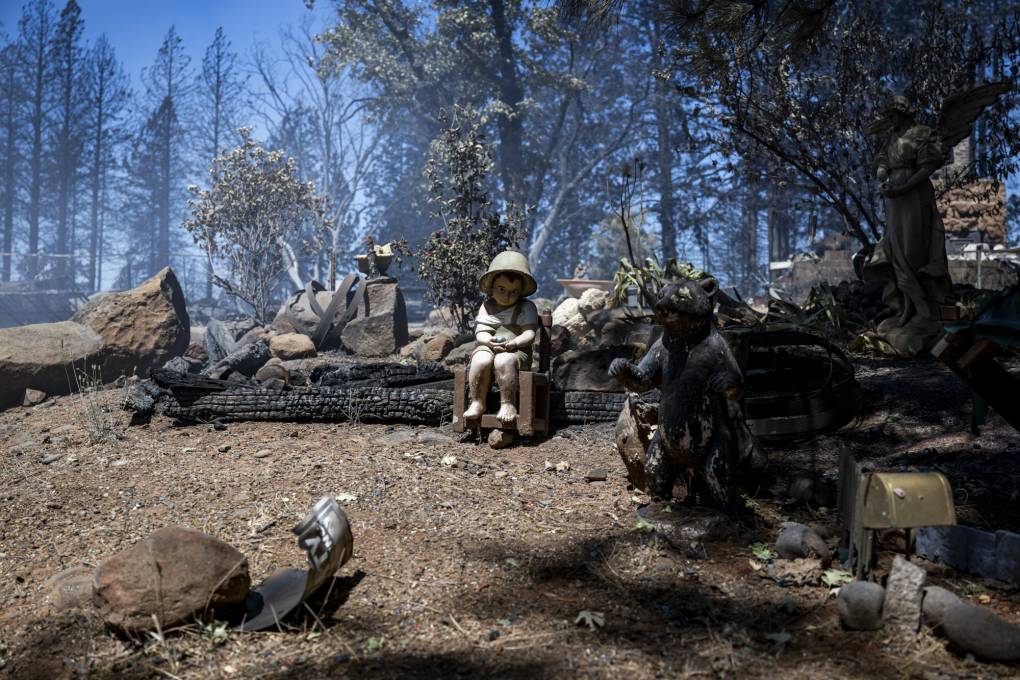
"caption": "A figurine sits outside a home on Cohasset Road after the Park Fire swept through the night before outside of Chico on July 26, 2024.",
"credit": "Beth LaBerge/KQED",
"altTag": null,
"description": null,
"imgSizes": {
"medium": {
"file": "https://cdn.kqed.org/wp-content/uploads/sites/10/2024/07/240726-PARKFIRE-84-BL-KQED-800x533.jpg",
"width": 800,
"height": 533,
"mimeType": "image/jpeg"
},
"large": {
"file": "https://cdn.kqed.org/wp-content/uploads/sites/10/2024/07/240726-PARKFIRE-84-BL-KQED-1020x680.jpg",
"width": 1020,
"height": 680,
"mimeType": "image/jpeg"
},
"thumbnail": {
"file": "https://cdn.kqed.org/wp-content/uploads/sites/10/2024/07/240726-PARKFIRE-84-BL-KQED-160x107.jpg",
"width": 160,
"height": 107,
"mimeType": "image/jpeg"
},
"1536x1536": {
"file": "https://cdn.kqed.org/wp-content/uploads/sites/10/2024/07/240726-PARKFIRE-84-BL-KQED-1536x1024.jpg",
"width": 1536,
"height": 1024,
"mimeType": "image/jpeg"
},
"post-thumbnail": {
"file": "https://cdn.kqed.org/wp-content/uploads/sites/10/2024/07/240726-PARKFIRE-84-BL-KQED-672x372.jpg",
"width": 672,
"height": 372,
"mimeType": "image/jpeg"
},
"twentyfourteen-full-width": {
"file": "https://cdn.kqed.org/wp-content/uploads/sites/10/2024/07/240726-PARKFIRE-84-BL-KQED-1038x576.jpg",
"width": 1038,
"height": 576,
"mimeType": "image/jpeg"
},
"full-width": {
"file": "https://cdn.kqed.org/wp-content/uploads/sites/10/2024/07/240726-PARKFIRE-84-BL-KQED-1920x1280.jpg",
"width": 1920,
"height": 1280,
"mimeType": "image/jpeg"
},
"kqedFullSize": {
"file": "https://cdn.kqed.org/wp-content/uploads/sites/10/2024/07/240726-PARKFIRE-84-BL-KQED.jpg",
"width": 2000,
"height": 1333
}
},
"isLoading": false,
"fetchFailed": false
},
"news_11997838": {
"type": "attachments",
"id": "news_11997838",
"meta": {
"index": "attachments_1716263798",
"site": "news",
"id": "11997838",
"found": true
},
"title": "240613-DeanPreston-02-BL_qed",
"publishDate": 1722278109,
"status": "inherit",
"parent": 11997837,
"modified": 1722278122,
"caption": "Supervisor Dean Preston speaks to a local resident at a bus stop at McAllister and Divisadero in San Francisco on June 13, 2024, while campaigning for reelection to the Board of Supervisors District 5.",
"credit": "Beth LaBerge/KQED",
"altTag": null,
"description": null,
"imgSizes": {
"medium": {
"file": "https://cdn.kqed.org/wp-content/uploads/sites/10/2024/07/240613-DeanPreston-02-BL_qed-800x533.jpg",
"width": 800,
"height": 533,
"mimeType": "image/jpeg"
},
"large": {
"file": "https://cdn.kqed.org/wp-content/uploads/sites/10/2024/07/240613-DeanPreston-02-BL_qed-1020x680.jpg",
"width": 1020,
"height": 680,
"mimeType": "image/jpeg"
},
"thumbnail": {
"file": "https://cdn.kqed.org/wp-content/uploads/sites/10/2024/07/240613-DeanPreston-02-BL_qed-160x107.jpg",
"width": 160,
"height": 107,
"mimeType": "image/jpeg"
},
"1536x1536": {
"file": "https://cdn.kqed.org/wp-content/uploads/sites/10/2024/07/240613-DeanPreston-02-BL_qed-1536x1024.jpg",
"width": 1536,
"height": 1024,
"mimeType": "image/jpeg"
},
"post-thumbnail": {
"file": "https://cdn.kqed.org/wp-content/uploads/sites/10/2024/07/240613-DeanPreston-02-BL_qed-672x372.jpg",
"width": 672,
"height": 372,
"mimeType": "image/jpeg"
},
"twentyfourteen-full-width": {
"file": "https://cdn.kqed.org/wp-content/uploads/sites/10/2024/07/240613-DeanPreston-02-BL_qed-1038x576.jpg",
"width": 1038,
"height": 576,
"mimeType": "image/jpeg"
},
"full-width": {
"file": "https://cdn.kqed.org/wp-content/uploads/sites/10/2024/07/240613-DeanPreston-02-BL_qed-1920x1280.jpg",
"width": 1920,
"height": 1280,
"mimeType": "image/jpeg"
},
"kqedFullSize": {
"file": "https://cdn.kqed.org/wp-content/uploads/sites/10/2024/07/240613-DeanPreston-02-BL_qed.jpg",
"width": 2000,
"height": 1333
}
},
"isLoading": false,
"fetchFailed": false
},
"news_11997359": {
"type": "attachments",
"id": "news_11997359",
"meta": {
"index": "attachments_1716263798",
"site": "news",
"id": "11997359",
"found": true
},
"title": "California Governor Newsom Announces New Gun Safety Legislation After String Of Mass Shootings In The State",
"publishDate": 1721925466,
"status": "inherit",
"parent": 11997352,
"modified": 1721930296,
"caption": "California Gov. Gavin Newsom speaks during a press conference in Sacramento, California, on Feb. 1, 2023. ",
"credit": "Justin Sullivan/Getty Images",
"altTag": null,
"description": null,
"imgSizes": {
"medium": {
"file": "https://cdn.kqed.org/wp-content/uploads/sites/10/2024/07/GavinNewsomGetty-800x555.jpg",
"width": 800,
"height": 555,
"mimeType": "image/jpeg"
},
"large": {
"file": "https://cdn.kqed.org/wp-content/uploads/sites/10/2024/07/GavinNewsomGetty-1020x708.jpg",
"width": 1020,
"height": 708,
"mimeType": "image/jpeg"
},
"thumbnail": {
"file": "https://cdn.kqed.org/wp-content/uploads/sites/10/2024/07/GavinNewsomGetty-160x111.jpg",
"width": 160,
"height": 111,
"mimeType": "image/jpeg"
},
"1536x1536": {
"file": "https://cdn.kqed.org/wp-content/uploads/sites/10/2024/07/GavinNewsomGetty-1536x1066.jpg",
"width": 1536,
"height": 1066,
"mimeType": "image/jpeg"
},
"post-thumbnail": {
"file": "https://cdn.kqed.org/wp-content/uploads/sites/10/2024/07/GavinNewsomGetty-672x372.jpg",
"width": 672,
"height": 372,
"mimeType": "image/jpeg"
},
"twentyfourteen-full-width": {
"file": "https://cdn.kqed.org/wp-content/uploads/sites/10/2024/07/GavinNewsomGetty-1038x576.jpg",
"width": 1038,
"height": 576,
"mimeType": "image/jpeg"
},
"full-width": {
"file": "https://cdn.kqed.org/wp-content/uploads/sites/10/2024/07/GavinNewsomGetty-1920x1332.jpg",
"width": 1920,
"height": 1332,
"mimeType": "image/jpeg"
},
"kqedFullSize": {
"file": "https://cdn.kqed.org/wp-content/uploads/sites/10/2024/07/GavinNewsomGetty.jpg",
"width": 2000,
"height": 1388
}
},
"isLoading": false,
"fetchFailed": false
},
"news_11996915": {
"type": "attachments",
"id": "news_11996915",
"meta": {
"index": "attachments_1716263798",
"site": "news",
"id": "11996915",
"found": true
},
"title": "06.24.2024-HMB Farmer Housing",
"publishDate": 1721761651,
"status": "inherit",
"parent": 0,
"modified": 1721762037,
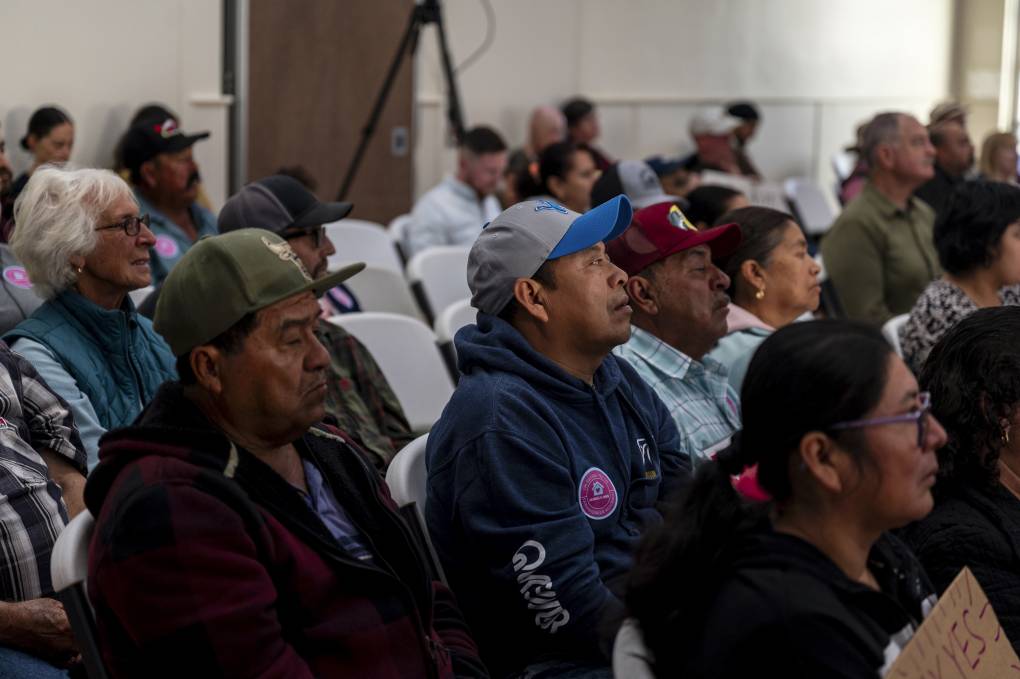
"caption": "Farmworkers sat in the crowd, often with earpieces to hear live translations, listening to their peers and other Half Moon Bay residents give public comment before the council voted on the appeal of the Half Moon Bay City Council Planning Commission’s decision to approve the building of a five-story affordable housing building at 555 Kelly Ave. on Wednesday, June 26, 2024.",
"credit": "Hiram Alejandro Durán for El Tímpano/CatchLight Local/Report for America corps member",
"altTag": null,
"description": null,
"imgSizes": {
"medium": {
"file": "https://cdn.kqed.org/wp-content/uploads/sites/10/2024/07/06.26.2024-HMB-FARMER-HOUSING-48-KQED-800x532.jpg",
"width": 800,
"height": 532,
"mimeType": "image/jpeg"
},
"large": {
"file": "https://cdn.kqed.org/wp-content/uploads/sites/10/2024/07/06.26.2024-HMB-FARMER-HOUSING-48-KQED-1020x679.jpg",
"width": 1020,
"height": 679,
"mimeType": "image/jpeg"
},
"thumbnail": {
"file": "https://cdn.kqed.org/wp-content/uploads/sites/10/2024/07/06.26.2024-HMB-FARMER-HOUSING-48-KQED-160x106.jpg",
"width": 160,
"height": 106,
"mimeType": "image/jpeg"
},
"1536x1536": {
"file": "https://cdn.kqed.org/wp-content/uploads/sites/10/2024/07/06.26.2024-HMB-FARMER-HOUSING-48-KQED-1536x1022.jpg",
"width": 1536,
"height": 1022,
"mimeType": "image/jpeg"
},
"post-thumbnail": {
"file": "https://cdn.kqed.org/wp-content/uploads/sites/10/2024/07/06.26.2024-HMB-FARMER-HOUSING-48-KQED-672x372.jpg",
"width": 672,
"height": 372,
"mimeType": "image/jpeg"
},
"twentyfourteen-full-width": {
"file": "https://cdn.kqed.org/wp-content/uploads/sites/10/2024/07/06.26.2024-HMB-FARMER-HOUSING-48-KQED-1038x576.jpg",
"width": 1038,
"height": 576,
"mimeType": "image/jpeg"
},
"full-width": {
"file": "https://cdn.kqed.org/wp-content/uploads/sites/10/2024/07/06.26.2024-HMB-FARMER-HOUSING-48-KQED-1920x1278.jpg",
"width": 1920,
"height": 1278,
"mimeType": "image/jpeg"
},
"kqedFullSize": {
"file": "https://cdn.kqed.org/wp-content/uploads/sites/10/2024/07/06.26.2024-HMB-FARMER-HOUSING-48-KQED.jpg",
"width": 2000,
"height": 1331
}
},
"isLoading": false,
"fetchFailed": false
},
"news_11997226": {
"type": "attachments",
"id": "news_11997226",
"meta": {
"index": "attachments_1716263798",
"site": "news",
"id": "11997226",
"found": true
},
"title": "Millbrae City Hall in Millbrae on July 10, 2024.",
"publishDate": 1721859702,
"status": "inherit",
"parent": 11997219,
"modified": 1721859793,
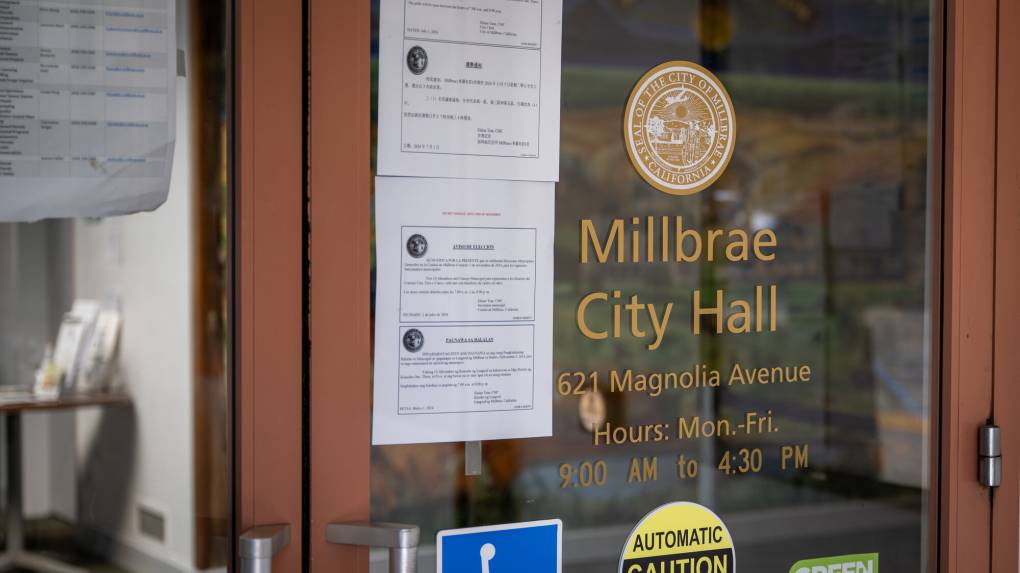
"caption": "Millbrae City Hall in Millbrae on July 10, 2024. Stemming from a bitter debate over plans to turn a hotel into supportive housing, the recall effort against two Millbrae City Council members appears to have passed.",
"credit": "Beth LaBerge/KQED",
"altTag": null,
"description": null,
"imgSizes": {
"medium": {
"file": "https://cdn.kqed.org/wp-content/uploads/sites/10/2024/07/240710-MillbraeCityHall-01-BL_qed-800x450.jpg",
"width": 800,
"height": 450,
"mimeType": "image/jpeg"
},
"large": {
"file": "https://cdn.kqed.org/wp-content/uploads/sites/10/2024/07/240710-MillbraeCityHall-01-BL_qed-1020x573.jpg",
"width": 1020,
"height": 573,
"mimeType": "image/jpeg"
},
"thumbnail": {
"file": "https://cdn.kqed.org/wp-content/uploads/sites/10/2024/07/240710-MillbraeCityHall-01-BL_qed-160x90.jpg",
"width": 160,
"height": 90,
"mimeType": "image/jpeg"
},
"1536x1536": {
"file": "https://cdn.kqed.org/wp-content/uploads/sites/10/2024/07/240710-MillbraeCityHall-01-BL_qed-1536x863.jpg",
"width": 1536,
"height": 863,
"mimeType": "image/jpeg"
},
"post-thumbnail": {
"file": "https://cdn.kqed.org/wp-content/uploads/sites/10/2024/07/240710-MillbraeCityHall-01-BL_qed-672x372.jpg",
"width": 672,
"height": 372,
"mimeType": "image/jpeg"
},
"twentyfourteen-full-width": {
"file": "https://cdn.kqed.org/wp-content/uploads/sites/10/2024/07/240710-MillbraeCityHall-01-BL_qed-1038x576.jpg",
"width": 1038,
"height": 576,
"mimeType": "image/jpeg"
},
"full-width": {
"file": "https://cdn.kqed.org/wp-content/uploads/sites/10/2024/07/240710-MillbraeCityHall-01-BL_qed-1920x1079.jpg",
"width": 1920,
"height": 1079,
"mimeType": "image/jpeg"
},
"kqedFullSize": {
"file": "https://cdn.kqed.org/wp-content/uploads/sites/10/2024/07/240710-MillbraeCityHall-01-BL_qed.jpg",
"width": 2000,
"height": 1124
}
},
"isLoading": false,
"fetchFailed": false
},
"news_11997162": {
"type": "attachments",
"id": "news_11997162",
"meta": {
"index": "attachments_1716263798",
"site": "news",
"id": "11997162",
"found": true
},
"title": "San Francisco Skyline",
"publishDate": 1721848876,
"status": "inherit",
"parent": 11997102,
"modified": 1721848962,
"caption": "Salesforce Tower and Millennium Tower in San Francisco's South of Market neighborhood on Jan. 2, 2022. ",
"credit": "Gado/Getty Images",
"altTag": null,
"description": null,
"imgSizes": {
"medium": {
"file": "https://cdn.kqed.org/wp-content/uploads/sites/10/2024/07/MillenniumTowerSomaAP-800x600.jpg",
"width": 800,
"height": 600,
"mimeType": "image/jpeg"
},
"large": {
"file": "https://cdn.kqed.org/wp-content/uploads/sites/10/2024/07/MillenniumTowerSomaAP-1020x765.jpg",
"width": 1020,
"height": 765,
"mimeType": "image/jpeg"
},
"thumbnail": {
"file": "https://cdn.kqed.org/wp-content/uploads/sites/10/2024/07/MillenniumTowerSomaAP-160x120.jpg",
"width": 160,
"height": 120,
"mimeType": "image/jpeg"
},
"1536x1536": {
"file": "https://cdn.kqed.org/wp-content/uploads/sites/10/2024/07/MillenniumTowerSomaAP-1536x1152.jpg",
"width": 1536,
"height": 1152,
"mimeType": "image/jpeg"
},
"post-thumbnail": {
"file": "https://cdn.kqed.org/wp-content/uploads/sites/10/2024/07/MillenniumTowerSomaAP-672x372.jpg",
"width": 672,
"height": 372,
"mimeType": "image/jpeg"
},
"twentyfourteen-full-width": {
"file": "https://cdn.kqed.org/wp-content/uploads/sites/10/2024/07/MillenniumTowerSomaAP-1038x576.jpg",
"width": 1038,
"height": 576,
"mimeType": "image/jpeg"
},
"full-width": {
"file": "https://cdn.kqed.org/wp-content/uploads/sites/10/2024/07/MillenniumTowerSomaAP-1920x1440.jpg",
"width": 1920,
"height": 1440,
"mimeType": "image/jpeg"
},
"kqedFullSize": {
"file": "https://cdn.kqed.org/wp-content/uploads/sites/10/2024/07/MillenniumTowerSomaAP.jpg",
"width": 2000,
"height": 1500
}
},
"isLoading": false,
"fetchFailed": false
},
"news_11996958": {
"type": "attachments",
"id": "news_11996958",
"meta": {
"index": "attachments_1716263798",
"site": "news",
"id": "11996958",
"found": true
},
"title": "005_KQED_Housing_Berkeley_ShadowStandards_02272020__qed",
"publishDate": 1721764797,
"status": "inherit",
"parent": 11996949,
"modified": 1721841361,
"caption": "The Berkeley City Council on Tuesday put limits on a proposal that would have allowed an unrestricted number of small apartments in single-family and otherwise low-density neighborhoods.",
"credit": "Beth LaBerge/KQED",
"altTag": null,
"description": null,
"imgSizes": {
"medium": {
"file": "https://cdn.kqed.org/wp-content/uploads/sites/10/2024/07/005_KQED_Housing_Berkeley_ShadowStandards_02272020__qed-1-800x533.jpg",
"width": 800,
"height": 533,
"mimeType": "image/jpeg"
},
"large": {
"file": "https://cdn.kqed.org/wp-content/uploads/sites/10/2024/07/005_KQED_Housing_Berkeley_ShadowStandards_02272020__qed-1-1020x680.jpg",
"width": 1020,
"height": 680,
"mimeType": "image/jpeg"
},
"thumbnail": {
"file": "https://cdn.kqed.org/wp-content/uploads/sites/10/2024/07/005_KQED_Housing_Berkeley_ShadowStandards_02272020__qed-1-160x107.jpg",
"width": 160,
"height": 107,
"mimeType": "image/jpeg"
},
"1536x1536": {
"file": "https://cdn.kqed.org/wp-content/uploads/sites/10/2024/07/005_KQED_Housing_Berkeley_ShadowStandards_02272020__qed-1-1536x1024.jpg",
"width": 1536,
"height": 1024,
"mimeType": "image/jpeg"
},
"post-thumbnail": {
"file": "https://cdn.kqed.org/wp-content/uploads/sites/10/2024/07/005_KQED_Housing_Berkeley_ShadowStandards_02272020__qed-1-672x372.jpg",
"width": 672,
"height": 372,
"mimeType": "image/jpeg"
},
"twentyfourteen-full-width": {
"file": "https://cdn.kqed.org/wp-content/uploads/sites/10/2024/07/005_KQED_Housing_Berkeley_ShadowStandards_02272020__qed-1-1038x576.jpg",
"width": 1038,
"height": 576,
"mimeType": "image/jpeg"
},
"full-width": {
"file": "https://cdn.kqed.org/wp-content/uploads/sites/10/2024/07/005_KQED_Housing_Berkeley_ShadowStandards_02272020__qed-1-1920x1280.jpg",
"width": 1920,
"height": 1280,
"mimeType": "image/jpeg"
},
"kqedFullSize": {
"file": "https://cdn.kqed.org/wp-content/uploads/sites/10/2024/07/005_KQED_Housing_Berkeley_ShadowStandards_02272020__qed-1.jpg",
"width": 2000,
"height": 1333
}
},
"isLoading": false,
"fetchFailed": false
},
"news_11997000": {
"type": "attachments",
"id": "news_11997000",
"meta": {
"index": "attachments_1716263798",
"site": "news",
"id": "11997000",
"found": true
},
"title": "IMG_1717",
"publishDate": 1721769684,
"status": "inherit",
"parent": 11996888,
"modified": 1721769713,
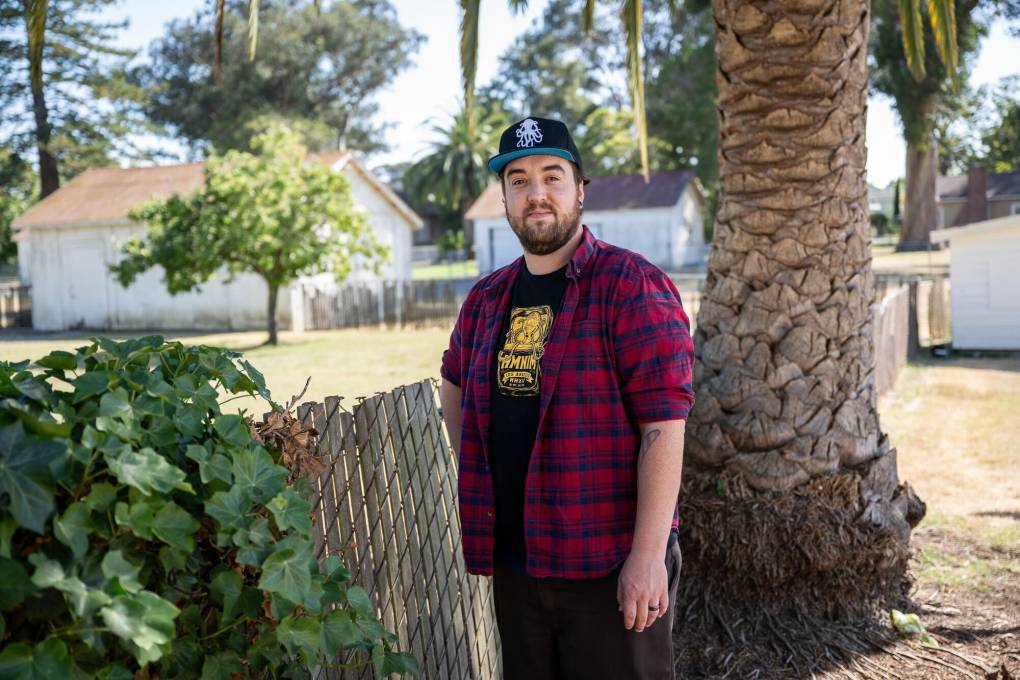
"caption": "Solano County resident Sam Houston stands on Mare Island in Vallejo on July 22, 2024.",
"credit": "Beth LaBerge/KQED",
"altTag": null,
"description": null,
"imgSizes": {
"medium": {
"file": "https://cdn.kqed.org/wp-content/uploads/sites/10/2024/07/IMG_1717-800x533.jpg",
"width": 800,
"height": 533,
"mimeType": "image/jpeg"
},
"large": {
"file": "https://cdn.kqed.org/wp-content/uploads/sites/10/2024/07/IMG_1717-1020x680.jpg",
"width": 1020,
"height": 680,
"mimeType": "image/jpeg"
},
"thumbnail": {
"file": "https://cdn.kqed.org/wp-content/uploads/sites/10/2024/07/IMG_1717-160x107.jpg",
"width": 160,
"height": 107,
"mimeType": "image/jpeg"
},
"1536x1536": {
"file": "https://cdn.kqed.org/wp-content/uploads/sites/10/2024/07/IMG_1717-1536x1024.jpg",
"width": 1536,
"height": 1024,
"mimeType": "image/jpeg"
},
"post-thumbnail": {
"file": "https://cdn.kqed.org/wp-content/uploads/sites/10/2024/07/IMG_1717-672x372.jpg",
"width": 672,
"height": 372,
"mimeType": "image/jpeg"
},
"twentyfourteen-full-width": {
"file": "https://cdn.kqed.org/wp-content/uploads/sites/10/2024/07/IMG_1717-1038x576.jpg",
"width": 1038,
"height": 576,
"mimeType": "image/jpeg"
},
"full-width": {
"file": "https://cdn.kqed.org/wp-content/uploads/sites/10/2024/07/IMG_1717-1920x1280.jpg",
"width": 1920,
"height": 1280,
"mimeType": "image/jpeg"
},
"kqedFullSize": {
"file": "https://cdn.kqed.org/wp-content/uploads/sites/10/2024/07/IMG_1717.jpg",
"width": 2000,
"height": 1333
}
},
"isLoading": false,
"fetchFailed": false
},
"news_11996938": {
"type": "attachments",
"id": "news_11996938",
"meta": {
"index": "attachments_1716263798",
"site": "news",
"id": "11996938",
"found": true
},
"title": "038_KQED_WoodStreetOaklandCalTrans_09082022_qed",
"publishDate": 1721763343,
"status": "inherit",
"parent": 11996898,
"modified": 1721764900,
"caption": "Unhoused residents and supporters stand on a truck to barricade CalTrans workers from entering the former Wood Street encampment in Oakland on Sept. 8, 2022. Oakland began sweeping another small community of unhoused people living near the Bay Bridge on Tuesday, July 23, 2024. Most of the 12 residents, many with disabilities, plan to move to another roadside three miles away, according to their attorney in a federal lawsuit.",
"credit": "Beth LaBerge/KQED",
"altTag": null,
"description": null,
"imgSizes": {
"medium": {
"file": "https://cdn.kqed.org/wp-content/uploads/sites/10/2024/07/038_KQED_WoodStreetOaklandCalTrans_09082022_qed-800x533.jpg",
"width": 800,
"height": 533,
"mimeType": "image/jpeg"
},
"large": {
"file": "https://cdn.kqed.org/wp-content/uploads/sites/10/2024/07/038_KQED_WoodStreetOaklandCalTrans_09082022_qed-1020x680.jpg",
"width": 1020,
"height": 680,
"mimeType": "image/jpeg"
},
"thumbnail": {
"file": "https://cdn.kqed.org/wp-content/uploads/sites/10/2024/07/038_KQED_WoodStreetOaklandCalTrans_09082022_qed-160x107.jpg",
"width": 160,
"height": 107,
"mimeType": "image/jpeg"
},
"1536x1536": {
"file": "https://cdn.kqed.org/wp-content/uploads/sites/10/2024/07/038_KQED_WoodStreetOaklandCalTrans_09082022_qed-1536x1024.jpg",
"width": 1536,
"height": 1024,
"mimeType": "image/jpeg"
},
"post-thumbnail": {
"file": "https://cdn.kqed.org/wp-content/uploads/sites/10/2024/07/038_KQED_WoodStreetOaklandCalTrans_09082022_qed-672x372.jpg",
"width": 672,
"height": 372,
"mimeType": "image/jpeg"
},
"twentyfourteen-full-width": {
"file": "https://cdn.kqed.org/wp-content/uploads/sites/10/2024/07/038_KQED_WoodStreetOaklandCalTrans_09082022_qed-1038x576.jpg",
"width": 1038,
"height": 576,
"mimeType": "image/jpeg"
},
"full-width": {
"file": "https://cdn.kqed.org/wp-content/uploads/sites/10/2024/07/038_KQED_WoodStreetOaklandCalTrans_09082022_qed-1920x1280.jpg",
"width": 1920,
"height": 1280,
"mimeType": "image/jpeg"
},
"kqedFullSize": {
"file": "https://cdn.kqed.org/wp-content/uploads/sites/10/2024/07/038_KQED_WoodStreetOaklandCalTrans_09082022_qed.jpg",
"width": 2000,
"height": 1333
}
},
"isLoading": false,
"fetchFailed": false
},
"news_11996020": {
"type": "attachments",
"id": "news_11996020",
"meta": {
"index": "attachments_1716263798",
"site": "news",
"id": "11996020",
"found": true
},
"title": "240716-LATINOVOTERSENTIMENT-12-BL-KQED",
"publishDate": 1721237486,
"status": "inherit",
"parent": 0,
"modified": 1721237595,
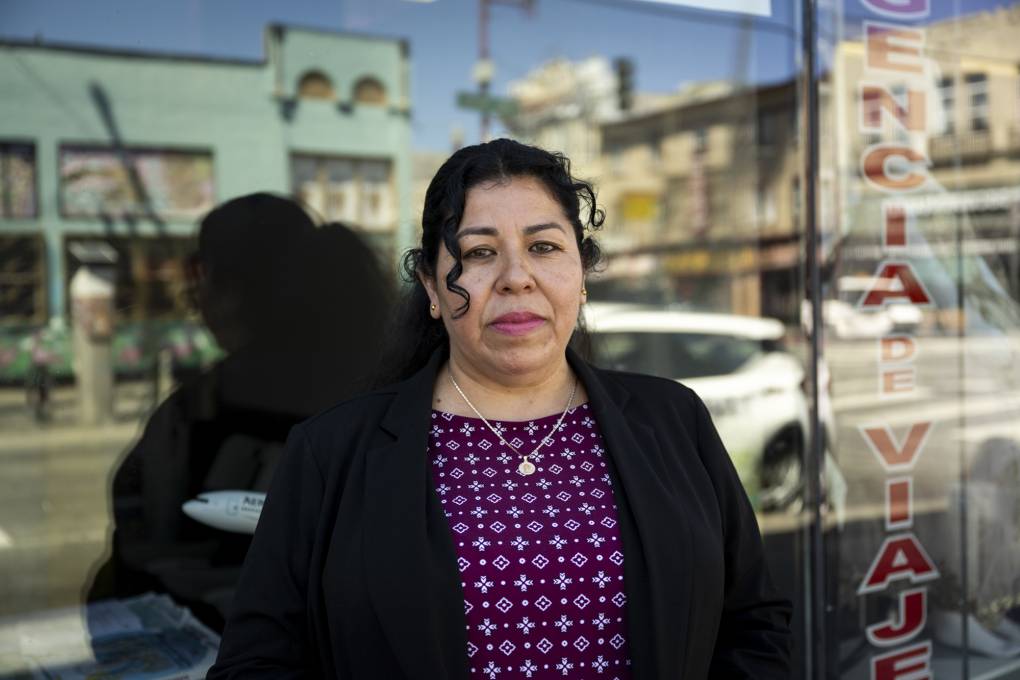
"caption": "Mission District resident Blanca Trujillo stands on Mission Street in San Francisco on July 16, 2024.",
"credit": "Beth LaBerge/KQED",
"altTag": null,
"description": null,
"imgSizes": {
"medium": {
"file": "https://cdn.kqed.org/wp-content/uploads/sites/10/2024/07/240716-LATINOVOTERSENTIMENT-12-BL-KQED-800x533.jpg",
"width": 800,
"height": 533,
"mimeType": "image/jpeg"
},
"large": {
"file": "https://cdn.kqed.org/wp-content/uploads/sites/10/2024/07/240716-LATINOVOTERSENTIMENT-12-BL-KQED-1020x680.jpg",
"width": 1020,
"height": 680,
"mimeType": "image/jpeg"
},
"thumbnail": {
"file": "https://cdn.kqed.org/wp-content/uploads/sites/10/2024/07/240716-LATINOVOTERSENTIMENT-12-BL-KQED-160x107.jpg",
"width": 160,
"height": 107,
"mimeType": "image/jpeg"
},
"1536x1536": {
"file": "https://cdn.kqed.org/wp-content/uploads/sites/10/2024/07/240716-LATINOVOTERSENTIMENT-12-BL-KQED-1536x1024.jpg",
"width": 1536,
"height": 1024,
"mimeType": "image/jpeg"
},
"post-thumbnail": {
"file": "https://cdn.kqed.org/wp-content/uploads/sites/10/2024/07/240716-LATINOVOTERSENTIMENT-12-BL-KQED-672x372.jpg",
"width": 672,
"height": 372,
"mimeType": "image/jpeg"
},
"twentyfourteen-full-width": {
"file": "https://cdn.kqed.org/wp-content/uploads/sites/10/2024/07/240716-LATINOVOTERSENTIMENT-12-BL-KQED-1038x576.jpg",
"width": 1038,
"height": 576,
"mimeType": "image/jpeg"
},
"full-width": {
"file": "https://cdn.kqed.org/wp-content/uploads/sites/10/2024/07/240716-LATINOVOTERSENTIMENT-12-BL-KQED-1920x1280.jpg",
"width": 1920,
"height": 1280,
"mimeType": "image/jpeg"
},
"kqedFullSize": {
"file": "https://cdn.kqed.org/wp-content/uploads/sites/10/2024/07/240716-LATINOVOTERSENTIMENT-12-BL-KQED.jpg",
"width": 2000,
"height": 1333
}
},
"isLoading": false,
"fetchFailed": false
},
"news_11996755": {
"type": "attachments",
"id": "news_11996755",
"meta": {
"index": "attachments_1716263798",
"site": "news",
"id": "11996755",
"found": true
},
"title": "20240604_CaliforniaForeverFarms_GC-12_qed",
"publishDate": 1721678524,
"status": "inherit",
"parent": 11996747,
"modified": 1723672746,
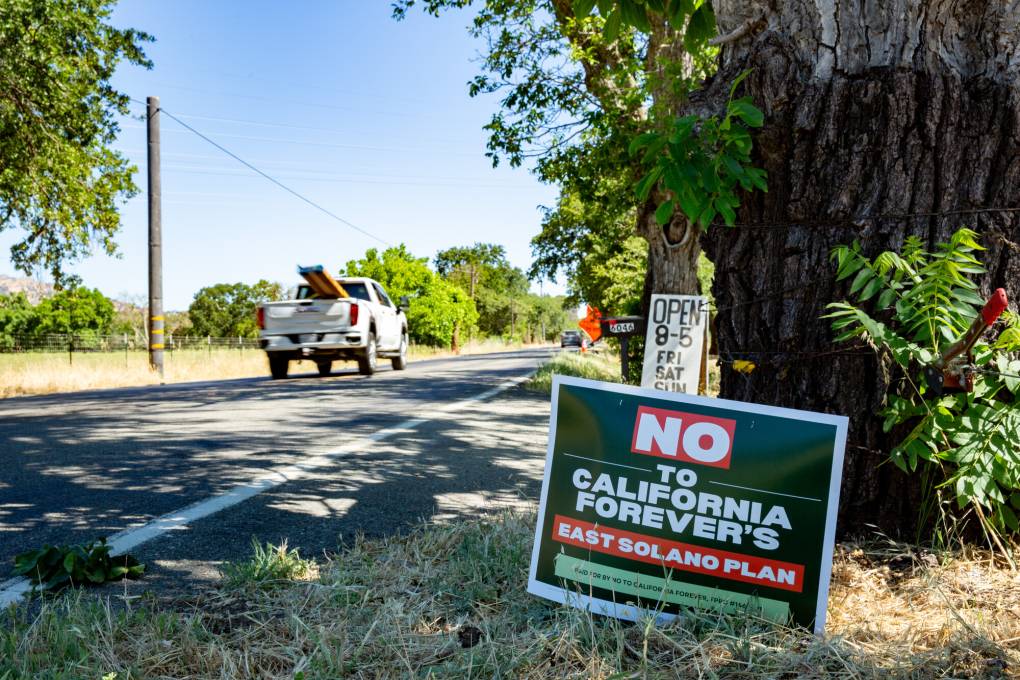
"caption": "A 'No to California Forever' sign is displayed at the entrance of Soul Food Farm in Vacaville on June 4, 2024.",
"credit": "Gina Castro/KQED",
"altTag": "A sign that says \"No to California Forever's East Solano Plan\" on the side of the road.",
"description": null,
"imgSizes": {
"medium": {
"file": "https://cdn.kqed.org/wp-content/uploads/sites/10/2024/07/20240604_CaliforniaForeverFarms_GC-12_qed-800x533.jpg",
"width": 800,
"height": 533,
"mimeType": "image/jpeg"
},
"large": {
"file": "https://cdn.kqed.org/wp-content/uploads/sites/10/2024/07/20240604_CaliforniaForeverFarms_GC-12_qed-1020x680.jpg",
"width": 1020,
"height": 680,
"mimeType": "image/jpeg"
},
"thumbnail": {
"file": "https://cdn.kqed.org/wp-content/uploads/sites/10/2024/07/20240604_CaliforniaForeverFarms_GC-12_qed-160x107.jpg",
"width": 160,
"height": 107,
"mimeType": "image/jpeg"
},
"1536x1536": {
"file": "https://cdn.kqed.org/wp-content/uploads/sites/10/2024/07/20240604_CaliforniaForeverFarms_GC-12_qed-1536x1024.jpg",
"width": 1536,
"height": 1024,
"mimeType": "image/jpeg"
},
"post-thumbnail": {
"file": "https://cdn.kqed.org/wp-content/uploads/sites/10/2024/07/20240604_CaliforniaForeverFarms_GC-12_qed-672x372.jpg",
"width": 672,
"height": 372,
"mimeType": "image/jpeg"
},
"twentyfourteen-full-width": {
"file": "https://cdn.kqed.org/wp-content/uploads/sites/10/2024/07/20240604_CaliforniaForeverFarms_GC-12_qed-1038x576.jpg",
"width": 1038,
"height": 576,
"mimeType": "image/jpeg"
},
"full-width": {
"file": "https://cdn.kqed.org/wp-content/uploads/sites/10/2024/07/20240604_CaliforniaForeverFarms_GC-12_qed-1920x1280.jpg",
"width": 1920,
"height": 1280,
"mimeType": "image/jpeg"
},
"kqedFullSize": {
"file": "https://cdn.kqed.org/wp-content/uploads/sites/10/2024/07/20240604_CaliforniaForeverFarms_GC-12_qed.jpg",
"width": 2000,
"height": 1333
}
},
"isLoading": false,
"fetchFailed": false
},
"news_11996332": {
"type": "attachments",
"id": "news_11996332",
"meta": {
"index": "attachments_1716263798",
"site": "news",
"id": "11996332",
"found": true
},
"title": "240718-BerkeleyMissingMiddleHousing-31-BL_qed",
"publishDate": 1721345078,
"status": "inherit",
"parent": 11996229,
"modified": 1721413514,
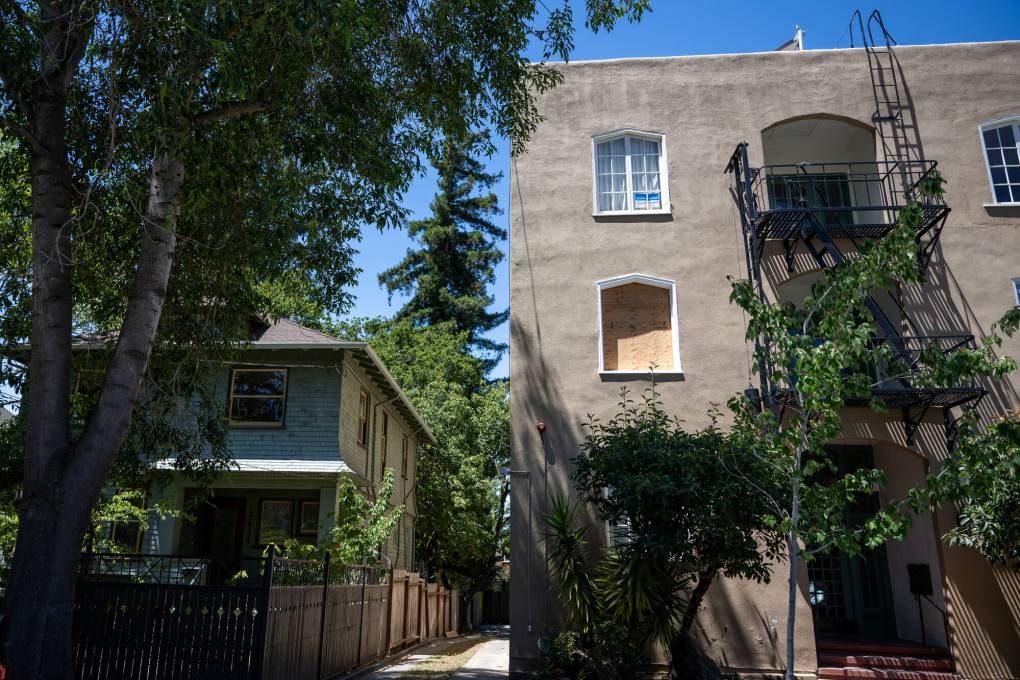
"caption": "A single-family home next to an apartment building in the Elmwood neighborhood of Berkeley on July 18, 2024.",
"credit": "Beth LaBerge/KQED",
"altTag": "Two residential buildings next to each other with the taller building on the right.",
"description": null,
"imgSizes": {
"medium": {
"file": "https://cdn.kqed.org/wp-content/uploads/sites/10/2024/07/240718-BerkeleyMissingMiddleHousing-31-BL_qed-800x533.jpg",
"width": 800,
"height": 533,
"mimeType": "image/jpeg"
},
"large": {
"file": "https://cdn.kqed.org/wp-content/uploads/sites/10/2024/07/240718-BerkeleyMissingMiddleHousing-31-BL_qed-1020x680.jpg",
"width": 1020,
"height": 680,
"mimeType": "image/jpeg"
},
"thumbnail": {
"file": "https://cdn.kqed.org/wp-content/uploads/sites/10/2024/07/240718-BerkeleyMissingMiddleHousing-31-BL_qed-160x107.jpg",
"width": 160,
"height": 107,
"mimeType": "image/jpeg"
},
"1536x1536": {
"file": "https://cdn.kqed.org/wp-content/uploads/sites/10/2024/07/240718-BerkeleyMissingMiddleHousing-31-BL_qed-1536x1024.jpg",
"width": 1536,
"height": 1024,
"mimeType": "image/jpeg"
},
"post-thumbnail": {
"file": "https://cdn.kqed.org/wp-content/uploads/sites/10/2024/07/240718-BerkeleyMissingMiddleHousing-31-BL_qed-672x372.jpg",
"width": 672,
"height": 372,
"mimeType": "image/jpeg"
},
"twentyfourteen-full-width": {
"file": "https://cdn.kqed.org/wp-content/uploads/sites/10/2024/07/240718-BerkeleyMissingMiddleHousing-31-BL_qed-1038x576.jpg",
"width": 1038,
"height": 576,
"mimeType": "image/jpeg"
},
"full-width": {
"file": "https://cdn.kqed.org/wp-content/uploads/sites/10/2024/07/240718-BerkeleyMissingMiddleHousing-31-BL_qed-1920x1280.jpg",
"width": 1920,
"height": 1280,
"mimeType": "image/jpeg"
},
"kqedFullSize": {
"file": "https://cdn.kqed.org/wp-content/uploads/sites/10/2024/07/240718-BerkeleyMissingMiddleHousing-31-BL_qed.jpg",
"width": 1999,
"height": 1333
}
},
"isLoading": false,
"fetchFailed": false
}
},
"audioPlayerReducer": {
"postId": "stream_live",
"isPaused": true,
"isPlaying": false,
"pfsActive": false,
"pledgeModalIsOpen": true,
"playerDrawerIsOpen": false,
"liveAudioPlayStartedAt": 0,
"liveAudioPlayContext": ""
},
"authorsReducer": {
"byline_news_11997986": {
"type": "authors",
"id": "byline_news_11997986",
"meta": {
"override": true
},
"slug": "byline_news_11997986",
"name": "Eugene Garcia and Jaimie Ding, Associated Press",
"isLoading": false
},
"byline_news_11996924": {
"type": "authors",
"id": "byline_news_11996924",
"meta": {
"override": true
},
"slug": "byline_news_11996924",
"name": "\u003ca href=\"https://www.eltimpano.org/author/cgaribay/\">Cassandra Garibay\u003c/a> and \u003ca href=\"https://www.eltimpano.org/author/hiram/\">Hiram Durán\u003c/a>, El Tímpano",
"isLoading": false
},
"shossaini": {
"type": "authors",
"id": "3214",
"meta": {
"index": "authors_1716337520",
"id": "3214",
"found": true
},
"name": "Sara Hossaini",
"firstName": "Sara",
"lastName": "Hossaini",
"slug": "shossaini",
"email": "shossaini@kqed.org",
"display_author_email": true,
"staff_mastheads": [
"news"
],
"title": "KQED Reporter",
"bio": "Sara Hossaini came to general assignment reporting at KQED in 2013 after two winters reporting at Wyoming Public Radio. She holds a bachelor's degree in broadcast journalism from the University of Nebraska-Lincoln. Her radio romance began after a bitter breakup with documentary film (Ok, maybe it's still complicated). Her first simultaneous jobs in San Francisco were as Associate Producer on a PBS film series through the Center for Asian American Media and as a butler. She likes to trot, plot and make things with her hands.",
"avatar": "https://secure.gravatar.com/avatar/060e9f56b9554e17942e89f413242774?s=600&d=blank&r=g",
"twitter": "mshossaini",
"facebook": null,
"instagram": null,
"linkedin": null,
"sites": [
{
"site": "news",
"roles": [
"author"
]
},
{
"site": "stateofhealth",
"roles": [
"author"
]
}
],
"headData": {
"title": "Sara Hossaini | KQED",
"description": "KQED Reporter",
"ogImgSrc": "https://secure.gravatar.com/avatar/060e9f56b9554e17942e89f413242774?s=600&d=blank&r=g",
"twImgSrc": "https://secure.gravatar.com/avatar/060e9f56b9554e17942e89f413242774?s=600&d=blank&r=g"
},
"isLoading": false,
"link": "/author/shossaini"
},
"ebaldassari": {
"type": "authors",
"id": "11652",
"meta": {
"index": "authors_1716337520",
"id": "11652",
"found": true
},
"name": "Erin Baldassari",
"firstName": "Erin",
"lastName": "Baldassari",
"slug": "ebaldassari",
"email": "ebaldassari@KQED.org",
"display_author_email": true,
"staff_mastheads": [
"news"
],
"title": "Staff Writer",
"bio": "Erin Baldassari covers housing for KQED. She's a former print journalist and most recently worked as the transportation reporter for the \u003cem>Mercury News\u003c/em> and \u003cem>East Bay Times. \u003c/em>There, she focused on how the Bay Area’s housing shortage has changed the way people move around the region. She also served on the \u003cem>East Bay Times\u003c/em>’ 2017 Pulitzer Prize-winning team for coverage of the Ghost Ship Fire in Oakland. Prior to that, Erin worked as a breaking news and general assignment reporter for a variety of outlets in the Bay Area and the greater Boston area. A Tufts University alumna, Erin grew up in the foothills of the Sierra Nevada mountains and in Sonoma County. She is a life-long KQED listener.",
"avatar": "https://secure.gravatar.com/avatar/5e95cad64a8ca08288082212e199d2b0cbeb4fd8e8ef5339395f361032bbe005?s=600&d=blank&r=g",
"twitter": "e_baldi",
"bluesky": null,
"facebook": null,
"instagram": null,
"linkedin": null,
"sites": [
{
"site": "news",
"roles": [
"edit_others_posts",
"editor"
]
},
{
"site": "science",
"roles": [
"editor"
]
},
{
"site": "liveblog",
"roles": [
"editor"
]
}
],
"headData": {
"title": "Erin Baldassari | KQED",
"description": "Staff Writer",
"ogImgSrc": "https://secure.gravatar.com/avatar/5e95cad64a8ca08288082212e199d2b0cbeb4fd8e8ef5339395f361032bbe005?s=600&d=blank&r=g",
"twImgSrc": "https://secure.gravatar.com/avatar/5e95cad64a8ca08288082212e199d2b0cbeb4fd8e8ef5339395f361032bbe005?s=600&d=blank&r=g"
},
"isLoading": false,
"link": "/author/ebaldassari"
},
"abandlamudi": {
"type": "authors",
"id": "11672",
"meta": {
"index": "authors_1716337520",
"id": "11672",
"found": true
},
"name": "Adhiti Bandlamudi",
"firstName": "Adhiti",
"lastName": "Bandlamudi",
"slug": "abandlamudi",
"email": "abandlamudi@kqed.org",
"display_author_email": false,
"staff_mastheads": [
"news"
],
"title": "KQED Housing Reporter",
"bio": "Adhiti Bandlamudi reports for KQED's Housing desk. She focuses on how housing gets built across the Bay Area. Before joining KQED in 2020, she reported for WUNC in Durham, North Carolina, WABE in Atlanta, Georgia and Capital Public Radio in Sacramento. In 2017, she was awarded a Kroc Fellowship at NPR where she reported on everything from sprinkles to the Golden State Killer's arrest. When she's not reporting, she's baking new recipes in her kitchen or watching movies with friends and family. She's originally from Georgia and has strong opinions about Great British Bake Off.",
"avatar": "https://secure.gravatar.com/avatar/868129c8b257bb99a3500e2c86a65400?s=600&d=mm&r=g",
"twitter": "oddity_adhiti",
"facebook": null,
"instagram": null,
"linkedin": null,
"sites": [
{
"site": "arts",
"roles": [
"author"
]
},
{
"site": "news",
"roles": [
"editor"
]
},
{
"site": "liveblog",
"roles": [
"author"
]
}
],
"headData": {
"title": "Adhiti Bandlamudi | KQED",
"description": "KQED Housing Reporter",
"ogImgSrc": "https://secure.gravatar.com/avatar/868129c8b257bb99a3500e2c86a65400?s=600&d=mm&r=g",
"twImgSrc": "https://secure.gravatar.com/avatar/868129c8b257bb99a3500e2c86a65400?s=600&d=mm&r=g"
},
"isLoading": false,
"link": "/author/abandlamudi"
},
"sjohnson": {
"type": "authors",
"id": "11840",
"meta": {
"index": "authors_1716337520",
"id": "11840",
"found": true
},
"name": "Sydney Johnson",
"firstName": "Sydney",
"lastName": "Johnson",
"slug": "sjohnson",
"email": "sjohnson@kqed.org",
"display_author_email": false,
"staff_mastheads": [
"news"
],
"title": "KQED Reporter",
"bio": "Sydney Johnson is a general assignment reporter at KQED. She previously reported on public health and city government at the San Francisco Examiner, and before that, she covered statewide education policy for EdSource. Her reporting has won multiple local, state and national awards. Sydney is a graduate of the University of California, Berkeley and lives in San Francisco.",
"avatar": "https://secure.gravatar.com/avatar/97855f2719b72ad6190b7c535fe642c8?s=600&d=blank&r=g",
"twitter": "sydneyfjohnson",
"facebook": null,
"instagram": null,
"linkedin": null,
"sites": [
{
"site": "news",
"roles": [
"editor"
]
}
],
"headData": {
"title": "Sydney Johnson | KQED",
"description": "KQED Reporter",
"ogImgSrc": "https://secure.gravatar.com/avatar/97855f2719b72ad6190b7c535fe642c8?s=600&d=blank&r=g",
"twImgSrc": "https://secure.gravatar.com/avatar/97855f2719b72ad6190b7c535fe642c8?s=600&d=blank&r=g"
},
"isLoading": false,
"link": "/author/sjohnson"
},
"kdebenedetti": {
"type": "authors",
"id": "11913",
"meta": {
"index": "authors_1716337520",
"id": "11913",
"found": true
},
"name": "Katie DeBenedetti",
"firstName": "Katie",
"lastName": "DeBenedetti",
"slug": "kdebenedetti",
"email": "kdebenedetti@kqed.org",
"display_author_email": false,
"staff_mastheads": [
"news",
"science"
],
"title": "KQED Contributor",
"bio": "Katie DeBenedetti is a digital reporter covering daily news for the Express Desk. Prior to joining KQED as a culture reporting intern in January 2024, she covered education and city government for the Napa Valley Register.",
"avatar": "https://secure.gravatar.com/avatar/6e31073cb8f7e4214ab03f42771d0f45?s=600&d=blank&r=g",
"twitter": null,
"facebook": null,
"instagram": null,
"linkedin": null,
"sites": [
{
"site": "news",
"roles": [
"author"
]
},
{
"site": "science",
"roles": [
"author"
]
},
{
"site": "liveblog",
"roles": [
"author"
]
}
],
"headData": {
"title": "Katie DeBenedetti | KQED",
"description": "KQED Contributor",
"ogImgSrc": "https://secure.gravatar.com/avatar/6e31073cb8f7e4214ab03f42771d0f45?s=600&d=blank&r=g",
"twImgSrc": "https://secure.gravatar.com/avatar/6e31073cb8f7e4214ab03f42771d0f45?s=600&d=blank&r=g"
},
"isLoading": false,
"link": "/author/kdebenedetti"
},
"jzuloaga": {
"type": "authors",
"id": "11916",
"meta": {
"index": "authors_1716337520",
"id": "11916",
"found": true
},
"name": "Joseph Zuloaga",
"firstName": "Joseph",
"lastName": "Zuloaga",
"slug": "jzuloaga",
"email": "jzuloaga@KQED.org",
"display_author_email": false,
"staff_mastheads": [
"news"
],
"title": "KQED Contributor",
"bio": null,
"avatar": "https://secure.gravatar.com/avatar/4502d992d5f0fa0cbf521a71e0bbd16a?s=600&d=blank&r=g",
"twitter": null,
"facebook": null,
"instagram": null,
"linkedin": null,
"sites": [
{
"site": "news",
"roles": [
"author"
]
}
],
"headData": {
"title": "Joseph Zuloaga | KQED",
"description": "KQED Contributor",
"ogImgSrc": "https://secure.gravatar.com/avatar/4502d992d5f0fa0cbf521a71e0bbd16a?s=600&d=blank&r=g",
"twImgSrc": "https://secure.gravatar.com/avatar/4502d992d5f0fa0cbf521a71e0bbd16a?s=600&d=blank&r=g"
},
"isLoading": false,
"link": "/author/jzuloaga"
}
},
"pagesReducer": {
"news_category_housing": {
"type": "terms",
"id": "news_6266",
"meta": {
"index": "terms_1716263798",
"site": "news",
"id": "6266",
"score": 11.03987
},
"featImg": null,
"name": "Housing",
"description": null,
"taxonomy": "category",
"headData": {
"twImgId": null,
"twTitle": null,
"ogTitle": null,
"ogImgId": null,
"twDescription": null,
"description": null,
"title": "Housing Archives | KQED News",
"ogDescription": null
},
"ttid": 6290,
"slug": "housing",
"isLoading": false,
"title": "Housing",
"pageMeta": {
"site": "news",
"WpPageTemplate": "page-topic-editorial",
"currentPage": 33
},
"blocks": [
{
"blockName": "kqed/post-list",
"attrs": {
"layout": "cardArticle2",
"query": "posts/news?category=housing",
"seeMore": false,
"paginated": true,
"page": 33
}
},
{
"blockName": "kqed/ad"
}
]
}
},
"pfsSessionReducer": {},
"postsReducer": {
"stream_live": {
"type": "live",
"id": "stream_live",
"audioUrl": "https://streams.kqed.org/kqedradio",
"title": "Live Stream",
"excerpt": "Live Stream information currently unavailable.",
"link": "/radio",
"featImg": "",
"label": {
"name": "KQED Live",
"link": "/"
}
},
"stream_kqedNewscast": {
"type": "posts",
"id": "stream_kqedNewscast",
"audioUrl": "https://www.kqed.org/.stream/anon/radio/RDnews/newscast.mp3?_=1",
"title": "KQED Newscast",
"featImg": "",
"label": {
"name": "88.5 FM",
"link": "/"
}
},
"news_11997986": {
"type": "posts",
"id": "news_11997986",
"meta": {
"index": "posts_1716263798",
"site": "news",
"id": "11997986",
"score": null,
"sort": [
1722371680000
]
},
"guestAuthors": [],
"slug": "man-defends-uninsured-home-as-wildfires-rage-and-push-destruction-across-us-west",
"title": "Man Defends Uninsured Home as Wildfires Rage and Push Destruction Across US West",
"publishDate": 1722371680,
"format": "standard",
"headTitle": "Man Defends Uninsured Home as Wildfires Rage and Push Destruction Across US West | KQED",
"labelTerm": {
"site": "news"
},
"content": "\u003cp>In the small forest community of Cohasset, Ron Ward watched as flames hundreds of feet high from California’s deadly Park Fire approached his family ranch.\u003c/p>\n\u003cp>He had lost insurance coverage on it just a month earlier as companies increasingly \u003ca href=\"https://apnews.com/video/wildfires-california-allstate-corp-personal-insurance-national-bdc47d6ccbe64c27bf1674d468c609eb\">drop California homeowners\u003c/a> due to the growing risk of wildfires in the state, in part due to hotter weather and arid conditions caused by climate change. So he and his son Ethan went to work installing a fire protection system involving a water line to a pond and sprinklers. The system’s pump was delivered right when the fire started.\u003c/p>\n\u003cp>The flames reached within 70 feet of his house. Then they stopped.\u003c/p>\n\u003cp>“It hit our sprinklers and kind of died down and then went around our property and missed, missed all of our structures,” Ward said. His 100-year-old ranch was saved.\u003c/p>\n\u003cp>[ad fullwidth]\u003c/p>\n\u003cp>Cohasset exhibited charred remnants of the devastation on Sunday, a scene that Ward described as a “moonscape.” Mailboxes and vehicles were covered with pink fire retardant dropped by aircraft. The husks of a washer and dryer set were surrounded by burned debris and a blackened motorcycle was propped upright, balancing on rims after its tires apparently melted away.\u003c/p>\n\u003cp>Firefighters made progress and were helped by improving weather over the weekend in the battle against wildfires covering massive areas in the western United States, but further evacuations have been necessary as thousands of personnel tackle the flames.\u003c/p>\n\u003cfigure id=\"attachment_11997641\" class=\"wp-caption alignnone\" style=\"max-width: 2000px\">\u003cimg loading=\"lazy\" decoding=\"async\" class=\"size-full wp-image-11997641\" src=\"https://cdn.kqed.org/wp-content/uploads/sites/10/2024/07/240726-PARKFIRE-105-BL-KQED.jpg\" alt=\"\" width=\"2000\" height=\"1333\" srcset=\"https://cdn.kqed.org/wp-content/uploads/sites/10/2024/07/240726-PARKFIRE-105-BL-KQED.jpg 2000w, https://cdn.kqed.org/wp-content/uploads/sites/10/2024/07/240726-PARKFIRE-105-BL-KQED-800x533.jpg 800w, https://cdn.kqed.org/wp-content/uploads/sites/10/2024/07/240726-PARKFIRE-105-BL-KQED-1020x680.jpg 1020w, https://cdn.kqed.org/wp-content/uploads/sites/10/2024/07/240726-PARKFIRE-105-BL-KQED-160x107.jpg 160w, https://cdn.kqed.org/wp-content/uploads/sites/10/2024/07/240726-PARKFIRE-105-BL-KQED-1536x1024.jpg 1536w, https://cdn.kqed.org/wp-content/uploads/sites/10/2024/07/240726-PARKFIRE-105-BL-KQED-1920x1280.jpg 1920w\" sizes=\"(max-width: 2000px) 100vw, 2000px\">\u003cfigcaption class=\"wp-caption-text\">A charred vehicle sits along Cohasset Road in Cohasset, outside of Chico, on July 26, 2024, after the Park Fire swept through the area the evening before. \u003ccite>(Beth LaBerge/KQED)\u003c/cite>\u003c/figcaption>\u003c/figure>\n\u003cp>Ward, who stayed behind with a few friends, had to be the one to call his bookkeeper and neighbors to tell them their homes were gone.\u003c/p>\n\u003cp>“They haven’t even been able to get back to look at their homes,” he said, tearing up as he recounted last week’s experience to \u003cem>The Associated Press\u003c/em> in an interview on Monday.\u003c/p>\n\u003cp>The Park Fire, the largest wildfire in California this year and the sixth largest in the state’s recorded history was one of \u003ca href=\"https://apnews.com/hub/wildfires\">more than 100 large active wildfires\u003c/a> burning in the U.S. on Monday. The man arrested on suspicion of starting the blaze in Northern California by pushing a burning car into a gully made his first appearance in court on Monday and was charged with felony arson of an inhabited structure or property.\u003c/p>\n\u003cp>Ronnie Dean Stout was arrested at his home in Chico a day after the fire started. Prosecutors said Stout has a previous criminal record and would face life in prison if convicted.\u003c/p>\n\u003cp>There was no reply to an email to the district attorney asking whether Stout had legal representation or someone who could comment on his behalf. Butte County District Attorney Michael Ramsey told reporters after the hearing that Stout said the incident was an accident, \u003cem>The Sacramento Bee\u003c/em> reported.\u003c/p>\n\u003cp>The Park Fire scorched more than 575 square miles, an area greater than the city of Los Angeles, as of Monday, according to CAL Fire. It has destroyed more than 100 structures and is threatening 4,200 more.\u003c/p>\n\u003cfigure id=\"attachment_11997508\" class=\"wp-caption alignnone\" style=\"max-width: 2000px\">\u003cimg loading=\"lazy\" decoding=\"async\" class=\"size-full wp-image-11997508\" src=\"https://cdn.kqed.org/wp-content/uploads/sites/10/2024/07/240726-ParkFire-17-BL.jpg\" alt=\"\" width=\"2000\" height=\"1333\" srcset=\"https://cdn.kqed.org/wp-content/uploads/sites/10/2024/07/240726-ParkFire-17-BL.jpg 2000w, https://cdn.kqed.org/wp-content/uploads/sites/10/2024/07/240726-ParkFire-17-BL-800x533.jpg 800w, https://cdn.kqed.org/wp-content/uploads/sites/10/2024/07/240726-ParkFire-17-BL-1020x680.jpg 1020w, https://cdn.kqed.org/wp-content/uploads/sites/10/2024/07/240726-ParkFire-17-BL-160x107.jpg 160w, https://cdn.kqed.org/wp-content/uploads/sites/10/2024/07/240726-ParkFire-17-BL-1536x1024.jpg 1536w, https://cdn.kqed.org/wp-content/uploads/sites/10/2024/07/240726-ParkFire-17-BL-1920x1280.jpg 1920w\" sizes=\"(max-width: 2000px) 100vw, 2000px\">\u003cfigcaption class=\"wp-caption-text\">The CalFire Gabilan Conservation Camp inmate hand crew holds the fire line on Route 32 northeast of Chico in the early morning of July 26, 2024. The crew drove from Monterrey to assist with the Park Fire. \u003ccite>(Beth LaBerge/KQED)\u003c/cite>\u003c/figcaption>\u003c/figure>\n\u003cp>Firefighters reached 12% of containment after being aided by cooler temperatures and more humidity over the weekend, and it remained at that figure on Monday.\u003c/p>\n\u003cp>Evacuation orders were in effect Monday on 25 wildfires, according to the National Interagency Fire Center. More than 27,000 wildland firefighters and support personnel are assigned to wildfires that have burned more than 3,200 square miles nationwide, the center said.\u003c/p>\n\u003cp>Some blazes were sparked by the weather, with \u003ca href=\"https://apnews.com/article/chile-wildfires-forest-drought-climate-south-america-78cb1fac1ae2be487e1ba41d027f4b21\">climate change increasing\u003c/a> the frequency of lightning strikes as the western U.S. endures blistering heat and bone-dry conditions.\u003c/p>\n\u003cp>Ward said that even though he and his friends “survived the onslaught,” he remains vigilant, waking up at 5 a.m. and patrolling the area for fires until nightfall in his all-terrain vehicle.\u003c/p>\n\u003cp>“We’re just cruising around and putting out fires,” he said.\u003c/p>\n\u003cp>The National Weather Service issued “red flag” warnings on Monday for wide swaths of Idaho, Montana, Utah and Wyoming, in addition to parts of California, meaning dry fuels and stronger winds were increasing the fire danger. Air quality alerts were also issued for Monday in the northwestern U.S. and western Canada.\u003c/p>\n\u003cp>More than 4,800 firefighters were battling the fire on Monday, aided by numerous helicopters and air tankers.\u003c/p>\n\u003cfigure id=\"attachment_11998002\" class=\"wp-caption alignnone\" style=\"max-width: 1999px\">\u003cimg loading=\"lazy\" decoding=\"async\" class=\"size-full wp-image-11998002\" src=\"https://cdn.kqed.org/wp-content/uploads/sites/10/2024/07/240726-ParkFire-139-BL_qed.jpg\" alt=\"\" width=\"1999\" height=\"1333\" srcset=\"https://cdn.kqed.org/wp-content/uploads/sites/10/2024/07/240726-ParkFire-139-BL_qed.jpg 1999w, https://cdn.kqed.org/wp-content/uploads/sites/10/2024/07/240726-ParkFire-139-BL_qed-800x533.jpg 800w, https://cdn.kqed.org/wp-content/uploads/sites/10/2024/07/240726-ParkFire-139-BL_qed-1020x680.jpg 1020w, https://cdn.kqed.org/wp-content/uploads/sites/10/2024/07/240726-ParkFire-139-BL_qed-160x107.jpg 160w, https://cdn.kqed.org/wp-content/uploads/sites/10/2024/07/240726-ParkFire-139-BL_qed-1536x1024.jpg 1536w, https://cdn.kqed.org/wp-content/uploads/sites/10/2024/07/240726-ParkFire-139-BL_qed-1920x1280.jpg 1920w\" sizes=\"(max-width: 1999px) 100vw, 1999px\">\u003cfigcaption class=\"wp-caption-text\">An air tanker drops fire retardant along Route 34 to keep the Park Fire from jumping the road northeast of Chico on July 26, 2024. \u003ccite>(Beth LaBerge/KQED)\u003c/cite>\u003c/figcaption>\u003c/figure>\n\u003cp>The Park Fire has drawn comparisons to the 2018 \u003ca href=\"https://apnews.com/video/paradise-wildfires-california-fires-judy-clemens-ebeb26340a67481cb8a2aa3463a4b921\">Camp Fire\u003c/a> that tore through Paradise, killing 85 people and torching 11,000 homes.\u003c/p>\n\u003cp>In Southern California, about 2,000 people were ordered to evacuate because of a fire sweeping through the Sequoia National Forest. The wind-driven blaze ate up more than 60 square miles in four days, Andrew Freeborn of the Kern County Fire Department said.\u003c/p>\n\u003cp>U.S. Fire Administrator Dr. Lori Moore-Merrell said one-third of U.S. residents live in an area where human activities and wildland vegetation intersect, creating a higher potential for wildfires, according to a statement.\u003c/p>\n\u003cp>“We question living here for sure,” Ward said of his ranch in Cohasset. But generations have remained since his wife’s great-grandfather settled there in 1905, and he isn’t the one to leave, he said.\u003c/p>\n\u003cp>“There’s a lot of history here,” Ward said. “So we live on this ranch, and we’re committed to this ranch and preserving the ranch.”\u003c/p>\n\u003cp>\u003c/p>\n",
"blocks": [],
"excerpt": "As insurance companies pull out of increasingly wildfire-prone areas, some homeowners risk their lives to save their properties.",
"status": "publish",
"parent": 0,
"modified": 1722638051,
"stats": {
"hasAudio": false,
"hasVideo": false,
"hasChartOrMap": false,
"iframeSrcs": [],
"hasGoogleForm": false,
"hasGallery": false,
"hasHearkenModule": false,
"hasPolis": false,
"paragraphCount": 26,
"wordCount": 1003
},
"headData": {
"title": "Man Defends Uninsured Home as Wildfires Rage and Push Destruction Across US West | KQED",
"description": "As insurance companies pull out of increasingly wildfire-prone areas, some homeowners risk their lives to save their properties.",
"ogTitle": "",
"ogDescription": "",
"ogImgId": "",
"twTitle": "",
"twDescription": "",
"twImgId": "",
"schema": {
"@context": "https://schema.org",
"@type": "NewsArticle",
"headline": "Man Defends Uninsured Home as Wildfires Rage and Push Destruction Across US West",
"datePublished": "2024-07-30T13:34:40-07:00",
"dateModified": "2024-08-02T15:34:11-07:00",
"image": "https://cdn.kqed.org/wp-content/uploads/2020/02/KQED-OG-Image@1x.png",
"isAccessibleForFree": "True",
"publisher": {
"@type": "NewsMediaOrganization",
"@id": "https://www.kqed.org/#organization",
"name": "KQED",
"logo": "https://cdn.kqed.org/wp-content/uploads/2020/02/KQED-OG-Image@1x.png",
"url": "https://www.kqed.org",
"sameAs": [
"https://www.facebook.com/KQED",
"https://twitter.com/KQED",
"https://www.instagram.com/kqed/",
"https://www.tiktok.com/@kqedofficial",
"https://www.linkedin.com/company/kqed",
"https://www.youtube.com/channel/UCeC0IOo7i1P_61zVUWbJ4nw"
]
}
}
},
"sticky": false,
"nprByline": "Eugene Garcia and Jaimie Ding, Associated Press",
"nprStoryId": "kqed-11997986",
"excludeFromSiteSearch": "Include",
"showOnAuthorArchivePages": "No",
"articleAge": "0",
"path": "/news/11997986/man-defends-uninsured-home-as-wildfires-rage-and-push-destruction-across-us-west",
"audioTrackLength": null,
"parsedContent": [
{
"type": "contentString",
"content": "\u003cdiv class=\"post-body\">\u003cp>\u003cp>In the small forest community of Cohasset, Ron Ward watched as flames hundreds of feet high from California’s deadly Park Fire approached his family ranch.\u003c/p>\n\u003cp>He had lost insurance coverage on it just a month earlier as companies increasingly \u003ca href=\"https://apnews.com/video/wildfires-california-allstate-corp-personal-insurance-national-bdc47d6ccbe64c27bf1674d468c609eb\">drop California homeowners\u003c/a> due to the growing risk of wildfires in the state, in part due to hotter weather and arid conditions caused by climate change. So he and his son Ethan went to work installing a fire protection system involving a water line to a pond and sprinklers. The system’s pump was delivered right when the fire started.\u003c/p>\n\u003cp>The flames reached within 70 feet of his house. Then they stopped.\u003c/p>\n\u003cp>“It hit our sprinklers and kind of died down and then went around our property and missed, missed all of our structures,” Ward said. His 100-year-old ranch was saved.\u003c/p>\n\u003cp>\u003c/p>\u003c/div>",
"attributes": {
"named": {},
"numeric": []
}
},
{
"type": "component",
"content": "",
"name": "ad",
"attributes": {
"named": {
"label": "fullwidth"
},
"numeric": [
"fullwidth"
]
}
},
{
"type": "contentString",
"content": "\u003cdiv class=\"post-body\">\u003cp>\u003c/p>\n\u003cp>Cohasset exhibited charred remnants of the devastation on Sunday, a scene that Ward described as a “moonscape.” Mailboxes and vehicles were covered with pink fire retardant dropped by aircraft. The husks of a washer and dryer set were surrounded by burned debris and a blackened motorcycle was propped upright, balancing on rims after its tires apparently melted away.\u003c/p>\n\u003cp>Firefighters made progress and were helped by improving weather over the weekend in the battle against wildfires covering massive areas in the western United States, but further evacuations have been necessary as thousands of personnel tackle the flames.\u003c/p>\n\u003cfigure id=\"attachment_11997641\" class=\"wp-caption alignnone\" style=\"max-width: 2000px\">\u003cimg loading=\"lazy\" decoding=\"async\" class=\"size-full wp-image-11997641\" src=\"https://cdn.kqed.org/wp-content/uploads/sites/10/2024/07/240726-PARKFIRE-105-BL-KQED.jpg\" alt=\"\" width=\"2000\" height=\"1333\" srcset=\"https://cdn.kqed.org/wp-content/uploads/sites/10/2024/07/240726-PARKFIRE-105-BL-KQED.jpg 2000w, https://cdn.kqed.org/wp-content/uploads/sites/10/2024/07/240726-PARKFIRE-105-BL-KQED-800x533.jpg 800w, https://cdn.kqed.org/wp-content/uploads/sites/10/2024/07/240726-PARKFIRE-105-BL-KQED-1020x680.jpg 1020w, https://cdn.kqed.org/wp-content/uploads/sites/10/2024/07/240726-PARKFIRE-105-BL-KQED-160x107.jpg 160w, https://cdn.kqed.org/wp-content/uploads/sites/10/2024/07/240726-PARKFIRE-105-BL-KQED-1536x1024.jpg 1536w, https://cdn.kqed.org/wp-content/uploads/sites/10/2024/07/240726-PARKFIRE-105-BL-KQED-1920x1280.jpg 1920w\" sizes=\"(max-width: 2000px) 100vw, 2000px\">\u003cfigcaption class=\"wp-caption-text\">A charred vehicle sits along Cohasset Road in Cohasset, outside of Chico, on July 26, 2024, after the Park Fire swept through the area the evening before. \u003ccite>(Beth LaBerge/KQED)\u003c/cite>\u003c/figcaption>\u003c/figure>\n\u003cp>Ward, who stayed behind with a few friends, had to be the one to call his bookkeeper and neighbors to tell them their homes were gone.\u003c/p>\n\u003cp>“They haven’t even been able to get back to look at their homes,” he said, tearing up as he recounted last week’s experience to \u003cem>The Associated Press\u003c/em> in an interview on Monday.\u003c/p>\n\u003cp>The Park Fire, the largest wildfire in California this year and the sixth largest in the state’s recorded history was one of \u003ca href=\"https://apnews.com/hub/wildfires\">more than 100 large active wildfires\u003c/a> burning in the U.S. on Monday. The man arrested on suspicion of starting the blaze in Northern California by pushing a burning car into a gully made his first appearance in court on Monday and was charged with felony arson of an inhabited structure or property.\u003c/p>\n\u003cp>Ronnie Dean Stout was arrested at his home in Chico a day after the fire started. Prosecutors said Stout has a previous criminal record and would face life in prison if convicted.\u003c/p>\n\u003cp>There was no reply to an email to the district attorney asking whether Stout had legal representation or someone who could comment on his behalf. Butte County District Attorney Michael Ramsey told reporters after the hearing that Stout said the incident was an accident, \u003cem>The Sacramento Bee\u003c/em> reported.\u003c/p>\n\u003cp>The Park Fire scorched more than 575 square miles, an area greater than the city of Los Angeles, as of Monday, according to CAL Fire. It has destroyed more than 100 structures and is threatening 4,200 more.\u003c/p>\n\u003cfigure id=\"attachment_11997508\" class=\"wp-caption alignnone\" style=\"max-width: 2000px\">\u003cimg loading=\"lazy\" decoding=\"async\" class=\"size-full wp-image-11997508\" src=\"https://cdn.kqed.org/wp-content/uploads/sites/10/2024/07/240726-ParkFire-17-BL.jpg\" alt=\"\" width=\"2000\" height=\"1333\" srcset=\"https://cdn.kqed.org/wp-content/uploads/sites/10/2024/07/240726-ParkFire-17-BL.jpg 2000w, https://cdn.kqed.org/wp-content/uploads/sites/10/2024/07/240726-ParkFire-17-BL-800x533.jpg 800w, https://cdn.kqed.org/wp-content/uploads/sites/10/2024/07/240726-ParkFire-17-BL-1020x680.jpg 1020w, https://cdn.kqed.org/wp-content/uploads/sites/10/2024/07/240726-ParkFire-17-BL-160x107.jpg 160w, https://cdn.kqed.org/wp-content/uploads/sites/10/2024/07/240726-ParkFire-17-BL-1536x1024.jpg 1536w, https://cdn.kqed.org/wp-content/uploads/sites/10/2024/07/240726-ParkFire-17-BL-1920x1280.jpg 1920w\" sizes=\"(max-width: 2000px) 100vw, 2000px\">\u003cfigcaption class=\"wp-caption-text\">The CalFire Gabilan Conservation Camp inmate hand crew holds the fire line on Route 32 northeast of Chico in the early morning of July 26, 2024. The crew drove from Monterrey to assist with the Park Fire. \u003ccite>(Beth LaBerge/KQED)\u003c/cite>\u003c/figcaption>\u003c/figure>\n\u003cp>Firefighters reached 12% of containment after being aided by cooler temperatures and more humidity over the weekend, and it remained at that figure on Monday.\u003c/p>\n\u003cp>Evacuation orders were in effect Monday on 25 wildfires, according to the National Interagency Fire Center. More than 27,000 wildland firefighters and support personnel are assigned to wildfires that have burned more than 3,200 square miles nationwide, the center said.\u003c/p>\n\u003cp>Some blazes were sparked by the weather, with \u003ca href=\"https://apnews.com/article/chile-wildfires-forest-drought-climate-south-america-78cb1fac1ae2be487e1ba41d027f4b21\">climate change increasing\u003c/a> the frequency of lightning strikes as the western U.S. endures blistering heat and bone-dry conditions.\u003c/p>\n\u003cp>Ward said that even though he and his friends “survived the onslaught,” he remains vigilant, waking up at 5 a.m. and patrolling the area for fires until nightfall in his all-terrain vehicle.\u003c/p>\n\u003cp>“We’re just cruising around and putting out fires,” he said.\u003c/p>\n\u003cp>The National Weather Service issued “red flag” warnings on Monday for wide swaths of Idaho, Montana, Utah and Wyoming, in addition to parts of California, meaning dry fuels and stronger winds were increasing the fire danger. Air quality alerts were also issued for Monday in the northwestern U.S. and western Canada.\u003c/p>\n\u003cp>More than 4,800 firefighters were battling the fire on Monday, aided by numerous helicopters and air tankers.\u003c/p>\n\u003cfigure id=\"attachment_11998002\" class=\"wp-caption alignnone\" style=\"max-width: 1999px\">\u003cimg loading=\"lazy\" decoding=\"async\" class=\"size-full wp-image-11998002\" src=\"https://cdn.kqed.org/wp-content/uploads/sites/10/2024/07/240726-ParkFire-139-BL_qed.jpg\" alt=\"\" width=\"1999\" height=\"1333\" srcset=\"https://cdn.kqed.org/wp-content/uploads/sites/10/2024/07/240726-ParkFire-139-BL_qed.jpg 1999w, https://cdn.kqed.org/wp-content/uploads/sites/10/2024/07/240726-ParkFire-139-BL_qed-800x533.jpg 800w, https://cdn.kqed.org/wp-content/uploads/sites/10/2024/07/240726-ParkFire-139-BL_qed-1020x680.jpg 1020w, https://cdn.kqed.org/wp-content/uploads/sites/10/2024/07/240726-ParkFire-139-BL_qed-160x107.jpg 160w, https://cdn.kqed.org/wp-content/uploads/sites/10/2024/07/240726-ParkFire-139-BL_qed-1536x1024.jpg 1536w, https://cdn.kqed.org/wp-content/uploads/sites/10/2024/07/240726-ParkFire-139-BL_qed-1920x1280.jpg 1920w\" sizes=\"(max-width: 1999px) 100vw, 1999px\">\u003cfigcaption class=\"wp-caption-text\">An air tanker drops fire retardant along Route 34 to keep the Park Fire from jumping the road northeast of Chico on July 26, 2024. \u003ccite>(Beth LaBerge/KQED)\u003c/cite>\u003c/figcaption>\u003c/figure>\n\u003cp>The Park Fire has drawn comparisons to the 2018 \u003ca href=\"https://apnews.com/video/paradise-wildfires-california-fires-judy-clemens-ebeb26340a67481cb8a2aa3463a4b921\">Camp Fire\u003c/a> that tore through Paradise, killing 85 people and torching 11,000 homes.\u003c/p>\n\u003cp>In Southern California, about 2,000 people were ordered to evacuate because of a fire sweeping through the Sequoia National Forest. The wind-driven blaze ate up more than 60 square miles in four days, Andrew Freeborn of the Kern County Fire Department said.\u003c/p>\n\u003cp>U.S. Fire Administrator Dr. Lori Moore-Merrell said one-third of U.S. residents live in an area where human activities and wildland vegetation intersect, creating a higher potential for wildfires, according to a statement.\u003c/p>\n\u003cp>“We question living here for sure,” Ward said of his ranch in Cohasset. But generations have remained since his wife’s great-grandfather settled there in 1905, and he isn’t the one to leave, he said.\u003c/p>\n\u003cp>“There’s a lot of history here,” Ward said. “So we live on this ranch, and we’re committed to this ranch and preserving the ranch.”\u003c/p>\n\u003cp>\u003c/p>\n\u003c/div>\u003c/p>",
"attributes": {
"named": {},
"numeric": []
}
}
],
"link": "/news/11997986/man-defends-uninsured-home-as-wildfires-rage-and-push-destruction-across-us-west",
"authors": [
"byline_news_11997986"
],
"categories": [
"news_19906",
"news_6266",
"news_8",
"news_356"
],
"tags": [
"news_34178",
"news_34332",
"news_4463"
],
"featImg": "news_11997639",
"label": "news"
},
"news_11997837": {
"type": "posts",
"id": "news_11997837",
"meta": {
"index": "posts_1716263798",
"site": "news",
"id": "11997837",
"score": null,
"sort": [
1722281425000
]
},
"guestAuthors": [],
"slug": "yimby-lawsuit-over-sf-supervisor-dean-prestons-housing-record-is-thrown-out",
"title": "YIMBY Lawsuit Over SF Supervisor Dean Preston’s Housing Record Is Thrown Out",
"publishDate": 1722281425,
"format": "standard",
"headTitle": "YIMBY Lawsuit Over SF Supervisor Dean Preston’s Housing Record Is Thrown Out | KQED",
"labelTerm": {
"site": "news"
},
"content": "\u003cp>A lawsuit brought by the leader of a prominent pro-development group against San Francisco Supervisor Dean Preston, accusing him of lying about his housing record in his reelection paperwork, has been thrown out by a judge who called it “linguistic fencing.”\u003c/p>\n\u003cp>The \u003ca href=\"https://www.kqed.org/news/11992055/san-francisco-supervisor-defends-housing-record-calling-lawsuit-a-publicity-stunt\">June lawsuit\u003c/a> from Corey Smith, executive director of the Housing Action Coalition, sought a writ of mandate that would have ordered the San Francisco Department of Elections to remove a line from Preston’s candidate statement saying that he has voted to approve 30,000 units of housing during his tenure. Smith argued the number was closer to 14,000, a claim that Preston had dismissed as a publicity stunt that was “splitting hairs” over his housing record.\u003c/p>\n\u003cp>On Monday, San Francisco Superior Court Judge Richard Ulmer sided with Preston, denying Smith’s accusation that Preston’s statement was “false and misleading.” He said Smith had to cite “clear and convincing proof” that Preston’s statements were false, and “he does not.”\u003c/p>\n\u003cp>Preston’s housing record has long been the subject of debate and NIMBY speculation, most notably in a 2021 report titled “\u003ca href=\"https://nimby.report/preston\">Dean Preston’s Housing Graveyard\u003c/a>” from SF YIMBY volunteer David Broockman, who is cited in the suit.\u003c/p>\n\u003cp>[ad fullwidth]\u003c/p>\n\u003cp>The report accuses Preston of opposing market-rate housing development projects, including 128 homes at 650 Divisadero St. and 321 more on the site of an abandoned gas station at 400 Divisadero St. An opposing \u003ca href=\"https://www.deanshousingrecord.com/\">report\u003c/a> written in 2023 by volunteers supporting Preston said that he led the charge to change the 650 Divisadero project to a 100% affordable housing development that is “\u003ca href=\"https://www.deanshousingrecord.com/\">being acquired by the city\u003c/a>” and is trying to do the same at 400 Divisadero.\u003c/p>\n\u003cp>“The fact is that my housing record — available in public records — includes stopping thousands of evictions in our city, taxing billionaires to the tune of over $300 million since I took office, and approving 30,000 new homes, 86% affordable,” Preston said in a statement.[aside postID=news_11997233 hero='https://ww2.kqed.org/app/uploads/sites/10/2023/08/RS67599_230802-CableCarAnniversary-13-BL-KQED-1020x680.jpg']In his lawsuit, Smith argued that Preston was inflating the number of new homes he’d voted to approve by including hotel rooms that were converted to housing during the COVID-19 pandemic and units that were approved through Proposition K, which voters passed in 2020. Preston noted that he had authored the proposition and voted to put it on the ballot.\u003c/p>\n\u003cp>Ulmer ruled that Preston’s votes to approve both the motel room acquisitions and Proposition K were undisputed and not misleading, and neither was writing that he had approved 30,000 homes in total.\u003c/p>\n\u003cp>Smith’s suit alleged that more than 8,000 hotel rooms used to house formerly unhoused people during the pandemic, which Preston includes in the 30,000, are “not real homes.” Ulmer wrote that by Smith’s own definition of home — “one’s place of residence” — they are, since “many thousand San Franciscans reside in hotel rooms for months.”\u003c/p>\n\u003cp>Ulmer also disagreed with Smith’s claim that Preston didn’t approve the 10,000 units of housing approved by Proposition K, as they also needed approval from voters and housing regulators.\u003c/p>\n\u003cp>“Approval of Prop. K by Preston and his board colleagues was step one to the other approvals,” Ulmer wrote in his ruling.\u003c/p>\n\u003cp>Smith said he would not be contesting the ruling.\u003c/p>\n\u003cp>“I’m disappointed in the decision and think Preston’s votes opposing housing speaks for itself,” he said via email.\u003c/p>\n\u003cp>\u003c/p>\n",
"blocks": [],
"excerpt": "The leader of a prominent pro-development group had accused Preston of lying about how many homes he had voted to approve. A judge called the suit “linguistic fencing.”",
"status": "publish",
"parent": 0,
"modified": 1725921768,
"stats": {
"hasAudio": false,
"hasVideo": false,
"hasChartOrMap": false,
"iframeSrcs": [],
"hasGoogleForm": false,
"hasGallery": false,
"hasHearkenModule": false,
"hasPolis": false,
"paragraphCount": 14,
"wordCount": 632
},
"headData": {
"title": "YIMBY Lawsuit Over SF Supervisor Dean Preston’s Housing Record Is Thrown Out | KQED",
"description": "The leader of a prominent pro-development group had accused Preston of lying about how many homes he had voted to approve. A judge called the suit “linguistic fencing.”",
"ogTitle": "",
"ogDescription": "",
"ogImgId": "",
"twTitle": "",
"twDescription": "",
"twImgId": "",
"schema": {
"@context": "https://schema.org",
"@type": "NewsArticle",
"headline": "YIMBY Lawsuit Over SF Supervisor Dean Preston’s Housing Record Is Thrown Out",
"datePublished": "2024-07-29T12:30:25-07:00",
"dateModified": "2024-09-09T15:42:48-07:00",
"image": "https://cdn.kqed.org/wp-content/uploads/2020/02/KQED-OG-Image@1x.png",
"isAccessibleForFree": "True",
"publisher": {
"@type": "NewsMediaOrganization",
"@id": "https://www.kqed.org/#organization",
"name": "KQED",
"logo": "https://cdn.kqed.org/wp-content/uploads/2020/02/KQED-OG-Image@1x.png",
"url": "https://www.kqed.org",
"sameAs": [
"https://www.facebook.com/KQED",
"https://twitter.com/KQED",
"https://www.instagram.com/kqed/",
"https://www.tiktok.com/@kqedofficial",
"https://www.linkedin.com/company/kqed",
"https://www.youtube.com/channel/UCeC0IOo7i1P_61zVUWbJ4nw"
]
}
}
},
"sticky": false,
"nprStoryId": "kqed-11997837",
"excludeFromSiteSearch": "Include",
"articleAge": "0",
"path": "/news/11997837/yimby-lawsuit-over-sf-supervisor-dean-prestons-housing-record-is-thrown-out",
"audioTrackLength": null,
"parsedContent": [
{
"type": "contentString",
"content": "\u003cdiv class=\"post-body\">\u003cp>\u003cp>A lawsuit brought by the leader of a prominent pro-development group against San Francisco Supervisor Dean Preston, accusing him of lying about his housing record in his reelection paperwork, has been thrown out by a judge who called it “linguistic fencing.”\u003c/p>\n\u003cp>The \u003ca href=\"https://www.kqed.org/news/11992055/san-francisco-supervisor-defends-housing-record-calling-lawsuit-a-publicity-stunt\">June lawsuit\u003c/a> from Corey Smith, executive director of the Housing Action Coalition, sought a writ of mandate that would have ordered the San Francisco Department of Elections to remove a line from Preston’s candidate statement saying that he has voted to approve 30,000 units of housing during his tenure. Smith argued the number was closer to 14,000, a claim that Preston had dismissed as a publicity stunt that was “splitting hairs” over his housing record.\u003c/p>\n\u003cp>On Monday, San Francisco Superior Court Judge Richard Ulmer sided with Preston, denying Smith’s accusation that Preston’s statement was “false and misleading.” He said Smith had to cite “clear and convincing proof” that Preston’s statements were false, and “he does not.”\u003c/p>\n\u003cp>Preston’s housing record has long been the subject of debate and NIMBY speculation, most notably in a 2021 report titled “\u003ca href=\"https://nimby.report/preston\">Dean Preston’s Housing Graveyard\u003c/a>” from SF YIMBY volunteer David Broockman, who is cited in the suit.\u003c/p>\n\u003cp>\u003c/p>\u003c/div>",
"attributes": {
"named": {},
"numeric": []
}
},
{
"type": "component",
"content": "",
"name": "ad",
"attributes": {
"named": {
"label": "fullwidth"
},
"numeric": [
"fullwidth"
]
}
},
{
"type": "contentString",
"content": "\u003cdiv class=\"post-body\">\u003cp>\u003c/p>\n\u003cp>The report accuses Preston of opposing market-rate housing development projects, including 128 homes at 650 Divisadero St. and 321 more on the site of an abandoned gas station at 400 Divisadero St. An opposing \u003ca href=\"https://www.deanshousingrecord.com/\">report\u003c/a> written in 2023 by volunteers supporting Preston said that he led the charge to change the 650 Divisadero project to a 100% affordable housing development that is “\u003ca href=\"https://www.deanshousingrecord.com/\">being acquired by the city\u003c/a>” and is trying to do the same at 400 Divisadero.\u003c/p>\n\u003cp>“The fact is that my housing record — available in public records — includes stopping thousands of evictions in our city, taxing billionaires to the tune of over $300 million since I took office, and approving 30,000 new homes, 86% affordable,” Preston said in a statement.\u003c/p>\u003c/div>",
"attributes": {
"named": {},
"numeric": []
}
},
{
"type": "component",
"content": "",
"name": "aside",
"attributes": {
"named": {
"postid": "news_11997233",
"hero": "https://ww2.kqed.org/app/uploads/sites/10/2023/08/RS67599_230802-CableCarAnniversary-13-BL-KQED-1020x680.jpg",
"label": ""
},
"numeric": []
}
},
{
"type": "contentString",
"content": "\u003cdiv class=\"post-body\">\u003cp>In his lawsuit, Smith argued that Preston was inflating the number of new homes he’d voted to approve by including hotel rooms that were converted to housing during the COVID-19 pandemic and units that were approved through Proposition K, which voters passed in 2020. Preston noted that he had authored the proposition and voted to put it on the ballot.\u003c/p>\n\u003cp>Ulmer ruled that Preston’s votes to approve both the motel room acquisitions and Proposition K were undisputed and not misleading, and neither was writing that he had approved 30,000 homes in total.\u003c/p>\n\u003cp>Smith’s suit alleged that more than 8,000 hotel rooms used to house formerly unhoused people during the pandemic, which Preston includes in the 30,000, are “not real homes.” Ulmer wrote that by Smith’s own definition of home — “one’s place of residence” — they are, since “many thousand San Franciscans reside in hotel rooms for months.”\u003c/p>\n\u003cp>Ulmer also disagreed with Smith’s claim that Preston didn’t approve the 10,000 units of housing approved by Proposition K, as they also needed approval from voters and housing regulators.\u003c/p>\n\u003cp>“Approval of Prop. K by Preston and his board colleagues was step one to the other approvals,” Ulmer wrote in his ruling.\u003c/p>\n\u003cp>Smith said he would not be contesting the ruling.\u003c/p>\n\u003cp>“I’m disappointed in the decision and think Preston’s votes opposing housing speaks for itself,” he said via email.\u003c/p>\n\u003cp>\u003c/p>\n\u003c/div>\u003c/p>",
"attributes": {
"named": {},
"numeric": []
}
}
],
"link": "/news/11997837/yimby-lawsuit-over-sf-supervisor-dean-prestons-housing-record-is-thrown-out",
"authors": [
"11913"
],
"categories": [
"news_6266",
"news_8"
],
"tags": [
"news_27045",
"news_1775",
"news_17968",
"news_38",
"news_196"
],
"featImg": "news_11997838",
"label": "news"
},
"news_11997352": {
"type": "posts",
"id": "news_11997352",
"meta": {
"index": "posts_1716263798",
"site": "news",
"id": "11997352",
"score": null,
"sort": [
1721925657000
]
},
"guestAuthors": [],
"slug": "newsom-orders-state-agencies-to-dismantle-homeless-encampments-across-california",
"title": "Newsom Orders State Agencies to Dismantle Homeless Encampments Across California",
"publishDate": 1721925657,
"format": "standard",
"headTitle": "Newsom Orders State Agencies to Dismantle Homeless Encampments Across California | KQED",
"labelTerm": {
"site": "news"
},
"content": "\u003cp>\u003cem>Updated at 2:30 p.m.\u003c/em>\u003c/p>\n\u003cp>Gov. Gavin Newsom issued an executive order on Thursday directing state officials to \u003ca href=\"https://www.kqed.org/forum/2010101906457/bay-area-cities-increase-encampment-sweeps-after-supreme-court-grants-pass-ruling\">dismantle homeless encampments\u003c/a> from public areas and urging cities to take similar action, about a month after a Supreme Court decision expanding local governments’ authority to remove unhoused people from the streets.\u003c/p>\n\u003cp>“This executive order directs state agencies to move urgently to address dangerous encampments while supporting and assisting the individuals living in them,” Newsom said in a statement. “There are simply no more excuses. It’s time for everyone to do their part.”\u003c/p>\n\u003cp>The order directs state agencies to adopt policies similar to the California Department of Transportation’s encampment policy, under which officials prioritize clearing encampments that pose “an imminent threat to life, health, safety or infrastructure;” provide at least 48 hours’ notice to encampment residents; request outreach and assistance from service providers; and store personal property for at least 60 days.\u003c/p>\n\u003cp>Newsom also encouraged local governments to do the same and to use state funding to clear encampments and provide care.\u003c/p>\n\u003cp>[ad fullwidth]\u003c/p>\n\u003cp>Since taking office in 2019, Newsom has directed about $24 billion to address the housing crisis, with almost $1 billion doled out through the state’s Encampment Resolution Funding grant program, which cities can use to clear encampments and place people into shelters.\u003c/p>\n\u003cp>Despite that spending, \u003ca href=\"https://www.kqed.org/news/11982237/california-audit-questions-state-homelessness-spending-san-jose\">California’s unhoused population has increased\u003c/a>, with the state accounting for a third of the country’s unhoused population and half of its unsheltered homeless residents.\u003c/p>\n\u003cp>Homeless rights advocacy organizations said Newsom’s decision would be harmful to people living in those encampments.[aside postID=news_11997219 hero='https://cdn.kqed.org/wp-content/uploads/sites/10/2024/07/240710-MillbraeCityHall-01-BL_qed-1020x573.jpg']“Poverty is violent, and constantly sweeping folks does nothing to solve homelessness,” said Lukas Illa, an organizer with San Francisco’s Coalition on Homelessness. “There is no recognition of people’s humanity in the scope of this authorization — on these mass sweeps across California.”\u003c/p>\n\u003cp>Local government leaders have justified the sweeps by pointing to risks to public safety posed by encampments. Last week, San Francisco Mayor London Breed said the city would begin \u003ca href=\"https://www.kqed.org/news/11996234/sf-mayor-says-very-aggressive-encampment-sweeps-will-start-in-august\">issuing citations and other penalties\u003c/a> to people who refuse offers of shelter.\u003c/p>\n\u003cp>“Those citations can get progressive, and they could lead to a misdemeanor if people refuse services,” she said. “We are going to make them so uncomfortable on the streets of San Francisco that they have to take our offer. That really is the goal of what we’re trying to accomplish.”\u003c/p>\n\u003cp>Harold Duffey, Oakland’s acting homeless administrator, said Thursday on KQED’s Forum that cities should have more authority to protect public property.\u003c/p>\n\u003cp>“We are seeing the destruction of modern-day infrastructure — you can look and see an encampment right next to a power line with propane tanks,” Duffey said. “We don’t criminalize homelessness, but being unhoused does not give you an excuse to break the law.”\u003c/p>\n\u003cp>On Tuesday, Oakland officials \u003ca href=\"https://www.kqed.org/news/11996898/oakland-sweeps-beach-encampment-where-unhoused-residents-sued-to-stay-put\">cleared a small encampment\u003c/a> from a beach near the Bay Bridge whose residents had sued to prevent their eviction in \u003ca href=\"https://www.kqed.org/news/11993380/unhoused-oakland-residents-eviction-battle-is-early-test-of-supreme-court-ruling\">an early test\u003c/a> of the Supreme Court’s decision in \u003ca href=\"https://www.kqed.org/news/11983492/how-a-pivotal-case-on-homelessness-could-redefine-policies-in-california-and-the-nation\">City of Grants Pass, Oregon v. Johnson\u003c/a>. That decision gave cities more power to regulate encampments on sidewalks and public property, overturning a lower court’s ruling that found local laws fining or jailing people for sleeping outside in the absence of any viable alternative shelter amounted to cruel and unusual punishment.\u003c/p>\n\u003cp>Justice Neil Gorsuch, who wrote the high court’s majority opinion, said a “handful of federal judges” could not instruct cities on “how best to handle a pressing social question like homelessness.”\u003c/p>\n\u003cp>The League of California Cities and the Bay Area Council, a business organization, both lauded Newsom’s executive order.\u003c/p>\n\u003cp>“Cities throughout the state are already enforcing their laws against unsafe encampments consistent with the clarity in the Grants Pass ruling created, and we are pleased to see the governor joining cities in these efforts,” said Jason Rhine, director of legislative affairs for the League of California Cities. “However, safely clearing encampments with dignity is only one part of the solution to address our state’s affordable housing and homelessness crisis.”\u003c/p>\n\u003cp>Since July 2021, cities and state agencies have cleared more than 11,000 encampments and removed almost 250,000 cubic yards of debris from public areas and streets, according to the governor’s office.\u003c/p>\n\u003cp>Still, housing advocates point to research showing that encampment sweeps are often costly to local governments and don’t often result in unhoused people finding permanent housing. According to a \u003ca href=\"https://www.nlc.org/resource/an-overview-of-homeless-encampments/\">2022 National League of Cities study\u003c/a>, California can only offer year-round beds to about 21% of its unhoused residents.\u003cstrong> \u003c/strong>\u003c/p>\n\u003cp>“The state and local governments are giving a nurse a band-aid and expecting her to fix a broken leg, and then getting upset when the leg is still broken,” said Edie Irons, a spokesperson for the homelessness policy organization All Home. “The only solutions that work are the ones that experts are repeatedly saying are necessary: real affordable housing [and] preventing homelessness before it starts.”\u003c/p>\n\u003cp>\u003cem>KQED’s \u003ca href=\"https://www.kqed.org/author/sjohnson\">Sydney Johnson\u003c/a> contributed to this report. \u003c/em>\u003c/p>\n\u003cp>\u003c/p>\n",
"blocks": [],
"excerpt": "In light of a recent Supreme Court decision, Gov. Gavin Newsom directed state agencies to remove homeless encampments from streets and other public areas.",
"status": "publish",
"parent": 0,
"modified": 1740527464,
"stats": {
"hasAudio": false,
"hasVideo": false,
"hasChartOrMap": false,
"iframeSrcs": [],
"hasGoogleForm": false,
"hasGallery": false,
"hasHearkenModule": false,
"hasPolis": false,
"paragraphCount": 22,
"wordCount": 910
},
"headData": {
"title": "Newsom Orders State Agencies to Dismantle Homeless Encampments Across California | KQED",
"description": "In light of a recent Supreme Court decision, Gov. Gavin Newsom directed state agencies to remove homeless encampments from streets and other public areas.",
"ogTitle": "",
"ogDescription": "",
"ogImgId": "",
"twTitle": "",
"twDescription": "",
"twImgId": "",
"schema": {
"@context": "https://schema.org",
"@type": "NewsArticle",
"headline": "Newsom Orders State Agencies to Dismantle Homeless Encampments Across California",
"datePublished": "2024-07-25T09:40:57-07:00",
"dateModified": "2025-02-25T15:51:04-08:00",
"image": "https://cdn.kqed.org/wp-content/uploads/2020/02/KQED-OG-Image@1x.png",
"isAccessibleForFree": "True",
"publisher": {
"@type": "NewsMediaOrganization",
"@id": "https://www.kqed.org/#organization",
"name": "KQED",
"logo": "https://cdn.kqed.org/wp-content/uploads/2020/02/KQED-OG-Image@1x.png",
"url": "https://www.kqed.org",
"sameAs": [
"https://www.facebook.com/KQED",
"https://twitter.com/KQED",
"https://www.instagram.com/kqed/",
"https://www.tiktok.com/@kqedofficial",
"https://www.linkedin.com/company/kqed",
"https://www.youtube.com/channel/UCeC0IOo7i1P_61zVUWbJ4nw"
]
}
}
},
"sticky": false,
"nprStoryId": "kqed-11997352",
"excludeFromSiteSearch": "Include",
"articleAge": "0",
"path": "/news/11997352/newsom-orders-state-agencies-to-dismantle-homeless-encampments-across-california",
"audioTrackLength": null,
"parsedContent": [
{
"type": "contentString",
"content": "\u003cdiv class=\"post-body\">\u003cp>\u003cp>\u003cem>Updated at 2:30 p.m.\u003c/em>\u003c/p>\n\u003cp>Gov. Gavin Newsom issued an executive order on Thursday directing state officials to \u003ca href=\"https://www.kqed.org/forum/2010101906457/bay-area-cities-increase-encampment-sweeps-after-supreme-court-grants-pass-ruling\">dismantle homeless encampments\u003c/a> from public areas and urging cities to take similar action, about a month after a Supreme Court decision expanding local governments’ authority to remove unhoused people from the streets.\u003c/p>\n\u003cp>“This executive order directs state agencies to move urgently to address dangerous encampments while supporting and assisting the individuals living in them,” Newsom said in a statement. “There are simply no more excuses. It’s time for everyone to do their part.”\u003c/p>\n\u003cp>The order directs state agencies to adopt policies similar to the California Department of Transportation’s encampment policy, under which officials prioritize clearing encampments that pose “an imminent threat to life, health, safety or infrastructure;” provide at least 48 hours’ notice to encampment residents; request outreach and assistance from service providers; and store personal property for at least 60 days.\u003c/p>\n\u003cp>Newsom also encouraged local governments to do the same and to use state funding to clear encampments and provide care.\u003c/p>\n\u003cp>\u003c/p>\u003c/div>",
"attributes": {
"named": {},
"numeric": []
}
},
{
"type": "component",
"content": "",
"name": "ad",
"attributes": {
"named": {
"label": "fullwidth"
},
"numeric": [
"fullwidth"
]
}
},
{
"type": "contentString",
"content": "\u003cdiv class=\"post-body\">\u003cp>\u003c/p>\n\u003cp>Since taking office in 2019, Newsom has directed about $24 billion to address the housing crisis, with almost $1 billion doled out through the state’s Encampment Resolution Funding grant program, which cities can use to clear encampments and place people into shelters.\u003c/p>\n\u003cp>Despite that spending, \u003ca href=\"https://www.kqed.org/news/11982237/california-audit-questions-state-homelessness-spending-san-jose\">California’s unhoused population has increased\u003c/a>, with the state accounting for a third of the country’s unhoused population and half of its unsheltered homeless residents.\u003c/p>\n\u003cp>Homeless rights advocacy organizations said Newsom’s decision would be harmful to people living in those encampments.\u003c/p>\u003c/div>",
"attributes": {
"named": {},
"numeric": []
}
},
{
"type": "component",
"content": "",
"name": "aside",
"attributes": {
"named": {
"postid": "news_11997219",
"hero": "https://cdn.kqed.org/wp-content/uploads/sites/10/2024/07/240710-MillbraeCityHall-01-BL_qed-1020x573.jpg",
"label": ""
},
"numeric": []
}
},
{
"type": "contentString",
"content": "\u003cdiv class=\"post-body\">\u003cp>“Poverty is violent, and constantly sweeping folks does nothing to solve homelessness,” said Lukas Illa, an organizer with San Francisco’s Coalition on Homelessness. “There is no recognition of people’s humanity in the scope of this authorization — on these mass sweeps across California.”\u003c/p>\n\u003cp>Local government leaders have justified the sweeps by pointing to risks to public safety posed by encampments. Last week, San Francisco Mayor London Breed said the city would begin \u003ca href=\"https://www.kqed.org/news/11996234/sf-mayor-says-very-aggressive-encampment-sweeps-will-start-in-august\">issuing citations and other penalties\u003c/a> to people who refuse offers of shelter.\u003c/p>\n\u003cp>“Those citations can get progressive, and they could lead to a misdemeanor if people refuse services,” she said. “We are going to make them so uncomfortable on the streets of San Francisco that they have to take our offer. That really is the goal of what we’re trying to accomplish.”\u003c/p>\n\u003cp>Harold Duffey, Oakland’s acting homeless administrator, said Thursday on KQED’s Forum that cities should have more authority to protect public property.\u003c/p>\n\u003cp>“We are seeing the destruction of modern-day infrastructure — you can look and see an encampment right next to a power line with propane tanks,” Duffey said. “We don’t criminalize homelessness, but being unhoused does not give you an excuse to break the law.”\u003c/p>\n\u003cp>On Tuesday, Oakland officials \u003ca href=\"https://www.kqed.org/news/11996898/oakland-sweeps-beach-encampment-where-unhoused-residents-sued-to-stay-put\">cleared a small encampment\u003c/a> from a beach near the Bay Bridge whose residents had sued to prevent their eviction in \u003ca href=\"https://www.kqed.org/news/11993380/unhoused-oakland-residents-eviction-battle-is-early-test-of-supreme-court-ruling\">an early test\u003c/a> of the Supreme Court’s decision in \u003ca href=\"https://www.kqed.org/news/11983492/how-a-pivotal-case-on-homelessness-could-redefine-policies-in-california-and-the-nation\">City of Grants Pass, Oregon v. Johnson\u003c/a>. That decision gave cities more power to regulate encampments on sidewalks and public property, overturning a lower court’s ruling that found local laws fining or jailing people for sleeping outside in the absence of any viable alternative shelter amounted to cruel and unusual punishment.\u003c/p>\n\u003cp>Justice Neil Gorsuch, who wrote the high court’s majority opinion, said a “handful of federal judges” could not instruct cities on “how best to handle a pressing social question like homelessness.”\u003c/p>\n\u003cp>The League of California Cities and the Bay Area Council, a business organization, both lauded Newsom’s executive order.\u003c/p>\n\u003cp>“Cities throughout the state are already enforcing their laws against unsafe encampments consistent with the clarity in the Grants Pass ruling created, and we are pleased to see the governor joining cities in these efforts,” said Jason Rhine, director of legislative affairs for the League of California Cities. “However, safely clearing encampments with dignity is only one part of the solution to address our state’s affordable housing and homelessness crisis.”\u003c/p>\n\u003cp>Since July 2021, cities and state agencies have cleared more than 11,000 encampments and removed almost 250,000 cubic yards of debris from public areas and streets, according to the governor’s office.\u003c/p>\n\u003cp>Still, housing advocates point to research showing that encampment sweeps are often costly to local governments and don’t often result in unhoused people finding permanent housing. According to a \u003ca href=\"https://www.nlc.org/resource/an-overview-of-homeless-encampments/\">2022 National League of Cities study\u003c/a>, California can only offer year-round beds to about 21% of its unhoused residents.\u003cstrong> \u003c/strong>\u003c/p>\n\u003cp>“The state and local governments are giving a nurse a band-aid and expecting her to fix a broken leg, and then getting upset when the leg is still broken,” said Edie Irons, a spokesperson for the homelessness policy organization All Home. “The only solutions that work are the ones that experts are repeatedly saying are necessary: real affordable housing [and] preventing homelessness before it starts.”\u003c/p>\n\u003cp>\u003cem>KQED’s \u003ca href=\"https://www.kqed.org/author/sjohnson\">Sydney Johnson\u003c/a> contributed to this report. \u003c/em>\u003c/p>\n\u003cp>\u003c/p>\n\u003c/div>\u003c/p>",
"attributes": {
"named": {},
"numeric": []
}
}
],
"link": "/news/11997352/newsom-orders-state-agencies-to-dismantle-homeless-encampments-across-california",
"authors": [
"11672"
],
"categories": [
"news_6266",
"news_8"
],
"tags": [
"news_3921",
"news_18538",
"news_27626",
"news_16",
"news_21214",
"news_4020",
"news_1775",
"news_29607"
],
"featImg": "news_11997359",
"label": "news"
},
"news_11996924": {
"type": "posts",
"id": "news_11996924",
"meta": {
"index": "posts_1716263798",
"site": "news",
"id": "11996924",
"score": null,
"sort": [
1721912418000
]
},
"guestAuthors": [],
"slug": "aging-farmworkers-in-half-moon-bay-want-a-place-to-rest-with-dignity",
"title": "For Half Moon Bay's Aging Farmworkers, New Affordable Housing Projects Offer Opportunity to 'Rest With Dignity'",
"publishDate": 1721912418,
"format": "standard",
"headTitle": "For Half Moon Bay’s Aging Farmworkers, New Affordable Housing Projects Offer Opportunity to ‘Rest With Dignity’ | KQED",
"labelTerm": {
"site": "news"
},
"content": "\u003cp>\u003cem>This story was produced by \u003ca href=\"https://www.eltimpano.org/\">El Tímpano\u003c/a>, a bilingual nonprofit news outlet that amplifies the voices of Latino and Mayan immigrants in Oakland and the wider Bay Area. The original version of the story can be \u003ca href=\"https://www.eltimpano.org/housing/aging-farmworkers-in-half-moon-bay-want-a-place-to-rest-with-dignity/\">found here\u003c/a>.\u003c/em>\u003c/p>\n\u003cp>[dropcap]J[/dropcap]avier and Felix Torres, two brothers from Guanajuato, Mexico, have lived, raised families and worked at farms in and around Half Moon Bay for more than 40 years. The brothers, now in their 60s, spoke with El Tímpano just outside Cabrillo Farms in late June. Their work day had just finished around 3 p.m., and their hands were stained green from harvesting sweet snap peas. It was a windy afternoon, but Javier Torres said that the cool weather was part of what he loved about Half Moon Bay because it made working the fields in long sleeves easier.\u003c/p>\n\u003cp>He recalled his first three nights in the United States in 1979. He was in Pescadero, a town in unincorporated San Mateo County about 30 minutes south of Half Moon Bay, sleeping head-to-toe on a bed with strangers before finding work at a farm near Half Moon Bay. Now, Javier Torres owns a four-bedroom home with his wife, his two adult children and his granddaughter, but he said he knows the high cost of living has made overcrowding common practice in the area.\u003c/p>\n\u003cp>A mass shooting at two farms in Half Moon Bay last year left seven people dead and revealed horrific conditions for the farmworkers, who were living on-site in shipping containers later described by county officials as “\u003ca href=\"https://www.sfchronicle.com/bayarea/article/half-moon-bay-mass-shooting-farms-were-not-17747665.php\">deplorable\u003c/a>.”\u003c/p>\n\u003cfigure id=\"attachment_11996909\" class=\"wp-caption alignnone\" style=\"max-width: 2000px\">\u003cimg loading=\"lazy\" decoding=\"async\" class=\"size-full wp-image-11996909\" src=\"https://cdn.kqed.org/wp-content/uploads/sites/10/2024/07/06.24.2024-HMB-FARMER-HOUSING-04-KQED.jpg\" alt=\"\" width=\"2000\" height=\"1331\" srcset=\"https://cdn.kqed.org/wp-content/uploads/sites/10/2024/07/06.24.2024-HMB-FARMER-HOUSING-04-KQED.jpg 2000w, https://cdn.kqed.org/wp-content/uploads/sites/10/2024/07/06.24.2024-HMB-FARMER-HOUSING-04-KQED-800x532.jpg 800w, https://cdn.kqed.org/wp-content/uploads/sites/10/2024/07/06.24.2024-HMB-FARMER-HOUSING-04-KQED-1020x679.jpg 1020w, https://cdn.kqed.org/wp-content/uploads/sites/10/2024/07/06.24.2024-HMB-FARMER-HOUSING-04-KQED-160x106.jpg 160w, https://cdn.kqed.org/wp-content/uploads/sites/10/2024/07/06.24.2024-HMB-FARMER-HOUSING-04-KQED-1536x1022.jpg 1536w, https://cdn.kqed.org/wp-content/uploads/sites/10/2024/07/06.24.2024-HMB-FARMER-HOUSING-04-KQED-1920x1278.jpg 1920w\" sizes=\"(max-width: 2000px) 100vw, 2000px\">\u003cfigcaption class=\"wp-caption-text\">A mural depicting ALAS, Ayudando Latinos A Soñar, workers and the communities they serve lines the driveway of the organization’s main office in Half Moon Bay on Monday, June 24, 2024. \u003ccite>(Hiram Alejandro Durán for El Tímpano/CatchLight Local/Report for America corps member)\u003c/cite>\u003c/figcaption>\u003c/figure>\n\u003cp>However, addressing the urgent need for affordable housing is far from simple. A proposed five-story affordable housing development for senior farmworkers, located at 555 Kelly Ave., was finally approved in May after three five-hour meetings and criticism from Gov. Gavin Newsom. The joint project, led by affordable housing developer Mercy Housing and Half Moon Bay nonprofit Ayudando Latinos a Soñar (ALAS), was promptly appealed by some community members.\u003c/p>\n\u003cp>\u003ca href=\"https://eltimpano.org/housing/half-moon-bay-council-approves-crucial-housing-project-for-senior-farmworkers/\">Half Moon Bay’s city council reaffirmed the planning commission’s decision\u003c/a> in late June, voting unanimously to deny three appeals to the project. Yet the delays pushed the expected groundbreaking to mid-2026, according to Mercy Housing. Work is also underway on \u003ca href=\"https://www.smcgov.org/ceo/news/supervisors-allocate-115m-critical-next-step-toward-farmworker-housing\">47 manufactured homes for farmworkers \u003c/a>in Half Moon Bay and is expected to be move-in ready by early 2025. The project, which \u003ca href=\"https://www.hcd.ca.gov/about-hcd/newsroom/governor-newsom-announces-16-million-to-support-farmworker-homeownership\">received state funding and support\u003c/a>, will give priority to survivors.\u003c/p>\n\u003cfigure id=\"attachment_11996912\" class=\"wp-caption alignnone\" style=\"max-width: 2000px\">\u003cimg loading=\"lazy\" decoding=\"async\" class=\"size-full wp-image-11996912\" src=\"https://cdn.kqed.org/wp-content/uploads/sites/10/2024/07/06.24.2024-HMB-FARMER-HOUSING-13-KQED.jpg\" alt=\"\" width=\"2000\" height=\"1331\" srcset=\"https://cdn.kqed.org/wp-content/uploads/sites/10/2024/07/06.24.2024-HMB-FARMER-HOUSING-13-KQED.jpg 2000w, https://cdn.kqed.org/wp-content/uploads/sites/10/2024/07/06.24.2024-HMB-FARMER-HOUSING-13-KQED-800x532.jpg 800w, https://cdn.kqed.org/wp-content/uploads/sites/10/2024/07/06.24.2024-HMB-FARMER-HOUSING-13-KQED-1020x679.jpg 1020w, https://cdn.kqed.org/wp-content/uploads/sites/10/2024/07/06.24.2024-HMB-FARMER-HOUSING-13-KQED-160x106.jpg 160w, https://cdn.kqed.org/wp-content/uploads/sites/10/2024/07/06.24.2024-HMB-FARMER-HOUSING-13-KQED-1536x1022.jpg 1536w, https://cdn.kqed.org/wp-content/uploads/sites/10/2024/07/06.24.2024-HMB-FARMER-HOUSING-13-KQED-1920x1278.jpg 1920w\" sizes=\"(max-width: 2000px) 100vw, 2000px\">\u003cfigcaption class=\"wp-caption-text\">Construction at 880 Stone Pine Rd is underway to create a mobile housing community for farmworkers, photographed Monday, June 24, 2024. Survivors of the shooting on Jan. 23, 2023, at the nearby California Terra Gardens and Concord Farms that left seven farmworkers dead will be given priority to live at 880 Stone Pine Rd. \u003ccite>(Hiram Alejandro Durán for El Tímpano/CatchLight Local/Report for America corps member)\u003c/cite>\u003c/figcaption>\u003c/figure>\n\u003cp>Shortages of affordable housing and low wages mean that farmworkers who have built their lives in the region struggle to afford living there. Most coastside farmworkers have lived in the community for many years, according to \u003ca href=\"https://www.half-moon-bay.ca.us/DocumentCenter/View/6659/A_HMB_Housing-Needs-Assessment_TRACK-CHANGES\">Half Moon Bay’s draft housing element (PDF)\u003c/a> and a \u003ca href=\"https://www.smcgov.org/media/31031/download?inline=\">2016 San Mateo County Agricultural Workforce Needs Assessment (PDF)\u003c/a>. The agriculture industry makes up approximately 1,300 jobs in San Mateo County, according to the 2017 Department of Agriculture census of farmworkers.\u003c/p>\n\u003cp>“It’s a community that’s been in the shadows for so long,” ALAS Farmworker Program Director Sandra Sencion said.\u003c/p>\n\u003cp>[ad fullwidth]\u003c/p>\n\u003cp>Sencion said that many of the farmworkers ALAS serves speak only Spanish, work long hours and have few transportation options, which limits their access to support and assistance.\u003c/p>\n\u003cp>More than 1,000 affordable housing units were needed for farmworkers throughout San Mateo County, the 2016 Agricultural Workforce Needs Assessment estimated. \u003ca href=\"https://www.half-moon-bay.ca.us/DocumentCenter/View/6659/A_HMB_Housing-Needs-Assessment_TRACK-CHANGES\">Latinos also experience overcrowding at the highest rate\u003c/a> in Half Moon Bay and households with low-income are at a higher risk of overcrowding.\u003c/p>\n\u003cp>“I think ALAS has just created a space where folks can come together and support each other,” Sencion said.\u003c/p>\n\u003cfigure id=\"attachment_11996911\" class=\"wp-caption alignnone\" style=\"max-width: 2000px\">\u003cimg loading=\"lazy\" decoding=\"async\" class=\"size-full wp-image-11996911\" src=\"https://cdn.kqed.org/wp-content/uploads/sites/10/2024/07/06.24.2024-HMB-FARMER-HOUSING-07-KQED.jpg\" alt=\"\" width=\"2000\" height=\"1331\" srcset=\"https://cdn.kqed.org/wp-content/uploads/sites/10/2024/07/06.24.2024-HMB-FARMER-HOUSING-07-KQED.jpg 2000w, https://cdn.kqed.org/wp-content/uploads/sites/10/2024/07/06.24.2024-HMB-FARMER-HOUSING-07-KQED-800x532.jpg 800w, https://cdn.kqed.org/wp-content/uploads/sites/10/2024/07/06.24.2024-HMB-FARMER-HOUSING-07-KQED-1020x679.jpg 1020w, https://cdn.kqed.org/wp-content/uploads/sites/10/2024/07/06.24.2024-HMB-FARMER-HOUSING-07-KQED-160x106.jpg 160w, https://cdn.kqed.org/wp-content/uploads/sites/10/2024/07/06.24.2024-HMB-FARMER-HOUSING-07-KQED-1536x1022.jpg 1536w, https://cdn.kqed.org/wp-content/uploads/sites/10/2024/07/06.24.2024-HMB-FARMER-HOUSING-07-KQED-1920x1278.jpg 1920w\" sizes=\"(max-width: 2000px) 100vw, 2000px\">\u003cfigcaption class=\"wp-caption-text\">From Left: Sandra Sencion, Farmworker Director at ALAS, and Jorge Sánchez, Farmworker Community Case Manager at ALAS, in discussion prior to a farm visit in their double-decker bus which provides social, educational and health services to the farmworker community on Monday, June 24, 2024. \u003ccite>(Hiram Alejandro Durán for El Tímpano/CatchLight Local/Report for America corps member)\u003c/cite>\u003c/figcaption>\u003c/figure>\n\u003cp>Local farmworkers who have lived and worked in Half Moon Bay for decades have begun advocating for affordable housing, speaking in support of housing at local meetings and informing others in their community.\u003c/p>\n\u003cp>“Oftentimes, there’s a gap between the people making the decisions and who it’s affecting. I think we have seen that dynamic change in our community, shifting the power,” Sencion said.\u003c/p>\n\u003cfigure id=\"attachment_11996914\" class=\"wp-caption alignnone\" style=\"max-width: 2000px\">\u003cimg loading=\"lazy\" decoding=\"async\" class=\"size-full wp-image-11996914\" src=\"https://cdn.kqed.org/wp-content/uploads/sites/10/2024/07/06.26.2024-HMB-FARMER-HOUSING-32-KQED.jpg\" alt=\"\" width=\"2000\" height=\"1331\" srcset=\"https://cdn.kqed.org/wp-content/uploads/sites/10/2024/07/06.26.2024-HMB-FARMER-HOUSING-32-KQED.jpg 2000w, https://cdn.kqed.org/wp-content/uploads/sites/10/2024/07/06.26.2024-HMB-FARMER-HOUSING-32-KQED-800x532.jpg 800w, https://cdn.kqed.org/wp-content/uploads/sites/10/2024/07/06.26.2024-HMB-FARMER-HOUSING-32-KQED-1020x679.jpg 1020w, https://cdn.kqed.org/wp-content/uploads/sites/10/2024/07/06.26.2024-HMB-FARMER-HOUSING-32-KQED-160x106.jpg 160w, https://cdn.kqed.org/wp-content/uploads/sites/10/2024/07/06.26.2024-HMB-FARMER-HOUSING-32-KQED-1536x1022.jpg 1536w, https://cdn.kqed.org/wp-content/uploads/sites/10/2024/07/06.26.2024-HMB-FARMER-HOUSING-32-KQED-1920x1278.jpg 1920w\" sizes=\"(max-width: 2000px) 100vw, 2000px\">\u003cfigcaption class=\"wp-caption-text\">Javier Torres, a farmworker in Half Moon Bay, poses for a portrait near the shuttered fruit stand at the edge of Cabrillo Farms in Half Moon Bay on Wednesday, June 26, 2024. \u003ccite>(Hiram Alejandro Durán for El Tímpano/CatchLight Local/Report for America corps member)\u003c/cite>\u003c/figcaption>\u003c/figure>\n\u003cp>Javier Torres and his brother, Felix, were both present at the June 26 evening appeals hearing despite their 5:30 a.m. start to the day.\u003c/p>\n\u003cp>“Here there are families that have up to 15 people in one house,” Torres said in Spanish, explaining his support of the 555 Kelly Ave. project mere hours before the city council decided to deny appeals that sought to derail the project.\u003c/p>\n\u003cfigure id=\"attachment_11996918\" class=\"wp-caption alignnone\" style=\"max-width: 2000px\">\u003cimg loading=\"lazy\" decoding=\"async\" class=\"size-full wp-image-11996918\" src=\"https://cdn.kqed.org/wp-content/uploads/sites/10/2024/07/06.26.2024-HMB-FARMER-HOUSING-DIPTYCH-1-KQED.jpg\" alt=\"\" width=\"2000\" height=\"1333\" srcset=\"https://cdn.kqed.org/wp-content/uploads/sites/10/2024/07/06.26.2024-HMB-FARMER-HOUSING-DIPTYCH-1-KQED.jpg 2000w, https://cdn.kqed.org/wp-content/uploads/sites/10/2024/07/06.26.2024-HMB-FARMER-HOUSING-DIPTYCH-1-KQED-800x533.jpg 800w, https://cdn.kqed.org/wp-content/uploads/sites/10/2024/07/06.26.2024-HMB-FARMER-HOUSING-DIPTYCH-1-KQED-1020x680.jpg 1020w, https://cdn.kqed.org/wp-content/uploads/sites/10/2024/07/06.26.2024-HMB-FARMER-HOUSING-DIPTYCH-1-KQED-160x107.jpg 160w, https://cdn.kqed.org/wp-content/uploads/sites/10/2024/07/06.26.2024-HMB-FARMER-HOUSING-DIPTYCH-1-KQED-1536x1024.jpg 1536w, https://cdn.kqed.org/wp-content/uploads/sites/10/2024/07/06.26.2024-HMB-FARMER-HOUSING-DIPTYCH-1-KQED-1920x1280.jpg 1920w\" sizes=\"(max-width: 2000px) 100vw, 2000px\">\u003cfigcaption class=\"wp-caption-text\">Left: Felix Torres, a farm worker in Half Moon Bay, poses for a portrait on the flatbed of his truck at the edge of Cabrillo Farms in Half Moon Bay on Wednesday, June 26, 2024. Right: Artichoke fields at Cabrillo Farms in Half Moon Bay on Wednesday, June 26, 2024. \u003ccite>(Hiram Alejandro Durán for El Tímpano/CatchLight Local/Report for America corps member)\u003c/cite>\u003c/figcaption>\u003c/figure>\n\u003cp>Felix Torres says that finding affordable housing in Half Moon Bay is challenging. He has lived in the same apartment for around 24 years, which he shares with one of his sons in order to afford rent.\u003c/p>\n\u003cp>“It is a point of pride for me to work so many years in the field, for 44 years,” Felix Torres said in Spanish. He later added, “If they carry out those apartments, then the simple truth is that we can rest with dignity.”\u003c/p>\n\u003cfigure id=\"attachment_11996913\" class=\"wp-caption alignnone\" style=\"max-width: 2000px\">\u003cimg loading=\"lazy\" decoding=\"async\" class=\"size-full wp-image-11996913\" src=\"https://cdn.kqed.org/wp-content/uploads/sites/10/2024/07/06.26.2024-HMB-FARMER-HOUSING-23-KQED.jpg\" alt=\"\" width=\"2000\" height=\"1331\" srcset=\"https://cdn.kqed.org/wp-content/uploads/sites/10/2024/07/06.26.2024-HMB-FARMER-HOUSING-23-KQED.jpg 2000w, https://cdn.kqed.org/wp-content/uploads/sites/10/2024/07/06.26.2024-HMB-FARMER-HOUSING-23-KQED-800x532.jpg 800w, https://cdn.kqed.org/wp-content/uploads/sites/10/2024/07/06.26.2024-HMB-FARMER-HOUSING-23-KQED-1020x679.jpg 1020w, https://cdn.kqed.org/wp-content/uploads/sites/10/2024/07/06.26.2024-HMB-FARMER-HOUSING-23-KQED-160x106.jpg 160w, https://cdn.kqed.org/wp-content/uploads/sites/10/2024/07/06.26.2024-HMB-FARMER-HOUSING-23-KQED-1536x1022.jpg 1536w, https://cdn.kqed.org/wp-content/uploads/sites/10/2024/07/06.26.2024-HMB-FARMER-HOUSING-23-KQED-1920x1278.jpg 1920w\" sizes=\"(max-width: 2000px) 100vw, 2000px\">\u003cfigcaption class=\"wp-caption-text\">Javier Torres, a farmworker in Half Moon Bay, poses for a portrait near the shuttered fruit stand at the edge of Cabrillo Farms in Half Moon Bay on Wednesday, June 26, 2024. \u003ccite>(Hiram Alejandro Durán for El Tímpano/CatchLight Local/Report for America corps member)\u003c/cite>\u003c/figcaption>\u003c/figure>\n\u003cp>Half Moon Bay resident Yajayra Sonoqui spoke in support of the 555 Kelly project on behalf of her father, a longtime farmworker who was unable to attend the June 26 meeting as he recovered from surgery to remove several of his toes. Sonoqui said her father, who is 68 years old, worked at farms in Half Moon Bay for 42 years and is an active volunteer in the community, but his health has declined in recent years.\u003c/p>\n\u003cp>She said she hoped her parents could someday move into one of the few two-bedroom apartments at the development to live out their days more comfortably and have additional room for a family caretaker.\u003c/p>\n\u003cfigure id=\"attachment_11996916\" class=\"wp-caption alignnone\" style=\"max-width: 2000px\">\u003cimg loading=\"lazy\" decoding=\"async\" class=\"size-full wp-image-11996916\" src=\"https://cdn.kqed.org/wp-content/uploads/sites/10/2024/07/06.26.2024-HMB-FARMER-HOUSING-56-KQED.jpg\" alt=\"\" width=\"2000\" height=\"1331\" srcset=\"https://cdn.kqed.org/wp-content/uploads/sites/10/2024/07/06.26.2024-HMB-FARMER-HOUSING-56-KQED.jpg 2000w, https://cdn.kqed.org/wp-content/uploads/sites/10/2024/07/06.26.2024-HMB-FARMER-HOUSING-56-KQED-800x532.jpg 800w, https://cdn.kqed.org/wp-content/uploads/sites/10/2024/07/06.26.2024-HMB-FARMER-HOUSING-56-KQED-1020x679.jpg 1020w, https://cdn.kqed.org/wp-content/uploads/sites/10/2024/07/06.26.2024-HMB-FARMER-HOUSING-56-KQED-160x106.jpg 160w, https://cdn.kqed.org/wp-content/uploads/sites/10/2024/07/06.26.2024-HMB-FARMER-HOUSING-56-KQED-1536x1022.jpg 1536w, https://cdn.kqed.org/wp-content/uploads/sites/10/2024/07/06.26.2024-HMB-FARMER-HOUSING-56-KQED-1920x1278.jpg 1920w\" sizes=\"(max-width: 2000px) 100vw, 2000px\">\u003cfigcaption class=\"wp-caption-text\">Yajayra Sonoqui used her 1 minute of public comment to talk about the life-changing amputation her father underwent recently and how a project like 555 Kelly would help him and other elderly farm workers with similar economic and health conditions on Wednesday, June 26, 2024.\u003c/figcaption>\u003c/figure>\n\u003cp>Sonoqui and eight other family members, including her parents, share a three-bedroom apartment to make ends meet. She said with her father’s recent surgery and her mother’s dialysis, having more space for the aging couple would be a relief for the family.\u003c/p>\n\u003cfigure id=\"attachment_11996919\" class=\"wp-caption alignnone\" style=\"max-width: 2000px\">\u003cimg loading=\"lazy\" decoding=\"async\" class=\"size-full wp-image-11996919\" src=\"https://cdn.kqed.org/wp-content/uploads/sites/10/2024/07/06.26.2024-HMB-FARMER-HOUSING-DIPTYCH-2-KQED.jpg\" alt=\"\" width=\"2000\" height=\"1333\" srcset=\"https://cdn.kqed.org/wp-content/uploads/sites/10/2024/07/06.26.2024-HMB-FARMER-HOUSING-DIPTYCH-2-KQED.jpg 2000w, https://cdn.kqed.org/wp-content/uploads/sites/10/2024/07/06.26.2024-HMB-FARMER-HOUSING-DIPTYCH-2-KQED-800x533.jpg 800w, https://cdn.kqed.org/wp-content/uploads/sites/10/2024/07/06.26.2024-HMB-FARMER-HOUSING-DIPTYCH-2-KQED-1020x680.jpg 1020w, https://cdn.kqed.org/wp-content/uploads/sites/10/2024/07/06.26.2024-HMB-FARMER-HOUSING-DIPTYCH-2-KQED-160x107.jpg 160w, https://cdn.kqed.org/wp-content/uploads/sites/10/2024/07/06.26.2024-HMB-FARMER-HOUSING-DIPTYCH-2-KQED-1536x1024.jpg 1536w, https://cdn.kqed.org/wp-content/uploads/sites/10/2024/07/06.26.2024-HMB-FARMER-HOUSING-DIPTYCH-2-KQED-1920x1280.jpg 1920w\" sizes=\"(max-width: 2000px) 100vw, 2000px\">\u003cfigcaption class=\"wp-caption-text\">Left: Christian Landaverde, Farmworker Outreach Coordinator at ALAS, opens sugar snap peas near the entrance of the Cabrillo Farms in Half Moon Bay on Wednesday, June 26, 2024. Right: Tractor tracks etched into dry dirt on the perimeter of Cabrillo Farms in Half Moon Bay on Wednesday, June 26, 2024. \u003ccite>(Hiram Alejandro Durán for El Tímpano/CatchLight Local/Report for America corps member)\u003c/cite>\u003c/figcaption>\u003c/figure>\n\u003cp>Rocio Avila, a local farmworker and member of the ALAS Housing Committee, said her own experience with overcrowded housing led her to advocate for more affordable housing in the region.\u003c/p>\n\u003cfigure id=\"attachment_11996922\" class=\"wp-caption alignnone\" style=\"max-width: 1500px\">\u003cimg loading=\"lazy\" decoding=\"async\" class=\"size-full wp-image-11996922\" src=\"https://cdn.kqed.org/wp-content/uploads/sites/10/2024/07/06.24.2024-HMB-FARMER-HOUSING-10-KQED-e1721764367461.jpg\" alt=\"\" width=\"1500\" height=\"963\" srcset=\"https://cdn.kqed.org/wp-content/uploads/sites/10/2024/07/06.24.2024-HMB-FARMER-HOUSING-10-KQED-e1721764367461.jpg 1500w, https://cdn.kqed.org/wp-content/uploads/sites/10/2024/07/06.24.2024-HMB-FARMER-HOUSING-10-KQED-e1721764367461-800x514.jpg 800w, https://cdn.kqed.org/wp-content/uploads/sites/10/2024/07/06.24.2024-HMB-FARMER-HOUSING-10-KQED-e1721764367461-1020x655.jpg 1020w, https://cdn.kqed.org/wp-content/uploads/sites/10/2024/07/06.24.2024-HMB-FARMER-HOUSING-10-KQED-e1721764367461-160x103.jpg 160w\" sizes=\"(max-width: 1500px) 100vw, 1500px\">\u003cfigcaption class=\"wp-caption-text\">Rocio Avila, a farmworker promotora with ALAS, poses for a portrait at the ALAS main office on Monday, June 24, 2024. \u003ccite>(Hiram Alejandro Durán for El Tímpano/CatchLight Local/Report for America corps member)\u003c/cite>\u003c/figcaption>\u003c/figure>\n\u003cp>Until four months ago, Avila, her husband and their three children crammed into a single room in a house shared with her three brothers. According to Avila, she and her husband and their two youngest children shared a bed while her eldest daughter slept in a small space on the floor before they could move into a three-bedroom mobile home earlier this year.\u003c/p>\n\u003cfigure id=\"attachment_11996910\" class=\"wp-caption alignnone\" style=\"max-width: 2000px\">\u003cimg loading=\"lazy\" decoding=\"async\" class=\"size-full wp-image-11996910\" src=\"https://cdn.kqed.org/wp-content/uploads/sites/10/2024/07/06.24.2024-HMB-FARMER-HOUSING-05-KQED.jpg\" alt=\"\" width=\"2000\" height=\"1331\" srcset=\"https://cdn.kqed.org/wp-content/uploads/sites/10/2024/07/06.24.2024-HMB-FARMER-HOUSING-05-KQED.jpg 2000w, https://cdn.kqed.org/wp-content/uploads/sites/10/2024/07/06.24.2024-HMB-FARMER-HOUSING-05-KQED-800x532.jpg 800w, https://cdn.kqed.org/wp-content/uploads/sites/10/2024/07/06.24.2024-HMB-FARMER-HOUSING-05-KQED-1020x679.jpg 1020w, https://cdn.kqed.org/wp-content/uploads/sites/10/2024/07/06.24.2024-HMB-FARMER-HOUSING-05-KQED-160x106.jpg 160w, https://cdn.kqed.org/wp-content/uploads/sites/10/2024/07/06.24.2024-HMB-FARMER-HOUSING-05-KQED-1536x1022.jpg 1536w, https://cdn.kqed.org/wp-content/uploads/sites/10/2024/07/06.24.2024-HMB-FARMER-HOUSING-05-KQED-1920x1278.jpg 1920w\" sizes=\"(max-width: 2000px) 100vw, 2000px\">\u003cfigcaption class=\"wp-caption-text\">Ana Morales-Galvan, ALAS Equity Express Program Coordinator, and Jorge Sánchez, Farmworker Community Case Manager at ALAS, load bags of vegetables at the organization’s headquarters. The bags were delivered to farmworkers in Pescadero. \u003ccite>(Hiram Alejandro Durán for El Tímpano/CatchLight Local/Report for America corps member)\u003c/cite>\u003c/figcaption>\u003c/figure>\n\u003cp>Avila was among the farmworkers who spoke in support of the 555 Kelly Ave. project at Wednesday’s city council hearing. Following the vote, she celebrated with tears in her eyes, hugging those around her.\u003c/p>\n\u003cfigure id=\"attachment_11996917\" class=\"wp-caption alignnone\" style=\"max-width: 2000px\">\u003cimg loading=\"lazy\" decoding=\"async\" class=\"size-full wp-image-11996917\" src=\"https://cdn.kqed.org/wp-content/uploads/sites/10/2024/07/06.26.2024-HMB-FARMER-HOUSING-74-KQED.jpg\" alt=\"\" width=\"2000\" height=\"1331\" srcset=\"https://cdn.kqed.org/wp-content/uploads/sites/10/2024/07/06.26.2024-HMB-FARMER-HOUSING-74-KQED.jpg 2000w, https://cdn.kqed.org/wp-content/uploads/sites/10/2024/07/06.26.2024-HMB-FARMER-HOUSING-74-KQED-800x532.jpg 800w, https://cdn.kqed.org/wp-content/uploads/sites/10/2024/07/06.26.2024-HMB-FARMER-HOUSING-74-KQED-1020x679.jpg 1020w, https://cdn.kqed.org/wp-content/uploads/sites/10/2024/07/06.26.2024-HMB-FARMER-HOUSING-74-KQED-160x106.jpg 160w, https://cdn.kqed.org/wp-content/uploads/sites/10/2024/07/06.26.2024-HMB-FARMER-HOUSING-74-KQED-1536x1022.jpg 1536w, https://cdn.kqed.org/wp-content/uploads/sites/10/2024/07/06.26.2024-HMB-FARMER-HOUSING-74-KQED-1920x1278.jpg 1920w\" sizes=\"(max-width: 2000px) 100vw, 2000px\">\u003cfigcaption class=\"wp-caption-text\">Rocio Avila embraces a community member in support of the 555 Kelly Ave affordable housing project on Wednesday, June 26, 2024. Avila’s eyes welled with tears as her peer relayed their congratulations in her ear. \u003ccite>(Hiram Alejandro Durán for El Tímpano/CatchLight Local/Report for America corps member)\u003c/cite>\u003c/figcaption>\u003c/figure>\n\u003cp>[ad floatright]\u003c/p>\n",
"blocks": [],
"excerpt": "Senior farmworker housing is approved after years of advocacy and a singular tragedy.\r\n",
"status": "publish",
"parent": 0,
"modified": 1721926552,
"stats": {
"hasAudio": false,
"hasVideo": false,
"hasChartOrMap": false,
"iframeSrcs": [],
"hasGoogleForm": false,
"hasGallery": false,
"hasHearkenModule": false,
"hasPolis": false,
"paragraphCount": 25,
"wordCount": 1753
},
"headData": {
"title": "For Half Moon Bay's Aging Farmworkers, New Affordable Housing Projects Offer Opportunity to 'Rest With Dignity' | KQED",
"description": "Senior farmworker housing is approved after years of advocacy and a singular tragedy.\r\n",
"ogTitle": "",
"ogDescription": "",
"ogImgId": "",
"twTitle": "",
"twDescription": "",
"twImgId": "",
"schema": {
"@context": "https://schema.org",
"@type": "NewsArticle",
"headline": "For Half Moon Bay's Aging Farmworkers, New Affordable Housing Projects Offer Opportunity to 'Rest With Dignity'",
"datePublished": "2024-07-25T06:00:18-07:00",
"dateModified": "2024-07-25T09:55:52-07:00",
"image": "https://cdn.kqed.org/wp-content/uploads/2020/02/KQED-OG-Image@1x.png",
"isAccessibleForFree": "True",
"publisher": {
"@type": "NewsMediaOrganization",
"@id": "https://www.kqed.org/#organization",
"name": "KQED",
"logo": "https://cdn.kqed.org/wp-content/uploads/2020/02/KQED-OG-Image@1x.png",
"url": "https://www.kqed.org",
"sameAs": [
"https://www.facebook.com/KQED",
"https://twitter.com/KQED",
"https://www.instagram.com/kqed/",
"https://www.tiktok.com/@kqedofficial",
"https://www.linkedin.com/company/kqed",
"https://www.youtube.com/channel/UCeC0IOo7i1P_61zVUWbJ4nw"
]
}
}
},
"sticky": false,
"nprByline": "\u003ca href=\"https://www.eltimpano.org/author/cgaribay/\">Cassandra Garibay\u003c/a> and \u003ca href=\"https://www.eltimpano.org/author/hiram/\">Hiram Durán\u003c/a>, El Tímpano",
"nprStoryId": "kqed-11996924",
"excludeFromSiteSearch": "Include",
"showOnAuthorArchivePages": "No",
"articleAge": "0",
"path": "/news/11996924/aging-farmworkers-in-half-moon-bay-want-a-place-to-rest-with-dignity",
"audioTrackLength": null,
"parsedContent": [
{
"type": "contentString",
"content": "\u003cdiv class=\"post-body\">\u003cp>\u003cp>\u003cem>This story was produced by \u003ca href=\"https://www.eltimpano.org/\">El Tímpano\u003c/a>, a bilingual nonprofit news outlet that amplifies the voices of Latino and Mayan immigrants in Oakland and the wider Bay Area. The original version of the story can be \u003ca href=\"https://www.eltimpano.org/housing/aging-farmworkers-in-half-moon-bay-want-a-place-to-rest-with-dignity/\">found here\u003c/a>.\u003c/em>\u003c/p>\n\u003cp>\u003c/p>\u003cp>\u003cspan class=\"utils-parseShortcode-shortcodes-__dropcapShortcode__dropcap\">J\u003c/span>\u003c/p>\u003cp>avier and Felix Torres, two brothers from Guanajuato, Mexico, have lived, raised families and worked at farms in and around Half Moon Bay for more than 40 years. The brothers, now in their 60s, spoke with El Tímpano just outside Cabrillo Farms in late June. Their work day had just finished around 3 p.m., and their hands were stained green from harvesting sweet snap peas. It was a windy afternoon, but Javier Torres said that the cool weather was part of what he loved about Half Moon Bay because it made working the fields in long sleeves easier.\u003c/p>\n\u003cp>He recalled his first three nights in the United States in 1979. He was in Pescadero, a town in unincorporated San Mateo County about 30 minutes south of Half Moon Bay, sleeping head-to-toe on a bed with strangers before finding work at a farm near Half Moon Bay. Now, Javier Torres owns a four-bedroom home with his wife, his two adult children and his granddaughter, but he said he knows the high cost of living has made overcrowding common practice in the area.\u003c/p>\n\u003cp>A mass shooting at two farms in Half Moon Bay last year left seven people dead and revealed horrific conditions for the farmworkers, who were living on-site in shipping containers later described by county officials as “\u003ca href=\"https://www.sfchronicle.com/bayarea/article/half-moon-bay-mass-shooting-farms-were-not-17747665.php\">deplorable\u003c/a>.”\u003c/p>\n\u003cfigure id=\"attachment_11996909\" class=\"wp-caption alignnone\" style=\"max-width: 2000px\">\u003cimg loading=\"lazy\" decoding=\"async\" class=\"size-full wp-image-11996909\" src=\"https://cdn.kqed.org/wp-content/uploads/sites/10/2024/07/06.24.2024-HMB-FARMER-HOUSING-04-KQED.jpg\" alt=\"\" width=\"2000\" height=\"1331\" srcset=\"https://cdn.kqed.org/wp-content/uploads/sites/10/2024/07/06.24.2024-HMB-FARMER-HOUSING-04-KQED.jpg 2000w, https://cdn.kqed.org/wp-content/uploads/sites/10/2024/07/06.24.2024-HMB-FARMER-HOUSING-04-KQED-800x532.jpg 800w, https://cdn.kqed.org/wp-content/uploads/sites/10/2024/07/06.24.2024-HMB-FARMER-HOUSING-04-KQED-1020x679.jpg 1020w, https://cdn.kqed.org/wp-content/uploads/sites/10/2024/07/06.24.2024-HMB-FARMER-HOUSING-04-KQED-160x106.jpg 160w, https://cdn.kqed.org/wp-content/uploads/sites/10/2024/07/06.24.2024-HMB-FARMER-HOUSING-04-KQED-1536x1022.jpg 1536w, https://cdn.kqed.org/wp-content/uploads/sites/10/2024/07/06.24.2024-HMB-FARMER-HOUSING-04-KQED-1920x1278.jpg 1920w\" sizes=\"(max-width: 2000px) 100vw, 2000px\">\u003cfigcaption class=\"wp-caption-text\">A mural depicting ALAS, Ayudando Latinos A Soñar, workers and the communities they serve lines the driveway of the organization’s main office in Half Moon Bay on Monday, June 24, 2024. \u003ccite>(Hiram Alejandro Durán for El Tímpano/CatchLight Local/Report for America corps member)\u003c/cite>\u003c/figcaption>\u003c/figure>\n\u003cp>However, addressing the urgent need for affordable housing is far from simple. A proposed five-story affordable housing development for senior farmworkers, located at 555 Kelly Ave., was finally approved in May after three five-hour meetings and criticism from Gov. Gavin Newsom. The joint project, led by affordable housing developer Mercy Housing and Half Moon Bay nonprofit Ayudando Latinos a Soñar (ALAS), was promptly appealed by some community members.\u003c/p>\n\u003cp>\u003ca href=\"https://eltimpano.org/housing/half-moon-bay-council-approves-crucial-housing-project-for-senior-farmworkers/\">Half Moon Bay’s city council reaffirmed the planning commission’s decision\u003c/a> in late June, voting unanimously to deny three appeals to the project. Yet the delays pushed the expected groundbreaking to mid-2026, according to Mercy Housing. Work is also underway on \u003ca href=\"https://www.smcgov.org/ceo/news/supervisors-allocate-115m-critical-next-step-toward-farmworker-housing\">47 manufactured homes for farmworkers \u003c/a>in Half Moon Bay and is expected to be move-in ready by early 2025. The project, which \u003ca href=\"https://www.hcd.ca.gov/about-hcd/newsroom/governor-newsom-announces-16-million-to-support-farmworker-homeownership\">received state funding and support\u003c/a>, will give priority to survivors.\u003c/p>\n\u003cfigure id=\"attachment_11996912\" class=\"wp-caption alignnone\" style=\"max-width: 2000px\">\u003cimg loading=\"lazy\" decoding=\"async\" class=\"size-full wp-image-11996912\" src=\"https://cdn.kqed.org/wp-content/uploads/sites/10/2024/07/06.24.2024-HMB-FARMER-HOUSING-13-KQED.jpg\" alt=\"\" width=\"2000\" height=\"1331\" srcset=\"https://cdn.kqed.org/wp-content/uploads/sites/10/2024/07/06.24.2024-HMB-FARMER-HOUSING-13-KQED.jpg 2000w, https://cdn.kqed.org/wp-content/uploads/sites/10/2024/07/06.24.2024-HMB-FARMER-HOUSING-13-KQED-800x532.jpg 800w, https://cdn.kqed.org/wp-content/uploads/sites/10/2024/07/06.24.2024-HMB-FARMER-HOUSING-13-KQED-1020x679.jpg 1020w, https://cdn.kqed.org/wp-content/uploads/sites/10/2024/07/06.24.2024-HMB-FARMER-HOUSING-13-KQED-160x106.jpg 160w, https://cdn.kqed.org/wp-content/uploads/sites/10/2024/07/06.24.2024-HMB-FARMER-HOUSING-13-KQED-1536x1022.jpg 1536w, https://cdn.kqed.org/wp-content/uploads/sites/10/2024/07/06.24.2024-HMB-FARMER-HOUSING-13-KQED-1920x1278.jpg 1920w\" sizes=\"(max-width: 2000px) 100vw, 2000px\">\u003cfigcaption class=\"wp-caption-text\">Construction at 880 Stone Pine Rd is underway to create a mobile housing community for farmworkers, photographed Monday, June 24, 2024. Survivors of the shooting on Jan. 23, 2023, at the nearby California Terra Gardens and Concord Farms that left seven farmworkers dead will be given priority to live at 880 Stone Pine Rd. \u003ccite>(Hiram Alejandro Durán for El Tímpano/CatchLight Local/Report for America corps member)\u003c/cite>\u003c/figcaption>\u003c/figure>\n\u003cp>Shortages of affordable housing and low wages mean that farmworkers who have built their lives in the region struggle to afford living there. Most coastside farmworkers have lived in the community for many years, according to \u003ca href=\"https://www.half-moon-bay.ca.us/DocumentCenter/View/6659/A_HMB_Housing-Needs-Assessment_TRACK-CHANGES\">Half Moon Bay’s draft housing element (PDF)\u003c/a> and a \u003ca href=\"https://www.smcgov.org/media/31031/download?inline=\">2016 San Mateo County Agricultural Workforce Needs Assessment (PDF)\u003c/a>. The agriculture industry makes up approximately 1,300 jobs in San Mateo County, according to the 2017 Department of Agriculture census of farmworkers.\u003c/p>\n\u003cp>“It’s a community that’s been in the shadows for so long,” ALAS Farmworker Program Director Sandra Sencion said.\u003c/p>\n\u003cp>\u003c/p>\u003c/div>",
"attributes": {
"named": {},
"numeric": []
}
},
{
"type": "component",
"content": "",
"name": "ad",
"attributes": {
"named": {
"label": "fullwidth"
},
"numeric": [
"fullwidth"
]
}
},
{
"type": "contentString",
"content": "\u003cdiv class=\"post-body\">\u003cp>\u003c/p>\n\u003cp>Sencion said that many of the farmworkers ALAS serves speak only Spanish, work long hours and have few transportation options, which limits their access to support and assistance.\u003c/p>\n\u003cp>More than 1,000 affordable housing units were needed for farmworkers throughout San Mateo County, the 2016 Agricultural Workforce Needs Assessment estimated. \u003ca href=\"https://www.half-moon-bay.ca.us/DocumentCenter/View/6659/A_HMB_Housing-Needs-Assessment_TRACK-CHANGES\">Latinos also experience overcrowding at the highest rate\u003c/a> in Half Moon Bay and households with low-income are at a higher risk of overcrowding.\u003c/p>\n\u003cp>“I think ALAS has just created a space where folks can come together and support each other,” Sencion said.\u003c/p>\n\u003cfigure id=\"attachment_11996911\" class=\"wp-caption alignnone\" style=\"max-width: 2000px\">\u003cimg loading=\"lazy\" decoding=\"async\" class=\"size-full wp-image-11996911\" src=\"https://cdn.kqed.org/wp-content/uploads/sites/10/2024/07/06.24.2024-HMB-FARMER-HOUSING-07-KQED.jpg\" alt=\"\" width=\"2000\" height=\"1331\" srcset=\"https://cdn.kqed.org/wp-content/uploads/sites/10/2024/07/06.24.2024-HMB-FARMER-HOUSING-07-KQED.jpg 2000w, https://cdn.kqed.org/wp-content/uploads/sites/10/2024/07/06.24.2024-HMB-FARMER-HOUSING-07-KQED-800x532.jpg 800w, https://cdn.kqed.org/wp-content/uploads/sites/10/2024/07/06.24.2024-HMB-FARMER-HOUSING-07-KQED-1020x679.jpg 1020w, https://cdn.kqed.org/wp-content/uploads/sites/10/2024/07/06.24.2024-HMB-FARMER-HOUSING-07-KQED-160x106.jpg 160w, https://cdn.kqed.org/wp-content/uploads/sites/10/2024/07/06.24.2024-HMB-FARMER-HOUSING-07-KQED-1536x1022.jpg 1536w, https://cdn.kqed.org/wp-content/uploads/sites/10/2024/07/06.24.2024-HMB-FARMER-HOUSING-07-KQED-1920x1278.jpg 1920w\" sizes=\"(max-width: 2000px) 100vw, 2000px\">\u003cfigcaption class=\"wp-caption-text\">From Left: Sandra Sencion, Farmworker Director at ALAS, and Jorge Sánchez, Farmworker Community Case Manager at ALAS, in discussion prior to a farm visit in their double-decker bus which provides social, educational and health services to the farmworker community on Monday, June 24, 2024. \u003ccite>(Hiram Alejandro Durán for El Tímpano/CatchLight Local/Report for America corps member)\u003c/cite>\u003c/figcaption>\u003c/figure>\n\u003cp>Local farmworkers who have lived and worked in Half Moon Bay for decades have begun advocating for affordable housing, speaking in support of housing at local meetings and informing others in their community.\u003c/p>\n\u003cp>“Oftentimes, there’s a gap between the people making the decisions and who it’s affecting. I think we have seen that dynamic change in our community, shifting the power,” Sencion said.\u003c/p>\n\u003cfigure id=\"attachment_11996914\" class=\"wp-caption alignnone\" style=\"max-width: 2000px\">\u003cimg loading=\"lazy\" decoding=\"async\" class=\"size-full wp-image-11996914\" src=\"https://cdn.kqed.org/wp-content/uploads/sites/10/2024/07/06.26.2024-HMB-FARMER-HOUSING-32-KQED.jpg\" alt=\"\" width=\"2000\" height=\"1331\" srcset=\"https://cdn.kqed.org/wp-content/uploads/sites/10/2024/07/06.26.2024-HMB-FARMER-HOUSING-32-KQED.jpg 2000w, https://cdn.kqed.org/wp-content/uploads/sites/10/2024/07/06.26.2024-HMB-FARMER-HOUSING-32-KQED-800x532.jpg 800w, https://cdn.kqed.org/wp-content/uploads/sites/10/2024/07/06.26.2024-HMB-FARMER-HOUSING-32-KQED-1020x679.jpg 1020w, https://cdn.kqed.org/wp-content/uploads/sites/10/2024/07/06.26.2024-HMB-FARMER-HOUSING-32-KQED-160x106.jpg 160w, https://cdn.kqed.org/wp-content/uploads/sites/10/2024/07/06.26.2024-HMB-FARMER-HOUSING-32-KQED-1536x1022.jpg 1536w, https://cdn.kqed.org/wp-content/uploads/sites/10/2024/07/06.26.2024-HMB-FARMER-HOUSING-32-KQED-1920x1278.jpg 1920w\" sizes=\"(max-width: 2000px) 100vw, 2000px\">\u003cfigcaption class=\"wp-caption-text\">Javier Torres, a farmworker in Half Moon Bay, poses for a portrait near the shuttered fruit stand at the edge of Cabrillo Farms in Half Moon Bay on Wednesday, June 26, 2024. \u003ccite>(Hiram Alejandro Durán for El Tímpano/CatchLight Local/Report for America corps member)\u003c/cite>\u003c/figcaption>\u003c/figure>\n\u003cp>Javier Torres and his brother, Felix, were both present at the June 26 evening appeals hearing despite their 5:30 a.m. start to the day.\u003c/p>\n\u003cp>“Here there are families that have up to 15 people in one house,” Torres said in Spanish, explaining his support of the 555 Kelly Ave. project mere hours before the city council decided to deny appeals that sought to derail the project.\u003c/p>\n\u003cfigure id=\"attachment_11996918\" class=\"wp-caption alignnone\" style=\"max-width: 2000px\">\u003cimg loading=\"lazy\" decoding=\"async\" class=\"size-full wp-image-11996918\" src=\"https://cdn.kqed.org/wp-content/uploads/sites/10/2024/07/06.26.2024-HMB-FARMER-HOUSING-DIPTYCH-1-KQED.jpg\" alt=\"\" width=\"2000\" height=\"1333\" srcset=\"https://cdn.kqed.org/wp-content/uploads/sites/10/2024/07/06.26.2024-HMB-FARMER-HOUSING-DIPTYCH-1-KQED.jpg 2000w, https://cdn.kqed.org/wp-content/uploads/sites/10/2024/07/06.26.2024-HMB-FARMER-HOUSING-DIPTYCH-1-KQED-800x533.jpg 800w, https://cdn.kqed.org/wp-content/uploads/sites/10/2024/07/06.26.2024-HMB-FARMER-HOUSING-DIPTYCH-1-KQED-1020x680.jpg 1020w, https://cdn.kqed.org/wp-content/uploads/sites/10/2024/07/06.26.2024-HMB-FARMER-HOUSING-DIPTYCH-1-KQED-160x107.jpg 160w, https://cdn.kqed.org/wp-content/uploads/sites/10/2024/07/06.26.2024-HMB-FARMER-HOUSING-DIPTYCH-1-KQED-1536x1024.jpg 1536w, https://cdn.kqed.org/wp-content/uploads/sites/10/2024/07/06.26.2024-HMB-FARMER-HOUSING-DIPTYCH-1-KQED-1920x1280.jpg 1920w\" sizes=\"(max-width: 2000px) 100vw, 2000px\">\u003cfigcaption class=\"wp-caption-text\">Left: Felix Torres, a farm worker in Half Moon Bay, poses for a portrait on the flatbed of his truck at the edge of Cabrillo Farms in Half Moon Bay on Wednesday, June 26, 2024. Right: Artichoke fields at Cabrillo Farms in Half Moon Bay on Wednesday, June 26, 2024. \u003ccite>(Hiram Alejandro Durán for El Tímpano/CatchLight Local/Report for America corps member)\u003c/cite>\u003c/figcaption>\u003c/figure>\n\u003cp>Felix Torres says that finding affordable housing in Half Moon Bay is challenging. He has lived in the same apartment for around 24 years, which he shares with one of his sons in order to afford rent.\u003c/p>\n\u003cp>“It is a point of pride for me to work so many years in the field, for 44 years,” Felix Torres said in Spanish. He later added, “If they carry out those apartments, then the simple truth is that we can rest with dignity.”\u003c/p>\n\u003cfigure id=\"attachment_11996913\" class=\"wp-caption alignnone\" style=\"max-width: 2000px\">\u003cimg loading=\"lazy\" decoding=\"async\" class=\"size-full wp-image-11996913\" src=\"https://cdn.kqed.org/wp-content/uploads/sites/10/2024/07/06.26.2024-HMB-FARMER-HOUSING-23-KQED.jpg\" alt=\"\" width=\"2000\" height=\"1331\" srcset=\"https://cdn.kqed.org/wp-content/uploads/sites/10/2024/07/06.26.2024-HMB-FARMER-HOUSING-23-KQED.jpg 2000w, https://cdn.kqed.org/wp-content/uploads/sites/10/2024/07/06.26.2024-HMB-FARMER-HOUSING-23-KQED-800x532.jpg 800w, https://cdn.kqed.org/wp-content/uploads/sites/10/2024/07/06.26.2024-HMB-FARMER-HOUSING-23-KQED-1020x679.jpg 1020w, https://cdn.kqed.org/wp-content/uploads/sites/10/2024/07/06.26.2024-HMB-FARMER-HOUSING-23-KQED-160x106.jpg 160w, https://cdn.kqed.org/wp-content/uploads/sites/10/2024/07/06.26.2024-HMB-FARMER-HOUSING-23-KQED-1536x1022.jpg 1536w, https://cdn.kqed.org/wp-content/uploads/sites/10/2024/07/06.26.2024-HMB-FARMER-HOUSING-23-KQED-1920x1278.jpg 1920w\" sizes=\"(max-width: 2000px) 100vw, 2000px\">\u003cfigcaption class=\"wp-caption-text\">Javier Torres, a farmworker in Half Moon Bay, poses for a portrait near the shuttered fruit stand at the edge of Cabrillo Farms in Half Moon Bay on Wednesday, June 26, 2024. \u003ccite>(Hiram Alejandro Durán for El Tímpano/CatchLight Local/Report for America corps member)\u003c/cite>\u003c/figcaption>\u003c/figure>\n\u003cp>Half Moon Bay resident Yajayra Sonoqui spoke in support of the 555 Kelly project on behalf of her father, a longtime farmworker who was unable to attend the June 26 meeting as he recovered from surgery to remove several of his toes. Sonoqui said her father, who is 68 years old, worked at farms in Half Moon Bay for 42 years and is an active volunteer in the community, but his health has declined in recent years.\u003c/p>\n\u003cp>She said she hoped her parents could someday move into one of the few two-bedroom apartments at the development to live out their days more comfortably and have additional room for a family caretaker.\u003c/p>\n\u003cfigure id=\"attachment_11996916\" class=\"wp-caption alignnone\" style=\"max-width: 2000px\">\u003cimg loading=\"lazy\" decoding=\"async\" class=\"size-full wp-image-11996916\" src=\"https://cdn.kqed.org/wp-content/uploads/sites/10/2024/07/06.26.2024-HMB-FARMER-HOUSING-56-KQED.jpg\" alt=\"\" width=\"2000\" height=\"1331\" srcset=\"https://cdn.kqed.org/wp-content/uploads/sites/10/2024/07/06.26.2024-HMB-FARMER-HOUSING-56-KQED.jpg 2000w, https://cdn.kqed.org/wp-content/uploads/sites/10/2024/07/06.26.2024-HMB-FARMER-HOUSING-56-KQED-800x532.jpg 800w, https://cdn.kqed.org/wp-content/uploads/sites/10/2024/07/06.26.2024-HMB-FARMER-HOUSING-56-KQED-1020x679.jpg 1020w, https://cdn.kqed.org/wp-content/uploads/sites/10/2024/07/06.26.2024-HMB-FARMER-HOUSING-56-KQED-160x106.jpg 160w, https://cdn.kqed.org/wp-content/uploads/sites/10/2024/07/06.26.2024-HMB-FARMER-HOUSING-56-KQED-1536x1022.jpg 1536w, https://cdn.kqed.org/wp-content/uploads/sites/10/2024/07/06.26.2024-HMB-FARMER-HOUSING-56-KQED-1920x1278.jpg 1920w\" sizes=\"(max-width: 2000px) 100vw, 2000px\">\u003cfigcaption class=\"wp-caption-text\">Yajayra Sonoqui used her 1 minute of public comment to talk about the life-changing amputation her father underwent recently and how a project like 555 Kelly would help him and other elderly farm workers with similar economic and health conditions on Wednesday, June 26, 2024.\u003c/figcaption>\u003c/figure>\n\u003cp>Sonoqui and eight other family members, including her parents, share a three-bedroom apartment to make ends meet. She said with her father’s recent surgery and her mother’s dialysis, having more space for the aging couple would be a relief for the family.\u003c/p>\n\u003cfigure id=\"attachment_11996919\" class=\"wp-caption alignnone\" style=\"max-width: 2000px\">\u003cimg loading=\"lazy\" decoding=\"async\" class=\"size-full wp-image-11996919\" src=\"https://cdn.kqed.org/wp-content/uploads/sites/10/2024/07/06.26.2024-HMB-FARMER-HOUSING-DIPTYCH-2-KQED.jpg\" alt=\"\" width=\"2000\" height=\"1333\" srcset=\"https://cdn.kqed.org/wp-content/uploads/sites/10/2024/07/06.26.2024-HMB-FARMER-HOUSING-DIPTYCH-2-KQED.jpg 2000w, https://cdn.kqed.org/wp-content/uploads/sites/10/2024/07/06.26.2024-HMB-FARMER-HOUSING-DIPTYCH-2-KQED-800x533.jpg 800w, https://cdn.kqed.org/wp-content/uploads/sites/10/2024/07/06.26.2024-HMB-FARMER-HOUSING-DIPTYCH-2-KQED-1020x680.jpg 1020w, https://cdn.kqed.org/wp-content/uploads/sites/10/2024/07/06.26.2024-HMB-FARMER-HOUSING-DIPTYCH-2-KQED-160x107.jpg 160w, https://cdn.kqed.org/wp-content/uploads/sites/10/2024/07/06.26.2024-HMB-FARMER-HOUSING-DIPTYCH-2-KQED-1536x1024.jpg 1536w, https://cdn.kqed.org/wp-content/uploads/sites/10/2024/07/06.26.2024-HMB-FARMER-HOUSING-DIPTYCH-2-KQED-1920x1280.jpg 1920w\" sizes=\"(max-width: 2000px) 100vw, 2000px\">\u003cfigcaption class=\"wp-caption-text\">Left: Christian Landaverde, Farmworker Outreach Coordinator at ALAS, opens sugar snap peas near the entrance of the Cabrillo Farms in Half Moon Bay on Wednesday, June 26, 2024. Right: Tractor tracks etched into dry dirt on the perimeter of Cabrillo Farms in Half Moon Bay on Wednesday, June 26, 2024. \u003ccite>(Hiram Alejandro Durán for El Tímpano/CatchLight Local/Report for America corps member)\u003c/cite>\u003c/figcaption>\u003c/figure>\n\u003cp>Rocio Avila, a local farmworker and member of the ALAS Housing Committee, said her own experience with overcrowded housing led her to advocate for more affordable housing in the region.\u003c/p>\n\u003cfigure id=\"attachment_11996922\" class=\"wp-caption alignnone\" style=\"max-width: 1500px\">\u003cimg loading=\"lazy\" decoding=\"async\" class=\"size-full wp-image-11996922\" src=\"https://cdn.kqed.org/wp-content/uploads/sites/10/2024/07/06.24.2024-HMB-FARMER-HOUSING-10-KQED-e1721764367461.jpg\" alt=\"\" width=\"1500\" height=\"963\" srcset=\"https://cdn.kqed.org/wp-content/uploads/sites/10/2024/07/06.24.2024-HMB-FARMER-HOUSING-10-KQED-e1721764367461.jpg 1500w, https://cdn.kqed.org/wp-content/uploads/sites/10/2024/07/06.24.2024-HMB-FARMER-HOUSING-10-KQED-e1721764367461-800x514.jpg 800w, https://cdn.kqed.org/wp-content/uploads/sites/10/2024/07/06.24.2024-HMB-FARMER-HOUSING-10-KQED-e1721764367461-1020x655.jpg 1020w, https://cdn.kqed.org/wp-content/uploads/sites/10/2024/07/06.24.2024-HMB-FARMER-HOUSING-10-KQED-e1721764367461-160x103.jpg 160w\" sizes=\"(max-width: 1500px) 100vw, 1500px\">\u003cfigcaption class=\"wp-caption-text\">Rocio Avila, a farmworker promotora with ALAS, poses for a portrait at the ALAS main office on Monday, June 24, 2024. \u003ccite>(Hiram Alejandro Durán for El Tímpano/CatchLight Local/Report for America corps member)\u003c/cite>\u003c/figcaption>\u003c/figure>\n\u003cp>Until four months ago, Avila, her husband and their three children crammed into a single room in a house shared with her three brothers. According to Avila, she and her husband and their two youngest children shared a bed while her eldest daughter slept in a small space on the floor before they could move into a three-bedroom mobile home earlier this year.\u003c/p>\n\u003cfigure id=\"attachment_11996910\" class=\"wp-caption alignnone\" style=\"max-width: 2000px\">\u003cimg loading=\"lazy\" decoding=\"async\" class=\"size-full wp-image-11996910\" src=\"https://cdn.kqed.org/wp-content/uploads/sites/10/2024/07/06.24.2024-HMB-FARMER-HOUSING-05-KQED.jpg\" alt=\"\" width=\"2000\" height=\"1331\" srcset=\"https://cdn.kqed.org/wp-content/uploads/sites/10/2024/07/06.24.2024-HMB-FARMER-HOUSING-05-KQED.jpg 2000w, https://cdn.kqed.org/wp-content/uploads/sites/10/2024/07/06.24.2024-HMB-FARMER-HOUSING-05-KQED-800x532.jpg 800w, https://cdn.kqed.org/wp-content/uploads/sites/10/2024/07/06.24.2024-HMB-FARMER-HOUSING-05-KQED-1020x679.jpg 1020w, https://cdn.kqed.org/wp-content/uploads/sites/10/2024/07/06.24.2024-HMB-FARMER-HOUSING-05-KQED-160x106.jpg 160w, https://cdn.kqed.org/wp-content/uploads/sites/10/2024/07/06.24.2024-HMB-FARMER-HOUSING-05-KQED-1536x1022.jpg 1536w, https://cdn.kqed.org/wp-content/uploads/sites/10/2024/07/06.24.2024-HMB-FARMER-HOUSING-05-KQED-1920x1278.jpg 1920w\" sizes=\"(max-width: 2000px) 100vw, 2000px\">\u003cfigcaption class=\"wp-caption-text\">Ana Morales-Galvan, ALAS Equity Express Program Coordinator, and Jorge Sánchez, Farmworker Community Case Manager at ALAS, load bags of vegetables at the organization’s headquarters. The bags were delivered to farmworkers in Pescadero. \u003ccite>(Hiram Alejandro Durán for El Tímpano/CatchLight Local/Report for America corps member)\u003c/cite>\u003c/figcaption>\u003c/figure>\n\u003cp>Avila was among the farmworkers who spoke in support of the 555 Kelly Ave. project at Wednesday’s city council hearing. Following the vote, she celebrated with tears in her eyes, hugging those around her.\u003c/p>\n\u003cfigure id=\"attachment_11996917\" class=\"wp-caption alignnone\" style=\"max-width: 2000px\">\u003cimg loading=\"lazy\" decoding=\"async\" class=\"size-full wp-image-11996917\" src=\"https://cdn.kqed.org/wp-content/uploads/sites/10/2024/07/06.26.2024-HMB-FARMER-HOUSING-74-KQED.jpg\" alt=\"\" width=\"2000\" height=\"1331\" srcset=\"https://cdn.kqed.org/wp-content/uploads/sites/10/2024/07/06.26.2024-HMB-FARMER-HOUSING-74-KQED.jpg 2000w, https://cdn.kqed.org/wp-content/uploads/sites/10/2024/07/06.26.2024-HMB-FARMER-HOUSING-74-KQED-800x532.jpg 800w, https://cdn.kqed.org/wp-content/uploads/sites/10/2024/07/06.26.2024-HMB-FARMER-HOUSING-74-KQED-1020x679.jpg 1020w, https://cdn.kqed.org/wp-content/uploads/sites/10/2024/07/06.26.2024-HMB-FARMER-HOUSING-74-KQED-160x106.jpg 160w, https://cdn.kqed.org/wp-content/uploads/sites/10/2024/07/06.26.2024-HMB-FARMER-HOUSING-74-KQED-1536x1022.jpg 1536w, https://cdn.kqed.org/wp-content/uploads/sites/10/2024/07/06.26.2024-HMB-FARMER-HOUSING-74-KQED-1920x1278.jpg 1920w\" sizes=\"(max-width: 2000px) 100vw, 2000px\">\u003cfigcaption class=\"wp-caption-text\">Rocio Avila embraces a community member in support of the 555 Kelly Ave affordable housing project on Wednesday, June 26, 2024. Avila’s eyes welled with tears as her peer relayed their congratulations in her ear. \u003ccite>(Hiram Alejandro Durán for El Tímpano/CatchLight Local/Report for America corps member)\u003c/cite>\u003c/figcaption>\u003c/figure>\n\u003cp>\u003c/p>\u003c/div>",
"attributes": {
"named": {},
"numeric": []
}
},
{
"type": "component",
"content": "",
"name": "ad",
"attributes": {
"named": {
"label": "floatright"
},
"numeric": [
"floatright"
]
}
},
{
"type": "contentString",
"content": "\u003cdiv class=\"post-body\">\u003cp>\u003c/p>\n\u003c/div>\u003c/p>",
"attributes": {
"named": {},
"numeric": []
}
}
],
"link": "/news/11996924/aging-farmworkers-in-half-moon-bay-want-a-place-to-rest-with-dignity",
"authors": [
"byline_news_11996924"
],
"categories": [
"news_31795",
"news_6266",
"news_1169",
"news_8"
],
"tags": [
"news_1164",
"news_32332",
"news_1775",
"news_20202",
"news_2672"
],
"featImg": "news_11996915",
"label": "news"
},
"news_11997219": {
"type": "posts",
"id": "news_11997219",
"meta": {
"index": "posts_1716263798",
"site": "news",
"id": "11997219",
"score": null,
"sort": [
1721859922000
]
},
"guestAuthors": [],
"slug": "millbrae-voters-recall-council-members-who-didnt-oppose-affordable-housing",
"title": "Millbrae Voters Recall Council Members Who Didn’t Oppose Affordable Housing",
"publishDate": 1721859922,
"format": "standard",
"headTitle": "Millbrae Voters Recall Council Members Who Didn’t Oppose Affordable Housing | KQED",
"labelTerm": {
"site": "news"
},
"content": "\u003cp>Millbrae voters appear to have recalled \u003ca href=\"https://www.kqed.org/news/11993528/millbrae-recall-targets-council-members-who-didnt-oppose-affordable-housing-project\">two City Council members\u003c/a> who did not oppose a controversial supportive housing project, according to preliminary election results.\u003c/p>\n\u003cp>More than 70% of voters approved removing Angelina Cahalan and Maurice Goodman from office. Only about 40% of registered Millbrae voters participated in the special election; ballots were due Tuesday.\u003c/p>\n\u003cp>The recall effort began after Cahalan and Goodman did not sign a letter opposing the San Mateo County Board of Supervisors’ decision to purchase the La Quinta Inn and Suites in Millbrae and convert it into housing for formerly unhoused people. Cahalan abstained from the City Council vote on the letter, and Goodman voted against it, but other council members sent \u003ca href=\"https://www.ci.millbrae.ca.us/DocumentCenter/View/1432/Letter-to-BOS-re-La-Quinta-Fact-Sheet-2023-09-06-PDF?bidId=&fbclid=IwAR0lHI4kTGR7xmK-zB3E4ZiQpxi5yvnr4Xaeah9bpPC-HIPPIWVLXWKZx00\">the letter (PDF)\u003c/a> without their signatures, citing concerns about revenue and job losses from the hotel conversion.\u003c/p>\n\u003cp>[ad fullwidth]\u003c/p>\n\u003cp>Kalimah Salahuddin, a former volunteer for Goodman’s campaign, said the recall results were “heartbreaking.” As someone who has previously experienced homelessness, she said the backlash against the supportive housing project from recall organizers was hurtful.\u003c/p>\n\u003cp>“The hardest part about being homeless is the stigma,” she said. “How people think about you and what people say — and so to hear the rhetoric that was used in this campaign against homeless people was hard.”\u003c/p>\n\u003cp>Residents who opposed the project said the development could cause an uptick in 911 calls and pose a danger to the nearby parks and Lomita Park Elementary School, which sits across the street from the hotel.[aside postID=news_11993528 hero='https://cdn.kqed.org/wp-content/uploads/sites/10/2024/07/240710-LAQUINTAINN-05-BL-KQED-1020x680.jpg']Albert Yam, the leader of the recall campaign, said he was exhausted but ultimately happy that the results showed many other residents shared his concerns.\u003c/p>\n\u003cp>“Ultimately, the campaign was about accountability,” he said. “They did not sign that letter, but that was just one action. For the months leading to the signing of the letter, we had pleaded repeatedly to both council members about the concerns we had.”\u003c/p>\n\u003cp>Now, both council seats will remain vacant until the remaining City Council members appoint someone to fill them for the remaining term, which expires at the end of this year.\u003c/p>\n\u003cp>As for the La Quinta Inn, a lawsuit against the Board of Supervisors’ decision was dismissed in June by a San Mateo County Superior Court judge who said it was “unripe” for a decision because the county hadn’t specified whether the funding would come from the state’s Project Homekey or other affordable housing subsidy programs.\u003c/p>\n\u003cp>City leaders say they are still considering options to respond.\u003c/p>\n\u003cp>\u003c/p>\n",
"blocks": [],
"excerpt": "Stemming from a bitter debate over plans to turn a hotel into supportive housing, the recall effort against two Millbrae City Council members appears to have passed.",
"status": "publish",
"parent": 0,
"modified": 1725921778,
"stats": {
"hasAudio": false,
"hasVideo": false,
"hasChartOrMap": false,
"iframeSrcs": [],
"hasGoogleForm": false,
"hasGallery": false,
"hasHearkenModule": false,
"hasPolis": false,
"paragraphCount": 12,
"wordCount": 448
},
"headData": {
"title": "Millbrae Voters Recall Council Members Who Didn’t Oppose Affordable Housing | KQED",
"description": "Stemming from a bitter debate over plans to turn a hotel into supportive housing, the recall effort against two Millbrae City Council members appears to have passed.",
"ogTitle": "",
"ogDescription": "",
"ogImgId": "",
"twTitle": "",
"twDescription": "",
"twImgId": "",
"schema": {
"@context": "https://schema.org",
"@type": "NewsArticle",
"headline": "Millbrae Voters Recall Council Members Who Didn’t Oppose Affordable Housing",
"datePublished": "2024-07-24T15:25:22-07:00",
"dateModified": "2024-09-09T15:42:58-07:00",
"image": "https://cdn.kqed.org/wp-content/uploads/2020/02/KQED-OG-Image@1x.png",
"isAccessibleForFree": "True",
"publisher": {
"@type": "NewsMediaOrganization",
"@id": "https://www.kqed.org/#organization",
"name": "KQED",
"logo": "https://cdn.kqed.org/wp-content/uploads/2020/02/KQED-OG-Image@1x.png",
"url": "https://www.kqed.org",
"sameAs": [
"https://www.facebook.com/KQED",
"https://twitter.com/KQED",
"https://www.instagram.com/kqed/",
"https://www.tiktok.com/@kqedofficial",
"https://www.linkedin.com/company/kqed",
"https://www.youtube.com/channel/UCeC0IOo7i1P_61zVUWbJ4nw"
]
}
}
},
"sticky": false,
"nprStoryId": "kqed-11997219",
"excludeFromSiteSearch": "Include",
"articleAge": "0",
"path": "/news/11997219/millbrae-voters-recall-council-members-who-didnt-oppose-affordable-housing",
"audioTrackLength": null,
"parsedContent": [
{
"type": "contentString",
"content": "\u003cdiv class=\"post-body\">\u003cp>\u003cp>Millbrae voters appear to have recalled \u003ca href=\"https://www.kqed.org/news/11993528/millbrae-recall-targets-council-members-who-didnt-oppose-affordable-housing-project\">two City Council members\u003c/a> who did not oppose a controversial supportive housing project, according to preliminary election results.\u003c/p>\n\u003cp>More than 70% of voters approved removing Angelina Cahalan and Maurice Goodman from office. Only about 40% of registered Millbrae voters participated in the special election; ballots were due Tuesday.\u003c/p>\n\u003cp>The recall effort began after Cahalan and Goodman did not sign a letter opposing the San Mateo County Board of Supervisors’ decision to purchase the La Quinta Inn and Suites in Millbrae and convert it into housing for formerly unhoused people. Cahalan abstained from the City Council vote on the letter, and Goodman voted against it, but other council members sent \u003ca href=\"https://www.ci.millbrae.ca.us/DocumentCenter/View/1432/Letter-to-BOS-re-La-Quinta-Fact-Sheet-2023-09-06-PDF?bidId=&fbclid=IwAR0lHI4kTGR7xmK-zB3E4ZiQpxi5yvnr4Xaeah9bpPC-HIPPIWVLXWKZx00\">the letter (PDF)\u003c/a> without their signatures, citing concerns about revenue and job losses from the hotel conversion.\u003c/p>\n\u003cp>\u003c/p>\u003c/div>",
"attributes": {
"named": {},
"numeric": []
}
},
{
"type": "component",
"content": "",
"name": "ad",
"attributes": {
"named": {
"label": "fullwidth"
},
"numeric": [
"fullwidth"
]
}
},
{
"type": "contentString",
"content": "\u003cdiv class=\"post-body\">\u003cp>\u003c/p>\n\u003cp>Kalimah Salahuddin, a former volunteer for Goodman’s campaign, said the recall results were “heartbreaking.” As someone who has previously experienced homelessness, she said the backlash against the supportive housing project from recall organizers was hurtful.\u003c/p>\n\u003cp>“The hardest part about being homeless is the stigma,” she said. “How people think about you and what people say — and so to hear the rhetoric that was used in this campaign against homeless people was hard.”\u003c/p>\n\u003cp>Residents who opposed the project said the development could cause an uptick in 911 calls and pose a danger to the nearby parks and Lomita Park Elementary School, which sits across the street from the hotel.\u003c/p>\u003c/div>",
"attributes": {
"named": {},
"numeric": []
}
},
{
"type": "component",
"content": "",
"name": "aside",
"attributes": {
"named": {
"postid": "news_11993528",
"hero": "https://cdn.kqed.org/wp-content/uploads/sites/10/2024/07/240710-LAQUINTAINN-05-BL-KQED-1020x680.jpg",
"label": ""
},
"numeric": []
}
},
{
"type": "contentString",
"content": "\u003cdiv class=\"post-body\">\u003cp>Albert Yam, the leader of the recall campaign, said he was exhausted but ultimately happy that the results showed many other residents shared his concerns.\u003c/p>\n\u003cp>“Ultimately, the campaign was about accountability,” he said. “They did not sign that letter, but that was just one action. For the months leading to the signing of the letter, we had pleaded repeatedly to both council members about the concerns we had.”\u003c/p>\n\u003cp>Now, both council seats will remain vacant until the remaining City Council members appoint someone to fill them for the remaining term, which expires at the end of this year.\u003c/p>\n\u003cp>As for the La Quinta Inn, a lawsuit against the Board of Supervisors’ decision was dismissed in June by a San Mateo County Superior Court judge who said it was “unripe” for a decision because the county hadn’t specified whether the funding would come from the state’s Project Homekey or other affordable housing subsidy programs.\u003c/p>\n\u003cp>City leaders say they are still considering options to respond.\u003c/p>\n\u003cp>\u003c/p>\n\u003c/div>\u003c/p>",
"attributes": {
"named": {},
"numeric": []
}
}
],
"link": "/news/11997219/millbrae-voters-recall-council-members-who-didnt-oppose-affordable-housing",
"authors": [
"11672"
],
"categories": [
"news_6266",
"news_8"
],
"tags": [
"news_3921",
"news_27626",
"news_1775",
"news_17968",
"news_21285"
],
"featImg": "news_11997226",
"label": "news"
},
"news_11997102": {
"type": "posts",
"id": "news_11997102",
"meta": {
"index": "posts_1716263798",
"site": "news",
"id": "11997102",
"score": null,
"sort": [
1721852426000
]
},
"guestAuthors": [],
"slug": "breed-aims-to-rezone-downtown-san-francisco-for-more-housing-fewer-offices",
"title": "Breed Aims to Rezone Downtown San Francisco for More Housing, Fewer Offices",
"publishDate": 1721852426,
"format": "standard",
"headTitle": "Breed Aims to Rezone Downtown San Francisco for More Housing, Fewer Offices | KQED",
"labelTerm": {
"site": "news"
},
"content": "\u003cp>San Francisco’s skyscraper-studded downtown could soon see more housing development under a proposal to remove a requirement for office space in large projects.\u003c/p>\n\u003cp>The proposed legislation announced Tuesday by Mayor London Breed aims to boost housing in the city’s South of Market neighborhood and help keep San Francisco on track to add 82,000 homes over the next eight years to \u003ca href=\"https://www.kqed.org/news/11993388/new-state-law-slashed-sfs-housing-permit-timeline-will-builders-follow\">meet state housing mandates\u003c/a>. It also comes as Breed vies for reelection in a mayoral race focused largely on candidates’ blueprints for \u003ca href=\"https://www.kqed.org/news/11993902/san-francisco-mayoral-candidates-agree-bold-action-is-needed-on-housing-what-are-their-proposals\">solving the city’s housing crisis\u003c/a>.\u003c/p>\n\u003cp>“We know more housing is needed, and this legislation is another step towards unlocking longtime barriers that have slowed us down and prevented progress,” Breed said in a statement on Tuesday. “Our downtown neighborhoods have the potential to thrive and bring more vibrancy, and that work is happening through a number of initiatives underway.”\u003c/p>\n\u003cp>Currently, projects on the largest sites in Central SoMa and the Transbay areas must include a minimum of two-thirds commercial space — a policy originally designed to support the city’s modern office building supply.\u003c/p>\n\u003cp>[ad fullwidth]\u003c/p>\n\u003cp>But since the COVID-19 pandemic, many tech companies have shed their leases \u003ca href=\"https://www.kqed.org/news/11976049/could-vacant-office-spaces-across-the-us-be-the-solution-to-a-national-housing-problem\">in favor of remote work,\u003c/a> leading Breed and other mayoral candidates to seek new ways to \u003ca href=\"https://www.kqed.org/news/11955554/could-empty-offices-in-san-francisco-be-converted-to-homes\">revitalize downtown, add housing\u003c/a> and facilitate new sources of foot traffic.\u003c/p>\n\u003cp>“The zoning for Central SOMA was created before the pandemic, and it was created at a time when we needed more office space,” Jeff Cretan, communications director for Breed, told KQED.\u003c/p>\n\u003cp>Many lots or buildings that could be redeveloped in those areas are now sitting idle because developers are less interested in San Francisco’s office spaces, he said. The city’s office vacancy rate was more than 32% in March, according to \u003ca href=\"https://www.sf.gov/data/san-francisco-office-space-vacancy\">the most recent city data\u003c/a>, higher than Los Angeles (27%), Austin (23%), Seattle (22%) and New York City (18%).[aside postID=news_11996574 hero='https://cdn.kqed.org/wp-content/uploads/sites/10/2024/07/240716-LATINOVOTERSENTIMENT-12-BL-KQED-1020x680.jpg']Breed and her supporters say the zoning rules in the original Central SoMa Plan stymie the city’s housing goals. Critics, on the other hand, say zoning is not the problem, pointing to \u003ca href=\"https://sfplanning.org/project/pipeline-report#current-dashboard\">70,000 approved units\u003c/a> already in San Francisco’s housing pipeline at various stages of development, many of which have struggled to progress due to a lack of financing and other barriers.\u003c/p>\n\u003cp>The legislation announced Tuesday would eliminate the office requirement, allowing developments on certain large sites – lots larger than 20,000 square feet near Transbay and over 40,000 square feet in Central SoMa — to be fully residential or to have more residential space in a mixed-use project than previously allowed.\u003c/p>\n\u003cp>It also builds on a city ordinance enacted last year that waives certain fees and a transfer tax to enable the conversion of existing office buildings into housing. In 2022, \u003ca href=\"https://www.kqed.org/news/11927063/california-clears-a-path-for-housing-developers-to-build-on-commercial-lots\">California also passed two laws\u003c/a> that make it easier for developers to build housing on what was otherwise slated for commercial use.\u003c/p>\n\u003cp>“We are currently building 500 units in Central SoMa and, with this change, we will certainly look to do more,” Jesse Blout, founding partner at Strada Investment Group, said in a statement about Breed’s proposal.\u003c/p>\n\u003cp>The plan is part of Breed’s goal to add at least 30,000 new residents to the city’s downtown by 2030. Her Roadmap to San Francisco’s Future attempts to shift SoMa from largely commercial use to a more diverse residential and mixed-use urban neighborhood.\u003c/p>\n\u003cp>“I look forward to seeing these thriving neighborhoods welcome even more residents,” Supervisor Matt Dorsey, who co-sponsored the legislation, said in a statement on Tuesday. SoMa communities, which Dorsey represents, “embody our city’s shared values of urbanism and diversity,” he said.\u003c/p>\n\u003cp>Cretan pointed to examples like the city’s Flower Mart as potential places that could add significant housing if the legislation passes.\u003c/p>\n\u003cp>The last time the property was rezoned, it allowed for the building to be taller, but it still would have been required to include two-thirds office space.\u003c/p>\n\u003cp>Under Breed’s plan, “the Flower Mart could become a full housing development,” Cretan said.\u003c/p>\n\u003cp>The plan will then head to the Planning Commission, followed by a committee review before being presented to the full Board of Supervisors.\u003c/p>\n\u003cp>\u003c/p>\n",
"blocks": [],
"excerpt": "The proposed legislation would eliminate an office space requirement, allowing large developments in SoMa to be fully residential.",
"status": "publish",
"parent": 0,
"modified": 1725921782,
"stats": {
"hasAudio": false,
"hasVideo": false,
"hasChartOrMap": false,
"iframeSrcs": [],
"hasGoogleForm": false,
"hasGallery": false,
"hasHearkenModule": false,
"hasPolis": false,
"paragraphCount": 18,
"wordCount": 753
},
"headData": {
"title": "Breed Aims to Rezone Downtown San Francisco for More Housing, Fewer Offices | KQED",
"description": "The proposed legislation would eliminate an office space requirement, allowing large developments in SoMa to be fully residential.",
"ogTitle": "",
"ogDescription": "",
"ogImgId": "",
"twTitle": "",
"twDescription": "",
"twImgId": "",
"schema": {
"@context": "https://schema.org",
"@type": "NewsArticle",
"headline": "Breed Aims to Rezone Downtown San Francisco for More Housing, Fewer Offices",
"datePublished": "2024-07-24T13:20:26-07:00",
"dateModified": "2024-09-09T15:43:02-07:00",
"image": "https://cdn.kqed.org/wp-content/uploads/2020/02/KQED-OG-Image@1x.png",
"isAccessibleForFree": "True",
"publisher": {
"@type": "NewsMediaOrganization",
"@id": "https://www.kqed.org/#organization",
"name": "KQED",
"logo": "https://cdn.kqed.org/wp-content/uploads/2020/02/KQED-OG-Image@1x.png",
"url": "https://www.kqed.org",
"sameAs": [
"https://www.facebook.com/KQED",
"https://twitter.com/KQED",
"https://www.instagram.com/kqed/",
"https://www.tiktok.com/@kqedofficial",
"https://www.linkedin.com/company/kqed",
"https://www.youtube.com/channel/UCeC0IOo7i1P_61zVUWbJ4nw"
]
}
}
},
"sticky": false,
"nprStoryId": "kqed-11997102",
"excludeFromSiteSearch": "Include",
"articleAge": "0",
"path": "/news/11997102/breed-aims-to-rezone-downtown-san-francisco-for-more-housing-fewer-offices",
"audioTrackLength": null,
"parsedContent": [
{
"type": "contentString",
"content": "\u003cdiv class=\"post-body\">\u003cp>\u003cp>San Francisco’s skyscraper-studded downtown could soon see more housing development under a proposal to remove a requirement for office space in large projects.\u003c/p>\n\u003cp>The proposed legislation announced Tuesday by Mayor London Breed aims to boost housing in the city’s South of Market neighborhood and help keep San Francisco on track to add 82,000 homes over the next eight years to \u003ca href=\"https://www.kqed.org/news/11993388/new-state-law-slashed-sfs-housing-permit-timeline-will-builders-follow\">meet state housing mandates\u003c/a>. It also comes as Breed vies for reelection in a mayoral race focused largely on candidates’ blueprints for \u003ca href=\"https://www.kqed.org/news/11993902/san-francisco-mayoral-candidates-agree-bold-action-is-needed-on-housing-what-are-their-proposals\">solving the city’s housing crisis\u003c/a>.\u003c/p>\n\u003cp>“We know more housing is needed, and this legislation is another step towards unlocking longtime barriers that have slowed us down and prevented progress,” Breed said in a statement on Tuesday. “Our downtown neighborhoods have the potential to thrive and bring more vibrancy, and that work is happening through a number of initiatives underway.”\u003c/p>\n\u003cp>Currently, projects on the largest sites in Central SoMa and the Transbay areas must include a minimum of two-thirds commercial space — a policy originally designed to support the city’s modern office building supply.\u003c/p>\n\u003cp>\u003c/p>\u003c/div>",
"attributes": {
"named": {},
"numeric": []
}
},
{
"type": "component",
"content": "",
"name": "ad",
"attributes": {
"named": {
"label": "fullwidth"
},
"numeric": [
"fullwidth"
]
}
},
{
"type": "contentString",
"content": "\u003cdiv class=\"post-body\">\u003cp>\u003c/p>\n\u003cp>But since the COVID-19 pandemic, many tech companies have shed their leases \u003ca href=\"https://www.kqed.org/news/11976049/could-vacant-office-spaces-across-the-us-be-the-solution-to-a-national-housing-problem\">in favor of remote work,\u003c/a> leading Breed and other mayoral candidates to seek new ways to \u003ca href=\"https://www.kqed.org/news/11955554/could-empty-offices-in-san-francisco-be-converted-to-homes\">revitalize downtown, add housing\u003c/a> and facilitate new sources of foot traffic.\u003c/p>\n\u003cp>“The zoning for Central SOMA was created before the pandemic, and it was created at a time when we needed more office space,” Jeff Cretan, communications director for Breed, told KQED.\u003c/p>\n\u003cp>Many lots or buildings that could be redeveloped in those areas are now sitting idle because developers are less interested in San Francisco’s office spaces, he said. The city’s office vacancy rate was more than 32% in March, according to \u003ca href=\"https://www.sf.gov/data/san-francisco-office-space-vacancy\">the most recent city data\u003c/a>, higher than Los Angeles (27%), Austin (23%), Seattle (22%) and New York City (18%).\u003c/p>\u003c/div>",
"attributes": {
"named": {},
"numeric": []
}
},
{
"type": "component",
"content": "",
"name": "aside",
"attributes": {
"named": {
"postid": "news_11996574",
"hero": "https://cdn.kqed.org/wp-content/uploads/sites/10/2024/07/240716-LATINOVOTERSENTIMENT-12-BL-KQED-1020x680.jpg",
"label": ""
},
"numeric": []
}
},
{
"type": "contentString",
"content": "\u003cdiv class=\"post-body\">\u003cp>Breed and her supporters say the zoning rules in the original Central SoMa Plan stymie the city’s housing goals. Critics, on the other hand, say zoning is not the problem, pointing to \u003ca href=\"https://sfplanning.org/project/pipeline-report#current-dashboard\">70,000 approved units\u003c/a> already in San Francisco’s housing pipeline at various stages of development, many of which have struggled to progress due to a lack of financing and other barriers.\u003c/p>\n\u003cp>The legislation announced Tuesday would eliminate the office requirement, allowing developments on certain large sites – lots larger than 20,000 square feet near Transbay and over 40,000 square feet in Central SoMa — to be fully residential or to have more residential space in a mixed-use project than previously allowed.\u003c/p>\n\u003cp>It also builds on a city ordinance enacted last year that waives certain fees and a transfer tax to enable the conversion of existing office buildings into housing. In 2022, \u003ca href=\"https://www.kqed.org/news/11927063/california-clears-a-path-for-housing-developers-to-build-on-commercial-lots\">California also passed two laws\u003c/a> that make it easier for developers to build housing on what was otherwise slated for commercial use.\u003c/p>\n\u003cp>“We are currently building 500 units in Central SoMa and, with this change, we will certainly look to do more,” Jesse Blout, founding partner at Strada Investment Group, said in a statement about Breed’s proposal.\u003c/p>\n\u003cp>The plan is part of Breed’s goal to add at least 30,000 new residents to the city’s downtown by 2030. Her Roadmap to San Francisco’s Future attempts to shift SoMa from largely commercial use to a more diverse residential and mixed-use urban neighborhood.\u003c/p>\n\u003cp>“I look forward to seeing these thriving neighborhoods welcome even more residents,” Supervisor Matt Dorsey, who co-sponsored the legislation, said in a statement on Tuesday. SoMa communities, which Dorsey represents, “embody our city’s shared values of urbanism and diversity,” he said.\u003c/p>\n\u003cp>Cretan pointed to examples like the city’s Flower Mart as potential places that could add significant housing if the legislation passes.\u003c/p>\n\u003cp>The last time the property was rezoned, it allowed for the building to be taller, but it still would have been required to include two-thirds office space.\u003c/p>\n\u003cp>Under Breed’s plan, “the Flower Mart could become a full housing development,” Cretan said.\u003c/p>\n\u003cp>The plan will then head to the Planning Commission, followed by a committee review before being presented to the full Board of Supervisors.\u003c/p>\n\u003cp>\u003c/p>\n\u003c/div>\u003c/p>",
"attributes": {
"named": {},
"numeric": []
}
}
],
"link": "/news/11997102/breed-aims-to-rezone-downtown-san-francisco-for-more-housing-fewer-offices",
"authors": [
"11840"
],
"categories": [
"news_6266",
"news_8"
],
"tags": [
"news_3921",
"news_1775",
"news_6931",
"news_38",
"news_6544"
],
"featImg": "news_11997162",
"label": "news"
},
"news_11996949": {
"type": "posts",
"id": "news_11996949",
"meta": {
"index": "posts_1716263798",
"site": "news",
"id": "11996949",
"score": null,
"sort": [
1721841888000
]
},
"guestAuthors": [],
"slug": "berkeley-council-scales-down-major-housing-reform-of-single-family-zoning",
"title": "Berkeley Council Scales Down Major Housing Reform of Single-Family Zoning",
"publishDate": 1721841888,
"format": "standard",
"headTitle": "Berkeley Council Scales Down Major Housing Reform of Single-Family Zoning | KQED",
"labelTerm": {
"site": "news"
},
"content": "\u003cp>After a contentious and, at times, unruly five-hour meeting, the Berkeley City Council voted Tuesday night to scale down a proposal to \u003ca href=\"https://www.kqed.org/news/11996229/berkeley-first-city-to-sanctify-single-family-zoning-considers-historic-reversal-allowing-small-apartments\">add small apartment buildings\u003c/a> in most single-family neighborhoods.\u003c/p>\n\u003cp>Berkeley Mayor Jesse Arreguín had called the original \u003ca href=\"https://berkeleyca.gov/sites/default/files/documents/2024-07-23%20Special%20Item%2001%20Zoning%20Ordinance%20and%20General.pdf\">Middle Housing proposal\u003c/a> “one of the largest residential up-zonings in the state of California.” It would have allowed up to three-story apartment buildings with an unlimited number of units, which, in practice, might have ranged from two apartments to a dozen or more per lot, depending on the size of the property.\u003c/p>\n\u003cp>Instead, the proposal the council unanimously advanced Tuesday imposes density limits. For a typical 5,000-square-foot lot, it would permit five to seven units per property, with neighborhoods currently zoned as single-family on the lower end and areas that already allow greater density permitting more units.\u003c/p>\n\u003cp>Councilmember Ben Bartlett, representing a district with more existing apartment buildings, questioned whether the new proposal would achieve \u003ca href=\"https://www.berkeleyside.org/2021/02/24/berkeley-denounces-racist-history-of-single-family-zoning-begins-2-year-process-to-change-general-plan\">the stated goal\u003c/a> of the Middle Housing plan: rewriting the racist legacy of single-family zoning.\u003c/p>\n\u003cp>[ad fullwidth]\u003c/p>\n\u003cp>\u003cspan style=\"font-weight: 400\">In 1916, Berkeley became the first city in the country to adopt single-family zoning. \u003c/span>\u003ca href=\"https://wwnorton.com/books/the-color-of-law/\">\u003cspan style=\"font-weight: 400\">Research\u003c/span>\u003c/a>\u003cspan style=\"font-weight: 400\"> has shown that jurisdictions with more single-family-only neighborhoods also have higher degrees of \u003c/span>\u003ca href=\"https://belonging.berkeley.edu/single-family-zoning-california-statewide-analysis\">\u003cspan style=\"font-weight: 400\">racial segregation\u003c/span>\u003c/a>\u003cspan style=\"font-weight: 400\">.\u003c/span>\u003c/p>\n\u003cp>“I’m just wondering what we’re doing here,” Bartlett said. “It looks like what we’re doing here today is maintaining the status quo and exempting the very-resourced neighborhoods from integrating.”\u003c/p>\n\u003cp>The amended proposal exempts the city’s wealthier hills neighborhoods — where white residents make up \u003ca href=\"https://www.berkeleyside.org/2022/07/17/berkeley-population-demographics-housing-census-2020-maps\">70% of the population\u003c/a>, compared with roughly 50% of the population citywide — until the fire department can evaluate the area’s evacuation routes, which is expected later this year.[aside postID=news_11996888 hero='https://cdn.kqed.org/wp-content/uploads/sites/10/2024/07/IMG_1717-1020x680.jpg']The decision followed impassioned pleas from many hills residents on Tuesday urging the council to resist adding more housing to the area, which is largely in high fire-hazard zones. Several pointed to memories of the deadly \u003ca href=\"https://www.caloes.ca.gov/wp-content/uploads/Fire-Rescue/Documents/US-Fire-Admin-East-Bay-Hills-Fire-Report.pdf\">1991 Tunnel Fire\u003c/a>, which killed 25 people, injured 150 others and destroyed more than 3,300 homes and buildings.\u003c/p>\n\u003cp>“Let’s not sugarcoat the stakes here,” hills resident Russ Mitchell said. “There could be burning bodies … and if the Planning Commission and City Council passes this [proposal], all that mayhem will be on your shoulders.”\u003c/p>\n\u003cp>Other opponents of the proposal said adding market-rate housing to lower-income neighborhoods without setting some of those units as affordable housing would further accelerate gentrification, as developers would be more likely to build in areas where property values are lowest.\u003c/p>\n\u003cp>“The African American small property owners will be further harmed by painful gentrification,” said Deborah Matthews of the community advocacy group South Berkeley Now. Matthews urged the council to delay passage of the proposal until more work could be done to support lower-income homeowners. “We must provide those who have experienced redlining the same leverage to upgrade their homes … and not just have the properties go to new speculators.”\u003c/p>\n\u003cp>However, newly elected Councilmember Cecilia Lunaparra countered those concerns, saying that not adding housing was already pushing out residents of color. Over the past half-century, the portion of Black residents in Berkeley has steadily declined, dropping from 23% of the population \u003ca href=\"http://www.bayareacensus.ca.gov/cities/Berkeley70.htm\">in 1970\u003c/a> to less than 8% \u003ca href=\"https://www.census.gov/quickfacts/fact/table/berkeleycitycalifornia,US/PST045223\">in 2020\u003c/a>, according to the census.\u003c/p>\n\u003cp>“Our current policies are actively worsening gentrification. Our status quo is actively displacing our poorer residents,” Lunaparra said, adding that by limiting the supply of new housing, “we are artificially increasing the prices of homes across the city, benefiting landlords and homeowners.”\u003c/p>\n\u003cp>Jordan Klein, director of planning and development in Berkeley, noted it was unlikely the proposed policy change would result in rampant redevelopment. Over the past six years, the city received only 25 applications for middle-housing projects — developments ranging from two to 10 units. Given that the proposed new rules would make those projects easier to build, he said staff conservatively estimated the proposal would result in up to 1,700 new units over eight years.[aside postID=news_11996898 hero='https://cdn.kqed.org/wp-content/uploads/sites/10/2024/07/038_KQED_WoodStreetOaklandCalTrans_09082022_qed-1020x680.jpg']“I don’t anticipate we’re going to see a flood of projects,” he said. New development will hinge on whether homeowners want to sell or build upon their properties, he said, and are already constrained by high land and materials costs that make the projects \u003ca href=\"https://ternercenter.berkeley.edu/research-and-policy/making-missing-middle-pencil-the-math-behind-small-scale-housing-development-2024/\">less financially feasible\u003c/a> than other forms of housing. “It’s more likely to be a trickle of new projects.”\u003c/p>\n\u003cp>Councilmember Rashi Kesarwani, who has championed the proposal, said that while not expected to dramatically remake the city’s neighborhoods, it was nevertheless significant.\u003c/p>\n\u003cp>“We need to give middle- and moderate-income people more housing options that are affordable by design,” Kesarwani said. “We need to give teachers, firefighters, seniors who are on fixed incomes, and kids who grew up here a chance to live here as adults.”\u003c/p>\n\u003cp>Tuesday’s vote was not the final one; it provided direction to city staff to draft a proposed ordinance, which could come back to the council for adoption as early as this fall. In the meantime, the council asked staff to assist them in holding more town hall meetings on the topic, as well as provide greater detail on a range of questions about the limits of the proposal and its impacts.\u003c/p>\n\u003cp>“We’re going to have workshops,” Arreguín said. “There’s going to be an opportunity for more input.”\u003c/p>\n\u003cp>\u003ci>\u003cspan style=\"font-weight: 400\">Editor’s Note: An earlier version of this story repeated an error that originated in academic research used to inform the reporting. A proposed Black-owned dancehall was not seeking to move into the Elmwood neighborhood, but rather \u003c/span>\u003c/i>\u003ca href=\"https://www.google.com/books/edition/Proceedings_of_the_National_Conference_o/DcUUvqEa4JgC?hl=en&gbpv=1&dq=%22Districting+Progress+and+Procedure+in+California%22+cheney&pg=PA183&printsec=frontcover\">\u003ci>\u003cspan style=\"font-weight: 400\">another neighborhood\u003c/span>\u003c/i>\u003c/a>\u003ci>\u003cspan style=\"font-weight: 400\"> in Berkeley. \u003c/span>\u003c/i>\u003c/p>\n\u003cp>\u003c/p>\n",
"blocks": [],
"excerpt": "The Berkeley City Council on Tuesday put limits on a proposal that would have allowed an unrestricted number of small apartments in single-family and otherwise low-density neighborhoods.",
"status": "publish",
"parent": 0,
"modified": 1752788902,
"stats": {
"hasAudio": false,
"hasVideo": false,
"hasChartOrMap": false,
"iframeSrcs": [],
"hasGoogleForm": false,
"hasGallery": false,
"hasHearkenModule": false,
"hasPolis": false,
"paragraphCount": 20,
"wordCount": 1019
},
"headData": {
"title": "Berkeley Council Scales Down Major Housing Reform of Single-Family Zoning | KQED",
"description": "The Berkeley City Council on Tuesday put limits on a proposal that would have allowed an unrestricted number of small apartments in single-family and otherwise low-density neighborhoods.",
"ogTitle": "",
"ogDescription": "",
"ogImgId": "",
"twTitle": "",
"twDescription": "",
"twImgId": "",
"schema": {
"@context": "https://schema.org",
"@type": "NewsArticle",
"headline": "Berkeley Council Scales Down Major Housing Reform of Single-Family Zoning",
"datePublished": "2024-07-24T10:24:48-07:00",
"dateModified": "2025-07-17T14:48:22-07:00",
"image": "https://cdn.kqed.org/wp-content/uploads/2020/02/KQED-OG-Image@1x.png",
"isAccessibleForFree": "True",
"publisher": {
"@type": "NewsMediaOrganization",
"@id": "https://www.kqed.org/#organization",
"name": "KQED",
"logo": "https://cdn.kqed.org/wp-content/uploads/2020/02/KQED-OG-Image@1x.png",
"url": "https://www.kqed.org",
"sameAs": [
"https://www.facebook.com/KQED",
"https://twitter.com/KQED",
"https://www.instagram.com/kqed/",
"https://www.tiktok.com/@kqedofficial",
"https://www.linkedin.com/company/kqed",
"https://www.youtube.com/channel/UCeC0IOo7i1P_61zVUWbJ4nw"
]
}
}
},
"primaryCategory": {
"termId": 8,
"slug": "news",
"name": "News"
},
"sticky": false,
"nprStoryId": "kqed-11996949",
"templateType": "standard",
"featuredImageType": "standard",
"excludeFromSiteSearch": "Include",
"articleAge": "0",
"path": "/news/11996949/berkeley-council-scales-down-major-housing-reform-of-single-family-zoning",
"audioTrackLength": null,
"parsedContent": [
{
"type": "contentString",
"content": "\u003cdiv class=\"post-body\">\u003cp>\u003cp>After a contentious and, at times, unruly five-hour meeting, the Berkeley City Council voted Tuesday night to scale down a proposal to \u003ca href=\"https://www.kqed.org/news/11996229/berkeley-first-city-to-sanctify-single-family-zoning-considers-historic-reversal-allowing-small-apartments\">add small apartment buildings\u003c/a> in most single-family neighborhoods.\u003c/p>\n\u003cp>Berkeley Mayor Jesse Arreguín had called the original \u003ca href=\"https://berkeleyca.gov/sites/default/files/documents/2024-07-23%20Special%20Item%2001%20Zoning%20Ordinance%20and%20General.pdf\">Middle Housing proposal\u003c/a> “one of the largest residential up-zonings in the state of California.” It would have allowed up to three-story apartment buildings with an unlimited number of units, which, in practice, might have ranged from two apartments to a dozen or more per lot, depending on the size of the property.\u003c/p>\n\u003cp>Instead, the proposal the council unanimously advanced Tuesday imposes density limits. For a typical 5,000-square-foot lot, it would permit five to seven units per property, with neighborhoods currently zoned as single-family on the lower end and areas that already allow greater density permitting more units.\u003c/p>\n\u003cp>Councilmember Ben Bartlett, representing a district with more existing apartment buildings, questioned whether the new proposal would achieve \u003ca href=\"https://www.berkeleyside.org/2021/02/24/berkeley-denounces-racist-history-of-single-family-zoning-begins-2-year-process-to-change-general-plan\">the stated goal\u003c/a> of the Middle Housing plan: rewriting the racist legacy of single-family zoning.\u003c/p>\n\u003cp>\u003c/p>\u003c/div>",
"attributes": {
"named": {},
"numeric": []
}
},
{
"type": "component",
"content": "",
"name": "ad",
"attributes": {
"named": {
"label": "fullwidth"
},
"numeric": [
"fullwidth"
]
}
},
{
"type": "contentString",
"content": "\u003cdiv class=\"post-body\">\u003cp>\u003c/p>\n\u003cp>\u003cspan style=\"font-weight: 400\">In 1916, Berkeley became the first city in the country to adopt single-family zoning. \u003c/span>\u003ca href=\"https://wwnorton.com/books/the-color-of-law/\">\u003cspan style=\"font-weight: 400\">Research\u003c/span>\u003c/a>\u003cspan style=\"font-weight: 400\"> has shown that jurisdictions with more single-family-only neighborhoods also have higher degrees of \u003c/span>\u003ca href=\"https://belonging.berkeley.edu/single-family-zoning-california-statewide-analysis\">\u003cspan style=\"font-weight: 400\">racial segregation\u003c/span>\u003c/a>\u003cspan style=\"font-weight: 400\">.\u003c/span>\u003c/p>\n\u003cp>“I’m just wondering what we’re doing here,” Bartlett said. “It looks like what we’re doing here today is maintaining the status quo and exempting the very-resourced neighborhoods from integrating.”\u003c/p>\n\u003cp>The amended proposal exempts the city’s wealthier hills neighborhoods — where white residents make up \u003ca href=\"https://www.berkeleyside.org/2022/07/17/berkeley-population-demographics-housing-census-2020-maps\">70% of the population\u003c/a>, compared with roughly 50% of the population citywide — until the fire department can evaluate the area’s evacuation routes, which is expected later this year.\u003c/p>\u003c/div>",
"attributes": {
"named": {},
"numeric": []
}
},
{
"type": "component",
"content": "",
"name": "aside",
"attributes": {
"named": {
"postid": "news_11996888",
"hero": "https://cdn.kqed.org/wp-content/uploads/sites/10/2024/07/IMG_1717-1020x680.jpg",
"label": ""
},
"numeric": []
}
},
{
"type": "contentString",
"content": "\u003cdiv class=\"post-body\">\u003cp>The decision followed impassioned pleas from many hills residents on Tuesday urging the council to resist adding more housing to the area, which is largely in high fire-hazard zones. Several pointed to memories of the deadly \u003ca href=\"https://www.caloes.ca.gov/wp-content/uploads/Fire-Rescue/Documents/US-Fire-Admin-East-Bay-Hills-Fire-Report.pdf\">1991 Tunnel Fire\u003c/a>, which killed 25 people, injured 150 others and destroyed more than 3,300 homes and buildings.\u003c/p>\n\u003cp>“Let’s not sugarcoat the stakes here,” hills resident Russ Mitchell said. “There could be burning bodies … and if the Planning Commission and City Council passes this [proposal], all that mayhem will be on your shoulders.”\u003c/p>\n\u003cp>Other opponents of the proposal said adding market-rate housing to lower-income neighborhoods without setting some of those units as affordable housing would further accelerate gentrification, as developers would be more likely to build in areas where property values are lowest.\u003c/p>\n\u003cp>“The African American small property owners will be further harmed by painful gentrification,” said Deborah Matthews of the community advocacy group South Berkeley Now. Matthews urged the council to delay passage of the proposal until more work could be done to support lower-income homeowners. “We must provide those who have experienced redlining the same leverage to upgrade their homes … and not just have the properties go to new speculators.”\u003c/p>\n\u003cp>However, newly elected Councilmember Cecilia Lunaparra countered those concerns, saying that not adding housing was already pushing out residents of color. Over the past half-century, the portion of Black residents in Berkeley has steadily declined, dropping from 23% of the population \u003ca href=\"http://www.bayareacensus.ca.gov/cities/Berkeley70.htm\">in 1970\u003c/a> to less than 8% \u003ca href=\"https://www.census.gov/quickfacts/fact/table/berkeleycitycalifornia,US/PST045223\">in 2020\u003c/a>, according to the census.\u003c/p>\n\u003cp>“Our current policies are actively worsening gentrification. Our status quo is actively displacing our poorer residents,” Lunaparra said, adding that by limiting the supply of new housing, “we are artificially increasing the prices of homes across the city, benefiting landlords and homeowners.”\u003c/p>\n\u003cp>Jordan Klein, director of planning and development in Berkeley, noted it was unlikely the proposed policy change would result in rampant redevelopment. Over the past six years, the city received only 25 applications for middle-housing projects — developments ranging from two to 10 units. Given that the proposed new rules would make those projects easier to build, he said staff conservatively estimated the proposal would result in up to 1,700 new units over eight years.\u003c/p>\u003c/div>",
"attributes": {
"named": {},
"numeric": []
}
},
{
"type": "component",
"content": "",
"name": "aside",
"attributes": {
"named": {
"postid": "news_11996898",
"hero": "https://cdn.kqed.org/wp-content/uploads/sites/10/2024/07/038_KQED_WoodStreetOaklandCalTrans_09082022_qed-1020x680.jpg",
"label": ""
},
"numeric": []
}
},
{
"type": "contentString",
"content": "\u003cdiv class=\"post-body\">\u003cp>“I don’t anticipate we’re going to see a flood of projects,” he said. New development will hinge on whether homeowners want to sell or build upon their properties, he said, and are already constrained by high land and materials costs that make the projects \u003ca href=\"https://ternercenter.berkeley.edu/research-and-policy/making-missing-middle-pencil-the-math-behind-small-scale-housing-development-2024/\">less financially feasible\u003c/a> than other forms of housing. “It’s more likely to be a trickle of new projects.”\u003c/p>\n\u003cp>Councilmember Rashi Kesarwani, who has championed the proposal, said that while not expected to dramatically remake the city’s neighborhoods, it was nevertheless significant.\u003c/p>\n\u003cp>“We need to give middle- and moderate-income people more housing options that are affordable by design,” Kesarwani said. “We need to give teachers, firefighters, seniors who are on fixed incomes, and kids who grew up here a chance to live here as adults.”\u003c/p>\n\u003cp>Tuesday’s vote was not the final one; it provided direction to city staff to draft a proposed ordinance, which could come back to the council for adoption as early as this fall. In the meantime, the council asked staff to assist them in holding more town hall meetings on the topic, as well as provide greater detail on a range of questions about the limits of the proposal and its impacts.\u003c/p>\n\u003cp>“We’re going to have workshops,” Arreguín said. “There’s going to be an opportunity for more input.”\u003c/p>\n\u003cp>\u003ci>\u003cspan style=\"font-weight: 400\">Editor’s Note: An earlier version of this story repeated an error that originated in academic research used to inform the reporting. A proposed Black-owned dancehall was not seeking to move into the Elmwood neighborhood, but rather \u003c/span>\u003c/i>\u003ca href=\"https://www.google.com/books/edition/Proceedings_of_the_National_Conference_o/DcUUvqEa4JgC?hl=en&gbpv=1&dq=%22Districting+Progress+and+Procedure+in+California%22+cheney&pg=PA183&printsec=frontcover\">\u003ci>\u003cspan style=\"font-weight: 400\">another neighborhood\u003c/span>\u003c/i>\u003c/a>\u003ci>\u003cspan style=\"font-weight: 400\"> in Berkeley. \u003c/span>\u003c/i>\u003c/p>\n\u003cp>\u003c/p>\n\u003c/div>\u003c/p>",
"attributes": {
"named": {},
"numeric": []
}
}
],
"link": "/news/11996949/berkeley-council-scales-down-major-housing-reform-of-single-family-zoning",
"authors": [
"11652"
],
"categories": [
"news_6266",
"news_8"
],
"tags": [
"news_3921",
"news_129",
"news_18538",
"news_27626",
"news_1775",
"news_27208",
"news_25372"
],
"featImg": "news_11996958",
"label": "news"
},
"news_11996888": {
"type": "posts",
"id": "news_11996888",
"meta": {
"index": "posts_1716263798",
"site": "news",
"id": "11996888",
"score": null,
"sort": [
1721768296000
]
},
"guestAuthors": [],
"slug": "after-ballot-measure-for-new-city-is-delayed-solano-residents-breathe-a-sigh-of-relief",
"title": "After Ballot Measure for New City Is Delayed, Solano Residents Breathe a Sigh of Relief",
"publishDate": 1721768296,
"format": "standard",
"headTitle": "After Ballot Measure for New City Is Delayed, Solano Residents Breathe a Sigh of Relief | KQED",
"labelTerm": {
"site": "news"
},
"content": "\u003cp>When \u003ca href=\"https://www.kqed.org/news/tag/california-forever\">California Forever\u003c/a> pitched residents on its ambitious plan to build a new city on eastern Bay Area farmland at a town hall meeting last December, Sam Houston was on the fence. He assumed it would result in a sleepy suburb where, much like other cities in Solano County, residents would commute toward Silicon Valley for work.\u003c/p>\n\u003cp>Then, his wife gave birth to their first child, and his perspective shifted.\u003c/p>\n\u003cp>“Especially having a son, [I think about] 20 years from now — is my son, Jasper, going to find a place here?” he asked. “Jasper being born definitely makes me think about the future and take it more to heart.”\u003c/p>\n\u003cp>The proposal from California Forever had been set to go before Solano County voters in November, but after months of controversy, testy debates between residents and millions of dollars spent on campaigning, the company \u003ca href=\"https://www.kqed.org/news/11996747/california-forever-pulls-bid-to-build-new-city-from-this-years-ballot\">announced on Monday\u003c/a> that it was pulling its initiative from the ballot. Company representatives plan to try again in two years after working with county officials to publish an environmental impact report and development agreement.\u003c/p>\n\u003cp>[ad fullwidth]\u003c/p>\n\u003cp>Many of the project’s opponents, as well as supporters who spoke to KQED, including Houston, said they welcomed the decision.\u003c/p>\n\u003cp>“I think it was the right move,” Houston said. “I think it’s a way to take in the community’s feedback, their concerns, and their input and incorporate that into the plans. I think it’s the best way to address the community’s concerns and answer their questions.”\u003c/p>\n\u003cp>Last week, the county released a \u003ca href=\"https://cdn.kqed.org/wp-content/uploads/sites/10/2024/07/SolanoCountyReport.pdf\">damning preliminary report\u003c/a> about the project’s impacts on the environment and cost to taxpayers, despite company representatives’ promises that it would not cost Solano residents anything. California Forever CEO Jan Sramek told KQED that he has repeatedly heard from residents who want a full environmental impact report before voting on the project.\u003c/p>\n\u003cfigure id=\"attachment_11996987\" class=\"wp-caption aligncenter\" style=\"max-width: 2000px\">\u003cimg loading=\"lazy\" decoding=\"async\" class=\"size-full wp-image-11996987\" src=\"https://cdn.kqed.org/wp-content/uploads/sites/10/2024/07/231205-SolanoCountyFarmers-57-BL_qed.jpg\" alt=\"\" width=\"2000\" height=\"1333\" srcset=\"https://cdn.kqed.org/wp-content/uploads/sites/10/2024/07/231205-SolanoCountyFarmers-57-BL_qed.jpg 2000w, https://cdn.kqed.org/wp-content/uploads/sites/10/2024/07/231205-SolanoCountyFarmers-57-BL_qed-800x533.jpg 800w, https://cdn.kqed.org/wp-content/uploads/sites/10/2024/07/231205-SolanoCountyFarmers-57-BL_qed-1020x680.jpg 1020w, https://cdn.kqed.org/wp-content/uploads/sites/10/2024/07/231205-SolanoCountyFarmers-57-BL_qed-160x107.jpg 160w, https://cdn.kqed.org/wp-content/uploads/sites/10/2024/07/231205-SolanoCountyFarmers-57-BL_qed-1536x1024.jpg 1536w, https://cdn.kqed.org/wp-content/uploads/sites/10/2024/07/231205-SolanoCountyFarmers-57-BL_qed-1920x1280.jpg 1920w\" sizes=\"(max-width: 2000px) 100vw, 2000px\">\u003cfigcaption class=\"wp-caption-text\">Jan Sramek, CEO of California Forever, speaks during a town hall meeting in Rio Vista on Dec. 5, 2023, for the proposed California city backed by Silicon Valley investors on farmland in eastern Solano County. \u003ccite>(Beth LaBerge/KQED)\u003c/cite>\u003c/figcaption>\u003c/figure>\n\u003cp>Brian Hanlon, president of the housing advocacy organization California YIMBY, said that although his organization still supports the project and its vision to bring dense housing to the state, any project should have an environmental impact report and detailed planning done before asking voters to weigh in.\u003c/p>\n\u003cp>“Conducting environmental assessments for big, new projects that could have real environmental impacts is good and appropriate,” Hanlon said. “It sounds like county leaders and California Forever are working collaboratively, in good faith, to solve the challenges. It strikes me as a positive sign.”\u003c/p>\n\u003cp>Monique Lopez Feybesse, owner of Vallejo-based patisserie Tarts de Feybesse, said she was looking forward to the new city and the business opportunities that could have come with it. Pushing the ballot measure back to 2026 could delay the new city, she said, though California Forever has asserted it would have spent the next two years working on reports and developer agreements anyway.[aside postID=news_11996747 hero='https://cdn.kqed.org/wp-content/uploads/sites/10/2024/07/20240604_CaliforniaForeverFarms_GC-12_qed-1020x680.jpg']“I detest the idea of taking polar sides,” she said. “The people who I have spoken to who oppose the project are mostly of an older generation who are reluctant for change and have valid questions about the impact. On the other side, the younger generation is hopeful for changes here and looking for opportunities.”\u003c/p>\n\u003cp>Those who remain skeptical about the project hope the ballot measure’s delay gives the company a chance to prove itself.\u003c/p>\n\u003cp>Anthony Summers, a pastor at Healthy Vallejo Community Support Services, said he wants to stay involved with the community discussions that California Forever pledged to hold over the next two years.\u003c/p>\n\u003cp>“It gives them time to show the character of who they are by partnering with the cities,” he said. “I want some of the relationships to show that they really are serious about investing in the city.”\u003c/p>\n\u003cp>\u003ca href=\"https://www.solanotogether.org/post/statement-solano-together-win?utm_campaign=087fc253-f684-42c9-b418-c6ba4c0feb7c&utm_source=so&utm_medium=mail&cid=029ada15-a014-4860-9c51-349cf503a8cd\">Solano Together\u003c/a>, the biggest organization opposing the project, said the company’s decision was a “win” for the people of Solano. Nate Huntington, a spokesperson for the organization, said that while they are still determining their next steps, they plan to stay involved with discussions.\u003c/p>\n\u003cp>“I think one key … is demanding transparency and accountability from California Forever and decision-makers,” he said. “We’ll want to continue to educate the public about what is happening.”\u003c/p>\n\u003cp>\u003c/p>\n",
"blocks": [],
"excerpt": "Both critics and supporters of California Forever’s plan to build a city from scratch in Solano County say the company was right to pull its initiative from the November ballot.",
"status": "publish",
"parent": 0,
"modified": 1725921791,
"stats": {
"hasAudio": false,
"hasVideo": false,
"hasChartOrMap": false,
"iframeSrcs": [],
"hasGoogleForm": false,
"hasGallery": false,
"hasHearkenModule": false,
"hasPolis": false,
"paragraphCount": 17,
"wordCount": 779
},
"headData": {
"title": "After Ballot Measure for New City Is Delayed, Solano Residents Breathe a Sigh of Relief | KQED",
"description": "Both critics and supporters of California Forever’s plan to build a city from scratch in Solano County say the company was right to pull its initiative from the November ballot.",
"ogTitle": "",
"ogDescription": "",
"ogImgId": "",
"twTitle": "",
"twDescription": "",
"twImgId": "",
"schema": {
"@context": "https://schema.org",
"@type": "NewsArticle",
"headline": "After Ballot Measure for New City Is Delayed, Solano Residents Breathe a Sigh of Relief",
"datePublished": "2024-07-23T13:58:16-07:00",
"dateModified": "2024-09-09T15:43:11-07:00",
"image": "https://cdn.kqed.org/wp-content/uploads/2020/02/KQED-OG-Image@1x.png",
"isAccessibleForFree": "True",
"publisher": {
"@type": "NewsMediaOrganization",
"@id": "https://www.kqed.org/#organization",
"name": "KQED",
"logo": "https://cdn.kqed.org/wp-content/uploads/2020/02/KQED-OG-Image@1x.png",
"url": "https://www.kqed.org",
"sameAs": [
"https://www.facebook.com/KQED",
"https://twitter.com/KQED",
"https://www.instagram.com/kqed/",
"https://www.tiktok.com/@kqedofficial",
"https://www.linkedin.com/company/kqed",
"https://www.youtube.com/channel/UCeC0IOo7i1P_61zVUWbJ4nw"
]
}
}
},
"sticky": false,
"nprStoryId": "kqed-11996888",
"excludeFromSiteSearch": "Include",
"articleAge": "0",
"path": "/news/11996888/after-ballot-measure-for-new-city-is-delayed-solano-residents-breathe-a-sigh-of-relief",
"audioTrackLength": null,
"parsedContent": [
{
"type": "contentString",
"content": "\u003cdiv class=\"post-body\">\u003cp>\u003cp>When \u003ca href=\"https://www.kqed.org/news/tag/california-forever\">California Forever\u003c/a> pitched residents on its ambitious plan to build a new city on eastern Bay Area farmland at a town hall meeting last December, Sam Houston was on the fence. He assumed it would result in a sleepy suburb where, much like other cities in Solano County, residents would commute toward Silicon Valley for work.\u003c/p>\n\u003cp>Then, his wife gave birth to their first child, and his perspective shifted.\u003c/p>\n\u003cp>“Especially having a son, [I think about] 20 years from now — is my son, Jasper, going to find a place here?” he asked. “Jasper being born definitely makes me think about the future and take it more to heart.”\u003c/p>\n\u003cp>The proposal from California Forever had been set to go before Solano County voters in November, but after months of controversy, testy debates between residents and millions of dollars spent on campaigning, the company \u003ca href=\"https://www.kqed.org/news/11996747/california-forever-pulls-bid-to-build-new-city-from-this-years-ballot\">announced on Monday\u003c/a> that it was pulling its initiative from the ballot. Company representatives plan to try again in two years after working with county officials to publish an environmental impact report and development agreement.\u003c/p>\n\u003cp>\u003c/p>\u003c/div>",
"attributes": {
"named": {},
"numeric": []
}
},
{
"type": "component",
"content": "",
"name": "ad",
"attributes": {
"named": {
"label": "fullwidth"
},
"numeric": [
"fullwidth"
]
}
},
{
"type": "contentString",
"content": "\u003cdiv class=\"post-body\">\u003cp>\u003c/p>\n\u003cp>Many of the project’s opponents, as well as supporters who spoke to KQED, including Houston, said they welcomed the decision.\u003c/p>\n\u003cp>“I think it was the right move,” Houston said. “I think it’s a way to take in the community’s feedback, their concerns, and their input and incorporate that into the plans. I think it’s the best way to address the community’s concerns and answer their questions.”\u003c/p>\n\u003cp>Last week, the county released a \u003ca href=\"https://cdn.kqed.org/wp-content/uploads/sites/10/2024/07/SolanoCountyReport.pdf\">damning preliminary report\u003c/a> about the project’s impacts on the environment and cost to taxpayers, despite company representatives’ promises that it would not cost Solano residents anything. California Forever CEO Jan Sramek told KQED that he has repeatedly heard from residents who want a full environmental impact report before voting on the project.\u003c/p>\n\u003cfigure id=\"attachment_11996987\" class=\"wp-caption aligncenter\" style=\"max-width: 2000px\">\u003cimg loading=\"lazy\" decoding=\"async\" class=\"size-full wp-image-11996987\" src=\"https://cdn.kqed.org/wp-content/uploads/sites/10/2024/07/231205-SolanoCountyFarmers-57-BL_qed.jpg\" alt=\"\" width=\"2000\" height=\"1333\" srcset=\"https://cdn.kqed.org/wp-content/uploads/sites/10/2024/07/231205-SolanoCountyFarmers-57-BL_qed.jpg 2000w, https://cdn.kqed.org/wp-content/uploads/sites/10/2024/07/231205-SolanoCountyFarmers-57-BL_qed-800x533.jpg 800w, https://cdn.kqed.org/wp-content/uploads/sites/10/2024/07/231205-SolanoCountyFarmers-57-BL_qed-1020x680.jpg 1020w, https://cdn.kqed.org/wp-content/uploads/sites/10/2024/07/231205-SolanoCountyFarmers-57-BL_qed-160x107.jpg 160w, https://cdn.kqed.org/wp-content/uploads/sites/10/2024/07/231205-SolanoCountyFarmers-57-BL_qed-1536x1024.jpg 1536w, https://cdn.kqed.org/wp-content/uploads/sites/10/2024/07/231205-SolanoCountyFarmers-57-BL_qed-1920x1280.jpg 1920w\" sizes=\"(max-width: 2000px) 100vw, 2000px\">\u003cfigcaption class=\"wp-caption-text\">Jan Sramek, CEO of California Forever, speaks during a town hall meeting in Rio Vista on Dec. 5, 2023, for the proposed California city backed by Silicon Valley investors on farmland in eastern Solano County. \u003ccite>(Beth LaBerge/KQED)\u003c/cite>\u003c/figcaption>\u003c/figure>\n\u003cp>Brian Hanlon, president of the housing advocacy organization California YIMBY, said that although his organization still supports the project and its vision to bring dense housing to the state, any project should have an environmental impact report and detailed planning done before asking voters to weigh in.\u003c/p>\n\u003cp>“Conducting environmental assessments for big, new projects that could have real environmental impacts is good and appropriate,” Hanlon said. “It sounds like county leaders and California Forever are working collaboratively, in good faith, to solve the challenges. It strikes me as a positive sign.”\u003c/p>\n\u003cp>Monique Lopez Feybesse, owner of Vallejo-based patisserie Tarts de Feybesse, said she was looking forward to the new city and the business opportunities that could have come with it. Pushing the ballot measure back to 2026 could delay the new city, she said, though California Forever has asserted it would have spent the next two years working on reports and developer agreements anyway.\u003c/p>\u003c/div>",
"attributes": {
"named": {},
"numeric": []
}
},
{
"type": "component",
"content": "",
"name": "aside",
"attributes": {
"named": {
"postid": "news_11996747",
"hero": "https://cdn.kqed.org/wp-content/uploads/sites/10/2024/07/20240604_CaliforniaForeverFarms_GC-12_qed-1020x680.jpg",
"label": ""
},
"numeric": []
}
},
{
"type": "contentString",
"content": "\u003cdiv class=\"post-body\">\u003cp>“I detest the idea of taking polar sides,” she said. “The people who I have spoken to who oppose the project are mostly of an older generation who are reluctant for change and have valid questions about the impact. On the other side, the younger generation is hopeful for changes here and looking for opportunities.”\u003c/p>\n\u003cp>Those who remain skeptical about the project hope the ballot measure’s delay gives the company a chance to prove itself.\u003c/p>\n\u003cp>Anthony Summers, a pastor at Healthy Vallejo Community Support Services, said he wants to stay involved with the community discussions that California Forever pledged to hold over the next two years.\u003c/p>\n\u003cp>“It gives them time to show the character of who they are by partnering with the cities,” he said. “I want some of the relationships to show that they really are serious about investing in the city.”\u003c/p>\n\u003cp>\u003ca href=\"https://www.solanotogether.org/post/statement-solano-together-win?utm_campaign=087fc253-f684-42c9-b418-c6ba4c0feb7c&utm_source=so&utm_medium=mail&cid=029ada15-a014-4860-9c51-349cf503a8cd\">Solano Together\u003c/a>, the biggest organization opposing the project, said the company’s decision was a “win” for the people of Solano. Nate Huntington, a spokesperson for the organization, said that while they are still determining their next steps, they plan to stay involved with discussions.\u003c/p>\n\u003cp>“I think one key … is demanding transparency and accountability from California Forever and decision-makers,” he said. “We’ll want to continue to educate the public about what is happening.”\u003c/p>\n\u003cp>\u003c/p>\n\u003c/div>\u003c/p>",
"attributes": {
"named": {},
"numeric": []
}
}
],
"link": "/news/11996888/after-ballot-measure-for-new-city-is-delayed-solano-residents-breathe-a-sigh-of-relief",
"authors": [
"11672"
],
"categories": [
"news_6266",
"news_8"
],
"tags": [
"news_3921",
"news_1386",
"news_33689",
"news_27626",
"news_1775",
"news_23938"
],
"featImg": "news_11997000",
"label": "news"
},
"news_11996898": {
"type": "posts",
"id": "news_11996898",
"meta": {
"index": "posts_1716263798",
"site": "news",
"id": "11996898",
"score": null,
"sort": [
1721763974000
]
},
"guestAuthors": [],
"slug": "oakland-sweeps-beach-encampment-where-unhoused-residents-sued-to-stay-put",
"title": "Oakland Sweeps Beach Encampment Where Unhoused Residents Sued to Stay Put",
"publishDate": 1721763974,
"format": "standard",
"headTitle": "Oakland Sweeps Beach Encampment Where Unhoused Residents Sued to Stay Put | KQED",
"labelTerm": {
"site": "news"
},
"content": "\u003cp>The city of Oakland on Tuesday began to sweep a small community of \u003ca href=\"https://www.kqed.org/news/11993380/unhoused-oakland-residents-eviction-battle-is-early-test-of-supreme-court-ruling\">unhoused people\u003c/a> who call a tiny beach near the Bay Bridge home, according to an attorney representing the residents in a federal lawsuit.\u003c/p>\n\u003cp>Most of the 12 residents of the Interstate 80 toll plaza camp, many of whom have disabilities, plan to stick together as they move on to another roadside about three miles away.\u003c/p>\n\u003cp>\u003cstrong>“\u003c/strong>A lot of them are very sad,” said Andrea Henson, an attorney for the encampment residents who visited Tuesday morning as homeless advocates arrived with UHauls and police stood by to oversee the city sweep. “They’re scared, of course. They’re concerned about their safety, especially the women who have children. They were very happy that the community decided to stay together because they do provide protection and assistance to one another that, had they been isolated, they wouldn’t have.”\u003c/p>\n\u003cp>[ad fullwidth]\u003c/p>\n\u003cp>Oakland officials moved to evict the community after two years of complaints from the San Francisco Boardsailing Association, which blamed the camp for car break-ins, increased trash and direct sewage runoff.\u003c/p>\n\u003cp>Residents of the encampment said the city has not offered them appropriate shelter as it has sought to clear them from the beach. Their court case was seen as an early test of last month’s Supreme Court ruling that discarded \u003ca href=\"https://www.kqed.org/news/11983492/how-a-pivotal-case-on-homelessness-could-redefine-policies-in-california-and-the-nation\">a key legal precedent\u003c/a> that fining or jailing people for public camping when there isn’t enough shelter available amounts to cruel and unusual punishment. That decision could embolden cities to step up policing of encampments.[aside postID=news_11993312 hero='https://ww2.kqed.org/app/uploads/sites/10/2023/10/GettyImages-1258550747-qut-1020x680.jpg']The Oakland residents staved off their eviction in court twice but eventually lost their bid to stay this month. Their lawsuit alleging that the city is violating their rights under the Americans with Disabilities Act is still pending.\u003c/p>\n\u003cp>Only three of the residents were still considering a city offer for shelter, Henson said, adding that the rest of the dozen individuals were not offered adequate accommodations. They include a man living with AIDS and a son caring for his father with severe dementia.\u003c/p>\n\u003cp>“If you have dementia, to go into a space that’s not managed right, or if you have AIDS, to go into a congregate setting … that could be a death sentence,” she said.\u003c/p>\n\u003cp>Henson pointed to a family with three teenage children who were told to move to Richmond.\u003c/p>\n\u003cp>“One of the moms is a disabled army veteran; she has a service disability. And then the other mom takes the children to school each day in San Francisco. They were told to go to Richmond,” Henson said, “but the only stable thing in these children’s lives is that school in San Francisco.”\u003c/p>\n\u003cp>Earlier this month, in reference to city efforts to shelter those displaced in the case, Deputy City Attorney Jamilah Jefferson said Oakland “is under no obligation to fundamentally alter its programs to address the needs of all individuals.”\u003c/p>\n\u003cp>A spokesman for the city of Oakland did not respond to a request for comment on Tuesday’s sweep.\u003c/p>\n\u003cp>\u003c/p>\n",
"blocks": [],
"excerpt": "The residents’ federal court case against their eviction was seen as an early test of a major Supreme Court ruling on homelessness last month.",
"status": "publish",
"parent": 0,
"modified": 1740527467,
"stats": {
"hasAudio": false,
"hasVideo": false,
"hasChartOrMap": false,
"iframeSrcs": [],
"hasGoogleForm": false,
"hasGallery": false,
"hasHearkenModule": false,
"hasPolis": false,
"paragraphCount": 13,
"wordCount": 544
},
"headData": {
"title": "Oakland Sweeps Beach Encampment Where Unhoused Residents Sued to Stay Put | KQED",
"description": "The residents’ federal court case against their eviction was seen as an early test of a major Supreme Court ruling on homelessness last month.",
"ogTitle": "",
"ogDescription": "",
"ogImgId": "",
"twTitle": "",
"twDescription": "",
"twImgId": "",
"schema": {
"@context": "https://schema.org",
"@type": "NewsArticle",
"headline": "Oakland Sweeps Beach Encampment Where Unhoused Residents Sued to Stay Put",
"datePublished": "2024-07-23T12:46:14-07:00",
"dateModified": "2025-02-25T15:51:07-08:00",
"image": "https://cdn.kqed.org/wp-content/uploads/2020/02/KQED-OG-Image@1x.png",
"isAccessibleForFree": "True",
"publisher": {
"@type": "NewsMediaOrganization",
"@id": "https://www.kqed.org/#organization",
"name": "KQED",
"logo": "https://cdn.kqed.org/wp-content/uploads/2020/02/KQED-OG-Image@1x.png",
"url": "https://www.kqed.org",
"sameAs": [
"https://www.facebook.com/KQED",
"https://twitter.com/KQED",
"https://www.instagram.com/kqed/",
"https://www.tiktok.com/@kqedofficial",
"https://www.linkedin.com/company/kqed",
"https://www.youtube.com/channel/UCeC0IOo7i1P_61zVUWbJ4nw"
]
}
}
},
"sticky": false,
"nprStoryId": "kqed-11996898",
"excludeFromSiteSearch": "Include",
"articleAge": "0",
"path": "/news/11996898/oakland-sweeps-beach-encampment-where-unhoused-residents-sued-to-stay-put",
"audioTrackLength": null,
"parsedContent": [
{
"type": "contentString",
"content": "\u003cdiv class=\"post-body\">\u003cp>\u003cp>The city of Oakland on Tuesday began to sweep a small community of \u003ca href=\"https://www.kqed.org/news/11993380/unhoused-oakland-residents-eviction-battle-is-early-test-of-supreme-court-ruling\">unhoused people\u003c/a> who call a tiny beach near the Bay Bridge home, according to an attorney representing the residents in a federal lawsuit.\u003c/p>\n\u003cp>Most of the 12 residents of the Interstate 80 toll plaza camp, many of whom have disabilities, plan to stick together as they move on to another roadside about three miles away.\u003c/p>\n\u003cp>\u003cstrong>“\u003c/strong>A lot of them are very sad,” said Andrea Henson, an attorney for the encampment residents who visited Tuesday morning as homeless advocates arrived with UHauls and police stood by to oversee the city sweep. “They’re scared, of course. They’re concerned about their safety, especially the women who have children. They were very happy that the community decided to stay together because they do provide protection and assistance to one another that, had they been isolated, they wouldn’t have.”\u003c/p>\n\u003cp>\u003c/p>\u003c/div>",
"attributes": {
"named": {},
"numeric": []
}
},
{
"type": "component",
"content": "",
"name": "ad",
"attributes": {
"named": {
"label": "fullwidth"
},
"numeric": [
"fullwidth"
]
}
},
{
"type": "contentString",
"content": "\u003cdiv class=\"post-body\">\u003cp>\u003c/p>\n\u003cp>Oakland officials moved to evict the community after two years of complaints from the San Francisco Boardsailing Association, which blamed the camp for car break-ins, increased trash and direct sewage runoff.\u003c/p>\n\u003cp>Residents of the encampment said the city has not offered them appropriate shelter as it has sought to clear them from the beach. Their court case was seen as an early test of last month’s Supreme Court ruling that discarded \u003ca href=\"https://www.kqed.org/news/11983492/how-a-pivotal-case-on-homelessness-could-redefine-policies-in-california-and-the-nation\">a key legal precedent\u003c/a> that fining or jailing people for public camping when there isn’t enough shelter available amounts to cruel and unusual punishment. That decision could embolden cities to step up policing of encampments.\u003c/p>\u003c/div>",
"attributes": {
"named": {},
"numeric": []
}
},
{
"type": "component",
"content": "",
"name": "aside",
"attributes": {
"named": {
"postid": "news_11993312",
"hero": "https://ww2.kqed.org/app/uploads/sites/10/2023/10/GettyImages-1258550747-qut-1020x680.jpg",
"label": ""
},
"numeric": []
}
},
{
"type": "contentString",
"content": "\u003cdiv class=\"post-body\">\u003cp>The Oakland residents staved off their eviction in court twice but eventually lost their bid to stay this month. Their lawsuit alleging that the city is violating their rights under the Americans with Disabilities Act is still pending.\u003c/p>\n\u003cp>Only three of the residents were still considering a city offer for shelter, Henson said, adding that the rest of the dozen individuals were not offered adequate accommodations. They include a man living with AIDS and a son caring for his father with severe dementia.\u003c/p>\n\u003cp>“If you have dementia, to go into a space that’s not managed right, or if you have AIDS, to go into a congregate setting … that could be a death sentence,” she said.\u003c/p>\n\u003cp>Henson pointed to a family with three teenage children who were told to move to Richmond.\u003c/p>\n\u003cp>“One of the moms is a disabled army veteran; she has a service disability. And then the other mom takes the children to school each day in San Francisco. They were told to go to Richmond,” Henson said, “but the only stable thing in these children’s lives is that school in San Francisco.”\u003c/p>\n\u003cp>Earlier this month, in reference to city efforts to shelter those displaced in the case, Deputy City Attorney Jamilah Jefferson said Oakland “is under no obligation to fundamentally alter its programs to address the needs of all individuals.”\u003c/p>\n\u003cp>A spokesman for the city of Oakland did not respond to a request for comment on Tuesday’s sweep.\u003c/p>\n\u003cp>\u003c/p>\n\u003c/div>\u003c/p>",
"attributes": {
"named": {},
"numeric": []
}
}
],
"link": "/news/11996898/oakland-sweeps-beach-encampment-where-unhoused-residents-sued-to-stay-put",
"authors": [
"3214"
],
"categories": [
"news_6266",
"news_8"
],
"tags": [
"news_3921",
"news_1386",
"news_21214",
"news_4020",
"news_1775",
"news_34054"
],
"featImg": "news_11996938",
"label": "news"
},
"news_11996574": {
"type": "posts",
"id": "news_11996574",
"meta": {
"index": "posts_1716263798",
"site": "news",
"id": "11996574",
"score": null,
"sort": [
1721732421000
]
},
"guestAuthors": [],
"slug": "california-latinos-call-on-local-national-leaders-to-address-housing-economy",
"title": "California Latinos Call on Local, National Leaders to Address Housing, Economy",
"publishDate": 1721732421,
"format": "standard",
"headTitle": "California Latinos Call on Local, National Leaders to Address Housing, Economy | KQED",
"labelTerm": {
"site": "news"
},
"content": "\u003cp>Maria Vargas sells sliced jicama, cucumbers, and watermelon, among other fruits, from a sidewalk stand in San Francisco’s Mission District.\u003c/p>\n\u003cp>The El Salvadoran immigrant has two children and is expecting a third. After losing her previous job, she said she had no other choice but to find some way to support them.\u003c/p>\n\u003cp>“Everything is more expensive,” Vargas said in Spanish. “Food and rent are increasing by a lot.”\u003c/p>\n\u003cp>These kinds of increasing household costs are top of mind for many Latinos in San Francisco and across the country, and are becoming a key campaign issue in this election year. While Latino voters have historically supported Democrats, Latino voter organizations say these concerns — and in particular, skyrocketing rents — are propelling some to shift their political alliances.\u003c/p>\n\u003cp>[ad fullwidth]\u003c/p>\n\u003cp>That should worry presidential candidates, along with politicians competing for seats in congressional battleground states, though experts say there isn’t much evidence that trend has taken root yet in California. The Pew Research Center \u003ca href=\"https://www.pewresearch.org/religious-landscape-study/database/compare/party-affiliation/by/racial-and-ethnic-composition/among/state/california/\">found\u003c/a> that among adults in the state, approximately 50% of Latinos lean Democratic, 21% lean Republican and 29% expressed no party preference.\u003c/p>\n\u003cp>Mike Madrid, a partner at the public relations firm Grassroots Lab, said Democrats’ concern with cultural issues is missing the core political issue for many Latinos: the economy.\u003c/p>\n\u003cp>“It’s really no longer the party of the working class, and it shows in its policy and its priorities,” he said. “The working class is starting to revolt. They’re starting to say, ‘Enough.’”\u003c/p>\n\u003cp>He added that for the past 30 years, Latinos have always focused on growth in the economy, but the current climate is different.\u003c/p>\n\u003cfigure id=\"attachment_11996023\" class=\"wp-caption alignnone\" style=\"max-width: 2000px\">\u003cimg loading=\"lazy\" decoding=\"async\" class=\"size-full wp-image-11996023\" src=\"https://cdn.kqed.org/wp-content/uploads/sites/10/2024/07/240716-LATINOVOTERSENTIMENT-22-BL-KQED.jpg\" alt=\"\" width=\"2000\" height=\"1333\" srcset=\"https://cdn.kqed.org/wp-content/uploads/sites/10/2024/07/240716-LATINOVOTERSENTIMENT-22-BL-KQED.jpg 2000w, https://cdn.kqed.org/wp-content/uploads/sites/10/2024/07/240716-LATINOVOTERSENTIMENT-22-BL-KQED-800x533.jpg 800w, https://cdn.kqed.org/wp-content/uploads/sites/10/2024/07/240716-LATINOVOTERSENTIMENT-22-BL-KQED-1020x680.jpg 1020w, https://cdn.kqed.org/wp-content/uploads/sites/10/2024/07/240716-LATINOVOTERSENTIMENT-22-BL-KQED-160x107.jpg 160w, https://cdn.kqed.org/wp-content/uploads/sites/10/2024/07/240716-LATINOVOTERSENTIMENT-22-BL-KQED-1536x1024.jpg 1536w, https://cdn.kqed.org/wp-content/uploads/sites/10/2024/07/240716-LATINOVOTERSENTIMENT-22-BL-KQED-1920x1280.jpg 1920w\" sizes=\"(max-width: 2000px) 100vw, 2000px\">\u003cfigcaption class=\"wp-caption-text\">Maria Vargas sells fruit on Mission Street in San Francisco on July 16, 2024. \u003ccite>(Beth LaBerge/KQED)\u003c/cite>\u003c/figcaption>\u003c/figure>\n\u003cp>“It was always about what opportunities lay before me, for my family, for my children, those were the primary economic concerns,” he said. “Today, it’s basic survival. It’s affordability and the inability to support a family in any reasonable way, with paying rents and trying to buy a home.”\u003c/p>\n\u003cp>According to a 2023 \u003ca href=\"https://gordoninstitute.fiu.edu/research/latino-public-opinion-forum/annual-hispanic-public-opinion-survey-2023.pdf\">survey (PDF)\u003c/a> from Florida International University and marketing firm Adsmovil, 1 in 5 Latino voters nationally have considered changing their political affiliation to another party or registering as independents. A majority of those voters — 61% — said that they would be open to leaving the Democratic Party, with a plurality of those — 38% — becoming Republicans.\u003c/p>\n\u003cp>It’s an important group for either party to woo: According to the \u003ca href=\"https://www.pewresearch.org/short-reads/2024/01/10/key-facts-about-hispanic-eligible-voters-in-2024/\">Pew Research Center,\u003c/a> Latinos are projected to account for nearly 15% of all eligible voters in November 2024, a new high.\u003c/p>\n\u003cp>A \u003ca href=\"https://unidosus.org/wp-content/uploads/2023/11/unidosus_national_surveyoflatinovoters.pdf\">national poll conducted last year (PDF) \u003c/a>from the Latino civil rights organization, UnidosUS, and Mi Familia Vota shows that Latinos ranked inflation and the rising cost of living, jobs and the economy, and health care as the three most important issues they would like to see addressed by Congress.\u003c/p>\n\u003cfigure id=\"attachment_11996021\" class=\"wp-caption alignnone\" style=\"max-width: 2000px\">\u003cimg loading=\"lazy\" decoding=\"async\" class=\"size-full wp-image-11996021\" src=\"https://cdn.kqed.org/wp-content/uploads/sites/10/2024/07/240716-LATINOVOTERSENTIMENT-14-BL-KQED.jpg\" alt=\"\" width=\"2000\" height=\"1333\" srcset=\"https://cdn.kqed.org/wp-content/uploads/sites/10/2024/07/240716-LATINOVOTERSENTIMENT-14-BL-KQED.jpg 2000w, https://cdn.kqed.org/wp-content/uploads/sites/10/2024/07/240716-LATINOVOTERSENTIMENT-14-BL-KQED-800x533.jpg 800w, https://cdn.kqed.org/wp-content/uploads/sites/10/2024/07/240716-LATINOVOTERSENTIMENT-14-BL-KQED-1020x680.jpg 1020w, https://cdn.kqed.org/wp-content/uploads/sites/10/2024/07/240716-LATINOVOTERSENTIMENT-14-BL-KQED-160x107.jpg 160w, https://cdn.kqed.org/wp-content/uploads/sites/10/2024/07/240716-LATINOVOTERSENTIMENT-14-BL-KQED-1536x1024.jpg 1536w, https://cdn.kqed.org/wp-content/uploads/sites/10/2024/07/240716-LATINOVOTERSENTIMENT-14-BL-KQED-1920x1280.jpg 1920w\" sizes=\"(max-width: 2000px) 100vw, 2000px\">\u003cfigcaption class=\"wp-caption-text\">Cesar Avila stands in the shop he runs, Bay Area Revives, on Mission Street in San Francisco on July 16, 2024. \u003ccite>(Beth LaBerge/KQED)\u003c/cite>\u003c/figcaption>\u003c/figure>\n\u003cp>Of those surveyed, 47% of Latino voters approved of President Joe Biden’s job performance, with nearly as many — 44% — disapproving. But, despite that, many were willing to stick with Democrats, as 39% of respondents said Democrats would be better able to address inflation and the rising cost of living, while only 21% said Republicans would be more effective.\u003c/p>\n\u003cp>“People want solutions that they’re going to feel in their pocketbook in the near-term,” said Laura Arce, senior vice president of economic initiatives at UnidosUS. “Not just … promises of policies in the future, but how will I be able to afford my mortgage or my rent?”\u003c/p>\n\u003cp>On Tuesday, President Joe Biden \u003ca href=\"https://www.kqed.org/news/11995878/ai-raising-the-rent-san-francisco-could-be-the-first-city-to-ban-the-practice\">announced a plan\u003c/a> to withhold some federal tax breaks for large landlords if they raise rents by more than 5% per year. And former President Donald Trump, who’s made combating rising inflation a central tenet of his campaign, focused \u003ca href=\"https://www.newsweek.com/how-donald-trump-plans-fix-housing-market-1811663\">his housing plan\u003c/a> on cutting energy costs and interest rates to increase housing construction\u003cstrong>.\u003c/strong>\u003c/p>\n\u003cp>As November rolls around, Arce is glad that housing has garnered mainstream attention and “entered the political debate” in a way she hasn’t seen before.\u003c/p>\n\u003cp>“I think there is growing recognition by our elected officials and our candidates that a lot of the angst around our economic situation is centered around housing, and something needs to happen,” she said.\u003c/p>\n\u003cfigure id=\"attachment_11996580\" class=\"wp-caption alignnone\" style=\"max-width: 2000px\">\u003cimg loading=\"lazy\" decoding=\"async\" class=\"size-full wp-image-11996580\" src=\"https://cdn.kqed.org/wp-content/uploads/sites/10/2024/07/240716-LatinoVoterSentiment-06-BL_qed.jpg\" alt=\"\" width=\"2000\" height=\"1333\" srcset=\"https://cdn.kqed.org/wp-content/uploads/sites/10/2024/07/240716-LatinoVoterSentiment-06-BL_qed.jpg 2000w, https://cdn.kqed.org/wp-content/uploads/sites/10/2024/07/240716-LatinoVoterSentiment-06-BL_qed-800x533.jpg 800w, https://cdn.kqed.org/wp-content/uploads/sites/10/2024/07/240716-LatinoVoterSentiment-06-BL_qed-1020x680.jpg 1020w, https://cdn.kqed.org/wp-content/uploads/sites/10/2024/07/240716-LatinoVoterSentiment-06-BL_qed-160x107.jpg 160w, https://cdn.kqed.org/wp-content/uploads/sites/10/2024/07/240716-LatinoVoterSentiment-06-BL_qed-1536x1024.jpg 1536w, https://cdn.kqed.org/wp-content/uploads/sites/10/2024/07/240716-LatinoVoterSentiment-06-BL_qed-1920x1280.jpg 1920w\" sizes=\"(max-width: 2000px) 100vw, 2000px\">\u003cfigcaption class=\"wp-caption-text\">Mission District resident Blanca Trujillo stands in front of an empty building on Mission Street in San Francisco on July 16, 2024. \u003ccite>(Beth LaBerge/KQED)\u003c/cite>\u003c/figcaption>\u003c/figure>\n\u003cp>Arce pointed to past \u003ca href=\"https://unidosus.org/wp-content/uploads/2021/08/unidosus_systemicracism_executivesummary.pdf\">policies of exclusion and discrimination (PDF)\u003c/a> that have led to historically lower homeownership rates among Latinos, adding that because of these policies, Latino homebuyers are at a disadvantage when it comes to purchasing a home. They are less likely to be able to rely on generational wealth, she said, and also less likely to be able to rely on “generational knowledge.”\u003c/p>\n\u003cp>Compared to white households, Latino households’ median income is 45% lower, \u003ca href=\"https://www.ppic.org/blog/californias-housing-divide/\">according to the Public Policy Institute of California\u003c/a>. And, nearly 60% of Latinos pay more than a third of their income on housing. In 2022, \u003ca href=\"https://www.nar.realtor/research-and-statistics/research-reports/snapshot-of-race-and-home-buying-in-america\">51% of Latinos were homeowners\u003c/a>, compared to 72% of white residents.\u003c/p>\n\u003cp>“For a lot of Latino first-time homebuyers, they are also first-generation homebuyers, and so they don’t have the family wealth to lean on to help with a down payment,” Arce said. “They also may not have that expertise within the family of someone they can ask for advice about how to determine what’s a good mortgage product for me [and] what should I be looking for in a house.”\u003c/p>\n\u003cp>In San Francisco — as well as in much of the Bay Area — rising rents make it even harder for Latino residents to save for a down payment, said Julio Vidal, owner of Ceviche 19, a Peruvian restaurant in the Mission District.\u003c/p>\n\u003cp>“Affordable housing is out of reach for Latinos because rent costs are too high,” Vidal said in Spanish.\u003c/p>\n\u003cfigure id=\"attachment_11996577\" class=\"wp-caption alignnone\" style=\"max-width: 2000px\">\u003cimg loading=\"lazy\" decoding=\"async\" class=\"size-full wp-image-11996577\" src=\"https://cdn.kqed.org/wp-content/uploads/sites/10/2024/07/240716-LatinoVoterSentiment-17-BL_qed.jpg\" alt=\"\" width=\"2000\" height=\"1333\" srcset=\"https://cdn.kqed.org/wp-content/uploads/sites/10/2024/07/240716-LatinoVoterSentiment-17-BL_qed.jpg 2000w, https://cdn.kqed.org/wp-content/uploads/sites/10/2024/07/240716-LatinoVoterSentiment-17-BL_qed-800x533.jpg 800w, https://cdn.kqed.org/wp-content/uploads/sites/10/2024/07/240716-LatinoVoterSentiment-17-BL_qed-1020x680.jpg 1020w, https://cdn.kqed.org/wp-content/uploads/sites/10/2024/07/240716-LatinoVoterSentiment-17-BL_qed-160x107.jpg 160w, https://cdn.kqed.org/wp-content/uploads/sites/10/2024/07/240716-LatinoVoterSentiment-17-BL_qed-1536x1024.jpg 1536w, https://cdn.kqed.org/wp-content/uploads/sites/10/2024/07/240716-LatinoVoterSentiment-17-BL_qed-1920x1280.jpg 1920w\" sizes=\"(max-width: 2000px) 100vw, 2000px\">\u003cfigcaption class=\"wp-caption-text\">Julio Vidal sits in Plaza Adelante on Mission Street in San Francisco on July 16, 2024. \u003ccite>(Beth LaBerge/KQED)\u003c/cite>\u003c/figcaption>\u003c/figure>\n\u003cp>Nor does it help, said Blanca Trujillo, a Mexican-American woman living in San Francisco’s Mission District, that many Bay Area Latinos have to sometimes work two or three jobs to be able to afford stable housing.\u003c/p>\n\u003cp>“If a family has stable housing, it helps with safety and with mental health,” Trujillo said in Spanish.\u003c/p>\n\u003cp>The message for both Democrats and Republicans nationally, Trujillo said, is simple: “This is a basic need for any family. They should focus more on building more housing in neighborhoods. As politicians, they know what our neighborhoods and families need.”\u003c/p>\n\u003cp>In San Francisco, Madrid said the question is whether local leaders want a society with “de facto segregation” when it comes to housing.\u003c/p>\n\u003cp>“Unless San Francisco wants to lose its image as sort of a diverse, multiethnic, multiracial community,” he said, “it’s going to have to address housing for this community as a central part of its governance strategy.”\u003c/p>\n\u003cp>[ad floatright]\u003c/p>\n",
"blocks": [],
"excerpt": "In heavily Democratic California, Latinos are not likely to switch parties, despite high housing costs and the remnants of inflation, which are prompting some Latinos nationally to don red.",
"status": "publish",
"parent": 0,
"modified": 1721508213,
"stats": {
"hasAudio": false,
"hasVideo": false,
"hasChartOrMap": false,
"iframeSrcs": [],
"hasGoogleForm": false,
"hasGallery": false,
"hasHearkenModule": false,
"hasPolis": false,
"paragraphCount": 29,
"wordCount": 1245
},
"headData": {
"title": "California Latinos Call on Local, National Leaders to Address Housing, Economy | KQED",
"description": "In heavily Democratic California, Latinos are not likely to switch parties, despite high housing costs and the remnants of inflation, which are prompting some Latinos nationally to don red.",
"ogTitle": "",
"ogDescription": "",
"ogImgId": "",
"twTitle": "",
"twDescription": "",
"twImgId": "",
"schema": {
"@context": "https://schema.org",
"@type": "NewsArticle",
"headline": "California Latinos Call on Local, National Leaders to Address Housing, Economy",
"datePublished": "2024-07-23T04:00:21-07:00",
"dateModified": "2024-07-20T13:43:33-07:00",
"image": "https://cdn.kqed.org/wp-content/uploads/2020/02/KQED-OG-Image@1x.png",
"isAccessibleForFree": "True",
"publisher": {
"@type": "NewsMediaOrganization",
"@id": "https://www.kqed.org/#organization",
"name": "KQED",
"logo": "https://cdn.kqed.org/wp-content/uploads/2020/02/KQED-OG-Image@1x.png",
"url": "https://www.kqed.org",
"sameAs": [
"https://www.facebook.com/KQED",
"https://twitter.com/KQED",
"https://www.instagram.com/kqed/",
"https://www.tiktok.com/@kqedofficial",
"https://www.linkedin.com/company/kqed",
"https://www.youtube.com/channel/UCeC0IOo7i1P_61zVUWbJ4nw"
]
}
}
},
"sticky": false,
"excludeFromSiteSearch": "Include",
"articleAge": "0",
"path": "/news/11996574/california-latinos-call-on-local-national-leaders-to-address-housing-economy",
"audioTrackLength": null,
"parsedContent": [
{
"type": "contentString",
"content": "\u003cdiv class=\"post-body\">\u003cp>\u003cp>Maria Vargas sells sliced jicama, cucumbers, and watermelon, among other fruits, from a sidewalk stand in San Francisco’s Mission District.\u003c/p>\n\u003cp>The El Salvadoran immigrant has two children and is expecting a third. After losing her previous job, she said she had no other choice but to find some way to support them.\u003c/p>\n\u003cp>“Everything is more expensive,” Vargas said in Spanish. “Food and rent are increasing by a lot.”\u003c/p>\n\u003cp>These kinds of increasing household costs are top of mind for many Latinos in San Francisco and across the country, and are becoming a key campaign issue in this election year. While Latino voters have historically supported Democrats, Latino voter organizations say these concerns — and in particular, skyrocketing rents — are propelling some to shift their political alliances.\u003c/p>\n\u003cp>\u003c/p>\u003c/div>",
"attributes": {
"named": {},
"numeric": []
}
},
{
"type": "component",
"content": "",
"name": "ad",
"attributes": {
"named": {
"label": "fullwidth"
},
"numeric": [
"fullwidth"
]
}
},
{
"type": "contentString",
"content": "\u003cdiv class=\"post-body\">\u003cp>\u003c/p>\n\u003cp>That should worry presidential candidates, along with politicians competing for seats in congressional battleground states, though experts say there isn’t much evidence that trend has taken root yet in California. The Pew Research Center \u003ca href=\"https://www.pewresearch.org/religious-landscape-study/database/compare/party-affiliation/by/racial-and-ethnic-composition/among/state/california/\">found\u003c/a> that among adults in the state, approximately 50% of Latinos lean Democratic, 21% lean Republican and 29% expressed no party preference.\u003c/p>\n\u003cp>Mike Madrid, a partner at the public relations firm Grassroots Lab, said Democrats’ concern with cultural issues is missing the core political issue for many Latinos: the economy.\u003c/p>\n\u003cp>“It’s really no longer the party of the working class, and it shows in its policy and its priorities,” he said. “The working class is starting to revolt. They’re starting to say, ‘Enough.’”\u003c/p>\n\u003cp>He added that for the past 30 years, Latinos have always focused on growth in the economy, but the current climate is different.\u003c/p>\n\u003cfigure id=\"attachment_11996023\" class=\"wp-caption alignnone\" style=\"max-width: 2000px\">\u003cimg loading=\"lazy\" decoding=\"async\" class=\"size-full wp-image-11996023\" src=\"https://cdn.kqed.org/wp-content/uploads/sites/10/2024/07/240716-LATINOVOTERSENTIMENT-22-BL-KQED.jpg\" alt=\"\" width=\"2000\" height=\"1333\" srcset=\"https://cdn.kqed.org/wp-content/uploads/sites/10/2024/07/240716-LATINOVOTERSENTIMENT-22-BL-KQED.jpg 2000w, https://cdn.kqed.org/wp-content/uploads/sites/10/2024/07/240716-LATINOVOTERSENTIMENT-22-BL-KQED-800x533.jpg 800w, https://cdn.kqed.org/wp-content/uploads/sites/10/2024/07/240716-LATINOVOTERSENTIMENT-22-BL-KQED-1020x680.jpg 1020w, https://cdn.kqed.org/wp-content/uploads/sites/10/2024/07/240716-LATINOVOTERSENTIMENT-22-BL-KQED-160x107.jpg 160w, https://cdn.kqed.org/wp-content/uploads/sites/10/2024/07/240716-LATINOVOTERSENTIMENT-22-BL-KQED-1536x1024.jpg 1536w, https://cdn.kqed.org/wp-content/uploads/sites/10/2024/07/240716-LATINOVOTERSENTIMENT-22-BL-KQED-1920x1280.jpg 1920w\" sizes=\"(max-width: 2000px) 100vw, 2000px\">\u003cfigcaption class=\"wp-caption-text\">Maria Vargas sells fruit on Mission Street in San Francisco on July 16, 2024. \u003ccite>(Beth LaBerge/KQED)\u003c/cite>\u003c/figcaption>\u003c/figure>\n\u003cp>“It was always about what opportunities lay before me, for my family, for my children, those were the primary economic concerns,” he said. “Today, it’s basic survival. It’s affordability and the inability to support a family in any reasonable way, with paying rents and trying to buy a home.”\u003c/p>\n\u003cp>According to a 2023 \u003ca href=\"https://gordoninstitute.fiu.edu/research/latino-public-opinion-forum/annual-hispanic-public-opinion-survey-2023.pdf\">survey (PDF)\u003c/a> from Florida International University and marketing firm Adsmovil, 1 in 5 Latino voters nationally have considered changing their political affiliation to another party or registering as independents. A majority of those voters — 61% — said that they would be open to leaving the Democratic Party, with a plurality of those — 38% — becoming Republicans.\u003c/p>\n\u003cp>It’s an important group for either party to woo: According to the \u003ca href=\"https://www.pewresearch.org/short-reads/2024/01/10/key-facts-about-hispanic-eligible-voters-in-2024/\">Pew Research Center,\u003c/a> Latinos are projected to account for nearly 15% of all eligible voters in November 2024, a new high.\u003c/p>\n\u003cp>A \u003ca href=\"https://unidosus.org/wp-content/uploads/2023/11/unidosus_national_surveyoflatinovoters.pdf\">national poll conducted last year (PDF) \u003c/a>from the Latino civil rights organization, UnidosUS, and Mi Familia Vota shows that Latinos ranked inflation and the rising cost of living, jobs and the economy, and health care as the three most important issues they would like to see addressed by Congress.\u003c/p>\n\u003cfigure id=\"attachment_11996021\" class=\"wp-caption alignnone\" style=\"max-width: 2000px\">\u003cimg loading=\"lazy\" decoding=\"async\" class=\"size-full wp-image-11996021\" src=\"https://cdn.kqed.org/wp-content/uploads/sites/10/2024/07/240716-LATINOVOTERSENTIMENT-14-BL-KQED.jpg\" alt=\"\" width=\"2000\" height=\"1333\" srcset=\"https://cdn.kqed.org/wp-content/uploads/sites/10/2024/07/240716-LATINOVOTERSENTIMENT-14-BL-KQED.jpg 2000w, https://cdn.kqed.org/wp-content/uploads/sites/10/2024/07/240716-LATINOVOTERSENTIMENT-14-BL-KQED-800x533.jpg 800w, https://cdn.kqed.org/wp-content/uploads/sites/10/2024/07/240716-LATINOVOTERSENTIMENT-14-BL-KQED-1020x680.jpg 1020w, https://cdn.kqed.org/wp-content/uploads/sites/10/2024/07/240716-LATINOVOTERSENTIMENT-14-BL-KQED-160x107.jpg 160w, https://cdn.kqed.org/wp-content/uploads/sites/10/2024/07/240716-LATINOVOTERSENTIMENT-14-BL-KQED-1536x1024.jpg 1536w, https://cdn.kqed.org/wp-content/uploads/sites/10/2024/07/240716-LATINOVOTERSENTIMENT-14-BL-KQED-1920x1280.jpg 1920w\" sizes=\"(max-width: 2000px) 100vw, 2000px\">\u003cfigcaption class=\"wp-caption-text\">Cesar Avila stands in the shop he runs, Bay Area Revives, on Mission Street in San Francisco on July 16, 2024. \u003ccite>(Beth LaBerge/KQED)\u003c/cite>\u003c/figcaption>\u003c/figure>\n\u003cp>Of those surveyed, 47% of Latino voters approved of President Joe Biden’s job performance, with nearly as many — 44% — disapproving. But, despite that, many were willing to stick with Democrats, as 39% of respondents said Democrats would be better able to address inflation and the rising cost of living, while only 21% said Republicans would be more effective.\u003c/p>\n\u003cp>“People want solutions that they’re going to feel in their pocketbook in the near-term,” said Laura Arce, senior vice president of economic initiatives at UnidosUS. “Not just … promises of policies in the future, but how will I be able to afford my mortgage or my rent?”\u003c/p>\n\u003cp>On Tuesday, President Joe Biden \u003ca href=\"https://www.kqed.org/news/11995878/ai-raising-the-rent-san-francisco-could-be-the-first-city-to-ban-the-practice\">announced a plan\u003c/a> to withhold some federal tax breaks for large landlords if they raise rents by more than 5% per year. And former President Donald Trump, who’s made combating rising inflation a central tenet of his campaign, focused \u003ca href=\"https://www.newsweek.com/how-donald-trump-plans-fix-housing-market-1811663\">his housing plan\u003c/a> on cutting energy costs and interest rates to increase housing construction\u003cstrong>.\u003c/strong>\u003c/p>\n\u003cp>As November rolls around, Arce is glad that housing has garnered mainstream attention and “entered the political debate” in a way she hasn’t seen before.\u003c/p>\n\u003cp>“I think there is growing recognition by our elected officials and our candidates that a lot of the angst around our economic situation is centered around housing, and something needs to happen,” she said.\u003c/p>\n\u003cfigure id=\"attachment_11996580\" class=\"wp-caption alignnone\" style=\"max-width: 2000px\">\u003cimg loading=\"lazy\" decoding=\"async\" class=\"size-full wp-image-11996580\" src=\"https://cdn.kqed.org/wp-content/uploads/sites/10/2024/07/240716-LatinoVoterSentiment-06-BL_qed.jpg\" alt=\"\" width=\"2000\" height=\"1333\" srcset=\"https://cdn.kqed.org/wp-content/uploads/sites/10/2024/07/240716-LatinoVoterSentiment-06-BL_qed.jpg 2000w, https://cdn.kqed.org/wp-content/uploads/sites/10/2024/07/240716-LatinoVoterSentiment-06-BL_qed-800x533.jpg 800w, https://cdn.kqed.org/wp-content/uploads/sites/10/2024/07/240716-LatinoVoterSentiment-06-BL_qed-1020x680.jpg 1020w, https://cdn.kqed.org/wp-content/uploads/sites/10/2024/07/240716-LatinoVoterSentiment-06-BL_qed-160x107.jpg 160w, https://cdn.kqed.org/wp-content/uploads/sites/10/2024/07/240716-LatinoVoterSentiment-06-BL_qed-1536x1024.jpg 1536w, https://cdn.kqed.org/wp-content/uploads/sites/10/2024/07/240716-LatinoVoterSentiment-06-BL_qed-1920x1280.jpg 1920w\" sizes=\"(max-width: 2000px) 100vw, 2000px\">\u003cfigcaption class=\"wp-caption-text\">Mission District resident Blanca Trujillo stands in front of an empty building on Mission Street in San Francisco on July 16, 2024. \u003ccite>(Beth LaBerge/KQED)\u003c/cite>\u003c/figcaption>\u003c/figure>\n\u003cp>Arce pointed to past \u003ca href=\"https://unidosus.org/wp-content/uploads/2021/08/unidosus_systemicracism_executivesummary.pdf\">policies of exclusion and discrimination (PDF)\u003c/a> that have led to historically lower homeownership rates among Latinos, adding that because of these policies, Latino homebuyers are at a disadvantage when it comes to purchasing a home. They are less likely to be able to rely on generational wealth, she said, and also less likely to be able to rely on “generational knowledge.”\u003c/p>\n\u003cp>Compared to white households, Latino households’ median income is 45% lower, \u003ca href=\"https://www.ppic.org/blog/californias-housing-divide/\">according to the Public Policy Institute of California\u003c/a>. And, nearly 60% of Latinos pay more than a third of their income on housing. In 2022, \u003ca href=\"https://www.nar.realtor/research-and-statistics/research-reports/snapshot-of-race-and-home-buying-in-america\">51% of Latinos were homeowners\u003c/a>, compared to 72% of white residents.\u003c/p>\n\u003cp>“For a lot of Latino first-time homebuyers, they are also first-generation homebuyers, and so they don’t have the family wealth to lean on to help with a down payment,” Arce said. “They also may not have that expertise within the family of someone they can ask for advice about how to determine what’s a good mortgage product for me [and] what should I be looking for in a house.”\u003c/p>\n\u003cp>In San Francisco — as well as in much of the Bay Area — rising rents make it even harder for Latino residents to save for a down payment, said Julio Vidal, owner of Ceviche 19, a Peruvian restaurant in the Mission District.\u003c/p>\n\u003cp>“Affordable housing is out of reach for Latinos because rent costs are too high,” Vidal said in Spanish.\u003c/p>\n\u003cfigure id=\"attachment_11996577\" class=\"wp-caption alignnone\" style=\"max-width: 2000px\">\u003cimg loading=\"lazy\" decoding=\"async\" class=\"size-full wp-image-11996577\" src=\"https://cdn.kqed.org/wp-content/uploads/sites/10/2024/07/240716-LatinoVoterSentiment-17-BL_qed.jpg\" alt=\"\" width=\"2000\" height=\"1333\" srcset=\"https://cdn.kqed.org/wp-content/uploads/sites/10/2024/07/240716-LatinoVoterSentiment-17-BL_qed.jpg 2000w, https://cdn.kqed.org/wp-content/uploads/sites/10/2024/07/240716-LatinoVoterSentiment-17-BL_qed-800x533.jpg 800w, https://cdn.kqed.org/wp-content/uploads/sites/10/2024/07/240716-LatinoVoterSentiment-17-BL_qed-1020x680.jpg 1020w, https://cdn.kqed.org/wp-content/uploads/sites/10/2024/07/240716-LatinoVoterSentiment-17-BL_qed-160x107.jpg 160w, https://cdn.kqed.org/wp-content/uploads/sites/10/2024/07/240716-LatinoVoterSentiment-17-BL_qed-1536x1024.jpg 1536w, https://cdn.kqed.org/wp-content/uploads/sites/10/2024/07/240716-LatinoVoterSentiment-17-BL_qed-1920x1280.jpg 1920w\" sizes=\"(max-width: 2000px) 100vw, 2000px\">\u003cfigcaption class=\"wp-caption-text\">Julio Vidal sits in Plaza Adelante on Mission Street in San Francisco on July 16, 2024. \u003ccite>(Beth LaBerge/KQED)\u003c/cite>\u003c/figcaption>\u003c/figure>\n\u003cp>Nor does it help, said Blanca Trujillo, a Mexican-American woman living in San Francisco’s Mission District, that many Bay Area Latinos have to sometimes work two or three jobs to be able to afford stable housing.\u003c/p>\n\u003cp>“If a family has stable housing, it helps with safety and with mental health,” Trujillo said in Spanish.\u003c/p>\n\u003cp>The message for both Democrats and Republicans nationally, Trujillo said, is simple: “This is a basic need for any family. They should focus more on building more housing in neighborhoods. As politicians, they know what our neighborhoods and families need.”\u003c/p>\n\u003cp>In San Francisco, Madrid said the question is whether local leaders want a society with “de facto segregation” when it comes to housing.\u003c/p>\n\u003cp>“Unless San Francisco wants to lose its image as sort of a diverse, multiethnic, multiracial community,” he said, “it’s going to have to address housing for this community as a central part of its governance strategy.”\u003c/p>\n\u003cp>\u003c/p>\u003c/div>",
"attributes": {
"named": {},
"numeric": []
}
},
{
"type": "component",
"content": "",
"name": "ad",
"attributes": {
"named": {
"label": "floatright"
},
"numeric": [
"floatright"
]
}
},
{
"type": "contentString",
"content": "\u003cdiv class=\"post-body\">\u003cp>\u003c/p>\n\u003c/div>\u003c/p>",
"attributes": {
"named": {},
"numeric": []
}
}
],
"link": "/news/11996574/california-latinos-call-on-local-national-leaders-to-address-housing-economy",
"authors": [
"11916"
],
"categories": [
"news_31795",
"news_1758",
"news_6266",
"news_8",
"news_13"
],
"tags": [
"news_18538",
"news_21983",
"news_18545",
"news_27626",
"news_1775",
"news_18142",
"news_21447"
],
"featImg": "news_11996020",
"label": "news"
},
"news_11996747": {
"type": "posts",
"id": "news_11996747",
"meta": {
"index": "posts_1716263798",
"site": "news",
"id": "11996747",
"score": null,
"sort": [
1721679048000
]
},
"guestAuthors": [],
"slug": "california-forever-pulls-bid-to-build-new-city-from-this-years-ballot",
"title": "California Forever Pulls Bid to Build New City From This Year’s Ballot",
"publishDate": 1721679048,
"format": "standard",
"headTitle": "California Forever Pulls Bid to Build New City From This Year’s Ballot | KQED",
"labelTerm": {
"site": "news"
},
"content": "\u003cp>\u003cem>Updated at 3:30 p.m.\u003c/em>\u003c/p>\n\u003cp>\u003ca href=\"https://www.kqed.org/news/11996536/farmers-are-divided-over-california-forevers-plan-in-solano-county\">California Forever\u003c/a>, the billionaire-backed company behind a controversial plan to build a city from scratch in eastern Solano County, announced Monday it will pull its proposal from the November ballot and bring it back to the voters in 2026.\u003c/p>\n\u003cp>CEO Jan Sramek said this new timeline allows the company to clarify the details surrounding neighbors’ biggest questions about the project: What will the new city really look like, and what impact will it have on the surrounding environment?\u003c/p>\n\u003cp>“It’s a big decision, and at the same time, it’s just a reordering of the steps in the process,” Sramek told KQED. “There’s overwhelming support for development in east Solano, but we’ve heard from a number of people saying, ‘Why can’t you do the environmental impact report first and then have a vote?’ We can do all of that without impacting the overall timeline.”\u003c/p>\n\u003cp>[ad fullwidth]\u003c/p>\n\u003cp>Since it was introduced last year, the proposal has been at the center of a heated debate over \u003ca href=\"https://www.kqed.org/news/11991788/solano-county-supervisors-want-to-know-more-about-california-forever-before-its-on-the-ballot\">the future of Solano County\u003c/a>.\u003c/p>\n\u003cp>Those in favor pointed to California Forever’s promises to \u003ca href=\"https://www.kqed.org/news/11986569/california-forever-says-12-start-ups-will-open-workplaces-in-its-new-city\">add 15,000 new jobs\u003c/a> to the county — where many residents commute outside the county for work — and vows that the new city would house 400,000 residents when fully built out. Opponents, however, feared those promises were merely a ploy to win over voters and noted the proposal did not include any legally binding guarantees.\u003c/p>\n\u003cp>“Let’s be clear: California Forever knew their guarantees were not binding,” Daniela Ades, a spokesperson for local opposition group Solano Together, said in a \u003ca href=\"https://www.solanotogether.org/post/statement-solano-together-win\">statement\u003c/a>. “Instead of taking the time to deeply engage in a transparent process of what their proposal means to the county, they decided to deceive the public to try and get the initiative passed.”[aside postID=news_11996536 hero='https://cdn.kqed.org/wp-content/uploads/sites/10/2024/07/20240604_CALIFORNIAFOREVERFARMS_GC-37-KQED-2-1020x709.jpg']The decision to pull the ballot measure comes ahead of the Board of Supervisors’ meeting on Tuesday when officials were expected to submit the “East Solano Plan” to the voters this fall. Instead, the company has agreed to work with the county on zoning changes and an environmental impact report before re-submitting the proposal to voters.\u003c/p>\n\u003cp>“Announcing last year that California Forever would seek a vote on the November 2024 ballot, without a full environmental impact report and a fully negotiated development agreement, was a mistake,” Supervisor Mitch Mashburn said in a statement. “Delaying the vote gives everyone a chance to pause and work together, which is what is needed.”\u003c/p>\n\u003cp>Those opposing the project repeatedly pointed to the \u003ca href=\"https://www.kqed.org/news/11991234/california-forever-releases-water-plan-but-there-are-still-some-questions\">company’s water strategy\u003c/a>, which included questions regarding plans to rely in part on imported water supplies. Company spokespeople said those questions could only be answered after voters approved the initiative. Now, the company will have to find those answers within the next two years when it conducts its environmental impact report.\u003c/p>\n\u003cp>Others were concerned about environmental impacts on the Jepson Prairie and vernal pools within the proposed city’s boundaries. A \u003ca href=\"https://cdn.kqed.org/wp-content/uploads/sites/10/2024/07/SolanoCountyReport.pdf\">recently published county report (PDF) \u003c/a>found that the new city could significantly change the biodiversity and environmental quality of those habitats.\u003c/p>\n\u003cp>Among the company’s \u003ca href=\"https://eastsolanoplan.com/10-guarantees\">guarantees\u003c/a> was the promise that the new city would “pay its own way through the tax revenue it generates” and would be “operated at no cost to the Solano taxpayer, except for those who live in the new community.”\u003c/p>\n\u003cp>In contrast, Solano County’s report found that the project’s costs could exceed revenues generated by the new town, potentially leaving the county in a fiscal deficit of $103.1 million once the city was fully built out. Taxpayers could be on the hook for an additional $88.8 million for firefighting services from the Montezuma Fire Protection District, the report found.\u003c/p>\n\u003cp>County supervisors ordered the report during their June meeting, and officials had only 30 days to compile research. Because of the quick turnaround, the report noted that its fiscal impact assessment is not comprehensive.\u003c/p>\n\u003cp>California Forever’s ambitious plan aimed to operate outside the traditional bureaucracy, which housing advocates have criticized for slowing down housing development. Despite this new timeline, Sramek is not concerned about getting the project on the ballot in 2026 and moving forward with construction.\u003c/p>\n\u003cp>“We have a lot of examples in California where the process has resulted in projects that haven’t broken ground in 10 or 20 years, and I think what is encouraging here is that the county recognized it,” he said. “I think what we’ll be able to do here is the right balance.”\u003c/p>\n\u003cp>\u003c/p>\n",
"blocks": [],
"excerpt": "The company behind the controversial plan to build a city from scratch in eastern Solano County said it will bring the proposal back to voters in 2026.",
"status": "publish",
"parent": 0,
"modified": 1725921800,
"stats": {
"hasAudio": false,
"hasVideo": false,
"hasChartOrMap": false,
"iframeSrcs": [],
"hasGoogleForm": false,
"hasGallery": false,
"hasHearkenModule": false,
"hasPolis": false,
"paragraphCount": 17,
"wordCount": 818
},
"headData": {
"title": "California Forever Pulls Bid to Build New City From This Year’s Ballot | KQED",
"description": "The company behind the controversial plan to build a city from scratch in eastern Solano County said it will bring the proposal back to voters in 2026.",
"ogTitle": "",
"ogDescription": "",
"ogImgId": "",
"twTitle": "",
"twDescription": "",
"twImgId": "",
"schema": {
"@context": "https://schema.org",
"@type": "NewsArticle",
"headline": "California Forever Pulls Bid to Build New City From This Year’s Ballot",
"datePublished": "2024-07-22T13:10:48-07:00",
"dateModified": "2024-09-09T15:43:20-07:00",
"image": "https://cdn.kqed.org/wp-content/uploads/2020/02/KQED-OG-Image@1x.png",
"isAccessibleForFree": "True",
"publisher": {
"@type": "NewsMediaOrganization",
"@id": "https://www.kqed.org/#organization",
"name": "KQED",
"logo": "https://cdn.kqed.org/wp-content/uploads/2020/02/KQED-OG-Image@1x.png",
"url": "https://www.kqed.org",
"sameAs": [
"https://www.facebook.com/KQED",
"https://twitter.com/KQED",
"https://www.instagram.com/kqed/",
"https://www.tiktok.com/@kqedofficial",
"https://www.linkedin.com/company/kqed",
"https://www.youtube.com/channel/UCeC0IOo7i1P_61zVUWbJ4nw"
]
}
}
},
"sticky": false,
"nprStoryId": "kqed-11996747",
"excludeFromSiteSearch": "Include",
"articleAge": "0",
"path": "/news/11996747/california-forever-pulls-bid-to-build-new-city-from-this-years-ballot",
"audioTrackLength": null,
"parsedContent": [
{
"type": "contentString",
"content": "\u003cdiv class=\"post-body\">\u003cp>\u003cp>\u003cem>Updated at 3:30 p.m.\u003c/em>\u003c/p>\n\u003cp>\u003ca href=\"https://www.kqed.org/news/11996536/farmers-are-divided-over-california-forevers-plan-in-solano-county\">California Forever\u003c/a>, the billionaire-backed company behind a controversial plan to build a city from scratch in eastern Solano County, announced Monday it will pull its proposal from the November ballot and bring it back to the voters in 2026.\u003c/p>\n\u003cp>CEO Jan Sramek said this new timeline allows the company to clarify the details surrounding neighbors’ biggest questions about the project: What will the new city really look like, and what impact will it have on the surrounding environment?\u003c/p>\n\u003cp>“It’s a big decision, and at the same time, it’s just a reordering of the steps in the process,” Sramek told KQED. “There’s overwhelming support for development in east Solano, but we’ve heard from a number of people saying, ‘Why can’t you do the environmental impact report first and then have a vote?’ We can do all of that without impacting the overall timeline.”\u003c/p>\n\u003cp>\u003c/p>\u003c/div>",
"attributes": {
"named": {},
"numeric": []
}
},
{
"type": "component",
"content": "",
"name": "ad",
"attributes": {
"named": {
"label": "fullwidth"
},
"numeric": [
"fullwidth"
]
}
},
{
"type": "contentString",
"content": "\u003cdiv class=\"post-body\">\u003cp>\u003c/p>\n\u003cp>Since it was introduced last year, the proposal has been at the center of a heated debate over \u003ca href=\"https://www.kqed.org/news/11991788/solano-county-supervisors-want-to-know-more-about-california-forever-before-its-on-the-ballot\">the future of Solano County\u003c/a>.\u003c/p>\n\u003cp>Those in favor pointed to California Forever’s promises to \u003ca href=\"https://www.kqed.org/news/11986569/california-forever-says-12-start-ups-will-open-workplaces-in-its-new-city\">add 15,000 new jobs\u003c/a> to the county — where many residents commute outside the county for work — and vows that the new city would house 400,000 residents when fully built out. Opponents, however, feared those promises were merely a ploy to win over voters and noted the proposal did not include any legally binding guarantees.\u003c/p>\n\u003cp>“Let’s be clear: California Forever knew their guarantees were not binding,” Daniela Ades, a spokesperson for local opposition group Solano Together, said in a \u003ca href=\"https://www.solanotogether.org/post/statement-solano-together-win\">statement\u003c/a>. “Instead of taking the time to deeply engage in a transparent process of what their proposal means to the county, they decided to deceive the public to try and get the initiative passed.”\u003c/p>\u003c/div>",
"attributes": {
"named": {},
"numeric": []
}
},
{
"type": "component",
"content": "",
"name": "aside",
"attributes": {
"named": {
"postid": "news_11996536",
"hero": "https://cdn.kqed.org/wp-content/uploads/sites/10/2024/07/20240604_CALIFORNIAFOREVERFARMS_GC-37-KQED-2-1020x709.jpg",
"label": ""
},
"numeric": []
}
},
{
"type": "contentString",
"content": "\u003cdiv class=\"post-body\">\u003cp>The decision to pull the ballot measure comes ahead of the Board of Supervisors’ meeting on Tuesday when officials were expected to submit the “East Solano Plan” to the voters this fall. Instead, the company has agreed to work with the county on zoning changes and an environmental impact report before re-submitting the proposal to voters.\u003c/p>\n\u003cp>“Announcing last year that California Forever would seek a vote on the November 2024 ballot, without a full environmental impact report and a fully negotiated development agreement, was a mistake,” Supervisor Mitch Mashburn said in a statement. “Delaying the vote gives everyone a chance to pause and work together, which is what is needed.”\u003c/p>\n\u003cp>Those opposing the project repeatedly pointed to the \u003ca href=\"https://www.kqed.org/news/11991234/california-forever-releases-water-plan-but-there-are-still-some-questions\">company’s water strategy\u003c/a>, which included questions regarding plans to rely in part on imported water supplies. Company spokespeople said those questions could only be answered after voters approved the initiative. Now, the company will have to find those answers within the next two years when it conducts its environmental impact report.\u003c/p>\n\u003cp>Others were concerned about environmental impacts on the Jepson Prairie and vernal pools within the proposed city’s boundaries. A \u003ca href=\"https://cdn.kqed.org/wp-content/uploads/sites/10/2024/07/SolanoCountyReport.pdf\">recently published county report (PDF) \u003c/a>found that the new city could significantly change the biodiversity and environmental quality of those habitats.\u003c/p>\n\u003cp>Among the company’s \u003ca href=\"https://eastsolanoplan.com/10-guarantees\">guarantees\u003c/a> was the promise that the new city would “pay its own way through the tax revenue it generates” and would be “operated at no cost to the Solano taxpayer, except for those who live in the new community.”\u003c/p>\n\u003cp>In contrast, Solano County’s report found that the project’s costs could exceed revenues generated by the new town, potentially leaving the county in a fiscal deficit of $103.1 million once the city was fully built out. Taxpayers could be on the hook for an additional $88.8 million for firefighting services from the Montezuma Fire Protection District, the report found.\u003c/p>\n\u003cp>County supervisors ordered the report during their June meeting, and officials had only 30 days to compile research. Because of the quick turnaround, the report noted that its fiscal impact assessment is not comprehensive.\u003c/p>\n\u003cp>California Forever’s ambitious plan aimed to operate outside the traditional bureaucracy, which housing advocates have criticized for slowing down housing development. Despite this new timeline, Sramek is not concerned about getting the project on the ballot in 2026 and moving forward with construction.\u003c/p>\n\u003cp>“We have a lot of examples in California where the process has resulted in projects that haven’t broken ground in 10 or 20 years, and I think what is encouraging here is that the county recognized it,” he said. “I think what we’ll be able to do here is the right balance.”\u003c/p>\n\u003cp>\u003c/p>\n\u003c/div>\u003c/p>",
"attributes": {
"named": {},
"numeric": []
}
}
],
"link": "/news/11996747/california-forever-pulls-bid-to-build-new-city-from-this-years-ballot",
"authors": [
"11672"
],
"categories": [
"news_6266",
"news_8"
],
"tags": [
"news_3921",
"news_33689",
"news_1775",
"news_23938"
],
"featImg": "news_11996755",
"label": "news"
},
"news_11996229": {
"type": "posts",
"id": "news_11996229",
"meta": {
"index": "posts_1716263798",
"site": "news",
"id": "11996229",
"score": null,
"sort": [
1721386852000
]
},
"guestAuthors": [],
"slug": "berkeley-first-city-to-sanctify-single-family-zoning-considers-historic-reversal-allowing-small-apartments",
"title": "Berkeley, 1st City to Sanctify Single-Family Zoning, Considers Historic Reversal: Allowing Small Apartments",
"publishDate": 1721386852,
"format": "standard",
"headTitle": "Berkeley, 1st City to Sanctify Single-Family Zoning, Considers Historic Reversal: Allowing Small Apartments | KQED",
"labelTerm": {
"site": "news"
},
"content": "\u003cp>More than a century after becoming the first city in America to \u003ca href=\"https://www.kqed.org/news/11840548/the-racist-history-of-single-family-home-zoning\">enshrine single-family neighborhoods\u003c/a> as sacrosanct, Berkeley will consider charting a new course: legalizing small apartment buildings in many neighborhoods throughout the city.\u003c/p>\n\u003cp>The proposed changes might have been unthinkable only a half decade ago — when it wasn’t unusual for residents to \u003ca href=\"https://www.nytimes.com/2017/12/01/business/economy/single-family-home.html\">wield a piece\u003c/a> of \u003ca href=\"https://bpr.studentorg.berkeley.edu/2017/10/31/zucchini-gate-or-bust-berkeleys-battle-for-affordable-housing/\">backyard produce\u003c/a> to protest new housing. The proposal comes instead amid a sea change of pro-housing activism across California, as state officials have taken an \u003ca href=\"https://www.nytimes.com/2022/09/01/business/economy/california-nimbys-housing.html\">increasingly firm\u003c/a> stance in forcing cities to \u003ca href=\"https://www.berkeleyside.org/2023/01/19/berkeley-housing-element-zoning-demolition-elmwood-shattuck-solano\">approve more housing\u003c/a> and as Berkeley leaders \u003ca href=\"https://www.nytimes.com/2022/09/01/business/economy/california-nimbys-housing.html\">have committed\u003c/a> to undoing past policies that have \u003ca href=\"https://belonging.berkeley.edu/single-family-zoning-california-statewide-analysis\">disproportionately impacted Black and Latino residents\u003c/a>.\u003c/p>\n\u003cp>“I’m really excited,” said Berkeley City Councilmember Mark Humbert, whose district includes the Elmwood neighborhood. “We were a pioneer in exclusionary zoning, and I want to be a pioneer in inclusionary zoning.”\u003c/p>\n\u003cp>On Tuesday, July 23, the council will \u003ca href=\"https://berkeleyca.gov/sites/default/files/documents/2024-07-23%20Special%20Item%2001%20Zoning%20Ordinance%20and%20General.pdf\">consider a proposal\u003c/a> that Berkeley Mayor Jesse Arreguín called “one of the largest up-zonings in California.” It would go beyond what state officials allowed in a \u003ca href=\"https://www.kqed.org/news/11980785/these-california-companies-want-to-buy-your-backyard-and-build-a-house\">landmark 2021 law legalizing duplexes\u003c/a> and instead permit small apartment buildings, no more than three stories high, that could range from as few as two large apartments to as many as 12 or more smaller ones depending on the size of the property.\u003c/p>\n\u003cp>But Lori Droste said there’s no guarantee the measure will pass. The former Berkeley city council member spearheaded the city’s effort to first study and then implement a plan to encourage so-called “\u003ca href=\"https://www.bizjournals.com/bizjournals/news/2023/11/13/missing-middle-qa-daniel-parolek.html\">missing middle housing\u003c/a>.”\u003c/p>\n\u003cp>[ad fullwidth]\u003c/p>\n\u003cp>“I’ll be on pins and needles until then,” she said. “I think we have a real opportunity to be history makers.”\u003c/p>\n\u003cp>Opponents fear the proposal could radically remake the city’s neighborhoods as developers demolish or transform bungalows to create two- or three-story structures. And for those who live in the Berkeley hills, with its notoriously steep and narrow streets, the capacity of evacuation routes during a potential wildfire is top of mind.\u003c/p>\n\u003cfigure id=\"attachment_11996325\" class=\"wp-caption aligncenter\" style=\"max-width: 2000px\">\u003ca href=\"https://cdn.kqed.org/wp-content/uploads/sites/10/2024/07/240718-BERKELEYMISSINGMIDDLEHOUSING-47-BL-KQED.jpg\">\u003cimg loading=\"lazy\" decoding=\"async\" class=\"size-full wp-image-11996325\" src=\"https://cdn.kqed.org/wp-content/uploads/sites/10/2024/07/240718-BERKELEYMISSINGMIDDLEHOUSING-47-BL-KQED.jpg\" alt=\"An aerial view of a residential neighborhood.\" width=\"2000\" height=\"1333\" srcset=\"https://cdn.kqed.org/wp-content/uploads/sites/10/2024/07/240718-BERKELEYMISSINGMIDDLEHOUSING-47-BL-KQED.jpg 2000w, https://cdn.kqed.org/wp-content/uploads/sites/10/2024/07/240718-BERKELEYMISSINGMIDDLEHOUSING-47-BL-KQED-800x533.jpg 800w, https://cdn.kqed.org/wp-content/uploads/sites/10/2024/07/240718-BERKELEYMISSINGMIDDLEHOUSING-47-BL-KQED-1020x680.jpg 1020w, https://cdn.kqed.org/wp-content/uploads/sites/10/2024/07/240718-BERKELEYMISSINGMIDDLEHOUSING-47-BL-KQED-160x107.jpg 160w, https://cdn.kqed.org/wp-content/uploads/sites/10/2024/07/240718-BERKELEYMISSINGMIDDLEHOUSING-47-BL-KQED-1536x1024.jpg 1536w, https://cdn.kqed.org/wp-content/uploads/sites/10/2024/07/240718-BERKELEYMISSINGMIDDLEHOUSING-47-BL-KQED-1920x1280.jpg 1920w\" sizes=\"auto, (max-width: 2000px) 100vw, 2000px\">\u003c/a>\u003cfigcaption class=\"wp-caption-text\">Trees fill the Claremont neighborhood in Berkeley on July 18, 2024. \u003ccite>(Beth LaBerge/KQED)\u003c/cite>\u003c/figcaption>\u003c/figure>\n\u003cp>Others have cautioned that increasing the supply of market-rate housing — without provisions that some units be set aside as affordable housing — will only accelerate the loss of the city’s residents of color.\u003c/p>\n\u003cp>“Neighborhoods where housing values are the lowest are going to be impacted the most,” Nico Calavita, a former professor of urban planning, told the city’s Planning Commission at a February meeting. “So you’re going to have market-rate housing going to neighborhoods, which are low-income and minority neighborhoods.”\u003c/p>\n\u003cp>Still others, however, have an opposing concern: that the apartments wouldn’t actually get built. A \u003ca href=\"https://ternercenter.berkeley.edu/research-and-policy/making-missing-middle-pencil-the-math-behind-small-scale-housing-development-2024/\">recent report\u003c/a> from the Terner Center for Housing Innovation found that high costs for materials, labor and land, combined with onerous building codes and city fees, often make missing middle housing projects less profitable than single-family homes.\u003c/p>\n\u003cp>“We’re dealing with a country that’s made single-family homes so easy to build in the last 40 years that we have to find ways of making missing middle housing more profitable,” said Muhammad Alameldin, a policy associate at the Terner Center. “If one little aspect of the legalization of missing middle housing is wrong and it cannot pencil — so housing cannot financially be built — then we will see no housing get built.”\u003c/p>\n\u003ch2>How Berkeley Embraced Apartments\u003c/h2>\n\u003cp>When Droste \u003ca href=\"https://berkeleyside.org/2019/02/26/berkeley-officials-push-for-zoning-reform-to-boost-missing-middle-housing\">first introduced\u003c/a> a proposal in 2019 to study the idea of missing middle housing, Berkeley was seen as \u003ca href=\"https://www.nytimes.com/2017/12/01/business/economy/single-family-home.html\">ground zero\u003c/a> for a Not-In-My-Backyard approach to housing.\u003c/p>\n\u003cfigure id=\"attachment_11996306\" class=\"wp-caption aligncenter\" style=\"max-width: 1999px\">\u003ca href=\"https://cdn.kqed.org/wp-content/uploads/sites/10/2024/07/007_KQED_Housing_Berkeley_ShadowStandards_02272020_4421_qed.jpg\">\u003cimg loading=\"lazy\" decoding=\"async\" class=\"size-full wp-image-11996306\" src=\"https://cdn.kqed.org/wp-content/uploads/sites/10/2024/07/007_KQED_Housing_Berkeley_ShadowStandards_02272020_4421_qed.jpg\" alt=\"A white house in a neighborhood.\" width=\"1999\" height=\"1333\" srcset=\"https://cdn.kqed.org/wp-content/uploads/sites/10/2024/07/007_KQED_Housing_Berkeley_ShadowStandards_02272020_4421_qed.jpg 1999w, https://cdn.kqed.org/wp-content/uploads/sites/10/2024/07/007_KQED_Housing_Berkeley_ShadowStandards_02272020_4421_qed-800x533.jpg 800w, https://cdn.kqed.org/wp-content/uploads/sites/10/2024/07/007_KQED_Housing_Berkeley_ShadowStandards_02272020_4421_qed-1020x680.jpg 1020w, https://cdn.kqed.org/wp-content/uploads/sites/10/2024/07/007_KQED_Housing_Berkeley_ShadowStandards_02272020_4421_qed-160x107.jpg 160w, https://cdn.kqed.org/wp-content/uploads/sites/10/2024/07/007_KQED_Housing_Berkeley_ShadowStandards_02272020_4421_qed-1536x1024.jpg 1536w, https://cdn.kqed.org/wp-content/uploads/sites/10/2024/07/007_KQED_Housing_Berkeley_ShadowStandards_02272020_4421_qed-1920x1280.jpg 1920w\" sizes=\"auto, (max-width: 1999px) 100vw, 1999px\">\u003c/a>\u003cfigcaption class=\"wp-caption-text\">2212 10th St. in Berkeley on Feb. 27, 2020. \u003ccite>(Beth LaBerge/KQED)\u003c/cite>\u003c/figcaption>\u003c/figure>\n\u003cp>There was \u003ca href=\"https://www.motherjones.com/environment/2017/06/climate-change-housing-berkeley/\">zucchini gate\u003c/a>, a \u003ca href=\"https://lareviewofbooks.org/article/no-house-for-you-kid/\">widely ridiculed instance\u003c/a> of a resident waving the vegetable at city officials to demonstrate that a duplex proposed for next door would threaten her ability to grow produce. There was an \u003ca href=\"https://eastbayforeveryone.org/2017/10/18/action-alert-prevent-yet-another-senseless-downzoning-in-berkeley/\">attempt at downzoning\u003c/a>, a years-long campaign against \u003ca href=\"https://www.nytimes.com/2023/05/30/magazine/housing-berkeley-yimby-fight.html\">building tall apartments on top of a parking lot\u003c/a> near a major train station and other battles.\u003c/p>\n\u003cp>“We certainly have come a long way,” Droste said.\u003c/p>\n\u003cp>Arreguín acknowledged his own path from housing skeptic to champion, an evolution he said not only tracked with \u003ca href=\"https://www.gov.ca.gov/2022/09/28/california-to-build-more-housing-faster/\">state leadership’s push\u003c/a> for more housing but also with Berkeley residents’ \u003ca href=\"https://www.motherjones.com/politics/2024/04/berkeley-peoples-park-university-california-supreme-court/\">shift in views\u003c/a>.\u003c/p>\n\u003cp>“Over time, seeing housing prices continue to skyrocket, seeing increased homelessness and people living in encampments on our streets, people living in RVs and the worsening climate emergency,” Arreguin said, “I came to the realization that the status quo is not working.”\u003c/p>\n\u003cp>Propelling the shift was a national racial reckoning in the wake of \u003ca href=\"https://www.nytimes.com/news-event/trial-of-george-floyd-killing\">George Floyd’s murder\u003c/a> at the hands of a police officer. Along with that, Droste said, came a \u003ca href=\"https://wwnorton.com/books/the-color-of-law/\">growing awareness\u003c/a> among Berkeley residents of how zoning has been wielded to exclude people of color.\u003c/p>\n\u003cp>In early 2021, the \u003ca href=\"https://www.berkeleyside.org/2021/02/24/berkeley-denounces-racist-history-of-single-family-zoning-begins-2-year-process-to-change-general-plan\">council adopted\u003c/a> a \u003ca href=\"https://newspack-berkeleyside-cityside.s3.amazonaws.com/wp-content/uploads/2021/02/Resolution-to-end-exclusionary-zoning-in-Berkeley.pdf\">resolution\u003c/a> from Droste that ended single-family zoning. The move was particularly symbolic because Berkeley had been the first \u003ca href=\"https://escholarship.org/content/qt26b8d8zh/qt26b8d8zh.pdf?t=poq62p&v=lg\">in the country\u003c/a>, in 1916, to designate some neighborhoods as off-limits to anything but single-family homes.\u003c/p>\n\u003cp>\u003cspan style=\"font-weight: 400\">The Elmwood neighborhood was among the first to receive the classification. At the time, officials justified the action as protecting property owners from the \u003c/span>\u003ca href=\"https://escholarship.org/content/qt26b8d8zh/qt26b8d8zh.pdf?t=poq62p&v=lg\">\u003cspan style=\"font-weight: 400\">“evils of uncontrolled development”\u003c/span>\u003c/a>\u003cspan style=\"font-weight: 400\"> and ensuring “the permanency of character of districts” as a way to “stabilize and protect property values and investments.”\u003c/span>\u003c/p>\n\u003cp>The idea \u003ca href=\"https://www.nytimes.com/interactive/2019/06/18/upshot/cities-across-america-question-single-family-zoning.html\">spread throughout the country\u003c/a>. In California, roughly 96% of residential land is currently zoned exclusively for single-family homes, according to a \u003ca href=\"https://belonging.berkeley.edu/single-family-zoning-california-statewide-analysis\">recent survey\u003c/a> by UC Berkeley’s Othering and Belonging Institute. Researchers also found that jurisdictions with more restrictive zoning had fewer non-white residents.\u003c/p>\n\u003cp>In 1973, Berkeley further \u003ca href=\"https://www.calhabitat.org/post/what-was-the-neighborhood-preservation-ordinance\">restricted the ability to build apartment buildings\u003c/a>, including in many neighborhoods that already had them. As a result, housing production ground to a near-halt: Over the next three decades, the city added only \u003ca href=\"https://www.hcd.ca.gov/housing-elements/docs/berkeley-5th-adopted051815.pdf\">715 homes\u003c/a>. And its population not only stalled but \u003ca href=\"http://www.bayareacensus.ca.gov/cities/Berkeley70.htm\">declined\u003c/a>, dropping from just under 117,000 in 1970 to just over 100,000 the following decade.\u003c/p>\n\u003cp>\u003c!-- iframe plugin v.4.3 wordpress.org/plugins/iframe/ -->\u003cbr>\n\u003ciframe loading=\"lazy\" title=\"Berkeley Population and Housing\" aria-label=\"Interactive line chart\" id=\"datawrapper-chart-xwjmW\" src=\"https://datawrapper.dwcdn.net/xwjmW/2/\" scrolling=\"no\" frameborder=\"0\" style=\"border: none;\" width=\"1000\" height=\"500\" data-external=\"1\" class=\"iframe-class\">\u003c/iframe>\u003c/p>\n\u003cp>Since 2000, that trend has begun to reverse, with the city adding more than 13,000 new homes through 2020, \u003ca href=\"https://data.census.gov/profile/Berkeley_CCD,_Alameda_County,_California?g=060XX00US0600190200\">according to the Census\u003c/a>. And its population began to rebound, growing to \u003ca href=\"https://www.census.gov/quickfacts/fact/table/berkeleycitycalifornia,US/PST045223\">just under 119,000\u003c/a>. But the city’s Black population, which peaked in 1970 at about 23%, has fallen precipitously to just under 8%.\u003c/p>\n\u003cp>Berkeley resident and housing advocate Darrell Owens said it was a transformation he witnessed firsthand as the Central Berkeley neighborhood where he grew up began losing its Black residents.\u003c/p>\n\u003cp>“The neighborhood stopped growing,” Owens said. “So, like a game of musical chairs, wealthier people just outbid poor people.”\u003c/p>\n\u003cp>Owens’ own family was not immune to the transformation. When his grandmother died, her siblings sold her house to more equitably distribute the inheritance. But Owens said his parents couldn’t afford to buy another home in Berkeley. Instead, they moved to Solano County. Owens stayed to finish high school, and later to go to college. He now rents a home in North Berkeley.\u003c/p>\n\u003cp>“I still could never afford to buy a house here,” he said.\u003c/p>\n\u003cp>For Owens, himself a housing researcher, the evidence is clear: limiting the supply of homes increases their price. It’s a conclusion backed by \u003ca href=\"https://furmancenter.org/files/Supply_Skepticism_-_Final.pdf\">several\u003c/a> literature \u003ca href=\"https://www.lewis.ucla.edu/research/market-rate-development-impacts/#:~:text=On%20one%20side%20are%20those,thus%20makes%20housing%20less%20affordable.\">reviews\u003c/a> citing dozens of studies.\u003c/p>\n\u003cp>However, other residents worry that opening historically Black neighborhoods to more apartment construction will further accelerate gentrification.\u003c/p>\n\u003cp>“How is this upzoning going to affect African Americans?” Willie Phillips, of the community group, Friends of Adeline, told Planning Commission officials at a February meeting.\u003c/p>\n\u003cp>Without considering that potential impact, he said, “You are destined to basically go back to the 1950s because … African-Americans cannot afford to live here.”\u003c/p>\n\u003cfigure id=\"attachment_11996305\" class=\"wp-caption aligncenter\" style=\"max-width: 2000px\">\u003ca href=\"https://cdn.kqed.org/wp-content/uploads/sites/10/2024/07/005_KQED_Housing_Berkeley_ShadowStandards_02272020__qed.jpg\">\u003cimg loading=\"lazy\" decoding=\"async\" class=\"size-full wp-image-11996305\" src=\"https://cdn.kqed.org/wp-content/uploads/sites/10/2024/07/005_KQED_Housing_Berkeley_ShadowStandards_02272020__qed.jpg\" alt=\"An image of a house next to a row of homes.\" width=\"2000\" height=\"1333\" srcset=\"https://cdn.kqed.org/wp-content/uploads/sites/10/2024/07/005_KQED_Housing_Berkeley_ShadowStandards_02272020__qed.jpg 2000w, https://cdn.kqed.org/wp-content/uploads/sites/10/2024/07/005_KQED_Housing_Berkeley_ShadowStandards_02272020__qed-800x533.jpg 800w, https://cdn.kqed.org/wp-content/uploads/sites/10/2024/07/005_KQED_Housing_Berkeley_ShadowStandards_02272020__qed-1020x680.jpg 1020w, https://cdn.kqed.org/wp-content/uploads/sites/10/2024/07/005_KQED_Housing_Berkeley_ShadowStandards_02272020__qed-160x107.jpg 160w, https://cdn.kqed.org/wp-content/uploads/sites/10/2024/07/005_KQED_Housing_Berkeley_ShadowStandards_02272020__qed-1536x1024.jpg 1536w, https://cdn.kqed.org/wp-content/uploads/sites/10/2024/07/005_KQED_Housing_Berkeley_ShadowStandards_02272020__qed-1920x1280.jpg 1920w\" sizes=\"auto, (max-width: 2000px) 100vw, 2000px\">\u003c/a>\u003cfigcaption class=\"wp-caption-text\">(Left) 1310 Haskell St. in Berkeley on Feb. 27, 2020. \u003ccite>(Beth LaBerge/KQED)\u003c/cite>\u003c/figcaption>\u003c/figure>\n\u003cp>A 2022 \u003ca href=\"https://www.frbsf.org/wp-content/uploads/housing-market-interventions-and-residential-mobility-in-the-san-francisco-bay-area.pdf\">working paper\u003c/a> by researchers at the Federal Reserve Bank of San Francisco, in collaboration with researchers at UC Berkeley and Stanford, found that building market-rate housing in areas experiencing gentrification does tend to benefit higher-income people more than lower-income people. However, the effects were mild. When coupled with strong tenant protections, the researchers said those impacts could be effectively mitigated.\u003c/p>\n\u003cp>Owens said he isn’t worried about Berkeley becoming gentrified; that has already happened.\u003c/p>\n\u003cp>“Gentrification in Berkeley doesn’t look like new apartment buildings,” he said. “Gentrification in Berkeley looks like old bungalows that have existed for 100 years, being sold for $2 million when 50 years ago they sold for maybe $100,000.”\u003c/p>\n\u003ch2>Middle Housing\u003c/h2>\n\u003cp>The proposal coming before the Berkeley City Council would allow ministerial approval — without the need for public hearings — of new housing projects in single-family and otherwise low-density neighborhoods throughout most of the city.\u003c/p>\n\u003cp>There is no cap on the number of units in each building. Instead, city staff would regulate the size of buildings, ensuring they conform to height limits, setbacks and lot coverage requirements, among other restrictions.\u003c/p>\n\u003cfigure id=\"attachment_11996323\" class=\"wp-caption aligncenter\" style=\"max-width: 2000px\">\u003ca href=\"https://cdn.kqed.org/wp-content/uploads/sites/10/2024/07/240718-BERKELEYMISSINGMIDDLEHOUSING-05-BL-KQED.jpg\">\u003cimg loading=\"lazy\" decoding=\"async\" class=\"size-full wp-image-11996323\" src=\"https://cdn.kqed.org/wp-content/uploads/sites/10/2024/07/240718-BERKELEYMISSINGMIDDLEHOUSING-05-BL-KQED.jpg\" alt=\"Apartment buildings with three cars in front of them.\" width=\"2000\" height=\"1333\" srcset=\"https://cdn.kqed.org/wp-content/uploads/sites/10/2024/07/240718-BERKELEYMISSINGMIDDLEHOUSING-05-BL-KQED.jpg 2000w, https://cdn.kqed.org/wp-content/uploads/sites/10/2024/07/240718-BERKELEYMISSINGMIDDLEHOUSING-05-BL-KQED-800x533.jpg 800w, https://cdn.kqed.org/wp-content/uploads/sites/10/2024/07/240718-BERKELEYMISSINGMIDDLEHOUSING-05-BL-KQED-1020x680.jpg 1020w, https://cdn.kqed.org/wp-content/uploads/sites/10/2024/07/240718-BERKELEYMISSINGMIDDLEHOUSING-05-BL-KQED-160x107.jpg 160w, https://cdn.kqed.org/wp-content/uploads/sites/10/2024/07/240718-BERKELEYMISSINGMIDDLEHOUSING-05-BL-KQED-1536x1024.jpg 1536w, https://cdn.kqed.org/wp-content/uploads/sites/10/2024/07/240718-BERKELEYMISSINGMIDDLEHOUSING-05-BL-KQED-1920x1280.jpg 1920w\" sizes=\"auto, (max-width: 2000px) 100vw, 2000px\">\u003c/a>\u003cfigcaption class=\"wp-caption-text\">Apartment buildings in the Elmwood neighborhood of Berkeley on July 18, 2024. \u003ccite>(Beth LaBerge/KQED)\u003c/cite>\u003c/figcaption>\u003c/figure>\n\u003cp>The proposal caps building heights at no more than 35 feet at the front of the building and 22 feet at the rear property line — which was an attempt to accommodate residents worried about three-story buildings looming over smaller ones, said Jordan Klein, director of Berkeley’s Planning and Development Department. Buildings also can’t take up more than 60% of the lot’s total area.\u003c/p>\n\u003cp>“That was responsive to public input,” Klein said, adding that his staff also included a 15-foot rear setback requirement in response to residents’ concerns that neighboring buildings would shade their rooftop solar panels — or backyard gardens.\u003c/p>\n\u003cp>Each unit, or home, can be no smaller than 220 square feet or about the size of a “small studio,” Klein said. But there’s disagreement about whether the city should cap how large each unit can be.\u003c/p>\n\u003cp>Staff had initially proposed scaling the size of the building depending on the number of units inside. Buildings with more units would be allowed to have a larger envelope, and buildings with fewer units would have a smaller one. Klein said the idea was to incentivize developers to build more units in each building. But the Planning Commission at its February meeting reversed that decision — a choice Klein said could lead to an unintended consequence: “The concern here is, ‘Are we going to end up with very large single-family homes?’” he said.\u003c/p>\n\u003cp>Others, however, urged the commission to think of multi-generational families, who may need four or five bedrooms. Arreguín said that’s one aspect of the proposal he’s still wrestling with.\u003c/p>\n\u003cp>“I don’t want to create a situation where we…could be building an eight-plex, and instead, we have a McMansion,” he said. “So how we thread that needle, I think, will be important.”\u003c/p>\n\u003cp>Klein said the council will also have to consider how to respond to concerns about increased building in the city’s high fire-hazard zones. For many residents of the Berkeley hills, the \u003ca href=\"https://www.kqed.org/news/11893199/the-oakland-hills-fire-transformed-firefighting-along-a-citys-edge-in-california\">1991 Tunnel Fire\u003c/a> that killed 25 people and destroyed 3,000 homes is still fresh in their minds.\u003c/p>\n\u003cp>Berkeley resident Kelly Hammargren said that’s a particular concern for her, even though she doesn’t live in or own property in the hills.\u003c/p>\n\u003cp>“I think this increasing density in fire zones is absolutely crazy,” she told the Planning Commission in February. “We are a city where we are taking away cars and encouraging people to be on bicycles and on foot and on scooters. So if we have a big, fast, hot-moving fire, people aren’t going to be able to outrun it.”\u003c/p>\n\u003cp>Staff had initially recommended waiting to include the hills neighborhoods in the upzoning proposal until the fire department could complete an analysis, which is expected later this year. However, the Planning Commission decided to include them instead.\u003c/p>\n\u003cp>“We figured it would make more sense to wait until we had the results of the evacuation study before considering upzoning the hills,” Klein said, adding that the council could decide to reverse the Planning Commission’s recommendation or adopt the upzoning now and then amend it, if needed, following the fire department’s report.\u003c/p>\n\u003cp>Councilmember Susan Wengraf, who represents the area, declined to comment, as did representatives of the Park Hills Homes Association, an area neighborhood group.\u003c/p>\n\u003cp>Whatever happens with the proposal on Tuesday, Klein said he’s proud of the work his staff put into doing public outreach, as well as in drafting it.\u003c/p>\n\u003cp>“Are we ready to do this or not?” he asked. “It’s up to the city council to decide.”\u003c/p>\n\u003cp>[ad floatright]\u003c/p>\n\u003cp>\u003ci>\u003cspan style=\"font-weight: 400\">Editor’s Note: An earlier version of this story repeated an error that originated in academic research used to inform the reporting. A proposed Black-owned dancehall was not seeking to move into the Elmwood neighborhood, but rather \u003c/span>\u003c/i>\u003ca href=\"https://www.google.com/books/edition/Proceedings_of_the_National_Conference_o/DcUUvqEa4JgC?hl=en&gbpv=1&dq=%22Districting+Progress+and+Procedure+in+California%22+cheney&pg=PA183&printsec=frontcover\">\u003ci>\u003cspan style=\"font-weight: 400\">another neighborhood\u003c/span>\u003c/i>\u003c/a>\u003ci>\u003cspan style=\"font-weight: 400\"> in Berkeley. \u003c/span>\u003c/i>\u003c/p>\n\n",
"blocks": [],
"excerpt": "A new proposal — which the city council will consider on July 23 — would allow multi-family housing throughout the city.",
"status": "publish",
"parent": 0,
"modified": 1752788749,
"stats": {
"hasAudio": false,
"hasVideo": false,
"hasChartOrMap": true,
"iframeSrcs": [
"https://datawrapper.dwcdn.net/xwjmW/2/"
],
"hasGoogleForm": false,
"hasGallery": false,
"hasHearkenModule": false,
"hasPolis": false,
"paragraphCount": 53,
"wordCount": 2276
},
"headData": {
"title": "Berkeley, 1st City to Sanctify Single-Family Zoning, Considers Historic Reversal: Allowing Small Apartments | KQED",
"description": "A new proposal — which the city council will consider on July 23 — would allow multi-family housing throughout the city.",
"ogTitle": "",
"ogDescription": "",
"ogImgId": "",
"twTitle": "",
"twDescription": "",
"twImgId": "",
"schema": {
"@context": "https://schema.org",
"@type": "NewsArticle",
"headline": "Berkeley, 1st City to Sanctify Single-Family Zoning, Considers Historic Reversal: Allowing Small Apartments",
"datePublished": "2024-07-19T04:00:52-07:00",
"dateModified": "2025-07-17T14:45:49-07:00",
"image": "https://cdn.kqed.org/wp-content/uploads/2020/02/KQED-OG-Image@1x.png",
"isAccessibleForFree": "True",
"publisher": {
"@type": "NewsMediaOrganization",
"@id": "https://www.kqed.org/#organization",
"name": "KQED",
"logo": "https://cdn.kqed.org/wp-content/uploads/2020/02/KQED-OG-Image@1x.png",
"url": "https://www.kqed.org",
"sameAs": [
"https://www.facebook.com/KQED",
"https://twitter.com/KQED",
"https://www.instagram.com/kqed/",
"https://www.tiktok.com/@kqedofficial",
"https://www.linkedin.com/company/kqed",
"https://www.youtube.com/channel/UCeC0IOo7i1P_61zVUWbJ4nw"
]
}
}
},
"primaryCategory": {
"termId": 8,
"slug": "news",
"name": "News"
},
"audioUrl": "https://traffic.omny.fm/d/clips/0af137ef-751e-4b19-a055-aaef00d2d578/ffca7e9f-6831-41c5-bcaf-aaef00f5a073/089acc73-4ea9-470f-8c10-b1b601042aec/audio.mp3",
"sticky": false,
"nprStoryId": "kqed-11996229",
"templateType": "standard",
"featuredImageType": "standard",
"excludeFromSiteSearch": "Include",
"articleAge": "0",
"path": "/news/11996229/berkeley-first-city-to-sanctify-single-family-zoning-considers-historic-reversal-allowing-small-apartments",
"audioTrackLength": null,
"parsedContent": [
{
"type": "contentString",
"content": "\u003cdiv class=\"post-body\">\u003cp>\u003cp>More than a century after becoming the first city in America to \u003ca href=\"https://www.kqed.org/news/11840548/the-racist-history-of-single-family-home-zoning\">enshrine single-family neighborhoods\u003c/a> as sacrosanct, Berkeley will consider charting a new course: legalizing small apartment buildings in many neighborhoods throughout the city.\u003c/p>\n\u003cp>The proposed changes might have been unthinkable only a half decade ago — when it wasn’t unusual for residents to \u003ca href=\"https://www.nytimes.com/2017/12/01/business/economy/single-family-home.html\">wield a piece\u003c/a> of \u003ca href=\"https://bpr.studentorg.berkeley.edu/2017/10/31/zucchini-gate-or-bust-berkeleys-battle-for-affordable-housing/\">backyard produce\u003c/a> to protest new housing. The proposal comes instead amid a sea change of pro-housing activism across California, as state officials have taken an \u003ca href=\"https://www.nytimes.com/2022/09/01/business/economy/california-nimbys-housing.html\">increasingly firm\u003c/a> stance in forcing cities to \u003ca href=\"https://www.berkeleyside.org/2023/01/19/berkeley-housing-element-zoning-demolition-elmwood-shattuck-solano\">approve more housing\u003c/a> and as Berkeley leaders \u003ca href=\"https://www.nytimes.com/2022/09/01/business/economy/california-nimbys-housing.html\">have committed\u003c/a> to undoing past policies that have \u003ca href=\"https://belonging.berkeley.edu/single-family-zoning-california-statewide-analysis\">disproportionately impacted Black and Latino residents\u003c/a>.\u003c/p>\n\u003cp>“I’m really excited,” said Berkeley City Councilmember Mark Humbert, whose district includes the Elmwood neighborhood. “We were a pioneer in exclusionary zoning, and I want to be a pioneer in inclusionary zoning.”\u003c/p>\n\u003cp>On Tuesday, July 23, the council will \u003ca href=\"https://berkeleyca.gov/sites/default/files/documents/2024-07-23%20Special%20Item%2001%20Zoning%20Ordinance%20and%20General.pdf\">consider a proposal\u003c/a> that Berkeley Mayor Jesse Arreguín called “one of the largest up-zonings in California.” It would go beyond what state officials allowed in a \u003ca href=\"https://www.kqed.org/news/11980785/these-california-companies-want-to-buy-your-backyard-and-build-a-house\">landmark 2021 law legalizing duplexes\u003c/a> and instead permit small apartment buildings, no more than three stories high, that could range from as few as two large apartments to as many as 12 or more smaller ones depending on the size of the property.\u003c/p>\n\u003cp>But Lori Droste said there’s no guarantee the measure will pass. The former Berkeley city council member spearheaded the city’s effort to first study and then implement a plan to encourage so-called “\u003ca href=\"https://www.bizjournals.com/bizjournals/news/2023/11/13/missing-middle-qa-daniel-parolek.html\">missing middle housing\u003c/a>.”\u003c/p>\n\u003cp>\u003c/p>\u003c/div>",
"attributes": {
"named": {},
"numeric": []
}
},
{
"type": "component",
"content": "",
"name": "ad",
"attributes": {
"named": {
"label": "fullwidth"
},
"numeric": [
"fullwidth"
]
}
},
{
"type": "contentString",
"content": "\u003cdiv class=\"post-body\">\u003cp>\u003c/p>\n\u003cp>“I’ll be on pins and needles until then,” she said. “I think we have a real opportunity to be history makers.”\u003c/p>\n\u003cp>Opponents fear the proposal could radically remake the city’s neighborhoods as developers demolish or transform bungalows to create two- or three-story structures. And for those who live in the Berkeley hills, with its notoriously steep and narrow streets, the capacity of evacuation routes during a potential wildfire is top of mind.\u003c/p>\n\u003cfigure id=\"attachment_11996325\" class=\"wp-caption aligncenter\" style=\"max-width: 2000px\">\u003ca href=\"https://cdn.kqed.org/wp-content/uploads/sites/10/2024/07/240718-BERKELEYMISSINGMIDDLEHOUSING-47-BL-KQED.jpg\">\u003cimg loading=\"lazy\" decoding=\"async\" class=\"size-full wp-image-11996325\" src=\"https://cdn.kqed.org/wp-content/uploads/sites/10/2024/07/240718-BERKELEYMISSINGMIDDLEHOUSING-47-BL-KQED.jpg\" alt=\"An aerial view of a residential neighborhood.\" width=\"2000\" height=\"1333\" srcset=\"https://cdn.kqed.org/wp-content/uploads/sites/10/2024/07/240718-BERKELEYMISSINGMIDDLEHOUSING-47-BL-KQED.jpg 2000w, https://cdn.kqed.org/wp-content/uploads/sites/10/2024/07/240718-BERKELEYMISSINGMIDDLEHOUSING-47-BL-KQED-800x533.jpg 800w, https://cdn.kqed.org/wp-content/uploads/sites/10/2024/07/240718-BERKELEYMISSINGMIDDLEHOUSING-47-BL-KQED-1020x680.jpg 1020w, https://cdn.kqed.org/wp-content/uploads/sites/10/2024/07/240718-BERKELEYMISSINGMIDDLEHOUSING-47-BL-KQED-160x107.jpg 160w, https://cdn.kqed.org/wp-content/uploads/sites/10/2024/07/240718-BERKELEYMISSINGMIDDLEHOUSING-47-BL-KQED-1536x1024.jpg 1536w, https://cdn.kqed.org/wp-content/uploads/sites/10/2024/07/240718-BERKELEYMISSINGMIDDLEHOUSING-47-BL-KQED-1920x1280.jpg 1920w\" sizes=\"auto, (max-width: 2000px) 100vw, 2000px\">\u003c/a>\u003cfigcaption class=\"wp-caption-text\">Trees fill the Claremont neighborhood in Berkeley on July 18, 2024. \u003ccite>(Beth LaBerge/KQED)\u003c/cite>\u003c/figcaption>\u003c/figure>\n\u003cp>Others have cautioned that increasing the supply of market-rate housing — without provisions that some units be set aside as affordable housing — will only accelerate the loss of the city’s residents of color.\u003c/p>\n\u003cp>“Neighborhoods where housing values are the lowest are going to be impacted the most,” Nico Calavita, a former professor of urban planning, told the city’s Planning Commission at a February meeting. “So you’re going to have market-rate housing going to neighborhoods, which are low-income and minority neighborhoods.”\u003c/p>\n\u003cp>Still others, however, have an opposing concern: that the apartments wouldn’t actually get built. A \u003ca href=\"https://ternercenter.berkeley.edu/research-and-policy/making-missing-middle-pencil-the-math-behind-small-scale-housing-development-2024/\">recent report\u003c/a> from the Terner Center for Housing Innovation found that high costs for materials, labor and land, combined with onerous building codes and city fees, often make missing middle housing projects less profitable than single-family homes.\u003c/p>\n\u003cp>“We’re dealing with a country that’s made single-family homes so easy to build in the last 40 years that we have to find ways of making missing middle housing more profitable,” said Muhammad Alameldin, a policy associate at the Terner Center. “If one little aspect of the legalization of missing middle housing is wrong and it cannot pencil — so housing cannot financially be built — then we will see no housing get built.”\u003c/p>\n\u003ch2>How Berkeley Embraced Apartments\u003c/h2>\n\u003cp>When Droste \u003ca href=\"https://berkeleyside.org/2019/02/26/berkeley-officials-push-for-zoning-reform-to-boost-missing-middle-housing\">first introduced\u003c/a> a proposal in 2019 to study the idea of missing middle housing, Berkeley was seen as \u003ca href=\"https://www.nytimes.com/2017/12/01/business/economy/single-family-home.html\">ground zero\u003c/a> for a Not-In-My-Backyard approach to housing.\u003c/p>\n\u003cfigure id=\"attachment_11996306\" class=\"wp-caption aligncenter\" style=\"max-width: 1999px\">\u003ca href=\"https://cdn.kqed.org/wp-content/uploads/sites/10/2024/07/007_KQED_Housing_Berkeley_ShadowStandards_02272020_4421_qed.jpg\">\u003cimg loading=\"lazy\" decoding=\"async\" class=\"size-full wp-image-11996306\" src=\"https://cdn.kqed.org/wp-content/uploads/sites/10/2024/07/007_KQED_Housing_Berkeley_ShadowStandards_02272020_4421_qed.jpg\" alt=\"A white house in a neighborhood.\" width=\"1999\" height=\"1333\" srcset=\"https://cdn.kqed.org/wp-content/uploads/sites/10/2024/07/007_KQED_Housing_Berkeley_ShadowStandards_02272020_4421_qed.jpg 1999w, https://cdn.kqed.org/wp-content/uploads/sites/10/2024/07/007_KQED_Housing_Berkeley_ShadowStandards_02272020_4421_qed-800x533.jpg 800w, https://cdn.kqed.org/wp-content/uploads/sites/10/2024/07/007_KQED_Housing_Berkeley_ShadowStandards_02272020_4421_qed-1020x680.jpg 1020w, https://cdn.kqed.org/wp-content/uploads/sites/10/2024/07/007_KQED_Housing_Berkeley_ShadowStandards_02272020_4421_qed-160x107.jpg 160w, https://cdn.kqed.org/wp-content/uploads/sites/10/2024/07/007_KQED_Housing_Berkeley_ShadowStandards_02272020_4421_qed-1536x1024.jpg 1536w, https://cdn.kqed.org/wp-content/uploads/sites/10/2024/07/007_KQED_Housing_Berkeley_ShadowStandards_02272020_4421_qed-1920x1280.jpg 1920w\" sizes=\"auto, (max-width: 1999px) 100vw, 1999px\">\u003c/a>\u003cfigcaption class=\"wp-caption-text\">2212 10th St. in Berkeley on Feb. 27, 2020. \u003ccite>(Beth LaBerge/KQED)\u003c/cite>\u003c/figcaption>\u003c/figure>\n\u003cp>There was \u003ca href=\"https://www.motherjones.com/environment/2017/06/climate-change-housing-berkeley/\">zucchini gate\u003c/a>, a \u003ca href=\"https://lareviewofbooks.org/article/no-house-for-you-kid/\">widely ridiculed instance\u003c/a> of a resident waving the vegetable at city officials to demonstrate that a duplex proposed for next door would threaten her ability to grow produce. There was an \u003ca href=\"https://eastbayforeveryone.org/2017/10/18/action-alert-prevent-yet-another-senseless-downzoning-in-berkeley/\">attempt at downzoning\u003c/a>, a years-long campaign against \u003ca href=\"https://www.nytimes.com/2023/05/30/magazine/housing-berkeley-yimby-fight.html\">building tall apartments on top of a parking lot\u003c/a> near a major train station and other battles.\u003c/p>\n\u003cp>“We certainly have come a long way,” Droste said.\u003c/p>\n\u003cp>Arreguín acknowledged his own path from housing skeptic to champion, an evolution he said not only tracked with \u003ca href=\"https://www.gov.ca.gov/2022/09/28/california-to-build-more-housing-faster/\">state leadership’s push\u003c/a> for more housing but also with Berkeley residents’ \u003ca href=\"https://www.motherjones.com/politics/2024/04/berkeley-peoples-park-university-california-supreme-court/\">shift in views\u003c/a>.\u003c/p>\n\u003cp>“Over time, seeing housing prices continue to skyrocket, seeing increased homelessness and people living in encampments on our streets, people living in RVs and the worsening climate emergency,” Arreguin said, “I came to the realization that the status quo is not working.”\u003c/p>\n\u003cp>Propelling the shift was a national racial reckoning in the wake of \u003ca href=\"https://www.nytimes.com/news-event/trial-of-george-floyd-killing\">George Floyd’s murder\u003c/a> at the hands of a police officer. Along with that, Droste said, came a \u003ca href=\"https://wwnorton.com/books/the-color-of-law/\">growing awareness\u003c/a> among Berkeley residents of how zoning has been wielded to exclude people of color.\u003c/p>\n\u003cp>In early 2021, the \u003ca href=\"https://www.berkeleyside.org/2021/02/24/berkeley-denounces-racist-history-of-single-family-zoning-begins-2-year-process-to-change-general-plan\">council adopted\u003c/a> a \u003ca href=\"https://newspack-berkeleyside-cityside.s3.amazonaws.com/wp-content/uploads/2021/02/Resolution-to-end-exclusionary-zoning-in-Berkeley.pdf\">resolution\u003c/a> from Droste that ended single-family zoning. The move was particularly symbolic because Berkeley had been the first \u003ca href=\"https://escholarship.org/content/qt26b8d8zh/qt26b8d8zh.pdf?t=poq62p&v=lg\">in the country\u003c/a>, in 1916, to designate some neighborhoods as off-limits to anything but single-family homes.\u003c/p>\n\u003cp>\u003cspan style=\"font-weight: 400\">The Elmwood neighborhood was among the first to receive the classification. At the time, officials justified the action as protecting property owners from the \u003c/span>\u003ca href=\"https://escholarship.org/content/qt26b8d8zh/qt26b8d8zh.pdf?t=poq62p&v=lg\">\u003cspan style=\"font-weight: 400\">“evils of uncontrolled development”\u003c/span>\u003c/a>\u003cspan style=\"font-weight: 400\"> and ensuring “the permanency of character of districts” as a way to “stabilize and protect property values and investments.”\u003c/span>\u003c/p>\n\u003cp>The idea \u003ca href=\"https://www.nytimes.com/interactive/2019/06/18/upshot/cities-across-america-question-single-family-zoning.html\">spread throughout the country\u003c/a>. In California, roughly 96% of residential land is currently zoned exclusively for single-family homes, according to a \u003ca href=\"https://belonging.berkeley.edu/single-family-zoning-california-statewide-analysis\">recent survey\u003c/a> by UC Berkeley’s Othering and Belonging Institute. Researchers also found that jurisdictions with more restrictive zoning had fewer non-white residents.\u003c/p>\n\u003cp>In 1973, Berkeley further \u003ca href=\"https://www.calhabitat.org/post/what-was-the-neighborhood-preservation-ordinance\">restricted the ability to build apartment buildings\u003c/a>, including in many neighborhoods that already had them. As a result, housing production ground to a near-halt: Over the next three decades, the city added only \u003ca href=\"https://www.hcd.ca.gov/housing-elements/docs/berkeley-5th-adopted051815.pdf\">715 homes\u003c/a>. And its population not only stalled but \u003ca href=\"http://www.bayareacensus.ca.gov/cities/Berkeley70.htm\">declined\u003c/a>, dropping from just under 117,000 in 1970 to just over 100,000 the following decade.\u003c/p>\n\u003cp>\u003c!-- iframe plugin v.4.3 wordpress.org/plugins/iframe/ -->\u003cbr>\n\u003ciframe loading=\"lazy\" title=\"Berkeley Population and Housing\" aria-label=\"Interactive line chart\" id=\"datawrapper-chart-xwjmW\" src=\"https://datawrapper.dwcdn.net/xwjmW/2/\" scrolling=\"no\" frameborder=\"0\" style=\"border: none;\" width=\"1000\" height=\"500\" data-external=\"1\" class=\"iframe-class\">\u003c/iframe>\u003c/p>\n\u003cp>Since 2000, that trend has begun to reverse, with the city adding more than 13,000 new homes through 2020, \u003ca href=\"https://data.census.gov/profile/Berkeley_CCD,_Alameda_County,_California?g=060XX00US0600190200\">according to the Census\u003c/a>. And its population began to rebound, growing to \u003ca href=\"https://www.census.gov/quickfacts/fact/table/berkeleycitycalifornia,US/PST045223\">just under 119,000\u003c/a>. But the city’s Black population, which peaked in 1970 at about 23%, has fallen precipitously to just under 8%.\u003c/p>\n\u003cp>Berkeley resident and housing advocate Darrell Owens said it was a transformation he witnessed firsthand as the Central Berkeley neighborhood where he grew up began losing its Black residents.\u003c/p>\n\u003cp>“The neighborhood stopped growing,” Owens said. “So, like a game of musical chairs, wealthier people just outbid poor people.”\u003c/p>\n\u003cp>Owens’ own family was not immune to the transformation. When his grandmother died, her siblings sold her house to more equitably distribute the inheritance. But Owens said his parents couldn’t afford to buy another home in Berkeley. Instead, they moved to Solano County. Owens stayed to finish high school, and later to go to college. He now rents a home in North Berkeley.\u003c/p>\n\u003cp>“I still could never afford to buy a house here,” he said.\u003c/p>\n\u003cp>For Owens, himself a housing researcher, the evidence is clear: limiting the supply of homes increases their price. It’s a conclusion backed by \u003ca href=\"https://furmancenter.org/files/Supply_Skepticism_-_Final.pdf\">several\u003c/a> literature \u003ca href=\"https://www.lewis.ucla.edu/research/market-rate-development-impacts/#:~:text=On%20one%20side%20are%20those,thus%20makes%20housing%20less%20affordable.\">reviews\u003c/a> citing dozens of studies.\u003c/p>\n\u003cp>However, other residents worry that opening historically Black neighborhoods to more apartment construction will further accelerate gentrification.\u003c/p>\n\u003cp>“How is this upzoning going to affect African Americans?” Willie Phillips, of the community group, Friends of Adeline, told Planning Commission officials at a February meeting.\u003c/p>\n\u003cp>Without considering that potential impact, he said, “You are destined to basically go back to the 1950s because … African-Americans cannot afford to live here.”\u003c/p>\n\u003cfigure id=\"attachment_11996305\" class=\"wp-caption aligncenter\" style=\"max-width: 2000px\">\u003ca href=\"https://cdn.kqed.org/wp-content/uploads/sites/10/2024/07/005_KQED_Housing_Berkeley_ShadowStandards_02272020__qed.jpg\">\u003cimg loading=\"lazy\" decoding=\"async\" class=\"size-full wp-image-11996305\" src=\"https://cdn.kqed.org/wp-content/uploads/sites/10/2024/07/005_KQED_Housing_Berkeley_ShadowStandards_02272020__qed.jpg\" alt=\"An image of a house next to a row of homes.\" width=\"2000\" height=\"1333\" srcset=\"https://cdn.kqed.org/wp-content/uploads/sites/10/2024/07/005_KQED_Housing_Berkeley_ShadowStandards_02272020__qed.jpg 2000w, https://cdn.kqed.org/wp-content/uploads/sites/10/2024/07/005_KQED_Housing_Berkeley_ShadowStandards_02272020__qed-800x533.jpg 800w, https://cdn.kqed.org/wp-content/uploads/sites/10/2024/07/005_KQED_Housing_Berkeley_ShadowStandards_02272020__qed-1020x680.jpg 1020w, https://cdn.kqed.org/wp-content/uploads/sites/10/2024/07/005_KQED_Housing_Berkeley_ShadowStandards_02272020__qed-160x107.jpg 160w, https://cdn.kqed.org/wp-content/uploads/sites/10/2024/07/005_KQED_Housing_Berkeley_ShadowStandards_02272020__qed-1536x1024.jpg 1536w, https://cdn.kqed.org/wp-content/uploads/sites/10/2024/07/005_KQED_Housing_Berkeley_ShadowStandards_02272020__qed-1920x1280.jpg 1920w\" sizes=\"auto, (max-width: 2000px) 100vw, 2000px\">\u003c/a>\u003cfigcaption class=\"wp-caption-text\">(Left) 1310 Haskell St. in Berkeley on Feb. 27, 2020. \u003ccite>(Beth LaBerge/KQED)\u003c/cite>\u003c/figcaption>\u003c/figure>\n\u003cp>A 2022 \u003ca href=\"https://www.frbsf.org/wp-content/uploads/housing-market-interventions-and-residential-mobility-in-the-san-francisco-bay-area.pdf\">working paper\u003c/a> by researchers at the Federal Reserve Bank of San Francisco, in collaboration with researchers at UC Berkeley and Stanford, found that building market-rate housing in areas experiencing gentrification does tend to benefit higher-income people more than lower-income people. However, the effects were mild. When coupled with strong tenant protections, the researchers said those impacts could be effectively mitigated.\u003c/p>\n\u003cp>Owens said he isn’t worried about Berkeley becoming gentrified; that has already happened.\u003c/p>\n\u003cp>“Gentrification in Berkeley doesn’t look like new apartment buildings,” he said. “Gentrification in Berkeley looks like old bungalows that have existed for 100 years, being sold for $2 million when 50 years ago they sold for maybe $100,000.”\u003c/p>\n\u003ch2>Middle Housing\u003c/h2>\n\u003cp>The proposal coming before the Berkeley City Council would allow ministerial approval — without the need for public hearings — of new housing projects in single-family and otherwise low-density neighborhoods throughout most of the city.\u003c/p>\n\u003cp>There is no cap on the number of units in each building. Instead, city staff would regulate the size of buildings, ensuring they conform to height limits, setbacks and lot coverage requirements, among other restrictions.\u003c/p>\n\u003cfigure id=\"attachment_11996323\" class=\"wp-caption aligncenter\" style=\"max-width: 2000px\">\u003ca href=\"https://cdn.kqed.org/wp-content/uploads/sites/10/2024/07/240718-BERKELEYMISSINGMIDDLEHOUSING-05-BL-KQED.jpg\">\u003cimg loading=\"lazy\" decoding=\"async\" class=\"size-full wp-image-11996323\" src=\"https://cdn.kqed.org/wp-content/uploads/sites/10/2024/07/240718-BERKELEYMISSINGMIDDLEHOUSING-05-BL-KQED.jpg\" alt=\"Apartment buildings with three cars in front of them.\" width=\"2000\" height=\"1333\" srcset=\"https://cdn.kqed.org/wp-content/uploads/sites/10/2024/07/240718-BERKELEYMISSINGMIDDLEHOUSING-05-BL-KQED.jpg 2000w, https://cdn.kqed.org/wp-content/uploads/sites/10/2024/07/240718-BERKELEYMISSINGMIDDLEHOUSING-05-BL-KQED-800x533.jpg 800w, https://cdn.kqed.org/wp-content/uploads/sites/10/2024/07/240718-BERKELEYMISSINGMIDDLEHOUSING-05-BL-KQED-1020x680.jpg 1020w, https://cdn.kqed.org/wp-content/uploads/sites/10/2024/07/240718-BERKELEYMISSINGMIDDLEHOUSING-05-BL-KQED-160x107.jpg 160w, https://cdn.kqed.org/wp-content/uploads/sites/10/2024/07/240718-BERKELEYMISSINGMIDDLEHOUSING-05-BL-KQED-1536x1024.jpg 1536w, https://cdn.kqed.org/wp-content/uploads/sites/10/2024/07/240718-BERKELEYMISSINGMIDDLEHOUSING-05-BL-KQED-1920x1280.jpg 1920w\" sizes=\"auto, (max-width: 2000px) 100vw, 2000px\">\u003c/a>\u003cfigcaption class=\"wp-caption-text\">Apartment buildings in the Elmwood neighborhood of Berkeley on July 18, 2024. \u003ccite>(Beth LaBerge/KQED)\u003c/cite>\u003c/figcaption>\u003c/figure>\n\u003cp>The proposal caps building heights at no more than 35 feet at the front of the building and 22 feet at the rear property line — which was an attempt to accommodate residents worried about three-story buildings looming over smaller ones, said Jordan Klein, director of Berkeley’s Planning and Development Department. Buildings also can’t take up more than 60% of the lot’s total area.\u003c/p>\n\u003cp>“That was responsive to public input,” Klein said, adding that his staff also included a 15-foot rear setback requirement in response to residents’ concerns that neighboring buildings would shade their rooftop solar panels — or backyard gardens.\u003c/p>\n\u003cp>Each unit, or home, can be no smaller than 220 square feet or about the size of a “small studio,” Klein said. But there’s disagreement about whether the city should cap how large each unit can be.\u003c/p>\n\u003cp>Staff had initially proposed scaling the size of the building depending on the number of units inside. Buildings with more units would be allowed to have a larger envelope, and buildings with fewer units would have a smaller one. Klein said the idea was to incentivize developers to build more units in each building. But the Planning Commission at its February meeting reversed that decision — a choice Klein said could lead to an unintended consequence: “The concern here is, ‘Are we going to end up with very large single-family homes?’” he said.\u003c/p>\n\u003cp>Others, however, urged the commission to think of multi-generational families, who may need four or five bedrooms. Arreguín said that’s one aspect of the proposal he’s still wrestling with.\u003c/p>\n\u003cp>“I don’t want to create a situation where we…could be building an eight-plex, and instead, we have a McMansion,” he said. “So how we thread that needle, I think, will be important.”\u003c/p>\n\u003cp>Klein said the council will also have to consider how to respond to concerns about increased building in the city’s high fire-hazard zones. For many residents of the Berkeley hills, the \u003ca href=\"https://www.kqed.org/news/11893199/the-oakland-hills-fire-transformed-firefighting-along-a-citys-edge-in-california\">1991 Tunnel Fire\u003c/a> that killed 25 people and destroyed 3,000 homes is still fresh in their minds.\u003c/p>\n\u003cp>Berkeley resident Kelly Hammargren said that’s a particular concern for her, even though she doesn’t live in or own property in the hills.\u003c/p>\n\u003cp>“I think this increasing density in fire zones is absolutely crazy,” she told the Planning Commission in February. “We are a city where we are taking away cars and encouraging people to be on bicycles and on foot and on scooters. So if we have a big, fast, hot-moving fire, people aren’t going to be able to outrun it.”\u003c/p>\n\u003cp>Staff had initially recommended waiting to include the hills neighborhoods in the upzoning proposal until the fire department could complete an analysis, which is expected later this year. However, the Planning Commission decided to include them instead.\u003c/p>\n\u003cp>“We figured it would make more sense to wait until we had the results of the evacuation study before considering upzoning the hills,” Klein said, adding that the council could decide to reverse the Planning Commission’s recommendation or adopt the upzoning now and then amend it, if needed, following the fire department’s report.\u003c/p>\n\u003cp>Councilmember Susan Wengraf, who represents the area, declined to comment, as did representatives of the Park Hills Homes Association, an area neighborhood group.\u003c/p>\n\u003cp>Whatever happens with the proposal on Tuesday, Klein said he’s proud of the work his staff put into doing public outreach, as well as in drafting it.\u003c/p>\n\u003cp>“Are we ready to do this or not?” he asked. “It’s up to the city council to decide.”\u003c/p>\n\u003cp>\u003c/p>\u003c/div>",
"attributes": {
"named": {},
"numeric": []
}
},
{
"type": "component",
"content": "",
"name": "ad",
"attributes": {
"named": {
"label": "floatright"
},
"numeric": [
"floatright"
]
}
},
{
"type": "contentString",
"content": "\u003cdiv class=\"post-body\">\u003cp>\u003c/p>\n\u003cp>\u003ci>\u003cspan style=\"font-weight: 400\">Editor’s Note: An earlier version of this story repeated an error that originated in academic research used to inform the reporting. A proposed Black-owned dancehall was not seeking to move into the Elmwood neighborhood, but rather \u003c/span>\u003c/i>\u003ca href=\"https://www.google.com/books/edition/Proceedings_of_the_National_Conference_o/DcUUvqEa4JgC?hl=en&gbpv=1&dq=%22Districting+Progress+and+Procedure+in+California%22+cheney&pg=PA183&printsec=frontcover\">\u003ci>\u003cspan style=\"font-weight: 400\">another neighborhood\u003c/span>\u003c/i>\u003c/a>\u003ci>\u003cspan style=\"font-weight: 400\"> in Berkeley. \u003c/span>\u003c/i>\u003c/p>\n\n\u003c/div>\u003c/p>",
"attributes": {
"named": {},
"numeric": []
}
}
],
"link": "/news/11996229/berkeley-first-city-to-sanctify-single-family-zoning-considers-historic-reversal-allowing-small-apartments",
"authors": [
"11652"
],
"categories": [
"news_6266",
"news_8"
],
"tags": [
"news_129",
"news_27626",
"news_1775",
"news_19216",
"news_25372"
],
"featImg": "news_11996332",
"label": "news"
}
},
"podcastsReducer": {
"isFetching": false,
"fetchFailed": false,
"hasFetched": false,
"podcasts": {}
},
"radioProgramsReducer": {
"isFetching": false,
"fetchFailed": false,
"hasFetched": false,
"radioPrograms": {}
},
"radioSearchSegmentsReducer": {},
"programsReducer": {
"all-things-considered": {
"id": "all-things-considered",
"title": "All Things Considered",
"info": "Every weekday, \u003cem>All Things Considered\u003c/em> hosts Robert Siegel, Audie Cornish, Ari Shapiro, and Kelly McEvers present the program's trademark mix of news, interviews, commentaries, reviews, and offbeat features. Michel Martin hosts on the weekends.",
"airtime": "MON-FRI 1pm-2pm, 4:30pm-6:30pm\u003cbr />SAT-SUN 5pm-6pm",
"imageSrc": "https://cdn.kqed.org/wp-content/uploads/2024/04/All-Things-Considered-Podcast-Tile-360x360-1.jpg",
"officialWebsiteLink": "https://www.npr.org/programs/all-things-considered/",
"meta": {
"site": "news",
"source": "npr"
},
"link": "/radio/program/all-things-considered"
},
"american-suburb-podcast": {
"id": "american-suburb-podcast",
"title": "American Suburb: The Podcast",
"tagline": "The flip side of gentrification, told through one town",
"info": "Gentrification is changing cities across America, forcing people from neighborhoods they have long called home. Call them the displaced. Now those priced out of the Bay Area are looking for a better life in an unlikely place. American Suburb follows this migration to one California town along the Delta, 45 miles from San Francisco. But is this once sleepy suburb ready for them?",
"imageSrc": "https://cdn.kqed.org/wp-content/uploads/2024/04/American-Suburb-Podcast-Tile-703x703-1.jpg",
"officialWebsiteLink": "/news/series/american-suburb-podcast",
"meta": {
"site": "news",
"source": "kqed",
"order": 19
},
"link": "/news/series/american-suburb-podcast/",
"subscribe": {
"npr": "https://rpb3r.app.goo.gl/RBrW",
"apple": "https://itunes.apple.com/WebObjects/MZStore.woa/wa/viewPodcast?mt=2&id=1287748328",
"tuneIn": "https://tunein.com/radio/American-Suburb-p1086805/",
"rss": "https://ww2.kqed.org/news/series/american-suburb-podcast/feed/podcast",
"google": "https://podcasts.google.com/feed/aHR0cHM6Ly9mZWVkcy5tZWdhcGhvbmUuZm0vS1FJTkMzMDExODgxNjA5"
}
},
"baycurious": {
"id": "baycurious",
"title": "Bay Curious",
"tagline": "Exploring the Bay Area, one question at a time",
"info": "KQED’s new podcast, Bay Curious, gets to the bottom of the mysteries — both profound and peculiar — that give the Bay Area its unique identity. And we’ll do it with your help! You ask the questions. You decide what Bay Curious investigates. And you join us on the journey to find the answers.",
"imageSrc": "https://cdn.kqed.org/wp-content/uploads/2024/04/Bay-Curious-Podcast-Tile-703x703-1.jpg",
"imageAlt": "KQED Bay Curious",
"officialWebsiteLink": "/news/series/baycurious",
"meta": {
"site": "news",
"source": "kqed",
"order": 3
},
"link": "/podcasts/baycurious",
"subscribe": {
"apple": "https://podcasts.apple.com/us/podcast/bay-curious/id1172473406",
"npr": "https://www.npr.org/podcasts/500557090/bay-curious",
"rss": "https://ww2.kqed.org/news/category/bay-curious-podcast/feed/podcast",
"amazon": "https://music.amazon.com/podcasts/9a90d476-aa04-455d-9a4c-0871ed6216d4/bay-curious",
"stitcher": "https://www.stitcher.com/podcast/kqed/bay-curious",
"spotify": "https://open.spotify.com/show/6O76IdmhixfijmhTZLIJ8k"
}
},
"bbc-world-service": {
"id": "bbc-world-service",
"title": "BBC World Service",
"info": "The day's top stories from BBC News compiled twice daily in the week, once at weekends.",
"airtime": "MON-FRI 9pm-10pm, TUE-FRI 1am-2am",
"imageSrc": "https://cdn.kqed.org/wp-content/uploads/2024/04/BBC-World-Service-Podcast-Tile-360x360-1.jpg",
"officialWebsiteLink": "https://www.bbc.co.uk/sounds/play/live:bbc_world_service",
"meta": {
"site": "news",
"source": "BBC World Service"
},
"link": "/radio/program/bbc-world-service",
"subscribe": {
"apple": "https://itunes.apple.com/us/podcast/global-news-podcast/id135067274?mt=2",
"tuneIn": "https://tunein.com/radio/BBC-World-Service-p455581/",
"rss": "https://podcasts.files.bbci.co.uk/p02nq0gn.rss"
}
},
"californiareport": {
"id": "californiareport",
"title": "The California Report",
"tagline": "California, day by day",
"info": "KQED’s statewide radio news program providing daily coverage of issues, trends and public policy decisions.",
"imageSrc": "https://cdn.kqed.org/wp-content/uploads/2024/04/The-California-Report-Podcast-Tile-703x703-1.jpg",
"imageAlt": "KQED The California Report",
"officialWebsiteLink": "/californiareport",
"meta": {
"site": "news",
"source": "kqed",
"order": 8
},
"link": "/californiareport",
"subscribe": {
"apple": "https://podcasts.apple.com/us/podcast/kqeds-the-california-report/id79681292",
"amazon": "https://music.amazon.com/podcasts/26099305-72af-4542-9dde-ac1807fe36d5/kqed-s-the-california-report",
"npr": "https://www.npr.org/podcasts/432285393/the-california-report",
"stitcher": "https://www.stitcher.com/podcast/kqedfm-kqeds-the-california-report-podcast-8838",
"rss": "https://ww2.kqed.org/news/tag/tcram/feed/podcast"
}
},
"californiareportmagazine": {
"id": "californiareportmagazine",
"title": "The California Report Magazine",
"tagline": "Your state, your stories",
"info": "Every week, The California Report Magazine takes you on a road trip for the ears: to visit the places and meet the people who make California unique. The in-depth storytelling podcast from the California Report.",
"airtime": "FRI 4:30pm-5pm, 6:30pm-7pm, 11pm-11:30pm",
"imageSrc": "https://cdn.kqed.org/wp-content/uploads/2024/04/The-California-Report-Magazine-Podcast-Tile-703x703-1.jpg",
"imageAlt": "KQED The California Report Magazine",
"officialWebsiteLink": "/californiareportmagazine",
"meta": {
"site": "news",
"source": "kqed",
"order": 10
},
"link": "/californiareportmagazine",
"subscribe": {
"apple": "https://podcasts.apple.com/us/podcast/the-california-report-magazine/id1314750545",
"google": "https://podcasts.google.com/feed/aHR0cHM6Ly9mZWVkcy5tZWdhcGhvbmUuZm0vS1FJTkM3NjkwNjk1OTAz",
"npr": "https://www.npr.org/podcasts/564733126/the-california-report-magazine",
"stitcher": "https://www.stitcher.com/podcast/kqed/the-california-report-magazine",
"rss": "https://ww2.kqed.org/news/tag/tcrmag/feed/podcast"
}
},
"city-arts": {
"id": "city-arts",
"title": "City Arts & Lectures",
"info": "A one-hour radio program to hear celebrated writers, artists and thinkers address contemporary ideas and values, often discussing the creative process. Please note: tapes or transcripts are not available",
"imageSrc": "https://ww2.kqed.org/radio/wp-content/uploads/sites/50/2018/05/cityartsandlecture-300x300.jpg",
"officialWebsiteLink": "https://www.cityarts.net/",
"airtime": "SUN 1pm-2pm, TUE 10pm, WED 1am",
"meta": {
"site": "news",
"source": "City Arts & Lectures"
},
"link": "https://www.cityarts.net",
"subscribe": {
"tuneIn": "https://tunein.com/radio/City-Arts-and-Lectures-p692/",
"rss": "https://www.cityarts.net/feed/"
}
},
"closealltabs": {
"id": "closealltabs",
"title": "Close All Tabs",
"tagline": "Your irreverent guide to the trends redefining our world",
"info": "Close All Tabs breaks down how digital culture shapes our world through thoughtful insights and irreverent humor.",
"imageSrc": "https://cdn.kqed.org/wp-content/uploads/2025/02/CAT_2_Tile-scaled.jpg",
"imageAlt": "KQED Close All Tabs",
"officialWebsiteLink": "/podcasts/closealltabs",
"meta": {
"site": "news",
"source": "kqed",
"order": 1
},
"link": "/podcasts/closealltabs",
"subscribe": {
"apple": "https://podcasts.apple.com/us/podcast/close-all-tabs/id214663465",
"rss": "https://feeds.megaphone.fm/KQINC6993880386",
"amazon": "https://music.amazon.com/podcasts/92d9d4ac-67a3-4eed-b10a-fb45d45b1ef2/close-all-tabs",
"spotify": "https://open.spotify.com/show/6LAJFHnGK1pYXYzv6SIol6?si=deb0cae19813417c"
}
},
"code-switch-life-kit": {
"id": "code-switch-life-kit",
"title": "Code Switch / Life Kit",
"info": "\u003cem>Code Switch\u003c/em>, which listeners will hear in the first part of the hour, has fearless and much-needed conversations about race. Hosted by journalists of color, the show tackles the subject of race head-on, exploring how it impacts every part of society — from politics and pop culture to history, sports and more.\u003cbr />\u003cbr />\u003cem>Life Kit\u003c/em>, which will be in the second part of the hour, guides you through spaces and feelings no one prepares you for — from finances to mental health, from workplace microaggressions to imposter syndrome, from relationships to parenting. The show features experts with real world experience and shares their knowledge. Because everyone needs a little help being human.\u003cbr />\u003cbr />\u003ca href=\"https://www.npr.org/podcasts/510312/codeswitch\">\u003cem>Code Switch\u003c/em> offical site and podcast\u003c/a>\u003cbr />\u003ca href=\"https://www.npr.org/lifekit\">\u003cem>Life Kit\u003c/em> offical site and podcast\u003c/a>\u003cbr />",
"airtime": "SUN 9pm-10pm",
"imageSrc": "https://cdn.kqed.org/wp-content/uploads/2024/04/Code-Switch-Life-Kit-Podcast-Tile-360x360-1.jpg",
"meta": {
"site": "radio",
"source": "npr"
},
"link": "/radio/program/code-switch-life-kit",
"subscribe": {
"apple": "https://podcasts.apple.com/podcast/1112190608?mt=2&at=11l79Y&ct=nprdirectory",
"google": "https://podcasts.google.com/feed/aHR0cHM6Ly93d3cubnByLm9yZy9yc3MvcG9kY2FzdC5waHA_aWQ9NTEwMzEy",
"spotify": "https://open.spotify.com/show/3bExJ9JQpkwNhoHvaIIuyV",
"rss": "https://feeds.npr.org/510312/podcast.xml"
}
},
"commonwealth-club": {
"id": "commonwealth-club",
"title": "Commonwealth Club of California Podcast",
"info": "The Commonwealth Club of California is the nation's oldest and largest public affairs forum. As a non-partisan forum, The Club brings to the public airwaves diverse viewpoints on important topics. The Club's weekly radio broadcast - the oldest in the U.S., dating back to 1924 - is carried across the nation on public radio stations and is now podcasting. Our website archive features audio of our recent programs, as well as selected speeches from our long and distinguished history. This podcast feed is usually updated twice a week and is always un-edited.",
"airtime": "THU 10pm, FRI 1am",
"imageSrc": "https://cdn.kqed.org/wp-content/uploads/2024/04/Commonwealth-Club-Podcast-Tile-360x360-1.jpg",
"officialWebsiteLink": "https://www.commonwealthclub.org/podcasts",
"meta": {
"site": "news",
"source": "Commonwealth Club of California"
},
"link": "/radio/program/commonwealth-club",
"subscribe": {
"apple": "https://itunes.apple.com/us/podcast/commonwealth-club-of-california-podcast/id976334034?mt=2",
"google": "https://podcasts.google.com/feed/aHR0cDovL3d3dy5jb21tb253ZWFsdGhjbHViLm9yZy9hdWRpby9wb2RjYXN0L3dlZWtseS54bWw",
"tuneIn": "https://tunein.com/radio/Commonwealth-Club-of-California-p1060/"
}
},
"forum": {
"id": "forum",
"title": "Forum",
"tagline": "The conversation starts here",
"info": "KQED’s live call-in program discussing local, state, national and international issues, as well as in-depth interviews.",
"airtime": "MON-FRI 9am-11am, 10pm-11pm",
"imageSrc": "https://cdn.kqed.org/wp-content/uploads/2024/04/Forum-Podcast-Tile-703x703-1.jpg",
"imageAlt": "KQED Forum with Mina Kim and Alexis Madrigal",
"officialWebsiteLink": "/forum",
"meta": {
"site": "news",
"source": "kqed",
"order": 9
},
"link": "/forum",
"subscribe": {
"apple": "https://podcasts.apple.com/us/podcast/kqeds-forum/id73329719",
"google": "https://podcasts.google.com/feed/aHR0cHM6Ly9mZWVkcy5tZWdhcGhvbmUuZm0vS1FJTkM5NTU3MzgxNjMz",
"npr": "https://www.npr.org/podcasts/432307980/forum",
"stitcher": "https://www.stitcher.com/podcast/kqedfm-kqeds-forum-podcast",
"rss": "https://feeds.megaphone.fm/KQINC9557381633"
}
},
"freakonomics-radio": {
"id": "freakonomics-radio",
"title": "Freakonomics Radio",
"info": "Freakonomics Radio is a one-hour award-winning podcast and public-radio project hosted by Stephen Dubner, with co-author Steve Levitt as a regular guest. It is produced in partnership with WNYC.",
"imageSrc": "https://ww2.kqed.org/news/wp-content/uploads/sites/10/2018/05/freakonomicsRadio.png",
"officialWebsiteLink": "http://freakonomics.com/",
"airtime": "SUN 1am-2am, SAT 3pm-4pm",
"meta": {
"site": "radio",
"source": "WNYC"
},
"link": "/radio/program/freakonomics-radio",
"subscribe": {
"npr": "https://rpb3r.app.goo.gl/4s8b",
"apple": "https://itunes.apple.com/us/podcast/freakonomics-radio/id354668519",
"tuneIn": "https://tunein.com/podcasts/WNYC-Podcasts/Freakonomics-Radio-p272293/",
"rss": "https://feeds.feedburner.com/freakonomicsradio"
}
},
"fresh-air": {
"id": "fresh-air",
"title": "Fresh Air",
"info": "Hosted by Terry Gross, \u003cem>Fresh Air from WHYY\u003c/em> is the Peabody Award-winning weekday magazine of contemporary arts and issues. One of public radio's most popular programs, Fresh Air features intimate conversations with today's biggest luminaries.",
"airtime": "MON-FRI 7pm-8pm",
"imageSrc": "https://cdn.kqed.org/wp-content/uploads/2024/04/Fresh-Air-Podcast-Tile-360x360-1.jpg",
"officialWebsiteLink": "https://www.npr.org/programs/fresh-air/",
"meta": {
"site": "radio",
"source": "npr"
},
"link": "/radio/program/fresh-air",
"subscribe": {
"npr": "https://rpb3r.app.goo.gl/4s8b",
"apple": "https://itunes.apple.com/WebObjects/MZStore.woa/wa/viewPodcast?s=143441&mt=2&id=214089682&at=11l79Y&ct=nprdirectory",
"tuneIn": "https://tunein.com/radio/Fresh-Air-p17/",
"rss": "https://feeds.npr.org/381444908/podcast.xml"
}
},
"here-and-now": {
"id": "here-and-now",
"title": "Here & Now",
"info": "A live production of NPR and WBUR Boston, in collaboration with stations across the country, Here & Now reflects the fluid world of news as it's happening in the middle of the day, with timely, in-depth news, interviews and conversation. Hosted by Robin Young, Jeremy Hobson and Tonya Mosley.",
"airtime": "MON-THU 11am-12pm",
"imageSrc": "https://cdn.kqed.org/wp-content/uploads/2024/04/Here-And-Now-Podcast-Tile-360x360-1.jpg",
"officialWebsiteLink": "http://www.wbur.org/hereandnow",
"meta": {
"site": "news",
"source": "npr"
},
"link": "/radio/program/here-and-now",
"subsdcribe": {
"apple": "https://itunes.apple.com/WebObjects/MZStore.woa/wa/viewPodcast?mt=2&id=426698661",
"tuneIn": "https://tunein.com/radio/Here--Now-p211/",
"rss": "https://feeds.npr.org/510051/podcast.xml"
}
},
"hidden-brain": {
"id": "hidden-brain",
"title": "Hidden Brain",
"info": "Shankar Vedantam uses science and storytelling to reveal the unconscious patterns that drive human behavior, shape our choices and direct our relationships.",
"imageSrc": "https://ww2.kqed.org/radio/wp-content/uploads/sites/50/2018/05/hiddenbrain.jpg",
"officialWebsiteLink": "https://www.npr.org/series/423302056/hidden-brain",
"airtime": "SUN 7pm-8pm",
"meta": {
"site": "news",
"source": "NPR"
},
"link": "/radio/program/hidden-brain",
"subscribe": {
"apple": "https://itunes.apple.com/us/podcast/hidden-brain/id1028908750?mt=2",
"tuneIn": "https://tunein.com/podcasts/Science-Podcasts/Hidden-Brain-p787503/",
"rss": "https://feeds.npr.org/510308/podcast.xml"
}
},
"how-i-built-this": {
"id": "how-i-built-this",
"title": "How I Built This with Guy Raz",
"info": "Guy Raz dives into the stories behind some of the world's best known companies. How I Built This weaves a narrative journey about innovators, entrepreneurs and idealists—and the movements they built.",
"imageSrc": "https://ww2.kqed.org/news/wp-content/uploads/sites/10/2018/05/howIBuiltThis.png",
"officialWebsiteLink": "https://www.npr.org/podcasts/510313/how-i-built-this",
"airtime": "SUN 7:30pm-8pm",
"meta": {
"site": "news",
"source": "npr"
},
"link": "/radio/program/how-i-built-this",
"subscribe": {
"npr": "https://rpb3r.app.goo.gl/3zxy",
"apple": "https://itunes.apple.com/us/podcast/how-i-built-this-with-guy-raz/id1150510297?mt=2",
"tuneIn": "https://tunein.com/podcasts/Arts--Culture-Podcasts/How-I-Built-This-p910896/",
"rss": "https://feeds.npr.org/510313/podcast.xml"
}
},
"hyphenacion": {
"id": "hyphenacion",
"title": "Hyphenación",
"tagline": "Where conversation and cultura meet",
"info": "What kind of no sabo word is Hyphenación? For us, it’s about living within a hyphenation. Like being a third-gen Mexican-American from the Texas border now living that Bay Area Chicano life. Like Xorje! Each week we bring together a couple of hyphenated Latinos to talk all about personal life choices: family, careers, relationships, belonging … everything is on the table. ",
"imageSrc": "https://cdn.kqed.org/wp-content/uploads/2025/03/Hyphenacion_FinalAssets_PodcastTile.png",
"imageAlt": "KQED Hyphenación",
"officialWebsiteLink": "/podcasts/hyphenacion",
"meta": {
"site": "news",
"source": "kqed",
"order": 15
},
"link": "/podcasts/hyphenacion",
"subscribe": {
"apple": "https://podcasts.apple.com/us/podcast/hyphenaci%C3%B3n/id1191591838",
"spotify": "https://open.spotify.com/show/2p3Fifq96nw9BPcmFdIq0o?si=39209f7b25774f38",
"youtube": "https://www.youtube.com/c/kqedarts",
"amazon": "https://music.amazon.com/podcasts/6c3dd23c-93fb-4aab-97ba-1725fa6315f1/hyphenaci%C3%B3n",
"rss": "https://feeds.megaphone.fm/KQINC2275451163"
}
},
"jerrybrown": {
"id": "jerrybrown",
"title": "The Political Mind of Jerry Brown",
"tagline": "Lessons from a lifetime in politics",
"info": "The Political Mind of Jerry Brown brings listeners the wisdom of the former Governor, Mayor, and presidential candidate. Scott Shafer interviewed Brown for more than 40 hours, covering the former governor's life and half-century in the political game – and Brown has some lessons he'd like to share. ",
"imageSrc": "https://cdn.kqed.org/wp-content/uploads/2024/04/The-Political-Mind-of-Jerry-Brown-Podcast-Tile-703x703-1.jpg",
"imageAlt": "KQED The Political Mind of Jerry Brown",
"officialWebsiteLink": "/podcasts/jerrybrown",
"meta": {
"site": "news",
"source": "kqed",
"order": 18
},
"link": "/podcasts/jerrybrown",
"subscribe": {
"npr": "https://www.npr.org/podcasts/790253322/the-political-mind-of-jerry-brown",
"apple": "https://itunes.apple.com/us/podcast/id1492194549",
"rss": "https://ww2.kqed.org/news/series/jerrybrown/feed/podcast/",
"tuneIn": "http://tun.in/pjGcK",
"stitcher": "https://www.stitcher.com/podcast/kqed/the-political-mind-of-jerry-brown",
"spotify": "https://open.spotify.com/show/54C1dmuyFyKMFttY6X2j6r?si=K8SgRCoISNK6ZbjpXrX5-w",
"amazon": "https://music.amazon.com/podcasts/44420f75-3b0e-4301-ab3b-16da6b09e543/the-political-mind-of-jerry-brown"
}
},
"latino-usa": {
"id": "latino-usa",
"title": "Latino USA",
"airtime": "MON 1am-2am, SUN 6pm-7pm",
"info": "Latino USA, the radio journal of news and culture, is the only national, English-language radio program produced from a Latino perspective.",
"imageSrc": "https://ww2.kqed.org/radio/wp-content/uploads/sites/50/2018/04/latinoUsa.jpg",
"officialWebsiteLink": "http://latinousa.org/",
"meta": {
"site": "news",
"source": "npr"
},
"link": "/radio/program/latino-usa",
"subscribe": {
"npr": "https://rpb3r.app.goo.gl/xtTd",
"apple": "https://itunes.apple.com/WebObjects/MZStore.woa/wa/viewPodcast?s=143441&mt=2&id=79681317&at=11l79Y&ct=nprdirectory",
"tuneIn": "https://tunein.com/radio/Latino-USA-p621/",
"rss": "https://feeds.npr.org/510016/podcast.xml"
}
},
"marketplace": {
"id": "marketplace",
"title": "Marketplace",
"info": "Our flagship program, helmed by Kai Ryssdal, examines what the day in money delivered, through stories, conversations, newsworthy numbers and more. Updated Monday through Friday at about 3:30 p.m. PT.",
"airtime": "MON-FRI 4pm-4:30pm, MON-WED 6:30pm-7pm",
"imageSrc": "https://cdn.kqed.org/wp-content/uploads/2024/04/Marketplace-Podcast-Tile-360x360-1.jpg",
"officialWebsiteLink": "https://www.marketplace.org/",
"meta": {
"site": "news",
"source": "American Public Media"
},
"link": "/radio/program/marketplace",
"subscribe": {
"apple": "https://itunes.apple.com/WebObjects/MZStore.woa/wa/viewPodcast?s=143441&mt=2&id=201853034&at=11l79Y&ct=nprdirectory",
"tuneIn": "https://tunein.com/radio/APM-Marketplace-p88/",
"rss": "https://feeds.publicradio.org/public_feeds/marketplace-pm/rss/rss"
}
},
"masters-of-scale": {
"id": "masters-of-scale",
"title": "Masters of Scale",
"info": "Masters of Scale is an original podcast in which LinkedIn co-founder and Greylock Partner Reid Hoffman sets out to describe and prove theories that explain how great entrepreneurs take their companies from zero to a gazillion in ingenious fashion.",
"airtime": "Every other Wednesday June 12 through October 16 at 8pm (repeats Thursdays at 2am)",
"imageSrc": "https://cdn.kqed.org/wp-content/uploads/2024/04/Masters-of-Scale-Podcast-Tile-360x360-1.jpg",
"officialWebsiteLink": "https://mastersofscale.com/",
"meta": {
"site": "radio",
"source": "WaitWhat"
},
"link": "/radio/program/masters-of-scale",
"subscribe": {
"apple": "http://mastersofscale.app.link/",
"rss": "https://rss.art19.com/masters-of-scale"
}
},
"mindshift": {
"id": "mindshift",
"title": "MindShift",
"tagline": "A podcast about the future of learning and how we raise our kids",
"info": "The MindShift podcast explores the innovations in education that are shaping how kids learn. Hosts Ki Sung and Katrina Schwartz introduce listeners to educators, researchers, parents and students who are developing effective ways to improve how kids learn. We cover topics like how fed-up administrators are developing surprising tactics to deal with classroom disruptions; how listening to podcasts are helping kids develop reading skills; the consequences of overparenting; and why interdisciplinary learning can engage students on all ends of the traditional achievement spectrum. This podcast is part of the MindShift education site, a division of KQED News. KQED is an NPR/PBS member station based in San Francisco. You can also visit the MindShift website for episodes and supplemental blog posts or tweet us \u003ca href=\"https://twitter.com/MindShiftKQED\">@MindShiftKQED\u003c/a> or visit us at \u003ca href=\"/mindshift\">MindShift.KQED.org\u003c/a>",
"imageSrc": "https://cdn.kqed.org/wp-content/uploads/2024/04/Mindshift-Podcast-Tile-703x703-1.jpg",
"imageAlt": "KQED MindShift: How We Will Learn",
"officialWebsiteLink": "/mindshift/",
"meta": {
"site": "news",
"source": "kqed",
"order": 12
},
"link": "/podcasts/mindshift",
"subscribe": {
"apple": "https://podcasts.apple.com/us/podcast/mindshift-podcast/id1078765985",
"google": "https://podcasts.google.com/feed/aHR0cHM6Ly9mZWVkcy5tZWdhcGhvbmUuZm0vS1FJTkM1NzY0NjAwNDI5",
"npr": "https://www.npr.org/podcasts/464615685/mind-shift-podcast",
"stitcher": "https://www.stitcher.com/podcast/kqed/stories-teachers-share",
"spotify": "https://open.spotify.com/show/0MxSpNYZKNprFLCl7eEtyx"
}
},
"morning-edition": {
"id": "morning-edition",
"title": "Morning Edition",
"info": "\u003cem>Morning Edition\u003c/em> takes listeners around the country and the world with multi-faceted stories and commentaries every weekday. Hosts Steve Inskeep, David Greene and Rachel Martin bring you the latest breaking news and features to prepare you for the day.",
"airtime": "MON-FRI 3am-9am",
"imageSrc": "https://cdn.kqed.org/wp-content/uploads/2024/04/Morning-Edition-Podcast-Tile-360x360-1.jpg",
"officialWebsiteLink": "https://www.npr.org/programs/morning-edition/",
"meta": {
"site": "news",
"source": "npr"
},
"link": "/radio/program/morning-edition"
},
"onourwatch": {
"id": "onourwatch",
"title": "On Our Watch",
"tagline": "Deeply-reported investigative journalism",
"info": "For decades, the process for how police police themselves has been inconsistent – if not opaque. In some states, like California, these proceedings were completely hidden. After a new police transparency law unsealed scores of internal affairs files, our reporters set out to examine these cases and the shadow world of police discipline. On Our Watch brings listeners into the rooms where officers are questioned and witnesses are interrogated to find out who this system is really protecting. Is it the officers, or the public they've sworn to serve?",
"imageSrc": "https://cdn.kqed.org/wp-content/uploads/2024/04/On-Our-Watch-Podcast-Tile-703x703-1.jpg",
"imageAlt": "On Our Watch from NPR and KQED",
"officialWebsiteLink": "/podcasts/onourwatch",
"meta": {
"site": "news",
"source": "kqed",
"order": 11
},
"link": "/podcasts/onourwatch",
"subscribe": {
"apple": "https://podcasts.apple.com/podcast/id1567098962",
"google": "https://podcasts.google.com/feed/aHR0cHM6Ly9mZWVkcy5ucHIub3JnLzUxMDM2MC9wb2RjYXN0LnhtbD9zYz1nb29nbGVwb2RjYXN0cw",
"npr": "https://rpb3r.app.goo.gl/onourwatch",
"spotify": "https://open.spotify.com/show/0OLWoyizopu6tY1XiuX70x",
"tuneIn": "https://tunein.com/radio/On-Our-Watch-p1436229/",
"stitcher": "https://www.stitcher.com/show/on-our-watch",
"rss": "https://feeds.npr.org/510360/podcast.xml"
}
},
"on-the-media": {
"id": "on-the-media",
"title": "On The Media",
"info": "Our weekly podcast explores how the media 'sausage' is made, casts an incisive eye on fluctuations in the marketplace of ideas, and examines threats to the freedom of information and expression in America and abroad. For one hour a week, the show tries to lift the veil from the process of \"making media,\" especially news media, because it's through that lens that we see the world and the world sees us",
"airtime": "SUN 2pm-3pm, MON 12am-1am",
"imageSrc": "https://ww2.kqed.org/radio/wp-content/uploads/sites/50/2018/04/onTheMedia.png",
"officialWebsiteLink": "https://www.wnycstudios.org/shows/otm",
"meta": {
"site": "news",
"source": "wnyc"
},
"link": "/radio/program/on-the-media",
"subscribe": {
"apple": "https://itunes.apple.com/us/podcast/on-the-media/id73330715?mt=2",
"tuneIn": "https://tunein.com/radio/On-the-Media-p69/",
"rss": "http://feeds.wnyc.org/onthemedia"
}
},
"pbs-newshour": {
"id": "pbs-newshour",
"title": "PBS NewsHour",
"info": "Analysis, background reports and updates from the PBS NewsHour putting today's news in context.",
"airtime": "MON-FRI 3pm-4pm",
"imageSrc": "https://cdn.kqed.org/wp-content/uploads/2024/04/PBS-News-Hour-Podcast-Tile-360x360-1.jpg",
"officialWebsiteLink": "https://www.pbs.org/newshour/",
"meta": {
"site": "news",
"source": "pbs"
},
"link": "/radio/program/pbs-newshour",
"subscribe": {
"apple": "https://itunes.apple.com/us/podcast/pbs-newshour-full-show/id394432287?mt=2",
"tuneIn": "https://tunein.com/radio/PBS-NewsHour---Full-Show-p425698/",
"rss": "https://www.pbs.org/newshour/feeds/rss/podcasts/show"
}
},
"perspectives": {
"id": "perspectives",
"title": "Perspectives",
"tagline": "KQED's series of daily listener commentaries since 1991",
"info": "KQED's series of daily listener commentaries since 1991.",
"imageSrc": "https://cdn.kqed.org/wp-content/uploads/2025/01/Perspectives_Tile_Final.jpg",
"imageAlt": "KQED Perspectives",
"officialWebsiteLink": "/perspectives/",
"meta": {
"site": "radio",
"source": "kqed",
"order": 14
},
"link": "/perspectives",
"subscribe": {
"apple": "https://podcasts.apple.com/us/podcast/id73801135",
"npr": "https://www.npr.org/podcasts/432309616/perspectives",
"rss": "https://ww2.kqed.org/perspectives/category/perspectives/feed/",
"google": "https://podcasts.google.com/feed/aHR0cHM6Ly93dzIua3FlZC5vcmcvcGVyc3BlY3RpdmVzL2NhdGVnb3J5L3BlcnNwZWN0aXZlcy9mZWVkLw"
}
},
"planet-money": {
"id": "planet-money",
"title": "Planet Money",
"info": "The economy explained. Imagine you could call up a friend and say, Meet me at the bar and tell me what's going on with the economy. Now imagine that's actually a fun evening.",
"airtime": "SUN 3pm-4pm",
"imageSrc": "https://ww2.kqed.org/radio/wp-content/uploads/sites/50/2018/04/planetmoney.jpg",
"officialWebsiteLink": "https://www.npr.org/sections/money/",
"meta": {
"site": "news",
"source": "npr"
},
"link": "/radio/program/planet-money",
"subscribe": {
"npr": "https://rpb3r.app.goo.gl/M4f5",
"apple": "https://itunes.apple.com/us/podcast/planet-money/id290783428?mt=2",
"tuneIn": "https://tunein.com/podcasts/Business--Economics-Podcasts/Planet-Money-p164680/",
"rss": "https://feeds.npr.org/510289/podcast.xml"
}
},
"politicalbreakdown": {
"id": "politicalbreakdown",
"title": "Political Breakdown",
"tagline": "Politics from a personal perspective",
"info": "Political Breakdown is a new series that explores the political intersection of California and the nation. Each week hosts Scott Shafer and Marisa Lagos are joined with a new special guest to unpack politics -- with personality — and offer an insider’s glimpse at how politics happens.",
"airtime": "THU 6:30pm-7pm",
"imageSrc": "https://cdn.kqed.org/wp-content/uploads/2024/04/Political-Breakdown-2024-Podcast-Tile-703x703-1.jpg",
"imageAlt": "KQED Political Breakdown",
"officialWebsiteLink": "/podcasts/politicalbreakdown",
"meta": {
"site": "radio",
"source": "kqed",
"order": 5
},
"link": "/podcasts/politicalbreakdown",
"subscribe": {
"apple": "https://podcasts.apple.com/us/podcast/political-breakdown/id1327641087",
"amazon": "https://music.amazon.com/podcasts/e0c2d153-ad36-4c8d-901d-f1da6a724824/political-breakdown",
"npr": "https://www.npr.org/podcasts/572155894/political-breakdown",
"stitcher": "https://www.stitcher.com/podcast/kqed/political-breakdown",
"spotify": "https://open.spotify.com/show/07RVyIjIdk2WDuVehvBMoN",
"rss": "https://ww2.kqed.org/news/tag/political-breakdown/feed/podcast"
}
},
"possible": {
"id": "possible",
"title": "Possible",
"info": "Possible is hosted by entrepreneur Reid Hoffman and writer Aria Finger. Together in Possible, Hoffman and Finger lead enlightening discussions about building a brighter collective future. The show features interviews with visionary guests like Trevor Noah, Sam Altman and Janette Sadik-Khan. Possible paints an optimistic portrait of the world we can create through science, policy, business, art and our shared humanity. It asks: What if everything goes right for once? How can we get there? Each episode also includes a short fiction story generated by advanced AI GPT-4, serving as a thought-provoking springboard to speculate how humanity could leverage technology for good.",
"airtime": "SUN 2pm",
"imageSrc": "https://cdn.kqed.org/wp-content/uploads/2024/04/Possible-Podcast-Tile-360x360-1.jpg",
"officialWebsiteLink": "https://www.possible.fm/",
"meta": {
"site": "news",
"source": "Possible"
},
"link": "/radio/program/possible",
"subscribe": {
"apple": "https://podcasts.apple.com/us/podcast/possible/id1677184070",
"spotify": "https://open.spotify.com/show/730YpdUSNlMyPQwNnyjp4k"
}
},
"pri-the-world": {
"id": "pri-the-world",
"title": "PRI's The World: Latest Edition",
"info": "Each weekday, host Marco Werman and his team of producers bring you the world's most interesting stories in an hour of radio that reminds us just how small our planet really is.",
"airtime": "MON-FRI 2pm-3pm",
"imageSrc": "https://cdn.kqed.org/wp-content/uploads/2024/04/The-World-Podcast-Tile-360x360-1.jpg",
"officialWebsiteLink": "https://www.pri.org/programs/the-world",
"meta": {
"site": "news",
"source": "PRI"
},
"link": "/radio/program/pri-the-world",
"subscribe": {
"apple": "https://itunes.apple.com/us/podcast/pris-the-world-latest-edition/id278196007?mt=2",
"tuneIn": "https://tunein.com/podcasts/News--Politics-Podcasts/PRIs-The-World-p24/",
"rss": "http://feeds.feedburner.com/pri/theworld"
}
},
"radiolab": {
"id": "radiolab",
"title": "Radiolab",
"info": "A two-time Peabody Award-winner, Radiolab is an investigation told through sounds and stories, and centered around one big idea. In the Radiolab world, information sounds like music and science and culture collide. Hosted by Jad Abumrad and Robert Krulwich, the show is designed for listeners who demand skepticism, but appreciate wonder. WNYC Studios is the producer of other leading podcasts including Freakonomics Radio, Death, Sex & Money, On the Media and many more.",
"airtime": "SUN 12am-1am, SAT 2pm-3pm",
"imageSrc": "https://ww2.kqed.org/radio/wp-content/uploads/sites/50/2018/04/radiolab1400.png",
"officialWebsiteLink": "https://www.wnycstudios.org/shows/radiolab/",
"meta": {
"site": "science",
"source": "WNYC"
},
"link": "/radio/program/radiolab",
"subscribe": {
"apple": "https://itunes.apple.com/us/podcast/radiolab/id152249110?mt=2",
"tuneIn": "https://tunein.com/radio/RadioLab-p68032/",
"rss": "https://feeds.wnyc.org/radiolab"
}
},
"reveal": {
"id": "reveal",
"title": "Reveal",
"info": "Created by The Center for Investigative Reporting and PRX, Reveal is public radios first one-hour weekly radio show and podcast dedicated to investigative reporting. Credible, fact based and without a partisan agenda, Reveal combines the power and artistry of driveway moment storytelling with data-rich reporting on critically important issues. The result is stories that inform and inspire, arming our listeners with information to right injustices, hold the powerful accountable and improve lives.Reveal is hosted by Al Letson and showcases the award-winning work of CIR and newsrooms large and small across the nation. In a radio and podcast market crowded with choices, Reveal focuses on important and often surprising stories that illuminate the world for our listeners.",
"airtime": "SAT 4pm-5pm",
"imageSrc": "https://ww2.kqed.org/radio/wp-content/uploads/sites/50/2018/04/reveal300px.png",
"officialWebsiteLink": "https://www.revealnews.org/episodes/",
"meta": {
"site": "news",
"source": "npr"
},
"link": "/radio/program/reveal",
"subscribe": {
"apple": "https://itunes.apple.com/us/podcast/reveal/id886009669",
"tuneIn": "https://tunein.com/radio/Reveal-p679597/",
"rss": "http://feeds.revealradio.org/revealpodcast"
}
},
"rightnowish": {
"id": "rightnowish",
"title": "Rightnowish",
"tagline": "Art is where you find it",
"info": "Rightnowish digs into life in the Bay Area right now… ish. Journalist Pendarvis Harshaw takes us to galleries painted on the sides of liquor stores in West Oakland. We'll dance in warehouses in the Bayview, make smoothies with kids in South Berkeley, and listen to classical music in a 1984 Cutlass Supreme in Richmond. Every week, Pen talks to movers and shakers about how the Bay Area shapes what they create, and how they shape the place we call home.",
"imageSrc": "https://cdn.kqed.org/wp-content/uploads/2024/04/Rightnowish-Podcast-Tile-500x500-1.jpg",
"imageAlt": "KQED Rightnowish with Pendarvis Harshaw",
"officialWebsiteLink": "/podcasts/rightnowish",
"meta": {
"site": "arts",
"source": "kqed",
"order": 16
},
"link": "/podcasts/rightnowish",
"subscribe": {
"npr": "https://www.npr.org/podcasts/721590300/rightnowish",
"rss": "https://ww2.kqed.org/arts/programs/rightnowish/feed/podcast",
"apple": "https://podcasts.apple.com/us/podcast/rightnowish/id1482187648",
"stitcher": "https://www.stitcher.com/podcast/kqed/rightnowish",
"google": "https://podcasts.google.com/feed/aHR0cHM6Ly9mZWVkcy5tZWdhcGhvbmUuZm0vS1FJTkMxMjU5MTY3NDc4",
"spotify": "https://open.spotify.com/show/7kEJuafTzTVan7B78ttz1I"
}
},
"science-friday": {
"id": "science-friday",
"title": "Science Friday",
"info": "Science Friday is a weekly science talk show, broadcast live over public radio stations nationwide. Each week, the show focuses on science topics that are in the news and tries to bring an educated, balanced discussion to bear on the scientific issues at hand. Panels of expert guests join host Ira Flatow, a veteran science journalist, to discuss science and to take questions from listeners during the call-in portion of the program.",
"airtime": "FRI 11am-1pm",
"imageSrc": "https://cdn.kqed.org/wp-content/uploads/2024/04/Science-Friday-Podcast-Tile-360x360-1.jpg",
"officialWebsiteLink": "https://www.wnycstudios.org/shows/science-friday",
"meta": {
"site": "news",
"source": "npr"
},
"link": "/radio/program/science-friday",
"subscribe": {
"apple": "https://itunes.apple.com/WebObjects/MZStore.woa/wa/viewPodcast?s=143441&mt=2&id=73329284&at=11l79Y&ct=nprdirectory",
"tuneIn": "https://tunein.com/radio/Science-Friday-p394/",
"rss": "http://feeds.wnyc.org/science-friday"
}
},
"snap-judgment": {
"id": "snap-judgment",
"title": "Snap Judgment",
"tagline": "Real stories with killer beats",
"info": "The Snap Judgment radio show and podcast mixes real stories with killer beats to produce cinematic, dramatic radio. Snap's musical brand of storytelling dares listeners to see the world through the eyes of another. This is storytelling... with a BEAT!! Snap first aired on public radio stations nationwide in July 2010. Today, Snap Judgment airs on over 450 public radio stations and is brought to the airwaves by KQED & PRX.",
"airtime": "SAT 1pm-2pm, 9pm-10pm",
"imageSrc": "https://cdn.kqed.org/wp-content/uploads/2024/05/Snap-Judgment-Podcast-Tile-703x703-1.jpg",
"imageAlt": "KQED Snap Judgment",
"officialWebsiteLink": "https://snapjudgment.org",
"meta": {
"site": "arts",
"source": "kqed",
"order": 4
},
"link": "https://snapjudgment.org",
"subscribe": {
"apple": "https://podcasts.apple.com/us/podcast/snap-judgment/id283657561",
"npr": "https://www.npr.org/podcasts/449018144/snap-judgment",
"stitcher": "https://www.pandora.com/podcast/snap-judgment/PC:241?source=stitcher-sunset",
"spotify": "https://open.spotify.com/show/3Cct7ZWmxHNAtLgBTqjC5v",
"rss": "https://snap.feed.snapjudgment.org/"
}
},
"soldout": {
"id": "soldout",
"title": "SOLD OUT: Rethinking Housing in America",
"tagline": "A new future for housing",
"info": "Sold Out: Rethinking Housing in America",
"imageSrc": "https://cdn.kqed.org/wp-content/uploads/2024/04/Sold-Out-Podcast-Tile-703x703-1.jpg",
"imageAlt": "KQED Sold Out: Rethinking Housing in America",
"officialWebsiteLink": "/podcasts/soldout",
"meta": {
"site": "news",
"source": "kqed",
"order": 13
},
"link": "/podcasts/soldout",
"subscribe": {
"npr": "https://www.npr.org/podcasts/911586047/s-o-l-d-o-u-t-a-new-future-for-housing",
"apple": "https://podcasts.apple.com/us/podcast/introducing-sold-out-rethinking-housing-in-america/id1531354937",
"rss": "https://feeds.megaphone.fm/soldout",
"spotify": "https://open.spotify.com/show/38dTBSk2ISFoPiyYNoKn1X",
"stitcher": "https://www.stitcher.com/podcast/kqed/sold-out-rethinking-housing-in-america",
"tunein": "https://tunein.com/radio/SOLD-OUT-Rethinking-Housing-in-America-p1365871/"
}
},
"spooked": {
"id": "spooked",
"title": "Spooked",
"tagline": "True-life supernatural stories",
"info": "",
"imageSrc": "https://cdn.kqed.org/wp-content/uploads/2024/10/Spooked-Podcast-Tile-703x703-1.jpg",
"imageAlt": "KQED Spooked",
"officialWebsiteLink": "https://spookedpodcast.org/",
"meta": {
"site": "news",
"source": "kqed",
"order": 7
},
"link": "https://spookedpodcast.org/",
"subscribe": {
"apple": "https://podcasts.apple.com/us/podcast/spooked/id1279361017",
"npr": "https://www.npr.org/podcasts/549547848/snap-judgment-presents-spooked",
"spotify": "https://open.spotify.com/show/76571Rfl3m7PLJQZKQIGCT",
"rss": "https://feeds.simplecast.com/TBotaapn"
}
},
"tech-nation": {
"id": "tech-nation",
"title": "Tech Nation Radio Podcast",
"info": "Tech Nation is a weekly public radio program, hosted by Dr. Moira Gunn. Founded in 1993, it has grown from a simple interview show to a multi-faceted production, featuring conversations with noted technology and science leaders, and a weekly science and technology-related commentary.",
"airtime": "FRI 10pm",
"imageSrc": "https://cdn.kqed.org/wp-content/uploads/2024/04/Tech-Nation-Radio-Podcast-Tile-360x360-1.jpg",
"officialWebsiteLink": "http://technation.podomatic.com/",
"meta": {
"site": "science",
"source": "Tech Nation Media"
},
"link": "/radio/program/tech-nation",
"subscribe": {
"rss": "https://technation.podomatic.com/rss2.xml"
}
},
"ted-radio-hour": {
"id": "ted-radio-hour",
"title": "TED Radio Hour",
"info": "The TED Radio Hour is a journey through fascinating ideas, astonishing inventions, fresh approaches to old problems, and new ways to think and create.",
"airtime": "SUN 3pm-4pm, SAT 10pm-11pm",
"imageSrc": "https://ww2.kqed.org/radio/wp-content/uploads/sites/50/2018/04/tedRadioHour.jpg",
"officialWebsiteLink": "https://www.npr.org/programs/ted-radio-hour/?showDate=2018-06-22",
"meta": {
"site": "news",
"source": "npr"
},
"link": "/radio/program/ted-radio-hour",
"subscribe": {
"npr": "https://rpb3r.app.goo.gl/8vsS",
"apple": "https://itunes.apple.com/WebObjects/MZStore.woa/wa/viewPodcast?s=143441&mt=2&id=523121474&at=11l79Y&ct=nprdirectory",
"tuneIn": "https://tunein.com/radio/TED-Radio-Hour-p418021/",
"rss": "https://feeds.npr.org/510298/podcast.xml"
}
},
"thebay": {
"id": "thebay",
"title": "The Bay",
"tagline": "Local news to keep you rooted",
"info": "Host Devin Katayama walks you through the biggest story of the day with reporters and newsmakers.",
"imageSrc": "https://cdn.kqed.org/wp-content/uploads/2024/04/The-Bay-Podcast-Tile-703x703-1.jpg",
"imageAlt": "KQED The Bay",
"officialWebsiteLink": "/podcasts/thebay",
"meta": {
"site": "radio",
"source": "kqed",
"order": 2
},
"link": "/podcasts/thebay",
"subscribe": {
"apple": "https://podcasts.apple.com/us/podcast/the-bay/id1350043452",
"amazon": "https://music.amazon.com/podcasts/d800ea4c-7a2c-42f2-b861-edaf78a5db0b/the-bay",
"npr": "https://www.npr.org/podcasts/586725995/the-bay",
"stitcher": "https://www.stitcher.com/podcast/kqed/the-bay",
"spotify": "https://open.spotify.com/show/4BIKBKIujizLHlIlBNaAqQ",
"rss": "https://feeds.megaphone.fm/KQINC8259786327"
}
},
"thelatest": {
"id": "thelatest",
"title": "The Latest",
"tagline": "Trusted local news in real time",
"info": "",
"imageSrc": "https://cdn.kqed.org/wp-content/uploads/2025/05/The-Latest-2025-Podcast-Tile-703x703-1.jpg",
"imageAlt": "KQED The Latest",
"officialWebsiteLink": "/thelatest",
"meta": {
"site": "news",
"source": "kqed",
"order": 6
},
"link": "/thelatest",
"subscribe": {
"apple": "https://podcasts.apple.com/us/podcast/the-latest-from-kqed/id1197721799",
"npr": "https://www.npr.org/podcasts/1257949365/the-latest-from-k-q-e-d",
"spotify": "https://open.spotify.com/show/5KIIXMgM9GTi5AepwOYvIZ?si=bd3053fec7244dba",
"rss": "https://feeds.megaphone.fm/KQINC9137121918"
}
},
"theleap": {
"id": "theleap",
"title": "The Leap",
"tagline": "What if you closed your eyes, and jumped?",
"info": "Stories about people making dramatic, risky changes, told by award-winning public radio reporter Judy Campbell.",
"imageSrc": "https://cdn.kqed.org/wp-content/uploads/2024/04/The-Leap-Podcast-Tile-703x703-1.jpg",
"imageAlt": "KQED The Leap",
"officialWebsiteLink": "/podcasts/theleap",
"meta": {
"site": "news",
"source": "kqed",
"order": 17
},
"link": "/podcasts/theleap",
"subscribe": {
"apple": "https://podcasts.apple.com/us/podcast/the-leap/id1046668171",
"npr": "https://www.npr.org/podcasts/447248267/the-leap",
"stitcher": "https://www.stitcher.com/podcast/kqed/the-leap",
"spotify": "https://open.spotify.com/show/3sSlVHHzU0ytLwuGs1SD1U",
"rss": "https://ww2.kqed.org/news/programs/the-leap/feed/podcast"
}
},
"the-moth-radio-hour": {
"id": "the-moth-radio-hour",
"title": "The Moth Radio Hour",
"info": "Since its launch in 1997, The Moth has presented thousands of true stories, told live and without notes, to standing-room-only crowds worldwide. Moth storytellers stand alone, under a spotlight, with only a microphone and a roomful of strangers. The storyteller and the audience embark on a high-wire act of shared experience which is both terrifying and exhilarating. Since 2008, The Moth podcast has featured many of our favorite stories told live on Moth stages around the country. For information on all of our programs and live events, visit themoth.org.",
"airtime": "SAT 8pm-9pm and SUN 11am-12pm",
"imageSrc": "https://ww2.kqed.org/radio/wp-content/uploads/sites/50/2018/04/theMoth.jpg",
"officialWebsiteLink": "https://themoth.org/",
"meta": {
"site": "arts",
"source": "prx"
},
"link": "/radio/program/the-moth-radio-hour",
"subscribe": {
"apple": "https://itunes.apple.com/us/podcast/the-moth-podcast/id275699983?mt=2",
"tuneIn": "https://tunein.com/radio/The-Moth-p273888/",
"rss": "http://feeds.themoth.org/themothpodcast"
}
},
"the-new-yorker-radio-hour": {
"id": "the-new-yorker-radio-hour",
"title": "The New Yorker Radio Hour",
"info": "The New Yorker Radio Hour is a weekly program presented by the magazine's editor, David Remnick, and produced by WNYC Studios and The New Yorker. Each episode features a diverse mix of interviews, profiles, storytelling, and an occasional burst of humor inspired by the magazine, and shaped by its writers, artists, and editors. This isn't a radio version of a magazine, but something all its own, reflecting the rich possibilities of audio storytelling and conversation. Theme music for the show was composed and performed by Merrill Garbus of tUnE-YArDs.",
"airtime": "SAT 10am-11am",
"imageSrc": "https://cdn.kqed.org/wp-content/uploads/2024/04/The-New-Yorker-Podcast-Tile-360x360-1.jpg",
"officialWebsiteLink": "https://www.wnycstudios.org/shows/tnyradiohour",
"meta": {
"site": "arts",
"source": "WNYC"
},
"link": "/radio/program/the-new-yorker-radio-hour",
"subscribe": {
"apple": "https://itunes.apple.com/us/podcast/id1050430296",
"tuneIn": "https://tunein.com/podcasts/WNYC-Podcasts/New-Yorker-Radio-Hour-p803804/",
"rss": "https://feeds.feedburner.com/newyorkerradiohour"
}
},
"the-sam-sanders-show": {
"id": "the-sam-sanders-show",
"title": "The Sam Sanders Show",
"info": "One of public radio's most dynamic voices, Sam Sanders helped launch The NPR Politics Podcast and hosted NPR's hit show It's Been A Minute. Now, the award-winning host returns with something brand new, The Sam Sanders Show. Every week, Sam Sanders and friends dig into the culture that shapes our lives: what's driving the biggest trends, how artists really think, and even the memes you can't stop scrolling past. Sam is beloved for his way of unpacking the world and bringing you up close to fresh currents and engaging conversations. The Sam Sanders Show is smart, funny and always a good time.",
"airtime": "FRI 12-1pm AND SAT 11am-12pm",
"imageSrc": "https://cdn.kqed.org/wp-content/uploads/2025/11/The-Sam-Sanders-Show-Podcast-Tile-400x400-1.jpg",
"officialWebsiteLink": "https://www.kcrw.com/shows/the-sam-sanders-show/latest",
"meta": {
"site": "arts",
"source": "KCRW"
},
"link": "https://www.kcrw.com/shows/the-sam-sanders-show/latest",
"subscribe": {
"rss": "https://feed.cdnstream1.com/zjb/feed/download/ac/28/59/ac28594c-e1d0-4231-8728-61865cdc80e8.xml"
}
},
"the-splendid-table": {
"id": "the-splendid-table",
"title": "The Splendid Table",
"info": "\u003cem>The Splendid Table\u003c/em> hosts our nation's conversations about cooking, sustainability and food culture.",
"imageSrc": "https://cdn.kqed.org/wp-content/uploads/2024/04/The-Splendid-Table-Podcast-Tile-360x360-1.jpg",
"officialWebsiteLink": "https://www.splendidtable.org/",
"airtime": "SUN 10-11 pm",
"meta": {
"site": "radio",
"source": "npr"
},
"link": "/radio/program/the-splendid-table"
},
"this-american-life": {
"id": "this-american-life",
"title": "This American Life",
"info": "This American Life is a weekly public radio show, heard by 2.2 million people on more than 500 stations. Another 2.5 million people download the weekly podcast. It is hosted by Ira Glass, produced in collaboration with Chicago Public Media, delivered to stations by PRX The Public Radio Exchange, and has won all of the major broadcasting awards.",
"airtime": "SAT 12pm-1pm, 7pm-8pm",
"imageSrc": "https://ww2.kqed.org/radio/wp-content/uploads/sites/50/2018/04/thisAmericanLife.png",
"officialWebsiteLink": "https://www.thisamericanlife.org/",
"meta": {
"site": "news",
"source": "wbez"
},
"link": "/radio/program/this-american-life",
"subscribe": {
"apple": "https://itunes.apple.com/WebObjects/MZStore.woa/wa/viewPodcast?s=143441&mt=2&id=201671138&at=11l79Y&ct=nprdirectory",
"rss": "https://www.thisamericanlife.org/podcast/rss.xml"
}
},
"tinydeskradio": {
"id": "tinydeskradio",
"title": "Tiny Desk Radio",
"info": "We're bringing the best of Tiny Desk to the airwaves, only on public radio.",
"airtime": "SUN 8pm and SAT 9pm",
"imageSrc": "https://cdn.kqed.org/wp-content/uploads/2025/04/300x300-For-Member-Station-Logo-Tiny-Desk-Radio-@2x.png",
"officialWebsiteLink": "https://www.npr.org/series/g-s1-52030/tiny-desk-radio",
"meta": {
"site": "news",
"source": "npr"
},
"link": "/radio/program/tinydeskradio",
"subscribe": {
"rss": "https://feeds.npr.org/g-s1-52030/rss.xml"
}
},
"wait-wait-dont-tell-me": {
"id": "wait-wait-dont-tell-me",
"title": "Wait Wait... Don't Tell Me!",
"info": "Peter Sagal and Bill Kurtis host the weekly NPR News quiz show alongside some of the best and brightest news and entertainment personalities.",
"airtime": "SUN 10am-11am, SAT 11am-12pm, SAT 6pm-7pm",
"imageSrc": "https://cdn.kqed.org/wp-content/uploads/2024/04/Wait-Wait-Podcast-Tile-300x300-1.jpg",
"officialWebsiteLink": "https://www.npr.org/programs/wait-wait-dont-tell-me/",
"meta": {
"site": "news",
"source": "npr"
},
"link": "/radio/program/wait-wait-dont-tell-me",
"subscribe": {
"npr": "https://rpb3r.app.goo.gl/Xogv",
"apple": "https://itunes.apple.com/WebObjects/MZStore.woa/wa/viewPodcast?s=143441&mt=2&id=121493804&at=11l79Y&ct=nprdirectory",
"tuneIn": "https://tunein.com/radio/Wait-Wait-Dont-Tell-Me-p46/",
"rss": "https://feeds.npr.org/344098539/podcast.xml"
}
},
"weekend-edition-saturday": {
"id": "weekend-edition-saturday",
"title": "Weekend Edition Saturday",
"info": "Weekend Edition Saturday wraps up the week's news and offers a mix of analysis and features on a wide range of topics, including arts, sports, entertainment, and human interest stories. The two-hour program is hosted by NPR's Peabody Award-winning Scott Simon.",
"airtime": "SAT 5am-10am",
"imageSrc": "https://cdn.kqed.org/wp-content/uploads/2024/04/Weekend-Edition-Podcast-Tile-360x360-1.jpg",
"officialWebsiteLink": "https://www.npr.org/programs/weekend-edition-saturday/",
"meta": {
"site": "news",
"source": "npr"
},
"link": "/radio/program/weekend-edition-saturday"
},
"weekend-edition-sunday": {
"id": "weekend-edition-sunday",
"title": "Weekend Edition Sunday",
"info": "Weekend Edition Sunday features interviews with newsmakers, artists, scientists, politicians, musicians, writers, theologians and historians. The program has covered news events from Nelson Mandela's 1990 release from a South African prison to the capture of Saddam Hussein.",
"airtime": "SUN 5am-10am",
"imageSrc": "https://cdn.kqed.org/wp-content/uploads/2024/04/Weekend-Edition-Podcast-Tile-360x360-1.jpg",
"officialWebsiteLink": "https://www.npr.org/programs/weekend-edition-sunday/",
"meta": {
"site": "news",
"source": "npr"
},
"link": "/radio/program/weekend-edition-sunday"
}
},
"racesReducer": {},
"racesGenElectionReducer": {},
"racesGenElection2026Reducer": {},
"racesGenElection2026PresidentialReducer": {},
"radioSchedulesReducer": {},
"listsReducer": {
"posts/news?category=housing": {
"isFetching": false,
"latestQuery": {
"from": 384,
"size": 12
},
"vitalsOnly": false,
"totalRequested": 12,
"isLoading": false,
"isLoadingMore": true,
"total": {
"value": 2339,
"relation": "eq"
},
"items": [
"news_11997986",
"news_11997837",
"news_11997352",
"news_11996924",
"news_11997219",
"news_11997102",
"news_11996949",
"news_11996888",
"news_11996898",
"news_11996574",
"news_11996747",
"news_11996229"
],
"complete": true
}
},
"recallGuideReducer": {
"intros": {},
"policy": {},
"candidates": {}
},
"savedArticleReducer": {
"articles": [],
"status": {}
},
"newslettersReducer": {
"isFetching": false,
"fetchFailed": false,
"hasFetched": false,
"newsletters": {},
"isSubscribing": false,
"isUnsubscribing": false,
"subscribedNewsletters": {}
},
"termsReducer": {
"about": {
"name": "About",
"type": "terms",
"id": "about",
"slug": "about",
"link": "/about",
"taxonomy": "site"
},
"arts": {
"name": "Arts & Culture",
"grouping": [
"arts",
"pop",
"trulyca"
],
"description": "KQED Arts provides daily in-depth coverage of the Bay Area's music, art, film, performing arts, literature and arts news, as well as cultural commentary and criticism.",
"type": "terms",
"id": "arts",
"slug": "arts",
"link": "/arts",
"taxonomy": "site"
},
"artschool": {
"name": "Art School",
"parent": "arts",
"type": "terms",
"id": "artschool",
"slug": "artschool",
"link": "/artschool",
"taxonomy": "site"
},
"bayareabites": {
"name": "KQED food",
"grouping": [
"food",
"bayareabites",
"checkplease"
],
"parent": "food",
"type": "terms",
"id": "bayareabites",
"slug": "bayareabites",
"link": "/food",
"taxonomy": "site"
},
"bayareahiphop": {
"name": "Bay Area Hiphop",
"type": "terms",
"id": "bayareahiphop",
"slug": "bayareahiphop",
"link": "/bayareahiphop",
"taxonomy": "site"
},
"campaign21": {
"name": "Campaign 21",
"type": "terms",
"id": "campaign21",
"slug": "campaign21",
"link": "/campaign21",
"taxonomy": "site"
},
"careers": {
"name": "Careers",
"type": "terms",
"id": "careers",
"slug": "careers",
"link": "/careers",
"taxonomy": "site"
},
"checkplease": {
"name": "KQED food",
"grouping": [
"food",
"bayareabites",
"checkplease"
],
"parent": "food",
"type": "terms",
"id": "checkplease",
"slug": "checkplease",
"link": "/food",
"taxonomy": "site"
},
"education": {
"name": "Education",
"grouping": [
"education"
],
"type": "terms",
"id": "education",
"slug": "education",
"link": "/education",
"taxonomy": "site"
},
"elections": {
"name": "Elections",
"type": "terms",
"id": "elections",
"slug": "elections",
"link": "/elections",
"taxonomy": "site"
},
"events": {
"name": "Events",
"type": "terms",
"id": "events",
"slug": "events",
"link": "/events",
"taxonomy": "site"
},
"event": {
"name": "Event",
"alias": "events",
"type": "terms",
"id": "event",
"slug": "event",
"link": "/event",
"taxonomy": "site"
},
"filmschoolshorts": {
"name": "Film School Shorts",
"type": "terms",
"id": "filmschoolshorts",
"slug": "filmschoolshorts",
"link": "/filmschoolshorts",
"taxonomy": "site"
},
"food": {
"name": "KQED food",
"grouping": [
"food",
"bayareabites",
"checkplease"
],
"type": "terms",
"id": "food",
"slug": "food",
"link": "/food",
"taxonomy": "site"
},
"forum": {
"name": "Forum",
"relatedContentQuery": "posts/forum?",
"parent": "news",
"type": "terms",
"id": "forum",
"slug": "forum",
"link": "/forum",
"taxonomy": "site"
},
"futureofyou": {
"name": "Future of You",
"grouping": [
"science",
"futureofyou"
],
"parent": "science",
"type": "terms",
"id": "futureofyou",
"slug": "futureofyou",
"link": "/futureofyou",
"taxonomy": "site"
},
"jpepinheart": {
"name": "KQED food",
"relatedContentQuery": "posts/food,bayareabites,checkplease",
"parent": "food",
"type": "terms",
"id": "jpepinheart",
"slug": "jpepinheart",
"link": "/food",
"taxonomy": "site"
},
"liveblog": {
"name": "Live Blog",
"type": "terms",
"id": "liveblog",
"slug": "liveblog",
"link": "/liveblog",
"taxonomy": "site"
},
"livetv": {
"name": "Live TV",
"parent": "tv",
"type": "terms",
"id": "livetv",
"slug": "livetv",
"link": "/livetv",
"taxonomy": "site"
},
"lowdown": {
"name": "The Lowdown",
"relatedContentQuery": "posts/lowdown?",
"parent": "news",
"type": "terms",
"id": "lowdown",
"slug": "lowdown",
"link": "/lowdown",
"taxonomy": "site"
},
"mindshift": {
"name": "Mindshift",
"parent": "news",
"description": "MindShift explores the future of education by highlighting the innovative – and sometimes counterintuitive – ways educators and parents are helping all children succeed.",
"type": "terms",
"id": "mindshift",
"slug": "mindshift",
"link": "/mindshift",
"taxonomy": "site"
},
"news": {
"name": "News",
"grouping": [
"news",
"forum"
],
"type": "terms",
"id": "news",
"slug": "news",
"link": "/news",
"taxonomy": "site"
},
"newsletters": {
"name": "newsletters",
"type": "terms",
"id": "newsletters",
"slug": "newsletters",
"link": "/newsletters",
"taxonomy": "site"
},
"perspectives": {
"name": "Perspectives",
"parent": "radio",
"type": "terms",
"id": "perspectives",
"slug": "perspectives",
"link": "/perspectives",
"taxonomy": "site"
},
"podcasts": {
"name": "Podcasts",
"type": "terms",
"id": "podcasts",
"slug": "podcasts",
"link": "/podcasts",
"taxonomy": "site"
},
"pop": {
"name": "Pop",
"parent": "arts",
"type": "terms",
"id": "pop",
"slug": "pop",
"link": "/pop",
"taxonomy": "site"
},
"pressroom": {
"name": "Pressroom",
"type": "terms",
"id": "pressroom",
"slug": "pressroom",
"link": "/pressroom",
"taxonomy": "site"
},
"quest": {
"name": "Quest",
"parent": "science",
"type": "terms",
"id": "quest",
"slug": "quest",
"link": "/quest",
"taxonomy": "site"
},
"radio": {
"name": "Radio",
"grouping": [
"forum",
"perspectives"
],
"description": "Listen to KQED Public Radio – home of Forum and The California Report – on 88.5 FM in San Francisco, 89.3 FM in Sacramento, 88.3 FM in Santa Rosa and 88.1 FM in Martinez.",
"type": "terms",
"id": "radio",
"slug": "radio",
"link": "/radio",
"taxonomy": "site"
},
"root": {
"name": "KQED",
"image": "https://ww2.kqed.org/app/uploads/2020/02/KQED-OG-Image@1x.png",
"imageWidth": 1200,
"imageHeight": 630,
"headData": {
"title": "KQED | News, Radio, Podcasts, TV | Public Media for Northern California",
"description": "KQED provides public radio, television, and independent reporting on issues that matter to the Bay Area. We’re the NPR and PBS member station for Northern California."
},
"type": "terms",
"id": "root",
"slug": "root",
"link": "/root",
"taxonomy": "site"
},
"science": {
"name": "Science",
"grouping": [
"science",
"futureofyou"
],
"description": "KQED Science brings you award-winning science and environment coverage from the Bay Area and beyond.",
"type": "terms",
"id": "science",
"slug": "science",
"link": "/science",
"taxonomy": "site"
},
"stateofhealth": {
"name": "State of Health",
"parent": "science",
"type": "terms",
"id": "stateofhealth",
"slug": "stateofhealth",
"link": "/stateofhealth",
"taxonomy": "site"
},
"support": {
"name": "Support",
"type": "terms",
"id": "support",
"slug": "support",
"link": "/support",
"taxonomy": "site"
},
"thedolist": {
"name": "The Do List",
"parent": "arts",
"type": "terms",
"id": "thedolist",
"slug": "thedolist",
"link": "/thedolist",
"taxonomy": "site"
},
"trulyca": {
"name": "Truly CA",
"grouping": [
"arts",
"pop",
"trulyca"
],
"parent": "arts",
"type": "terms",
"id": "trulyca",
"slug": "trulyca",
"link": "/trulyca",
"taxonomy": "site"
},
"tv": {
"name": "TV",
"type": "terms",
"id": "tv",
"slug": "tv",
"link": "/tv",
"taxonomy": "site"
},
"voterguide": {
"name": "Voter Guide",
"parent": "elections",
"alias": "elections",
"type": "terms",
"id": "voterguide",
"slug": "voterguide",
"link": "/voterguide",
"taxonomy": "site"
},
"guiaelectoral": {
"name": "Guia Electoral",
"parent": "elections",
"alias": "elections",
"type": "terms",
"id": "guiaelectoral",
"slug": "guiaelectoral",
"link": "/guiaelectoral",
"taxonomy": "site"
},
"news_category_housing": {
"isLoading": true
},
"news_6266": {
"type": "terms",
"id": "news_6266",
"meta": {
"index": "terms_1716263798",
"site": "news",
"id": "6266",
"found": true
},
"relationships": {},
"featImg": null,
"name": "Housing",
"description": null,
"taxonomy": "category",
"headData": {
"twImgId": null,
"twTitle": null,
"ogTitle": null,
"ogImgId": null,
"twDescription": null,
"description": null,
"title": "Housing Archives | KQED News",
"ogDescription": null
},
"ttid": 6290,
"slug": "housing",
"isLoading": false,
"link": "/news/category/housing"
},
"news_19906": {
"type": "terms",
"id": "news_19906",
"meta": {
"index": "terms_1716263798",
"site": "news",
"id": "19906",
"found": true
},
"relationships": {},
"featImg": null,
"name": "Environment",
"description": null,
"taxonomy": "category",
"headData": {
"twImgId": null,
"twTitle": null,
"ogTitle": null,
"ogImgId": null,
"twDescription": null,
"description": null,
"title": "Environment Archives | KQED News",
"ogDescription": null
},
"ttid": 19923,
"slug": "environment",
"isLoading": false,
"link": "/news/category/environment"
},
"news_8": {
"type": "terms",
"id": "news_8",
"meta": {
"index": "terms_1716263798",
"site": "news",
"id": "8",
"found": true
},
"relationships": {},
"featImg": null,
"name": "News",
"description": null,
"taxonomy": "category",
"headData": {
"twImgId": null,
"twTitle": null,
"ogTitle": null,
"ogImgId": null,
"twDescription": null,
"description": null,
"title": "News Archives | KQED News",
"ogDescription": null
},
"ttid": 8,
"slug": "news",
"isLoading": false,
"link": "/news/category/news"
},
"news_356": {
"type": "terms",
"id": "news_356",
"meta": {
"index": "terms_1716263798",
"site": "news",
"id": "356",
"found": true
},
"relationships": {},
"featImg": null,
"name": "Science",
"description": null,
"taxonomy": "category",
"headData": {
"twImgId": null,
"twTitle": null,
"ogTitle": null,
"ogImgId": null,
"twDescription": null,
"description": null,
"title": "Science Archives | KQED News",
"ogDescription": null
},
"ttid": 364,
"slug": "science",
"isLoading": false,
"link": "/news/category/science"
},
"news_34178": {
"type": "terms",
"id": "news_34178",
"meta": {
"index": "terms_1716263798",
"site": "news",
"id": "34178",
"found": true
},
"relationships": {},
"name": "home insurance",
"slug": "home-insurance",
"taxonomy": "tag",
"description": null,
"featImg": null,
"headData": {
"title": "home insurance Archives | KQED News",
"description": null,
"ogTitle": null,
"ogDescription": null,
"ogImgId": null,
"twTitle": null,
"twDescription": null,
"twImgId": null
},
"ttid": 34195,
"isLoading": false,
"link": "/news/tag/home-insurance"
},
"news_34332": {
"type": "terms",
"id": "news_34332",
"meta": {
"index": "terms_1716263798",
"site": "news",
"id": "34332",
"found": true
},
"relationships": {},
"name": "Park Fire",
"slug": "park-fire",
"taxonomy": "tag",
"description": null,
"featImg": null,
"headData": {
"title": "Park Fire Archives | KQED News",
"description": null,
"ogTitle": null,
"ogDescription": null,
"ogImgId": null,
"twTitle": null,
"twDescription": null,
"twImgId": null
},
"ttid": 34349,
"isLoading": false,
"link": "/news/tag/park-fire"
},
"news_4463": {
"type": "terms",
"id": "news_4463",
"meta": {
"index": "terms_1716263798",
"site": "news",
"id": "4463",
"found": true
},
"relationships": {},
"featImg": null,
"name": "wildfires",
"description": null,
"taxonomy": "tag",
"headData": {
"twImgId": null,
"twTitle": null,
"ogTitle": null,
"ogImgId": null,
"twDescription": null,
"description": null,
"title": "wildfires Archives | KQED News",
"ogDescription": null
},
"ttid": 4482,
"slug": "wildfires",
"isLoading": false,
"link": "/news/tag/wildfires"
},
"news_33738": {
"type": "terms",
"id": "news_33738",
"meta": {
"index": "terms_1716263798",
"site": "news",
"id": "33738",
"found": true
},
"relationships": {},
"featImg": null,
"name": "California",
"description": null,
"taxonomy": "interest",
"headData": {
"twImgId": null,
"twTitle": null,
"ogTitle": null,
"ogImgId": null,
"twDescription": null,
"description": null,
"title": "California Archives | KQED News",
"ogDescription": null
},
"ttid": 33755,
"slug": "california",
"isLoading": false,
"link": "/news/interest/california"
},
"news_33750": {
"type": "terms",
"id": "news_33750",
"meta": {
"index": "terms_1716263798",
"site": "news",
"id": "33750",
"found": true
},
"relationships": {},
"featImg": null,
"name": "Climate",
"description": null,
"taxonomy": "interest",
"headData": {
"twImgId": null,
"twTitle": null,
"ogTitle": null,
"ogImgId": null,
"twDescription": null,
"description": null,
"title": "Climate Archives | KQED News",
"ogDescription": null
},
"ttid": 33767,
"slug": "climate",
"isLoading": false,
"link": "/news/interest/climate"
},
"news_33739": {
"type": "terms",
"id": "news_33739",
"meta": {
"index": "terms_1716263798",
"site": "news",
"id": "33739",
"found": true
},
"relationships": {},
"featImg": null,
"name": "Housing",
"description": null,
"taxonomy": "interest",
"headData": {
"twImgId": null,
"twTitle": null,
"ogTitle": null,
"ogImgId": null,
"twDescription": null,
"description": null,
"title": "Housing Archives | KQED News",
"ogDescription": null
},
"ttid": 33756,
"slug": "housing",
"isLoading": false,
"link": "/news/interest/housing"
},
"news_33733": {
"type": "terms",
"id": "news_33733",
"meta": {
"index": "terms_1716263798",
"site": "news",
"id": "33733",
"found": true
},
"relationships": {},
"featImg": null,
"name": "News",
"description": null,
"taxonomy": "interest",
"headData": {
"twImgId": null,
"twTitle": null,
"ogTitle": null,
"ogImgId": null,
"twDescription": null,
"description": null,
"title": "News Archives | KQED News",
"ogDescription": null
},
"ttid": 33750,
"slug": "news",
"isLoading": false,
"link": "/news/interest/news"
},
"news_33737": {
"type": "terms",
"id": "news_33737",
"meta": {
"index": "terms_1716263798",
"site": "news",
"id": "33737",
"found": true
},
"relationships": {},
"featImg": null,
"name": "Science",
"description": null,
"taxonomy": "interest",
"headData": {
"twImgId": null,
"twTitle": null,
"ogTitle": null,
"ogImgId": null,
"twDescription": null,
"description": null,
"title": "Science Archives | KQED News",
"ogDescription": null
},
"ttid": 33754,
"slug": "science",
"isLoading": false,
"link": "/news/interest/science"
},
"news_27045": {
"type": "terms",
"id": "news_27045",
"meta": {
"index": "terms_1716263798",
"site": "news",
"id": "27045",
"found": true
},
"relationships": {},
"featImg": null,
"name": "Dean Preston",
"description": null,
"taxonomy": "tag",
"headData": {
"twImgId": null,
"twTitle": null,
"ogTitle": null,
"ogImgId": null,
"twDescription": null,
"description": null,
"title": "Dean Preston Archives | KQED News",
"ogDescription": null
},
"ttid": 27062,
"slug": "dean-preston",
"isLoading": false,
"link": "/news/tag/dean-preston"
},
"news_1775": {
"type": "terms",
"id": "news_1775",
"meta": {
"index": "terms_1716263798",
"site": "news",
"id": "1775",
"found": true
},
"relationships": {},
"featImg": null,
"name": "housing",
"description": null,
"taxonomy": "tag",
"headData": {
"twImgId": null,
"twTitle": null,
"ogTitle": null,
"ogImgId": null,
"twDescription": null,
"description": null,
"title": "housing Archives | KQED News",
"ogDescription": null
},
"ttid": 1790,
"slug": "housing",
"isLoading": false,
"link": "/news/tag/housing"
},
"news_17968": {
"type": "terms",
"id": "news_17968",
"meta": {
"index": "terms_1716263798",
"site": "news",
"id": "17968",
"found": true
},
"relationships": {},
"name": "Politics",
"slug": "politics",
"taxonomy": "tag",
"description": null,
"featImg": null,
"headData": {
"title": "Politics | KQED News",
"description": null,
"ogTitle": null,
"ogDescription": null,
"ogImgId": null,
"twTitle": null,
"twDescription": null,
"twImgId": null
},
"ttid": 18002,
"isLoading": false,
"link": "/news/tag/politics"
},
"news_38": {
"type": "terms",
"id": "news_38",
"meta": {
"index": "terms_1716263798",
"site": "news",
"id": "38",
"found": true
},
"relationships": {},
"featImg": null,
"name": "San Francisco",
"description": null,
"taxonomy": "tag",
"headData": {
"twImgId": null,
"twTitle": null,
"ogTitle": null,
"ogImgId": null,
"twDescription": null,
"description": null,
"title": "San Francisco Archives | KQED News",
"ogDescription": null
},
"ttid": 58,
"slug": "san-francisco",
"isLoading": false,
"link": "/news/tag/san-francisco"
},
"news_196": {
"type": "terms",
"id": "news_196",
"meta": {
"index": "terms_1716263798",
"site": "news",
"id": "196",
"found": true
},
"relationships": {},
"featImg": null,
"name": "San Francisco Board of Supervisors",
"description": null,
"taxonomy": "tag",
"headData": {
"twImgId": null,
"twTitle": null,
"ogTitle": null,
"ogImgId": null,
"twDescription": null,
"description": null,
"title": "San Francisco Board of Supervisors Archives | KQED News",
"ogDescription": null
},
"ttid": 204,
"slug": "san-francisco-board-of-supervisors",
"isLoading": false,
"link": "/news/tag/san-francisco-board-of-supervisors"
},
"news_33729": {
"type": "terms",
"id": "news_33729",
"meta": {
"index": "terms_1716263798",
"site": "news",
"id": "33729",
"found": true
},
"relationships": {},
"featImg": null,
"name": "San Francisco",
"description": null,
"taxonomy": "interest",
"headData": {
"twImgId": null,
"twTitle": null,
"ogTitle": null,
"ogImgId": null,
"twDescription": null,
"description": null,
"title": "San Francisco Archives | KQED News",
"ogDescription": null
},
"ttid": 33746,
"slug": "san-francisco",
"isLoading": false,
"link": "/news/interest/san-francisco"
},
"news_3921": {
"type": "terms",
"id": "news_3921",
"meta": {
"index": "terms_1716263798",
"site": "news",
"id": "3921",
"found": true
},
"relationships": {},
"featImg": null,
"name": "affordable housing",
"description": null,
"taxonomy": "tag",
"headData": {
"twImgId": null,
"twTitle": null,
"ogTitle": null,
"ogImgId": null,
"twDescription": null,
"description": null,
"title": "affordable housing Archives | KQED News",
"ogDescription": null
},
"ttid": 3940,
"slug": "affordable-housing",
"isLoading": false,
"link": "/news/tag/affordable-housing"
},
"news_18538": {
"type": "terms",
"id": "news_18538",
"meta": {
"index": "terms_1716263798",
"site": "news",
"id": "18538",
"found": true
},
"relationships": {},
"featImg": null,
"name": "California",
"description": null,
"taxonomy": "tag",
"headData": {
"twImgId": null,
"twTitle": null,
"ogTitle": null,
"ogImgId": null,
"twDescription": null,
"description": null,
"title": "California Archives | KQED News",
"ogDescription": null
},
"ttid": 31,
"slug": "california",
"isLoading": false,
"link": "/news/tag/california"
},
"news_27626": {
"type": "terms",
"id": "news_27626",
"meta": {
"index": "terms_1716263798",
"site": "news",
"id": "27626",
"found": true
},
"relationships": {},
"featImg": null,
"name": "featured-news",
"description": null,
"taxonomy": "tag",
"headData": {
"twImgId": null,
"twTitle": null,
"ogTitle": null,
"ogImgId": null,
"twDescription": null,
"description": null,
"title": "featured-news Archives | KQED News",
"ogDescription": null
},
"ttid": 27643,
"slug": "featured-news",
"isLoading": false,
"link": "/news/tag/featured-news"
},
"news_16": {
"type": "terms",
"id": "news_16",
"meta": {
"index": "terms_1716263798",
"site": "news",
"id": "16",
"found": true
},
"relationships": {},
"featImg": null,
"name": "Gavin Newsom",
"description": null,
"taxonomy": "tag",
"headData": {
"twImgId": null,
"twTitle": null,
"ogTitle": null,
"ogImgId": null,
"twDescription": null,
"description": null,
"title": "Gavin Newsom Archives | KQED News",
"ogDescription": null
},
"ttid": 16,
"slug": "gavin-newsom",
"isLoading": false,
"link": "/news/tag/gavin-newsom"
},
"news_21214": {
"type": "terms",
"id": "news_21214",
"meta": {
"index": "terms_1716263798",
"site": "news",
"id": "21214",
"found": true
},
"relationships": {},
"featImg": null,
"name": "homeless encampments",
"description": null,
"taxonomy": "tag",
"headData": {
"twImgId": null,
"twTitle": null,
"ogTitle": null,
"ogImgId": null,
"twDescription": null,
"description": null,
"title": "homeless encampments Archives | KQED News",
"ogDescription": null
},
"ttid": 21231,
"slug": "homeless-encampments",
"isLoading": false,
"link": "/news/tag/homeless-encampments"
},
"news_4020": {
"type": "terms",
"id": "news_4020",
"meta": {
"index": "terms_1716263798",
"site": "news",
"id": "4020",
"found": true
},
"relationships": {},
"name": "Homelessness",
"slug": "homelessness",
"taxonomy": "tag",
"description": null,
"featImg": null,
"headData": {
"title": "Homelessness | KQED News",
"description": null,
"ogTitle": null,
"ogDescription": null,
"ogImgId": null,
"twTitle": null,
"twDescription": null,
"twImgId": null,
"metaRobotsNoIndex": "index"
},
"ttid": 4039,
"isLoading": false,
"link": "/news/tag/homelessness"
},
"news_29607": {
"type": "terms",
"id": "news_29607",
"meta": {
"index": "terms_1716263798",
"site": "news",
"id": "29607",
"found": true
},
"relationships": {},
"featImg": null,
"name": "unhoused",
"description": null,
"taxonomy": "tag",
"headData": {
"twImgId": null,
"twTitle": null,
"ogTitle": null,
"ogImgId": null,
"twDescription": null,
"description": null,
"title": "unhoused Archives | KQED News",
"ogDescription": null
},
"ttid": 29624,
"slug": "unhoused",
"isLoading": false,
"link": "/news/tag/unhoused"
},
"news_31795": {
"type": "terms",
"id": "news_31795",
"meta": {
"index": "terms_1716263798",
"site": "news",
"id": "31795",
"found": true
},
"relationships": {},
"featImg": null,
"name": "California",
"description": null,
"taxonomy": "category",
"headData": {
"twImgId": null,
"twTitle": null,
"ogTitle": null,
"ogImgId": null,
"twDescription": null,
"description": null,
"title": "California Archives | KQED News",
"ogDescription": null
},
"ttid": 31812,
"slug": "california",
"isLoading": false,
"link": "/news/category/california"
},
"news_1169": {
"type": "terms",
"id": "news_1169",
"meta": {
"index": "terms_1716263798",
"site": "news",
"id": "1169",
"found": true
},
"relationships": {},
"featImg": null,
"name": "Immigration",
"description": null,
"taxonomy": "category",
"headData": {
"twImgId": null,
"twTitle": null,
"ogTitle": null,
"ogImgId": null,
"twDescription": null,
"description": null,
"title": "Immigration Archives | KQED News",
"ogDescription": null
},
"ttid": 1180,
"slug": "immigration",
"isLoading": false,
"link": "/news/category/immigration"
},
"news_1164": {
"type": "terms",
"id": "news_1164",
"meta": {
"index": "terms_1716263798",
"site": "news",
"id": "1164",
"found": true
},
"relationships": {},
"featImg": null,
"name": "Half Moon Bay",
"description": null,
"taxonomy": "tag",
"headData": {
"twImgId": null,
"twTitle": null,
"ogTitle": null,
"ogImgId": null,
"twDescription": null,
"description": null,
"title": "Half Moon Bay Archives | KQED News",
"ogDescription": null
},
"ttid": 1175,
"slug": "half-moon-bay",
"isLoading": false,
"link": "/news/tag/half-moon-bay"
},
"news_32332": {
"type": "terms",
"id": "news_32332",
"meta": {
"index": "terms_1716263798",
"site": "news",
"id": "32332",
"found": true
},
"relationships": {},
"featImg": null,
"name": "half moon bay shooting",
"description": null,
"taxonomy": "tag",
"headData": {
"twImgId": null,
"twTitle": null,
"ogTitle": null,
"ogImgId": null,
"twDescription": null,
"description": null,
"title": "half moon bay shooting Archives | KQED News",
"ogDescription": null
},
"ttid": 32349,
"slug": "half-moon-bay-shooting",
"isLoading": false,
"link": "/news/tag/half-moon-bay-shooting"
},
"news_20202": {
"type": "terms",
"id": "news_20202",
"meta": {
"index": "terms_1716263798",
"site": "news",
"id": "20202",
"found": true
},
"relationships": {},
"featImg": null,
"name": "immigration",
"description": null,
"taxonomy": "tag",
"headData": {
"twImgId": null,
"twTitle": null,
"ogTitle": null,
"ogImgId": null,
"twDescription": null,
"description": null,
"title": "immigration Archives | KQED News",
"ogDescription": null
},
"ttid": 20219,
"slug": "immigration",
"isLoading": false,
"link": "/news/tag/immigration"
},
"news_2672": {
"type": "terms",
"id": "news_2672",
"meta": {
"index": "terms_1716263798",
"site": "news",
"id": "2672",
"found": true
},
"relationships": {},
"featImg": null,
"name": "Photography",
"description": "Witness the Bay Area through captivating images and compelling narratives. Explore the latest visually-driven storytelling by KQED and immerse yourself in the heart of our community.",
"taxonomy": "tag",
"headData": {
"twImgId": null,
"twTitle": null,
"ogTitle": null,
"ogImgId": null,
"twDescription": null,
"description": "Witness the Bay Area through captivating images and compelling narratives. Explore the latest visually-driven storytelling by KQED and immerse yourself in the heart of our community.",
"title": "Photography Archives | KQED News",
"ogDescription": null
},
"ttid": 2689,
"slug": "photography",
"isLoading": false,
"link": "/news/tag/photography"
},
"news_33748": {
"type": "terms",
"id": "news_33748",
"meta": {
"index": "terms_1716263798",
"site": "news",
"id": "33748",
"found": true
},
"relationships": {},
"featImg": null,
"name": "Immigration",
"description": null,
"taxonomy": "interest",
"headData": {
"twImgId": null,
"twTitle": null,
"ogTitle": null,
"ogImgId": null,
"twDescription": null,
"description": null,
"title": "Immigration Archives | KQED News",
"ogDescription": null
},
"ttid": 33765,
"slug": "immigration",
"isLoading": false,
"link": "/news/interest/immigration"
},
"news_21285": {
"type": "terms",
"id": "news_21285",
"meta": {
"index": "terms_1716263798",
"site": "news",
"id": "21285",
"found": true
},
"relationships": {},
"featImg": null,
"name": "South Bay",
"description": null,
"taxonomy": "tag",
"headData": {
"twImgId": null,
"twTitle": null,
"ogTitle": null,
"ogImgId": null,
"twDescription": null,
"description": null,
"title": "South Bay Archives | KQED News",
"ogDescription": null
},
"ttid": 21302,
"slug": "south-bay",
"isLoading": false,
"link": "/news/tag/south-bay"
},
"news_33731": {
"type": "terms",
"id": "news_33731",
"meta": {
"index": "terms_1716263798",
"site": "news",
"id": "33731",
"found": true
},
"relationships": {},
"featImg": null,
"name": "South Bay",
"description": null,
"taxonomy": "interest",
"headData": {
"twImgId": null,
"twTitle": null,
"ogTitle": null,
"ogImgId": null,
"twDescription": null,
"description": null,
"title": "South Bay Archives | KQED News",
"ogDescription": null
},
"ttid": 33748,
"slug": "south-bay",
"isLoading": false,
"link": "/news/interest/south-bay"
},
"news_6931": {
"type": "terms",
"id": "news_6931",
"meta": {
"index": "terms_1716263798",
"site": "news",
"id": "6931",
"found": true
},
"relationships": {},
"featImg": null,
"name": "London Breed",
"description": null,
"taxonomy": "tag",
"headData": {
"twImgId": null,
"twTitle": null,
"ogTitle": null,
"ogImgId": null,
"twDescription": null,
"description": null,
"title": "London Breed Archives | KQED News",
"ogDescription": null
},
"ttid": 6955,
"slug": "london-breed",
"isLoading": false,
"link": "/news/tag/london-breed"
},
"news_6544": {
"type": "terms",
"id": "news_6544",
"meta": {
"index": "terms_1716263798",
"site": "news",
"id": "6544",
"found": true
},
"relationships": {},
"featImg": null,
"name": "SOMA",
"description": null,
"taxonomy": "tag",
"headData": {
"twImgId": null,
"twTitle": null,
"ogTitle": null,
"ogImgId": null,
"twDescription": null,
"description": null,
"title": "SOMA Archives | KQED News",
"ogDescription": null
},
"ttid": 6568,
"slug": "soma",
"isLoading": false,
"link": "/news/tag/soma"
},
"news_129": {
"type": "terms",
"id": "news_129",
"meta": {
"index": "terms_1716263798",
"site": "news",
"id": "129",
"found": true
},
"relationships": {},
"featImg": null,
"name": "Berkeley",
"description": null,
"taxonomy": "tag",
"headData": {
"twImgId": null,
"twTitle": null,
"ogTitle": null,
"ogImgId": null,
"twDescription": null,
"description": null,
"title": "Berkeley Archives | KQED News",
"ogDescription": null
},
"ttid": 133,
"slug": "berkeley",
"isLoading": false,
"link": "/news/tag/berkeley"
},
"news_27208": {
"type": "terms",
"id": "news_27208",
"meta": {
"index": "terms_1716263798",
"site": "news",
"id": "27208",
"found": true
},
"relationships": {},
"featImg": null,
"name": "housing affordability",
"description": null,
"taxonomy": "tag",
"headData": {
"twImgId": null,
"twTitle": null,
"ogTitle": null,
"ogImgId": null,
"twDescription": null,
"description": null,
"title": "housing affordability Archives | KQED News",
"ogDescription": null
},
"ttid": 27225,
"slug": "housing-affordability",
"isLoading": false,
"link": "/news/tag/housing-affordability"
},
"news_25372": {
"type": "terms",
"id": "news_25372",
"meta": {
"index": "terms_1716263798",
"site": "news",
"id": "25372",
"found": true
},
"relationships": {},
"featImg": null,
"name": "zoning",
"description": null,
"taxonomy": "tag",
"headData": {
"twImgId": null,
"twTitle": null,
"ogTitle": null,
"ogImgId": null,
"twDescription": null,
"description": null,
"title": "zoning Archives | KQED News",
"ogDescription": null
},
"ttid": 25389,
"slug": "zoning",
"isLoading": false,
"link": "/news/tag/zoning"
},
"news_33742": {
"type": "terms",
"id": "news_33742",
"meta": {
"index": "terms_1716263798",
"site": "news",
"id": "33742",
"found": true
},
"relationships": {},
"featImg": null,
"name": "Berkeley",
"description": null,
"taxonomy": "interest",
"headData": {
"twImgId": null,
"twTitle": null,
"ogTitle": null,
"ogImgId": null,
"twDescription": null,
"description": null,
"title": "Berkeley Archives | KQED News",
"ogDescription": null
},
"ttid": 33759,
"slug": "berkeley",
"isLoading": false,
"link": "/news/interest/berkeley"
},
"news_1386": {
"type": "terms",
"id": "news_1386",
"meta": {
"index": "terms_1716263798",
"site": "news",
"id": "1386",
"found": true
},
"relationships": {},
"featImg": null,
"name": "Bay Area",
"description": null,
"taxonomy": "tag",
"headData": {
"twImgId": null,
"twTitle": null,
"ogTitle": null,
"ogImgId": null,
"twDescription": null,
"description": null,
"title": "Bay Area Archives | KQED News",
"ogDescription": null
},
"ttid": 1398,
"slug": "bay-area",
"isLoading": false,
"link": "/news/tag/bay-area"
},
"news_33689": {
"type": "terms",
"id": "news_33689",
"meta": {
"index": "terms_1716263798",
"site": "news",
"id": "33689",
"found": true
},
"relationships": {},
"featImg": null,
"name": "california forever",
"description": null,
"taxonomy": "tag",
"headData": {
"twImgId": null,
"twTitle": null,
"ogTitle": null,
"ogImgId": null,
"twDescription": null,
"description": null,
"title": "california forever Archives | KQED News",
"ogDescription": null
},
"ttid": 33706,
"slug": "california-forever",
"isLoading": false,
"link": "/news/tag/california-forever"
},
"news_23938": {
"type": "terms",
"id": "news_23938",
"meta": {
"index": "terms_1716263798",
"site": "news",
"id": "23938",
"found": true
},
"relationships": {},
"featImg": null,
"name": "Solano County",
"description": null,
"taxonomy": "tag",
"headData": {
"twImgId": null,
"twTitle": null,
"ogTitle": null,
"ogImgId": null,
"twDescription": null,
"description": null,
"title": "Solano County Archives | KQED News",
"ogDescription": null
},
"ttid": 23955,
"slug": "solano-county",
"isLoading": false,
"link": "/news/tag/solano-county"
},
"news_34054": {
"type": "terms",
"id": "news_34054",
"meta": {
"index": "terms_1716263798",
"site": "news",
"id": "34054",
"found": true
},
"relationships": {},
"featImg": null,
"name": "oakland",
"description": null,
"taxonomy": "tag",
"headData": {
"twImgId": null,
"twTitle": null,
"ogTitle": null,
"ogImgId": null,
"twDescription": null,
"description": null,
"title": "oakland Archives | KQED News",
"ogDescription": null
},
"ttid": 34071,
"slug": "oakland",
"isLoading": false,
"link": "/news/tag/oakland"
},
"news_33730": {
"type": "terms",
"id": "news_33730",
"meta": {
"index": "terms_1716263798",
"site": "news",
"id": "33730",
"found": true
},
"relationships": {},
"featImg": null,
"name": "Oakland",
"description": null,
"taxonomy": "interest",
"headData": {
"twImgId": null,
"twTitle": null,
"ogTitle": null,
"ogImgId": null,
"twDescription": null,
"description": null,
"title": "Oakland Archives | KQED News",
"ogDescription": null
},
"ttid": 33747,
"slug": "oakland",
"isLoading": false,
"link": "/news/interest/oakland"
},
"news_1758": {
"type": "terms",
"id": "news_1758",
"meta": {
"index": "terms_1716263798",
"site": "news",
"id": "1758",
"found": true
},
"relationships": {},
"featImg": null,
"name": "Economy",
"description": null,
"taxonomy": "category",
"headData": {
"twImgId": null,
"twTitle": null,
"ogTitle": null,
"ogImgId": null,
"twDescription": null,
"description": "Full coverage of the economy",
"title": "Economy Archives | KQED News",
"ogDescription": null
},
"ttid": 2648,
"slug": "economy",
"isLoading": false,
"link": "/news/category/economy"
},
"news_13": {
"type": "terms",
"id": "news_13",
"meta": {
"index": "terms_1716263798",
"site": "news",
"id": "13",
"found": true
},
"relationships": {},
"name": "Politics",
"slug": "politics",
"taxonomy": "category",
"description": null,
"featImg": null,
"headData": {
"title": "Politics | KQED News",
"description": null,
"ogTitle": null,
"ogDescription": null,
"ogImgId": null,
"twTitle": null,
"twDescription": null,
"twImgId": null
},
"ttid": 13,
"isLoading": false,
"link": "/news/category/politics"
},
"news_21983": {
"type": "terms",
"id": "news_21983",
"meta": {
"index": "terms_1716263798",
"site": "news",
"id": "21983",
"found": true
},
"relationships": {},
"featImg": null,
"name": "democratic party",
"description": null,
"taxonomy": "tag",
"headData": {
"twImgId": null,
"twTitle": null,
"ogTitle": null,
"ogImgId": null,
"twDescription": null,
"description": null,
"title": "democratic party Archives | KQED News",
"ogDescription": null
},
"ttid": 22000,
"slug": "democratic-party",
"isLoading": false,
"link": "/news/tag/democratic-party"
},
"news_18545": {
"type": "terms",
"id": "news_18545",
"meta": {
"index": "terms_1716263798",
"site": "news",
"id": "18545",
"found": true
},
"relationships": {},
"featImg": null,
"name": "Economy",
"description": null,
"taxonomy": "tag",
"headData": {
"twImgId": null,
"twTitle": null,
"ogTitle": null,
"ogImgId": null,
"twDescription": null,
"description": null,
"title": "Economy Archives | KQED News",
"ogDescription": null
},
"ttid": 1771,
"slug": "economy",
"isLoading": false,
"link": "/news/tag/economy"
},
"news_18142": {
"type": "terms",
"id": "news_18142",
"meta": {
"index": "terms_1716263798",
"site": "news",
"id": "18142",
"found": true
},
"relationships": {},
"featImg": null,
"name": "Latinos",
"description": null,
"taxonomy": "tag",
"headData": {
"twImgId": null,
"twTitle": null,
"ogTitle": null,
"ogImgId": null,
"twDescription": null,
"description": null,
"title": "Latinos Archives | KQED News",
"ogDescription": null
},
"ttid": 18176,
"slug": "latinos",
"isLoading": false,
"link": "/news/tag/latinos"
},
"news_21447": {
"type": "terms",
"id": "news_21447",
"meta": {
"index": "terms_1716263798",
"site": "news",
"id": "21447",
"found": true
},
"relationships": {},
"featImg": null,
"name": "Republican Party",
"description": null,
"taxonomy": "tag",
"headData": {
"twImgId": null,
"twTitle": null,
"ogTitle": null,
"ogImgId": null,
"twDescription": null,
"description": null,
"title": "Republican Party Archives | KQED News",
"ogDescription": null
},
"ttid": 21464,
"slug": "republican-party",
"isLoading": false,
"link": "/news/tag/republican-party"
},
"news_19216": {
"type": "terms",
"id": "news_19216",
"meta": {
"index": "terms_1716263798",
"site": "news",
"id": "19216",
"found": true
},
"relationships": {},
"featImg": null,
"name": "racism",
"description": null,
"taxonomy": "tag",
"headData": {
"twImgId": null,
"twTitle": null,
"ogTitle": null,
"ogImgId": null,
"twDescription": null,
"description": null,
"title": "racism Archives | KQED News",
"ogDescription": null
},
"ttid": 19233,
"slug": "racism",
"isLoading": false,
"link": "/news/tag/racism"
}
},
"userPermissionsReducer": {
"wpLoggedIn": false
},
"eventsReducer": {},
"fssReducer": {},
"tvDailyScheduleReducer": {},
"tvWeeklyScheduleReducer": {},
"tvPrimetimeScheduleReducer": {},
"tvMonthlyScheduleReducer": {},
"userAccountReducer": {
"user": {
"email": null,
"emailStatus": "EMAIL_UNVALIDATED",
"loggedStatus": "LOGGED_OUT",
"loggingChecked": false,
"articles": [],
"firstName": null,
"lastName": null,
"phoneNumber": null,
"fetchingMembership": false,
"membershipError": false,
"memberships": [
{
"id": null,
"startDate": null,
"firstName": null,
"lastName": null,
"familyNumber": null,
"memberNumber": null,
"memberSince": null,
"expirationDate": null,
"pfsEligible": false,
"isSustaining": false,
"membershipLevel": "Prospect",
"membershipStatus": "Non Member",
"lastGiftDate": null,
"renewalDate": null,
"lastDonationAmount": null
}
]
},
"authModal": {
"isOpen": false,
"view": "LANDING_VIEW"
},
"error": null
},
"youthMediaReducer": {},
"checkPleaseReducer": {
"filterData": {
"region": {
"key": "Restaurant Region",
"filters": [
"Any Region"
]
},
"cuisine": {
"key": "Restaurant Cuisine",
"filters": [
"Any Cuisine"
]
}
},
"restaurantDataById": {},
"restaurantIdsSorted": [],
"error": null
},
"userAgentReducer": {
"userAgent": "Mozilla/5.0 AppleWebKit/537.36 (KHTML, like Gecko; compatible; ClaudeBot/1.0; +claudebot@anthropic.com)",
"isBot": true
},
"requestOutcomesReducer": {
"notFound": []
}
}