window.__IS_SSR__=true
window.__INITIAL_STATE__={
"attachmentsReducer": {
"audio_0": {
"type": "attachments",
"id": "audio_0",
"imgSizes": {
"kqedFullSize": {
"file": "https://ww2.kqed.org/news/wp-content/themes/KQED-unified/img/audio_bgs/background0.jpg"
}
}
},
"audio_1": {
"type": "attachments",
"id": "audio_1",
"imgSizes": {
"kqedFullSize": {
"file": "https://ww2.kqed.org/news/wp-content/themes/KQED-unified/img/audio_bgs/background1.jpg"
}
}
},
"audio_2": {
"type": "attachments",
"id": "audio_2",
"imgSizes": {
"kqedFullSize": {
"file": "https://ww2.kqed.org/news/wp-content/themes/KQED-unified/img/audio_bgs/background2.jpg"
}
}
},
"audio_3": {
"type": "attachments",
"id": "audio_3",
"imgSizes": {
"kqedFullSize": {
"file": "https://ww2.kqed.org/news/wp-content/themes/KQED-unified/img/audio_bgs/background3.jpg"
}
}
},
"audio_4": {
"type": "attachments",
"id": "audio_4",
"imgSizes": {
"kqedFullSize": {
"file": "https://ww2.kqed.org/news/wp-content/themes/KQED-unified/img/audio_bgs/background4.jpg"
}
}
},
"placeholder": {
"type": "attachments",
"id": "placeholder",
"imgSizes": {
"thumbnail": {
"file": "https://cdn.kqed.org/wp-content/uploads/2024/12/KQED-Default-Image-816638274-2000x1333-1-160x107.jpg",
"width": 160,
"height": 107,
"mimeType": "image/jpeg"
},
"medium": {
"file": "https://cdn.kqed.org/wp-content/uploads/2024/12/KQED-Default-Image-816638274-2000x1333-1-800x533.jpg",
"width": 800,
"height": 533,
"mimeType": "image/jpeg"
},
"medium_large": {
"file": "https://cdn.kqed.org/wp-content/uploads/2024/12/KQED-Default-Image-816638274-2000x1333-1-768x512.jpg",
"width": 768,
"height": 512,
"mimeType": "image/jpeg"
},
"large": {
"file": "https://cdn.kqed.org/wp-content/uploads/2024/12/KQED-Default-Image-816638274-2000x1333-1-1020x680.jpg",
"width": 1020,
"height": 680,
"mimeType": "image/jpeg"
},
"1536x1536": {
"file": "https://cdn.kqed.org/wp-content/uploads/2024/12/KQED-Default-Image-816638274-2000x1333-1-1536x1024.jpg",
"width": 1536,
"height": 1024,
"mimeType": "image/jpeg"
},
"fd-lrg": {
"file": "https://cdn.kqed.org/wp-content/uploads/2024/12/KQED-Default-Image-816638274-2000x1333-1-1536x1024.jpg",
"width": 1536,
"height": 1024,
"mimeType": "image/jpeg"
},
"fd-med": {
"file": "https://cdn.kqed.org/wp-content/uploads/2024/12/KQED-Default-Image-816638274-2000x1333-1-1020x680.jpg",
"width": 1020,
"height": 680,
"mimeType": "image/jpeg"
},
"fd-sm": {
"file": "https://cdn.kqed.org/wp-content/uploads/2024/12/KQED-Default-Image-816638274-2000x1333-1-800x533.jpg",
"width": 800,
"height": 533,
"mimeType": "image/jpeg"
},
"post-thumbnail": {
"file": "https://cdn.kqed.org/wp-content/uploads/2024/12/KQED-Default-Image-816638274-2000x1333-1-672x372.jpg",
"width": 672,
"height": 372,
"mimeType": "image/jpeg"
},
"twentyfourteen-full-width": {
"file": "https://cdn.kqed.org/wp-content/uploads/2024/12/KQED-Default-Image-816638274-2000x1333-1-1038x576.jpg",
"width": 1038,
"height": 576,
"mimeType": "image/jpeg"
},
"xxsmall": {
"file": "https://cdn.kqed.org/wp-content/uploads/2024/12/KQED-Default-Image-816638274-2000x1333-1-160x107.jpg",
"width": 160,
"height": 107,
"mimeType": "image/jpeg"
},
"xsmall": {
"file": "https://cdn.kqed.org/wp-content/uploads/2024/12/KQED-Default-Image-816638274-2000x1333-1-672x372.jpg",
"width": 672,
"height": 372,
"mimeType": "image/jpeg"
},
"small": {
"file": "https://cdn.kqed.org/wp-content/uploads/2024/12/KQED-Default-Image-816638274-2000x1333-1-672x372.jpg",
"width": 672,
"height": 372,
"mimeType": "image/jpeg"
},
"xlarge": {
"file": "https://cdn.kqed.org/wp-content/uploads/2024/12/KQED-Default-Image-816638274-2000x1333-1-1020x680.jpg",
"width": 1020,
"height": 680,
"mimeType": "image/jpeg"
},
"full-width": {
"file": "https://cdn.kqed.org/wp-content/uploads/2024/12/KQED-Default-Image-816638274-2000x1333-1-1920x1280.jpg",
"width": 1920,
"height": 1280,
"mimeType": "image/jpeg"
},
"guest-author-32": {
"file": "https://cdn.kqed.org/wp-content/uploads/2025/01/KQED-Default-Image-816638274-1333x1333-1-160x160.jpg",
"width": 32,
"height": 32,
"mimeType": "image/jpeg"
},
"guest-author-50": {
"file": "https://cdn.kqed.org/wp-content/uploads/2025/01/KQED-Default-Image-816638274-1333x1333-1-160x160.jpg",
"width": 50,
"height": 50,
"mimeType": "image/jpeg"
},
"guest-author-64": {
"file": "https://cdn.kqed.org/wp-content/uploads/2025/01/KQED-Default-Image-816638274-1333x1333-1-160x160.jpg",
"width": 64,
"height": 64,
"mimeType": "image/jpeg"
},
"guest-author-96": {
"file": "https://cdn.kqed.org/wp-content/uploads/2025/01/KQED-Default-Image-816638274-1333x1333-1-160x160.jpg",
"width": 96,
"height": 96,
"mimeType": "image/jpeg"
},
"guest-author-128": {
"file": "https://cdn.kqed.org/wp-content/uploads/2025/01/KQED-Default-Image-816638274-1333x1333-1-160x160.jpg",
"width": 128,
"height": 128,
"mimeType": "image/jpeg"
},
"detail": {
"file": "https://cdn.kqed.org/wp-content/uploads/2025/01/KQED-Default-Image-816638274-1333x1333-1-160x160.jpg",
"width": 160,
"height": 160,
"mimeType": "image/jpeg"
},
"kqedFullSize": {
"file": "https://cdn.kqed.org/wp-content/uploads/2024/12/KQED-Default-Image-816638274-2000x1333-1.jpg",
"width": 2000,
"height": 1333
}
}
},
"news_11718703": {
"type": "attachments",
"id": "news_11718703",
"meta": {
"index": "attachments_1716263798",
"site": "news",
"id": "11718703",
"found": true
},
"parent": 11718702,
"imgSizes": {
"twentyfourteen-full-width": {
"file": "https://ww2.kqed.org/app/uploads/sites/10/2019/01/img_3440-edit-53e926798fde98e60a859950366b2eb8f1a1eabd-e1547678124690-1038x576.jpg",
"width": 1038,
"mimeType": "image/jpeg",
"height": 576
},
"thumbnail": {
"file": "https://ww2.kqed.org/app/uploads/sites/10/2019/01/img_3440-edit-53e926798fde98e60a859950366b2eb8f1a1eabd-e1547678124690-160x120.jpg",
"width": 160,
"mimeType": "image/jpeg",
"height": 120
},
"post-thumbnail": {
"file": "https://ww2.kqed.org/app/uploads/sites/10/2019/01/img_3440-edit-53e926798fde98e60a859950366b2eb8f1a1eabd-e1547678124690-672x372.jpg",
"width": 672,
"mimeType": "image/jpeg",
"height": 372
},
"kqedFullSize": {
"file": "https://ww2.kqed.org/app/uploads/sites/10/2019/01/img_3440-edit-53e926798fde98e60a859950366b2eb8f1a1eabd-e1547678124690.jpg",
"width": 1920,
"height": 1440
},
"large": {
"file": "https://ww2.kqed.org/app/uploads/sites/10/2019/01/img_3440-edit-53e926798fde98e60a859950366b2eb8f1a1eabd-e1547678124690-1020x765.jpg",
"width": 1020,
"mimeType": "image/jpeg",
"height": 765
},
"complete_open_graph": {
"file": "https://ww2.kqed.org/app/uploads/sites/10/2019/01/img_3440-edit-53e926798fde98e60a859950366b2eb8f1a1eabd-e1547678124690-1200x900.jpg",
"width": 1200,
"mimeType": "image/jpeg",
"height": 900
},
"guest-author-50": {
"file": "https://ww2.kqed.org/app/uploads/sites/10/2019/01/img_3440-edit-53e926798fde98e60a859950366b2eb8f1a1eabd-e1547678124690-50x50.jpg",
"width": 50,
"mimeType": "image/jpeg",
"height": 50
},
"guest-author-96": {
"file": "https://ww2.kqed.org/app/uploads/sites/10/2019/01/img_3440-edit-53e926798fde98e60a859950366b2eb8f1a1eabd-e1547678124690-96x96.jpg",
"width": 96,
"mimeType": "image/jpeg",
"height": 96
},
"medium": {
"file": "https://ww2.kqed.org/app/uploads/sites/10/2019/01/img_3440-edit-53e926798fde98e60a859950366b2eb8f1a1eabd-e1547678124690-800x600.jpg",
"width": 800,
"mimeType": "image/jpeg",
"height": 600
},
"guest-author-64": {
"file": "https://ww2.kqed.org/app/uploads/sites/10/2019/01/img_3440-edit-53e926798fde98e60a859950366b2eb8f1a1eabd-e1547678124690-64x64.jpg",
"width": 64,
"mimeType": "image/jpeg",
"height": 64
},
"guest-author-32": {
"file": "https://ww2.kqed.org/app/uploads/sites/10/2019/01/img_3440-edit-53e926798fde98e60a859950366b2eb8f1a1eabd-e1547678124690-32x32.jpg",
"width": 32,
"mimeType": "image/jpeg",
"height": 32
},
"full-width": {
"file": "https://ww2.kqed.org/app/uploads/sites/10/2019/01/img_3440-edit-53e926798fde98e60a859950366b2eb8f1a1eabd-e1547678124690-1920x1440.jpg",
"width": 1920,
"mimeType": "image/jpeg",
"height": 1440
},
"detail": {
"file": "https://ww2.kqed.org/app/uploads/sites/10/2019/01/img_3440-edit-53e926798fde98e60a859950366b2eb8f1a1eabd-e1547678124690-150x150.jpg",
"width": 150,
"mimeType": "image/jpeg",
"height": 150
},
"guest-author-128": {
"file": "https://ww2.kqed.org/app/uploads/sites/10/2019/01/img_3440-edit-53e926798fde98e60a859950366b2eb8f1a1eabd-e1547678124690-128x128.jpg",
"width": 128,
"mimeType": "image/jpeg",
"height": 128
}
},
"publishDate": 1547677902,
"modified": 1547678111,
"caption": "Jason Jones (L) with his roommates Joe Klein and Tamiko Panzella in their Oakland apartment. Panzella and Klein are participating in a new program to provide housing to former inmates. Jones was released recently after nearly 14 years in prison.",
"description": "Jason Jones (L) with his roommates Joe Klein and Tamiko Panzella in their Oakland apartment. Panzella and Klein are participating in a new program to provide housing to former inmates. Jones was released recently after nearly 14 years in prison.",
"title": "Jason Jones (left) with his roommates Joe Klein and Tamiko Panzella in their Oakland, Calif., apartment. Panzella and Klein are participating in a new program to provide housing to former inmates. Jones was released recently after nearly 14 years in prison.",
"credit": "Courtesy of Tamiko Panzella",
"status": "inherit",
"isLoading": false,
"fetchFailed": false
},
"news_11712713": {
"type": "attachments",
"id": "news_11712713",
"meta": {
"index": "attachments_1716263798",
"site": "news",
"id": "11712713",
"found": true
},
"parent": 11711689,
"imgSizes": {
"twentyfourteen-full-width": {
"file": "https://ww2.kqed.org/app/uploads/sites/10/2018/12/RS9650_9303339141_3f3db8e6d2_o-e1544831315188-1038x576.jpg",
"width": 1038,
"mimeType": "image/jpeg",
"height": 576
},
"thumbnail": {
"file": "https://ww2.kqed.org/app/uploads/sites/10/2018/12/RS9650_9303339141_3f3db8e6d2_o-e1544831315188-160x107.jpg",
"width": 160,
"mimeType": "image/jpeg",
"height": 107
},
"post-thumbnail": {
"file": "https://ww2.kqed.org/app/uploads/sites/10/2018/12/RS9650_9303339141_3f3db8e6d2_o-e1544831315188-672x372.jpg",
"width": 672,
"mimeType": "image/jpeg",
"height": 372
},
"kqedFullSize": {
"file": "https://ww2.kqed.org/app/uploads/sites/10/2018/12/RS9650_9303339141_3f3db8e6d2_o-e1544831315188.jpg",
"width": 1920,
"height": 1280
},
"large": {
"file": "https://ww2.kqed.org/app/uploads/sites/10/2018/12/RS9650_9303339141_3f3db8e6d2_o-e1544831315188-1020x680.jpg",
"width": 1020,
"mimeType": "image/jpeg",
"height": 680
},
"complete_open_graph": {
"file": "https://ww2.kqed.org/app/uploads/sites/10/2018/12/RS9650_9303339141_3f3db8e6d2_o-e1544831315188-1200x800.jpg",
"width": 1200,
"mimeType": "image/jpeg",
"height": 800
},
"guest-author-50": {
"file": "https://ww2.kqed.org/app/uploads/sites/10/2018/12/RS9650_9303339141_3f3db8e6d2_o-e1544831315188-50x50.jpg",
"width": 50,
"mimeType": "image/jpeg",
"height": 50
},
"guest-author-96": {
"file": "https://ww2.kqed.org/app/uploads/sites/10/2018/12/RS9650_9303339141_3f3db8e6d2_o-e1544831315188-96x96.jpg",
"width": 96,
"mimeType": "image/jpeg",
"height": 96
},
"medium": {
"file": "https://ww2.kqed.org/app/uploads/sites/10/2018/12/RS9650_9303339141_3f3db8e6d2_o-e1544831315188-800x533.jpg",
"width": 800,
"mimeType": "image/jpeg",
"height": 533
},
"guest-author-64": {
"file": "https://ww2.kqed.org/app/uploads/sites/10/2018/12/RS9650_9303339141_3f3db8e6d2_o-e1544831315188-64x64.jpg",
"width": 64,
"mimeType": "image/jpeg",
"height": 64
},
"guest-author-32": {
"file": "https://ww2.kqed.org/app/uploads/sites/10/2018/12/RS9650_9303339141_3f3db8e6d2_o-e1544831315188-32x32.jpg",
"width": 32,
"mimeType": "image/jpeg",
"height": 32
},
"full-width": {
"file": "https://ww2.kqed.org/app/uploads/sites/10/2018/12/RS9650_9303339141_3f3db8e6d2_o-e1544831315188-1920x1280.jpg",
"width": 1920,
"mimeType": "image/jpeg",
"height": 1280
},
"detail": {
"file": "https://ww2.kqed.org/app/uploads/sites/10/2018/12/RS9650_9303339141_3f3db8e6d2_o-e1544831315188-150x150.jpg",
"width": 150,
"mimeType": "image/jpeg",
"height": 150
},
"guest-author-128": {
"file": "https://ww2.kqed.org/app/uploads/sites/10/2018/12/RS9650_9303339141_3f3db8e6d2_o-e1544831315188-128x128.jpg",
"width": 128,
"mimeType": "image/jpeg",
"height": 128
}
},
"publishDate": 1544827034,
"modified": 1544831306,
"caption": "Oakland, and the Bay Area in general, is one of the areas hit hardest by California's housing shortage.",
"description": "Oakland, and the Bay Area in general, is one of the areas hit hardest by California's housing shortage.",
"title": "RS9650_9303339141_3f3db8e6d2_o",
"credit": "Justin Sullivan/Getty Images",
"status": "inherit",
"isLoading": false,
"fetchFailed": false
},
"news_11718752": {
"type": "attachments",
"id": "news_11718752",
"meta": {
"index": "attachments_1716263798",
"site": "news",
"id": "11718752",
"found": true
},
"parent": 11718604,
"imgSizes": {
"twentyfourteen-full-width": {
"file": "https://ww2.kqed.org/app/uploads/sites/10/2019/01/Ramsey-1038x576.jpg",
"width": 1038,
"mimeType": "image/jpeg",
"height": 576
},
"thumbnail": {
"file": "https://ww2.kqed.org/app/uploads/sites/10/2019/01/Ramsey-160x105.jpg",
"width": 160,
"mimeType": "image/jpeg",
"height": 105
},
"post-thumbnail": {
"file": "https://ww2.kqed.org/app/uploads/sites/10/2019/01/Ramsey-672x372.jpg",
"width": 672,
"mimeType": "image/jpeg",
"height": 372
},
"kqedFullSize": {
"file": "https://ww2.kqed.org/app/uploads/sites/10/2019/01/Ramsey.jpg",
"width": 1920,
"height": 1265
},
"large": {
"file": "https://ww2.kqed.org/app/uploads/sites/10/2019/01/Ramsey-1020x672.jpg",
"width": 1020,
"mimeType": "image/jpeg",
"height": 672
},
"complete_open_graph": {
"file": "https://ww2.kqed.org/app/uploads/sites/10/2019/01/Ramsey-1200x791.jpg",
"width": 1200,
"mimeType": "image/jpeg",
"height": 791
},
"guest-author-50": {
"file": "https://ww2.kqed.org/app/uploads/sites/10/2019/01/Ramsey-50x50.jpg",
"width": 50,
"mimeType": "image/jpeg",
"height": 50
},
"guest-author-96": {
"file": "https://ww2.kqed.org/app/uploads/sites/10/2019/01/Ramsey-96x96.jpg",
"width": 96,
"mimeType": "image/jpeg",
"height": 96
},
"medium": {
"file": "https://ww2.kqed.org/app/uploads/sites/10/2019/01/Ramsey-800x527.jpg",
"width": 800,
"mimeType": "image/jpeg",
"height": 527
},
"guest-author-64": {
"file": "https://ww2.kqed.org/app/uploads/sites/10/2019/01/Ramsey-64x64.jpg",
"width": 64,
"mimeType": "image/jpeg",
"height": 64
},
"guest-author-32": {
"file": "https://ww2.kqed.org/app/uploads/sites/10/2019/01/Ramsey-32x32.jpg",
"width": 32,
"mimeType": "image/jpeg",
"height": 32
},
"full-width": {
"file": "https://ww2.kqed.org/app/uploads/sites/10/2019/01/Ramsey-1920x1265.jpg",
"width": 1920,
"mimeType": "image/jpeg",
"height": 1265
},
"detail": {
"file": "https://ww2.kqed.org/app/uploads/sites/10/2019/01/Ramsey-150x150.jpg",
"width": 150,
"mimeType": "image/jpeg",
"height": 150
},
"guest-author-128": {
"file": "https://ww2.kqed.org/app/uploads/sites/10/2019/01/Ramsey-128x128.jpg",
"width": 128,
"mimeType": "image/jpeg",
"height": 128
}
},
"publishDate": 1547681173,
"modified": 1547686357,
"caption": "Camp Fire survivor Jerillyn Ramsey, 73, stands in front of the entrance to the Silver Dollar fairgrounds in Chico on Jan. 12, 2018. It is the only shelter still open after the Camp Fire ignited on Nov. 8. If it closes, she would have no place to go.",
"description": "Camp Fire survivor Jerillyn Ramsey, 73, stands in front of the entrance to the Silver Dollar fairgrounds in Chico on Jan. 12, 2018. It is the only shelter still open after the Camp Fire ignited on Nov. 8. If it closes, she would have no place to go.",
"title": "Ramsey",
"credit": "Sonja Hutson/KQED",
"status": "inherit",
"isLoading": false,
"fetchFailed": false
},
"news_11718372": {
"type": "attachments",
"id": "news_11718372",
"meta": {
"index": "attachments_1716263798",
"site": "news",
"id": "11718372",
"found": true
},
"parent": 11718322,
"imgSizes": {
"twentyfourteen-full-width": {
"file": "https://ww2.kqed.org/app/uploads/sites/10/2019/01/GettyImages-633366636-e1547589015618-1038x576.jpg",
"width": 1038,
"mimeType": "image/jpeg",
"height": 576
},
"thumbnail": {
"file": "https://ww2.kqed.org/app/uploads/sites/10/2019/01/GettyImages-633366636-e1547589015618-160x108.jpg",
"width": 160,
"mimeType": "image/jpeg",
"height": 108
},
"post-thumbnail": {
"file": "https://ww2.kqed.org/app/uploads/sites/10/2019/01/GettyImages-633366636-e1547589015618-672x372.jpg",
"width": 672,
"mimeType": "image/jpeg",
"height": 372
},
"kqedFullSize": {
"file": "https://ww2.kqed.org/app/uploads/sites/10/2019/01/GettyImages-633366636-e1547589015618.jpg",
"width": 1920,
"height": 1294
},
"large": {
"file": "https://ww2.kqed.org/app/uploads/sites/10/2019/01/GettyImages-633366636-e1547589015618-1020x687.jpg",
"width": 1020,
"mimeType": "image/jpeg",
"height": 687
},
"complete_open_graph": {
"file": "https://ww2.kqed.org/app/uploads/sites/10/2019/01/GettyImages-633366636-e1547589015618-1200x809.jpg",
"width": 1200,
"mimeType": "image/jpeg",
"height": 809
},
"guest-author-50": {
"file": "https://ww2.kqed.org/app/uploads/sites/10/2019/01/GettyImages-633366636-e1547589015618-50x50.jpg",
"width": 50,
"mimeType": "image/jpeg",
"height": 50
},
"guest-author-96": {
"file": "https://ww2.kqed.org/app/uploads/sites/10/2019/01/GettyImages-633366636-e1547589015618-96x96.jpg",
"width": 96,
"mimeType": "image/jpeg",
"height": 96
},
"medium": {
"file": "https://ww2.kqed.org/app/uploads/sites/10/2019/01/GettyImages-633366636-e1547589015618-800x539.jpg",
"width": 800,
"mimeType": "image/jpeg",
"height": 539
},
"guest-author-64": {
"file": "https://ww2.kqed.org/app/uploads/sites/10/2019/01/GettyImages-633366636-e1547589015618-64x64.jpg",
"width": 64,
"mimeType": "image/jpeg",
"height": 64
},
"guest-author-32": {
"file": "https://ww2.kqed.org/app/uploads/sites/10/2019/01/GettyImages-633366636-e1547589015618-32x32.jpg",
"width": 32,
"mimeType": "image/jpeg",
"height": 32
},
"full-width": {
"file": "https://ww2.kqed.org/app/uploads/sites/10/2019/01/GettyImages-633366636-e1547589015618-1920x1294.jpg",
"width": 1920,
"mimeType": "image/jpeg",
"height": 1294
},
"detail": {
"file": "https://ww2.kqed.org/app/uploads/sites/10/2019/01/GettyImages-633366636-e1547589015618-150x150.jpg",
"width": 150,
"mimeType": "image/jpeg",
"height": 150
},
"guest-author-128": {
"file": "https://ww2.kqed.org/app/uploads/sites/10/2019/01/GettyImages-633366636-e1547589015618-128x128.jpg",
"width": 128,
"mimeType": "image/jpeg",
"height": 128
}
},
"publishDate": 1547588886,
"modified": 1547598897,
"caption": "A 'For Lease' sign is posted in front of a home on Feb. 1, 2017, in Los Angeles.",
"description": "A for lease sign is posted in front of a home on February 1, 2017 in Los Angeles.",
"title": "Rents In Los Angeles Rise At Fastest Pace In Nine Years",
"credit": "Justin Sullivan/Getty Images",
"status": "inherit",
"isLoading": false,
"fetchFailed": false
},
"news_11716789": {
"type": "attachments",
"id": "news_11716789",
"meta": {
"index": "attachments_1716263798",
"site": "news",
"id": "11716789",
"found": true
},
"parent": 11716780,
"imgSizes": {
"twentyfourteen-full-width": {
"file": "https://ww2.kqed.org/app/uploads/sites/10/2019/01/IMG_0679-1038x576.jpg",
"width": 1038,
"mimeType": "image/jpeg",
"height": 576
},
"thumbnail": {
"file": "https://ww2.kqed.org/app/uploads/sites/10/2019/01/IMG_0679-160x120.jpg",
"width": 160,
"mimeType": "image/jpeg",
"height": 120
},
"post-thumbnail": {
"file": "https://ww2.kqed.org/app/uploads/sites/10/2019/01/IMG_0679-672x372.jpg",
"width": 672,
"mimeType": "image/jpeg",
"height": 372
},
"kqedFullSize": {
"file": "https://ww2.kqed.org/app/uploads/sites/10/2019/01/IMG_0679.jpg",
"width": 2016,
"height": 1512
},
"large": {
"file": "https://ww2.kqed.org/app/uploads/sites/10/2019/01/IMG_0679-1020x765.jpg",
"width": 1020,
"mimeType": "image/jpeg",
"height": 765
},
"complete_open_graph": {
"file": "https://ww2.kqed.org/app/uploads/sites/10/2019/01/IMG_0679-1200x900.jpg",
"width": 1200,
"mimeType": "image/jpeg",
"height": 900
},
"guest-author-50": {
"file": "https://ww2.kqed.org/app/uploads/sites/10/2019/01/IMG_0679-50x50.jpg",
"width": 50,
"mimeType": "image/jpeg",
"height": 50
},
"guest-author-96": {
"file": "https://ww2.kqed.org/app/uploads/sites/10/2019/01/IMG_0679-96x96.jpg",
"width": 96,
"mimeType": "image/jpeg",
"height": 96
},
"medium": {
"file": "https://ww2.kqed.org/app/uploads/sites/10/2019/01/IMG_0679-800x600.jpg",
"width": 800,
"mimeType": "image/jpeg",
"height": 600
},
"guest-author-64": {
"file": "https://ww2.kqed.org/app/uploads/sites/10/2019/01/IMG_0679-64x64.jpg",
"width": 64,
"mimeType": "image/jpeg",
"height": 64
},
"guest-author-32": {
"file": "https://ww2.kqed.org/app/uploads/sites/10/2019/01/IMG_0679-32x32.jpg",
"width": 32,
"mimeType": "image/jpeg",
"height": 32
},
"full-width": {
"file": "https://ww2.kqed.org/app/uploads/sites/10/2019/01/IMG_0679-1920x1440.jpg",
"width": 1920,
"mimeType": "image/jpeg",
"height": 1440
},
"detail": {
"file": "https://ww2.kqed.org/app/uploads/sites/10/2019/01/IMG_0679-150x150.jpg",
"width": 150,
"mimeType": "image/jpeg",
"height": 150
},
"guest-author-128": {
"file": "https://ww2.kqed.org/app/uploads/sites/10/2019/01/IMG_0679-128x128.jpg",
"width": 128,
"mimeType": "image/jpeg",
"height": 128
}
},
"publishDate": 1546984884,
"modified": 1547251610,
"caption": "Student artwork in the hallway at Sherwood Elementary School in Salinas.",
"description": "Student artwork in the hallway at Sherwood Elementary School in Salinas.",
"title": "IMG_0679",
"credit": "Vanessa Rancaño/KQED",
"status": "inherit",
"isLoading": false,
"fetchFailed": false
},
"news_11717707": {
"type": "attachments",
"id": "news_11717707",
"meta": {
"index": "attachments_1716263798",
"site": "news",
"id": "11717707",
"found": true
},
"parent": 11717692,
"imgSizes": {
"twentyfourteen-full-width": {
"file": "https://ww2.kqed.org/app/uploads/sites/10/2019/01/GettyImages-1021414352-1038x576.jpg",
"width": 1038,
"mimeType": "image/jpeg",
"height": 576
},
"thumbnail": {
"file": "https://ww2.kqed.org/app/uploads/sites/10/2019/01/GettyImages-1021414352-160x109.jpg",
"width": 160,
"mimeType": "image/jpeg",
"height": 109
},
"post-thumbnail": {
"file": "https://ww2.kqed.org/app/uploads/sites/10/2019/01/GettyImages-1021414352-672x372.jpg",
"width": 672,
"mimeType": "image/jpeg",
"height": 372
},
"kqedFullSize": {
"file": "https://ww2.kqed.org/app/uploads/sites/10/2019/01/GettyImages-1021414352.jpg",
"width": 3000,
"height": 2045
},
"large": {
"file": "https://ww2.kqed.org/app/uploads/sites/10/2019/01/GettyImages-1021414352-1020x695.jpg",
"width": 1020,
"mimeType": "image/jpeg",
"height": 695
},
"complete_open_graph": {
"file": "https://ww2.kqed.org/app/uploads/sites/10/2019/01/GettyImages-1021414352-1200x818.jpg",
"width": 1200,
"mimeType": "image/jpeg",
"height": 818
},
"guest-author-50": {
"file": "https://ww2.kqed.org/app/uploads/sites/10/2019/01/GettyImages-1021414352-50x50.jpg",
"width": 50,
"mimeType": "image/jpeg",
"height": 50
},
"guest-author-96": {
"file": "https://ww2.kqed.org/app/uploads/sites/10/2019/01/GettyImages-1021414352-96x96.jpg",
"width": 96,
"mimeType": "image/jpeg",
"height": 96
},
"medium": {
"file": "https://ww2.kqed.org/app/uploads/sites/10/2019/01/GettyImages-1021414352-800x545.jpg",
"width": 800,
"mimeType": "image/jpeg",
"height": 545
},
"guest-author-64": {
"file": "https://ww2.kqed.org/app/uploads/sites/10/2019/01/GettyImages-1021414352-64x64.jpg",
"width": 64,
"mimeType": "image/jpeg",
"height": 64
},
"guest-author-32": {
"file": "https://ww2.kqed.org/app/uploads/sites/10/2019/01/GettyImages-1021414352-32x32.jpg",
"width": 32,
"mimeType": "image/jpeg",
"height": 32
},
"full-width": {
"file": "https://ww2.kqed.org/app/uploads/sites/10/2019/01/GettyImages-1021414352-1920x1309.jpg",
"width": 1920,
"mimeType": "image/jpeg",
"height": 1309
},
"detail": {
"file": "https://ww2.kqed.org/app/uploads/sites/10/2019/01/GettyImages-1021414352-150x150.jpg",
"width": 150,
"mimeType": "image/jpeg",
"height": 150
},
"guest-author-128": {
"file": "https://ww2.kqed.org/app/uploads/sites/10/2019/01/GettyImages-1021414352-128x128.jpg",
"width": 128,
"mimeType": "image/jpeg",
"height": 128
}
},
"publishDate": 1547242947,
"modified": 1547243498,
"caption": "Gavin Newsom, during his tenure as California lieutenant governor, spoke with residents at a low-income apartment complex in San Francisco on August 22, 2018.",
"description": "Gavin Newsom, during his tenure as California lieutenant governor, spoke with residents at a low-income apartment complex in San Francisco on August 22, 2018.",
"title": "California Gubernatorial Candidate Gavin Newsom Tours Low-Income Apartment Complex With SF Mayor London Breed",
"credit": "Justin Sullivan/Getty Images",
"status": "inherit",
"isLoading": false,
"fetchFailed": false
},
"news_11716767": {
"type": "attachments",
"id": "news_11716767",
"meta": {
"index": "attachments_1716263798",
"site": "news",
"id": "11716767",
"found": true
},
"parent": 11716742,
"imgSizes": {
"twentyfourteen-full-width": {
"file": "https://ww2.kqed.org/app/uploads/sites/10/2019/01/IMG_0739-e1547015286399-1038x576.jpg",
"width": 1038,
"mimeType": "image/jpeg",
"height": 576
},
"thumbnail": {
"file": "https://ww2.kqed.org/app/uploads/sites/10/2019/01/IMG_0739-e1547015286399-160x120.jpg",
"width": 160,
"mimeType": "image/jpeg",
"height": 120
},
"post-thumbnail": {
"file": "https://ww2.kqed.org/app/uploads/sites/10/2019/01/IMG_0739-e1547015286399-672x372.jpg",
"width": 672,
"mimeType": "image/jpeg",
"height": 372
},
"kqedFullSize": {
"file": "https://ww2.kqed.org/app/uploads/sites/10/2019/01/IMG_0739-e1547015286399.jpg",
"width": 1920,
"height": 1440
},
"large": {
"file": "https://ww2.kqed.org/app/uploads/sites/10/2019/01/IMG_0739-e1547015286399-1020x765.jpg",
"width": 1020,
"mimeType": "image/jpeg",
"height": 765
},
"complete_open_graph": {
"file": "https://ww2.kqed.org/app/uploads/sites/10/2019/01/IMG_0739-e1547015286399-1200x900.jpg",
"width": 1200,
"mimeType": "image/jpeg",
"height": 900
},
"guest-author-50": {
"file": "https://ww2.kqed.org/app/uploads/sites/10/2019/01/IMG_0739-e1547015286399-50x50.jpg",
"width": 50,
"mimeType": "image/jpeg",
"height": 50
},
"guest-author-96": {
"file": "https://ww2.kqed.org/app/uploads/sites/10/2019/01/IMG_0739-e1547015286399-96x96.jpg",
"width": 96,
"mimeType": "image/jpeg",
"height": 96
},
"medium": {
"file": "https://ww2.kqed.org/app/uploads/sites/10/2019/01/IMG_0739-e1547015286399-800x600.jpg",
"width": 800,
"mimeType": "image/jpeg",
"height": 600
},
"guest-author-64": {
"file": "https://ww2.kqed.org/app/uploads/sites/10/2019/01/IMG_0739-e1547015286399-64x64.jpg",
"width": 64,
"mimeType": "image/jpeg",
"height": 64
},
"guest-author-32": {
"file": "https://ww2.kqed.org/app/uploads/sites/10/2019/01/IMG_0739-e1547015286399-32x32.jpg",
"width": 32,
"mimeType": "image/jpeg",
"height": 32
},
"full-width": {
"file": "https://ww2.kqed.org/app/uploads/sites/10/2019/01/IMG_0739-e1547015286399-1920x1440.jpg",
"width": 1920,
"mimeType": "image/jpeg",
"height": 1440
},
"detail": {
"file": "https://ww2.kqed.org/app/uploads/sites/10/2019/01/IMG_0739-e1547015286399-150x150.jpg",
"width": 150,
"mimeType": "image/jpeg",
"height": 150
},
"guest-author-128": {
"file": "https://ww2.kqed.org/app/uploads/sites/10/2019/01/IMG_0739-e1547015286399-128x128.jpg",
"width": 128,
"mimeType": "image/jpeg",
"height": 128
}
},
"publishDate": 1546982687,
"modified": 1546983288,
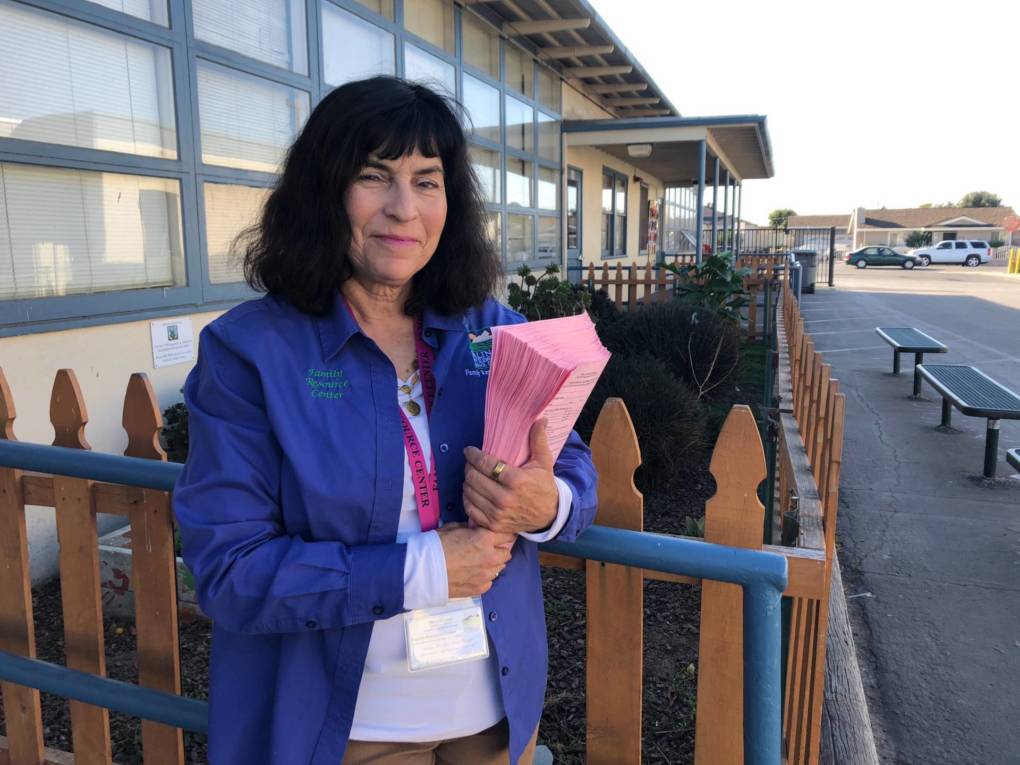
"caption": "Salinas City Elementary School District Homeless Liaison Cheryl Camany outside the Family Resource Center she runs.",
"description": null,
"title": "IMG_0739",
"credit": "Vanessa Rancaño/KQED",
"status": "inherit",
"isLoading": false,
"fetchFailed": false
},
"news_11716387": {
"type": "attachments",
"id": "news_11716387",
"meta": {
"index": "attachments_1716263798",
"site": "news",
"id": "11716387",
"found": true
},
"parent": 11716376,
"imgSizes": {
"twentyfourteen-full-width": {
"file": "https://ww2.kqed.org/app/uploads/sites/10/2019/01/oath_010719_final-1038x576.jpg",
"width": 1038,
"mimeType": "image/jpeg",
"height": 576
},
"thumbnail": {
"file": "https://ww2.kqed.org/app/uploads/sites/10/2019/01/oath_010719_final-160x110.jpg",
"width": 160,
"mimeType": "image/jpeg",
"height": 110
},
"post-thumbnail": {
"file": "https://ww2.kqed.org/app/uploads/sites/10/2019/01/oath_010719_final-672x372.jpg",
"width": 672,
"mimeType": "image/jpeg",
"height": 372
},
"kqedFullSize": {
"file": "https://ww2.kqed.org/app/uploads/sites/10/2019/01/oath_010719_final.jpg",
"width": 1920,
"height": 1314
},
"large": {
"file": "https://ww2.kqed.org/app/uploads/sites/10/2019/01/oath_010719_final-1020x698.jpg",
"width": 1020,
"mimeType": "image/jpeg",
"height": 698
},
"complete_open_graph": {
"file": "https://ww2.kqed.org/app/uploads/sites/10/2019/01/oath_010719_final-1200x821.jpg",
"width": 1200,
"mimeType": "image/jpeg",
"height": 821
},
"guest-author-50": {
"file": "https://ww2.kqed.org/app/uploads/sites/10/2019/01/oath_010719_final-50x50.jpg",
"width": 50,
"mimeType": "image/jpeg",
"height": 50
},
"guest-author-96": {
"file": "https://ww2.kqed.org/app/uploads/sites/10/2019/01/oath_010719_final-96x96.jpg",
"width": 96,
"mimeType": "image/jpeg",
"height": 96
},
"medium": {
"file": "https://ww2.kqed.org/app/uploads/sites/10/2019/01/oath_010719_final-800x548.jpg",
"width": 800,
"mimeType": "image/jpeg",
"height": 548
},
"guest-author-64": {
"file": "https://ww2.kqed.org/app/uploads/sites/10/2019/01/oath_010719_final-64x64.jpg",
"width": 64,
"mimeType": "image/jpeg",
"height": 64
},
"guest-author-32": {
"file": "https://ww2.kqed.org/app/uploads/sites/10/2019/01/oath_010719_final-32x32.jpg",
"width": 32,
"mimeType": "image/jpeg",
"height": 32
},
"full-width": {
"file": "https://ww2.kqed.org/app/uploads/sites/10/2019/01/oath_010719_final-1920x1314.jpg",
"width": 1920,
"mimeType": "image/jpeg",
"height": 1314
},
"detail": {
"file": "https://ww2.kqed.org/app/uploads/sites/10/2019/01/oath_010719_final-150x150.jpg",
"width": 150,
"mimeType": "image/jpeg",
"height": 150
},
"guest-author-128": {
"file": "https://ww2.kqed.org/app/uploads/sites/10/2019/01/oath_010719_final-128x128.jpg",
"width": 128,
"mimeType": "image/jpeg",
"height": 128
}
},
"publishDate": 1546891790,
"modified": 1546891834,
"caption": null,
"description": null,
"title": "oath_010719_final",
"credit": null,
"status": "inherit",
"isLoading": false,
"fetchFailed": false
},
"news_11572756": {
"type": "attachments",
"id": "news_11572756",
"meta": {
"index": "attachments_1716263798",
"site": "news",
"id": "11572756",
"found": true
},
"parent": 0,
"imgSizes": {
"small": {
"file": "https://ww2.kqed.org/app/uploads/sites/10/2017/07/tcr_archive_background-520x195.jpg",
"width": 520,
"mimeType": "image/jpeg",
"height": 195
},
"twentyfourteen-full-width": {
"file": "https://ww2.kqed.org/app/uploads/sites/10/2017/07/tcr_archive_background-1038x450.jpg",
"width": 1038,
"mimeType": "image/jpeg",
"height": 450
},
"thumbnail": {
"file": "https://ww2.kqed.org/app/uploads/sites/10/2017/07/tcr_archive_background-160x60.jpg",
"width": 160,
"mimeType": "image/jpeg",
"height": 60
},
"fd-sm": {
"file": "https://ww2.kqed.org/app/uploads/sites/10/2017/07/tcr_archive_background-960x360.jpg",
"width": 960,
"mimeType": "image/jpeg",
"height": 360
},
"post-thumbnail": {
"file": "https://ww2.kqed.org/app/uploads/sites/10/2017/07/tcr_archive_background-672x372.jpg",
"width": 672,
"mimeType": "image/jpeg",
"height": 372
},
"xsmall": {
"file": "https://ww2.kqed.org/app/uploads/sites/10/2017/07/tcr_archive_background-375x141.jpg",
"width": 375,
"mimeType": "image/jpeg",
"height": 141
},
"kqedFullSize": {
"file": "https://ww2.kqed.org/app/uploads/sites/10/2017/07/tcr_archive_background.jpg",
"width": 1200,
"height": 450
},
"large": {
"file": "https://ww2.kqed.org/app/uploads/sites/10/2017/07/tcr_archive_background-1020x383.jpg",
"width": 1020,
"mimeType": "image/jpeg",
"height": 383
},
"xlarge": {
"file": "https://ww2.kqed.org/app/uploads/sites/10/2017/07/tcr_archive_background-1180x443.jpg",
"width": 1180,
"mimeType": "image/jpeg",
"height": 443
},
"guest-author-50": {
"file": "https://ww2.kqed.org/app/uploads/sites/10/2017/07/tcr_archive_background-50x50.jpg",
"width": 50,
"mimeType": "image/jpeg",
"height": 50
},
"guest-author-96": {
"file": "https://ww2.kqed.org/app/uploads/sites/10/2017/07/tcr_archive_background-96x96.jpg",
"width": 96,
"mimeType": "image/jpeg",
"height": 96
},
"medium": {
"file": "https://ww2.kqed.org/app/uploads/sites/10/2017/07/tcr_archive_background-800x300.jpg",
"width": 800,
"mimeType": "image/jpeg",
"height": 300
},
"guest-author-64": {
"file": "https://ww2.kqed.org/app/uploads/sites/10/2017/07/tcr_archive_background-64x64.jpg",
"width": 64,
"mimeType": "image/jpeg",
"height": 64
},
"guest-author-32": {
"file": "https://ww2.kqed.org/app/uploads/sites/10/2017/07/tcr_archive_background-32x32.jpg",
"width": 32,
"mimeType": "image/jpeg",
"height": 32
},
"fd-med": {
"file": "https://ww2.kqed.org/app/uploads/sites/10/2017/07/tcr_archive_background-1180x443.jpg",
"width": 1180,
"mimeType": "image/jpeg",
"height": 443
},
"detail": {
"file": "https://ww2.kqed.org/app/uploads/sites/10/2017/07/tcr_archive_background-150x150.jpg",
"width": 150,
"mimeType": "image/jpeg",
"height": 150
},
"guest-author-128": {
"file": "https://ww2.kqed.org/app/uploads/sites/10/2017/07/tcr_archive_background-128x128.jpg",
"width": 128,
"mimeType": "image/jpeg",
"height": 128
},
"xxsmall": {
"file": "https://ww2.kqed.org/app/uploads/sites/10/2017/07/tcr_archive_background-240x90.jpg",
"width": 240,
"mimeType": "image/jpeg",
"height": 90
}
},
"publishDate": 1500316142,
"modified": 1500316142,
"caption": null,
"description": null,
"title": "tcr_archive_background",
"credit": null,
"status": "inherit",
"isLoading": false,
"fetchFailed": false
},
"news_11715976": {
"type": "attachments",
"id": "news_11715976",
"meta": {
"index": "attachments_1716263798",
"site": "news",
"id": "11715976",
"found": true
},
"parent": 11715714,
"imgSizes": {
"twentyfourteen-full-width": {
"file": "https://ww2.kqed.org/app/uploads/sites/10/2019/01/IMG_1187-e1546798515997-1038x576.jpg",
"width": 1038,
"mimeType": "image/jpeg",
"height": 576
},
"thumbnail": {
"file": "https://ww2.kqed.org/app/uploads/sites/10/2019/01/IMG_1187-e1546798515997-160x120.jpg",
"width": 160,
"mimeType": "image/jpeg",
"height": 120
},
"post-thumbnail": {
"file": "https://ww2.kqed.org/app/uploads/sites/10/2019/01/IMG_1187-e1546798515997-672x372.jpg",
"width": 672,
"mimeType": "image/jpeg",
"height": 372
},
"kqedFullSize": {
"file": "https://ww2.kqed.org/app/uploads/sites/10/2019/01/IMG_1187-e1546798515997.jpg",
"width": 1920,
"height": 1440
},
"large": {
"file": "https://ww2.kqed.org/app/uploads/sites/10/2019/01/IMG_1187-e1546798515997-1020x765.jpg",
"width": 1020,
"mimeType": "image/jpeg",
"height": 765
},
"complete_open_graph": {
"file": "https://ww2.kqed.org/app/uploads/sites/10/2019/01/IMG_1187-e1546798515997-1200x900.jpg",
"width": 1200,
"mimeType": "image/jpeg",
"height": 900
},
"guest-author-50": {
"file": "https://ww2.kqed.org/app/uploads/sites/10/2019/01/IMG_1187-e1546798515997-50x50.jpg",
"width": 50,
"mimeType": "image/jpeg",
"height": 50
},
"guest-author-96": {
"file": "https://ww2.kqed.org/app/uploads/sites/10/2019/01/IMG_1187-e1546798515997-96x96.jpg",
"width": 96,
"mimeType": "image/jpeg",
"height": 96
},
"medium": {
"file": "https://ww2.kqed.org/app/uploads/sites/10/2019/01/IMG_1187-e1546798515997-800x600.jpg",
"width": 800,
"mimeType": "image/jpeg",
"height": 600
},
"guest-author-64": {
"file": "https://ww2.kqed.org/app/uploads/sites/10/2019/01/IMG_1187-e1546798515997-64x64.jpg",
"width": 64,
"mimeType": "image/jpeg",
"height": 64
},
"guest-author-32": {
"file": "https://ww2.kqed.org/app/uploads/sites/10/2019/01/IMG_1187-e1546798515997-32x32.jpg",
"width": 32,
"mimeType": "image/jpeg",
"height": 32
},
"full-width": {
"file": "https://ww2.kqed.org/app/uploads/sites/10/2019/01/IMG_1187-e1546798515997-1920x1440.jpg",
"width": 1920,
"mimeType": "image/jpeg",
"height": 1440
},
"detail": {
"file": "https://ww2.kqed.org/app/uploads/sites/10/2019/01/IMG_1187-e1546798515997-150x150.jpg",
"width": 150,
"mimeType": "image/jpeg",
"height": 150
},
"guest-author-128": {
"file": "https://ww2.kqed.org/app/uploads/sites/10/2019/01/IMG_1187-e1546798515997-128x128.jpg",
"width": 128,
"mimeType": "image/jpeg",
"height": 128
}
},
"publishDate": 1546637336,
"modified": 1546799487,
"caption": "Incoming Oakland City Council members Nikki Fortunato Bas (L) and Loren Taylor (R) at a meet and greet. ",
"description": null,
"title": "IMG_1187",
"credit": "Sandhya Dirks",
"status": "inherit",
"isLoading": false,
"fetchFailed": false
},
"news_11715936": {
"type": "attachments",
"id": "news_11715936",
"meta": {
"index": "attachments_1716263798",
"site": "news",
"id": "11715936",
"found": true
},
"parent": 11713988,
"imgSizes": {
"twentyfourteen-full-width": {
"file": "https://ww2.kqed.org/app/uploads/sites/10/2019/01/HousingConstruction-1038x576.jpg",
"width": 1038,
"mimeType": "image/jpeg",
"height": 576
},
"thumbnail": {
"file": "https://ww2.kqed.org/app/uploads/sites/10/2019/01/HousingConstruction-160x107.jpg",
"width": 160,
"mimeType": "image/jpeg",
"height": 107
},
"post-thumbnail": {
"file": "https://ww2.kqed.org/app/uploads/sites/10/2019/01/HousingConstruction-672x372.jpg",
"width": 672,
"mimeType": "image/jpeg",
"height": 372
},
"kqedFullSize": {
"file": "https://ww2.kqed.org/app/uploads/sites/10/2019/01/HousingConstruction.jpg",
"width": 1920,
"height": 1281
},
"large": {
"file": "https://ww2.kqed.org/app/uploads/sites/10/2019/01/HousingConstruction-1020x681.jpg",
"width": 1020,
"mimeType": "image/jpeg",
"height": 681
},
"complete_open_graph": {
"file": "https://ww2.kqed.org/app/uploads/sites/10/2019/01/HousingConstruction-1200x801.jpg",
"width": 1200,
"mimeType": "image/jpeg",
"height": 801
},
"guest-author-50": {
"file": "https://ww2.kqed.org/app/uploads/sites/10/2019/01/HousingConstruction-50x50.jpg",
"width": 50,
"mimeType": "image/jpeg",
"height": 50
},
"guest-author-96": {
"file": "https://ww2.kqed.org/app/uploads/sites/10/2019/01/HousingConstruction-96x96.jpg",
"width": 96,
"mimeType": "image/jpeg",
"height": 96
},
"medium": {
"file": "https://ww2.kqed.org/app/uploads/sites/10/2019/01/HousingConstruction-800x534.jpg",
"width": 800,
"mimeType": "image/jpeg",
"height": 534
},
"guest-author-64": {
"file": "https://ww2.kqed.org/app/uploads/sites/10/2019/01/HousingConstruction-64x64.jpg",
"width": 64,
"mimeType": "image/jpeg",
"height": 64
},
"guest-author-32": {
"file": "https://ww2.kqed.org/app/uploads/sites/10/2019/01/HousingConstruction-32x32.jpg",
"width": 32,
"mimeType": "image/jpeg",
"height": 32
},
"full-width": {
"file": "https://ww2.kqed.org/app/uploads/sites/10/2019/01/HousingConstruction-1920x1281.jpg",
"width": 1920,
"mimeType": "image/jpeg",
"height": 1281
},
"detail": {
"file": "https://ww2.kqed.org/app/uploads/sites/10/2019/01/HousingConstruction-150x150.jpg",
"width": 150,
"mimeType": "image/jpeg",
"height": 150
},
"guest-author-128": {
"file": "https://ww2.kqed.org/app/uploads/sites/10/2019/01/HousingConstruction-128x128.jpg",
"width": 128,
"mimeType": "image/jpeg",
"height": 128
}
},
"publishDate": 1546633611,
"modified": 1546633642,
"caption": "A worker carries lumber as he builds a new home in Petaluma.",
"description": "A worker carries lumber as he builds a new home in Petaluma.",
"title": "HousingConstruction",
"credit": "Justin Sullivan/Getty Images",
"status": "inherit",
"isLoading": false,
"fetchFailed": false
}
},
"audioPlayerReducer": {
"postId": "stream_live",
"isPaused": true,
"isPlaying": false,
"pfsActive": false,
"pledgeModalIsOpen": true,
"playerDrawerIsOpen": false,
"liveAudioPlayStartedAt": 0,
"liveAudioPlayContext": ""
},
"authorsReducer": {
"byline_news_11718702": {
"type": "authors",
"id": "byline_news_11718702",
"meta": {
"override": true
},
"slug": "byline_news_11718702",
"name": "\u003ca href=\"https://www.npr.org/people/2101350/eric-westervelt\">Eric Westervelt\u003c/a>\u003cbr>NPR",
"isLoading": false
},
"byline_news_11718322": {
"type": "authors",
"id": "byline_news_11718322",
"meta": {
"override": true
},
"slug": "byline_news_11718322",
"name": "\u003cstrong>\u003ca href=\"https://www.kpbs.org/staff/amita-sharma/\">Amita Sharma\u003c/a>\u003c/strong>\u003cbr>KPBS",
"isLoading": false
},
"byline_news_11717692": {
"type": "authors",
"id": "byline_news_11717692",
"meta": {
"override": true
},
"slug": "byline_news_11717692",
"name": "Matt Levin\u003cbr>CALmatters",
"isLoading": false
},
"gmarzorati": {
"type": "authors",
"id": "227",
"meta": {
"index": "authors_1716337520",
"id": "227",
"found": true
},
"name": "Guy Marzorati",
"firstName": "Guy",
"lastName": "Marzorati",
"slug": "gmarzorati",
"email": "gmarzorati@KQED.org",
"display_author_email": true,
"staff_mastheads": [
"news"
],
"title": "Correspondent",
"bio": "Guy Marzorati is a correspondent on KQED's California Politics and Government Desk, based in San Jose. A graduate of Santa Clara University, Guy joined KQED in 2013. He reports on state and local politics and produces KQED's digital voter guide.",
"avatar": "https://secure.gravatar.com/avatar/e7038b8dbfd55b104369b76b1cd0b9de?s=600&d=blank&r=g",
"twitter": "guymarzorati",
"facebook": null,
"instagram": null,
"linkedin": null,
"sites": [
{
"site": "",
"roles": [
"editor"
]
},
{
"site": "news",
"roles": [
"editor"
]
},
{
"site": "science",
"roles": [
"editor"
]
},
{
"site": "forum",
"roles": [
"editor"
]
},
{
"site": "elections",
"roles": [
"editor"
]
},
{
"site": "liveblog",
"roles": [
"editor"
]
}
],
"headData": {
"title": "Guy Marzorati | KQED",
"description": "Correspondent",
"ogImgSrc": "https://secure.gravatar.com/avatar/e7038b8dbfd55b104369b76b1cd0b9de?s=600&d=blank&r=g",
"twImgSrc": "https://secure.gravatar.com/avatar/e7038b8dbfd55b104369b76b1cd0b9de?s=600&d=blank&r=g"
},
"isLoading": false,
"link": "/author/gmarzorati"
},
"kqed": {
"type": "authors",
"id": "236",
"meta": {
"index": "authors_1716337520",
"id": "236",
"found": true
},
"name": "KQED News Staff",
"firstName": "KQED News Staff",
"lastName": null,
"slug": "kqed",
"email": "faq@kqed.org",
"display_author_email": false,
"staff_mastheads": [],
"title": null,
"bio": null,
"avatar": "https://secure.gravatar.com/avatar/ef0e801a68c4c54afa9180db14084167?s=600&d=blank&r=g",
"twitter": null,
"facebook": null,
"instagram": null,
"linkedin": null,
"sites": [
{
"site": "arts",
"roles": [
"contributor"
]
},
{
"site": "news",
"roles": [
"editor"
]
},
{
"site": "futureofyou",
"roles": [
"author"
]
}
],
"headData": {
"title": "KQED News Staff | KQED",
"description": null,
"ogImgSrc": "https://secure.gravatar.com/avatar/ef0e801a68c4c54afa9180db14084167?s=600&d=blank&r=g",
"twImgSrc": "https://secure.gravatar.com/avatar/ef0e801a68c4c54afa9180db14084167?s=600&d=blank&r=g"
},
"isLoading": false,
"link": "/author/kqed"
},
"markfiore": {
"type": "authors",
"id": "3236",
"meta": {
"index": "authors_1716337520",
"id": "3236",
"found": true
},
"name": "Mark Fiore",
"firstName": "Mark",
"lastName": "Fiore",
"slug": "markfiore",
"email": "mark@markfiore.com",
"display_author_email": false,
"staff_mastheads": [
"news"
],
"title": "KQED News Cartoonist",
"bio": "\u003ca href=\"http://www.MarkFiore.com\">MarkFiore.com\u003c/a> | \u003ca href=\"https://twitter.com/markfiore\">Follow on Twitter\u003c/a> | \u003ca href=\"https://www.facebook.com/pages/Mark-Fiore-Animated-Political-Cartoons/94451707396?ref=bookmarks\">Facebook\u003c/a> | \u003ca href=\"mailto:mark@markfiore.com\">email\u003c/a>\r\n\r\nPulitzer Prize-winner, Mark Fiore, who the Wall Street Journal has called “the undisputed guru of the form,” creates animated political cartoons in San Francisco, where his work has been featured regularly on the San Francisco Chronicle’s web site, SFGate.com. His work has appeared on Newsweek.com, Slate.com, CBSNews.com, MotherJones.com, DailyKos.com and NPR’s web site. Fiore’s political animation has appeared on CNN, Frontline, Bill Moyers Journal, Salon.com and cable and broadcast outlets across the globe.\r\n\r\nBeginning his professional life by drawing traditional political cartoons for newspapers, Fiore’s work appeared in publications ranging from the Washington Post to the Los Angeles Times. In the late 1990s, he began to experiment with animating political cartoons and, after a short stint at the San Jose Mercury News as their staff cartoonist, Fiore devoted all his energies to animation.\r\nGrowing up in California, Fiore also spent a good portion of his life in the backwoods of Idaho. It was this combination that shaped him politically. Mark majored in political science at Colorado College, where, in a perfect send-off for a cartoonist, he received his diploma in 1991 as commencement speaker Dick Cheney smiled approvingly.\r\nMark Fiore was awarded the Pulitzer Prize for political cartooning in 2010, a Robert F. Kennedy Journalism Award in 2004 and has twice received an Online Journalism Award for commentary from the Online News Association (2002, 2008). Fiore has received two awards for his work in new media from the National Cartoonists Society (2001, 2002), and in 2006 received The James Madison Freedom of Information Award from The Society of Professional Journalists.",
"avatar": "https://secure.gravatar.com/avatar/fc4e2a612b15b67bad0c6f0e1db4ca9b?s=600&d=blank&r=g",
"twitter": "MarkFiore",
"facebook": null,
"instagram": "https://www.instagram.com/markfiore/?hl=en",
"linkedin": null,
"sites": [
{
"site": "arts",
"roles": [
"contributor"
]
},
{
"site": "news",
"roles": [
"editor"
]
},
{
"site": "futureofyou",
"roles": [
"editor"
]
},
{
"site": "science",
"roles": [
"editor"
]
}
],
"headData": {
"title": "Mark Fiore | KQED",
"description": "KQED News Cartoonist",
"ogImgSrc": "https://secure.gravatar.com/avatar/fc4e2a612b15b67bad0c6f0e1db4ca9b?s=600&d=blank&r=g",
"twImgSrc": "https://secure.gravatar.com/avatar/fc4e2a612b15b67bad0c6f0e1db4ca9b?s=600&d=blank&r=g"
},
"isLoading": false,
"link": "/author/markfiore"
},
"sdirks": {
"type": "authors",
"id": "7239",
"meta": {
"index": "authors_1716337520",
"id": "7239",
"found": true
},
"name": "Sandhya Dirks",
"firstName": "Sandhya",
"lastName": "Dirks",
"slug": "sdirks",
"email": "sdirks@kqed.org",
"display_author_email": true,
"staff_mastheads": [],
"title": null,
"bio": "Sandhya Dirks was the race and equity reporter at KQED. She approaches race and equity not as a beat, but as a fundamental lens for all investigative and explanatory reporting.\r\n\r\nSandhya covered policing, housing, social justice movements, and the shifting demographics of cities and suburbs.\r\n\r\nShe was the creator and co-host of the podcast American Suburb, about the transformation of suburbia into the most diverse space in American life. She was the editor for Truth Be Told, an advice show for and by people of color. \r\n\r\nHer stories about race, space, and belonging were part of KQED's So Well Spoken project, which won RNDTA's Kaleidoscope award, honoring outstanding achievements in the coverage of diversity.\r\n\r\nPrior to joining KQED in 2015, Sandhya covered the 2012 presidential election from the swing state of Iowa for Iowa Public Radio. At KPBS in San Diego, she broke the story of a sexual harassment scandal that led to the mayor's resignation.\r\n\r\nShe got her start in radio working on documentaries about Oakland that investigated the high drop-out rate in public schools and mistrust between the police and the community.\r\n\r\nSandhya lives in Oakland and believes all stories are stories about power.",
"avatar": "https://secure.gravatar.com/avatar/c0247cb15929cd4c197672fd73d45300?s=600&d=blank&r=g",
"twitter": "audiosand",
"facebook": null,
"instagram": null,
"linkedin": null,
"sites": [
{
"site": "news",
"roles": [
"subscriber"
]
},
{
"site": "stateofhealth",
"roles": [
"author"
]
}
],
"headData": {
"title": "Sandhya Dirks | KQED",
"description": null,
"ogImgSrc": "https://secure.gravatar.com/avatar/c0247cb15929cd4c197672fd73d45300?s=600&d=blank&r=g",
"twImgSrc": "https://secure.gravatar.com/avatar/c0247cb15929cd4c197672fd73d45300?s=600&d=blank&r=g"
},
"isLoading": false,
"link": "/author/sdirks"
},
"shutson": {
"type": "authors",
"id": "11216",
"meta": {
"index": "authors_1716337520",
"id": "11216",
"found": true
},
"name": "Sonja Hutson",
"firstName": "Sonja",
"lastName": "Hutson",
"slug": "shutson",
"email": "shutson@kqed.org",
"display_author_email": false,
"staff_mastheads": [],
"title": "KQED Contributor",
"bio": "Sonja Hutson is a former reporter for KQED's Silicon Valley desk and weekend newscasts. She primarily covers tech and housing. Sonja is a Bay Area native and now lives in San Francisco. When she's not working, you can find her camping, skiing, scuba diving, and struggling with the New York Times Crossword. Email: \u003ca href=\"mailto:shutson@kqed.org\">shutson@kqed.org. \u003c/a>Twitter: \u003ca href=\"https://twitter.com/SonjaHutson\">@SonjaHutson\u003c/a>",
"avatar": "https://secure.gravatar.com/avatar/7537c5e36818614e599b6c0f41d72b7a?s=600&d=blank&r=g",
"twitter": "SonjaHutson",
"facebook": null,
"instagram": null,
"linkedin": null,
"sites": [
{
"site": "arts",
"roles": [
"author"
]
},
{
"site": "news",
"roles": [
"subscriber"
]
}
],
"headData": {
"title": "Sonja Hutson | KQED",
"description": "KQED Contributor",
"ogImgSrc": "https://secure.gravatar.com/avatar/7537c5e36818614e599b6c0f41d72b7a?s=600&d=blank&r=g",
"twImgSrc": "https://secure.gravatar.com/avatar/7537c5e36818614e599b6c0f41d72b7a?s=600&d=blank&r=g"
},
"isLoading": false,
"link": "/author/shutson"
},
"rlevi": {
"type": "authors",
"id": "11260",
"meta": {
"index": "authors_1716337520",
"id": "11260",
"found": true
},
"name": "Ryan Levi",
"firstName": "Ryan",
"lastName": "Levi",
"slug": "rlevi",
"email": "rlevi@KQED.org",
"display_author_email": false,
"staff_mastheads": [],
"title": "KQED Contributor",
"bio": "Ryan Levi was a reporter and podcast producer at KQED News from 2016-2019. He worked on \u003ca href=\"https://www.kqed.org/news/series/baycurious\">Bay Curious\u003c/a>, \u003ca href=\"https://www.kqed.org/news/tag/the-bay/\">The Bay, \u003c/a>and \u003ca href=\"https://podcasts.apple.com/us/podcast/the-california-report-magazine/id1314750545\">The California Report Magazine\u003c/a>, as well as hosting and producing the weekly \u003ca href=\"https://www.kqed.org/news/program/qedup/\">Q'ed Up podcast. \u003c/a>He also helped inaugurate KQED's weekend news coverage in 2017 as one of two original digital producers. Ryan holds degrees in multimedia journalism and Spanish from the University of Missouri.",
"avatar": "https://secure.gravatar.com/avatar/4cb2ddd028ac8807d1adf09609c5555d?s=600&d=blank&r=g",
"twitter": "ryan_levi",
"facebook": null,
"instagram": null,
"linkedin": null,
"sites": [
{
"site": "arts",
"roles": [
"editor"
]
},
{
"site": "news",
"roles": [
"subscriber"
]
},
{
"site": "stateofhealth",
"roles": [
"editor"
]
},
{
"site": "science",
"roles": [
"editor"
]
},
{
"site": "forum",
"roles": [
"administrator"
]
},
{
"site": "perspectives",
"roles": [
"administrator"
]
}
],
"headData": {
"title": "Ryan Levi | KQED",
"description": "KQED Contributor",
"ogImgSrc": "https://secure.gravatar.com/avatar/4cb2ddd028ac8807d1adf09609c5555d?s=600&d=blank&r=g",
"twImgSrc": "https://secure.gravatar.com/avatar/4cb2ddd028ac8807d1adf09609c5555d?s=600&d=blank&r=g"
},
"isLoading": false,
"link": "/author/rlevi"
},
"vrancano": {
"type": "authors",
"id": "11276",
"meta": {
"index": "authors_1716337520",
"id": "11276",
"found": true
},
"name": "Vanessa Rancaño",
"firstName": "Vanessa",
"lastName": "Rancaño",
"slug": "vrancano",
"email": "vrancano@kqed.org",
"display_author_email": false,
"staff_mastheads": [
"news"
],
"title": "Reporter",
"bio": "Vanessa Rancaño is a features reporter for KQED. She’s also covered homelessness and education for the station and reported from the Central Valley. Her work has aired across public radio, from flagship national news shows to longform narrative podcasts. Before taking up a mic, she worked as a freelance print journalist. She’s been recognized with a number of national and regional awards. Vanessa grew up in California's Central Valley. She's a former NPR Kroc Fellow, and a graduate of the UC Berkeley Graduate School of Journalism.",
"avatar": "https://secure.gravatar.com/avatar/b3a383dfb0e7ee1c17568f2cf067904ab654d6e3de9743fc661f3c788ade1bed?s=600&d=blank&r=g",
"twitter": "vanessarancano",
"bluesky": null,
"facebook": null,
"instagram": null,
"linkedin": null,
"sites": [
{
"site": "arts",
"roles": [
"editor"
]
},
{
"site": "news",
"roles": [
"editor"
]
},
{
"site": "liveblog",
"roles": [
"contributor"
]
}
],
"headData": {
"title": "Vanessa Rancaño | KQED",
"description": "Reporter",
"ogImgSrc": "https://secure.gravatar.com/avatar/b3a383dfb0e7ee1c17568f2cf067904ab654d6e3de9743fc661f3c788ade1bed?s=600&d=blank&r=g",
"twImgSrc": "https://secure.gravatar.com/avatar/b3a383dfb0e7ee1c17568f2cf067904ab654d6e3de9743fc661f3c788ade1bed?s=600&d=blank&r=g"
},
"isLoading": false,
"link": "/author/vrancano"
}
},
"pagesReducer": {
"news_category_housing": {
"type": "terms",
"id": "news_6266",
"meta": {
"index": "terms_1716263798",
"site": "news",
"id": "6266",
"score": 11.040335
},
"featImg": null,
"name": "Housing",
"description": null,
"taxonomy": "category",
"headData": {
"twImgId": null,
"twTitle": null,
"ogTitle": null,
"ogImgId": null,
"twDescription": null,
"description": null,
"title": "Housing Archives | KQED News",
"ogDescription": null
},
"ttid": 6290,
"slug": "housing",
"isLoading": false,
"title": "Housing",
"pageMeta": {
"site": "news",
"WpPageTemplate": "page-topic-editorial",
"currentPage": 112
},
"blocks": [
{
"blockName": "kqed/post-list",
"attrs": {
"layout": "cardArticle2",
"query": "posts/news?category=housing",
"seeMore": false,
"paginated": true,
"page": 112
}
},
{
"blockName": "kqed/ad"
}
]
}
},
"pfsSessionReducer": {},
"postsReducer": {
"stream_live": {
"type": "live",
"id": "stream_live",
"audioUrl": "https://streams.kqed.org/kqedradio",
"title": "Live Stream",
"excerpt": "Live Stream information currently unavailable.",
"link": "/radio",
"featImg": "",
"label": {
"name": "KQED Live",
"link": "/"
}
},
"stream_kqedNewscast": {
"type": "posts",
"id": "stream_kqedNewscast",
"audioUrl": "https://www.kqed.org/.stream/anon/radio/RDnews/newscast.mp3?_=1",
"title": "KQED Newscast",
"featImg": "",
"label": {
"name": "88.5 FM",
"link": "/"
}
},
"news_11718702": {
"type": "posts",
"id": "news_11718702",
"meta": {
"index": "posts_1716263798",
"site": "news",
"id": "11718702",
"score": null,
"sort": [
1547938804000
]
},
"guestAuthors": [],
"slug": "amid-housing-crisis-alameda-county-program-matches-newly-released-inmates-with-welcoming-hosts",
"title": "Amid Housing Crisis, Alameda County Program Matches Newly Released Inmates with Welcoming Hosts",
"publishDate": 1547938804,
"format": "standard",
"headTitle": "Amid Housing Crisis, Alameda County Program Matches Newly Released Inmates with Welcoming Hosts | KQED",
"labelTerm": {},
"content": "\u003cp>On a recent Friday night, roommates Jason Jones and Tamiko Panzella were hanging out in the Oakland apartment they shared, laughing about an epic gym workout.\u003c/p>\n\u003cp>“I get there and we have to take our shoes and socks off,” Jones said, laughing. “I’m like, oh no, she got me into yoga. She tricked me.”\u003c/p>\n\u003cp>What made the yoga session jarring was that it was Jones’ first full day of freedom after more than a decade behind bars.\u003c/p>\n\u003cp>“Yeah they tell me to get into Downward Dog,” Jones said, as Panzella chuckled. “That’s the one position you don’t want to be in, in prison. The second day out! I look over there and she’s dying laughing.”\u003c/p>\n\u003cp>On one level, it’s all normal, life-with-roommates kind of stuff, but this is new for Jones, 35.\u003c/p>\n\u003cp>[ad fullwidth]\u003c/p>\n\u003cp>He recently was released on parole, serving nearly 14 years in a series of California prisons for felony assault with a deadly weapon.\u003c/p>\n\u003cp>Jones and Panzella are part of a first-of-its-kind program that’s providing vitally needed housing for inmates released from prison. The program also aims to break down misconceptions and fear surrounding the formerly incarcerated in a nation that \u003ca href=\"http://www.prisonstudies.org/highest-to-lowest/prison-population-total?field_region_taxonomy_tid=All\" target=\"_blank\" rel=\"noopener\">imprisons more people than any other\u003c/a>.\u003c/p>\n\u003cp>The Homecoming Project in California’s Alameda County is matching prisoners being released after long sentences with homeowners and renters, who want to take part in the experiment. The nonprofit behind the program pays the former inmates’ rent for six months and actively supports the partnership.\u003c/p>\n\u003caside class=\"pullquote alignright\">‘It’s the first time I felt like I’m actually part of a family, you know what I mean?” said Jones.’\u003ccite>Jason Jones, former inmate\u003c/cite>\u003c/aside>\n\u003cp>Call it the social justice arm of the sharing economy. “The sharing economy with a conscience, with values,” said Alex Busansky, a former prosecutor and Justice Department lawyer. He now runs \u003ca href=\"https://impactjustice.org/\" target=\"_blank\" rel=\"noopener\">Impact Justice\u003c/a>, the group behind the novel housing initiative.\u003c/p>\n\u003cp>The Homecoming Project provides cash subsidies to homeowners in exchange for renting a room to a former inmate, Busansky said. It is similar to how Airbnb allows people to monetize their extra living spaces.\u003c/p>\n\u003cp>“For people getting out of prison, the penalty hasn’t ended and re-entry is its own obstacle course that everybody has to navigate,” Busansky said. “Housing is essential to being able to get through that obstacle course: If you don’t have a place to sleep, to shower, to keep your things, it’s very difficult to think about doing anything else.”\u003c/p>\n\u003ch3>How it works\u003c/h3>\n\u003cp>Finding stable, affordable housing — especially in the San Francisco Bay Area — is often one of the biggest barriers to ex-inmates, along with finding a decent job and getting their life back on track.\u003c/p>\n\u003cp>Across the nation, most inmates getting out after serving a lengthy sentence are offered some kind of transitional housing or a slot in a halfway house.\u003c/p>\n\u003cp>That usually involves communal living in cramped quarters with other ex-convicts. Often, there are strict curfews, limits on visitors and other prison-like rules and restrictions. Some former inmates chafe at those limits, because it can limit their ability to reconnect with family or find a job.\u003c/p>\n\u003cp>But this program has none of that. Participants come and go as they please. Issues that arise are worked out like any normal roommate situation.\u003c/p>\n\u003cp>“Project Homecoming says you’re a person and we’re going to treat you like a person and give you the footholds and the scaffolding to be able to come back home and to be a full member of society just like anybody else,” Busansky said.\u003c/p>\n\u003cp>Ex-inmates and home hosts are both carefully screened, through interviews and home visits, to make sure it’s a good match. Hosts agree to rent their space for at least six months. There is training for the hosts before anyone gets a key to the home and follow-up support for all of them on the often unique and formidable challenges facing the formerly imprisoned.\u003c/p>\n\u003cp>“We take a hard look at people’s pasts,” said the program’s coordinator, Terah Lawyer, who, as a formerly incarcerated woman, knows about the challenges of transitioning back from prison. “We have to look at their past as an indicator of what they’ve become over time. Most of our hosts are familiar with redemption and change and want to be a part of helping be the stepping stone for someone’s second chance.”\u003c/p>\n\u003cp>So far, the experiment is small. It launched just a few months ago with six male ex-convicts paired with local hosts — couples and families — around the Bay Area. Impact Justice hopes to expand it to 25 participants by the end of this year.\u003c/p>\n\u003cp>Panzella said she was initially apprehensive. But she had volunteered at a local prison and knew the challenges facing the formerly incarcerated. The more she learned, the more she and her boyfriend became excited to take part in the pilot.\u003c/p>\n\u003cp>“Because it’s not just working with the person in front of you,” Panzella said. “If it’s successful, this is something that could be replicated” in other American cities for smooth re-entry for former prisoners. In the United States, \u003ca href=\"https://www.prisonpolicy.org/reports/pie2018.html\" target=\"_blank\" rel=\"noopener\">more than 600,000 people\u003c/a> are released from prison every year.\u003c/p>\n\u003ch3>The larger goal\u003c/h3>\n\u003cp>A larger and perhaps more elusive goal is to demystify and to humanize the often abstract debates around criminal justice reform.\u003c/p>\n\u003cp>“For many people, the story of prison in America is not a story they know,” said Busansky. “They don’t know people who are in prison or people who are getting out of prison.” \u003c/p>\n\u003cp>Busansky said the biggest obstacle to growing the program was finding enough hosts.\u003c/p>\n\u003cp>“There’s fear,” said Busansky. “There’s apprehension, a sense of the unknown. It’s hard to tell people, ‘This is a great idea and you should try it; bring a stranger getting out of prison into your home.’ Not a conversation that most people are used to having.”\u003c/p>\n\u003cp>But it’s one Busansky believes America has to have — especially now — as a \u003ca href=\"https://www.wbur.org/onpoint/2018/05/21/trump-prison-reform\" target=\"_blank\" rel=\"noopener\">growing bipartisan\u003c/a> national movement of \u003ca href=\"https://www.wbur.org/hereandnow/2018/04/18/philadelphia-da-larry-krasner-incarceration\" target=\"_blank\" rel=\"noopener\">progressive district attorneys\u003c/a>, reform groups and businesses work to unwind decades of drug war-fueled mass incarceration.\u003c/p>\n\u003caside class=\"alignright\">\n\u003ch3>\u003ca href=\"https://www.kqed.org/arts/13843559/in-this-san-quentin-class-inmates-write-their-ways-into-better-futures\" target=\"_blank\" rel=\"noopener\">In This San Quentin Class, Inmates Write Their Way Into a Better Future\u003c/a>\u003c/h3>\n\u003cfigure>\u003ca href=\"https://www.kqed.org/arts/13843559/in-this-san-quentin-class-inmates-write-their-ways-into-better-futures\">\u003cimg decoding=\"async\" src=\"https://ww2.kqed.org/arts/wp-content/uploads/sites/2/2018/10/20110917_1100E-1180x664.jpg\" alt=\"\">\u003c/a>\u003c/figure>\n\u003c/aside>\n\u003cp>One recent report estimated former inmates were almost \u003ca href=\"https://www.prisonpolicy.org/reports/housing.html\" target=\"_blank\" rel=\"noopener\">10 times more likely\u003c/a> to become homeless than the general population.\u003c/p>\n\u003cp>“We’d love to increase our host numbers, but we can’t just say ‘Yes’ to anyone and everyone,” Lawyer said. “We’re not going to house people in unsafe neighborhoods that are not nurturing” or would put ex-inmates at greater risk for re-offending or falling back into old habits, she said.\u003c/p>\n\u003ch3>‘Part of a family’\u003c/h3>\n\u003cp>Jones grew up in Tulare, a mostly farming and dairy city in California’s Central Valley. His path to prison is a familiar one: Absent parents and little oversight led to a cycle of police trouble and being in and out of foster care and group homes starting around age 8.\u003c/p>\n\u003cp>“All the households I’ve been in consisted of some kind of abuse either mentally, verbally, physically — whatever it was, or some type of drug use in the household,” he said. He called growing up “a horrible experience” and that he started to not trust people.\u003c/p>\n\u003cp>Jones said he felt like one of the lucky ones. Most inmates released from the California prison system got just $200 and were sent off to figure things out on their own.\u003c/p>\n\u003cp>Jones had much more than that: He learned how to code with the backing of \u003ca href=\"https://thelastmile.org/\" target=\"_blank\" rel=\"noopener\">The Last Mile\u003c/a>, a computer tech and business training program for inmates. He had a software job waiting for him with the pop culture movie, games and TV website \u003ca href=\"https://www.fandom.com/\" target=\"_blank\" rel=\"noopener\">Fandom\u003c/a>.\u003c/p>\n\u003cp>But he didn’t have a home to go back to and initially had reservations about the Homecoming Project.\u003c/p>\n\u003cp>“I was like, man, this feel like adult foster care, like I’m getting adopted again,” he said. “Going into a stranger’s household, getting judged all over again.”\u003c/p>\n\u003cp>In a few short months he and hosts Panzella and her boyfriend, Joe Klein, have become genuine friends.\u003c/p>\n\u003cp>“I feel kind of weird even saying we’re in a ‘program’ because it doesn’t really feel like that,” Panzella said. “I think we just have a really strong friendship.”\u003c/p>\n\u003cp>Jones agreed. He called it one of the only stable homes he has ever known. He recently spent the holiday season with Panzella’s family.\u003c/p>\n\u003cp>Organizers said the key difference with this program and others is that former inmates get to see and experience the day-to-day life of people on the outside.\u003c/p>\n\u003cp>“They’re in the community — in someone’s home — able to watch how they buy groceries, clean their home, live a normal life, get up go to work and come home enjoy a TV show,” said Lawyer. “What that really looks like in real time is essential as an example to our participants, who have been completely out of society for 10-plus years.”\u003c/p>\n\u003cp>Panzella and Klein have been with Jones through a dizzying number of firsts since he left prison, including going to the beach, to a bowling alley, using a smartphone, getting on social media and more.\u003c/p>\n\u003cp>“I didn’t know what to order,” said Jones on his experience of seeing some restaurant menus that made his head spin. “I’m just like I don’t know what this food is like. I grew up eating burritos and pizza pockets at a liquor store, bologna sandwiches and Top Ramen.” Jones has enjoyed eating crab dumplings and Korean BBQ.\u003c/p>\n\u003cp>Jones has reunited with a teenage son and a daughter. But he’s still trying to reconnect and get custody of another daughter in his hometown of Tulare. She is now in foster care.\u003c/p>\n\u003cp>For Jones, coming back has been complicated and difficult, but his new roommates — with support from Impact Justice — have helped him navigate it all. “It’s the first time I felt like I’m actually part of a family, you know what I mean?” said Jones.\u003c/p>\n\u003cp>A lot of the program is something he didn’t expect.\u003c/p>\n\u003cp>[ad floatright]\u003c/p>\n\u003cp>“Honestly, if it wasn’t for this situation and the sacrifices and things that Joe and Tamiko were able to do, I don’t know exactly how far along I would be,” said Jones. “I’m only able to start work and do all this stuff because of that assistance that they gave me immediately when I got out.”\u003c/p>\n\n",
"blocks": [],
"excerpt": "A novel housing program in California links people who have served long-term prison sentences with those willing to rent space in their homes.",
"status": "publish",
"parent": 0,
"modified": 1725927580,
"stats": {
"hasAudio": false,
"hasVideo": false,
"hasChartOrMap": false,
"iframeSrcs": [],
"hasGoogleForm": false,
"hasGallery": false,
"hasHearkenModule": false,
"hasPolis": false,
"paragraphCount": 47,
"wordCount": 1897
},
"headData": {
"title": "Amid Housing Crisis, Alameda County Program Matches Newly Released Inmates with Welcoming Hosts | KQED",
"description": "A novel housing program in California links people who have served long-term prison sentences with those willing to rent space in their homes.",
"ogTitle": "",
"ogDescription": "",
"ogImgId": "",
"twTitle": "",
"twDescription": "",
"twImgId": "",
"schema": {
"@context": "https://schema.org",
"@type": "NewsArticle",
"headline": "Amid Housing Crisis, Alameda County Program Matches Newly Released Inmates with Welcoming Hosts",
"datePublished": "2019-01-19T15:00:04-08:00",
"dateModified": "2024-09-09T17:19:40-07:00",
"image": "https://cdn.kqed.org/wp-content/uploads/2020/02/KQED-OG-Image@1x.png",
"isAccessibleForFree": "True",
"publisher": {
"@type": "NewsMediaOrganization",
"@id": "https://www.kqed.org/#organization",
"name": "KQED",
"logo": "https://cdn.kqed.org/wp-content/uploads/2020/02/KQED-OG-Image@1x.png",
"url": "https://www.kqed.org",
"sameAs": [
"https://www.facebook.com/KQED",
"https://twitter.com/KQED",
"https://www.instagram.com/kqed/",
"https://www.tiktok.com/@kqedofficial",
"https://www.linkedin.com/company/kqed",
"https://www.youtube.com/channel/UCeC0IOo7i1P_61zVUWbJ4nw"
]
}
}
},
"source": "NPR",
"sourceUrl": "https://www.npr.org/",
"sticky": false,
"nprByline": "\u003ca href=\"https://www.npr.org/people/2101350/eric-westervelt\">Eric Westervelt\u003c/a>\u003cbr>NPR",
"nprImageAgency": "Courtesy of Tamiko Panzella",
"nprStoryId": "684135395",
"nprApiLink": "http://api.npr.org/query?id=684135395&apiKey=MDAxOTAwOTE4MDEyMTkxMDAzNjczZDljZA004",
"nprHtmlLink": "https://www.npr.org/2019/01/16/684135395/from-a-cell-to-a-home-ex-inmates-find-stability-with-innovative-program?ft=nprml&f=684135395",
"nprRetrievedStory": "1",
"nprPubDate": "Thu, 17 Jan 2019 12:20:00 -0500",
"nprStoryDate": "Wed, 16 Jan 2019 05:57:00 -0500",
"nprLastModifiedDate": "Thu, 17 Jan 2019 12:20:22 -0500",
"nprAudio": "https://ondemand.npr.org/anon.npr-mp3/npr/me/2019/01/20190116_me_ex_inmate_housing.mp3?orgId=1&topicId=1003&aggIds=582146517,130593764&d=296&p=3&story=684135395&ft=nprml&f=684135395",
"nprAudioM3u": "http://api.npr.org/m3u/1685801025-fbdcf3.m3u?orgId=1&topicId=1003&aggIds=582146517,130593764&d=296&p=3&story=684135395&ft=nprml&f=684135395",
"path": "/news/11718702/amid-housing-crisis-alameda-county-program-matches-newly-released-inmates-with-welcoming-hosts",
"audioUrl": "https://ondemand.npr.org/anon.npr-mp3/npr/me/2019/01/20190116_me_ex_inmate_housing.mp3?orgId=1&topicId=1003&aggIds=582146517,130593764&d=296&p=3&story=684135395&ft=nprml&f=684135395",
"audioTrackLength": null,
"parsedContent": [
{
"type": "contentString",
"content": "\u003cdiv class=\"post-body\">\u003cp>\u003cp>On a recent Friday night, roommates Jason Jones and Tamiko Panzella were hanging out in the Oakland apartment they shared, laughing about an epic gym workout.\u003c/p>\n\u003cp>“I get there and we have to take our shoes and socks off,” Jones said, laughing. “I’m like, oh no, she got me into yoga. She tricked me.”\u003c/p>\n\u003cp>What made the yoga session jarring was that it was Jones’ first full day of freedom after more than a decade behind bars.\u003c/p>\n\u003cp>“Yeah they tell me to get into Downward Dog,” Jones said, as Panzella chuckled. “That’s the one position you don’t want to be in, in prison. The second day out! I look over there and she’s dying laughing.”\u003c/p>\n\u003cp>On one level, it’s all normal, life-with-roommates kind of stuff, but this is new for Jones, 35.\u003c/p>\n\u003cp>\u003c/p>\u003c/div>",
"attributes": {
"named": {},
"numeric": []
}
},
{
"type": "component",
"content": "",
"name": "ad",
"attributes": {
"named": {
"label": "fullwidth"
},
"numeric": [
"fullwidth"
]
}
},
{
"type": "contentString",
"content": "\u003cdiv class=\"post-body\">\u003cp>\u003c/p>\n\u003cp>He recently was released on parole, serving nearly 14 years in a series of California prisons for felony assault with a deadly weapon.\u003c/p>\n\u003cp>Jones and Panzella are part of a first-of-its-kind program that’s providing vitally needed housing for inmates released from prison. The program also aims to break down misconceptions and fear surrounding the formerly incarcerated in a nation that \u003ca href=\"http://www.prisonstudies.org/highest-to-lowest/prison-population-total?field_region_taxonomy_tid=All\" target=\"_blank\" rel=\"noopener\">imprisons more people than any other\u003c/a>.\u003c/p>\n\u003cp>The Homecoming Project in California’s Alameda County is matching prisoners being released after long sentences with homeowners and renters, who want to take part in the experiment. The nonprofit behind the program pays the former inmates’ rent for six months and actively supports the partnership.\u003c/p>\n\u003caside class=\"pullquote alignright\">‘It’s the first time I felt like I’m actually part of a family, you know what I mean?” said Jones.’\u003ccite>Jason Jones, former inmate\u003c/cite>\u003c/aside>\n\u003cp>Call it the social justice arm of the sharing economy. “The sharing economy with a conscience, with values,” said Alex Busansky, a former prosecutor and Justice Department lawyer. He now runs \u003ca href=\"https://impactjustice.org/\" target=\"_blank\" rel=\"noopener\">Impact Justice\u003c/a>, the group behind the novel housing initiative.\u003c/p>\n\u003cp>The Homecoming Project provides cash subsidies to homeowners in exchange for renting a room to a former inmate, Busansky said. It is similar to how Airbnb allows people to monetize their extra living spaces.\u003c/p>\n\u003cp>“For people getting out of prison, the penalty hasn’t ended and re-entry is its own obstacle course that everybody has to navigate,” Busansky said. “Housing is essential to being able to get through that obstacle course: If you don’t have a place to sleep, to shower, to keep your things, it’s very difficult to think about doing anything else.”\u003c/p>\n\u003ch3>How it works\u003c/h3>\n\u003cp>Finding stable, affordable housing — especially in the San Francisco Bay Area — is often one of the biggest barriers to ex-inmates, along with finding a decent job and getting their life back on track.\u003c/p>\n\u003cp>Across the nation, most inmates getting out after serving a lengthy sentence are offered some kind of transitional housing or a slot in a halfway house.\u003c/p>\n\u003cp>That usually involves communal living in cramped quarters with other ex-convicts. Often, there are strict curfews, limits on visitors and other prison-like rules and restrictions. Some former inmates chafe at those limits, because it can limit their ability to reconnect with family or find a job.\u003c/p>\n\u003cp>But this program has none of that. Participants come and go as they please. Issues that arise are worked out like any normal roommate situation.\u003c/p>\n\u003cp>“Project Homecoming says you’re a person and we’re going to treat you like a person and give you the footholds and the scaffolding to be able to come back home and to be a full member of society just like anybody else,” Busansky said.\u003c/p>\n\u003cp>Ex-inmates and home hosts are both carefully screened, through interviews and home visits, to make sure it’s a good match. Hosts agree to rent their space for at least six months. There is training for the hosts before anyone gets a key to the home and follow-up support for all of them on the often unique and formidable challenges facing the formerly imprisoned.\u003c/p>\n\u003cp>“We take a hard look at people’s pasts,” said the program’s coordinator, Terah Lawyer, who, as a formerly incarcerated woman, knows about the challenges of transitioning back from prison. “We have to look at their past as an indicator of what they’ve become over time. Most of our hosts are familiar with redemption and change and want to be a part of helping be the stepping stone for someone’s second chance.”\u003c/p>\n\u003cp>So far, the experiment is small. It launched just a few months ago with six male ex-convicts paired with local hosts — couples and families — around the Bay Area. Impact Justice hopes to expand it to 25 participants by the end of this year.\u003c/p>\n\u003cp>Panzella said she was initially apprehensive. But she had volunteered at a local prison and knew the challenges facing the formerly incarcerated. The more she learned, the more she and her boyfriend became excited to take part in the pilot.\u003c/p>\n\u003cp>“Because it’s not just working with the person in front of you,” Panzella said. “If it’s successful, this is something that could be replicated” in other American cities for smooth re-entry for former prisoners. In the United States, \u003ca href=\"https://www.prisonpolicy.org/reports/pie2018.html\" target=\"_blank\" rel=\"noopener\">more than 600,000 people\u003c/a> are released from prison every year.\u003c/p>\n\u003ch3>The larger goal\u003c/h3>\n\u003cp>A larger and perhaps more elusive goal is to demystify and to humanize the often abstract debates around criminal justice reform.\u003c/p>\n\u003cp>“For many people, the story of prison in America is not a story they know,” said Busansky. “They don’t know people who are in prison or people who are getting out of prison.” \u003c/p>\n\u003cp>Busansky said the biggest obstacle to growing the program was finding enough hosts.\u003c/p>\n\u003cp>“There’s fear,” said Busansky. “There’s apprehension, a sense of the unknown. It’s hard to tell people, ‘This is a great idea and you should try it; bring a stranger getting out of prison into your home.’ Not a conversation that most people are used to having.”\u003c/p>\n\u003cp>But it’s one Busansky believes America has to have — especially now — as a \u003ca href=\"https://www.wbur.org/onpoint/2018/05/21/trump-prison-reform\" target=\"_blank\" rel=\"noopener\">growing bipartisan\u003c/a> national movement of \u003ca href=\"https://www.wbur.org/hereandnow/2018/04/18/philadelphia-da-larry-krasner-incarceration\" target=\"_blank\" rel=\"noopener\">progressive district attorneys\u003c/a>, reform groups and businesses work to unwind decades of drug war-fueled mass incarceration.\u003c/p>\n\u003caside class=\"alignright\">\n\u003ch3>\u003ca href=\"https://www.kqed.org/arts/13843559/in-this-san-quentin-class-inmates-write-their-ways-into-better-futures\" target=\"_blank\" rel=\"noopener\">In This San Quentin Class, Inmates Write Their Way Into a Better Future\u003c/a>\u003c/h3>\n\u003cfigure>\u003ca href=\"https://www.kqed.org/arts/13843559/in-this-san-quentin-class-inmates-write-their-ways-into-better-futures\">\u003cimg decoding=\"async\" src=\"https://ww2.kqed.org/arts/wp-content/uploads/sites/2/2018/10/20110917_1100E-1180x664.jpg\" alt=\"\">\u003c/a>\u003c/figure>\n\u003c/aside>\n\u003cp>One recent report estimated former inmates were almost \u003ca href=\"https://www.prisonpolicy.org/reports/housing.html\" target=\"_blank\" rel=\"noopener\">10 times more likely\u003c/a> to become homeless than the general population.\u003c/p>\n\u003cp>“We’d love to increase our host numbers, but we can’t just say ‘Yes’ to anyone and everyone,” Lawyer said. “We’re not going to house people in unsafe neighborhoods that are not nurturing” or would put ex-inmates at greater risk for re-offending or falling back into old habits, she said.\u003c/p>\n\u003ch3>‘Part of a family’\u003c/h3>\n\u003cp>Jones grew up in Tulare, a mostly farming and dairy city in California’s Central Valley. His path to prison is a familiar one: Absent parents and little oversight led to a cycle of police trouble and being in and out of foster care and group homes starting around age 8.\u003c/p>\n\u003cp>“All the households I’ve been in consisted of some kind of abuse either mentally, verbally, physically — whatever it was, or some type of drug use in the household,” he said. He called growing up “a horrible experience” and that he started to not trust people.\u003c/p>\n\u003cp>Jones said he felt like one of the lucky ones. Most inmates released from the California prison system got just $200 and were sent off to figure things out on their own.\u003c/p>\n\u003cp>Jones had much more than that: He learned how to code with the backing of \u003ca href=\"https://thelastmile.org/\" target=\"_blank\" rel=\"noopener\">The Last Mile\u003c/a>, a computer tech and business training program for inmates. He had a software job waiting for him with the pop culture movie, games and TV website \u003ca href=\"https://www.fandom.com/\" target=\"_blank\" rel=\"noopener\">Fandom\u003c/a>.\u003c/p>\n\u003cp>But he didn’t have a home to go back to and initially had reservations about the Homecoming Project.\u003c/p>\n\u003cp>“I was like, man, this feel like adult foster care, like I’m getting adopted again,” he said. “Going into a stranger’s household, getting judged all over again.”\u003c/p>\n\u003cp>In a few short months he and hosts Panzella and her boyfriend, Joe Klein, have become genuine friends.\u003c/p>\n\u003cp>“I feel kind of weird even saying we’re in a ‘program’ because it doesn’t really feel like that,” Panzella said. “I think we just have a really strong friendship.”\u003c/p>\n\u003cp>Jones agreed. He called it one of the only stable homes he has ever known. He recently spent the holiday season with Panzella’s family.\u003c/p>\n\u003cp>Organizers said the key difference with this program and others is that former inmates get to see and experience the day-to-day life of people on the outside.\u003c/p>\n\u003cp>“They’re in the community — in someone’s home — able to watch how they buy groceries, clean their home, live a normal life, get up go to work and come home enjoy a TV show,” said Lawyer. “What that really looks like in real time is essential as an example to our participants, who have been completely out of society for 10-plus years.”\u003c/p>\n\u003cp>Panzella and Klein have been with Jones through a dizzying number of firsts since he left prison, including going to the beach, to a bowling alley, using a smartphone, getting on social media and more.\u003c/p>\n\u003cp>“I didn’t know what to order,” said Jones on his experience of seeing some restaurant menus that made his head spin. “I’m just like I don’t know what this food is like. I grew up eating burritos and pizza pockets at a liquor store, bologna sandwiches and Top Ramen.” Jones has enjoyed eating crab dumplings and Korean BBQ.\u003c/p>\n\u003cp>Jones has reunited with a teenage son and a daughter. But he’s still trying to reconnect and get custody of another daughter in his hometown of Tulare. She is now in foster care.\u003c/p>\n\u003cp>For Jones, coming back has been complicated and difficult, but his new roommates — with support from Impact Justice — have helped him navigate it all. “It’s the first time I felt like I’m actually part of a family, you know what I mean?” said Jones.\u003c/p>\n\u003cp>A lot of the program is something he didn’t expect.\u003c/p>\n\u003cp>\u003c/p>\u003c/div>",
"attributes": {
"named": {},
"numeric": []
}
},
{
"type": "component",
"content": "",
"name": "ad",
"attributes": {
"named": {
"label": "floatright"
},
"numeric": [
"floatright"
]
}
},
{
"type": "contentString",
"content": "\u003cdiv class=\"post-body\">\u003cp>\u003c/p>\n\u003cp>“Honestly, if it wasn’t for this situation and the sacrifices and things that Joe and Tamiko were able to do, I don’t know exactly how far along I would be,” said Jones. “I’m only able to start work and do all this stuff because of that assistance that they gave me immediately when I got out.”\u003c/p>\n\n\u003c/div>\u003c/p>",
"attributes": {
"named": {},
"numeric": []
}
}
],
"link": "/news/11718702/amid-housing-crisis-alameda-county-program-matches-newly-released-inmates-with-welcoming-hosts",
"authors": [
"byline_news_11718702"
],
"programs": [
"news_72"
],
"categories": [
"news_6266",
"news_8"
],
"tags": [
"news_3921",
"news_260",
"news_20013",
"news_21358",
"news_2727",
"news_17835",
"news_1471"
],
"featImg": "news_11718703",
"label": "source_news_11718702"
},
"news_11719212": {
"type": "posts",
"id": "news_11719212",
"meta": {
"index": "posts_1716263798",
"site": "news",
"id": "11719212",
"score": null,
"sort": [
1547853300000
]
},
"parent": 0,
"labelTerm": {
"site": "news",
"term": 72
},
"blocks": [],
"publishDate": 1547853300,
"format": "standard",
"disqusTitle": "Despite Opposition, Bay Area Officials Endorse Ambitious Affordable Housing Plan",
"title": "Despite Opposition, Bay Area Officials Endorse Ambitious Affordable Housing Plan",
"headTitle": "The California Report | KQED News",
"content": "\u003cp>A panel of Bay Area elected officials endorsed an ambitious housing plan early Friday morning that advances a broad set of proposals to address the region’s affordability crisis.\u003c/p>\n\u003cp>After nearly three hours of heated public comment, the Association of Bay Area Governments (ABAG) executive board voted 21-9 in favor of the\u003ca href=\"https://mtc.ca.gov/our-work/plans-projects/casa-committee-house-bay-area\" target=\"_blank\" rel=\"noopener\"> Committee to House the Bay Area Compact\u003c/a>, referred to as CASA.\u003c/p>\n\u003cp>The 10-point plan recommends a broad mix of strategies, from regional rent caps to denser development near transit centers.\u003c/p>\n\u003cp>Friday’s vote was nonbinding: Most of the ideas need approval from the state Legislature before any actual changes take place. Some of them, including a mandate for \u003ca href=\"http://leginfo.legislature.ca.gov/faces/billNavClient.xhtml?bill_id=201920200SB50\" target=\"_blank\" rel=\"noopener\">denser housing around transit\u003c/a> and \u003ca href=\"http://leginfo.legislature.ca.gov/faces/billNavClient.xhtml?bill_id=201920200SB18\" target=\"_blank\" rel=\"noopener\">emergency aid for tenants\u003c/a>, have already been introduced as bills in Sacramento.\u003c/p>\n\u003cp>But the vote to direct ABAG president David Rabbitt to sign the compact was nonetheless controversial. Dozens of elected officials and members of the public packed into the meeting to criticize it as government overreach and a misguided effort to force suburbs to become more dense.\u003c/p>\n\u003cp>[ad fullwidth]\u003c/p>\n\u003cp>\"That the CASA committee could come up with a product that 97 percent of Bay Area cities think is a terrible idea proves that a public agency is capable of building consensus,\" said Cupertino Mayor Steven Scharf, who opposes the plan. \"Unfortunately it's not the kind of consensus we really want.\"\u003c/p>\n\u003cp>The divide also foreshadows the balancing act state lawmakers now have to perform, as they consider turning these proposals into enforceable policies.\u003c/p>\n\u003cp>Leslye Corsiglia, a Silicon Valley affordable housing advocate who co-chaired the committee that created the CASA plan, noted that while far from perfect, it represents a set of compromises that will hopefully address the Bay Area's growing housing crisis.\u003c/p>\n\u003cp>\"I know that for everyone involved, there are things that everyone likes, and things that they hold their nose at,\" she said.\u003c/p>\n\u003cp>https://twitter.com/thehardask/status/1086136155341344769\u003c/p>\n\u003cp>Since the Great Recession ended in 2010, the Bay Area has added 722,000 jobs but constructed only 106,000 housing units, the compact notes, an imbalance that's led to widespread displacement and crippling congestion, as more residents are forced to move farther away from their jobs. The 15-year plan calls for producing 35,000 housing units a year in the Bay Area, with about 14,000 of them affordable to lower-income households. It also recommends preserving 30,000 affordable units, and protecting 300,000 lower-income households from displacement.\u003c/p>\n\u003cp>Corsiglia group's, the Committee to House the Bay Area, includes elected officials, developers and tenant advocates charged with creating a \"15-year emergency policy package to confront the region's housing crisis head-on.\"\u003c/p>\n\u003cp>Central to the plan, which took upward of 18 months to draft, is the recommendation to create a regional housing entity with the authority to levy taxes and issue bonds to fund the construction of new affordable housing units, as well as administer the financial aid outlined in the compact.\u003c/p>\n\u003cp>Metropolitan Transportation Commission director Steve Heminger, who also signed the compact after his board overwhelmingly approved it in December, said he hoped the new agency would be created in time to place a revenue-generating measure on the 2020 ballot.\u003c/p>\n\u003cp>\"We need a significant amount of new authority and new revenue to deliver on a solution to the housing crisis,\" Heminger said. \"And for that you gotta go to Sacramento.\"\u003c/p>\n\u003cp>The compact endorses state action to create minimum density requirements near transit, (similar to Senate Bill 50, recently proposed by state Sen. Scott Wiener, D-San Francisco) and increase the number of projects eligible for expedited review.\u003c/p>\n\u003cp>It also proposes a regionwide cap on rent increases, and recommends creating a supply of emergency cash and legal assistance to tenants facing eviction.\u003c/p>\n\u003cp>An amendment added by Santa Clara County Supervisor Cindy Chavez asks state lawmakers to go further in protecting tenants -- including a request that the just-cause eviction provisions in the plan take effect immediately, rather than after a one-year waiting period.\u003c/p>\n\u003cp>The plan's backers hope the 10 proposals will be pursued concurrently in the state Legislature, although there's little guarantee that will happen.\u003c/p>\n\u003cp>Heminger argued that grouping the individual proposals together gives them a better chance of becoming law.\u003c/p>\n\u003cp>\u003c/p>\n\u003cp>\"The waters are pretty stormy in Sacramento when it comes to this subject,\" he said. \"I think it’s probably better in a storm to be in a boat and not in the open water.\"\u003c/p>\n\n",
"disqusIdentifier": "11719212 https://ww2.kqed.org/news/?p=11719212",
"disqusUrl": "https://ww2.kqed.org/news/2019/01/18/despite-strong-opposition-bay-area-officials-endorse-ambitious-regional-affordable-housing-plan/",
"stats": {
"hasVideo": false,
"hasChartOrMap": false,
"hasAudio": false,
"hasPolis": false,
"wordCount": 750,
"hasGoogleForm": false,
"hasGallery": false,
"hasHearkenModule": false,
"iframeSrcs": [],
"paragraphCount": 22
},
"modified": 1547862111,
"excerpt": "The 10-point compact recommends a broad mix of strategies, from regional rent caps to denser development near transit centers.",
"headData": {
"twImgId": "",
"twTitle": "",
"ogTitle": "",
"ogImgId": "",
"twDescription": "",
"description": "The 10-point compact recommends a broad mix of strategies, from regional rent caps to denser development near transit centers.",
"title": "Despite Opposition, Bay Area Officials Endorse Ambitious Affordable Housing Plan | KQED",
"ogDescription": "",
"schema": {
"@context": "https://schema.org",
"@type": "NewsArticle",
"headline": "Despite Opposition, Bay Area Officials Endorse Ambitious Affordable Housing Plan",
"datePublished": "2019-01-18T15:15:00-08:00",
"dateModified": "2019-01-18T17:41:51-08:00",
"image": "https://cdn.kqed.org/wp-content/uploads/2020/02/KQED-OG-Image@1x.png",
"isAccessibleForFree": "True",
"publisher": {
"@type": "NewsMediaOrganization",
"@id": "https://www.kqed.org/#organization",
"name": "KQED",
"logo": "https://cdn.kqed.org/wp-content/uploads/2020/02/KQED-OG-Image@1x.png",
"url": "https://www.kqed.org",
"sameAs": [
"https://www.facebook.com/KQED",
"https://twitter.com/KQED",
"https://www.instagram.com/kqed/",
"https://www.tiktok.com/@kqedofficial",
"https://www.linkedin.com/company/kqed",
"https://www.youtube.com/channel/UCeC0IOo7i1P_61zVUWbJ4nw"
]
}
}
},
"guestAuthors": [],
"slug": "despite-strong-opposition-bay-area-officials-endorse-ambitious-regional-affordable-housing-plan",
"status": "publish",
"path": "/news/11719212/despite-strong-opposition-bay-area-officials-endorse-ambitious-regional-affordable-housing-plan",
"audioTrackLength": null,
"parsedContent": [
{
"type": "contentString",
"content": "\u003cdiv class=\"post-body\">\u003cp>\u003cp>A panel of Bay Area elected officials endorsed an ambitious housing plan early Friday morning that advances a broad set of proposals to address the region’s affordability crisis.\u003c/p>\n\u003cp>After nearly three hours of heated public comment, the Association of Bay Area Governments (ABAG) executive board voted 21-9 in favor of the\u003ca href=\"https://mtc.ca.gov/our-work/plans-projects/casa-committee-house-bay-area\" target=\"_blank\" rel=\"noopener\"> Committee to House the Bay Area Compact\u003c/a>, referred to as CASA.\u003c/p>\n\u003cp>The 10-point plan recommends a broad mix of strategies, from regional rent caps to denser development near transit centers.\u003c/p>\n\u003cp>Friday’s vote was nonbinding: Most of the ideas need approval from the state Legislature before any actual changes take place. Some of them, including a mandate for \u003ca href=\"http://leginfo.legislature.ca.gov/faces/billNavClient.xhtml?bill_id=201920200SB50\" target=\"_blank\" rel=\"noopener\">denser housing around transit\u003c/a> and \u003ca href=\"http://leginfo.legislature.ca.gov/faces/billNavClient.xhtml?bill_id=201920200SB18\" target=\"_blank\" rel=\"noopener\">emergency aid for tenants\u003c/a>, have already been introduced as bills in Sacramento.\u003c/p>\n\u003cp>But the vote to direct ABAG president David Rabbitt to sign the compact was nonetheless controversial. Dozens of elected officials and members of the public packed into the meeting to criticize it as government overreach and a misguided effort to force suburbs to become more dense.\u003c/p>\n\u003cp>\u003c/p>\u003c/div>",
"attributes": {
"named": {},
"numeric": []
}
},
{
"type": "component",
"content": "",
"name": "ad",
"attributes": {
"named": {
"label": "fullwidth"
},
"numeric": [
"fullwidth"
]
}
},
{
"type": "contentString",
"content": "\u003cdiv class=\"post-body\">\u003cp>\u003c/p>\n\u003cp>\"That the CASA committee could come up with a product that 97 percent of Bay Area cities think is a terrible idea proves that a public agency is capable of building consensus,\" said Cupertino Mayor Steven Scharf, who opposes the plan. \"Unfortunately it's not the kind of consensus we really want.\"\u003c/p>\n\u003cp>The divide also foreshadows the balancing act state lawmakers now have to perform, as they consider turning these proposals into enforceable policies.\u003c/p>\n\u003cp>Leslye Corsiglia, a Silicon Valley affordable housing advocate who co-chaired the committee that created the CASA plan, noted that while far from perfect, it represents a set of compromises that will hopefully address the Bay Area's growing housing crisis.\u003c/p>\n\u003cp>\"I know that for everyone involved, there are things that everyone likes, and things that they hold their nose at,\" she said.\u003c/p>\u003c/p>\u003c/div>",
"attributes": {
"named": {},
"numeric": []
}
},
{
"type": "component",
"content": "",
"name": "singleTwitterStatus",
"attributes": {
"named": {
"id": "1086136155341344769"
},
"numeric": []
}
},
{
"type": "contentString",
"content": "\u003cdiv class=\"post-body\">\u003cp>\n\u003cp>Since the Great Recession ended in 2010, the Bay Area has added 722,000 jobs but constructed only 106,000 housing units, the compact notes, an imbalance that's led to widespread displacement and crippling congestion, as more residents are forced to move farther away from their jobs. The 15-year plan calls for producing 35,000 housing units a year in the Bay Area, with about 14,000 of them affordable to lower-income households. It also recommends preserving 30,000 affordable units, and protecting 300,000 lower-income households from displacement.\u003c/p>\n\u003cp>Corsiglia group's, the Committee to House the Bay Area, includes elected officials, developers and tenant advocates charged with creating a \"15-year emergency policy package to confront the region's housing crisis head-on.\"\u003c/p>\n\u003cp>Central to the plan, which took upward of 18 months to draft, is the recommendation to create a regional housing entity with the authority to levy taxes and issue bonds to fund the construction of new affordable housing units, as well as administer the financial aid outlined in the compact.\u003c/p>\n\u003cp>Metropolitan Transportation Commission director Steve Heminger, who also signed the compact after his board overwhelmingly approved it in December, said he hoped the new agency would be created in time to place a revenue-generating measure on the 2020 ballot.\u003c/p>\n\u003cp>\"We need a significant amount of new authority and new revenue to deliver on a solution to the housing crisis,\" Heminger said. \"And for that you gotta go to Sacramento.\"\u003c/p>\n\u003cp>The compact endorses state action to create minimum density requirements near transit, (similar to Senate Bill 50, recently proposed by state Sen. Scott Wiener, D-San Francisco) and increase the number of projects eligible for expedited review.\u003c/p>\n\u003cp>It also proposes a regionwide cap on rent increases, and recommends creating a supply of emergency cash and legal assistance to tenants facing eviction.\u003c/p>\n\u003cp>An amendment added by Santa Clara County Supervisor Cindy Chavez asks state lawmakers to go further in protecting tenants -- including a request that the just-cause eviction provisions in the plan take effect immediately, rather than after a one-year waiting period.\u003c/p>\n\u003cp>The plan's backers hope the 10 proposals will be pursued concurrently in the state Legislature, although there's little guarantee that will happen.\u003c/p>\n\u003cp>Heminger argued that grouping the individual proposals together gives them a better chance of becoming law.\u003c/p>\n\u003cp>\u003c/p>\n\u003cp>\"The waters are pretty stormy in Sacramento when it comes to this subject,\" he said. \"I think it’s probably better in a storm to be in a boat and not in the open water.\"\u003c/p>\n\n\u003c/div>\u003c/p>",
"attributes": {
"named": {},
"numeric": []
}
}
],
"link": "/news/11719212/despite-strong-opposition-bay-area-officials-endorse-ambitious-regional-affordable-housing-plan",
"authors": [
"227"
],
"programs": [
"news_72"
],
"categories": [
"news_1758",
"news_6266",
"news_8"
],
"tags": [
"news_3921",
"news_2704",
"news_18372"
],
"featImg": "news_11712713",
"label": "news_72"
},
"news_11718604": {
"type": "posts",
"id": "news_11718604",
"meta": {
"index": "posts_1716263798",
"site": "news",
"id": "11718604",
"score": null,
"sort": [
1547730015000
]
},
"parent": 0,
"labelTerm": {
"site": "news",
"term": 72
},
"blocks": [],
"publishDate": 1547730015,
"format": "audio",
"disqusTitle": "Camp Fire Survivors in Lone Remaining Shelter Face Uncertain Future",
"title": "Camp Fire Survivors in Lone Remaining Shelter Face Uncertain Future",
"headTitle": "The California Report | KQED News",
"content": "\u003cp>Hundreds of victims of California's deadliest wildfire have been worried about whether they will have a roof over their heads in the coming weeks.\u003c/p>\n\u003cp>More than two months since the Camp Fire erupted in Butte County on Nov. 8, there is one remaining shelter in Chico — and the contract ends at the end of this month.\u003c/p>\n\u003cp>The Silver Dollar fairgrounds at the southern end of Chico is currently serving as a shelter for more than 600 Camp Fire survivors. Nearly 14,000 homes were lost in the blaze that took at least 86 lives.\u003c/p>\n\u003caside class=\"alignright\">\n\u003ch3>\u003ca href=\"https://www.kqed.org/news/11718337/in-the-aftermath-of-the-camp-fire-a-slow-simmering-crisis-in-chico\">In the Aftermath of the Camp Fire, a Slow, Simmering Crisis in Chico\u003c/a>\u003c/h3>\n\u003cfigure>\u003ca href=\"https://www.kqed.org/news/11718337/in-the-aftermath-of-the-camp-fire-a-slow-simmering-crisis-in-chico\">\u003cimg src=\"https://u.s.kqed.net/2019/01/16/ChicoCar.jpg\" alt=\"\">\u003c/a>\u003c/figure>\n\u003c/aside>\n\u003cp>The shelter at the fairgrounds, owned by the state of California, is operated by the American Red Cross and has trailers and a dormitory to house the evacuees. In order to keep the shelter up and running, the Red Cross has been in negotiations with the fairgrounds' management to extend the contract so evacuees can continue to use the facilities.\u003c/p>\n\u003cp>One evacuee is Jerillyn Ramsey, 73. She is worried that negotiations to extend the lease for the shelter could fall through. Ramsey's home in Paradise burned to the ground during the fires and she has no place to go.\u003c/p>\n\u003cp>\"Basically, I would probably have to live in a tent with homeless people or on the street,\" Ramsey said. \"I'm a senior. I don't know really what I would do ... live in my car?\"\u003c/p>\n\u003cp>[ad fullwidth]\u003c/p>\n\u003cp>There has been a serious housing shortage for Camp Fire survivors. The vacancy rate for housing in Butte County before the fire was around 1 to 2 percent, or roughly 1,000 housing units. Now the vacancy rate is 0 percent, according to Ed Mayer, executive director of Butte County's Housing Authority.\u003c/p>\n\u003cp>\"Every single unit that is available has been occupied,\" Mayer told KQED. \"So we are now involved in a game of musical chairs. You're not going to find a house unless someone leaves their chair. And when someone does leave their chair, there will be many households who are vying for that one seat.\"\u003c/p>\n\u003cp>Caseworkers from several agencies and organizations, including the County's Housing Authority, Red Cross and U.S. Department of Housing and Urban Development, have been trying to help people find available housing.\u003c/p>\n\u003cp>Mayer said finding a new home for displaced survivors has been an \"uphill battle.\" On any given day, more than a dozen caseworkers have been calling landlords -- not just near Butte County but throughout California -- to find a new place for survivors to stay, he said.\u003c/p>\n\u003cp>\u003c/p>\n",
"disqusIdentifier": "11718604 https://ww2.kqed.org/news/?p=11718604",
"disqusUrl": "https://ww2.kqed.org/news/2019/01/17/camp-fire-survivors-in-lone-remaining-shelter-face-uncertain-future/",
"stats": {
"hasVideo": false,
"hasChartOrMap": false,
"hasAudio": false,
"hasPolis": false,
"wordCount": 432,
"hasGoogleForm": false,
"hasGallery": false,
"hasHearkenModule": false,
"iframeSrcs": [],
"paragraphCount": 12
},
"modified": 1547686808,
"excerpt": "More than 600 people living at Chico fairgrounds are worried about whether they'll have a roof over their heads in the coming weeks.",
"headData": {
"twImgId": "",
"twTitle": "",
"ogTitle": "",
"ogImgId": "",
"twDescription": "",
"description": "More than 600 people living at Chico fairgrounds are worried about whether they'll have a roof over their heads in the coming weeks.",
"title": "Camp Fire Survivors in Lone Remaining Shelter Face Uncertain Future | KQED",
"ogDescription": "",
"schema": {
"@context": "https://schema.org",
"@type": "NewsArticle",
"headline": "Camp Fire Survivors in Lone Remaining Shelter Face Uncertain Future",
"datePublished": "2019-01-17T05:00:15-08:00",
"dateModified": "2019-01-16T17:00:08-08:00",
"image": "https://cdn.kqed.org/wp-content/uploads/2020/02/KQED-OG-Image@1x.png",
"isAccessibleForFree": "True",
"publisher": {
"@type": "NewsMediaOrganization",
"@id": "https://www.kqed.org/#organization",
"name": "KQED",
"logo": "https://cdn.kqed.org/wp-content/uploads/2020/02/KQED-OG-Image@1x.png",
"url": "https://www.kqed.org",
"sameAs": [
"https://www.facebook.com/KQED",
"https://twitter.com/KQED",
"https://www.instagram.com/kqed/",
"https://www.tiktok.com/@kqedofficial",
"https://www.linkedin.com/company/kqed",
"https://www.youtube.com/channel/UCeC0IOo7i1P_61zVUWbJ4nw"
]
}
}
},
"guestAuthors": [],
"slug": "camp-fire-survivors-in-lone-remaining-shelter-face-uncertain-future",
"status": "publish",
"audioUrl": "https://www.kqed.org/.stream/anon/radio/tcr/2019/01/HutsonRedCrossSheltersChicoTCRAM.mp3",
"audioTrackLength": 107,
"path": "/news/11718604/camp-fire-survivors-in-lone-remaining-shelter-face-uncertain-future",
"audioDuration": 109000,
"parsedContent": [
{
"type": "contentString",
"content": "\u003cdiv class=\"post-body\">\u003cp>\u003cp>Hundreds of victims of California's deadliest wildfire have been worried about whether they will have a roof over their heads in the coming weeks.\u003c/p>\n\u003cp>More than two months since the Camp Fire erupted in Butte County on Nov. 8, there is one remaining shelter in Chico — and the contract ends at the end of this month.\u003c/p>\n\u003cp>The Silver Dollar fairgrounds at the southern end of Chico is currently serving as a shelter for more than 600 Camp Fire survivors. Nearly 14,000 homes were lost in the blaze that took at least 86 lives.\u003c/p>\n\u003caside class=\"alignright\">\n\u003ch3>\u003ca href=\"https://www.kqed.org/news/11718337/in-the-aftermath-of-the-camp-fire-a-slow-simmering-crisis-in-chico\">In the Aftermath of the Camp Fire, a Slow, Simmering Crisis in Chico\u003c/a>\u003c/h3>\n\u003cfigure>\u003ca href=\"https://www.kqed.org/news/11718337/in-the-aftermath-of-the-camp-fire-a-slow-simmering-crisis-in-chico\">\u003cimg src=\"https://u.s.kqed.net/2019/01/16/ChicoCar.jpg\" alt=\"\">\u003c/a>\u003c/figure>\n\u003c/aside>\n\u003cp>The shelter at the fairgrounds, owned by the state of California, is operated by the American Red Cross and has trailers and a dormitory to house the evacuees. In order to keep the shelter up and running, the Red Cross has been in negotiations with the fairgrounds' management to extend the contract so evacuees can continue to use the facilities.\u003c/p>\n\u003cp>One evacuee is Jerillyn Ramsey, 73. She is worried that negotiations to extend the lease for the shelter could fall through. Ramsey's home in Paradise burned to the ground during the fires and she has no place to go.\u003c/p>\n\u003cp>\"Basically, I would probably have to live in a tent with homeless people or on the street,\" Ramsey said. \"I'm a senior. I don't know really what I would do ... live in my car?\"\u003c/p>\n\u003cp>\u003c/p>\u003c/div>",
"attributes": {
"named": {},
"numeric": []
}
},
{
"type": "component",
"content": "",
"name": "ad",
"attributes": {
"named": {
"label": "fullwidth"
},
"numeric": [
"fullwidth"
]
}
},
{
"type": "contentString",
"content": "\u003cdiv class=\"post-body\">\u003cp>\u003c/p>\n\u003cp>There has been a serious housing shortage for Camp Fire survivors. The vacancy rate for housing in Butte County before the fire was around 1 to 2 percent, or roughly 1,000 housing units. Now the vacancy rate is 0 percent, according to Ed Mayer, executive director of Butte County's Housing Authority.\u003c/p>\n\u003cp>\"Every single unit that is available has been occupied,\" Mayer told KQED. \"So we are now involved in a game of musical chairs. You're not going to find a house unless someone leaves their chair. And when someone does leave their chair, there will be many households who are vying for that one seat.\"\u003c/p>\n\u003cp>Caseworkers from several agencies and organizations, including the County's Housing Authority, Red Cross and U.S. Department of Housing and Urban Development, have been trying to help people find available housing.\u003c/p>\n\u003cp>Mayer said finding a new home for displaced survivors has been an \"uphill battle.\" On any given day, more than a dozen caseworkers have been calling landlords -- not just near Butte County but throughout California -- to find a new place for survivors to stay, he said.\u003c/p>\n\u003cp>\u003c/p>\n\u003c/div>\u003c/p>",
"attributes": {
"named": {},
"numeric": []
}
}
],
"link": "/news/11718604/camp-fire-survivors-in-lone-remaining-shelter-face-uncertain-future",
"authors": [
"11216"
],
"programs": [
"news_72"
],
"categories": [
"news_19906",
"news_6266",
"news_8"
],
"tags": [
"news_22754",
"news_24483",
"news_1775",
"news_17041",
"news_4463"
],
"featImg": "news_11718752",
"label": "news_72"
},
"news_11718322": {
"type": "posts",
"id": "news_11718322",
"meta": {
"index": "posts_1716263798",
"site": "news",
"id": "11718322",
"score": null,
"sort": [
1547595368000
]
},
"parent": 0,
"labelTerm": {},
"blocks": [],
"publishDate": 1547595368,
"format": "standard",
"disqusTitle": "Could Anti-Price Gouging Laws Slow California's Rising Rents?",
"title": "Could Anti-Price Gouging Laws Slow California's Rising Rents?",
"headTitle": "The California Dream | The California Report | KQED News",
"content": "\u003cp>Crooning in the shower is not Chad Regeczi’s thing. That’s why when he learned last year that his monthly rent would go up $300 so the new owners of his La Mesa apartment could upgrade his bathroom with a sound system, he was bemused.\u003c/p>\n\u003cp>“Three hundred bucks!” he said. “I mean an iPod costs less than that. Everybody has got a phone now. Who needs a Bluetooth speaker in a bathroom apartment? It’s just weird.”\u003c/p>\n\u003caside class=\"pullquote alignright\">'When there’s a fire, you pass an anti-rent gouging ordinance. The state has a fire. It’s called the housing crisis.'\u003ccite>Oakland Mayor Libby Schaaf\u003c/cite>\u003c/aside>\n\u003cp>Regeczi, a VA employee, said the 30 percent rent increase didn’t match the condition of his apartment. But he felt powerless to challenge his landlords on the hike.\u003c/p>\n\u003cp>\"Who’s gonna tell them no?\" he asked. \"There are no rules to how much your rent can go up.\"\u003c/p>\n\u003cp>That may change. Talk is underway about putting a law on the books that would bar California landlords from raising rent beyond a certain percentage.\u003c/p>\n\u003cp>Oakland Mayor Libby Schaaf \u003ca href=\"http://www.capradio.org/articles/2018/11/16/watch-california-mayors-forum-on-homelessness-and-housing/\" target=\"_blank\" rel=\"noopener\">said in November\u003c/a> the rule would mimic limits on what businesses can charge during natural disasters.\u003c/p>\n\u003cp>“When there’s a fire, you pass an anti-rent gouging ordinance,” Schaaf said. “The state has a fire. It’s called the housing crisis.”\u003c/p>\n\u003cp>Rents are surging in some California cities, where there is no rent control, by double, even triple digits, according to mayors and tenants rights advocates.\u003c/p>\n\u003caside class=\"alignright\">\n\u003ch3>\u003ca href=\"https://www.kqed.org/news/11712821/map-san-francisco-loses-existing-affordable-housing-almost-as-fast-as-it-builds-it\">San Francisco Loses Old Affordable Housing Units Almost as Fast as It Builds New Ones\u003c/a>\u003c/h3>\n\u003cfigure>\u003ca href=\"https://www.kqed.org/news/11712821/map-san-francisco-loses-existing-affordable-housing-almost-as-fast-as-it-builds-it\">\u003cimg src=\"https://ww2.kqed.org/news/wp-content/uploads/sites/10/2019/01/GettyImages-973691890-e1547589744990.jpg\" alt=\"\">\u003c/a>\u003c/figure>\n\u003c/aside>\n\u003cp>More than half of the state’s renters pay more than a third of their income on housing, according to the \u003ca href=\"https://calbudgetcenter.org/resources/proposition-10-should-california-allow-cities-to-apply-rent-control-policies-to-more-rental-housing/\" target=\"_blank\" rel=\"noopener\">California Budget & Policy Center\u003c/a>. And a third of renters spend more than half of their paycheck on a place to live. The real estate firm Zillow \u003ca href=\"https://www.zillow.com/research/homelessness-rent-affordability-22247/\" target=\"_blank\" rel=\"noopener\">reported\u003c/a> last month that communities where people pay more than a third of their salary on rent see a faster rise in homelessness.\u003c/p>\n\u003cp>The median rent for a one-bedroom apartment in San Francisco is $3,500 a month, in Los Angeles it’s $2,420 and $1,950 in San Diego, \u003ca href=\"https://www.zumper.com/blog/2019/01/zumper-national-rent-report-january-2019/\" target=\"_blank\" rel=\"noopener\">according to the real estate search site Zumper\u003c/a>. And Attom Data Solutions found the average rent on a three-bedroom apartment in California has risen 20 percent since 2014.\u003c/p>\n\u003cp>The state's affordable housing crisis has dampened the California Dream that once included almost guaranteed homeownership. Increasingly, even renting an apartment is becoming out of reach.\u003c/p>\n\u003cp>Los Angeles Mayor Eric Garcetti has said politicians should not interpret voter rejection of the rent control initiative Proposition 10 in November to mean they’re off the hook.\u003c/p>\n\u003cp>“It is not going to be good enough to say, 'Well the voters spoke,' ” Garcetti said. “We have a problem we have to confront.”\u003c/p>\n\u003cp>Garcetti wants the California Legislature to approve an anti-price gouging rent cap. Support of such a cap may be building.\u003c/p>\n\u003cp>[ad fullwidth]\u003c/p>\n\u003cp>Democratic State Sen. Scott Wiener of San Francisco said legislators are mulling over whether to pitch a bill as one way to deal with the state’s 3.5 million housing unit shortage over the next decade.\u003c/p>\n\u003cp>“That shortage is leading to displacement, evictions, people becoming homeless, working families leaving, young people not having stable housing,” Wiener said.\u003c/p>\n\u003cp>Wiener sees a cap as an interim measure until more housing is built.\u003c/p>\n\u003cp>“Until we get there and it’s going to take a while to get there, we need to take action to keep people stable in the housing that they have,” he said.\u003c/p>\n\u003cp>David Garcia, who is policy director at \u003ca href=\"https://ternercenter.berkeley.edu/\" target=\"_blank\" rel=\"noopener\">UC Berkeley’s Terner Center for Housing Innovation\u003c/a>, said the cap would protect tenants from the most egregious rent increases aimed at removing them from an apartment.\u003c/p>\n\u003cp>“Tenants receiving increases 25, 30, 40 percent, which we read about all the time, those increases would be illegal,” Garcia said.\u003c/p>\n\u003cp>Landlords don’t like the idea of rent control.\u003c/p>\n\u003cp>https://www.youtube.com/watch?v=__Dqu-diT7o\u003c/p>\n\u003cp>“It’s a form of tenant welfare, paid only by a small number of people,” said Dan Faller, president of the Apartment Owners Association of California. “If this is a society problem, then society ought to solve it. But this will make the crisis worse.”\u003c/p>\n\u003cp>Tenants advocates, like Rafael Bautista of San Diego’s Tenants United, worry for another reason.\u003c/p>\n\u003cp>He said the state needs rent control that restricts annual increases to 2 percent. He believes that the proposed anti-gouging cap is a ruse for mayors to punt the housing affordability issue to the Legislature.\u003c/p>\n\u003cp>“It’s basically a watered-down version so that we don’t pursue rent control because they’ll point to that and say, `Well, you know we have these measures in place. Why do you still need rent control?’ ” Bautista said.\u003c/p>\n\u003caside class=\"alignright\">\n\u003ch3>\u003ca href=\"https://www.kqed.org/news/11711689/40-years-on-how-does-proposition-13-impact-the-california-dream\">40 Years on, How Does Proposition 13 Impact the California Dream?\u003c/a>\u003c/h3>\n\u003cfigure>\u003ca href=\"https://www.kqed.org/news/11711689/40-years-on-how-does-proposition-13-impact-the-california-dreame\">\u003cimg src=\"https://ww2.kqed.org/news/wp-content/uploads/sites/10/2018/12/RS9650_9303339141_3f3db8e6d2_o-1038x576.jpg\" alt=\"\">\u003c/a>\u003c/figure>\n\u003c/aside>\n\u003cp>But La Mesa resident Chad Regeczi called the cap a good start.\u003c/p>\n\u003cp>“This is America,” Regeczi said. “People want to make money. But at the same time they can’t be crushing people. It’s about what’s acceptable, what’s doable, what’s fair.”\u003c/p>\n\u003cp>Regeczi moved out of his apartment following the $300 rent increase. He’s in a larger place now.\u003c/p>\n\u003cp>“This place is way nicer than that and it’s just 200 bucks more than what I was paying there,” he said. “It doesn’t even make sense.”\u003c/p>\n\u003cp>But deja vu could be setting in. Regeczi’s new place just got new owners and that may mean a new rent increase.\u003c/p>\n\u003cp>\u003cem>\u003ca href=\"https://www.kqed.org/news/series/californiadream/\" target=\"_blank\" rel=\"noopener\">The California Dream series\u003c/a> is a statewide media collaboration of CALmatters, KPBS, KPCC, KQED and Capital Public Radio with support from the Corporation for Public Broadcasting, the James Irvine Foundation and the College Futures Foundation.\u003c/em>\u003c/p>\n\u003cp>\u003cimg class=\"aligncenter size-full wp-image-11660142\" src=\"https://ww2.kqed.org/news/wp-content/uploads/sites/10/2018/04/CADreamBanner.jpg%20https://ww2.kqed.org/news/wp-content/uploads/sites/10/2018/04/CADreamBanner.jpg\" alt=\"\" width=\"1867\" height=\"512\" srcset=\"https://ww2.kqed.org/app/uploads/sites/10/2018/04/CADreamBanner.jpg 1867w, https://ww2.kqed.org/app/uploads/sites/10/2018/04/CADreamBanner-160x44.jpg 160w, https://ww2.kqed.org/app/uploads/sites/10/2018/04/CADreamBanner-800x219.jpg 800w, https://ww2.kqed.org/app/uploads/sites/10/2018/04/CADreamBanner-1020x280.jpg 1020w, https://ww2.kqed.org/app/uploads/sites/10/2018/04/CADreamBanner-1180x324.jpg 1180w, https://ww2.kqed.org/app/uploads/sites/10/2018/04/CADreamBanner-960x263.jpg 960w, https://ww2.kqed.org/app/uploads/sites/10/2018/04/CADreamBanner-240x66.jpg 240w, https://ww2.kqed.org/app/uploads/sites/10/2018/04/CADreamBanner-375x103.jpg 375w, https://ww2.kqed.org/app/uploads/sites/10/2018/04/CADreamBanner-520x143.jpg 520w\" sizes=\"(max-width: 1867px) 100vw, 1867px\">\u003c/p>\n\u003cp>\u003c/p>\n",
"disqusIdentifier": "11718322 https://ww2.kqed.org/news/?p=11718322",
"disqusUrl": "https://ww2.kqed.org/news/2019/01/15/could-anti-price-gouging-laws-slow-californias-rising-rents/",
"stats": {
"hasVideo": true,
"hasChartOrMap": false,
"hasAudio": false,
"hasPolis": false,
"wordCount": 1031,
"hasGoogleForm": false,
"hasGallery": false,
"hasHearkenModule": false,
"iframeSrcs": [],
"paragraphCount": 34
},
"modified": 1551916165,
"excerpt": "Talk is underway about putting a law on the books that would bar the state's landlords from raising rent beyond a certain percentage.",
"headData": {
"twImgId": "",
"twTitle": "",
"ogTitle": "",
"ogImgId": "",
"twDescription": "",
"description": "Talk is underway about putting a law on the books that would bar the state's landlords from raising rent beyond a certain percentage.",
"title": "Could Anti-Price Gouging Laws Slow California's Rising Rents? | KQED",
"ogDescription": "",
"schema": {
"@context": "https://schema.org",
"@type": "NewsArticle",
"headline": "Could Anti-Price Gouging Laws Slow California's Rising Rents?",
"datePublished": "2019-01-15T15:36:08-08:00",
"dateModified": "2019-03-06T15:49:25-08:00",
"image": "https://cdn.kqed.org/wp-content/uploads/2020/02/KQED-OG-Image@1x.png",
"isAccessibleForFree": "True",
"publisher": {
"@type": "NewsMediaOrganization",
"@id": "https://www.kqed.org/#organization",
"name": "KQED",
"logo": "https://cdn.kqed.org/wp-content/uploads/2020/02/KQED-OG-Image@1x.png",
"url": "https://www.kqed.org",
"sameAs": [
"https://www.facebook.com/KQED",
"https://twitter.com/KQED",
"https://www.instagram.com/kqed/",
"https://www.tiktok.com/@kqedofficial",
"https://www.linkedin.com/company/kqed",
"https://www.youtube.com/channel/UCeC0IOo7i1P_61zVUWbJ4nw"
]
}
}
},
"guestAuthors": [],
"slug": "could-anti-price-gouging-laws-slow-californias-rising-rents",
"status": "publish",
"sourceUrl": "https://www.kpbs.org",
"nprByline": "\u003cstrong>\u003ca href=\"https://www.kpbs.org/staff/amita-sharma/\">Amita Sharma\u003c/a>\u003c/strong>\u003cbr>KPBS",
"source": "KPBS",
"path": "/news/11718322/could-anti-price-gouging-laws-slow-californias-rising-rents",
"audioTrackLength": null,
"parsedContent": [
{
"type": "contentString",
"content": "\u003cdiv class=\"post-body\">\u003cp>\u003cp>Crooning in the shower is not Chad Regeczi’s thing. That’s why when he learned last year that his monthly rent would go up $300 so the new owners of his La Mesa apartment could upgrade his bathroom with a sound system, he was bemused.\u003c/p>\n\u003cp>“Three hundred bucks!” he said. “I mean an iPod costs less than that. Everybody has got a phone now. Who needs a Bluetooth speaker in a bathroom apartment? It’s just weird.”\u003c/p>\n\u003caside class=\"pullquote alignright\">'When there’s a fire, you pass an anti-rent gouging ordinance. The state has a fire. It’s called the housing crisis.'\u003ccite>Oakland Mayor Libby Schaaf\u003c/cite>\u003c/aside>\n\u003cp>Regeczi, a VA employee, said the 30 percent rent increase didn’t match the condition of his apartment. But he felt powerless to challenge his landlords on the hike.\u003c/p>\n\u003cp>\"Who’s gonna tell them no?\" he asked. \"There are no rules to how much your rent can go up.\"\u003c/p>\n\u003cp>That may change. Talk is underway about putting a law on the books that would bar California landlords from raising rent beyond a certain percentage.\u003c/p>\n\u003cp>Oakland Mayor Libby Schaaf \u003ca href=\"http://www.capradio.org/articles/2018/11/16/watch-california-mayors-forum-on-homelessness-and-housing/\" target=\"_blank\" rel=\"noopener\">said in November\u003c/a> the rule would mimic limits on what businesses can charge during natural disasters.\u003c/p>\n\u003cp>“When there’s a fire, you pass an anti-rent gouging ordinance,” Schaaf said. “The state has a fire. It’s called the housing crisis.”\u003c/p>\n\u003cp>Rents are surging in some California cities, where there is no rent control, by double, even triple digits, according to mayors and tenants rights advocates.\u003c/p>\n\u003caside class=\"alignright\">\n\u003ch3>\u003ca href=\"https://www.kqed.org/news/11712821/map-san-francisco-loses-existing-affordable-housing-almost-as-fast-as-it-builds-it\">San Francisco Loses Old Affordable Housing Units Almost as Fast as It Builds New Ones\u003c/a>\u003c/h3>\n\u003cfigure>\u003ca href=\"https://www.kqed.org/news/11712821/map-san-francisco-loses-existing-affordable-housing-almost-as-fast-as-it-builds-it\">\u003cimg src=\"https://ww2.kqed.org/news/wp-content/uploads/sites/10/2019/01/GettyImages-973691890-e1547589744990.jpg\" alt=\"\">\u003c/a>\u003c/figure>\n\u003c/aside>\n\u003cp>More than half of the state’s renters pay more than a third of their income on housing, according to the \u003ca href=\"https://calbudgetcenter.org/resources/proposition-10-should-california-allow-cities-to-apply-rent-control-policies-to-more-rental-housing/\" target=\"_blank\" rel=\"noopener\">California Budget & Policy Center\u003c/a>. And a third of renters spend more than half of their paycheck on a place to live. The real estate firm Zillow \u003ca href=\"https://www.zillow.com/research/homelessness-rent-affordability-22247/\" target=\"_blank\" rel=\"noopener\">reported\u003c/a> last month that communities where people pay more than a third of their salary on rent see a faster rise in homelessness.\u003c/p>\n\u003cp>The median rent for a one-bedroom apartment in San Francisco is $3,500 a month, in Los Angeles it’s $2,420 and $1,950 in San Diego, \u003ca href=\"https://www.zumper.com/blog/2019/01/zumper-national-rent-report-january-2019/\" target=\"_blank\" rel=\"noopener\">according to the real estate search site Zumper\u003c/a>. And Attom Data Solutions found the average rent on a three-bedroom apartment in California has risen 20 percent since 2014.\u003c/p>\n\u003cp>The state's affordable housing crisis has dampened the California Dream that once included almost guaranteed homeownership. Increasingly, even renting an apartment is becoming out of reach.\u003c/p>\n\u003cp>Los Angeles Mayor Eric Garcetti has said politicians should not interpret voter rejection of the rent control initiative Proposition 10 in November to mean they’re off the hook.\u003c/p>\n\u003cp>“It is not going to be good enough to say, 'Well the voters spoke,' ” Garcetti said. “We have a problem we have to confront.”\u003c/p>\n\u003cp>Garcetti wants the California Legislature to approve an anti-price gouging rent cap. Support of such a cap may be building.\u003c/p>\n\u003cp>\u003c/p>\u003c/div>",
"attributes": {
"named": {},
"numeric": []
}
},
{
"type": "component",
"content": "",
"name": "ad",
"attributes": {
"named": {
"label": "fullwidth"
},
"numeric": [
"fullwidth"
]
}
},
{
"type": "contentString",
"content": "\u003cdiv class=\"post-body\">\u003cp>\u003c/p>\n\u003cp>Democratic State Sen. Scott Wiener of San Francisco said legislators are mulling over whether to pitch a bill as one way to deal with the state’s 3.5 million housing unit shortage over the next decade.\u003c/p>\n\u003cp>“That shortage is leading to displacement, evictions, people becoming homeless, working families leaving, young people not having stable housing,” Wiener said.\u003c/p>\n\u003cp>Wiener sees a cap as an interim measure until more housing is built.\u003c/p>\n\u003cp>“Until we get there and it’s going to take a while to get there, we need to take action to keep people stable in the housing that they have,” he said.\u003c/p>\n\u003cp>David Garcia, who is policy director at \u003ca href=\"https://ternercenter.berkeley.edu/\" target=\"_blank\" rel=\"noopener\">UC Berkeley’s Terner Center for Housing Innovation\u003c/a>, said the cap would protect tenants from the most egregious rent increases aimed at removing them from an apartment.\u003c/p>\n\u003cp>“Tenants receiving increases 25, 30, 40 percent, which we read about all the time, those increases would be illegal,” Garcia said.\u003c/p>\n\u003cp>Landlords don’t like the idea of rent control.\u003c/p>\u003c/p>\u003cp>\u003cspan class='utils-parseShortcode-shortcodes-__youtubeShortcode__embedYoutube'>\n \u003cspan class='utils-parseShortcode-shortcodes-__youtubeShortcode__embedYoutubeInside'>\n \u003ciframe\n loading='lazy'\n class='utils-parseShortcode-shortcodes-__youtubeShortcode__youtubePlayer'\n type='text/html'\n src='//www.youtube.com/embed/__Dqu-diT7o'\n title='//www.youtube.com/embed/__Dqu-diT7o'\n allowfullscreen='true'\n style='border:0;'>\u003c/iframe>\n \u003c/span>\n \u003c/span>\u003c/p>\u003cp>\u003cp>“It’s a form of tenant welfare, paid only by a small number of people,” said Dan Faller, president of the Apartment Owners Association of California. “If this is a society problem, then society ought to solve it. But this will make the crisis worse.”\u003c/p>\n\u003cp>Tenants advocates, like Rafael Bautista of San Diego’s Tenants United, worry for another reason.\u003c/p>\n\u003cp>He said the state needs rent control that restricts annual increases to 2 percent. He believes that the proposed anti-gouging cap is a ruse for mayors to punt the housing affordability issue to the Legislature.\u003c/p>\n\u003cp>“It’s basically a watered-down version so that we don’t pursue rent control because they’ll point to that and say, `Well, you know we have these measures in place. Why do you still need rent control?’ ” Bautista said.\u003c/p>\n\u003caside class=\"alignright\">\n\u003ch3>\u003ca href=\"https://www.kqed.org/news/11711689/40-years-on-how-does-proposition-13-impact-the-california-dream\">40 Years on, How Does Proposition 13 Impact the California Dream?\u003c/a>\u003c/h3>\n\u003cfigure>\u003ca href=\"https://www.kqed.org/news/11711689/40-years-on-how-does-proposition-13-impact-the-california-dreame\">\u003cimg src=\"https://ww2.kqed.org/news/wp-content/uploads/sites/10/2018/12/RS9650_9303339141_3f3db8e6d2_o-1038x576.jpg\" alt=\"\">\u003c/a>\u003c/figure>\n\u003c/aside>\n\u003cp>But La Mesa resident Chad Regeczi called the cap a good start.\u003c/p>\n\u003cp>“This is America,” Regeczi said. “People want to make money. But at the same time they can’t be crushing people. It’s about what’s acceptable, what’s doable, what’s fair.”\u003c/p>\n\u003cp>Regeczi moved out of his apartment following the $300 rent increase. He’s in a larger place now.\u003c/p>\n\u003cp>“This place is way nicer than that and it’s just 200 bucks more than what I was paying there,” he said. “It doesn’t even make sense.”\u003c/p>\n\u003cp>But deja vu could be setting in. Regeczi’s new place just got new owners and that may mean a new rent increase.\u003c/p>\n\u003cp>\u003cem>\u003ca href=\"https://www.kqed.org/news/series/californiadream/\" target=\"_blank\" rel=\"noopener\">The California Dream series\u003c/a> is a statewide media collaboration of CALmatters, KPBS, KPCC, KQED and Capital Public Radio with support from the Corporation for Public Broadcasting, the James Irvine Foundation and the College Futures Foundation.\u003c/em>\u003c/p>\n\u003cp>\u003cimg class=\"aligncenter size-full wp-image-11660142\" src=\"https://ww2.kqed.org/news/wp-content/uploads/sites/10/2018/04/CADreamBanner.jpg%20https://ww2.kqed.org/news/wp-content/uploads/sites/10/2018/04/CADreamBanner.jpg\" alt=\"\" width=\"1867\" height=\"512\" srcset=\"https://ww2.kqed.org/app/uploads/sites/10/2018/04/CADreamBanner.jpg 1867w, https://ww2.kqed.org/app/uploads/sites/10/2018/04/CADreamBanner-160x44.jpg 160w, https://ww2.kqed.org/app/uploads/sites/10/2018/04/CADreamBanner-800x219.jpg 800w, https://ww2.kqed.org/app/uploads/sites/10/2018/04/CADreamBanner-1020x280.jpg 1020w, https://ww2.kqed.org/app/uploads/sites/10/2018/04/CADreamBanner-1180x324.jpg 1180w, https://ww2.kqed.org/app/uploads/sites/10/2018/04/CADreamBanner-960x263.jpg 960w, https://ww2.kqed.org/app/uploads/sites/10/2018/04/CADreamBanner-240x66.jpg 240w, https://ww2.kqed.org/app/uploads/sites/10/2018/04/CADreamBanner-375x103.jpg 375w, https://ww2.kqed.org/app/uploads/sites/10/2018/04/CADreamBanner-520x143.jpg 520w\" sizes=\"(max-width: 1867px) 100vw, 1867px\">\u003c/p>\n\u003cp>\u003c/p>\n\u003c/div>\u003c/p>",
"attributes": {
"named": {},
"numeric": []
}
}
],
"link": "/news/11718322/could-anti-price-gouging-laws-slow-californias-rising-rents",
"authors": [
"byline_news_11718322"
],
"programs": [
"news_72"
],
"series": [
"news_21879"
],
"categories": [
"news_1758",
"news_6266",
"news_8",
"news_13"
],
"tags": [
"news_3921",
"news_24805",
"news_21840",
"news_21358",
"news_4",
"news_3924"
],
"featImg": "news_11718372",
"label": "source_news_11718322"
},
"news_11717761": {
"type": "posts",
"id": "news_11717761",
"meta": {
"index": "posts_1716263798",
"site": "news",
"id": "11717761",
"score": null,
"sort": [
1547377203000
]
},
"parent": 0,
"labelTerm": {},
"blocks": [],
"publishDate": 1547377203,
"format": "audio",
"disqusTitle": "One School District, More Than 3,300 Homeless Students",
"title": "One School District, More Than 3,300 Homeless Students",
"headTitle": "Starting Blocks | The California Report | KQED News",
"content": "\u003cp>We talk a lot about the Bay Area's housing and homelessness crises. But it might be even worse on the Central Coast, which has some of the highest poverty rates in the state. At one school district in Salinas, more than 3,300 students — 40 percent of the student population — are considered homeless.\u003c/p>\n\u003cp>Read more of Vanessa Rancaño's reporting from Salinas:\u003c/p>\n\u003cul>\n\u003cli>\u003ca href=\"https://www.kqed.org/news/11716780/for-many-students-in-salinas-homelessness-is-becoming-the-norm\" target=\"_blank\" rel=\"noopener\">For Many Students in Salinas, Homelessness Has Become the Norm\u003c/a>\u003c/li>\n\u003cli>\u003ca href=\"https://www.kqed.org/news/11716742/amid-soaring-homelessness-in-monterey-county-school-districts-scramble-to-help-vulnerable-students\" target=\"_blank\" rel=\"noopener\">As Homelessness Rises, Salinas Officials Make Strides in Identifying Vulnerable Students\u003c/a>\u003c/li>\n\u003c/ul>\n\u003cp>\u003cem>Q'ed Up is hosted and produced by Ryan Levi. This episode was edited by Queena Kim. Follow Ryan on Twitter at @ryan_levi. Send us a note at qedup@kqed.org. Find more Q'ed Up at kqed.org/qedup.\u003c/em>\u003c/p>\n\u003cp>[ad fullwidth]\u003c/p>\u003cp>\u003c/p>\n",
"disqusIdentifier": "11717761 https://ww2.kqed.org/news/?p=11717761",
"disqusUrl": "https://ww2.kqed.org/news/2019/01/13/one-school-district-more-than-3300-homeless-students/",
"stats": {
"hasVideo": false,
"hasChartOrMap": false,
"hasAudio": false,
"hasPolis": false,
"wordCount": 130,
"hasGoogleForm": false,
"hasGallery": false,
"hasHearkenModule": false,
"iframeSrcs": [],
"paragraphCount": 5
},
"modified": 1553892935,
"excerpt": "How do you teach when nearly half of your students don't have a stable home to go to at the end of the day?",
"headData": {
"twImgId": "",
"twTitle": "",
"ogTitle": "",
"ogImgId": "",
"twDescription": "",
"description": "How do you teach when nearly half of your students don't have a stable home to go to at the end of the day?",
"title": "One School District, More Than 3,300 Homeless Students | KQED",
"ogDescription": "",
"schema": {
"@context": "https://schema.org",
"@type": "NewsArticle",
"headline": "One School District, More Than 3,300 Homeless Students",
"datePublished": "2019-01-13T03:00:03-08:00",
"dateModified": "2019-03-29T13:55:35-07:00",
"image": "https://cdn.kqed.org/wp-content/uploads/2020/02/KQED-OG-Image@1x.png",
"isAccessibleForFree": "True",
"publisher": {
"@type": "NewsMediaOrganization",
"@id": "https://www.kqed.org/#organization",
"name": "KQED",
"logo": "https://cdn.kqed.org/wp-content/uploads/2020/02/KQED-OG-Image@1x.png",
"url": "https://www.kqed.org",
"sameAs": [
"https://www.facebook.com/KQED",
"https://twitter.com/KQED",
"https://www.instagram.com/kqed/",
"https://www.tiktok.com/@kqedofficial",
"https://www.linkedin.com/company/kqed",
"https://www.youtube.com/channel/UCeC0IOo7i1P_61zVUWbJ4nw"
]
}
}
},
"guestAuthors": [],
"slug": "one-school-district-more-than-3300-homeless-students",
"status": "publish",
"sourceUrl": "https://www.kqed.org/news/program/qedup/",
"audioUrl": "https://www.kqed.org/.stream/anon/radio/qed-up/2019/01/QEDUP190113FINAL.mp3",
"audioTrackLength": 336,
"source": "Q'ed Up",
"path": "/news/11717761/one-school-district-more-than-3300-homeless-students",
"audioDuration": 343000,
"parsedContent": [
{
"type": "contentString",
"content": "\u003cdiv class=\"post-body\">\u003cp>\u003cp>We talk a lot about the Bay Area's housing and homelessness crises. But it might be even worse on the Central Coast, which has some of the highest poverty rates in the state. At one school district in Salinas, more than 3,300 students — 40 percent of the student population — are considered homeless.\u003c/p>\n\u003cp>Read more of Vanessa Rancaño's reporting from Salinas:\u003c/p>\n\u003cul>\n\u003cli>\u003ca href=\"https://www.kqed.org/news/11716780/for-many-students-in-salinas-homelessness-is-becoming-the-norm\" target=\"_blank\" rel=\"noopener\">For Many Students in Salinas, Homelessness Has Become the Norm\u003c/a>\u003c/li>\n\u003cli>\u003ca href=\"https://www.kqed.org/news/11716742/amid-soaring-homelessness-in-monterey-county-school-districts-scramble-to-help-vulnerable-students\" target=\"_blank\" rel=\"noopener\">As Homelessness Rises, Salinas Officials Make Strides in Identifying Vulnerable Students\u003c/a>\u003c/li>\n\u003c/ul>\n\u003cp>\u003cem>Q'ed Up is hosted and produced by Ryan Levi. This episode was edited by Queena Kim. Follow Ryan on Twitter at @ryan_levi. Send us a note at qedup@kqed.org. Find more Q'ed Up at kqed.org/qedup.\u003c/em>\u003c/p>\n\u003cp>\u003c/p>\u003c/div>",
"attributes": {
"named": {},
"numeric": []
}
},
{
"type": "component",
"content": "",
"name": "ad",
"attributes": {
"named": {
"label": "fullwidth"
},
"numeric": [
"fullwidth"
]
}
},
{
"type": "contentString",
"content": "\u003cdiv class=\"post-body\">\u003cp>\u003c/p>\u003cp>\u003c/p>\n\u003c/div>\u003c/p>",
"attributes": {
"named": {},
"numeric": []
}
}
],
"link": "/news/11717761/one-school-district-more-than-3300-homeless-students",
"authors": [
"11260",
"11276"
],
"programs": [
"news_20407",
"news_72"
],
"series": [
"news_25328"
],
"categories": [
"news_18540",
"news_6266",
"news_8"
],
"tags": [
"news_20564",
"news_25327"
],
"featImg": "news_11716789",
"label": "source_news_11717761"
},
"news_11717692": {
"type": "posts",
"id": "news_11717692",
"meta": {
"index": "posts_1716263798",
"site": "news",
"id": "11717692",
"score": null,
"sort": [
1547301638000
]
},
"guestAuthors": [],
"slug": "its-a-big-deal-newsoms-housing-budget-explained",
"title": "It’s a Big Deal: Newsom’s Housing Budget, Explained",
"publishDate": 1547301638,
"format": "standard",
"headTitle": "It’s a Big Deal: Newsom’s Housing Budget, Explained | KQED",
"labelTerm": {},
"content": "\u003cp>No wonder Gov. Gavin Newsom dropped those hints earlier this week about an upcoming “Marshall Plan” for affordable housing.\u003c/p>\n\u003cp>Sure, he’d made ambitious campaign promises to combat California’s housing crisis: leading the effort to build 3.5 million units over the next seven years (an unprecedented rate), jacking up state subsidies for housing reserved for lower-income Californians, and easing regulations so it would be easier to build all types of new housing. But what would he deliver?\u003c/p>\n\u003cp>We got the first glimpses of his plans Thursday, as Newsom \u003ca href=\"https://www.kqed.org/news/11717355/gavin-newsom-looks-to-spend-and-save-in-first-budget-proposal\" rel=\"noopener\" target=\"_blank\">unveiled his first governor’s budget\u003c/a>. And yeah, it’s a big deal.\u003c/p>\n\u003cp>For those not intimately aware of the chronology of the state’s fiscal planning process (I’m jealous of you), please remember that these are just proposals. The Legislature may tweak, change, expand or kill many of these.\u003c/p>\n\u003cp>Still, they give you a good idea of Newsom’s priorities to combat what he has called “the issue when it comes to California poverty.”\u003c/p>\n\u003cp>[ad fullwidth]\u003c/p>\n\u003cp>Here are the key takeaways from Newsom’s first major housing proposals.\u003c/p>\n\u003ch3>Housing’s not taking a back seat to other priorities\u003c/h3>\n\u003cp>Housing advocates frequently criticized former Gov. Jerry Brown for placing the issue on the back burner while focusing on the state’s fiscal health and other priorities like climate change.\u003c/p>\n\u003caside class=\"alignright\">\n\u003ch3>\u003ca href=\"https://www.kqed.org/news/11713988/jerry-browns-two-legacies-on-housing\">Jerry Brown’s ‘Two Legacies’ on Housing\u003c/a>\u003c/h3>\n\u003cfigure>\u003ca href=\"https://www.kqed.org/news/11713988/jerry-browns-two-legacies-on-housing\">\u003cimg decoding=\"async\" src=\"https://ww2.kqed.org/news/wp-content/uploads/sites/10/2019/01/brown2-e1547245280683.jpg\" alt=\"\">\u003c/a>\u003c/figure>\n\u003c/aside>\n\u003cp>No one will accuse Newsom of doing the same.\u003c/p>\n\u003cp>From major funding increases for affordable housing, to his threat to take away any city’s transportation dollars if it doesn’t meet its housing quota, Newsom’s plans match the audacious ambitions he outlined in the campaign.\u003c/p>\n\u003cp>“We are not playing small ball with housing,” said Newsom.\u003c/p>\n\u003cp>Not that his plan includes everything (more on that later), but collectively Newsom’s proposals reveal that housing and homelessness will be at the forefront of his legislative agenda, and will not take a backseat to other campaign promises such as universal health care or early childhood education. At least not yet.\u003c/p>\n\u003ch3>No governor in recent memory has proposed this big a budget boost for housing and homelessness\u003c/h3>\n\u003cp>It takes a lot of money to build housing reserved for lower-income Californians—roughly $330,000 per unit, by one estimate. Affordable housing and homelessness advocates have been complaining for years that they are receiving nowhere near the level of financial support they need from the state.\u003c/p>\n\u003cp>Newsom’s budget proposals include a major infusion of more than $1.7 billion in one-time and ongoing affordable housing cash. \u003c/p>\n\u003cp>That includes:\u003c/p>\n\u003cul>\n\u003cli>$500 million in one-time cash for local governments to combat homelessness—of that $300 million will go towards regional planning, and $200 million as awards for cities that build new shelters or permanent supportive housing\u003c/li>\n\u003cli>A quintupling of ongoing cash (from $80 million to $500 million) for the state’s most important low-income housing financing tool, the low-income housing tax credit\u003c/li>\n\u003cli>$500 million in one-time cash for “moderate-income” housing production, or the so-called “missing middle” of housing for California’s middle class; Newsom said he has also urged Silicon Valley firms to match this funding\u003c/li>\n\u003cli>$25 million to get more homeless Californians on federal disability programs\u003c/li>\n\u003c/ul>\n\u003cp>“I have never seen this kind of attention paid in the budget to homelessness and affordable housing issues,” said Anya Lawler, a housing policy advocate for the Western Center on Law and Poverty. “Just the page count alone is a little unprecedented.”\u003c/p>\n\u003cp>Newsom also said he would appoint a new homelessness czar in the next few days to help coordinate state, regional and local initiatives. Included in the budget is a policy tweak that would allow new homeless shelters to avoid prolonged environmental reviews—a regulatory hurdle that often holds up new housing plans.\u003c/p>\n\u003cp>Affordable housing advocates caution that they’re waiting to see details—especially how much will actually go towards the production of new housing.\u003c/p>\n\u003ch3>Newsom threatened cities that aren’t building enough housing—and cities are nervous\u003c/h3>\n\u003cp>Cities and the NIMBY homeowners who populate them are often blamed as the biggest obstacle to producing more low-income and market-rate housing.\u003c/p>\n\u003cp>To incentivize cities to approve more projects, Newsom has proposed $500 million in awards to cities and counties that meet new, short-term housing goals.\u003c/p>\n\u003cp>The housing quotas assigned to local governments are often laughably flawed. Beverly Hills, for example, met its state-mandate affordable housing target last year with three measly low-income units.\u003c/p>\n\u003cp>Newsom wants to revamp the whole housing-goal setting process. Statewide, the goals are are going to bigger than what they used to be.\u003c/p>\n\u003cp>That $500 million is the carrot, and most cities are eager to revamp the seemingly senseless way in which they’re assigned housing quotas. But along with that carrot could be a thorny stick.\u003c/p>\n\u003cp>Newsom proposes taking away transportation funding—including revenue generated by the recently enacted gas tax—from cities that fail to meet longer-term housing goals.\u003c/p>\n\u003cp>Cities are not happy. They say much of housing production is out of their control, and dependent on market conditions and developer proclivities.\u003c/p>\n\u003cp>“You can’t set a goal that’s not achievable, and then penalize us with transportation dollars that aren’t there,” said Jason Rhine, assistant legislative director for the League of California Cities.\u003c/p>\n\u003ch3>Left unmentioned: rent control, zoning reform, and that pesky ‘3.5 million units’ promise\u003c/h3>\n\u003cp>One number that didn’t make its way into Newsom’s first budget: 3.5 million. That’s how many new homes he has pledged California will build under his watch—a number that most housing experts say is unrealistic. The Newsom administration did not publicly estimate how many new units his new proposals would generate—perhaps an indication that the new governor is distancing himself from the figure.\u003c/p>\n\u003cp>Also missing from the budget or the governor’s comments: any reference to rent control or stronger tenant protections, despite his earlier pledge that he would try to broker a compromise. In fairness, the budget unveiling might not be the appropriate venue to talk about that. But a source briefed on the budget said that while Newsom’s team expressed enthusiasm for legislators to take up rent control, they weren’t leading on the issue.\u003c/p>\n\u003cp>Newsom may be taking a wait-and-see approach on the most controversial piece of housing legislation he’ll encounter this year: an attempt to force cities to allow apartment buildings to be built around transit stops. San Francisco Democratic state Sen. Scott Wiener’s second attempt at “zoning reform”—which would strip cities of their ability to block denser housing in areas previously reserved for single family homes—will need Newsom’s support to actually become law.\u003c/p>\n\u003cp>[ad floatright]\u003c/p>\n\u003cp>When asked about Wiener’s new legislation, Newsom said he hadn’t read it yet—the same response he gave to questions about last year’s bill during the campaign. But he did say he “appreciates the spirit” of the bill.\u003c/p>\n\n",
"blocks": [],
"excerpt": "California Governor Gavin Newsom’s budget proposals include a major infusion of more than $1.7 billion in one-time and ongoing affordable housing cash. ",
"status": "publish",
"parent": 0,
"modified": 1721119369,
"stats": {
"hasAudio": false,
"hasVideo": false,
"hasChartOrMap": false,
"iframeSrcs": [],
"hasGoogleForm": false,
"hasGallery": false,
"hasHearkenModule": false,
"hasPolis": false,
"paragraphCount": 31,
"wordCount": 1236
},
"headData": {
"title": "It’s a Big Deal: Newsom’s Housing Budget, Explained | KQED",
"description": "California Governor Gavin Newsom’s budget proposals include a major infusion of more than $1.7 billion in one-time and ongoing affordable housing cash. ",
"ogTitle": "",
"ogDescription": "",
"ogImgId": "",
"twTitle": "",
"twDescription": "",
"twImgId": "",
"schema": {
"@context": "https://schema.org",
"@type": "NewsArticle",
"headline": "It’s a Big Deal: Newsom’s Housing Budget, Explained",
"datePublished": "2019-01-12T06:00:38-08:00",
"dateModified": "2024-07-16T01:42:49-07:00",
"image": "https://cdn.kqed.org/wp-content/uploads/2020/02/KQED-OG-Image@1x.png",
"isAccessibleForFree": "True",
"publisher": {
"@type": "NewsMediaOrganization",
"@id": "https://www.kqed.org/#organization",
"name": "KQED",
"logo": "https://cdn.kqed.org/wp-content/uploads/2020/02/KQED-OG-Image@1x.png",
"url": "https://www.kqed.org",
"sameAs": [
"https://www.facebook.com/KQED",
"https://twitter.com/KQED",
"https://www.instagram.com/kqed/",
"https://www.tiktok.com/@kqedofficial",
"https://www.linkedin.com/company/kqed",
"https://www.youtube.com/channel/UCeC0IOo7i1P_61zVUWbJ4nw"
]
}
}
},
"source": "CALmatters",
"sourceUrl": "https://calmatters.org/",
"sticky": false,
"nprByline": "Matt Levin\u003cbr>CALmatters",
"path": "/news/11717692/its-a-big-deal-newsoms-housing-budget-explained",
"audioTrackLength": null,
"parsedContent": [
{
"type": "contentString",
"content": "\u003cdiv class=\"post-body\">\u003cp>\u003cp>No wonder Gov. Gavin Newsom dropped those hints earlier this week about an upcoming “Marshall Plan” for affordable housing.\u003c/p>\n\u003cp>Sure, he’d made ambitious campaign promises to combat California’s housing crisis: leading the effort to build 3.5 million units over the next seven years (an unprecedented rate), jacking up state subsidies for housing reserved for lower-income Californians, and easing regulations so it would be easier to build all types of new housing. But what would he deliver?\u003c/p>\n\u003cp>We got the first glimpses of his plans Thursday, as Newsom \u003ca href=\"https://www.kqed.org/news/11717355/gavin-newsom-looks-to-spend-and-save-in-first-budget-proposal\" rel=\"noopener\" target=\"_blank\">unveiled his first governor’s budget\u003c/a>. And yeah, it’s a big deal.\u003c/p>\n\u003cp>For those not intimately aware of the chronology of the state’s fiscal planning process (I’m jealous of you), please remember that these are just proposals. The Legislature may tweak, change, expand or kill many of these.\u003c/p>\n\u003cp>Still, they give you a good idea of Newsom’s priorities to combat what he has called “the issue when it comes to California poverty.”\u003c/p>\n\u003cp>\u003c/p>\u003c/div>",
"attributes": {
"named": {},
"numeric": []
}
},
{
"type": "component",
"content": "",
"name": "ad",
"attributes": {
"named": {
"label": "fullwidth"
},
"numeric": [
"fullwidth"
]
}
},
{
"type": "contentString",
"content": "\u003cdiv class=\"post-body\">\u003cp>\u003c/p>\n\u003cp>Here are the key takeaways from Newsom’s first major housing proposals.\u003c/p>\n\u003ch3>Housing’s not taking a back seat to other priorities\u003c/h3>\n\u003cp>Housing advocates frequently criticized former Gov. Jerry Brown for placing the issue on the back burner while focusing on the state’s fiscal health and other priorities like climate change.\u003c/p>\n\u003caside class=\"alignright\">\n\u003ch3>\u003ca href=\"https://www.kqed.org/news/11713988/jerry-browns-two-legacies-on-housing\">Jerry Brown’s ‘Two Legacies’ on Housing\u003c/a>\u003c/h3>\n\u003cfigure>\u003ca href=\"https://www.kqed.org/news/11713988/jerry-browns-two-legacies-on-housing\">\u003cimg decoding=\"async\" src=\"https://ww2.kqed.org/news/wp-content/uploads/sites/10/2019/01/brown2-e1547245280683.jpg\" alt=\"\">\u003c/a>\u003c/figure>\n\u003c/aside>\n\u003cp>No one will accuse Newsom of doing the same.\u003c/p>\n\u003cp>From major funding increases for affordable housing, to his threat to take away any city’s transportation dollars if it doesn’t meet its housing quota, Newsom’s plans match the audacious ambitions he outlined in the campaign.\u003c/p>\n\u003cp>“We are not playing small ball with housing,” said Newsom.\u003c/p>\n\u003cp>Not that his plan includes everything (more on that later), but collectively Newsom’s proposals reveal that housing and homelessness will be at the forefront of his legislative agenda, and will not take a backseat to other campaign promises such as universal health care or early childhood education. At least not yet.\u003c/p>\n\u003ch3>No governor in recent memory has proposed this big a budget boost for housing and homelessness\u003c/h3>\n\u003cp>It takes a lot of money to build housing reserved for lower-income Californians—roughly $330,000 per unit, by one estimate. Affordable housing and homelessness advocates have been complaining for years that they are receiving nowhere near the level of financial support they need from the state.\u003c/p>\n\u003cp>Newsom’s budget proposals include a major infusion of more than $1.7 billion in one-time and ongoing affordable housing cash. \u003c/p>\n\u003cp>That includes:\u003c/p>\n\u003cul>\n\u003cli>$500 million in one-time cash for local governments to combat homelessness—of that $300 million will go towards regional planning, and $200 million as awards for cities that build new shelters or permanent supportive housing\u003c/li>\n\u003cli>A quintupling of ongoing cash (from $80 million to $500 million) for the state’s most important low-income housing financing tool, the low-income housing tax credit\u003c/li>\n\u003cli>$500 million in one-time cash for “moderate-income” housing production, or the so-called “missing middle” of housing for California’s middle class; Newsom said he has also urged Silicon Valley firms to match this funding\u003c/li>\n\u003cli>$25 million to get more homeless Californians on federal disability programs\u003c/li>\n\u003c/ul>\n\u003cp>“I have never seen this kind of attention paid in the budget to homelessness and affordable housing issues,” said Anya Lawler, a housing policy advocate for the Western Center on Law and Poverty. “Just the page count alone is a little unprecedented.”\u003c/p>\n\u003cp>Newsom also said he would appoint a new homelessness czar in the next few days to help coordinate state, regional and local initiatives. Included in the budget is a policy tweak that would allow new homeless shelters to avoid prolonged environmental reviews—a regulatory hurdle that often holds up new housing plans.\u003c/p>\n\u003cp>Affordable housing advocates caution that they’re waiting to see details—especially how much will actually go towards the production of new housing.\u003c/p>\n\u003ch3>Newsom threatened cities that aren’t building enough housing—and cities are nervous\u003c/h3>\n\u003cp>Cities and the NIMBY homeowners who populate them are often blamed as the biggest obstacle to producing more low-income and market-rate housing.\u003c/p>\n\u003cp>To incentivize cities to approve more projects, Newsom has proposed $500 million in awards to cities and counties that meet new, short-term housing goals.\u003c/p>\n\u003cp>The housing quotas assigned to local governments are often laughably flawed. Beverly Hills, for example, met its state-mandate affordable housing target last year with three measly low-income units.\u003c/p>\n\u003cp>Newsom wants to revamp the whole housing-goal setting process. Statewide, the goals are are going to bigger than what they used to be.\u003c/p>\n\u003cp>That $500 million is the carrot, and most cities are eager to revamp the seemingly senseless way in which they’re assigned housing quotas. But along with that carrot could be a thorny stick.\u003c/p>\n\u003cp>Newsom proposes taking away transportation funding—including revenue generated by the recently enacted gas tax—from cities that fail to meet longer-term housing goals.\u003c/p>\n\u003cp>Cities are not happy. They say much of housing production is out of their control, and dependent on market conditions and developer proclivities.\u003c/p>\n\u003cp>“You can’t set a goal that’s not achievable, and then penalize us with transportation dollars that aren’t there,” said Jason Rhine, assistant legislative director for the League of California Cities.\u003c/p>\n\u003ch3>Left unmentioned: rent control, zoning reform, and that pesky ‘3.5 million units’ promise\u003c/h3>\n\u003cp>One number that didn’t make its way into Newsom’s first budget: 3.5 million. That’s how many new homes he has pledged California will build under his watch—a number that most housing experts say is unrealistic. The Newsom administration did not publicly estimate how many new units his new proposals would generate—perhaps an indication that the new governor is distancing himself from the figure.\u003c/p>\n\u003cp>Also missing from the budget or the governor’s comments: any reference to rent control or stronger tenant protections, despite his earlier pledge that he would try to broker a compromise. In fairness, the budget unveiling might not be the appropriate venue to talk about that. But a source briefed on the budget said that while Newsom’s team expressed enthusiasm for legislators to take up rent control, they weren’t leading on the issue.\u003c/p>\n\u003cp>Newsom may be taking a wait-and-see approach on the most controversial piece of housing legislation he’ll encounter this year: an attempt to force cities to allow apartment buildings to be built around transit stops. San Francisco Democratic state Sen. Scott Wiener’s second attempt at “zoning reform”—which would strip cities of their ability to block denser housing in areas previously reserved for single family homes—will need Newsom’s support to actually become law.\u003c/p>\n\u003cp>\u003c/p>\u003c/div>",
"attributes": {
"named": {},
"numeric": []
}
},
{
"type": "component",
"content": "",
"name": "ad",
"attributes": {
"named": {
"label": "floatright"
},
"numeric": [
"floatright"
]
}
},
{
"type": "contentString",
"content": "\u003cdiv class=\"post-body\">\u003cp>\u003c/p>\n\u003cp>When asked about Wiener’s new legislation, Newsom said he hadn’t read it yet—the same response he gave to questions about last year’s bill during the campaign. But he did say he “appreciates the spirit” of the bill.\u003c/p>\n\n\u003c/div>\u003c/p>",
"attributes": {
"named": {},
"numeric": []
}
}
],
"link": "/news/11717692/its-a-big-deal-newsoms-housing-budget-explained",
"authors": [
"byline_news_11717692"
],
"categories": [
"news_6266",
"news_8",
"news_13"
],
"tags": [
"news_16",
"news_1775",
"news_21358",
"news_1585"
],
"featImg": "news_11717707",
"label": "source_news_11717692"
},
"news_11716742": {
"type": "posts",
"id": "news_11716742",
"meta": {
"index": "posts_1716263798",
"site": "news",
"id": "11716742",
"score": null,
"sort": [
1547055035000
]
},
"guestAuthors": [],
"slug": "amid-soaring-homelessness-in-monterey-county-school-districts-scramble-to-help-vulnerable-students",
"title": "As Homelessness Rises, Salinas Officials Make Strides in Identifying Vulnerable Students",
"publishDate": 1547055035,
"format": "audio",
"headTitle": "As Homelessness Rises, Salinas Officials Make Strides in Identifying Vulnerable Students | KQED",
"labelTerm": {
"term": 72,
"site": "news"
},
"content": "\u003cp>You can measure Cheryl Camany’s effectiveness at identifying homeless students by the stacks of pink paper piled around her office.\u003c/p>\n\u003cp>Each slip of paper is a residency questionnaire parents fill out for their kids at the beginning of the school year, and each offers a clue to just how many students in this Salinas school district don’t have stable living conditions.\u003c/p>\n\u003caside class=\"alignright\">\n\u003ch3>\u003ca href=\"https://www.kqed.org/news/11716780/for-many-students-in-salinas-homelessness-is-becoming-the-norm\">For Many Students in Salinas, Homelessness Has Become the Norm\u003c/a>\u003c/h3>\n\u003cfigure>\u003ca href=\"https://www.kqed.org/news/11716780/for-many-students-in-salinas-homelessness-is-becoming-the-norm\">\u003cimg decoding=\"async\" src=\"https://ww2.kqed.org/news/wp-content/uploads/sites/10/2019/01/IMG_0699-1180x885.jpg\" alt=\"\">\u003c/a>\u003c/figure>\n\u003c/aside>\n\u003cp>In the last four years, the number of K-12 \u003ca href=\"https://data1.cde.ca.gov/dataquest/dqcensus/EnrCharterSub.aspx?cds=00&agglevel=state&year=2017-18\" target=\"_blank\" rel=\"noopener noreferrer\">homeless students in California\u003c/a> has increased by more than 20 percent. As that rate rises, some school districts are doing a better job than others at identifying their homeless students and offering help.\u003c/p>\n\u003cp>Camany, the \u003ca href=\"http://www.salinascityesd.org/family-resource/\" target=\"_blank\" rel=\"noopener noreferrer\">homeless liaison\u003c/a> for the Salinas City Elementary School District, has made it her mission to find the kids in her district who don’t have stable living conditions. And she says the situation now is more dire than she’s ever seen it in her two decades working with homeless students.\u003c/p>\n\u003cp>That’s in part, she said, because people are getting priced out of Silicon Valley and crowding the market here. In historically working-class Salinas, rents shot up more than 50 percent in the last five years, \u003ca href=\"https://www.apartmentlist.com/rentonomics/rental-price-data/\" target=\"_blank\" rel=\"noopener noreferrer\">according to data from Apartment List\u003c/a>, an online rental listing site. That’s left many lower-income families with few housing options.\u003c/p>\n\u003cfigure id=\"attachment_11716766\" class=\"wp-caption aligncenter\" style=\"max-width: 800px\">\u003cimg loading=\"lazy\" decoding=\"async\" class=\"wp-image-11716766 size-medium\" src=\"https://ww2.kqed.org/news/wp-content/uploads/sites/10/2019/01/IMG_0736-800x600.jpg\" alt=\"\" width=\"800\" height=\"600\" srcset=\"https://cdn.kqed.org/wp-content/uploads/sites/10/2019/01/IMG_0736-800x600.jpg 800w, https://cdn.kqed.org/wp-content/uploads/sites/10/2019/01/IMG_0736-160x120.jpg 160w, https://cdn.kqed.org/wp-content/uploads/sites/10/2019/01/IMG_0736-1020x765.jpg 1020w, https://cdn.kqed.org/wp-content/uploads/sites/10/2019/01/IMG_0736-1200x900.jpg 1200w, https://cdn.kqed.org/wp-content/uploads/sites/10/2019/01/IMG_0736-1920x1440.jpg 1920w, https://cdn.kqed.org/wp-content/uploads/sites/10/2019/01/IMG_0736.jpg 2016w\" sizes=\"auto, (max-width: 800px) 100vw, 800px\">\u003cfigcaption class=\"wp-caption-text\">Cheryl Camany (right) and her colleague, Diana Morales, at the Salinas City Elementary School District Family Resource Center. \u003ccite>(Vanessa Rancaño/KQED)\u003c/cite>\u003c/figcaption>\u003c/figure>\n\u003cp>Flipping through a stack of residency forms in Camany’s office offers a glimpse of how many students are living without stable housing conditions in Salinas. Some live with another family, other are renting rooms, or sleeping in cars, shelters or garages. Even if students aren’t homeless in the traditional sense, many are living in situations so challenging they’re \u003ca href=\"https://www.cde.ca.gov/sp/hs/homelessdef.asp\" target=\"_blank\" rel=\"noopener noreferrer\">legally considered homeless,\u003c/a> in situations where there’s no guarantee of getting a turn in the bathroom or no place to study or sleep comfortably.\u003c/p>\n\u003cp>[ad fullwidth]\u003c/p>\n\u003cp>Under the law, schools have to help homeless students get \u003ca href=\"https://www.cde.ca.gov/sp/hs/\" target=\"_blank\" rel=\"noopener noreferrer\">equal access to an education\u003c/a>. That means providing essential things students need for school, like uniforms, supplies, tutoring, transportation and food. But to help, schools first have to find these students.\u003c/p>\n\u003cfigure id=\"attachment_11716757\" class=\"wp-caption aligncenter\" style=\"max-width: 800px\">\u003cimg loading=\"lazy\" decoding=\"async\" class=\"wp-image-11716757 size-medium\" src=\"https://ww2.kqed.org/news/wp-content/uploads/sites/10/2019/01/IMG_0704-800x600.jpg\" alt=\"\" width=\"800\" height=\"600\">\u003cfigcaption class=\"wp-caption-text\">Liliana Ramirez calls parents to verify their residence at the Salinas City Elementary School District Family Resource Center. \u003ccite>(Vanessa Rancaño/KQED)\u003c/cite>\u003c/figcaption>\u003c/figure>\n\u003cp>The state Department of Education reports about 400 local educational agencies in California have failed to identify even a single homeless student, though experts say homeless kids live in just about every community in the state.\u003c/p>\n\u003cp>By contrast, Camany last year identified more than 3,300 homeless students in her district, nearly 40 percent of the entire student population. And she expects that number to go up this year.\u003c/p>\n\u003cp>Sometimes finding these students means showing up at local shelters to keep tabs on the newly homeless. But it also means digging into all those pink forms.\u003c/p>\n\u003cp>Camany has learned just how hard it is to get an accurate picture of a kid’s living situation based on the responses to the questionnaire.\u003c/p>\n\u003cp>Sometimes parents are ashamed, or worried about losing their kids because of how they’re living, Camany explained.\u003c/p>\n\u003cfigure id=\"attachment_11716765\" class=\"wp-caption aligncenter\" style=\"max-width: 800px\">\u003cimg loading=\"lazy\" decoding=\"async\" class=\"size-medium wp-image-11716765\" src=\"https://ww2.kqed.org/news/wp-content/uploads/sites/10/2019/01/IMG_0733-800x600.jpg\" alt=\"\" width=\"800\" height=\"600\" srcset=\"https://cdn.kqed.org/wp-content/uploads/sites/10/2019/01/IMG_0733-800x600.jpg 800w, https://cdn.kqed.org/wp-content/uploads/sites/10/2019/01/IMG_0733-160x120.jpg 160w, https://cdn.kqed.org/wp-content/uploads/sites/10/2019/01/IMG_0733-1020x765.jpg 1020w, https://cdn.kqed.org/wp-content/uploads/sites/10/2019/01/IMG_0733-1200x900.jpg 1200w, https://cdn.kqed.org/wp-content/uploads/sites/10/2019/01/IMG_0733-1920x1440.jpg 1920w, https://cdn.kqed.org/wp-content/uploads/sites/10/2019/01/IMG_0733.jpg 2016w\" sizes=\"auto, (max-width: 800px) 100vw, 800px\">\u003cfigcaption class=\"wp-caption-text\">Cheryl Camany has been working with homeless students for almost two decades. \u003ccite>(Vanessa Rancaño/KQED)\u003c/cite>\u003c/figcaption>\u003c/figure>\n\u003cp>“But most of the time they’re renting illegally and they don’t want to be found out,” she said. “They’ve been told ‘Don’t you dare tell anybody you’re living here.’ ”\u003c/p>\n\u003cp>And sometimes, she added, parents just don’t understand the forms.\u003c/p>\n\u003cp>“Out of about 10,000 pink forms that we get every year, we have over 2,000 phone calls,” Camany said, noting that she and her colleagues spend hundreds of hours trying to get to the bottom of families’ living situations.\u003c/p>\n\u003cp>Her team, she said, has to earn parents’ trust and explain the protections that homeless families are entitled to, which include automatic eligibility for free school food programs and immediate enrollment, even if parents don’t have proof of residency or vaccination or school records.\u003c/p>\n\u003cfigure id=\"attachment_11716759\" class=\"wp-caption aligncenter\" style=\"max-width: 800px\">\u003cimg loading=\"lazy\" decoding=\"async\" class=\"size-medium wp-image-11716759\" src=\"https://ww2.kqed.org/news/wp-content/uploads/sites/10/2019/01/IMG_0717-800x600.jpg\" alt=\"\" width=\"800\" height=\"600\" srcset=\"https://cdn.kqed.org/wp-content/uploads/sites/10/2019/01/IMG_0717-800x600.jpg 800w, https://cdn.kqed.org/wp-content/uploads/sites/10/2019/01/IMG_0717-160x120.jpg 160w, https://cdn.kqed.org/wp-content/uploads/sites/10/2019/01/IMG_0717-1020x765.jpg 1020w, https://cdn.kqed.org/wp-content/uploads/sites/10/2019/01/IMG_0717-1200x900.jpg 1200w, https://cdn.kqed.org/wp-content/uploads/sites/10/2019/01/IMG_0717-1920x1440.jpg 1920w, https://cdn.kqed.org/wp-content/uploads/sites/10/2019/01/IMG_0717.jpg 2016w\" sizes=\"auto, (max-width: 800px) 100vw, 800px\">\u003cfigcaption class=\"wp-caption-text\">Uniforms and other clothes for students at the Family Resource Center. \u003ccite>(Vanessa Rancaño, KQED)\u003c/cite>\u003c/figcaption>\u003c/figure>\n\u003cp>Not all homeless liaisons in other districts can dedicate this kind of time to keeping tabs on students. In fact, insufficient time is the number one reason the state Department of Education gives for why schools are not doing a better job of identifying their homeless student populations. And while all districts are required to have a homeless liaison, many do that job in addition to any number of other roles.\u003c/p>\n\u003cp>“We have to give [teachers] tools on how to even talk to the parents,” Camany said. “They’re afraid of the H word; the homeless word. So they don’t even know how to approach mom or dad or the kids.”\u003c/p>\n\u003cfigure id=\"attachment_11716764\" class=\"wp-caption aligncenter\" style=\"max-width: 800px\">\u003cimg loading=\"lazy\" decoding=\"async\" class=\"wp-image-11716764 size-medium\" src=\"https://ww2.kqed.org/news/wp-content/uploads/sites/10/2019/01/IMG_0730-800x600.jpg\" alt=\"\" width=\"800\" height=\"600\" srcset=\"https://cdn.kqed.org/wp-content/uploads/sites/10/2019/01/IMG_0730-800x600.jpg 800w, https://cdn.kqed.org/wp-content/uploads/sites/10/2019/01/IMG_0730-160x120.jpg 160w, https://cdn.kqed.org/wp-content/uploads/sites/10/2019/01/IMG_0730-1020x765.jpg 1020w, https://cdn.kqed.org/wp-content/uploads/sites/10/2019/01/IMG_0730-1200x900.jpg 1200w, https://cdn.kqed.org/wp-content/uploads/sites/10/2019/01/IMG_0730-1920x1440.jpg 1920w, https://cdn.kqed.org/wp-content/uploads/sites/10/2019/01/IMG_0730.jpg 2016w\" sizes=\"auto, (max-width: 800px) 100vw, 800px\">\u003cfigcaption class=\"wp-caption-text\">Tote bags with messages for homeless families, made by students, on display at the Family Resource Center. \u003ccite>(Vanessa Rancaño/KQED)\u003c/cite>\u003c/figcaption>\u003c/figure>\n\u003cp>After Camany and her team know who the district’s homeless families are, the real work starts.\u003c/p>\n\u003cp>The team connects families to housing resources, holds classes for parents and takes their kids on field trips.\u003c/p>\n\u003cp>“I think the bottom line is to give them hope,” Camany said, crediting her district and county for backing the work.\u003c/p>\n\u003cp>“If we didn’t have support, both emotionally and financially, we couldn’t do what we we do,” she said.\u003c/p>\n\u003cp>But Monterey County only recently began focusing in earnest on its student homelessness issue.\u003c/p>\n\u003cp>When Yvette Irving took a job as an assistant superintendent with the Monterey County Office of Education two years ago, she was told to figure out how to better help the growing number of homeless students in the county.\u003c/p>\n\u003cfigure id=\"attachment_11716762\" class=\"wp-caption aligncenter\" style=\"max-width: 800px\">\u003cimg loading=\"lazy\" decoding=\"async\" class=\"size-medium wp-image-11716762\" src=\"https://ww2.kqed.org/news/wp-content/uploads/sites/10/2019/01/IMG_0725-800x600.jpg\" alt=\"\" width=\"800\" height=\"600\" srcset=\"https://cdn.kqed.org/wp-content/uploads/sites/10/2019/01/IMG_0725-800x600.jpg 800w, https://cdn.kqed.org/wp-content/uploads/sites/10/2019/01/IMG_0725-160x120.jpg 160w, https://cdn.kqed.org/wp-content/uploads/sites/10/2019/01/IMG_0725-1020x765.jpg 1020w, https://cdn.kqed.org/wp-content/uploads/sites/10/2019/01/IMG_0725-1200x900.jpg 1200w, https://cdn.kqed.org/wp-content/uploads/sites/10/2019/01/IMG_0725-1920x1440.jpg 1920w, https://cdn.kqed.org/wp-content/uploads/sites/10/2019/01/IMG_0725.jpg 2016w\" sizes=\"auto, (max-width: 800px) 100vw, 800px\">\u003cfigcaption class=\"wp-caption-text\">School supplies for students at the Family Resource Center \u003ccite>(Vanessa Rancaño/KQED)\u003c/cite>\u003c/figcaption>\u003c/figure>\n\u003cp>“I genuinely thought there was a mistake in terms of the number,” Irving said, of learning that one in 10 students in the county was homeless at the time. “Then, realizing that the number was accurate and it was also accurate that there was no set-aside funding, it was very sobering.”\u003c/p>\n\u003cp>In California, districts and counties \u003ca href=\"https://www.cde.ca.gov/fg/fo/r8/homeless18rfa.asp\" target=\"_blank\" rel=\"noopener noreferrer\">compete for grant money\u003c/a> for homeless students. When Irving took the job, Monterey wasn’t receiving any.\u003c/p>\n\u003cp>That changed under her watch. From 2018 through 2021, the \u003ca href=\"https://www.documentcloud.org/documents/5677800-2018-19-Funding-Results-for-for-Education-for.html\" target=\"_blank\" rel=\"noopener noreferrer\">county will receive\u003c/a> $237,500 a year, nearly the maximum grant awarded by the state. The education office has already hired a dedicated countywide coordinator for homeless services who helps train teachers and administrators on their legal obligations to homeless students, and how best to support them.\u003c/p>\n\u003cp>For Ernesto Vela, an assistant superintendent for the county education office, the effort to identify and support homeless students is pragmatic. He points out that over 60 percent of socioeconomically disadvantaged students in California \u003ca href=\"https://caaspp.cde.ca.gov/sb2018/ViewReport?ps=true&lstTestYear=2018&lstTestType=B&lstGroup=3&lstCounty=00&lstDistrict=00000&lstSchool=0000000\" target=\"_blank\" rel=\"noopener noreferrer\">aren’t meeting\u003c/a> math or reading benchmarks.\u003c/p>\n\u003cp>“Those districts that genuinely want to improve the quality of education for their students have no choice but to start looking deeper into the makeup of that population,” he said. “We have no choice but to dig really deep.”\u003c/p>\n\u003cp>[ad floatright]\u003c/p>\n\u003cp>\u003cem>Correction: An earlier version of this story stated about 400 districts in California have failed to identify even a single homeless student. It has been up updated to read “400 local educational agencies,” which refers to both districts and other administrative agencies that oversee schools in the state.\u003c/em>\u003c/p>\n\n",
"blocks": [],
"excerpt": "With student homelessness on the rise, some districts are doing a better job than others of spotting students who need help.",
"status": "publish",
"parent": 0,
"modified": 1740611882,
"stats": {
"hasAudio": false,
"hasVideo": false,
"hasChartOrMap": false,
"iframeSrcs": [],
"hasGoogleForm": false,
"hasGallery": false,
"hasHearkenModule": false,
"hasPolis": false,
"paragraphCount": 32,
"wordCount": 1306
},
"headData": {
"title": "As Homelessness Rises, Salinas Officials Make Strides in Identifying Vulnerable Students | KQED",
"description": "With student homelessness on the rise, some districts are doing a better job than others of spotting students who need help.",
"ogTitle": "",
"ogDescription": "",
"ogImgId": "",
"twTitle": "",
"twDescription": "",
"twImgId": "",
"schema": {
"@context": "https://schema.org",
"@type": "NewsArticle",
"headline": "As Homelessness Rises, Salinas Officials Make Strides in Identifying Vulnerable Students",
"datePublished": "2019-01-09T09:30:35-08:00",
"dateModified": "2025-02-26T15:18:02-08:00",
"image": "https://cdn.kqed.org/wp-content/uploads/2020/02/KQED-OG-Image@1x.png",
"isAccessibleForFree": "True",
"publisher": {
"@type": "NewsMediaOrganization",
"@id": "https://www.kqed.org/#organization",
"name": "KQED",
"logo": "https://cdn.kqed.org/wp-content/uploads/2020/02/KQED-OG-Image@1x.png",
"url": "https://www.kqed.org",
"sameAs": [
"https://www.facebook.com/KQED",
"https://twitter.com/KQED",
"https://www.instagram.com/kqed/",
"https://www.tiktok.com/@kqedofficial",
"https://www.linkedin.com/company/kqed",
"https://www.youtube.com/channel/UCeC0IOo7i1P_61zVUWbJ4nw"
]
}
}
},
"audioUrl": "https://www.kqed.org/.stream/anon/radio/RDnews/2019/01/RancanoHomelessStudentsPt3.mp3",
"sticky": false,
"audioTrackLength": 272,
"path": "/news/11716742/amid-soaring-homelessness-in-monterey-county-school-districts-scramble-to-help-vulnerable-students",
"audioDuration": 279000,
"parsedContent": [
{
"type": "contentString",
"content": "\u003cdiv class=\"post-body\">\u003cp>\u003cp>You can measure Cheryl Camany’s effectiveness at identifying homeless students by the stacks of pink paper piled around her office.\u003c/p>\n\u003cp>Each slip of paper is a residency questionnaire parents fill out for their kids at the beginning of the school year, and each offers a clue to just how many students in this Salinas school district don’t have stable living conditions.\u003c/p>\n\u003caside class=\"alignright\">\n\u003ch3>\u003ca href=\"https://www.kqed.org/news/11716780/for-many-students-in-salinas-homelessness-is-becoming-the-norm\">For Many Students in Salinas, Homelessness Has Become the Norm\u003c/a>\u003c/h3>\n\u003cfigure>\u003ca href=\"https://www.kqed.org/news/11716780/for-many-students-in-salinas-homelessness-is-becoming-the-norm\">\u003cimg decoding=\"async\" src=\"https://ww2.kqed.org/news/wp-content/uploads/sites/10/2019/01/IMG_0699-1180x885.jpg\" alt=\"\">\u003c/a>\u003c/figure>\n\u003c/aside>\n\u003cp>In the last four years, the number of K-12 \u003ca href=\"https://data1.cde.ca.gov/dataquest/dqcensus/EnrCharterSub.aspx?cds=00&agglevel=state&year=2017-18\" target=\"_blank\" rel=\"noopener noreferrer\">homeless students in California\u003c/a> has increased by more than 20 percent. As that rate rises, some school districts are doing a better job than others at identifying their homeless students and offering help.\u003c/p>\n\u003cp>Camany, the \u003ca href=\"http://www.salinascityesd.org/family-resource/\" target=\"_blank\" rel=\"noopener noreferrer\">homeless liaison\u003c/a> for the Salinas City Elementary School District, has made it her mission to find the kids in her district who don’t have stable living conditions. And she says the situation now is more dire than she’s ever seen it in her two decades working with homeless students.\u003c/p>\n\u003cp>That’s in part, she said, because people are getting priced out of Silicon Valley and crowding the market here. In historically working-class Salinas, rents shot up more than 50 percent in the last five years, \u003ca href=\"https://www.apartmentlist.com/rentonomics/rental-price-data/\" target=\"_blank\" rel=\"noopener noreferrer\">according to data from Apartment List\u003c/a>, an online rental listing site. That’s left many lower-income families with few housing options.\u003c/p>\n\u003cfigure id=\"attachment_11716766\" class=\"wp-caption aligncenter\" style=\"max-width: 800px\">\u003cimg loading=\"lazy\" decoding=\"async\" class=\"wp-image-11716766 size-medium\" src=\"https://ww2.kqed.org/news/wp-content/uploads/sites/10/2019/01/IMG_0736-800x600.jpg\" alt=\"\" width=\"800\" height=\"600\" srcset=\"https://cdn.kqed.org/wp-content/uploads/sites/10/2019/01/IMG_0736-800x600.jpg 800w, https://cdn.kqed.org/wp-content/uploads/sites/10/2019/01/IMG_0736-160x120.jpg 160w, https://cdn.kqed.org/wp-content/uploads/sites/10/2019/01/IMG_0736-1020x765.jpg 1020w, https://cdn.kqed.org/wp-content/uploads/sites/10/2019/01/IMG_0736-1200x900.jpg 1200w, https://cdn.kqed.org/wp-content/uploads/sites/10/2019/01/IMG_0736-1920x1440.jpg 1920w, https://cdn.kqed.org/wp-content/uploads/sites/10/2019/01/IMG_0736.jpg 2016w\" sizes=\"auto, (max-width: 800px) 100vw, 800px\">\u003cfigcaption class=\"wp-caption-text\">Cheryl Camany (right) and her colleague, Diana Morales, at the Salinas City Elementary School District Family Resource Center. \u003ccite>(Vanessa Rancaño/KQED)\u003c/cite>\u003c/figcaption>\u003c/figure>\n\u003cp>Flipping through a stack of residency forms in Camany’s office offers a glimpse of how many students are living without stable housing conditions in Salinas. Some live with another family, other are renting rooms, or sleeping in cars, shelters or garages. Even if students aren’t homeless in the traditional sense, many are living in situations so challenging they’re \u003ca href=\"https://www.cde.ca.gov/sp/hs/homelessdef.asp\" target=\"_blank\" rel=\"noopener noreferrer\">legally considered homeless,\u003c/a> in situations where there’s no guarantee of getting a turn in the bathroom or no place to study or sleep comfortably.\u003c/p>\n\u003cp>\u003c/p>\u003c/div>",
"attributes": {
"named": {},
"numeric": []
}
},
{
"type": "component",
"content": "",
"name": "ad",
"attributes": {
"named": {
"label": "fullwidth"
},
"numeric": [
"fullwidth"
]
}
},
{
"type": "contentString",
"content": "\u003cdiv class=\"post-body\">\u003cp>\u003c/p>\n\u003cp>Under the law, schools have to help homeless students get \u003ca href=\"https://www.cde.ca.gov/sp/hs/\" target=\"_blank\" rel=\"noopener noreferrer\">equal access to an education\u003c/a>. That means providing essential things students need for school, like uniforms, supplies, tutoring, transportation and food. But to help, schools first have to find these students.\u003c/p>\n\u003cfigure id=\"attachment_11716757\" class=\"wp-caption aligncenter\" style=\"max-width: 800px\">\u003cimg loading=\"lazy\" decoding=\"async\" class=\"wp-image-11716757 size-medium\" src=\"https://ww2.kqed.org/news/wp-content/uploads/sites/10/2019/01/IMG_0704-800x600.jpg\" alt=\"\" width=\"800\" height=\"600\">\u003cfigcaption class=\"wp-caption-text\">Liliana Ramirez calls parents to verify their residence at the Salinas City Elementary School District Family Resource Center. \u003ccite>(Vanessa Rancaño/KQED)\u003c/cite>\u003c/figcaption>\u003c/figure>\n\u003cp>The state Department of Education reports about 400 local educational agencies in California have failed to identify even a single homeless student, though experts say homeless kids live in just about every community in the state.\u003c/p>\n\u003cp>By contrast, Camany last year identified more than 3,300 homeless students in her district, nearly 40 percent of the entire student population. And she expects that number to go up this year.\u003c/p>\n\u003cp>Sometimes finding these students means showing up at local shelters to keep tabs on the newly homeless. But it also means digging into all those pink forms.\u003c/p>\n\u003cp>Camany has learned just how hard it is to get an accurate picture of a kid’s living situation based on the responses to the questionnaire.\u003c/p>\n\u003cp>Sometimes parents are ashamed, or worried about losing their kids because of how they’re living, Camany explained.\u003c/p>\n\u003cfigure id=\"attachment_11716765\" class=\"wp-caption aligncenter\" style=\"max-width: 800px\">\u003cimg loading=\"lazy\" decoding=\"async\" class=\"size-medium wp-image-11716765\" src=\"https://ww2.kqed.org/news/wp-content/uploads/sites/10/2019/01/IMG_0733-800x600.jpg\" alt=\"\" width=\"800\" height=\"600\" srcset=\"https://cdn.kqed.org/wp-content/uploads/sites/10/2019/01/IMG_0733-800x600.jpg 800w, https://cdn.kqed.org/wp-content/uploads/sites/10/2019/01/IMG_0733-160x120.jpg 160w, https://cdn.kqed.org/wp-content/uploads/sites/10/2019/01/IMG_0733-1020x765.jpg 1020w, https://cdn.kqed.org/wp-content/uploads/sites/10/2019/01/IMG_0733-1200x900.jpg 1200w, https://cdn.kqed.org/wp-content/uploads/sites/10/2019/01/IMG_0733-1920x1440.jpg 1920w, https://cdn.kqed.org/wp-content/uploads/sites/10/2019/01/IMG_0733.jpg 2016w\" sizes=\"auto, (max-width: 800px) 100vw, 800px\">\u003cfigcaption class=\"wp-caption-text\">Cheryl Camany has been working with homeless students for almost two decades. \u003ccite>(Vanessa Rancaño/KQED)\u003c/cite>\u003c/figcaption>\u003c/figure>\n\u003cp>“But most of the time they’re renting illegally and they don’t want to be found out,” she said. “They’ve been told ‘Don’t you dare tell anybody you’re living here.’ ”\u003c/p>\n\u003cp>And sometimes, she added, parents just don’t understand the forms.\u003c/p>\n\u003cp>“Out of about 10,000 pink forms that we get every year, we have over 2,000 phone calls,” Camany said, noting that she and her colleagues spend hundreds of hours trying to get to the bottom of families’ living situations.\u003c/p>\n\u003cp>Her team, she said, has to earn parents’ trust and explain the protections that homeless families are entitled to, which include automatic eligibility for free school food programs and immediate enrollment, even if parents don’t have proof of residency or vaccination or school records.\u003c/p>\n\u003cfigure id=\"attachment_11716759\" class=\"wp-caption aligncenter\" style=\"max-width: 800px\">\u003cimg loading=\"lazy\" decoding=\"async\" class=\"size-medium wp-image-11716759\" src=\"https://ww2.kqed.org/news/wp-content/uploads/sites/10/2019/01/IMG_0717-800x600.jpg\" alt=\"\" width=\"800\" height=\"600\" srcset=\"https://cdn.kqed.org/wp-content/uploads/sites/10/2019/01/IMG_0717-800x600.jpg 800w, https://cdn.kqed.org/wp-content/uploads/sites/10/2019/01/IMG_0717-160x120.jpg 160w, https://cdn.kqed.org/wp-content/uploads/sites/10/2019/01/IMG_0717-1020x765.jpg 1020w, https://cdn.kqed.org/wp-content/uploads/sites/10/2019/01/IMG_0717-1200x900.jpg 1200w, https://cdn.kqed.org/wp-content/uploads/sites/10/2019/01/IMG_0717-1920x1440.jpg 1920w, https://cdn.kqed.org/wp-content/uploads/sites/10/2019/01/IMG_0717.jpg 2016w\" sizes=\"auto, (max-width: 800px) 100vw, 800px\">\u003cfigcaption class=\"wp-caption-text\">Uniforms and other clothes for students at the Family Resource Center. \u003ccite>(Vanessa Rancaño, KQED)\u003c/cite>\u003c/figcaption>\u003c/figure>\n\u003cp>Not all homeless liaisons in other districts can dedicate this kind of time to keeping tabs on students. In fact, insufficient time is the number one reason the state Department of Education gives for why schools are not doing a better job of identifying their homeless student populations. And while all districts are required to have a homeless liaison, many do that job in addition to any number of other roles.\u003c/p>\n\u003cp>“We have to give [teachers] tools on how to even talk to the parents,” Camany said. “They’re afraid of the H word; the homeless word. So they don’t even know how to approach mom or dad or the kids.”\u003c/p>\n\u003cfigure id=\"attachment_11716764\" class=\"wp-caption aligncenter\" style=\"max-width: 800px\">\u003cimg loading=\"lazy\" decoding=\"async\" class=\"wp-image-11716764 size-medium\" src=\"https://ww2.kqed.org/news/wp-content/uploads/sites/10/2019/01/IMG_0730-800x600.jpg\" alt=\"\" width=\"800\" height=\"600\" srcset=\"https://cdn.kqed.org/wp-content/uploads/sites/10/2019/01/IMG_0730-800x600.jpg 800w, https://cdn.kqed.org/wp-content/uploads/sites/10/2019/01/IMG_0730-160x120.jpg 160w, https://cdn.kqed.org/wp-content/uploads/sites/10/2019/01/IMG_0730-1020x765.jpg 1020w, https://cdn.kqed.org/wp-content/uploads/sites/10/2019/01/IMG_0730-1200x900.jpg 1200w, https://cdn.kqed.org/wp-content/uploads/sites/10/2019/01/IMG_0730-1920x1440.jpg 1920w, https://cdn.kqed.org/wp-content/uploads/sites/10/2019/01/IMG_0730.jpg 2016w\" sizes=\"auto, (max-width: 800px) 100vw, 800px\">\u003cfigcaption class=\"wp-caption-text\">Tote bags with messages for homeless families, made by students, on display at the Family Resource Center. \u003ccite>(Vanessa Rancaño/KQED)\u003c/cite>\u003c/figcaption>\u003c/figure>\n\u003cp>After Camany and her team know who the district’s homeless families are, the real work starts.\u003c/p>\n\u003cp>The team connects families to housing resources, holds classes for parents and takes their kids on field trips.\u003c/p>\n\u003cp>“I think the bottom line is to give them hope,” Camany said, crediting her district and county for backing the work.\u003c/p>\n\u003cp>“If we didn’t have support, both emotionally and financially, we couldn’t do what we we do,” she said.\u003c/p>\n\u003cp>But Monterey County only recently began focusing in earnest on its student homelessness issue.\u003c/p>\n\u003cp>When Yvette Irving took a job as an assistant superintendent with the Monterey County Office of Education two years ago, she was told to figure out how to better help the growing number of homeless students in the county.\u003c/p>\n\u003cfigure id=\"attachment_11716762\" class=\"wp-caption aligncenter\" style=\"max-width: 800px\">\u003cimg loading=\"lazy\" decoding=\"async\" class=\"size-medium wp-image-11716762\" src=\"https://ww2.kqed.org/news/wp-content/uploads/sites/10/2019/01/IMG_0725-800x600.jpg\" alt=\"\" width=\"800\" height=\"600\" srcset=\"https://cdn.kqed.org/wp-content/uploads/sites/10/2019/01/IMG_0725-800x600.jpg 800w, https://cdn.kqed.org/wp-content/uploads/sites/10/2019/01/IMG_0725-160x120.jpg 160w, https://cdn.kqed.org/wp-content/uploads/sites/10/2019/01/IMG_0725-1020x765.jpg 1020w, https://cdn.kqed.org/wp-content/uploads/sites/10/2019/01/IMG_0725-1200x900.jpg 1200w, https://cdn.kqed.org/wp-content/uploads/sites/10/2019/01/IMG_0725-1920x1440.jpg 1920w, https://cdn.kqed.org/wp-content/uploads/sites/10/2019/01/IMG_0725.jpg 2016w\" sizes=\"auto, (max-width: 800px) 100vw, 800px\">\u003cfigcaption class=\"wp-caption-text\">School supplies for students at the Family Resource Center \u003ccite>(Vanessa Rancaño/KQED)\u003c/cite>\u003c/figcaption>\u003c/figure>\n\u003cp>“I genuinely thought there was a mistake in terms of the number,” Irving said, of learning that one in 10 students in the county was homeless at the time. “Then, realizing that the number was accurate and it was also accurate that there was no set-aside funding, it was very sobering.”\u003c/p>\n\u003cp>In California, districts and counties \u003ca href=\"https://www.cde.ca.gov/fg/fo/r8/homeless18rfa.asp\" target=\"_blank\" rel=\"noopener noreferrer\">compete for grant money\u003c/a> for homeless students. When Irving took the job, Monterey wasn’t receiving any.\u003c/p>\n\u003cp>That changed under her watch. From 2018 through 2021, the \u003ca href=\"https://www.documentcloud.org/documents/5677800-2018-19-Funding-Results-for-for-Education-for.html\" target=\"_blank\" rel=\"noopener noreferrer\">county will receive\u003c/a> $237,500 a year, nearly the maximum grant awarded by the state. The education office has already hired a dedicated countywide coordinator for homeless services who helps train teachers and administrators on their legal obligations to homeless students, and how best to support them.\u003c/p>\n\u003cp>For Ernesto Vela, an assistant superintendent for the county education office, the effort to identify and support homeless students is pragmatic. He points out that over 60 percent of socioeconomically disadvantaged students in California \u003ca href=\"https://caaspp.cde.ca.gov/sb2018/ViewReport?ps=true&lstTestYear=2018&lstTestType=B&lstGroup=3&lstCounty=00&lstDistrict=00000&lstSchool=0000000\" target=\"_blank\" rel=\"noopener noreferrer\">aren’t meeting\u003c/a> math or reading benchmarks.\u003c/p>\n\u003cp>“Those districts that genuinely want to improve the quality of education for their students have no choice but to start looking deeper into the makeup of that population,” he said. “We have no choice but to dig really deep.”\u003c/p>\n\u003cp>\u003c/p>\u003c/div>",
"attributes": {
"named": {},
"numeric": []
}
},
{
"type": "component",
"content": "",
"name": "ad",
"attributes": {
"named": {
"label": "floatright"
},
"numeric": [
"floatright"
]
}
},
{
"type": "contentString",
"content": "\u003cdiv class=\"post-body\">\u003cp>\u003c/p>\n\u003cp>\u003cem>Correction: An earlier version of this story stated about 400 districts in California have failed to identify even a single homeless student. It has been up updated to read “400 local educational agencies,” which refers to both districts and other administrative agencies that oversee schools in the state.\u003c/em>\u003c/p>\n\n\u003c/div>\u003c/p>",
"attributes": {
"named": {},
"numeric": []
}
}
],
"link": "/news/11716742/amid-soaring-homelessness-in-monterey-county-school-districts-scramble-to-help-vulnerable-students",
"authors": [
"11276"
],
"programs": [
"news_72"
],
"series": [
"news_25328"
],
"categories": [
"news_18540",
"news_6266",
"news_8",
"news_33520"
],
"tags": [
"news_22569",
"news_4020",
"news_4084",
"news_5703",
"news_25327",
"news_17041"
],
"featImg": "news_11716767",
"label": "news_72"
},
"news_11716376": {
"type": "posts",
"id": "news_11716376",
"meta": {
"index": "posts_1716263798",
"site": "news",
"id": "11716376",
"score": null,
"sort": [
1546892213000
]
},
"parent": 0,
"labelTerm": {
"site": "news",
"term": 18515
},
"blocks": [],
"publishDate": 1546892213,
"format": "standard",
"disqusTitle": "Gov. Brown Out, Gov. Newsom In",
"title": "Gov. Brown Out, Gov. Newsom In",
"headTitle": "Mark Fiore: Drawn to the Bay | KQED News",
"content": "\u003cp>Outgoing Gov. Jerry Brown's parting piece of advice for newly sworn in Gov. Gavin Newsom? \"\u003ca href=\"http://bit.ly/fiorenewsomoath\" target=\"_blank\" rel=\"noopener\">Don't screw it up\u003c/a>.\"\u003c/p>\n\u003cp>Though Newsom inherits a booming state that is itself the world's fifth-largest economy, California also has the highest rate of child poverty in the United States.\u003c/p>\n\u003cp>In his inaugural address and amid jabs at Trump administration policies, Newsom declared, \"We will be the California to all.\"\u003c/p>\n\u003cp>The new governor's speech was interrupted by the \u003ca href=\"https://www.kqed.org/news/11716306/a-family-affair-as-gavin-newsom-becomes-californias-40th-governor\" target=\"_blank\" rel=\"noopener\">perfectly timed appearance\u003c/a> of his two-year-old son, Dutch Newsom, who wandered onstage as Gov. Newsom talked about early childhood care, education and family separation at the border.\u003c/p>\n\u003cp>\u003cimg class=\"alignnone size-medium wp-image-11716443\" src=\"https://ww2.kqed.org/news/wp-content/uploads/sites/10/2019/01/dutch_011719_final-800x564.jpg\" alt=\"Dutch Newsom by Mark Fiore\" width=\"800\" height=\"564\" srcset=\"https://ww2.kqed.org/app/uploads/sites/10/2019/01/dutch_011719_final-800x564.jpg 800w, https://ww2.kqed.org/app/uploads/sites/10/2019/01/dutch_011719_final-160x113.jpg 160w, https://ww2.kqed.org/app/uploads/sites/10/2019/01/dutch_011719_final-1020x719.jpg 1020w, https://ww2.kqed.org/app/uploads/sites/10/2019/01/dutch_011719_final-1200x846.jpg 1200w, https://ww2.kqed.org/app/uploads/sites/10/2019/01/dutch_011719_final.jpg 1920w\" sizes=\"(max-width: 800px) 100vw, 800px\">\u003c/p>\n\u003cp>[ad fullwidth]\u003c/p>\u003cp>\u003c/p>\n",
"disqusIdentifier": "11716376 https://ww2.kqed.org/news/?p=11716376",
"disqusUrl": "https://ww2.kqed.org/news/2019/01/07/gov-brown-out-gov-newsom-in/",
"stats": {
"hasVideo": false,
"hasChartOrMap": false,
"hasAudio": false,
"hasPolis": false,
"wordCount": 109,
"hasGoogleForm": false,
"hasGallery": false,
"hasHearkenModule": false,
"iframeSrcs": [],
"paragraphCount": 7
},
"modified": 1546898003,
"excerpt": "Outgoing Gov. Jerry Brown's parting piece of advice for newly sworn-in Gov. Gavin Newsom? 'Don't screw it up.'",
"headData": {
"twImgId": "",
"twTitle": "",
"ogTitle": "",
"ogImgId": "",
"twDescription": "",
"description": "Outgoing Gov. Jerry Brown's parting piece of advice for newly sworn-in Gov. Gavin Newsom? 'Don't screw it up.'",
"title": "Gov. Brown Out, Gov. Newsom In | KQED",
"ogDescription": "",
"schema": {
"@context": "https://schema.org",
"@type": "NewsArticle",
"headline": "Gov. Brown Out, Gov. Newsom In",
"datePublished": "2019-01-07T12:16:53-08:00",
"dateModified": "2019-01-07T13:53:23-08:00",
"image": "https://cdn.kqed.org/wp-content/uploads/2020/02/KQED-OG-Image@1x.png",
"isAccessibleForFree": "True",
"publisher": {
"@type": "NewsMediaOrganization",
"@id": "https://www.kqed.org/#organization",
"name": "KQED",
"logo": "https://cdn.kqed.org/wp-content/uploads/2020/02/KQED-OG-Image@1x.png",
"url": "https://www.kqed.org",
"sameAs": [
"https://www.facebook.com/KQED",
"https://twitter.com/KQED",
"https://www.instagram.com/kqed/",
"https://www.tiktok.com/@kqedofficial",
"https://www.linkedin.com/company/kqed",
"https://www.youtube.com/channel/UCeC0IOo7i1P_61zVUWbJ4nw"
]
}
}
},
"guestAuthors": [],
"slug": "gov-brown-out-gov-newsom-in",
"status": "publish",
"path": "/news/11716376/gov-brown-out-gov-newsom-in",
"audioTrackLength": null,
"parsedContent": [
{
"type": "contentString",
"content": "\u003cdiv class=\"post-body\">\u003cp>\u003cp>Outgoing Gov. Jerry Brown's parting piece of advice for newly sworn in Gov. Gavin Newsom? \"\u003ca href=\"http://bit.ly/fiorenewsomoath\" target=\"_blank\" rel=\"noopener\">Don't screw it up\u003c/a>.\"\u003c/p>\n\u003cp>Though Newsom inherits a booming state that is itself the world's fifth-largest economy, California also has the highest rate of child poverty in the United States.\u003c/p>\n\u003cp>In his inaugural address and amid jabs at Trump administration policies, Newsom declared, \"We will be the California to all.\"\u003c/p>\n\u003cp>The new governor's speech was interrupted by the \u003ca href=\"https://www.kqed.org/news/11716306/a-family-affair-as-gavin-newsom-becomes-californias-40th-governor\" target=\"_blank\" rel=\"noopener\">perfectly timed appearance\u003c/a> of his two-year-old son, Dutch Newsom, who wandered onstage as Gov. Newsom talked about early childhood care, education and family separation at the border.\u003c/p>\n\u003cp>\u003cimg class=\"alignnone size-medium wp-image-11716443\" src=\"https://ww2.kqed.org/news/wp-content/uploads/sites/10/2019/01/dutch_011719_final-800x564.jpg\" alt=\"Dutch Newsom by Mark Fiore\" width=\"800\" height=\"564\" srcset=\"https://ww2.kqed.org/app/uploads/sites/10/2019/01/dutch_011719_final-800x564.jpg 800w, https://ww2.kqed.org/app/uploads/sites/10/2019/01/dutch_011719_final-160x113.jpg 160w, https://ww2.kqed.org/app/uploads/sites/10/2019/01/dutch_011719_final-1020x719.jpg 1020w, https://ww2.kqed.org/app/uploads/sites/10/2019/01/dutch_011719_final-1200x846.jpg 1200w, https://ww2.kqed.org/app/uploads/sites/10/2019/01/dutch_011719_final.jpg 1920w\" sizes=\"(max-width: 800px) 100vw, 800px\">\u003c/p>\n\u003cp>\u003c/p>\u003c/div>",
"attributes": {
"named": {},
"numeric": []
}
},
{
"type": "component",
"content": "",
"name": "ad",
"attributes": {
"named": {
"label": "fullwidth"
},
"numeric": [
"fullwidth"
]
}
},
{
"type": "contentString",
"content": "\u003cdiv class=\"post-body\">\u003cp>\u003c/p>\u003cp>\u003c/p>\n\u003c/div>\u003c/p>",
"attributes": {
"named": {},
"numeric": []
}
}
],
"link": "/news/11716376/gov-brown-out-gov-newsom-in",
"authors": [
"3236"
],
"series": [
"news_18515"
],
"categories": [
"news_1758",
"news_6266",
"news_8",
"news_13"
],
"tags": [
"news_16",
"news_23033",
"news_2601",
"news_24715",
"news_20949"
],
"featImg": "news_11716387",
"label": "news_18515"
},
"news_11716297": {
"type": "posts",
"id": "news_11716297",
"meta": {
"index": "posts_1716263798",
"site": "news",
"id": "11716297",
"score": null,
"sort": [
1546871910000
]
},
"parent": 0,
"labelTerm": {},
"blocks": [],
"publishDate": 1546871910,
"format": "audio",
"disqusTitle": "Inauguration Day for Gavin Newsom",
"title": "Inauguration Day for Gavin Newsom",
"headTitle": "KQED News",
"content": "\u003ch2>\u003ca href=\"https://www.kqed.org/news/11713988/jerry-browns-two-legacies-on-housing\" target=\"_blank\" rel=\"noopener\">Housing and Health Care on Newsom's Agenda\u003c/a>\u003c/h2>\n\u003cp>As soon as Gavin Newsom takes the oath of office, he'll get to work on his agenda. Housing and health care were among his top campaign issues.\u003cbr>\n\u003cem>Reporters: Guy Marzorati and April Dembosky\u003c/em>\u003c/p>\n\u003ch2>A Democratic Supermajority in Sacramento\u003c/h2>\n\u003cp>How will Gavin Newsom handle the Democratic supermajority in the state Legislature? We ask a Republican and a Democrat.\u003cbr>\n\u003cem>Guests: Rachel Michelin and P.J. Johnston\u003c/em>\u003c/p>\n\u003ch2>PG&E May Sell Off Assets to Settle Wildfire Lawsuits\u003c/h2>\n\u003cp>In the face of dozens of lawsuits for its role in sparking wildfires, PG&E is considering taking some drastic steps to pay off potential claims. According to reporting by NPR, the utility is exploring selling off a major part of the company or its San Francisco headquarters and moving somewhere else in the Bay Area.\u003c/p>\n\u003cp>[ad fullwidth]\u003c/p>\u003cp>\u003c/p>\n",
"disqusIdentifier": "11716297 https://ww2.kqed.org/news/?p=11716297",
"disqusUrl": "https://ww2.kqed.org/news/2019/01/07/inauguration-day-for-california/",
"stats": {
"hasVideo": false,
"hasChartOrMap": false,
"hasAudio": false,
"hasPolis": false,
"wordCount": 143,
"hasGoogleForm": false,
"hasGallery": false,
"hasHearkenModule": false,
"iframeSrcs": [],
"paragraphCount": 5
},
"modified": 1546899201,
"excerpt": null,
"headData": {
"twImgId": "",
"twTitle": "",
"ogTitle": "",
"ogImgId": "",
"twDescription": "",
"description": "Housing and Health Care on Newsom's Agenda As soon as Gavin Newsom takes the oath of office, he'll get to work on his agenda. Housing and health care were among his top campaign issues. Reporters: Guy Marzorati and April Dembosky A Democratic Supermajority in Sacramento How will Gavin Newsom handle the Democratic supermajority in the",
"title": "Inauguration Day for Gavin Newsom | KQED",
"ogDescription": "",
"schema": {
"@context": "https://schema.org",
"@type": "NewsArticle",
"headline": "Inauguration Day for Gavin Newsom",
"datePublished": "2019-01-07T06:38:30-08:00",
"dateModified": "2019-01-07T14:13:21-08:00",
"image": "https://cdn.kqed.org/wp-content/uploads/2020/02/KQED-OG-Image@1x.png",
"isAccessibleForFree": "True",
"publisher": {
"@type": "NewsMediaOrganization",
"@id": "https://www.kqed.org/#organization",
"name": "KQED",
"logo": "https://cdn.kqed.org/wp-content/uploads/2020/02/KQED-OG-Image@1x.png",
"url": "https://www.kqed.org",
"sameAs": [
"https://www.facebook.com/KQED",
"https://twitter.com/KQED",
"https://www.instagram.com/kqed/",
"https://www.tiktok.com/@kqedofficial",
"https://www.linkedin.com/company/kqed",
"https://www.youtube.com/channel/UCeC0IOo7i1P_61zVUWbJ4nw"
]
}
}
},
"guestAuthors": [],
"slug": "inauguration-day-for-california",
"status": "publish",
"sourceUrl": "https://www.kqed.org/news/tag/tcrarchive/",
"audioUrl": "https://www.kqed.org/.stream/anon/radio/tcr/2019/01/TCRAM20190107PodcastFinalFinal.mp3",
"audioTrackLength": 624,
"source": "Morning Report",
"path": "/news/11716297/inauguration-day-for-california",
"audioDuration": 627000,
"parsedContent": [
{
"type": "contentString",
"content": "\u003cdiv class=\"post-body\">\u003cp>\u003ch2>\u003ca href=\"https://www.kqed.org/news/11713988/jerry-browns-two-legacies-on-housing\" target=\"_blank\" rel=\"noopener\">Housing and Health Care on Newsom's Agenda\u003c/a>\u003c/h2>\n\u003cp>As soon as Gavin Newsom takes the oath of office, he'll get to work on his agenda. Housing and health care were among his top campaign issues.\u003cbr>\n\u003cem>Reporters: Guy Marzorati and April Dembosky\u003c/em>\u003c/p>\n\u003ch2>A Democratic Supermajority in Sacramento\u003c/h2>\n\u003cp>How will Gavin Newsom handle the Democratic supermajority in the state Legislature? We ask a Republican and a Democrat.\u003cbr>\n\u003cem>Guests: Rachel Michelin and P.J. Johnston\u003c/em>\u003c/p>\n\u003ch2>PG&E May Sell Off Assets to Settle Wildfire Lawsuits\u003c/h2>\n\u003cp>In the face of dozens of lawsuits for its role in sparking wildfires, PG&E is considering taking some drastic steps to pay off potential claims. According to reporting by NPR, the utility is exploring selling off a major part of the company or its San Francisco headquarters and moving somewhere else in the Bay Area.\u003c/p>\n\u003cp>\u003c/p>\u003c/div>",
"attributes": {
"named": {},
"numeric": []
}
},
{
"type": "component",
"content": "",
"name": "ad",
"attributes": {
"named": {
"label": "fullwidth"
},
"numeric": [
"fullwidth"
]
}
},
{
"type": "contentString",
"content": "\u003cdiv class=\"post-body\">\u003cp>\u003c/p>\u003cp>\u003c/p>\n\u003c/div>\u003c/p>",
"attributes": {
"named": {},
"numeric": []
}
}
],
"link": "/news/11716297/inauguration-day-for-california",
"authors": [
"236"
],
"categories": [
"news_457",
"news_6266",
"news_13"
],
"tags": [
"news_21998",
"news_21268"
],
"featImg": "news_11572756",
"label": "source_news_11716297"
},
"news_11715714": {
"type": "posts",
"id": "news_11715714",
"meta": {
"index": "posts_1716263798",
"site": "news",
"id": "11715714",
"score": null,
"sort": [
1546820393000
]
},
"guestAuthors": [],
"slug": "the-new-oakland-city-council-members-who-beat-the-incumbents-and-the-odds",
"title": "The New Oakland City Council Members Who Beat the Incumbents (and the Odds)",
"publishDate": 1546820393,
"format": "audio",
"headTitle": "The New Oakland City Council Members Who Beat the Incumbents (and the Odds) | KQED",
"labelTerm": {
"site": "news"
},
"content": "\u003cp>There were three Oakland City Council seats up for grabs on the ballot in November, and every one of them will be filled by a newcomer to the business side of City Hall. \u003c/p>\n\u003cp>One council member, Annie Campbell Washington, \u003ca href=\"https://sanfrancisco.cbslocal.com/2018/04/12/frustrated-oakland-city-councilwoman-wont-run-for-re-election/\" rel=\"noopener\" target=\"_blank\">decided not to run again\u003c/a>, and her District 4 seat will be filled by \u003ca href=\"https://www.shengforoakland.com/\" rel=\"noopener\" target=\"_blank\">Sheng Thao\u003c/a>.\u003c/p>\n\u003cp>But in the case of the District 2 and District 6 seats, challengers defeated incumbents. \u003c/p>\n\u003cp>“We’ve seen history, so to speak,” said John Jones III, a prominent local activist, touching on how rare this was. “This is the first time I’ve known, in a long time, that two incumbents actually were defeated.”\u003c/p>\n\u003cp>Jones introduced \u003ca href=\"https://www.lorentaylor.org/\" rel=\"noopener\" target=\"_blank\">Loren Taylor\u003c/a> and \u003ca href=\"http://www.nikki4oakland.com/\" rel=\"noopener\" target=\"_blank\">Nikki Fortunato Bas\u003c/a>, both seated in the crowd among the folding chairs and comfy couches, at a recent event at the \u003ca href=\"https://www.eastsideartsalliance.org/\" rel=\"noopener\" target=\"_blank\">Eastside Cultural Center\u003c/a> in East Oakland. \u003c/p>\n\u003cp>[ad fullwidth]\u003c/p>\n\u003cp>Fortunato Bas, the new District 2 council member, and Jones go way back. Jones called her to the front of the room and wrapped her in a giant hug. Fortunato Bas is tiny, Jones broad-shouldered and tall. He engulfed his old friend in his arms and giggled with glee. \u003c/p>\n\u003cp>“I just had a moment,” he said. “My friend is now in office, so I just had this moment.”\u003c/p>\n\u003cp>“I remember the day we met,” Bas said. \u003c/p>\n\u003cp>\u003cstrong>Frustration With the Status Quo\u003c/strong>\u003c/p>\n\u003cp>The friendship between the two activists reveals a lot about Fortunato Bas and her politics. She comes from the organizing, progressive side of the aisle and campaigned with progressive mayoral candidate \u003ca href=\"https://www.kqed.org/forum/2010101867984/election-2018-oakland-mayoral-candidates-pamela-price-and-cat-brooks\" rel=\"noopener\" target=\"_blank\">Cat Brooks\u003c/a>.\u003c/p>\n\u003cp>District 2 runs from East Oakland to Lake Merritt, including much of the lake and Chinatown, where Fortunato Bas started organizing in the 1990s, bringing together Asian women in the neighborhood to fight against wage theft.\u003c/p>\n\u003cp>“I have been committing my life to social justice,” she said. “I just have not seen the leadership from my district, or across the city, that matches the progressive values of our residents.”\u003c/p>\n\u003cp>Fortunato Bas said a lot of people had asked her to take on District 2 incumbent Abel Guillen. Those doing the asking were many of the same folks who had backed Guillen four years ago, but who told Fortunato Bas they were disappointed with his time in office.\u003c/p>\n\u003cp>Guillen started his term by walking into \u003ca href=\"https://www.eastbayexpress.com/SevenDays/archives/2016/03/16/oakland-city-council-advances-controversial-public-land-sale-behind-closed-doors\" rel=\"noopener\" target=\"_blank\">a controversy\u003c/a> not of his making. He arrived at City Hall just as the council was finalizing a deal to sell city-owned land to a for-profit developer. Activists complained that the price tag was scandalously low, calling it a corporate giveaway at a time when land had finally become valuable, and the whole transaction received harsh scrutiny.\u003c/p>\n\u003cfigure id=\"attachment_11716252\" class=\"wp-caption aligncenter\" style=\"max-width: 800px\">\u003cimg loading=\"lazy\" decoding=\"async\" src=\"https://ww2.kqed.org/news/wp-content/uploads/sites/10/2019/01/RS19986_14772659073_f7e7f00d0a_k-qut-800x600.jpg\" alt=\"\" width=\"800\" height=\"600\" class=\"size-medium wp-image-11716252\" srcset=\"https://cdn.kqed.org/wp-content/uploads/sites/10/2019/01/RS19986_14772659073_f7e7f00d0a_k-qut-800x600.jpg 800w, https://cdn.kqed.org/wp-content/uploads/sites/10/2019/01/RS19986_14772659073_f7e7f00d0a_k-qut-160x120.jpg 160w, https://cdn.kqed.org/wp-content/uploads/sites/10/2019/01/RS19986_14772659073_f7e7f00d0a_k-qut-1020x765.jpg 1020w, https://cdn.kqed.org/wp-content/uploads/sites/10/2019/01/RS19986_14772659073_f7e7f00d0a_k-qut-1200x900.jpg 1200w, https://cdn.kqed.org/wp-content/uploads/sites/10/2019/01/RS19986_14772659073_f7e7f00d0a_k-qut.jpg 1920w\" sizes=\"(max-width: 800px) 100vw, 800px\">\u003cfigcaption class=\"wp-caption-text\">“We need to maintain the culture, the blackness, of this city,” said Loren Taylor, newly elected Oakland City Council member. “East Oakland is the last part of the city where we can actually hold on to it.” \u003ccite>(Mike Linksvayer/Flickr)\u003c/cite>\u003c/figcaption>\u003c/figure>\n\u003cp>Guillen was known as a deal-maker and compromise broker on the council, but Fortunato Bas said voters told her they wanted a more progressive advocate.\u003c/p>\n\u003cp>“We see some real challenges in progressive policies not coming out of City Hall,” she said. \u003c/p>\n\u003cp>It is not that Oakland has not passed progressive policies in the past few years, according to Fortunato Bas. She pointed to a \u003ca href=\"https://ballotpedia.org/City_of_Oakland_Minimum_Wage_Increase_Initiative,_Measure_FF_(November_2014)\" rel=\"noopener\" target=\"_blank\">raise in the minimum wage\u003c/a>, an effort to create a more \u003ca href=\"https://www.eastbaytimes.com/2018/03/22/oakland-citizen-police-commission-to-have-independent-staff/\" rel=\"noopener\" target=\"_blank\">independent citizen-led police commission\u003c/a>, along with housing and homeless measures. \u003c/p>\n\u003cp>But none of those were approved by the City Council. Rather they were given the green light by voters at the ballot box.\u003c/p>\n\u003cp>“Meanwhile all of those could have been more efficiently passed by our city council as policy,” said Fortunato Bas. “That has not been the case.”\u003c/p>\n\u003cp>Fortunato Bas said constituents also told her what people care about has dramatically shifted, from crime to housing.\u003c/p>\n\u003cp>“It’s the first election cycle where safety was not the number one issue. Housing affordability was the number one issue,” she said. \u003c/p>\n\u003cp>\u003cstrong>‘We Need to Maintain the Culture, the Blackness of This City’\u003c/strong>\u003c/p>\n\u003cp>The struggle over who can afford to live in Oakland and who cannot is something Loren Taylor has also heard a lot about in his East Oakland neighborhood, District 6.\u003c/p>\n\u003cp>“We need to maintain the culture, the blackness of this city,” Taylor said. “East Oakland is the last part of the city where we can actually hold on to it.” \u003c/p>\n\u003cp>Other parts of the city have been quicker to gentrify. East Oakland was once perceived as too far, too dangerous, too remote to be desirable to newcomers, but that’s not necessarily the case anymore.\u003c/p>\n\u003cp>Taylor is young and fresh-faced, with wire-rimmed glasses and a wide smile. He grew up in Oakland in a middle-class black family. He said he feels a responsibility to uplift, not uproot, the neighborhood he now represents.\u003c/p>\n\u003cp>“It’s a responsibility to the legacy that my grandparents created when they moved here from the segregated South in the 1940s,” he said.\u003c/p>\n\u003caside class=\"alignright\">\n\u003ch3>\u003ca href=\"https://www.kqed.org/news/11703960/libby-schaaf-holds-big-lead-in-race-for-second-term-as-oakland-mayor\">Libby Schaaf Wins Second Term as Oakland Mayor\u003c/a>\u003c/h3>\n\u003cfigure>\u003ca href=\"https://www.kqed.org/news/11703960/libby-schaaf-holds-big-lead-in-race-for-second-term-as-oakland-mayor\">\u003cimg decoding=\"async\" src=\"https://ww2.kqed.org/news/wp-content/uploads/sites/10/2018/11/RS33682_110618_AW_Election_11-qut-1180x787.jpg\" alt=\"\">\u003c/a>\u003c/figure>\n\u003c/aside>\n\u003cp>Taylor is a biomedical engineer turned managerial consultant and a new face to Oakland’s political scene. To get to City Hall, he had to defeat a prominent figure in Oakland politics, Desley Brooks.\u003c/p>\n\u003cp>Brooks, a longtime councilwoman, was a favorite of progressives, who felt she was their champion on the council. But a scuffle between Brooks and former Black Panther leader Elaine Brown \u003ca href=\"https://www.sfchronicle.com/bayarea/article/Oakland-to-pay-2-2-million-to-settle-ex-Black-13067564.php\" rel=\"noopener\" target=\"_blank\">cost the city $2.2 million\u003c/a> in a lawsuit, leading to bad press. \u003c/p>\n\u003cp>Several groups spent a lot of money to defeat Brooks, but some speculate that what really cost her the seat was that she was rarely visible leading up to the election, \u003ca href=\"https://www.sfchronicle.com/bayarea/otisrtaylorjr/article/Where-is-Desley-Brooks-An-Oakland-13324758.php\" rel=\"noopener\" target=\"_blank\">even missing council meetings\u003c/a>.\u003c/p>\n\u003cp>So Taylor, who was also supported by Mayor Libby Schaaf, did the once unthinkable and pulled off an upset. \u003c/p>\n\u003cp>He said one of his major priorities will be strengthening local businesses. District 6 has long suffered from the kind of economic disinvestment common to traditionally black areas in cities like Oakland. Now that money is flooding into Oakland, his constituents should get a piece of it, Taylor said. \u003c/p>\n\u003cp>“We have to create a strong, solid economic foundation so that District 6 and East Oakland in general becomes a thriving economic hub,” he said. \u003c/p>\n\u003cp>Part of that involves incubating local black and brown businesses, he said, something Taylor said he is already working on.\u003c/p>\n\u003cp>The new members of the City Council will be sworn in on Jan. 7, and their first official meeting is scheduled for the same day. \u003c/p>\n\u003cp>[ad floatright]\u003c/p>\n\u003cp>It is hard to know exactly what role either Fortunato Bas or Taylor will take up on the new council, but the two unequivocally have one thing in common: they rode a wave of frustration with the status quo to defeat incumbents.\u003c/p>\n\n",
"blocks": [],
"excerpt": "The new members of the City Council members say they will focus on supporting black businesses and housing.",
"status": "publish",
"parent": 0,
"modified": 1721111633,
"stats": {
"hasAudio": false,
"hasVideo": false,
"hasChartOrMap": false,
"iframeSrcs": [],
"hasGoogleForm": false,
"hasGallery": false,
"hasHearkenModule": false,
"hasPolis": false,
"paragraphCount": 38,
"wordCount": 1174
},
"headData": {
"title": "The New Oakland City Council Members Who Beat the Incumbents (and the Odds) | KQED",
"description": "The new members of the City Council members say they will focus on supporting black businesses and housing.",
"ogTitle": "",
"ogDescription": "",
"ogImgId": "",
"twTitle": "",
"twDescription": "",
"twImgId": "",
"schema": {
"@context": "https://schema.org",
"@type": "NewsArticle",
"headline": "The New Oakland City Council Members Who Beat the Incumbents (and the Odds)",
"datePublished": "2019-01-06T16:19:53-08:00",
"dateModified": "2024-07-15T23:33:53-07:00",
"image": "https://cdn.kqed.org/wp-content/uploads/2020/02/KQED-OG-Image@1x.png",
"isAccessibleForFree": "True",
"publisher": {
"@type": "NewsMediaOrganization",
"@id": "https://www.kqed.org/#organization",
"name": "KQED",
"logo": "https://cdn.kqed.org/wp-content/uploads/2020/02/KQED-OG-Image@1x.png",
"url": "https://www.kqed.org",
"sameAs": [
"https://www.facebook.com/KQED",
"https://twitter.com/KQED",
"https://www.instagram.com/kqed/",
"https://www.tiktok.com/@kqedofficial",
"https://www.linkedin.com/company/kqed",
"https://www.youtube.com/channel/UCeC0IOo7i1P_61zVUWbJ4nw"
]
}
}
},
"audioUrl": "https://www.kqed.org/.stream/anon/radio/RDnews/2019/01/DirksNewOakCouncilMembers.mp3",
"sticky": false,
"audioTrackLength": 287,
"path": "/news/11715714/the-new-oakland-city-council-members-who-beat-the-incumbents-and-the-odds",
"audioDuration": 294000,
"parsedContent": [
{
"type": "contentString",
"content": "\u003cdiv class=\"post-body\">\u003cp>\u003cp>There were three Oakland City Council seats up for grabs on the ballot in November, and every one of them will be filled by a newcomer to the business side of City Hall. \u003c/p>\n\u003cp>One council member, Annie Campbell Washington, \u003ca href=\"https://sanfrancisco.cbslocal.com/2018/04/12/frustrated-oakland-city-councilwoman-wont-run-for-re-election/\" rel=\"noopener\" target=\"_blank\">decided not to run again\u003c/a>, and her District 4 seat will be filled by \u003ca href=\"https://www.shengforoakland.com/\" rel=\"noopener\" target=\"_blank\">Sheng Thao\u003c/a>.\u003c/p>\n\u003cp>But in the case of the District 2 and District 6 seats, challengers defeated incumbents. \u003c/p>\n\u003cp>“We’ve seen history, so to speak,” said John Jones III, a prominent local activist, touching on how rare this was. “This is the first time I’ve known, in a long time, that two incumbents actually were defeated.”\u003c/p>\n\u003cp>Jones introduced \u003ca href=\"https://www.lorentaylor.org/\" rel=\"noopener\" target=\"_blank\">Loren Taylor\u003c/a> and \u003ca href=\"http://www.nikki4oakland.com/\" rel=\"noopener\" target=\"_blank\">Nikki Fortunato Bas\u003c/a>, both seated in the crowd among the folding chairs and comfy couches, at a recent event at the \u003ca href=\"https://www.eastsideartsalliance.org/\" rel=\"noopener\" target=\"_blank\">Eastside Cultural Center\u003c/a> in East Oakland. \u003c/p>\n\u003cp>\u003c/p>\u003c/div>",
"attributes": {
"named": {},
"numeric": []
}
},
{
"type": "component",
"content": "",
"name": "ad",
"attributes": {
"named": {
"label": "fullwidth"
},
"numeric": [
"fullwidth"
]
}
},
{
"type": "contentString",
"content": "\u003cdiv class=\"post-body\">\u003cp>\u003c/p>\n\u003cp>Fortunato Bas, the new District 2 council member, and Jones go way back. Jones called her to the front of the room and wrapped her in a giant hug. Fortunato Bas is tiny, Jones broad-shouldered and tall. He engulfed his old friend in his arms and giggled with glee. \u003c/p>\n\u003cp>“I just had a moment,” he said. “My friend is now in office, so I just had this moment.”\u003c/p>\n\u003cp>“I remember the day we met,” Bas said. \u003c/p>\n\u003cp>\u003cstrong>Frustration With the Status Quo\u003c/strong>\u003c/p>\n\u003cp>The friendship between the two activists reveals a lot about Fortunato Bas and her politics. She comes from the organizing, progressive side of the aisle and campaigned with progressive mayoral candidate \u003ca href=\"https://www.kqed.org/forum/2010101867984/election-2018-oakland-mayoral-candidates-pamela-price-and-cat-brooks\" rel=\"noopener\" target=\"_blank\">Cat Brooks\u003c/a>.\u003c/p>\n\u003cp>District 2 runs from East Oakland to Lake Merritt, including much of the lake and Chinatown, where Fortunato Bas started organizing in the 1990s, bringing together Asian women in the neighborhood to fight against wage theft.\u003c/p>\n\u003cp>“I have been committing my life to social justice,” she said. “I just have not seen the leadership from my district, or across the city, that matches the progressive values of our residents.”\u003c/p>\n\u003cp>Fortunato Bas said a lot of people had asked her to take on District 2 incumbent Abel Guillen. Those doing the asking were many of the same folks who had backed Guillen four years ago, but who told Fortunato Bas they were disappointed with his time in office.\u003c/p>\n\u003cp>Guillen started his term by walking into \u003ca href=\"https://www.eastbayexpress.com/SevenDays/archives/2016/03/16/oakland-city-council-advances-controversial-public-land-sale-behind-closed-doors\" rel=\"noopener\" target=\"_blank\">a controversy\u003c/a> not of his making. He arrived at City Hall just as the council was finalizing a deal to sell city-owned land to a for-profit developer. Activists complained that the price tag was scandalously low, calling it a corporate giveaway at a time when land had finally become valuable, and the whole transaction received harsh scrutiny.\u003c/p>\n\u003cfigure id=\"attachment_11716252\" class=\"wp-caption aligncenter\" style=\"max-width: 800px\">\u003cimg loading=\"lazy\" decoding=\"async\" src=\"https://ww2.kqed.org/news/wp-content/uploads/sites/10/2019/01/RS19986_14772659073_f7e7f00d0a_k-qut-800x600.jpg\" alt=\"\" width=\"800\" height=\"600\" class=\"size-medium wp-image-11716252\" srcset=\"https://cdn.kqed.org/wp-content/uploads/sites/10/2019/01/RS19986_14772659073_f7e7f00d0a_k-qut-800x600.jpg 800w, https://cdn.kqed.org/wp-content/uploads/sites/10/2019/01/RS19986_14772659073_f7e7f00d0a_k-qut-160x120.jpg 160w, https://cdn.kqed.org/wp-content/uploads/sites/10/2019/01/RS19986_14772659073_f7e7f00d0a_k-qut-1020x765.jpg 1020w, https://cdn.kqed.org/wp-content/uploads/sites/10/2019/01/RS19986_14772659073_f7e7f00d0a_k-qut-1200x900.jpg 1200w, https://cdn.kqed.org/wp-content/uploads/sites/10/2019/01/RS19986_14772659073_f7e7f00d0a_k-qut.jpg 1920w\" sizes=\"(max-width: 800px) 100vw, 800px\">\u003cfigcaption class=\"wp-caption-text\">“We need to maintain the culture, the blackness, of this city,” said Loren Taylor, newly elected Oakland City Council member. “East Oakland is the last part of the city where we can actually hold on to it.” \u003ccite>(Mike Linksvayer/Flickr)\u003c/cite>\u003c/figcaption>\u003c/figure>\n\u003cp>Guillen was known as a deal-maker and compromise broker on the council, but Fortunato Bas said voters told her they wanted a more progressive advocate.\u003c/p>\n\u003cp>“We see some real challenges in progressive policies not coming out of City Hall,” she said. \u003c/p>\n\u003cp>It is not that Oakland has not passed progressive policies in the past few years, according to Fortunato Bas. She pointed to a \u003ca href=\"https://ballotpedia.org/City_of_Oakland_Minimum_Wage_Increase_Initiative,_Measure_FF_(November_2014)\" rel=\"noopener\" target=\"_blank\">raise in the minimum wage\u003c/a>, an effort to create a more \u003ca href=\"https://www.eastbaytimes.com/2018/03/22/oakland-citizen-police-commission-to-have-independent-staff/\" rel=\"noopener\" target=\"_blank\">independent citizen-led police commission\u003c/a>, along with housing and homeless measures. \u003c/p>\n\u003cp>But none of those were approved by the City Council. Rather they were given the green light by voters at the ballot box.\u003c/p>\n\u003cp>“Meanwhile all of those could have been more efficiently passed by our city council as policy,” said Fortunato Bas. “That has not been the case.”\u003c/p>\n\u003cp>Fortunato Bas said constituents also told her what people care about has dramatically shifted, from crime to housing.\u003c/p>\n\u003cp>“It’s the first election cycle where safety was not the number one issue. Housing affordability was the number one issue,” she said. \u003c/p>\n\u003cp>\u003cstrong>‘We Need to Maintain the Culture, the Blackness of This City’\u003c/strong>\u003c/p>\n\u003cp>The struggle over who can afford to live in Oakland and who cannot is something Loren Taylor has also heard a lot about in his East Oakland neighborhood, District 6.\u003c/p>\n\u003cp>“We need to maintain the culture, the blackness of this city,” Taylor said. “East Oakland is the last part of the city where we can actually hold on to it.” \u003c/p>\n\u003cp>Other parts of the city have been quicker to gentrify. East Oakland was once perceived as too far, too dangerous, too remote to be desirable to newcomers, but that’s not necessarily the case anymore.\u003c/p>\n\u003cp>Taylor is young and fresh-faced, with wire-rimmed glasses and a wide smile. He grew up in Oakland in a middle-class black family. He said he feels a responsibility to uplift, not uproot, the neighborhood he now represents.\u003c/p>\n\u003cp>“It’s a responsibility to the legacy that my grandparents created when they moved here from the segregated South in the 1940s,” he said.\u003c/p>\n\u003caside class=\"alignright\">\n\u003ch3>\u003ca href=\"https://www.kqed.org/news/11703960/libby-schaaf-holds-big-lead-in-race-for-second-term-as-oakland-mayor\">Libby Schaaf Wins Second Term as Oakland Mayor\u003c/a>\u003c/h3>\n\u003cfigure>\u003ca href=\"https://www.kqed.org/news/11703960/libby-schaaf-holds-big-lead-in-race-for-second-term-as-oakland-mayor\">\u003cimg decoding=\"async\" src=\"https://ww2.kqed.org/news/wp-content/uploads/sites/10/2018/11/RS33682_110618_AW_Election_11-qut-1180x787.jpg\" alt=\"\">\u003c/a>\u003c/figure>\n\u003c/aside>\n\u003cp>Taylor is a biomedical engineer turned managerial consultant and a new face to Oakland’s political scene. To get to City Hall, he had to defeat a prominent figure in Oakland politics, Desley Brooks.\u003c/p>\n\u003cp>Brooks, a longtime councilwoman, was a favorite of progressives, who felt she was their champion on the council. But a scuffle between Brooks and former Black Panther leader Elaine Brown \u003ca href=\"https://www.sfchronicle.com/bayarea/article/Oakland-to-pay-2-2-million-to-settle-ex-Black-13067564.php\" rel=\"noopener\" target=\"_blank\">cost the city $2.2 million\u003c/a> in a lawsuit, leading to bad press. \u003c/p>\n\u003cp>Several groups spent a lot of money to defeat Brooks, but some speculate that what really cost her the seat was that she was rarely visible leading up to the election, \u003ca href=\"https://www.sfchronicle.com/bayarea/otisrtaylorjr/article/Where-is-Desley-Brooks-An-Oakland-13324758.php\" rel=\"noopener\" target=\"_blank\">even missing council meetings\u003c/a>.\u003c/p>\n\u003cp>So Taylor, who was also supported by Mayor Libby Schaaf, did the once unthinkable and pulled off an upset. \u003c/p>\n\u003cp>He said one of his major priorities will be strengthening local businesses. District 6 has long suffered from the kind of economic disinvestment common to traditionally black areas in cities like Oakland. Now that money is flooding into Oakland, his constituents should get a piece of it, Taylor said. \u003c/p>\n\u003cp>“We have to create a strong, solid economic foundation so that District 6 and East Oakland in general becomes a thriving economic hub,” he said. \u003c/p>\n\u003cp>Part of that involves incubating local black and brown businesses, he said, something Taylor said he is already working on.\u003c/p>\n\u003cp>The new members of the City Council will be sworn in on Jan. 7, and their first official meeting is scheduled for the same day. \u003c/p>\n\u003cp>\u003c/p>\u003c/div>",
"attributes": {
"named": {},
"numeric": []
}
},
{
"type": "component",
"content": "",
"name": "ad",
"attributes": {
"named": {
"label": "floatright"
},
"numeric": [
"floatright"
]
}
},
{
"type": "contentString",
"content": "\u003cdiv class=\"post-body\">\u003cp>\u003c/p>\n\u003cp>It is hard to know exactly what role either Fortunato Bas or Taylor will take up on the new council, but the two unequivocally have one thing in common: they rode a wave of frustration with the status quo to defeat incumbents.\u003c/p>\n\n\u003c/div>\u003c/p>",
"attributes": {
"named": {},
"numeric": []
}
}
],
"link": "/news/11715714/the-new-oakland-city-council-members-who-beat-the-incumbents-and-the-odds",
"authors": [
"7239"
],
"categories": [
"news_1758",
"news_6266",
"news_8",
"news_13"
],
"tags": [
"news_20013",
"news_643",
"news_17968"
],
"featImg": "news_11715976",
"label": "news"
},
"news_11713988": {
"type": "posts",
"id": "news_11713988",
"meta": {
"index": "posts_1716263798",
"site": "news",
"id": "11713988",
"score": null,
"sort": [
1546623003000
]
},
"parent": 0,
"labelTerm": {
"site": "news",
"term": 72
},
"blocks": [],
"publishDate": 1546623003,
"format": "audio",
"disqusTitle": "Jerry Brown's 'Two Legacies' on Housing",
"title": "Jerry Brown's 'Two Legacies' on Housing",
"headTitle": "The California Report | KQED News",
"content": "\u003cp>Even as Gov. Jerry Brown took his most decisive action to address California's crisis of housing affordability, he did so with a declaration of weariness.\u003c/p>\n\u003cp>In September 2017, he \u003ca href=\"https://www.kqed.org/news/11620078/governor-signs-15-good-bills-aimed-at-californias-housing-crisis\" target=\"_blank\" rel=\"noopener\">signed a 15-bill package\u003c/a> that aimed to boost housing construction. At the signing ceremony in San Francisco, Democratic lawmakers said the package was just a \"down payment\" on easing the affordability crunch. Brown hoped otherwise.\u003c/p>\n\u003caside class=\"alignright\">\n\u003ch3>\u003ca href=\"https://www.kqed.org/news/tag/guvtransition\" target=\"_blank\" rel=\"noopener\">Brown Out, Newsom In\u003c/a>\u003c/h3>\n\u003cfigure>\u003ca href=\"https://www.kqed.org/news/tag/guvtransition\" target=\"_blank\" rel=\"noopener\">\u003cimg src=\"https://u.s.kqed.net/2018/12/20/JerryBrownMain.jpg\" alt=\"\">\u003c/a>\u003c/figure>\n\u003cp>As the Jerry Brown era winds down and California prepares for the governorship of Gavin Newsom, KQED is \u003ca href=\"https://www.kqed.org/news/tag/guvtransition\" target=\"_blank\" rel=\"noopener\">looking back\u003c/a> at Gov. Brown’s legacy and ahead to the challenges and opportunities facing Gov.-elect Newsom.\u003c/p>\n\u003c/aside>\n\u003cp>\"Not so many bills next year, guys,\" the governor said.\u003c/p>\n\u003cp>Unlike climate change and criminal justice, Brown never touted housing policy as a top priority for his administration. Even today, he remains skeptical that wholesale changes to California's local housing laws are politically feasible, and whether government action can make a difference in the price of homes.\u003c/p>\n\u003cp>But housing advocates say Brown's actions in helping craft and eventually signing the historic 2017 bills salvaged a legacy on housing policy that had previously been defined by his killing a vital source of affordable housing funding for California cities.\u003c/p>\n\u003cp>\"There are really two legacies,\" said Chris Hoene, executive director of the California Budget & Policy Center. \"The first of those was the dissolution of redevelopment agencies.\"\u003c/p>\n\u003cp>Brown proposed to end \u003ca href=\"https://www.kqed.org/news/126834/brentwood-like-many-towns-in-california-caught-up-in-legal-fight-over-redevelopment-funds\" target=\"_blank\" rel=\"noopener\">redevelopment districts\u003c/a> shortly after taking office in 2011. The local agencies captured property tax dollars that would have otherwise gone to school districts and counties, and reinvested them in local development — including $1 billion a year for housing.\u003cbr>\n[ad fullwidth]\u003cbr>\nBut with the state facing a $25 billion budget deficit, and stories emerging about \u003ca href=\"https://www.mercurynews.com/2011/02/28/redevelopment-agencies-criticized-for-using-funds-to-pay-for-city-services/\" target=\"_blank\" rel=\"noopener\">wasteful\u003c/a> redevelopment spending, the agencies were a tempting political target.\u003c/p>\n\u003cp>\"A lot of people wanted to see it go, and it did free up almost $2 billion a year for schools,\" said Brown \u003ca href=\"https://www.youtube.com/watch?v=yW9pmO6FD-I&t=3s\" target=\"_blank\" rel=\"noopener\">in an interview with KQED\u003c/a>. \"And if people want to bring it back they're going to take billions from the schools, and I would assume those people who care about the California public schools will fight that very hard.\"\u003c/p>\n\u003cp>Assembly Housing and Community Development Committee chair David Chiu (D-San Francisco) is leading the effort to\u003ca href=\"https://www.kqed.org/news/11709680/state-lawmakers-eye-redevelopment-2-0-to-build-affordable-housing\"> bring back redevelopment\u003c/a> in 2019.\u003c/p>\n\u003cp>He called Brown's decision to end redevelopment \"understandable,\" but hoped a replacement for the lost housing funds would have emerged after the \u003ca href=\"http://articles.latimes.com/2011/dec/29/local/la-me-redevelopment-20111230\" target=\"_blank\" rel=\"noopener\">state Supreme Court\u003c/a> put the final nail in the coffin of redevelopment in 2011.\u003c/p>\n\u003cp>\"I think there is a pretty strong consensus that there was a baby that was thrown out with that bathwater,\" Chiu said. \"There was a lot that needed to be rehauled, but certainly some regrets today about what we eliminated, particularly given the housing crisis we're in.\"\u003c/p>\n\u003cfigure id=\"attachment_11620174\" class=\"wp-caption aligncenter\" style=\"max-width: 800px\">\u003cimg src=\"https://ww2.kqed.org/news/wp-content/uploads/sites/10/2017/09/HousingSigning-800x546.jpg\" alt=\"Gov. Jerry Brown stands with state lawmakers in San Francisco after signing a package of housing legislation on Friday, Sept. 29, 2017.\" width=\"800\" height=\"546\" class=\"size-medium wp-image-11620174\" srcset=\"https://ww2.kqed.org/app/uploads/sites/10/2017/09/HousingSigning-800x546.jpg 800w, https://ww2.kqed.org/app/uploads/sites/10/2017/09/HousingSigning-160x109.jpg 160w, https://ww2.kqed.org/app/uploads/sites/10/2017/09/HousingSigning-1020x696.jpg 1020w, https://ww2.kqed.org/app/uploads/sites/10/2017/09/HousingSigning.jpg 1920w, https://ww2.kqed.org/app/uploads/sites/10/2017/09/HousingSigning-1180x805.jpg 1180w, https://ww2.kqed.org/app/uploads/sites/10/2017/09/HousingSigning-960x655.jpg 960w, https://ww2.kqed.org/app/uploads/sites/10/2017/09/HousingSigning-240x164.jpg 240w, https://ww2.kqed.org/app/uploads/sites/10/2017/09/HousingSigning-375x256.jpg 375w, https://ww2.kqed.org/app/uploads/sites/10/2017/09/HousingSigning-520x355.jpg 520w\" sizes=\"(max-width: 800px) 100vw, 800px\">\u003cfigcaption class=\"wp-caption-text\">Gov. Jerry Brown stands with state lawmakers in San Francisco after signing a package of housing legislation on Friday, Sept. 29, 2017. \u003ccite>(Guy Marzorati/KQED)\u003c/cite>\u003c/figcaption>\u003c/figure>\n\u003cp>By the beginning of Brown's second term, the state's housing crisis was\u003ca href=\"https://lao.ca.gov/reports/2015/finance/housing-costs/housing-costs.aspx\" target=\"_blank\" rel=\"noopener\"> impossible to ignore\u003c/a>. Median home values were the highest in the nation, and \u003ca href=\"https://calbudgetcenter.org/resources/californians-parts-state-pay-can-afford-housing/\" target=\"_blank\" rel=\"noopener\">most California renters\u003c/a> were spending more than a third of their income on shelter. When factoring housing costs, California's poverty rate jumped to tops in the country.\u003c/p>\n\u003cp>Experts attributed the crunch in part to an explosion of job growth on the coast, where housing construction remained largely flat even during the national housing boom of the early 2000s.\u003c/p>\n\u003cp>\"We added a ton of new jobs without adding the housing, so to some extent there was always going to be a bit of a lag in terms of how much we could ramp up housing production,\" said Ethan Elkind, director of the Climate Program at UC Berkeley Law School’s Center for Law, Energy and the Environment. \"There was really only so much I think Gov. Brown could do.\"\u003c/p>\n\u003cp>But advocates for affordable housing thought there was much more Brown \u003cem>could\u003c/em> have done to inject dollars for low-income housing into the budget, especially as redevelopment and past bond dollars dried up.\u003c/p>\n\u003cp>However, a substantial budget investment didn't happen in the first years of Brown's second term, and the governor vetoed a 2015 bill that would have expanded the state's tax credit for affordable housing.\u003c/p>\n\u003cp>\"Gov. Brown was really our primary barrier,\" said Tyrone Buckley, policy director for Housing California. \"Because he didn’t like the fiscal impact on the budget.\"\u003c/p>\n\u003cp>That changed in 2017, when Brown worked with Democrats in the Senate and Assembly to piece together a package of bills that both streamlined the approval of housing (an idea Brown had floated a year before) and raised new revenue to fund affordable housing.\u003c/p>\n\u003caside class=\"alignright\">\n\u003ch3>\u003ca href=\"https://www.kqed.org/news/11712821/map-san-francisco-loses-existing-affordable-housing-almost-as-fast-as-it-builds-it\" target=\"_blank\" rel=\"noopener\">MAP: San Francisco Loses Old Affordable Housing Units Almost as Fast as It Builds New Ones\u003c/a>\u003c/h3>\n\u003cfigure>\u003ca href=\"https://www.kqed.org/news/11712821/map-san-francisco-loses-existing-affordable-housing-almost-as-fast-as-it-builds-it\" target=\"_blank\" rel=\"noopener\">\u003cimg src=\"https://ww2.kqed.org/news/wp-content/uploads/sites/10/2018/12/Map.png\" alt=\"\">\u003c/a>\u003c/figure>\n\u003cp>San Francisco loses more than one existing affordable housing unit for every two it creates. That’s according to data from a biannual San Francisco Planning Department analysis of the city’s affordable housing stock over the last 10 years.\u003c/p>\n\u003c/aside>\n\u003cp>The deal required a delicate balancing act, not just between spending and streamlining, but in mollifying Democrats who thought a housing deal should be given the same priority as Brown's top goal: the extension of the state's cap-and-trade market for greenhouse gas emissions.\u003c/p>\n\u003cp>As tensions mounted, Brown made a trip to Assemblyman Chiu's office, and promised that the housing package would get done.\u003c/p>\n\u003cp>\"It took a little bit of time, but he and his administration spent an incredible amount of time working with us to get that group of bills where it needed to be,\" Chiu said. \"I will always be grateful for that.\"\u003c/p>\n\u003cp>Brown's work on these measures gives the governor a \"second legacy\" on housing, said Hoene, of the California Budget & Policy Center.\u003c/p>\n\u003cp>Included in that package was Senate Bill 2, which created what was long considered the \"holy grail\" of affordable housing policy: an ongoing source of revenue for the construction of affordable units, generated from a tax on real estate transfers.\u003c/p>\n\u003cp>\"Senate Bill 2 was very significant,\" Hoene added. \"It makes a significant dent in trying to put a local financing source that cities and local governments can use for housing.\"\u003c/p>\n\u003cp>And last year, advocates for California's homeless cheered the inclusion of $500 million in the budget to address homelessness. The money was allocated to help provide shelter and other services.\u003c/p>\n\u003cp>\"It was actually the largest general fund allocation to address homelessness ever,\" said Sharon Rapport, associate director of the Corporation for Supportive Housing. \"We were excited to see it.\"\u003c/p>\n\u003cp>Elkind, with the UC Berkeley School of Law, said Brown's administration also deserves credit for reforms pushed from the executive branch, including \u003ca href=\"http://opr.ca.gov/docs/20171127_FAQs_Nov_2017.pdf\" target=\"_blank\" rel=\"noopener\">rules\u003c/a> to use the California Environmental Quality Act (CEQA) to penalize sprawling projects that add more cars to California's roads.\u003c/p>\n\u003cp>It remains to be seen whether the legislature and the incoming Newsom administration will back more substantive changes to zoning laws, the local regulations that govern housing construction.\u003c/p>\n\u003cp>As Brown prepares to leave office, those local zoning laws and CEQA (often used to block or scale back new projects) have remained largely untouched.\u003c/p>\n\u003cp>\"I don't know how much his heart was truly in the kind of density that you see a lot of the housing advocates pushing for,\" said Elkind.\u003c/p>\n\u003cp>In a \u003ca href=\"https://www.npr.org/2018/12/11/675647260/transcript-nprs-full-interview-with-california-gov-jerry-brown\" target=\"_blank\" rel=\"noopener\">recent interview\u003c/a> with National Public Radio, Brown pointed out the challenges facing any attempt to mandate more dense construction at the local level.\u003c/p>\n\u003cp>\"There's a lot of resistance to changes, to density in neighborhoods that don't want density,\" he said. \"In many ways, I don't blame them.\"\u003c/p>\n\u003cp>Brown expressed doubt that the state could do more to address housing affordability, other than wait for the market to cool down.\u003c/p>\n\u003cp>\"I don't think you can mandate lower prices because people want the value in their homes. I don't think you can build housing and pay for it by taxing hard-pressed middle-class people, among others, to pay for it,\" he added. \"If you want to come back and talk to me in four years, I assure you we're going to have the same problem that we have today.\"\u003c/p>\n\u003cp>[ad floatright]\u003c/p>\n",
"disqusIdentifier": "11713988 https://ww2.kqed.org/news/?p=11713988",
"disqusUrl": "https://ww2.kqed.org/news/2019/01/04/jerry-browns-two-legacies-on-housing/",
"stats": {
"hasVideo": false,
"hasChartOrMap": false,
"hasAudio": false,
"hasPolis": false,
"wordCount": 1394,
"hasGoogleForm": false,
"hasGallery": false,
"hasHearkenModule": false,
"iframeSrcs": [],
"paragraphCount": 37
},
"modified": 1546633693,
"excerpt": "The governor was criticized for cutting funds for affordable housing in his first term, but signed a landmark housing package in 2017.",
"headData": {
"twImgId": "",
"twTitle": "",
"ogTitle": "",
"ogImgId": "",
"twDescription": "",
"description": "The governor was criticized for cutting funds for affordable housing in his first term, but signed a landmark housing package in 2017.",
"title": "Jerry Brown's 'Two Legacies' on Housing | KQED",
"ogDescription": "",
"schema": {
"@context": "https://schema.org",
"@type": "NewsArticle",
"headline": "Jerry Brown's 'Two Legacies' on Housing",
"datePublished": "2019-01-04T09:30:03-08:00",
"dateModified": "2019-01-04T12:28:13-08:00",
"image": "https://cdn.kqed.org/wp-content/uploads/2020/02/KQED-OG-Image@1x.png",
"isAccessibleForFree": "True",
"publisher": {
"@type": "NewsMediaOrganization",
"@id": "https://www.kqed.org/#organization",
"name": "KQED",
"logo": "https://cdn.kqed.org/wp-content/uploads/2020/02/KQED-OG-Image@1x.png",
"url": "https://www.kqed.org",
"sameAs": [
"https://www.facebook.com/KQED",
"https://twitter.com/KQED",
"https://www.instagram.com/kqed/",
"https://www.tiktok.com/@kqedofficial",
"https://www.linkedin.com/company/kqed",
"https://www.youtube.com/channel/UCeC0IOo7i1P_61zVUWbJ4nw"
]
}
}
},
"guestAuthors": [],
"slug": "jerry-browns-two-legacies-on-housing",
"status": "publish",
"audioUrl": "https://www.kqed.org/.stream/anon/radio/tcr/2019/01/MarzoratiGovBrownsHousingLegacy.mp3",
"audioTrackLength": 169,
"path": "/news/11713988/jerry-browns-two-legacies-on-housing",
"audioDuration": 172000,
"parsedContent": [
{
"type": "contentString",
"content": "\u003cdiv class=\"post-body\">\u003cp>\u003cp>Even as Gov. Jerry Brown took his most decisive action to address California's crisis of housing affordability, he did so with a declaration of weariness.\u003c/p>\n\u003cp>In September 2017, he \u003ca href=\"https://www.kqed.org/news/11620078/governor-signs-15-good-bills-aimed-at-californias-housing-crisis\" target=\"_blank\" rel=\"noopener\">signed a 15-bill package\u003c/a> that aimed to boost housing construction. At the signing ceremony in San Francisco, Democratic lawmakers said the package was just a \"down payment\" on easing the affordability crunch. Brown hoped otherwise.\u003c/p>\n\u003caside class=\"alignright\">\n\u003ch3>\u003ca href=\"https://www.kqed.org/news/tag/guvtransition\" target=\"_blank\" rel=\"noopener\">Brown Out, Newsom In\u003c/a>\u003c/h3>\n\u003cfigure>\u003ca href=\"https://www.kqed.org/news/tag/guvtransition\" target=\"_blank\" rel=\"noopener\">\u003cimg src=\"https://u.s.kqed.net/2018/12/20/JerryBrownMain.jpg\" alt=\"\">\u003c/a>\u003c/figure>\n\u003cp>As the Jerry Brown era winds down and California prepares for the governorship of Gavin Newsom, KQED is \u003ca href=\"https://www.kqed.org/news/tag/guvtransition\" target=\"_blank\" rel=\"noopener\">looking back\u003c/a> at Gov. Brown’s legacy and ahead to the challenges and opportunities facing Gov.-elect Newsom.\u003c/p>\n\u003c/aside>\n\u003cp>\"Not so many bills next year, guys,\" the governor said.\u003c/p>\n\u003cp>Unlike climate change and criminal justice, Brown never touted housing policy as a top priority for his administration. Even today, he remains skeptical that wholesale changes to California's local housing laws are politically feasible, and whether government action can make a difference in the price of homes.\u003c/p>\n\u003cp>But housing advocates say Brown's actions in helping craft and eventually signing the historic 2017 bills salvaged a legacy on housing policy that had previously been defined by his killing a vital source of affordable housing funding for California cities.\u003c/p>\n\u003cp>\"There are really two legacies,\" said Chris Hoene, executive director of the California Budget & Policy Center. \"The first of those was the dissolution of redevelopment agencies.\"\u003c/p>\n\u003cp>Brown proposed to end \u003ca href=\"https://www.kqed.org/news/126834/brentwood-like-many-towns-in-california-caught-up-in-legal-fight-over-redevelopment-funds\" target=\"_blank\" rel=\"noopener\">redevelopment districts\u003c/a> shortly after taking office in 2011. The local agencies captured property tax dollars that would have otherwise gone to school districts and counties, and reinvested them in local development — including $1 billion a year for housing.\u003cbr>\n\u003c/p>\u003c/div>",
"attributes": {
"named": {},
"numeric": []
}
},
{
"type": "component",
"content": "",
"name": "ad",
"attributes": {
"named": {
"label": "fullwidth"
},
"numeric": [
"fullwidth"
]
}
},
{
"type": "contentString",
"content": "\u003cdiv class=\"post-body\">\u003cp>\u003cbr>\nBut with the state facing a $25 billion budget deficit, and stories emerging about \u003ca href=\"https://www.mercurynews.com/2011/02/28/redevelopment-agencies-criticized-for-using-funds-to-pay-for-city-services/\" target=\"_blank\" rel=\"noopener\">wasteful\u003c/a> redevelopment spending, the agencies were a tempting political target.\u003c/p>\n\u003cp>\"A lot of people wanted to see it go, and it did free up almost $2 billion a year for schools,\" said Brown \u003ca href=\"https://www.youtube.com/watch?v=yW9pmO6FD-I&t=3s\" target=\"_blank\" rel=\"noopener\">in an interview with KQED\u003c/a>. \"And if people want to bring it back they're going to take billions from the schools, and I would assume those people who care about the California public schools will fight that very hard.\"\u003c/p>\n\u003cp>Assembly Housing and Community Development Committee chair David Chiu (D-San Francisco) is leading the effort to\u003ca href=\"https://www.kqed.org/news/11709680/state-lawmakers-eye-redevelopment-2-0-to-build-affordable-housing\"> bring back redevelopment\u003c/a> in 2019.\u003c/p>\n\u003cp>He called Brown's decision to end redevelopment \"understandable,\" but hoped a replacement for the lost housing funds would have emerged after the \u003ca href=\"http://articles.latimes.com/2011/dec/29/local/la-me-redevelopment-20111230\" target=\"_blank\" rel=\"noopener\">state Supreme Court\u003c/a> put the final nail in the coffin of redevelopment in 2011.\u003c/p>\n\u003cp>\"I think there is a pretty strong consensus that there was a baby that was thrown out with that bathwater,\" Chiu said. \"There was a lot that needed to be rehauled, but certainly some regrets today about what we eliminated, particularly given the housing crisis we're in.\"\u003c/p>\n\u003cfigure id=\"attachment_11620174\" class=\"wp-caption aligncenter\" style=\"max-width: 800px\">\u003cimg src=\"https://ww2.kqed.org/news/wp-content/uploads/sites/10/2017/09/HousingSigning-800x546.jpg\" alt=\"Gov. Jerry Brown stands with state lawmakers in San Francisco after signing a package of housing legislation on Friday, Sept. 29, 2017.\" width=\"800\" height=\"546\" class=\"size-medium wp-image-11620174\" srcset=\"https://ww2.kqed.org/app/uploads/sites/10/2017/09/HousingSigning-800x546.jpg 800w, https://ww2.kqed.org/app/uploads/sites/10/2017/09/HousingSigning-160x109.jpg 160w, https://ww2.kqed.org/app/uploads/sites/10/2017/09/HousingSigning-1020x696.jpg 1020w, https://ww2.kqed.org/app/uploads/sites/10/2017/09/HousingSigning.jpg 1920w, https://ww2.kqed.org/app/uploads/sites/10/2017/09/HousingSigning-1180x805.jpg 1180w, https://ww2.kqed.org/app/uploads/sites/10/2017/09/HousingSigning-960x655.jpg 960w, https://ww2.kqed.org/app/uploads/sites/10/2017/09/HousingSigning-240x164.jpg 240w, https://ww2.kqed.org/app/uploads/sites/10/2017/09/HousingSigning-375x256.jpg 375w, https://ww2.kqed.org/app/uploads/sites/10/2017/09/HousingSigning-520x355.jpg 520w\" sizes=\"(max-width: 800px) 100vw, 800px\">\u003cfigcaption class=\"wp-caption-text\">Gov. Jerry Brown stands with state lawmakers in San Francisco after signing a package of housing legislation on Friday, Sept. 29, 2017. \u003ccite>(Guy Marzorati/KQED)\u003c/cite>\u003c/figcaption>\u003c/figure>\n\u003cp>By the beginning of Brown's second term, the state's housing crisis was\u003ca href=\"https://lao.ca.gov/reports/2015/finance/housing-costs/housing-costs.aspx\" target=\"_blank\" rel=\"noopener\"> impossible to ignore\u003c/a>. Median home values were the highest in the nation, and \u003ca href=\"https://calbudgetcenter.org/resources/californians-parts-state-pay-can-afford-housing/\" target=\"_blank\" rel=\"noopener\">most California renters\u003c/a> were spending more than a third of their income on shelter. When factoring housing costs, California's poverty rate jumped to tops in the country.\u003c/p>\n\u003cp>Experts attributed the crunch in part to an explosion of job growth on the coast, where housing construction remained largely flat even during the national housing boom of the early 2000s.\u003c/p>\n\u003cp>\"We added a ton of new jobs without adding the housing, so to some extent there was always going to be a bit of a lag in terms of how much we could ramp up housing production,\" said Ethan Elkind, director of the Climate Program at UC Berkeley Law School’s Center for Law, Energy and the Environment. \"There was really only so much I think Gov. Brown could do.\"\u003c/p>\n\u003cp>But advocates for affordable housing thought there was much more Brown \u003cem>could\u003c/em> have done to inject dollars for low-income housing into the budget, especially as redevelopment and past bond dollars dried up.\u003c/p>\n\u003cp>However, a substantial budget investment didn't happen in the first years of Brown's second term, and the governor vetoed a 2015 bill that would have expanded the state's tax credit for affordable housing.\u003c/p>\n\u003cp>\"Gov. Brown was really our primary barrier,\" said Tyrone Buckley, policy director for Housing California. \"Because he didn’t like the fiscal impact on the budget.\"\u003c/p>\n\u003cp>That changed in 2017, when Brown worked with Democrats in the Senate and Assembly to piece together a package of bills that both streamlined the approval of housing (an idea Brown had floated a year before) and raised new revenue to fund affordable housing.\u003c/p>\n\u003caside class=\"alignright\">\n\u003ch3>\u003ca href=\"https://www.kqed.org/news/11712821/map-san-francisco-loses-existing-affordable-housing-almost-as-fast-as-it-builds-it\" target=\"_blank\" rel=\"noopener\">MAP: San Francisco Loses Old Affordable Housing Units Almost as Fast as It Builds New Ones\u003c/a>\u003c/h3>\n\u003cfigure>\u003ca href=\"https://www.kqed.org/news/11712821/map-san-francisco-loses-existing-affordable-housing-almost-as-fast-as-it-builds-it\" target=\"_blank\" rel=\"noopener\">\u003cimg src=\"https://ww2.kqed.org/news/wp-content/uploads/sites/10/2018/12/Map.png\" alt=\"\">\u003c/a>\u003c/figure>\n\u003cp>San Francisco loses more than one existing affordable housing unit for every two it creates. That’s according to data from a biannual San Francisco Planning Department analysis of the city’s affordable housing stock over the last 10 years.\u003c/p>\n\u003c/aside>\n\u003cp>The deal required a delicate balancing act, not just between spending and streamlining, but in mollifying Democrats who thought a housing deal should be given the same priority as Brown's top goal: the extension of the state's cap-and-trade market for greenhouse gas emissions.\u003c/p>\n\u003cp>As tensions mounted, Brown made a trip to Assemblyman Chiu's office, and promised that the housing package would get done.\u003c/p>\n\u003cp>\"It took a little bit of time, but he and his administration spent an incredible amount of time working with us to get that group of bills where it needed to be,\" Chiu said. \"I will always be grateful for that.\"\u003c/p>\n\u003cp>Brown's work on these measures gives the governor a \"second legacy\" on housing, said Hoene, of the California Budget & Policy Center.\u003c/p>\n\u003cp>Included in that package was Senate Bill 2, which created what was long considered the \"holy grail\" of affordable housing policy: an ongoing source of revenue for the construction of affordable units, generated from a tax on real estate transfers.\u003c/p>\n\u003cp>\"Senate Bill 2 was very significant,\" Hoene added. \"It makes a significant dent in trying to put a local financing source that cities and local governments can use for housing.\"\u003c/p>\n\u003cp>And last year, advocates for California's homeless cheered the inclusion of $500 million in the budget to address homelessness. The money was allocated to help provide shelter and other services.\u003c/p>\n\u003cp>\"It was actually the largest general fund allocation to address homelessness ever,\" said Sharon Rapport, associate director of the Corporation for Supportive Housing. \"We were excited to see it.\"\u003c/p>\n\u003cp>Elkind, with the UC Berkeley School of Law, said Brown's administration also deserves credit for reforms pushed from the executive branch, including \u003ca href=\"http://opr.ca.gov/docs/20171127_FAQs_Nov_2017.pdf\" target=\"_blank\" rel=\"noopener\">rules\u003c/a> to use the California Environmental Quality Act (CEQA) to penalize sprawling projects that add more cars to California's roads.\u003c/p>\n\u003cp>It remains to be seen whether the legislature and the incoming Newsom administration will back more substantive changes to zoning laws, the local regulations that govern housing construction.\u003c/p>\n\u003cp>As Brown prepares to leave office, those local zoning laws and CEQA (often used to block or scale back new projects) have remained largely untouched.\u003c/p>\n\u003cp>\"I don't know how much his heart was truly in the kind of density that you see a lot of the housing advocates pushing for,\" said Elkind.\u003c/p>\n\u003cp>In a \u003ca href=\"https://www.npr.org/2018/12/11/675647260/transcript-nprs-full-interview-with-california-gov-jerry-brown\" target=\"_blank\" rel=\"noopener\">recent interview\u003c/a> with National Public Radio, Brown pointed out the challenges facing any attempt to mandate more dense construction at the local level.\u003c/p>\n\u003cp>\"There's a lot of resistance to changes, to density in neighborhoods that don't want density,\" he said. \"In many ways, I don't blame them.\"\u003c/p>\n\u003cp>Brown expressed doubt that the state could do more to address housing affordability, other than wait for the market to cool down.\u003c/p>\n\u003cp>\"I don't think you can mandate lower prices because people want the value in their homes. I don't think you can build housing and pay for it by taxing hard-pressed middle-class people, among others, to pay for it,\" he added. \"If you want to come back and talk to me in four years, I assure you we're going to have the same problem that we have today.\"\u003c/p>\n\u003cp>\u003c/p>\u003c/div>",
"attributes": {
"named": {},
"numeric": []
}
},
{
"type": "component",
"content": "",
"name": "ad",
"attributes": {
"named": {
"label": "floatright"
},
"numeric": [
"floatright"
]
}
},
{
"type": "contentString",
"content": "\u003cdiv class=\"post-body\">\u003cp>\u003c/p>\n\u003c/div>\u003c/p>",
"attributes": {
"named": {},
"numeric": []
}
}
],
"link": "/news/11713988/jerry-browns-two-legacies-on-housing",
"authors": [
"227"
],
"programs": [
"news_72"
],
"categories": [
"news_6266",
"news_8",
"news_13"
],
"tags": [
"news_3921",
"news_24715",
"news_30",
"news_17041"
],
"featImg": "news_11715936",
"label": "news_72"
},
"news_11715851": {
"type": "posts",
"id": "news_11715851",
"meta": {
"index": "posts_1716263798",
"site": "news",
"id": "11715851",
"score": null,
"sort": [
1546613162000
]
},
"parent": 0,
"labelTerm": {},
"blocks": [],
"publishDate": 1546613162,
"format": "audio",
"disqusTitle": "The Gavel Returns to Nancy Pelosi",
"title": "The Gavel Returns to Nancy Pelosi",
"headTitle": "KQED News",
"content": "\u003ch2>\u003ca href=\"https://www.kqed.org/news/11715689/pelosi-poised-to-retake-gavel-as-house-speaker-with-new-session-of-congress\" rel=\"noopener\" target=\"_blank\">The Gavel Returns to Nancy Pelosi\u003c/a>\u003c/h2>\n\u003cp>San Francisco Congresswoman Nancy Pelosi is once again Speaker of the House of Representatives and once again made history with her election to the post yesterday.\u003cbr>\n\u003cem>Reporter: Marisa Lagos\u003c/em>\u003c/p>\n\u003ch2>California Freshman Democrats Get Sworn In\u003c/h2>\n\u003cp>Seven Democrats from California became new U.S. lawmakers yesterday. One of them is Katie Hill, who ran a non-profit before she unseated an incumbent Republican in a district north of L.A.\u003cbr>\n\u003cem>Reporter: Michell Eloy\u003c/em>\u003c/p>\n\u003ch2>Asylum Seekers With No Where to Go Dumped at the Border\u003c/h2>\n\u003cp>Federal law enforcement officers are dropping off asylum seekers at random locations around San Diego County.\u003cbr>\n\u003cem>Reporter: John Sepulvado\u003c/em>\u003c/p>\n\u003ch2>Funeral Set for Saturday for Central Valley Police Officer Shot On Duty\u003c/h2>\n\u003cp>Today, local law enforcement officials will transport the body of Central Valley Police Corporal Ronil Singh before his funeral on Saturday. Singh was shot and killed while on duty last week, one day after Christmas.\u003cbr>\n\u003cem>Reporter: Alex Hall\u003c/em>\u003c/p>\n\u003ch2>\u003ca href=\"https://www.kqed.org/news/11714457/early-childhood-advocates-eagerly-await-newsom-administration\" rel=\"noopener\" target=\"_blank\">Early Childhood Advocates Eagerly Await Newsom Administration\u003c/a>\u003c/h2>\n\u003cp>Governor-Elect Gavin Newsom will be sworn in as California's next governor on Monday. Newsom has said he’ll make the needs of California children a priority. That has early childhood care and education advocates excited. There are hopes that Newsom’s administration will be more proactive than his predecessor.\u003cbr>\n\u003cem>Reporter: Katie Orr\u003c/em>\u003c/p>\n\u003ch2>\u003ca href=\"https://www.kqed.org/news/11713988/jerry-browns-two-legacies-on-housing\" rel=\"noopener\" target=\"_blank\">Jerry Brown's 'Two Legacies' on Housing\u003c/a>\u003c/h2>\n\u003cp>As Governor Jerry Brown winds down his time in office , we're taking a look at how he handled California's biggest issues: housing.\u003cbr>\n\u003cem>Reporter: Guy Marzorati\u003c/em>\u003c/p>\n\u003cp>[ad fullwidth]\u003c/p>\u003cp>\u003c/p>\n",
"disqusIdentifier": "11715851 https://ww2.kqed.org/news/?p=11715851",
"disqusUrl": "https://ww2.kqed.org/news/2019/01/04/the-gavel-returns-to-nancy-pelosi/",
"stats": {
"hasVideo": false,
"hasChartOrMap": false,
"hasAudio": false,
"hasPolis": false,
"wordCount": 257,
"hasGoogleForm": false,
"hasGallery": false,
"hasHearkenModule": false,
"iframeSrcs": [],
"paragraphCount": 8
},
"modified": 1546629234,
"excerpt": null,
"headData": {
"twImgId": "",
"twTitle": "",
"ogTitle": "",
"ogImgId": "",
"twDescription": "",
"description": "The Gavel Returns to Nancy Pelosi San Francisco Congresswoman Nancy Pelosi is once again Speaker of the House of Representatives and once again made history with her election to the post yesterday. Reporter: Marisa Lagos California Freshman Democrats Get Sworn In Seven Democrats from California became new U.S. lawmakers yesterday. One of them is Katie",
"title": "The Gavel Returns to Nancy Pelosi | KQED",
"ogDescription": "",
"schema": {
"@context": "https://schema.org",
"@type": "NewsArticle",
"headline": "The Gavel Returns to Nancy Pelosi",
"datePublished": "2019-01-04T06:46:02-08:00",
"dateModified": "2019-01-04T11:13:54-08:00",
"image": "https://cdn.kqed.org/wp-content/uploads/2020/02/KQED-OG-Image@1x.png",
"isAccessibleForFree": "True",
"publisher": {
"@type": "NewsMediaOrganization",
"@id": "https://www.kqed.org/#organization",
"name": "KQED",
"logo": "https://cdn.kqed.org/wp-content/uploads/2020/02/KQED-OG-Image@1x.png",
"url": "https://www.kqed.org",
"sameAs": [
"https://www.facebook.com/KQED",
"https://twitter.com/KQED",
"https://www.instagram.com/kqed/",
"https://www.tiktok.com/@kqedofficial",
"https://www.linkedin.com/company/kqed",
"https://www.youtube.com/channel/UCeC0IOo7i1P_61zVUWbJ4nw"
]
}
}
},
"guestAuthors": [],
"slug": "the-gavel-returns-to-nancy-pelosi",
"status": "publish",
"sourceUrl": "https://www.kqed.org/news/tag/tcrarchive/",
"audioUrl": "https://www.kqed.org/.stream/anon/radio/tcr/2019/01/TCRAM20190104Podcast.mp3",
"audioTrackLength": 821,
"source": "Morning Report",
"path": "/news/11715851/the-gavel-returns-to-nancy-pelosi",
"audioDuration": 824000,
"parsedContent": [
{
"type": "contentString",
"content": "\u003cdiv class=\"post-body\">\u003cp>\u003ch2>\u003ca href=\"https://www.kqed.org/news/11715689/pelosi-poised-to-retake-gavel-as-house-speaker-with-new-session-of-congress\" rel=\"noopener\" target=\"_blank\">The Gavel Returns to Nancy Pelosi\u003c/a>\u003c/h2>\n\u003cp>San Francisco Congresswoman Nancy Pelosi is once again Speaker of the House of Representatives and once again made history with her election to the post yesterday.\u003cbr>\n\u003cem>Reporter: Marisa Lagos\u003c/em>\u003c/p>\n\u003ch2>California Freshman Democrats Get Sworn In\u003c/h2>\n\u003cp>Seven Democrats from California became new U.S. lawmakers yesterday. One of them is Katie Hill, who ran a non-profit before she unseated an incumbent Republican in a district north of L.A.\u003cbr>\n\u003cem>Reporter: Michell Eloy\u003c/em>\u003c/p>\n\u003ch2>Asylum Seekers With No Where to Go Dumped at the Border\u003c/h2>\n\u003cp>Federal law enforcement officers are dropping off asylum seekers at random locations around San Diego County.\u003cbr>\n\u003cem>Reporter: John Sepulvado\u003c/em>\u003c/p>\n\u003ch2>Funeral Set for Saturday for Central Valley Police Officer Shot On Duty\u003c/h2>\n\u003cp>Today, local law enforcement officials will transport the body of Central Valley Police Corporal Ronil Singh before his funeral on Saturday. Singh was shot and killed while on duty last week, one day after Christmas.\u003cbr>\n\u003cem>Reporter: Alex Hall\u003c/em>\u003c/p>\n\u003ch2>\u003ca href=\"https://www.kqed.org/news/11714457/early-childhood-advocates-eagerly-await-newsom-administration\" rel=\"noopener\" target=\"_blank\">Early Childhood Advocates Eagerly Await Newsom Administration\u003c/a>\u003c/h2>\n\u003cp>Governor-Elect Gavin Newsom will be sworn in as California's next governor on Monday. Newsom has said he’ll make the needs of California children a priority. That has early childhood care and education advocates excited. There are hopes that Newsom’s administration will be more proactive than his predecessor.\u003cbr>\n\u003cem>Reporter: Katie Orr\u003c/em>\u003c/p>\n\u003ch2>\u003ca href=\"https://www.kqed.org/news/11713988/jerry-browns-two-legacies-on-housing\" rel=\"noopener\" target=\"_blank\">Jerry Brown's 'Two Legacies' on Housing\u003c/a>\u003c/h2>\n\u003cp>As Governor Jerry Brown winds down his time in office , we're taking a look at how he handled California's biggest issues: housing.\u003cbr>\n\u003cem>Reporter: Guy Marzorati\u003c/em>\u003c/p>\n\u003cp>\u003c/p>\u003c/div>",
"attributes": {
"named": {},
"numeric": []
}
},
{
"type": "component",
"content": "",
"name": "ad",
"attributes": {
"named": {
"label": "fullwidth"
},
"numeric": [
"fullwidth"
]
}
},
{
"type": "contentString",
"content": "\u003cdiv class=\"post-body\">\u003cp>\u003c/p>\u003cp>\u003c/p>\n\u003c/div>\u003c/p>",
"attributes": {
"named": {},
"numeric": []
}
}
],
"link": "/news/11715851/the-gavel-returns-to-nancy-pelosi",
"authors": [
"236"
],
"categories": [
"news_6266",
"news_1169",
"news_6188",
"news_13"
],
"tags": [
"news_21998",
"news_21268"
],
"featImg": "news_11572756",
"label": "source_news_11715851"
}
},
"podcastsReducer": {
"isFetching": false,
"fetchFailed": false,
"hasFetched": false,
"podcasts": {}
},
"radioProgramsReducer": {
"isFetching": false,
"fetchFailed": false,
"hasFetched": false,
"radioPrograms": {}
},
"radioSearchSegmentsReducer": {},
"programsReducer": {
"all-things-considered": {
"id": "all-things-considered",
"title": "All Things Considered",
"info": "Every weekday, \u003cem>All Things Considered\u003c/em> hosts Robert Siegel, Audie Cornish, Ari Shapiro, and Kelly McEvers present the program's trademark mix of news, interviews, commentaries, reviews, and offbeat features. Michel Martin hosts on the weekends.",
"airtime": "MON-FRI 1pm-2pm, 4:30pm-6:30pm\u003cbr />SAT-SUN 5pm-6pm",
"imageSrc": "https://cdn.kqed.org/wp-content/uploads/2024/04/All-Things-Considered-Podcast-Tile-360x360-1.jpg",
"officialWebsiteLink": "https://www.npr.org/programs/all-things-considered/",
"meta": {
"site": "news",
"source": "npr"
},
"link": "/radio/program/all-things-considered"
},
"american-suburb-podcast": {
"id": "american-suburb-podcast",
"title": "American Suburb: The Podcast",
"tagline": "The flip side of gentrification, told through one town",
"info": "Gentrification is changing cities across America, forcing people from neighborhoods they have long called home. Call them the displaced. Now those priced out of the Bay Area are looking for a better life in an unlikely place. American Suburb follows this migration to one California town along the Delta, 45 miles from San Francisco. But is this once sleepy suburb ready for them?",
"imageSrc": "https://cdn.kqed.org/wp-content/uploads/2024/04/American-Suburb-Podcast-Tile-703x703-1.jpg",
"officialWebsiteLink": "/news/series/american-suburb-podcast",
"meta": {
"site": "news",
"source": "kqed",
"order": 19
},
"link": "/news/series/american-suburb-podcast/",
"subscribe": {
"npr": "https://rpb3r.app.goo.gl/RBrW",
"apple": "https://itunes.apple.com/WebObjects/MZStore.woa/wa/viewPodcast?mt=2&id=1287748328",
"tuneIn": "https://tunein.com/radio/American-Suburb-p1086805/",
"rss": "https://ww2.kqed.org/news/series/american-suburb-podcast/feed/podcast",
"google": "https://podcasts.google.com/feed/aHR0cHM6Ly9mZWVkcy5tZWdhcGhvbmUuZm0vS1FJTkMzMDExODgxNjA5"
}
},
"baycurious": {
"id": "baycurious",
"title": "Bay Curious",
"tagline": "Exploring the Bay Area, one question at a time",
"info": "KQED’s new podcast, Bay Curious, gets to the bottom of the mysteries — both profound and peculiar — that give the Bay Area its unique identity. And we’ll do it with your help! You ask the questions. You decide what Bay Curious investigates. And you join us on the journey to find the answers.",
"imageSrc": "https://cdn.kqed.org/wp-content/uploads/2024/04/Bay-Curious-Podcast-Tile-703x703-1.jpg",
"imageAlt": "KQED Bay Curious",
"officialWebsiteLink": "/news/series/baycurious",
"meta": {
"site": "news",
"source": "kqed",
"order": 3
},
"link": "/podcasts/baycurious",
"subscribe": {
"apple": "https://podcasts.apple.com/us/podcast/bay-curious/id1172473406",
"npr": "https://www.npr.org/podcasts/500557090/bay-curious",
"rss": "https://ww2.kqed.org/news/category/bay-curious-podcast/feed/podcast",
"amazon": "https://music.amazon.com/podcasts/9a90d476-aa04-455d-9a4c-0871ed6216d4/bay-curious",
"stitcher": "https://www.stitcher.com/podcast/kqed/bay-curious",
"spotify": "https://open.spotify.com/show/6O76IdmhixfijmhTZLIJ8k"
}
},
"bbc-world-service": {
"id": "bbc-world-service",
"title": "BBC World Service",
"info": "The day's top stories from BBC News compiled twice daily in the week, once at weekends.",
"airtime": "MON-FRI 9pm-10pm, TUE-FRI 1am-2am",
"imageSrc": "https://cdn.kqed.org/wp-content/uploads/2024/04/BBC-World-Service-Podcast-Tile-360x360-1.jpg",
"officialWebsiteLink": "https://www.bbc.co.uk/sounds/play/live:bbc_world_service",
"meta": {
"site": "news",
"source": "BBC World Service"
},
"link": "/radio/program/bbc-world-service",
"subscribe": {
"apple": "https://itunes.apple.com/us/podcast/global-news-podcast/id135067274?mt=2",
"tuneIn": "https://tunein.com/radio/BBC-World-Service-p455581/",
"rss": "https://podcasts.files.bbci.co.uk/p02nq0gn.rss"
}
},
"californiareport": {
"id": "californiareport",
"title": "The California Report",
"tagline": "California, day by day",
"info": "KQED’s statewide radio news program providing daily coverage of issues, trends and public policy decisions.",
"imageSrc": "https://cdn.kqed.org/wp-content/uploads/2024/04/The-California-Report-Podcast-Tile-703x703-1.jpg",
"imageAlt": "KQED The California Report",
"officialWebsiteLink": "/californiareport",
"meta": {
"site": "news",
"source": "kqed",
"order": 8
},
"link": "/californiareport",
"subscribe": {
"apple": "https://podcasts.apple.com/us/podcast/kqeds-the-california-report/id79681292",
"amazon": "https://music.amazon.com/podcasts/26099305-72af-4542-9dde-ac1807fe36d5/kqed-s-the-california-report",
"npr": "https://www.npr.org/podcasts/432285393/the-california-report",
"stitcher": "https://www.stitcher.com/podcast/kqedfm-kqeds-the-california-report-podcast-8838",
"rss": "https://ww2.kqed.org/news/tag/tcram/feed/podcast"
}
},
"californiareportmagazine": {
"id": "californiareportmagazine",
"title": "The California Report Magazine",
"tagline": "Your state, your stories",
"info": "Every week, The California Report Magazine takes you on a road trip for the ears: to visit the places and meet the people who make California unique. The in-depth storytelling podcast from the California Report.",
"airtime": "FRI 4:30pm-5pm, 6:30pm-7pm, 11pm-11:30pm",
"imageSrc": "https://cdn.kqed.org/wp-content/uploads/2024/04/The-California-Report-Magazine-Podcast-Tile-703x703-1.jpg",
"imageAlt": "KQED The California Report Magazine",
"officialWebsiteLink": "/californiareportmagazine",
"meta": {
"site": "news",
"source": "kqed",
"order": 10
},
"link": "/californiareportmagazine",
"subscribe": {
"apple": "https://podcasts.apple.com/us/podcast/the-california-report-magazine/id1314750545",
"google": "https://podcasts.google.com/feed/aHR0cHM6Ly9mZWVkcy5tZWdhcGhvbmUuZm0vS1FJTkM3NjkwNjk1OTAz",
"npr": "https://www.npr.org/podcasts/564733126/the-california-report-magazine",
"stitcher": "https://www.stitcher.com/podcast/kqed/the-california-report-magazine",
"rss": "https://ww2.kqed.org/news/tag/tcrmag/feed/podcast"
}
},
"city-arts": {
"id": "city-arts",
"title": "City Arts & Lectures",
"info": "A one-hour radio program to hear celebrated writers, artists and thinkers address contemporary ideas and values, often discussing the creative process. Please note: tapes or transcripts are not available",
"imageSrc": "https://ww2.kqed.org/radio/wp-content/uploads/sites/50/2018/05/cityartsandlecture-300x300.jpg",
"officialWebsiteLink": "https://www.cityarts.net/",
"airtime": "SUN 1pm-2pm, TUE 10pm, WED 1am",
"meta": {
"site": "news",
"source": "City Arts & Lectures"
},
"link": "https://www.cityarts.net",
"subscribe": {
"tuneIn": "https://tunein.com/radio/City-Arts-and-Lectures-p692/",
"rss": "https://www.cityarts.net/feed/"
}
},
"closealltabs": {
"id": "closealltabs",
"title": "Close All Tabs",
"tagline": "Your irreverent guide to the trends redefining our world",
"info": "Close All Tabs breaks down how digital culture shapes our world through thoughtful insights and irreverent humor.",
"imageSrc": "https://cdn.kqed.org/wp-content/uploads/2025/02/CAT_2_Tile-scaled.jpg",
"imageAlt": "KQED Close All Tabs",
"officialWebsiteLink": "/podcasts/closealltabs",
"meta": {
"site": "news",
"source": "kqed",
"order": 1
},
"link": "/podcasts/closealltabs",
"subscribe": {
"apple": "https://podcasts.apple.com/us/podcast/close-all-tabs/id214663465",
"rss": "https://feeds.megaphone.fm/KQINC6993880386",
"amazon": "https://music.amazon.com/podcasts/92d9d4ac-67a3-4eed-b10a-fb45d45b1ef2/close-all-tabs",
"spotify": "https://open.spotify.com/show/6LAJFHnGK1pYXYzv6SIol6?si=deb0cae19813417c"
}
},
"code-switch-life-kit": {
"id": "code-switch-life-kit",
"title": "Code Switch / Life Kit",
"info": "\u003cem>Code Switch\u003c/em>, which listeners will hear in the first part of the hour, has fearless and much-needed conversations about race. Hosted by journalists of color, the show tackles the subject of race head-on, exploring how it impacts every part of society — from politics and pop culture to history, sports and more.\u003cbr />\u003cbr />\u003cem>Life Kit\u003c/em>, which will be in the second part of the hour, guides you through spaces and feelings no one prepares you for — from finances to mental health, from workplace microaggressions to imposter syndrome, from relationships to parenting. The show features experts with real world experience and shares their knowledge. Because everyone needs a little help being human.\u003cbr />\u003cbr />\u003ca href=\"https://www.npr.org/podcasts/510312/codeswitch\">\u003cem>Code Switch\u003c/em> offical site and podcast\u003c/a>\u003cbr />\u003ca href=\"https://www.npr.org/lifekit\">\u003cem>Life Kit\u003c/em> offical site and podcast\u003c/a>\u003cbr />",
"airtime": "SUN 9pm-10pm",
"imageSrc": "https://cdn.kqed.org/wp-content/uploads/2024/04/Code-Switch-Life-Kit-Podcast-Tile-360x360-1.jpg",
"meta": {
"site": "radio",
"source": "npr"
},
"link": "/radio/program/code-switch-life-kit",
"subscribe": {
"apple": "https://podcasts.apple.com/podcast/1112190608?mt=2&at=11l79Y&ct=nprdirectory",
"google": "https://podcasts.google.com/feed/aHR0cHM6Ly93d3cubnByLm9yZy9yc3MvcG9kY2FzdC5waHA_aWQ9NTEwMzEy",
"spotify": "https://open.spotify.com/show/3bExJ9JQpkwNhoHvaIIuyV",
"rss": "https://feeds.npr.org/510312/podcast.xml"
}
},
"commonwealth-club": {
"id": "commonwealth-club",
"title": "Commonwealth Club of California Podcast",
"info": "The Commonwealth Club of California is the nation's oldest and largest public affairs forum. As a non-partisan forum, The Club brings to the public airwaves diverse viewpoints on important topics. The Club's weekly radio broadcast - the oldest in the U.S., dating back to 1924 - is carried across the nation on public radio stations and is now podcasting. Our website archive features audio of our recent programs, as well as selected speeches from our long and distinguished history. This podcast feed is usually updated twice a week and is always un-edited.",
"airtime": "THU 10pm, FRI 1am",
"imageSrc": "https://cdn.kqed.org/wp-content/uploads/2024/04/Commonwealth-Club-Podcast-Tile-360x360-1.jpg",
"officialWebsiteLink": "https://www.commonwealthclub.org/podcasts",
"meta": {
"site": "news",
"source": "Commonwealth Club of California"
},
"link": "/radio/program/commonwealth-club",
"subscribe": {
"apple": "https://itunes.apple.com/us/podcast/commonwealth-club-of-california-podcast/id976334034?mt=2",
"google": "https://podcasts.google.com/feed/aHR0cDovL3d3dy5jb21tb253ZWFsdGhjbHViLm9yZy9hdWRpby9wb2RjYXN0L3dlZWtseS54bWw",
"tuneIn": "https://tunein.com/radio/Commonwealth-Club-of-California-p1060/"
}
},
"forum": {
"id": "forum",
"title": "Forum",
"tagline": "The conversation starts here",
"info": "KQED’s live call-in program discussing local, state, national and international issues, as well as in-depth interviews.",
"airtime": "MON-FRI 9am-11am, 10pm-11pm",
"imageSrc": "https://cdn.kqed.org/wp-content/uploads/2024/04/Forum-Podcast-Tile-703x703-1.jpg",
"imageAlt": "KQED Forum with Mina Kim and Alexis Madrigal",
"officialWebsiteLink": "/forum",
"meta": {
"site": "news",
"source": "kqed",
"order": 9
},
"link": "/forum",
"subscribe": {
"apple": "https://podcasts.apple.com/us/podcast/kqeds-forum/id73329719",
"google": "https://podcasts.google.com/feed/aHR0cHM6Ly9mZWVkcy5tZWdhcGhvbmUuZm0vS1FJTkM5NTU3MzgxNjMz",
"npr": "https://www.npr.org/podcasts/432307980/forum",
"stitcher": "https://www.stitcher.com/podcast/kqedfm-kqeds-forum-podcast",
"rss": "https://feeds.megaphone.fm/KQINC9557381633"
}
},
"freakonomics-radio": {
"id": "freakonomics-radio",
"title": "Freakonomics Radio",
"info": "Freakonomics Radio is a one-hour award-winning podcast and public-radio project hosted by Stephen Dubner, with co-author Steve Levitt as a regular guest. It is produced in partnership with WNYC.",
"imageSrc": "https://ww2.kqed.org/news/wp-content/uploads/sites/10/2018/05/freakonomicsRadio.png",
"officialWebsiteLink": "http://freakonomics.com/",
"airtime": "SUN 1am-2am, SAT 3pm-4pm",
"meta": {
"site": "radio",
"source": "WNYC"
},
"link": "/radio/program/freakonomics-radio",
"subscribe": {
"npr": "https://rpb3r.app.goo.gl/4s8b",
"apple": "https://itunes.apple.com/us/podcast/freakonomics-radio/id354668519",
"tuneIn": "https://tunein.com/podcasts/WNYC-Podcasts/Freakonomics-Radio-p272293/",
"rss": "https://feeds.feedburner.com/freakonomicsradio"
}
},
"fresh-air": {
"id": "fresh-air",
"title": "Fresh Air",
"info": "Hosted by Terry Gross, \u003cem>Fresh Air from WHYY\u003c/em> is the Peabody Award-winning weekday magazine of contemporary arts and issues. One of public radio's most popular programs, Fresh Air features intimate conversations with today's biggest luminaries.",
"airtime": "MON-FRI 7pm-8pm",
"imageSrc": "https://cdn.kqed.org/wp-content/uploads/2024/04/Fresh-Air-Podcast-Tile-360x360-1.jpg",
"officialWebsiteLink": "https://www.npr.org/programs/fresh-air/",
"meta": {
"site": "radio",
"source": "npr"
},
"link": "/radio/program/fresh-air",
"subscribe": {
"npr": "https://rpb3r.app.goo.gl/4s8b",
"apple": "https://itunes.apple.com/WebObjects/MZStore.woa/wa/viewPodcast?s=143441&mt=2&id=214089682&at=11l79Y&ct=nprdirectory",
"tuneIn": "https://tunein.com/radio/Fresh-Air-p17/",
"rss": "https://feeds.npr.org/381444908/podcast.xml"
}
},
"here-and-now": {
"id": "here-and-now",
"title": "Here & Now",
"info": "A live production of NPR and WBUR Boston, in collaboration with stations across the country, Here & Now reflects the fluid world of news as it's happening in the middle of the day, with timely, in-depth news, interviews and conversation. Hosted by Robin Young, Jeremy Hobson and Tonya Mosley.",
"airtime": "MON-THU 11am-12pm",
"imageSrc": "https://cdn.kqed.org/wp-content/uploads/2024/04/Here-And-Now-Podcast-Tile-360x360-1.jpg",
"officialWebsiteLink": "http://www.wbur.org/hereandnow",
"meta": {
"site": "news",
"source": "npr"
},
"link": "/radio/program/here-and-now",
"subsdcribe": {
"apple": "https://itunes.apple.com/WebObjects/MZStore.woa/wa/viewPodcast?mt=2&id=426698661",
"tuneIn": "https://tunein.com/radio/Here--Now-p211/",
"rss": "https://feeds.npr.org/510051/podcast.xml"
}
},
"hidden-brain": {
"id": "hidden-brain",
"title": "Hidden Brain",
"info": "Shankar Vedantam uses science and storytelling to reveal the unconscious patterns that drive human behavior, shape our choices and direct our relationships.",
"imageSrc": "https://ww2.kqed.org/radio/wp-content/uploads/sites/50/2018/05/hiddenbrain.jpg",
"officialWebsiteLink": "https://www.npr.org/series/423302056/hidden-brain",
"airtime": "SUN 7pm-8pm",
"meta": {
"site": "news",
"source": "NPR"
},
"link": "/radio/program/hidden-brain",
"subscribe": {
"apple": "https://itunes.apple.com/us/podcast/hidden-brain/id1028908750?mt=2",
"tuneIn": "https://tunein.com/podcasts/Science-Podcasts/Hidden-Brain-p787503/",
"rss": "https://feeds.npr.org/510308/podcast.xml"
}
},
"how-i-built-this": {
"id": "how-i-built-this",
"title": "How I Built This with Guy Raz",
"info": "Guy Raz dives into the stories behind some of the world's best known companies. How I Built This weaves a narrative journey about innovators, entrepreneurs and idealists—and the movements they built.",
"imageSrc": "https://ww2.kqed.org/news/wp-content/uploads/sites/10/2018/05/howIBuiltThis.png",
"officialWebsiteLink": "https://www.npr.org/podcasts/510313/how-i-built-this",
"airtime": "SUN 7:30pm-8pm",
"meta": {
"site": "news",
"source": "npr"
},
"link": "/radio/program/how-i-built-this",
"subscribe": {
"npr": "https://rpb3r.app.goo.gl/3zxy",
"apple": "https://itunes.apple.com/us/podcast/how-i-built-this-with-guy-raz/id1150510297?mt=2",
"tuneIn": "https://tunein.com/podcasts/Arts--Culture-Podcasts/How-I-Built-This-p910896/",
"rss": "https://feeds.npr.org/510313/podcast.xml"
}
},
"hyphenacion": {
"id": "hyphenacion",
"title": "Hyphenación",
"tagline": "Where conversation and cultura meet",
"info": "What kind of no sabo word is Hyphenación? For us, it’s about living within a hyphenation. Like being a third-gen Mexican-American from the Texas border now living that Bay Area Chicano life. Like Xorje! Each week we bring together a couple of hyphenated Latinos to talk all about personal life choices: family, careers, relationships, belonging … everything is on the table. ",
"imageSrc": "https://cdn.kqed.org/wp-content/uploads/2025/03/Hyphenacion_FinalAssets_PodcastTile.png",
"imageAlt": "KQED Hyphenación",
"officialWebsiteLink": "/podcasts/hyphenacion",
"meta": {
"site": "news",
"source": "kqed",
"order": 15
},
"link": "/podcasts/hyphenacion",
"subscribe": {
"apple": "https://podcasts.apple.com/us/podcast/hyphenaci%C3%B3n/id1191591838",
"spotify": "https://open.spotify.com/show/2p3Fifq96nw9BPcmFdIq0o?si=39209f7b25774f38",
"youtube": "https://www.youtube.com/c/kqedarts",
"amazon": "https://music.amazon.com/podcasts/6c3dd23c-93fb-4aab-97ba-1725fa6315f1/hyphenaci%C3%B3n",
"rss": "https://feeds.megaphone.fm/KQINC2275451163"
}
},
"jerrybrown": {
"id": "jerrybrown",
"title": "The Political Mind of Jerry Brown",
"tagline": "Lessons from a lifetime in politics",
"info": "The Political Mind of Jerry Brown brings listeners the wisdom of the former Governor, Mayor, and presidential candidate. Scott Shafer interviewed Brown for more than 40 hours, covering the former governor's life and half-century in the political game – and Brown has some lessons he'd like to share. ",
"imageSrc": "https://cdn.kqed.org/wp-content/uploads/2024/04/The-Political-Mind-of-Jerry-Brown-Podcast-Tile-703x703-1.jpg",
"imageAlt": "KQED The Political Mind of Jerry Brown",
"officialWebsiteLink": "/podcasts/jerrybrown",
"meta": {
"site": "news",
"source": "kqed",
"order": 18
},
"link": "/podcasts/jerrybrown",
"subscribe": {
"npr": "https://www.npr.org/podcasts/790253322/the-political-mind-of-jerry-brown",
"apple": "https://itunes.apple.com/us/podcast/id1492194549",
"rss": "https://ww2.kqed.org/news/series/jerrybrown/feed/podcast/",
"tuneIn": "http://tun.in/pjGcK",
"stitcher": "https://www.stitcher.com/podcast/kqed/the-political-mind-of-jerry-brown",
"spotify": "https://open.spotify.com/show/54C1dmuyFyKMFttY6X2j6r?si=K8SgRCoISNK6ZbjpXrX5-w",
"amazon": "https://music.amazon.com/podcasts/44420f75-3b0e-4301-ab3b-16da6b09e543/the-political-mind-of-jerry-brown"
}
},
"latino-usa": {
"id": "latino-usa",
"title": "Latino USA",
"airtime": "MON 1am-2am, SUN 6pm-7pm",
"info": "Latino USA, the radio journal of news and culture, is the only national, English-language radio program produced from a Latino perspective.",
"imageSrc": "https://ww2.kqed.org/radio/wp-content/uploads/sites/50/2018/04/latinoUsa.jpg",
"officialWebsiteLink": "http://latinousa.org/",
"meta": {
"site": "news",
"source": "npr"
},
"link": "/radio/program/latino-usa",
"subscribe": {
"npr": "https://rpb3r.app.goo.gl/xtTd",
"apple": "https://itunes.apple.com/WebObjects/MZStore.woa/wa/viewPodcast?s=143441&mt=2&id=79681317&at=11l79Y&ct=nprdirectory",
"tuneIn": "https://tunein.com/radio/Latino-USA-p621/",
"rss": "https://feeds.npr.org/510016/podcast.xml"
}
},
"marketplace": {
"id": "marketplace",
"title": "Marketplace",
"info": "Our flagship program, helmed by Kai Ryssdal, examines what the day in money delivered, through stories, conversations, newsworthy numbers and more. Updated Monday through Friday at about 3:30 p.m. PT.",
"airtime": "MON-FRI 4pm-4:30pm, MON-WED 6:30pm-7pm",
"imageSrc": "https://cdn.kqed.org/wp-content/uploads/2024/04/Marketplace-Podcast-Tile-360x360-1.jpg",
"officialWebsiteLink": "https://www.marketplace.org/",
"meta": {
"site": "news",
"source": "American Public Media"
},
"link": "/radio/program/marketplace",
"subscribe": {
"apple": "https://itunes.apple.com/WebObjects/MZStore.woa/wa/viewPodcast?s=143441&mt=2&id=201853034&at=11l79Y&ct=nprdirectory",
"tuneIn": "https://tunein.com/radio/APM-Marketplace-p88/",
"rss": "https://feeds.publicradio.org/public_feeds/marketplace-pm/rss/rss"
}
},
"masters-of-scale": {
"id": "masters-of-scale",
"title": "Masters of Scale",
"info": "Masters of Scale is an original podcast in which LinkedIn co-founder and Greylock Partner Reid Hoffman sets out to describe and prove theories that explain how great entrepreneurs take their companies from zero to a gazillion in ingenious fashion.",
"airtime": "Every other Wednesday June 12 through October 16 at 8pm (repeats Thursdays at 2am)",
"imageSrc": "https://cdn.kqed.org/wp-content/uploads/2024/04/Masters-of-Scale-Podcast-Tile-360x360-1.jpg",
"officialWebsiteLink": "https://mastersofscale.com/",
"meta": {
"site": "radio",
"source": "WaitWhat"
},
"link": "/radio/program/masters-of-scale",
"subscribe": {
"apple": "http://mastersofscale.app.link/",
"rss": "https://rss.art19.com/masters-of-scale"
}
},
"mindshift": {
"id": "mindshift",
"title": "MindShift",
"tagline": "A podcast about the future of learning and how we raise our kids",
"info": "The MindShift podcast explores the innovations in education that are shaping how kids learn. Hosts Ki Sung and Katrina Schwartz introduce listeners to educators, researchers, parents and students who are developing effective ways to improve how kids learn. We cover topics like how fed-up administrators are developing surprising tactics to deal with classroom disruptions; how listening to podcasts are helping kids develop reading skills; the consequences of overparenting; and why interdisciplinary learning can engage students on all ends of the traditional achievement spectrum. This podcast is part of the MindShift education site, a division of KQED News. KQED is an NPR/PBS member station based in San Francisco. You can also visit the MindShift website for episodes and supplemental blog posts or tweet us \u003ca href=\"https://twitter.com/MindShiftKQED\">@MindShiftKQED\u003c/a> or visit us at \u003ca href=\"/mindshift\">MindShift.KQED.org\u003c/a>",
"imageSrc": "https://cdn.kqed.org/wp-content/uploads/2024/04/Mindshift-Podcast-Tile-703x703-1.jpg",
"imageAlt": "KQED MindShift: How We Will Learn",
"officialWebsiteLink": "/mindshift/",
"meta": {
"site": "news",
"source": "kqed",
"order": 12
},
"link": "/podcasts/mindshift",
"subscribe": {
"apple": "https://podcasts.apple.com/us/podcast/mindshift-podcast/id1078765985",
"google": "https://podcasts.google.com/feed/aHR0cHM6Ly9mZWVkcy5tZWdhcGhvbmUuZm0vS1FJTkM1NzY0NjAwNDI5",
"npr": "https://www.npr.org/podcasts/464615685/mind-shift-podcast",
"stitcher": "https://www.stitcher.com/podcast/kqed/stories-teachers-share",
"spotify": "https://open.spotify.com/show/0MxSpNYZKNprFLCl7eEtyx"
}
},
"morning-edition": {
"id": "morning-edition",
"title": "Morning Edition",
"info": "\u003cem>Morning Edition\u003c/em> takes listeners around the country and the world with multi-faceted stories and commentaries every weekday. Hosts Steve Inskeep, David Greene and Rachel Martin bring you the latest breaking news and features to prepare you for the day.",
"airtime": "MON-FRI 3am-9am",
"imageSrc": "https://cdn.kqed.org/wp-content/uploads/2024/04/Morning-Edition-Podcast-Tile-360x360-1.jpg",
"officialWebsiteLink": "https://www.npr.org/programs/morning-edition/",
"meta": {
"site": "news",
"source": "npr"
},
"link": "/radio/program/morning-edition"
},
"onourwatch": {
"id": "onourwatch",
"title": "On Our Watch",
"tagline": "Deeply-reported investigative journalism",
"info": "For decades, the process for how police police themselves has been inconsistent – if not opaque. In some states, like California, these proceedings were completely hidden. After a new police transparency law unsealed scores of internal affairs files, our reporters set out to examine these cases and the shadow world of police discipline. On Our Watch brings listeners into the rooms where officers are questioned and witnesses are interrogated to find out who this system is really protecting. Is it the officers, or the public they've sworn to serve?",
"imageSrc": "https://cdn.kqed.org/wp-content/uploads/2024/04/On-Our-Watch-Podcast-Tile-703x703-1.jpg",
"imageAlt": "On Our Watch from NPR and KQED",
"officialWebsiteLink": "/podcasts/onourwatch",
"meta": {
"site": "news",
"source": "kqed",
"order": 11
},
"link": "/podcasts/onourwatch",
"subscribe": {
"apple": "https://podcasts.apple.com/podcast/id1567098962",
"google": "https://podcasts.google.com/feed/aHR0cHM6Ly9mZWVkcy5ucHIub3JnLzUxMDM2MC9wb2RjYXN0LnhtbD9zYz1nb29nbGVwb2RjYXN0cw",
"npr": "https://rpb3r.app.goo.gl/onourwatch",
"spotify": "https://open.spotify.com/show/0OLWoyizopu6tY1XiuX70x",
"tuneIn": "https://tunein.com/radio/On-Our-Watch-p1436229/",
"stitcher": "https://www.stitcher.com/show/on-our-watch",
"rss": "https://feeds.npr.org/510360/podcast.xml"
}
},
"on-the-media": {
"id": "on-the-media",
"title": "On The Media",
"info": "Our weekly podcast explores how the media 'sausage' is made, casts an incisive eye on fluctuations in the marketplace of ideas, and examines threats to the freedom of information and expression in America and abroad. For one hour a week, the show tries to lift the veil from the process of \"making media,\" especially news media, because it's through that lens that we see the world and the world sees us",
"airtime": "SUN 2pm-3pm, MON 12am-1am",
"imageSrc": "https://ww2.kqed.org/radio/wp-content/uploads/sites/50/2018/04/onTheMedia.png",
"officialWebsiteLink": "https://www.wnycstudios.org/shows/otm",
"meta": {
"site": "news",
"source": "wnyc"
},
"link": "/radio/program/on-the-media",
"subscribe": {
"apple": "https://itunes.apple.com/us/podcast/on-the-media/id73330715?mt=2",
"tuneIn": "https://tunein.com/radio/On-the-Media-p69/",
"rss": "http://feeds.wnyc.org/onthemedia"
}
},
"pbs-newshour": {
"id": "pbs-newshour",
"title": "PBS NewsHour",
"info": "Analysis, background reports and updates from the PBS NewsHour putting today's news in context.",
"airtime": "MON-FRI 3pm-4pm",
"imageSrc": "https://cdn.kqed.org/wp-content/uploads/2024/04/PBS-News-Hour-Podcast-Tile-360x360-1.jpg",
"officialWebsiteLink": "https://www.pbs.org/newshour/",
"meta": {
"site": "news",
"source": "pbs"
},
"link": "/radio/program/pbs-newshour",
"subscribe": {
"apple": "https://itunes.apple.com/us/podcast/pbs-newshour-full-show/id394432287?mt=2",
"tuneIn": "https://tunein.com/radio/PBS-NewsHour---Full-Show-p425698/",
"rss": "https://www.pbs.org/newshour/feeds/rss/podcasts/show"
}
},
"perspectives": {
"id": "perspectives",
"title": "Perspectives",
"tagline": "KQED's series of daily listener commentaries since 1991",
"info": "KQED's series of daily listener commentaries since 1991.",
"imageSrc": "https://cdn.kqed.org/wp-content/uploads/2025/01/Perspectives_Tile_Final.jpg",
"imageAlt": "KQED Perspectives",
"officialWebsiteLink": "/perspectives/",
"meta": {
"site": "radio",
"source": "kqed",
"order": 14
},
"link": "/perspectives",
"subscribe": {
"apple": "https://podcasts.apple.com/us/podcast/id73801135",
"npr": "https://www.npr.org/podcasts/432309616/perspectives",
"rss": "https://ww2.kqed.org/perspectives/category/perspectives/feed/",
"google": "https://podcasts.google.com/feed/aHR0cHM6Ly93dzIua3FlZC5vcmcvcGVyc3BlY3RpdmVzL2NhdGVnb3J5L3BlcnNwZWN0aXZlcy9mZWVkLw"
}
},
"planet-money": {
"id": "planet-money",
"title": "Planet Money",
"info": "The economy explained. Imagine you could call up a friend and say, Meet me at the bar and tell me what's going on with the economy. Now imagine that's actually a fun evening.",
"airtime": "SUN 3pm-4pm",
"imageSrc": "https://ww2.kqed.org/radio/wp-content/uploads/sites/50/2018/04/planetmoney.jpg",
"officialWebsiteLink": "https://www.npr.org/sections/money/",
"meta": {
"site": "news",
"source": "npr"
},
"link": "/radio/program/planet-money",
"subscribe": {
"npr": "https://rpb3r.app.goo.gl/M4f5",
"apple": "https://itunes.apple.com/us/podcast/planet-money/id290783428?mt=2",
"tuneIn": "https://tunein.com/podcasts/Business--Economics-Podcasts/Planet-Money-p164680/",
"rss": "https://feeds.npr.org/510289/podcast.xml"
}
},
"politicalbreakdown": {
"id": "politicalbreakdown",
"title": "Political Breakdown",
"tagline": "Politics from a personal perspective",
"info": "Political Breakdown is a new series that explores the political intersection of California and the nation. Each week hosts Scott Shafer and Marisa Lagos are joined with a new special guest to unpack politics -- with personality — and offer an insider’s glimpse at how politics happens.",
"airtime": "THU 6:30pm-7pm",
"imageSrc": "https://cdn.kqed.org/wp-content/uploads/2024/04/Political-Breakdown-2024-Podcast-Tile-703x703-1.jpg",
"imageAlt": "KQED Political Breakdown",
"officialWebsiteLink": "/podcasts/politicalbreakdown",
"meta": {
"site": "radio",
"source": "kqed",
"order": 5
},
"link": "/podcasts/politicalbreakdown",
"subscribe": {
"apple": "https://podcasts.apple.com/us/podcast/political-breakdown/id1327641087",
"amazon": "https://music.amazon.com/podcasts/e0c2d153-ad36-4c8d-901d-f1da6a724824/political-breakdown",
"npr": "https://www.npr.org/podcasts/572155894/political-breakdown",
"stitcher": "https://www.stitcher.com/podcast/kqed/political-breakdown",
"spotify": "https://open.spotify.com/show/07RVyIjIdk2WDuVehvBMoN",
"rss": "https://ww2.kqed.org/news/tag/political-breakdown/feed/podcast"
}
},
"possible": {
"id": "possible",
"title": "Possible",
"info": "Possible is hosted by entrepreneur Reid Hoffman and writer Aria Finger. Together in Possible, Hoffman and Finger lead enlightening discussions about building a brighter collective future. The show features interviews with visionary guests like Trevor Noah, Sam Altman and Janette Sadik-Khan. Possible paints an optimistic portrait of the world we can create through science, policy, business, art and our shared humanity. It asks: What if everything goes right for once? How can we get there? Each episode also includes a short fiction story generated by advanced AI GPT-4, serving as a thought-provoking springboard to speculate how humanity could leverage technology for good.",
"airtime": "SUN 2pm",
"imageSrc": "https://cdn.kqed.org/wp-content/uploads/2024/04/Possible-Podcast-Tile-360x360-1.jpg",
"officialWebsiteLink": "https://www.possible.fm/",
"meta": {
"site": "news",
"source": "Possible"
},
"link": "/radio/program/possible",
"subscribe": {
"apple": "https://podcasts.apple.com/us/podcast/possible/id1677184070",
"spotify": "https://open.spotify.com/show/730YpdUSNlMyPQwNnyjp4k"
}
},
"pri-the-world": {
"id": "pri-the-world",
"title": "PRI's The World: Latest Edition",
"info": "Each weekday, host Marco Werman and his team of producers bring you the world's most interesting stories in an hour of radio that reminds us just how small our planet really is.",
"airtime": "MON-FRI 2pm-3pm",
"imageSrc": "https://cdn.kqed.org/wp-content/uploads/2024/04/The-World-Podcast-Tile-360x360-1.jpg",
"officialWebsiteLink": "https://www.pri.org/programs/the-world",
"meta": {
"site": "news",
"source": "PRI"
},
"link": "/radio/program/pri-the-world",
"subscribe": {
"apple": "https://itunes.apple.com/us/podcast/pris-the-world-latest-edition/id278196007?mt=2",
"tuneIn": "https://tunein.com/podcasts/News--Politics-Podcasts/PRIs-The-World-p24/",
"rss": "http://feeds.feedburner.com/pri/theworld"
}
},
"radiolab": {
"id": "radiolab",
"title": "Radiolab",
"info": "A two-time Peabody Award-winner, Radiolab is an investigation told through sounds and stories, and centered around one big idea. In the Radiolab world, information sounds like music and science and culture collide. Hosted by Jad Abumrad and Robert Krulwich, the show is designed for listeners who demand skepticism, but appreciate wonder. WNYC Studios is the producer of other leading podcasts including Freakonomics Radio, Death, Sex & Money, On the Media and many more.",
"airtime": "SUN 12am-1am, SAT 2pm-3pm",
"imageSrc": "https://ww2.kqed.org/radio/wp-content/uploads/sites/50/2018/04/radiolab1400.png",
"officialWebsiteLink": "https://www.wnycstudios.org/shows/radiolab/",
"meta": {
"site": "science",
"source": "WNYC"
},
"link": "/radio/program/radiolab",
"subscribe": {
"apple": "https://itunes.apple.com/us/podcast/radiolab/id152249110?mt=2",
"tuneIn": "https://tunein.com/radio/RadioLab-p68032/",
"rss": "https://feeds.wnyc.org/radiolab"
}
},
"reveal": {
"id": "reveal",
"title": "Reveal",
"info": "Created by The Center for Investigative Reporting and PRX, Reveal is public radios first one-hour weekly radio show and podcast dedicated to investigative reporting. Credible, fact based and without a partisan agenda, Reveal combines the power and artistry of driveway moment storytelling with data-rich reporting on critically important issues. The result is stories that inform and inspire, arming our listeners with information to right injustices, hold the powerful accountable and improve lives.Reveal is hosted by Al Letson and showcases the award-winning work of CIR and newsrooms large and small across the nation. In a radio and podcast market crowded with choices, Reveal focuses on important and often surprising stories that illuminate the world for our listeners.",
"airtime": "SAT 4pm-5pm",
"imageSrc": "https://ww2.kqed.org/radio/wp-content/uploads/sites/50/2018/04/reveal300px.png",
"officialWebsiteLink": "https://www.revealnews.org/episodes/",
"meta": {
"site": "news",
"source": "npr"
},
"link": "/radio/program/reveal",
"subscribe": {
"apple": "https://itunes.apple.com/us/podcast/reveal/id886009669",
"tuneIn": "https://tunein.com/radio/Reveal-p679597/",
"rss": "http://feeds.revealradio.org/revealpodcast"
}
},
"rightnowish": {
"id": "rightnowish",
"title": "Rightnowish",
"tagline": "Art is where you find it",
"info": "Rightnowish digs into life in the Bay Area right now… ish. Journalist Pendarvis Harshaw takes us to galleries painted on the sides of liquor stores in West Oakland. We'll dance in warehouses in the Bayview, make smoothies with kids in South Berkeley, and listen to classical music in a 1984 Cutlass Supreme in Richmond. Every week, Pen talks to movers and shakers about how the Bay Area shapes what they create, and how they shape the place we call home.",
"imageSrc": "https://cdn.kqed.org/wp-content/uploads/2024/04/Rightnowish-Podcast-Tile-500x500-1.jpg",
"imageAlt": "KQED Rightnowish with Pendarvis Harshaw",
"officialWebsiteLink": "/podcasts/rightnowish",
"meta": {
"site": "arts",
"source": "kqed",
"order": 16
},
"link": "/podcasts/rightnowish",
"subscribe": {
"npr": "https://www.npr.org/podcasts/721590300/rightnowish",
"rss": "https://ww2.kqed.org/arts/programs/rightnowish/feed/podcast",
"apple": "https://podcasts.apple.com/us/podcast/rightnowish/id1482187648",
"stitcher": "https://www.stitcher.com/podcast/kqed/rightnowish",
"google": "https://podcasts.google.com/feed/aHR0cHM6Ly9mZWVkcy5tZWdhcGhvbmUuZm0vS1FJTkMxMjU5MTY3NDc4",
"spotify": "https://open.spotify.com/show/7kEJuafTzTVan7B78ttz1I"
}
},
"science-friday": {
"id": "science-friday",
"title": "Science Friday",
"info": "Science Friday is a weekly science talk show, broadcast live over public radio stations nationwide. Each week, the show focuses on science topics that are in the news and tries to bring an educated, balanced discussion to bear on the scientific issues at hand. Panels of expert guests join host Ira Flatow, a veteran science journalist, to discuss science and to take questions from listeners during the call-in portion of the program.",
"airtime": "FRI 11am-1pm",
"imageSrc": "https://cdn.kqed.org/wp-content/uploads/2024/04/Science-Friday-Podcast-Tile-360x360-1.jpg",
"officialWebsiteLink": "https://www.wnycstudios.org/shows/science-friday",
"meta": {
"site": "news",
"source": "npr"
},
"link": "/radio/program/science-friday",
"subscribe": {
"apple": "https://itunes.apple.com/WebObjects/MZStore.woa/wa/viewPodcast?s=143441&mt=2&id=73329284&at=11l79Y&ct=nprdirectory",
"tuneIn": "https://tunein.com/radio/Science-Friday-p394/",
"rss": "http://feeds.wnyc.org/science-friday"
}
},
"snap-judgment": {
"id": "snap-judgment",
"title": "Snap Judgment",
"tagline": "Real stories with killer beats",
"info": "The Snap Judgment radio show and podcast mixes real stories with killer beats to produce cinematic, dramatic radio. Snap's musical brand of storytelling dares listeners to see the world through the eyes of another. This is storytelling... with a BEAT!! Snap first aired on public radio stations nationwide in July 2010. Today, Snap Judgment airs on over 450 public radio stations and is brought to the airwaves by KQED & PRX.",
"airtime": "SAT 1pm-2pm, 9pm-10pm",
"imageSrc": "https://cdn.kqed.org/wp-content/uploads/2024/05/Snap-Judgment-Podcast-Tile-703x703-1.jpg",
"imageAlt": "KQED Snap Judgment",
"officialWebsiteLink": "https://snapjudgment.org",
"meta": {
"site": "arts",
"source": "kqed",
"order": 4
},
"link": "https://snapjudgment.org",
"subscribe": {
"apple": "https://podcasts.apple.com/us/podcast/snap-judgment/id283657561",
"npr": "https://www.npr.org/podcasts/449018144/snap-judgment",
"stitcher": "https://www.pandora.com/podcast/snap-judgment/PC:241?source=stitcher-sunset",
"spotify": "https://open.spotify.com/show/3Cct7ZWmxHNAtLgBTqjC5v",
"rss": "https://snap.feed.snapjudgment.org/"
}
},
"soldout": {
"id": "soldout",
"title": "SOLD OUT: Rethinking Housing in America",
"tagline": "A new future for housing",
"info": "Sold Out: Rethinking Housing in America",
"imageSrc": "https://cdn.kqed.org/wp-content/uploads/2024/04/Sold-Out-Podcast-Tile-703x703-1.jpg",
"imageAlt": "KQED Sold Out: Rethinking Housing in America",
"officialWebsiteLink": "/podcasts/soldout",
"meta": {
"site": "news",
"source": "kqed",
"order": 13
},
"link": "/podcasts/soldout",
"subscribe": {
"npr": "https://www.npr.org/podcasts/911586047/s-o-l-d-o-u-t-a-new-future-for-housing",
"apple": "https://podcasts.apple.com/us/podcast/introducing-sold-out-rethinking-housing-in-america/id1531354937",
"rss": "https://feeds.megaphone.fm/soldout",
"spotify": "https://open.spotify.com/show/38dTBSk2ISFoPiyYNoKn1X",
"stitcher": "https://www.stitcher.com/podcast/kqed/sold-out-rethinking-housing-in-america",
"tunein": "https://tunein.com/radio/SOLD-OUT-Rethinking-Housing-in-America-p1365871/"
}
},
"spooked": {
"id": "spooked",
"title": "Spooked",
"tagline": "True-life supernatural stories",
"info": "",
"imageSrc": "https://cdn.kqed.org/wp-content/uploads/2024/10/Spooked-Podcast-Tile-703x703-1.jpg",
"imageAlt": "KQED Spooked",
"officialWebsiteLink": "https://spookedpodcast.org/",
"meta": {
"site": "news",
"source": "kqed",
"order": 7
},
"link": "https://spookedpodcast.org/",
"subscribe": {
"apple": "https://podcasts.apple.com/us/podcast/spooked/id1279361017",
"npr": "https://www.npr.org/podcasts/549547848/snap-judgment-presents-spooked",
"spotify": "https://open.spotify.com/show/76571Rfl3m7PLJQZKQIGCT",
"rss": "https://feeds.simplecast.com/TBotaapn"
}
},
"tech-nation": {
"id": "tech-nation",
"title": "Tech Nation Radio Podcast",
"info": "Tech Nation is a weekly public radio program, hosted by Dr. Moira Gunn. Founded in 1993, it has grown from a simple interview show to a multi-faceted production, featuring conversations with noted technology and science leaders, and a weekly science and technology-related commentary.",
"airtime": "FRI 10pm",
"imageSrc": "https://cdn.kqed.org/wp-content/uploads/2024/04/Tech-Nation-Radio-Podcast-Tile-360x360-1.jpg",
"officialWebsiteLink": "http://technation.podomatic.com/",
"meta": {
"site": "science",
"source": "Tech Nation Media"
},
"link": "/radio/program/tech-nation",
"subscribe": {
"rss": "https://technation.podomatic.com/rss2.xml"
}
},
"ted-radio-hour": {
"id": "ted-radio-hour",
"title": "TED Radio Hour",
"info": "The TED Radio Hour is a journey through fascinating ideas, astonishing inventions, fresh approaches to old problems, and new ways to think and create.",
"airtime": "SUN 3pm-4pm, SAT 10pm-11pm",
"imageSrc": "https://ww2.kqed.org/radio/wp-content/uploads/sites/50/2018/04/tedRadioHour.jpg",
"officialWebsiteLink": "https://www.npr.org/programs/ted-radio-hour/?showDate=2018-06-22",
"meta": {
"site": "news",
"source": "npr"
},
"link": "/radio/program/ted-radio-hour",
"subscribe": {
"npr": "https://rpb3r.app.goo.gl/8vsS",
"apple": "https://itunes.apple.com/WebObjects/MZStore.woa/wa/viewPodcast?s=143441&mt=2&id=523121474&at=11l79Y&ct=nprdirectory",
"tuneIn": "https://tunein.com/radio/TED-Radio-Hour-p418021/",
"rss": "https://feeds.npr.org/510298/podcast.xml"
}
},
"thebay": {
"id": "thebay",
"title": "The Bay",
"tagline": "Local news to keep you rooted",
"info": "Host Devin Katayama walks you through the biggest story of the day with reporters and newsmakers.",
"imageSrc": "https://cdn.kqed.org/wp-content/uploads/2024/04/The-Bay-Podcast-Tile-703x703-1.jpg",
"imageAlt": "KQED The Bay",
"officialWebsiteLink": "/podcasts/thebay",
"meta": {
"site": "radio",
"source": "kqed",
"order": 2
},
"link": "/podcasts/thebay",
"subscribe": {
"apple": "https://podcasts.apple.com/us/podcast/the-bay/id1350043452",
"amazon": "https://music.amazon.com/podcasts/d800ea4c-7a2c-42f2-b861-edaf78a5db0b/the-bay",
"npr": "https://www.npr.org/podcasts/586725995/the-bay",
"stitcher": "https://www.stitcher.com/podcast/kqed/the-bay",
"spotify": "https://open.spotify.com/show/4BIKBKIujizLHlIlBNaAqQ",
"rss": "https://feeds.megaphone.fm/KQINC8259786327"
}
},
"thelatest": {
"id": "thelatest",
"title": "The Latest",
"tagline": "Trusted local news in real time",
"info": "",
"imageSrc": "https://cdn.kqed.org/wp-content/uploads/2025/05/The-Latest-2025-Podcast-Tile-703x703-1.jpg",
"imageAlt": "KQED The Latest",
"officialWebsiteLink": "/thelatest",
"meta": {
"site": "news",
"source": "kqed",
"order": 6
},
"link": "/thelatest",
"subscribe": {
"apple": "https://podcasts.apple.com/us/podcast/the-latest-from-kqed/id1197721799",
"npr": "https://www.npr.org/podcasts/1257949365/the-latest-from-k-q-e-d",
"spotify": "https://open.spotify.com/show/5KIIXMgM9GTi5AepwOYvIZ?si=bd3053fec7244dba",
"rss": "https://feeds.megaphone.fm/KQINC9137121918"
}
},
"theleap": {
"id": "theleap",
"title": "The Leap",
"tagline": "What if you closed your eyes, and jumped?",
"info": "Stories about people making dramatic, risky changes, told by award-winning public radio reporter Judy Campbell.",
"imageSrc": "https://cdn.kqed.org/wp-content/uploads/2024/04/The-Leap-Podcast-Tile-703x703-1.jpg",
"imageAlt": "KQED The Leap",
"officialWebsiteLink": "/podcasts/theleap",
"meta": {
"site": "news",
"source": "kqed",
"order": 17
},
"link": "/podcasts/theleap",
"subscribe": {
"apple": "https://podcasts.apple.com/us/podcast/the-leap/id1046668171",
"npr": "https://www.npr.org/podcasts/447248267/the-leap",
"stitcher": "https://www.stitcher.com/podcast/kqed/the-leap",
"spotify": "https://open.spotify.com/show/3sSlVHHzU0ytLwuGs1SD1U",
"rss": "https://ww2.kqed.org/news/programs/the-leap/feed/podcast"
}
},
"the-moth-radio-hour": {
"id": "the-moth-radio-hour",
"title": "The Moth Radio Hour",
"info": "Since its launch in 1997, The Moth has presented thousands of true stories, told live and without notes, to standing-room-only crowds worldwide. Moth storytellers stand alone, under a spotlight, with only a microphone and a roomful of strangers. The storyteller and the audience embark on a high-wire act of shared experience which is both terrifying and exhilarating. Since 2008, The Moth podcast has featured many of our favorite stories told live on Moth stages around the country. For information on all of our programs and live events, visit themoth.org.",
"airtime": "SAT 8pm-9pm and SUN 11am-12pm",
"imageSrc": "https://ww2.kqed.org/radio/wp-content/uploads/sites/50/2018/04/theMoth.jpg",
"officialWebsiteLink": "https://themoth.org/",
"meta": {
"site": "arts",
"source": "prx"
},
"link": "/radio/program/the-moth-radio-hour",
"subscribe": {
"apple": "https://itunes.apple.com/us/podcast/the-moth-podcast/id275699983?mt=2",
"tuneIn": "https://tunein.com/radio/The-Moth-p273888/",
"rss": "http://feeds.themoth.org/themothpodcast"
}
},
"the-new-yorker-radio-hour": {
"id": "the-new-yorker-radio-hour",
"title": "The New Yorker Radio Hour",
"info": "The New Yorker Radio Hour is a weekly program presented by the magazine's editor, David Remnick, and produced by WNYC Studios and The New Yorker. Each episode features a diverse mix of interviews, profiles, storytelling, and an occasional burst of humor inspired by the magazine, and shaped by its writers, artists, and editors. This isn't a radio version of a magazine, but something all its own, reflecting the rich possibilities of audio storytelling and conversation. Theme music for the show was composed and performed by Merrill Garbus of tUnE-YArDs.",
"airtime": "SAT 10am-11am",
"imageSrc": "https://cdn.kqed.org/wp-content/uploads/2024/04/The-New-Yorker-Podcast-Tile-360x360-1.jpg",
"officialWebsiteLink": "https://www.wnycstudios.org/shows/tnyradiohour",
"meta": {
"site": "arts",
"source": "WNYC"
},
"link": "/radio/program/the-new-yorker-radio-hour",
"subscribe": {
"apple": "https://itunes.apple.com/us/podcast/id1050430296",
"tuneIn": "https://tunein.com/podcasts/WNYC-Podcasts/New-Yorker-Radio-Hour-p803804/",
"rss": "https://feeds.feedburner.com/newyorkerradiohour"
}
},
"the-sam-sanders-show": {
"id": "the-sam-sanders-show",
"title": "The Sam Sanders Show",
"info": "One of public radio's most dynamic voices, Sam Sanders helped launch The NPR Politics Podcast and hosted NPR's hit show It's Been A Minute. Now, the award-winning host returns with something brand new, The Sam Sanders Show. Every week, Sam Sanders and friends dig into the culture that shapes our lives: what's driving the biggest trends, how artists really think, and even the memes you can't stop scrolling past. Sam is beloved for his way of unpacking the world and bringing you up close to fresh currents and engaging conversations. The Sam Sanders Show is smart, funny and always a good time.",
"airtime": "FRI 12-1pm AND SAT 11am-12pm",
"imageSrc": "https://cdn.kqed.org/wp-content/uploads/2025/11/The-Sam-Sanders-Show-Podcast-Tile-400x400-1.jpg",
"officialWebsiteLink": "https://www.kcrw.com/shows/the-sam-sanders-show/latest",
"meta": {
"site": "arts",
"source": "KCRW"
},
"link": "https://www.kcrw.com/shows/the-sam-sanders-show/latest",
"subscribe": {
"rss": "https://feed.cdnstream1.com/zjb/feed/download/ac/28/59/ac28594c-e1d0-4231-8728-61865cdc80e8.xml"
}
},
"the-splendid-table": {
"id": "the-splendid-table",
"title": "The Splendid Table",
"info": "\u003cem>The Splendid Table\u003c/em> hosts our nation's conversations about cooking, sustainability and food culture.",
"imageSrc": "https://cdn.kqed.org/wp-content/uploads/2024/04/The-Splendid-Table-Podcast-Tile-360x360-1.jpg",
"officialWebsiteLink": "https://www.splendidtable.org/",
"airtime": "SUN 10-11 pm",
"meta": {
"site": "radio",
"source": "npr"
},
"link": "/radio/program/the-splendid-table"
},
"this-american-life": {
"id": "this-american-life",
"title": "This American Life",
"info": "This American Life is a weekly public radio show, heard by 2.2 million people on more than 500 stations. Another 2.5 million people download the weekly podcast. It is hosted by Ira Glass, produced in collaboration with Chicago Public Media, delivered to stations by PRX The Public Radio Exchange, and has won all of the major broadcasting awards.",
"airtime": "SAT 12pm-1pm, 7pm-8pm",
"imageSrc": "https://ww2.kqed.org/radio/wp-content/uploads/sites/50/2018/04/thisAmericanLife.png",
"officialWebsiteLink": "https://www.thisamericanlife.org/",
"meta": {
"site": "news",
"source": "wbez"
},
"link": "/radio/program/this-american-life",
"subscribe": {
"apple": "https://itunes.apple.com/WebObjects/MZStore.woa/wa/viewPodcast?s=143441&mt=2&id=201671138&at=11l79Y&ct=nprdirectory",
"rss": "https://www.thisamericanlife.org/podcast/rss.xml"
}
},
"tinydeskradio": {
"id": "tinydeskradio",
"title": "Tiny Desk Radio",
"info": "We're bringing the best of Tiny Desk to the airwaves, only on public radio.",
"airtime": "SUN 8pm and SAT 9pm",
"imageSrc": "https://cdn.kqed.org/wp-content/uploads/2025/04/300x300-For-Member-Station-Logo-Tiny-Desk-Radio-@2x.png",
"officialWebsiteLink": "https://www.npr.org/series/g-s1-52030/tiny-desk-radio",
"meta": {
"site": "news",
"source": "npr"
},
"link": "/radio/program/tinydeskradio",
"subscribe": {
"rss": "https://feeds.npr.org/g-s1-52030/rss.xml"
}
},
"wait-wait-dont-tell-me": {
"id": "wait-wait-dont-tell-me",
"title": "Wait Wait... Don't Tell Me!",
"info": "Peter Sagal and Bill Kurtis host the weekly NPR News quiz show alongside some of the best and brightest news and entertainment personalities.",
"airtime": "SUN 10am-11am, SAT 11am-12pm, SAT 6pm-7pm",
"imageSrc": "https://cdn.kqed.org/wp-content/uploads/2024/04/Wait-Wait-Podcast-Tile-300x300-1.jpg",
"officialWebsiteLink": "https://www.npr.org/programs/wait-wait-dont-tell-me/",
"meta": {
"site": "news",
"source": "npr"
},
"link": "/radio/program/wait-wait-dont-tell-me",
"subscribe": {
"npr": "https://rpb3r.app.goo.gl/Xogv",
"apple": "https://itunes.apple.com/WebObjects/MZStore.woa/wa/viewPodcast?s=143441&mt=2&id=121493804&at=11l79Y&ct=nprdirectory",
"tuneIn": "https://tunein.com/radio/Wait-Wait-Dont-Tell-Me-p46/",
"rss": "https://feeds.npr.org/344098539/podcast.xml"
}
},
"weekend-edition-saturday": {
"id": "weekend-edition-saturday",
"title": "Weekend Edition Saturday",
"info": "Weekend Edition Saturday wraps up the week's news and offers a mix of analysis and features on a wide range of topics, including arts, sports, entertainment, and human interest stories. The two-hour program is hosted by NPR's Peabody Award-winning Scott Simon.",
"airtime": "SAT 5am-10am",
"imageSrc": "https://cdn.kqed.org/wp-content/uploads/2024/04/Weekend-Edition-Podcast-Tile-360x360-1.jpg",
"officialWebsiteLink": "https://www.npr.org/programs/weekend-edition-saturday/",
"meta": {
"site": "news",
"source": "npr"
},
"link": "/radio/program/weekend-edition-saturday"
},
"weekend-edition-sunday": {
"id": "weekend-edition-sunday",
"title": "Weekend Edition Sunday",
"info": "Weekend Edition Sunday features interviews with newsmakers, artists, scientists, politicians, musicians, writers, theologians and historians. The program has covered news events from Nelson Mandela's 1990 release from a South African prison to the capture of Saddam Hussein.",
"airtime": "SUN 5am-10am",
"imageSrc": "https://cdn.kqed.org/wp-content/uploads/2024/04/Weekend-Edition-Podcast-Tile-360x360-1.jpg",
"officialWebsiteLink": "https://www.npr.org/programs/weekend-edition-sunday/",
"meta": {
"site": "news",
"source": "npr"
},
"link": "/radio/program/weekend-edition-sunday"
}
},
"racesReducer": {},
"racesGenElectionReducer": {},
"racesGenElection2026Reducer": {},
"racesGenElection2026PresidentialReducer": {},
"radioSchedulesReducer": {},
"listsReducer": {
"posts/news?category=housing": {
"isFetching": false,
"latestQuery": {
"from": 1332,
"size": 12
},
"vitalsOnly": false,
"totalRequested": 12,
"isLoading": false,
"isLoadingMore": true,
"total": {
"value": 2341,
"relation": "eq"
},
"items": [
"news_11718702",
"news_11719212",
"news_11718604",
"news_11718322",
"news_11717761",
"news_11717692",
"news_11716742",
"news_11716376",
"news_11716297",
"news_11715714",
"news_11713988",
"news_11715851"
],
"complete": true
}
},
"recallGuideReducer": {
"intros": {},
"policy": {},
"candidates": {}
},
"savedArticleReducer": {
"articles": [],
"status": {}
},
"newslettersReducer": {
"isFetching": false,
"fetchFailed": false,
"hasFetched": false,
"newsletters": {},
"isSubscribing": false,
"isUnsubscribing": false,
"subscribedNewsletters": {}
},
"termsReducer": {
"about": {
"name": "About",
"type": "terms",
"id": "about",
"slug": "about",
"link": "/about",
"taxonomy": "site"
},
"arts": {
"name": "Arts & Culture",
"grouping": [
"arts",
"pop",
"trulyca"
],
"description": "KQED Arts provides daily in-depth coverage of the Bay Area's music, art, film, performing arts, literature and arts news, as well as cultural commentary and criticism.",
"type": "terms",
"id": "arts",
"slug": "arts",
"link": "/arts",
"taxonomy": "site"
},
"artschool": {
"name": "Art School",
"parent": "arts",
"type": "terms",
"id": "artschool",
"slug": "artschool",
"link": "/artschool",
"taxonomy": "site"
},
"bayareabites": {
"name": "KQED food",
"grouping": [
"food",
"bayareabites",
"checkplease"
],
"parent": "food",
"type": "terms",
"id": "bayareabites",
"slug": "bayareabites",
"link": "/food",
"taxonomy": "site"
},
"bayareahiphop": {
"name": "Bay Area Hiphop",
"type": "terms",
"id": "bayareahiphop",
"slug": "bayareahiphop",
"link": "/bayareahiphop",
"taxonomy": "site"
},
"campaign21": {
"name": "Campaign 21",
"type": "terms",
"id": "campaign21",
"slug": "campaign21",
"link": "/campaign21",
"taxonomy": "site"
},
"careers": {
"name": "Careers",
"type": "terms",
"id": "careers",
"slug": "careers",
"link": "/careers",
"taxonomy": "site"
},
"checkplease": {
"name": "KQED food",
"grouping": [
"food",
"bayareabites",
"checkplease"
],
"parent": "food",
"type": "terms",
"id": "checkplease",
"slug": "checkplease",
"link": "/food",
"taxonomy": "site"
},
"education": {
"name": "Education",
"grouping": [
"education"
],
"type": "terms",
"id": "education",
"slug": "education",
"link": "/education",
"taxonomy": "site"
},
"elections": {
"name": "Elections",
"type": "terms",
"id": "elections",
"slug": "elections",
"link": "/elections",
"taxonomy": "site"
},
"events": {
"name": "Events",
"type": "terms",
"id": "events",
"slug": "events",
"link": "/events",
"taxonomy": "site"
},
"event": {
"name": "Event",
"alias": "events",
"type": "terms",
"id": "event",
"slug": "event",
"link": "/event",
"taxonomy": "site"
},
"filmschoolshorts": {
"name": "Film School Shorts",
"type": "terms",
"id": "filmschoolshorts",
"slug": "filmschoolshorts",
"link": "/filmschoolshorts",
"taxonomy": "site"
},
"food": {
"name": "KQED food",
"grouping": [
"food",
"bayareabites",
"checkplease"
],
"type": "terms",
"id": "food",
"slug": "food",
"link": "/food",
"taxonomy": "site"
},
"forum": {
"name": "Forum",
"relatedContentQuery": "posts/forum?",
"parent": "news",
"type": "terms",
"id": "forum",
"slug": "forum",
"link": "/forum",
"taxonomy": "site"
},
"futureofyou": {
"name": "Future of You",
"grouping": [
"science",
"futureofyou"
],
"parent": "science",
"type": "terms",
"id": "futureofyou",
"slug": "futureofyou",
"link": "/futureofyou",
"taxonomy": "site"
},
"jpepinheart": {
"name": "KQED food",
"relatedContentQuery": "posts/food,bayareabites,checkplease",
"parent": "food",
"type": "terms",
"id": "jpepinheart",
"slug": "jpepinheart",
"link": "/food",
"taxonomy": "site"
},
"liveblog": {
"name": "Live Blog",
"type": "terms",
"id": "liveblog",
"slug": "liveblog",
"link": "/liveblog",
"taxonomy": "site"
},
"livetv": {
"name": "Live TV",
"parent": "tv",
"type": "terms",
"id": "livetv",
"slug": "livetv",
"link": "/livetv",
"taxonomy": "site"
},
"lowdown": {
"name": "The Lowdown",
"relatedContentQuery": "posts/lowdown?",
"parent": "news",
"type": "terms",
"id": "lowdown",
"slug": "lowdown",
"link": "/lowdown",
"taxonomy": "site"
},
"mindshift": {
"name": "Mindshift",
"parent": "news",
"description": "MindShift explores the future of education by highlighting the innovative – and sometimes counterintuitive – ways educators and parents are helping all children succeed.",
"type": "terms",
"id": "mindshift",
"slug": "mindshift",
"link": "/mindshift",
"taxonomy": "site"
},
"news": {
"name": "News",
"grouping": [
"news",
"forum"
],
"type": "terms",
"id": "news",
"slug": "news",
"link": "/news",
"taxonomy": "site"
},
"newsletters": {
"name": "newsletters",
"type": "terms",
"id": "newsletters",
"slug": "newsletters",
"link": "/newsletters",
"taxonomy": "site"
},
"perspectives": {
"name": "Perspectives",
"parent": "radio",
"type": "terms",
"id": "perspectives",
"slug": "perspectives",
"link": "/perspectives",
"taxonomy": "site"
},
"podcasts": {
"name": "Podcasts",
"type": "terms",
"id": "podcasts",
"slug": "podcasts",
"link": "/podcasts",
"taxonomy": "site"
},
"pop": {
"name": "Pop",
"parent": "arts",
"type": "terms",
"id": "pop",
"slug": "pop",
"link": "/pop",
"taxonomy": "site"
},
"pressroom": {
"name": "Pressroom",
"type": "terms",
"id": "pressroom",
"slug": "pressroom",
"link": "/pressroom",
"taxonomy": "site"
},
"quest": {
"name": "Quest",
"parent": "science",
"type": "terms",
"id": "quest",
"slug": "quest",
"link": "/quest",
"taxonomy": "site"
},
"radio": {
"name": "Radio",
"grouping": [
"forum",
"perspectives"
],
"description": "Listen to KQED Public Radio – home of Forum and The California Report – on 88.5 FM in San Francisco, 89.3 FM in Sacramento, 88.3 FM in Santa Rosa and 88.1 FM in Martinez.",
"type": "terms",
"id": "radio",
"slug": "radio",
"link": "/radio",
"taxonomy": "site"
},
"root": {
"name": "KQED",
"image": "https://ww2.kqed.org/app/uploads/2020/02/KQED-OG-Image@1x.png",
"imageWidth": 1200,
"imageHeight": 630,
"headData": {
"title": "KQED | News, Radio, Podcasts, TV | Public Media for Northern California",
"description": "KQED provides public radio, television, and independent reporting on issues that matter to the Bay Area. We’re the NPR and PBS member station for Northern California."
},
"type": "terms",
"id": "root",
"slug": "root",
"link": "/root",
"taxonomy": "site"
},
"science": {
"name": "Science",
"grouping": [
"science",
"futureofyou"
],
"description": "KQED Science brings you award-winning science and environment coverage from the Bay Area and beyond.",
"type": "terms",
"id": "science",
"slug": "science",
"link": "/science",
"taxonomy": "site"
},
"stateofhealth": {
"name": "State of Health",
"parent": "science",
"type": "terms",
"id": "stateofhealth",
"slug": "stateofhealth",
"link": "/stateofhealth",
"taxonomy": "site"
},
"support": {
"name": "Support",
"type": "terms",
"id": "support",
"slug": "support",
"link": "/support",
"taxonomy": "site"
},
"thedolist": {
"name": "The Do List",
"parent": "arts",
"type": "terms",
"id": "thedolist",
"slug": "thedolist",
"link": "/thedolist",
"taxonomy": "site"
},
"trulyca": {
"name": "Truly CA",
"grouping": [
"arts",
"pop",
"trulyca"
],
"parent": "arts",
"type": "terms",
"id": "trulyca",
"slug": "trulyca",
"link": "/trulyca",
"taxonomy": "site"
},
"tv": {
"name": "TV",
"type": "terms",
"id": "tv",
"slug": "tv",
"link": "/tv",
"taxonomy": "site"
},
"voterguide": {
"name": "Voter Guide",
"parent": "elections",
"alias": "elections",
"type": "terms",
"id": "voterguide",
"slug": "voterguide",
"link": "/voterguide",
"taxonomy": "site"
},
"guiaelectoral": {
"name": "Guia Electoral",
"parent": "elections",
"alias": "elections",
"type": "terms",
"id": "guiaelectoral",
"slug": "guiaelectoral",
"link": "/guiaelectoral",
"taxonomy": "site"
},
"news_category_housing": {
"isLoading": true
},
"news_6266": {
"type": "terms",
"id": "news_6266",
"meta": {
"index": "terms_1716263798",
"site": "news",
"id": "6266",
"found": true
},
"relationships": {},
"featImg": null,
"name": "Housing",
"description": null,
"taxonomy": "category",
"headData": {
"twImgId": null,
"twTitle": null,
"ogTitle": null,
"ogImgId": null,
"twDescription": null,
"description": null,
"title": "Housing Archives | KQED News",
"ogDescription": null
},
"ttid": 6290,
"slug": "housing",
"isLoading": false,
"link": "/news/category/housing"
},
"source_news_11718702": {
"type": "terms",
"id": "source_news_11718702",
"meta": {
"override": true
},
"name": "NPR",
"link": "https://www.npr.org/",
"isLoading": false
},
"source_news_11718322": {
"type": "terms",
"id": "source_news_11718322",
"meta": {
"override": true
},
"name": "KPBS",
"link": "https://www.kpbs.org",
"isLoading": false
},
"source_news_11717761": {
"type": "terms",
"id": "source_news_11717761",
"meta": {
"override": true
},
"name": "Q'ed Up",
"link": "https://www.kqed.org/news/program/qedup/",
"isLoading": false
},
"source_news_11717692": {
"type": "terms",
"id": "source_news_11717692",
"meta": {
"override": true
},
"name": "CALmatters",
"link": "https://calmatters.org/",
"isLoading": false
},
"source_news_11716297": {
"type": "terms",
"id": "source_news_11716297",
"meta": {
"override": true
},
"name": "Morning Report",
"link": "https://www.kqed.org/news/tag/tcrarchive/",
"isLoading": false
},
"source_news_11715851": {
"type": "terms",
"id": "source_news_11715851",
"meta": {
"override": true
},
"name": "Morning Report",
"link": "https://www.kqed.org/news/tag/tcrarchive/",
"isLoading": false
},
"news_72": {
"type": "terms",
"id": "news_72",
"meta": {
"index": "terms_1716263798",
"site": "news",
"id": "72",
"found": true
},
"relationships": {},
"featImg": "https://ww2.kqed.org/app/uploads/sites/10/2014/10/TCR-2-Logo-Web-Banners-03.png",
"name": "The California Report",
"description": null,
"taxonomy": "program",
"headData": {
"twImgId": null,
"twTitle": null,
"ogTitle": null,
"ogImgId": null,
"twDescription": null,
"description": null,
"title": "The California Report Archives | KQED News",
"ogDescription": null
},
"ttid": 6969,
"slug": "the-california-report",
"isLoading": false,
"link": "/news/program/the-california-report"
},
"news_8": {
"type": "terms",
"id": "news_8",
"meta": {
"index": "terms_1716263798",
"site": "news",
"id": "8",
"found": true
},
"relationships": {},
"featImg": null,
"name": "News",
"description": null,
"taxonomy": "category",
"headData": {
"twImgId": null,
"twTitle": null,
"ogTitle": null,
"ogImgId": null,
"twDescription": null,
"description": null,
"title": "News Archives | KQED News",
"ogDescription": null
},
"ttid": 8,
"slug": "news",
"isLoading": false,
"link": "/news/category/news"
},
"news_3921": {
"type": "terms",
"id": "news_3921",
"meta": {
"index": "terms_1716263798",
"site": "news",
"id": "3921",
"found": true
},
"relationships": {},
"featImg": null,
"name": "affordable housing",
"description": null,
"taxonomy": "tag",
"headData": {
"twImgId": null,
"twTitle": null,
"ogTitle": null,
"ogImgId": null,
"twDescription": null,
"description": null,
"title": "affordable housing Archives | KQED News",
"ogDescription": null
},
"ttid": 3940,
"slug": "affordable-housing",
"isLoading": false,
"link": "/news/tag/affordable-housing"
},
"news_260": {
"type": "terms",
"id": "news_260",
"meta": {
"index": "terms_1716263798",
"site": "news",
"id": "260",
"found": true
},
"relationships": {},
"featImg": null,
"name": "Alameda County",
"description": null,
"taxonomy": "tag",
"headData": {
"twImgId": null,
"twTitle": null,
"ogTitle": null,
"ogImgId": null,
"twDescription": null,
"description": null,
"title": "Alameda County Archives | KQED News",
"ogDescription": null
},
"ttid": 268,
"slug": "alameda-county",
"isLoading": false,
"link": "/news/tag/alameda-county"
},
"news_20013": {
"type": "terms",
"id": "news_20013",
"meta": {
"index": "terms_1716263798",
"site": "news",
"id": "20013",
"found": true
},
"relationships": {},
"featImg": null,
"name": "education",
"description": null,
"taxonomy": "tag",
"headData": {
"twImgId": null,
"twTitle": null,
"ogTitle": null,
"ogImgId": null,
"twDescription": null,
"description": null,
"title": "education Archives | KQED News",
"ogDescription": null
},
"ttid": 20030,
"slug": "education",
"isLoading": false,
"link": "/news/tag/education"
},
"news_21358": {
"type": "terms",
"id": "news_21358",
"meta": {
"index": "terms_1716263798",
"site": "news",
"id": "21358",
"found": true
},
"relationships": {},
"featImg": null,
"name": "housing crisis",
"description": null,
"taxonomy": "tag",
"headData": {
"twImgId": null,
"twTitle": null,
"ogTitle": null,
"ogImgId": null,
"twDescription": null,
"description": null,
"title": "housing crisis Archives | KQED News",
"ogDescription": null
},
"ttid": 21375,
"slug": "housing-crisis",
"isLoading": false,
"link": "/news/tag/housing-crisis"
},
"news_2727": {
"type": "terms",
"id": "news_2727",
"meta": {
"index": "terms_1716263798",
"site": "news",
"id": "2727",
"found": true
},
"relationships": {},
"featImg": null,
"name": "inmates",
"description": null,
"taxonomy": "tag",
"headData": {
"twImgId": null,
"twTitle": null,
"ogTitle": null,
"ogImgId": null,
"twDescription": null,
"description": null,
"title": "inmates Archives | KQED News",
"ogDescription": null
},
"ttid": 2745,
"slug": "inmates",
"isLoading": false,
"link": "/news/tag/inmates"
},
"news_17835": {
"type": "terms",
"id": "news_17835",
"meta": {
"index": "terms_1716263798",
"site": "news",
"id": "17835",
"found": true
},
"relationships": {},
"featImg": null,
"name": "parole",
"description": null,
"taxonomy": "tag",
"headData": {
"twImgId": null,
"twTitle": null,
"ogTitle": null,
"ogImgId": null,
"twDescription": null,
"description": null,
"title": "parole Archives | KQED News",
"ogDescription": null
},
"ttid": 17869,
"slug": "parole",
"isLoading": false,
"link": "/news/tag/parole"
},
"news_1471": {
"type": "terms",
"id": "news_1471",
"meta": {
"index": "terms_1716263798",
"site": "news",
"id": "1471",
"found": true
},
"relationships": {},
"featImg": null,
"name": "prisons",
"description": null,
"taxonomy": "tag",
"headData": {
"twImgId": null,
"twTitle": null,
"ogTitle": null,
"ogImgId": null,
"twDescription": null,
"description": null,
"title": "prisons Archives | KQED News",
"ogDescription": null
},
"ttid": 1483,
"slug": "prisons",
"isLoading": false,
"link": "/news/tag/prisons"
},
"news_1758": {
"type": "terms",
"id": "news_1758",
"meta": {
"index": "terms_1716263798",
"site": "news",
"id": "1758",
"found": true
},
"relationships": {},
"featImg": null,
"name": "Economy",
"description": null,
"taxonomy": "category",
"headData": {
"twImgId": null,
"twTitle": null,
"ogTitle": null,
"ogImgId": null,
"twDescription": null,
"description": "Full coverage of the economy",
"title": "Economy Archives | KQED News",
"ogDescription": null
},
"ttid": 2648,
"slug": "economy",
"isLoading": false,
"link": "/news/category/economy"
},
"news_2704": {
"type": "terms",
"id": "news_2704",
"meta": {
"index": "terms_1716263798",
"site": "news",
"id": "2704",
"found": true
},
"relationships": {},
"featImg": null,
"name": "California Legislature",
"description": null,
"taxonomy": "tag",
"headData": {
"twImgId": null,
"twTitle": null,
"ogTitle": null,
"ogImgId": null,
"twDescription": null,
"description": null,
"title": "California Legislature Archives | KQED News",
"ogDescription": null
},
"ttid": 2722,
"slug": "california-legislature",
"isLoading": false,
"link": "/news/tag/california-legislature"
},
"news_18372": {
"type": "terms",
"id": "news_18372",
"meta": {
"index": "terms_1716263798",
"site": "news",
"id": "18372",
"found": true
},
"relationships": {},
"featImg": null,
"name": "evictions",
"description": null,
"taxonomy": "tag",
"headData": {
"twImgId": null,
"twTitle": null,
"ogTitle": null,
"ogImgId": null,
"twDescription": null,
"description": null,
"title": "evictions Archives | KQED News",
"ogDescription": null
},
"ttid": 18406,
"slug": "evictions",
"isLoading": false,
"link": "/news/tag/evictions"
},
"news_19906": {
"type": "terms",
"id": "news_19906",
"meta": {
"index": "terms_1716263798",
"site": "news",
"id": "19906",
"found": true
},
"relationships": {},
"featImg": null,
"name": "Environment",
"description": null,
"taxonomy": "category",
"headData": {
"twImgId": null,
"twTitle": null,
"ogTitle": null,
"ogImgId": null,
"twDescription": null,
"description": null,
"title": "Environment Archives | KQED News",
"ogDescription": null
},
"ttid": 19923,
"slug": "environment",
"isLoading": false,
"link": "/news/category/environment"
},
"news_22754": {
"type": "terms",
"id": "news_22754",
"meta": {
"index": "terms_1716263798",
"site": "news",
"id": "22754",
"found": true
},
"relationships": {},
"featImg": null,
"name": "Butte County",
"description": null,
"taxonomy": "tag",
"headData": {
"twImgId": null,
"twTitle": null,
"ogTitle": null,
"ogImgId": null,
"twDescription": null,
"description": null,
"title": "Butte County Archives | KQED News",
"ogDescription": null
},
"ttid": 22771,
"slug": "butte-county",
"isLoading": false,
"link": "/news/tag/butte-county"
},
"news_24483": {
"type": "terms",
"id": "news_24483",
"meta": {
"index": "terms_1716263798",
"site": "news",
"id": "24483",
"found": true
},
"relationships": {},
"featImg": null,
"name": "Camp Fire",
"description": null,
"taxonomy": "tag",
"headData": {
"twImgId": null,
"twTitle": null,
"ogTitle": null,
"ogImgId": null,
"twDescription": null,
"description": null,
"title": "Camp Fire Archives | KQED News",
"ogDescription": null
},
"ttid": 24500,
"slug": "camp-fire",
"isLoading": false,
"link": "/news/tag/camp-fire"
},
"news_1775": {
"type": "terms",
"id": "news_1775",
"meta": {
"index": "terms_1716263798",
"site": "news",
"id": "1775",
"found": true
},
"relationships": {},
"featImg": null,
"name": "housing",
"description": null,
"taxonomy": "tag",
"headData": {
"twImgId": null,
"twTitle": null,
"ogTitle": null,
"ogImgId": null,
"twDescription": null,
"description": null,
"title": "housing Archives | KQED News",
"ogDescription": null
},
"ttid": 1790,
"slug": "housing",
"isLoading": false,
"link": "/news/tag/housing"
},
"news_17041": {
"type": "terms",
"id": "news_17041",
"meta": {
"index": "terms_1716263798",
"site": "news",
"id": "17041",
"found": true
},
"relationships": {},
"featImg": null,
"name": "the-california-report-featured",
"description": null,
"taxonomy": "tag",
"headData": {
"twImgId": null,
"twTitle": null,
"ogTitle": null,
"ogImgId": null,
"twDescription": null,
"description": null,
"title": "the-california-report-featured Archives | KQED News",
"ogDescription": null
},
"ttid": 17067,
"slug": "the-california-report-featured",
"isLoading": false,
"link": "/news/tag/the-california-report-featured"
},
"news_4463": {
"type": "terms",
"id": "news_4463",
"meta": {
"index": "terms_1716263798",
"site": "news",
"id": "4463",
"found": true
},
"relationships": {},
"featImg": null,
"name": "wildfires",
"description": null,
"taxonomy": "tag",
"headData": {
"twImgId": null,
"twTitle": null,
"ogTitle": null,
"ogImgId": null,
"twDescription": null,
"description": null,
"title": "wildfires Archives | KQED News",
"ogDescription": null
},
"ttid": 4482,
"slug": "wildfires",
"isLoading": false,
"link": "/news/tag/wildfires"
},
"news_21879": {
"type": "terms",
"id": "news_21879",
"meta": {
"index": "terms_1716263798",
"site": "news",
"id": "21879",
"found": true
},
"relationships": {},
"featImg": "https://ww2.kqed.org/app/uploads/sites/10/2017/10/interstate-1920x1080-tight-crop.jpg",
"name": "The California Dream",
"description": "\u003ch1>The California Dream\u003c/h1>\r\nYou became a Californian because someone in your family believed in a dream. A strong public education. The promise of a job. The weather. (Ahhh, the weather.) In its long history, the California Dream has meant different things to different people. Today, the state’s identity is in marked contrast to the rest of the country. The dream may still be alive, but it’s challenged at every corner.\r\n\r\nWhat does it mean today?\r\n\r\nKQED and mission-driven media organizations around the state will explore the California Dream starting this year. Reporters and producers will tell the personal stories and discuss the ideas that make up the history, future and current state of the California Dream.\r\n\r\nIs the dream still attainable for most people who live here? \u003ca href=\"https://www.kqed.org/news/11671006/what-was-your-familys-california-dream\">\u003cstrong>Tell us your California Dream story\u003c/strong>\u003c/a>.\r\n\r\n\u003ca href=\"https://www.kqed.org/news/11671006/what-was-your-familys-california-dream\">\u003cimg class=\"aligncenter size-medium wp-image-11660152\" src=\"https://ww2.kqed.org/news/wp-content/uploads/sites/10/2018/04/CADreamBanner-1-800x219.jpg\" alt=\"\" width=\"800\" height=\"219\" />\u003c/a>",
"taxonomy": "series",
"headData": {
"twImgId": null,
"twTitle": null,
"ogTitle": null,
"ogImgId": null,
"twDescription": null,
"description": "The California Dream You became a Californian because someone in your family believed in a dream. A strong public education. The promise of a job. The weather. (Ahhh, the weather.) In its long history, the California Dream has meant different things to different people. Today, the state’s identity is in marked contrast to the rest of the country. The dream may still be alive, but it’s challenged at every corner. What does it mean today? KQED and mission-driven media organizations around the state will explore the California Dream starting this year. Reporters and producers will tell the personal stories and discuss the ideas that make up the history, future and current state of the California Dream. Is the dream still attainable for most people who live here? Tell us your California Dream story.",
"title": "The California Dream Archives | KQED News",
"ogDescription": null
},
"ttid": 21896,
"slug": "californiadream",
"isLoading": false,
"link": "/news/series/californiadream"
},
"news_13": {
"type": "terms",
"id": "news_13",
"meta": {
"index": "terms_1716263798",
"site": "news",
"id": "13",
"found": true
},
"relationships": {},
"name": "Politics",
"slug": "politics",
"taxonomy": "category",
"description": null,
"featImg": null,
"headData": {
"title": "Politics | KQED News",
"description": null,
"ogTitle": null,
"ogDescription": null,
"ogImgId": null,
"twTitle": null,
"twDescription": null,
"twImgId": null
},
"ttid": 13,
"isLoading": false,
"link": "/news/category/politics"
},
"news_24805": {
"type": "terms",
"id": "news_24805",
"meta": {
"index": "terms_1716263798",
"site": "news",
"id": "24805",
"found": true
},
"relationships": {},
"featImg": null,
"name": "affordable housing crisis",
"description": null,
"taxonomy": "tag",
"headData": {
"twImgId": null,
"twTitle": null,
"ogTitle": null,
"ogImgId": null,
"twDescription": null,
"description": null,
"title": "affordable housing crisis Archives | KQED News",
"ogDescription": null
},
"ttid": 24822,
"slug": "affordable-housing-crisis",
"isLoading": false,
"link": "/news/tag/affordable-housing-crisis"
},
"news_21840": {
"type": "terms",
"id": "news_21840",
"meta": {
"index": "terms_1716263798",
"site": "news",
"id": "21840",
"found": true
},
"relationships": {},
"featImg": null,
"name": "California Dream",
"description": null,
"taxonomy": "tag",
"headData": {
"twImgId": null,
"twTitle": null,
"ogTitle": null,
"ogImgId": null,
"twDescription": null,
"description": null,
"title": "California Dream Archives | KQED News",
"ogDescription": null
},
"ttid": 21857,
"slug": "california-dream",
"isLoading": false,
"link": "/news/tag/california-dream"
},
"news_4": {
"type": "terms",
"id": "news_4",
"meta": {
"index": "terms_1716263798",
"site": "news",
"id": "4",
"found": true
},
"relationships": {},
"featImg": null,
"name": "los angeles",
"description": null,
"taxonomy": "tag",
"headData": {
"twImgId": null,
"twTitle": null,
"ogTitle": null,
"ogImgId": null,
"twDescription": null,
"description": null,
"title": "los angeles Archives | KQED News",
"ogDescription": null
},
"ttid": 4,
"slug": "los-angeles",
"isLoading": false,
"link": "/news/tag/los-angeles"
},
"news_3924": {
"type": "terms",
"id": "news_3924",
"meta": {
"index": "terms_1716263798",
"site": "news",
"id": "3924",
"found": true
},
"relationships": {},
"name": "Rent Control",
"slug": "rent-control",
"taxonomy": "tag",
"description": null,
"featImg": null,
"headData": {
"title": "Rent Control | KQED News",
"description": null,
"ogTitle": null,
"ogDescription": null,
"ogImgId": null,
"twTitle": null,
"twDescription": null,
"twImgId": null
},
"ttid": 3943,
"isLoading": false,
"link": "/news/tag/rent-control"
},
"news_20407": {
"type": "terms",
"id": "news_20407",
"meta": {
"index": "terms_1716263798",
"site": "news",
"id": "20407",
"found": true
},
"relationships": {},
"featImg": "https://ww2.kqed.org/app/uploads/sites/10/2017/01/QedUp_HorizontalEdit_014.png",
"name": "Q'ed Up",
"description": "\u003caside>\r\n\u003cdiv style=\"width: 100%;padding-right: 20px\">\r\n\r\nQ’ed Up is a weekly podcast that delivers the best local news stories from KQED News directly to your ears. There’s a lot of news happening, and it can be easy to tune out or miss what’s going on outside of Washington D.C. Make sure you don’t miss the voices and stories that are important to your community by listening to Q’ed Up every week.\r\n\r\n\u003cspan class=\"alignleft\">\u003ca href=\"https://itunes.apple.com/us/podcast/id1197721799\">\u003cimg src=\"https://ww2.kqed.org/news/wp-content/uploads/sites/10/2016/11/DownloadOniTunes_100x100.png\" width=\"75px\" />\u003c/a> \u003ca href=\"https://play.google.com/music/m/Izrkn6uu75zcpstnzechu2pnqzu?t=Qed_Up\">\u003cimg src=\"https://ww2.kqed.org/news/wp-content/uploads/sites/10/2016/11/Google_Play_100x100.png\" width=\"75px\" />\u003c/a>\u003c/span>\r\n\r\n\u003c/div>\r\n\u003c/aside>",
"taxonomy": "program",
"headData": {
"twImgId": null,
"twTitle": null,
"ogTitle": null,
"ogImgId": null,
"twDescription": null,
"description": "Q'ed Up is a weekly podcast that delivers a comprehensive look at the week's local news and provides insights to break down what's happening in your community.",
"title": "Q'ed Up - Bay Area's Most Important Issues | KQED",
"ogDescription": null
},
"ttid": 20424,
"slug": "qedup",
"isLoading": false,
"link": "/news/program/qedup"
},
"news_25328": {
"type": "terms",
"id": "news_25328",
"meta": {
"index": "terms_1716263798",
"site": "news",
"id": "25328",
"found": true
},
"relationships": {},
"featImg": null,
"name": "Starting Blocks",
"description": "<img src=\"https://ww2.kqed.org/news/wp-content/uploads/sites/10/2019/03/startingblocks_v1-800x450.jpg\" alt=\"\" width=\"800\" height=\"450\" class=\"alignnone size-medium wp-image-11736117\" />",
"taxonomy": "series",
"headData": {
"twImgId": null,
"twTitle": null,
"ogTitle": null,
"ogImgId": null,
"twDescription": null,
"description": "<img src=\"https://ww2.kqed.org/news/wp-content/uploads/sites/10/2019/03/startingblocks_v1-800x450.jpg\" alt=\"\" width=\"800\" height=\"450\" class=\"alignnone size-medium wp-image-11736117\" />",
"title": "Starting Blocks Archives | KQED News",
"ogDescription": null
},
"ttid": 25345,
"slug": "starting-blocks",
"isLoading": false,
"link": "/news/series/starting-blocks"
},
"news_18540": {
"type": "terms",
"id": "news_18540",
"meta": {
"index": "terms_1716263798",
"site": "news",
"id": "18540",
"found": true
},
"relationships": {},
"featImg": null,
"name": "Education",
"description": null,
"taxonomy": "category",
"headData": {
"twImgId": null,
"twTitle": null,
"ogTitle": null,
"ogImgId": null,
"twDescription": null,
"description": null,
"title": "Education Archives | KQED News",
"ogDescription": null
},
"ttid": 2595,
"slug": "education",
"isLoading": false,
"link": "/news/category/education"
},
"news_20564": {
"type": "terms",
"id": "news_20564",
"meta": {
"index": "terms_1716263798",
"site": "news",
"id": "20564",
"found": true
},
"relationships": {},
"featImg": null,
"name": "Q'ed Up",
"description": null,
"taxonomy": "tag",
"headData": {
"twImgId": null,
"twTitle": null,
"ogTitle": null,
"ogImgId": null,
"twDescription": null,
"description": null,
"title": "Q'ed Up Archives | KQED News",
"ogDescription": null
},
"ttid": 20581,
"slug": "qed-up",
"isLoading": false,
"link": "/news/tag/qed-up"
},
"news_25327": {
"type": "terms",
"id": "news_25327",
"meta": {
"index": "terms_1716263798",
"site": "news",
"id": "25327",
"found": true
},
"relationships": {},
"featImg": null,
"name": "Starting Blocks",
"description": "\u003cimg class=\"alignnone size-medium wp-image-11736117\" src=\"https://ww2.kqed.org/news/wp-content/uploads/sites/10/2019/03/startingblocks_v1-800x450.jpg\" alt=\"\" width=\"800\" height=\"450\" />\r\n\r\nCalifornia likes to think of itself as “the nation’s coming attractions” or “the place where tomorrow is invented.” No question California does generate ideas, policies and technology that quickly spread across the country. But at the same time, for all California’s wealth, intellectual capital, energy and overall promise the state often fails at providing for the basic needs of its children.",
"taxonomy": "tag",
"headData": {
"twImgId": null,
"twTitle": null,
"ogTitle": null,
"ogImgId": null,
"twDescription": null,
"description": "California likes to think of itself as “the nation’s coming attractions” or “the place where tomorrow is invented.” No question California does generate ideas, policies and technology that quickly spread across the country. But at the same time, for all California’s wealth, intellectual capital, energy and overall promise the state often fails at providing for the basic needs of its children.",
"title": "Starting Blocks Archives | KQED News",
"ogDescription": null
},
"ttid": 25344,
"slug": "starting-blocks",
"isLoading": false,
"link": "/news/tag/starting-blocks"
},
"news_16": {
"type": "terms",
"id": "news_16",
"meta": {
"index": "terms_1716263798",
"site": "news",
"id": "16",
"found": true
},
"relationships": {},
"featImg": null,
"name": "Gavin Newsom",
"description": null,
"taxonomy": "tag",
"headData": {
"twImgId": null,
"twTitle": null,
"ogTitle": null,
"ogImgId": null,
"twDescription": null,
"description": null,
"title": "Gavin Newsom Archives | KQED News",
"ogDescription": null
},
"ttid": 16,
"slug": "gavin-newsom",
"isLoading": false,
"link": "/news/tag/gavin-newsom"
},
"news_1585": {
"type": "terms",
"id": "news_1585",
"meta": {
"index": "terms_1716263798",
"site": "news",
"id": "1585",
"found": true
},
"relationships": {},
"featImg": null,
"name": "poverty",
"description": null,
"taxonomy": "tag",
"headData": {
"twImgId": null,
"twTitle": null,
"ogTitle": null,
"ogImgId": null,
"twDescription": null,
"description": null,
"title": "poverty Archives | KQED News",
"ogDescription": null
},
"ttid": 1597,
"slug": "poverty",
"isLoading": false,
"link": "/news/tag/poverty"
},
"news_33520": {
"type": "terms",
"id": "news_33520",
"meta": {
"index": "terms_1716263798",
"site": "news",
"id": "33520",
"found": true
},
"relationships": {},
"featImg": null,
"name": "Podcast",
"description": null,
"taxonomy": "category",
"headData": {
"twImgId": null,
"twTitle": null,
"ogTitle": null,
"ogImgId": null,
"twDescription": null,
"description": null,
"title": "Podcast Archives | KQED News",
"ogDescription": null
},
"ttid": 33537,
"slug": "podcast",
"isLoading": false,
"link": "/news/category/podcast"
},
"news_22569": {
"type": "terms",
"id": "news_22569",
"meta": {
"index": "terms_1716263798",
"site": "news",
"id": "22569",
"found": true
},
"relationships": {},
"featImg": null,
"name": "childhood poverty",
"description": null,
"taxonomy": "tag",
"headData": {
"twImgId": null,
"twTitle": null,
"ogTitle": null,
"ogImgId": null,
"twDescription": null,
"description": null,
"title": "childhood poverty Archives | KQED News",
"ogDescription": null
},
"ttid": 22586,
"slug": "childhood-poverty",
"isLoading": false,
"link": "/news/tag/childhood-poverty"
},
"news_4020": {
"type": "terms",
"id": "news_4020",
"meta": {
"index": "terms_1716263798",
"site": "news",
"id": "4020",
"found": true
},
"relationships": {},
"name": "Homelessness",
"slug": "homelessness",
"taxonomy": "tag",
"description": null,
"featImg": null,
"headData": {
"title": "Homelessness | KQED News",
"description": null,
"ogTitle": null,
"ogDescription": null,
"ogImgId": null,
"twTitle": null,
"twDescription": null,
"twImgId": null,
"metaRobotsNoIndex": "index"
},
"ttid": 4039,
"isLoading": false,
"link": "/news/tag/homelessness"
},
"news_4084": {
"type": "terms",
"id": "news_4084",
"meta": {
"index": "terms_1716263798",
"site": "news",
"id": "4084",
"found": true
},
"relationships": {},
"featImg": null,
"name": "Monterey County",
"description": null,
"taxonomy": "tag",
"headData": {
"twImgId": null,
"twTitle": null,
"ogTitle": null,
"ogImgId": null,
"twDescription": null,
"description": null,
"title": "Monterey County Archives | KQED News",
"ogDescription": null
},
"ttid": 4103,
"slug": "monterey-county",
"isLoading": false,
"link": "/news/tag/monterey-county"
},
"news_5703": {
"type": "terms",
"id": "news_5703",
"meta": {
"index": "terms_1716263798",
"site": "news",
"id": "5703",
"found": true
},
"relationships": {},
"featImg": null,
"name": "poverty issues",
"description": null,
"taxonomy": "tag",
"headData": {
"twImgId": null,
"twTitle": null,
"ogTitle": null,
"ogImgId": null,
"twDescription": null,
"description": null,
"title": "poverty issues Archives | KQED News",
"ogDescription": null
},
"ttid": 5727,
"slug": "poverty-issues-2",
"isLoading": false,
"link": "/news/tag/poverty-issues-2"
},
"news_18515": {
"type": "terms",
"id": "news_18515",
"meta": {
"index": "terms_1716263798",
"site": "news",
"id": "18515",
"found": true
},
"relationships": {},
"featImg": "https://ww2.kqed.org/app/uploads/sites/10/2015/09/DrawnBayHeader.jpg",
"name": "Mark Fiore: Drawn to the Bay",
"description": "\"Mark Fiore: Drawn to the Bay\" is a look at the Bay Area through the eyes of a longtime local cartoonist. Sometimes current, sometimes quirky, always interesting and engaging, you can find Drawn to the Bay here and on KQED’s Facebook, Twitter and Instagram feeds Monday through Friday. Mark Fiore is a Pulitzer Prize-winning political animator and cartoonist who hatched in California before the Intertubes were even invented.\r\n",
"taxonomy": "series",
"headData": {
"twImgId": null,
"twTitle": null,
"ogTitle": null,
"ogImgId": null,
"twDescription": null,
"description": "\"Mark Fiore: Drawn to the Bay\" is a look at the Bay Area through the eyes of a longtime local cartoonist. Sometimes current, sometimes quirky, always interesting and engaging, you can find Drawn to the Bay here and on KQED’s Facebook, Twitter and Instagram feeds Monday through Friday. Mark Fiore is a Pulitzer Prize-winning political animator and cartoonist who hatched in California before the Intertubes were even invented.",
"title": "Mark Fiore: Drawn to the Bay Archives | KQED News",
"ogDescription": null
},
"ttid": 18549,
"slug": "mark-fiore-drawn-to-the-bay",
"isLoading": false,
"link": "/news/series/mark-fiore-drawn-to-the-bay"
},
"news_23033": {
"type": "terms",
"id": "news_23033",
"meta": {
"index": "terms_1716263798",
"site": "news",
"id": "23033",
"found": true
},
"relationships": {},
"featImg": null,
"name": "Gov. Jerry Brown",
"description": null,
"taxonomy": "tag",
"headData": {
"twImgId": null,
"twTitle": null,
"ogTitle": null,
"ogImgId": null,
"twDescription": null,
"description": null,
"title": "Gov. Jerry Brown Archives | KQED News",
"ogDescription": null
},
"ttid": 23050,
"slug": "gov-jerry-brown",
"isLoading": false,
"link": "/news/tag/gov-jerry-brown"
},
"news_2601": {
"type": "terms",
"id": "news_2601",
"meta": {
"index": "terms_1716263798",
"site": "news",
"id": "2601",
"found": true
},
"relationships": {},
"name": "Governor",
"slug": "governor",
"taxonomy": "tag",
"description": null,
"featImg": null,
"headData": {
"title": "Governor | KQED News",
"description": null,
"ogTitle": null,
"ogDescription": null,
"ogImgId": null,
"twTitle": null,
"twDescription": null,
"twImgId": null
},
"ttid": 2617,
"isLoading": false,
"link": "/news/tag/governor"
},
"news_24715": {
"type": "terms",
"id": "news_24715",
"meta": {
"index": "terms_1716263798",
"site": "news",
"id": "24715",
"found": true
},
"relationships": {},
"featImg": null,
"name": "guvtransition",
"description": null,
"taxonomy": "tag",
"headData": {
"twImgId": null,
"twTitle": null,
"ogTitle": null,
"ogImgId": null,
"twDescription": null,
"description": null,
"title": "guvtransition Archives | KQED News",
"ogDescription": null
},
"ttid": 24732,
"slug": "guvtransition",
"isLoading": false,
"link": "/news/tag/guvtransition"
},
"news_20949": {
"type": "terms",
"id": "news_20949",
"meta": {
"index": "terms_1716263798",
"site": "news",
"id": "20949",
"found": true
},
"relationships": {},
"featImg": null,
"name": "mark-fiore-drawn-to-the-bay-featured",
"description": null,
"taxonomy": "tag",
"headData": {
"twImgId": null,
"twTitle": null,
"ogTitle": null,
"ogImgId": null,
"twDescription": null,
"description": null,
"title": "mark-fiore-drawn-to-the-bay-featured Archives | KQED News",
"ogDescription": null
},
"ttid": 20966,
"slug": "mark-fiore-drawn-to-the-bay-featured",
"isLoading": false,
"link": "/news/tag/mark-fiore-drawn-to-the-bay-featured"
},
"news_457": {
"type": "terms",
"id": "news_457",
"meta": {
"index": "terms_1716263798",
"site": "news",
"id": "457",
"found": true
},
"relationships": {},
"featImg": null,
"name": "Health",
"description": null,
"taxonomy": "category",
"headData": {
"twImgId": null,
"twTitle": null,
"ogTitle": null,
"ogImgId": null,
"twDescription": null,
"description": null,
"title": "Health Archives | KQED News",
"ogDescription": null
},
"ttid": 16998,
"slug": "health",
"isLoading": false,
"link": "/news/category/health"
},
"news_21998": {
"type": "terms",
"id": "news_21998",
"meta": {
"index": "terms_1716263798",
"site": "news",
"id": "21998",
"found": true
},
"relationships": {},
"featImg": null,
"name": "TCRAM",
"description": null,
"taxonomy": "tag",
"headData": {
"twImgId": null,
"twTitle": null,
"ogTitle": null,
"ogImgId": null,
"twDescription": null,
"description": null,
"title": "TCRAM Archives | KQED News",
"ogDescription": null
},
"ttid": 22015,
"slug": "tcram",
"isLoading": false,
"link": "/news/tag/tcram"
},
"news_21268": {
"type": "terms",
"id": "news_21268",
"meta": {
"index": "terms_1716263798",
"site": "news",
"id": "21268",
"found": true
},
"relationships": {},
"featImg": null,
"name": "tcrarchive",
"description": null,
"taxonomy": "tag",
"headData": {
"twImgId": null,
"twTitle": null,
"ogTitle": null,
"ogImgId": null,
"twDescription": null,
"description": null,
"title": "tcrarchive Archives | KQED News",
"ogDescription": null
},
"ttid": 21285,
"slug": "tcrarchive",
"isLoading": false,
"link": "/news/tag/tcrarchive"
},
"news_643": {
"type": "terms",
"id": "news_643",
"meta": {
"index": "terms_1716263798",
"site": "news",
"id": "643",
"found": true
},
"relationships": {},
"featImg": null,
"name": "Oakland City Council",
"description": null,
"taxonomy": "tag",
"headData": {
"twImgId": null,
"twTitle": null,
"ogTitle": null,
"ogImgId": null,
"twDescription": null,
"description": null,
"title": "Oakland City Council Archives | KQED News",
"ogDescription": null
},
"ttid": 652,
"slug": "oakland-city-council",
"isLoading": false,
"link": "/news/tag/oakland-city-council"
},
"news_17968": {
"type": "terms",
"id": "news_17968",
"meta": {
"index": "terms_1716263798",
"site": "news",
"id": "17968",
"found": true
},
"relationships": {},
"name": "Politics",
"slug": "politics",
"taxonomy": "tag",
"description": null,
"featImg": null,
"headData": {
"title": "Politics | KQED News",
"description": null,
"ogTitle": null,
"ogDescription": null,
"ogImgId": null,
"twTitle": null,
"twDescription": null,
"twImgId": null
},
"ttid": 18002,
"isLoading": false,
"link": "/news/tag/politics"
},
"news_30": {
"type": "terms",
"id": "news_30",
"meta": {
"index": "terms_1716263798",
"site": "news",
"id": "30",
"found": true
},
"relationships": {},
"featImg": null,
"name": "Jerry Brown",
"description": null,
"taxonomy": "tag",
"headData": {
"twImgId": null,
"twTitle": null,
"ogTitle": null,
"ogImgId": null,
"twDescription": null,
"description": null,
"title": "Jerry Brown Archives | KQED News",
"ogDescription": null
},
"ttid": 30,
"slug": "jerry-brown",
"isLoading": false,
"link": "/news/tag/jerry-brown"
},
"news_1169": {
"type": "terms",
"id": "news_1169",
"meta": {
"index": "terms_1716263798",
"site": "news",
"id": "1169",
"found": true
},
"relationships": {},
"featImg": null,
"name": "Immigration",
"description": null,
"taxonomy": "category",
"headData": {
"twImgId": null,
"twTitle": null,
"ogTitle": null,
"ogImgId": null,
"twDescription": null,
"description": null,
"title": "Immigration Archives | KQED News",
"ogDescription": null
},
"ttid": 1180,
"slug": "immigration",
"isLoading": false,
"link": "/news/category/immigration"
},
"news_6188": {
"type": "terms",
"id": "news_6188",
"meta": {
"index": "terms_1716263798",
"site": "news",
"id": "6188",
"found": true
},
"relationships": {},
"featImg": null,
"name": "Law and Justice",
"description": null,
"taxonomy": "category",
"headData": {
"twImgId": null,
"twTitle": null,
"ogTitle": null,
"ogImgId": null,
"twDescription": null,
"description": null,
"title": "Law and Justice Archives | KQED News",
"ogDescription": null
},
"ttid": 6212,
"slug": "law-and-justice",
"isLoading": false,
"link": "/news/category/law-and-justice"
}
},
"userPermissionsReducer": {
"wpLoggedIn": false
},
"eventsReducer": {},
"fssReducer": {},
"tvDailyScheduleReducer": {},
"tvWeeklyScheduleReducer": {},
"tvPrimetimeScheduleReducer": {},
"tvMonthlyScheduleReducer": {},
"userAccountReducer": {
"user": {
"email": null,
"emailStatus": "EMAIL_UNVALIDATED",
"loggedStatus": "LOGGED_OUT",
"loggingChecked": false,
"articles": [],
"firstName": null,
"lastName": null,
"phoneNumber": null,
"fetchingMembership": false,
"membershipError": false,
"memberships": [
{
"id": null,
"startDate": null,
"firstName": null,
"lastName": null,
"familyNumber": null,
"memberNumber": null,
"memberSince": null,
"expirationDate": null,
"pfsEligible": false,
"isSustaining": false,
"membershipLevel": "Prospect",
"membershipStatus": "Non Member",
"lastGiftDate": null,
"renewalDate": null,
"lastDonationAmount": null
}
]
},
"authModal": {
"isOpen": false,
"view": "LANDING_VIEW"
},
"error": null
},
"youthMediaReducer": {},
"checkPleaseReducer": {
"filterData": {
"region": {
"key": "Restaurant Region",
"filters": [
"Any Region"
]
},
"cuisine": {
"key": "Restaurant Cuisine",
"filters": [
"Any Cuisine"
]
}
},
"restaurantDataById": {},
"restaurantIdsSorted": [],
"error": null
},
"userAgentReducer": {
"userAgent": "Mozilla/5.0 AppleWebKit/537.36 (KHTML, like Gecko; compatible; ClaudeBot/1.0; +claudebot@anthropic.com)",
"isBot": true
},
"requestOutcomesReducer": {
"notFound": []
}
}